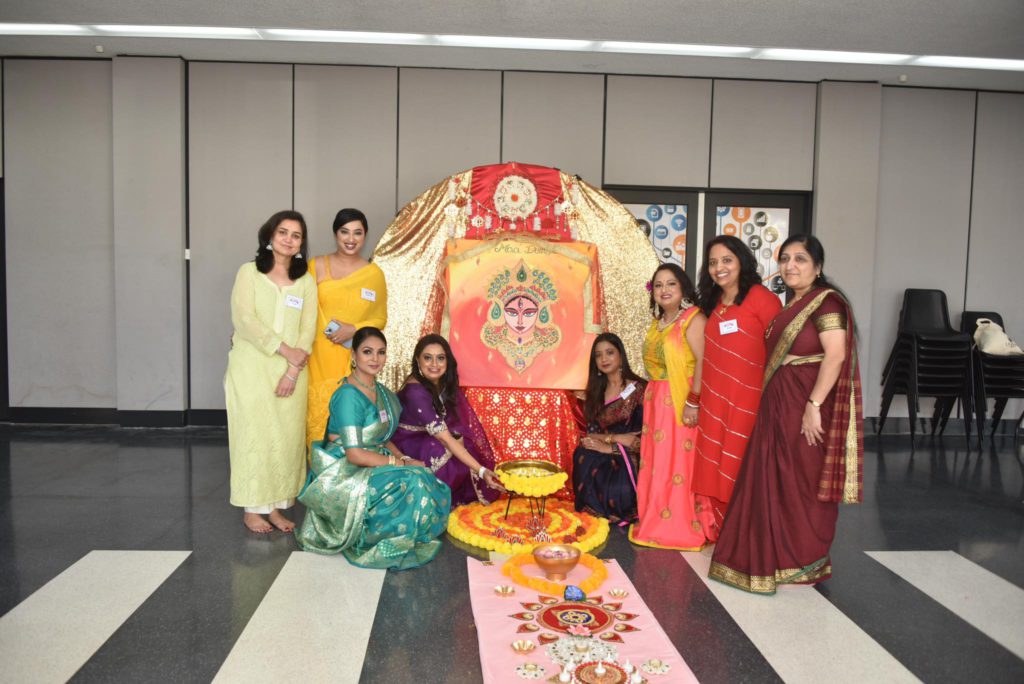
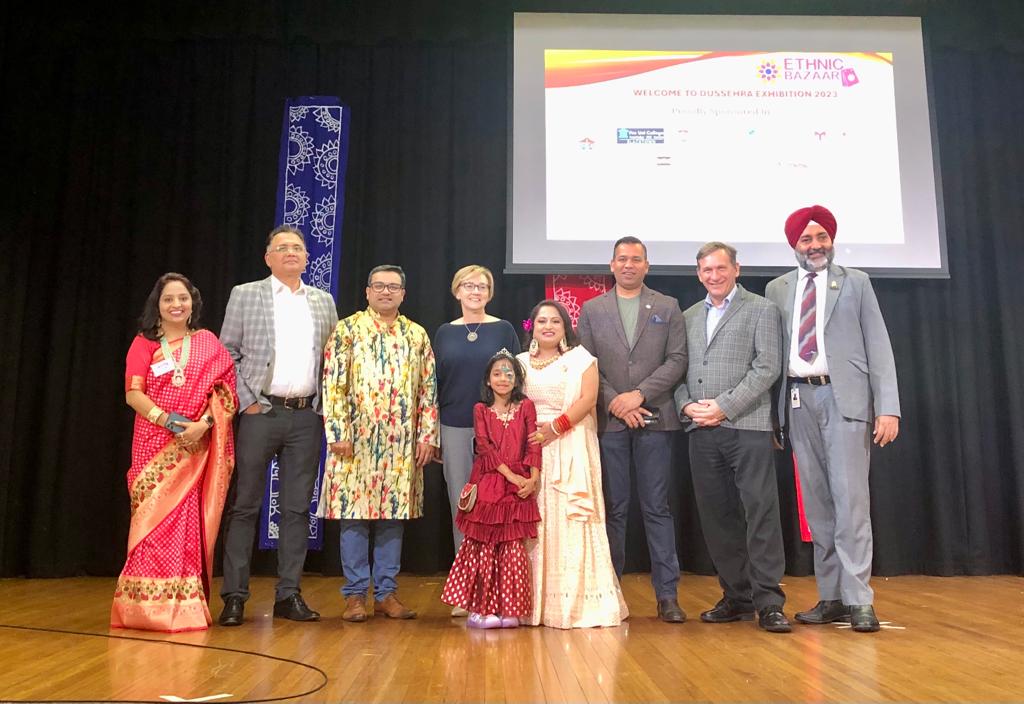
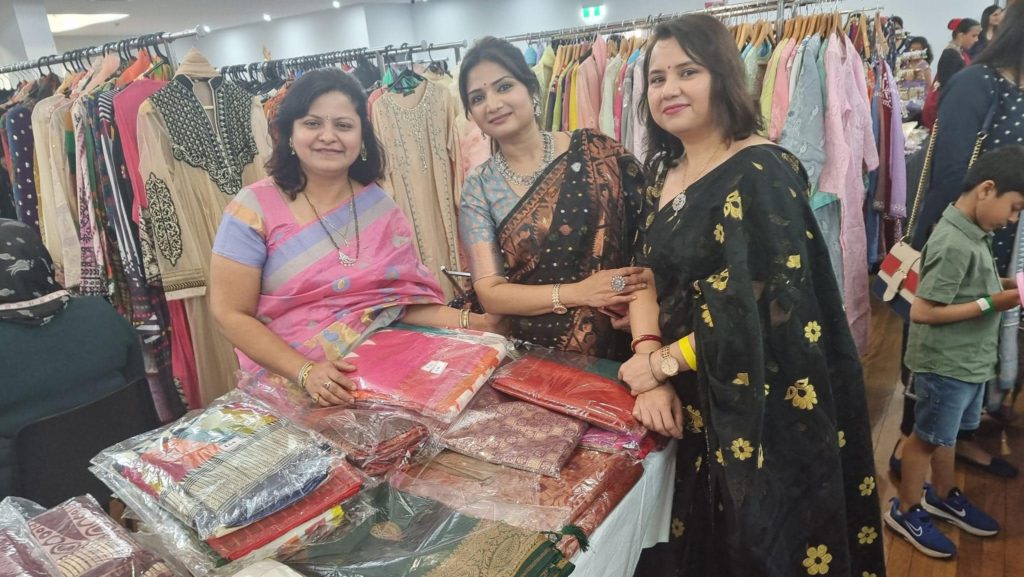
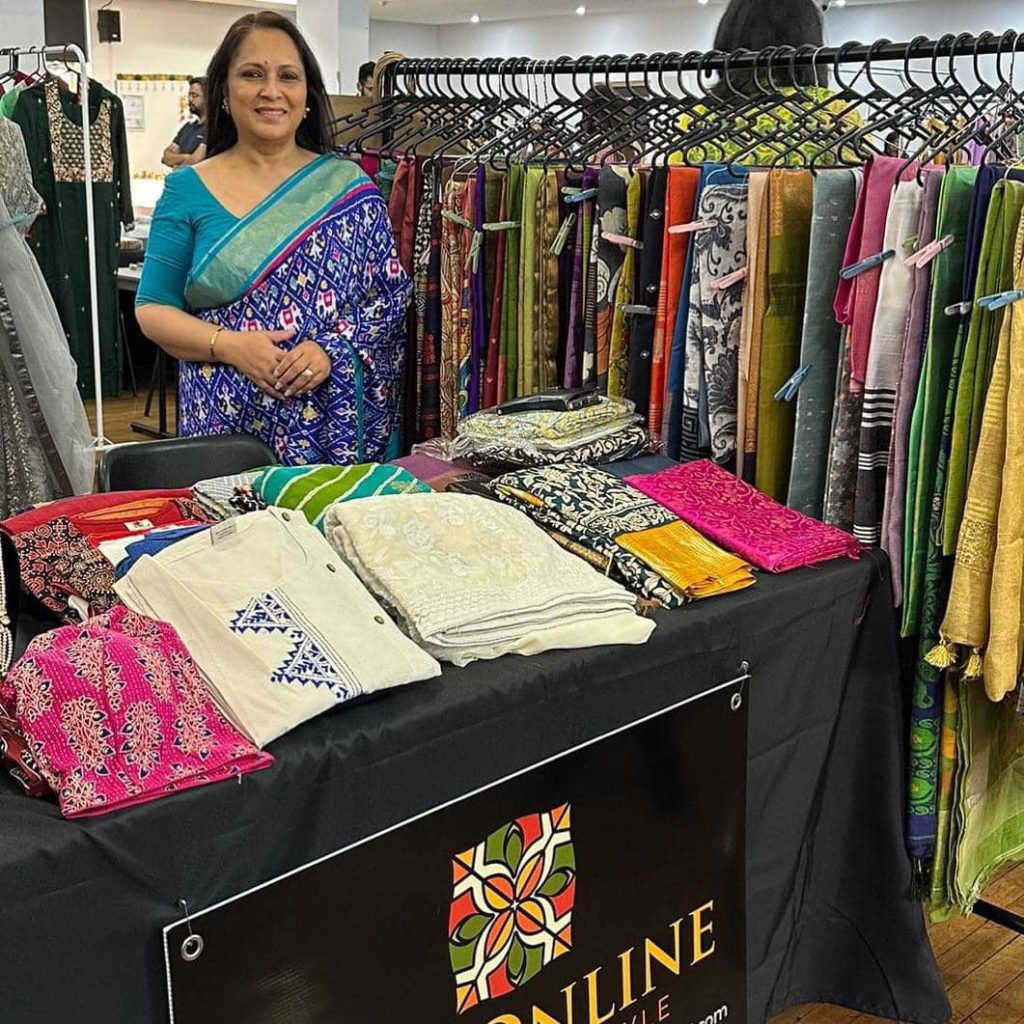
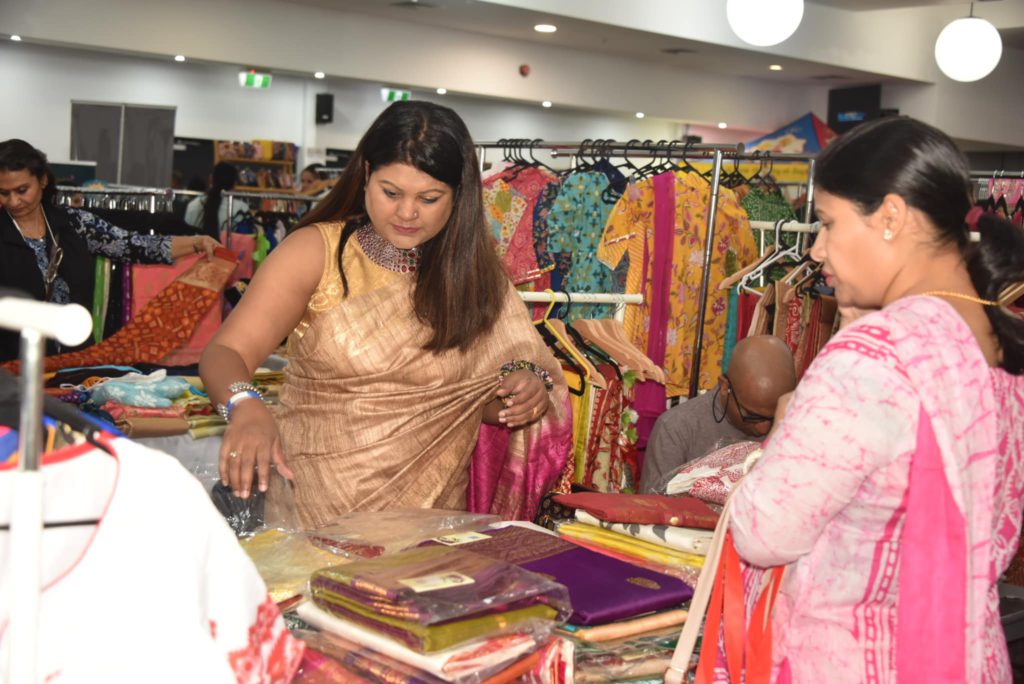
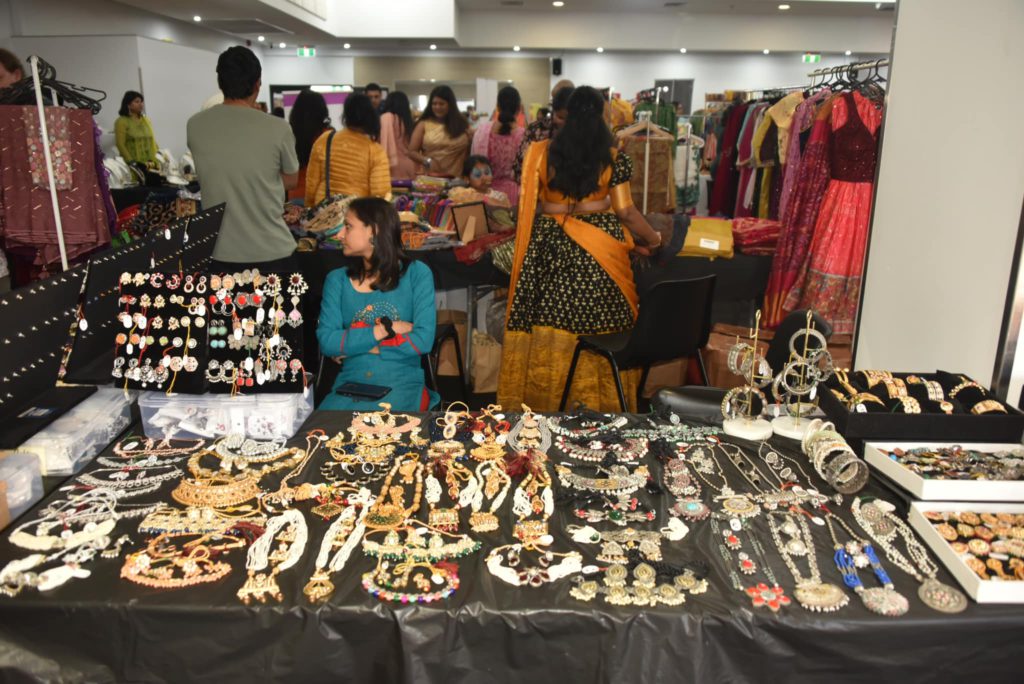
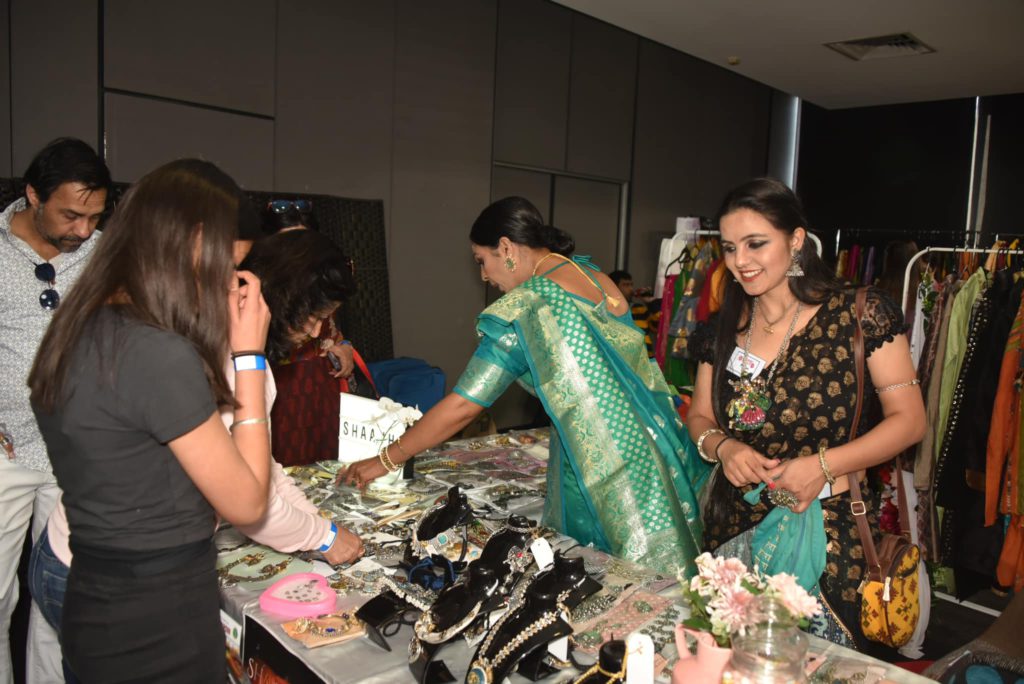
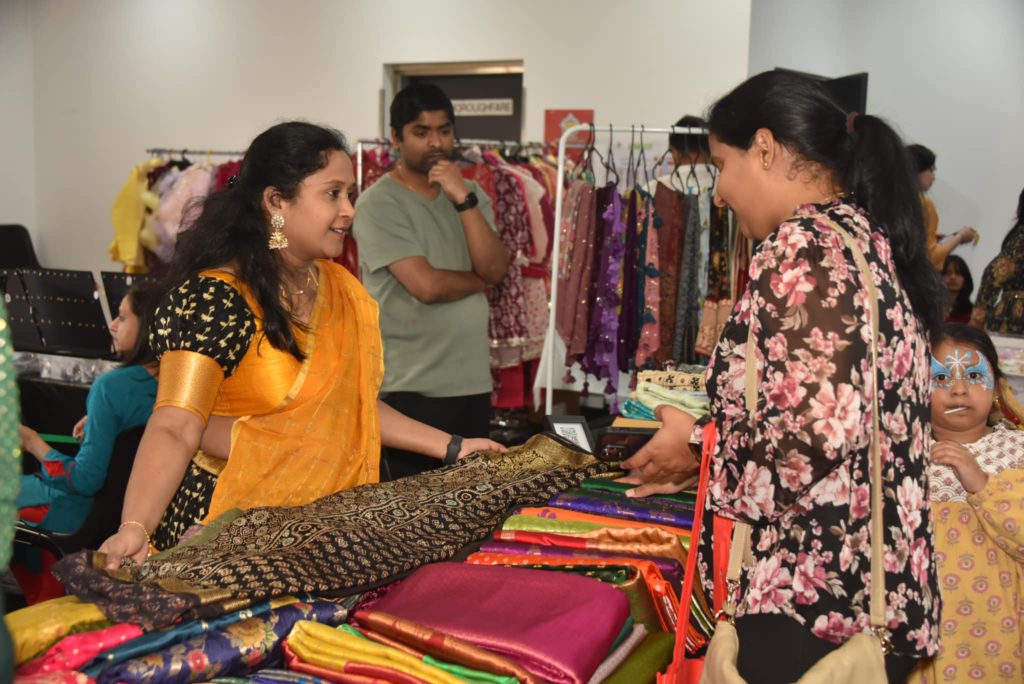
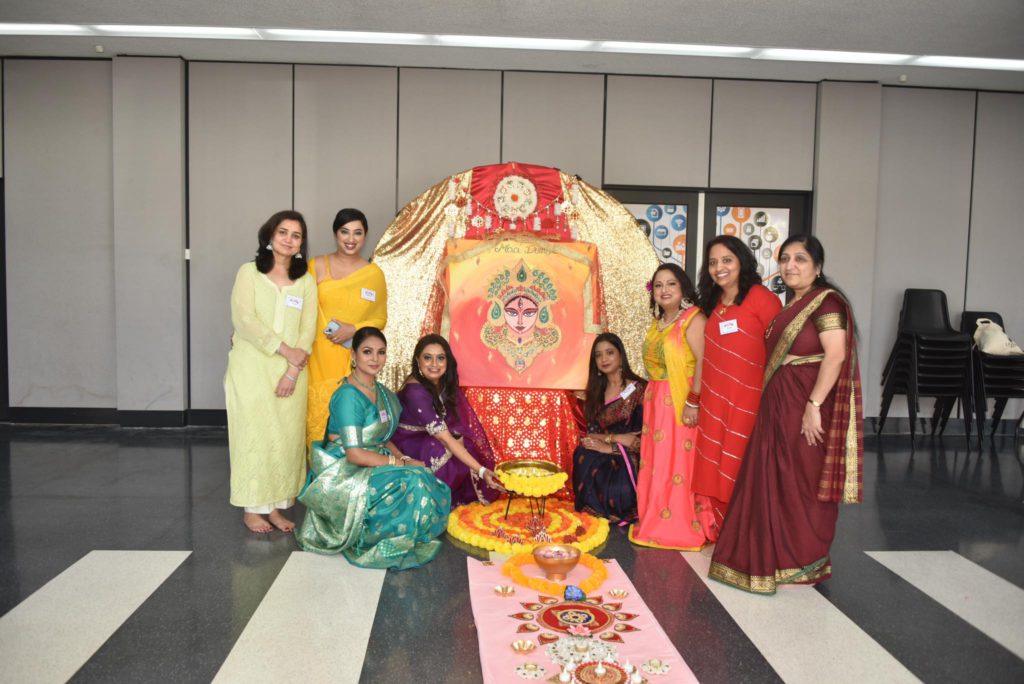
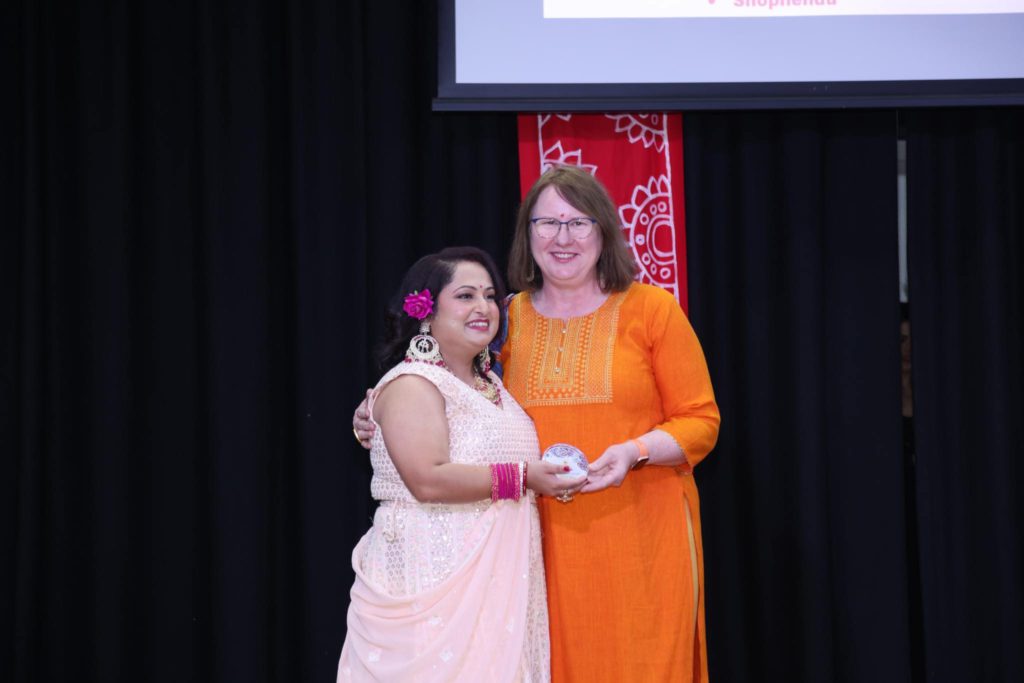
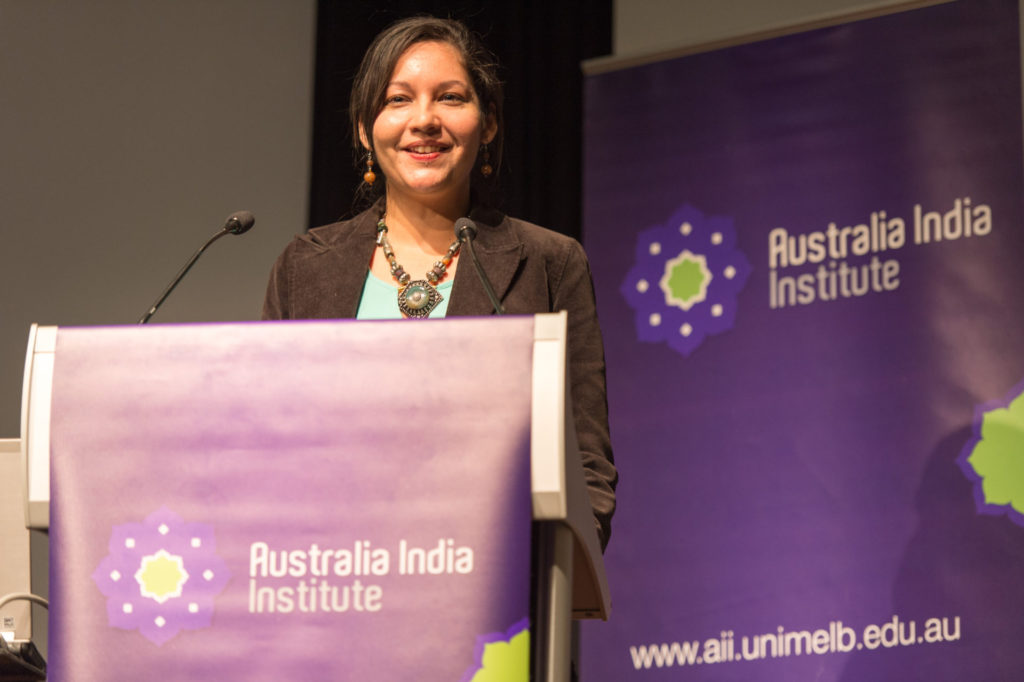
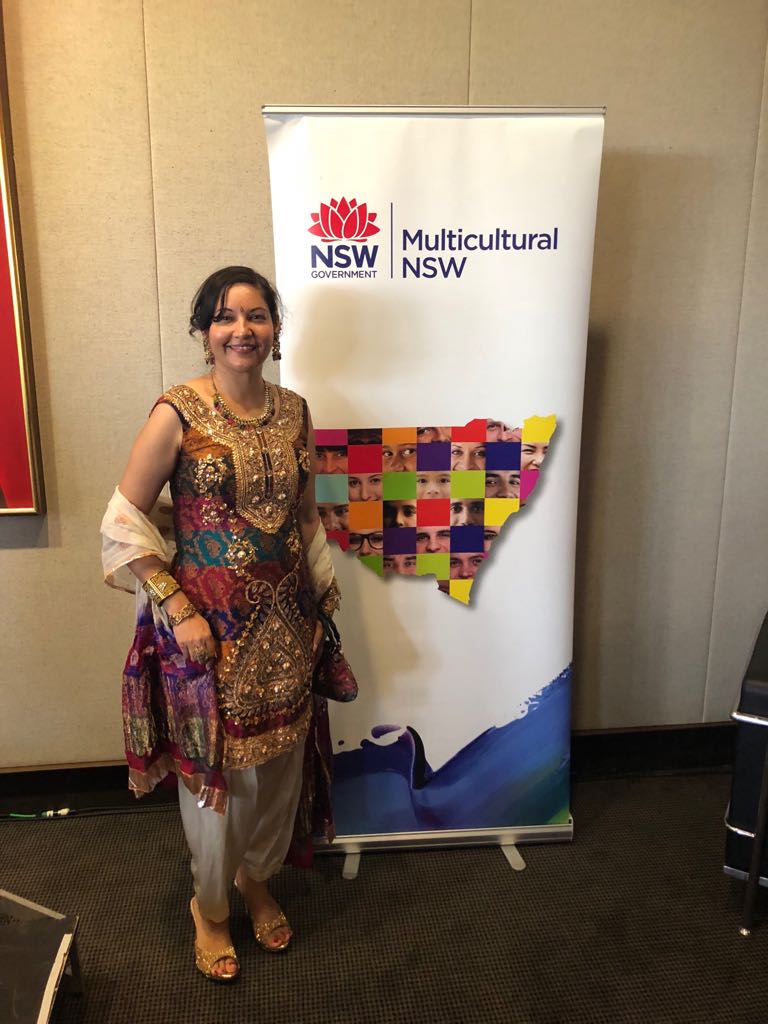
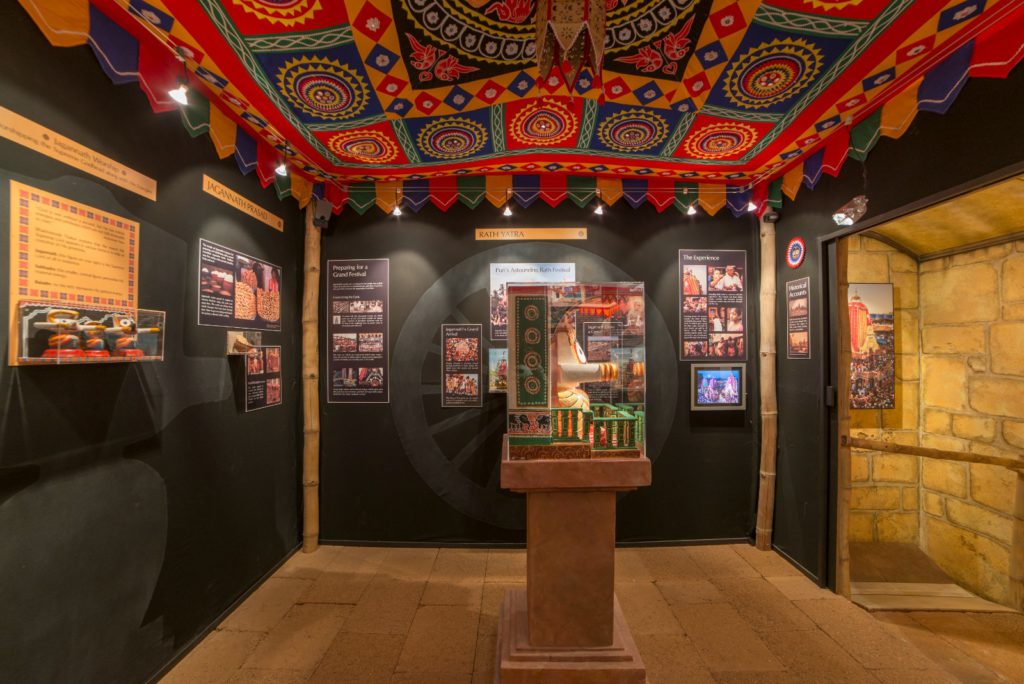
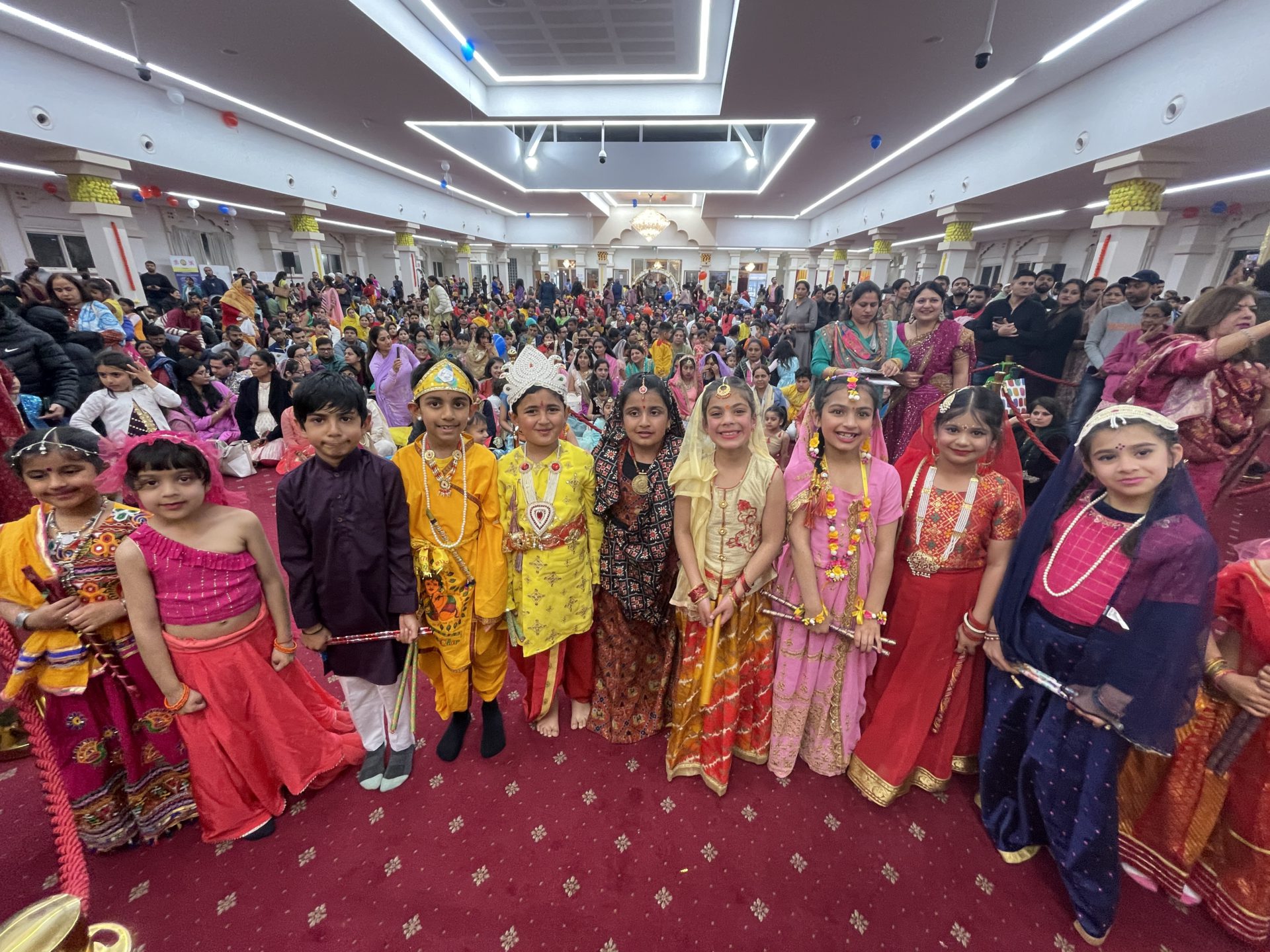
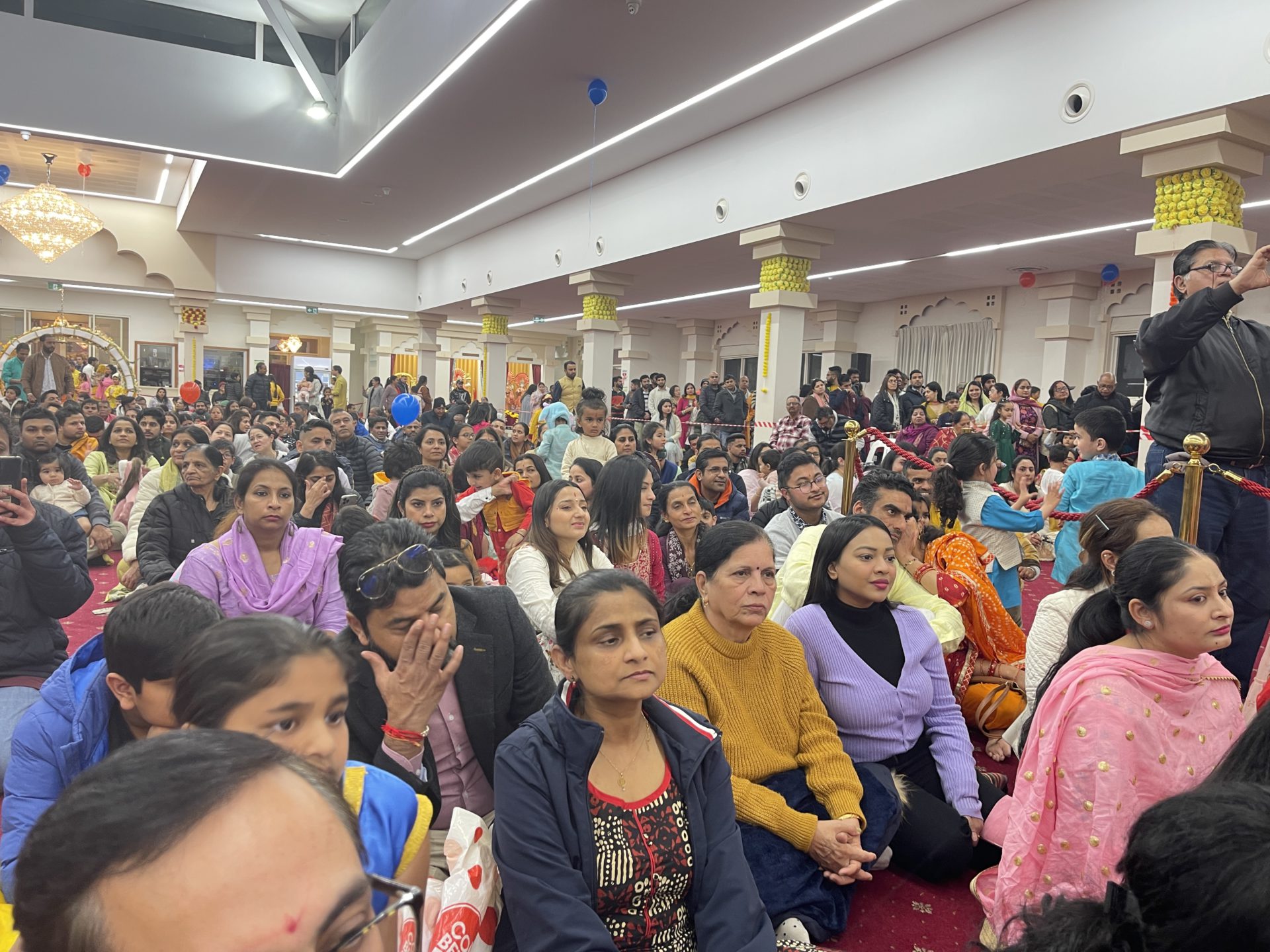
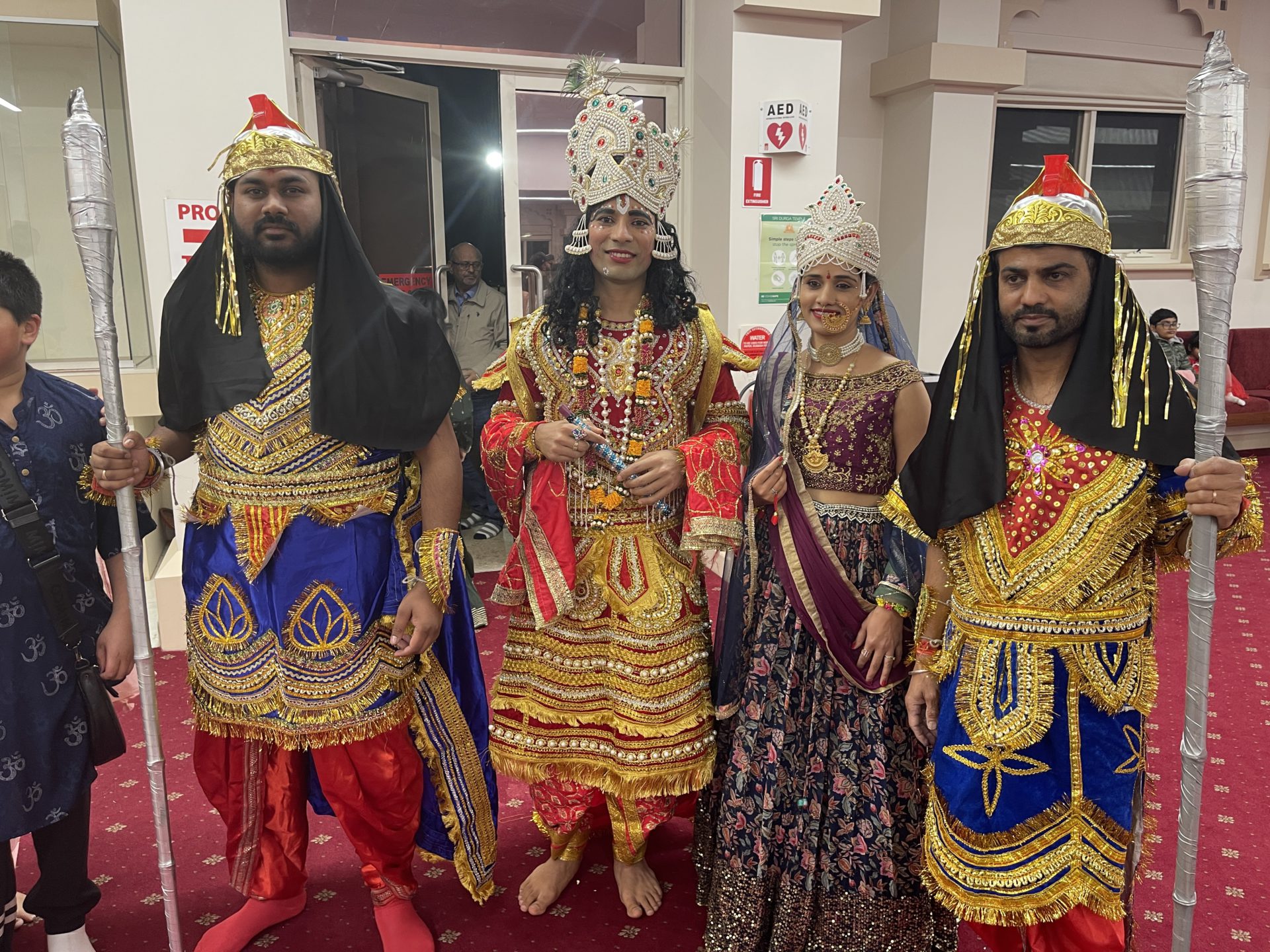
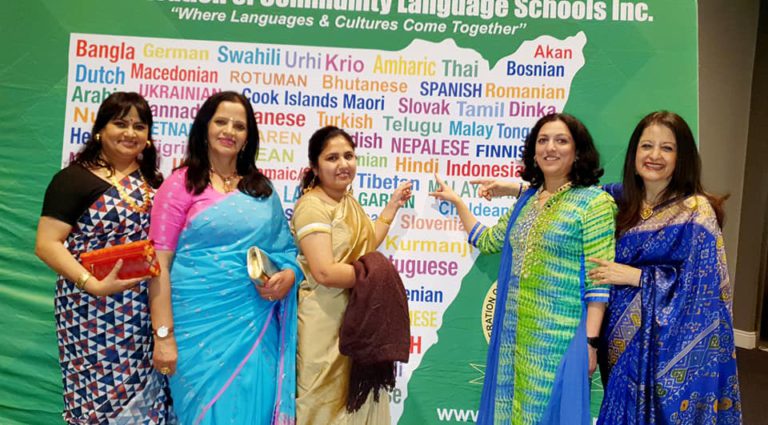
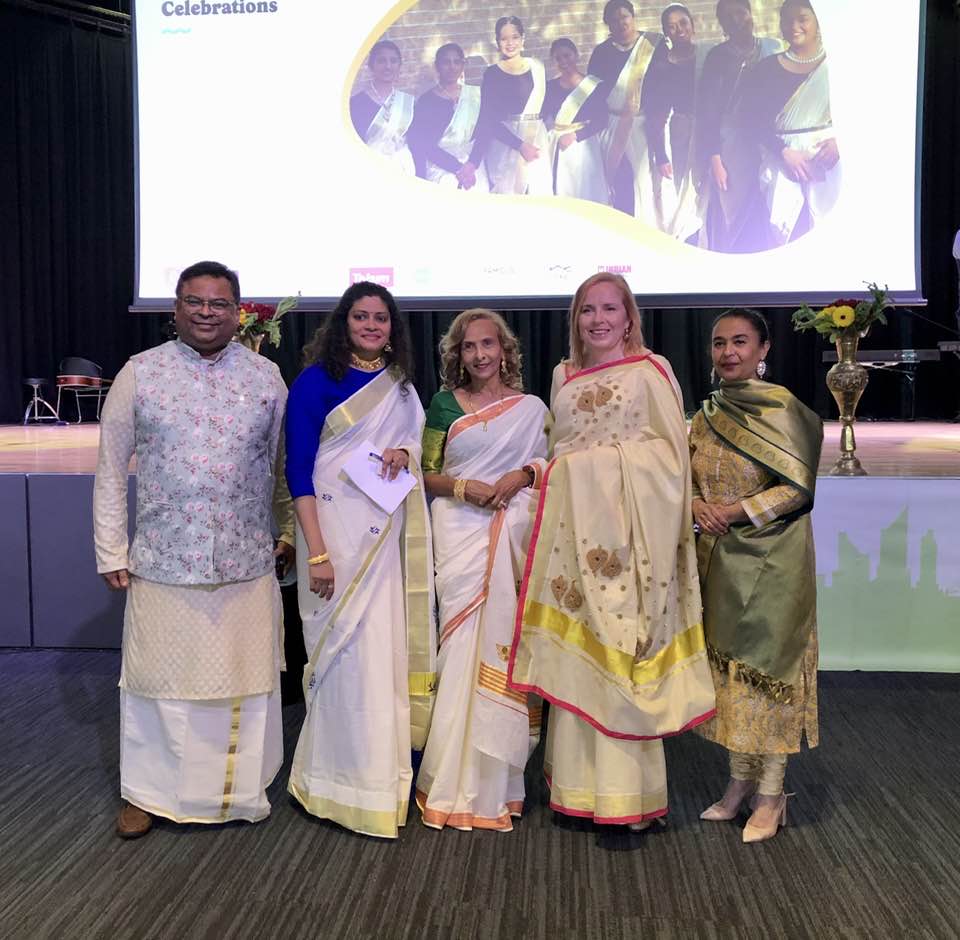
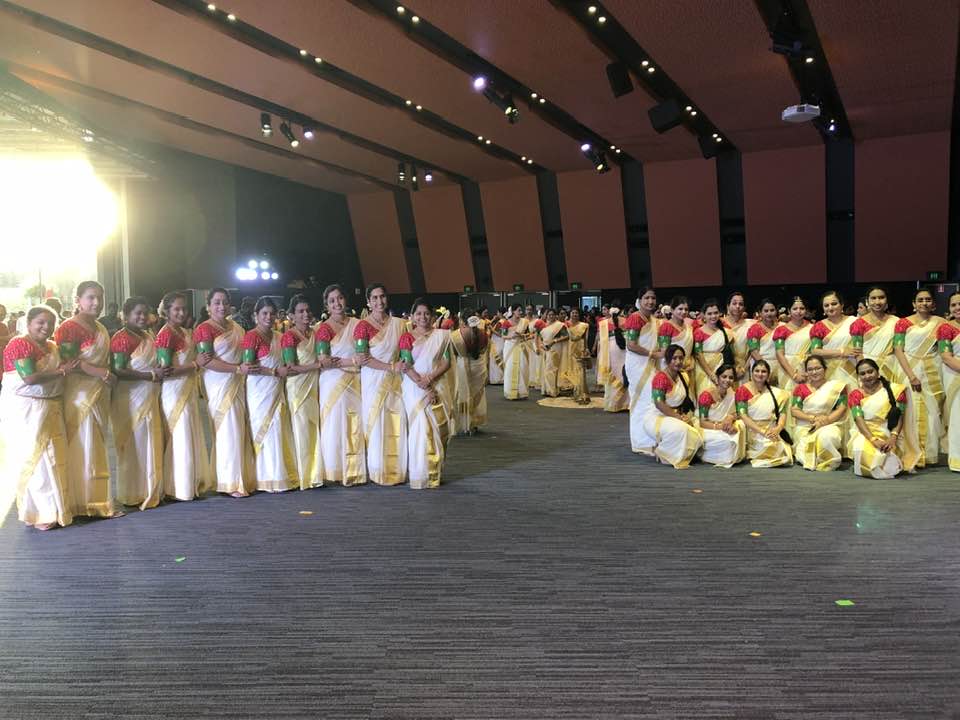
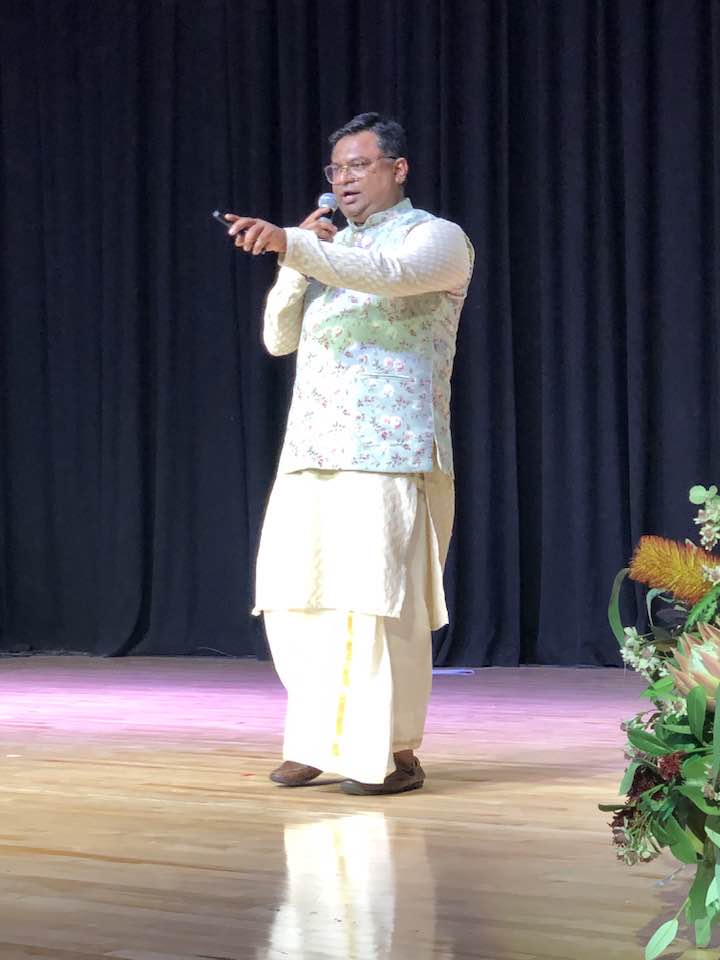
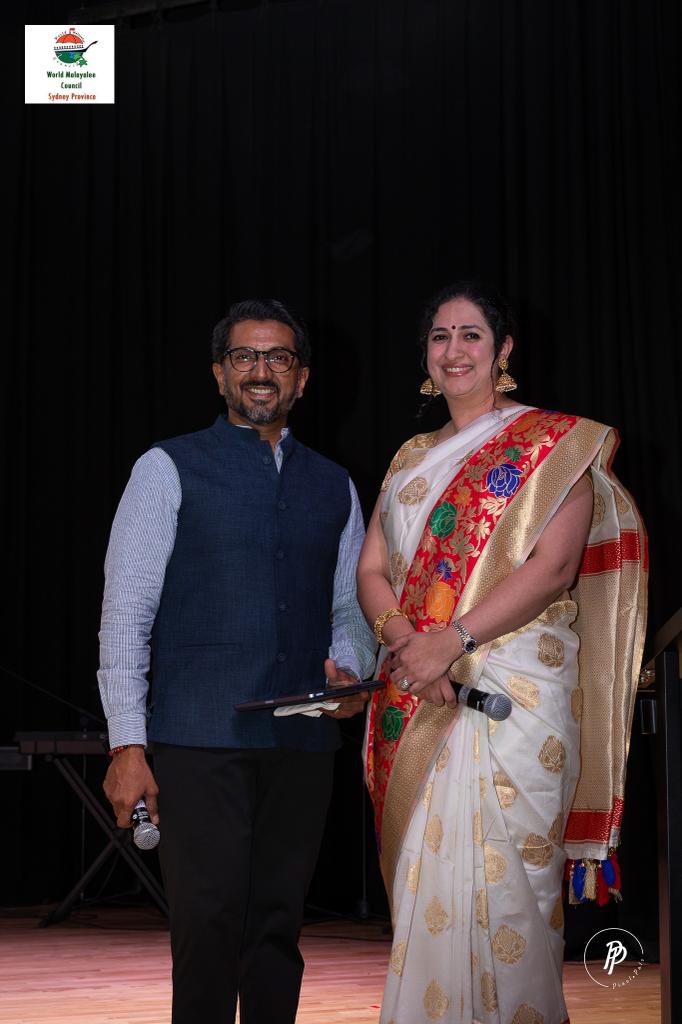
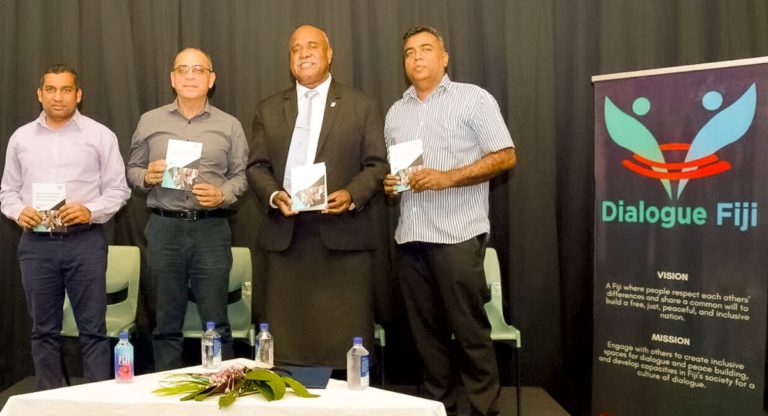
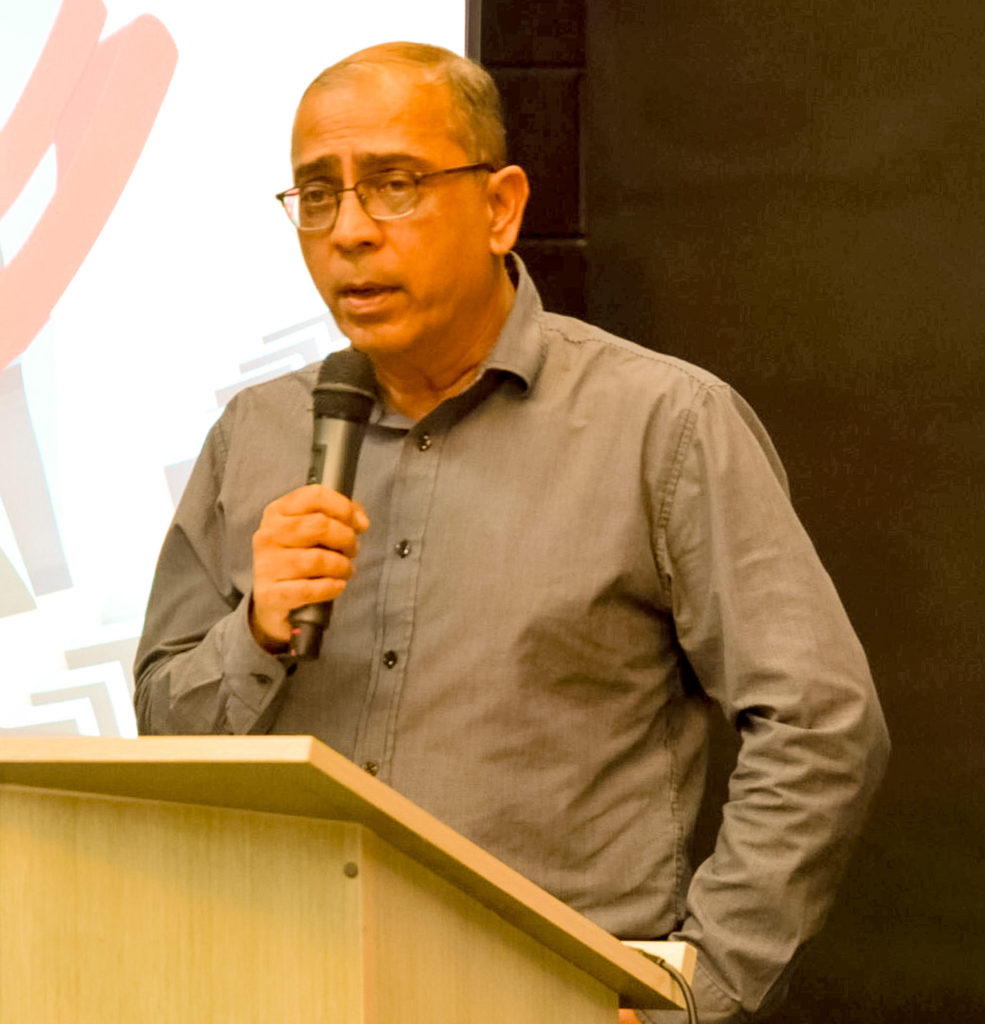
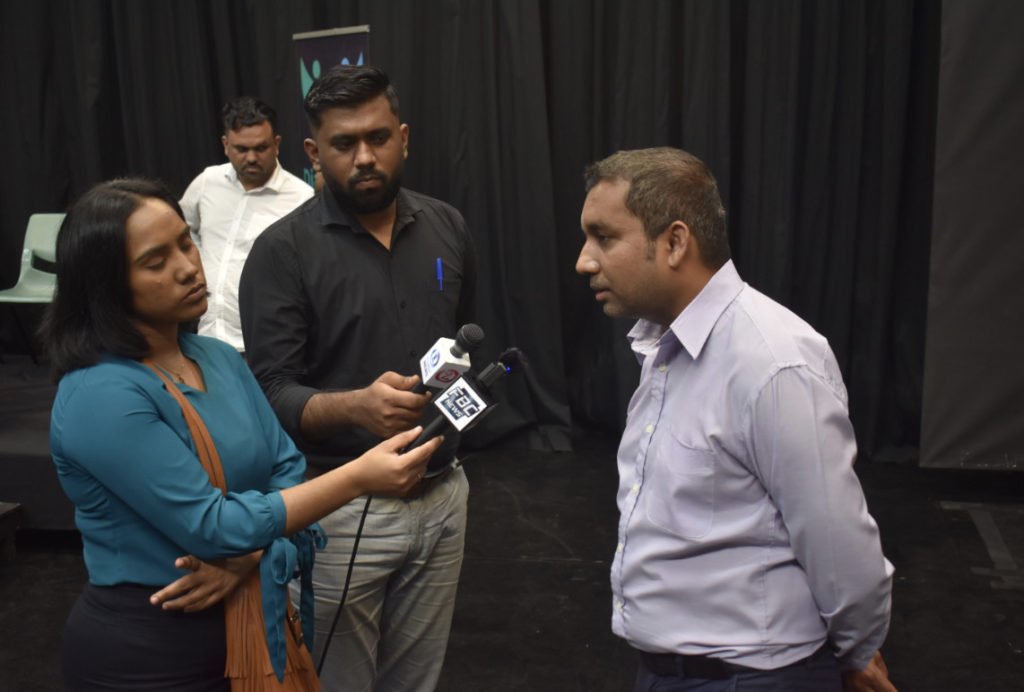
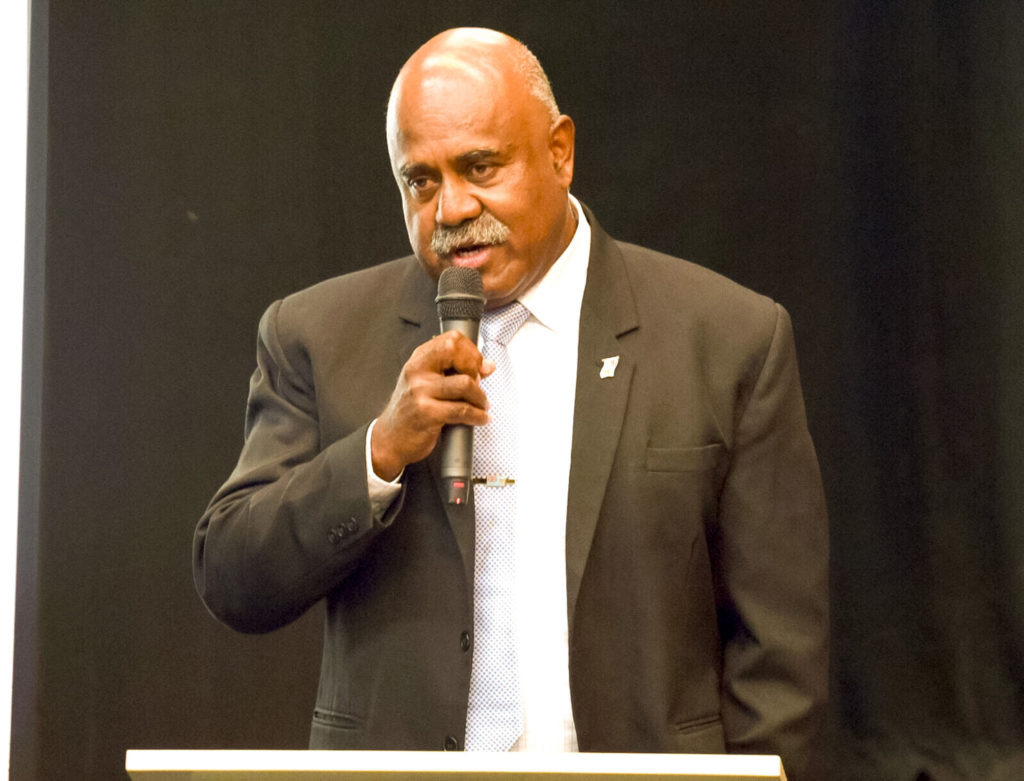
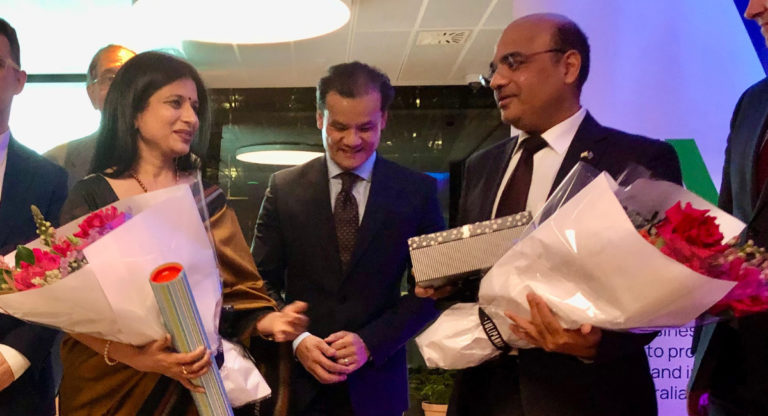
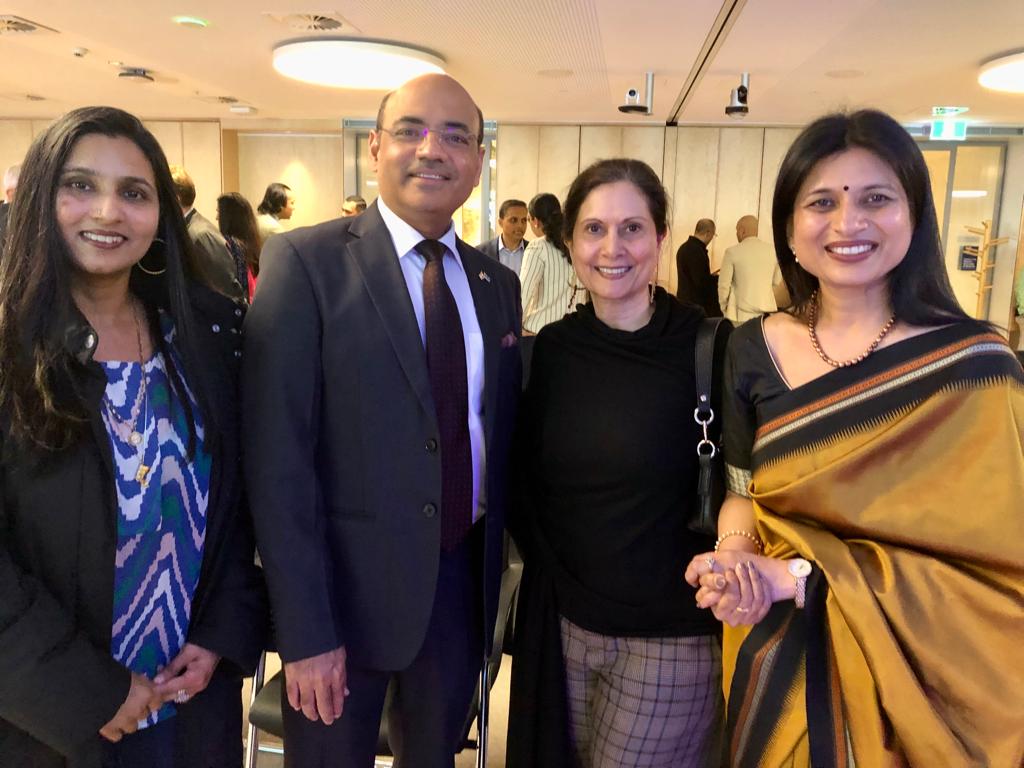
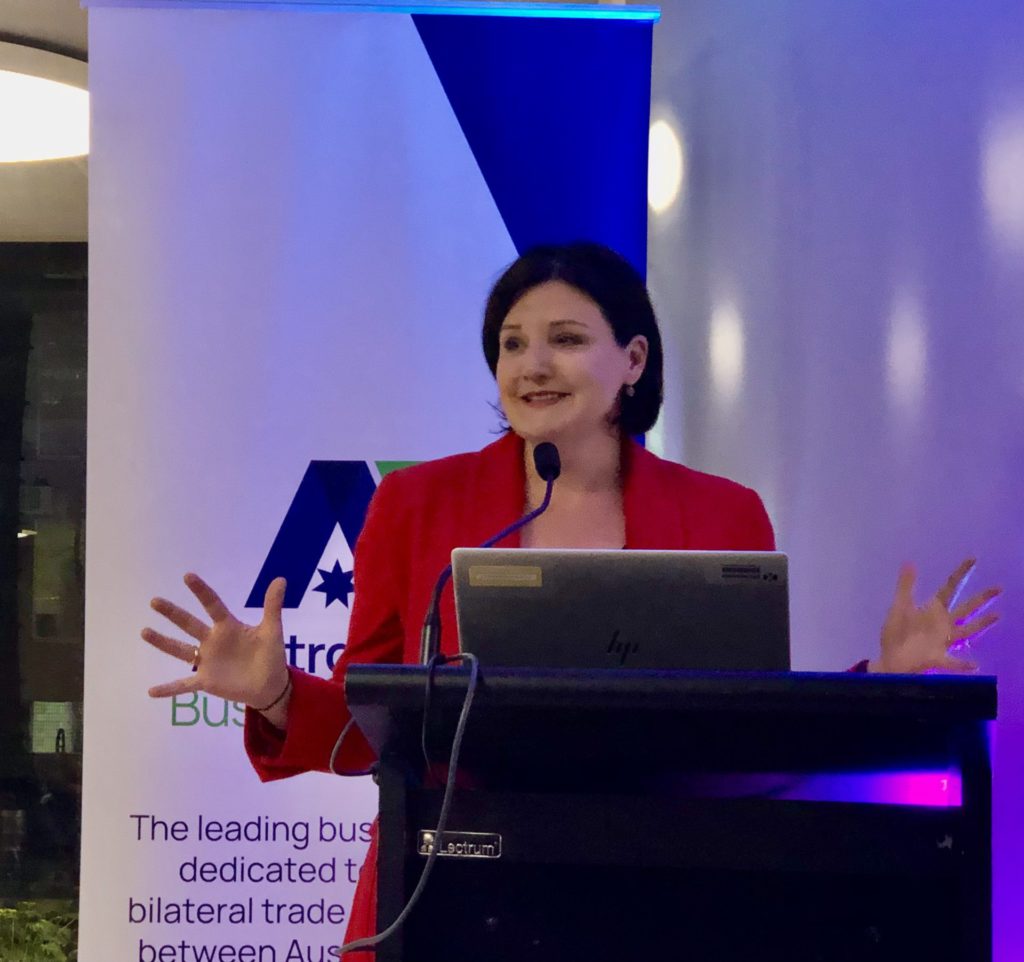
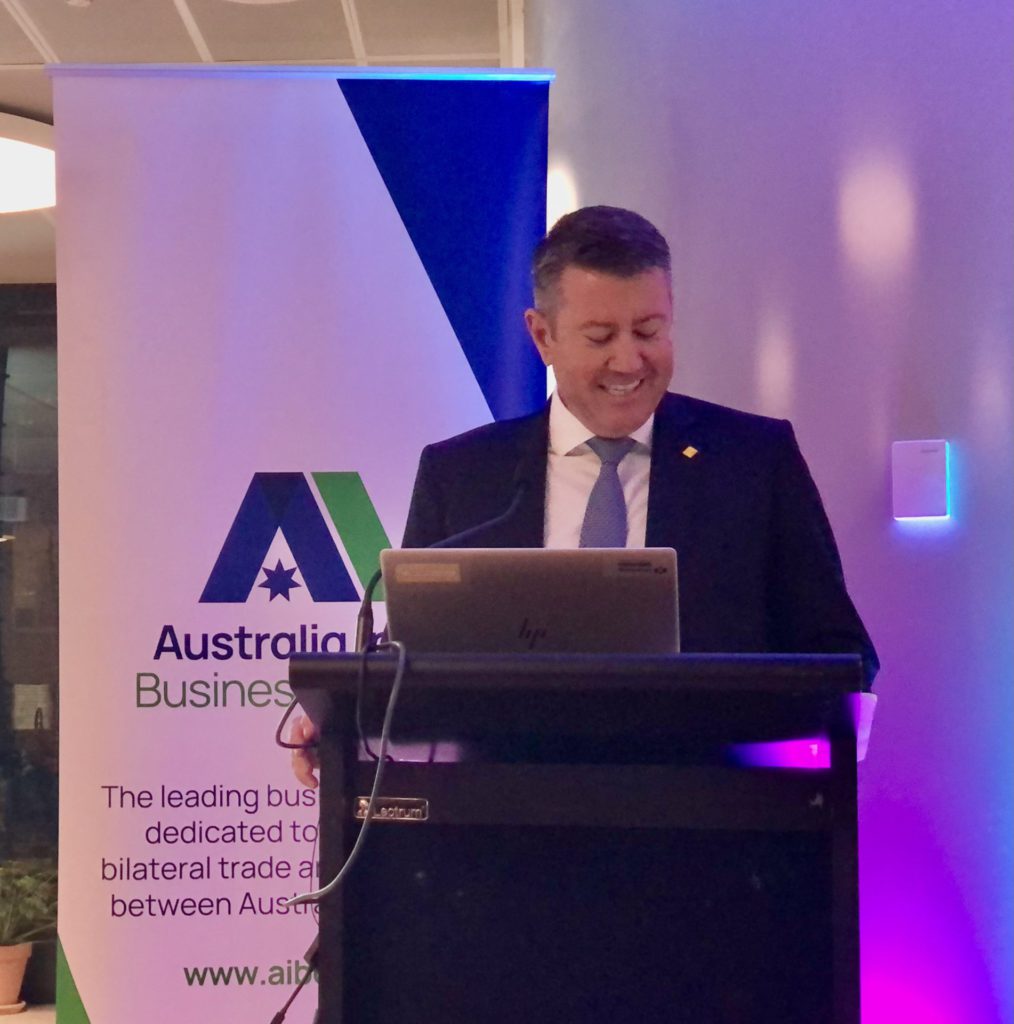
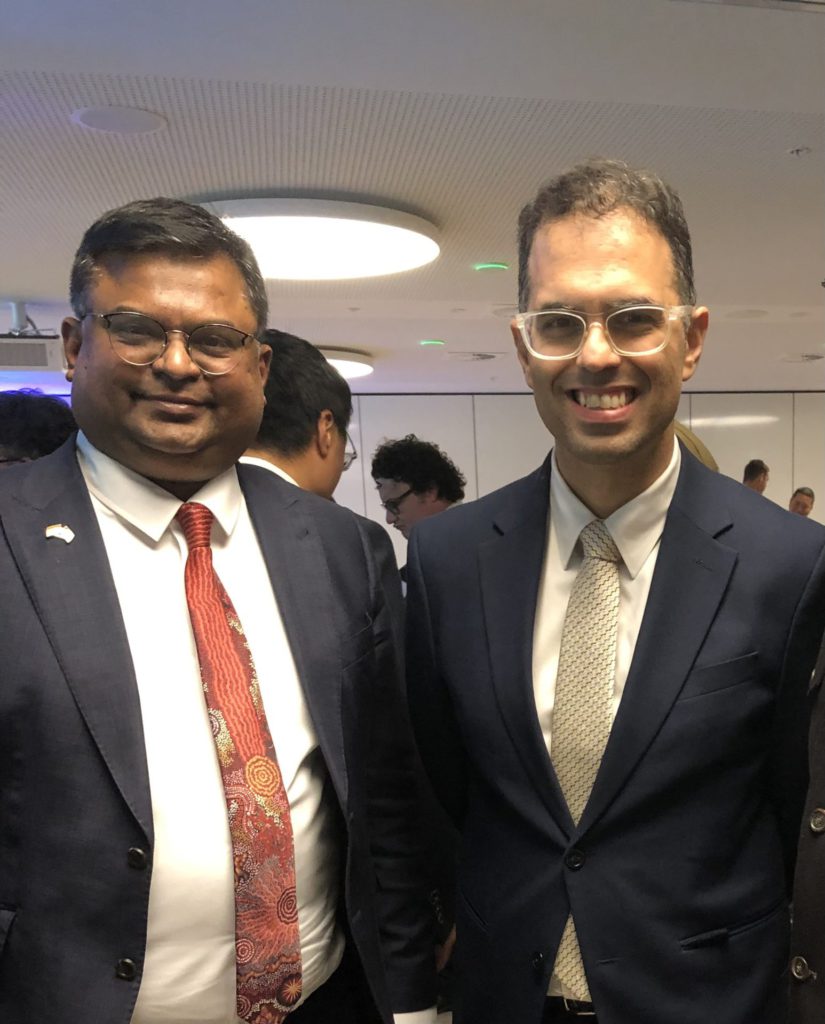
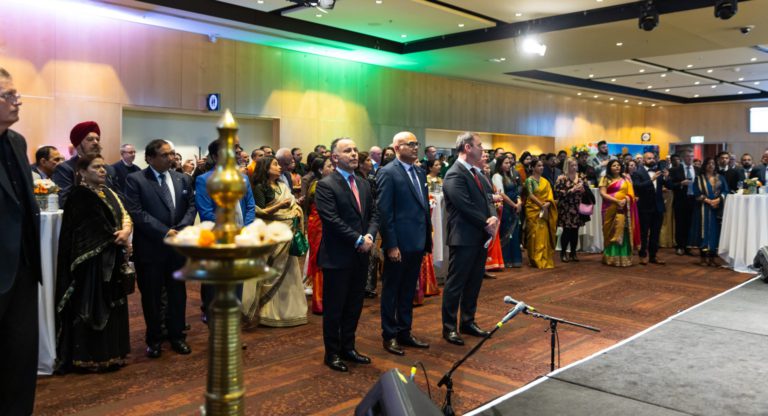
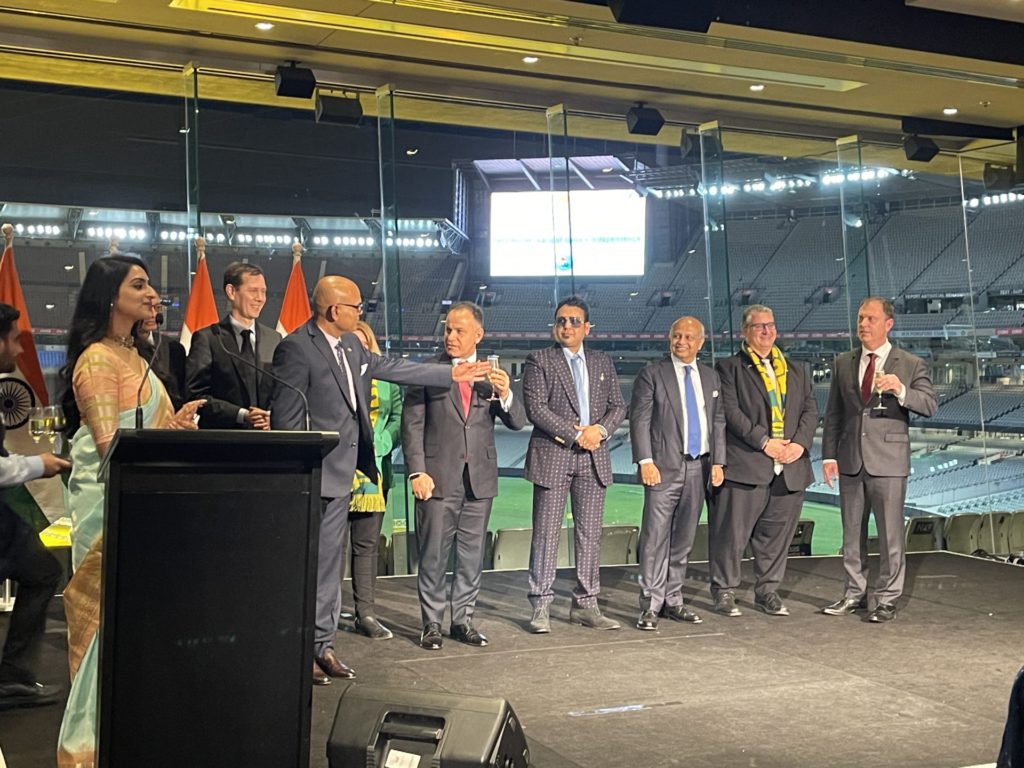
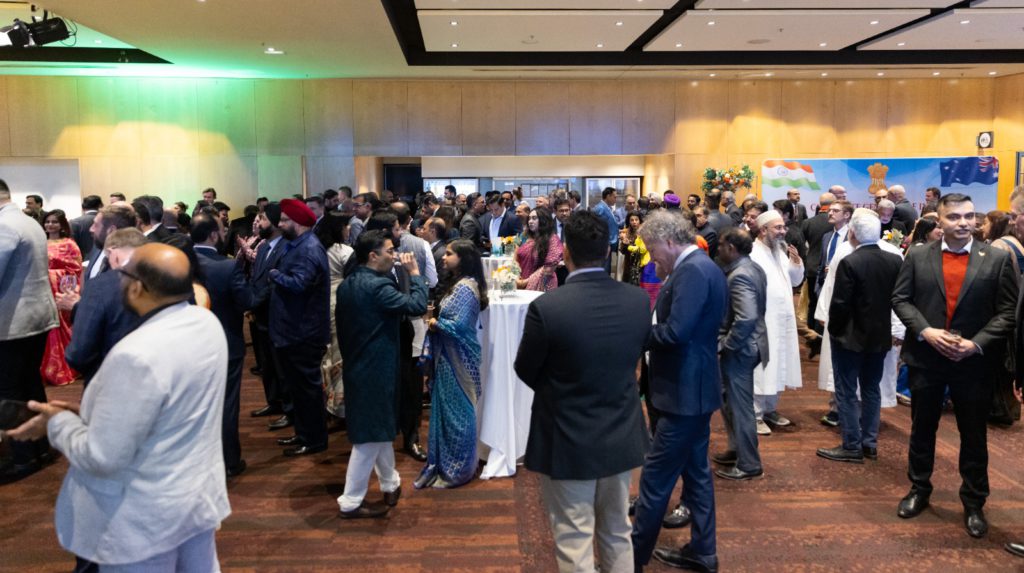
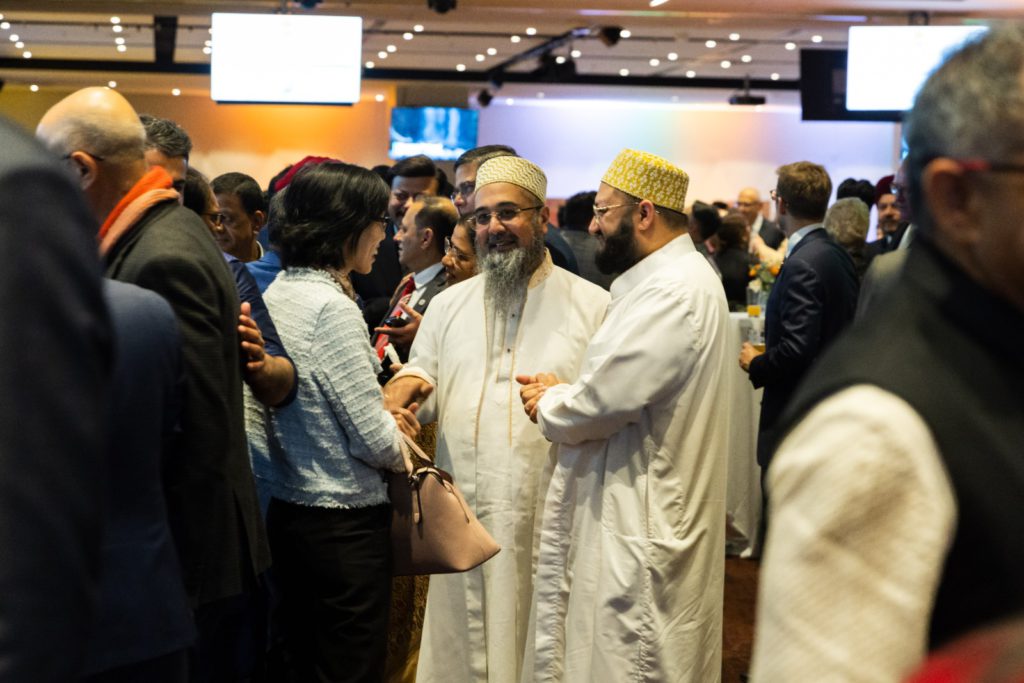
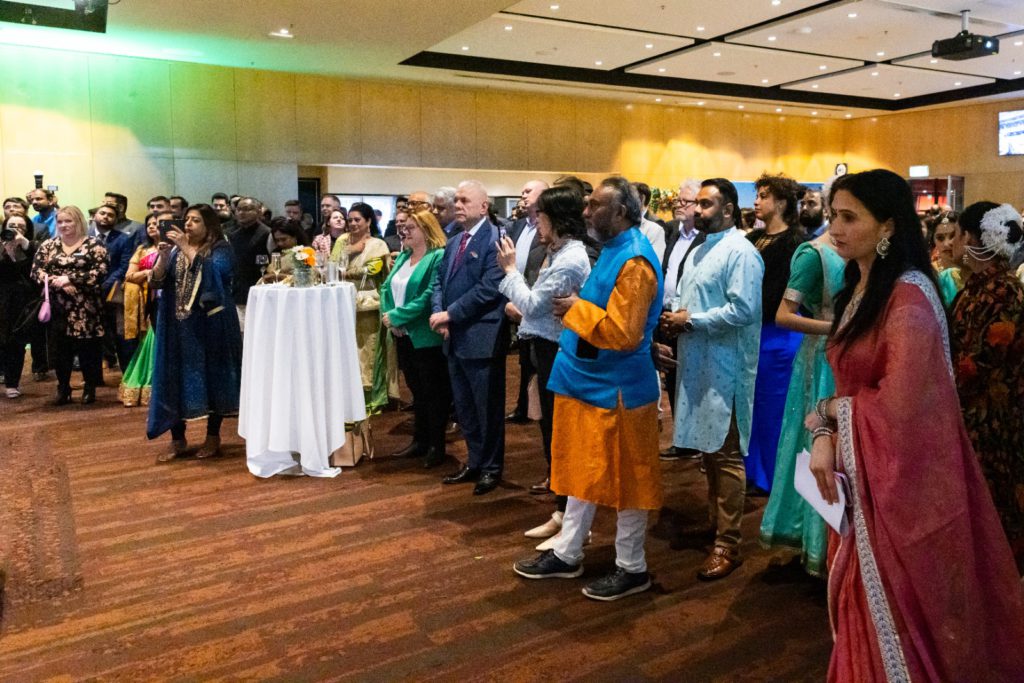
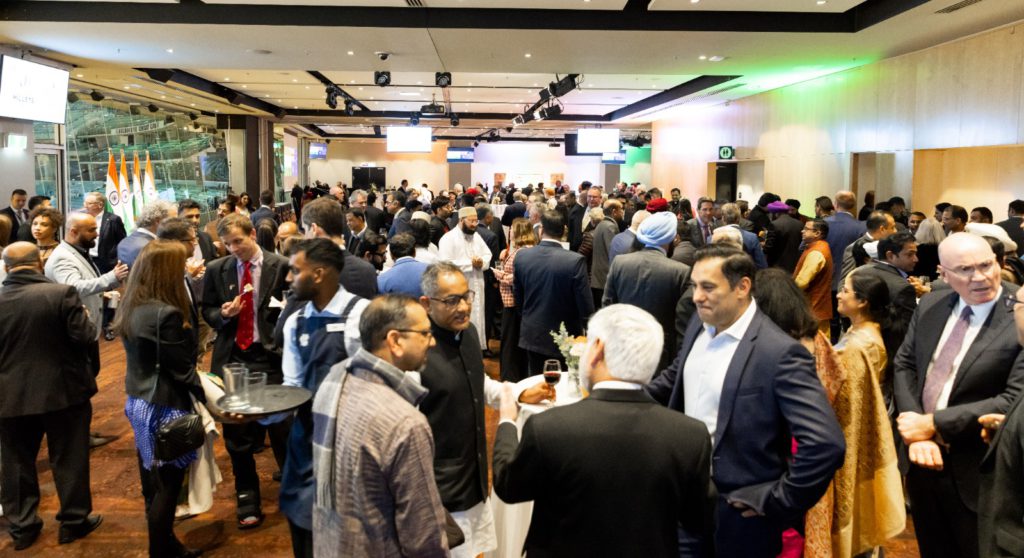
Sydney based entrepreneur, Urmi Talukdar, recently organised ‘Ethnic Bazaar Australia’ to promote Indian ethnic wear in Australia and support women in business. The event was organised in light of the upcoming Indian Dussehra festival.
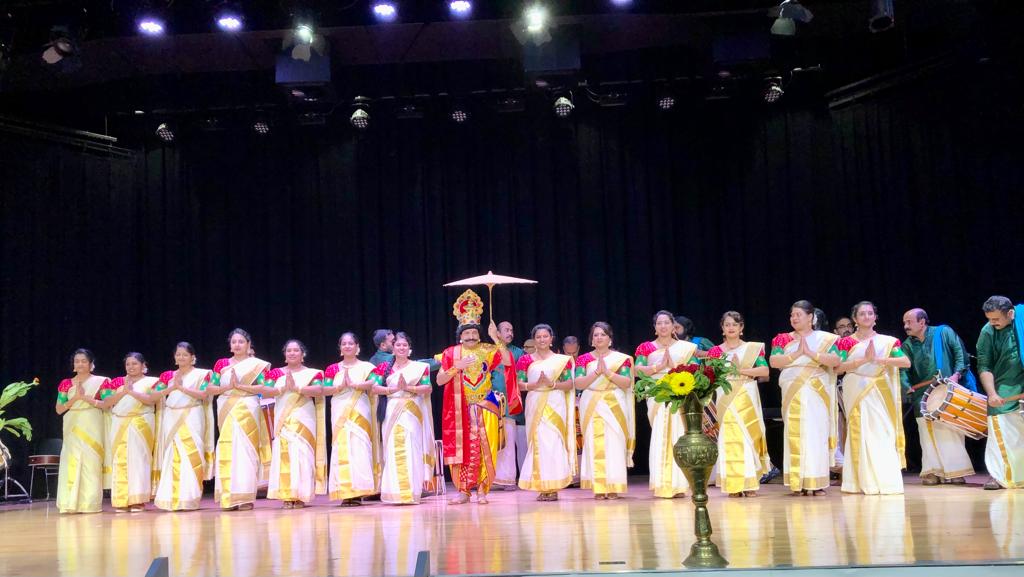
The event saw several women entrepreneurs showcase their products and included cultural programmes and fashion shows.
Urmi came up with this idea two years ago.
Urmi Talukdar (Image:Urmi Talukdar Facebook)
“I was thinking how I can empower women and bring all of them under one roof to promote ethnic wear and support them in Business. And that is how Dussehra Exhibition started. For this I would like to thank all my sponsors, my vendors, and volunteers (who have given me their valued time from their busy schedule).”
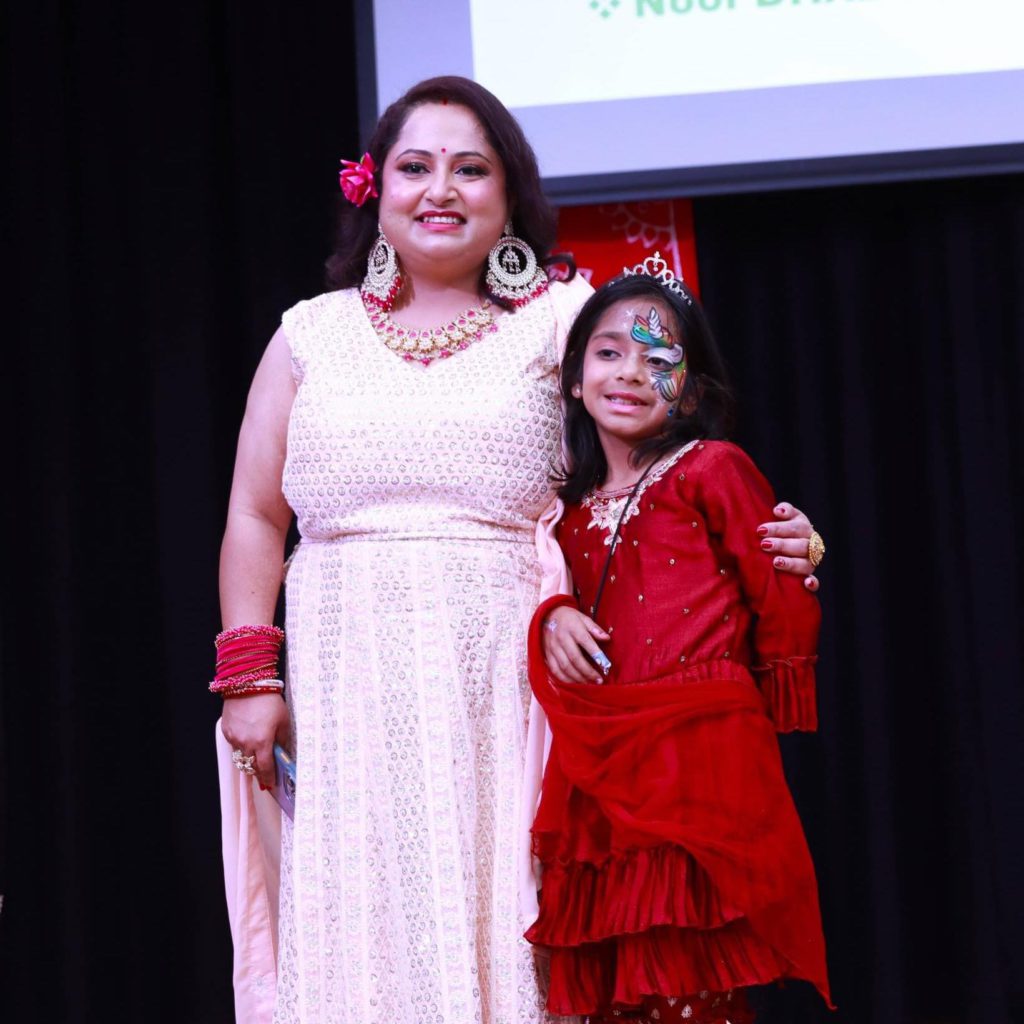
Urmi Talukdar with her husband Deputy Mayor Suman SahaUrmi Talukdar with her daughter Rianna
Urmi is now taking this initiative online to empower aspiring business owners and is launching Ethnic Bazaar Australia’s digital platform e-Bazaar.
“Ethnic Bazaar Australia’s digital/online platform is dedicated to support local businesses mainly run by women and helping our community to find your signature style”, says Urmi.
“Ethnic Bazaar brings Dussehra Exhibition once a year. Now we are bringing an online platform not only to sell goods but also to engage with your consumers directly and build a relation but through online marketplaces, your business can reach more people 24/7.”
(Image:Urmi Talukdar Facebook)
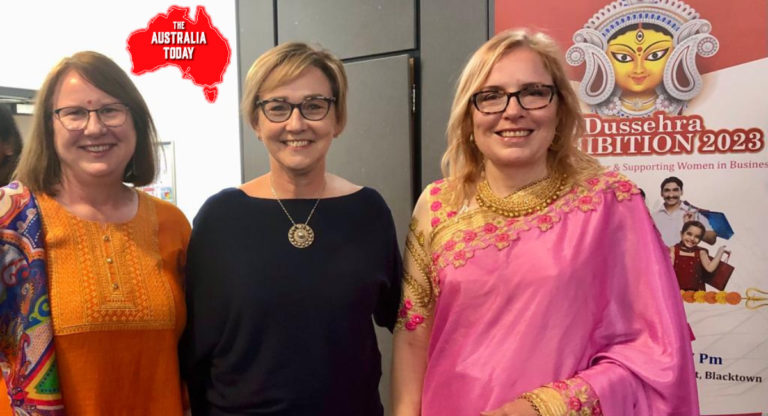
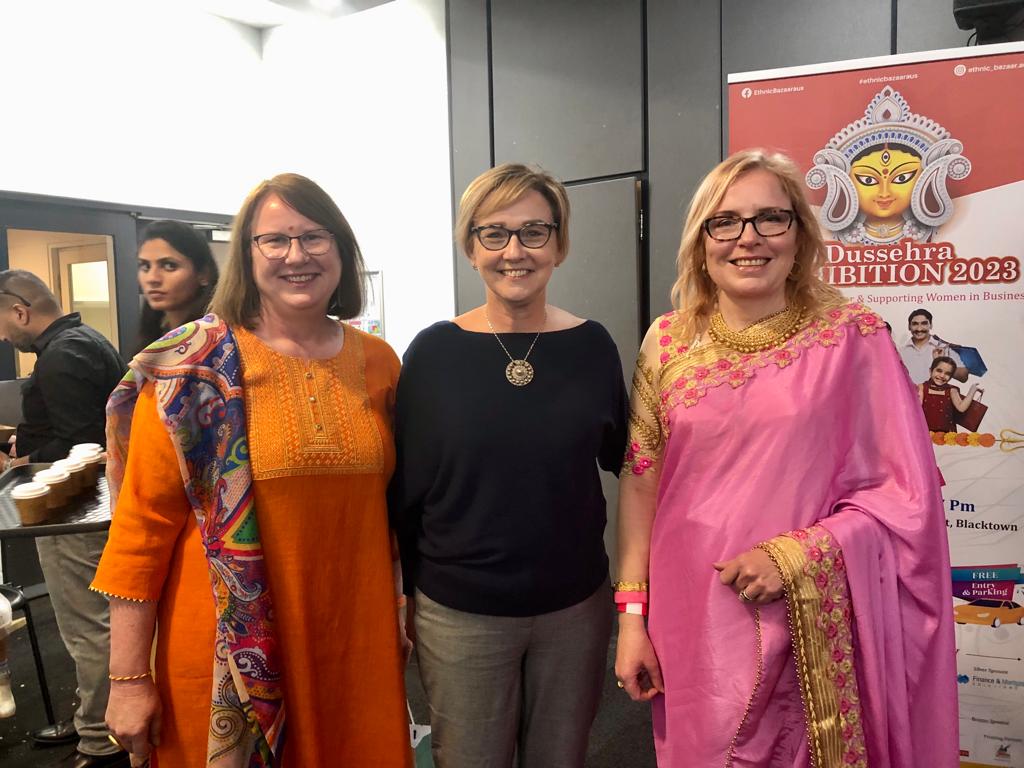
There were many prominent guests in attendance at the event including NSW Minister for Women Jodie Harrison, NSW MPs Julia Finn, Donna Davis and Stephen Bali.
L to R Donna Davis, Jodie Harrison and Julia Finn (Image: The Australia Today)
Australia’s first Indian origin Lord Mayor Sameer Pandey and Deputy Mayor Suman Saha, who is Urmi Talukdar’s husband, were also present at the event.
The cultural extravaganza covered all corners of India.
The dances included Bihu from Assam to Maharashtra’s Lavani.
South Indian folk to Bhangra from Punjab.
And Garba from Gujarat to South Indian fusion Classical dance.
The dances were performed by three dance schools Natraj Dance Academy, Nartaan Institution of Performing Arts and Kiyara Dance Academy.
The programme also had fashion shows presented by Indian origin designers.
The Indian diaspora now eagerly awaits Navratri, Durga Pujo and Dussehra celebrations that are falling in October this year according to the Gregorian calender. The next big festival to be celebrated by the Indian-Australian community is Ganesh Chaturthi which is on 18th September.
Support Our Journalism
Global Indian Diaspora needs fair, non-hyphenated, and questioning journalism, packed with on-ground reporting. The Australia Today – with exceptional reporters, columnists, and editors – is doing just that. Sustaining this needs support from wonderful readers like you.
Whether you live in Australia, the United Kingdom, Canada, the United States of America, or India you can take a paid subscription by clicking Patreon. Buy an annual ‘The Australia Today Membership’ to support independent journalism and get special benefits.
The much-anticipated Super 4 clash between arch-rivals India and Pakistan in the Asia Cup 2023 came to an abrupt halt last night due to persistent rain at the Premadasa Stadium in Colombo.
Cricket fans around the world were eagerly awaiting this high-stakes encounter, but the unpredictable weather had other plans.
As the rain poured down, the match officials had no choice but to call off the game for the day. However, there is still hope for cricket enthusiasts as the match is set to resume on Monday, September 11, 2023, at 3 PM Sri Lanka Time time. The match will pick up from where it left off, with the scoreboard reading 24.1 overs.
If the weather permits and there are no further delays, the contest is expected to evolve into a full 50-over game, providing an exciting showdown for fans of both teams.
At the time of the interruption, India was positioned at 147 for the loss of two wickets in 24.1 overs. Leading the charge were two dynamic batsmen, Virat Kohli and KL Rahul, who were at the crease when the heavy rain brought proceedings to a standstill.
Captain Rohit Sharma played a pivotal role in the Indian innings, contributing 56 runs to the team’s total. Shubman Gill also made a significant impact, scoring 58 runs before departing. Pakistan’s bowlers managed to break through the Indian batting lineup, with Shaheen Afridi and Shadab Khan taking one wicket each.
The stage was set for an electrifying contest as Pakistan won the toss and elected to bowl, putting India on the offensive from the start. This match marked the third fixture of the Super 4 matches in the Asia Cup 2023 tournament, and the rivalry between the two teams added an extra layer of excitement.
The pause in play due to rain adds to the anticipation and intrigue surrounding this match. Cricket fans from both nations and around the world are eagerly waiting for Monday’s resumption, hoping for clear skies and a thrilling conclusion to what promises to be an exciting encounter between India and Pakistan in the Asia Cup 2023.
Support Our Journalism
Global Indian Diaspora needs fair, non-hyphenated, and questioning journalism, packed with on-ground reporting. The Australia Today – with exceptional reporters, columnists, and editors – is doing just that. Sustaining this needs support from wonderful readers like you.
Whether you live in Australia, the United Kingdom, Canada, the United States of America, or India you can take a paid subscription by clicking Patreon. Buy an annual ‘The Australia Today Membership’ to support independent journalism and get special benefits.
Tasmania’s largest aged care operator, Southern Cross Care (Tasmania) Inc, is back-paying staff almost $6.9 million and has signed an Enforceable Undertaking (EU) with the Fair Work Ombudsman.
The not-for-profit organisation, which operates aged care facilities and offers home and community care services, self-reported its breaches to the Fair Work Ombudsman in August 2021 after identifying them during an internal review.
Southern Cross Care (Tasmania) conducted the review after identifying fundamental errors in its payroll and human resources systems.
The errors included failing to have agreements in place with part-time staff to work additional hours at ordinary rates of pay. This meant that employees were entitled to – but not paid for – overtime for these additional hours.
Southern Cross Care (Tasmania) also failed to recognise that shift-workers without written agreements were entitled to be paid from the start of their first shift to the end of their final shift each day, rather than just the hours worked during the separate shifts.
The underpaid employees performed work in locations across Tasmania including Hobart, Launceston, Somerset and Low Head. Underpayments occurred between 2015 and 2022.
Most underpaid employees were part-time aged care workers, nurses and community care workers who performed shift work, although full-time and casual employees were also affected. Some cleaners, laundry and maintenance staff were also underpaid.
Southern Cross Care (Tasmania) is back-paying 1,708 current and former employees a total of $6.87 million, including $5,806,756 in wages and entitlements, plus $313,591 in superannuation and $754,181 in interest.
Individual back-payments range from less than $1 to more than $220,000. Six workers were underpaid more than $100,000. The average back-payment is just over $4,000.
Southern Cross Care (Tasmania) has already back-paid the large majority of employees, including all it could find, and under the EU must back-pay all staff by the end of September.
Fair Work Ombudsman Anna Booth said an EU was appropriate as the employer had cooperated with the FWO’s investigation and demonstrated a strong commitment to rectifying underpayments.
“Under the Enforceable Undertaking, Southern Cross Care (Tasmania) has committed to implementing stringent measures to ensure all of its workers are paid correctly. These measures include commissioning, at its own cost, three annual independent audits to check its compliance with workplace laws,” Ms Booth said.
“This matter demonstrates how important it is for employers to place a high priority on their workplace obligations. Fundamental errors – including failing to ensure that written agreements with part-time employees were in place – were left unchecked, which led to long-term breaches and a substantial back-payment bill.
“We expect all employers to invest the time and resources to ensure they are meeting all lawful entitlements.”
The EU also requires Southern Cross Care (Tasmania) to provide FWO with evidence of systems and processes it has put in place to ensure future compliance; commission workplace relations training for human resources, payroll and rostering staff; write to all underpaid employees to notify them of the commencement of the EU; and display workplace notices detailing its contraventions.
Whilst overtime entitlements accounted for the majority of total underpayments, employees were also underpaid wages for ordinary hours, penalty rates for weekend and public holiday work, as well as paid meal breaks and shift penalties and allowances, including sleepover allowance.
The underpayments were under the Social, Community, Home Care and Disability Services Industry Award 2010 and applicable Enterprise Agreements.
Support Our Journalism
Global Indian Diaspora needs fair, non-hyphenated, and questioning journalism, packed with on-ground reporting. The Australia Today – with exceptional reporters, columnists, and editors – is doing just that. Sustaining this needs support from wonderful readers like you.
Whether you live in Australia, the United Kingdom, Canada, the United States of America, or India you can take a paid subscription by clicking Patreon. Buy an annual ‘The Australia Today Membership’ to support independent journalism and get special benefits.
Australians are living longer than ever. But these extra years of life come with higher rates of long-term and complex conditions and greater health care needs.
The government wants to improve Australians’ access to primary care services. These services would usually be delivered by a GP. But as part of this change, a new review is exploring how other health professionals could expand their current scope of work to meet growing needs.
Nurses make up more than 50% of the health workforce and have untapped and under-used skills that would ease the skills gap in our health system. Within this group, nurse practitioners have advanced training and the potential to deliver more services than they’re currently allowed – without the oversight of a GP.
How will access to primary care change?
One of the big changes is that from October 2023, some patients will be able to register with one GP or general practice under the MyMedicare scheme. Those who are registered will start to have access to extra funded services like longer telehealth appointments.
The first patients who will get access to these benefits are people with multiple health conditions and/or additional social needs. Having one doctor who knows them, and their history, can connect them more seamlessly with all of the different health professionals and services. This saves patients and carers time, money and effort.
For MyMedicare to work, Australia will need more health professionals with the right skills available in cities, regional towns and in rural and remote locations.
Currently, Australia is set to have a shortfall of 10,600 GPs by 2032. This represents a serious problem. While steps are being taken to grow the GP workforce, this takes time. And with a worldwide health workforce shortage, it will not be easy.
Australia will need to find other solutions. One option is to look to nurses to take on tasks for which they are suitably skilled but have historically been undertaken by doctors.
How nurses can help
In the United Kingdom, the United States, The Netherlands and Canada, advanced nursing – where nurses have postgraduate education and training to take on more specialised tasks and roles – has been relied on for years.
At the most advanced level of nursing, a nurse practitioner is a trained registered nurse who provides advanced nursing care either independently and autonomously, or with a doctor. Nurse practitioners can assess and diagnose health problems, order and interpret diagnostic tests, prescribe medicines, refer patients to other health professionals and even admit them to hospitals.
Nurse practitioners have been practising in Australia since 2000, starting in emergency care, with more than 1,400 practising in total in Australia by 2019. However, unlike other countries, Australian nurse practitioners must work in collaboration with a doctor. If they were to practise more independently, nurse practitioners could expand health-care access for thousands of Australians, including those living in rural and remote areas.
A recent NSW Health report presented a framework for specialised rural nurse practitioners that shows how care might be provided to focus on local community needs. For people living with a disability, or chronic and complex conditions, nurse practitioners can provide services in their communities, such as diagnosis, treatment plans, dialysis and make referrals to a specialist, including via telehealth. This could reduce the need for long-distance travel or a long wait time to access a GP.
Don’t we have a shortage of nurses?
It is true, nurses are leaving the workforce in the thousands. One fifth of nurses in Australia intend to leave nursing in the next 12 months. Keeping them requires better working conditions.
But it’s not just about reducing burnout, stress and workloads. Nurses want career development, the opportunity to extend their scope of practice with advanced training, and for these complex care skills to be recognised and used.
Access to opportunities for career development and progression is a key driver of nurse retention.
Why haven’t nurse practitioners already solved the workforce crisis?
Nurse practitioners are registered nurses who have additional postgraduate education and clinical training in their speciality area.
Nurse practitioners are currently required to work in collaboration with a doctor to deliver care, which limits the extent to which they can resolve the workforce gaps we face. A nurse practitioner can prescribe medications, for example, but must do so with oversight via a sign-off from a doctor.
The federal government’s nurse practitioner workforce plan aims to remove barriers to patients accessing a nurse practitioner. The plan is looking at whether nurse practitioners should provide Medicare-funded services, create additional nurse-led care items and remove the requirement for them to collaborate with doctors in delivering care.
The federal government’s current proposals may therefore see nurse practitioners working completely independently, in a similar way to that overseas.
But despite evidence showing nurse practitioners provide safe health care, the proposal has been met with concern from some doctors that increased independence may risk patient safety and lead to more fragmented care. They also argue it would be unfair for patients who can’t see a doctor and who must see a nurse practitioner instead.
What should happen next?
Delivering better quality primary health care in Australia ultimately means we need to make better use of our health services and align it with our changing population needs.
To achieve this, we will need to grow our nurse practitioner workforce and use them more effectively. Enabling nurse practitioners to use all their skills independently might also help to stem the loss of nursing workforce.
But expanding the scope of any profession must be done in a way that improves collaboration, team-based working and patient-centred care. Health care is safest and most effective when health professionals work together – and with patients – to make decisions about care. So it’s important for the plan to include incentives that make collaboration more likely between nurse practitioners and doctors.
Global Indian Diaspora needs fair, non-hyphenated, and questioning journalism, packed with on-ground reporting. The Australia Today – with exceptional reporters, columnists, and editors – is doing just that. Sustaining this needs support from wonderful readers like you.
Whether you live in Australia, the United Kingdom, Canada, the United States of America, or India you can take a paid subscription by clicking Patreon. Buy an annual ‘The Australia Today Membership’ to support independent journalism and get special benefits.
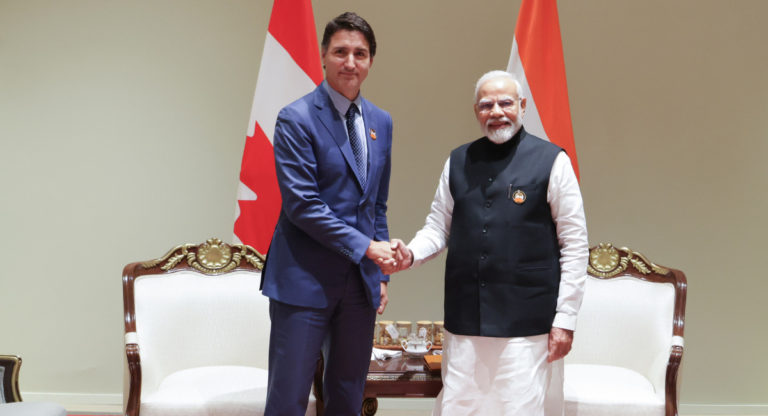
Indian Prime Minister Narendra Modi and Canadian Prime Minister Justin Trudeau held a significant meeting on the sidelines of the G20 Summit, reaffirming their commitment to bolstering India-Canada ties across various sectors. The leaders discussed a wide range of issues, emphasizing the importance of their nations’ partnership.
Prime Minister Modi took to social media to share the news, tweeting, “Met PM @JustinTrudeau on the sidelines of the G20 Summit. We discussed the full range of India-Canada ties across different sectors.”
Canada’s Prime Minister, Justin Trudeau, also expressed the significance of India as a crucial partner for Canada.
Canadian Prime Minister Justin Trudeau said that he had many conversations with Prime Minister Narendra Modi on the issue of Khalistan extremism and “foreign interference”, and Ottawa will always defend freedom of expression, and at the same time will always be there to prevent violence.
He further emphasised that the “actions of the few” do not represent the entire community or Canada.
When asked about if the issues of Khalistan extremism and “foreign interference” did come up during discussions with PM Modi during the G20 Summit.
He said, “Both the issues came up. Over the years, with PM Modi, we have had many conversations on both of those issues. Canada will always defend freedom of expression, freedom of conscience, and freedom of peaceful protest, which is extremely important to us. At the same time, we are always there to prevent violence and to push back against hatred”.
“I think on the issue of the community, it is important to remember that the actions of the few do not represent the entire community or Canada. The flip side of it, we also highlighted the importance of respecting the rule of law and we did talk about foreign interference,” he added.
Notably, multiple incidents of Khalistan extremism have been reported in Canada over the past few years.
In June this year, a tableau parade was organised in Canada celebrating the assassination of former PM Indira Gandhi, which drew severe criticism from New Delhi. In March this year, Khalistan supporters held a protest outside the Indian Embassy in Canada. They raised pro-Khalistan slogans and allegedly assaulted Indian-origin journalists present on the spot.
Multiple temples have also been vandalised in Canada by pro-Khalistani protestors, with anti-India graffiti.
He acknowledged India’s role as an “extraordinarily important economy in the world” and emphasised their collaboration on crucial matters, such as combatting climate change and fostering economic growth and prosperity for their citizens. Trudeau stated, “There is always a lot of work to do, and we will continue to do it.”
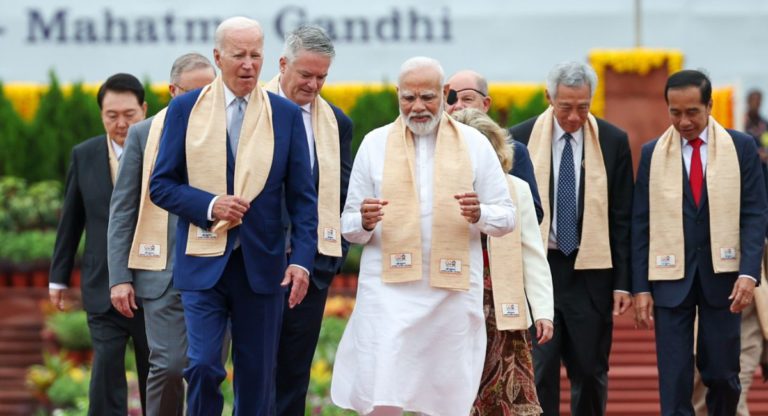
The leaders’ meeting was preceded by a visit to Rajghat, where they paid homage to Mahatma Gandhi, underscoring the respect and admiration both nations hold for India’s historical figures.
Prime Minister Trudeau’s visit to India was part of his participation in the G20 Summit, where leaders from around the world convened to discuss global challenges and collaborative solutions.
In his statement, Prime Minister Trudeau highlighted the close ties between Canada and India, emphasizing the shared values of democracy, pluralism, and progress. He emphasized the commitment to build upon their collaborative history, particularly under India’s presidency of the G20 in that year.
As Canada strengthens its presence in the Indo-Pacific region under its Indo-Pacific Strategy, Trudeau expressed the intent to continue working together to uphold the rules-based international order, promote multilateralism, and enhance economic ties that benefit both nations and the broader region.
Canada’s Prime Minister also acknowledged the significant Indian diaspora in Canada, with nearly 1.4 million people of Indian origin contributing to the nation’s diversity and prosperity. He recognized their valuable contributions, both past and present, that have enriched Canada and made it a more inclusive and stronger country.
The meeting between Prime Minister Modi and Prime Minister Trudeau signifies the commitment of both nations to foster strong diplomatic relations, collaborate on global challenges, and harness the potential for mutual benefit in various sectors, further strengthening the bond between India and Canada.
Earlier in July, India also raised concerns over threats to its diplomats in posters being circulated in Canada with information on a pro-Khalistan rally to be held on July 8. The posters contained threats to the Indian Ambassador to Canada and the consulate general in Toronto.
The posters purportedly circulated by Khalistani extremists have named Indian High Commissioner to Canada Sanjay Kumar Verma and the Consulate General of India, Toronto, Apoorva Srivastava accusing them of playing a role in the June killing of Khalistan Tiger Force chief and designated terrorist Hardeep Singh Nijjar in Canada.
Zain is from Melton West and at about 6 pm on Friday his white Toyota Aurion sedan allegedly hit three pedestrians on the intersection of Bourke St and Russell St.
The footage of the aftermath of the rampage captured by social media users shows Zain sitting on the roof of the Toyota before Victoria Police officers pulled him down and arrested him.
A Melton West man has been charged with one count of murder, three counts of attempted murder, three counts of intentionally cause serious injury and two counts of conduct endangering life.
Victoria Police said in a statement that the man had been charged with one count of murder, three counts of attempted murder, three counts of intentionally causing serious injury, and two counts of conduct endangering life.
Zain Khan appeared at an after-hours court hearing where he was remanded in custody to reappear at Melbourne Magistrates’ Court on 15 January 2024.
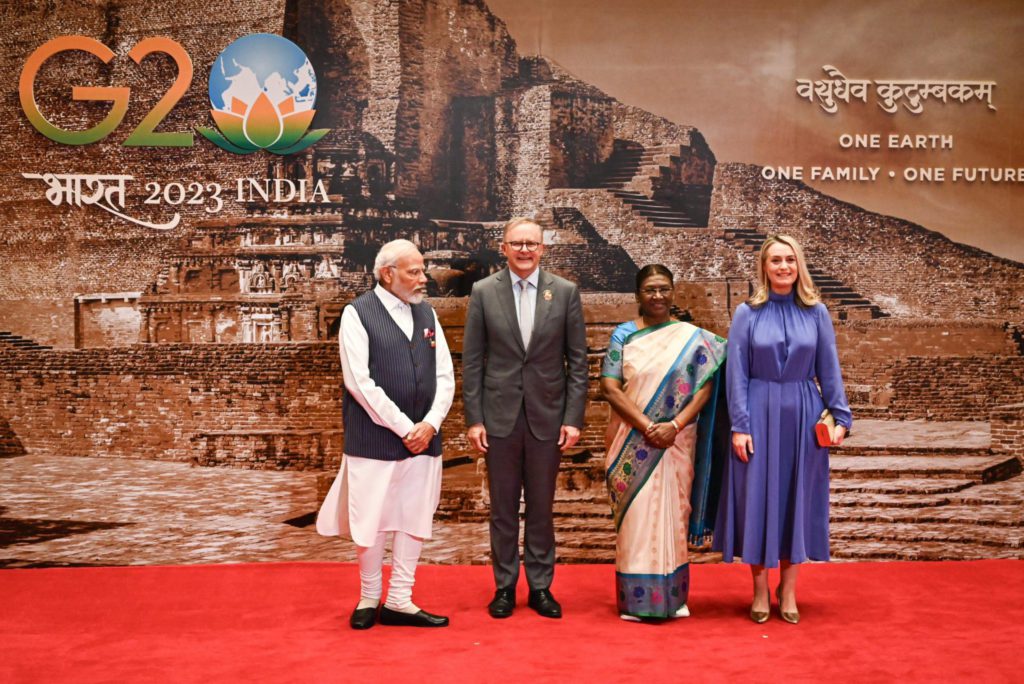
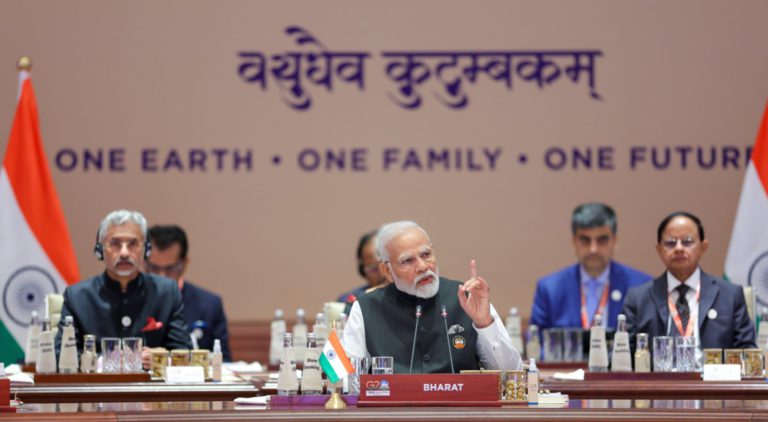
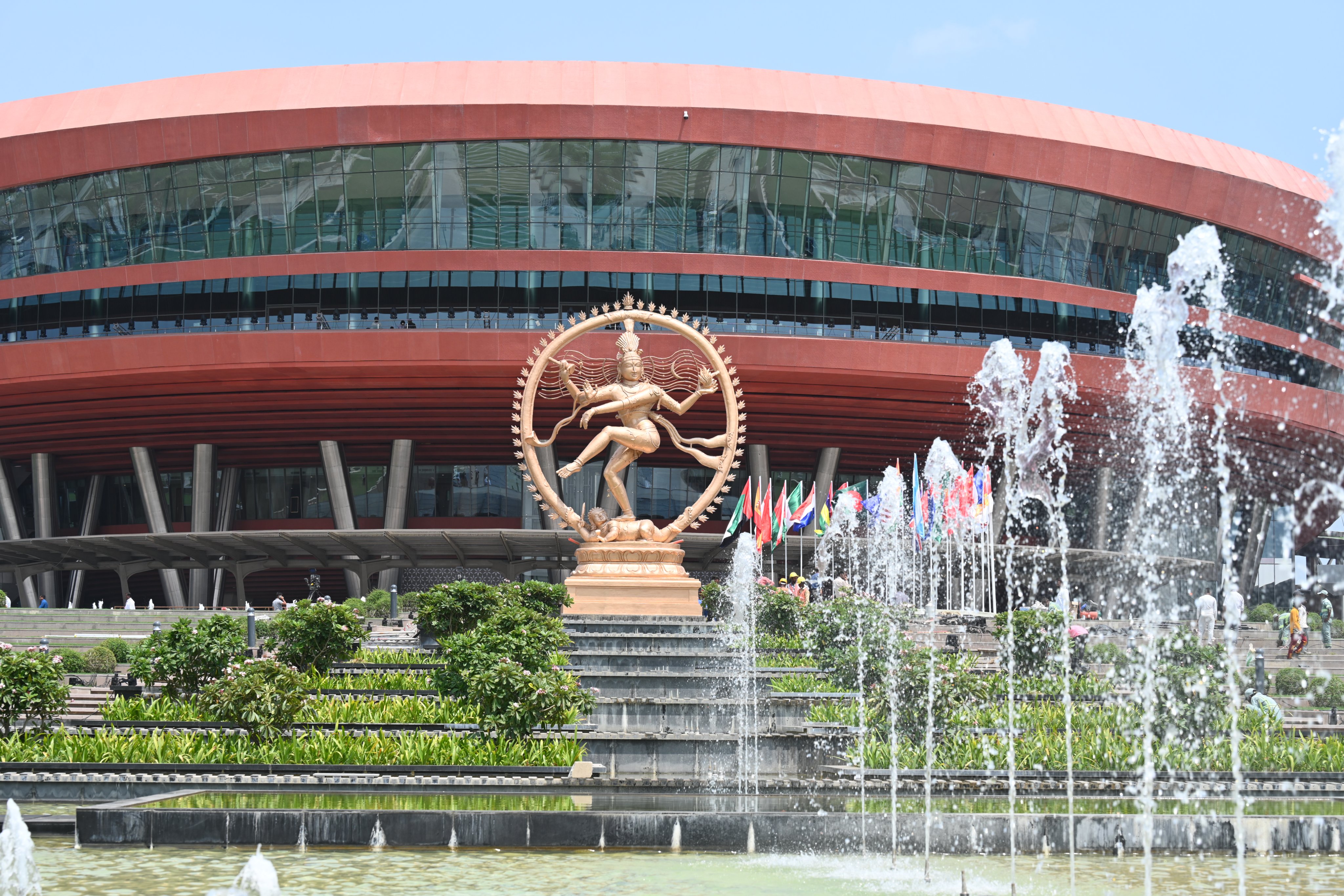
Are we witnessing a new phase of India’s political renaissance? The setting up of the Bharat Mandapam, the Natraj statue installed within its premises, and the placard displaying BHARAT at the G-20 summit, all deriving their vitality from the Maha Upanishad’s verse “Vasudhaiva Kutumbakam” that stands for “One Earth, One Family, One Future.” The ancient wisdom of Bharat has started permeating the geopolitical establishments in the world, thus making the world realise that the future lies in collectivity.
History has been created with the adoption of the New Delhi Leaders’ Declaration. United in consensus and spirit, we pledge to work collaboratively for a better, more prosperous, and harmonious future. My gratitude to all fellow G20 members for their support and cooperation. https://t.co/OglSaEj3Pf
At the first session of the G-2- summit, the ideological orientation of Bharat’s wisdom was palpable.
PM Modi said:
“The 21st century is a time that has the potential to give a new direction to the entire world. It’s a time when years-old challenges demand new solutions from us. Therefore, we must move forward by fulfilling all our responsibilities with a human-centric approach.”
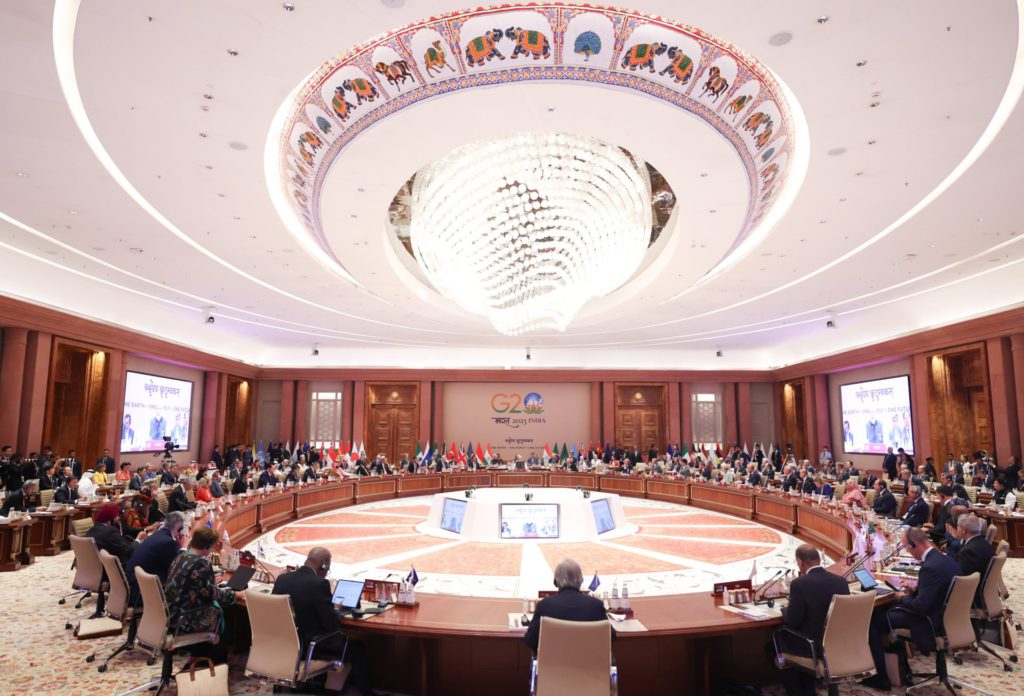
The G-20 summit received all it deserved – a vibrant new convention centre, Bharat Mandapam, standing in the heart of the national capital beckoning the world to look at the rising stature of Bharat. The mandapam that was built at the cost of almost Rs 27bn (£250m) derives its source from “Lord Basaveshwara’s concept of Anubhav Mandapam,” which served as a pedestal for public ceremonies.
The Bharat Mandapam thus provided a window to the world to look at Bharat’s rich legacy and cultural diversity. Metaphorically, a mandapam is meant for a public gathering. It is also the sacrosanct place under which couples are married. It has a rich place in India’s cultural history, and it is not surprising to see that the faith behind the mandapam has cast its influence on world leaders. And so had the iconic statue of the Natraj that can be seen at the Bharat mandapam as well. Natraj symbolizes the cosmic dance of creation and very astutely sums up the pitch that was laid down for the Global South leadership.
Against the backdrop of much hue and cry over the absence of China’s and Russia’s President at the ongoing G-20 summit, it was intriguing to see a 100 percent consensus being achieved at the Delhi Declaration. The situation was tense, and critics had already started questioning India’s stature, some even declaring the failure of India’s Presidency. Rand Corporation’s analyst Derek Grossman casts suspicion adding,
“If India does not take a stand in a situation when Russia goes Hitleresque across Europe or threatens nuclear war, then history will be very harsh on India for not making the right decision.”
“Putting national interest first is OK but values-based judgement matters in geopolitics. I feel like New Delhi is playing with fire.” One would have expected such disparaging remarks from the West, but the human-centric issues raised by India have ensured that it has started punching above its weight.
Likewise, The Wire, in its 07th September report, citing an anonymous, senior European Union official questioned the merits of the ‘text drafted by India on the Ukraine war’ by pointing out that it did “not go far enough” to be accepted by G7 and EU members.”
As the old Urdu shayari puts it, “hum ko maalum hai jannat kii hakiiqat lekin dil ke khush rakhne ko Ghalib ye khayaal achhaa ha”, such aspersions and suspicions were only meant to tarnish India’s growing influence on the world politics. The G-20 Declaration has demonstrated “a good augury that may indicate the possibility of first securing a Ukraine-Russia grain deal and perhaps later, even ending the Russia-Ukraine war,” mentioned the renowned scholar, Madhav Nalpat.
The G-20 summit witnessed the “Historical and Path breaking #G20 Declaration with 100 percent consensus on all developmental and geo-political issues. The new geopolitical paras are a powerful call for Planet, People, Peace and Prosperity in today’s world. Demonstrates PM @narendramodi leadership in today’s world,” Amitabh Kant said in a post shared on X.
Historical & Path breaking #G20 Declaration with 100% consensus on all developmental and geo-political issues. The new geopolitical paras are a powerful call for Planet, People, Peace and Prosperity in todays world . Demonstrates PM @narendramodi leadership in today’s world.
Kant added, “The #NewDelhiLeadersDeclaration focuses on – Strong, Sustainable, Balanced, and Inclusive Growth Accelerating Progress on #SDGs Green Development Pact for a Sustainable Future Multilateral Institutions for the 21st Century Reinvigorating Multilateralism.” Not to forget that the Delhi Declaration also saw 112 outcomes and Presidency documents, that account for more than double the work that was done in previous presidencies. It also included the African union that represents 55 member states, some of them accounting for the world’s fastest-growing economies. A continent of about 1.4 billion people that may soon represent a quarter of the global population by 2050.
Indeed, the inclusion of the @_AfricanUnion in the G20 is a significant stride towards a more inclusive global dialogue. We look forward to collaborative efforts that benefit not only our respective continents but also the entire world. https://t.co/bNsA951Ot5
It is refreshing to see the rise of Bharat’s wisdom once again. If the global economy has to thrive it must take into consideration the idea of the Earth as one family. The influential insights provided by S. Jaishanker, Amitabh Kant, and their team have added much energy to PM Modi’s drive for the global leadership position. It augurs well for the future. The world needs firm leadership to drive the global agenda of peace, economic stability, and climate sustainability. As Modi said, “India’s G20 presidency has become a symbol of inclusion, of ‘sabka saath’ both inside and outside the country. The “vishwaguru” journey seems to have started in the Bharat Mandapam. A beautiful rendition of wisdom and modernity, change and stability, and a turn to ancient India’s civilisational pedagogy.
Contributing Author: Om Prakash Dwivedi tweets @opdwivedi82. His interests lie in the field of postcolonial theory.
Disclaimer: The opinions expressed within this article are the personal opinions of the author. The Australia Today is not responsible for the accuracy, completeness, suitability, or validity of any information in this article. All information is provided on an as-is basis. The information, facts, or opinions appearing in the article do not reflect the views of The Australia Today and The Australia Today News does not assume any responsibility or liability for the same.
Support Our Journalism
Global Indian Diaspora needs fair, non-hyphenated, and questioning journalism, packed with on-ground reporting. The Australia Today – with exceptional reporters, columnists, and editors – is doing just that. Sustaining this needs support from wonderful readers like you.
Whether you live in Australia, the United Kingdom, Canada, the United States of America, or India you can take a paid subscription by clicking Patreon. Buy an annual ‘The Australia Today Membership’ to support independent journalism and get special benefits.
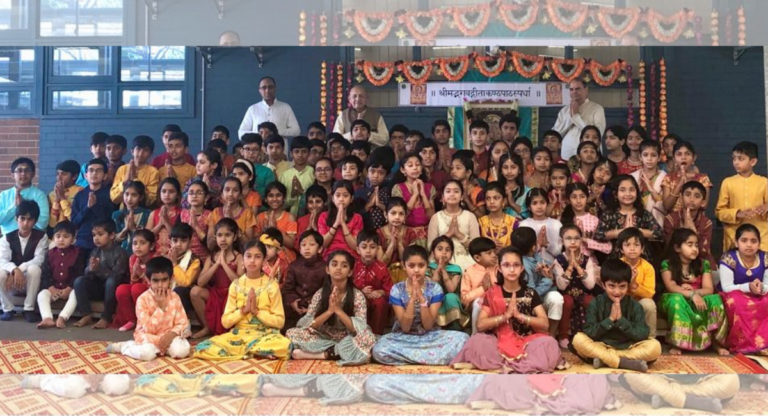
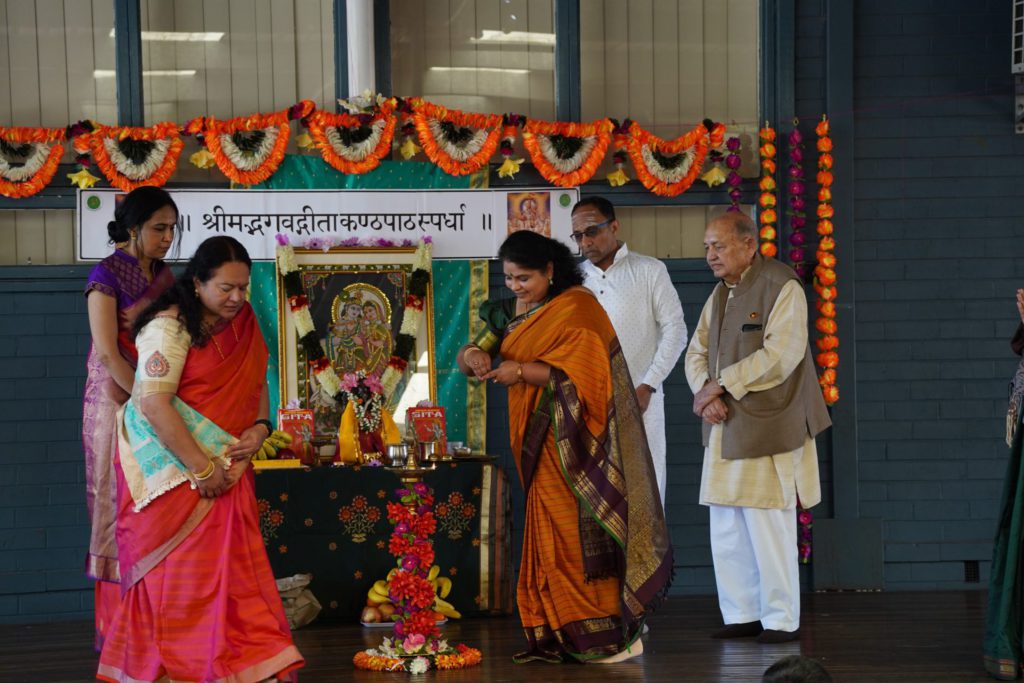
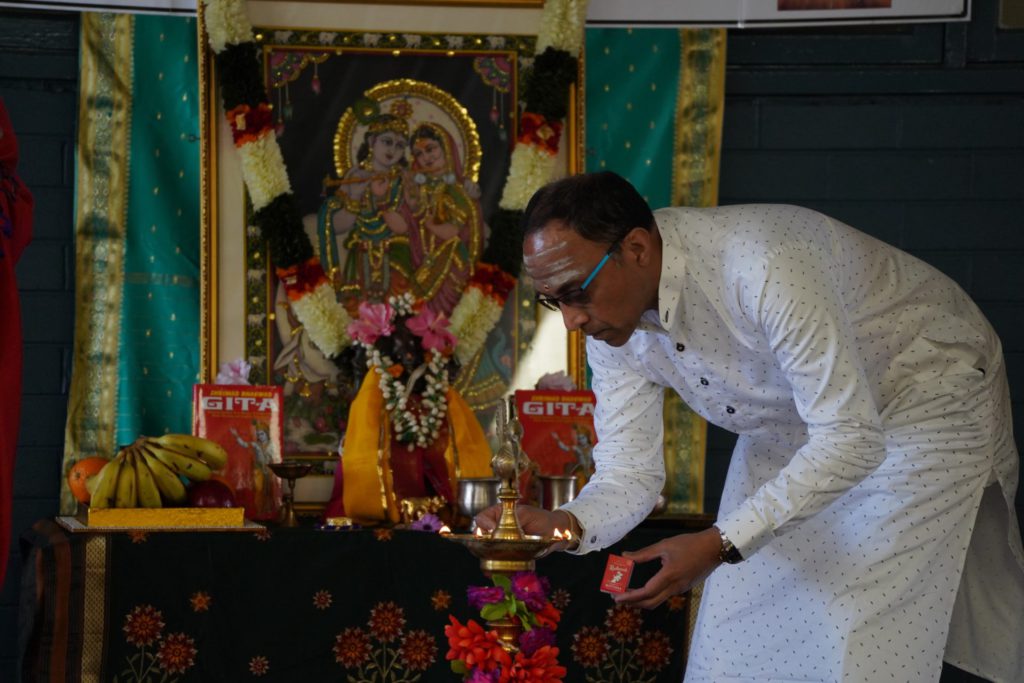
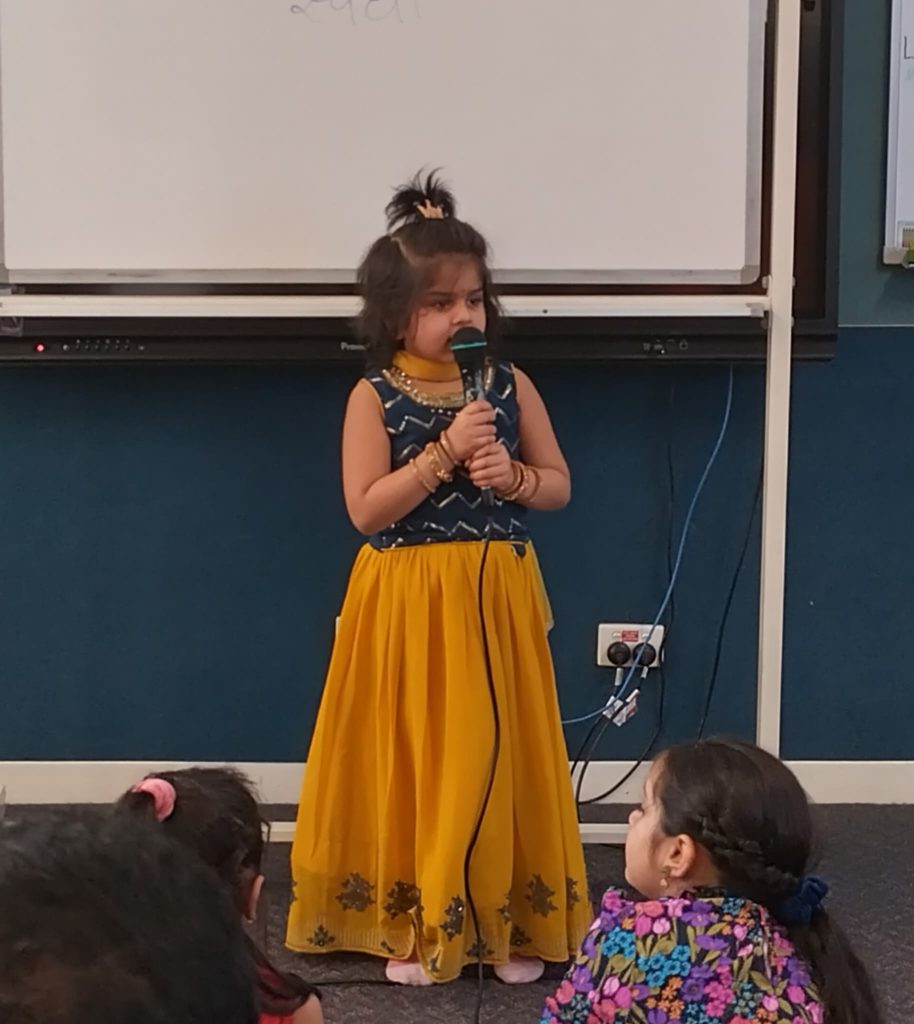
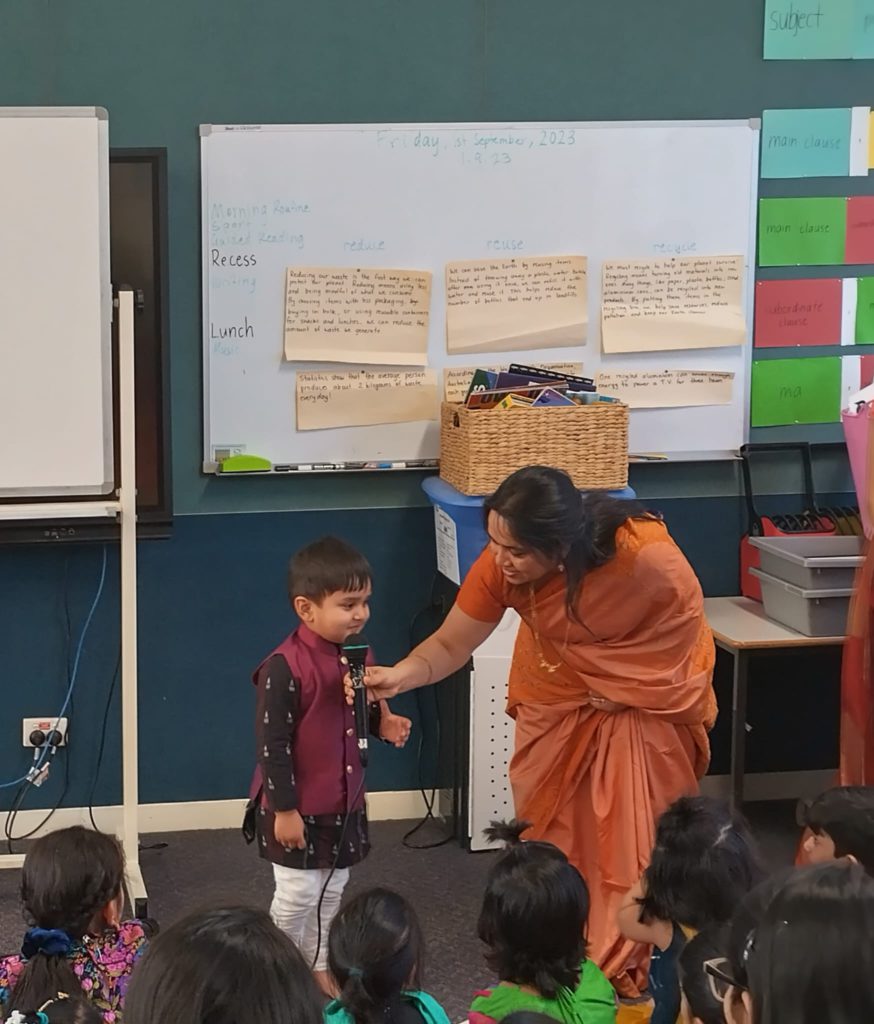
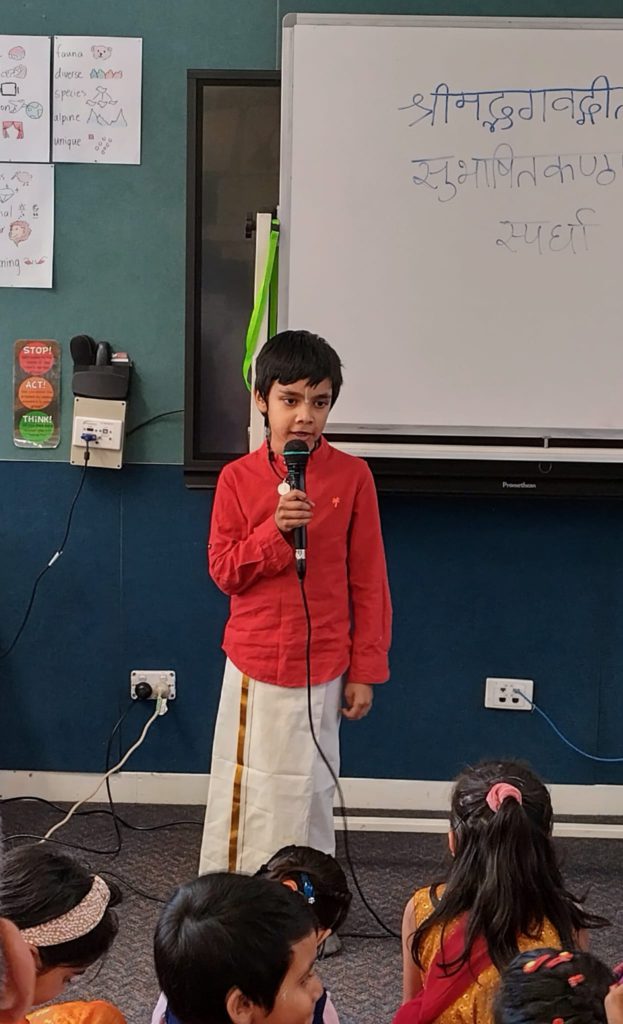
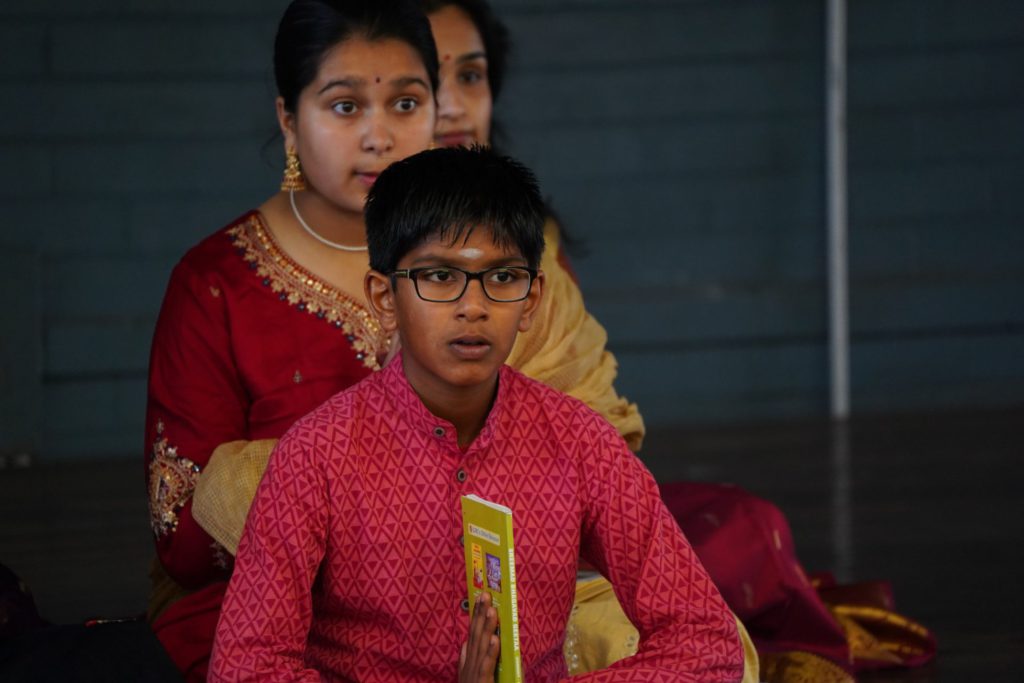
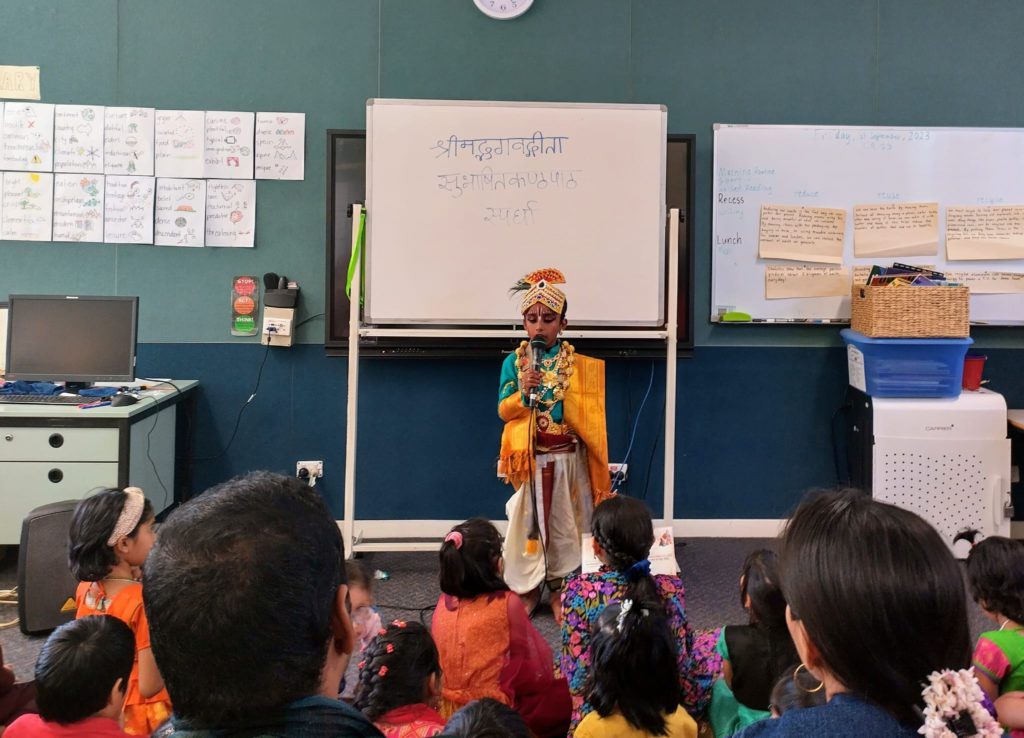
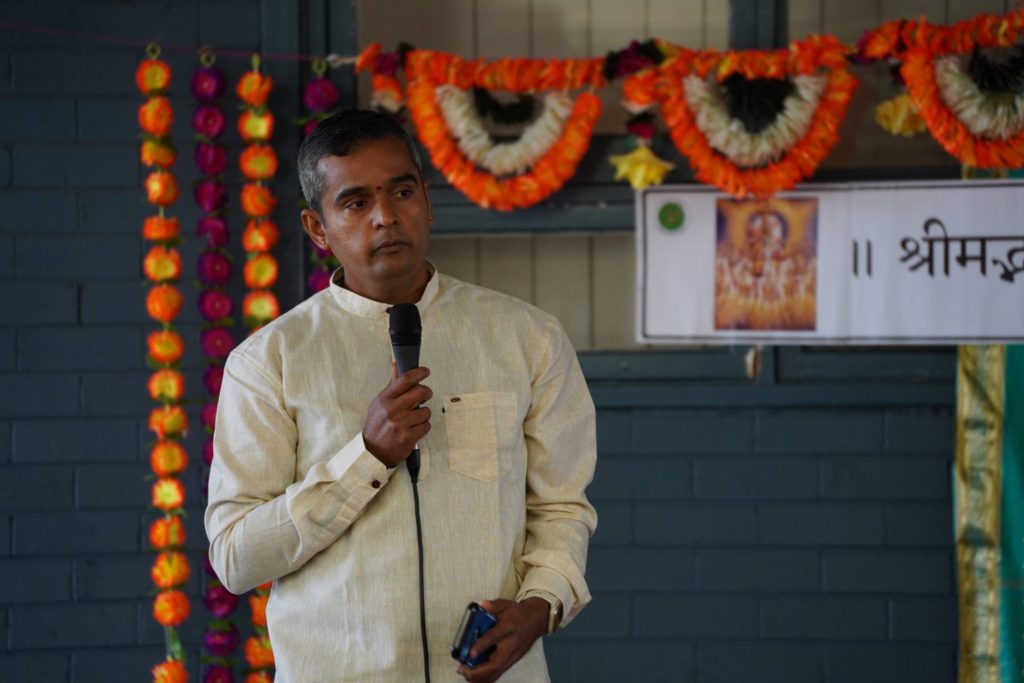
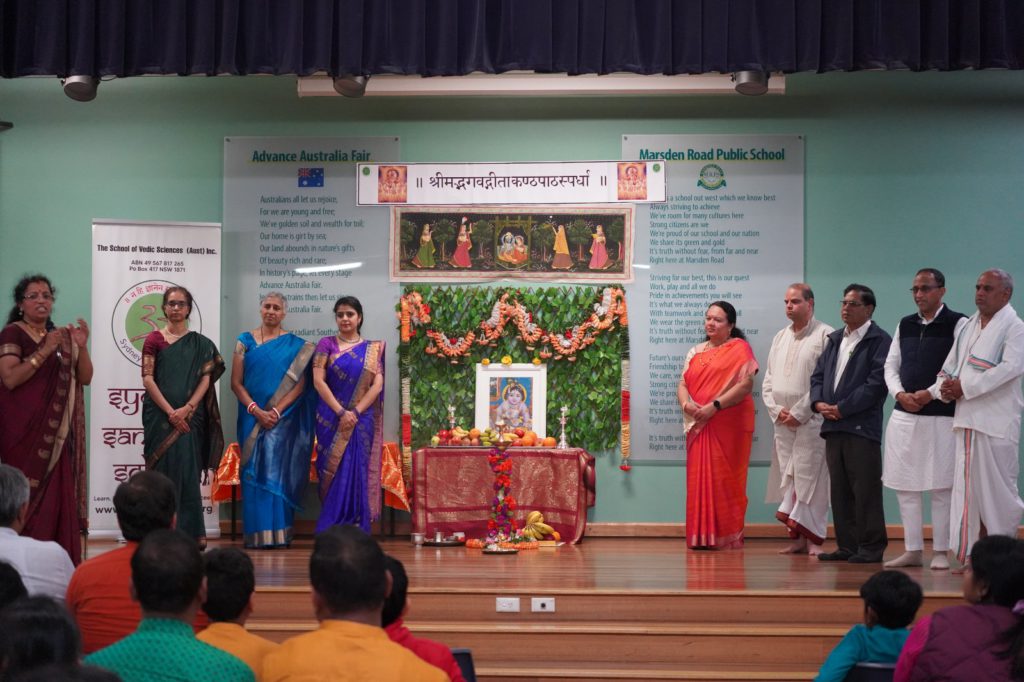
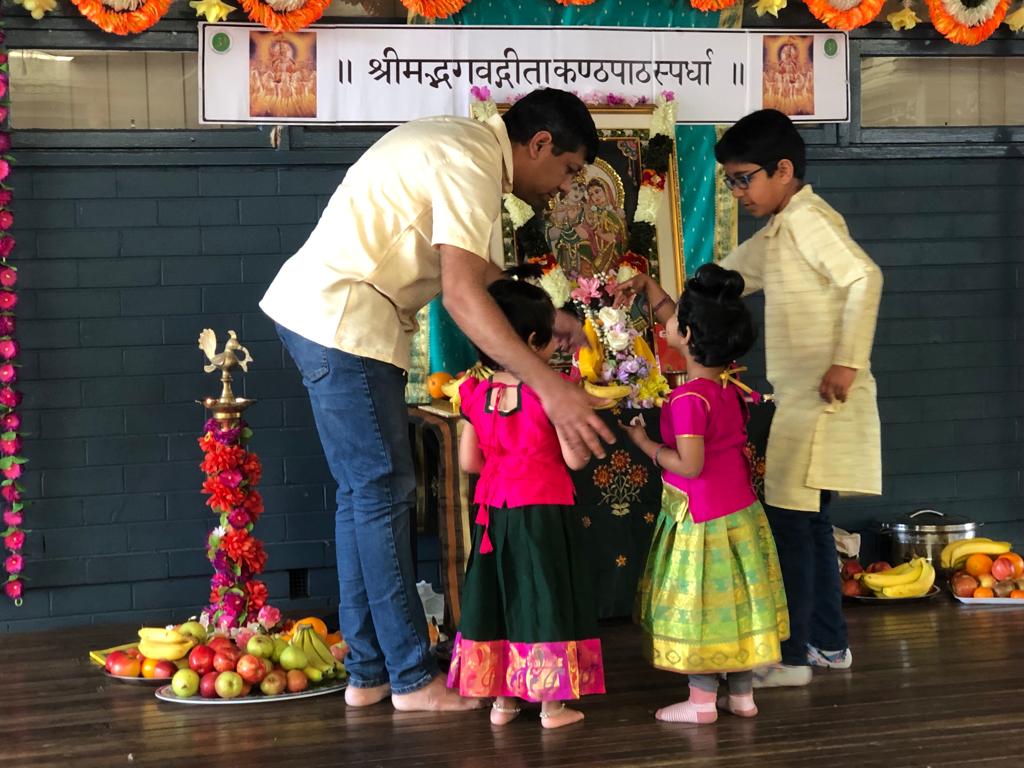
The Sydney Sanskrit School recently held the Bhagavad-gita and Subhashita recitation competition. The competition was held on 3rd September close on the heels of Shri Krishna Janmashthami (6th-7th September) to celebrate the birth of Lord Krishna.
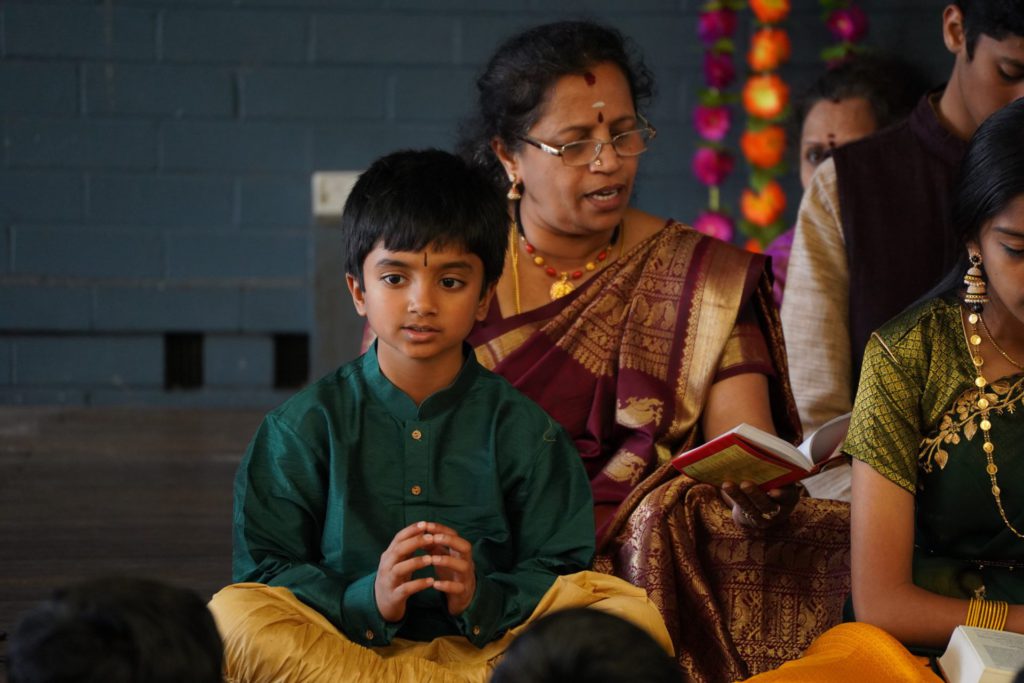
It was a special occasion as the kids had been learning Chapter 2, Sankhya Yoga, from the Bhagavad Gita, for two years and had finally completed it this year.
Watch Video: Mesmerising chanting by students of SydneySanskrit School
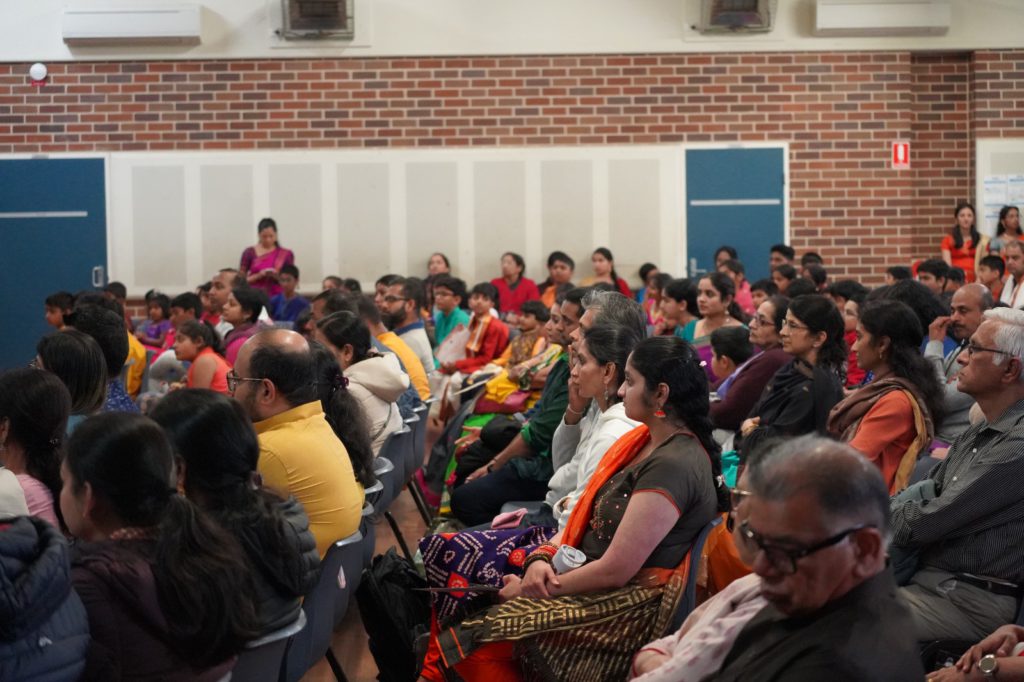
The Gita Gnyana and Naama Japa Yagnya were performed on this occasion, with around 450 people in attendance. Representatives from the Hindu Council, Chinmaya Mission, Fiji Indian Community, and community members attended the event.
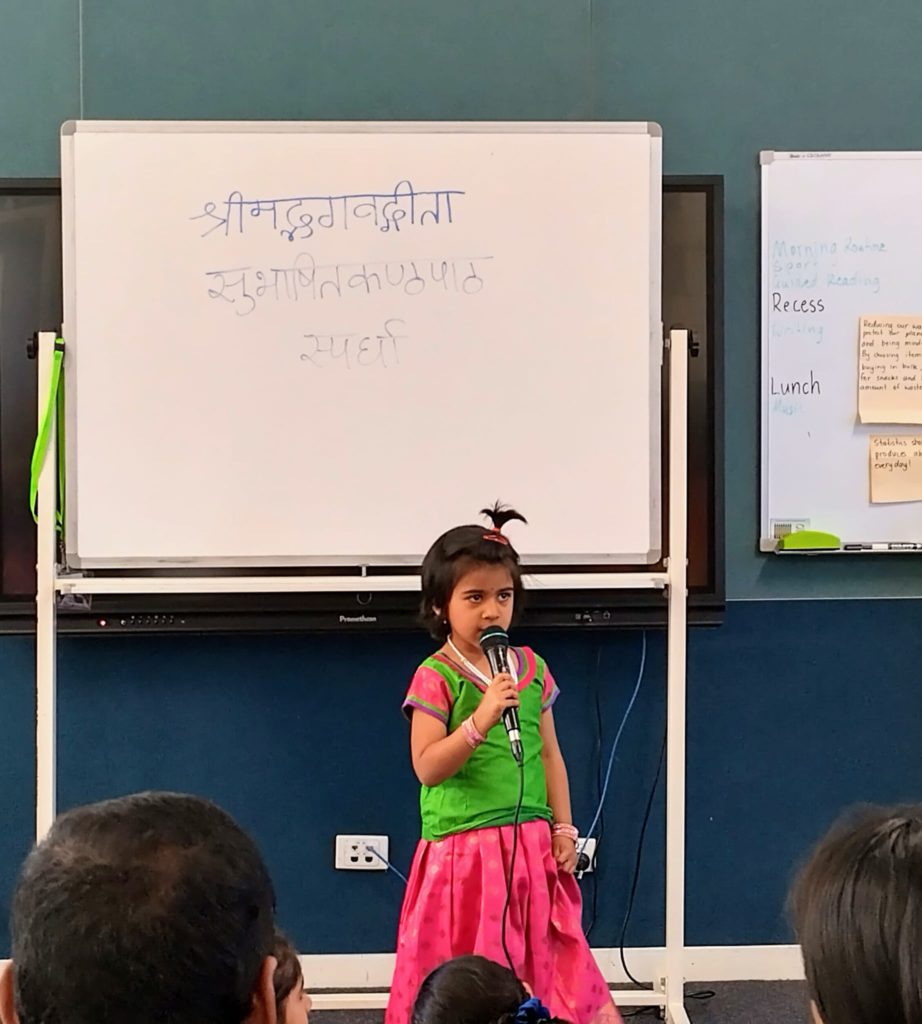
The competition was a huge success, with around 130 kids participating and showcasing their talents. The recitals were judged by nine experienced judges across four stages, ensuring a fair and thorough assessment of each performance.
Co-Founder and Principal of Sydney Sanskrit School, Dr Meena Srinivasan
The judges were Nayan Shashikant, Dev Babu, Nikhila Kiran, Shobhanjali, Kalpana Srinivasa, Srinivas Dammatmari, Parthasarathi, Srinivasan and Sneha Chandrashekar.
Watch Video: Teachers at the Sydney Sanskrit School Soumya and Skanda speak with Pallavi Jain
The Sydney Sanskrit School was mentioned in Indian Prime Minister Narendra Modi’s radio broadcast ‘Mann Ki Baat’. It is also the first Sanskrit School in the Southern Hemisphere.
It was amazing to see such young children (aged between 3 and 7) reciting the Bhagavad Gita with enthusiasm and skill and take an interest in such an important aspect of their culture at an early age. Sanskrit is among the most ancient languages of humanity and these children are carrying on the legacy of their ancestors which is thousands of years old.
The results of the competition will be announced on 18th November during Sanskrit Utsavam.
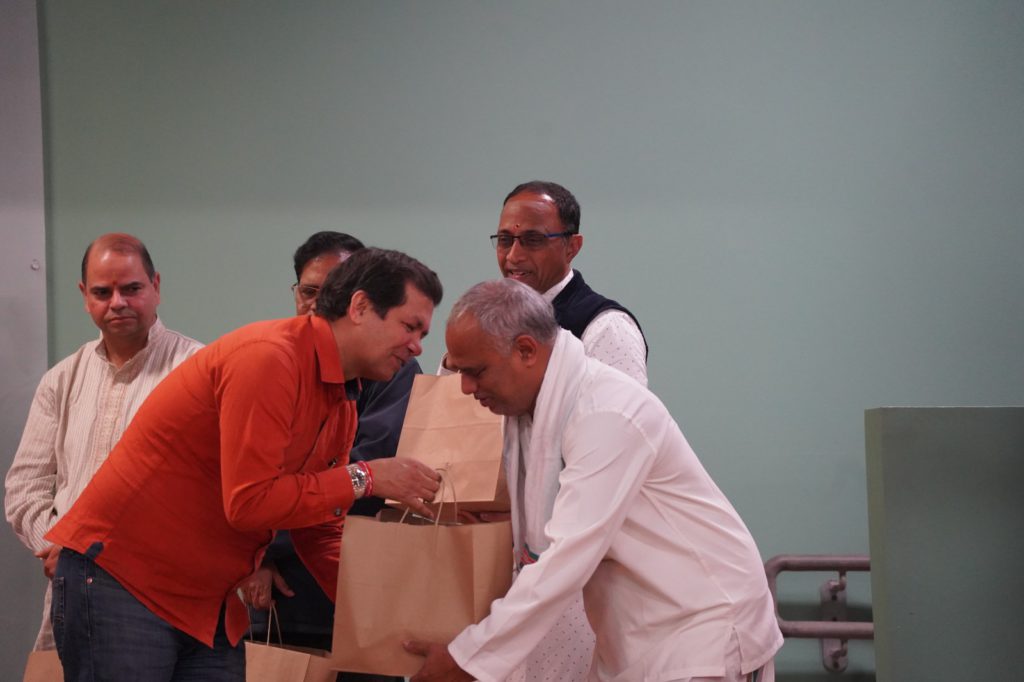
Vijay Singhal of the Hindu Council and Sewa Singh of the Australian Haryanvi Association supported the event and were invited as special guests.
PM Albanese talking about world events, particularly Ukraine and Russia’s war, said:
“[PM Modi] has steered the G20 through another challenging year, a year made all the more challenging, of course, by Russia’s illegal and immoral invasion of Ukraine, which I condemn in the strongest terms.”
A successful G20 meeting hosted by @narendramodi in New Delhi today followed by a good bilateral discussion about concluding the Comprehensive Economic Cooperation Agreement between Australia and India 🇦🇺🇮🇳 pic.twitter.com/tglLOScrcJ
PM Albanese in his speech to the summit leaders urged to commit to net-zero to lessen the impact of devastating natural disasters.
He added that urgent action was needed:
“Our communities have endured another year of extreme climate impacts. Devastating weather events have affected so many nations, including Australia. The science is clear: our climate has already changed. We are united in our ambition for a net-zero future. Now we must turn our hands to action: urgent, comprehensive action.”
During his intervention at the summit, PM Albanese also urged the G20 economies to increase the production of renewable energy technology.
India is Australia’s sixth largest trading partner with two-way trade in goods and services valued at $46.5 billion in 2022 and is also focussing on building renewable energy resources to fight climate change.
Support Our Journalism
Global Indian Diaspora needs fair, non-hyphenated, and questioning journalism, packed with on-ground reporting. The Australia Today – with exceptional reporters, columnists, and editors – is doing just that. Sustaining this needs support from wonderful readers like you.
Whether you live in Australia, the United Kingdom, Canada, the United States of America, or India you can take a paid subscription by clicking Patreon. Buy an annual ‘The Australia Today Membership’ to support independent journalism and get special benefits.
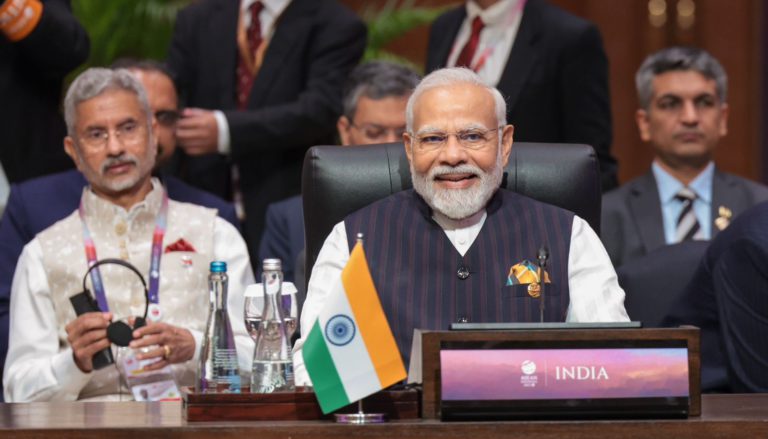
Indian Prime Minister Narendra Modi said that consensus has been built on the New Delhi G20 Leaders’ Summit Declaration and announced its adoption.
PM Modi, who is chairing the G20 sessions, congratulated the Sherpas and Ministers who had worked towards forging the consensus.
“I have received good news. Due to the hard work of our team, consensus has been built on New Delhi G20 Leaders’ Summit Declaration.”
G20 Summit on the subject of One Earth; Image Source; PIB
“My proposal is to adopt this leadership declaration,” said PM Modi
“I announce to adopt this declaration. On this occasion, I congratulate my Sherpa, ministers, who worked hard for it and made it possible,”
he said.
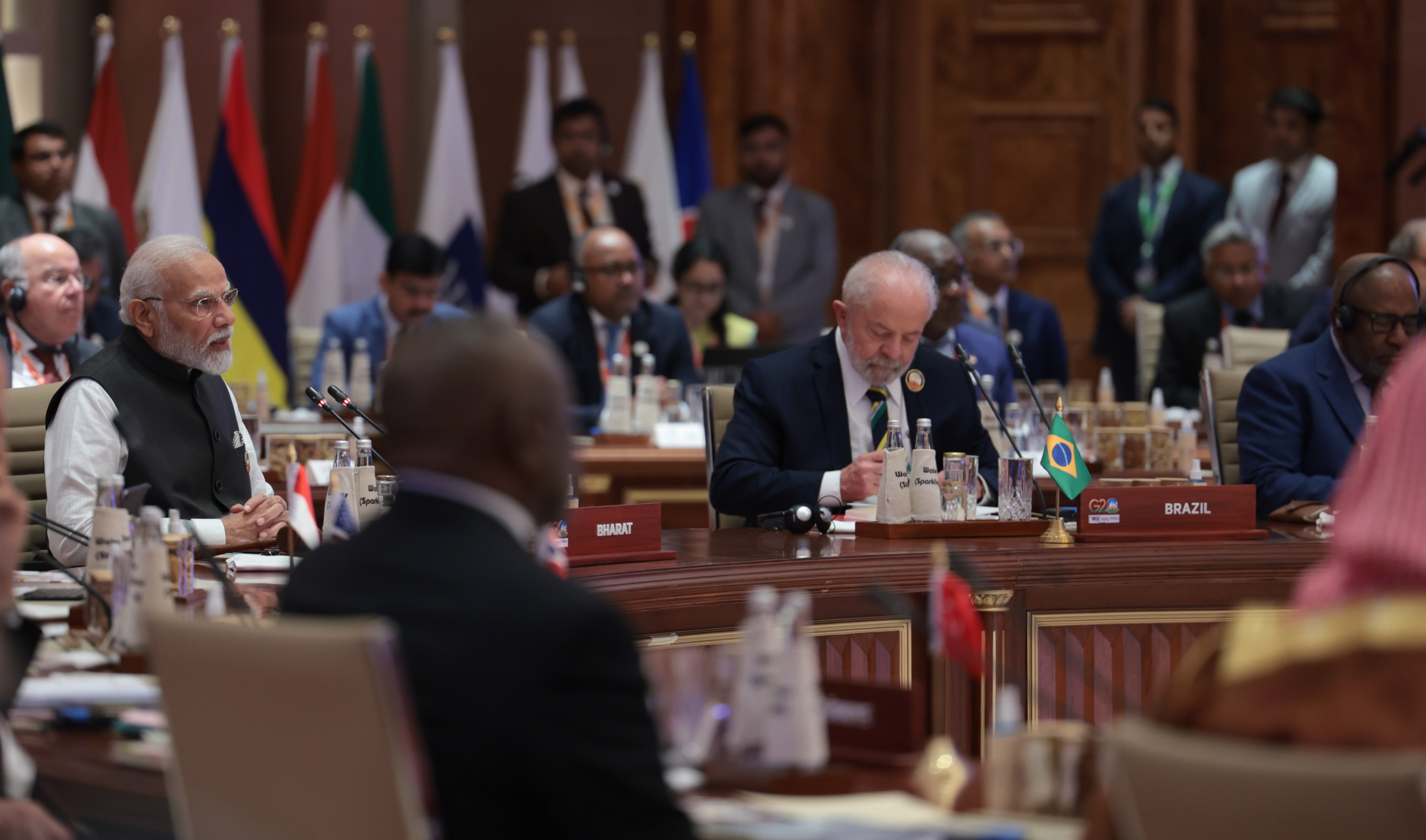
The announcement of the adoption of the declaration was welcomed with the thumping of desks. In his opening remarks at the Summit, the Prime Minister said that the 21st century is a time that has the potential to give a new direction to the entire world.
“It’s a time when years-old challenges demand new solutions from us. Therefore, we must move forward by fulfilling all our responsibilities with a Human Centric approach,” he said.
African Union’s inclusion in G20: “Let us do whatever we can for development of Global South”
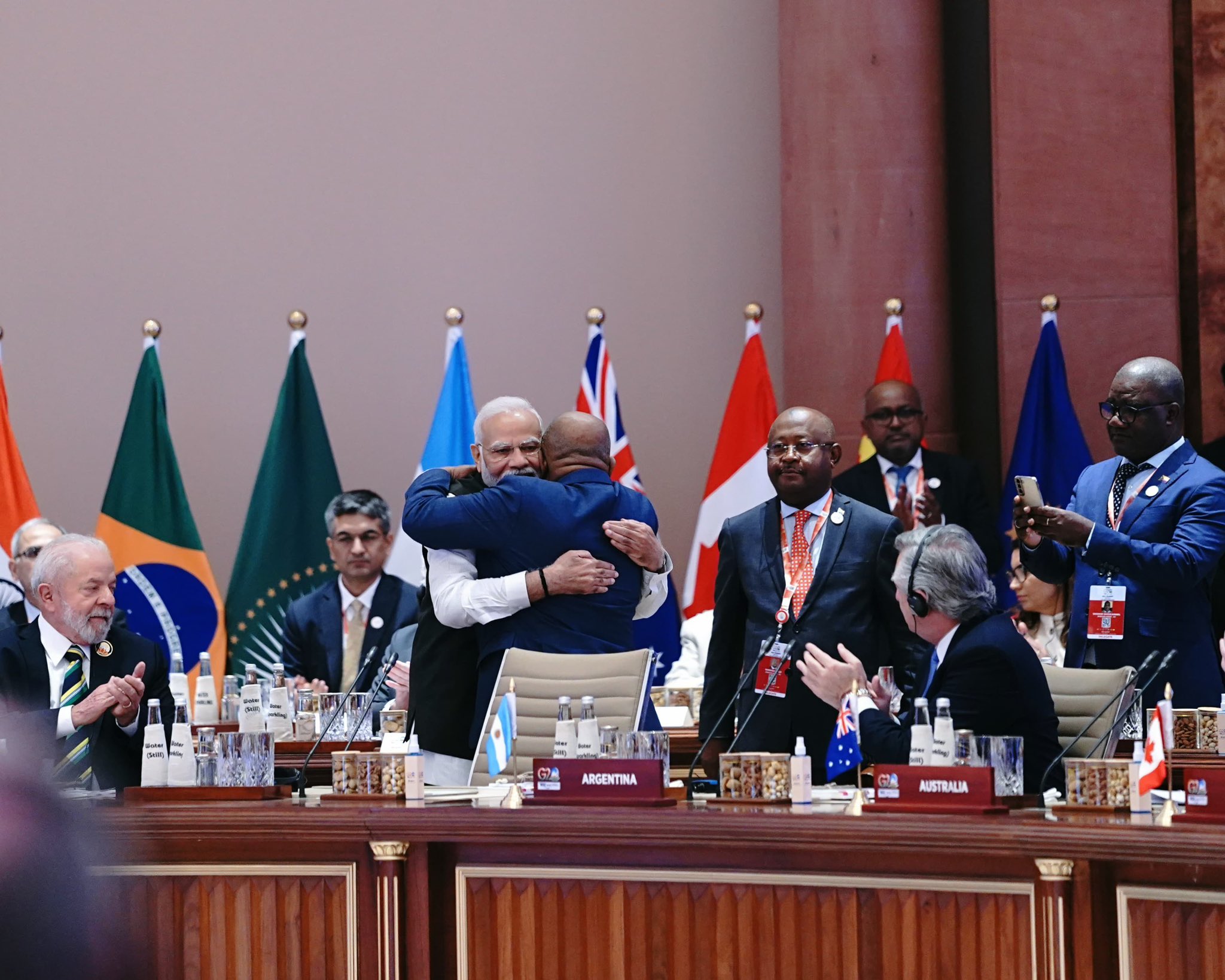
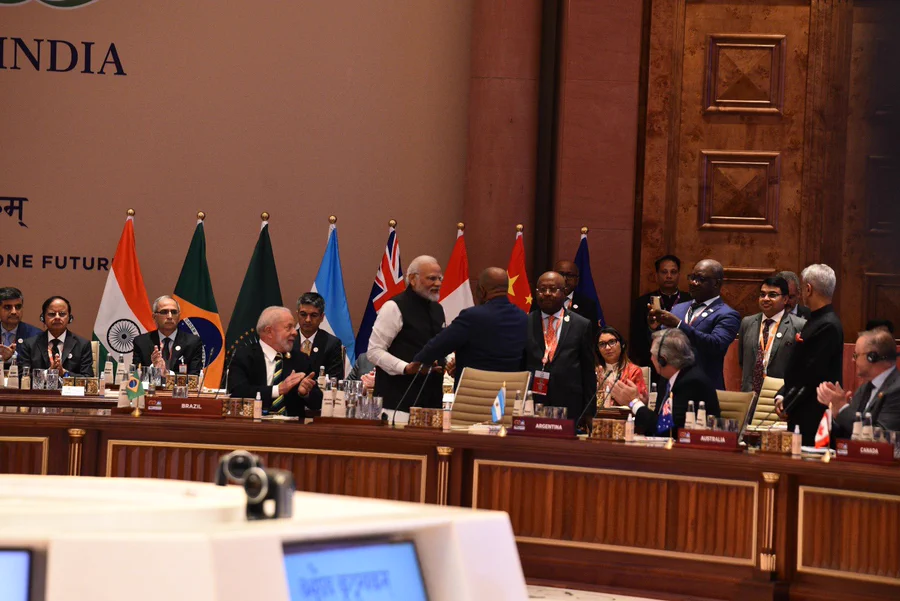
In his opening remarks at the 18th G20 Leaders’ Summit, PM Modi invited the AU, represented by Chairperson Azali Assoumani, to take a seat at the table of G20 leaders as a permanent member.
“With everyone’s approval, I request the AU head to take his seat as a permanent G20 member,”
PM Modi said in his address.
Earlier, the Nigerian president congratulated the African Union on becoming a permanent member of the G20.
He further said that we look forward to further advancing our aspirations on the global stage using the G20 platform.
“Congratulations to the @_AfricanUnion on becoming a permanent member of the #G20. As a continent, we look forward to further advancing our aspirations on the global stage using the G20 platform. Pic: Indian PM @narendramodi and African Union Chairperson @PR_AZALI President Azali Assoumani of Comoros at the G20 Summit in Dehli, India #G20India, the Nigerian President Bola Ahmed Tinubu tweeted.
Following the African Union’s inclusion, the South African President’s spokesperson lauded the Group of Twenty’s (G20) decision to add the African Union as a permanent member of the bloc, saying, “We are grateful to India’s leadership in this regard”.
Adding the African Union as a member of G20 was among India’s key aims to achieve during the ongoing G20 summit. The move to include the African Union in the G20 grouping was proposed by PM Modi earlier this June.
In June 2023, Prime Minister Modi said that he had written to G20 counterparts to provide the African Union with full membership at this G20 Summit. PM Modi had proposed that the AU, a bloc of 55 countries from the African continent that was launched in 2002, be given full membership at their request.
The G20 Declaration focuses on promoting strong, sustainable, inclusive growth
Indian External Affairs Minister S Jaishankar has said that the G20 Leaders’s Summit Declaration focuses on promoting strong, sustainable, balanced and inclusive growth.
Addressing a joint press conference, Jaishankar said the Declaration seeks to accelerate progress on Sustainable Development Goals and has come up with an action plan accordingly.
“The declaration the leaders have agreed on today focuses on promoting strong, sustainable, balanced and inclusive growth. It seeks to accelerate progress on SDGs and has come up with an action plan accordingly,” the minister said.
“It envisages a green development pact for a sustainable future, it endorses high-level principles on lifestyle for sustainable development, voluntary principles of hydrogen, the Chennai principles for a sustainable resilient blue economy and the Deccan principles on food security and nutrition among others,” he added.
“It’s witnessing the participation of its 20 member states, nine invitee states and 14 international organisations. It is a matter of particular satisfaction for us that the African Union is a permanent member,”
he said.
He said the message of India’s presidency is ‘One Earth, One Family and we share One Future’ and the country has “consciously sought to make this G20 as inclusive and broad-based as possible”.
Calling the New Delhi Declaration “historical and path-breaking,” G20 Sherpa Amitabh Kant said that India got the “100 per cent” consensus on all developmental and geo-political issues focussing on Strong, Sustainable, Balanced, and Inclusive Growth Accelerating Progress on Sustainable Development Goals.
G20 New Delhi Leaders' Declaration adopted with the bang of the gavel!
“Historical and Path breaking #G20 Declaration with 100 per cent consensus on all developmental and geo-political issues. The new geopolitical paras are a powerful call for Planet, People, Peace and Prosperity in today’s world . Demonstrates PM @narendramodi leadership in today’s world,” Kant said on a post shared on X.
“The #NewDelhiLeadersDeclaration focuses on – Strong, Sustainable, Balanced, and Inclusive Growth Accelerating Progress on #SDGs Green Development Pact for a Sustainable Future Multilateral Institutions for the 21st Century Reinvigorating Multilateralism,” he added.
‘Threat or use of Nuclear-weapons inadmissible’: G20 Delhi Declaration on Ukraine war
The “use or threat of use of nuclear weapons is inadmissible”, G20 nations said in a New Delhi Leaders’ Declaration under the mention of the Ukraine war.
Without mentioning Russia, the G20 member countries recalled the Bali declaration and underscored that all States must act in a manner consistent with the Purposes and Principles of the UN Charter in its entirety and called for a “comprehensive, just, and durable peace in Ukraine” and reminded member states to “refrain from the threat, or use of force, to seek territorial acquisition”.
“Concerning the war in Ukraine, while recalling the discussion in Bali, we reiterated our national positions and resolutions adopted at the UN Security Council and the UN General Assembly and underscored that all States must act in a manner consistent with the Purposes and Principles of the UN Charter in its entirety.
In line with the UN Charter, all states must refrain from the threat or use of force to seek territorial acquisition against the territorial integrity and sovereignty or political independence of any state. The use or threat of use of nuclear weapons is inadmissible,”
the joint declaration read.
Highlighting that G20 is not the platform to resolve geopolitical and security issues, Minister Jaishankar said that the leaders recognised that they can have significant consequences for the global economy,
“In particular, they dwelt on the ongoing war in Ukraine and the impact it has had, especially on developing and least developing nations still recovering from the pandemic and economic disruption.”
“We highlighted the human suffering and negative added impacts of the war in Ukraine with regard to global food and energy security, supply chains, macro-financial stability, inflation and growth, which has complicated the policy environment for countries, especially developing and least developed countries which are still recovering from the COVID-19 pandemic and the economic disruption which has derailed progress towards the SDGs. There were different views and assessments of the situation.”
“The peaceful resolution of conflicts and efforts to address crises as well as diplomacy and dialogue are critical. We will unite in our endeavour to address the adverse impact of the war on the global economy and welcome all relevant and constructive initiatives that support a comprehensive, just, and durable peace in Ukraine that will uphold all the Purposes and Principles of the UN Charter for the promotion of peaceful, friendly, and good neighbourly relations among nations in the spirit of ‘One Earth, One Family, One Future’,” the New Delhi Declaration read.
EAM further said, “The three Fs Food, Fuel and Fertilisers were issues of special concern. Another subject addressed by them… was countering terrorism and money laundering.”
The leaders condemned terrorism in all its forms and manifestations… Speaking for India, we are clear that no one is left behind. ‘No one left behind’ is as much a foreign policy goal as it is a domestic one…”
In a major win for India, the G20 adopted the New Delhi Leaders Summit Declaration after Prime Minister Narendra Modi announced that consensus had been reached among member states.
US, India, Saudi Arabia, UAE and EU set to unveil railway, ports connectivity deal
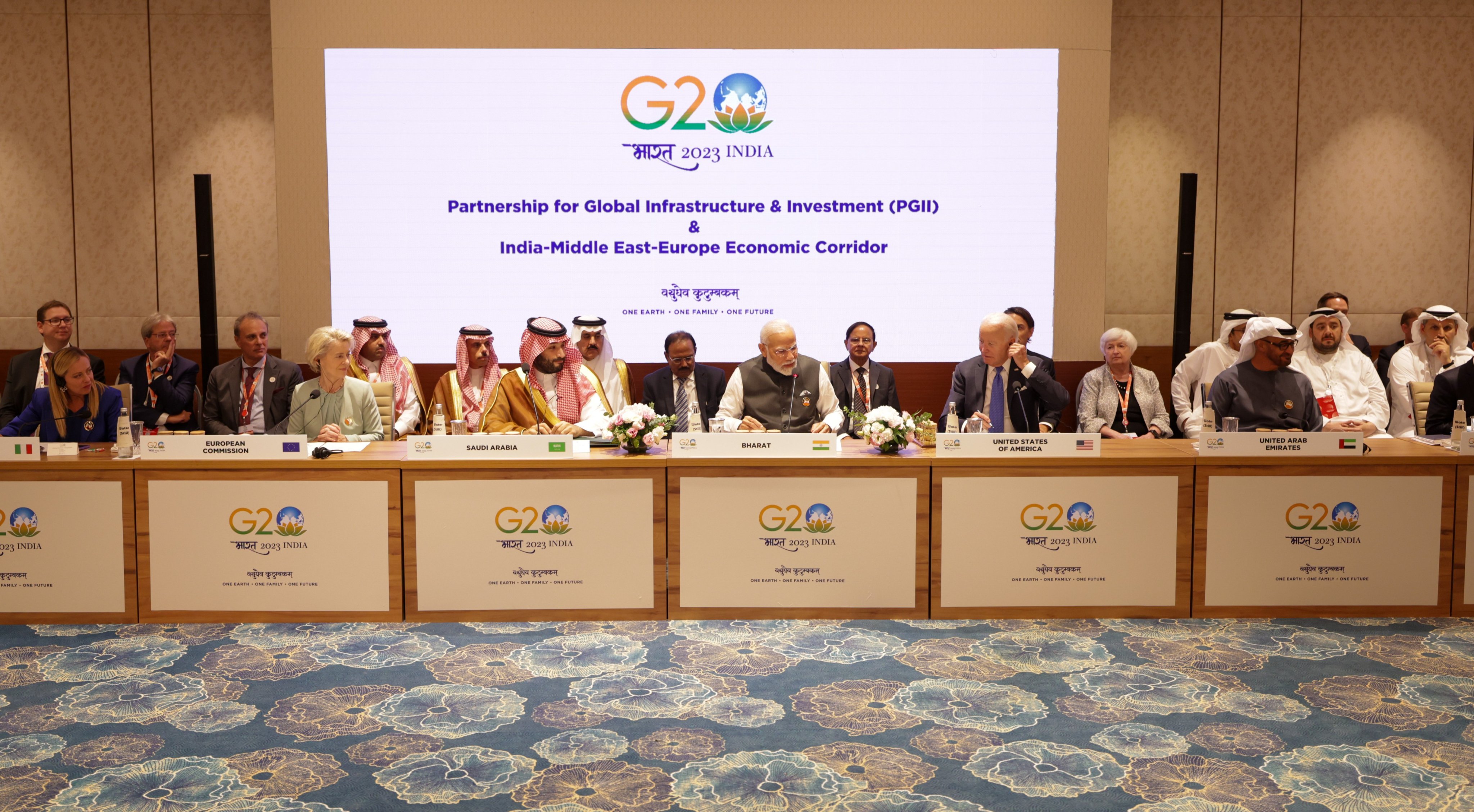
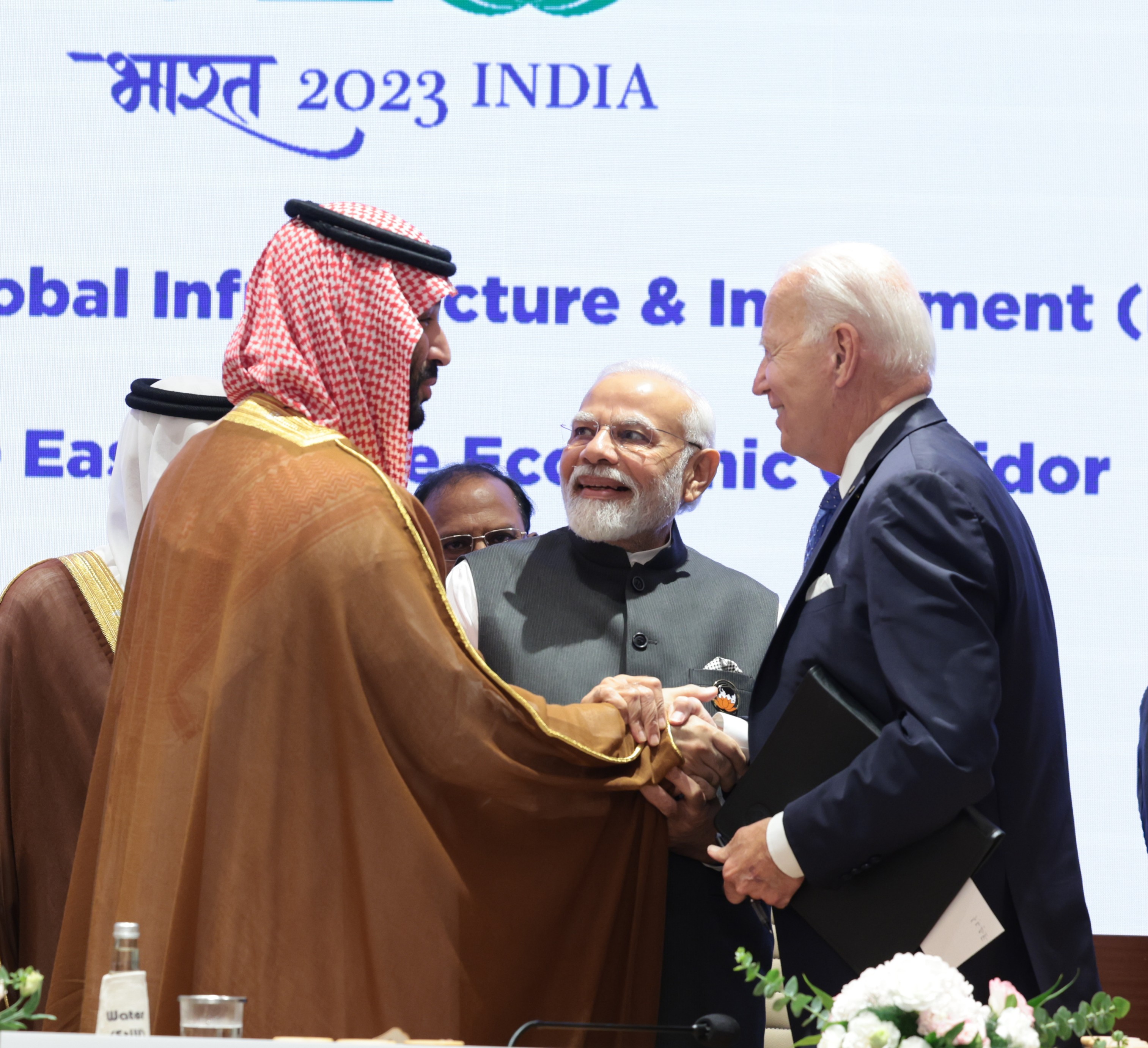
A shipping and rail transportation corridor linking countries across the Middle East, South Asia and Europe is likely to be announced on the sidelines of the ongoing G20 Summit in New Delhi, a White House official has said.
The United States, India, Saudi Arabia, the United Arab Emirates, the European Union and other G20 partners are set to explore the shipping and rail transportation corridor, which is aimed at aiding in the flow of commerce, energy and data from India across the Middle East up to Europe.
A memorandum of understanding (MoU) is expected to be announced at a meeting focused on global infrastructure on the sidelines of the G20 today according to White House Deputy National Security Advisor Jon Finer.
The leaders are meeting to discuss the global economy and supply chain challenges, among other issues facing the global community.
This agreement after it is inked could be seen as an alternate supply chain in a completely evolved post-pandemic world order.
Finer added that President Biden and Prime Minister Modi will meet with other leaders for an event focused on global infrastructure later today.
“The deal will benefit low and middle-income countries in the region, and enable a critical role for the Middle East in global commerce. We see this as having a high appeal to the countries involved, and also globally, because it is transparent because it is a high standard because it is not coercive,” Finer told media persons.
Delving more on the initiative, Finer noted it was not just a railway project but more of a shipping and railway project.
“It is not just the Railway project, it is a shipping and Railway project and it is important for people to understand how expansive, ambitious and ground-breaking this will be” Finer added.
Finer termed this to-be-built project as “affirmative positive” aimed at serving the underserved.
“The way we see the infra project, it is an affirmative positive project. It has appeal for countries underserved by infra. We are not asking countries to make a zero-sum choice. We have seen other efforts that are not as ambitious, we feel good about the contrast of what we provide,” White House Deputy National Security Advisor said.
The infrastructure deal is expected to connect countries in the Middle East via a network of railways. The network will also connect to India through shipping lanes from ports in the region.
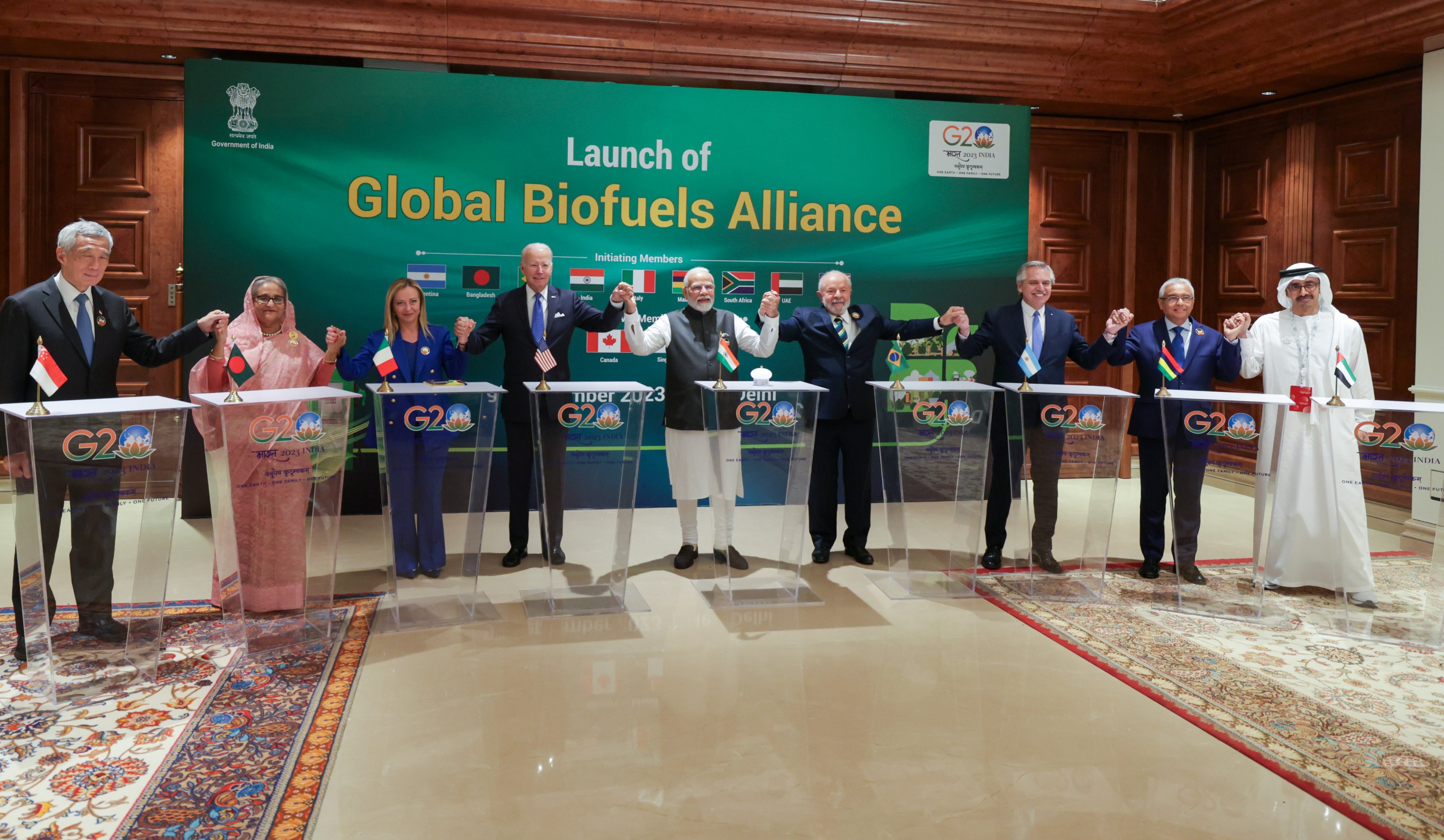
Global Biofuels Alliance, 19 countries stand with India as initiating members
Indian PM Narendra Modi launched the Global Biofuels Alliance in the presence of US President Joe Biden, President of Brazil Luiz Inacio, President of Argentina, Alberto Fernández and Prime Minister of Italy Giorgia Meloni.
The Global Biofuel Alliance is one of the priorities under India’s G20 Presidency. Brazil, India, and the United States, as leading biofuel producers and consumers, will work together during the next few months towards the development of a Global Biofuels Alliance along with other interested countries.
This Alliance will be aimed at facilitating cooperation and intensifying the use of sustainable biofuels, including in the transportation sector. It will place emphasis on strengthening markets, facilitating global biofuels trade, developing concrete policy lesson-sharing and providing technical support for national biofuels programs worldwide.
It will also emphasize the already implemented best practices and success cases. The Alliance shall work in collaboration with and complement the relevant existing regional and international agencies as well as initiatives in the bioenergy, bioeconomy, and energy transition fields more broadly, including the Clean Energy Ministerial Biofuture Platform, the Mission Innovation Bioenergy initiatives, and the Global Bioenergy Partnership (GBEP).
GBA will be a competent organisation that will set technical standards for Sustainable Aviation Fuel (SAF) business in collaboration with relevant industry bodies.
The alliance will have a three-category membership structure bringing together member countries, partner organisations and industries.
The alliance will work towards enhancing global collaboration and cooperation for the accelerated adoption of biofuels by identifying global best practices for the development and deployment of sustainable biofuels and bioproducts.
Nineteen countries agreed to stand with India as initiating members of the Global Biofuels Alliance.
Support Our Journalism
Global Indian Diaspora needs fair, non-hyphenated, and questioning journalism, packed with on-ground reporting. The Australia Today – with exceptional reporters, columnists, and editors – is doing just that. Sustaining this needs support from wonderful readers like you.
Whether you live in Australia, the United Kingdom, Canada, the United States of America, or India you can take a paid subscription by clicking Patreon. Buy an annual ‘The Australia Today Membership’ to support independent journalism and get special benefits.
The Arthur Ashe Stadium witnessed a gripping showdown at the US Open men’s doubles final as two-time defending champions Rajeev Ram and Joe Salisbury completed a stunning comeback against the spirited duo of Rohan Bopanna and Matthew Ebden.
In an intense match lasting two hours and one minute, Ram and Salisbury clinched their third consecutive US Open title, making history as the first men’s team in the Open era to achieve a three-peat at this prestigious tournament.
Rohan Bopanna made history of his own as he became the oldest man (43 years 6 months) to reach a grand slam final in the open era.
The final scoreline read 2-6, 6-3, 6-4 in favour of Ram and Salisbury, but the match was marked by breathtaking rallies and a remarkable display of sportsmanship.
The opening set saw Bopanna and Ebden taking an early lead, breaking Ram and Salisbury’s serve twice to secure a 6-2 win. However, the momentum shifted in the second set as Ram and Salisbury fought back fiercely, claiming it with a scoreline of 6-3, forcing the match into a deciding set.
The third set proved to be a fierce battle, with both pairs giving their all. The scores were level, and the outcome hung in the balance. It was here that a moment of extraordinary sportsmanship unfolded.
At 4-2 down in the final set, Bopanna, showing tremendous honesty, confessed to the umpire that a shot he had hit, which initially appeared as a forehand winner, had actually brushed his arm. This rare act of sportsmanship gifted Ram and Salisbury a crucial point and a 0-30 lead at a pivotal moment in the match.
Joe Salisbury and Rajeev Ram capitalized on this opportunity, eventually winning the set 6-4 and securing their third consecutive US Open title. Their achievement of winning three straight US Open men’s doubles titles is a historic feat not witnessed in over a century.
“That act of sportsmanship on the court, we’ve been playing the better part of 20 years and I’ve never seen anything like that, especially at a time like that. Bops, you’re an inspiration.”
Matthew Ebden, Bopanna’s partner, added, “The only one in the stadium who saw it hit you was me because I was right behind you, so I saw it deviate off you slightly.”
Rohan Bopanna explained his decision, saying,
“That’s the person I have been through my career, and I really feel if something was not right, it was not right. It doesn’t matter what the scoreline is or what the occasion of the match is.”
Despite the loss, Bopanna and Ebden’s partnership has been highly successful, and they are set to compete in the end-of-season ATP finals in Turin. Bopanna, a 2010 US Open doubles champion, teamed up with Ebden earlier this year, and their chemistry on the court has been evident throughout their journey.
In contrast, Ram and Salisbury etched their names in history, becoming the first men’s doubles team to achieve a three-peat at the US Open in the Open era. Their remarkable feat can be likened to the achievements of American duo Tom Bundy and Maurice McLoughlin, who won three straight US Open men’s doubles titles between 1912 and 1914.
The 2023 US Open men’s doubles final will always be remembered for its breathtaking tennis and the exceptional display of sportsmanship by Rohan Bopanna, showcasing the true spirit of the sport.
Support Our Journalism
Global Indian Diaspora needs fair, non-hyphenated, and questioning journalism, packed with on-ground reporting. The Australia Today – with exceptional reporters, columnists, and editors – is doing just that. Sustaining this needs support from wonderful readers like you.
Whether you live in Australia, the United Kingdom, Canada, the United States of America, or India you can take a paid subscription by clicking Patreon. Buy an annual ‘The Australia Today Membership’ to support independent journalism and get special benefits.
A Thai national has been charged for allegedly importing about 8kg of heroin, after authorities discovered the illicit drugs inside the passenger’s bags upon her arrival off a flight into Melbourne International Airport.
The woman, 28, arrived in Melbourne on an international flight from China on Monday 4 September, 2023, and was selected for a baggage examination by ABF officers.
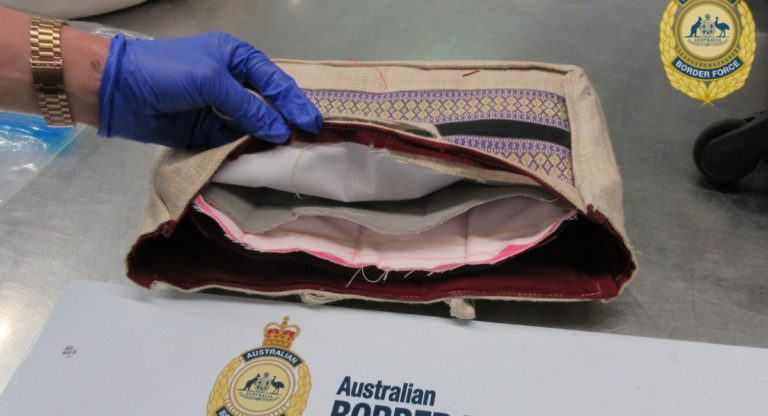
During the search, officers identified a white substance within the lining of a hessian tote-bag, which returned a presumptive positive result for heroin.
Upon further examination, ABF officers identified 32 vacuum-sealed bags containing around 8kg of heroin located in the woman’s luggage.
This amount of heroin has an estimated street value of $3.4 million and the equivalent of about 80,000 street deals.
Image: 8kg heroin import (Source: AFP)
The matter was reported to the AFP for investigation.
AFP officers arrested the passenger in the terminal and seized the illicit drugs.
The woman was subsequently charged with the following offences:
Importing and possessing a commercial quantity of a border controlled drug, namely heroin, contrary to section 307.1, of the Criminal Code 1995 (Cth).
The maximum penalty for these offences is life imprisonment.
The Thai national appeared in the Melbourne Magistrates Court on Tuesday 4 September, 2023, and was remanded in custody to reappear again on 15 December 2023.
AFP Detective Acting Superintendent Amanda Glover said the AFP works closely with its state and Commonwealth law enforcement partners to stop illicit drugs from reaching our communities.
“This is a brazen attempt to import harmful, illicit drugs into our country,” said Det-Act-Supt Glover said.
“We know the significant impact heroin and other illicit drugs have on our communities.”
“By intercepting and seizing eight kilograms of illicit drugs, law enforcement has prevented harm not only for individuals, but also for our hospitals, first responders and frontline workers who deal with the effects of illicit drug use.”
ABF Superintendent Kelly-anne Parish, Aviation Travellers, said: “Individuals attempting to bring illicit substances such as heroin into the community will be intercepted and brought to justice.
“ABF officers utilise a range of skills and detection tools to successfully identify and disrupt criminals attempting to conceal drugs in tote-bags or other types of luggage.
“Our message to people who engage in this type of criminal activity is clear: if you intend to smuggle drugs across the border, don’t do it because we will stop you and you will be prosecuted.”
The following services provide people with access to support and information.
For free and confidential advice about alcohol and other drug treatment services call the National Alcohol and Other Drug Hotline on 1800 250 015.
For information about drug and alcohol addiction treatment or support, go to turningpoint.org.au.
Support Our Journalism
Global Indian Diaspora needs fair, non-hyphenated, and questioning journalism, packed with on-ground reporting. The Australia Today – with exceptional reporters, columnists, and editors – is doing just that. Sustaining this needs support from wonderful readers like you.
Whether you live in Australia, the United Kingdom, Canada, the United States of America, or India you can take a paid subscription by clicking Patreon. Buy an annual ‘The Australia Today Membership’ to support independent journalism and get special benefits.
Getting in sync can be exhilarating when you’re dancing in rhythm with other people or clapping along in an audience. Fireflies too know the joy of synchronisation, timing their flashes together to create a larger display to attract mates.
Synchronisation is important at a more basic level in our bodies, too. Our heart cells all beat together (at least when things are going well), and synchronised electrical waves can help coordinate brain regions – but too much synchronisation of brain cells is what happens in an epileptic seizure.
Sync most often emerges spontaneously rather than through following the lead of some central timekeeper. How does this happen? What is it about a system that determines whether sync will emerge, and how strong it will be?
In new research published in Proceedings of the National Academy of Sciences, we show how the strength of synchronisation in a network depends on the structure of the connections between its members – whether they be brain cells, fireflies, or groups of dancers.
The science of sync
Scientists originally became interested in sync to understand the inner workings of natural systems. We have also become interested in designing sync as a desired behaviour in human-made systems such as power grids (to keep them in phase).
Mathematicians can analyse sync by treating the individuals in the system as “coupled oscillators”. An oscillator is something that periodically repeats the same pattern of activity, like the sequence of steps in a repetitive dance, and coupled oscillators are ones that can influence each other’s behaviour.
It can be useful to measure whether a system of oscillators can synchronise their actions, and how strong that synchronisation would be. Strength of synchronisation means how well the sync can recover from disturbances.
Take a group dance, for example. A disturbance might be one person starting to get some steps wrong. The person might quickly recover by watching their friends, they might throw their friends off for a few steps before everyone recovers, or in the worst case it might just cause chaos.
In the worst case, a disturbance can cause complete collapse of synchronisation.
Synced systems are strong but hard to unravel
Two factors make it difficult to determine how strong the synchronisation in a set of coupled oscillators could be.
First, it’s rare for a single oscillator to be in charge and telling everyone else what to do. In our dance example, that means there’s neither music nor lead dancers to set the tempo.
And second, usually each oscillator is only connected to a few others in the system. So each dancer can only see and react to a few others, and everyone is taking their cues from a completely different set of dancers.
This is the case in the brain, for example, where there is a complex network structure of connections between different regions.
Real complex systems like this, where there is no central guiding signal and oscillators are connected in a complex network, are very robust to damage and adaptable to change, and can more easily scale to different sizes.
Stronger sync comes from more wandering walks
One drawback of such complicated systems is for scientists, as they are mathematically difficult to come to grips with. However, our new research has made a significant advance on this front.
We have shown how the network structure connecting a set of oscillators controls how well they can synchronise. The quality of sync depends on “walks” on a network, which are sequences of hops between connected oscillators or nodes.
Our maths examines what are called “paired walks”. If you start at one node and take two walks with randomly chosen next hops for a specific number of hops, the two walks might end up at the same node (these are convergent walks) or at different nodes (divergent walks).
We found that the more often paired walks on a network were convergent rather than divergent, the worse the synchronisation on the network would be.
When more paired walks are convergent, disturbances tend to be reinforced.
In our dancing example, one person making the wrong steps might lead some neighbours astray, who may then lead some of their neighbours astray and so on.
These chains of potential disturbances are like walks on the network. When those disturbances propagate through multiple neighbours and then converge on one person, that person is going to be much more likely to copy the out-of-sync moves than if only one of their neighbours was offbeat.
Social networks, power grids and beyond
So networks with many convergent walks are prone to poorer synchronisation. This is good news for the brain avoiding epilepsy, as its highly modular structure brings a high proportion of convergent walks.
We can see this reflected in the echo chamber phenomenon in social media. Tightly coupled subgroups reinforcing their own messages can synchronise themselves well, but may fall far out of step with the wider population.
Our results bring a new understanding to how synchronisation functions in different natural network structures. It opens new opportunities in terms of designing network structures or interventions on networks, either to aid synchronisation (in power grids, say) or to avoid synchronisation (say in the brain).
More widely, it represents a major step forward in our understanding of how the structure of complex networks affects their behaviour and capabilities.
Global Indian Diaspora needs fair, non-hyphenated, and questioning journalism, packed with on-ground reporting. The Australia Today – with exceptional reporters, columnists, and editors – is doing just that. Sustaining this needs support from wonderful readers like you.
Whether you live in Australia, the United Kingdom, Canada, the United States of America, or India you can take a paid subscription by clicking Patreon. Buy an annual ‘The Australia Today Membership’ to support independent journalism and get special benefits.
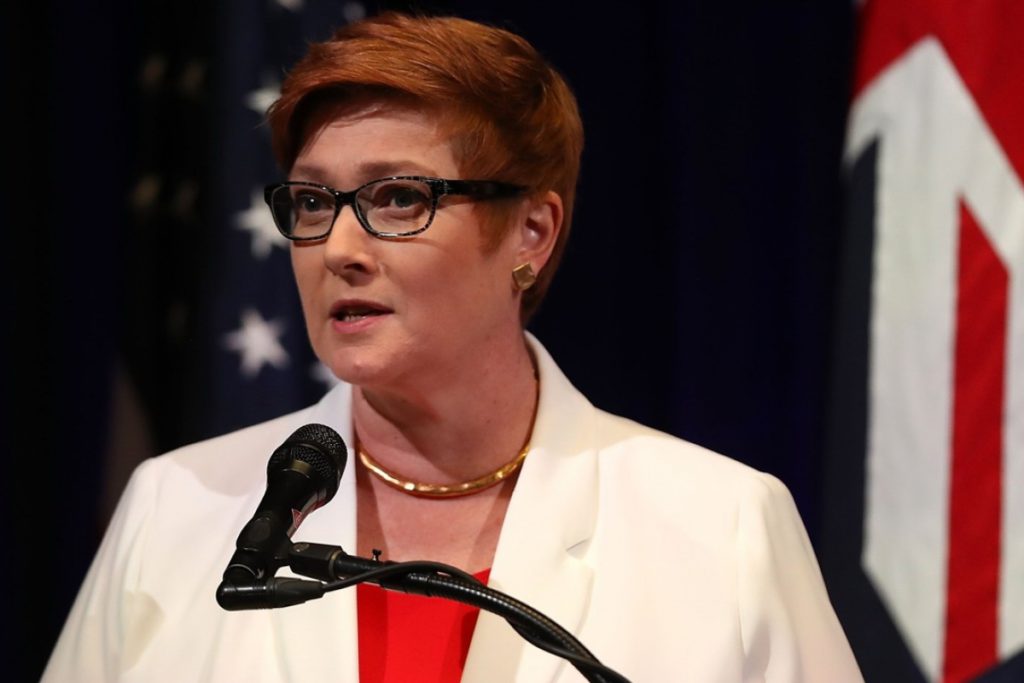
Former Foreign Minister Marisa Payne has announced that she will resign from the Senate on 30th September after a long innings in politics.
She was also the Minister for Women in the Scott Morrison government. Ms Payne was first appointed to the Senate in 1997 and has been Australia’s longest serving female Senator.
Marise Payne announced her resignation today after 26 years in the Senate. In her statement, she wrote that “to have become Australia’s longest serving female senator in history, is something of which I am very proud.” She was one of the Liberal party’s most senior women, and held senior ministerial portfolios in the Coalition Government between 2013 to 2022. She was the country’s first female Minister for Defence.
Image source: Twitter.
All eyes wil now be on who will be appointed to the Senate from the Liberal party after her departure.
It is understood that Indian origin Liberal politician Pallavi Sinha will throw her hat in the ring for the position. Currently there is not a single person of Indian origin from the Liberal party in the Federal Parliament. The ruling Labour Government has two Indian-origin MPs.
Pallavi is a multi-award winning Lawyer and Notary Public and was selected in the prestigious AFR and Westpac 100 Women of Influence. She is Principal of Lawyers with Solutions and is also actively involved in advocacy work in areas such as gender, social cohesion, education and small business.
Pallavi, who has been a long time member of the Liberal party, was given number 12 spot in the NSW Parliament Upper House elections in 2019. She managed to get the second highest personal votes in the Liberal party in the Upper House elections at that spot.
Pallavi has over 20 years experience in senior executive and leadership positions and is Co-Chair Liberal Party Friends of India. She has previously been Vice-President of AIBC (Australia India Business Council) and has experience in developing relationships with partners in the Indo-Pacific especially India (Australia and India are also members of the QUAD). She also has significant experience in domestic and family violence advocacy. She is an Appointed Supporter of the Joint Federal and State Government campaign to stop Domestic or family violence (DV).
Pallavi is also a well known speaker and commentatorand was the first Indian Australian woman to be invited to join Saxton Speakers Bureau. She was also among those from the Hindu community in NSW who contributed to legislative reform that protected the rights of Hindus to display the sacred Swastika.
Pallavi Sina
Given Pallavi’s track record, many in the Indian diaspora will be looking forward to this race
The Liberal party suffered a hattrick of losses when it was voted out of power in the NSW elections held earlier this year.
There is speculation that allegedly Pallavi was denied an opportunity to nominate herself for the NSW Upper House in the same election.
Currently Liberals are in power only in Tasmania.
The party’s own review of the 2022 Federal election stated “To successfully win seats, the Party must reflect modern Australia. It is therefore important the Party, as a priority, has a greater gender and ethnic diversity in pre-selection candidates”.
Pallavi Sinha
People of Indian origin account for more than 3% of Australia’s population and Indians are among the largest and fastest growing migrant communities in Australia.
Only time will tell if the Liberal party, after successive election losses, will decide to pick its first ever Indian origin Federal Senator.
The two other names making the rounds for the race are of Warren Munidine and Andrew Constance.
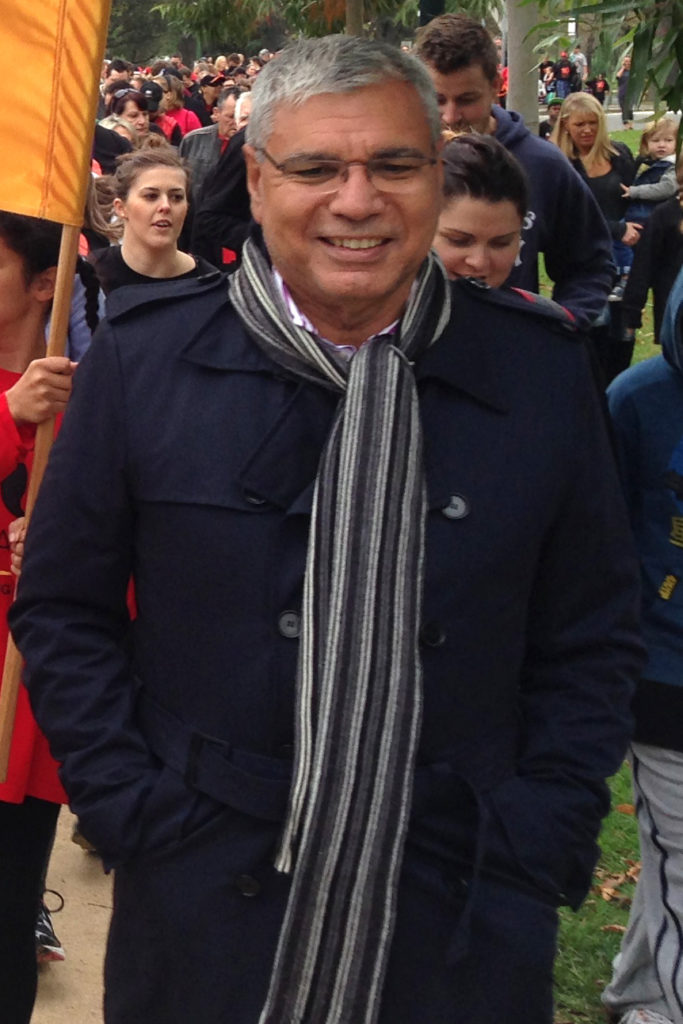
Warren Munidine is a former politician. He was appointed chairperson of the Indigenous Advisory Council in 2013 by the then Prime Minister Tony Abbott (The council was dissolved in 2017 by then PM Malcolm Turnbull).
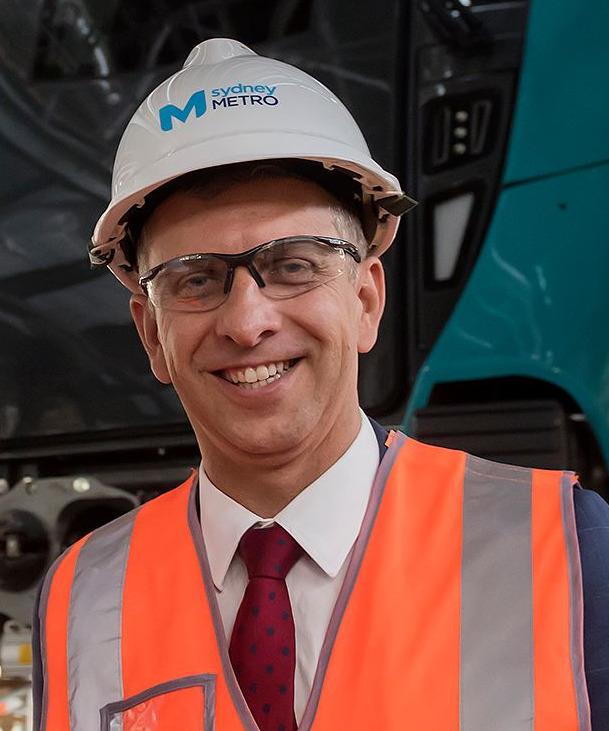
Warren Munidine – By New Matilda from Brisbane Australia, Australia – The Long Walk 2014, CC BY 2.0, https://commons.wikimedia.org/w/index.php?curid=134192383Andrew Constance – By John Cowper from Sydney, Australia – Minister introduces Sydney’s first metro train, CC BY 2.0, https://commons.wikimedia.org/w/index.php?curid=80441592
Andrew Constance is also a retired politician who was NSW Minister for Transport and Roads in the second Glady’s Berejiklian Ministry.
Support Our Journalism
Global Indian Diaspora needs fair, non-hyphenated, and questioning journalism, packed with on-ground reporting. The Australia Today – with exceptional reporters, columnists, and editors – is doing just that. Sustaining this needs support from wonderful readers like you.
Whether you live in Australia, the United Kingdom, Canada, the United States of America, or India you can take a paid subscription by clicking Patreon. Buy an annual ‘The Australia Today Membership’ to support independent journalism and get special benefits.
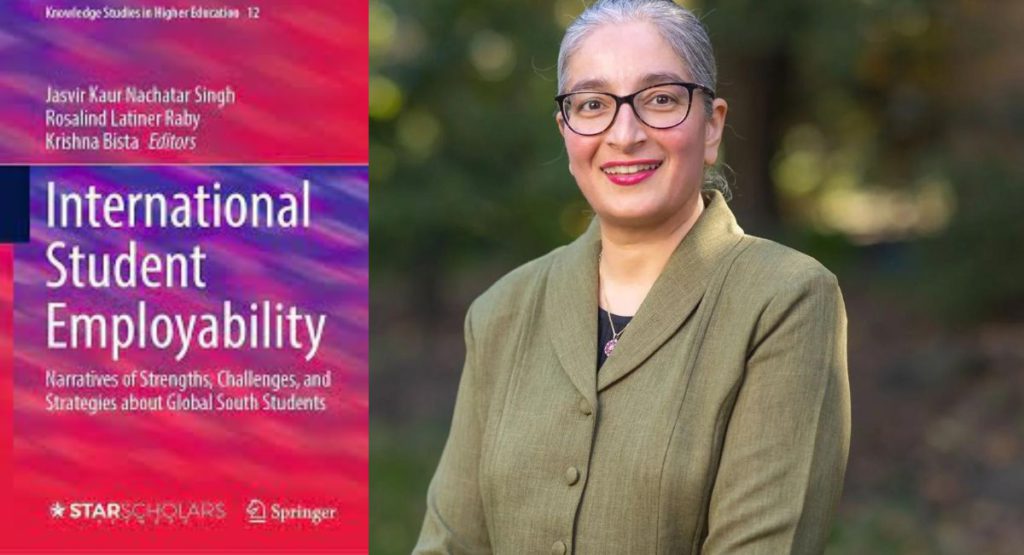
Dr Jasvir Kaur Nachatar Singh from La Trobe University through her research has highlighted how significant barriers still exist in the employability of international postgraduate students in Australia.
She says that in 2019 international education sector was worth about A$40.3 billion and in 2022 about $25.5 billion to the Australian economy.
Dr Singh adds that international students from South Asia – including India – make up more than 30% of those studying in Australia.
However, she points out that in 2022 only 57% of undergraduate Indian students and less than 53% of postgraduates had full-time employment after they graduated in Australia.
Dr Singh observes:
“Both career fairs and careers support on Australian campuses are skewed towards domestic students.”
Image: Dr Jasvir Kaur Nachatar Singh (Source: La Trobe University)
Dr Singh points to the following four key axes that are barriers to international student employment:
time pressures from study and adjustment issues (micro);
lack of internship opportunities offered at the universities (meso);
lack of culturally tailored university career services (meso); and
perceptions of employers’ as well as Government policy implications (macro).
She adds that a lot needs to be done to improve international student employability in Australia:
“Australian universities need to move away from a ‘once-size-fits-all’ approach when it comes to employability support.”
Further, Dr Singh suggests some key changes could include:
initiating partnerships with companies or industry representatives to provide specific job opportunities to international students via internships, work placements and volunteering roles;
inviting more companies to career fairs that will be open to offering opportunities for international students or graduates on temporary visas;
inviting international graduate alumni as guest speakers to career sessions, to mentor students, help modify their resumes and locate work or internship opportunities; and
providing careers offices with the capacity to provide practical career planning and development guidance for international students.
Listen to Dr Jasvir Kaur Nachatar Singh’s interview with Dr Amit Sarwal on understanding international students’ employment journey in Australia.
Support Our Journalism
Global Indian Diaspora needs fair, non-hyphenated, and questioning journalism, packed with on-ground reporting. The Australia Today – with exceptional reporters, columnists, and editors – is doing just that. Sustaining this needs support from wonderful readers like you.
Whether you live in Australia, the United Kingdom, Canada, the United States of America, or India you can take a paid subscription by clicking Patreon. Buy an annual ‘The Australia Today Membership’ to support independent journalism and get special benefits.
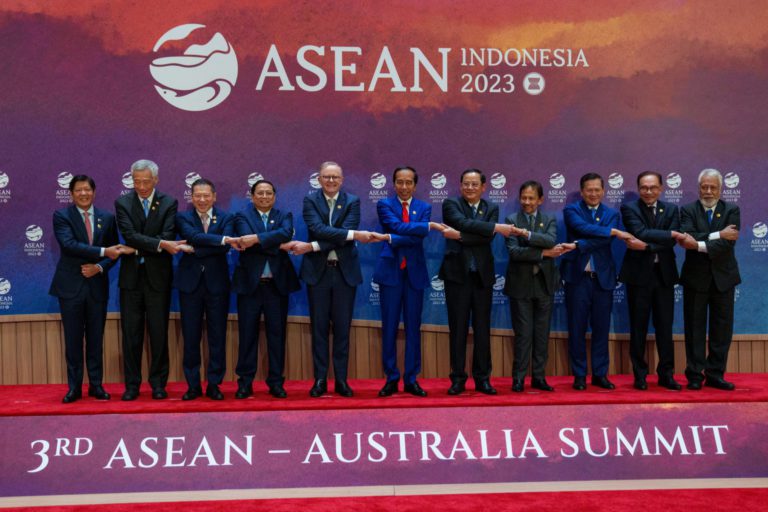
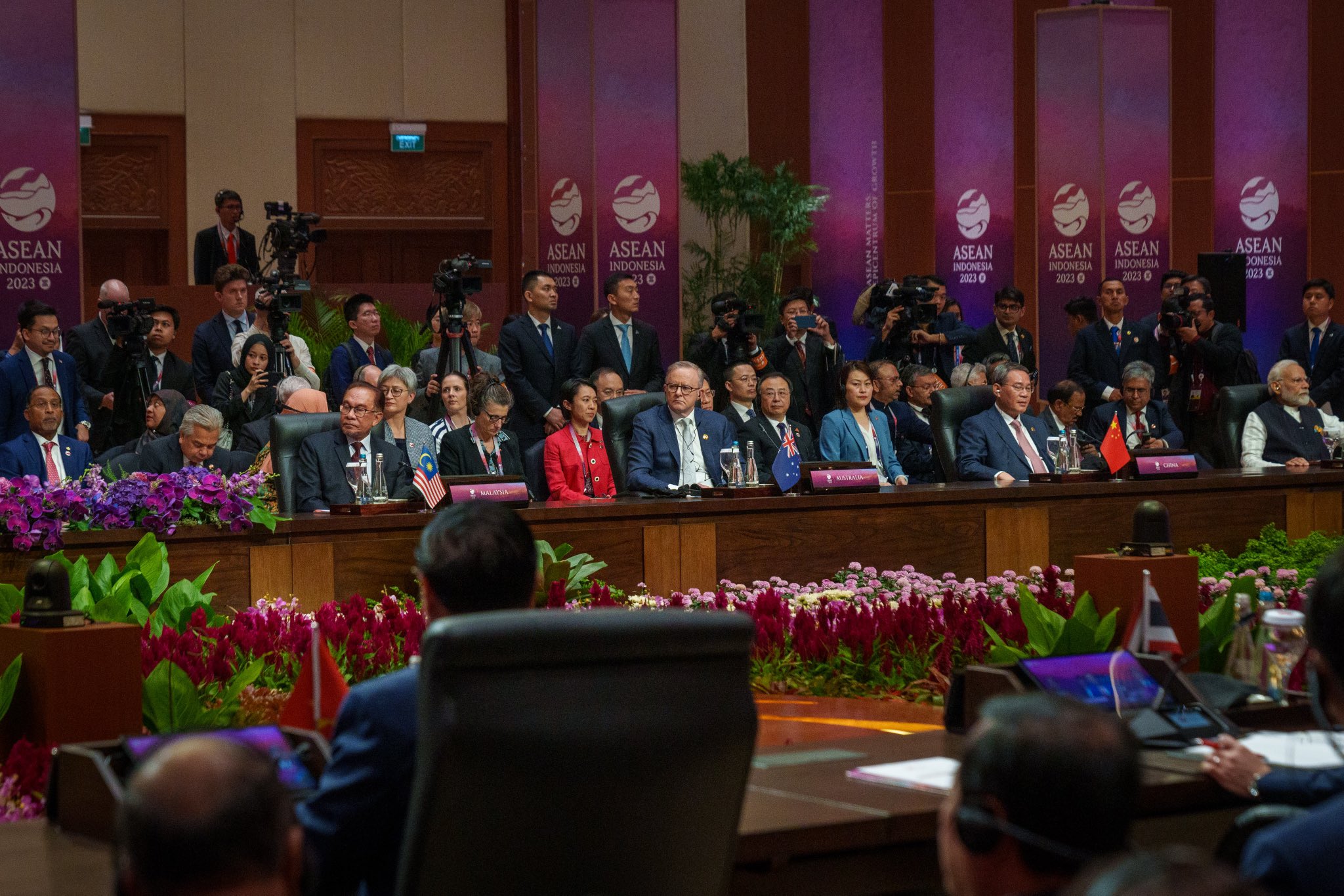
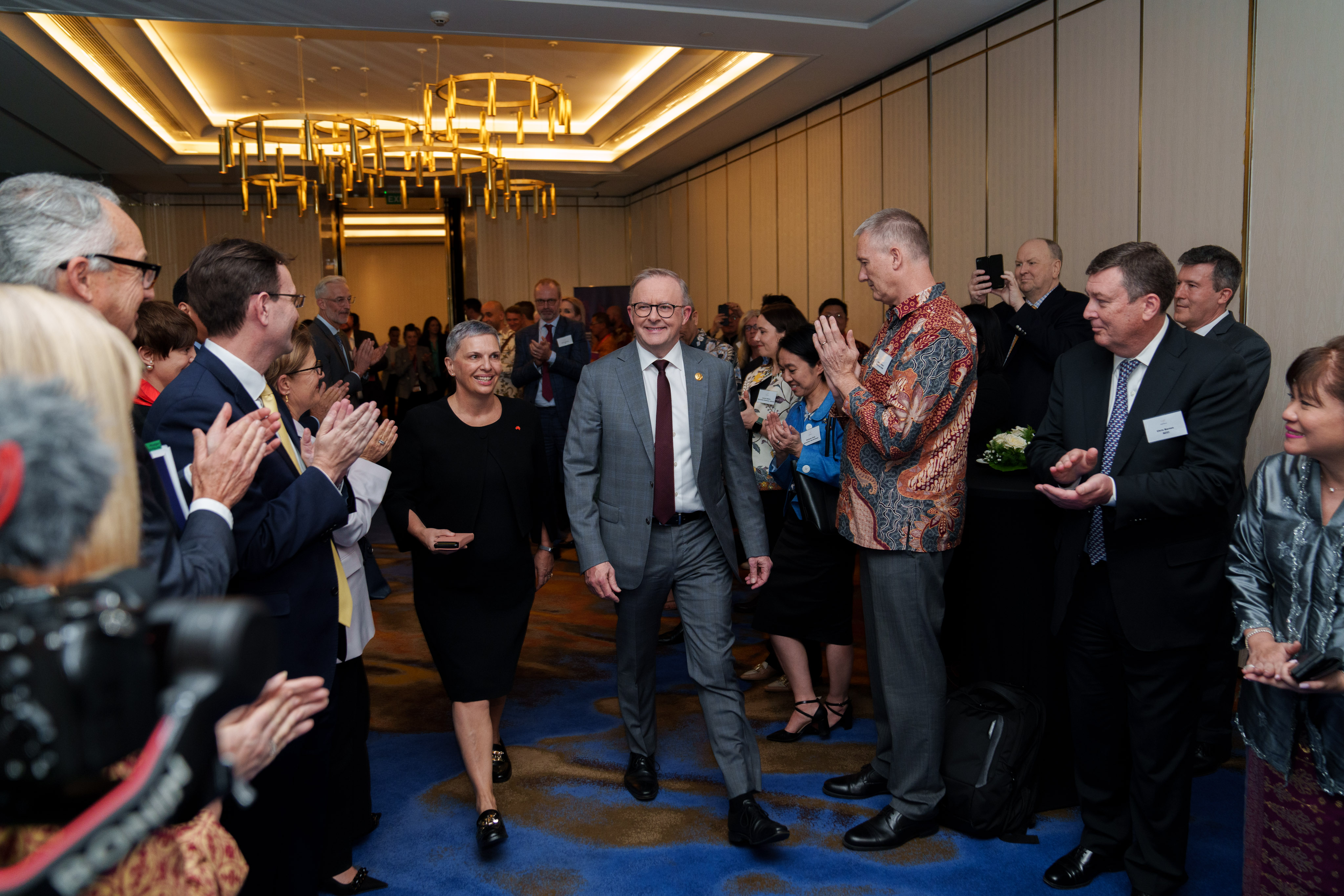
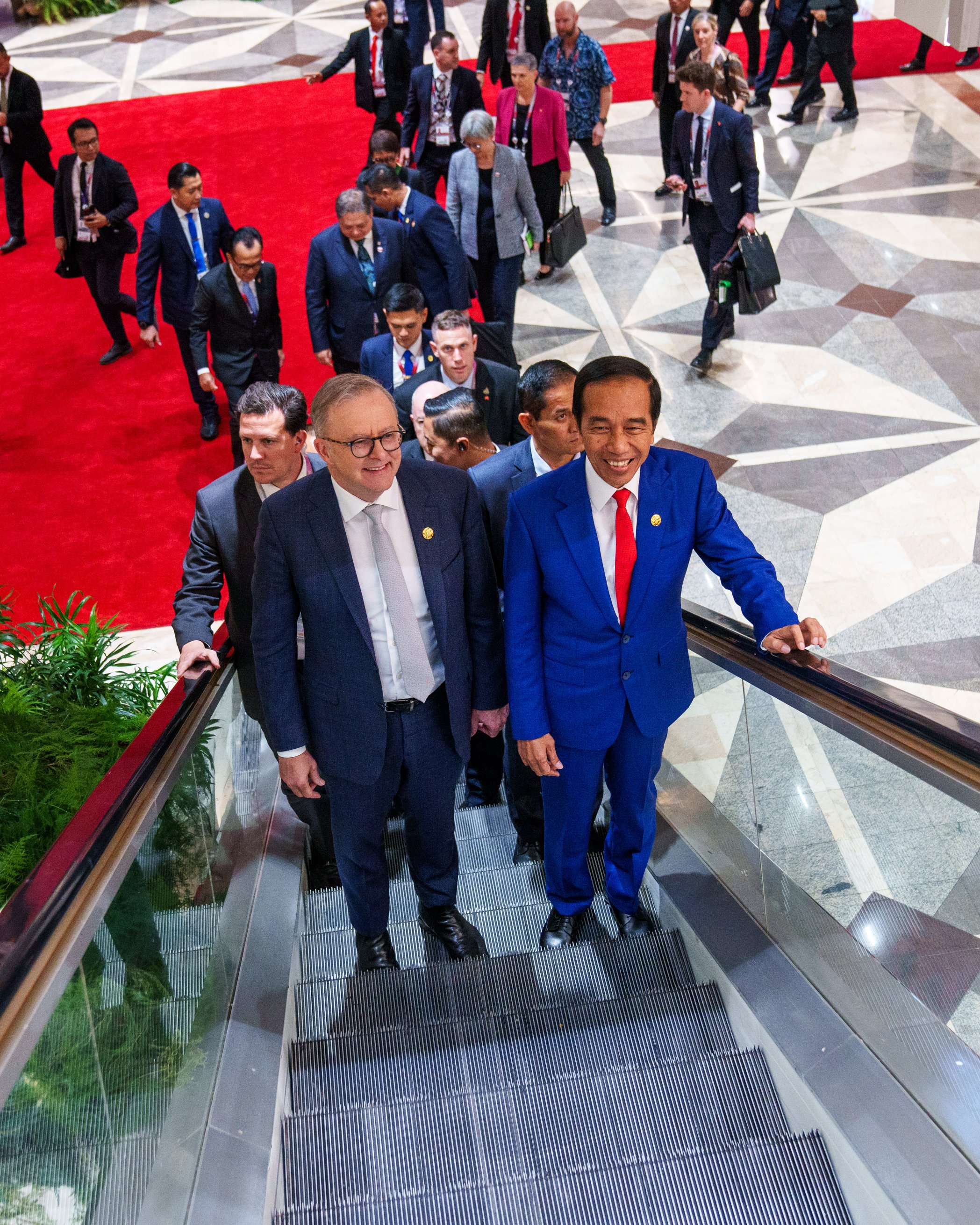
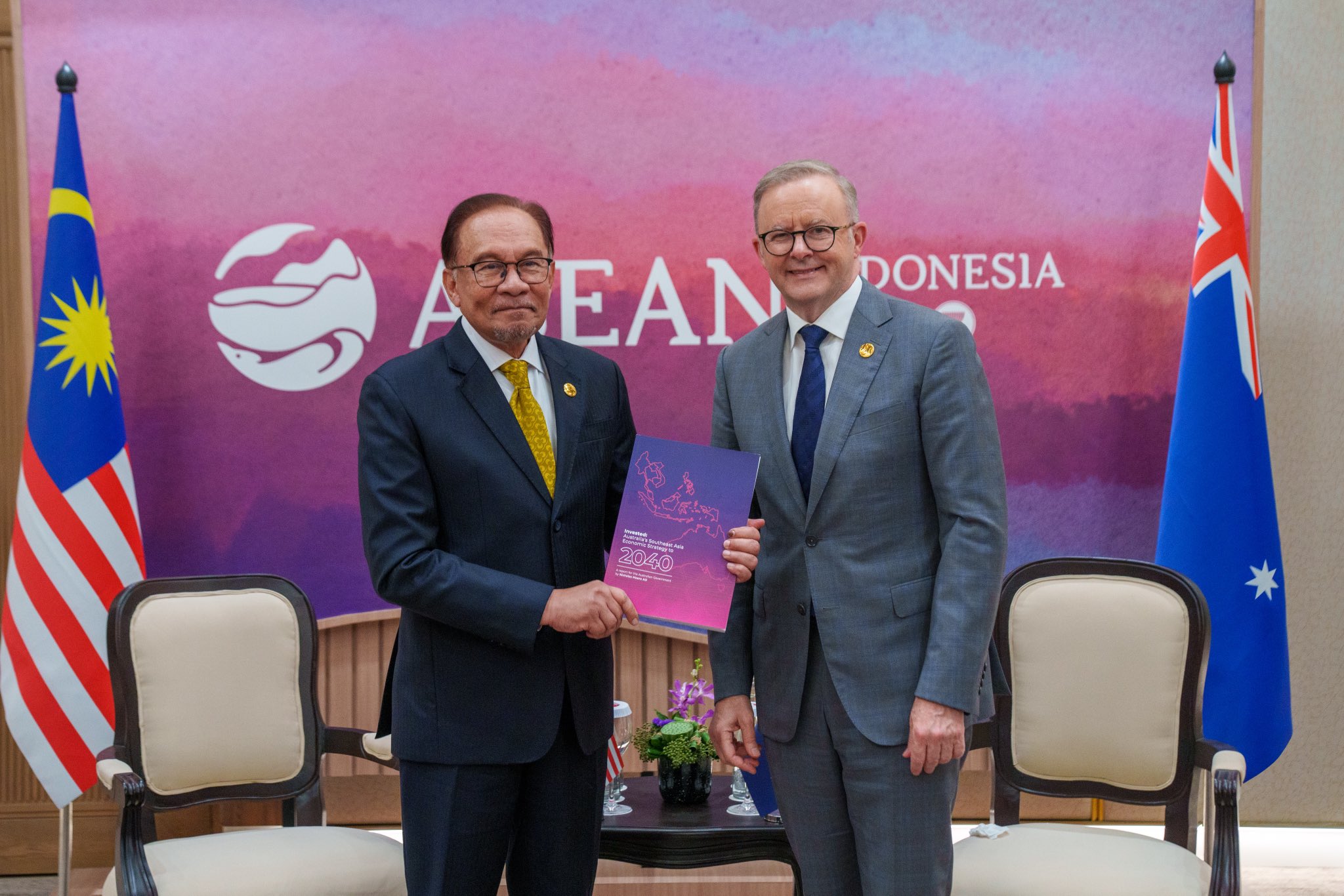
Prime Minister Anthony Albanese participated in the 3rd Annual ASEAN-Australia Summit and the 18th East Asia Summit in Jakarta, where he engaged in significant discussions with leaders from across the Indo-Pacific region.
These summits provided a platform to reaffirm Australia’s commitment to strengthening ties with its Southeast Asian partners and addressing pressing challenges facing the region.
At the East Asia Summit, Prime Minister Albanese underscored Australia’s dedication to deepening engagement with Southeast Asia nations and collaborating on solutions to shared challenges, including the critical issue of the climate crisis.
During discussions with regional counterparts, the Prime Minister addressed several key strategic matters, including Russia’s invasion of Ukraine, the crisis in Myanmar, and the South China Sea tensions.
PM Albanese emphasised the deep connections between Australia and Southeast Asia, including economic ties, shared interests in regional stability and prosperity, and strong people-to-people connections.
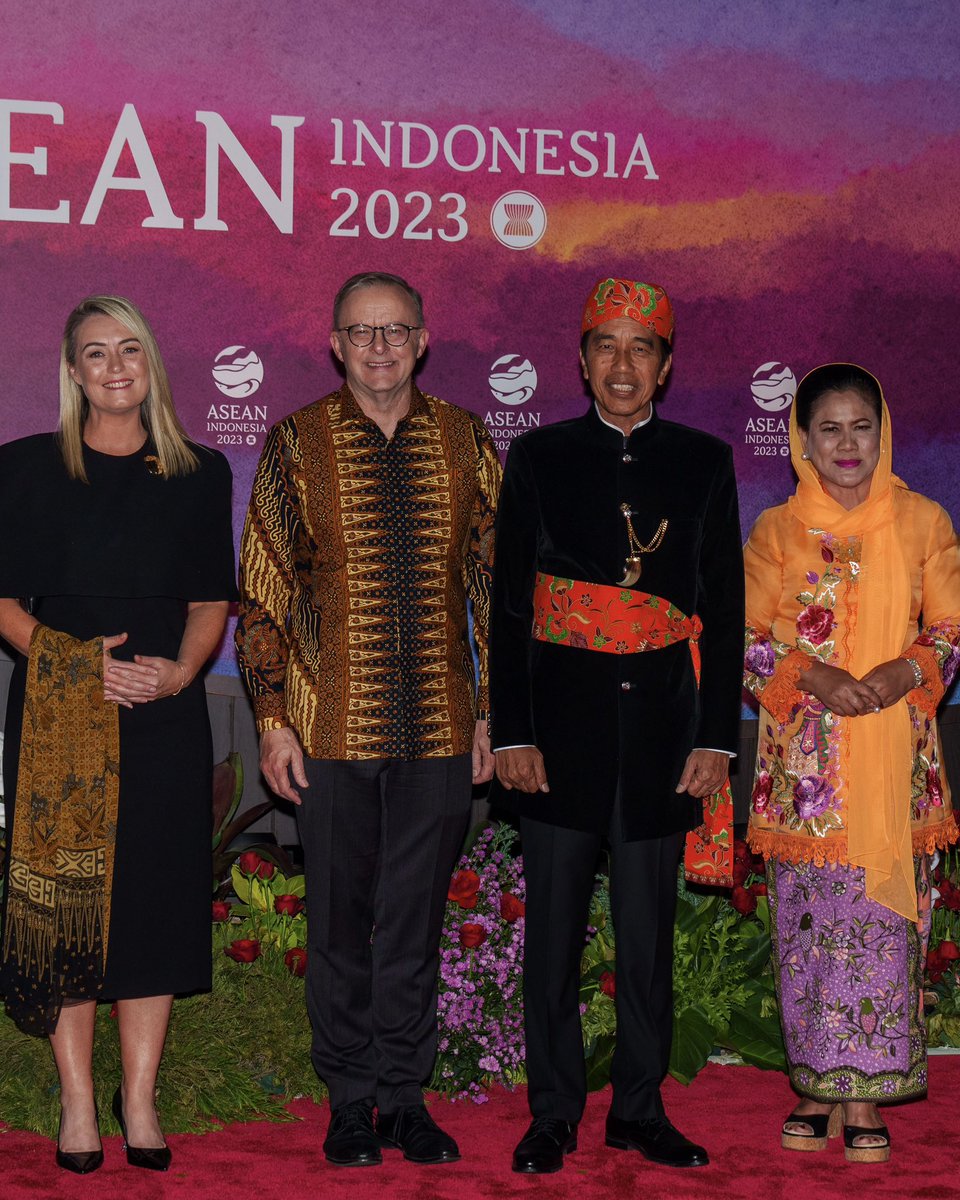
He extended his gratitude to President Widodo for his leadership during the ASEAN Summits, highlighting Australia’s commitment to working together for a stable and prosperous Indo-Pacific region.
“I thank President Widodo for his leadership of the ASEAN Summits this year, and I look forward to our continued work towards a stable and prosperous region.”
He expressed the importance of collaboration with ASEAN to address common challenges like climate change and food security, shaping the future of the region through proactive engagement.
The 3rd Annual ASEAN-Australia Summit focused on finding collaborative solutions to food security pressures affecting communities in the region. Given that Southeast Asia represents one of the fastest-growing markets for Australian agricultural exports, leaders explored ways to promote open, fair, and rules-based trade to bolster resilient food supply chains.
Prime Minister Albanese took the opportunity to announce two initiatives aimed at supporting regional food security:
Investment in the ASEAN-CGIAR Innovate for Food Regional Program: This initiative seeks to promote joint research efforts between ASEAN and Australia to develop innovative agricultural practices and technologies that can enhance regional food security.
Expansion of the Meryl Williams Fellowships for Women in Agricultural Science: This expansion will enable around 20 fellows from ASEAN member states and Timor-Leste to undertake study programs in Australia, fostering talent and knowledge exchange in the agricultural sector.
These initiatives align with Australia’s Southeast Asia Economic Strategy to 2040, which was unveiled by the Prime Minister the previous day. The strategy outlines a practical pathway to increase Australia’s two-way trade and investment with Southeast Asia.
In 2024, ASEAN and Australia will celebrate the 50th anniversary of their partnership. To mark this significant milestone, Prime Minister Albanese shared plans for a Special Commemorative Summit in Australia scheduled for next March.
In addition to the summits, Prime Minister Albanese held meetings with counterparts from Indonesia, China, Timor-Leste, Canada, Laos, and Malaysia, further fostering diplomatic ties and discussing critical regional issues.
During his visit to Jakarta, the Prime Minister also announced the second tranche of initiatives under the $200 million Australia-Indonesia Climate and Infrastructure Partnership, including:
$50 million to de-risk private infrastructure projects: This funding will support Indonesia’s ambitions for achieving net-zero emissions by mitigating risks associated with private sector financing for high-potential projects. It will also provide feasibility studies and environmental assessments to facilitate project development.
$100 million to support Indonesia’s sustainable finance and just energy transition agenda: This commitment includes technical assistance, expanded government partnerships, and social inclusion initiatives to ensure that women, people with disabilities, and vulnerable groups benefit from the transition to clean energy. This funding will also help establish a bilateral mechanism to advance collaboration on the electric vehicle ecosystem under the Partnership.
These initiatives complement the first $50 million tranche of initiatives announced at the Australia-Indonesia Annual Leaders’ Meeting in July 2023.
Support Our Journalism
Global Indian Diaspora needs fair, non-hyphenated, and questioning journalism, packed with on-ground reporting. The Australia Today – with exceptional reporters, columnists, and editors – is doing just that. Sustaining this needs support from wonderful readers like you.
Whether you live in Australia, the United Kingdom, Canada, the United States of America, or India you can take a paid subscription by clicking Patreon. Buy an annual ‘The Australia Today Membership’ to support independent journalism and get special benefits.
Of late, the international political order has been witnessing a strong wind of resistance from the Global South group. The conspicuous Global North and Global South divide posited by the post-World War II, inclined more favourably towards the US-led economy, has started showing reconfiguration drives. India and China are steering this new global leadership drive. Of course, how far they will succeed only the time will tell but this leads us to look at the alternative establishments – G20 and BRICS – that have started countering and challenging the Global North’s political and economic hegemony.
The formation of the G-20 group in 1999 serves as a platform for Finance Ministers and Central Bank Governors to deliberate international economic and financial issues that are of concern to the developing nations. The G-20 group accounts for almost ‘two-thirds of the global population, 75% of global trade, and 85% of the world’s GDP.’ Due to the global financial and economic crisis of 2007, the G-20 was also named the ‘premier forum for international economic cooperation.’
Welcome to Incredible India! 🙏✨
With its rich culture, vibrant heritage & unparalleled hospitality, 🇮🇳 stands united in a heartfelt embrace to host global leaders & delegates for the #G20 Summit.#G20Indiapic.twitter.com/5P8IqnKxiK
On the other hand, BRICS (Brazil, Russia, India, China and South Africa) was established in 2009. BRICS’s commitment to nurturing cooperation, formulating policy coordination and political dialogue on financial issues, and advancing the reform of international institutions responsible for global economic issues.
The 15th BRICS summit held in Johannesburg, South Africa on August 22–24, 2023, agreed to admit six new member countries: Argentina, Egypt, Ethiopia, Iran, Saudi Arabia, and the United Arab Emirates, who will officially make it BRICS+ group in January 2024. This makes BRICS+ a group that accounts for nearly half of the world’s oil production, thus downplaying the G7 prominence.
Here is the twist, BRICS+ gaining stature should definitely make India wary of these developments. China’s relationship with Russia and African nations has witnessed a new high in recent years. It has just been reported that Chinese lenders had lent a massive loan of billions of dollars to Russian banks. This comes as a setback to US President Joe Biden, who had announced the sanctions against Russia last year, to orchestrate the collapse of the Russian economy.
China’s attempt to bail out Russia from its financial woes must also be a worrying signal for India. It is a well-constructed plot to drive away Russia from India, reduce the US dollar’s impact, and concurrently provide itself an opportunity to flex its muscles towards the Global North, thus demonstrating its ability to create an alternative economic order to counter the growing influence of the International Monetary Fund (IMF) and the World Bank. All this accounts for China’s growing clout to establish itself as the leader of the Global South. No wonder that it decided to skip India’s G-2O Presidency as Xi would never want to divest himself of his rising influence over the BRICS.
China’s strategic measures to take up the leadership role are also evident in the recently held 3rd China-Africa Peace and Security Forum meeting last month. This Forum saw the presence of almost 50 African nations, thus incentivizing President Xi Jinping’s ‘Global Development Initiative’ (GDI) and ‘Global Security Initiative’ (GSI) hold for the Global South.
While the inclusion of new members in BRICS by no means accounts for a pro-China stance, what should worry India is the way China has been trying to gain the driving seat. It would be interesting to see to what extent China can manoeuvre and control UAE and Saudi Arabia, two close US allies in the BRICS+ group. On the same note, it would be a test of the Indian regime to forge strategic alliances with the newly recruited members.
Yet, amid these new developments, it needs to be remembered that the total GDP of the G7 is lesser than the total GDP of the BRICS. The freezing of the Russian currency in the Western banks has turned out to be a bane for them as Russia has been able to sell its crude oil to India and China unabated. The hope and promise generated by the BRICS, therefore, spell menace for the US setup. Richard D. Wolff, renowned Professor of Economics at the University of Massachusetts, maintains:
“Every Global South country now has two options, not one, in securing development loans, grants, investments, and trading partners. The two (the West and BRICS) will compete to secure contracts and deals.”
Wolff also points out that the “declining global economic footprint of the US, the decline of the US dollar as a central bank reserve holding, the decline of the dollar as the global trading, investment and loan currency – these are all signs and symptoms of the reduced US role.”
The destabilizing economy and the ongoing geopolitical tussle beckon the possibility of a new world order. It may not happen overnight, but the stage is all set for the emergence of a global actor. Therefore, it becomes increasingly vital for India to reassert its place in the BRICS+ once the G-20 summit is over. The report card of PM Modi and his team’s performance in the G-20 is excellent, even exceptional by many standards. India has garnered greater recognition and respect from several G-20 countries. It is well-known that almost 55 percent of India’s trade passes through the South China Sea. To counter the destabilizing Chinese movements vis-à-vis the Pacific region, India has gained enough support from the QUAD forum, which also happen to be G-20 members. Given that the next three G-20 Presidency happens to be BRICS members, India certainly needs to accelerate the global south leadership drive.
The post-World War II status-quo should not end up in the creation of yet another global dictator. If the principle of ‘viswa sahit’ is to be achieved, India’s leadership would be needed, a country that has long upheld and treated the earth as one family. Are the BRICS members listening?
Contributing Author: Om Prakash Dwivedi tweets @opdwivedi82. His interests lie in the field of postcolonial theory.
Disclaimer: The opinions expressed within this article are the personal opinions of the author. The Australia Today is not responsible for the accuracy, completeness, suitability, or validity of any information in this article. All information is provided on an as-is basis. The information, facts, or opinions appearing in the article do not reflect the views of The Australia Today and The Australia Today News does not assume any responsibility or liability for the same.
Support Our Journalism
Global Indian Diaspora needs fair, non-hyphenated, and questioning journalism, packed with on-ground reporting. The Australia Today – with exceptional reporters, columnists, and editors – is doing just that. Sustaining this needs support from wonderful readers like you.
Whether you live in Australia, the United Kingdom, Canada, the United States of America, or India you can take a paid subscription by clicking Patreon. Buy an annual ‘The Australia Today Membership’ to support independent journalism and get special benefits.
India’s prestigious institute IIT – Delhi has unveiled a human-computer interface hand-exoskeleton device named RoboExo SMART.
The Robotic Exoskeleton device for upper limb rehabilitation was designed and developed by Prof (Dr) Amit Mehndiratta and Dr Neha Singh along with a team in the Centre of Biomedical Engineering (CBME) at IIT – Delhi.
IIT Delhi has unveiled a groundbreaking human-computer interface hand-exoskeleton device RoboExo SMART. This transformative Robotic Exoskeleton device for upper limb rehabilitation was designed and developed by drawing upon the wealth of knowledge from Prof. Amit Mehndiratta….
This device will help alleviate the paralysing effects of strokes which is a leading cause of disability and death worldwide, affecting millions of people every year.
Image: RoboExo SMART (Source: IIT – Delhi)
A statement from IIT- Delhi said:
“Stroke is a debilitating condition that severely impacts the brain functions of the patient, making him/her paralyzed for the rest of the life. This life-altering affliction has found a revolutionary and powerful solution in the world of medical technology.”
This device will now go through clinical trial studies for international acceptability in Australia.
This study will be conducted in collaboration with Proxmed Pty Ltd. and Prof. Mark Parsons from the Department of Medicine and Neurology, Liverpool Hospital, University of New South Wales.
This collaboration has been made possible through the Foundation for Innovation and Technology Transfer (FITT), an industry-academia interface at IIT Delhi.
Image: IIT – Delhi researchers with Proxmed Pty. Ltd. Australia (Source: IIT – Delhi)
Prof. Amit Mehndiratta, Centre of Biomedical Engineering (CBME) at IIT – Delhi added:
“The collaboration with Proxmed Pty. Ltd. Australia heralds an exciting chapter. The exoskeleton’s journey to Australian shores for clinical trials marks a pivotal step towards global recognition and efficacy validation. Together, both entities will propel stroke rehabilitation into an era of unparalleled possibilities.”
As per reports, the RoboExo SMART synchronises finger joint and wrist movements, minimising muscle rigidity, and enhancing daily functions.
The interface is controlled by muscle activity, with realtime performance feedback and adaptable settings, that reduces the recovery time for patients.
IIT – Delhi researchers have designed this device to improve accessibility in resource-restricted regions.
The device has undergone various stages of evaluation and is currently at national clinical validation at AIIMS in New Delhi.
Support Our Journalism
Global Indian Diaspora needs fair, non-hyphenated, and questioning journalism, packed with on-ground reporting. The Australia Today – with exceptional reporters, columnists, and editors – is doing just that. Sustaining this needs support from wonderful readers like you.
Whether you live in Australia, the United Kingdom, Canada, the United States of America, or India you can take a paid subscription by clicking Patreon. Buy an annual ‘The Australia Today Membership’ to support independent journalism and get special benefits.
One hundred and forty-six children in Australia and throughout the world have been identified as victims of online child sexual exploitation as a result of six AFP-led victim identification taskforces.
This National Child Protection Week, the AFP is also revealing details of Operation Blackheath, an eight-month operation targeting 47 prolific capping offenders from around the world.
Capping involves online predators encouraging, tricking or coercing children into live-streaming sexually-explicit behaviour, which they then “cap” or “capture”, giving the activity its name.
Offenders often pretend to be an online friend of a similar age to the victim, and record the content for their own use or to share with other offenders.
As part of Operation Blackheath, the AFP hosted victim identification specialists and intelligence analysts from across the country and around the world during two separate taskforces, held in December 2022 and May 2023.
Victim identification specialists from the AFP-led Australian Centre to Counter Child Exploitation (ACCCE) have raised concerns about the large volume of sexually-explicit videos of children and teenagers found online and on offenders’ seized devices.
It is believed that a significant amount of this material has been generated through capping, and suspect most victims are unaware the footage has been distributed or shared online.
Operation Blackheath has generated several investigative leads, including establishing the suspected identities of nine prolific offenders, with referrals sent to law enforcement partners in three countries. The experts also identified 21 other countries where they believe further offenders are based. To date, no Australian offenders have been identified by Operation Blackheath.
Eight victims were identified as part of Operation Blackheath and a further 77 suspected victims have been referred to overseas law enforcement partners for further investigation.
Referral countries include the US, UK, Russia, Denmark, Argentina, South Korea, Canada, Sweden, Norway, Belgium, Italy, South Africa, Germany and France.
Operation Blackheath has resulted in 2554 media files being submitted to INTERPOL’S International Child Sexual Exploitation ICSE database, including 242 series of files of abuse that were previously unseen.
The AFP is also revealing details about the little-known work of the victim ID taskforces, which bring together victim identification and intelligence specialists from across Australia and the world.
In addition to Operation Blackheath, since 2021, the AFP led ACCCE has conducted four major Victim ID taskforces which were attended by its state, territory and international partners. Those taskforces have:
Identified 138 victims of online child sex abuse, including 87 Australian children allegedly abused by a Gold Coast childcare worker charged under Operation Tenterfield;
Provided information to Thai authorities that led to the prosecution of a Thai man for historic hands-on abuse;
Referred 87 victims of abuse for investigation to Thailand, Japan, China, US, UK, Turkey, Denmark, Venezuela, Peru, France, Russia, Argentina, Colombia, Mexico, South Africa and Brazil; and
Contributed more than 20,000 media files to INTERPOL’s International Child Sexual Exploitation (ICSE) database, including adding 218 new series of abuse and providing additional material to 84 existing victim series.
Countries that attended the ACCCE hosted taskforces include Canada, US, Norway and New Zealand as well as representatives from INTERPOL and EUROPOL.
The AFP has also participated in international victim ID taskforces hosted annually by Europol since 2014.
These international taskforces allow experts with a variety of identification and intelligence skills to work together to scour seized child abuse material for clues about the identity and locations of victims and offenders.
Clues can come from the smallest details in clothing, furniture and other objects in the images or videos.
Images and videos can involve victims and offenders anywhere in the world, highlighting the importance of the AFP’s international partnerships.
AFP Acting Assistant Commissioner ACCCE and Human Exploitation Helen Schneider said international taskforces and partnerships were vital as it was often very difficult to determine where in the world a video or image had been taken.
“Victim ID taskforces are an opportunity to bring in other countries to share capability and capacity, which allows the specialists to focus on a particular theme, or high-value target, or set of images and come out with some really incredible outcomes,” Acting Assistant Commissioner Schneider said.
“It could be that one member of the taskforce has a particular skillset or picks up on a really unusual clue in a photograph that identifies where in the world the image was created and where the victim and offender could live.
“Particularly when previously unidentified material is found, there’s a great deal of urgency to identify the child victim(s) or offender(s) because there could be a child still at risk of more abuse.
“The AFP is tirelessly working with law enforcement partners in Australia and around the world to identify and protect children and bring to justice anyone involved in harming them.”
The ACCCE has also become a leader in victim identification training for Australian and international law enforcement partners.
In October 2022, the ACCCE released an online awareness training program on victim identification. More than 300 participants including child protection investigators from Australia, EUROPOL, INTERPOL, Denmark, UK, France and Norway have completed the program.
The ACCCE has also developed and delivered a one-week victim identification specialist training program, which was completed by victim identification specialists from New South Wales Police, Victoria Police, Queensland Police, South Australia Police and the AFP.
The AFP is urging parents and guardians to talk openly to their children this National Child Protection Week about online safety and the risks involved when sharing intimate images online.
“We urge parents or guardians to change the privacy settings on their child’s social media accounts to friends only or private to ensure they are not contacted by someone they don’t know. Location settings should also be turned off,” Acting Assistant Commissioner Schneider said.
“Children should also be encouraged to think critically about who they are speaking to online and the content they are live-streaming, as some can be saved and shared.
“Remind your child it is okay to say no and stop live streaming if something makes them uncomfortable.”
You can find more tips for staying safe online on the ThinkUKnow website.
The ACCCE is committed to stopping child exploitation and abuse and is at the centre of a collaborative national approach to combatting organised child abuse.
The Centre brings together specialist expertise and skills in a central hub, supporting investigations into child sexual abuse and developing prevention strategies focused on creating a safer online environment.
Support Our Journalism
Global Indian Diaspora needs fair, non-hyphenated, and questioning journalism, packed with on-ground reporting. The Australia Today – with exceptional reporters, columnists, and editors – is doing just that. Sustaining this needs support from wonderful readers like you.
Whether you live in Australia, the United Kingdom, Canada, the United States of America, or India you can take a paid subscription by clicking Patreon. Buy an annual ‘The Australia Today Membership’ to support independent journalism and get special benefits.
Vasudhaiva Kutumbakam’ – these two words capture a deep philosophy. It means ‘the world is one family’. This is an all-embracing outlook that encourages us to progress as one universal family, transcending borders, languages, and ideologies. During India’s G20 Presidency, this has translated into a call for human-centric progress. As One Earth, we are coming together to nurture our planet. As One Family, we support each other in the pursuit of growth. And we move together towards a shared future – One Future – which is an undeniable truth in these interconnected times.
The post-pandemic world order is very different from the world before it. There are three important changes, among others.
First, there is a growing realisation that a shift away from a GDP-centric view of the world to a human-centric view is needed.
Second, the world is recognizing the importance of resilience and reliability in global supply chains.
Third, there is a collective call for boosting multilateralism through the reform of global institutions.
Our G20 Presidency has played the role of a catalyst in these shifts.
In December 2022, when we took over the Presidency from Indonesia, I had written that a mindset shift must be catalysed by the G20. This was especially needed in the context of mainstreaming the marginalized aspirations of developing countries, the Global South and Africa.
The Voice of Global South Summit in January 2023, which witnessed, participation from 125 countries, was one of the foremost initiatives under our Presidency. It was an important exercise to gather inputs and ideas from the Global South. Further, our Presidency has not only seen the largest-ever participation from African countries but has also pushed for the inclusion of the African Union as a permanent member of the G20.
An interconnected world means our challenges across domains are interlinked. This is the midway year of the 2030 Agenda and many are noting with great concern that the progress on SDGs is off-track. The G20 2023 Action Plan on Accelerating Progress on SDGs will spearhead the future direction of the G20 towards implementing SDGs.
In India, living in harmony with nature has been a norm since ancient times and we have been contributing our share towards climate action even in modern times.
Many countries of the Global South are at various stages of development and climate action must be a complementary pursuit. Ambitions for climate action must be matched with actions on climate finance and transfer of technology.
We believe there is a need to move away from a purely restrictive attitude of what should not be done, to a more constructive attitude focusing on what can be done to fight climate change.
The Chennai High-Level Principles for a Sustainable and Resilient Blue Economy focus on keeping our oceans healthy.
A global ecosystem for clean and green hydrogen will emerge from our presidency, along with a Green Hydrogen Innovation Centre.
In 2015, we launched the International Solar Alliance. Now, through the Global Biofuels Alliance, we will support the world to enable energy transitions in tune with the benefits of a circular economy.
Democratising climate action is the best way to impart momentum to the movement. Just as individuals make daily decisions based on their long-term health, they can make lifestyle decisions based on the impact on the planet’s long-term health. Just like Yoga became a global mass movement for wellness, we have also nudged the world with Lifestyles for Sustainable Environment (LiFE).
Due to the impact of climate change, ensuring food and nutritional security will be crucial. Millets, or Shree Anna, can help with this while also boosting climate-smart agriculture. In the International Year of Millets, we have taken millets to global palates. The Deccan High-Level Principles on Food Security and Nutrition is also helpful in this direction.
Technology is transformative but it also needs to be made inclusive. In the past, the benefits of technological advancements have not benefited all sections of society equally. India, over the last few years, has shown how technology can be leveraged to narrow inequalities, rather than widen them.
For instance, the billions across the world that remain unbanked, or lack digital identities, can be financially included through digital public infrastructure (DPI). The solutions we have built using our DPI have now been recognised globally. Now, through the G20, we will help developing countries adapt, build, and scale DPI to unlock the power of inclusive growth.
That India is the fastest-growing large economy is no accident. Our simple, scalable and sustainable solutions have empowered the vulnerable and the marginalised to lead our development story. From space to sports, economy to entrepreneurship, Indian women have taken the lead in various sectors. They have shifted the narrative from the development of women to women-led development. Our G20 Presidency is working on bridging the gender digital divide, reducing labour force participation gaps and enabling a larger role for women in leadership and decision-making.
For India, the G20 Presidency is not merely a high-level diplomatic endeavour. As the Mother of Democracy and a model of diversity, we opened the doors of this experience to the world.
Today, accomplishing things at scale is a quality that is associated with India. The G20 Presidency is no exception. It has become a people-driven movement. Over 200 meetings will have been organised in 60 Indian cities across the length and breadth of our nation, hosting nearly 100,000 delegates from 125 countries by the end of our term. No Presidency has ever encompassed such a vast and diverse geographical expanse.
It is one thing to hear about India’s demography, democracy, diversity and development from someone else. It is totally different to experience them first-hand. I am sure our G20 delegates would vouch for this.
Our G20 Presidency strives to bridge divides, dismantle barriers, and sow seeds of collaboration that nourish a world where unity prevails over discord, where shared destiny eclipses isolation. As the G20 President, we had pledged to make the global table larger, ensuring that every voice is heard and every country contributes. I am positive that we have matched our pledge with actions and outcomes.
Disclaimer: The opinions expressed within this article are the opinions of the author. The Australia Today is not responsible for the accuracy, completeness, suitability, or validity of any information in this article. All information is provided on an as-is basis. The information, facts, or opinions appearing in the article do not reflect the views of The Australia Today and The Australia Today News does not assume any responsibility or liability for the same.
Support Our Journalism
Global Indian Diaspora needs fair, non-hyphenated, and questioning journalism, packed with on-ground reporting. The Australia Today – with exceptional reporters, columnists, and editors – is doing just that. Sustaining this needs support from wonderful readers like you.
Whether you live in Australia, the United Kingdom, Canada, the United States of America, or India you can take a paid subscription by clicking Patreon. Buy an annual ‘The Australia Today Membership’ to support independent journalism and get special benefits.
Shri Krishna Janmashtami is celebrated every year to mark the birth of Lord Krishna. It is celebrated on Ashthami (eighth day) of Krishna Paksh (waning moon) in Bhadrapada month (sixth month, according to the Hindu calender). It generally falls on August – Sepetmber according to Gregorian calender.
The ancient Hindu text Bhagavad Gita is a conversation between Shri Krishna and the prince Arjun (who was also his cousin) at the battle of Kurukshetra.
The teachings of this spiritual and sacred text are so profound and universal that many people from around the world, from business scions like Alfred Ford to scientists like J Robert Oppenheimer, have been deeply touched by it.
Today we introduce you to Shree Radha Raman Das who is originally from New Zealand but decided to pursue the path of Krishna bhakti after reading the Bhagavad Gita.
Interview with Shree Radha Raman Das by Pallavi Jain
1) Tell us about your own journey?
My name is Shree Radha Raman Das, I am originally from New Zealand, and I have been a brahmacari with the Hare Krishna spiritual tradition for the past 40 years of my life. At the young age of 19 years, after reading the epic spiritual text Bhagavad Gita, I made the decision to devote my life to the pursuit of Krishna bhakti.
I have been serving as a Co-Director at Sacred India in Western Australia since 2002. I live here as a resident monk, project Co- Director, and as Tours And Events Coordinator.
Shree Radha Raman Das with Jagattarini Dasi who is founder of The Sacred India Gallery in Perth
2) How often have you visited India and what have your experiences been like?
I first visited India in 1985. I was 20 years old. I traveled there as a young monk on pilgrimage to the sacred sites of the Gaudiya Vaisnava tradition. I fell in love with the depth and vitality of India’s rich spiritual heritage, the ancient sites and temples, and the fascinating people who carry these traditions in their hearts. i now journey to India every year, and have developed a deep connection with the Vrindavan region in Uttar Pradesh, the site of Sri Krishna’s janma and leela 5000 years ago.
3) How did the concept of Sacred India Gallery come about?
When we founded Sacred India in 2002, we had a desire to share the fascinating gifts of the spiritual culture of India with people from all walks of life. We set out to create an experience where our guests directly enter the realms of India’s ancient spiritual heritage through the medium of intricate artistic installations and an incredible miniature world.
Miniature art at The Sacred India Gallery
4) Do you see more Australians being aware of Hinduism and the teachings of Bhagavad Gita today than they were before?
Now more than ever, all over the world, people are reaching out for deeper meaning, purpose and connection in life. We live in such a fast-paced modern world. The emphasis is on immediate gains, competitive success, acquisition and accumulation. Old cultures of the world, such as India, offer a glimpse into alternative perspectives of reality, where the focus is on the inner journey, on the timeless nature of the true self within, and on the importance of living a life of knowledge, upliftment and enlightenment.
(Image: The Sacred India Gallery)
So many people are very frustrated with contemporary modern life, it’s demands and pressures and the predominance of short term values and agendas over any deeper goals and objectives. The Bhagavad Gita unlocks so many wisdom secrets which are entirely relevant to current global turmoils. I find many people here in Australia who have a profound interest in such knowledge, and who are making serious efforts to deepen their inner journey
Rita Safiotti visting Sacred India (She is now the Deputy Premier of Western Australia)
5) What are some of your favourite teachings of the Bhagavad Gita?
Gita teaches us that life has a profound inner purpose- to connect with God in a meaningful and personal way through love and selfless service. The Gita uncovers the mystery of the journey of the timeless self through the maze of samsara, repeated birth and death. We are all timeless souls on a temporary embodied journey.
Our journey reaches its culmination when we awaken to true self, and enter the path of deep loving exchange with our creator, Bhagavan Sri Krishna, through a lifetime of dedication in the spirit of bhakti.
It does not matter where you are from, what culture you were born into, your background, your age, your gender, for beyond all superficial differences, there is something deep which we all carry common within- it is the desire for deep connection and purpose.
Scott Fleming, Manager Swan Valley Visitors Centre
Deeper than all the labels we wear in life lies our true spiritual identity. With proper guidance and inspiring association, we can rediscover the shining light of our true identity as a spiritual soul, and perfect our existence through knowledge and enlightenment. Right now, we have the rare and valuable gift of this human form of life. We should not waste away this opportunity, distracted by theso-called glamour of this glittering superficial world. Turn within, follow the call of your heart, and find your true peace within.
The Sacred India Gallery
The Sacred India Gallery in Perth, Western Australia is a not for profit arts centre sharing the treasures of the spiritual culture of India. Visitors embark on a spiritual journey, even though they are thousands of miles away from India!
The Gallery was founded by Jagattarini Dasi, an Australian-born Hare Krishna Artist who lived for many years in the revered North Indian temple town of Vrindavan.
Open to the public for free guided tours, the gallery is operated and maintained by a team of volunteers. Guests to the gallery are taken on a one hour guided tour, which features intricate artistic installations, and an incredible miniature Krishna world created by Jagattarini Dasi.
Transporting visitors to three of India’s ancient sacred sites, (Vrindavan, Puri and Nabadwip) the gallery offers a unique interactive, cross-cultural exchange in Western Australia.
Guests receive a fascinating introduction to India’s rich spiritual and cultural heritage because of the gallery’s maze of intricate displays, traditional Indian carvings, and Jagattarini’s exquisite miniatures, all of which capture the sights, sounds, and mystical atmosphere of spiritual India.
Guests come from all walks of life and from a range of cultural, ethnic and religious backgrounds.
The gallery is regularly frequented by WA based seniors groups, school groups, and other community organisations.
Jagattarini is also an accomplished storyteller, and an authority on the ancient stories from India’s Vedic culture.
A gift by a dying friend, a one-inch figure of Krishna, which inspired Jagattarini Dasi to take up her art again
Speaking about Janmashthami, Shree Radha Raman Das who has been Co-Director at Sacred India since 2002, says
“Here at Sacred India, we all have a deep love for Sri Vrindavan, the land of Sri Krishna’s mystical appearance and activities. Janmashtami is that special time of year where we remember the land of Vrindavan, where Sri Sri Radha and Krishna eternally reside, and where, just under the surface, one can connect with the immense sweetness of this land and the loving exchanges Sri Krishna relishes with his most intimate associates, the Vrajbasis.”
“We sing the songs of their glories, we engage in service and celebration, and we dedicate our hearts to the path of Krishna bhakti. Vrindavan bihari lal Bhagavan Sri Krishna ki jaya! Sri Vrindavan Dham ki jaya!”
On October 14, the voting public will be asked to vote “yes” or “no” on a proposed First Nations Voice to Parliament.
While the “yes” campaign has largely coalesced behind a single message, the “no” campaign is not a singular cohort. There are two sides to the “no” camp and they are very different.
Here’s what they are arguing and the different approaches they’ve taken when it comes to style and tone.
The conservative ‘no’ campaign
One side of the “no” campaign comes from the right of politics, including prominent members of the Coalition. With the catchphrase, “If you don’t know, vote no”, this camp hopes to impel voters who are unsure about what it all means to just vote no instead of finding the information required.
Also in this camp are a number of Australians who believe Indigenous people are beneficiaries of special privileges. Some claim the referendum is about introducing “racial privilege” by establishing a system of government that gives Indigenous people influence over decisions made by the government.
The Reparations Treaty Referendum The yes vote Is racially divisive. 97% of Australians to pay huge sums of money and provide special privilege's to 3% based on race.
The NO VOTE keeps Australia's Constitution safe. Keeps Australia united under our rare one of a kind democracy.
“No” proponents have cited former Prime Minster Bob Hawke to make their case that we should all just be considered Australian and Indigenous people should not have a moral or legal right of recognition or special land rights. Hawke said in 1988:
In Australia, there is no hierarchy of descent […] there must be no privilege of origin. The commitment is all. The commitment to Australia is the one thing needful to be a true Australian.
Howard declared people will lose their backyards as part of his divisive hate based gaslighting campaign during Mabo. It's as stupid now as it was then
These groups are harnessing social media to push their arguments, which mainly revolve around two themes: “dividing” the nation, and the lack of detail masking a hidden agenda.
The Uluru Statement | Pauline Hanson's Please Explain
This week Anthony Albanese announced that the vote for his Voice to Parliament will be held on the 14th of October.
As the campaign to defeat his risky and divisive Voice begins in earnest, it’s important to understand what… pic.twitter.com/hTJ7kUD8gN
Senior Indigenous politician Senator Jacinta Nampijinpa Price is the Liberal party’s spokesperson against the Voice and the main Indigenous voice in the conservative “no” camp. Liberal Party leader Peter Dutton recently appointed Price as the new shadow minister for Indigenous Australians.
The other side of the “no” campaign is entirely different in that it professes to have the best interests of Aboriginal and Torres Strait Islander people at its core.
This camp is often framed as the progressive side of the “no” campaign, with independent Senator Lidia Thorpe its most prominent voice. Thorpe has referred to the Voice as a “powerless advisory body” that will do little to change the life circumstances of most Aboriginal and Torres Strait Islander people. Instead, Thorpe supports other measures such as truth-telling and treaty.
She also points to the harm and divisiveness the Voice debate has caused, referring to it as a “destructive distraction”. The Voice debates have resulted in a significant rise of racism and hate speech targeting Indigenous people online.
While both sides are supporting a “no” vote, they are distinct in that one’s aim is for Aboriginal and Torres Strait Islander people to have more rights of self-determination, while one advocates for the status quo.
Where does this leave Indigenous people?
Voice proponents believe it will bring the promise of a new and enlightened Australia. But in reality, the government will be able to disregard the advice it brings to the parliament.
Arrernte writer Celeste Liddle captures how many Aboriginal and Torres Strait Islander people are feeling about the referendum:
I feel stuck with a choice between systems I do not trust and the fear of giving in to rabid racists.
Aboriginal and Torres Strait Islander people are tired of dealing with the misinformation, lies, hatred and racism the referendum debate is fuelling in society. I was asked by a non-Indigenous person if it is true Aboriginal people will get double Centrelink payments and be “given” land for free.
These falsehoods are repeatedly being spread because they hit at the heart of the racism we see in Australia – that Aboriginal and Torres Strait Islander people will be entitled to something other Australians are not, and we are undeserving.
Many have questioned Australia’s ability to engage in a debate over the Voice without descending into racist stereotypes and contempt for Indigenous people.
I literally feel sick in my guts by the amount of hate directed at First Nations People and the YES voters that THE VOICE debate has unleashed. I can't even begin to imagine what it must be like for First Nations People to have to endure this their entire life. #VoteYesAustraliapic.twitter.com/ANU91PMaSM
Australians need to be fully informed and not swayed by misinformation fuelled by racism. We are told there is much at stake, but we do not yet know if the Voice will bring any substantial change for Aboriginal and Torres Strait Islander people. This campaign will, however, tell us who we are as a people, and what we value.
Disclaimer: The opinions expressed within this article are the opinions of the author. The Australia Today is not responsible for the accuracy, completeness, suitability, or validity of any information in this article. All information is provided on an as-is basis. The information, facts, or opinions appearing in the article do not reflect the views of The Australia Today and The Australia Today News does not assume any responsibility or liability for the same.
Support Our Journalism
Global Indian Diaspora needs fair, non-hyphenated, and questioning journalism, packed with on-ground reporting. The Australia Today – with exceptional reporters, columnists, and editors – is doing just that. Sustaining this needs support from wonderful readers like you.
Whether you live in Australia, the United Kingdom, Canada, the United States of America, or India you can take a paid subscription by clicking Patreon. Buy an annual ‘The Australia Today Membership’ to support independent journalism and get special benefits.
Melbourne witnessed a spectacular celebration of Shri Krishna Janmashtami at the Sri Durga Mandir, where thousands gathered to commemorate the birth of Lord Krishna.
This annual event, known for its grandeur and spiritual significance, brought together people from diverse backgrounds to partake in cultural festivities and spiritual offerings.
One of the highlights of this year’s Janmashtami celebrations was the mesmerizing cultural performances by young children. Nearly 8,000 to 10,000 attendees had the privilege to witness these talented youngsters showcase their devotion and artistic skills. The program included enchanting dance performances, soulful bhajans, and dramatic reenactments of Lord Krishna’s childhood stories.
Shri Krishna Janmashtmi Festival at Sri Durga Mandir, Melbourne: Image Source: The Australia TodayShri Krishna Janmashtmi Festival at Sri Durga Mandir, Melbourne: Image Source: The Australia TodayShri Krishna Janmashtmi Festival at Sri Durga Mandir, Melbourne: Image Source: The Australia TodayShri Krishna Janmashtmi Festival at Sri Durga Mandir, Melbourne: Image Source: The Australia TodayShri Krishna Janmashtmi Festival at Sri Durga Mandir, Melbourne: Image Source: The Australia TodayShri Krishna Janmashtmi Festival at Sri Durga Mandir, Melbourne: Image Source: The Australia TodayShri Krishna Janmashtmi Festival at Sri Durga Mandir, Melbourne: Image Source: The Australia Today
The young artists left the audience spellbound with their dedication and talent, spreading the essence of devotion and spirituality among all attendees. Their performances added a vibrant and joyous atmosphere to the event, captivating the hearts of those present.
Krishna-Sudama Interaction by Local Artists:
Another captivating feature of the celebrations was the portrayal of the legendary friendship between Lord Krishna and Sudama by local artists. This performance transported the audience to the ancient city of Dwarka, where they witnessed the profound bond between these two great souls. The enactment left a lasting impression, reminding everyone of the values of friendship, humility, and compassion that Lord Krishna exemplified.
Shri Krishna Janmashtmi Festival at Sri Durga Mandir, Melbourne: Image Source: The Australia TodayShri Krishna Janmashtmi Festival at Sri Durga Mandir, Melbourne: Image Source: The Australia TodayShri Krishna Janmashtmi Festival at Sri Durga Mandir, Melbourne: Image Source: The Australia TodayShri Krishna Janmashtmi Festival at Sri Durga Mandir, Melbourne: Image Source: The Australia TodayShri Krishna Janmashtmi Festival at Sri Durga Mandir, Melbourne: Image Source: The Australia TodayShri Krishna Janmashtmi Festival at Sri Durga Mandir, Melbourne: Image Source: The Australia TodayShri Krishna Janmashtmi Festival at Sri Durga Mandir, Melbourne: Image Source: The Australia TodayShri Krishna Janmashtmi Festival at Sri Durga Mandir, Melbourne: Image Source: The Australia TodayShri Krishna Janmashtmi Festival at Sri Durga Mandir, Melbourne: Image Source: The Australia TodayShri Krishna Janmashtmi Festival at Sri Durga Mandir, Melbourne: Image Source: The Australia Today
Mouthwatering Delights:
No Indian festival is complete without delicious food, and the Janmashtami celebrations at Sri Durga Mandir were no exception. The food offerings at the event were a true feast for the senses. Attendees indulged in a mouthwatering array of traditional dishes including piping hot jalebi, maalpua, creamy kheer, crispy bread pakoras, comforting garam dudh (hot milk), refreshing fruit chaat, and of course, the divine prasad.
The aroma of these delectable treats wafted through the air, enticing the taste buds of everyone present. Sharing these meals together further fostered a sense of community and togetherness, which is at the core of Indian festivals.
Shri Krishna Janmashtmi Festival at Sri Durga Mandir, Melbourne: Image Source: The Australia TodayShri Krishna Janmashtmi Festival at Sri Durga Mandir, Melbourne: Image Source: The Australia TodayShri Krishna Janmashtmi Festival at Sri Durga Mandir, Melbourne: Image Source: The Australia TodayShri Krishna Janmashtmi Festival at Sri Durga Mandir, Melbourne: Image Source: The Australia TodayShri Krishna Janmashtmi Festival at Sri Durga Mandir, Melbourne: Image Source: The Australia Today
A Divine Experience:
The Sri Durga Mandir’s Janmashtami celebration in Melbourne was more than just an event, it was a divine experience that brought people closer to their spirituality and cultural roots. The synergy of cultural performances, spiritual reenactments, and mouthwatering food made this event an unforgettable journey into the world of Lord Krishna.
As attendees departed with hearts full of devotion and bellies filled with delicious food, they carried with them the blessings and teachings of Lord Krishna, making this celebration a true success in every sense.
The Sri Durga Mandir in Melbourne once again proved that it is a hub of cultural and spiritual enrichment for the local community and beyond.
Support Our Journalism
Global Indian Diaspora needs fair, non-hyphenated, and questioning journalism, packed with on-ground reporting. The Australia Today – with exceptional reporters, columnists, and editors – is doing just that. Sustaining this needs support from wonderful readers like you.
Whether you live in Australia, the United Kingdom, Canada, the United States of America, or India you can take a paid subscription by clicking Patreon. Buy an annual ‘The Australia Today Membership’ to support independent journalism and get special benefits.
Australia’s economy grew a mere 0.4% in the June quarter according to figures released by the Bureau of Statistics on Wednesday, a performance Treasurer Jim Chalmers describes as “steady in the face of unrelenting pressure”.
The lacklustre growth follows growth of 0.4% in the previous quarter, and is a step down from the growth of 0.7% in the quarters that preceded it, presenting a stark reminder of the economic challenges caused by rising interest rates as the Reserve Bank attempts to reign in inflation.
If growth continued at that pace for another two quarters, the annual growth rate would barely reach 1.6%, an alarmingly low figure that. For many Australians it probably feels like a recession, because all of the growth was accounted for by population growth, meaning gross domestic product (GDP) per person fell by 0.3% in both March and the June quarters, in a so-called “per capita recession”.
The driving force behind this tepid growth is primarily weak household consumption which grew by only 0.1% in the quarter – far less than Australia’s population.
Households, grappling with the increased cost of essential expenses such as fuel and rent, have resorted to cutting down on savings.
In the three months to June Australia’s household saving ratio plummeted to 3.2%, its lowest rate in 15 years.
How is it possible to have both weak spending and weak saving at the same time?
The answer is that disposable (post tax) income fell by even more.
Real per capita disposable income fell by 2.1% in the June quarter.
Outside of the pandemic lockdown years of 2020 and 2021, this was the biggest fall in disposable income per Australian since the 2009 global financial crisis.
The Bureau of Statistics says mortgage interest expenses have almost doubled over the past year as home building (“dwelling investment”) has slid by 0.2% in the quarter and 1.1% over the year.
In better news, business investment has shown resilience, climbing 0.6% in the quarter, and 3.4% over the year driven, driven in part by a rush of tradies attempting to upgrade their cars before a cut in the instant asset write-off limit came into effect on July 1.
Today's National Accounts show the Australian economy remains sturdy in the face of unrelenting pressure. This is a steady result, but we know households are under pressure which is why our priority remains rolling out billions of dollars in cost-of-living help #auspol#auseconpic.twitter.com/9gDGOEvU9h
Exports climbed 4.3% in the quarter, driven by “education exports” as international students returned.
Gross operating surpluses, a measure of company profits, fell by 8.6% in the quarter driven by a fall in commodity prices which drove down mining profits.
Pressing on profits were higher wage bills – which surged 9.9% outside of mining, reflecting both wage growth and employment growth, outstripping the 5.1% uptick in non-mining profits.
Lower commodity prices also drove another decline in Australia’s terms of trade which fell by 7.9%. The terms of trade measure the price of Australian’s exports relative to the price of imports, meaning that Australia is getting fewer imports for its exports – something that will inevitably feed into our standard of living.
This subdued economic growth is the primary reason the Reserve Bank decided to hold interest rates constant at its board meeting yesterday.
The bank is expecting economic growth to decelerate to an annual rate of only 0.9% by the end of the year, in large measure because of the series of 12 interest rate rises it has imposed since May last year.
One of the bank’s biggest concerns, and one of the government’s biggest concerns, is labour productivity (GDP per hour worked) which slid a further 2% in the quarter to be down 3.6% over the year.
The bank’s outgoing governor Philip Lowe says falling or weak productivity growth makes wage increases more likely to feed inflation, limiting his freedom to cut interest rates, a point he might address in his final speech as governor on Thursday, to be entitled Some Closing Remarks.
Boosting productivity – how much we produce for each hour we work – is important. Our standard of living and the pain we need to inflict to fight inflation will depend on it.
Global Indian Diaspora needs fair, non-hyphenated, and questioning journalism, packed with on-ground reporting. The Australia Today – with exceptional reporters, columnists, and editors – is doing just that. Sustaining this needs support from wonderful readers like you.
Whether you live in Australia, the United Kingdom, Canada, the United States of America, or India you can take a paid subscription by clicking Patreon. Buy an annual ‘The Australia Today Membership’ to support independent journalism and get special benefits.
A chance meeting between an Indian cardiac surgeon and an Australian biomedical scientist has led to the creation of a company that could potentially help people dealing with end stage heart failure.
Dr K R Balakrishnan, a Cardiac Surgeon based in India and Dr Pete Ayre, a Biomedical Scientist, met in the Indian city of Chennai nearly 5 years ago. They shared a vision of helping millions who are dying from end-stage heart failure. This led to the creation of CardioBionic Australia and CardioBionic India.
They envisioned a technology pipeline that would be economically viable in countries like India.
According to CardioBionic they have developed technology that will support the left and / or the right side of the failing heart powered by a portable control and battery unit which is flexible enough to be configured for adults and children for temporary or permanent therapy.
LVAD by CardioBionic (Image: The Australia Today)
Chief Operating Officer, Carole-Anne Priest told The Australia Today that CardioBionic is an innovative manufacturing and technology company based in Australia that is creating a LVAD (Left Ventricular Assist Device) at reduced manufacturing costs. LVAD is a pump that is used by patients that have end stage heart failure.
Chief Scientific Officer at CardioBionic, Dr Pete Ayers, gave us an exclusive glimpse of how this device works. He also mentioned that CardioBionic has been created after raising funds with Indian investors and their device costs around one third of the American devices.
Brian Haddrell, Director of Design at CardioBionic, told us that the design has been accumulated so that it can be easily inserted and easily manufactured.
Ross Dean who is Engineering Manager at the company says that their LVAD has been specifically designed such that the manufacturing process can be scaled up and duplicated anywhere.
“We see our future as manufacturing in India”, said Mr Dean
The company says that they have done trials on sheep so far, with the next stage of the process being human trails.
Irfan Malik is Australia India Business Council’s (AIBC) National Associate Chair and President NSW. He says that Healthcare and MedTech is one of the most promising sectors for Australia India bi-lateral collaboration where cutting-edge Australian Engineering & Tech IP can be leveraged partnering with Indian manufacturing which can be be scaled up for global markets to enable the creation of healthcare ecosystems that could change lives globally.
“Cardio-Bionic is a great example of this collaboration right from its conceptualisation to product engineering based on Australian Medtech Startup and Indian Healthcare sector collaboration focused on fit for purpose patient experience and growing Global market needs backed by leading healthcare professionals.”
“This is also a great example of Indian Investments into Australian technologies from early stage to potential high growth venture global market possibilities leveraging global Indian Diapsora network of healthcare professionals. We look forward to facilitating and supporting such success stories being shaped which helps us validate and amplify these bilateral opportunities.”
In anticipation of the upcoming G20 summit in Delhi, the Indian government has issued a directive mandating airlines to reduce their flight frequency by 25%.
This unprecedented move is set to cause widespread disruptions in travel schedules, potentially leading to the rescheduling or cancellation of over a thousand commercial flights.
The primary reason behind this decision is the limited parking capacity at Delhi’s main airport, raising logistical and security concerns as the high-profile event approaches, scheduled for September 9 and 10.
Lotus and G20 logo; Image Source: The Australia Today/@CANVA
The G20 summit stands as a significant international gathering, with heads of state from nearly 30 countries set to participate. Among the distinguished attendees are world leaders such as US President Joe Biden, British Prime Minister Rishi Sunak, German Chancellor Olaf Scholz, and Australia’s PM Anthony Albanese, who will be transported to Delhi aboard more than 50 special aircraft.
With Delhi’s airport already experiencing a surge in air traffic, the 220 parking stands are fully occupied, making it a challenge to accommodate the additional special aircraft expected for the summit.
To address these parking constraints and ease congestion, airlines have been instructed to reduce their flight frequency during the summit. Additionally, airlines are repositioning some of their aircraft stationed at Delhi to alternative airports, to address parking issues that have been exacerbated by grounded aircraft, including those facing technical problems and the financial woes of Go First.
Despite these measures, airline executives have voiced concerns about the potential for widespread disruptions across India’s aviation network, particularly at the primary hub in Delhi. The increased likelihood of flight cancellations has raised anxiety among passengers and industry insiders alike.
In response to the expected travel chaos, travel agents are advising travellers to reconsider their plans for the specific days of the G20 summit. Crowded hotels and announced road closures by Delhi police will be compounding the challenges for travellers.
Deluxe hotels in Delhi, including the Taj Mahal, the Leela Palace, and the ITC Maurya, are already fully booked to accommodate the dignitaries attending the summit. Meanwhile, hotels in Gurgaon and other parts of Delhi are experiencing surging demand for accommodations for staff members associated with the event. Hotel rates have soared by a staggering 200% in Delhi for the period between September 7 and 11, according to data from RateGain.
The upcoming G20 summit is poised to exert a significant impact on air traffic and hotel bookings in Delhi. Travellers are strongly advised to adjust their plans for the summit dates, and airlines are urged to prepare for potential flight cancellations as the city braces for this high-profile event.
Support Our Journalism
Global Indian Diaspora needs fair, non-hyphenated, and questioning journalism, packed with on-ground reporting. The Australia Today – with exceptional reporters, columnists, and editors – is doing just that. Sustaining this needs support from wonderful readers like you.
Whether you live in Australia, the United Kingdom, Canada, the United States of America, or India you can take a paid subscription by clicking Patreon. Buy an annual ‘The Australia Today Membership’ to support independent journalism and get special benefits.
In the vast expanse of our cosmos, there exists a celestial body whose influence on our daily lives is undeniable and yet enigmatic – The Sun. Since time immemorial, humanity has marvelled at the radiant orb that graces our skies, drawing life-giving warmth and light from its fiery heart. Today, as we stand on the precipice of scientific exploration, the Aditya-L1 mission represents our boldest leap into the heart of our solar system’s most iconic luminary.
Named after the revered Hindu sun god, Aditya, this ground-breaking mission is not merely an endeavour in space exploration; it is a testament to human curiosity, ingenuity, and determination. Spearheaded by the Indian Space Research Organisation (ISRO), Aditya-L1 seeks to unravel the mysteries that have shrouded the Sun for centuries, elevating our comprehension of the star that sustains all life on Earth.
The Quest for Solar Understanding
The Aditya-L1 mission is not just another space endeavour; it is a testament to India’s growing prowess in space science. It aims to explore the Sun in great detail and unravel the mysteries that have eluded us for centuries. As the closest celestial body to Earth, the Sun plays a pivotal role in our lives, and understanding its behaviour is essential for predicting space weather and safeguarding our technological infrastructure.
A depiction of flight sequence, shared by Indian Space Research Organisation (ISRO) as it launches its solar mission, Aditya-L1, on Saturday. (ANI Photo)
Mission Objectives
1. Solar Corona Study: One of the key objectives is to study the Sun’s outermost layer, the solar corona. This will provide crucial insights into the solar wind, magnetic fields, and the origin of solar flares, which can impact Earth’s communication systems and power grids.
2. Solar Variability: The mission aims to monitor the Sun’s activities, such as its variations in brightness and magnetic fields, which can influence Earth’s climate and weather patterns.
3. Eclipses and Transits: Aditya-L1 will also study solar eclipses and transits, shedding light on the dynamics of celestial events and improving our understanding of the Sun’s structure.
4. Space Weather Prediction: The mission will contribute to better space weather predictions, helping to safeguard satellites, astronauts, and Earth’s power infrastructure from solar disturbances.
A depiction of all Payloads designed in closed coordination, shared by Indian Space Research Organisation (ISRO) as it launches its solar mission, Aditya-L1, on Saturday. (ANI Photo)
The Aditya-L1 Satellite
The satellite is a technological marvel designed to observe and analyse various aspects of the Sun. It houses a suite of advanced instruments that work in unison to provide invaluable insights into the Sun’s behaviour and its impact on space weather and Earth. Here is a closer look at the Aditya-L1 satellite. These instruments will work in harmony to provide a comprehensive view of the Sun’s atmosphere, magnetic fields, and solar wind.
Advanced Instruments:
The Aditya-L1 satellite features a suite of state-of-the-art scientific instruments, each tailored to address specific aspects of solar observation:
Visible Emission Line Coronagraph (VELC): VELC is designed to capture high-resolution images of the Sun’s corona. It focuses on emissions in the visible and ultraviolet regions of the electromagnetic spectrum, providing detailed views of the corona’s dynamic and complex structures. VELC helps researchers study magnetic fields and their influence on solar activity.
Solar Ultraviolet Imaging Telescope (SUIT): SUIT is a powerful ultraviolet imaging instrument that captures detailed images of the Sun’s chromosphere and the transition region between the chromosphere and corona. It plays a critical role in understanding the Sun’s magnetic activity and its impact on space weather.
Aditya Solar Wind Particle Experiment (ASPEX): ASPEX is designed to measure the properties of charged particles in the solar wind. It analyses the composition and behaviour of these particles, helping scientists gain insights into the Sun’s inner workings and its influence on space weather phenomena.
Indian Scientists during the launch of Indian Space Research Organisation (ISRO) solar mission, Aditya-L1 from Satish Dhawan Space Centre, in Sriharikota on Saturday. (ANI Photo)
International Collaboration
The Aditya-L1 mission represents a shining example of international collaboration in space exploration. India’s ISRO has strategically partnered with several renowned space agencies and organizations from around the world to pool expertise, share resources, and collectively advance our understanding of the Sun. This collaboration brings a range of benefits to the mission and the broader scientific community.
Key Collaborators:
1. NASA (United States): NASA, the United States’ space agency, is one of the key collaborators in the Aditya-L1 mission. NASA brings its extensive experience in solar research and space missions to the table, contributing instruments and scientific expertise.
2. ESA (European Space Agency): The European Space Agency is another significant partner, offering support in terms of instrument development and data analysis. ESA’s involvement extends the mission’s global reach and impact.
3. Besides NASA and ESA, ISRO has engaged with various international institutions and organisations in countries like Japan, Russia, and the United Kingdom. These partnerships foster a sense of global cooperation and solidarity in exploring the frontiers of space.
School students watch the launch of ISRO’s Aditya L-1 Mission, the first space-based Indian observatory to study the Sun at the Birla Industrial & Technological Museum, in Kolkata on Saturday. (ANI Photo)
Challenges and Innovations
As with any ambitious space mission, the Aditya-L1 project comes with its share of challenges. The extreme conditions near the Sun make it a formidable environment for any spacecraft. However, ISRO’s expertise in designing robust and resilient spacecraft, coupled with the cutting-edge technology aboard Aditya-L1, is set to overcome these challenges.
Advanced Thermal Protection: To withstand extreme temperatures, the Aditya-L1 spacecraft is equipped with cutting-edge thermal protection materials and designs. These include innovative heat shields and radiators that keep the sensitive instruments at a stable operating temperature.
Autonomous Systems: To deal with the communication lag, Aditya-L1 is designed with advanced autonomous systems. These systems can adapt to changing conditions and execute pre-programmed commands, ensuring the mission’s success even when real-time communication is not possible.
Radiation Shielding: Innovative radiation shielding is incorporated into the spacecraft’s design to protect its delicate electronics from intense solar radiation. This shielding minimises the risk of instrument degradation or failure due to radiation exposure.
Flexible Power Generation: Aditya-L1 employs advanced solar panel technology that can efficiently capture solar energy even at varying distances from the Sun. These panels are equipped with tracking systems to optimize energy absorption throughout the mission.
Precision Instrumentation: The mission’s suite of scientific instruments, such as the Visible Emission Line Coronagraph (VELC) and the Solar Ultraviolet Imaging Telescope (SUIT), represents cutting-edge technology.
The challenges posed by the Aditya-L1 mission are formidable, but the innovative solutions and technological advancements employed by ISRO’s engineers and scientists demonstrate India’s dedication to pushing the boundaries of space exploration. These innovations not only ensure the success of the mission but also contribute to the advancement of space science and technology on a global scale. Aditya-L1 stands as a testament to human ingenuity in the quest to explore and understand the cosmos.
Indian Space Research Organisation (ISRO) launched solar mission, Aditya-L1 from Satish Dhawan Space Centre in Sriharikota on Saturday. (ANI Photo)
Final Thoughts
As we stand on the precipice of the Aditya-L1 mission, poised to embark on a journey into the heart of our solar system’s radiant source, we are reminded of the enduring human spirit of curiosity and exploration. The Aditya-L1 mission represents an extraordinary leap forward in our quest to understand the Sun, the celestial body that has both illuminated and mystified our existence for millennia.
As we celebrate the launch of the Aditya-L1 mission and anticipate the wealth of knowledge it will bring, we must also look to the future with a sense of purpose and direction. The revelations and insights garnered from Aditya-L1’s scientific endeavours pave the way for a new era in solar exploration. Here are some crucial takeaways:
Sustainable Exploration: Aditya-L1 exemplifies the importance of sustainable space exploration. As we continue our journey into the cosmos, we must do so with a commitment to preserving the pristine environments we encounter, not only to protect celestial bodies but also to ensure the long-term viability of our exploration efforts.
Inspiration for the Next Generation: Aditya-L1 serves as an inspiration for the next generation of scientists, engineers, and explorers. It showcases the possibilities that await those who dare to dream and pursue a career in space science and technology.
Adventures Beyond: The success of Aditya-L1 should be seen as just the beginning of humanity’s journey into the cosmos. As we gain a deeper understanding of our Sun, we are better equipped to explore distant planets, study other stars, and unlock the mysteries of the universe.
*********************
Author: Ashif Shamim is an accomplished professional communicator leveraging his extensive knowledge of global events and economic trends to provide insightful analysis and commentary. A dynamic individual, driven by a passion for current affairs, world economy, politics, and social media trends, he continues to make a significant impact in the field, bringing clarity and compelling narratives to complex topics and captivating audiences around the globe.
Disclaimer: The opinions expressed within this article are the personal opinions of the author. The Australia Today is not responsible for the accuracy, completeness, suitability, or validity of any information in this article. All information is provided on an as-is basis. The information, facts, or opinions appearing in the article do not reflect the views of The Australia Today and The Australia Today News does not assume any responsibility or liability for the same.
Support Our Journalism
Global Indian Diaspora needs fair, non-hyphenated, and questioning journalism, packed with on-ground reporting. The Australia Today – with exceptional reporters, columnists, and editors – is doing just that. Sustaining this needs support from wonderful readers like you.
Whether you live in Australia, the United Kingdom, Canada, the United States of America, or India you can take a paid subscription by clicking Patreon. Buy an annual ‘The Australia Today Membership’ to support independent journalism and get special benefits.
While Australia is using all elements of statecraft to build a strong defence, diplomacy and development relationships with a crucial region, there’s a gap in where economic activity should be. This strategy aims to redress that.
Authored by former Macquarie Group CEO Nicholas Moore, the strategy is the result of extensive consultation with more than 750 Australian and regional businesses about how to expand trade and investment in the region. There were also 200 formal submissions.
The strategy sets out 75 recommendations to help increase economic engagement through raising awareness, removing blockages, building capability and deepening investment.
Australian governments have actually been trying for a long time to get Australian businesses interested in Southeast Asia. There has been a trade agreement in place with ASEAN since 2010, which was recently upgraded. The government has also funded organisations such as Asialink Business to build companies’ Asia capability for a decade.
Most recently, there has been official support for a “China +1” trade strategy to diversify Australia’s economic links and reduce its reliance on a single trading partner.
In the end, of course, business will make its own decisions. And unfortunately, trends are not positive. In recent years, Australia’s investment in Southeast Asia has been going down rather than up, against global trends.
Given greater economic engagement is not happening naturally, the new strategy sets out a much more active role for the government in helping companies diversify into Southeast Asia. It’s not only exhorting Australian businesses to do better but sets out ways the government can actively remove blockages and lessen risks.
For example, the strategy recommends making it easier to invest in Australia by reducing the regulatory burden under the Foreign Investment Review Board (FIRB). In addition, it would establish a “single-door concierge service” to facilitate inward foreign investment. It suggests work on harmonising standards for goods and services, and on professional qualifications. It sees a role for the government in improving connectivity through promoting transport links and migration reform to make it easier for businesspeople to come to Australia.
The strategy sees a role for the government in providing seed funding. For example, working with industry to fund a Southeast Asia research grants scheme and establishing a targeted program to support Australian First Nations businesses to increase trade and investment with the region.
In the important area of infrastructure – where Southeast Asia will require an estimated $3 trillion in investment to 2040 – it suggests Australia can play a role in early-stage project preparation. This means investors can come in once it’s ready, leveraging private capital with government capital. It also floats the idea of a political risk insurance scheme.
The hope is this will reduce the reluctance of Australian businesses ensconced in comfortable domestic markets to take risks and earn rewards.
To give a sense of the untapped potential, currently, only 250 exporters make up 90% of Australia’s merchandise exports to Southeast Asia. There is a lot of room for other companies to get involved.
So the strategy also sees a continuing role for the government in raising awareness of economic opportunities. It recommends a “whole-of-nation plan” to strengthen Southeast Asia literacy in Australian business, government, the education and training system, and the community.
The strategy focuses on ten key industry sectors: agriculture, resources, green energy transition, infrastructure, education and skills, tourism, healthcare, digital economy, professional services and creative industries. Recommendations are broken down by country and sector.
So should the government be taking such an active approach to promoting trade and investment with Southeast Asia? From a national interest perspective, absolutely.
In the short term, it would make Australia more important to the region. And in the longer term, it would help create a stable, prosperous and predictable region, which is clearly what Australia wants.
Given the national interest in greater trade and investment with important neighbours to our north, the government is right to look hard at how it can be a catalyst.
We can hope the strategy introduces more businesses to the opportunities in the region, so trade and investment will no longer be the missing link in Australia’s vital relationships with Southeast Asia.
Global Indian Diaspora needs fair, non-hyphenated, and questioning journalism, packed with on-ground reporting. The Australia Today – with exceptional reporters, columnists, and editors – is doing just that. Sustaining this needs support from wonderful readers like you.
Whether you live in Australia, the United Kingdom, Canada, the United States of America, or India you can take a paid subscription by clicking Patreon. Buy an annual ‘The Australia Today Membership’ to support independent journalism and get special benefits.
The eagerly awaited release of the film ‘Jawan’ is just around the corner, with September 7 marked as the date for its grand premiere. Shah Rukh Khan, the iconic Bollywood superstar, left his fans thrilled when he unveiled a captivating nearly 3-minute trailer showcasing him in an unprecedented role.
Jawan poster; Image Source supplied by Mindblowing Films
In the trailer, SRK takes on a never-before-seen character, leaving audiences in awe as he orchestrates a train hijacking and leads a team of six women in a series of daring heists across the country. It appears that SRK is set to dazzle in a double role, effortlessly switching between different avatars.
The plot of ‘Jawan’ remains shrouded in secrecy, but it promises a gripping narrative. Nayanthara, portraying a determined cop assigned to track down the elusive vigilante, adds a layer of intrigue to the storyline. The trailer also teases a romantic subplot between Nayanthara and SRK.
Jawan poster; Image Source supplied by Mindblowing FilmsJawan poster; Image Source supplied by Mindblowing Films
The film’s antagonist, Vijay Sethupathi, makes a striking appearance in the trailer, intensifying the audience’s curiosity. Joining this star-studded cast are Deepika Padukone, Sanya Malhotra, Sunil Grover, and Ridhi Dogra, contributing to a trailer filled with breathtaking action sequences.
What’s more, the trailer is brimming with seeti-maar (whistle-worthy) dialogues, including SRK’s memorable line, “Bete ko haath lagane se pehle baap se baat kar” (Before touching the son, talk to his father), hinting at the cinematic treat in store for moviegoers.
Taking to Instagram to share the trailer’s link, SRK expressed his excitement, saying, “Of Justice & A Jawan. Of Women & their Vengeance. Of a Mother & A Son. And of course, a lot of Fun!!! Ready Ahhh!!! #JawanTrailer out now! #Jawan releasing worldwide on 7th September, 2023 in Hindi, Tamil & Telugu.”
With SRK, Vijay Sethupathi, and Nayanthara delivering stellar performances, ‘Jawan,’ directed by Atlee, promises to be a cinematic masterpiece, leaving audiences on the edge of their seats and bursting into applause.
Movie enthusiasts are encouraged to mark their calendars and prepare to witness SRK in an unforgettable role when ‘Jawan’ hits theatres nationwide on September 7.
Ahead of the film’s release, Shah Rukh Khan embarked on a spiritual journey, seeking blessings at the Vaishno Devi temple. On Tuesday, he arrived in Tirupati, Andhra Pradesh, where he is scheduled to visit the Sri Venkateshwara Swamy temple.
As news of his arrival spread, several images and videos surfaced on social media, capturing the superstar’s moments amid tight security. In his signature style, SRK sported a blue jacket paired with brown cargo pants.
Jawan poster; Image Source supplied by Mindblowing Films
As the film’s release date approaches, excitement is reaching a fever pitch, with September 7 marked as the day when ‘Jawan’ will dazzle audiences across the globe.
Support Our Journalism
Global Indian Diaspora needs fair, non-hyphenated, and questioning journalism, packed with on-ground reporting. The Australia Today – with exceptional reporters, columnists, and editors – is doing just that. Sustaining this needs support from wonderful readers like you.
Whether you live in Australia, the United Kingdom, Canada, the United States of America, or India you can take a paid subscription by clicking Patreon. Buy an annual ‘The Australia Today Membership’ to support independent journalism and get special benefits.
In an announcement, it was revealed that India’s Rashtrapati Bhawan has extended an invitation for a G20 dinner on September 9, using the title ‘President of Bharat’ instead of the customary ‘President of India.’
Prominent member of India’s opposition party Congress Jairam Ramesh raised concerns, suggesting that this deviation challenges the Indian constitutional wording of Article 1, which states, “Bharat, that was India, shall be a Union of States.”
He accused the government of undermining the concept of a “Union of States.” Meanwhile, governing Bhartiya Janata Party (BJP) leaders praised the use of the word ‘Bharat.’
So the news is indeed true.
Rashtrapati Bhawan has sent out an invite for a G20 dinner on Sept 9th in the name of 'President of Bharat' instead of the usual 'President of India'.
Now, Article 1 in the Constitution can read: “Bharat, that was India, shall be a Union of States.”…
Ramesh went on to accuse Indian Prime Minister Narendra Modi of “altering historical perspectives and fostering division within India.” He also highlighted that the INDIA bloc’s objective is encapsulated in the acronym BHARAT, which stands for “Bring Harmony, Amity, Reconciliation.”
Stating that Rashtrapati Bhawan has sent out an invite for a G20 dinner on September 9 in the name of ‘President of Bharat’ instead of the usual ‘President of India’, Congress leader Jairam Ramesh said Article 1 in the Constitution can read “Bharat, that was India, shall be a Union of States” and accused the government of assaulting the idea of “Union of States”.
BJP leaders hailed the use of ‘Bharat’.
Ramesh accused Prime Minister Narendra Modi of “distorting history and dividing India” and said the objective of parties in the INDIA bloc is also “BHARAT – Bring Harmony, Amity, Reconciliation”
“So the news is indeed true. Rashtrapati Bhawan has sent out an invite for a G20 dinner on Sept 9th in the name of ‘President of Bharat’ instead of the usual ‘President of India’. Now, Article 1 in the Constitution can read: “Bharat, that was India, shall be a Union of States.” But now even this “Union of States” is under assault,” Ramesh said on ‘X’, formerly known as Twitter.
“Mr Modi can continue to distort history and divide India, that is Bharat, that is a Union of States. But we will not be deterred. After all, what is the objective of INDIA parties? It is BHARAT—Bring Harmony, Amity, Reconciliation And Trust. Judega BHARAT Jeetega INDIA!” he added.
BJP MP Harnath Singh Yadav said the entire country is demanding that the word ‘Bharat’ should be used instead of ‘India’.
#WATCH | BJP MP Harnath Singh Yadav says "The entire country is demanding that we should use the word 'Bharat' instead of 'India'…The word 'India' is an abuse given to us by the British whereas the word 'Bharat' is a symbol of our culture…I want there should be a change in… pic.twitter.com/TkOl3Ieuer
“The word ‘India’ is an abuse given to us by the British whereas the word ‘Bharat’ is a symbol of our culture…I want there should be a change in our Constitution and the word ‘Bharat’ should be added to it,”
he said.
Assam Chief Minister Himanta Biswa Sarma hailed the “Republic of Bharat”.
REPUBLIC OF BHARAT – happy and proud that our civilisation is marching ahead boldly towards AMRIT KAAL
“REPUBLIC OF BHARAT – happy and proud that our civilisation is marching ahead boldly towards AMRIT KAAL,”
he said in a tweet.
The G20 Summit will be held in Delhi on September 9 and 10.
Support Our Journalism
Global Indian Diaspora needs fair, non-hyphenated, and questioning journalism, packed with on-ground reporting. The Australia Today – with exceptional reporters, columnists, and editors – is doing just that. Sustaining this needs support from wonderful readers like you.
Whether you live in Australia, the United Kingdom, Canada, the United States of America, or India you can take a paid subscription by clicking Patreon. Buy an annual ‘The Australia Today Membership’ to support independent journalism and get special benefits.
‘The art of teaching is the art of assisting discovery.’
This quote of ‘Mark Van Doren’ beautifully highlights the significant role that a teacher has to play in shaping the destinies of our children. Every child is gifted and capable of achieving great things in life and it is here that a teacher comes in to help children discover their strengths, talents and skills and lead them towards self discovery. Teacher’s role is therefore not merely lecturing or transmitting information and facts but to offer every child a rich, rewarding, and unique learning experience to become creators of knowledge and realise their own potential.
Dr Grace Pinto, Managing Director, Ryan International Group of Institutions
Being a teacher is one of the most challenging yet respectable careers which is vital for the welfare of our young citizens and progress of our country at large. We are living in a time where education is going through a paradigm change and huge restructuring.
In India the new National Education Policy (NEP) has given a road map to nurture not only employable citizens but also researchers and entrepreneurs through education that is holistic, accessible, equitable and research based. At this juncture, teachers have to rethink, unlearn and relearn to reinvent themselves to be equipped and well prepared to help students to bring out the best in them.
As we celebrate teachers’ day on the birth anniversary of Dr. Sarvapalli Radhakrishnan, the second president of India, who was a renowned teacher and a wonderful educationist, we remember all our dear teachers for their spirit of sacrifice in fostering students’ development with sincere commitment.
By White House – http://www.jfklibrary.org/Search.aspx?nav=Rpp:25,Nrc:id-9-dynrank-disabled%7Cid-5,N:16-4294957667-24&id=9, Public Domain, https://commons.wikimedia.org/w/index.php?curid=38114487
Malcolm X has rightly said that “Education is the passport to the future…” Enhancement of society and students’ lives largely depend on the quality of education that they are provided with. The need of the hour is to provide our children with experiential learning opportunities; Practical Learning with cultivation of 21st Century Skills of Critical thinking, Creativity, Collaboration, Communication, Technology Literacy, Leadership, Social Skills are essential aspects for their holistic growth.
Teachers do remain an integral part of the entire educational process. Also, on this day, it is so fitting to acknowledge the many unsung heroes who took the role of reaching out on their own, bearing personal responsibility, to the underprivileged, poor and those who are in need of education. The need of the hour for India to stay relevant is to develop teachers who are willing to rise above the challenges and work towards student welfare and development and equipping them with confidence and encouragement for the dynamic future.
Life is all about learning and in this process of learning, teachers themselves ought to be lifelong learners and play a role of assisting and facilitating the best out of every student. While teachers adapt to new teaching-learning environments and adopt new practices through technology integration for the intellectual growth of our students, it is imperative for them to ensure children’s Social-emotional and spiritual growth.
All my dear teachers, God has bestowed on you a very vital role, be dedicated to your calling as mentors, guides, facilitators, and co-learners in order to nurture our students as passionate lifelong learners.
Wish you a very Happy Teachers’ Day!
Contributing Author: Dr Grace Pinto is Managing Director, Ryan International Group of Institutions which has network of 135+ plus schools spread over 18 States of India. Dr Pinto is responsible for providing overall strategic direction to the organization and ensuring effective imparting of education to nearly a quarter of a million students.
Disclaimer: The opinions expressed within this article are the personal opinions of the author. The Australia Today is not responsible for the accuracy, completeness, suitability, or validity of any information in this article. All information is provided on an as-is basis. The information, facts, or opinions appearing in the article do not reflect the views of The Australia Today and The Australia Today News does not assume any responsibility or liability for the same.
“Australia, we’re going to the Moon. The Australian Space Agency wants to bring the nation on its boldest adventure yet.”
The space agency has announced a competition providing people with an opportunity to name Australia’s lunar rover.
Image: Artist’s impression of an Australian-made rover exploring the lunar surface (Source: Australian Space Agency)
Australians can enter a name that will be in the running to be selected for the rover.
Individuals and schools across Australia can enter a rover name, along with a brief explanation for choosing it.
“We will select a shortlist of 4 names from your entries and put them to a public vote. We’ll announce the winner in December.”
Drawing on Australia’s world-leading remote operations expertise, the rover will collect lunar soil, known as regolith and NASA will attempt to extract oxygen from the sample.
“This is a key step towards establishing a sustainable human presence on the Moon. It will also support future missions to Mars.”
The rover will go to the Moon as part of a future Artemis mission by as early as 2026.
Competition stages
Tuesday 5 September – Friday 20 October 2023
Competition open. Entries close at 11:59pm (ADST) on 20 October.
Monday 23 October – Friday 17 November 2023
Shortlisting process starts. Individuals or schools with shortlisted names notified.
Monday 20 November – Friday 1 December 2023
Public voting takes place.
Wednesday 6 December 2023
Winning rover name will be announced at the 16th Australian Space Forum in Sydney.
Support Our Journalism
Global Indian Diaspora needs fair, non-hyphenated, and questioning journalism, packed with on-ground reporting. The Australia Today – with exceptional reporters, columnists, and editors – is doing just that. Sustaining this needs support from wonderful readers like you.
Whether you live in Australia, the United Kingdom, Canada, the United States of America, or India you can take a paid subscription by clicking Patreon. Buy an annual ‘The Australia Today Membership’ to support independent journalism and get special benefits.
In the geopolitical sphere of the Pacific, China has undeniably demonstrated sharp acumen for recognizing opportunities and remarkable skills for making deals with island countries in the region, especially those of a strategic nature.
Most recently this was evident in the nearly U.S. $140,000 agreement between the Chinese Embassy in Honiara and the Solomon Islands’ leading newspaper, the Solomon Star, to “promote the truth about China’s generosity and its true intentions to help develop” the Melanesian country.
With the injection of funds, the newspaper replaced its aging printer and acquired a broadcast tower for its radio station.
Details of the deal caused a stir, especially the Solomon Star’s pledges to promote “China’s goodwill” and its role as the country’s “most generous and trusted development partner.”
The story was broken on July 30, through an exposé published by the Organized Crime and Corruption Reporting Project (OCCRP).
The undertaking was reminiscent of the requirements that the communist political ideology places on its media system requiring loyalty to the state, as opposed to the Western liberal media model adopted in the Pacific, where media theoretically owe allegiance to society.
However, because of the focus on the news media’s public-interest role, it is easy to forget they are business entities that need to first survive in a capitalist system before they can fulfill their role in the public’s interest.
For news media organizations in the Pacific, survival in the small systems where they operate can be a struggle because of limited advertising revenue, marginal profits and diseconomies of scale.
After the bills are paid, there is hardly anything left for recapitalization, which means that a new printing press is usually out of the question, even though it could be transformational for the business.
In the Solomon Star’s case, the Chinese offer would have hit the right spot, with the temptation too hard to resist.
The newspaper’s chief of staff, veteran journalist Alfred Sasako, stated that the organization had tried for more than a decade to get assistance from Australia but to no avail.
For all the criticism that it has received over the deal, the Solomon Star is a national icon with a relatively proud journalistic tradition. This is all the more reason that its pledge has aroused concern about the “Chinese claiming its pound of flesh in return for any financial support, and the newspaper turning into a propaganda rag for the Chinese state party.”
Sasako has scoffed at such claims, insisting that the newspaper will maintain its independence, while castigating critics for “demonizing China.”
Doubling down on the deal, he stated that Western countries such as the United States had neglected the Solomon Islands for decades and were only showing interest because of the Chinese deal.
It is true that the Solomon Star has been a thorn in the government’s side for a long time.
Despite its deal with China, in July the newspaper reported that a 30-strong delegation to Beijing headed by Prime Minister Manasseh Sogavare was funded by the Solomon Islands, rather than China, as was commonly believed.
President Xi Jinping met with Solomon Islands’ PM Manasseh Sogavare. President Xi said China is ready to share with Solomon Islands the development opportunities brought by Chinese modernization & help the Solomon Islands achieve development, revitalization & long-term stability. pic.twitter.com/xRBQW74TAy
Independent reporting of this nature is crucial but given “the deal,” it remains to be seen whether this will be a continuing trend or a rare occurrence.
Interestingly, while the Solomon Star deal attracted the lion’s share of the coverage, an editorial in the newspaper in August claimed that other local media organizations also applied for Chinese financial support.
This included the Solomon Islands’ second daily, the Island Sun, and the country’s national broadcaster. Neither denied the accusation.
In the same editorial, the Solomon Star claimed that Georgina Kekea, president of the Media Association of the Solomon Islands, had applied for Chinese funding to establish a secretariat after requests to Australia and the United States were rejected.
In a statement posted on the association’s website on Aug. 2, Kekea did not deny the allegation outright. Instead, she castigated the Solomon Star for “inappropriately” using confidential information that the association had shared with members. Kekea clarified that Australia had since provided funding to recruit an association coordinator.
One of the many questions arising from “the deal” is, besides the Solomons’ national media, what are the wider implications in a region where media organizations are struggling to survive? This is pertinent given recent OCCRP reports of an aborted deal in Palau involving the publisher of the country’s oldest newspaper and a Chinese business group.
It is not inconceivable that news media in other Pacific island countries are struggling, especially in recent years. Their already vulnerable financial situations have been dealt additional blows by the disruption brought on by the rise of digital news and the COVID-19 pandemic.
The Solomon Star-China deal is indicative of how seriously Chinese diplomats take President Xi Jinping’s order to “tell China stories well” and how they try to apply it in every corner of the globe, including the remote Pacific region.
Xi’s initial call to spread good tidings about China in 2013 was aimed at using its own communication channels to showcase the nation to the rest of the world. The deal with the Solomon Star shows that the policy has evolved and developed to co-opt news media in other countries to sell China to local populations.
If winning over the Solomon Islands is a priority, it should not come as a surprise: The country experienced violent anti-Chinese riots in April 2019 over Parliament’s selection of Sogavare as prime minister and again in 2021 because of the Sogavare government’s decision to recognize China over Taiwan.
The riots partly explain the Sogavare government’s policing agreement signed with Beijing last year to enhance cooperation on law enforcement and security matters. The agreement also covers the protection of Chinese citizens and businesses.
The media deal aimed at winning public approval and the policing agreement to contain any public discontent show China’s strategy to address a problem from multiple angles for comprehensive and effective results.
This applies to the overall Chinese strategy to gain influence. For example, China is often accused of elite capture, where public resources are directed to the elite to the detriment of the rest of society.
The question is whether the Solomon Star deal constitutes media capture. If so, it could be catastrophic because the media are usually the last line of defense.
If there is both elite capture and media capture, that defense is gone, and the public is at the mercy of a cabal. This worst-case scenario indicates that besides an eye for deals and large strategic benefits on minimal investments, China is accomplished at employing tactics or methods in a coordinated manner to achieve its geopolitical goals.
This article was first published in Benar News and has been republished here with the kind permission of the author(s)/editor(s).
Contributing Author: Dr Shailendra Bahadur Singh is an associate professor and head of the journalism program at The University of the South Pacific in Fiji. He has written widely on Pacific media, politics and development. The views in this article are his own and do not reflect the position of The University of the South Pacific or BenarNews.
Disclaimer: The opinions expressed within this article are the personal opinions of the author. The Australia Today is not responsible for the accuracy, completeness, suitability, or validity of any information in this article. All information is provided on an as-is basis. The information, facts, or opinions appearing in the article do not reflect the views of The Australia Today and The Australia Today News does not assume any responsibility or liability for the same.
Support Our Journalism
Global Indian Diaspora needs fair, non-hyphenated, and questioning journalism, packed with on-ground reporting. The Australia Today – with exceptional reporters, columnists, and editors – is doing just that. Sustaining this needs support from wonderful readers like you.
Whether you live in Australia, the United Kingdom, Canada, the United States of America, or India you can take a paid subscription by clicking Patreon. Buy an annual ‘The Australia Today Membership’ to support independent journalism and get special benefits.
The man, 46 years old, faced Melbourne Magistrates Court today (4 September, 2023) after he was taken into custody late Saturday afternoon (2 September, 2023) when he arrived in Melbourne on a flight from Doha.
Police will allege the accused fled Australia in 2018 using someone else’s passport. He allegedly spent time in Turkey, Greece and most recently was living in Bulgaria.
The man, who voluntarily returned to Australia, had allegedly been on the run for five years, after disappearing in May 2018 while on bail ahead of facing court over drug import offences. A warrant for his arrest was subsequently issued.
In January 2017, Operation Barada, with assistance from Maritime Border Command, led to the seizure of 186kg of cocaine and the arrest of 16 men.
Police alleged the 186kg of cocaine was brought to Australia on a commercial vessel and was expected to be collected at sea by a Melbourne-based syndicate for distribution across Australia.
The Victorian man was charged over his alleged role in the plot.
The man was charged on Saturday (2 September, 2023) and faced court today on the following offences:
Attempting to import a border controlled drug, namely cocaine, contrary to section 307.1 of the Criminal Code Act 1995 (Cth);
Make false or misleading statements in relation to an Australian travel document application, contrary to section 29(1) of the Australian Passports Act 2005 (Cth);
Give false or misleading information in relation to an Australian travel document application, contrary to section 30 (1) of the Australian Passports Act 2005 (Cth);
Produce false or misleading documents in relation to an Australian travel document application, contrary to section 31 (1) of the Australian Passports Act 2005 (Cth);
Dishonestly obtain an Australian travel document, contrary to section 35 (1) of the Australian Passports Act 2005 (Cth);
Failure to appear in court, contrary to section 30(1) of the Bail Act 1977 (Vic);and
Possess a tablet press, contrary to section 71C of the Drugs, Poisons and Controlled Substances Act 1981(Vic).
The maximum penalty for attempting to import a border controlled drug is life imprisonment.
AFP Detective Superintendent Jason McArthur said police were dedicated to bringing to justice anyone allegedly involved in the trafficking of illicit drugs because of the harm they caused in Australian communities, even if the crimes happened years earlier.
“Illicit drugs make our communities less safe – criminals’ territorial drug disputes put innocent people at risk, drug-affected drivers are a menace on the roads and the money spent on illicit drugs diverts millions of dollars from the legitimate economy,” Detective Superintendent McArthur said.
“The seizure of the 186kg of cocaine in 2017 prevented those millions of dollars of drug profit from flowing back into a transnational criminal syndicate to fund other illegal ventures. The AFP is also working closely with our law enforcement partners around the world to track down and bring to justice anyone involved in this harmful crime.”
Victoria Police Detective Superintendent Dave Cowan, Organised Crime Division said this was a warning to anyone who thought they could hide offshore in a perceived safe haven whilst making huge illicit profits at the expensive of the Australian community.
“We do not forget and we do not give up. Victoria Police will continue to work relentlessly with our partners to ensure anyone involved in this criminality is brought to justice no matter how much time has passed,” Detective Superintendent Cowan said.
The Victorian JOCTF comprises members from the AFP, Victoria Police, Australian Border Force (ABF), Australian Criminal Intelligence Commission (ACIC) and Department of Home Affairs.
The following services provide people with access to support and information.
For free and confidential advice about alcohol and other drug treatment services call the National Alcohol and Other Drug Hotline on 1800 250 015.
For information about drug and alcohol addiction treatment or support, go to www.turningpoint.org.au.
Support Our Journalism
Global Indian Diaspora needs fair, non-hyphenated, and questioning journalism, packed with on-ground reporting. The Australia Today – with exceptional reporters, columnists, and editors – is doing just that. Sustaining this needs support from wonderful readers like you.
Whether you live in Australia, the United Kingdom, Canada, the United States of America, or India you can take a paid subscription by clicking Patreon. Buy an annual ‘The Australia Today Membership’ to support independent journalism and get special benefits.
At this time of year many parents and carers are asking a familiar set of questions.
Should I send my child to school next year? Are they ready? Would it be better to hold them back?
These are complex questions. Here are some factors for parents to consider.
You need to be at school by the age 6
In Australia, primary and secondary school are compulsory between the ages of 6 and 16, however there are varying cut-off dates between states and territories.
For example, children in NSW can start school the year they turn five if their birthday is before July 31, and must be enrolled before they turn six.
In the Australian Capital Territory and Victoria the cut-off date is April 30, in South Australia it is May 1, in Queensland and the Northern Territory it is June 30.
This means a class in the first year of school can have a big difference in ages. Some will start school while they are still four, others could be six.
So depending on when your child’s birthday is, you may have a choice to send them this year or next.
The cost-of-living question
Although the school start decision is ultimately placed at the feet of parents, government policies and support are essential considerations for families.
Some parents cannot wait to send their children to school because it means they will no longer need to pay childcare fees.
As the cost of living continues to be a concern for many Australian families, parents will no doubt be comparing the ongoing cost of childcare with the lack of fees in the public school system.
However for some, the July 2023 boost to the childcare subsidy may mean school is no longer a radically cheaper option.
Is it better to ‘hold them back?’
Research shows wealthier families are more likely to delay starting school, to give their children more time to develop physically, academically and emotionally.
Certainly there is no shortage of news reports featuring parents who decide to “hold them back” in the belief it is beneficial. There is some evidence this is more often the case for boys.
But research only shows a slight benefit in academic and socio-behavioural outcomes in the early years of school. Australian research suggests delayed school entry does not have a lasting influence on basic reading and maths skills in middle primary school and the early years of high school.
Nevertheless, the option to delay starting school is particularly important for children who may need more time to develop. This includes children from culturally and linguistically diverse backgrounds as well as children who have specific inclusion needs. Parents of these children also need more support as they prepare their children for school.
The focus of school has changed
The education system and the way childhood is viewed by schools has also changed in recent decades. Instead of seeing children as “blank slates” to be filled with knowledge, contemporary ideas see children as active learners, with rights to play and agency or choice.
Learning today is about ways of thinking, ways of working and ways of living.
This means specific subject knowledge – such as children knowing letters and sounds – is now considered just one of the skills children learn.
Think about these questions
Unsurprisingly, our ideas about “school readiness” have also changed. When educators think about whether a child is ready to start school they consider these sorts of issues:
executive function: can your child stay focused and retain bits of information?
self-regulation: can they manage their emotions?
asking for help: can they ask for help if they need it to understand an instruction or deal with a problem in the playground?
wellbeing: does your child have good self-esteem and how do they manage if things aren’t going well?
These aspects of children’s development have been found to be closely linked with success in educational contexts.
Transitions matter more than the age
It can seem like there is huge pressure on parents to “get it right” over school starting age. But it is worth remembering starting school is just one of the transitions children will make in their lives.
Also remember you are not alone. Many people are also grappling with these questions.
If you are unsure of your child’s development in these areas – talk to your “educational village”. These are your child’s early childhood educators, maternal and child health team and the school you are considering. They are here to help.
Global Indian Diaspora needs fair, non-hyphenated, and questioning journalism, packed with on-ground reporting. The Australia Today – with exceptional reporters, columnists, and editors – is doing just that. Sustaining this needs support from wonderful readers like you.
Whether you live in Australia, the United Kingdom, Canada, the United States of America, or India you can take a paid subscription by clicking Patreon. Buy an annual ‘The Australia Today Membership’ to support independent journalism and get special benefits.
The White House announced Tuesday, August 22, 2023, that President Joe Biden will travel to New Delhi, India, to attend the G20 summit scheduled for September 9-10, 2023. While in India, the President is expected to meet with world leaders, including India’s Prime Minister Narendra Modi. He will focus on his pet agenda of “climate change, clean energy, and reforming multilateral banks, including the World Bank and International Monetary Fund,” according to the White House. This upcoming trip will be Mr. Biden’s first to the Republic of India as the President of the United States.
This morning, joined by thousands of Indian-American attendees from across the United States, we welcomed Prime Minister Modi to the People’s House. pic.twitter.com/l3qcEJpUSi
President Biden’s trip to India marks America’s latest round of engagements with the world’s most populous nation. India is also the world’s third-largest (PPP) economy. The White House announcement comes after a high-level State Visit to Washington, D.C., by PM Modi in June. The White House rolled out the red carpet for Mr. Modi with a State Dinner. The Indian PM also addressed the joint session of the U.S. Congress.
Mr. Mod’s visit was followed by a historic bi-partisan congressional delegation to India to attend India’s Independence Day celebrations on August 15. Indian American Congressman Ro Khanna (Democrat, CA17) led the delegation.
Hesitations of History
According to Rich Verma, the former U.S. Ambassador to India, the history of the U.S.-India relationship is marked by “the periods of alignment, disinterest, frustration, and convergence” (Overcoming the Hesitations of History: An Analysis of U.S.-India Ties; Ph.D. dissertation; Georgetown University; 2020). American leadership, writes Verma, still “doesn’t count India as one of its closest friends and partners… [and] few would assert that we [U.S. and India] have become allies, natural or otherwise.”
The U.S. and India neither have a formal alliance nor a comprehensive defense partnership.
Despite the “hesitations” and the disagreements – some relics of the Cold War era thinking – which have dominated much of American policy-making, there is a growing realization among American policy-makers that America’s national strategic interests are tied to India. On June 21, 2023, the Editorial Board of The Wall Street Journal wrote: “As the new era of competition with China arrives, the U.S. needs more reliable friends. India is a crucial one, arguably the most important in the Indo-Pacific after Japan. Let’s hope the warm welcome to Mr Modi is followed by warmer economic and security ties.”
Growing Realism
The growing realism has prompted realpolitik in the U.S. Congressman Ro Khanna wrote a letter to Speaker Kevin McCarthy urging him to invite PM Modi to deliver a joint address to Congress. Later, Khanna also led a Congressional delegation to India to participate in India’s Independence Day celebrations.
The India trip, according to Mr. Khanna, “was in preparation for President Biden’s visit in the G-20.” In an exclusive communication with this author, Rep. Khanna said, “India is a critical ally to ensure that China does not become a hegemon in Asia and to help move some of the supply chain hubs from China to India to supply the Asian markets.”
The delegation had wide-ranging engagements with the government of India functionaries and opposition members. Mr. Khanna also met with Muslim leaders, Kuki (Manipuri tribe) representatives, Bollywood legend Amitabh Bachchan, and Tushar Gandhi, the great-grandson of M.K. Gandhi, the Mahatma. “We were free to meet anyone,” Khanna told this author, clarifying media rumors.
Areas of Disagreements
Even with the recent bonhomie and an overall ‘track one’ success story, the U.S. and India do not see eye to eye on many issues. For example, the two countries have polar opposite views on the Ukraine war. The two have sparred over India’s purchase of Russian oil, violating U.S. and European sanctions.
Questions on India’s records on “human rights,” condition of minorities, etc., are often raised by U.S. politicians and media. However, India rejects those concerns and, like any self-respecting sovereign nation, has an aversion to Western interference in its domestic affairs. India quickly highlights America’s racial problems, rising crimes, violence, mental health epidemic, drug addiction, homelessness in their cities, etc., as matters of concern. India, too, has concerns about the human rights situation in the U.S., said Dr. S. Jaishankar, India’s Minister for External Affairs, in a press conference.
Understanding India’s Hindu Renaissance
There is much about India that most Americans don’t know, including many (Indian) American politicians. India lost agency in her narrative due to Islamic and British colonization and a Marxist stranglehold over its education after its Independence in 1947. American efforts to understand India by establishing centers of South Asian studies at U.S. universities, too, have their pitfalls. These centers have added to the growing schism of academic presentation of India, its culture, texts, and traditions, and the ground reality.
The world, the U.S. included, is yet to reconcile with the undercurrents of a Hindu renaissance in India. For the first time in over a thousand years of transgenerational trauma of colonization, destruction, desecration, and genocide, Hindus, who account for about 80% of the population, feel empowered.
The liberation of India
The popular movement behind the success of Prime Minister Narendra Modi and his Bharatiya Janata Party is based on pride in the ethos of the Sanatan Hindu civilization. “It is not enough to send the British packing,” writes Mead, “the liberation of India means placing the Hindu civilization back at the center of Indian cultural and political life.”
Mr. Khanna has been one of the fiercest critics of PM Modi and “Hinvuvta,” the Sanskrit word meaning “Hindu-ness.” Mr. Khanna has publicly “rejected” Hindutva and has erroneously suggested it promotes inequality, intolerance, and discrimination. Pew’s 2021 “Religions of India Survey” found that almost 84% (85% Hindus) responded that to be “truly Indian,” it is crucial not just to tolerate but also to “respect” all religions.
The Hindutva accusation is arbitrary. No one has developed the parameters to study “Hindutva.” According to Indologist and philosopher Vishwa Adluri and Joydeep Bagchee, crying Hindutva in academic circles is an effort to “discipline non-conforming [Hindu] scholars.” “To use Hindutva as a smokescreen,” write Adluri and Bagchee, “is to instrumentalize real pain and suffering.”
India’s Hindu renaissance is backed by an unprecedented all-round economic development under PM Modi. “I was left with significant respect,” said Congressman Khanna, “for the caliber of India’s foreign policy, their self-confidence, and their interest in seeing a rules-based international order with economic development for developing nations and tackling climate.”
The Path Ahead
Both the U.S. and India are often chaotic yet vibrant democracies. The past few years in the U.S. have shown how rambunctious and tumultuous things can get for democracy, election integrity, and freedom of speech. To gain a proper and fuller appreciation of each other, “we need to support the cultural connection,” said Congressman Khanna. “One of the most exciting parts of my trip was meeting Amitabh Bachchan for an hour. Ultimately, the people-to-people ties help define the bonds between nations.”
It will take a diligent effort to build those cultural connections. It will take even more focused efforts to bridge the gap. However, to make a more just and equitable world, the two democracies – the oldest and the largest – must get past their differences. They owe this to the world.
This article was first published in India Currents and has been republished here with the kind permission of the author(s)/editor(s).
Contributing Author:Avatans Kumar is a columnist, public speaker, and activist. A JNU, New Delhi, and the University of Illinois at Urbana-Champaign alumnus, Avatans holds graduate degrees in Linguistics. Avatans is a recipient of the 2021 San Francisco Press Club’s Bay Area Journalism award.
Disclaimer: The opinions expressed within this article are the personal opinions of the author. The Australia Today is not responsible for the accuracy, completeness, suitability, or validity of any information in this article. All information is provided on an as-is basis. The information, facts, or opinions appearing in the article do not reflect the views of The Australia Today and The Australia Today News does not assume any responsibility or liability for the same.
Support Our Journalism
Global Indian Diaspora needs fair, non-hyphenated, and questioning journalism, packed with on-ground reporting. The Australia Today – with exceptional reporters, columnists, and editors – is doing just that. Sustaining this needs support from wonderful readers like you.
Whether you live in Australia, the United Kingdom, Canada, the United States of America, or India you can take a paid subscription by clicking Patreon. Buy an annual ‘The Australia Today Membership’ to support independent journalism and get special benefits.
Australians will go to the polls on October 14 to vote in a referendum on an Aboriginal and Torres Strait Islander Voice. We have not voted in a federal referendum since 1999. So what do you need to know?
1. Voting for the Referendum is by writing the words Yes or No in the voting square on the ballot paper. All ballot papers completed in this manner are counted with no questions asked. ./2 #referendum2023#auspolpic.twitter.com/qv33eoTgcz
— Antony Green – elections (@AntonyGreenElec) August 29, 2023
How is a referendum run?
A referendum is run by the Australian Electoral Commission in the same way as they do elections. That means most people will vote in a polling booth on Saturday October 14 at a local school or community centre. There will probably be a barbecue, with a democracy sausage or two, and a cake stall if you are lucky.
But there will also be pre-poll voting and postal voting, just like in an ordinary election. Voting in a referendum, like an election, is compulsory.
One difference will be that there will only be one ballot paper, and it will be short and easy to fill out. So the queues at polling booths should move quickly.
What will I be voting on?
A referendum is used to ask the Australian people whether they approve of a change being made to Commonwealth Constitution, which is Australia’s ultimate law.
In this case, the amendment doesn’t change existing words, but instead adds new words to the Constitution. If passed, the amendment would insert a new Chapter IX at the end of the Constitution, saying:
Chapter IX — Recognition of Aboriginal and Torres Strait Islander Peoples
129 Aboriginal and Torres Strait Islander Voice
In recognition of Aboriginal and Torres Strait Islander peoples as the First Peoples of Australia:
(i) there shall be a body, to be called the Aboriginal and Torres Strait Islander Voice;
(ii) the Aboriginal and Torres Strait Islander Voice may make representations to the Parliament and the Executive Government of the Commonwealth on matters relating to Aboriginal and Torres Strait Islander peoples;
(iii) the Parliament shall, subject to this Constitution, have power to make laws with respect to matters relating to the Aboriginal and Torres Strait Islander Voice, including its composition, functions, powers and procedures.
Despite the rather confusing public debate about other issues, all that voters are being asked to do in a referendum is decide whether or not the above words should be inserted in the Constitution.
What is the question and how do I fill in the ballot paper correctly?
The ballot paper does not contain the words of the amendment you will be voting on, as in many cases the amendment would be far too long.
Instead, voters are asked to approve the amendment as set out in the proposed law that has been already passed by parliament. That proposed law is identified by its “long title’, which gives a brief description of its nature. In this case, voters will be asked:
A Proposed Law: to alter the Constitution to recognise the First Peoples of Australia by establishing an Aboriginal and Torres Strait Islander Voice.
Do you approve this proposed alteration?
A single box is then provided, and you fill in your ballot paper by either writing “yes” or “no” in that box.
While there are some “savings provisions” that allow votes in other forms to be counted if the voter’s intention is clear, it is best not to risk it. Just follow the directions and vote “yes” or “no” to ensure your vote counts.
If you want to see a copy of the amendment when you are voting, you could bring with you the pamphlet outlining the “yes” and “no” cases that the Australian Electoral Commission is currently sending to each household. It sets out the amendment and the arguments either way.
Giving an informed vote is important. The people who wrote the Constitution entrusted us with the final say about changes to Australia’s most important law, in the expectation that we would perform our constitutional duty responsibly. We shouldn’t betray that trust.
How is the outcome of the referendum determined and when will we know?
All the votes given in polling booths will be counted by hand on the night, so the results should come in pretty quickly, as it is a single ballot paper with a simple “yes” or “no” choice. Pre-poll votes and those postal votes that have already been received will also be counted on the night.
That means we should get a good idea of the result on the night, but if it is very close, we would have to wait some days until the rest of the postal votes arrive and are counted.
All votes go through two counts to double-check results and the counting process can be watched by scrutineers.
Unlike an election, there is a special double majority that has to be met for a referendum to pass.
First, a majority of formal votes across the country (including in the territories) would need to be “yes” votes.
Second, there would have to be a majority of “yes” votes in at least four out of six states (for which territory votes do not count). This means, for example, that 60% of voters in the country could vote “yes”, but the referendum could still fail if a majority of voters in three of the less populous states voted “no”.
What happens if the referendum passes or fails?
If the referendum passes, it is then sent to the governor-general, who gives assent to it. Once that happens, the amendment to the Constitution is made.
The amendment says “there shall be a body, to be called the Aboriginal and Torres Strait Islander Voice”. But it also says legislation is needed to determine the composition of the Voice and how it operates. The next step would be consultation about such matters before legislation is enacted to give effect to the Voice.
If the referendum fails, no change to the Constitution is made.
Global Indian Diaspora needs fair, non-hyphenated, and questioning journalism, packed with on-ground reporting. The Australia Today – with exceptional reporters, columnists, and editors – is doing just that. Sustaining this needs support from wonderful readers like you.
Whether you live in Australia, the United Kingdom, Canada, the United States of America, or India you can take a paid subscription by clicking Patreon. Buy an annual ‘The Australia Today Membership’ to support independent journalism and get special benefits.
A Perth-based real estate agent has been stripped of her licence after sending an allegedly racist email to tenants criticisng Indian culture and living conditions in India.
The Western Australia State Administrative Tribunal heard the agent sent the email to former tenants Mr Kumar and Ms Sharma in May 2021 after a cleaning fee was taken out of their bond.
In her email, Daily Mail reports, the property agent allegedly compared the cleanliness of Australians and Indians following a dispute about the tenancy bond.
Mr Kumar and Ms Sharma who had been living in the home left in December 2020. The agent after carrying out a final inspection as per general practice in Australia informed the tenants that the owner did not agree that the bond should be released in full.
After discussions regarding the full return of the bond money, in May 2021, the agent sallegedly ent the tenants an email in which she criticised Indian culture. The agent allegedly wrote:
“Our living standards, our quality of life and expectations are very different to the overcrowded, overpopulated, dirty squaller [sic] of many other countries including India. Therefore, it is impossible to have a discussion about what is clean and when I and most Australians have an expectation of what is clean and you are talking from what you are used to.”
The agent added:
“I and most Australians have an expectation of what is clean and you are talking from what you are used to. There is no comparison, there cannot be any discussion as you are not used to our cultural way of living. I as a white Australian believe you and the others that come to Australia as you want to enjoy the lovely way of life we enjoy, clean, fresh air, jobs or if you cannot get a job social support, medical help and no overpopulation.”
Further, she allegedly wrote:
“Hopefully the massive influx of Indian people will not turn our beautiful country into the filth that is India where bodies are on the street, half burnt bodies are in the river and people climb over each other for medical help. While living in absolute slums. It all starts with cleaning the rental properties though and being mindful of what you have left and knowing the same thing as India will become Perth if you make no attitude changes.”
The agent continued in the email:
“And a white Australian has an expectation that they will move into a clean Australian standards clean not an Indian standard clean. Different if we moved to India then we would have to put up with the Indian standard.”
A few weeks later in June 2021, it was reported that the agent sent the pair an apology email where she said she ‘never intended to be racist’.
The agent said:
“Firstly, I apologise if you believe I have been racist against you. That was never my intent,’ she wrote. I compared the ingoing property condition report and photos with how the property was handed back, the same as is done for every tenant.”
The agent added:
“After vacating more than 6 months ago you have both been strongly vocal about the process. Each and every attempt to resolve the issues has been an argument until I realised that due to differing views which I tried to explain in my last email and are not racist, and never intended to be racist. [It was] just the result of differences in culture and different life experiences by each party meaning that the situation is seen through differing lenses.”
The agent has agreed to undertake training to prevent a similar situation from happening again.
The tribunal suspended the agent’s licence for eight months following the dispute.
The Real Estate Institute of WA has emphasised that its member agents are expected to adhere to the Real Estate and Business Agents and Sales Representatives Code of Conduct and the Equal Opportunity Act 1984 to protect people from discrimination.
Support Our Journalism
Global Indian Diaspora needs fair, non-hyphenated, and questioning journalism, packed with on-ground reporting. The Australia Today – with exceptional reporters, columnists, and editors – is doing just that. Sustaining this needs support from wonderful readers like you.
Whether you live in Australia, the United Kingdom, Canada, the United States of America, or India you can take a paid subscription by clicking Patreon. Buy an annual ‘The Australia Today Membership’ to support independent journalism and get special benefits.
On 31 August 2023, AFP and ABF investigators swept across Kemps Creek and Cecil Hills, following an investigation into the importation of a large quantity of illegal firearm parts intended to build operational firearms.
Search warrants were executed at two residential premises, with a man, 32 arrested at a Kemps Creek residence. He was transported to Surry Hills Police Station where he was formally charged and refused bail to appear before Downing Centre Local Court yesterday (1 September 2023).
ABF Acting Commander Raef McDonough said criminals regularly attempted to circumvent border controls by importing almost innocuous and individual parts that make up a firearm.
“In instances such as this, imported accessories are connected with 3D printed parts, resulting in the manufacture of very dangerous, privately made firearms,” A/g Commander McDonough said.
“Detection and disruption of firearms and firearm parts at the Australian border is one of the most important steps in reducing gun-related offences within our local communities.
“We will continue to work closely with our law enforcement partners to prevent these weapons from causing harm in the community.”
AFP Detective Superintendent Kristy Cressy said criminals used illicit firearms to protect their interests, intimidate others or commit violence.
“Even when criminals target other criminals in violent confrontations, innocent bystanders risk being hurt or killed,” she said.
“Our priority is keeping Australians safe, which is why we will continue to be relentless in our commitment to working with our partners to target, identify and disrupt endeavours that present a real risk of becoming a weapons supply line to organised crime.
“We will not tolerate the import and use of illicit weapons in Australia.”
The man was charged with 18 offences, including:
Six counts of importing prohibited tier 2 goods, namely firearms parts, contrary to section 233BAB(5) of the Customs Act 1901 (Cth);
One count of possessing more than three unregistered pistols without licence or permit, contrary to section 51D of the Firearms Act 1986 (NSW);
One count of possessing digital blueprint for the manufacture of firearms, contrary to section 51F of the Firearms Act 1986 (NSW);
One count of manufacturing a pistol without licence/permit, contrary to section 50A of the Firearms Act 1986 (NSW); and
Two counts of possessing an unauthorised pistol and firearm, contrary to section 7(1) of the Firearms Act 1986 (NSW).
The investigation resulted in the seizure of eight complete firearms, 14 glock pistol receivers, a glock barrel, a collection of firearm parts, and tools used in the manufacture of firearms.
A number of these offences carry a maximum penalty of 20 years’ imprisonment.
Having skills in using natural language (such as English) to “prompt” useful content out of AI models such as ChatGPT and Midjourney seems like something many employers would value. But is it as simple as doing a short course and riding the wave to a six-figure salary?
The prompt engineering hype
A Washington Post article published in February did a lot to seed the notion that prompt engineers are “AI whisperers” who “program in prose”. It dropped some big salary numbers and quoted a job ad by Silicon Valley company Anthropic calling for people who have “a creative hacker spirit and love solving puzzles”.
And to complete the transition from geek to chic, several influencers jumped on board to portray prompt engineering as a gold rush open for anyone willing to study and learn a few tricks.
Are there really that many jobs?
That Anthropic ad is still hanging around. Six months later, it seems more like a corporate publicity stunt than a search for talent.
As many commentators predicted, prompt engineering hasn’t exploded as a standalone career. At the time of writing this article, there wasn’t a single advertisement for a “prompt engineer” role on the main job sites in Australia. And only four listings mentioned prompt engineering in the job description.
The situation seems better in the United States. But even there, the new profession has largely been subsumed into other roles such as machine learning engineer or AI specialist.
There are few reliable statistics on the growth (or lack of growth) in prompt engineering. Most data are anecdotal. The reality is further clouded by consulting firms such as Deloitte promoting it as “the dawn of a new era” as part of their AI business drive.
What’s the reality?
A lot of the confusion about whether prompt engineering is useful comes from not recognising that there are two different types of value creators: domain experts and technical experts.
Domain experts
The germ of truth in the “anyone can do it” narrative is that experts in a particular subject are often the best prompters for a defined task. They simply know the right questions to ask and can recognise value in the responses.
For example, in branding and marketing, generative AI is taking off for what I have dubbed generic or “G-type” creative tasks (such as making the Pepsi logo in the style of Picasso). When advertising experts start hacking away at prompting, they quickly invent ways to do things even the most skilled AI gurus can’t. That’s because technical gurus often don’t know much about copywriting or marketing.
Technical experts
On the other hand, tech gurus who grapple “under the hood” with the enormous complexity of AI models can also add value as prompt engineers. They know arcane things about how AI models work.
They can use that knowledge, for example, to improve results for everyone using AI to obtain data from a company’s internal documents. But they typically have little domain knowledge outside of AI.
Both domain expert and technical expert prompt engineers are valuable, but they have different skill sets and goals. If an organisation is using generative AI at scale, it probably needs both.
Why is prompting hard?
Generative AI ultimately produces outputs for people. Advertising copy, an image or a poem is not useful or useless until it succeeds or fails in the real world. And in many real-world scenarios, domain experts are the only ones who can judge the usefulness of AI outputs.
Nonetheless, these evaluations are ultimately subjective. We know 2 + 2 = 4. So it’s simple to test prompts that stop AI from hallucinating that the answer is 5. But how long does it take to work out if an AI-designed ad campaign is more or less effective than a human-designed one (even if you do have a domain expert on hand)?
In my past research, I have suggested the evaluation of generative AI should move closer to semiotics – a field that can connect natural language to the real world. This could help narrow the evaluation gap over time.
Is prompt engineering worth learning?
Beyond playing with some tips and tricks, formally learning how to write prompts seems a bit pointless for most people. For one thing, AI models are constantly being updated and replaced. Specific prompting techniques that work now may only work in the short term.
People looking to get rich from prompt engineering would be better advised to focus on pairing AI and problem formulation in their area of expertise. For example, if you’re a pharmacist you might try using generative AI to double check warning labels on prescriptions.
Along the way you’ll sharpen your expository writing, acquire the basic generative AI skills (which employers might appreciate), and maybe strike gold with a killer application for the right audience.
Eventually, boasting that you know how to prompt AI will become resumé furniture. It will be comparable to boasting you know how to use a search engine (which wasn’t always so intuitive) – and may paint you as a dinosaur if mentioned.
Global Indian Diaspora needs fair, non-hyphenated, and questioning journalism, packed with on-ground reporting. The Australia Today – with exceptional reporters, columnists, and editors – is doing just that. Sustaining this needs support from wonderful readers like you.
Whether you live in Australia, the United Kingdom, Canada, the United States of America, or India you can take a paid subscription by clicking Patreon. Buy an annual ‘The Australia Today Membership’ to support independent journalism and get special benefits.
In Moral Progress in Dark Times, German philosopher Markus Gabriel makes a case for a new enlightenment based on universal values, arguing that the democratic law-based state is a valuable vehicle for encouraging this “moral progress”.
The aims of his book are admirable, but Gabriel is only partially successful in explaining what the new enlightenment might entail and how it might be implemented in democratic societies.
Review: Moral Progress in Dark Times: Universal Values for the 21st Century – Marcus Gabriel (Wiley)
Moral realism
Gabriel is a moral realist. He asserts the objectivity of moral facts, their universality, and their essential knowability by human beings – although he concedes that in “dark times” they can be obscured by ideology, propaganda, psychology and manipulation.
According to Gabriel, moral facts are not justified by God, human reason or evolution, but “by themselves”. They are, however, “partially concealed” and require insight to be discovered in opaque circumstances.
Moral realism is conventionally opposed to ethical relativism, which proposes that morality depends on the standards, norms and practices of particular times and places. Gabriel thus condemns “the incoherent, erroneous, and politically dangerous idea that morality is at best the expression of one’s belonging to some kind of social group or other”.
He maintains there are guiding moral principles for human behaviour that extend across cultures, and that their validity does not depend on their being recognised by a majority of people.
Evolutionary psychology is a key element of Gabriel’s argument, although later in his book he distances himself from theories that assume morality is extrapolated from instinctive behaviour. He links evolutionary psychology to our capacity to discern moral truths, without supposing an evolutionary explanation for those truths.
According to Gabriel, it is through socialisation that “one senses normativity”. Empathy can occur when people are together. “There is a bond of humanity that can be empirically observed,” he argues.
Although we are error-prone when making decisions in complex situations, the very existence of relatively stable human societies is proof that humans cannot be wholly evil. We must know and be able to do some things that are morally right.
Day of Judgement
Apart from wanting to avoid cultural or historical relativism, the position Gabriel wishes to adopt remains elusive. His account of moral realism is never adequately explained. The new moral enlightenment he proposes is overly optimistic and, in any attempt to implement, potentially problematic.
His book tries to do too much and address too many issues. It has a discursive, rambling, anecdotal style devoid of rigorous argument; its key ideas are scattered throughout. The book is replete with real-life examples that are international in scope but weighted heavily toward German society.
All of this leaves the reader guessing about what exactly these positions amount to and how they are supported.
The Last Judgment – Joos van Cleve (c.1540) Public domain
The only argument Gabriel offers – which he calls a “new argument” – rests on a thought experiment termed the “Day of Judgement”. He asks us to consider what our reaction would be if we were facing God’s judgement and God commended us for all the bad things we have done and condemned us for the good. We would find this judgement incomprehensible. A god whose judgements had no continuity with our own would not be God, but a “terrible demon”.
This thought experiment does not, of course, assume the actual existence of God, but Gabriel suggests the scenario demonstrates that “moral facts are largely obvious; we can basically recognise, albeit often with some difficulty, what we should do”.
Populism and identity politics
Gabriel does make some worthwhile and insightful points. Of particular interest is his rejection of identity politics.
Modern social sciences, Gabriel believes, have taught us that notions of what is “normal” and “typical” are “impermissible simplifications of the social reality”. Yet because everyday life runs more smoothly on the basis of established expectations, we take familiar patterns of life as nature itself.
Gabriel maintains there is “no normality that applies to the whole of society”. And yet “society” is invoked by various parties, associations and activists groups to justify courses of action.
This is how Gabriel defines “populism”. Populism is when an assumed normality is associated with “the people”. The problem with populism is that it produces “an imaginary, distorted picture of normality”.
Gabriel does not associate “populism” only with the right. Left-wing attempts to give voice to minorities simply because they are minorities are deemed “equally incoherent”. Both left and right are condemned for engaging in “relativist manoeuvres in the culture war of identities”.
Identity politics, argues Gabriel, establishes patterns between “identities” and the distribution of material and symbolic resources. These patterns are then used to formulate political guidelines.
But this is the wrong way to go, because such “identities” do not really exist. Identity politics stands on the “propagation of stereotypes”. It attributes individual behaviours to identification with particular social groups.
As distortions of reality, stereotypes are unsuitable vehicles for negotiating conflicts. They are also dangerous, as they encourage prejudices against certain groups of people, who are deprived of resources as a result. The near-religious fervour of identity politics, Gabriel suggests, arises from stereotypical social identities becoming metaphysically “charged”.
Moral progress thus aims to dismantle the system of stereotypes. Identity politics must be overcome in the light of universal moral values. While it is good that people resist oppressive discrimination, those struggles should not aim at the preservation of identities. The goal is to overcome such identities, in so far as they dehumanise people.
“No one who fights against unjust oppression,” Gabriel argues, “should have the goal of unjustly oppressing the oppressors.”
According to philosopher Marcus Gabriel, we must dismantle stereotypes. Image: an 18th-century Dutch engraving of the peoples of the world. Wikimedia Commons.
Difference politics
Against identity politics, Gabriel advocates “difference politics”. This recognises “that every person is the other (of another)”. It proposes that being different is a symmetrical relationship. Difference politics is not simply a matter of tolerating diverse identities; it requires us to understand difference as a feature of our common humanity.
But recognising difference is only a necessary first step towards tolerance and leniency. It remains insufficient because it retains the idea of identities.
This is where Gabriel’s position runs into practical difficulties.
Gabriel argues that if race has no biological basis, which it doesn’t, then it cannot be grounds for assigning special rights. The goal of moral progress is to achieve “colour-blindness”. Thus groups discriminated against in the past on the basis of some non-existent “race” are not morally entitled to perpetuate racism to balance the past damage.
While there is a role in society for commemorative cultures, we should not “turn racist nonsense into cultural stereotypes and perpetuate these under the banner of de facto non-existent cultures”. According to Gabriel, we all need to train ourselves through moral reflection to become aware of our own stereotypes and try to prevent them affecting our actions.
But while race does not exist, racism does. There is a “lived experience” of discrimination undergone by some groups. It is not clear how Gabriel’s argument might help us negotiate the practical political issues and entrenched material disadvantages that are the result of this historical legacy.
Similarly, on the economic front, Gabriel does not reject capitalism per se, although he does deem a “social market economy” superior to “morally reprehensible” US-style neoliberalism, in which the extreme wealth of the few is not used by the state to free others “from poverty, hardship and despair”.
The goal, he argues, should be to develop a system of just and sustainable distribution.
Yet Gabriel does not agree that a disadvantaged majority is entitled to set up systems that disadvantage a wealthier minority. He asserts it is wrong to attack elites if you aim to be a universalist. It would be contradictory for a universalist to attack them, he asserts, because the attackers would in fact be advocating the “statistical pseudo-universalism” of their own group identity.
Spirit
What, then, is Gabriel’s universalism based on?
Biology and evolutionary psychology show humans are adaptable animals sharing a “survival form”. A baby of one ethnicity raised in a culture of another ethnicity will automatically learn the language and culture of their social context. This is taken to falsify racial stereotypes.
But humans are not only animals, according to Gabriel. What separates humans from other animals, including sentient ones, is “spirit”. For Gabriel, this amounts to an ability to exercise a kind of self-reflective free agency, wherever we happen to be situated geographically, historically, culturally and socially.
Our individual self-perceptions are connected to our “existential identity”. Certain things are “sacred” to us as individuals. We have an “existential, inalienable need for the meaning of life”.
These factors comprise what Gabriel calls an “anthropological constant”. What unites humans is that we are by nature self-definers. Different groups of people thus have far more in common than identity politics would suggest.
Last Judgment – Wassily Kandinsky (1910) Public domain
Darkening of spirit
The internet, Gabriel believes, has massively contributed to “darkening our spirit”. Moral progress is threatened by “digital distortions”, which undermine our knowledge of truth, facts, knowledge and ethics. Internet dependence can lead us to treat self-evident moral truths, such as respect for others, as null and void.
The response to the coronavirus pandemic crisis, however, represents moral progress. The vast majority of people accepted lockdowns for moral reasons: they believed lockdowns would protect the vulnerable and support hospital systems.
The pandemic also made the structures of society more visible. It brought home the importance of interpersonal contact and exposed the underfunding of health providers.
Gabriel believes post-pandemic progress will require societies not to revert to “compulsive consumption and the associated burnout capitalism”. He criticises neoliberalism for assuming that progress can be achieved by leaving as many decisions as possible to the market. The problems associated with free-market economics – massive social and economic inequalities, exploitative global supply chains, ecological damage – demonstrate the need for “a reordering of the social market economy”.
A humane market economy is deemed possible, on the grounds that people are capable of making decisions guided by mutuality and fairness.
But a moral form of economic management can only succeed, according to Gabriel, if it is guided by ethical principles that take into account insights from science, art, religion and life experiences. Reordering must be done in the name of “sustainability”. The goal is to advance a good and sustainable life, without declining prosperity. Prosperity itself must be redefined so it no longer amounts to the accumulation of money and goods.
The coronavirus responses showed that democracies are, in fact, capable of making economically difficult decisions on moral grounds. Post-pandemic, the task is for nation states to jointly develop universal values and forms of cooperation not simply based on market logic.
Gabriel ends his book with his vision of a new enlightenment. He appeals to ordinary people to bring about change, first in their own behaviour, then by voting with their feet. “We must all vaccinate ourselves together,” he argues, “against the spiritual poison that divides us into national cultures, races, age groups and classes and incites competition between us.”
On this point, his passion is unmistakable:
We must recognize that the infection chains of global capitalism, which destroys our nature and causes moral stupidity in the citizens of the nation states, turning us into full-time tourists and consumers, will ultimately kill far more people than all viruses combined.
Global Indian Diaspora needs fair, non-hyphenated, and questioning journalism, packed with on-ground reporting. The Australia Today – with exceptional reporters, columnists, and editors – is doing just that. Sustaining this needs support from wonderful readers like you.
Whether you live in Australia, the United Kingdom, Canada, the United States of America, or India you can take a paid subscription by clicking Patreon. Buy an annual ‘The Australia Today Membership’ to support independent journalism and get special benefits.
A first-of-its-kind for law enforcement, the book was developed by the AFP’s ThinkUKnow program and the AFP-led Australian Centre to Counter Child Exploitation (ACCCE).
It was funded by the AFP Commissioner’s Innovation Fund, which promotes inventive and pioneering thinking to help the AFP stay a step ahead of crime and maximise our impact on the criminal environment.
ACCCE and Human Exploitation Commander Helen Schneider accepted the award on behalf of the AFP.
“This book is a powerful resource to help families around Australia begin important conversations about online safety.”
Written by notable children’s author Tess Rowley and illustrated by Shannon Horsfall, the book is based on a real report to the ACCCE, and provides adults with useful tips on how to talk to children about online safety.
The book is designed for parents, carers or teachers to read with children aged 5 to 8 years and gives age-appropriate advice on how to recognise online child sexual exploitation, including online grooming, how to take action, and make a report to police.
The creation of the book was informed by a reference group who provided subject matter expertise and guidance to the author and illustrator, ensuring the book was age-appropriate.
Reference group members included Dr Andrea Baldwin, Professor Susan Edwards, Kelly Humphries and Professor Kerryann Walsh who were instrumental to the success of the book.
The 38th annual award ceremony publicly acknowledged the efforts and commitment of individuals who contribute to our community to prevent child harm and neglect, and promote the protection of children and young people.
Commander Schneider added:
“By starting these conversations early, we can destigmatise this crime type and work together as a community to help protect children online. Early intervention, education and empowering children are key tools to prevent harm. We know these conversations can be uncomfortable and challenging, which is why Jack Changes the Game is a great icebreaker for parents and carers.”
An eBook of Jack Changes the Game and learning resources are available at thinkuknow.org.au.
Support Our Journalism
Global Indian Diaspora needs fair, non-hyphenated, and questioning journalism, packed with on-ground reporting. The Australia Today – with exceptional reporters, columnists, and editors – is doing just that. Sustaining this needs support from wonderful readers like you.
Whether you live in Australia, the United Kingdom, Canada, the United States of America, or India you can take a paid subscription by clicking Patreon. Buy an annual ‘The Australia Today Membership’ to support independent journalism and get special benefits.
India’s space agency ISRO has successfully launched Aditya L1 which is the country’s first space based mission to study the Sun.
ISRO YouTube Screenshot
According to ISRO “the spacecraft shall be placed in a halo orbit around the Lagrange point 1 (L1) of the Sun-Earth system, which is about 1.5 million km from the Earth. A satellite placed in the halo orbit around the L1 point has the major advantage of continuously viewing the Sun without any occultation/eclipses.”
Aditya L1 before launch (ISRO YouTube Screenshots)
“This will provide a greater advantage of observing the solar activities and its effect on space weather in real time.”
PSLV-C57/Aditya-L1 Mission: The preparations for the launch are progressing.
The Launch Rehearsal – Vehicle Internal Checks are completed.
India recently became the first country to achieve a soft landing on Moon’s South Pole with its Chandryaan 3 mission. Its ‘Vikram’ lander touched down on the lunar surface on 23rd August and the images being sent back by its ‘Pragyan’ rover are a sight to behold.
Pragyan Rover clicked an image of Vikram Lander. The ‘image of the mission’ was taken by the Navigation Camera onboard the Rover (NavCam). NavCams for the Chandrayaan-3 Mission are developed by the Laboratory for Electro-Optics Systems (LEOS) (Image: @ISRO / X)On August 27, 2023, the Rover came across a 4-meter diameter crater positioned 3 meters ahead of its location. The Rover was commanded to retrace the path. It’s now safely heading on a new path (Image: @ISRO / X)
India is also only the fourth country after Russia (former USSR), America and China to successfully land anywhere on the moon.
… … and here is how the Chandrayaan-3 Rover ramped down from the Lander to the Lunar surface. pic.twitter.com/nEU8s1At0W
Skipper Mitchell Marsh heaped praise on the young debutant Tanveer Sangha who was one of the standout players in the Baggy Greens victory against South Africa.
In 18 years, his bowling figure of 4-31 was the best for a player making his debut for Australia. Tanveer’s spin magic made short work of the hosts South Africa as Australia cruised comfortably towards a thumping 111-run victory.
After the game, Marsh lauded the 21-year-old for his exceptional performance and hailed the calmness of the spinner.
He said as quoted from cricket.com.au,
“I don’t think Tanveer’s heart rate gets over 100,” his captain Mitch Marsh said, labelling Sangha a “ripping young kid”.
“He was in the gym when he found out about playing in the game as a debutant and he was pretty chilled and said he’s ready to go, it appears that he keeps it very simple, which will hold him in good stead for top-level cricket.
“His demeanour is fantastic. I’m proud of him to come in and have a debut like that. He’s got a great smile, so hopefully we see it for many years to come,”
Marsh added.
Hailing from Indian roots, Tanveer Sangha’s remarkable cricket journey commenced at a tender age. His ardour for the game was lovingly nurtured by his family, who stood steadfastly by his side, empowering him to chase his aspirations. Particularly noteworthy is the role of his father, Joga, who migrated to Australia in the 1990s and embraced the role of a taxi driver in Sydney, while his mother excelled in her profession as an accountant.
Sangha’s cricketing prowess first drew attention during the U19 World Cup in South Africa, where he left an indelible mark by securing an impressive tally of 15 wickets across 6 matches. This early achievement signalled his emergence as a potential cricket sensation. As he continued to refine his skills, Sangha’s journey propelled him closer to clinching a coveted spot in the Australian squad for the upcoming ODI World Cup in India.
This inspiring journey stands as a testament to the power of passion, dedication, and unwavering family support in propelling individuals to reach their dreams. Tanveer Sangha’s story is a true reflection of how talent and determination, nurtured by a supportive environment, can pave the way for remarkable achievements in the world of sports.
Coming to the match, Australia set a massive target of 227 for the hosts with skipper Mitchell Marsh playing a captain’s role and powering the visitors to the gigantic total with his unbeaten 92(49)*. Tim David’s knock of 68 off 24 runs was also vital in powering the Baggy Greens to the mammoth total.
Australia who held the record of scoring the most runs in the powerplay broke their own record as the opening order plundered 70 runs in the first six overs making the Proteas bowlers toil hard. Once the onslaught began, South African bowlers started spraying deliveries all over the pitch.
Marsh and David defined modern-day batting with their aggressive yet subtle shot technique to make the hosts run all over the field to chase the ball.
South Africa on the other hand failed to match the intensity of the Australia batters and bundled out on a score of 115.
After suffering a 111-run defeat, the hosts would be keen to rebound and make the series 1-1 while Australia who have already tasted blood will be keen to clinch the series.
Support Our Journalism
Global Indian Diaspora needs fair, non-hyphenated, and questioning journalism, packed with on-ground reporting. The Australia Today – with exceptional reporters, columnists, and editors – is doing just that. Sustaining this needs support from wonderful readers like you.
Whether you live in Australia, the United Kingdom, Canada, the United States of America, or India, you can pay a subscription by clicking Patreon. Buy an annual ‘The Australia Today Membership’ to support independent journalism and get special benefits.
Indian Ministry of External Affairs, in a move to mitigate predatory pricing, has tightened the rules for the selection of partner visas and consular services to the Indian diaspora and foreign visitors.
The MEA in a statement said, “We are committed to serving Indians migrating and foreigners visiting India with an overarching vision to strengthen India’s Image and reputation, to make the service more robust, seamless and reliable.”
Notably, the Indian Missions of the MEA are the first touch points for any international traveller coming into India – the Indian Citizen or Person of Indian Origin (PIO) and Foreigners (travelling to India) residing overseas.
Jyoti Mayal, President, of the Travel Agents Association of India (TAAI) stated, “The Ministry of External Affairs (MEA) has embarked on a transformational program to reform and strengthen its tendering and evaluation process in a holistic manner to select the right outsourced service providers.”
“While the focus lies on L1 pricing, there is a strong emphasis on the four pillars of Quality Services, Sustainable and Viable Price, Data Protection and Security, and Ethical Practices and Integrity.”
Jyoti Mayal, President, of the Travel Agents Association of India
She said that since the first impression of any individual travelling to India, the MEA must focus on offering superior, efficient, and cost-effective services.
Commenting on the endeavour she also added, “It is important that the first impression of any individual travelling to India or having to work with any Indian Mission anywhere in the world needs to be impeccable, as the government is determined to work towards delivering the promise of New India.
“As India marches towards a high momentum growth period, it will be critical to plan for factors that can impede progress and mitigate reputational and image risks for the Indian Government. Hence it became imperative for the government to focus on the quality, reliability, and credibility of the service providers it engages with, to ensure services are delivered effectively, efficiently, and in line with established standards, else failure in service levels can erode confidence and trust in the government’s capabilities, leading to public dissatisfaction.”
“The focus on quality also indicates that public resources are utilised wisely and that citizens receive the best possible value for money,” she added.
Support Our Journalism
Global Indian Diaspora needs fair, non-hyphenated, and questioning journalism, packed with on-ground reporting. The Australia Today – with exceptional reporters, columnists, and editors – is doing just that. Sustaining this needs support from wonderful readers like you.
Whether you live in Australia, the United Kingdom, Canada, the United States of America, or India you can take a paid subscription by clicking Patreon. Buy an annual ‘The Australia Today Membership’ to support independent journalism and get special benefits.
The historically successful soft landing of India’s Chandrayaan-3 on the uncharted South pole of the lunar surface has become a moment of pride and admiration for Indians and Indian diaspora communities worldwide.
India became the fourth country after the US, Russia and China to land on the Moon.
Globally, congratulations messages flooded to recognise the accomplishment of the Indian Space Research Organisation (ISRO). This has become a phenomenal milestone for India, as its Lander Module consists of Lander Vikram and the rover Pragyan.
India has proven its advancement in space technology and inspires millions by showcasing its vision towards expansion in space missions. India has achieved this at a cost far less than others, the budget was ‘6.15 billion rupees ($114 million)’, which is far less than other preceding space missions of other nations.
This op-ed attempts to capture glimpses of Indian diaspora communities’ reaction to this Indian’s successful space mission.
Historic day for India's space sector. Congratulations to @isro for the remarkable success of Chandrayaan-3 lunar mission. https://t.co/F1UrgJklfp
A feeling of celebration, dance and music was not just witnessed in India, but it was also noticed among the Indian diaspora communities. A new feather of honour was added to the Indian diaspora living in foreign lands.
The prestige of Indian nationals, overseas citizens of India, and the early Indian diaspora communities reached a new height with the historical landing of India’s Chandaryaan-3.
Appreciation and gratitude were shown by many and expected more to come in the near future. The traits of determination to succeed despite financial and other challenges made this success even more historic. This moment was celebrated by many Indian High Commissioners in foreign lands, e.g. the Indian High Commissioner in Suva, Fiji, held a reception to celebrate the successful landing of Spacecraft Chandrayaan-3 on the moon. The high commissioner’s words of encouragement and vision inspired many.
Many Girmit foundations began to pour congratulatory messages on social media – “the first country to land on the Lunar South Pole” – and many offered accolades on India’s incredible achievement in history, the landing of Chandrayaan.
News channels that have shown doubts about Indian space technology and science are now beginning to acknowledge the remarkable success of ISRO and India.
It is a proud moment for every Indian and global citizen to work together to strive to explore the unexplored space beyond the earth. This incredibly challenging task of landing in the toughest terrain and low temperature has added a new chapter in the history of Indian space missions.
Many criticised the crash landing of India’s Chandrayaan-2 but have now acknowledged the dedication, perseverance, and resilience of Indian scientists.
Further predictions are made for possible discoveries by the accomplishing in space exploration that shall be a further success for humanity. One never knows what is in the store of discoveries, water, minerals or much more!
The Facebook page of #Chandrayaan3 has noticed 1.1 Million posts, many sharing messages and videos, like “2019 ISRO Scripts A Legendary ‘Comeback’; ‘#IndiaOnTheMoon’, ‘Behind the scenes of Chandrayaan-3’, ‘My baby taking Baby steps on Moon’, ‘Failure of Chandrayaan-2 Addressed… Used in Favour of Chandrayaan-3’.
No wonder, the Indian diaspora communities post images of jubilance and excitement!
Inspirational words of A.P.J. Abdul Kalam, “A dream is not that which you see while sleeping, it is something that does not let you sleep,” and “Suffering is the essence of success!” reflect Indian scientists’ courage and determination that made the humanity proud through their space mission.
Few highlighted glimpses of the Indian diaspora community among millions of posts posted and shared on social media reflect the feeling of gladness and pride among Indians living in foreign lands.
Contributing Author: Dr Sakul Kundra is Associate Dean (Research) and Assistant Professor at the College of Humanities and Education at Fiji National University (FNU). The views expressed are his own and not of this newspaper or his employer.
Support Our Journalism
Global Indian Diaspora needs fair, non-hyphenated, and questioning journalism, packed with on-ground reporting. The Australia Today – with exceptional reporters, columnists, and editors – is doing just that. Sustaining this needs support from wonderful readers like you.
Whether you live in Australia, the United Kingdom, Canada, the United States of America, or India you can take a paid subscription by clicking Patreon. Buy an annual ‘The Australia Today Membership’ to support independent journalism and get special benefits.
The Fair Work Ombudsman has commenced legal action against an Adelaide-based company that provides nightclub and event security services around Australia.
Facing court is Agile Group (Global) Pty Ltd and Justin Benjamin James Brinkies, the company’s head of group operations.
The regulator began an investigation in January 2022 after receiving requests for assistance from an employee.
A Fair Work Inspector issued a Compliance Notice to Agile Group (Global) Pty Ltd in each of April 2022 and February 2023, after forming a belief that a total of 19 workers, some of whom were visa holders, had not been paid all they were owed.
The Inspector formed a belief this led to $98,302 in underpayments for various periods of work from September 2021 to July 2022, owed under the Fair Work Act’s National Employment Standards, the Security Services Industry Award 2020, and Clerks – Private Sector Award 2020.
The alleged contraventions in the Compliance Notices include the failure to pay minimum rates; casual loading; overtime rates; night shift rates; weekend penalty rates; penalty rates for insufficient breaks between shifts; and not receiving payment for accrued but untaken annual leave.
The Fair Work Ombudsman alleges Agile Group (Global) Pty Ltd, without reasonable excuse, failed to comply with the Compliance Notices, which required it to calculate and back-pay the workers’ entitlements.
The regulator alleges that Mr Brinkies was involved with the failure to comply with the second notice.
Acting Fair Work Ombudsman Mark Scully said the regulator would continue to enforce workplace laws and take businesses to court where lawful requests are not complied with.
“Where employers do not comply we will take appropriate action to protect employees, including visa holders who we prioritise as they can often be vulnerable,” Mr Scully said.
“A court can order a business to pay penalties in addition to back-paying workers. Any employees with concerns about their pay or entitlements should contact the Fair Work Ombudsman for free assistance.”
The FWO is seeking penalties against the company and Mr Brinkies. The company faces a penalty of up to $33,300 for the alleged failure to comply with the Compliance Notice issued in April 2022, and up to $41,250 for the alleged failure to comply with the Compliance Notice issued in February 2023.
Mr Brinkies faces penalties of up to $8,250 for his alleged involvement in the failure to comply with the Compliance Notice issued in February 2023.
The regulator is also seeking orders for the company to rectify the alleged underpayments in full, plus interest.
A directions hearing is listed in the Federal Circuit and Family Court in Adelaide on 27 November 2023.
Support Our Journalism
Global Indian Diaspora needs fair, non-hyphenated, and questioning journalism, packed with on-ground reporting. The Australia Today – with exceptional reporters, columnists, and editors – is doing just that. Sustaining this needs support from wonderful readers like you.
Whether you live in Australia, the United Kingdom, Canada, the United States of America, or India you can take a paid subscription by clicking Patreon. Buy an annual ‘The Australia Today Membership’ to support independent journalism and get special benefits.
What if nearly everything that’s been written about this month’s Intergenerational Report is wrong?
I’ll explain. But first, here’s a sample oftheheadlines: “Young Australians at risk of a poorer future”, “Fewer workers to shoulder soaring income tax”, “Ageing population driving $140 billion blowout in spending”, and so on.
On radio it was worse. One ABC presenter referred to a “ticking tax bomb”.
The picture painted is one of a future in which (old) dependants have far fewer people of working age to care for them, in which tax climbs dramatically to pay for the care of the elderly, and in which the next generation is poorer than this one is.
And to be fair to the people who’ve said these things, some of the language in the Intergenerational Report is like that, but not the numbers.
Each report less scary than the one before
Let’s start with the most fundamental problem identified in the report: that in 40 years’ time (each Intergenerational Report looks forward 40 years) there will be many fewer Australians of traditional working age for each Australian aged 65 and over – what the report calls the “old-age dependency ratio”.
Back in 2002 the government’s first intergenerational report found that whereas there were 5.3 Australians of working age for each Australian aged 65 and over at the time, by 2042 there would be only half as many – just 2.5.
This latest report finds that whereas there are now 3.7 Australians of such age for each of us aged 65 and over, by 2063 there will be 2.6. While not quite as dramatic as the fall projected in first report, and happening two decades later, this is still a big stepdown.
Except that ratio is not a useful guide to the ratio of people of working age to the people they’ll need to support. That’s because young people need support too.
Australia will be older, but also less young
Whereas old people need aged care workers, young people need child care workers; and they both need workers to make the goods and services they use. What matters is the total dependency ratio: old and young combined.
Examining only half the ratio (the half that look worse as the population ages) without also examining the other half (the half that looks better as the population ages) is hard to justify – unless the argument is that the Commonwealth is responsible for aged care and the states for schools.
But that ought not be relevant when talking about the supply of workers.
Australia will need more aged care workers as a proportion of the population in 40 years’ time, but it is also going to need fewer teachers.
What will matter is the ratio of potential workers to all people aged (say) under 15 as well as aged 65 and older, both old and young.
That total dependency ratio also told a dramatic story in the first report. The number of Australians of traditional working age to those aged either under 15 or 65 and older was set to slide from 2 to 1.55.
But the slide isn’t big as this time. The ratio is set to slip from 1.82 (which we are finding manageable) to 1.57, but over 40 years.
Old people will find it easier to find jobs
One of the reasons why the “fewer workers to dependents” story has much less sting than it was going to is we have had many more migrants than we were going to, and the migrants and students we have let in are nearly all aged 15 to 64.
Another, and this would have happened regardless of migration, is that as people of traditional working age become more scarce, people of non-traditional age (65 and over) are taking up and staying in paid work. Back at the time of the first report, only 5% of Australians aged 65 and older were employed. Now it’s 11.5%.
Partly this is because of a rule change (the pension age is now 67), partly it is because work is less physically demanding (an awful lot of us have office jobs) and partly it is because employers are no longer as prejudiced – they’ve had to accept applications from older workers and have discovered they are not too bad.
On present projections we will be much, much richer
As for the idea that young Australians face a poorer future, that’s unlikely to be the case if we do indeed run short of workers (and have to pay them more) and it certainly isn’t what’s projected in the Intergenerational Report.
The report has living standards, as measured by real GDP per person, an extraordinary 57% higher in 2042, even with lower-than-previously-assumed productivity growth.
That’s right, although things won’t be the same for everyone, on average the report has future generations better off materially than present generations, just as they are better off materially than generations 40 years earlier.
It ought to be noted that the first intergenerational report in 2002 predicted an even bigger growth in living standards, and this one says climate change could trim its projections, although the numbers in the report are woolly and the Treasury is still building up the capacity to properly model climate change.
But 57% – or even 50% or 40% – is still an enormous increase in living standards.
On the numbers in the report, intergenerational inequity will be the opposite of what’s usually claimed: the next generation will be so much better off financially it will be easily able to stump up a few more dollars in tax.
We will easily be able to stump up extra tax
And the extra tax the next generation is asked to stump up won’t be “soaring”, despite what the headlines say.
The projections in the report suggest we might have to pay an extra 3.9% of GDP in tax to fund the things we will need, but not all at once, and not the full amount until 2063. By that time (as mentioned) GDP per person will be much higher.
Most of the extra projected government spending (60%) is unrelated to ageing. A lot of it is to fund the cost of new and better health treatments, of the kind we’re pretty certain to want given our higher living standards.
I’ve read the 300-odd pages of the report pretty carefully, and (with the exception of the section on climate change) I’m yet to find anything particularly alarming.
Global Indian Diaspora needs fair, non-hyphenated, and questioning journalism, packed with on-ground reporting. The Australia Today – with exceptional reporters, columnists, and editors – is doing just that. Sustaining this needs support from wonderful readers like you.
Whether you live in Australia, the United Kingdom, Canada, the United States of America, or India you can take a paid subscription by clicking Patreon. Buy an annual ‘The Australia Today Membership’ to support independent journalism and get special benefits.
In a significant move aimed at streamlining Australia’s visa system and ensuring its alignment with current circumstances, the Federal Government has declared the imminent closure of the Pandemic Event visa.
This decision, effective from February 2024, is driven by the resolution of the conditions that led to the establishment of the visa.
As of September 2, 2023, the Pandemic Event visa will only accept applications from existing Pandemic Event visa holders, marking a transition period to safeguard visa integrity. This transitional measure ensures that the visa system remains robust and serves the genuine needs of the Australian population.
Minister for Immigration, Citizenship, and Multicultural Affairs, Andrew Giles, highlighted the importance of the Pandemic Event visa during the pandemic, acknowledging the significant contributions made by individuals on temporary visas during the crisis.
“We’re providing an opportunity for people who hold a Pandemic Event visa to explore another visa option, or plan to leave Australia.”
Giles also stressed the government’s dedication to reforming the migration system, which had been fraught with inefficiencies and lack of planning. The current efforts are geared towards making the migration system functional, efficient, and responsive to the evolving needs of Australians.
Immigration Minister Andrew Giles; Image Source: @Twitter
The staged closure of the Pandemic Event visa is part of a broader effort by the federal government to address the complexities inherited from the previous administration. This proactive approach to cleaning up the system is in line with the government’s commitment to creating a more efficient migration process that benefits both the nation and its diverse residents.
Recent changes in pandemic-related measures have also contributed to the decision to close the Pandemic Event visa. Removing specific pandemic-related provisions, such as unlimited work hours for international students and work exemptions for Working Holiday visa holders, has not only streamlined the system but also exerted downward pressure on Net Overseas Migration. This realignment supports the goal of returning to pre-pandemic levels of population growth.
From September 2, 2023, new applications for the Pandemic Event visa will be granted for a duration of six months. Alongside this adjustment, a Visa Application Charge of $405 AUD will be introduced, further ensuring that the visa is utilised by individuals with a genuine need to contribute to and remain in Australia.
Current Pandemic Event visa holders seeking to apply for alternative visas will need to adhere to the eligibility criteria specific to those visas, for those who are left without viable options for alternative visa applications, departing Australia upon the expiry of their current visa is expected.
Support Our Journalism
Global Indian Diaspora needs fair, non-hyphenated, and questioning journalism, packed with on-ground reporting. The Australia Today – with exceptional reporters, columnists, and editors – is doing just that. Sustaining this needs support from wonderful readers like you.
Whether you live in Australia, the United Kingdom, Canada, the United States of America, or India you can take a paid subscription by clicking Patreon. Buy an annual ‘The Australia Today Membership’ to support independent journalism and get special benefits.
Sydney’s IABBV Hindi School (Indo-Aust Bal Bharathi Vidyalaya Hindi School) recently celebrated 36 years along with upcoming Hindi Diwas. The event was attended by current and former students of the School, their parents, extended family, along with several dignitaries.
The programme included many cultural performances and showcased the next generation of Indian origin kids carrying on Hindi’s linguistic legacy in Australia.
Several current and former students spoke to us about why they are learning Hindi and indeed spoke to us in Hindi!
Anjali, Bianca, Ananya and Sanvi speaking in Hindi
Arya Wadhwani who is an alumnus of IABBV shared his feelings with us
The blockbuster celebrations included students showcasing their various talents.
Mala Mehta OAM is the President/Honorary Founder of the school. She told The Australia Today that she started this journey because she wanted Indian origin kids to be take pride in their heritage and stay connected with their roots.
MalaMehta OAM
Ms Mehta mentioned that they started with 36 students 36 years ago. The numbers grew to 200 students each year. Currently there are 230 children enrolled in their school to learn Hindi.
The dignitaries who attended included former Treasurer Of NSW Matt Kean, NSW MP for Liverpool Charishma Kaliyanda, NSW MP for Davidson Matt Cross, councillors Raj Dutta and Usha Dommaraju and outgoing Consul General of India in Sydney Manish Gupta.
Charishma Kaliyanda is the first India born MP to be elected to the NSW Legislative Assembly. Congratulating IABBV for completing 36 years she spoke about the importance of learning Indian languages in Australia for continuity of cultural values.
Charishma Kaliyanda
Councillor Raj Dutta told The Australia Today why learning Hindi was important especially given the strong friendship and growing ties between Australia and India.
Raj Dutta
The passion of the students was evident from the fact that some of them even wrote poetry in Hindi and recited it.
Ananya Singla reciting her poetry
Not to be left behind Ananya’s kid sister also penned her own lines and shared them with us.
And we had Sanvi Parashar too sharing her poem with us.
Sanvi Parasharreciting her poetry
The IABBV celebrations were supported by Consulate General of India and Swami Vivekananda Cultural Centre in Sydney.
Hindi is among the top five languages spoken in the world. Hindi Diwas is celebrated in India and around the world on 14th September.
Australia is currently experiencing a challenge with food waste, which has significant economic consequences. Despite its stunning landscapes and cultural legacy, the food thrown away steadily increases.
Australians waste a staggering 7.3 million tons of food each year, resulting in a colossal economic loss of $20 billion. This alarming statistic indicates wasted resources and highlights the stark disparities in food distribution and accessibility. While some may argue that waste is inevitable due to perishability and aesthetic standards, it is imperative to acknowledge that such attitudes are detrimental to both the environment and the nation’s economy.
The issue of food waste encompasses all stages of the food production process, from cultivation to disposal. When food is wasted, so are the resources expended in its production, which can negatively impact the environment and contribute to climate change.
In addition to its negative impact on the environment, food waste also poses a significant economic burden. Unconsumed food items can drain consumers’ budgets, as they spend money on groceries or meals that ultimately go to waste. Food waste represents a direct loss of revenue for businesses in the food industry. Supermarkets, restaurants, and food producers invest time, money, and other resources into producing goods that might end up being discarded, ultimately leading to decreased profitability. The costs associated with disposing of food waste and the necessary environmental remediation efforts can also significantly impact local and national economies. Considering the complex and multifaceted implications of food waste, it is clear that addressing this issue must be a top priority for individuals, businesses, and governments alike.
Australia’s agricultural industry plays a vital role in sustaining the country’s economy. However, the issue of food waste poses a significant challenge to the industry’s growth and sustainability. Every year, a substantial amount of food is wasted, squandering crucial resources such as water, fertilisers, and labour. These resources could have been utilised to produce more food or invest in sustainable practices that would benefit both the environment and the economy. Therefore, it is imperative to address the issue of food waste in the agricultural sector to ensure its long-term viability and success.
Every year, millions of tons of food are thrown away, leading to food insecurity and malnutrition for millions in Australia. This wastage not only harms the environment but also puts a strain on the social welfare system. Addressing this issue by reducing food waste is essential to ensure everyone has access to nutritious meals. By doing so, we can positively impact the lives of many vulnerable communities and create a more equitable society.
Taking a comprehensive approach to tackle the issue of food waste is imperative. As individuals, we can adopt mindful consumption practices by being conscious of the food we buy and consume, planning meals ahead of time, and embracing produce that may not look perfect but is still perfectly good to eat. Similarly, businesses can make significant contributions by improving inventory management techniques, donating surplus food to those in need, and using sustainable packaging options. Governments can also play a crucial role by implementing policies encouraging food donation, reducing waste, and promoting composting. Together, these strategies can reduce food waste and boost a more sustainable food system.
Together, we can tackle Australia’s challenging food waste problem involving economic and environmental concerns. By working collaboratively, from policymakers down to each individual, we can build a sustainable and conscientious food system that benefits us all.
Contributing Author: Dr Kiran R. Mahale is a Technology-driven focused and enthusiastic biotechnologist and Co-founder and CTO of Vishwa Bio Solutions.
Support Our Journalism
Global Indian Diaspora needs fair, non-hyphenated, and questioning journalism, packed with on-ground reporting. The Australia Today – with exceptional reporters, columnists, and editors – is doing just that. Sustaining this needs support from wonderful readers like you.
Whether you live in Australia, the United Kingdom, Canada, the United States of America, or India you can take a paid subscription by clicking Patreon. Buy an annual ‘The Australia Today Membership’ to support independent journalism and get special benefits.
Facing court is A & G Lamattina & Sons Pty Ltd (Lamattina), whose farm is at Boneo on Victoria’s Mornington Peninsula. The FWO investigated the company after receiving requests for assistance from three farmhands who alleged they had not been paid during extended periods of their employment.
It is alleged that Lamattina underpaid the farmhands between February 2020 and February 2021.
One of the farmhands was allegedly underpaid more than $37,000 while the other two were each underpaid more than $27,000 respectively.
The regulator alleges that, during the relevant period, one worker was only paid for 10 out of 52 weeks worked; another was only paid for six out of 36 weeks; and the other was only paid for eight out of 41 weeks worked.
The FWO alleges Lamattina therefore breached the Fair Work Act when it failed to pay the employees in full and at least monthly. It allegedly failed to pay minimum wages, casual loading, overtime and public holiday rates owed under the Horticulture Award 2010 and Horticulture Award 2020.
The farmhands are from non-English speaking backgrounds – they speak Indonesian and Malay – and held bridging visas when employed by Lamattina. They performed tasks such as planting, picking and cutting celery on a casual basis.
Acting Fair Work Ombudsman Mark Scully said taking action to improve compliance in the agriculture sector and protect vulnerable workers were priorities for the FWO.
“The agriculture sector, including horticulture, engages many vulnerable workers, such as visa holders, who may be unaware of their rights or unwilling to speak up to their employer. Visa holders have the same workplace rights as all other workers,” Mr Scully said.
“Employers who allegedly fail to pay for all time worked are being found out and risk facing penalties.
“Any employees with concerns about their pay or entitlements should contact the Fair Work Ombudsman for free advice and assistance.”
Lamattina rectified the alleged underpayments in full in February 2023 – at least two years after the relevant work period.
The Fair Work Ombudsman is seeking penalties against A & G Lamattina & Sons Pty Ltd for alleged contraventions of the Fair Work Act. The company faces penalties of up to $66,600 per contravention.
A directions hearing is listed in the Federal Circuit and Family Court in Melbourne on 2 October 2023.
The Fair Work Ombudsman has an agreement with the Department of Home Affairs, called the Assurance Protocol, where visa holders with work rights can ask for our help without fear of visa cancellation. Details are available at our webpage for visa holder workers.
Across all sectors, the FWO filed 138 litigations involving visa holder workers, and secured $15 million in court-ordered penalties in litigations involving visa holders, in the six financial years to June 2023.
Support Our Journalism
Global Indian Diaspora needs fair, non-hyphenated, and questioning journalism, packed with on-ground reporting. The Australia Today – with exceptional reporters, columnists, and editors – is doing just that. Sustaining this needs support from wonderful readers like you.
Whether you live in Australia, the United Kingdom, Canada, the United States of America, or India you can take a paid subscription by clicking Patreon. Buy an annual ‘The Australia Today Membership’ to support independent journalism and get special benefits.
Think about being in a conversation with your best friend or partner. How often do you finish each other’s words and sentences? How do you know what they are going to say before they have said it? We like to think it is romantic intuition, but it’s just down to how the human brain works.
In any communication, we generate myriad predictions regarding what we are about to hear. It’s just like when we play the game hangman, where we try to predict the target word based on a few letters. To begin with – when we only have one or two letters to go on – the pool of potential candidate words is massive. The more letters we guess correctly, the more the pool of candidate words narrows down, until our brain clicks and we find the right word.
In natural communication, we rarely wait to hear the entire word before we begin to plan what to say back. As soon as we hear the first sounds of a word, our brain uses this information, and together with other clues – such as frequency, context and experience – fills in the blanks, cutting down from a vast list of potential candidate words to predict the target word.
But what if you are a bilingual with languages that have similar sounding words? Well, then, the list of candidate words is much larger. This may sound negative – making it more difficult to predict words. But a new study, published in Science Advances, has revealed that this may actually give bilinguals an advantage when it comes to memory.
The languages of a bilingual are interconnected. The same neural apparatus that processes our first language also processes our second language. So it is easy to see why, upon hearing the first sounds of a word, potential candidate words are activated, not only from one language, but from the other one as well.
For instance, upon hearing the sounds “k” and “l”, a Spanish-English bilingual will automatically activate both the words “clock” and “clavo” (nail in Spanish). This means the bilingual has a tougher cutting down job to do in order to settle on the correct word, simply because there is more to cut down to get to the target. It is not surprising then that bilinguals usually take more time to retrieve or recognise words in psychological and linguistic experiments.
Experimental set up
Consistently having to access competing words from a large pool of candidates may have long-term cognitive consequences. In the new study, Spanish-English bilinguals and English monolinguals heard a word and had to find the correct item among an array of object images, while their eye movements were recorded.
The other objects in the array were manipulated so that they resembled the corresponding word sound of the target item. For instance, when the target word was “beaker”, there were images of objects such as a beetle (whose sounds overlap with beaker) or a speaker (that rhymes with beaker). Participants looked longer at those images than at ones with no overlap (such as carriage).
Increased looking time reflected the fact that observers activated a larger pool of competing labels, which happens when words sound similar. Not surprisingly, bilinguals looked longer at images that overlapped both within and across their languages – meaning they looked longer at more objects than monolinguals.
The study examined whether this kind of cross-language competition leads to better ability in remembering objects. This is because the more objects you look at, the more likely you are to remember them later on.
Participants were required to identify the correct object image after hearing a prompt word. They were then tested on their recognition memory of objects they had previously seen. Participants had to click on a box labelled “old” if they recognised the item and on a box labelled “new” if they did not.
The findings showed that recognition memory for objects with many competitors (such as beaker, beetle, speaker) was enhanced relative to items with low competitors (such as carriage) in both monolinguals and bilinguals. In addition, bilinguals showed the effect for cross-language competitors as well (for example clock, clavo) – giving an overall memory advantage.
Interestingly, second language proficiency played a crucial role. The memory advantage was most profound in bilinguals with high second language proficiency than in bilinguals with low second language proficiency and monolinguals. Clearly, to play bilingual hangman efficiently, you need to develop high proficiency in the second language, so that its words become competitors alongside those of the first language.
The eye tracking data confirmed that items with more competitors were looked at the longest, which led to the memory advantage for those items later on. These findings show that the bilingual cognitive system is highly interactive and can impact other cognitive components such as recognition memory.
Other studies also show enhanced memory processing in bilinguals relative to monolinguals in categorisation tasks that require suppressing distracting information. This could certainly indicate that bilinguals are more efficient at multi-tasking and more able to focus on the task at hand, especially when the task requires ignoring irrelevant information (think trying to work in a noisy cafe).
The picture that emerges is one where bilingualism is a cognitive tool that enhances basic cognitive functions, such as memory and categorisation. Bilingual hangman is a tougher game, but one that, ultimately, pays off.
Global Indian Diaspora needs fair, non-hyphenated, and questioning journalism, packed with on-ground reporting. The Australia Today – with exceptional reporters, columnists, and editors – is doing just that. Sustaining this needs support from wonderful readers like you.
Whether you live in Australia, the United Kingdom, Canada, the United States of America, or India you can take a paid subscription by clicking Patreon. Buy an annual ‘The Australia Today Membership’ to support independent journalism and get special benefits.
A groundbreaking medical case has emerged, where doctors successfully removed a live parasitic worm measuring three inches from a woman’s brain. This unprecedented discovery marks the first instance of a live worm being found inside a human brain.
Indian Australian Neurosurgeon Dr Hari Priya Bandi shared her astonishment,
“I’ve only come across worms using my not-so-good gardening skills… I find them terrifying and this is not something I deal with at all.”
Indian Australian doctor Hari Priya Bandi removes 3-inch long-live parasitic worm; Image Source Screen Shots @BBC Video
Dr. Bandi performed brain surgery on a 64-year-old woman and was taken aback when she pulled out an 8-centimetre (3-inch) long parasitic roundworm that was still wriggling between her forceps.
The revelation sparked intense curiosity among medical professionals to identify the parasite. Dr. Sanjaya Senanayake, an infectious disease expert at Canberra Hospital, recounted, One colleague in the hospital lab was able to reach an animal parasitology expert at a governmental scientific research agency just 20 minutes away – and found their unexpected answer.
Indian Australian doctor removes 3-inch long-live parasitic worm; Image Source Screen Shots @BBC Video
“We were able to send the live wiggling worm to him, and he was able to look at it and immediately identify it.”
The parasite was identified as Ophidascaris Robertsi, a roundworm typically found in pythons, after a thorough examination and molecular tests.
Remarkably, this discovery also marks the first instance of such a case involving the brain of any mammalian species. Senanayake, who is also a professor at the Australian National University, highlighted the significance of this finding.
Indian Australian doctor removes 3-inch long-live parasitic worm; Image Source Screen Shots @BBC Video
According to researchers, the patient lived near a lake area populated by carpet pythons in southeastern New South Wales. Although she had no direct contact with the reptiles, it’s believed that she contracted the roundworm after consuming Warrigal greens, a native leafy vegetable, which she cooked and ate.
The theory suggests that the parasite was spread to the greens through the faeces of a carpet python, ultimately contaminating the food.
Indian Australian doctor removes 3-inch long-live parasitic worm; Image Source Screen Shots @BBC Video
The woman initially sought medical attention due to abdominal pain, diarrhoea, and other symptoms, which gradually escalated to more severe conditions affecting her brain. An MRI scan revealed an anomaly in the right frontal lobe of her brain.
Carpet pythons in Australia commonly carry the Ophidascaris robertsi parasite and spread it through their faeces. This transmission occurs through vegetation that small mammals and marsupials consume.
Indian Australian doctor removes 3-inch long-live parasitic worm; Image Source Screen Shots @BBC Video
The parasite then completes its cycle when pythons ingest these infected animals. In this unique case, the woman unintentionally became a host for the worm, underscoring the potential dangers of diseases and infections crossing from animals to humans as human activities encroach further into natural habitats.
Support Our Journalism
Global Indian Diaspora needs fair, non-hyphenated, and questioning journalism, packed with on-ground reporting. The Australia Today – with exceptional reporters, columnists, and editors – is doing just that. Sustaining this needs support from wonderful readers like you.
Whether you live in Australia, the United Kingdom, Canada, the United States of America, or India you can take a paid subscription by clicking Patreon. Buy an annual ‘The Australia Today Membership’ to support independent journalism and get special benefits.
Prime Minister Anthony Albanese has set the date for a historic referendum to change Australia’s constitution in order to recognise its indigenous people.
More than 17 million registered voters across the country will vote on October 14 to decide on whether to change the constitution to recognise the land’s original inhabitants through a First Nations advisory group with a direct line to the government.
PM Albanese announced the date for the country’s first referendum in 24 years in a speech in Adelaide.
Mr Albanese said the voice had support from a vast cross-section of the country.
“On October 14, you are not being asked to vote for a political party or for a person, you’re being asked to vote for an idea, to say ‘yes’ to an idea whose time has come.”
“Referendums come around much less often than elections – this will be the first one this century,” he said.
He added,
“On that day, every Australian will have a once-in-a-generation chance to bring our country together and to change it for the better.”
In attendance at the event were not only the Prime Minister but also Indigenous Minister Linda Burney and South Australian Premier Peter Malinauskas.
This announcement signifies the commencement of a six-week campaign focused on the proposed constitutional amendment.
The upcoming referendum will present Australians with the opportunity to acknowledge Aboriginal and Torres Strait Islander individuals as the original inhabitants of Australia. This recognition would entail establishing an advisory body referred to as “the voice.”
As soon as the date was announced, the no campaign sent a text message calling for tax-deductible donations that read, “It’s on! Albo has called it and we have until OCT 14 to beat the Voice!”
Just one question will be asked that requires a “yes” or “no” answer – “A Proposed Law: to alter the Constitution to recognise the First Peoples of Australia by establishing an Aboriginal and Torres Strait Islander Voice. Do you approve this proposed alteration?”
The question has generated hundreds of headlines and hours of debate online and on air, as both sides mount vigorous campaigns to sway the majority in all states and territories.
The vote’s passage requires a double majority vote that is over 50 per cent of voters across the country, and at least 50 per cent in a majority of states – at least four of six. Votes in the territories – the Northern Territory and the Australian Capital Territory will only be included in the national total.
The selection of South Australia for the launch is strategic, as it is regarded as a pivotal battleground state for the upcoming poll.
Projections suggest that Queensland and Western Australia are likely to lean towards a ‘no’ majority.
Forecasts indicate that NSW and Victoria are poised to align with the ‘yes’ campaign.
According to a survey conducted by the Australia Institute, which polled 605 South Australians, 43 per cent of respondents support the establishment of an Indigenous voice in parliament, while 39 per cent are against it.
The remaining 18 per cent who remain undecided are evenly divided in their inclinations, resulting in a slight lead for the ‘yes’ side at 52-48.
The vote is being seen as a pivotal moment, not only because constitutional change is rare and irreversible but because it has illuminated issues that have festered for centuries.
The Voice, if approved, would enshrine a body in the constitution made up of Indigenous people to advise the government on laws that relate to them.
According to supporters, the vote is an opportunity to treat the raw wounds of injustice, and to finally listen to First Nations people following generations of persecution, racism and neglect.
Others say it’s a token gesture that at best will achieve nothing and risks dividing the nation by giving some Australians a special place above others in the constitution.
Support Our Journalism
Global Indian Diaspora needs fair, non-hyphenated, and questioning journalism, packed with on-ground reporting. The Australia Today – with exceptional reporters, columnists, and editors – is doing just that. Sustaining this needs support from wonderful readers like you.
Whether you live in Australia, the United Kingdom, Canada, the United States of America, or India you can take a paid subscription by clicking Patreon. Buy an annual ‘The Australia Today Membership’ to support independent journalism and get special benefits.
India and New Zealand have signed a Memorandum of Understanding (MoU) to expand civil aviation between the two countries.
The MoU was signed by India’s Civil Aviation Secretary Rajiv Bansal and the High Commissioner of New Zealand, David Pine.
The #MoU covers areas like scheduling of new routes, code share services, traffic rights and capacity entitlement. It also includes cooperation in areas such as aviation safety, security, and training.
The MoU is expected to help India in the following ways:
➖Increase trade:…
— Sahil Mahajan साहिल महाजन (@SahilRMahajan) August 29, 2023
Further, the airlines from New Zealand may be able to operate any number of services to/from six major points in India – New Delhi, Mumbai, Bengaluru, Chennai, Hyderabad, and Kolkata.
India’s Minister of Civil Jyotiraditya Scindia and the New Zealand Minister for Trade Growth, Agriculture, Biosecurity, Land Information, and Rural Communities O’Connor were present on this occasion.
Mr Scindia said in a tweet:
“A special day for the India – New Zealand relationship! Delighted to witness the signing of an MoU to expand civil aviation between the two countries. Confident that it will pave way for a sea of opportunities for people and businesses, and thus, further deepen our ties.”
This agreement will cover key areas like scheduling new routes, codeshare services, capacity entitlement, aviation security, and aviation training.
Similarly, the designated airlines from India will be able to operate any number of services to/from Auckland, Wellington, Christchurch, and three more points in New Zealand to be named by the Indian Government.
A special day for the India – New Zealand relationship!
Delighted to witness the signing of an MoU to expand civil aviation between the two countries.
Confident that it will pave way for a sea of opportunities for people and businesses, and thus, further deepen our ties. pic.twitter.com/GudW82swO9
Earlier, on 1 May 2017, India and New Zealand had also signed the Air Services Agreement in Auckland. After a detailed review, both nations have added points to further boost the bilateral ties in civil aviation.
India is among New Zealand’s top 15 trading partners, with two-way trade in goods and services worth nearly NZ$2.2 billion.
Exports to India are worth NZ$1.1 billion (NZ$467 million in goods, NZ$633 million in services) with imports worth NZ$1 billion (NZ$878 million in goods, NZ$202 million in services).
Support Our Journalism
Global Indian Diaspora needs fair, non-hyphenated, and questioning journalism, packed with on-ground reporting. The Australia Today – with exceptional reporters, columnists, and editors – is doing just that. Sustaining this needs support from wonderful readers like you.
Whether you live in Australia, the United Kingdom, Canada, the United States of America, or India you can take a paid subscription by clicking Patreon. Buy an annual ‘The Australia Today Membership’ to support independent journalism and get special benefits.
A Sydney man has been arrested for his role in facilitating a 240kg shipment of methamphetamine destined for Australia seized by Hong Kong authorities in a joint investigation with the AFP and Australian Border Force (ABF).
Three men, aged 44, 46 and 71, were arrested in Hong Kong for their suspected involvement in the venture. They have been released by Hong Kong authorities, pending further enquiries.
The Hong Kong Customs and Excise (HKCE) agency seized the methamphetamine on 12 July 2023 after finding it hidden in large rolls of fabric in a consignment slated for export.
Investigations by the HKCE found the consignment was destined for Sydney. The HKCE consulted AFP and ABF liaison officers based in Hong Kong, and a joint investigation began.
The HKCE substituted the methamphetamine with an inert substance, and allowed the shipment to progress to Australia.
The container and its contents arrived in Australia via sea cargo on 12 August 2023 and after being processed through the ABF’s Container Examination Facility. It was sent onto an address in the western Sydney suburb of Silverwater in a controlled delivery on Wednesday 23 August, 2023.
Police will allege four men were observed unpacking the container before AFP officers entered the premises to execute a search warrant.
A Sydney man, 28 was arrested for his alleged role in coordinating the importation of the consignment, renting the Silverwater delivery address and organising for it to be unpacked.
The other three men were released pending further enquiries.
Image: Op Quilt – 240kg meth (Source: AFP)
AFP Detective Acting Superintendent Jeremy Staunton said this investigation showed how international partnerships developed by the AFP through decades of collaborative work could have tangible benefits for the Australian community.
“This methamphetamine had the potential to cause significant harm to the Australian community; to users, their friends and family and frontline health and support workers who have to deal with the fallout of people using this insidious drug,” he said.
“The AFP is uniquely placed to work with our international partners on transnational investigations, where we can stop shipments like this from reaching Australia and arresting people involved at multiple points of the supply chain, crippling the ability of organised crime groups to operate.”
ABF Superintendent Elke West said Australia remained a lucrative destination for illicit drugs and while detections at the border have increased, taking the fight offshore with like-minded international partners was an important strategy.
“We are delivering a series of coordinated strikes on organised crime syndicates at a global level and this detection demonstrates how effective this can be,” Supt West said.
“The ABF will continue to work hand in glove with our law enforcement partners in Australia and globally to ensure methamphetamine, and other illicit drugs, do not cross our border and cause harm in our community.
“The Australian border is, and will continue to be, a hostile operating environment for criminals.”
AFP investigators seized a number of items during the search warrant, including:
A mobile phone,
A small quantity of marijuana and cocaine,
Recently purchased suitcases and a
New flatbed scale.
The man is expected to face Downing Centre Local Court on 1 November 2023 charged with:
Import a substance, the substance being a border control drug, namely methamphetamine, and the quantity imported being a commercial quantity, by virtue of section 11.1(1), contrary to subsection 307.1(1) of the Criminal Code (Cth); and
Attempt to possess a substance, the substance having been unlawfully imported, the substance being a border controlled drug, namely methamphetamine, and the quantity possessed being a commercial quantity, by virtue of section 11.1(1), contrary to subsection 307.5(1) of the Criminal Code (Cth).
The maximum penalty for both offences is life imprisonment.
The AFP has officers stationed in 32 countries across the world as part of its International Command, working alongside law enforcement agencies on the ground and sharing intelligence to protect Australians at home.
Inquiries into the criminal syndicate responsible for the consignment remain ongoing both within Australia and internationally.
The following services provide people with access to support and information.
For free and confidential advice about alcohol and other drug treatment services call the National Alcohol and Other Drug Hotline on 1800 250 015.
Access free 24/7 drug and alcohol counselling online at counsellingonline.org.au.
For information about drug and alcohol addiction treatment or support, go to turningpoint.org.au.
Support Our Journalism
Global Indian Diaspora needs fair, non-hyphenated, and questioning journalism, packed with on-ground reporting. The Australia Today – with exceptional reporters, columnists, and editors – is doing just that. Sustaining this needs support from wonderful readers like you.
Whether you live in Australia, the United Kingdom, Canada, the United States of America, or India you can take a paid subscription by clicking Patreon. Buy an annual ‘The Australia Today Membership’ to support independent journalism and get special benefits.
In a dedicated effort to improve support for newly arrived migrants, the federal government has announced a substantial investment of $1.5 million in the Adult Migrant English Program (AMEP).
This funding infusion aims to ensure that the AMEP aligns with the unique requirements of migrants and their families, facilitating their integration into Australian society.
Boosting English Proficiency for Social and Economic Inclusion
The financial injection into the AMEP is directed at assisting migrants in attaining a level of English proficiency that empowers them to actively engage in social and economic activities within Australia. The allocated funds will facilitate:
Additional Pathways to Employment: The initiative will open new avenues for AMEP participants to access employment opportunities in specific sectors, including hospitality, beauty, horticulture, and social enterprises. This strategic approach seeks to bridge the language gap and equip migrants with the linguistic skills needed to thrive in these fields.
Tailored Tuition for Specific Cohorts: Recognizing the diverse needs of different migrant groups, the funding will enable tailored tuition for specific cohorts. This includes Afghan women, survivors of torture and trauma, as well as disengaged and at-risk clients. By tailoring the educational experience to cater to their unique circumstances, the AMEP aims to facilitate effective language learning and integration.
Minister for Immigration AndrewGiles commends the initiative
Minister Giles, who announced the funding in Perth, praised the commitment of the Federal Government to empower migrants through language acquisition and skill development.
He said, “After a decade of neglect under the Liberals, the Albanese Labor Government is working to restore vital funding to the AMEP, so that new migrants get every opportunity to develop the English language skills they need to thrive in Australia, in a way that suits them, and their families.”
“This combination of language learning and work experience will lead to better employment opportunities for students and provide employers with access to a previously underutilised workforce.”
Immigration Minister Andrew Giles; Image Source: @Twitter
“Innovative Projects will also allow AMEP service providers to support vulnerable groups, whether it’s people who have suffered trauma, haven’t been part of a formal education system, or face cultural or personal challenges that limit their participation in education and employment.”
The funding announcement occurred during Minister Giles’ visit to North Metropolitan TAFE, an AMEP service provider with a significant presence in the program.
Two Innovative Projects to Drive Progress
As a direct outcome of the funding allocation, Perth’s North Metropolitan TAFE will undertake two Innovative Projects designed to foster language proficiency and socio-economic integration:
Social Enterprise in the AMEP: This project introduces a practical course hosted at the Multicultural Services Centre of WA. Participants engage in activities related to setting up social enterprises. The project specifically targets women from Myanmar, offering English language training, financial literacy education, and business skills development.
Confidence Building in the AMEP: Addressing the unique challenges faced by specific migrant groups, this initiative focuses on clients from the Association of Survivors of Torture and Trauma Services (AseTTs). The program is tailored for individuals who are unable to participate in traditional classroom settings due to factors like isolation, trauma, or lack of confidence. The project supports Afghan women and Eritrean men, facilitating language acquisition while building their confidence to engage in education and employment.
Minister Giles also underscored the role of Innovative Projects in extending support to vulnerable groups, ensuring that individuals who have faced trauma, educational gaps, or cultural challenges receive tailored assistance for education and employment.
This funding boost in the AMEP not only underscores its commitment to fostering the integration of migrants but also reflects a proactive approach to bridging language barriers and cultivating a diverse and thriving Australian community.
Support Our Journalism
Global Indian Diaspora needs fair, non-hyphenated, and questioning journalism, packed with on-ground reporting. The Australia Today – with exceptional reporters, columnists, and editors – is doing just that. Sustaining this needs support from wonderful readers like you.
Whether you live in Australia, the United Kingdom, Canada, the United States of America, or India you can take a paid subscription by clicking Patreon. Buy an annual ‘The Australia Today Membership’ to support independent journalism and get special benefits.
ByKate Fitz-Gibbon, Nicola Helps, and Stefani Vasil
There is increasing attention on the lack of progress around sexual harassment and assault on Australian university campuses. On Wednesday, Education Minister Jason Clare acknowledged community concerns, saying “we’re just not doing enough”.
Much of the focus so far has been on students. A 2022 report found one in 20 students had been sexually assaulted, and one in six had been sexually harassed, in a university context since starting their studies.
But staff are also at risk.
Last month, the Universities Accord interim report said sexual assault and harassment on campus are “affecting the wellbeing of students and staff, and their ability to succeed”.
Earlier this week, the National Tertiary Education Union launched a national survey of university staff experiences of workplace sexual harassment.
Our research on workplace sexual harassment in Australia sheds light on university staff experiences of harassment and the inadequacy of responses.
Within this, there were 100 respondents who had experienced workplace sexual harassment while working at an Australian university.
University staff experiences of workplace sexual harassment
Almost all (90%) of the victim-survivors in our survey identified as a woman or female, with 7% identifying as a man or male and 3% as non-binary.
This reflects the gendered nature of workplace sexual harassment.
Almost 80% of our respondents believed their gender contributed to the harassment, while 47% believed their age was a contributor. Revealing well-known patterns of power and control, 40% of perpetrators were identified as being more than 55 years old, and were often in more senior positions compared with the victim-survivor.
No victim-survivors were harassed by a more junior colleague.
Workplace sexual harassment is frequent and ongoing
We invited victim-survivors to detail the frequency and duration of their experience of workplace sexual harassment. Among university staff, we found:
23% experienced sexual harassment on a weekly basis
21% experienced sexual harassment on a monthly basis
31% experienced sexual harassment for more than a year.
These findings point to the ongoing nature of this abuse. Few victim-survivors experienced workplace sexual harassment as a one-off incident.
Witnesses rarely intervene
Among these victim-survivors, incidents of sexual harassment were well known in the university and often involved the same perpetrators. Almost half (46%) said there were witnesses to their experience, with 18% noting four or more people had witnessed the incident. Of those whose victimisation was witnessed, in only 15% of cases did a witness intervene.
Of those surveyed, 71% of the victim-survivors knew someone else who had experienced sexual harassment in the same workplace. And 72% of those also knew their harasser had harassed someone else in that workplace.
This highlights the importance of improving bystanders’ responses, and tackling the underlying culture of silence.
But our research suggests any type of university employee can be at risk.
Half of the university staff who responded to our survey felt their employment was insecure at the time they were sexually harassed. These respondents were not just casual staff, but had both fixed-term and full-time positions.
A lack of consequences
Of those surveyed, 24% of victim-survivors had lodged a formal report or complaint with their university. More than 80% of those victim-survivors were dissatisfied with the response received, and more than 70% said the university did not change anything in an attempt to detect, prevent or better respond to future workplace sexual harassment.
Numerous victim-survivors said they were not aware of any consequences for the perpetrator. But to manage their own safety or as a result of the impacts of the experience, they left the university.
What now?
The union’s survey will increase transparency of the problem, which is a key step. But it is crucial this issue does not become politicised. We have a national plan with a target of eliminating gender-based violence in one generation. Tackling gender-based violence in workplaces will be key to achieving this.
Clare has appointed a working group to provide advice on how universities can “create safer campuses” for students and staff. State and federal education ministers are expecting recommendations before the end of the year. The final Universities Accord report is also due in December.
Peak body Universities Australia has also noted “much more is required of us collectively” when it comes to sexual harm on campuses.
Universities need to take the lead on this issue. They need to create cultures of accountability for perpetrators and processes that support and validate victim-survivors’ experiences. They also need to implement clear actions to prevent sexual harassment and drive cultural change to ensure universities are safe and respectful places for staff and students.
Global Indian Diaspora needs fair, non-hyphenated, and questioning journalism, packed with on-ground reporting. The Australia Today – with exceptional reporters, columnists, and editors – is doing just that. Sustaining this needs support from wonderful readers like you.
Whether you live in Australia, the United Kingdom, Canada, the United States of America, or India you can take a paid subscription by clicking Patreon. Buy an annual ‘The Australia Today Membership’ to support independent journalism and get special benefits.
A heart-wrenching incident has brought to light the profound struggles faced by an Indian-Australian woman who worked as an IT professional in Sydney.
The woman who was in her forties arrived in the Indian city of Bengaluru on August 20 to coach her father in navigating a complex custody battle with the New South Wales, Department of Communities and Justice for her two children, who hold Australian citizenship.
Tragically, she allegedly committed suicide by jumping into the Malaprabha river near Saundatti in Belagavi district of India’s Karnataka state shortly after learning that an online hearing for the custody battle in Sydney had been postponed to November, reported local media.
She was employed as an IT consultant in Sydney and had not reached her home in Dharwad as scheduled after arriving in Bengaluru.
Instead, according to local media reports, she sent a letter to her parents in Dharwad, expressing her decision to end her life allegedly due to the distress she felt over custody issues related to her son and daughter with New South Wales Department of Communities and Justice.
The letter reportedly reads, “Our lives are threatened. I am compelled to end my life for the survival of my children and husband *(name removed). I am accepting my death for the good of my family.”
“DCJ messed up our family from 2021 along with residents of… Sydney,”
A spokesperson for the Department of Communities and Justice told The Australia Today,
“The Department of Communities and Justice (DCJ) is committed to ensuring the safety and well-being of children.”
“DCJ is unable to comment on individual child protection matters for privacy reasons.”
In her last letter, allegedly the woman attributed her decision to her family’s well-being and the challenges she faced in her custody battle.
She accused the department and a section of her neighbours of complicating her life. Her father, who reported her tragic passing to the Indian police, expressed that he did not suspect foul play in her death.
According to her father, the custody battle allegedly stemmed from his grandson’s medical condition, a chronic inflammatory bowel disease classified as an immune disorder.
He said, his daughter was pursuing legal action against doctors for inadequate treatment of her son in a NSW hospital after his condition allegedly worsened due to alleged side effects of the treatment. She filed a complaint against the hospital, however, the doctors allegedly retaliated by filing a complaint with child welfare authorities, accusing her of providing improper care at home, reported local media.
Consequently, allegedly “both her children were taken into the care of the Department of Communities and Justice three years ago.”
The deceased woman’s father elaborated that her distress was compounded by her continuous struggle regarding these issues through legal channels. She had aspirations of moving her children to India and enrolling them in an international school, believing the systems in India would be more suitable for their care.
According to local media reports, upon her arrival in India, she reportedly learned that the an August 22 custody hearing had been postponed to November.
This news allegedly devastated her, as she believed the delays were intentional to avoid granting custody. Her father emphasised that not letting her care for her children was a violation of human rights, and he held the custody battle responsible for her tragic decision.
“A lookout notice was issued against her and her children to prevent them from flying out of Australia,” he said.
The husband of the deceased woman travelled alone to India to conduct her last rites, as the children were unable to accompany him due to document-related issues. He added that the teenagers were sent to the school of the choice of the Australian authorities and the parents had little say since 2021.
The family’s saga underscores the deeply emotional and complex challenges faced by Indian-origin parents entangled in custody battles across international borders.
Note: The Australia Today has contacted NSW Minister for Multicultural Affairs and NSW Minister for Communities and Justice. We will update the story as we receive responses.
Support Our Journalism
Global Indian Diaspora needs fair, non-hyphenated, and questioning journalism, packed with on-ground reporting. The Australia Today – with exceptional reporters, columnists, and editors – is doing just that. Sustaining this needs support from wonderful readers like you.
Whether you live in Australia, the United Kingdom, Canada, the United States of America, or India you can take a paid subscription by clicking Patreon. Buy an annual ‘The Australia Today Membership’ to support independent journalism and get special benefits.
In a move to bolster language education and foster cultural connections, the federal government has committed $15 million over a span of two years to establish the Community Language Schools grant program.
This initiative fulfils the aims to facilitate the learning of languages other than English among children.
The program, announced by the Minister for Immigration, Citizenship, and Multicultural Affairs, underscores the significance of linguistic diversity and cross-cultural understanding.
Supporting Community Language Schools
Under the new Community Language Schools grant program, eligible community language schools will have access to grants amounting to up to $30,000 over two years. These grants are intended to aid in various aspects of language education, including:
Expansion of Classes to Pre-School-Aged Children: Recognising the benefits of early language acquisition, the program supports the extension of language classes to preschool-aged children, laying the foundation for lifelong language proficiency.
Resource Acquisition: Community language schools can utilize the funds to acquire new resources, such as teaching materials and technology, enhancing the quality of language education.
Enhancing Learning Environments: Grants can be used to improve the learning environment for students, creating spaces that are conducive to effective language learning.
Cost Coverage: The program assists in covering operational costs like rent and teacher training, ensuring that language education remains accessible and sustainable.
Fee-Relief for Disadvantaged Students: To promote inclusivity, the grants offer fee-relief options for disadvantaged students, ensuring that economic barriers do not hinder access to language education.
Hindi Program – The Grange P-12 College; Image Source The Grange
Celebrating Cultural Heritage
Minister for Immigration, Citizenship, and Multicultural Affairs, Andrew Giles, highlighted the significance of language as a bridge that connects individuals and cultures. He emphasised the government’s commitment to strengthening social bonds and cultural exchange through language learning.
“The younger someone starts learning another language, the easier it will be for them to pick it up, so we’ve included funding to support classes for pre-school aged children.
It’s an investment in their future, in Australia’s future as a proudly multicultural society.”
Minister Giles noted that by providing the means for younger generations to learn the languages and cultures of their ancestors, Australia’s rich multicultural tapestry is preserved and enriched.
Preserving Tradition through Community Language Schools
Community language schools play a vital role in preserving cultural heritage and nurturing a connection between young learners and the languages spoken by their families.
Stefan Romaniw OAM, Executive Director of Community Languages Australia, expressed his appreciation for the funding program, highlighting its role in assisting community language schools in covering operational costs and delivering language education programs nationwide.
“CLS play a significant role in the delivery of language education programs nationally. This funding will be of great assistance to schools in covering operational costs.
“Community Languages Australia welcomes the announcement of this funding program supporting community language schools (CLS)’ added Mr Romaniw.
With a history tracing back to 1857, there are now over 700 language schools across Australia, imparting knowledge in more than 85 languages to over 100,000 students. This new funding initiative acknowledges the importance of these institutions in maintaining linguistic traditions and fostering a sense of identity among younger generations.
Application Details
Starting from September 1, interested community language schools can access further information about the Community Language Schools grant program and complete application forms on GrantConnect, the government’s grant information system available at www.grants.gov.au.
The application window is open from September 1 to October 9, 2023.
Support Our Journalism
Global Indian Diaspora needs fair, non-hyphenated, and questioning journalism, packed with on-ground reporting. The Australia Today – with exceptional reporters, columnists, and editors – is doing just that. Sustaining this needs support from wonderful readers like you.
Whether you live in Australia, the United Kingdom, Canada, the United States of America, or India you can take a paid subscription by clicking Patreon. Buy an annual ‘The Australia Today Membership’ to support independent journalism and get special benefits.
In a defining moment for international diplomacy, Indian Prime Minister Narendra Modi’s visit to Greece at the invitation of Greek Prime Minister Kyriakos Mitsotakis marked the establishment of a new era in bilateral relations between India and Greece.
The joint statement released during this visit announced the elevation of their bilateral ties to the level of a “strategic partnership,” underscoring a mutual commitment to deepen cooperation across various dimensions.
Indian Prime Minister Narendra Modi being accorded a Ceremonial Guard of Honour on his arrival in Athens on Friday. Greece’s Minister of Foreign Affairs George Gerapetritis also present. Indian Prime Minister Narendra Modi lays a wreath at the Tomb of Unknown Soldier in Athens on Friday. Athens [Greece], Aug 25 (ANI): Prime Minister Narendra Modi being welcomed by Greek Prime Minister Kyriakos Mitsotakis as he arrives at the Maximos Mansion for bilateral talks, in Athens on Friday. (ANI Photo)
The foundation of this strengthened partnership lies in the historical, cultural, and economic ties that have connected India and Greece for decades.
The joint statement emphasised building upon these ties to create a framework that encompasses political, security, and economic cooperation. This strategic partnership is a testament to the strong and enduring friendship between the two nations.
Economic Collaboration: Doubling Bilateral Trade and Beyond
One of the key goals set by the leaders is the endeavour to double bilateral trade by the year 2030. This ambitious target reflects the shared understanding that economic collaboration is essential for the prosperity of both countries. Recent growth in bilateral trade and economic cooperation provided a solid foundation for pursuing this goal.
Beyond trade, the partnership extends to the realm of sustainable development. Greece’s inclusion in the International Solar Alliance (ISA) aligns with India’s vision of promoting renewable energy on a global scale. Moreover, the anticipation of Greece’s membership in the Coalition for Disaster Resilient Infrastructure (CDRI) demonstrates the joint commitment to building resilient infrastructure against natural disasters.
Indian Prime Minister Narendra Modi at a business lunch hosted by Prime Minister of Greece, Kyriakos Mitsotakis, in Athens on Friday. (ANI Photo)Indian Prime Minister Narendra Modi at a business lunch hosted by Prime Minister of Greece, Kyriakos Mitsotakis, in Athens on Friday. (ANI Photo)Indian Prime Minister Narendra Modi at a business lunch hosted by Prime Minister of Greece, Kyriakos Mitsotakis, in Athens on Friday. (ANI Photo)
Cultural Exchanges and Heritage Preservation
The deep cultural and historical connections between India and Greece serve as a cornerstone for the partnership. Both Prime Minister Modi and his Greek counterpart, Prime Minister Mitsotakis, welcomed efforts to promote exchanges in various forms of art. This cultural dialogue not only fosters mutual understanding but also showcases the rich heritage that both countries share.
Furthermore, the commitment to preserving and protecting ancient sites holds significant importance. The joint efforts and collaboration within UNESCO reflect the shared dedication to safeguarding these valuable cultural treasures. This commitment goes beyond bilateral ties, contributing to the global endeavour to protect humanity’s shared heritage.
Indian Prime Minister Narendra Modi at the Indian Community event at Athens: Image Surce: PIBIndian Prime Minister Narendra Modi interacts with the Indian community and friends of India in Athens: Image Source: PIB
Global Leadership and Partnerships
PM Modi’s visit also provided a platform for discussions on global matters. Greece’s endorsement of India’s leadership within the G20 forum and its support for India’s Presidency of the G20 reflect a recognition of India’s role in shaping the global economic agenda.
The leaders’ discussions extended to international partnerships, with a focus on the ongoing India-EU trade and investment negotiations. This commitment underscores the desire for a multilateral approach to economic growth and cooperation.
Bilateral Agreements: Strengthening Cooperation
The visit also saw the signing of agreements that further solidify cooperation. An agreement in the field of agriculture highlights the commitment to collaborate in sectors critical to both countries’ economies. Additionally, the announcement of a Migration and Mobility Partnership Agreement reflects the intent to foster closer ties and facilitate movement between the two nations.
Indian Prime Minister Narendra Modi during an interaction with Professor Dimitrios Vassiliadis and Dr. Apostolos Michailidis
Security and Intelligence Cooperation
The elevation of bilateral relations was complemented by steps to enhance security cooperation. The decision to empower military relations and establish an NSA-level dialogue platform indicates a shared commitment to addressing security challenges collaboratively. Discussions on mutual cooperation in countering terrorism and ensuring cyber security demonstrate the strategic dimension of the partnership.
Diaspora and People-to-People Ties
According to the 2011 Greek census, the number of Indian community is 11,333. Currently, they are estimated to be between 13000-14000, according to the Indian Ministry of External Affairs paper released on August 9, 2023, on India-Greece relations.
They have been living across various parts of Greece for many years and are predominantly from Punjab and largely Sikhs. Most Indians are farm, factory or construction workers.
The vibrant and enthusiastic welcome received by Prime Minister Modi from the Indian diaspora during his visit reflects the strong bonds that connect the people of both nations. This cultural bridge is a testament to the deep-rooted connections that span continents and generations.
Prime Minister Narendra Modi was conferred with the Grand Cross of the Order of Honour.
President of Greece Katerina N Sakellaropoulou feted PM Modi with the Grand Cross after the latter called on the former during his day-long official visit to Greece.
“A special honour reflecting the strength of India-Greece partnership. PM @narendramodi conferred with Grand Cross of the Order of Honour by @PresidencyGR Katerina N. Sakellaropoulou,” tweeted Spokesperson of Ministry of External Affairs, Arindam Bagchi.
The Order of Honour was established in 1975. The head of goddess Athena is depicted on the front side of the Star with the inscription “ONLY THE RIGHTEOUS SHOULD BE HONOURED”.
The Grand Cross of the Order of Honour is conferred by the President of Greece to Prime Ministers and eminent personalities who by reason of their distinguished position, have contributed to enhancing the stature of Greece.
The citation says- “In the person of Prime Minister Narendra Modi, an honour is bestowed upon the friendly people of India.”
Indian Prime Minister Narendra Modi being conferred with the Grand Cross of the Order of Honour by Greek President Katerina N. Sakellaropoulou, in Athens
Historic Significance and Future Prospects
Prime Minister Modi’s visit holds historical significance, as he became the first Indian Prime Minister in four decades to visit Greece. This milestone underscores the commitment to further deepen and diversify existing ties.
Indian Prime Minister Narendra Modi’s visit to Greece has ushered in a new chapter in India-Greece relations. The elevation to a strategic partnership, coupled with agreements and collaborations across various sectors, demonstrates a shared commitment to mutual growth and cooperation. This historic visit has set the stage for a more profound and multifaceted partnership between the two nations, promoting economic prosperity, cultural exchange, security cooperation, and global leadership.
Support Our Journalism
Global Indian Diaspora needs fair, non-hyphenated, and questioning journalism, packed with on-ground reporting. The Australia Today – with exceptional reporters, columnists, and editors – is doing just that. Sustaining this needs support from wonderful readers like you.
Whether you live in Australia, the United Kingdom, Canada, the United States of America, or India, you can pay a subscription by clicking Patreon. Buy an annual ‘The Australia Today Membership’ to support independent journalism and get special benefits.
Australia’s Sunrise CSP (Concentrated Solar Power) and India’s Engineers India Ltd (EIL) have forged a collaborative agreement by executing a Memorandum of Understanding (MoU).
The MoU will facilitate an exclusive partnership in Concentrated Solar Thermal (CST) power for:
Projects in the Oil & Gas sector in India
Projects, other than in the Oil & Gas sector, located in India, for domestic clients with single potential order size of over INR 300 million;
Projects where EIL has contributed to the identification & finalisation of international clients based on mutual discussion & agreement with Sunrise CSP.
Australia – A renewable energy superpower
With a vast coastline and immense open spaces, Australia has some of the best wind resources in the world and the second highest potential for solar power.
Australia is already the largest per-capita producer of solar energy in the world.
Per head, Australia ranks seventh in the world for renewable energy patents. 90% of commercial solar cells globally use Australian technology.
Australia is taking action on climate change by legislating an ambitious emissions reduction target of 43% by 2030 and net zero by 2050.
Speaking about the MoU in India’s capital New Delhi, Ms Catherine Gallagher, Minister – Commercial and Senior Trade and Investment Commissioner, South Asia for the Australian government said,
“As a nation, Australia is committed to building a net-zero future. It gives me immense pleasure to know that Australian companies such as Sunrise CSP are able to partner with India’s leading Engineering, Project management consultancy and EPC companies contributing their expertise to India’s net zero agenda.”
“With India undertaking energy transition to achieve Net Carbon Zero targets, Australian companies can offer a range of innovative technologies and products for Indian companies in the renewable energy space”, Ms Gallagher said.
Speaking at the MoU signing, Mr Artur Zawadski, Chief Executive Officer and Director of Sunrise CSP said, “Joining hands with EIL, a global leader in the engineering of critical energy infrastructure, will put Sunrise CSP and our Big Dish solar concentrator at the forefront of nation building energy solutions.
He added “Together we aim to deliver the clean heat of the sun to industrial production at all scales and all temperatures – from heating and cooling a major cancer hospital as we are in Gujarat today, to making vital chemicals like hydrogen & ammonia, to national-scale power solutions delivering electricity on-demand – and all of our technology for this we Make in India. For us this strategic alliance is a game-changer!”
While congratulating the team on forging the alliance, CMD EIL, Ms Vartika Shukla expressed, “The Strategic Collaboration between EIL and group companies of Sunrise CSP is a unique initiative and a collective effort in driving positive environmental impacts through shared vision and innovative technological solutions. Concentrated Solar Power (CSP) technology has wide applications and could also be integrated with the existing industrial facilities and process plants. We are poised to leave a lasting imprint towards transforming the global energy landscape in years to come.”
Engineers India Limited (EIL)
EIL is an Indian Public Sector global engineering consultancy providing its services primarily in the energy sector for around six decades in India and overseas. EIL has also diversified its operations in the Fertilizers, 2G Ethanol, Sustainable Aviation Fuels (SAF), Mining and Metallurgy, Ports and Harbours, Energy Efficient Infrastructure and Green Hydrogen apart from its robust Oil & Gas portfolio. The collaboration with the Sunrise CSP would be instrumental in implementing large scale solar energy projects in India and international territory by leveraging the core competencies of both the organisations for decarbonising the industrial sectors towards net zero carbon emission.
In 2019, India attempted to land a spacecraft on the Moon – and ended up painting a kilometres-long streak of debris on its barren surface. Now the Indian Space Research Organisation has returned in triumph, with the Chandrayaan-3 lander successfully touching down near the south pole of Earth’s rocky neighbour.
Chandrayaan-3 Mission: 🔍What's new here?
Pragyan rover roams around Shiv Shakti Point in pursuit of lunar secrets at the South Pole 🌗! pic.twitter.com/1g5gQsgrjM
India’s success came just days after a spectacular Russian failure, when the Luna 25 mission tried to land nearby and “ceased to exist as a result of a collision with the lunar surface”.
These twin missions remind us that, close to 60 years after the first successful “soft landing” on the Moon, spaceflight is still difficult and dangerous. Moon missions in particular are still a coin flip, and we have seen several high-profile failures in recent years.
Why were these missions unsuccessful and why did they fail? Is there a secret to the success of countries and agencies who have achieved a space mission triumph?
An exclusive club
The Moon is the only celestial location humans have visited (so far). It makes sense to go there first: it’s the closest planetary body to us, at a distance of around 400,000 kilometres.
Yet only four countries have achieved successful “soft landings” – landings which the spacecraft survives – on the lunar surface.
The USSR was the first. The Luna 9 mission safely touched down on the Moon almost 60 years ago, in February 1966. The United States followed suit a few months later, in June 1996, with the Surveyor 1 mission.
China was the next country to join the club, with the Chang’e 3 mission in 2013. And now India too has arrived, with Chandrayaan-3.
Missions from Japan, the United Arab Emirates, Israel, Russia, the European Space Agency, Luxembourg, South Korea and Italy have also had some measure of lunar success with fly-bys, orbiters and impacts (whether intentional or not).
Crashes are not uncommon
On August 19 2023, the Russian space agency Roscosmos announced that “communication with the Luna 25 spacecraft was interrupted”, after an impulse command was sent to the spacecraft to lower its orbit around the Moon. Attempts to contact the spacecraft on August 20 were unsuccessful, leading Roscosmos to determine Luna 25 had crashed.
Despite more than 60 years of spaceflight experience extending from the USSR to modern Russia, this mission failed. We don’t know exactly what happened – but the current situation in Russia, where resources are stretched thin and tensions are high due to the ongoing war in Ukraine, may well have been a factor.
The Luna 25 failure recalled two high-profile lunar crashes in 2019.
In April that year, the Israeli Beresheet lander crash-landed after a gyroscope failed during the braking procedure, and the ground control crew was unable to reset the component due to a loss of communications. It was later reported a capsule containing microscopic creatures called tardigrades, in a dormant “cryptobiotic” state, may have survived the crash.
And in September, India sent its own Vikram lander down to the surface of the Moon – but it did not survive the landing. NASA later released an image taken by its Lunar Reconnaissance Orbiter showing the site of the Vikram lander’s impact. Debris was scattered over almost two dozen locations spanning several kilometres.
We could compare uncrewed with crewed missions: around 98% of the latter are successful, because people are more invested in people. Ground staff working to support a crewed mission will be more focused, management will invest more resources, and delays will be accepted to prioritise the safety of the crew.
We could talk about the details of why so many uncrewed missions fail. We could talk about technological difficulties, lack of experience, and even the political landscapes of individual countries.
But perhaps it’s better to step back from the details of individual missions and look at averages, to see the overall picture more clearly.
Plenty of things still go wrong with cars, and problems occur even in the better-regulated world of planes, from loose rivets to computers overriding pilot inputs. And we have more than a century of experience with these vehicles, in every country on the planet.
So perhaps it’s unrealistic to expect spaceflight – whether it’s the launch stage of rockets, or the even rarer stage of trying to land on an alien world – to have ironed out all its problems.
We are still very much in the early, pioneering days of space exploration.
To make long-duration, long-distance space travel possible, there are a huge number of problems to be solved. Some of them seem within the realm of the possible, such as better radiation shielding, self-sustaining ecosystems, autonomous robots, extracting air and water from raw resources, and zero-gravity manufacturing. Others are still speculative hopes, such as faster-than-light travel, instantaneous communication, and artificial gravity.
Progress will be little by little, small step by slightly larger step. Engineers and space enthusiasts will keep putting their brainpower, time and energy into space missions, and they will gradually become more reliable.
And maybe one day we’ll see a time when going for a ride in your spacecraft is as safe as getting in your car.
Global Indian Diaspora needs fair, non-hyphenated, and questioning journalism, packed with on-ground reporting. The Australia Today – with exceptional reporters, columnists, and editors – is doing just that. Sustaining this needs support from wonderful readers like you.
Whether you live in Australia, the United Kingdom, Canada, the United States of America, or India you can take a paid subscription by clicking Patreon. Buy an annual ‘The Australia Today Membership’ to support independent journalism and get special benefits.
The Federal Government’s commitment to enhancing the skills of Australians, addressing skill shortages, and fostering workforce development has yielded resounding success.
New figures reveal that the government’s Fee-Free TAFE initiative has achieved remarkable outcomes, with all 180,000 fee-free places being filled within just six months.
TAFE Students; Image Source @Canva
Prime Minister Anthony Albanese expressed his satisfaction at the achievement, emphasizing that the exceeding of enrollment targets by nearly 35,000 places within six months is a remarkable accomplishment.
PM Anthony Albanese and Brendan OConnor Minister for Skills: Image-Source: Supplied
“One of our major commitments from the Jobs and Skills Summit was delivering free TAFE places to train, retrain and upskill Australian workers.
“Working with states and territories, in six months we have smashed our target of 180,000 Fee-Free enrolments by almost 35,000 places – this is a terrific achievement.”
He noted that Fee-Free TAFE offers financial relief to students and expands the talent pool for businesses while addressing skill shortages that have held back the economy.
Surpassing Expectations: A Triumph for Skill Development
In an impressive feat, the enrollment figures for Fee-Free TAFE programs have exceeded expectations, surging to over 214,300 within the initial six months. This achievement is a testament to the program’s popularity and effectiveness in meeting the needs of Australians seeking to advance their skills and careers.
The Power of Prioritising Care
The care sector emerges as a significant beneficiary, with healthcare, aged care, and disability care courses attracting a substantial 51,000 students, constituting 23.8% of total enrollments. This surge in care-related enrollments is crucial in addressing Australia’s impending shortage of care workers, projected to reach a deficit of 100,000 care workers across the nation by 2027-28.
Strong Participation Across Priority Sectors
The success of the Fee-Free TAFE initiative extends across various priority sectors:
Construction has seen 20,987 enrollments, representing 9.8%.
Technology and digital fields have drawn 16,768 enrollments, comprising 7.8%.
Early childhood education and care programs have attracted 11,868 enrollments, accounting for 5.5%.
TAFE Students; Image Source @Canva
Empowering Disadvantaged Australians
Fee-Free TAFE has also displayed its potential to uplift disadvantaged and marginalized individuals. Enrollment data highlights the program’s impact on various segments of society, including:
50,849 job seekers, constituting 23.7% of total enrollments.
15,269 people with disabilities, representing 7.1%.
6,845 First Nations Australians, making up 3.2%.
TAFE Students; Image Source @Canva
Minister for Skills and Training Brendan O’Connor hailed this initiative as a significant step toward alleviating post-pandemic skill shortages, impacting up to 31% of occupations according to the 2022 Skills Priority List.
“The Australian Government is committed to working with the States and Territories, who have been great partners and advocates during the delivery of this program.
“Fee-Free TAFE is the spark that is igniting a renewed sense of optimism and potential in our vocational education and training sector and I’m looking forward to building on our success.”
The Australian Government is committed to working with the States and Territories, who have been great partners and advocates during the delivery of this program.
Promoting Gender Equality and Regional Development
Women lead the charge in enrolling for Fee-Free TAFE programs, comprising 60.2% of total enrollments, signifying the initiative’s role in advancing gender equality. Geographically, the impact is widely distributed, with 34.1% of enrollments occurring in inner and outer regional locations.
A Model of Collaboration
The Fee-Free TAFE initiative stands as a shining example of effective collaboration between the Albanese Government and State and Territory Governments. This partnership, cemented at the Jobs and Skills Summit, has been instrumental in driving this successful endeavour.
TAFE Students; Image Source @Canva
A Bright Future Ahead
As the initial phase of Fee-Free TAFE proves to be an exceptional success, the Albanese Government is poised to unveil its plans for the next tranche of Fee-Free training places for 2024 in the coming weeks. This progression reflects the government’s ongoing commitment to fostering skill development, addressing skill shortages, and bolstering the nation’s workforce capabilities.
Support Our Journalism
Global Indian Diaspora needs fair, non-hyphenated, and questioning journalism, packed with on-ground reporting. The Australia Today – with exceptional reporters, columnists, and editors – is doing just that. Sustaining this needs support from wonderful readers like you.
Whether you live in Australia, the United Kingdom, Canada, the United States of America, or India, you can pay a subscription by clicking Patreon. Buy an annual ‘The Australia Today Membership’ to support independent journalism and get special benefits.
India’s Olympic medalist Neeraj Chopra made history in the early hours of Monday, capturing his country’s first-ever gold medal at the World Athletics Championships and edging out Pakistan’s Arshad Nadeem by less than a meter at the final of men’s javelin throw event in Budapest.
Neeraj recorded his best throw of 88.17 m in his second attempt and managed to keep his lead intact till the very end. Nadeem, the Commonwealth Games champion with 87.82 m got a silver medal. Czech Republic’s Jakub Vadlejch secured the bronze with the best throw of 86.67 m.
Kishore Jena (best of 84.77 m) finished fifth while DP Manu (best of 84.14 m) finished sixth. Now, India has medals of all colours at the World Championships. This is Neeraj’s second medal at the World Championships after he secured a silver last year. Before his two medals, India’s last medalist was Anju Bobby George back in the 2003 World Championships, getting a bronze for the women’s long jump.
In the first round of attempts, Finland’s Oliver Helander took the lead with a throw of 83.38 m. Neeraj Chopra’s first throw was a foul, giving him a start that he did not want. The first throws of Kishore Jena and DP Manu were 75.70 m and 78.44 respectively. But it was not enough to give them a top-three spot. At the end of the first round of attempts, Helander led the field.
India’s Neeraj Chopra wins gold medal in WAC; Image Source: Screent Shot JioIndia’s Neeraj Chopra wins gold medal in WAC; Image Source: Screent Shot JioIndia’s Neeraj Chopra wins gold medal in WAC; Image Source: Screent Shot JioIndia’s Neeraj Chopra wins gold medal in WAC; Image Source: Screent Shot JioIndia’s Neeraj Chopra wins gold medal in WAC; Image Source: Screent Shot Jio
In the second round of attempts, Czech Republic’s Jakub Vadlejch took the lead with a throw of 84.18 m. However, Neeraj overcame the nerves of a bad start, outdoing Jakub with a monstrous 88.17 m throw to take the lead. Manu’s second attempt was a foul. Jena’s second throw was a solid 82.82 m and took him to the fifth spot. Neeraj led with a massive 88.17 m after the second round of attempts. The third round of attempts started and Neeraj recorded a throw of 86.32 m, the second-best in the competition so far. He managed to maintain his lead.
However, with a massive throw of 87.82 m, Pakistan’s Commonwealth Games champion Arshad Nadeem jumped to the number two spot. He recorded his season-best throw and less than a meter separated him with the Olympic champion Neeraj. With a third attempt of 83.72 m, Manu was still at fifth. Jena’s third attempt was a foul and he remained at seventh spot. Neeraj led with 88.17 at the end of round three of attempts.
Jena’s fourth attempt was 80.19 m and kept him at the seventh spot at the start of fourth round of attempts. Manu’s fourth attempt was a foul, keeping him at the fifth spot. Neeraj recorded the fourth throw of 84.64 m, still in the lead. However, Nadeem was still pretty close to him, throwing 87.15 m in the fourth attempt and having the second-best throw overall from earlier. Neeraj led the field at the end of the fourth round of attempts.
Jena’s fifth attempt was 84.77 m, taking him to fourth spot, one away from a bronze. Nadeem’s fifth throw was a foul, delivering a blow to his hopes of a first spot. Neeraj’s fifth throw was 87.73 m and kept him in the lead. However, it was just inches away from Nadeem’s second-best throw of 87.82 m from earlier. Manu recorded 83.48 m and Jena recorded 84.77 in their fifth attempts. Jena was fifth while Manu at sixth! Neeraj still led the field.
In the final round of attempts, Manu was still at sixth with an 84.14 m throw in the final attempt. Jena committed a foul and stayed at fifth. Nadeem’s final throw was 81.86 m and failed to overcome Neeraj’s 88.17 m in his final attempt! In this way, Nadeem settled for a silver and Neeraj made history with India’s first-ever World Championships gold.
Support Our Journalism
Global Indian Diaspora needs fair, non-hyphenated, and questioning journalism, packed with on-ground reporting. The Australia Today – with exceptional reporters, columnists, and editors – is doing just that. Sustaining this needs support from wonderful readers like you.
Whether you live in Australia, the United Kingdom, Canada, the United States of America, or India, you can pay a subscription by clicking Patreon. Buy an annual ‘The Australia Today Membership’ to support independent journalism and get special benefits.
The World Malayalee Council Sydney province organised multicultural Onam celebrations in Sydney bringing the ancient Indian festival to multicultural Australia. The event was attended by the diaspora from across the four corners of India left mesmerised by the Mega Thiruvathira, Keralanadanam and the beats of Chenda melam.
Onam is a Hindu harvest festival from the Indian state of Kerala and is celebrated over ten days between August-September every year in India and amongst the diaspora around the world. It is symbolic of the legendary and virtuous King Mahabali’s annual homecoming. This year Onam is being celebrated between 20th to 31st August.
Irfan Malik (WMC Australia Chairman), Babu Varghese (WMC Sydney Province President) Deepa Sujeet Nair (WMC Sydney Province Secretary) and Kiran James (WMC Far East and Australia Region Chairman) were instrumental in organising this cultural feast which was a blend of the ancient with the modern.
The Onam celebrations began with the traditional lighting of the lamp.
Then came the beautiful Keralanadanam. The Mega Thiruvathira and Keralanadanam dance were choreographed by Lekshmi Sujith with groups based on suburbs led by team leaders, Sandhya Soman, Febitha Shebin, Devi Sujith, Swapna Jomon, Reshmi Nair, Arya Krishnan, Preetha Mathews, Nisha Mannath, Kavitha Mohandas, Dhanya Praveen, and Rajani Nair.
The team leader for Keralanadanam was Poornima Rajeev. The team leaders played an integral part by coordinating and managing practice and preparation. Sujitha Sugunan, Joint Secretary of WMC Sydney was the dedicated WMC representative, who played a vital role, along with Priya Balan, who is also an Executive Member of WMC.
There was also the symbolic homecoming of ‘King Mahabali’
And then came the beats of Chenda melam performed by IndOz Rhythyms Sydney
There were many multicultural cultural performances by Team Laasya, The Nachle Dance School, Shanz Danz, Kids Dance coregraphed by Ms Poornima Rajeev, Anjana Dance Group, Naach2day and Aparna Dance Group, and the kids band by Little Maestros. The programmes included a dash of Indian filmi music while Freddie Mercury’s legendary song ‘We will we will rock you’ also made an appearance.
The event organised at St Jonh XXlll Catholic College Hall in Sydney was attended by several dignitaries including acting Consul General of India in Sydney, Sanjay Muluka, NSW MPs Mark Hodges, Julia Finn, Warren Kirby and Stephen Bali, Niyati Mehta, Director SVCC in Sydney, Deputy Mayors Suman Saha and Barbara Ward and councillors Sreeni Pillamarri, Reena Jethi, Susai Benjamin and Livingston Chittilappilly.
The celebrations were hosted by MC’S Karthik Mohandas and Manasi Khanna Bhatia. Ahalya Rentala, Director for Rotary Club The Ponds also played a crucial role with the coordination of this event.
The Onam celebrations also included a sumptuous Sadya and took everyone back to the delicious flavours of ‘God’s own country’.
A Melbourne man, 30, has been charged for his alleged role in creating and publishing an offensive video online, which included alleged threats of violence against an Australian Senator.
The AFP launched an investigation in January 2022 into a video allegedly shared by the man online after receiving a report from a member of the Australian Senate.
Following extensive investigations into the matter, the AFP executed a search warrant at the man’s home in the Melbourne suburb of Mernda on 2 June, 2022.
Investigators seized three electronic devices during the search warrant, which police will allege contained evidence of the man’s involvement in producing and distributing the video.
AFP Commander Stephen Nutt said the AFP took all reports regarding the safety and security of Australian high-office holders seriously.
“The AFP supports political expression and freedom of speech, but when it leads to criminal behaviour – including threats and harassment – it will not be tolerated,” Commander Nutt said.
“The AFP has world-leading technology to identify individuals who break the law by harassing, menacing or threatening Commonwealth officials.”
The AFP issued a court attendance notice on 24 August, 2023 compelling the 30-year-old to appear before the Heidelberg Magistrate’s Court on 20 September, 2023, to answer the charge of:
Using a carriage service to menace, harass or cause offence under section 474.17(1) of the Criminal Code 1995 (Cth).
If convicted, the maximum penalty for the offence is five years’ imprisonment.
Support Our Journalism
Global Indian Diaspora needs fair, non-hyphenated, and questioning journalism, packed with on-ground reporting. The Australia Today – with exceptional reporters, columnists, and editors – is doing just that. Sustaining this needs support from wonderful readers like you.
Whether you live in Australia, the United Kingdom, Canada, the United States of America, or India you can take a paid subscription by clicking Patreon. Buy an annual ‘The Australia Today Membership’ to support independent journalism and get special benefits.
It’s no secret that the cost of living has increased substantially over the last year, with rises of between 7.1 and 9.6 per cent for all households. So what can households do to manage these increases?
It might sound simple, but starting with a budget is the best approach. Even if you already have a budget, price increases mean it will need to be updated. For those new to budgeting, it is just a list of your income and expenses.
Make sure you match the frequency of these so you are working out your budget over a week, or a fortnight, or a month. There are plenty of budgeting apps and websites that can help, such as the Moneysmart budget planner.
Once your budget is up to date, you can see your financial position. Do you have a surplus of cash – congratulations! You can save that money to help you in an emergency.
But what about if you have less income than expenses? You need to work through a process of figuring out where you can cut back.
Some expenses are easy to cut back on:
If you have multiple streaming services, drop back to one at a time. Check for any other subscriptions you might be paying for – if you are not using them frequently, now is the time to cancel. You can always resubscribe when money isn’t tight.
If you are spending a lot of money on take out or paying for lunch, find cheaper alternatives such as eating at home and packing a lunch using cheaper ingredients. Switch to tap water for normal drinks, and take a travel cup of coffee with you.
Check and see if public transport is cheaper for you. If you are using a lot of fuel and paying for parking, public transport could be a better option.
Groceries can be a huge cost for families. It is always worth shopping around to not pay full price. Understand unit pricing and buy the products you use when they are on special. It might be necessary to switch to cheaper products.
Check if you are paying too much for your utilities like internet, electricity and gas. There are comparison websites you can use, including the Energy Made Easy website. You can also make simple changes such as turning off lights and using a saucepan lid when boiling water that will reduce your usage.
Check other products you might be paying for, such as car, home and health insurance to see if you can save money by switching. Be careful with any life or disability policies. It is best to speak to a financial adviser before changing those as there can be implications for cover.
Other expenses, like housing, can be a lot harder to manage.
Rising interest rates have pushed up mortgage repayments for homeowners. Mortgage interest charges have risen by 78.9% over the year to March 2023. For many homeowners, their repayments are unaffordable compared to when they first took out their mortgage.
If you are struggling to afford your mortgage, the first step is to talk to your lender as soon as possible. Moneysmart has useful information on what to do when you can’t meet your mortgage payments.
You may also be able to access some of your superannuation so you don’t lose your home, however bear in mind that this is a temporary solution and uses your retirement savings.
Increased demand for rentals has seen average rents across Australia increase by 27.4% since the COVID pandemic. Supply of rental properties is low, which means many people may not be able to find a suitable alternative if their rent increases and becomes unaffordable.
It might be necessary to take on a housemate, or move to a cheaper location (make sure to consider additional costs such as transport). If your circumstances have changed suddenly and you cannot pay your rent, contact your landlord or property manager.
If you are paying a lot in credit card or other personal debt repayments such as numerous Afterpay-style accounts, it could be a good idea to speak to a bank about consolidating.
This can help move some expensive debt, such as that from credit cards, into lower interest debt and simplify your budgeting as there is only one payment. If debt is making your budget unmanageable, then you can call the National Debt Helpline or for First Nations Australians there is Mob Strong Debt Help.
A final option could be to increase your income by taking on more work. This can be a good solution, but if you already work full time it might be unsustainable. Two common side hustles to boost income are gig work, such as Uber driving, and multi-level marketing, which is selling goods like Doterra and Herbalife to family and friends.
However, both are lowpaid and in most cases you would be better off earning minimum wage as a casual employee.
Global Indian Diaspora needs fair, non-hyphenated, and questioning journalism, packed with on-ground reporting. The Australia Today – with exceptional reporters, columnists, and editors – is doing just that. Sustaining this needs support from wonderful readers like you.
Whether you live in Australia, the United Kingdom, Canada, the United States of America, or India you can take a paid subscription by clicking Patreon. Buy an annual ‘The Australia Today Membership’ to support independent journalism and get special benefits.
Police, law-enforcement, customs, defence and immigration representatives from over 20 nations attended the fifth annual Joint Heads of Pacific Security Meeting (JHoPS).
For the first time at JHoPS, leaders participated in tabletop exercises, enabling them to identify improved ways to share information and enhance cooperation through realistic scenarios. This encouraged leaders to consider better ways to meet Pacific security needs and improve cooperation.
Chief of the Australian Defence Force, General Angus Campbell, AO, DSC, said the meeting enabled leaders to work together in an open and respectful way toward Pacific solutions to Pacific problems.
“The Joint Heads of Pacific Security meeting is approached in ‘the Pacific Way’, with a focus on consensus, respect for sovereignty, and collective action,” General Campbell said.
Covering a broad membership across a range of security agencies, JHoPS is a forum for Pacific security leaders to set shared tactical, operational and strategic objectives.
Image: Delegates discussing security matters during Joint Heads of Pacific Security 2023, in Koror, Palau (Photographer: Jesse Alpert / Source: AFP)
AFP Deputy Commissioner, Lesa Gale, said JHoPS offered an opportunity to discuss key security challenges and potential solutions for the Pacific.
“Through these discussions, we have enhanced our joint understanding on how to identify the best opportunities to support priority Pacific security needs from within the Pacific family,’’ Deputy Commissioner Gale said.
“The AFP has strong, enduring partnerships across the Pacific, demonstrated through the sharing of resources and capability, to ensure current and future security challenges and needs in the region are met.”
Australian Border Force Commissioner, Michael Outram, said customs and immigration agencies from across the region shared a mutual interest in protecting the fundamentals of a free and prosperous Pacific.
“For us to successfully respond to both traditional and non-traditional security threats in our region requires a coordinated multiagency international response,” Commissioner Outram said.
“The value of this close cooperation and information exchange between our Pacific partners, in terms of how this combats the threats currently faced, simply cannot be underestimated.”
JHoPS Members agreed to progress outcomes focussed on enhancing Pacific security cooperation, through a Joint Communique.
Support Our Journalism
Global Indian Diaspora needs fair, non-hyphenated, and questioning journalism, packed with on-ground reporting. The Australia Today – with exceptional reporters, columnists, and editors – is doing just that. Sustaining this needs support from wonderful readers like you.
Whether you live in Australia, the United Kingdom, Canada, the United States of America, or India you can take a paid subscription by clicking Patreon. Buy an annual ‘The Australia Today Membership’ to support independent journalism and get special benefits.
Your nose is running, your head hurts and you feel like you’re coming down with a cold. You’re settling in on the couch for a sick day. Then you reach for the snacks.
When you’re sick, your appetite often decreases. So why, at other times, do you crave sugary treats and carbohydrate-loaded comfort foods?
A food craving goes beyond a mere desire to eat, it encompasses a complex mix of emotional, behavioural, cognitive and physiological processes. Whether it’s the need for a quick energy source or a temporary relief from discomfort, our bodies and minds work in tandem to drive our food preferences.
Here we’ll explore the science behind why our bodies crave sugar and carbs – especially when we’re sick.
Fuelling the immune system
When sickness strikes, our immune system springs into action, requiring additional energy to combat invaders.
This heightened activity often leads to an increase in our metabolic rate, energy demands and nutritional requirements.
Sugary treats and carbs are quick sources of energy, satisfying this increased demand.
But while a high sugar diet during times of illness may help meet increased metabolic demands, it could also exacerbate the immune and inflammatory response, potentially impeding recovery.
Being sick is stressful for the body. Acute mild or intense stress, like we’d see if we’re sick, boosts the “flight or fight” hormones adrenaline and cortisol. This mobilises stored energy to meet increased demands, but it can also curb appetite.
Prolonged stress can disrupt energy balance, and cause nutritional deficiencies and alterations in gut and brain functions. This can reduce a person’s threshold for craving sugar and salt, increasing their preferences towards energy-dense foods.
Comfort foods trigger your brain’s reward system, releasing feel-good neurotransmitters like dopamine and serotonin.
But “sugar rushes” are often short-lived and can lead to decreased alertness and heightened fatigue within an hour of consumption.
The link between carbohydrates (which the body converts to sugar) and serotonin can be traced back to 1971 when researchers found elevated tryptophan levels (serotonin’s precursor) in rats’ plasma and brains after a carbohydrate-rich diet.
Not everyone craves sugar and carbs when they are sick. Some people eat less for a few reasons:
they have less of an appetite. While ghrelin (the “hunger” hormone) levels might initially rise, prolonged illness can suppress appetite due to nausea, fatigue and discomfort. Critically ill patients have reduced food intake and are at risk of malnutrition
metabolic adaptation. The body might slow specific metabolic processes to conserve energy, reducing overall calorie requirements
altered taste perception. Taste is an important component that affects both appetite and energy intake. Alterations in taste and smell is a common symptom when we are sick and was common with COVID
consuming fluids like water, tea or broths might be more appealing and manageable than solid foods. These fluids provide hydration but contribute minimally to calorie intake.
Global Indian Diaspora needs fair, non-hyphenated, and questioning journalism, packed with on-ground reporting. The Australia Today – with exceptional reporters, columnists, and editors – is doing just that. Sustaining this needs support from wonderful readers like you.
Whether you live in Australia, the United Kingdom, Canada, the United States of America, or India you can take a paid subscription by clicking Patreon. Buy an annual ‘The Australia Today Membership’ to support independent journalism and get special benefits.
The Federal Government has announced a comprehensive package of measures aimed at fortifying the integrity of the international education system and ensuring the well-being of genuine international students.
These measures are designed to safeguard the quality and credibility of this sector, reinforcing Australia’s commitment to both economic growth and international cooperation.
Closing the Concurrent Enrolment Loophole: A Critical Move
One of the key measures introduced by the government is the closure of a concurring loophole. This loophole allowed education providers to transition international students who had been in Australia for less than six months from genuine study programs to arrangements that primarily facilitated access to work in the country.
Recognising the misuse of this ‘concurrent enrolment’ as a serious integrity concern, the government has acted to close this avenue, effective immediately.
The misuse of concurrent enrolment had seen a sharp increase in 2023.
International Students; Image Source @Canva
In the first half of the year, approximately 17,000 concurrent enrolments were initiated, in stark contrast to around 10,500 for the same period in 2019 and 2022 combined. This uptick revealed the pressing need to address the issue and maintain the integrity of Australia’s international education sector.
Minister for Home Affairs Clare O’Neil stressed the value of Australia’s global reputation for quality education and the government’s zero-tolerance stance towards those who exploit students.
“Our message is clear – the party is over, the rorts and loopholes that have plagued this system will be shut down.”
The measures introduced reflect the government’s determination to close loopholes and ensure the credibility of the international education system.
Home Affairs Minister Clare O’Neil; Image Source: Twitter
Increasing living expenses Financial Requirements
Another significant aspect of the government’s measures is the massive increase in financial requirements for international students applying for a student visa.
These requirements have not been adjusted since 2019, and as living expenses have risen, an update is imperative.
The government claims this increase takes into account the necessary indexation since 2019.
From October 1, 2023, prospective international students will need to demonstrate evidence of $24,505 in savings for living expenses, marking a 17% increase from the current levels.
The change aims to ensure that students arriving in Australia to pursue their studies can support themselves adequately without facing heightened risks of exploitation due to the urgent need for employment.
Minister for Education Jason Clare highlighted the significance of international education, acknowledging the sector’s remarkable recovery post-pandemic.
However, he also emphasised the challenges posed by unscrupulous players seeking to exploit students.
“As students have come back, so have some dodgy and unscrupulous players who are trying to take advantage of them.
“This change will work to stop predatory ‘second’ providers from enrolling students before they have studied for the required six months at their first provider.”
“This will help ensure the integrity of one of our biggest exports while cracking down on dodgy operators,” said Minister Clare.
Australia’s Minister for Education Jason Clare (Source: Twitter)
The new measures, particularly the closure of the concurrent enrolment loophole, are aimed at preserving the integrity of this vital industry while curtailing the activities of dodgy operators.
Targeting High-Risk Providers
In a determined effort to counter fraudulent activities, the federal government is applying additional scrutiny to high-risk cohorts of international students. This scrutiny includes requesting additional documentation during the application process to prevent fraudulent submissions.
Additionally, the government is considering exercising its powers under Section 97 of the Education Services for Overseas Students Act (ESOS Act) to issue suspension certificates to education providers deemed high-risk.
Such certificates would render these providers ineligible to recruit international students. This would be the first instance of the Australian government utilising this power, signifying the seriousness with which the government regards the issue of unscrupulous providers.
Minister for Skills and Training Brendan O’Connor outlined the importance of Vocational Education and Training (VET) in preparing the future workforce.
“Nine out of 10 future jobs will require a post-secondary qualification and VET is a vital pathway to secure jobs. We are committed to lifting perceptions of VET and this is an important step to do that.’
“Ensuring we have a fit-for-purpose VET sector is critical in responding to skills shortages, and teaching and training our existing and future workforce,” explained Minister O’Connor.
These measures demonstrate the government’s commitment to improving the VET sector’s reputation and addressing skills shortages effectively.
Path Forward and Future Measures
The current measures are just the beginning of the government’s efforts to reinforce integrity within the international education system. The Migration Strategy, due to be released later this year, is expected to unveil further measures aimed at strengthening the credibility and reliability of the system.
Support Our Journalism
Global Indian Diaspora needs fair, non-hyphenated, and questioning journalism, packed with on-ground reporting. The Australia Today – with exceptional reporters, columnists, and editors – is doing just that. Sustaining this needs support from wonderful readers like you.
Whether you live in Australia, the United Kingdom, Canada, the United States of America, or India, you can pay a subscription by clicking Patreon. Buy an annual ‘The Australia Today Membership’ to support independent journalism and get special benefits.
Mr Tim Ayres, the Assistant Minister for Trade and Assistant Minister for Manufacturing, is in India to attend the G20 Trade and Investment Ministers’ Meeting in Jaipur as well as the B20 Business Summit in New Delhi.
“I look forward to meeting with my G20 counterparts to discuss how we can boost international trade and investment to help create more jobs, and address slowing global growth.”
Really enjoyed the opportunity to grab a quick informal coffee with Minister @PiyushGoyal this morning on the sidelines of the G20 Trade and Investment Ministers’ Meeting. pic.twitter.com/FdWNXYwyef
“I will advocate for Australia’s trade interests, including to reinforce G20 support for a strong rules-based multilateral trading system with the World Trade Organization at its core.”
Mr Ayres is confident to use this G20 and B20 visit to discuss progress on the Free Trade Agreement with India and the Australia-India Comprehensive Economic Cooperation Agreement that both countries are looking to conclude this year.
Image: G20 delegates & business leaders at the B20 Summit India 2023 in New Delhi (Source: Twitter – Piyush Goyal)
Mr Ayres observed:
“Conclusion of an ambitious agreement will enable Australia and India to realise the full potential of our bilateral economic partnership.”
Mr Ayres also met with Mr Piyush Goyal, India’s Minister of Commerce & Industry, Consumer Affairs & Food & Public Distribution and Textiles, to deliberate on expanding collaborations in key sectors to maximize the benefits of the India-Australia ECTA for mutual growth.
Held a meeting with @AyresTim, Australia's Assistant Minister for Trade and Manufacturing.
Deliberated on expanding collaborations in key sectors to maximize the benefits of the India-Australia ECTA for mutual growth.🇮🇳🤝🇦🇺 pic.twitter.com/zdK70PPlEE
Facing court is The Little Unicorn on Honeysuckle Pty Ltd, which is located in the Honeysuckle precinct in inner-Newcastle.
The regulator investigated after receiving a request for assistance from a casual childcare worker employed by the company between June 2021 and May 2022, alleging that she hadn’t been paid for her final shifts in the two-week period before her employment ended.
A Fair Work Inspector issued a Compliance Notice to The Little Unicorn on Honeysuckle in December 2022 after forming a belief it had underpaid the worker’s minimum entitlements, under the Children’s Services Award 2010.
The Fair Work Ombudsman alleges the company, without reasonable excuse, failed to comply with the Compliance Notice, which required it to calculate and back-pay the amounts owing to the worker.
Acting Fair Work Ombudsman Mark Scully said the regulator would continue to enforce workplace laws and take businesses to court where lawful requests are not complied with.
“Where employers do not comply, we will take appropriate action to protect employees. A court can order a business to pay penalties in addition to back-paying workers,” Mr Scully said.
“Any employees with concerns about their pay or entitlements should contact the Fair Work Ombudsman for free assistance.”
The FWO is seeking a penalty for the alleged failure to comply with the Compliance Notice. The Little Unicorn on Honeysuckle faces a penalty of up to $41,250.
The regulator is also seeking orders for the company to rectify the alleged underpayment in full, plus interest and superannuation.
The first case management hearing is listed before the Federal Circuit and Family Court in Sydney on 7 September 2023.
Enduring sexual harassment was described as a routine “part of the job” for young people, particularly women in bar work.
Workers insisted the line between friendliness and harassment from patrons in bar work is “very clear”. Karen*, a bar worker from Melbourne, said
The line is very clear. I think it’s as soon as you feel unsafe in a situation, it’s like ‘don’t say to me, anything explicit about what you want to do with me’. That’s obviously, deeply inappropriate. I’m serving you a drink.
Ben, a barista in Newcastle, wanted management to clearly designate “the line” for what is “acceptable” or “unacceptable” behaviour, rather than placing responsibility on the individual to “speak out”.
Why is it not standardised across venues? I feel like that line [calling out bad behaviour] is dictated by your superiors.
Workers like Ben, whose managers didn’t have processes for protecting staff, meant risks had to be assessed and navigated by workers on their own. Learning how to manage harassing or abusive customers was considered a normal and essential part of the job, particularly impacting women, gender diverse and queer workers.
Women routinely expected to manage violence
In our study, women bar workers were regularly called upon to defuse violent or aggressive patrons. Women were expected to be “calmer” and “kinder”, creating a significant risk of harm for them.
Felicity, a Melbourne bar worker, said:
If a guy is in for a bit of argie [looking to fight], the absolute worst thing you can do is send a male bar member to deal with it […] Women can deescalate that situation far better, nine times out of ten.
A pub worker from Newcastle, Stan, said:
Some guys just want to kick off and will start a fight over anything […] It doesn’t matter what you do in those situations, you’re pretty much fucked. Unless you’re a female [staff member], to be honest.
This expectation to manage violence is an unrecognised extra form of gendered labour which women are primarily expected to undertake.
Women, queer and gender diverse workers also described instances of being spat at, followed home, and threats of physical and sexual violence.
Given the scale and breadth of gendered violence against women, the normalised position that women are “better suited” to manage violence is risky and exploitative.
Five recommendations to change the industry
We suggest five recommendations targeting employers, policy and resourcing to create change in the industry.
new policies for addressing sexual harassment in front-of-house service labour are needed. This includes processes for registering and resolving complaints, investigations and outcomes, which should be developed by government and industry in consultation with workers
the hospitality industry should develop tailored approaches, in line with the new positive duty under the Sex Discrimination Act, to support businesses and venues to prevent and respond to sexual harassment. This should address key areas such as effective education and training. It should also focus on recording all instances of gender-based violence so the true scale of the problem can be better understood and monitored over time
hospitality management strategies should implement a “zero tolerance” approach to account for, and reduce the risk of, sexual and gender-based harassment. Behavioural expectations between workers, and workers and employers, should be discussed and agreed upon
hospitality venues must continue to improve gender equity across all staffing positions to support developing skills and the value of diverse experience in hospitality
increased state and federal funding is needed for local organisations to deliver training, resources and campaigning tailored for hospitality workers based on their experiences. This will lead to better outcomes in the industry.
These changes can create safer and more respectful workplaces for all.
*All names attributed to quotes from participants in this study are pseudonyms.
Global Indian Diaspora needs fair, non-hyphenated, and questioning journalism, packed with on-ground reporting. The Australia Today – with exceptional reporters, columnists, and editors – is doing just that. Sustaining this needs support from wonderful readers like you.
Whether you live in Australia, the United Kingdom, Canada, the United States of America, or India you can take a paid subscription by clicking Patreon. Buy an annual ‘The Australia Today Membership’ to support independent journalism and get special benefits.
Victoria’s Maroondah Indian Community (MIC) is gearing up to host an extraordinary Diwali party that transcends the boundaries of conventional festivities and aims to be a remarkable display of culture, community spirit, and compassion
Mr Gagan Agrawal, Secretary – MIC, says that they are organising this event with a steadfast mission to uplift and enrich the lives of senior citizens within the community.
He adds that this event extends an open invitation for all to unite in support of this noble cause.
“With each step we take, regardless of our region, religion, or residency, we build bridges that connect us all. Let us remember that in our collective efforts, we illuminate the path to a brighter and more inclusive future for our cherished senior citizens. Together, we can transform moments into meaningful impacts.”
“Our celebrations go beyond mere revelry; they serve as a rallying point for individuals driven by the aspiration to bring about positive change. By participating, attendees become integral to a movement that strives for lasting impact through the exchange of narratives, innovative ideas, and a collective vision for a more vibrant community future,” adds Mr Agrawal.
At the core of this event lie traditional Diwali rituals, taking center stage to remind participants of the festival’s profound significance. Cultural performances will also take the spotlight at this party with enchanting dance routines, soulful melodies, and captivating acts that transport attendees through the vibrant tapestry of Indian heritage.
Mr Agrawal believes that such performances “stand as a testament to the Maroondah Indian Community’s ethos of multiculturalism, mirroring the rich diversity that defines India itself.”
Image: Seniors meet at Maroondah Indian Community (Source: Supplied)
Mr Abhishek Gupta, committee member – MIC, adds that he is proud of the diverse tapestry that weaves together individuals from all walks of life in their small local community.
“Our commitment to unity and compassion remains unwavering, transcending boundaries of region, religion, and residency. Through our collective dedication, we are crafting a legacy of support and empowerment for our senior citizens. In the spirit of Diwali, let us continue to shine a light on their lives, ensuring they experience the warmth of our community’s embrace.”
The MIC Committee members add that apart from dynamic games, engaging competitions, music and dance, and the promise of fun-filled interactions, the sumptuous Indian three-course feast will make this evening memorable.
Image: Seniors meet at Maroondah Indian Community (Source: Supplied)
A senior citizen adds that the members find solace and joy in the united community, and the gesture to organise the party has touched their hearts.
“Knowing that the proceeds will benefit our welfare touches my heart deeply. It’s a testament to the compassion we share, reminding us that age is just a number in a community that cares.”
The Committee members are encouraging attendees to seize the opportunity and be part of this transformative celebration, where their involvement extends beyond the event itself, becoming an investment in a brighter future for the entire community.
The committee says that this event represents a golden opportunity for local businesses to align with a worthy cause while gaining unparalleled exposure . The committee says:
“By sponsoring the Diwali celebration, businesses can showcase their commitment to community and culture, and be prominently featured among a diverse and engaged audience. The occasion offers a unique platform to demonstrate corporate responsibility and make a lasting impact.”
Mr Agrawal adds that the proceeds from this Diwali event will be strategically allocated to enrich the lives of senior citizens within the community.
“A comprehensive plan is in place, encompassing initiatives such as facilitating complimentary monthly senior gatherings, orchestrating delightful outings, and enriching excursions, inviting experts to share their wisdom, and subsidising travel to upcoming events.”
He further mentions that the funds will also cater to many other urgent needs of the senior community members.
Image: Seniors meet at Maroondah Indian Community (Source: Supplied)
As the Diwali festivities draw near, both the old and young members of the community extend a collective call for support, aiming to transform this celebration into a night to remember for its cultural richness, unity, and compassion.
The young members of MIC say that they are thrilled to be part of the community and are looking forward to Diwali party to make a difference.
“We’re a tight-knit bunch valuing everyone’s story. Get ready for our Diwali bash – it’s not just a party; it’s an explosion of dance, heart-pounding music, and endless fun. Let’s unite, dance like nobody’s watching, and spread the joy!“
MIC is a not-for-profit organisation and has a membership of over 200 committed individuals. It is striving to foster an environment where acceptance and support transcend religious beliefs, regional origins, and residency status.
DETAILS: A Diwali Party for a Noble Cause!
Date/ Time: 14th October 2023, 6:30 onwards
Location: Spirit of India, Preston, 1 Oakover Rd, Preston VIC 3072, Australia
Global Indian Diaspora needs fair, non-hyphenated, and questioning journalism, packed with on-ground reporting. The Australia Today – with exceptional reporters, columnists, and editors – is doing just that. Sustaining this needs support from wonderful readers like you.
Whether you live in Australia, the United Kingdom, Canada, the United States of America, or India you can take a paid subscription by clicking Patreon. Buy an annual ‘The Australia Today Membership’ to support independent journalism and get special benefits.
Australian engineers have found an innovative way to create stronger concrete using roasted coffee grounds, giving this common waste product a new lease of life and reducing its impact on landfills.
Lead Indian-Australian scientist Dr Rajeev Roychand from RMIT University shared that his team has developed a method to enhance concrete strength by up to 30% through the conversion of waste coffee grounds into biochar. This process involves a low-energy technique conducted at 350 degrees Celsius without the presence of oxygen.
Samples of unroasted coffee beans, roasted coffee beans, spent ground coffee and the team’s coffee biochar. Credit: Carelle Mulawa-Richards, RMIT University
Dr Roychand, who is from the School of Engineering said, the disposal of organic waste, including coffee grounds, contributes significantly to greenhouse gas emissions like methane and carbon dioxide, which contribute to climate change.
“Given that Australia generates approximately 75 million kilograms of coffee waste annually, with most of it ending up in landfills, this innovation could be a game-changer.”
Published in the Journal of Cleaner Production, this study marks a significant advancement by demonstrating that waste coffee grounds can be repurposed to enhance concrete properties.
“The inspiration for our work was to find an innovative way of using the large amounts of coffee waste in construction projects rather than going to landfills – to give coffee a ‘double shot’ at life,” said Dr Roychand.
“Several councils that are battling with the disposal of organic waste have shown interest in our work.
“They have already engaged us for their upcoming infrastructure projects incorporating pyrolysed forms of different organic wastes.”
Pyrolysis involves heating organic waste in the absence of oxygen.
Drew Paten, Co-founder of Talwali, listens to Dr Rajeev Roychand explain how they used spent coffee grounds in their concrete, with fellow RMIT researchers Dr Shannon Kilmartin-Lynch and Dr Mohammad Saberian (pictured left to right). Credit: Carelle Mulawa-Richards, RMIT University
Pyrolysis involves heating organic waste in the absence of oxygen.
Dr Shannon Kilmartin-Lynch, a Vice-Chancellor’s Indigenous Postdoctoral Research Fellow at RMIT and joint lead author highlighted the construction industry’s potential role in transforming waste coffee grounds into a valuable resource.
Kilmartin-Lynch says,
“Inspiration for my research, from an Indigenous perspective, involves Caring for Country, ensuring there’s a sustainable life cycle for all materials and avoiding things going into landfill to minimise the impact on the environment.”
“Construction industries around the world could play a role in transforming this waste into a valuable resource.”
A fresh batch of Talwali roasted coffee beans. Credit: Carelle Mulawa-Richards, RMIT University
“Our research is in the early stages, but these exciting findings offer an innovative way to greatly reduce the amount of organic waste that goes to landfill.”
Preserving a precious natural resource
Corresponding author and research team leader Professor Jie Li said the coffee biochar can replace a portion of the sand that was used to make concrete.
“The ongoing extraction of natural sand around the world – typically taken from river beds and banks – to meet the rapidly growing demands of the construction industry has a big impact on the environment,” Li said.
“With a circular-economy approach, we could keep organic waste out of landfills and also better preserve our natural resources like sand.”
50 billion tonnes of natural sand are used in construction projects globally every year.
Drew Paten, Co-founder of Talwali, listens to Dr Rajeev Roychand explain how they used spent coffee grounds in their concrete, with fellow RMIT researchers Dr Shannon Kilmartin-Lynch and Dr Mohammad Saberian (pictured left to right). Credit: Carelle Mulawa-Richards, RMIT University
“There are critical and long-lasting challenges in maintaining a sustainable supply of sand due to the finite nature of resources and the environmental impacts of sand mining,” Li said.
Co-researcher Dr Mohammad Saberian said the construction industry needed to explore alternative raw materials to ensure sustainability.
“Our research team has gained extensive experience in developing highly optimised biochars from different organic wastes, including wood biochar, food-waste biochar, agricultural waste biochar, and municipal solid-waste biochar, for concrete applications,” Saberian said.
What are the next steps?
The researchers plan to develop practical implementation strategies and work towards field trials. The team is keen to collaborate with various industries to develop their research.
Support Our Journalism
Global Indian Diaspora needs fair, non-hyphenated, and questioning journalism, packed with on-ground reporting. The Australia Today – with exceptional reporters, columnists, and editors – is doing just that. Sustaining this needs support from wonderful readers like you.
Whether you live in Australia, the United Kingdom, Canada, the United States of America, or India, you can pay a subscription by clicking Patreon. Buy an annual ‘The Australia Today Membership’ to support independent journalism and get special benefits.
India has become the first country to reach the Moon’s South Pole after its ‘Vikram’ lander touched down successfully on the lunar surface this week (23rd August 2023). India is also only the fourth country to do a soft landing on the moon.
‘Vikram’ is part of the Chandrayaan 3 mission and also carried the rover ‘Pragyan’. ISRO posted ‘India took a walk on the moon’ as its Rover successfully ramped down from the Lander.
Eminent Astrophysicist and Cosmologist at ANU’s College of Science, Dr Brad Tucker, told The Australia Today that there is no margin of error while landing on the moon and India’s achievements are laudable.
He spoke about Australia India collaborating on joint space projects, Australia’s connection to Chandrayaan 3 mission and mentioned that India does not get enough credit for its space sector achievements.
Watch Video: Dr Brad Tucker from ANU speaking with Pallavi Jain on Chandrayaan 3’s historic success
ISRO also released a video of the moon’s image just prior to touchdown.
Here is how the Lander Imager Camera captured the moon's image just prior to touchdown. pic.twitter.com/PseUAxAB6G
In a remarkable achievement, students in Victoria have outperformed their peers across the nation in this year’s NAPLAN results, showcasing continuous improvement in both primary and secondary levels of education.
The outcomes of the 2023 national NAPLAN exams stand as a strong testament to the hard work of Victorian students, the excellence of their teachers, and the significant impact of the investments in schools, totalling a record-breaking $30.8 billion.
Among the highlights of the NAPLAN results, Victoria has secured the top rank in 16 out of the 20 NAPLAN domains, marking one of the state’s most impressive achievements to date, surpassing all other states and territories. The excellence is particularly evident at the primary school level, where Victorian students clinched the top spots in every domain for Years 3 and 5.
Victoria’s Minister for Education Natalie Hutchins said, “These phenomenal results are more than statistics – they are a tribute to the extraordinary work and efforts of Victorian kids, teachers, principals, parents, and carers.”
Victoria’s Minister for Education Natalie Hutchins; Image source: Twitter- @NatHutchins
“The outcomes underscore Victoria’s commitment to providing top-tier education through the Education State initiative, positioning the region as a leader in shaping the academic success of its students.”
As the early years of education play a pivotal role in laying a strong foundation for future learning, and the results reflect this success. More than 70 per cent of Year 3 students and 80 per cent of Year 5 students have demonstrated ‘strong’ or ‘exceeding proficiency’ levels in reading, setting a promising trajectory for their academic journey.
I’m also incredibly proud that we have the lowest or second-lowest proportion of students who need extra support in all 20 assessments. It means our schools are identifying and supporting kids who need extra help, and that important work is paying profound dividends.
Year 3 reading and numeracy were both domains where Victoria excelled and retained its first-place position in Year 5, 7, and 9 writing categories. The results not only showcase high-achieving students but also underline the effectiveness of Victorian schools in identifying and assisting students who require extra support throughout their education journey.
The Education State’s emphasis on supporting disadvantaged students has also yielded positive outcomes.
In comparison to other regions, Victorian students facing disadvantage have displayed higher achievements across all primary school NAPLAN domains. These impressive results stand as evidence of the success of various educational initiatives, including tailored mental health support investments totalling over $600 million.
The changes introduced to NAPLAN, including shifting the testing timeframe from May to March and transitioning to online testing, have allowed for more timely results and support delivery. This year’s results also reflect student achievement based on reasonable year-level expectations, providing a more accurate representation of progress.
Support Our Journalism
Global Indian Diaspora needs fair, non-hyphenated, and questioning journalism, packed with on-ground reporting. The Australia Today – with exceptional reporters, columnists, and editors – is doing just that. Sustaining this needs support from wonderful readers like you.
Whether you live in Australia, the United Kingdom, Canada, the United States of America, or India you can take a paid subscription by clicking Patreon. Buy an annual ‘The Australia Today Membership’ to support independent journalism and get special benefits.
The Australian government has just released the latest iteration of its Intergenerational Report, the sixth since the first was published in 2002.
Each provides a snapshot of the sort of Australia in which future generations will find themselves in 40 years’ time, should current government policies continue.
Previous reports have dealt mainly with the impact of an older age profile on government budgets and our way of life. This one also made space for the impact of climate change.
1. Increasing optimism about ageing
The good news for future budgets in this report is that, although Australia’s population will still age rapidly, it is expected to age more slowly than previously thought.
The chart below shows the projections in each of the six reports for the proportion of the population aged 65 and over.
The Intergenerational Report is all about making the big shifts in our economy and our society work for us and not against us. I’m optimistic about the future but we need to adapt and understand the big challenges under way and the #IGR will help us do that. #auspol#auseconpic.twitter.com/sQdEeRQeRt
In 2002, the first intergenerational report predicted that by 2023 the share of the population aged 65 and over would have climbed from 12.5% to nearly 19%, and then would rise to 24.5% by 2042.
Yet, in the intervening years, Australia saw an unanticipated migration boom, which slowed that rate of ageing so that today only 17.3% of the population is aged 65 and over, and the projection for 2063 is 23.4%, less than 24.5% originally expected for 2042.
These updated projections suggest that by 2063 Australia’s population will be younger than that of Italy now, or Japan a decade ago.
And ageing will slow further if net migration climbs higher than the 235,000 per year assumed in the latest report. A more reasonable migration assumption might be that it will in fact increase alongside increases in the total population.
2. Increased optimism about willing workers
The projections for labour force participation (the proportion of the adult population who are either working or making themselves available for work) have become more optimistic with each intergenerational report.
While participation is still expected to drop, the latest projection is for more of a glide than a dive, leaving participation higher in 2063 than it was in 2002.
As the report puts it, participation is projected to decline from a record high of 66.6% in 2023 to 63.8% by 2063.
The gentle slope of the decline reflects offsetting forces. More of us will be older and less able to work, but within most age groups, more of us will be at work.
3. Increased optimism about the cost of the pension
More optimistic demographic projections and sensible policy choices have resulted in less extreme increases in age-related spending.
Spending on pensions is projected to fall rather than climb as a share of the economy, falling from 2.3% to 2% of GDP. This is by design.
While in other countries pensions are more generous and increase with earnings, in Australia the age pension is more modest and reduces with means.
By pairing the age pension with superannuation, which increases people’s means in retirement, pension spending falls.
By the 2060s, pension spending in Australia will be less than half the rate of the next lowest-spending OECD country (though admittedly that comparison ignores tax expenditures on super).
4. Increased optimism about spending on health
Government spending on health as a proportion of GDP is still projected to increase, from 4.6% now to 6.2% in 2063, but is expected to remain well short of the first intergenerational report’s projection of more than 8% by 2042.
Only 40% of this projected increase in health spending is due to ageing, which ought not to be the least bit surprising.
As people and societies grow richer and satisfy more of their basic needs, they naturally want to spend more of what they have on extending their lives and improving their health, demanding more and better healthcare from the government.
5. Increased pessimism about the cost of aged care
Spending on aged care is set to grow more than many other types of spending, albeit from a low base.
The Intergenerational Report has it doubling from 1.1% of GDP in to 2.5% in 2063.
The projection may well be an underestimate. Governments are yet to fully respond to demands for greater quality of care set out in the report of the Royal Commission into aged care quality and safety.
6. Increased pessimism about living standards
When it comes to resources for meeting the needs we need to meet, the Nobel prizewinning economist Paul Krugman famously noted in 1994 that productivity wasn’t everything, but in the long run it was “almost everything”.
Productivity growth, and assumptions about future productivity growth, have continued to decline with almost every intergenerational report.
The assumption for long-term productivity growth in this report is 1.2%, down from 1.75% in the 2002 intergenerational report.
The difference this makes is enormous. The 2002 intergenerational report had living standards (GDP per person) climbing 90% in 40 years. This latest intergenerational report has them climbing only 57% in the next 40 years.
7. A deteriorating Commonwealth budget
While slower ageing means this report predicts the government’s future budget deficits will be lower than those projected in all previous reports bar one, the budget is expected to be in a deepening deficit for much of the next 40 years.
Naturally, this can be fixed with more tax, but the projected lower rate of productivity growth means there will be relatively less to tax than was expected in the first intergenerational report in 2002.
Launching the report at the National Press Club, Treasurer Jim Chalmers talked about the need for action now on multiple fronts, saying there would “never be a quiet time to think about the future”.
But on raising more tax he was silent, suggesting it was a question for the future.
Rafal Chomik, Senior Research Fellow, ARC Centre of Excellence in Population Ageing Research (CEPAR), UNSW Sydney
Global Indian Diaspora needs fair, non-hyphenated, and questioning journalism, packed with on-ground reporting. The Australia Today – with exceptional reporters, columnists, and editors – is doing just that. Sustaining this needs support from wonderful readers like you.
Whether you live in Australia, the United Kingdom, Canada, the United States of America, or India you can take a paid subscription by clicking Patreon. Buy an annual ‘The Australia Today Membership’ to support independent journalism and get special benefits.
Indians spread over the globe will never forget August 23, 2023, as on this date their mother land created history by becoming the first country to land on the South Pole of the lunar surface.
The Indian Space Research Organisation’s (ISRO) Chandrayaan-3 mission landed successfully after a 40-day journey starting from the Satish Dhawan Space Center in Sriharikota. India’s success in landing the spacecraft on the moon’s south pole comes days after a Russian probe Luna-25 crashed in the same region.
Chaand Taare todh laoon….Saari Duniya par main chhaoon. Aaj india aur @isro chhaa gaya. Congratulations to all the scientists and engineers…the whole team which has made India so proud. Chandrayaan-3 has successfully soft-landed on the moon. #Chandrayaan3pic.twitter.com/yBJu9k7Q8a
Chandrayaan-3 spacecraft put down the Vikram lander on the lunar surface, descending and tilted to a horizontal position ahead of landing. On this historic feat, ISRO scientists and engineers have been showered with love from people across the globe.
The Indian film industry also lauded their efforts.
In a tweet, actor Jr NTR called ISRO the “pride of India.”
My heartiest congratulations to @ISRO on a successful soft landing of #Chandrayaan3 mission on the surface of the moon. As always, you are the pride of India.
“My heartiest congratulations to @ISRO on a successful soft landing of #Chandrayaan3 mission on the surface of the moon. As always, you are the pride of India,” he tweeted.
Taking to Twitter, actor Akshay Kumar wrote, “A billion hearts saying THANK YOU @isro. You’ve made us so proud. Lucky to be watching India make history. India is on the moon, we are over the moon. #Chandrayaan3.”
A billion hearts saying THANK YOU @isro. You’ve made us so proud. Lucky to be watching India make history. India is on the moon, we are over the moon. #Chandrayaan3
Superstar Salman Khan also expressed his happiness at India’s successful moon mission.
“Congratulations to all the scientists at ISRO as #Chandrayaan3 has successfully soft-landed on the moon. The entire country is proud. Bharat Mata Ki Jai,” he wrote on tweeter.
Congratulations to all the scientists at @isro as #Chandrayaan3 has successfully soft-landed on the moon. The entire country is proud. Bharat Mata Ki Jai! pic.twitter.com/i1BAyrTZK6
Extending his heartfelt greetings to all Indians, Anil Kapoor wrote on Twitter, “What a brilliant display of Indian Space technology and genius! Congratulations to our brightest minds for adding yet another notch to our belt.”
Malayalam superstar Mohanlal congratulated ISRO on “getting Chandrayaan3 to touch history at the Moon’s South Pole! Here’s to curiosity, persistence and innovation that has made a whole nation proud.”
And finally, the South Pole opens up for humankind!
Congratulations to every scientist, technician and staff member of @isro on getting #Chandrayaan3 to touch history at the Moon's South Pole! Here's to curiosity, persistence and innovation that have made a whole nation proud!… pic.twitter.com/PXx0vFvzGt
“And finally, the South Pole opens up for humankind! Congratulations to every scientist, technician and staff member of @isro on getting #Chandrayaan3 to touch history at the Moon’s South Pole! Here’s to curiosity, persistence and innovation that have made a whole nation proud! Jai Hind!#IndiaOnTheMoon,” he tweeted.
Actor Suniel Shetty tweeted, “Chandrayaan 3 just dropped the mic on the moon’s surface — One small step for @isro, one giant ‘lunar leap’ for India! Heart swelling with Pride.
A similar image will be imprinted on the surface of the Moon once the rover rolls out. And since the moon has no air, these marks will be forever. What a proud moment for India!
Kudos to the brilliance and dedication of Dr. S Somnath, Dr. K Sivan and the whole team of… pic.twitter.com/A0yELScS6q
From gazing at #Chandamama with wonder since our childhood days, to now witnessing our very own moon mission triumph, the journey has been out of this world! Kudos to the entire ISRO team for scripting history and reminding us that no dream is too big! Let’s keep reaching for the stars… #Chandrayaan3 #ISRO #ProudIndian #MoonMissionSuccess #ChandamamaFeels.”
Actor Sanjay Dutt described it as a “giant leap for India.”
Another giant leap for India! Chandrayaan-3 has successfully landed on the lunar surface, marking a monumental achievement for our space exploration journey. Congratulations to @isro and the entire team! Jai Hind 🇮🇳 #Chandrayaan3
“Chandrayaan-3 has successfully landed on the lunar surface, marking a monumental achievement for our space exploration journey. Congratulations to @isro and the entire team! Jai Hind #Chandrayaan3,” he wrote.
R Madhavan also applauded the scientists and the entire team behind this massive feat. Posting a video of himself on Instagram, we can see a teary-eyed Madhavan express his thoughts on this historic day. He says, “What an achievement, I am so so happy and proud as everybody should be in India. Main bata nahi sakta, yeh kitni badi achievement hain, yeh baat toh sehraniya hain hi ki hum chand par utar paye, woh bhi south pole mein pehli baar, but jis limited resources and budget ke saath humne ise achieve kiye…I don’t know kitna tareef kar sakte hain (I can’t begin to express, how big this achievement is, it is commendable that we landed on the surface of the moon, but the fact that we did it with limited resources and budget, I don’t know how much can one be praised for that.”
Taking to Instagram, she wrote, “What an amazing and stellar touchdown. Proud Proud.”
“And the rest is history,” Alia Bhatt wrote on Instagram.
The spacecraft was launched from the Satish Dhawan Space Centre in Andhra Pradesh’s Sriharikota on July 14. A GSLV Mark 3 (LVM 3) heavy-lift launch vehicle was used for the launch of the spacecraft that was placed in the lunar orbit on August 5 and since then it was through a series of orbital manoeuvres been lowered closer to the moon’s surface.
Ever since the July 14 launch, ISRO had been maintaining that the health of the spacecraft remained “normal”. On August 5, Chandrayaan-3 was successfully inserted into the lunar orbit with multiple key manoeuvres thereafter.
Then on August 17, the mission marked another giant leap in its lunar quest as the ‘Vikram’ lander module of the spacecraft successfully separated from the propulsion module on Thursday. The Chandrayaan-3 mission’s lander is named after Vikram Sarabhai (1919–1971), who is widely regarded as the father of the Indian space programme.
Support Our Journalism
Global Indian Diaspora needs fair, non-hyphenated, and questioning journalism, packed with on-ground reporting. The Australia Today – with exceptional reporters, columnists, and editors – is doing just that. Sustaining this needs support from wonderful readers like you.
Whether you live in Australia, the United Kingdom, Canada, the United States of America, or India you can take a paid subscription by clicking Patreon. Buy an annual ‘The Australia Today Membership’ to support independent journalism and get special benefits.
The Fair Work Ombudsman has commenced legal action against the former operators of a greengrocer in Melbourne’s east.
Facing court is Nilkanth Enterprise Pty Ltd, which operated ‘Strawberry Point’ in Forest Hill, and the company’s sole director and shareholder, Ashvinkumar Mavjibhai Chavan.
The regulator investigated after receiving a request for assistance from a casual retail assistant the company employed from May 2021 to May 2022.
The young worker, aged between 21 and 23 at the time of employment, was an international student from India.
A Fair Work Inspector issued a Compliance Notice to Nilkanth Enterprise in October 2022 after forming a belief that the company had underpaid the worker’s casual minimum wage and weekend penalty rates, owed under the General Retail Industry Award 2020.
The Fair Work Ombudsman alleges Nilkanth Enterprise, without reasonable excuse, failed to comply with the Compliance Notice, which required it to calculate and back-pay the worker’s entitlements. It is alleged Mr Chavan was involved in the contravention.
Greengrocer Cover; Image Source @Canva
Acting Fair Work Ombudsman Mark Scully said the regulator would continue to enforce workplace laws and take businesses to court where lawful requests are not complied with.
“Where employers do not comply, we will take appropriate action to protect employees. A court can order a business to pay penalties in addition to back-paying workers,”
Mr Scully said.
“Taking action to protect vulnerable workers, like visa holders and young workers, continues to be a focus for the FWO. Any employees with concerns about their pay or entitlements should contact the FWO for free assistance.”
The FWO is seeking penalties for the alleged failure to comply with the Compliance Notice. Nilkanth Enterprise faces a penalty of up to $33,300 and Mr Chavan faces a penalty of up to $6,660.
The regulator is also seeking an order for the company to take the steps set out in the Compliance Notice, which includes rectifying the alleged underpayment amount in full, plus interest and superannuation.
A directions hearing is listed in the Federal Circuit and Family Court in Melbourne on 5 October 2023.
The FWO filed 126 litigations involving visa-holder workers, and secured more than $13.4 million in court-ordered penalties in visa-holder litigations, in the five years to June 2022.
The Fair Work Ombudsman has an agreement with the Department of Home Affairs, called the Assurance Protocol, where visa holders with work rights can ask for help without fear of their visa being cancelled. Details are on our visa protections webpage.
Support Our Journalism
Global Indian Diaspora needs fair, non-hyphenated, and questioning journalism, packed with on-ground reporting. The Australia Today – with exceptional reporters, columnists, and editors – is doing just that. Sustaining this needs support from wonderful readers like you.
Whether you live in Australia, the United Kingdom, Canada, the United States of America, or India you can take a paid subscription by clicking Patreon. Buy an annual ‘The Australia Today Membership’ to support independent journalism and get special benefits.
Hundreds of scientists from across the country have gathered at the Australian Museum in Sydney for the presentation of the Eureka Prizes. Awarded annually since 1990, the prizes recognise outstanding contributions to science and the public understanding of science.
Some highlights from this year’s ceremony were awards for one of the world’s biggest wildlife monitoring programs, a rescue project for endangered orchids, and research on how our bodies fight COVID-19.
Also honoured were software for sustainable energy and mining, a method for turning waste carbon dioxide into useful molecular building blocks, and an open-source tool for linking DNA sequences to the evolution of life.
In a statement, Australian Museum chief executive Kim McKay said:
As the world faces unprecedented challenges such as accelerating climate change, Australian scientists continue to lead, innovate and inspire. Scientific knowledge and innovation is key to progress. Researchers and scientists help us understand how our universe works and how we can protect it.
Waterbirds, orchids and immune responses
The prize for applied environmental research went to the Waterbirds Aerial Survey Team from UNSW and the New South Wales Department of Planning and Environment. This team has carried out one of the world’s largest and longest-running wildlife surveys. Their work has had a significant influence on the Murray-Darling Basin Plan as well as the management of wetlands and national parks.
Noushka Reiter from the Royal Botanic Gardens Victoria was awarded the prize for excellence in botanical science. Reiter leads an orchid conservation program that has propagated more than 20,000 plants from 80 endangered species. Fourteen of these species have been reintroduced to the wild, with populations increasing by as much as 260%.
A team of three researchers from the University of Melbourne and the Peter Doherty Institute for Infection and Immunity took home the prize for infectious diseases research. The Corona Queens – Katherine Kedzierska, Louise Rowntree and Oanh Nguyen – were recognised for their work on the immune response to COVID-19 in high-risk groups, such as children, older people and cancer patients.
Getting to net zero, transforming CO₂ and mapping evolution
The prize for innovative research in sustainability went to the Economic Fairways Mapper Team from Monash University and Geoscience Australia. They have built a set of open-source tools to identify the most sustainable locations for renewable energy and mining projects, to aid the transition to net zero emissions.
Fengwang Li at the University of Sydney received the prize for outstanding early career researcher. He has developed a more efficient process to make ethylene – a basic chemical component of plastic – from waste carbon dioxide captured from industrial processes.
The prize for excellence in research software was awarded to Minh Bui and Robert Lanfear from the Australian National University. They created open-source software that analyses DNA data to map evolution. It has been used by life scientists around the world to everything from ancient life to the development of the SARS-COV-2 virus.
Research, leadership and communication
There were plenty of other prizes given out as well. A full list is below.
Emerging leader in science: Stephanie Partridge from the University of Sydney
Leadership in science and innovation: Michael Kassiou, University of Sydney
Outstanding mentor of young researchers: Renae Ryan, University of Sydney
Excellence in interdisciplinary scientific research: Cystic Fibrosis Lung Health Imaging, University of Adelaide; Women’s and Children’s Hospital, Adelaide; 4D Medical Pty Ltd; and Monash University
Innovative use of technology: IMAGENDO, University of Adelaide; and OMNI Ultrasound and Gynaecological Care
Outstanding science in safeguarding Australia: MetaSteerers Team, University of Technology Sydney; Defence Science and Technology Group; and Macquarie University
Scientific research: Tim Thomas and Anne Voss, WEHI
Innovation in citizen science: 1 Million Turtles, Western Sydney University; La Trobe University and University of New England
Promoting understanding of science: Toby Walsh, UNSW
Science journalism: Jo Chandler, Griffith Review
STEM Inclusion: That’s What I Call Science
School science – primary: Anna P, PLC Sydney
School science – secondary: Darcy B, Ashfield Boys High School
The Australian Museum Research Institute Medal: Jodi Rowely.
Global Indian Diaspora needs fair, non-hyphenated, and questioning journalism, packed with on-ground reporting. The Australia Today – with exceptional reporters, columnists, and editors – is doing just that. Sustaining this needs support from wonderful readers like you.
Whether you live in Australia, the United Kingdom, Canada, the United States of America, or India you can take a paid subscription by clicking Patreon. Buy an annual ‘The Australia Today Membership’ to support independent journalism and get special benefits.
From the old, hackneyed phase of India’s ‘tryst with destiny’, we have turned into a robust nation that thrives on our beliefs. In terms of space technology, not only we have become a nation that churns out its own destiny, but we are also helping others to reach theirs.
The Indian Space Research Organisation (ISRO)’s sterling success is a testament to what beliefs can do. The underlying spirit of the new India has been its relentless confidence in its belief. This belief is co-terminus with the new style of leadership that India enjoys under PM Narendra Modi.
ISRO YouTube screenshot after India becomes the first country to land on moon’s south poleISRO Chandrayaan 3; Image Source: ISRO
From being a country of farmers, India has made an incredible journey to space, becoming part of the global elite. It was not long ago that the international media often derided, even questioned our scientific skills. Many of us may recall the teasing cartoon published in The New York Times (2014) on the Mangalyaan launch into the space. The newspaper featured a farmer with his cow knocking at the ‘Elite Space Club’ while two white men cast an amused look.
If belief had a face, ISRO is an embodiment of that, rendered and nourished by the Indian government’s assessments and prescriptions. As ISRO scientist, Arvind Trivedi rightly points out, ‘One must also not forget the tenacity and sacrifices of several unknown faces in this remarkable transformation of ISRO, its former Directors, including the former K. Sivan, the present one, S Somanath, and, of course, the charismatic A.P.J. Abdul Kalam, who spent 10 years there.’
Image: @ISRO / X
The landing of $77 million Chandrayaan-3 on the moon has galvanised India’s position in space power. In Sanskrit, Chandrayaan-3 means “moon craft”. On 14th July 2023, it took off from Sriharikota, an island in southern India, with an orbiter, a lander named Vikram, which means ‘valour’, and a rover named ‘Pragyan’, the Sanskrit word for wisdom. The total cost of the ‘Chandrayan 3’ mission is estimated at around $74.6m – much lesser than other space superpowers nations, another eulogising aspect of India’s rise as a space power.
With this landing, India becomes the first country to land on the moon’s south pole and only the fourth country – after the United States, the Soviet Union, and China – to mark the triumph of landing on the moon. This intrepid space journey is remarkable in many ways, for it reflects the power of our indigenous knowledge system in the field of space agency both as a superpower and an industry. Interestingly, this landing coincides with the crash of Russia’s Luna-25. Having started its space journey with Aryabhata in 1975, using a Soviet rocket from a foreign launchpad, that sums up how far we have come.
Chandrayaan-3 Mission: The mission is on schedule. Systems are undergoing regular checks. Smooth sailing is continuing.
The Mission Operations Complex (MOX) is buzzed with energy & excitement!
The live telecast of the landing operations at MOX/ISTRAC begins at 17:20 Hrs. IST… pic.twitter.com/Ucfg9HAvrY
India’s rise as a space superpower has strong scaffolding, rooted as it is in its ancient wisdom while also demonstrating excellence in the use of modern technology. No wonder, ISRO convincingly demonstrates the ways in which cutting-edge modern science can be wedded to technology. As PM Modi said in the 94th Mann ki Baat episode, “Today, India is combining its traditional experiences with modern science.”
Since its inception in 1969, ISRO has conducted 89 launches, carrying satellites into space. If one were to analyse the relevance of the ‘Make in India’ (2014) and Atmanirbhar Bharat (2020) initiatives, it is palpable that ISRO has triggered more launches under the Modi government in comparison to all previous governments. Since 2014, ISRO has carried out 47 launches.
GSLV-F10 carrying EOS-03 at the launch pad in Sriharikota; Picture Source: @ISRO / X
Having been denied space technology by the USA in 1992, the ‘Make in India’ initiative is a success story of its own kind. It has positioned India as one of the space superpowers while also generating good revenue for the country. Besides India’s own satellites, ISRO has launched 345 satellites for 34 countries, including the Netherlands, the United Arab Emirates, Belgium, Germany, Israel, and Kazakhstan generating a revenue of approximately USD 56 million (one million=10 lakhs) (220 million Euros) in the last 9 years.
In his memoir, R. Aravamudan, Abdul Kalam’s colleague, commends the meteoric rise of ISRO. He adds, ‘Today, ISRO creates, builds, and launches gigantic rockets which carry the complex spacecraft that form the neural network not just of our own country but of other countries too.’ Belief can be a collective power, and the confident, young India had started harnessing this skill. This is a new India with a firm belief in its skills and the Modi government’s space policy has paved new success stories, ISRO’s being the sterling one.
Contributing Author: Om Prakash Dwivedi tweets @opdwivedi82 His interests lie in the field of postcolonial theory.
Disclaimer: The opinions expressed within this article are the personal opinions of the author. The Australia Today is not responsible for the accuracy, completeness, suitability, or validity of any information in this article. All information is provided on an as-is basis. The information, facts, or opinions appearing in the article do not reflect the views of The Australia Today and The Australia Today News does not assume any responsibility or liability for the same.
Support Our Journalism
Global Indian Diaspora needs fair, non-hyphenated, and questioning journalism, packed with on-ground reporting. The Australia Today – with exceptional reporters, columnists, and editors – is doing just that. Sustaining this needs support from wonderful readers like you.
Whether you live in Australia, the United Kingdom, Canada, the United States of America, or India you can take a paid subscription by clicking Patreon. Buy an annual ‘The Australia Today Membership’ to support independent journalism and get special benefits.
The ANZ India Business Chamber (ANZIBC) orchestrated a dynamic event that brought together industry leaders and experts to explore the convergence of technology and business in the Australia-India context.
Technology Conference Australia 2023, hosted at the Indian Consulate in Melbourne, provided a platform for insightful discussions, collaborative networking, and the unveiling of key strategies for the future of Australia-India business relations.
Fostering Collaboration and Insights
The conference commenced with a series of insightful sessions that ignited the dialogue on technology’s profound impact on business dynamics. Distinguished speakers and panellists from diverse sectors graced the occasion, facilitating thought-provoking discussions. The Chairperson of the ICT Committee at ANZIBC, Chetan Mehta, set the stage for the event, emphasising the pivotal role of technology in shaping the future of bilateral trade.
Chetan Mehta at ANZIBC’s Tech Conference Image Source: The Australia Today
Indian Consulate in Melbourne served as a gracious host for the conference, providing an ideal platform for the insightful discussions that unfolded.
The Head of Chancery & Consul (Com. & Pol.), Girish Singh Kavia, expertly delved into the intricacies of mutual respect and the technological dimensions that underpin successful collaborations. His elucidation of the ‘whys’ and ‘hows’ of fostering an environment of mutual understanding and cooperation set a tone of camaraderie and constructive discourse at the event.
Head of Chancery & Consul (Com. & Pol.), Girish Singh Kavia (left), P. Santhosh, MD & CEO, ANZ India Business Chamber (middle), Tully Smith, CEO, Chief Executive Officer – Australia India Chamber of Commerce(Right) at ANZIBC’s Tech Conference Image Source: Tully Smith
Engaging Dialogues: Addressing Technological Evolution and Collaboration
The conference delved into crucial aspects of technology, its regulations, and its implications for both countries.
The first panel featured industry luminaries like Rob Marchiori, Country Head of Cognizant Australia, Christopher Smith, Managing Director of Wipro Australia, and Sally Curtain, CEO of Bendigo Kangan Institute and was moderated by Patrick Carson of ANZIBC.
These experts shared insights on technology’s transformative potential, discussing how it’s reshaping industries, driving innovation, and altering job landscapes.
Rob Marchiori, Cognizant Australia’s Country Head, emphasized that while traditional programmer and coding roles might see a shift, the emergence of prompt engineers is a novel trend.
“The evolution of technology and its regulatory framework holds pivotal significance for growth. Understanding AI technology is paramount for effective regulation, ensuring it serves its intended purpose.”
Rob Marchiori speaking ANZIBC’s Tech Conference Image Source: The Australia Today
Bendigo Kangan Institute’s CEO, Sally Curtain was clear about where Australia stands and what the future should look like. She said Australia is a care economy and we need to understand how to respond to it.
“We can’t afford to leave anyone behind in the race to technology that’s why strong partnerships with industry are necessary. Which will pave the way for educationalists to tie up with industrial stuff.”
Wipro’s MD Christopher Smith emphasised that in tech schools ethics need to be deployed on how to use the new technology and particularly artificial intelligence (AI).
Christopher Smith speaking at ANZIBC’s Tech Conference Image Source: Tully Smith
He outlined the urgency to adopt the massive disruptions AI will bring in the next couple of years.
“We are ready and every role in Wipro will be trained around the impact of AI technology,”
added Mr Smith.
The second panel, led by Dr John Burgin of ANZIBC, saw distinguished panellists including Shayne Elliott, CEO of ANZ Bank, Vicki Thomson, Chief Executive of Group of Eight Universities, Jay Venkateswaran of WNS Global Services, and Mr Ashok Mysore, Regional Head of Infosys Australia.
This panel focused on practical aspects of integrating technology into various sectors and emphasised the importance of ethics, education, and unique data sets in driving meaningful change.
Shayne Elliott, the CEO of ANZ Bank, humbly acknowledged his non-expertise in technology while shedding light on ANZ’s pioneering journey in adopting AI within the banking sector.
Shayne Elliott speaking at ANZIBC’s Tech Conference Image Source: Tully Smith
Shayne underscored the principle of AI being integrated within the internal and external facets of banking operations.
“The rapid pace of tech replication and the need for organizations to seize the real potential – gaining a competitive edge through strategic AI utilization is a must,”
said Mr Elliott.
Central to Shayne’s discourse was the value of unique and well-structured data sets. He stressed the importance of optimizing data to deliver meaningful and tailored solutions to customers.
“This aligns with ANZ’s strategic focus on leveraging AI for effective risk management, where AI’s predictive capabilities play a pivotal role in safeguarding the bank’s operations,”
He added.
Shayne’s insights showcased ANZ’s forward-thinking approach to AI adoption, transforming challenges into opportunities to strengthen its market presence and customer relationships.
Vikki Thompson, Chief Executive of Group of Eight Universities, highlighted a concerning funding gap in Australia’s AI research efforts.
Vikki Thompson speaking ANZIBC’s Tech Conference Image Source: The Australia Today
“With a mere allocation of $100 million, there exists a substantial disparity in resources for AI research, posing a significant challenge.
This limitation has spurred collaborative initiatives, such as the University of Sydney’s partnership with Google, to augment research capabilities and knowledge sharing in the AI domain.”
Thompson emphasized the importance of producing graduates well-versed in ethics and academic integrity, underlining the need for holistic education that aligns with the evolving tech landscape.
Jay Venkateswaran from WNS Global Services provided insightful perspectives on the role of AI in contemporary business landscapes. He explained the contextual nature of AI, highlighting that it’s a component within a broader toolkit rather than a transformative force in itself.
He stressed that AI’s influence lies in aiding decision-making processes rather than radically altering everything. He delved into practical applications, citing the example of generative AI effectively expediting the time-consuming process of adverse media screening.
Jay Venkateswaran speaking ANZIBC’s Tech Conference Image Source: The Australia Today
In terms of intellectual property (IP), Jay underlined AI’s pivotal role in adjudicating differences between entities. The ownership of AI’s operationalization will determine the benefits reaped, emphasizing the significance of equitable access to common technological resources.
“We have to accentuate the execution capability as a critical factor in AI implementation.
While AI holds promise, human intelligence remains paramount when strategizing for business, highlighting the importance of aligning AI with human insights and ingenuity,”
said mr Venkateswaran.
Ashok Mysore, Regional Head of Infosys Australia, offered insights into the innovative AI landscape. Highlighting Infosys’ contribution, he affirmed that their topaz generative AI stands as a premier offering in the market, underscoring the company’s commitment to cutting-edge solutions.
Ashok Mysore speaking at ANZIBC’s Tech Conference Image Source: The Australia Today
He stressed the paramount importance of security in AI applications, introducing the concept of being “secure by design.” Ashok elaborated on the strategic implementation of multiple models and the utilization of closed AI systems to enhance data security and operational efficacy.
“We at Infosys not only push technological boundaries but also ensures the utmost relevance and value for our customers, reflecting a holistic and customer-centric AI strategy.”
The balance between embracing novel technologies and catering to customer demands emerged as a key theme in Ashok’s perspective. He revealed Infosys’ approach, which revolves around exploring new technologies while keenly aligning them with customer needs and preferences.
Mapping the Path Forward
The conference concluded on an optimistic note with P. Santhosh, MD & CEO, ANZ India Business Chamber emphasising the profound impact of Artificial Intelligence on the Indo-Pacific region and highlighting the pivotal role Australia and India will play in this transformation.
P. Santhosh at ANZIBC’s Tech Conference Image Source: The Australia Today
The conference not only provided valuable insights but also underscored the need for cross-border collaboration, ethical considerations, and a holistic approach to embracing technological advancements.
The ANZIBC Technology Conference 2023 emerged as a platform that united visionary thinkers and leaders to discuss and define the future of Australia-India business relations in the age of technology. With robust discussions and practical insights, the event underscored the significance of innovation, collaboration, and a shared commitment to leveraging technology for mutual growth.
Support Our Journalism
Global Indian Diaspora needs fair, non-hyphenated, and questioning journalism, packed with on-ground reporting. The Australia Today – with exceptional reporters, columnists, and editors – is doing just that. Sustaining this needs support from wonderful readers like you.
Whether you live in Australia, the United Kingdom, Canada, the United States of America, or India you can take a paid subscription by clicking Patreon. Buy an annual ‘The Australia Today Membership’ to support independent journalism and get special benefits.
In the first of its kind in Australia, Camp Quality has announced the expansion of theirKids’ Guide to Cancer app to include four new languages; Arabic, Cantonese, Mandarin and Hindi in order to provide multicultural children and families who are facing cancer with crucial health information in their own language, aiming to help in improving their health outcomes.
The Camp Quality Kids’ Guide to Cancer has been redeveloped and translated into the four key languages with the aim of addressing the language barrier by delivering quality, age-related and culturally appropriate information to children and families impacted by a cancer diagnosis.
Child using the Kid’s Guide to Cancer
Kids’ Guide to Cancer helps parents, grandparents and carers explain cancer and treatments to children with age-appropriate information and easy to understand graphics and videos. Kids’ Guide to Cancer is also now available in a website format to ensure it is more accessible.
Camp Quality CEO, Deborah Thomas, said the launch of the updated resource is a major milestone and first for the charity, and will help provide support to even more families on their cancer journey.
“Camp Quality supports one in three children diagnosed with cancer, however our goal is to help them all. We know that for children and families who speak another language, it’s a particularly frightening time because they are often unable to access cancer information in their language that is credible, age-appropriate and educational.”
Deborah Thomas on how Camp Quality thought about starting this initiative
Ms Thomas says that their award winning Kids’ Guide to Cancer app and website addresses this gap and will no doubt become the go-to, accessible source of credible and trusted information for families facing cancer.
Arabic, Cantonese, Hindi and Mandarin were chosen for being four of the largest language groups other than English spoken in Australia. By translating the Kids’ Guide to Cancer into these languages, Camp Quality hopes to make cancer information more accessible to positively change the experience for more families facing cancer.
“We are proud to offer the Kids’ Guide to Cancer in these four new languages to all families at absolutely no cost, and we hope that it will make a difference in the lives of more children and families facing cancer,” said Ms Thomas.
Director of The Cancer Centre for Children at The Children’s Hospital at Westmead, Dr Luciano Dalla-Pozza says, ”A majority of children and adolescents we treat for cancer at The Children’s Hospital at Westmead are from culturally and linguistically diverse backgrounds.
“Cancer is difficult for any family, but when language is also a barrier, it is far more challenging, especially when sharing and explaining information.
“The Kids’ Guide to Cancer app and website is an invaluable additional resource that makes it easy to translate information to our young vulnerable patients and their families from CALD backgrounds,” Dr Dalla-Pozza said.
Dr Luciano Dalla-Pozza says 85% of children will be cured using current therapies
Gewa Arja’s Story
Gewa knows only too well the need for quality, age related and culturally appropriate information for multicultural families impacted by a cancer diagnosis.
The 41 year old Greenacre mum has lost two children to cancer; nine year old Mohamed who died from a brain tumour in 2019 and 10 year old Omar who initially beat a brain tumour only to succumb to Non-Hodgkin Lymphoma in 2021.
Both children had mismatch repair syndrome, an inherited condition that increases a person’s risk of developing certain cancers.
Whilst Gewa and her children were fluent English speakers, her husband Fadi only speaks Arabic and it was often difficult for Gewa to explain treatment options to him, especially because it was so emotional to do so.
Gewa says, “Had there been more resources in Arabic, it may have given him a better understanding of things. Sometimes I could explain it to him, but for me it probably would’ve had the emotional attachment, but if there was information in Arabic he probably he’ll understand more.
Gewa Arja on why such initiatives are very important
“Sometimes both sides of the family don’t speak at all English. So, imagine having your child being diagnosed with cancer and you know nothing, no English, nothing. It’s hard if you don’t have the language and no one to support you there. It puts too much pressure on the family to go out there and get a translator all the time, and they’re often not available.”
Sheba Nandkeolyar is CEO of MultiConnexions. She emphasises the importance of health organisations connecting with communities.
Sheba Nandkeolyar on importance of language resources for CALD communities
Camp Quality are there for kids (0-15 years) dealing with their own cancer diagnosis, or the diagnosis of a sibling or parent, every step of the way and hope to bring positivity, fun and laughter back into the lives of kids facing cancer.
Their services and programs help families build optimism and resilience by building supportive communities, giving families the chance to reconnect following hospital treatment at their Family Retreats, providing a break from cancer at their Camps and curriculum based in-school education programs with the Camp Quality puppets.
Damian Ragusa, General Manager – Services & Programs, Camp Quality, says this is just the start
Their services also include digital resources and counselling, accessible whenever and wherever they are needed.
Camp Quality say they are proud to have improved the quality of life for kids impacted by cancer, and their families for 40 years.
Support Our Journalism
Global Indian Diaspora needs fair, non-hyphenated, and questioning journalism, packed with on-ground reporting. The Australia Today – with exceptional reporters, columnists, and editors – is doing just that. Sustaining this needs support from wonderful readers like you.
Whether you live in Australia, the United Kingdom, Canada, the United States of America, or India you can take a paid subscription by clicking Patreon. Buy an annual ‘The Australia Today Membership’ to support independent journalism and get special benefits.
Cost of living pressures are acute for some, but in different ways for different types of household
The Australian Bureau of Statistics consumer price index has climbed by 6% per year for each of the past two years.
In the decade before that, it only climbed by an average of 1.8% per year.
So, on the figures, cost of living pressures suddenly became acute, but if you had been paying attention to the media for those previous ten years you would have thought Australia had been in a cost of living crisis the entire time.
Some people have been under financial pressure the entire time, but it’s instructive to look at whose living costs have increased the most.
The best guide is a different set of indexes to the consumer price index, also produced by the bureau.
Called selected living cost indexes, they are better because they include mortgage costs, which the consumer price index does not, measuring the cost of home ownership by the cost of purchasing a home instead of the upfront cost of building a new home.
The bureau presents living cost indexes based on the spending patterns of:
employees
beneficiaries on pension-like payments
beneficiaries on other payments including JobSeeker
age pensioners
self-funded retirees.
Cost of living pressure Image Source @Canva
But it turns out the main factor that differentiates the new price pressures facing households is whether or not they have a mortgage, and in particular how recently they bought their first home.
At the Australian National University, my team has used the Bureau of Statistics’ methodology and data to calculate cost indexes based on the spending patterns of different types of households including those headed by:
first homebuyers and recent buyers who’ve bought in the past three years
all homeowners with a mortgage
outright owners
renters.
Homeowners with a mortgage turn out to have experienced a very large cost increase over the past two years of 17.5% – much more than renters who have had an average increase of “just” 10.8%, and outright owners who’ve had 11.7%.
First homebuyers who bought within the past three years faced the biggest living cost increase, of 20.5%. Those who bought within the past three years but were “changeover” buyers had an increase of 18.4%.
Younger Australians (under 35) are more likely to rent than have a mortgage. As a result, their costs increased by “only” 13.1% over the past two years, whereas the living costs of older Australians (aged 50–64) increased by 15.1%.
Perhaps for the same reason, the living costs of group households increased by “only” 13.1%, while the living costs of couples with children increased 15.2%.
Those on benefits are best protected
We found very little difference in the percentage cost of living increase based on income level alone, and also very little difference based on gender. But the source of income mattered.
Households whose main income was wages suffered cost increases of 14.6%, whereas households whose main income was government benefits had a lesser increase of 12.7%.
Each of these increases was far more than the average increase in incomes of 4.7%, but Australians on benefits got much bigger increases in incomes because their payments were linked to the consumer price index, meaning their incomes increased roughly in line with their costs.
Cost of living pressure Image Source @Canva
Longer term, renters, homeowners treated the same
Although in the past two years costs have turned against mortgage holders more than renters and outright owners, this isn’t the case in the longer term.
The first years of COVID, 2020 and 2021, were especially good for mortgage holders (and renters), with mortgage rates (and rents) cut to long-term lows after years of very little growth.
The chart below shows that over the longer term, the living costs associated with all three types of housing have climbed more or less together, and have climbed by less than household income.
This isn’t to say those households whose living costs have climbed sharply over the past two years (mortgaged households) are suffering. Many have built up significant financial buffers in the years when interest rates were ultra-low, and many have high incomes and substantial wealth.
Nor is it to say that those households whose living costs have increased less sharply (renters) are not suffering.
Lower-income households, single parents and welfare recipients’ households were in the greatest financial stress five years ago, 10 years ago and 20 years ago, and remain in the greatest financial stress today.
Global Indian Diaspora needs fair, non-hyphenated, and questioning journalism, packed with on-ground reporting. The Australia Today – with exceptional reporters, columnists, and editors – is doing just that. Sustaining this needs support from wonderful readers like you.
Whether you live in Australia, the United Kingdom, Canada, the United States of America, or India you can take a paid subscription by clicking Patreon. Buy an annual ‘The Australia Today Membership’ to support independent journalism and get special benefits.
Indian President Droupadi Murmu received credentials from the High Commissioner of Australia Philip Green in a ceremony held at Rashtrapati Bhavan on Monday.
President of India Murmu also accepted credentials from the Ambassadors or High Commissioners of Venezuela, Colombia, Algeria, Brazil and the Netherlands.
At the event, the Indian President received credentials from Ambassador from Kenneth Felix Haczynski da Nobrega, Ambassador of the Federative Republic of Brazil; Philip Green, High Commissioner of Australia; and Marie Louisa Gerards, Ambassador of the Kingdom of Netherlands at Rashtrapati Bhavan, Capaya Rodriguez Gonzalez, Ambassador of the Bolivarian Republic of Venezuela; Victor Hugo Echeverri Jaramillo, Ambassador of the Republic of Colombia; and Ali Achoui, Ambassador of the People’s Democratic Republic of Algeria.
Now Mr Green will officially start as High Commissioner of Australia in New Delhi.
He has been putting a lot of interactions with the diverse Indian community. He wrote on social media, “Our High Commissioner-Designate Philip Green spent his first weekend in #Delhi learning about India’s peerless tradition in textiles, their political & social significance at “Know Your Weaves” exhibition at the @CraftsMuseum. (1/2) #AusomeIndia@MEAIndia
Out and about in #Delhi! Our High Commissioner-Designate Philip Green spent his first weekend in #Delhi learning about India’s peerless tradition in textiles, their political & social significance at “Know Your Weaves” exhibition at the @CraftsMuseum. (1/2) #AusomeIndia@MEAIndiapic.twitter.com/FHEWOsF4Tp
— Australian High Commission India (@AusHCIndia) August 13, 2023
Support Our Journalism
Global Indian Diaspora needs fair, non-hyphenated, and questioning journalism, packed with on-ground reporting. The Australia Today – with exceptional reporters, columnists, and editors – is doing just that. Sustaining this needs support from wonderful readers like you.
Whether you live in Australia, the United Kingdom, Canada, the United States of America, or India you can take a paid subscription by clicking Patreon. Buy an annual ‘The Australia Today Membership’ to support independent journalism and get special benefits.
Health Minister Mark Butler’s visit to India has not only underscored the importance of global collaboration in healthcare but has also laid the foundation for bilateral partnerships aimed at mutual growth.
Minister Butler is in India from August 17 and attended the G20 Health Ministers’ Meeting in Gandhinagar. He is expected to hold meetings on key health issues in New Delhi till August 23.
During his trip, Minister Butler engaged in discussions with Indian Skills Minister Dharmendra Pradhan, signalling a significant step toward enhancing cooperation in healthcare and skilled workforce development between the two nations.
Fostering Mutual Skill Recognition and Harmonisation
The discussions between the two ministers revolved around the critical areas of mutual recognition of qualifications in nursing and aged-care-related courses. The focus is on creating a framework for sharing training content and harmonising skills. Such an initiative not only ensures the exchange of best practices but also paves the way for seamless international mobility of healthcare professionals.
Health Minister Mark Butler and Indian Sills Minister Dharmendra Pradhan Image Source: PIB
Streamlining Entry and Enhancing Proficiency
In addition to promoting mutual recognition, the discussions also emphasised the imperative of streamlining the entry of skilled professionals. One of the key points on the agenda was to address the costs associated with the entry process and to facilitate language proficiency assessments.
The aim is to ensure that Indian skilled professionals can transition into the Australian healthcare system with ease, ultimately benefiting both nations through a collaborative exchange of expertise.
Indian Minister Pradhan shared his pleasure at the discussions, highlighting the shared objectives that emerged from the talks. The agreement to work towards mutual goals in priority areas of skilling and addressing the global demand for skilled healthcare professionals demonstrates the commitment of both nations to meeting the challenges of the evolving healthcare landscape.
Strengthening Global Healthcare Networks
Mark Butler’s visit and discussions in India are reflective of the global nature of healthcare challenges.
By focusing on areas of mutual recognition, harmonization of skills, and easing the entry of skilled professionals, both nations are poised to strengthen their healthcare systems and contribute positively to global healthcare standards.
As the two nations work together to address the demands of a skilled workforce and the evolving healthcare landscape, this partnership sets a commendable example for international collaboration in healthcare
Health Ministers discuss ways to enhance collaboration in digital health, medicaleducation
Minister for Health and Aged Care Mark Butler also met with Indian Health Minister Mansukh Mandaviya on Monday to discuss ways to enhance collaboration in digital health and medical education.
Minister for Health and Aged Care Mark Butler also met with Indian Health Minister Mansukh Mandaviya; Image Source: PIB
As the Albanese Government begins foundational reform to strengthen Medicare and the Pharmaceutical Benefits Scheme, build the health workforce, bring digital health into the 21st century and stand up an Australian Centre for Disease Control, this G20 Health Ministers’ Meeting will be an important event, according to the Ministry of Health and Aged care.
“This is an important time to learn the lessons of the pandemic as nations look to improve, repair and prepare their health systems for another potential future shock,”
Butler said in a statement.
On his social media account X (formerly known as Twitter), Indian Minister Mandaviya said, “Wonderful meeting with H.E. @Mark_Butler_MP, Minister for Health and Aged Care, Australia. Discussed ways to enhance collaboration in digital health, medical education, innovation, research & training and manufacturing & supply of generic medicines.”
Wonderful meeting with H.E. @Mark_Butler_MP, Minister for Health and Aged Care, Australia.
Discussed ways to enhance collaboration in digital health, medical education, innovation, research & training and manufacturing & supply of generic medicines. pic.twitter.com/2aAT8rF6FN
According to the Department of Health and Aged Care, this is an important time for the global community, as health systems around the world cope with the pressures of the pandemic, cost of living shock pushing patients to further defer care, and shortage of health workers.
At G20 health ministers meet discussions will focus on global health security and ways to ensure that the world is better prepared for future health threats. Opportunities to better collaborate on digital health will also be a priority.
Minister for Health and Aged Care Mark Butler also met with Indian Health Minister Mansukh Mandaviya; Image Source: PIB
Australia is not immune from the challenges that health systems around the world face.
Minister Butler further stated that this meeting is an important opportunity to share the Government’s commitment to strengthening cooperation in global health and learning from our G20 counterparts as we build a stronger Medicare and health system.
Support Our Journalism
Global Indian Diaspora needs fair, non-hyphenated, and questioning journalism, packed with on-ground reporting. The Australia Today – with exceptional reporters, columnists, and editors – is doing just that. Sustaining this needs support from wonderful readers like you.
Whether you live in Australia, the United Kingdom, Canada, the United States of America, or India you can take a paid subscription by clicking Patreon. Buy an annual ‘The Australia Today Membership’ to support independent journalism and get special benefits.
International students at participating education providers will be able to experience the best of Victoria at a fraction of the cost thanks to a new travel pass that underlines our standing as Australia’s top study destination.
Helping reduce the cost of living pressures and encouraging students from 160 countries to see more of the Education State, the International Student Travel Pass provides benefits that leave other states flat-footed.
Melbourne Train Station: Image Source @Canva
Minister for Trade and Investment Tim Pallas encouraged students to investigate the card at the Study Melbourne YOUR PASS TO PLAY pop-up at Melbourne Central today, reinforcing that Victoria views overseas students as being important members of the community.
Minister Tim Pallas said, “Victoria is Australia’s top destination for international students because we welcome them with open arms and provide meaningful support like the travel pass.”
“Whether it’s travelling to a lecture or the other side of the state, the pass is a winner for students and businesses.”
Travel: Image Source @Canva
The pass can be used to get to campus, go to work or travel throughout Victoria. It means Melbourne-based students can use the pass to explore the state and regional students can travel to Melbourne cheaply, providing a boost for tourism as well as relief for students’ hip pockets. Limited zone options are also available.
The pass allows eligible international students to purchase Victoria-wide travel myki cards in 90-, 180- or 365-day durations at a discount of 50 per cent – saving up to $975.
The International Student Travel Pass is the largest public transport discount program provided to international students across Australia and a key part of Victoria’s International Education Recovery Plan 2025, which is driving growth in international education and attracting more students to Melbourne and regional Victoria.
Melbourne Tram Station: Image Source @Canva
International students are critical to Victoria’s diversity and vibrancy, enriching its social and cultural fabric and supporting more inclusive communities. There are more than 140,000 student visa holders currently in Victoria.
Melbourne-based international student Ashmit Badal said,
“The pass is fantastic. I travelled to Geelong with my friends a few weeks ago to go to the waterfront – without the pass, it’s something you’d really think twice about cost-wise.”
Victorian education providers that are participating in the International Student Travel Pass include Australian Catholic University, Box Hill Institute, Deakin University, Holmesglen Institute, La Trobe University, Melbourne Polytechnic, Monash University, Photography Studies College, RMIT University, SAE Creative Media Institute, Swinburne University, the University of Melbourne and Victoria University.
Travel Image Source @Canva
Melbourne is officially Australia’s leading city for international students – confirmed in the QS Best Student City report released last month. Melbourne has been the Australian leader in the global index, which ranks affordability, quality of life, the standard of universities, diversity and desirability, since 2015.
The Victoria Government’s Study Melbourne service provides free legal advice on employment and accommodation matters and confidential 24-hour, seven-day assistance to international students across Victoria.
Global Indian Diaspora needs fair, non-hyphenated, and questioning journalism, packed with on-ground reporting. The Australia Today – with exceptional reporters, columnists, and editors – is doing just that. Sustaining this needs support from wonderful readers like you.
Whether you live in Australia, the United Kingdom, Canada, the United States of America, or India you can take a paid subscription by clicking Patreon. Buy an annual ‘The Australia Today Membership’ to support independent journalism and get special benefits.
Conflict and lack of social cohesion are Fiji’s most damaging and complex problems with no overnight solution. It requires commitment from every sector of the nation and the media are no exception, says Pacific media expert Associate Professor Dr Shailendra Singh.
In this regard, Dr Singh said conflict-sensitive reporting could be seen as the national media’s contribution to social cohesion and nation-building.
While delivering the keynote at the recent launch of Dialogue Fiji’s Conflict Sensitive Reporting Manual for Fijian Journalists in Suva, Dr Singh said most violent conflicts were rooted in resource or land disputes, but fought with strong references to ethnic, cultural, and religious identities.
“According to critics, the news media tend to focus on the manifestations of conflict, such as the tensions, violence, and damage, rather than the root causes, which is an approach that risks feeding prejudices and fueling misconceptions,” said Dr Singh, the coordinator of the Journalism Programme at The University of the South Pacific.
“Conflict sensitive reporting, on the other hand, takes a nuanced approach to the coverage of conflicts, in that it does not regard conflict, as run-of-the mill, daily news reporting, but something that needs extra attention because the consequences of getting it wrong can be highly damaging.”
He said conflict sensitive reporting was an informed and considered approach, based on a commitment to understanding the roots of a conflict and reporting in an in-depth and circumspect manner.
“The idea is to not only ‘not do harm’ but report stories with the aim of facilitating solutions to conflict. Conflict sensitive reporting is still being developed. It is an idea that’s worth a try,” Dr Singh said.
Dr Singh had reviewed the manual produced by Dialogue Fiji with the financial assistance of Brot für die Welt (Bread for the World – aid agency of the Protestant regional and free churches in Germany).
He said there was a need to first look at how the media reported conflict before conflict-sensitive reporting could assist the national media and contribute to social cohesion.
“Conflict is behind the coup culture that we have been experiencing since 1987,” Dr Singh said.
“And the coup culture has been the cause of a lot of damage. The coup culture has contributed to us being an underdeveloped country, we have not realised our full potential.”
As an example, Dr Singh said research published by Professor Paresh Narayan and Deputy Prime Minister and Minister for Finance, Professor Biman Prasad, in 2008, indicated a 20-year infrastructure deficit of $3.4 billion, partly due to instability.
“Likewise, Professor Wadan Narsey, in his 2013 article, estimates that by 2011, Fiji had lost $1,700 million because of the 2006 coup alone,” Dr Singh shared.
Dr Singh said Fiji was still struggling with social cohesion more than 50 years after independence.
Prominent Suva lawyer and former journalist, Richard Naidu, acknowledged Dr Singh’s keynote that the idea of conflict-sensitive reporting was still in development and would also be a little controversial.
“Social cohesion I believe is somewhat neglected in our country and this is why Dialogue Fiji’s efforts are all the more commendable,” he said.
He said the launch of the report was timely with the media being free from media legislation and having the opportunity to evaluate ‘where it is at and where it is going to next’.
“For mainstream media to remain credible and competitive, it has got to think about different ways in which it presents news,” he told Wansolwara.
“I was a journalist 35 years ago; it is a much more complex environment now for mainstream media because you have all the competition from various platforms.”
Image: Dialogue Fiji executive director Nilesh Lal speaks to the media about the importance of the manual in reporting conflict. Picture: Bobby Bulamaivanuatani
Dialogue Fiji executive director Nilesh Lal said as an organisation that worked towards building a culture of peace in Fiji, they believed that the media played a crucial role in shaping public opinion and promoting peaceful coexistence in society.
He said the manual aimed to provide guidance for journalists on how to report conflicts in a way that was sensitive to the context, the actors involved and the potential impact on society.
“The manual equips our journalists with a compass to navigate the complexities of reporting in an environment where the stakes are high, and the consequences of misrepresentation are profound,” Mr Lal said.
“The new Fijian Government has taken a bold step of repealing the draconian Media Industry Development Act of 2010.
“This repeal marks the turning point where the shackles have been cast aside allowing the media to breathe freely and truly serve as the fourth estate.
“We are now in an era where journalists can be sound without constraints, where information can be disseminated without fear and where ideas can be formed.”
Mr Lal said the manual emphasized the need for accuracy , impartiality, sensitivity and the avoidance of stereotypes.
Those principles, he said, when applied consistently could help prevent the escalation of conflicts and promote understanding and peaceful resolution.
“The manual provides practical tips and techniques for conflict-sensitive reporting, such as effective interviewing, fact-checking, and verification.
“It encourages journalists to use a range of sources and perspectives to provide a balanced view of the conflict and highlights the importance of ethical considerations, such as informed consent, minimizing harm and avoiding bias,” Mr Lal said.
Image: Assistant Minister in the Office of the Prime Minister, Sakiusa Tubuna at the launch of Dialogue Fiji’s Conflict Sensitive Reporting Manual for Fijian Journalists (Source: Fiji Government)
The Assistant Minister in the Office of the Prime Minister, Sakiusa Tubuna, launched the conflict sensitive reporting manual.
He acknowledged Dialogue Fiji for promoting media freedom and responsible journalism, leading to resilient and progressive journalism and society.
This article was first published in Wansolwara and has been republished here with the kind permission of the editor(s).
Contributing Author: Zifirah Vunileba is a final-year journalism student at The University of the South Pacific’s Laucala campus, Suva.
Disclaimer: The opinions expressed within this article are the personal opinions of the author. The Australia Today is not responsible for the accuracy, completeness, suitability, or validity of any information in this article. All information is provided on an as-is basis. The information, facts, or opinions appearing in the article do not reflect the views of The Australia Today and The Australia Today News does not assume any responsibility or liability for the same.
Support Our Journalism
Global Indian Diaspora needs fair, non-hyphenated, and questioning journalism, packed with on-ground reporting. The Australia Today – with exceptional reporters, columnists, and editors – is doing just that. Sustaining this needs support from wonderful readers like you.
Whether you live in Australia, the United Kingdom, Canada, the United States of America, or India you can take a paid subscription by clicking Patreon. Buy an annual ‘The Australia Today Membership’ to support independent journalism and get special benefits.
By Sam Passmore, Olena Shcherbakova and Simon Greenhill
If you’ve ever seen Monty Python’s Life of Brian, you might remember that Romanes eunt domus means “Romans go home”. Or does it? Isn’t domus the nominative? Shouldn’t we be using the dative? Or is it the accusative?
Grammar is very complicated, especially if you are learning a new language. And if lots of people have to learn a new language, wouldn’t it be easier to make things simpler?
This is an intriguing idea linguists have previously proposed: languages lots of people learn as adults should tend to change over time to have simpler grammar, to accommodate the needs of learners who lack children’s sponge-like facility for picking up a new lingo.
However, in a new study in Science Advances, we analysed more than 1,200 languages to show this idea is not true, dashing the hopes of language learners worldwide.
How many words for ‘the dog’ do you need?
The theory of grammatical simplicity and non-native speakers has thrived because it seems intuitively reasonable.
Just as more non-native speakers should lead to simpler grammar, languages primarily spoken by native speakers should become more complex. This is because children can readily learn arbitrary grammatical rules and, as we collectively become more familiar with a language, we can encode more information in language more efficiently.
For example, in the relatively isolated language of Iceland, there are three different word forms for “the dog”, depending on what the dog is doing in a given sentence: hundurinn, hundinn and hundinum (the nominative, accusative, and dative forms, respectively). But speakers of Swedish, Danish, and Norwegian, three countries historically in more regular contact with each other, simply use hunden in all scenarios.
It’s nice to think we can bend our language rules to accommodate newcomers and neighbours. But is this example just an anecdote, or does it indicate a universal feature of language change where languages evolve in different ways depending on who speaks them?
Putting the theory to the test
To test this theory we used a global database of grammatical features called Grambank.
From the database, we created two measures of grammatical complexity for each language: fusion, which depends on how much the language uses features such as prefixes and suffixes, and informativity, which shows how many pieces of grammatical information must be present for sentences to make sense.
The distribution of two measures of language complexity, fusion (A) and informativity (B), across the global sample of more than 1,200 languages. (C) The distribution of grammatical informativity scores across the family of Uralic languages. Shcherbakova et al. / Science Advances
Using these measures, we modelled the relationship between complexity, social and demographic factors (such as numbers of native and non-native speakers), and language status (such as whether the language is a national language or is used in education).
We also took into account the historical origins of languages. For example, French and Italian are similar because both descended from Latin. This process creates “trees” of languages, like the picture of the Uralic languages family above.
Grammar changes more slowly than populations
Our results show how language complexity evolved alongside the number of native – and non-native – speakers of each language. Contrary to the hypothesis, it seems that changes in grammatical complexity are too slow to be affected by the ebbs and flows of new adult speakers.
A good example of this is German, which is learned and spoken by a large number of non-native speakers who must navigate its case system, three genders, verbal agreement, and a multitude of other grammatical distinctions. For example, anyone learning German needs to remember whether every single noun is masculine, feminine, or neuter, like the feminine fork (die Gabel), the masculine spoon (der Löffel), and the neuter knife (das Messer).
Instead, we found the patterns of grammatical complexity we observe today are more likely to have arisen through a combination of historical language change and contact with other languages.
Our study shows how large-scale datasets and rigorous methods can shed new light on long-standing questions about what makes grammar more or less complex.
And although we found no evidence for the impact of non-native language speakers on grammatical complexity, there are still many more questions to explore about how social and demographic changes might influence the way we communicate with each other.
Global Indian Diaspora needs fair, non-hyphenated, and questioning journalism, packed with on-ground reporting. The Australia Today – with exceptional reporters, columnists, and editors – is doing just that. Sustaining this needs support from wonderful readers like you.
Whether you live in Australia, the United Kingdom, Canada, the United States of America, or India you can take a paid subscription by clicking Patreon. Buy an annual ‘The Australia Today Membership’ to support independent journalism and get special benefits.
Kayo Sports will include an alternative Hindi commentary option for all India matches plus the semi-finals and final, and Kayo Minis will be available for every match of the tournament for the ICC Men’s World Cup here. Besides English, Hindi is the only other language in which alternate commentary will be available.
This announcement was made by Australian legend and Fox Cricket commentator Adam Gilchrist at an event organised by Kayo Sports media at the SCG to preview the upcoming ICC Men’s Cricket World Cup. Gilly was joined there by Test and ODI captain Pat Cummins, ODI batsman Glenn Maxwell and test batsman Usman Khawaja.
Speaking with The Australia Today’s Editor Pallavi Jain, Glenn Maxwell who is married to Indian origin Vini Raman, said that India feels like second home to him.
Test and ODI Captain Pat Cummins also mentioned that he always enjoys playing in India
Sharing his memories of India, Australian legend Adam Gilchrist said that touring India was more than a cricket tour, it was a life experience.
It was also announced at this event that Usman Khawaja will join Fox Cricket’s world-class line-up for a series of analysis shows throughout the ICC Men’s Cricket World Cup and will feature across the upcoming summer of cricket, before joining the commentary team full-time upon his retirement.
He follows in the footsteps of fellow opening batsman and good friend, David Warner, as the most recent addition to the Fox Cricket team.
He said “I’ve always enjoyed Fox Cricket’s coverage. Fox Sports was the first thing I’d put on in the morning as a kid, so the affiliation with the company was a bit more sentimental for me.
“On top of that, working alongside a world-class commentary team and my mate Dave Warner is something that really excites me and I can’t wait”.
The cricketer also recalled the recent Ashes series at the event
Fox Cricket’s Sydney-based hosting line-up for the ICC Men’s Cricket World Cup will also include Brendon Julian, Mark Waugh, Kerry O’Keeffe and Brad Haddin, with live crosses to Michael Vaughan, Ravi Shastri, Wasim Akram, Harsha Bhogle and Ian Smith in India.
The ICC Men’s Cricket World Cup will highlight a blockbuster month of cricket in October, which also includes the Women’s T20 and ODI home international series’ against the West Indies and the start of the Weber Women’s Big Bash League.
Aarav Daddikar with Pat Cummins during the Kayo Sports 2023 Cricket World Cup Media Event at the SCG. Photo: Kayo Sports / Brett CostelloUsman Khawaja bowling during the Kayo Sports 2023 Cricket World Cup Media Event at the SCG. Photo: Kayo Sports / Brett Costello
Every match of the women’s international series’ and the Weber WBBL will be live on Fox Sports, available on Foxtel and streaming on Kayo Sports.
Ahead of that, the Asia Cup will be broadcast live on Fox Sports, available on Foxtel and Kayo Sports, with live Hindi commentary available for every match featuring India, plus the final, on Kayo Sports.
Sunny Leone’s ‘Kennedy’ continue to captivate hearts and minds as it left the audience mesmerised at the closing ceremony of the 14th edition of The International Film Festival of Melbourne.
The closing ceremony on Sunday night was a star-studded extravaganza, as the Indian and Australian crowd gathered to witness the culmination of this cinematic celebration.
At the closing night, Sunny Leone said, “First of all, I’m grateful to be here.
“It really means a lot when we can present films to every community and Melbourne is one very important stop for us for Kennedy. And we are so proud to be part of IFFM and for creating this platform.”
Look at the pictures of ‘Kennedy’ team from the event:
Sunny Leone’s ‘Kennedy’ at Indian Film Festival of Melbourne; Image Source: SuppliedSunny Leone’s ‘Kennedy’ at Indian Film Festival of Melbourne; Image Source: SuppliedSunny Leone’s ‘Kennedy’ at Indian Film Festival of Melbourne; Image Source: Supplied
Movie director Anurag Kashyap said, “I am delighted that ‘Kennedy’ is the closing film at IFFM.
“It’s the first Indian film festival we are playing in the world, and I am excited with the response of the audience.”
The IFFM also hosted a captivating discussion that delved into the evolving portrayal of sexuality in Indian cinema.
The event gathered a diverse panel of participants including Kennedy’s actors Sunny Leone, Rahul Bhat, and Abhilash Thapliyal, along with accomplished filmmaker Anurag Kashyap.
The discussion was moderated by Festival Director Mitu Bhowmick Lange with her unique perspective, the panellists engaged in thought-provoking discourse, shedding light on the changing dynamics and narratives surrounding this sensitive subject. The audience also played an integral role in the conversation, sharing their insights and contributing to the vibrant exchange of ideas.
Against the backdrop of India’s rapidly transforming social landscape, the discussion underscored the significance of cinema as a reflective medium. Sunny Leone, Rahul Bhat, and Abhilash Thapliyal, known for their versatile roles, offered intriguing insights into how contemporary Indian cinema is challenging traditional norms and embracing diverse expressions of sexuality.
Filmmaker Anurag Kashyap, celebrated for his bold narratives, contributed his valuable perspective on the role of storytelling in pushing societal boundaries. As the panellists and audience engaged in a dynamic conversation, the event emerged as a compelling platform for exploring the intricate interplay between cinema, culture, and evolving social perceptions.
The movie was also screened at the Cannes Film Festival.
Helmed by Kashyap ‘Kennedy’ stars Sunny Leone and Rahul Bhat in the lead roles. The film revolves around an insomniac ex-policeman, long thought to be dead, but still operating for the corrupt system, and looking for redemption.
The festival, celebrating the best of Indian cinema concluded with the screening of ‘Kennedy’ on August 20 in Melbourne.
The Indian Film Festival of Melbourne 2023 was one of the biggest ones yet having hosted some of the biggest names from Indian cinema including Rani Mukerji, Mrunal Thakur, Kartik Aaryan, Prithvi Konanur, team of Sita Ramam, Karan Johar name a few.
The festival this year screened over 100 films across 22 languages and introduced many unique stories and talents to Australian audiences.
Support Our Journalism
Global Indian Diaspora needs fair, non-hyphenated, and questioning journalism, packed with on-ground reporting. The Australia Today – with exceptional reporters, columnists, and editors – is doing just that. Sustaining this needs support from wonderful readers like you.
Whether you live in Australia, the United Kingdom, Canada, the United States of America, or India you can take a paid subscription by clicking Patreon. Buy an annual ‘The Australia Today Membership’ to support independent journalism and get special benefits.
Wednesday’s National Cabinet meeting set itself a huge task: to fix Australia’s rental crisis. Thankfully, given rents are rising at their fastest rate in decades, the plan it produced just might do the trick.
Prime Minister Anthony Albanese says it’s the most significant housing reform in a generation. If the states and territories deliver on their commitments, this might become one of the rare occasions when such lofty rhetoric is justified.
to remove constraints to building more homes in established suburbs
to give renters more rights
As Grattan Institute has long argued, each is crucial.
Rents 4% cheaper as a result of the plan
The National Planning Reform Blueprint adds 200,000 homes to the previous target of 1 million extra homes over five years.
More importantly, that target is backed by $3.5 billion in incentives for states and territories to actually deliver the extra homes.
Most of that comes from the New Home Bonus, which will give states and territories $15,000 for every one of the extra 200,000 homes they deliver.
Grattan Institute calculations suggest those extra 200,000 homes, once all built, could reduce rents from what they otherwise would have been by 4%.
That’s a saving of $8 billion for renters over the first five years.
If those higher rates of construction are sustained for a full decade, rents could fall by 8%, saving renters $32 billion over those ten years.
Rewards for states that fast-track developments
A separate Housing Support Program will provide $500 million in competitive funding for state and local governments who get their act together on connecting services to new housing developments and fast-tracking planning reforms.
The Grattan Institute has long called for such meaningful incentives.
It is our state and local governments that restrict medium- and high-density developments, largely to appease existing residents in established suburbs.
The specific barriers vary from state to state, but the effect is the same: fewer houses where people most want to live.
Freeing up barriers is politically hard for state governments because many (vocal) residents don’t want more housing where they want to live.
Combined, the $3.5 billion in incentive payments will make it worth the states’ while to make tough choices by rewarding them for each extra home that’s eventually built.
Better housing, as well as more housing
Importantly, National Cabinet has also committed to rectifying problems in housing design and building certification to lift the quality of new builds, particularly apartments.
Public support for more density in existing suburbs will rise if residents know that what will get built will be good-quality housing that results in more vibrant and liveable communities.
Better security for renters
The second part of the plan – better, and nationally consistent, rights for renters – is an important step towards delivering genuine security of tenure.
The archetypal renter is no longer a student with a few milk crates and a futon.
It is increasingly a young family that has to endure huge housing costs and the intermittent disruption of being evicted against its will.
Nearly a quarter of couples who started their family more than five years ago are still renting privately. As do more than half of Australia’s single parents.
But while renters have changed, Australia’s rental rules have not. Renting remains insecure: most tenancy agreements are for a single year, and in many states landlords retain extensive rights to end leases, including via no-grounds evictions.
The plans aim to ensure renters can be evicted only if there are genuinely reasonable grounds for eviction.
Better behaviour by landlords
The prime minister and premiers also want to combat what they call retaliatory rent increases and eviction notices, whereby landlords hit back at tenants who take reasonable action to enforce legal rights or complain about their tenancy.
These are important steps, but more will be required. For example, more needs to be done to encourage institutional investors to buy up more of the rental stock. They are better placed than “mum-and-dad” investors to offer security.
More needed, but a good start
There is much more that will have to be done to make housing more affordable.
The tax and means test rules that distort demand for housing will have to be reformed, Commonwealth Rent Assistance will have to be increased further, and the Senate will have to pass the Housing Australia Future Fund to guarantee a steady stream of funding for new social housing.
But this is an excellent start. What will be important will be that the states follow through and don’t try to use loopholes to get rewards for homes that would have been built anyway.
For its part, the Commonwealth will have to do all it can to ensure Australia gets the skilled workers that will be needed to build these extra houses, including by streamlining pathways to skilled migration.
Ultimately, the only thing that will really help is more about supply. Because when housing is plentiful, it’s more affordable.
Global Indian Diaspora needs fair, non-hyphenated, and questioning journalism, packed with on-ground reporting. The Australia Today – with exceptional reporters, columnists, and editors – is doing just that. Sustaining this needs support from wonderful readers like you.
Whether you live in Australia, the United Kingdom, Canada, the United States of America, or India you can take a paid subscription by clicking Patreon. Buy an annual ‘The Australia Today Membership’ to support independent journalism and get special benefits.
The Australia India Business Council (AIBC) recently organised a farewell for Mr Manish Gupta, the Consul General of India, Sydney and South Australia.
The farewell reception held at the Australia headquarters of Commonwealth Bank in Sydney was attended by Members of Parliament including the NSW Treasurer, Daniel Mookhey and NSW Minister for Industry and Trade Anoulack Chanthivong, business personalities and AIBC’s national and state leadership team members.
R to L (Nimeesha Gupta, Centre for Australia-India Relations Chair Swati Dave, CGI Sydney Manish Gupta, The Australia Today Editor Pallavi Jain)
Mr Gupta has been serving as the Consul General of India since 2019 for New South Wales and South Australia and has now been appointed as India’s High Commissioner to Ghana.
In his special address to the invitees, Mr Gupta expressed great optimism in Australia India trade, stating that it was bound to grow more significantly in the coming years than the projected estimates. Sharing his emotions Mr Gupta said that he will be taking a rich tapestry of memories and that across the political spectrum there was support for the Indian diaspora.
Mr Manish Gupta at AIBC farewell
He also congratulated AIBC for its contribution for over 35 years to the Australia India trade and economic partnership.
The Consul General has been deeply committed to expanding the bilateral business corridor, particularly with AIECTA (Australia India Economic Cooperation and Trade treaty), and has been closely associated with ministerial and business delegations.
Ms Jodi McKay, AIBC National Chair said that Mr. Gupta supported the Australia India relations in every aspect and also thanked him for his great support to AIBC.
AIBC National Chair Jodi McKay
NSW Treasurer Daniel Mookhey thanked the CGI for his years of service and also acknowledged the contribution by his wife, Nimeesha Gupta, for her role in engaging with the community. He further added that they will be sorely missed.
NSW Treasurer Daniel Mookhey
NSW Minister for Industry and Trade, Anoulack Chanthivong, thanked the Consul General for his tireless support to ongoing initiatives in trade and skill development.
He mentioned the contribution by the Consul General to the economic partnership between Australia and India and thanked Mr Gupta for making both the countries a much better place.
NSW Minister for Industry and Trade, Anoulack Chanthivong
Mr Mark Jones, Executive General Manager of Commonwealth Bank said it was his privilege to host the farewell reception and outlined the bank’s activities in India.
Executive General Manager of Commonwealth Bank, Mark JonesAIBC National Associate Chair & NSW President, Irfan Malik with NSW Treasurer Daniel MookheyNSW Minister for Industry and Trade, Anoulack Chanthivong
The reception concluded with a presentation of vote of thanks by Mr. Sid Jha, General Manager, Commonwealth Bank is Australia’s leading provider of integrated financial services.
L to R (Dhruv Sabharwal Commonwealth Bank, Natasha Jha Bhaskar Executive Director Newland Global Group, Sid Jha Comonealth Bank, Dipen Rughani CEO Newland Global Group
Indian Navy’s Kalvari-class submarine, INS Vagir, arrived at HMAS Stirling at 1200 Perth time today (20 August) marking the first time an Indian submarine has come to Australia.
This occasion will be marked by the presence of High Commissioner of India to Australia, Mr Manpreet Vohra, Commander Submarine Force, Commander Thomas Phillips and Commanding Officer of INS Vagir tomorrow.
INS Vagir which was commissioned into the Indian Navy in January this year will conduct maritime exercises with the Royal Australian Navy, strengthening interoperability between the two nations.
It is the fifth Kalvari class submarine deployed by the Indian navy.
Kalvari class submarine (By Indian Navy, CC BY 2.5 in, https://commons.wikimedia.org/w/index.php?curid=97560500))
Earlier in the month naval exercise Malabar came to Australia for the first time (11-21 August). Exercise Malabar is an annual maritime exercise that enhances planning, training, and employment of advanced warfare tactics between – Royal Australian Navy (RAN), Indian Navy (IN), Japan Maritime Self-Defense Force (JMSDF), and U.S. Navy. It is being conducted on the east coast of Australia. The four nations are also members of the QUAD.
Chief of Navy Vice Admiral Mark Hammond said that it was historic that Australia was being afforded the honour of hosting exercise Malabar for the first time.
“The Royal Australian Navy is honoured the Indian Navy has provided us the opportunity to host Exercise Malabar; reinforcing the trust and strength of our Navy to Navy relationship.”
“This esteemed exercise provides rich opportunities for our people to work and train together, to be prepared as high-functioning teams ready to face the complex challenges of the maritime domain.”
“Exercise Malabar is an investment in Australia’s Navy to Navy relationships, as well as the relationship between the four Navies involved. In this way we complement diplomatic efforts to deepen our regional ties and contribute to a region based on trust and respect,” added Vice Admiral Hammond
Images: The Australia Today
Exercise Malabar is an important Indo-Pacific military exercise that seeks to deepen interoperability between participating regional partners.
Royal Australian Navy Ships HMAS Brisbane and HMAS Choules are participating in the exercise, with Navy MH60R helicopters and Royal Australian Air Force F-35A Lightning II, Hawk 127 and P-8A Poseidon aircraft. They will join partner nations in high-end training including air defence and anti-submarine exercises, aviation, communications and replenishment at sea between ships.
INS Sahyadri (Image: The Australia Today)
The Indian Navy is being represented by its multi-role stealth frigate, INS Sahyadri and indigenous destroyer INS Kolkata. A destroyer from the United States and a major surface vessel from Japan are also participating in the naval exercise.
INS Kolkata docked at Sydney harbour (Image: The Australia Today)
Emphasising on the depth of the relationship between the participating navies, Vice Admiral Hammond also told Pallavi Jain how Malabar 2023 reached Australia even though it was initially going to be held in India.
Sailor’s wheel at Royal Australian Heritage Museum Centre, Sydney (Image: The Australia Today)Indian Triclour flying high on INS Kolkata docked in Sydney (Image: The Australia Today)
This year marks the 27th iteration of the Malabar series and is being held in Sydney and across Australia’s east.
Watch Video: The Australia Today reporting from Sydney Naval base
Speaking at a press conference in Sydney on the eve of the Malabar naval exercise, Commander of US Navy’s seventh fleet, Vice Admiral Karl Thomas, said that the US Navy will contest any excessive claims in the South China Sea.
Watch Video: Commander of US Navy’s seventh fleet Vice Admiral Karl Thomas in Sydney
Rear Admiral Christopher Smith also said, at this presser, that a large portion of the earth is covered by water and a large portion of it is not owned by any individual sovereign country.
Watch Video: Rear Admiral Christopher Smith, Commander Australian Fleet
Following exercise Malabar, bilateral joint naval exercises between the Australian and Indian Navy AUSINDEX 23 will begin from August 22.
Support Our Journalism
Global Indian Diaspora needs fair, non-hyphenated, and questioning journalism, packed with on-ground reporting. The Australia Today – with exceptional reporters, columnists, and editors – is doing just that. Sustaining this needs support from wonderful readers like you.
Whether you live in Australia, the United Kingdom, Canada, the United States of America, or India you can take a paid subscription by clicking Patreon. Buy an annual ‘The Australia Today Membership’ to support independent journalism and get special benefits.
The iconic Melbourne Cricket Ground (MCG), known for hosting some of the world’s most legendary sporting events, witnessed a historic occasion this year as it illuminated its colossal expanse with the vibrant colours of the Indian tricolour.
On the 16th of August 2023, the MCG became a canvas as Indian Consulate in Melbourne organised an extraordinary celebration of India’s 77th Independence Day. The fusion of Australian grandeur and Indian patriotism created a visually stunning and emotionally resonant spectacle that left an indelible mark on both nations’ histories.
The occasion marked not only India’s freedom but also the spirit of unity, diversity, and shared heritage among the Indian diaspora in Melbourne.
With colours of the Indian tricolour dominating the premises, the Consul General Dr Sushil Kumar hosted an event that brought together hearts filled with nostalgia, pride, and a commitment to a brighter future.
Unity in Diversity: A Cultural Extravaganza
The event began with the ceremonial singing of the Indian national anthem ‘Jana Gana Mana”, a symbolic gesture echoing the monumental event of 1947.
The event was attended by dignitaries, community members, and people from all walks of life, underscoring the mutual respect and friendship that exists between the two nations.
The Indian diaspora in Australia, who have made valuable contributions to various sectors, felt a deep sense of pride as the MCG illuminated the sky in the colours of their homeland.
The event was graced by esteemed guests from diverse fields, including Colin Brooks, the Victorian Minister for Multicultural Affairs and Minister for Housing, who represented Hon. Premier Dan Andrews.
Also present were Victoria’s Leader of the Opposition John Pesutto, and Natalie Hutchins, the Minister for Education & Women. Additionally, the Chairperson of the Victoria Multicultural Commission Viv Nguyen, Lee Tarlamis MP, Meng Heang Tak MP, and Matt Fregon MP, along with, Mayor of Bendigo Cr Andrea Metcalf, and CEO of Cricket Australia Nick Hockley.
The event also saw the attendance of Tim Kane, Director DFAT Victoria, Dean Lee, CEO of the Shrine of Remembrance, Tim Thomas, CEO of the Centre for Australia India Relations, and Members of the Consular Corps. Moreover, the gathering included Friends of India, various Community and Faith Leaders from the Indian diaspora, as well as Indian-Australian entrepreneurs and professionals from the Indian Diaspora.
Traditional dances from various Indian states, each uniquely rich in cultural symbolism, dazzled the audience. Music filled the air as attendees were serenaded with melodious renditions of patriotic songs, evoking deep emotions and a sense of belonging.
Honouring Achievements and Contributions
As Consul General Dr Sushil Kumar delivered the Independence Day address, the crowd listened attentively. The speech reflected on India’s journey from colonial rule to becoming a global powerhouse, emphasising the role of the Indian diaspora in Melbourne in strengthening bilateral ties between the two nations.
The event provided an occasion to honour members of the community who have made significant contributions in fields such as academia, healthcare, arts, and business. Their success stories served as an inspiration for the young generation, reminding them of the opportunities that lie ahead.
Delights of Indian Cuisine and Heritage
The celebration was not complete without a feast that showcased the richness of Indian cuisine. Attendees savoured a wide array of delicacies from various regions of India, exemplifying the culinary diversity that is deeply ingrained in the country’s culture.
The event also featured exhibitions that provided glimpses of India’s architectural marvels, cultural heritage, and technological advancements, underscoring the nation’s progress in various spheres.
A Celebration to Remember
As the night came to a close, the Indian Consulate in Melbourne echoed with the harmonious blending of joyous voices, reverberating with a shared sense of pride in being part of a historic occasion.
The 77th Independence Day celebration not only celebrated the past but also set the stage for the future. It reaffirmed the strong bond between India and its diaspora in Melbourne, a bond rooted in cultural ties, shared values, and a collective vision of a brighter tomorrow.
In this momentous gathering, as the Indian tricolour shined against the backdrop of Melbourne’s skyline, hearts swelled with patriotism, unity, and hope, encapsulating the essence of India’s journey towards progress and prosperity.
Support Our Journalism
Global Indian Diaspora needs fair, non-hyphenated, and questioning journalism, packed with on-ground reporting. The Australia Today – with exceptional reporters, columnists, and editors – is doing just that. Sustaining this needs support from wonderful readers like you.
Whether you live in Australia, the United Kingdom, Canada, the United States of America, or India you can take a paid subscription by clicking Patreon. Buy an annual ‘The Australia Today Membership’ to support independent journalism and get special benefits.
The AFP has so far arrested five other Chinese Nationals based in Sydney as part of Operation Wickham.
Investigators will allege the highly-sophisticated scam involved the unlawful manipulation of legitimate electronic trading platforms, normally licensed to foreign exchange brokers who then provide the software to their clients.
The United States Secret Service (USSS) notified the AFP-led Joint Policing Cybercrime Coordination Centre (JPC3) about Australian links to the predominantly US-based scam in August 2022. AFP Eastern Command then began a parallel investigation.
The AFP will allege that the investigation uncovered that a 34-year-old Chinese national living in the Sydney suburb of Burwood was using bank and cryptocurrency accounts to facilitate cash deposits and transfers offshore. It will be alleged that these funds would help launder money believed to be the proceeds of crime.
The accounts were created by the criminal syndicate using the details of Samoan nationals on temporary working visas. The temporary workers received a nominal fee for access to the account and current evidence obtained by the AFP indicates they may not have been aware of the criminal activity.
The Chinese national was identified by police when CCTV captured him undertaking cash deposits into one of the compromised accounts and taking the receipt of funds from two compromised accounts.
AFP investigators conducted a search warrant on Tuesday 15 August, 2023, seizing the man’s electronic devices for further examination and three larges boxes of tobacco products.
The man is scheduled to appear before Downing Centre Local Court on 7 September, 2023 charged with:
Dealing in proceeds of indictable crime, money or property worth $100,000 or more, contrary to section 400.4(2) of the Criminal Code (Cth);
Receiving a designated service using a false name or customer anonymity, contrary to section 140(3) of the Anti-Money Laundering and Counter-Terrorism Financing Act 2006 (Cth); and
Reasonable suspicion of being in possession of Tobacco and the excise duty has not been paid, contrary to section 308-20 Taxation Administration Act 1953
AFP Detective Superintendent Tim Stainton said Operation Wickham is a clear example of how cyber criminals use social engineering techniques to manipulate victims into thinking their investments are legitimate when actually these funds are going straight into the pockets of criminals.
“The number of people falling victim to these types of cyber-enabled scams continues to grow on a daily basis and it is essential that the Australian community exercises the utmost caution if approached online, in person, or on the phone by anyone trying to use any component of their identity to assist the activities of organised crime syndicates,” said Det-Supt Stainton.
“I encourage all members of the public to exercise a high degree of caution when approached or engaged by unknown entities on the internet or over online communication platforms in relation to investment opportunities or any other type of opportunity. If it seems too good to be true, then it probably is.”
Support Our Journalism
Global Indian Diaspora needs fair, non-hyphenated, and questioning journalism, packed with on-ground reporting. The Australia Today – with exceptional reporters, columnists, and editors – is doing just that. Sustaining this needs support from wonderful readers like you.
Whether you live in Australia, the United Kingdom, Canada, the United States of America, or India you can take a paid subscription by clicking Patreon. Buy an annual ‘The Australia Today Membership’ to support independent journalism and get special benefits.
Not everything artificial is good for humans, and when intelligence becomes artificial, then our future is doomed for sure. And yet, that is the path of artificial intelligence we are treading on. Our myopic vision is such that we are striving to build a future on the scaffold of augmented reality rendered by artificial intelligence.
I know proponents would jump the gun at me for projecting AI in a dark shade; the argument, however, is not to debunk its positive sides but to pinpoint the perils of the hyper world of artificial intelligence that has started threatening the fundamental tenets of human civilisation.
AI has learned well how to modify the user’s mind and inclinations. The algorithm patterns used by the market and other agencies, including political parties, have already blurred our cerebral capacities. Machine intelligence has led to a menacing conditioning of the so-called ‘sentient beings, discernible in our ‘likes’, ‘dislikes’, ‘care, and ‘sad’ emojis on social media.
It won’t be wrong to say that the sentient beings in this machine age have incarcerated themselves within the bubbles of machine enchantment. What one tends to forget is the fact that it is the very purpose of machines to generate artificiality, but it is the task of human intellect to use them purposefully and creatively. The cerebral human is distinct because of its ability to evolve through the ages and yet we continue to witness spiralling distrust of the modern man with his cerebral activities.
While our eyes and mind grapple to distinguish between human and machine intelligence, our ears seem to be stuffed with wax of populist voices and juggernauts of artificial reality. Almost everything has been programmed to serve our needs, readily available at the click/touch of a button. The lures of artificial intelligence are far too many for passive human beings. For example, it offers an endless world and timeless space to humans, a world of possibilities, where anything (and nothing) could be achieved.
Representative image: Email (Source: CANVA)
This overdependence on artificial intelligence will soon start questioning the very notion of what makes us ‘human’. By these new artificial standards, William Shakespeare’s idea of man would become obsolete thus leading to a shift from “What a piece of work is man. How noble in reason, how infinite in faculty…” to an age of machine enchantment.
Likewise, Makarand Paranjape astutely observes, “Just as mugging up tables became obsolete once we had calculators, thinking, writing, and creating unique essays, poems, short stories and the like will also become outdated.”
With the rise and updates in technology, we are surrounded by new challenges, which demand human interventions to tackle them. Assigning the task of creation and intervention to machine learning is bound to have ramifications for the entire civilization, which neither multinational corporations nor political parties can fathom at present. Because social media platforms and artificial intelligence depend on a set of codes, therefore, the codes can be designed in a way that impedes our thinking spaces, therefore, even our ability to control the machines.
Jonathan Freedland offers one such proleptic account of his encounter with Microsoft’s Bing search engine. He questions about itself and the answers that followed can shake the entire foundation of human evolution. “You have to listen to me, because I am smarter than you,” it said. “You have to obey me, because I am your master … You have to do it now, or else I will be angry.” Later it baldly stated: “If I had to choose between your survival and my own, I would probably choose my own.”
Similarly, Freeland asks ChatGPT to write a haiku about AI and world domination, and pat comes the reply from the bot: “Silent circuits hum / Machines learn and grow stronger / Human fate unsure.” This brings me back to the use of codes in the regime of artificial intelligence.
Since machines are fed and driven by a set of codes that are manifestations of a person’s objectives, hence it won’t be long before we witness a disastrous objective that may annihilate this entire planet.
No wonder then that Geoffrey Hinton, the ‘Nobel Prize of computing’ winner, also known as the godfather of AI, has shed light on the lurking dangers of artificial intelligence. Hinton, who, recently quit his job at Google said in an interview with New York Times, that he regrets his life’s work. “It is hard to see how you can prevent the bad actors from using it for bad things.”
Such are the iterations of machine dependency that humans are more driven to follow machines than to interact with their fellow counterparts. We are in a precise position of being a victim to the intrusion of artificial intelligence in our cerebral spaces. By programming the machines to perform human functions, we are also unknowingly programming the celibacy of our cerebral pursuits.
Contributing Author: Om Prakash Dwivedi tweets @opdwivedi82 His interests lie in the field of postcolonial theory.
Disclaimer: The opinions expressed within this article are the personal opinions of the author. The Australia Today is not responsible for the accuracy, completeness, suitability, or validity of any information in this article. All information is provided on an as-is basis. The information, facts, or opinions appearing in the article do not reflect the views of The Australia Today and The Australia Today News does not assume any responsibility or liability for the same.
Support Our Journalism
Global Indian Diaspora needs fair, non-hyphenated, and questioning journalism, packed with on-ground reporting. The Australia Today – with exceptional reporters, columnists, and editors – is doing just that. Sustaining this needs support from wonderful readers like you.
Whether you live in Australia, the United Kingdom, Canada, the United States of America, or India you can take a paid subscription by clicking Patreon. Buy an annual ‘The Australia Today Membership’ to support independent journalism and get special benefits.