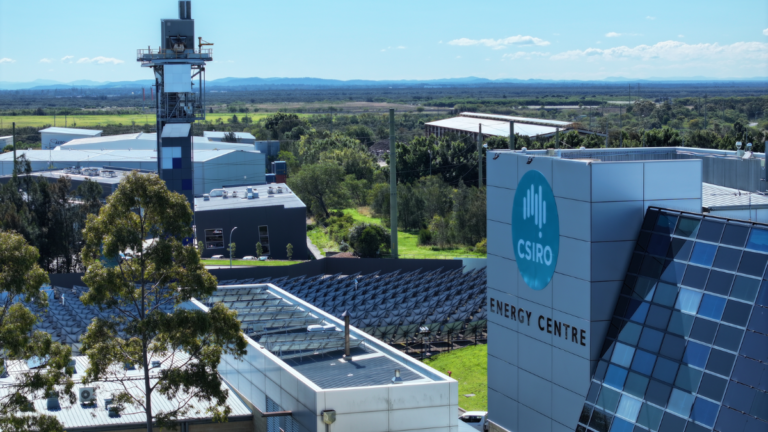
Australia’s push towards a cleaner, more reliable electricity system has received a significant boost, with CSIRO unveiling a $3 million expansion of its Renewable Energy Integration Facility in Newcastle.
Located at the agency’s Energy Centre, the upgraded Renewable Energy Integration Facility (REIF) dramatically expands the nation’s ability to test, validate and commercialise renewable and grid technologies before they are rolled out across the country.
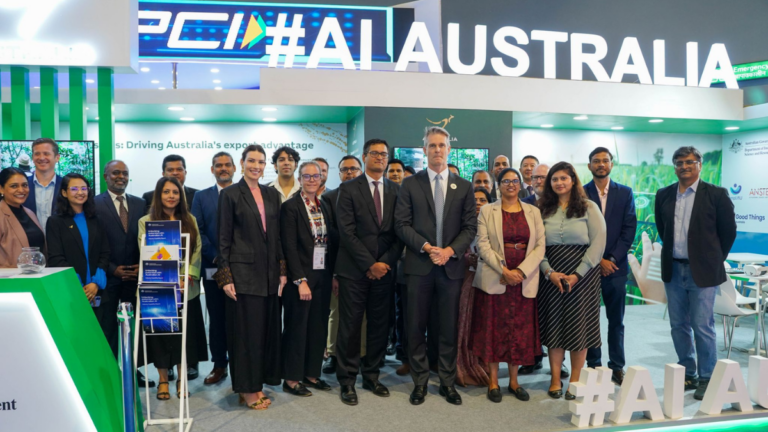
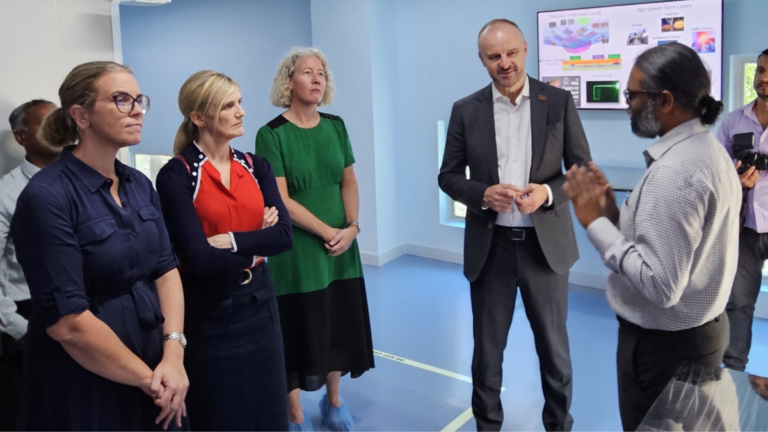
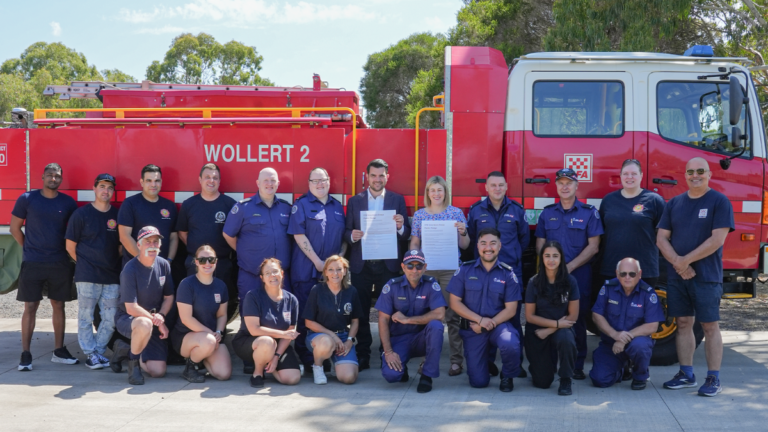
Image: CSIRO unveils $3M upgrade to flagship renewable energy lab (Source: CSIRO)
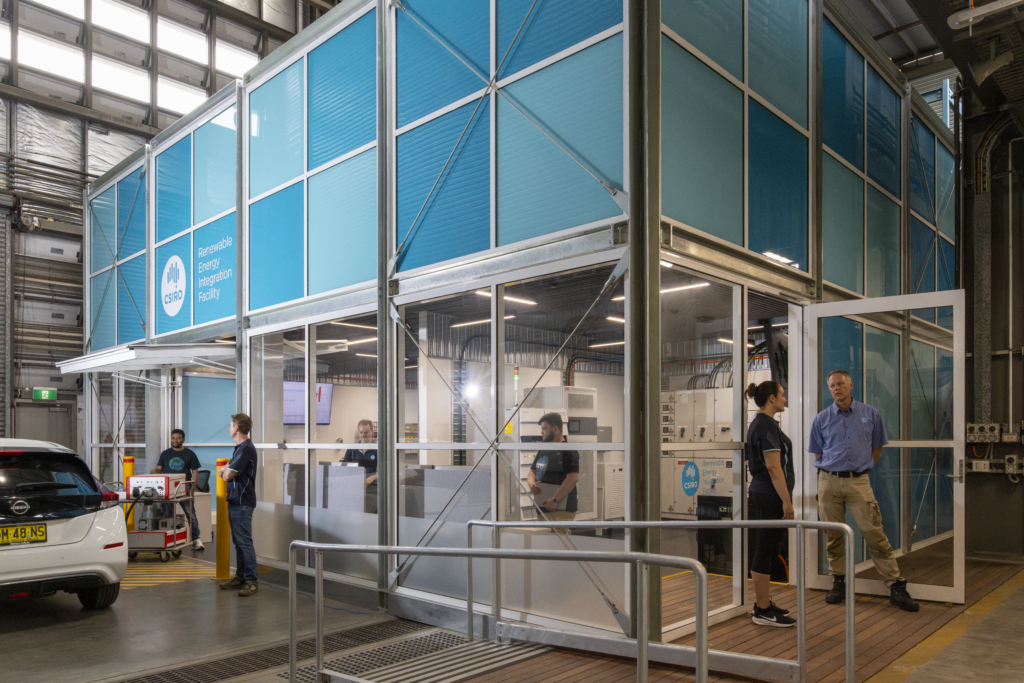
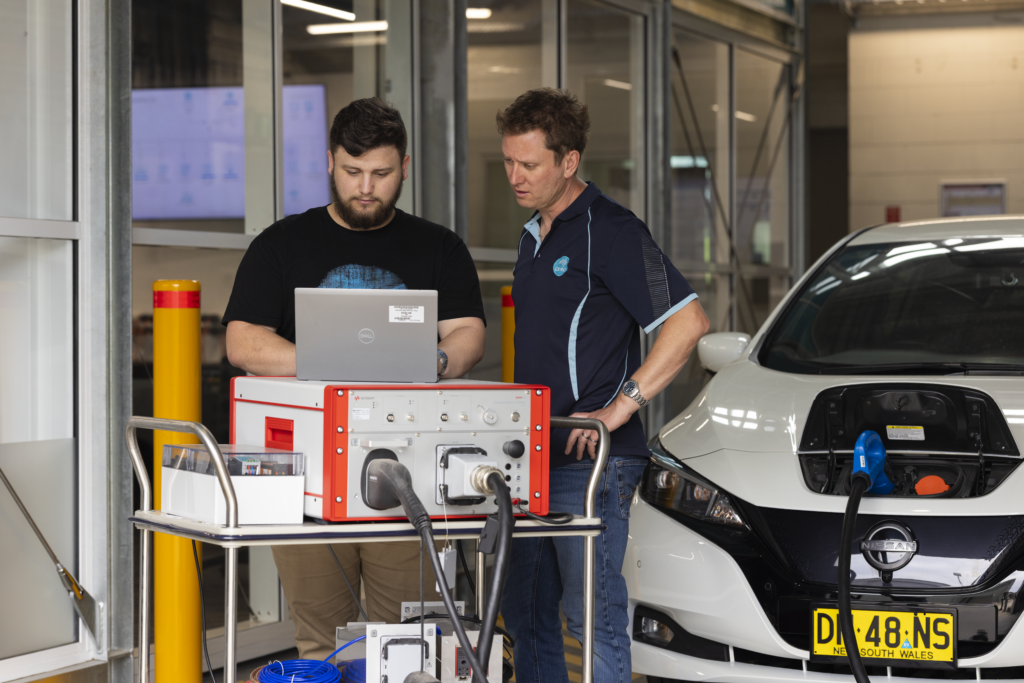
The enhanced laboratory can now simulate complex microgrids and grid faults, assess inverter performance under real-world conditions and conduct large-scale experiments combining solar panels, battery storage and electric vehicles.
A key highlight is vehicle-to-grid (V2G) technology, which enables electric vehicles to act as mobile batteries — storing excess solar power during the day and feeding it back into the grid during peak demand periods.
CSIRO Chief Executive Dr Doug Hilton said the investment delivers critical national capability at a time of rapid transformation in Australia’s energy mix.
“The Renewable Energy Integration Facility provides industry, researchers and system operators with an independent laboratory to test how technologies such as wind, solar, batteries and electric vehicles can integrate safely and reliably into the grid,” he said.
“As Australia transitions to a cleaner, more electrified economy, we need confidence that new energy technologies can operate safely and reliably across the system. This upgraded facility strengthens Australia’s capability to test exactly that.”
He added that improving the performance and coordination of distributed energy resources would help make better use of existing infrastructure, supporting more affordable power for households and businesses.
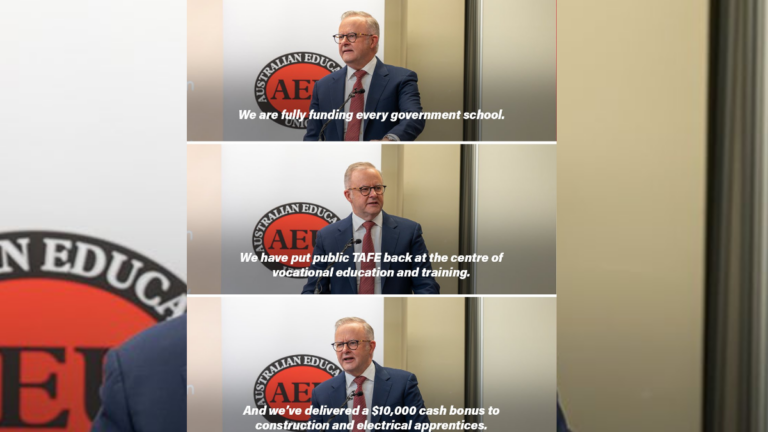
Image: CSIRO unveils $3M upgrade to flagship renewable energy lab (Source: CSIRO)
CSIRO Energy Systems Research Program Director Dr John Ward said the expanded lab would help address both local and global challenges emerging from the energy transition.
“The Renewable Energy Integration Facility allows us to simulate and stress-test real-world grid conditions, giving us deeper insight into how inverter-based technologies like solar and batteries perform as their share grows across the electricity system.”
Australia’s energy landscape presents unique pressures — from vast, remote distribution networks and world-leading levels of rooftop solar uptake, to increasingly volatile weather and growing demand from energy-intensive data centres.
Dr Ward said the facility enables researchers to collaborate directly with industry and market bodies to develop practical, scalable solutions. It also provides an independent testing ground for Australian start-ups and manufacturers seeking to validate new technologies before entering the market.
Established in 2009 and opened by former Prime Minister Kevin Rudd, the Newcastle-based centre is one of the largest renewable and grid integration testing facilities in the southern hemisphere.
The latest upgrade more than doubles its power testing capacity and introduces advanced grid and battery emulation tools, programmable inverters, improved high-resolution data capture and real-time hardware-in-the-loop simulation for large-scale experiments.
The facility has previously supported major innovation projects, including smart inverter development with Google X, virtual power station testing and trials focused on residential solar and storage aggregation.
Funded through the Department of Education’s Trailblazer Universities Program, the expanded facility is now open to external industry and research organisations for collaboration and commercialisation projects aimed at strengthening Australia’s clean energy future.
Support our Journalism
No-nonsense journalism. No paywalls. Whether you’re in Australia, the UK, Canada, the USA, or India, you can support The Australia Today by taking a paid subscription via Patreon or donating via PayPal — and help keep honest, fearless journalism alive.
The man was stopped by Australian Border Force (ABF) officers for a baggage inspection at Perth Airport on Monday morning after arriving on an international flight.
Authorities allege officers discovered suspicious content during the examination and alerted the Australian Federal Police (AFP).
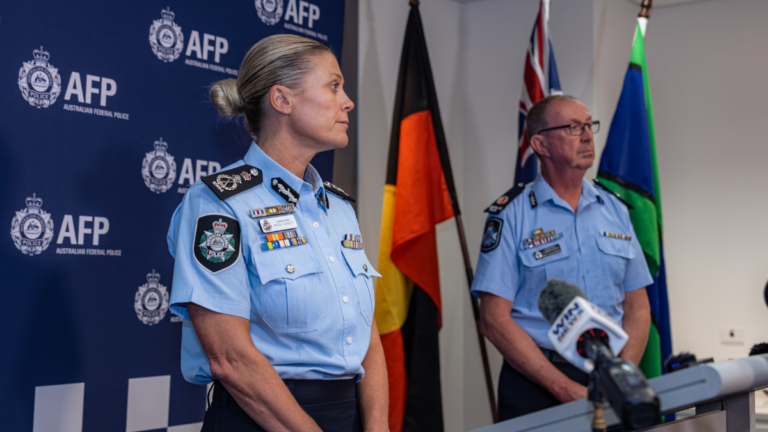
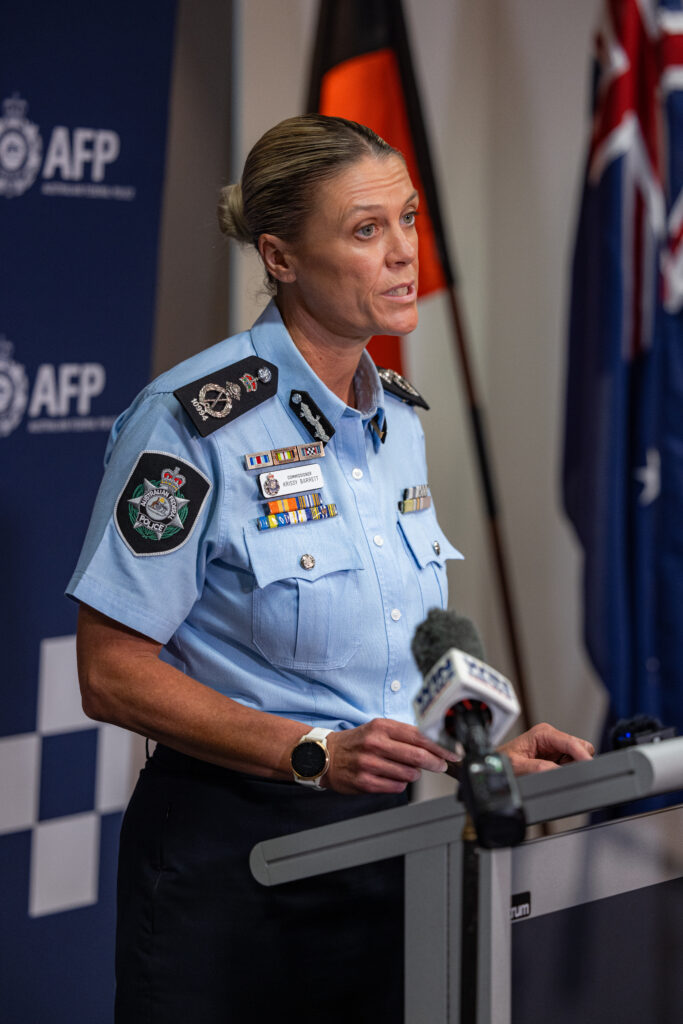
AFP Commander Nick Read said authorities were working closely with partner agencies to curb the spread of extremist content.
“There is no place in Australian society for violent or extremist material, which terrorist organisations use to radicalise members of the community, particularly young or vulnerable people.”
An investigation was launched by the Western Australia Joint Counter Terrorism Team (WA JCTT), a partnership between the AFP, the Western Australia Police Force and the Australian Security Intelligence Organisation. The WA Police State Security Investigations Group also assisted.
Police allege a review of the man’s phone uncovered material accessed online that constituted violent extremist content. This allegedly included footage of overseas killings linked to different ideologies and videos detailing how to manufacture home-made explosives.
Officers later executed a search warrant at a property in Perth’s CBD, seizing a computer for further forensic examination.
The man has been charged with one count of possessing or controlling violent extremist material, contrary to section 474.45C of the Criminal Code (Cth), which carries a maximum penalty of five years’ imprisonment.
ABF Superintendent John Eldridge said frontline border operations and intelligence gathering played a crucial role in identifying threats to community safety.
Investigations remain ongoing, with forensic analysis of the seized devices continuing.
Support our Journalism
No-nonsense journalism. No paywalls. Whether you’re in Australia, the UK, Canada, the USA, or India, you can support The Australia Today by taking a paid subscription via Patreon or donating via PayPal — and help keep honest, fearless journalism alive.
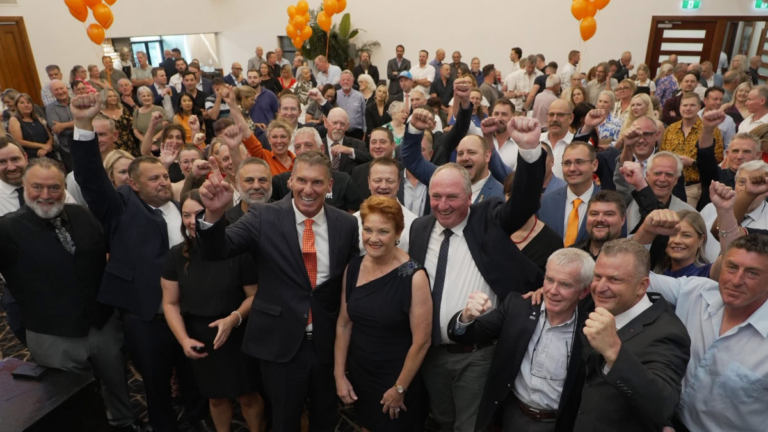
Two new federal polls by DemosAU and Fox & Hedgehog have the combined primary vote for Labor and the Greens dropping as One Nation continues to surge. There’s no sign of a boost for the Coalition from Angus Taylor replacing Sussan Ley.
At the 2025 federal election, the combined primary vote share for Labor and the Greens was 46.8%, while the combined share for the Coalition, One Nation and Trumpet of Patriots was 40.1%. In the two polls below, the total right vote is 49% and the total left vote 41–42%.
A national DemosAU poll for Capital Brief, conducted February 16–20 from a sample of 1,551, gave Labor 29% of the primary vote (down one since a mid-January DemosAU poll), One Nation 28% (up four), the Coalition 21% (steady), the Greens 12% (down one) and all Others 10% (down two).
No two-party estimate was given, but seat projections had Labor winning 76–85 of the 150 House of Representatives seats, still enough for a majority but down from 87–95 in January. One Nation was winning 43–54 seats, up from 29–38, the Coalition 9–20 (10–22 previously), the Greens an unchanged 0–2 and all Others 3–7 (6–11 previously).
Anthony Albanese’s net positive rating was down three points to -17, with 46% giving him a negative rating and 29% positive. Taylor’s initial net positive was -4 (28% negative, 24% positive), up 14 points on Ley. Pauline Hanson’s net positive improved four points to -1 (38% negative, 37% positive).
In a three-way preferred PM question, Albanese led with 37% (down two), followed by Hanson at 25% (down one) and Taylor at 19% (up three from Ley).
Cost of living was rated the most important issue by 45%, followed by housing at 18% and immigration at 13%. Respondents were asked which of Labor, the Greens, One Nation or the Coalition were best for various issues.
Combining One Nation and the Coalition against the combined Labor and Greens gives the right a 44–32 lead over the left on cost of living, a 41–32 lead on housing and a 53–26 lead on immigration.
Fox & Hedgehog poll: Labor down to 51–49 lead
A national Fox & Hedgehog poll for the News Corp papers, conducted February 17–19 from a sample of 1,625, gave Labor 30% of the primary vote (up one since an early January Fox & Hedgehog poll), One Nation 25% (up four), the Coalition 24% (down one), the Greens 12% (down two) and all Others 9% (down two).
In a “three party preferred”, where Greens and Other voters are asked which of Labor, One Nation or the Coalition they prefer, Labor had 44% (down two), One Nation 29% (up four) and the Coalition 27% (down two). Respondent preferences gave Labor just a 51–49 lead over the Coalition, a two-point gain for the Coalition. Labor led One Nation by 53–47, a three-point gain for One Nation.
Albanese’s net approval was an unchanged -15 (47% disapprove, 32% approve). Taylor’s initial net approval was +3 (26% approve, 23% disapprove) (Ley’s net approval was -13). Albanese led Taylor by 40–35 as preferred PM (39–31 vs Ley). Hanson’s net approval was up 12 points to +9 (44% approve, 35% disapprove).
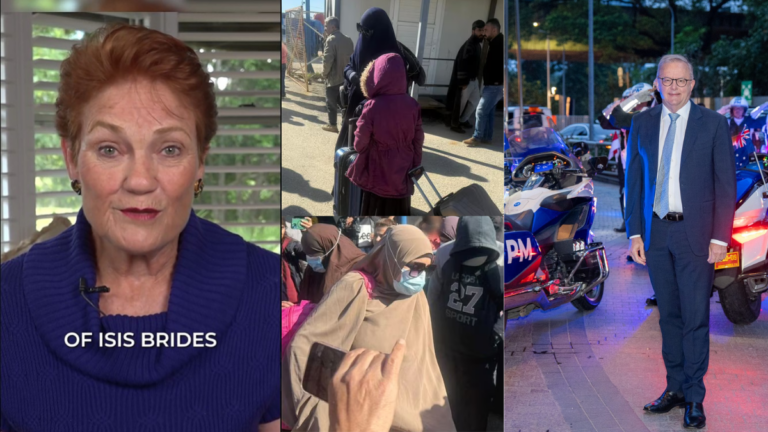
On reducing the capital gains tax discount, 35% both supported and opposed. By 59–17, respondents supported an immigration ban from “high risk” areas. By 64–15, respondents did not think “ISIS brides” should be allowed to return to Australia.
Resolve poll on international relations
I previously covered the mid-February federal Resolve poll for Nine newspapers. In further questions, Russian President Vladimir Putin had a net likeability with Australians of -60, United States President Donald Trump -41, Chinese President Xi Jinping -26, Israeli PM Benjamin Netanyahu -20, United Kingdom PM Keir Starmer -5 and Ukraine President Volodymyr Zelensky +22.
The US’s net likeability was -17, down 21 since October and 34 from two years ago. China’s was -24, the UK’s +41, Japan’s +53 and New Zealand’s +67.
On the greatest threat to Australia in the next few years, 31% said China (down 23 since January 2023), 17% the US, 5% Russia and 31% all equally.
By 62–11, respondents thought Taiwan was a sovereign nation rather than a region of China. On any conflict between China and Taiwan, 36% thought Australia should support Taiwan, 7% support China and 38% not take sides.
On the Ukraine-Russia war, 40% thought Australia should maintain its current support for Ukraine, 16% increase its support (down nine since March 2025) and 21% decrease or withdraw support for Ukraine (up seven).
Tasmanian federal EMRS poll
A Tasmanian federal EMRS poll, conducted February 16–19 from a sample of 1,000, gave Labor 30% of the primary vote, One Nation 24%, the Liberals 18%, the Greens 13%, independents 12% and others 2%. One Nation only received 6.0% at the 2025 federal election in Tasmania.
Labor led the Liberals by 60–40 after preferences (63.3–36.7 at the last election), and they led One Nation by the same 60–40 margin. Figures for the five Tasmanian federal seats were given, based on samples of 200 per seat.
In Braddon, One Nation and Labor were tied 50–50, from primary votes of 34% One Nation, 31% Labor, 16% Liberals, 7% Greens and 10% independents. Labor was winning all other seats easily. Albanese led Taylor as preferred PM by 45–31 statewide.
Queensland DemosAU poll: LNP far ahead
A Queensland state DemosAU and Premier National poll, conducted February 10–20 from a sample of 1,044, gave the Liberal National Party (LNP) 34% of the primary vote (down three since the October DemosAU poll), Labor 28% (down one), One Nation 21% (up seven), the Greens 10% (down two) and all Others 7% (down one).
The LNP led Labor by 56–44 after preferences, a two-point gain for the LNP. All Queensland polls now have the LNP far ahead.
LNP Premier David Crisafulli had a net +16 approval, with 39% positive, 38% neutral and 23% negative. Labor leader Steven Miles was at net -10. Crisafulli led Miles as preferred premier by 43–32 (44–32 previously). By 44–36, respondents thought Queensland was headed in the right direction (42–38 previously).
No-nonsense journalism. No paywalls. Whether you’re in Australia, the UK, Canada, the USA, or India, you can support The Australia Today by taking a paid subscription via Patreon or donating via PayPal — and help keep honest, fearless journalism alive.
An Uber driver is recovering after being allegedly stabbed, kicked and beaten with a hammer just metres from his home in Melbourne’s south-west.
The father of seven had finished work about 10pm on Monday when he was reportedly chased by two hooded men in Point Cook.
Image: Uber driver brutally attacked with hammer and knife in Point Cook (Source: 9News screenshot)
9 News reported that as he attempted to flee, he tripped and fell, allowing the pair to catch up with him.
Police allege the attackers repeatedly assaulted the man before fleeing the scene in a white sedan driven by a third person.
Despite suffering multiple stab wounds, the injured driver managed to stagger home. His stepson said he opened the door to find the man covered in blood.
“I tried helping because my mum was in distress,” he told 9News.
“She was just screaming and there are seven kids all under 16 in there.”
The victim had recently relocated from Canada to Melbourne to build a new life with his family. According to his stepson, he was still becoming familiar with the neighbourhood.
Image: Uber driver brutally attacked with hammer and knife in Point Cook (Source: 9News screenshot)
“He’s really bubbly, always excited to do things,” he said.
“We don’t know why they would come for him.”
Image: Uber driver brutally attacked with hammer and knife in Point Cook (Source: 9News screenshot)
CCTV footage captured by neighbour Franco Vermeulen shows the violent attack. Vermeulen said the incident has left his family feeling unsafe and has prompted them to consider relocating to Perth.
“I feel very unsafe seeing these visuals,” he said.
“How do I protect my family? It’s a massive concern.”
Victoria Police have launched an investigation and are searching for the three offenders. Anyone with information is urged to contact Crime Stoppers on 1800 333 000.
Support our Journalism
No-nonsense journalism. No paywalls. Whether you’re in Australia, the UK, Canada, the USA, or India, you can support The Australia Today by taking a paid subscription via Patreon or donating via PayPal — and help keep honest, fearless journalism alive.
A 29-year-old man accused of fatally stabbing a student and injuring another in a Melbourne suburb allegedly admitted his guilt to police, a jury has been told.
Robin Robin is standing trial in Victoria’s Supreme Court over the death of 22-year-old Navjeet Singh and the stabbing of 30-year-old Shawan Singh on 5 May 2024.
As per news.com.au, Robin has pleaded not guilty, facing alternative charges of intentionally causing serious injury and recklessly causing serious injury in relation to Shawan Singh’s injuries.
It is reported that during the trial’s opening on Monday, Crown prosecutor Nadia Kaddeche told the 14-person jury that Robin allegedly attacked his housemate Shawan Singh with a kitchen knife at a rented home in Ormond, before turning on Navjeet Singh, who had intervened.
Ms Kaddeche said the incident followed a party hosted by Robin and his younger brother, Abhijeet Abhijeet, during which tensions rose after Shawan Singh left to play cards at Navjeet Singh’s home in Noble Park.
The brothers allegedly made repeated abusive phone calls demanding Shawan return to collect his belongings.
According to the prosecution, Robin confronted Shawan Singh at the home, threatening him with a knife, and attacked him before stabbing Navjeet Singh.
Further, short clips of footage from a resident’s phone and a passing Uber dashcam were shown in court, reportedly capturing Robin striking Navjeet Singh while he was on the ground, with Abhijeet allegedly joining in.
After the incident, the brothers allegedly fled to New South Wales before being arrested by police on 7 May. During his arrest, Robin is said to have told officers:
“I’m the guilty one, my brother is innocent, he did nothing.”
Navjeet Singh, also known as Navjeet Sandhu, was described by friends and family as a “bright and aspiring” international student from India, who came to Australia to pursue a better future. He died at the scene, while Shawan Singh survived with non-life-threatening injuries.
The trial will continue with further opening statements from the prosecution, followed by the defence.
Support our Journalism
No-nonsense journalism. No paywalls. Whether you’re in Australia, the UK, Canada, the USA, or India, you can support The Australia Today by taking a paid subscription via Patreon or donating via PayPal — and help keep honest, fearless journalism alive.
Australian farmers now have a new way to measure and manage their environmental impact with the launch ofFarmPrint, a tool developed by CSIRO. The platform helps farms evaluate, benchmark, and report greenhouse gas (GHG) emissions, offering a practical way to demonstrate sustainability to markets, lenders, and supply chains.
Originally prototyped with support from the Clean Energy Finance Corporation, FarmPrint has been refined over the past year through trials on CSIRO research farms.
The tool allows farmers, advisers, and finance-sector partners to assess farm performance against regional benchmarks and track changes in emissions over time.
Dr Murray Hall, CSIRO senior research scientist on the project, said the field trials under real-life conditions had ensured the tool’s robustness.
“This first phase of the tool embraces a cradle-to-farm-gate approach, measuring not only on-farm emissions but also those embedded in supply chains, such as fertilisers, chemicals, and diesel.”
Image: This new tool supports farmers to evaluate, benchmark and report on greenhouse gas (GHG) emissions (Source: CSIRO)
FarmPrint aligns with evolving national and international reporting protocols and includes a dedicated webpage for documentation, as well as an API for integration with other data systems.
CSIRO plans to continue working with the agricultural sector to expand capabilities, refine calculations, and identify ways for farms to reduce emissions.
Dr Hall said the tool represents a significant step in translating CSIRO’s digital agriculture research into a practical solution.
“FarmPrint will be an important addition to the kit bag of sustainable farm management into the future.”
The project received early backing from Macquarie Bank through the Clean Energy Finance Corporation.
Support our Journalism
No-nonsense journalism. No paywalls. Whether you’re in Australia, the UK, Canada, the USA, or India, you can support The Australia Today by taking a paid subscription via Patreon or donating via PayPal — and help keep honest, fearless journalism alive.
A popular Australian travel vlogger has sparked widespread discussion online after declaring that India should be on everyone’s travel list at least once in their lifetime.
Duncan McNaught, who has spent the past four months travelling across India, shared a now-viral video on Instagram outlining what he described as five compelling reasons to visit the country.
Posting to his followers, he called India “the safest, most affordable and diverse place to travel to”, urging people of all ages to experience it for themselves.
The video stitches together scenes from his journey – trekking through mist-covered mountain ranges, sipping roadside tea with locals and taking part in the lively celebrations of an Indian wedding filled with music and dance.
Other clips show him sampling regional dishes and exploring bustling streets as well as quieter rural settings.
In the footage, McNaught describes India as a destination that offers every kind of landscape. From snow-capped mountains and sandy deserts to tropical beaches, dense jungles and waterfalls, he says the country “has everything”.
“It’s got amazing food, it’s affordable and the people treat you like family.”
He also highlights India’s vibrant festivals and what he calls its unmatched sense of energy and spontaneity.
Encouraging young backpackers in particular, he adds that travelling through India can change the way a person views the world. “If you want perspective, just go to India,” he says.
“It will give you a perspective you’ve never had before.”
The post has attracted hundreds of thousands of views and prompted thoughtful responses from viewers. Many agreed with his portrayal of India’s cultural depth and emotional impact.
In January McNaught sparked cheers at the historic Kailasa Temple in Ellora, Maharashtra, after leading visitors in patriotic and devotional chants. He shared the moment on Instagram with the caption,
“Am I ready for my Aadhaar card?”
In the video, McNaught turns to the crowd inside the temple complex and shouts “Bharat Mata Ki Jai!”, drawing an immediate and enthusiastic response from fellow visitors. He then follows with “Jai Shree Ram”, prompting an even louder chorus.
The clip quickly gained traction online, with many social media users praising the spontaneous interaction. Some described the moment as wholesome and a reflection of the vibrant energy often seen at Indian heritage sites, while others applauded the vlogger’s apparent connection with local culture.
Support our Journalism
No-nonsense journalism. No paywalls. Whether you’re in Australia, the UK, Canada, the USA, or India, you can support The Australia Today by taking a paid subscription via Patreon or donating via PayPal — and help keep honest, fearless journalism alive.
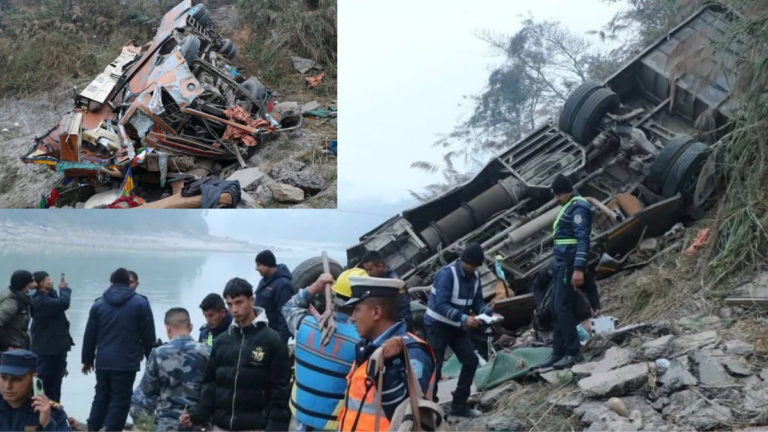
At least 19 people have died and 25 others have been injured after a packed passenger bus veered off a mountain road and plunged about 200 metres into a river in Nepal.
The bus was travelling overnight from the lakeside tourist city of Pokhara to the capital, Kathmandu, when it lost control on the Prithvi Highway in Dhading district early on Monday.
Police said the vehicle skidded off the narrow roadway near Benighat, roughly 80 kilometres west of Kathmandu, before tumbling down a steep mountainside and coming to rest on the banks of the Trishuli River.
#Nepal: At least 17 people, including two foreigners, died in a bus accident near Charaundi.
Kathmandu-bound bus from Pokhara had plunged into the Trishuli River. Among the deceased are 11 men and two women. pic.twitter.com/5sD1pJzRHq
Among those killed was a 24-year-old British national. Authorities also confirmed that a New Zealand woman, 27, sustained minor injuries and was treated at a local hospital before being discharged. A Chinese national was among the injured and received treatment at a trauma centre in Kathmandu.
Senior police officer Prakash Dahal said 44 people were on board the bus.
“Out of 44, 19 people died and 25 are undergoing treatment.”
Rescue teams worked through the night to reach survivors trapped in the wreckage. Officials said boats were used to ferry the injured from the riverbank up to the road, where ambulances transported them to hospitals in the capital.
A preliminary investigation suggests the bus went out of control before plunging into the river. Nepal’s Ministry of Home Affairs has established an inquiry committee to determine the cause of the crash and recommend safety measures.
Deadly road accidents are common in the Himalayan nation, where steep terrain, poorly maintained roads and ageing vehicles pose significant risks. In 2024, two buses carrying more than 50 people were swept into the same river during a landslide, leaving most passengers dead or missing.
Support our Journalism
No-nonsense journalism. No paywalls. Whether you’re in Australia, the UK, Canada, the USA, or India, you can support The Australia Today by taking a paid subscription via Patreon or donating via PayPal — and help keep honest, fearless journalism alive.
South East Queensland is ramping up its push into India as Brisbane and the Gold Coast join forces to attract a larger share of the country’s fast-growing outbound travel market.
In a major collaborative move, the Brisbane Economic Development Agency (BEDA), Brisbane Airport and Experience Gold Coast have appointed Horus Development and Consulting to represent both destinations in India.
The strategy aims to convert rising demand from India’s expanding middle class into increased visitor numbers, stronger air links and greater economic returns for the region.
India is now one of Australia’s top five inbound tourism markets. In the year to September 2025, Queensland welcomed 77,000 Indian visitors who spent USD 238.9 million. Brisbane recorded 46,000 arrivals from India — a 0.4 per cent increase year-on-year — while the Gold Coast saw a sharp 35 per cent rise to 25,000 visitors.
Brisbane Lord Mayor Adrian Schrinner said the partnership signalled a clear intent to position the River City as a leading destination for Indian travellers. He said tourism contributes USD 13.7 billion in visitor spending and supports thousands of local jobs.
“India is one of the fastest-growing travel markets globally, and we want Brisbane front of mind for visitors seeking Australia’s lifestyle capital.”
Brisbane Airport chief executive Gert-Jan de Graaff highlighted the growing aviation links between Queensland and India. He pointed to increased connectivity via Malaysia Airlines, which operates five weekly services into Brisbane with onward connections to 10 major Indian cities.
On the Gold Coast, Mayor Tom Tate said India represented a significant growth opportunity for the city’s USD 8.1 billion visitor economy. He said that dedicated in-market representation would strengthen promotion of the region’s diverse tourism offerings.
“This partnership will help us capture that momentum, stimulate demand and expand aviation capacity.”
Horus Development and Consulting, which already represents Brisbane in parts of South-East Asia, will now extend its role to India, overseeing trade engagement, marketing and public relations. Managing Director Benoit Badufle said the expanded remit reflected a long-term vision to keep Brisbane and the Gold Coast prominent among Indian travel trade and consumers.
Support our Journalism
No-nonsense journalism. No paywalls. Whether you’re in Australia, the UK, Canada, the USA, or India, you can support The Australia Today by taking a paid subscription via Patreon or donating via PayPal — and help keep honest, fearless journalism alive.
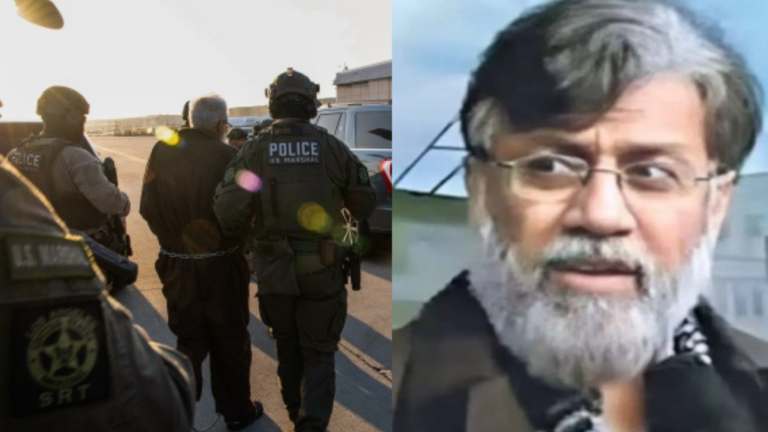
The Canadian government is seeking to strip the citizenship of Pakistan-born businessman Tahawwur Hussain Rana, alleging he obtained it through deception, as he awaits trial in India over the deadly 2008 Mumbai terrorist attacks.
Former Toronto MP Kevin Vuong said the move signalled that “for foreign nationals, citizenship is a privilege, not a right”, crediting the Carney government for taking action.
For foreign nationals, citizenship is a privilege, not a right.
Credit to the Carney government for taking action to strip Pakistani-born Tahawwur Rana Hussain of 🇨🇦 citizenship, who was the alleged “mastermind” of the 2008 Mumbai terrorist attack. https://t.co/MUICzGmfqr
Documents obtained by Global News show officials from Immigration, Refugees and Citizenship Canada (IRCC) notified Rana in May 2024 of their intention to revoke the Canadian citizenship he acquired in 2001.
The department alleges he misrepresented his residency history when applying.
As per reports, Rana, 65, immigrated to Canada in 1997. When he applied for citizenship in 2000, he claimed to have lived in Ottawa and Toronto for four years with only a brief absence. However, a subsequent investigation by the Royal Canadian Mounted Police found he had spent most of that period in Chicago, where he operated businesses including an immigration consultancy.
In a letter to Rana, IRCC accused him of “serious and deliberate deception”, stating his alleged misrepresentation led officials to believe he met residency requirements when he did not. The matter has been referred to the Federal Court, which will determine whether his citizenship was obtained by fraud.
It is further reported that a Toronto-based immigration lawyer acting for Rana has appealed the revocation, arguing the decision is unfair and infringes his rights. Government lawyers have also sought permission to withhold sensitive national security information from the court proceedings.
A departmental spokesperson said revocation for misrepresentation was “an important tool for maintaining the integrity of Canadian citizenship” and stressed that such decisions are not taken lightly.
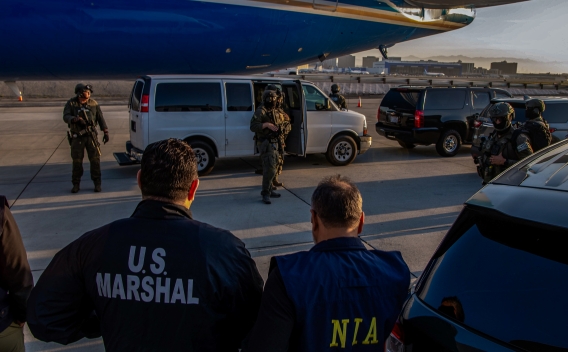
Image: U.S. Marshals in the Central District of California on April 9 transferred custody of Tahawwur Rana, a Pakistani national and Canadian citizen, to representatives from India’s National Investigation Agency (Source: U.S. Marshals Service photo by Shane T. McCoy)
Rana is currently in Indian custody after being extradited from the United States in 2025. On April 9, US authorities transferred him to India to face trial over allegations he helped facilitate the 2008 attacks in Mumbai carried out by Lashkar-e-Tayyiba.
The coordinated three-day assault in November 2008 left 166 people dead, including six Americans, after gunmen targeted hotels, a train station and a Jewish community centre.
Rana has previously faced terrorism-related charges in the United States. In 2011, he was convicted in a federal court in Illinois of conspiring to provide material support to Lashkar-e-Tayyiba and to a separate plot targeting the Danish newspaper Morgenavisen Jyllands-Posten, which had published cartoons depicting the Prophet Mohammed. He was acquitted of directly supporting the Mumbai attacks in that trial.
US prosecutors alleged Rana provided cover and assistance to his childhood friend David Coleman Headley, who pleaded guilty to terrorism offences, including aiding the murders of six Americans in Mumbai.
In 2013, Rana was sentenced to 14 years in prison in the United States. After years of legal challenges, US courts cleared the way for his extradition to India, where he now faces charges including conspiracy, murder and commission of a terrorist act.
Support our Journalism
No-nonsense journalism. No paywalls. Whether you’re in Australia, the UK, Canada, the USA, or India, you can support The Australia Today by taking a paid subscription via Patreon or donating via PayPal — and help keep honest, fearless journalism alive.
If you live with pelvic pain, period pain, sex or bowel symptoms, you may have been told you could have endometriosis, and that surgery is the “gold standard” for diagnosis and treatment.
But over the past few weeks, questions have been raised about whether surgery is actually necessary for women to detect and treat endometriosis.
This week’s ABC Four Corners highlights stories of women undergoing repeated unnecessary surgeries for endometriosis which caused significant harm and left some women unable to have have children.
So where does that leave people who have or suspect they have endometriosis?
Surgery is not always necessary but can be helpful in some instances. But it’s never a simple yes-or-no decision. Let’s look at what the evidence says about who might benefit from surgery and when it’s unnecessary.
What is endometriosis and what is surgery for?
Endometriosis occurs when tissue similar to the lining of the uterus (womb) grows outside the uterus – usually in the pelvis or other areas. It affects about one in seven women and those presumed female at birth.
Surgery for endometriosis has two roles:
diagnosis: seeing whether endometriosis lesions are present
treatment: removing or destroying visible disease.
Surgery is no longer needed for diagnosis
Historically, laparoscopy (keyhole surgery) with biopsy was considered best to diagnose endometriosis. If tissue removed at surgery showed endometrial-type cells under the microscope (histology), diagnosis was confirmed.
However, endometriosis care is evolving with imaging and our understanding of pain science is improving. Australian and international guidelines now allow clinicians to diagnose endometriosis based on symptoms.
Deep and ovarian endometriosis can often be diagnosed with specialised ultrasound or MRI. This imaging can also help guide decisions about whether or not to undergo surgery.
So surgery is no longer required to “prove” a person has the condition.
Surgery may not be needed if symptoms are manageable with hormonal therapy, allied and complementary health therapies, and lifestyle modification, or the risks of surgery outweigh the benefits.
Just because endometriosis is there, does not mean it causes the symptoms. Adenomyosis (a condition where endometrial-like tissue grows in the muscle wall of the uterus), irritable bowel syndrome, pelvic floor dysfunction and bladder pain syndrome can coexist with endometriosis.
Sometimes treating these other conditions can improve quality of life without surgery.
pain is severe and persistent, and medical therapies have not helped
imaging suggests deep endometriosis is affecting key organs such as the bowel, bladder or ureters, which can cause complications
fertility is affected and other options have been explored.
In these cases, surgery is considered for treatment, not diagnosis, and should be performed by an expert clinician – especially for deep or complex disease.
Early surgery may provide symptom relief, but there is little evidence lesions rapidly worsen over time or that urgent surgery improves long-term outcomes.
Although laparoscopies are generally safe, they’re still performed under general anaesthesia, which comes with risks. Other risks from surgery include:
bleeding or infections
damage to bowel, bladder or ureters
adhesion formation, where scar tissue forms and fuses to other parts of the pelvis.
Even after successful surgery, pain may return over time. This doesn’t mean surgery failed or was inappropriate. It means endometriosis and pelvic pain are chronic, complex conditions.
What if the surgeon doesn’t find anything?
Sometimes a surgeon looks inside the pelvis and doesn’t see endometriosis, or histopathology (the tissue taken for analysis in a laboratory) is negative.
This may mean the disease isn’t there, but sometimes it’s not that straightforward. Surgeons may miss a lesion that is microscopic or hidden in difficult-to-access areas such as the bowel.
Histopathology accuracy also depends on many factors. The diseased part of the lesion may be missed during analysis. If the lesions are surgically burnt away (ablated), or very tiny endometriosis lesions are cut out (excised), they may be destroyed by the surgical instruments, making pathology review impossible.
Other times, abnormal-looking areas are removed, when these are in fact not endometriosis.
Questions to help you decide
If you are considering surgery for endometriosis, it can help to ask your doctor:
what is the goal of surgery?
what does my imaging show?
what are the alternatives?
what other conditions do I have that may contribute to my symptoms?
how might surgery alleviate these symptoms?
what is your experience with complex endometriosis?
what improvements in pain can I realistically expect?
what are potential complications in my case?
A good surgical consultation should discuss your symptoms, priorities, past experiences and treatments, discuss benefits, limitations and uncertainties around diagnostic tests, and treatment options.
If you feel pressured into surgery, or your surgeon quickly suggests booking surgery without offering other options, seek a second opinion.
If you decide on surgery to manage pelvic pain, your clinician should offer other treatments, such as pelvic physiotherapy and/or medication, which can be used in conjunction.
For those who aren’t planning a pregnancy, evidence shows people who use a hormonal medication to suppress oestrogen after surgery have lower rates of recurrence than those who do not.
For some, surgery is transformative. For others, it offers limited relief. Individualised care is key. The goal is to improve quality of life, not simply to find endometriosis. That decision should be made with you, not for you.
Thanks to Adelaide University Adjunct Lecturer in Gynaecology Mathew Leonardi and Endometriosis Group Leader at Adelaide University’s Robinson Research Institute Louise Hull for their input into this article.
No-nonsense journalism. No paywalls. Whether you’re in Australia, the UK, Canada, the USA, or India, you can support The Australia Today by taking a paid subscription via Patreon or donating via PayPal — and help keep honest, fearless journalism alive.
India has strengthened its growing partnership with the Cook Islands, signing a new agreement to support science and technology education in the Pacific nation.
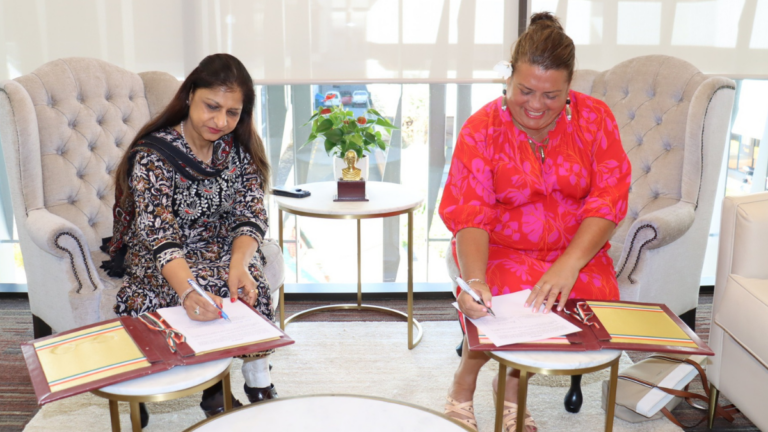
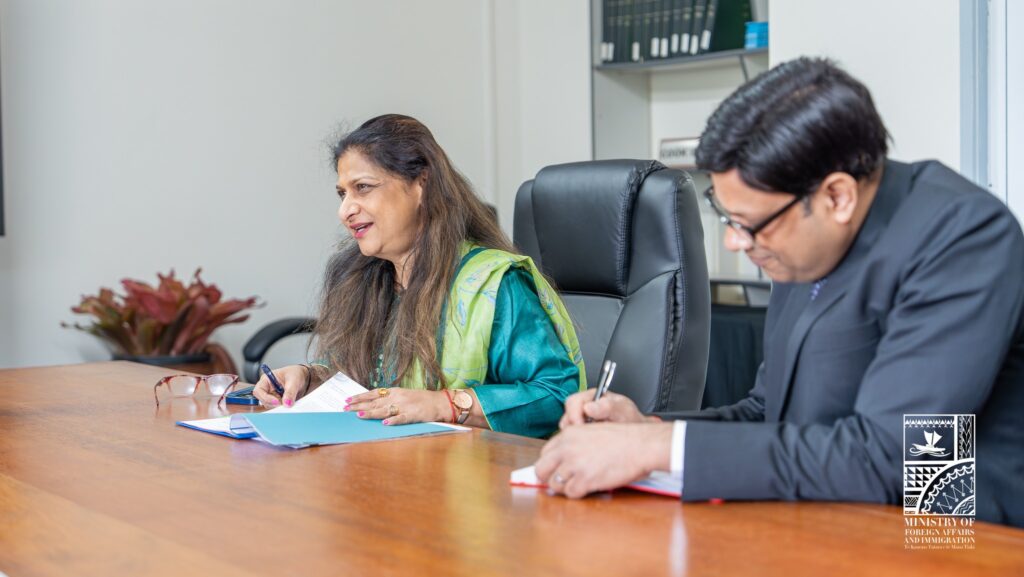
India’s High Commissioner to the Cook Islands, Neeta Bhushan, alongside the Cook Islands’ High Commissioner in Wellington, signed a Memorandum of Understanding to provide a US$50,000 grant for a four-month STEM and Robotics Programme in Rarotonga.
The initiative underscores India’s continued commitment to capacity-building, education and technical cooperation in the Pacific.
The two countries established diplomatic relations in 1998 and have since maintained warm and friendly ties. In 2021, concurrent accreditation for the Cook Islands was transferred to the Indian High Commission in Wellington, reflecting evolving diplomatic arrangements in the region.
HC Neeta Bhushan along side Cook Islands’ HC in Wlg signed an MoU to provide a US$50,000 grant for a 4-month STEM & Robotics Programme in Rarotonga. A meaningful step reflecting India’s commitment to capacity-building, education, and strengthening partnership with Cook Islands. pic.twitter.com/97OZLLQaVB
The Cook Islands is a key member of the Pacific Islands Forum, which promotes regional cooperation among Pacific nations. India holds official dialogue partner status within the forum, signalling its strategic engagement with Pacific Island countries.
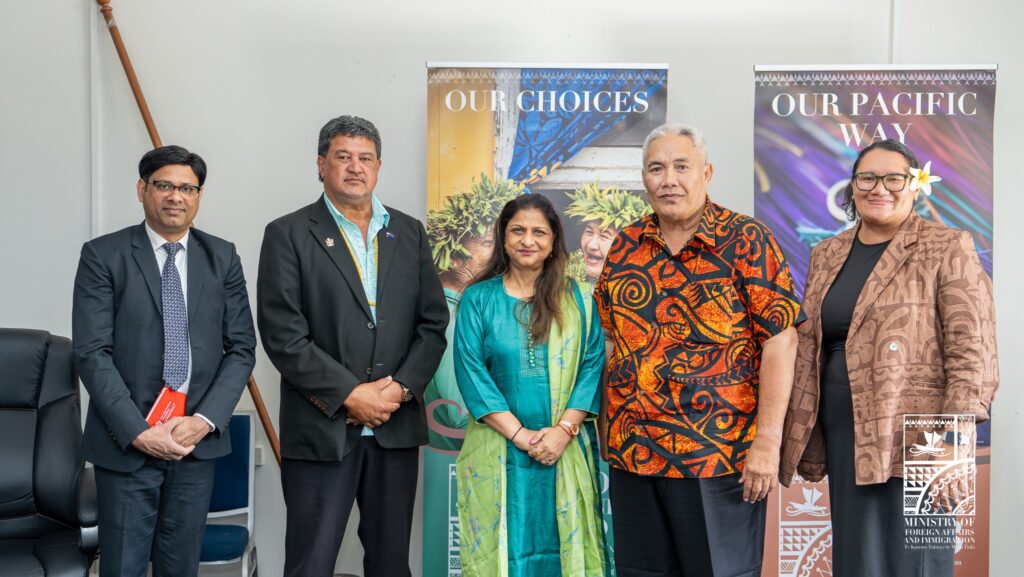
Bilateral relations have seen a notable upswing in recent years. In 2024, Ms Bhushan visited the Cook Islands, where she met senior leaders including Foreign Minister Tingika Elikana, Associate Foreign Minister Tukaka Ama, Secretary of Foreign Affairs and Immigration Tepaeru Herrmann, and Sir Tom Marsters, the King’s Representative and Head of State.
During the visit, she also called on New Zealand’s High Commissioner to the Cook Islands, Tui Dewes, and engaged with members of the Indian community through an Open House and Consular Camp. She interacted with yoga scholars, foreign ministry officials and participants of the Indian Technical and Economic Cooperation (ITEC) programme.
Image: Foreign Minister Tingika Elikana and Associate Foreign Minister Tukaka Ama met with Neeta Bhushan, High Commissioner of India to the Cook Islands (Source: Facebook)
Development projects and funding support
India’s development partnership with the Cook Islands spans multiple community-focused initiatives. Six community development projects are currently under way, supported by funding of approximately NZ$569,705 (around US$403,000). These projects include road safety improvements near schools and markets, upgrades to water infrastructure, installation of waste management systems and solar panels, renovation of community facilities, and support for sporting and sailing programmes. Two of the projects are nearing completion, with initial instalments already disbursed.
India has steadily increased its grant assistance to Pacific Island countries over the past two decades. Support was enhanced during the first Forum for India–Pacific Islands Cooperation summit in 2014, where annual grant-in-aid funding for Pacific nations was raised to US$200,000 with rollover provisions.
A flagship symbol of cooperation is the India–Cook Islands Centre of Excellence in Information Technology, established in 2018 at the Cook Islands campus of the University of the South Pacific. The centre provides IT training, scholarships and digital skills development, helping strengthen local capacity.
Image: Neeta Bhushan, High Commissioner of India to the Cook Islands (Source: Facebook)
Training and capacity-building
India’s ITEC programme continues to play a central role in bilateral engagement. Ms Marianne Anak Miga, Deputy Director of Management at Sentosa Hospital under Malaysia’s Ministry of Health, recently shared her experience of attending the second session of the Mid-Career Training Programme at the National Centre for Good Governance in Mussoorie, Uttarakhand, in August 2025.
Cook Islands leaders have reaffirmed the importance of their partnership with India during the country’s 60th anniversary celebrations.
“India has been a valued partner in our development journey,” Foreign Minister Elikana said.
“We appreciate the long-standing cooperation across areas such as education, technology and capacity-building, and we look forward to expanding our partnership into new and emerging sectors.”
As a founding member of FIPIC, India continues to engage Pacific nations through development cooperation, technical training and climate resilience initiatives, with both countries signalling interest in deeper collaboration across disaster resilience, agriculture, trade, health and sustainable development.
Support our Journalism
No-nonsense journalism. No paywalls. Whether you’re in Australia, the UK, Canada, the USA, or India, you can support The Australia Today by taking a paid subscription via Patreon or donating via PayPal — and help keep honest, fearless journalism alive.
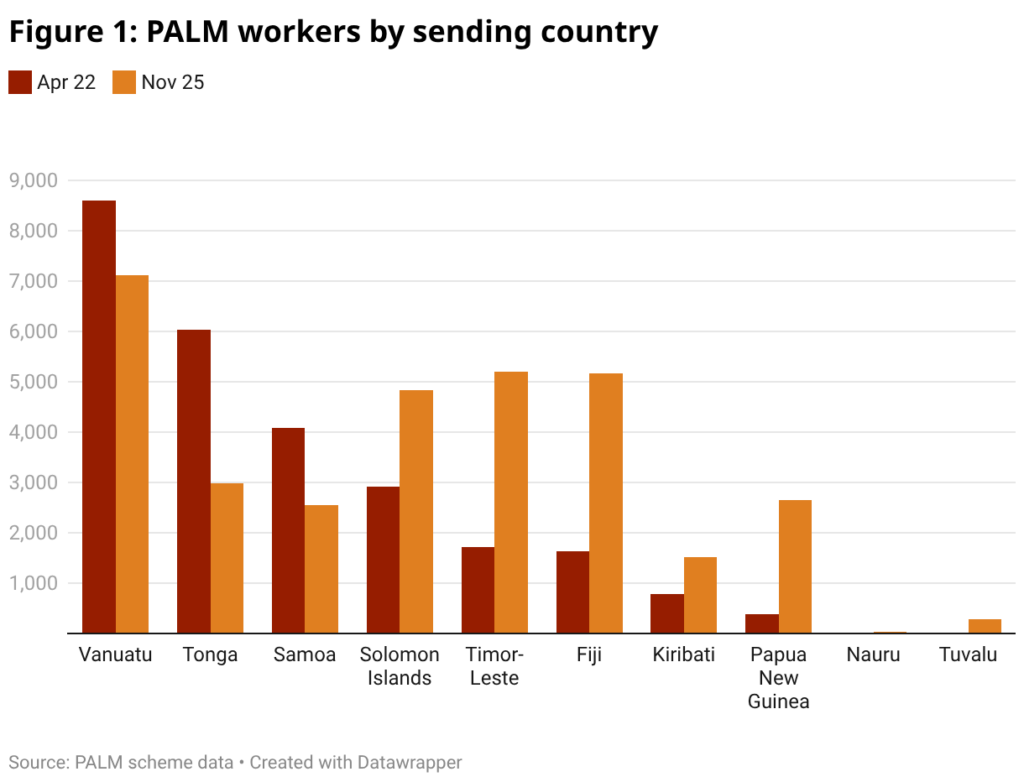
PALM (Pacific Australia Labour Mobility) growth has stalled. The total number of PALM workers in Australia was 26,185 in April 2022, 34,230 in June 2024 and 32,365 in November 2025. But there is still plenty of churn among the ten PALM-sending countries (nine Pacific Island countries plus Timor-Leste) from which employers are sourcing their workers.
The overall trend is one of diversification. In April 2022, a single country, Vanuatu, supplied one-third of all PALM workers. Vanuatu has since lost and then regained its top slot. However, it now provides only 22% of all PALM workers. In April 2022, Tonga was the second-biggest sender of workers. Tonga’s PALM numbers have since halved and as of November Timor-Leste was in second place. The top two now only provide 38% of PALM workers, down from 56% in early 2022 (and 70% or more before the pandemic).
It is also instructive to look at changes in the absolute numbers working in Australia under the PALM scheme by sending country. The top three providers in April 2022 — Vanuatu, Tonga and Samoa — are today between them providing only two-thirds of the number of PALM workers they did back then. The resulting gap has been filled by the other seven participating countries, all of whose numbers have increased. Fiji, Solomon Islands and Timor-Leste each have about 5,000 PALM workers in Australia, more than either Tonga or Samoa currently.
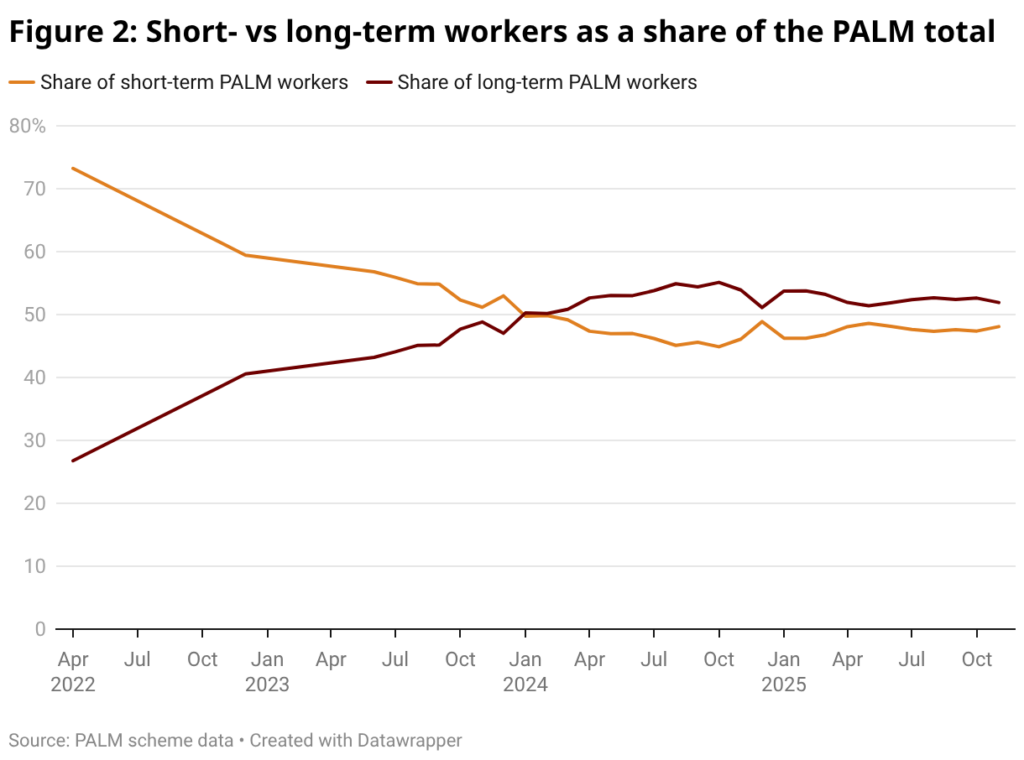
Another big change is in the shares of long-term (LT) and short-term (ST) workers. The latter come for less than a year and mainly work on farms. The former come for up to four years and work mainly in abattoirs. The share of long-term workers in total PALM workers has increased from 27% in April 2022 to 53% in June 2024 and has been roughly unchanged since.
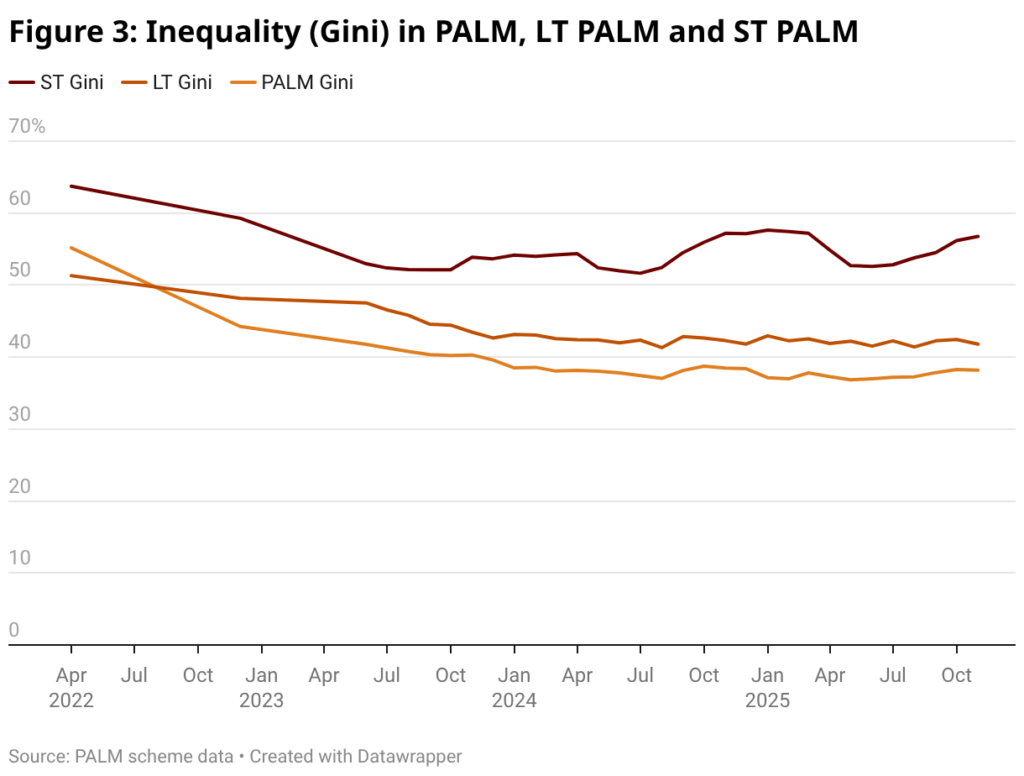
It turns out these two changes are linked. There is less inequality in the distribution of workers across sending countries in the LT component of the PALM scheme. As it has grown more important, this has pushed down the overall inequality.
The figure below illustrates. The Gini is the best known measure of inequality. The graph shows the Gini for PALM inequality between countries both as a whole and in both the ST and LT PALM streams. The fall in the total Gini (31 percentage points, start to end) is larger than the fall in either the ST Gini (11 percentage points) or the LT Gini (19 percentage points). That’s because of that increase in the share of the lower-inequality LT PALM (Figure 2).
While exact shares can vary from month to month, the overall trends are clear. This equalisation across countries in their contribution of workers is a very positive development. The three countries where complaints about brain drain and labour shortages have been the loudest are the ones in which PALM numbers have fallen: the former big three of Vanuatu, Tonga and Samoa. And the countries that have wanted to grow their PALM numbers have been able to, though PNG is still lagging.
An important message from this analysis, though, is that diversification seems to have run its course. The inequality in PALM across countries stopped falling almost two years ago. And the ST and LT shares have also stabilised.
If diversification has run its course, then to satisfy demand from the sending countries that still want to grow their numbers (Solomon Islands, Timor-Leste and PNG, and perhaps Kiribati, Fiji and Tonga as well), the Australian government will need to ensure a resumption of overall PALM growth. How could it do this?
Renewed PALM growth is possible, but only with reform. Employers would like the scheme to be less tightly regulated, but this is unlikely. An easier win would be to encourage sectors not currently participating in the long-term PALM to do so.
Another option worth considering would be to remove the current postcode restrictions, which are currently applied selectively. A Melbourne abattoir can employ PALM workers, but a Melbourne aged-care home can’t. Removing the remaining postcode restrictions would increase PALM employment in aged care (which would also be good for gender balance), and might make PALM an attractive option for large hotels in cities.
Another reform to support a resumption of PALM aggregate growth would be to finally remove the incentives for backpackers to work on farms. The government undertook a review of the backpacker visa in its last term of government. It released a discussion paper in June 2024 on the subject and issued a call for submissions (see Howes’s here). But, as far as we of know, this review has never been concluded. It certainly hasn’t been published.
The overall message is that over the last few years countries that have wanted to grow their PALM numbers have been able to do so in part because of contraction in Vanuatu, Samoa and Tonga. The decomposition analysis suggests that might not be possible any more. If so, either some Pacific countries will be frustrated in their PALM growth aspirations or PALM reforms to enable a resumption of growth will be needed.
This article appeared first on Devpolicy Blog (devpolicy.org), from the Development PolicyCentre at The Australian National University.
Disclosure: This research was supported by the Pacific Research Program, with funding from the Department of Foreign Affairs and Trade. The views are those of the authors only.
Contributing Author(s): Stephen Howes is Director of the Development Policy Centre and Professor of Economics at the Crawford School of Public Policy at The Australian National University. Huiyuan (Sharon) Liu is a research officer at the Development Policy Centre, working in the area of labour mobility.
Support our Journalism
No-nonsense journalism. No paywalls. Whether you’re in Australia, the UK, Canada, the USA, or India, you can support The Australia Today by taking a paid subscription via Patreon or donating via PayPal — and help keep honest, fearless journalism alive.
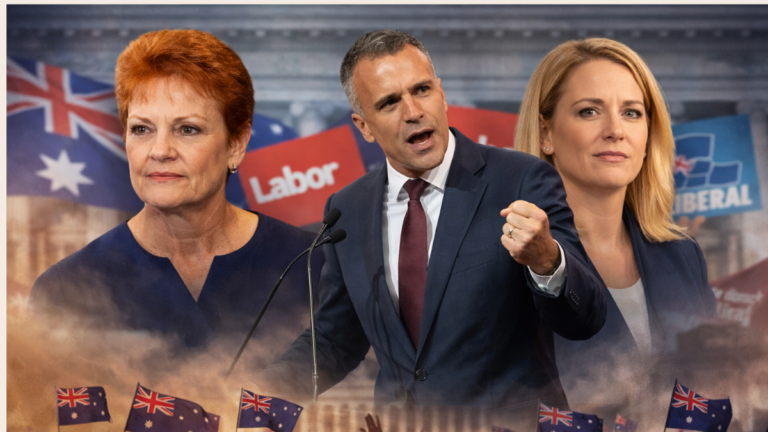
South Australia’s upcoming state election is shaping up to be more competitive than early expectations suggested, with preference negotiations and a surge in support for One Nation complicating Labor’s path to a straightforward victory.
The SA Liberal Party has indicated it may direct preferences to One Nation ahead of Labor and the Greens in certain seats, arguing its priority is to maximise the number of “centre-right” representatives elected to parliament. The signal, delivered via a public statement from party officials, stops short of confirming a formal deal but leaves open the possibility of tactical cooperation through how-to-vote recommendations.
The move comes amid heightened political tension after One Nation claimed Premier Peter Malinauskas had suggested both major parties would place the minor party last on preference cards. Liberal officials rejected that assertion, saying no such agreement existed and that discussions around preferences were part of the normal election process.
The potential reshuffle of preferences has intensified scrutiny on what had initially appeared to be a relatively stable electoral landscape for Labor. While the government remains ahead in primary vote polling, recent surveys indicate a significant rise in support for One Nation, with the minor party polling strongly enough to overtake the Liberals in some measures of primary support.
If those numbers translate on election day, it could dramatically alter the distribution of preferences in marginal seats. In South Australia’s preferential voting system, minor party flows can be decisive — particularly in tight contests where neither major party secures a clear majority on first preferences.
One Nation has announced plans to contest all 47 lower house seats, positioning itself as a statewide challenger rather than a fringe player. That strategy, combined with its current polling momentum, has unsettled traditional two-party dynamics.
Liberal leader Ashton Hurn has declined to rule out preference arrangements with any party, describing discussions as standard during election campaigns. Labor, meanwhile, has reiterated it will not enter into any preference deal with One Nation.
The evolving landscape has also sparked speculation within conservative ranks after images surfaced of federal Liberal senator Alex Antic meeting publicly with prominent One Nation figures. While no formal political shift has been confirmed, the optics have added to perceptions of ideological realignment within parts of the right.
Political analysts suggest the key question is not whether Labor remains competitive — it does — but whether a consolidated conservative preference strategy could narrow the gap in enough seats to deny Labor an easy majority.
With polling volatility, rising minor party support and preference negotiations now central to the contest, the March election is increasingly being viewed as a test of how resilient South Australia’s two-party dominance remains.
Rather than a foregone conclusion, the result may hinge on how effectively preferences flow in key electorates — and whether One Nation’s surge reshapes the balance of power in the state.
Support our Journalism
No-nonsense journalism. No paywalls. Whether you’re in Australia, the UK, Canada, the USA, or India, you can support The Australia Today by taking a paid subscription via Patreon or donating via PayPal — and help keep honest, fearless journalism alive.
Currently, the average new loan size for owner-occupied homes is about A$736,000. On a 30-year mortgage this size, an increase of 0.25 percentage points in the official cash rate could mean paying about $120 more each month.
When assessing home loan applications, lenders are required by law to check a borrower could still make their repayments if interest rates were to rise by a certain amount. This “serviceability buffer” is currently three percentage points.
Across the country, borrowers are showing remarkable resilience. At Commonwealth Bank, for example, Australia’s largest mortgage lender, latest results show 87% of home loan customers are ahead of their scheduled repayments.
That offers little comfort to other households already struggling to make ends meet who may not be able to find the extra money required to meet increased repayments.
So, what options are available when homeowners can’t stretch their budget any further?
Ask for help
If you’re experiencing mortgage stress, the first step should always be to talk to your lender – as soon as you realise you are not going to be able to make a payment, or if you have missed a payment.
It may be able to offer a pause on repayments for a short period, or negotiate reduced repayments for a few months.
However, this sort of assistance is aimed at helping with a short-term problem. If your mortgage repayments are unaffordable for the foreseeable future, you will need to look at other options.
Reach out to your lender as soon as possible to see what help is available.
Longer-term options
Your lender can help identify if there are other ways it can help reduce your repayments.
One option may be extending your loan term to reduce the repayments for the rest of the loan. A lender could also consider moving you into another product, such as an interest-only loan, to lower repayments.
Further assistance may be available in certain jurisdictions. For example, if you are in Queensland or the Australian Capital Territory, you might be able to access mortgage relief through state government schemes.
Looking at the bigger picture
If your mortgage is still unaffordable, and you want to keep your home, then you will need to cut back in other places to afford your repayments in the long term.
There are many guides to help get you started on finding ways to reduce your expenses.
If a particular household bill is of concern, you can also talk to utilities providers about your financial hardship and see if you can pay these bills in instalments.
Depending on your situation, there could be other options to help keep up with repayments, such as renting out a spare bedroom or parking space.
Selling a home
If you cannot manage your repayments, it might be time to consider selling. Generally, you will get a better price for your home if you sell it, rather than letting the bank take possession and selling it to recover any outstanding loan balance.
Again, it’s important to talk to your lender as it can arrange hardship assistance that allows you time to sell.
It’s important to act early
If you are struggling financially, your best bet is to talk to your lender. Ignoring your mortgage repayments will not make them go away, and will make your situation worse.
Early communication with your lender ensures it is aware of your financial hardship and can provide advice on how best to proceed.
You are not the first person to suffer financial stress, and you should know you are not alone. In 2024–25, there were more than 280,000 financial hardship notices (borrowers advising lenders they were struggling).
Lenders know your circumstances can change, so use your legal right to ask for support to help you manage your mortgage stress.
Help is available
If you or someone you know is in financial distress, support is available:
The National Debt Helpline provides free advice on how to manage your debt, and you can talk to a financial counsellor about your situation. The counsellor can help with budgeting and can also provide advocacy services to help you manage your debts.
For First Nations people, Mob Strong can provide legal advice and financial counselling.
The Financial Rights Legal Centre has tools to help you manage your debts and can provide free financial counselling or legal help.
No-nonsense journalism. No paywalls. Whether you’re in Australia, the UK, Canada, the USA, or India, you can support The Australia Today by taking a paid subscription via Patreon or donating via PayPal — and help keep honest, fearless journalism alive.
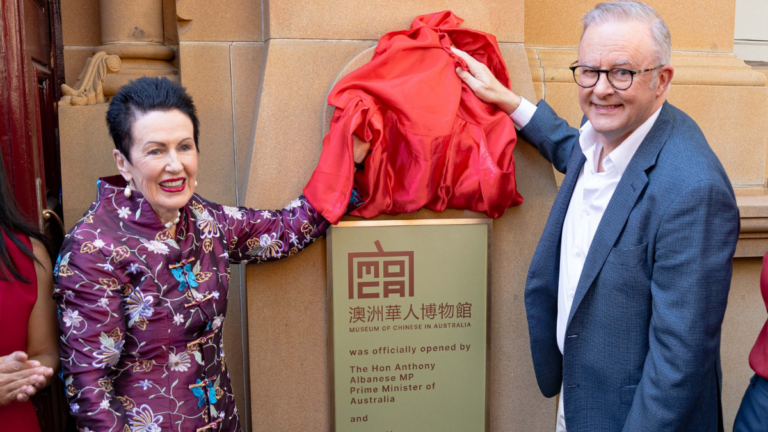
Sydney’s Chinatown welcomed a new cultural landmark today with the official opening of the Museum of Chinese in Australia, a project supported by the Albanese Government to preserve and showcase the history, heritage, and contributions of Chinese Australians.
Prime Minister Anthony Albanese joined dignitaries, community leaders, and members of the Chinese Australian community at the former Haymarket Library, a heritage-listed building with over 180 years of history, for the launch. The museum’s adaptation of the three-storey site includes exhibition galleries, a library, archives, and public program spaces.
“The Chinese Australian community is a powerful example of how when people come to our nation seeking a better life, they make this a better country for all of us,” Prime Minister Albanese said.
“This museum will celebrate a vital thread through the history of our modern nation. I can’t think of a better site than Haymarket – a place synonymous with the Chinese-Australian story – or a more fitting time of year to open it.”
Our stories shape our national identity.
They remind us of who we are, what we’ve built together, and what we must always protect.
Today, the Museum of Chinese in Australia officially opened in Sydney.
The project received $2.6 million in federal funding and additional support from the City of Sydney, the NSW Government, and generous contributions from the Chinese Australian community, including a $4 million donation from the Pang sisters.
Minister for Social Services Tanya Plibersek highlighted the museum’s role in preserving stories of achievement and resilience. “Labor understands that Australia’s diversity is one of our greatest strengths.”
“This is a place to preserve the stories, struggles, and achievements of Chinese Australians and to remind us of all the richness they bring to our shared history,” she said.
Minister for Multicultural Affairs Anne Aly added, “The Museum of Chinese in Australia will stand as a cultural landmark in Sydney’s Chinatown as a place of connection, reflection, and celebration.”
“It shines a light on individuals and families whose stories of ambition, resilience, and determination are central to Australia’s nation-building journey.”
Prime Minister Albanese reflected on the deep historical ties between Chinese Australians and the city, noting contributions across business, culture, medicine, and science. “Stories are at the heart of how a nation understands itself. This museum ensures these stories are remembered and celebrated,” he said.
Opening during Chinese New Year and the Year of the Horse, the museum symbolises not only the celebration of Chinese culture but also the ongoing commitment of the Albanese Government to multiculturalism and community infrastructure that preserves Australia’s shared history.
Support our Journalism
No-nonsense journalism. No paywalls. Whether you’re in Australia, the UK, Canada, the USA, or India, you can support The Australia Today by taking a paid subscription via Patreon or donating via PayPal — and help keep honest, fearless journalism alive.
US President Donald Trump has announced the United States will increase baseline tariffs on imports from all countries to 15%, as the fallout continues from a seismic Supreme Court ruling on Friday.
Trump had imposed sweeping “reciprocal tariffs” last year under an emergency powers act, but the court ruled this law did not authorise him to do so.
Speaking in the wake of the ruling on Friday, Trump admonished the justices of the Supreme Court. He called the Democratic justices who ruled against the tariffs a “disgrace to the nation”.
He also said he felt “ashamed” of members of the court he considered conservative who had voted against his use of emergency powers.
Trump’s statement was riddled with insults and inaccuracies. However, he admitted he had tried to “make things simple” by using the emergency powers act. He went on to say he does have other options, but those options would take more time. This was one part of his speech that was indeed accurate.
With the clock already ticking on his landmark trade agenda, and the multi-billion dollar question of refunds looming, what might Trump do next? Here’s what could now be in store for both Australia and the world.
This part of the law has never been used. However, it appears to clearly allow the president to impose tariffs of up to 15%, and for a period of no more than 150 days.
This section does allow the president to impose tariffs in response to foreign countries who violate US rights under international trade agreements, or that burden or restrict US commerce in “unjustifiable”, “unreasonable” or “discriminatory” ways. However, it requires some steps to be followed.
The process for using this law is detailed and cannot be subverted. It would likely take either years or vast amounts of resources to introduce tariffs that were anywhere near the “Liberation Day” tariffs.
If nothing else, it requires consultations with the countries upon whose goods those tariffs will be imposed.
Section 301 has previously been used to impose tariffs on China, following an investigation by the United States Trade Representative in 2018.
Another option
Another avenue for the president to bypass Congress is a specific section of a different law, Section 232 of the Trade Expansion Act of 1962, that applies to a particular sector of the economy.
However, it can’t be used to recreate sweeping tariffs on all foreign imports. This provision is generally product-specific and requires an investigation into the national security threat.
Its use to impose steel and aluminium tariffs has been challenged by multiple trading partners at the World Trade Organization. A panel of experts ruled the US had used a special national security exception erroneously.
If all collected duties are refunded, it’s estimated the total repayment could reach approximately US$175 billion (A$247 billion).
Much to the president’s frustration, there was no clarity within the Supreme Court’s ruling on the process for refunds of illegally collected tariffs.
That silence, which prompted Trump to refer to the decision as “terrible” and “defective”, was likely because this would be handled by other courts.
Back in December, the US Court of International Trade stated it would have the authority to order reliquidation and refunds of the sweeping tariffs if the Supreme Court ultimately ruled them unlawful.
Many large companies had already anticipated this ruling, and acted to get on the front foot. For example, in late November, large retailer Costco sued the Trump administration to secure a full refund of tariffs in the event the Supreme Court deemed them unlawful.
In late December, faced with an avalanche of similar cases, the Court of International Trade temporarily halted all cases where companies were claiming relief from IEEPA tariffs ahead of the Supreme Court’s ruling.
Refunds may not be straightforward
Some importers have argued that because the tariff payments were itemised, receiving refunds should not be messy.
But the process for refunds may not be as straightforward as it should be. Trump suggested they could be “in court for the next five years”.
What does this all mean for Australia?
Australia’s previous 10% rate was much lower than many other nations, but now at 15% the playing field has been levelled – at least for the next 150 days.
Australian exporters don’t pay these tariffs directly themselves, but may be pressured to absorb some of the cost, and it makes their imports less competitive in the US market.
However, not all Australian exporters are in the same position. The proclamation issued by the White House listed some exceptions, including beef, critical minerals, energy products and pharmaceuticals.
At Friday’s press conference, Trump said “great certainty” had been brought back to the United States and the world. In truth, the uncertainty is far from over.
No-nonsense journalism. No paywalls. Whether you’re in Australia, the UK, Canada, the USA, or India, you can support The Australia Today by taking a paid subscription via Patreon or donating via PayPal — and help keep honest, fearless journalism alive.
South Africa produced a ruthless all-round display to hand India a crushing 76-run defeat in their ICC Men’s T20 World Cup Super Eight clash at the Narendra Modi Stadium, ending the Men in Blue’s unbeaten run and significantly denting their semifinal hopes.
After recovering from an early wobble with the bat, the Proteas’ bowlers, led by Marco Jansen and Keshav Maharaj, ripped through India’s batting order to seal one of the most emphatic wins of the tournament.
Miller, Brevis rescue South Africa
Opting to bat first, South Africa were in early trouble at 20/3, courtesy of a fiery spell from Jasprit Bumrah and a breakthrough from Arshdeep Singh. Bumrah struck twice in quick succession, dismissing Quinton de Kock and Ryan Rickelton, while Arshdeep removed captain Aiden Markram.
However, David Miller and Dewald Brevis steadied the innings with a counter-attacking 97-run partnership for the fourth wicket. Brevis struck 45 off 29 balls, combining clean hitting with composure under pressure.
Ahmedabad, Feb 22 (ANI): South Africa’s David Miller and Dewald Brevis run between the wickets during the ICC Men’s T20 World Cup 2026 Super 8 Group 1 match against India at Narendra Modi Stadium, in Ahmedabad on Sunday. (ANI Photo)
Miller took charge thereafter, smashing 63 off 35 deliveries, including seven fours and three sixes. A late unbeaten 44 from Tristan Stubbs powered South Africa to a commanding 187/7 in 20 overs.
Bumrah was India’s standout bowler with 3/15, becoming India’s highest wicket-taker in T20 World Cup history, surpassing Ravichandran Ashwin’s tally of 32 wickets.
India collapses under pressure
Chasing 188, India endured a nightmare start. Aiden Markram struck early to remove Ishan Kishan for a duck, before Marco Jansen dismissed Tilak Varma in the next over. At 5/2 inside two overs, the damage was immediate.
Abhishek Sharma showed brief promise with 15 off 12 balls, while skipper Suryakumar Yadav managed 18, but India’s top order crumbled under relentless pressure.
The decision to promote Washington Sundar backfired as he fell cheaply, and once Hardik Pandya was dismissed for 18, the innings unravelled.
Keshav Maharaj’s three-wicket burst in the 15th over effectively ended the contest, reducing India to 88/8. Shivam Dube fought a lone battle with 42 off 37 balls, but lacked support at the other end.
India were eventually bowled out for 111 in 18.5 overs.
Jansen starred with 4/22, while Maharaj claimed 3/24 in a match-defining spell.
Image Source: ICC
Semifinal equation tightens
The heavy defeat leaves India’s net run rate in negative territory, meaning they will likely need comprehensive wins in their remaining matches against Zimbabwe and the West Indies to stay in semifinal contention.
For South Africa, the commanding victory strengthens their position in the Super Eight stage and underlines their credentials as serious title contenders.
Brief scores: South Africa 187/7 (David Miller 63, Dewald Brevis 45; Jasprit Bumrah 3/15) India 111 (Shivam Dube 42; Marco Jansen 4/22, Keshav Maharaj 3/24) South Africa won by 76 runs.
Support our Journalism
No-nonsense journalism. No paywalls. Whether you’re in Australia, the UK, Canada, the USA, or India, you can support The Australia Today by taking a paid subscription via Patreon or donating via PayPal — and help keep honest, fearless journalism alive.
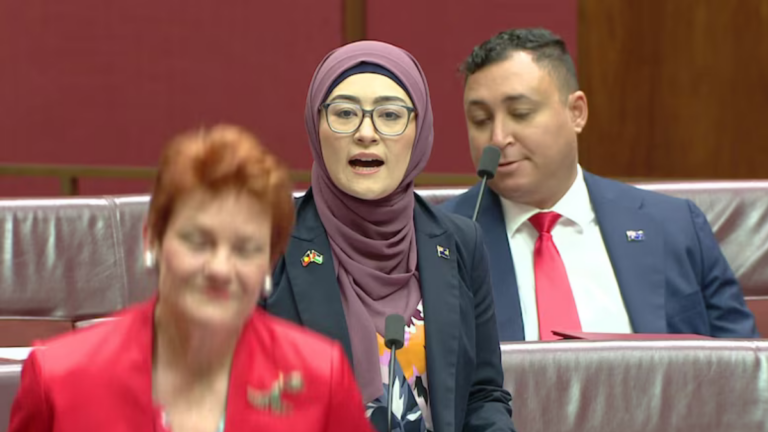
Western Australian Senator Fatima Payman has launched a sharp rebuke of Pauline Hanson, saying the One Nation leader should consider leaving Australia if she is unhappy with the country.
Speaking to Seven News, Payman said political rhetoric targeting migrants and minority communities was having damaging consequences, particularly for Muslim Australians.
“My office has had to cop so much hatred and discrimination and just vile content, and that’s because certain politicians choose to continue that rhetoric.”
In a pointed swipe at Hanson’s long-held position that migrants dissatisfied with Australia should leave, Payman said the same logic could apply to the veteran Queensland senator.
“I’d tell Pauline Hanson that if she doesn’t like how things are here in Australia then she can really pack her bags and go to the US and continue being best buds with Trump.”
In 2024, Hanson escalated tensions by calling for a formal investigation into the citizenship status of Payman. In a letter to the Prime Minister, Hanson raised concerns that Payman’s dual citizenship could render her ineligible to serve in the federal Parliament under Section 44 of the Constitution, which prohibits certain dual nationals from holding office.
The Australian Greens do not want you to see these documents!
Many Australians are aware of the serious questions surrounding Senator Payman’s eligibility to sit in the Senate due to her dual citizenship status.
The exchange comes as Pauline Hanson’s One Nation enjoys a resurgence in opinion polls, pushing Hanson back into the centre of national political debate.
Hanson, 71, has defended her stance on immigration, recently revealing she has spent more than $1 million fighting a legal battle over comments telling immigrants unhappy in Australia to leave. She says she is still awaiting the outcome of an appeal and has argued there is a political double standard in how such remarks are treated.
How would a Hanson-led government deal with the people in Australia who no longer have a legal entitlement to be here? The One Nation leader answers all in the latest episode of The Issue. #paulinehanson#onenation#immigration#ice#visa
With One Nation’s support climbing, Hanson has been vocal about the party’s ambitions. She has forecast that One Nation could one day hold the balance of power — or even be part of government — positioning the party as a growing force on the conservative side of politics.
At the same time, she has hinted at thinking about the party’s long-term future beyond her leadership, saying she hopes to eventually hand it over to someone with the “dedication and passion” to continue its agenda.
“I’m getting near the end of my life. It’s not about me anymore.”
I won’t take a backwards step from my principles. I say what I believe and will never apologise for putting Australians first.
The elites, major party politicians and academics can get as outraged as they want. They’ll try to silence us, maybe even try to jail us, but One Nation… pic.twitter.com/IOq8WSnKrr
In an interview with Sky News Australia, Pauline Hanson said she would not retreat from her political stance, declaring she “won’t take a backwards step” from her principles and would “never apologise for putting Australians first”.
The One Nation leader said critics among “elites, major party politicians and academics” may be outraged and attempt to silence her movement, but insisted Pauline Hanson’s One Nation would not back down.
“This is a democracy, and the people will have their final say at the election on whether they want One Nation in Parliament,” she said, urging voters to consider carefully where they place their vote.
“You know exactly where I stand. Australia and Australians first.”
Hanson’s political career began after she was disendorsed by the Liberal Party in the mid-1990s, a rejection that led to the formation of One Nation and cemented her reputation as a populist voice on immigration and national identity.
Support our Journalism
No-nonsense journalism. No paywalls. Whether you’re in Australia, the UK, Canada, the USA, or India, you can support The Australia Today by taking a paid subscription via Patreon or donating via PayPal — and help keep honest, fearless journalism alive.
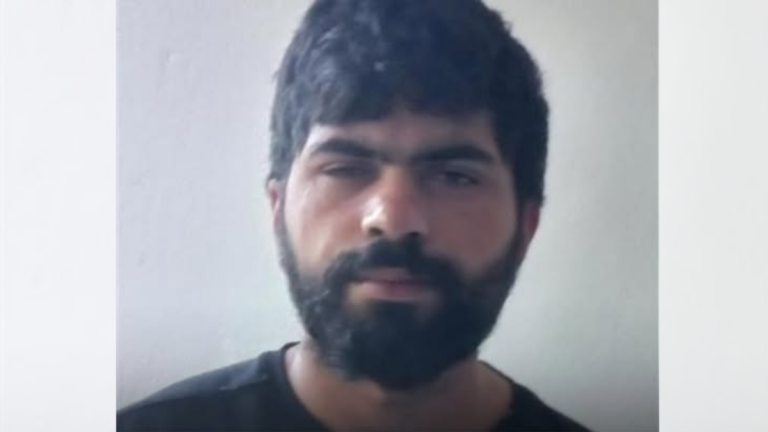
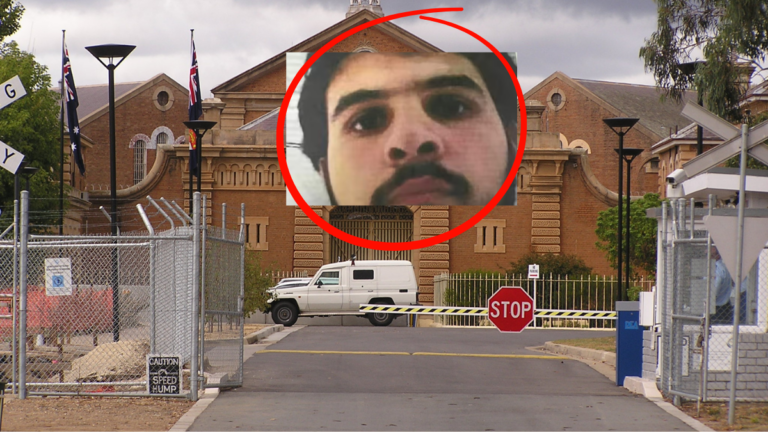
Police have issued a public appeal as they search for a 25-year-old man who disappeared from a medical facility in Sydney’s north-west over the weekend.
Madan Pandey was last seen walking out of a facility on Hainsworth Street in Westmead about 9.30am on Saturday, 21 February 2026. When he could not be contacted or located, officers from Parramatta Police Area Command were alerted and began inquiries to determine his whereabouts.
Authorities say both police and his family hold serious concerns for his welfare.
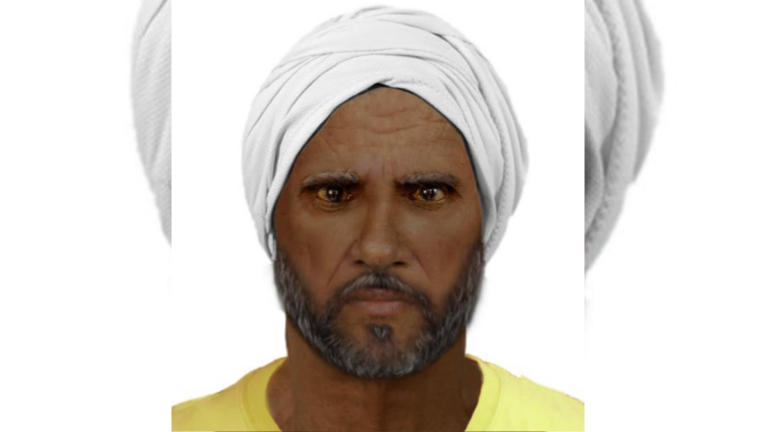
Pandey is described as being of “Middle Eastern or Mediterranean appearance” by NSW Police. He has short black hair and a full beard and moustache. He was last seen wearing a black T-shirt and black shorts.
He is known to spend time in the Merrylands area.
Anyone with information that could assist investigators is urged to contact Parramatta Police Station or Crime Stoppers.
Support our Journalism
No-nonsense journalism. No paywalls. Whether you’re in Australia, the UK, Canada, the USA, or India, you can support The Australia Today by taking a paid subscription via Patreon or donating via PayPal — and help keep honest, fearless journalism alive.
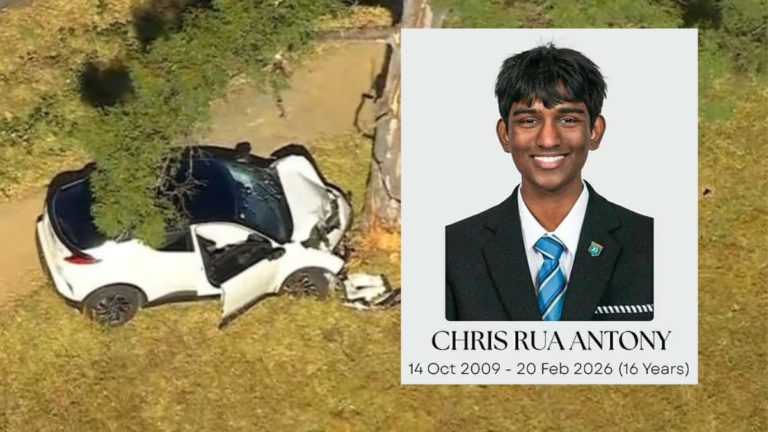
Chris Rua Antony died in hospital on February 20, a week after he was struck by a car while walking home from school along Pound Road in Narre Warren South.
Specialist air ambulance crews and mobile intensive care paramedics rushed to the scene before transporting the critically injured teenager to hospital.
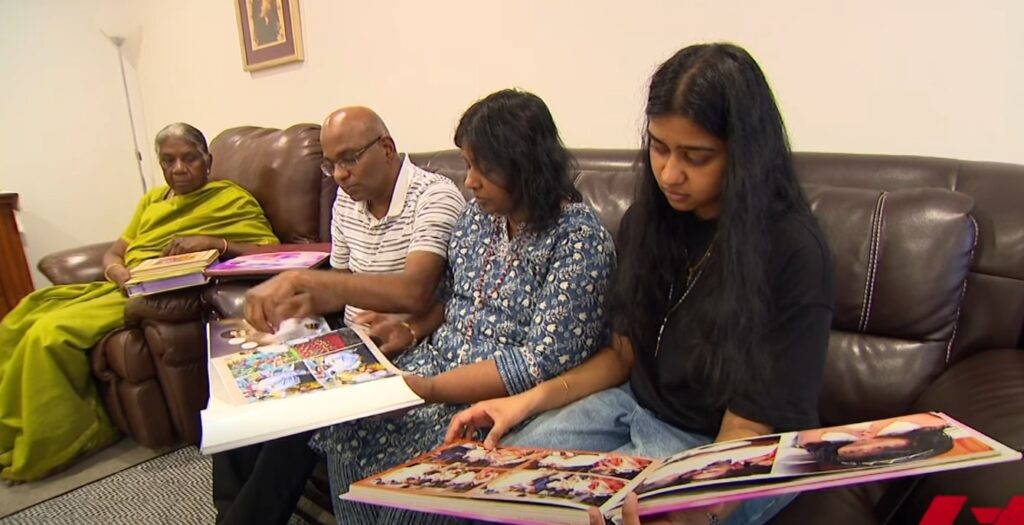
Image: Chris Rua Antony’s family (Source: 7News screenshot)
In a tragic twist, Chris’s parents reportedly arrived at the crash site moments after the collision, where bystanders were performing CPR in a desperate bid to save him.
Police said a Toyota C-HR station wagon, driven by a 48-year-old Narre Warren South woman, left the roadway, hit the teenager and then crashed into a tree. The driver sustained minor injuries.
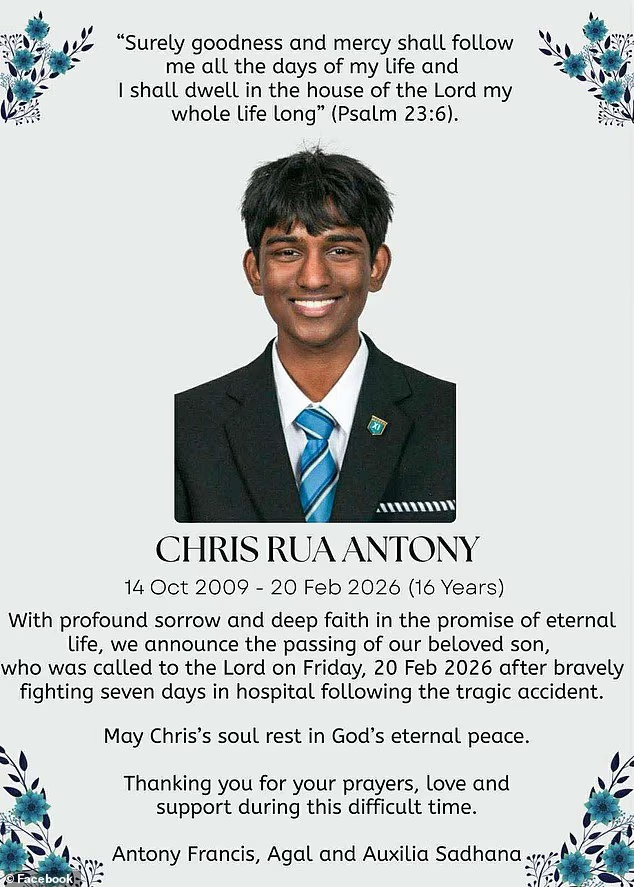
After seven days in intensive care, Chris lost his fight for life. His family said in a statement:
“With profound sorrow and deep faith in the promise of eternal life, we announce the passing of our beloved son, who was called to the Lord on Friday, February 20, 2026, after bravely fighting seven days in hospital following the tragic accident.”
The family thanked the community for its prayers, love and support during what they described as an unimaginably difficult time.
The news has prompted an outpouring of grief across the Narre Warren South community, with many describing Chris as a kind and gentle young man taken far too soon.
Chris’ heartbroken family has also called for stronger measures to better protect pedestrians, hoping no other family will endure similar heartbreak.
Victoria Police said the exact circumstances surrounding the collision remain under investigation. No charges have been laid. Anyone with information or dashcam footage has been urged to contact Crime Stoppers.
Support our Journalism
No-nonsense journalism. No paywalls. Whether you’re in Australia, the UK, Canada, the USA, or India, you can support The Australia Today by taking a paid subscription via Patreon or donating via PayPal — and help keep honest, fearless journalism alive.
Israeli Prime Minister Benjamin Netanyahu was recently in the United States, where he met President Donald Trump to pursue an agreement that would aim to halt Iran’s uranium enrichment while also curbing its ballistic missile programme and its support for proxy groups such as Hamas and Hezbollah.
The Iranian regime has long functioned as a principal source of funding, training, and ideological backing for these organisations, sustaining networks that have repeatedly destabilised the region.
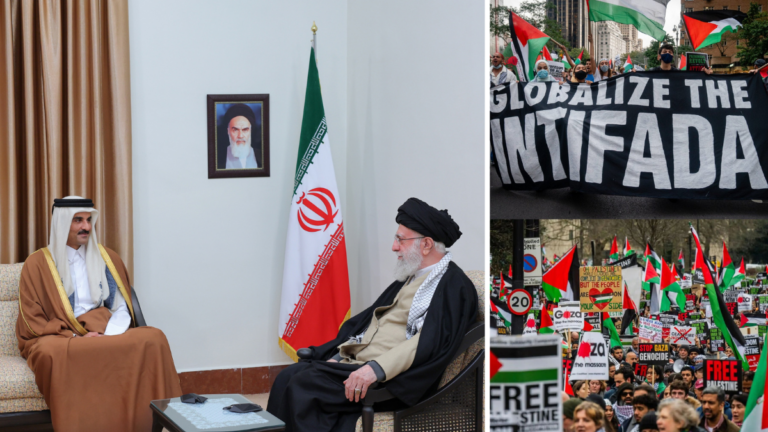
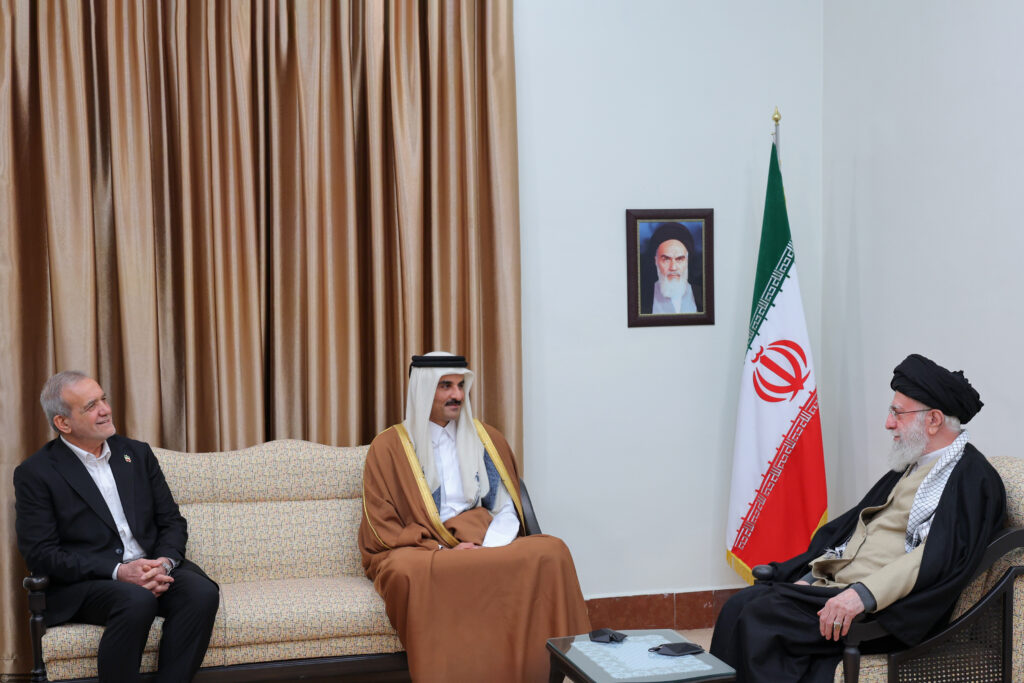
File Image – Ayatollah Ali Khamenei, Supreme leader of Iran, meeting with Sheikh Tamim bin Hamad bin Khalifa Al Thani, the Emir of Qatar, and his accompanying delegation on Feb. 19, 2025. (Image – X – @khamenei_ir)
What might have remained a confined regional dispute, manageable through negotiated settlements and incremental diplomacy, was repeatedly pushed toward wider confrontation by Iran’s interventionist strategy and its willingness to weaponize jihadist ideology through armed proxies.
By financing, training, and politically shielding groups that reject coexistence in principle, Tehran ensured that cycles of violence were prolonged rather than resolved. The greatest and most tragic collateral of this approach has been the Palestinian population itself, whose lives have been repeatedly sacrificed at the altar of geopolitical signalling, as militant escalation invites devastating retaliation while offering no realistic pathway to statehood or stability.
The pattern of escalation has by now become grimly familiar. Terror groups such as Hamas initiate violence through attacks deliberately aimed at civilians, as seen most starkly on October 7, inviting a massive Israeli military response that then unfolds in densely populated urban spaces.
File Image – Israel Hostages; Image Source; X/Twitter
Israel carries out strikes and leadership eliminations, but terrorists frequently embed themselves within schools, hospitals or operate from tunnels beneath residential areas, turning ordinary people into unwilling human shields and ensuring that the inevitable retaliation carries a devastating human cost.
The tragedy is compounded by the scale of resources diverted into militarisation. Over the years, hundreds of millions of dollars that could have gone toward housing, utilities, or economic development in Gaza were instead channelled into building an extensive underground tunnel network stretching hundreds of kilometres, with some estimates placing its length at over 500 kilometres.
🎥WATCH: Kilometer-long tunnel route uncovered in Beit Hanoun, Gaza, with several terrorist hideouts and explosives inside. pic.twitter.com/KPt2h3vG87
The battlefield, however, is no longer confined to rockets and tunnels. It now extends into newsrooms, university departments, advocacy networks, and policy forums, where statistics and narratives are often shaped as much by ideology as by evidence. Casualty figures emerging from Gaza, for instance, are widely cited around the world, many of them originating from the Hamas-run Ministry of Health, which has reported more than 70,000 (or even 1,00,000) deaths since October 7.
Every civilian death is a tragedy and must be treated as such; yet, it is equally important to recognise that Hamas has a documented history of presenting exaggerated casualty figures. It minimizes the number of combatants killed and presents nearly all deaths as civilian, while simultaneously restricting independent verification within the territory. This blurring of categories does not merely distort public understanding; it fuels outrage in ways that hardens positions, prolongs hostilities, and ultimately makes the search for a realistic political settlement even more distant.
Anti-Israel protests dominate Western streets & headlines. But where's the same outrage for Uyghurs? Yemen? Assyrian Christians? Iranians? Sudan? Burkina Faso? Mali?
Selective fury distracts from the real long-term challenge: political Islam's expansion & its threat to Western… pic.twitter.com/zNSwFNuGPT
It is also misleading to assume that every wartime death in Gaza is a direct result of external military action. A share of casualties stems from internal violence and the collapse of order within the enclave — including executions of alleged collaborators, clashes around aid convoys, rival faction fighting, and terrorists operating in densely populated areas. There have been incidents of misfired rockets and friendly fire; various assessments suggest that 10–20% of the thousands of rockets launched from Gaza since October 7 malfunctioned or fell short, many landing inside Gaza.
Armed factions and criminal gangs continue to operate amid weakened law enforcement, and reports describe deadly crackdowns and inter-group violence, even during ceasefires. Such deaths are often folded into overall tolls, complicating efforts to determine who is dying, how, and at whose hands in a conflict marked by propaganda and limited independent verification.
A further complication, often overlooked in public debate, is the nature of the adversary itself. Hamas is not a conventional army with a uniformed order of battle, a transparent chain of command, or publicly declared rolls of service. It is an ideological terrorist organisation sustained in part by external funding and embedded deeply within the civilian fabric of Gaza.
Fighters do not always operate in identifiable uniforms, and individuals who take part in hostilities may blend back into the civilian population once an operation is over. In such circumstances, distinguishing between combatants and non-combatants becomes extraordinarily difficult, even with advanced surveillance and targeting systems. This is the operational dilemma Israel confronts: how to pursue armed targets in a densely populated territory while attempting, however imperfectly, to minimise civilian casualties in a conflict where the lines between fighter and civilian are deliberately blurred.
🎥WATCH: Explosive Device and AK-47 Rifle Discovered Inside a Kindergarten in Gaza City
Last week, IDF troops identified Hamas terrorists fleeing a kindergarten in al-Shati, Gaza City. The troops later found an explosive device and an AK-47 rifle inside the kindergarten.
The reliability of casualty reporting is further complicated by the way deaths are recorded inside Gaza. For extended periods during the war, families have been able to notify authorities of fatalities without producing a body, submitting information by phone, online forms, or through local administrative channels.
In a context where compensation, stipends, or charitable assistance may be tied to such notifications, the incentive structure itself can encourage overreporting or premature reporting. Officials within Gaza’s health administration have at times acknowledged that some deaths were registered in order to access benefits, while local media and humanitarian reports have described widows and families navigating bureaucratic processes to secure allowances linked to deceased relatives. Repeated public appeals urging families to report “martyrs and missing persons,” even in the absence of physical verification, further blurs the line between confirmed fatalities and unverified claims, making precise accounting in wartime conditions extraordinarily difficult.
All of this ultimately leads back to the financial and ideological machinery that sustains the conflict. While Gaza’s civilian population endures devastation and deprivation, many senior Hamas leaders have lived for years in luxury abroad, in places such as Qatar and elsewhere, far removed from the consequences of the war they help direct.
File Image – Aerial view of the remains of Rafah in January 2025, By Ashraf Amra – UNRWA: United Nations Relief and Works Agency for Palestine Refugees in the Near East, CC BY-SA 3.0 igo, https://commons.wikimedia.org/w/index.php?curid=161860911
On the ground, young men are drawn into the conflict through a potent mix of ideological indoctrination, promises of glory in death, and financial incentives offered to families of those killed. In effect, a generation is being consumed to keep a war economy and a political narrative alive.
One thing that needs to be understood is that any serious discussion of a two-state solution has to begin with acknowledgment of Israel as a legitimate nation. And such a settlement cannot emerge in an environment where terrorist groups continue to provoke violence, inflate casualties for propaganda, and radicalise youth into committing atrocities that invite devastating retaliation. Breaking this cycle is not merely a strategic necessity; it is a moral one, for the sake of Palestinians, Israelis, and the stability of the wider region.
Contributing Author: Omer Ghazi is a proponent of religious reform and extensively writes on geo-politics, history and culture.
Disclaimer: The opinions expressed within this article are the author’s personal opinions. The Australia Today is not responsible for the accuracy, completeness, suitability, or validity of any information in this article. The information, facts, or opinions appearing in the article do not reflect the views of The Australia Today, and The Australia Today News does not assume any responsibility or liability for the same.
Support our Journalism
No-nonsense journalism. No paywalls. Whether you’re in Australia, the UK, Canada, the USA, or India, you can support The Australia Today by taking a paid subscription via Patreon or donating via PayPal — and help keep honest, fearless journalism alive.
Senior members of the Albanese government have marked the beginning of Ramadan by joining Muslim community members, highlighting the cultural and spiritual significance of the holy month across Australia.
Image: Prime Minister Anthony Albanese and Julian Hill MP extended wishes at celebrations in Dandenong (Source: Facebook – Julian Hill MP)
Prime Minister Anthony Albanese extended his wishes at celebrations in Dandenong, Melbourne, saying generations of Muslim Australians have enriched the nation. “Ramadan Mubarak,” he said.
“Generations of Muslim Australians have enriched our country, and tonight we celebrated with the community in Dandenong. Over the month ahead, may your faith sustain and comfort you, and may it surround you with the love and nurture of others.”
Ramadan Mubarak!
Generations of Muslim Australians have enriched our country, and tonight we celebrated with the community in Dandenong.
Over the month ahead, may your faith sustain and comfort you, and may it surround you with the love and nurture of others. pic.twitter.com/Kxhko8wasF
In Sydney’s south-west, Home Affairs and Immigration Minister Tony Burke joined crowds at Lakemba Nights, a long-running Ramadan festival that draws visitors from across the city. He noted that for nearly two decades people have gathered in Lakemba to break their fast together.
“It’s a special festival that truly brings our entire community together, no matter your faith,” he said, encouraging people to visit, enjoy the culture and cuisine, and support local businesses.
Image: Home Affairs and Immigration Minister Tony Burke joined crowds at Lakemba Nights (Source: Facebook)
Social Services Minister Tanya Plibersek described Ramadan nights in Lakemba as one of Sydney’s great traditions, pointing to the bustling streets and strong sense of community.
Ramadan nights in Lakemba are one of Sydney’s great traditions: busy streets, great food, and people from all over the city coming together. If you haven’t been yet, get down there. pic.twitter.com/cG8kdRbV02
Assistant Minister for Citizenship and Multicultural Affairs Julian Hill said there was a “super cool reception” for the Prime Minister at Dandenong’s Ramadan Night Markets.
Image: Prime Minister Anthony Albanese and Julian Hill MP extended wishes at celebrations in Dandenong (Source: Facebook – Julian Hill MP)
Minister for International Development Dr Anne Aly reflected on the deeper meaning of the month, describing Ramadan as a time of “deep reflection, renewal and devotion”.
In her message, she said Muslim communities across Australia embody the spirit of the month through service, charity and care for others, strengthening the nation’s social fabric.
Image: Minister for International Development Dr Anne Aly’s Ramadan message (Source: Facebook)
Housing Minister Clare O’Neil, Skills and Training Minister Andrew Giles, Education Minister Jason Clare and Attorney-General Michelle Rowland also shared messages of peace, reflection and solidarity with Muslim Australians marking the holy month.
Ramadan, which began on 18 February 2026 and runs until 20 March 2026, is observed by Muslims worldwide through fasting from dawn to sunset, prayer and acts of charity.
In Australia, major hubs such as Lakemba Mosque are preparing for large nightly crowds, with up to 5,000 people expected to attend evening prayers and as many as 50,000 gathering for Eid celebrations at the end of the month.
Restaurants and community venues across the country are extending their hours well into the night to accommodate Iftar, as families and friends come together to break their fast.
As the month unfolds, leaders say the celebrations in places like Lakemba and Dandenong reflect both the spiritual depth of Ramadan and the multicultural character of modern Australia.
Support our Journalism
No-nonsense journalism. No paywalls. Whether you’re in Australia, the UK, Canada, the USA, or India, you can support The Australia Today by taking a paid subscription via Patreon or donating via PayPal — and help keep honest, fearless journalism alive.
At a defining moment in human history, the world gathered at the AI Impact Summit 2026 in New Delhi. For us in India, it was a moment of immense pride and joy to welcome Heads of State, Heads of Government, delegates and innovators from across the world.
New Delhi, Feb 19 (ANI): Prime Minister Narendra Modi during the opening ceremony of AI Impact Summit 2026 at Bharat Mandapam, in New Delhi on Thursday. (DPR PMO/ANI Photo)
India brings scale and energy to everything it does, and this Summit was no exception. Representatives from over 100 nations came together. Innovators showcased cutting-edge AI products and services. Thousands of young people could be seen in the exhibition halls, asking questions and imagining possibilities. Their curiosity made this the largest and most democratised AI summit in the world. I see this as an important moment in India’s development journey, because a mass movement for AI innovation and adoption has truly taken off.
New Delhi, Feb 19 (ANI): Prime Minister Narendra Modi with French President Emmanuel Macron, Brazil President Luiz Inácio Lula da Silva, President of Serbia Aleksandar Vučić, Netherlands PM Dick Schoof, Mauritius PM Navinchandra Ramgoolam, Kazakhstan PM Olzhas Bektenov, Greece PM Kyriakos Mitsotakis, Finland PM Petteri Orpo, Croatia PM Andrej Plenković, Bhutan PM Tshering Tobgay, and other global leaders at AI Impact Summit 2026 at Bharat Mandapam, in New Delhi on Thursday. (DPR PMO/ANI Photo)
Human history has witnessed many technological shifts that changed the course of civilisation. Artificial Intelligence belongs in the same league as fire, writing, electricity and the internet. But with AI, changes that once took decades can unfold within weeks and impact the entire planet.
AI is making machines intelligent, but it is even more a force multiplier for human intent. Making AI human-centric instead of machine-centric is vital. At this Summit, we placed human well-being at the heart of the global AI conversation, with the principle of ‘Sarvajana Hitaya, Sarvajana Sukhaya’(Welfare for All, Happiness of All).
I have always believed that technology must serve people, not the other way around. Whether it is digital payments through UPI or COVID vaccination, we have ensured that Digital Public Infrastructure reaches everyone, leaving none behind. I could see the same spirit in the Summit, in the work of our innovators in domains like agriculture, security, assistance for Divyangjan and tools for multilingual populations.
There are already examples of the empowering potential of AI in India. Recently, ‘Sarlaben’, an AI-powered digital assistant launched by Indian dairy cooperative AMUL, is providing real-time guidance to 3.6 million dairy farmers, mostly women, about cattle health and productivity in their own language. Similarly, an AI-based platform called Bharat VISTAAR gives multilingual inputs to farmers, empowering them with information about everything from weather to market prices.
Humans must never become mere data points or raw material for machines. Instead, AI must become a tool for global good, opening new doors of progress for the Global South. To translate this vision into action, India presented the MANAV framework for human-centric AI governance.
M – Moral and Ethical Systems: AI should be based on ethical guidelines.
A – Accountable Governance: Transparent rules and robust oversight.
N – National Sovereignty: Respect for national rights over data.
A – Accessible and Inclusive: AI should not be a monopoly.
V – Valid and Legitimate: AI must adhere to laws and be verifiable.
New Delhi, Feb 19 (ANI): Prime Minister Narendra Modi delivers a plenary speech at the Opening Ceremony of AI Impact Summit 2026 at Bharat Mandapam, in New Delhi on Thursday. (DPR PMO/ANI Photo)
MANAV, which means ‘human’, offers principles that anchor AI in human values in the 21st century.
Trust is the foundation upon which AI’s future rests. As generative systems flood the world with content, democratic societies face risks from deepfakes and disinformation. Just as food carries nutrition labels, digital content must carry authenticity labels. I urge the global community to come together to create shared standards for watermarking and source verification. India has already taken a step in this direction by legally requiring clear labelling of synthetically generated content.
The welfare of our children is a matter close to our hearts. AI systems must be built with safeguards that encourage responsible, family-guided engagement, reflecting the same care we bring to education systems worldwide.
Technology yields its greatest benefit when shared, rather than guarded as a strategic asset. Open platforms can help millions of youth contribute to making technology safer and more human-centric. This collective intelligence is humanity’s greatest strength. AI must evolve as a global common good.
We are entering an era where humans and intelligent systems will co-create, co-work and co-evolve. Entirely new professions will emerge. When the internet began, no one could imagine the possibilities. It ended up creating a huge number of new opportunities and so will AI.
New Delhi, Feb 19 (ANI): Prime Minister Narendra Modi with world leaders and other delegates at India AI Impact Summit 2026 at Bharat Mandapam, in New Delhi on Thursday. (DPR PMO/ANI Photo)
I am confident that our empowered youth will be the true drivers of the AI age. We are encouraging skilling, reskilling and lifelong learning by running some of the largest and most diverse skilling programmes in the world.
India is home to one of the world’s largest youth populations and technology talent. With our energy capacity and policy clarity, we are uniquely positioned to harness AI’s full potential. At this Summit, I was proud to see Indian companies launch indigenous AI models and applications, reflecting the technological depth of our young innovation community.
To fuel the growth of our AI ecosystem, we are building a robust infrastructure foundation. Under the India AI Mission, we have deployed thousands of GPUs and are set to deploy more soon. By accessing world-class computing power at highly affordable rates, even the smallest startups can become global players. Further, we have established a national AI Repository, democratising access to datasets and AI models. From semiconductors and data infrastructure to vibrant startups and applied research, we are focusing on the complete value chain.
New Delhi, Feb 19 (ANI): Prime Minister Narendra Modi during the plenary session at AI Impact Summit 2026 at Bharat Mandapam, in New Delhi on Thursday. External Affairs Minister S. Jaishankar and Union Minister Ashwini Vaishnaw also seen. (DPR PMO/ANI Photo)
India’s diversity, democracy and demographic dynamism provide the right atmosphere for inclusive innovation. Solutions that succeed in India can serve humanity everywhere. That is why our invitation to the world is: Design and develop in India. Deliver to the world. Deliver to humanity.
Author: Narendra Modi, Prime Minister of India
Disclaimer: The opinions expressed within this article are the personal opinions of the author. The Australia Today is not responsible for the accuracy, completeness, suitability, or validity of any information in this article. All information is provided on an as-is basis. The information, facts, or opinions appearing in the article do not necessarily reflect the views of The Australia Today and The Australia Today News does not assume any responsibility or liability for the same.
Support our Journalism
No-nonsense journalism. No paywalls. Whether you’re in Australia, the UK, Canada, the USA, or India, you can support The Australia Today by taking a paid subscription via Patreon or donating via PayPal — and help keep honest, fearless journalism alive.
More than 28 kilograms of cocaine concealed inside a luxury bus has been seized in South Australia following a targeted operation by the Australian Federal Police and the Australian Border Force.
ABF officers intercepted the shipment on Monday, 16 February 2026, after conducting an intelligence-led examination of a roll-on/roll-off (RORO) vessel berthed at Outer Harbor.
Image: South Australian authorities seize 28kg of cocaine hidden in luxury bus (Source: AFP)
AFP Detective Acting Superintendent Simon Lalic said the agency, alongside its state, Commonwealth and international partners, remained resolute in its efforts to disrupt organised crime networks.
“Criminals are driven by greed and profit and will attempt any method to import harmful illicit substances into our country,” he said.
“No matter how creative these criminals try to be, our message is clear — we are on to you.”
During a forensic search of the vessel, officers deployed specialist technology, including videoscopes and detector dogs. The inspection uncovered multiple one-kilogram packages of a white powder concealed behind a television inside a luxury bus.
Image: South Australian authorities seize 28kg of cocaine hidden in luxury bus (Source: AFP)
Initial testing returned a positive result for cocaine, with the total weight estimated at 28kg. The matter was referred to the AFP, which seized the drugs and launched an investigation.
Authorities estimate the seized cocaine would have had a street value of about $9 million and could have been divided into approximately 140,000 individual street-level deals.
Image: South Australian authorities seize 28kg of cocaine hidden in luxury bus (Source: AFP)
ABF Superintendent Jody Griswood said each drug interception at the border helped reduce drug-related crime and cut off funding streams for international syndicates.
“Every detection of illicit drugs at the border reduces drug-related crimes in the Australian community and takes money out of the hands of international criminal syndicates.”
She praised the officers involved in the operation, saying their skill and vigilance had prevented significant harm to the community.
Support our Journalism
No-nonsense journalism. No paywalls. Whether you’re in Australia, the UK, Canada, the USA, or India, you can support The Australia Today by taking a paid subscription via Patreon or donating via PayPal — and help keep honest, fearless journalism alive.
A colourful community run at My Suva Park brought together language, culture and fitness as the High Commission of India, Suva and the Indian Council for Cultural Relations marked International Mother Language Day with a five-kilometre walk and run.
Image: Members of the Indian diaspora, Friends of India and the wider local community at the International Mother Language Day five-kilometre walk and run (Source: Facebook – HCI Suva)
Fiji’s Assistant Minister for Health and Medical Services, Penioni Koliniwai Ravunawa, attended as chief guest, joining India’s High Commissioner to Fiji, Suneet Mehta, and scores of early morning participants from across the community.
Image: Fiji’s Assistant Minister for Health and Medical Services, Penioni Koliniwai Ravunawa (Source: Facebook – HCI Suva)
Addressing the gathering, Ravunawa said International Mother Language Day serves as a reminder that language is far more than a tool for communication.
“Language carries identity, history and values. Our mother tongues are the foundation of who we are. They connect generations and preserve traditions.”
Ravunawa noted that Fiji is blessed with rich cultural and linguistic diversity, adding that the Indo-Fijian community has played a significant role in preserving Hindi and other Indian languages, strengthening the nation’s identity in the process.
“These languages are living expressions of resilience, heritage and contribution to our country’s development,” Ravunawa said.
“When we respect each other’s languages, we build deeper understanding and unity. When we encourage young people to learn and speak their mother tongue, we give them confidence and pride in their identity.”
Image: India’s High Commissioner to Fiji, Suneet Mehta (Source: Facebook – HCI Suva)
High Commissioner Mehta said the event uniquely combined the celebration of language with the promotion of physical wellbeing, demonstrating that both are vital to a strong and vibrant society.
Mehta highlighted that Fiji is home to many languages, including Fiji Hindi, brought by Indian indentured labourers more than a century ago and carefully preserved across generations. He added that efforts are continuing to support Indian languages in Fiji, including the introduction of two Tamil teachers from India in 2024 to help revive Tamil in Labasa and Rakiraki, where it is now taught in Sangam schools.
Mehta also pointed to the organisation of Tamil Day last year as an example of growing interest in language learning, noting that children from both the Indian and iTaukei communities have shown enthusiasm for studying Tamil.
Image: Amit Ahlawat leading members of the Indian diaspora, Friends of India and the wider local community at the International Mother Language Day five-kilometre walk and run (Source: Facebook – HCI Suva)
The event drew strong participation from members of the Indian diaspora, Friends of India and the wider local community, reflecting shared values of unity, wellness and service.
Through a blend of sport and cultural celebration, the gathering at My Suva Park underscored Fiji’s enduring commitment to linguistic diversity and community spirit, reinforcing the message that the nation’s diversity remains its greatest strength.
Support our Journalism
No-nonsense journalism. No paywalls. Whether you’re in Australia, the UK, Canada, the USA, or India, you can support The Australia Today by taking a paid subscription via Patreon or donating via PayPal — and help keep honest, fearless journalism alive.
US President Donald Trump’s economic agenda took a major hit when the Supreme Court struck down many of his most sweeping tariffs. While Trump has options to restore some of the tariffs, he’s losing his most powerful tool to impose them almost at will as a bargaining chip with other countries.
In a 6-3 decision on Feb. 20, 2026, the court ruled that Trump’s use of the International Emergency Economic Powers Act of 1977 to unilaterally impose tariffs on other countries was unconstitutional. Since January 2025, Trump has used the act to impose tariffs on nearly every other country.
As a trade economist, I wasn’t particularly surprised by the ruling. In the oral arguments, several justices were openly skeptical about the president’s ability to claim virtually unlimited powers to set tariffs without specific congressional language to authorize them. While the ruling answers some questions about the legality of Trump’s tariffs, it leaves many others unanswered.
"…The Trump Administration will determine and issue the new and legally permissible Tariffs, which will continue our extraordinarily successful process of Making America Great Again – GREATER THAN EVER BEFORE!!!" – President Donald J. Trump 🇺🇸 pic.twitter.com/cN3ss6Jl0N
The tariffs that the court ruled are illegal include the “reciprocal” tariffs Trump imposed to match the value of trade barriers set by other countries. They ranged from 34% on China to a baseline of 10% for the rest of the world.
They also include a 25% tariff on some goods from Canada, China and Mexico over those countries’ supposed failure to curb the flow of fentanyl into the U.S.
By striking down these tariffs, the Supreme Court will presumably force U.S. tariff schedules to revert to the status quo before they were imposed on April 2, 2025, or “liberation day,” as Trump called it.
Why did the Supreme Court rule against the tariffs?
Most of the tariffs Trump has imposed used the International Emergency Economic Powers Act to provide legal justification. While the law allows the president to respond to economic emergencies with measures such as embargoes and asset seizures, it does not specifically authorize the use of tariffs imposed unilaterally.
This was a major point made in the Supreme Court decision. In every other statute available to the president to use tariffs, there is specific language stating the way in which tariffs can be imposed, language that is absent in the International Emergency Economic Powers Act statute.
The majority decision, in which the court’s liberal justices were joined by three of its conservatives, determined that the president overreached his powers to set tariffs, based on Article 1, Section 8, of the U.S Constitution. Any delegation of tariff-making powers in an emergency to the president must be consistent with this provision.
It is also noteworthy that Trump openly declared that one of the benefits of the tariffs was how much revenue they bring in. But the majority decision noted that this represented an unauthorized presidential power to tax, which is also governed by the Article 1, Section 8, provision that assigns this power exclusively to Congress.
What does this mean for Trump’s trade policy?
Trump used the International Emergency Economic Powers Act tariffs as leverage to negotiate numerous bilateral deals with U.S. trading partners. Now that the tariffs have been declared unconstitutional, many countries may demand that the deals be renegotiated.
The decision does not cover all of the administration’s tariffs, including national security tariffs imposed under Section 232 for specific industries such as autos, steel and aluminum, and Section 301, a statute that allows the president to impose tariffs against individual countries if they have imposed unfair or discriminatory trade actions against the U.S. This covers some of the tariffs on imports from China.
What other options does Trump have to achieve similar results?
Trump has often used or threatened to use International Emergency Economic Powers Act tariffs for political reasons, including against Brazil over its prosecution of a former president, Mexico over immigration and Canada over its plans to sign a trade deal with China, and other reasons.
The Supreme Court decision will make it more difficult for Trump to use tariffs and tariff threats in that way. One outcome is that constitutional limits the justices set on presidential tariff-making powers should constrain the justification of tariffs for political reasons.
The main avenues for new tariffs in response to the Supreme Court decision are sections 232 and 301. The president could potentially try to get Congress to pass new legislation expanding his tariff powers, but that seems unlikely in an election year.
However, it is important to understand that he chose to use the International Emergency Economic Powers Act as the mainspring of his trade policy because he interpreted it as providing him with full discretion in the unlimited power to impose tariffs without further congressional constraints.
In order to impose similar tariffs under Section 232, for example, each tariff order must be focused on a single industry, and the Commerce Department must issue a report documenting the emergency as it applies to that industry. Presumably, Trump will be preparing to use Section 232 for a large numbers of industries in addition to those currently covered by that statute.
For at least some of the countries with which Trump has already negotiated bilateral trade deals, many of their exports would not be covered by Section 232 tariffs, hence the likelihood that those countries will demand a renegotiation.
Will US companies get refunds for the tariffs they’ve already paid?
The Supreme Court decision appears not to address the question of tariff rebates, but many companies have already indicated that they will demand them.
In principle, any U.S. company in possession of tariff receipts documenting their payment of tariffs would be eligible for a refund if the Supreme Court approves this remedy.
What are the political consequences of this decision?
Since public opinion about Trump’s tariffs is already negative, the president will have to deal with a likely backlash against any attempts to replace the rejected tariffs with new ones.
It will be interesting to see how Republicans in Congress react to Trump’s tariff strategy in view of the upcoming midterm elections. For example, Republicans from states that border Canada may push back against further efforts to curb trade with their northern neighbor.
This may impose a further constraint on Trump’s tariff policy.
No-nonsense journalism. No paywalls. Whether you’re in Australia, the UK, Canada, the USA, or India, you can support The Australia Today by taking a paid subscription via Patreon or donating via PayPal — and help keep honest, fearless journalism alive.
More than 100 motorists who previously passed their practical driving tests at an Auckland testing centre now under investigation for alleged bribery have failed compulsory re-sits, raising fresh concerns about the integrity of New Zealand’s driver licensing system.
As per NZ Herald, the controversy centres on the Vehicle Testing New Zealand (VTNZ) Highbrook branch in East Auckland, where five testing officers were dismissed over claims they accepted payments to pass applicants.
According to Stuff, the figures released by Waka Kotahi NZ Transport Agency point that 220 affected drivers have so far completed their re-tests. Of those, 129 passed while 91 failed. A further group has bookings pending, and dozens are yet to sit the test ahead of the deadline set by the agency.
NZTA said the overall pass rate of 58 per cent was broadly in line with national averages for full Class 1 licence tests. Nonetheless, the requirement for mass retesting followed findings of what the agency described as “serious misconduct” by testing officers.
The case has now been taken over by the Serious Fraud Office, after Police confirmed to Stuff that they had filed their investigation to allow the specialist agency to assess the matter.
The scandal has unfolded alongside the public release of an independent review into NZTA’s regulatory systems, led by lawyer Stacey Shortall.
The Shortall report, commissioned in mid-2024, found persistent weaknesses in oversight of driver training, vehicle testing and related safety functions.
The review was released only after intervention by the Office of the Ombudsman, following an initial refusal by NZTA to make it public.
Shortall’s report identified structural and cultural issues within the agency, including under-resourcing, frequent organisational reshuffles and outdated technology systems.
It is also reported that the frontline staff described divisions between management and operational teams, fatigue from continual change, and concerns about inadequate auditing of course providers.
In some areas, auditing of approved training providers had slowed significantly, with certain operators reportedly not reviewed for several years. The report also noted that heavily paper-based systems and ageing IT platforms increased administrative burdens and created vulnerabilities within the licensing process.
NZTA group general manager regulatory Mike Hargreaves told Stuff that the agency accepted the findings and had already implemented a portion of the recommendations, with most remaining actions due to be completed by mid-year. He said a new operating model and updated IT systems were designed to strengthen oversight and improve intelligence gathering.
Transport Minister Chris Bishop described the findings as concerning but said seeking independent scrutiny was an important step in strengthening regulatory performance. He confirmed NZTA was reviewing its funding for regulatory functions.
VTNZ has suspended driver licence testing at its Highbrook branch while investigations continue, although other services at the site remain operational. The company has said it acted decisively once alerted to the allegations and maintains that public safety remains its top priority.
Transport Minister Chris Bishop told Stuff “the findings of this report are concerning”, but he welcomed the fact NZTA had commissioned it, and the changes made since then.
Support our Journalism
No-nonsense journalism. No paywalls. Whether you’re in Australia, the UK, Canada, the USA, or India, you can support The Australia Today by taking a paid subscription via Patreon or donating via PayPal — and help keep honest, fearless journalism alive.
South Australia’s election campaign is officially under way after Premier Peter Malinauskas and Deputy Premier formally received the writs from Government House, signalling the 28-day countdown to the 21 March state election.
This morning, the Deputy Premier and I went to Government House for the writs to be issued for the 21 March State Election.
This officially marks the start of the 28-day election campaign.
And we’re taking to the election a comprehensive plan to build upon the state’s… pic.twitter.com/HGaOLfFNr6
“This morning, the Deputy Premier and I went to Government House for the writs to be issued for the 21 March State Election. This officially marks the start of the 28-day election campaign,” Malinauskas said.
“We’re taking to the election a comprehensive plan to build upon the state’s considerable economic momentum and deliver a more prosperous South Australia for all.”
The Premier posted on social media that his team was “ready to continue our work” and highlighted the government’s achievements over the past four years, saying they aimed to build on that momentum to create a more prosperous state.
“Now we’re ready to build upon the momentum to deliver a more prosperous state.”
This is our united team.
We are ready to continue our work.
And we’ve had a busy four years delivering for South Australians.
Now we’re ready to build upon the momentum to deliver a more prosperous state. pic.twitter.com/L75rWwcO6y
Prime Minister Anthony Albanese also endorsed the South Australian government’s record, tweeting his pride in shared initiatives, including strengthened Medicare, fully funded schools, continuous naval shipbuilding, support for local manufacturing, and new housing projects.
“We’ve achieved a lot, and together we can keep building South Australia’s future.”
While Labor campaigns on its track record, the opposition faces an uphill battle. Two recent polls show the Liberal Party at historic lows.
A Newspoll in The Australian found just 14 per cent of voters planned to back the Liberals, far behind One Nation on 24 per cent and Labor on 44 per cent. Political analyst Kevin Bonham warned that if the poll results hold, the Liberals could struggle to win even a single seat.
A YouGov poll in The Advertiser painted a similar picture, putting the Liberals on 20 per cent support, trailing One Nation at 22 per cent and Labor at 37 per cent.
The election promises to be a stern test for the Liberals as Labor seeks to consolidate its hold on the state, building on what it describes as a period of steady economic and social progress.
Support our Journalism
No-nonsense journalism. No paywalls. Whether you’re in Australia, the UK, Canada, the USA, or India, you can support The Australia Today by taking a paid subscription via Patreon or donating via PayPal — and help keep honest, fearless journalism alive.
Australia’s participation at the India AI Impact Summit has delivered concrete commercial gains for local artificial intelligence innovators, as government and industry leaders deepen technology ties with one of the world’s fastest-growing digital markets.
A high-level delegation led by Assistant Minister for Science, Technology and the Digital Economy Andrew Charlton joined representatives from the Australian Trade and Investment Commission, the Department of Industry, Science and Resources and the Department of Foreign Affairs and Trade, reflecting what officials described as a coordinated, whole-of-government approach.
#Australia Minister for Science, Technology and Digital Economy, Dr Andrew Charlton, currently in New Delhi for "India AI Impact Summit 2026", called on, accompanied by a high level official delegation.
Charlton said India’s hosting of this year’s global AI summit highlighted a shared focus on ensuring artificial intelligence benefits workers, drives inclusive economic growth and protects the planet.
“Australia and India have long shared a commitment to working together in business and science,” he said, adding he looked forward to marking the 20th anniversary of the landmark Australia–India Strategic Research Fund.
Business delegates assembled by Austrade showcased the breadth of Australia’s AI ecosystem, spanning established enterprises, universities and emerging technology scale-ups. The aim was to forge partnerships across the AI value chain and tap into India’s rapidly expanding technology landscape.
The summit acted as a catalyst for new collaborations. Australian DeepTech company Dalfin AI signed a memorandum of understanding with Indian partner Grassroots to co-develop no-code applications, workflow automation tools and scalable digital solutions for sectors including government, finance and healthcare. The agreement is expected to open pathways into South Asia and European markets.
In the education technology space, AmplifiU AI formalised agreements with Australian Council for Educational Research (ACER) India to advance AI-enabled teacher training assessments and smarter schooling systems. The company has also partnered with The Association of International Schools in India to tailor its teacher development platform to the needs of international schools across India.
The deals underscore the growing commercial momentum underpinning Australia–India technology cooperation.
On the sidelines of the summit, Charlton met with India’s Minister for Electronics and Information Technology Ashwini Vaishnaw and Canada’s Minister for Artificial Intelligence and Digital Innovation Evan Solomon to discuss closer collaboration in emerging technologies.
Productive first meeting of AI Ministers 🇮🇳 Ashwini Vaishnaw, 🇦🇺 Andrew Charlton and 🇨🇦 Evan Solomon in New Delhi on the margins of the AI Impact Summit — following the launch of the Australia–Canada–India Technology & Innovation (ACITI) Partnership in Johannesburg on the… pic.twitter.com/mcTp2YbGRP
Officials say events such as the AI Impact Summit are increasingly serving as a bridge between Australia’s specialised innovation capabilities and India’s vast technology market, translating strategic engagement into tangible outcomes for Australian firms.
Support our Journalism
No-nonsense journalism. No paywalls. Whether you’re in Australia, the UK, Canada, the USA, or India, you can support The Australia Today by taking a paid subscription via Patreon or donating via PayPal — and help keep honest, fearless journalism alive.
Liberal leader Jess Wilson has paid tribute to Mul and Veena, the beloved faces of the Cotham Post Office, as they retire after more than four decades of service.
In a heartfelt social media post, Ms Wilson wrote: “After 42 years serving our community, today is Mul and Veena’s final day at the Cotham Post Office.”
“For more than four decades they have been the friendly faces behind the counter, greeting every parcel and every customer with a smile.”
She added that while the post office will continue under new ownership, Mul and Veena “will be deeply missed” and thanked them for their dedication, saying,
“Our community is better because of you.”
Long-time locals have praised the couple for their warmth and commitment, with many describing them as fixtures of the neighbourhood whose service went far beyond the usual postal duties.
Support our Journalism
No-nonsense journalism. No paywalls. Whether you’re in Australia, the UK, Canada, the USA, or India, you can support The Australia Today by taking a paid subscription via Patreon or donating via PayPal — and help keep honest, fearless journalism alive.
Prime Minister Anthony Albanese has used a rousing address to the Australian Education Union (AEU) Federal Conference in Melbourne to declare public education “part of Labor’s DNA”, hailing the full funding of government schools and the expansion of free TAFE as defining achievements of his government.
Speaking at Southbank on Friday, Albanese praised teachers as the nation’s “best weapon against disadvantage” and credited AEU federal president Correna Haythorpe for her “relentless” advocacy in securing long-sought reforms.
He said the decision to fully fund every public school to the Schooling Resource Standard marked a historic shift, ensuring no child would be “held back or left behind”.
“It’s about creating the resources so that every child can fulfil their potential,” he told delegates.
“When you create opportunity, you create future success.”
The Prime Minister said agreements had now been signed with every state and territory, with Queensland the last to come on board on the eve of last year’s federal Budget. He described the deals as critical to preventing future funding cuts and ensuring federal investment was matched by the states.
He pointed to the Northern Territory as a major beneficiary, reflecting higher levels of disadvantage, and said funding would continue to increase each year.
Public education is one of Australia’s greatest strengths, and the Australian Education Union has been at its heart every step of the way.
That’s why we are fully funding public schools, making Free TAFE permanent, and backing students with real support.
Albanese also took aim at past Coalition cuts, arguing that previous reductions to education and health had underscored the need to entrench Labor reforms.
“When our opponents talk about fiscal responsibility, we know where they always go,” he said.
“They go to public education and public health.”
Beyond schools, the Prime Minister highlighted the government’s vocational education agenda, declaring that public TAFE had been restored to the centre of skills training.
He said 725,000 Australians had enrolled in free TAFE courses, with more than 200,000 completing their qualifications so far. The scheme has now been legislated as permanent.
Additional measures include $10,000 incentives for apprentices in construction and electrical trades, designed to address housing shortages and support the energy transition.
Albanese recounted meeting a near-qualified law student who had chosen carpentry instead, saying the story illustrated the value of vocational pathways.
“Not everyone wants to go to university — and they shouldn’t have to.”
Linking funding to reform, the Prime Minister said new agreements emphasised evidence-based teaching, including phonics instruction and early intervention for students falling behind.
“The earlier you intervene, the easier it is to lift people up,” he said, arguing that timely support ultimately saves money and improves outcomes.
He also stressed the broader social role of public schools, describing them as vital to social cohesion in an increasingly polarised world. “Public schools are open to everyone,” said the Prime Minister.
“Kids don’t see race, religion or gender — hatred and division is learned.”
The address also canvassed changes to higher education, including a 20 per cent cut to HECS-HELP debts, benefiting three million Australians by an average of $5,500 each.
Paid placements for students in nursing, social work and early childhood education were introduced to ease financial strain during compulsory practical training. Albanese described the previous requirement to undertake weeks of unpaid placement as “crazy” given workforce shortages.
He also pointed to wage increases in feminised sectors such as aged care and early learning, arguing that lifting pay was essential to retaining workers.
Closing his speech, Albanese thanked teachers for choosing a profession driven by service rather than wealth, and described the funding breakthrough as a shared achievement. “I can’t think of a union that has run such a long campaign, not just to help its members, but to help the students they teach,” he said.
“This is your victory — achieved through relentless commitment.”
The conference applause suggested the message had landed with a union long at the forefront of the fight for full and fair public education funding.
Support our Journalism
No-nonsense journalism. No paywalls. Whether you’re in Australia, the UK, Canada, the USA, or India, you can support The Australia Today by taking a paid subscription via Patreon or donating via PayPal — and help keep honest, fearless journalism alive.
Organised crime syndicates trafficking drugs and exploiting vulnerable communities through the Torres Strait are being put on notice, with the launch of a new joint federal–state taskforce aimed at strengthening Australia’s northern defences.
Australian Federal Police Commissioner Krissy Barrett joined Queensland Police Service Far Northern Region Assistant Commissioner Brett Schafferius in Cairns to announce the North Queensland Joint Organised Crime Taskforce (JOCTF), which began operations in January and already has several investigations under way.
The taskforce will target organised criminals using the Torres Strait as a gateway to move methamphetamine, cocaine and other illicit commodities allegedly stockpiled across the Pacific. It will also focus on crimes including sexual servitude, forced labour and people smuggling — offences authorities say disproportionately harm vulnerable communities in Australia’s region.
Image: Launch of NQ JOCTF (Source: AFP)
Commissioner Barrett said intelligence suggested significant quantities of drugs had been warehoused in the Pacific for years, giving crime syndicates what she described as “reliable and easy access to dangerous drugs on the doorstep of Australia”.
“We believe there are tonnes of illicit commodities that have been stockpiled in the Pacific over many years,” she said.
“Vulnerability and profitability are key drivers for organised crime, as is low risk and high reward. This new taskforce bolsters security at our border and dramatically increases the risk for organised crime.”
She pointed to so-called “black flights” landing on remote regional airstrips and the porous border between Papua New Guinea and North Queensland as factors demanding a stronger and more visible law enforcement presence.
“It requires a supercharged focus on identifying targets who are the greatest threats to Australia’s national security, sovereignty and future prosperity,” Commissioner Barrett said, adding that organised criminals posed a direct threat to Australia’s sovereignty.
Raising concerns from First Nations leaders in the Torres Strait and Bamaga, she said there was growing alarm about increased youth drug use linked to trafficking through the region.
“The damaging and long-term consequences of consuming illicit commodities has a devastating effect on our young people, who are our future,” she said.
“We are coming for them.”
The seven-member team will be based in Cairns and draw on the combined powers and capabilities of the AFP, QPS, the Australian Border Force and the Australian Criminal Intelligence Commission. It will also leverage international intelligence partnerships, including INTERPOL and the Five Eyes Law Enforcement Group.
The taskforce will work closely with the Royal Papua New Guinea Constabulary, as well as tap into intelligence from AFP-led Taskforce Thunder, which partners with Pacific Island law enforcement agencies to disrupt organised crime exploiting cultural and traditional movement links between Australia and the Pacific.
Image: Launch of NQ JOCTF (Source: AFP)
Assistant Commissioner Schafferius said the initiative built on longstanding inter-agency cooperation in the Torres Strait, despite the unique challenges posed by the region’s remoteness.
“We maintain a strong policing presence in the Torres Strait and Northern Peninsula Area, and are committed to ensuring community safety.”
Taking a zero-tolerance stance, he warned that those trafficking drugs, weapons or engaging in exploitation could expect swift consequences.
“The North Queensland JOCTF will enhance our ability to prevent, detect and disrupt offending, and protect vulnerable members of our community,” Assistant Commissioner Schafferius said.
“Anyone causing harm to Queenslanders can expect to be arrested and put before a court.”
The JOCTF model, already operating in several states and territories, brings together policing, law enforcement and government agencies in a coordinated effort to dismantle organised crime networks — with North Queensland now firmly in its sights.
Support our Journalism
No-nonsense journalism. No paywalls. Whether you’re in Australia, the UK, Canada, the USA, or India, you can support The Australia Today by taking a paid subscription via Patreon or donating via PayPal — and help keep honest, fearless journalism alive.
The Commander of the Fiji Navy, Commodore Timoci Natuva, has represented Fiji at MILAN 2026 and the International Fleet Review in Visakhapatnam, India, taking part in one of the world’s largest maritime gatherings.
Image: Commander of the Fiji Navy, Commodore Timoci Natuva, has represented Fiji at MILAN 2026 (Source: Facebook – Republic of Fiji Navy)
Hosted by the Indian Navy in Visakhapatnam, the events brought together naval leaders and representatives from 74 nations to strengthen cooperation and address emerging security challenges across the Indo-Pacific.
Image: Commander of the Fiji Navy, Commodore Timoci Natuva, has represented Fiji at MILAN 2026 (Source: Facebook – Republic of Fiji Navy)
Commodore Natuva featured as a panel speaker at the Maritime Seminar, where he outlined Fiji’s perspective on the growing risks posed by non-traditional maritime threats.
Image: Commander of the Fiji Navy, Commodore Timoci Natuva, has represented Fiji at MILAN 2026 (Source: Facebook – Republic of Fiji Navy)
He highlighted concerns over illegal activities at sea, including transnational crime and unauthorised fishing, as well as the escalating impact of climate change on Pacific Island nations.
Image: Commander of the Fiji Navy, Commodore Timoci Natuva, has represented Fiji at MILAN 2026 (Source: Facebook – Republic of Fiji Navy)
On the sidelines of the forum, Commodore Natuva met with senior officials from the Indian Navy, the United States Pacific Fleet, the Tonga Navy, the Papua New Guinea Defence Force, the Royal New Zealand Navy and the Royal Australian Navy.
The discussions focused on enhancing regional partnerships and reinforcing coordinated responses to shared maritime challenges.
Image: Commander of the Fiji Navy, Commodore Timoci Natuva, has represented Fiji at MILAN 2026 (Source: Facebook – Republic of Fiji Navy)
Fiji’s participation underscored the Navy’s ongoing commitment to safeguarding its vast maritime domain and working alongside regional and global partners to promote a safe, secure and resilient ocean for all.
Support our Journalism
No-nonsense journalism. No paywalls. Whether you’re in Australia, the UK, Canada, the USA, or India, you can support The Australia Today by taking a paid subscription via Patreon or donating via PayPal — and help keep honest, fearless journalism alive.
Our research shows something quite different. Diversity, equity and inclusion (DEI) isn’t failing because it’s too political. It’s failing because it refuses to be political at all.
In a study just published in the academic journal Work, Employment and Society, we examined DEI practices in three organisations: a national sports organisation with around 100 staff, a technology services company with more than 500 employees, and a community liaison agency with 70 staff and DEI as its core mission.
They were selected because of their commitment to equality, being known and awarded for their best practice in DEI, and being presented as an inspiration to other organisations for how to do DEI well.
Across these very different workplaces, we found the same pattern. DEI programs created the appearance of progress, while leaving deeper inequalities untouched. As one participant put it:
We have the window dressing […] but behind the scenes, I can tell you, it’s nothing like that.
DEI programs commonly focus on single labels. Diverse employees are categorised as, for example, “woman”, “Indigenous”, “LGBTQ+”, or “people with disability”. This oversimplifies people’s lived experiences and typically ignores class altogether.
In practice, identities overlap and affect each other in different ways for different people. But we found that managers tend to rely on superficial and apolitical understandings of diversity, leading them to avoid confronting the real experiences that shape people’s lives at work.
The result is that DEI can reinforce stereotypes rather than challenge them.
As the only Indigenous person in a leadership position at one organisation told us:
most of [my male peers] are smug arseholes who look down at me […] I don’t get treated with the same respect as my peers by some of them and partly it’s obviously I’m Black, partly it’s I’m a woman.
Problem 2: DEI has become a corporate product
DEI has become commodified. Organisations buy standardised training packages, hire consultants, and tick boxes to show they are doing the right thing. But these programs rarely change how power operates inside the organisation.
In our study, workers labelled as “diverse” reported feeling pressure to present themselves in ways that were acceptable to the dominant culture. As one participant explained, women were accepted in senior positions provided they acted like “one of the boys”.
DEI becomes something to be managed and reported, not a pathway to justice and equality.
Problem 3: DEI avoids talking about power
Our research confirmed that inequality is built into the everyday structures of workplaces. It shapes who gets promoted, whose voice is valued, and who is assumed can be a “leader”. Meanwhile, we found that organisations present themselves as tolerant while also limiting how much minority voices can challenge the status quo.
DEI can celebrate diversity while suppressing political demands to achieve real equality. When confronting the fact that all the senior women in her organisation were white, one person explained:
There’s been a lot of these things where I’ve spoken up [… but…] we’re seen as troublemakers.
But when DEI avoids talking about power, it creates a false sense of progress. This can be reinforced by management believing equality is improving simply because DEI activities exist.
What would a political version of DEI look like?
Right‑wing populists often claim DEI threatens traditional values or gives unfair advantages to minorities. But our research shows DEI rarely challenges anything. Instead, it protects existing hierarchies by avoiding the political questions equality requires.
Real equality demands confronting who holds power, who benefits from the current system, and who is excluded. DEI programs avoid these questions because they risk upsetting people in leadership. And those leaders are people who rarely come from marginalised backgrounds.
DEI fails when it offers the comfort of visible action while preventing the structural transformation genuine equality demands. If we want workplaces that are fair, we need DEI that can challenge the status quo, redistribute power and confront injustice head-on.
The real question isn’t whether DEI is too “woke”, but whether organisations are brave enough to pursue real change.
No-nonsense journalism. No paywalls. Whether you’re in Australia, the UK, Canada, the USA, or India, you can support The Australia Today by taking a paid subscription via Patreon or donating via PayPal — and help keep honest, fearless journalism alive.
Family First’s South Australian upper house candidate Deepa Mathew has accused Premier Peter Malinauskas of demeaning migrants after he challenged One Nation voters to consider “who’s going to feed you and bathe you and wipe your bum when you’re 90” if immigration is curtailed.
The alleged comments were made during a question-and-answer session following the Premier’s address to the Committee for Economic Development of Australia in Adelaide this week, where he outlined plans to expand the state’s skilled migration intake to support defence, mining and housing construction projects.
Only a re-elected Labor Government has a plan to seize these opportunities and ensure will allow our state to flourish.⁰ ⁰More homes are being built in South Australia than ever before. But we need to do more.
Malinauskas argued South Australia would require thousands of additional skilled workers each year to deliver major projects, including submarine construction, and to meet ambitious housing targets.
It is reported that he said that without a sustainable migration program, the state risked missing out on high-paying jobs and economic growth.
“I didn’t come here to wipe bums. I came here to be Australian.”
Family First South Australia Legislative Council lead candidate Deepa Mathew has condemned Premier Peter Malinauskas for what she says are deeply offensive remarks suggesting migrants are needed to “wipe your bum… pic.twitter.com/NvlXP0gNeE
But Mathew, who migrated from India to Adelaide two decades ago with her husband and three-month-old baby, said the Premier’s language reduced migrants to a stereotype.
“I didn’t come here to wipe bums. I came here to be Australian.”
Mathew, an experienced banker who later established her own small business, said she and her family had worked hard, paid taxes and contributed to their community since settling in South Australia.
“Like thousands of other migrants, we came seeking opportunity, freedom and a better future,” she said.
“We have embraced the Australian way of life and built our lives here.”
“To reduce migrants to people who exist solely to ‘wipe bums’ is offensive and beneath the office of Premier,” she added.
The Premier’s remarks have also drawn criticism from One Nation arguing that the phrasing was inappropriate.
One Nation’s South Australian lead upper house candidate, Cory Bernardi, described the comments as a disservice to carers, saying aged care was a meaningful and valued profession.
“The simple fact is he [Malinauskas] thinks it’s OK to bring workers in to do a role that he thinks is beneath ordinary Australians.”
During his speech, Malinauskas defended the need for population growth, saying the state would require an additional 3,218 people annually on top of existing growth to sustain major industries and meet workforce demands. He acknowledged that advocating for higher migration levels was not politically popular but said it was necessary for long-term prosperity.
He also argued that as more Australians move into highly skilled defence roles, other sectors — including construction and aged care — would need workers to fill essential jobs.
In a statement, a government spokesperson said it was “extremely disappointing” to see the Premier’s comments mischaracterised for political purposes.
Mathew said the debate should focus on responsible planning rather than rhetoric. “South Australia needs an immigration policy that is fair, orderly and sustainable,” she said.
“Migrants are doctors, engineers, small business owners, teachers, entrepreneurs and aged care professionals. We deserve to be treated with dignity.”
Mathew added, “We must align migration settings with housing supply, infrastructure and cost-of-living pressures — not use migrants as a political prop.”
Support our Journalism
No-nonsense journalism. No paywalls. Whether you’re in Australia, the UK, Canada, the USA, or India, you can support The Australia Today by taking a paid subscription via Patreon or donating via PayPal — and help keep honest, fearless journalism alive.
A baggy green cap worn by Sir Donald Bradman during Australia’s 1947-48 series against India has fetched a record $460,000 at a Gold Coast auction, making it the most expensive cap worn by the legendary batsman.
The historic cap was originally gifted by Bradman to Indian cricketer Sriranga Wasudev Sohoni, whose family carefully preserved it for three generations over 75 years.
Lee Hames, chief operating officer of Lloyds Auctioneers and Valuers, said:
“The family kept it under strict rules – only allowed to be viewed for five minutes at age 16.”
Image: Sir Donald Bradman (Source: Wikipedia)Image: Sir Donald Bradman’s baggy green cap from the 1946–47 Ashes tour (Source: National Museum of Australia)
The cap, inscribed inside with “D.G. Bradman” and “S.W. Sohoni,” was sold to an anonymous bidder and will now be displayed in an Australian museum.
Its pristine condition helped it surpass the previous record, set in 2024 when another Bradman cap from the same series sold for $311,000 despite fading and insect damage.
Bradman, widely regarded as cricket’s greatest batsman, scored 715 runs in that series, including his 100th first-class century, leading Australia to a 4-0 series victory over India – the country’s first tour as an independent nation.
Image: The baggy green remained in Mumbai for over 70 years (Source: 7NEWS)
The auction highlights not just the cap’s monetary value but also its historical and sporting significance. “This is a genuine piece of cricket history personally gifted by Sir Donald Bradman,” Hames said.
“Its uninterrupted family ownership and direct link to ‘The Don’ make it one of the most significant Bradman items ever to come to auction.”
Only 11 of Bradman’s baggy greens are known to survive, making this sale a rare opportunity for collectors and museums. The cap’s journey from a Mumbai family home to an Australian auction house also underscores the lasting cricketing bond between India and Australia.
Support our Journalism
No-nonsense journalism. No paywalls. Whether you’re in Australia, the UK, Canada, the USA, or India, you can support The Australia Today by taking a paid subscription via Patreon or donating via PayPal — and help keep honest, fearless journalism alive.
An Indian-origin semi-truck driver accused of causing a deadly crash in Hendricks County, Indiana, has been taken into federal custody by Immigration and Customs Enforcement (ICE), according to multiple law enforcement sources.
The truck driver, 24-year-old Sukhdeep Singh, was handcuffed and taken into custody by Indiana State Police before being transferred to ICE.
Federal officials confirmed to local media that Sukhdeep Singh, originally from India, entered the United States illegally in 2018 as a minor. He was later issued a commercial driver’s licence (CDL) in Indiana in May 2025.
The crash occurred around noon on Wednesday along U.S. 36 near County Road 525E. Witnesses said the truck, driven eastbound, ran a red light and collided with a white Chevrolet pickup heading north. The driver of the pickup, 64-year-old Terry Schultz, died at the scene.
I am learning more about the driver of a semi that witnesses say ran a red light yesterday killing a man in Hendricks County.
64-year-old Terry Schultz died at the scene as a Freightliner semi-truck driver hit him at US 36 and CR 525E. I was able to help connect Terry's family… pic.twitter.com/cHHVSuR6s6
“He went through the intersection and hit the electric truck that was driving through,” said witness Kate Breedlove. Breedlove, who narrowly avoided the collision herself, rushed to assist Schultz.
“I think there was a lot of chaos going on, and I made it my job to be calming to him,” she said.
“I was just telling him everything was going to be okay. He was unresponsive, but at some point, I think he definitely took his last breath.”
Assistant Secretary Tricia McLaughlin of the Department of Homeland Security released a statement following the crash: “It’s incredibly dangerous for illegal aliens, who often don’t know our traffic laws or even English, to be operating semi-trucks on America’s roads.”
“These tragedies are 100% preventable, and we pray for the family and the victim.”
Another life taken on Indiana roads by a semitruck driver who never should have been here or behind the wheel in the first place.
How many times are we going to see this same story happen again? It feels like every single week there is another family planning a funeral because… https://t.co/Gi7Sd8lR9Z
U.S. Senator Jim Banks, a Republican from Indiana, said Sukhdeep Singh should never have been behind the wheel. “Another life taken on Indiana roads by a semi-truck driver who never should have been here or driving in the first place,” Banks said.
“This is not bad luck. This is not just another accident. This is a national crisis. We need real accountability and a major overhaul.”
Senator Banks has called on the Federal Motor Carrier Safety Administration to investigate trucking companies that employ illegal drivers and has introduced legislation to remove unsafe drivers from the roads.
The crash has reignited debate over immigration enforcement and road safety. Senator Banks also launched the TruckSafe tipline to allow the trucking industry to report concerns about carriers employing drivers living in the U.S. illegally.
“This is about saving lives,” Banks said.
“Every family should be able to drive on our roads without fearing another tragedy like this.”
Sukhdeep Singh’s Indiana driving history shows five citations since 2022, including speeding and insurance violations, raising questions about how he obtained his commercial licence. Local authorities continue to investigate whether speed, drugs, or alcohol contributed to Wednesday’s fatal crash.
Support our Journalism
No-nonsense journalism. No paywalls. Whether you’re in Australia, the UK, Canada, the USA, or India, you can support The Australia Today by taking a paid subscription via Patreon or donating via PayPal — and help keep honest, fearless journalism alive.
An 18-year-old Indian-origin student’s passion for cars ended in heartbreak when a routine oil change turned fatal, exposing the hidden risks of working under a raised vehicle.
Kishan Atit Patel was described by friends and family as a bright, cheerful young man with a love for cars.
Image: Kishan Atit Patel
On 25 September 2025, Patel visited a neighbour’s home in Mount Roskill, Auckland, to borrow a trolley jack and other tools to service his vehicle.
It is reported by RNZ that the neighbour, aware of the risks, advised Kishan on proper jacking points and safety precautions before Patel left to complete the task.
Later that afternoon, when Kishan could not be reached by phone, a close friend went to check on him. What he found was devastating: Kishan was trapped beneath his own car, which had slipped from the jack.
It is reported that using the jack, the friend lifted the vehicle and called emergency services, attempting resuscitation until paramedics arrived. Despite these efforts, Kishan was pronounced dead at 6.14pm.
A subsequent investigation by police revealed that the trolley jack had been positioned beneath the front bumper, rather than the manufacturer-specified jacking points. As per Stuff.co.nz, photographs showed the bumper buckled under the car’s weight, causing the vehicle to become unstable and collapse.
Coroner Ian Telford ruled Kishan’s death accidental, confirming that blunt force injuries to the head and torso were the cause. Toxicology results indicated he had no drugs or alcohol in his system at the time of the accident.
“This tragic incident underscores the very real dangers of performing maintenance beneath a raised vehicle without proper support,” Telford said as per NZ Herald report.
“Trolley jacks are designed solely to lift vehicles at specific points. Using them without additional, stable supports can lead to instability and sudden collapse, as we saw here.”
He stressed the importance of using purpose-designed equipment, following manufacturer instructions, and ensuring vehicles are adequately supported before anyone positions themselves underneath.
Image: Kishan Patel with family and friends (Source: NZ Herald)
Kishan’s mother, Sunita, spoke about her son’s dedication and hard work to NZ Herald. He was preparing for a car race and had spent days completing a list of maintenance tasks recommended by a mechanic to obtain a Warrant of Fitness.
She described him as “bubbly, cheerful, and confident with cars,” and said he often helped friends with small repairs. “I was still at work and never imagined something like this could happen,” she said.
“It has left me grieving for life. I hope no other young person has to go through this. Simple maintenance like an oil change should not cost a life.”
She called for easier access to professional mechanical work for teenagers to prevent similar tragedies.
While New Zealand does not currently collect national data on fatalities involving car jacks, Australian statistics show that on average, 160 injuries and five deaths each year are linked to these devices, prompting awareness campaigns by consumer safety agencies.
Support our Journalism
No-nonsense journalism. No paywalls. Whether you’re in Australia, the UK, Canada, the USA, or India, you can support The Australia Today by taking a paid subscription via Patreon or donating via PayPal — and help keep honest, fearless journalism alive.
The award recognises a lifetime of transformative work in dance, celebrating artists and companies that have evolved the art form while drawing on the vitality of their cultures. Traditionally given to individual choreographers and dancers, Bangarra is the first company to receive the honour.
Image: The Light Inside – Bangarra Dance Theatre (Photo by Daniel Boud / Source: Facebook)
Minister for the Arts Tony Burke praised the award as a landmark moment for Australian dance.
“For the arts, no award is greater, and for Australian dance, there is no greater company than Bangarra. This isn’t simply appearing on the world stage — this is them owning it.”
Rings, a Mirning woman and co-CEO of Bangarra, paid tribute to all those who contributed to the company’s 37-year history.
“I am truly honoured to receive this award on behalf of Bangarra,” she said, acknowledging founders Uncle Rob Bryant, Cheryl Stone, Carole Y. Johnson, and former Artistic Director Stephen Page, who led the company for over 30 years alongside his brothers Russell and David Page.
Image: Bogong’s Song: a call to Country – Bangarra Dance Theatre (Photo by Jordan Munns / Source: Facebook)
Stephen Page, Munaldjali and Nunukul man, added, “We are deeply humbled for this recognition of our distinctive dance language, both contemporary and traditional, that has survived nationally and globally for almost 35 years.”
“Our First Peoples’ artistic kinship system is at the heart of our creative legacy.”
Bangarra Patron, Her Excellency the Honourable Sam Mostyn AC, Governor-General of the Commonwealth of Australia, described the recognition as “a powerful moment for Australian culture, celebrating Bangarra’s artistic excellence and storytelling, grounded in the world’s oldest continuing culture.”
Image: Illume -Bangarra Dance Theatre (Photo by Daniel Boud / Source: Facebook)
Founded in 1989 from the energy of the National Aboriginal Islander Skills Development Association (NAISDA), Bangarra continues to tour across Australia and internationally, sharing First Nations culture through dance, music, poetry, and theatre. Its 13 professional Aboriginal and Torres Strait Islander dancers represent the best of Australian talent, performing on Country, in regional towns, and on iconic national and international stages.
Image: Terrain, Bangarra Dance Theatre, 2022 (Photography by Daniel Boud / Source: Facebook)
The Golden Lion will be presented during the 20th International Festival of Contemporary Dance in Venice, running from 17 July to 1 August 2026. Bangarra will also showcase the European premiere of Artistic Director Frances Rings’ acclaimed work Terrain.
Support our Journalism
No-nonsense journalism. No paywalls. Whether you’re in Australia, the UK, Canada, the USA, or India, you can support The Australia Today by taking a paid subscription via Patreon or donating via PayPal — and help keep honest, fearless journalism alive.
Australia and India have joined forces to improve community water safety, with a focus on preventing drowning, a leading but often overlooked cause of death.
The India–Australia Drowning Prevention Technical Exchange took place in Sydney from 17–19 February, bringing together 40 experts, including 10 delegates from India, to share knowledge and explore practical solutions.
Image: ndia–Australia Drowning Prevention Technical Exchange took place in Sydney from 17–19 February (Source: LinkedIn – Royal Life Saving – Australia)
The forum, organised by Royal Life Saving – Australia and supported by the Centre for Australia-India Relations, The George Institute for Global Health, and WHO India, highlighted the staggering human toll of drowning.
India records between 38,000 and 50,000 drowning deaths annually, while Australia reported 357 fatalities last year, one-third of whom were from multicultural backgrounds.
“Drowning is a silent killer,” said Dr Harpreet Kandra, a senior lecturer at Federation University.
“Compared with road deaths or other major health issues, it doesn’t grab headlines, yet it claims tens of thousands of lives each year. Accurate data is the first step to prevention.”
The exchange focused on strengthening data collection, community awareness, and education programs. Australia’s robust reporting systems, including its annual National Drowning Report, were highlighted as a model for India to improve tracking and intervention strategies.
Dr Justin Scarr, CEO of Royal Life Saving Australia, said the collaboration aimed to build long-term partnerships.
“Through programs like the Maitri Grant, we can work with Indian colleagues to reduce the burden of drowning in both countries.”
Image: ndia–Australia Drowning Prevention Technical Exchange took place in Sydney from 17–19 February (Source: LinkedIn – Royal Life Saving – Australia)
Cultural differences in swimming education also featured prominently. For many Indian migrants, formal swimming instruction is limited, which increases risks in Australia’s oceans, rivers, and pools.
The exchange explored integrating swimming into school curricula, preparing communities for flood risks, and promoting water safety skills across generations.
Image: ndia–Australia Drowning Prevention Technical Exchange took place in Sydney from 17–19 February (Source: LinkedIn – Royal Life Saving – Australia)
Assistant Minister for Foreign Affairs and Trade Matt Thistlethwaite highlighted the importance of the initiative.
“Swimming and water safety are central to Australian life, and it is vital that everyone, including multicultural communities, can enjoy water safely.”
Image: ndia–Australia Drowning Prevention Technical Exchange took place in Sydney from 17–19 February (Source: LinkedIn – Royal Life Saving – Australia)
The forum also emphasised that effective drowning prevention goes beyond safety messages. By creating incentives and innovative programs, both countries can encourage water confidence and survival skills.
Experts agreed that shared knowledge, infrastructure development, and trained instructors could transform swimming education in India, while also strengthening Australia’s community safety programs.
With tens of thousands of lives at stake each year, the Sydney exchange marked a crucial step in turning conversation into sustained action. As Dr Kandra concluded,
“Every life saved matters more than medals. Collaboration across borders is essential to tackle this silent crisis.”
Support our Journalism
No-nonsense journalism. No paywalls. Whether you’re in Australia, the UK, Canada, the USA, or India, you can support The Australia Today by taking a paid subscription via Patreon or donating via PayPal — and help keep honest, fearless journalism alive.
Prime Minister Anthony Albanese has praised a “co-operative partnership” with Victoria as billions of dollars flow into schools, hospitals and major infrastructure projects across the state.
Speaking in Melbourne alongside Victorian Premier Jacinta Allan on Thursday, Albanese said Victoria had been among the first states to sign up to full and fair public school funding, with Commonwealth money already being delivered.
Together we are working to help Australians with the cost of living.
Cheaper medicines. Boosting bulk billing. Free TAFE. Record hospital funding. Free Medicare Urgent Care Clinics.
He also pointed to a newly signed National Health and Hospitals Agreement that will inject an additional $25 billion into the health system over the next five years.
“That funding has started to flow,” the Prime Minister said, highlighting expanded Urgent Care Clinics, the tripling of the bulk billing incentive and cheaper medicines under the Pharmaceutical Benefits Scheme.
Under the changes, most PBS medicines will cost $25, or $7.70 for concession card holders.
Albanese said the reforms were part of a broader effort to strengthen primary health care and ease pressure on families amid ongoing cost-of-living strains.
He contrasted the current arrangements with what he described as years of underinvestment in Victoria by previous Commonwealth governments.
“Victoria missed out for a long while,” he said, noting that at one stage the state received just 8 per cent of national budget spending despite rapid population growth in Melbourne.
Premier Allan welcomed the renewed federal backing, saying it marked a clear shift from “lean years” for the state.
“It makes a real and meaningful difference to Victorians that we’ve got a partner in the Federal Government that doesn’t just understand us, but wants to back this great state.”
The Premier pointed to major joint projects including Melbourne Airport Rail, the North East Link and the Suburban Rail Loop, describing them as critical to supporting the city’s growth as it moves towards becoming Australia’s largest by population.
Beyond infrastructure, Allan said both governments shared a common focus on health, education and cost-of-living relief – from free TAFE places to expanded Medicare services and virtual emergency departments. “Cost of living is real,” she said.
“And cost of living isn’t just money, as real as that is, it’s also time. So how do we ease the pressure? Make it easier to see a GP, saving families time and stress during their days.”
Both leaders emphasised that closer co-operation between Canberra and Spring Street was delivering tangible outcomes for Victorians, with the Prime Minister thanking the Premier for what he described as a strong and productive partnership.
Support our Journalism
No-nonsense journalism. No paywalls. Whether you’re in Australia, the UK, Canada, the USA, or India, you can support The Australia Today by taking a paid subscription via Patreon or donating via PayPal — and help keep honest, fearless journalism alive.
Pauline Hanson has reignited the immigration debate, claiming Australia is “drowning in unskilled migration” and arguing current visa settings are failing to address the nation’s housing crisis.
In a social media post, the One Nation leader pointed to official figures showing 190,000 permanent visas were issued in 2023–24. Of those, she said only a small fraction went to core construction trades, including 109 bricklayers, 521 carpenters and joiners, 383 painters and 174 electricians — a total she calculated at 1,428 workers, or 0.75 per cent of the intake.
“These figures are supposed to support housing supply for the remaining 185,000 new residents during a housing crisis,” she wrote.
“The Albanese Government’s narrative doesn’t stack up… and Australians are worse off.”
Australia is drowning in unskilled migration.
In 2023–24, Australia issued 190,000 permanent visas. The number of core construction trades included:
Earlier, Hanson also told Sky News host Chris Kenny that many of the migrants arriving in Australia were not skilled workers.
“Look at the number of visa holders that are coming, they’re applying for citizenship for Australia,” she said.
“They’re not skilled migrants at all … we’re actually drowning in these unskilled people.”
She contrasted the trade numbers with thousands of visas granted to accountants, software engineers and chefs, arguing they do not directly ease housing shortages.
Hanson credited Western Australian One Nation senator Tyron Whitten, a former construction worker, with bringing the statistics to light.
Earlier, she accused both major parties of mismanaging the migration program.
“The Liberal–Labor club has opened our borders to Uber drivers, but not doctors; to fast-food workers, but not engineers,” she said.
“Australia urgently needs to upskill our existing population, with One Nation long advocating for a strong traineeship and trades policy that gets young Australians learning the skills this country actually needs.”
The comments come as the Coalition recalibrates its stance on immigration. New Opposition figures Angus Taylor and Jane Hume have flagged a tougher approach as part of efforts to claw back conservative voters drifting to One Nation.
Hold up… Jane Hume who is the new Liberal Deputy Leader has this week said that the Liberal Party will not cut immigration from countries who hate Australia's way of life.
Please Explain, Jane?
Perhaps the new Liberal leader would like to clarify why the opposition are still… pic.twitter.com/naMOf8u38L
Recent polling suggests One Nation is gaining ground, leading the Coalition on first preferences in both the Australian Financial Review’s Redbridge/Accent Research survey and Newspoll.
Support our Journalism
No-nonsense journalism. No paywalls. Whether you’re in Australia, the UK, Canada, the USA, or India, you can support The Australia Today by taking a paid subscription via Patreon or donating via PayPal — and help keep honest, fearless journalism alive.
Thirteen-year-old Austin Appelbee has been formally recognised for his extraordinary bravery, receiving the highest internal honour from the Australian Army Cadets after his dramatic ocean rescue captured worldwide attention.
The Year 9 student shot to prominence after swimming four kilometres to shore when his mother, Joanne, and younger siblings Beau, 12, and Grace, 8, were swept out to sea near Dunsborough on January 30.
Image: CDT Austin Appelbee, from 50 Army Cadet Unit (Midlands), has been recognised with the Australian Army Cadets Gold Commendation after an extraordinary act of bravery (Source: Australian Army – LinkedIn)
This week, Austin — a cadet with the 50 Army Cadet Unit Midland — was presented with the Australian Army Cadets Gold Commendation in recognition of what commanders described as an exceptional act of courage.
Australian Army Cadets Commander Brigadier David McCammon said the teenager’s actions were “outstanding”. “Austin displayed the determination and courage we expect of individuals far older than his years,” he said.
“His ability to overcome fear and fatigue and remain focused on saving his family was exceptional. His actions embody the values we hold dear.”
Calls are also mounting for Austin to receive a national bravery award. Senior WA Minister John Carey said the teenager “deserves a medal” for remaining calm under immense pressure.
Image: Austin Appelbee, right, swam to save his younger brother Beau, sister Grace and mum Joanne (Source: 7NEWS screenshot)
The Gidgegannup family had been holidaying at Club Wyndham and were exploring the coastline on a hired kayak and two paddleboards when conditions changed rapidly. As they drifted further offshore, Joanne Appelbee made the agonising decision to send her eldest son to get help.
Austin battled rough seas for hours before reaching land, then ran a further two kilometres to raise the alarm. A major search was launched, and his family was later found about 14 kilometres offshore, clinging to a paddleboard.
“It’s extraordinary that in such a high-pressure situation he not only swam that distance but then made the call and spoke so clearly,” Mr Carey said.
“Anyone can nominate him, and I wouldn’t be surprised if many Australians do.”
WA Premier Roger Cook earlier echoed the praise, calling Austin’s rescue “an extraordinary effort,” while the family expressed immense pride in the teenager’s actions.
The incident also triggered a WorkSafe investigation into Club Wyndham. The resort has been issued compliance notices and is prohibited from hiring out aquatic equipment until regulatory requirements are met. The hotel has denied wrongdoing.
Support our Journalism
No-nonsense journalism. No paywalls. Whether you’re in Australia, the UK, Canada, the USA, or India, you can support The Australia Today by taking a paid subscription via Patreon or donating via PayPal — and help keep honest, fearless journalism alive.
Across the Indo-Pacific, people are spending more time online but finding it harder to know what to trust. The 2025 Reuters Institute Digital News Report 2025 shows nearly six in ten respondents struggle to distinguish between real and false information. A UK government study in Fiji, Samoa and Solomon Islands found that 85% of online users believe false information on social media is shaping opinions on elections and disaster response.
At the same time, authoritarian states are scaling up investment in state-aligned broadcasters. A 2023 Australian parliamentary inquiry reported that Beijing devotes “billions” annually to international media operations, including propaganda and disinformation. Funding for independent public service media in Australia, the UK and the US has not kept pace. In the US, PBS and NPR have lost significant funding after the closure of the Corporation for Public Broadcasting. A recent opinion piece by the Lowy Institute suggests that shrinking independent media and expanding state-backed narratives are deepening information insecurity.
Public service media matter now more than ever. Their mandate is to provide accurate, balanced and accessible information, and research by the British Broadcasting Corporation and others links strong public broadcasters with higher media literacy and trust. Commercial outlets remain important, but without at least one trusted public service broadcaster it becomes harder for citizens to assess competing claims, especially during elections and emergencies.
This value becomes clearer when looking at countries where public media independence has eroded.
Poland’s national broadcaster TVP is a cautionary case. After legislative changes in 2015 placed it under direct government control, its press freedom ranking fell from eighteenth to fifty-seventh and trust collapsed to around 22%. A reform process is underway, but legitimacy has been slow to rebuild. For Pacific and Southeast Asian countries with predominantly small markets and growing exposure to foreign state-backed media, these lessons are directly relevant.
Evidence from ABC International Development’s (ABCID) qualitative program evaluations suggests that the contribution of public service media to information resilience is strongest when it supports institutional changes that build over time, such as newsroom workflows, editorial standards and audience trust.
Over two decades, MDI has worked with Papua New Guinea’s National Broadcasting Corporation (NBC) to strengthen leadership, modernise newsrooms, improve digital systems and bolster emergency broadcasting. A major shift has been the expansion of provincial reporting through NBC’s 22 stations across the highlands and outer islands. Mobile journalism training, which uses smartphones for storytelling, provided equipment and mentoring that enabled reporters outside Port Moresby to file stories in real time.
ABCID’s program monitoring data and audience research indicate that this expansion has altered both geographic reach and content diversity. Analysis of NBC digital output following mobile journalism training shows a measurable increase in provincially originated stories, particularly during emergencies and political events, suggesting that decentralised reporting capacity is a key driver of improved access to trusted information.
ABCID’s internal audience research also shows NBC is the most trusted mass media platform in many provincial areas. Listeners noted that hearing their own language and concerns made NBC a reliable source during periods of political or economic stress. As one NBC talkback listener from East Sepik said:
Seeing and hearing more news from my community [on NBC] creates this special bond … I can’t quite describe it … but it’s reassuring … it’s the voice that boldly speaks for us even when everything around [us] is unstable … like the economy and politics. NBC speaks to me, it understands my struggle … it’s that guiding hand.
Importantly, internal audience research findings also note that trust remains uneven across demographics and platforms, with younger audiences more likely to encounter NBC content via social media feeds where it competes directly with unverified sources. Editorial credibility must be paired with platform-specific engagement strategies to sustain trust.
NBC’s influence is also tied to wider sector reforms. With support from MDI, the Media Council of PNG launched a new Code of Ethics and Professional Practice in 2024 – the first in more than a decade – and played a central role in consultations on the National Media Development Policy endorsed later that year. These processes reinforced expectations around editorial independence and set clearer benchmarks for public-interest journalism.
This experience in PNG reflects a broader pattern across the region, where sustained institutional support is helping public broadcasters navigate political and technological change. Audiences benefit from more accessible, inclusive information.
Timor-Leste’s national broadcaster, Rádio e Televisão de Timor-Leste (RTTL), was created after independence in 2002 and operates with limited resources in a competitive political environment. Through the Timor-Leste Media Development Program, ABCID has supported newsroom mentoring, institutional strengthening and technical upgrades as the country prepares for deeper regional engagement through ASEAN and the introduction of high-speed connectivity through a new submarine cable.
Interviews with RTTL staff highlight three shifts. First, specialist mentoring and ABC newsroom placements have strengthened multi-platform production skills: the ability to produce and adapt content for radio, television and online platforms. Second, new workflows are fostering collaboration across radio, television and online teams, reducing duplication and improving national coverage. Third, RTTL is moving beyond relaying official information toward more community-centred reporting that includes rural voices, young people and women. All improve information provision for and engagement with citizens.
A major milestone was the launch of RTTL’s first English-language television bulletin in 2023, supported by ABCID. The bulletin was widely seen as a step toward greater regional engagement, a view echoed by President José Ramos-Horta. Industry peers describe RTTL as a “mirror of the nation”, reflecting the diversity and aspirations of Timorese society. Members of parliament regularly cite RTTL reports in debates, underscoring its role as a trusted source of accurate information. That role carries historical significance, given the media’s legacy in documenting Timor-Leste’s struggle for independence.
Evaluation interviews suggest a need for caution, however: milestones alone do not guarantee sustained change. Staff emphasised the importance of follow-up support and realistic workload expectations to prevent new initiatives from over-stretching already limited newsroom capacity.
These experiences suggest three lessons for development partners.
First, information systems are central to governance and service delivery. They shape public understanding of elections, climate risks, gender-based violence and economic reforms. In environments where false information spreads quickly and foreign state-backed narratives are expanding, strengthening public service media is inseparable from strengthening national decision-making.
Second, trust in public broadcasters takes time and must be locally led. In both PNG and Timor-Leste, long-term mentoring and support for national sector bodies helped broadcasters define their own standards and pathways rather than import foreign models. Trust in information through cultural institutions such as public service media is critical to sustainable development. This finding is consistent with comparative evaluations across ABCID programs showing that impact is more durable when it is shaped and owned by national institutions.
Third, Australia’s investment in public service media through ABCID and its regional media counterparts contributes to institutional relationships and like-minded value systems, and supports the goals of the International Development Policy – inclusive governance, regional stability and resilience to disinformation and foreign interference. Longitudinal evaluation findings from ABCID indicate that program impact is strongest where support has focused on strengthening long-term institutional relationships. In this context, trusted national broadcasters play a critical role in Australia’s regional engagement, as reliable information systems underpin effective institutions, accountable leadership and informed public debate.
In crowded and fast-moving information environments, these valued cultural institutions – trusted public broadcasters – give communities something rare: a stable point of reference. The journeys of NBC and RTTL show that steady, respectful support helps these institutions grow into their roles. Strengthening public media is therefore not only a sectoral task but also a long-term contribution to democratic resilience and regional cohesion.
This article appeared first on Devpolicy Blog (devpolicy.org), from the Development PolicyCentre at The Australian National University.
Disclosure: ABC International Development’s Timor-Leste Media Development Program and the Media Development Initiative are implemented by ABC International Development, with funding from the Australian Government. The views expressed in this article are the authors’ own and do not necessarily reflect the views of the Australian Broadcasting Corporation or the Australian Government.
Contributing Author(s): Dr Prashanth Pillay leads the research and evaluation team at ABC International Development. He has published on regional media development and youth political engagement in Australia. Jo Elsom is the head of ABC International Development at the Australian Broadcasting Corporation.
Support our Journalism
No-nonsense journalism. No paywalls. Whether you’re in Australia, the UK, Canada, the USA, or India, you can support The Australia Today by taking a paid subscription via Patreon or donating via PayPal — and help keep honest, fearless journalism alive.
A 22-year-old Notting Hill man is set to face the Melbourne Magistrates’ Court today, accused of trespassing after allegedly boarding a domestic flight at Melbourne Airport without a ticket.
The Australian Federal Police (AFP) were called to the airport on 15 February 2026 following reports that the man had entered a restricted airside area at a boarding gate without a valid boarding pass.
It is alleged he then made his way across the tarmac towards a waiting aircraft preparing for departure.
AFP Acting Superintendent Stephen Parris said authorities would take a firm stance against unauthorised access to restricted airport areas.
“If you trespass on Commonwealth land or enter an airside security zone without authorisation, you will face prosecution,” he said.
“This is a serious offence which can pose significant threats to our national security, and the AFP has zero tolerance for this behaviour.”
Airline staff intercepted the man at the aircraft before contacting the AFP, who attended the scene and arrested him.
Police have charged the man with one count of trespassing on Commonwealth land under section 89(1) of the Crimes Act 1914 (Cth), which carries a maximum penalty of $3,130.
The man has also been charged with entering an airside area or airside security zone of a security-controlled airport without permission, contrary to subsection 3.17(2) of the Aviation Transport Security Regulations 2005 (Cth), an offence punishable by a maximum fine of $15,650.
Support our Journalism
No-nonsense journalism. No paywalls. Whether you’re in Australia, the UK, Canada, the USA, or India, you can support The Australia Today by taking a paid subscription via Patreon or donating via PayPal — and help keep honest, fearless journalism alive.
Andrew Mountbatten-Windsor has been arrested on suspicion of misconduct in public office. The arrest comes after the US government released files that appeared to indicate he had shared official information with financier and convicted child sex offender Jeffrey Epstein while serving as a trade envoy for the UK. But the police have not given details of exactly what they are investigating.
It is important to be clear that the arrest is not related to accusations of sexual assault or misconduct. In 2022, Mountbatten-Windsor reached a settlement with the late Virginia Giuffre for an undisclosed sum that did not include an admission of liability.
Being named in the Epstein files is not an indication of misconduct. Mountbatten-Windsor has previously denied any wrongdoing in his association with Epstein and and has previously rejected any suggestion he used his time as trade envoy to further his own interests.
What was Mountbatten-Windsor’s official role and why did he lose it?
In 2001, Tony Blair’s government made the then-prince the UK’s special representative for trade and investment. According to the government at the time, his remit was to “promote UK business internationally, market the UK to potential inward investors, and build relationships in support of UK business interests”. He did not receive a salary, but he did go on hundreds of trips to promote British businesses.
Members of the royal family are often deployed by the government on international missions to promote trade. When negotiating with other countries, particularly those which are also monarchies, sending a prominent figure like a royal may help seal the deal. Indeed, the then-government claimed that the former Duke of York’s “unique position gives him unrivalled access to members of royal families, heads of state, government ministers and chief executives of companies”.
It is not unusual for members of the royal family to be deployed by the government for diplomatic missions. Royals often host incoming state visits and lead similar visits abroad, and can be deployed to lead delegations on more specific missions.
However, Mountbatten-Windsor had an official role as trade envoy. He stepped down from this role in 2011 following reports about his friendship with Epstein, who was convicted of sex offences in 2011.
Are royals protected from prosecution?
The monarch is protected by sovereign immunity, a wide-ranging constitutional principle exempting him from all criminal and civil liability. According to the leading 19th century constitutionalist Alfred Dicey, the monarch could not even be prosecuted for “shooting the Prime Minister through the head”. The Prince of Wales also enjoys immunity as Duke of Cornwall, which protects him from punishment for breaking a range of laws.
The State Immunity Act 1978, which confers immunity on the head of state, also extends to “members of the family forming part of the household”. However, this phrase has been interpreted narrowly to apply to a very tight circle of people and does not appear to apply to the monarch’s children in general. For example, in 2002 Princess Anne was prosecuted (though not arrested) for failing to control her dogs in Windsor Great Park after they bit two children.
Nevertheless, there has often been a perception that members of the royal family are held to a different standard when it comes to the law. In 2016 Thames Valley Police were criticised by anti-monarchy groups for not prosecuting the then-prince after newspaper reports alleged he had driven his car through the gates of Windsor Great Park. In 2019 the Crown Prosecution Service declined to prosecute Prince Philip for causing a car crash which injured two people.
The monarch also cannot be compelled to give evidence in court. For example, prosecutors were unable to summon the late queen to give evidence in the trial of Princess Diana’s former butler, who was accused of stealing her jewellery.
In response to Mountbatten-Windsor’s arrest, the king said: “What now follows is the full, fair and proper process by which this issue is investigated in the appropriate manner and by the appropriate authorities. In this, as I have said before, they have our full and wholehearted support and co-operation. Let me state clearly: the law must take its course.”
When was the last time a royal was arrested?
You have to go back quite a long way to find the last time that a member of the British royal family was arrested. This was during the English civil war, when Charles I was taken prisoner for treason before being found guilty and ultimately executed in 1649.
A number of royals, including Princess Anne, have committed driving-related offences, including speeding. But this arrest makes Mountbatten-Windsor the first member of the royal family to be arrested in modern times, though it should be noted that he is no longer a royal – he was stripped of all his official titles in October 2025 as his friendship with Epstein came under even more scrutiny.
What limits do police have on investigating royal estates?
Sovereign immunity also prevents police from entering private royal estates to investigate alleged crimes without permission. This can, theoretically, protect members of the royal family from arrest and prosecution. The Cultural Property (Armed Conflicts) Act 2017 also bans police from searching royal estates for stolen or looted artefacts.
In 2007, two hen harriers were illegally shot at Sandringham estate. However, Norfolk Police first needed to ask Sandringham officials for permission to enter the estate, by which time the dead birds’ bodies had been removed. Police questioned Prince Harry, but did not bring charges.
Other incidents have allegedly led to Sandringham being accused of becoming a wildlife crime hotspot, with at least 18 reported cases of suspected wildlife offences taking place between 2003-23 – yet only one resulting in prosecution.
Another longstanding legal precedent is that no one may be arrested in the presence of the monarch or within the precincts of a royal palace. It was thought that this rule could protect other members of the royal family and royal employees. However, Mountbatten-Windsor’s arrest at Sandringham suggests that this antiquated principle may no longer hold true today.
No-nonsense journalism. No paywalls. Whether you’re in Australia, the UK, Canada, the USA, or India, you can support The Australia Today by taking a paid subscription via Patreon or donating via PayPal — and help keep honest, fearless journalism alive.
Australia Women produced a disciplined all-round performance to defeat India Women by 19 runs in the second T20I at Manuka Oval, levelling the three-match series 1-1.
The hosts bounced back strongly after losing the opening encounter in Sydney, controlling the game with a dominant opening partnership and a clinical bowling display to set up a series decider in Adelaide on February 21.
Voll and Mooney power Australia to competitive total
After being sent in to bat, Australia built their innings around a commanding 128-run opening stand between Georgia Voll and Beth Mooney.
Image Source: Cricket Australia
Voll starred with a fluent 88 off 57 balls, striking 11 boundaries and a six, anchoring the innings and earning Player of the Match honours. Mooney provided solid support with 46 off 39 deliveries, helping Australia post a challenging 163/5 in 20 overs.
Mooney also reached a personal milestone during the innings, surpassing former captain Meg Lanning to become Australia’s highest run-scorer in women’s T20 internationals, moving past 3,400 career runs.
Image Source: BCCI Women
For India, Arundhati Reddy was the most effective with the ball, finishing with 2/30, while Renuka Singh Thakur chipped in with one wicket.
India’s chase loses momentum after positive start
India started brightly in pursuit of 164, with openers Shafali Verma and Smriti Mandhana adding 57 for the first wicket. Verma scored a quick 29, while Mandhana contributed 31, but neither batter converted their start into a match-defining innings.
Captain Harmanpreet Kaur attempted to steer the chase with a steady 36 off 30 balls, and Richa Ghosh added 19, but regular wickets and disciplined Australian bowling prevented the visitors from building sustained partnerships.
India eventually finished on 144/9, falling short by 19 runs.
Image Source: BCCI Women
Australia’s bowlers seal the match
Australia’s bowlers shared the workload effectively, with Ashleigh Gardner leading the attack with 3/22. Kim Garth, Annabel Sutherland, and captain Sophie Molineux each claimed two wickets to keep pressure on the Indian batting line-up throughout the chase.
The balanced bowling effort ensured the hosts defended their total comfortably and forced the series into a decider.
Image Source: BCCI Women
Series set for Adelaide showdown
With the series now tied at 1-1, both sides head to Adelaide Oval for the final T20I, where momentum and confidence will be key. Australia will take heart from their strong recovery, while India will look to regroup after failing to capitalise on a promising start in the chase.
Image Source: Cricket Australia
The winner of Saturday’s clash will claim the three-match series.
Support our Journalism
No-nonsense journalism. No paywalls. Whether you’re in Australia, the UK, Canada, the USA, or India, you can support The Australia Today by taking a paid subscription via Patreon or donating via PayPal — and help keep honest, fearless journalism alive.
An Indian-origin family who recently moved into Cranbourne, Victoria, say they are fearful about returning home after the man accused of stealing tens of thousands of dollars’ worth of gold jewellery from their house was granted bail within a day.
Eklavya Datta told Cranbourne News he was “extremely disappointed” to learn that the suspect charged over the alleged theft of about $57,000 in gold had been released shortly after being taken into custody.
Police allegedly recovered some cash but not the missing gold.
Datta said the accused told investigators he had taken drugs and could not recall who the jewellery had been sold to.
“We are very disappointed that he got bail so easily despite the huge amount of gold he’s stolen.”
“We now feel unsafe. Police told us it was granted bail because it wasn’t a violent crime. They didn’t tell us whether he was our neighbour, whether he was from the area, or whether he was an outsider. They said they can’t deal with those details,” Datta added.
The alleged break-in occurred on Tuesday 3 February while the family was at work. The offender is accused of forcing open a rear sliding door and stealing Indian gold jewellery, bank cards, spare car keys and an old mobile phone.
“The police should give us information about where the man was from. Does he live with us? Is he a neighbour? Should we move to a better neighbourhood? We should have some basic information so we can make a decision.”
Datta said his wife began receiving transaction alerts shortly after midday, which traced card use to Cranbourne Shopping Centre. The family rushed home and discovered the house had been ransacked.
The family moved to the neighbourhood just two months ago and had not yet installed security cameras.
“We were told it’s a safe area,” Datta said, adding that many of the stolen gold items were ancestral pieces with significant sentimental value.
“That’s why my wife is emotionally traumatised by the incident.”
Victoria Police said that if an accused person has been granted bail and the matter is before the courts, they are unable to comment publicly. They added that privacy legislation prevents them from releasing details such as the accused’s suburb or specific bail conditions.
Support our Journalism
No-nonsense journalism. No paywalls. Whether you’re in Australia, the UK, Canada, the USA, or India, you can support The Australia Today by taking a paid subscription via Patreon or donating via PayPal — and help keep honest, fearless journalism alive.
Victorian Premier Jacinta Allan abruptly paused a media conference after a tense exchange with a Channel 10 reporter questioning her response to the growing CFMEU corruption scandal, highlighting mounting political pressure over the issue.
The confrontation occurred while Allan was answering questions about allegations linked to the construction union, including claims of intimidation and violence raised in a recent anti-corruption report.
In response to Premier Allan’s suggestion that alleged victims should go to Victoria Police, reporter Ms Maggio said the victims she had spoken to were too scared to go to the authorities.
“They don’t feel they can report it because they have already uprooted their lives for fear of people that are no longer in the CFMEU, but are controlling the CFMEU,” she said.
While Ms Maggio was asking the question, Premier looked in a different direction. On which she said.
“You look disinterested.”
Premier Allan then blew up at the reporter, demanding she immediately retract the accusation and refused to answer any further questions until she did.
“Can I ask that you retract that last comment,” she said.
“Well, Premier, I’m sorry, but—” Ms Maggio replied.
“No, no, no, you’re not … For this press conference to continue, I ask that you retract that last observation. I was merely considering my answer to your question,” Ms Allan said.
Premier refused to proceed until the remark was addressed.
The stand-off dragged on until another reporter attempted to shift the press conference forward by asking a different question.
But Ms Allan interrupted, cutting off the second journalist and again demanding that Ms Maggio withdraw the remark.
“No, no, no, because I’m not going to stand here and be accused of something I haven’t done, and I would ask that you retract,” she said.
“I’m happy to answer other people’s questions, but I can’t unless I have that very clear statement that this allegation of how I was behaving is retracted.
“It’s up to you — if you’d only do it … I’ll take your silence as agreement that you have retracted your statement.”
The stand-off continued for several moments, with Allan stating she would not accept what she described as an unfair accusation about her conduct. The press conference eventually resumed after the exchange moved on.
Pressure intensifies over CFMEU corruption findings
The tense moment comes amid escalating scrutiny over a high-profile report by anti-corruption barrister Geoffrey Watson, which alleged widespread misconduct linked to elements of the CFMEU and claimed corruption may have contributed to billions of dollars in cost blowouts on Victoria’s major infrastructure projects.
The report alleged that criminal figures and unlawful practices had infiltrated parts of the construction sector, with estimated taxpayer costs reaching up to $15 billion. The findings have triggered intense political debate and renewed calls from the opposition for a Royal Commission into the issue.
The Victorian government has rejected calls for a Royal Commission, arguing that existing police investigations and regulatory action are already underway.
Government defends response
Police Minister Anthony Carbines said authorities were taking concrete action, citing arrests and charges already laid in relation to construction sector investigations.
“The scoreboard says arrests have been made, charges have been laid,” he told reporters, dismissing aspects of the Watson report as unsubstantiated.
Attorney-General Sonya Kilkenny also questioned the tone and credibility of parts of the report, while other government figures argued a Royal Commission would be lengthy and unnecessary given ongoing investigations.
Labor MPs have maintained that law enforcement agencies, not political inquiries, should lead the response to criminal behaviour.
Political and public scrutiny grows
Opposition MPs and critics continue to push for broader scrutiny, arguing that a full inquiry is needed to restore public confidence in Victoria’s major infrastructure projects.
The CFMEU controversy has dominated Victorian political debate in recent weeks, with the union previously placed into administration at a national level following allegations of corruption and criminal infiltration.
Thursday’s tense press conference is likely to further intensify focus on the Premier’s handling of the issue as questions continue over accountability, government oversight and the broader impact of the allegations.
Investigations into alleged criminal conduct remain ongoing, and authorities have urged anyone with information to come forward to the police.
Support our Journalism
No-nonsense journalism. No paywalls. Whether you’re in Australia, the UK, Canada, the USA, or India, you can support The Australia Today by taking a paid subscription via Patreon or donating via PayPal — and help keep honest, fearless journalism alive.
Twelve Australian researchers have been awarded fellowships to work with leading Indian institutions, thanks to the Australia-India Strategic Research Fund (AISRF) Early and Mid-Career Researcher (EMCR) Fellowships.
The 12 successful projects, collectively valued at just under $140,000, span topics from health monitoring technology to sustainable materials and social innovation.
Funded by the Department of Industry, Science and Resources, the AISRF marks its 20th anniversary in 2026. Since 2006, the program has supported more than 180 collaborative research projects, strengthening scientific ties between Australia and India.
This round’s projects highlight the diversity of the partnerships. Dr Krishna Manaswi Digumarti from Queensland University of Technology is developing a wearable device to detect breast cancer in younger women in collaboration with Associate Professor Vishal Toka at MNJ Institute of Oncology and Regional Cancer Centre. Meanwhile, Dr Alireza Jolfaei from Flinders University is working with Professor M. Tanveer at the Indian Institute of Technology Indore to create an AI assistant that helps smaller organisations detect cyberattacks early.
Other projects include co-designing occupational therapy solutions with marginalised women in India, creating battery-free wearable sensors to monitor health remotely, and developing sustainable energy storage materials.
This round’s project list also highlights the diversity of the partnerships:
Dr Alireza Jolfaei (Flinders University) – Indian Institute of Technology Indore – Proactive threat hunting and predictive defence using agentic AI
Dr Deval Mehta (Monash University) – Indian Institute of Technology Bombay – Advancing cross‑national digital health collaboration: Improving skincare through AI‑powered system for rural communities in Australia and India
Associate Professor Emma George (University of Adelaide) – Indian Institute of Public Health Hyderabad and Good Shepherd Hyderabad – Co‑designing population approach occupational therapy research and practice with marginalised women in India
Dr Jinshuo Zou (University of Adelaide) – Jawaharlal Nehru Centre for Advanced Scientific Research (JNCASR) – Integrated electrochemical urea synthesis system for concurrent carbon capture and conversion
Dr Krishna Manaswi Digumarti (Queensland University of Technology) – MNJ Institute of Oncology and Regional Cancer Centre – Evaluating a wearable device for automated breast cancer detection
Dr Lihong Su (University of Wollongong) – Indian Institute of Technology Hyderabad – Development of novel cost‑effective high‑entropy alloys with superior mechanical performance by additive manufacturing
Dr Nisa Salim (Swinburne University of Technology) – Indian Institute of Space Science and Technology – 3D printing of multifunctional 2D materials for sustainable electrochemical energy storage
Dr Pankaj Sharma (Flinders University) – Indian Institute of Science (IISc) Bangalore – Topological polarisation textures in twisted oxides
Dr Rishabh More (Monash University) – Indian Institute of Technology Bombay – Data‑driven modelling of sedimentation dynamics of microplastics in aquatic environments
Dr Saheli Biswas (CSIRO) – Indian Institute of Technology Hyderabad – Recycling of critical minerals from electrochemical devices
Dr Shanmuga Sundar Dhanabalan (La Trobe University) – CIPET Chennai and BITS Pilani Hyderabad Campus – MXene‑polymer composites based battery‑free wearable platform for remote health monitoring
Dr Sohinee Sarkar (Murdoch Children’s Research Institute) – Amity University – Developing live oral biotherapeutics for Helicobacter associated diseases
The full list of 2026 Round 5 recipients includes researchers from universities such as Monash, Adelaide, Wollongong, La Trobe, Swinburne, Flinders, and Murdoch Children’s Research Institute, partnering with premier Indian institutes like IIT Bombay, IIT Hyderabad, IISc Bangalore, and Amity University.
Round 6 of the AISRF EMCR Fellowships is set to open in May 2026, offering another opportunity for Australian researchers to strengthen international collaboration and tackle global challenges.
Support our Journalism
No-nonsense journalism. No paywalls. Whether you’re in Australia, the UK, Canada, the USA, or India, you can support The Australia Today by taking a paid subscription via Patreon or donating via PayPal — and help keep honest, fearless journalism alive.
A behind-the-scenes clip from recently released film Wuthering Heights has set social media alight, with Australian actress Margot Robbie recreating the iconic choreography from Kate Bush’s 1978 hit Wuthering Heights — and prompting unexpected comparisons to a beloved Bollywood look.
The footage, shared by dialect coach William Conacher to mark the film’s box office momentum, shows Robbie dancing on windswept moors while in costume as Cathy.
The clip quickly amassed more than a million views, with fans praising the actor’s spirited performance and clear familiarity with Bush’s famously expressive routine.
While the dance itself delighted fans, it was Robbie’s costume – a flowing red skirt paired with a white blouse and black corset – that ignited a lively debate among Indian audiences.
Many drew parallels between her look and the outfit worn by popular Indian actress Kareena Kapoor Khan in the song Yeh Ishq Hai from the 2007 hit film Jab We Met.
Robbie’s co-star Jacob Elordi, who plays Heathcliff, previously revealed in an interview that she “knows the whole dance top to bottom”, adding that there is even 16mm footage of her performing it on location.
Bush’s Wuthering Heights — inspired by Emily Brontë’s 1847 novel — was the singer’s debut single and her first UK number one. The track enjoyed a major resurgence decades later thanks to its renewed popularity alongside Bush’s Running Up That Hill, which found a new generation of listeners after featuring in Stranger Things.
The new film adaptation, directed by Emerald Fennell, does not include Bush’s original song. Instead, it features an original score and companion album by Charli XCX, including tracks such as Chains Of Love, Wall Of Sound and House.
Social media users posted side-by-side comparisons, with some joking that Robbie looked moments away from breaking into the Bollywood number. Others insisted that the resemblance highlighted the enduring cultural impact of Kapoor Khan’s character, Geet, whose red skirt and carefree dance sequence remain a fashion touchstone nearly two decades on.
Not all reactions suggested deliberate inspiration. Some fans argued that the similarity likely stems from classic romantic costume design — flowing skirts and corseted silhouettes being staples of both period drama and cinematic love stories.
Nevertheless, the viral moment has sparked a cross-cultural conversation, blending British literary heritage, Hollywood glamour and Bollywood nostalgia.
Fennell’s Wuthering Heights, released on 13 February 2026, has received mixed critical reviews, but Robbie’s impromptu tribute to Bush — and the ensuing global fashion comparison — has ensured the film remains firmly in the spotlight.
Support our Journalism
No-nonsense journalism. No paywalls. Whether you’re in Australia, the UK, Canada, the USA, or India, you can support The Australia Today by taking a paid subscription via Patreon or donating via PayPal — and help keep honest, fearless journalism alive.
Less than a year after five metric tonnes of black-eyed cowpea seeds arrived in Fiji from India, local farmers are now exporting the very same crop to international markets — a turnaround that leaders say underscores the power of agricultural diplomacy and private-sector investment working in tandem.
The seeds were dispatched in July 2025 under India’s Act East Policy as part of humanitarian and development assistance to Pacific Island nations.
Image: Assistant Minister Tubuna described the development as historic (Source: Facebook – Fiji Government)
The shipment, announced by India’s Ministry of External Affairs, was aimed at bolstering agricultural production and strengthening food security in one of the world’s most climate-vulnerable regions.
By early 2026, those seeds had been planted, harvested and exported through New Valley and its agencies — marking what Fijian officials have described as a historic first under the current Government.
The 2025 consignment was sent from New Delhi to Fiji as a gesture of solidarity in the Indo-Pacific, reflecting the growing partnership between the two countries. India and Fiji share long-standing cultural and people-to-people ties, and cooperation has expanded in recent years to include health, education, disaster response and capacity building.
Standing in solidarity with our partners in the Indo-Pacific.
As part of its ‘Act East Policy’, India sends humanitarian assistance of 5 MT Black-eyed Cowpea Seeds to our Pacific partner Fiji to support agricultural production. The 1st tranche of seeds departed from Delhi… pic.twitter.com/RkAx9ZRPSH
Agricultural support has become an increasingly important pillar of that relationship, particularly as Pacific Island nations face intensifying climate pressures that threaten crop yields and rural livelihoods.
Cowpeas – also known as black-eyed peas – were selected for their adaptability and resilience. The crop can be consumed by households, used as livestock feed and planted as a cover crop to improve soil fertility. Its nitrogen-fixing properties make it valuable in sustainable farming systems, reducing reliance on chemical fertilisers and enhancing long-term soil health.
Image: Assistant Minister Tubuna described the development as historic (Source: Facebook – Fiji Government)
Assistant Minister in the Office of the Prime Minister, Sakiusa Tubuna, said the speed at which the seeds moved from distribution to export demonstrated the effectiveness of coordinated planning between government, development partners and the private sector.
Speaking at the opening of New Valley’s Frozen Export Produce and Cold Chain Facility in Sabeto, Nadi, Tubuna described the outcome as “historic”.
Image: Assistant Minister Tubuna described the development as historic (Source: Facebook – Fiji Government)
Farmers began planting shortly after receiving the seedlings in 2025. Within 12 months, the first harvests were processed and shipped to overseas markets through New Valley’s export network.
“At the heart of this investment are our farmers,” Tubuna said.
“When farmers have access to a predictable and reliable market, they gain the confidence to plant more, improve quality and increase production. That confidence translates into real income and better living standards for our rural communities.”
The newly launched cold chain facility has been pivotal in ensuring the produce meets strict international requirements for food safety, storage and logistics. The infrastructure investment enables Fiji to maintain quality from farm to export destination — a crucial factor in accessing competitive global markets.
Image: Assistant Minister Tubuna described the development as historic (Source: Facebook – Fiji Government)
For Fiji and other Pacific nations, the stakes are high. Rising sea levels, extreme weather events and shifting rainfall patterns pose ongoing risks to agricultural productivity. Strengthening local food production and diversifying export crops are central to national resilience strategies.
India’s seed assistance was framed as part of a broader commitment to supporting sustainable growth and regional stability in the Indo-Pacific. By focusing on crops suited to local conditions and sustainable practices, the initiative aligns with Fiji’s goals of food security and inclusive economic development.
Officials say the rapid export success offers a model for future collaborations — linking seed support, farmer training, private-sector logistics and guaranteed market access.
Tubuna reaffirmed the Government’s intention to continue backing innovative agribusiness ventures, promising policy support and strategic partnerships to help farmers scale up.
Support our Journalism
No-nonsense journalism. No paywalls. Whether you’re in Australia, the UK, Canada, the USA, or India, you can support The Australia Today by taking a paid subscription via Patreon or donating via PayPal — and help keep honest, fearless journalism alive.
Hanieh Safavi, daughter of Iranian Major General Yahya Rahim Safavi, has been granted permanent residency in Australia and is now registered as a provisional psychologist, despite her father being a sanctioned adviser to Supreme Leader Ali Khamenei and a former senior figure in the Revolutionary Guards.
As per the Herald Sun, Safavi arrived in Australia on a student visa in February 2024 and obtained a skilled independent visa by October of the same year.
Now, her permanent residency and professional registration have raised alarm among members of the Iranian-Australian community and opposition politicians, who question how such a rapid visa approval was possible.
Dr Kylie Moore-Gilbert, a former detainee of Iran’s Revolutionary Guards, criticised the situation on social media, highlighting Safavi’s high-level connections.
She wrote on X: “Hanieh Safavi, daughter of the former head of the IRGC Yahya Rahim Safavi, who is personally sanctioned by Australia, arrived on a student visa in February 2024. By October, she had gained permanent residency. If she fled the IRGC and her father to come to Australia, why not say so? Trying to hide suggests you have something to hide.”
Moore-Gilbert also raised questions about the government’s screening process: “How is it possible to arrive on a student visa in February and get permanent residency by October the same year?
“Did Safavi disclose links to a sanctioned individual or a proscribed organisation? Did Home Affairs or ASIO properly assess her high-level ties to the regime?”
Liberal Senator Dave Sharma echoed concerns in a letter to Home Affairs Minister Tony Burke, calling it “concerning and potentially alarming that the daughter of a senior IRGC commander, on the Australian sanctions list, appears to be residing in Australia.”
Iranian-Australian activists have also urged authorities to ensure visa rules are applied consistently to protect the community.
A government spokesperson told Herald Sun that all visa applications are assessed on a case-by-case basis and must satisfy all criteria before approval.
Support our Journalism
No-nonsense journalism. No paywalls. Whether you’re in Australia, the UK, Canada, the USA, or India, you can support The Australia Today by taking a paid subscription via Patreon or donating via PayPal — and help keep honest, fearless journalism alive.
Prime Minister Anthony Albanese has commemorated the bravery and sacrifice of Australians during the World War II bombings of Darwin, recalling the devastating attacks that began on 19 February 1942.
“On the 19th of February 1942, global war arrived on Australian shores with devastating suddenness,” the Prime Minister said. “By the time the people of Darwin heard the sirens, the first of nearly 700 bombs that would be dropped that day were already falling.”
“The scale of the destruction was unlike anything our nation had ever known — over 230 people were killed and hundreds more were injured. Yet amidst the chaos, there was extraordinary courage.”
On the 19th of February 1942, global war arrived on Australian shores with devastating suddenness.
By the time the people of Darwin heard the sirens, the first of nearly 700 bombs that would be dropped that day were already falling.
PM Albanese highlighted the words of then-Prime Minister John Curtin, who reassured the nation: “Darwin has been bombed but it has not been conquered.”
Across nearly two years, Darwin endured 64 air raids, becoming a symbol of Australia’s unbreakable resolve and courage on the frontline against tyranny.
PM Albanese added paying tribute to those who continue to serve today,
“The men and women who wear our uniform and defend our nation deserve our deepest respect.”
The men and women who wear our uniform and defend our nation deserve our deepest respect.
For 60 years, Rob Winther has dedicated his life to supporting veterans and their families – showing extraordinary generosity and compassion.
In a separate acknowledgment, he honoured Rob Winther, who has spent 60 years supporting veterans and their families. “It was an honour to thank him today for a lifetime of service, showing extraordinary generosity and compassion,” the Prime Minister said.
“We remember their sacrifice and honour their bravery today, and always. Lest we forget.”
Support our Journalism
No-nonsense journalism. No paywalls. Whether you’re in Australia, the UK, Canada, the USA, or India, you can support The Australia Today by taking a paid subscription via Patreon or donating via PayPal — and help keep honest, fearless journalism alive.
Three people accused of allegedly defrauding Medicare of $8 million while held in Melbourne’s Broadmeadows Immigration Detention Centre are now living freely in the community.
Liberal senator James Paterson questioned why individuals facing allegations of large-scale fraud were no longer in detention. He told Herald Sun,
“So they are out of immigration detention after allegedly committing an $8 million Medicare fraud?”
As per report, the trio – New Zealand national Manuele Ene, Indian national Navpreet Singh, and another man (not named) – were arrested in September 2025 for allegedly persuading Australians to hand over personal information and log-in details, which were then used to claim Medicare benefits on their behalf.
It is further reported that despite the serious charges, Services Australia revealed during Senate Estimates last week that the men have been granted visas and released on bail, prompting concern from some lawmakers over public safety.
Services Australia officials confirmed that the men remain subject to bail conditions but are free to live in the community.
Ene, the brother of convicted Comanchero gang member Richard Ene, faces proceeds of crime charges, while Singh is charged with dishonestly influencing a Commonwealth officer.
Support our Journalism
No-nonsense journalism. No paywalls. Whether you’re in Australia, the UK, Canada, the USA, or India, you can support The Australia Today by taking a paid subscription via Patreon or donating via PayPal — and help keep honest, fearless journalism alive.
A group of 14 former international cricket captains, including Australian legends Allan Border, Steve Waugh and Greg Chappell, as well as India’s Sunil Gavaskar and Kapil Dev, have appealed to the Pakistani government to treat jailed former Prime Minister Imran Khan with “decency and justice”.
The open letter, also signed by England’s Michael Atherton, Nasser Hussain, David Gower and Mike Brearley, along with former West Indies captain Clive Lloyd, New Zealand’s John Wright, and Australia’s Belinda Clark and Kim Hughes, raises serious concerns over Khan’s health and conditions in prison.
کیا وہ اس لیے سزا کا حقدار ہے کہ وہ زمینی ناخداوؤں کے سامنے ماتھا ٹیکنے سے منکر ہے لا الہ الا اللہ کا درس دیتا ہے۔۔ کہتا ہے کہ حکمرانی تو صرف اللہ کی ہے، اور اس کے بعد جمہور کی۔۔! pic.twitter.com/D4cUqWNlSE
Khan, 73, who captained Pakistan to its 1992 World Cup victory before serving as Prime Minister from 2018 to 2022, has been held at Rawalpindi’s Adiala prison since August 2023 following multiple corruption convictions.
Reports of deteriorating eyesight—allegedly leaving him with just 15% vision in his right eye—restricted family visits and poor living conditions have prompted the international cricketing community to step in.
ڈاکٹر عاصم یوسف کا تازہ بیان، جو انہوں نے عمران خان کے موجودہ علاج کرنے والے ڈاکٹروں کے ساتھ کانفرنس کال کرنے اور ان ڈاکٹروں کے حالیہ چیک اپ وزٹ کے بعد جاری کیا ہے۔
“اسلام آباد کے ڈاکٹرز نے تفصیل سے بتایا کہ وہ کب سے خان صاحب کو دیکھ رہے ہیں، کون کون سے ٹیسٹ کیے گئے، کیا تشخیص… pic.twitter.com/kFOfgVkGTx
“Recent reports concerning his health, particularly the alarming deterioration of his vision while in custody, and the conditions of his imprisonment over the past two and a half years, have caused us profound concern,” the letter reads.
“As fellow cricketers who understand the values of fair play and respect that transcend the boundary rope, we believe a person of Imran Khan’s stature deserves dignity and basic human consideration.”
Image: Former Prime Minister Imran Khan hosted Sir Vivian Richards, Greg Chappell and Shane Watson in February 2020 (Source: Instagram – Cricket Pakistan)
The former captains urged Pakistani authorities to provide Khan with ongoing medical care from qualified specialists, humane detention in line with international standards, and transparent access to legal processes.
Gavaskar, who has known Khan since his early cricketing days in England, described the treatment of the former leader as “terrible” and emphasised that friendship and respect go beyond sporting rivalries.
Khan’s family has expressed distrust in the government’s handling of his medical care, rejecting claims from a government-appointed medical board that his eyesight had improved. His sister, Aleema Khan, criticised the authorities for denying the presence of his personal physician and family representatives during examinations.
اتوار کی دوپہر عمران خان کا تفصیلی طبی معائنہ اڈیالہ جیل کے اندر حکومتی ہدایات کے مطابق مکمل شفافیت کے ساتھ کرایا گیا۔ حکومت نے ہر ضروری سہولت موقع پر فراہم کی تاکہ کسی بھی قسم کی کوتاہی کا سوال پیدا نہ ہو۔
خصوصی طور پر Slit Lamp، OCT Scan مشین اور مکمل سہولیات سے لیس ہیوی…
Despite government assurances that medical treatment has been provided and progress noted, the PTI-led protests outside parliament continue, demanding access for Khan’s family and doctors and his transfer to Shifa International Hospital in Islamabad.
Since his ouster through a no-confidence vote in 2022, Khan has faced mounting legal challenges and accusations he claims were politically motivated. In 2024, a UN working group on arbitrary detention concluded that his imprisonment “had no legal basis and appears to have been intended to disqualify him from running [for] political office.”
Support our Journalism
No-nonsense journalism. No paywalls. Whether you’re in Australia, the UK, Canada, the USA, or India, you can support The Australia Today by taking a paid subscription via Patreon or donating via PayPal — and help keep honest, fearless journalism alive.
Fiji’s former Deputy Prime Minister and leader of the National Federation Party (NFP), Prof. Biman Prasad, has urged the international community to end what he calls “predatory multilateralism” and warned that small island states in the Pacific are on the frontline of a harsh new global reality.
Speaking at the 4th Global Council for Political Renewal Conference in South Africa this week, Prof. Prasad represented Fiji’s Parliament and highlighted the growing geopolitical tensions shaping the modern world.
Prof. Prasad cited Canada’s Prime Minister Mark Carney, who recently described at Davos a “rupture in the world order… where geopolitics is subject to no limits – to no constraints.”
“Nowhere are the consequences of the failure of the international system felt more intensely than across the Blue Pacific.”
Prof. Prasad warned that societal insecurity, fiscal instability, and the impacts of runaway climate change are posing unprecedented challenges to the region.
Describing a shift from “cooperative multilateralism” to “predatory multilateralism,” Prof. Prasad said Pacific nations face an “ultra-transactional” geopolitical contest alongside relentless climate threats. He emphasised that the region’s strength will not come from naval power alone, but from unity grounded in open and democratic institutions.
“When we are fragmented, we will be picked off one by one. If our institutions crumble under stress, our communities will simply be crushed by the weight of a predatory international system,” he warned.
“The Blue Pacific unites us through our shared stewardship… We refuse to become a chain of fragile and insecure states. That will not be our future.”
Prof. Prasad called for global support to strengthen resilience across the region, including backing for the Pacific Resilience Facility, broader access to climate finance, and urgent investment in infrastructure such as ports, roads, and coastal protection. He also stressed the importance of respecting international law, including the United Nations Convention on the Law of the Sea and the Biodiversity Beyond National Jurisdiction treaty.
“The Blue Pacific is our home. A peaceful and stable Blue Pacific is our future,” he said, urging the world to work together to build a “networked and open multilateral system capable of withstanding large power interests.”
He concluded with a call for solidarity, stressing that small Pacific states stand ready to shoulder their share of the costs in a reimagined multilateral order.
Support our Journalism
No-nonsense journalism. No paywalls. Whether you’re in Australia, the UK, Canada, the USA, or India, you can support The Australia Today by taking a paid subscription via Patreon or donating via PayPal — and help keep honest, fearless journalism alive.
A Perth hotel has been penalised after failing to raise the alarm when a family went missing off WA’s South West coast, prompting a harrowing rescue by their 13-year-old son.
Austin Appelbee swam four kilometres through rough surf and ran two kilometres to alert police that his mum, Joanne, and younger siblings, Beau, 12, and Grace, 8, were stranded at sea on January 30.
The family had been staying at Club Wyndham in Dunsborough, where they signed out watersport equipment including a kayak and paddleboards. Despite being gone for nine hours, the hotel failed to notice their absence.
Austin’s calm and heroic efforts captured international attention. “We couldn’t get back to shore, and mum told me to go back to get help,” he told reporters.
“I think we need a helicopter to go find them.”
The schoolboy’s bravery ensured his family was found 14 kilometres offshore at around 8.30pm, clinging to a paddleboard.
WA Police Minister Reece Whitby praised Austin’s courage and determination, saying,
“Austin, remarkable bravery… in a couple of years you’ll be invited to join the academy. We could do with good young men like you.”
WA Premier Roger Cook echoed the praise, calling Austin’s rescue “an extraordinary effort,” while the family expressed immense pride in the teenager’s actions.
Support our Journalism
No-nonsense journalism. No paywalls. Whether you’re in Australia, the UK, Canada, the USA, or India, you can support The Australia Today by taking a paid subscription via Patreon or donating via PayPal — and help keep honest, fearless journalism alive.
Federal prosecutors say Shivam Lnu ran the smuggling network from January to June 2025, directing the illegal movement of dozens of people across the northern border into Clinton County, New York.
On 26 January 2025, U.S. Border Patrol agents attempted to stop two vehicles travelling together near the border. Both vehicles fled, prompting a chase. One car went off the road, while the other was later stopped in Mooers, New York.
Authorities discovered 12 undocumented migrants inside. WhatsApp messages allegedly linked the drivers to Lnu, showing coordination of multiple smuggling trips, including instructions to safe houses and “proof of life” photos.
Lnu faces one count of conspiracy to illegally bring aliens into the U.S. and four counts of illegally bringing aliens into the country for financial gain. Each count carries a maximum 10-year prison sentence, with a mandatory minimum of five years if convicted on all counts.
Assistant Attorney General A. Tysen Duva and Acting U.S. Attorney John A. Sarcone III announced the indictment, noting it is part of a broader effort by Joint Task Force Alpha (JTFA) to target leaders of transnational human smuggling operations.
JTFA, a partnership between the Justice Department and the Department of Homeland Security, has previously led to more than 435 arrests and over 385 convictions of individuals involved in human smuggling and trafficking across the Americas, Canada, and the Caribbean.
The case is also tied to Operation Take Back America, a nationwide initiative to combat illegal immigration and dismantle cartel-led smuggling networks. Investigators involved include Homeland Security Investigations’ Rouses Point office, U.S. Border Patrol’s Burke Station, and CBP’s National Targeting Center.
Trial Attorney Chelsea Schinnour and Assistant U.S. Attorney Jeffrey Stitt will prosecute the case. Lnu is presumed innocent until proven guilty in court.
Support our Journalism
No-nonsense journalism. No paywalls. Whether you’re in Australia, the UK, Canada, the USA, or India, you can support The Australia Today by taking a paid subscription via Patreon or donating via PayPal — and help keep honest, fearless journalism alive.
India’s Chief of the Army Staff General Upendra Dwivedi is on a four-day official visit to Australia from 16 – 19 February 2026, in a move aimed at further strengthening India-Australia defence cooperation and reinforcing the growing convergence between the two nations.
During his visit, General Dwivedi held wide-ranging interactions with senior leadership of the Australian Defence Forces, focusing on enhancing army-to-army engagements through training, joint exercises, professional exchanges, and capacity-building initiatives.
Image: Chief of Army Staff, General Upendra Dwivedi, PVSM, AVSM in Australia (Source: Facebook – ADGPI – Indian Army)
In Sydney, the COAS met with senior personnel from Forces Command (FORCOMD), Special Operations Command (SOCOMD), and the 2nd Division, which regularly participates in the bilateral Army Exercise AUSTRAHIND. The next edition of the exercise is scheduled to take place in India later this year.
#GeneralUpendraDwivedi, #COAS, during his ongoing tour to Australia, visited Forces Command and HQ 2nd Divison and held discussions with Acting Commander Forces Command and Commander 2nd Division of the Australian Army.
Upon arrival in Canberra, General Dwivedi received a ceremonial welcome and Guard of Honour, followed by a meeting with Lieutenant General Simon Stuart, Chief of the Australian Army.
Both generals, alumni of the US Army War College Class of 2015, share a strong professional bond. Discussions at the Australian Defence Forces Headquarters will cover defence cooperation, modernisation, and future operational strategies.
Image: Chief of Army Staff, General Upendra Dwivedi, PVSM, AVSM in Australia (Source: Facebook – ADGPI – Indian Army)
The COAS also interacted with the Commander of the Australian Defence College and address officers at the Australian Command and Staff College, further highlighting professional collaboration and knowledge exchange between the two armies.
High-level engagements also included meetings with the Chief of Defence Forces, the Secretary of the Department of Defence, and the Commander of Headquarters Joint Operations, where General Dwivedi will be briefed on Australia’s integrated and multi-domain operational strategies.
He was apprised of the capabilities of Australian Special Forces, joint training frameworks and operational preparedness mechanisms. The leaders also discussed avenues for further enhancement of bilateral engagement, reaffirming the enduring partnership between the armed forces of both nations.
Image: Chief of Army Staff, General Upendra Dwivedi, PVSM, AVSM in Australia (Source: Facebook – ADGPI – Indian Army)
In a mark of respect, the COAS will lay a wreath at the Australian War Memorial to honour fallen soldiers and underscore the shared legacy of service and sacrifice. He will also meet Indian defence veterans residing in Australia, reinforcing the enduring connection between the Indian Armed Forces and its former personnel.
Support our Journalism
No-nonsense journalism. No paywalls. Whether you’re in Australia, the UK, Canada, the USA, or India, you can support The Australia Today by taking a paid subscription via Patreon or donating via PayPal — and help keep honest, fearless journalism alive.
Tributes continue to flow in on social media as the local media fraternity mourns the passing away of journalist Jone Mary Salusalu.
A former student of the University of the South Pacific (USP) journalism programme, Salusalu, 24, passed away on Friday last week.
Remembered as a fearless reporter, media colleagues describe him as a dedicated mentor whose passion for storytelling left a lasting mark on Fiji’s media industry.
Originally from Labasa, Salusalu began his journalism career at the Fiji Sun, where he served in the newsroom from 2022 until January 2025. During his time there, he was widely known for his strong political reporting, particularly his coverage on Parliament proceedings and submissions.
Another USP journalism alumni Kaneta Naimatau, who is a journalist with the Fiji Sun, said he met Salusalu during his first internship in 2024 and described him as an influential mentor.
“He provided all the tips, especially when it came to Parliament reports and submissions. He shared handouts and guided me through everything because he was a political reporter and a very vocal one too.”
Image: Jone began his journalism career at the Fiji Sun, where he served in the newsroom from 2022 until January 2025 (Picture: SUPPLIED)
Close friend and former university classmate Sosiveta Korobiau said that Salusalu’s personality made him stand out long before his professional achievements.
“From the first time we met, he was very open and outgoing. It felt like we had known each other for years,” Korobiau said.
“One thing about Jone is that he never took no for an answer. Even if it was a no, he would find out why.”
Korobiau described him as brave, unapologetic and deeply driven by his dreams, including his desire to give back to his parents.
“He was more than a friend. He was like a brother to me. He pushed me out of my comfort zone and made me realize my worth in the industry.”
Colleagues who worked with Salusalu recalled his determination to question beyond the surface and his commitment to ensure that stories were accurate and impactful.
Image: Jone, third from right, with some of his journalism classmates, during a field reporting trip (Picture: WANSOLWARA)
USP Journalism student training newspaper Wansolwara’s supervising editor Monika Singh said Salusalu was someone who had always inspired other journalism students.
Ms Singh said they were looking forward to welcoming him back as he was planning to resume his studies this year.
The journalism programme’s teaching staff extended their condolences to his family and acknowledged his contribution to the USP Journalism community.
In March 2025, Salusalu transitioned into the communications field, joining the Social Empowerment and Education Programme (SEEP) in Suva on 14 March 2025 as a Communications Officer.
In their condolence message SEEP management said through his dedication, professionalism, and passion for story-telling, Salusalu strengthened their voice across social media platforms and mainstream news outlets.
“His well-crafted press releases and strategic communications efforts helped advance the organisation’s mission and broaden its reach within the community.”
As colleagues and friends reflect on his life, Salusalu is remembered not only for his professional accomplishments but for his generosity in sharing knowledge and his courage in pursuing stories that mattered.
He will be laid to rest at the Vaturekuka Cemetery in Labasa.
This article was first published on Wansolwara News and has been republished with permission.
Support our Journalism
No-nonsense journalism. No paywalls. Whether you’re in Australia, the UK, Canada, the USA, or India, you can support The Australia Today by taking a paid subscription via Patreon or donating via PayPal — and help keep honest, fearless journalism alive.
Investigators from the Central Gippsland Sexual Offences and Child Abuse Investigation Team say the man attended the woman’s Elliott Street address about 7 pm on Tuesday, 10 February.
Police have been told the man, who identified himself as “Jaz”, was known to regularly walk along the street and had struck up a friendship with the woman before being invited inside her home.
Once inside, he allegedly made unwanted physical advances, grabbing the woman and attempting to kiss her before biting her on the cheek.
He then left the property. The incident was later reported to the police.
The woman suffered bruising but did not require hospital treatment.
Detectives have released a computer-generated image of a man they believe may be able to assist with their enquiries.
The man is described as being of Indian sub-continental appearance, aged in his 60s, about 182cm tall, with a short grey beard. He was wearing a white turban, an orange T-shirt, beige trousers and brown leather sandals at the time.
Anyone with information is urged to contact the police.
Support our Journalism
No-nonsense journalism. No paywalls. Whether you’re in Australia, the UK, Canada, the USA, or India, you can support The Australia Today by taking a paid subscription via Patreon or donating via PayPal — and help keep honest, fearless journalism alive.
A 55-year-old Western Sydney man has been refused bail after allegedly making multiple threats to kill a federal parliamentarian.
The Macquarie Fields man appeared before Campbelltown Local Court on Tuesday following his arrest by the Australian Federal Police’s National Security Investigations (NSI) team.
AFP Detective Superintendent Jeremy Staunton said threats directed at elected officials would be treated with the utmost seriousness. “The AFP supports freedom of speech and political expression, but criminal behaviour and threats to kill will never be tolerated,” he said.
“Hiding behind a keyboard or phone does not mean you are anonymous and out of the AFP’s reach – we have the resources and technology to find you and bring you before the courts.”
Police allege the man made a number of threatening phone calls to the parliamentarian’s office earlier this month. He was charged with two counts of using a carriage service to make a threat to kill, offences which carry a maximum penalty of 10 years’ imprisonment.
During a search of his home, investigators allegedly seized three gel blasters — including a shotgun-style model and two handgun-style devices — three slingshot mounts and a pair of metal handcuffs. Electronic devices were also taken for forensic examination.
In addition to the Commonwealth charges, the man faces three counts of possessing an unauthorised prohibited firearm under NSW law and one count of possessing a prohibited weapon without a permit.
He was refused bail and is due to reappear before the same court on 4 March 2026.
The AFP established dedicated NSI teams in September 2025 to investigate individuals and groups accused of causing significant harm to Australia’s social cohesion, including those targeting federal parliamentarians.
Support our Journalism
No-nonsense journalism. No paywalls. Whether you’re in Australia, the UK, Canada, the USA, or India, you can support The Australia Today by taking a paid subscription via Patreon or donating via PayPal — and help keep honest, fearless journalism alive.
Eight men have been jailed for a combined 95 years and seven months after an international sting exposed a brazen plot to smuggle more than six tonnes of methamphetamine into Australia concealed in bottles of canola oil.
The final member of the syndicate, a 27-year-old man from Hinchinbrook in NSW, was sentenced in Coffs Harbour District Court on Wednesday to four years and six months’ imprisonment, with a non-parole period of two years and six months.
His sentencing marks the end of a sprawling investigation known as Operation Parkes, led by the Victorian Joint Organised Crime Taskforce — comprising the Australian Federal Police, Victoria Police and Australian Border Force — alongside NSW Police, the Royal Canadian Mounted Police, Canada Border Services Agency and authorities in New Zealand.
AFP Acting Assistant Commissioner Raegan Stewart said the scale of the operation posed a serious threat to Australia’s security and wellbeing.
“The criminal activities of organised crime networks have devastating effects on our financial and health systems.”
She warned that profits from large-scale drug importations could also be used to fund politically motivated crimes or terrorism, contributing to instability across the region. “Members of criminal networks give little thought to the widespread suffering they inflict by peddling illicit drugs such as methamphetamine into our country,” she said.
“These hideous substances destroy individuals, families, and communities, so the seizures under Operation Parkes have saved lives.”
Authorities say the criminal network attempted to import four separate consignments of liquid and crystal methamphetamine from Canada to Australia in 2023. In total, Canadian authorities seized more than six tonnes of the drug — the equivalent of almost 19 million street deals — before it could hit Australian shores.
Image: Operation Parkes (Source: AFP)
The investigation began in December 2022 when Canadian officials intercepted about 200kg of crystal methamphetamine, allegedly worth $180 million, hidden inside bottles of canola oil bound for Australia. A month later, they uncovered a far larger shipment — about 2.9 tonnes of liquid methamphetamine, with an estimated street value of $720 million — concealed in another consignment of oil.
After alerting the AFP, investigators removed the drugs from the second shipment and replaced them with an inert substance before allowing it to continue to Melbourne under covert surveillance in March 2023.
Two Melbourne men, aged 41 and 34, collected the shipment and transported it to storage sites across the city using a logistics business. Both were arrested in June 2023 and later received lengthy prison terms of 23 years and 17 years and six months respectively.
Further inquiries identified two NSW men, aged 36 and 27, as allegedly responsible for collecting, delivering and storing parts of the consignment once it reached Sydney. They were charged in February 2024 following a joint investigation with NSW Police.
Three other Victorian men — aged 31, 28 and 22 — were arrested over a clandestine laboratory operating in Melbourne, where investigators found significant quantities of cocaine and methamphetamine, along with drug manufacturing equipment, cash and two imitation firearms.
Additional shipments were also intercepted overseas. In May 2023, Canadian authorities seized a further 3.2 tonnes of liquid methamphetamine across two consignments. In New Zealand, police and customs officers confiscated 713kg of crystal methamphetamine concealed in maple syrup containers, which authorities suspect was linked to the same syndicate.
Victoria Police Assistant Commissioner Martin O’Brien described the importation attempt as drug trafficking on an “industrial scale”, saying it fuels road trauma, family violence, homicides and other serious offences. “Seizing six tonnes of methylamphetamine — or $1.7 billion worth — is a significant blow to organised crime,” he said.
“Alongside our partners, we will continue to target and disrupt the top-level organised crime syndicates to take illicit drugs out of circulation at the source.”
Officials in Canada and New Zealand also hailed the operation as a powerful example of international law enforcement cooperation, warning transnational crime groups that borders would not shield them from prosecution.
With all eight Australian offenders now sentenced, authorities say the outcome sends a clear message to organised crime networks attempting to exploit global supply chains to flood Australia with illicit drugs: they will be detected, disrupted and jailed.
Support our Journalism
No-nonsense journalism. No paywalls. Whether you’re in Australia, the UK, Canada, the USA, or India, you can support The Australia Today by taking a paid subscription via Patreon or donating via PayPal — and help keep honest, fearless journalism alive.
Figures released today by the Australian Bureau of Statistics (ABS) show that over the year to December, wages grew by 3.4%. For households, however, the number that really matters is what happened to wages after inflation.
Over the same period, the consumer price index (CPI) rose by 3.8%. This means real wages (wages after accounting for inflation) actually went backwards.
That’s just today’s story. The deeper story, which has now been playing out for several years, is the erosion of Australians’ sense of what a “good” wage is and how we think about wage inequality.
Many people are feeling the pinch of inflation when paying their rent, groceries, insurance, child care and other costs. That’s why even a decent pay rise can be underwhelming. Because inflation doesn’t just squeeze budgets. It quietly moves the goalposts.
Shifting benchmarks
Earning “six figures” – A$100,000 a year or more – is far from what it used to be.
For many people, cracking six figures once signalled you could live very comfortably.
Australians face a huge variety of circumstances, so it’s impossible to say a particular wage level is objectively “good”. But our estimates suggest that only around one in ten full-time workers in Australia earned $100,000 or more in 2010. By 2025, this had risen to almost one in two, at 45%.
Despite this, many households on that level of income don’t feel overly comfortable, especially in big cities where housing costs have risen sharply in recent years.
While wages have risen on average in recent years, they have not kept pace with inflation. To illustrate, if we adjust for CPI inflation, $100,000 today only has the purchasing power of about $67,000 in 2010.
So, when anyone today says “people earning six figures should be very comfortable”, they may be using an outdated benchmark given the new cost-of-living reality. That’s why many people may feel like they’re running to stand still, even on incomes that used to signal comfort.
What Australians think about wage inequality
A lot of the cost-of-living debate often mixes two different issues.
The first is whether typical living standards are rising (which is about real-wage growth).
The second is the issue of how wages are distributed across society (which is ultimately about inequality).
In my recent research with co-authors, we studied how people perceive wage inequality.
We asked a nationally representative sample of 1,500 Australians to estimate what share of full-time workers are actually on low, middle and high wages. Then, we asked what they think a fair distribution would be.
A clear pattern emerged: Australians systematically underestimate wage inequality.
The gap is bigger than we realise
Most respondents underestimated how “top-heavy” the distribution of wages is – that is, how a small group of workers at the top are earning so much more than everyone else.
This matters, because public perceptions shape policies.
If people think the wage distribution is more equal than it really is, they may be less likely to support policies aimed at narrowing gaps.
That’s not because they don’t care, but because they don’t realise the true size of the problem.
Almost all respondents in our research expressed a strong preference for fewer full-time workers to earn low wages. This desire exists across political lines and income levels.
Our results show when people are provided with accurate information about wage inequality, even far-right respondents become much more supportive of redistribution.
That’s a useful reality check, because public debate is often framed as “envy versus aspiration” or “us versus them”. Our research suggests many everyday Australians are more focused on ensuring workers are paid enough to live comfortably.
What today’s wage release doesn’t capture
Today’s numbers tell us whether real wages are rising right now.
If you want a clearer read on living standards than a single wage headline, here are three questions worth asking:
No-nonsense journalism. No paywalls. Whether you’re in Australia, the UK, Canada, the USA, or India, you can support The Australia Today by taking a paid subscription via Patreon or donating via PayPal — and help keep honest, fearless journalism alive.
A 22-year-old Indian-origin nurse says he has been left traumatised after an alleged racially motivated assault outside a gym in Corio. Geelong, Victoria.
Harmanpreet Singh was taken to hospital with a broken nose after the late-night incident, which he claims began with verbal abuse while he was training inside the gym about 11pm.
Speaking to 9News, Harmanpreet said he was subjected to racist taunts, including being called an “Indian dog” and told to “go back to where you came from”.
“No one wants to hear this — especially when you are minding your own business,” he said.
“I am still traumatised.”
Harmanpreet alleges a young man and two others began harassing him during his workout. He claims that when he finished and stepped outside, the group was waiting.
“They just wanted to attack. I wasn’t provoking anything. I was being calm. I was literally saying, ‘I don’t want to fight you guys’.”
According to Harmanpreet, the alleged offender moved close to his face before striking him, causing his nose to bleed immediately.
The attacker reportedly fled the scene in a grey sedan.
Harmanpreet spent the night in hospital and will now need to see a specialist, with surgery a possibility. He is expected to be off work for about a week.
Harmanpreet’s sister, Khushi Kaur, said the family was deeply shaken.
“It is very sad to see a community behaving like that.”
Harmanpreet said this was not the first time he had experienced racial abuse, but described the alleged assault as particularly confronting.
“I try to keep myself strong and not to care about such things, but it hurts,” he said.
Now fearful for his safety, Harmanpreet says he is unsure whether he will return to the gym — or even remain in his current home. “I don’t feel safe after this,” he said.
Support our Journalism
No-nonsense journalism. No paywalls. Whether you’re in Australia, the UK, Canada, the USA, or India, you can support The Australia Today by taking a paid subscription via Patreon or donating via PayPal — and help keep honest, fearless journalism alive.
Former Prime Minister Frank Bainimarama and former Police Commissioner Sitiveni Qiliho have been charged with alleged mutiny and are currently in custody at Totogo Police Station, Suva.
Fiji authorities confirmed to The Fiji Times that both are expected to appear in court tomorrow.
Bainimarama’s lawyer, Gul Fatima, declined to comment to media on the specifics of the charges. The pair will spend the night at Totogo Police Station pending possible court proceedings.
The allegations relate to actions in late 2022, when Bainimarama and Qiliho are said to have attempted to compel the Republic of Fiji Military Forces to deploy troops amid claims of civil unrest while negotiations to form a new government were ongoing.
In January 2026, Assistant Commissioner of Police Crime Mesake Waqa confirmed to local media that investigations are ongoing, following earlier reports of alleged sedition involving the former PM and police chief.
The case follows a string of high-profile convictions for Bainimarama, who in 2025 was sentenced to one year in prison for obstructing a police investigation into corruption at the University of the South Pacific (USP). Qiliho was also sentenced to two years in prison. Both were later released early under the Fiji Corrections Service review.
Bainimarama, 70, led Fiji for over 15 years until losing the 2022 election to current Prime Minister Sitiveni Rabuka. He remains leader of the now-deregistered FijiFirst party and continues to have political support despite past convictions.
The unfolding legal proceedings mark another chapter in the former leader’s controversial career, which began when he seized power in a 2006 coup and later returned Fiji to democracy with elections in 2014 and 2018.
Support our Journalism
No-nonsense journalism. No paywalls. Whether you’re in Australia, the UK, Canada, the USA, or India, you can support The Australia Today by taking a paid subscription via Patreon or donating via PayPal — and help keep honest, fearless journalism alive.
Casuarina MLA Khoda Patel has been appointed Assistant Minister in the Northern Territory Government, marking a significant milestone in the political rise of one of the Territory’s emerging leaders.
Chief Minister Lia Finocchiaro announced the reshuffle of assistant ministerial responsibilities as part of a broader effort to strengthen delivery across key portfolios under the Country Liberal Party (CLP) government.
Patel will work closely with Minister for Port Darwin Robyn Cahill, supporting a wide-ranging portfolio that includes trade, business and Asian relations, international education, population and migration, advanced manufacturing, workforce development, and child and family services.
The appointment places Patel at the centre of several strategic priorities for the Northern Territory, particularly economic growth, workforce expansion, international engagement, and community protection.
Speaking after his appointment, Patel said he was honoured to take on the responsibility and pledged to deliver tangible outcomes for Territory families and businesses.
“I am honoured to be appointed Assistant Minister and grateful for the trust placed in me,” Patel said.
“My focus will be on supporting local jobs, strengthening our economy, enhancing workforce opportunities, and ensuring children and families across the Northern Territory are protected and supported.”
Patel’s new role will see him contribute to policies aimed at strengthening trade links, especially with Asia, expanding international education opportunities, and supporting population growth in the Territory — key areas seen as critical to long-term economic sustainability.
The inclusion of workforce development and advanced manufacturing in his responsibilities reflects the government’s emphasis on diversifying the Territory’s economy beyond traditional sectors such as mining and resources. These areas are expected to play an increasingly important role as the Territory positions itself as a hub for innovation, skills development and international investment.
His responsibilities relating to children, families and domestic violence prevention also place him in a crucial position to support social policy initiatives addressing some of the Territory’s most pressing community challenges.
Patel thanked his constituents and reaffirmed his commitment to representing Casuarina and the broader Northern Territory.
“I remain deeply committed to serving the people of Casuarina and working to ensure our communities are strong, safe and full of opportunity,” he said.
His appointment comes as the Finocchiaro government continues to shape its leadership team and policy agenda, with a focus on economic development, population growth, and strengthening community services across the Territory.
Patel’s elevation is also being seen as a signal of the government’s intent to bring fresh energy and diverse perspectives into leadership, particularly in areas involving international engagement, workforce planning and social cohesion.
With responsibilities spanning economic, social and international portfolios, Patel is expected to play a key role in advancing the government’s priorities and supporting the Northern Territory’s growth in the years ahead.
Support our Journalism
No-nonsense journalism. No paywalls. Whether you’re in Australia, the UK, Canada, the USA, or India, you can support The Australia Today by taking a paid subscription via Patreon or donating via PayPal — and help keep honest, fearless journalism alive.
The Allan Labor Government has been criticised for refusing to support a Parliamentary inquiry into anti-Indian, anti-Semitic, and anti-Islamic hate crimes, after voting against amendments proposed by the Liberals and Nationals.
The debate was originally initiated by the Greens, who moved for an inquiry into hate crimes against the LGBTQIA+ community to be examined by the Parliamentary Legal and Social Issues Committee.
Evan Mulholland, Shadow Minister for Multicultural and Multifaith Affairs, proposed amendments to expand the scope of the Greens’ motion to include multicultural, xenophobic, and anti-Semitic hate crimes.
Labor voted down these amendments.
Speaking in Parliament, Mr Mulholland said, “The Indian community in my electorate is regularly raising with me their concern about the rise in racism—both in the streets and online.”
He also highlighted the emerging threat posed by artificial intelligence, saying, “With the rise of Artificial Intelligence, there is a whole new frontier of spiteful content that is being created to demonise the Indian community. It is easy to dismiss this as ‘AI slop’ when it is not your background or skin colour which is being attacked.”
File Image, Source: The Australia Today
Mr Mulholland emphasised the real-world consequences of racial and religious hatred, citing several recent attacks on diverse communities: vandalism of the BAPS temple in Mill Park and the Virgin Mary Mosque in Hoppers Crossing, anti-Semitic graffiti at Jewish schools, and thefts of the Gandhi statue in Rowville and the Lebanese Emigrant Statue in Preston.
He added,
“I fail to see how any member of this place, who cares for social cohesion, who cares for our multicultural communities and the strength of our social fabric, could fail to support my amendments.”
During the debate, Labor MP Michael Galea argued that broadening the scope of the inquiry to include multicultural communities could “dilute” the voices of the LGBTQIA+ community.
Responding, Mr Mulholland said,
“Labor will smile, take a selfie, claim they are concerned about incidents in Parliament, and then, when it matters, they vote with the Greens to abandon multicultural Victorians.”
Support our Journalism
No-nonsense journalism. No paywalls. Whether you’re in Australia, the UK, Canada, the USA, or India, you can support The Australia Today by taking a paid subscription via Patreon or donating via PayPal — and help keep honest, fearless journalism alive.
A group of Australian women and children linked to Islamic State (ISIS) were stopped from leaving a detention camp in northeastern Syria on Monday, reigniting debates over whether so-called “ISIS brides” should be allowed back into the country.
One Nation leader Pauline Hanson called for a complete ban on their return, saying they “made their bed” by travelling to a war zone to support terrorists and have “no place in our society.”
“These people travelled to a war torn country to support their husband terrorists. They have no place in our society.”
She criticised the government for not using powers such as Temporary Exclusion Orders or passport cancellations to prevent the return.
“The government is claiming there’s nothing they can do to stop them returning. That’s nonsense.”
The IS*S brides and children must be stopped from returning to Australia.
They made their bed, now it's time for them to lie in it.
These people travelled to a war torn country to support their husband terrorists. They have no place in our society.
Prime Minister Anthony Albanese reiterated that his government is not facilitating repatriation and is focused on keeping Australians safe. He told ABC, “We won’t be providing assistance or repatriation.”
“If you make your bed, you lie in it.”
As per SkyNews, the Prime Minister added that anyone returning who had broken the law would face the full force of Australian law.
Home Affairs Minister Tony Burke is reportedly considering exclusion orders for some members of the group to prevent them from returning. The government emphasised that Australian security agencies continue to monitor the situation closely.
However, Hanson criticised Burke, claiming he has “been caught receiving campaign help from the Muslim community leader who is allegedly coordinating the return from Australia.”
As per reports, security sources have told The Nightly that a respected figure in Sydney’s Muslim community may be coordinating the return of the group.
Hanson called for a ban on the return of ISIS-linked women, stating firmly:
“These ISIS brides must NEVER be allowed back into Australia. It’s time to say enough is enough.”
Photos surfaced showing the group of 34 women and children preparing to travel from Roj Camp to Damascus, but they were later turned back due to procedural issues between Kurdish and Syrian government-controlled areas.
Former ISIS-linked Australian women and their children have been stopped in Syria while attempting to return home, despite being issued Australian passports.#Read_details 🔗👇https://t.co/x8xQVMgws8
The case echoes previous repatriation efforts: in 2019, the Morrison government brought back orphaned children, and the Albanese government repatriated four women and 13 children in 2022. But most Australians still detained in camps remain, with their safe return complicated by volatile conditions in northern Syria.
Support our Journalism
No-nonsense journalism. No paywalls. Whether you’re in Australia, the UK, Canada, the USA, or India, you can support The Australia Today by taking a paid subscription via Patreon or donating via PayPal — and help keep honest, fearless journalism alive.
Melbourne has strengthened its position as a global technology and innovation hub, with ITC Infotech officially launching its Asia-Pacific headquarters and Digital & AI Engineering Hub in Victoria, marking a major investment in Australia’s digital future and deepening economic ties between Australia and India.
The new facility was inaugurated by Paul Hamer MP, Parliamentary Secretary for Jobs, alongside S. Sivakumar, Group Head – Agri & IT at ITC Limited and Vice Chairman of ITC Infotech. The launch signals a strategic expansion for the global technology services provider and reinforces Melbourne’s growing role as a centre for advanced digital engineering, artificial intelligence and cloud innovation.
Image Source: The Australia Today
The Melbourne hub will serve as ITC Infotech’s regional headquarters and flagship engineering centre, supporting enterprises across Australia and the Asia-Pacific region with capabilities spanning product and digital engineering, data and artificial intelligence, cloud services and platform-driven technology solutions. These services will target sectors including consumer goods, retail, manufacturing, banking, financial services and enterprise transformation.
Victorian Minister for Economic Growth and Jobs Danny Pearson said the investment would strengthen Victoria’s leadership in digital innovation and generate skilled employment.
“The Melbourne Asia-Pacific headquarters will serve as ITC Infotech’s Digital & AI Engineering Hub for the region, with a clear focus on agriculture and sustainability,” Pearson said.
“The facility will create up to 150 high-skilled technology jobs over the next three years and deliver digital engineering, data, AI, and cloud services to Australian enterprises.”
The hub will also focus heavily on agri-tech innovation, aligning with Victoria’s $20 billion agricultural economy and Australia’s global reputation as a leader in agricultural production. ITC Infotech brings extensive expertise in agricultural digital platforms, including AI-powered sourcing systems and farmer engagement tools designed to improve efficiency, sustainability and supply chain transparency.
Consul General of India in Melbourne Anish Rajan welcomed the investment, highlighting its significance for bilateral cooperation.
Image Source: The Australia Today
“This Digital and AI Engineering Hub reflects the growing strength of Australia–India technology and innovation partnerships.”
“ITC Infotech’s presence in Melbourne not only creates skilled jobs but also deepens collaboration in areas such as artificial intelligence, agriculture and digital transformation, which are critical to the future of both nations,” Rajan said.
The Melbourne headquarters will play a central role in supporting ITC Infotech’s regional clients and enabling co-creation with Australian businesses. The company said locating its Asia-Pacific operations in Victoria would enhance customer proximity, foster innovation partnerships and strengthen cross-border technology collaboration.
ITC Infotech CEO Manas Chakraborty said the decision reflected the company’s long-term commitment to Australia and its strategic importance in the Asia-Pacific region.
“Establishing our Asia-Pacific headquarters and Digital & AI Engineering Hub in Melbourne reflects our long-term commitment to Australia and the region,” Chakraborty said.
“We believe there are significant opportunities to partner with Australian enterprises as they advance their digital, sustainability, and growth agendas.”
Shyam Deshpande, Vice President Asia Pacific, added that positioning regional leadership in Melbourne would accelerate innovation and enable closer collaboration with clients across multiple industries.
Victoria has increasingly emerged as a technology and innovation destination, attracting major global companies in artificial intelligence, digital engineering and advanced manufacturing. The launch of ITC Infotech’s regional headquarters reinforces Melbourne’s status as a gateway for international technology firms seeking access to the Asia-Pacific market.
The investment also reflects the broader expansion of Australia–India economic cooperation, particularly in digital technology, education, artificial intelligence and advanced industries, which have become key pillars of the bilateral relationship in recent years.
With plans to recruit approximately 150 professionals over the next three years, the new Digital & AI Engineering Hub is expected to contribute to local job creation, strengthen Victoria’s technology ecosystem and position Melbourne at the forefront of next-generation digital innovation in the region.
Support our Journalism
No-nonsense journalism. No paywalls. Whether you’re in Australia, the UK, Canada, the USA, or India, you can support The Australia Today by taking a paid subscription via Patreon or donating via PayPal — and help keep honest, fearless journalism alive.
Prime Minister Anthony Albanese has come under criticism from a One Nation candidate after issuing a message marking the start of Ramadan, prompting accusations he had overlooked the beginning of Lent.
Tyler Green, One Nation’s candidate for the federal seat of Mawson, criticised the Prime Minister on social media, pointing to his Catholic faith and questioning his decision to publicly acknowledge Ramadan. He wrote:
“Lent starts today and Australia’s ‘Catholic’ Prime Minister has chosen to message Australia’s Muslims instead. This Labor fool is unfit to lead our nation.”
Lent starts today and Australia’s “Catholic” prime minister has chosen to message Australia’s Muslims instead. This labor fool is unfit to lead our nation 🇦🇺 https://t.co/MHXvv8bU5Q
In his official statement, Albanese wished Muslim Australians “Ramadan Mubarak”, describing the holy month as “a chance for Muslims to affirm their faith, to reflect, to forgive and to practise acts of love and kindness”.
Albanese praised the contribution of Muslim Australians, saying their “hard work, aspiration, sense of community and love of country” had enriched the nation.
“At Ramadan, we reaffirm that our nation’s success, strength and unity is built on the fundamental right of every Australian to practise their faith in peace and safety, proud of who they are.”
Albanese also acknowledged the impact of conflict in the Middle East on Muslim communities in Australia, noting that while moves towards peace were encouraging, “there is still much to be done”.
The criticism follows a series of cultural and religious messages from the Prime Minister this week, including extending “Happy Lunar New Year” wishes to the Chinese community.
Meanwhile, across the Tasman, New Zealand Prime Minister Christopher Luxon marked the beginning of Lent.
In his message, he wrote:
“To all marking Lent, may this be a meaningful season of reflection and renewal. I hope these 40 days of prayer and sacrifice strengthen your faith and bring you peace.”
To all marking Lent, may this be a meaningful season of reflection and renewal. I hope these 40 days of prayer and sacrifice strengthen your faith and bring you peace.
No-nonsense journalism. No paywalls. Whether you’re in Australia, the UK, Canada, the USA, or India, you can support The Australia Today by taking a paid subscription via Patreon or donating via PayPal — and help keep honest, fearless journalism alive.
Prime Minister Anthony Albanese was on the northwest coast of Tasmania on Wednesday, meeting with local communities and spotlighting initiatives aimed at supporting families, health services, and regional economies.
There’s always more to discover in Tasmania.
Reliquaire Cafe is a true Devonport institution, drawing people from all over Australia.
Great to visit with Anne Urquhart and hear what makes this part of Australia so special. pic.twitter.com/I0opBqfcnf
Speaking with ABC Northern Tasmania, Albanese highlighted the opening of a temporary child care centre in Latrobe, which will operate until a permanent facility opens in July.
“What we’re doing is making sure that child care is more affordable and accessible,” Albanese said, emphasising the government’s $1 billion investment in new child care infrastructure across the state.
Families have already saved an average of $9,000 over the past three years thanks to cheaper child care policies, he noted.
The Prime Minister also addressed the newly opened Burnie Urgent Care Clinic, part of a national network now serving more than two million patients.
“If people have something that requires immediate attention but isn’t life threatening, instead of waiting at the emergency department, they can get care when they need it with just their Medicare card.”
Albanese praised the contributions of Tasmanian parliamentarians Anne Urquhart and Jess Teesdale in advocating for local projects, including child care centres and hospital funding.
He reiterated that under the recent health and hospital deal with the state, Tasmania is set to receive an additional $700 million in hospital funding over five years.
We're building new not-for-profit child care centres where they're needed most.
Amid discussions on child care and health, the conversation turned to regional economic highlights, including the Foo Fighters’ record-breaking weekend in Launceston, which injected an estimated $7 million into the local economy.
“Events like this can make an enormous difference,” the Prime Minister said, adding that regional cities are serious economic players.
“Health care is not a luxury, it's the right of every individual in Australia.”
That's what Dr Reddy told me. And now, more Australians are seeing that become a reality.
Since we boosted bulk billing last year, Dr Reddy has been seeing every single patient for free at two of… pic.twitter.com/A7I7jWgZWJ
Earlier on Hit 100.9 Hobart, Albanese spoke about cost-of-living support, Free TAFE enrolments, and practical measures like Paid Prac for nursing students, helping them earn while studying. He also reflected on the social media ban rolled out across ten major platforms, citing early signs of improved wellbeing and educational outcomes among young Australians.
Support our Journalism
No-nonsense journalism. No paywalls. Whether you’re in Australia, the UK, Canada, the USA, or India, you can support The Australia Today by taking a paid subscription via Patreon or donating via PayPal — and help keep honest, fearless journalism alive.
A shocking road rage incident in Epping, Melbourne’s outer north, saw two drivers pull swords on each other during a Saturday night confrontation.
The unusual altercation began when one motorist brandished a sword at another driver.
In a startling turn, the second driver responded by thrusting his own blade through the first driver’s taxi door.
As per 7News, after a brief exchange of words, both drivers simply drove off along Edgar’s Road, leaving other motorists stunned.
Police have confirmed no formal reports have been made and are urging anyone who witnessed the sword-wielding showdown to come forward with information.
Support our Journalism
No-nonsense journalism. No paywalls. Whether you’re in Australia, the UK, Canada, the USA, or India, you can support The Australia Today by taking a paid subscription via Patreon or donating via PayPal — and help keep honest, fearless journalism alive.
Australia’s disastrous ICC Men’s T20 World Cup 2026 campaign has sparked fierce criticism from former Test batter Mark Waugh, who has accused selectors of getting their squad planning “completely wrong” and leaving the defending champions fatally exposed by injuries and baffling omissions.
Australia were eliminated in the group stage after suffering humiliating defeats to Zimbabwe and Sri Lanka, ending their title defence just three years after lifting the trophy in 2021. Their fate was sealed in Pallekele, where rain washed out Zimbabwe’s match against Ireland, handing Sikandar Raza’s side the point they needed to qualify for the Super Eights alongside Sri Lanka.
Speaking on SEN Radio, Waugh said Australia’s campaign was effectively lost before it even began.
“I think that the whole campaign was doomed from the get-go with selection issues and injuries,” Waugh said, as quoted by Sky Sports.
Injury-hit squad and selection turmoil
Australia entered the tournament under a cloud, with senior fast bowlers Pat Cummins and Josh Hazlewood ruled out through injury. Explosive middle-order batter Tim David was also carrying a hamstring issue and struggled badly, recording scores of 0 against Zimbabwe and six against Sri Lanka.
Captain Mitchell Marsh missed the opening two matches with a groin concern before returning to score an influential half-century against Zimbabwe. Still, by then Australia’s margin for error had vanished.
The late addition of Steve Smith to the squad ahead of the Sri Lanka clash raised eyebrows, particularly after he was flown in but not selected in the playing XI.
“An insult to Steve Smith”
Waugh reserved his strongest criticism for the handling of Smith, calling his original omission “the most baffling non-selection” he could remember.
“To me, the non-selection of Steve Smith in the squad originally is the most baffling non-selection I can remember for ages,” Waugh said.
“I just think they have got the selections completely wrong and to have your best player by 100 yards sitting on the sideline in Steve Smith … I think it is an insult to Steve Smith, to be honest.”
Smith arrived at the World Cup on the back of a remarkable Big Bash League season with the Sydney Sixers, where he scored 299 runs in six innings at an average of 59.80 and a strike rate of 167.97, including a century and two fifties — breaking the record for most BBL centuries by a player.
Despite Australia collapsing against Sri Lanka’s spinners — losing 10 wickets for just 77 runs after a strong opening stand between Marsh and Travis Head — Smith, widely regarded as one of the best players of spin in world cricket, remained unused.
“Smith is an outstanding fielder. He’s a great player of spin. He should have been first picked, and he was not picked in the squad,” Waugh said.
“Then he was not even picked as a replacement, and then they got him over there, and they still have not played him.”
Selectors under fire
Waugh said the selection panel failed to adapt to form and conditions, accusing them of rigid planning at the expense of common sense.
“The selectors have their plans in place, but you have got to be smart enough to see which players are in form and which players are out of form,” he said.
“You have got to play the percentages a lot better than what our selectors have played at the moment. It has just been baffling.”
Smith, who last played a T20I for Australia against New Zealand in February 2024, has scored 1,094 runs in 67 T20 internationals, with five half-centuries and a top score of 90.
Zimbabwe advance, Australia crash out
Zimbabwe’s rain-affected draw with Ireland gave them five points from three matches, ensuring Australia — stuck on two points — could not catch them even with a win over Oman in their final group game.
Zimbabwe now advance to Super 8 Group G1, alongside India, South Africa and the West Indies, while Australia and Ireland bow out of the tournament.
Sri Lanka finished top of Group B after defeating Australia by eight wickets, confirming their Super Eight berth.
“True beauty of cricket”
Reacting to Australia’s stunning early exit, BCCI vice-president Rajeev Shukla said the result underlined the unpredictability of the sport.
“Australia is out of the World Cup. People never imagined it. This is the true beauty of cricket,” Shukla wrote on X.
For Australia, however, the beauty of the game has been overshadowed by searching questions about selection, planning and whether lessons will be learned before the next global tournament.
Support our Journalism
No-nonsense journalism. No paywalls. Whether you’re in Australia, the UK, Canada, the USA, or India, you can support The Australia Today by taking a paid subscription via Patreon or donating via PayPal — and help keep honest, fearless journalism alive.
The Australian Department of Home Affairs has issued a stern warning to British and Irish working holidaymakers, cautioning that misuse of Australia’s protection visa system could result in visa cancellations, long-term bans and even imprisonment.
In a strongly worded public advisory, the department said some Working Holiday Maker visa holders from the United Kingdom and Ireland were attempting to prolong their stay in Australia by applying for Protection (subclass 866) visas despite not meeting eligibility requirements.
Protection visas are intended for people who face persecution or serious harm in their home countries and are seeking asylum under Australia’s international legal obligations. However, authorities say some applicants are attempting to misuse the system by submitting claims without genuine grounds.
“Trying to exploit Australia’s Protection visa system is a BIG FAIL, especially if you apply using false or misleading information,” the department said in its official statement.
Home Affairs warned that individuals who lodge fraudulent or misleading protection visa applications could face serious consequences, including large financial penalties, visa cancellation, deportation and bans from re-entering Australia.
In more severe cases, criminal prosecution could result in jail terms of up to 10 years.
Growing scrutiny over visa misuse
Australia’s Working Holiday Maker visa program allows young people aged between 18 and 35 from eligible countries to live, travel and work in Australia for up to three years, subject to specific conditions such as regional work requirements.
The program has long been seen as a key contributor to Australia’s tourism, hospitality and agricultural workforce, particularly in regional areas facing labour shortages.
However, immigration experts say concerns have grown in recent years over individuals attempting to transition from temporary working holiday visas to protection visas without legitimate asylum claims.
Such applications can significantly delay immigration processes and place strain on the protection visa system, which is designed to prioritise individuals facing genuine threats in their home countries.
Government data in previous years has shown that protection visa applications from individuals originating from countries generally considered safe and stable tend to have extremely low approval rates.
Severe legal and immigration consequences
Under Australian migration law, providing false or misleading information in a visa application is a serious offence.
Penalties can include:
Immediate visa cancellation
Deportation from Australia
Multi-year bans on returning
Restrictions on obtaining visas for other countries
Financial penalties
Criminal prosecution with potential imprisonment
Authorities say such violations can have long-lasting impacts on individuals’ global mobility and immigration prospects.
Government emphasises integrity of migration system
The Department of Home Affairs said Australia remains committed to protecting genuine refugees while maintaining the integrity of its immigration framework.
Protection visas are a critical component of Australia’s humanitarian obligations under international law, but officials say abuse of the system undermines fairness and delays support for those genuinely in need.
The department urged visa holders to ensure they understand visa conditions and avoid making fraudulent applications.
“Don’t let a bad decision kill the glow-up,” the department said, encouraging travellers to comply with visa rules and seek lawful pathways if they wish to remain in Australia.
Broader immigration compliance push
The warning comes amid increasing scrutiny of Australia’s migration system as authorities move to tighten compliance, reduce backlogs and prevent misuse of visa programs.
Immigration compliance has become a major political issue, with both major parties pledging stronger enforcement measures to maintain public confidence in Australia’s migration framework.
Officials say maintaining strict compliance standards is essential to ensuring Australia remains both welcoming and secure.
Support our Journalism
No-nonsense journalism. No paywalls. Whether you’re in Australia, the UK, Canada, the USA, or India, you can support The Australia Today by taking a paid subscription via Patreon or donating via PayPal — and help keep honest, fearless journalism alive.
Australia is deepening its strategic engagement with India and global technology partners, with Assistant Minister for Science, Technology and the Digital Economy Dr Andrew Charlton travelling to India to attend the globally recognised AI Impact Summit.
The visit comes at a pivotal moment as governments worldwide seek to harness the economic potential of artificial intelligence while ensuring safeguards around safety, ethics and workforce impacts.
Dr Charlton said the summit provides a critical platform for Australia to strengthen its leadership in responsible AI development and international collaboration.
“The Summit will be an important opportunity to reinforce Australia’s reputation as a regional leader for sustainable AI infrastructure, as well as safe and inclusive AI innovation,” Dr Charlton said.
The AI Impact Summit brings together heads of government, technology CEOs, policymakers and academic leaders to shape the global direction of artificial intelligence policy, governance and investment.
During the summit, Dr Charlton will deliver a keynote address emphasising the importance of ensuring workers are not left behind as AI adoption accelerates across industries.
“I look forward to promoting Australia’s values about inclusive AI deployment, ensuring the benefits are shared by all and underpinned by a social license,” he said.
The Assistant Minister will also use the visit to promote Australia as a preferred destination for investment in advanced AI infrastructure and innovation, in line with the Albanese government’s National AI Plan.
The government has committed to establishing an Australian AI Safety Institute, aimed at strengthening Australia’s capacity to manage risks, collaborate internationally and ensure AI technologies are deployed responsibly.
Dr Charlton is also expected to hold high-level bilateral meetings with counterparts from India, the United States, the United Kingdom and Canada, as well as major global technology firms, to strengthen partnerships and advance Australia’s strategic and economic interests.
His visit coincides with the 20th anniversary of the Australia–India Strategic Research Fund, one of the most important scientific collaboration programs between the two countries.
“Australia and India have long shared a commitment to collaboration in business and science, and I look forward to celebrating the 20th anniversary of our landmark Australia-India Strategic Research Fund together,” Dr Charlton said.
The visit highlights the growing importance of Australia–India cooperation in emerging technologies, particularly artificial intelligence, which is expected to play a central role in economic growth, national security and workforce transformation over the coming decades.
With global competition intensifying, Australia’s participation in the summit signals its intent to remain at the forefront of AI innovation while ensuring technology is developed in a way that reflects national values, protects workers and strengthens international partnerships.
Support our Journalism
No-nonsense journalism. No paywalls. Whether you’re in Australia, the UK, Canada, the USA, or India, you can support The Australia Today by taking a paid subscription via Patreon or donating via PayPal — and help keep honest, fearless journalism alive.
A group of Australian women linked to Islamic State fighters and their children have been ordered back to detention in Syria after attempting to leave the Al Roj camp for Damascus, despite being issued Australian passports, reigniting fierce political debate and national security concerns over their potential return.
The group, confirmed to include 11 families with 34 women and children, had departed the Al Roj detention camp in north-eastern Syria under Kurdish escort and were en route to Damascus, where they planned to finalise arrangements to travel back to Australia.
However, Syrian authorities intercepted the convoy before it reached the capital and forced them to return to the camp, halting what could have been one of the most controversial returns of former ISIS-linked individuals to Australia.
The women, widely described as “ISIS brides,” travelled to Syria and Iraq during the height of the Islamic State’s brutal reign, often marrying or accompanying fighters associated with the terrorist group. Their children, many born in conflict zones, have spent their entire lives in detention camps following ISIS’s collapse in 2019.
Passports issued despite extremist links
The incident has triggered alarm after it emerged that Australian passports had already been issued to the group, raising questions about how individuals associated with a designated terrorist organisation could legally re-enter Australia.
It remains unclear whether the passports had been physically collected or were awaiting pickup in Damascus. Kurdish authorities had reportedly released the group into the custody of relatives who travelled to Syria to facilitate their departure, before Syrian officials intervened and sent them back to detention for unspecified “technical reasons.”
Under Australian law, citizens cannot be denied entry into the country, even if they have previously been associated with extremist organisations. However, the issuing of passports and the prospect of return have intensified scrutiny of the Albanese government’s handling of ISIS-linked Australians.
Government allows return but refuses to assist
The Albanese government has maintained its policy of allowing ISIS-linked Australians to return by private means but has refused to organise repatriation flights.
Environment Minister Murray Watt confirmed during Senate estimates hearings that the government would continue its approach of permitting returns but would not directly facilitate their extraction from Syrian detention camps.
This policy has been criticised as inconsistent — allowing individuals to return while avoiding direct responsibility for managing the process.
Government officials have repeatedly stated that any returning individuals could face investigation, surveillance or prosecution if evidence exists linking them to terrorist activity.
Opposition warns of national security risks
Opposition figures have strongly condemned the government’s handling of the situation, warning that allowing former ISIS affiliates to return poses serious national security risks.
Shadow Home Affairs spokesperson Senator Jonathon Duniam described the situation as deeply concerning, arguing the government had failed to provide adequate transparency and safeguards.
Critics within the Coalition have warned that individuals radicalised in ISIS-controlled territory may still pose ideological or security threats, even years after the group’s territorial defeat.
Security analysts have also pointed out that ISIS camps have been described as incubators for ongoing extremist ideology, raising fears about the long-term risks posed by returnees.
Political and public backlash grows
The issue has become increasingly politically charged, particularly following previous cases where ISIS-linked Australian women returned home.
In September, two Australian women and four children linked to ISIS fighters returned after travelling via Lebanon. While authorities conducted identity and security checks, their return triggered widespread public concern and criticism.
Opposition politicians have argued that the government’s current hands-off approach risks creating gaps in security oversight and accountability.
Some have also questioned whether Australia is equipped to monitor and manage individuals who may have been exposed to extremist ideology for years.
Camps remain breeding grounds for extremist networks
Detention camps such as Al Roj and Al Hol, run by Kurdish authorities, hold thousands of women and children connected to ISIS fighters from around the world.
Security agencies and international observers have warned that the camps remain volatile environments where extremist ideology continues to circulate, particularly among hardened ISIS supporters.
Reports have documented cases of radicalisation, indoctrination of children, and ongoing extremist activity within the camps.
For many governments, including Australia, the challenge lies in balancing legal obligations to citizens with the need to protect national security.
Uncertain future as political pressure intensifies
The group remains detained at Al Roj camp, with no confirmed timeline for when or whether they will be able to leave Syria.
The episode has intensified political pressure on the Albanese government to clarify its position and explain how it plans to manage the return of Australians linked to one of the world’s most dangerous terrorist organisations.
With passports already issued and legal barriers preventing the government from blocking their return outright, the question is no longer whether these former ISIS-linked Australians can come home — but when, and under what level of scrutiny and control.
Support our Journalism
No-nonsense journalism. No paywalls. Whether you’re in Australia, the UK, Canada, the USA, or India, you can support The Australia Today by taking a paid subscription via Patreon or donating via PayPal — and help keep honest, fearless journalism alive.
Liberal Senator Jacinta Nampijinpa Price has returned to the frontbench with a defiant declaration: “I’m back, baby.” Her comeback comes after months on the backbench following her controversial claims that the Albanese Government prioritises Indian migration for political advantage – comments that sparked a heated debate about race, politics, and multicultural Australia.
Congratulations, @AngusTaylorMP and @SenatorHume on being elected the new leader and deputy leader of the Liberal Party.
Now is the time to draw a clear line in the sand — to stop being Labor-lite and present a genuine alternative: restoring affordable energy, backing small… pic.twitter.com/3p8dx5d1zx
Speaking to The Karl Stefanovic Show, Senator Price insisted she had nothing to apologise for, saying she had been “having a breather” but the fire that led to her rise in politics is back.
“I’m back, baby. I’m back. Don’t worry about that. I’m back. I was having a breather, but I’m back. The fire’s back.”
On the Karl Stefanovic Show, I speak openly about my journey, the challenges facing our country and the values I believe define Australia.
It’s a conversation about resilience, unity and why I’ll always fight for our nation’s future. 🇦🇺https://t.co/FhZwYn7igb
Senator Price’s remarks have reignited criticism from across the political spectrum.
File image: Julian Hill MP, Assistant Minister for Citizenship, Customs and Multicultural Affairs, in India (Source: Facebook)
Julian Hill MP, Assistant Minister for Citizenship, Customs and Multicultural Affairs, said, “Not even three days into Angus Taylor’s leadership and it seems the Liberals have learnt nothing.”
“Jacinta Price’s comments about Australians of Indian heritage were wrong and are just as offensive today as they were the first time she said them.”
Hill said the issue now falls on the shoulders of new Liberal leader Angus Taylor, who must explain why the party continues to become embroiled in race-related controversies. “No matter where people come from, Australians can vote for whoever they want at election time. The idea that people of a particular heritage all think the same thing is offensive,” he added.
‘Come at me’: Why Jacinta Nampijinpa Price won’t apologise over Indian migration controversy – https://t.co/lo4ojvyBII
Senator Price, however, remained unapologetic and accused former Liberal leader Sussan Ley’s ally Alex Hawke of “throwing her under a bus” over the controversy that ended her frontbench role. “Don’t try to force me to apologise for something that doesn’t require an apology,” she said.
“And don’t apologise on my behalf either. I’ve got my own voice.”
The original remarks, made in a September 2025, prompted Senator Price’s removal from the shadow ministry. She had claimed that Labor’s migration program was designed to favour migrants likely to vote for the government, singling out the Indian community as an example. While she later described the comments as “certainly clumsy,” she refused to issue a formal apology in an exclusive interview with The Australia Today, blaming the ABC for framing the controversy.
Senator @JNampijinpa Price highlights Indian heritage while reaffirming support for diaspora
Former Opposition Leader Sussan Ley said at the time that Price’s refusal to apologise “caused Australians of Indian heritage significant hurt” and undermined confidence in her leadership, making her position “untenable” in the shadow ministry.
Despite the backlash, Senator Price said the experience had strengthened her resolve. “I learned a hell of a lot from experience. It emboldens me and I go, ‘righto, that’s a lesson learned.’ I can forgive, I sure as hell won’t forget,” she said. She also warned anyone attempting to undermine her again:
“Come at me to my face. If you wanna have a go at me, you’ll see me coming for you when you see me coming.”
On her return, Senator Price also defended new Liberal leader Angus Taylor, describing him as “a good bloke” with “a good heart” and “very knowledgeable.” She dismissed former Prime Minister Malcolm Turnbull, saying:
“That bloke — you are done. You’re dusted. Please move on. We don’t need ghosts from the past popping up and running down good people like Angus Taylor.”
Senator Price also reflected on her Aboriginal heritage, sharing personal insights into her “dreaming” linked to the Tiwi Islands, tying her cultural identity to her approach in federal politics.
“My other dreaming is crocodile. So my baby spirit comes from … the Tiwi Islands. That’s what else I bring to Canberra. It’s the crocodile.”
Support our Journalism
No-nonsense journalism. No paywalls. Whether you’re in Australia, the UK, Canada, the USA, or India, you can support The Australia Today by taking a paid subscription via Patreon or donating via PayPal — and help keep honest, fearless journalism alive.
Chief Minister Andrew Barr has declared India a “priority partner” for the Australian Capital Territory, outlining plans to significantly expand cooperation in education, tourism, sport and long-term investment during an official trade mission to the country.
In an interview with ANI, Barr said India is Canberra’s largest diaspora community and one of the world’s fastest-growing major economies, making it central to the Territory’s global engagement strategy.
“India is a priority partner for Canberra – our largest diaspora community – and one of the world’s largest and fastest growing economies.”
He added that the mission placed strong emphasis on promoting the ACT’s two biggest export sectors: international education and tourism.
Describing Canberra as Australia’s “knowledge capital”, Barr highlighted the city’s concentration of universities, research institutions and policymakers within a single urban centre. The ACT enrols more than 60,000 tertiary students each year, including over 20,000 international students, with India the second-largest source country. More than 2,500 Indian students undertook tertiary studies in the ACT last year alone.
Barr said the next phase of engagement would move beyond student recruitment to deeper collaboration in joint research, innovation partnerships, skills development and dual programs.
Welcomed @actgovernment Chief Minister Barr & delegation to #Bengaluru. His visit included a tour of the Centre for Nanoscience & Engineering @iiscbangalore, who are a partner for 🇦🇺's Int'l Space Investment 🇮🇳 Program, & a reception w/ education, tourism & aviation stakeholders. pic.twitter.com/lHvDKEc9Y3
The trade mission – supported by the Australian Government through the Department of Foreign Affairs and Trade, Austrade and Tourism Australia – aligned with the Australia-India Economic Cooperation and Trade Agreement (ECTA). It included meetings with government agencies, higher education leaders, education agents and tourism industry representatives across India.
Barr was joined by senior representatives from ACT tertiary institutions, VisitCanberra and the CEO of Cricket ACT, with discussions also covering sporting links and business events.
Addressing concerns around Australia’s student visa risk assessment framework, Barr noted that visa settings are determined by the federal government but stressed that Indian students remain highly valued.
“Integrity in the system matters, but so does accessibility. Canberra’s message to Indian students is that you are welcome here, and your contribution to our city is recognised, respected and highly valued.”
Tourism was another key pillar of the visit. The ACT’s visitor economy reached AUD 3.1 billion in the year to September 2025. India is currently Canberra’s fifth-largest international visitor market, with about 15,000 visitors in the same period – representing 7 per cent of total international arrivals.
Barr said the Territory aims to double Indian arrivals to 30,000 annually. That would equate to roughly 600 visitors a week – enough to support the equivalent of two international flights weekly.
A central objective is strengthening the case for the return of direct services by Singapore Airlines to Canberra. The airline operates flights to Singapore from major Indian cities including Delhi, Mumbai, Bengaluru, Chennai and Hyderabad, offering potential feeder routes for future Singapore-Canberra connections.
Barr said growth from India, combined with rising visitor numbers from the United Kingdom, Europe, China and ASEAN nations, would be critical to restoring direct international services.
In 2026, the ACT Government will work closely with Tourism Australia, VisitCanberra, Canberra Airport and industry partners to pursue these targets.
Beyond education and tourism, Barr promoted Canberra’s economic strengths in research and development, public administration, cybersecurity, healthcare and clean energy – sectors he said closely align with India’s development priorities.
He also pointed to the Territory’s long-term economic stability, citing three decades of consecutive growth, low unemployment and major city-shaping infrastructure projects including light rail expansion, health and education precincts and digital capability upgrades.
“India is not just a market for us – it is a long-term partner,” Barr said.
“This mission is about building on that partnership so that Indian students, visitors and investors continue to see Canberra as a place where they can study, visit, invest and build a future.”
Support our Journalism
No-nonsense journalism. No paywalls. Whether you’re in Australia, the UK, Canada, the USA, or India, you can support The Australia Today by taking a paid subscription via Patreon or donating via PayPal — and help keep honest, fearless journalism alive.
South Australia is cementing its position as the heart of Australia’s submarine construction, with the Albanese and Malinauskas Labor Governments committing billions of dollars to the state over the coming decades.
The Albanese Government today announced a $3.9 billion initial investment to deliver the new Submarine Construction Yard at Osborne, a move described by Prime Minister Anthony Albanese as “critical to delivering Australia’s conventionally-armed, nuclear-powered submarines.” He added,
“Labor will always back continuous naval shipbuilding and advanced manufacturing, which is vital to South Australia’s economy and long-term growth in local industry.”
The Osborne yard is set to become a sprawling facility with three core areas: fabrication, outfitting, and a dedicated zone for consolidation, testing, launching, and commissioning. Australian Naval Infrastructure (ANI) estimates the project will see around $30 billion invested over the next decades, creating nearly 10,000 jobs in South Australia alone.
This is where Australia’s future will be built.
We’ll construct our nuclear-powered submarines in Osborne, South Australia, to strengthen our defence force and build a future made in Australia.
Because AUKUS isn’t in the distant future, it’s right here, right now.
Deputy Prime Minister Richard Marles highlighted the scale of the undertaking, saying, “South Australia is at the centre of one of the most significant defence undertakings in our history.”
“Osborne will be critical to Australia’s nuclear-powered submarine program under AUKUS, while supporting continuous naval shipbuilding and sustainment.”
He emphasised that the combination of infrastructure and workforce development would ensure the state has the skills to sustain submarine production for decades.
Construction will be unprecedented in scale. The Fabrication Hall alone will stretch 420 metres, more than twice the length of Adelaide Oval, while structural steel usage will reach 126,000 tonnes – the equivalent of 17 Eiffel Towers. Workers are expected to log 66 million man hours, 44 times the effort invested in the existing Osborne South project.
We have already taken significant strides to begin this work. Now, we must put the pedal to the metal.
That is why we are making a $27 million investment to deliver hundreds of new apprentices and university scholarships in high-tech, high wage careers. We will also help South… pic.twitter.com/B4Li4c3yh7
Premier Peter Malinauskas described the initiative as a “watershed moment” for South Australia.
“At least $30 billion will be invested at Osborne constructing the shipyard. That investment has already started flowing and is only set to grow.”
He noted that further billions will be spent on the complex task of building nuclear-powered submarines, delivering thousands of highly skilled, well-paid jobs.
Preparatory works are already underway. ANI recently completed Eurimbla Way, a new link road connecting Pelican Point Road to the shipyard, ensuring secure access for thousands of workers. Around 500 South Australians are currently involved in building the Skills and Training Academy (STA) campus and Production Demonstration Facilities, which will train up to 1,000 learners annually when it opens in 2028.
Malinauskas stressed the broader benefits for the state:
“This work, and the accompanying research and development, presents an opportunity to lift skills, wages and economic complexity, providing a better standard of living for all South Australians.”
The Submarine Construction Yard, coupled with the South Australian Defence Industry Workforce and Skills Action Plan, which has allocated $300 million to workforce development, marks a long-term commitment to positioning South Australia at the forefront of advanced defence manufacturing.
“This is just the beginning,” Malinauskas said.
“The scale of the work coming our way is difficult for most people to comprehend, but it will transform our economy and workforce for decades to come.”
Support our Journalism
No-nonsense journalism. No paywalls. Whether you’re in Australia, the UK, Canada, the USA, or India, you can support The Australia Today by taking a paid subscription via Patreon or donating via PayPal — and help keep honest, fearless journalism alive.
Victoria Police have charged a 29-year-old woman after uncovering a treasure trove of stolen luxury items during a search of her Clarendon Street, Southbank, unit on Friday, 13 February.
The raid followed multiple reports that parcels were disappearing from an apartment block mail room between 2 January and 3 February.
Officers say the search revealed what they described as an “Aladdin’s cave” of high-end goods, including official Oscar Piastri merchandise, expensive French champagne, designer beauty products, clothing, and other items believed to have been purchased online.
The woman has been charged with eight counts of theft, though police warn that more victims may yet come forward, potentially leading to additional charges.
She was granted bail and is due to appear at Melbourne Magistrates’ Court on 24 August.
Police noted that the suspect will not be enjoying a taste of Oscar Piastri’s success at the upcoming Grand Prix—or popping the pricey champagne found in her unit.
Support our Journalism
No-nonsense journalism. No paywalls. Whether you’re in Australia, the UK, Canada, the USA, or India, you can support The Australia Today by taking a paid subscription via Patreon or donating via PayPal — and help keep honest, fearless journalism alive.
A leaked draft immigration policy prepared under former Liberal leader Sussan Ley has triggered sharp divisions within the Coalition, with senior frontbenchers distancing themselves from proposals to bar migrants from parts of 13 countries, including Gaza, Afghanistan and Somalia.
According to reporting by Guardian Australia and ABC News, the draft plan identified 37 regions across Afghanistan, Algeria, Cameroon, Egypt, Lebanon, Libya, Mali, Niger, Nigeria, Palestine, the Philippines, Somalia and Yemen where listed terrorist organisations are believed to exert territorial control. Individuals from those areas could face visa bans under the proposal.
It is reported that the documents, marked “draft” and “shadow cabinet-in-confidence”, were prepared in Ley’s office but were not formally endorsed by shadow cabinet before she was replaced as Liberal leader by Angus Taylor last week.
Taylor said he had neither seen nor approved the document. Speaking to the ABC’s 7.30 program, he said the proposal “has no validity”, adding:
“Frankly, I don’t know what the document is. I don’t know where it’s come from, and I don’t know what’s in it.”
Former Shadow immigration minister Paul Scarr told Guardian he had “serious concerns” about any blanket ban. “I never proposed any such policy. I never agreed to any such policy,” he said, confirming he had also raised concerns internally when the idea was first canvassed.
Shadow home affairs spokesman Jonno Duniam similarly denied involvement, saying the proposals had not been brought before leadership, shadow cabinet or the party room.
While disavowing the leaked draft, Taylor has made clear that migration will be a defining issue of his leadership. In media interviews, he argued that intake levels had been “too high” and standards “too low”, signalling support for reducing overall migration and strengthening character requirements for visa holders.
The draft policy reportedly proposed cutting net overseas migration to around 170,000 annually — down from more than 300,000 — and reducing international student numbers below Labor’s planned caps.
Australian Bureau of Statistics data show net overseas migration fell from 429,000 in 2023–24 to about 306,000 in 2024–25, while Labor has set a target of 225,000 per year over the next three years.
The plan also included elevating the Australian Values Statement — currently signed by temporary and permanent visa applicants — into a binding visa condition. Under the proposal, breaches of the statement could result in visa cancellation and removal from Australia. The statement affirms commitments to democracy, the rule of law, freedom of speech and religion, equality of opportunity and the principle of a “fair go”.
Security screening measures dubbed “Operation Gatekeeper” were outlined in the draft, including enhanced vetting of applicants’ social media activity. Other elements included tightening foreign property ownership rules, clearing a backlog of more than 100,000 unsuccessful visa applicants, and imposing stricter English-language and compliance standards on international students and education providers.
According to the ABC, parts of the broader migration overhaul — including strengthening the values statement — were discussed within the Coalition’s immigration policy working group before the Bondi terror attack delayed the policy’s planned December release. Ley had reportedly intended to unveil the full package this week before losing the leadership.
The fallout has exposed tensions within Liberal ranks, with some senior MPs expecting Taylor to further harden the party’s stance, while others warn against sweeping geographic bans that could complicate family reunion visas and diplomatic relations.
Taylor has stopped short of endorsing region-based bans, instead framing the debate around individual conduct and adherence to “core values”. “If someone’s not a citizen and it’s clear they don’t adopt those values, they should go,” he said, adding that Australians expect an immigration system that “protects our way of life”.
Support our Journalism
No-nonsense journalism. No paywalls. Whether you’re in Australia, the UK, Canada, the USA, or India, you can support The Australia Today by taking a paid subscription via Patreon or donating via PayPal — and help keep honest, fearless journalism alive.
Samoan-Australian tennis player Destanee Aiava has announced that 2026 will mark her final year on the professional tour, declaring she is walking away from a sport she says left her feeling diminished and disillusioned.
In a raw and expletive-filled social media statement posted online, the 25-year-old likened tennis to a “toxic boyfriend” and launched a scathing attack on what she described as a culture that is “racist, misogynistic, homophobic and hostile to anyone who doesn’t fit the mould”.
Aiava confirmed that 2026 would be her last season in professional tennis, reflecting on a journey that began with her first lesson at Casey Tennis Club and quickly became all-consuming. She wrote that her life had revolved entirely around the sport and questioned whether the sacrifices she made were worth the personal cost.
Once hailed as a teenage prodigy who trained up to eight hours a day and broke into the world’s top 150 as a 17-year-old, Aiava said her career trajectory shifted dramatically after she placed her trust in the wrong people early on.
“The trajectory of my career was never the same after that.”
Currently ranked No. 321 in the world, with a career-high ranking of 147, Aiava has won 10 ITF singles titles and competed in eight grand slam main draws. Her breakthrough at the 2025 Australian Open, where she reached the second round, was a rare high point in recent years. However, she failed to make the main singles draw at this year’s tournament and exited in the first round of the women’s doubles alongside Maddison Inglis.
The most forceful passages of her retirement message were directed at members of the tennis community, online trolls and gamblers who she said subjected her to abuse and threats.
Aiava said she had endured years of body-shaming and racist taunts, including an incident during a WTA match in Montreal last year when a spectator allegedly called her a “fat monkey”.
She revealed that such abuse extended to social media, where she regularly received hateful messages following matches. Speaking previously about online trolling, Aiava said body-shaming and bullying were not “opinions” but harmful behaviour that had deeply affected her.
Aiava, who is of Samoan heritage through her father and whose mother was born in American Samoa, said she was proud to have represented the Pasifika community on the international stage. At the same time, she criticised what she sees as entrenched attitudes within tennis, accusing the sport of hiding behind “class and gentlemanly values” while marginalising those who do not conform.
In an interview with The Age, Aiava described reaching a turning point after the Australian summer. During a holiday to Finland and Ireland, she realised that stepping away from tennis altogether — rather than taking another short break — was the only way she could find fulfilment. After wrestling with the idea of retirement for five years, she said she finally felt at peace with her decision.
“I didn’t want to keep playing any more because I wasn’t being fulfilled in any way,” she said.
“I just never had the courage to stop until now.”
Aiava has previously spoken publicly about her mental health struggles, including panic attacks, an eating disorder and a 2022 suicide attempt that was interrupted by bystanders. She was later diagnosed with borderline personality disorder and sought therapy to help manage her emotions and relationships.
Financial hardship compounded her challenges on tour. After sponsorship support dried up, she relied on budget clothing and family assistance during lean stretches, including a period when her bank account was overdrawn while competing overseas. Despite those struggles, she said the experience taught her resilience and gratitude.
“My ultimate goal is to wake up every day and genuinely love what I do,” she wrote.
“That’s something everyone deserves.”
Aiava has ruled out competing internationally again and indicated she may already have played her final match, though she left open the possibility of entering occasional lower-tier events in Australia. Looking ahead, she plans to pursue studies in interior design and hopes to rediscover a sense of purpose beyond tennis.
Support our Journalism
No-nonsense journalism. No paywalls. Whether you’re in Australia, the UK, Canada, the USA, or India, you can support The Australia Today by taking a paid subscription via Patreon or donating via PayPal — and help keep honest, fearless journalism alive.
Immigration advisers and tourism industry figures are questioning the fairness of New Zealand retaining a $100 tourism levy from visitors whose visa applications are rejected.
The International Visitor Conservation and Tourism Levy (IVL) was introduced in July 2019 by the then-New Zealand Labour Party government at $35. It was increased to $100 in October 2024 under the coalition government.
The levy is paid upfront by most applicants seeking a visitor, student, working holiday or Electronic Travel Authority visa, along with some work visa categories. It applies to most international travellers except Australians and is valid for up to two years.
According to figures obtained by RNZ from the Ministry of Business, Innovation and Employment (MBIE), more than $300 million has been collected through the levy since its introduction. A further $190 million is forecast to be raised in 2025/26.
Immigration New Zealand states on its website that the IVL is a contribution towards maintaining the country’s natural environment and tourism infrastructure used by visitors. However, the payment is not refunded if a visa application is declined.
Since October 2024 and early February this year, about $5.7 million has been retained from more than 71,000 unsuccessful applicants, according to Immigration New Zealand’s director visa, Jock Gilray. Of the 71,565 people declined, 17,182 later reapplied for another visa — meaning they were required to pay the levy again.
Immigration adviser Jag Sidhu told RNZ that the policy placed an additional burden on applicants already facing significant visa charges.
“Immigration New Zealand should not charge this money in advance until a visa is approved,” he said, arguing the cumulative costs can be substantial, particularly for families.
Immigration lawyer Pooja Sundar of Dalley Sundar Barristers and Solicitors told RNZ that it was reasonable for visitors who entered New Zealand to contribute to conservation and infrastructure.
“But if you’ve applied for a visa and it’s declined, you haven’t created any cost by visiting New Zealand,” she said.
“Why are you paying $100?”
Other experts have questioned how the levy is presented to applicants. Using a general visitor visa as an example, experts note that the $341 visa fee plus the $100 levy may simply appear as a single $441 charge.
MBIE’s manager of tourism stewardship and systems, Tom Simcock, explained to RNZ that the government had agreed during the levy’s initial design that payment would be collected through the immigration system to streamline processing and reduce administrative costs.
He said the non-refundable nature of visa fees and levies is clearly outlined on Immigration New Zealand’s website and applicants are encouraged to ensure their information is complete to minimise the risk of refusal.
“There are significant administrative costs associated with establishing refund mechanisms that would impose increased costs on other users of the immigration system.”
He added that more than 1000 submissions were received during a public consultation in May 2024 on proposed changes to the levy, including the increase to $100, and none raised concerns about its non-refundable status.
Revenue from the IVL is split evenly between conservation and tourism initiatives, with funding directed towards infrastructure and biodiversity projects.
However, frustration is growing in key long-haul markets such as India, where travellers already face high costs. Industry observers warn that the non-refundable charge — even in cases of visa rejection — risks deterring potential visitors at a time when global competition for tourists remains intense.
Support our Journalism
No-nonsense journalism. No paywalls. Whether you’re in Australia, the UK, Canada, the USA, or India, you can support The Australia Today by taking a paid subscription via Patreon or donating via PayPal — and help keep honest, fearless journalism alive.
The man accused of carrying out one of Australia’s deadliest mass shootings has spoken publicly for the first time since his arrest, appearing via video link in a Sydney court as suppression orders protecting survivors and victims were extended.
Naveed Akram, 24, appeared before the Downing Centre Local Court in Sydney on Monday, facing 59 charges, including 15 counts of murder and one count of committing a terrorist act over the alleged attack at a Chanukah celebration at Bondi Beach on December 14, 2025.
The attack, which occurred during the “Chanukah by the Sea” event at Archer Park, left 15 people dead and dozens more injured in what authorities have described as a mass-casualty terrorist incident targeting members of the Jewish community.
Accused speaks briefly from supermax prison
Akram appeared via audiovisual link from the High Risk Management Correctional Centre in Goulburn, Australia’s most secure prison facility. He was dressed in a green prison-issued jumper, with closely shaved hair and a short beard, and remained largely silent throughout proceedings.
Deputy Chief Magistrate Sharon Freund asked Akram whether he understood discussions relating to the extension of suppression orders protecting the identities of victims and survivors.
“Yeah,” Akram replied briefly.
The suppression orders, first imposed shortly before Christmas, were extended to allow survivors and victims’ families to choose whether and when to publicly identify themselves, reflecting ongoing trauma and sensitivity surrounding the case.
Australia’s deadliest mass shooting in nearly three decades
Police allege Akram and his father, Sajid Akram, 50, carried out a coordinated terrorist attack at the beachside celebration, which marked the Jewish Festival of Lights.
According to court documents, the pair allegedly parked near a footbridge along Campbell Parade before throwing improvised explosive devices, including pipe bombs filled with steel ball bearings, into the crowd. None of the devices detonated.
Investigators allege the attackers then opened fire, shooting 55 people. Fifteen victims died, including a 10-year-old girl, Holocaust survivors and a retired police officer.
Sajid Akram was shot and killed by police at the scene during the emergency response.
Authorities say the incident represents Australia’s deadliest mass shooting since the Port Arthur massacre in Tasmania in 1996, which led to sweeping national gun law reforms.
Alleged extremist motivations under investigation
Police allege evidence recovered from Naveed Akram’s phone included videos showing him and his father standing in front of an Islamic State flag, making statements expressing extremist ideology and criticising “Zionists”.
Investigators also claim two hand-painted ISIS flags were found inside the pair’s vehicle, along with another explosive device in the boot.
Court documents further allege the pair undertook firearms training in regional New South Wales in the weeks leading up to the attack.
Authorities say counter-terrorism investigators continue to analyse digital evidence, including communications, videos and online activity, to determine the extent of planning and motivation.
Legal process still in early stages
Akram’s solicitor, Ben Archbold of Legal Aid NSW, told the media it was too early to indicate what plea his client would enter, confirming he had not yet received the full brief of evidence.
Mr Archbold described conditions at the Goulburn supermax facility as “very onerous” and said his client was “doing as well as can be expected” given the circumstances.
He declined to comment on whether Akram had participated in police interviews, stating that the legal process was ongoing.
Community impact and national response
The Bondi Beach attack sent shockwaves across Australia and internationally, triggering widespread condemnation and heightened security measures around religious institutions, public gatherings and major events.
Community leaders and government officials described the attack as an act of terror aimed at intimidating and targeting Australians based on religion.
Police and intelligence agencies continue to investigate potential links, support networks and any broader extremist connections.
Akram remains in custody and is expected to return to court later this year as the case progresses toward committal proceedings.
If convicted, he faces the possibility of life imprisonment.
Support our Journalism
No-nonsense journalism. No paywalls. Whether you’re in Australia, the UK, Canada, the USA, or India, you can support The Australia Today by taking a paid subscription via Patreon or donating via PayPal — and help keep honest, fearless journalism alive.
Victoria’s Opposition Leader Jess Wilson has pledged stronger funding and support for Country Fire Authority (CFA) volunteers, using a visit to Wollert in Melbourne’s fast-growing northern suburbs to criticise what she described as government neglect of emergency services in expanding communities.
Wilson was joined by Liberal Member for the Northern Metropolitan Region Evan Mulholland, where both met with volunteers from the Wollert CFA brigade and signed a formal pledge committing a future Liberal-Nationals government to increase funding, resources and recognition for volunteer firefighters.
The visit comes amid growing pressure on emergency services in Melbourne’s outer suburbs, where rapid population growth has stretched infrastructure and emergency response capacity.
“The Wollert CFA volunteers are doing a fantastic job serving their local community and ensuring residents along Melbourne’s rapidly growing north more broadly are protected from all manner of emergencies,” Ms Wilson said.
“They desperately need the support of a government that will commit to funding and resourcing them properly, which just isn’t happening under Labor’s wrong priorities.”
She said a future Liberal and Nationals government would prioritise restoring funding and ensuring CFA brigades had the resources required to respond effectively to fires and emergencies.
“I am proud to sign this pledge and commit that — if elected — a Wilson Liberal and Nationals government will provide the CFA the support it deserves,” she said.
Jess Wilson – Pledge Signing; Image Source: Supplied
Ms Wilson also thanked Wollert CFA Captain Senad Tubic and First Lieutenant Tony Ellis for their leadership, acknowledging the brigade’s efforts during major fires over the summer, including incidents in Longwood, Ruffy and Harcourt.
She additionally recognised the contributions of volunteers from multicultural backgrounds, including members of the Indian Australian community serving in the brigade.
Mr Mulholland, whose electorate includes Melbourne’s northern growth corridor, said the challenges facing CFA volunteers reflected broader infrastructure pressures across rapidly expanding suburbs.
“It’s great to host Jess Wilson here in Wollert and for her to see the challenges this community is facing, like so many across Victoria,” he said.
“I’m also a proud signatory of the CFA volunteer pledge and I’ve seen firsthand the important work they do to keep our community here in the north safe.”
He criticised the state government’s handling of emergency services support, arguing volunteer brigades required stronger backing to meet increasing demand.
The CFA is one of the world’s largest volunteer-based emergency services organisations, with more than 50,000 volunteers across Victoria responding to fires, road accidents, rescues and other emergencies.
Melbourne’s northern growth corridor, including Wollert, has been among the fastest-growing regions in Australia, with population growth placing increased pressure on transport, schools, health services and emergency response infrastructure.
Opposition leaders have sought to position CFA funding and support as a key political issue, particularly in growth areas where communities rely heavily on volunteer brigades.
The Victorian government has previously pointed to investments in emergency services infrastructure, equipment upgrades and training programs, but debate continues over whether these measures are sufficient to meet demand in rapidly expanding suburban and regional areas.
With Victoria’s next state election approaching in 2026, support for emergency services volunteers is expected to remain a central issue, particularly in outer metropolitan and regional electorates where CFA brigades play a critical frontline role.
Support our Journalism
No-nonsense journalism. No paywalls. Whether you’re in Australia, the UK, Canada, the USA, or India, you can support The Australia Today by taking a paid subscription via Patreon or donating via PayPal — and help keep honest, fearless journalism alive.
India is hosting the AI Impact Summit 2026 with participation from over 100 countries, Heads of State, CEOs and global institutions, ia geopolitical statement as much as a technological one. This summit brings together the world’s top political and technology leaders, making it one of the largest and most influential gatherings in AI to date.
Its theme, “Welfare for All, Happiness for All,” rightly signals a civilisational approach to AI: technology as a mean for greater public good, not merely a private profit engine.
The global artificial intelligence race is moving from the one who builds the most powerful models to the one who deploys them at scale, who makes them useful for humanity at large, and who shapes their moral and developmental direction. Across all three dimensions, India is stepping up as more than a participant, emerging as a global AI hub where population-scale adoption, digital infrastructure, and development goals come together.
Bringing the world together to discuss AI!
Starting today, India hosts the AI Impact Summit at Bharat Mandapam in Delhi. I warmly welcome world leaders, captains of industry, innovators, policymakers, researchers and tech enthusiasts from across the world for this Summit. The…
Sheikh Khaled bin Mohamed bin Zayed Al Nahyan — Crown Prince of Abu Dhabi, UAE
Anura Kumara Dissanayake — President of Sri Lanka
Pedro Sánchez — Prime Minister of Spain
💼 Global CEOs Attending the Summit
Sundar Pichai — CEO, Alphabet & Google
Sam Altman — CEO, OpenAI
Demis Hassabis — CEO, DeepMind
Dario Amodei — CEO, Anthropic
Bill Gates — Chair, Bill & Melinda Gates Foundation
Brad Smith — President & Vice Chair, Microsoft
The numbers speak for itself. India has become the single largest active user base globally for major AI applications. ChatGPT alone has more than 145 million monthly users in India, Gemini about 105 million, and Perplexity nearly 20 million. On a daily basis, tens of millions of Indians are interacting with generative AI tools, far more than in any other country. In several platforms, India contributes between 16% and nearly 40% of global users, making it the gravitational centre of real-world AI deployment.
This statistical representation is the outcome of three structural forces; the world’s largest connected population, the lowest data costs and a robust digital public infrastructure that has already transformed finance, identity and service delivery in India. When AI meets this scale, it is destined to be a mass technology.
Simultaneously, global capital & industry are smartly moving towards this transition. Big Tech giants are committing billions in AI infrastructure. Global financial institutions are already automating core functions using AI. And long-horizon investors are openly making statements that the next two decades will belong to India’s growth story. Yet India’s AI moment is simply more than just about market size or investment flows. Its real significance lies in the message and the value it carries especially for the Global South. India is positioning itself as the bridge between technology and welfare for all.
AI for People, Planet and Progress.
The upcoming India-AI Impact Summit is the first-ever global AI Summit to be hosted in the Global South.
The theme of this summit is ‘Sarvajan Hitaya, Sarvajan Sukhaya – Welfare for All, Happiness of All' and is based on 3 sutras or guiding… pic.twitter.com/uQmeMartOz
India’s proposition is clear, AI must solve for healthcare, agriculture, education, climate resilience, language inclusion and financial access- the core challenges of the developing world. If the West’s AI race is about model supremacy, India’s is about societal deployment.
The principal question is whether India can move from being the largest user base to becoming a foundational builder. The model already exists. The digital public infrastructure- Aadhaar, UPI and the data empowerment architecture- showed how state-backed, professionally managed, open-source platforms can transform an economy.
An India AI Stack built on curated public datasets- from agriculture and geology to healthcare and multilingual voice- can do for intelligence what UPI did for payments.
India’s linguistic diversity has its own significance. A country that thinks, speaks and transacts in hundreds of languages is uniquely positioned to lead in voice-based and vernacular AI, the very mode to define inclusion in the Global South.
As the India AI Impact Summit commences today at Bharat Mandapam, New Delhi, India stands at the forefront of efforts to shape a people-first, democratic AI future. This is reflected in the Summit’s theme, ‘Sarvajana Hitaya, Sarvajana Sukhaya’ as well.
If AI must work for a wide range of ecosystem, like that of a farmer, a small entrepreneur, a community health worker, and a student in a non-English sphere, it will likely be designed and tested in India.
India’s workforce is already among the largest adopters and implementers of AI, especially through its global IT and consulting ecosystem. Just as Indian engineers once drove the global spread of ERP and business intelligence systems, they are now becoming the operational backbone of AI deployment worldwide. However, leadership will depend on a few critical shifts, like the deep research capacity, the ability to fund large-scale model development and infrastructure and the public-good financing models.
In this sense, the AI stack must be treated as national infrastructure – funded, governed and scaled as a shared resource.
What makes India the world’s most important AI arena is way more than just the demand; it is the combination of scale, cost-sensitive innovation and a welfare policy imagination. In developed economies, AI will optimise systems. In India and the Global South, AI will build systems where none existed. This distinction is historic in its way.
A clinical AI that works in a resource-conscious district hospital, an agricultural model that advises a small farmer in his own language, a compliance mechanism that reduces the burden on small enterprise, these are the real developmental leaps.
India’s AI expedition is a high-stakes experiment. India has the users, the data potential, the digital rails and the geopolitical moment. What it really needs is execution at research depth and institutional design at scale. If it succeeds, the global AI conversation will surely shift, from control to access, from monopoly to platforms, from efficiency to equity.
And for the first time in modern technological history, the Global South will not just be a passive consumer of a revolution. It will be the place where that revolution is made meaningful. India will be much more than just the largest AI market; it will be the arena where AI learns to serve humanity.
Contributing Author: Amarjeet Verma is a policy researcher, columnist, and aspiring author. He addresses contemporary issues spanning international relations, public policy, and politics.
Disclaimer: The opinions expressed within this article are the author’s personal opinions. The Australia Today is not responsible for the accuracy, completeness, suitability, or validity of any information in this article. The information, facts, or opinions appearing in the article do not reflect the views of The Australia Today, and The Australia Today News does not assume any responsibility or liability for the same.
Support our Journalism
No-nonsense journalism. No paywalls. Whether you’re in Australia, the UK, Canada, the USA, or India, you can support The Australia Today by taking a paid subscription via Patreon or donating via PayPal — and help keep honest, fearless journalism alive.
On 31st January 2026, an Australian registered technology not-for-profit was launched in a hybrid method having participants from Australia, India, Spain and US.
AIMERS Foundation – Empowering communities of all ages, through Artificial Intelligence, Media, Emerging Fields, Robotics and STEAM/Space Technology is founded by Sukruti Narayanan, who through her 14 years of experience as co-founder of Robotics and Artificial Intelligence Foundation intends to make Australia the Global Innovation Hub by 2050. Special Parliamentary motion was passed by Jacqui Munro, State Shadow Minister for Science and Technology which recognised Ms. Narayanan’s contributions in India since 2012 and with Mission ShkathiSAT since 2024 Nov in Australia.
Ms. Narayanan was also mentioned in the NSW Parliament in the Legislative Assembly by the Member for Hawkesbury, Robyn Anne Preston.
“I envision Australia to be the Global Innovative Hub in 2050, having teens discuss the number of patents they hold, startups / causes they work for and how many academic papers they have published, will shape the economic and innovation progress of the Country”, said Ms. Narayanan.
Sukriti Narayanan (Image: Supplied)
Veena Nair, the Prime Minister Prize winner, 2022 and Advisory Chair of AIMERS Foundation said,
“Our vision distinguishes the foundation from others as students being the co creators of the programs as well as that school educators get the opportunity to collaborate directly with researchers from industry and academia in delivering cutting edge science and Technological development to students in real time.”
“Australia’s future depends on the skills and ideas of today’s young people. As Co-chair of the Advisory Council of AIMERS Foundation, my message is simple: every student, regardless of gender or postcode, deserves genuine access to STEM learning. AIMERS is building a student-led movement that connects students with industry and universities, turning curiosity into capability and capability into opportunity for Australia”, said – Professor Scott Sleap, Prime Minister’s Prize Winner and Winston Churchill Fellow – Co-Chair of AIMERS Foundation.
The launch event had the Former Chief Election Commissioner of India, TS Krishnamurthy, K Srinivasan – Founder of Prime Point Foundation, Srinivasa Prabhu- Joint Secretary of Lok Sabha, State Member for Riverstone – Warren Kirby MP, Melissa Tipo – Partnership & Engagement Manager, CSIRO – Young Indigenous Women’s STEM Academy, Margaret Shepherd – Vice President of Australian Science Teacher’s Association, Andrew Curran – Advisor of media initiatives and Jacqui Munro MLC.
Image: Supplied
The AIMERS Foundation supports the flagship programme is Mission ShakthiSAT, a global, all-girls satellite education initiative involving 12,000 girls from 108 countries, founded by Dr.Srimathy Kesan. So far, the foundation has 140 girls registered in Australia. The programme combines scientific collaboration with international goodwill, promoting global sisterhood and peaceful cooperation through space education.
Dr TV Gopal – Chair, Editorial Board – Student Academic Journal – “Make A Mark”, AIMERS Foundation spoke on the importance of introducing students to academic research, peer review,and scholarly writing at an early stage. He described student journals as instruments for building confidence, credibility, and global academic engagement.
“Technology is ever-changing – but the right guidance, the right association, at the right time, can truly change lives.My journey has taken me through businesses, technology, education, and community work, and it has shown me that real impact happens when people come together with shared purpose” said, Co-Founder and Chairman – Mr. Vivek Narayanan.
Support our Journalism
No-nonsense journalism. No paywalls. Whether you’re in Australia, the UK, Canada, the USA, or India, you can support The Australia Today by taking a paid subscription via Patreon or donating via PayPal — and help keep honest, fearless journalism alive.
Sydney’s iconic Opera House will host one of the largest spiritual gatherings for the Indian diaspora in Australia, with Sanatan Sangam 2026 scheduled for 15 April 2026 at the Concert Hall, Sydney Opera House, organisers have announced.
The landmark event, organised by Bageshwar Dham Sydney Pty Ltd, will be led by globally recognised spiritual leader Pujya Shree Dheerendra Krishna Shastri, Bageshwar Dham Sarkar, who is visiting Australia as part of his international spiritual outreach promoting the values of unity, love, peace and harmony.
Image Source: Supplied
Organisers say the gathering reflects the timeless Indian philosophy of “Vasudhaiva Kutumbakam” — meaning “The World is One Family”, and aims to strengthen spiritual awareness, cultural identity and community connection across Australia’s multicultural society.
Registration details and entry information
Entry to Sanatan Sangam 2026 will be free, however registration is mandatory, with bookings required to attend the event.
Image Source: Supplied
Registration opens: 20 February 2026
Event date: 15 April 2026
Time: 11:00 am onwards
Venue: Concert Hall, Sydney Opera House, Sydney, Australia
Entry: Free, but registration is essential
Organisers have encouraged devotees and community members to register early due to strong expected demand.
Image Source: Supplied
Contact and registration enquiries
Official enquiries, registrations and information can be made through authorised organisers:
Bageshwar Dham Sydney Pty Ltd has also welcomed voluntary donations to support the organisation and event:
Organisation: Bageshwar Dham Sydney Pty Ltd
BSB: 012318
Account number: 802224225
PayID: 0450696220
Organisers said contributions will help strengthen spiritual and cultural initiatives within the community.
Promoting unity and spiritual awareness
Sanatan Sangam 2026 is expected to attract attendees from across Australia, including families, youth and community leaders seeking spiritual guidance and cultural connection.
Pujya Shree Dheerendra Krishna Shastri, regarded by followers as a global messenger of unity and spiritual clarity, has conducted spiritual tours across more than ten countries, drawing large gatherings of devotees.
Organisers say the Sydney event will focus on promoting universal human values while encouraging reflection, mental clarity and positive engagement among younger generations navigating modern challenges.
Image Source: Supplied
The Sydney Opera House, one of the world’s most recognisable landmarks, has hosted global leaders, cultural icons and historic events — and Sanatan Sangam 2026 is expected to mark a significant moment for Australia’s Indian diaspora and broader multicultural community.
Registrations officially open on 20 February 2026, with organisers expecting significant participation in what is being described as a historic spiritual gathering.
Support our Journalism
No-nonsense journalism. No paywalls. Whether you’re in Australia, the UK, Canada, the USA, or India, you can support The Australia Today by taking a paid subscription via Patreon or donating via PayPal — and help keep honest, fearless journalism alive.
India delivered a commanding performance against arch-rivals Pakistan in the ICC Men’s T20 World Cup, securing a comprehensive 61-run victory in Colombo, driven by Ishan Kishan’s explosive half-century and a disciplined all-round bowling effort.
In one of cricket’s most intense rivalries, Kishan rose to the occasion with a match-defining knock of 77 off just 40 balls, earning Player of the Match honours and guiding India to a competitive total of 175/7 on a challenging surface. His innings, which included 10 fours and three sixes, provided the backbone of India’s batting effort after an early setback.
Colombo [Sri Lanka], Feb 15 (ANI): Indian squad stand for the national anthem before the start of the team’s ICC Men’s T20 World Cup 2026 match against Pakistan, at R.Premadasa Stadium in Colombo on Sunday. (ANI Photo)
Reflecting on the conditions and the high-pressure encounter, Kishan said patience and backing his strengths were key. “The wicket was not that easy. Sometimes, you have to believe and focus on your strengths. I was watching the ball, sticking to my strengths and running as much as possible,” he said.
“India-Pakistan is always a special game, not just for us but for our country as well. Winning this against Pakistan will give us confidence going forward.”
Colombo [Sri Lanka], Feb 15 (ANI): India’s Ishan Kishan plays a shot during the ICC Men’s T20 World Cup 2026 match against Pakistan, at R.Premadasa Stadium in Colombo on Sunday. (ANI Photo)
India’s innings got off to a shaky start when Abhishek Sharma fell for a duck in the opening over. However, Kishan steadied the innings with Tilak Varma, building a crucial 87-run partnership that shifted momentum in India’s favour. Kishan brought up his half-century in just 27 deliveries, showcasing controlled aggression and intelligent placement on a large ground.
Captain Suryakumar Yadav contributed a valuable 32, while Shivam Dube added 27 late in the innings to push India to a formidable total. Pakistan’s Saim Ayub was the pick of the bowlers, claiming three wickets, but India’s batting depth ensured a strong finish.
Indian captain Suryakumar Yadav praised Kishan’s match-winning performance and the team’s overall effort.
“The way Ishan batted, he took responsibility when we needed it most. The score we had was probably 15-20 runs above par, and that made a big difference,” he said.
Colombo [Sri Lanka], Feb 15 (ANI): Indian skipper Suryakumar Yadav plays a shot during the ICC Men’s T20 World Cup 2026 match against Pakistan, at R.Premadasa Stadium in Colombo on Sunday. (ANI Photo)
In response, Pakistan’s chase collapsed under sustained pressure from India’s bowling attack. Jasprit Bumrah and Hardik Pandya struck early, reducing Pakistan to 13/3 within the first two overs. Bumrah dismissed key players, including captain Salman Agha, while Hardik removed Sahibzada Farhan to set the tone.
Colombo [Sri Lanka], Feb 15 (ANI): India’s Hardik Pandya and teammates celebrate the wicket of Pakistan’s Sahibzada Farhan during their ICC Men’s T20 World Cup 2026 match, at R.Premadasa Stadium in Colombo on Sunday. (ANI Photo)
Pakistan briefly showed resistance through Usman Khan, who scored a fighting 44, but India’s bowlers maintained relentless pressure. Axar Patel, Varun Chakravarthy, Bumrah and Hardik Pandya each claimed two wickets, dismantling Pakistan’s batting lineup and bowling them out for 114 in 18 overs.
Pakistan captain Salman Agha admitted his team struggled to execute their plans. “Our spinners had an off day. Execution was missing in some parts, and we lost too many wickets in the powerplay,” he said, adding that Pakistan would focus on bouncing back in the upcoming matches.
India stays on top with three wins in three matches in Group A, while Pakistan has sunk to number three with two wins and a loss, and the USA currently occupies second place with two wins and two losses.
Colombo [Sri Lanka], Feb 15 (ANI): India’s Ishan Kishan and Tilak Varma celebrate their partnership during the ICC Men’s T20 World Cup 2026 match against Pakistan, at R.Premadasa Stadium in Colombo on Sunday. (ANI Photo)
During the run-chase, Pakistan was off to a nightmarish start as Sahibzada Farhan fell for a four-ball duck to Hardik Pandya, with Rinku Singh getting a top-edge, removing him for a four-ball duck. In the next over, Jasprit Bumrah trapped Saim Ayub lbw for just six, while he also removed skipper Salman Ali Agha for four. Pakistan was 13/3 in two overs.
Babar Azam started his innings slowly, while Usman Khan counter-attacked with two successive boundaries against Axar Patel in the fifth over. But the spin all-rounder had the last laugh, removing Babar for a seven-ball five, sinking Pakistan to 34/4.
Usman continued to relish Axar’s bowling, getting four boundaries off him, while Shadaba Khan also got some boundaries. Pakistan raced to the 50-run mark in 7.1 overs.
At the end of 10 overs, Pakistan was 71/4, with Usman (43*) and Shadab (12*) unbeaten. The partnership of 39 balls was broken by Axar as Ishan Kishan pulled off a brilliant stumping to remove Usman for 34-ball 44, with six fours and a six. Pakistan was five down at 73 in 10.4 overs. Mohammed Nawaz (4) was caught by Shivam Dube, with Kuldeep getting the sixth wicket and Pakistan’s score was just 78 in 11.4 overs.
Pakistan’s downfall got even worse as Shadab (14) got dismissed by Tilak Varma, with Dube plucking another catch. Pakistan was 78/7 in 12.1 overs.
Rinku’s safe pair of hands gave Varun Chakravarthy his first wicket, removing Faheem Ashraf for a sluggish 14-ball 10. Pakistan sunk to 97/8 in 15.3 overs and on very next ball, Abrar Ahmed was trapped lbw for a golden duck. Pakistan was one wicket away from a humiliating loss.
However, Pakistan did get one moral win as they crossed the 100-run mark in 16.1 overs. Hardik completed the win by cleaning up Usman, bundling out Pakistan for 114 runs in 18 overs. Axar Patel (2/29 in four overs) was the pick of the bowlers for India, with Hardik Pandya (2/16 in three overs), Jasprit Bumrah (2/17 in two overs) and Varun Chakaravarthy (2/17 in three overs) also being amongst the wickets.
Earlier, Ishan Kishan’s blistering 77 helped India to post a challenging target of 176 runs against Pakistan in the Group A match. The Men in Blue, who posted 175/7, also scored the highest team total in the India-Pakistan ICC T20 World Cup match.
Colombo [Sri Lanka], Feb 15 (ANI): India’s Axar Patel, with skipper Suryakumar Yadav, celebrates the wicket of Pakistan’s Usman Khan during their ICC Men’s T20 World Cup 2026 match, at R.Premadasa Stadium in Colombo on Sunday. (ANI Photo)
After being asked to bat first, India were off to the worst possible start, Pakistan captain Salman Agha removing the world number one T20I batter Abhishek Sharma for a four-ball duck on the last ball of the first over, leaving India at 0/1 after first over.
In the next over, wicketkeeper-batter Ishan Kishan and Tilak Varma combined to hammer speedster Shaheen Afridi for 15 runs. After the end of the third over, the Men in Blue scored 25/1. During the fifth over, Kishan then hammered 10 runs against spinner Abrar Ahmed, with a four and six each, as India made 41/1. At the end of the first power play, India was 52/1.
In the very next over, Kishan slammed three consecutive boundaries to Abrar. The wicketkeeper-batter also completed his half-century in 27 deliveries. Kishan also registered the third fastest in the India-Pakistan T20I match. Ahead of him were Abhishek Sharma (24) and Pakistan’s Mohammad Hafeez (23).
During the fourth ball of the ninth over, Pakistan’s Saim Ayub got the much-needed breakthrough for his side. Ayub dismissed dangerous Kishan for 77 off 40 deliveries, including 10 fours and three sixes. Ayub also broke the 87-run stand between Kishan and Tilak for the second wicket. India was 88/2 in 8.4 overs.
Kishan’s 77 was also the third-highest individual score in India-Pakistan T20I matches. Ahead of Kishan are Virat Kohli (78*), Mohammad Rizwan (79*), and Kohli (82*). At the end of the 10th over, India was in a good position at 92/2.
After Kishan’s wicket, captain Suryakumar Yadav and Tilak steadied India’s ship as they touched the 100-run mark in 11.1 overs and they reached 125/2 in 14 overs.
However, Pakistan made a comeback during the 15th over, wherein Ayub removed Varma for 25 off 24 balls, with two fours and one six. India was 126/3 in 14.2 overs.
On the very next delivery, the off-spinner dismissed Hardik Pandya for the golden duck after the right-handed batter attempted a big shot. India slumped to 126/4. After the end of the 17th over, India reached 140/4.
During the 18th over, Abrar conceded 14 runs as India took their total to 154/4. During the fifth ball of the 19th over, Usman Tariq dismissed captain Suryakumar for 32 runs off 29 deliveries, including three fours. India was 159/5 in 18.5 overs.
Shaheen Afridi, who bowled the 20th over of India’s innings, conceded 16 runs as India posted a challenging total of 175/7 in 20 overs.
For Pakistan, Saim Ayub took a three-wicket haul (3/25). Usman Tariq (1/24), Shaheen Afridi (1/31), and captain Salman Agha (1/10) were also among the wicket-takers.
India’s victory strengthens their position at the top of Group A with three wins in three matches, boosting their chances of progressing comfortably to the Super Eight stage. The dominant performance not only underlined India’s strength in both batting and bowling but also sent a strong message to other title contenders.
With Kishan in outstanding form and India’s bowling attack firing collectively, the team has gained significant momentum as they continue their campaign in pursuit of another T20 World Cup title.
No-nonsense journalism. No paywalls. Whether you’re in Australia, the UK, Canada, the USA, or India, you can support The Australia Today by taking a paid subscription via Patreon or donating via PayPal — and help keep honest, fearless journalism alive.
By Sheikh Hasina, Former Prime Minister of Bangladesh
“There were no voters at the polling stations, yet there were votes on the counting tables!”
On 12 February, the nation (Bangladesh) witnessed a pre-planned election of deception and farce – one that will be recorded as a disgraceful chapter in Bangladesh’s democratic history. This was not an election of public will; it was an industrial-scale administrative exercise in manipulating numbers.
The total number of registered voters in this election was 127,711,793. Voting began at 7:30 a.m. and continued until 4:30 p.m. Serious irregularities were observed, both in the conduct of voting and in the turnout percentages released in stages by the Election Commission, many of which appeared inconsistent and unrealistic.
According to the Commission’s first briefing, by 11:00 a.m., the first 3 hours and 30 minutes, 14.96% of votes had been cast, equivalent to 19,105,684 ballots. That would mean an average of 90,979 votes per minute.
In the next briefing, turnout by 12:00 noon was announced as 32.88%. That means between 11:00 a.m. and 12:00 noon alone, 17.92% of votes were cast—22,880,350 ballots—an average of roughly 381,339 votes per minute. This rate is several times higher than the earlier average and is highly abnormal. During the first 3.5 hours, the hourly turnout rate was 4.27%, yet in the following hour, it was shown as 17.92%. If all 32,789 polling centres were operating, this would imply an average of 11.63 votes per minute per centre—one vote every 5.16 seconds—which is practically impossible.
Anyone familiar with Bangladesh’s voting history knows that turnout typically moves fastest in the morning, especially before 11 a.m. Yet only 14.96% turnout was recorded during that period, followed by a sudden leap to 32.88% by noon—an abnormal surge within a single hour. At the third stage, it was reported that turnout reached 47.91% by 2:00 p.m., meaning that between noon and 2:00 p.m., it increased by 15.03%, or 19,194,883 votes—about 159,958 votes per minute.
Finally, by 4:30 p.m., turnout was declared to be 59.44%. That means between 2:00 p.m. and 4:30 p.m.—2 hours and 30 minutes, another 11.53%, or 14,722,770 votes, were added, averaging roughly 98,152 votes per minute.
According to various media reports, casting a vote at some centres took between one and a half and nearly three minutes. Yet the time-based statistics show that turnout increased at an unusually rapid rate between 11:00 a.m. and noon.
The overall vote count presented by the Election Commission does not match the reality reported across the country—empty polling stations, inactive booths, and absent voters. Among roughly 86,000 prisoners eligible to vote, only about 5,000 did so (around 3%). Among an estimated 15 million expatriate voters, about 500,000 voted (around 7%). In this context, the claim of nearly 60% turnout is not just unrealistic but laughable.
State resources and government machinery were directly used to promote the “Yes” vote. The government itself openly assumed responsibility for campaigning in favour of “Yes.” On the ballot paper, a tick mark beside “Yes” and a cross beside “No” represented a blatant psychological tactic aimed at influencing voters and controlling public opinion. The absence of signatures other than the presiding officer’s on result sheets further indicates a lack of transparency. Although constituency-wise results of the national election were announced over 18 hours, constituency-level results of the referendum held the same day were not published. The referendum results were released almost five hours after the national election results. This delay, combined with numerical inconsistencies in participation, has created a clear perception of vote rigging among the public.
The delay in publishing referendum results raises a crucial question: Did the Election Commission process the data, or did it adjust the data to fit a predetermined process? This question is now being asked across all sections of Bangladeshi society—and it is both relevant and legitimate.
This election did not pave the way for restoring democracy; rather, it has deepened public distrust, scepticism, and political uncertainty. Results declared through a controversial process can never bring stability to a country.
On the eve of voting, 11 February, incidents of violence and clashes occurred in various parts of the country between the Bangladesh Nationalist Party and Jamaat-e-Islami. Reports emerged of weapons recoveries, vote-buying, and arrests. That evening, there were reports of polling centres being seized, ballots being stamped in advance, and other irregularities. In several centres, presiding officers signed result sheets before voting even began. Many voters who went to cast their ballots found that their votes had already been cast. In some places, groups of four or five women were seen stamping ballots together inside private rooms; in others, men were doing so. Hundreds of pre-stamped ballots were recovered. Some centres had multiple polling agents representing the same candidate. Attempts were made the previous night to prepare result sheets and collect polling agents’ signatures in advance.
On election day itself, clashes, crude bomb explosions, centre seizures, ballot snatching, coercion to vote for specific symbols, fake voting, counting irregularities, and even presiding officers stamping ballots for particular candidates were reported nationwide.
During the tenure of the Awami League, the BNP voluntarily boycotted two elections and even announced efforts to resist them through arson and violence, causing loss of many lives. In contrast, the Awami League did not boycott elections; rather, it was illegally banned and forcibly excluded from this one. Even so, the Awami League did not call for violent resistance or destruction. It appealed to the people to peacefully boycott this one-sided election, and the public responded by not turning up to vote. That is why the illegal government of Muhammad Yunus had to inflate turnout figures through manipulation.
Under this illegal Yunus administration, this rigged and one-sided election has robbed people of their voting rights. Therefore, the demand of Bangladesh’s 180 million people today is to annul this voterless, illegal, and unconstitutional election; ensure the resignation of the murderous fascist Yunus; withdraw false cases and release all political prisoners, teachers, journalists, intellectuals, and professionals; lift the suspension imposed on the Awami League’s activities; and restore the people’s voting rights by holding a free, fair, and participatory election under a neutral caretaker government.
Joy Bangla Joy Bangabandhu Long live Bangladesh.
Contributing Author: This Oped is written by Mrs Sheikh Hasina, Former Prime Minister of Bangladesh.
Disclaimer: The opinions expressed within this op-ed are the author’s personal opinions. The Australia Today is not responsible for the accuracy, completeness, suitability, or validity of any information in this article. The information, facts, or opinions appearing in the op-ed do not reflect the views of The Australia Today, and The Australia Today News does not assume any responsibility or liability for the same.
Support our Journalism
No-nonsense journalism. No paywalls. Whether you’re in Australia, the UK, Canada, the USA, or India, you can support The Australia Today by taking a paid subscription via Patreon or donating via PayPal — and help keep honest, fearless journalism alive.
South Australians head to the polls on March 21, with Premier Peter Malinauskas’s Labor Party on track to win by a landslide.
But while a predicted landslide in a state election would not normally garner deep national attention, the SA election will be closely watched this time as a microcosm of the changing dynamics of Australian politics.
The headline two-party preferred figure of 61–39% in favour of Labor is masking the broader splintering of the right side of politics. The Liberals are haemorrhaging votes to One Nation, which leads them on the primary vote by 20–19%.
Liberal woes
While the federal Liberals are suffering from leadership and coalition instability, the SA branch has its own systemic problems. The state Liberals have been a party of almost perpetual opposition, only forming government when Labor is plagued by scandal and longevity in office. The Liberals have only won five elections out of 17 since 1965.
SA does not have a coalition, as the Liberal and Country parties merged in 1932. There has been only sporadic Nationals representation in parliament, with the most recent Nationals MP, Karlene Maywald, controversially serving in the Rann Labor Cabinet from 2004–10.
Geography is a major contributor to Liberal electoral woes, with much of their vote traditionally being concentrated in rural and regional seats. One Nation is running candidates in all lower house seats, and would be most hopeful of picking up some of the more regional Liberal seats, such Hammond. Six of the Liberals’ 13 current seats might be under threat, along with two or three of the crossbench seats such as Mount Gambier.
More pointedly, the party has also long been bedevilled by factional infighting and the regular defection of rural members to the crossbench. These rural defectors have demonstrated an ability to “dig in” across usually safe Liberal seats. Rural and regional MPs disproportionately dominate the Liberal caucus, which skews its ability to appeal to more metropolitan seats.
The Liberals are suffering from leadership churn. Liberal leader Ashton Hurn, who was a media advisor to former Liberal Premier Steven Marshall, took over from Vincent Tarzia in December 2025. Tarzia had only served as leader since August 2024, having taken over from David Speirs, who was convicted for supplying a controlled substance.
Under this tumult, Labor consolidated its lead by picking up two crucial byelection wins in Dunstan and Black. The Liberals currently hold a nominal 13 of the 47 seats in the lower House – a record low. Current polling indicates they will lose more seats at the March election, and there is even a chance they will be left without a single lower house MP.
One Nation and the far right in SA
One Nation is a late entrant to SA politics, and has only elected one member, Sarah Game, to the Legislative Council in 2022. One Nation has historically been organisationally weak in the state – it even failed to register its candidates in time for the 2018 state election. Game subsequently resigned from the party in late 2025, following a preselection dispute with Hanson – a common occurrence in One Nation’s history.
Hanson recently announced former senator Cory Bernardi would head the party’s upper house ticket in 2026.
Bernardi served as a Liberal senator for SA in 2006–17, before forming the short-lived Australian Conservatives party between 2017–19. Sharing a similar Christian Conservative values base, the party merged with the pre-existing Family First party – a morality-focused conservative party with an enduring presence in SA politics.
Bernardi is a polarising figure with lower popularity in the state than Hanson. So there is a question about whether his conservative credentials will add to One Nation’s electoral support.
One Nation’s prospects
The election campaign to date has been relatively uncontroversial, despite lingering issues of ambulance ramping, the algal bloom, and the cancellation of the Adelaide Writer’s Week being potential weaknesses for the government. Malinauskas and Labor have been emphasising their “building” credentials, pointing to major infrastructure projects such as the North-South Corridor, and promising significant urban expansion.
Campaign activity has tended to be focused on Liberal-held seats. These range from urban marginals such as Morialta, Unley and Colton to usually more secure regional areas such as Ngadjuri, Hammond and Kavel, which are being encroached on by Adelaide’s urban sprawl.
The Liberals are struggling to offer a policy narrative. For example, there is confusion over their signature stamp duty policy, which has changed in the switch from Tarzia to Hurn.
The electoral conditions seem ideal for a One Nation surge. However, there are reasons to temper expectations. One Nation tends to poll most strongly in rural seats. Several rural electorates in SA already have independent incumbents or high-profile independent candidates who have been in the field for months. This may complicate One Nation’s path to victory in these areas.
Crisis on the centre-right
The Malinauskas government is poised for an emphatic win on election night. Yet, the foundations of the results are grounded less in Labor’s policy record than in the deepening crisis of the centre-right in Australia.
In common with countries such as the United Kingdom, France, Sweden and Germany, there is a growing fragmentation of the right. A recent academic study of state politics shows how these dynamics play out in very specific and localised ways in Australia.
At the heart of this is an ideological splintering, with a more assertive conservative politics increasingly at odds with the more socially liberal but economically classical traditions. The SA result may offer insight into how deep this fracture is.
No-nonsense journalism. No paywalls. Whether you’re in Australia, the UK, Canada, the USA, or India, you can support The Australia Today by taking a paid subscription via Patreon or donating via PayPal — and help keep honest, fearless journalism alive.
After a see-saw geopolitical battle involving the governments of Bangladesh, Pakistan and the International Cricket Council (ICC), the marquee India vs Pakistan clash is finally green-lighted to take place in Colombo today.
Winding back the clock, India and Pakistan came to a decision amidst geopolitical tensions to play cricket at neutral cricket venues in ICC events during the 2024-27 rights cycle.
The T20 Cricket World Cup hosted by India & Sri Lanka had the marquee clash headlined for Colombo (Sri Lanka), but things went south when Bangladesh threatened to boycott the T20 World Cup on the back of BCCI’s refusal to let Bangladesh player Mustafizur Rahman participate in the IPL for KKR in 2026. The decision was driven by incidents of mob lynching and violence against Hindus in Bangladesh. Pakistan initially showed solidarity with Bangladesh and threatened to boycott the World Cup. Once the boycott negotiations failed with the ICC, the Pakistan government announced a boycott of the marquee clash in Colombo vs India but allowed the players to participate in the tournament.
(Image: X-@ICC)
However, after various meetings involving the key stakeholders, the Pakistan board expectedly announced the backtracking of the decision to boycott the India game on February 9th.
The statement shared by the board read that ‘This decision has been taken with the aim of protecting the spirit of cricket, and to support the continuity of this global sport in all participating nations”
ICC also released a media statement which said that the game going ahead was in the “best interests of the game with integrity, neutrality and cooperation”
India’s form guide
India has won both their games in Group A against the USA and Namibia and are table toppers with 4 points and a healthy Net Run Rate (NRR) of +3.050. There have been a few hiccups around the middle-order batting performances and Abhishek Sharma’s fitness.
Pakistan’s form guide
Pakistan has won both their matches and sits just below India with 4 points and a NRR of +0.932. They started tentatively against the Netherlands but have come back strongly against the USA. Spin has been their strength, and they will rely on the 5 spinners to make a match out of it. Basis their spin performances, they start slightly ahead of India in this game.
Game changers to watch-out
India – Abhishek Sharma and Tilak Verma could be key batters to watch out. Abhishek’s explosive start could help India get off a flyer and score quickly before spin comes into play. Tilak Verma’s calm and composed demeanor which led him to a match winning 69* against Pakistan in the Asia cup last year will be key for India in the middle overs.
Image: X-@ICC)
Varun Chakravarthy will be India’s trump card on this spin friendly wicket, and Kuldeep Yadav (if he gets to play) could be a vital cog in India’s spin attack.
Pakistan – Sahibzada Farhan is Pakistan’s best and in-form batter, and the start he provides will be key to Pakistan’s score. Captain Salman Agha is another batter, who needs to prove a point, and will be key to their run-scoring abilities.
Usman Tariq’s unique bowling action and his wicket taking ability have been the talking point of the cricket fraternity across the world lately. He holds the key to stop the Indian bandwagon in the middle overs. Abrar Ahmed and Saim Ayub are both excellent spinners and could make a huge difference if they bowl well.
(Image: X-@ICC)
The Catch
There are discussions around the advantage for the Pakistan team due to their preparation in Colombo for the last two weeks, and the fact that all their matches in the World Cup are being played in Colombo.
However, this is their first match at the Premadasa stadium, which negates any advantage that they might have at this point. The Indian team has countered this in the pre-match press conference by stating that pitches in India are similar and they are prepared for this challenge.
Conditions to expect in Colombo
The match will be played at the R Premadasa Stadium (RPS) in Colombo, Sri Lanka. The ground is a renowned spin haven, and pace-off bowls have been used as weapons by bowlers in all matches played here this World Cup.
There have been three matches played at RPS in this edition, and the teams batting first have won all of them, including the Zimbabwe upset of Australia. Traditionally, batting second has an advantage at this stadium.
The average first-innings score is 161 runs in this tournament (traditionally it is 143 in T20I’s at this venue), and the pitch is likely to be slow and spin-friendly.
Though rain is predicted for the match, the drainage at RPS is very effective, and matches can resume quickly. The chances for a full game are highly likely.
When and where to watch the match
The India vs Pakistan match will be screened on Star Sports (TV) and Jio-Hotstar (Digital) in India, and Prime Video in Australia.
The first ball will be bowled at 7 pm IST/ 12.30 am AEDT
Contributing author: Sandip Janee is a Sydney-based sports marketing professional and Special Correspondent – ICC Men’s T20 World Cup 2026 for The Australia Today, covering match analysis, fan stories and video content. His deep-rooted passion for cricket and sport has led him to work across major global sporting and consumer brands over the past 14 years.
Disclaimer: The opinions expressed within this article are the author’s personal opinions. The Australia Today is not responsible for the accuracy, completeness, suitability, or validity of any information in this article. The information, facts, or opinions appearing in the article do not reflect the views of The Australia Today, and The Australia Today News does not assume any responsibility or liability for the same.
Support our Journalism
No-nonsense journalism. No paywalls. Whether you’re in Australia, the UK, Canada, the USA, or India, you can support The Australia Today by taking a paid subscription via Patreon or donating via PayPal — and help keep honest, fearless journalism alive.
The Haryanvi Community of Australia welcomed Haryana Legislative Assembly Speaker Harvinder Kalyan, Deputy Speaker Krishan Lal Middha, and MLA Yoginder Singh Rana in a reception that organisers said was aimed at strengthening ties between Haryana’s leadership and the diaspora in Australia.
The gathering brought together community leaders, business figures, religious representatives and local elected officials, with attendees describing the evening as a celebration of cultural identity as much as an official engagement. Many in the room echoed a shared sentiment that the night carried the feel of Haryana far from home — “आज इस हॉल में सिर्फ़ एक डिनर नहीं, हरियाणा की मिट्टी की खुशबू है”.
Image Source: Supplied
Speaker Harvinder Kalyan said he was encouraged by the strength of the community and the way Haryanvi identity continues to thrive overseas.
“It is deeply heartening to see the Haryanvi community thriving in Australia while remaining so strongly connected to its roots,” he said.
“You are not just ambassadors of Haryana’s culture, but also contributors to strengthening India’s global presence.”
He said Haryana wanted stronger engagement with its overseas community, as the state focuses on future growth. “The bond between Haryana and its diaspora is built on shared identity, values and pride,” he said.
“We want our overseas community to remain actively connected with Haryana’s growth story and future opportunities.”
Deputy Speaker Krishan Lal Middha described the evening as an emotional moment of connection with people who carry their heritage across borders. “Meeting our community here in Melbourne has been a proud and emotional moment,” he said.
“Even far from home, the spirit of Haryana is alive in your language, traditions and unity.”
He also pointed to the diaspora’s role in shaping how India is represented internationally. “The diaspora plays an important role in building bridges between nations,” Middha said.
“Your achievements bring honour not only to Haryana but to India as a whole.”
Sandeep Dankhar of the Haryanvi Community of Australia:
“For our community, this evening was not just about meeting leaders — it was about reconnecting with our roots. Having the Speaker and Haryana’s leadership here in Melbourne means a great deal to every Haryanvi living in Australia.”
“Our goal is to build a bridge between Haryana and the diaspora. We want our community here to stay connected with their heritage while contributing proudly to Australia’s multicultural society.”
He added, “The overwhelming response shows how deeply people care about their identity and connection to Haryana. This visit has strengthened that bond and inspired the next generation to remain engaged with their culture.”
MLA Yoginder Singh Rana said the reception highlighted the enduring bond between migrants and their homeland, while also creating space for future collaboration. “The warmth and affection shown by the Haryanvi community in Australia reflects the deep emotional bond people carry for their homeland,” he said.
“Events like this strengthen not only cultural connections but also open doors for collaboration in education, business and community development.”
The event was attended by Anish Rajan, Consul General of India in Melbourne, who said diaspora engagement remained a priority and noted the significance of Haryana’s delegation meeting the community in person. “The Indian diaspora in Australia is a source of immense pride for India,” he said.
“The presence of Haryana’s legislative leadership here reflects the importance of engaging directly with our overseas communities.”
Rajan said the Consulate would continue supporting community initiatives and connections across India and Australia.
“The Consulate remains committed to supporting community initiatives and strengthening people-to-people ties between India and Australia,” he said, adding that such gatherings reinforce “the shared democratic values and cultural connections that form the foundation of the India–Australia relationship.”
Local civic leaders also attended, including Cr Pradeep Tiwari, former Mayor of the City of Maribyrnong and a current councillor, and Cr Preet Singh, Deputy Mayor of Wyndham City Council. Diaspora organisations and community leaders were represented along with representatives from religious and cultural institutions.
Organisers said the event was designed to create a direct channel between visiting leaders and Haryanvi Australians, while providing a setting where families could celebrate heritage together.
Mr Dhankar summed it saying
“We are grateful to the Speaker Saheb, Deputy Speaker Middha Ji and Rana Ji for taking the time to engage directly with the community. Their presence has given our diaspora recognition and encouragement.”
Several speakers referenced the sense of “देसी अपनापन” in the room — the feeling that, even in Melbourne, community gatherings can resemble a village chaupal back home.
The evening concluded with thanks to the visiting delegation, the Consulate, local elected representatives, sponsors, volunteers and community members, with organisers describing the reception as a strong step in keeping Haryana’s global community connected, visible and united.
Support our Journalism
No-nonsense journalism. No paywalls. Whether you’re in Australia, the UK, Canada, the USA, or India, you can support The Australia Today by taking a paid subscription via Patreon or donating via PayPal — and help keep honest, fearless journalism alive.
The Pakistan national hockey team faced a humiliating ordeal in Canberra on February 12, spending hours on the streets after discovering that no hotel bookings had been made for them, highlighting ongoing administrative and financial issues within the Pakistan Hockey Federation (PHF).
The team, in Australia for the second leg of the FIH Pro League 2026 in Hobart, had been informed that they were booked into a four-star hotel in Canberra, with all payments reportedly handled in advance by the Pakistan Sports Board (PSB) and the PHF. A source told PTI:
“Apparently the players and officials were booked in a four-star hotel and were told that all payments for their stay had been made.”
However, the situation quickly turned chaotic upon the team’s arrival. It is reported that after a grueling nearly 24-hour journey from Lahore, players and officials were met with the shocking news that no reservations existed. Head coach Tahir Zaman struggled to contact officials in Pakistan due to the time difference, leaving the team without any immediate shelter.
“For five to six hours, the players had nowhere to stay and had to spend time on the roads of Canberra,” the source said.
“Local Pakistani residents and officials eventually arranged emergency accommodation at the same hotel, but due to the last-minute nature of the booking, three players had to share a single room.”
This is not the first time the Pakistan hockey team has faced financial and administrative difficulties while competing abroad. It is reported that during the opening leg of the FIH Pro League in Argentina, players were reportedly denied daily allowances, leaving them struggling to cover basic expenses while representing their country on foreign soil.
Image: FIH Pro League campaign in Hobart
The Canberra incident has sparked criticism of the PHF and raised questions about the management of Pakistan’s national sport. Analysts note that repeated organisational failures not only embarrass the team internationally but also risk the morale and performance of the players, who are competing against top-ranked sides such as Australia and Germany in the Hobart leg of the Pro League.
Adding to the team’s challenges, the squad travelled to Canberra without a manager, after former Olympian Anjum Saeed, the regular team manager, was removed from the trip by the PHF following an altercation during a previous journey.
“The players had little choice but to wait outside until accommodation was arranged. Some local Pakistanis in Canberra helped them eventually,” the source said.
“Because of unavailability of sufficient rooms, two to three players shared a room and went straight to play the next day.”
Image: FIH Pro League campaign in Hobart
Yesterday, Australia dominated Pakistan in Hobart, controlling possession and tempo from the start. Blake Govers opened the scoring in the 14th minute and added a second from a stroke in the third quarter, while Jack Welch finished a team move to make it 3-0. Pakistan’s quick “ping pong” style was largely stifled, with their defence under constant pressure. Despite late efforts, they couldn’t break through Australia’s organised defence. The win gave the Kookaburras a second consecutive clean sheet, with goalkeeper Magnus McCausland earning his first international shutout, as Australia built momentum in the Pro League.
With back-to-back stages of the FIH Pro League taking place in Australia for the first time in history, and matches scheduled at the Aurora Energy Tasmanian Hockey Centre between February 10–25, the Pakistani team faces a demanding schedule under challenging circumstances.
Support our Journalism
No-nonsense journalism. No paywalls. Whether you’re in Australia, the UK, Canada, the USA, or India, you can support The Australia Today by taking a paid subscription via Patreon or donating via PayPal — and help keep honest, fearless journalism alive.
Telstra is preparing to slash up to 650 positions, with the 209 roles already announced in its AI joint venture with consulting firm Accenture representing only part of the total, according to internal emails obtained by the ABC.
The cuts reportedly affect both Telstra Enterprise, which serves business clients, and Telstra Consumer, the company’s retail division.
Around 442 additional roles may be outsourced to Indian technology firm Infosys as part of a broader strategy to simplify operations and improve efficiency.
As per ABC report, Chief executive Vicki Brady told staff that employees impacted by the changes will have two options: apply for positions with Infosys through an Expression of Interest (EOI), or accept a redundancy package if not selected.
“These proposals are intended to reduce complexity, enhance competitiveness, and support our Connected Future 30 strategy by providing faster and more streamlined customer experiences,” Brady wrote in an internal email cited by the ABC.
The Telstra-Accenture joint venture, launched in January 2021 with a $700 million investment, is one of the largest AI ventures by an Australian company to date. It was established to develop AI capabilities across Telstra and improve business processes, with the goal of providing specialised tools to help teams “work smarter and faster,” Brady said at the time.
A spokesperson for the joint venture confirmed to The Age that roles will be cut “where work is no longer needed” and some responsibilities moved to its India-based hub, which leverages advanced AI expertise to deliver Telstra’s data and AI roadmap more efficiently. They emphasised that no roles are currently being replaced by AI, although the technology will be used to simplify tools and services to provide faster, more intuitive customer experiences.
As per reports, affected employees will be supported with redeployment opportunities at Accenture or Telstra where possible, alongside retrenchment benefits and other support services.
The latest cuts follow previous rounds of redundancies, including 550 roles in July 2025 and broader workforce reductions planned in 2024 that could affect up to 2,800 employees, or about 10 per cent of Telstra’s workforce. The move reflects a wider trend among Australian companies, including KPMG, NAB, and CBA, of cutting positions and offshoring work to countries with lower labour costs.
Telstra reported strong profits in its last full-year results after cutting operating expenses by 6 per cent, and the company is scheduled to release its half-year financial results on Thursday, February 19.
Support our Journalism
No-nonsense journalism. No paywalls. Whether you’re in Australia, the UK, Canada, the USA, or India, you can support The Australia Today by taking a paid subscription via Patreon or donating via PayPal — and help keep honest, fearless journalism alive.
In a glittering ceremony in Nadi, Fiji, Ailava Samuels has been crowned Miss Pacific Islands 2026, ending a six-year drought for the host nation.
Image: Ailava Samuels has been crowned Miss Pacific Islands 2026 (Source: Facebook)
Samuels received the crown and sash from Miss Pacific Islands 2025 Litara Ieremia-Allan, marking a historic moment for Fiji.
Image: Fiji’s Prime Minister Sitiveni Rabuka (Source: Facebook)
Fiji’s Prime Minister Sitiveni Rabuka congratulated Samuels on behalf of the Fijian government, praising her grace, courage, and ability to turn challenges into inspiration.
“You have carried our nation’s hopes with honour and have shown the Pacific the spirit of Fiji: humble, compassionate, resilient, and proud.”
The runners-up were:
First runner-up: Miss Papua New Guinea, Iampela Popena
Second runner-up: Miss Samoa, Iliganoa Feagaimali’i Soti
Third runner-up: Miss Tonga, Siosi’ana Patricia Taumoepeau
Fourth runner-up: Miss Cook Islands, Petra Mataiti
Special awards presented by Fiji’s Deputy Prime Minister Viliame Gavoka highlighted the contestants’ unique talents and contributions:
Miss Tonga, Siosi’ana Patricia Taumoepeau: Miss Tourism 2026, Best Sarong 2026
Miss Papua New Guinea, Iampela Popena: Miss Internet 2026, Best Traditionally Inspired Attire 2026
Miss Cook Islands, Petra Matina Mataiti: Miss Photogenic 2026, Best Talent 2026
Miss Kiribati, Atiterentaai Rinimarawa: Miss Personality 2026
Miss Fiji, Ailava Samuels: Best Interview 2026
Samuels’ victory is especially remarkable given her recent experience with cyberbullying. Drawing on her role as an Ambassador for Fiji’s Online Safety Commission, she turned adversity into advocacy, speaking openly about the harms of online attacks and championing safe, respectful digital spaces for Pacific youth.
“I know firsthand how damaging online attacks can,” Samuels said.
“But we have the power to change the narrative around digital behaviour in our Pacific communities.”
The eldest of seven children, with strong Samoan roots, Samuels has built her reputation on resilience, faith, and leadership. Her talents in music, dance, public speaking, and community service reflect a commitment to empowering others while representing Fiji with pride.
Samuels’ triumph not only celebrates her personal achievement but also shines a light on the power of advocacy, resilience, and leadership in the Pacific region.
Support our Journalism
No-nonsense journalism. No paywalls. Whether you’re in Australia, the UK, Canada, the USA, or India, you can support The Australia Today by taking a paid subscription via Patreon or donating via PayPal — and help keep honest, fearless journalism alive.
Newly elected Liberal leader Angus Taylor has flagged a sharper focus on immigration and a renewed emphasis on what he calls “Australian values” in his opening pitch to reclaim voters drifting from the Coalition.
Flanked by deputy Jane Hume at his first press conference in Canberra, Taylor said the party would prioritise policies aimed at easing cost-of-living pressures and restoring confidence in border settings.
Senator Hume stressed the Liberals would not lurch “left, right or centre”, but would concentrate on representing “hard-working Australians”.
Image: Newly elected Liberal leader Angus Taylor with deputy Jane Hume (Source: Facebook)
Taylor confirmed a detailed immigration policy would be unveiled within weeks, declaring current settings had allowed intake levels to climb too high.
“It is clear that numbers have been too high and standards have been too low.”
He argued migration should serve the national interest and insisted that newcomers must embrace Australia’s democratic system, rule of law and fundamental freedoms.
“If someone doesn’t subscribe to our core beliefs, the door must be shut,” he said, adding that while “good migration” benefits the country, “we don’t want bad immigration”.
The Australian Bureau of Statistics reported net overseas migration of 306,000 in 2024–25, down from 429,000 the previous year, but still well above historical averages.
Taylor rejected suggestions the Liberals were attempting to mimic One Nation, led by Pauline Hanson, amid polling showing some conservative voters prefer the minor party’s tougher stance on borders. “We are not seeking to be One Nation-lite,” he said.
“But we respect that voters considering One Nation have their reasons, and we need to restore their confidence in us.”
Image: former Prime Minister Tony Abbott (Source: X)
Meanwhile, former Prime Minister Tony Abbott backed Taylor’s leadership but urged him to adopt a significantly lower migration intake, pointing to the average annual level of about 100,000 during the Howard years.
In an interview on ABC 7.30, Mr Abbott said recent migration levels — which he claimed had approached half a million in some years — had placed pressure on wages, housing and infrastructure, and strained social cohesion.
“I want the Liberal Party to have the best possible immigration policy and that will mean smaller numbers and a much bigger emphasis on Australian values.”
Abbott also argued that long-term residents should commit to Australian values, saying every nation had a right to preserve its character. He expressed reservations about multiculturalism “run off the rails” and voiced support for stronger expectations of integration.
Congratulations to Angus Taylor on becoming the 17th leader of the Liberal Party.
Our party is at a low ebb but Angus is just the man to bring us back to government.
His declared mission to restore Australians’ standard of living and protect our way of life is exactly what our…
Earlier, Taylor secured the leadership in a partyroom ballot, defeating Sussan Ley, who has since announced plans to leave parliament. The change comes as Coalition polling trails both Labor and One Nation.
Image: Former Prime Minister Malcolm Turnbull (Source: X)
Former Prime Minister Malcolm Turnbull criticised the shift in tone, arguing the Liberals must reconnect with “middle Australia” and rebuild their economic credentials rather than drift further right. “No leader is the answer,” Turnbull said, contending the party needed to return to the political centre to regain credibility.
Support our Journalism
No-nonsense journalism. No paywalls. Whether you’re in Australia, the UK, Canada, the USA, or India, you can support The Australia Today by taking a paid subscription via Patreon or donating via PayPal — and help keep honest, fearless journalism alive.