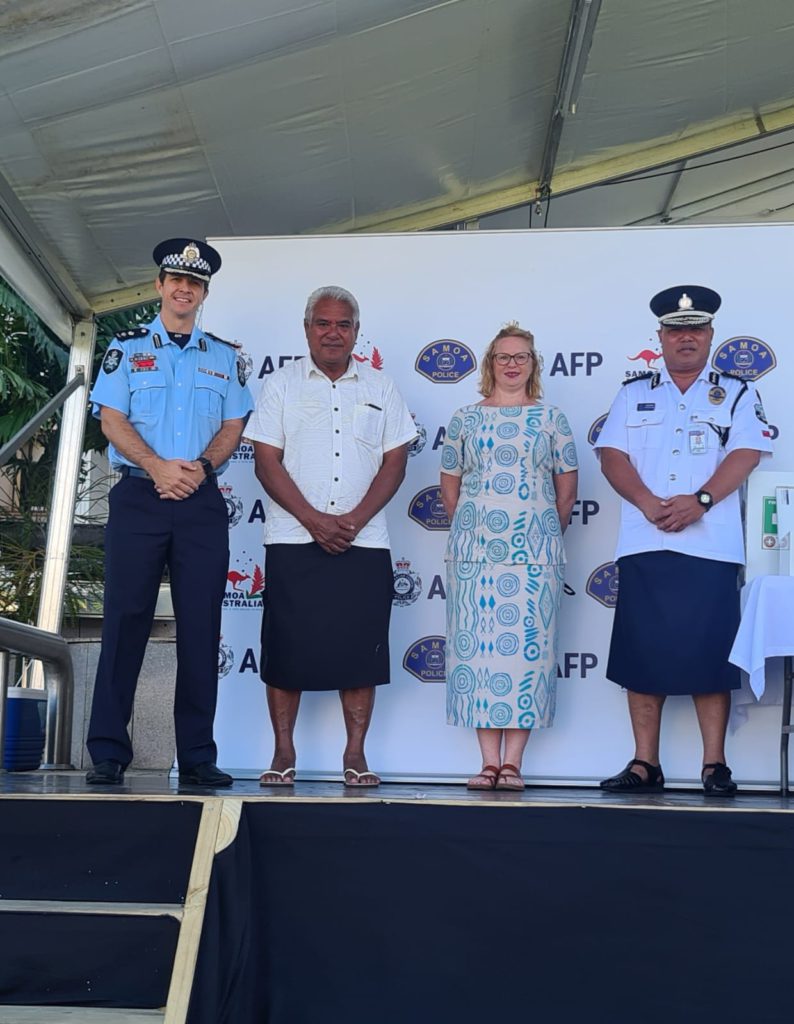
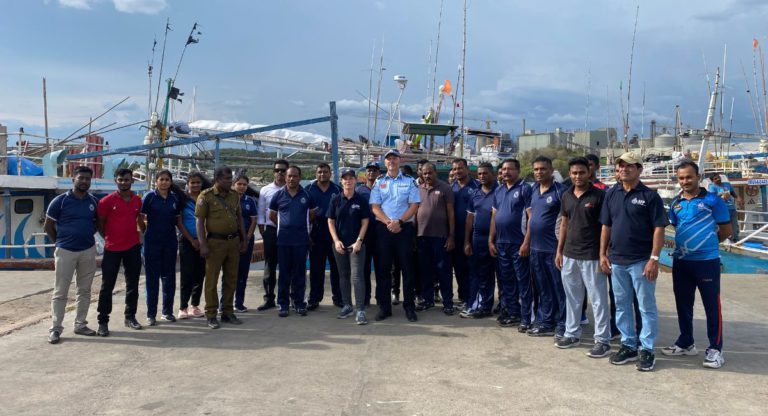
Working with National Seniors Australia during Cyber Awareness Month in October, the AFP will provide tips to help support cyber safety, especially for generations that are not as comfortable in the digital world.
It comes as some older Australians say they are worried about using technology because they fear they will be scammed.
AFP Acting Assistant Commissioner Cyber Command Paula Hudson said some of the best information and tips could come from grandchildren or younger family or friends who have grown up with technology.
“Grandchildren – whether they are 20 or 40 years old – can be one of the greatest lines of defence for older generations when it comes to the online world. Today, we are asking Australians to have conversations with grandparents or parents about simple things they can do to protect themselves.”
To keep it simple, the AFP is urging seniors and all Australians to learn their cyber ABCs:
Avoid clicking on links sent in unsolicited email or text;
Block calls on mobile devices from suspected scammers; and,
Call your financial institution immediately if you identify a suspicious transaction or you believe your bank account has been targeted by cyber criminals.
While the AFP has undertaken a number of cyber crime operations in the past few months, arresting alleged offenders and returning money to Australians who have been scammed, it is also focused on protecting Australians from cyber criminals.
The AFP will also share with National Seniors Australia new 90 second videos that explain how the public can stay a step ahead of cyber criminals. The videos will be posted on National Seniors Australia website https://nationalseniors.com.au
While many older Australians are cyber and digitally aware, others may need extra help to stay cyber safe.
The AFP will use Cyber Awareness Month and seniors’ week celebrations to provide extra education for those less digitally savvy in the community.
AFP Acting Assistant Commissioner Cyber Command Paula Hudson added:
“One example could be showing seniors how to block a scam call on an iPhone. If you received a phone call or a text message that is clearly a scam – such as those claiming to be from a financial institution, utility company or a service you do not use – we advise you hang-up immediately.”
SHe observed:
“We also advise people to block the number. On an iPhone, that can be done by going to recent calls, pressing the information symbol, and then scrolling down to ‘block’.
“And the videos we have released are only 90 seconds long. It would be great if grandkids could watch the videos with their nan, and pop, nonno or nonna, or baba or deda. It also gives an opportunity for younger generations to brush up on their knowledge.
“What we have found in the past is that some older Australians who have become the victim of cybercrime become embarrassed and blame themselves. Often they do not tell anyone and that’s what we need to change.
“We do not want any victim of crime to be ashamed. These tips and videos will hopefully empower all generations to stay cyber safe because any one at any age can be targeted by cybercrime.
“This is also a good reminder for all Australians of any age to be mindful of their cyber security – because cyber criminals do not discriminate by age. We encourage all ages to watch the videos.”
National Seniors Australia Chief Operating Officer Chris Grice said findings from National Seniors’ own research showed that older people who were less familiar with digital technology were most likely to report being scammed.[1]
“Fear of scamming prevents many from engaging online.”
Mr Grice said.
“As one 70-year-old commented, ‘There are so many scams and hackers on digital services I would feel unsafe using one to do personal business.’ [2]
“With the removal of cheques and the transition towards a cashless society, seniors have no choice but to transact online exposing them to potential cybercrimes.
“In collaboration with the AFP, National Seniors Australia aims to empower seniors with the knowledge, tools and confidence they need to stay safe in the digital world.”
“We encourage seniors to take advantage of the valuable resources offered by the AFP and other government agencies and engage in conversations with trusted family members to help them online.
“As a community, we need to ensure that older Australians can participate online, and be safe doing so.”
[1] Maccora, J., Rees, K., Hosking, D. & McCallum, J. (2019) Senior Surfers: Diverse levels of digital literacy among older Australians. Brisbane: National Seniors Australia
[2] Orthia L, Maccora J, McCallum J. (2022) “I am trying to keep up to date…but it is moving so fast”: Older Australians’ Digital Engagement in Turbulent Times. Canberra: National Seniors Australia
Support Our Journalism
Global Indian Diaspora needs fair, non-hyphenated, and questioning journalism, packed with on-ground reporting. The Australia Today – with exceptional reporters, columnists, and editors – is doing just that. Sustaining this needs support from wonderful readers like you.
Whether you live in Australia, the United Kingdom, Canada, the United States of America, or India you can take a paid subscription by clicking Patreon. Buy an annual ‘The Australia Today Membership’ to support independent journalism and get special benefits.
For many people, voting is not just a right, it’s an act of civic duty. Even more than that, some voters base their decisions on what they believe best serves society as a whole, not what might personally advantage them.
The trick, of course, is how to exercise that vote in a responsible, informed and considered manner. Understanding the policies of different parties is obviously a key part of that, in which case resources such as Policy.nz and Vote Compass can be helpful.
But what of the individual characteristics of candidates and would-be leaders? What can the research tell us about what to look for? Given they are “actors” on the political “stage”, how do we evaluate their performance?
Of course, leadership isn’t a solo act. Many things determine what leaders can and can’t do. But what makes them tick – how their personality or character informs their actions – is enduringly fascinating. In fact, we know a lot about the beliefs, attitudes and behaviours that can help distinguish between good and bad leaders.
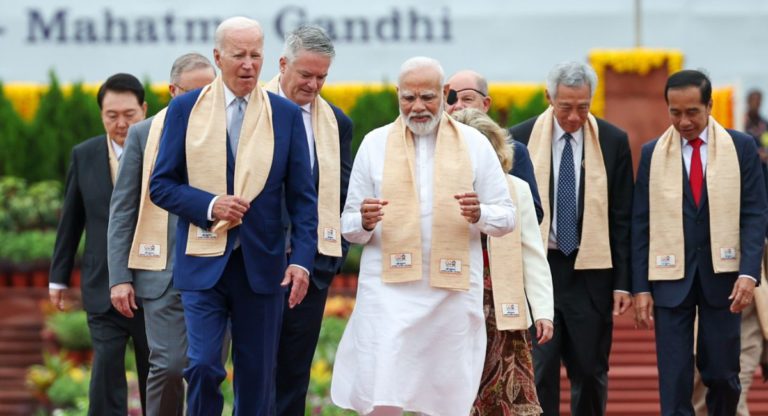
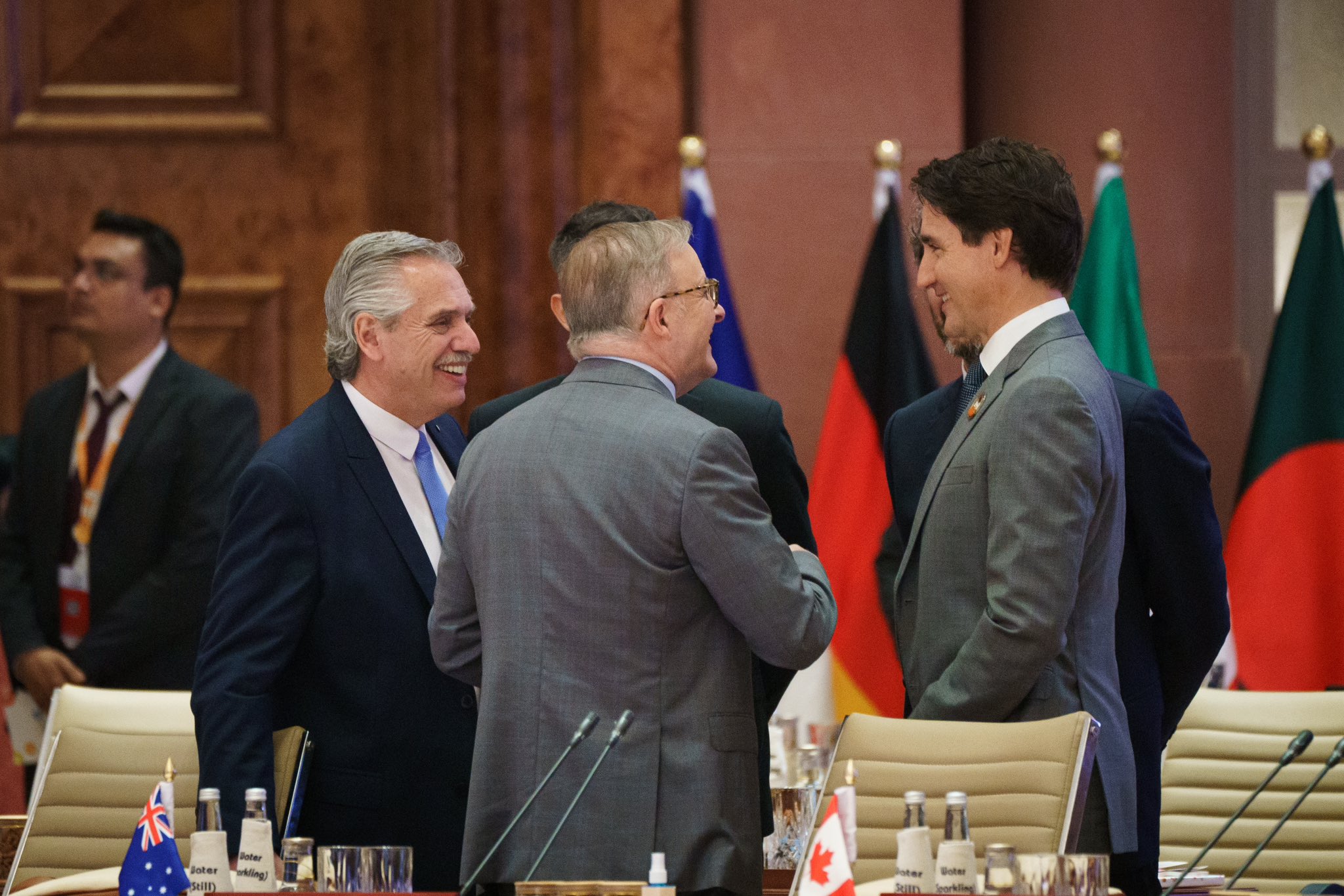
China’s President Xi Jinping with Canadian Prime Minister Justin Trudeau at G20
Confusing confidence with competence
Given “good” leadership is generally accepted as being both ethical and effective, it stands to reason “bad” leaders tend to fail on one or both counts. They either breach accepted principles of ethical or moral conduct, or they act in ways that detract from achieving desired results.
This distinction helps demystify leadership by highlighting that the qualities we least admire in others are also what scholars have long flagged as danger signs in leaders: arrogance, vanity, dishonesty, manipulation, abuse of power, lack of care for others, cowardice and recklessness.
Notably, though, bad leaders can appear charming, confident and driven to achieve, despite seeking power for selfish reasons.
Numerous studies have identified the ways in which narcissists and what are sometimes called corporate psychopaths can be highly skilled at manipulating people into believing they’ve got what it takes, but will typically lead in destructive and dysfunctional ways. Other studies have shown the negative effects of “Machiavellian” leadership styles.
There is also a tendency to confuse competence – the actual knowledge and skills needed to perform a leadership role – with confidence. Good leaders tend to be relatively humble about their abilities and knowledge. This means they’re better listeners, more sensitive to others’ needs, and better able to collaborate effectively.
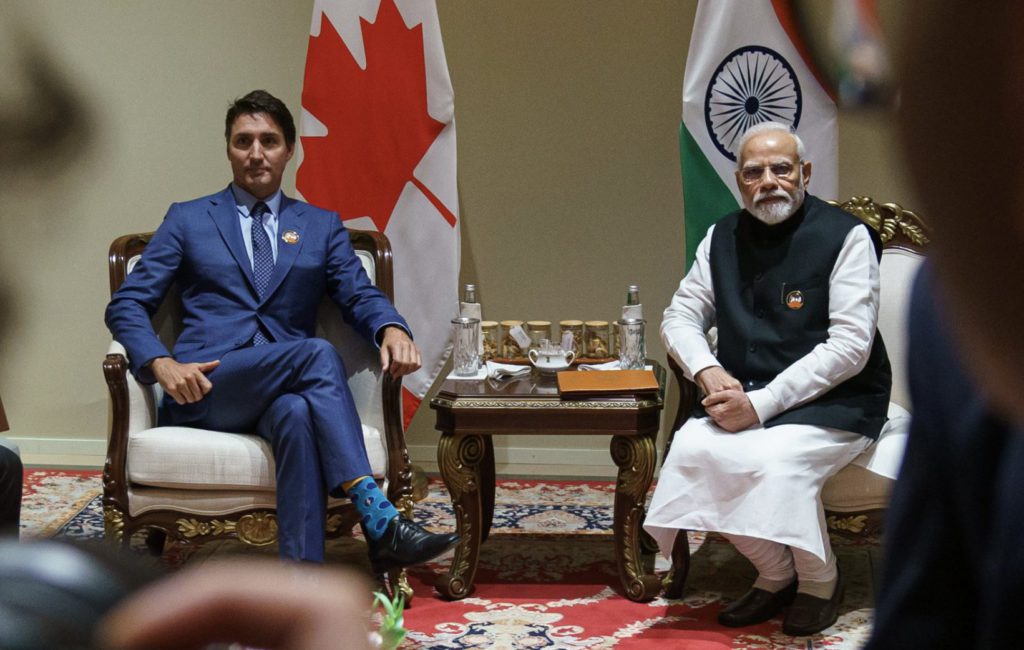
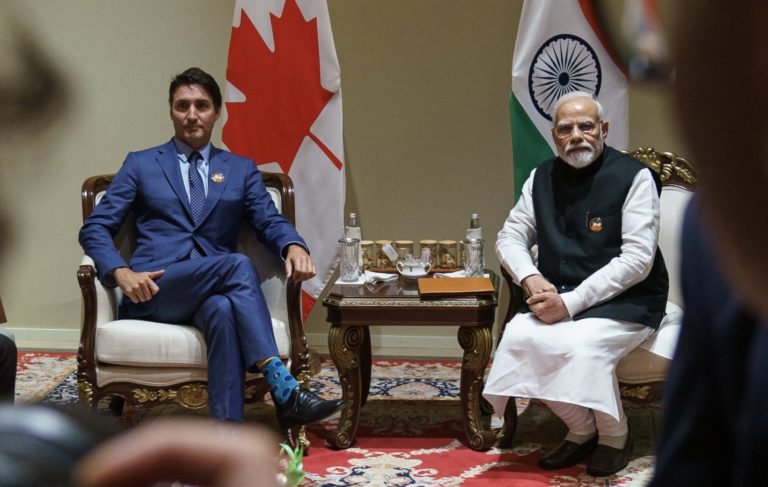
Indian PM Narendra Modi and Canadian PM Justin Trudeau at G20 New Delhi; Image Source- Twitter @justintrudeau
Practical wisdom
None of this fascination with leadership is new. The Classical Greek philosopher Aristotle argued good leaders possess a range of character virtues in the “middle ground” between what he called the “vices” of excess or deficiency. Courage, for example, is the virtuous mid-point between the vices of recklessness and cowardice.
The modern character virtues leadership researchers emphasise include humanity, humility, integrity, temperance, justice, accountability, courage, transcendence, drive and collaboration.
Each attribute helps a leader deal more effectively with some aspect of their role. Humanity, for instance, enables a leader to be considerate, empathetic and compassionate. Temperance helps them remain calm, composed, patient and prudent, even in testing circumstances.
Deployed together, these character virtues help foster sound judgment, insight, decisiveness – allowing a leader to calmly handle complex, unfolding challenges.
For Aristotle, the ideal leader could demonstrate what he called “phronesis”, or practical wisdom. This wasn’t necessarily about delivering perfect, painless solutions. Indeed, phronesis might mean adopting the least-worst option – which is often the case when dealing with the complex task of running a country.
There is also no single personality “type” most suited to good leadership. But studies indicate those who are proactive, optimistic, believe in themselves and can manage their anxieties stand a better chance. Empathy, a sense of duty and a commitment to upholding positive social values also underpin the attributes of good leaders.
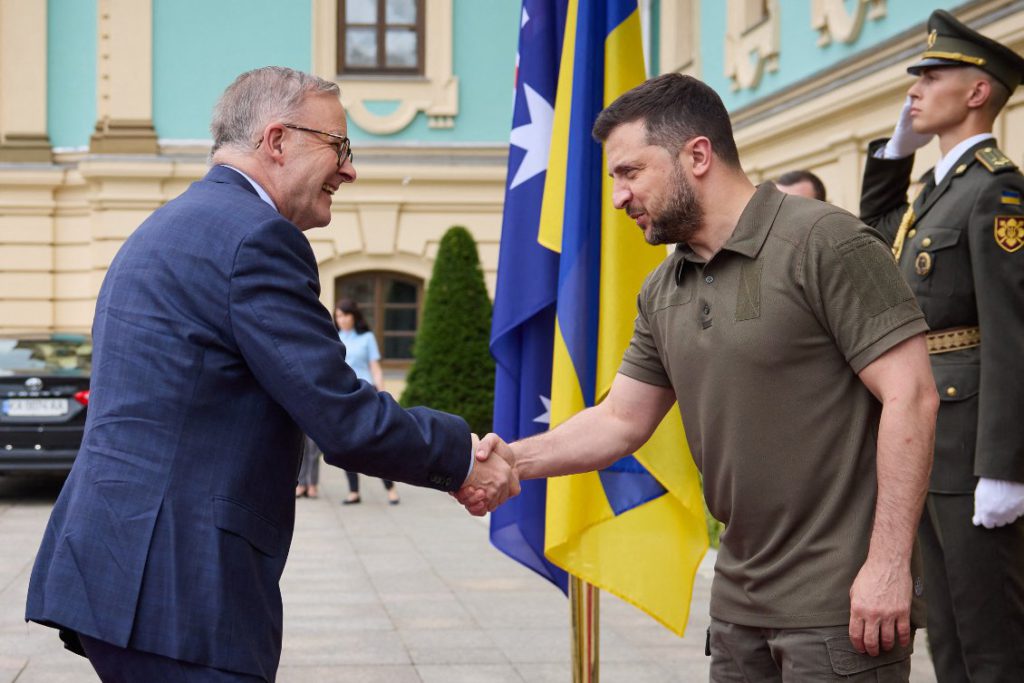
PM Anthony Albanese in Kyiv; Image Source: Twitter
Evaluating political leadership
No leader will be perfect. But each character or personality flaw impedes their capacity for wise judgment and dealing with the demands of their role. A wise leader, therefore, is one who has deep and accurate insight into their personal foibles and has strategies to mitigate for those tendencies.
Political leaders will obviously seek to present their policies, parties and themselves in a positive light, something known as “impression management”. This is where critical questioning and fact checking by journalists and experts can play a vital role.
But gauging a leader’s “true” personality or character is more difficult. And we first need to be aware that our impressions and evaluations of leaders are not entirely driven by reason or logic.
Secondly, we can look for recurring patterns of behaviour in different situations over time. We should pay particular heed to behaviour under pressure, when it becomes more difficult to “mask” true feelings and motives.
Thirdly, we can consider the values that underpin a leader’s policies, who benefits from them, and what messages these convey to the community at large.
In the long run, a leader’s results bear consideration. But we need to assess these fairly, accounting for what was beyond their control. We should be mindful to avoid “hindsight bias” – the tendency to imagine events were predictable because we know they’ve occurred.
It should be no surprise that what constitutes good leadership has been studied and debated for thousands of years. Leaders have power and we’ve always wanted them to use it wisely. An informed voting choice makes that more likely.
Global Indian Diaspora needs fair, non-hyphenated, and questioning journalism, packed with on-ground reporting. The Australia Today – with exceptional reporters, columnists, and editors – is doing just that. Sustaining this needs support from wonderful readers like you.
Whether you live in Australia, the United Kingdom, Canada, the United States of America, or India you can take a paid subscription by clicking Patreon. Buy an annual ‘The Australia Today Membership’ to support independent journalism and get special benefits.
Ashrika Paruthi, from India, is a finalist in the NSW International Education Awards – Higher Education.
Ashrika studied at The University of Sydney and is well-known for her leadership skills that have helped improve the experience of international students in Sydney in many ways.
In a statement, Ashrika said:
“This accomplishment is a testament to my odyssey as an Indian international student leader in Australia, and to the transformative power of community engagement. The unwavering support of the communities that have embraced me has not only propelled me forward but has also instilled in me a sense of duty to give back.”
Ashrika has served in numerous offices on the Student Representative Council (SRC), as editor-in-chief of the university publication Honi Soit, and been a representative on the Dalyell Scholars Liaison Committee.
She represents the Indian student community in the Australia India Business Council (AIBC), advocating for better educational experiences for Indian students in Australia.
As a Consortium member and International Student Health Hub Advisor (Volunteer) at NSW Health, Ashrika supports the design and delivery of the International Student Health Hub.
She has also connected thousands of international students as an ambassador for the City of Sydney, and led the International Student Orientation and Networking Event.
Narayan Gautam, from Nepal, is a finalist in the NSW International Education Awards – ELICOS.
Narayan studied at Kingston Institute Australia and is preparing to enroll in the Master of Social Work (Qualifying) program with Western Sydney University to continue helping the lives of others. He strives to create awareness in student rights, mental wellbeing, and more among international students.
Narayan is the founder president of the Kanakai Municipal Child Forum, the National Public Relations Officer of the Student Advisory Council under the Non-Residential Nepalese Association (NRNA) Australia, the Executive Secretary of the Nepalese Students Club at Western Sydney, and an executive member of the Australian Nepalese Blood Donors Association.
The selection for the awards is based on the impact made on the international student, ethnic, and broader NSW communities.
Global Indian Diaspora needs fair, non-hyphenated, and questioning journalism, packed with on-ground reporting. The Australia Today – with exceptional reporters, columnists, and editors – is doing just that. Sustaining this needs support from wonderful readers like you.
Whether you live in Australia, the United Kingdom, Canada, the United States of America, or India you can take a paid subscription by clicking Patreon. Buy an annual ‘The Australia Today Membership’ to support independent journalism and get special benefits.
Indian Captain Rohit Sharma’s explosive knock of 131 propelled the ‘Men in Blue’ to a comfortable 8-wicket victory over Afghanistan at the Arun Jaitley Stadium in the ongoing World Cup on Wednesday.
Afghanistan’s formidable spin bowling attack couldn’t stifle the Indian batters as Rohit consistently found boundaries around the ground.
In pursuit of a target of 273, India got off to a blazing start with the opening partnership of Rohit and Ishan Kishan aggressively taking on the Afghanistan bowlers. After initially adopting a cautious approach, India transitioned to a T20I-like style of play, and once Rohit began hitting boundaries, there was no looking back.
Rohit reached his fifty in just 30 balls by the end of the powerplay, with India maintaining a run rate well above nine. Rohit’s dominance allowed him to reach 76* by the end of the powerplay, while Kishan watched from the other end with a score of 11*.
Rohit Sharma, showcasing his batting prowess and tapping into his prime form, not only amassed a century but also etched his name in history as the player with the most centuries in the annals of the World Cup, amassing a total of 7 tons. This remarkable achievement surpassed the iconic cricketer Sachin Tendulkar, who had notched up six World Cup centuries during his illustrious career.
He also became the Indian to score the fastest century in the World Cup surpassing former captain Kapil Dev’s 72-ball ton against Zimbabwe in 1983 breaking a record that stood for almost 40 years.
Rohit’s century came while chasing a target in the World Cup is also the most hundreds (3) in successful World Cup chases. His 131 was the highest score by an Indian during a World Cup chase.
His glorious knock consisted of five sixes which took his tally of international sixes to 556 which is the most by any player. Former West Indies player, Chris Gayle held the record with 553 sixes, but Rohit overtook him to seal his position at the summit of the rare record.
He also tied the record of Australian opener David Warner to become the joint-fastest 1,000-run scorer in the World Cup, achieving the feat in just 19 innings.
India faced a minor hiccup when Rashid Khan dismissed Kishan for 47. Virat Kohli then joined Rohit in steering India towards an easy victory. Rohit’s brilliant innings concluded when Rashid claimed his second wicket of the night. Shreyas Iyer partnered with Kohli, who sealed the win with a stylish boundary.
Kohli and Iyer remained unbeaten, with scores of 55* and 25* respectively, wrapping up the game with 15 overs to spare.
Earlier, Afghanistan’s skipper Hashmatullah Shahidi won the toss and chose to bat. Afghanistan faced early struggles, losing three wickets in the first 15 overs. However, Shahidi and Azmatullah Omarzai’s partnership of 121 runs revived Afghanistan’s innings.
After Omarzai’s dismissal, Shahidi continued to anchor the innings as Afghanistan crossed the 200-run mark in 40 overs. However, when Bumrah entered the attack, Afghanistan lost wickets in quick succession, ultimately finishing with a total of 272/8.
The victory against Afghanistan was India’s 7th successful chase of 250 or more in the World Cup, no other team has managed to do more than 5.
Global Indian Diaspora needs fair, non-hyphenated, and questioning journalism, packed with on-ground reporting. The Australia Today – with exceptional reporters, columnists, and editors – is doing just that. Sustaining this needs support from wonderful readers like you.
Whether you live in Australia, the United Kingdom, Canada, the United States of America, or India you can take a paid subscription by clicking Patreon. Buy an annual ‘The Australia Today Membership’ to support independent journalism and get special benefits.
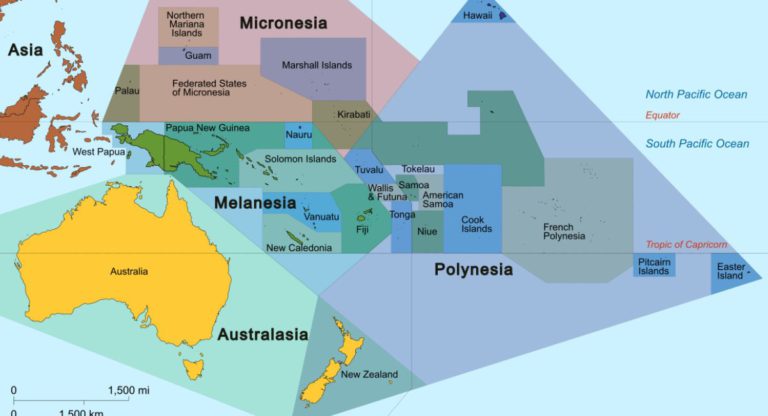
Australia has not been successful in cementing sound inclusive democratic political governance in Fiji, Solomon Islands, Vanuatu, and Papua New Guinea due to its own failures and at home, overwhelmed by the increased dominance of China in the region and an ill-conceived political response to China’s Belt and Road initiative based not on evidence but on emotions and a firm belief on playing the role of Deputy Sheriff of a declining hegemon: the USA.
There are many parallels in history where proxies of hegemonic powers miscalculated the strategic pathways and ended up in a political straitjacketed.
The triumph of liberalism over Soviet-style command system by Francis Fukuyama in 1989 was perhaps a premature celebration of the primacy of free market over state intervention, laissez-faire over command economy, and bureaucratic essentialism over bureaucratic authoritarianism as great power politics defined the global international systems and discourses on political, political and social systems.
This liberal triumphalism led to the US withdrawing from the Pacific Islands and delegating Australia the task of the invigilator in the region in the early 1990s as the US focus changed from the Pacific to the Middle East, Africa, and then to the former states of Yugoslavia, and lately to Syria, Afghanistan, and Ukraine.
Since 1996, Australia has taken, without critical analysis, a dangerously paternalistic policy position towards the Pacific Islands, and this was highlighted at the Forum Economic Ministers Meeting in 1997, where on Australia’s insistence, a more overt neoliberal policy was adopted by the Pacific Islands Forum for the restructuring Pacific islands along the lines of neo-colonial, managerial and chequebook diplomacy of the Liberal-National Government in Canberra (1996–2007), and these policy initiatives were adopted by subsequent governments without critical analysis, resulting in dysfunctional foreign policy with ongoing failures of political governance in the Pacific Island States, including tragic failures in social and climate policies accentuated by increased corruption, clientelism, and patrimonilialism.
The Australian ideology espoused for the Pacific Islands included smaller and leaner public service, opening up indigenous land to foreign investments, exploitation of low-wage labour, liberalised trade, Tax-Free Zones, and patrimonial regimes supported by AUSAID as the modus operandi with Australian overseas missions requested to turn the other cheek on human rights, political governance, media freedom, climate issues, and indigenous rights.
The internal political dynamics in mainly Melanesian states are characterised by the failures of political governance, elevated communalism, regionalism, excessive instrumentalism, tribalism, ethnic conflict, rampant corruption, and patrimonial and clientelistic political managerialism. These drawbacks on the local fronts are compensated by labour mobility programs which allow Pacific Islanders to come to Australia and suffer exploitation at the hands of Australian employers, who believe in indentured labour services, paying and exploiting workers subsidised by the Australian Government, and a draconian workplace system akin to blackbirding.
The tokenistic gesture from Australia has failed the Pacific community but the policymakers in Canberra continue to support these initiatives as necessary for knowledge and skills transfers to the Pacific Islands and to fill the labour void caused by the COVID pandemic (2020-2021).
The conflict in Bougainville was an early warning sign for the Australian policymakers, who ignored indigenous local ethnic, and regional politics with contending and conflicted social forces that proved fatal, eventually leading to the disintegration of the Melanesian Pacific polity by mining interests. Communal tensions reached full circle in 2000 when both Fiji and Solomon Islands deteriorated into anarchy with the political class in Canberra unprepared for an interventionist political response and attempted without success to resurrect the Biketawa declaration and militarily intervene in the domestic affairs of both Fiji and the Solomon Islands. While the Regional Assistance Mission to the Solomon Islands led by the Australian Defence Forces had some success in restoring order to a state of anarchy, the intervention proposal was met with shock and horror in other states, especially Fiji. The former Australian Prime Minister John Howard opined that intervention in Fiji would involve the Australian Defence Force engaging in a potential firefight with the Republic of Fiji Military Forces in the Fijian capital Suva, resulting in Australian and Fijian casualties. This was clearly unacceptable and not in the best national interest of Australia, and a half-baked sanctions regime was authored by the Australian Foreign Affairs with targeted attacks on Fiji’s coup leaders and their cabinet ministers, extending to the judiciary that was dominated by Sri Lankan expatriates.
While the situation in the Solomon Islands was quickly rectified with a band-aid solution in the form of a Regional Assistance Mission to the Solomon Islands, the crisis in Fiji was prolonged and damaging as the Australian Labor government under Kevin Rudd and Julia Gillard continued isolating Fiji following the coups in 2006, forcing the political class in Fiji into the arms of China and Russia. However. Things were not any better in Australia with domestic politics marred by leadership instability.
What followed from 2007 in Australia was a revolving door of Prime Ministers (Kevin Rudd, Julia Gillard, Tony Abbott, Malcolm Turnbull, and Scott Morrison) and a significant inward focus by Australia during the period to remediate as best as possible failures of its own internal political governance, highlighted by ongoing and acrimonious debates on a Federal Independent Commission Against Corruption, environment, responses to the pandemic, industrial relations, vulnerable Australians, franking credits, capital gains regime and negative gearing. As a result, political corruption and regional conflicts in the Solomon Islands and Papua New Guinea intensified, and the band-aid solution on the Solomon Islands peeled, leading to riots in Honiara in November 2021 with Honiara embracing China, and Fiji moving closer to a political interventionist model with a new constitution in 2013 and staged managed general elections in 2014, 2018 and 2022. Vanuatu also did not fare any better with the Australian push to undermine the country’s non-aligned position with a bilateral defence agreement that eventually led to the demise of the Vanuatu government in 2023.
The Melanesian Pacific Island nations continue to suffer from catastrophic climate change, poor political governance, rampant corruption, severe social problems, dysfunctional electoral systems, foreign influence, ethnic and tribal tensions, and economic difficulties and there have been no quick fixes for years of inaction has given rise to authoritarianism, social and political fragmentation in our Pacific islands. Canberra has now prioritised nuclear submarines under AUKUS which challenge the fundamental principles of the South Pacific Nuclear Free Zone Treaty and non-aligned posture, not to mention the climate disasters caused by British, US, and French nuclear testing after World War II, including the recent decision by the International Atomic Energy Agency to allow Japan to dump its nuclear by-product into the North Pacific without multilateral agreement with the Pacific Islands.
The South Pacific Islands and in particular Melanesia want Australia to show leadership in addressing climate change in the region, allowing climate refugees from the islands to resettle in environment-polluting countries such as Australia, enabling visa-free travel, promoting investment in resilient infrastructures, promoting good governance, human rights, and social justice, and further enabling aid programs that accelerates development, addresses high unemployment, protects the rights of women and children, and future proofs indigenous resources from exploitation by grubby local politicians and overseas companies, and addresses human trafficking, drugs, and exploitation of women and children.
Is Australia up to the challenge remains to be seen.
Contributing Author: Dr Sanjay Ramesh is an Associate Fellow in the Department of Sociology and Criminology at the University of Sydney and has written many articles on Fiji since 2000.
Disclaimer: The opinions expressed within this article are the personal opinions of the author. The Australia Today is not responsible for the accuracy, completeness, suitability, or validity of any information in this article. All information is provided on an as-is basis. The information, facts, or opinions appearing in the article do not reflect the views of The Australia Today and The Australia Today News does not assume any responsibility or liability for the same.
Support Our Journalism
Global Indian Diaspora needs fair, non-hyphenated, and questioning journalism, packed with on-ground reporting. The Australia Today – with exceptional reporters, columnists, and editors – is doing just that. Sustaining this needs support from wonderful readers like you.
Whether you live in Australia, the United Kingdom, Canada, the United States of America, or India you can take a paid subscription by clicking Patreon. Buy an annual ‘The Australia Today Membership’ to support independent journalism and get special benefits.
The arrival of Cheng Lei back in Melbourne today is clearly a moment of celebration for the Chinese Australian journalist and her family from whom she has been separated for over three years.
But it would also seem to be a triumph for Australian diplomacy, as well as a signal of China’s serious intent to improve Australia-China relations. For some time, Cheng’s incarceration has remained a sticking point for Canberra in a more reasonable relationship emerging between the two sides.
Although born in China, Cheng has been an Australian citizen for years, having migrated to Melbourne with her parents at the age of 10. As a journalist, she found a degree of celebrity working within China’s state-owned English-language news networks. In recent years, she landed a job hosting the Global Business program on the China Global Television Network.
However, in August 2020, she was arrested and has been held since largely without access to Australian consular services.
Political pawn
Mystery surrounds the reasons for Cheng’s arrest, though shortly after she disappeared, a government official was reported as saying she had “endangered China’s national security”.
The obvious explanation was likely more political: she may have been a pawn in the megaphone diplomacy and increasingly tense relations between the two sides after then-Prime Minister Scott Morrison demanded explanations from China about the emergence of the COVID-19 virus. She was detained months later.
Effectively, Cheng had become a hostage in international relations, much as other foreign nationals living in China have in the past.
In December 2018, for instance, two Canadians, Michael Spavor and Michael Kovrig, were arrested in response to the arrest of Huawei’s Chief Financial Officer Meng Wanzhou in Canada. Shortly after Meng reached a deal for her release, the Canadians were released.
There can be little doubt that considerable Australian government effort has gone into negotiating Cheng’s return to Australia. Clearly, Australian diplomats have made the case to the Chinese leadership that if they desired better relations with Australia, releasing Cheng would be a good start.
And equally, Prime Minister Anthony Albanese has shown he’s being very respectful of what’s required to reestablish an appropriate relationship with the Chinese authorities. In announcing Cheng’s return to Melbourne, he not only expressed great pleasure at the outcome, but also pointed out the legal proceedings in China are now at an end.
Why release Cheng now?
The Australian government has indicated it is willing to engage with China again. This means cooperating where it can and differing where it must. This is clearly a more sophisticated approach than many other governments might employ with China, including the former Morrison government.
More interesting, perhaps, is why the Chinese leadership would release Cheng now. It appears to be a goodwill gesture, with Albanese confirming he will accept an invitation to visit Beijing sometime before the end of the year. But there may be other calculations behind it.
One obvious explanation is the mutual benefit in a more open relationship between the two complementary economies. Australia may suffer from the trade barriers China has imposed on our exports, but those same restrictions add significant costs to segments of the Chinese economy, such as heavy industry and energy generation.
Another possible reason for the release is that it might be part of a charm offensive designed to mitigate the Australian government’s increasing closeness to the United States.
Global Indian Diaspora needs fair, non-hyphenated, and questioning journalism, packed with on-ground reporting. The Australia Today – with exceptional reporters, columnists, and editors – is doing just that. Sustaining this needs support from wonderful readers like you.
Whether you live in Australia, the United Kingdom, Canada, the United States of America, or India you can take a paid subscription by clicking Patreon. Buy an annual ‘The Australia Today Membership’ to support independent journalism and get special benefits.
Australian Hindu community came forward to condemn the horrific terror attack by Hamas terrorists on Israel.
In a statement issued by the Hindu Council of Australia, an appeal was made to Prime Minister Anthony Albanese to pursue all avenues to help punish Hamas terrorists.
“We call upon the Australian government to pursue all avenues available to it including the United Nations to ensure that these war criminals are identified, prosecuted and punished.”
“The Hindu Council of Australia stands in solidarity with all Israelis, with Jews around the world and with our Jewish brothers and sisters in Australia during one of the darkest hours of humanity in our lifetimes.”
“Hindus in Australia with a lot of pain, are watching the horror being inflicted on innocent Israeli citizens. Killing, mutilating, kidnapping, parading and torture of civilians by extreme ideologues are war crimes.
Hindu Council of Australia’s Surinder Jain with Darren Bark, ex-CEO NSW Jewish Board of Deputies
Hindu Council of Australia spokesperson told The Australia Today, “We Hindus know the pain and sufferings caused by terrorists as our community has faced it for the longest time in History.”
“We call upon all people of all faiths around the world and in Australia to condemn these barbaric acts being conducted while perpetrators are chanting religious slogans.”
“Faith teaches brotherhood, peace and love. It should not be hijacked by violent tribal cruel criminals. This is not the first time that fanatic terrorists have brought havoc and destruction, scarring human civilisation and humanity.”
Let us all work steadfastly and in unison to ensure that such a disgrace on human rights does not repeat, ever.
On the other side of the world, The Hindu Forum of Canada effectively rallied the entire Indian community to join a robust show of support for Canadian Jewish organizations.
Thousands of individuals came together in unity with Israel’s Jewish citizens and innocent civilians to vehemently condemn the actions of Hamas terrorists in Toronto, Canada.
Support Our Journalism
Global Indian Diaspora needs fair, non-hyphenated, and questioning journalism, packed with on-ground reporting. The Australia Today – with exceptional reporters, columnists, and editors – is doing just that. Sustaining this needs support from wonderful readers like you.
Whether you live in Australia, the United Kingdom, Canada, the United States of America, or India you can take a paid subscription by clicking Patreon. Buy an annual ‘The Australia Today Membership’ to support independent journalism and get special benefits.
Food waste is a global issue that poses significant economic and environmental challenges. The effects of food waste in Australia are particularly noteworthy, given the country’s unique ecosystem and delicate balance.
This article explores the pressing issue of food waste and its profound impact on the Australian environment. An in-depth analysis of the problem reveals that food waste has far-reaching consequences for ecosystems, food security, and climate change. Therefore, addressing the problem of food waste requires a multi-faceted approach that involves public awareness, policy interventions, and technological solutions. We can tackle this issue by working together and creating a more sustainable and prosperous future.
The Scale of the Problem:
Food waste is a pressing issue with significant social, environmental, and economic consequences in Australia. The amount of food Australians discard yearly is estimated to be around 7.3 million tonnes, equivalent to approximately 300 kilograms per person. This waste not only affects our environment but also considerably impacts our economy. Food waste contributes to greenhouse gas emissions, soil degradation, and water pollution. It also places a significant burden on landfills, which are already struggling to cope with the existing waste. In addition, the cost of wasted food is estimated to be around $20 billion annually, a substantial economic loss. Therefore, reducing food waste is crucial for a sustainable future, and we must all take responsibility to minimise our waste.
Environmental Impacts:
Greenhouse Gas Emissions:
Food waste significantly contributes to greenhouse gas emissions, and its environmental impact is profound. When food is disposed of in landfills, it decomposes and emits methane, a potent greenhouse gas approximately 25 times more effective at trapping heat in the atmosphere than carbon dioxide. Consequently, food waste is crucial to climate change and its mitigation.
It is vital to adopt sustainable practices to reduce the impact of food waste. One approach is to prevent food waste from occurring in the first place, and this can be achieved through improved food management practices and reducing overproduction. Another strategy is to divert food waste from landfills and instead utilise it in other ways, such as composting or utilising it for animal feed.
Depletion of Natural Resources:
Producing food is a resource-intensive activity that requires a significant amount of water, land, and energy. Unfortunately, when food goes to waste, all these resources also go to waste. This is a pressing issue in many countries, particularly Australia, where water scarcity is a common problem. The wastage of food not only exacerbates the issue of resource scarcity but also poses a serious threat to ecosystems. This is because food production involves using pesticides and fertilisers, which can contaminate the soil and water sources. Additionally, food waste disposal in landfills releases methane gas, a potent greenhouse gas contributing to climate change. Therefore, it is essential to reduce food waste and adopt more sustainable practices to ensure the efficient use of resources and the protection of our environment.
Loss of Biodiversity:
The overproduction and waste of food is a severe issue often caused by unsustainable farming practices. These practices can involve the excessive use of fertilisers and pesticides, leading to soil degradation, water pollution, and biodiversity loss. In addition, they can contribute to habitat destruction, which can significantly impact local ecosystems and the survival of various species. Harmful pesticides can substantially threaten the health of both humans and wildlife, as they can cause multiple health problems and even death. Furthermore, the overproduction and waste of food can result in the depletion of natural resources, such as water and land, which are crucial for maintaining a healthy and sustainable environment.
These issues are particularly relevant in Australia due to the country’s unique flora and fauna. Unsustainable farming practices easily disrupt the delicate balance of its ecosystems, which can have long-lasting effects on the environment. Therefore, it is essential to promote sustainable farming practices that can help minimise the negative impact of food production and waste on the environment.
Soil Degradation:
When food is wasted, it contains valuable organic matter that can be used. However, when this waste is sent to landfills, it cannot be transformed into nutrient-rich compost and decomposes anaerobically, harming the soil quality. This soil degradation can have serious consequences, including decreased agricultural productivity and worsening food security issues. Therefore, finding sustainable ways to dispose of food waste is essential.
Solutions:
Reduce Food Waste at the Source:
By educating consumers and businesses on the impact of food waste, we can take constructive steps towards reducing it. Household food waste can be significantly reduced by simple measures such as meal planning, proper storage, and portion control. Moreover, businesses can play their part by implementing efficient inventory management and distribution systems. Together, we can positively impact the environment and save valuable resources.
Food Rescue Programs:
Food waste is a pressing issue that affects the globe. To tackle this problem, initiatives like food banks and rescue organisations are essential in redirecting surplus food to those in need. Not only do these efforts help prevent food waste, but they also provide much-needed assistance to individuals and families facing food insecurity. By donating surplus food, individuals and businesses can contribute to a more sustainable and equitable food system.
Composting and Recycling:
Taking steps towards promoting composting and recycling of food waste can significantly impact the environment. By diverting organic matter from landfills, these practices can help reduce the amount of greenhouse gases released into the atmosphere. Municipalities can play a vital role in this effort by investing in composting facilities and educating residents on proper disposal methods. By doing so, they contribute to a healthier planet and create a more sustainable future for future generations.
Conclusion:
Food waste is a significant challenge facing Australia, but we have the power to tackle it head-on. We know that food waste contributes to greenhouse gas emissions, resource depletion, biodiversity loss, and soil degradation, but we also know we can make a difference. We can create a more sustainable and environmentally friendly food system by raising awareness, implementing effective waste reduction strategies, and supporting food rescue programs.
Together, we can take decisive action to address food waste, and our efforts will be noticed. By reducing waste, we can significantly reduce our environmental impact and preserve the unique and beautiful ecosystems that make Australia so special. So, let’s take action and make a difference. We can create a more sustainable future, starting with addressing food waste.
Contributing Author: Dr Kiran R. Mahale is a Technology-driven focused and enthusiastic biotechnologist and Co-founder and CTO of Vishwa Bio Solutions.
Disclaimer: The opinions expressed within this article are the personal opinions of the author. The Australia Today is not responsible for the accuracy, completeness, suitability, or validity of any information in this article. All information is provided on an as-is basis. The information, facts, or opinions appearing in the article do not reflect the views of The Australia Today and The Australia Today News does not assume any responsibility or liability for the same.
Support Our Journalism
Global Indian Diaspora needs fair, non-hyphenated, and questioning journalism, packed with on-ground reporting. The Australia Today – with exceptional reporters, columnists, and editors – is doing just that. Sustaining this needs support from wonderful readers like you.
Whether you live in Australia, the United Kingdom, Canada, the United States of America, or India you can take a paid subscription by clicking Patreon. Buy an annual ‘The Australia Today Membership’ to support independent journalism and get special benefits.
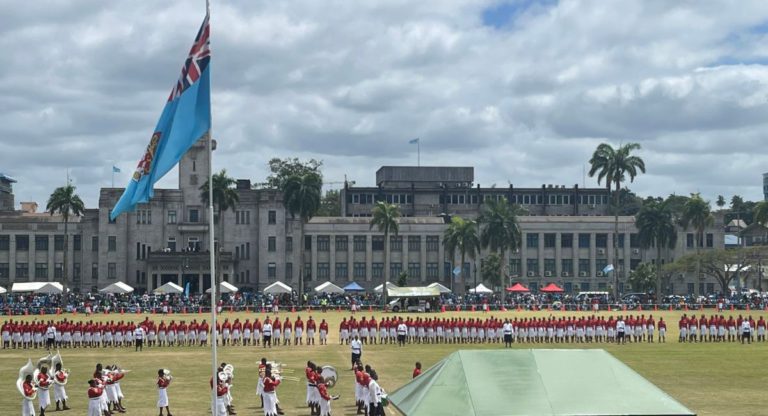
Fiji saw the phase of British Colonization for 96 years, the signing of the Deed of Cession in 1874 and the official grating of independence on 10 October 1970.
Fijians commemorate Independence Day with a spirit of patriotism that unites the nation and reflects the progress of the rich cultural nation.
The op-ed gives a reminiscence of the words of great leaders and academicians.
The Union Jack was lowered for the last time on 9 October 1970, Brij V. Lal in his book ‘Broken Waves: A History of the Fiji Islands in the Twentieth Century’ (1992) observes:
“The new sky blue flag of the independent Dominion of Fiji, with a miniature of the colonial flag in the top left-hand corner and bearing Fiji’s coat of arms with its dove of peace, was not raised until ten the next morning, some thirteen hours later. This unusual delay was intended to symbolize the respect that both parties accorded the transfer of power. Fiji was not marking the end of British rule so much as celebrating the birth of a new nation”.
There was a huge celebration on this day, with impressive and observing Fijian ceremonies for Prince Charles, who had handed the “Instrument of Independence to Ratu Mara, finally terminating the Deed of Cession”.
Ratu Sir Kamisese Mara said,
“Ladies and gentlemen, let us salute the Union Jack. The symbol that has governed this country for the last 96 years is coming down for the very last time. We are going to be masters of our destiny. We have come of age. Let us say farewell and ni sa moce to Her Majesty the Queen and to the Union Jack”.
On the historic juncture of Prince Charles declaring independence must have left a long-standing mark in the heart of thousands of Fijians, who will cherish the moment forever.
In response, Fiji’s first PM said:
“(But) today is a proud day for us all for today we assume control of our own destiny and take on full adult responsibilities after a long period of tutelage. But we do not only take responsibility for ourselves, we take it on for each other.”
PM added:
“We are a community of races, with different cultures, customs, and languages but the things that unite us, far outnumber those in which we differ. Above all, there is our fixed, joint determination to build a strong, united Fiji, rich in diversity and tempered with tolerance, goodwill, and understanding. Given a happy continuance of these conditions, and we must all contribute positively to them, I am confident that Fiji can show the world an example of harmony and progress out of all proportion to its size. And as we enter this new era, I pray for God’s guidance and blessing on the independent dominion of Fiji and all our people.”
Prime Minister also said:
“We have a long and close association with Britain…We became dependent in a warm spirit of friendliness and trust and we become independent in the same warm spirit”.
“The second unique event in our history was the attainment of our independence. Unique in the sense that there was no demand, no struggle, no bloodshed – but through dialogue and consensus as demonstrated by the mood in which we celebrated our independence”.
Brij V. Lal quoted the mood of the day in a poem by a high school student from Labasa:
There’s a new life in view
There’s gold in the blue
There’s hope in the hearts of men
Fiji is on the way
To a happier day
For the road is open again
Today, on the occasion of 53 years of independence, Fiji’s “Prime Minister Sitiveni Rabuka has commended the journey of resilience, unity and the unwavering spirit of Fijians. He says this year’s Fiji Day theme, “Rebuilding Fiji Together,” reflects not only aspirations but also the indomitable spirit that has guided people all through the years”.
The independence and the birth of the new nation in 1970 will always be a historical junction for all Fijians to take pride and show patriotism towards the nation and unite together to take Fiji ahead. This day reminds us of the unity, cultural diversity, and shared values.
The way forward shall be Go Fiji Go and reach new heights of peace, progress, and prosperity.
Contributing Author: Dr Sakul Kundra is an Associate Dean (Research) and Assistant Professor at the College of Humanities and Education, Fiji National University. The views expressed are his own and not of this newspaper or his employer. Email dr.sakulkundra@gmail.com
Disclaimer: The opinions expressed within this article are the personal opinions of the author. The Australia Today is not responsible for the accuracy, completeness, suitability, or validity of any information in this article. All information is provided on an as-is basis. The information, facts, or opinions appearing in the article do not reflect the views of The Australia Today and The Australia Today News does not assume any responsibility or liability for the same.
Support Our Journalism
Global Indian Diaspora needs fair, non-hyphenated, and questioning journalism, packed with on-ground reporting. The Australia Today – with exceptional reporters, columnists, and editors – is doing just that. Sustaining this needs support from wonderful readers like you.
Whether you live in Australia, the United Kingdom, Canada, the United States of America, or India you can take a paid subscription by clicking Patreon. Buy an annual ‘The Australia Today Membership’ to support independent journalism and get special benefits.
Home Affairs Minister Clare O’Neil has railed against the exploitation of Australia’s migration system, saying it has been “used to perpetrate some of the worst crimes to humanity, sexual slavery and human trafficking”.
After releasing a long-awaited review into the country’s immigration and visa system, conducted by former Victoria Police commissioner Christine Nixon, O’Neil pledged to take immediate action against the offences revealed in the report.
The government has committed to spending an additional $50 million to create a new division in the Department of Home Affairs to increase immigration compliance resources by 43% this financial year.
This is in addition to legislation it has already introduced to strengthen employer compliance measures to protect temporary migrants from exploitation.
But the Nixon review goes further, with more than 30 recommendations. The government agreed with many of the recommendations in its response. Responses on other points are still pending.
This is a strong review and it’s quite considered. Importantly, it has placed the compliance dimension into the visa processing system instead of keeping it mainly within the Australian Border Force.
Cracking down on misconduct by migration agents
Among its recommendations, the Nixon review called for strengthening the compliance and investigative powers of the Office of the Migration Agents Registration Authority to address misconduct by registered migration agents. It also called for an increase in the financial penalties for misconduct related to migration advice.
The government agreed with both recommendations in its response.
Compared with other countries’ laws on illegal migration assistance, Australia has longer terms of imprisonment for offenders, but its financial penalties are much lower, the review said. It noted:
[Registered migration agents] may perceive that engaging in such illegal activity is low risk, and high reward.
The migration agent sector is not highly regulated. Registered migration agents are not trained at the same level as solicitors, yet they are giving sophisticated advice in a very complex area of public policy with high stake outcomes.
As such, any further regulation of this sector is a good thing and giving the Office of the Migration Agents Registration Authority stronger powers would be important.
There are different ways to improve the system, such as greater oversight, more compliance checks and harsher penalties, increasing the periods of training for migration agents, and the use of disciplinary panels. In serious cases, the criminal law should also be used, if appropriate.
Some kind of financial risk for engaging in the behaviour seen in the Traffickedseries by the Nine news outlets is a potentially strong punishment, if it is enforced appropriately.
The review also said overseas migration agents are currently not required to be registered with the Office of the Migration Agents Registration Authority to provide immigration advice, which it recommended changing.
A ban on temporary migrants in the sex industry?
The review noted that temporary workers are at the greatest risk of employer abuse and exploitation, particularly those who are trafficked to Australia to work in the sex industry.
Among its recommendations, the review said the government should look at how other countries address the heightened risk of exploitation in the sex industry. Canada, for instance, has implemented a ban on any temporary migrants working in this sector.
The review recommended a similar ban in Australia, as well as increased penalties for those found to be hiring temporary migrants for the sex industry, saying:
The prohibition of temporary migrants working in the sex industry would send a strong and clear message that the Australian government has no tolerance for the exploitation of temporary migrants.
The government disagreed with both of these recommendations in its response, saying a ban might not be in accordance with Australia’s international rights obligations.
Sexual exploitation has distinctive dimensions – it sometimes involves sexual assault and sexual harassment, combined with underpayment and other types of abuse, such as racism.
One reading of this particular Nixon recommendation is that it is puritanical. Why focus on the sex industry and not other sectors? Is this because these victims are viewed as being more worthy of protection, or is this a more serious form of exploitation because sex is more likely to be involved?
Some advocates in the sex industry, such as the Scarlet Alliance), believe a full ban would not stop exploitation in the sex industry, it would just drive it further underground. It may also make it harder for victims to speak out, especially in cases of modern slavery.
Further, in some states, such as NSW, there are quite progressive laws around the regulation of sex work compared to other countries. So, this regulation would create a distinction between Australians and permanent residents who engage in “safer” sex work and those on temporary visas.
This could result in a split in the industry between work that is appropriately regulated and quite well protected and that which is essentially unlawful.
In short, while sexual exploitation of temporary migrants is egregious, upsetting and worrisome, it needs to be addressed in ways that do not create perverse incentives or worsen exploitation risks.
Reducing backlogs in visa processing
The Nixon review also focused on the lengthy processing times for some visa subclasses, which it said cumulatively could last up to a decade.
There’s a clear link between government under-funding, visa processing backlogs and compliance issues. The backlogs create an incentive to engage in fraudulent asylum claims because claimants have appeal rights for longer periods of time.
In this way, a bridging visa that is issued pending an Administrative Appeals Tribunal (AAT) decision can act like a quasi-work visa. During this time, short-term migrants with limited opportunities for visa extensions or work are open to labour market exploitation.
So, cracking down on backlogs in appeal processes to avoid visa extensions where they are not appropriate is a broader part of the exploitation puzzle. This seems to be a part of the government’s agenda.
The review again recommended looking overseas and examining whether Canada’s approach to refugee claims – in particular, its more streamlined ineligibility assessment process – could be replicated here. (The government agreed with this recommendation.)
However, Canada’s approach to the bulk processing of certain claims, including with the use of artificial intelligence, has raised concerns around procedural fairness and led to litigation. Avoiding such pitfalls would need to be considered by the Australian government.
Finally, better funding of the Administrative Appeals Tribunal is another big part of reducing the misuse of appeals processes for fraudulent claims.
The Nixon review and the government’s response have been described by Immigration Minister Andrew Giles as “a generational investment in immigration compliance”. This appears to be an accurate assessment. Naturally, building an evidence base and cultural capacity to implement these changes will be an important part of the next step.
Global Indian Diaspora needs fair, non-hyphenated, and questioning journalism, packed with on-ground reporting. The Australia Today – with exceptional reporters, columnists, and editors – is doing just that. Sustaining this needs support from wonderful readers like you.
Whether you live in Australia, the United Kingdom, Canada, the United States of America, or India you can take a paid subscription by clicking Patreon. Buy an annual ‘The Australia Today Membership’ to support independent journalism and get special benefits.
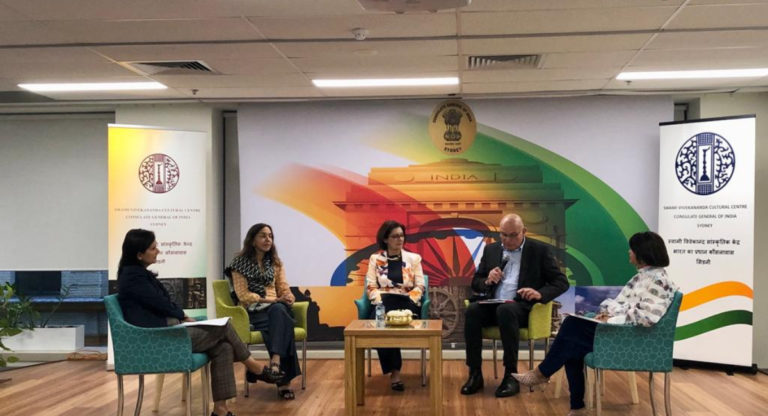
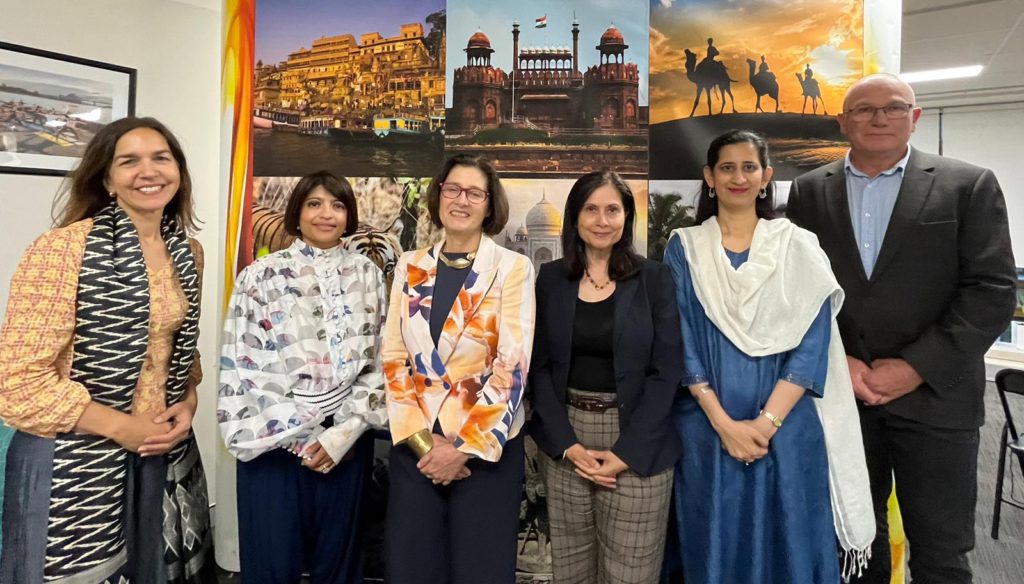
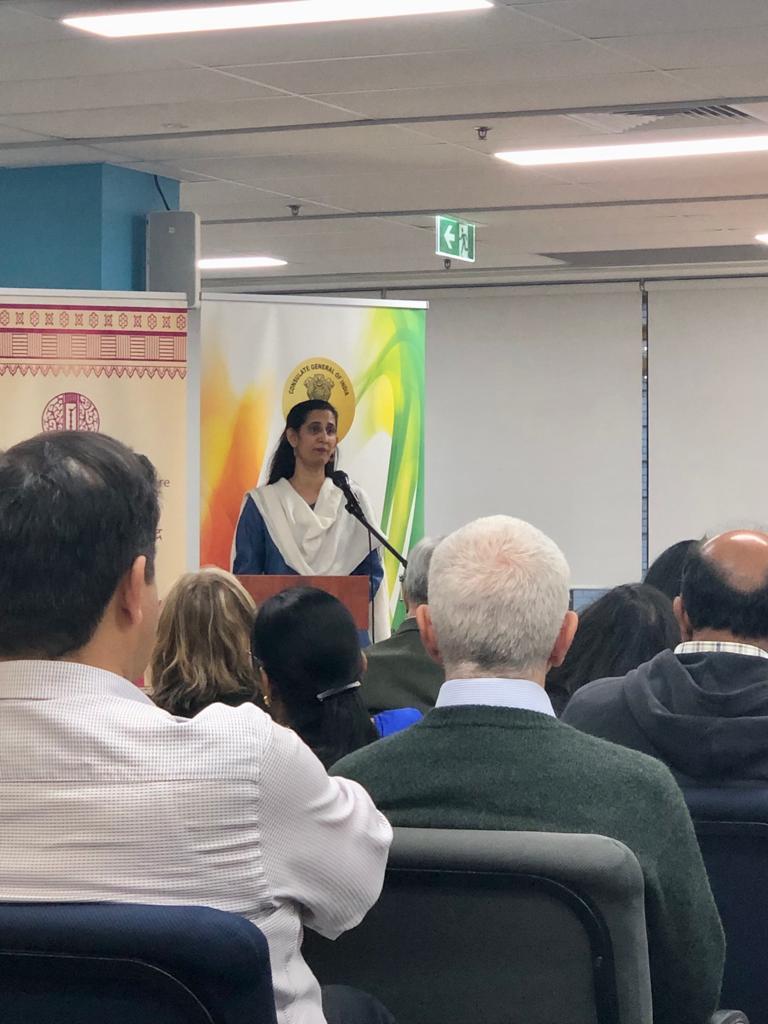
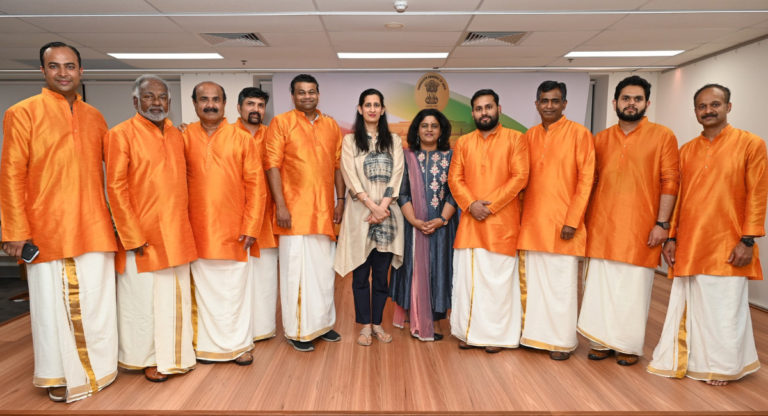
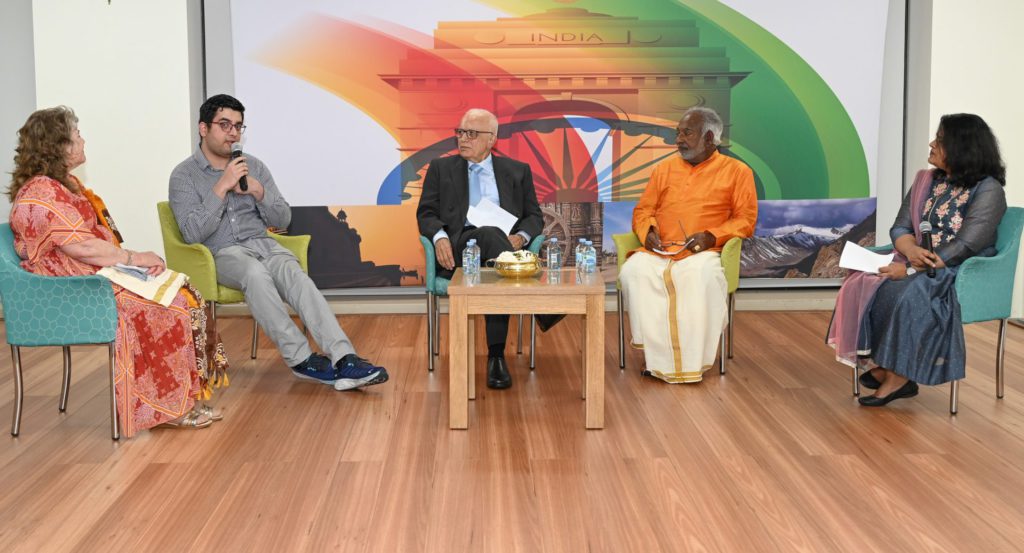
The Swami Vivekananda Cultural Centre (part of Indian Council for Cultural Relations) in Sydney recently organised a panel discussion on ‘Building Cultural Bridges between India and Australia’.
The people to people cultural connect between India and Australia is getting closer and stronger. Both countries have a rich and vibrant cultural and creative industry, and are internationally renowned in food, film, literature, theatre, the visual arts and much more. The discussion organised at the Consulate General of India in Sydney was about exploring ways to enhance the cultural connections between both the countries and its role in shaping the bilateral relationship.
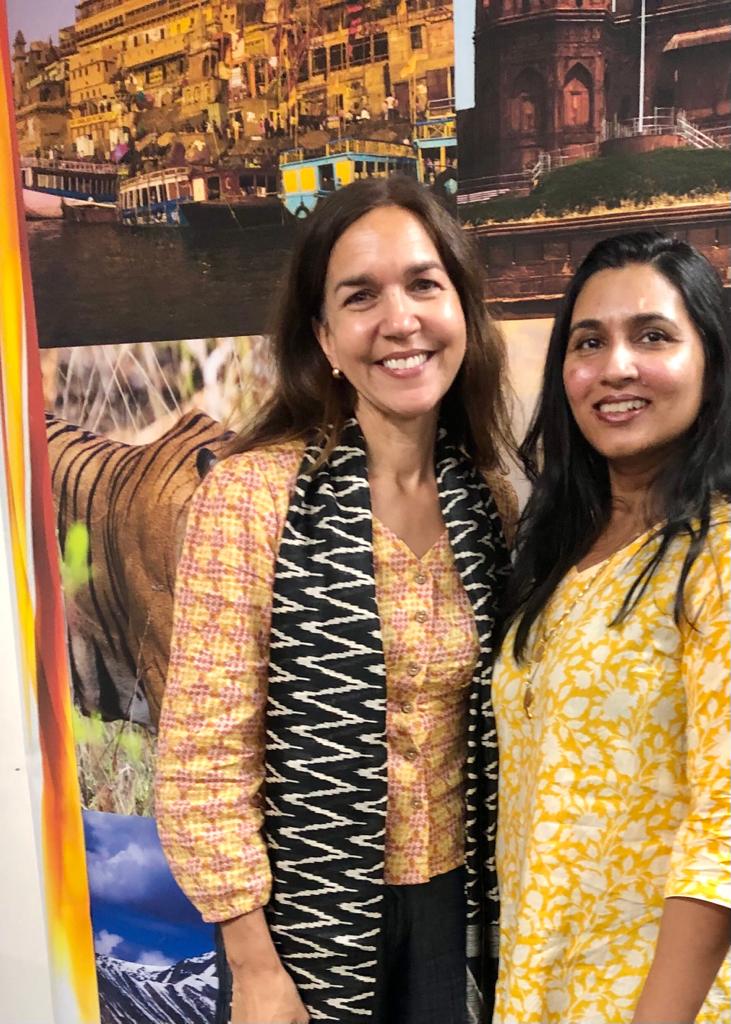
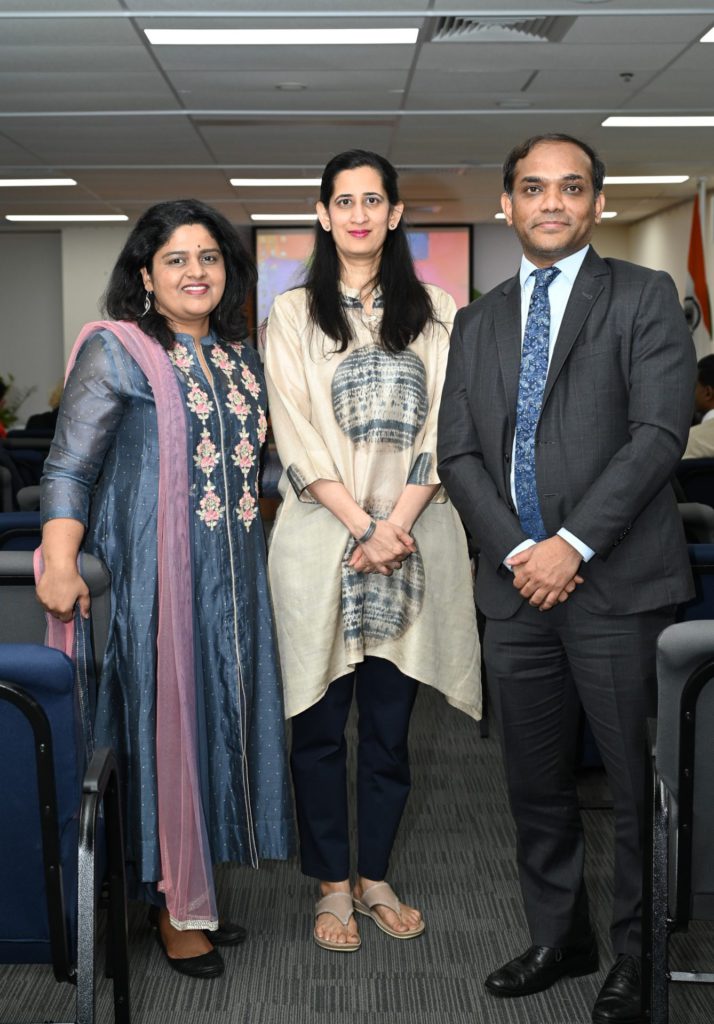
L to R Lisa Singh, Sonia Sadiq Gandhi, Daryl Karp, Swati Dave, Niyati Mehta, Matthew Connell (Image: SVCC)
The panellists included CEO of Australia India Institute and former Federal Senator Lisa Singh, (first woman of Indian subcontinental origin to be elected to the Australian Parliament), Centre for Australia India Relations Chair, Swati Dave, Indian-Australian entrepreneur and CEO of Gandhi Creations, Sonia Sadiq Gandhi and Director and Chief Executive of the Australian National Maritime Museum Daryl Karp. Director Curatorial, Collections & Programs at Powerhouse Museum, Matthew Connell, was the moderator.
Niyati Mehta is the Director of Swami Vivekananda Cultural Centre in Sydney. She said the idea behind hosting the event was to discuss connections and trends in the cultural space between both our countries and explore ways to build on it.
CEO of Australia India Institute, Lisa Singh, mentioned at the discussion how cultural understanding can help breakdown stereotypical perceptions of both countries in each other’s views.
Speaking with The Australia Today Ms Singh said that having the Indian diaspora share their culture with the broader Australian community could help Australians understand India.
Chief Executive of the Australian National Maritime Museum, Daryl Karp, noted that culture is one of those hard to measure things that brings people together. She mentioned that exploring connections between the two countries in the context of water was an untapped opportunity.
Director Curatorial, Collections & Programs at Powerhouse Museum, Matthew Connell, emphasised the importance of culture by saying that ‘culture sits behind everything’.
Poet Nimeesha Gupta, who has been an informal ambassador for Indian arts and culture in Australia as wife of former CGI in Sydney, Manish Gupta, said that culture plays an important role in bridging the relationship between two countries. She also spoke about the omnipresence of cultural in Indian ethos.
Indian-Australian entrepreneur Sonia Sadiq Gandhi highlighted the intersection between culture and business, how it fosters international relations and empowers economic growth through trade and investment.
In a significant blow to organised crime, the Australian Federal Police (AFP) has cracked down on a major drug trafficking operation, resulting in the arrest of five individuals in Sydney.
The operation unveiled an elaborate scheme involving the importation of approximately 100 kilograms of cocaine from South Africa concealed in the cargo hold of a passenger plane.
The five accused appeared in Parramatta Local Court on Sunday, October 8, 2023, and were remanded in custody, scheduled to reappear on November 30, 2023.
The alleged mastermind behind the operation, a 42-year-old man from Padstow, is believed to have coordinated with international criminal figures to procure the cocaine, arrange for its placement on an aircraft, and organize its distribution within Australia.
A 62-year-old man from Hillsdale was reportedly responsible for overseeing the activities of two airport employees who facilitated the removal of the cocaine from the aircraft and its subsequent delivery to an associate of the Padstow man.
Two trusted insiders, a 55-year-old from Mascot and a 61-year-old from Coogee, allegedly exploited their positions with access to freight handling operations at Sydney’s international airport. They played a critical role in removing the illicit cargo from the cargo hold of an aircraft that had recently arrived from South Africa.
The operation culminated in the interception of the cocaine-filled bags, which were transferred to a car driven by a 24-year-old Sydney man acting on behalf of the Padstow organizer. All three individuals involved in the handover were arrested shortly thereafter.
Each of the five bags seized from the car contained bricks of a white substance, later confirmed through forensic testing to be cocaine, with each bag containing around 20 kilograms of the illicit drug.
The Hillsdale man was apprehended by AFP members less than two hours later in Coogee, while the Padstow man was arrested at Rushcutter’s Bay later on the same evening.
The AFP’s Operation Lucian, initiated in October 2022 following a report from an airline regarding suspicious activity near the cargo area of a Johannesburg-bound flight to Sydney, has been instrumental in dismantling this criminal enterprise.
The AFP collaborated closely with the airline, Sydney Airport Corporation, and the Australian Border Force throughout the investigation. The arrested individuals, apprehended in the vicinity of the airport, have been charged with importing a commercial quantity of cocaine and possessing a commercial quantity of cocaine, carrying a maximum penalty of life imprisonment.
Additionally, the Padstow and Hillsdale men have been charged with conspiracy to import a commercial quantity of cocaine, with the same maximum penalty of life imprisonment.
On October 7, 2023, the AFP executed four search warrants at residences in Coogee, Mascot, and Hillsdale, resulting in the seizure of a small quantity of drugs and several electronic devices.
Detective Superintendent Kristie Cressy of the AFP emphasised the commitment to combatting organised crime syndicates that pose threats to Australia’s national security, economy, and social fabric. She noted the significance of safeguarding Australia’s airports from corruption and abuse by transnational criminal groups, emphasising the potential repercussions on the country’s tourism and trade sectors.
The cocaine haul intercepted in this operation was estimated to have a street value of $40 million, equivalent to 100,000 individual street deals.
Support Our Journalism
Global Indian Diaspora needs fair, non-hyphenated, and questioning journalism, packed with on-ground reporting. The Australia Today – with exceptional reporters, columnists, and editors – is doing just that. Sustaining this needs support from wonderful readers like you.
Whether you live in Australia, the United Kingdom, Canada, the United States of America, or India you can take a paid subscription by clicking Patreon. Buy an annual ‘The Australia Today Membership’ to support independent journalism and get special benefits.
In 2020, Oxford-based philosopher Toby Ord published a book called The Precipice about the risk of human extinction. He put the chances of “existential catastrophe” for our species during the next century at one in six.
It’s quite a specific number, and an alarming one. The claim drew headlines at the time, and has been influential since – most recently brought up by Australian politician Andrew Leigh in a speech in Melbourne.
It’s hard to disagree with the idea we face troubling prospects over the coming decades, from climate change, nuclear weapons and bio-engineered pathogens (all big issues in my view), to rogue AI and large asteroids (which I would see as less concerning).
But what about that number? Where does it come from? And what does it really mean?
Coin flips and weather forecasts
To answer those questions, we have to answer another first: what is probability?
The most traditional view of probability is called frequentism, and derives its name from its heritage in games of dice and cards. On this view, we know there is a one in six chance a fair die will come up with a three (for example) by observing the frequency of threes in a large number of rolls.
Or consider the more complicated case of weather forecasts. What does it mean when a weatherperson tells us there is a one in six (or 17%) chance of rain tomorrow?
It’s hard to believe the weatherperson means us to imagine a large collection of “tomorrows”, of which some proportion will experience precipitation. Instead, we need to look at a large number of such predictions and see what happened after them.
If the forecaster is good at their job, we should see that when they said “one in six chance of rain tomorrow”, it did in fact rain on the following day one time in every six.
So, traditional probability depends on observations and procedure. To calculate it, we need to have a collection of repeated events on which to base our estimate.
Can we learn from the Moon?
So what does this mean for the probability of human extinction? Well, such an event would be a one-off: after it happened, there would be no room for repeats.
Instead, we might find some parallel events to learn from. Indeed, in Ord’s book, he discusses a number of potential extinction events, some of which can potentially be examined in light of a history.
Counting craters on the Moon can gives us clues about the risk of asteroid impacts on Earth. NASA
For example, we can estimate the chances of an extinction-sized asteroid hitting Earth by examining how many such space rocks have hit the Moon over its history. A French scientist named Jean-Marc Salotti did this in 2022, calculating the odds of an extinction-level hit in the next century at around one in 300 million.
Of course, such an estimate is fraught with uncertainty, but it is backed by something approaching an appropriate frequency calculation. Ord, by contrast, estimates the risk of extinction by asteroid at one in a million, though he does note a considerable degree of uncertainty.
A ranking system for outcomes
There is another way to think about probability, called Bayesianism after the English statistician Thomas Bayes. It focuses less on events themselves and more on what we know, expect and believe about them.
In very simple terms, we can say Bayesians see probabilities as a kind of ranking system. In this view, the specific number attached to a probability shouldn’t be taken directly, but rather compared to other probabilities to understand which outcomes are more and less likely.
Ord’s book, for example, contains a table of potential extinction events and his personal estimates of their probability. From a Bayesian perspective, we can view these values as relative ranks. Ord thinks extinction from an asteroid strike (one in a million) is much less likely than extinction from climate change (one in a thousand), and both are far less likely than extinction from what he calls “unaligned artificial intelligence” (one in ten).
The difficulty here is that initial estimates of Bayesian probabilities (often called “priors”) are rather subjective (for instance, I would rank the chance of AI-based extinction much lower). Traditional Bayesian reasoning moves from “priors” to “posteriors” by again incorporating observational evidence of relevant outcomes to “update” probability values.
And once again, outcomes relevant to the probability of human extinction are thin on the ground.
Subjective estimates
There are two ways to think about the accuracy and usefulness of probability calculations: calibration and discrimination.
Calibration is the correctness of the actual values of the probabilities. We can’t determine this without appropriate observational information. Discrimination, on the other hand, simply refers to the relative rankings.
We don’t have a basis to think Ord’s values are properly calibrated. Of course, this is not likely to be his intent. He himself indicates they are mostly designed to give “order of magnitude” indications.
Even so, without any related observational confirmation, most of these estimates simply remain in the subjective domain of prior probabilities.
Not well calibrated – but perhaps still useful
So what are we to make of “one in six”? Experience suggests most people have a less than perfect understanding of probability (as evidenced by, among other things, the ongoing volume of lottery ticket sales). In this environment, if you’re making an argument in public, an estimate of “probability” doesn’t necessarily need to be well calibrated – it just needs to have the right sort of psychological impact.
From this perspective, I’d say “one in six” fits the bill nicely. “One in 100” might feel small enough to ignore, while “one in three” might drive panic or be dismissed as apocalyptic raving.
As a person concerned about the future, I hope risks like climate change and nuclear proliferation get the attention they deserve. But as a data scientist, I hope the careless use of probability gets left by the wayside and is replaced by widespread education on its true meaning and appropriate usage.
Global Indian Diaspora needs fair, non-hyphenated, and questioning journalism, packed with on-ground reporting. The Australia Today – with exceptional reporters, columnists, and editors – is doing just that. Sustaining this needs support from wonderful readers like you.
Whether you live in Australia, the United Kingdom, Canada, the United States of America, or India you can take a paid subscription by clicking Patreon. Buy an annual ‘The Australia Today Membership’ to support independent journalism and get special benefits.
In an engaging encounter at Chennai’s Chepauk Stadium, India secured a dramatic six-wicket victory over Australia to kickstart their ICC Cricket World Cup campaign on a winning note.
The Indian chase of 200 got off to a nightmarish start, losing opener Ishan Kishan for a golden duck to Mitchell Starc in the first over. The early woes continued as Josh Hazlewood removed skipper Rohit Sharma and Shreyas Iyer for ducks. With India at 2/3 in 2 overs, the situation looked dire.
India vs Australia at Chennai in ICC world cup 2023 match; Image Source; Twitter @BCCI
However, Virat Kohli and KL Rahul showcased remarkable composure, painstakingly rebuilding the innings. At the end of the first powerplay, they stood at 27/3, mostly dealing in singles and doubles.
Their partnership steadily progressed, with both reaching their respective half-centuries. India reached the 100-run mark in 25.3 overs, with Virat notching his 67th ODI fifty in 75 balls, and KL achieving his 16th ODI fifty in 72 balls.
Virat and KL’s partnership of 165 runs was a turning point in the game. Kohli’s dismissal for 85 brought a brief pause to the proceedings, but KL Rahul and Hardik Pandya’s explosive batting saw India home.
KL Rahul remained unbeaten at 97* off 115 balls, with Hardik Pandya providing valuable support. India reached the target of 200 with six wickets in hand, ending at 201/4 in 41.2 overs.
In the first innings, Indian spinner Ravindra Jadeja played a crucial role in restricting Australia to 199 runs. Jadeja took three wickets in his 10-over spell, conceding only 28 runs. Kuldeep Yadav and Jasprit Bumrah also chipped in with two wickets each, while Ravichandran Ashwin, Hardik Pandya, and Mohammed Siraj took one wicket each.
Australia’s innings was characterized by losing wickets at regular intervals, with Steve Smith and David Warner being the top scorers. However, they couldn’t propel Australia to a more challenging total.
In the end, India’s disciplined bowling and a composed partnership between Virat Kohli and KL Rahul set the stage for their thrilling victory over Australia in the World Cup opener.
ICC bans cricket fan ‘Jarvo’ from ICC World Cup 2023 matches after disruption in Chennai
Daniel Jarvis, also known as Jarvo 69, a cricket fan notable for breaching security and invading pitches during matches, has been banned from attending any of the matches of the ongoing ICC World Cup in India.
Jarvo 69, as he is known among cricket fans, invaded the pitch during the World Cup match between India and Australia at Chennai’s Chepauk stadium. But he was escorted by the security.
“The safety and security of everyone involved in the ICC Men’s Cricket World Cup 2023 is our priority. We will work with the venue to understand what happened and consider if any additional security measures are required to prevent it from happening again. The individual concerned has been banned from attending any further games at the event and the matter is in the hands of the Indian authorities,” ICC said in a statement.
Notably, Jarvo also interrupted the action between India and England in the second and fourth Test of the series back in 2021.
Australia: 199 (Steve Smith 46, David Warner 41, Ravindra Jadeja 3/28)
Support Our Journalism–
Global Indian Diaspora needs fair, non-hyphenated, and questioning journalism, packed with on-ground reporting. The Australia Today – with exceptional reporters, columnists, and editors – is doing just that. Sustaining this needs support from wonderful readers like you.
Whether you live in Australia, the United Kingdom, Canada, the United States of America, or India you can take a paid subscription by clicking Patreon. Buy an annual ‘The Australia Today Membership’ to support independent journalism and get special benefits.
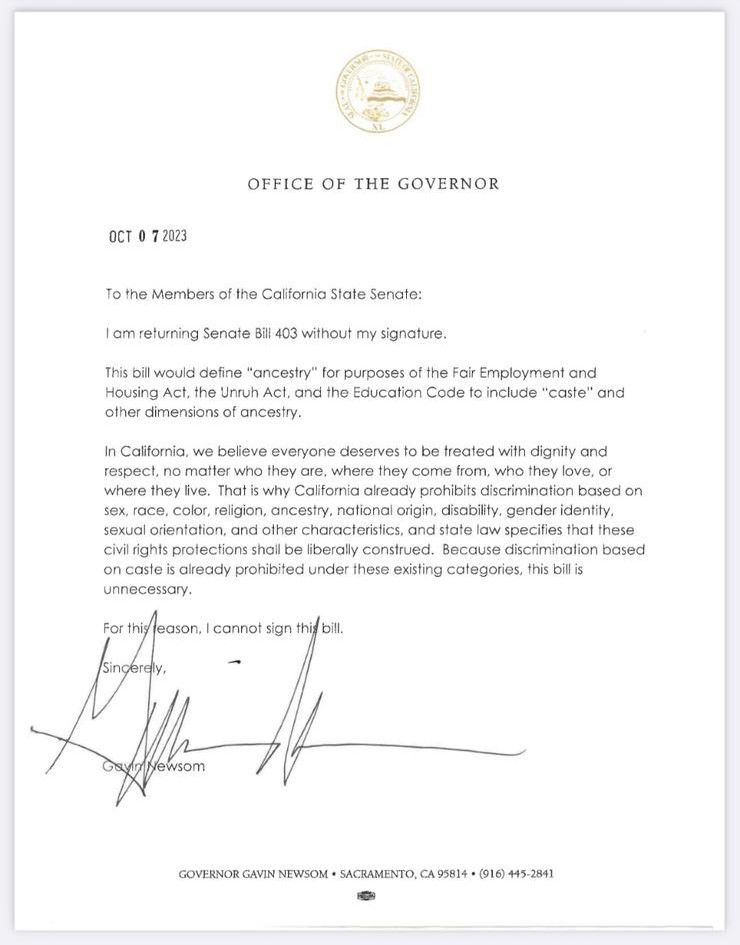
Governor Newsom rejected the bill on the grounds that discrimination based on caste was already prohibited under California law and the bill was therefore unnecessary.
Samir Kalra, Managing Director of the Hindu American Foundation said in a statement:
“This is a victory for the civil rights of all Californians. With the stroke of his pen, Governor Newsom has averted a civil rights and constitutional disaster that would have put a target on hundreds of thousands of Californians simply because of their ethnicity or their religious identity, as well as create a slippery slope of facially discriminatory laws.”
It is reported that thousands of Hindu Americans and their supporters contacted the Governor’s office pointing out how the flawed SB-403 was premised on a baseless lawsuit and false claims about the Hindu religion.
Kalra added:
“We thank political leaders of both parties, in all levels of government, who demonstrated moral courage in opposing this racist bill. Whether by passing local resolutions opposing discriminatory legislation, working with HAF to remove facially discriminatory language, outright voting against the bill or vetoing SB-403 — we will never forget that you defended the Hindu and South Asian communities at a critical moment in California history.”
“We at HAF have always said that any discrimination on the basis of ‘caste’ violates not only Hindu teachings, but also existing state and federal law. The fight over SB-403 has always been about the best solution for any intra-community discrimination, not whether such protections are needed.”
Shukla added:
“To all those who have suffered discrimination, we stand with you. We hope to move forward together, educating our community to live the values of our shared traditions that insist on equality based on teachings of oneness of all of existence. We hope to move forward without hatred or malice to bring together our community which SB-403 so unnecessarily divided.”
This bill was introduced by Senator Aisha Wahab, representative of the 10th district of California, with an aim to ban caste-based discrimination in the US and was passed by a margin of 31-5.
Support Our Journalism
Global Indian Diaspora needs fair, non-hyphenated, and questioning journalism, packed with on-ground reporting. The Australia Today – with exceptional reporters, columnists, and editors – is doing just that. Sustaining this needs support from wonderful readers like you.
Whether you live in Australia, the United Kingdom, Canada, the United States of America, or India you can take a paid subscription by clicking Patreon. Buy an annual ‘The Australia Today Membership’ to support independent journalism and get special benefits.
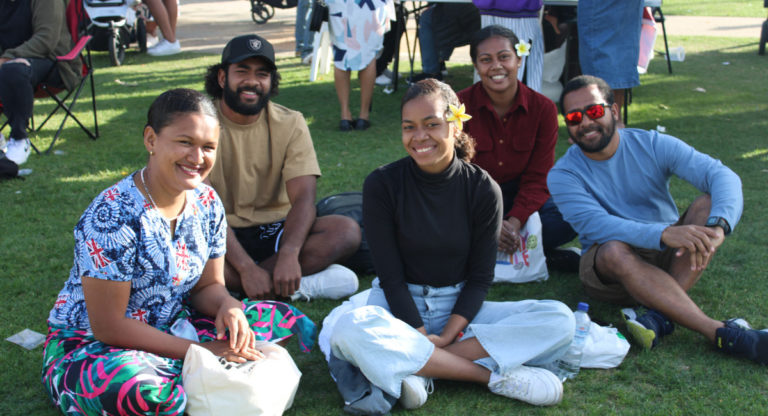
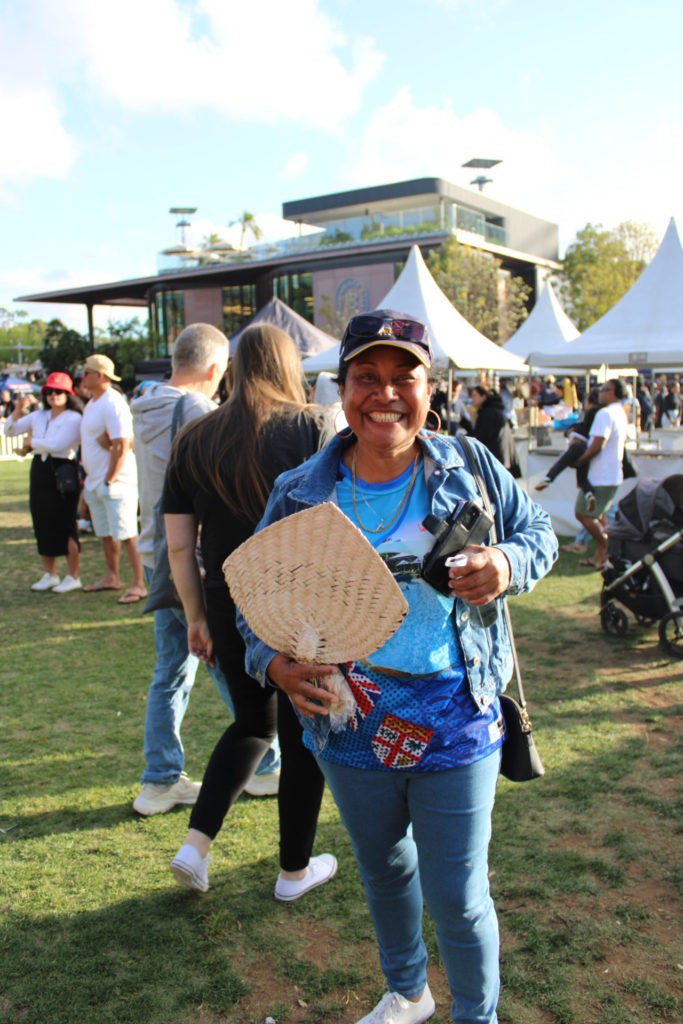
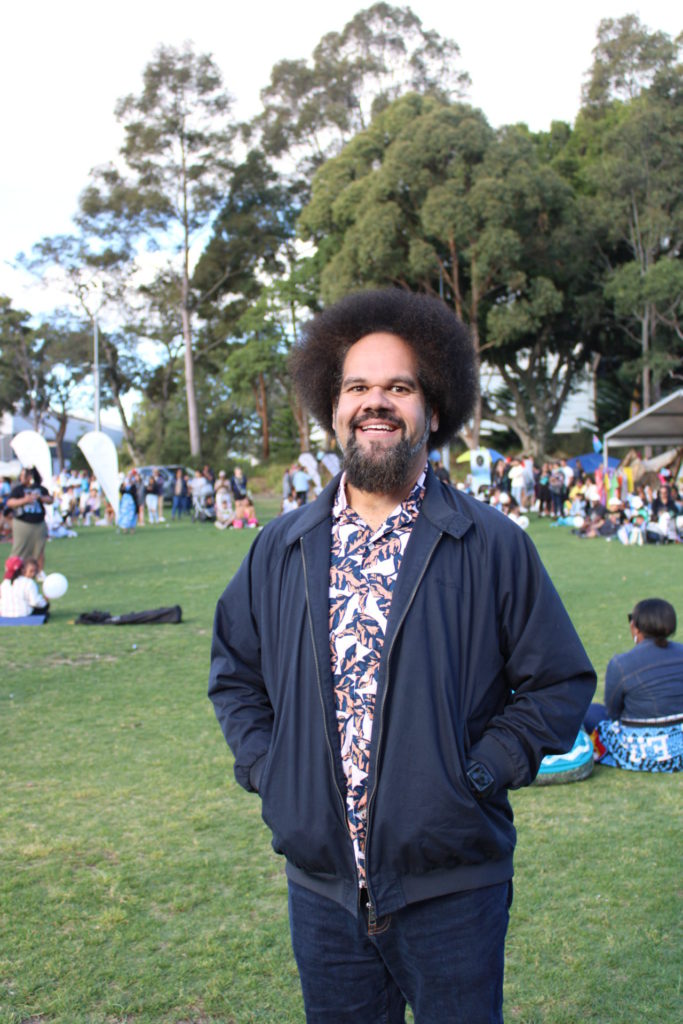
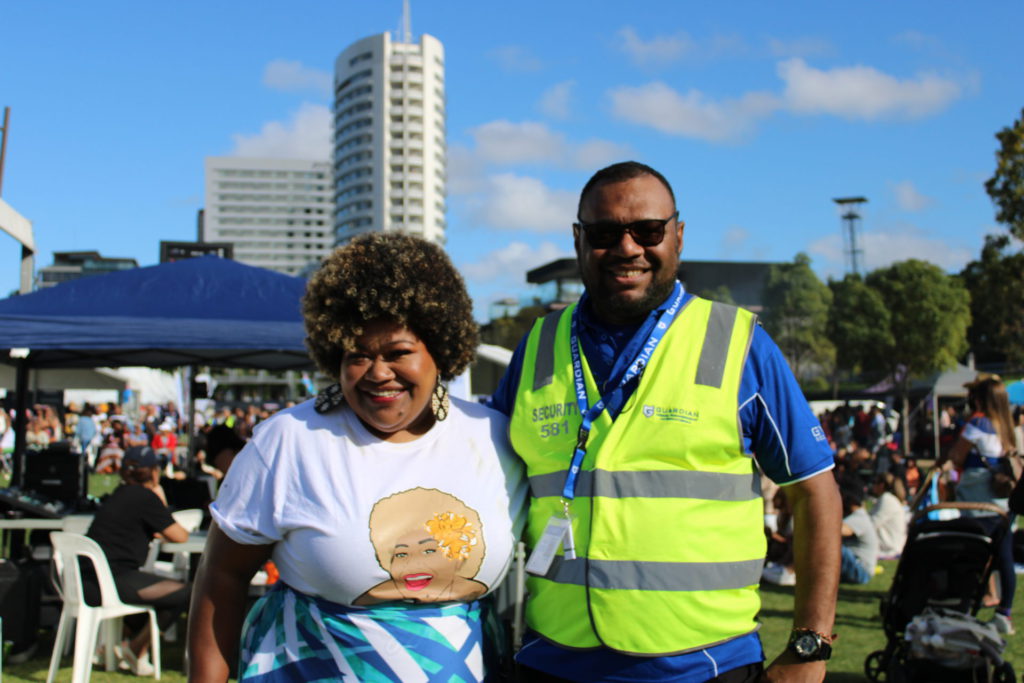
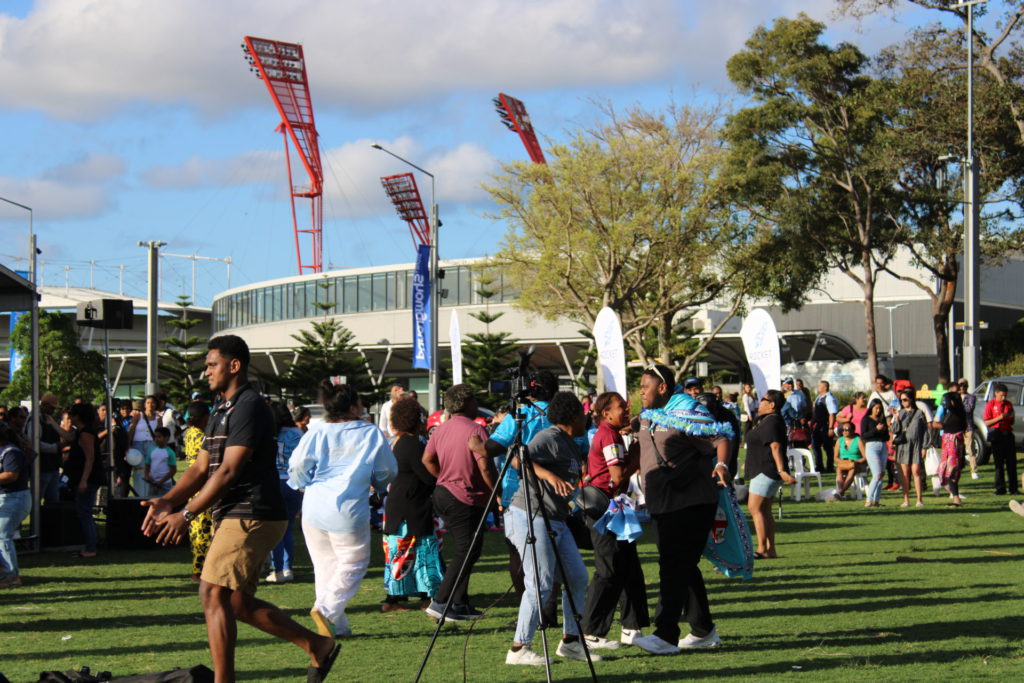
The Fijian-Australian community brought in the revelry over the weekend at Sydney’s Olympic Park, in light of upcoming Fiji Day, which marks an important day in the calender of the Fijian-Australian community. Fiji Day is celebrated on 10th October to mark Fiji’s Independence from British colonial rule in 1970.
“Celebrating Fiji Day after three years feels like a sunlit embrace from home,” reflects Seini from Newtown, Sydney.
Originally from Suva, Fiji, Ms. Seini feels that this year’s celebrations at Sydney Olympic Park united many Fijians, especially post-COVID.
She emphasised, “It truly evokes the essence of home.”
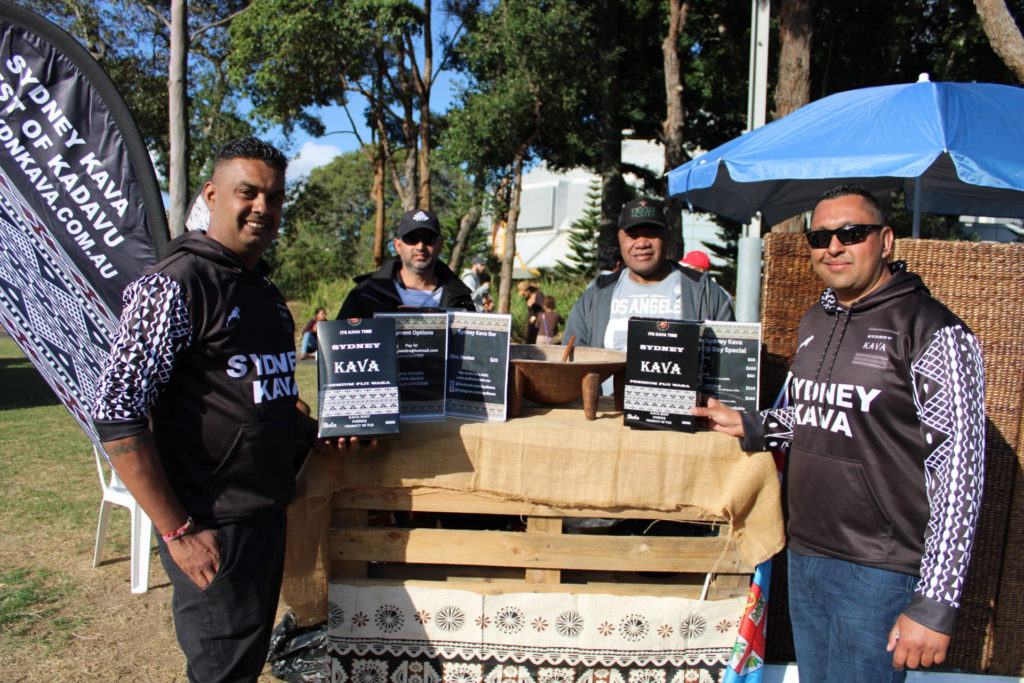
Amit, hailing from Kadavu and running a Kava business in Sydney, was moved by the unity he witnessed,
“Today has been remarkable. Fijians, along with people from other nationalities, have united in support of the community.”
Mr Amit said the highlight for him was to see the involvement of the Police force during the celebrations. He also mentioned showing interest in Kava and has bought and tried it.
Ms Maraia also shared similar sentiments, “We have been blessed to spend this day here with our people here in Sydney.”
One of the attendees at the celebration, Mosese Ratugone, shared his experience of the day,
“The things I like about this event is that I came to meet some new people, especially the Kaiviti and Indo-Fijians and also, most importantly, the grog that we share.”
A Tongan-Fijian, Latisha, shared her experience with the Meke dance (Fijian Traditional Dance).
The event was also attended by Katie and Abbey, who are not from Fiji but said they really enjoyed the sense of community at the celebrations.
Professor Jioji Ravulo was also part of the celebrations and had hands behind organising this event.
The Fiji Day celebrations revived the Island spirit for many Fijians away from home, showcasing the power of community and unity, transcending boundaries and bridging cultures.
Contributing Authors:
Yukta Chand is from Suva, Fiji. Currently, she is part of a student exchange program between the University of the South Pacific and Western Sydney University. Yukta is undertaking an internship at The Australia Today as a part of her academic and professional development.
Viliame Tawanakoro hails from Fiji and is currently part of a student exchange program between the University of the South Pacific and Western Sydney University. Viliame is undertaking an internship at The Australia Today as part of his academic and professional growth.
250 Christian Pilgrims who arrived in Israel last week to participate in the Feast of Tabernacles celebrations were evacuated yesterday (7th October 2023) into Israeli bomb shelters amid terrorist attacks on the country by Hamas.
The world is seeing appalling images.
Thousands of rockets raining down on Israeli cities. Hamas terrorists killing not only Israeli soldiers, but civilians on the streets and in their homes.
It’s unconscionable. Israel has a right to defend itself – full stop.
Pastor Manasa Kolivuso, Head of Delegation, assured safety from Jerusalem via Facebook Live broadcast, along with the recorded message from other delegates.
“We are safe. We are secure, and of course, God is watching over us and the state of Israel,” he said.
“We have stayed put in a hotel and following security protocols that are required of us in emergencies like this one here.”
“I want to offer encouragement and assurance to our family members in Fiji and worldwide who may be concerned about us during this time. We appreciate your prayers for us and the state of Israel,” Mr Kolivuso added.
International Christian Embassy Jerusalem (ICEJ) Fiji’s National Director, Pastor Mikaele Mudreilagi, stated,
‘Yes, there were explosions that happened in Israel.”
“In some areas of Gaza and closer to Tel Aviv, there were some disruptions to flights, and of course, as per the normal security situation, we had to take shelter in the security bunkers.”
Paramount Chief Ro Teimumu Kepa, a former Member of the Parliament of Fiji who was also part of the delegation, shares, “We want to assure everyone that we are safe here in Israel. Israel has one of the world’s best defence systems, and we firmly believe that God is in control.”
Former Fiji MP, Paramount Chief Ro Teimumu Kepa (Second from Left), with other Fijian Pilgrims in Israel. Photo: RoTeimumuMP Facebook Page (Picture taken before the terror attack)
“There’s nothing to worry about. We’re so relaxed that we’re considering having a bowl of Kava, but unfortunately, we don’t have a “Tanoa” Kava Bowl.’ Instead, we’ll settle for tea, bread, or something similar if they call us back to the shelter. That’s how at ease we are.”
“We trust in God’s protection and send blessings to all of you back home.”
Among the Delegates to Israel, Fiji Assistant Minister of Education Iliesa Vanawalu stated, “I just saw the news before I checked out of the hotel I was in. Israel is now right in a state of war with Hamas. So we do not know what will unfold in the next few days, but it’s all in God’s hands.”
Fiji’s Assistant Education Minister, Iliesa Vanawalu, Reassures the Safety of the Fijian Delegation in Israel via Recorded Message. Photo: Video Snip
“But that should not stop you if you consider coming to Israel next year. I mean, this is part and parcel of living in Israel. So it’s nothing new.”
“Just to let you know, we were in a kibbutz two days ago. That’s where the attacks began at 6.30 am this morning, and unfortunately, the mayor of that kibbutz, one of our speakers, died tragically this morning,” Mr Vanawalu said.
He said it touched his heart and was a bit emotional about that, but that is just the situation in Israel.
The Samoan Delegates have also confirmed their safety on their Facebook Page, stating, “We are staying indoors in Jerusalem today (yesterday) after a barrage of rockets were fired into Israel from the Gaza Strip.”
“We also received advice early this morning (yesterday), advising all Fijian and Samoan Feast Pilgrims to “stay in their hotels and restrict movements.”
Israeli Prime Minister Benjamin Netanyahu declared, “Israel is at war” in a Twitter post following Hamas’s sudden and devastating terrorist attack on Saturday.
Contributing Author: Viliame Tawanakoro hails from Fiji and is currently part of a student exchange program between the University of the South Pacific and Western Sydney University. Viliame is undertaking an internship at The Australia Today as part of his academic and professional growth.
The AFP has helped uplift the Royal Solomon Islands Police Force’s (RSIPF) Explosive Ordnance Disposal (EOD) capability by providing a new bomb disposal vehicle.
The Remote Positioning Vehicle, tEODor, will allow RSIPF EOD officers to examine, inspect and handle suspicious devices from a safe distance, significantly reducing the risk of harm to officers and members of the community.
AFP Assistant Commissioner Nigel Ryan said the AFP valued its long-standing partnership with RSIPF and would continue to work closely together to enhance capabilities through the RAPPP.
“This state-of-the-art vehicle will significantly bolster the RSIPF’s EOD unit and provide them with access to a brand new capability.”
Assistant Commissioner Ryan said:
“It’s a critical asset for the RSIPF that will help officers further protect their community as the country prepares to host major events, including the 2023 Pacific Games and upcoming National General Election.”
The high-end capability is purpose-built for disarming and disposing improvised explosive devices and explosive ordnances, and will be used by the RSIPF to manage the risk of explosive devices.
AFP Assistant Commissioner Nigel Ryan formally handed over the remote-controlled vehicle to RSIPF Commissioner Mostyn Mangau last month, under the RSIPF-AFP Policing Partnership Program (RAPPP).
RAPPP will work closely with RSIPF’s EOD Advisor, an Australian Army representative, to conduct training for RSIPF members to safely operate the vehicle.
The machine was delivered together with a customised trailer to enable the RSIPF to transport the equipment to wherever it is needed.
Support Our Journalism
Global Indian Diaspora needs fair, non-hyphenated, and questioning journalism, packed with on-ground reporting. The Australia Today – with exceptional reporters, columnists, and editors – is doing just that. Sustaining this needs support from wonderful readers like you.
Whether you live in Australia, the United Kingdom, Canada, the United States of America, or India you can take a paid subscription by clicking Patreon. Buy an annual ‘The Australia Today Membership’ to support independent journalism and get special benefits.
The famous Sycamore Gap tree was felled last week, prompting global expressions of sorrow, anger and horror. For some, the reaction was puzzling. Wasn’t it just a single tree in northern England? But for many, the tree felt profoundly important. Its loss felt like a form of grief.
Trees tell us something important about ourselves and who we are in the world. That is, they contribute to ontological security – our sense of trust that the world and our selves are stable and predictable.
Trees – especially those celebrated like England’s sycamore or Tasmania’s 350-year-old El Grande mountain ash – feel like they are stable and unchanging in a world where change is constant. Their loss can destabilise us.
What makes a tree iconic?
Individual trees can become important to us for many reasons.
When the wandering ascetic Siddhartha Gautama sat at the foot of a sacred fig around 500 BCE, he achieved the enlightenment which would, a few centuries later, lead to his fame as the Buddha. This sacred fig would become known as the Bodhi Tree. One of its descendants attracts millions of pilgrims every year.
Sometimes a tree becomes iconic because of its association with pop culture. U2’s hit 1987 album The Joshua Tree has inspired fans to seek out the tree on the cover in the United States’ arid southwest – a potentially dangerous trip.
Other trees become famous because they’re exceptional in some way. The location of the world’s tallest tree – a 115-metre high redwood known as Hyperion – is kept secret for its protection.
Niger’s Tree of Ténéré was known as the world’s most isolated, eking out an existence in the Sahara before the lonely acacia was accidentally knocked down by a truck driver in 1973. Its site is marked by a sculpture.
In 2003, the mountain ash known as El Grande – then the world’s largest flowering plant – was accidentally killed in a burn conducted by Forestry Tasmania. The death of the enormous tree – 87 metres tall, with a 19 metre girth – drew “national and international” media attention.
This year, vandals damaged a birthing tree sacred to the local Djab Wurrung people amidst conflicts about proposed road works in western Victoria.
And in 2006, someone poisoned Queensland’s Tree of Knowledge – a 200-year-old ghost gum famous for its connection to the birth of trade unionism in Australia. Under its limbs, shearers organised and marched for better conditions. The dead tree has been preserved in a memorial.
To sustain it, we seek out feelings of safety, trust, and reassurance by engaging with comfortable and familiar objects, beings and people around us – especially those important to our self-identity.
When there is an abrupt change, it challenges us. If your favourite tree in your street or garden dies, you mourn it – and what it gave you. But we mourn at a distance too – the Sycamore Gap tree was world-famous, even if you never saw it in real life.
In my research, I have explored how Tasmanian forests – including iconic landscapes and individual trees – can give us that sense of security we all seek in ourselves.
As one interviewee, Leon, told me:
These places should be left alone, because in 10,000 years they could still be there. Obviously I won’t be, we won’t be, but perhaps [the forest will be].
Temporality matters here. That is, we know what to expect by looking to the past and imagining what the future could be. Trees – especially ancient ones – act as a living link between the past, present, and future.
As my interviewee Catherine said:
You lie under an old myrtle and you just go, ‘wow – so what have you seen in your lifetime?’ Shitloads more than me.
That’s why the loss of the Sycamore Gap tree has upset seemingly the entire United Kingdom. The tree was famous for its appearance: a solitary tree in a photogenic dip in the landscape.
Its loss means a different future for those who knew it. It’s as if you were reading a book you know – but someone changed the ending.
Loss of connection
We respond very differently when humans do the damage compared to natural processes. In one study, UK homeowners found it harder to accept their house being burgled than for it to be flooded, seeing flooding as more natural and thus less of a blow to their sense of security.
This is partly why the sycamore’s death hurt. It didn’t fall in a storm. It was cut down deliberately – something that wasn’t supposed to happen.
The sycamore was just a tree. But it was also not just a tree – it was far more, for many of us. It’s more than okay to talk about what this does to us – about how the loss of this thread of connection makes us grieve.
Yes, we have lost the Sycamore Gap tree, just as we lost El Grande and many others. It is useful to talk about this – and to remember the many other beautiful and important trees that live on.
Global Indian Diaspora needs fair, non-hyphenated, and questioning journalism, packed with on-ground reporting. The Australia Today – with exceptional reporters, columnists, and editors – is doing just that. Sustaining this needs support from wonderful readers like you.
Whether you live in Australia, the United Kingdom, Canada, the United States of America, or India you can take a paid subscription by clicking Patreon. Buy an annual ‘The Australia Today Membership’ to support independent journalism and get special benefits.
HomeWorld, Australia’s biggest building co-operative that develops and manages display villages for 50 leading builders, has officially opened its newest display village in Leppington, Sydney.
Situated on the corner of Emerald Hills Boulevard and Farmer Street Leppington, this new display village showcases over 90 different home designs and the latest in design trends from over 30 leading builders, providing a convenient destination for anyone who is thinking about building to find their perfect home design.
HomeWorld CEO Phil Jones said:
“This is our 3rd HomeWorld display village in the South West, and we will continue to commit to this growing region with future villages already being planned and developed.
“Our first display village in South West Sydney was at the Hermitage in Gledswood Hills and it showcased 58 display homes. Our previous village here in Leppington had 60 display homes and this new village boasts 94 brand new homes to explore.”
Mcdonald Jones Homes_Lancaster-29-facade (Image: Supplied)
“HomeWorld Leppington is a premier destination for display homes, providing people in the south-west and the greater Sydney regions. with a place to be inspired and to discover their new home building options. The 30+ leading builders here at the new HomeWorld Leppington showcase a range of designs that can suit different lifestyles and budgets”.
“Whether you are looking to do a knock down and rebuild , or you have secured a new block of land in Sydney, the Builder’s here at HomeWorld Leppington have sales consultants on site ready to help you find a design that will work for your land and your needs.”
Lily Homes_Regency-facade (Image: Supplied)
“With so much on offer, we encourage everyone to come down and take a look at the new village, explore display homes, talk to the builders and compare home designs and promotions added Mr Jones.
The village, which has been open to preview since last year, is now open seven days a week from 10am to 5pm.
Since its establishment in 1986, HomeWorld has grown to a cooperative of more than 50-member builders across NSW, with 5 villages in operation across NSW with two more villages in development/construction phase. HomeWorld are proud Major Sponsors of Sydney Thunder BBL and WBBL, as well as Naming Sponsors of the HomeWorld Thunder Nation Cup.
We are doing too many things too fast. Where is the ‘rāga’ of our life gone? As humans, have we lost our love for music? Or is it the case that we have started prioritising storytelling, narratives, demagoguery, and social media rhetorics over music and melodies? These questions gain more relevance in the present moment, which can be termed as an age of achievements.
Achievements have no end, it is an endless, and at times, vicious cycle of accumulation. It happens both at the psyche level and the material level and because it occurs at both these levels, we are more likely to become victims of burnout syndrome. We represent an age that has drowned itself in information. Too much information has fractured our poetic and musical sensibility. Isn’t it true that achievements often require the scaffoldings of articulation, manipulation, and dictation – all central to our words and logical minds? As words and technology appear to move across at rapid rates, underpinned with the eulogised idea of connecting the world, the harmony of our lives has been disturbed, unsettled, and receded.
The nub of the matter is that as our engagement with machine, and hyperinformation speeds up, so do our expectations and the intrusion of 24/7 dictum. The balance in our life is thus disturbed, as is its shape. In our click-and-response culture of modern times, conditions of life have been severed and compromised. The modern man has thus become a truncated species, punctuated as it is by an overdose of information and technology.
It all boils down to the crisis of our imagination. The loss of ‘rāga,’ is also the loss of harmony, an indication that we are holding on to the musical strings too tightly and nonchalantly. Hold anything tightly and it is likely to lose its shape and vigour, that’s the fundamental tenet of life. While we may have succeeded in constructing an advanced world, we have ended up witnessing an unprecedented rise in the number of anxiety disorders and suicides across this seemingly world. What sort of connection is this that has led to more despair and crisis, both at worldly and planetary levels?
Perhaps, it won’t be wrong to encapsulate this planetary crisis and mental defragmentation as manifestations of ‘vikar’. ‘Vikar’ in the Vedic terminology was referred to signify ‘changes.’ Its negative connotations of ‘disorder’ could be seen in the post-Vedic period possibly pointing to the rampant changes and their negative effects on humans’ lives. Seen from this angle, this is no secret – an inharmonious ‘rāga’ will only result in ‘vikar’.
‘Vikar’ is seemingly a modern virus. The thing about viruses is that they can be found everywhere and nowhere. Modern man and modern times are permeated by viruses. Some common viruses are worth mentioning such as human viruses, animal viruses and computer viruses. Of these, the human viruses of greed and violence are the most dangerous ones because these don’t seem to have any antidotes. This ‘vikar’ is so damaging and threatening that it has not only started puncturing our emotions but also endangering the planetary future.
The humming of bees, the chirping of birds, the murmuring of water, the whistle of winds, and the fragrance of touch, seem to have been brutally colonised, muted, and erased due to our ‘vikar.’
In Shakespeare’s The Merchant of Venice, Antonio says, “In sooth, I know not why I am so sad. It wearies me, you say it wearies you, But how I caught it, found it, or came by it.” Antonio’s ‘vilap’ is an outcome of ‘vikar’ that he suffers from. This sums up the reason for the unprecedented rise in the global anxiety disorder. It is estimated that 4.05 percent of the global population suffers from anxiety disorder, which accounts for 301 million people. Post-1990s, the situation has only exacerbated, registering a rise of more than 55 percent in global anxiety disorder.
At the heart of our modern problems is our divorce from ‘rāga’. A life without music is ostensibly a life without harmony and rhythm. We have become a rāga-averse species as we don’t seem to have time on our hands to enjoy nature, to indulge in face-to-face conversations. Instead, we have mastered the art of conversing digitally. We are infatuated with and driven by digital emotions, found abundantly on social media and mobile communications. We have assigned the task of our smiling, laughing and happiness to digital emojis.
While it is true that modern life enjoys speed, we need not be reminded that speed always evades the grip of our attention as well as our ability to appreciate and enjoy the blissful surroundings around us. A fast life is tantamount to a fast heartbeat, both are equally harmful not just to our health but also to our existence. It is, therefore, time to attune ourselves to the lost melody in our lives.
The burnout syndromes of our modern times are reminders of the vitality of melody and harmony in our lives only if we are willing to attune our modern lifestyle with creativity and slow speed. The crisis of our present time is also a crisis of our creative imagination. If we do not slow down, we face an imminent threat that these ‘vikaras’ and ‘vilaps’ would lead to the ‘vinasha’ of the planetary life.
Contributing Author: Om Prakash Dwivedi tweets @opdwivedi82. His interests lie in the field of postcolonial theory.
Disclaimer: The opinions expressed within this article are the personal opinions of the author. The Australia Today is not responsible for the accuracy, completeness, suitability, or validity of any information in this article. All information is provided on an as-is basis. The information, facts, or opinions appearing in the article do not reflect the views of The Australia Today and The Australia Today News does not assume any responsibility or liability for the same.
Support Our Journalism
Global Indian Diaspora needs fair, non-hyphenated, and questioning journalism, packed with on-ground reporting. The Australia Today – with exceptional reporters, columnists, and editors – is doing just that. Sustaining this needs support from wonderful readers like you.
Whether you live in Australia, the United Kingdom, Canada, the United States of America, or India you can take a paid subscription by clicking Patreon. Buy an annual ‘The Australia Today Membership’ to support independent journalism and get special benefits.
With school and university exams looming, students will be thinking about how they can maximise their learning.
Memory is a key part of how we learn.
If students understand how memory works, they can prioritise effective study habits. This will help for exams as well as their learning in the longer term.
What is memory?
According to cognitive psychology (the study of our mental processes), there are three distinct types of memory. Each plays a different role in effective study:
sensory memory temporarily holds vast amounts of new information from our senses. This includes everything we have just seen, heard, touched or tasted. If we pay attention to that information, it moves into working memory for processing. If we don’t pay attention, it is discarded.
working memory is our brain’s control centre. All conscious cognitive activity, including remembering, calculating, planning, problem-solving, decision-making and critical thinking happens in our working memory. However, if we have too much on our minds, working memory can easily become overloaded. This makes it important to offload knowledge and skills to long-term memory.
long-term memory is our brain’s library. When new knowledge or skills are well practised, they are “encoded” from working memory and into long-term memory. Here they are stored in vast networks called schemas. To use those knowledge and skills again, we retrieve those schemas back into working memory. The more we encode and retrieve knowledge and skills, the stronger those memory pathways become. Well-learned schemas can be retrieved automatically, which creates space in working memory for new thinking and learning.
How to help your memory when preparing for exams
Not everyone likes exams and educators often debate their advantages and disadvantages.
But if you are a student who is studying for exams right now, here are some tips to help you use your time well:
create the conditions for attention: put your phone away and remove distractions. Remember, your attention is needed to bring information into working memory and keep it there. Loss of attention, or mind wandering, can result in poorer learning. Harvard professor of psychology Dan Schachter calls absent-mindedness one of the “seven sins of memory”.
consider your subject area: different disciplines ask different kinds of questions and you should study with these in mind. In a Year 12 English exam, for example, you might be asked to write a response about your interpretation of a particular text. So don’t just re-read the text; effective study involves drawing out themes and insights, practising your arguments and seeking feedback.
minimise “shallow” study: most students report re-reading and highlighting text when studying. But these are less effective than other study techniques. Shallow study or encoding focuses more on surface features and less on meaning. This encourages rote recall over genuine understanding and leads to poorer learning. In one study, re-reading a textbook twice in a row offered no advantage over reading it for the first time.
maximise “deep” study: this involves actively using the information you are studying. Depending on your discipline, this might include answering practice questions, constructing your own questions, summarising, identifying themes, evaluating existing arguments, making decisions, or explaining concepts to others. This deep encoding results in stronger schematic networks, which are more easily reactivated when you need them.
move beyond worked examples: worked examples are step-by-step illustrations of the processes to solve a problem. They can be powerful starting points because they show you how to use a particular strategy. They also help to reduce working memory load. But as you become more expert, it is more effective to draw those strategies from long-term memory yourself.
take breaks: research with Australian university students shows even a five-minute rest break can support attention – the gateway to learning. Research using brain scans also shows rest can help you consolidate memories.
don’t cram: the so-called “spacing effect” shows memory and conceptual understanding both benefit from distributed rather than massed learning. This means six half-hour sessions are better for learning than one three hour block.
mix up your study: this could mean varying questions and activities, so your brain is forced to compare, contrast, refine, and draw distinctions between concepts and approaches. This is known as “interleaving”, and has been shown to boost learning in subjects such as maths, music and medicine.
don’t skip sleep: sleep is crucial for the consolidation of memory or solidifying new connections or insights you have made.
give yourself enough time: unfortunately, there are no shortcuts here! Each time you practise drawing specific knowledge and skills from long-term memory into working memory, you are etching a memory super-highway. The more you do this, the better and quicker you become – which is what you will need come exam time.
Global Indian Diaspora needs fair, non-hyphenated, and questioning journalism, packed with on-ground reporting. The Australia Today – with exceptional reporters, columnists, and editors – is doing just that. Sustaining this needs support from wonderful readers like you.
Whether you live in Australia, the United Kingdom, Canada, the United States of America, or India you can take a paid subscription by clicking Patreon. Buy an annual ‘The Australia Today Membership’ to support independent journalism and get special benefits.
This Friday is yet another achievement for Indian Bollywood cinema to reflect a biopic that reflects the common man’s traits of courage and unwavering bravery.
It is a real-life, inspiring story of mining engineer Jaswant Singh Gill, who saved the lives of 65 miners, and is picturised on the big screen by none other than Akshay Kumar in the movie Mission Raniganj: The Great Bharat Rescue.
The courage and resilience of this engineer left an indelible mark in history. This inspiration testified to the strength of the human spirit and the determination to fight against the odds of life.
This op-ed reflects the common man’s traits to become a source of inspiration for many, based on readily available sources.
Image: Mission Raniganj (Source: Poster)
The story of Jaswant Singh Gill (born in Punjab, India), an employee of Coal India Limited, led a rescue mission at Mahabir Colliery, Raniganj, West Bengal, India to save guard 65 miners who unfortunately got trapped in a flooded coal mine.
‘Mission Raniganj’ showcase the bravery, intelligence and courage of this true hero of Gill, a senior engineer who innovated the idea of using a fabricated steel capsule about 7 feet high and 22 inch in diameter and the borehole was dug, where this capsule was lowered to bring one miner out each time. The capsule was 2.5 meters tall, made of steel that was attached with iron ropes and a crane was used to lower it into the pit.
This was a dangerous rescue mission, where the conditions were not in favour of rescuers. They were fighting against the time, as the carbon dioxide release was high, risk of flood and danger of roof collapse. These trapped miners had once lost the hope to be rescued. This was accomplished by one of the bravest rescue missions to overcome all the obstacles. The remarkable intelligence of Gill was reflected in the idea implying this capsule rescue and execution.
Image: Akshay Kumar and Jaswant Singh Gill (Source: Screenshot)
The movie reflected that Akshay had to use his brilliance with the help of a surveyor to find the highest point of the mine and dig a borehole with the technical staff’s help to succeed in this challenging rescue mission. Akshay’s colleagues underestimated his vision and plans, but this man from Punjab never lost hope and explained his plan to the seniors to begin the rescue. The capsule was made quickly, and two rescue personnel were called to execute the mission by entering the borehole.
The movie reflects that both turned down this operation to save their life. But it was none other than the protagonist who volunteered for the mission despite strong resistance from the senior officials. He entered the capsule and went into the mine. This presence of mind was also showcased in the manner in which he pacified the trapped 65 miners to use common sense to rescue all. The hammer signal was used to pull the capsule out of the borehole, and it is insightful to watch how Akshay used his intelligence not just to rescue the 65 miners but finally to execute this mission. He was later known as a capsule man. This brave engineer taught the lesson of exceptional intelligence through his innovative problem-solving skills and earned admiration and respect in the eyes of the world. The individual’s resolute perseverance and remarkable bravery have served as a source of inspiration for several folks across. The individual’s resolute courage when confronted with challenges distinguishes him from others.
Image: Jaswant Singh Gill
Gill epitomizes the essence of bravery, as seen by his willingness to endanger his well-being to save others and his unwavering commitment to championing moral righteousness.
In 1991, President of India R. Venkataraman bestowed upon Gill the prestigious citizen bravery award known as the ‘Sarvottam Jeevan Raksha Padak’. Subsequent to that, he has garnered several commendations, notably including a Lifetime Achievement Award bestowed to him by Coal India.
Thus a common man became a source of inspiration to the world and has given inspiration to many others to show resilience and determination in odd times.
Contributing Author: Dr Sakul Kundra is an Associate Dean (Research) and Assistant Professor at the College of Humanities and Education, Fiji National University. The views expressed are his own and not of this newspaper or his employer. Email dr.sakulkundra@gmail.com
Disclaimer: The opinions expressed within this article are the personal opinions of the author. The Australia Today is not responsible for the accuracy, completeness, suitability, or validity of any information in this article. All information is provided on an as-is basis. The information, facts, or opinions appearing in the article do not reflect the views of The Australia Today and The Australia Today News does not assume any responsibility or liability for the same.
Support Our Journalism
Global Indian Diaspora needs fair, non-hyphenated, and questioning journalism, packed with on-ground reporting. The Australia Today – with exceptional reporters, columnists, and editors – is doing just that. Sustaining this needs support from wonderful readers like you.
Whether you live in Australia, the United Kingdom, Canada, the United States of America, or India you can take a paid subscription by clicking Patreon. Buy an annual ‘The Australia Today Membership’ to support independent journalism and get special benefits.
Devon Conway and Rachin Ravindra unleashed a whirlwind of brilliance as they blazed to magnificent centuries, leaving an England bowling attack bewildered. Their phenomenal partnership of 271 runs propelled New Zealand to a resounding nine-wicket victory against the defending champions at Ahmedabad’s Narendra Modi Stadium on Thursday.
Conway’s bat sizzled as he carved an unbeaten 152 runs off just 121 balls, while Rachin displayed his prodigious talent with an extraordinary 123 not out from 96 deliveries. It was a batting spectacle that England couldn’t contain.
New Zealand’s vs England ICC World Cup 2023opener; Image Source: Screenshot ICC Video
England had set a target of 282 runs for New Zealand. Black Caps started reasonably well despite English fast bowler Sam Curran dismissing Will Young for a duck. As Rachin Ravindra joined forces with Conway, and together, they unleashed a barrage of boundaries and sixes in the opening powerplay, leaving England’s pace and spin bowlers shell-shocked.
Their partnership was relentless, with two sixes coming off Ravindra’s bat, one against Mark Wood and the other against Moeen Ali. The duo reached their respective half-centuries in the 12th and 13th overs, showcasing their remarkable individual prowess.
At the 25-over mark, their unbeaten alliance of 177 runs was already the highest partnership for two New Zealand batsmen in a Cricket World Cup match, surpassing the previous record of 168 runs set by Chris Harris and Lee Germon in 1996.
In the 27th over, Conway notched up a scorching century in just 83 balls, while Rachin’s maiden hundred took New Zealand closer to the target. Their assault continued without a hint of slowing down, guiding their team to a resounding nine-wicket victory.
In England’s inning, Matt Henry’s fiery three-wicket haul, complemented by Glenn Phillips and Mitchell Santner’s two wickets each, restricted England to a total of 282/9 in their allotted overs.
Despite a fiery start by Jonny Bairstow, who dispatched a Trent Boult delivery for a six off the first ball, England struggled to maintain momentum. Opener Dawid Malan fell after a cautious start, and England’s middle order couldn’t quite find the consistency they needed.
Joe Root’s inventive reverse scoop for a six was a highlight, but wickets fell at crucial junctures. Mitchell Santner accounted for Bairstow, while Rachin Ravindra got rid of Harry Brook.
England’s innings further stumbled as they lost Moeen Ali and well-set batters Jos Buttler and Joe Root. The lower order contributed with Chris Woakes, Sam Curran, and Adil Rashid, but it was Matt Henry’s disciplined bowling that kept England from posting a more substantial total.
In the end, England managed 282/9, which New Zealand chased down convincingly, clinching a memorable victory with nine wickets in hand.
Brief Score: England 282/9 (Joe Root 77, Jos Buttler 43; Matt Henry 3-48) vs New Zealand 283/1 (Devon Conway 152*, Rachin Ravindra 123*; Sam Curran 1-47).
Support Our Journalism
Global Indian Diaspora needs fair, non-hyphenated, and questioning journalism, packed with on-ground reporting. The Australia Today – with exceptional reporters, columnists, and editors – is doing just that. Sustaining this needs support from wonderful readers like you.
Whether you live in Australia, the United Kingdom, Canada, the United States of America, or India you can take a paid subscription by clicking Patreon. Buy an annual ‘The Australia Today Membership’ to support independent journalism and get special benefits.
The Fair Work Ombudsman has commenced legal action against the operators of an Indian supermarket in Darwin’s north.
Facing court is Om Shiva Foods Pty Ltd, trading as Wulagi Supermarket, and the company’s sole director Vinay Madasu.
The regulator investigated after receiving a request for assistance from a casual retail assistant, a visa holder from India, who was employed at the supermarket between February 2020 and August 2021.
A Fair Work Inspector issued a Compliance Notice to Om Shiva Foods in October 2022 after forming a belief that the worker had been underpaid minimum wages, and penalty and overtime rates for working weekends and public holidays, owed under the General Retail Industry Award 2010 and General Retail Industry Award 2020.
It is alleged that the worker is owed more than $68,000.
The Fair Work Ombudsman alleges Om Shiva Foods, without reasonable excuse, failed to comply with the Compliance Notice, which required it to calculate and back-pay the worker’s entitlements. A breach of pay slip laws is also alleged.
Mr Madasu was allegedly involved in the contraventions.
Fair Work Ombudsman Anna Booth said the regulator would continue to enforce workplace laws and take businesses to court where lawful requests are not complied with.
“Where employers do not comply, we will take appropriate action to protect employees. A court can order a business to pay penalties in addition to back-paying workers,” Ms Booth said.
“Employers should also be aware that taking action to protect vulnerable workers like visa holders is a priority for the FWO. Any employees with concerns about their pay or entitlements should contact the Fair Work Ombudsman for free assistance.”
The FWO is seeking penalties in court. Om Shiva Foods faces a penalty of up to $33,300 and Mr Madasu faces a penalty of up to $6,660 for the alleged failure to comply with the Compliance Notice.
In addition, Om Shiva Foods faces a penalty of up to $66,600 and Mr Madasu faces a penalty of up to $13,320 for the alleged failure to issue pay slips.
The regulator is also seeking an order for the company to rectify the alleged underpayment amount in full, plus interest and superannuation.
A directions hearing is listed in the Federal Circuit and Family Court in Brisbane on 4 December 2023.
Support Our Journalism
Global Indian Diaspora needs fair, non-hyphenated, and questioning journalism, packed with on-ground reporting. The Australia Today – with exceptional reporters, columnists, and editors – is doing just that. Sustaining this needs support from wonderful readers like you.
Whether you live in Australia, the United Kingdom, Canada, the United States of America, or India you can take a paid subscription by clicking Patreon. Buy an annual ‘The Australia Today Membership’ to support independent journalism and get special benefits.
In the world of lithium-ion batteries, smartphones take centre stage. Yet they’ve also sparked an ongoing debate: does prolonged (or overnight) charging wreak havoc on your battery?
A number of factors determine a phone battery’s lifespan, including its manufacturing age and its chemical age. The latter refers to the battery’s gradual degradation due to variables such as fluctuations in temperature, charging and discharging patterns and overall usage.
Over time, the chemical ageing of lithium-ion batteries reduces charge capacity, battery lifespan and performance.
A normal [iPhone] battery is designed to retain up to 80% of its original capacity at 500 complete charge cycles when operating under normal conditions.
Research has found a 2019 smartphone battery could, on average, undergo 850 full charge/discharge cycles before dropping to below 80% capacity. This means only 80% of the initial battery capacity remains after about two to three years of use. At this point the battery begins to deplete noticeably faster.
Should you charge your phone overnight?
Most new-generation smartphones will take somewhere between 30 minutes and two hours to charge fully.
Charging times vary depending on your device’s battery capacity – larger capacities require more time – as well as how much power your charger supplies.
Charging your phone overnight is not only unnecessary, it also accelerates battery ageing. Full charging cycles (going from 0%–100%) should be avoided to maximise your battery’s lifespan.
charging your battery up to 100% too frequently may negatively impact the overall lifespan of the battery.
Similarly, keeping iPhones at full charge for extended periods may compromise their battery health.
Rather than a full top-up, it’s recommended to charge your battery up to 80% and not allow it to dip under 20%.
Can your phone be overcharged?
In theory, lithium-ion batteries can be overcharged. This can lead to safety risks such as the battery overheating and catching fire. The good news is most modern phones have an in-built protection that automatically stops the battery from charging further than 100% – preventing any damage from overcharging.
However, each time a battery drops to 99% (due to apps running in the background) it will “trickle charge”: it will start charging again to maintain a fully charged state.
Trickle charging can wear a battery down over time. That’s why many manufacturers have features to regulate it. Apple’s iPhones offer functionality to delay charging past 80%. Samsung’s Galaxy phones provide the option to cap the charge at 85%.
Can your phone explode from charging?
It’s very unlikely your smartphone will explode as a result of charging – especially since most phones now have automatic protections against overcharging.
Still, over the years we have seen severalreports of phones exploding unexpectedly. This usually happens as a result of manufacturing faults, poor-quality hardware or physical damage.
Lithium-ion phone batteries overheat when the heat generated during charging is unable to dissipate. This may cause burns or, in extreme cases, lead to a fire.
Also, these batteries operate effectively within a temperature range of 0℃ to 40℃. They may expand at higher ambient temperatures, potentially causing a fire or explosion.
Using an incorrect, faulty or poor-quality charger or cable can also lead to overheating, fire hazards and damage to the phone itself.
Tips to enhance your battery’s lifespan
Although your phone probably has in-built safety mechanisms to protect its battery, taking a cautious approach will make it last even longer. Here are some ways to protect your phone’s battery:
install the latest software updates to keep your phone up-to-date with the manufacturer’s battery efficiency enhancements
use original or certified power chargers, as the power delivery (amps, volts and watts) in off-market chargers can differ and may not meet the required safety standards
avoid exposing your phone to high temperatures – Apple and Samsung say their phones work best at 0℃ to 35℃ ambient temperatures
limit your charging to 80% of the full capacity and don’t let it dip below 20%
don’t leave your phone charging for an extended period, such as overnight, and disconnect it from the power source if the battery reaches 100%
keep your phone in a well-ventilated area while it’s charging and avoid placing it or the charger under a blanket, pillow or your body while it’s connected to a power source
monitor your battery health and use to identify unusual trends, such as taking an excessive time to charge, or rapid draining
if you notice your phone is heating up excessively, or has a bulging or swollen back, get an authorised service centre to check and repair it.
If you want specific details about your particular phone and battery, the best option is to follow the manufacturer’s guidelines.
Global Indian Diaspora needs fair, non-hyphenated, and questioning journalism, packed with on-ground reporting. The Australia Today – with exceptional reporters, columnists, and editors – is doing just that. Sustaining this needs support from wonderful readers like you.
Whether you live in Australia, the United Kingdom, Canada, the United States of America, or India you can take a paid subscription by clicking Patreon. Buy an annual ‘The Australia Today Membership’ to support independent journalism and get special benefits.
The promise to “get tough on youth crime” is a New Zealand election perennial. This year, parties on both the left and right have pledged to crack down on young offenders – despite a lot of evidence that such approaches do not work in the long term.
Already, the Ram Raid Offending and Related Measures Amendment Bill is working through the legislative process. If passed, it would create a new offence within the Crimes Act, allowing the prosecution of children as young as 12, and prison sentences of up to ten years.
National is proposing a new “young serious offender” justice category, as well as the creation of “youth offender military academies”. ACT wants 200 new youth justice beds and responsibility for youth justice to move from children’s ministry Oranga Tamariki to the Department of Corrections.
According to current polling, parties on the right may be in a position to form the next government. If so, it seems New Zealand’s youth justice system may take a more punitive turn.
Treating symptoms not causes
The country’s youth justice system established a “new paradigm” in the early 1990s, after the Oranga Tamariki Act 1989 became law. This offered a homegrown approach to families and their young people unique to New Zealand. The model of family empowerment, restorative justice, diversion from court prosecution and reintegration in society became known internationally.
While there was a turn towards more punitive adult criminal justice in Europe and the United States, New Zealand’s system stayed relatively stable until 2008, when a National-led coalition government took power.
Youth justice was a central facet of National’s election campaign to end three terms of Labour-led government. Announcing his party’s “youth plan”, National leader John Key said part of it was about “rolling up our sleeves to prevent New Zealand’s youth crime problem from becoming tomorrow’s crisis”.
This included the now familiar election promise to introduce youth “boot camps”, and to reduce the age of criminal prosecution to 12.
But as critics have long argued, a focus on “crime control” and “risk management” has seen punishment prioritised over addressing the root causes of crime and the best interests of young people.
This can be seen in the disproportionate impact of the criminal justice system on Māori and Pacific youth. According to 2021 data, Māori make up 67% of those in youth detention. Pacific youth account for 7%, and those who identify as both Māori and Pacific account for 13%. Young people who identify as neither Māori nor Pacific comprise only 13% of that population.
Failing to address the complex developmental and social drivers of youth crime means those statistics are unlikely to change.
What is working?
There is also considerable evidence of the influence young people’s gradual cognitive and social development can have on criminal behaviour.
These age-related factors include reduced impulse control, difficulty with future planning, greater risk taking and susceptibility to peer influence. At the same time, age also offers an increased potential for positive change.
Importantly, offending by children and young people is also often related to challenges at home and in communities, including poverty, housing instability, and poor physical or mental health.
The current evidence supports a less punitive approach to youth offending, through diversion or the use of specialist courts, based on promoting welfare and addressing the underlying causes of offending.
There is evidence in New Zealand that restorative justice reduces reoffending. Family group conferences have been shown to reduce the “frequency and seriousness” of offending for 70% of participants, with Rangatahi Courts also helping reduce reoffending and promote other positive outcomes.
While these developments are encouraging, the investigation into “baby uplifts” by Oranga Tamariki, testimonies to the Abuse in Care Royal Commission, and reports of abuse in Oranga Tamariki residences, all raise serious questions about placing more young people in institutions.
Furthermore, New Zealand’s rate of youth offending has been decreasing for some time. But there is a disproportionately high number of youth justice beds here relative to other comparable countries, especially considering the system struggles with mental health support.
The United Nations has already identified the human rights concerns with New Zealand’s low age of criminal responsibility, punitive practices like “spit hoods”, and the disproportionate numbers of rangatahi Māori in the criminal justice system.
An evidence-led approach to youth justice would involve Māori and see the expansion of specialist courts throughout the country. Rather than lowering the age of criminal responsibility, the eligible age for appearing in the youth courts would be raised.
Overall, the goal would be to minimise the imprisonment of young people, including remand in police cells and youth or adult detention facilities. And there would be much greater investment in iwi partnerships to provide wrap-around community services that are whanau-focused and culturally appropriate.
As the former chief science adviser to the prime minister reported in 2018, more resources directed at mental health, trauma, substance abuse and inadequate housing should be the basis of preventing more youth offending. A more punitive response may win votes but it will not solve the problem.
Global Indian Diaspora needs fair, non-hyphenated, and questioning journalism, packed with on-ground reporting. The Australia Today – with exceptional reporters, columnists, and editors – is doing just that. Sustaining this needs support from wonderful readers like you.
Whether you live in Australia, the United Kingdom, Canada, the United States of America, or India you can take a paid subscription by clicking Patreon. Buy an annual ‘The Australia Today Membership’ to support independent journalism and get special benefits.
Adil Hussain is one of the best actors of the Indian film industry who is active on stage, films and television. He is an institution in himself, giving excellent performances in independent, mainstream and commercial films. His talent and versatility is shown in Hindi-English, Assamese-Bengali, Malayalam-Tamil, Marathi, Norwegian-French films. He has acted in over 80 films and several Indo-European art house cinema projects.
Adil was born in Goalpara, Assam. His father was a headmaster, mother a housewife and he is the youngest of seven siblings. He participated in school plays and when 18, went to Guwahati’s ‘B.Borooah’ college to study philosophy and performed as a stand-up comedian in plays. As a founding member of the local comedian group, ‘The Bhaya Mama Group’, he gained immense popularity by imitating actors. He performed political satires for 6 years through mobile theatre in Assam. He acted in Assamese TV films, video films, street and radio plays. His early Assamese films were ‘Sutrapaat’, ‘Pita-Putra’ and ‘Bhai-Bhai’.
Adil Hussain (Image: Supplied)
Adil received a scholarship to study at the ‘National School of Drama’ from 1990-1993. He studied at the Drama Studio, London on a Charles Wallace India Trust Scholarship. He worked for some time with the International Dance Theater in Amsterdam. He returned to India in 1994 and performed for a year in Mobile ‘Hengul Theatre’, Assam. He went to Delhi to start stage career but continued training under Khalid Tayyabji. He trained under Swapan Bose at Aurobindo Ashram in Puducherry. He got training from Dilip Shankar in Delhi. Adil gave thousands of performances and dozens of presentations on stage. He spent 2/1-2 years on a river island in Karnataka with an international group of artists, researching the art of acting. He taught acting at ‘Film and Television Institute, Pune’ and ‘Drama School, Amsterdam’.
During the 1999 Edinburgh Film Festival, a play ‘Othello: A Play in Black and White’, directed by Roysten Abel was screened. Adil played ‘Othello’ and Kristen Jain played ‘Desdemona’. According to the script, Othello had to kill Desdemona. But out of love, Adil hugged ‘Desdemona’ instead of hitting her, which left ‘Kristen’ and the audience stunned, resulting in pulling down the curtain. This play brought him popularity, international praise and his play was awarded the ‘Edinburgh Fringe First’. Adil did another play ‘Goodbye Desdemona’ directed by Roysten Abel. ‘The Scotsman’ and ‘The Independent’ in UK appreciated his role. The play was performed for 10 years in Western Europe, Africa and India. (In 2007, Adil married Kristen Jain).
Adil Hussain (Image: Supplied)
Adil rose to fame through television in 2002–2003 by playing lead role in the BBC World Service Trust TV series ‘Jasoos Vijay’. In 2003, he acted in short films ‘Rasikan Re’ and ‘Butterfly’. From 2004 to 2007, Adil was the artistic director, instructor at the Society for Artists and Performers in Hampi. He was a visiting faculty at the Royal Conservatory of Performing Arts, Hague. He is a visiting faculty at his alma mater, National School of Drama. In 2004, Adil played lead role in Bengali drama ‘Iti Srikanta’.
In 2010, based on Mahashweta Devi’s story, he played lead role as ‘Upin’ in Italo Spinelli’s Bengali film ‘Gangor’. He did a TV movie ‘Tequila Nights’. Everyone noticed him in film ‘Ishqiya’, playing Vidya Balan’s husband, gang-lord ‘Vidyadhar Verma/Shyam Prasad Kulshrestha’.
The year 2012 was a significant year in Adil’s cinematic journey. In Ang Lee’s Oscar-winning film ‘Life of Pi’, he played the role of ‘Santosh Patel’ the father of the protagonist ‘Pi’. The story, based on an English novel, was dubbed into Hindi, Tamil and Telugu. In the same year, he played actress Sridevi’s husband ‘Satish Godbole’ in ‘English-Vinglish’. He was highly praised for his stellar performance in this widely acclaimed film. He also acted in Mira Nair’s international Hindi/English film ‘The Reluctant Fundamentalist’, where he played Mujahid ‘Mustafa Fazil’.
Watch Video: Internationally acclaimed actor Adil Hussain in conversation with Pallavi Jainwhere he speaks about his journey, the art of acting and the teachings of Ramkrishna Paramhansa and Sri Aurobindo
In 2014, Adil brilliantly played the main lead ‘Aslam Puncturewala’ in political satire ‘Z Plus’, by Chandraprakash Dwivedi. He also made his Marathi debut in the same year playing ‘Joshi’ in Marathi film ‘Sunrise’. He played the main lead ‘Iqbal’ in the Assamese film ‘Raag: The Rhythm of Love’ for which he was awarded Best Actor Award by ‘Prague Cine Awards’. Adil also featured as ‘Bilal’ in Dennis Tanovic’s ‘Tigers’. The film was screened in 2014 at Toronto International Film Festival and was released in 2015.
Adil played a mystic lover in Leena Yadav’s film ‘Parched’ in 2015. The film premiered in the Special Presentations section of the Toronto International Film Festival. He played landlord ‘Deepnarayan Singh’ in Bengali mystery thriller ‘Har Har Byomkesh’, ‘Amod Kanth’ in ‘Main Aur Charles’, ‘Major Baruah’ in ‘Jai Ho Democracy’, Superintendent of Police in ‘Angry Indian Goddesses’ and ‘Patel’ in ‘Umrika’. He played ‘Rai Buller’ in the Hindi/Punjabi film ‘Nanak Shah Fakir’ and ‘Devinath’ in Assamese film ‘Kothanodi’. He played an important role of ‘Selvam/Vettri’ in Tamil cinema ‘Yatchan’. In 2015, Adil’s ‘The Violin Player’, directed by Baudhayan Mukherjee, was included among the 15 best Indian films.
In 2016, Adil’s was the lead actor in Subhashish Bhutiani’s ‘Hotel Salvation/Mukti Bhawan’ playing the role of ‘Rajiv’. This film was included in 25 best Hindi films list of the decade and received more than 25 national and international awards. Adil was awarded India’s ‘National Film Award’ (Special Jury) in India, ‘Jagran Film Festival Award’ for best actor, ‘Rajasthan International Film Festival Award’ for best actor. The film received ‘International Indian Film Academy Award’, ‘FOI Online Special Mention Award’ and ‘Washington DC South Asian Film Festival Award’. In 2016, he also played HRD Minister ‘Brijesh Verma’ in ‘Force 2’, ‘Viri’ in short film ‘Chutney’, ‘Aga Khan’ in short film ‘Azad’ and ‘Arjun’ in an English film ‘Feast of Varanasi’.
Adil won the prestigious Indian ‘National Film Award’ (Special Jury) for the second time in 2017 for his role as ‘Priyendu Hazarika’ in Assamese film ‘Maj Rati Keteki’. His other films were ‘Bioscopewala’ in Hindi, ‘Commando 2’ in Hindi-Telugu-Tamil and ‘Mantra’ in English. In 2017, Adil received ‘Norwegian Kosmorama Trondheim International Film Festival award’ and the Norwegian National Award ‘Amanda’ for ‘Best Actor’ for the film ‘What Will People Say’.
In 2019, Adil starred in Hindi blockbusters ‘Kabir Singh’ and ‘Good Newwz’.
Adil performed brilliantly as a rickshaw puller ‘Buchi Paswan’, in the film 2020 ‘Pareeksha’ where his excellent acting could be compared with great actor ‘Balraj Sahni’. For ‘Pareeksha’, he was awarded Best Actor Award by IWM Digital Awards. In 2021, he received the ‘Critics Choice Best Actor Award’ and ‘Best Actor Award’ of the Pune International Film Festival for his stellar performance in the short film ‘Meal’.
He made his OTT debut with ‘Delhi Crime’ in 2019 that became the first Indian series to win ‘Outstanding Drama Series’ at the International Emmy Awards where he played one of the leads ‘CP Kumar Vijay’. In 2022, he played ‘Ramkishore Negi’ in web series ‘Mukhbir: The Story of a Spy’.
In 2022, Adil became the first personality to hoist the Indian national flag at the ‘Azadi Ka Amrit Mahotsav’ metaverse event organised by Piro Space.
Adil has won many awards over the course of his career. He received the ‘Best Assamese Person of the Year Award – 2015’ by News Live TV channel and ‘Outstanding Achievement Award – 2020’ at the London Indian International Film Festival for his significant contribution to global cinema. He was awarded ‘Global Icon Award 2021’ by Prague Television Channel. In 2021, he received praise from Star Trek global fans for his role as ‘Lieutenant Aditya Sahil’ in the iconic international science fiction series ‘Star Trek’. His highly acclaimed 2023 film ‘Footprints on Water’ has won several awards.
Adil is a superbly talented actor with immense potential, widely known for his critically acclaimed performances in award-winning films. Completely different roles in his films have played a big role in proving his versatility at the global level. In addition to being successful, famous and brilliant at his craft, Adil is an extremely popular actor also because of his sensitivity, sophistication and refined taste. He is a very polite, humble, easy-going and down to earth person with no air of arrogance, nor success going to his head. Adil’s qualities make him among the most loved, admired and inspiring artists of our times.
Contributing Author: Sushma ‘Shandilya’ is a well-known Hindi poet and writer based in Bhopal, Madhya Pradesh, India. Her short stories, articles and plays have been published in leading Indian publications. Sushma ‘Shandilya’ writes on various contemporary issues including themes around women empowerment. She is also a yoga teacher.
NSW Premier Chris Minns, Treasurer Daniel Mookhey, NSW Ministers Steve Kamper and Jihad Dib, and NSW MPs Charishma Kaliyanda, Donna Davis, Warren Kirby and Cameron Murphy joined more than 200 faith leaders and community members at a gala dinner on Tuesday (3rd October 2023) to mark the launch of Faith NSW, a coalition of faith groups across the state.
NSW Premier Chris Minns
The coalition – comprising of Islamic, Hindu, Christian, Jewish and Buddhist communities – aims to build stronger relationships between the respective communities, and foster greater engagement with the NSW Government on common issues and areas of importance.
The event, held at Sydney Olympic Park, saw a special Faith Award and Churchill Fellowship Report by Faith NSW CEO Murray Norman presented to Mr Mookhey and Mr Dib on behalf of Faith NSW for their unwavering support and friendship to faith communities in recent years.
NSW Treasurer Daniel MookheyNSW Minister Minister for Customer Service and Digital Government, Minister for Emergency Services, Minister for Youth Justice, Jihad Dib
Speaking at the launch NSW Premier Chris Minns said,
“New South Wales is enriched by our vibrant multi-faith communities, and I was honoured to attend such an important event.”
Faith NSW co-chairs Darren Bark and Surinder Jain added that we are incredibly fortunate and grateful to live in NSW, one of the most multicultural states in the world.
“No matter our background, our faith or the language we speak, everyone is welcome and has a place to call home here in NSW. This is what makes our state the remarkable place that it is.”
Surinder Jain (National Vice President Hindu Council of Australia) with Darren Bark (former CEO, NSW Jewish Board of Deputies)
“We thank the Premier and the NSW Government for their steadfast friendship and resolute support. We will continue to work together to ensure all people of faith have the freedom to practice that faith, and live safely and securely in our cohesive, multicultural society.”
NSW Minister for Multiculturalism, Minister for Small Business, Minister for Lands and Property and Minister for Sport, Steve Kamper, with members of faith communities
Faith NSW, also known as Better Balanced Futures, represents the united faith communities across Australia and NSW. Faith NSW is committed to fostering robust, mutually respectful relationships between the faith communities and engaging with all levels of government, and each other, to address common causes and interests.
Through these collaborative efforts, we strive to build a more socially cohesive society that celebrates and upholds a rich freedom of religious belief and practice.
“IT is not just about the grades,” Nancy Chol, a student from Western Sydney University, poignantly shared.
Nancy’s words, filled with her personal experiences, capture the essence of the constant tension between academic pursuits and the necessity for self-care, a journey many resonate with.
“When you are deep into studies, you often forget to breathe. For me, self-care is not just an act but a commitment. It is about ensuring that while I chase academic excellence, I do not forget to attend to my mind and body,” Nancy reflected.
She confessed, “There have been countless nights where the weight of academic expectations made me question everything. However, I always remember that every student has a right to health.”
“When I say ‘self-care’ and ‘the right to mental health’, I am not just talking about access to healthcare. It is about recognizing that our well-being is multi-dimensional; the mental, the emotional, and the physical aspects, which are all interconnected. As students, when we prioritize self-care, we are not just upholding our right to health; we are making a statement: we matter,” she elaborated.
“During those high-stress times, I lean on my routines like taking a walk, a short meditation, or just a few minutes of deep breathing. It is not about having hours; it is about those few quality moments with oneself,” she emphasized.
She remarked, “Institutions like Western Sydney University emphasize both academic achievements and the well-being of their students, providing services such as counseling and mental health support.”
According to the World Health Organization (WHO), “Self-care interventions not only empower individuals and communities to manage their well-being but also bolster national institutions by optimizing health resources, enhancing primary healthcare, and propelling us closer to achieving Universal Health Coverage (UHC).”
By endorsing self-care interventions for every setting, WHO believes it can be a key route to universal health coverage, ensuring global safety and supporting the vulnerable, all while acknowledging individuals as the driving force behind their own comprehensive health care needs.
Similar testament was shared by Hitika Bhatia, Director and Clinical Psychotherapist at Blossoming Minds Therapy, “From a psychological standpoint, the importance of self-care in maintaining one’s mental health and overall well-being cannot be understated. Self-care is pivotal in establishing life’s structure and balance.”
“Clinically speaking, self-care creates space in our hearts and minds, allowing us to prioritize our thoughts and identity. It provides us the ability to set boundaries, which, in turn, helps us prioritize other life aspects that shape our present and future,” she said.
“When achieved, it leads to a sense of overall well-being, offering individuals the grounding they need in life,” she added.
“On a daily basis, I encounter patients who have not prioritized themselves. Such individuals often depend on others for care, leading to a toxic cycle of expectations and delivery in relationships. This pattern creates an imbalanced equilibrium, resulting in feelings of chaos, burden, and insecurity in relationships.”
“Contrary to popular belief, self-care isn’t limited to massages, spa days, or mere relaxation. It’s about quality time spent introspecting feelings and thoughts. True self-care means understanding your boundaries and discerning how much of others’ emotional burdens you are willing to shoulder. If practiced regularly, it provides clarity in interpersonal interactions and contributes to achieving personal goals,” she highlighted.
“Self-care is intricately linked with our right to health. Setting boundaries, for example, directly impacts our physical well-being. Whether it is physical, mental, emotional, financial, or spiritual health, the ability to set boundaries is crucial. For instance, financial abuse in domestic abuse scenarios is often overlooked. However, if one does not prioritize their financial health, they are more susceptible to exploitation, impacting other health dimensions.
“For incorporating self-care into daily routines, I advocate for therapy with someone you resonate with, setting clear life goals, practicing mindfulness, surrounding oneself with positive, growth-oriented individuals, and regular health check-ups. The right to health is fundamental, yet often overlooked. Self-care, an aspect of this right, is frequently misunderstood or trivialized. Addressing this necessitates a significant paradigm shift.
“In therapy, the topic of self-care is a daily discussion point. It is foundational to effective therapy and vital in shaping one’s identity. Societal pressures and cultural norms greatly influence perceptions and practices of self-care. With generational shifts, younger populations are prioritizing self-care more than their predecessors.
“A deficit in self-care can exacerbate certain mental health conditions. Without adequate self-care, conditions like anxiety, depression, and certain physical disorders, such as autoimmune diseases, can worsen.
“Promoting self-care as an integral component of the right to health requires awareness and policy inclusion. While books like ‘Ikigai: Finding Who We Are’ offer insights, therapy remains my top recommendation. In today’s digital age, though social media can be distracting, it can also serve as a powerful tool for self-care when used wisely.
“Acknowledging and practising self-care plays a pivotal role in an individual’s therapeutic journey. Therapy allows us to dissect our past and present, helping derive a personalised definition of self-care,” Bhatia concluded.
Speaking with Community Worker Sukhdeep Kaur, she shared, “One of the most beautiful aspects of self-care is empowerment. It provides individuals the autonomy to manage their health, equipping them with the strategies and knowledge to make enriching physical and mental health choices.”
She elaborates, “Empowering individuals with the tools and knowledge to manage their well-being is at the core of our mission. By championing self-care as a fundamental health right, we aim to reduce health disparities and enhance the quality of life through personal health choices.”
“In my role as a community volunteer, we play a critical part by guiding vulnerable groups whether it be victims of domestic violence, the elderly, or young students; to grasp the essence of self-care and assist them in achieving a balanced life,” she said.
“In collaboration with the organisation I work with, we have initiated workshops centered on stress management and mindfulness. We also actively disseminate articles, educational resources, and insightful videos that revolve around the principles of self-care,” Kaur mentioned.
True well-being is rooted in the nexus of self-care and recognising our inherent right to health.
Contributing Author: Yukta Chand is from Suva, Fiji. Currently, she is part of a student exchange program between the University of the South Pacific and Western Sydney University. Yukta is undertaking an internship at The Australia Today as a part of her academic and professional development.
Support Our Journalism
Global Indian Diaspora needs fair, non-hyphenated, and questioning journalism, packed with on-ground reporting. The Australia Today – with exceptional reporters, columnists, and editors – is doing just that. Sustaining this needs support from wonderful readers like you.
Whether you live in Australia, the United Kingdom, Canada, the United States of America, or India you can take a paid subscription by clicking Patreon. Buy an annual ‘The Australia Today Membership’ to support independent journalism and get special benefits.
By Mary Lou Rasmussen, Celia Roberts, Louisa Allen, and Rebecca Williamson
Smoke covered large swathes of Australia during the catastrophic summer fires of 2019-2020. You could see the plumes from space. Over 20% of Australia’s forests went up in smoke and flame.
As the fires spread, smoke covered towns and cities. Millions of people were suddenly confronted with bad air. Many had children. Many were pregnant. All worried about what the smoke might mean for their child.
Our new book explores the worries and desperation of people who were pregnant or parenting during the unprecedented fires over the 2019–2020 summer. We drew on in-depth stories from 25 mothers (and sometimes their partners).
The smoke was something they had no control over. But public health advice told them they had the responsibility to keep their child safe. Mothers and their partners worried endlessly about what damage the pollutants in the air were doing. This, we argue, speaks to how those who have done little to fuel the climate crisis can be particularly at risk.
What did we find?
One woman, Renee, told us about the anxiety of being pregnant and with two small children in the smoke:
I was really worried about lung damage for my kids upstairs, but I was also worried, [for] like, brain development at that point, as you get into the end of the pregnancy […] I kept having conversations with myself going, ‘I’m not in my first 12 weeks, surely that’s riskier. I’m in this safer zone’.
Renee’s story speaks to how our interviewees tried to take responsibility for themselves and their foetuses.
It was a common thread. The 25 mothers and partners we interviewed were living in Canberra or on the south coast of New South Wales. These areas were among the worst affected by smoke.
Renee’s feelings of risk and responsibility are amplified in an era that historian of fire Stephen Pyne has named the “Pyrocene”, a time when bushfires and the burning of fossil fuels are careering out of control.
Our research shows pregnant people were framed as “doubly vulnerable” to smoke, due to their own exposure and that of their foetus. Health advice from organisations such as the Royal Women’s Hospital urged them to stay indoors, use air-conditioning and to spend time at libraries and shopping centres to avoid exposure.
Who is responsible?
Given health warnings about smoke exposure, it’s not surprising our interviewees expressed considerable concern for their unborn babies.
Alice, pregnant during the fires:
It was really constantly on my mind, and I tried to kind of not get too anxious about it, but it was really difficult because […] I mean, you just think about it all the time. You’re just constantly worrying when you’re pregnant what’s going to affect the baby. Like everything you do.
Gina, pregnant during the fires:
It was just always kind of lingering, like we were just unsure about what kind of effects it would have on the development of his organs and whatever else. I was obviously more stressed than my husband, just because, you know, the mother is carrying the baby and there’s more stress just naturally on the mum
Even while worrying about the health of their babies, women also felt the responsibility for keeping them “safe” from smoke exposure fell primarily to them.
What we ask is – is this fair? As recent research makes clear, pollutants such as bushfire smoke are uncontrollable.
Feminist scholars note that public health advice and scientific research tends to emphasise how vulnerable the foetus is and, by extension, place responsibility on the mother – even while acknowledging how little control they have over the situation.
When responsibility meets uncertainty
Australia has long been affected by bushfires. But they’re getting worse as the world heats up.
There’s no roadmap for how to live with sudden crises such as fires or the long, slow burn of incremental change. We’re all experimenting at individual, household and community levels as well as nationally and regionally.
Many of us are having to tinker with our machines and our homes to take care of others and to survive the new extremes.
Climate change is happening to the globe. But the devastation wreaked by extreme weather, disruption to farming or intensified fires is not evenly distributed, either by who did the most to cause it or by who is most hard hit.
Wealth magnifies unfairness. Those who have done the most to create and benefit from carbon-intensive capitalism are more likely to be able to shield themselves from its effects, while people who are pregnant and parenting, and First Nations people – especially children aged five and under – are more vulnerable.
What we point to is a question. How can we find ways to take care of foetuses and young children without forcing parents (and mothers, in particular) to shoulder the impossible responsibility of safety?
Global Indian Diaspora needs fair, non-hyphenated, and questioning journalism, packed with on-ground reporting. The Australia Today – with exceptional reporters, columnists, and editors – is doing just that. Sustaining this needs support from wonderful readers like you.
Whether you live in Australia, the United Kingdom, Canada, the United States of America, or India you can take a paid subscription by clicking Patreon. Buy an annual ‘The Australia Today Membership’ to support independent journalism and get special benefits.
The University held a ceremony on 6 September for scholarship recipients from 2020 to 2023, giving students an opportunity to network in person and share their experiences of living and studying in Australia.
Aryan Bhatia from Delhi was the first recipient of the Sydney Scholars India Scholarship in 2019 and recently completed a Bachelor in Software Engineering.
Aryan’s big idea was to create an application to connect farmers with storage facilities to help reduce the wastage of crops in India, sparked while witnessing the challenges he saw his father face on his own farm when he was growing up.
Aryan says:
“The scholarship changed my life’s trajectory. Uni made me more independent, more confident and more mature. I came here alone not knowing anyone and now it is my second home.”
Aryan is now working as a software engineer in the Sydney CBD and encouraged current students to be proactive with career opportunities and keep learning.
“Be on the lookout for career fairs and networking events, have an extremely solid LinkedIn profile. I got my first paid internship as a software engineer during my second year by approaching start-up CEOs on LinkedIn.”
He adds:
“Additionally, constantly upskill yourself. Go beyond what is being taught in class. Doing courses and having personal projects goes a long way – you just need to connect with the right industry mentors or students.”
2020 recipient Ava Khan is in her fourth year studying a Bachelor of Science and Bachelor of Advanced Studies, majoring in health and infectious diseases.
Ava’s big idea for making an impact on the Indian population was to develop and implement an e-health system across Indian public hospitals that would be accessible for both doctors and patients and reduce the burden of paper records.
Ava says:
“Studying here and engaging in the several research projects and opportunities that I have been afforded and speaking to leaders in industry in digital health has helped me reshape my idea and figure out the kinks that I need to smooth it out.”
Ava’s advice to students beginning their scholarship is to take the first step with a project and have confidence in themselves.
“If there is a project or cause you want to pursue, reach out and express your interest. Seek out mentors and professional relationships that will guide you and help discover the passion that is key to your success. Believe in yourself and your impact as you embark on this exciting journey.”
Speaking at the event, Shane Griffin, Associate Vice President Sydney Future Students, congratulated the students and thanked them for their contributions.
“This scholarship program is part of our commitment to deepening engagement with India and we are delighted to celebrate our recent and current scholars, as well as their successes.”
Shane Griffin added:
“Our Indian students contribute to a vital part of our campus experience – exposure to different perspectives and different ways of doing things – and they are valued members of our University community.”
Established in 2019, the Sydney Scholars India Scholarship Program supports outstanding Indian international students to study at Sydney who have big ideas to bring about positive change in their country.
The Sydney Scholars India Scholarship Program is one of Australia’s most generous scholarship programs for Indian international students, valued at more than $500,000 in total each year. A total of 28 scholarships are awarded annually:
3 x $40,000 per annum for any undergraduate degree of up to four years
10 x $20,000 first-year scholarships for undergraduate and postgraduate students
15 x $10,000 first-year scholarships for undergraduate and postgraduate students.
Since then 109 students have received the scholarship, as part of the University’s commitment to building educational ties with India and supporting students from different backgrounds to achieve their full potential.
Support Our Journalism
Global Indian Diaspora needs fair, non-hyphenated, and questioning journalism, packed with on-ground reporting. The Australia Today – with exceptional reporters, columnists, and editors – is doing just that. Sustaining this needs support from wonderful readers like you.
Whether you live in Australia, the United Kingdom, Canada, the United States of America, or India you can take a paid subscription by clicking Patreon. Buy an annual ‘The Australia Today Membership’ to support independent journalism and get special benefits.
It’s great to be here today amongst you all. I take this opportunity to thank the Asian Development Bank, the ADB-Asian Think Tanks Network (ATTN), the Asian Development Bank Institute (ADBI) and the University of the South Pacific (USP) for organizing this very timely Forum.
This Forum is timely because Fiji and the countries of the Blue Pacific are beginning to show their restlessness at the pace of reform of the global financial architecture, of which the ADB is a part. This Forum is also timely because as I speak, Fiji’s Prime Minister joins his fellow Pacific and small island states leaders at the United Nations General Assembly in New York and in Washington DC. Hon Prime Minister Sitiveni Rabuka says that the global financial system does not work for small island states.
We find ourselves at an inflection point. The World, we hope, will find the courage and political will to fundamentally reform the global financial architecture so that it is fit for purpose for these times. If the World continues to muddle through as it has done for decades, it will deny small island states the opportunity and openings that we so justly seek.
Ladies and gentlemen, we live in a difficult and uncertain global environment. The once in a 100 year pandemic-induced economic catastrophe has wiped off decades of our development progress.
We know the pandemic is not behind us. As we are now living in a world that is being changed by global warming, new pandemics could lie ahead. It is more than likely that new pandemics could also be worse than the last.
All countries suffered massively from the Covid pandemic. But without doubt, the impact on our small island states have been the deepest and sadly, the long-term scars of the pandemic – most enduring.
Small island states did not have the fiscal weapons that large and OECD states had to fund their social and health response and their recovery. We could not print money as the UK and other countries did. Some of the island states do not have national currencies and so this option was plainly not available to them.
As a result, our debt situation which in many cases was already bad has worsened. Many countries have entered an uncharted debt trajectory with high levels of debt. We will need global solidarity and a political will to take a fundamental new look at debt restructuring. But at the same time, we are welcoming of new approaches for debt treatment, such as debt for nature swaps. Debt restructuring cannot be kicked into the long grass and ignored any longer. That is why Fiji lends its full support to the Bridge Town initiative. I look forward to more discussions on this at the Annual meetings of the IMF and World Bank.
Image: Prof. Biman Prasad with the delegates at the ADB-Asian Think Tank Development Forum at the Grand Pacific Hotel (Source: X)
Geopolitical tensions are on the rise. Global peace is at risk. We see major global powers locked in a geo-strategic competition. This is hugely unsettling for us across the Pacific. Fiji and the Pacific nations find themselves on the frontlines of this geopolitical contestation. This contestation will have long term adverse consequences for the region. There are no win-win options on the road ahead. None. There will only be hard choices.
This global geo-strategic competition is shaking up the global order. The emerging economies are rethinking their approach to globalization. We are seeing supply chains being remodeled along these geo-strategic lines. As a result, industries are not able to choose economically efficient production bases. More and more countries are looking inwards to promote self-reliance, even if this comes at a higher economic cost. Resources are being diverted to promote strategic interests which otherwise would have been deployed towards fighting socio-economic challenges. In many ways, this global environment is not dissimilar to the period leading up to the Second World War.
As a result of these trends and a result of new conflicts such as Russia’s war on Ukraine, we are seeing increases in commodity prices and a rising cost of living. The traditional levers available to policy makers no longer work in such a politically charged global context.
We have failed to see substantial actions being taken towards reducing greenhouse gases and decisively fighting the existential threat from climate change. A temperature rise beyond 1.5 C will have the deepest and gravest of impacts on the Pacific. Estimates suggest that even at 1.5 Celsius temperature rise, Pacific island economies stand to lose between 40 to 80 percent of their land based economies. The 1.5 Celsius goal may be breached as early as 2030.
We are disappointed that the UN General Assembly failed to make progress on a loss and damage facility. If the Pacific Island states did not have to borrow to recover from climate catastrophes, we could at least stand still. But the brutal truth is that whether it is Tonga or Vanuatu or any other Pacific nation, each climate catastrophe leads to increased debt. Recovery from each climate catastrophe comes at the price of progress on our SDG’s.
We are now making the argument internationally that all climate finance windows must have a dedicated small island states window – from the Green Climate Fund to across climate windows within the ADB and the World Bank. The time for SIDS specific financing windows has come and we need substantial progress on this.
Ladies and Gentlemen, we are seeking support for new approaches to funding recovery – by prepositioning low-cost finance needed for recovery; by expanding parametric insurance coverage. This is good in and of itself. This will also enable us to work towards meeting the SDGs.
As a region, we are falling behind in meeting our SDG targets. Last week, my Assistant Minister, Honorable Esrom Immanuel briefed the UN SDG summit. With only 7 years remaining before 2030, he called on the World to take an urgent recalibration and to step up the efforts required to get the SDGs back within reach. We are now in overtime zone.
Multilateralism and global cooperation have to be protected. We will forge solutions together; not alone. But to get there, both China and the US need to be at the same table – not at different tables and in different rooms. We small island states are called by history to play our part in getting the superpowers of our era to cooperate. We must not underestimate the strength of the solidarity of the Pacific region as a whole. And we cannot allow our solidarity to be undermined. We will all be worse off is this were to happen.
The multilateral architecture which was born and designed almost 7 decades ago has to be fundamentally transformed. Make no mistake about my commitment to this.
We in Fiji find the ADB and the World Bank to be a fundamental part of our development story. But in the medium term, the current arrangements for development financing to Fiji and the island states of the Pacific cannot continue in this form.
A transformational – not incremental reform is needed – transformational in scope; transformational in ambition; and transformational in development impact.
ADB and the World Bank were not designed with small island states in mind. Indeed, they were designed in an era when the largest developing countries such as Indonesia, India, Nigeria were regaining their freedom. It was decades before small island states would follow suit.
I have often said that the international system is light-years away from understanding the depth of disadvantages that small island states face in the development system.
Challenges emanating from our geographical location, distance to and from major markets, small population sizes, lack of access to technology, cost of finance, and cost competitiveness impose huge constraints on our development aspirations.
Let me give two examples to illustrate this. If Indonesia were to borrow to build and upgrade 50 kilometers of its roads; it may cost Indonesia, let’s say $100 million. Indonesia does not need to import most of the raw materials; it has a competitive road construction sector and it has capacity.
If Solomon Islands were to build the same length of road, it may cost them in excess of $300 million because of all the challenges I’ve just stated. Machinery will need to be imported; steel and other inputs will need to be imported with crippling shipping costs; contractors will need to be imported; critical technical capacity will also need to be imported. So, to achieve exactly the same outcome as Indonesia, the Solomon Islands will need to borrow or spend 2-3 times more from its domestic resources. Yet Indonesia and Solomon Islands will borrow at almost the same cost.
This is the start of a food chain of unfairness. This chain of unfairness is written across the international development system.
A crucial determinant of the cost of development finance is the cost of borrowing. The cost of borrowing is largely dependent on debt to GDP ratios.
Let me explain how debt to GDP ratios ends up being high in small island states. A single investment in a small island state may be enough to cause debt stress.
For example, Tuvalu is currently borrowing some $20 million USD to upgrade its airport. This airport has been degraded as a consequence of climate change. $20 million USD in Tuvalu is nearly 33 percent of its total GDP. No one can argue that this is not a necessary and that this is not a crucial investment. Upgrading its airport will keep Tuvalu connected to the world. It is an economic lifeline for this island state.
Now, let us imagine if Australia was doing exactly the same investment in upgrading its airport like Tuvalu. Imagine if the Australian Government had gone to the World Bank to borrow $500 billion USD to upgrade the Sydney airport. $500 billion in Australia is roughly the equivalent of a third of its $1.5 trillion GDP economy. I don’t think the Australian Government would ever sign off on this loan for a single airport.
I have interacted with many American, Australian, and international scholars and policy makers over the years. However, experienced they may be, it is sometimes still difficult for so many of them to grasp and make sense of these numbers.
Yet, as small island states we are expected to be able to undertake these types of essential investments time and again; keep our economies afloat, keep our countries connected and our economies and societies vibrant. Something has to change. Something has to give. Business as usual is a death sentence for small states!
Now, let me comment on the enormous impact of geopolitics on our World. The burden of high commodity prices triggered by the Russia-Ukraine crisis and supply chain disruptions has severe consequences for small island states. This is obvious to mums and dads across the Pacific each morning when they buy a loaf of bread. The price of flour has increased by over 30 percent in our region. It has more than doubled in some countries. A loaf of bread costs anywhere between 50 to 100 percent more in Port Moresby, Pot Villa and Rarotonga. As a region, we do not import a single grain of wheat from Ukraine or from Russia, however, we are certainly feeling the impacts of geopolitical tensions each time we buy bread. Sadly, we are not distant islands shielded from the universe of geopolitical tensions. Geopolitical tensions have immediate impacts on small states of the Pacific.
Finally, some of us, especially Fiji, are currently going through a major skill migration. This has the potential to harm our fragile post pandemic economic progress. We need to rethink how to rebuild the human resource infrastructure across the Pacific. I have said before that a fully integrated Pacific region with a visa free arrangement is a crucial part of this fix. This has to be a short term goal – not a long term one.
Ladies and gentlemen, these are some aspects of the new realities that we need to grapple with. It is time to recalibrate and re-strategize to adapt to this new normal. Some of the trainings economists and development practitioners have acquired are no longer relevant in this new world.
As an academic and researcher, I am always looking for new ideas to build our knowledge and to sharpen our responses.
History has shown that, when pressed, humanity has always been able to rise to find solutions. We invented light to overcome darkness. We developed vaccines to fight pandemics. We formed the international world order with the United Nations at its heart to forge and maintain peace.
It is that time again. This is an inflection point for our region and indeed for the World. It is time for new energy. It is time to carve new pathways forward. This is the time for creativity and innovation.
As a Finance Minister, I know that more of the same will be the surest path to an economic and political disaster in Fiji and the region. As a researcher and an academic, I also know that it is at times like this, that our community of researchers, scholars and development practitioners are at their finest. And that is indeed what I expect over the next few days here at this Forum.
This Forum fosters an environment of open and constructive discussions. The People’s Coalition Government is open to ideas. The People’s Coalition welcomes criticism informed by critical thinking. The People’s Coalition Government seeks your partnership to co-create solutions.
Our focus has to be on solutions. I know you are aware of the unique context of Pacific Island economies. You also know that the Blue Pacific is diverse and welcoming. Make the Blue Pacific the home for your new ideas; for testing your new approaches and for scaling your policy and program innovations.
Ladies and Gentlemen, I express my sincere gratitude to the Asian Development Bank, the Asian Development Bank Institute, and the University of the South Pacific for collaborating to bring this forum to fruition. Your commitment to supporting Pacific Island countries in their pursuit of sustainable economic development is commendable.
This is Hon. Biman Prasad’s speech entitled “Aiming for Sustainable Economic Development in the Midst of Growing Uncertainties” which was delivered at the ADB-Asian Think Tank Development Forum Pacific Island Economies: held on 26 September 2023 at GPH, Suva, Fiji.
Contributing Author: Prof. Biman Prasad is the Deputy Prime Minister and the Minister for Finance in Fiji Government.
Disclaimer: The opinions expressed within this article are the personal opinions of the author. The Australia Today is not responsible for the accuracy, completeness, suitability, or validity of any information in this article. All information is provided on an as-is basis. The information, facts, or opinions appearing in the article do not reflect the views of The Australia Today and The Australia Today News does not assume any responsibility or liability for the same.
Support Our Journalism
Global Indian Diaspora needs fair, non-hyphenated, and questioning journalism, packed with on-ground reporting. The Australia Today – with exceptional reporters, columnists, and editors – is doing just that. Sustaining this needs support from wonderful readers like you.
Whether you live in Australia, the United Kingdom, Canada, the United States of America, or India you can take a paid subscription by clicking Patreon. Buy an annual ‘The Australia Today Membership’ to support independent journalism and get special benefits.
One of Australia’s largest almond growers and processors, Brownport Almonds Pty Ltd, has back-paid staff more than $500,000 and signed an Enforceable Undertaking (EU) with the Fair Work Ombudsman.
The company, trading under the Bright Light brand, operates a farm and processing facility in Hattah in Victoria’s north-west.
The Fair Work Ombudsman began investigating the company’s compliance with workplace laws in May 2021 after receiving requests for assistance from workers. During the investigation, Fair Work Inspectors determined that Brownport Almonds had been misclassifying its workers under the Horticulture Award, leading to underpayments.
In response to these findings, Brownport Almonds conducted a payroll audit covering 2016 to 2021, and earlier this year reported to the FWO that it had underpaid 197 current and former employees a total of $501,511, including superannuation, across the five-year period.
Underpayments were caused by the company failing to apply each employee’s correct job classification under the Award, and by the use of flat rates of pay. All underpaid employees had been classified and paid at the level 1 classification, despite being entitled to higher rates of pay because they were performing duties of a higher classification.
The misclassified employees were paid a flat rate of pay, even if they were required to work overtime or shiftwork, which was insufficient to cover their lawful minimum entitlements.
Overall, employees were underpaid minimum hourly rates, and not paid penalties for working afternoon and night shifts and for public holidays, nor overtime and allowances.
Most underpaid employees were employed on a full-time or casual basis and engaged in harvesting and production roles, including tractor and machinery operators and farm hands.
Individual back-payments range from $4 to almost $12,500. The average back-payment is about $2,570.
Brownport Almonds has already back-paid the large majority of employees, including current and former employees, and under the EU, must back pay all staff by the end of January 2024. The EU states that Brownport Almonds have to make interest payments to all affected employees calculated at the rate of 6.1 per cent per annum.
Under the EU, Brownport Almonds must also make a $50,000 contrition payment to the Commonwealth’s Consolidated Revenue Fund.
Fair Work Ombudsman Anna Booth said an EU was appropriate as the company had readily cooperated with the FWO’s investigation and demonstrated a strong commitment to rectifying underpayments.
“Under the Enforceable Undertaking, Brownport Almonds has committed to implementing stringent measures to ensure all its workers are paid correctly. These measures include commissioning, at its own cost, two annual independent audits to check its compliance with workplace laws and provide the results to the Fair Work Ombudsman,” Ms Booth said.
“Improving compliance in the agriculture sector is a priority for the Fair Work Ombudsman, and this matter demonstrates the importance of employers placing a high priority on meeting their legal obligations. Under-classification deprives hard working employees of the pay they are entitled.
“Brownport Almond’s misclassification of its workers was left unchecked and led to the ongoing underpayment of basic Award entitlements and a large back-payment bill. We expect all employers to invest the time and resources to ensure all legal entitlements are met.”
In addition to the underpayments, Brownport Almonds also failed to make and keep proper records of overtime hours worked by the employees.
The EU requires the company to engage an independent auditor to review the payments already made to the impacted employees to ensure underpayments were calculated correctly, and for the company to write to all underpaid employees to notify them of the commencement of the EU.
Support Our Journalism
Global Indian Diaspora needs fair, non-hyphenated, and questioning journalism, packed with on-ground reporting. The Australia Today – with exceptional reporters, columnists, and editors – is doing just that. Sustaining this needs support from wonderful readers like you.
Whether you live in Australia, the United Kingdom, Canada, the United States of America, or India you can take a paid subscription by clicking Patreon. Buy an annual ‘The Australia Today Membership’ to support independent journalism and get special benefits.
The bite mark on Ashlee’s cheek, her broken teeth and other photos of injuries from assaults in disability housing are some of the haunting images emerging from the Royal Commission into Violence, Abuse, Neglect and Exploitation of People with Disability. It’s hard to fathom how someone could commit these brutal crimes, let alone how they were not stopped or reported by a registered National Disability Insurance Scheme (NDIS) provider.
After more than four years and many traumatic stories, the disability royal commission’s final report was released, and included in its 6,845 pages are 222 recommendations.
The scope of the A$600 million disability royal commission included schools, work, housing, hospitals and the criminal justice system.
The recommendations include the introduction of an Australian disability rights act, a new disability government portfolio, a minister for disability inclusion, and a department of disability equality and inclusion. There should be an independent national disability commission and major reforms to dismantle barriers to inclusive education, open employment, and accessible, appropriate and safe housing, the report says.
Rather than respond to specific recommendations, the government announced it would establish a task force for a staged response. But there is an urgent need to ensure NDIS participants with the highest level of support need – who are often the most vulnerable – have access to safe and adequate housing.
A long time coming
The horrific treatment documented by the commission is not new. People with disability have long experienced violence, abuse and neglect at much higher rates than the rest of the community. Still, a decade after the introduction of the NDIS, the prevalence of assaults, abuse and neglect and the squalid living conditions in some disability housing remains shocking.
The commission heard that some 17,000 people with disability living in group homes are at significant risk.
Early this year a separate government report revealed thousands of incidents of serious injury, abuse and neglect of people with disability living in group homes including unlawful sexual conduct and death.
The problem with group homes
All the commissioners agreed major improvements are needed when it comes to group homes. But they differed in their views about the future role of such settings.
There is little evidence to indicate group home are cost-effective, provide quality support or deliver good outcomes for people living there.
The annual cost of NDIS-funded support within disability housing is $8.8 billion. There is also a significant cost that results from poor-quality support. The yearly cost of violence, abuse, neglect and exploitation of Australians with disability is estimated to be $46 billion.
Many group homes in Australia fail to keep people safe and deny their basic rights. The commission affirmed a commitment to make the Convention on the Rights of Persons with Disabilities a reality in Australian law.
The root cause of neglect and abuse is that many people with disability are segregated from the rest of society. Although commissioners were divided on the topic of segregation, they regarded the “inherent dignity, individual autonomy and independence of all people with disability as fundamental to Australia becoming a more inclusive society”.
Inclusive housing recommendations
The commission began its housing recommendations by acknowledging people with disability are “conspicuously absent” from national housing and homelessness policy frameworks.
The commission listed 11 recommendations for more inclusive housing. The recommendation (from four commissioners) to phase out group homes within the next 15 years is both pragmatic and feasible.
Both the human cost evidenced in the commission’s final report and the economic cost demand a transition to more contemporary housing.
The commission made some recommendations with the potential for more immediate improvement. These included addressing the practice of “third line forcing”, which means a single organisation can be both the landlord and the support provider in group homes. Stopping this will help prevent the “commodification” of some of the most vulnerable NDIS participants.
People who live in closed settings, who only engage with paid staff and other people with disability, are the most at risk of abuse and exploitation. Implementing the recommendations to make mainstream services more inclusive will help keep people living in disability housing safe.
Minimum standards
The commission also recommended the introduction of minimum service standards, monitoring and oversight for boarding houses around Australia. If acted upon, these could fix some of the worst living conditions and extreme cases of exploitation, described as “human trafficking” with hundreds of people reportedly “missing” in the system.
The recommendations go on to highlight the urgent need to develop alternative housing options for people with disability. Rather than a standardised model of support, frameworks and principles need to be co-designed to increase the agency of people living in disability housing and develop bespoke models.
Real solutions start by working with people with disability. They need support to understand their rights, understand their housing and support options and exercise real choice about where they live and who they live with.
Only 6% of NDIS participants are eligible for disability specific housing called Specialist Disability Accommodation. So mainstream housing needs to be more inclusive and accessible.
Given the evidence about the impact of unsuitable housing on the lives of people with disability, the commission’s recommendation for national minimum accessibility standards in all new housing as soon as possible is critical too. The New South Wales and Western Australia governments have not yet committed to implement mandatory accessible design standards.
What’s next?
Some of the most marginalised people in Australia were heard for the first time during the disability royal commission. Almost 10,000 people shared their stories via public hearings, submissions or private sessions. They represent thousands of others who were not heard. Many took risks to speak out. Over four years of tears and recounting trauma cannot be for nothing.
People with disability have given a lot to the commission and expectations are high for a comprehensive response and tangible action from the government. This needs to be balanced with adding layers of regulation that will do little to improve the lives of people with disability.
But the final report is momentous and the current NDIS review (due to report in October) will add to this momentum. There is scope to build on existing work and evidence to co-design, demonstrate and evaluate more contemporary models of housing and the way that support is provided within the home.
We all have a role to play in creating belonging, changing attitudes and recognising people’s shared humanity. Living free of violence, abuse, neglect and exploitation is not a big ask.
Global Indian Diaspora needs fair, non-hyphenated, and questioning journalism, packed with on-ground reporting. The Australia Today – with exceptional reporters, columnists, and editors – is doing just that. Sustaining this needs support from wonderful readers like you.
Whether you live in Australia, the United Kingdom, Canada, the United States of America, or India you can take a paid subscription by clicking Patreon. Buy an annual ‘The Australia Today Membership’ to support independent journalism and get special benefits.
Victoria’s ambitious transport infrastructure agenda has a new leader as Premier Jacinta Allan announced her cabinet lineup. This significant reshuffle comes on the heels of Allan’s appointment as the Premier following the unexpected resignation of Daniel Andrews.
As the new ministry was sworn in at Government House on Monday, Premier Jacinta Allan passed the responsibility for the state’s multi-billion-dollar construction program to Assistant Treasurer Danny Pearson. Allan had previously overseen the transport infrastructure and Suburban Rail Loop portfolios before her elevation to the premiership.
Deputy Premier Ben Carroll, who vied for the deputy premier role, now takes on the role of Minister for Education and Medical Research, a portfolio he personally selected. Tim Pallas remains in his position as Treasurer, providing continuity in economic leadership.
In other notable appointments, Gabrielle Williams has become the new Public Transport Minister, while Natalie Hutchins, who previously held the education portfolio, transitions to Minister for Jobs and Industry, Women, and returns to the Treaty and First Peoples portfolio.
Colin Brooks takes on the role of Minister for Development Victoria, Precincts, and Creative Industries, a crucial portfolio for urban development and the arts.
Harriet Shing has received a major promotion, becoming the Housing Minister, succeeding Colin Brooks in this important role.
Lizzie Blandthorn assumes a new portfolio for children, which brings together the work across the government on education and child protection.
Steve Dimopoulos, previously the Tourism, Sport, and Major Events Minister, now serves as the Environment Minister, taking over from Ingrid Stitt, who now oversees Mental Health, Aging, and Multicultural Affairs.
Eltham MP Vicki Ward joins the cabinet as Minister for the Prevention of Family Violence and Employment, filling the vacancy left by Daniel Andrews.
Health Minister Mary-Anne Thomas will now also be responsible for Ambulance Services, an essential aspect of healthcare delivery.
The justice portfolios remain stable, with Attorney-General and Government Upper House Leader Jaclyn Symes, Police Minister Anthony Carbines, and Corrections Minister Enver Erdogan retaining their positions.
Allan Ministry
Minister name
Portfolios
The Honourable Jacinta Allan
Premier
The Honourable Ben Carroll
Deputy PremierMinister for EducationMinister for Medical Research
The Honourable Jaclyn Symes
Leader of the Government in the Legislative CouncilAttorney-GeneralMinister for Emergency Services
The Honourable Tim Pallas
TreasurerMinister for Industrial RelationsMinister for Economic Growth
The Honourable Lizzie Blandthorn
Deputy Leader of the Government in the Legislative CouncilMinister for ChildrenMinister for Disability
The Honourable Colin Brooks
Minister for Development VictoriaMinister for PrecinctsMinister for Creative Industries
The Honourable Anthony Carbines
Minister for PoliceMinister for Crime PreventionMinister for Racing
The Honourable Lily D’Ambrosio
Minister for Climate ActionMinister for Energy and ResourcesMinister for the State Electricity Commission
The Honourable Steve Dimopoulos
Minister for EnvironmentMinister for Tourism, Sport and Major EventsMinister for Outdoor Recreation
The Honourable Enver Erdogan
Minister for CorrectionsMinister for Youth JusticeMinister for Victim Support
The Honourable Melissa Horne
Minister for Casino, Gaming and Liquor RegulationMinister for Local GovernmentMinister for Ports and FreightMinister for Roads and Road Safety
The Honourable Natalie Hutchins
Minister for Jobs and IndustryMinister for Treaty and First PeoplesMinister for Women
The Honourable Sonya Kilkenny
Minister for PlanningMinister for the Suburbs
The Honourable Danny Pearson
Minister for Transport InfrastructureMinister for the Suburban Rail LoopAssistant TreasurerMinister for WorkSafe and the TAC
The Honourable Harriet Shing
Minister for HousingMinister for WaterMinister for Equality
The Honourable Ros Spence
Minister for AgricultureMinister for Community SportMinister for Carers and Volunteers
The Honourable Ingrid Stitt
Minister for Mental HealthMinister for AgeingMinister for Multicultural Affairs
The Honourable Natalie Suleyman
Minister for VeteransMinister for Small BusinessMinister for Youth
The Honourable Mary-Anne Thomas
Leader of the HouseMinister for HealthMinister for Health InfrastructureMinister for Ambulance Services
The Honourable Gayle Tierney
Minister for Skills and TAFEMinister for Regional Development
The Honourable Vicki Ward
Minister for Prevention of Family ViolenceMinister for Employment
The Honourable Gabrielle Williams
Minister for Government ServicesMinister for Consumer AffairsMinister for Public and Active Transport
The Honourable Steve McGhie
Cabinet Secretary
In a press conference, Premier Jacinta Allan emphasised the government’s strong focus on building more homes, acknowledging that it is a top priority for Victoria. She also highlighted the establishment of a new portfolio for children as a clear social policy priority, aimed at supporting children and families more collaboratively.
On the opposition front, Opposition Leader John Pesutto announced his new shadow ministry, triggered by the departure of Matthew Bach. Notably, former opposition leader Matthew Guy returns to the frontbench as Shadow Public Transport Minister.
The leadership transition in Victoria, which saw Jacinta Allan become the second woman leader in the state’s history and the first Labor premier from regional Victoria in nearly a century was smooth with Allan officially elected to the position unopposed.
This reshuffle reflects the government’s commitment to addressing key priorities, including transport infrastructure, housing, education, and child welfare, as Victoria continues to navigate its future under new leadership.
Support Our Journalism
Global Indian Diaspora needs fair, non-hyphenated, and questioning journalism, packed with on-ground reporting. The Australia Today – with exceptional reporters, columnists, and editors – is doing just that. Sustaining this needs support from wonderful readers like you.
Whether you live in Australia, the United Kingdom, Canada, the United States of America, or India you can take a paid subscription by clicking Patreon. Buy an annual ‘The Australia Today Membership’ to support independent journalism and get special benefits
The MAHATMA Peace Symposium 2023, “My Land, My Story – Meri Kahaani, Meri Zabaani”, an Australia-India Cultural Synergies initiative of Saroni Roy Foundation (SRf), brought together luminaries, government leaders, multicultural community leaders and peace builders, to celebrate Gandhi Jayanti in Sydney. The third edition of the MAHATMA Peace Symposium to commemorate Mahatma Gandhi’s 154th birth anniversary, which is celebrated every year on 2nd October, and perpetuate Gandhian principles and values was hosted at UTS Sydney last week.
L to R Uncle John, Dr Scott Watkins, NSW MP Jacqui Munro, NSW MP and Chair, State Parliamentary Friends of India Warren Kirby, Saroni Roy, Cr Barbara Ward, Advisory Board, UNAA NSW & Aunty Liz
A tribute to the global peace hero Mahatma Gandhi, the MAHATMA Peace Symposium is a global community forum to discuss Mahatma Gandhi’s vision of sustainability, real development and focusing on the Gandhian philosophy and concept of Satyagraha, Sarvodaya, Swaraj, the “Constructive Program”, and its articulation in the UN’s Sustainable Development Goals.
“We at SRf believe that inclusive & peaceful societies lead to prosperous economies, and MPS highlights the ethos that structured peace education is key to creating a paradigm shift in the way world thinks about peace. To achieve this, we implement a 3C’s approach by tapping into cultural economy, creative economy & the circular economy.” said, Saroni Roy, Creator & Producer of MAHATMA Peace Symposium.
Beginning with a Smoking Ceremony performed by First Nations elders Uncle John & Aunty Liz, followed by a Welcome to Country and the unveiling of award-winner First Nations Artist Presten Warren’s unique artwork, the MAHATMA Peace Symposium 2023 was a true celebration of Australia-India Cultural Synergies.
“I wanted the vision & themes of MPS 2023 – “My Land, My Story – Meri Kahaani, Meri Zabaani”, an Australia-India Cultural Synergies initiative, to be articulated through Art.”
Saroni worked remotely with Presten, to curate an authentic and exquisite piece of art, ensconced in the Gandhian values of Ahimsa, Sarvodaya, Swaraj, – peace, love, and reconciliation. The intricate patterns portray the Australian Indigenous peoples’ journeys and camps, which span across the vast expanse of the country, representing the diverse tribes that comprise a unified nation.
Moreover, the artwork incorporates the Indigenous, Aboriginal and Torres Strait Islander flag colours & Indian flag colours, embodying the ancient Australian connection to India – the links between Australian Aboriginal and Indian tribes, aligning with the theme of India’s G20 Presidency – “Vasudhaiva Kutumbakam” or “One Earth ·One Family · One Future” – drawn from the ancient Sanskrit text of the ‘Maha Upanishad’, celebrating and strengthening Australia-India bi-lateral relations. The artwork was also rendered on a Gajji silk saree handcrafted by the artisans of India, an Australia-India cultural synergies heritage piece, draped by Saroni.
Saroni Roy wearing Gajji Silk Saree handcrafted by the artisans of India incorporating Indigenous, Aboriginal and Torres Strait Islander flag colours & Indian flag colours.
These ethos were also articulated by parliamentarians and dignitaries including NSW MPs Warren Kirby, Chair, State Parliamentary Friends of India and Jacqui Munro, Acting Consul General of India, Sydney, Sanjay Muluka and Patricia Garcia AO, through their keynote addresses.
L to R Cr Barbara Ward, Advisory Board, UNAA NSW, Uncle John, Saroni Roy, MC Preeti Thadani (Indian Sarees with Indigenous Australian art designs by Aboriginal artist Presten Warren by ‘Saree Selections’ worn by Ms Ward and Ms Thadani)
The event featured la ive concert by actor & artist Saroni Roy and the world-acclaimed violinist Sagar Nagaraj, powered by SRf Creatists & Australian Indian Orchestra (AIO). The performance included a medley of Mahatma Gandhi’s favourite songs in three languages, namely, ‘Vaishnav Jan To’, ‘Raghupati Raghav’, ‘Ekla Cholo Re’, showcasing CALD (Culturally and Linguistically Diverse) artists from India and Australia, as a tribute to Mahatma Gandhi and to all creatives and artists creating a peaceful, inclusive world through art.
Watch Video: ‘Vaishnav Jan To’ by AIO’s Sagar Nagaraj and Saroni Roy
The Global Peacebuilders Forum 2023 featured social impact leaders like Dr Scott Watkins, Chair, Pollinate Group, Professor Dr Devleena Ghosh, University of Technology Sydney, Cr Barbara Ward, Advisory Board, UNAA NSW & Moderator, Saroni Roy. The panel discussion focussed on “My Land, My Story – Meri Kahaani, Meri Zabaani”, deep-diving into the ancient/historical links between Australian Aboriginal and Indian tribes. And how the Gandhian values of Satyagraha, Sarvodaya & Swaraj, Gandhi’s “Constructive Program”, his ‘Village Economy Model’ was a forerunner to today’s Sustainable Cities.
Underscoring the 5Ps of Peacebuilding: People: “My Land, My Story – Meri Kahaani, Meri Zabaani”. Peace: Satyagraha, non-violent approach. Giving people agency; Planet: Our relationship with the planet; Prosperity: Economy, Sustainable Cities and Communities; Partnership: Significance of collaboration, networked multilateralism. Shared responsibility and global solidarity; it was a call-to-action for responsible global citizens to get involved in finding constructive solutions to problems, rather than just leaving responsibilities to the government.
Saroni Roy with Patricia Garcia AOSaroni Roy with acting CGI, Sydney Sanjay Muluka and Deputy Mayor Barbara Ward
Support Our Journalism
Global Indian Diaspora needs fair, non-hyphenated, and questioning journalism, packed with on-ground reporting. The Australia Today – with exceptional reporters, columnists, and editors – is doing just that. Sustaining this needs support from wonderful readers like you.
Whether you live in Australia, the United Kingdom, Canada, the United States of America, or India you can take a paid subscription by clicking Patreon. Buy an annual ‘The Australia Today Membership’ to support independent journalism and get special benefits
In a move to safeguard the integrity of Australia’s international education sector and protect students, the federal government has announced a series of measures aimed at tackling critical issues identified in the Nixon Review into the Exploitation of Australia’s Visa System.
These actions are meant to send a strong message that Australia will not tolerate exploitation or manipulation within the international education and student visa systems.
One of the key initiatives in response to the Nixon Review is the establishment of risk indicators across the international education system. These indicators will form the basis of a robust monitoring framework designed to drive targeted compliance efforts by education regulators.
Additionally, the government will increase the monitoring of student attendance to ensure that students are receiving the educational experience they signed up for.
Minister for Home Affairs, Clare O’Neil, declared that this is the beginning of a series of announcements aimed at restoring integrity to international education and the migration system, making it clear that “the party is over” for those who exploit the system.
Image: Clare O’Neil MP (Source: Twitter)
“This is the first of many announcements this week to restore integrity to international education and to our migration system.
“The party is over, the rorts and loopholes that have plagued this system will be shut down.”
said Minister O’Neil
To fortify the standards required to gain and maintain provider registration, the government will amend the Education Services for Overseas Students Act 2000 (ESOS Act). This amendment will serve to prevent cross-ownership of businesses between education providers and education agents, reinforcing the separation between these entities.
It underscores the government’s commitment to fostering a transparent and accountable education ecosystem.
Agent Commissions Prohibition: A new rule to curb unscrupulous practices will be introduced, in which the government will prohibit agent commissions on student transfers between providers in Australia. This step aims to eliminate incentives for agents and providers to engage in opportunistic practices that could harm students’ educational experiences. It ensures that students’ best interests remain paramount.
Minister for Education, Jason Clare, emphasised the importance of protecting international students and maintaining the high standards of Australian education.
He stated,
“International students are back, but so are the shonks seeking to exploit them and undermine our international education system.
“That’s why we are acting.
“The Government will outline further measures to crack down on dodgy and unscrupulous players in the international education sector in the next few days.”
Australia’s Minister for Education Jason Clare (Source: Twitter)
“The Nixon Review identified the need to increase monitoring and compliance in the international education sector and the Government is responding.
“Students from around the world choose to come here first and foremost for the high-quality education we offer.”
added Minister Clare.
The government is empowering education providers with greater access to agent performance data, including student completion rates and visa rejection rates. These benchmarks will assist providers in making informed decisions when choosing education agents as partners. This increased transparency will help maintain high-quality partnerships within the sector.
Minister for Skills and Training, Brendan O’Connor, highlighted that student welfare is a top priority, and the changes will better enforce ethical standards and ensure high-quality education.
“These changes will better enforce higher ethical standards and ensure high quality education.”
Building on prior changes, the government has acted to close a significant loophole that allowed the transfer of students who had been in the country for less than six months to new providers for work purposes rather than study. This action aligns with the government’s commitment to preserving the integrity of the international education system.
These measures are in line with the government’s commitment to a robust, ethical, and accountable international education sector, emphasising that the well-being and quality of education for international students are of paramount importance. Further announcements are expected in the coming days, signalling the government’s determination to address challenges in the sector comprehensively.
Support Our Journalism
Global Indian Diaspora needs fair, non-hyphenated, and questioning journalism, packed with on-ground reporting. The Australia Today – with exceptional reporters, columnists, and editors – is doing just that. Sustaining this needs support from wonderful readers like you.
Whether you live in Australia, the United Kingdom, Canada, the United States of America, or India you can take a paid subscription by clicking Patreon. Buy an annual ‘The Australia Today Membership’ to support independent journalism and get special benefits
Almost $1 million in cash found in the boot of a man’s car in Western Australia has been forfeited to the Commonwealth after an AFP-led proceeds of crime investigation.
The AFP found two bags containing plastic vacuum-sealed bundles of Australian currency totalling $998,850 when they intercepted a car in a coastal car park in City Beach in October 2022 as part of a money laundering investigation.
The man behind the wheel, now aged 35, was charged with recklessly dealing with the proceeds of crime and was sentenced on 8 August, 2023 to three years and six months’ imprisonment by the Perth District Court after pleading guilty to the offence.
He was working as a courier for criminal groups attempting to launder large amounts of cash generated from criminal activities.
Image: Joint AFP-NSW job (Source: AFP)
The AFP intercepted the man’s car, as part of Operation PHOBETOR-ATLAS, a joint money laundering investigation involving the AFP, NSW Police Force (NSWPF) and the Australian Criminal Intelligence Commission (ACIC).
After the cash was seized, the AFP-led Criminal Asset Confiscation Taskforce (CACT) launched a financial investigation, which revealed the amount grossly exceeded the man’s observed income and expenditure.
The CACT applied to the WA courts to have the cash restrained and forfeited and the man did not mount a defence to keep the cash. The matter was finalised by consent, with the District Court of WA ordering the funds to be forfeited under the Proceeds of Crime Act 2002 (Cth).
Image: Joint AFP-NSW job (Source: AFP)
AFP Detective Inspector John Whitehead said the AFP worked tirelessly to prevent criminals from profiting from their illegal activities.
“Money laundering is a key enabler of organised crime and drug trafficking and is a serious criminal enterprise in its own right,” Det Insp Whitehead said.
“Removing the profit from crime is key to disrupting organised criminal activity and deliver maximum damage to the criminal environment.
“The AFP and its partners have ensured this money is not used to fund other criminal activities, such as drug trafficking, and will instead be used to support the community.
“The AFP will continue to work with its partner agencies to create hostile environments for crime syndicates who seek to exploit the Australian community.
”The funds derived from the sale of confiscated assets are placed into the Confiscated Assets Account which is managed by the Australian Financial Security Authority on behalf of the Commonwealth. These funds can be distributed by the Attorney-General to benefit the community through crime prevention, intervention or diversion programs or other law enforcement initiatives across Australia.
The CACT brings together the resources and expertise of the AFP, Australian Taxation Office, Australian Criminal Intelligence Commission, AUSTRAC and Australian Border Force. Together, these agencies trace, restrain and ultimately confiscate criminal assets.
Support Our Journalism
Global Indian Diaspora needs fair, non-hyphenated, and questioning journalism, packed with on-ground reporting. The Australia Today – with exceptional reporters, columnists, and editors – is doing just that. Sustaining this needs support from wonderful readers like you.
Whether you live in Australia, the United Kingdom, Canada, the United States of America, or India you can take a paid subscription by clicking Patreon. Buy an annual ‘The Australia Today Membership’ to support independent journalism and get special benefits.
Every year, Times Higher Education – a global higher education publication – ranks universities around the world. This one of three prominent international ranking systems for universities.
The top five universities are all in the United Kingdom and United States: Oxford University, Stanford University, Massachusetts Institute of Technology, Harvard University and the University of Cambridge.
In Australia, headlines have talked about a “slide” down the world rankings for Australian universities, with our reputation also “slipping”.
Australia’s highest-ranking institution, The University of Melbourne, dropped from 34 to 37. Many other local universities also fell in the rankings. For example, The University of Sydney dropped six places to 60 and the Australian National University dropped five places to 67.
The Conversation spoke to Associate Professor Gwilym Croucher, a higher education researcher at the University of Melbourne about what the latest rankings mean.
How are the rankings calculated?
The Times Higher Education takes in a range of measures, from teaching to research productivity, research citations, industry connections and international students.
The way the rankings are calculated is complicated. And there has been a change in the way universities are scored this year, with additional measures such as a weighting given to the relationship between research and patents.
Why have we seen Australia drop in the rankings?
One thing is there has been a change in the methodology this year, which has likely had some downside for how Australian universities have fared.
A second factor is the international landscape is becoming more competitive – two Chinese universities and the National University of Singapore are in the top 20. There’s significant higher education investment in some countries, such as China, especially for their elite research universities.
This means on some measures, Australian universities are facing more competition.
The third thing is, while it’s hard to pinpoint exactly how Australia’s response to the pandemic affected the rankings, without a doubt, border closures during COVID had some impact on our international reputation.
The Times rankings take into account teaching and research reputation, both of which may have been affected by the pandemic when we saw classes go online.
Is this a problem?
While nobody likes to go down in the rankings, we have to be careful not to read too much into this news.
Rankings can be useful for indicating there are areas we need to address. For example, we know Australia’s research funding lags behind other similar countries.
But these rankings are also based on somewhat narrow measures, such as research citations and ratios of students vs staff and undergraduate vs postgraduate students. These don’t necessarily tell us everything we need to know about teaching and research quality.
Besides media outlets, who will be looking at these rankings?
Many international students do pay attention to these rankings, it’s one way they judge the overall quality of education.
So this is another indication that competition for international students is fierce. Given international student fees have played a key role in funding much research in Australian universities, this is important.
Any change in the rankings should give us pause to think about what we might change in Australia. But we are also in the middle of a higher education reform process in Australia with the Universities Accord. The final report is due in December.
This is looking at teaching quality, research quality, research funding and international students. So, we are having a national discussion about these issues right now.
Global Indian Diaspora needs fair, non-hyphenated, and questioning journalism, packed with on-ground reporting. The Australia Today – with exceptional reporters, columnists, and editors – is doing just that. Sustaining this needs support from wonderful readers like you.
Whether you live in Australia, the United Kingdom, Canada, the United States of America, or India you can take a paid subscription by clicking Patreon. Buy an annual ‘The Australia Today Membership’ to support independent journalism and get special benefits.
By Renée M Prokopavicius, Belinda Medlyn, David S Ellsworth, and Mark G Tjoelker
Australians are bracing for a hot spring and summer. The Bureau of Meteorology has finally declared El Niño is underway, making warmer and drier conditions more likely for large parts of the country. And we’ve just watched the Northern Hemisphere swelter through their summer, making July 2023 Earth’s hottest month on record.
We studied the effects of extreme heat on urban trees in Western Sydney during Australia’s record-breaking summer of 2019–20. So we hold grave concerns for the survival of both native Australian and exotic species in our urban forest. These stands of trees and shrubs – along streets and in parks, gardens, and yards – play vital roles in our cities. Trees improve people’s mental health and wellbeing, lower energy use, and reduce temperatures through shading and evaporative cooling.
Much like sweating in humans, trees lose water to keep cool. If there’s not enough water, dieback or tree death occurs. This means access to water will be crucial for the survival of our urban forests during the hot summer ahead.
London plane trees in western Sydney lost leaves during the hot, dry 2019-20 summer. Renee Prokopavicius
Trees during heatwaves in Sydney
During December 2019 and January 2020, Western Sydney had 12 days over 40℃. The city’s record maximum temperature of 48.9℃ was set on January 4, 2020.
We found some species had low heat tolerance. Those most vulnerable to heatwaves included both native Australian and exotic species. Some trees died, including red maple (Acer rubrum), tulip poplar (Liriodendron tulipifera), coast banksia (Banksia integrifolia) and water gum (Tristaniopsis laurina). Others did not die but suffered to such an extent they were later removed.
In contrast, Chinese elm (Ulmus parvifolia) and ash (Fraxinus excelsior) avoided excessive dieback or death, as did the native weeping bottlebrush (Callistemon viminalis) and kurrajong (Brachychiton populneus).
Large, thin maple leaves are particularly vulnerable to damage from heat. Renee Prokopavicius
Why are some species more vulnerable?
Some species are inherently less heat and drought tolerant. For example, species with large, thin leaves are particularly vulnerable. Large leaves have thicker insulating boundary layers and so release heat more slowly. Thin leaves are less able to buffer against overheating on hot, sunny days when the wind lulls.
But it can be hard to predict how individual trees will respond to heat stress. That’s because access to water is important, but changes over time.
Trees with enough water can usually tolerate high temperatures. Microscopic pores in the leaves called stomata open up, allowing water vapour to pass through. This cools the plant down.
In drought, trees conserve water by closing these pores. This causes tree leaves to heat up. When hot days occur during drought, tree leaves can reach lethal temperatures above 45℃.
Our research found most urban tree species –- even those under drought stress –- opened their pores to cool leaves on hot summer days. This results in rapid water loss but may help prevent tree leaves from scorching.
Renee Prokopavicius uses a thermal camera to measure leaf temperature. Laura Dillon
Why is water so important during heatwaves?
As part of the latest research, we grew seedlings in a glasshouse to test how access to water affected heat tolerance. We kept half the plants well watered and exposed the rest to drought conditions.
For well-watered trees and shrubs, water loss was 23% higher than predicted. This kept leaves nearly 1℃ cooler than the air temperature.
Thirsty plant leaves were more than 1℃ hotter than the air temperature.
In urban trees, leaves reached lethal temperatures of 49–50℃ for species with the lowest rates of water loss. But when species with low rates of water loss had access to water, there was little heat damage or scorched leaves. For trees that lost foliage due to overheating, their recovery took multiple years after the end of drought and return of average temperatures.
Western Sydney University student Nicholas Spurr collecting leaf temperature data on a hot day in Penrith. Renee Prokopavicius
Preserving our natural air conditioners
Our research shows access to water is crucial for the survival of urban trees during heatwaves.
That means urban greening programs need to find ways to provide trees with enough water when rainfall is unreliable.
It’s worth exploring new techniques such as passive irrigation storage pits and raingardens. Passive irrigation pits capture and store stormwater in underground trenches. This both decreases runoff during storms and provides water for trees. Raingardens also naturally reduce stormwater runoff and use plants to filter pollutants from rainfall.
Providing trees with the water they need to keep cool on hot summer days will not only improve their chances of survival, but also protect people. Cities need trees now more than ever, as these natural air conditioners take the edge off the extremes.
Global Indian Diaspora needs fair, non-hyphenated, and questioning journalism, packed with on-ground reporting. The Australia Today – with exceptional reporters, columnists, and editors – is doing just that. Sustaining this needs support from wonderful readers like you.
Whether you live in Australia, the United Kingdom, Canada, the United States of America, or India you can take a paid subscription by clicking Patreon. Buy an annual ‘The Australia Today Membership’ to support independent journalism and get special benefits.
In a recent development that underscores the ongoing tensions surrounding the Khalistani menace and its relation to international politics, a group of radical British Khalistanis disrupted the visit of the Indian High Commissioner to the UK, Vikram Doraiswami, at a gurdwara in Scotland.
The incident, which occurred at the Glasgow Gurdwara on Albert Drive, has ignited discussions surrounding the complex threats of the pro-Khalistan movement, and the relationship dynamics between Sikh communities and Indian officials in the UK.
Screen Shot from the video posted by @sikhyouthuk Instagram account
According to a report, the disruption took place when it was discovered by Khalistan supporter groups that Doraiswami had a planned meeting with the gurdwara committee at the Glasgow Gurdwara.
Khalistani goons, many of whom advocate for an independent Sikh state known as Khalistan, confronted the Indian High Commissioner, making it clear that he was not welcome at the gurdwara. This confrontation led to a standoff and ultimately resulted in Doraiswami leaving the premises.
Screen Shot from the video posted by @sikhyouthuk Instagram account
They cited their dissatisfaction with what they perceive as collusion between the UK and India, highlighting recent tensions stemming from the killing of Hardeep Singh Nijjar and the cases of Avtar Singh Khanda and Jagtar Singh Johal.
The Sikh Youth UK organisation posted a video of the incident on social media, capturing the confrontation and the subsequent events. In the video, tables set up for langar (community kitchen) at the gurdwara can be seen, highlighting the initial intention to host the Indian High Commissioner.
Screen Shot from the video posted by @sikhyouthuk Instagram account
However, the situation quickly escalated as activists engaged in a heated argument with a gurdwara committee member.
One of the Khalistan supporter involved in the protest explained their actions, saying, “This is exactly how we should greet anyone from the Indian government who comes to the gurdwara in an official capacity under any excuse of doing visa applications, or whatever it might be.”
Screen Shot from the video posted by @sikhyouthuk Instagram account
They pointed to international developments, such as Canada’s condemnation of India and the expulsion of Indian diplomats, as evidence of their stance.
The incident has generated significant debate within the Sikh community and beyond, with a lot of people have raised concerns about the disruption of a religious gathering and the potential impact on community harmony.
As discussions continue, this incident serves as a reminder of the complexities surrounding Khalistan propaganda, its historical context, and the broader geopolitical issues that often intersect with the Sikh diaspora’s concerns.
Screen Shot from the video posted by @sikhyouthuk Instagram account
It remains to be seen how these tensions will evolve and whether dialogue and reconciliation efforts can bridge the divides within the community.
Support Our Journalism
Global Indian Diaspora needs fair, non-hyphenated, and questioning journalism, packed with on-ground reporting. The Australia Today – with exceptional reporters, columnists, and editors – is doing just that. Sustaining this needs support from wonderful readers like you.
Whether you live in Australia, the United Kingdom, Canada, the United States of America, or India you can take a paid subscription by clicking Patreon. Buy an annual ‘The Australia Today Membership’ to support independent journalism and get special benefits.
You’re lying in bed, trying to fall asleep but the racing thoughts won’t stop. Instead, your brain is busy making detailed plans for the next day, replaying embarrassing moments (“why did I say that?”), or producing seemingly random thoughts (“where is my birth certificate?”).
Many social media users have shared videos on how to fall asleep faster by conjuring up “fake scenarios”, such as a romance storyline where you’re the main character.
But what does the research say? Does what we think about before bed influence how we sleep?
How you think in bed affects how you sleep
It turns out people who sleep well and those who sleep poorly have different kinds of thoughts before bed.
Good sleepers report experiencing mostly visual sensory images as they drift to sleep – seeing people and objects, and having dream-like experiences.
They may have less ordered thoughts and more hallucinatory experiences, such as imagining you’re participating in events in the real world.
For people with insomnia, pre-sleep thoughts tend to be less visual and more focused on planning and problem-solving. These thoughts are also generally more unpleasant and less random than those of good sleepers.
People with insomnia are also more likely to stress about sleep as they’re trying to sleep, leading to a vicious cycle; putting effort into sleep actually wakes you up more.
People with insomnia often report worrying, planning, or thinking about important things at bedtime, or focusing on problems or noises in the environment and having a general preoccupation with not sleeping.
Unfortunately, all this pre-sleep mental activity can prevent you drifting off.
One study found even people who are normally good sleepers can have sleep problems if they’re stressed about something at bedtime (such as the prospect of having to give a speech when they wake up). Even moderate levels of stress at bedtime could affect sleep that night.
Another study of 400 young adults looked at how binge viewing might affect sleep. The researchers found higher levels of binge viewing were associated with poorer sleep quality, more fatigue, and increased insomnia symptoms. “Cognitive arousal”, or mental activation, caused by an interesting narrative and identifying with characters, could play a role.
The good news is there are techniques you can use to change the style and content of your pre-sleep thoughts. They could help reduce nighttime cognitive arousal or to replace unwanted thoughts with more pleasant ones. These techniques are called “cognitive refocusing”.
What is cognitive refocusing?
Cognitive refocusing, developed by US psychology researcher Les Gellis, involves distracting yourself with pleasant thoughts before bed. It’s like the “fake scenarios” social media users post about – but the trick is to think of a scenario that’s not too interesting.
Decide before you go to bed what you’ll focus on as you lie there waiting for sleep to come.
Pick an engaging cognitive task with enough scope and breadth to maintain your interest and attention – without causing emotional or physical arousal. So, nothing too scary, thrilling or stressful.
For example, if you like interior decorating, you might imagine redesigning a room in your house.
If you’re a football fan, you might mentally replay a passage of play or imagine a game plan.
A music fan might mentally recite lyrics from their favourite album. A knitter might imagine knitting a blanket.
Whatever you choose, make sure it’s suited to you and your interests. The task needs to feel pleasant, without being overstimulating.
Cognitive refocusing is not a silver bullet, but it can help.
One study of people with insomnia found those who tried cognitive refocusing had significant improvements in insomnia symptoms compared to a control group.
How ancient wisdom can help us sleep
Another age-old technique is mindfulness meditation.
Meditation practice can increase our self-awareness and make us more aware of our thoughts. This can be useful for helping with rumination; often when we try to block or stop thoughts, it can make matters worse.
Mindfulness training can help us recognise when we’re getting into a rumination spiral and allow us to sit back, almost like a passive observer.
Try just watching the thoughts, without judgement. You might even like to say “hello” to your thoughts and just let them come and go. Allow them to be there and see them for what they are: just thoughts, nothing more.
Research from our group has shown mindfulness-based therapies can help people with insomnia. It may also help people with psychiatric conditions such as bipolar disorder, obsessive-compulsive disorder and schizophrenia get more sleep.
What can help ease your pre-sleep thoughts?
Good sleep starts the moment you wake up. To give yourself your best shot at a good night’s sleep, start by getting up at the same time each day and getting some morning light exposure (regardless of how much sleep you had the night before).
Have a consistent bedtime, reduce technology use in the evening, and do regular exercise during the day.
If your mind is busy at bedtime, try cognitive refocusing. Pick a “fake scenario” that will hold your attention but not be too scary or exciting. Rehearse this scenario in your mind at bedtime and enjoy the experience.
You might also like to try:
keeping a consistent bedtime routine, so your brain can wind down
writing down worries earlier in the day (so you don’t think about them at bedtime)
adopting a more self-compassionate mindset (don’t beat yourself up at bedtime over your imagined shortcomings!).
Global Indian Diaspora needs fair, non-hyphenated, and questioning journalism, packed with on-ground reporting. The Australia Today – with exceptional reporters, columnists, and editors – is doing just that. Sustaining this needs support from wonderful readers like you.
Whether you live in Australia, the United Kingdom, Canada, the United States of America, or India you can take a paid subscription by clicking Patreon. Buy an annual ‘The Australia Today Membership’ to support independent journalism and get special benefits.
In the last eight months, there have been five incidents of Hindu temple vandalism across Australia and yet no arrests have been made so far in any case.
In addition, the Victoria Police is yet to catch all the perpetrators related to the brutal attack on peaceful protestors by Khalistan supporters in Federation Square, Melbourne, earlier this year. These attacks, in fact, happened in front of the police officers and were caught on camera by multiple spectators and CCTVs.
Warning: Disturbing visuals of vicious attack by Khalistan supporters in Federation Square Melbourne
These incidents and the seeming lack of solid response by both the Queensland and Victorian authorities had already put the Indian diaspora, particularly the Hindus in severe distress.
However, a recent police report by the Queensland Police into the Hindu temple vandalism attack in Brisbane on 4 March 2023 has further exacerbated this distress.
The Queensland Police has confirmed to The Australia Today that with regards to their inquiry into the Hindu temple vandalism in Brisbane, at present
“after exhausting several lines of enquiry, officers have filed this matter pending any further information.”
This means that the Queensland Police have so far not been able to find out who was behind the temple attack and will resume the investigation if or when they get further information.
The matter of the police investigation was recently brought to light after an Indian media outlet published a highly defamatory article claiming that the Queensland police saw a ‘Hindu hand’ in the Brisbane temple vandalism.
A spokesperson with Queensland Police said, “Police media does not provide identifying information such as religious affiliations/names etc.”
“I’m unsure where Times of India has obtained their information, I have no record of Police Media providing information to this outlet.”
The Australia Today can confirm that,
“The report does not say that the police saw a ‘Hindu hand’. In fact, what the report does suggest though is that the police did consider this possibility but found no evidence for the same.”
The investigation report has the following two entries on 6 March 2023:
“Intel officers also believe that the graffiti may have been done by the Hindus themselves in order to generate police attention towards the SFJ group.” – from page 1 of the report
“…advised that there were no known suspects from this offence, but suspected there might be Sikh involvement and it could be a result of the referendum in India relating to the formation of a Punjab (SIKH) state” – page 5 of the report
Another entry on 7 March 2023 says:
“A review of similar offences that occurred in Victoria revealed that some of the letters have similarities in the manner in which they were written. (Possibility that it is the same offender who may have come from Victoria and attended the Sikh rally in Brisbane on 04/03/2023)” – page 6 of the report.
Entry from 24 April 2023 observes:
“Please file this matter pending further investigation” – page 7
Hence it is clear that the police pursued several lines of inquiry but at this stage have no suspects and no idea who was behind the temple attack.
The report, released through an RTI application, has several redactions, implying that the police had discretion in what information they wanted to release. It also suggests that so far the police have found no evidence for their theories.
However, the nature of the comments in this report has caused distress and anxiety in the Indian diaspora and The Australia Today reached out to the Queensland Police for further clarification.
Community members told The Australia Today that rather than speaking about individuals, the Queensland Police is using terms like ‘Hindus’ and ‘Sikhs’ which is extremely disturbing.
They also feel that another troubling matter is that the police don’t seem to be making any distinction between Sikhs and Khalistanis.
Further, the Queensland Police said they have not been able to find the source of the video of temple vandalism which was allegedly put on various social media accounts by pro-Khalistan handles.
Given these concerns of the Indian-Australian community, The Australia Today reached out to the Queensland Police and received the response below, posted here for transparency.
Our enquiry andQueensland Police response
Our follow-up email
Dear ….
“Thanks for your email.
The Hindu community is feeling vilified, targeted and in distress given the content of your released report. It is also a matter of concern that according to the report the police has no further leads in the case and has also not been able to find the source of the video that was provided to the police that was shared across social media.
Given the serious ramifications we would like Queensland police to provide evidence for its insinuations or issue a clarification. Your statements are akin to saying Jews may have drawn the Nazi symbols themselves or Muslims may have attacked the Mosque themselves! I hope the police understands the seriousness of this situation for Australian Hindus.
Given that the vandalisation of the Hindu temple in Brisbane was not an isolated attack, that the attackers in Melbourne rally were caught on camera and that Khalistani supporters have released several videos claiming temple attacks across Australia, Hindus feel they are being unfairly vilified and are being further victimised after already being victims of hate crimes against them.
We are hoping the Queensland Police will provide us with a more direct statement to address the concerns of the Hindu community at the earliest.
Your response also seems to suggest that the police is not making a distinction between Sikhs and Khalistanis. Given the history of Khalistan terrorism including the worst aviation terror attack before 9/11 (Air India Kanishka bombing) which killed 329 people including 268 Canadian citizens, this is a matter of serious concern and we would like the police to issue a clarification on this as well.
We sincerely hope that you will give us a statement by today’s COB before we publish our report.
Look forward to your reply.”
Queensland police response
“Please see the statement attached – we are unable to provide further comment.”
The attached statement is the same statement as the previous one.
Given that the Queensland police did not provide a response to any of the questions that we have raised regarding the report, we reached out to the Commissioner of Queensland Police Service, Katarina Carroll, Minister for Police Mark Ryan as well as Premier Annastacia Palaszczuk.
In a written response to The Australia Today a spokesperson for the Police Minister said,
“The Palaszczuk Government condemns religious vilification of all kinds.
People from all backgrounds, religions and beliefs should feel safe to visit the state, and to call Queensland home.
The Queensland Police Service, Multicultural Affairs Queensland, and other government agencies continue to work together to maintain cultural harmony in Queensland.
Any questions relating to the investigation itself are a matter for the Queensland Police Service.”
The response from Commissioner of Queensland Police Service Katarina Carroll’s office was,
“All media requests and requests for comment should be sent to Police Media”
We are still awaiting a reply from Premier Annastacia Palaszczuk.
The Khalistan supporters here have openly threatened Indian diplomats, incited hatred against Hindus and allegedly released videos of temple vandalism (evidence of all of which has been provided to the police). In these circumstances, the Queensland police report has come as a shock to the diaspora.
Australian Hindu Assn slams claims of Hindu hand in Burbank temple defacement. 'Not a scintilla of evidence to support this theory.' The hand in each temple attack, including Burbank, can be none other than that of the Khalistanis. @MarkRyanQLD & @QldPolice urged to clarify. pic.twitter.com/xhX0mR03JH
Khalistan terrorism was responsible for the worst aviation terror attack before 9/11. It was also responsible for the assassination of India’s former PM Indira Gandhi and Chief Minister of Punjab Beant Singh who was a Sikh himself and both of whom belonged to the Congress party which is in opposition now.
However, the discourse in Australia seems to be associating this extremist movement with the current government in India. This fake and false narrative in turn is being weaponised against the Indian diaspora by suggesting that this is an intra-diaspora issue between Hindus and Sikhs. This police report indicates that this extremely disturbing and damaging fake narrative has been considered by at least some quarters here.
The Indian diaspora in Australia includes people of all faiths coming from all corners of India who stand together. There are victims of Khalistan terrorism (Hindus and Sikhs) who reside in Australia and are in anguish at the turn of events.
*The redaction in the Queensland Police response is due to reasons of privacy
Support Our Journalism
Global Indian Diaspora needs fair, non-hyphenated, and questioning journalism, packed with on-ground reporting. The Australia Today – with exceptional reporters, columnists, and editors – is doing just that. Sustaining this needs support from wonderful readers like you.
Whether you live in Australia, the United Kingdom, Canada, the United States of America, or India you can take a paid subscription by clicking Patreon. Buy an annual ‘The Australia Today Membership’ to support independent journalism and get special benefits.
AFP officers at Perth Airport responded to a call for assistance from airline staff overnight (24 September, 2023), after an alleged intoxicated passenger verbally abused a cabin crew member and failed to comply with the direction of staff.
Superintendent Peter Hatch said the AFP would not tolerate bad behaviour on board aircrafts or at airports.
“Airline staff are there to ensure the safety of passengers and they, along with every other passenger onboard, deserve to be treated with dignity and respect.”
Supt Hatch added:
“Verbally abusing airline staff and failing to comply with their directions are serious offences. These matters are not something the AFP takes lightly. Bad behaviour on board aircrafts, and in and around airports, impacts everybody’s travel plans, including the hundreds of affected passengers onboard.”
The plane, enroute to Sydney, was forced to turn around and return to Perth due to the man’s alleged behaviour. The incident forced the aircraft to drop fuel in order to land safely.
AFP officers boarded the plane upon its return to Perth Airport and removed the Baldivis man, before escorting him to the Perth Watch House to face charges.
The man, 33, was arrested and charged with the following offences:
Offensive or disorderly behaviour in aircraft, contrary to regulation 91.580 of Civil Aviation Safety Regulations 1998 (Cth); and
Failing to comply with safety instructions by cabin crew, contrary to regulation 91.580 of Civil Aviation Safety Regulations 1998 (Cth).
The maximum penalty for each of these offences is 50 penalty units, which is a maximum of $13,750.
Support Our Journalism
Global Indian Diaspora needs fair, non-hyphenated, and questioning journalism, packed with on-ground reporting. The Australia Today – with exceptional reporters, columnists, and editors – is doing just that. Sustaining this needs support from wonderful readers like you.
Whether you live in Australia, the United Kingdom, Canada, the United States of America, or India you can take a paid subscription by clicking Patreon. Buy an annual ‘The Australia Today Membership’ to support independent journalism and get special benefits.
As a visual artist and educator, I know how important it is to encourage your child to think and behave like an artist. But this is not necessarily about drawing or painting in a particular way.
The habits of an artist include the ability to generate ideas, trust in creative processes, be comfortable with ambiguity, take risks and embrace failure.
All this helps children embrace “failures” as a learning experience. In doing so, you are building their resilience.
These are all transferable skills kids can use in other areas of learning and life. As the late UK education expert Ken Robinson said:
If you are not prepared to be wrong you will never come up with anything original.
How to think and behave like an artist
You can encourage children to develop the habits of an artist by providing opportunities for them to take creative risks and use problem finding skills. Problem finding skills are identifying unforeseen problems using critical and analytic thinking.
Here are three art activities to try in the holidays – or any time – to build these skills.
These activities work for kids from five and up. Some children will need help but parents should try to be the “guide on the side”. This means helping children make their own discoveries and not jumping in and taking over.
1. Blind contour drawing
In blind contour drawing you don’t look at the paper while you draw and once your drawing implement touches the paper, you don’t lift it off until you are done.
You can draw anything, but portraits are a lot of fun. Look closely at your subject and slowly draw what you see, looking for lines and contours to draw in and around them.
This is a gentle way of extending creative potential of drawing. It also stops your inner critic telling you you “can’t draw” (because you can’t see what you’re doing, so you can’t criticise yourself). It also connects your hand to your brain and allows you to draw what you see, not what you think you see.
The lines are always lovely. They are free flowing and fluid as opposed to what I call “furry lines” that show all insecurities, second thoughts and apprehensions.
Another similar activity is making brushes or “mark-making tools” as I like to call them. You can use a range of materials from outside or even the recycling bin: a few sticks, masking tape and some string. Tie a bunch of twigs and leaves or feathers together and bind them to the top of a stick.
Why use not the bottom of the stick to make a double-ended tool? Or cut up an old sponge and tie it to a stick.
Try really long sticks or short stubby sticks. The size and shape of the stick will change the way you use it and affect the marks you will make.
Dip your tools in ink and try them out on reams of butcher’s paper rolled out in a space where children feel free to move around and put their body into it. You can use paint too, though you might want to add water to make it runnier.
This encourages becoming comfortable with uncertainty (who knows what marks these new tools will make?).
In this context “failure” might look like the tool not making the mark the child had in their mind. This forces the child to either go with the mark it makes or go back and redesign their tool.
This helps children to become comfortable with that idea of testing, experimenting and creating your way through an issue.
3. Change your medium and your size
Willow charcoal – made from burnt willow branches – is an excellent medium for experimenting with and enables children to “draw big”.
It can be crumbly and smudges easily (it’s also extremely messy) so it can make some unexpected marks and children can explore a range of tones from black to light grey.
Children can use the tip of it to draw lines, or use the side of the stick to create wide shapes and shades.
Get some large pieces of paper and encourage your child to draw as big as they can to create huge gestural drawings with the charcoal. This encourages kids to move out of their comfort zone (and beyond A4 paper).
Challenge them to upscale what they see, such as flowers or their favourite object. Or put on some music and suggest to your child they draw what they hear and feel.
If you don’t have charcoal, you could also use jumbo chalk and draw on the footpath.
Another approach is to sit on a piece of paper and get them to trace their bodies, move, trace themselves and again, like Australian artist Julie Rrap.
If the page gets covered in charcoal just keep going, cover the paper completely with charcoal and then use a eraser to draw “in reverse”.
As I have said before, try not to worry about the mess. This is also part of being an artist – and learning to think like one, too.
Global Indian Diaspora needs fair, non-hyphenated, and questioning journalism, packed with on-ground reporting. The Australia Today – with exceptional reporters, columnists, and editors – is doing just that. Sustaining this needs support from wonderful readers like you.
Whether you live in Australia, the United Kingdom, Canada, the United States of America, or India you can take a paid subscription by clicking Patreon. Buy an annual ‘The Australia Today Membership’ to support independent journalism and get special benefits.
In a historic moment for Victoria, Jacinta Allan has been sworn in as the state’s new Premier, marking the first time in three decades that a woman has taken the helm of the state.
Allan’s elevation to the position of Premier comes in the wake of the unexpected resignation of Daniel Andrews, the former Premier. The leadership transition took place swiftly, with Allan securing the role of Premier after running for leader of the Victorian Labor Party in a caucus meeting.
Allan’s appointment was met with excitement and anticipation as she took on the responsibility of leading the state of Victoria. Ben Carroll, the Public Transport Minister, will serve as her deputy, forming a formidable team to tackle the challenges facing the state.
Women MP and Ministers of Victoria with Premier Jacinta Allan: Image Source: NatHutchins
Reflecting on her new role, Premier Jacinta Allan expressed her deep honour and privilege at being chosen for this position.
She acknowledged her long history of public service, spanning over two decades, during which she has served the Victorian community in various ministerial roles. Allan’s journey began as a young woman from regional Victoria, and she emphasised her commitment to continue working tirelessly for the betterment of the state.
Jacinta Allan’s ascension to the role of Premier has significant historical significance. She is only the second woman to lead Victoria and the first Labor premier from regional Victoria in nearly a century. Her leadership is expected to serve as an inspiration to women and individuals from regional backgrounds, highlighting that leadership can take various forms.
Looking back at her political career, Allan’s achievements are remarkable. She became the youngest woman elected to Victoria’s parliament in 1999 at the age of 25 and made history in 2002 as the state’s youngest-ever minister at 29.
Notably, in June 2022, Jacinta Allan assumed the position of Deputy Premier, positioning herself as the presumptive successor to Daniel Andrews. She has also played pivotal roles in major projects, including the suburban rail loop project and the delivery of the 2026 Commonwealth Games, a responsibility she undertook before the portfolio was abolished.
In her new role as Premier, Allan acknowledged her unique style of leadership while paying tribute to her predecessor, Daniel Andrews. Her journey to leadership was marked by a smooth transition, with the caucus meeting confirming her appointment without the need for a vote.
Ben Carroll, who ran for leadership alongside Allan but ultimately supported her, expressed confidence in her abilities and highlighted the importance of maintaining a strong working relationship with Tim Pallas, who was chosen as the left faction’s deputy contender.
Opposition leader John Pesutto, however, seized on what he described as division between the two leaders, emphasising the importance of stability in leadership. Despite political differences, Mr Andrews expressed his happiness at Allan’s ascension to the role of Premier, praising her dedication to the people of Victoria.
As Victoria enters a new era of leadership under Jacinta Allan, the state eagerly awaits the announcement of the new ministerial cabinet and prepares for a by-election in Mr Andrews’ former seat of Mulgrave.
Allan’s tenure as Premier promises to bring fresh perspectives and a unique leadership style to the state’s governance, marking a significant moment in Victoria’s political history.
Support Our Journalism
Global Indian Diaspora needs fair, non-hyphenated, and questioning journalism, packed with on-ground reporting. The Australia Today – with exceptional reporters, columnists, and editors – is doing just that. Sustaining this needs support from wonderful readers like you.
Whether you live in Australia, the United Kingdom, Canada, the United States of America, or India you can take a paid subscription by clicking Patreon. Buy an annual ‘The Australia Today Membership’ to support independent journalism and get special benefits.
In a dazzling display of cricketing prowess, Australia put an end to their five-match losing streak in One Day Internationals (ODIs) with a resounding 66-run victory over India in the final ODI at the Saurashtra Cricket Association Stadium on Wednesday.
While India missed the chance to achieve a clean sweep over the Aussies the match offered several highlights and takeaways for both teams.
On the Australian side, the innings were dominated by superb batting performances. David Warner set the tone by reaching his fifty in style, smashing a six in the 8th over. Mitchell Marsh was unstoppable, clinching his fifty in just 45 balls.
His aggressive approach included punishing Jasprit Bumrah for 19 runs in an over. Steve Smith, after two less impressive outings, returned to form with a half-century in 44 balls.
Despite losing wickets at intervals, Australia managed to maintain their momentum. Kuldeep Yadav provided some relief for the Indian team by breaking the partnership and dismissing Mitchell Marsh for 96 off 84 balls. Mohammed Siraj claimed the wicket of Steve Smith, who had contributed a valuable 74 off 61 balls.
The latter part of the match saw a clinical bowling performance by the Australian team, complemented by impressive fielding on the boundary. They held their nerve to break the five-match losing streak and secure a consolation win.
However, one of the standout performances of the day came from Indian skipper Rohit Sharma, who showcased his prime form with a blistering display of batting. Opening the innings with Washington Sundar, Rohit took on the bowlers with remarkable confidence and skill.
His quick-fire 81 off just 57 balls was a testament to his talent and raw hitting power. Rohit’s six sixes during his innings demonstrated his aggressive intent. He looked set for a monumental innings, but his departure was brought about by an incredible catch by Glenn Maxwell. Rohit struck a powerful straight shot, but Maxwell, seemingly defying gravity, held on to the ball with his eyes closed, making it one of the highlights of the match.
Speaking of Glenn Maxwell, he proved to be a game-changer for the Australians. Not only did he contribute with the bat, but his unexpected off-breaks troubled the Indian batsmen. Maxwell dismissed Virat Kohli for a well-played 56 and accounted for Shreyas Iyer’s wicket with his spin, which had a significant impact on the match’s outcome.
Virat Kohli’s return to form was another silver lining for the Indian team. The prolific batsman swiftly accumulated runs, keeping the bowlers on their toes. His contribution played a crucial role in India’s pursuit of the mammoth target set by Australia.
Australia concluded their innings at 352/7, setting India a challenging target of 353 runs to win. Despite India’s valiant efforts, the Australian bowlers, led by Glenn Maxwell’s spin, managed to restrict India to 286 runs, securing a 66-run victory.
Australia’s clinical all-round performance served as a reminder of their cricketing prowess, while India can take solace in the individual brilliance displayed by their players. With the series concluded, cricket enthusiasts eagerly await the next exciting encounters between these two cricketing giants.
Support Our Journalism
Global Indian Diaspora needs fair, non-hyphenated, and questioning journalism, packed with on-ground reporting. The Australia Today – with exceptional reporters, columnists, and editors – is doing just that. Sustaining this needs support from wonderful readers like you.
Whether you live in Australia, the United Kingdom, Canada, the United States of America, or India you can take a paid subscription by clicking Patreon. Buy an annual ‘The Australia Today Membership’ to support independent journalism and get special benefits.
We’ve all experienced that moment mid-sentence when we just can’t find the word we want to use, even though we’re certain we know it.
Why does this universal problem among speakers happen?
And when can word-finding difficulties indicate something serious?
Everyone will experience an occasional word-finding difficulty, but if they happen very often with a broad range of words, names and numbers, this could be a sign of a neurological disorder.
selecting the right word from the “mental lexicon” (a mental dictionary of the speaker’s vocabulary)
retrieving its sound pattern (called its “form”)
executing the movements of the speech organs for articulating it.
Word-finding difficulties can potentially arise at each of these stages of processing.
When a healthy speaker can’t retrieve a word from their lexicon despite the feeling of knowing it, this is called a “tip-of-the-tongue” phenomenon by language scientists.
Often, the frustrated speaker will try to give a bit of information about their intended word’s meaning, “you know, that thing you hit a nail with”, or its spelling, “it starts with an H!”.
Tip-of-the-tongue states are relatively common and are a type of speech error that occurs primarily during retrieval of the sound pattern of a word (step three above).
What can affect word finding?
Word-finding difficulties occur at all ages but they do happen more often as we get older. In older adults, they can cause frustration and anxiety about the possibility of developing dementia. But they’re not always a cause for concern.
One way researchers investigate word-finding difficulties is to ask people to keep a diary to record how often and in what context they occur. Diary studies have shown that some word types, such as names of people and places, concrete nouns (things, such as “dog” or “building”) and abstract nouns (concepts, such as “beauty” or “truth”), are more likely to result in tip-of-the-tongue states compared with verbs and adjectives.
Less frequently used words are also more likely to result in tip-of-the-tongue states. It’s thought this is because they have weaker connections between their meanings and their sound patterns than more frequently used words.
Laboratory studies have also shown tip-of-the-tongue states are more likely to occur under socially stressful conditions when speakers are told they are being evaluated, regardless of their age. Many people report having experienced tip-of-the-tongue problems during job interviews.
When could it spell more serious issues?
More frequent failures with a broader range of words, names and numbers are likely to indicate more serious issues.
When this happens, language scientists use the terms “anomia” or “anomic aphasia” to describe the condition, which can be associated with brain damage due to stroke, tumours, head injury or dementia such as Alzheimer’s disease.
Recently, the actor Bruce Willis’s family revealed he has been diagnosed with a degenerative disorder known as primary progressive aphasia, for which one of the earliest symptoms is word-finding difficulties rather than memory loss.
Primary progressive aphasia is typically associated with frontotemporal or Alzheimer’s dementias, although it can be associated with other pathologies.
Anomic aphasia can arise due to problems occurring at different stages of speech production. An assessment by a clinical neuropsychologist or speech pathologist can help clarify which processing stage is affected and how serious the problem might be.
For example, if a person is unable to name a picture of a common object such as a hammer, a clinical neuropsychologist or speech pathologist will ask them to describe what the object is used for (the individual might then say “it’s something you hit things with” or “it’s a tool”).
If they can’t, they will be asked to gesture or mime how it’s used. They might also be provided with a cue or prompt, such as the first letter (h) or syllable (ham).
Most people with anomic aphasia benefit greatly from being prompted, indicating they are mostly experiencing problems with later stages of retrieving word forms and motor aspects of speech.
But if they’re unable to describe or mime the object’s use, and cueing does not help, this is likely to indicate an actual loss of word knowledge or meaning. This is typically a sign of a more serious issue such as primary progressive aphasia.
Imaging studies in healthy adults and people with anomic aphasia have shown different areas of the brain are responsible for their word-finding difficulties.
In healthy adults, occasional failures to name a picture of a common object are linked with changes in activity in brain regions that control motor aspects of speech, suggesting a spontaneous problem with articulation rather than a loss of word knowledge.
In anomia due to primary progressive aphasia, brain regions that process word meanings show a loss of nerve cells and connections or atrophy.
Although anomic aphasia is common after strokes to the left hemisphere of the brain, the associated word-finding difficulties do not appear to be distinguishable by specific areas.
There are treatments available for anomic aphasia. These will often involve speech pathologists training the individual on naming tasks using different kinds of cues or prompts to help retrieve words. The cues can be various meaningful features of objects and ideas, or sound features of words, or a combination of both. Smart tablet and phone apps also show promise when used to complement therapy with home-based practice.
The type of cue used for treatment is determined by the nature of the person’s impairment. Successful treatment is associated with changes in activity in brain regions known to support speech production. Unfortunately, there is no effective treatment for primary progressive aphasia, although some studies have suggested speech therapy can produce temporary benefits.
If you’re concerned about your word-finding difficulties or those of a loved one, you can consult your GP for a referral to a clinical neuropsychologist or a speech pathologist.
Global Indian Diaspora needs fair, non-hyphenated, and questioning journalism, packed with on-ground reporting. The Australia Today – with exceptional reporters, columnists, and editors – is doing just that. Sustaining this needs support from wonderful readers like you.
Whether you live in Australia, the United Kingdom, Canada, the United States of America, or India you can take a paid subscription by clicking Patreon. Buy an annual ‘The Australia Today Membership’ to support independent journalism and get special benefits.
A recent webinar hosted by the Pacific Network on Globalization (PANG) brought together minds from across the region to delve into the intricate issues of the digital economy and data value.
The webinar’s focus was clear – shed light on who was shaping the rules of the digital landscape and how these rules were taking form.
At the forefront of the discussion was the delicate matter of valuing and protecting indigenous knowledge.
PANG’s deputy coordinator, Adam Wolfenden, emphasized the need for open conversations spanning various sectors.
“It is a call to understand and safeguard the wisdom embedded in Pacific worldviews and indigenous knowledge systems as we venture into the digital world,” he said.
But amidst the promise of the digital age, challenges persisted.
Mr Wolfenden said the Pacific’s scattered islands faced the formidable obstacle of connectivity.
“Communities yearn to tap into online technologies, yet structural barriers stand tall. The connectivity challenges and structural barriers that are faced by the Pacific region are substantial and there is no easy, cheap fix,” he said.
He underscored the necessity of regional partnerships, even beyond the Pacific.
“As they sought to build advanced digital infrastructures, they realised that strength lay in unity. The journey towards progress means joining hands with fellow developing nations.
“It is a testament to the shared dream of progress that transcends geographical boundaries.”
The first step, Mr Wolfenden believed, was awareness.
He said the Pacific region needed to be fully informed about ongoing negotiations, what rules were being carved, and how these might affect the region’s autonomy and data sovereignty.
“Often, these negotiations remain hidden from public view, shrouded in secrecy until agreements were reached. This has to change; transparency is vital,” Mr Wolfenden said.
Beyond this, there was a call for broader discussions during the webinar. The digital economy was not just about buyers and sellers in a virtual marketplace.
It was about preserving culture, empowering communities, and ensuring that indigenous knowledge was never left vulnerable to the whims of the digital age.
This article was first published in Wansolwara and has been republished here with the kind permission of the editor(s).
Contributing Authors: Ema Ganivatu and Brittany Nawaqatabu are final year journalism students at The University of the South Pacific. They are also senior editors for Wansolwara, USP Journalism’s student training newspaper and online publications.
Disclaimer: The opinions expressed within this article are the personal opinions of the author. The Australia Today is not responsible for the accuracy, completeness, suitability, or validity of any information in this article. All information is provided on an as-is basis. The information, facts, or opinions appearing in the article do not reflect the views of The Australia Today and The Australia Today News does not assume any responsibility or liability for the same.
Support Our Journalism
Global Indian Diaspora needs fair, non-hyphenated, and questioning journalism, packed with on-ground reporting. The Australia Today – with exceptional reporters, columnists, and editors – is doing just that. Sustaining this needs support from wonderful readers like you.
Whether you live in Australia, the United Kingdom, Canada, the United States of America, or India you can take a paid subscription by clicking Patreon. Buy an annual ‘The Australia Today Membership’ to support independent journalism and get special benefits.
It is alleged that for more than four years from March 2018, certain record-keeping contraventions were serious contraventions under the Fair Work Act, which have a ten-fold increase in maximum penalties.
The breaches, alleged in the Federal Circuit and Family Court, were part of record-keeping practices so inadequate that they made it difficult to identify whether employees had been underpaid.
The Fair Work Ombudsman started investigating UNSW in 2020 after the University contacted the FWO to self-report non-compliance with workplace laws.
The Fair Work Ombudsman alleges its investigation discovered that UNSW breached the Fair Work Act between 2017 and 2022 by:
Failing to make and keep records of hours, rates of pay and details of loadings and other entitlements owed to casual academic employees;
Failing to include lawfully required information in pay slips, such as basic information relating to pay rates and casual loading; and
Failing to pay staff wages at least monthly for all hours worked. It is alleged UNSW staff were often unlawfully paid certain parts of their entitlements several weeks or even months after they actually performed the work.
The Fair Work Ombudsman’s litigation focuses on a sample of 66 allegedly affected casual academic staff in UNSW’s Business School, based at Kensington in Sydney.
FWO alleges that UNSW committed some of the contraventions despite a number of staff in the Business School having previously been made aware that UNSW’s record-keeping practices were not adequate and it needed to take action to address non-compliance issues.
The FWO therefore alleges that from March 2018 some of UNSW’s alleged record-keeping breaches were committed knowingly and as part of a systematic pattern of conduct and meet the definition of ‘serious contraventions’ under the Fair Work Act.
Fair Work Ombudsman Anna Booth said the nature and extent of UNSW’s alleged contraventions meant that litigation was the appropriate response.
“UNSW is providing the FWO with regular updates on its publicly announced extensive back-payment program, but we allege that because of its contraventions, we have not been able to properly verify the University’s self-reported underpayments,” Ms Booth said.
“Record-keeping is a crucial part of compliance with workplace laws, and this litigation and the penalties we will seek are a warning to all employers to prioritise getting records right.
“It is completely unacceptable for an employer’s record-keeping practices to be so poor that they prevent us from assessing what hours its employees have worked and whether it has paid its employees their full lawful entitlements.”
The action against UNSW is the latest of a number of FWO enforcement actions against universities, and Ms Booth said addressing systemic non-compliance in the university sector continues to be a focus for the FWO.
“We are committed to driving cultural change in the university sector. Universities need to place a much higher priority on investing in governance, human resources and payroll functions to ensure they comply with workplace laws,” Ms Booth said.
The FWO is seeking penalties against UNSW for multiple alleged contraventions.
Penalties for the alleged contraventions are up to $66,600 per contravention and up to $666,000 per serious contravention.
A directions hearing is listed in the Federal Circuit and Family Court in Sydney on 26 October 2023.
The Fair Work Ombudsman has previously commenced two court actions against the University of Melbourne, with both of those proceedings ongoing.
Support Our Journalism
Global Indian Diaspora needs fair, non-hyphenated, and questioning journalism, packed with on-ground reporting. The Australia Today – with exceptional reporters, columnists, and editors – is doing just that. Sustaining this needs support from wonderful readers like you.
Whether you live in Australia, the United Kingdom, Canada, the United States of America, or India you can take a paid subscription by clicking Patreon. Buy an annual ‘The Australia Today Membership’ to support independent journalism and get special benefits.
The AFP is working closely with the Samoa Police, Prisons and Correction Services (SPPCS), providing equipment and specialist training as the country prepares to host the 2024 Commonwealth Heads of Government Meeting (CHOGM) for the first time.
AFP Detective Superintendent Daniel Evans said the AFP would continue to work collaboratively with Samoa police to enhance its capability ahead of the meeting, and beyond.
“Samoa Police are well positioned and advanced in their security planning for the event and we will continue to stand side-by-side with them,” Detective Superintendent Evans said.
“The AFP is committed to providing ongoing support to the Samoa Police and Samoa Government ahead of CHOGM by providing advice, funding and access to AFP capability and training.”
Image: Equipment handover to Samoa Police (Source: AFP)
Last week, the AFP, through the Samoa Australia Police Partnership (SAPP), handed over nine new police motorcycles for the Samoa Police Traffic Unit.
The motorcycles will play a vital role in traffic operations and escorting dignitaries during CHOGM in October next year.
CHOGM is the Commonwealth’s primary political meeting, which is held every two years and where leaders discuss global economic, environmental and security challenges and how to work together to overcome them.
Through SAPP, the AFP is working side-by-side with Samoa Police on security planning for the event, sharing knowledge and insights and capability development.
SPPCS Minister Faualo Harry Schuster thanked the AFP and Australian government for the support.
“I sincerely appreciate the generous support through the Samoa Australia Police Partnership,” Minister Schuster said.
“The new motorcycles will play an important role for the security of CHOGM while also helping to escort our guests throughout the duration of the event.”
The AFP also provided more than 18 motorcycle helmets, 50 pairs of motorcycle gloves, and more than 100 first aid kits.
Image: Equipment handover to Samoa Police (Source: AFP)
The equipment complements training – some already delivered – planned for Samoa police over the next six months to help support a safe and successful event.
Samoa Police officers have undertaken courses that will enable them to train colleagues in Close Personal Protection (CPP), drone pilot training and first aid. Training in bicycle police operations and bomb search training are also scheduled.
Support Our Journalism
Global Indian Diaspora needs fair, non-hyphenated, and questioning journalism, packed with on-ground reporting. The Australia Today – with exceptional reporters, columnists, and editors – is doing just that. Sustaining this needs support from wonderful readers like you.
Whether you live in Australia, the United Kingdom, Canada, the United States of America, or India you can take a paid subscription by clicking Patreon. Buy an annual ‘The Australia Today Membership’ to support independent journalism and get special benefits.
‘CHENDA, finds home in Sydney’ is a short documentary made by Sydney based Indian-Australian film maker Emie Roy that shines a light on a percussion instrument, Chenda, crucial to connecting South Indians living in Sydney.
The film follows an extraordinary group of western Sydney musicians as they prepare for a performance, unfurling the fascinating story behind their connection to the instrument.
The Swami Vivekananda Cultural Centre (part of Indian Council for Cultural Relations) recently organised the screening of this documentary at the Consulate General of India in Sydney.
‘CHENDA, finds home in Sydney’
The maker of the film Emie Roy says that through the percussion instrument ‘Chenda’, the film is also telling the story of a few amazing musicians who found a sense of belonging through the collective identity they developed – something that might resonate with every migrant!
This project was funded by the Australian Government through the Australia Council, its arts funding and advisory body, with support from the NSW Government through Create NSW and Blacktown City Council.
Emie feels that the film getting screened by the Indian Council for Cultural Relations in Sydney makes for an amazing amalgamation of two cultures that we represent, as migrants, who have settled in Australia.
Emie Roy
The screening was followed by an insightful panel discussion on the topic, ‘migrant storytelling’, with eminent panelists, – Dr Harinath OAM, Chairperson Multicultural NSW, – Sharon Rundle, writer, editor and academic – Virat Nehru, writer and film programmer and KP Jose, President, IndOz Rhythms.
The attendees at the screening also witnessed the energy of India’s ancient musical legacy when ‘IndOz Rythms’, the subject of the film, upped the tempo with their live performance of ‘Chenda Melam’.
We also spoke to KP Jose, President, IndOz Rhythms, who mentioned that Chenda is about 4000 years old and that they would like to pass on this art to the next generation who are the trustees of our legacy.
KP Jose
Sharon Rundle with Pallavi JainEmie Roy with HOC,CGI Sanjay Muluka and Director SVCC, Sydney Niyati Mehta
The ASX 100 company self-reported its non-compliance to the FWO in 2020 after becoming aware of underpayments while conducting a review of their time and attendance and payroll systems.
Most of the underpayments were the result of Starbucks failing to pay part-time staff the correct overtime pay they were entitled to under the Fast Food Industry Award 2010 and the Fast Food Industry Award 2020.
The underpaid part-time employees included baristas, supervisors and assistant managers. Many were young workers. The underpaid employees worked across 52 stores.
Starbucks failed to comply with the Award-requirement to have written agreements in place specifying the regular workdays and hours that made up each part-time employee’s ‘ordinary hours’ of work.
This led to Starbucks often failing to recognise when part-time employees were entitled to be paid overtime entitlements.
Some part-time employees were also underpaid annual leave and public holiday entitlements.
A smaller number of full-time store managers were also underpaid due to Starbucks paying them annual salaries that were insufficient to cover their minimum Award entitlements, given the significant amounts of overtime and weekend work they performed.
Starbucks has made payments of $4.57 million – including more than $4.34 million in wages and entitlements, more than $180,000 in interest and more than $40,000 in superannuation – to 2,427 current and former employees, who were underpaid between 2014 and 2020.
Individual back-payments range from $20 to $18,574. The average back-payment is $1,883.
The EU requires Starbucks to provide evidence to the FWO of its completed back-payments by the end of September.
Fair Work Ombudsman Anna Booth said an EU was appropriate because Starbucks had cooperated and demonstrated a strong commitment to rectifying underpayments, including devoting significant resources to engaging independent experts to oversee its rectification.
“Under the Enforceable Undertaking, Starbucks has committed to implementing stringent measures to ensure workers are paid correctly. These measures include engaging, at the company’s own cost, audits of its compliance with workplace laws over the next two years,” Ms Booth said.
“This matter demonstrates how important it is for employers to place a high priority on their workplace obligations. For Starbucks, a failure to have written agreements in place for part-time staff and a set-and-forget approach to paying some full-time staff on annual salaries resulted in significant underpayments and rectification costs.
“Employers need to be aware that taking enforcement action to protect young workers and improve compliance in the fast food, restaurant and café sector are priorities for the FWO.”
Under the EU, Starbucks must make a $150,000 contrition payment to the Commonwealth’s Consolidated Revenue Fund.
Starbucks is also required to provide FWO with evidence of the new systems and processes it has put in place to ensure future compliance, commission workplace relations training for payroll and store management staff, write to affected staff to apologise, and make corporate governance improvements.
Support Our Journalism
Global Indian Diaspora needs fair, non-hyphenated, and questioning journalism, packed with on-ground reporting. The Australia Today – with exceptional reporters, columnists, and editors – is doing just that. Sustaining this needs support from wonderful readers like you.
Whether you live in Australia, the United Kingdom, Canada, the United States of America, or India you can take a paid subscription by clicking Patreon. Buy an annual ‘The Australia Today Membership’ to support independent journalism and get special benefits.
Today’s employment white paper has adopted the broadest-ever definition of what “full employment” means for Australia.
The new paper says closer to 2.8 million Australians are either underemployed or out of work – equivalent to one-fifth of the current workforce. That new estimate is much higher than the official unemployment total of 539,700.
Commonwealth Treasury; Source; The Conversation
Going further than any of the previous employment white papers over the past 80 years, the new report defines full employment as meaning
everyone who wants a job should be able to find one without searching for too long
While it commits the government to keep employment as close as possible to the current maximum sustainable level “consistent with low and stable inflation”, it goes further, noting that this measure – the so-called non-accelerating inflation rate of unemployment (NAIRU) – has been falling and is hard to estimate.
The white paper still cautions that “full employment” does not mean zero unemployment.
There will always be some “frictional unemployment” (as people change jobs) and “structural unemployment” (as industries decline or skills do not match needs). But it commits the government to minimise “cyclical unemployment”: unemployment caused by the state of the economy.
It incorporates into its definition of full employment “underemployment”, which happens when people who do have jobs are unable to get the number of hours they want.
Underemployment and unemployment approach 2.8 million
While 539,700 Australians are unemployed, there are another 1 million who are employed but want to work more. And there are another 1.3 million “potential workers” who are interested in working, but not currently actively looking.
This lifts the total number of Australians who are in some way unemployed to 2.8 million, according to the white paper.
The white paper also talks of “inclusive full employment”, by which it means “broadening labour market opportunities” to encourage more people to seek jobs.
Economists refer to this as further increasing the participation rate, which is already near a record high.
Enhanced support for childcare (already announced in Labor’s first budget) is one of the sorts of measures that would help, reducing barriers to work for parents.
Another, announced in this white paper, is a permanent extension of the A$11,800 work bonus for pensioners over age pension age and eligible veterans, which was temporarily lifted from $7,800 to $11,800 in the October 2022 budget.
Employment white papers date back to WWII
This isn’t the first Australian government employment white paper.
Curtin wanted to ensure that post-war unemployment would not return to the extraordinarily high levels experienced in the 1930s.
That 1945 white paper was inspired by the British white paper released in 1944, which set out an ambitious plan to carry forward the high employment achieved during wartime into peacetime.
A large team of economists and other experts, led by HC “Nugget” Coombs, spent almost a year preparing the white paper, producing eight drafts.
No specific target for our unemployment rate
As with today’s white paper, the 1945 full employment white paper didn’t put a number on the unemployment rate which corresponds to “full employment” – although early drafts of the 1945 paper included numbers ranging from 2% to 5%.
The 1965 Vernon Report on the economy was more optimistic, defining full employment as an unemployment rate of 1 to 1.5%.
The Keating government’s Working Nation paper – released in 1994 when unemployment was almost 10% – adopted a target of 5% by 2000. That wasn’t quite met – unemployment remained above 6% in 2000, but fell to 5% by 2004.
By 2010, many economists regarded 5% as effectively “full employment”.
In June this year, the present Reserve Bank governor, Michele Bullock, defined full employment as
the point at which there is a balance between demand and supply in the labour market (and in the markets for goods and services) with inflation at the inflation target
She nominated an unemployment rate of around 4.5%.
Australian economists surveyed by The Conversation and the Economic Society of Australia last month nominated 4%. Curiously, that’s the same rate nominated by the Department of Postwar Reconstruction’s Chief Economist, Trevor Swan, in work for the full employment white paper in 1945.
The words, but not the numbers, in today’s employment white paper are consistent with an unemployment rate of 4% or lower.
Few ideas for lifting productivity
The white paper identifies labour productivity (output per hour worked) as crucial to increasing the purchasing power of wages, yet details few ideas for increasing it.
Labour productivity has slowed over recent decades, and in recent years has actually fallen. The causes are not obvious. Some of it may be a temporary reflection of the very desirable reductions in unemployment.
Workers who have been out of work for a while are, at first, likely to produce less than workers already in work.
Declining labour productivity is also likely to reflect the gradual shift from manufacturing to services.
The white paper says the services sector now accounts for more than 80% of employment, compared to around 50% at the turn of the 20th century.
Productivity in many services is hard to increase. A haircut or a live performance of Vivaldi’s Four Seasons by a string quartet takes about as many hours of labour now as it did a century ago.
But weak productivity probably also reflects other things. The white paper refers to evidence that dynamism and innovation have declined in Australia. This is not easy to address. The government’s two-year competition review will help.
And low investment is another problem. Companies might not be moving fast enough to equip workers with the tools they need to help them produce more.
A more robust economy might encourage them to invest, as could tax changes – but they were beyond the scope of this white paper.
Global Indian Diaspora needs fair, non-hyphenated, and questioning journalism, packed with on-ground reporting. The Australia Today – with exceptional reporters, columnists, and editors – is doing just that. Sustaining this needs support from wonderful readers like you.
Whether you live in Australia, the United Kingdom, Canada, the United States of America, or India you can take a paid subscription by clicking Patreon. Buy an annual ‘The Australia Today Membership’ to support independent journalism and get special benefits.
Australian Foreign Minister Penny Wong, in her address at the 78th session of the United Nations General Assembly, unequivocally endorsed India’s bid for a permanent seat at the United Nations Security Council (UNSC).
This endorsement is part of Australia’s commitment to pushing for comprehensive Security Council reforms to make the international body more representative and effective.
During her address, Minister Wong underscored the importance of greater permanent and non-permanent representation for regions that have historically been underrepresented at the UNSC. She specifically called for permanent seats to be granted to two Asian powerhouses, India and Japan, acknowledging their vital roles in shaping the world order.
“For UNSC’s contribution to African Union-led operations. Our commitment to peace and security is why Australia seeks a seat in the Security Council for the year 2029-30. And it is why we pursue Security Council reforms.”
“We must ensure greater permanent and non-permanent representation for Africa, Latin America, Asia, including permanent seats for India and Japan. And we must demand more of permanent members, including constraints on the use of veto,”
she passionately articulated.
Australia’s endorsement of India’s bid aligns with a growing international consensus on the need to reform the UNSC to reflect contemporary geopolitical realities. Portuguese President Marcelo Rebelo de Sousa, during his address at the UNGA session earlier in the week, also voiced support for India, alongside Brazil, to be granted permanent membership in a reformed Security Council.
“The concept of security council corresponds to a world that no longer exists.”
“Portugal has defended that countries like Brazil and India become permanent members. This decision should be made. These countries cannot be ignored,”
President Rebelo de Sousa remarked, emphasizing the imperative of acknowledging the evolving global landscape.
Further bolstering India’s quest for a permanent UNSC seat, Turkish President Recep Tayyip Erdogan expressed his nation’s pride in India’s potential inclusion. During the G20 Leaders Summit held in New Delhi, President Erdogan articulated a clear stance: “We would be proud if a country like India became a permanent member of the UN Security Council.”
He also called for a broader perspective, highlighting that the world extends far beyond the five current permanent members of the UNSC (the United States, United Kingdom, France, China, and Russia).
Reforming international institutions to reflect the contemporary global landscape has been a persistent theme in India’s foreign policy under Prime Minister Narendra Modi.
During the G20 Leaders Summit, Prime Minister Modi reiterated his stance on adapting global systems to the “realities of the present.” He pointed to the disparity between the world’s changed dynamics and the stagnant composition of the UNSC.
PM Modi emphasized the need for openness to change and adaptation, citing the proliferation of regional forums that have demonstrated their effectiveness in recent years. He made a compelling case for reshaping global structures to better serve the needs and aspirations of the international community.
Australia’s endorsement, along with other nations, underscores the growing consensus on the imperative of reforming the UNSC to ensure a more inclusive, representative, and effective international body. As India’s bid for a permanent seat gains momentum on the global stage, the call for reform continues to echo through the halls of the United Nations, reflecting the evolving dynamics of the modern world.
Support Our Journalism
Global Indian Diaspora needs fair, non-hyphenated, and questioning journalism, packed with on-ground reporting. The Australia Today – with exceptional reporters, columnists, and editors – is doing just that. Sustaining this needs support from wonderful readers like you.
Whether you live in Australia, the United Kingdom, Canada, the United States of America, or India you can take a paid subscription by clicking Patreon. Buy an annual ‘The Australia Today Membership’ to support independent journalism and get special benefits.
In a fairy-tale wedding that brought together the realms of politics and Bollywood, Raghav Chadha, a prominent leader of the Aam Aadmi Party, and the talented Bollywood actor Parineeti Chopra exchanged vows in a grand ceremony on September 24th.
The picturesque city of Udaipur served as the backdrop for this star-studded affair, capturing hearts and headlines alike.
The newlyweds looked absolutely resplendent on their special day. Parineeti Chopra, the blushing bride, chose an elegant pink sari, radiating grace and charm. On the other hand, Raghav Chadha opted for a dashing black suit, epitomising sophistication.
Raghav Chadha: The Rising Political Star
Raghav Chadha, a prominent figure in Indian politics, has made a name for himself through his commitment to public service. He is a member of the Aam Aadmi Party (AAP) and has played a pivotal role in various social and political initiatives. Raghav’s dedication to improving the lives of citizens has earned him respect and admiration across party lines.
Parineeti Chopra: The Versatile Bollywood Star
Parineeti Chopra, on the other hand, is a versatile actor known for her outstanding performances in Bollywood. Her journey in the film industry has been marked by a string of successful movies and critical acclaim. Parineeti’s talent and charm have made her a beloved figure among movie-goers.
The Leela Palace Extravaganza
The wedding festivities took place at the opulent Leela Palace, a venue befitting their grand love story. This enchanting palace witnessed the convergence of India’s political and entertainment glitterati, making it an affair to remember.
A Grand Entry by Boat
The baraatis made a memorable entrance, arriving at the venue by boat, adding an element of surprise and delight to the proceedings. Distinguished guests included Delhi Chief Minister Arvind Kejriwal and Punjab Chief Minister Bhagwant Mann, who graced the occasion with their presence.
The guest list was nothing short of spectacular, with luminaries from the world of sports, politics, and entertainment in attendance. Tennis ace Sania Mirza, former cricketer Harbhajan Singh, Aam Aadmi Party MP Sanjay Singh, and Shiva Sena leader Aditya Thackeray joined in the celebrations. However, it’s worth noting that Parineeti’s cousin and global superstar Priyanka Chopra was unable to attend, although her mother, Madhu Chopra, was present to represent the family.
A Nostalgic Sangeet and Personal Touch
Before the main ceremony, the couple hosted a sangeet in Udaipur, complete with a delightful 90s theme. Punjabi singer Navraj Hans regaled the guests with his mesmerizing tunes. Reports suggest that guests received cassettes with personalized messages, adding a unique and sentimental touch to the celebrations.
Delhi Chief Minister Arvind Kejriwal with AAP MP Raghav Chadha during his engagement ceremony with Bollywood actress Parineeti Chopra, in New Delhi on Saturday. (ANI Photo)AAP MP Raghav Chadha and his fiancee, actor Parineeti Chopra offer prayers at Mahakal temple in Ujjain on Saturday. (ANI Photo)Bollywood actress Parineeti Chopra and her fiance, Aam Aadmi Party MP Raghav Chadha visit the Golden Temple in Amritsar on Saturday. (ANI Photo)
Love Blossoms Over Time
Parineeti Chopra and Raghav Chadha’s love story is one that has matured over the years. Their deep connection, forged during their time studying together in London, blossomed into a beautiful romance. The engagement ceremony, held on May 13 in Delhi, was a star-studded affair attended by prominent political figures and dignitaries.
As the couple embarks on this journey together, their future seems bright. Parineeti Chopra is set to dazzle the silver screen with upcoming projects alongside Diljit Dosanjh and Akshay Kumar. These ventures promise to showcase her exceptional talent and continue her successful career in Bollywood.
In this remarkable union of a political leader and a Bollywood diva, Raghav Chadha and Parineeti Chopra have given India a wedding to remember. Their love story is a testament to the power of destiny and the ability of love to transcend boundaries, bringing together two worlds in a celebration of life and companionship. As they start this exciting chapter together, we wish them a lifetime filled with love, joy, and endless adventures.
Support Our Journalism
Global Indian Diaspora needs fair, non-hyphenated, and questioning journalism, packed with on-ground reporting. The Australia Today – with exceptional reporters, columnists, and editors – is doing just that. Sustaining this needs support from wonderful readers like you.
Whether you live in Australia, the United Kingdom, Canada, the United States of America, or India you can take a paid subscription by clicking Patreon. Buy an annual ‘The Australia Today Membership’ to support independent journalism and get special benefits.
In a cricketing spectacle that left fans on the edge of their seats, India showcased their prowess with both bat and ball to clinch the three-match ODI series 2-0 against Australia. The second match played at Indore’s Holkar Cricket Stadium, saw India emerge victorious by a commanding margin of 99 runs, courtesy of the Duckworth–Lewis–Stern (DLS) method due to rain interruptions.
India’s dominance showed in their batting display as remarkable. Shubman Gill and Shreyas Iyer laid the foundation for a colossal total, combining to put up a century partnership. Gill reached his fifty in style, and Iyer followed suit, eventually notching up his third ODI century.
Shubhman Gill; Image Source; @BCCI Twitter
The duo’s partnership of 150 runs showcased their commanding form, and their brilliant understanding helped India reach the 200-run mark. After Iyer’s dismissal, KL Rahul and Ishan Kishan kept the momentum going, with KL reaching his half-century.
Suryakumar Yadav’s late fireworks, including four consecutive sixes, electrified the stadium. His explosive innings and contributions from Ravindra Jadeja propelled India to an imposing total of 399/5 in 50 overs, their highest against Australia in a 50-over match.
Suryakumar Yadav; Image Source; @BCCI Twitter
India’s Dominance with the Ball
Australia’s pursuit of India’s formidable target of 400 runs got off to a shaky start, as Prasidh Krishna struck early in the second over, dismissing Matthew Short and Steve Smith in consecutive deliveries. Smith’s dismissal of a golden duck further compounded Australia’s woes. Australia chose an aggressive approach with two main batters back in the pavilion.
Image Source; @BCCI Twitter
However, rain played a spoilsport, halting play for an hour in the ninth over, with Australia at 56/2. Resuming their innings with a revised target of 317 in 33 overs, Australia faced an uphill battle.
Image Source; @BCCI Twitter
Ravichandran Ashwin made crucial breakthroughs, dismissing Marnus Labuschagne and the dangerous David Warner, who had reached a fifty but couldn’t carry on. Alex Carey and Cameron Green also fell victim to India’s spin bowling attack, while Sean Abbott’s counter-attacking knock provided some resistance.
India’s comprehensive victory in the second ODI highlighted their dominance in both batting and bowling just two weeks before the start of the World Cup 2023.
India’s 2-0 series lead puts them in a commanding position as they look forward to the final match of the series, with Australia eager to bounce back and salvage some pride.
Support Our Journalism
Global Indian Diaspora needs fair, non-hyphenated, and questioning journalism, packed with on-ground reporting. The Australia Today – with exceptional reporters, columnists, and editors – is doing just that. Sustaining this needs support from wonderful readers like you.
Whether you live in Australia, the United Kingdom, Canada, the United States of America, or India you can take a paid subscription by clicking Patreon. Buy an annual ‘The Australia Today Membership’ to support independent journalism and get special benefits.
Your chest tightens, like an elephant is sitting on it. Pain streaks down your arm and you break out in a cold sweat. You feel light-headed and you’re pretty sure you’re having a heart attack. So when do you call an ambulance?
You might think the answer is easy: straight away, right? It’s well known getting the right medical help early when you’re having a heart attack can be a life or death decision.
For many people from CALD (culturally and linguistically diverse) communities, however, the answer might be: hours and hours after the first symptoms strike. Our research has shown many migrants don’t seek help straight away.
Why do so many migrants wait so long to seek help or go to hospital after chest pains? And what can we do about it?
What we know so far
Our previous research, based on a study involving more than 600 patients who presented at a hospital with chest pain, looked at how long they delayed seeking medical help and how long they delayed going to hospital.
We found a median pre-hospital delay time of six hours for Sub-Saharan African migrants. This compared with an overall median pre-hospital delay time of 3.7 hours across the whole group.
Importantly, decision time to seek help takes up to 83% of pre-hospital delay in migrant patients, compared to only 48% for Australian-born patients.
In other words, the delay was caused by the patient’s decision to wait before seeking help (as opposed to, say, traffic problems or an ambulance taking too long to arrive).
The median “decision time” was:
4.5 hours for migrants from Sub-Saharan Africa
4.1 hours for migrants from the Middle East
3.9 hours for migrants from Southeast Asia
3.5 hours for migrants from Southern and Central Asia.
By contrast, the median decision time for Australians was 1.5 hours.
Why might some migrants delay seeking help for chest pains?
Our subsequent research has shown certain factors may influence how long a migrant waits to seek help after chest pains first appear. These include things such as:
their ability to speak English
the type of visa they were on
whether or not they have Australian permanent residency.
Non-English speaking migrants are more likely to wait hours before seeking help, while migrants from English-speaking backgrounds sought medical care more quickly.
People on skilled visas are much more likely to take more than an hour before deciding to go to hospital, as are people on family visas reuniting them with relatives already in Australia.
And once migrants do decide to seek medical help for chest pain, they often did not call an ambulance straight away. Rather, they often first opted to visit their family doctor or attempted to drive themselves to hospital. We found this was more common among migrants with limited English.
Those on humanitarian visas (refugees) tended to seek help sooner. This group is much more likely to have access to social supports and welfare services though special programs such as the Status Resolution Support Services or state-based refugee health services.
Migrants working in Australia on skilled visas, by contrast, may delay seeking help because they have no health insurance, are worried about their jobs or fear hefty ambulance fees or medical costs.
The video below features some of our interviewees explaining their thoughts on how they would respond if experiencing chest pains. Their faces are not shown to protect their identities; instead we used the image of a teddy bear because our research came to be known as the “Time, Ethnicity and Delay” study, or TED for short. https://www.youtube.com/embed/vSJE9LkiXjI?wmode=transparent&start=0
One migrant chef we spoke to experienced chest pain and dizziness but kept working because he was afraid he might lose his job. He worried calling an ambulance would land him with a bill he couldn’t afford to pay.
Many people on family visas, particularly older migrants with limited English, worried about how to explain chest pain in an unfamiliar language and if they would be able to understand the doctor.
They often relied financially on younger family members and wanted to avoid being a “burden” to them by seeking help for their chest pain.
What can be done?
Our long-runningresearch, which involved consultation and collaboration with stakeholders and migrant communities in Australia, has revealed some startling inequities.
Some key interventions, however, would make a big difference.
These include:
incorporating cultural and social factors into public campaigns and health promotions. This could include health promotion programs for specific cultural groups, and ensuring we have materials and outreach efforts in languages other than English
creating health-care apps in different languages to target people who feel more comfortable browsing an app for information than, say, making a phone call
improved cultural competence in health-care systems and incorporating these findings into health-care training
better education for CALD communities about how the health system works, especially soon after they arrive in Australia
greater awareness among health-care professionals of this pattern of delayed help-seeking by many migrants
targeted funding for research addressing the health inequities faced by disadvantaged populations
evaluating how access to key social security services is putting migrant lives at risk.
This final point is crucial. Newly arrived migrants may face a wait of between two and four years (depending on when they arrived) before they can fully access services such as the Commonwealth Seniors Health Card, the Low Income Health Care Card and unemployment benefits.
These long waiting periods widen the gap and worsen the health inequities in our society.
Global Indian Diaspora needs fair, non-hyphenated, and questioning journalism, packed with on-ground reporting. The Australia Today – with exceptional reporters, columnists, and editors – is doing just that. Sustaining this needs support from wonderful readers like you.
Whether you live in Australia, the United Kingdom, Canada, the United States of America, or India you can take a paid subscription by clicking Patreon. Buy an annual ‘The Australia Today Membership’ to support independent journalism and get special benefits.
Fractal, a multinational artificial intelligence (AI) company with dual headquarters in Mumbai in India and New York in USA, is scaling up its operations in Melbourne.
In a statement, Fractal said the choice of choosing Australia to expand was part of a growing trend in the unicorn world:
“In response to increased demand for design, data, AI and analytics services in Australia, Fractal decided to scale its operations and open an office in Melbourne, following a growing trend of Asian unicorns looking to Australia to establish or expand their tech initiatives in the region.”
Fractal is a global provider of AI and advanced analytics solutions to entities including Fortune 500 companies around the world from its global network in India, the United States, the United Kingdom, and fifteen other locations.
Image: Fractal office (Source: Fractal)
It recently achieved unicorn status – a valuation of US$1 billion – and is a leader in providing cutting-edge AI and analytics services.
Fractal is working across sectors such as banking, financial services, insurance, telecommunications, consumer packaged goods, healthcare, life sciences, retail, and technology.
According to Invest Victoria, the company is “attracted by Victoria’s tech talent pool and innovation ecosystem.”
The company is using the Victorian Government’s Digital Jobs Program to tap into the state’s strong pool of tech professionals to service its regional and global clients.
Fractal is also working closely with Victorian universities to develop a future pipeline of technical talent to service clients in pure-play data, cloud tech and analytics, and in niche research areas of mutual interest.
The company worked with authorities in Greater Mumbai and Bengaluru using AI and machine learning capabilities to make critical decisions during the pandemic by building AI models that predicted real-time disease propagation rates.
New investments facilitated by the state’s investment attraction agency Invest Victoria in 2022/23 are forecast to create more than 2,500 jobs and generate more than $330 million in wages.
Data from fDi Markets shows that in 2022, Victoria attracted $8.9 billion in overseas investment, well ahead of New South Wales ($6.3 billion). Renewable energy ($5.1 billion), software and IT services (almost $600 million) and communications (more than $400 million) led the way.
Support Our Journalism
Global Indian Diaspora needs fair, non-hyphenated, and questioning journalism, packed with on-ground reporting. The Australia Today – with exceptional reporters, columnists, and editors – is doing just that. Sustaining this needs support from wonderful readers like you.
Whether you live in Australia, the United Kingdom, Canada, the United States of America, or India you can take a paid subscription by clicking Patreon. Buy an annual ‘The Australia Today Membership’ to support independent journalism and get special benefits.
The past 40 years have seen massive expansion of the dominance of large corporations in the global economy. A wave of neoliberal reforms spread internationally from the 1980s with the promise that deregulated markets would unleash the animal spirits of private enterprise, bringing a new era of growth and prosperity.
Corporations were touted as the heroes of the neoliberal dream, casting off the shackles of staid state bureaucracy as they leapt forward into a future where there was no alternative to unfettered global capitalism.
So what happened?
Review: Silent Coup: How Corporations Overthrew Democracy – Claire Provost and Matt Kennard (Bloomsbury)
The dream of popular capitalism
In the late 1970s, Margaret Thatcher championed “popular capitalism” as a means to deliver “renewed material prosperity, […] individual freedom, human dignity and to a more just, more honest society”.
Ronald Reagan promised that cutting the taxes of corporations and the wealthy would create a new era of economic prosperity for all. This was dubbed “trickle-down economics”.
As leaders in the 1980s of the United Kingdom and United States, respectively, Thatcher and Reagan were harbingers of major changes to the global economic order. By 1989, what came to be known as the Washington Consensus was firmly established as the dominant policy position of the International Monetary Fund (IMF). This prompted a wave of structural reforms to economies across the developing world, lest they lose access to IMF dollars.
The “consensus”, for rich and poor nations alike, was that privatisation of state enterprises, liberalisation of markets, corporate deregulation, reduced taxation and the general withdrawal of government from economic affairs were the only ways to secure global economic growth.
Their assessment is grim and hopeless. Instead of shared progress arriving on the wings of an ever-empowered capitalism, what we got was a massive grab for power and money by the corporations that were supposed to save the world.
The book asserts that corporations have staged nothing less than a political coup d’état: a deliberate and successful attempt to usurp the power of nation-states and establish themselves as rulers of the world. By its own account, Silent Coup provides a
guide to the rise of supranational corporate empires that now dictate how resources are allocated, how territories are governed, how justice is defined and who’s safe.
Provost and Kennard chart four ways this corporate political revolution has been achieved. These involve the international legal system, the international aid and development system, the corporate acquisition of territory, and the growth of private corporate armies. It all amounts to an undermining of democracy by ever-growing corporate empires.
The first part of Silent Coup, “Corporate Justice”, examines the international treaties that have been established across the world by countries wishing to increase corporate foreign investment. These treaties give corporations legal authority to sue nation states in international tribunals if their investments are jeopardised.
The book illustrates the power shift this entails with precisely documented examples from around the globe, from El Salvador to South Africa to Germany. In El Salvador, for example, the Canadian mining company Pacific Rim sued the government – unsuccessfully, in the end – for blocking it from opening a particular gold mine. Pacific Rim claimed the government’s actions, while legal, caused it to have lost “future profits”.
Provost and Kennard portray the system as being “out of control”. Investor trade arbitrations have turned the tables of power. The popular sovereignty of democratic nations, they argue, has been ceded to the private economic interest of the world’s corporations.
Silent Coup then delves into the domination of international aid by large corporations. By way of example, Provost and Kennard report on the G8 initiative called New Alliance for Food Security and Nutrition, designed to reduce poverty and grow agriculture in Africa. In practice, this was implemented through changes to tax and agriculture laws designed to boost the profits of private agribusiness.
Government aid, in today’s world, is no longer positioned as reparation or generosity; wealthy countries now want a return on their investment. Projects that create trade and wealth opportunities for corporations are prioritised. This means, in effect, that aid is increasingly used to benefit big business as much as it ostensibly claims to be funding economic development.
A section on “Corporate Utopias” takes aim at Special Economic Zones established within countries to give corporations preferential tax rates and more relaxed regulations. Some of these zones are even exempt from labour laws and protections.
There are 3,500 such zones across the globe, from Myanmar and Shenzhen to Ireland and the UK, employing 66 million generally low-paid workers. Unfettered, union-free, government-backed worker exploitation, the authors argue, runs rampant amid this epidemic of “sweatshop globalisation”.
The final section of Silent Coup, “Corporate Armies”, reports how corporations are engaging in military and police-like activities to protect their premises, transportation and logistics in places such as occupied Palestine, Columbia and Honduras.
In today’s world, corporations control armed forces at a level hitherto the exclusive realm of nation-states.
The horror of the new world order
Silent Coup paints a horrifying picture of a new world order in which power has been ripped from the hands of sovereign governments and placed in the hands of private corporations. The investigative journalism that underpins the book is harrowing reading, even for people well versed in the exploitative machinations of corporations and the deleterious effect they can have on people, politics and planet.
Amid the intrigue and suspense that characterises the writing of this book, there is an unnerving and unspoken undercurrent. The book quivers with a feeling that there is no hope. The air of hopelessness starts with the subtitle: How Corporations Overthrew Democracy. It is over, the authors aver; democracy has been defeated.
Democracy is under attack, to be sure. But reports of its death are greatly exaggerated, if not irresponsible. That is not to say democracy is not wounded – Silent Coup provides meticulously researched and detailed case studies of just how out of control the political clout of corporations has become. But does that mean we give up hope in the promise of democracy under the guise of a dramatic clickbait headline?
This reviewer says no.
The drama of Silent Coup is, in many parts, unwarranted and misleading. This is not helped by the use of a first-person narrative that, throughout the book, characterises the authors as the protagonists. They are the ones who can reveal the secrets of the corporate revolution that has happened behind all of our backs. They are the fearless and intrepid journalists who have ventured into the big bad corporate world, returning with tales of their amazing adventures.
The rhetorical flair distracts from the real issues. What Provost and Kennard report is important, and reflects some of the most pressing political challenges of our time. But while their discoveries may have been revelations to them, these matters were hardly secrets and their journalistic exploits are not what is important.
The problem is not that nobody knows about the growing global corporatocracy; it is that nobody seems to have the will or ability to stop it.
It is only in the book’s epilogue that a glimmer of hope shines through. Provost and Kennard gesture to a few examples of people resisting corporate power in the name of democracy, but little detail is provided. Perhaps this will be a sequel.
Democracy still means something. It means a promise of equality, liberty and solidarity among citizens. It means retaining the primacy of popular sovereignty – the rule of the people – instead of political power residing with a minority class of plutocrats. It means believing in the possibility of shared prosperity.
It is only with hope that we can retain the political will to continue the democratic promise, and to retain and strengthen the practices, institutions and ways of life that enable that promise. Political change does not come from resigning ourselves to a fate beyond our control, but from daring to dream of a better future. This is where the book fails.
Global Indian Diaspora needs fair, non-hyphenated, and questioning journalism, packed with on-ground reporting. The Australia Today – with exceptional reporters, columnists, and editors – is doing just that. Sustaining this needs support from wonderful readers like you.
Whether you live in Australia, the United Kingdom, Canada, the United States of America, or India you can take a paid subscription by clicking Patreon. Buy an annual ‘The Australia Today Membership’ to support independent journalism and get special benefits.
There is a rich passage in Kalidasa’s Abhigyan Shakuntalam that talks about amnesia and recognition. By using the metaphor of a chariot in which Dushyanta is leaving Kanva’s ashrama for his capital, Kalidasa conjures up an intriguing synergy of tradition and modernity. While Dushyanta’s body is moving to the capital his heart and mind are reminiscing Shakuntala throughout the journey. At the top of the chariot, we find a flag that moves forward only to be blown backward the next moment by the strong wind. Dushyanta’s mind and the flag remind us that one needs to strike a balance between our past and future. At the cost of modernity, one should not disown the past, but there is a greater need to be aware of our past, while we carve out the future pathway.
How one wishes that such anecdotal wisdom could have been ingrained in our nation-building exercises. Our postcoloniality was busy building castles in the air, totally divorced from our civilizational moorings and knowledge traditions. Evidently, the rhetoric of modernity gained more importance than the rhetoric of harmony ignoring Gandhi’s caveat ‘The masses in India are awakening and it is too late to persuade them that good alien rule is better than bad indigenous rule.’
Inaugurated on the auspicious occasion of Ganesh Chaturthi, India’s new ‘sansad bhavan’ having a seating capacity of 888 Lok Sabha members, is an attempt to revive and awaken our cultural and civilizational ethos that was apparently put out of sight due to the nonchalant and myopic vision of our postcolonial leaders.
“Today India has awakened with a new consciousness,” Modi pointed out before leaving the old parliament building for the new one, followed by members of all political parties.
Yesterday was a very special day for our democracy. I am confident that the new Parliament will enhance the dedication and further transformative governance for our nation. Here are the highlights… pic.twitter.com/kBurEL249C
It took 75 years to start our cognitive moment of decolonization. This moment of revival led by PM Modi accounts for the advancement and promotion of institutions having Bhartiya lineage. While India renders an identity value, Bharat instils civilization values. An identity devoid of civilizational moorings becomes “a nowhere man”, even “a trishanku”. PM Modi’s moves pivot around Bharat. By churning out civilizational narratives, he is quickly becoming the face of the Global South. As the old Hindi song says, “Bharat ka rehne wala hoon, mein Bharat ki baat sunata hoon”
Eulogizing this exceptional moment of decolonization, Akhilesh Mishra, the Ambassador of India to Ireland, comments, “The new Parliament reflects not only the antiquity, diversity and richness of Bharat but also the self-confidence, self-pride, ambition and aspirations of the dynamic people of the ‘Nav-Bharat’. In Bharatiya tradition “naming” is extremely important; names are not arbitrary sounds/ nouns attached to something or someone. Names have “meanings”. In Sanskrit, names are assigned based on a profound understanding of the attributes of the object concerned. The word “Bharat”, figures in Vedas, epics, and ancient literature, it echoes the glory of an ancient, glorious, vast nation sprawling from the Himalayas to the Oceans, not narrowly identified with one border river “Indus”.”
Mishra’s rendition of the ‘Nav-Bharat’ rightly embraces its past. In fact, it is energized and guided by our ancient civilizational pedagogy. Guided by the past, it delivered what our leaders in the last 75 years had failed to do. Within a day, the Lok Sabha passed the long-pending women’s reservation bill, ‘Nari Shakti Vandan Adhiniyam’, which proposes to reserve a third of seats in India’s lower house and state assemblies for women. Of course, it will be in effect once the census exercise is done. But Modi has already sown the seeds of “women-led development” in the new parliament building. “On this historic occasion in the new Parliament building, as the first proceeding of the House, the beginning of all the Parliamentarians opening gateways for women power is being done with this crucial decision,” said Modi.
Torn between Nehruvian modernity and Gandhian ideology, the Congress demonstrated a democratic deficit. It is, therefore, not surprising to see its members trying to lay their claims to this bill. It is a pity that the Congress party that had owned Gandhi failed to understand some of his ideas. One needs to understand that ideas matter only to the extent they get translated into action. For example, ‘charkha’ (the spinning wheel), which Gandhi described as a “life-giving sun” that would “illuminate the planets of other handicrafts” was just restricted to our flags and became an annual ritual. It is, therefore, refreshing to see the “charkha” set in motion by the present government.
The new parliament is expected to espouse a striking balance between Bhartiyata and Indianness. The journey has already started.
Contributing Author: Om Prakash Dwivedi tweets @opdwivedi82. His interests lie in the field of postcolonial theory.
Disclaimer: The opinions expressed within this article are the personal opinions of the author. The Australia Today is not responsible for the accuracy, completeness, suitability, or validity of any information in this article. All information is provided on an as-is basis. The information, facts, or opinions appearing in the article do not reflect the views of The Australia Today and The Australia Today News does not assume any responsibility or liability for the same.
Support Our Journalism
Global Indian Diaspora needs fair, non-hyphenated, and questioning journalism, packed with on-ground reporting. The Australia Today – with exceptional reporters, columnists, and editors – is doing just that. Sustaining this needs support from wonderful readers like you.
Whether you live in Australia, the United Kingdom, Canada, the United States of America, or India you can take a paid subscription by clicking Patreon. Buy an annual ‘The Australia Today Membership’ to support independent journalism and get special benefits.
“With three children and a cancelled visa, hope seemed a distant dream,” recounts Jane Hox, revealing a harrowing tale of survival and resilience.
A survivor of domestic violence shares her experience undergoing emotional turmoil, “He used the children against me, exploiting my vulnerability. Cancelling my visa was his final act of domination, his way of saying ‘You have nowhere to go’,” Jane reveals.
“Suddenly, not only was I a victim of violence but also on the brink of losing my home, my security, and the very country I had come to call my own,” Jane confides.
She said, “He knew that I was vulnerable, especially because of our children. He believed that by threatening our very presence here, I would be too paralysed by fear to fight back or seek help. And for a while, he was right. I felt trapped, isolated, and utterly powerless.”
“It was during one of my darkest hours, feeling the walls closing in and with the future of my children at stake, that I stepped out to seek help. Looking for safe accommodation for my children and me, I got referred to Harman Foundation by an agency,” she said.
She said, “The Harman Foundation emerged as my ray of hope, offering a listening ear, a guiding voice when I felt most alone and providing a safe accommodation at the Harman Foundation Empowerment and Refuge House (HER House).”
For Jane, the HER House is more than a mere shelter; “It is a place where broken spirits find healing, where dreams are reignited, and where every woman and child escaping domestic violence discovers a home filled with hope, love, and the promise of a brighter tomorrow;” she said.
Speaking with the Co-founder and CEO of Harman Foundation, Harinder Kaur shared, “The Harman Foundation has been a guiding light since its inception in 2013 and our mission has always been clear at addressing domestic violence, economic hardships, and mental health crises. Over the years, we’ve been privileged to extend a helping hand to more than 9,000 people through our helplines and safe accommodation.”
She explained, “Among our initiatives such as HER House, I have seen firsthand the multi-dimensional challenges survivors confront, including those that intertwine with legal and immigration matters. I always stress that these complexities should not become barriers to seeking help.”
“We envisioned the HER House as a sanctuary specifically designed for women and their children fleeing domestic violence, where they can find refuge free from prejudice and bias and rediscover peace, security, and hope”, she said.
Social Worker and Operational Manager at Harman Foundation, Avinash Kaur, highlights the depth and breadth of the support they offer, “Each individual’s journey to healing is unique. We delve deeper, addressing not only their immediate needs but also their emotional and psychological wounds.”
Harinder Kaur (yellow T-shirt) is founder of Harman Foundation
She adds, “Many women, especially from the South Asian community, are not aware of their rights. We regularly host sessions with legal experts and counsellors to provide culturally-sensitive guidance. Each one should know they have rights and avenues to seek help.”
Echoing Avinash’s sentiments, Counsellor Joshna Jose emphasizes empowerment’s role in the healing process, “The triage sessions we provide are not just counselling; they are transformative experiences.”
She elaborated, “Our goal is to guide survivors, helping them understand abusive patterns and navigate the societal expectations and challenges that often make breaking free so daunting.”
A devoted student volunteer, Jampel Lhamu, speaks about the foundation’s multifaceted empowerment initiatives, “Our programs empower women with knowledge of their legal rights and self-defences, while also catering to children affected by domestic violence.”
Volunteers at Harman Foundation
She paints a vivid picture, “Imagine a holistic space where women practice self-defence, engage in crafts, and find solace in mindfulness activities.”
A male Volunteer, Rupin Bikram Malla Thakuri, emphasizes the real-world implications of violence and the importance of consent.
He remarked, “Violence is a harrowing reality for many, leaving deep scars. Consent is not a grey area; it is a clear affirmation, and everyone’s boundaries should be respected.”
In a world where violence against women continues to cast a shadow on countless lives, a network of sanctuaries and support services is committed to helping survivors reclaim their lives.
Note: Jane Hox, is apseudonym.
1800RESPECT is the national domestic, family and sexual violence counselling, information and support service. You can call 1800 737 732 or reach out via the online chat on their website.
Note: Client name, Jane Hox, is apseudonym (as the client is not comfortable sharing her name)
Contributing Author: Yukta Chand is from Suva, Fiji. Currently, she is part of a student exchange program between the University of the South Pacific and Western Sydney University. Yukta is undertaking an internship at The Australia Today as a part of her academic and professional development.
Victoria’s diverse communities will soon be supported and advocated for by four new inspiring community leaders who will join the Victorian Multicultural Commission.
Minister for Multicultural Affairs Colin Brooks today announced the appointment of four Commissioners who will join the Victorian Multicultural Commission after participating in a competitive recruitment process.
The successful applicants were selected based on their skills, lived experiences and existing involvement in the promotion of equality for multicultural and multifaith communities across the state.
The appointees are:
Sylvia Coombe, Commissioner, the VMC’s first member of Pacifika heritage
Dr Judy Tang, Commissioner (reappointed)
Gabrielle Marchetti, Community Representative Commissioner
Krushnadevsinh Ravalji, Youth Commissioner
The VMC is made up of 12 commissioners from diverse backgrounds who are appointed by the Governor-in-Council to serve terms of up to four years.
Commissioners work alongside Chairperson Vivienne Nguyen and the Andrews Labor Government to provide critical advice and insights that will ensure positive outcomes for Victoria’s multicultural and multifaith communities.
Krushnadevsinh Ravalji
The new appointments became available after the terms of four sitting Commissioners concluded. The Labor Government thanks outgoing commissioners Shankar Kasynathan, Abiola Akinbiyi and Lunarphare (Luna) Folly for their contribution, in particular, for supporting multicultural communities during the COVID -19 pandemic.
Victoria’s Minister for Multicultural Affairs, Colin Brooks, said of the appointments,
“We’re delighted to welcome new and inspiring community leaders to join the Victorian Multicultural Commission, we know their expertise and insights are critical to the supports and services government provides.”
“The Victorian Multicultural Commission is an invaluable link between multicultural and multifaith communities and the Labor Government, and I look forward to hearing more about the ways we can create positive outcomes for all Victorians.”
Speaking about the appointments, Chairperson of Victorian Multicultural Commission, Vivien Nguyen, said,
“I welcome the diversity and representation of Commissioners.”
“It is indeed through the lens of lived experience that the Commission strives to advocate for access, equality and inclusion of services and ensure the voices of communities are heard and represented.”
Support Our Journalism
Global Indian Diaspora needs fair, non-hyphenated, and questioning journalism, packed with on-ground reporting. The Australia Today – with exceptional reporters, columnists, and editors – is doing just that. Sustaining this needs support from wonderful readers like you.
Whether you live in Australia, the United Kingdom, Canada, the United States of America, or India you can take a paid subscription by clicking Patreon. Buy an annual ‘The Australia Today Membership’ to support independent journalism and get special benefits.
By Keiko CP Bostwick, Andrew J Martin, Emma Burns, and Rebecca J Collie
Academic challenges and difficulties are inevitable parts of school – this is how students learn. So researchers have long been interested in the ways students navigate these challenges and how to help them cope better.
Recent research has focused on the concept of “academic buoyancy” or everyday resilience at school. This is about students’ capacity to handle everyday setbacks and challenges. This could include negative feedback on an assessment or facing competing study deadlines and schoolwork demands.
Research has found resilient students tend to have more positive academic outcomes. These include making greater effort with their work, having better study skills and enjoying school more than students who are less resilient.
Research has also shown resilience is underpinned by personal attributes such as confidence. But we need more understanding about what school-related factors are involved in students’ resilience and what schools can do to build their students’ resilience.
Our study surveyed high school students in schools around New South Wales to look at what other factors impact students’ resilience.
Our research
The study was based on responses from 71,861 high school students in 292 NSW government schools who completed the annual “Tell Them From Me” student survey organised by the state’s Department of Education.
Students’ responses were collected at two points one year apart: once at the beginning of the 2018 school year when students were in Years 7 to 11 and then a year later in 2019 when they were in Years 8 to 12. Schools were in metropolitan, rural and regional areas.
One of our main aims was to find out if students’ perceptions of different types of support in their school would influence their resilience one year later.
This included academic and emotional support from teachers, students’ sense of school belonging and behavioural expectations in the classroom.
We looked at the role of support factors in two ways. First, we looked at how support for individual students was associated with students’ resilience. For example, does a student who perceives greater academic support from their teacher, regardless of the school they are in, report greater resilience one year later?
Second, we investigated the relationship between support at the whole-school level and whole-school resilience.
Our findings
In our study, students’ sense of school belonging stood out as the most notable factor of resilience. In fact, the role of school belonging was important at the individual student level and also at the whole-school level.
That is, when individual students felt a greater sense of belonging to their school, they tended to also report greater resilience one year later.
When a school had a higher proportion of students reporting a sense of belonging, it demonstrated higher school-average resilience one year later.
There was also evidence of a reciprocal relationship between students’ sense of belonging and their resilience — that is, increases in school belonging were associated with greater resilience one year later and vice versa.
Notably, these findings were largely similar across contexts, including schools of different sizes, in different locations, with different gender compositions, with varying levels of academic selectivity, with a range of socioeconomic status and with varying levels of students’ academic ability.
The similarity in the findings across contexts suggests targeting these areas of support could benefit students’ resilience in a wide range of academic settings.
Why is this so?
When faced with everyday academic setbacks and challenge, having a strong sense of school belonging helps to protect students from stress and negativity.
This is because students feel less isolated at times of adversity and have options and opportunities for support from their peers and teachers.
Evidence of the reciprocal relationship among these factors also suggests facilitating a greater sense of belonging could have long-lasting effects on students’ resilience as they positively feed into each other over time.
How can we boost belonging?
Helping students to feel safe and included in their school is one way to promote a greater sense of belonging for students. This could include:
offering a range of extracurricular activities that help students to get involved and feel part of their school community
anti-bullying or wellbeing programs to help students to feel safer and more comfortable in their schools
helping students build and feel confident in their personal identities at school.
Teaching students to be aware of their emotions
There are also strategies for targeting students’ resilience directly. For example, providing students with specific reasoning behind a poor assessment mark and then time (in class or one-on-one) to help them understand and constructively respond to the challenging feedback.
Students might also be taught to be aware of the thoughts, behaviours and emotions they have when they receive a disappointing result and how they can respond constructively. For example, re-framing the event as a learning opportunity or a time to seek out further information from a teacher is one way to focus on self-improvement rather than the disappointing result.
Amid ongoing concerns about young people’s mental health and wellbeing, academic resilience is an important attribute that helps students to navigate their school careers.
More resources for teachers can be found in this guide to everyday resilience published by the NSW Department of Education. The authors also wish to thank Nicole Hare, Samuel Cox, Anaid Flesken and Ian McCarthy at the Centre for Education Statistics and Evaluation, NSW Department of Education, for their assistance with the conduct of this research and co-authorship of the original journal article.
Global Indian Diaspora needs fair, non-hyphenated, and questioning journalism, packed with on-ground reporting. The Australia Today – with exceptional reporters, columnists, and editors – is doing just that. Sustaining this needs support from wonderful readers like you.
Whether you live in Australia, the United Kingdom, Canada, the United States of America, or India you can take a paid subscription by clicking Patreon. Buy an annual ‘The Australia Today Membership’ to support independent journalism and get special benefits.
In a new development that underscores the intensifying diplomatic tensions between India and Canada, New Delhi has taken the unprecedented step of suspending visa services for Canadian nationals indefinitely.
This decision comes in the wake of a diplomatic row triggered by Prime Minister Justin Trudeau’s allegations of Indian involvement in the killing of Khalistani leader Hardeep Singh Nijjar.
Reciprocal Expulsions of Diplomats
The strained relationship between India and Canada has not only escalated verbal exchanges but has also resulted in the reciprocal expulsion of senior diplomats from both countries. This tit-for-tat measure reflects the seriousness of the discord between the two nations.
The diplomatic dispute began when Prime Minister Trudeau made allegations linking India to the killing of Nijjar, a prominent figure in the Khalistani movement. The Indian government promptly rejected these allegations as “absurd and motivated.” The ensuing war of words has strained bilateral relations to a point where visa services for Canadian citizens have been halted.
Safety Concerns for Diplomats
In addition, the Canadian government has taken measures to ensure the safety of its diplomats stationed in India. Ottawa announced a temporary adjustment of staff presence in India, a response to threats received on social media platforms. The safety and security of diplomats have taken precedence amid the escalating tensions.
India’s Travel Advisory for Canada
On the other side of the spectrum, India’s Ministry of External Affairs (MEA) issued a strongly worded travel advisory for Indian nationals planning to travel to Canada. The advisory cited “threats” targeting Indian diplomats and individuals opposing an “anti-India agenda.” It urged Indian citizens to avoid regions and venues in Canada that have witnessed such incidents.
This advisory highlights the depth of the diplomatic strain, with both nations expressing concerns about the safety and well-being of their citizens and diplomatic staff.
Background on Khalistani Leader Nijjar and Gangster Sukhdool Singh
The origins of this diplomatic crisis can be traced back to the allegations regarding the killing of Khalistani leader Hardeep Singh Nijjar. Nijjar’s name had recently appeared on India’s most-wanted list, released by the National Investigation Agency (NIA), as part of efforts to crack down on Khalistani terrorists. Nijjar was wanted in Punjab for various criminal cases, including extortion, attempted murder, and murder. He had fled to Canada in 2017, further complicating extradition proceedings.
The situation was further complicated by the presence of gangster Sukhdool Singh Gill, also known as Sukha Duneke, who was allegedly associated with the Bambiha gang. Sukha Duneke was a ‘Category A’ gangster and was killed in an inter-gang rivalry in Canada’s Winnipeg. His name featured prominently on the NIA’s most-wanted list, highlighting the international dimensions of the issue.
Both countries are deeply concerned about the safety and security of their citizens and diplomatic personnel, and this dispute shows no signs of abating. As the situation continues to evolve, international observers will be closely watching for any potential diplomatic breakthroughs or further escalations in this complex and multifaceted conflict.
Support Our Journalism
Global Indian Diaspora needs fair, non-hyphenated, and questioning journalism, packed with on-ground reporting. The Australia Today – with exceptional reporters, columnists, and editors – is doing just that. Sustaining this needs support from wonderful readers like you.
Whether you live in Australia, the United Kingdom, Canada, the United States of America, or India you can take a paid subscription by clicking Patreon. Buy an annual ‘The Australia Today Membership’ to support independent journalism and get special benefits.
The NSW Minister’s Awards for Excellence in Student Achievement – Community Languages Schools acknowledge the commitment of outstanding students from community languages schools. In 2023, 230 students were nominated, with 95 senior and 135 junior nominations from 32 different languages considered for the awards.
This year ten students received the Minister’s Award for outstanding achievement in the study of their community language, contribution to the development of intercultural understanding and involvement in the school and wider community at the Sir John Clancy Auditorium, UNSW. Among the ten Minister Awards recipients were Marzan Mehdi (Bangla), Sainandhan Narasiman (Tamil) and Dinel Perera (Sinhala).
The ten Minister Awards recipients with the NSW Deputy Premier Prue Carr, including Marzan Mehdi, Bangla, Sainandhan Narasiman, Tamil and Dinel Perera, Sinhala (Image: Supplied)
A total of 141 junior and senior students received a Highly Commended or a Commended Award. All other nominated students are acknowledged by a Merit Award which will be presented at their community language school later this year.
This includes 75 recipients of 2023 Minister’s Awards, Highly Commended, Commended and Merit Awards for Sanskrit, Hindi, Tamil, Malayalam, Marathi, Bangla, Punjabi, Nepali, Sinhala and Tibetan.
74 Recipients list
2023 is the 31st year of these awards. Students from Arabic, Armenian, Assyrian, Bangla, Chinese, Filipino, German, Greek, Italian, Japanese, Polish, Tamil, Marathi, Malayalam, Nepali, Persian, Polish, Russian Hindi, Indonesian, Sanskrit, Sinhala, Swedish, Thai, Tibetan, Ukrainian and Vietnamese were this year’s recipients for Minister’s Award, Highly Commended and Commended Awards.
Six Students of Sydney Sanskrit School (School Of Vedic Sciences) presented the Minister’s Awards for Excellence in Student Achievement in Highly Commended and Commended categories. Commended Award Sathvika Suresh (Junior), Highly Commended Awards, Sion Chakalabbi (Junior) Siri Hosur Sunil (Junior), Manognya Ghanalinga (Senior), Ankita Iyengar (Senior). Neha Natarajan (Senior) (Image supplied)
NSW is one of the most successful multi-cultural societies on the planet with specific programs to promote culture and harmony. 35,547 Students are currently studying in the Community Language Schools Program. Chinese, Arabic, Korean, Vietnamese, Greek, Tamil and Japanese have the greatest number of students studying in community language schools in 2023.
Aunty Maxine Ryan welcomed the gathering to the country and emphasised the significance of consistently passing on one’s cultural identity to younger generations. She has passed on her passion for Aboriginal arts and crafts to grandchildren, especially Shell art which she learnt from her mother.
The Tibetan Children’s School of Newcastle and Hunter Region performance (Image: Supplied)
The event also had a performance by the Tibetan Children’s School of Newcastle and Hunter Region, a piece of music called the Potato Palace using the traditional Tibetan guitar called the dramyin.
The Minister’s Award recipients of this year led the evening program with Prof. Ken Cruickshank, Director of Sydney Institute of Community Languages Education(SICLE) announcing the winners. Deputy Premier and Minister for Education and Early Learning, Prue Car, was the keynote speaker.
The increase in support was delivered during a recent visit to Tonga by AFP Assistant Commissioner Nigel Ryan – the AFP’s first official visit since the COVID-19 pandemic.
The meeting between AFP and Tonga Police provided the opportunity to reaffirm united goals under the Tonga-Australia Police Partnership (TAPP) and share fresh ideas on best policing practices.
During the visit, the AFP provided critical equipment needed to complete the final stage of Tonga Police’s radio project, including 178 handheld radios, eight base stations and a range of ancillary supporting equipment.
Image: AFP visit to Tonga (Source: AFP)
Assistant Commissioner Ryan toured the Tonga Police Headquarters where he was provided the opportunity to formally open the new Transnational Crime Unit, which will be used to undertake significant domestic and international investigations.
Assistant Commissioner Ryan said the visit emphasised the strong collaboration and policing partnership between Australia and Tonga.
“Our commitment to enhancing Tonga Police’s capabilities reflects the enduring friendship we share with one another and our ongoing dedication to ensuring a safe and secure Pacific.”
Assistant Commissioner Ryan added:
“The equipment provided during this trip will ensure Tonga Police is appropriately equipped to combat evolving law enforcement challenges across a range of crime types. As the AFP and Tonga Police continue to drive further improvements, we look forward to the ongoing exchange of valuable policing insights through the Tonga-Australia Police Partnership.”
AFP members joined Tonga Police at the Families Free of Violence event where the program goal of survivors of family violence in Tonga – Access to better quality services and ongoing support was discussed among key stakeholders.
Image: AFP visit to Tonga (Source: AFP)
The AFP also provided digital interviewing machines to Tonga Police’s Domestic Violence Unit, which will enhance Tonga Police’s ability to prosecute domestic violence and child abuse investigations.
Assistant Commissioner Ryan also presented musical instruments and sound equipment under the Pacific Immediate Initiatives program, along with new name tags for Tonga Police uniforms.
Support Our Journalism
Global Indian Diaspora needs fair, non-hyphenated, and questioning journalism, packed with on-ground reporting. The Australia Today – with exceptional reporters, columnists, and editors – is doing just that. Sustaining this needs support from wonderful readers like you.
Whether you live in Australia, the United Kingdom, Canada, the United States of America, or India you can take a paid subscription by clicking Patreon. Buy an annual ‘The Australia Today Membership’ to support independent journalism and get special benefits.
Back in 2017, The Economist published a headline that became a meme. It said data had become the new oil.
By that it meant that the world’s biggest and most profitable companies no longer worked with oil, as they had throughout the 20th century, but with data.
By 2022, three of the world’s five most profitable companies specialised in data – Apple, Microsoft and Alphabet. Only two of the five specialised in oil.
Oil did indeed shape our cities in the 20th century. It facilitated our post-war urban sprawl and connected our cities by air and sea.
But before that, our cities were shaped by plumbing, making it more accurate to say that data is the new water. Like water, controls over its flow will build the next economy.
In a paper accepted for publication in the Australian Business Law Review, we argue the new “consumer data right” will do for our data-driven economy of the future what plumbing has done for our cities.
Like water, data flows through pipes
We have a photo on our office wall of Manhattan in the late 1800s, showing multistorey buildings surrounded by horses and carts, and presumably manure. The smell in summer must have been quite something!
Yet over time, a much bigger more developed Manhattan became habitable, largely because of sanitation. Clean water was piped in and sewage was piped out, safely and efficiently.
We see Australia’s little-known new Consumer Data Right in the same way, as a foundation on which the future will be built.
In the process of being rolled out across a number of industries, beginning with banking and energy, it gives consumers the unquestioned right to direct data businesses hold about them to other providers of their choice so these providers can offer a better value for money service. That means we can share our own data with accredited recipients, who can help us manage our affairs better or access better deals on products and services.
Just as water supply and sewage disposal systems need to be regulated to be reliable and to protect our health, the flow of data needs to be regulated so its potential can be realised, and breaches and misuse contained.
Until recent decades there was little flow to regulate. Data was generally contained within organisations and kept offline. Few organisations analysed it at scale.
A landmark Productivity Commission report in 2017 made Australia a global leader in planning to regulate data. The resulting 2019 Consumer Data Right mimics plumbing in the way it facilitates flows and removes effluent.
What does the Consumer Data Right do?
As with plumbing, the regime establishes technical standards that specify the format of the data exchanged between organisations, and determine the design and configuration of the data transmission channels which act as pipes through which the data flows. https://www.youtube.com/embed/FnWzudxrTq4?wmode=transparent&start=0 Commonwealth government.
Concern for the quality and integrity of the transported data is built into the system’s architecture: data holders and accredited data recipients have to ensure the data they transfer is “accurate, up to date and complete”.
Nothing is allowed to flow without the consent of the consumer whose data it is, which at multiple stages serves as a “valve” that can start or stop the flow.
Data holders have to ask consumers to authorise disclosures of their data and keep records and explanations of such authorisations.
Businesses accredited to receive consumer data can only receive it with the consumer’s consent. And consent cannot be “implied” or “open-ended”. Consumers have to understand what they are consenting to, explicitly say yes, and be able to revoke their consent to data disclosure, collection or use at any time.
Making data breaches less likely
Importantly, when an accredited data recipient no longer needs consumer data (and is not required to retain it for another reason) the recipient has to either destroy or de-identify it.
As well, consumers have the right to require deletion of their data. Until now, they have had no such right.
Accredited businesses are also required to destroy unsolicited data.
Had Optus been accredited under the consumer data right before exposing the data of as many as 10 million current and former customers last year, in what has been labelled “the worst data breach in Australia’s history”, it would most likely have been found to be in breach of its obligations by holding on to data it no longer needed.
Even better, the breach would have been less likely because of the requirements and the stringency of the accreditation process.
Running parallel to the consumer data right for firms that haven’t applied for accreditation are the old practices.
Old pipes are unsafe
All sorts of firms regularly share information about consumers with credit reporting agencies such as Equifax and Illion, regulated by laws including the Privacy Act.
Other data aggregators, such as Envestnet|Yodlee and Mint (which offers a popular personal finance management app), have long accessed consumer data through ‘screen-scraping’ – a technology that relies on consumers handing over their bank login details in return for a service.
The Treasury regards screen scraping as inconsistent with cyber security advice and is seeking advice about banning it as the consumer data right becomes available as an alternative.
The sooner these old practices are replaced with practices governed by the consumer data right, the stronger Australia’s data economy will become.
What we find strange about the changes taking part in Australia is that overseas they are regarded as pioneering. Here, they get little media attention.
It is time for Australian businesses to embrace what’s coming and start developing uses for the consumer data right that will appeal to customers.
Those that do will help determine how the pipelines of the future are used.
Global Indian Diaspora needs fair, non-hyphenated, and questioning journalism, packed with on-ground reporting. The Australia Today – with exceptional reporters, columnists, and editors – is doing just that. Sustaining this needs support from wonderful readers like you.
Whether you live in Australia, the United Kingdom, Canada, the United States of America, or India you can take a paid subscription by clicking Patreon. Buy an annual ‘The Australia Today Membership’ to support independent journalism and get special benefits.
Indian-origin MP for Nepean, Ontario, Chandra Arya has called out Prime minister Justin Trudeau’s hypocrisy and silence over Khalistanis threatening Hindus in Canada.
In a video message Arya highlighted a video of Gurpatwant Singh Pannun, president of Sikhs for Justice (SFJ), that attacked Hindu-Canadians and asked the community “to leave Canada and go back to India.”
Arya said:
“I have heard from many Hindu-Canadians who are fearful after this targeted attack. I urge Hindu-Canadians to stay calm but vigilant. Please report any incident of Hinduphobia to your local law enforcement agencies. The Khalistan movement leader is trying to provoke the Hindu-Canadians to react and divide the Hindu and Sikh communities in Canada.”
Arya added that in his experience a vast majority of Canadian Sikhs do not support Khalistan movement.
“Most Sikh Canadians may not publicly condemn the Khalistan movement for several reasons but they are deeply connected to the Hindu-Canadian community. Canadian Hindus and Sikhs are connected through family relationships and shared social and cultural ties.”
Further, Arya observed that such malicious video messages are a “direct attack on Hindu-Canadians by the leader of Canadian Khalistan movement.” These are evidence of “further escalation of the recent attacks on Hindu temples and public celebration of the assassination of Hindu Prime Minister Indira Gandhi by terrorists.”
Arya reiterated that “Canada has high moral values and we fully uphold the rule of law.” However, how can Canada allow “glorification of terrorism or a hate crime targeting a religious group” just “in the name of freedom of speech and expression.”
He said:
“There would be an outrage in Canada if a white supremist attacked any group of racialized Canadians asking them to get out of our country. But apparently this Khalistani leader can get away with this hate crime. Hindu Canadians keep a low profile and are considered soft targets.”
In the last ten months, Arya has been targetted for his religious background, Hindu, by both Khalistani and Islamist extremists masquerading as community leaders in Canada. On this, he observed:
“The anti-Hindu elements cannot digest the success of Hindu-Canadians. Two well-organized groups claiming to represent their faiths have been attacking Hindu-Canadian community leaders, Hindu organizations and even me. For over ten months, I have been attacked for raising a flag with our Hindu religious sacred symbol Aum on our parliament hill.”
As always, Arya walking on the path of Sanatan Dharma called upon Hindu-Canadians to stay calm but vigilant.
“As Canadians, we can be proud of our Hindu faith and heritage and our impressive contribution to the socio-economic success of our country Canada.”
Arya is originally from Karnataka and migrated to Canada in 2006. He was the chairman of the Indo-Canada Ottawa Business Chamber prior to entering politics. In 2022, Arya became the first member of parliament to speak in Kannada in the House of Commons of Canada
Few days back Khalistan movement leader in Canada and the president of Sikhs for Justice which organizes the so-called referendum Gurpatwant Singh Pannun attacked Hindu-Canadians asking us to leave Canada and go back to India. I have heard from many Hindu-Canadians who are… pic.twitter.com/z3vkAcsUDs
Global Indian Diaspora needs fair, non-hyphenated, and questioning journalism, packed with on-ground reporting. The Australia Today – with exceptional reporters, columnists, and editors – is doing just that. Sustaining this needs support from wonderful readers like you.
Whether you live in Australia, the United Kingdom, Canada, the United States of America, or India you can take a paid subscription by clicking Patreon. Buy an annual ‘The Australia Today Membership’ to support independent journalism and get special benefits.
About 35 businesses face investigations across Adelaide’s western suburbs including in Bowden, Croydon, Allenby Gardens, Woodville, Grange and Flinders Park, among others.
Fair Work Inspectors are speaking with business owners, managers and employees on the ground, and requesting records.
The regulator is acting after receiving intelligence from a range of sources, including anonymous reports, indicating potential underpayments of employees in the food precincts in the area. Most of the eateries are ‘cheap eats’ venues.
Businesses were selected for investigation based on FWO intelligence which includes indicators of possible non-compliance, such as tip-offs to the FWO, if they had a history with the FWO, or if they employed vulnerable workers such as visa holders or young workers.
Fair Work Ombudsman Anna Booth said protecting vulnerable workers and improving compliance in the fast food, restaurant and café sector were priorities for the regulator.
“Inspectors are on the ground in Adelaide this week speaking with employees and holding employers to account if they are not meeting their obligations. We won’t hesitate to take enforcement action if needed,” Ms Booth said.
“These inspections are part of a national food precincts program where we’ve often found the low cost of dining comes at the expense of workers’ lawful entitlements.”
“We know this sector engages many young workers and visa holders who can be vulnerable, as they are often unaware of their workplace rights and unwilling to speak up,” Ms Booth said.
“We urge workers with concerns about wages and entitlements to reach out to us – including anonymously if preferred. Employers should access our free tools and resources to ensure they’re meeting their obligations, or contact the FWO directly for free advice.”
Inspectors are on alert for unlawfully low flat rates of pay; unpaid penalty rates; undocumented ‘cash in hand’ or ‘off the books’ arrangements; non-existent or inaccurate pay slips; deliberately falsified time and wage records; non-payment of wages, unpaid hours of work including unlawful unpaid trials; inadequate breaks; and adverse action such as being treated unfairly for raising workplace issues.
Global Indian Diaspora needs fair, non-hyphenated, and questioning journalism, packed with on-ground reporting. The Australia Today – with exceptional reporters, columnists, and editors – is doing just that. Sustaining this needs support from wonderful readers like you.
Whether you live in Australia, the United Kingdom, Canada, the United States of America, or India you can take a paid subscription by clicking Patreon. Buy an annual ‘The Australia Today Membership’ to support independent journalism and get special benefits.
The importance placed on ethics has shot up to 84, up from 79 last year, and the overall Ethics Index Score has returned to the 2021 figure of 45, having taken a tumble last year.
Image: Governance Institute CEO Megan Motto (Source: Facebook)
Governance Institute CEO Megan Motto said while the Index score has remained largely steady, the increase in the importance placed on ethics shows expectations aren’t being met.
“The Ethical Expectation Deficit – which is the gap between the value we place on ethical behaviour and the perception – is growing wider. This indicates that there’s still plenty of work to do by organisations and individuals, both in the public and private spheres to ensure good, ethical conduct and a positive culture remain top of the agenda.”
This index is considered the most comprehensive nationwide survey. Now in its eighth year, it reveals the most and least ethical occupations, organizations and sectors, plus checks the nation’s perceptions of current ethical dilemmas and difficult questions.
It found that Real estate agents are ranked as the most unethical.
Politicians at all levels of government have seen a significant boost in the public’s perception of their ethical behaviour. Despite this, politicians remain at the lower end of the spectrum in the bottom five occupations.
The most ethical occupations were fire services (75) followed by ambulance services (74) and pharmacists (73).
Professors and university lecturers have increased significantly from a net score of 55 to 60.
As per this index, private schools or colleges show the highest unethical perceptions.
Cost of living, cybersecurity and the increasing use of AI are seen as the top ethical issues for 2023 with 73% of respondents saying there’s an urgent ethical obligation for customers to be informed of all data breaches.
Support Our Journalism
Global Indian Diaspora needs fair, non-hyphenated, and questioning journalism, packed with on-ground reporting. The Australia Today – with exceptional reporters, columnists, and editors – is doing just that. Sustaining this needs support from wonderful readers like you.
Whether you live in Australia, the United Kingdom, Canada, the United States of America, or India you can take a paid subscription by clicking Patreon. Buy an annual ‘The Australia Today Membership’ to support independent journalism and get special benefits.
Chair of Parliamentary Friends of India, Dr Andrew Charlton, is the author of ‘Australia’s Pivot to India’.
In an exclusive interview with The Australia Today Dr Charlton said that India has become a global superpower and spoke about India’s importance for Australia. He told Pallavi Jain that many Australians don’t fully understand the breadth and depth of modern India and part of the reason for writing the book was to help breakdown some of the stereotypes about the country. He also mentioned the role of the Indian diaspora in deepening bilateral ties between Australia and India.
Dr Charlton said that India will play a major part in securing the Indo-Pacific and highlighted the fact that PM Anthony Albanese is the only Australian Prime Minister to visit India twice in a year.
Watch Video: Dr Andrew Charlton’s exclusive interview with Pallavi Jain
‘Australia’s Pivot to India’ is going to be officially launched on 27th September 2023 by Prime Minister Albanese at the Riverside Theatre in Parramatta.
This event will celebrate Australia’s relationship with India. In the book Dr Charlton describes the growth of India and its impact on Australia and mentions that for Australia, India has emerged as a new partner offering hope for a more secure and balanced region.
Image: PM Anthony Albanese and Indian PM Narendra Modi (Source: Twitter)
Dr Charlton is Federal MP from Parramatta which is home to one of the largest Indian diaspora communities in Australia. He has a Masters and Doctorate in Economics from Oxford University and is a Rhodes Scholar. He was Senior Economic Adviser to Prime Minister Kevin Rudd and G20 Sherpa from 2008 to 2010. Dr Charlton is also the founder of AlphaBeta, a strategy and analytics company acquired by Accenture in 2020. He was Managing Director of Accenture from 2020 to 2022 before being elected Federal Member for Parramatta.
PM Albanese with Parramatta MP Dr Andrew Charlton mage Source: Supplied
The rapidly growing Indian diaspora is estimated to soon become the largest migrant group in Australia. This book celebrates the contribution of Indian Australians to the community and the nation.
For those who want to attend the book launch they can register at the link below:
When Australians vote on the Voice to Parliament referendum on October 14, ballots from the Northern Territory and the ACT will be treated differently from those of the states. The same goes for votes cast by residents of Norfolk Island, Christmas Island and the Cocos (Keeling) Islands.
In fact, for most of Australia’s history, territory voters haven’t had a say in referendums at all.
To many, this seems unfair and hard to justify. So, how did we arrive at this point? And should we change the rules so territory voters are treated like everybody else?
Not all referendum votes are equal
The Australian Constitution can only be changed if the people agree to it at a referendum. Section 128 says a proposal for constitutional amendment must obtain “a majority of all the electors voting” and a majority of electors “in a majority of the States”. This is sometimes called a “double majority”.
But state and territory ballots are not treated equally. Votes cast by territory residents count only towards the first half – the national majority. Territory ballots are set aside when it comes to working out whether a proposal has won enough support “in a majority of the States”.
As a result, territory voters don’t have a huge influence over referendum outcomes. Territory populations are small, so any ballots cast are subsumed into the national count. A referendum would have to be very close for territory votes to make a difference.
History helps to explain how we settled on this approach to the referendum franchise. When the Constitution came into being at federation in 1901, the regions we know as the Northern Territory and the ACT did not exist. They were part of South Australia and New South Wales, respectively, and the people living there were able to vote at referendums. The Constitution guaranteed this – it required that proposals for constitutional change be submitted to electors “in each State”.
But in 1911, when both of those regions became federal territories, the people living there lost their referendum voting rights.
Over the next few decades, territory residents had no say on a whole raft of constitutional reforms. The inequity of this arrangement was highlighted at the 1967 referendum, which asked Australians to give the Commonwealth power to make laws about Aboriginal and Torres Strait Islander peoples and include them in the population count.
More than 90% of electors voted “yes” in a moment of national consensus that is rightly celebrated. But that milestone is blemished by the fact that the many Indigenous people living in the NT (and the ACT) at the time were unable to cast a ballot on this measure.
It took a referendum in 1977 for residents of the territories to finally be given the right to vote at referendums. Prime Minister Malcolm Fraser asked Australians to vote “yes” to a proposal to require referendum questions to be put to electors “in each State and Territory”.
In 1977, Malcolm Fraser asked Australians to vote on whether referendum questions should be put to voters ‘in each State and Territory’. National Archives of Australia
This reform was met with almost unanimous approval in the parliament. The only opposition came from Liberal Party senators Ian Wood and Reg Wright. They argued the Constitution was a compact between the Commonwealth and the states, and that it was inappropriate for territories to have a say on whether changes should be made to it.
On the other side, the “yes” case argued it was unfair for residents of the Northern Territory and the ACT to have no say in referendums that could affect their lives. It said a “yes” vote would ensure territory residents were “given the same basic democratic right as other Australians”.
In the end, Fraser’s proposal passed easily. It received 77.7% of the national vote and won majorities in all six states.
This amendment cleared the way for voters in the NT and the ACT to cast their first referendum ballots sevenyears later. But, as has been the case for every ballot since, their votes only counted for the purposes of calculating the national majority.
But is it fair?
As we prepare to vote in our first referendum in more than two decades, some are asking if it is time to change the rules so territory ballots are finally counted the same as state ballots.
There are at least two arguments for keeping the status quo.
One is that the states and territories have different constitutional status.
Under the Constitution, the states are recognised as independent entities with guaranteed powers. They are sovereign bodies with full powers of self-government.
The territories, on the other hand, have a far more limited constitutional status. They are ultimately under the control of the Commonwealth.
The NT and the ACT owe their powers of self-government to a Commonwealth law. And the federal parliament can legislate for the territories, and even override territory laws. In 1997, for example, the federal government nullified voluntary euthanasia laws that had been passed by the NT legislature.
This can be easy to forget on a day-to-day basis because the territories have their own parliaments and courts, and tend to operate a lot like states. But from a legal standpoint, there is a difference between a state and a territory, and for some that justifies giving territory voters less say over changes to the national constitution.
A second argument for keeping the status quo is that a change to the amendment procedure would give territory voters too much influence over constitutional reform.
The populations of the NT and the ACT are about 250,000 and 461,000, respectively. All up, the combined territory populations come to approximately 710,000 people – noting that, for the purposes of elections and referendums, Norfolk Islanders count towards the ACT’s total, while residents of the other external territories are tallied for the NT.
If the votes of the territories were included when calculating both parts of the double majority, this would see a relatively small fraction of the population have a very big say on whether the Constitution should be changed.
These arguments have a sound logic to them. But in 2023, when Australians are voting on recognising First Nations people through establishing an Aboriginal and Torres Strait Islander Voice, not everyone will find them convincing.
The NT is home to the highest proportion of First Nations people of any jurisdiction – about 30.8%. Given the question on the ballot paper, some will ask whether it is fair they have a lesser vote than most other Australians.
And if we are worried about giving small jurisdictions an outsized say over constitutional change, the Constitution already sets a precedent for that. Ballots cast by residents of Tasmania, currently home to 572,000 people, count towards both parts of the double majority.
The path to change
If Australians decide it is time to put state and territory voters on an equal footing at referendums, there are two possible pathways to take.
One is to change the amendment procedure in section 128 of the Constitution. It could be altered to require that proposals for constitutional change must win a national majority of votes, plus a majority of votes in at least five of the six states and two mainland territories. Doing this would involve holding and winning a national referendum.
A second pathway involves the Commonwealth parliament conferring statehood on the NT and the ACT. That would automatically include them in both parts of the double majority. This would be a potentially easier path because it could be achieved without a constitutional referendum.
But statehood is a complex issue in itself, not embraced by everybody. In 1998, the NT government put the question to a referendum. In a tight result, 51.9% of territorians voted against statehood.
Whatever happens with the statehood question, the Voice referendum has cast a spotlight on a peculiar and enduring inequality between the voting rights of state and territory residents. Whether it is something that needs addressing is a question not only for people who live in the territories, but all Australians.
And who knows, one day we may find ourselves voting on it at a future referendum.
Global Indian Diaspora needs fair, non-hyphenated, and questioning journalism, packed with on-ground reporting. The Australia Today – with exceptional reporters, columnists, and editors – is doing just that. Sustaining this needs support from wonderful readers like you.
Whether you live in Australia, the United Kingdom, Canada, the United States of America, or India you can take a paid subscription by clicking Patreon. Buy an annual ‘The Australia Today Membership’ to support independent journalism and get special benefits.
A spokesperson for the Australian Foreign Minister Penny Wong has said that they are deeply concerned by allegations made by Canada’s Prime Minister Justin Trudeau against India.
In a statement to The Australia Today a spokesperson for Foreign Minister Penny Wong said,
“Australia is deeply concerned by these allegations and notes ongoing investigations into this matter. Australia believes all countries should respect sovereignty and the rule of law.”
The statement further reads:
“We are closely engaged with partners on developments. We have conveyed our concerns at senior levels to India. We understand these reports will be particularly concerning to some Australian communities.
The Indian diaspora are valued and important contributors to our vibrant and resilient multicultural society, where all Australians can peacefully and safely express their views.”
However, when Prime Minister Albanese was asked if he regretted calling the Indian PM ‘the boss’ given these allegations, the Prime Minister asked the reporter who posed the question to “chill out a bit”.
“Seriously, you should chill out a bit,” said PM Albanese
“You know, we’re at a venue where Bruce Springsteen played the last time I was there and I made the point that the reception he got from the community, which was a very broad-based community … from the Indian diaspora, welcomed him very strongly. It’s as simple as that.
“So, I welcomed Prime Minister Modi to Australia, as I welcome other guests to Australia as well.”
Anthony Albanese has told a reporter to “chill out” after he was asked about labelling Indian Prime Minister Narendra Modi “the boss”.
“I have had the privilege of being at the G20. And at the G20, hosted by India, that was a major event, which signalled in part, the rise of countries in our region is very important, whether it be India, Indonesia, Vietnam, the Philippines, these are all important relationships.”
When asked about whether he had raised this issue with PM Modi during the recently concluded G20 in India, PM Albanese replied
“I don’t talk about Five Eyes intelligence at a press conference, funnily enough, that’s why it’s called intelligence because we don’t speculate on what the intelligence is.”
India has denied these allegations calling them absurd and motivated
It is important to note that the violence unleashed by Khalistani extremists in Melbourne which was recorded on camera is still under investigation and some suspects are yet to be caught nine months since the violence occurred.
Khalistani terrorism emanating from Canada has been a concern for India for many decades. In one of the deadliest terror attacks in aviation history before 9/11, 329 people were killed by Khalistani terrorists on Air India flight 182 which was flying from Montreal to Mumbai via London and New Delhi on 22nd June 1985.
More recently Canada allowed a tableau glorifying the assassination of former Prime Minister of India Indira Gandhi.
Mrs. Gandhi belonged to the Congress party which is currently in Opposition in India and was shot dead by her own Sikh bodyguards in 1984 which was during the height of Khalistan terrorism in the 1980s. Her assassination was tragically followed by mass murders of Sikhs (the official death count is over 3000 in New Delhi and over 8000 across India) allegedly by members of Mrs. Gandhi’s political party.
Prime Minister Anthony Albanese and Indian Prime Minister Narendra Modi; Image Source: PIB
The current government in India is pursuing cases related to those killings and was thanked by Sikh leaders in India for doing so. Khalistan terrorism was brought to an end in India by the late nineties but some elements of this terrorist movement have remained operational outside India.
There have also been reports of attacks even on members of the Sikh community themselves who do not subscribe to their violent extremism.
Ujjal Dosanjh, former Premier of British Colombia, a Sikh himself, was attacked and viciously beaten for his opposition to Khalistani extremism in 1985, in the parking lot of his office in Vancouver, Canada. He was targeted again in 1999, while he was a member of the Legislative Assembly of British Columbia in Canada when his constituency office was attacked.
More recently a Sikh broadcaster Harnek Singh was brutally attacked in Auckland, New Zealand, in 2020. The High Court in New Zealand ruled this was an attack motivated by religious extremism finding fellow Sikh Jaspal Singh guilty of attempted murder. The trial for the other accused in this case is ongoing.
Khalistan Terrorism Background
India was rocked by Khalistan terrorism through the 1980s. Thousands of Hindus and Sikhs were killed in the Indian state of Punjab by terrorists who were allegedly supported by Pakistan’s intelligence agency the ISI.
The Khalistani terrorists wanted a separate state for the Sikhs carved out only from Indian Punjab leaving no one in doubt about who was pulling the strings.
When India was partitioned based on the communal agenda of leaders like Mohammed Ali Jinnah, Punjab was partitioned too. Given the communal nature of the new state carved out of India, not just the Hindus but all other minorities in these areas suffered a huge blow.
Before the partition of India, it is estimated that over 2 million Sikhs lived in what is now the territory of Pakistan, especially in Pakistan’s Punjab region. Today that figure ranges between 10,000 to 50,000 approximately around 0.01% of Pakistan’s population. On the other hand, in India during this time the Sikh population has grown from an estimated 700,000 to over 20 million. Sikhs are involved in every sphere of activity in India with two of the past ten Army Chiefs in India belonging to the Sikh faith.
The birthplace of the founder of Sikhism, Guru Nanak Devji, is located in Nankana Sahib, Pakistan. The Pakistani city of Lahore was the capital of the Sikh King Ranjit Singh (popularly known as Sher-e-Punjab or the ‘Lion of Punjab’) who ruled in the early half of the 19th century. Given the near ethnic cleansing of the Sikhs from Pakistan in spite of the rich Sikh history of the region, the agenda of the Khalistani separatists is a matter of grave concern for Sikhs in India and around the world.
While Khalistan terrorism was brought to an end by India within its territory almost thirty years ago, some groups of Khalistani separatists and their supporters have remained active in some Western countries allegedly with support from Pakistan’s spy agency ISI.
Many victims of Khalistani terrorism including Hindus and Sikhs live in Australia and are deeply disturbed by the omission of vital facts and one-sided reporting by some media outlets here.
Further, there is also concern among the diaspora that no arrests have been made so far over several attacks on Hindu temples across Australia.
Khalistani extremists have also released several posters and videos openly inciting hatred against the diaspora and Hindus in particular and yet there has been no concrete action taken against this religious vilification so far.
The Indian diaspora is closely watching these developments.
Support Our Journalism
Global Indian Diaspora needs fair, non-hyphenated, and questioning journalism, packed with on-ground reporting. The Australia Today – with exceptional reporters, columnists, and editors – is doing just that. Sustaining this needs support from wonderful readers like you.
Whether you live in Australia, the United Kingdom, Canada, the United States of America, or India you can take a paid subscription by clicking Patreon. Buy an annual ‘The Australia Today Membership’ to support independent journalism and get special benefits.
Canadian Prime Minister Justin Trudeau’s statements in Parliament, along with those of the Foreign Minister, have sparked controversy by alleging India’s involvement in the killing of Hardeep Singh Nijjar (a person India has designated as a terrorist).
India has promptly rejected these allegations, labelling them as both absurd and motivated in a statement issued by an Indian Ministry of External Affairs spokesperson. This escalating diplomatic tension brings into focus the broader issue of Canada’s stance on Khalistani terrorists and extremists, who have found refuge within its borders.
The Indian government’s response to the allegations is clear and unequivocal.
They stated,
“Allegations of the Government of India’s involvement in any act of violence in Canada are absurd and motivated.”
“These allegations were also previously made by the Canadian Prime Minister to his Indian counterpart and were met with a complete rejection by the Indian government,” the statement reads.
India, a democratic nation with a strong commitment to the rule of law, firmly believes that unsubstantiated allegations serve to divert attention from the pressing issue at hand: the presence of Khalistani terrorists and extremists in Canada, who pose a significant threat to India’s sovereignty and territorial integrity.
The Indian government has expressed longstanding concerns regarding the Canadian government’s inaction in addressing this critical matter.
One of the most disconcerting aspects of this issue is the open sympathy expressed by certain Canadian political figures for these elements. Such sympathies only add to the concerns of the Indian government and raise questions about the depth of Canada’s commitment to countering extremism.
The allegations against India come at a time when Canada faces criticism for providing a haven for various illegal activities, including murders, human trafficking, and organised crime.
It is essential to note that India categorically rejects any attempts to connect the Government of India to such developments. The Indian government maintains that its priorities lie in promoting peace, stability, and cooperation in the international community.
The statement further says,
“India urges the Government of Canada to take prompt and effective legal action against all anti-India elements operating from Canadian soil.”
“It is imperative for Canada to address these concerns seriously and to ensure that its territory is not exploited by individuals or groups with malicious intentions,”
The Canadian PM Trudeau’s allegations and subsequent rebuttal underscore the need for both countries to engage in open and constructive dialogue to address these pressing issues. A cooperative approach is crucial in countering the threat posed by extremism and in strengthening the longstanding ties between India and Canada.
The focus must now shift to addressing the presence of Khalistani terrorists and extremists within Canada, a matter that has been a cause for concern for India for some time. Global communities can only hope that Canada will take proactive steps to address these concerns and cooperate with India in tackling the challenges posed by terrorism and extremism.
Support Our Journalism
Global Indian Diaspora needs fair, non-hyphenated, and questioning journalism, packed with on-ground reporting. The Australia Today – with exceptional reporters, columnists, and editors – is doing just that. Sustaining this needs support from wonderful readers like you.
Whether you live in Australia, the United Kingdom, Canada, the United States of America, or India you can take a paid subscription by clicking Patreon. Buy an annual ‘The Australia Today Membership’ to support independent journalism and get special benefits.
Canadian Prime Minister Justin Trudeau has accused the Indian government of killing Khalistan leader Hardeep Singh Nijjar outside of a gurudwara in Surrey, British Columbia.
Trudeau claimed in the House of Commons that Canada’s national security apparatus has reason to believe that “agents of the Indian government” carried out the killing of this Canadian citizen.
“Canadian security agencies have been actively pursuing credible allegations of a potential link between agents of the Government of India and the killing of a Canadian citizen, Hardeep Singh Nijjar. Any involvement of a foreign government in the killing of a Canadian citizen on Canadian soil is an unacceptable violation of our sovereignty. It is contrary to the fundamental rules by which free, open and democratic societies conduct themselves. As you would expect, we have been working closely and co-ordinating with our allies on this very serious matter.”
Trudeau’s wild allegations that many Indo-Canadians consider his giving in to appeasement vote bank politics to win the upcoming elections has made the two nations’ shaky bilateral relationship worse.
Further, Canada has expelled an Indian diplomat based on “credible allegations” linking India.
Canadian Foreign Minister Mélanie Joly said the head of Indian intelligence in Canada has been expelled as a consequence.
“If proven true this would be a great violation of our sovereignty and of the most basic rule of how countries deal with each other. As a consequence we have expelled a top Indian diplomat.”
In addition, Trudeau is believed to have gone a step further and tried to destabilize India’s relations with its core trade and/or QUAD partners. A senior government source told CBC News that Trudeau has briefed U.K. Prime Minister Rishi Sunak, French President Emmanuel Macron, and U.S. President Joe Biden.
On the sidelines of the G20 summit in New Delhi, Indian Prime Minister Narendra Modi conveyed strong concerns about the extremist Khalistan movement in Canada to Trudeau and called on the two countries to cooperate in dealing with extremist threats.
Support Our Journalism
Global Indian Diaspora needs fair, non-hyphenated, and questioning journalism, packed with on-ground reporting. The Australia Today – with exceptional reporters, columnists, and editors – is doing just that. Sustaining this needs support from wonderful readers like you.
Whether you live in Australia, the United Kingdom, Canada, the United States of America, or India you can take a paid subscription by clicking Patreon. Buy an annual ‘The Australia Today Membership’ to support independent journalism and get special benefits.
While family businesses represented 67 percent of all Australian companies in 2021[1], new research reveals today that only 1 in 3 people would start a business with someone from their family.
The study, commissioned by COS, an Australian-owned and operated company offering product supply solutions for the workplace, surveyed over 1,000 Australian workers and uncovered that the majority of people these days would never consider starting a business with a family member.
The main reasons were ‘You shouldn’t mix business and family’ (50%), ‘It would be too hard to separate the two’ (32%) and ‘I would argue with them all the time’ (20%).
Interestingly males were more open to it (41%) compared to their female counterparts, and 25-34-year-olds were the most likely age group to start a family business (45%).
Image: Co-CEO of COS, Belinda Lyone (Source: Lyone Foundation)
On Family Business Day, Co-CEO of COS, Belinda Lyone says,
“Being part of a family-owned and operated company shouldn’t be like an episode of Succession, in fact quite the opposite.”
She observes: “There is something extremely special and rewarding about working in a family-owned and run company. Whether you are part of the founding family or an unrelated employee, working for a company that has a strong sense of values, its mission and vision, and one that is able to prioritise people over profit, are just a few of the positive drawcards.”
But Belinda adds that it certainly isn’t for everyone, “I’ve now been in the business for 17 years, but I still remember those early days well, and it wasn’t easy. In our family it’s a rule that you must work somewhere else before entering the family business, and I’m thankful for that as it has helped my confidence and made me realise which parts of running a business I was most passionate about. Often people think that taking the reins of a family business is an easy route, but it definitely comes with great pressure and responsibility, so it’s not a decision or opportunity that should be taken lightly.”
To guide anyone considering starting a family business, the strategies Belinda and her sister Amie implemented at COS to successfully take over their father’s business of 45 years are:
Clearly define roles and responsibilities for all family members involved.
This is the golden rule, because it’s important the role is only accepted if the person is clear and passionate about what they will be doing on a day-to-day basis. For example, at COS Belinda focuses on the strategy, sourcing and sales, with Amie focusing on the team, service levels and logistics.
Develop a conflict resolution plan before any issues arise.
Every team and family experiences conflict at one point or another. Understanding how conflict will be handled and resolved is essential. At COS for example, no conflict is expressed in front of staff members and there is a safe word to signal when the discussion should be moved to a private location.
Set boundaries around family time and business time.
Having clear divisions around when is family time and when is company time is imperative. For example, don’t discuss business on the weekend or at family events. It’s also important to foster family relationships separately to the professional relationship to ensure quality time together is still achieved.
Never use nicknames.
Calling everyone by their first name is a must – there is no space for ‘Mum’ or ‘Dad’ in a workplace. For employees looking to work for a family business, if first names are not used this is a huge red flag as it indicates there may be issues setting and maintaining personal and professional boundaries.
Have a vision for the future.
No matter whether a person is creating a start up with a sibling or taking the reigns over of a corporation from a parent, to be truly successful the team must take full responsibility for the future direction of the business, as well as all day-to-day operations. Without strong goals for the future, the entire company will suffer.
Belinda concludes, “As long as there is strong communication and a mutual determination to succeed, working with family is an honour. Not only are you able to deepen the family relationship and bonds, but you’re able to create or build on a legacy that can live on for generations.”
Support Our Journalism
Global Indian Diaspora needs fair, non-hyphenated, and questioning journalism, packed with on-ground reporting. The Australia Today – with exceptional reporters, columnists, and editors – is doing just that. Sustaining this needs support from wonderful readers like you.
Whether you live in Australia, the United Kingdom, Canada, the United States of America, or India you can take a paid subscription by clicking Patreon. Buy an annual ‘The Australia Today Membership’ to support independent journalism and get special benefits.
Bringing the sporting flavours of India to Australia, Sydney once again witnessed the epic rivalry between the two Kolkata (capital of the Indian state of West Bengal) football clubs, ‘Mohun Bagan’ and ‘East Bengal’.
The two teams were represented by their fans from the Indian subcontinental diaspora in Sydney playing for the Indian Fans’ Alliance Shield (IFA) Australia. The IFA first internationally started in the UK in 2018 while this was its second edition in Australia.
The euphoria of ‘bangal-ghoti’ or ‘illish-chingri’ rivalry and the fervour of IFA (East Bengal – Mohun Bagan derby) was palpable as men, women and children’s teams took to the grounds to put their best foot forward.
Dr. Judhyajit Choudhuri, Arpan Mazumder and Debdeep Panigrahi speak with Pallavi Jain
There were 8 teams this time four from each side (Names of the teams – Bhaichung Bhutia XI, Krishanu Dey XI, Chuni Goswami XI , Satyajit Chatterjee XI , Bonghudyut, Uttaran, Arohan, Volatile Bongs) who fought it out intensely for the coveted trophy. This year contestants from the Indian, Bangladeshi and Nepali diaspora took part in the matches.
Final was between Bhaichung Bhutia XI and Chuni Goswami XI. East Bengal defeated Mohun Bagan 1-0 to lift the IFA shield Australia 2023. Mohun Bagan won 2nd and 3rd place.
Deputy Mayor Cumberland City Council Suman Saha with the winning team
East Bengal also won the women and children’s competition.
Women’s teams enjoying the game
The event took place at the Granville Centre is Sydney.
Kids too having a go with the football
The event was attended by NSW MPs Julia Finn (Granville), Jason Yat-Sen Li (Starthfield) and Charisma Kaliyanda (Liverpool), Consul and Head of Chancellery at the Indian Consulate in Sydney, Sanjay Muluka, Lord Mayor of Parramatta Sameer Pandey, Deputy Mayor of Cumberland Suman Saha and Strathfield Councillor Raj Datta.
The event also had the support of All India Football Federation.
The committee members of IFA Australia who brought this event into action are Dr. Judhyajit Choudhuri, Subasish Das, Arpan Mazumder, Sayan Raha, Debdeep Panigrahi, Souveek Halder and Avishek Mitra
Consul General of India in Sydney, Swami Vivekananda Cultural Centre (SVCC, Sydney) and ILASA (Indian Literary & Arts Society of Australia) organised a programme on Hindi Diwas (Hindi Day) which is celebrated on 14th September in India and around the world.
Celebrating the day in a novel way, the programme included honouring five giants of Hindi literature and a poetry contest for those attending.
L to R (Niyati Mehta, Director SVCC Sydney, Abhishek Tongia, Mrinal Sharma, Siddhant Nakra, Nimeesha Gupta, Consul General of India in Sydney Manish Gupta, Founder ILASA Rekha Rajvanshi,, Anil Verma and Dr Shailja Chaturvedi)
Five Hindi writers and poets in Sydney (Anil Verma, Dr Shailja Chaturvedi, Mrinal Sharma, Siddhant Nakra and Abhishek Tongia) took the attendees down memory lane when they spoke about the five giants of Hindi literature – Munshi Premchand, Mahadevi Verma, Ramdhari Singh ‘Dinkar’, Former PM of India Atal Bihari Vajpayee and Mannu Bhandari.
Anil Verma spoke about Premchand, who is in the pantheons of global literary giants. Born as Dhanpat Rai on 31st July 1880 in Lamhi of India’s Varanasi district he wrote extensively in Hindi and Urdu under his pseudonyms ‘Premchand’ and ‘Nawab Rai’. He dedicated his literary career towards promoting anti-imperialism and egalitarianism among the masses.
(postage stamp in Premchand’s commemoration was issued by India in 1980.By India Post, Government of India – [1] [2], GODL-India, https://commons.wikimedia.org/w/index.php?curid=75008043)
Mahadevi Verma is another name that is unmissable while speaking about revolutionaries in the world of literature. Dr Shailja Chaturdervedi spoke about the legendary writer and poet who was the torch bearer for many who came after her. Born on 26 March 1907 in Farukkhabad, Uttar Pradesh, she was a strong proponent of women’s rights and feminism and the first woman to receive a fellowship with Sahitya Akademi (Literature Academy). Mahadevi Verma was among the first Indian female poets to raise the subject of women empowerment.
Mahadevi Varma (bottom row third from left) By पूर्णिमा वर्मन – Scanned from साहित्य धर्मिता पत्रिका (magazine), Public Domain, https://commons.wikimedia.org/w/index.php?curid=97373181)
Mrinal Sharma delved into the poetry of ‘Dinkar’ whose poems are eternally moving. Born on 23 September 1908 in Begusarai district of Bihar, he used the power of his words and emotions effectively during India’s fight for freedom. Dinkar was hailed as the greatest Hindi poet of ‘Veer Rasa‘ (poems that relate to the genre of heroism and courage), which earned him the title ‘Rashtra Kavi‘ (National Poet).
Postage Stamp commemorating ‘Dinkar’ (By India Post, Government of India – [1], GODL-India, https://commons.wikimedia.org/w/index.php?curid=74694532)
Siddhant Nakra spoke about India’s former Prime Minister Atal Bihari Vajpayee who was also a critically acclaimed poet and renowned for his oratory skills. He was born on 25 December 1924, in the erstwhile princely state of Gwalior (now a part of Madhya Pradesh). He stood for an India anchored in thousands of years of civilisational history, ever modernising, ever renewing, ever re-energising itself to meet the challenges of the next 1000 years.
10th Prime Minister of India, Atal Bihari Vajpayee (By Government of India – This file was derived from: Atal Bihari Vajpayee tribute image.jpg, GODL-India, https://commons.wikimedia.org/w/index.php?curid=118413795)
Abhishek Tongia reflected on the works of Mannu Bhnadari, an eminent Hindi novelist and feminist. Born in 1931 in Bhanpura, Madhya Pradesh some of her works were captured in camera with films like ‘Rajnigandha’ and ‘Swami’ and the TV series ‘Rajni’. A pioneer of the ‘Nayi Kahani’ (New story) movement, she wrote several novels, over 150 short stories, screenplays for films and TV and adaptations for theatre.
Manu Bhandari (By Tiwaribharat – Own work, CC BY-SA 4.0, https://commons.wikimedia.org/w/index.php?curid=87047697)
The programme also included felicitating the winners of the ‘Dr Manu Mukt Manav international youth awards’ that are named after an IPS (Indian Police Service) officer in India, who died very young. His father started these awards 9 years ago to recognise young talents. This year the recipients of this award were well known entrepreneur Sonia Sadiq Gandhi and dentist Dr Mohit Tolani.
Sonia Sadiq Gandhi with her family receiving the Dr Manu Mukt Manav international youth award from CGI Manish GuptaDr Mohit Tolani receiving the Dr Manu Mukt Manav international youth award from CGI Manish Gupta
To engage the attendees the programme also had an impromptu Hindi poetry competition on a topic given then and there which was ‘sagar’ (ocean). Founder of ILASA, Rekha Rajvanshi, held a short and delightful workshop to guide the attendees on how to write poetry. Dr Suman Aggarwal won the first prize followed by Riju Bhargava and Samay Jain who came second and third. However, all the attendees were winners given their zest to keep the literary tradition of Hindi alive.
L to R (Riju Bhargava, Samay Jain, Dr Suman Aggarwal, CGI Manish Gupta, Nimeesha Gupta)
The programme was hosted by Rekha Rajvanshi founder of ILASA and Niyati Mehta (Director SVCC, Sydney).
L to R (Poet Nimeesha Gupta, Pallavi Jain, Founder ILASA Rekha Rajvanshi, Educationist Gaytri Singh) Niyati Mehta (Director SVCC, Sydney)CGI Manish Gupta with Pallavi Jain
Support Our Journalism
Global Indian Diaspora needs fair, non-hyphenated, and questioning journalism, packed with on-ground reporting. The Australia Today – with exceptional reporters, columnists, and editors – is doing just that. Sustaining this needs support from wonderful readers like you.
Whether you live in Australia, the United Kingdom, Canada, the United States of America, or India you can take a paid subscription by clicking Patreon. Buy an annual ‘The Australia Today Membership’ to support independent journalism and get special benefits.
Our metabolism is the force inside our bodies that mysteriously decides whether to convert the food we eat into a burst of energy, or extra kilos on the scales.
A “slow” or “sluggish” metabolism is often the first thing we blame when we struggle to lose weight.
As a result, a US$33 billion industry offers thousands of products promising to speed up our metabolic rate for weight-loss success.
But rather than reaching for a supplement, there are things you can do to speed your metabolism up.
What is metabolism and how does it work?
Metabolism is the term describing all the chemical reactions in our bodies that keep us alive. It provides the energy needed for essential functions like breathing and digestion.
When we refer to metabolism in the context of our weight, we’re actually describing our basal metabolic rate – the number of calories the body burns at rest, determined by how much muscle and fat we have.
Many factors can affect your metabolism, including gender, age, weight and lifestyle. It naturally slows down as we age and becomes dysfunctional after dieting.
Why does our metabolism slow with age?
As our bodies age, they stop working as efficiently as before. Around the age of 40, our muscle mass starts naturally declining, and the ratio of body fat to muscle increases.
Because muscle mass helps determine the body’s metabolic rate, this decrease in muscle means our bodies start to burn fewer calories at rest, decreasing our metabolic rate.
Why does our metabolism become dysfunctional after dieting?
When you lose large amounts of weight, you’re likely to have lowered your metabolic rate, and it doesn’t recover to the level it was pre-dieting – even if you regain weight.
This is because, typically, when we diet to lose weight, we lose both fat and muscle, and the decrease in our calorie-burning muscle mass slows our metabolism.
We can account for the expected decrease in metabolic rate from the decrease in body mass, but even after we regain lost weight our metabolism doesn’t recover.
Research shows that for every diet you attempt, the rate at which you burn food slows by a further 15% that can’t be accounted for.
3 ways to speed up our metabolism (and 1 thing to avoid)
1) Pay attention to what you eat
Consider the types of food you eat because your diet will influence the amount of energy your body expends to digest, absorb and metabolise food. This process is called diet-induced thermogenesis, or the thermic effect of food, and it equates to about 10% of our daily energy expenditure.
Research shows the thermic effect of food is highest for protein-rich foods because our bodies need to use more energy to break down and digest proteins. Eating protein-rich foods will increase your metabolic rate by about 15% (compared to the average of 10% from all foods). In contrast, carbs will increase it 10% and fats by less than 5%.
But this doesn’t mean you should switch to a protein-only diet to boost your metabolism. Rather, meals should include vegetables and a source of protein, balanced with wholegrain carbs and good fats to support optimum health, disease prevention and weight loss.
2) Get moving
Regular physical activity will boost muscle mass and speed up your metabolism. Increasing your muscle mass raises your basal metabolic rate, meaning you’ll burn more calories at rest.
You can achieve this by incorporating 30 minutes of physical activity into your daily routine, supplemented with two days of gym or strength work each week.
It’s also important to mix things up, as following the same routine every day can quickly lead to boredom and exercise avoidance.
Neglecting exercise will just as quickly result in a decline in muscle mass, and your lost muscle will slow your metabolism and hamper your efforts to lose weight.
3) Get enough sleep
A growing body of research confirms sleep deprivation can significantly impact your metabolism.
If you want to boost your metabolism, set yourself a goal of getting seven hours of uninterrupted sleep each night.
A simple way to achieve this is to avoid screens for at least one hour before bed. Screens are a big sleep disruptor because they suppress melatonin production in the brain, telling us it’s daytime instead of nighttime.
4) Don’t waste your money on diet pills and supplements
Thousands of products promise to activate your metabolism and speed up your weight loss. While some may have ingredients that will boost your metabolism immediately after you take them, such as caffeine and capsaicin (the component which gives chillies their heat), research confirms the effect is temporary – they don’t support long-term weight loss.
Most products promising to help you speed up your metabolism to help you lose weight don’t offer any scientific evidence to back their efficacy. Two extensive reviews published recently examined around 120 studies of weight-loss supplements and found they just don’t work, despite the bold marketing claims.
So leave the pills, potions and powders on the shelf and focus on the things that work. Your metabolism – and your hip pocket – will thank you.
At the Boden Group, Charles Perkins Centre, we are studying the science of obesity and running clinical trials for weight loss. You can register here to express your interest.
Global Indian Diaspora needs fair, non-hyphenated, and questioning journalism, packed with on-ground reporting. The Australia Today – with exceptional reporters, columnists, and editors – is doing just that. Sustaining this needs support from wonderful readers like you.
Whether you live in Australia, the United Kingdom, Canada, the United States of America, or India you can take a paid subscription by clicking Patreon. Buy an annual ‘The Australia Today Membership’ to support independent journalism and get special benefits.
At least three Australian Universities who according to some media reports had allegedly banned students from certain regions of India have said that there is no ban against Indian students at their institutions.
This ban was reported due to alleged visa fraud concerns from students enrolling at Australian institutions.
Earlier this year, a small number of Australian universities temporarily paused new applications from prospective students in some Indian states.
News reports had listed the names of seven Australian universities – Western Sydney University, Victoria University, Federation University Australia, Edith Cowan University, Torrens University, University of Wollongong, and agents of Southern Cross University.
The number of Indian students in Australia has been around 100,000 per year in the last few years (2023 – 99697, 2022 – 100302, 2021 – 99244). These figures peaked in 2019 and 2020 with the head count for Indian students studying on a student visa touching an all-time high of 115106 in 2019 and 114841 in 2020 according to Australia’s Department of Education. Indian students currently form the second largest group of students from any country in Australia.
Representative image: University students (Source: CANVA)
The Australia Today reached out to all the seven named universities out of which six have responded so far to our queries.
Western Sydney University
We asked them specifically about reports of Western Sydney University not recruiting students from the Indian states of Punjab, Haryana, and Gujarat. Further, we enquired if this policy is still there, if it is being reviewed, or if it has been lifted completely?
In response to our questions, a Western Sydney University spokesperson said:
“Western Sydney University is actively recruiting from all regions across India.”
Victoria University
We asked Victoria University about them not recruiting students from several Indian states.
A spokesperson from Victoria University said:
“Victoria University does not prohibit students from India or any specific state in India. VU views India as a region that is diverse and offers skills, talent and potential that aligns with the university’s plan for internationalisation.”
“Students wanting to study in VU are required to meet academic, English and other requirements to determine if they are suitably qualified and prepared for international study in Australia.”
University of Wollongong
The University of Wollongong has deemed the media reports incorrect.
In correspondence with The Australia Today they have categorically said that with regard to the University of Wollongong, the claims in the Australian and Indian media reports were false and that UoW has not placed any bans or restrictions on students from India or on students from certain regions of India.
In a media release entitled “No University of Wollongong bans on applications from Indian students” issued in April this year, the university said:
“MEDIA REPORTS SUGGESTING UOW HAS PLACED RESTRICTIONS ON STUDENT APPLICATIONS FROM INDIA ARE INCORRECT”
It adds:
“Contrary to reports in The Age, Sydney Morning Herald and elsewhere, the University of Wollongong (UOW) has not placed any bans or restrictions on applications from Indian students, nor on students from any specific Indian states or regions. Like all Australian universities, UOW has rigorous entry criteria for all students. However, UOW does not have any restrictions on student applications from India other than the standard entry criteria we apply to all international students and the requirements of the Australian Department of Home Affairs.”
The statement further reads:
“All Australian universities are required to guard against fraudulent applications. At the same time, UOW works hard to ensure that our admissions process is fair and just and accessible to all students. UOW monitors trends in enrolment fraud, regularly reviews processes, and works closely with the Department of Home Affairs to ensure international student applications are genuine. Our overall visa refusal rate over the past 12 months is low, with only a tiny amount relating to refusal based on fraud (the lowest of the possible Department of Home Affairs reporting bands).”
“UOW has a long history of engagement in India, with partnerships that stretch across higher education, government, industry and research organisations. We have research and education collaborations with close to 30 Indian universities, and we attract significant numbers of Indian students to both our Wollongong Campus and the University of Wollongong in Dubai. In 2023, Indian students make up UOW’s largest international cohort. More than 2,500 Indian students are enrolled at UOW in Australia, with business, engineering and information sciences the most popular degrees. Last year, UOW launched the Vice-Chancellor’s Leadership Scholarship-India, which provides recipients with generous financial assistance, leadership training, dedicated academic support, community networking, and global mobility opportunities. Recipients are selected based on their academic achievement and leadership potential. UOW is on track to become one of the first Australian universities with a teaching base in India, having signed a Letter of Intent with Gujarat International Finance Tec-City (GIFT City) in July 2022. Initially, our teaching program in Gujarat will focus on finance, business and STEM subjects.”
Federation University
Federation University has confirmed that earlier in the year they had limited applications from certain regions in India but from 18 September 2023 that will change.
A Federation University Australia spokesperson told The Australia Today:
“Federation University Australia can confirm that it will be accepting and processing applications from all cities and states in India from the 18th of September, including:
Punjab
Haryana
Jammu and Kashmir
Uttarkhand / Uttaranchal
Uttar Pradesh
Earlier in the year, the University took the difficult decision to limit applications from certain regions in India due to a significant increase in the proportion of visa applications being refused by the Department of Home Affairs. This decision was taken to avoid applicants receiving a visa refusal which could have significantly impacted their future study intention.”
Edith Cowan University
A statement released by Edith Cowan University’s Vice Chancellor Steve Chapman CBE in April this year in response to the reports mentioned that there is no ban on Indian students.
“Edith Cowan University (ECU) is a quality-driven institution with admissions processes and a learning environment that ensures all our students thrive and succeed with their studies and future careers.
It is of concern to me that potential students and their families have been unnecessarily worried by misinformation circulating about ECU’s student recruitment approach in India.
I want to confirm there is no ban on Indian students – who we continue to, and look forward to, welcoming to join our ECU community.”
The statement however mentioned that they had temporarily paused Undergraduate student recruitment from the regions of Punjab and Haryana for Semester 2, 2023.
“ECU is continually proactive in its strategies to protect the integrity of our application processes, most importantly for the benefit of the potential students wanting to join our University community.
I can confirm that in January 2023, ECU temporarily paused Undergraduate student recruitment for the regions of Punjab and Haryana for Semester 2, 2023.”
The statement further added that consequently, ECU hosted a comprehensive webinar for ECU Education Agents from these regions to provide a dedicated opportunity for the representative network to understand the relevant details and that this webinar was well received.
“This prudent step by ECU has allowed us to undertake a review and refinement of our Undergraduate admissions settings for 2024 to ensure we maintain the highest standards.
We have continued to accept applications from these regions for Postgraduate courses and continue to receive strong Undergraduate applications from these regions.
At Edith Cowan University we know our international students are an incredibly important and enriching part our University community, bringing vibrant cultural experiences and diversity.
Our dedicated international team at ECU is closely monitoring the situation as a priority and doing everything possible to address difficulties being faced by any of our potential students as a result of this disruption.”
We reached out to the University to confirm whether the temporary pause for UG recruitment from Punjab and Haryana has been lifted?
We asked them,
“While the statement does say that you are receiving strong UG applications from these regions it is not entirely clear from the statement if the pause has been lifted or not as yet.
Will be great if you can confirm one way or the other and if it hasn’t yet been lifted, is there a timeframe for when it might be”
The response from the University was,
“ECU has nothing to add to the statement at this stage.”
Southern Cross University
There were also reports about agents of Southern Cross University not recruiting students from certain Indian states.
On this Vice President Engagement Dean Gould told The Australia Today,
“All student applications to the University are assessed, as necessary, against academic and English language requirements.
We operate with careful consideration to the requirements of Government and the higher education regulator, TEQSA.
Where we are aware of specific issues in a region – such as a high level of visa refusals – we work closely with agents in the region to ensure we have the right processes in place to deal with those issues.”
Representative Image: University students (Source: CANVA)
We also reached out to Australia’s education Minister Jason Clare on this issue.
In an exclusive statement to The Australia Today, Minister Clare said,
“Australia continues to welcome a significant number of Indian students to study at our world-class education institutions, the second largest cohort of students from any country studying in Australia.”
“Universities manage their own admissions policies within the requirements of legislative frameworks for international education. Where there are integrity issues with applications, the Government expects providers to take action.
The Government is committed to ensuring all students, regardless of nationality, are treated fairly and appropriately at all times during their study experience with Australian institutions, including during the application process.
The Australia-India education relationship is strong and is being strengthened through a diverse range of new partnerships, joint programs and campuses.”
We are still awaiting a response from Torrens University.
The Australian Government recently announced a comprehensive package of measures aimed at fortifying the integrity of the international education system and ensuring the well-being of genuine international students.
These measures are designed to safeguard the quality and credibility of this sector, reinforcing Australia’s commitment to both economic growth and international cooperation.
Support Our Journalism
Global Indian Diaspora needs fair, non-hyphenated, and questioning journalism, packed with on-ground reporting. The Australia Today – with exceptional reporters, columnists, and editors – is doing just that. Sustaining this needs support from wonderful readers like you.
Whether you live in Australia, the United Kingdom, Canada, the United States of America, or India you can take a paid subscription by clicking Patreon. Buy an annual ‘The Australia Today Membership’ to support independent journalism and get special benefits.
Australia will provide India with 20 doses of monoclonal antibody for the treatment of Nipah virus infection, the Indian Council of Medical Research (ICMR) said on Friday.
“India has procured some doses of monoclonal antibody from Australia in 2018 and currently the doses are available for only 10 patients,” ICMR Director General (DG) Rajiv Bahl said during a press briefing in the Indian national capital New Delhi.
Dr Bahl said that no one has been so far been administered the medicine in India, further highlighting that the medicine needs to be given during the early stage of the infection.
He emphasised that these can be given only as “compassionate use medicine” and that the decision to do so has to be the State government, doctors and the families of the patients.
“Globally monoclonal antibodies have been given to 14 patients infected with Nipah virus outside India and all of them have survived,”
Dr Bahl said.
With repeated instances of Nipah outbreaks being reported from the southern state and the mortality rate very high compared to COVID, Bahl said that ICMR is also planning to start work on developing a vaccine against the viral disease.
The ICMR DG assured that all efforts are being taken to contain the infection in Kerala. “To my understanding, most of the cases have been contacts of one index patient so far,” the ICMR Director General said.
Further, he said,
“Only phase 1 trial to establish the safety of the medicine has been done outside. Efficacy trials have not been done. It can only be given as compassionate use medicine.”
Developed in America, the antibody was shared with an Australian University as part of a tech-transfer initiative.
The ICMR DG said that the mortality among those infected with the Nipah virus is very high compared to that of COVID.
“If COVID had a mortality of 2-3 per cent, here the mortality is 40-70 per cent. So, the mortality is extremely high,”
he said during the press briefing.
Asked about why cases keep surfacing in Kerala, he said, “Why cases keep surfacing in Kerala. We do not know… In 2018 we found the outbreak in Kerala was related to bats. We are not sure how the infection passed from bats to humans. The link couldn’t be established. Again we are trying to find out this time. It always happens in the rainy season,” Dr Bahl said.
The ICMR Director-General also emphasised that there is no vaccine for the infection and that infectivity is very high. He advised people to follow social distancing and also wear masks.
“Ways to avoid infection are the same as that followed during the COVID pandemic. A mask is important. Wash your hands and keep personal hygiene. If symptoms are identified, isolate. Stay away from raw food that could be exposed to bats. Stay away from bat colonies,”
he said.
He further said that it is most important to stop human-to-human contact.
Meanwhile, one more case of Nipah virus was confirmed in Kerala earlier today pushing up the number of active cases of the brain-damaging virus in the State to four. A nine-year-old child is among those infected. With this, the total tally of Nipah virus infections from the virus in Kerala has been recorded at six, including two deaths.
According to the Kerala state health minister’s office, the 39-year-old patient is under observation in a hospital in Kozhikode.
The state government has strengthened measures to prevent the spread of the infection. Two deaths from the Nipah virus in Kozhikode took place on August 30 and September 11.
Health officials at the isolation ward of Ernakulam Medical College in Kochi on Tuesday. A 23-year-old man in Ernakulam district has tested positive for Nipah virus infection. Around 86 people who were in close contact with the suspected patient are under observation; Image Source: ANI Photo
Samples of 15 people in the high-risk category in the contact list have been sent for testing in Kerala. The contact list contains 950 people of which 213 are in the high-risk category. A total of 287 health workers are also there in the contact list.
Four people in high-risk categories are in a private hospital and 17 people are under surveillance at the Kozhikode Medical College, the Kerala state health department said.
Indian Union Minister of State for Health and Family Welfare, Dr Bharati Pravin Pawar on September 14 visited the Indian Council of Medical Research – National Institute of Virology (ICMR-NIV), in Pune on Thursday and reviewed steps taken for containment of the virus outbreak in Kerala.
A multi-disciplinary team led by Dr Mala Chhabra has been deputed by the Indian Union Health Ministry to support the state in public health measures to deal with this outbreak, the minister said.
High-level teams from the Centre and ICMR-NIV with mobile units equipped with BSL-3 (Biosafety Level 3) laboratory have reached Kozhikode for on-ground testing.
Containment zones have been declared in 9 panchayats and new restrictions have been implemented from today in Kozhikode district with directions issued against gatherings or public events of any kind, including those at places of worship, in all the containment zones.
According to the World Health Organisation (WHO), the Nipah virus is caused by fruit bats and is potentially fatal to humans as well as animals. Along with respiratory illness, it is also known to cause fever, muscular pain, headache, fever, dizziness, and nausea.
In Kerala, there was a Nipah virus outbreak in the Kozhikode and Malappuram districts in 2018 and later in 2021, a case of Nipah virus was reported in Kozhikode.
Support Our Journalism
Global Indian Diaspora needs fair, non-hyphenated, and questioning journalism, packed with on-ground reporting. The Australia Today – with exceptional reporters, columnists, and editors – is doing just that. Sustaining this needs support from wonderful readers like you.
Whether you live in Australia, the United Kingdom, Canada, the United States of America, or India you can take a paid subscription by clicking Patreon. Buy an annual ‘The Australia Today Membership’ to support independent journalism and get special benefits.
Alkalizer restaurant in Sydney’s Campbelltown is hosting ‘Swadisht’ an event showcasing a food-journey which fuses traditional flavours of the Asian Subcontinent with modern ingredients and cooking techniques which diners can experience.
Founder of Alkalizer, Shefali Pall, says that their team is passionate about creating delicious fusion cuisine that is balanced through the use of alkaline ingredients and water.
Explaining the meaning of the term ‘ Swadisht’ Shefali says,
“The word “Swadisht” meaning scrumptious, tasty or delicious, is an adjective used across Sanskrit, Hindi, Urdu, Bangla, Nepalese Sinhala and Tamil – with varied pronunciation to express the deliciousness of food. Over the past years Alkalizer has been blessed to be based in the multicultural and dynamic community of Campbelltown.”
“Our team culture has been enriched with amazing food heritage of people from different cultures. We have loved experimenting with cuisines, ingredients and techniques from Indonesia, Nepal, different regions of India and Pakistan – north, south, west, east, Bangladesh, Nepal, Sri Lanka, the Maldives and Afghanistan middle east, Vietnamese – to name a few,”
“Alkalizer is a ‘one of a kind’ wellness eatery where our team craft innovative modern Australian cuisine using ancient Indian dietary principles which embrace ‘food as medicine.’ Alkalizer’s cuisine creates digestive balance through alkaline water and nutritionally designed food and drinks menu that use alkaline ingredients,” mentions Shefali.
Shefali adds that beyond the drinks, canapes and desserts on the ‘east meets west’ menu, ‘Swadisht’ will be accentuated with traditional décor, live music of Jugalbandi, incorporating tabla, flute, dhol and ghazals while guests can also explore the art of henna and traditional jewellery.
RMIT University researchers have published a study that investigates how antioxidant compounds (phenolic extracts) and organic acid (hydroxycitric acid) found in the Hibiscus Sabdariffa could inhibit the formation of fat cells.
This research entitled “Impact of phenolic extracts and potassium hydroxycitrate of Hibiscus sabdariffa on adipogenesis: a cellular study” has been published in the International Journal of Food Science and Technology.
Image: Freeze-dried roselle flowers were used to extract the antioxidant compounds and organic acids (Source: RMIT University)
Manisha Singh, Thilini Thrimawithana, Ravi Shukla, Charles Stephen Brennan and Prof. Benu Adhikari are the co-authors.
Manisha Singh’s research is the first of its kind to use human fat cells to test the impacts of phenolic extracts and hydroxycitric acid from roselle.
Prof. Benu Adhikari, Singh’s PhD supervisor from RMIT’s Food Research and Innovation Centre, said in a statement that the results of the study could impact how we approach obesity management.
“The phenolic extracts from the roselle could help create a health food product that is effective in interfering with the formation of fat cells, but also bypass the bad side effects of some medications.”
Their study assessed the potential of phenolic extracts and potassium hydroxycitrate, obtained from Hibiscus sabdariffa, to inhibit adipogenesis. The phenolic extracts were obtained using organic solvents (methanol, ethanol and ethyl acetate) and water individually. Human adipose-derived stem cells (hADSCs) were selected to study the impact of these extracts on adipogenesis.
Adipogenesis is a complex physiological process involving the formation of adipocytes and accumulation as adipose tissues. It is one of the contributors for the development of obesity.
When the human body has an excess of fat intake, fat can be deposited in the cell, which turns them into fat cells called adipocytes. These adipocytes are vital for regulating the body’s energy and sugar levels. However, when energy intake exceeds expenditure, it can cause the fat cells to grow in both size and number, contributing to obesity – a complex and relapsing disorder.
Image: Encapsulating the phenolic extracts of the roselle will help extend its shelf life and control how it gets absorbed in our bodies (Source: RMIT University)
Manisha Singh’s research also found polyphenols in the roselle had similar digestive enzyme-inhibiting properties as some obesity management medications.
“Because these polyphenolic compounds are plant-derived and can be consumed, there should be fewer or no side effects.”
Prof. Adhikari, a leading food researcher was a farmer back in Nepal, predicts that roselle will play a bigger role in Australia’s health food industry.
“Australia has the perfect climate for farming the roselle. The plant is hardy, disease resistant and it doesn’t need a lot of space or water to grow.”
The team plans to encapsulate the phenolic extracts for use in health food products. They say the extracts could be turned into little beads and used to make a refreshing drink.
Support Our Journalism
Global Indian Diaspora needs fair, non-hyphenated, and questioning journalism, packed with on-ground reporting. The Australia Today – with exceptional reporters, columnists, and editors – is doing just that. Sustaining this needs support from wonderful readers like you.
Whether you live in Australia, the United Kingdom, Canada, the United States of America, or India you can take a paid subscription by clicking Patreon. Buy an annual ‘The Australia Today Membership’ to support independent journalism and get special benefits.
From colleagues chatting about their weekends or having intense phone conversations, to email alerts and loud tapping on keyboards, the evidence that open-plan offices take a toll on our wellbeing continues to mount. There’s a clear relationship between noise levels and physiological signs of stress such as heart rate.
This stress can also manifest in unconscious actions to reclaim control – and while some of these behaviours are therapeutic and benign, others are more toxic.
Our research shows that office noise increases the likelihood of people wanting to reclaim personal space through territorial behaviours. This might include creating a psychological and physical “border” around their workspace using potted plants, or seeking to mark space as theirs with photos and other personal items.
This means the amount of desk clutter in your open-plan office may be a sign of noise-induced stress.
More noise is also associated with negative feelings such as frustration and anger, as well as antisocial behaviours such as social withdrawal and (to a lesser extent) disagreement with colleagues.
Measuring noise effects
Our study involved 71 participants, working in offices with varying levels of privacy in four different areas of a university.
Over ten working days, every participant kept a diary, recording their perception of noise levels and how they felt twice a day (mid-morning and mid-afternoon).
This type of research is known as a diary study. It is used by researchers in psychology, organisational behaviour and marketing to study and understand long-term changes in attitudes and behaviour.
To measure the perception of office noise, we asked participants to respond, using a seven-point scale (1 = “strongly disagree” to 7 = “strongly agree”) to statements such as “I am disrupted by telephone noises” and “I am disrupted by office machines”.
To measure their mood and behaviour, participants then rated (also on a seven-point scale) statements such as:
what is happening around me at the moment is a frustrating experience
I feel angry about what is happening around me
I feel like withdrawing from my coworkers
I want to be left alone in my workplace
I am experiencing disagreements of ideas with a coworker
I create a border around my workspace
I decorate my space the way I want.
Marking territory
We then used statistical techniques to gauge the strength of the link between noise, negative feelings and the behaviours mentioned above.
We found a moderately strong statistical link between office noise and feelings of frustration, anger and anxiety. We also found people in noisy offices are more likely to withdraw psychologically from their work, perhaps by taking longer breaks than permitted, spending work time on personal matters, or surfing the internet.
We also found a weaker link between office noise and conflict or disagreement between colleagues, on either work-related or non-work issues.
The link between office noise and territorial behaviours was more nuanced, because whereas feelings of anger or annoyance might be fleeting, it takes time and planning to add a pot plant or framed photo to your desk to stake out your territory.
In other words, your colleague talking loudly on the phone about football might annoy you, but it won’t cause you to immediately decorate your office cubicle with more photos of your pet cat.
However, we found that for every one-point increase (on the seven-point scale) in anger, frustration or anxiety suffered by our survey participants, the likelihood of them going on to display territorial behaviours at their workspace increased more than threefold.
To put it simply, we found that noisier workplaces are more likely to put workers in a bad mood, and over time these negative emotions are associated with increased territoriality.
Perhaps unsurprisingly, we also found these effects are strongest in low-privacy spaces such as open-plan offices, and less noticeable in smaller and more private settings such as a single-person office.
A psychological coping mechanism
People personalise their work spaces by adding photos (a form of territoriality) not only to claim their workspace or because they are just nice, but they deliberately decorate or modify their work spaces with these photos to reflect their identities. The opportunity to reflect their identities (that is, bringing their “whole self” to work) is thought to increase workers’ satisfaction and wellbeing and, ultimately, organisational wellbeing.
Personalisation is more important for women than men, and they personalise their space with different items. Women are more likely to display items such as photos and letters from friends and family, while men tend to personalise with things to do with sports and entertainment.
We are emotional creatures with a need for distinctiveness, self-identity, control and belonging. This doesn’t disappear when we go to work. A sense of psychological ownership over one’s workplace and work is associated with increased job satisfaction and organisational commitment.
This helps to explain why in a “hot-desk” office, most people tend to return to the same workspace daily.
Workplaces with hard rules against personal items in open-plan offices, or hot-desking offices where workers are required to leave the space clear at the end of the day, may well be negating a simple way for their workers to cope. In the process, they may even be harming their organisational wellbeing and productivity.
The other cheap and obvious way to reduce office noise is through hybrid working, reducing the number of people in the office at a given time.
Employers pushing to have workers return to the office should balance the perceived productivity gains against the evidence that noisy offices means employees might be grumpier, more frustrated, and more likely to put up walls – both literal and metaphorical.
Global Indian Diaspora needs fair, non-hyphenated, and questioning journalism, packed with on-ground reporting. The Australia Today – with exceptional reporters, columnists, and editors – is doing just that. Sustaining this needs support from wonderful readers like you.
Whether you live in Australia, the United Kingdom, Canada, the United States of America, or India you can take a paid subscription by clicking Patreon. Buy an annual ‘The Australia Today Membership’ to support independent journalism and get special benefits.
Tickets for the highly anticipated ICC Men’s Cricket World Cup 2023 semi-finals and final are set to hit general sale, allowing fans from across the globe to be part of the cricketing spectacle.
Starting tomorrow, Saturday, September 16th, at 00:30 AEST, enthusiasts can secure their seats for the semi-finals and final of the ICC Men’s Cricket World Cup 2023 by visiting the official ticketing website, https://tickets.cricketworldcup.com.
Here’s a glimpse of the upcoming matches:
Wednesday, November 15: Semi-final 1 at Wankhede Stadium in Mumbai
Thursday, November 16: Semi-final 2 at Eden Gardens in Kolkata
Sunday, November 19: Final at Narendra Modi Stadium in Ahmedabad
The ICC Men’s Cricket World Cup is the culmination of national pride, unforgettable moments, cricketing heritage, and an opportunity to celebrate with fellow enthusiasts. It’s a one-day global showcase featuring ten competitive nations: Australia, Afghanistan, Bangladesh, England, India, Netherlands, New Zealand, Pakistan, South Africa, and Sri Lanka, all geared up for thrilling action.
A total of ten teams representing different nations will participate. It’s noteworthy that India, as the sole host, will be organizing the event for the first time in its history.
While India has previously co-hosted major cricket events in 1987, 1996, and 2011, this time they hold the sole responsibility of hosting.
Notably, the Indian cricket team, led by MS Dhoni, clinched victory in the 2011 ODI World Cup when it was held in their home country. They secured the championship by defeating former champions Sri Lanka in an epic final at Mumbai’s Wankhede Stadium.
This time tournament is set to feature a total of 48 matches, scheduled to take place from October 5 to November 19. These matches will be spread across ten different venues located in various cities across India, including Delhi, Ahmedabad, Mumbai, Hyderabad, Dharamshala, Kolkata, Chennai, Lucknow, Pune, and Bengaluru.
Each of the participating teams is expected to play nine matches in the preliminary stage, and following this, the top four teams will earn a spot in the highly-anticipated semifinals.
The tournament will witness the participation of 16 umpires, and it’s noteworthy that 12 of them are part of the Elite Panel of ICC Umpires, showcasing their high level of expertise. To ensure fair play and adherence to the rules, the ICC has appointed four match referees: Jeff Crowe, Andy Pycroft, Richie Richardson, and Javagal Srinath, for this prestigious competition.
The opening match of the tournament, featuring England and New Zealand, will be officiated by umpires Nitin Menon and Kumar Dharamsena, along with on-field umpire Javagal Srinath, while Paul Wilson will serve as the TV umpire. This highly-anticipated event promises to deliver an exciting spectacle for cricket enthusiasts worldwide.
Support Our Journalism
Global Indian Diaspora needs fair, non-hyphenated, and questioning journalism, packed with on-ground reporting. The Australia Today – with exceptional reporters, columnists, and editors – is doing just that. Sustaining this needs support from wonderful readers like you.
Whether you live in Australia, the United Kingdom, Canada, the United States of America, or India you can take a paid subscription by clicking Patreon. Buy an annual ‘The Australia Today Membership’ to support independent journalism and get special benefits.
The University of Wollongong (UOW) and the Indian Institute of Technology (IIT) Kanpur have been awarded an Australia-India Cyber and Critical Technology Partnership Grant (AICCTP).
UoW and IIT-Kanpur researchers have received a grant to improve privacy in cloud computing.
The project will be led by UOW professor Willy Susilo, who is a member of the Australian Research Council.
“This project will strategically place UOW in India through research collaboration.
Cybersecurity research work conducted within the Institute of Cybersecurity and Cryptology at UOW has been at the forefront of the research within Australia, and this project will leverage our strategic position with our Indian partner.”
The two universities will work on improving and strengthening privacy in cloud computing.
The project, led by UOW ARC Australian Laureate Fellow Distinguished Prof. Willy Susilo, will work towards developing practical privacy-enhancing cryptographic techniques for cloud computing.
The team will be based out of UOW’s Institute of Cybersecurity and Cryptology, including Senior Lecturer Dr Khoa Nguyen, ARC Discovery Early Career Researcher Award (DECRA) Fellow Dr Yannan Li and Lecturer in Cyber Security Dr. Partha Sarathi Roy.
The member researcher from IIT Kanpur for this project is Prof. Manindra Agrawal.
Prof. Karandikar, Director of IIT Kanpur, congratulates Prof. Agrawal and the team for bagging this grant and is hopeful that it will help in strengthening the ties between both nations.
“This collaboration between IIT Kanpur and the University of Wollongong bears testimony to the growing need for advancing the dynamic landscape of cloud computing with stronger measures.
With this grant, the joint research team will strive towards enhancing data privacy and security in the digital realm.”
The project will identify various standardisation issues on privacy and security of cloud computing in Australia and India and tackle these issues via innovative privacy-enhancing cryptographic techniques.
The team will evaluate the effectiveness of existing technologies by measuring their impact and validating whether an appropriate level of standardisation has been achieved.
Prof. Susilo adds:
“Furthermore, this research has great potential to strengthen the collaboration between Australia and India for the future through cybersecurity standardisation.”
They will leverage research partners of UOW and IIT Kanpur, including Amazon, Google and Microsoft, and work with start-ups from UOW’s business incubator iAccelarate as well as with Indian companies.
The AICCTP is one way Australia and India are working together to promote safety, prosperity, and security for the Indo-Pacific region through our approach to cyber and critical technology.
Support Our Journalism
Global Indian Diaspora needs fair, non-hyphenated, and questioning journalism, packed with on-ground reporting. The Australia Today – with exceptional reporters, columnists, and editors – is doing just that. Sustaining this needs support from wonderful readers like you.
Whether you live in Australia, the United Kingdom, Canada, the United States of America, or India you can take a paid subscription by clicking Patreon. Buy an annual ‘The Australia Today Membership’ to support independent journalism and get special benefits.
Fair Work Inspectors are inspecting about 35 businesses in the region targeting growers, labour-hire companies and food outlets to assess compliance with workplace laws.
Inspectors will be assessing about 20 farms and labour-hire companies between Noosa and the Sunshine Coast Hinterland. The farms being inspected grow a range of produce including berries, bananas, avocados, citrus and ginger.
About 15 eateries also face investigations in the Noosa Shire food precincts across the suburbs of Noosa Heads, Sunrise Beach and Noosaville. The businesses include a mix of ‘high-end’ restaurants and ‘cheap eat’ venues.
Fair Work Inspectors are speaking with business owners, labour-hire operators, managers, and employees onsite, and requesting records.
The regulator is acting after receiving intelligence regarding potential non-compliance in the region, such as alleged non-payment for time worked, unlawfully low flat rates, below-Award rates to visa holders, unpaid casual, weekend and public holiday loadings and leave entitlements, unauthorised deductions and pay slip breaches.
Businesses were selected to be assessed for compliance based on intelligence such as anonymous reports to the FWO, or because they employ visa holder workers who can be vulnerable.
Fair Work Ombudsman Anna Booth said protecting vulnerable workers and boosting compliance in the agriculture and fast food, restaurant and café sectors were priorities for the regulator.
“Inspectors on the Sunshine Coast are busy this week visiting farms and eateries to speak with employees and hold employers to account if they are not meeting their obligations.”
“We will take enforcement action where appropriate. We also act to ensure employers understand their legal responsibilities, including record-keeping and the minimum wage guarantee for pieceworkers in horticulture,” Ms Booth said.
“We know the agriculture and fast food, restaurant and café sectors employ many young workers and visa holders who can be vulnerable to exploitation, as they are often unaware of their workplace rights and unwilling to speak up. Migrant workers may also have limited English skills,” Ms Booth said.
“Employers who need assistance meeting their obligations should contact the FWO directly for free advice, and we also urge workers with concerns to reach out to us.”
Inspectors are on alert for low rates of pay that breach the relevant Awards (where applicable) and industrial instruments, including with regard to piece rates in the Horticulture Award; unauthorised deductions; unpaid penalty rates; record-keeping and payslip breaches; and contraventions of the Fair Work Act’s National Employment Standards including failure to provide the Casual Employment Information Statements and Fair Work Information Statement.
The horticulture inspections are part of the regulator’s national Agriculture Strategy, which began in December 2021. Under the strategy, the FWO is targeting more than 350 businesses in 15 ‘hot spot’ regions over two and a half years where there are identified high risks of non-compliance. Industry sectors being investigated include viticulture, horticulture, meat processing and agriculture.
Support Our Journalism
Global Indian Diaspora needs fair, non-hyphenated, and questioning journalism, packed with on-ground reporting. The Australia Today – with exceptional reporters, columnists, and editors – is doing just that. Sustaining this needs support from wonderful readers like you.
Whether you live in Australia, the United Kingdom, Canada, the United States of America, or India you can take a paid subscription by clicking Patreon. Buy an annual ‘The Australia Today Membership’ to support independent journalism and get special benefits.
King George III reputedly said of the inaugural US president, George Washington, on learning the American had declined a third term of office, that he was “the greatest character of the age”. George III marvelled at Washington because, despite entreaties that he continue as president, Washington had voluntarily ceded power. He had resisted the temptation to become a quasi monarch.
By relinquishing office after two terms (eight years), Washington established an important and influential precedent in the fledgling American republic. His presidential successors faithfully abided by that precedent until Franklin Roosevelt, amid the exigency of the second world war, successfully stood for a third and then fourth term of office in 1940 and 1944 respectively.
Roosevelt’s break with the tradition of a maximum two term presidency was controversial. In its wake, the 22nd amendment to the American constitution was ratified in 1951, limiting the number of terms a person can be elected to the presidency to two. Washington’s principle had been codified.
Limiting the duration of a presidency is regarded in the US as one of the bulwarks against the development of an unhealthy concentration of authority in any one site. It is specifically a safeguard against one person accumulating too much power. It is one of the checks and balances built into the republic’s intricate liberal democratic constitutional architecture.
How does Australia compare?
Obviously, we do not have a presidency. America has a single-person executive with authority granted exclusively to the president. In contrast, our Westminster-derived system of parliamentary government is anchored in the principle of cabinet or collective rule. Executive authority is meant to be dispersed among a group of actors rather than solely vested in a supreme leader.
Yet for some time, close observers of government in Australia (and comparable parliamentary democracies) have described a phenomenon of presidentialisation. That is, there are forces concentrating power in the hands of the head of government, creating a kind of de facto presidency.
These forces include the dense growth of executive resources around the leader, most notably a personal advisory system – it is a machinery that no other government member comes close to having access to. Another is the increased habit of leaders to rule not through the cabinet as a whole but through small cabinet subcommittees, a practice that facilitates the leader’s domination of government decision making.
Then there is the relationship between government, the media and the public. Governments market their message predominantly through the leader and in turn, the media focus attention on the government head. In this environment, the public comes to think of government as an individual enterprise and increasingly makes assessments about politics on the basis of their view of the leader rather than the collective. This trend is badged the personalisation of politics.
If government in Australia has become so leader-centred (at both national and sub-national level), would it be healthy for our democracy to time limit their tenure? I can think of two recent examples where a leader has arguably stayed too long, has grown untouchable in their own government, producing adverse results.
The first is John Howard’s government of 1996 to 2007. The Howard government was at its best in its second term (1998 to 2001), when it legislated comprehensive taxation reform headlined by the introduction of the GST. Thereafter, it ran short of purpose. Instead, Howard seemed to become addicted to ruling for its own sake.
His administration resorted increasingly to whipping up crises (the Northern Territory intervention, for example) and sowing division as a means to garner political support. Supreme within his government and convinced of his own indispensability, Howard stymied a succession to Peter Costello while finally overreaching by imposing a radical industrial relations regime.
The second is Daniel Andrews’ Victorian government, in office since 2014. Over that period, Andrews has built an impressive edifice of progressive measures – just one example being his government leading the nation in treaty-making with First Nations communities.
Yet that record of enlightened reform has always coexisted somewhat uneasily with the premier’s controlling hard man ruling style. More unsettling, with Andrews shortly to become Victoria’s third longest serving premier, his forcefulness has morphed into something darker and oppressive. His is now an unsmiling leadership unsoftened by conciliation or humility. Witness, for instance, his imperious responses to IBAC findings, his high-handed freezing out of certain journalists and his defiant lack of contrition for the Commonwealth Games cancellation fiasco.
Backed by a mighty advisory apparatus, Andrews dominates his party and government to a chilling degree. Their leader for nearly 13 years, his colleagues are cowed by him.
Long-term leadership is not intrinsically a bad thing. To the contrary, good leaders grow in office becoming better at statecraft. But there does seem a point when prolonged possession of power dulls capacity for self-reflection and self-restraint. Hubris follows. The challenge is confining leaders to their governing sweet spot.
In a parliamentary system like ours there is, of course, no practical means for importing the device of time limits for leaders. Yet in its absence we ought to expect parties, rather than genuflecting before strong leaders, to have the mettle to restrain them.
And, finally, we as voters have a role in checking leaders by demanding from them a heavier burden of proof when they ask for additional tenure come election time.
Global Indian Diaspora needs fair, non-hyphenated, and questioning journalism, packed with on-ground reporting. The Australia Today – with exceptional reporters, columnists, and editors – is doing just that. Sustaining this needs support from wonderful readers like you.
Whether you live in Australia, the United Kingdom, Canada, the United States of America, or India you can take a paid subscription by clicking Patreon. Buy an annual ‘The Australia Today Membership’ to support independent journalism and get special benefits.
The Federal Government has achieved a monumental milestone with the successful passage of groundbreaking legislation that promises to usher in the single most significant investment in affordable and social housing in over a decade.
This historic legislation paves the way for the creation of the $10 billion Housing Australia Future Fund, a game-changing initiative that will have a profound and lasting impact on the lives of countless Australians.
The Housing Australia Future Fund is set to become a cornerstone of the nation’s social and affordable rental housing landscape, providing a secure and continuous source of funding for these vital housing sectors. This achievement marks a watershed moment in Australia’s commitment to addressing the pressing issue of housing affordability and accessibility.
The significance of this legislation embodies the promise Prime Minister Albanese made to the Australian people before the election—a commitment to address the housing crisis head-on and provide practical solutions to a problem that has plagued generations of Australians.
PM Anthony Albanese; Image Source; Facebook @AnthonyAlbanese
One of the most compelling aspects of the Housing Australia Future Fund is its role in delivering on the government’s pledge to construct 30,000 new social and affordable rental homes within the fund’s inaugural five years. This ambitious endeavour will include the creation of 4,000 homes dedicated to women and children affected by family and domestic violence, as well as older women facing the risk of homelessness.
The impact of this initiative extends far beyond the creation of new homes.
Housing Australia Future Fund will also allocate:
$200 million for the repair, maintenance, and enhancement of housing in remote Indigenous communities, contributing to the improvement of living conditions in these areas.
$100 million to provide crisis and transitional housing for women and children affected by family and domestic violence, as well as older women at risk of homelessness, offering them a lifeline in their time of need.
$30 million to construct housing for veterans who are either experiencing homelessness or are at risk of becoming homeless, honouring the service of those who have served our nation.
In addition to the Housing Australia Future Fund, this comprehensive package of housing legislation includes the National Housing Supply and Affordability Council Bill 2023. This legislation establishes the National Housing Supply and Affordability Council as an independent statutory advisory body, enhancing the government’s ability to develop effective housing policies.
Furthermore, the Treasury Laws Amendment (Housing Measures No. 1) Bill 2023 renames the National Housing Finance and Investment Corporation to Housing Australia while streamlining its functions, reinforcing its role as a key player in the nation’s housing sector.
The Housing Australia Future Fund forms a pivotal part of the Federal Government’s ambitious housing reform agenda, which includes a range of initiatives aimed at addressing the housing crisis. These include setting a new national target to construct 1.2 million well-located homes, a $3 billion New Homes Bonus, a $500 million Housing Support Program, and a $2 billion Social Housing Accelerator, among other measures.
It is a giant leap forward in Australia’s commitment to providing accessible and affordable housing for all its citizens. The federal government is dedicated to building a brighter future, where secure and affordable housing is not just a dream but a reality for every Australian.
With this monumental legislation in place, the nation looks ahead to a future where housing security is no longer a concern for Australians, but a fundamental right enjoyed by all.
Support Our Journalism
Global Indian Diaspora needs fair, non-hyphenated, and questioning journalism, packed with on-ground reporting. The Australia Today – with exceptional reporters, columnists, and editors – is doing just that. Sustaining this needs support from wonderful readers like you.
Whether you live in Australia, the United Kingdom, Canada, the United States of America, or India you can take a paid subscription by clicking Patreon. Buy an annual ‘The Australia Today Membership’ to support independent journalism and get special benefits.
The AFP is supporting Sri Lanka Police (SLP) in combatting people smuggling through the provision of a new office, and training.
The new Trincomalee office on Sri Lanka’s east coast was commissioned by the AFP and last month officially handed over to SLP’s Human Trafficking, Smuggling Investigations and Maritime Crime Investigations Division (HTSIMCID) by the AFP Senior Officer posted in Sri Lanka, Superintendent Rob Wilson.
AFP Superintendent Wilson said the AFP had been working with Sri Lankan authorities for more than a decade to combat people smuggling operations.
“Sri Lankan-based people smugglers continue to try to exploit vulnerable members of the community in a bid to encourage highly dangerous and illegal maritime ventures to Australia.”
Supt Wilson added:
“The new office provides SLP with a significant capability boost and the training delivered will assist officers to effectively target people smuggling operations and prevent ventures from occurring. These illegal maritime ventures affect both the Australian and Sri Lankan communities, and we will continue to work closely alongside SLP to detect, deter and disrupt people smuggling ventures that puts lives at risk.”
Image: AFP and Sri Lanka Police (Source: AFP)
SLP HTSIMCID Director Samarakoon Banda said the SLP was proud of its relationship with the AFP, which dated back to 2009.
Director Banda said:
“We have been able to achieve greater operational success by working with the AFP to provide our officers with more training and the equipment they need to undertake their investigations. As a result of the AFP’s support our officers now have the knowledge and skills to handle a broader range of investigations, in particular, illegal maritime ventures.”
The office, which has new IT equipment and furniture, provides modern facilities for the SLP’s local workforce. It also provides residential accommodation for the SLP officer in charge of Trincomalee.
AFP members recently delivered a training program to 30 SLP officers in Trincomalee that included theory and practical lessons in searching, seizing and exhibiting evidence, which could be applied to people smuggling investigations.
Support Our Journalism
Global Indian Diaspora needs fair, non-hyphenated, and questioning journalism, packed with on-ground reporting. The Australia Today – with exceptional reporters, columnists, and editors – is doing just that. Sustaining this needs support from wonderful readers like you.
Whether you live in Australia, the United Kingdom, Canada, the United States of America, or India you can take a paid subscription by clicking Patreon. Buy an annual ‘The Australia Today Membership’ to support independent journalism and get special benefits.
Indian-origin Prof. Kadambot Siddique has been named Scientist of the Year at Western Australia’s 2023 Premier’s Science Awards.
Prof. Siddique, originally from Kerala, is a world-renowned botanist and presently serving as Hackett Professor and Director at The University of Western Australia’s Institute of Agriculture.
In his LinkedIn post, Prof. Siddique thanked everyone:
“To receive this award last night was incredibly exciting and special. Thank you all for your friendship, collaboration and support over the years.”
Image: Prof. Kadambot Siddique (Source: UWA)
In 1981, Prof. Siddique and his wife Almaz moved to Perth to embark on his PhD at UWA. He observed in a statement:
“My PhD was the first in this country on chickpea – and now, Australia has a major pulse exporting industry. How we have grown.”
Prof. Siddique has dedicated his 35-year career to research, training, technology exchange and industry development. He is also known for promoting sustainable agriculture and addressing global food security through his prolific research output, leadership, and collaboration.
He added:
“I am indebted to the agriculture and food industry and research community for their support and research funding over the decades.”
Prof. Siddique’s research and novel agricultural techniques have an important impact on Western Australian cereal and grain legume production in our increasingly arid dryland environments and in addressing world food security.
Image: Prof. Kadambot Siddique (Source: UWA)
In 2021, Prof. Siddique was named as Western Australian (WA) Indian of the Year. He also received an award from the former President of India Dr APJ Abdul Kalam for his contribution to pulse research and development, and was designated by the United Nations’ Food and Agriculture Organization as Special Ambassador for the International Year of Pulses 2016.
Prof. Siddique says being named Scientist of the Year 2023 is special to him as it has highlighted the importance of food and agriculture for the future of humanity.
“Seven hundred and sixty million people in the world go hungry every day, and that number is rising. The average Australian farmer produces enough food to feed 150 people at home, and 450 people overseas … not a bad effort. Key to overcoming hunger and malnutrition is greater funding and support for innovative, impactful agricultural research and development that is conducted in national and international collaboration with industry and farmers.”
Image: UWA’s Vice-Chancellor Prof. Amit Chakma (Source: UWA)
UWA’s Vice-Chancellor Prof. Amit Chakma said the University was very proud of its award-winning scientist.
“Our researchers care passionately, think deeply and work with immense energy and dedication to ensure that we are making a difference. Their research is helping solve many global challenges faced by humanity.”
Prof. Siddique is also an active member of UWA’s India Strategic Committee and Australia-India Business Council and has trained numerous PhD students and postdoctoral fellows from India in his laboratory at UWA.
He has been listed in two categories on the Clarivate List of Highly Cited Researchers and has been recognised in The Australian newspaper’s Research Magazine as a “Top Researcher” Australia in Botany (2021 & 2022).
Now in its 22nd year, the Premier’s Science Awards recognises and celebrates the outstanding scientific research and engagement taking place in Western Australia. Since 2002, more than 110 awards have been given to the State’s best and brightest researchers, students and communicators.
“A huge congratulations to all the winners at the Premier’s Science Awards, including Scientist of the Year Professor Kadambot Siddique for his world class agricultural research.”
Each Award recipient will share in the total prize pool of $100,000, including $50,000 for the Scientist of the Year, chosen from finalists from all fields of science.
Support Our Journalism
Global Indian Diaspora needs fair, non-hyphenated, and questioning journalism, packed with on-ground reporting. The Australia Today – with exceptional reporters, columnists, and editors – is doing just that. Sustaining this needs support from wonderful readers like you.
Whether you live in Australia, the United Kingdom, Canada, the United States of America, or India you can take a paid subscription by clicking Patreon. Buy an annual ‘The Australia Today Membership’ to support independent journalism and get special benefits.
There is ongoing concern about the impact of “helicopter parenting” on children’s growth and development.
Keen to ensure the best outcomes for their children, helicopter parents tend to hover over their kids, constantly trying to prevent misadventure or harm.
But child experts say this can lead to a lack of resilience and tenacity in children. Children can also struggle with problem-solving and initiative.
How can we overcome this?
We are educators who study risky environments. Our new research looks at parent’s perceptions of an outdoor play park. It shows how outdoor parks provide opportunities for children to engage in risky play and develop independence and problem-solving skills.
The importance of risk
Risk-taking means engaging in any behaviour or activity with an uncertain physical, social, emotional or financial outcome.
Risk is an everyday part of life, from driving a car to buying a house at auction or climbing a ladder.
We cannot eliminate risk, so we need to learn how to navigate it. This means taking responsibility for assessing potential consequences and taking necessary precautions. For example, crossing the road carries risk, but we learn how to look for cars or cross at traffic lights if the road is very busy.
Children playing outdoor; Image Source; @CANVA
Recognising and appropriately responding to risk taking is an integral aspect of children’s growth and development. In 1998, US educator and wilderness guide Jeff Liddle observed risk was instrumental to lifelong learning.
Outdoor experiences are particularly good places to develop skills around risk because they are not a controlled environment. For example, no two trees are the same to climb and conditions can vary depending on the weather.
Our study
In a new study we surveyed parents and caregivers about children’s risk taking in the Boongaree nature play park in Berry, New South Wales.
The park includes fixed equipment such as slides and climbing ropes as well as natural elements such as water, stone, timber, sand and greenery.
We chose Boongaree after it became the focus of media and social media debate due to a spate of injuries, including broken bones. The Daily Mail suggested it was Australia’s “most dangerous playground”. Following community concerns, the park’s tunnel slide was replaced in May this year with another slide with less “momentum”.
Over multiple visits to the park in June 2023, we recruited 302 adults to complete a survey about their children’s park use. We then followed up with a closed Facebook group of 56 parents from the same group.
The benefits of risk
We asked parents to share their views about the park and they told us risky park play had many benefits. These included allowing children to:
be challenged and solve problems
connect to the outdoors
direct their own play
be physically active
be creative and curious
demonstrate confidence and independence and
build social capacity, by sharing equipment and taking turns.
Children playing outdoor; Image Source; @CANVA
As one parent told us:
The look on children’s faces as they reach the top of climbing ropes and start walking across the bridges is fabulous – grit and determination, followed by a big deep breath […]
Another parent spoke of the importance of giving kids the opportunity to
make their own decisions about the risk they want to take, how high or how fast they will go.
Yet another parent described how the park gave children the “freedom to play in any way they feel comfortable”.
Children playing outdoor; Image Source; @CANVA
How to support your child in outdoor, risky play
So next time you go to the park, how can you support your child to take appropriate risks? Here are some tips, based on our work on children, risk and outdoor play:
Start with a positive mindset: playgrounds are designed to develop physical and social skills. So be prepared for your child to try new things at the park (rather than just play it safe with the same old equipment).
Be ready to support – and to stand back: there are times when it is best to stand back and let children experience the equipment or the area for themselves. There are others where parents are needed. So keep a monitoring eye on things. But don’t assume you will be helping all the time.
Language matters: try to steer away from language such as “be careful”. This can set children up to be afraid of a situation. Reframe your language to something more supportive, such as “is there a stronger piece of wood to put your foot on?” or “have you seen the hole over there?”
You could also say something like, “look around, do you want to explore left or right?”. This prompts your child to think about the best approach for them and builds self confidence and problem-solving skills.
Give useful advice: help children with specific guidance on how to use equipment safely. For example, when climbing you could say, “use three points of contact, two hands and one foot on that ladder”.
Let the child decide: allow your child to decide what pieces of equipment they use and how far they climb. Do not push them to complete activities they are not comfortable with. And by the same token, intervene only when the equipment is clearly above their skill development level.
Have fun: show excitement, join in the imaginative games and reinforce the message that it is acceptable to say no or yes to challenge – both choices are OK!
The authors wish to acknowledge Amanda Lloyd, who contributed to the research on which this article is based.
Global Indian Diaspora needs fair, non-hyphenated, and questioning journalism, packed with on-ground reporting. The Australia Today – with exceptional reporters, columnists, and editors – is doing just that. Sustaining this needs support from wonderful readers like you.
Whether you live in Australia, the United Kingdom, Canada, the United States of America, or India you can take a paid subscription by clicking Patreon. Buy an annual ‘The Australia Today Membership’ to support independent journalism and get special benefits.
In a significant diplomatic development, Gopal Baglay, a seasoned diplomat with an illustrious career, has been appointed as the next High Commissioner of India to Australia. The announcement of this crucial appointment was made on September 13, 2023.
Gopal Baglay, an Indian Foreign Service officer of the 1992 batch, currently holds the position of High Commissioner of India to Sri Lanka. His extensive experience and expertise in the realm of international diplomacy make him a fitting choice for the crucial role of representing India in Australia.
After joining the Indian Foreign Service in 1992, Gopal Baglay has handled various assignments in the Ministry of External Affairs, showcasing his versatility and dedication to India’s diplomatic endeavours.
His assignments have included roles as Deputy Secretary (Central Europe), Deputy Secretary and Director (United Nations-Economic & Social), Director (External Publicity), Director (Pakistan, Afghanistan & Iran), Director (External Affairs Minister’s Office), Joint Secretary dealing with Pakistan, Afghanistan, and Iran, and as Joint Secretary (External Publicity) and Spokesperson, Ministry of External Affairs.
In addition to his service in various capacities within India, Mr. Baglay has also represented India on the global stage through diplomatic assignments in countries such as Ukraine, Russia, U.K., Nepal, and Pakistan.
Gopal Baglay, New High Commissioner of India in Australia; Image Source- The Diplomat
Born on January 4, 1966, in Mathura, Uttar Pradesh, Gopal Baglay is not only a seasoned diplomat but also a scholar. He holds a degree of M.Sc. (Special) in Chemistry from Lucknow University. His linguistic prowess extends beyond the boundaries of India, as he has learned Ukrainian and speaks Russian, in addition to being proficient in Hindi, Urdu, English, and Nepali.
As Mr Baglay prepares to embark on this new diplomatic mission, the Indian government and the Ministry of External Affairs express their confidence in his ability to further strengthen the bond between India and Australia and to continue fostering mutually beneficial cooperation across a wide spectrum of issues.
This appointment signifies India’s unwavering dedication to nurturing diplomatic relations with its global partners and underscores the significance of Australia as a key partner in India’s diplomatic efforts in the Asia-Pacific region and beyond.
Gopal Baglay’s appointment to the post of High Commissioner to Australia is a testament to his exceptional career and his ability to represent India effectively on the world stage. His wealth of experience and diplomatic finesse will undoubtedly contribute to enhancing the already strong ties between India and Australia.
Support Our Journalism
Global Indian Diaspora needs fair, non-hyphenated, and questioning journalism, packed with on-ground reporting. The Australia Today – with exceptional reporters, columnists, and editors – is doing just that. Sustaining this needs support from wonderful readers like you.
Whether you live in Australia, the United Kingdom, Canada, the United States of America, or India you can take a paid subscription by clicking Patreon. Buy an annual ‘The Australia Today Membership’ to support independent journalism and get special benefits.
India’s bowling attack combined to end Sri Lanka’s 13 ODI match unbeaten streak and seal their spot in the final of the Asia Cup 2023 with a game to spare, as the hosts bundled out for 172 chasing a paltry target at the R Premadasa Stadium on Tuesday.
While spinners from either side dominated the game, the pacers, too, played a part in India’s 41-run victory over the co-hosts.
India started proceedings in the second innings, with Jasprit Bumrah dismantling Sri Lanka’s top order. Pathum Nissanka and Kusal Mendis fell inside the powerplay for scores of 6 and 15 respectively.
Dimuth Karunaratne was a spectator on the other end as wickets tumbled. With Siraj, too, getting in on the act, India ended the powerplay overs on a high.
He dismissed Karunaratne who seemed to have grown impatient with the lack of scoring opportunities. He tried to cut Bumrah to the fence but ended up looping a catch straight into the hands of Shubman Gill.
Kuldeep Yadav was introduced into the attack and he didn’t waste time to make his impression, Sadeera Samarawickrama fell to the experienced spinner for 17.
Ravindra Jadeja joined the party as he helped Kuldeep dismantle Sri Lanka’s middle order. Dhananjaya de Silva and Dunith Wellalage drove Sri Lanka’s innings and for a moment, it seemed as if they would guide the co-hosts over the finish line.
But Jadeja came back to haunt Sri Lanka as he claimed Silva’s wicket while Hardik Pandya and Kuldeep swept away the rest of the batters to send India to the final and leave Wellalage unbeaten on 42.
Earlier in the game, Belligerent Dunith Wellalage and Charith Asalanka sliced through India’s top order to help Sri Lanka bundle out Men in Blue for 213 in their Asia Cup 2023 Super Four clash here at R Premadasa Stadium in Colombo on Tuesday.
Youngster Wellalage achieved a remarkable feat as he secured his maiden 5-wicket haul, single-handedly dismantling a formidable Indian batting lineup and bagging the wicket of top batters like Rohit Sharma, Shubman Gill, Virat Kohli, KL Rahul and Hardik Pandya.
Asalanka also troubled India a lot as he finished with the figure of 4/18 while Dhananjaya De Silva kept things quiet from one end while the other bowlers picked up wickets from the opposite end. After captain Rohit Sharma’s fifty, Mohammed Siraj and Axar Patel fought vigilantly against the Lankan spin, taking India to a decent total with their 27-run partnership stand for the last wicket.
Sri Lanka kept things under control. Meanwhile, India’s progress was almost put to a halt by the Sri Lankan spinners.
Rain interrupted the play with India at 197/9 in 47. After a brief halt, India batters Mohammed Siraj and Axar Patel gathered 27 runs for the last wicket.
Brief Score: India 213 (Rohit Sharma 53, KL Rahul 39; Dunith Wellalage 5-40) vs Sri Lanka 172 (Dunith Wellalage 42*, Dhananjaya de Silva 41; Kuldeep Yadav 4-43).
Support Our Journalism
Global Indian Diaspora needs fair, non-hyphenated, and questioning journalism, packed with on-ground reporting. The Australia Today – with exceptional reporters, columnists, and editors – is doing just that. Sustaining this needs support from wonderful readers like you.
Whether you live in Australia, the United Kingdom, Canada, the United States of America, or India you can take a paid subscription by clicking Patreon. Buy an annual ‘The Australia Today Membership’ to support independent journalism and get special benefits.
The AFP and Royal Solomon Islands Police Force (RSIPF) officially opened a new police traffic centre in Kukum, Honiara, yesterday (11 September), which provides officers with expanded capabilities to keep communities safe.
The AFP committed to rebuild the facility through the RSIPF-AFP Policing Partnership Program (RAPPP), after the old Kukum Traffic Centre was severely damaged during the Honiara riots in November 2021 and had to be demolished.
Image: Kukum Traffic Centre (Source: AFP)
AFP Assistant Commissioner Nigel Ryan said the AFP and RSIPF shared a long and enduring friendship and the AFP was proud to support the RSIPF in rebuilding such an important facility.
“The Kukum Traffic Centre is a vital facility for the RSIPF to manage traffic operations and deliver high-quality police services to Solomon Islands’ communities.”
Assistant Commissioner Ryan added:
“With the Solomon Islands hosting this year’s Pacific Games in November, ensuring that the RSIPF had the necessary infrastructure to operate from and manage the increase in traffic was a priority for the RAPPP.”
The new AUD$1.5 million (SBD$8.1 million) purpose-built Kukum Traffic Centre will provide up to 70 RSIPF traffic officers with a modern work environment and is fully equipped with new IT equipment.
Image: Kukum Traffic Centre (Source: AFP)
The Centre will enable RSIPF to deliver high-quality police operations and services to the Solomon Islands’ community and manage future traffic operations for all of Honiara, including during the upcoming Pacific Games.
The processes of developing architectural designs, meeting planning requirements, clearing of the site and contract tendering were all completed before the official ground-breaking ceremony in October 2022.
The AFP has been working with the Solomon Islands Government and RSIPF since then to construct the two-storey facility, which includes interview, meeting and training rooms, operational spaces and general amenities.
Image: Kukum Traffic Centre (Source: AFP)
Commissioner Mangau thanked the AFP for the support and the ongoing partnership through RAPPP.
“This modern building is one of RSIPF’s first and is of a standard, in which will be set as benchmark. This gift is timely as RSIPF gears up for the 2023 Pacific Games and will greatly support RSIPF Traffic operations and management thereafter.”
The entrance to the building was designed to enable easy access to the front desk, including for people with mobility or special needs. Security measures have also been enhanced to prevent unauthorised access.
Solomon Islands Minister for Police, National Security and Correctional Services, the Hon. Anthony Veke, Australian High Commissioner to Solomon Islands, His Excellency Rod Hilton, RSIPF Commissioner Mostyn Mangau and AFP Assistant Commissioner Nigel Ryan, attended the official ceremony and explored the facilities. Also invited to the official ceremony was Royal Papua New Guinea Constabulary Commissioner, David Manning, who is visiting Commissioner Mangau for high-level discussions for the upcoming Pacific Games.
Support Our Journalism
Global Indian Diaspora needs fair, non-hyphenated, and questioning journalism, packed with on-ground reporting. The Australia Today – with exceptional reporters, columnists, and editors – is doing just that. Sustaining this needs support from wonderful readers like you.
Whether you live in Australia, the United Kingdom, Canada, the United States of America, or India you can take a paid subscription by clicking Patreon. Buy an annual ‘The Australia Today Membership’ to support independent journalism and get special benefits.
Cancer is often thought of as a disease that mostly affects older people. But worrying new research shows that cancer in younger adults is a growing problem. The study found there’s been a nearly 80% increase in the number of under-50s being diagnosed with cancer globally in the last three decades.
Also of concern are the types of cancers being seen in younger adults – with this latest study and previous research showing that cancers thought of as typical of older age groups are now increasingly being diagnosed in younger people. These include bowel cancer, stomach cancer, breast cancer, uterine cancer and pancreatic cancer.
This is worrying because some of these cancers – particularly pancreatic and stomach cancer – have low survival rates, due to the fact they’re often diagnosed at a late stage. Research has also shown that bowel cancer tends to be diagnosed at a more advanced stage in young people compared with older adults.
While it’s clear from this latest study that cancer is becoming more common in those under 50, experts still aren’t entirely sure what’s causing this rise.
Early-onset cancer
The study investigated cancer cases in people under the age of 50 (termed “early-onset cancer”) from 204 countries and regions. The data analysed was collected between 1990 and 2019. The researchers were interested in knowing not only the incidence of early-onset cancer, but what types of cancer had the highest burden in under-50s.
They found that in 2019, there were 3.26 million cases of early-onset cancer diagnosed worldwide – a 79% increase since 1990. The authors also predicted that by 2030, the number of under-50s diagnosed with cancer would increase by a further 31%.
Breast cancer was the most common early-onset cancer in 2019, but incidences of prostate and throat cancers increased at the fastest rate since 1990. Liver cancer decreased the fastest over the same time period.
The number of deaths due to early-onset cancers also increased from 1990 to 2019 – although less quickly than the rate of diagnosis, with 1.06 million deaths worldwide in 2019, an increase of 28%. The cancers with the highest number of deaths in 2019 were breast, lung, bowel and stomach cancers. The age group at greatest risk of early-onset cancer were those in their 40s.
In 2019, early-onset breast cancer had the highest burden for women, while early-onset lung cancer the highest burden for men. Women were disproportionately affected in terms of death and poor health from early-onset cancer in low- and middle-income countries.
The study also shows that while the highest number of early-onset cancer cases were in developed countries such as western Europe, North America and Australasia, many cases were also seen in low- and middle-income countries. Death rates were also higher in low- and middle-income countries.
The main limitation of this paper is the variability of the data collected by different countries, making it difficult to measure its completeness. Nonetheless, it is still useful in getting a picture of global health.
Unknown causes
There’s no single explanation for why cancers are rising in under-50s.
Lifestyle factors such as the foods we eat, whether we drink alcohol or smoke, and being overweight are all linked to an increased risk of many types of cancer. Research indicates that these factors may be contributing to a rise in early-onset colorectal cancer, for example. Whether this is true for other types of early-onset cancer remains unknown.
Some people affected by early-onset cancers may live healthy lifestyles. This suggests there are probably other reasons for the increase that have not yet been discovered.
It’s clear from this research that the landscape of cancer is changing. While the incidence of early-onset cancers is increasing, cancer in this age group is still much less common than for those over-50. Early-onset cancers account for only around a tenth of new cases in the UK. But though the numbers are still relatively low, this doesn’t mean the trend we’re seeing isn’t of concern.
It will be crucial now to ensure there’s greater awareness of early-onset cancers. Most younger people, and even healthcare professionals, don’t necessarily put cancer at the top of the list when symptoms develop. It’s important for people to see their GP if they notice any new symptoms, as detecting cancer at an early stage leads to a better prognosis.
Urgent research into early-onset cancer is also needed at a national and international level. The underlying causes are probably different depending on a person’s sex, ethnicity and where they live.
On a personal level, there are many things you can do to reduce your risk of developing cancer. Following a healthy lifestyle remains important. This includes eating a healthy diet, stopping smoking, exercising regularly, reducing your alcohol intake, being safe in the sun and maintaining a healthy weight. If something doesn’t feel right with your body or you experience any new symptoms, it’s important to see a doctor as soon as you can.
Global Indian Diaspora needs fair, non-hyphenated, and questioning journalism, packed with on-ground reporting. The Australia Today – with exceptional reporters, columnists, and editors – is doing just that. Sustaining this needs support from wonderful readers like you.
Whether you live in Australia, the United Kingdom, Canada, the United States of America, or India you can take a paid subscription by clicking Patreon. Buy an annual ‘The Australia Today Membership’ to support independent journalism and get special benefits.
The Victorian Government will make studying to become a teacher in secondary schools in the state free.
This would be supported by scholarships covering the cost of degrees to help boost state’s school workforce and support hardworking teachers.
The Andrews Labor Government will make studying to become a teacher in secondary schools in Victoria free, with scholarships covering the cost of degrees to help boost our school workforce and support hardworking teachers. #educationstatepic.twitter.com/mQLLJdO6Gg
“Teachers change lives – it’s as simple as that. This will mean one less barrier for Victorians thinking of a career in teaching, and more great teachers for the education state.”
Premier Daniel Andrews and Minister for Education Natalie Hutchins today visited Saltwater P-9 College in Point Cook to announce the scholarships, as part of a $229.8 million package to grow the school workforce.
#Breaking: Premier Daniel Andrews has announced studying to teach in Victorian secondary schools will become free, amid the state's teacher shortage crisis.
From next year, scholarships covering the costs of a four-year undergraduate or two-year postgraduate degree will be… pic.twitter.com/07cHyt8KWr
An investment of up to $93.2 million will provide new scholarships to support teaching degree students with the cost of studying and living – joining the Labor Government’s Free Nursing initiative, which began this year to boost the state’s pipeline of healthcare workers.
The scholarships will be available to all students who enrol in secondary school teaching degrees in 2024 and 2025, with final payments if they then work in Victorian government schools for two years after they graduate – supporting around 4,000 future teachers each year.
Minister for Education Natalie Hutchins added:
“The number of teachers in Victoria is increasing and that’s no accident – we’re delivering a range of initiatives that have helped grow the number of registered teachers in Victoria by nearly 5,000 between 2020 and 2022.”
The total scholarship for students who complete their studies and then choose to work in government secondary schools will match the HELP fees charged by the Commonwealth Government for Commonwealth Supported Places – $18,000 for a four-year undergraduate program or $9,000 for two years of postgraduate study.
A further $27 million will continue and expand the Targeted Financial Incentives Program – providing incentives of up to $50,000 to teachers from Victoria, interstate and overseas to take up rural, remote and otherwise hard-to-staff positions in government schools.
In addition, $95.7 million will expand the successful Australian-first Career Start initiative to support and retain teachers – developing graduate teachers in government schools with extra preparation time, mentoring and other professional support to help them flourish in their first year of teaching.
An investment of almost $13.9 million will support a trial of employment-based degrees for undergraduates. Set to start in 2025, the program will allow people to study and qualify as a teacher while undertaking paid work at a school, while also providing a pathway for education support staff to gain teaching qualifications.
The package supports five key priority areas agreed by all Australian jurisdictions, in recognition of national school workforce shortages, to tackle workforce pressures: attraction, recruitment and distribution, supporting early-career teachers, retention, and career pathways and flexibility.
The investment comes on top of $204.8 million in workforce initiatives in the Victorian Budget 2023/24, and $779 million to reduce the maximum face-to-face teaching time for our teachers – taking the Labor Government’s investment in the school workforce to more than $1.6 billion since 2019 alone.
Support Our Journalism
Global Indian Diaspora needs fair, non-hyphenated, and questioning journalism, packed with on-ground reporting. The Australia Today – with exceptional reporters, columnists, and editors – is doing just that. Sustaining this needs support from wonderful readers like you.
Whether you live in Australia, the United Kingdom, Canada, the United States of America, or India you can take a paid subscription by clicking Patreon. Buy an annual ‘The Australia Today Membership’ to support independent journalism and get special benefits.
Fiery centuries from Virat Kohli and KL Rahul followed by Kuldeep Yadav’s five-wicket haul powered India to 228 runs win over their traditional rival Pakistan in the Asia Cup 2023 Super Four clash here at R Premadasa Stadium in Colombo on Monday.
Kuldeep bagged his second ODI five-for as India clinched a huge 228-run win – Naseem Shah and Haris Rauf didn’t come out to bat in Pakistan’s chase. With this mammoth victory, India clinched the top spot in of Asia Cup 2023 Super 4s table.
Virat Kohli against Pakistan in Asia Cup 2023; Image Source; @BCCI Twitter
Defending a challenging target of 356, India pacer Jasprit Bumrah breathed fire in the 5th over of the game as he removed opener Imam-ul-Haq, giving Pakistan a big blow. All-rounder Hardik Pandya bamboozled Babar Azam with an absolute ripper in the 11th over of the game.
Shardul Thakur bowled a peach to get the better of Mohammad Rizwan. It was bowled around off stump but the ball shaped away from Rizwan, who closed the face of his bat and got an outside edge. KL Rahul comfortably collected the ball behind the stumps. Rizwan departed for two runs off 5 balls, leaving Pakistan in great trouble.
KL Rahul against Pakistan in Asia Cup 2023; Image Source; @BCCI Twitter
The Indian pacers continue to trouble Pakistan batters with some amazing movement on the ball. Fakhar Zaman was getting restless as the required run rate was going high for Pakistan. He tried to take on Kuldeep Yadav and perished in the process. It was a fuller ball from Kuldeep that rattled the stumps. Fakhar departed after scoring 27 runs off 50 balls.
In the 21st over of the game, Agha Salman got seriously injured as he was hit on his face by the ball on the bowling of Ravindra Jadeja.
India wins against Pakistan in Asia Cup 2023; Image Source; @BCCI Twitter
The Pakistan batter Salman walked to play a sweep shot but missed the ball completely which caught him plumb in front of the stumps on the delivery of Kuldeep. Salman took a review but ball tracking suggested that would have clipped the leg stump.
Kuldeep picked his third wicket as Shadab Khan was caught by Shardul Thakur in the deep and left Pakistan tottering at 111/6 after 28 overs.
Kuldeep broke Pakistan’s back as he picked his fourth wicket of the match, removing Iftikhar Ahmed for 23.
The Indian spinner bowled Faheem Ashraf to complete his fifer and the match ended with India winning by a huge margin of 228 runs as Naseem Shah and Haris Rauf, who went off while fielding with niggles, did not come out to bat.
Earlier, Virat Kohli’s vintage performance and KL Rahul’s unbridled century powered India to 356/2 against arch-rivals Pakistan in their Asia Cup Super Four clash.
Kuldeep Yadav against Pakistan in Asia Cup 2023; Image Source; @BCCI Twitter
Captain Rohit Sharma and Shubman Gill’s half-centuries laid the foundation for India, while the unbeaten 233-run partnership between Kohli and Rahul added the icing on the cake as the former skipper finished the innings in style with a maximum.
Kohli finished his innings with an unbeaten 122, which came from 94 deliveries, while Rahul smashed a fiery 111 of 106 balls.
Brief score: India 356/2 (Virat Kohli 122*, KL Rahul 111; Shaheen Afridi 1-79) vs Pakistan 128 (Fakhar Zaman 27, Agha Salman 23; Kuldeep Yadav 5-25).
Support Our Journalism
Global Indian Diaspora needs fair, non-hyphenated, and questioning journalism, packed with on-ground reporting. The Australia Today – with exceptional reporters, columnists, and editors – is doing just that. Sustaining this needs support from wonderful readers like you.
Whether you live in Australia, the United Kingdom, Canada, the United States of America, or India you can take a paid subscription by clicking Patreon. Buy an annual ‘The Australia Today Membership’ to support independent journalism and get special benefits.