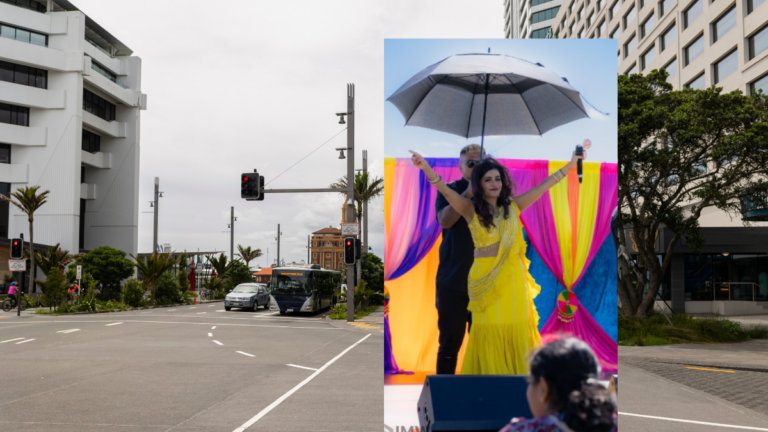
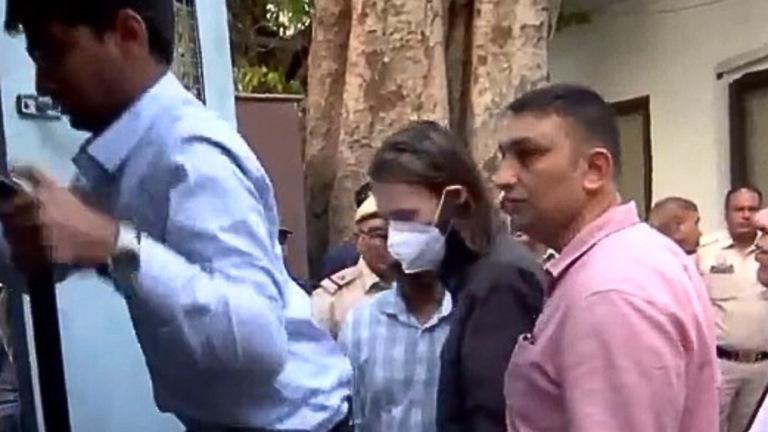
Immigration New Zealand (INZ) is searching for 11 Indian nationals who overstayed their visas after travelling to Auckland for a Holi festival, with the Indian Consulate warning some may be hiding in temples or private homes.
The group had entered the country in February as part of a “Community Holi Celebration” linked to singer Shibani Kashyap. However, two weeks after their limited visas expired on 6 March, 11 members remain unlawfully in New Zealand, according to INZ.
A spokesperson for the Indian Consulate in Auckland told Stuff that the officials had been working with community leaders to locate the individuals.
As per Stuff, Indian Consulate hasreceived information that some may be staying in “Sikh temples” (gurudwara) or “Kiwi Indians’ houses” in Auckland, Tauranga and the wider Bay of Plenty.
The spokesperson, who requested anonymity, described the situation as unprecedented in their two decades of diplomatic service and said efforts were under way to have the individuals identified and returned to India.
“It is a bad situation. I have been a diplomat for 20 years and this has never happened before.”
Image: Bollywood singer Shibani Kashyap (Source: Instagram screenshot)
INZ visa director Jock Gilray said the agency was prioritising contact with those who had breached visa conditions on a case-by-case basis, but declined to provide further details due to privacy obligations and the ongoing investigation.
Of the 27 people who applied to travel as part of the group, 18 arrived in New Zealand between 11 and 24 February. Seven have since returned to India, while the remaining 11 have overstayed. Another applicant did not travel, and one was prevented from leaving India after additional concerns emerged.
Gilray said visa applications underwent extensive checks, including consultation with the Indian Consulate and verification by risk and compliance teams in India.
While the event itself was confirmed as genuine, concerns were identified in several applications, including the use of fraudulent documents. Four applications were declined and three withdrawn, while 13 short-term, event-specific visas were granted to mitigate risks.
The controversy first emerged after reports that nearly a third of visa applications linked to the group were either declined, withdrawn or flagged for irregularities before the event.
Kashyap said she had travelled independently to New Zealand as an invited artist and had no involvement in arranging visas or documentation for other members of the group.
The performers were linked to an event organised by the Pukekohe Indian Association, part of the New Zealand Indian Central Association, although it remains unclear how many of those who entered the country participated in official roles.
This was Kashyap’s second visit to New Zealand in less than a year; she previously performed at an official celebration of India’s 79th Independence Day in August 2025, presented by the High Commission of India in Wellington and the Consulate-General in Auckland.
Public commentary on the case has intensified, including criticism from Destiny Church leader Brian Tamaki, who questioned the effectiveness of New Zealand’s immigration system in a social media post.
INZ said its investigation remains ongoing.
Support our Journalism
No-nonsense journalism. No paywalls. Whether you’re in Australia, the UK, Canada, the USA, or India, you can support The Australia Today by taking a paid subscription via Patreon or donating via PayPal — and help keep honest, fearless journalism alive.
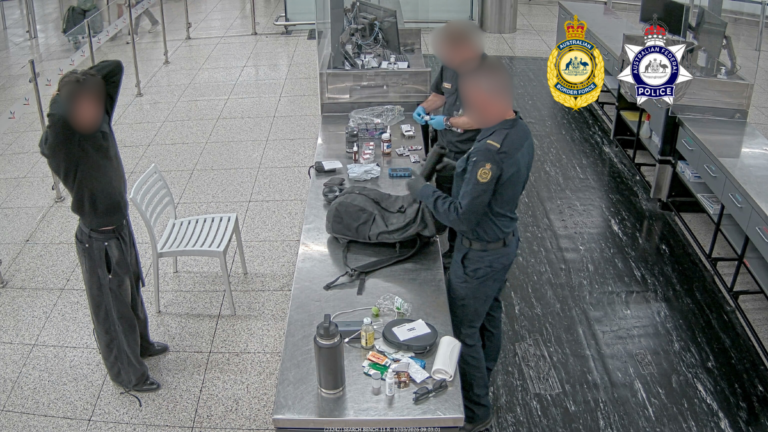
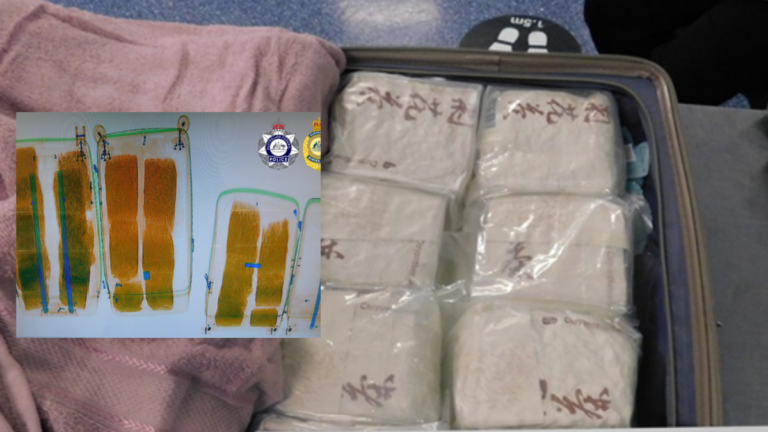
The man was arrested after arriving at Sydney Airport on a flight from Thailand on 19 March. Officers from the Australian Border Force (ABF) selected him for further screening, where an X-ray of his suitcase indicated irregularities. A detector dog also alerted to the bag.
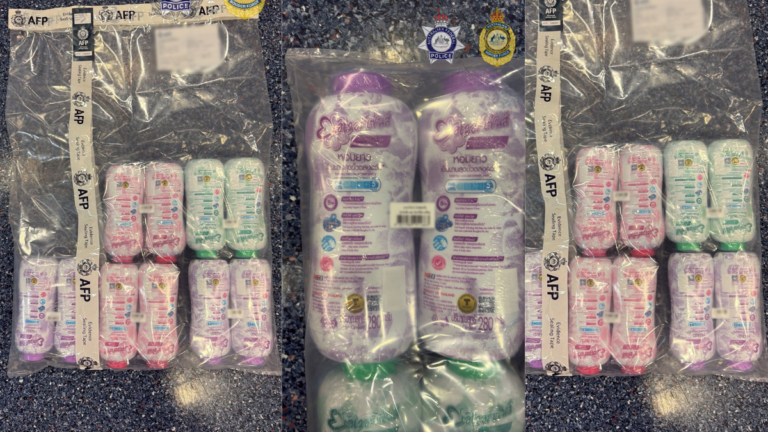
A subsequent search allegedly uncovered 10 bottles labelled as scented powder, which authorities claim contained methamphetamine.
Officers from the Australian Federal Police (AFP) attended and charged the man with attempting to import a commercial quantity of a border-controlled drug, an offence under Commonwealth law that carries a maximum penalty of life imprisonment.
Police will allege the man told investigators he had been recruited via social media to transport the suitcase from Thailand to Australia in exchange for payment. Two mobile phones were seized for forensic examination.
AFP Detective Acting Superintendent Trevor Robinson said the agency continued to work with border authorities to disrupt drug trafficking networks, including those operating offshore and those recruiting couriers.
ABF Superintendent Elke West said frontline officers remained focused on detecting illicit substances at the border, describing methamphetamine as a highly addictive drug that causes widespread harm in the community.
Authorities have reiterated warnings to travellers about the risks of carrying items on behalf of others, noting those caught importing illicit drugs into Australia face serious criminal penalties.
Support our Journalism
No-nonsense journalism. No paywalls. Whether you’re in Australia, the UK, Canada, the USA, or India, you can support The Australia Today by taking a paid subscription via Patreon or donating via PayPal — and help keep honest, fearless journalism alive.

Tropical Cyclone Narelle has crossed the Far North Queensland Coast as a category 4 storm. Formed in the Coral Sea, Narelle is packing a punch, with sustained winds near the centre of 205km per hour and wind gusts to 285km per hour.
Sea surface temperatures in the northwest Coral Sea are currently 0.5–1.0°C above average, and this has fuelled the storm’s rapid intensification.
Yesterday the cyclone’s centre was barrelling towards Cape York at a rapid 26km per hour, and this morning it crossed the coast between the Aboriginal community of Lockhart River and Cape Melville, with the small inland town of Coen is also in its path.
The intensity and path of cyclones that form in the Coral Sea are usually difficult to predict. This is because they are pushed in different directions by highly changeable winds, unlike cyclones in most other tropical ocean basins.
Yet Cyclone Narelle has followed a predictable westward path, which makes this cyclone highly unusual.
The Bureau of Meterology warns that tides in Princess Charlotte Bay, at the base of the narrow part of Cape York Peninsula, are likely to rise significantly above the normal high tide, with dangerous ocean flooding. Any coastal residents in this area are warned of a possible dangerous storm tide as the cyclone centre crosses the coast.
In March 1899, Cyclone Mahina hit the same general area. Cyclone Mahina is considered the deadliest tropical cyclone in Australia’s recorded history, and probably one of the most intense ever recorded globally.
After crossing eastern Cape York, Narelle will weaken rapidly to Category 2 status, before emerging over the warm waters of the Gulf of Carpentaria during the early hours of Saturday morning. Narelle is expected to intensify again as the cyclone heads steadily towards the eastern Northern Territory.
After crossing the NT as a deep tropical low, Narelle is expected to reintensify off the Kimberley coast during next week before shifting into the Indian Ocean. Fortunately, its quick-moving speed means it won’t have the time to dump lots of rain over swollen catchments across the Top End. Nonetheless, river rises are forecast as the centre moves through.
A strong and ‘compact’ cyclone
Narelle is a very compact cyclone, meaning it has a relatively small area of intense winds around its centre. The area of these destructive hurricane-force winds only extends 50km from its centre, while destructive storm force and damaging gale-force winds extend 75km and 130km, respectively.
Due to the laws of physics, smaller cyclones typically spin up faster than larger ones. Likewise, they also weaken rapidly after moving over land areas. Larger cyclones have more inertia, taking longer to spin up over warm oceans and to wind down over land masses.
When it comes to cyclone size (as measured by the area of outer strong gales), there’s no room for complacency. Australia’s most infamous cyclone – Tracy in December 1974 – only had gales extending 40–50km from the eye. But the extreme core winds hit Darwin directly. Because of this, 70–90% of the city’s buildings were damaged, 60–80% of houses were totally destroyed, and roughly 94% of all housing in the city was rendered uninhabitable. The official death toll was 66 people, with more than 145 severely injured.
As Narelle threatens communities on the Cape York Peninsula, we are reminded of another severe weather event with similar characteristics that also hit northeast Queensland.
Exactly 20 years ago, Severe Tropical Cyclone Larry struck Innisfail, 90km south of Cairns, as an intense Category 4 storm. Larry caused significant damage to Innisfail and neighbouring towns, but largely spared Cairns city. Larry caused widespread structural damage, but also wiped out most of Australia’s banana crop, leading to record high prices.
Cyclone Larry was one of very few Coral Sea cyclones that followed a predictable westward track towards the coast. Not only was its track predictable, but also how quickly it moved forward and its intensity at landfall. Such agreement among forecasting weather models is rare for the Coral Sea, that is globally recognised for its erratic cyclone behaviour.
Coral Sea cyclones
So, what makes Cyclones Larry and Narelle unusual for the Coral Sea?
To answer this question, we need to understand how winds behave around tropical cyclones. Cyclones are affected by winds at different heights in the atmosphere. These can cause them to stall if equally opposing winds meet in the region around the cyclone. In other cases, dominant winds from a particular directions will push them along on a clear path. These are called steering winds.
Cyclones are largely steered by winds in the mid levels of the troposphere — roughly 3–7km above the surface. Severe cyclones — like Narelle — are propelled along by winds at the higher end of this range, due to their deep vertical structures, meaning they are taller. Weaker cyclones have a much shallower depth in the atmosphere, so the dominant steering winds are much lower down.
In the case of Narelle (and Larry), a persistent, deep subtropical ridge of high pressure over eastern Australia and the Coral Sea is acting like a conveyor belt, directing the steering winds around the cyclone centre from east to west. This pattern is predicted to continue into next week, which will eventually push Narelle into the Indian Ocean.
There’s another attribute of fast-moving cyclones that is relevant here. In the Southern Hemisphere, all cyclones rotate clockwise due to the Coriolis Force. Narelle’s fast-forward speed means areas south of the eye of the cyclone will experience more severe onshore storm conditions.
No-nonsense journalism. No paywalls. Whether you’re in Australia, the UK, Canada, the USA, or India, you can support The Australia Today by taking a paid subscription via Patreon or donating via PayPal — and help keep honest, fearless journalism alive.
Victorian Liberal MP Nicole Werner has reignited debate about the culture inside Spring Street after alleging she has faced repeated personal abuse in the chamber, including comments she says targeted not only her politics but also her ethnicity, faith and family.
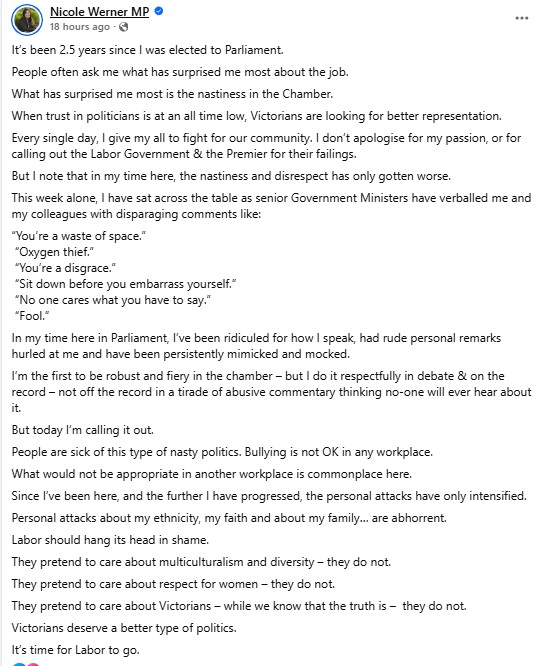
In a public post, Werner said the “nastiness in the Chamber” had been one of the most confronting parts of her first two-and-a-half years in Parliament, and listed insults including “waste of space”, “oxygen thief” and “fool”. She argued that while robust debate is part of politics, bullying and personal degradation should not be normalised in any workplace.
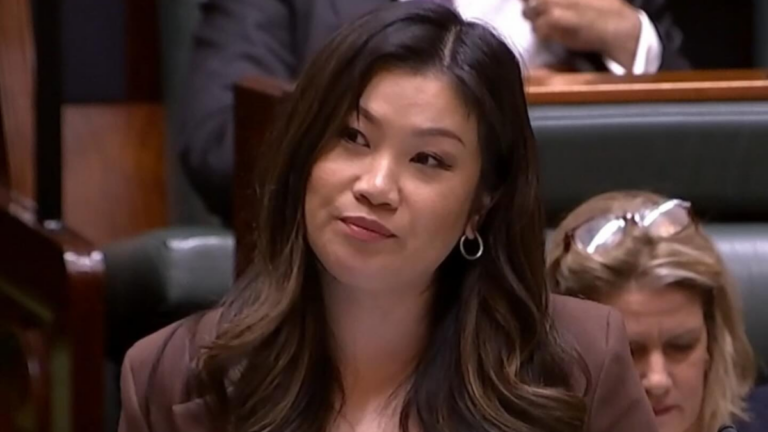
Image: Liberal MP Nicole Werner (Source: Facebook)
Werner, described the behaviour as increasingly personal and targeted, with attacks on her ethnicity, faith, and family.
“It’s been 2.5 years since I was elected to Parliament. What has surprised me most is the nastiness in the Chamber,” Werner wrote.
“People are sick of this type of nasty politics. Bullying is not OK in any workplace.”
Werner’s criticism lands in a Parliament that, historically, has not exactly been an easy place for women. Victoria was the last Australian state to allow women to stand for Parliament, changing the law only in 1923. Alicia Katz became the first woman to contest a Victorian state election in 1924, but it took another nine years before a woman was actually elected.
Even then, female representation remained sparse for decades. Fanny Brownbill was the sole female MP from 1943 until her death in 1948, and after that Victoria went 29 years before another woman entered Parliament. Dorothy Goble, elected in 1967, was again the only woman in the Parliament for the entirety of her time there.
That history matters because Werner’s complaint is not being made in a vacuum. It speaks to a much longer story in which women have had to fight not only for representation in Victoria’s Parliament, but also for basic respect once they arrived.
Former Victorian MP Prue Leggoe said in 2021 that sexual harassment and sexist treatment in parliamentary life had changed little in 40 years. She recalled that during her maiden speech in the early 1980s, a drunk MP came up behind her and put a walking stick up her skirt, and said women who spoke up risked being punished politically or publicly humiliated.
The pressure for structural reform has grown in recent years as allegations of bullying, harassment and inappropriate conduct have repeatedly surfaced in Victorian politics.
In 2024, the Allan government introduced legislation to create the Parliamentary Workplace Standards and Integrity Commission, acknowledging that MPs sit outside traditional workplace laws and that Parliament had been lagging behind modern expectations of what a safe workplace should look like. Premier Jacinta Allan said at the time the reform was “overdue” and described it as part of bringing Parliament into line with contemporary workplace standards.
That body, now known as the Parliamentary Workplace Standards and Integrity Commission, was formally established on 31 December 2024. It is empowered to receive and investigate allegations of parliamentary misconduct, including bullying, harassment, discrimination, victimisation and occupational violence involving Victorian MPs, ministers and parliamentary secretaries.
The commission says its purpose is to support “a respectful and safe parliamentary workplace”, reflecting the conclusion that informal norms and party discipline alone were not enough to deal with harmful conduct.
Against that backdrop, Werner’s allegations are politically awkward for Labor’s broader public messaging on multiculturalism, inclusion and respect for women. Werner directly challenged that contradiction, saying Victorians deserved more respectful and inclusive representation and accusing Labor of failing to live up to the values it professes.
In a statement to The Australia Today, Speaker Maree Edwards did not comment on Werner’s specific allegations but stressed that concerns raised with her office are treated confidentially.
“Matters raised with me are treated as confidential,” Edwards said.
“I treat any breaches of Standing Orders or conventions of the House with seriousness. The rules of the House are written by a cross-party committee, and I expect members to familiarise themselves with them.
“It is the duty of all members to treat each other with respect. Consequences may apply for any failure to do so,” she added.
That response reflects the institutional tension at the heart of these disputes. Speakers are expected to uphold order and decorum, but many of the most corrosive behaviours alleged by MPs happen in the grey zone between formal breaches of standing orders and a wider workplace culture that can become toxic without always crossing a procedural line.
Werner’s criticism suggests that, for some MPs at least, the formal rules are not enough to address the climate they experience.
Ms Werner emphasised that while she engages robustly and passionately in debate, she does so respectfully and on the record, contrasting it with what she described as off-the-record tirades from government ministers.
Werner’s post also comes amid ongoing public concern over political culture in Victoria, with trust in politicians reportedly at historically low levels. She urged the Labor Government to reconsider its approach, saying Victorians deserve more respectful and inclusive representation.
“Labor should hang its head in shame. They pretend to care about multiculturalism and diversity – they do not. They pretend to care about respect for women – they do not,” she wrote, calling for a change in the tone and conduct of parliamentary debate.
There is also a broader public dimension. Victoria’s Parliament today has reached gender parity in the 60th Parliament, a milestone that would have been almost unimaginable for the women who entered a chamber where they were once alone.
But parity in numbers does not automatically mean parity in treatment. Werner’s account, alongside the earlier experiences described by women such as Leggoe and the need to create a dedicated misconduct commission, suggests that representation and respect have not advanced at the same pace.
Whether Werner’s intervention leads to any formal complaint or disciplinary consequence remains to be seen. But politically, it has already done something important: it has reopened a difficult question for Victorian Parliament itself.
After a century of women fighting first to enter the institution and then to be taken seriously within it, how much has really changed, and how much of the old culture still survives behind the language of modern diversity and inclusion?
Note: The Australia Today has contacted the Premier Allan, we will update the story as and when she rsponds.
Support our Journalism
No-nonsense journalism. No paywalls. Whether you’re in Australia, the UK, Canada, the USA, or India, you can support The Australia Today by taking a paid subscription via Patreon or donating via PayPal — and help keep honest, fearless journalism alive.
South Australian authorities are examining parish conflicts, including complaints made against him by a parishioner.
The parishioner, who had accused Fr Antonyadimai of verbal abuse and allegedly made racial remarks, has strongly denied making such comments. She told the inquest that she had previously lodged complaints because the priest yelled at her.
It is reported that Fr Antonyadimai, described by colleagues as a “sensitive” and “gentle” priest, had expressed fear of public disgrace before his death.
He had arrived in Australia from southern India in December 2018 and served as assistant priest at Salisbury before his appointment in Murray Bridge.
In 2021, more than 200 people attended a memorial Mass for Fr Antonyadimai at St Francis Xavier’s Cathedral, celebrated by Archbishop Patrick O’Regan.
The service was livestreamed, allowing family and friends in India to participate, with more than 3,000 viewers. Archbishop O’Regan offered condolences to Fr Antonyadimai’s cousin, Fr Selvaraj Leenaiah, his family in India, and the Diocese of Kottar.
In a letter to clergy, the Archbishop acknowledged the difficulty of understanding the circumstances of Fr Antonyadimai’s death, emphasising the role of faith in navigating life’s paradoxes and challenges. Funeral arrangements were still being finalised at the time of reporting.
Support our Journalism
No-nonsense journalism. No paywalls. Whether you’re in Australia, the UK, Canada, the USA, or India, you can support The Australia Today by taking a paid subscription via Patreon or donating via PayPal — and help keep honest, fearless journalism alive.
Bhupathiraju Anmish Varma from India has set a new Guinness World Record for the fastest time to climb the Seven Volcanic Summits, completing the challenge in 92 days, four hours and 45 minutes.
The achievement was officially recognised on 6 February 2026, with Varma receiving his certificate at a ceremony in Delhi on 17 March.
Varma began his record-breaking journey on 23 October 2024, summiting Mount Elbrus in Russia, and completed the final climb on 23 January 2025 at Mount Sidley in Antarctica.
The Seven Volcanic Summits, one on each continent, are widely regarded as among the most physically and environmentally demanding challenges in mountaineering.
At the award presentation at CSOI, Vinay Marg, Delhi, Varma was formally acknowledged by Rishi Nath from the Guinness World Records team.
The event drew widespread applause, reflecting both recognition of Varma’s personal determination and India’s growing presence in extreme adventure sports globally.
Hailing from Visakhapatnam, Varma has a long history of high-altitude achievements. He has previously scaled Mount Everest and completed the Seven Summits challenge, which involves the highest peak on each continent. He has also undertaken an expedition to the geographic South Pole, skiing across severe icy terrain under extreme conditions.
Varma’s career began in martial arts, a discipline he credits with building the mental and physical resilience required for his mountaineering pursuits. His rapid ascent of the Seven Volcanic Summits adds to a portfolio of accomplishments that has inspired young adventurers across India.
Support our Journalism
No-nonsense journalism. No paywalls. Whether you’re in Australia, the UK, Canada, the USA, or India, you can support The Australia Today by taking a paid subscription via Patreon or donating via PayPal — and help keep honest, fearless journalism alive.
Victoria Police allege the syndicate, which began operating in Victoria before relocating to Queensland in October last year, stole more than 150 vehicles worth over $20 million before moving north. Following the move, another 60 vehicles are believed to have been stolen in Queensland.
Police say the group used sophisticated methods to access vehicles’ on-board computers via the wiring, enabling theft without traditional break-ins.
As part of the investigation, dubbed Operation Xray Lox, Queensland Police executed four search warrants on Thursday 19 March at residential addresses in Doveton and Seaford.
A 27-year-old Doveton man has been charged with conspiracy to commit motor vehicle theft, motor vehicle theft, and handling stolen goods in relation to 46 alleged incidents between August and September 2025. He is due to appear at Melbourne Magistrates’ Court on Thursday 26 March.
Investigators seized three vehicles, multiple electronic devices, and business and banking records. Police allege the man used a commercial premises in Cranbourne West to store stolen vehicles in shipping containers, which were then sent to the Port of Melbourne bound for the UAE. Authorities believe transport companies were unaware of the containers’ contents.
Detective Acting Inspector Amanda Cohen of the Vehicle Crime Squad said the syndicate’s activity highlighted the broader risks posed by organised motor vehicle crime. “While Victoria Police has a high vehicle recovery rate – around 80 per cent of cars stolen in the past year have been located – car theft fuels organised criminal networks and threatens the safety of our communities, impacting families, businesses and neighbourhoods,” she said.
She added that vehicle theft has far-reaching consequences, affecting daily life and insurance costs. “This was a brazen and highly sophisticated syndicate, solely motivated by greed-driven profit. Their criminal behaviour will not be tolerated. We will continue to work closely with a range of law enforcement agencies and regulatory bodies to combat this issue.”
Police are urging vehicle owners to take preventative measures, including locking car doors and windows, using steering locks, securing keys, and installing on-board diagnostic port locks. Owners and insurers are encouraged to remain vigilant and report suspicious activity to Crime Stoppers at 1800 333 000 or www.crimestoppersvic.com.au.
The investigation is ongoing, with further charges expected.
Support our Journalism
No-nonsense journalism. No paywalls. Whether you’re in Australia, the UK, Canada, the USA, or India, you can support The Australia Today by taking a paid subscription via Patreon or donating via PayPal — and help keep honest, fearless journalism alive.
Indian filmmaker Aditya Dhar’s sequel Dhurandhar: The Revenge has attracted an outpouring of high-profile praise from across the film industry, with actors, composers and critics describing it as an ambitious follow-up that surpasses expectations.
The film, released worldwide on 19 March to coincide with festivals including Gudi Padwa, Ugadi and Eid, is the second instalment in Dhar’s spy-action franchise.
Early reactions from prominent figures in Indian cinema have highlighted its scale, performances and emotional depth, setting high expectations for its box office run.
Grammy-winning composer Rickey Kej described the sequel as a “masterpiece”, pointing to its tonal blend of large-scale realism and stylised action. He suggested the film expands significantly on the first instalment, with more developed characters and a narrative that builds towards a powerful climax. Kej also singled out the score by Shaswat Sachdev as distinctive, while praising lead actor Ranveer Singh for what he called his strongest performance to date.
And of course.. @ActorMadhavan was just simply brilliant. A much more central and larger role than the first installment. Madhavan, at this point, can play any role, of any age, of any ethnicity. He is outstanding at whatever he does. Madhavan played the role of Sanyal with the… https://t.co/6ZnvjrtUel
Actor Allu Arjun echoed those sentiments, describing the film as a technically accomplished and crowd-pleasing spectacle, with “clap-worthy” moments and a strong patriotic theme. He also commended the performances of R. Madhavan and Singh, and said Dhar had delivered a film with both domestic appeal and international style.
Just Watched #Dhurandhar2⁰Patriotism with swag 🇮🇳 A film that will make every patriot proud 🇮🇳⁰Many clap-trapping moments 👏🏽 BLAST! 💥 Congratulations to the entire team.⁰Fine performances by @ActorMadhavan garu & all actors . Technical brilliance .
Trade analyst Taran Adarsh wrote that the sequel exceeds the “sky-high” expectations set by the original, citing its fast-paced screenplay, emotional core and dramatic climax as standout elements. He highlighted Singh’s performance as central to the film, while also noting strong supporting roles from actors including Sanjay Dutt and Arjun Rampal. Adarsh predicted the film would perform strongly at the box office.
Junior NTR praised the film as a powerful and emotionally resonant film, highlighting Ranveer Singh’s performance as exceptional and describing director Aditya Dhar’s vision as bold and skilfully executed. He also commended R. Madhavan, Sanjay Dutt and Arjun Rampal for their performances, and noted that Shaswat Sachdev’s music heightened the film’s impact, predicting it would leave a lasting impression on audiences.
A big salute to the team of #DhurandharTheRevenge for delivering a storm to Indian audiences.
Ranveer sir @RanveerOfficial is not just breathtaking…. He delivered an absolute masterclass on screen.
It takes conviction and fearless vision to mount a film like this and Aditya…
Filmmaker Ram Gopal Varma offered a more hyperbolic assessment, suggesting the film could mark a shift in cinematic storytelling due to its scale and impact.
After last nights watch of #Dhurandhar2 in terms of it’s sheer cumulative impact in every which way , whether on it’s expected collections , audience euphoria , social influences , cinematic grammar breaking , and above all the psychological audio visual impact , it will be a…
Meanwhile, director Madhur Bhandarkar described the nearly four-hour production as a “high-stakes sequel” with relentless pacing, adding that Singh’s performance stood out for its intensity and conviction.
Last night I saw the epic 3 hrs 49 minute ride that is Dhurandhar 2, and my head is still spinning. This is the blueprint for how to conquer a high-stakes sequel. Filmmaker @AdityaDharFilms vision is electrify in every frame, the pace is non-stop, and you can’t catch your breath… pic.twitter.com/B7tszZ9TKj
Ahead of the release, Dhar appealed directly to audiences not to share spoilers, emphasising that the film was designed for a theatrical experience.
Reflecting on the success of the first film, released in December 2025, he said audience engagement had shaped the approach to the sequel, with a focus on delivering unexpected emotional moments.
Dhurandhar: The Revenge has been released in multiple Indian languages including Hindi, Telugu, Tamil, Kannada and Malayalam, underscoring its broad target audience. Its reception in the coming weeks will determine whether early praise translates into sustained commercial success.
Support our Journalism
No-nonsense journalism. No paywalls. Whether you’re in Australia, the UK, Canada, the USA, or India, you can support The Australia Today by taking a paid subscription via Patreon or donating via PayPal — and help keep honest, fearless journalism alive.
Pat Cummins will miss the opening matches of the 2026 Indian Premier League due to a back injury, with Ishan Kishan appointed stand-in captain of Sunrisers Hyderabad.
The franchise confirmed this week that Cummins is continuing his recovery from a lumbar stress issue that has disrupted his playing schedule since mid-2025.
While he is expected to link up with the squad in India shortly, he is unlikely to feature in the first few fixtures of the tournament.
𝐀𝐍𝐍𝐎𝐔𝐍𝐂𝐄𝐌𝐄𝐍𝐓 🚨
Pat Cummins will miss a few games while recovering from injury.
Until he recovers, Ishan Kishan will be the Captain and Abhishek Sharma will be the Vice-Captain. pic.twitter.com/etXJUkQJeG
In the interim, Kishan will take charge, with Abhishek Sharma named vice-captain. The decision ends speculation over the leadership structure, with Sharma also considered a potential stand-in option given his domestic captaincy experience.
Hyderabad, winners of the IPL in 2016, begin their 2026 campaign on March 28 against defending champions Royal Challengers Bengaluru at the M Chinnaswamy Stadium in Bengaluru.
The club has not specified the number of matches Cummins will miss, though reports indicate he could return after the opening three games, depending on his recovery.
Kishan’s elevation to the role follows a strong period in both international and domestic cricket. The 27-year-old wicketkeeper-batter was part of India’s recent T20 World Cup campaign and played a key role in Jharkhand’s maiden Syed Mushtaq Ali Trophy title in 2025, where he served as captain. His leadership credentials, combined with his experience in the IPL, are understood to have influenced the decision.
Since making his IPL debut in 2016 with Gujarat Lions, Kishan has developed into a regular top-order presence. He later became a high-profile signing for Mumbai Indians, where he spent several seasons and was retained at significant cost before being released and subsequently picked up by Hyderabad. Across his IPL career, he has scored close to 3,000 runs at an average just under 30, with a strike rate exceeding 135, including a century in the previous season.
Sharma, meanwhile, has been part of the Hyderabad set-up since 2019 after starting his IPL career with Delhi Daredevils (now Delhi Capitals). The left-handed batter has built a reputation for aggressive strokeplay at the top of the order, reflected in a strike rate above 160. However, his overall consistency remains an area of scrutiny, with just over 1,800 runs from more than 70 innings.
The pairing of Kishan and Sharma at the helm means Hyderabad will be led by two of India’s more attacking T20 batters during the competition’s early stages. Both players were also part of India’s recent T20 set-up, adding to their familiarity in leadership roles within a high-performance environment.
Cummins’ absence is a setback for Hyderabad, given his dual role as captain and leader of the bowling attack. The Australian fast bowler has been a central figure in the franchise’s plans since taking over the captaincy, bringing both international experience and tactical leadership. His return timeline will be closely monitored as the tournament progresses.
Support our Journalism
No-nonsense journalism. No paywalls. Whether you’re in Australia, the UK, Canada, the USA, or India, you can support The Australia Today by taking a paid subscription via Patreon or donating via PayPal — and help keep honest, fearless journalism alive.
An Auckland-based immigration adviser has had her licence cancelled after being caught on taped phone calls offering migrants fake jobs to secure residency in exchange for tens of thousands of dollars.
As per RNZ, the Immigration Advisers Complaints and Disciplinary Tribunal found Heidi Castelucci, also known as Qian Yu, engaged in a serious and deliberate scheme to allegedly sell non-existent employment through her husband’s company, undermining the integrity of New Zealand’s immigration system.
As per report, in one case, the tribunal heard Castelucci coached a migrant on how to pay $70,000 for a fabricated role that would support a residence visa application, while advising him on how to conceal the arrangement from authorities.
It is further reported that the supposed job did not exist, and the worker was expected to fund his own salary and taxes while seeking cash-in-hand work elsewhere.
The tribunal said that the involvement of a licensed adviser in such a scheme was particularly concerning.
The migrant had initially lost a legitimate role linked to the adviser before being persuaded to resign and take up a higher-paying managerial position that was also fictitious.
It is reported by RNZ that he paid one instalment of $7,500 before raising concerns and ultimately leaving New Zealand with his children.
In total, the man paid more than $25,000, far exceeding typical immigration advice fees, which the tribunal said would normally range between $2,000 and $4,000.
Recordings submitted as evidence captured Castelucci outlining the scheme, including staged payments over two years and the absence of any written agreement.
In one conversation, as per RNZ, she told the migrant the arrangement would be based on a “gentleman’s verbal agreement” and advised him on structuring payments to avoid scrutiny.
The tribunal upheld six complaints against Castelucci, identifying what it called a “concerning pattern of behaviour”. Other findings included failing to submit visa applications, misleading clients, and fabricating documents.
Although Castelucci later expressed remorse and cited personal and medical issues, the tribunal found these factors arose after the misconduct and did not mitigate the seriousness of her actions. It concluded her dishonesty alone warranted cancellation of her licence.
She was fined $4,000 and barred from practising for up to two years, with any future relicensing subject to approval by the registrar.
Moncur said schemes involving the sale of job “tokens” linked to accredited employers continued to operate, with some migrants paying tens of thousands of dollars for roles that never materialise. She warned such practices not only harm workers and their families but also distort the labour market and result in lost tax revenue.
Authorities have reiterated that charging migrants for job offers is illegal, and workers who participate in such arrangements risk breaching visa conditions and facing deportation.
The Registrar of Companies has also begun action to remove the adviser’s firm, Liberty Consulting, from the register. A separate company linked to her husband has since been established at the same address.
Support our Journalism
No-nonsense journalism. No paywalls. Whether you’re in Australia, the UK, Canada, the USA, or India, you can support The Australia Today by taking a paid subscription via Patreon or donating via PayPal — and help keep honest, fearless journalism alive.
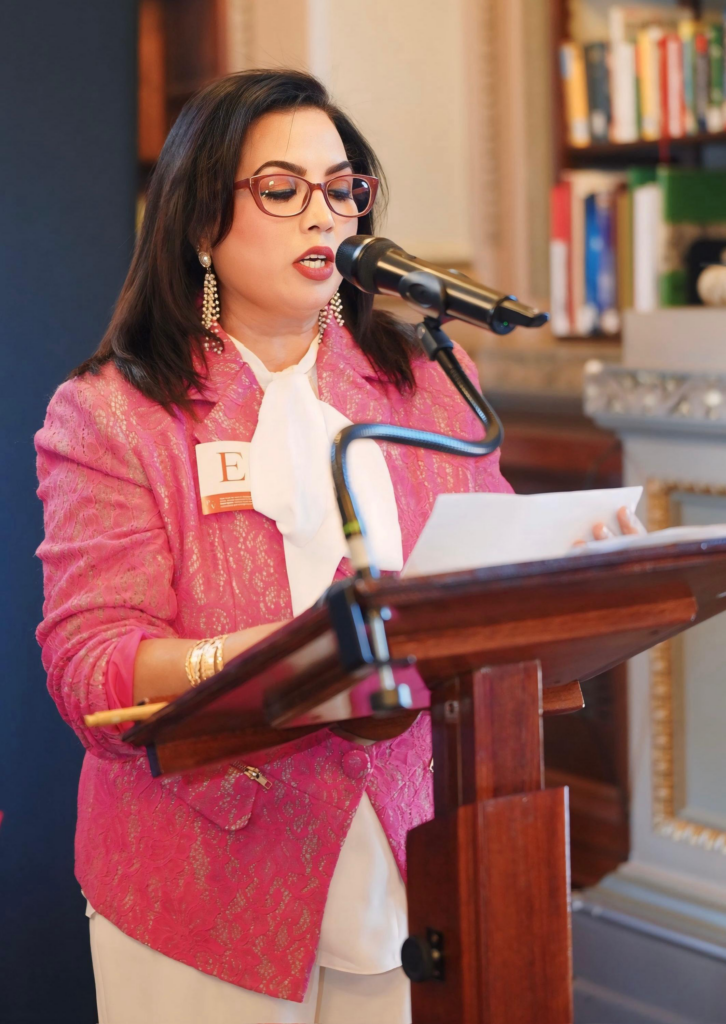
Image: Indian classical dancer and choreographer Rakhi Bose (Source: Facebook)
As founder of the Academy of Indian Classical and Bollywood Dance, Bose has trained more than 1,000 students and staged over 200 performances, while collaborating with culturally and linguistically diverse (CaLD) organisations across Indian, Bangladeshi, Chinese, Vietnamese and broader Australian communities. Her work has focused on fostering cultural exchange through both traditional and contemporary dance.
Image: Indian classical dancer and choreographer Rakhi Bose (Source: Facebook)
Central to Bose’s recognition is a long-running effort to integrate children with Down syndrome and autism into mainstream dance programs.
By adapting teaching methods and performance opportunities, Bose has sought to create environments where children of varying abilities can participate alongside their peers.
Judges noted that her approach has contributed to changing perceptions of disability within the arts and demonstrated how classical dance can support inclusion.
Her annual production Nritya Gandhar—a fusion showcase blending live music and cross-cultural collaboration—has become a fixture in the local arts calendar, regularly selling out.
Beyond the stage, Bose also runs free movement-based workshops aimed at supporting the mental wellbeing of international students, using dance as a means of connection and self-expression.
The award, presented during Harmony Week celebrations, highlights Bose’s 15-year contribution to Western Australia’s multicultural arts sector, where she has combined performance with community engagement and inclusive teaching practices.
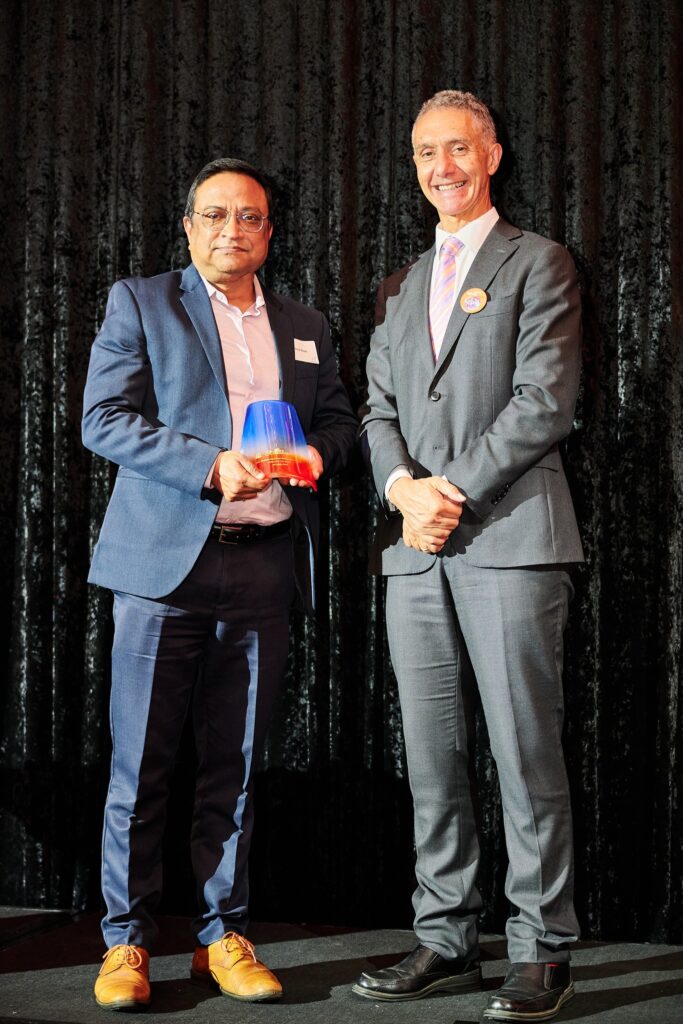
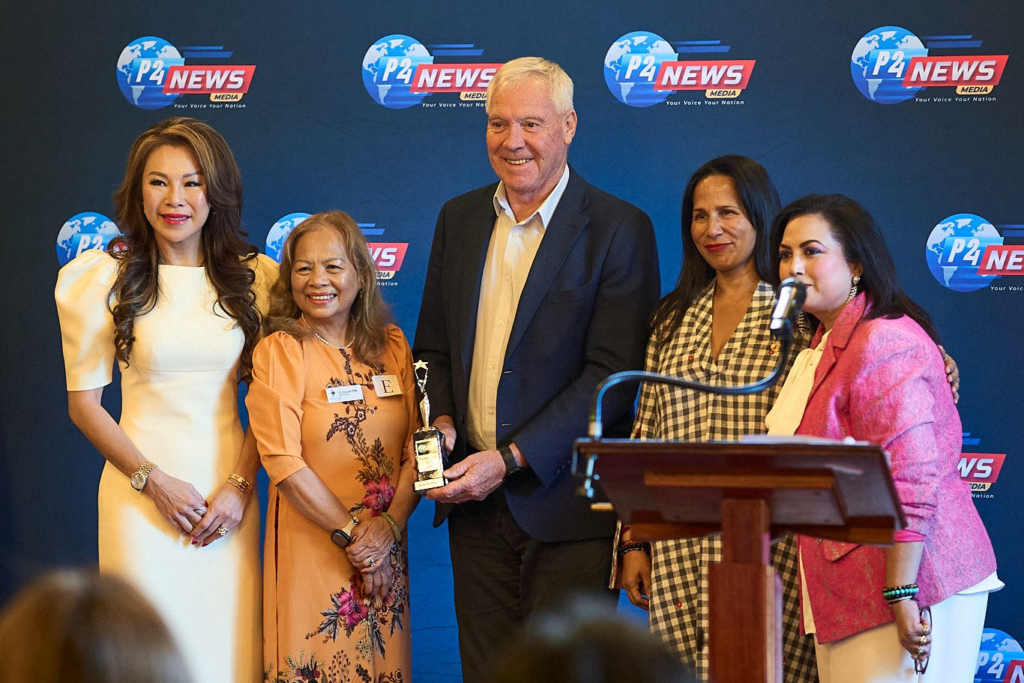
Image: Indian classical dancer and choreographer Rakhi Bose’s husband receiving the award from WA Multicultural Interests Minister Dr Tony Buti (Source: Facebook)
In a statement following the award, Bose described the recognition as deeply personal, reflecting her own multicultural journey, and dedicated it to her students, collaborators and the wider community that has supported her work.
Image: WA Multicultural Interests Minister Dr Tony Buti with winners of Multicultural Awards 2026 (Source: Facebook)
The awards, which mark the beginning of Harmony Week in Western Australia, celebrate individuals and organisations contributing to multicultural inclusion.
Multicultural Interests Minister Dr Tony Buti said the growing number of nominations each year reflected the strength and diversity of the state’s communities.
Other recipients included community advocate Michael Elwan, youth leader Rodrigues Niyongere and netballer Jhaniele Fowler-Nembhard, alongside organisations working across community services, local government and business.
Held annually from 15 to 21 March, Harmony Week promotes cultural diversity and coincides with the United Nations’ International Day for the Elimination of Racial Discrimination. This year’s awards underscore a broader shift towards community-led, culturally responsive initiatives across the state, with Bose’s work standing out for its blend of artistic excellence and social impact.
Support our Journalism
No-nonsense journalism. No paywalls. Whether you’re in Australia, the UK, Canada, the USA, or India, you can support The Australia Today by taking a paid subscription via Patreon or donating via PayPal — and help keep honest, fearless journalism alive.
Australia’s inflation rate could peak in “the high 4s or even higher” this year, according to Treasury modelling, Treasurer Jim Chalmers says.
The latest modelling comes as Anthony Albanese prepares to meet state and territory leaders in a national cabinet hook up on Thursday to discuss the fuel crisis and announce a national coordinator-general to help address its issues.
Albanese has asked the governments to each appoint a “point person” to liaise with the Commonwealth. The meeting will hear and share information and discuss actions that can be taken.
Chalmers will give details of the Treasury modelling of the impact of the oil shock in a Thursday speech in Melbourne, released ahead of delivery.
Treasury has modelled scenarios. The shorter-term one has the oil price staying at US$100 a barrel for the first half of the year, gradually returning to pre-conflict levels by year’s end. The second has it reaching US$120 in the first half of the year then taking three years to return to its former price.
“While both scenarios could underestimate the cost, given where the oil price is and the uncertain duration of these events, they give us a sense of the second round impacts,” Chalmers says.
“Treasury’s latest advice is the war could cut GDP growth by up to 0.2 percentage points across our major trading partners.
“In both cases, inflation rises and growth is hit.”
The latest Treasury work takes account of the impacts of factors such as lower global growth and higher LNG, coal and fertiliser prices.
It indicates “headline inflation would peak ¾ of a percentage point higher in the short term scenario and 1¼ percentage point higher in the prolonged one.
“It means the prospect of inflation peaking in the high 4s or even higher this year is very real.
“In the short term case, output would be 0.2 per cent lower around the middle of this year but this gap would quickly close because the shock is short lived.
“But the more prolonged scenario would leave a bigger scar.
“There would be an immediate hit to output but it would build over time.
“Treasury estimates that GDP would be 0.6 per cent lower in 2027 and even by 2029 would still be below where it would have been without the conflict.
“Around half of the impact to GDP is due to the impact of higher oil. The other half is due to broader consequences.”
The estimates of the worsening outlook for inflation and growth come after Tuesday’s interest rate rise of a quarter of a percentage point and amid some suggestions Australia might be pushed into recession, although the government discounts the chances of that.
Soaring fuel prices and the rate rise mean many Australians are being hit with a double whammy.
Ahead of the national cabinet, New South Wales Premier Chris Minns said the biggest current concern was diesel supply, “which keeps trucks moving, farms and construction projects running and goods and food getting around the state”.
Minns said NSW wanted to see “a national plan that sets out a clear escalation pathway, including what further actions may be taken if the conflict continues and conditions worsen”.
Albanese said the government was conscious of shortages in some areas, especially of diesel, and had taken action including to release 20% of the national fuel reserve.
He said Australia had its largest fuel reserves in 15 years and also emphasised that scheduled ships carrying fuel were arriving.
“All of our ships have arrived at this point in time, but we’ve had a surge in demand, which is leading to some shortages in some areas, particularly of diesel.”
Chalmers says the Middle east conflict “will be a defining influence” on the May 12 budget.
Chalmers sets out principles for his tax reform
In this speech Chalmers also sets out the principles that will underpin his plans to reform taxation in the budget.
He says the budget will be focused on “three ambitious reform packages”. These will be a savings package, a productivity and investment package, and a tax package.
The first principle, on tax reform, will be the recognition “an outdated tax system is weighing on the opportunities faced by younger Australians and future generations.” Changes would focus on intergenerational responsibilities.
He says as a second principle, the government was focused on “better incentivising productive business investment, if we can afford to”.
The third principle was to make the system “simpler and more sustainable”.
Chalmers says the Middle East crisis is a stark reminder of why it was urgent to address the three economic challenges: budget repair, productivity and tax reform.
The economic uncertainty and volatility meant more reform was needed, not less. “It’s a reason to go further, not slower.”
EU President here next week as government close to finally nailing trade deal
The president of the European Commission, Ursula von der Leyen, will visit Australia from Monday to Wednesday next week, with the government expecting to clinch the long-awaited free trade deal with the EU.
The finalisation of the agreement must be at leadership level, with the issue of access for Australian red meat to Europe among issues still to be resolved.
No-nonsense journalism. No paywalls. Whether you’re in Australia, the UK, Canada, the USA, or India, you can support The Australia Today by taking a paid subscription via Patreon or donating via PayPal — and help keep honest, fearless journalism alive.
Former Australian Energy Regulator chief Anthea Harris to head a new national fuel supply taskforce, as Canberra moves to tighten coordination with the states and territories and the ACCC escalates its scrutiny of diesel supply and pricing during the Middle East conflict.
Prime Minister Anthony Albanese announced the appointment after a National Cabinet meeting, describing the taskforce as a “sensible measure” amid growing concern that a prolonged conflict could further disrupt fuel markets and domestic distribution.
Harris, who previously led the AER and before that served as chief executive of the Energy Security Board and deputy secretary of Victoria’s energy group, will work from the Department of the Prime Minister and Cabinet and coordinate with state and territory representatives on “fuel supply and national resilience”.
Under the government’s plan, the Fuel Supply Taskforce will act as a central coordination point across portfolios and jurisdictions, providing regular updates on national fuel supply, domestic distribution and planning, while helping states move fuel into regions where demand is strongest.
Albanese said the Commonwealth remained responsible for national fuel security while states and territories oversaw distribution within their borders. He said Australia was “well prepared”, but added that he wanted the country to be “over-prepared” for any further shocks.
In the government’s announcement, Albanese said Harris was “the right person” to lead the work across governments and reassure Australians that supply would remain resilient.
We’ve set up a new Fuel Supply Taskforce, led by Anthea Harris.
Working with states and territories, the taskforce will make sure fuel gets where it’s needed most.
It will bring together experts and industry to protect our fuel supply, and make sure we have the latest… pic.twitter.com/QDQU2QO3hw
“I want to reassure Australians – Australia is well prepared,” he said.
“Our fuel supply is currently secure – but I want us to be over-prepared.”
The appointment comes as the ACCC launched an enforcement investigation into allegations of anti-competitive conduct by Ampol, BP, Mobil and Viva Energy over diesel availability to independent wholesalers and distributors serving regional and rural Australia.
ACCC chair Gina Cass-Gottlieb said the watchdog had received reports about diesel supply problems and was investigating the matter urgently, warning that the regulator would not hesitate to act if competition or consumer laws had been breached.
That investigation follows an emergency fuel meeting convened by the ACCC this week, where motoring groups and major suppliers were pressed over rapid price spikes and supply problems, particularly outside the capitals. The commission said independent suppliers in regional areas were a crucial part of the market and needed to receive adequate allocations from major companies if supply disruptions were to be contained.
Fuel security has become a sharper political and economic issue since the war in the Middle East disrupted shipping through the Strait of Hormuz, a route that carries roughly a fifth of global oil trade.
Minister Bowen said, Oil shipments to Australia are still arriving as scheduled, and the industry expects that to continue in the near term, but the picture beyond the next month remains uncertain. Petrol prices in Australia’s five largest cities averaged about $2.19 a litre last week, while diesel was above $2.40 a litre on average.
Albanese has also tried to calm fears of a broader domestic shortage, arguing recent localised disruptions were being driven more by demand than by a collapse in supply.
He said that the government’s priority was to make sure distribution bottlenecks were addressed quickly.
“There is not less fuel in Australia today than there was three weeks ago,”
The government says it has already released part of its emergency stockpile, temporarily lowered fuel standards so more refinery output can stay onshore, and increased pressure on petrol retailers over pricing behaviour.
In the official announcement, Climate Change and Energy Minister Chris Bowen said Australia had entered the current period of uncertainty “better prepared than before”, pointing to fuel reserves now held onshore, investment in local refineries and recent action on regional shortages.
He said the appointment of Harris was “the next step in preparing and responding to the supply chain challenges coming from overseas”.
Bowen also said petrol and diesel were still arriving in Australia at normal rates, both domestic refineries were operating at full capacity, and all locally produced fuel was being retained in Australia.
But he warned that
“supply chain challenges will continue to unfold from the conflict in the Middle East, and demand levels remain very high”.
The fuel task force is expected to become the government’s main coordinating mechanism as pressure builds on supply chains in the weeks ahead. The Albanese government has flagged further measures to strengthen fuel resilience, while the ACCC is due to expand its fuel monitoring updates to include 190 regional locations from this week.
Support our Journalism
No-nonsense journalism. No paywalls. Whether you’re in Australia, the UK, Canada, the USA, or India, you can support The Australia Today by taking a paid subscription via Patreon or donating via PayPal — and help keep honest, fearless journalism alive.
The Allan government says Victoria is seeing “early signs of progress” in the fight against crime. However, the state’s latest crime figures point to a far more troubling reality: overall offending is still rising, youth offenders remain heavily over-represented in the state’s most serious street crimes, and car theft has reached its highest level in more than two decades.
Crime Statistics Agency data for the 2025 calendar year shows overall recorded offences in Victoria rose 4.2 per cent, while offending by minors increased 2.3 per cent. Youth offenders were responsible for 57.6 per cent of carjackings, 52.6 per cent of home invasions, 47.8 per cent of aggravated burglaries and 62.4 per cent of robberies.
More than 32,000 cars were stolen last year, the highest number since 2001, with the agency linking part of the surge to the spread of key-cloning technology. Police also seized a record 17,400 knives and machetes.
Those are not the figures of a government in control of the crime problem. They are the figures of a state still struggling with entrenched youth offending, repeat violent crime and a worsening theft wave that continues to leave victims shaken and communities on edge.
Even Victoria Police stopped short of offering any real comfort. Deputy Commissioner Bob Hill said crime appeared to be “stabilising”, but acknowledged there were still far too many victims, and that offending remained well above levels Victorians would traditionally expect.
The government’s response has been to focus on tougher bail outcomes and claim that its crackdown is beginning to work.
In its statement, Labor said bail refusals and revocations are at record highs, refusals and revocations in the Magistrates’ Court have increased by 84 per cent, refusals and revocations in the Children’s Court have risen by more than a third, and remand decisions have jumped by nearly 70 per cent. The government also argued that “offending by boys under 18 has now fallen” and that the growth in serious and violent crime is slowing.
Police Minister Anthony Carbines insisted the shift in bail outcomes was proof Labor’s approach was biting, saying, “There’s more work to do to keep the community safe, but we can already see the tougher bail laws are working and offending by young males is now falling.”
But even Carbines could not avoid the scale of the crisis, conceding:
“Crime is still unacceptably high, and there are too many victims in the community.”
He said that was why Labor had “delivered Adult Time, toughened bail laws, and backed Victoria Police with more powers.”
On the other side, Shadow Minister for Police and Corrections, Brad Battin, said: “In Labor’s Victoria, three cars are stolen every hour, and a quarter of a million crimes remain unsolved. Victorians deserve better.”
“Labor is weak on crime, and they will never fix the crisis they created. Under a Wilson Liberal and Nationals government, if you break bail, you will face jail.”
Attorney-General Sonya Kilkenny was blunt in defending the government’s legal response, saying,
“Bail refusals are at record highs because our laws now prioritise community safety above all.”
That may be true on paper, but the political problem for Labor is that the headline numbers Victorians see are not about court processes. They are about cars being stolen in record numbers, homes being invaded, robberies remaining heavily driven by youth offenders, and thousands of violent incidents still occurring across the state.
That disconnect is what makes the government’s victory lap look premature. Ministers are pointing to more people being refused bail and more offenders being remanded in custody, yet the same official release shows Victoria remains gripped by serious offending on a scale the government itself describes as “unacceptably high”.
If tougher laws were supposed to reassure the public, the latest figures instead suggest many Victorians still have good reason to feel unsafe.
Leader of the Opposition, Jess Wilson told The Australia Today, “Labor has created Victoria’s crime crisis. Victorians have never felt less safe.”
“I will make sure our bail and sentencing laws reflect community expectations; if you commit a crime, you will face consequences.”
Premier Allan’s government wants to frame the 2025 figures as the foundation for further progress in 2026, arguing its “Adult Time for Violent Crime” laws and Violence Reduction Unit will build on the trend. But that argument relies on confidence that the state has finally turned a corner, and the latest data simply does not deliver that certainty.
At best, the figures suggest a fragile slowing in some areas. At worst, they show a government trying to sell process as progress while the lived experience of crime in Victoria remains deeply confronting.
For now, the numbers leave the Jacinta Allan government with an uncomfortable truth of its own: more bail refusals may be up, but so too are the crimes Victorians fear most. And until that changes in a way communities can actually feel, Labor’s claim that it is getting on top of crime will remain open to serious doubt.
Support our Journalism
No-nonsense journalism. No paywalls. Whether you’re in Australia, the UK, Canada, the USA, or India, you can support The Australia Today by taking a paid subscription via Patreon or donating via PayPal — and help keep honest, fearless journalism alive.
Arshdeep Singh, who arrived in Canada on a study permit in 2022, was found inadmissible due to his involvement in a criminal organisation and deported on 19 January 2026.
Sukhnaaz Singh Sandhu, a temporary resident since 2016 and suspected member of the Ruffians gang, was similarly removed on 3 February 2026. Both men were linked to criminal activity with connections to networks operating in India.
#CBSA removed Sukhnaaz Singh Sandhu after he was found inadmissible for organized criminality and suspected membership in the Ruffians criminal gang. We work with law enforcement partners to combat extortion. pic.twitter.com/TMOOg8RgI8
— Canada Border Services Agency (@CanBorder) March 18, 2026
The removals form part of a broader campaign by the Canada Border Services Agency (CBSA) to target individuals involved in extortion and organised crime. Since August 2025, the CBSA has opened 372 immigration investigations, issued 70 removal orders, and enforced 35 deportations tied to criminal networks. Operations initially focused on the Pacific and Prairie regions before expanding to the Greater Toronto Area in November 2025.
The CBSA collaborates with the BC Extortion Task Force, the Alberta Law Enforcement Response Team (ALERT), and local police across Ontario to investigate suspected violations of the Immigration and Refugee Protection Act. Investigations can lead to detention and removal for individuals deemed a danger to the public or a flight risk.
“Extortion empowers organised criminal groups, targets vulnerable people and inflicts lasting harm on Canadian communities,” said Erin O’Gorman, President of the CBSA.
“By increasing our removal capacity and deepening our partnerships with police, we have made significant progress toward ensuring these criminals cannot remain in Canada.”
Canada’s Minister of Public Safety, Gary Anandasangaree, said protecting Canadians requires “constant vigilance in the face of evolving criminal threats” and emphasised that the government would continue to invest in coordinated enforcement to remove those not entitled to remain in the country.
In 2025, the CBSA removed more than 22,500 inadmissible individuals, including over 1,000 removed for serious criminality such as organised crime, human rights violations, or national security threats. The agency currently processes around 400 removals per week and has committed resources under Canada’s Border Plan to strengthen enforcement capacity, including hiring 1,000 new officers.
Support our Journalism
No-nonsense journalism. No paywalls. Whether you’re in Australia, the UK, Canada, the USA, or India, you can support The Australia Today by taking a paid subscription via Patreon or donating via PayPal — and help keep honest, fearless journalism alive.
Sital Singh has been sentenced to four years in federal prison for his role in a multi-state scheme that stole millions from elderly victims, including residents of Missouri. U.S. District Judge Matthew T. Schelp also ordered Singh, 43, to pay $6.6 million in restitution.
Singh was the last of five co-conspirators to be sentenced. All five pleaded guilty to conspiracy to commit wire fraud. Singh, along with Chintankumar Parekh, 52, and Mehulkumar Darji, 42, acted as “handlers” who collected gold from victims and paid couriers, while Dariona Lambert, 24, and Zhamoniq Stevens, 24, served as couriers transporting gold bars and coins.
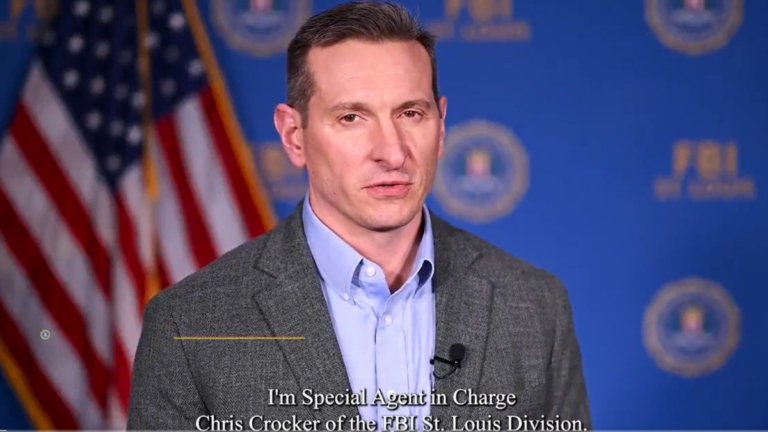
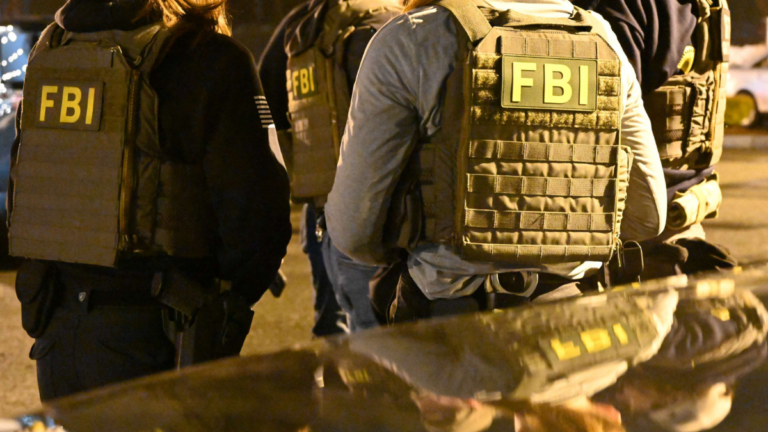
Special Agent in Charge Chris Crocker of the FBI’s St. Louis Division described Singh and his co-conspirators as “parasites” whose crimes devastated elderly victims, including a couple in their 90s who lost their life savings intended for their disabled adult child.
Special Agent Crocker said the FBI would continue to dismantle such networks in the U.S. and pursue the ringleaders overseas.
4 years in federal prison for participating in a scheme that stole $9,300,000 from elderly victims in 10 states, including Missouri. Sital Singh was the last of 5 defendants to be sentenced. The group's job was to pick up gold bars/coins from the elderly victims who thought they… pic.twitter.com/IFSEuydfsu
The fraud involved overseas scammers contacting elderly victims by phone and email, falsely claiming their bank accounts were compromised and instructing them to buy gold to protect their savings.
Authorities estimate the overseas operators collected $9.3 million.
In one case, an 82-year-old St. Louis woman was told her accounts were at risk and persuaded to buy approximately $250,000 in gold. Lambert, acting as a courier, was intercepted by law enforcement after flying from Florida, while Parekh fled to Pittsburgh.
It is reported that Singh handled gold pickups in Tennessee, Texas and Wisconsin, while Parekh and Darji operated across Arizona, California, Florida, North Carolina and Pennsylvania. Lambert and Stevens travelled widely as couriers, including to Massachusetts, New York, Ohio and Texas.
Darji and Parekh, both in the United States unlawfully, will be deported after serving their four-year sentences. Lambert was sentenced to two years and Stevens to 18 months, with all ordered to pay restitution.
Support our Journalism
No-nonsense journalism. No paywalls. Whether you’re in Australia, the UK, Canada, the USA, or India, you can support The Australia Today by taking a paid subscription via Patreon or donating via PayPal — and help keep honest, fearless journalism alive.
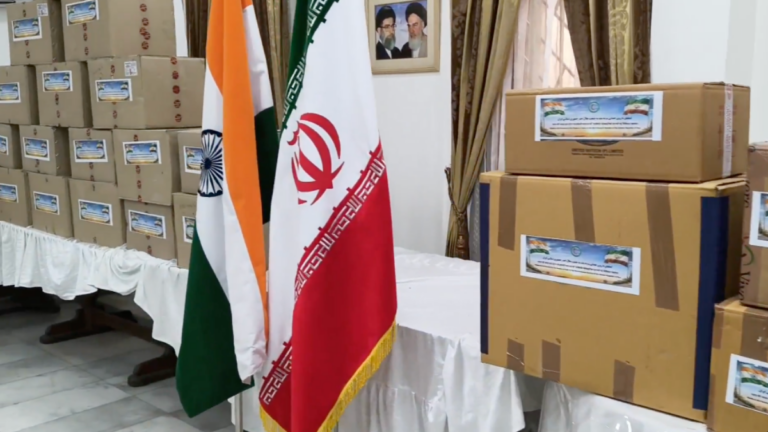
Iran’s embassy in New Delhi says the first shipment of medical aid raised from supporters in India has been delivered to the Iranian Red Crescent Society, marking a new phase in the humanitarian response as the war in and around Iran strains medical supply lines and relief operations.
In a social media update, the mission said, “The first shipment of medical aid from the esteemed people of India has been delivered to the Iranian Red Crescent Society,” and added its thanks to the “kind people of India.”
The development comes only days after the embassy publicly appealed for donations from people in India, saying supporters had asked how they could help civilians affected by the conflict. The mission said online fund transfers had become difficult and, for a period, urged contributors to make cash donations directly at the embassy while technical problems were being resolved.
The aid drive has unfolded against a rapidly worsening humanitarian backdrop inside Iran. The International Federation of Red Cross and Red Crescent Societies said this month that strikes since late February have killed hundreds, injured thousands and disrupted essential services for as many as 60 million people, while the Iranian Red Crescent has mobilised thousands of responders but remains under severe pressure.
Medical logistics across the wider region have also become more fragile as the conflict disrupts key air and sea corridors. Reuters reported this week that the war has snarled the flow of critical medicines through Gulf transit hubs, forcing companies to reroute temperature-sensitive drugs and raising the risk of pressure on hospitals if the disruption drags on.
The shipment from India also lands at a sensitive diplomatic moment. Reuters reported that in talks over safe passage for Indian-linked shipping through the Strait of Hormuz, Tehran has separately sought supplies of certain medicines and medical equipment from India, underscoring how humanitarian needs are now overlapping with broader strategic and maritime negotiations.
For India, the donation-backed consignment highlights both the depth of people-to-people ties with Iran and the practical role Indian civil society can play during a regional emergency. It also reflects a wider public response: the Iranian embassy said it had received repeated approaches from charitable and benevolent individuals in India seeking ways to support affected civilians.
The embassy has not publicly outlined the precise volume or contents of the first shipment in the statements seen so far, but its announcement suggests the collection and transfer mechanism it opened in recent days has now begun translating into physical relief on the ground. With humanitarian agencies warning that the needs inside Iran are likely to grow if the conflict continues, further assistance from foreign partners, diaspora communities and private donors may become increasingly important.
India and Iran have maintained longstanding cultural and economic links, and the arrival of the first India-sourced medical shipment is likely to be read in Tehran as both a humanitarian gesture and a sign that public goodwill in India remains strong even as the wider region enters a more volatile and uncertain phase.
Support our Journalism
No-nonsense journalism. No paywalls. Whether you’re in Australia, the UK, Canada, the USA, or India, you can support The Australia Today by taking a paid subscription via Patreon or donating via PayPal — and help keep honest, fearless journalism alive.
The resignation of the United States’ top counterterrorism official over the war with Iran has laid bare growing divisions within President Donald Trump’s administration, as political, military and public debate intensifies over the conflict’s justification and trajectory.
Joe Kent, director of the National Counterterrorism Center (NCTC), stepped down on Tuesday, announcing his decision in a blunt statement posted on X. “After much reflection, I have decided to resign… I cannot in good conscience support the ongoing war in Iran,” he wrote, arguing that Tehran posed “no imminent threat” to the United States.
Kent’s resignation was swiftly rebuffed by the White House. Trump dismissed Kent as “weak on security” and said he was “glad” he had left the post, reinforcing the administration’s stance that Iran posed a clear and present danger. “When somebody says they didn’t think Iran was a threat, we don’t want those people,” the president told reporters in the Oval Office.
“Iran was a tremendous threat.”
.@POTUS: "I always thought he was a nice guy, but I always thought he was weak on security… When I read his statement, I realized that it's a good thing that he's out because he said that Iran was not a threat… Iran was a tremendous threat." https://t.co/atnLqkUsdepic.twitter.com/d8t8DZEUfu
Kent’s departure is one of the most senior-level breaks with the administration since the conflict began, and comes at a sensitive moment, just 24 hours before key intelligence leaders are scheduled to testify before the Senate Intelligence Committee. His exit raises fresh questions about internal dissent within the national security apparatus and the intelligence underpinning the decision to strike Iran.
In his resignation statement, Kent alleged that the United States had been drawn into war by external pressure, claiming American media, Israeli officials and pro-Israel lobbying groups had fostered a “misinformation campaign” to build support for military action. He compared the situation to the lead-up to the 2003 Iraq War, suggesting a similar narrative had been used to justify intervention. There is no credible evidence supporting the claim that Israel manipulated U.S. intelligence assessments in that case.
Kent, a combat veteran and former congressional candidate, had been appointed to the role by Trump in early 2025 and confirmed by the Senate later that year. He thanked both the president and Director of National Intelligence Tulsi Gabbard in his message, describing his tenure as an honour.
White House press secretary Karoline Leavitt also rejected Kent’s claims, calling them “false” and emphasising that determinations of national security threats ultimately rest with the commander-in-chief. She described as “insulting and laughable” the suggestion that foreign governments influenced Trump’s decision-making.
Senior Republican lawmakers echoed that criticism, underscoring the administration’s broader messaging. House Speaker Mike Johnson said intelligence briefings available to senior leaders pointed to an imminent threat from Iran, including concerns over uranium enrichment and rapidly advancing missile capabilities. “Had the president waited, I am personally convinced that we would have mass casualties of Americans,” Johnson said.
Republican Congressman Don Bacon took a more combative tone, pointing to Iran’s history of attacks on U.S. personnel in the Middle East and dismissing Kent’s departure with a terse “good riddance” on social media.
The administration has consistently argued that its actions were both defensive and necessary. Secretary of State Marco Rubio said earlier this month that Washington moved to strike Iran after Israel initiated its own military action, warning that Tehran would likely retaliate against U.S. forces if the United States did not act pre-emptively.
Beyond Washington, Kent’s resignation has also triggered an emotional public response, highlighting the human dimension of the conflict.
Sharrell Anne, the wife of a U.S. service member killed by Iranian-backed forces in Iraq, publicly challenged Kent’s position. In a pointed reply, she accused him of downplaying the threat posed by Iran and argued that the current conflict represents a continuation of a long-standing struggle against state-sponsored militancy.
Gold Star wife here.
When ISIS killed your wife, you supported going after the people responsible. You understood exactly why we were fighting and never called it “Israel’s war.”
My husband, Alan, was killed by Iranian proxies in Iraq. And now, after decades, the fight is… https://t.co/lNOJOnGvcC
Her remarks drew attention to Kent’s own personal history. A combat veteran whose wife was killed in action by ISIS, Kent had previously been a vocal advocate for pursuing those responsible for attacks on Americans overseas. Anne’s criticism framed his resignation as a reversal of that earlier stance, underscoring how personal loss continues to shape perspectives on U.S. military engagements.
Kent’s political background adds another layer to the controversy. A staunch Trump ally, he ran unsuccessfully for Congress in Washington state in both 2022 and 2024, aligning himself closely with the former president’s political movement. His resignation, therefore, represents not only a policy disagreement but a notable fracture within a traditionally loyal segment of Trump’s support base.
Thank you President Trump!
It’s an honor to serve our nation again, time to keep our nation safe & strong! pic.twitter.com/yxyknrTTMN
The timing of his departure is particularly significant. With the war entering its third week and casualties mounting, the administration is under increasing pressure to justify both the intelligence behind its actions and its broader strategic objectives. Congressional hearings scheduled this week are expected to probe those questions, with Tulsi Gabbard and other senior officials set to face scrutiny from lawmakers.
Support our Journalism
No-nonsense journalism. No paywalls. Whether you’re in Australia, the UK, Canada, the USA, or India, you can support The Australia Today by taking a paid subscription via Patreon or donating via PayPal — and help keep honest, fearless journalism alive.
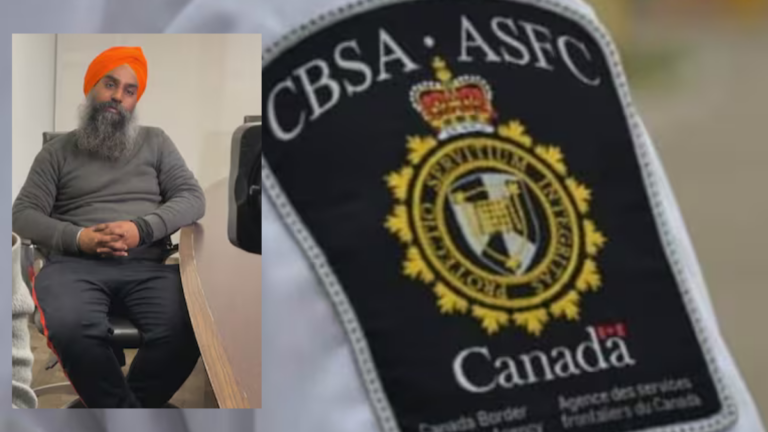
As per CBC, Gurpreet Singh, a 40-year-old, has launched civil proceedings against the Canadian government and officers from the Canada Border Services Agency (CBSA), alleging malicious prosecution and breaches of his charter rights.
The lawsuit follows an extraordinary court decision that stayed criminal proceedings against him despite a finding of guilt.
It is reported that the case stems from a long-running investigation in Saskatchewan into fraudulent job offers used to facilitate entry into Canada.
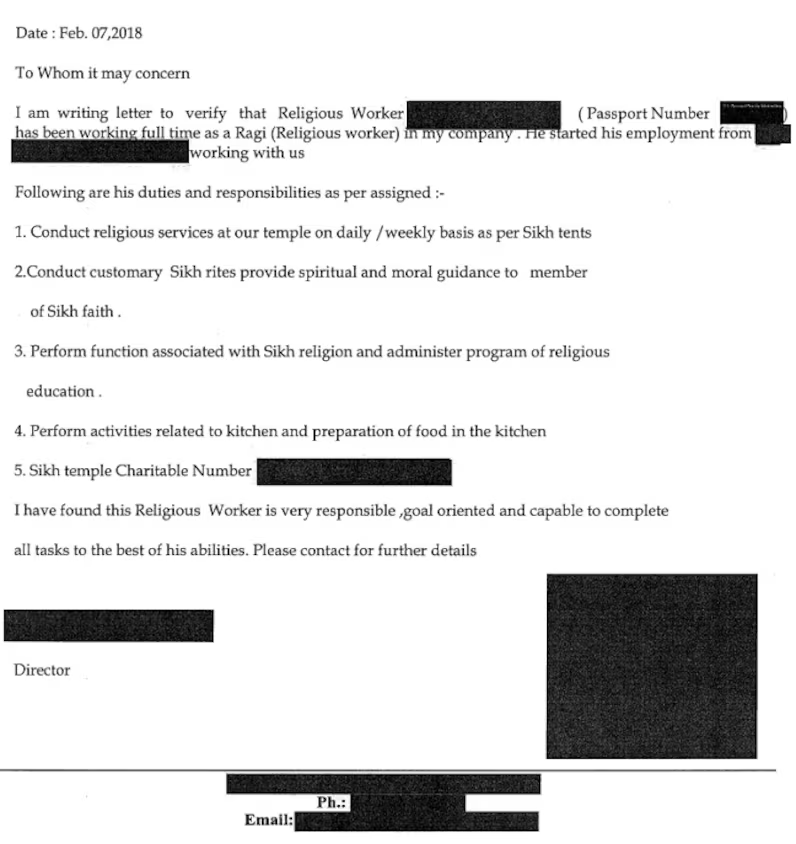
As per CBC, Gurpreet Singh arrived in Canada on a temporary resident visa and worked as a religious worker at a Sikh temple. Investigators later found fake job offer letters on his laptop, which were used by foreign nationals to enter the country under false pretences. His lawyer acknowledged the letters were fraudulent and said the scheme reflected widespread immigration fraud.
Image: Both the Crown and the defence agreed that this case involved fake letters for non-existent jobs which were part of a scheme to cheat Canada’s immigration system (Photo: Saskatchewan Court of King’s Bench / Source: CBC)
Gurpreet Singh was arrested in 2018 and later convicted in 2022 of multiple counts related to producing false employment letters for foreign nationals seeking visas.
However, in a July 2025 ruling, Justice Naheed Bardai of the Saskatoon Court of King’s Bench halted the case before sentencing, concluding that the conduct of investigators had undermined the integrity of the justice system. While the judge said he remained convinced of Singh’s guilt beyond reasonable doubt, he ruled that the actions of officials “offend society’s sense of fair play and decency”.
The decision followed a mistrial application by Gurpreet Singh’s defence, which alleged that key evidence had not been disclosed and that a lead investigator had improperly contacted witnesses. Although the court rejected claims of deliberate intimidation and found the non-disclosure to be inadvertent, it took issue with the investigator’s decision to effectively examine allegations against himself.
Justice Bardai described the move as a serious lapse in judgement, comparing it to asking an accused person to investigate their own alleged wrongdoing. The judge found that the investigator’s actions – made under pressure – compromised the fairness of the proceedings and were not adequately checked by supervisors or prosecutors.
He also criticised senior CBSA staff for failing to intervene, noting that opportunities to assign an independent investigator were missed. While he did not find evidence of bad faith or malice, he concluded that a series of poor decisions across multiple levels amounted to a broader institutional failure.
As a result, the court applied what Justice Bardai called an “extreme remedy” – a stay of proceedings – which permanently halts the prosecution and leaves Singh without a conviction or sentence.
It is further reported that Gurpreet Singh has since sought compensation through the courts and applied for permanent residency in Canada on humanitarian grounds. His lawyer, Tavengwa Runyowa, argued the case has left a lasting stain on his client, who continues to face the consequences of what he describes as a deeply flawed investigation.
Despite the court outcome, Gurpreet Singh’s immigration status remains uncertain.
Canadian authorities rejected his residency application in October 2025, citing a lack of compelling reasons to remain in the country and raising concerns about his work history and failure to file taxes during his time in Canada.
Gurpreet Singh is appealing that decision in federal court, arguing that he has established a life in Canada and would face hardship if forced to return to India. He has also maintained his innocence, claiming he was unknowingly caught up in a broader fraud scheme.
As per CBC, the civil lawsuit, filed in January, names individual CBSA officers and the Attorney General of Canada. It alleges negligent investigation, unlawful conspiracy and violations of Singh’s legal rights. The claims have not yet been tested in court, and the CBSA has declined to comment while the matter is ongoing.
Support our Journalism
No-nonsense journalism. No paywalls. Whether you’re in Australia, the UK, Canada, the USA, or India, you can support The Australia Today by taking a paid subscription via Patreon or donating via PayPal — and help keep honest, fearless journalism alive.
A large majority of Australians – including first-generation migrants – support cutting the country’s migration intake, according to a new survey that highlights growing concern about population growth and its impacts.
The poll of 1,936 people, conducted by research firm Fox and Hedgehog between 24 and 27 February, found 79 per cent of respondents favoured an annual migration intake of 100,000 or fewer. This compares with recent net overseas migration levels that have been significantly higher.
Image: Foreign temporary visa holders in Australia (Source: IPA screenshot)
Support for lower migration extended across demographic groups, with 75 per cent of first-generation migrants, 74 per cent of non-citizens and 72 per cent of young adults aged 18 to 24 backing a reduced intake.
The view was also shared across the political spectrum, including 73 per cent of Labor voters and 67 per cent of Greens voters.
The survey, released by the Institute of Public Affairs, also found 60 per cent of respondents believe Australia has too many migrants, while 17 per cent think there are too few. Among first-generation migrants, 59 per cent said migration levels were too high.
More than half of those surveyed – 54 per cent – said they no longer recognise the country they grew up in, reflecting broader concerns about social and cultural change.
Deputy executive director Daniel Wild said the findings challenged assumptions that migrant communities are broadly supportive of high immigration levels, arguing there was “broad-based support” for a reduction. He also criticised successive governments for failing to match population growth with infrastructure and policy settings.
The survey further found 77 per cent of Australians support requiring migrants to commit to a set of national values, with potential consequences for those who fail to uphold them. Only 7 per cent opposed such measures.
Nearly half of respondents – 48 per cent – said they believed the federal government was deliberately increasing migration for electoral advantage, although views on this question were sharply divided along party lines.
Image: Voters perceive One Nation voters as the most capable party at reducing immigration levels (Source: IPA screenshot)
The findings come amid record population inflows. Recent data from the Australian Bureau of Statistics show net permanent and long-term arrivals reached 494,540 in the year to January 2026, the highest level on record.
Despite this, most Australians appear to underestimate both the size of the migrant population and the scale of recent increases. Between 84 and 86 per cent of respondents misjudged the number of temporary visa holders and the growth in migration since 2022.
The survey also points to shifting political dynamics around the issue. While respondents indicated they would be more likely to support the Coalition if it committed to substantially reducing migration, only a minority believed it would follow through. Voters were more likely to nominate Pauline Hanson’s One Nation as the party they trust most to cut migration levels.
The results underscore the growing prominence of migration as a political issue, as policymakers face pressure to balance economic needs with infrastructure capacity and public sentiment.
Support our Journalism
No-nonsense journalism. No paywalls. Whether you’re in Australia, the UK, Canada, the USA, or India, you can support The Australia Today by taking a paid subscription via Patreon or donating via PayPal — and help keep honest, fearless journalism alive.
Officers from the Australian Government’s Fraud Fusion Taskforce searched a property in Chipping Norton on 18 March, seizing electronic devices for forensic examination and questioning an occupant who was later released pending further enquiries.
The warrant forms part of Operation Honeycomb, a multi-agency investigation into suspected large-scale NDIS fraud and associated money laundering.
The inquiry began in February 2025 after the Australian Criminal Intelligence Commission identified irregular financial activity linked to a 31-year-old Villawood man, who is a director of an NDIS provider.
In December, Australian Federal Police investigators, working with the National Disability Insurance Agency, searched a Villawood residence and charged the man with dealing in money suspected to be the proceeds of crime.
Evidence gathered during that phase of the investigation led authorities to pursue further lines of inquiry, culminating in this week’s search in Chipping Norton.
Detective Inspector Aidan Milner said investigators were targeting not only individuals but broader criminal networks seeking to exploit public funding. He said authorities would continue to follow financial trails to ensure those involved could not conceal profits derived from defrauding government programs, adding that changing company structures would not shield offenders from detection.
A spokesperson for the National Disability Insurance Agency said the latest enforcement action highlighted the role of coordinated intelligence-sharing in identifying and disrupting fraudulent activity within the scheme. Protecting participants and maintaining the integrity of the NDIS remained the agency’s central priority, the spokesperson said.
The Fraud Fusion Taskforce, co-led by the NDIA and Services Australia, brings together 24 agencies including the AFP, the NDIS Quality and Safeguards Commission and the Australian Criminal Intelligence Commission. It focuses on serious and organised criminal activity targeting Commonwealth-funded programs.
Investigations are ongoing, with further regulatory action expected.
Support our Journalism
No-nonsense journalism. No paywalls. Whether you’re in Australia, the UK, Canada, the USA, or India, you can support The Australia Today by taking a paid subscription via Patreon or donating via PayPal — and help keep honest, fearless journalism alive.
Australians may have seen headlines warning “dirty fuel” is back, temporarily, to ease fuel supplies. The phrase sounds alarming, but it has a specific and fairly narrow meaning.
In this context, “dirty fuel” refers to petrol with higher sulfur content than Australia’s newest fuel standards allow.
So how worried should we be about our health if we use petrol containing more sulfur over the coming weeks? What about people with asthma?
Why the backflip?
Sulfur is a naturally occurring component of crude oil. When fuel is burned in engines, sulfur contributes to air pollution, particularly the gas sulfur dioxide (SO₂) and fine particles (known as PM2.5). When inhaled, both can affect our health.
Australia only fully adopted ultra-low sulfur petrol standards in late 2025, bringing sulfur levels down to 10 parts per million (ppm) across all petrol grades.
But last week, the federal government announced a temporary 60-day exemption allowing petrol with higher sulfur levels (up to around 50ppm) back into the domestic market.
The decision was made in response to severe global supply disruptions, driven by conflict in the Middle East and the partial closure of the Strait of Hormuz, through which a sizeable proportion of the world’s oil normally flows.
According to the government, the exemption allows around 100 million extra litres of petrol per month to be diverted from export markets into Australian service stations, particularly in regional areas.
The government has emphasised the change is temporary and that fuel quality will return to the lower level of permitted sulfur once supply pressures ease.
Sulfur is also found in diesel, but the recently announced changes only relate to petrol standards.
Why does sulfur in fuel matter for health?
We can’t inhale sulfur itself directly from fuel. But burning petrol containing sulfur increases emissions of SO₂, which we can breathe in.
Sulfur exhaust emissions of SO₂ are also chemically transformed into sulfate particles that make up an important fraction of fine particulate pollution (known as PM2.5).
Sulfur in fuel also interferes with vehicle emission-control systems. It makes catalytic converters less effective. This indirectly increases other harmful pollutants, including fine particulate matter (PM2.5), which is linked to:
Because of this, reducing sulfur in fuel is widely regarded as one of the most cost-effective air quality interventions, delivering population-wide health benefits over time.
What about a temporary increase like this one?
This is where context matters. The fuel now being allowed back into the system is no dirtier than what Australians were using for most of 2025.
In fact, for many drivers, it will be chemically similar to petrol they used last year without noticing.
Because Australia only switched to ultra-low sulfur petrol in late 2025, there has been little time for large population-level health gains to accumulate. Air quality improvements from cleaner fuels tend to emerge gradually, rather than within weeks or months.
That means a short-term reversal is unlikely to cause sudden, dramatic new health effects for the general population. There is no evidence a two-month increase will trigger a wave of new disease.
And while increased SO₂ levels in the atmosphere are not good for human health, Australian roadside monitoring studies (including monitoring SO₂) consistently report very low concentrations.
However, there are some important caveats:
sulfur emissions worsen air quality and disproportionately affect people with existing heart and lung diseases (especally asthma)
traffic-related pollution causes harm even at the relatively low levels found in Australia
we do not know precisely how much additional SO₂ or particulate pollution this temporary change will generate in Australian cities, because it depends on traffic patterns, weather and how petrol is blended at the refinery
we suspect any added health burden will be small, short lived, and concentrated near busy roads and enclosed spaces – but not zero.
In other words, this change is not ideal. But it is also not equivalent to introducing a brand new pollution source. It is closer to a brief return to very recent historical conditions.
What can people do to minimise their risk?
The advice for this period is largely the same as existing guidance on minimising harms from vehicle pollution. Practical steps include:
avoid idling vehicles in enclosed or poorly ventilated spaces such as garages and underground car parks. Exhaust pollutants, including SO₂, can build up quickly
reduce unnecessary car use where practical, particularly in congested urban areas
keep your distance from heavy traffic, especially for people with asthma, COPD (chronic obstructive pulmonary disease), heart disease, pregnant people, and young children
ensure good ventilation if driving in slow-moving traffic; close your windows and set the car aircon to recirculate
follow asthma or heart management plans, and seek medical advice if symptoms worsen.
For most Australians, no special protective equipment or behavioural changes are required beyond this type of air quality advice.
The bigger picture
Australia’s move to ultra-low sulfur petrol in late 2025 was a major public health win, long overdue and strongly supported by medical and environmental experts.
The current exemption reflects a genuine fuel security crisis – but it also highlights how fragile progress can be.
The key test will be whether this measure remains strictly temporary, and whether Australia continues to prioritise clean fuels as part of long-term health and climate policy once supply stabilises.
Cleaner fuel means cleaner air – and cleaner air saves lives. Even short detours from that path should be taken cautiously, transparently and for as little time as possible.
No-nonsense journalism. No paywalls. Whether you’re in Australia, the UK, Canada, the USA, or India, you can support The Australia Today by taking a paid subscription via Patreon or donating via PayPal — and help keep honest, fearless journalism alive.
A facility used by the Australian Defence Force (ADF) in the United Arab Emirates has been struck in an Iranian attack, with officials confirming that no Australians were injured.
Prime Minister Anthony Albanese said all Australian personnel at Al Minhad Air Base, near Dubai, are safe and accounted for. He described the strike as causing only minor damage.
File Image – Screenshot X
In an official statement, Defence Australia said:
“On the morning of 18 March 2026 (AEDT), an Iranian strike impacted an area at the Al Minhad Air Base in the United Arab Emirates, where the Australian Defence Force (ADF) has a long‑standing presence. No ADF personnel were injured in the incident, and all ADF personnel deployed to the Middle East are safe and accounted for.
The strike resulted in minor damage to an accommodation block and medical facility in the Australian section of the base. Defence’s focus is on ensuring the safety and security of our people, and we will continue to revise force protection measures as the situation in the Middle East evolves.”
The base supports Australian military operations in the Middle East and hosts a limited number of defence personnel. Authorities are continuing to assess the situation, and no changes to Australian deployments or operations have been announced.
The incident comes amid heightened tensions in the Gulf region. Australian officials have reiterated that the country’s military presence in the region remains focused on support and defensive roles.
Support our Journalism
No-nonsense journalism. No paywalls. Whether you’re in Australia, the UK, Canada, the USA, or India, you can support The Australia Today by taking a paid subscription via Patreon or donating via PayPal — and help keep honest, fearless journalism alive.
India-born entrepreneurs are playing a major role in a surge of new businesses across western and north-western Sydney, with recent data showing they founded more than half of all new companies in parts of the region last year.
Figures from the Lawpath New Business Index reveal that migrants from India accounted for 19 per cent of all new business registrations in New South Wales in 2025, making them the second most common group of founders after Australian-born entrepreneurs. The share is significantly higher than their proportion of the state’s population, with India-born residents representing about 3 per cent of people living in NSW.
The impact is even more pronounced in western Sydney. Across the council areas of Parramatta, Blacktown, The Hills and Penrith, India-born founders accounted for 56 per cent of new businesses registered in 2025. Australian-born founders were the next largest group, representing 16 per cent.
The pattern is reflected in the most common surnames appearing on new business registrations across those local government areas. Names such as Singh, Patel, Kaur and Sharma ranked among the most frequent, while Smith, traditionally one of Australia’s most common surnames, appeared much further down the list.
Image Source: SMH
The data highlights the growing economic influence of Australia’s Indian diaspora, which has expanded rapidly over the past two decades and now numbers about one million people nationally.
One of the entrepreneurs contributing to the trend is Pragna Bhavsar, who co-owns catering business Chit Chaat Co with her husband Sahil. The company, based in Westmead near Parramatta, specialises in modern Indian fusion cuisine and caters to both corporate and private events.
Bhavsar, 28, left her job in human resources around a year ago to run the business full-time. She told SMH her company now caters between five and 10 events each week, with gatherings ranging from small functions to large celebrations.
“We saw an opportunity to expand our business by having a presence in western Sydney,” Bhavsar said, noting the area’s rapidly growing South Asian community.
Bhavsar moved to Australia with her parents in 2011 and said strong community networks among migrants had been valuable for small business owners.
“It’s like you’re all growing together,” she said.
Lawpath co-founder Tom Willis said the high proportion of India-born founders in western and north-western Sydney was a clear sign of strong entrepreneurial activity within the diaspora.
Willis said Indian Australian entrepreneurs were launching companies across a broad range of industries, including hospitality, food services, professional consulting, web-based businesses and digital marketing.
“They’re responding to where they see opportunities, and sometimes that’s servicing the diaspora communities they’re part of,” he said.
Parramatta and the surrounding suburbs have become key centres for the Indian-Australian community. More than one-third of residents in Parramatta were born in India, while other suburbs such as Schofields, The Ponds and Marsden Park also have large India-born populations.
Image Source: SMH
Jai Patel, who leads KPMG’s India Business Practice, told SMH that strong social connections within the diaspora had helped create a supportive environment for entrepreneurs.
“A high-energy business ecosystem has emerged among the Indian diaspora driven by deep social connections and entrepreneurial spirit,” Patel said.
He said starting a business can also be a pathway for new migrants seeking to establish themselves in Australia’s labour market.
“Cracking that first job without Australian experience can be difficult, so for many creating a new business can be a better way to go,” he said.
Patel added that the growing number of Indian Australian-founded businesses in western Sydney was also strengthening trade and investment links between Australia and India, the world’s fifth-largest economy.
“The diaspora naturally provides a human bridge into the vast Indian market across multiple sectors,” he said.
The rise in Indian-Australian-led businesses forms part of a broader increase in entrepreneurial activity across Western Sydney.
In the Parramatta local government area, nearly 30,000 new businesses were registered in 2025, representing a 35 per cent increase on the previous year. Growth was even stronger in Blacktown, where 21,674 new businesses were registered, up 48 per cent compared with 2024.
Nationally, the Lawpath index shows strong growth in new company registrations over the past two years.
Image Source: SMH
Willis said economic pressures, including cost-of-living increases, higher interest rates and modest wage growth, were encouraging more Australians to pursue entrepreneurship as a way to boost household income.
“In a period marked by cost-of-living pressures and slower wage growth, many Australians are turning to business activity to create income flexibility,” he said.
The trend suggests that western Sydney, powered in part by its rapidly expanding migrant communities, is emerging as one of the country’s most dynamic hubs for small business growth.
Support our Journalism
No-nonsense journalism. No paywalls. Whether you’re in Australia, the UK, Canada, the USA, or India, you can support The Australia Today by taking a paid subscription via Patreon or donating via PayPal — and help keep honest, fearless journalism alive.
Afghan authorities have reported that a Pakistani airstrike in Kabul has killed at least 400 people and injured hundreds more, with the strike allegedly hitting a major medical facility and overwhelming hospitals in the capital.
India has strongly criticised the strike, describing it as “cowardly” and “barbaric” and a violation of Afghan sovereignty, while expressing concern over the high number of civilian casualties. New Delhi also warned that such actions could further destabilise the region.
China, while stopping short of directly condemning Pakistan, has called for restraint and urged both sides to avoid escalation. Beijing emphasised the need for dialogue and stability in the region amid rising tensions.
As of now, there has been no clear public condemnation from several major Western countries, including the United States, which has not issued a direct statement on the reported strike or the scale of casualties.
The situation remains fluid, with rescue operations ongoing and fears that the death toll could rise further as more bodies are recovered from the rubble.
The Pakistani military regime carried out an airstrike at approximately 9:00 PM this evening on the Omid Addiction Treatment Hospital, a 2,000-bed facility dedicated to the treatment of drug addiction. As a result of the attack, large sections of the hospital have been destroyed,…
— Hamdullah Fitratحمدالله فطرت (@FitratHamd) March 16, 2026
The Taliban-led Afghan government condemned the strike, calling it a violation of sovereignty and describing it as a “crime against humanity.” Pakistan, however, denies targeting civilians, stating that its operations were aimed at militant positions and support infrastructure in the area.
This attack marks a severe escalation in tensions between the two neighbouring countries, where cross-border violence and militant activity have increased in recent weeks. The incident has raised concerns about civilian safety and the broader stability of the region.
Support our Journalism
No-nonsense journalism. No paywalls. Whether you’re in Australia, the UK, Canada, the USA, or India, you can support The Australia Today by taking a paid subscription via Patreon or donating via PayPal — and help keep honest, fearless journalism alive.
Assistant Minister for Multi-Ethnic Affairs, Culture, Heritage and Arts Shalen Kumar has called for stronger efforts to build social cohesion in Fiji, warning that unity must be deliberately nurtured to safeguard the country’s long-term development and stability.
Responding to the President Ratu Naiqama Lalabalavu’s address at the opening of Parliament for the 2026-2027 session last week, Mr Kumar said Fiji’s diversity remained its greatest strength, but maintaining harmony among communities required sustained commitment from leaders, institutions and citizens.
“His Excellency reminded us that our diversity is our strength and that unity must be consciously built. This message is extremely important for a country like Fiji where people of many cultures, religions, and traditions live together as one nation.”
He said Fiji was fortunate to be a peaceful nation in a world experiencing conflict and instability, pointing to ongoing tensions in regions such as Ukraine and parts of the Middle East as reminders of the importance of maintaining harmony at home.
Image: Assistant Minister Shalen Kumar makes his Parliamentary speech 9Source: Supplied)
Mr Kumar said the work of the Ministry of Multi-Ethnic Affairs, Culture, Heritage and Arts was closely aligned with the national vision outlined in the President’s speech.
“Our responsibility is to ensure that every community in Fiji feels respected, valued and included in our national journey.”
He highlighted that social cohesion does not occur automatically but must be developed through dialogue, inclusive policies and community engagement.
Mr Kumar said social cohesion in Fiji should no longer be viewed solely through the lens of relations between the iTaukei and Indo-Fijian communities, as changing demographics and political dynamics meant tensions could also arise within ethnic groups.
In his address the Assistant Minister also cited the views of Associate Professor Shailendra Singh, a leading researcher on media and social cohesion in Fiji.
Dr Singh had pointed out that development cannot be sustained without social cohesion.
Mr Kumar quoted the work of Dr Singh who had mentioned that any future framework must take the intra-ethnic and political dynamics into account and it must be both visionary and forward-looking; otherwise, it risks becoming redundant very quickly.
He commended the role of the government and Prime Minister Sitiveni Rabuka’s role in emphasizing social cohesion and positioning it at the top of the national agenda.
Image: PM Rabuka and Ratu Naiqama (Source: Supplied)
In his Parliamentary address last week, Mr Rabuka said Ratu Naiqama had reminded us that unity, long-term planning and shared responsibility must guide our nation’s journey.
Meanwhile Mr Kumar also noted that Fiji’s political instability in past decades had cost the country an estimated $5 billion in lost development, highlighting the economic consequences of social division.
He further highlighted grassroots initiatives aimed at strengthening unity, including the Ministry’s Multi-Ethnic Affairs Grant Programme, which supports community development projects such as water systems, solar installations and facility upgrades.
More than 1000 applications were received for the programme this year, reflecting strong community interest. Funding for the initiative has been increased to $2 million, up from the previous financial year. “These projects may seem small individually, but together they create a powerful impact,” Mr Kumar said.
“They bring people together, encourage cooperation and strengthen relationships across ethnic and religious communities.”
Mr Kumar also outlined cultural initiatives aimed at promoting national unity, including heritage preservation programmes and preparations for the annual Girmit Day commemorations.
Plans are also in progress to digitise more than 60,000 Girmit records and establish a dedicated museum to preserve this history for future generations.
Mr Kumar urged leaders and the public to promote responsible discourse, particularly on social media, warning those divisive narratives could undermine the nation’s unity.
“As leaders, we must ensure that our words and actions strengthen unity rather than create division.”
He reaffirmed the ministry’s commitment to fostering dialogue, preserving cultural heritage and promoting inclusive development to strengthen Fiji’s social fabric. “Fiji’s strength lies in the harmony of its people,” Mr Kumar said.
This article was first published on Wansolwara News and has been republished with permission.
Support our Journalism
No-nonsense journalism. No paywalls. Whether you’re in Australia, the UK, Canada, the USA, or India, you can support The Australia Today by taking a paid subscription via Patreon or donating via PayPal — and help keep honest, fearless journalism alive.
Victorians are being urged to nominate local volunteers and community organisations for the 2026 Victorian Volunteering Awards, with the state government calling for greater recognition of those supporting communities across the state.
Ros Spence announced nominations are now open, encouraging residents to put forward individuals and groups making a difference through voluntary work.
The annual awards recognise excellence across eight categories, including the Young Volunteer Award, Volunteer Commitment Award, Volunteer Leadership Award, Volunteer Impact Award, Inclusive Volunteering Award, Volunteering Innovation Award, Volunteering Partnerships Award and Grassroots Volunteering Award.
One recipient will also be named Volunteer of the Year and awarded the Dame Elisabeth Murdoch Award, along with a $10,000 donation to a not-for-profit organisation of their choice.
Spence said volunteers played a central role in strengthening communities across Victoria.
“Victoria’s volunteers are the quiet achievers behind so much of what makes our communities strong – these awards are our chance to shine a light on them,” she said.
“Whether it’s their time, skills or lived experience, every volunteer brings something unique.”
Last year’s awards received 447 nominations, with Glenys Watts named Volunteer of the Year. Watts has spent more than three decades advocating for Indigenous health, family violence prevention and culturally safe services, including her work with the Wirram Warrain Gathering Place and Ngwala Willumbong.
Volunteering Victoria chief executive Geoff Sharp said the awards were an opportunity to highlight contributions that often go unnoticed.
“Volunteers and the organisations they support rarely seek recognition, which is why your nomination matters,” he said.
“By nominating for the Victorian Volunteering Awards, you help celebrate their contributions and inspire others to follow.”
Nominations close on 27 May, with winners to be announced later this year.
Support our Journalism
No-nonsense journalism. No paywalls. Whether you’re in Australia, the UK, Canada, the USA, or India, you can support The Australia Today by taking a paid subscription via Patreon or donating via PayPal — and help keep honest, fearless journalism alive.
Melbourne’s Parliament House hosted a celebration recognising multicultural women leaders to mark International Women’s Day 2026, with community advocates, business leaders and policymakers gathering to honour women making a difference across Victoria.
The event, organised by Parmila Tandon of P24 News Media, took place on 13 March and recognised 20 women for their leadership and contributions across sectors, including entrepreneurship, law, community service and social advocacy.
Victorian MP Steve McGhie attended the gathering alongside community leaders Cuc Lam and Kim Thien Truong, as well as community advocate Pradeep Tiwari, Mindblowing Films’ Mitu Bhowmick Lange and corporate adviser Christina Chia.
The program opened with a tribute recognising the work of Ms Bhowmick Lange and Ms Chia for their contributions to arts, business and multicultural representation. The tribute was presented through a video feature produced by Parmila Tandon.
During the ceremony, Mr McGhie also acknowledged Ms Lam and Mr Truong for their community leadership, highlighting the role of multicultural organisations in strengthening civic participation across Victoria.
A key part of the event was the announcement of the “Super 20 Women of 2026”, recognising women who have demonstrated leadership across business, law and community work.
Among those honoured were Usha Gullapalli, president of the Hindu Society of Victoria; entrepreneur Nia Sachdeva; Saumya Gupta, founder and director; Aneet Kohli, principal solicitor; SimplePreet Kaur, director at Aussizz Group; and Siya Jain, founder of Kaya Delight Pty Ltd.
Other recipients included Sugandha Manocha, chief executive of HM99 Realty Group; Pallawi Gangraj, principal accountant and director; Mahima Solanki, principal solicitor; Pansy Khurana, entrepreneur; Rasna Kaur, director of Barkat Online; and Nirpinder Kaur, podcaster.
Additional honourees included Reetu Sethi, founder of Aastha – The Base of Life; Sara Ibrahim, vice-president of Hand in Hand Inc. and business leaders Charanjit Kaur and Jasmine Kour Khosla.
The evening also recognised several community contributors for their work supporting multicultural engagement in Victoria.
Those acknowledged included Bhawna Puri, president of Kali Mata Mandir Melbourne; Kritika Sharma from Indian Women in Australia; and Monica Sharma Raizada, director of Women of Worth.
The event was hosted by Simran Sohal, who served as master of ceremonies.
Celebration highlighted the influence of multicultural women in shaping Australia’s social and economic landscape and reaffirmed the message of International Women’s Day — recognising leadership, resilience and the ongoing push for equality.
As the event concluded, attendees reflected on the inspiring stories shared throughout the evening, reaffirming the spirit of International Women’s Day and the continuing push for equality, leadership and opportunity across Australia’s multicultural communities.
Support our Journalism
No-nonsense journalism. No paywalls. Whether you’re in Australia, the UK, Canada, the USA, or India, you can support The Australia Today by taking a paid subscription via Patreon or donating via PayPal — and help keep honest, fearless journalism alive.
Ali Larijani, one of the Islamic Republic’s most influential political and security figures, has been killed in an Israeli strike, according to Iranian state media, marking the loss of another senior figure from Iran’s governing elite as the regional war deepens. He was 67.
Israel had earlier claimed Larijani was killed, with Defence Minister Israel Katz publicly announcing his death before Tehran issued confirmation. Reuters first reported that Israeli officials said Larijani had been targeted, and later reported Iranian media had confirmed the killing.
Larijani had become an even more important figure in Tehran after the death of Supreme Leader Ayatollah Ali Khamenei in an airstrike on 28 February, with international media and analysts describing him as one of the men effectively helping run Iran through the current crisis. Associated Press reported that Larijani was believed to have taken on a leading role in the country after Khamenei’s death, even though he was not eligible to become the supreme leader because he was not a cleric.
His death removes a veteran insider who had spent decades at the centre of the Iranian state. Born in Najaf in Iraq in 1958 into a prominent clerical family, Larijani rose through the system after the 1979 Islamic Revolution and held some of the country’s most powerful posts, including head of state broadcasting, secretary of the Supreme National Security Council, chief nuclear negotiator and speaker of parliament from 2008 to 2020. He was also later appointed a political adviser to Khamenei and a member of the Expediency Council.
Larijani was often viewed as a pragmatic conservative rather than an ideological firebrand, but he remained firmly committed to preserving Iran’s theocratic system and was central to major security and foreign policy decisions. Reuters described him as an “ultimate backroom powerbroker” who helped shape Tehran’s nuclear stance and broader strategic posture, including its relationships with Russia and China.
His career spanned both military and civilian arms of the state. He served with the Revolutionary Guards during the Iran-Iraq war, later ran Iran’s broadcasting monopoly, and became a key figure in nuclear diplomacy in the mid-2000s. Reuters noted he famously took a hard line in talks with the West, at one stage comparing European incentives to “a pearl for a candy bar”.
The strike that killed Larijani appears to be part of a broader Israeli effort to degrade Iran’s remaining command structure. Associated Press and Reuters both reported that General Gholam Reza Soleimani, head of the Basij volunteer militia, was also killed, or reported killed, in the same wave of attacks.
Larijani’s death comes as Iran’s new supreme leader, Ayatollah Mojtaba Khamenei, signals no interest in an immediate de-escalation. Reuters reported that, according to a senior Iranian official, Mojtaba Khamenei had rejected proposals passed through intermediaries to reduce tensions with the United States, saying it was not the right time for peace until the US and Israel were “brought to their knees”, accepted defeat and paid compensation.
That hardline stance reflects the increasingly dangerous phase of the conflict. Reuters said the war has entered its third week, with major disruption to energy markets and the Strait of Hormuz largely closed, while AP reported that Iranian and allied attacks, Israeli strikes and the wider escalation have already caused significant casualties across Iran, Lebanon, Israel and the Gulf.
Larijani had long been under Western sanctions. Reuters reported he was among senior Iranian figures targeted by recent US measures, including a reward offer of up to US$10 million for information, while Israeli Foreign Minister Gideon Saar said after the strike that both Larijani and Soleimani had been sanctioned and that Israel had acted without needing such incentives.
For Iran, the killing is both a strategic and symbolic blow. Larijani was not just a senior office-holder but one of the last major surviving figures from an older generation of politically connected conservatives who could move between parliament, national security, state media and the supreme leader’s inner circle. His removal leaves Tehran even more reliant on a narrower wartime leadership at a moment when the country is under intense military, political and economic pressure.
Support our Journalism
No-nonsense journalism. No paywalls. Whether you’re in Australia, the UK, Canada, the USA, or India, you can support The Australia Today by taking a paid subscription via Patreon or donating via PayPal — and help keep honest, fearless journalism alive.
The Royal Australian Navy has highlighted its first Hindu chaplain, Kamala Sharma-Wing, as part of Harmony Week, underscoring the role of diversity and inclusion in strengthening Defence culture, capability and workforce wellbeing.
Appointed in early 2025 as the Australian Defence Force’s first full-time Service Category 7 Hindu chaplain, Sharma-Wing supports personnel from all backgrounds, focusing on resilience, cohesion and readiness. Based at HMAS Harman, her work includes pastoral care, crisis support, ethical guidance and day-to-day engagement aimed at maintaining morale across the ranks.
Her appointment reflects broader demographic changes within the ADF and an effort to ensure its support services align with an increasingly diverse workforce. While chaplaincy has long been part of military life, the inclusion of a Hindu chaplain at this level is unprecedented.
Image: Hindu Priestess and Navy’s first full-time Hindu Chaplain Kamala Sharma-Wing at HMAS Harman in the lead-up to Harmony Week (Photo: Kris Kerehona / Source: Facebook)
Chaplain Sharma-Wing said her focus was not on promoting a particular faith, but on helping individuals find meaning and resilience in ways that suited them. Drawing on training in counselling, Hindu traditions, yoga and mindfulness, she provides practical strategies to manage stress and maintain focus in high-pressure environments.
Her journey to the role spans three decades. Born in Nepal, she migrated to Australia as a teenager, completing her schooling while adapting to a new language and culture. She later enlisted in the Navy in 1995 as a writer—now known as a maritime personnel operator—and went on to serve as a maritime logistics officer across ships and shore establishments.
The transition to chaplaincy began in 2016 after a senior defence chaplain recognised her aptitude for pastoral care and cross-cultural understanding during a leadership program. At the time, there were no Hindu chaplains in Defence.
Image: Hindu Priestess and Navy’s first full-time Hindu Chaplain Kamala Sharma-Wing, with her colleagues Petty Officer Bosun Robert Hilton, and Able Seaman Maritime Personnel Operator Deborah Kwon, at HMAS Harman, in the lead-up to Harmony Week 2026 (Photo: Kris Kerehona / Source: Facebook – Australian Navy)
After several years of reflection, a placement in an aged-care memory support unit in 2019 proved defining in shaping her decision to pursue the vocation. She subsequently completed a Master of Counselling, undertook extensive religious training to become a Hindu priestess, and gained qualifications in yoga instruction and pastoral care. She was ordained in November 2024.
Since taking up the post, her daily work has ranged from leading early-morning wellbeing sessions to providing one-on-one support and facilitating multi-faith observances. Colleagues have described her appointment as both a personal milestone and an institutional step towards more inclusive support structures.
Chaplain Sharma-Wing said she hoped to see further expansion of multi-faith representation within Defence, encouraging people from varied backgrounds to consider how they could contribute to service life.
Her appointment underscores a growing recognition within the ADF that supporting personnel wellbeing—across cultural and spiritual dimensions—is central to operational readiness.
Support our Journalism
No-nonsense journalism. No paywalls. Whether you’re in Australia, the UK, Canada, the USA, or India, you can support The Australia Today by taking a paid subscription via Patreon or donating via PayPal — and help keep honest, fearless journalism alive.
That’s partly because SA elections operate under a previously little-known law called truth in political advertising.
As governments across the world despair over misinformation turbocharged by AI and publish guides to spot misinformation, this law has attracted renewed interest 40 years after its adoption.
It sounds simple enough, but what is it? How is it enforced – and more importantly, does it actually stop politicians lying?
What is SA’s truth in political advertising law?
Section 113 of SA’s Electoral Act (1985) makes it an offence for anyone to publish an electoral advertisement that “contains a statement purporting to be a statement of fact that is inaccurate and misleading to a material extent”.
Importantly, it only captures officially authorised electoral advertisements. That means political speech, commentary or opinion are not captured.
So while it sounds broad, the law applies to a narrow selection of material, and only to facts that are demonstrably misleading.
This is different from other jurisdictions, where the laws only apply to misleading voters about the literal act of voting. Advance’s bold “CCP says Vote Labor” campaign during the 2022 federal election attracted the Australian Electoral Commission’s warning, as the campaign used a tick on the ballot square. Advance had to change it to a number – not because the ad had outrageous content, but because it implied a tick on a ballot paper was a formal vote.
How does the SA law work?
If an objection is lodged, it falls to the state’s electoral commissioner to judge whether the material is inaccurate or misleading. If the commissioner determines it is, they can order the party to withdraw the advertisement and publish a retraction. The consequences of refusal include fines or even voiding an election’s results.
A simple example can be found from the 2022 state election. The Labor Party published an advertisement that ambulance ramping “is worse than ever”. The Liberal Party launched an objection as this was untrue – ramping rates in February 2022 (1,522 hours) were 47% lower than in October 2021 (2,868 hours).
So ramping was, in fact, not worse than ever.
Labor was ordered by the commissioner to withdraw the advertisement and publish a retraction.
Does it work?
While it does not prevent all dubious campaigning, research involving former political staffers has noted the tone of SA campaigns is better than in other jurisdictions. This is because parties must scrutinise every statement and provide evidence that the advertisement is verified before publication.
The electoral commission is trusted to be a fair umpire, but political parties have increasingly weaponised their rulings in their campaigns. In 2010, only 63 objections were lodged, resulting in just two requests for removal. 2022 saw this nearly doubled to 122 objections, with 12 requests for removal.
There does not appear to have been any reported retraction or even any objection lodged in 2026 (so far).
If it works, why doesn’t everyone do it?
So far, only the Australian Capital Territory has followed SA in adopting truth in political advertising laws. Beyond lack of political consensus, there is reluctance from electoral commissions to wade into the murky world of political fact checking.
There’s been considerable jurisprudence of what this “implied right” entails since truth in political advertising was upheld over 30 years ago in the SA Supreme Court. In 2022, for example, academic Kieren Pender wrote that laws that regulate “the truth” may unnecessarily burden this right.
More practically, the law is difficult to administer and labour intensive. Previous SA electoral commissioners estimated it took almost all their time to evaluate whether there had been a breach. The current commissioner has planned to double the number of staffers to investigate claims for 2026. https://www.youtube.com/embed/N2bQNsaMuMA?wmode=transparent&start=0
A global leader
Nonetheless, the law is popular. The Australia Institute has found nearly nine in ten voters across political parties want some kind of law to regulate truth in political advertising.
While not a silver bullet, truth in political advertising laws foster a culture where parties must think twice about their messaging. Its overall limited use this election and support among campaigners suggest it does work, to borrow a popular federal phrase, to turn the heat down during election campaigns.
No-nonsense journalism. No paywalls. Whether you’re in Australia, the UK, Canada, the USA, or India, you can support The Australia Today by taking a paid subscription via Patreon or donating via PayPal — and help keep honest, fearless journalism alive.
Indian authorities have arrested seven foreign nationals — one American and six Ukrainians — on charges of conspiring to carry out terrorist activities in an alleged plot involving training and operations linked to Myanmar. The group includes the American Matthew Aaron Van Dyke and the Ukrainians Hurba Petro, Slyviak Taras, Ivan Sukmanovskyi, Stefankiv Marian, Honcharuk Maksim, and Kaminskyi Viktor.
The arrests were made by the National Investigation Agency (NIA) in operations across multiple cities, including Delhi, Lucknow and Kolkata, according to officials familiar with the case.
The individuals have been charged under India’s Unlawful Activities (Prevention) Act (UAPA), which deals with terrorism-related offences. Investigators allege that the group was part of a broader conspiracy involving training, logistical coordination and potential support to armed groups operating in and around the India–Myanmar border region.
Delhi: NIA arrested seven foreign nationals, six Ukrainians and one American for allegedly providing terrorist training in Myanmar. They received 11-day custody for illegal entry, weapons and drone training, and importing drones from Europe pic.twitter.com/Sc8GGiSXvp
According to the NIA’s submissions in court, the six Ukrainian nationals had entered India on tourist visas and travelled to northeastern states, including Assam and Mizoram. Authorities allege that they subsequently crossed into Myanmar without the required permissions. Investigators believe the group was seeking to establish contact with Myanmar-based ethnic armed organisations.
Officials have also alleged that the accused were involved in the movement and use of drones and related technology. The investigation is examining claims that drone equipment was sourced from Europe and that training in drone operation and assembly may have been provided or planned. Authorities say such capabilities could potentially be used by armed groups in conflict areas.
The American national was detained at Kolkata airport, while the Ukrainian nationals were apprehended at airports in Delhi and Lucknow. All seven have been remanded to NIA custody as the investigation continues.
Officials said electronic devices and communication records seized during the arrests are being analysed to determine the extent of the alleged network, including funding sources and possible international links. Further arrests have not been ruled out.
Support our Journalism
No-nonsense journalism. No paywalls. Whether you’re in Australia, the UK, Canada, the USA, or India, you can support The Australia Today by taking a paid subscription via Patreon or donating via PayPal — and help keep honest, fearless journalism alive.
The current escalation involving Iran, Israel, and the United States is not just another distant war. For many of us living and working in the Gulf, it is a reminder that conflict now travels across borders, screens, and emotions, collapsing the distance between “here” and “there”.
In fact, the current escalation involving Iran, Israel, and the United States is not merely another chapter in the long history of Middle Eastern conflict. It is a profound moment of reckoning for the ideas that have shaped how scholars, policymakers, and ordinary citizens have understood world politics since the end of the Cold War.
For decades, liberalism promised that economic interdependence, diplomacy, institutions, and globalisation would make large-scale war irrational, costly, and therefore unlikely. Yet, once again, realism—with its emphasis on power, security, deterrence, and survival—has returned to dominate the international stage.
From Abu Dhabi, where I live and work, this crisis feels both distant and uncomfortably close. As an academic chairing a department of social sciences, I analyse wars through theories, frameworks, and historical comparisons. But as a migrant in the United Arab Emirates, I also experience these crises emotionally and personally, as someone who feels protected by the UAE state while simultaneously sharing the anxieties of millions of expatriates worried about families and friends back home.
This duality—safety here, fear there—is perhaps the defining experience of our generation.
Liberal Dreams, Realist Realities
Liberalism in international relations rests on three core pillars: economic interdependence reduces incentives for war; international institutions constrain aggressive behaviour; and the spread of norms and democracy fosters peaceful cooperation. For a time, these ideas appeared persuasive. Global trade expanded, multinational corporations flourished, and people-to-people connectivity grew through migration, tourism, and digital platforms. The world seemed smaller, more intertwined, and, at least in theory, more peaceful.
Yet the current confrontation between Iran, Israel, and the United States brutally exposes the limits of this liberal optimism. Sanctions regimes, diplomatic forums, and multilateral institutions have struggled to prevent escalation. Deterrence, coercion, proxy conflicts, and military signalling dominate the strategic landscape. States continue to prioritise survival and power over norms and institutions when they perceive existential threats.
This is realism in action: states do not fight because they misunderstand each other; they fight because they fear each other.
Iran’s actions, particularly its engagement with regional proxies and direct confrontations with neighbours, further complicate its position in the international system. Far from enhancing its security, such strategies risk deepening Iran’s isolation. Attacking neighbours, even indirectly, reinforces regional hostility and justifies tighter sanctions, diplomatic marginalisation, and strategic containment by rival powers. The paradox of realism is that actions taken in the name of security often generate greater insecurity.
Globalisation Under Fire
The current crisis also exposes how fragile globalisation truly is. We once believed that dense networks of trade, finance, energy supply chains, and labour mobility would make war too costly to sustain. Yet today, shipping routes are disrupted, airspace is closed, insurance premiums soar, and migrant workers worry about evacuation plans and economic uncertainty. The infrastructure of globalisation can be shaken overnight by missiles, drones, and geopolitical brinkmanship.
For my generation, war is not an abstract event confined to history books. We have witnessed, in rapid succession, conflicts across regions and continents—the India–Pakistan crisis in October, the devastating war in Sudan, and now the intensification of violence across the Middle East. Geography offers little comfort in an age of digital media, instant news, and transnational families. Conflict travels through screens into our homes, workplaces, and conversations.
Globalisation, it turns out, connects not only markets and cultures but also fear.
Ramadan in the Shadow of War
This year, Ramadan in the UAE felt different. Instead of purely “Ramadan vibes”—reflection, calm, charity, and spiritual renewal—there were also “war vibes”. Conversations in mosques, offices, and community gatherings frequently turned to airspace closures, regional security, and the safety of loved ones abroad.
Yet something powerful also emerged from this moment of collective anxiety: solidarity. In the UAE, expatriates from diverse nationalities—Indians, Arabs, Africans, Europeans, Southeast Asians—found themselves sharing the same unease and the same gratitude. Unease because conflict in the region inevitably generates uncertainty. Gratitude because the UAE state has consistently demonstrated a strong commitment to safety, stability, and the protection of residents, irrespective of nationality.
This sense of security is not accidental; it reflects deliberate statecraft, strategic diplomacy, and long-term investment in internal stability.
As a migrant, I feel protected here. As a scholar, I recognise this as an example of how state capacity and governance matter deeply in times of regional turmoil. The UAE’s approach stands in contrast to the instability engulfing parts of the region. It also shows that security is not only about military power but also about governance, trust, and social cohesion.
Theory Meets Lived Experience
Being the chair of a social sciences department allows me to interpret these events through both theoretical and practical lenses. Liberalism and realism are not merely abstract schools of thought; they are lived realities. Liberalism lives in our desire for peaceful cooperation, multicultural coexistence, and interconnected prosperity. Realism asserts itself when states mobilise, borders harden, and security concerns override moral commitments.
The current crisis challenges the comforting assumption that humanity is on a linear march towards peace. Instead, it reminds us that progress is fragile and reversible. Wars do not belong to “other regions” or “other generations”. They shape the mental landscapes of young people everywhere, creating a generation that has grown up with war as background noise—in South Asia, Africa, and the Middle East alike.
Iran’s Strategic Miscalculation
Iran’s regional posture deserves scrutiny. By intensifying confrontations with neighbours and engaging in proxy conflicts, Iran risks accelerating its diplomatic isolation. Even sympathetic states are wary of instability spilling across borders. In an interconnected region, security is relational: one state’s attempt to enhance its strategic depth can become another state’s existential threat. The likely outcome is not empowerment but encirclement—more sanctions, deeper mistrust, and greater external pressure.
From a realist perspective, Iran may calculate that confrontation strengthens deterrence. From a liberal perspective, such actions undermine the very conditions needed for reintegration into the global economy and diplomatic community. The tragedy is that ordinary citizens, not strategic elites, bear the heaviest costs of isolation.
What This Means for India and the Global South
For India and much of the Global South, these crises underscore uncomfortable truths. Strategic autonomy is increasingly difficult in a polarised world. Energy security, diaspora safety, and regional stability are directly affected by Middle Eastern volatility. Millions of Indian migrants in the Gulf experience these tensions not as geopolitical abstractions but as emotional realities, worrying about remittances, travel disruptions, and family security.
India’s own experience with regional conflict, particularly with Pakistan, reinforces how enduring rivalries can normalise crisis. When war becomes cyclical, societies adapt psychologically to instability. This normalisation is perhaps the most dangerous consequence of all: when conflict feels routine, urgency fades.
Beyond Theories: Choosing What Kind of World We Want
Liberalism is not dead, but it is wounded. Realism is not immoral, but it is incomplete. The current crisis teaches us that neither theory alone can capture the complexity of our world. Security without cooperation leads to endless cycles of fear. Cooperation without credible security collapses under pressure.
From Abu Dhabi, I see both the promise and the precarity of our interconnected world. I feel safe under the governance of the UAE, yet emotionally exposed to wars unfolding elsewhere. Like thousands of migrants, I inhabit multiple worlds at once—secure in one, vulnerable in another.
Our generation has inherited a world where war is no longer distant, globalisation is contested, and peace is fragile. The challenge before us is not merely to interpret these crises through theory but to ask a deeper question: what kind of international order do we want to build after the dust settles?
If we continue to privilege power without restraint, realism will harden into permanent conflict. If we cling to liberal ideals without confronting hard security realities, liberalism will remain a beautiful illusion. This is the human face of international relations in 2026.
Contributing Author: Dr Aditya Anshu is Chair of the Department of International Relations at Abu Dhabi University, United Arab Emirates.
Support our Journalism
No-nonsense journalism. No paywalls. Whether you’re in Australia, the UK, Canada, the USA, or India, you can support The Australia Today by taking a paid subscription via Patreon or donating via PayPal — and help keep honest, fearless journalism alive.
A rideshare driver, Mr Singh, who is of Indian descent, has launched Federal Court action against Queensland Police, alleging he was racially vilified, denied procedural fairness, and wrongfully prosecuted for more than a year over an indecent act allegation that was ultimately withdrawn.
The case centres on a January 2023 incident in Lawnton, north of Brisbane, where police were called after a resident reported seeing the man, identified in court documents as Singh, allegedly masturbating inside his car. Singh denies the allegation and says the police response was tainted from the outset by racial hostility, culminating in a body-worn camera recording in which one officer allegedly referred to Indians in deeply offensive terms.
According to court filings, Singh is seeking $493,488 in compensation, along with aggravated and exemplary damages, claiming negligence and misfeasance in public office. He also alleges the conduct of the police amounted to unlawful racial discrimination.
The matter, first reported in detail by The Guardian Australia, has drawn fresh scrutiny to how police handle complaints involving culturally and linguistically diverse communities, particularly where language barriers, racial stereotyping and prosecutorial discretion intersect.
Alleged incident and arrest response
Police were called to a suburban street in Lawnton on 26 January 2023 after a resident alleged the driver had been committing an indecent act in his vehicle. In his statement of claim, Singh says he had just completed an Uber trip in the area and was speaking to his sister in India at the time.
He alleges he showed officers his phone, including details of the completed rideshare trip and a call log that indicated he had been on the phone to his sister for 59 minutes before police arrived. Singh says he had been gesturing with his hands during the conversation and that this may have been misinterpreted.
The court documents also allege that before police arrived, the complainant abused him with explicitly racist language, including calling him an “Indian dog” and a “paedophile”.
Singh says he has only a basic understanding of English and asked the police for an interpreter during the roadside interaction. He further alleges that requests to speak with a lawyer and to call his sister before answering questions were also refused. He denies the allegation put to him by the police and says he was later issued with a summons to appear in court.
Body-worn camera and alleged racist remark
A central issue in the lawsuit is body-worn camera footage captured after officers left the scene.
According to a transcript referenced in the court claim, one of the officers allegedly discussed another unrelated call-out involving “a fucking Indian guy” before returning to the Lawnton matter. The same officer is then alleged to have said Indians were “a bunch of fucking perverts”.
The significance of that alleged remark grew after the criminal case collapsed. According to a court transcript cited in the claim, magistrate Annette Hennessy later described the comment as “racist”.
Singh argues the statement was not an isolated slur but evidence of racial bias that infected the entire investigation and prosecution. He says the officers’ conduct amounted to racial vilification and contributed to the continuation of a case that should never have proceeded.
Charges escalated, then dropped
The case against Singh changed shape over time.
He was first summoned on a charge of wilful exposure. That was later upgraded by the police prosecutor to the more serious indictable charge of committing an indecent act in a public place. Singh’s legal team says they repeatedly asked for the matter to be discontinued, arguing there was insufficient evidence and that the police conduct at the scene raised serious concerns.
Court records referred to in the claim indicate that in August 2023, prosecutors offered to finalise the matter with an adult caution. Singh refused that outcome, maintaining his innocence.
The following month, a new police prosecutor took over the file and disclosed what the pleadings describe as “capacity concerns” about the complainants. Even so, the prosecution continued to maintain it had a strong case.
In February 2024, the indecent act charge was dropped. A lesser wilful exposure charge was then dismissed at trial after both witnesses declined to give evidence in court.
Alleged failures in the investigation
As part of the Federal Court proceedings, Singh claims police failed to properly test the reliability of the complaint before laying charges and then persisting with the case.
Among the alleged deficiencies identified in the claim are whether the witnesses could clearly see into the vehicle through tinted windows, whether both complainants were reliable, and whether the allegation itself was physically plausible. The claim argues that if Singh’s hands were raised and moving while he was on the phone, as alleged by witnesses, that would be inconsistent with the conduct police accused him of.
His legal team says these issues were never properly resolved before the matter was escalated through the courts.
Personal fallout and fear of deportation
Singh says the impact of the case has been devastating.
In a statement released by his lawyers, he said he felt the plans and hopes he had built after coming to Australia had “vanished before my eyes”. He described the allegation as deeply offensive in any society, and particularly taboo within his own cultural background.
He said he was “robbed of all dignity” and made to feel “dirty and worthless”, adding that he had gone from having a wide circle of friends to none. Even after the charges were withdrawn, he said the stigma had lingered and left him isolated.
His lawyer, Stewart O’Connell, said the prosecution had been “soul-destroying” and argued that Singh came to Australia expecting fairness and tolerance but instead experienced the opposite.
O’Connell said his client was accused of “a disgusting crime”, had his version of events dismissed, and was then prosecuted on what he described as flimsy evidence despite police later being recorded making “outrageously negative views” about Indians.
He also said the financial burden of defending the matter forced Singh to abandon his studies, placing his visa status at risk and leaving him facing possible deportation.
Queensland Police response
In its defence filed in court, Queensland Police denies that the actions of the officers or prosecutor were motivated by Singh’s race, colour or national or ethnic origin. It also denies that Singh was refused access to a lawyer, an interpreter or a phone call to his sister.
The police defence reportedly argues the body-worn camera recording was made accidentally and rejects the allegation that the prosecution was improperly continued because of racial bias.
In a statement provided to The Guardian Australia, a Queensland Police spokesperson said the service was unable to comment on individual matters or legal proceedings for privacy and legal reasons.
The spokesperson said Queensland Police remained focused on delivering professional policing services and pointed to a range of internal programs, policies and complaint systems aimed at supporting ethical and professional conduct. The force also said concerns about policing responses and investigations could be raised at any time.
Broader questions
The case raises broader questions about the treatment of migrants and international residents in the justice system, particularly where there are cultural sensitivities, language barriers and allegations of racism by officials involved in an investigation.
For Singh, the legal action is now about more than the original charge. It is also about what he says was the humiliation of being investigated and prosecuted, while police allegedly expressed racist views about his identity in private.
No-nonsense journalism. No paywalls. Whether you’re in Australia, the UK, Canada, the USA, or India, you can support The Australia Today by taking a paid subscription via Patreon or donating via PayPal — and help keep honest, fearless journalism alive.
The Reserve Bank has raised the cash rate target by 25 basis points to 4.10 per cent, warning that inflation could stay above its 2–3 per cent goal for longer as domestic capacity pressures build and higher fuel costs flow through the economy.
In a closely split decision, five members voted for the increase and four voted to hold the rate at 3.85 per cent, underlining uncertainty about how restrictive policy is and how quickly inflation will ease.
The bank said inflation has fallen a long way from its 2022 peak, but picked up “materially” in the second half of 2025, and recent data suggested part of that lift reflected tighter capacity pressures. It also pointed to the conflict in the Middle East, pushing fuel prices sharply higher, which, if sustained, would add to inflation. The board noted short-term inflation expectations had already risen and said it saw a “material risk” that inflation would remain above target longer than previously expected.
The RBA pointed to stronger momentum in demand late last year, with business investment running above expectations even as consumption was weaker than anticipated. It also said the labour market had tightened slightly, with unemployment a little lower than forecast and underutilisation still low. Housing prices and activity were described as having grown strongly over the past year, though price growth moderated at the start of 2026.
While financial conditions have tightened somewhat this year, the board said it was still unclear just how restrictive monetary policy is. Credit remains readily available to households and businesses, and the RBA noted the effects of interest rate reductions in 2025 are yet to fully flow through to demand, prices and wages.
The move follows an increase at the bank’s February meeting, when the cash rate was lifted to 3.85 per cent, after it had been cut in 2025.
In its statement, the RBA said global developments remain highly uncertain and could shift the outlook in either direction. A longer or more severe Middle East conflict could keep energy prices elevated, lifting near-term inflation and risking further effects if higher prices become embedded in expectations. But the bank also warned that prolonged uncertainty and higher prices could drag on growth in Australia’s trading partners and at home.
The board said it would be guided by incoming data and its evolving assessment of risks, including global markets, domestic demand, inflation and labour market conditions, and would “do what it considers necessary” to return inflation to target while supporting full employment.
Support our Journalism
No-nonsense journalism. No paywalls. Whether you’re in Australia, the UK, Canada, the USA, or India, you can support The Australia Today by taking a paid subscription via Patreon or donating via PayPal — and help keep honest, fearless journalism alive.
Up to 200,000 immigrant truck drivers in the United States could lose their commercial driving licences as a new federal rule introduced by the Trump administration comes into force.
The regulation, which took effect on Monday, prevents certain non-citizens – including asylum seekers, refugees and recipients of Deferred Action for Childhood Arrivals (DACA) – from obtaining or renewing commercial driver’s licences (CDLs).
Existing licences remain valid until their expiry, meaning the impact is expected to build gradually rather than occur immediately.
The change also targets Indian drivers who are legally permitted to work in the US but do not hold permanent residency or citizenship.
Federal authorities argue the measure is necessary to strengthen safety standards, with Transportation Secretary Sean Duffy saying gaps in verifying overseas driving histories meant regulators had “zero insight” into some drivers’ records.
Image: Harjinder Singh, an illegal Indian immigrant truck driver accused of causing fatal Florida crash that killed three people (Source: screenshot X)
The rule follows several high-profile crashes involving foreign-born drivers last year, most notably a fatal incident in August 2025 involving Harjinder Singh, an Indian immigrant truck driver accused of causing a collision that killed three people in Fort Pierce, Florida. Officials cited the crash as a justification for tightening commercial driver licensing requirements.
Singh, 28, was operating a commercial semi-truck with a trailer on the Florida Turnpike when he allegedly attempted a U-turn in an unauthorised area. The trailer jackknifed and collided with a minivan, killing all three passengers. Authorities said Singh entered the U.S. illegally in 2018 via the southern border and later obtained a commercial driver’s licence in California. His attempt to gain work authorisation was rejected by the Trump administration on 14 September 2020, according to Tricia McLaughlin, Homeland Security assistant secretary for public affairs.
In response, Secretary of State Marco Rubio announced last year in August that the U.S. is halting work visas for foreign commercial truck drivers, a measure welcomed by conservative lawmakers following the deadly crash.
The administration maintains that more rigorous vetting is needed to ensure road safety.
Industry experts warn the policy could place additional strain on the US trucking sector, which moves more than 70 per cent of the country’s freight and is already dealing with high fuel costs and persistent driver turnover.
While immigrant drivers account for a relatively small share of the workforce – about 5 per cent – a reduced labour pool could increase operating costs for transport companies.
It is reported that this rule forms part of a broader regulatory crackdown on the trucking industry.
Authorities have stepped up enforcement of English-language requirements for drivers and moved to revoke certification from thousands of training providers deemed non-compliant with federal standards.
Legal challenges to the licensing rule are ongoing, and further legislative action may follow. Republican lawmakers have introduced a bill that would go beyond the current policy by immediately revoking licences from similar groups of drivers, though it has yet to be put to a vote.
Support our Journalism
No-nonsense journalism. No paywalls. Whether you’re in Australia, the UK, Canada, the USA, or India, you can support The Australia Today by taking a paid subscription via Patreon or donating via PayPal — and help keep honest, fearless journalism alive.
Tourism Minister Steve Dimopoulos said the awards reflected the depth and quality of Victoria’s tourism industry, noting that operators had demonstrated “dedication and skill on the national stage”. He said the sector continued to set benchmarks nationally, supported by strong industry leadership and innovation.
Image: 2025 Qantas Australian Tourism Awards (Source: https://australiantourismawards.com.au/gallery/2025-awards-gala/)
Sixteen Victorian businesses were among the winners, collecting six gold, eight silver and two bronze awards across 26 categories, from a field of more than 170 finalists. The results underline the state’s continued prominence in Australia’s visitor economy.
Among the standout performers, the Melbourne Convention and Exhibition Centre took out gold in the event venue category, while Mount William Station in the Grampians was recognised for five-star luxury accommodation. Melbourne’s Shrine of Remembrance was awarded top honours in cultural tourism, and Nook On The Hill in Halls Gap won the self-contained accommodation category.
Nagambie-based Go Adventure achieved dual gold medals, winning both tourism retail, hire and services, and adventure tourism categories — a rare result that highlights its standing within the sector.
Several of the winning businesses had previously participated in the Victorian Tourism Awards Mentoring Program, part of the state government’s Regional Tourism Industry Development Program, aimed at strengthening regional operators and improving competitiveness.
Victoria’s visitor economy is valued at $46 billion and supports around 288,000 jobs, making it a significant contributor to the state’s broader economy.
Image: 2025 Qantas Australian Tourism Awards (Source: https://australiantourismawards.com.au/gallery/2025-awards-gala/)
The state is also set to host the Australian Tourism Awards in 2027 at the Nyaal Banyul Geelong Convention and Event Centre, a $449 million development expected to drive regional visitation and major events. More than 50 events have already been scheduled ahead of its planned opening in mid-2027.
Victoria Tourism Industry Council chief executive Lisa Patroni said the results demonstrated the resilience and capability of local operators, describing the outcome as one of the state’s most impressive performances at the national awards. She added that hosting the 2027 ceremony would provide an opportunity to showcase the industry on a national stage.
The latest results come amid continued competition between states to attract domestic and international visitors, with Victoria positioning itself as a leading destination through major events, cultural attractions and regional experiences.
Support our Journalism
No-nonsense journalism. No paywalls. Whether you’re in Australia, the UK, Canada, the USA, or India, you can support The Australia Today by taking a paid subscription via Patreon or donating via PayPal — and help keep honest, fearless journalism alive.
Prime Minister Anthony Albanese has used a high-level meeting with King Frederik X and Queen Mary to underscore growing cooperation between Australia and Denmark on climate action, trade and economic partnerships.
Welcoming the Danish monarchs during their official visit to Australia, PM Albanese said the trip marked the King’s first to the country since his accession and reflected a longstanding relationship grounded in shared democratic values and common global challenges.
PM Albanese noted that both nations were working together on issues such as energy transition and climate change, describing the shift as one of the most significant economic transformations since the Industrial Revolution.
PM Albanese also acknowledged Denmark’s support for Australia’s proposed free trade agreement with the European Union, an outcome Canberra has been pursuing to expand market access.
Image: Prime Minister Anthony Albanese has used a high-level meeting with King Frederik X and Queen Mary (Source: Instagram)
The royal visit spans several locations, including Uluru, Victoria and Tasmania, and includes engagements with government representatives, businesses and community groups. The Prime Minister said the program went beyond ceremonial duties, emphasising economic cooperation and foreign policy ties between the two countries.
Speaking alongside him, King Frederik said he and Queen Mary were “delighted” to return to Australia and described their visit to Uluru and meetings with Traditional Owners as a significant cultural experience. He said the couple felt a strong sense of familiarity in Australia, having previously visited and reconnected with people they had met before.
The King said the visit, themed “Partnering for a green, secure and sustainable tomorrow”, included a delegation of Danish businesses seeking to strengthen existing partnerships and explore new opportunities with Australian counterparts. He highlighted shared concerns about climate uncertainty and the need for long-term solutions for future generations.
Danish Royals Begin Australian Visit at Uluru
Their Majesties King Frederik X and Queen Mary have begun their Australian visit in the heart of the country, visiting the iconic Uluru.
During their visit, the royal couple met with Anangu Traditional Owners, experienced an Inma… pic.twitter.com/hAnCdbu3AM
Queen Mary, who was born in Australia, was also acknowledged during the visit for her personal connection to the country.
The visit continues with further engagements in Victoria and Tasmania, where discussions are expected to focus on trade, sustainability and bilateral cooperation.
Support our Journalism
No-nonsense journalism. No paywalls. Whether you’re in Australia, the UK, Canada, the USA, or India, you can support The Australia Today by taking a paid subscription via Patreon or donating via PayPal — and help keep honest, fearless journalism alive.
Pacific advocates fighting for visa restrictions to be eased for Pacific nationals visiting New Zealand have recently taken their demands to parliament. A petition requesting visa-free entry for visitors who are citizens of Pacific Islands Forum (PIF) countries was presented to parliament on 11 February by Anae Arthur Anae, a former National MP and strong advocate for the rights of Pacific peoples in New Zealand.
The online petition, signed by nearly 50,000 people, many of whom are residents of PIF countries, was presented to the current foreign minister and leader of NZ First, Winston Peters. The submission followed a sustained awareness-raising campaign, including writing letters to the heads of government in several Pacific countries requesting their support and local media advertisements in national newspapers.
NZ First supports the visa-free travel proposition and Peters said he will seek to implement it within his current term (which finishes on 1 October ahead of a general election in early November). Other political parties, such as ACT and Labour, have withheld their support until they have been able to review the proposal in detail.
The petition asks that citizens of PIF countries be afforded the same entry rights as nationals of 60 visa-waiver countries who are eligible to apply online for a NZ Electronic Travel Authority (NZeTA) granted on arrival. The NZeTA, which grants entry for up to three months, is cheaper and more straightforward to apply for than a visitor visa, with fewer documentation requirements and a shorter processing time (up to three days versus up to three weeks for a visitor visa).
The petition comes at a time of increasing high-level discussions about enhancing regional mobility through the freer movement of people. At the national level, the proposal forms part of a continued effort for more equal treatment of visitors from the Pacific and follows changes to immigration settings in 2025 that make it easier for Pacific nationals to visit the country. These include:
a two-year multi-entry visitor visa for nationals from PIF countries enabling them to visit multiple times within a 24-month period;
a total stay of up to six months in any 12-month period (within the total 24 months); and
a 12-month trial of visa-free (NZeTA) entry for PIF country passport holders who hold a valid Australian visa and are travelling to New Zealand from Australia.
Effectively, the latest petition is asking for the 12-month NZeTA trial to be extended to citizens of all PIF countries, not just for those travelling on a valid Australian visa from across the Tasman.
There are 18 PIF member countries including Australia and New Zealand. Of the 16 remaining members, Cook Islands and Niue already have visa-free entry to New Zealand as Realm countries. Citizens of French Polynesia and New Caledonia, who hold French passports, can enter France without a visa. Federated States of Micronesia, Palau and Republic of the Marshall Islands have free movement to live, work and study in the United States under Compacts of Free Association (CFA). Movements from the French Territories and the Micronesian CFA countries, all members of the PIF, are not included in the analysis below.
That leaves nine PIF countries: Fiji, Kiribati, Nauru, Papua New Guinea, Samoa, Solomon Islands, Tonga, Tuvalu and Vanuatu.
Pre-Covid, 50,000-60,000 visitor visa applications were lodged annually by citizens of the nine PIF countries. By 2025, the number had reached just over 66,000, equivalent to a very small fraction (0.019%) of the 3.5 million visitor arrivals in New Zealand during the year, the great majority of whom came from visa-waiver countries.
Numbers applying for visitor visas from the nine PIF countries vary significantly by country. Fiji (42%) had the highest percentage share of PIF-country visitor visa applications in 2025, followed by Tonga (29%) and Samoa (22%) (Figure 1). The other six countries were all below 2.5%.
Large numbers of visitor visa applications from Fiji, Samoa and Tonga make sense in the context of their sizeable diaspora populations — people want to come and visit their family members residing in New Zealand. Samoa has New Zealand’s largest Pacific diaspora, with a resident population of 213,069 in the 2023 Census. Tonga is the second largest with a population of 97,894 in 2023. Fiji’s resident population in New Zealand is growing and is estimated to now be somewhere between 95,000-100,000.
Visa-waiver entry for Pacific citizens is not a new idea. New Zealand had visa-waiver arrangements with several Pacific countries 40 years ago. In December 1986, a visa waiver was introduced for Fiji, Kiribati, Nauru, Samoa, Tonga and Tuvalu — all countries with which New Zealand had special work permit schemes or long-established economic, education, religious or medical links.
Numbers of Pacific visitors to New Zealand grew rapidly under visa-free entry. Many who visited chose to remain in the country, contributing to significant net migration gains to New Zealand’s population — from Fiji, Tonga and Samoa especially — in the subsequent year.
The visa-free “experiment” for Fijians, Tongans and Samoans was short-lived. It lasted only two months. In February 1987, the visa waiver arrangements were terminated, largely because of fear of non-compliance with the three-month time limit on the visitor visa. For Kiribati, Nauru and Tuvalu, the visa-waiver arrangements remained in place until December 2003 when they were cancelled “to provide a consistent visa policy for all Pacific countries”, according to the Immigration Minister at the time.
While the latest visa-free petition is supported by NZ First, the New Zealand government will be cautious about easing restrictions in light of this history. The temporary introduction, from 1 June, of lower visa fees for Pacific visitors will make it less expensive for Pacific visitors travelling to New Zealand. However the government has not signalled any new commitments on visa-free entry, with the current Prime Minister Christopher Luxon saying it is not a government priority. Pacific advocates must now wait and see what, if anything, Peters can achieve in the months remaining before November’s general election.
This article appeared first on Devpolicy Blog (devpolicy.org), from the Development PolicyCentre at The Australian National University.
Disclosure: This research was supported by the Pacific Research Program, with funding from the Department of Foreign Affairs and Trade. The views are those of the author only.
Contributing Author: Charlotte Bedford is a research fellow with the Development Policy Centre and is based in New Zealand.
Support our Journalism
No-nonsense journalism. No paywalls. Whether you’re in Australia, the UK, Canada, the USA, or India, you can support The Australia Today by taking a paid subscription via Patreon or donating via PayPal — and help keep honest, fearless journalism alive.
In the past few months, a wave of tech corporations have announced significant staff cuts and attributed them to efficiency gains driven by artificial intelligence (AI).
Companies such as Atlassian, Block and Amazon have announced they would lay off thousands of employees due to increased reliance on AI.
The narrative these companies offer is consistent: AI is making human labour replaceable, and responsible management demands adjustment.
The evidence, however, tells a more nuanced story.
The automation story is partly true
Genuine disruption is visible in specific corners of the labour market, though the scale of that disruption is commonly overstated. Research from Anthropic published earlier this month shows that although many work tasks are susceptible to automation, the vast majority are still performed primarily by humans rather than AI tools.
Moreover, some occupations are more exposed to displacement than others: computer programmers sit at the top of the list, followed by customer service representatives and data entry workers. Yet even within the most exposed occupations, AI use is still limited.
The aggregate economic data reflects this reality. A 2025 Goldman Sachs report estimated that if AI were used across the economy for all the things it could currently do, roughly 2.5% of US employment would be at risk of job loss.
That’s not a trivial number. However, the report notes that workers in AI-exposed occupations are currently no more likely to lose their jobs, face reduced hours, or earn lower wages than anyone else.
The report does note early signs of strain in specific industries. Goldman Sachs identifies sectors where employment growth has slowed that align with AI-related efficiency gains. Examples include marketing consulting, graphic design, office administration and call centres.
In the tech sector, US workers in their 20s in AI-exposed occupations saw unemployment rise by almost 3% in the first half of 2025. Anthropic’s research also found that job-finding rates (the chance of an unemployed person finding a job in a one-month period) for workers aged 22–25 entering AI-exposed occupations have fallen by around 14% since the launch of ChatGPT in 2022. This is a tentative but telling signal about where the pressure is being felt first.
These are meaningful signals, but they are sector-specific and concentrated – not the evidence of sweeping displacement that corporate announcements often imply. That gap between the evidence and the rhetoric raises an obvious question: what else might be driving these decisions?
What is the motive?
The timing and framing of the layoffs attributed to AI layoffs warrants closer examination. Corporate restructuring, over-hiring during the post-pandemic boom as demand for online services soared, and pressure from investors to demonstrate improved profit margins are all forces operating at the same time as genuine advances in AI.
While these are not mutually exclusive explanations, they are rarely acknowledged alongside one another in corporate communications.
There is a powerful financial incentive for companies to be seen to be embracing AI aggressively. Since the launch of ChatGPT, AI-related stocks have accounted for about 75% of S&P 500 returns.
A workforce reduction framed around AI adoption sends a signal to investors that a straightforward cost-cutting announcement does not. A company making AI-related innovations looks a lot better than one sacking staff due to declining revenues or poor strategic decisions.
It is also worth distinguishing between two kinds of workforce reduction. In the first, AI genuinely increases productivity to the point where fewer workers are needed to produce the same output. In the second, staff reductions are not a consequence of AI, but a way to fund it.
Meta illustrates this distinction. The social media giant is reportedly planning to lay off as much as 20% of its workforce, while simultaneously committing US$600 billion to build data centres and recruit top AI researchers.
In this case, the workers being let go are not being replaced by AI today; they are subsidising the AI bet their employer is making on the future.
The more plausible future
The big picture is likely one of transformation rather than elimination. According to a recent PwC report, employment is still growing in most industries exposed to AI, although growth tends to be slower than in less exposed sectors.
At the same time, wages in AI-exposed industries are rising roughly twice as fast as in those least touched by the technology. Workers with AI skills command an average wage premium of about 56% across the industries analysed.
Together, the data points toward a flattening of the traditional workplace pyramid rather than mass displacement. Firms require fewer junior employees for routine analytical and administrative work, while experienced professionals who deploy AI tools effectively become more productive and command greater value.
AI is a consequential technology and will have a significant impact in the long term. What is in doubt is whether the dramatic, AI-attributed workforce reductions announced by individual companies accurately reflect that trajectory, or whether they conflate genuine technological change with decisions that would have been made regardless.
Making this distinction is not merely an academic exercise. It shapes how policymakers, educators and workers themselves understand the nature of the disruption they are navigating.
No-nonsense journalism. No paywalls. Whether you’re in Australia, the UK, Canada, the USA, or India, you can support The Australia Today by taking a paid subscription via Patreon or donating via PayPal — and help keep honest, fearless journalism alive.
A 25-year-old international student from India has been identified as the victim of a homicide following a late-night altercation near a lakeside boat ramp in northern Canada.
Police say Gurkirat Manocha died after suffering serious injuries during an incident near the Charlie Lake boat ramp outside Fort St. John late on Friday night.
Officers from the Royal Canadian Mounted Police were called to the area shortly after 11pm following reports that several people had been involved in an altercation.
According to police, Gurkirat was found with severe injuries after the confrontation.
AS per reports, friends reportedly transported Gurkirat to hospital, but he later died from his injuries.
The investigation has been taken over by the RCMP North District Major Crimes Unit, which confirmed on Sunday that Gurkirat’s death is being treated as a homicide.
Sergeant Devin Huff said investigators were continuing to examine the circumstances surrounding the incident and were appealing for anyone with information to come forward. He said police were working to advance the investigation into Manocha’s death and encouraged witnesses to speak with investigators.
Authorities have not released further details about what led to the confrontation or how many people were involved. No arrests have been announced.
It is reported that Gurkirat had moved to Canada from Ujjain about 15 months ago to pursue further education. He was studying a business management post-degree diploma at Northern Lights College.
According to reports from India, Gurkirat came from a family based in Parshwanath Colony on Dewas Road in Ujjain and had travelled overseas in hopes of building a better future through higher education.
News of the killing has prompted condolences from officials in the Indian state of Madhya Pradesh, including Chief Minister Mohan Yadav, who expressed sympathy to Gurkirat’s family as they await the return of his body to perform final rites.
Northern Lights College, where Gurkirat was enrolled, attracts both domestic and international students to programmes focused on business, trades and technical education.
Police have urged anyone who witnessed the incident or who may have information relevant to the investigation to contact the Fort St. John RCMP. Investigators say community cooperation will be critical as they work to determine what happened in the moments leading up to Gurkirat’s death.
Support our Journalism
No-nonsense journalism. No paywalls. Whether you’re in Australia, the UK, Canada, the USA, or India, you can support The Australia Today by taking a paid subscription via Patreon or donating via PayPal — and help keep honest, fearless journalism alive.
According to findings from the Pew Research Center, which analyzed U.S. Census Bureau and American Community Survey data, Indian Americans are the top-earning ethnic group in the United States. Households led by individuals of Indian origin report a median annual income of around $151,200, surpassing not only the U.S. national median but also the earnings of other Asian-origin communities, placing them at the forefront of all major ethnic groups in the country.
This income far exceeds the median household income for the United States, which is approximately $83,700. In other words, Indian-American households earn roughly $67,000 more per year, or nearly 80% higher than the typical American household, highlighting a substantial gap in economic standing.
Successful Indian American – File image – Former CEO, PepsiCo, Indra Nooyi, Co‑founder, Ginkgo Bioworks, Reshma Shetty, CEO, Arista Networks, Jayshree V Ullal, Co‑founder, Confluent, Neha Narkhede, and Co‑founder, Syntel, Neerja Sethi
Even among other high-earning Asian communities, Indian Americans maintain a clear lead. Taiwanese-American households rank second, with a median income of about $133,300, meaning Indian-American households earn roughly $17,900 more, or 13–14% higher. While other Asian-origin households also exceed the national median, none reach the level of Indian Americans. For comparison, the combined median income for all Asian-American households is approximately $105,600, still well below that of Indian-American households.
Indian Americans make up a relatively small portion of the U.S. population, numbering around 4.8 million people, or about 1.4% of the total population. Despite this modest share, their economic footprint is significant due to high participation in professional, technical, and specialized fields.
Alphabet CEO Sundar PichaiMicrosoft CEO Satya Nadella
This income also translates into a notable contribution to federal revenue. Indian-American households collectively pay around 6% of taxes, reflecting both their high earnings and concentration in top-income brackets.
In summary, Indian Americans not only lead all ethnic groups in household income but also surpass other high-earning communities like Taiwanese Americans and the broader Asian-American population. Representing just over one percent of the U.S. population, they combine high income with strong professional engagement, creating an outsized impact on the country’s economic output and tax base.
Support our Journalism
No-nonsense journalism. No paywalls. Whether you’re in Australia, the UK, Canada, the USA, or India, you can support The Australia Today by taking a paid subscription via Patreon or donating via PayPal — and help keep honest, fearless journalism alive.
A chance discovery of six handguns in luggage arriving at Auckland Airport has exposed a wider insider smuggling network involving corrupt baggage handlers working within the airport’s operations.
The pistols were found in 2024 in luggage on a flight from the United States, marking one of the rare occasions firearms have been intercepted in baggage linked to organised crime networks attempting to exploit airport staff.
It is reported that this discovery later helped authorities uncover the role of two baggage handlers employed by Air New Zealand, who were subsequently convicted for their involvement in importing Class-A drugs through the airport.
The investigation formed part of Operation Soar, a police and Customs inquiry targeting criminal networks that recruit airport workers to move illegal cargo past border controls.
Authorities told media the scheme relied on baggage handlers using their access to restricted airside areas to intercept suitcases containing drugs before they reached New Zealand Customs Service screening points.
While the firearms were not the primary target of the investigation, officials say their discovery highlighted the escalating risks posed by organised crime groups seeking to import both drugs and weapons.
Last year, customs investigations manager Dominic Adams told media that firearms smuggling was far less common than drug trafficking but remained a serious concern.
“Any attempt to illegally import weapons is treated as extremely serious,” Adams said, warning such activity pointed to a willingness by criminal groups to use intimidation or violence.
It is reported that the firearms seizure came as authorities intensified efforts to dismantle a broader international drug trafficking operation centred on the airport.
A separate investigation, Operation Matata, led by the New Zealand Police National Organised Crime Group, uncovered large-scale attempts to import methamphetamine and cocaine into the country.
During that investigation, officers executed 20 search warrants across the Auckland region and arrested eight associates linked to the Brotherhood 28 MC, including the gang’s president. Those arrested faced more than 170 drug-related charges.
Police told media that the syndicate was responsible for importing major drug consignments, including 630 kilograms of methamphetamine valued at about $220 million and 112 kilograms of cocaine worth more than $50 million.
Detective Inspector Tom Gollan said criminal organisations were increasingly targeting airport workers because of their direct access to baggage systems and secure operational areas.
Investigators found that handlers recruited by gangs would remove suitcases from incoming flights before they reached screening points, allowing drug shipments to bypass border controls entirely.
Since the start of the investigation, authorities have made 43 arrests, including 20 baggage handlers employed by companies operating at Auckland Airport.
Police said the smuggling networks involved cooperation between multiple gangs, including links to the Comancheros Motorcycle Club and the Headhunters Motorcycle Club.
Officials also seized cash, ammunition, jewellery and electronic devices during the raids, with investigators uncovering shoe boxes filled with hundreds of thousands of dollars at some suspects’ homes.
Authorities say the high street value of drugs in New Zealand makes the country an attractive target for international syndicates, which often attempt to infiltrate legitimate supply chains such as airlines, freight companies and airport ground handling operations.
Customs officials say similar insider smuggling tactics have been seen at major airports in Australia, the United Kingdom and the United States, prompting closer international cooperation to identify vulnerabilities in aviation security systems.
Airport officials say they are working with law enforcement agencies and airlines to strengthen security and detect suspicious behaviour among staff, including sudden unexplained wealth or changes in lifestyle that may indicate corruption.
The investigation into airport insider smuggling networks remains ongoing, with authorities warning that organised crime groups will continue seeking new ways to exploit vulnerabilities in global travel and trade systems.
Support our Journalism
No-nonsense journalism. No paywalls. Whether you’re in Australia, the UK, Canada, the USA, or India, you can support The Australia Today by taking a paid subscription via Patreon or donating via PayPal — and help keep honest, fearless journalism alive.
The Fijian Drua secured a landmark victory over the ACT Brumbies on Saturday, defeating the Australian side 42–27 in the first Super Rugby Pacific match ever played in Ba.
The result marked the Drua’s first win against the Brumbies since the Fijian side joined the competition in 2022 and unfolded in front of a packed crowd at 4R Stadium, where fans braved heat and humidity to witness the historic fixture.
Fiji’s Prime Minister Sitiveni Rabuka attended the match and met with Phil Waugh, chief executive of Rugby Australia, during the event. Their meeting underscored the growing sporting links between Fiji and Australia under the countries’ Vuvale Partnership, which promotes cooperation across sectors, including sport.
Image Source: Fiji Government
Rabuka congratulated the Drua after the match, describing the victory as significant for both the team and local supporters. The Prime Minister also acknowledged the large turnout of fans who filled the stadium for the inaugural top-level rugby match in the town.
The match itself delivered an entertaining contest, with both sides scoring five tries. However, the boot of Drua fly-half Isaiah Armstrong-Ravula proved decisive as the hosts converted key opportunities to extend their lead.
Image Source: Fiji Government
The Brumbies opened the scoring with an early try before the Drua responded quickly through strong attacking phases, including a powerful run from Etonia Waqa. The visitors briefly gained momentum after two Drua players were sent to the sin bin, allowing Toby Macpherson to score his first Super Rugby try and help the Brumbies narrow the gap before half-time.
Heavy rain swept across Ba after the break, but the home side adapted well to the conditions. Tries from Sairusi Ravudi and Selestino Ravutaumada extended the Drua’s advantage as the match became increasingly physical in the wet conditions.
Image Source: Fiji Government
The Brumbies fought back through Macpherson’s second try and a long-range move finished by Ryan Lonergan, which briefly raised hopes of a comeback. Armstrong-Ravula’s penalty goals, however, kept the Drua in control as the match entered its final stages.
Brumbies captain Andy Muirhead crossed for a late consolation try, but the hosts maintained their lead to secure a memorable victory in Ba.
Image Source: Fiji Government
The match also marked a personal milestone for Brumbies forward Rob Valetini, who played his 100th Super Rugby game in the country of his family’s heritage.
Support our Journalism
No-nonsense journalism. No paywalls. Whether you’re in Australia, the UK, Canada, the USA, or India, you can support The Australia Today by taking a paid subscription via Patreon or donating via PayPal — and help keep honest, fearless journalism alive.
Israeli Prime Minister Benjamin Netanyahu has appeared in a video posted on social media to dismiss rumours circulating online and in Iranian state media that falsely claimed he had been killed or injured.
The video, filmed at a café on the outskirts of Jerusalem, shows Netanyahu casually drinking coffee while responding to a question from an aide about the speculation.
— Benjamin Netanyahu – בנימין נתניהו (@netanyahu) March 15, 2026
Responding with a play on the Hebrew word for “dead” — which in slang can also mean being enthusiastic about something — Netanyahu joked that he was “crazy about coffee” before adding that he was also “crazy about my people”.
The clip was shared on the prime minister’s Telegram and X accounts on Sunday and appeared aimed at countering a wave of misinformation that had spread widely on social media in Iran.
According to Reuters, the location of the video was verified by matching the café’s interior with previously published images of the venue. Photos and videos posted by the café also confirmed Netanyahu’s visit on the same day.
The rumours emerged amid heightened regional tensions following joint military strikes by Israel and the United States against Iranian targets on February 28. Since the escalation began, Iranian missile attacks have struck several locations in Israel, prompting heightened security measures across the country.
Public safety restrictions introduced during the conflict have limited large gatherings, closed schools in many areas and kept residents close to shelters and safe rooms.
Despite the security situation, Netanyahu has made several visits to locations affected by missile strikes, including towns, a hospital, a port and military bases. Access for journalists to those visits has been limited, with most images and video footage distributed by the prime minister’s office.
Reportage from Bet Shemesh, Israel for @NDTV on March 2 4:30pm where Israeli PM @netanyahu was visiting to review damage a day after Iranian Missile attack. 9 people including children were killed, 40 injured in the attack. Some baseless disinformation being spread on this video. pic.twitter.com/FZygdxymJZ
Netanyahu, who rarely grants interviews to Israeli media or holds press conferences, addressed reporters last week in his first briefing since the latest escalation, appearing via video link.
Alongside the rumours about Netanyahu’s death, other pieces of misinformation have circulated online, including false claims involving Indian journalist Aditya Raj Kaul.
Posts circulating on social media alleged that Kaul had been arrested in Israel after reporting the location of the prime minister. The claim was widely shared by accounts linked to networks in Pakistan and other countries, but there is no evidence supporting the allegation.
Kaul, who has been reporting from Israel, has publicly denied the claims and said he remains active on social media while continuing his coverage of the conflict.
In a post on X, Kaul said the claims were fabricated and called on the platform to act against accounts spreading threats and misinformation. He said the rumours were part of a coordinated propaganda effort that began on Pakistani social media networks and was later amplified by other accounts online.
These claims are completely fake and fabricated, and are part of an ongoing disinformation campaign targeting India. Journalist Aditya Raj Kaul has not been arrested in Israel. (2/4) pic.twitter.com/ok5qWzZ04W
The circulation of the false claims highlights the growing role of online misinformation during periods of geopolitical conflict, where unverified reports and rumours can spread rapidly across platforms and across borders.
As the conflict between Israel and Iran continues to escalate, authorities and journalists alike have warned that verifying information has become increasingly difficult in an environment dominated by competing narratives and online propaganda.
Support our Journalism
No-nonsense journalism. No paywalls. Whether you’re in Australia, the UK, Canada, the USA, or India, you can support The Australia Today by taking a paid subscription via Patreon or donating via PayPal — and help keep honest, fearless journalism alive.
One Nation MP Barnaby Joyce has predicted his party will finish first on primary votes in “many seats” at South Australia’s state election on 21 March, as the minor party banks on a polling surge but braces for preference deals that could still shut it out of the lower house.
Speaking on ABC’s Insiders, Joyce said he expected One Nation to lead the primary vote across parts of the state, but warned the final outcome would depend on how preferences flowed. “I will absolutely assure you that One Nation will poll number one in many seats,” he said, adding that other parties could combine to stop One Nation winning seats even if it led the count on first preferences.
The comments come as One Nation intensifies its South Australian push with Pauline Hanson and lead upper house candidate Cory Bernardi on a statewide tour in the final week of campaigning.
Bernardi said the party was seeing strong on-the-ground support but stressed that “representation in the parliament” was the real measure of success. “Whether we have one voice or two voices or five voices, we want to make sure it is the strongest voice for South Australians,” he said.
South Australia will elect 47 members to the House of Assembly and 11 members to the Legislative Council at the poll. One Nation has said it plans to run candidates across all 47 lower house seats, aiming to translate protest votes into seats in a system where preference flows can determine the winner in marginal contests.
Bernardi has repeatedly argued One Nation’s prospects will hinge on whether Labor and the Liberals direct preferences away from the party. He has labelled the major parties a “uni party” and said coordinated preferencing could block One Nation even where it polls strongly.
The preference question has sharpened after South Australia’s Liberal Party indicated it may direct preferences to One Nation ahead of Labor and the Greens, saying its approach was to elect as many “centre-right” candidates as possible.
The statement, issued by Liberal state director Alexander Hyde, denied any deal with One Nation but left open the prospect of preference recommendations that could advantage the minor party in some contests.
Recent polling has fuelled the narrative of a disrupted contest. A Newspoll published in The Australian and reported by the ABC put Labor on 44 per cent primary support, One Nation on 24 per cent and the Liberals on 14 per cent, prompting analysts to question whether the Liberals could hold seats if those numbers were replicated on election day.
Premier Peter Malinauskas has refused to assume Labor is safe from an upset, saying his campaign was operating on the principle that “only the paranoid survive”. He also criticised One Nation’s policy platform, arguing voters would struggle to find detailed health, housing or economic plans beyond what he described as culture-war material.
Liberal leader Ashton Hurn has acknowledged One Nation appears to be “resonating” with some voters who feel frustrated with the major parties, but cautioned that polls can be wrong and said her focus remained on the Liberal campaign.
Bernardi, who is seeking to return to parliament in South Australia’s upper house, said his first move if elected would be to introduce legislation to repeal the state Voice to Parliament. He has also faced renewed scrutiny over past comments linking same-sex marriage to the acceptance of bestiality, telling the ABC he stood by what he said at the time, while conceding he would have preferred not to be drawn into the issue again during the campaign.
Support our Journalism
No-nonsense journalism. No paywalls. Whether you’re in Australia, the UK, Canada, the USA, or India, you can support The Australia Today by taking a paid subscription via Patreon or donating via PayPal — and help keep honest, fearless journalism alive.
The Federal Government has opened a new competitive funding round to create 50 additional university medical places aimed at boosting Australia’s future supply of doctors, particularly general practitioners.
Public universities across the country can now apply for the Commonwealth-supported places, which will begin from 2028 and are backed by more than $5.7 million in federal funding. The program is open to all public institutions, including those seeking to establish new medical schools.
The move follows an earlier allocation of 100 medical places focused on primary care that commenced this year across 10 Australian universities.
Federal Health and Ageing Minister Mark Butler said expanding domestic medical training was essential to ensuring Australians could access healthcare when and where they needed it. He said the latest funding round was part of a broader effort to strengthen the nation’s health workforce and support primary care services.
Butler noted that doctor registrations had risen significantly in recent years, with figures in 2024–25 more than 30 per cent higher than in 2021-22. He said increased interest in general practice and rural generalism suggested recent investments in the health system were encouraging more graduates to pursue careers in primary care.
“Training a domestic medical workforce is crucial to ensuring every Australian can access quality health care where and when they need it.”
Education Minister Jason Clare said the additional university places would expand opportunities for students while helping address workforce shortages in communities that struggle to attract doctors. He said the government was particularly focused on increasing the number of GPs.
“We need more doctors. In particular we need more GPs. That’s why we are funding these extra places at medical schools across the country.”
The expansion forms part of the government’s broader investment in health workforce training, including a $617 million initiative aimed at increasing the number of Australian-trained doctors and nurses. The program sits within a wider $8.5 billion package designed to strengthen the national healthcare system.
Demand for GP training has been rising, with government-funded programs expected to enrol more than 2,100 new registrars in 2026 – the largest intake on record.
Universities have until 7 April 2026 to apply for the new Commonwealth-supported medical places.
Support our Journalism
No-nonsense journalism. No paywalls. Whether you’re in Australia, the UK, Canada, the USA, or India, you can support The Australia Today by taking a paid subscription via Patreon or donating via PayPal — and help keep honest, fearless journalism alive.
Police in Canada have issued a nationwide arrest warrant for a man accused of murdering a 28-year-old woman in British Columbia, amid concerns he may have fled the country.
Investigators with the Integrated Homicide Investigation Team (IHIT) say 24-year-old Indian national Amarbir Singh has been charged with second-degree murder in connection with the death of Navdeep Kaur, who was reported missing by her family in February 2024.
Image: Amarbir Singh (Source: Surrey RCMP)
Navdeep Kaur was last seen at about 10.30pm on 22 February 2024 in Surrey, a city south of Vancouver. Her family alerted police the following day after they were unable to contact her and became concerned for her safety, describing the lack of communication as out of character.
The case was initially handled by Surrey police as a missing persons investigation before being transferred to IHIT in March 2024 after investigators gathered evidence suggesting Navdeep Kaur had been the victim of a homicide.
Image: Navdeep Kaur (Source: Surrey RCMP)
Search efforts continued for several months until 23 July 2024, when human remains were discovered in the Fraser River near an industrial area at the end of Williams Street in Richmond. The remains were later confirmed to be those of Navdeep Kaur.
According to IHIT, investigators spent months analysing evidence from several locations and reconstructing a timeline of events surrounding her disappearance and death. Their findings were submitted to the British Columbia Prosecution Service, which approved a charge of second-degree murder against Amarbir Singh earlier this month.
Police said Amarbir Singh and Navdeep Kaur had been in a relationship at the time she disappeared.
A Canada-wide warrant has now been issued for Amarbir Singh’s arrest. Investigators believe he may have left the country after previously being interviewed in connection with the case.
IHIT spokesperson Sgt. Freda Fong said authorities are continuing efforts to locate him and are prepared to work with international law enforcement agencies if necessary. She said investigators are aware he may have fled abroad but stressed that this would not halt the investigation.
Police have indicated that Amarbir Singh was last believed to be in India and are working with international partners, including Interpol, as part of efforts to locate and return him to Canada.
Legal experts note that extradition proceedings can take considerable time, particularly when multiple legal and diplomatic processes are involved in the country where a suspect is located.
Investigators have asked anyone with information about Amarbir Singh’s current whereabouts to contact IHIT.
Support our Journalism
No-nonsense journalism. No paywalls. Whether you’re in Australia, the UK, Canada, the USA, or India, you can support The Australia Today by taking a paid subscription via Patreon or donating via PayPal — and help keep honest, fearless journalism alive.
Between July and December of last year, the number of Pacific Engagement Visas (PEVs) granted to individuals selected in the 2024 ballot climbed from 1,188 to 1,776. That means the success rate for the first PEV annual round has climbed from 40% to 59%. That’s the difference between a fail and a creditable performance. It indicates that, for all the problems applicants have encountered, overall the new Pacific Engagement Visa is working.
In each year, 3,000 lucky individuals are selected through the ballot to apply for a PEV visa. They then need to meet several requirements in order to actually get a visa, the most important and difficult of which is obtaining a minimum one-year offer of employment anywhere in Australia.
A decent first-year result is obviously good news for those who were offered the opportunity through the ballot to secure permanent residency in Australia. It is also essential for the PEV for two reasons.
First, it will help consolidate support for this new visa domestically. The Coalition opposed the PEV legislation when it came to parliament in 2023. Since then, they have said very little about this new scheme. If it is working well, it will be very hard for the Coalition to oppose it. (The fact that it is also quite difficult to get a visa even after success in the PEV ballot might also appeal to the Coalition.)
Second, while the PEV is already very popular across the Pacific, if the transition from ballot success to visa issuance came to be seen as too difficult, then fewer would apply in subsequent PEV rounds. In other words, the higher the success or conversion rate in early PEV rounds, the more applications there will be for future PEV rounds. This in turn will help secure the new visa’s future.
As it is, the latest figures augur well for the future of the PEV. The people in the first PEV round are the pioneers. As time goes on, employers will become more familiar with the visa and those selected by ballot will have a better network to draw on to help them find a job. If the PEV pioneers can get to a 60% success rate, then future applicants will do even better.
And it is not over yet. Between July and December about 120 visas were granted every month, with no downward trend other than an understandable dip in December. Some visa applicants will have already stopped trying. Some will not be successful. But some will persevere. How much further the PEV success rate climbs remains to be seen, but my guess based on the last five months of data is that the final result will be over 70%.
There are some big country differences. Timor-Leste has displaced Fiji as the most successful PEV source country. The share of Timorese who were granted a visa rocketed up from 38% in July to 80% in December. That’s very impressive for a nation with a small diaspora. Fiji is now in second place with a success rate of 79%, followed closely by Tuvalu at 76%.
Solomon Islands, Tonga and PNG have all passed the 50% threshold. PNG has a conversion rate of 53%. Since PNG is the biggest PEV source country, it is very significant that its success rate has passed 50%.
The two other 2024 PEV countries, Nauru and Vanuatu, continue to struggle, with Nauru’s success rate at 42% and Vanuatu’s at 37%. Both countries are disadvantaged by their small diaspora in Australia, but why Vanuatu has done so much worse than Solomon Islands is unclear.https://datawrapper.dwcdn.net/v9jfM/2/
Visa grants from the 2025 PEV round are not yet known, except for the Tuvalu Falepili Union visa, which is a close cousin of the regular PEV visa and also operated by lottery. Tuvalu was awarded 280 Falepili visas in 2025, and already 220 individuals have been granted visas, a 79% success rate. This is because the Falepili visa has no employment requirement.
For the regular PEV visa, finding a job is clearly a significant barrier to moving from PEV ballot success to PEV visa grant. It is not, however, as these December results show, an insurmountable one. PEV perseverance pays.
Notes: Samoa and Kiribati did not participate in the 2024 PEV, but are in the 2025 round. The two other PEV-participating countries, RMI and FSM, have had negligible PEV applications and grants. (Both already have unrestricted migration rights to the United States.) The data used in this blog was provided by the Department of Home Affairs.
Disclosure: This research was supported by the Pacific Research Program, with funding from the Department of Foreign Affairs and Trade. The views are those of the authors only.
This article appeared first on Devpolicy Blog (devpolicy.org), from the Development PolicyCentre at The Australian National University.
Contributing Author(s):Stephen Howes is Director of the Development Policy Centre and Professor of Economics at the Crawford School of Public Policy at The Australian National University. Natasha Turia is a Papua New Guinean PhD candidate with the Department of Pacific Affairs and a Research Officer at the Development Policy Centre at the Australian National University.
Support our Journalism
No-nonsense journalism. No paywalls. Whether you’re in Australia, the UK, Canada, the USA, or India, you can support The Australia Today by taking a paid subscription via Patreon or donating via PayPal — and help keep honest, fearless journalism alive.
Parts of northern Australia are battling record-breaking floods, after heavy rain caused majorrivers across Queensland and the Northern Territory to break their banks.
In some communities, residents and first responders are still bracing for more flooding. Meanwhile, authorities are starting to assess the damage done to homes, farms and businesses.
But these floods have also impacted key infrastructure, including the pumping system at Darwin’s main dam. This led NT Health to issue a “boil water alert”, which remains in place for parts of the Northern Territory.
So should residents be concerned about water contamination? And what can you do to make sure water is safe to drink?
How do floods affect drinking water?
Floods can significantly reduce water quality in both urban and regional or remote communities.
In urban areas, flooding can damage key water infrastructure. If pumps or other machinery are impacted, this disrupts daily water operations which ensure water is disinfected and safe to drink. Floods can also cause wastewater, particularly from sewage, to become mixed with drinking water.
In regional and rural communities, floods may cause other contaminants to enter drinking water supplies. These may include waste from livestock or other agricultural processes. Many rural residents also have their own water tank and sewage systems, such as a septic tank. During a flood, the contents of these two systems may become mixed.
In both situations, floodwaters can become a “bacterial soup” of harmful pathogens.
What pathogens should I be concerned about?
It depends on what is actually contaminating the water supply. In cities it may be household rubbish or domestic pets, while in rural areas it may be agricultural waste.
But the biggest danger is human waste from sewage systems. Sewage systems are usually built in low-lying areas, which means they are usually the first type of infrastructure to flood.
Sewage contains various microbes, including viruses, bacteria and protozoa, which can cause disease in humans. One example is cryptosporidium, a parasite found in the poo of infected people and animals. If it enters your intestine, this parasite can cause long-lasting diarrhoea and stomach cramps.
Other harmful microbes include giardia, a parasite which is particularly common in children, and strains of Escherichia coli. Sewage may also contain norovirus, a highly contagious virus that causes diarrhoea and vomiting.
Authorities earlier this week issued a “boil water alert” for Darwin and surrounding areas. This means residents should use boiled or bottled water for drinking, cooking, preparing baby formula and brushing their teeth. It is rare to have a city-wide boil water alert in place. The last time this happened was during Sydney’s 1998 water quality crisis, where flooding led to a spike in levels of cryptosporidium and giardia in the city’s water supply.
If in doubt, boil it out
So does boiling water actually help?
Yes, because boiling kills any harmful pathogens which may be in water. This includes microbes such as cryptosporidium and giardia which are quite resistant to chlorination, a common way of treating water.
But boiling is only effective if you:
keep the water on a rolling boil, meaning it should be bubbling or simmering, for at least one minute
cool the water by putting it in a covered container in the fridge
store any previously boiled and cooled water below five degrees Celsius for up to a week, before discarding it.
You can also look out for visual signs of contamination by filling a clear glass with tapwater. If the water looks cloudy or discoloured, it’s best to boil and cool it in a container in the fridge. That way any sediment will fall to the bottom of the glass. You can contact your water supplier so they can check for any potential contaminants.
You can also use a filter to get rid of sediment. But given microbes are extremely small, they may still pass through the filter. So to be safe, it’s best to boil water even after using a filter.
Is there anything I should avoid?
There may be a low risk of getting sick from using contaminated water, but it’s best to reduce your exposure to it.
So if your water supply isn’t safe to drink, you should avoid:
swallowing any tapwater while showering or brushing your teeth
giving children a shower, instead washing them using a sponge or in a bath
washing your hands with tapwater, instead washing them in a bowl of previously boiled and cooled water.
However, if you accidentally swallow contaminated water, you don’t need to panic. But if you have adverse such as diarrhoea, nausea, or stomach cramps, it’s best to speak to a doctor. This is particularly important for children, the elderly, and people with weaker immune systems.
No-nonsense journalism. No paywalls. Whether you’re in Australia, the UK, Canada, the USA, or India, you can support The Australia Today by taking a paid subscription via Patreon or donating via PayPal — and help keep honest, fearless journalism alive.
Indian-origin artists are among the prominent participants at this year’s Sculpture by the Sea, Cottesloe, which has returned to Perth’s coastline after a one-year hiatus triggered by funding cuts.
The 21st edition of the exhibition has transformed Cottesloe Beach into a sprawling outdoor gallery, featuring 70 sculptures by artists from eight countries.
Image: Subodh Kerkar, Ocean Odyssey, Sculpture by the Sea, Cottesloe 2026 (Source: https://sculpturebythesea.com/gallery/)
Five artists from India are among those represented, led by invited international artist Subodh Kerkar, whose performance installation Oceans and Civilisations explores the cultural and historical connections shaped by maritime exchange. Kerkar has been associated with the exhibition for more than two decades, after initially applying unsuccessfully before eventually becoming a regular participant.
Image: Ayesha Singh, Hybrid Drawing, Sculpture by the Sea, Cottesloe 2026 (Source: https://sculpturebythesea.com/gallery/)Image: Latika Katt, Evolution, Sculpture by the Sea, Cottesloe 2026 (Source: https://sculpturebythesea.com/gallery/)
Other Indian artists featured include Ayesha Singh, whose sculptural installation Hybrid Drawing blends architectural and graphic forms, and the late Latika Katt, represented by her work Evolution. Katt, who died in 2025, was widely regarded as one of India’s leading sculptors.
Image: ADeepak Kumar, Garuda: The Silent Flight, Sculpture by the Sea, Cottesloe 2026 (Source: https://sculpturebythesea.com/gallery/)Image: Shovin Bhattacharjee, Cosmic Nest, Sculpture by the Sea, Cottesloe 2026 (Source: https://sculpturebythesea.com/gallery/)
The exhibition also includes works by Indian-Australian artists based in New South Wales. Deepak Kumar presents Garuda: The Silent Flight, inspired by mythological imagery, while Shovin Bhattacharjee exhibits Cosmic Nest, a work exploring natural forms and spatial structures.
The event’s return follows the cancellation of the 2025 edition after funding from Creative Australia was withdrawn. Organisers later secured $750,000 in federal funding through Austrade, along with support from the Western Australian government, enabling the exhibition to proceed this year and next.
Founder and artistic director David Handley said the strong public reaction to last year’s cancellation played a role in restoring support for the event.
Since its launch more than two decades ago, Sculpture by the Sea, Cottesloe has attracted more than 3.7 million visitors and is widely regarded as one of Australia’s largest free outdoor art exhibitions.
By turning the beach and surrounding parkland into a temporary sculpture park each year, the exhibition continues to blend contemporary art with the natural landscape of Western Australia’s coast.
The free exhibition runs from 6 to 23 March, with installations stretching from the sea wall along the sand towards North Cottesloe and across surrounding grassed areas.
Support our Journalism
No-nonsense journalism. No paywalls. Whether you’re in Australia, the UK, Canada, the USA, or India, you can support The Australia Today by taking a paid subscription via Patreon or donating via PayPal — and help keep honest, fearless journalism alive.
Those charged include Jitendrakumar Patel, 39; Maheshkumar Patel, 36; Sanjaykumar Patel, 45; Amitabahen Patel, 43; Sangitaben Patel, 36; Mitul Patel, 40; Rameshbhai Patel, 52; Ronakkumar Patel, 28; Sonal Patel, 42; and Minkesh Patel, 42. Another defendant, Dipikaben Patel, 40, was previously deported to India.
According to the Federal Bureau of Investigation, investigators arrested 10 people across several states while an 11th suspect, who had previously been deported to India, was also charged.
Authorities allege the group conspired to organise fake robberies at small businesses so store clerks could later apply for immigration protection available to crime victims.
US prosecutors say the alleged conspiracy involved staging robberies at convenience stores, liquor outlets and fast-food restaurants, primarily in Massachusetts, from March 2023.
During the incidents, a participant posing as a robber would threaten staff with what appeared to be a firearm before taking cash from the register and fleeing, actions that were captured on store surveillance cameras.
Investigators allege the staff involved would deliberately delay contacting police for several minutes to make the incidents appear genuine before reporting the crime.
🚨#BREAKING: #FBI Boston's Violent Crimes Task Force has arrested 10 Indian nationals across MA, KY, MO, & OH for allegedly participating in staged armed robberies for the purpose of allowing store clerks to claim they were "victims" of violent crime so they could apply for… pic.twitter.com/SG4oQW9z1t
Federal authorities claim the staged incidents were intended to support applications for a U nonimmigrant visa, commonly known as a U visa. The visa allows certain victims of serious crimes who have suffered physical or mental harm to remain in the United States if they assist law enforcement with investigations or prosecutions.
The defendants, all identified as members of the Patel family, are accused of either arranging the robberies with the alleged organiser or paying to participate themselves, or on behalf of relatives, as supposed victims.
Investigators allege participants paid the organiser to take part in the scheme, while store owners were also allegedly compensated for allowing their premises to be used.
Six of the accused were arrested in Massachusetts and appeared in federal court in Boston before being released pending further proceedings. Four others were arrested in Kentucky, Missouri and Ohio and are expected to appear in Boston at a later date.
The alleged organiser, the person who carried out the robberies and a getaway driver have already been charged and convicted in connection with the operation, according to prosecutors.
Each of the newly charged defendants faces one count of conspiracy to commit visa fraud, an offence that carries a maximum penalty of five years in prison, supervised release and a fine of up to US$250,000 if convicted.
The investigation involved multiple US federal agencies and local law enforcement departments across several states. Prosecutors emphasised that the allegations remain unproven and that all defendants are presumed innocent unless found guilty in court.
Support our Journalism
No-nonsense journalism. No paywalls. Whether you’re in Australia, the UK, Canada, the USA, or India, you can support The Australia Today by taking a paid subscription via Patreon or donating via PayPal — and help keep honest, fearless journalism alive.
I have often lectured about history in classrooms, but walking through the monuments of Lucknow with my students reminded me that some lessons are better learned outside books. What was meant to be a routine documentary assignment gradually became something deeper. As we moved through the historic quarters of Lucknow, the day turned into an encounter with the city’s layered past and a small yet meaningful effort to reclaim narrative authority – an attempt to see and represent heritage from within rather than through the inherited lenses of a colonial “gaze”.
Lucknow’s origins can be traced to the Suryavanshi dynasty. The city was originally known as Lakhanapuri, named after Lakshmana, the brother of Sri Rama, and later evolved into the name Laukhnau. The presence of Lakshman Tila in the older part of the city is often cited as a reminder of this early association.
Modern Lucknow – with its expanding neighbourhoods and busy streets – stands alongside the older, tradition-bound quarters of the city. In these spaces, the past does not quietly retreat into museums; it remains embedded in gateways, towers and riverbanks that continue to anchor everyday life.
As cameras were adjusted, tripods unfolded and students debated camera angles, I stood looking at the imposing Bara Imambara. Its soaring arches and expansive courtyard remain impressive even after centuries. From Bara Imambara, the eye is drawn toward the magnificent Husainabad Clock Tower. Tall and slender, the tower stands with solemn majesty, almost as if calmly charting the passage of time in a city rich with centuries of memory.
Another striking landmark was the arch of the Rumi Darwaza. Standing beneath its ornate carvings, a local resident enthusiastically pointed out that some decorative patterns on the gateway resemble black cardamom – a spice widely used in Awadhi cuisine – while others echo the neckline designs found in the famous chikankari embroidery of Lucknow. Whether historically intended or imaginatively interpreted, such explanations reveal how monuments continue to live through the stories people attach to them.
Nearby stands the unfinished Satkhanda tower. Originally intended to rise seven storeys high, the structure remained incomplete after the sudden death of its patron, Nawab Mohammad Ali Shah. Even unfinished, it remains a striking reminder of ambitions interrupted by history.
Our final destination was the serene Kudiya Ghat along the banks of the Gomti River. In contrast to the imposing monuments earlier in the day, the ghat possessed a quiet, contemplative atmosphere. Local tradition holds that the site is named after Sage Kaundilya, who is believed to have founded an ashram nearby. Small temples line the descending steps toward the river, their bells occasionally chiming as rituals unfold in quiet devotion.
Around these sacred steps, small shops and stalls have gradually emerged to serve visitors and pilgrims, illustrating how ancient spaces adapt to contemporary realities. During my doctoral studies at Banaras Hindu University in Varanasi, I encountered the fascinating coexistence of ancient traditions and modern life that characterises many historic Indian cities. In Lucknow too, that coexistence is unmistakable. Modern shops rise beside sacred ghats. Busy traffic passes beneath centuries-old gateways. The new city expands, but the old one firmly holds its ground.
As the day drew to a close at Kudiya Ghat, the sun slowly descended into the calm waters of the Gomti River. The monuments we had visited throughout the day gathered in memory — the unfinished tower of Satkhanda, the arch of Rumi Darwaza, the solemn dignity of the Husainabad Clock Tower.
Journeys to historic cities often end where they began: with a return to the present. Yet such returns are never quite the same. One leaves with the realisation that heritage is not merely something we visit and depart from. It travels back with us – in stories, photographs and quiet reflections – reminding us that the past does not remain confined to monuments. It continues to accompany us, shaping the way we see the cities we inhabit and the histories we carry forward.
Perhaps that is the quiet power of such encounters. Monuments do not simply preserve time; they recalibrate our sense of it. What begins as a brief academic excursion gradually becomes a shift in perception. One returns with recordings, images and notes, but something less tangible comes along as well – a renewed awareness of how the past persists within the present.
In cities like Lucknow, history does not retreat politely into archives or museum walls. It endures in stone structures, circulating stories and landscapes shaped by centuries of memory, quietly reminding us that the present is never entirely free from the weight – and continuity – of what has come before.
Contributing Author: Dr Madhurima Nayak is an Assistant Professor of English at the School of Liberal Arts and Behavioural Science, Chandigarh University, Lucknow Campus. She specialises in postcolonial literature and Indian writing in English, with research interests in decolonial imagination and literary criticism.
Support our Journalism
No-nonsense journalism. No paywalls. Whether you’re in Australia, the UK, Canada, the USA, or India, you can support The Australia Today by taking a paid subscription via Patreon or donating via PayPal — and help keep honest, fearless journalism alive.
A 25-year-old man has appeared in court after Australian authorities allegedly discovered a sheet of LSD tabs printed with a Dr Seuss theme concealed inside his luggage at Perth Airport.
The man faced Perth Magistrates Court on Thursday after being charged with importing a border-controlled drug, following his arrival in Western Australia on an international flight on 12 March.
According to authorities, officers from the Australian Border Force (ABF) selected the traveller for a baggage inspection after he landed at the airport. During the search, officers allegedly found a sheet containing 80 tabs hidden inside a book. The tabs were reportedly decorated with images inspired by the works of children’s author Dr Seuss.
Preliminary testing conducted by officers allegedly indicated the substance was lysergic acid diethylamide (LSD), a powerful hallucinogenic drug.
During the same examination, officers also allegedly located 33 vials of peptides, a quantity of cigarettes, scales, syringes and a small plastic bottle with its label removed containing 54 tablets. Initial testing suggested the tablets were dexamphetamine, authorities said.
The ABF referred the matter to investigators from the Australian Federal Police (AFP), who subsequently charged the man with importing a border-controlled drug under section 307(3) of the Criminal Code (Cth), an offence that carries a maximum penalty of 10 years’ imprisonment.
Investigations into the other items seized during the luggage search are continuing.
Acting Inspector Gabby Adam of the AFP said the agency worked closely with border authorities to prevent illicit drugs entering the country. She said hallucinogenic substances such as LSD could have significant long-term health effects and that collaboration with the ABF helped detect such drugs before they reached the community.
ABF Inspector John Sweet said border officers were trained to identify suspicious behaviour and concealment methods used to transport illicit substances. He said even relatively small amounts of prohibited drugs could have serious impacts on individuals and the wider community, adding that authorities use targeted screening and specialist skills to detect attempts to bring them into Australia.
Support our Journalism
No-nonsense journalism. No paywalls. Whether you’re in Australia, the UK, Canada, the USA, or India, you can support The Australia Today by taking a paid subscription via Patreon or donating via PayPal — and help keep honest, fearless journalism alive.
Australia’s vulnerability to liquid fuel shortages and price hikes has intensified amid reports China has told oil refiners to halt all fuel exports. This adds to continued global uncertainty about the duration of the Iran conflict and its impact upon oil supplies.
On Friday, the Australian Financial Review reported China had notified oil refiners to halt all exports, casting doubt over at least two cargoes due to be shipped to Australia.
Two transport ships in the Strait of Hormuz, the world’s most important transport route, have also been blown up making it likely future ships will not make this journey while the conflict continues.
This means Asian refineries like those in China are receiving significantly less oil. This reduction in supply mean these refining countries must, in turn, assess their own strategic requirements for petrol, diesel and jet fuel.
China asks refineries to stop all fuel cargoes
Asia countries gets up to 90% of their oil from the Middle East. As a net importer of liquid fuels, Australia is heavily reliant upon exports from Asian refineries. This is particularly true for jet fuel.
Aviation experts have long warned of the susceptibility of Australia to jet fuel disruption. For example, the Sydney Airport’s chief executive officer, Scott Charlton, has indicated Sydney is completely reliant on jet fuel imports and has no refinery capacity.
This makes any decision by China to stop exports of jet fuel to Australia extremely concerning. Depending upon how long this continues, it is likely to cause significant disruptions to flight scheduling. In 2025 Australia imported about 32% of its jet fuel from China.
Without these exports, Australia must turn to other countries such as South Korea, Taiwan, Singapore, Malaysia and India. However, they are also experiencing the impact of the Middle Eastern conflict, and it is possible further export restrictions from these countries may follow.
When stockpiles really matter
If this happens, Australia will need to rely upon its strategic stockpile of jet fuel because it has very little domestic refinery capability. Unfortunately, these stockpiles are not significant.
As of mid-March 2026, the Department of Industry, Science and Resources confirmed Australia has approximately 29 to 32 days of jet fuel in reserve, which amounts to to approximately 802 million litres. These stocks are held either onshore at storage facilities or on ships located within Australia’s exclusive economic zone, which extends extends from 22 to 370 kilometres from the coastline of Australia and its external territories,.
This stockpile is consistent with the minimum domestic stockpile obligations imposed by the Australian government. However, Australia has not complied with the 90-day stockpiling obligation for members of the International Energy Agency (IEA), and cannot provide international assistance.
In recent days, the IEA has ordered its member states release the biggest oil stockpile reserves in history. Four hundred million barrels of emergency oil, representing a third of the total stockpiles of all member states, were released. This is far more than the 2022 release of 182 million barrels of oil by IEA countries following Russia’s full-scale invasion of Ukraine.
What will happen to Australian flights?
Australia’s jet fuel supply chain is designed around continuous tanker deliveries, rather than long term storage. Large airports store jet fuel in tank farms, with mutiple storage tanks, connected to pipelines and hydrant systems. These facilities can only hold a few weeks of jet fuel at a time.
This means airports will run out quickly if new supplies do not arrive.
There are many reasons why Australia has not increased its security stockpile of liquid fuel. These include a decline in domestic refining capacity, reliance upon cheaper global supplies and costs and space associated with fuel storage. However, the lack of a significant stockpile has now put Australia in a precarious situation.
If jet fuel deliveries to airports completely stop, airports will need to rely upon their reserves. Jet fuel reserves would run low within a few weeks, or less. Authorities are likely to prioritise emergency and military flights, reduce commercial aviation and impose fuel rations.
It is unclear what the current impact of fuel export restrictions upon flight scheduling will be. Qantas, the biggest user of jet fuel in Australia, has indicated it will need to increase its fares, however at this stage flights have not been cancelled. But this is on the cards if supplies do not arrive beyond March, and there is a need to impose fuel rationing.
Air New Zealand has already cut 1,100 flights from its service due to fuel pricing and supply issues. There are concerns this will lead to increased airfares, fuel surcharges, flight reductions and cancellations in the immediate future. In the longer term, we might also see the prospect of flight rationing.
No-nonsense journalism. No paywalls. Whether you’re in Australia, the UK, Canada, the USA, or India, you can support The Australia Today by taking a paid subscription via Patreon or donating via PayPal — and help keep honest, fearless journalism alive.
The Victorian Government has announced plans to require real estate agents to publicly disclose the final sale prices of properties, aiming to improve transparency and reduce unfair practices in the state’s property market.
Under the proposed reforms, Australian-first laws will compel sold prices to be made public, complementing earlier measures that require reserve prices to be published ahead of auctions.
The move comes in response to concerns that undisclosed sale prices distort the market, inflate property values and make auctions less competitive.
We're making it easier and fairer to find your right home – instead of every interested buyer paying for a building and pest inspection, the seller will. pic.twitter.com/wpL7N3oVCW
Currently, there is no obligation for final sale prices to be publicly recorded, and information published by the Valuer-General Victoria can take months to appear. The lack of transparency has contributed to underquoting, where initial estimates are set below the likely sale price, leaving buyers competing without accurate information.
The government says the reforms will give buyers, vendors and agents a clearer understanding of actual market values. Published sold prices are expected to improve the accuracy of price estimates, support fairer reserve pricing, reduce wasted time at auctions, provide agents with more reliable comparable sales, and expose illegal or dishonest underquoting.
“Buying a house is stressful enough – so we’re making it fairer by requiring the sold prices of homes to be disclosed,” said Minister for Consumer Affairs Nick Staikos. He added that underquoting “artificially inflates house prices” and that the government is taking steps to “stamp it out”.
Erin Turner, CEO of the Consumer Policy Research Centre, said transparent sales information is crucial for most Victorians, who typically buy a home once or twice in their lifetime, describing the process as “high-stakes and stressful”.
If you're selling a home, you should have to provide a building inspection report – instead of every interested buyer paying for their own.
The government will consult with industry stakeholders on details such as the timeframe for disclosure. Laws requiring agents to publish reserve prices at least seven days before auction or a fixed-date sale are expected to be introduced in the Victorian Parliament later this year.
The announcement follows recent changes requiring vendors, rather than buyers, to supply building and pest inspections, part of Labor’s broader agenda to improve fairness and affordability in the housing market.
Support our Journalism
No-nonsense journalism. No paywalls. Whether you’re in Australia, the UK, Canada, the USA, or India, you can support The Australia Today by taking a paid subscription via Patreon or donating via PayPal — and help keep honest, fearless journalism alive.
Officials said the suspect, identified by the US Department of Homeland Security as 41-year-old Ayman Mohamad Ghazali, a Lebanese-born naturalised US citizen, had been armed with a rifle when he drove into the building.
Investigators are still working to determine how he died, as the vehicle burst into flames during the incident.
US President Donald Trump said he had been briefed on the incident and expressed support for the Jewish community in the Detroit area.
I want to send our love to the Michigan Jewish community and all of the people in Detroit, Detroit area, following the attack on the Jewish synagogue earlier today. I’ve been fully briefed — and it’s a terrible thing…We’re going to be right down to the bottom of it.”
PRESIDENT TRUMP: "I want to send our love to the Michigan Jewish community and all of the people in Detroit, Detroit area, following the attack on the Jewish synagogue earlier today. I've been fully briefed — and it's a terrible thing…We're going to be right down to the bottom… pic.twitter.com/mmUsy88Aev
It is reported that the vehicle smashed through the entrance of Temple Israel in West Bloomfield Township, Michigan, on Thursday afternoon and travelled down a hallway before catching fire, according to Oakland County Sheriff Mike Bouchard.
Security personnel at the synagogue opened fire on the suspect, who was later found dead inside the burning vehicle.
Our @FBI and @ATFHQ agents are on the scene assisting local authorities at Temple Israel synagogue in West Bloomfield, Michigan. Please pray.
— Attorney General Pamela Bondi (@AGPamBondi) March 12, 2026
No children or staff were injured during the attack, despite 140 students being present at the synagogue’s early childhood centre at the time. One security guard was struck by the vehicle and briefly knocked unconscious but is expected to recover.
Sheriff Bouchard told reporters the truck swerved past bollards before crashing through the synagogue’s doors and continuing down a corridor. From video footage reviewed by investigators, he said the driver appeared to be moving deliberately through the building.
BREAKING: Authorities are responding to reports of an active shooter at a synagogue in West Bloomfield, Michigan, according to local officials.
Authorities also searched the vehicle and synagogue for explosives or incendiary materials. Law enforcement sources said fireworks and other potentially dangerous materials were found in the truck, and some reports suggested a larger cache of explosives may have been present.
The fire that followed the crash engulfed parts of the building and sent smoke billowing through the complex. About 30 police officers were taken to hospital with smoke inhalation while responding to the blaze.
The Federal Bureau of Investigation said it was treating the incident as a targeted act of violence against the Jewish community. A motive has not yet been confirmed.
FBI personnel are on the scene with partners in Michigan and responding to the apparent vehicle ramming and active shooter situation out of Temple Israel Synagogue in West Bloomfield Township, Michigan. @FBIDetroit
— FBI Director Kash Patel (@FBIDirectorKash) March 12, 2026
Temple Israel, one of the largest Reform synagogues in the United States with about 12,000 congregants, said all children and staff from its preschool were safely evacuated.
Students were moved to a nearby reunification site where anxious parents gathered as the situation unfolded.
Parents said they received messages from teachers shortly after the attack confirming that the children were safe. Allison Jacobs, whose young daughter attends the centre, said she was shocked when she first heard about the incident but quickly learned the children were unharmed.
Local community members described scenes of panic outside the synagogue as families rushed to check on relatives before being reassured that everyone inside had been accounted for.
Officials said security measures at Jewish institutions in the area had already been heightened amid tensions in the Middle East and a rise in antisemitic incidents in recent years.
Michigan Attorney-General Dana Nessel condemned the attack, saying antisemitism had no place in the state and urging communities to stand together against hate.
Authorities from local police, federal agencies and the FBI are continuing to investigate the attack and the circumstances leading up to it.
Support our Journalism
No-nonsense journalism. No paywalls. Whether you’re in Australia, the UK, Canada, the USA, or India, you can support The Australia Today by taking a paid subscription via Patreon or donating via PayPal — and help keep honest, fearless journalism alive.
Human remains discovered on a remote island off the Northland coast have been formally identified as those of missing fisherman Ferzil Babu, who disappeared during a fishing trip nearly two years ago.
As per the Indian Weekender, NZ Police confirmed the identification after remains located on Coppermine Island (Mauipane), east of Whangārei, were examined by forensic specialists.
Authorities said pathologists, anthropologists and scientists from the Institute of Environmental Science and Research carried out the assessment that established the remains belonged to Ferzil Babu.
Police said Ferzil Babu had been missing since 1 May 2024 after he went rock fishing at The Gap, a well-known fishing spot at Taiharuru. Officers have since informed his family of the identification.
The remains were found on 20 December 2025 after a staff member from the New Zealand Department of Conservation alerted police to the discovery on the island.
Officers later recovered the remains and began a formal identification process, noting at the time that it was unclear how long they had been there.
Coppermine Island is part of the Hen and Chicken Islands, about 40 kilometres south-east of Whangārei. The island group has been protected as a nature reserve since the early 1900s and landing there requires Department of Conservation permission as well as strict biosecurity measures.
Image: Ferzil Babu and Sarath Kumar (Source: Givealittle)
Ferzil Babu, 34, had been fishing with Sarath Kumar, 37, when the pair failed to return home on the night of 1 May 2024. Emergency services were alerted after their vehicle and belongings were located near the shoreline at Whangārei Heads.
Sarath Kumar, a registered nurse working in the emergency department at Whangārei Hospital, was found in the water several days later by the police dive squad.
Searches for Ferzil Babu continued for months, involving shoreline patrols, drones and assistance from multiple agencies, but were hampered by poor sea conditions and strong easterly swells.
Members of the local Malayalee community had described the incident as a devastating loss. Rabin Ranji, secretary of the Whangārei Malayalee Association, previously said the tragedy had shocked the community, prompting fundraising and support efforts for the families.
Sarath Kumar had migrated to New Zealand in late 2023 and had been living in Whangārei for only a few months. He is survived by his wife and five-year-old daughter.
Ferzil Babu had moved to New Zealand in mid-2023 after marrying his wife earlier that year. The couple had welcomed a baby son.
Police said they had conveyed their condolences to Babu’s family as they come to terms with the confirmation of his death.
Support our Journalism
No-nonsense journalism. No paywalls. Whether you’re in Australia, the UK, Canada, the USA, or India, you can support The Australia Today by taking a paid subscription via Patreon or donating via PayPal — and help keep honest, fearless journalism alive.
Dr Rahman released a statement earlier this week defending his professional record and noting he was considering legal action over media coverage of the allegations.
“I value my integrity and am deeply offended by allegations of professional misconduct,” he said, adding that he remained committed to representing his constituents and advancing voluntary assisted dying legislation.
It is reported that Ms Lambley said Dr Rahman could have expressed “genuine remorse” to two female Department of Legislative Assembly staffers who raised complaints about his alleged conduct as chair of the Legal and Constitutional Affairs Committee, but instead engaged lawyers and implied he might take action against colleagues.
“Threatening defamation against colleagues who have spoken about your parliamentary conduct is not just a personal matter – it is an attempt, whether intended or not, to silence people who have every right to speak,” Ms Lambley told the chamber.
“The path available to you is not complicated: withdraw the legal threats and apologise genuinely and directly to the staff who were harmed. That is not weakness; that is leadership.”
The Speaker said she had a responsibility to ensure the safety of staff who raised the allegations and noted that the complainants acted with “restraint and dignity,” seeking no media attention.
As per reports, the controversy has intensified scrutiny of the Country Liberal Party, with political insiders suggesting Dr Rahman could face difficulties securing pre-selection for the seat of Fong Lim if the matter remains unresolved.
Chief Minister Lia Finocchiaro, asked earlier in Question Time what actions were taken against Dr Rahman, reiterated that it was an “HR matter” resolved by the Speaker, declining further comment.
It is reported that attempts by the Labor opposition to refer Dr Rahman to the parliamentary privileges committee were blocked by the CLP government’s majority, leaving calls for accountability unresolved.
Meanwhile, independent MLA Justine Davis urged the parliament to implement a code of conduct to protect both staff and members from bullying, citing inappropriate remarks and behaviour in the chamber.
The CLP government passed an amended motion recognising the importance of safe workplaces but declined to establish a formal code.
Support our Journalism
No-nonsense journalism. No paywalls. Whether you’re in Australia, the UK, Canada, the USA, or India, you can support The Australia Today by taking a paid subscription via Patreon or donating via PayPal — and help keep honest, fearless journalism alive.
Manipal University Jaipur has signed a dual degree agreement with the University of Melbourne that will allow science students to study across both institutions and graduate with qualifications from each university.
The agreement, formalised at the Jaipur campus in the presence of officials and faculty members from both sides, establishes a joint academic programme designed to enable students to complete part of their coursework in India and part in Australia.
Philip Green, Australia’s High Commissioner to India, said academic cooperation remained a key element of the bilateral relationship, noting the new programme would create opportunities for students to study across both institutions in science and technology fields.
Academic partnerships are a central pillar of the🇦🇺🇮🇳relationship. The new dual degree agreement between @Jaipur_Manipal & University of Melbourne will create opportunities for students to study Physics, Chem, Biotech & Data Science from both institutions.https://t.co/TU3DZUvLgz
Under the arrangement, students enrolled in selected science degrees will follow a jointly developed curriculum and spend time studying at both universities before graduating with degrees issued by each institution once academic requirements are met.
The programme is expected to begin with disciplines including physics, chemistry, biotechnology and data science. University representatives said further subject areas may be added later, subject to academic review and regulatory approval.
Karunakar A. Kotegar, Pro-President of Manipal University Jaipur, said the partnership forms part of the institution’s efforts to expand its international academic links.
Willa Huston, Associate Dean for Global Engagement at the University of Melbourne, said the initiative would support student mobility and strengthen collaboration between the two universities, including opportunities for academic exchange and joint research supervision.
University officials said the first intake of students under the dual degree programme is expected to begin in the 2026–27 academic year.
The agreement reflects a broader trend of universities in India and Australia expanding cross-border education partnerships through joint degrees and research collaboration.
Support our Journalism
No-nonsense journalism. No paywalls. Whether you’re in Australia, the UK, Canada, the USA, or India, you can support The Australia Today by taking a paid subscription via Patreon or donating via PayPal — and help keep honest, fearless journalism alive.
Despite being one of the world’s top exporters of fossil fuels (coal and gas), Australia has little left of its own oil. Neither does New Zealand.
Both Australia and New Zealand sit at the end of a long supply chain for their transport fuels. The US-Israel war on Iran has led to this supply chain being squeezed. Iran’s move to shut down the crucial Strait of Hormuz has effectively frozen 20% of the world’s oil trade. Three ships were hit by projectiles in the strait yesterday.
When supply reduces, we expect prices to rise. That’s why petrol and diesel prices have shot up. Farmers and trucking companies are worried about possible fuel shortages, especially for diesel.
Many people will wonder why governments aren’t acting. But they are not sitting idly by. Australia and New Zealand are among the 32 member nations in the International Energy Agency (IEA) that have agreed to release reserves of oil to tackle price spikes, though it’s unclear how much this will help.
New Zealand’s fuel reserves could last perhaps four weeks if all new supply was completely cut off, while Australia has a little more after recent expansion of fuel reserves.
It’s important not to panic. Losing 20% of oil supply affects prices. But the other 80% of oil is unaffected by the war. Current price spikes are likely to be more affected by panic buying and perhaps even price gouging than by an actual supply shortage.
Image Source: CANVA/The Australia Today
What are authorities doing?
Yesterday, the IEA announced its members would release a collective 400 million barrels of oil onto the market to try to bring oil prices down – the sixth and largest release in the agency’s history.
Globally, oil prices have spiked 25% since the Iran conflict began on February 28. In turn, petrol and diesel prices have risen at the pump.
Some have asked whether prices rose before supplier costs increased. This is something the Australian Competition and Consumer Commission is watching. Commissioner Anna Brakey has said:
we are closely watching market behaviour and if there is conduct that is collusive or misleading or deceptive, we will investigate it and take action where appropriate
New Zealand’s Commerce Commission is watching closely as well. This scrutiny won’t fix supply problems, but it could avoid price gouging.
Australia has just two oil refineries left in operation, down from eight about 20 years ago. New Zealand’s last refinery closed in 2022. As refineries have closed, their fuel storage capacity has gone too.
This is one reason why Australia has long fallen short of the goal set by the IEA to have 90 days’ worth of stored fuel. In 2018, diesel reserves fell as low as 16 days. To counter this, the Morrison government arranged in 2020 to store more fuel in the United States, while the Albanese government has been expanding domestic reserve capacity – especially for diesel, which fuels trucks moving freight around the country.
After the Ukraine conflict began, the government introduced minimum stockholding levels for fuel companies.
So while 36 days of petrol, 32 days of diesel and 29 days of aviation fuel sounds low, it’s more than it has been for a long time.
As wars and tensions increase around the world, the Australian government may have to expand these reserves again.
Image Source: CANVA/The Australia Today
What else can authorities do?
Federal energy minister Chris Bowen has blamed price spikes on panic buying. This is a big factor – many people are filling up ahead of expected price surges.
If petrol and diesel prices stay high, we can expect to see more calls for action.
The problem is, the government can’t do too much in the short term. It can’t easily increase supply into Australia. If it moves to cap petrol prices, this would quickly send suppliers broke. If suppliers are profiting excessively by raising prices well above the higher costs, this is something the ACCC will examine.
Releasing reserves onto the domestic market could temporarily drop prices. But Australia and New Zealand’s reserves are not huge, which limits how effective this could be. If the Iran conflict drags on, it could even prove a bad move.
Over time, unaffected oil producers such as the US will likely raise their output. Embargo limits on Russian oil are being loosened.
Don’t forget gas
Gas from Qatar – the world’s second-largest producer – has also stopped flowing. Gas prices have risen far more than oil in Europe and Asia – up by 50%.
After Russia invaded Ukraine in 2022, gas prices skyrocketed globally. While Australia is a major gas exporter, domestic gas prices usually follow international prices. In response, the Australian government put a domestic price cap on gas of A$12 a petajoule. This, it turned out, didn’t do much to lower prices. But over time, prices fell back.
Right now, Australian gas exporters are profiting hugely as the supply from Qatar has stopped. But windfall profits at the expense of Australian consumers can – and, I argue, should – be taxed.
What’s next?
This fortnight has shown how vulnerable Australia and New Zealand’s supply chains are for their transport fuels. This crisis should prompt policymakers to take a hard look at how else we can boost our resilience in what is becoming a very uncertain world.
No-nonsense journalism. No paywalls. Whether you’re in Australia, the UK, Canada, the USA, or India, you can support The Australia Today by taking a paid subscription via Patreon or donating via PayPal — and help keep honest, fearless journalism alive.
The man is due to appear before the Armidale Local Court on 30 March 2026 after being charged by the Australian Federal Police on 11 March.
Police said the charges followed an investigation launched in November 2025 by the AFP’s National Security Investigations team after authorities were alerted to an allegedly threatening and offensive post on a social media platform. Investigators later linked the 30-year-old to the post.
During the investigation, officers also identified an image posted on one of the man’s social media accounts that allegedly showed a hat bearing a Nazi symbol.
AFP officers executed a search warrant at a home in Armidale on 11 March. The man was later granted bail and is facing five counts of using a carriage service to menace, harass or cause offence under the Commonwealth Criminal Code, as well as one count of publicly displaying a prohibited Nazi symbol or giving a Nazi salute. Each charge carries a potential maximum penalty of five years’ imprisonment.
AFP Detective Superintendent Jeremy Staunton said police would act against threatening behaviour both online and in the community. He said investigators had the capability to identify people attempting to promote fear or hatred, even if they believed they were shielded by anonymity through social media or online accounts.
The case comes amid broader federal efforts to address extremist behaviour and threats to social cohesion. AFP Commissioner Krissy Barrett announced the creation of specialised National Security Investigations teams in October 2025 to target individuals and groups accused of causing significant harm to community harmony, including incidents involving the Jewish community.
The matter is scheduled to return to court later this month.
Support our Journalism
No-nonsense journalism. No paywalls. Whether you’re in Australia, the UK, Canada, the USA, or India, you can support The Australia Today by taking a paid subscription via Patreon or donating via PayPal — and help keep honest, fearless journalism alive.
Hockey Victoria has confirmed the Melbourne Cobras will enter the national Hockey One League from the 2026 season, fielding both men’s and women’s teams and giving the state a second franchise in Australia’s top domestic competition.
Hockey Victoria chief executive Andrew Skillern said the franchise had been developed with two goals aligned to the organisation’s strategic plan: to accelerate growth of the sport in Victoria’s Indian community and to broaden commercial relationships in a way that can be reinvested back into hockey.
Image Source: The Australia Today
He said the Cobras model was designed to “significantly increase the growth of the game” while extending sponsorship and partnership structures beyond traditional approaches.
The licence award follows a formal expansion process run by Hockey One, which began with an invitation for expressions of interest in February 2024. Hockey One executive manager Sash Herceg said the Cobras bid met the league’s long-term growth settings, citing a mix of “high-performance intent, commercial potential and community connection” as key factors in the decision.
Hockey One board chair Steven Stewart said the outcome reflected confidence that the Cobras organisation, through Hockey Victoria, would add strength to the competition “on and off the field” when it joins from 2026.
Hockey Australia said the new franchise would support its broader objectives of lifting participation, strengthening infrastructure and expanding elite pathways. It described Hockey One as a key bridge between community hockey and the national stage, with the Cobras expected to provide more visible pathways for emerging athletes in Victoria.
A central theme of the Cobras’ pitch is community growth, particularly in Melbourne’s Indian subcontinental population. Hockey Australia noted participation in Victoria has been rising and said the last five newly established community hockey clubs in Melbourne were started by the subcontinent diaspora, pointing to increasing demand for representation and elite aspiration.
Consul-General of India in Melbourne Anish Rajan said the Cobras could add a sporting dimension to the wider Victoria–India relationship, particularly through people-to-people links. “Sport has a unique way of bringing communities together, and hockey already has deep roots for many Indian families,” Rajan said.
Image Source: The Australia Today
“The Cobras can become a new dimension of the Victoria–India connection, where participation pathways, community pride and high-performance opportunities sit side by side.”
The Cobras’ launch is also being supported by a major partnership with La Trobe University, which has joined Hockey Victoria as the franchise’s major sponsor. La Trobe vice-chancellor Professor Theo Farrell said the arrangement was built on the university’s existing education and research links with India and would create opportunities for students and academics.
“This model connecting the Indian community in Australia and India through hockey will not only enable La Trobe to support Melbourne’s Indian community and their love of hockey, but provide education and research opportunities to our students and academics,” he said.
La Trobe Pro Vice-Chancellor, Health Innovation, and Dean of the School of Allied Health, Human Services and Sport, Professor Russell Hoye, said the partnership would create structured placements for students, including 10 internships and work-integrated learning opportunities each year in areas such as sport management, sport and exercise science and sport media.
He said honours and masters projects with Hockey Victoria were planned, alongside data analytics support through the university’s Master of Sports Analytics program.
Hockey Victoria has also flagged a roster model intended to include a targeted number of players of Indian origin within a 25-player squad, combining Victorian talent with current, former and emerging Indian-linked players. The strategy taps into the sport’s history and following in India, where hockey remains one of the country’s most recognisable international sports, with eight Olympic medals.
Air India’s area manager for Australia and New Zealand, Bennet Stephens, said the franchise could complement existing ties between Victoria and India that already drive travel through family connections, education and community networks. “Sport adds another reason for people to connect,” Stephens said.
“A team like the Cobras can help build year-round engagement, with supporters travelling for matches, programs and events that link Melbourne with India’s hockey ecosystem.”
Hockey Victoria says the Cobras will include five elite Indian players across the men’s and women’s squads, a move designed to strengthen the on-field standard while building a direct link with one of the sport’s most passionate global fan bases. The Indian contingent is expected to feature a mix of current and former internationals and high-performing pathway athletes, giving the new franchise immediate credibility and adding a clear point of connection for Victoria’s large Indian diaspora.
Technology firm HCLTech has also partnered with Hockey Victoria alongside the Cobras launch, with plans to build a digital fan engagement platform featuring live match insights, interactive content and personalisation aimed at supporters in both Australia and India. HCLTech’s Karthik Kiran said the company would draw on its experience building digital sports platforms to support a more connected fan experience and help grow hockey engagement.
Regional Victoria has signalled interest in hosting the franchise as well. Mitchell Shire Council chief executive Mary Agostino said the council was enthusiastic about the prospect of providing a home base for the Cobras. “We would welcome the chance to provide a home for the Cobras and be part of a new chapter for hockey in Victoria,” she said.
“This is the kind of partnership that can deliver community sport programs, inspire young players, and bring economic activity through events, visitors and training opportunities across the shire.”
Hockey Victoria says those players will not be brought in as short-term “guest” names, but as part of a broader high-performance model that pairs international experience with local development. The Cobras are expected to use the Indian players as mentors within the squad, supporting younger Victorian athletes with professional standards, tactical knowledge, and match temperament, while also helping the club grow interest in India through storytelling, community engagement and stronger cultural ties around hockey.
Hockey Victoria and Hockey One said further details on the Cobras’ entry — including high-performance programs, matchday arrangements and membership information will be released closer to the 2026 season.
Support our Journalism
No-nonsense journalism. No paywalls. Whether you’re in Australia, the UK, Canada, the USA, or India, you can support The Australia Today by taking a paid subscription via Patreon or donating via PayPal — and help keep honest, fearless journalism alive.
A sudden doubling of Australia’s key post-study work visa fee has left thousands of international graduates, including many from India, racing to find an extra $2,300 with little notice, while applicants from Pacific Island countries and Timor-Leste remain exempt under a new tiered pricing system.
The Temporary Graduate visa (subclass 485), widely used by international students to transition from study into Australian work, increased from $2,300 to $4,600 earlier this month.
The change arrived “overnight”, according to an honours science graduate who asked to be identified only as “Priya”, saying she had seen no public warning before the cost jumped.
Priya had planned to build experience in Australia’s agriculture sector before taking skills back to support her family’s organic farming business in India. Instead, she said the fee rise forced her to scramble for funds at short notice while also trying to manage a large student debt.
She said the pressure was affecting her mental health, and that she was considering taking work outside her chosen field simply to cover costs and remain lawful.
The fee hike lands heavily on Indian graduates, who make up one of Australia’s largest international student cohorts. The federal government’s India country brief said that as of August 2025, 137,703 Indian students were studying in Australia, about 17 per cent of the international student population, and that education is Australia’s largest services export to India.
International education overall remains a major export earner for Australia. ABS methodology notes education-related travel services exports reached $53.6 billion in 2024–25, capturing spending by onshore international students across tuition and living costs.
While the fee increase applies broadly, a separate and more controversial change has emerged: different applicants now face different charges based on their passports. Under the new settings, applicants holding passports from Timor-Leste and several Pacific nations, including Fiji, Papua New Guinea, Samoa, Vanuatu and Tonga, continue to pay the previous $2,300 charge.
A Home Affairs spokesperson told the ABC the exemption reflected Australia’s “special ties” with the Pacific and supported Canberra’s wider push to deepen engagement through education, workforce development and skills exchange. Similar discounts for Pacific nations were also introduced in 2025 for Student and Student Guardian visas.
But advocates warn tiered pricing could create a precedent for future discrimination — especially amid heated national debate over migration levels. Jamal Hakim, chair of racial justice group Democracy in Colour, said treating people differently based on passport raised “serious questions about fairness” and risked pricing out some communities.
University of Sydney immigration law specialist Mary Crock said Australia’s visa system already contains multiple forms of discrimination, from age-limited working holiday visas to qualification recognition, and that passport-based differentiation is “quite common”, particularly as trade arrangements quietly shape migration settings.
Education sector leaders have also criticised the way the change was implemented. International Education Association of Australia chief executive Phil Honeywood described the jump as inequitable for students nearing the end of their study visas, warning Australia was developing a reputation for pulling “the welcome mat” away.
He also argued rising visa charges risk deterring future students, noting Australia’s student visa fee is among the world’s highest.
The National Union of Students launched a petition calling for the fee rise to be reversed, with president Felix Hughes saying sudden “goalpost” shifts undermined confidence and made it harder for graduates to plan.
Home Affairs maintains the increase is unlikely to deter applications, arguing the Temporary Graduate visa still offers generous post-study work rights. But when asked whether tiered pricing could expand beyond the Pacific carve-out, the department did not provide assurances, leaving open questions about how far passport-based pricing might extend.
Support our Journalism
No-nonsense journalism. No paywalls. Whether you’re in Australia, the UK, Canada, the USA, or India, you can support The Australia Today by taking a paid subscription via Patreon or donating via PayPal — and help keep honest, fearless journalism alive.
Queensland senator Matt Canavan has been elected leader of the National Party, promising to “fight back” for Australians he says are being squeezed by falling living standards and a political class that looks “overseas” for answers.
Canavan’s elevation follows David Littleproud’s surprise decision to step down as Nationals leader after four years in the role, while remaining the MP for Maranoa.
In his first press conference as leader, Canavan argued Australia needed to go “hyper” on local manufacturing, lift birth rates and reclaim what he described as the country’s “relaxed and larrikin nature”.
“We’re losing our country,” he said, before adding,
“We need more Australian babies … more Australian humour, more Australian jokes, more Australian barbecues, sometimes often fuelled by fossil fuels.”
He rejected the idea that the Coalition’s path back to government depends on rebranding itself for inner-city voters, saying most people were not thinking in terms of “left” and “right”. “I just want to do what is right,” he said.
Canavan was elected in a party-room ballot triggered by Littleproud’s resignation, defeating contenders including Victorian senator Bridget McKenzie and Page MP Kevin Hogan. Gippsland MP Darren Chester was elected deputy leader after a separate contest.
Nationals whip Michelle Landry said the party needed “strong leadership” as it faced battles with Labor, One Nation and “the teals”.
The leadership change comes as the Nationals confront renewed competition on their right flank, with One Nation polling strongly in some regional seats and campaigning aggressively on cost-of-living pressures and dissatisfaction with the major parties.
Canavan’s first electoral test will come quickly, with the Nationals preparing for the Farrer by-election in May, which was triggered by the resignation of former Liberal leader Sussan Ley. The contest is shaping as a crowded race featuring One Nation, an independent backed by Climate 200 and Coalition candidates.
The new Nationals leader said he would “fight like hell” in Farrer, arguing the party’s record on regional infrastructure would resonate with voters.
While seeking to distinguish himself from Pauline Hanson’s party, Canavan also warned against what he called “identity politics” taking hold on the right.
He said he had been “very critical” of comments he believed divided Australians, adding:
“We are all Australians. What unites us as a country is more than what divides us.”
On energy and emissions, Canavan signalled he would continue opposing Labor’s renewables and net zero settings, arguing they were driving up power prices.
“I have nothing against solar, I’ve got it on my own roof,” he said, before claiming Australia was “doing way too much of a good thing”.
Canavan acknowledged his reputation for breaking ranks as a backbencher and senator, but said the leadership role required a different approach, pledging that his focus would be on lifting living standards.
A longer-term question for the Nationals is whether Canavan would seek a seat in the House of Representatives, given the party’s leader traditionally becomes deputy prime minister under a Coalition government. Asked about that prospect, he said his priority was leading the team he has now.
Support our Journalism
No-nonsense journalism. No paywalls. Whether you’re in Australia, the UK, Canada, the USA, or India, you can support The Australia Today by taking a paid subscription via Patreon or donating via PayPal — and help keep honest, fearless journalism alive.
India and Fiji are looking to expand cooperation in environmental sustainability, digital communications and public sector training following talks between the Indian High Commissioner to Fiji, Suneet Mehta, and Fiji’s Minister for Information, Environment and Climate Change Lynda Tabuya.
Minister Tabuya also briefed the High Commissioner on Fiji’s preparations for a pre-COP climate meeting scheduled for later this year and extended an invitation to Indian Prime Minister Narendra Modi to attend and take part in the discussions.
The meeting in Suva on 10 March also focused on strengthening collaboration in areas including climate initiatives, waste management, technology and capacity building.
During the discussions, High Commissioner Mehta said 2026 could be a more significant year for bilateral engagement, particularly through technical partnerships and knowledge sharing.
He pointed to India’s advances in technology, innovation and development, suggesting Fiji could draw on India’s experience and best practices in these fields.
Training opportunities for Fijian officials were also highlighted. According to the High Commissioner, more than 900 Fijian civil servants have taken part in programmes under India’s Indian Technical and Economic Cooperation (ITEC) initiative since 2014, helping build skills across a range of government sectors.
Minister Tabuya emphasised the need for government communications staff to develop broader multimedia capabilities, saying communication officers increasingly needed to produce content across multiple digital platforms.
She indicated Fiji was interested in exploring training support from India to help strengthen the digital and multimedia skills of government media teams.
India’s development initiatives were also discussed during the meeting, including the Swachh Bharat Mission, a national sanitation campaign aimed at improving cleanliness and waste management. Officials suggested Fiji could examine aspects of the programme as it looks to strengthen its own environmental and sanitation efforts.
Image: Indian High Commissioner to Fiji, Suneet Mehta, and Fiji’s Minister for Information, Environment and Climate Change Lynda Tabuya. 9Source: Fiji Government – Facebook)
Fiji’s Environment and Climate Change Ministry permanent secretary Dr Sivendra Michael outlined plans to establish an environmental laboratory to enhance monitoring and research capabilities. High Commissioner Mehta indicated India was open to exploring technical assistance to support the initiative.
Support our Journalism
No-nonsense journalism. No paywalls. Whether you’re in Australia, the UK, Canada, the USA, or India, you can support The Australia Today by taking a paid subscription via Patreon or donating via PayPal — and help keep honest, fearless journalism alive.
Australian Federal Police Commissioner Krissy Barrett has used a Ramadan Iftar gathering at the NSW Parliament to call for stronger trust between law enforcement and Australia’s diverse communities, while acknowledging the anxiety many people feel over conflicts unfolding around the world.
In her address at the 17th NSW Parliamentary Friendship and Dialogue Iftar Dinner hosted by the Affinity Intercultural Foundation, Commissioner Barrett said the holy month of Ramadan offered an important moment for people of different faiths and backgrounds to connect and reflect.
She told guests that sharing food – a central tradition in many cultures – creates space for honest conversations and mutual understanding.
“These are important times for different faiths and ethnicities to connect. And during this holy month of Ramadan, tonight’s Iftar is a welcome time to come together and have meaningful conversations.”
Commissioner Barrett said gatherings such as Iftar provide an opportunity to “shut out the noise of the outside world” and strengthen social bonds during a time when global events are causing distress within communities.
She acknowledged that many attendees had been affected by ongoing conflicts in the Middle East, Europe and Africa, expressing condolences to those who had lost family members or loved ones.
“I want to pass on my sincere condolences to all of you who have lost loved ones and family – and continue to lose loved ones and family.”
Commissioner Barrett said the AFP’s community liaison teams were hearing concerns from diaspora communities who were worried about the impact of overseas conflicts and rising polarisation.
The commissioner said events bringing together multiple faiths were particularly significant in the current climate because they demonstrated solidarity and mutual support across communities.
Commissioner Barrett also praised Ahmed Al Ahmed, a guest of honour at the dinner, for what she described as an act of courage on December 14 in which he helped protect people during a violent incident. She said his actions illustrated a deeply human instinct to help others in moments of danger.
“Your being here tonight is a reminder that you put your own life second in the most dangerous of circumstances to help people you had never met. You are a reminder that it is such a human trait to instinctively help when people are in dire need.”
During her address, Commissioner Barrett acknowledged that police forces can make mistakes when dealing with complex cultural or religious issues but said the AFP was investing in training and education to improve understanding and reduce the risk of missteps. Building stronger relationships with communities was essential, she said, so that concerns could be raised openly and addressed.
Commissioner Barrett also emphasised the importance of diversity within policing, saying she wanted the AFP to better reflect the communities it serves. Greater representation, she said, would strengthen trust and improve the agency’s ability to keep Australians safe.
“I understand if some of you are not ready to work with me or my agency just yet. That’s ok, but when you are, there will be an open door to the AFP.”
She outlined a shift in the AFP’s mission to focus on defending Australia and its future from both domestic and global security threats, noting that many crimes targeting Australians now originate overseas. These include cyber fraud, scams targeting elderly people, online exploitation of children, and the trafficking of illicit drugs into the country.
Commissioner Barrett also warned that some foreign state actors were attempting to intimidate diaspora communities in Australia for political purposes, describing the global security environment as increasingly complex and interconnected.
To respond to those challenges, she said the AFP had established five new priorities: strengthening its workforce, investing in technology, bolstering domestic and regional security, expanding global operations, and protecting vulnerable communities.
Commissioner Barrett also revealed plans to establish a consultative body bringing together community leaders, young people and non-government organisations to help the AFP better understand community concerns and respond more effectively to emerging threats.
“The AFP may make honest mistakes when understanding or interacting with sensitive and complicated issues within the many different faith and ethnicities in our communities. But as AFP Commissioner, I want you to know that we are investing in better training and education to ensure we can minimise this as much as possible. We will take responsibility for the mistakes we make and make sure we learn from them.”
While the AFP has around 8,000 staff operating across Australia and in more than 30 countries, Commissioner Barrett said its effectiveness depended heavily on partnerships and public trust.
She encouraged community members to continue engaging with police, saying the AFP’s door remained open even for those not yet ready to work closely with the agency.
“We must continue to keep working on and proving this at home too. And that is one of the reasons I am here tonight.”
Commissioner Barrett concluded by urging ongoing dialogue beyond the evening’s event, telling attendees that maintaining social harmony requires communities and institutions to listen to one another and work together to protect the vulnerable.
Support our Journalism
No-nonsense journalism. No paywalls. Whether you’re in Australia, the UK, Canada, the USA, or India, you can support The Australia Today by taking a paid subscription via Patreon or donating via PayPal — and help keep honest, fearless journalism alive.
Popular Bollywood singer Shibani Kashyap has distanced herself from a visa controversy involving a group of Indian nationals who travelled to New Zealand for a Holi celebration in Auckland, saying she had no role in organising visas or travel for any performers linked to the event.
In a video statement addressing the issue, Kashyap said she travelled to New Zealand independently as an invited artist and was not involved in arranging documentation for others associated with the celebrations.
“I travelled to New Zealand on my own as an invited artist, and I had no role whatsoever in arranging visas, travel or documentation for any performers or individuals who may have entered the country under the banner of these events.”
She added that any suggestion people were sent “on my name” without her knowledge was “deeply concerning”.
The statement follows confirmation from Immigration New Zealand (INZ) that several members of a visiting Holi performance group remain in the country after their visas expired.
Image: Bollywood singer Shibani Kashyap (Source: Instagram screenshots)
According to INZ, visa applications were initially submitted for a group of 27 Indian nationals intending to travel to New Zealand as part of a group called “Community Holi Celebration with Shibani Kashyap”. Of those, 20 visas were approved.
Eighteen people ultimately entered New Zealand between 11 and 24 February for the Holi festival event, held at the Pukekohe Indian Association Centre. Immigration authorities said only three members of the group have since left the country.
INZ director of visas Jock Gilray said that of the remaining 15 individuals still in New Zealand, four currently hold valid visitor visas while 11 became unlawful after their short-term limited visas — issued specifically for the event — expired on 6 March.
“We are prioritising contact with those who are here unlawfully on a case-by-case basis,” Gilray said, adding that further details could not be provided for privacy reasons.
Immigration officials said concerns had been identified during the visa assessment process, including fraudulent documentation in some applications. Four visa applications were declined and three were withdrawn.
To mitigate risks, 13 short-term limited visas were issued specifically for the Holi event, while seven standard visitor visas were granted for one month.
Gilray said immigration authorities had verified the legitimacy of the event beforehand, including consulting with the Indian Consul-General in Auckland, who confirmed official support for the festival.
The Holi celebration was organised by the Pukekohe Indian Association, which is affiliated with the New Zealand Indian Central Association (NZICA).
When contacted by The Indian Weekender, NZICA president Veer Khar said the association was unaware of visa applications linked to the group that had been flagged by immigration authorities for fraudulent documentation.
Photos and videos from the celebration appear to show Kashyap as the sole performer on stage despite references to a broader performance group.
In her statement, Kashyap said she supported New Zealand authorities investigating the matter and addressing any breaches of immigration law.
“I fully support the work being carried out by Immigration New Zealand and the Government of New Zealand to identify and address any immigration violations.”
She added that if anyone had misused cultural events or her name, authorities should take appropriate action.
Kashyap also acknowledged the role of the Indian Consulate in Auckland in promoting cultural exchange and said she remained committed to cooperating with authorities if required.
The singer has performed in New Zealand several times, including during a visit in 2025 for Indian Independence Day celebrations, and said her work had always aimed to celebrate culture and bring communities together.
Support our Journalism
No-nonsense journalism. No paywalls. Whether you’re in Australia, the UK, Canada, the USA, or India, you can support The Australia Today by taking a paid subscription via Patreon or donating via PayPal — and help keep honest, fearless journalism alive.
It is swimming carnival season in Australia. This typically means children from about Year 2 and up are asked to swim a distance of 50 metres or one length of an Olympic-size pool – if they say they can.
As a parent of primary school kids, I recently went to my child’s carnival to show my support.
As a drowning prevention researcher, I was already well aware of the dire state of children’s swimming abilities – and so wasn’t expecting all children to be able to compete. But I was shocked to see numerous rescues during the day. This is where children are unable to finish events and need help to get out of the pool.
What is going on?
A drop in swimming ability
We know swimming ability is declining in Australia.
One in four schools no longer holds a swimming carnival at all, citing low swimming skills at the main reason. When they run carnivals, teachers estimate 50% of eligible children do not participate.
In a 2025 report, surveyed teachers told Royal Life Saving Australia almost half of Year 6 students cannot swim 50m and tread water for two minutes – the minimum water safety requirements for their age.
Parents reported 46% of children aged 11–12 (years 5 and 6) can’t swim 50m. An estimated 46% of children aged 7–14 do not have the minimum safety skills set for children aged 6.
Teacher survey responses identified about 31% of schools no longer offer swimming skills programs due to cost, resourcing and time. Parents report similar barriers to enrolling their children in private swimming lessons.
Are parents overestimating ability?
But the rescues at our school carnival led me to wonder whether there was something else at play.
At my child’s school, parents were asked to assess their child’s swimming ability on the carnival permission note. The information was used for lane allocation with weaker swimmers to race in outer lanes, closer to lifeguards.
So perhaps some parents were overly optimistic about how well their child can swim. Research shows parents often overestimate their child’s swimming ability and therefore underestimate their drowning risk.
But in defence of parents, children rarely have the opportunity to swim 50m, non-stop. Lessons are often held in smaller, learn-to-swim pools or those that are only 25m in length.
For residents in country areas with seasonal pools (like my home town), their outdoor 50m pools are also closed for half the year.
What can parents do?
So, as a country that’s supposed to be a “nation of swimmers” with a strong lifesaving history, how can we counter this decline and avoid children needing to be rescued at their carnivals?
Encourage parents to prioritise swimming lessons over other sports wherever possible. This recognises learning to swim is a non-negotiable life skill that both reduces drowning risk as well as opens up the joys of swimming for fitness and fun. Even if your child is in high school and you’ve let swimming lessons slide, it is not too late for them to learn and improve.
Check your child’s ability against the national standards. If you’re not sure their ability is where it should be for their age, consider some top-up lessons or a holiday intensive program.
Observe how your children are doing in swimming lessons. Ask for feedback from their teachers. Where are they up to in terms of water safety?
Get in the water with your child, preferably at a 50m pool. Swim alongside them and see how they go at completing a length non-stop. Explain what to do if they feel like they can’t make it, either practising floating on their back or holding onto a lane rope.
Nor do we want it to be just for the top swimmers. My kid’s swimming carnival was described as being for “competitive swimmers only”, which is part of a growing trend among schools.
Amid record drowning deaths in Australia, and during a summer when 79 people have lost their lives to drowning, ensuring our kids know how to swim safely has never been more important.
Amy Peden, NHMRC Research Fellow, School of Population Health and Co-founder UNSW Beach Safety Research Group, UNSW Sydney
No-nonsense journalism. No paywalls. Whether you’re in Australia, the UK, Canada, the USA, or India, you can support The Australia Today by taking a paid subscription via Patreon or donating via PayPal — and help keep honest, fearless journalism alive.
NSW Police have revealed new details about the roadside arrest of a truck driver in northern New South Wales after footage of the incident went viral on social media.
The video, widely shared on X and Facebook, appears to show an Indian-origin truck driver being detained during a heavy vehicle compliance stop involving officers and inspectors from the National Heavy Vehicle Regulator (NHVR).
The dramatic footage shows the situation escalating into a physical struggle before the driver is arrested.
Image: Screenshot of video showing the dramatic arrest of an Indian-origin truck driver at an Australian heavy vehicle inspection station (Source: Facebook)
In a statement to The Australia Today, NSW Police said the incident occurred about 10am on Tuesday, 10 March, when officers stopped a B-double truck on Tweed Valley Way at Chinderah for roadside testing and driver checks.
Police said inquiries conducted with the assistance of an NHVR inspector allegedly revealed the truck was operating in breach of required standards.
Image: Screenshot of video showing the dramatic arrest of an Indian-origin truck driver at an Australian heavy vehicle inspection station (Source: Facebook)
According to police, the driver initially told officers he did not have a work diary in the vehicle. However, a search of the truck allegedly located a diary containing offences related to required driver records.
Authorities said the situation escalated when officers attempted to search the driver’s bag.
“As the man’s bag was about to be searched, the man allegedly took hold of the bag and refused to release it,” a police spokesperson said.
“A struggle ensued and the driver was arrested a short time later.”
Police allege that during the search of the bag they located and seized a pipe and about one gram of a substance believed to be methamphetamine.
The driver was taken to Tweed Heads Police Station where he underwent a breath test that returned a negative result.
As per police, an oral fluid test allegedly produced a positive detection for methamphetamine, with a second sample sent for further analysis.
The man was charged with six offences, including making a false or misleading statement to an official, failing to record required work diary information after starting work, exceeding maximum work time as a solo driver, two counts of hindering or resisting police, and possessing a prohibited drug.
Police also issued the driver with a 24-hour prohibition from driving.
He was granted conditional bail and is due to appear before Tweed Heads Local Court on 13 April.
Image: Screenshot of video showing the dramatic arrest of an Indian-origin truck driver at an Australian heavy vehicle inspection station (Source: Facebook)
The arrest gained widespread attention after video of the incident began circulating online, prompting heated discussion about policing, road safety and the treatment of migrant drivers in Australia’s transport industry.
Clips of the confrontation have been shared widely, with some viewers analysing the sequence of events and questioning whether the arrest was justified.
Others have used the footage to discuss the legal obligations drivers face when directed to stop at heavy vehicle inspection stations.
The viral posts have also triggered debate about racism and the experiences of migrant truck drivers, particularly those from Punjab, who make up a significant portion of Australia’s freight workforce.
Image: Screenshot of video showing the dramatic arrest of an Indian-origin truck driver at an Australian heavy vehicle inspection station (Source: Facebook)
One Indian-origin commenter responding to the video said he had come across the clip while searching online for incidents involving Sikh drivers. While saying he was not judging either the driver or police, he accused those sharing the video of helping to “raise racism or hate”.
“There are always good and bad people no matter where you go in the world,” the commenter wrote, adding that increasing hostility towards Indian migrants made him question remaining in Australia despite paying significant taxes.
Image: Screenshot of video showing the dramatic arrest of an Indian-origin truck driver at an Australian heavy vehicle inspection station (Source: Facebook)
The person who shared the footage rejected the accusation, saying the video was not about ethnicity but about the actions of an individual during the arrest.
“The best way to gain respect unfortunately in this world is to speak out against good and bad no matter who they are,” the influencer wrote, adding that he would condemn anyone who resisted police or interfered with an officer during an arrest.
Support our Journalism
No-nonsense journalism. No paywalls. Whether you’re in Australia, the UK, Canada, the USA, or India, you can support The Australia Today by taking a paid subscription via Patreon or donating via PayPal — and help keep honest, fearless journalism alive.
An Indian biotechnology company is developing a regenerative treatment designed to repair damaged corneas and potentially restore vision for people suffering from corneal blindness. The company, Pandorum Technologies, is working on a therapy often described as a “liquid cornea,” aimed at helping the eye heal itself instead of relying on donor corneal transplants.
Corneal blindness occurs when the cornea — the transparent outer layer at the front of the eye — becomes scarred or damaged due to injury, infection, burns, or certain diseases. The cornea plays a critical role in focusing light entering the eye. When it loses its transparency, vision becomes severely impaired or completely lost. The most common treatment today is a corneal transplant, where damaged tissue is replaced with a donor cornea. However, global demand for donor corneas far exceeds supply, leaving millions without access to treatment.
(Video: Website pandorum.com)
Pandorum Technologies, based in Bengaluru, focuses on regenerative medicine and tissue engineering. The company has been developing a therapy known as Kuragenx, which is designed to regenerate damaged corneal tissue. Instead of transplanting donor tissue, the treatment aims to stimulate healing in the patient’s own eye.
The therapy uses a biomaterial combined with biologically active components derived from stem-cell research. These components are intended to reduce inflammation, support cell repair, and encourage the regeneration of clear corneal tissue. The material can be applied in liquid form to the damaged area of the eye, where it spreads across the surface and forms a supportive structure that helps the cornea repair itself.
Preclinical studies conducted by the company have shown promising results in restoring corneal clarity and function in laboratory and animal models. The treatment is designed particularly for severe corneal damage, including conditions involving inflammation or scarring that can lead to blindness.
Screenshots: pandorum.com
The therapy has received orphan drug designation from the U.S. Food and Drug Administration for the treatment of certain corneal diseases. This designation is granted to treatments targeting rare medical conditions and is intended to encourage the development of innovative therapies.
To support development, Pandorum Technologies has raised significant investment funding from international and Indian investors. The funding is being used to advance research, prepare manufacturing systems, and move the therapy toward human clinical trials.
If clinical trials confirm its safety and effectiveness, the liquid cornea approach could transform treatment for corneal blindness. Instead of depending on scarce donor tissue, doctors may be able to repair the cornea using regenerative medicine, potentially restoring vision through a less invasive procedure.
Although the therapy is still under development and not yet available for routine medical use, researchers say regenerative treatments like this could significantly expand access to sight-restoring care in the future, particularly in countries where donor corneas are limited.
Support our Journalism
No-nonsense journalism. No paywalls. Whether you’re in Australia, the UK, Canada, the USA, or India, you can support The Australia Today by taking a paid subscription via Patreon or donating via PayPal — and help keep honest, fearless journalism alive.
President Donald Trump says the United States could see its first major oil refinery built in almost half a century under a proposed project in Texas backed by India’s largest private energy company, Reliance Industries.
The planned refinery would be located at the Port of Brownsville and developed by US-based firm America First Refining. Trump announced the proposal on social media, describing it as a significant investment linked to expanding domestic shale oil production.
In a post on Truth Social, Trump characterised the plan as “a historic $300 billion deal” and thanked Reliance for what he described as a major investment in the project. The figure reflects the estimated long-term value of crude oil purchases and refined fuel output rather than the refinery’s construction cost.
— Commentary Donald J. Trump Posts From Truth Social (@TrumpDailyPosts) March 10, 2026
According to America First Refining, the facility would process roughly 60 million barrels of American light crude a year, sourced entirely from US shale fields.
The company said it had secured a large investment from a global energy group at a multi-billion-dollar valuation and signed a long-term offtake agreement guaranteeing the purchase and distribution of refined products derived from American oil.
While Trump publicly thanked Reliance for the investment, the Indian conglomerate – controlled by billionaire Mukesh Ambani – did not immediately comment on the announcement.
Reliance operates the world’s largest oil refining complex in Jamnagar and has a market value exceeding US$200 billion.
In 2025, Mukesh Ambani and his wife, Nita Ambani — chair of the Reliance Foundation — posed for photographs with President Trump in Washington, DC, a day before his swearing-in ceremony. The couple had been invited to attend a pre-inauguration dinner with the president.
#WATCH | During a private gathering in Washington, Nita Ambani and Mukesh Ambani conveyed their best wishes to US President-Elect Donald Trump as he prepared to assume office.
America First Refining said the Brownsville project could cost up to about US$4 billion to build, meaning additional financing would still be required before construction begins. The company indicated work could start in the coming months if funding and approvals are secured.
If completed, the refinery would be the first major new facility of its kind in the United States since a refinery in Garyville opened in 1977. The US currently has about 132 operating refineries, according to the U.S. Energy Information Administration, many of which were built decades ago and are designed to process heavier crude from countries such as Canada and Venezuela.
The Brownsville site was originally prepared for a hydrogen-powered refinery project by Element Fuels in 2024. Its founder and chief executive, John Calce, now leads America First Refining and said the project’s name refers to its reliance on domestically produced shale oil rather than a political affiliation.
Support our Journalism
No-nonsense journalism. No paywalls. Whether you’re in Australia, the UK, Canada, the USA, or India, you can support The Australia Today by taking a paid subscription via Patreon or donating via PayPal — and help keep honest, fearless journalism alive.
The US Department of Justice said Emir Balat, 18, of Langhorne, and Ibrahim Kayumi, 19, of Newtown, were arrested on 7 March after allegedly throwing and attempting to ignite explosive devices near Gracie Mansion, the official residence of Mayor Zohran Mamdani, on Manhattan’s Upper East Side.
Authorities allege the pair were acting in support of the jihadist group ISIS.
Image: Emir Balat and Ibrahim Kayumi (Source: US Department of Justice)
According to federal prosecutors, the incident unfolded during competing demonstrations outside the mayoral residence, including a protest opposing Muslim public prayer in New York City and a counter-protest organised in response.
Investigators allege Balat ignited and threw a device towards a crowd of protesters shortly after midday, before receiving a second device from Kayumi nearby.
The second device was allegedly ignited and dropped close to New York Police Department officers before Balat attempted to flee. Police tackled and arrested him moments later, while Kayumi was also detained at the scene. None of the devices exploded and no injuries were reported.
Image: Emir Balat (Source: US Department of Justice)Image: Emir Balat (Source: US Department of Justice)
Attorney-General Pamela Bondi described the incident as an alleged ISIS-inspired terror attack that could have caused mass casualties. Federal authorities credited police officers with quickly intervening to prevent harm.
Investigators say both suspects made statements after their arrest indicating support for ISIS. According to the criminal complaint, Balat allegedly wrote a note pledging allegiance to the Islamic State group while in custody and told officers that if he had not carried out the attack, “someone else will come and do it”.
Kayumi allegedly responded “ISIS” when asked by a bystander why the attack had been carried out, and later told investigators that he had watched propaganda produced by the militant group and that it had partly influenced his actions.
Image: Emir Balat (Source: US Department of Justice)
The complaint also alleges that Balat told officers he had hoped to cause more casualties than the 2013 Boston Marathon bombing, which killed three people and injured more than 260.
A preliminary examination by an FBI bomb technician found the devices were roughly the size of mason jars with fuses attached and were wrapped in duct tape with nuts and bolts fixed to the exterior, apparently intended to act as shrapnel.
One device contained TATP, a volatile explosive sometimes referred to by investigators as the “Mother of Satan”, which has been used in several terrorist attacks.
Image: Device (Source: US Department of Justice)Image: Device (Source: US Department of Justice)
Authorities later searched a vehicle linked to Balat and recovered what investigators described as bomb-making materials, including hobby fuse, a metal container similar to one used in the devices and a notebook containing handwritten references to explosive chemicals such as hydrogen peroxide, sulphuric acid and acetone.
Surveillance footage obtained by investigators reportedly shows Balat purchasing a length of safety fuse at a fireworks store in Pennsylvania several days before the incident.
Both defendants face multiple federal charges, including attempting to provide material support to a designated foreign terrorist organisation, transporting explosives and using a weapon of mass destruction. The most serious charge carries a potential sentence of life imprisonment if they are convicted.
The allegations remain unproven and the defendants are presumed innocent unless found guilty in court. Prosecutors said the investigation remains ongoing.
Support our Journalism
No-nonsense journalism. No paywalls. Whether you’re in Australia, the UK, Canada, the USA, or India, you can support The Australia Today by taking a paid subscription via Patreon or donating via PayPal — and help keep honest, fearless journalism alive.
Scientists analysing data from NASA’s asteroid-deflection experiment have confirmed that the impact from the Double Asteroid Redirection Test (DART) spacecraft not only changed the orbit of an asteroid moonlet but also produced a tiny shift in the motion of the entire asteroid system around the Sun.
The DART spacecraft intentionally struck Dimorphos, a small moonlet orbiting the larger asteroid Didymos, in September 2022. While the mission’s primary objective was to test whether a spacecraft could alter the orbit of the smaller body, researchers have continued analysing observations collected by telescopes worldwide.
Compiled timelapse of DART’s final 5.5 minutes until impact (Wikipedia)
Recent studies show that the collision caused a minute slowdown in the binary asteroid system’s journey around the Sun. Scientists estimate that the system’s solar orbit was shortened by about 0.15 seconds per orbit. Given that Didymos and Dimorphos take roughly 769 days to complete one orbit around the Sun, the change represents a velocity difference of only around 10 micrometres per second.
Although extremely small, the effect is measurable with modern astronomical observations. Researchers calculate that the impact slightly reduced the overall size of the asteroid system’s solar orbit by approximately 720 metres along its path of roughly 480 million kilometres.
The latest findings build on the original result announced shortly after the DART collision. In the months following the impact, astronomers confirmed that Dimorphos’ orbit around Didymos had changed significantly.
Illustration of NASA’s DART spacecraft and the Italian Space Agency’s (ASI) LICIACube prior to impact at the Didymos binary system. Credits: NASA/Johns Hopkins APL/Steve Gribben
Before the collision, Dimorphos completed one orbit around the larger asteroid in about 11 hours and 55 minutes. After the impact, the orbital period was shortened by approximately 33 minutes. The mission had aimed to produce a change of at least 73 seconds, meaning the observed shift far exceeded the minimum success threshold.
The DART mission was designed as the first real-world test of the kinetic impactor method — striking an asteroid with a spacecraft to alter its motion. The target system was chosen specifically because Dimorphos posed no threat to Earth, allowing scientists to safely measure the effects of a deliberate collision in space.
Observations after the impact also revealed a large plume of rock and dust ejected from the asteroid’s surface. This debris contributed additional momentum, amplifying the deflection caused by the spacecraft itself.
Further investigation of the asteroid pair will be carried out by the European Space Agency’s Hera spacecraft, which is expected to arrive at the Didymos–Dimorphos system later this year. Hera will map the impact site, measure the mass and structure of the asteroids, and provide more precise data on how the collision changed their motion.
Together, the results from DART represent the first practical demonstration that humans can deliberately alter the movement of a celestial object — an important step in developing technologies that could one day help protect Earth from hazardous asteroids.
Support our Journalism
No-nonsense journalism. No paywalls. Whether you’re in Australia, the UK, Canada, the USA, or India, you can support The Australia Today by taking a paid subscription via Patreon or donating via PayPal — and help keep honest, fearless journalism alive.
Macquarie University has partnered with India’s Aditya University based in Andhra Pradesh to offer a dual-degree engineering programme, allowing students to study in both countries and graduate with degrees from each institution.
Under the agreement, students will complete the first two years of a Bachelor of Engineering programme at Aditya University before transferring to Macquarie University for the final two years, provided they meet eligibility criteria.
The programme includes specialisations in Electrical and Electronics Engineering, Mechanical Engineering, and Software Engineering.
The collaboration is part of a broader effort to enhance academic mobility and strengthen educational ties between Australia and India.
Samuel Mueller, Executive Dean of the Faculty of Science & Engineering at Macquarie University, said the partnership reflected the university’s commitment to expanding access to Australian education in India, which it considers a priority market.
Aditya University described the agreement as a “global milestone” for its engineering students, highlighting the opportunity for international exposure, research engagement, and industry-aligned learning.
The university added that the programme would help prepare graduates to operate as globally competent professionals.
The initiative marks a growing trend in international higher education, with institutions increasingly establishing cross-border programmes to offer students diverse learning experiences and qualifications recognised in multiple countries.
Support our Journalism
No-nonsense journalism. No paywalls. Whether you’re in Australia, the UK, Canada, the USA, or India, you can support The Australia Today by taking a paid subscription via Patreon or donating via PayPal — and help keep honest, fearless journalism alive.
“Prior to Question Time today, David Littleproud did me the courtesy of informing me that he would be stepping down as Leader of the Nationals,” Albanese said.
“As has always been the case, we were able to have that genuine and personal conversation with total confidence. I have always valued that and I thank him for it.”
Littleproud, who has led the Nationals for four years, announced his decision after Question Time on Tuesday, describing himself as “buggered” and saying he no longer had the energy to continue as leader.
“To lead this great party would be the wrong thing for me … it would be wrong for me to say I’m the right person to lead it,” he said at a snap press conference in Canberra, standing alongside his wife, Amelia Dobson.
The Member for Maranoa confirmed he would continue to represent his Queensland electorate while spending more time with his family. “It is time for me to feel normal again … I want to spend more time with them,” he said.
Littleproud’s resignation follows a turbulent period for the Nationals, including two splits with the Liberal Party and a collapse in Coalition support. He rose to leadership in 2022 after rolling Barnaby Joyce and has survived multiple leadership challenges himself.
Within hours, Queensland Senator Matt Canavan confirmed he would contest the leadership, praising Littleproud for his “courage” and pledging to promote an “Australia first plan” prioritising fiscal restraint.
Deputy leader Kevin Hogan is also reportedly considering a bid, while other potential contenders include Senators Bridget McKenzie and Ross Cadell, and former leader Michael McCormack.
Albanese added that “David can look back on his four years as Leader of the Nationals and ten years as Member for Maranoa knowing he has given his utmost.”
“I wish him well and I am sure he will continue to make a contribution on the backbench in the service of his regional Queensland electorate.”
State Nationals leaders also paid tribute. NSW leader Gurmesh Singh described Littleproud as leading with “clear direction, collaboration, and passion,” while WA counterpart Shane Love called him a “tireless advocate for regional Australians.”
The resignation sets the stage for a competitive leadership contest as the Nationals seek a new figure to guide the party through ongoing challenges in regional electorates and within the Coalition.
Support our Journalism
No-nonsense journalism. No paywalls. Whether you’re in Australia, the UK, Canada, the USA, or India, you can support The Australia Today by taking a paid subscription via Patreon or donating via PayPal — and help keep honest, fearless journalism alive.
Fiji’s Prime Minister Sitiveni Rabuka has reaffirmed Fiji’s commitment to democratic governance, economic growth, and national unity in a parliamentary address responding to the President’s opening speech for the 2026 session.
Rabuka told Parliament this morning that “Fiji cannot and must not lose sight of democracy,” stressing that the nation’s existence rests on accountable governance and respect for democratic principles.
He delivered his address after being invited by the Speaker of Parliament, Filimone Jitoko, to move a motion thanking the President, Turaga Bale na Tui Cakau Ratu Naiqama Lalabalavu, for his speech delivered on 16 February.
“Democracy thrives where governance is accountable. That is the standard we set for ourselves — a standard we must uphold,” Rabuka said, highlighting the government’s focus on transparency, fairness, and public trust.
The Prime Minister outlined Fiji’s National Development Plan 2025–2029 and Vision 2050, emphasising the government’s ambition to raise annual economic growth to six per cent by 2050.
Key initiatives include advancing partnerships with the United States through a Memorandum of Understanding to access funding under the Millennium Challenge Corporation, which will support strategic infrastructure projects, enhance resilience, and promote inclusive growth.
Rabuka said reforms of the civil service are central to strengthening democratic institutions. The Office of the Prime Minister, Ministry of Finance, Ministry of Strategic Planning, National Development and Statistics, Ministry of Civil Service, and Ministry of Rural and Maritime Development and Disaster Management will be included in the first phase of a comprehensive Functional Review.
By September 2026, all permanent secretaries are expected to sign performance agreements. Reforms will also introduce flexible working hours, strategic workforce plans, and AI-focused training programmes across the civil service.
He highlighted a five-year National Strategic Human Resource Plan to align workforce development with national priorities and labour market realities, noting the importance of building a skilled, future-ready workforce.
Rabuka also spotlighted major national projects, including the Nadi Flood Alleviation Project to strengthen climate resilience, and a Regional Training Centre and Demonstration Farm in Ra, aimed at promoting climate-smart agriculture, food security, and youth employment.
The Prime Minister stressed that inclusive development and accountable governance are mutually reinforcing. “Fiji’s strength lies in its diversity,” he said, pointing to the country’s multiethnic population, including iTaukei, Rotumans, Indo-Fijians, Banabans, Chinese, Pacific Islanders, and other residents. He said policies must be equitable, culturally respectful, and nationally unifying to foster stability, investor confidence, and long-term growth.
Concluding his address, Rabuka called on lawmakers to commit to service, unity, and democratic principles, framing these initiatives as essential to Fiji’s long-term stability, prosperity, and regional leadership.
Support our Journalism
No-nonsense journalism. No paywalls. Whether you’re in Australia, the UK, Canada, the USA, or India, you can support The Australia Today by taking a paid subscription via Patreon or donating via PayPal — and help keep honest, fearless journalism alive.
Eleven Indian nationals are believed to be in New Zealand unlawfully after entering the country on special visas to perform at a Holi festival in Auckland earlier this year.
Immigration New Zealand (INZ) confirmed to Stuff that of the 18 people who arrived for the festival alongside Bollywood singer Shibani Kashyap on 21 February, only three had returned to India.
Of the remaining 15, four held valid visitor visas, while the other 11 had short-term limited visas issued specifically for the festival, which expired on 6 March.
The festival, held at the Pukekohe Indian Association Centre, was partly organised by the Indian Consulate in Auckland, which acted as the official point of contact for the performers.
INZ’s director of visas, Jock Gilray, told Stuff the department was prioritising contact with those who were in the country unlawfully.
“We are approaching each case on an individual basis,” he told reporters, while noting privacy considerations prevented further detail.
Gilray confirmed to local media that fraudulent documents were submitted for some visa applications. This led to 13 short-term limited visas being approved instead of standard visitor visas, a measure intended to mitigate concerns. Four applications were declined and three were withdrawn.
“INZ verified that the event was genuine, including consultation with the Indian Consul General in Auckland, who confirmed support for the festival,” Gilray said.
“A robust assessment process was applied to the individuals, including collaboration with our risk and verification teams in India.”
Image: Bollywood singer Shibani Kashyap (Source: Instagram screenshot)
INZ is now tasked with locating the 11 performers whose visas have expired and ensuring compliance with immigration law.
Support our Journalism
No-nonsense journalism. No paywalls. Whether you’re in Australia, the UK, Canada, the USA, or India, you can support The Australia Today by taking a paid subscription via Patreon or donating via PayPal — and help keep honest, fearless journalism alive.
A 19-year-old woman was allegedly raped inside a darkened Sydney office building after responding to a late-night online job advertisement, with court documents revealing she escaped only by fleeing through a fire exit to a nearby pharmacy.
Rameshwar Prasad Singh, 33-year-old Nepalese national, was sentenced in the NSW District Court last week after pleading guilty to sexually assaulting the teenager at an office building on Cavill Avenue in Ashfield in August 2024.
AS per news.com.au, the court heard Singh had posted a job advertisement on the Nepalese classifieds platform Kaam Kotha offering work for “females only” to help an interior designer with small tasks, promising $29 an hour in cash.
The teenager responded to the listing and was asked to attend the Ashfield site at 8pm the same evening.
According to court documents cited by news.com.au, Singh met the woman at Ashfield Mall before walking her to the nearby office building through an underground car park and taking a lift to the third floor.
It is reported that when they arrived, the woman noticed the building was dark and appeared empty. Singh allegedly told her the lights sometimes did not work and claimed other employees would begin arriving later, asking her to come early because she was new.
The documents state the woman became uneasy and phoned a friend, who advised her to leave while staying on the call. She then told Singh she needed to go because her sister was unwell.
As she entered the lift to leave, Singh followed her inside and blocked her from pressing a button. He allegedly grabbed her phone and disconnected the call before the lift opened on another floor.
Court documents, as per news.com.au, state Singh then pushed the woman to the ground and raped her while she repeatedly tried to push him away and begged to be allowed to leave.
The victim later told police she believed she was “going to die” during the attack. The offender allegedly told her he would let her go after five minutes and warned her not to tell anyone.
After the assault, Singh left the area briefly, taking the woman’s phone with him and saying he was going upstairs to retrieve his own device.
While he was gone, the teenager searched for a way out of the building, eventually locating a fire exit. She ran to a nearby Chemist Warehouse pharmacy, where she reported the assault.
It is further reported that the police were contacted that night and the woman was taken to hospital, where she was treated for genital injuries.
Singh was arrested on August 21, 2024. He later pleaded guilty to one count of sexual intercourse without consent, receiving a 25 per cent sentencing discount for his early plea.
As per news.com.au, court documents also noted Singh was in Australia on a temporary graduate visa at the time of the offence.
The court sentenced him to three years’ imprisonment with a non-parole period of one year and nine months. Taking into account time already spent in custody, Singh is expected to be eligible for release in May 2026.
Support our Journalism
No-nonsense journalism. No paywalls. Whether you’re in Australia, the UK, Canada, the USA, or India, you can support The Australia Today by taking a paid subscription via Patreon or donating via PayPal — and help keep honest, fearless journalism alive.
Australian Border Force (ABF) officers stopped the women — an Australian resident and a New Zealand resident, both aged 35 — for a targeted baggage examination after they arrived at Sydney Airport on 20 December 2025.
During the search, officers allegedly discovered dozens of vacuum-sealed bags containing a crystallised substance hidden beneath a thin layer of towels inside their luggage. Initial testing returned a positive result for methamphetamine.
ABF Superintendent Elke West said officers relied on intelligence and behavioural analysis to identify potential risks among incoming travellers.
She said border officials were regularly intercepting large quantities of illicit drugs and disrupting criminal networks seeking to profit from the trade.
AFP Acting Detective Inspector Trevor Robinson said intercepting the shipment would prevent significant profits for organised crime and reduce potential harm to the community.
He said the AFP remained focused on identifying and prosecuting those involved in the importation of illegal drugs into Australia.
Australian Federal Police (AFP) officers arrested the pair shortly afterwards. They were each charged with importing a commercial quantity of a border-controlled drug — methamphetamine — contrary to section 307.1(1) of the Criminal Code (Cth), an offence that carries a maximum penalty of life imprisonment.
The women are due to reappear at the Downing Centre Local Court in Sydney on Wednesday, 11 March 2026.
Support our Journalism
No-nonsense journalism. No paywalls. Whether you’re in Australia, the UK, Canada, the USA, or India, you can support The Australia Today by taking a paid subscription via Patreon or donating via PayPal — and help keep honest, fearless journalism alive.
Australian Federal Police (AFP) officers were called to the airport terminal about 3pm on Sunday following reports of two men arguing outside the building.
Police said the man was approached by officers who asked him to provide his personal details and information about the alleged dispute. He allegedly attempted to walk away and did not comply with the request.
Officers stopped the man a short time later, when he allegedly became aggressive and was restrained by police.
While in custody at the front of the airport, the man is accused of spitting at an officer, with saliva allegedly striking the officer’s face and entering their mouth.
AFP Acting Superintendent Peter Brindal said assaults on officers would not be tolerated, describing spitting as unacceptable and a potential health risk.
He said officers were working daily to protect the community and any form of assault against them would be dealt with seriously to ensure their safety and the safety of the travelling public.
The man has been charged with one count of causing harm to a Commonwealth public official, an offence under section 147.1 of the Criminal Code (Cth) that carries a maximum penalty of 13 years’ imprisonment.
He was refused police bail and was expected to appear before Perth Magistrates Court on Monday.
Support our Journalism
No-nonsense journalism. No paywalls. Whether you’re in Australia, the UK, Canada, the USA, or India, you can support The Australia Today by taking a paid subscription via Patreon or donating via PayPal — and help keep honest, fearless journalism alive.
This year, students at The King’s School in Sydney are starting lessons later on Wednesdays. The start of the usual day has been pushed back from 8.50am to 9.40am. This is to allow students to do self-directed learning at home or school before formal lessons begin.
While the school hopes the move will build independence, later school times also better complement teenagers’ sleep patterns.
Research suggests typical school hours may be not be compatible with teenagers’ sleep needs. And this can harm their learning and wellbeing.
Why are school hours 9 ‘til 3?
The usual six-hour school day goes from about 9am to 3pm. Many public high schools and private schools also start earlier, at around 8.30am.
This convention dates back to the 19th and early 20th centuries. Back then, school was timed to maximise daylight hours and fit in with factory shifts. Bus timetabling also played a role, as transport was shared between schools.
Since then, parents’ work hours and after-school activities have added constraints on top. While school hours now seem “normal,” they are not necessarily what’s best for students as they grow, or when their brains are most alert and ready to learn.
What do teenagers need?
Throughout life, the amount of sleep needed for normal functioning changes as we age. For example, babies need regular naps while older children only sleep at night.
Traditional school hours suit younger children, as they tend to fall asleep and wake up earlier than adolescents.
But around puberty, things change. Teenagers experience what sleep scientists call a “circadian phase delay”, when the body’s internal clock shifts later. This is because melatonin, the sleep hormone, is released about two hours later than in childhood.
So, many adolescents cannot fall asleep much before 11pm and can still be in biological “night” if they are forced to get up at 6am or 7am to get ready for school.
Major medical bodies recommend eight to ten hours of sleep a night for teenagers. But early-morning school starts can make this hard to manage.
This adds up. Chronic sleep deprivation in adolescents has been linked to poorer attention and memory, greater irritability, more behaviour problems and higher rates of anxiety and depression.
Obviously, none of this is conducive to learning or healthy development.
What is more brain-friendly?
To address this, more high schools could start later.
Schools could introduce an “arrival window” rather than a hard start time. The arrival window could allow for quiet study, wellbeing check-ins, or breakfast clubs. This could let students who need it get more sleep.
Then, once school officially starts, the most demanding subjects, which require sustained focus, would be held from mid-morning.
Schools could also consider more flexible learning models. Some schools already use partial learning from home, which can help in a limited way.
For older students, the first part of the day could be online and mostly at their own pace for low-stakes tasks such as reading, short quizzes, drafting and revision. In-person teaching could start later.
Learning from home depends on reliable internet, a quiet space and adult support, which are not evenly available to all students. So schools would need to make sure space and supervision were also available at school.
What stands in the way?
Starting later also means finishing later. This would require having enough staff across flexible hours. This may be a challenge for some schools, given teacher shortages around the country.
To address this, schools could use staggered staffing and community partnerships to cover early and late blocks. For example, this could involve youth services, cultural institutions and work-based placements for students doing teaching degrees.
There may also be fears about disrupting established routines and transport timetables. Yet practical experience and modelling work in the United States shows later high school start times are feasible when systems adjust bus routes. This requires coordinated work across education and transport sectors.
In Australia, school start and finish times are typically set locally at the school level. In many states, principals generally have discretion to determine (or adjust) start times, usually through consultation with the school community.
The real question is whether we are prepared to redesign school around teenagers’ brains, rather than expecting their brains to fit a timetable built for a different century.
No-nonsense journalism. No paywalls. Whether you’re in Australia, the UK, Canada, the USA, or India, you can support The Australia Today by taking a paid subscription via Patreon or donating via PayPal — and help keep honest, fearless journalism alive.
An idol of Nandi Bhagwan has been stolen from the Kali Mata Temple in Melbourne’s north, in the latest incident targeting a place of worship in the city.
The theft took place at the Kali Mata Mandir in Craigieburn at around 2:00 am on 6 March 2026, when an unidentified individual allegedly entered the temple premises and removed the sacred idol before leaving the site.
Temple representatives said the entire incident was captured on CCTV cameras installed at the temple. The footage reportedly shows the suspect entering the temple grounds in the early hours of the morning and taking the Nandi Bhagwan idol.
The incident has left devotees distressed, with community members describing the act as deeply hurtful, given the religious importance of the idol. Nandi Bhagwan, the sacred bull and devoted vehicle of Lord Shiva, holds a special place in Hindu worship and is commonly placed at the entrance of Shiva temples.
Temple priest Bhawna Puri strongly condemned the theft and said the temple had been repeatedly targeted in recent weeks.
“This is extremely painful for our community. Nandi Bhagwan is sacred for devotees, and seeing it stolen from a temple hurts deeply,” Puri said.
“This is the fourth time in just two months that our temple has been targeted. We are asking authorities to take this seriously and help ensure the safety of our place of worship.”
Victoria Police have been informed of the incident, and temple authorities say they are working with investigators by providing CCTV footage that may help identify the suspect.
The theft has also revived concerns among community leaders about a pattern of incidents involving places of worship across Melbourne in recent years.
Several Hindu temples in Victoria have previously been targeted by vandalism, including incidents where temples were defaced with anti-India graffiti. Sikh gurdwaras have also reported acts of vandalism and damage, prompting calls for stronger protection of religious institutions.
Community representatives say these incidents create fear among worshippers and underline the need for greater vigilance and improved security at religious sites.
Temple management at the Craigieburn site has appealed to the public for assistance, urging anyone who may recognise the individual seen in the CCTV footage or who has information about the theft to contact police.
Devotees have also called for increased security measures, including better lighting, surveillance, and police monitoring around places of worship.
The stolen idol has not yet been recovered, and police investigations are ongoing.
Support our Journalism
No-nonsense journalism. No paywalls. Whether you’re in Australia, the UK, Canada, the USA, or India, you can support The Australia Today by taking a paid subscription via Patreon or donating via PayPal — and help keep honest, fearless journalism alive.
David Littleproud has announced he is stepping down as leader of the Nationals, telling reporters he has reached a point where it is “time to transition to a new leader” and saying the job has taken a heavy personal toll.
Standing alongside his wife, Amelia, in Canberra, the Queensland MP said he was “buggered” and that continuing to lead the party would be “the wrong thing for me to do”. He confirmed he will remain in Parliament as the Member for Maranoa, saying he still loves representing his electorate but does not believe he can do that properly while carrying the burdens of the leadership.
Littleproud said the aftermath of the last federal election was deeply distressing for him, describing it as “traumatic” and saying he did not sleep for days. He told the press conference he has been a “punching bag” for months and that it had reached a point where he needed to reset.
Amelia Littleproud said it had been “a real battle” to get her husband back into the right headspace and that he needed to “recharge the batteries” at home with his family in Maranoa. Littleproud also became emotional when speaking about his staff, saying he had already shared “a few tears” with them.
Party room caught off guard as succession scramble begins
The resignation appears to have caught many within the Nationals by surprise, with reports that even some MPs were unaware it was coming and that there had been no clear succession plan in place.
Several names are now being canvassed as possible successors, including Queensland Senator Matt Canavan — who has previously challenged for the leadership — former Nationals leader Michael McCormack and deputy Kevin Hogan.
The leadership spill comes at a sensitive time for the party, with continuing internal tensions following repeated instability in the broader Coalition arrangement over the past year. The Nationals have also faced mounting electoral pressure in parts of regional Australia, including from One Nation in some seats, while sections of the Liberal Party remain frustrated about the Nationals’ role in past Coalition ruptures.
Albanese and Taylor pay tribute
Prime Minister Anthony Albanese said Littleproud had informed him of the decision before Question Time and thanked him for what he described as a respectful working relationship, despite their political differences. Albanese said Littleproud could look back on his time as leader and as the Member for Maranoa “knowing he has given his utmost”.
Opposition Leader Angus Taylor also paid tribute, describing Littleproud as a “man of his handshake” and crediting him with shaping Coalition policy in recent years. Taylor said he was pleased Littleproud would remain in Parliament and continue fighting for regional Australia.
What happens next
Littleproud has led the Nationals since 2022 and has been one of the Coalition’s most prominent regional voices through successive policy battles and internal party turbulence.
The Nationals party room is expected to meet soon to elect a new leader, with colleagues now weighing who can steady the party, manage Coalition dynamics, and prosecute the next election from the bush and regions.
Support our Journalism
No-nonsense journalism. No paywalls. Whether you’re in Australia, the UK, Canada, the USA, or India, you can support The Australia Today by taking a paid subscription via Patreon or donating via PayPal — and help keep honest, fearless journalism alive.
Victoria Police have issued a statement on behalf of the family of the 14-year-old boy injured during an armed robbery in Mernda last week, which subsequently resulted in the fatal stabbing of a 22-year-old man.
“We are deeply saddened by this heartbreaking loss. He showed extraordinary courage and compassion in risking his life to save our son. Our family will carry his bravery and kindness in our hearts forever. We hold your family in our thoughts and prayers.”
Aidan Becker, an off-duty security guard, died on Friday evening after police allege he intervened when four teenagers attempted to rob the schoolboy just before 6pm at Mernda Railway Station, in Melbourne’s outer north.
Becker, who had been walking home from work at The Alfred Hospital, reportedly escorted the boy away from the station before being followed and attacked with fists, kicks, and an edged weapon.
It is reported that bystanders provided first aid, but Becker was pronounced dead at the scene.
Friends and local residents described him as a “quiet hero” and a “special young man” who would step in to help others without hesitation.
Floral tributes and messages of condolence have continued to be left at the station.
Yarrambat Junior Football Club, where Becker was a former player, shared an Instagram post paying tribute: “Our hearts are incredibly heavy as we share the tragic passing of former player, Aidan Becker. Aidan was the kind of teammate every club hopes for – selfless, team first and always willing to put others before himself. Many of our players, families and supporters at YJFC and his previous clubs had the privilege of sharing the field, the rooms and so many memories with Aidan.”
“His impact reached far beyond the game and the sadness of his loss is being felt deeply across the entire community. We send our love and heartfelt condolences to Aidan’s family, friends and all who knew him. Aidan will always be remembered as a very special young man.”
The Alfred Hospital also issued a statement mourning his loss, describing him as “full of life” and “dedicated” to those around him.
Premier Jacinta Allan announced that the state government’s Violence Reduction Unit would be deployed to Mernda following the incident. The unit will work alongside Victoria Police and the Department of Education to provide community support and reassurance, and to address the root causes of youth crime.
“We created the Violence Reduction Unit for this reason, to work with the community in the aftermath of violence and prevent further trauma.”
Homicide Squad detectives have charged three teenagers aged 16, 17, and 18 with murder and armed robbery in connection with the attack. A fourth 17-year-old allegedly involved remains under police guard in hospital.
The 18-year-old appeared in Melbourne Magistrates’ Court on Sunday and was remanded in custody to reappear in June.
Police allege the offenders were armed with a machete during the robbery, which involved the theft of a mobile phone and power bank valued at approximately $500.
The attack has prompted concern among local residents. A friend of Becker’s family told 7News taht they had moved to Australia from South Africa seeking a safer life.
“This family left South Africa many years ago seeking something better – a life free from crime, fear and the constant anxiety of unsafe streets.”
Attorney-General Sonya Kilkenny defended the state’s efforts to curb violent crime, including last year’s machete amnesty, and noted that new laws allowing young offenders to be tried in adult courts may apply in cases such as this.
Police continue to appeal for witnesses or anyone with footage of the incident to contact Crime Stoppers on 1800 333 000.
Support our Journalism
No-nonsense journalism. No paywalls. Whether you’re in Australia, the UK, Canada, the USA, or India, you can support The Australia Today by taking a paid subscription via Patreon or donating via PayPal — and help keep honest, fearless journalism alive.
Victorian motorists will no longer see petrol prices jump multiple times a day under new rules that require service stations to lock in a maximum price for each fuel type every day, with the Allan government pitching the changes as a response to rising fuel costs and consumer frustration over sudden bowser hikes.
From 10 March 2026, fuel retailers must nominate the next day’s maximum price by 2 pm, with that figure published on Servo Saver in the Service Victoria app by 4 pm. The cap then applies from 6 am the following day for 24 hours. Retailers can still cut prices during the day, but once the cap takes effect, they cannot raise prices again until the next day’s cap begins.
Premier Jacinta Allan said the aim was to stop motorists being caught out by rapid price movements, asking:
“How often do you see a cheap price in the morning, only for it to jump by the afternoon?”
She said the laws would give families more certainty and reduce the chance of price spikes, arguing:
“We’re stopping families from getting ripped off at the servo and helping them save hundreds a year.”
The daily cap system sits alongside Victoria’s mandatory fuel price reporting regime, which requires retailers to update Servo Saver within 30 minutes of any price change and report when a fuel type becomes temporarily unavailable. Consumer Affairs Victoria says the pricing data flows directly into Servo Saver, allowing drivers to compare current prices and, from late afternoon, view tomorrow’s maximum price cap as well.
Consumer Affairs Minister Nick Staikos said the 24-hour cap was designed to make it easier for drivers to plan ahead, saying it would help people shop around for the best deal and “put more downward pressure on prices”.
Minister for Government Services Danny Pearson said publishing prices through the Service Victoria platform was intended to put information “in your pockets to make life easier and more affordable.”
For fuel retailers, the legal obligations are specific: they must submit the next day’s cap within the 8.30 am–2 pm window, ensure prices do not rise above the submitted cap during the day, and keep reporting accurate prices for each individual site. If a retailer misses the 2 pm deadline, the current day’s cap rolls over automatically.
New penalties apply from today. Consumer Affairs Victoria says breaches of the reporting and daily cap rules can attract fines of more than $3,000 per offence, with higher penalties above $24,000 available if matters proceed to court. The regulator says it will monitor the market and can take enforcement action where needed, while also guiding retailers to help them meet their obligations.
The government has framed the changes as the second stage of its Fair Fuel Plan, building on the launch of Servo Saver last year. An earlier Victorian government announcement said the tool could save motorists up to $333 a year by helping them avoid the top of price cycles.
The reforms passed through Parliament last year as part of a broader consumer law agenda, with official parliamentary information noting the model would require retailers to publish a maximum daily fuel price by 2 pm, made public by 4 pm, and fixed from 6 am for the next 24 hours.
In its announcement, the government also took aim at the opposition, saying Liberal leader Jess Wilson and the Coalition opposed the Fair Fuel Plan and would scrap it if elected. The opposition has not made a detailed public statement on the implementation day of the scheme in the material released by the government.
Support our Journalism
No-nonsense journalism. No paywalls. Whether you’re in Australia, the UK, Canada, the USA, or India, you can support The Australia Today by taking a paid subscription via Patreon or donating via PayPal — and help keep honest, fearless journalism alive.
Nepal’s anti-establishment Rastriya Swatantra Party (RSP) is on track to form a government after a sweeping performance in the country’s first parliamentary election since the 2025 youth-led uprising that toppled then-prime minister KP Sharma Oli, with supporters celebrating across the country by ringing bells, the party’s election symbol, as counting continues.
Kathmandu [Nepal], Mar 05 (ANI): Former mayor and rapper Balendra ‘Balen’ Shah cast his vote at the Annapurna Vinayak School polling centre for Nepal’s 2026 general election, in Kathmandu on Thursday. (ANI Video Grab)
Early and mid-count results published by Nepal’s Election Commission and local media indicate the RSP has not only overtaken Nepal’s traditional power blocs — including the Nepali Congress and communist factions — but is threatening to secure an outright majority in the 275-seat House of Representatives, a threshold of 138 seats.
At the centre of the upheaval is Balendra “Balen” Shah, 35, the former Kathmandu mayor and rapper-turned-politician who became the face of the post-protest movement and is widely being framed as the party’s prime ministerial candidate. Shah delivered the election’s most symbolic upset in Jhapa-5, defeating four-time former prime minister KP Sharma Oli by a record margin. Local outlet Onlinekhabar reported Shah polled 68,348 votes to Oli’s 18,734.
Lalitpur [Nepal], Mar 07 (ANI): A view of celebrations after Balen Shah’s victory in Nepal elections, in Lalitpur on Saturday. (ANI Video Grab)
The victory has triggered scenes of celebration outside counting centres and across Kathmandu, with RSP supporters chanting and dancing to campaign songs and using phones and handbells to replicate the “ghanti” (bell) symbol that has become synonymous with the party’s rise. Nepali Times described bells ringing “all over Nepal” as voters “throw out the old parties”, while Onlinekhabar reported the “ringing bell” campaign has gone viral during the election season.
RSP leaders have claimed the party is within reach of a rare two-thirds majority. Speaking to ANI, party figure Dol Prasad Aryal said the RSP was expecting to secure 186 seats once both direct and proportional results are finalised. “One hundred and eighty-six… in total we are expecting one hundred and eighty-six seats,” he said, an outcome that would exceed the two-thirds threshold in the lower house.
Those projections remain unconfirmed, with results still being tallied across Nepal’s 165 first-past-the-post constituencies and 110 proportional representation seats. The Himalayan Times reported the RSP had already won 102 directly elected seats and was leading in a further 22 as counting neared completion in most electorates — a scale of victory that, if matched in proportional seats, would consolidate a dominant parliamentary position.
Image Source: Balendra ‘Balen’ Shah fan page
International observers and analysts have described the election as a referendum on corruption, patronage politics and living standards in a country that has cycled through frequent changes of government over the past decade. The Guardian reported turnout was around 60 per cent — the lowest in more than 20 years — after a campaign dominated by frustration over governance and economic prospects.
The March poll followed months of instability sparked by the so-called “Gen Z” protests in September 2025, which began after a social media ban and escalated into nationwide demonstrations against corruption and political nepotism. Reuters reported at least 72 people were killed in the unrest, which forced Oli to resign and ushered in an interim administration led by Sushila Karki. Human Rights Watch later said security forces used disproportionate force against protesters, while also documenting violence including attacks on property and journalists in the second day of unrest.
The RSP has made anti-corruption central to its political brand, promising tighter oversight of public spending and faster delivery of basic services. In comments carried by ANI, Aryal said Nepal’s international reputation has been shaped by allegations of corruption and argued the party’s priority was to bring it “almost to zero” and restore trust that “we have a government for them”.
Image Source: Balendra ‘Balen’ Shah fan page
If the RSP’s lead translates into a workable majority, government formation is expected to move quickly, with swearing-in ceremonies for newly elected MPs set to begin as final tallies are confirmed. The interim government has signalled it is prepared to hand over power once the new mandate is formalised, in line with Nepal’s constitutional process following elections.
The RSP’s rise also has regional implications. Nepal sits between India and China and has historically navigated competing pressures from both neighbours. The Financial Times reported Shah’s campaign pitched Nepal as a potential economic “bridge” rather than a buffer state, as voters pushed for jobs, services and a break from traditional party structures.
India has already moved to engage the incoming leadership. Indian Prime Minister Narendra Modi held phone conversations with RSP president Rabi Lamichhane and Shah, congratulating them on their election success and signalling New Delhi’s intent to work closely with Nepal’s next government.
For now, the clearest message from the count is the scale of the public rejection of Nepal’s established parties. Associated Press said only a small number of seats had initially gone to the traditional blocs as the RSP surged, fuelled by voter anger over corruption and economic stagnation.
Kathmandu [Nepal], Mar 05 (ANI): Former mayor and rapper Balendra ‘Balen’ Shah stands in a queue to cast his vote at the Annapurna Vinayak School polling centre for Nepal’s 2026 general election, in Kathmandu on Thursday. (ANI Video Grab)
Final results — including proportional representation allocations — are expected in coming days as ballots are consolidated from remote areas. But with Shah’s defeat of Oli in Jhapa-5 already locked in, Nepal’s political direction has shifted sharply, and the country appears poised for its most significant generational change in decades.
Support our Journalism
No-nonsense journalism. No paywalls. Whether you’re in Australia, the UK, Canada, the USA, or India, you can support The Australia Today by taking a paid subscription via Patreon or donating via PayPal — and help keep honest, fearless journalism alive.
The murder of Nancy Grewal, an Indo-Canadian personal support worker and outspoken critic of the Khalistan movement, has renewed calls in Canada to formally classify Khalistani extremists as terrorists.
Grewal, 45, was brutally stabbed to death at a client’s home in LaSalle, Ontario, Canada, on 3 March 2026.
Police confirmed the homicide was “not a random act of violence” and is being investigated as “an intentional act against her,” but have not linked any individual or group to the attack.
“Will meet the same fate”: Nancy Grewal murder claimed by Khalistani social media account, Canadian leaders urged to act now
The Hindu Canadian Foundation (HCF), which issued a statement condemning Grewal’s death, described her as “a courageous and outspoken critic of Khalistani extremists.”
The organisation said media reports suggest the killing may be connected to Canada-based Khalistani extremists (#CBKE), and urged the federal government to classify the groups as terrorist organisations.
“#CBKE poses a serious threat to all Canadians, and HCF has repeatedly warned authorities about this danger.”
MLA @Dallas_Brodie has become the first prominent political voice to echo the Hindu Canadian Foundation's (HCF) demand calling for the Khalistani (CBKE) to be officially listed as a terrorist entity in Canada.https://t.co/0BHRXr2UcE
— Hindu Canadian Foundation (HCF) (@officialHinduCF) March 7, 2026
Shuv Majumdar, Conservative Member of Parliament for Calgary Heritage, added that a social media account affiliated with Khalistan extremists had claimed responsibility for Grewal’s death.
“Canada cannot become a playground for violent extremists bringing conflict to our streets. Extremists must face the full weight of the law.”
“Khalistan extremist social media account takes responsibility for killing a Windsor woman.”
Canada cannot become a playground for violent extremists bringing conflict to our streets.
The Coalition of Hindus of North America (CoHNA) also expressed outrage, calling the murder “heinous” and demanding a high-level government response.
“Ms. Grewal, a courageous Sikh woman known for her principled opposition to Khalistani extremism, was stabbed to death at her residence. We extend our deepest condolences to her family.”
CoHNA expresses profound outrage and deep concern following the shocking murder of Nancy Grewal in Ontario. Ms. Grewal, a courageous Sikh woman known for her principled opposition to Khalistani extremism, was stabbed to death at her residence on March 3. We extend our deepest… pic.twitter.com/EY6YaSrUcl
Grewal had recently posted videos on social media expressing fear for her safety. In response to her death, the HCF declared 3 March as “Anti-Khalistan Day,” describing it as a movement “by Canadians united against homegrown terrorism.”
Dallas Brodie, leader of One BC, said politicians had ignored the influence of extremist networks.
“The first step of terrorism is to silence the good people who speak out, ensuring that no one else dares to find their voice.”
I have been raising awareness about the dangers of anti-Canadian and anti-civilizational Khalistani influence within Canadian society.
Our politicians have been asleep at the wheel, even entertaining this influence within the very halls of democracy.
In 2024, the Canadian Security Intelligence Service (CSIS) identified Canada-based Khalistani extremists as an ongoing national security threat and a driver of foreign interference. Advocacy groups argue that official designation as a terrorist organisation is necessary to protect Canadians and prevent future violence.
The Indian government has repeatedly accused Canada of failing to address the reported harassment of Indian diplomats and officials by Khalistan extremists, an issue that has long been a source of tension between the two countries.
Last year, Former Canadian Prime Minister Stephen Harper has warned Canadian political parties to cut ties with Khalistani extremists. Harper issued a strong call for Canadian political parties — including his own former Conservative Party — to “sever” connections with those advocating for Khalistan, carved out of India. “Those who seek to bring the battles of India’s past to Canada have no place in our political discourse,” he said, referring to the extremist movement.
“Parties cannot hope to build a strong relationship with India while maintaining links with groups that aim to divide modern India.”
The HCF reiterated that “the fight against terrorists and their sympathisers has only just begun,” urging authorities to safeguard public safety and uphold Canada’s sovereignty.
Support our Journalism
No-nonsense journalism. No paywalls. Whether you’re in Australia, the UK, Canada, the USA, or India, you can support The Australia Today by taking a paid subscription via Patreon or donating via PayPal — and help keep honest, fearless journalism alive.
One Nation leader Senator Pauline Hanson has sharply criticised the handling of an Egyptian man’s visa cancellation, calling on the federal government to overhaul Australia’s immigration system after the man, who stabbed his sister’s partner in 2014, had his deportation blocked by the courts.
Senator Hanson posted on social media that the Administrative Appeals Tribunal and the Labor government had “taken too long” to act, allowing the violent offender to remain in Australia.
She used the case to push for a series of reforms, saying Australia should withdraw from the UN Refugee Convention, abolish the tribunal’s role in immigration matters, fund faster deportations, and reduce overall immigration levels.
Specifically, Senator Hanson argued that Australia’s obligations under the UN Refugee Convention are being “weaponised” to force the country to accept people who should be refused entry.
She said the Administrative Appeals Tribunal (AAT) has become a “woke handbrake,” preventing authorities from deporting serious offenders.
To address delays, Senator Hanson called for dedicated funding for deportations and visa cancellations, insisting the current system allows dangerous individuals to remain in the community because the government “doesn’t take deporting unwanted people seriously.”
She also advocated cutting immigration numbers, pointing to the large backlog of cases as evidence that the system is overstretched.
A Egyptian man who stabbed his sisters partner almost to death has been allowed to stay in the country.
The Administrative Appeals Tribunal overturned his cancellation because Labor government bureaucrats ‘took too long’ to deal with the case.
— Pauline Hanson 🇦🇺 (@PaulineHansonOz) March 9, 2026
The case at the centre of Hanson’s post involves a 51-year-old man, anonymised as XPLW, who arrived in Australia in 2007 on a student visa and later married an Australian citizen, receiving a partner visa in 2012.
In 2014, he was jailed for seven years after stabbing his sister’s partner multiple times, leaving the victim with lasting physical and psychological injuries.
It is reported that the AAT initially revoked the cancellation of his visa in 2022, citing his low risk of reoffending, potential danger as a Coptic Christian if returned to Egypt, and his role in supporting his five-year-old niece and elderly parents.
It is further reported that Immigration Minister Tony Burke subsequently cancelled the visa in January 2025, but XPLW challenged the decision.
On Friday, Federal Court quashed Minister Burke’s order, finding the minister had acted beyond his powers after waiting 18 months without reviewing the case. Judge noted that the delay was not justified by complexity and that adequate resources should have allowed the matter to be addressed promptly.
Support our Journalism
No-nonsense journalism. No paywalls. Whether you’re in Australia, the UK, Canada, the USA, or India, you can support The Australia Today by taking a paid subscription via Patreon or donating via PayPal — and help keep honest, fearless journalism alive.
Image: Zobaidul Amin is accused of coercing hundreds of minor victims — some as young as 11 — into producing sexually explicit images and videos in what prosecutors described as one of the most prolific online child exploitation schemes alleged in U.S. history. (Source: Department of Justice)
Zobaidul Amin, 28, made his initial appearance in the US District Court in Anchorage after being extradited from Malaysia, where he had been living and studying medicine.
Amin had been indicted by a federal grand jury in Alaska in 2022 over allegations he operated an international sextortion network targeting minors.
Prosecutors allege Amin used social media platforms including Instagram and Snapchat to pose as a teenager and contact children, coercing them into producing sexually explicit images and videos. Investigators say many victims were based in Alaska, while others were located across the United States and in other countries.
Authorities claim the scheme involved threats to share explicit material with victims’ friends, family members or classmates unless they continued sending images. Some victims were reportedly as young as 11.
According to court filings, Amin is alleged to have used dozens of social media accounts – including more than 80 on Snapchat and 40 on Instagram – to evade platform bans and continue contacting victims.
Prosecutors allege images and videos were organised in online storage folders and used to further pressure victims into producing additional material.
Image: FBI agents escort Zobaidul Amin after his transfer from Malaysia to the United States to face charges in an alleged international sextortion and child exploitation scheme. (Source: Department of Justice)
The case has involved cooperation between US authorities and Malaysian law enforcement. Amin had previously been charged in Malaysia in September 2022 with offences related to the possession and production of child abuse material.
US Attorney Michael J. Heyman for the District of Alaska said the alleged offences had global implications and could rank among the most extensive online child exploitation cases investigated by American authorities.
“The impact of this case is of international magnitude,” Heyman said, noting that cooperation between US and Malaysian authorities enabled the suspect to be transferred to Alaska so the prosecution could proceed.
The investigation was led by the FBI’s Anchorage Field Office Child Exploitation and Human Trafficking Task Force, with assistance from numerous federal, state and local law enforcement agencies in the United States as well as the Royal Malaysia Police.
US officials said the case highlights the cross-border nature of online exploitation offences and the increasing reliance on international partnerships to investigate and prosecute suspects operating outside the country.
Amin faces 13 federal charges, including conspiracy to produce child pornography, conspiracy to receive and distribute child pornography, operating a child exploitation enterprise, cyberstalking, aggravated identity theft and wire fraud.
Amin has entered a plea of not guilty and is being held in custody as the case proceeds through the federal court system. If convicted, he faces a potential sentence ranging from 20 years to life in prison.
Support our Journalism
No-nonsense journalism. No paywalls. Whether you’re in Australia, the UK, Canada, the USA, or India, you can support The Australia Today by taking a paid subscription via Patreon or donating via PayPal — and help keep honest, fearless journalism alive.
Plans have been unveiled for a new memorial in central Melbourne honouring Victorians who have died in workplace incidents, with construction expected to begin later this year.
The Victorian Government on Tuesday released artist impressions of the memorial’s centrepiece, a sculpture designed by Canadian-born artist Jill Anholt. The installation will be located at the corner of Victoria and Russell streets in Melbourne, beside the historic Eight Hour Monument, which commemorates Victoria’s role as the first jurisdiction to legislate an eight-hour working day in 1903.
Victorian Deputy Premier and Minister for WorkSafe and the Transport Accident Commission Ben Carroll said the memorial would provide a place for families and the community to remember workers who have lost their lives and to reflect on the importance of workplace safety.
The sculpture is designed as an incomplete ring, symbolising the absence left by those who have died at work while also creating a space for visitors to gather. According to the design concept, it will function as a solar installation that tracks the movement of light across a typical eight-hour working day.
Stories shared by bereaved families will also shape the final design, with a poem planned to be engraved into stone as part of the memorial.
The Victorian Government has committed $2.5 million to the project, which is being delivered in partnership with WorkSafe Victoria, Victorian Trades Hall Council and the City of Melbourne. Construction is expected to be completed in late 2026.
Mr Carroll said the memorial would honour workers who had died while also serving as a reminder of the need to prevent workplace harm.
Secretary of the Victorian Trades Hall Council Luke Hilakari said the project would create a place where Victorians could gather to grieve and reflect on the importance of safe workplaces.
Cathy Henderson, chief executive of WorkSafe Victoria, said workplace deaths and serious injuries had a lasting impact on families, colleagues and communities, adding that such incidents were preventable and underscored the need for continued efforts to improve safety.
Melbourne Lord Mayor Nick Reece said the memorial would act as a lasting reminder of workers who had lost their lives and the ongoing importance of protecting workers’ rights.
Ms Anholt said her design aimed to create a reflective gathering space shaped by the experiences of affected families and the daily rhythms of the site.
Support our Journalism
No-nonsense journalism. No paywalls. Whether you’re in Australia, the UK, Canada, the USA, or India, you can support The Australia Today by taking a paid subscription via Patreon or donating via PayPal — and help keep honest, fearless journalism alive.
By Gallina A. Vincelette, Carlos Felipe Jaramillo, and Sarvesh Suri
When a 7.3-magnitude earthquake struck Vanuatu in 2024, nearly 80,000 people – roughly one quarter of the population – were affected: lives lost, families displaced, homes reduced to rubble. Severely damaged roads, schools and hospitals impeded essential services. Businesses closed, and tourism and agriculture came to a standstill, putting jobs, incomes and economic growth at risk across the country.
In small island economies with limited diversification, shocks quickly translate into lost employment and increased vulnerability. In Pacific small states, such shocks are not exceptions: they are recurring realities.
Vanuatu’s experience reflects the daily constraints small states face worldwide: they are geographically remote, heavily import dependent, with narrow markets, high trade and logistics costs and acute exposure to climate and external shocks. The combination of these structural and exogenous characteristics of small states has led to high costs of doing business for investors and financiers, limited fiscal space for the public sector and, most importantly, low growth and limited job creation for the people who live in them.
Small states need more than a one-size-fits-all approach. Their distinctive development challenges demand focus, speed and tailored solutions. The World Bank Group’s new Small States Strategy addresses the challenge with jobs and a framework built on three core principles: Selectivity, Differentiation and Efficiency.
Selectivity means concentrating on priorities with transformative impact. Through six “Lighthouse Initiatives” – spanning health, connectivity, energy, resilient infrastructure, fiscal sustainability and small-business support – we are channelling resources toward sectors that can convert growth into sustainable, private-sector-led job creation.
But selecting priorities is only part of the equation. How they are delivered matters just as much. In the Pacific, this means deploying differentiated approaches that respond to regional and country contexts, ensuring our delivery model is fit-for-purpose. This includes the use of hub-and-spoke regional solutions to increase efficiency and replication.
For example, under the health Lighthouse, our Pacific Healthy Islands Transformation work will support Fiji to become a regional medical hub, with works planned to establish the Colonial War Memorial Hospital as an anchor for tertiary care for the region. Kiribati, Tonga and Tuvalu will connect as spokes through improved tele-health networks, cross-border referral systems and Centers of Excellence. The aim is that regional public goods such as platforms, tools and training, can be built once and shared across all countries, dramatically reducing costs for each individual small state.
But the hub does not need to be a country; it can be a regional shared platform. In small island economies, limited transaction volumes make it difficult to sustain correspondent banking relationships on commercial terms. Individually, these markets often lack the scale global banks require. Collectively, however, they can create it.
Eight economies – Fiji, Kiribati, the Marshall Islands, Samoa, Solomon Islands, Tonga, Tuvalu and Vanuatu – are therefore working together, coordinated by the Pacific Islands Forum Secretariat and supported by the World Bank Group, to establish a contingent regional cover arrangement that would be activated if any participating country were to lose its last correspondent banking relationship. A regional provider is expected to be contracted in the coming months to stand ready as this backstop facility.
This initiative also lays the groundwork for the future Pacific Payments Mechanism — a dedicated regional platform designed to aggregate cross-border transactions over time and provide the scale needed to keep trade, remittances and investment flowing across the Pacific.
Selectivity and differentiation ultimately serve a shared objective: achieving efficiency and delivery at scale. This includes unlocking private finance for small states. In some Pacific economies, small businesses are often perceived as too risky by local banks, limiting their access to credit. The International Finance Corporation has stepped in to share 50% portfolio risk with local banks, backed by the International Development Association’s Private Sector Window, enabling small and medium enterprises access to credit.
Building on this model, a recently signed facility will enable BRED Bank (Fiji), for example, to build a portfolio of up to 27 million Fijian dollars (approximately US$12 million) in new loans to support rural SMEs in jobs rich sectors like agriculture and tourism. By reducing risk and accelerating credit flows, this approach is expanding access to finance for businesses that need it most, in markets where it was previously scarce.
Small Pacific states cannot change their size or geography. They can, however, build economies that generate jobs, providing income, dignity and resilience against future shocks. A more targeted and efficient approach can help Pacific economies strengthen private sectors, expand opportunities and build resilience over time.
This article appeared first on Devpolicy Blog (devpolicy.org), from the Development PolicyCentre at The Australian National University.
Contributing Author(s):Gallina A. Vincelette is Vice President for Operations Policy and Country Services at the World Bank. Carlos Felipe Jaramillo is the World Bank Vice President for the East Asia and Pacific Region. Sarvesh Suri is the International Finance Corporation’s Regional Vice President for Asia and the Pacific.
Support our Journalism
No-nonsense journalism. No paywalls. Whether you’re in Australia, the UK, Canada, the USA, or India, you can support The Australia Today by taking a paid subscription via Patreon or donating via PayPal — and help keep honest, fearless journalism alive.
The demonstration showed that rice husk pellets – an abundant agricultural by-product – can partially substitute coal in steelmaking without affecting production performance, offering a potential pathway to cut emissions in one of the world’s most carbon-intensive industrial sectors.
The project was led by researchers from Australia’s national science agency, CSIRO, working with the Indian Institute of Science and industry partners including RESCONS Solutions Pvt. Ltd. and Jindal Steel and Power.
Image: Jindal Steel and Power Limited (JSPL) steelmaking plant in Odisha where the biomass demonstration in steelmaking was undertaken (Source: CSIRO)
The trial took place at a large-scale steelworks in the eastern Indian state of Odisha, where researchers blended five and ten per cent rice husk pellets into gasifiers used for iron ore reduction. The tests produced a steady supply of biomass-derived synthesis gas, known as syngas, without reducing operational efficiency.
Researchers say the results demonstrate that agricultural waste could play a role in reducing emissions in steelmaking, a sector responsible for roughly a tenth of global carbon output.
Senior experimental scientist at CSIRO, Warren Flentje, said the trial showed agricultural residues could be integrated into industrial processes at scale. He said blending rice husk pellets into commercial gasifiers demonstrated that biomass could replace a portion of coal while maintaining performance, describing the result as a significant advance for lower-emission steel production.
“This is a major step forward for sustainable steel production in India and globally.”
India’s steel industry is expanding rapidly, with capacity projected to double to around 300 million tonnes by 2030 and reach about 500 million tonnes by 2047. The sector currently emits an average of about 2.55 tonnes of carbon dioxide for every tonne of steel produced, higher than the global average of roughly 1.8 tonnes.
Image: Rice husk pellets derived from local agricultural waste are used to partially replace coal in the production of syngas (synthesis gas) for iron ore reduction, an important step in steelmaking (Source: CSIRO)
Steelmaking accounts for about 12 per cent of India’s total greenhouse gas emissions, largely because production relies heavily on coal-based technologies and small rotary kiln-based direct reduced iron plants.
Research group leader for green metals production at CSIRO, Keith Vining, said the collaboration highlighted the potential of biomass to reduce emissions in regions where agricultural residues and steel facilities are located close together. He said the next phase of research would examine higher biomass substitution rates and the broader impact on iron reduction processes.
“India’s steel sector is both a major employer and a significant source of emissions.”
India’s government has set a target of reaching net-zero emissions by 2070, with its steel decarbonisation strategy including greater use of scrap metal, electric arc furnaces, carbon capture, green hydrogen and alternative fuels such as biomass.
If biomass substitution were widely adopted across the sector, researchers estimate it could cut emissions by up to 50 per cent in some processes, potentially reducing carbon dioxide output by hundreds of millions of tonnes annually.
The research team has also released an interactive map showing the location of steel plants alongside regional biomass availability to help identify supply opportunities for agricultural residues.
Image: An India-Australia collaboration has successfully demonstrated in India that biomass locally sourced from agricultural waste can partially replace coal in steelmaking, using existing gasifiers at a commercial steel plant (Source: CSIRO)
Prof. Govind S. Gupta, managing director of RESCONS Solutions, said the collaboration demonstrated how industry and research institutions could work together to explore lower-emission technologies for heavy industry.
“Collaborating with CSIRO and IISc, we are proud to help pioneer the use of biomass in steelmaking, supporting India’s transition to greener industrial practices.””
Damodar Mittal, executive director at Jindal Steel, said integrating biomass and other forms of green energy into production processes could support the industry’s efforts to reduce its carbon footprint while maintaining steel output.
“By integrating green energy and biomass into our production processes, we are not only reducing our carbon footprint but also setting a new benchmark for the Indian steel industry.””
Further trials are planned to assess the use of additional biomass sources and to test the approach in smaller regional steelmaking facilities across India.
Support our Journalism
No-nonsense journalism. No paywalls. Whether you’re in Australia, the UK, Canada, the USA, or India, you can support The Australia Today by taking a paid subscription via Patreon or donating via PayPal — and help keep honest, fearless journalism alive.
Australia will deploy military assets to the Middle East to support Gulf nations following a series of Iranian missile and drone attacks across the region, Prime Minister Anthony Albanese has confirmed.
The federal government announced that an E-7A Wedgetail surveillance aircraft and about 85 Australian Defence Force personnel will be sent to the United Arab Emirates, where they will assist in protecting regional airspace and defending allied nations.
The aircraft and personnel are expected to be operational by the end of the week for an initial four-week deployment focused on what the government described as the “collective self-defence of Gulf nations.”
Albanese: protecting Australians is the priority
Prime Minister Albanese said the deployment was primarily aimed at protecting Australians living in the region while supporting Gulf partners facing escalating attacks.
“The first priority of my government is and always will be to keep Australians safe,” Albanese said.
“There are around 115,000 Australians in the Middle East, including approximately 24,000 in the United Arab Emirates.
“Helping Australians means helping the UAE and other nations defend themselves.
“We are not protagonists. What we are doing is providing for the defence of the UAE and of Australian citizens.”
The government also confirmed that medium-range air-to-air missiles will be provided to the UAE to strengthen defensive capabilities.
Defence minister stresses mission is defensive
Defence Minister Richard Marles emphasised that Australia’s involvement would be limited strictly to defensive operations and surveillance support.
“What this aircraft will be doing is very similar to what it has been doing in recent times in Poland in respect to the defence of Ukraine,” Marles said.
The situation in the Middle East continues to deteriorate. @AlboMP announced this morning that Australia will be deploying an E7A and crew to the Gulf, and we will be supplying the UAE with defensive missiles to assist in keeping airspace open and ensure Australians can return… pic.twitter.com/XOLxdc1QOm
“These are defensive weapons — I want to make that clear.
“The announcements that we are making today are all about the defence of Gulf countries.”
He said the deployment was designed to help monitor airspace and provide early warning capabilities rather than participate in combat operations.
“It is for the defence of the countries of the Gulf, particularly the UAE, where there are significant numbers of Australians living.”
Foreign minister warns Australians to leave region
Foreign Minister Penny Wong said the security situation in the Middle East had deteriorated rapidly and warned Australians in the region to leave while commercial travel remained possible.
“Iran’s attacks on neighbouring countries have escalated overnight,” Wong said.
She urged Australians who wished to return home to act immediately.
“Do so now. Do so while commercial flights are still available, however limited.”
More than 27,000 flights across the Middle East have been cancelled since the conflict escalated on February 28, severely restricting travel options.
Wong said the government was monitoring the situation closely and working with international partners as the crisis unfolds.
Energy security also under scrutiny
Energy Minister Chris Bowen said the government was closely watching the impact of the conflict on global energy markets, noting that instability in the Gulf could disrupt oil supply chains.
Bowen said officials were monitoring international fuel prices and supply routes to ensure Australia’s energy security remained stable amid rising geopolitical tensions.
Escalating regional conflict
The deployment comes after a major escalation in the Middle East conflict.
The crisis intensified following missile strikes by the United States and Israel on Iran on February 28, which targeted nuclear and military facilities. Iran responded with retaliatory attacks across the region.
Iranian missile and drone strikes have since hit multiple countries, including the United Arab Emirates, Saudi Arabia, Bahrain, Kuwait and Qatar, with several incidents targeting civilian infrastructure such as airports.
Wedgetail capability
The E-7A Wedgetail is one of Australia’s most advanced airborne surveillance platforms, designed to monitor large areas of airspace and coordinate defensive responses.
The aircraft was previously deployed to Europe in support of Ukraine’s defence, flying dozens of operational missions over several months.
Officials say its deployment to the Gulf will enhance regional airspace awareness and help coordinate defensive responses against missile and drone threats.
Political response
While the opposition has not formally endorsed the deployment, senior Coalition frontbencher Dan Tehan said the move was appropriate in principle.
“Obviously, we want to be doing our bit to keep the region safe and help bring this conflict to an end,” he said.
The Australian government has stressed the deployment does not represent direct participation in the conflict but rather a contribution to regional defence and the protection of Australian citizens.
The mission will be reviewed after the initial four-week period as the situation in the Middle East continues to evolve.
Support our Journalism
No-nonsense journalism. No paywalls. Whether you’re in Australia, the UK, Canada, the USA, or India, you can support The Australia Today by taking a paid subscription via Patreon or donating via PayPal — and help keep honest, fearless journalism alive.
Five members of Iran’s women’s national football team have been granted humanitarian visas to remain in Australia after seeking protection amid fears they could face punishment if they returned home, a decision confirmed by Home Affairs Minister Tony Burke after United States President Donald Trump rang Prime Minister Anthony Albanese in the early hours of the morning.
Burke said he met the five players overnight and told them they were “welcome to stay in Australia”, adding they were “safe here” and should “feel at home here”. The women have since been moved to a secure location under Australian Federal Police protection as their claims are processed.
Image Source: Tony Burke MP
The players were in Australia for the Women’s Asian Cup, staying on the Gold Coast, when the conflict in Iran escalated. Reuters reported the team’s campaign began as US and Israeli strikes hit Iran, and Iranian media later accused the players of bringing “dishonour” after they stood silently during the national anthem before their opening match. The media reported the women feared persecution after being labelled “traitors” in the wake of the anthem protest.
The issue surged into Australian politics after Trump publicly posted about the team’s safety and then phoned Albanese “just before 2 am.” Albanese said the US president was focused on the players’ welfare and what might happen
Image source: Donald Trump
“If they returned home”, and he told Trump that five players had already requested help and were “safely located”.
The Prime Minister said the offer of assistance remained open to any remaining players who sought it.
Burke told the ABC the government had prepared security arrangements before finalising the visas, saying he made “final confirmation” with ASIO Director-General Mike Burgess and then spoke with AFP Commissioner Reece Kershaw’s successor, Krissy Barrett, to ensure safety plans were in place. He said the five wanted it understood they were “athletes” rather than activists, and that the decision to seek protection involved “an incredibly difficult” choice.
Image Source: FACEBOOK
The government has not released further details about the women’s circumstances, but the case has drawn scrutiny because of reports the Iranian squad travelled with minders and because Iranian officials moved quickly to frame the anthem protest as a political act. Reuters reported Iranian media said the women left their hotel through a back exit with police involvement and that Iranian football officials had been contacting families while trying to work out what would happen next.
The Guardian reported the visas were temporary humanitarian visas, with the potential to provide a pathway to permanent residency, and that Burke repeated the offer to the rest of the squad if they wanted to speak with Australian officials. Associated Press reported the broader squad numbered about 20 players, though Burke’s announcement related only to the five who approached authorities.
Trump’s involvement continued through the night, with Reuters reporting he first criticised Australia for not acting quickly enough, then later praised Albanese and said “five … have already been taken care of”. Trump also claimed some players might still feel compelled to return because of threats to family members.
Image Source: Tony Burke MP
The episode comes as Australia’s foreign and security policy is under pressure amid the wider Middle East crisis. In the same ABC live coverage, Albanese said the government’s focus was on protecting Australians in the region and confirmed Australia would provide defensive support to Gulf partners, while stressing Australia was “not a protagonist” in the conflict.
The humanitarian decision is not without precedent. Reuters noted Australia granted emergency visas to members of Afghanistan’s women’s cricket team after the Taliban returned to power in 2021, reflecting a willingness to act where athletes fear persecution linked to political upheaval.
Image Source: Tony Burke MP
For now, Burke and Albanese have maintained that the door remains open for other Iranian players to request assistance. Still, any further decisions will depend on individual requests and security and welfare assessments.
Support our Journalism
No-nonsense journalism. No paywalls. Whether you’re in Australia, the UK, Canada, the USA, or India, you can support The Australia Today by taking a paid subscription via Patreon or donating via PayPal — and help keep honest, fearless journalism alive.
The truck driver responsible for the 2018 bus crash that killed 16 members of a Canadian junior ice hockey team could be deported to India within weeks, potentially leaving behind his wife and two young children as legal efforts to keep him in the country continue.
Jaskirat Singh Sidhu, who was driving the semi-trailer that collided with a team bus carrying players and staff from the Humboldt Broncos, said he intends to pursue all legal avenues to remain in Canada.
Speaking recently to CBC said he wanted to “fight for my family” and would continue to challenge the removal order.
The crash on 6 April 2018 near Armley in the Canadian province of Saskatchewan remains one of the country’s deadliest road tragedies.
Sixteen players and team personnel were killed and 13 others were injured when Sidhu’s truck entered an intersection and struck the bus as the team travelled to a playoff game.
Investigators later found the truck driver had failed to stop at a marked intersection despite clear signage.
As per CBC, the court documents indicate Sidhu, who was on only his second solo long-haul journey after limited training, had been repeatedly checking his mirrors after a tarp covering his load became loose. In doing so, he apparently missed several warnings of the approaching stop sign.
Sidhu pleaded guilty in 2019 to dangerous driving causing death and bodily harm and was sentenced to eight years in prison – the longest sentence in Canada for the offence where alcohol, drugs or deliberate intent were not factors. He was granted full parole in 2023.
The following year, the immigration tribunal revoked his permanent residency and ordered his deportation. Authorities have since requested his travel documents to begin the removal process, which typically provides four to six weeks’ notice before departure.
Sidhu has said he continues to experience nightmares about the crash and receives therapy for post-traumatic stress disorder and major depressive disorder. Expressing remorse, he said he wished he could remove the pain suffered by victims’ families and acknowledged he lives with the consequences of the mistake every day.
It is reported, if deported, Sidhu may have to leave Canada alone. His wife, Tanvir Mann, and their two children are Canadian citizens. Their nearly three-year-old son has a rare lung disorder, and doctors have warned the family that India’s poor air quality could worsen his condition.
Sidhu’s lawyer, Michael Greene, has filed an application asking that he be allowed to remain in Canada on humanitarian and compassionate grounds, arguing that deportation would harm his young family and exacerbate his mental health challenges.
Greene said immigration authorities were already moving forward with removal arrangements but could be asked to delay the deportation until the humanitarian application is decided.
It is reported that even if deported, Sidhu’s humanitarian application could continue to be assessed. If successful, he could potentially be allowed to return to Canada in the future.
Support our Journalism
No-nonsense journalism. No paywalls. Whether you’re in Australia, the UK, Canada, the USA, or India, you can support The Australia Today by taking a paid subscription via Patreon or donating via PayPal — and help keep honest, fearless journalism alive.
India made history on Sunday, becoming the first men’s team to successfully defend a T20 World Cup title, crushing New Zealand by 96 runs in front of a raucous home crowd at the Narendra Modi Stadium in Ahmedabad.
Not just a team. A family. Not just a trophy. A dream for a billion of us.
PROUD to lead this group, PROUD to represent my India 🇮🇳🏆 A huge thank you to everyone standing beside me. You are the pillars of my strength 💙🙌🏼🫶🏻 pic.twitter.com/1fZ1DH3o5M
The 5-255 posted by India was the highest total ever recorded in a T20 World Cup final, and the victory secured India’s record third crown, two years after their previous win in 2024.
“It’s not just a team. A family. Not just a trophy. A dream for a billion of us,” captain Suryakumar Yadav reflected after lifting the trophy.
“I am proud to lead this group and to represent my India.”
Indian Prime Minister Narendra Modi congratulated the national cricket team following their T20 World Cup triumph, praising their skill, determination and teamwork. “Champions! Congratulations to the Indian team on winning the ICC Men’s T20 World Cup! This remarkable triumph reflects exceptional skills, determination and teamwork. They have shown outstanding grit through the tournament. This victory has filled every Indian heart with pride and joy,” he wrote on X.
“Well done, Team India!”
Champions!
Congratulations to the Indian team on winning the ICC Men’s T20 World Cup!
This remarkable triumph reflects exceptional skills, determination and teamwork. They have shown outstanding grit through the tournament.
India’s performance was powered by their top three batters, who produced a display of near-flawless aggression.
Sanju Samson, returning to the XI after being left out earlier in the tournament, struck 89 off 46 balls, hitting eight sixes and five boundaries. He shared a 105-run second-wicket stand with Ishan Kishan, who added 54, while Abhishek Sharma had earlier plundered 52 from 21 balls.
The opening powerplay alone yielded 92 runs, the highest in any T20 World Cup final, setting the tone for a total that would prove insurmountable.
“It feels like a dream. I am very happy and grateful, out of emotions and words,” Samson said of his remarkable return, having also scored 97 not out and 89 in the previous two matches.
New Zealand’s chase was undermined early, with Finn Allen, Rachin Ravindra, and Glenn Phillips falling cheaply. Tim Seifert offered a brief glimmer with 52 off 26 balls, but regular wickets and tight bowling from India prevented any sustained recovery.
Jasprit Bumrah led the bowling charge with 4-15, while Axar Patel took 3-27, reducing New Zealand to 159 all out in 19 overs. The visitors never fully recovered from the early blows and were ultimately 96 runs short.
The match was not without controversy. During the innings break, a stadium lightshow interrupted fielding drills, and a dropped catch by Shivam Dube was highlighted by former New Zealand bowler Simon Doull as a possible consequence of the disruption. Despite this, India’s dominance was never in question.
Head coach Gautam Gambhir praised the team’s approach and mentality, highlighting the emphasis on “high-risk, high-reward” cricket and team over individual milestones.
“It’s the players who have made me win. The credit goes to their professionalism, bravery and courage.”
Gambhir noted that Yadav’s leadership and alignment with coaching philosophy were crucial to success.
MS Dhoni congratulates India on their third #T20WorldCup title with a special message for coach Gautam Gambhir and Jasprit Bumrah 😄 pic.twitter.com/rGKEFq8wFB
The triumph also offered redemption for India at the Narendra Modi Stadium, where they had been stunned by Australia in the 2023 ODI World Cup final. Yadav joins the ranks of MS Dhoni and Rohit Sharma as Indian captains to lift a T20 World Cup trophy, cementing his place in the nation’s cricketing history.
India’s journey to the title was a test of consistency and resilience. They overcame a potential elimination against the West Indies in the Super Eights, won all other matches convincingly, and finally exorcised the ghosts of past disappointments to establish themselves as the pre-eminent force in men’s T20 cricket.
With the IPL and other international fixtures on the horizon, India’s new crop of stars – led by a confident Samson, Kishan, Bumrah, and Yadav – will carry high expectations, having demonstrated that combining aggression, tactical clarity, and a fearless mindset can produce record-breaking results on cricket’s biggest stage.
Support our Journalism
No-nonsense journalism. No paywalls. Whether you’re in Australia, the UK, Canada, the USA, or India, you can support The Australia Today by taking a paid subscription via Patreon or donating via PayPal — and help keep honest, fearless journalism alive.
Women diplomats at the Australian High Commission in India have marked International Women’s Day with a social media video celebrating their work in strengthening ties between Australia and India.
The clip, shared on X by Australia’s High Commissioner to India, Philip Green, introduces female diplomats at the mission and outlines the roles they play in advancing diplomatic, economic and cultural cooperation between the two countries.
Proud to work alongside the impressive #women of the Australian High Commission who are working to advance the Australia–India partnership. ♀️ This #InternationalWomensDay, meet the trailblazers of @AusHCIndia – the changemakers and proud representatives of modern Australia. pic.twitter.com/ohx2vQLjlV
Styled around the theme of ‘Dhurandhar’ by filmmaker Aditya Dhar, the video uses energetic visuals and music to present the diplomats and their work. Each participant appears briefly on screen with details of her responsibilities at the High Commission.
In his accompanying post, Green said he was proud to work alongside the women at the mission who contribute to deepening the Australia-India partnership.
He described the video as a way of introducing the professionals representing “modern Australia” and highlighting their role in diplomacy.
The online campaign coincided with messages from Australian political leaders reflecting on gender equality and women’s representation in public life.
Progress for women doesn't happen by chance. It happens by choice.
And the incredible women in our Labor government are helping drive that progress every day. That's why I'm proud to lead Australia's first government with the majority of women.
Prime Minister Anthony Albanese said progress for women requires deliberate action rather than occurring by chance.
Marking International Women’s Day, he pointed to increased female representation within the federal government and a series of policy initiatives aimed at improving economic and health outcomes for women.
Albanese noted that the current administration is the first Australian government to have a majority of women among its members. He cited measures including efforts to reduce childcare costs, expand paid parental leave with superannuation contributions and establish specialised clinics for endometriosis and pelvic pain.
He also referred to steps to lower the cost of some contraception and menopause medications, and recent data indicating the national gender pay gap had reached a record low, while acknowledging further work remained.
But we know there’s more to do.
And I’m proud every day to work alongside these incredible colleagues as we continue getting it done.
Defence Industry and Pacific Island Affairs Minister Pat Conroy reflected on how representation in federal politics had changed since he first entered parliament more than a decade ago.
Conroy said the government elected under Tony Abbott had around 18 per cent female representation and only one woman in cabinet, compared with the current parliament where women hold a majority of positions in government and cabinet.
Observed each year on 8 March, International Women’s Day recognises the social, economic and political achievements of women while drawing attention to continuing gender inequality worldwide.
Support our Journalism
No-nonsense journalism. No paywalls. Whether you’re in Australia, the UK, Canada, the USA, or India, you can support The Australia Today by taking a paid subscription via Patreon or donating via PayPal — and help keep honest, fearless journalism alive.
A federal jury in New York found 47-year-old Asif Merchant guilty of murder for hire and attempting to carry out an act of terrorism across international borders after a week-long trial in Brooklyn.
Prosecutors said the plan was organised at the direction of Iran’s powerful Islamic Revolutionary Guard Corps (IRGC) as retaliation for the 2020 killing of Iranian commander Qassem Soleimani.
Authorities said Merchant travelled to the US in April 2024 after spending time in Iran and attempted to recruit people to carry out political assassinations.
According to the United States Department of Justice, the targets included Trump, then US president Joe Biden and former US ambassador to the United Nations Nikki Haley.
In a post on X, Haley said the Federal Bureau of Investigation (FBI) warned her in 2024 that the Iranian regime had placed a hit on her life, saying agents came to her home to alert her to the threat.
Reacting to the conviction of Pakistani national Asif Merchant in a New York court, Haley said the man who had accepted the orders had now been sentenced to life in prison.
She argued the case showed the extent of Iran’s reach, adding that anyone who claimed Tehran was not a threat to the United States was ignoring how far the regime was willing to go to target Americans even within the country.
“Anyone who claims the Iranian regime isn’t a danger to America is ignoring how far its tentacles spread and is willfully ignorant about how far it will go to threaten Americans even in our own country.”
In 2024, the FBI came to my front door to tell me the Iranian regime had put a hit on my life — anytime, anywhere.
This week, the man who accepted those orders, on American soil, was sentenced to life in prison in a New York court.
The plot was uncovered before any attack could occur after a person Merchant approached in New York reported his activities to authorities and later became a confidential informant. Merchant subsequently met undercover law enforcement officers posing as hitmen and paid them US$5,000 as an advance for the planned killing.
Investigators said Merchant discussed multiple elements of the scheme, including stealing documents, staging protests at political events and assassinating a political figure once he had left the United States. He also conducted online searches related to the locations and security arrangements of political rallies, which prosecutors said he reported back to his Iranian handler.
Merchant was arrested in July 2024 before he could leave the country.
During the trial, Merchant admitted he had been sent to the United States by the IRGC to organise assassinations and recruit potential operatives. However, he testified that he cooperated with the plan under pressure, claiming his handler knew the whereabouts of his relatives in Tehran and that he feared for their safety.
Prosecutors argued the plot was intended as revenge for Soleimani’s killing in a US drone strike ordered by Trump during his first presidency.
US Attorney Joseph Nocella Jr said the case demonstrated an attempt by a foreign adversary to orchestrate violence on American soil, but added that the plan had been stopped through the actions of law enforcement.
Merchant faces up to life in prison when he is sentenced.
The conviction comes amid heightened tensions in the Middle East and ongoing conflict involving Iran, Israel and the United States. Tehran has previously denied accusations that it sought to target Trump or other American officials.
Support our Journalism
No-nonsense journalism. No paywalls. Whether you’re in Australia, the UK, Canada, the USA, or India, you can support The Australia Today by taking a paid subscription via Patreon or donating via PayPal — and help keep honest, fearless journalism alive.
But oil is not the only important commodity that has been disrupted. The Middle East is a key supplier of fertiliser, exporting some 45% of global supply.
Since the beginning of the conflict, the price of urea, a key source of nitrogen used in agriculture, has surged by about 25%, similarly dramatic to the spike in crude oil prices.
For farmers, the crisis is not just of affordability, but potentially availability as well. And the timing is far from perfect, with winter crop planting starting soon.
Consumers almost always feel a major oil shock shortly afterwards at the fuel pump.
But if there’s a major shock for fertiliser to grow wheat, do consumers soon see rising prices of bread, flour and beer?
Usually not – and here’s why.
A key ingredient for crops
Urea is a key fertiliser used for agricultural production globally. It’s a concentrated source of nitrogen, widely used by farmers to boost crop and pasture growth.
Australia used to produce some of its own urea. But after fertiliser giant Incitec Pivot shut down its Gibson Island manufacturing facility (near Brisbane) in 2022, the country was left with virtually no domestic production.
A major new fertiliser plant, Perdaman’s Project Ceres (in Western Australia), isn’t expected to come online until 2027.
Right now, more than half of Australia’s urea imports come from United Arab Emirates, Qatar and Saudi Arabia. These countries are all impacted by the conflict and shipping disruption.
How will farmers respond?
Economic theory makes a straightforward prediction: when the price of an input (such as fertiliser) rises, holding everything else constant, it becomes optimal to produce less.
In the present scenario, without close substitutes, one might expect a sustained fertiliser shock would reduce agricultural production and lead to higher prices for consumers.
This is unlikely to happen, however, and there are several reasons for it.
We have been here before
To begin, we have been here before. In this century alone, urea prices have surged substantially on two occasions: first in the late 2000s, then again in the early 2020s.
Focusing on wheat – one of Australia’s key exports, which relies on fertiliser for its production – in both instances, the price spikes were followed by an increase in production.
This may sound perplexing. But this price relationship isn’t like that of crude oil and petrol, where the former input is the main ingredient of the latter final output. While crucial, urea and other fertilisers are just some of many inputs used to grow food.
Indeed, the key input in agricultural production is weather. Much of the variability we see in agricultural yields is driven by climatic shocks rather than costs of fertilisers or other inputs.
Other cogs in the machinery
A recent study found in high-income countries such as Australia, commercial agricultural producers are both able and willing to absorb increased input costs.
It also found, perhaps surprisingly, neither fertiliser demand nor farm profitability were substantially affected by the 2021–2022 fertiliser price surge. An important part of the reason why was high agricultural commodity prices, especially cereal crops (such as wheat).
This neatly aligns with the theory we referred to earlier. Even though fertiliser prices spiked, other factors (such as grain prices) did not remain constant. This somewhat balanced out the effect rising fertiliser costs may have had on production.
Your grocery bills
So, what does all of this mean for the price of bread, meat, rice and other staples in your shopping trolley?
The Reserve Bank of Australia says it’s “too early to say” what the conflict could mean for inflation.
Certainly, if the disruption persists for a long time, the burden of the fertiliser shortage will fall on many Australian farmers.
No-nonsense journalism. No paywalls. Whether you’re in Australia, the UK, Canada, the USA, or India, you can support The Australia Today by taking a paid subscription via Patreon or donating via PayPal — and help keep honest, fearless journalism alive.