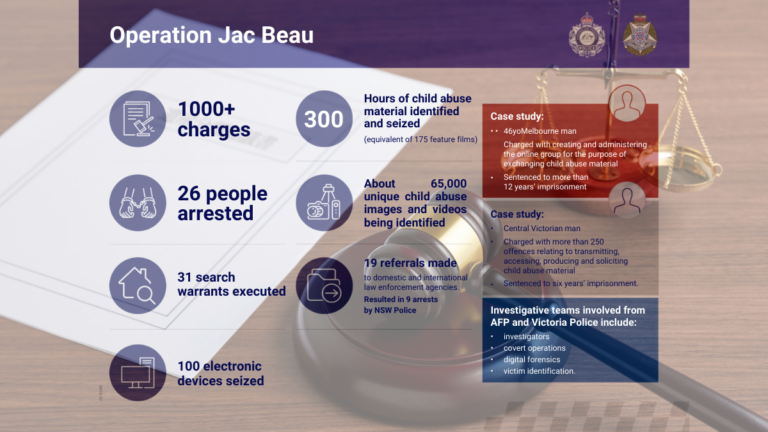
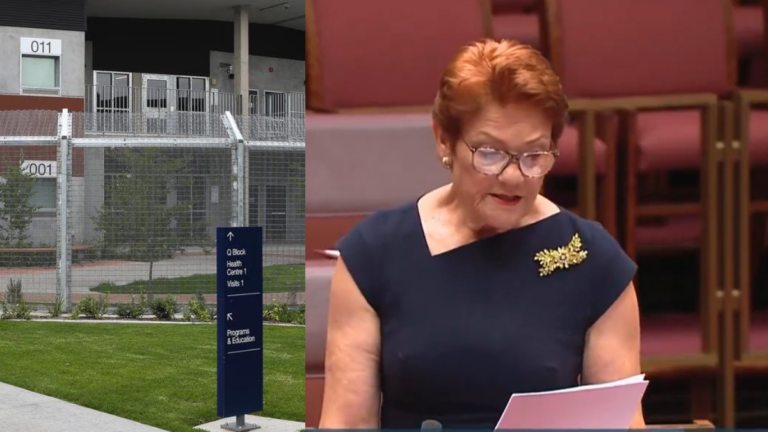
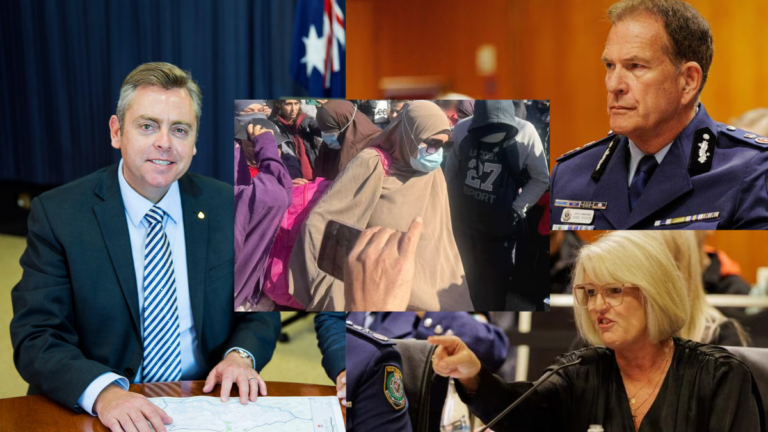
Twenty-six men have been charged with more than 1,000 offences following one of Australia’s most significant investigations into online child exploitation, after authorities infiltrated a secret group sharing extreme abuse material on an encrypted messaging platform.
The year-long covert operation, led by the Australian Federal Police and Victoria Police through the Victoria Joint Anti-Child Exploitation Team (JACET), began in late 2023 after intelligence was provided by the Queensland Police Service. Investigators gained access to an online group where members were exchanging abusive images and videos and discussing ways to source children for sexual exploitation.
Authorities said the group was dismantled and 26 alleged members in Victoria were charged with offences including possessing, accessing, transmitting, producing and soliciting child abuse material. Many of those charged have already been convicted and jailed, while others are still before the courts.
Search warrants were carried out at 31 properties across Victoria, leading to the seizure of about 100 electronic devices. Investigators identified roughly 65,000 unique images and videos depicting child abuse, including more than 300 hours of footage.
During the operation, police also referred information to domestic and international law enforcement agencies. These referrals led to the arrest of nine additional suspects by the New South Wales Police Force.
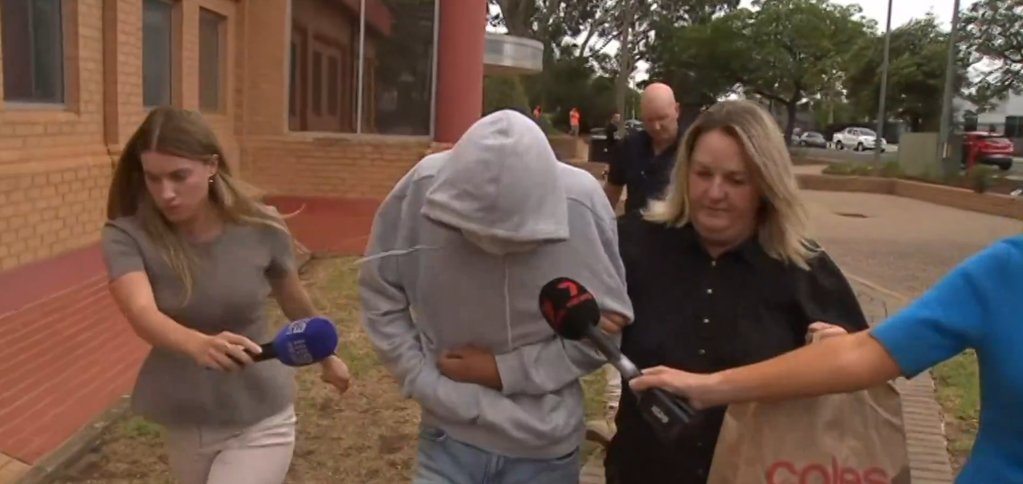
Among those convicted was a 46-year-old Melbourne man who police say created and managed the encrypted chat group used to distribute the material. He was sentenced in the County Court of Victoria to more than 12 years’ imprisonment in September 2024. Another man from central Victoria received a six-year prison term in December 2025 after being charged with more than 250 offences linked to accessing, transmitting and producing child abuse material.
According to investigators, members of the group shared large collections of abuse material and explicit fantasies, believing the encrypted platform would prevent detection. Police said the files included graphic images and videos involving infants and young children.
Authorities said no newly created material involving Australian children was identified during the investigation, although officers are continuing to work with international partners to identify victims and offenders depicted in the seized files.
Detective Superintendent Bernard Geason from the Australian Federal Police said the content uncovered during the investigation was among the most disturbing encountered by experienced child protection investigators. He said the operation had disrupted a network that enabled the sharing and circulation of violent abuse material, while highlighting the scale of online child exploitation.
Victoria Police Cybercrime Division Detective Superintendent Tim McKinney said investigators had reviewed hundreds of hours of disturbing content and also uncovered conversations in which group members discussed finding children in real life. He said most of the men charged had not previously come to the attention of police and warned there was no typical profile of offenders involved in such crimes.
Police said the material recovered from the investigation has been uploaded to the International Child Sexual Exploitation database to support global efforts to identify victims and perpetrators.
Support our Journalism
No-nonsense journalism. No paywalls. Whether you’re in Australia, the UK, Canada, the USA, or India, you can support The Australia Today by taking a paid subscription via Patreon or donating via PayPal — and help keep honest, fearless journalism alive.
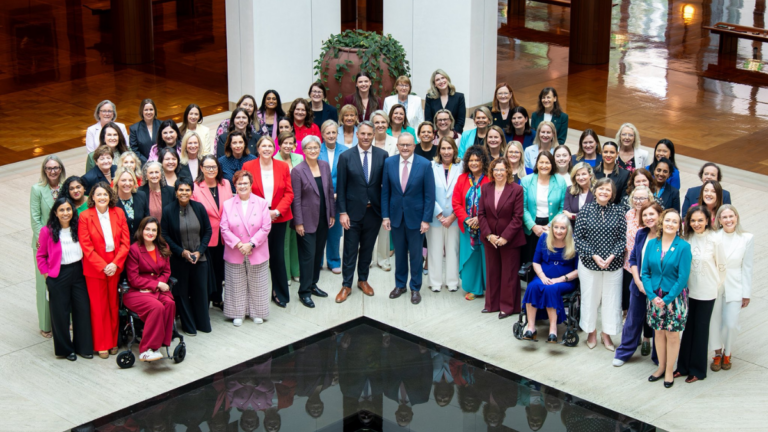
Prime Minister Anthony Albanese has used International Women’s Day to highlight what he described as progress on gender equality in Australia, pointing to increased female representation in government and a range of policies aimed at improving economic and health outcomes for women.
In a message marking the day, Albanese said progress for women requires deliberate action rather than occurring “by chance”, adding that women in the federal Labor government were playing a central role in advancing reforms. He noted that the current administration is the first Australian government with a majority of women among its members.
The Prime Minister pointed to measures introduced by the government, including efforts to reduce the cost of childcare, expand paid parental leave with superannuation contributions, and establish specialised clinics for endometriosis and pelvic pain.
He also referenced steps to lower the cost of certain contraception and menopause medications, as well as recent data showing the national gender pay gap had reached a record low.
“There’s more to do,” Albanese said, adding that the government would continue pursuing policies aimed at improving conditions for women.
“There’s more to do – and we’ll keep working every day to deliver progress for women.”
Progress for women doesn't happen by chance. It happens by choice.
And the incredible women in our Labor government are helping drive that progress every day. That's why I'm proud to lead Australia's first government with the majority of women.
Defence Industry and Pacific Island Affairs Minister Pat Conroy also reflected on changes to gender representation in federal politics since he first entered parliament more than a decade ago.
Conroy noted that when he was first elected, the then-Abbott Government had about 18 per cent female representation, with only one woman in cabinet. He said the current parliament now includes a majority of women in government and cabinet positions.
“But we know there’s more to do. And I’m proud every day to work alongside these incredible colleagues as we continue getting it done.”
But we know there’s more to do.
And I’m proud every day to work alongside these incredible colleagues as we continue getting it done.
In Victoria, Premier Jacinta Allan marked the occasion by acknowledging the women serving in the state parliament and their role in advocating for issues affecting women across the state.
“Proud to stand alongside these incredible women in our Parliament, who champion Victorian women every day.”
Proud to stand alongside these incredible women in our Parliament, who champion Victorian women every day.
Observed globally on 8 March, International Women’s Day recognises the social, economic and political achievements of women while drawing attention to ongoing gender inequality and the need for further reform.
Support our Journalism
No-nonsense journalism. No paywalls. Whether you’re in Australia, the UK, Canada, the USA, or India, you can support The Australia Today by taking a paid subscription via Patreon or donating via PayPal — and help keep honest, fearless journalism alive.
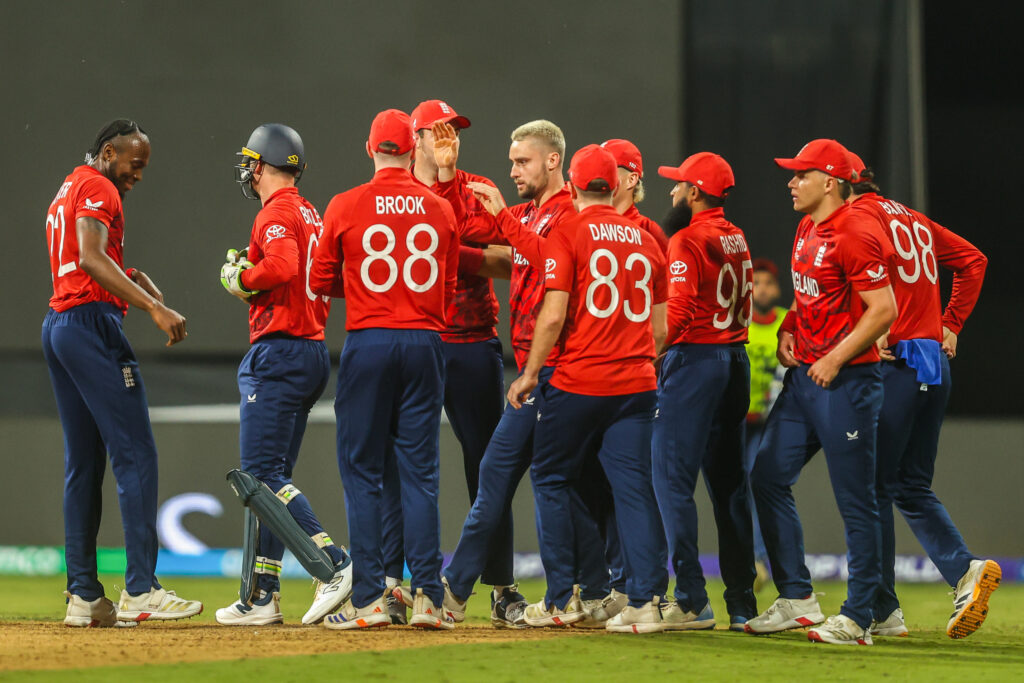
All roads today lead to the Narendra Modi Stadium in Ahmedabad for the pinnacle clash between defending champions India and a consistently spectacular New Zealand team in the T20 World Cup 2026 finals. The closing ceremony will witness global music icon Ricky Martin performing for 1,00,000+ fans, setting the tone for what should be a riveting contest.
When the T20 World Cup began a month back, not many experts and fans expected it to deliver so many nail-biters, edge-of-the-seat thrillers and a genuine explosion of raw talent. The Group stage alone offered a rare glimpse of emerging global superstars and unexpected finishes. From Italy’s sizzling debut, Nepal’s mountainous climb, the West Indies’ rise from the ashes to Zimbabwe’s resurgence, this World Cup has offered new stories and great memories for cricket fans across the globe.
Image – X – @ICC
Both teams will walk out chasing history. India is hunting a series of ‘firsts’ – the first team to win back-to-back T20 World Cups, the first host nation to win the title at home and the first to win three T20 World Cup titles surpassing England and West Indies. New Zealand, on the other hand, are chasing its first-ever T20 World Cup title, having been runners-up in 2021 and semi-finalists in 2007, 2016 and 2022. They have been on the sidelines for a decade and have an opportunity to break the jinx.
For the Indian fans, the wound of the 2023 ODI World Cup final loss to Australia in Ahmedabad is still fresh. New Zealand captain Mitchell Santner’s pre-match comments only added fuel to fire. His ‘goal is to silence the crowd’ remark, echoing Pat Cummins in 2023, adds the much-needed spice to the contest.
His pre-match press conference created a stir when he was asked if they wanted to be the ‘bad guys’ and break a billion hearts on Sunday. He smiled and responded: “I wouldn’t mind winning a trophy. You look at this group and the groups that have been in the past, we are consistent on these because we try not to get overawed by the situation or opponents. We go out there and do our thing. But we don’t mind (being the bad guys),”
Image – X – @ICC
In response, Indian captain Suryakumar Yadav dismissed it as a repeated tactic by opposition captains. He sounded confident of his team’s preparation and ability. “As a leader, there would be pressure, but there is excitement of playing a World Cup at home soil in India and the team is looking forward to the big final” he said.
India’s road to the finals
India came into the T20 World Cup as overwhelming favourites with plenty of experts, talking about the burgeoning skill gap between India and the rest based on their form over the last couple of years. Cricket pundits discussed India targeting 300 runs against associate nations in the group stage. Like always, cricket humbles everyone.
India soon found out that scoring 300 was never on the table, even 170-180 looked like a steep chase. Even though they were patchy during the group stages, they managed to find a way to win. Although they lost only a solitary game to South Africa in the Super 8 stage, none of the wins (barring a couple against associate nations) have felt convincing. The batting collapses against off spin, Abhishek’s torrid form, Varun’s ineffectiveness in the Super 8’s and below-par catching have all contributed to this campaign being labelled as a mixed bag for India.
The finals could be the perfect time to find that all-round game, and the billions watching at home and away will be praying for that.
New Zealand’s road to the finals
The Kiwis were always strong contenders for the semi-finals before the tournament, based on their performances over the last 5 years. Runners-up in 2021, Semi-finalists in 2022 and finalists in 2026, they have consistently been ‘so near yet so far’ from the silverware.
Even after two losses and one washout, they find themselves in the finals because they won key moments in crucial games. Their victories against UAE, Canada, Sri Lanka and South Africa (Semis) have been dominating, one-sided wins, showcasing their top order batting firepower, consistent bowling and great ground fielding. Even the loss to England went down to the wire. They will enter the ground with confidence and an opportunity to etch their names in history this time and finally lift the silverware that’s slipped out of their reach until now.
Image – X – @ICC
Game changers to watch out
If we talk about the Kiwi batsmen, Fin Allen (289 runs at a SR of 204) and Tim Seifert (274 runs at a SR of 161) have been in blazing form. They have hit 31 sixes between them and are great chasers. Glenn Phillips, Daryl Mitchell and Rachin Ravindra have been the glue in the middle order, and Santner has stepped up as captain with the bat when needed. If India breaks the opening partnership early, it could swing the pressure back on the Kiwis. The battle between Bumrah and Fin Allen will be a keen one to watch out for.
India will look at Samson and Ishan Kishan to repeat their magic one final time this tournament. India will desperately look at Abhishek Sharma and Varun Chakravarthy to deliver a knock-out punch in the final.
Head-to-Head
The Kiwis hold a 3-0 lead over India in all T20 World cup games. If we stretch the lens to ODI and Test formats, the Kiwis have been the only thorn in India’s path to an ICC trophy over the past decade. No wonder there is so much talk in India about breaking the so-called ‘Kiwi curse’
What to expect in Ahmedabad
The red-soil pitch expected in the finals should offer free stroke play for the batsman, good bounce and a balanced wicket where batting isn’t a battle, so expectations of a fair contest are high.
When and where to watch the match
The spring season has kicked in here in Australia and if you are in Victoria, the public holiday on Monday is the perfect excuse to pull off an all-nighter with friends and family to watch the finale. In the rest of the country, bosses will get up with a familiar message of a ‘work from home’ request on Monday morning.
The match will be screened on Star Sports (TV) and Jio-Hotstar (Digital) in India, and Prime Video in Australia. The first ball will be bowled at 7 pm IST/ 12.30 am AEDT
Contributing author: Sandip Janee is a Sydney-based sports marketing professional and Special Correspondent – ICC Men’s T20 World Cup 2026 for The Australia Today, covering match analysis, fan stories and video content. His deep-rooted passion for cricket and sport has led him to work across major global sporting and consumer brands over the past 14 years.
Disclaimer: The opinions expressed within this article are the author’s personal opinions. The Australia Today is not responsible for the accuracy, completeness, suitability, or validity of any information in this article. The information, facts, or opinions appearing in the article do not reflect the views of The Australia Today, and The Australia Today News does not assume any responsibility or liability for the same.
Support our Journalism
No-nonsense journalism. No paywalls. Whether you’re in Australia, the UK, Canada, the USA, or India, you can support The Australia Today by taking a paid subscription via Patreon or donating via PayPal — and help keep honest, fearless journalism alive.
Two Indian nationals have been taken into custody by United States immigration authorities in San Diego as officials move to deport them following criminal convictions.
Officers from the Enforcement and Removal Operations division of the U.S. Immigration and Customs Enforcement (ICE) said they arrested Jaskaran Singh, who has a final order of removal from the United States.
Authorities said his criminal history includes a hit-and-run offence.
Jaskaran Singh is expected to remain in immigration detention while arrangements are made for his removal.
ICE San Diego arrested Jaskaran Singh a criminal alien from India with a final order of removal. Singh’s criminal history includes hit and run. He will remain in ICE custody pending removal proceedings. pic.twitter.com/u2MFrLUPrQ
In a separate case, ICE officers also arrested another Indian national, Jashanpreet Singh, whom the agency said had previously been convicted of several offences, including threatening a crime with intent to terrorise, assault with a deadly weapon and driving under the influence.
According to the agency, Singh will remain in ICE custody while removal proceedings continue.
Such proceedings determine whether a non-citizen will be deported from the United States following criminal convictions or immigration violations.
ICE San Diego arrested Jashanpreet Singh, a criminal alien from India. Singh’s criminal history includes threatening a crime with intent to terrorize, assault with a deadly weapon, and DUI. He will remain in custody pending removal proceedings. pic.twitter.com/HniE4H2toF
The arrests were announced by ICE’s San Diego Enforcement and Removal Operations office in a post on social media on 6 March.
Officials did not immediately release further details about the circumstances surrounding the arrests or the timing of Singh’s immigration court hearing.
Support our Journalism
No-nonsense journalism. No paywalls. Whether you’re in Australia, the UK, Canada, the USA, or India, you can support The Australia Today by taking a paid subscription via Patreon or donating via PayPal — and help keep honest, fearless journalism alive.
Police in Canada’s largest city have stepped up security around places of worship after gunfire struck two synagogues overnight in the Greater Toronto Area, the latest in a series of attacks targeting Jewish institutions within a week.
FIREARM DISCHARGE: Bathurst St + Glencairn Av 12:08 a.m. – Police responded to reports of gunshots heard in the area – Officers located bullet holes in the front door of a building on Glencairn Av – No reported injuries – Anyone w/info contact police @TPS53Div#GO482592 ^lb
— Toronto Police Operations (@TPSOperations) March 7, 2026
Authorities said shots were fired late Friday at the Beth Avraham Yoseph of Toronto synagogue in Thornhill, north of Toronto, and the Shaarei Shomayim synagogue in North York. No injuries were reported, although police confirmed that people were inside one of the buildings at the time of the shooting.
The incidents came days after another synagogue, Temple Emanu-El in North York, was hit by gunfire earlier in the week, raising concerns among Jewish community leaders and prompting a heightened police presence across the region.
Last night, two synagogues were targeted, in North York and Thornhill. These are disgusting acts of antisemitism, hate and intimidation.
Toronto Police are increasing their presence in the area to keep people safe. Police are dedicating considerable resources to tracking down… https://t.co/cCYJlryEIg
— Mayor Olivia Chow 🇨🇦 (@MayorOliviaChow) March 7, 2026
Investigators said a dark sedan was seen near the Thornhill synagogue shortly before midnight when suspects opened fire at the building.
York Regional Police deputy chief Kevin McCloskey told reporters officers found evidence that multiple shots had been directed at the synagogue. Two people were inside at the time but were unharmed.
In the North York incident, Toronto police said officers responding shortly after midnight discovered bullet holes in the front entrance of a synagogue building near Bathurst Street and Glencairn Avenue. Authorities are reviewing surveillance footage and canvassing the area for witnesses.
Police from Toronto and neighbouring York Region are sharing information as they attempt to determine whether the shootings are connected. Additional patrols have been deployed near synagogues, schools, community centres and other public gathering places.
Canadian Prime Minister Mark Carney condemned the attacks, describing them as “criminal antisemitic assaults” that violated the rights of Jewish Canadians to practise their faith safely. He said the federal government would use all available measures to confront antisemitic violence and ensure those responsible were brought to justice.
Last night, two synagogues in Toronto, Beth Avraham Yoseph of Toronto in Thornhill and Shaarei Shomayim in North York were assaulted by gun shots. Earlier this week, Temple Emanu-El in North York was also maliciously attacked.
These criminal antisemitic attacks are an assault…
Opposition leader Pierre Poilievre said he was “appalled” by the shootings, arguing that ensuring public safety was a government’s fundamental duty. He expressed solidarity with the Jewish community and called for decisive action to end the violence.
Appalled at the shootings targeting Shaarei Shomayim and Beth Avraham Yoseph Synagogues of Toronto.
The Jewish Community is under attack in Canada. Government’s core responsibility is the safety of its people. It is time to end this violence once and for all.
Ontario Premier Doug Ford also denounced the attacks, calling them “cowardly acts of hate” intended to intimidate the Jewish community. He said provincial authorities would continue working with police to protect places of worship and hold perpetrators accountable.
I am disgusted by the targeted shootings at Beth Avraham Yosef of Toronto and Shaarei Shomayim synagogues.
These cowardly acts of hate are meant to intimidate and instil fear. They are an attack on the Jewish community and on the fundamental right of every person in Canada to…
The earlier shooting at Temple Emanu-El occurred late Monday night when police responding to reports of gunfire discovered damage to the synagogue building. Rabbi Debra Landsberg said the shots were fired shortly after congregants had gathered for celebrations marking the Jewish festival of Purim.
Community leaders say the incidents have heightened anxiety among Jewish residents. Sara Lefton, a senior official with the United Jewish Appeal Federation of Greater Toronto, described the attacks as alarming and urged authorities to enforce hate-crime laws more forcefully.
Local officials have also called for stronger action. Vaughan mayor Steven Del Duca said repeated incidents targeting Jewish institutions suggested antisemitism was becoming increasingly normalised and urged higher levels of government to provide police with stronger tools to prevent further attacks.
A message to our community in light of an escalation in the conflict in the Middle East:
Residents can expect to see increased police presence across the region, including near faith-based institutions, community centres, schools and other public gathering places. pic.twitter.com/2VZh1CdJ95
The shootings come amid heightened international tensions following escalating conflict in the Middle East, which police say has coincided with a rise in antisemitic incidents in the region.
14 different Canadian Jewish organizations have released a statement on the Khalistani murder of Nancy Gerwal.
They call out law enforcement for failure to take terrorist intimidation seriously and stand with the Hindu and Sikh communities under threat.
The series of gun attacks on synagogues comes at a time when more than a dozen Jewish organisations in Canada have condemned what they describe as a Khalistani-linked killing and warned of rising extremist intimidation, heightening fears within the Jewish community.
Fourteen Canadian Jewish groups issued a joint statement denouncing the killing of Nancy Gerwal, which they described as a Khalistani-linked murder, and criticised authorities for failing to adequately respond to extremist threats. The organisations said intimidation linked to extremist activism had increasingly targeted both Jewish institutions and members of the Hindu and Sikh communities.
The statement expressed solidarity with Hindu and Sikh Canadians facing threats and called on law enforcement agencies to treat extremist violence more seriously. Additional organisations are expected to join the statement after the Jewish Sabbath.
Investigations into all three shootings as well as Nancy Grewal murder are ongoing, and authorities are urging anyone with information or footage from the areas to contact police.
Support our Journalism
No-nonsense journalism. No paywalls. Whether you’re in Australia, the UK, Canada, the USA, or India, you can support The Australia Today by taking a paid subscription via Patreon or donating via PayPal — and help keep honest, fearless journalism alive.
The funding has been awarded through the Transport Accident Commission’s Local Government Grant Program, which supports councils to implement measures aimed at reducing road trauma.
Melissa Horne, Victoria’s Minister for Roads and Road Safety, said the program enabled local governments to deliver targeted safety improvements.
She said councils were often best placed to identify hazards on local roads and that the grants supported projects aimed at improving safety for pedestrians and cyclists.
Under the latest round, Bayside City Council will construct five raised “wombat” crossings and reduce speed limits at a roundabout in Brighton to improve safety for both motorists and pedestrians.
In regional Victoria, the Shire of Murrindindi will upgrade a pedestrian crossing on Grant Street in Alexandra by installing a raised crossing designed to improve visibility, accessibility and traffic calming in the town centre.
The projects are aligned with the “Safe System” model used in road safety planning, which focuses on safer roads and roadsides, vehicle safety, safe travel speeds and responsible road use.
The grants form part of the broader Victorian Road Safety Strategy 2021–2030, which aims to reduce deaths and serious injuries on the state’s roads. Funding prioritises improvements on local roads, where councils are often responsible for identifying and addressing safety risks.
Pedestrians and cyclists remain among the most vulnerable road users in Victoria. According to state data, 52 pedestrians and nine cyclists died on Victorian roads in 2025. In the 2024–25 financial year, 583 pedestrians and 391 cyclists were hospitalised following road crashes.
Member for Southern Metropolitan Ryan Batchelor said the funding would help councils introduce measures such as safer crossings, lower speed limits and improved visibility on local streets.
Applications for the 2026 round of the grant program are expected to open in June.
Support our Journalism
No-nonsense journalism. No paywalls. Whether you’re in Australia, the UK, Canada, the USA, or India, you can support The Australia Today by taking a paid subscription via Patreon or donating via PayPal — and help keep honest, fearless journalism alive.
The seizure of two mobile phones in a small Swedish town has led investigators to a sprawling transnational crime network allegedly involved in large-scale drug trafficking and money laundering, with links stretching across Europe, Asia and Australia.
Authorities in Spain, Sweden and Thailand carried out coordinated raids on 4 March as part of the investigation, arresting 13 people and targeting several alleged high-value figures. The international operation, known as Operation Candy, followed earlier enforcement action in Australia and brought the total number of arrests linked to the investigation to 15.
The case began in November 2023 when the Swedish Police Authority seized two phones from a suspected drug trafficker. Forensic analysis of the devices revealed encrypted communications, international contacts and operational details connecting multiple organised crime networks.
Investigators, supported by analysts from Europol, uncovered evidence suggesting the groups were involved in synthetic drug distribution and large-scale money laundering. Authorities allege the networks shared facilitators and used complex webs of corporate entities to conceal ownership structures, logistics and financial flows.
Data extracted from the phones pointed to activities across several countries. In one line of inquiry that led to Thailand, suspects allegedly ran an online drug marketplace supplying customers across the Nordic region. In Sweden, investigators believe members of the network coordinated domestic distribution while operating parallel systems to launder criminal proceeds.
The investigation also exposed links to a shipment intercepted in Germany that was allegedly destined for Australia. In February 2025, German customs officers seized about 1.2 tonnes of illicit drugs concealed in two shipping containers declared as a product commonly used in road construction.
After removing the drugs, German authorities allowed the shipment to continue to Australia as part of a controlled operation. When the containers arrived at the Port of Melbourne in April 2025, officers from the Victorian Joint Organised Crime Taskforce — comprising the Australian Federal Police, Victoria Police and the Australian Border Force — substituted the contents with an inert substance before allowing the consignment to be delivered under surveillance.
The shipment was transported to a warehouse in Victoria’s Central Highlands and later to a factory in Melbourne’s suburb of Sunshine. Two men, aged 32 and 52, were arrested and are currently before the courts accused of involvement in the attempted importation.
Swedish police official Mats Berggren said the case illustrated the borderless nature of organised crime and the importance of international cooperation between law enforcement agencies.
“The operation shows that criminals cannot rely on national or digital borders to shield their activities when investigators share intelligence and act together.”
AFP Commander Christopher Woods said the investigation demonstrated the value of coordinated international action in disrupting organised crime groups targeting Australia.
He said the joint effort had prevented more than a tonne of illicit drugs from entering the country and had led to charges against those allegedly waiting to collect the shipment in Victoria.
Victoria Police Acting Commander Jason Kelly said organised crime groups involved in drug trafficking had far-reaching impacts on communities, linking illicit drug markets to broader criminal activity including violence and road trauma.
Authorities overseas conducted about 20 simultaneous searches during the March raids, seizing assets including cash, jewellery, vehicles and yachts valued at about €4 million, with further assets still being traced.
Officials from Eurojust said prosecutors from multiple countries had coordinated closely throughout the investigation to align legal strategies and support potential prosecutions.
Andy Kraag, head of Europol’s European Serious and Organised Crime Centre, said the investigation highlighted how a seemingly small piece of evidence could reveal the scale of modern organised crime.
“What began with two phones seized from a trafficker ultimately uncovered a global criminal enterprise moving tonnes of drugs across continents and hiding profits behind layers of companies.”
Authorities say investigations and asset-tracing efforts connected to the network remain ongoing.
Support our Journalism
No-nonsense journalism. No paywalls. Whether you’re in Australia, the UK, Canada, the USA, or India, you can support The Australia Today by taking a paid subscription via Patreon or donating via PayPal — and help keep honest, fearless journalism alive.
As many Australians prepare for the Labour Day long weekend, you might be watching the price at the fuel bowser with more trepidation than usual.
The crisis in the Middle East has caused global disruptions to energy and liquid fuel markets. And we are feeling it in Australia.
Shipping in the crucial Strait of Hormuz, the only sea passage from the oil-rich Persian Gulf to the open ocean, has come to a virtual standstill, sparking a global oil price rise of about 10%. And the risk of Middle Eastern energy infrastructure becoming military targets has also raised the prospect of reduced production.
So, what does this mean for Australia?
Prices rising
Australia imports roughly 90% of its liquid fuel (refined petrol and diesel). This means world crude oil prices have a direct impact on our pump prices.
In Australia, analysts say petrol prices could jump by around 40c a litre, meaning the cost of filling the tank would be about $24 for a 60 litre tank.
Airfares are also affected, because jet fuel is directly linked to crude oil prices. Prices could rise by 10–20%, and even more for long-haul international flights, which use more fuel.
Is Australia buffered from oil price spikes?
The short answer is no. As an importer of liquid fuel, Australia is highly susceptible to oil prices spikes, meaning global shocks flow directly to the pump. There is no liquid fuel market to regulate, so the only protection we have as importers is the Australian Competition and Consumer Commission (ACCC), which monitors exploitative retail behaviour.
The ACCC can intervene to prevent price gouging and unconscionable practices, but it has no power over the market. Therefore, it cannot insulate consumers against normal market increases.
There is also the possibility that oil supplies will run low. The International Energy Agency (IEA) requires countries keep a stockpile of oil to be used where global shocks cause a shortage. However, Australia’s current emergency strategic fuel reserve is “non-compliant”, and has been since 2012. At the start of 2026, Australia has an estimated 36 days of petrol, 34 days of diesel and 32 days of jet fuel. This is the largest stockpile Australia has had in 15 years, but it still may not be enough.
If our fuel supply slows and the government declares an emergency, priority must be given to critical services such as essential works, the defence force and national security, over public distribution. Based on this, the prediction is that reserves could cover 26 days of usual petrol demand, 25 days of diesel consumption, and 20 days’ worth of jet fuel.
What about gas and electricity prices?
Australia produces a lot of gas (especially Liquid Natural Gas or LNG), and our domestic east coast gas prices are linked to global LNG export prices. This is because gas producers want to sell gas at the highest prices, and these are generally found on the export market. Because of this, a significant percentage of gas produced annually in Australia is sold internationally to countries like South Korea, Japan and China. In the first half of 2025, roughly 93% of LNG produced in Australia was shipped overseas.
Where global LNG prices rise, exporters can charge more overseas and this puts upward pressure on domestic gas prices, even when supply levels have not changed. If Australian gas generators increase the wholesale price of gas because of a global spike in prices, domestic gas and electricity prices also go up.
Disruption in the Strait of Hormuz has pushed up the international price of LNG because traders expect tighter supplies. Since the Middle East crisis began, LNG prices have soared by about 12%.
How can Australia respond?
Since 2023, Australia has a mandatory gas code in place to reasonable domestic gas prices and supply on the east coast. It imposes a price cap of $12 per gigajoule, good-faith negotiation rules, and transparency obligations on producers.
But this code is not a full shield – if LNG prices surge dramatically, domestic gas prices may still rise within the “reasonable price” threshold. Nonetheless, domestic consumers on the east coast are better protected than previously.
In addition, Australia still has the Domestic Gas Reservation Mechanism, which allows the government to trigger export controls in the event of a domestic shortfall. It has never been triggered and it has a lead-in time, but it is possible.
The government has also proposed a gas reservation policy, set to take effect in 2027. It will mean suppliers of gas in the east coast market must not enter into wholesale supply contracts where the gas price exceeds a reasonable price.
How will this gas reservation policy work?
Under the scheme, gas exporters will need to demonstrate they have met domestic supply obligations before LNG export approvals can be granted. They will also be required to set aside 15–25% of production for domestic supply.
The overall aim is to increase domestic gas availability and reduce reliance on volatile export pricing. Once implemented, the reservation policy combined with the mandatory gas code will help to insulate Australian consumers from price spikes like those currently triggered by the Iran conflict.
However, the reservation policy will only apply to a fraction of total supply and cannot fully insulate against a prolonged global increase in pricing. There’s no easy answer, and more fuel price hikes are likely.
No-nonsense journalism. No paywalls. Whether you’re in Australia, the UK, Canada, the USA, or India, you can support The Australia Today by taking a paid subscription via Patreon or donating via PayPal — and help keep honest, fearless journalism alive.
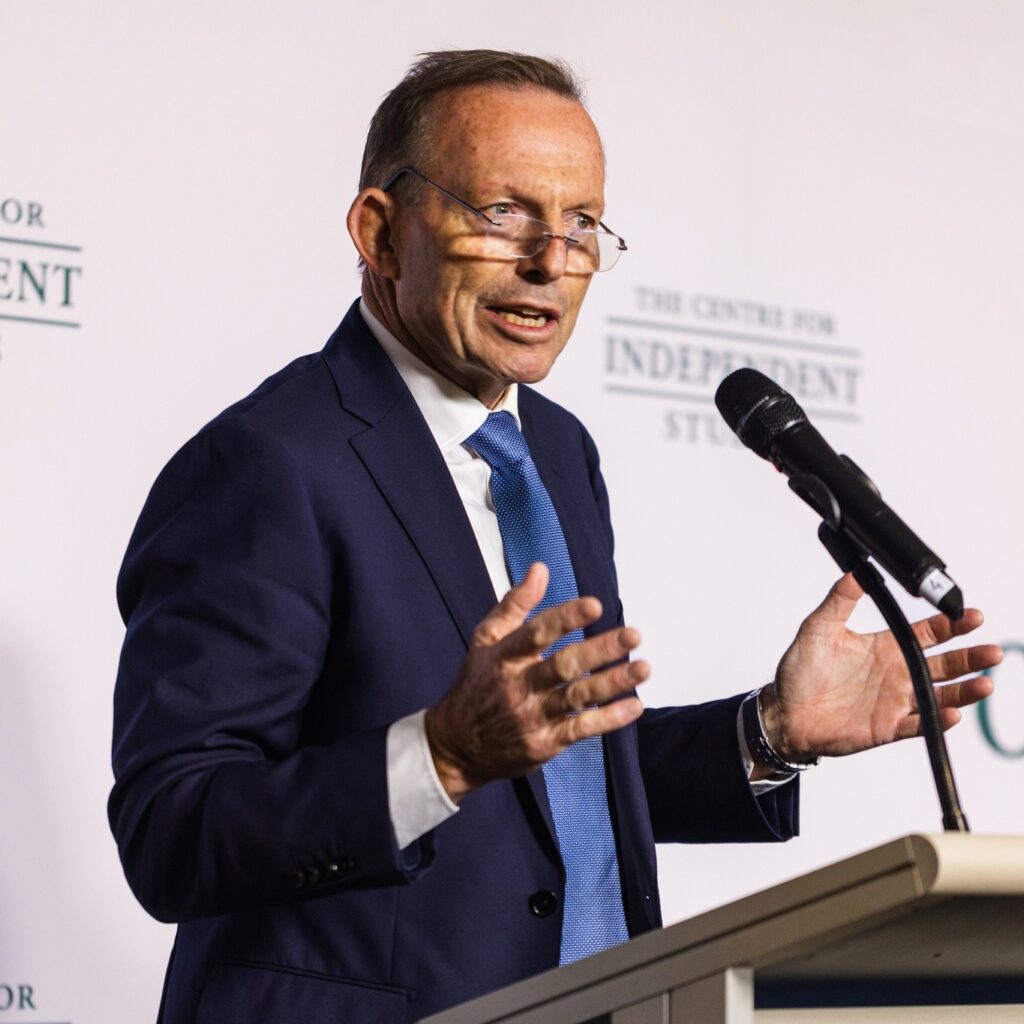
Former Prime Minister Tony Abbott has criticised U.S. President Donald Trump over what he described as the “gratuitous alienation” of India.
Speaking to Indian broadcaster NDTV, Abbott said one of the biggest mistakes Trump has made so far relates to how his administration has handled relations with India.
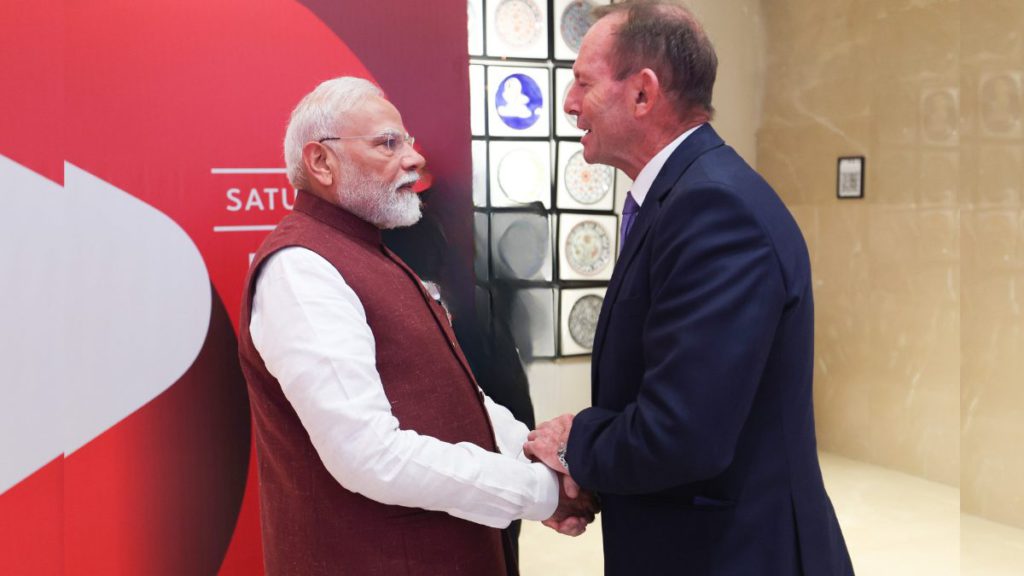
File Image: Indian PM Narendra Modi and Former PM Tony Abbott: The Australia Today
Abbott said he is “not a universal admirer” of Trump’s foreign policy and pointed to several developments that he feels may have strained ties with New Delhi.
These include punitive tariffs on Indian goods last year, Trump’s claim that he had resolved tensions between India and Pakistan, and the decision to host Pakistan’s army chief, General Asim Munir, at the White House, noting that Pakistan has “undoubtedly sponsored terrorism against India and has been doing so intermittently for a long time.”
According to Abbott, such actions amount to what he described as the “gratuitous alienation” of India — a country he indicated should be treated as a key partner.
Image: Tony Abbott Facebook
Some of the tariff tensions were later adjusted under a February 2026 trade agreement between the United States and India.
During the same conversation, Abbott also commented on the ongoing conflict involving Iran and Israel, saying it remains difficult to predict whether the situation could lead to regime change in Tehran. He noted that Iran’s leadership still retains support among sections of the population.
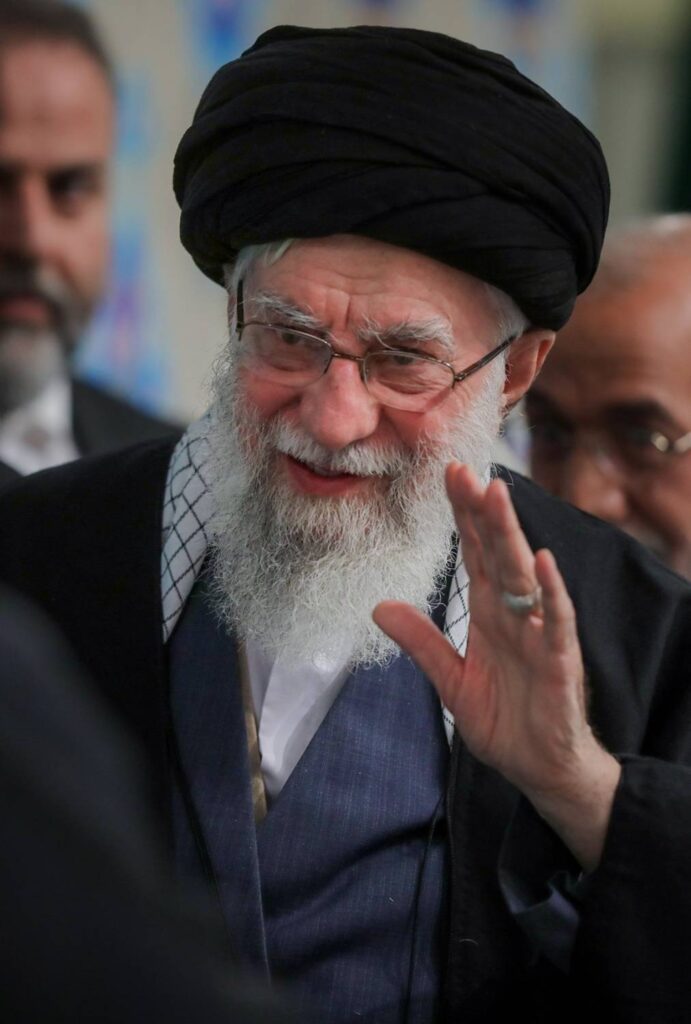
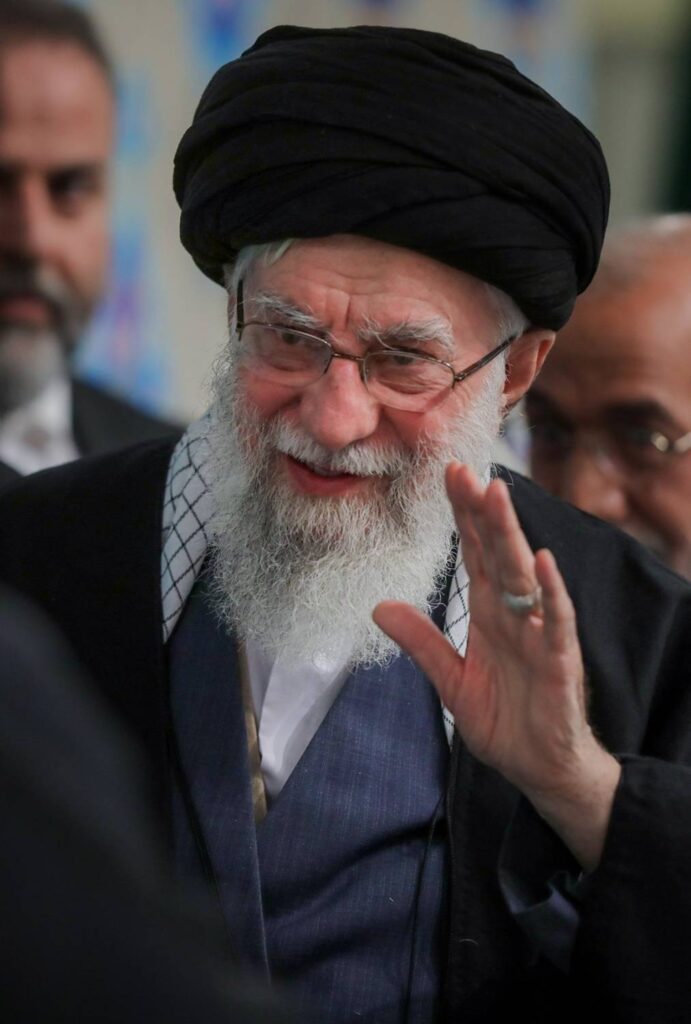
Late Iranian Supreme Leader Ayatollah Ali Khamenei (@khamenei.ir)
Abbott added that the worst possible outcome would be “a weakened but still functioning Islamist theocracy,” though he said Iran’s nuclear program had already suffered a significant setback.
He also observed that the scale of Iranian attacks had declined while strikes by Israel and the United States had intensified, adding that those strikes had targeted regime facilities rather than civilian infrastructure.
Support our Journalism
No-nonsense journalism. No paywalls. Whether you’re in Australia, the UK, Canada, the USA, or India, you can support The Australia Today by taking a paid subscription via Patreon or donating via PayPal — and help keep honest, fearless journalism alive.
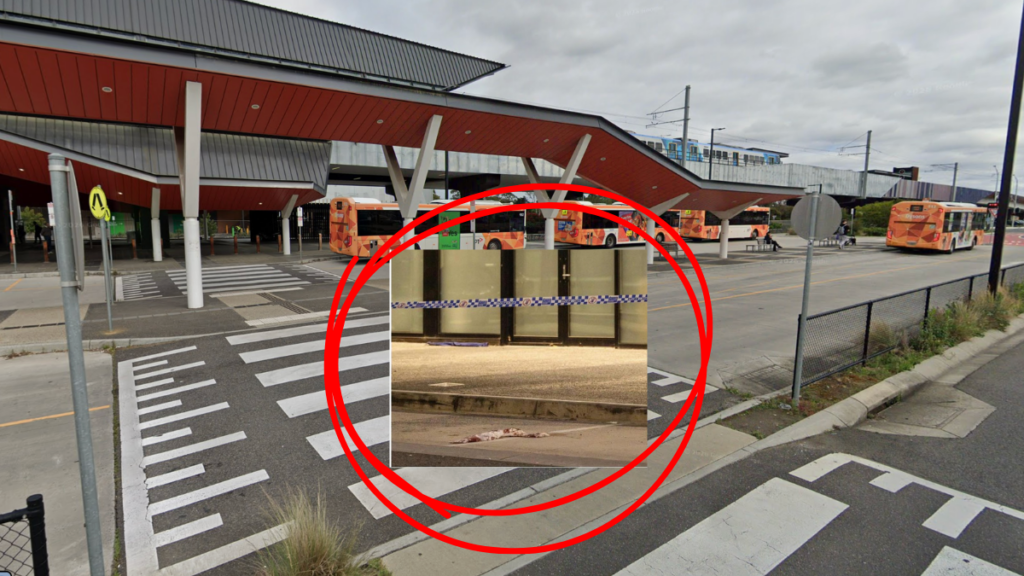
Homicide Squad detectives have arrested four males after a 22-year-old man was stabbed to death outside Mernda railway station in Melbourne’s outer north, in what police say began as an alleged attempted robbery of a 14-year-old boy during peak hour.
Emergency services were called to Bridge Inn Road about 5.50 pm on Friday, 6 March, after reports of a group fighting near the station. Police say the 22-year-old Mernda man, described as a security guard who was travelling home from work, was found with life-threatening injuries and died at the scene despite treatment from paramedics.
Detective Acting Inspector Nigel L’Estrange said investigators believe four males approached the teenager and attempted to rob him before the confrontation escalated. The 14-year-old boy was allegedly assaulted and pushed to the ground, prompting several bystanders to intervene.
Police say the 22-year-old was among those who stepped in, helping the teenager away from the immediate area and escorting him outside the station.
Police allege the group followed them and attacked the 22-year-old, using punches, kicks and edged weapons. Officers recovered a machete nearby, though detectives say it is not yet clear what weapon caused the fatal injuries.
A 16-year-old boy, two 17-year-old boys and an 18-year-old man were arrested in connection with the incident and remain in custody. Police said one of the alleged offenders was in the hospital under guard while the others were being interviewed.
The 14-year-old victim suffered facial injuries, including what police believe is a broken nose, and has since been discharged from hospital. Detectives said at least two females who were present are assisting police with inquiries and are not in custody.
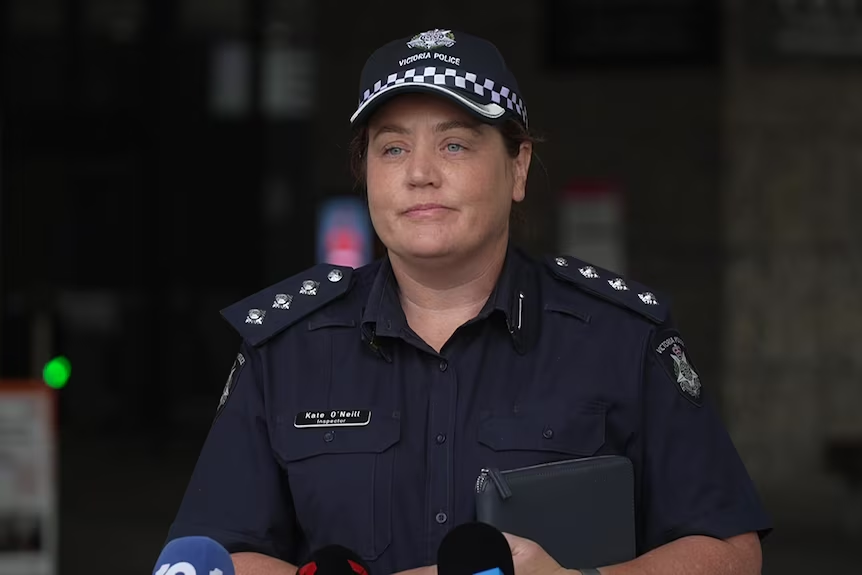
Local area commander Inspector Kate O’Neill described the attack as deeply distressing, saying police had increased patrols around the station. She said Protective Services Officers patrol Mernda station from 6 pm to 2 am, and that this would continue. She added that officers arrived within minutes of the emergency call.
The killing has reignited debate about youth violence and knives in Victoria.
Opposition Shadow Minister for Police and Corrections Brad Battin is blaming the Allan government for failing to curb youth crime and remove machetes from the streets.
“They can’t ignore the crime crisis. We need more police, stronger sentencing and safer communities. Urgently.”
He added that the death would alarm Victorians and pointed to police staffing pressures and station operating hours as part of broader community safety concerns.
Police are urging anyone who witnessed the incident or has CCTV, dashcam or mobile phone footage to contact Crime Stoppers on 1800 333 000 or lodge a confidential report online.
Support our Journalism
No-nonsense journalism. No paywalls. Whether you’re in Australia, the UK, Canada, the USA, or India, you can support The Australia Today by taking a paid subscription via Patreon or donating via PayPal — and help keep honest, fearless journalism alive.
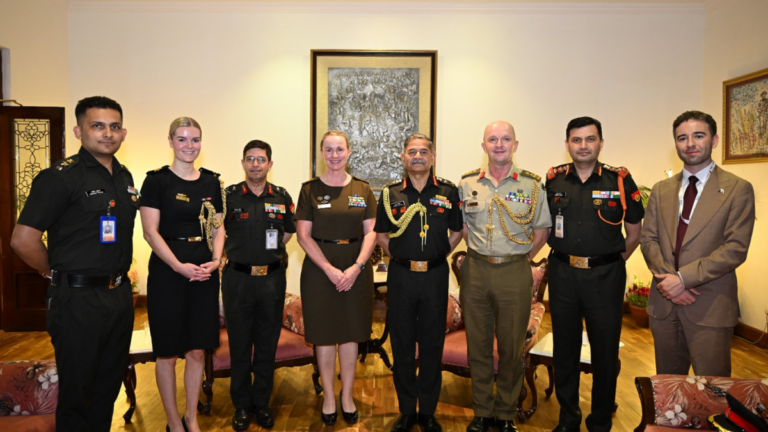
Australia’s Chief of Joint Capabilities, Lieutenant General Susan Coyle, opened her visit to New Delhi with a meeting with Indian Army Chief General Upendra Dwivedi on Friday, focusing on enhancing joint capabilities and deepening defence cooperation between the two nations.
Discussions covered joint training, capability development, and interoperability, with both sides reaffirming their commitment to regional stability and security.
Lieutenant General Susan Coyle, Chief of Joint Capabilities, Australian Defence Force, called on #GeneralUpendraDwivedi, #COAS and held discussions on strengthening #DefenceCooperation and enhancing joint capabilities between the two armies.
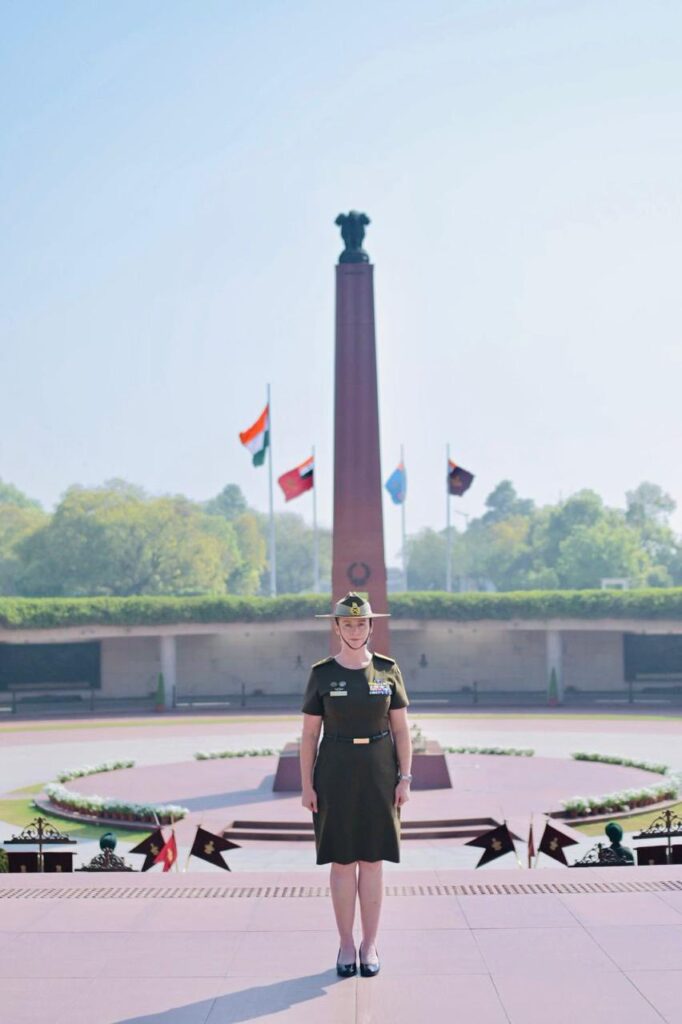
Following the meeting, Coyle paid tribute to India’s military personnel who lost their lives in service during a wreath-laying ceremony at the National War Memorial. Philip Green, who welcomed the Australian defence leader, said the ceremony reflected the growing strength of the Australia–India defence partnership.
Lieutenant General Coyle also met with Air Marshal Ashutosh Dixit, Chief of the Indian Air Staff, to discuss strengthening bilateral defence cooperation.
The talks focused on joint staff engagement, strategic perspectives on the Indo-Pacific, collaborative research and development, professional military education, and emerging domains such as cyber security and space situational awareness.
Lt Gen Susan Coyle, Chief of Joint Capability, Australian Armed Forces called on Air Marshal Ashutosh Dixit #CISC.
Discussions focused on Joint Staff Talks, Strategic percepts of the Indo-Pacific Region, Joint R&D, Cooperation in Science & Technology, Professional Military… pic.twitter.com/0mH36aks9Q
The visit was part of Coyle’s participation in the Raisina Dialogue, a major strategic forum for policymakers, diplomats, and defence officials from across the Indo Pacific. The dialogue provides a platform for countries to address emerging security challenges, regional stability, and technology cooperation.
Australia wants to work more with our partners, including India, on defence industrial cooperation. At @raisinadialogue, @DefenceAust LTGEN Susan Coyle highlighted the urgency of integrating supply chains and scaling production to ensure regional stability. #RaisinaDialoguepic.twitter.com/0T4pbAUDIx
The tribute at the memorial also recalled the historic military links between the two nations. More than 1,300 Indian troops served alongside Australian forces during the First World War, including at Gallipoli, providing support in logistics, medical services, and other essential roles.
Military historians cite these shared wartime experiences as an early foundation of the Australia–India defence relationship, a connection regularly acknowledged during official visits and commemorative events.
Image: Australia’s Chief of Joint Capabilities, Lieutenant General Susan Coyle (Source: Facebook)
Today, the partnership continues to expand across joint exercises, strategic consultations, and operational engagement. Naval drills such as AUSINDEX enhance coordination and interoperability between the two navies, while both countries engage in the Quadrilateral Security Dialogue (Quad), a forum addressing regional security, technology collaboration, and economic resilience across the Indo Pacific.
Lieutenant General Coyle, appointed Chief of Joint Capabilities in July 2024, is the first woman to hold the role. She oversees Australia’s capabilities in space, cyber, and national defence support, and has held key appointments including Commander of Joint Task Force 633, Commander Task Group Afghanistan, and Head of Information Warfare.
She has served in multiple operational theatres, including Timor-Leste, the Solomon Islands, Afghanistan, and the Middle East, and holds three postgraduate degrees. Her service has been recognised with the Member of the Order of Australia, the Distinguished Service Medal, the Conspicuous Service Cross, and the U.S. Army Commendation Medal.
Image: Australia’s Chief of Joint Capabilities, Lieutenant General Susan Coyle (Source: Facebook)
Coyle’s visit reflects both the historic and ongoing partnership between the Australian and Indian armed forces, underscoring shared values, strategic cooperation, and a commitment to regional security in the Indo Pacific.
Support our Journalism
No-nonsense journalism. No paywalls. Whether you’re in Australia, the UK, Canada, the USA, or India, you can support The Australia Today by taking a paid subscription via Patreon or donating via PayPal — and help keep honest, fearless journalism alive.
Victorian women and girls are set to benefit from expanded access to period products and prescription-free contraception, with the state government announcing major milestones in both programs.
Women deserve to have control over their bodies, over their contraception and over their reproductive system. pic.twitter.com/tEFYc1SwGj
Since its launch, the free Pads and Tampons initiative has distributed more than 500,000 products, with 1,000 dispensing machines now installed across 500 sites in all 79 local government areas. The remaining 500 machines are expected to be rolled out by the end of 2026.
The machines are available in libraries, TAFEs, train stations, Aboriginal Community Controlled Health Organisations, sports centres and hospitals, offering easier access for the estimated one in five Victorian women and girls who struggle to afford period products.
We trust pharmacists with our health.
So we can trust them with contraception.
From July, women will be able to get the Pill straight from a chemist near them – no script required.
Minister for Women, Mary-Anne Thomas, said the program helps women and girls participate fully in work, school and sport.
“No woman or girl should be caught without pads and tampons when they need them,” she said, adding that the initiative is one way of easing the cost-of-living pressures many face.
Parliamentary Secretary for Women’s Health, Kat Theophanous, highlighted the importance of normalising access to period products.
“Periods are a normal part of life – accessing period products should be just as normal. That’s why we’re making pads and tampons freely available across Victoria.”
Getting the Pill shouldn’t be a burden. Soon you’ll be able to walk into your chemist and get it without a script. pic.twitter.com/yXFEkAwAyG
In a related announcement, Premier Allan signalled changes to contraception access, confirming that from July women will be able to obtain the oral contraceptive pill directly from pharmacists without a prescription. “We trust pharmacists with our health. So we can trust them with contraception,” the Premier said.
“Getting the Pill shouldn’t be a burden. Soon you’ll be able to walk into your chemist and get it without a script.”
She added that the move aims to give women greater control over their reproductive health.
The government’s initiatives mark a significant step in addressing barriers to both reproductive and menstrual health, aiming to reduce time and financial pressures for women and girls across the state.
Support our Journalism
No-nonsense journalism. No paywalls. Whether you’re in Australia, the UK, Canada, the USA, or India, you can support The Australia Today by taking a paid subscription via Patreon or donating via PayPal — and help keep honest, fearless journalism alive.
Karlo Bul-Anon was reported missing in the water on Tuesday afternoon, with emergency services recovering his body around 1.40pm on Wednesday. Authorities have not released further details about the circumstances of the drowning.
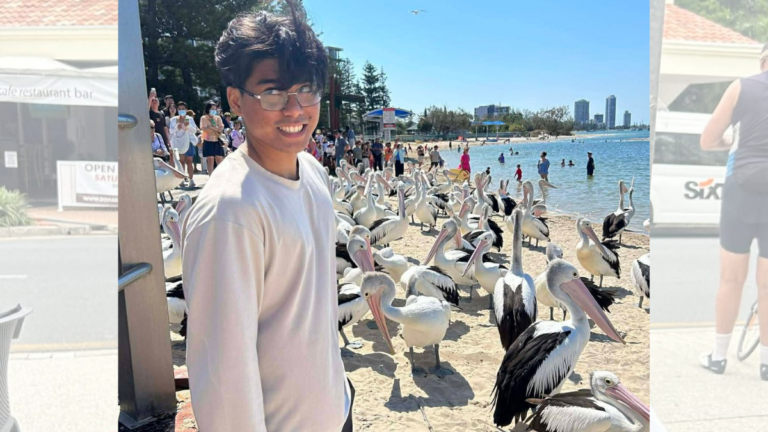
Image: Karlo Bul-Anon (Source: GoFundMe)
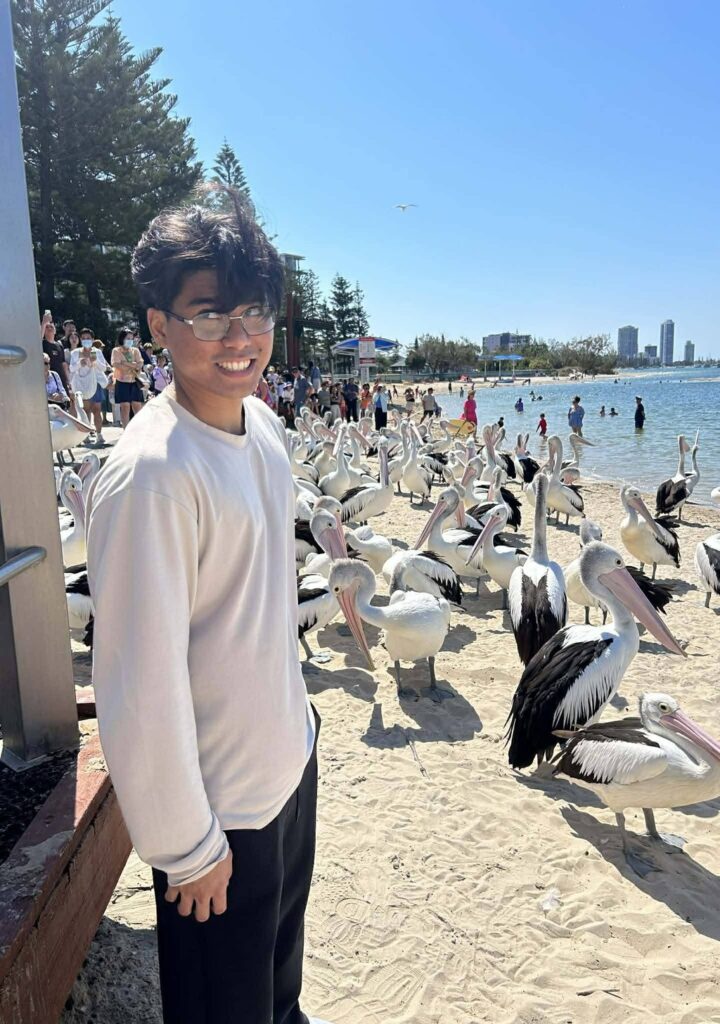
Bul-Anon’s family and friends have described him as a determined and hardworking young man, committed to supporting his family while adapting to life in a new country.
A family friend, Alfreda Camasura, said he had endured homesickness and long hours of work while studying, driven by the hope of building a better future for his parents and younger brother.
“He studied hard. He worked long hours. He endured homesickness in silence,” Camasura wrote on a GoFundMe page set up to help repatriate his remains.
“There were nights he felt tired and alone, but he never gave up. Whenever he felt weak, he reminded himself why he started – for his parents, for his brother, for the family he loved more than anything.”
Friends and colleagues have also paid tribute to Bul-Anon’s character. A flatmate described the shock of losing someone he considered a close companion. “He even said ‘God bless and take care’ when I left home that day before the tragedy,” he wrote on social media.
“I will miss you, and the house won’t be the same without hearing your voice while you played computer games all day.”
Bul-Anon also worked at a local business, which posted a tribute online, saying the team was mourning the loss of “a beloved crew member”.
The statement described him as “a kind soul, a hardworking crew, and a friend who brought smiles and positivity to everyone around him.”
Bul-Anon’s family is now attempting to bring his body back to the Philippines, with the GoFundMe page highlighting the financial burden of repatriation. Camasura said any support would be deeply appreciated to help the family lay him to rest in his home country.
Karlo Bul-Anon arrived in Australia in late 2024 with aspirations to study and work while supporting his family financially.
Friends emphasised that, despite the perception that international study is a path to easy opportunities, Bul-Anon’s family had made considerable sacrifices to make his education abroad possible.
Image: Karlo Bul-Anon (Source: GoFundMe)
The tragic drowning has prompted an outpouring of grief across Bul-Anon’s local community, with many remembering him for his kindness, humility, and determination.
Queensland Police have not disclosed further details about the incident but have confirmed their involvement in the recovery of Bul-Anon’s body.
Support our Journalism
No-nonsense journalism. No paywalls. Whether you’re in Australia, the UK, Canada, the USA, or India, you can support The Australia Today by taking a paid subscription via Patreon or donating via PayPal — and help keep honest, fearless journalism alive.
The Pakistan cricket team’s disappointing campaign at the ICC T20 World Cup 2026 has been compounded by off-field controversy, with reports emerging of a player being fined for inappropriate conduct towards hotel staff in Sri Lanka.
The Pakistan Cricket Board (PCB) has reportedly imposed fines of PKR 5 million (approximately AUD 63,500) on players for their on-field underperformance, sparking criticism both inside and outside Pakistan.
PCB has fined cricketers 5 million Rs each for their poor performance in the World Cup. In fact, the decision was made right after the defeat against India. Officials have made it clear to the players that enough leniency has been shown from now on, financial benefits will only…
Former Australian opener Pakistan-born Usman Khawaja criticised the PCB’s decision to fine the team, calling it “an absolute shambles” in a video posted online.
In a post on Instagram, Khawaja questioned the logic of penalising players for losses, noting the immense pressure on Pakistan’s squad and the lack of a players’ union to represent them.
Usman Khawaja laughing at PCB for fining Pakistan cricketers after their bad performance in the World Cup. I can’t believe it pic.twitter.com/ajjmNF61E2
Pakistan, which failed to advance beyond the Super Eight stage in Kandy, suffered heavy defeats against India and England, while their match against New Zealand was washed out.
A narrow five-wicket victory over hosts Sri Lanka was insufficient to secure a semi-final berth, leaving the team in turmoil.
Captain Salman Ali Agha acknowledged the team’s struggles, stating last week that Pakistan “underperformed in the whole tournament” and missed the semi-finals due to poor decision-making under pressure.
Tensions within the squad reportedly extended to the dressing room, with players allegedly unhappy with coach Mike Hesson’s management style.
Several squad members are said to have approached PCB officials during the tournament to raise concerns about Hesson’s strict approach and unilateral decision-making, which sources claim left both the captain and selection panel unable to challenge his authority.
PCB chair Mohsin Naqvi has confirmed that the board is reviewing both team performance and the conduct of the players and coaching staff before determining next steps.
The fines and internal disputes highlight ongoing challenges for Pakistan cricket, which has now missed the semi-finals in four consecutive ICC men’s events, including last year’s Champions Trophy on home soil.
Support our Journalism
No-nonsense journalism. No paywalls. Whether you’re in Australia, the UK, Canada, the USA, or India, you can support The Australia Today by taking a paid subscription via Patreon or donating via PayPal — and help keep honest, fearless journalism alive.
A man identified by Canadian immigration authorities as a member of a violent student gang has been deported to India nearly five years after officials first flagged him as a potential public safety risk.
Documents obtained by CBC News show that Sukhnaaz Singh Sandhu, 26, was identified by the Canada Border Services Agency (CBSA) in 2020 as being linked to a Surrey-based gang known as the Ruffians, a group police say was involved in drug trafficking and violent offences.
Despite those concerns, Sandhu remained in Canada for years while immigration proceedings moved through the system. During that period, police reports described what authorities called a “high-risk lifestyle” involving firearms incidents, alleged fraud, stolen vehicles, fleeing police and suspected drive-by shootings.
CBC reports that in a memorandum written in November last year, a border agency officer described Sandhu repeatedly moving in and out of custody while awaiting the outcome of his immigration case.
It is further reported that the authorities said he had forfeited more than C$45,000 in cash and performance bonds tied to release conditions and repeatedly breached electronic monitoring requirements, including curfew and location restrictions.
The officer concluded there were no viable alternatives to detention that could adequately mitigate the risk to the public.
Sandhu was ultimately found inadmissible to Canada for organised criminality by the Immigration and Refugee Board of Canada in November. His attempt to overturn the decision in the Federal Court of Canada failed, clearing the way for his deportation to India last month.
Court records examined during the proceedings suggest investigators were also looking into possible links between Sandhu and individuals suspected in a wave of extortion cases affecting Canadian communities.
Authorities cited connections between Sandhu and another man, Arshdeep Singh, who was removed from Canada after a separate immigration hearing.
Records also referred to a video in which both men appeared alongside Bandhu Maan Singh Sekhon, whom police in Delhi have accused of orchestrating shootings at a Surrey café owned by a Bollywood actor.
Sandhu has not been charged in any extortion cases. However, government lawyers argued his pattern of police interactions and associations suggested involvement in a broader criminal network under investigation.
The case highlights difficulties authorities sometimes face when immigration proceedings rely on patterns of behaviour and intelligence rather than criminal convictions.
In court filings, Sandhu argued he had never been convicted of a crime in Canada despite several arrests and investigations.
“I maintain that I have not engaged in organised criminality,” Sandhu said in an affidavit filed from an immigration holding centre in January, while acknowledging he had “not always made positive choices” about the people he associated with.
Sandhu arrived in Canada from India in December 2016 at the age of 17 and became a permanent resident two years later as a dependent of his mother. In his account to the court, he said he struggled to adapt to adult education programs after arriving in the country and eventually left school in 2018.
Authorities later alleged he became associated with the Ruffians, a gang believed to have operated in the Surrey area. Investigators cited social media posts and a chest tattoo depicting an AK-47 rifle, which they said corresponded with the gang’s symbol.
A spokesperson for British Columbia’s Combined Forces Special Enforcement Unit told CBC News that police had previously worked with border officials to dismantle the group.
After authorities began targeting the gang in British Columbia, records show Sandhu moved to Ontario and later to Edmonton. Charges relating to stolen property and drug trafficking laid in Ontario were eventually withdrawn.
While awaiting the outcome of his immigration case, Sandhu was released under strict conditions including a nightly curfew, electronic monitoring and significant financial bonds. Records kept by border officials in Edmonton detail numerous alleged breaches, including failing to charge his monitoring device, missing curfews and entering restricted areas.
Police also questioned him in connection with a firearm-related incident in August 2024 involving suspects under investigation for extortion and vehicle fraud. In September 2025, a complainant alleged Sandhu and two others were involved in a vehicle sale scam in which payment was made but the vehicle was never delivered. The complainant later reported receiving threatening phone calls.
Sandhu was charged with uttering threats in October 2025, and in the same month police identified his vehicle as one linked to a shooting incident. Authorities placed him back into immigration detention in early November while the immigration board considered its final ruling.
In an effort to stop his removal from Canada, Sandhu argued he would face persecution if returned to India due to his claimed involvement in the Khalistan extremist movement. A pre-removal risk assessment found no evidence that Sandhu held a significant position in the movement.
In his affidavit, Sandhu said he had no home or immediate family able to support him in India and warned deportation would cause hardship for his wife, mother and pets. The court rejected the request, and Canadian authorities removed him from the country last month.
Support our Journalism
No-nonsense journalism. No paywalls. Whether you’re in Australia, the UK, Canada, the USA, or India, you can support The Australia Today by taking a paid subscription via Patreon or donating via PayPal — and help keep honest, fearless journalism alive.
Every year, millions of Bangladeshis face devastating floods that threaten livelihoods, food security and long-term development. While local adaptation efforts are important, large-scale mitigation through regional cooperation and upstream water management is also critical for reducing vulnerability.
Bangladesh’s rivers are both a lifeline and a source of unrelenting hardship. Sudden changes in flow can disrupt irrigation and heavy monsoon rains often overwhelm peak river discharge, inundating vast cropland. For farmers relying on stable conditions for rice cultivation, these floods pose a persistent threat not only to household incomes but also to national food security.
The impact of floods goes beyond immediate losses. Repeated exposure traps communities in cycles of deprivation, particularly when institutional resources are stretched thin. Unanticipated weather shocks can erode savings, reduce access to productive assets, and force households to sell livestock or borrow at high interest rates. Because some areas are flooded more frequently than others, strategic investments in preparedness, infrastructure and adaptive capacity are essential for reducing long-term vulnerability.
Existing research helps explain these unequal experiences. A study by Dev Patel finds that prior flood exposure in Bangladesh is linked to improved individual efforts in damage mitigation, suggesting some adaptive learning over time. Yet the same study establishes a causal link between flood exposure and a prolonged decline in economic activity, with adverse effects persisting for more than half a decade. A 2022 study further ranked Bangladesh fourth among the ten countries where the largest numbers of people face both poverty and significant flood risk simultaneously. A recent cross-country study reinforces these findings, showing that floods significantly hinder economic activity, with local experience and adaptation helping low-income countries cope, while large projects like dams often do less to reduce losses than in richer countries.
Building on this evidence, I mapped flood exposure and its links to long-term deprivation using remote sensing (Figure 1). Satellite flood maps from the Global Flood Database for 2010-2018 were combined with sub-district (upazila) level deprivation data from NASA’s Gridded Relative Deprivation Index (GRDI). The GRDI maps multidimensional deprivation worldwide at a 1 kilometre resolution, combining satellite and sociodemographic inputs across six components — from built-up area ratios and child dependency to night lights and subnational human development. This approach elucidates spatial patterns that are otherwise difficult to capture through traditional surveys alone, which are often infrequent or geographically coarse.
Figure 1: Flood exposure and its links to long-term deprivation in Bangladesh, by sub-district
The results are clear. Satellite data show that the northeast wetlands, major river channels and the southern coast are the most exposed to flooding in Bangladesh. Identifying these hotspots is critical for targeting resources, including flood shelters, early warning systems and crop insurance schemes. Interestingly, some upazilas maintain lower deprivation levels despite frequent flooding, illustrating how local adaptation and community-led initiatives can reduce vulnerability even under severe stress. These examples offer valuable lessons for designing policies that are responsive to local conditions.
The map highlights areas where flood exposure and relative deprivation overlap, revealing regions that are particularly vulnerable. This spatial perspective underscores the importance of a multidimensional lens, which captures hardships that income measures alone might miss. By considering living conditions, child dependency, health and education together, we can better understand the true impact of repeated floods. For example, households with young children may be disproportionately affected by flood-induced school closures or disruptions to healthcare. Recurrent environmental shocks compound these vulnerabilities, slowing recovery and limiting long-term development prospects.
With the withdrawal of the Demographic and Health Survey program following USAID’s aid cuts, there is a growing need for data in the absence of timely, nationally consistent updates. In this context, hybrid measures that integrate historical survey data with satellite observations offer a pragmatic, interim solution. While satellite-based indicators alone cannot accurately capture absolute poverty, their integration with survey-calibrated socioeconomic components allows policymakers to monitor relative deprivation and emerging spatial disparities when conventional data sources are unavailable. With the Bangladesh Bureau of Statistics and the United Nations now adopting remote-sensing approaches to overcome data constraints, more granular and timely evidence can support informed policymaking.
Flood exposure mapping provides policymakers with actionable insights. By identifying the most flood-prone and deprived areas, resources can be allocated more equitably and efficiently. Regions with high exposure but lower deprivation may serve as models for community-driven mitigation — through local flood committees, elevated storage facilities or emergency networks. At the same time, investments in flood-resilient infrastructure, guided by spatial data, can maximise impact, particularly in low-income regions where conventional engineering approaches are often costly or impractical.
As climate risks intensify, these insights can inform both local and national strategies to mitigate flood-driven poverty and deprivation. By complementing household surveys with satellite data, policymakers can monitor spatial disparities more frequently and respond more effectively to emerging risks. This integrated approach can help target interventions for communities that need them most, reducing the likelihood of chronic poverty cycles caused by repeated floods.
This article appeared first on Devpolicy Blog (devpolicy.org), from the Development PolicyCentre at The Australian National University.
No-nonsense journalism. No paywalls. Whether you’re in Australia, the UK, Canada, the USA, or India, you can support The Australia Today by taking a paid subscription via Patreon or donating via PayPal — and help keep honest, fearless journalism alive.
Last month, the United Kingdom’s Supreme Court determined that plant-based drink maker Oatly could not trademark the phrase “Post Milk Generation” – effectively banning the use of the word “milk” on their cartons.
The decision marked the end of a long-running legal battle between the Swedish drink maker and Britain’s dairy industry. Dairy UK, representing the country’s dairy farmers, objected to Oatly trademarking the “post milk” phrase on the basis that the use of the term “milk” was deceptive.
The UK Supreme Court upheld Dairy UK’s case, citing UK regulations that limit “milk” to only being used to describe food derived from “mammalian secretions”. In the UK and European Union, only cow’s milk can be called “milk”.
But what are the rules for plant-based drinks in Australia and New Zealand? And are consumers here confused by the word “milk” on everything from soy to almond and oat drink cartons?
What are other countries’ rules on ‘milk’ labelling?
The UK regulations referred to in the Oatly case were actually based on European Union rules, adopted by the UK before Brexit.
The EU regulations have been in place for more than a decade. The words “milk”, as well as other dairy words such as “cheese”, “butter”, and “cream”, are all banned from being used to describe plant-based products sold in the EU.
Under the EU rules, only cow’s milk can be called just “milk”. Any other species of mammal milk has to be identified – such as “sheep’s milk” or “goat’s milk”.
In contrast, in the United States some plant-based drinks are allowed to be labelled as “soy milk” or “almond milk” as those names have been established by common usage.
But there is a long-running bipartisan campaign to ban the word “milk” being used for anything other than dairy there, too.
Critics argue the US Food and Drug Administration has failed to enforce its own detailed standards, defining milk as “the lacteal secretion […] obtained by the complete milking of one or more healthy cows”.
US Democrat Senator Tammy Baldwin, who’s led a nearly decade-long campaign, says:
calling non-dairy imitation products “milk” or “yogurt” that do not contain dairy and are instead from a plant, nut, or grain, hurts dairy farmers […] and causes consumer confusion about the nutritional value of dairy versus imitation products.
What’s allowed in Australia and NZ?
Demand for plant-based drinks has been growing in both Australia and New Zealand.
Australia and New Zealand have a shared food regulator, Food Standards Australia New Zealand (FSANZ). In 2016, the regulator updated the trans-Tasman Food Code to allow plant-based foods and drinks to use terms like milk.
Using soy milk as an example, the regulations say:
The context within which foods such as soy milk or soy ice cream are sold is indicated by use of the name soy; indicating that the product is not a dairy product to which a dairy standard applies.
That’s why you’ll see “almond milk” in Australia and New Zealand sold in supermarkets. Those same products have to be sold as almond “drink” in the EU and UK.
However, that decision has been under review again in recent years.
Consumer research on plant milks
One of the main concerns raised by the dairy industry is that using “milk” for plant-based drinks can mislead consumers. As Australian Dairy Farmers’ President Ben Bennett said last week:
Words matter. When consumers pick up a product labelled ‘milk’, it should come from a cow – not a marketing department.
Responding to those longstanding concerns, the food regulator undertook several studies, including a 2025 consumer research report, involving nearly 3,000 Australians aged 18 to 90 years.
That report found those consumers were generally able to quickly and confidently identify plant-based drinks from their dairy counterparts. It also showed Australians were largely aware of the nutritional value difference between dairy milk and plant-based products.
So ‘oat milk’ is here to stay
On January 30 this year – less than a fortnight before the UK court ruling – Australia’s agriculture minister Julie Collins announced the government would work with the Alternative Proteins Council to “strengthen existing voluntary labelling guidelines” into a new industry code of practice.
Those existing guidelines give examples of how plant-based drinks can be labelled in Australia and New Zealand, such as “oat milk” or “almond milk ice cream”.
So if you’re ever out shopping the UK or Europe, look out for oat “drinks” on the supermarket shelves. But in Australia and New Zealand, expect to see those cartons continuing to say oat milk.
No-nonsense journalism. No paywalls. Whether you’re in Australia, the UK, Canada, the USA, or India, you can support The Australia Today by taking a paid subscription via Patreon or donating via PayPal — and help keep honest, fearless journalism alive.
The Princess of Wales marked the culture and heritage of Leicester’s British Indian community today, joining in traditional dancing, visiting family businesses, and attending her first Hindu temple in Britain.
— The Prince and Princess of Wales (@KensingtonRoyal) March 5, 2026
Princess Catherine (Kate Middleton) was greeted by large crowds and honking car horns as she walked along the city’s Golden Mile, a stretch known for its Indian shops and restaurants.
Dressed in a cream ensemble, she moved among shoppers and shopfronts without road closures or barriers, receiving a Hindu blessing from an elderly woman and handshakes from passersby.
The Princess of Wales enjoyed Indian dancing, tasted ‘chai’ and visited family businesses on Leicester’s ‘Golden Mile’ during a visit to highlight Britain’s Indian community following the Hindu festival of Holi. pic.twitter.com/MtWyJgUXaW
Princess Catherine began her visit at the Belgrave Neighbourhood Centre, which supports more than 1,000 people each week through dance and community programmes. There, she was presented with a garland of pearls and roses, timed to coincide with celebrations of Holi, the festival of colours that marks spring and spiritual renewal.
Award-winning choreographer Aakash Odedra, who founded the centre in 2011, led a performance of Bollywood dance for the princess. Odedra said of the garland:
“No better way to welcome a guest than to garnish their soul with flowers.”
As per reports in local media, Princess Catherine told performers that her children would enjoy their energetic routine. “You must be super fit because it’s super energetic,” she said, adding that her daughter, Princess Charlotte, 10, loves dancing.
Watch the Princess of Wales as she joins in dancing at Shreeji Dham Haveli, a Hindu Temple in Leicester, celebrating the festival of Holi ⬇️ pic.twitter.com/gbwhpXN7tL
The princess later watched Odedra’s latest work, Songs of the Bulbul, an interpretation of an ancient Sufi story performed with live music by the Manchester Camerata. She described the performance as “so moving” and “extraordinary” before applauding the musicians.
Songs of the Bulbul at @The_Lowry with LIVE orchestra 🎵
Join Aakash as he unites with the musical greats, Abi Sampa, Sarthak Kalyani, @MancCamerata & Rushil Ranjan for a live orchestral performance.
Following the performance, Princess Catherine visited Ladlees, a family-run sari shop, where she admired traditional embroidery and asked about the skills being passed down through generations.
She also stopped at Bobby’s restaurant, established by Ugandan Indian immigrants in 1976, sampling chai and sweets and discussing the importance of family connections with the owners.
Princess Catherine’s visit concluded at Shreeji Dham Haveli, a Hindu temple serving Leicester’s Vaishnav community. Following custom, she removed her shoes and joined a ladies’ dance, poured an offering of milk to a deity, and toured the temple’s ornate interior.
Support our Journalism
No-nonsense journalism. No paywalls. Whether you’re in Australia, the UK, Canada, the USA, or India, you can support The Australia Today by taking a paid subscription via Patreon or donating via PayPal — and help keep honest, fearless journalism alive.
A social media account promoting Khalistani extremist views has claimed responsibility for the fatal stabbing of Nancy Grewal, a popular Indo-Canadian commentator known for her outspoken criticism of the Khalistan movement.
On social media, an account wrote in Punjabi that Grewal was killed for speaking out against Khalistan, warning others who criticise the movement that they “will meet the same fate.”
“This woman was saying bad things about religion and Khalistan,” a caption shown over a picture of Grewal states, as per CBC.
“And she got the result of that. We don’t have anything against any community or religion, and if anyone say something against our community and Khalistan like this, they will meet the same fate.”
While police have confirmed they are examining the account and its claims, they have not independently verified the post.
LaSalle police confirmed that Grewal, 45, of Windsor, Ontario, was found with serious injuries at a home on Todd Lane shortly before 9.30pm on 3 March. She was taken to hospital but later died.
Grewal had built a prominent online presence within local and international Punjabi communities, where she frequently posted blunt commentary on social and religious issues.
She was particularly known for challenging pro-Khalistan figures – a stance that had drawn hostility in parts of the diaspora where the separatist cause remains active.
"My daughter was stabbed 18 times, everyone knows who killed her but no one is speaking out of fear."
– Chhinder Pal, mother of social media influencer Nancy Grewal who was killed in Ontario, Canada pic.twitter.com/l5pYjGRmBP
Her sister, Alishaa Grewal, described the killing as “pre-planned,” saying her sister often named people in videos whom she believed were “doing wrong.”
“She went to the police and complained about that and she gave some names whom she had doubts on. She told the police ‘if something happens to me, these are the names that have done bad with me.’”
Alisha says the family suspects those involved in the stabbing are local to the Windsor area and they have provided that information to police.
“Right now I’m not taking any names. We want the police to do their investigation.”
From India, Grewal’s mother, Shinderpal Kaur, said her daughter had previously received threats and raised safety concerns with police, adding that some community members remained silent out of fear.
CoHNA expresses profound outrage and deep concern following the shocking murder of Nancy Grewal in Ontario. Ms. Grewal, a courageous Sikh woman known for her principled opposition to Khalistani extremism, was stabbed to death at her residence on March 3. We extend our deepest… pic.twitter.com/EY6YaSrUcl
The Coalition of Hindus of North America (CoHNA) Canada condemned the killing, describing Grewal as a “courageous Sikh woman” and urging Canadian authorities to treat the case with urgency. The group warned that the attack was part of a wider pattern of intimidation against people who publicly challenge extremist narratives, and called for measures to protect journalists, public figures, and community leaders from harassment or violence.
Hindu Canadian Foundation strongly condemns the targeted murder of Canadian Citizen Nancy Grewal. Media reports indicate this may be another extremist act carried out by Canada‑based Khalistani extremists (CBKE). #CBKE poses a serious threat to all Canadians, and HCF has… pic.twitter.com/HgQI3W4Fen
— Hindu Canadian Foundation (HCF) (@officialHinduCF) March 6, 2026
Meanwhile, the Hindu Canadian Foundation also strongly condemned the murder of Nancy Grewal, calling it a “targeted” attack likely carried out by Canada‑based Khalistani extremists (CBKE). HCF warned that:
“#CBKE poses a serious threat to all Canadians, and HCF has repeatedly warned authorities about this danger.”
The organisation described Grewal as a “courageous and outspoken critic of Khalistani extremists” and said her killing should serve as a wake‑up call for Canadians and political leaders. HCF urged authorities to confront homegrown extremist networks, investigate transparently, and formally designate CBKE and associated individuals as terrorist entities. In memory of Grewal, HCF declared 3 March as “Anti‑Khalistan Day, a movement by Canadians united against terrorism.”
Canadian political figures have expressed concern over the attack. Former Toronto MP Kevin Vuong described the Khalistani movement as “an organised crime group that falsely drapes itself in the robes of religion and revolution,” adding that attacks such as this “present a direct threat to Canadians” and that authorities must intervene before further violence occurs.
#Khalistanis are an organized crime group who falsely drape themselves in the robes of religion and revolution.
From extortion to murder, Khalistanis present a direct threat and danger to Canadians.
Community members in Windsor and LaSalle have described the death as “disturbing” and “shocking.” Indo-Canadian community leader Ruchi Wali highlighted the irony of violence against Sikhs by Khalistani extremists, saying:
“Sikh victims of Khalistan, when Khalistan is supposed to speak for Sikhs & represent Sikhs. How ironic!”
Wali noted that Nancy Grewal, the slain influencer, was stabbed 18 times and had previously said she did not feel safe in Canada for speaking out against violent Khalistani extremism. She also recalled historical attacks on critics of the movement, including journalists and community figures: Tara Singh Hayer (attacked 1988, murdered 1998), Ujjal Dosanjh (attacked with an iron bar, 1985), Balraj Deol (beaten with hockey sticks and bats, 1985), and Gurcharan Rampuri (severely beaten, 1984).
Sikh victims of Khalistan, when Khalistan is supposed to speak for Sikhs & represent Sikhs. How ironic!
Nancy Grewal was stabbed 18 times before she died. She was a vocal critic of violent Khalistani extremism, & had said on record she didn’t feel safe in Canada.
Canadian authorities have stressed that, at this stage, they cannot confirm a political motive, but are treating the stabbing as intentional and targeted. Police have said the attack was targeted and not a random act of violence, stressing that the investigation remains ongoing. Police are urging anyone with information, including residents with CCTV or doorbell footage, to contact Detective Sergeant Jamie Nestor. Anonymous tips can also be submitted through Crime Stoppers.
Support our Journalism
No-nonsense journalism. No paywalls. Whether you’re in Australia, the UK, Canada, the USA, or India, you can support The Australia Today by taking a paid subscription via Patreon or donating via PayPal — and help keep honest, fearless journalism alive.
The Victorian government has confirmed it is investigating funding awarded to a Dandenong-based Islamic community organisation after reports it held a mourning service for Iran’s supreme leader, Ayatollah Ali Khamenei.
ABC reports that Victoria’s Department of Premier and Cabinet is examining whether a $149,380 grant given to the Taha Humanity Association of Victoria was used appropriately, following scrutiny in state parliament and the federal government’s decision to cancel separate funding for the group.
It is reported that the grant, listed in the department’s 2024-25 annual report, was provided as part of a 2022 state election commitment by the Allan Labor government.
Federal Minister for Multicultural Affairs Anne Aly told ABC the Commonwealth had decided not to proceed with the funding after concerns were raised about social cohesion. She said governments routinely fund community and religious organisations but expect their activities to align with the rule of law and public expectations.
“Due to social cohesion concerns I’ve decided to not go ahead with a grant for the Taha Humanity Association. We are not proceeding with this election commitment.”
It is reported that the association, which operates a community centre in Dandenong and serves Melbourne’s Shia Ithna Asheri Muslim community, has received about $215,000 in Victorian government grants since 2014.
Ingrid Stitt, Minister for Multicultural Affairs
During Question Time on Thursday, Minister for Multicultural Affairs Ingrid Stitt confirmed the state government had begun reviewing the funding after questions from the Victorian Liberals and Nationals.
Shadow Minister for Multicultural and Multifaith Affairs Evan Mulholland said Victorians were frustrated that taxpayer money could be directed to organisations he claimed sympathised with authoritarian regimes. He argued public funds should not go to groups associated with mourning Iran’s supreme leader Ali Khamenei, describing such actions as “sickening” and saying they should be condemned across the political spectrum.
“Mourning the late Ayatollah Ali Khamenei is sickening. It should be condemned by all sides of politics.”
Shadow Minister for Multicultural and Multifaith Affairs, Evan Mulholland
A Victorian government spokesperson said that the investigation would assess whether the registered non-profit organisation had complied with the conditions attached to the grant.
The spokesperson added that a newly introduced “social cohesion values commitment” would require organisations receiving public funding to demonstrate they contribute to community harmony, warning that failing to meet the standards could affect future grant applications.
“We have recently introduced the social cohesion values commitment which will ensure those organisations who receive government funding contribute to community harmony – failure to observe it will impact any future applications.”
The scrutiny follows a separate decision by the federal government to cancel a $670,000 election commitment that had been pledged to upgrade the association’s community centre and support programs, including English language classes.
Opposition figures at both state and federal levels have questioned the original grant decisions. Federal Liberal senator James Paterson, speaking to the ABC’s Afternoon Briefing, said the funding raised concerns about the government’s due diligence and called for an explanation from Labor MP Julian Hill, who had announced the federal grant during the last election campaign.
“He didn’t warn the government that the views of the people at this community centre may be incompatible with the government’s objectives for social cohesion.”
It is further reported that Labor frontbencher Ed Husic defended Hill, saying it was unfair to hold him responsible for developments that occurred after the commitment was made, noting that grant announcements during election campaigns are often based on proposals submitted at the time.
“I don’t recall seeing him [Hill] with a crystal ball ever. He was not to know what events would transpire and how people would respond.”
The controversy emerged after claims the association had held a mourning service following the reported death of Khamenei, the long-time leader of Iran’s Islamic Republic. The Iranian leader has been widely criticised by Western governments over human rights abuses and Iran’s support for Islamist militant groups abroad.
The Taha Humanity Association of Victoria says recent media coverage and political commentary have misrepresented a commemorative mourning service held at its Dandenong premises and has called on media outlets and parliamentarians to correct what it describes as inaccurate claims.
In a media release issued on Facebook, the association said the gathering was a religious observance and not a political event, stressing it has no affiliation with any foreign government, political party or movement.
The organisation added that its activities are focused on community service, including food drives, cross-cultural volunteering and free funeral services for people in need.
The association said it believed the federal government’s decision to cancel a previously announced $670,000 grant had been made based on what it called an “unchecked narrative” without consultation with the organisation or its leadership.
It also warned that public commentary linking the group to extremism was causing distress within the community, particularly among Afghan-Australian and Hazara members who it said had fled persecution and violence before settling in Australia.
The association has asked media outlets and public officials to retract inaccurate statements, consult community leaders before acting on unverified claims, and recognise that Shia mourning practices are longstanding religious traditions rather than political acts.
In its statement, the group said it opposed all forms of violence and extremism and supported peaceful coexistence in Australia, adding that it remained committed to contributing positively to the broader community.
Support our Journalism
No-nonsense journalism. No paywalls. Whether you’re in Australia, the UK, Canada, the USA, or India, you can support The Australia Today by taking a paid subscription via Patreon or donating via PayPal — and help keep honest, fearless journalism alive.
Canberra has hosted the first official visit by Canadian Prime Minister Mark Carney in nearly two decades, with leaders from both countries outlining a broad agenda to strengthen trade, defence, and strategic cooperation.
Prime Minister Anthony Albanese welcomed Carney to Parliament House on Thursday, noting the historic partnership between Australia and Canada and their shared values of parliamentary democracy, multiculturalism, and respect for First Nations peoples.
“Canada is one of Australia’s closest and long-standing partners,” Albanese said, highlighting collaboration in the Indo-Pacific, clean energy, economic security, and defence.
Australia and Canada are trusted partners and true friends in a changing world.
During the talks, the leaders identified several key areas for expanded cooperation, including energy, critical minerals, artificial intelligence, and defence technology. They confirmed the establishment of new ministerial-level economic talks to strengthen investment, regulatory alignment, and economic security, as well as a commitment to modernising the Canada-Australia Tax Treaty.
Carney emphasised the importance of institutional and financial collaboration, citing growing partnerships between Canadian pension funds and Australian superannuation funds, with potential investments reaching up to $1 trillion over the next five years. “Two sovereign nations, two proud democracies,” he said.
“We are at our very best when we look over our wide horizons, and we find a partner who shares our history, values, and ambitions to build.”
The leaders also announced a new Australia-Canada Clean Energy Partnership to advance trade and investment in renewable technologies, modernise electricity grids, and develop sustainable supply chains, as well as an enhanced collaboration on artificial intelligence through respective national AI Safety Institutes. A trilateral memorandum with India on technology and innovation was also codified, building on the Australia-Canada-India Technology and Innovation (ACITI) Partnership.
Defence and security cooperation will be strengthened through a biennial Defence Ministers’ Meeting, enhanced senior officials’ dialogues, and joint development of radar technology combining Australia’s Jindalee Operational Radar Network with Canadian Arctic radar systems. Both countries agreed to deepen intelligence sharing, joint military training, and interoperability, including discussions on a potential Status of Forces Agreement.
The visit also acknowledged the longstanding contributions of Canadian and Australian firefighters, particularly during the Black Summer bushfires of 2019-20, with Albanese thanking personnel who recently assisted in Canada. Civil space and polar science cooperation were highlighted as areas for further collaboration, alongside disaster preparedness, pandemic readiness, and emergency management.
Mates show up when times are tough.
And that's exactly what Aussie and Canadian firefighters do for each other.
Prime Ministers Carney and Albanese reaffirmed their commitment to a free and open Indo-Pacific and signalled continued high-level engagement to advance shared strategic, economic, and security objectives.
“The world wants to see de-escalation in conflict zones, and both our countries are committed to promoting stability and security,” Albanese said, addressing questions on the ongoing tensions in the Middle East.
Carney added that Canada would continue to defend its citizens and stand by allies, while seeking broader de-escalation before any ceasefire could be negotiated.
The visit marks a significant step in consolidating Australia and Canada’s partnership, reflecting their shared interests as middle powers navigating a complex and shifting global landscape.
Support our Journalism
No-nonsense journalism. No paywalls. Whether you’re in Australia, the UK, Canada, the USA, or India, you can support The Australia Today by taking a paid subscription via Patreon or donating via PayPal — and help keep honest, fearless journalism alive.
Australians are most proud of the people around them, according to Pew Research Centre‘s global survey of more than 30,000 adults across 25 countries that asked what makes them proud of their nation.
For many Australians, the sense of “mateship” and willingness to help others during emergencies, such as natural disasters, stands out as a defining source of national pride.
A quarter of respondents specifically mentioned these qualities, while others cited the country’s political system (21%) and cultural diversity (19%).
Many Australians also point to the contributions of Aboriginal and Indigenous peoples and the nation’s welcoming attitude toward immigrants and a variety of religions.
“We are a welcoming and tolerant country. We have a high standard of living. “In my part of Australia, we respect everyone’s right to live their life as they want; a farmer or a retail worker is just as important and appreciated as someone in politics or a doctor or a billionaire,” said a 70-year-old Australian woman.
“We, as a nation, love our relaxed and easygoing natures.”
Other respondents highlighted the country’s lifestyle. “Our laid-back attitude, not having the churches in government, our freedom, having good relationships with other countries, slowly acknowledging our First Nations people, the cleanliness of our country, the thought and planning of our cities, and in emergencies and natural disasters, everyone helps and looks out for each other,” said a 50-year-old Australian man.
Similarly, a 30-year-old woman emphasised opportunities and inclusivity: “I feel proud that we live in a wealthy country with a multitude of different cultures. We have great opportunities regarding work and education and generally don’t discriminate about age, race, religion or class.”
“Most Australians I encounter have an outwardly easygoing, honest, open-minded and personable nature.”
The survey also explored national pride in India, where respondents often highlighted the political system (8%), the economy (8%), and current leadership (6%), including Prime Minister Narendra Modi and the Bharatiya Janata Party.
Many pointed to India’s economic growth, agricultural strength, and status as a “land of villages.”
Pride in the people, arts and culture, heritage, and lifestyle were also commonly cited, along with India’s diversity and multiculturalism. “The government is good, the BJP government is good. [They are doing the right thing], giving employment, providing electricity and water 24 hours a day … money for farmers coming directly to the bank under digital India,” said a 35-year-old Indian man.
Other respondents echoed these sentiments: “India is our country, it is a strong country,” said a 24-year-old man. .
“All castes have equal rights to express their views, there is democracy, political parties participate in all the festivals of the country,”
A 50-year-old woman added,
“Our India is a golden bird, which we are very proud of, and it is also an agricultural country, which we are very proud of.”
The findings provide a snapshot of how citizens around the world articulate pride in their nations, reflecting cultural, political, and social values unique to each country.
Support our Journalism
No-nonsense journalism. No paywalls. Whether you’re in Australia, the UK, Canada, the USA, or India, you can support The Australia Today by taking a paid subscription via Patreon or donating via PayPal — and help keep honest, fearless journalism alive.
Indian cricketer Smriti Mandhana has become the first cricketer in the world to be immortalised as a Barbie doll, as part of Mattel’s inaugural Barbie Dream Team collection celebrating women breaking barriers in their fields.
Image: Indian cricketer Smriti Mandhana (Source: Instagram)
Revealed on 5 March ahead of International Women’s Day, the one-of-a-kind doll features Mandhana in a cricket jersey emblazoned with her name and number, accompanied by a personalised bat and gloves.
Mandhana, India’s vice-captain and a leading batter, shared her reaction on Instagram, describing the moment as “still processing” and expressing hope that her story inspires girls to pursue their ambitions in sports.
“Cricket has given me so much, and if my story helps even one girl believe she belongs on the field, that means everything,” she wrote.
“Honoured to be part of Barbie’s Dream Team alongside incredible women from around the world who are breaking barriers in their own fields. When girls see what’s possible, they dream bigger.”
Image: The Dream Team collection (Source: Mattel)
The Dream Team collection also features prominent figures from diverse fields, including tennis legend Serena Williams, astronaut Kellie Gerardi, professional race car driver Regina Sirvent Alvarado, English footballer Chloe Kelly, pop artist Helene Fischer, expedition climber Zoja Skubis, and professional surfer Stephanie Gilmore.
Mattel said the initiative honours women who have achieved “breakthrough firsts” and paved the way for future generations.
Image: Indian cricketer Smriti Mandhana (Source: Instagram)
Mandhana recently returned to the top of the ICC ODI batting rankings and led the Royal Challengers Bengaluru to their second Women’s Premier League title earlier this year, reinforcing her status as one of the world’s leading cricketers.
Smriti Mandhana joins a select group of Indian athletes previously honoured by Barbie, including Paralympic badminton player Manasi Joshi, who in 2020 received a one-of-a-kind doll modelled on her.
At the time, Joshi wrote on Instagram: “Thank you @Barbie, it’s incredible to have an OOAK Barbie Doll modelled after me.”
“I believe education around inclusion and diversity should start early, and I hope that my story encourages young girls to harness their true potential and become whoever they set out to be.”
Thank you @Barbie, it's incredible to have an OOAK Barbie Doll modeled after me. I believe education around inclusion & diversity should start early & I hope that my story encourages young girls to harness their true potential & become whoever they set out to be#YouCanBeAnythingpic.twitter.com/r7UTLzLiTY
Barbie, first introduced by American businesswoman Ruth Handler in 1959, has sold billions of dolls worldwide and remains Mattel’s most profitable line.
The Dream Team series, unveiled in a video showing Mandhana admiring her doll, is a bespoke creation and not available for retail, timed to coincide with International Women’s Day celebrations.
“This is about celebrating women who lead by example and inspire the next generation,” a Mattel spokesperson said. “The dream is real, and we have the team to prove it.”
Support our Journalism
No-nonsense journalism. No paywalls. Whether you’re in Australia, the UK, Canada, the USA, or India, you can support The Australia Today by taking a paid subscription via Patreon or donating via PayPal — and help keep honest, fearless journalism alive.
Americans are more likely than people in most other countries to judge their fellow citizens as morally deficient, according to a new global survey, highlighting stark differences in self-perception across the world. In contrast, residents of Australia, India, and Canada generally view their fellow citizens’ ethics more positively, even as attitudes toward specific behaviours vary.
We asked people around the world to rate the morality and ethics of others in their country.
The U.S. is the only place we surveyed where more adults describe the morality and ethics of others living in the country as bad than good. See our full morality report here:… pic.twitter.com/e185eBRERH
The Pew Research Center survey, conducted between January and May 2025 across 25 countries and involving more than 30,000 adults, asked respondents to evaluate the morality and ethics of others in their country.
The results were striking: 53 per cent of U.S. adults described other Americans as “bad” in morals and ethics, making the U.S. the only country where a majority judged fellow citizens negatively. By comparison, majorities in India, Canada, and Australia described their compatriots as morally good.
Partisan politics appear to shape these perceptions in the United States. Democrats and independents who lean Democratic were far more likely than Republicans to rate other Americans as morally bad — 60 per cent compared with 46 per cent.
Researchers note that similar patterns exist elsewhere: in over half of the countries surveyed, citizens who do not support the governing party tend to view fellow citizens as immoral.
Beyond general perceptions, the survey explored nine specific behaviours, including extramarital affairs, abortion, homosexuality, alcohol consumption, gambling, and marijuana use.
Americans were among the most stringent in condemning extramarital affairs, with nine in ten adults labelling them morally wrong, aligning with disapproval in countries such as Indonesia and Turkey. At the same time, U.S. adults were relatively permissive about gambling and marijuana, with just 29 per cent and 23 per cent respectively calling these practices morally unacceptable.
Australians and Canadians showed broadly similar trends on these behaviours. Around two-thirds of adults in both countries said gambling was morally acceptable or not a moral issue, while attitudes toward marijuana use were also more tolerant than in many other countries surveyed.
Canadians, like Australians, generally fell in the middle range on other behaviours such as abortion and homosexuality.
India presented a more conservative profile on some issues. Sixty-five per cent of Indian adults said divorce is morally wrong, up from 53 per cent in 2013, while a majority also viewed abortion as morally unacceptable.
Religious affiliation strongly influenced opinions: in India, women were slightly more likely than men to judge divorce and abortion as wrong, echoing patterns observed globally, though men were often stricter on issues such as homosexuality.
Gender, age, and education shaped moral attitudes across all four countries. Women tended to be more critical than men of gambling, alcohol, and pornography, while men were more likely to condemn homosexuality.
Older adults expressed stronger moral disapproval of behaviours such as marijuana and alcohol use, whereas younger Americans were slightly more likely than older Americans to rate fellow citizens as morally bad. Individuals with lower levels of education were also more likely to label certain behaviours as morally unacceptable.
The survey further highlights changes over time. Comparing the 2025 results with Pew data from 2013, disapproval of divorce, homosexuality, and abortion has generally declined worldwide, though India remains an outlier with increased disapproval of divorce. Meanwhile, countries such as Kenya, Indonesia, and Mexico have seen significant drops in moral condemnation of divorce over the decade.
The study offers a rare comparative lens on how morality is perceived across cultures and demographics, revealing that Americans’ critical view of themselves stands out internationally. Meanwhile, residents of India, Canada, and Australia generally maintain a more forgiving perspective toward their fellow citizens, even as opinions diverge sharply on specific social behaviours.
Support our Journalism
No-nonsense journalism. No paywalls. Whether you’re in Australia, the UK, Canada, the USA, or India, you can support The Australia Today by taking a paid subscription via Patreon or donating via PayPal — and help keep honest, fearless journalism alive.
The University of Western Australia (UWA) has signed a strategic Memorandum of Understanding with India’s Science and Technology (S&T) Clusters, an initiative under the Office of the Principal Scientific Adviser to the Government of India, marking a significant step in expanding Australia–India collaboration in research and innovation.
The agreement establishes a structured, long-term partnership linking UWA with India’s national science and innovation framework. The collaboration is designed to support mission-driven research and strengthen ties between academia, industry and government across sectors critical to economic development and regional cooperation in the Indo-Pacific.
India’s Office of the Principal Scientific Adviser acts as the country’s highest scientific advisory body, providing strategic direction to the Prime Minister and Cabinet on science, technology and innovation policy. Under its leadership, India has created a network of eight S&T Clusters across major innovation hubs, including Bengaluru, Pune, Chandigarh, Bhubaneswar, Visakhapatnam and Hyderabad.
These clusters connect universities, national laboratories, startups, industry partners, MSMEs and state governments to address major challenges through coordinated research and innovation initiatives.
Dr Vishal Choudhary, Scientist-F at the Office of the Principal Scientific Adviser, said the collaboration would strengthen India’s innovation ecosystem by bringing global expertise into national research priorities.
“India’s S&T Clusters are designed to foster coordinated, mission-oriented research that addresses national priorities through strong academia–industry–government partnerships,” Dr Choudhary said.
“This collaboration with the University of Western Australia brings valuable global expertise into our innovation ecosystem and supports our objective of building scalable, policy-relevant, and internationally connected research platforms.”
Under the agreement, UWA will integrate into the cluster-based framework rather than forming isolated institutional partnerships. The model is intended to enable large-scale collaboration aligned with India’s national development goals, while accelerating pathways from laboratory research to real-world applications.
UWA Vice-Chancellor Professor Amit Chakma described the partnership as a milestone in deepening scientific ties between the two countries.
“This MoU represents a significant step in deepening Australia–India scientific collaboration at the highest level,” Professor Chakma said.
“By working closely with the Office of the Principal Scientific Adviser and its S&T Clusters, we are aligning our research strengths with India’s national priorities — from energy transition and critical minerals to climate resilience and advanced technologies.”
He said the collaboration would strengthen innovation ecosystems and support research outcomes with both national and global relevance.
The agreement also includes cooperation with the Bhubaneswar City Knowledge Innovation Cluster (BCKIC), where research efforts will focus on the blue economy and sustainable marine resources.
Dr Mrutyunjay Suar, Chairman of BCKIC, said the partnership would move beyond academic exchange to deliver practical solutions.
“Strategically, we will work in the area of the blue economy on a mission mode and bring the best practices to deploy affordable, adaptable and scalable solutions in the sector,” Dr Suar said.
The partnership outlines several areas of cooperation, including joint research programs and co-funded projects addressing national priorities such as energy transition, climate resilience, advanced manufacturing, artificial intelligence, deep technology, water systems and health technologies.
It will also support stronger lab-to-market pathways through translational research, commercialisation initiatives and startup collaboration.
Academic mobility is another key component of the agreement, with plans to facilitate doctoral, postdoctoral and faculty exchanges, including joint PhD programs and visiting scholar opportunities.
The MoU further aims to promote international scientific exchange and policy dialogue through bilateral forums aligned with broader Australia–India cooperation.
The partnership aligns closely with UWA’s globally recognised School of Earth and Oceans, which is expected to play a key role in joint research related to sustainable mining, renewable energy, climate science and ocean systems.
These areas are considered critical to both nations’ economic resilience and environmental sustainability, particularly in the context of energy transition and climate change.
By integrating into India’s national cluster model, UWA gains a federal-level entry point into one of the world’s fastest-growing science and innovation ecosystems.
Officials say the collaboration represents a government-aligned model for international research partnerships, providing structured access to India’s leading institutions while contributing to national scientific priorities.
The initiative also reflects the growing role of science diplomacy in the Australia–India relationship and the expanding cooperation between the two countries in research, technology and innovation across the Indo-Pacific.
Support our Journalism
No-nonsense journalism. No paywalls. Whether you’re in Australia, the UK, Canada, the USA, or India, you can support The Australia Today by taking a paid subscription via Patreon or donating via PayPal — and help keep honest, fearless journalism alive.
Prime Minister Anthony Albanese has confirmed that three Australian submariners were on board a United States submarine involved in the sinking of an Iranian vessel, as the government seeks to clarify Australia’s role in the escalating Middle East conflict.
Speaking to Kieran Gilbert on Sky News Australia, Albanese said the Australian Defence Force personnel were embedded with the US Navy under long-standing training arrangements but did not participate in any offensive action against Iran.
Albanese said it was unusual to publicly confirm such deployments, but the decision was made due to heightened public interest following meetings of the government’s National Security Committee.
“There were three Australian personnel on board that vessel.”
The Prime Minister added that embedded Australian personnel operate under Australian law and policy when serving alongside allied forces. He stressed that none of the Australians took part in combat operations against Iran.
Image: USS Topeka (SSN 754) (Photo: Petty Officer 2nd class Johansen Laurel/U.S. Navy)
The presence of Australian submariners on US vessels forms part of training and integration programs linked to the AUKUS security pact, which will see Australia acquire nuclear-powered submarines from the United States and the United Kingdom. Albanese said the arrangements allow Australian sailors, engineers and technicians to gain experience across allied platforms, including nuclear-powered submarines.
The confirmation comes as tensions remain high following military strikes involving the United States and Israel against Iranian targets. Albanese reiterated his government’s strong criticism of Iran’s actions, accusing the regime of long-standing support for militant groups and repression at home.
He argued Iran posed multiple threats, citing its treatment of its own citizens, its alleged pursuit of nuclear weapons and its backing of regional proxy organisations including Hezbollah, Hamas and the Houthi movement.
Image: Torpedo attack (Source: US Department of Defense)
The Prime Minister also pointed to past incidents on Australian soil linked to Iran’s Islamic Revolutionary Guard Corps, saying these had prompted the government to expel Iran’s ambassador and close Australia’s embassy in Tehran – an extraordinary diplomatic step not taken since the Second World War.
While critics, including the Australian Greens, have questioned the legality of recent strikes on Iran, Albanese said legal responsibility rested with the countries conducting the attacks.
“Our task is to be clear about Australia’s interests and the interests of global peace, security and prosperity.”
The government is also monitoring the potential economic fallout from the conflict, warning that prolonged instability could affect global supply chains and inflation. Albanese said Australia entered the crisis in a relatively strong economic position, pointing to low unemployment and stronger fuel reserves, but acknowledged the country would not be immune from global disruptions.
Another immediate priority is assisting Australians in the Middle East to return home safely. Albanese said the government hoped commercial flights would continue to operate from the region but had also put contingency plans in place if the security situation deteriorated.
The conflict has already caused disruptions at major Gulf airports, including in Dubai and Doha, making evacuation planning difficult as conditions change rapidly.
Beyond the immediate crisis, Albanese said Australia would continue strengthening ties with other middle powers, including Canada, Japan and South Korea, while maintaining traditional alliances with the United States and the United Kingdom. He said negotiations on a long-awaited free trade agreement with the European Union were also nearing completion.
Domestically, Albanese criticised the opposition’s performance during the first week of Liberal leadership under Angus Taylor, arguing the Coalition had failed to focus on major economic and international issues facing the country.
Support our Journalism
No-nonsense journalism. No paywalls. Whether you’re in Australia, the UK, Canada, the USA, or India, you can support The Australia Today by taking a paid subscription via Patreon or donating via PayPal — and help keep honest, fearless journalism alive.
A Canadian social media commentator who built a following by criticising social and religious fanatics in Punjabi dispora and speaking out strongly against the Khalistan separatist movement has been fatally stabbed in Ontario, as police investigate what they say was a targeted attack.
LaSalle Police say emergency services were called to a home on Todd Lane shortly before 9.30 pm on 3 March, where Nancy Grewal, 45, of Windsor, was found with serious injuries and taken to the hospital, where she later died. Police have urged anyone with information, including nearby residents with CCTV or doorbell footage, to contact Detective Sergeant Jamie Nestor, with anonymous tips also accepted through Crime Stoppers.
While police initially described the killing as an “isolated incident” in a public update intended to calm community fears, LaSalle Police Chief Michael Pearce later said investigators believed it was “not a random act of violence” and was being treated as an “intentional act” against Grewal. Pearce said officers were aware of speculation circulating online about possible motives but would not release details that could compromise the investigation.
The Coalition of Hindus of North America (CoHNA) Canada issued a statement condemning the killing, describing Grewal as a “courageous Sikh woman” and calling on Canadian authorities to respond at a high level. The organisation said it was “profoundly outraged” by the death and offered condolences to her family, while urging investigators to treat the case with urgency.
CoHNA also argued the killing should not be viewed in isolation, claiming it reflected a wider pattern of intimidation against people who publicly challenge extremist narratives.
In its statement, the group said journalists, community leaders and public figures had faced harassment and threats, warning that unresolved attacks risk emboldening those seeking to silence dissent and undermine social cohesion in Canada.
Grewal was known online for blunt commentary on Indian Punjabi dispora affairs and for challenging pro-Khalistan figures — a stance that has drawn hostility in parts of the diaspora where the separatist cause remains active. Canadian outlet CityNews reported Grewal’s sister, Alishaa Grewal, believed the death was “pre-planned” and linked it to her sister naming people in videos who she believed were “doing wrong”.
From India, Grewal’s mother, Chhinder Pal (also reported as Shinderpal Kaur), said her daughter had been receiving threats and had raised concerns with police, alleging the family believed people were staying silent out of fear.
"My daughter was stabbed 18 times, everyone knows who killed her but no one is speaking out of fear."
– Chhinder Pal, mother of social media influencer Nancy Grewal who was killed in Ontario, Canada pic.twitter.com/l5pYjGRmBP
CityNews also reported that Grewal worked as a personal support worker, and her death has prompted renewed scrutiny of safety risks for frontline home-care staff. Union SEIU Healthcare said the killing had exposed safety gaps for workers who often operate alone, with its president, Tyler Downey, arguing they should be able to do their job and return home safely.
Although police have not alleged a political motive, Grewal’s death has reignited debate about intimidation directed at critics of hardliners linked to the Khalistan cause. The sepratist movements overseas disputes have at times escalated into threats and violence against community figures who oppose separatism.
In New Zealand, a High Court case in Auckland highlighted how political and religious divisions within diaspora communities can spill into attempted violence. Radio Virsa host Harnek Singh was stabbed more than 40 times in a 2020 driveway ambush after the Crown argued the attack was driven by anger at his views, with Justice Mark Woolford telling the organiser he bore the “lion’s share of responsibility” and describing the offending as showing hallmarks of religious fanaticism.
New Zealand has also seen assaults on Punjabi-language media workers while reporting on community disputes. In 2018, NZ Punjabi News reporter Jaspreet Singh Rajpura said he was “just doing his job” when he was allegedly punched and left with a broken tooth after men demanded he stop recording at a protest in Auckland.
For diaspora communities in countries such as Canada, New Zealand and Australia, these cases have sharpened calls for authorities to distinguish peaceful political advocacy from coercion and violence — and to ensure critics can speak freely without fear of retaliation.
LaSalle Police have asked anyone with information about Grewal’s death to contact investigators as the homicide inquiry continues.
Support our Journalism
No-nonsense journalism. No paywalls. Whether you’re in Australia, the UK, Canada, the USA, or India, you can support The Australia Today by taking a paid subscription via Patreon or donating via PayPal — and help keep honest, fearless journalism alive.
Victorian Liberal MP Nicole Werner has questioned the integrity of Premier Jacinta Allan’s social media following after a sudden surge of tens of thousands of new Instagram followers, raising concerns about whether automated “bot” accounts were used to inflate the Premier’s online popularity.
Image: Victorian Liberal MP Nicole Werner (Source: Facebook)
Werner said the spike raised broader questions about transparency and public trust in political leadership, arguing Victorians expected honesty from those in government.
She questioned why the Premier appeared focused on social media metrics amid ongoing scrutiny over major public spending, asking whether attention was being diverted from issues such as billions lost through alleged wrongdoing on government worksites.
Victorian Opposition Leader Jess Wilson also called on the government to confirm that no taxpayer funds had been used to purchase followers.
She rejected suggestions that the Liberal Party may have been responsible for the sudden increase, describing the claim as “laughable” and “an insult to Victorians”.
Image: Victorian Opposition Leader Jess Wilson (Source: Facebook)
The controversy follows analysis reported by the Herald Sun suggesting more than 90,000 followers added to the Premier’s account over several days were likely linked to foreign bot networks.
The analysis, based on data from web-scraping service Apify, indicated the followers may have been purchased for as little as a few hundred dollars.
The spike began late last week when the Premier’s account jumped from about 34,500 followers to more than 88,000 in a single day — an increase of 53,471. A further rise of more than 38,000 accounts was recorded days later.
Image: Herald Sun screenshot (Source: Facebook – Nicole Werner MP)
Researchers analysing the activity said the accounts appeared to originate overseas. Dominique Carlon, a research fellow in inclusive artificial intelligence at Swinburne University of Technology, told the Herald Sun that the accounts most likely involved so-called “fame enhancer bots”, automated profiles designed to artificially inflate a user’s perceived popularity online.
The unusual activity has also attracted attention in the media. Jacqui Felgate, host of the Drive program on 3AW, told listeners she had never seen such a dramatic increase in followers on a political account.
Felgate claimed that the Premier’s page gained 53,471 followers in a single day, raising questions about whether the growth came from purchased followers or a coordinated bot attack targeting the account. “I’ve never seen this happen,” she said, describing the situation as a “mystery, potentially a taxpayer-funded mystery”.
Technology commentator Leigh Stark told the program that while bot attacks can occur when automated accounts flood a page in an attempt to trigger moderation penalties, it was unlikely that the Premier’s account had been targeted in that way.
The surge has also prompted political responses across the Victorian Parliament.
Crossbench MP David Limbrick told SkyNews that the incident should be examined more closely, suggesting authorities should determine whether the activity could be linked to foreign influence operations.
He said either a bot network had been used to artificially boost the Premier’s follower count or another actor had targeted the account, arguing both possibilities warranted investigation.
Image: Premier Jacinta Allan (Source: Facebook)
Premier Allan has denied any involvement. Speaking to reporters, the Premier said neither she nor her office had purchased followers and that the issue had been raised with the platform.
“This is nonsense. I’m focused on people, not bots,” she said, adding that no public money had been spent on the account.
A government spokesperson said the surge could potentially be the result of a political “dirty tricks” campaign designed to trigger restrictions on the account.
Parent company Meta Platforms prohibits the purchase of followers on Instagram and Facebook, and accounts found manipulating engagement can face penalties or suspension.
Support our Journalism
No-nonsense journalism. No paywalls. Whether you’re in Australia, the UK, Canada, the USA, or India, you can support The Australia Today by taking a paid subscription via Patreon or donating via PayPal — and help keep honest, fearless journalism alive.
India has booked a place in the ICC Men’s T20 World Cup final after surviving a late England surge to win a pulsating semi-final by seven runs at Mumbai’s Wankhede Stadium, setting up a title clash against New Zealand in Ahmedabad on Sunday.
On a night of relentless hitting, India’s 253/7 became the highest total in a T20 World Cup knockout match, and it proved just enough even as Jacob Bethell’s blistering 105 kept England within touching distance until the final over. England finished on 246/7, falling short despite a frantic late charge that briefly threatened to turn the match on its head.
Mumbai, Mar 05 (ANI): Indian Batsman Tilak Varma plays a shot during the ICC Men’s T20 World Cup 2026 semi-final match against England at Wankhede Stadium, in Mumbai on Thursday. (ANI Photo)Mumbai, Mar 05 (ANI): Indian Batsman Shivam Dube plays a shot during the ICC Men’s T20 World Cup 2026 semi-final match against England at Wankhede Stadium, in Mumbai on Thursday. (ANI Photo)Mumbai, Mar 05 (ANI): Indian Batsman Sanju Samson plays a shot during the ICC Men’s T20 World Cup 2026 semi-final match against England at Wankhede Stadium, in Mumbai on Thursday. (ANI Photo)Mumbai, Mar 05 (ANI): India’s Hardik Pandya’s bat flung in air while playing a shot during the ICC Men’s T20 World Cup 2026 semi-final match against England at Wankhede Stadium, in Mumbai on Thursday. (ANI Photo)Mumbai, Mar 05 (ANI): Indian Batsman Abhishek Sharma in action during the ICC Men’s T20 World Cup 2026 semi-final match against England at Wankhede Stadium, in Mumbai on Thursday. (ANI Photo)
India exploded to a knockout record
Asked to bat first, India began at full pace. Sanju Samson launched early, carving boundaries off Jofra Archer, while Abhishek Sharma attacked in the opening overs before falling for nine in the second over — his third dismissal to off-spin in the tournament — leaving India 20/1.
Ishan Kishan joined Samson and the pair detonated the powerplay. They repeatedly pierced the infield and cleared the rope, bringing up 50 inside five overs. India reached 67/1 after six overs, with Samson already in commanding touch and Kishan matching him stroke for stroke.
Samson raised his half-century in 26 balls, peppering the boundary with clean timing and powerful slog-sweeps. Liam Dawson’s first over went for 19, and India surged to 100 in 8.3 overs as the two left England searching for control on a true surface.
Mumbai, Mar 05 (ANI): Indian Batsman Sanju Samson plays a shot during the ICC Men’s T20 World Cup 2026 semi-final match against England at Wankhede Stadium, in Mumbai on Thursday. (ANI Photo)
Kishan’s 39 off 18 ended when he picked out Will Jacks at long-off, bringing down a 97-run partnership and leaving India 117/2 in the 10th over. By the halfway mark, India were 119/2 and still building.
Samson continued the assault through the middle overs, taking Adil Rashid for sixes and targeting Archer again to keep the run rate well above 12 an over. His innings ended on 89 from 42 balls — eight fours and seven sixes — when he attempted another big hit and was caught by Phil Salt, with India 160/3.
Mumbai, Mar 05 (ANI): Indian Batsman Abhishek Sharma plays a shot during the ICC Men’s T20 World Cup 2026 semi-final match against England at Wankhede Stadium, in Mumbai on Thursday. (ANI Photo)
Even after Samson’s dismissal, India did not slow. Captain Suryakumar Yadav added a brisk 11 before being stumped off Rashid, while Shivam Dube and Hardik Pandya provided the finishing platform. Dube struck 43 from 25, and India crossed 200 in the 17th over. A bizarre run-out ended Dube’s innings at 212/5, but Pandya’s 27 off 12 and Tilak Varma’s 21 off seven ensured India’s closing overs were brutal.
Mumbai, Mar 05 (ANI): Indian Batsman Tilak Varma plays a shot during the ICC Men’s T20 World Cup 2026 semi-final match against England at Wankhede Stadium, in Mumbai on Thursday. (ANI Photo)
India finished with 19 sixes, equalling the most in a T20 World Cup innings, and set England a target of 254 — a chase that demanded both an extraordinary start and sustained control against a deep bowling attack.
England wobbles early, then Bethell changes the match
England opened the chase aggressively through Jos Buttler, who struck boundaries in the first over, but Hardik Pandya struck in the second, removing Phil Salt for five after an edge carried to Axar Patel. England were 13/1 in 1.1 overs.
The pressure grew when Jasprit Bumrah dismissed Harry Brook for seven with a slower ball, a wicket that also brought Bumrah his 500th international wicket. England were 38/2 in the fifth over, still swinging but losing momentum.
Mumbai, Mar 05 (ANI): England’s Jacob Bethell gets run out by Indian wicketkeeper Sanju Samson during the ICC Men’s T20 World Cup 2026 semi-final match against India at Wankhede Stadium, in Mumbai on Thursday. (ANI Photo)
Buttler tried to lift the chase, making 25 off 17, yet he fell late in the powerplay and England slumped to 64/3 after 5.5 overs. It was the kind of start that normally ends chases of this size.
Jacob Bethell refused to accept that. He launched a counterattack with a hat-trick of sixes against Varun Chakravarthy, then followed with a boundary to drag England to 68/3 at the end of the powerplay. When Tom Banton arrived, he struck Axar for two consecutive sixes — but Axar responded immediately by shattering his stumps. Banton’s 17 off five ended at 95/4 in the eighth over, leaving England still a long way behind.
Mumbai, Mar 05 (ANI): England’s Jacob Bethell reacts after he got run out during the ICC Men’s T20 World Cup 2026 semi-final match against India at Wankhede Stadium, in Mumbai on Thursday. (ANI Photo)
Bethell, however, kept accelerating. He punished Varun again in the ninth and brought England to 100 in 8.1 overs. By the midpoint of the chase, England were 119/4, still requiring a miracle, but Bethell had found a partner in Will Jacks — England’s in-form batter through the tournament — and the pair began hunting the target down in chunks.
Bethell reached his fifty from just 19 balls, with England’s chase suddenly gaining shape. Jack’s mixed clean hitting with smart placement, and England surged past 150 in the 13th over as the fifth-wicket partnership gathered pace.
Mumbai, Mar 05 (ANI): Indian Captain Suryakumar Yadav, with his teammates, celebrates after India’s Axar Patel tries to take a wicket of England batsman Will Jacks during the ICC Men’s T20 World Cup 2026 semi-final match against England at Wankhede Stadium, in Mumbai on Thursday. (ANI Photo)
A superb relay catch on the boundary ended Jack’s innings for 35 off 20, breaking a 77-run stand and leaving England 172/5 in the 14th over needing 82 from the final six overs. Bethell remained, and so did England’s belief.
India holds nerve, then wins it in chaos
Even with England five down, Bethell kept swinging. Varun’s four overs went for 64 despite taking a wicket, and the equation tightened to 69 needed from 30 balls with England 185/5 after 15. Bumrah’s 16th over went for only eight, but Arshdeep’s 17th was expensive, with wides and a Bethell six helping England cross 200 with more than three overs remaining. England needed 45 from 18 balls, and the stadium’s tension shifted.
Mumbai, Mar 05 (ANI): England team players celebrate the wicket of India’s Abhishek Sharma during the ICC Men’s T20 World Cup 2026 semi-final match against India at Wankhede Stadium, in Mumbai on Thursday. (ANI Photo)
Bumrah delivered the 18th and conceded only six, dragging the target back out to 39 from two overs — a decisive squeeze in a match where control was rare.
Hardik began the 19th, and Bethell brought up his century in 45 balls, but Tilak Varma’s boundary catch then removed Sam Curran, slowing the chase again. England entered the final over needing 30 from six balls.
Mumbai, Mar 05 (ANI): Indian players celebrate their victory over England during the ICC Men’s T20 World Cup 2026 semi-final match against England at Wankhede Stadium, in Mumbai on Thursday. (ANI Photo)Mumbai, Mar 05 (ANI): Indian players celebrate their victory over England during the ICC Men’s T20 World Cup 2026 semi-final match against England at Wankhede Stadium, in Mumbai on Thursday. (ANI Photo)
Shivam Dube was handed the last over. England still had Bethell, who had launched eight fours and seven sixes in a breathtaking 105 off 48 — until a run-out in the first ball of the over removed him. Hardik’s fielding and a sharp throw ended the innings that had nearly stolen the match. Jofra Archer’s 19 not out from four balls gave England one last surge, but the target remained out of reach.
India closed out a semi-final that swung violently from certainty to panic and back again — a match shaped by Samson’s record-setting foundation, Bethell’s astonishing counterpunch, and Bumrah’s calm at the death.
Mumbai, Mar 05 (ANI): Indian players celebrate their victory over England during the ICC Men’s T20 World Cup 2026 semi-final match against England at Wankhede Stadium, in Mumbai on Thursday. (ANI Photo)
Brief scores: India 253/7 (Sanju Samson 89, Shivam Dube 43, Ishan Kishan 39) beat England 246/7 (Jacob Bethell 105, Will Jacks 35; Hardik Pandya 2/38, Bumrah 1/33) by 7 runs.
Support our Journalism
No-nonsense journalism. No paywalls. Whether you’re in Australia, the UK, Canada, the USA, or India, you can support The Australia Today by taking a paid subscription via Patreon or donating via PayPal — and help keep honest, fearless journalism alive.
A Pakistan-born man will appear before court in Sydney today after being charged with allegedly breaching conditions attached to his Commonwealth visa by failing to comply with electronic monitoring requirements.
The 36-year-old man was arrested in Sydney on 4 March 2026 by officers from the New South Wales Police Force and later charged by the Australian Federal Police.
Authorities allege the man failed to properly maintain an electronic monitoring device that forms part of the curfew conditions imposed under his visa.
He has been charged with one count of failing to comply with electronic monitoring conditions under section 76D(3) of the Migration Act 1958.
The charge carries a maximum penalty of five years’ imprisonment, a fine of up to $99,000, or both.
The man is scheduled to appear before Burwood Local Court on 5 March 2026.
Authorities have not released further details about the circumstances of the alleged breach.
Support our Journalism
No-nonsense journalism. No paywalls. Whether you’re in Australia, the UK, Canada, the USA, or India, you can support The Australia Today by taking a paid subscription via Patreon or donating via PayPal — and help keep honest, fearless journalism alive.
University can be a time of great opportunities, but it can also be very stressful. Many students need to support themselves financially and may be living away from home. Students are also under constant deadlines and, if in their final years, need to prepare for life and work after uni.
My colleagues and I research how students can succeed and thrive in their studies.
So, as classes begin for semester one, how can you be proactive about your wellbeing and find a healthy balance between work, study and friends?
Academic wellbeing is about your learning and achievement, and how motivated and engaged you are with your studies. Personal wellbeing is about your mental health, self-esteem, life satisfaction and sense of meaning and purpose.
This is where “buoyancy” – sometimes called everyday resilience – comes in. Buoyancy is students’ ability to bounce back from challenges, difficulties and setbacks. It helps them navigate the ups and downs of university life, from competing deadlines, to exam stress and the demands of paid work.
In our research, we have identified psychological and interpersonal ways to help students maintain their academic and personal wellbeing. We call them “the 6 Cs of buoyancy”.
1. Confidence
We have found students who believe in themselves to do what they set out to do tend to respond well to difficulty. Boosting self-belief, or confidence, involves two important things.
Focus on the positives: recognise what knowledge and skills you already have. Avoid negative thinking traps. For example, give yourself credit for positive results instead of thinking the “lecturer went easy on me”.
Develop a broader view of success: view success not just in terms of marks, but also in terms of learning new things and personal improvement. This helps you recognise more of the things you do well, so you receive confidence-boosters more often.
2. Control
Our research shows students who feel as though they are “in the driver’s seat” are not as easily affected by adversity. There are two helpful ways you can feel in control.
Focus on the three things in your control: these are effort (how hard you try), strategy (the way you try) and attitude (what you think of yourself and the challenge).
Seek out feedback: this is information or ideas about how to navigate a challenge or improve next time. You can get this from teachers, a student advisor or trusted peers.
3. Commitment
Staying focused on your goals can help you persist through tough times. There are two ways to support this.
Set clear goals and a plan for meeting them: so you know what you’re doing, why, and how to do it.
Seek support: remember there are people who can help you if you are unsure about something, such as academic staff and student support services.
4. Coordination
Having a clear plan also helps you to navigate your way through challenges. There are two ways to do this:
Look ahead: what challenges are on the horizon? Are there assignment deadlines on the same day? Be proactive and get onto them early so you finish them by the due date.
Have a timetable: make a realistic and achievable weekly timetable so you can balance the different things you need and want to do.
5. Composure
Academic anxiety typically involves worrying excessively about poor results, performance in an upcoming test or presentation, meeting deadlines and getting on top of difficult coursework. Managing your academic anxiety is an important part of maintaining academic and personal wellbeing.
Have stress management and relaxation strategies: find strategies that work for you. This may be meditation, exercise, reading or connecting with nature.
Make lifestyle adjustments: create healthy habits, such as an improved diet, less alcohol, more sleep or staying off social media channels that “wind you up”.
6. Connection
A sense of belonging is a buffer against stress. Good relationships are also a protective factor in tough times.
Get more involved: participate in classes, labs and tutorials. Say “yes” to social opportunities such as a coffee after a lecture. Look for a university club or society you can join. Go into uni a little more than being online.
Keep in touch: socialise with good friends from school or other parts of life outside of uni.
What if I am struggling?
The 6 Cs are helpful for navigating day-to-day challenges at university. But it is important to reach out to a mental health professional on or off campus if you need more support.
If this article has raised issues for you, or if you’re concerned about someone you know, call Lifeline on 13 11 14.
No-nonsense journalism. No paywalls. Whether you’re in Australia, the UK, Canada, the USA, or India, you can support The Australia Today by taking a paid subscription via Patreon or donating via PayPal — and help keep honest, fearless journalism alive.
President of Finland Alexander Stubb underscored the growing partnership between Finland and India during discussions with Indian Prime Minister Narendra Modi on his visit to New Delhi.
Image: X – @MEAIndia
In remarks made during a joint interaction, the Finnish leader praised India’s foreign policy approach, describing it as pragmatic and balanced in a changing global landscape. He suggested that countries could learn from India’s diplomatic model, noting that “we should all become a little bit more Indian,” referring to India’s engagement in international cooperation.
🚨 "My last visit to India was in 2013, and the change I am seeing in India today is palpable. It’s an economic miracle we are witnessing,” says Finland President Alexander Stubb. 🇫🇮 pic.twitter.com/n70c67wVTs
— Indian Tech & Infra (@IndianTechGuide) March 5, 2026
He also described India’s economic progress since his previous visit in 2013 as an “economic miracle,” pointing to the country’s rapid growth, expanding global role, and development trajectory over the past decade.
Image: X – @MEAIndia
The visit focused on deepening cooperation in areas such as trade, clean energy, digital innovation, technology partnerships, and sustainable development. Both sides reaffirmed their commitment to strengthening bilateral ties and expanding collaboration across strategic sectors.
Thank you for the warm welcome to India, Prime Minister @narendramodi.
India is an important partner for Finland. The state visit will further deepen our cooperation in the fields of trade, the economy, science and innovation.
The engagement reflects growing dialogue between the two countries as they seek to enhance economic cooperation and multilateral coordination in a rapidly evolving international environment.
Support our Journalism
No-nonsense journalism. No paywalls. Whether you’re in Australia, the UK, Canada, the USA, or India, you can support The Australia Today by taking a paid subscription via Patreon or donating via PayPal — and help keep honest, fearless journalism alive.
New Zealand have advanced to the final of the ICC Men’s T20 World Cup after a commanding victory over South Africa national cricket team in the semi-final, powered by a historic innings from Finn Allen.
South Africa batted first and posted 169 for 8 in their 20 overs. Marco Jansen top-scored with an unbeaten 55 off 30 balls, while Dewald Brevis added 34. New Zealand’s bowlers kept the scoring in check through regular wickets, with Rachin Ravindra and Cole McConchie taking two wickets each to prevent the total from climbing beyond reach.
In reply, the New Zealand national cricket team produced one of the most explosive chases seen in the tournament. Opening batter Finn Allen delivered a stunning unbeaten 100 from just 33 balls, the fastest century in the history of the men’s T20 World Cup. His innings included a barrage of boundaries and sixes that quickly shifted the momentum of the match.
Allen was supported by Tim Seifert, who scored 58 off 33 balls as the pair built a rapid opening partnership that put New Zealand firmly in control of the chase. After Seifert’s dismissal, Rachin Ravindra remained unbeaten on 13 as New Zealand reached 173 for 1 in 12.5 overs.
(Images: X – @ICC)
The nine-wicket victory secured New Zealand a place in the tournament final, with Allen’s record-breaking century standing out as one of the most remarkable individual performances of the competition. The result continues New Zealand’s strong run in ICC events and puts them one step away from the T20 World Cup title.
Support our Journalism
No-nonsense journalism. No paywalls. Whether you’re in Australia, the UK, Canada, the USA, or India, you can support The Australia Today by taking a paid subscription via Patreon or donating via PayPal — and help keep honest, fearless journalism alive.
A compliance blitz will target taxis and rideshare vehicles operating around this weekend’s Australian Grand Prix, with state authorities deploying 25 officers to patrol key pick-up and drop-off zones.
Safe Transport Victoria will lead the four-day operation, bringing together compliance, investigations and assurance staff in a coordinated effort aimed at deterring fare-related misconduct and unlicensed activity during one of Victoria’s largest annual events.
Officers will check that taxi meters are running for unbooked fares, that drivers and vehicles are properly accredited, and that cars are registered and roadworthy. They will also ensure commercial passenger vehicles are displaying newly mandated QR codes, introduced on 1 March, which allow passengers to access information about their rights and lodge complaints directly.
The use of taxi meters for rank and hail services has been compulsory since 2023. Under the state’s current regulations, drivers who commit fare-related offences twice within a 10-year period face losing their accreditation under a “two strikes” rule. Authorities will also be monitoring for illegal touting, a practice banned in Victoria since 2019.
Minister for Public and Active Transport Gabrielle Williams said major events such as the Grand Prix attract significant crowds and require a visible enforcement presence to maintain standards. While most drivers comply with the rules, she said the taskforce would focus on identifying those who do not and ensuring passengers understand their rights.
Minister for Tourism, Sport and Major Events Steve Dimopoulos said the Grand Prix was a key event on Victoria’s calendar and visitors should feel confident about their transport options throughout the weekend.
In addition to enforcement officers, education teams will be stationed around the precinct to provide information to racegoers about safe travel options. Authorities are advising patrons to use designated taxi ranks, pre-booked services or public transport, and to decline unsolicited offers of rides.
Support our Journalism
No-nonsense journalism. No paywalls. Whether you’re in Australia, the UK, Canada, the USA, or India, you can support The Australia Today by taking a paid subscription via Patreon or donating via PayPal — and help keep honest, fearless journalism alive.
At an age when most teenagers are settling into Year 11, 16-year-old Indian-Australian prodigy Ishaan Chaudhuri is navigating his first year of medical school – and urging South Australians not to wait their turn to lead.
The City of Norwood, Payneham & St Peters student was named Young Citizen of the Year at the state’s Citizen of the Year Awards, presented by the Australia Day Council of South Australia in partnership with 69 councils across the state.
The awards recognise community contributions by South Australians who have already been honoured in their local government areas.
Image: 16-year-old Ishaan Chaudhuri named South Australia’s young citizen of the year (Source: LinkedIn)
Chaudhuri has built an impressive record of service alongside his studies. His research into rural Indigenous healthcare access has focused on inequities faced by remote communities, while a tutoring initiative he established has delivered more than $5,000 worth of free lessons in mathematics, science and English to students experiencing financial hardship.
He also volunteers with St John Ambulance SA and holds several leadership roles, including Youth Representative for the Indian Bengali Association of Adelaide and National Secretary of the Australian Medical Students’ Association.
In addition, he contributes to Flinders Fights Cancer and the Flinders University Rural Health Society, extending his advocacy for health equity into the university sector.
Image: 16-year-old Ishaan Chaudhuri named South Australia’s young citizen of the year (Source: LinkedIn)
Accepting the award from the Governor, in her capacity as Patron of the council, Chaudhuri used his speech to challenge conventional narratives about youth leadership. “We tell young people they are the leaders of tomorrow,” he said.
“But tomorrow is comfortable. When we tell someone they are the future, we risk postponing their voice. There’s always another milestone before it’s ‘time’.”
He spoke candidly about tall poppy syndrome and the pressures faced by high-achieving young Australians, arguing that criticism can either diminish ambition or strengthen resolve. “Caring deeply is a choice,” he said.
“The future is shaped quietly, long before anyone notices.”
He concluded with a pointed question to the audience:
“South Australia – do you know what your future looks like? Because it starts today.”
Image: 2026 Citizen of the Year Award winners (Source: https://www.localcouncils.sa.gov.au/)
The Citizen of the Year Awards are run annually by the Australia Day Council of South Australia, with support from local government and corporate partners, to highlight individuals and organisations making significant contributions in their communities.
Local Government Association of South Australia president Mayor Heather Holmes-Ross said the awards shine a light on people delivering vital services and programs in their regions – from fundraising and food relief to advocacy for improved healthcare access in Indigenous communities.
Many recipients balance community work with jobs and family commitments, she said, driven by a commitment to achieve better outcomes for others. In Chaudhuri’s case, that commitment has already translated into tangible impact – and a message that leadership need not wait for adulthood.
Support our Journalism
No-nonsense journalism. No paywalls. Whether you’re in Australia, the UK, Canada, the USA, or India, you can support The Australia Today by taking a paid subscription via Patreon or donating via PayPal — and help keep honest, fearless journalism alive.
Overestimated visa projections have contributed to a $152 million deficit at Immigration New Zealand, despite steep fee increases and about 100 job cuts last year.
Officials told Parliament’s education and workforce select committee that revenue assumptions – including higher numbers under the Accredited Employer Work Visa scheme – did not eventuate, as applications were hit by the economic downturn.
It is reported that the agency’s memorandum account, which balances visa processing costs and fee income, is expected to remain in deficit.
User-pays funding now covers 91 per cent of costs, and the shortfall coincides with a $336 million, eight-year investment in a new IT system.
As per report in RNZ, outgoing chief executive Alison McDonald said work on a biometric and identity programme had been delayed while it is aligned with a broader government identity project.
Immigration Minister Erika Stanford said compliance efforts had been stepped up to prevent exploitation, after Labour’s Phil Twyford questioned whether 16 prosecutions last year were sufficient.
Officials said 49 migrant exploitation cases are currently before the courts, and more than 200 employers have had their accreditation suspended or revoked.
Separately, 41 quota refugees have been unable to travel due to the Middle East conflict. The government has set up a dedicated desk to assist affected Iranian nationals, but no decision has been made on longer-term visa arrangements or the future of the community refugee sponsorship pilot.
Support our Journalism
No-nonsense journalism. No paywalls. Whether you’re in Australia, the UK, Canada, the USA, or India, you can support The Australia Today by taking a paid subscription via Patreon or donating via PayPal — and help keep honest, fearless journalism alive.
One Nation leader Senator Pauline Hanson has alleged the federal and NSW governments are preparing to house women linked to Islamic State in a refurbished prison wing in Sydney’s north-west, a claim state authorities have rejected as “categorically untrue”.
The whistle has been blown on government’s secret plans to bring terrorist sympathisers (also known as IS*S brides) into the country.
It has been revealed prison guards in NSW have been conducting specialised training to cater for women prisoners considered violent extremists.… pic.twitter.com/iJZexcuL8c
— Pauline Hanson 🇦🇺 (@PaulineHansonOz) March 4, 2026
In a statement and social media posts, the One Nation leader said she had been contacted by correctional officers concerned about specialised training for “Category 5” female inmates – a classification reserved for prisoners considered serious risks to national security.
Hanson claimed the training coincided with the refurbishment of a 50-bed wing at Windsor Women’s Correctional Facility and estimated it could cost up to $650,000 a year per inmate to house women deemed violent extremists.
She accused Prime Minister Anthony Albanese and NSW Premier Chris Minns of conducting a “covert operation” to bring so-called ISIS brides to Australia, arguing the women should remain in Syria.
Media Release: New prison wing for ISIS brides in NSW
The Albanese and Minns Labor governments have been hiding their plan to house returning ISIS brides in at the Windsor Women’s Correctional Facility in a wing still being renovated.
— Pauline Hanson 🇦🇺 (@PaulineHansonOz) March 3, 2026
“Labor can’t be trusted to be honest with the Australian people and keep Islamic terror out,” Hanson said, questioning why governments would spend money on prison upgrades amid cost-of-living pressures.
“I have been advised by Corrective Services NSW that there is no confirmed entry for Category 5 female inmates into the NSW prison system.”
A Corrective Services NSW spokesperson said all correctional officers undertake compulsory training to mitigate the risk of radicalisation within prisons and that security classifications are determined to maintain safety.
“Community safety is the top priority for Corrective Services NSW.”
Last month, Minns confirmed the state and federal governments were in discussions about 34 Australians linked to ISIS currently in camps in north-east Syria. Most are minors expected to be reintegrated into the community, though intelligence agencies have assessed 11 accompanying women as national security risks.
Minns said NSW was preparing to receive about a third of the cohort if they were repatriated.
The group has been living in camps including al-Roj since the collapse of the so-called Islamic State caliphate in 2019.
Support our Journalism
No-nonsense journalism. No paywalls. Whether you’re in Australia, the UK, Canada, the USA, or India, you can support The Australia Today by taking a paid subscription via Patreon or donating via PayPal — and help keep honest, fearless journalism alive.
The Australian Federal Police (AFP) has stepped up its support for the Fiji Police Force, donating advanced digital forensic equipment to strengthen the country’s ability to investigate cybercrime and analyse electronic evidence.
The new machines were formally handed over in Suva by AFP Senior Liaison Officer Superintendent Grant Liddy to the Fiji Police’s Director of Criminal Investigations, Senior Superintendent Serupepeli Neiko.
The equipment is expected to enhance the Cyber Crime Unit’s capacity to conduct detailed examinations of seized digital devices as online offences continue to rise across the region.
The donation forms part of a broader partnership between the two agencies, which has included specialist training, the establishment of digital forensic laboratories and intelligence sharing. Their cooperation is underpinned by the Solesolevaki memorandum of understanding signed in 2025 to improve cross-border coordination and tackle transnational crime.
Last year in August, in a separate AFP-supported initiative funded through the Pacific Community for Law Enforcement Cooperation grant, Fiji’s Forensic Sciences Services also received new computer systems to improve the quality and processing of photographic evidence.
The computers were presented by Detective Superintendent Grant Liddy to Director of Forensics Senior Superintendent Margaret Marshall, who said the technology would strengthen investigative standards.
SSP Marshall conveyed Commissioner Rusiate Tudravu’s appreciation for Australia’s continued backing of Fiji’s forensic services, noting that the upgraded capability would also assist regional partners through the Pacific Policing Initiative.
This growing cooperation was cemented in March 2025 when then AFP Commissioner Reece Kershaw and Fiji Police Commissioner Rusiate Tudravu signed a new memorandum of understanding in Suva. The agreement expands collaboration in priority crime areas, leadership development and corporate support.
Under the arrangement, AFP strategic advisers will be embedded within the Fiji Police Force to assist with intelligence, human resources and operational planning. Fiji has also committed to hosting a Regional Centre of Excellence in forensics under the Pacific Policing Initiative, aimed at delivering specialist training and operational support to police across the Pacific.
Last year in March, Commissioner Kershaw said the agreement marked a significant milestone in a partnership spanning more than two decades, with AFP officers long stationed in Fiji as liaison officials and advisers. Embedding strategic experts, he said, reflected a shared commitment to regional security.
Commissioner Tudravu described the formalised agreement as the beginning of a new chapter built on mutual respect and cooperation. He said both forces recognised that collective action was essential to address evolving security threats, particularly transnational crime, facing the Pacific region.
Support our Journalism
No-nonsense journalism. No paywalls. Whether you’re in Australia, the UK, Canada, the USA, or India, you can support The Australia Today by taking a paid subscription via Patreon or donating via PayPal — and help keep honest, fearless journalism alive.
A man and woman found dead at a rural property in Victoria’s Latrobe Valley have been identified as police continue to investigate what is being treated as a suspected murder-suicide.
Emergency services were called to a home on McGraths Track in Hernes Oak, near Morwell, about 12.15 pm on Monday, where they discovered the bodies of 46-year-old Aaron Hammond and his partner, 47-year-old Chamindika Jayawardena.
It is understood that the couple may have died over the weekend.
As per Daily Mail, neighbours reported hearing two loud bangs within about 30 seconds of each other late on Saturday night, initially mistaking the sounds for fireworks or gunshots aimed at foxes.
Image Source- 9 News
Resident Brenno Amato said he did not think much of the noise at the time. “I just thought it was people having a few shots at foxes out the back,” he told Nine News.
“I didn’t really take much to it until Monday when all the police were here, and we put two and two together.”
Mr Amato said he had known Mr Hammond for about 18 months and described the couple as “lovely”. He said Mr Hammond had previously allowed him to run cattle and bulls on the property, while Ms Jayawardena was a familiar presence in the neighbourhood, often walking along the street.
The pair had been together for at least two years, according to social media posts, and were known to travel overseas regularly.
Friends of Ms Jayawardena travelled from Melbourne on Tuesday to collect the couple’s cat, describing her as “like family”.
Image Source- 9 News Image Source- 9 News
In a statement, Victoria Police said the exact circumstances surrounding the deaths were yet to be determined. Investigators believe the man and woman were known to each other, and confirmed they are not currently seeking anyone else in connection with the incident.
The investigation remains ongoing. Anyone with information has been urged to contact Crime Stoppers on 1800 333 000 or submit a confidential report online.
Support our Journalism
No-nonsense journalism. No paywalls. Whether you’re in Australia, the UK, Canada, the USA, or India, you can support The Australia Today by taking a paid subscription via Patreon or donating via PayPal — and help keep honest, fearless journalism alive.
Elon Musk’s social media platform X has identified a Pakistan-based operator running 31 accounts to spread AI-generated war videos, the platform announced, prompting a crackdown on policy violations.
— أَحْمَد وَائِل حَمْدَان (@AHM3D_HAMDAN) March 3, 2026
Nikita Bier, X’s head of product, said in a post that the accounts were hacked and their usernames changed on 27 February to “Iran War Monitor” or variations.
“Last night, we found a guy in Pakistan that was managing 31 accounts posting AI war videos.”
“All were hacked and the usernames were changed… We are getting much faster at detecting this—and also eliminating the incentive to do this,” Bier posted.
Last night, we found a guy in Pakistan that was managing 31 accounts posting AI war videos. All were hacked and the usernames were changed on Feb 27 to "Iran War Monitor" or some derivative.
We are getting much faster at detecting this—and also eliminating the incentive to do…
He added that the accounts were primarily motivated by monetisation rather than politics. “It’s just broke people trying to scalp creator rev share and jumping on any relevant trend…”
In 99% of cases, it's just people looking to game monetization.
But to answer your question, yes we did a sweep of "IDF Girl" accounts that were run out of Pakistan recently.
The only thing they care about is what gets impressions—not the political leaning.
In response, X is revising its Creator Revenue Sharing policies to preserve authenticity on the platform.
Users posting AI-generated war content without disclosure will face a 90-day suspension from the program, with repeated violations leading to permanent exclusion. Violations will be flagged via Community Notes or metadata signals from generative AI tools.
“During times of war, it is critical that people have access to authentic information on the ground. With today’s AI technologies, it is trivial to create content that can mislead people.”
X said it will continue refining its policies to ensure users can trust the platform during critical moments.
Support our Journalism
No-nonsense journalism. No paywalls. Whether you’re in Australia, the UK, Canada, the USA, or India, you can support The Australia Today by taking a paid subscription via Patreon or donating via PayPal — and help keep honest, fearless journalism alive.
More than 30 Indian exporters have visited Australia in a bid to expand the range of Indian food and agri products available to local buyers, as suppliers look beyond diaspora demand and position packaged sweets, fruit pulps, coffee, cocoa, honey and millet-based foods for wider Australian consumption.
The delegation’s Melbourne program included a buyer-seller meeting supported by the Consulate General of India in Melbourne and coordinated by the Federation of Indian Export Organisations (FIEO) alongside the Australia India Business Council (AIBC).
FIEO described the Australia visit as a structured market-entry exercise, beginning with meetings in Sydney that included discussions with procurement staff at Woolworths and other supermarket chains, before shifting to Melbourne for direct buyer engagement and distributor outreach.
Image Source: The Australia Today
Consul General of India in Melbourne Anish Rajan used the forum to encourage exporters to treat Australia as a long-term, compliance-driven market rather than a quick-win destination.
He said, Australia is a market where quality and compliance decide outcomes. If our exporters get the standards right, there is room to grow well beyond niche demand.
“The opportunity is real, but it is a long game built on trusted import partners, consistent supply, and getting the paperwork and labelling right every time.”
Image Source: The Australia Today
The buyer-seller meetings were framed around a simple message for exporters: while tariffs and market access can improve, Australian requirements around inspections, biosecurity and labelling remain stringent. The delegation was showcasing everything from traditional packaged sweets and fruit products to newer health-focused offerings such as millet foods.
From mango pulp to millets, coffee and cocoa
The visiting cohort spans legacy exporters and newer firms, with a heavy focus on shelf-stable, export-ready products designed for retail, food service and ingredient buyers.
Image Source: The Australia Today
Delhi-based A & T Udhyog, established in 2019, is pitching a broad catalogue that includes nuts, dates, seeds, spices, dehydrated fruits and grains, plus processed products such as fruit pulps and gherkins, alongside tea and coffee. The company says it operates across the US, Middle East, Japan, South Korea, Europe, Africa and ASEAN markets and holds certifications including FSSAI and APEDA registrations, plus international standards such as USFDA, GMP, BRC and Halal.
Image Source: The Australia Today
Fruit pulp and puree specialists were also prominent. Ammu Inc, established in 2001 and linked to the Paiyur Group’s large-scale processing capacity, is marketing mango purees and concentrates (including Alphonso and Tothapuri), guava and papaya lines in formats ranging from retail cans to large aseptic drums. The firm lists BRC, FSSC 22000 and Halal certifications.
Image Source: The Australia Today
Coffee and beverage exporters are also aiming to lift their profile in Australia’s crowded café market. Ananta Agro Foods and Beverages, through its Bhuba Coffee arm, described itself as a traceability-focused supplier of green beans and coffee products, targeting roasters and private labels through a direct export model, with FSSAI, USFDA and Kosher certification.
On the confectionery and ingredients side, DP Chocolates said it supplies cocoa powder, cocoa butter and compound chocolate products across regions including Asia-Pacific, Europe and the Middle East, and lists certifications such as FSSC 22000, Halal, Kosher and Rainforest Alliance.
Image Source: The Australia Today
Other exporters are leaning into the “better for you” trend. Skyroots Enterprises, which markets itself as a specialist in millet-based breakfast cereals, bars and mixes, is seeking distribution pathways into Australia as consumers show increased interest in high-fibre alternatives.
Prashant Seth, Jt Deputy Director General of FIEO, said, “This delegation was built around practical market access, putting exporters in front of buyers and retailers and helping them understand what Australia expects before they ship.”
Image Source: The Australia Today
“Duty settings help, but success here depends on meeting inspection, food safety and documentation requirements. That is what we have focused on during the Sydney and Melbourne program.”
Honey exporters, including Kejriwal Bee Care India, are also positioning products around traceability and lab testing, listing certifications such as BRC, FSSC 22000, US FDA, Halal, Kosher and non-GMO compliance.
Image Source: The Australia Today
A sustainability angle also featured in the delegation mix. Moulya Dinnerware, which exports areca palm leaf plates and bowls as plastic alternatives and has expanded into spices under its MTERRA brand, is pitching biodegradable tableware lines alongside spice exports.
A market shaped by trade settings and strict standards
The push comes as the India–Australia trade relationship continues to deepen under the Economic Cooperation and Trade Agreement (ECTA), which entered into force in December 2022. From 1 January 2026, all Australian tariff lines would be zero-duty for Indian exports.
Exporters and trade officials involved in the delegation have nonetheless stressed that Australia remains a high-bar market in practical terms, where success depends on documentation, residue testing, labelling accuracy and strong importer partnerships.
Image Source: The Australia Today
Why Australia matters for Indian exporters
For Indian suppliers, Australia offers three advantages: a sizeable Indian-origin consumer base that already recognises many categories, a mainstream retail sector increasingly open to international flavours, and an Asia-Pacific logistics position that can support broader regional distribution.
For Australian buyers, the delegation is also a window into India’s rapidly scaling processed-food capability, with exporters offering private labelling, custom packaging and certifications aligned to international retail expectations.
FIEO said the program’s goal was to create direct buyer linkages rather than rely on ad hoc introductions, with one-to-one meetings and distributor visits designed to turn product sampling into signed supply conversations.
Support our Journalism
No-nonsense journalism. No paywalls. Whether you’re in Australia, the UK, Canada, the USA, or India, you can support The Australia Today by taking a paid subscription via Patreon or donating via PayPal — and help keep honest, fearless journalism alive.
A 21-year-old Indian-American student was among the victims killed in a mass shooting in downtown Austin, Texas, on Sunday, as authorities investigate possible links to terrorism.
Savitha Shan, a senior at the University of Texas at Austin, died when a gunman opened fire in the city’s West Sixth Street entertainment district, leaving at least three others dead and 14 injured.
Police identified the shooter as 53-year-old Ndiaga Diagne, a naturalised US citizen originally from Senegal.
It is reported that the officers said Diagne, who was wearing clothing bearing an Iranian flag and the words “Property of Allah,” first fired from an SUV outside Buford’s Backyard Beer Garden before exiting the vehicle with a rifle.
Diagne was killed by police at the scene.
Update Regarding West Sixth Street Shooting:
The deceased victims have been identified as 19-year-old Ryder Harrington and 21-year-old Savitha Shan.
If anyone has video, audio, or any other digital evidence, please submit it via the QR code or this link:… pic.twitter.com/9MJ47qCr9Z
— Austin Police Department (@Austin_Police) March 2, 2026
The Federal Bureau of Investigation (FBI) said investigators had discovered items suggesting a “potential nexus to terrorism” in the suspect’s possession.
FBI Director Kash Patel wrote on X that counterterrorism teams had been placed on high alert following the attack.
When I served as the senior supervisory resident agent at our Bryan/College Station Resident Agency, the Texas A&M Academic Security and Counter Exploitation Conference was just getting started. I witnessed firsthand the evolution of this program and our partnership with the… pic.twitter.com/vV6TZjiSX8
Shan, whose legal name was Shanmugasundaram, was pursuing a dual degree in Management Information Systems and Economics and was months from graduating. University of Texas President Jim Davis described her as “a child of loving parents, a loyal friend to many, and a Longhorn preparing to change the world.”
Russ Finney, assistant professor at the University of Texas’ McCombs School of Business, described Savitha Shan as “one of our superstar students” who was “set to graduate this May” and begin her career at a major professional services firm. He said Shan, a double major with honours, was “involved in student organisations – a light in the classroom. Absolutely crushing to lose her.”
Finney added that the shooting site, located on West Sixth Street, was considered a safe area by students.
“Really no words to express the wave of sadness rolling over @UTexasMcCombs and @UTAustin. Other students are still in the hospital in very serious conditions – this is a very tough week for our community, the families, and #ATX in general.”
Savitha was one of our superstar students at the UT Austin McCombs school of business – she was set to graduate this May, and then she was on to start her career at a big professional services firm. She was a double major with honors. Involved in student organizations – a light… pic.twitter.com/rSPGLTLQaG
The shooting took place shortly before 2 a.m. on Sunday. Witnesses described a crowded bar and patio filled with college students, many from the University of Texas, who ducked for cover as Diagne fired.
Ryder Harrington, 19, and Jorge Pederson, 30, were also killed. Several of the injured were students, with police reporting that at least three remained in critical condition.
The attack occurred amid heightened tensions between the United States, Israel and Iran following military strikes in the region over the weekend. Federal authorities are investigating whether the shooting was ideologically motivated.
Austin’s Indian-American community has expressed deep sorrow over Shan’s death. Leaders said they are working with local authorities to support the Shan family and others affected, and a memorial service is planned as the investigation continues.
Support our Journalism
No-nonsense journalism. No paywalls. Whether you’re in Australia, the UK, Canada, the USA, or India, you can support The Australia Today by taking a paid subscription via Patreon or donating via PayPal — and help keep honest, fearless journalism alive.
A former city councillor in Lodi, a city of about 70,000 in California’s San Joaquin County, has been sentenced to three years in county jail for his role in a 2020 election fraud scheme.
Shakir Khan, who pleaded no contest in January 2024 to 71 felonies and six misdemeanours, was also given an eight-year state prison sentence that is stayed, meaning it could be imposed if he violates the terms of his mandatory supervision. One year of his county jail sentence is suspended.
The charges stemmed from the 2020 local election, when investigators found 41 completed mail-in ballots at Khan’s home. Authorities also discovered that 23 voters were registered at his address, while his email and phone number had been used to register 47 others.
It is reported that Khan faced separate legal proceedings related to illegal gambling, tax evasion, and fraud against the state’s Employment Development Department. Following admissions in those cases, he forfeited around $77,000 in cash and $383,000 in property, which were returned to San Joaquin County’s general funds.
San Joaquin County District Attorney Ron Freitas said the sentence reflected the seriousness with which authorities treat attempts to manipulate the electoral process.
“Accountability includes honouring the plea and fulfilling the terms of supervision. If Mr Khan fails to comply, the full consequences of his sentence will be enforced.”
In a statement to ABC10, Khan said he was grateful for the court’s decision allowing him to remain out of custody while fulfilling restitution obligations.
“This has been a long and transformative journey, during which I have deeply reflected on what truly matters—my loved ones and my responsibilities. I am prepared to put this chapter behind me and move forward with integrity.”
It is reported that the case also involved disputes over Khan’s departure from the Lodi City Council. Jailhouse body camera footage showed him signing a resignation note hours after his arrest, which he later said was signed under pressure.
The sentencing concludes a multi-year investigation into Khan’s conduct as an elected official, highlighting the county’s efforts to uphold electoral integrity in local governance.
Support our Journalism
No-nonsense journalism. No paywalls. Whether you’re in Australia, the UK, Canada, the USA, or India, you can support The Australia Today by taking a paid subscription via Patreon or donating via PayPal — and help keep honest, fearless journalism alive.
Four regional towns on the North Coast-Murwillumbah, Lennox Head, Sawtell and Byron Bay – are among ten across New South Wales set to share $2 million in funding aimed at developing their night-time economies.
Minister for the Night-Time Economy, John Graham, said the program aimed to showcase the diversity of regional NSW while fostering local economic growth. “Our 24-hour economy strategy highlights the importance of supporting unique offerings across the state and showcasing the stories of night-time precincts in regional towns,” he said.
“It’s not a one-size-fits-all approach. This program will support regions to harness local opportunities and work toward developing vibrant economies from day to night in regional centres.”
The funding forms part of a pilot program designed to support local business collectives in creating vibrant, around-the-clock precincts.
Participating towns will receive financial backing and tailored support to develop strategies that encourage evening activity through initiatives such as marketing campaigns, events, and community activations.
The Regional Night-Time Economy Program was introduced following feedback from local businesses, councils and industry groups, highlighting the need for targeted support that reflects the unique characteristics of each town.
As part of the pilot, business collectives will take part in capacity-building workshops, designed to strengthen collaboration and enable them to leverage opportunities in their communities.
Minister for Small Business and Minister for the North Coast, Janelle Saffin, emphasised the growing demand for local nightlife experiences.
“People are seeking out nightlife closer to home, and this program will enable regional business groups to collaborate and highlight what their area has to offer – not just during major or community events but all year round, day or night.”
Saffin added that the pilot will allow authorities to test the approach and refine it for potential expansion.
The ten towns participating in the pilot are Bathurst, Byron Bay, Hunter Valley, Lennox Head, Milton, Murrumbateman, Murwillumbah, Sawtell, Tamworth and Wagga Wagga.
Support our Journalism
No-nonsense journalism. No paywalls. Whether you’re in Australia, the UK, Canada, the USA, or India, you can support The Australia Today by taking a paid subscription via Patreon or donating via PayPal — and help keep honest, fearless journalism alive.
From 1 September 2026, eligible Victorian employees will have a legal right to work from home for two days a week, under legislation the Allan Labor Government plans to introduce to Parliament in July.
BREAKING: Labor's work from home laws will come into effect on 1 September.
The reforms will be incorporated into the state’s Equal Opportunity Act, marking a major update to the design of Labor’s world-first work-from-home laws.
Premier Jacinta Allan said the changes reflect the practical benefits for families:
“Work from home works for families, because it saves time and money and it gets more parents working.”
BREAKING: No matter the size of your workplace – if you can do your job from home, you'll have the right to do so two days a week.
Allan emphasised the government’s commitment to protecting these arrangements, stating, “That’s why we will protect work from home in law from 1 September,” and contrasted the move with plans by some federal Liberals to force employees back to offices.
“Only Labor has new solutions to make life easier, safer and more affordable.”
Small business worker or big bank employee – if you can work from home, you'll be protected to do so. Fair is fair. pic.twitter.com/ovxxNymo3G
Minister for Industrial Relations Jaclyn Symes highlighted the legal protections, saying, “Enshrining this right in law means no boss or Liberal can take it away from our workers,” and added that remote work benefits families, productivity, and the broader economy:
“Work from home is good for families, good for productivity and good for the economy.”
The law will have a delayed commencement of 1 July 2027 for workplaces with fewer than 15 employees, allowing additional time to adapt human resources policies and procedures. It will also provide clear pathways for dispute resolution.
Workers whose requests to work from home are refused can seek conciliation through the Victorian Equal Opportunity and Human Rights Commission, with unresolved cases referred to the Victorian Civil and Administrative Tribunal.
For many families, working from home isn't a perk – it can be the difference between having a career and having a family. That's why protecting it matters. pic.twitter.com/ULO3sQOmQL
Government figures underline the growing prevalence of remote work in Victoria. More than a third of workers, including 60 per cent of professionals, regularly work from home.
Families save on average $110 per week, while commuters save over three hours a week. Workforce participation is now 4.4 per cent higher than pre-pandemic levels, according to the government.
The reforms are part of Labor’s broader effort to formalise workplace flexibility in law and respond to reports that workers have been denied reasonable requests to work remotely.
Support our Journalism
No-nonsense journalism. No paywalls. Whether you’re in Australia, the UK, Canada, the USA, or India, you can support The Australia Today by taking a paid subscription via Patreon or donating via PayPal — and help keep honest, fearless journalism alive.
The 12-team event, which will be held in Perth, Sydney and the Gold Coast, started on Sunday with the Matildas winning their first match against the Philippines. They next play Iran on Thursday night.
The tournament also doubles as a qualifier for the 2027 Women’s World Cup and represents a chance for the Matildas to win a major tournament on home soil.
While there will no doubt be huge interest in the tournament, particularly if the Matildas continue to do well, it is also an opportunity to look at the challenges facing women’s sport in general and women’s soccer in particular in the lead-up to the 2032 Brisbane Olympics.
The 2026 Women’s Asian Cup, which for the first time features its own mascot and with it accompanying engagement and merchandise opportunities, will want to leverage and extend that inclusiveness, brand and market.
The A-League women’s competition suffered a 26% attendance decline in 2024–25, and underinvestment in the league means players are unable to secure full-time, year-round employment.
A 2025 report from Australia’s soccer player development program showed many athletes are struggling with challenges around disordered eating, alcohol and anxiety.
At a policy and advocacy level, the country’s sole Office for Women in Sport and Recreation has been disbanded by the Victorian government, and Australia still lacks a national strategy for women’s sport.
Bridging the national team-domestic league gap will be at the front of mind for administrators during and beyond the Women’s Asian Cup to ensure sustainability.
Areas for improvement
There will be no increase to Women’s Asian Cup prize money at the 2026 tournament – it will remain at US$1.8 million (A$2.55 million) shared between the top four teams, the same as 2022.
Compare this with the US$14.8 million ($A21 million) allocated to the men in 2023.
That 88% prize money gap signals much work still needs to be done to facilitate equality.
Social media is plugging the major media gap, raising players’ profiles and providing transformative engagement, but it often entails unpaid labour to maintain an online presence.
It also exposes athletes to greater levels of online abuse.
Opportunities on and off the pitch
The 2026 Women’s Asian Cup represents a chance to prove the hype around women’s soccer is more than a one-time thing. Simultaneously, it needs to avoid counterproductive “boom time, again” narratives that emerge about every decade, espousing that women’s sport has “made it”.
It also represents an opportunity to take women’s soccer in Australia to the next level.
Despite the Matildas developing a huge fan following and demonstrating much promise, not since the 2010 Asian Cup has the team been able to bring home a trophy.
The 2006 and 2010 Asian Cups (when Australia finished runners-up and champion, respectively) showed the Matildas could compete.
The 2023 Women’s World Cup showed the world there was a market.
This year’s Women’s Asian Cup represents a chance to bring the two together as the Matildas seek to realise their potential and ensure sustainability by both filling stadiums and bringing home silverware.
It is a significant opportunity for the team to show it can win both on and off the pitch.
No-nonsense journalism. No paywalls. Whether you’re in Australia, the UK, Canada, the USA, or India, you can support The Australia Today by taking a paid subscription via Patreon or donating via PayPal — and help keep honest, fearless journalism alive.
The initial stage of the network, running from Newcastle to Sydney Central via the Central Coast, would allow trains to travel at speeds of up to 320 km/h.
According to the government, that would reduce journey times to about one hour between Newcastle and Sydney and around 30 minutes from Gosford to the CBD.
The High Speed Rail Authority was established during the government’s first term to prepare the business case. With that work now finalised, the focus shifts to detailed planning, corridor protection and further design work for what would be one of the largest infrastructure projects undertaken in Australia.
In an opinion piece published on Wednesday, PM Albanese said the analysis found the benefits of the first two stages – covering the route from Newcastle to Sydney Central – would outweigh the costs, even under conservative assumptions. When assessed together, the stages were considered to deliver a net economic benefit, with the benefit–cost ratio expected to improve as additional sections of the network are built.
The business case estimates the first leg could generate about $250 billion in economic activity nationwide over coming decades, support 99,000 jobs and contribute to an additional 160,000 households in the Hunter region. The government argues the project would act as a catalyst for regional development, particularly in the Hunter and on the Central Coast.
Proposed stations for the initial phase include Newcastle, Lake Macquarie, the Central Coast and Sydney Central, with future stops flagged for Parramatta and Western Sydney International Airport.
The scale of the engineering task remains significant. Government figures indicate between 50 and 60 per cent of the route would require tunnelling, with a further 15 per cent involving bridges and viaducts, reflecting the challenging terrain between the Hunter and Sydney Basin.
PM Albanese, who previously served as infrastructure minister, acknowledged that major transport projects of this kind take time to deliver but said the government was committed to progressing the work methodically.
Beyond travel time savings, the government contends the rail link would reshape commuting patterns and housing demand by making it more feasible for people to live in regional centres while working in Sydney. It also points to potential productivity gains for businesses and growth opportunities for industries such as tourism and hospitality in the Hunter.
The Prime Minister drew comparisons with high-speed rail systems overseas, including the Eurostar service between London and Paris, which since opening in 1994 has captured the majority of passenger traffic on that route from airlines.
Supporters argue that rail travel produces significantly lower carbon emissions per passenger than flying or driving, positioning high-speed rail as a lower-emissions alternative on busy intercity corridors.
The Newcastle-Sydney section forms part of a broader vision for an east coast high-speed rail network. While construction timelines and total costs are yet to be finalised, the government says advancing the first stage marks a decisive step towards delivering the project.
Support our Journalism
No-nonsense journalism. No paywalls. Whether you’re in Australia, the UK, Canada, the USA, or India, you can support The Australia Today by taking a paid subscription via Patreon or donating via PayPal — and help keep honest, fearless journalism alive.
A young Indian-origin Adelaide family has been left devastated after a father-of-two was fatally struck while jump-starting his car in the emergency lane of a major motorway, with the driver accused of causing his death granted bail a day later.
Image: Sandy Sandhu (Source: GoFundMe)
Sandy Sandhu, 33, also known as Sarabdial Singh, was hit just after midnight on Sunday on the North–South Motorway at Dry Creek, about 12 kilometres north of the CBD.
In a statement shared by the victim’s family, his wife said the crash happened while her husband was outside their car trying to jump-start it, when a driver allegedly under the influence struck him.
She described the impact as sudden and violent, saying,
“In a matter of seconds, everything we knew was taken from us”.
She said he suffered catastrophic injuries, including the loss of a leg at the scene, multiple broken ribs and severe injuries to his pelvis and internal organs. He was rushed to the hospital and underwent emergency treatment, receiving large-volume blood transfusions as doctors attempted to stabilise him, but she said he later died from the extent of his injuries.
“We are not only grieving the love of our lives, but also trying to understand how to move forward without him. The pain is indescribable”
The woman said her husband leaves behind two young children, a baby girl and a baby boy, and that she is in Australia on a student visa. She said she is now facing the loss “alone in a foreign country”, adding that the family is struggling to comprehend how to move forward.
Image: Parabhjit Kaur (Source: 7NEWS screenshot)
Sandy’s wife, Parabhjit Kaur, told 7NEWS that the loss had shattered the family. “I lost my husband. My kids lost their father,” she said, describing him as the “best part” of her life.
The couple’s two children – a baby girl and a baby boy – are now without their father. In an online fundraising appeal, Prabhjit said her husband had been outside attempting to start the vehicle when he was struck in what she described as a sudden and violent impact. She said doctors had carried out extensive transfusions in an effort to save him, but he was unable to recover from his injuries.
Image: Sandy Sandhu (Source: GoFundMe)
Sandhu’s brother, Sikandar Singh, witnessed the aftermath and told reporters the car had been positioned well within the emergency lane. He said he was with his brother as he lay critically injured and recalled him asking that his children and family be cared for.
Police have charged a 22-year-old driver with causing death by dangerous driving and leaving the scene of a crash. He has not yet entered pleas.
Image: Police allege the driver who hit him, 22‑year‑old Harrison Beckel from Mallala, was drunk and fled the scene (Source: 7NEWS screenshot)
It is reported by 7NEWs that the prosecutors told the Elizabeth Magistrates Court on Monday that witnesses had observed the ute swerving before the collision. One witness allegedly stopped and saw a severed leg on the roadway before hearing the victim calling out.
It is further reported that the police allege the driver fled the scene. The driver was granted bail after spending one night in custody and is due to reappear in court in June.
The decision to grant bail has angered Sandhu’s family. His brother, Harman Singh, said they were struggling to understand how the accused had been released while they faced what he described as a “life sentence” of grief. Ms Kaur said she hoped justice would follow through the courts.
A fundraising campaign established to support the family had raised more than $70,000 by Wednesday, as relatives and friends rallied around the young mother, who is in Australia on a student visa.
Investigations into the crash are continuing.
Support our Journalism
No-nonsense journalism. No paywalls. Whether you’re in Australia, the UK, Canada, the USA, or India, you can support The Australia Today by taking a paid subscription via Patreon or donating via PayPal — and help keep honest, fearless journalism alive.
Fiji’s political and community leaders have used Holi celebrations to call for unity and support for flood-affected families, urging citizens to mark the festival with compassion as parts of the country recover from recent severe weather.
Image: Fiji’s Minister for Multi-Ethnic Affairs, Culture, Heritage and Arts Charan Jeath Singh (Source: Facebook)
In a message to the nation, Fiji’s Minister for Multi-Ethnic Affairs, Culture, Heritage and Arts, Charan Jeath Singh, said the Hindu festival of colours was a reminder of the country’s shared values and multicultural identity.
Holi, traditionally observed by Hindus to mark the victory of good over evil and the arrival of spring, is widely celebrated across Fiji’s Indo-Fijian community and increasingly embraced as a national cultural event.
Representative image: Holi (Source: CANVA)
Singh said the festival symbolised harmony and togetherness, bringing people of different backgrounds together in a display of colour and celebration. He noted that the occasion reflected the “inclusive spirit” of Fiji’s diverse society.
“During Holi, we set aside our differences and come together as one people — celebrating with our families, neighbours, and the wider community.”
Indian High Commissioner to Fiji, Suneet Mehta, highlighted that the festival is not only a celebration of vibrant colours and cherished traditions, but also a reflection of the nation’s rich multicultural heritage and harmony.
Mehta describes the festival as a time of joy, renewal and togetherness, and says the occasion symbolises the triumph of good over evil, hope over despair, and unity over division.
He says Holi marks the arrival of spring and brings families and communities together in a spirit of friendship and forgiveness.
He adds that, in Fiji, the festival showcases the enduring cultural ties between India and Fiji and the shared values that bind their peoples.
The High Commissioner expressed hope that the colours of Holi would fill every home with happiness, prosperity and good health, and that the festival would further strengthen the bonds of friendship between the two countries, while inspiring continued cooperation for peace and progress.
He wished all those celebrating a joyful and safe Holi.
However, Minister Singh acknowledged that this year’s celebrations come as some communities grapple with the aftermath of severe flooding, which has damaged homes, crops and livelihoods in parts of the country. For many families, he said, the focus would be on rebuilding rather than festivity.
In that context, Singh urged Fijians to express the deeper meaning of Holi through practical support for those affected. Acts of generosity and solidarity, he said, could help restore hope to communities facing hardship.
“In this spirit, I urge all Fijians to embrace the true essence of Holi — by extending compassion, generosity, and tangible support to those in need.”
File Image: Prof. Biman Prasad, leader of the National Federation Party and former Deputy Prime Minister (Source: Facebook)
Similar sentiments were echoed by Prof. Biman Prasad, leader of the National Federation Party and former Deputy Prime Minister.
In a separate Holi message, Prasad described the festival as a time for renewal, forgiveness and strengthening social bonds, particularly in a diverse nation.
“Holi is a time to come together with open hearts, to strengthen bonds of friendship, and to renew our commitment to unity and understanding. In a diverse nation like ours, these values are especially important as we work collectively towards a peaceful, prosperous, and united Fiji.”
He said the values associated with Holi — unity, understanding and goodwill — were vital as Fiji works towards social cohesion and economic stability. Prasad extended his wishes to Fijians at home and to the Indo-Fijian diaspora abroad, expressing hope that the festival would bring peace and optimism.
Holi is observed annually by communities across Fiji with traditional prayers, music and the throwing of coloured powder. While celebrations are typically marked by public gatherings and festivities, this year’s messages from national figures have underscored themes of resilience and collective responsibility in the face of natural disaster.
Support our Journalism
No-nonsense journalism. No paywalls. Whether you’re in Australia, the UK, Canada, the USA, or India, you can support The Australia Today by taking a paid subscription via Patreon or donating via PayPal — and help keep honest, fearless journalism alive.
Canadian Prime Minister Mark Carney has departed India for Australia after a visit that produced a long-term uranium supply agreement, new cooperation on critical minerals and a renewed push to conclude a Comprehensive Economic Partnership Agreement (CEPA) by the end of 2026, steps both governments framed as a reset after the diplomatic rupture of 2023.
New Delhi, Mar 02 (ANI): Canadian Prime Minister Mark Carney and his wife Diana Fox Carney wave as they depart for Australia following a successful visit to India, in New Delhi on Monday. (@MEAIndia X/ANI Photo)
Carney was farewelled at the airport by India’s Minister of State for Commerce and Industry and for Electronics and Information Technology, Jitin Prasada. India’s Ministry of External Affairs said in a post on X that the visit had delivered “tangible outcomes” and put the relationship on a firmer footing with a forward agenda for India–Canada ties.
At the centre of the visit was a $2.6 billion long-term uranium supply arrangement intended to support India’s civil nuclear energy programme. Prime Minister Narendra Modi said the agreement would underpin nuclear cooperation and that the two countries would also work together on small modular reactors and advanced reactors. Carney said both countries viewed terrorism, extremism and radicalisation as shared challenges requiring close cooperation, describing them as threats not only to India and Canada but to global stability.
New Delhi, March 02 (ANI): Prime Minister Narendra Modi and Canadian Prime Minister Mark Carney during joint press statements at Hyderabad House, in New Delhi on Monday. (ANI Photo/Naveen Sharma)
The Middle East conflict also featured in the leaders’ remarks. Modi said he was deeply concerned about the situation and reiterated India’s position that disputes should be resolved through dialogue and diplomacy, while flagging the safety of Indian citizens in the region as a priority amid an increasingly volatile security environment.
The visit’s economic agenda was built around a significant expansion target, with both sides committing to lift annual bilateral trade to $50 billion by 2030. Modi said the two countries had agreed to move quickly to finalise CEPA, describing the unlocking of economic potential as a priority. Indian officials later said the two sides had agreed on the terms of reference for negotiations and would move into detailed talks, with a broad deadline to conclude the agreement by the end of 2026.
New Delhi, Mar 02 (ANI): Prime Minister Narendra Modi and Prime Minister of Canada Mark Carney witness as Union Minister of Commerce and Industry Piyush Goyal and Canada’s Minister of International Trade Maninder Sidhu exchange MoU, in New Delhi on Monday. (ANI Photo/Naveen Sharma)
The move marks a shift away from a previously discussed “early progress” arrangement towards a full-scale deal covering trade in goods and services and other mutually agreed policy areas. Official figures cited in the material provided put bilateral trade at $8.66 billion in FY 2024–25, with India exporting $4.22 billion and importing $4.44 billion. Major Indian exports include pharmaceuticals, iron and steel, seafood, cotton garments, electronics and chemicals, while imports include pulses, coal, fertilisers and crude petroleum.
New Delhi, Mar 02 (ANI): Prime Minister Narendra Modi and Prime Minister of Canada Mark Carney witness as External Affairs Minister S. Jaishankar and Canadian Foreign Affairs Minister Anita Anand exchange documents of 3 MoUs, in New Delhi on Monday. (ANI Photo/Naveen Sharma)
Officials also pointed to major investment links already in place, with Canadian pension funds said to have invested about $100 billion in India. Modi cited that figure as a marker of confidence in India’s growth trajectory, while Indian officials described India as accounting for about 30 per cent of Canadian pension fund investments across the Asia-Pacific region. During the visit, a reconstituted India–Canada CEO Forum met in New Delhi on March 2, and a new “economic and financial dialogue” was launched to support continued investment engagement and capital flows.
In addition to uranium, critical minerals emerged as a second pillar of the reset. A memorandum of understanding was announced covering cooperation in areas such as development, processing and supply chain resilience for minerals essential to clean energy, electric vehicles and advanced manufacturing. Both sides also discussed collaboration in wind, solar and hydrogen, and officials described a growing focus on next-generation sectors such as clean technology, fintech, cybersecurity, regenerative medicine, water infrastructure, advanced manufacturing and digital innovation.
New Delhi, Mar 02 (ANI): Prime Minister Narendra Modi and Prime Minister of Canada Mark Carney witness as Canada’s High Commissioner to India Christopher Cooter and High Commissioner of India to Canada Dinesh Patnaik exchange MoU, in New Delhi on Monday. (DPR PMO/ANI Photo)
Defence cooperation was also expanded, with plans to establish an “India–Canada defence dialogue” aimed at maritime domain awareness and increased exchanges. Indian officials said sensitive security issues would be channelled into structured mechanisms, including a Joint Working Group on Counter-Terrorism, in an effort to keep economic engagement insulated from political shocks.
Education and research featured prominently in the visit’s messaging, with Modi pointing to Canadian universities opening campuses in India as part of deepening ties. Carney said Canadian institutions were launching new talent partnerships, including 13 new agreements in areas such as research and artificial intelligence centres of excellence. Separate announcements referenced a new AI Centre of Excellence in India linked to McGill, disclosed during a mission led by Universities Canada, and broader university-to-university agreements involving research, dual degrees, student exchanges and “two-plus-two” pathways.
Indian officials said the visit began in Mumbai with a business-oriented programme designed to catalyse investment and innovation linkages, before moving to formal talks in New Delhi. The trip was described as Carney’s first official visit to India since taking office and the first bilateral visit by a Canadian prime minister in eight years.
New Delhi, Mar 02 (ANI): Prime Minister Narendra Modi poses for a picture with Canadian Prime Minister Mark Carney and others during the India-Canada CEO Forum, in New Delhi on Monday. (DPR PMO/ANI Photo)
The agreements have already sparked political debate inside India. Opposition Congress MP Jairam Ramesh credited the new energy and nuclear cooperation to the 2008 Indo–US civil nuclear agreement pursued by then Prime Minister Manmohan Singh, arguing it ended India’s nuclear isolation and paved the way for subsequent arrangements, including Canada’s Nuclear Cooperation Agreement with India in 2010.
Ramesh also referenced the longer history of India–Canada nuclear ties, noting Canada’s role in supporting India’s heavy water reactor programme in earlier decades. That relationship froze after India’s 1974 nuclear test, which Canada said involved material linked to the Canadian-supplied CIRUS reactor, ending cooperation for years. The current agreement, he argued, represents an evolution from older large-reactor partnerships towards next-generation technology, including small modular reactors.
The uranium supply arrangement was described in the material provided as involving Canadian producer Cameco supplying nearly 22 million pounds of uranium concentrate over the next decade, supporting fuel security for India’s existing fleet of pressurised heavy water reactors.
New Delhi, Dec 31 (ANI): Friendship on the global stage! PM Modi shakes hands with Canadian PM Mark Carney and Australian PM Anthony Albanese in Johannesburg, South Africa. Prime Minister Narendra Modi shares this picture as part of “PM Modi’s journey through 2025 in pictures” on the Narendra Modi Photo Gallery, on Wednesday. (Narendra Modi Photo Gallery/ANI Photo)
The reset follows the low point of 2023, when relations deteriorated sharply. Indian officials said ties are now “way better” than during that period, with India’s High Commissioner Dinesh K. Patnaik and Canada’s High Commissioner Christopher Cooter having returned to their posts. Both sides have agreed to progressively restore diplomatic staffing levels towards those that existed before the 2023 downturn.
With Carney now travelling on to Australia, the visit leaves India and Canada with a stated timetable to conclude CEPA negotiations by the end of 2026, a trade target of $50 billion by 2030, and a package of energy, minerals, defence and education initiatives that both governments say are intended to move the relationship beyond episodic transactions and into deeper economic and strategic integration.
Support our Journalism
No-nonsense journalism. No paywalls. Whether you’re in Australia, the UK, Canada, the USA, or India, you can support The Australia Today by taking a paid subscription via Patreon or donating via PayPal — and help keep honest, fearless journalism alive.
The Senate has formally censured One Nation leader Senator Pauline Hanson over comments suggesting there are no “good” Muslims, with Labor and the Greens backing the motion, while the Coalition refused to support it.
Foreign Minister Penny Wong moved the motion on Tuesday, condemning Hanson’s remarks as “inflammatory and divisive” and reaffirming parliament’s support for migrant communities.
Do I want to correct a statement I made this week?
The motion passed with the backing of the Greens and two Liberal senators, Paul Scarr and Andrew McLachlan, who crossed the floor to vote in favour, marking the second formal sanction against Hanson in four months.
Senator Hanson was absent for the vote, labelling it a “stunt” and accusing the media of misrepresenting her earlier comments. She posted on X,
“I couldn’t even get through my comments without being shouted down by Senators Thorpe and Hanson-Young, completely disrespecting my right to speak in the Parliament, yet I’m the one who apparently deserves a censure.”
Last month, during an interview with Sky News about the potential return of women and children linked to Islamic State, Hanson asked:
“You say, ‘Well, there’s good Muslims out there.’ How can you tell me there are good Muslims?”
It's worth watching Andrew Bolt's breakdown of exactly what the major parties censured me over, especially if you didn't see it before. https://t.co/65Hu2OOV0d
— Pauline Hanson 🇦🇺 (@PaulineHansonOz) March 2, 2026
Days later, she clarified to the ABC that she did not believe there were no good Muslims and issued a qualified apology, noting she regretted any offence caused to those “that don’t believe in sharia law, or multiple marriages, or want to bring ISIS brides in, or people from Gaza that believe in a caliphate.” She also reiterated her call for stricter vetting of Muslim migrants.
We've got to have our say in this country before it's too late.
The cost of living is crippling Australians, Net-Zero is driving us to blackouts and the risk of terror from radical Islam is threatening our security.
Opposition Senate leader Michaelia Cash said the Coalition agreed with the principle of condemning inappropriate remarks but argued formal censure should be reserved for conduct within parliament.
A censure motion is a symbolic parliamentary tool that allows members to express disapproval of a colleague’s behaviour but carries no formal consequences.
Things are getting heated in the Senate as the ‘dark forces’ are expected to move a censure motion against me, again.
Labor and the Greens are not offering the Australian people representation on the floor of Parliament. We are elected to do a job, to have the tough debates that… pic.twitter.com/juskcfh9fz
— Pauline Hanson 🇦🇺 (@PaulineHansonOz) March 2, 2026
Senator Hanson has previously faced criticism over her stance on Islam, including a Senate suspension last year for wearing a burka in the chamber to highlight her campaign to ban face coverings.
In her first speech after her 2016 re-election, she warned that Australia risked being “swamped by Muslims” whose “culture and ideology” were incompatible with Australian society.
One Nation’s recent polling success has raised the party’s profile, with the upcoming Farrer by-election set to test its ability to attract votes in a seat long held by the Liberals. Analysts suggest the result may also serve as an early indicator of voter sentiment under new Opposition Leader Angus Taylor.
— Pauline Hanson 🇦🇺 (@PaulineHansonOz) March 2, 2026
Hanson took to social media after the vote to dismiss the censure, writing that Australians were facing urgent issues such as housing, cost-of-living pressures, and an under-strength Defence Force, yet parliament chose to focus on her comments. She described the motion as a “joke” and said One Nation would continue to challenge major parties on issues she claims matter to Australians.
“The people of Australia will judge me at the next election, not these out of touch snobs.”
Support our Journalism
No-nonsense journalism. No paywalls. Whether you’re in Australia, the UK, Canada, the USA, or India, you can support The Australia Today by taking a paid subscription via Patreon or donating via PayPal — and help keep honest, fearless journalism alive.
Women working in Australia’s finance industry are earning, on average, more than $53,000 a year less than their male colleagues, despite modest national improvements in closing the gender pay gap.
New figures released by the Workplace Gender Equality Agency (WGEA) show that while the overall national gender pay gap has narrowed to 11.2 per cent — down 0.9 percentage points on last year — disparities remain deeply entrenched in several sectors, particularly finance.
Across the finance and insurance services industry, where women make up 53 per cent of the workforce, the median total remuneration gap stands at 20.9 per cent, one of the highest of any sector. That translates to women earning about 88.8 cents for every dollar earned by men on average.
Image: WGEA chief executive Mary Wooldridge (Source: WGEA)
WGEA chief executive Mary Wooldridge told ABC News the data, drawn from more than 10,500 employers covering 5.9 million workers, showed gradual progress. She noted that the average difference between men’s and women’s pay was declining and that most employers had reduced their gap over the past year.
“The difference on average between what men and women are paid is coming down. The majority of employers reduced their gender pay gap in the last 12 months.”
Under federal law, organisations with more than 100 employees must report their gender pay gap annually. This is the third consecutive year that employer-level data has been made public, allowing comparisons over time and greater scrutiny of individual companies.
Within finance, Australia’s big four banks all recorded reductions in their pay gaps over the past 12 months, although each remains above the national average.
Westpac reported the widest gap among the majors at 28.1 per cent, followed closely by Commonwealth Bank at 27.1 per cent. ANZ reduced its gap to 18.9 per cent, while National Australia Bank recorded 16.9 per cent, the lowest of the four.
Superannuation funds generally performed better than banks. Among the largest funds, Aware Super reported a gap of 17.8 per cent, up from the previous year. Hostplus reported 17.2 per cent, while AustralianSuper posted 14.6 per cent. Australian Retirement Trust recorded 13.9 per cent, and REST reported 9.6 per cent — below the national average.
The most significant improvement in the finance sector was recorded by Australian Mutual Bank, which reduced its gender pay gap from 19.8 per cent to 9.6 per cent within a year.
The data measures average earnings across organisations rather than comparing men and women doing the same job. Equal pay for equal work has been a legal requirement for five decades. The gender pay gap instead reflects broader structural factors, including occupational segregation, seniority levels, part-time work and access to bonuses.
Male-dominated industries continue to record some of the largest gaps. Construction remains the most unequal sector, with women earning 23.8 per cent less in total pay than men, although that figure has fallen slightly over the past year. Women account for just 10 per cent of the highest-paid quartile in construction, but 37 per cent of the lowest-paid.
More than half of Australia’s workforce is employed in industries where at least 60 per cent of workers are of one gender, highlighting the persistence of occupational segregation.
The new pay data was released alongside findings from the Finance Sector Union (FSU), which argues that under-reporting of sexual harassment is contributing to systemic inequality in finance workplaces.
In its second national sexual harassment report, the union surveyed 430 finance workers and found that 60 per cent had experienced conduct they believed warranted a complaint but chose not to report it. Of those, 78 per cent did not pursue a formal process. Only 16 per cent of respondents reported any form of misconduct.
The report found that many workers believed complaints would not lead to consequences for perpetrators or feared negative repercussions for themselves. Nearly 60 per cent of those who did lodge complaints rated their employer’s response as poor or extremely poor.
Image: FSU national secretary Julia Angrisano (Source: LinkedIn)
FSU national secretary Julia Angrisano said in a statement progress on pay equity could not be separated from workplace safety, arguing that persistent under-representation of women in leadership and concentration in lower-paid roles shaped workplace culture and influenced whether employees felt safe to speak up.
“Equal pay and safe workplaces are not aspirational goals – they are minimum standards and finance sector employers must start meeting them.”
While WGEA data shows incremental improvement across much of the private sector, the figures underscore that significant disparities remain, particularly in high-paying industries such as finance, construction and mining.
Support our Journalism
No-nonsense journalism. No paywalls. Whether you’re in Australia, the UK, Canada, the USA, or India, you can support The Australia Today by taking a paid subscription via Patreon or donating via PayPal — and help keep honest, fearless journalism alive.
Artificial intelligence tools to detect skin cancer in GP clinics and technology that draws drinking water from air in drought-hit regions are among 10 research ventures selected for the latest round of CSIRO’s innovation accelerator.
The projects form the newest cohort of ON Accelerate, a commercialisation program run by CSIRO to help researchers move scientific discoveries beyond the laboratory and into practical use.
Chosen after a competitive national process, the teams will undertake a three-month program combining in-person and online training, mentorship and industry engagement before pitching to investors and government representatives at ON Translate 2026 in Melbourne on 11 June.
Image: DermAI team – University of Melbourne (Source: CSIRO)
Among the selected ventures is DermAI from the University of Melbourne, which has developed a handheld imaging device designed to assist doctors in identifying skin cancer during routine consultations.
Founder Dr Noor Karishma Shaik said the tool uses artificial intelligence to provide immediate risk assessments through a non-invasive scan, reducing the need for specialist referrals in some cases. She said the technology had been developed with a focus on improving diagnostic access for patients in rural and underserved communities and for people with diverse skin tones.
Skin cancer remains one of Australia’s most significant health challenges. By the age of 70, around two in three Australians will have been diagnosed with some form of the disease, which accounts for the vast majority of newly diagnosed cancers each year.
Image: PredicTx Health team – University of Melbourne (Source: CSIRO)
Another Melbourne-based team, PredicTx Health, is applying AI to chemotherapy treatment. Co-founder and chief executive Abhijeet Waykar said cancer dosing is still largely calculated using general measures such as height and weight.
The company’s platform analyses imaging, genomic and clinical data to predict how individual patients will respond to treatment, with the aim of improving safety and reducing toxic side effects.
Image: Axcelda team – University of Melbourne (Source: CSIRO)
Axcelda, also from the University of Melbourne, has developed a point-of-care cartilage repair system that allows surgeons to restore joint function in a single 60-minute procedure.
The technology combines an integrated device, specialised hydrogel and a light-activated applicator, removing the need for laboratory-based cell processing and aiming to reduce the risk of osteoarthritis progression.
Image: Hydro Harvester team – University of Newcastle (Source: CSIRO)
From the University of Newcastle, Hydro Harvester is developing a system that extracts water from air, targeting regional and remote communities that lack reliable infrastructure.
Team leader Dr Priscilla Tremain said many Indigenous and isolated communities continue to face insecure access to drinking water. She said the technology could support long-term community viability and environmental management, while also offering potential uses in agriculture, industry and emerging sectors such as renewable fuels and data centres.
Image: ON Innovation Program (Source: CSIRO)
Tennille Eyre, director of the ON Innovation Program, said the initiative was designed to address what she described as a persistent gap for Australian researchers seeking to commercialise their work. She said challenges often included limited access to entrepreneurial skills, investor networks and confidence in navigating the market.
Since its inception, alumni of the broader ON program have secured more than $800 million in grants and capital raising, according to CSIRO.
Hugo LeMessurier, an ON Accelerate coach, said translating research into real-world outcomes required ongoing engagement with the communities and industries affected. He said innovators needed to test and refine their ideas in response to feedback before bringing products to market.
The 10 selected teams began the process with a bootcamp in November 2025, followed by further assessment stages that narrowed the field. Their final pitches at ON Translate 2026 will mark the culmination of the program’s latest round, as the national science agency continues efforts to turn publicly funded research into commercial and social outcomes.
Support our Journalism
No-nonsense journalism. No paywalls. Whether you’re in Australia, the UK, Canada, the USA, or India, you can support The Australia Today by taking a paid subscription via Patreon or donating via PayPal — and help keep honest, fearless journalism alive.
Six Indonesian nationals have been sentenced after pleading guilty to illegally fishing in Australian waters, following the interception of their vessel near East Arnhem Land late last month.
The group appeared before the Darwin Local Court on Tuesday, 17 February 2026, over offences under the Fisheries Management Act 1991.
Australian authorities detected and intercepted the vessel on 29 January 2026 during a patrol off the Northern Territory coast. Officers seized four shark fins, five kilograms of salted fish and around 400 kilograms of salt used to preserve the catch, along with 1,000 litres of diesel fuel, fishing lines, an air compressor and other equipment. The vessel was later destroyed in accordance with Australian law.
The master of the boat received a total sentence of six months’ imprisonment, backdated to the date of his arrest. He was released after serving time in custody and placed on a three-year good behaviour undertaking.
One crew member, who had previously been subject to a good behaviour undertaking imposed in September 2024, was found to have breached that order. He was sentenced to four months’ imprisonment for both the breach and the latest offending, also backdated, and was released on a three-year good behaviour undertaking after time served.
Two other crew members were each sentenced to four months’ imprisonment, backdated to their apprehension, and were similarly released on three-year undertakings after serving their time. The matter involving a sixth crew member was adjourned until 3 March 2026. He is currently serving a 30-day jail term after a warrant was executed for unpaid fines.
All six men are expected to be removed from Australia by the Australian Border Force and returned to Indonesia once any custodial requirements are finalised.
The prosecution follows continued joint operations between the Australian Fisheries Management Authority and the Australian Border Force targeting illegal foreign fishing in northern waters. Since 1 July 2025, 133 Indonesian fishers have been prosecuted before the Darwin court.
AFMA’s general manager of fisheries operations, Justin Bathurst, said those entering Australian waters unlawfully faced significant consequences, including the seizure of vessels and equipment and potential imprisonment. Acting Deputy Commander of Maritime Border Command Brooke Dewar said authorities remained committed to detecting and disrupting illegal fishing activity.
Australian agencies also work with the Indonesian government on education and information campaigns aimed at discouraging fishers from venturing into Australian waters, as part of broader efforts to protect marine resources and maintain border security.
Support our Journalism
No-nonsense journalism. No paywalls. Whether you’re in Australia, the UK, Canada, the USA, or India, you can support The Australia Today by taking a paid subscription via Patreon or donating via PayPal — and help keep honest, fearless journalism alive.
A research report commissioned by the Melbourne Press Club has renewed debate about court secrecy in Victoria, after finding the state issued almost half of all suppression orders made across Australia in 2023 — a level researchers warn is weakening open justice and public trust.
The Monash University analysis, based on data from the Alliance for Journalists’ Freedom and interviews with senior court reporters, found Victorian judges and magistrates made 521 suppression orders in 2023 — 47 per cent of the national total of 1,113. South Australia recorded 308 and New South Wales 133.
Suppression orders can prevent publication of an accused person’s identity, specific evidence, or even entire proceedings. Under Victoria’s Open Courts Act, they are only meant to be made on defined grounds — including protecting a fair trial, national security, or the safety of victims and witnesses — and the Act also recognises open justice as fundamental to maintaining public confidence in the courts.
But the report’s co-author, Alicia McMillan, told the media that journalists repeatedly raised concerns that suppression orders were being sought and granted in ways that favoured “people of means”, shielding reputations while leaving the wider community unaware that a serious matter had even reached court.
The findings have prompted editors from major Victorian outlets to call for an urgent review of suppression laws and the creation of a media freedom act, while the Courts Council which oversees courts and tribunals, has rejected the report as “misleading”.
Why the issue lands differently in multicultural Victoria
For Victoria’s migrant and multicultural communities, court reporting is not just a public-interest principle — it is often the only reliable bridge between families, governments and legal systems across borders.
When major incidents occur, information gaps are quickly filled by rumours circulating in diaspora networks, encrypted messaging groups and overseas media. Community advocates say that when Australian reporting is limited — whether because a matter is before the courts, details are suppressed, or basic access is restricted — the result can be confusion and distress for families trying to understand what has happened and what justice looks like in Australia.
That impact was felt keenly after the Daylesford pub crash, which killed five people in November 2023, including migration agent Pratibha Sharma, her nine-year-old daughter Anvi, Sharma’s partner Jatin Chugh (also reported as Jatin Kumar in some court reporting), and father-and-son Vivek and Vihaan Bhatia.
In the immediate aftermath, the driver was publicly described only as a “66-year-old Mount Macedon man” while he remained in hospital and police inquiries continued, leaving families — including relatives overseas — with limited clarity during the first critical weeks.
Charges were later laid, and the driver, William Swale, was named when Victoria Police alleged he had received multiple warnings about low blood glucose levels in the lead-up to the crash.
The case then became a high-profile example of how complex legal processes can collide with public expectations. In September 2024, a Ballarat magistrate dismissed all charges, finding Swale’s actions were involuntary due to a severe hypoglycaemic episode — a decision that prompted families of those killed to question the justice system and what accountability can mean when a medical episode is central to the legal findings.
In this context, the Melbourne Press Club-commissioned report is being read by some multicultural Victorians as more than a media-industry complaint. They see it as part of a broader conversation about how the justice system communicates with the public and whether the system works equally well for communities who may already feel distant from institutions, unfamiliar with legal terminology, or dependent on Australian media to keep extended families informed.
‘Open justice’ versus a system built for the pre-digital era
The Monash analysis arrives amid wider arguments that suppression regimes were designed for an era when information moved slowly, but now operate in a world where overseas publishers, social media users and influencers can circulate content instantly — including material that Australian outlets may be legally barred from reporting.
The George Pell trial remains a cautionary example: while Australian media faced strict suppression orders, international reporting and online chatter meant the proceedings were widely known long before local restrictions were lifted, exposing the difficulty of keeping major cases “quiet” in a global information environment.
Researchers argue that excessive secrecy can also undermine the very aim suppression orders often claim to protect: public confidence in a fair and transparent system.
The Courts Council disputes that characterisation, describing the Melbourne Press Club/Monash University report as selective and not reflective of broader court-media engagement.
Still, the numbers have sharpened a key question: if suppression orders are meant to be exceptional, why is Victoria using them at a rate far above the rest of the country?
What reform could look like
Editors and media advocates calling for reform argue the goal is not to remove suppression orders entirely, but to tighten how they are made and reviewed — including clearer reasons on the record, time limits, easier mechanisms for media to challenge orders, and stronger consistency across courts.
For multicultural communities, the stakes are practical as well as philosophical. When tragedy strikes, whether a family loses loved ones in a public disaster or communities are affected by violence and fear, timely, accurate reporting shapes how safely and confidently people navigate the system.
The Melbourne Press Club report has put that tension squarely back on the agenda: protecting fair trials and vulnerable witnesses, while ensuring justice in Victoria remains visible enough for the public in all its diversity to trust it is being done.
Support our Journalism
No-nonsense journalism. No paywalls. Whether you’re in Australia, the UK, Canada, the USA, or India, you can support The Australia Today by taking a paid subscription via Patreon or donating via PayPal — and help keep honest, fearless journalism alive.
Travellers are being advised not to cancel their tickets for flights through the Middle East and to check with their airlines, as airspace remains closed indefinitely.
If travellers cancel a ticket, they may lose some of their consumer rights and ability to claim refunds.
The US and Israeli bombing of Iran and the closure of airspace and airports is affecting all global airlines that fly through the region. The closures will have a flow-on effect, leading to significant disruption to the global airline industry that may take weeks to clear.
Tens of thousands of travellers affected
The Middle East is home to three of the world’s largest airlines: Emirates and Etihad, both in the United Arab Emirates (UAE), and Qatar Airways, based in Qatar.
Over the past 20 years, the region has become the global hub of international aviation. It is not only the three airlines that call the region home that are affected by the current conflict.
Emirates has issued a notice to all passengers advising it has suspended all operations to and from Dubai until 3 pm UAE time on March 2.
Passengers booked to travel on or before March 5 have two options: rebook on an alternative flight or request a refund. Etihad has issued similar advice. Qatar is referring travellers to its app.
Other carriers that fly through the region, such as Lufthansa have also issued notices to their passengers.
Virgin Australia and Qantas’ operations are not directly affected by the airspace closure. However, some passengers may be affected if travelling on partner airlines. It is essential for people due to travel to check with their airline.
Travel insurance for cancellations is unlikely to be helpful, because acts of war that disrupt travel are explicitly excluded from coverage.
It could take weeks to clear the backlog of travellers just from the past weekend. US President Donald Trump has said the operations could last for “4 weeks or less”.
Tens of thousands of travellers are stranded in the Middle East waiting for the airspace to reopen so they can continue their journey.
The General Civil Aviation Authority in the UAE announced the UAE government will bear the cost of accommodating all stranded passengers in their country. There are around 20,000 people stranded in the UAE, and many more in other countries across the region.
Plans in place to keep passengers safe
Airlines have been watching the rising tensions in the region very closely. They’re used to dealing with unexpected operational disruptions.
With the major shutdown of Middle Eastern airspace in June 2025 still fresh in people’s minds, the airlines were quick to factor that experience into their decisions this time around.
The current situation is a little different to June 2025. Following US and Israeli bombing of targets in Iran at the weekend, Iran responded with missiles and drones that hit both civilian and military targets in several countries across the region.
This is not the first time airports in the region have come under attack. In January 2022, Houthi forces in Yemen launched a drone attack on Abu Dhabi’s airport. Three people were killed.
The airline hubs have few alternatives
Some airlines affected by the airspace closure will be able to adjust their schedules and routes to avoid the area to try and lessen the impact both to their passengers and their business profitability.
However, the carriers that call the Middle East home have built their networks and highly profitable businesses using the hub and spoke model. They bring passengers into the hub, which is a transfer point to then fly them onward to their destinations. With the airspace closed, these airlines cannot bring passengers in or fly them out.
It would be nearly impossible for the main carriers in the Middle East to temporarily move their base of operations to another country.
They are large organisations. Emirates currently has a fleet of 261 passenger aircraft in service. Simply finding a place to park all the aeroplanes would be a significant challenge.
Complex systems within systems
Running an airline is like putting together a complex jigsaw puzzle with constantly moving pieces.
Beyond the aircraft, airlines need large teams of pilots and cabin crew, as well as extensive catering, cleaning, refuelling and maintenance operations. These systems are highly integrated and location-specific. This makes it extremely difficult to relocate or replicate them in another country at short notice.
Currently, the Middle Eastern carriers have large numbers of aircraft, crew and passengers stranded at the far reaches of their networks. For all airlines, the safety and security of their passengers and crew is their priority.
When the airspace reopens, airlines will face significant challenges to work through the backlog of stranded passengers. Extra flights and adjustments to schedules will likely be needed.
It remains unclear how long the airspace will be closed. But the airlines will already be working on plans to restore full operations quickly and safely when the time comes.
Will this latest airspace closure reduce demand for travel through the Middle East? It may in the short term. However, people will continue to travel. The Middle Eastern airline hubs are geographically located for global connectivity. The hope is the current military action and regional instability will be short-lived.
No-nonsense journalism. No paywalls. Whether you’re in Australia, the UK, Canada, the USA, or India, you can support The Australia Today by taking a paid subscription via Patreon or donating via PayPal — and help keep honest, fearless journalism alive.
One Nation leader Pauline Hanson has blamed mass migration for soaring living costs and infrastructure strain, claiming it is a key reason Australians are struggling with mortgages, rent and groceries.
In a statement, Hanson said there are currently 4.8 million visa holders in Australia, including around three million temporary visa holders and 1.8 million permanent residents. She also pointed to 1.7 million citizenships granted over the past decade.
“That’s millions of homes, plus hospital beds and school places being taken up by people who aren’t Australian citizens.”
Hanson argued that rapid population growth was placing pressure on housing supply and public services, contributing to traffic congestion and higher living expenses. She said One Nation was the only party prepared to “tackle mass migration”.
Image Source: Tony Abbott/X
Her comments come as former prime minister Tony Abbott used his blog to call for a broader reassessment of Australia’s immigration settings.
In a post titled ‘Australia Must Rethink Immigration,’ Abbott said that while illegal boat arrivals had been brought under control during his government, legal migration had reached record levels in recent years.
He wrote that net overseas migration had averaged about 400,000 a year during the first three years of the Albanese government – equivalent to adding a city the size of Canberra annually.
Abbott cited figures showing about 2.5 million temporary residents in Australia, including nearly one million international students, more than half a million temporary workers and over 100,000 people on bridging visas.
The Prime Minister says that we have to lower the temperature of our public discourse. True. So let’s stop adding to the tensions; in particular, by scaling immigration way down, at least until infrastructure and social cohesion can catch up. That means weaning language schools… pic.twitter.com/ddVEqRWCFw
“Immigration, like energy, is the economy,” Abbott wrote, arguing that well-targeted skilled migration could strengthen the country, but poorly managed intake could place downward pressure on wages and upward pressure on housing costs.
He questioned whether Australia should rely so heavily on temporary residents and suggested migration levels were contributing to infrastructure strain and social fragmentation.
Abbott also criticised what he described as a shift in cultural expectations, arguing that migrants were once expected to integrate and assimilate quickly, whereas multiculturalism now encouraged the preservation of distinct cultural identities.
Support our Journalism
No-nonsense journalism. No paywalls. Whether you’re in Australia, the UK, Canada, the USA, or India, you can support The Australia Today by taking a paid subscription via Patreon or donating via PayPal — and help keep honest, fearless journalism alive.
A masterclass 97 not out from Sanju Samson carried India to a five-wicket victory over West Indies in a high-pressure Super Eight clash at Kolkata’s Eden Gardens, sealing a semifinal berth in the ICC T20 World Cup.
Chasing 196 in a virtual quarterfinal on Sunday, India were wobbling at 41/2 inside the powerplay before Samson produced one of the finest knocks of his T20I career, finishing unbeaten on 97 from 50 balls, striking 12 fours and four sixes.
India reached 199/5 in 19.2 overs to book a last-four clash against England in Mumbai on March 5.
Kolkata, Mar 01 (ANI): India’s Sanju Samson and Tilak Varma run between wickets during the ICC Men’s T20 World Cup 2026 Super 8 Group 1 match against West Indies at Eden Gardens Stadium, in Kolkata on Sunday. (ANI Photo)
The win capped a night of fluctuating momentum. West Indies had earlier posted a competitive 195/4, lifted by a late 76-run partnership between Jason Holder and Rovman Powell.
Holder’s unbeaten 37 from 22 balls and Powell’s 34 off 19 gave the Caribbean side a powerful finish after India’s bowlers had dragged things back in the middle overs. Jasprit Bumrah’s twin strikes, removing Shimron Hetmyer and Roston Chase in the same over, had briefly tilted the contest India’s way, reducing West Indies to 103/3.
Kolkata, Mar 01 (ANI): West Indies’ skipper Shai Hope gets bowled by India’s Varun Chakaravarthy during their ICC Men’s T20 World Cup 2026 Super 8 Group 1 match at Eden Gardens Stadium, in Kolkata on Sunday. (ANI Photo)
But Powell’s late assault, including a 24-run over off Arshdeep Singh, ensured the target would test India’s nerve.
Kolkata, Mar 01 (ANI): West Indies’ Roston Chase plays a shot during the ICC Men’s T20 World Cup 2026 Super 8 Group 1 match against India at Eden Gardens Stadium, in Kolkata on Sunday. (ANI Photo)
India’s reply began briskly, but Akael Hosein removed Abhishek Sharma for 10, and Shimron Hetmyer held a sharp catch to dismiss Ishan Kishan for 10, leaving India under early pressure.
Samson counterattacked. He hammered Hosein for two sixes and a four in the third over, then found gaps with precision as India closed the powerplay at 53/2. Alongside skipper Suryakumar Yadav, he brought up a 50-run stand in just 27 balls, reaching his half-century in 26 deliveries.
Kolkata, Mar 01 (ANI): India’s skipper Suryakumar Yadav walks back to the pavilion after losing his wicket to West Indies’ Shamar Joseph during their ICC Men’s T20 World Cup 2026 Super 8 Group 1 match at Eden Gardens Stadium, in Kolkata on Sunday. (ANI Photo)
When Suryakumar fell for 18 to Shamar Joseph, India were 99/3, still needing acceleration. Tilak Varma provided crucial support, smashing 27 from 15 balls in a 42-run partnership with Samson. The duo targeted the spinners and pace alike, with Tilak striking a sequence of boundaries to ease mounting pressure.
Holder returned to break the stand, and Hardik Pandya’s cameo of 17 ended when he was caught in the deep. At 179/5 in the 19th over, India still required composure.
Samson delivered it. He launched Romario Shepherd over deep mid-wicket for six in the penultimate over before driving a boundary to seal the contest, finishing unbeaten on 97 and raising his bat to a roaring Eden Gardens crowd.
Earlier, West Indies’ innings had begun steadily. Shai Hope and Roston Chase navigated the powerplay before Varun Chakaravarthy dismissed Hope. Bumrah’s incisive spell turned the tide, but Holder and Powell’s late surge restored parity, taking West Indies to a formidable total.
Kolkata, Mar 01 (ANI): India’s Jasprit Bumrah, and teammates celebrate the wicket of West Indies’ Shimron Hetmyer during their ICC Men’s T20 World Cup 2026 Super 8 Group 1 match at Eden Gardens Stadium, in Kolkata on Sunday. (ANI Photo)
After the match, an emotional Samson described the innings as the culmination of years of persistence.
“It means the whole world to me,” he said.
“Right from the day I started dreaming of playing for the country, this is the day I was waiting for.
I have had lots of ups and downs, kept doubting myself, asking, ‘can I make it?’ But I kept believing.”
Kolkata, Mar 01 (ANI): India’s Sanju Samson shake hands with West Indies’ skipper Shai Hope after their ICC Men’s T20 World Cup 2026 Super 8 Group 1 match at Eden Gardens Stadium, in Kolkata on Sunday. (ANI Photo)
Samson also credited observing senior players such as Rohit Sharma and Virat Kohli for shaping his approach.
“I might have played 50 or 60 games, but I have watched hundreds. Watching how the greats finish games, how they adapt — that helped me today.
I was just focusing one ball at a time and building partnerships.”
India now move to Mumbai with momentum and belief, powered by a knock that may well be remembered as the innings that revived Samson’s international career and propelled India into the final four.
Kolkata, Mar 01 (ANI): India’s Sanju Samson plays a shot during the ICC Men’s T20 World Cup 2026 Super 8 Group 1 match against West Indies at Eden Gardens Stadium, in Kolkata on Sunday. (ANI Photo)Kolkata, Mar 01 (ANI): India’s Jasprit Bumrah, Ishan Kishan and Sanju Samson celebrate the wicket of West Indies’ Shimron Hetmyer during their ICC Men’s T20 World Cup 2026 Super 8 Group 1 match at Eden Gardens Stadium, in Kolkata on Sunday. (ANI Photo)
Brief scores: West Indies 195/4 (Roston Chase 40, Jason Holder 37*; Jasprit Bumrah 2/36) India 199/5 in 19.2 overs (Sanju Samson 97*, Tilak Varma 27; Jason Holder 2/38)
Support our Journalism
No-nonsense journalism. No paywalls. Whether you’re in Australia, the UK, Canada, the USA, or India, you can support The Australia Today by taking a paid subscription via Patreon or donating via PayPal — and help keep honest, fearless journalism alive.
Western Australia’s Skills and TAFE Minister Amber-Jade Sanderson has announced the development of a comprehensive workforce strategy aimed at ensuring the state has the skills and talent needed to diversify and strengthen its nation-leading economy.
Minister Sanderson said developing a comprehensive workforce plan was vital to delivering on the government’s priorities of jobs, health and housing.
Image Source: WA Government
“Developing a comprehensive workforce strategy is critical to delivering on our government’s priorities of jobs, health and housing,” she said.
“The strategy will help deliver good, well-paying jobs for Western Australians and support new and expanding industries like clean energy and defence.”
The Cook Government’s new WA Workforce Strategy will examine what the State’s workforce requires to support key growth sectors, including defence, clean energy, construction, advanced manufacturing, tourism and hospitality, and the care economy.
Industry leaders will play a central role in shaping the strategy. They will be invited to provide feedback on the challenges and opportunities facing their sectors, as well as on practical actions to build a stronger, more resilient workforce across Western Australia.
Image Source: WA Government
As part of the consultation process, the government will host six roundtable discussions, each focused on a priority industry. Insights gathered at these sessions will directly inform the final strategy. An online consultation will run alongside the roundtables, allowing a broader range of stakeholders to contribute their views.
The strategy underpins the government’s ambition for Western Australia to become a renewable energy powerhouse while expanding local manufacturing and industry, ensuring the State remains one of the best places in the world to secure a quality job.
Support our Journalism
No-nonsense journalism. No paywalls. Whether you’re in Australia, the UK, Canada, the USA, or India, you can support The Australia Today by taking a paid subscription via Patreon or donating via PayPal — and help keep honest, fearless journalism alive.
“We have new solutions to keep you safe, with PSOs in shopping centres, violence reduction in our schools, and Adult Time in the law,” Premier Jacinta Allan declared, as the Allan Labor Government announced a $6.5 million extension of Operation Pulse.
New data shows the high-visibility policing initiative has significantly improved safety perceptions and reduced crime at major Victorian shopping centres.
According to figures released today, 84 per cent of customers at one participating centre said the presence of police and Protective Services Officers (PSOs) made them feel safer while shopping.
Image Source: Facebook/Jacinta Allan
The operation is also credited with a 73 per cent reduction in retail stock loss and a 50 per cent drop in serious violent events.
Launched in December, Operation Pulse deploys police and PSOs to busy retail hubs including Northland, Eastland, Highpoint and Fountain Gate to deter theft, violence and anti-social behaviour.
Since the operation began, police have made 452 arrests, laid 971 charges, seized more than 100 weapons and conducted 3,800 vehicle checks during highly visible patrols.
The Shopping Centre Council of Australia reported strong support from retailers, with 94 per cent of tenants at one centre backing the extension.
In January alone, stock loss fell by 73 per cent, while serious incidents involving violence, aggression and weapons halved in December.
Image Source: Facebook/Jacinta Allan
Under the extension, Operation Pulse will continue until the end of the year without affecting existing staffing or deployments.
The government has now invested nearly $9 million in the initiative.
Premier Allan said the program demonstrates the government’s commitment to placing police “where the problems are, protecting you where you shop, work and spend time”.
Police Minister Anthony Carbines said the operation was producing measurable results.
Image Source: Facebook/Jacinta Allan
“Operation Pulse is delivering results – Victoria Police is stopping crime before it begins, responding quickly and removing dangerous weapons before they can be used.”
The extension forms part of the government’s broader crime reduction agenda, which includes new “Adult Time for Adult Crime” laws, a Violence Reduction Unit aimed at preventing offending, and a recent weapons amnesty that removed more than 18,000 knives and machetes from Victorian streets.
Image Source: Facebook/Jacinta Allan
Support our Journalism
No-nonsense journalism. No paywalls. Whether you’re in Australia, the UK, Canada, the USA, or India, you can support The Australia Today by taking a paid subscription via Patreon or donating via PayPal — and help keep honest, fearless journalism alive.
The inaugural Pacific Academy of Sciences Congress has wrapped up in Apia, Samoa, marking a historic step forward for regional scientific collaboration and the elevation of Pacific knowledge systems on the global stage.
Held from 16-18 February 2026, the three-day gathering brought together more than 250 academics, government leaders, researchers, policymakers and emerging scientists from across the Pacific and as far afield as Alaska.
The event coincided with the induction of new Fellows and the launch of major new initiatives aimed at strengthening Pacific research capacity.
Among those attending was Distinguished Prof. Emeritus Frances Separovic from the Australian Academy of Science, who travelled to Apia with the International Science Council Regional Focal Point for Asia and the Pacific.
The Congress, themed Harnessing the Knowledge of the Pacific, was officially opened by Samoa’s Minister of Education and Culture, Aiono Dr Alec Ekeroma. In his address, he underscored the importance of bringing together western science and indigenous knowledge.
“Western science and indigenous knowledge have not always walked together,” he said.
“But today, the world increasingly recognises that truly sustainable solutions require both – like the two hulls of an alia – each strengthened by the presence of the other.”
The Congress formed a key milestone for the Pacific Academy of Sciences, established in 2024 following a collective vision shared by more than 60 Pacific scholars who first met in Apia in 2023. Officially launched during the Commonwealth Heads of Government Meeting in Samoa in October 2024, the Academy represents the first regional mechanism created by Pacific Island nations to collectively harness their knowledge for evidence-based decision-making.
Throughout the Congress, speakers highlighted the need for ethical, inclusive and community-driven science.
Dr Saia Ma’u Piukala, Regional Director for the Western Pacific at the World Health Organisation, delivered a keynote on ethical leadership in science, stressing that research in the Pacific must be equitable and anchored in lived experience.
On day two, Prof. Sir Ashley Bloomfield emphasised openness, transparency and community involvement as essential to building public trust. He said blending scientific approaches with indigenous knowledge could generate new insights and deliver tangible benefits for people, communities and the planet.
Papua New Guinea’s Minister for Higher Education, Research, Science and Technology and Sport, Kinoka Hotune Feo, called for stronger capacity-building pathways to empower the next generation of Pacific scientific leaders.
Prof. Emma Kruse Va’ai of the National University of Samoa highlighted the importance of nurturing scientific curiosity from an early age, particularly through Pacific languages, to sustain cultural and environmental knowledge.
A major outcome of the Congress was the launch of the Pacific Research Hub, a collaborative platform designed to enable researchers across the region to share their work and strengthen connections. Delegates also celebrated the opening of applications for the Tupaia Research Grant for emerging Pacific researchers, funded by New Zealand’s Ministry of Foreign Affairs and Trade.
The Pacific Young Academy was also launched, beginning with a co-design workshop involving postgraduate and mid-career researchers to shape its future direction.
The free event was supported by the Australian Government Department of Industry, Science and Resources through the International Science Council Regional Focal Point for Asia and the Pacific, alongside partners including the Sasakawa Peace Foundation and the Royal Society Te Apārangi.
Organisers described the Congress as an invitation to action, signalling a new era of collaboration in which Pacific sciences – grounded equally in rigorous research and indigenous wisdom – are poised to have a growing global impact.
Support our Journalism
No-nonsense journalism. No paywalls. Whether you’re in Australia, the UK, Canada, the USA, or India, you can support The Australia Today by taking a paid subscription via Patreon or donating via PayPal — and help keep honest, fearless journalism alive.
Prime Minister Anthony Albanese has declared Australia stands “with the brave people of Iran” while backing United States action to prevent Tehran from acquiring a nuclear weapon, as fears grow of wider conflict across the Middle East.
Speaking in Sydney on Sunday, Mr Albanese delivered a forceful condemnation of Iran’s leadership, saying Ayatollah Ali Khamenei had overseen ballistic missile and nuclear programs, supported armed proxies and sanctioned repression against the Iranian people.
“His passing will not be mourned,” the Prime Minister said, accusing the regime of orchestrating violence both within Iran and abroad — including on Australian soil.
Alleged attacks in Australia
Mr Albanese said Australians had not been immune from the regime’s actions, citing two alleged attacks in 2024 linked to Iran’s Islamic Revolutionary Guard Corps. Among them was the firebombing of Melbourne’s Adass synagogue, which he described as an attempt to spread fear among Jewish Australians and divide the nation.
In response to those incidents, Australia expelled Iran’s ambassador last year — the first such move since the Second World War — suspended operations at its embassy in Tehran and formally listed the Islamic Revolutionary Guard Corps as a state sponsor of terrorism.
More than 200 Iranian-linked individuals have been sanctioned, including more than 100 connected to the Revolutionary Guard.
Support for US action, concern over escalation
While Australia is not directly involved in the current military strikes, Mr Albanese said the government supported the United States acting to prevent Iran from obtaining a nuclear weapon.
“We have long recognised that Iran’s nuclear program is a threat to global peace and security,” he said, adding that Australia had worked alongside partners including the US and the G7 in urging Tehran to respect human rights and international norms.
My statement on Iran.
Australians requiring urgent consular assistance can contact the Consular Emergency Centre 24/7 on 1300 555 135 in Australia or +61 2 6261 3305 from outside Australia. pic.twitter.com/rFYswu9AwN
However, the Prime Minister warned of the risk of regional escalation and called for the protection of civilians.
“Iran has made the decision to take aggressive action,” he said, referring to reported strikes on areas of Dubai.
“This is an aggression and an escalation by Iran that is consistent with the nature of the regime.”
Travel warnings upgraded
The Department of Foreign Affairs and Trade has upgraded travel advice for Israel, Lebanon, Bahrain, Kuwait, Qatar and the United Arab Emirates to “Do Not Travel”, urging Australians in those countries to leave if it is safe to do so.
Australians have been advised not to travel to Iran since 2020 and are being urged to depart as soon as possible if conditions allow. Consular assistance in Iran remains “extremely limited” following the closure of Australia’s embassy in Tehran.
DFAT has opened a registration portal for Australians seeking help to leave Israel and Iran, with officials closely monitoring developments as transport hubs across the region face closures and flight disruptions.
The Prime Minister said the government’s top priority remained the safety of Australians.
“The days ahead are going to be difficult. They are uncertain,” he said.
“My Government will do all we can to keep Australians safe and protect our personnel who are there in the region as well.”
Democracy ‘a matter for the Iranian people’
Asked whether there was a moral case for intervention to support pro-democracy resistance inside Iran, Mr Albanese said the future of the country lay in the hands of its people.
“That is a matter for the Iranian people,” he said. “But we stand with the Iranian people in standing up for their human rights.”
He pointed to what he described as brutal crackdowns by security forces against demonstrators, particularly women, saying thousands had been killed or imprisoned during recent protests.
On the legality of the US strike, the Prime Minister declined to make a judgment, saying that it was a matter for Washington. However, he argued that Iran’s alleged actions abroad demonstrated a clear threat to international peace and security.
As diplomatic engagement continues with the United States and regional partners, Mr Albanese said Australia would always favour a swift resolution and diplomatic solutions where possible — but would remain vigilant as the crisis unfolds.
Support our Journalism
No-nonsense journalism. No paywalls. Whether you’re in Australia, the UK, Canada, the USA, or India, you can support The Australia Today by taking a paid subscription via Patreon or donating via PayPal — and help keep honest, fearless journalism alive.
Violent clashes broke out on 1 March 2026 outside the United States Consulate General Karachi in Pakistan after large groups of demonstrators gathered to protest recent U.S. military actions targeting Iran. The unrest followed confirmation by Iranian state media that Supreme Leader Ayatollah Ali Khamenei had died.
US Consulate in Karachi under attack in Pakistan. First major attack against US after @khamenei_ir killing happens in Trump’s favourite Pakistan. pic.twitter.com/mJYGnoGMXu
According to local authorities and hospital officials, protesters attempted to move toward the heavily secured diplomatic compound, prompting police and paramilitary forces to respond. Security personnel used tear gas and warning shots before firing live rounds as parts of the crowd advanced toward security barriers. Multiple vehicles and nearby property were damaged during the confrontation.
We are monitoring reports of ongoing demonstrations at the U.S. Consulates General in Karachi and Lahore, as well as calls for additional demonstrations at U.S. Embassy Islamabad and Consulate General Peshawar. We advise U.S. citizens in Pakistan to monitor local news and…
— U.S. Embassy Islamabad (@usembislamabad) March 1, 2026
Rescue services and hospital sources reported that several people were killed and dozens injured in the violence, with a number of the wounded treated for gunshot injuries. Media reports said the death toll has reached at least nine. Officials stated that force was used to prevent protesters from breaching the diplomatic facility and to restore order in the area. An investigation into the precise sequence of events and the circumstances of the fatalities is ongoing.
#WATCH | Karachi, Pakistan | Clashes broke out between Pakistani police and protesters who breached the outer wall of the US Consulate in Karachi. The incident occurred following news of US and Israeli attacks on Iran that killed Supreme Leader Ayatollah Ali Khamenei.
Protests were also reported in other Pakistani cities, including Lahore and Islamabad, though clashes there were less severe. Security was heightened around foreign missions across Pakistan following the incident.
Pakistan is already facing ongoing security and economic challenges. The freedom struggle in occupied Balochistan is gaining ground along with cross-border tensions with neighbouring Afghanistan. Pakistan’s defence minister Khwaja Asif has publicly described the situation with Afghanistan as an “open war.” At the same time, the country is dealing with severe economic pressures, including high inflation and financial instability. These overlapping issues have contributed to a volatile domestic environment, with authorities frequently responding to protests, security incidents, and economic strain.
Support our Journalism
No-nonsense journalism. No paywalls. Whether you’re in Australia, the UK, Canada, the USA, or India, you can support The Australia Today by taking a paid subscription via Patreon or donating via PayPal — and help keep honest, fearless journalism alive.
Among the standout recipients was Dr Yashutosh Joshi, who received the Ministerial Award for PhD Rising Star in Cardiovascular Research for his groundbreaking work to improve donor heart preservation and expand access to transplantation.
Image: UNSW’s Anthony Rodgers, Yashutosh Joshi and Thanh Nho Do were honoured for their outstanding contributions to improve care for patients with cardiovascular disease (Source: CVRN)
Dr Joshi conducted his award-winning research at the Victor Chang Cardiac Research Institute, where he investigated ways to enhance the viability and longevity of donor hearts.
His findings identified critical time points that directly influence transplant recipient survival and revealed that commonly used blood thinners, alongside a spider venom-derived peptide known as Hi1a, could significantly improve heart preservation.
The discoveries have the potential to increase both the number and quality of donor hearts available for transplantation, offering renewed hope to patients on waiting lists.
Image: Dr Yashutosh Joshi (Source: Instagram – Victor Chang Cardiac Research Institute)
Now a cardiothoracic surgery trainee at Westmead Hospital, Dr Joshi’s passion for heart surgery can be traced back to childhood. At just five years old, he watched his grandfather undergo triple coronary artery bypass graft surgery at the same hospital.
“I was absolutely amazed that doctors could stop the heart, take a vein from elsewhere in the body and use it to bypass blockages,” he recalled in a previous interview.
“From that moment on, whenever a teacher asked what I wanted to be, the answer was always ‘heart surgeon’.”
His interest deepened during medical school at Western Sydney University, where rotations in cardiac surgery and an elective placement in Paris further shaped his ambitions. While training at Hôpital Européen Georges-Pompidou, he gained early exposure to heart transplant surgery and began his first research projects under leading surgeons.
A pivotal moment came in 2014, when he learned that St Vincent’s Hospital Sydney and the Victor Chang Cardiac Research Institute had pioneered the world’s first DCD (donation after circulatory death) heart transplant using the revolutionary “Heart-in-a-Box” technology. The breakthrough, developed in Australia, reignited global possibilities for transplant medicine and inspired Dr Joshi to pursue a future in the field.
The CVRN Ministerial Awards are presented annually to recognise outstanding contributions to cardiovascular research, including advances related to diabetes, stroke and renal disease.
Image: Dr Joshi pictured here with his supervisor Prof. Peter Macdonald and Dr Jeanette Villaneuva (Source: Facebook – Victor Chang Cardiac Research Institute)
Dr Joshi’s latest accolade adds to an extraordinary run of achievements. Last year he completed a clean sweep at the Transplantation Society of Australia and New Zealand awards, taking out the President’s Prize, both People’s Choice President’s Prizes for Clinical and Basic Science, and two Early Career Research Awards for his presentations on Heart-in-a-Box technology and the spider venom-derived therapy that could dramatically expand transplant opportunities worldwide.
Support our Journalism
No-nonsense journalism. No paywalls. Whether you’re in Australia, the UK, Canada, the USA, or India, you can support The Australia Today by taking a paid subscription via Patreon or donating via PayPal — and help keep honest, fearless journalism alive.
Prime Minister Anthony Albanese, Deputy Prime Minister Richard Marles and Foreign Minister Penny Wong have issued a strong statement condemning Iran’s regime and backing United States military action aimed at preventing Tehran from acquiring nuclear weapons.
My statement on Iran.
Australians requiring urgent consular assistance can contact the Consular Emergency Centre 24/7 on 1300 555 135 in Australia or +61 2 6261 3305 from outside Australia. pic.twitter.com/rFYswu9AwN
The Prime Minister said Australia stands with “the brave people of Iran in their struggle against oppression”, describing the Iranian regime as a long-standing destabilising force through its ballistic missile and nuclear programs, support for armed proxies, and acts of violence and intimidation.
“For decades, the Iranian regime has been a destabilising force, through its ballistic missile and nuclear programs, support for armed proxies, and brutal acts of violence and intimidation.”
The Government confirmed Iran directed at least two attacks on Australian soil in 2024, targeting the nation’s Jewish community. In response, Australia expelled Iran’s Ambassador, suspended operations at its embassy in Tehran and listed the Islamic Revolutionary Guard Corps as a state sponsor of terrorism.
Australia stands with the brave people of Iran in their struggle against oppression.
For decades, the Iranian regime has been a destabilising force, through its ballistic missile and nuclear programs, support for armed proxies, and brutal acts of violence and intimidation.
Iran’s state media and several foreign governments reported that Ayatollah Ali Khamenei, who had served as Iran’s Supreme Leader since 1989, died at the age of 86 following a major military strike attributed to Israeli forces in coordination with the United States.
Meanwhile, Iranian state television announced a 40-day national mourning period. Independent verification of the circumstances surrounding his death has been limited.
More than 200 Iranian-linked individuals have been sanctioned by Australia, including over 100 connected to the IRGC.
In the Name of God, the Compassionate, the Merciful
Among the faithful are men who fulfill what they have pledged to Allah: there are some among them who have fulfilled their pledge, and some of them who still wait, and they have not changed in the least (Holy Quran 33:23). pic.twitter.com/f1JizOKWQD
The Prime Minister’s statement noted that, alongside international partners including the United States and the G7, Australia has repeatedly called on Iran to uphold the human rights and freedoms of its citizens. Instead, the regime has carried out what the Government described as a brutal crackdown, resulting in thousands of civilian deaths.
“A regime that relies on the repression and murder of its own people to retain power is without legitimacy.”
The Government reiterated that Iran’s nuclear program poses a threat to global peace and security, and supported action by the United States to prevent Tehran from developing a nuclear weapon.
Australian officials are closely monitoring the situation. Australians have been advised not to travel to Iran and to leave if it is safe to do so. Travel advice for Israel and Lebanon has also been upgraded to “Do Not Travel”.
To contact the Consular Emergency Centre, call • +61 2 6261 3305 from overseas • 1300 555 135 in Australia
The Department of Foreign Affairs and Trade has activated its Crisis Centre to provide consular assistance in the region.
Ayatollah Ali Khamenei has been responsible for ordering and orchestrating attacks against Australian citizens, and for supporting, supplying and financing radical Islamic terrorist groups around the world.
One Nation does not lament his passing.
Iranians living in their…
— Pauline Hanson 🇦🇺 (@PaulineHansonOz) March 1, 2026
Meanwhile, One Nation leader Pauline Hanson said Iran’s Supreme Leader Ali Khamenei had been responsible for attacks against Australians and for supporting extremist groups abroad.
“One Nation does not lament his passing,” Senator Hanson said, calling it “a great opportunity for the people of Iran to take back their nation”.
The theocratic Iranian regime is authoritarian, antisemitic and abhorrent.
It wants nuclear weapons, seeks the destruction of Israel, has encouraged terrorism through its proxies – Hamas, Hezbollah and the Houthis – and has supplied weapons to Russia to support Putin’s invasion…
Opposition Leader Angus Taylor described the Iranian government as “authoritarian, antisemitic and abhorrent”, accusing it of pursuing nuclear weapons, backing militant groups including Hamas, Hezbollah and the Houthis, and engaging in foreign interference in Australia.
“We pray for the Iranian people at this time. May courage prevail.”
Prime Minister Albanese said the regime had “claimed countless lives” and stated that Khamenei’s passing “will not be mourned”, although Tehran has yet to officially confirm reports of his death.
Support our Journalism
No-nonsense journalism. No paywalls. Whether you’re in Australia, the UK, Canada, the USA, or India, you can support The Australia Today by taking a paid subscription via Patreon or donating via PayPal — and help keep honest, fearless journalism alive.
Is it time to get rid of group assignments at university? Federal Opposition education spokesperson Julian Leeser thinks so. On Thursday, he called for universities to drop group assessments entirely, arguing they are fundamentally “unfair” and “cheapen” degrees.
In a speech to the Universities Australia conference in Canberra, Leeser said:
Students feel, instinctively, that in many cases it is deeply unfair to assess them individually based on others’ work.
His logic is one many students will find familiar: one person inevitably ends up doing all the heavy lifting, while others coast along to a shared grade. Leeser added collaboration is merely a “soft skill” that should be taught in the classroom, but not formally assessed.
I understand the need for employers to have graduates who can collaborate in the workplace, but these are soft skills which should not be the subject of a university assessment system.
This is a seductive argument. But it ignores the realities of life inside our universities, as well as the skills we need in today’s workplaces.
Group assignments make sense for unis
There is a pragmatic reason why group assignments persist. They lessen the marking and feedback load, particularly in courses with high numbers of students. For cash-strapped universities, the efficiency is hard to ignore.
But universities do not use group assignments simply to save time. In many disciplines, they are part of a core requirement to graduate.
In the health professions, for example, accreditation standards require students to demonstrate interprofessional practice – or working with other professions.
You cannot be an effective nurse, physiotherapist, or doctor in a vacuum. You must be able to function within a multidisciplinary team, where the stakes are literally a matter of life and death.
Group assignments also teach important communication and collaboration skills. Research in my lab, led by Suijing Yang, suggests students often spend as much, and frequently more, time negotiating how a group assignment will be done as they do actually doing the work. This negotiation is an important part of the learning process.
This negotiation is often referred to as “co-regulated learning”. There is an extensive body of evidence supporting how crucial skills involved in co-regulated learning are for life. These include emotional regulation, problem solving and planning. They are so significant, these skills should be, and are, taught and assessed in many disciplines.
Are these really optional skills?
Just because collaborative abilities are not as easy to assess as other skills, such as factual recall, that doesn’t make them any less important.
In fact, they are seen as crucial for the modern workplace and, more broadly, for a functioning society.
As high-profile US researcher Sherry Turkle and others have warned, our constant interaction with digital devices could see these essential human skills atrophy.
Generative AI is poised to accelerate this decline. Some adolescents already report using AI chatbots as their primary source of companionship, opting for the “frictionless” interaction of an algorithm over the messy reality of human peers.
If universities stop mandating collaboration through group assignments, they will no longer be valuing the very “empathic muscles” that make us human and provide a foundation for harmonious workplaces.
How to stop ‘social loafing’
At one level, the dynamics of group assignments can feel deeply unfair. The vast majority of the cognitive and social labour involved in negotiating the assignment is never directly assessed. Often it is only the final, polished product that receives a mark.
Leeser is right there is always a risk of “social loafing” – where students contribute nothing while reaping the rewards.
But simple fixes, such as outlawing specific forms of assessment, are a crude response to a multifaceted set of problems. These include academic integrity concerns, workload issues, and the difficulty of designing effective assessment tasks, which are only exacerbated by the rise of AI.
As the AI framework published by Tertiary Education Quality and Standards Agency notes, universities need now more sophisticated ways of assuring learning. This means more of an emphasis on things only humans can do – not less.
The interpersonal communication and negotiation skills honed through university group tasks are precisely the kind of capabilities needed in the age of AI.
So perhaps the debate needs to be about how we improve and enhance group assignments – not how we get rid of them.
Then we could focus on recognising the work students do in those negotiation phases. This means effort would be recognised fairly and more emphasis is placed on students learning how to work with other humans.
No-nonsense journalism. No paywalls. Whether you’re in Australia, the UK, Canada, the USA, or India, you can support The Australia Today by taking a paid subscription via Patreon or donating via PayPal — and help keep honest, fearless journalism alive.
Iran’s state media and several foreign governments reported that Ayatollah Ali Khamenei, who had served as Iran’s Supreme Leader since 1989, died at the age of 86 following a major military strike attributed to Israeli forces in coordination with the United States.
(Image: X – @khamenei.ir)
Iranian state television announced a 40-day national mourning period. Independent verification of the circumstances surrounding his death has been limited.
BREAKING:
The moment Iranian state television announced the death of Ayatollah Ali Khamenei.
Earlier, American President Donald Trump had posted on social media that Ayatollah Ali Khamenei was dead, before any formal confirmation was issued by Iranian state television.
(Image: X = @whitehouse)
Khamenei presided over Iran’s theocratic political system, established after the 1979 Islamic Revolution, in which ultimate authority rests with the Supreme Leader – an unelected clerical position that oversees the armed forces, judiciary and key state institutions. While Iran holds presidential and parliamentary elections, the clerical leadership retains final decision-making power over major domestic and foreign policy matters.
Iran has faced repeated waves of nationwide protests in recent years. In 2022, demonstrations erupted after the death of Mahsa Amini in morality police custody, spreading into broader calls for political change. United Nations investigators and human rights organisations documented unlawful killings, mass detentions and other violations during the crackdown.
Mahsa Amini, murdered by the Iranian regime on 16 September 2022 because she wore an improper Islamic veil.
To the people of Iran: you are not alone. Israel stands with you against the Ayatollahs’ regime!pic.twitter.com/HrRPnSfsd4
Since late 2025, further protests driven by economic hardship and political grievances have been reported across the country. Iranian officials acknowledged that several thousand people were killed during the unrest, while rights groups and some local sources have estimated the death toll to be in the thousands, possibly exceeding 5,000. Precise figures remain difficult to independently confirm due to media restrictions and communications blackouts.
Mahsa Amini. Nika Shakarami. Sarina Esmailzadeh. Hadis Najafi…
All the girls and women who started the Iranian revolution.
All the girls and women who have been slain for freedom and basic rights.
Their bravery and sacrifice brought us here. This is for them.
At the time of his reported death, Khamenei remained the central authority in a system where unelected clerical leadership, supported by institutions including the Islamic Revolutionary Guard Corps, holds decisive control over Iran’s political and security structures.
Support our Journalism
No-nonsense journalism. No paywalls. Whether you’re in Australia, the UK, Canada, the USA, or India, you can support The Australia Today by taking a paid subscription via Patreon or donating via PayPal — and help keep honest, fearless journalism alive.
Chinmaya Mission Sydney warmly invites the entire community to a deeply inspiring spiritual and cultural gathering celebrating 75 years of Swami Chinmayananda’s and Chinmaya Mission Worldwide’s dedicated service in uplifting humanity. This landmark event seeks to uplift hearts, energise minds, and foster unity through devotion, culture, and shared joy.
In a time when Sydney yearns for harmony, positivity, and inner strength, this unique Hanuman Festival, celebrated through Hanuman Chalisa Havan and collective Hanuman Chalisa chanting, offers a powerful opportunity to dispel negativity, awaken courage, and reconnect with higher values.
This is a celebration open to people of all backgrounds, cultures, faiths, and communities. It is a sacred moment for unity, a time to come together beyond differences and collectively generate positive spiritual vibrations that uplift not only ourselves, but the world at large.
The event will be attended by the Global Head of Chinmaya Mission, Pujya Swami Swaroopananda ji, whose very presence serves as a beacon of inspiration for his followers across generations. The main festivities commence at 4:00 pm, but everyone is encouraged to arrive earlier to participate in the special Hanuman Pooja, explore the vibrant exhibition, enjoy food stalls, and engage in community activities — creating a joyful and inclusive atmosphere for families and friends.
From 4:00 pm to 7 pm, devotees will participate in sacred 108-kund Hanuman Chalisa Havans, accompanied by 5,000 voices chanting the Hanuman Chalisa in unison, generating powerful spiritual vibrations that energise the atmosphere and instil strength, fearlessness, and positivity.
During this time, there will also be special showcase presentations which are creative and uplifting, demonstrating how timeless spiritual wisdom can transform individuals and, through them, the world. There will be fun activities & prizes to be won for children & youth at the Chinmaya stalls, along with variety food stalls & family treats.
This celebration is described by the organisers as more than an event — a call to unity, devotion, and inner transformation. They say it is an opportunity to energise the world with positivity and invite everyone to join a global movement rooted in service, knowledge, and love.
Venue: Blacktown Showgrounds
Time: 3:00 pm to 7:00 pm (Main Festivities start 4pm)
Date: Monday, 6 April 2026
Admission: Free for all
People can join the celebration as a Yajman* to perform the Havan, become sponsors, volunteer their time, or attend to experience the sacred atmosphere and festive spirit, organisers said.
Chinmaya Mission is a worldwide spiritual, charitable and educational non-profit organisation. It aims to facilitate inner growth & mental health. The Mission offers a wide array of spiritual study classes, family camps, workshops for all ages. In Sydney, Chinmaya Mission offers unique family & individual programs from expectant mothers to senior citizens. As part of NSW Government Special Religious Program (SRE), Chinmaya Mission Sydney volunteer teachers conduct Hindu Scripture Classes at NSW schools. Their motto is – To Give Maximum Happiness To Maximum People For Maximum Time
Note: Above article is published as per The Australia Today’s global content partnership initiative.
*Yajman – the principal participant, patron, or devotee who sponsors or conducts a religious ritual or fire ceremony (Havan/Yagna).
Support our Journalism
No-nonsense journalism. No paywalls. Whether you’re in Australia, the UK, Canada, the USA, or India, you can support The Australia Today by taking a paid subscription via Patreon or donating via PayPal — and help keep honest, fearless journalism alive.
Two weeks after losing the Liberal leadership, former federal MP Sussan Ley has formally resigned, setting the stage for a highly contested by-election in the regional NSW seat of Farrer.
The poll, expected before June, will see residents in Griffith, Albury and surrounding towns choose Ley’s successor.
One Nation leader Senator Pauline Hanson described the pre-selection contest as “tremendous,” praising the final three candidates as “dedicated locals who understand what makes Farrer tick.”
“There’s been a tremendous effort by our party reviewing more than 80 applications in such a short time, and the contest has now come down to a final three.”
Media Release: Three people with strong credentials will face local party members in Albury on 7 March as part of the process to determine who will stand for One Nation in the Farrer by-election.
One Nation leader Senator Pauline Hanson said interest in standing for One Nation… pic.twitter.com/gEo7vreJii
Ley, who had represented Farrer since 2001, stepped down on Friday (27 February), noting that the electorate “has always been bigger than any one individual” and emphasising the importance of the Liberal Party retaining the seat. Her resignation came after being deposed by Angus Taylor as Liberal leader earlier this month.
In a post on X, Ley reflected on her time in public service, saying, “I am confident that my efforts and achievements over 25 years will speak for themselves; as a local member, Minister in four Coalition governments and Leader of the Liberal Party, as well as in the minds of the many people whose lives touched mine along the way.”
Ley expressed her deep connection to the region, describing the communities along the Murray and Murrumbidgee Rivers and the cities of Albury and Griffith as places she “always came home to at the end of every long road.” She acknowledged the challenges faced by local farmers, small business owners, volunteers, and particularly the women of western NSW:
“I want to acknowledge their strength, their courage, and their sheer, bloody mindedness when fighting for the people they love and the future they deserve.”
Reflecting on her leadership of the Liberal Party, Ley highlighted her milestone as the first woman to lead a federal opposition:
“I hope I have paved the way for the next woman to be elected to, and succeed in, both these roles.”
She also stressed the importance of maintaining Liberal representation in Farrer, noting:
“The electorate has always been bigger than any one individual and has always been well-served by the Liberal Party. The election of a Liberal Member in the Farrer by-election is vital for the betterment and ongoing strength of our region.”
Ley concluded by expressing gratitude to her constituents and reflecting on her migration journey:
“I thank the people of Farrer for the honour of representing them for the last 25 years.”
This morning, I wrote to the Speaker of the House of Representatives to advise of my immediate resignation from the Parliament as the Federal Member for Farrer.
In keeping with my final remarks at Parliament House, I shall not be returning for a valedictory speech. I am… pic.twitter.com/kJyt6rJ8vf
Already, bookmakers are treating an independent as the firm favourite, though the identity remains unspecified. Michelle Milthorpe, a teacher from Jindera, has confirmed her independent candidacy, while Rebecca Scriven will contest for the Family First Party.
The Nationals, Liberals and One Nation are also seeking candidates. One Nation will choose between three local contenders—Narrandera businessman David Farley, Albury small business owner Leigh Wolki, and Boeill Creek farmer Guy Cooper—with pre-selection set for 7 March.
Other potential candidates include independent MP Helen Dalton, who may resign her NSW state seat to contest federally. Albury state MP Justin Clancy and winery owner Darren De Bortoli have declined to run.
The Greens and the Gerard Rennick People First party will also contest the seat, while Labor has yet to decide. Sportsbet odds have shifted dramatically since Ley first announced her intention to resign, with independents now at $1.91, Nationals at $3.40, One Nation at $4.33 and Liberals at $7.
At the 2025 federal election, Ley won Farrer with 43 per cent of the primary vote, narrowly ahead of Milthorpe on 20 per cent. With Ley stepping aside, the Nationals are now free to challenge for the seat they last held under former leader Tim Fischer, who retired in 2001.
Support our Journalism
No-nonsense journalism. No paywalls. Whether you’re in Australia, the UK, Canada, the USA, or India, you can support The Australia Today by taking a paid subscription via Patreon or donating via PayPal — and help keep honest, fearless journalism alive.
Fiji is calling on its diaspora to invest in the nation’s agricultural sector, with Minister for Agriculture, Waterways, and Sugar Industry, Tomasi Tunabuna, highlighting opportunities in value-adding, agro-processing, and export-driven ventures.
The appeal came during a courtesy visit by Fijian-born New Zealand-based investor Ravi Kumar, who expressed interest in contributing to sustainable agricultural projects that can generate employment and support rural communities.
Tunabuna welcomed Kumar’s interest, stressing the critical role that Fijians living abroad can play in advancing the country’s agricultural transformation agenda.
“We encourage our people living abroad to look homeward and consider the vast potential within our agricultural sector.”
“Investment in agriculture not only generates income but supports food security, rural development, and national growth,” the Minister added.
In a statement the Ministry of Agriculture, Waterways, and Sugar Industry reaffirmed its commitment to assisting investors with technical guidance, policy support, and partnerships with relevant stakeholders to ensure sustainable and viable agricultural ventures.
The Ministry said it continues to promote responsible investment that aligns with Fiji’s long-term development goals while benefiting local communities.
Support our Journalism
No-nonsense journalism. No paywalls. Whether you’re in Australia, the UK, Canada, the USA, or India, you can support The Australia Today by taking a paid subscription via Patreon or donating via PayPal — and help keep honest, fearless journalism alive.
The New Zealand women’s cricket team marked a historic start to their white-ball series against Zimbabwe at Seddon Park on February 26, with 23-year-old Nensi Patel becoming the first Indian-born player to don the White Ferns cap.
Image: 23-year-old Nensi Patel becoming the first Indian-born player to don the White Ferns cap. 9Source: White Ferns – Facebook)
Patel received her ceremonial cap from teammate Brooke Halliday before the match, officially signalling her international debut.
The off-spinning all-rounder had been centrally contracted for the 2022–23 season but had not previously played for the national side.
She enjoyed a standout summer with Northern Brave, finishing as the team’s top run-scorer in the Super Smash and tied for second in wickets taken.
Image: 23-year-old Nensi Patel becoming the first Indian-born player to don the White Ferns cap. 9Source: White Ferns – Facebook)
On her T20 debut, Patel bowled a disciplined spell of four overs for 20 runs, helping New Zealand claim a 92-run victory in the series opener.
Though she did not bat, Patel said the nerves eased after her first over. “Going into the second over, I felt much more comfortable,” she reflected.
Image: 23-year-old Nensi Patel becoming the first Indian-born player to don the White Ferns cap. 9Source: White Ferns – Facebook)
She only realised the historic nature of her selection after the match, describing the moment as a proud occasion for her family both in the stands and back in India.
“It means a lot to have my family’s support and to make them proud,” Patel said. “It shows the younger generation that hard work can take you to the highest level.”
Image: 23-year-old Nensi Patel becoming the first Indian-born player to don the White Ferns cap. 9Source: White Ferns – Facebook)
The White Ferns continued their dominant form in the second T20I in Hamilton, bowling Zimbabwe out for just 86 to secure a 110-run win.
Early wickets by Jess Kerr and Bree Illing set the tone, while Patel and Kayley Knight both picked up two wickets apiece, with Patel finishing 2/11 off four overs.
New Zealand captain Melie Kerr, leading the team in her first assignment as permanent captain, has introduced fresh talent following the retirement of Sophie Devine from 50-over cricket and injuries to Suzie Bates, Eden Carson, and resting of Lea Tahuhu.
Image: 23-year-old Nensi Patel becoming the first Indian-born player to don the White Ferns cap. 9Source: White Ferns – Facebook)
Northern Brave duo Patel and Knight were named in the squad to provide international experience ahead of the T20 World Cup in England this June.
The White Ferns aim to complete a clean sweep when they face Zimbabwe in the third T20I on Sunday at Seddon Park. The series also includes three ODIs, forming part of a busy build-up to the Women’s T20 World Cup.
Support our Journalism
No-nonsense journalism. No paywalls. Whether you’re in Australia, the UK, Canada, the USA, or India, you can support The Australia Today by taking a paid subscription via Patreon or donating via PayPal — and help keep honest, fearless journalism alive.
A 20-year-old man from Bindoon has appeared in Perth Magistrates Court on 27 February 2026 charged by the Western Australia Joint Counter Terrorism Team (WA JCTT) over an alleged plan for a terrorist act.
WA Police say the man was arrested following a search of his home yesterday (26 February) by the State Security Investigation Group as part of an investigation into alleged antisemitic, Islamophobic, and racially motivated online hate speech. Investigators seized documents now under assessment by the WA JCTT, which includes WA Police, the AFP, and ASIO.
Prime Minister Albanese described the arrest as “deeply shocking” and thanked WA police for their swift action.
He emphasised the seriousness of allegations targeting the Muslim community and stressed that racially or religiously motivated hate has no place in Australia.
“Australians have a right to safety. There is no place in our country for any kind of racially or religiously-motivated prejudice or hate.”
The arrest of a WA man over an alleged racially-motivated terrorist plot is deeply shocking.
I have been briefed on this case by AFP Commissioner Krissy Barrett. I thank the WA police for their swift action to keep the community safe.
WA Premier Roger Cook confirmed the man was allegedly motivated by a white supremacist ideology and planned attacks on public buildings and places of worship.
He assured the community there is no ongoing threat and praised police for their intelligence-led response, reiterating the government’s commitment to safe and inclusive communities.
WA Police Commissioner Col Blanch said police had been monitoring Mr Michaels since January.
“We have now seized firearms, imitation firearms, a ballistic vest, gas masks, lock picking equipment,” he said.
“Most concerningly, there was a notebook that outlined preparations for a terrorist attack at significant locations including the WA police headquarters building, Parliament House, and places of Muslim faith in WA.”
Authorities allege the man had prepared a manifesto-style document outlining plans for a nationalist and racist ideologically motivated attack with mass casualties.
The document reportedly detailed intentions to target mosques across Western Australia, as well as WA Police Headquarters and Parliament House.
He has been charged with: • Act in preparation for or planning a terrorist act (maximum life imprisonment) • Using a carriage service to menace, harass or cause offence (maximum three years’ imprisonment) • Carrying or possessing a prohibited weapon (maximum two years’ imprisonment) • Failing to store firearms or related items securely (maximum $5,000 fine) • Possessing or acquiring ammunition without authorisation (maximum three years’ imprisonment)
Police also seized a butterfly knife, unauthorised firearm ammunition, and more than 1,000 rounds of unsecured ammunition. The man was refused bail and is due to appear at Perth Magistrates Court again on 23 March 2026.
Investigations by the WA JCTT are ongoing.
Support our Journalism
No-nonsense journalism. No paywalls. Whether you’re in Australia, the UK, Canada, the USA, or India, you can support The Australia Today by taking a paid subscription via Patreon or donating via PayPal — and help keep honest, fearless journalism alive.
The Commonwealth Bank reportedly suspects around A$1 billion in home loans were obtained fraudulently, including through AI-generated documents. The Australian Financial Review says the bank has reported itself to police and the corporate watchdog to investigate.
According to sources quoted in the newspaper, Australia’s largest bank discovered the suspected fraud last year, partly thanks to two whistleblowers. After rival bank NAB was allegedly defrauded of around $150 million, the Commonwealth Bank also reportedly began investigating its own loans. Its Australian home loans alone are worth around $634 billion.
While the bank is yet to make any detailed comment on the case, a Commonwealth Bank spokesman said the industry faced “sustained and increasing levels of attempted fraud, driven by criminals who actively evolve their methods”.
This is an industry-wide challenge, with fraud being attempted through mortgage broking and referral channels.
Even though I’ve been warning about the need to make AI companies do more to stop facilitating crime, the sheer scale of this suspected fraud still surprised me.
We should assume criminals won’t only have been targeting the Commonwealth Bank and NAB, but that they’re trying all the banks.
This case has implications for all of us: from individuals to business owners wanting to avoid being fooled by fake AI invoices, to the banks, our government regulators and the AI companies themselves.
Don’t panic – but expect tighter security
First of all, given the Commonwealth Bank has 17 million customers, let’s be clear: this won’t be a $1 billion loss for the bank.
From what we’ve heard so far, the bank should be able to recover a significant amount of this money. These loans are reportedly being paid off, and there are bricks-and-mortar properties involved to sell if needed too.
But even for a bank as big as the Commonwealth, $1 billion is no loose change. After suspected fraud on this scale, I suspect we are going to see all banks ramp up their security.
As customers, we should expect to be asked to do more to secure our accounts and secure our transactions. We’re also increasingly likely to need to use biometric authentication (such as facial recognition), as well as two-factor authentication.
I also think it’s likely to mean that, in future, we’ll need go into the bank to show ourselves along with our original documents – to a real person. That will be a lot less convenient than just providing certified copies to a mortgage broker. However, it’s also a lot more secure.
That way, the bank can see the real, physical passport, with its holograms and stamps, which are hard to reproduce.
Faking financial or identification documents with AI is now free and easy. For example, only last year we heard how ChatGPT could be used to forge passports.
Given the Commonwealth Bank is reportedly investigating the role of mortgage brokers and others in this suspected fraud, it’s likely we’ll see banks make mortgage brokers go through more hoops too.
And the Commonwealth isn’t the only bank offering loans. So people should be asking questions of their own bank: have you uncovered fraud like this in your own loan book? And what are you doing about it?
What regulators and governments need to do
As well as being used for fraud, AI is also being used by the banks to try to detect and catch scammers.
AI can be very helpful in looking for strange patterns – for instance, why a mortgage broker is suddenly submitting three times as many home loan applications?
But fraud on this scale, affecting Australia’s biggest bank, does show the federal government needs to stop saying we don’t need any new AI regulation. We just don’t have adequate safeguards in place.
Rethinking how we pay bills and do business
Whether you’re a business owner or an individual, if someone sends you a large invoice to pay, don’t pay it until you’re sure it’s real.
It’s just so easy to “spoof” (mimic) someone’s web address, email or invoice, especially the first time you’re paying someone.
We’ve seen too many cases of “middle men” attacks, where criminals get between a person and the company they’re trying to pay, then change the bank details.
There are some terrible stories about how people have transferred their deposit to buy a house to what they thought was the solicitor’s account. But it was changed – and they lost their whole deposit.
My rule of thumb is that any time it’s a first-time payment, or sum of money large enough to really hurt you, call whoever you’re paying over the phone and confirm their bank details are correct.
No-nonsense journalism. No paywalls. Whether you’re in Australia, the UK, Canada, the USA, or India, you can support The Australia Today by taking a paid subscription via Patreon or donating via PayPal — and help keep honest, fearless journalism alive.
Bangladesh today stands at a sensitive political crossroads. Over the past decade, a series of developments has raised questions about political influence, international engagement, civil society activism, and internal political realignment. Many observers believe these developments warrant scrutiny, not for partisan gain but to safeguard national stability and democratic continuity.
Since around 2011, tensions between Professor Muhammad Yunus and the Awami League leadership have become increasingly visible. After his removal from Grameen Bank’s leadership, his relationship with the government grew more strained. Even after formally stepping down in 2016, political disagreements did not subside. Critics argue that financial resources, global connections, and advocacy networks gradually began aligning in ways that challenged the political establishment.
By 2018, opposition mobilisation intensified. Some analysts suggest that significant funding, lobbying activities, and international outreach were used to build pressure against the government. While these claims remain debated, the scale and persistence of the activities raised concerns among government supporters.
From 2022 onward, the situation became more complex. There were allegations that efforts were made to influence Bangladesh’s investment climate, diplomatic relationships, and global image. Development partnerships involving international organisations expanded significantly. Some commentators argue that while development cooperation is normal, its political implications should always be examined carefully to ensure national sovereignty is protected.
Another factor contributing to public debate was the rise of social and cultural controversies, particularly over gender identity, curriculum changes, and activism related to minority communities. These issues sharply divided public opinion. Supporters viewed them as human rights progress, while critics believed they were strategically amplified to create social polarisation before major political transitions.
University campuses, media platforms, NGOs, and cultural organisations became increasingly active spaces of political expression. Student movements gained momentum, sometimes shifting rapidly from educational demands to broader political messaging. Observers noted that private university students, social media influencers, artists, and even entertainment figures began playing visible roles in political discourse. Music, digital campaigns, viral videos, and influencer commentary became powerful tools shaping public sentiment.
The “Meticulously Designed” Transition
The events of August 5, 2024, marked the most significant shift in this trajectory. While initially appearing as a spontaneous student-led uprising, subsequent remarks by Professor Yunus at the Clinton Global Initiative in New York invited renewed debate about the movement’s nature. Yunus described the political transition as “meticulously designed” and introduced student representatives who had been involved in organising the movement. He indicated that the decentralised structure helped sustain momentum and prevented the movement from being easily neutralised.
Supporters interpret these remarks as a reflection on strategic civic mobilisation during a politically tense period. Critics, however, argue that such statements raise questions about prior coordination, planning networks, and whether the uprising was entirely spontaneous. The differing interpretations continue to shape political discourse inside and outside Bangladesh.
Post-August 5th Realities
The political transition also brought significant changes for Professor Yunus. Following his appointment as Chief Adviser of the interim administration, he moved from the role of international critic to one holding direct executive responsibility within Bangladesh.
Several developments followed. Legal cases previously filed against Yunus during the Awami League administration were resolved or suspended through judicial processes, which his supporters describe as a correction of politically motivated cases, while critics view the speed of resolution as noteworthy. International diplomatic engagement also intensified, with renewed dialogue between Bangladesh and Western partners. Economic discussions, trade arrangements, and development cooperation expanded during this period.
Domestically, institutional reforms were proposed, including discussions surrounding constitutional restructuring and political transition frameworks. Supporters see these as necessary modernisation efforts, while critics caution that major systemic shifts require broad political consensus to ensure legitimacy.
The Call for Transparency
Supporters of Professor Yunus strongly reject allegations of orchestration, emphasising his global reputation as a social entrepreneur and Nobel laureate. They argue that civic activism, global engagement, and political reform efforts should not automatically be viewed with suspicion.
However, supporters of the Awami League maintain that Bangladesh’s stability and economic achievements under Sheikh Hasina should not be undermined by coordinated narratives, external pressure, or opaque funding channels. They argue that transparency about political financing, advocacy networks, and international partnerships is essential for democratic credibility.
The core issue, therefore, is not simply personalities or party politics. It is transparency. Bangladesh needs clear disclosure about political funding, development partnerships, advocacy networks, and media influence. Public trust depends on openness, not secrecy.
Democracy thrives when political competition is fair, when civil society remains independent, and when international cooperation respects national sovereignty. Bangladesh has navigated difficult transitions before. It can do so again, but only with vigilance, institutional accountability, and informed public debate.
As Bangladesh moves toward future political milestones, including upcoming elections, the priority should not be blame but clarity. The people deserve honest answers about the forces shaping their political future, whether spontaneous civic action or carefully structured political mobilisation. Stability, sovereignty, and democratic legitimacy ultimately depend on that transparency.
Author: Syed Mozammel Ali is the Chair of the Study Circle, a London-based think tank focused on Bangladesh. In 2021, he was decorated as a ‘Freedom Fighter’ by the Bangladesh Government for his role in the Bangladesh War of Independence.
Disclaimer: The opinions expressed within this article are the author’s personal opinions. The Australia Today is not responsible for the accuracy, completeness, suitability, or validity of any information in this article. The information, facts, or opinions appearing in the article do not reflect the views of The Australia Today, and The Australia Today News does not assume any responsibility or liability for the same.
Support our Journalism
No-nonsense journalism. No paywalls. Whether you’re in Australia, the UK, Canada, the USA, or India, you can support The Australia Today by taking a paid subscription via Patreon or donating via PayPal — and help keep honest, fearless journalism alive.
The Shadow Minister for Police and Counter-terrorism Anthony Roberts has accused the Minns Government of losing control of a sensitive security issue after the Police Minister admitted she does not know where a group of ISIS-linked women and children would live if they return to the state.
“It beggars belief that the Police Minister does not know where these individuals will be settled, or which communities will be directly impacted.”
Image: Shadow Minister for Police and Counter-terrorism Anthony Roberts (Source: Facebook)
In a statement released after supplementary budget estimates hearings, Roberts said it was “deeply concerning” that the Minister for Police and Counter-terrorism could not identify which communities might be affected by the potential repatriation of five adult women and seven children from Syria.
“Community safety must always come first, particularly when dealing with individuals returning from conflict zones with links to ISIS.”
Roberts argued the public deserved transparency about who was making the decisions and what safeguards would be in place.
“The people of New South Wales deserve transparency and confidence that appropriate security and counter-terrorism measures are in place. Instead, we have a Minister who admits she is not across critical operational details.”
During the hearing, as per NT News, Police Minister Yasmin Catley said it was “not police’s decision to make” where the group would settle, describing the response as a broader whole-of-government effort. She confirmed she had been briefed in late 2025 but indicated operational decisions rested elsewhere.
It is further reported that NSW Police Deputy Commissioner David Hudson told the inquiry that counter-terrorism officers planned to speak with the group before they pass through immigration if they arrive in Australia. However, he acknowledged police would have no authority to stop them entering the country or determine where they live if they declined to engage.
“They can go wherever they like.”
Hudson said this adding that once through immigration, they would not be subject to movement restrictions unless other legal orders applied.
Meetings between NSW Police and agencies including the Department of Communities and Justice, Education, Housing and Health are under way to consider possible arrangements should the group return. Officials described the briefings as ad hoc due to the fluid nature of the situation.
Albanese reiterates hard line on ISIS returns as women’s health reforms roll out in Melbourne
Prime Minister Anthony Albanese has used a visit to a specialist women’s health clinic in Melbourne’s west to champion what he described as the… pic.twitter.com/QvwGO70gUI
Federally, the Albanese government has insisted it is not facilitating the group’s return, though it has acknowledged legal obligations to Australian citizens and those entitled to citizenship.
The issue has become a political flashpoint for the Coalition under Opposition Leader Angus Taylor, who has proposed criminalising assistance to individuals linked to extremist organisations.
Support our Journalism
No-nonsense journalism. No paywalls. Whether you’re in Australia, the UK, Canada, the USA, or India, you can support The Australia Today by taking a paid subscription via Patreon or donating via PayPal — and help keep honest, fearless journalism alive.
One Nation leader Senator Pauline Hanson has lashed out at the opening of the Royal Commission into Antisemitism and Social Cohesion, criticising a Welcome to Country delivered at its first public hearing and questioning the inquiry’s focus in the wake of the Bondi Beach terror attack.
Image: One Nation leader Senator Pauline Hanson (Source: Screenshot X)
The One Nation leader said in a post on X that the commission, established after the December 14 massacre at a Hanukkah event in Sydney, should be centred squarely on what she described as a “radical Islamic terrorist attack” rather than broader discussions about history and reconciliation.
“I’m sorry, wasn’t this meant to be about the Radical Islamic Terrorist attack at Bondi?”
“A divisive Welcome to Country was the first thing the Royal Commission into Antisemitism and ‘Social Cohesion’ heard,” Senator Hanson said. She argued that references to “stolen land” and calls for a “reckoning” were inappropriate at a hearing she believed should focus on the Bondi attack and its victims.
“Dividing us on race won’t help social cohesion. I’m sick of these welcome to country’s being played everywhere – before every zoom and teams meeting, every time a plane is landed and on and on.”
A divisive welcome to country was the first thing the Royal Commission into Antisemitism and "Social Cohesion" heard.
I'm sorry, wasn't this meant to be about the Radical Islamic Terrorist attack at Bondi? All "Uncle Allan" wanted to talk about was stolen land, tall ships and… pic.twitter.com/nSSyGT5tQi
It is reported that the first hearing of the commission, held in Sydney’s Supreme Court, was largely procedural. It comes 10 weeks after 15 people were killed and dozens more injured during the Hanukkah gathering at Bondi Beach — the deadliest terror attack in Australia’s recent history.
The inquiry is being led by former High Court justice Virginia Bell, who has been tasked by the Australian Government with examining antisemitism in Australia, the circumstances surrounding the Bondi attack and broader questions of social cohesion.
Image: Commissioner Virginia Bell at the first day of the Royal Commission into Antisemitism and Social Cohesion (Source: Royal Commission)
The alleged offender, Naveed Akram, has been charged with terrorism and 15 counts of murder and is yet to enter pleas. Because of the pending trial, the commission will not call witnesses or survivors whose testimony could interfere with the court process.
“Leading evidence at this commission from people who may be witnesses or survivors in the criminal proceeding would create that risk, and for that reason it will not occur.”
The commission is due to hand down an interim report by April 30 and a final report before the first anniversary of the attack on December 14. However, Ms Bell acknowledged that the tight timeframe would “impose limitations” on what could be fully investigated, particularly given delays in document production from government agencies and the need to assess intelligence material.
“I acknowledge that for some, it will never be right to speak of closure, but one small part of coming to terms with the events of that evening will be the work of this commission.”
Senior counsel assisting, Richard Lancaster SC, told the hearing that dozens of notices to produce documents had been issued to Commonwealth and state agencies, but conceded the process was “not presently where we would like it to be”.
“It is necessary to preserve the proper administration of criminal justice.”
The commission has adopted the International Holocaust Remembrance Alliance working definition of antisemitism and invited Jewish Australians to make submissions about their lived experiences in schools, universities, workplaces and public life. Some hearings may be conducted in private to avoid airing extremist material or compromising criminal proceedings.
Today I convened National Cabinet to respond to the act of terror and antisemitism in Bondi last night.
We stand with Jewish Australians and we stand against hatred and violence.
Australia is stronger than those who try to divide us and we will come through this together. pic.twitter.com/LjdYO6CRYZ
Prime Minister Anthony Albanese announced the Royal Commission in January, after initially expressing concern about the potential length and impact of such an inquiry. He later said he had consulted with the Jewish community and victims’ families and determined that a national investigation was necessary.
It is reported that the Albanese government has also folded in a separate intelligence and law enforcement review led by former security chief Dennis Richardson, with recommendations expected in April.
Our intelligence services are working around the clock to keep our communities safe.
And they have our full support as they investigate how the terror at Bondi unfolded.
The debate sparked by Senator Hanson’s remarks underscores the broader tensions the commission faces. While some Jewish community leaders have expressed confidence in the process, others have raised concerns about whether the commission can adequately examine complex issues of extremism, institutional responses and security failings within months rather than years.
Support our Journalism
No-nonsense journalism. No paywalls. Whether you’re in Australia, the UK, Canada, the USA, or India, you can support The Australia Today by taking a paid subscription via Patreon or donating via PayPal — and help keep honest, fearless journalism alive.
Indian superstars Rashmika Mandanna and Vijay Deverakonda have officially tied the knot, confirming long-standing reports about their relationship. The couple were married on 26 February 2026 in Udaipur, Rajasthan, in a private ceremony attended by close family members and friends.
The Hindu wedding ceremony included Telugu rituals, reflecting Vijay Deverakonda’s Telugu heritage, along with elements honouring Rashmika Mandanna’s Kodava traditions. The ceremony was intimate, with limited guests and tight security to maintain privacy.
Images shared by the couple on social media showed them in traditional attire and included a joint message expressing gratitude for the love and support they have received. Their announcement formally confirmed a relationship that had remained largely private despite years of public speculation following their collaborations in Geetha Govindam (2018) and Dear Comrade (2019).
With their marriage now public, the actors continue their respective film commitments across multiple Indian film industries, while marking a significant personal milestone that has drawn widespread attention from fans and the entertainment community.
Support our Journalism
No-nonsense journalism. No paywalls. Whether you’re in Australia, the UK, Canada, the USA, or India, you can support The Australia Today by taking a paid subscription via Patreon or donating via PayPal — and help keep honest, fearless journalism alive.
As thousands of students commence the academic year across New South Wales, authorities are urging first-time renters to understand their rights before signing a lease.
NSW Fair Trading has reminded students heading to university, TAFE and other vocational education providers to familiarise themselves with rental laws amid strong demand for accommodation.
With more than 431,000 students enrolled at universities across the state and a further 218,465 attending TAFE, many young people will be moving out of home for the first time.
Minister for Better Regulation and Fair Trading Anoulack Chanthivong said the reforms were designed to provide stability and certainty for renters, particularly young people entering the market for the first time.
“Students deserve stability and certainty when securing a home, and the Minns Labor Government’s landmark rental reforms help ensure they get exactly that.”
The consumer watchdog says students should always ensure they have a written lease agreement that clearly outlines rent, payment frequency, bond requirements and responsibilities.
Landlords are required to provide a signed copy of the agreement, including their full contact details and those of any managing agent.
NSW Rental Commissioner Trina Jones said renting as a student was often a rite of passage but understanding rights and obligations early could help prevent disputes.
“Starting tertiary study is an exciting milestone, and for many students it’s the first time living out of home. We want young renters to feel confident, informed and protected when securing accommodation.”
Renters are also being reminded that a rental bond cannot exceed four weeks’ rent and must be lodged with NSW Fair Trading. The bond is refundable at the end of the tenancy provided there is no unpaid rent or damage to the property. Landlords must maintain properties in a safe and liveable condition and complete necessary repairs in line with tenancy laws.
Under recent reforms, landlords and agents must have valid grounds to evict a tenant and follow the proper legal process, with no-grounds evictions now banned in NSW. Students who are unsure about their rights or obligations can contact NSW Fair Trading for advice on bonds, rent, repairs and dispute resolution, while free legal assistance is available through the Tenants Advice and Advocacy Service.
The reminder comes as the Minns Labor Government continues to implement landmark rental reforms aimed at strengthening protections for tenants. The changes limit rent increases to once a year, mandate fee-free ways to pay rent, ban solicited rent bidding and fund a dedicated Rental Taskforce to enforce the laws. A free online Rent Check tool has also been introduced to help tenants assess whether advertised rents are fair.
Support our Journalism
No-nonsense journalism. No paywalls. Whether you’re in Australia, the UK, Canada, the USA, or India, you can support The Australia Today by taking a paid subscription via Patreon or donating via PayPal — and help keep honest, fearless journalism alive.
Canadian universities are stepping up their engagement with India, following in the path of Australian institutions that have already begun establishing branch campuses in the country.
A five-day delegation led by Universities Canada brought 21 university presidents to India to strengthen academic and economic ties, meet government and industry leaders, and sign multiple agreements to expand research and educational collaborations.
The visit produced more than a dozen Memorandums of Understanding, covering joint research, dual degrees, student exchanges, “two-plus-two” programmes, and short-term immersion opportunities.
The University of Windsor partnered with Anant National University on sustainability-focused initiatives, while the University of the Fraser Valley and Panjab University set up a dual bachelor of business administration degree programme.
“This mission puts universities at the heart of international collaboration,” Gabriel Miller, president of Universities Canada, told University Affaiirs noting that the focus was on deepening partnerships rather than recruiting students.
Larissa Bezo, president of the Canadian Bureau for International Education, University Affaiirs that the mission highlighted the depth of Canada-India educational ties beyond student mobility, signalling a broader strategy to position universities as central to both countries’ economic and research priorities.
Delegates also explored opportunities in areas such as artificial intelligence, energy, agriculture, and critical minerals, leveraging Canada’s research strengths alongside India’s talent and scale.
India has created a regulatory framework for foreign universities, allowing top-ranked institutions to operate autonomous campuses, with incentives including tax holidays, repatriation of profits, and simplified governance. GIFT City in Gujarat has emerged as a particularly attractive location.
So far, three international universities have opened campuses in India, with five more—including the University of Liverpool and the Illinois Institute of Technology—planned for 2026–27.
Australian universities have already paved the way by setting up branch campuses, and Canadian institutions are now following suit.
Delegates also engaged with India’s business sector at roundtables hosted by the Federation of Indian Chambers of Commerce and Industry, exploring collaborations in innovation, entrepreneurship, and applied research.
The visit is the first in a series of Canadian engagements that will culminate with Prime Minister Mark Carney’s visit in March.
Support our Journalism
No-nonsense journalism. No paywalls. Whether you’re in Australia, the UK, Canada, the USA, or India, you can support The Australia Today by taking a paid subscription via Patreon or donating via PayPal — and help keep honest, fearless journalism alive.
The complexities and contradictions of implementing anti-corruption initiatives in a Pacific Island context were on full display in Suva this week.
Fiji’s principal anti-corruption body, the Fiji Independent Commission Against Corruption (FICAC), laid charges against Fijian and British national Charlie Charters, alleging two counts of aiding and abetting a whistleblower and the unlawful publication of official Commission information on Facebook between 2 November and 14 December 2025.
Notably, this development follows FICAC’s January 2025 recommendation to a parliamentary standing committee that a Whistleblower Protection Act be established, emphasising the need to shield informants, including civil servants, from retaliation.
Former journalist Charters was remanded in custody over the weekend before appearing in court on Monday (Feb 23), where he was granted bail. According to media reports, he said he declined an offer that would have required him to reveal the identity of a whistleblower in exchange for being able to proceed with a planned flight to Sydney.
Charters had previously reported on alleged improper appointments and malpractice within FICAC, which are accusations that remain contested.
The CPI assesses 182 countries and territories and is widely regarded as a key global measure of perceived public sector corruption. And the Teieniwa Vision, adopted by Pacific leaders in 2020, explicitly supports whistleblowers, the right to information and the role of independent civil society and responsible media in anti-corruption efforts.
The charges against Charters have prompted discussion about the persistent gap in the Pacific between anti-corruption commitments and their practical delivery.
Taken together, the CPI report and the Teieniwa Vision anniversary call for reflection on the state of corruption in the Pacific and the effectiveness of current anti-corruption efforts.
At the anniversary event in Suva, co-hosted by the Pacific Islands Forum (PIF) and the United Nations Office on Drugs and Crime (UNODC), Kiribati President Taneti Maamau, in a message delivered on his behalf, recalled that the Vision arose from a “profound realisation” that corruption was “a rising tide threatening the very foundations of our sovereign nations”.
Such warnings by Maamau and others are arguably more urgent today than ever before. In addition to historic, pre-existing challenges, the Pacific now faces the growing danger of transnational crime networks and drug cartels, which thrive in regions with weak institutions and enforcement gaps.
This concern was raised during the high-level panel discussion marking the anniversary. The PIF Policy Adviser for Regional Security, Neumi Vakadewabuka, identified governance weaknesses as a key factor driving the expanding presence of organised and transnational crime syndicates in the region.
He noted recent regional surveys indicating that the integrity of immigration and customs systems, law enforcement agencies and broader governance structures across the Pacific is being significantly tested by these syndicates.
Vakadewabuka’s observations are reinforced by a series of major drug seizures across the region. Last month, Tahitian authorities intercepted a vessel carrying 96 bales of cocaine. On the same day, Fijian police seized more than 100 bags of suspected cocaine in Tavua, in the Western Division.
Image: Pacific Islands Forum Secretariat Team Leader (Communications), Alexander Rheeney, with the high-level panel: Marie Pegie Cauchois, Neumi Vakadewabuka and Shailendra Singh (Source: Pacific Islands Forum Secretariat)
The head of the UNODC Pacific office, Marie Pegie Cauchois, agreed on the major threats posed by organised crime. “The UNODC continues to highlight that corruption creates the openings organised crime needs, while integrity is what closes those doors,” said Cauchois, also a panellist at the discussion.
“The strengthening of transparent institutions, border governance and oversight frameworks is therefore central to safeguarding the region.”
Against this backdrop of rising organised crime, the latest CPI findings take on a grimmer significance. The report notes that corruption remains a “serious threat in every part of the world” and that any signs of progress are “limited”.
However, data indicate that corruption is especially pervasive in developing regions such as the Pacific, where, as the Teieniwa Vision underscores, the impact is felt most acutely among vulnerable groups.
The CPI scores countries on a scale of 0 (highly corrupt) to 100 (very clean). The lowest-scoring Pacific Island country was Papua New Guinea at 26 points — an alarming 19 points below the Asia-Pacific average. Vanuatu scored 47, Solomon Islands 44 and Fiji 55, indicating little movement in recent years.
While the Teieniwa Vision’s anti-corruption strategy reflects the right intent — stronger practices, adoption of UN frameworks and adherence to the rule of law — the challenge lies in sustained commitment and implementation.
Despite the Vision’s support for the right to information and protection for genuine whistleblowers, hardly any Pacific Island countries have enacted such legislation. These implementation gaps reinforce the CPI’s call for Pacific leaders to move beyond declarations and give priority to meaningful anti-corruption action.
There is also a strong moral obligation to take action. Corruption disproportionately harms vulnerable populations, including women, persons with disabilities, youth and the elderly, as the Teieniwa Vision clearly recognises.
One in four people in the Pacific lives in poverty, including one in six children under five experiencing severe child food poverty, leaving them vulnerable to wasting and life-threatening malnutrition.
In Fiji, poverty and social breakdown also frame Fiji’s HIV epidemic, which is being attributed to spiralling drug use. A 10-year-old is reported as the youngest person living with HIV and a nine-year-old is the youngest reported drug user.
The onus to act, as the Teieniwa Vision emphasises, rests largely with leadership, particularly cabinets, parliamentarians and public servants. This was a key theme in the address by PIF Secretary General Baron Waqa at the commemoration event.
Waqa called for ethical leadership to foster a culture in which corruption cannot take root, stressing that this is central to achieving the 2050 Strategy for the Blue Pacific Continent.
In this regard, Cauchois noted that regional leaders’ willingness to acknowledge corruption and commit to reform represents a significant step forward. During the panel discussion, she highlighted that Kiribati, Tonga, Fiji, Nauru and Palau are among the countries that have strengthened governance, transparency and accountability systems in recent years.
Corruption is a massive and complex problem that is difficult to eradicate. But anti-corruption efforts are worth the investment, given that the world’s most prosperous and progressive countries are also among the least corrupt. This includes the Pacific’s larger neighbours, Australia and New Zealand, which consistently rank highly in the CPI and other integrity measures.
If they can do it, why can’t the Pacific?
That question is critical. Indicators suggest that corruption in Fiji might be reaching a tipping point. Just this week, the Fiji Military Force warned that without strengthening institutional integrity, the country risks becoming a semi-narcostate within the next three to five years. The message is unambiguous: we must drown corruption before we can dream of an ocean of peace and prosperity, let alone portray ourselves as a model to the world.
This article is drawn from the writer’s presentation at the high-level panel discussion marking the sixth anniversary of the Teieniwa Vision. The views expressed are solely his own.
This article appeared first on Devpolicy Blog (devpolicy.org), from the Development PolicyCentre at The Australian National University.
Contributing Author:Shailendra B. Singh is Associate Professor of Pacific Journalism at The University of the South Pacific, based in Suva, Fiji, and a member of the advisory board of the Pacific Journalism Review.
Support our Journalism
No-nonsense journalism. No paywalls. Whether you’re in Australia, the UK, Canada, the USA, or India, you can support The Australia Today by taking a paid subscription via Patreon or donating via PayPal — and help keep honest, fearless journalism alive.
The Australian Federal Police (AFP) charged the man in January following an investigation into a series of emails allegedly sent between May 2023 and December 2025.
AFP Detective Acting Superintendent Simon Lalic said the agency treated all reports concerning the safety and security of Australian parliamentarians seriously.
“The AFP supports freedom of speech and political expression, but does not tolerate criminal behaviour, including threats and harassment,” Det a/Supt Lalic said.
“The AFP uses a range of tools, including world-leading technology and intelligence techniques, to identify individuals who break the law by harassing, menacing or threatening Commonwealth officials.”
Investigators traced the source of the emails to a property in Elizabeth South and executed search warrants on 9 January 2026. Several electronic devices were seized for forensic examination.
The man has been charged with one count of using a carriage service to menace, harass or cause offence, contrary to section 474.17(1) of the Criminal Code (Cth). The offence carries a maximum penalty of five years’ imprisonment.
He was granted strict conditional bail and is expected to face court today.
In a separate and unrelated matter, another Adelaide man was charged by the AFP in November 2025 over allegedly harassing emails sent to Commonwealth employees. That case remains before the courts.
Support our Journalism
No-nonsense journalism. No paywalls. Whether you’re in Australia, the UK, Canada, the USA, or India, you can support The Australia Today by taking a paid subscription via Patreon or donating via PayPal — and help keep honest, fearless journalism alive.
An ABC investigation has unearthed a horrifying vision of gay and bisexual teenagers being beaten unconscious in Sydney. The teenage boy perpetrators are reported to be supporters of the Islamic State (IS).
The ABC journalists consulted and interviewed me for the piece, including showing me all the videos they’d obtained. The vision was sickening – but not surprising.
My research examines how people and communities become targets when otherwise distinct extremist ideologies converge around a perceived common enemy.
We are seeing ideological convergences across Islamic extremist, far-right and other grievance-based movements that frame both Jewish Australians and LGBTQIA+ people as threats. Antisemitism will be under the microscope during the royal commission, while Victoria is holding a parliamentary inquiry into attacks against LGBTQIA+ people.
With that in mind, the attacks in Sydney are not merely an abhorrent anomaly. Incidents like these are foreshadowing future, more severe violence, unless something is done to curb it.
Reviving thousands of years of hate
Violent, homophobic attacks are unfortunately nothing new, including in Australia.
In the 1980s and ‘90s, dozens of gay men were murdered in Sydney by youth gangs, who would lure the men to secluded places.
Some were mistakenly labelled as suicides. As a result, a lot of perpetrators were never held accountable.
This, combined with the stigma attached to being LGBTQIA+ in Australia, and policing strategies that members of these communities felt unfairly targeted them, led many to distrust law enforcement.
The #Tasty nightclub raid marked a dark moment for queer Victorians, but the deep-seated anger over police brutality sparked a response that catalysed a shift in the state's LGBTQI civil rights.https://t.co/tHXoajaqQF via @AAPNewswire
There’s good reason for this. History is littered with examples of discriminatory policing, including the 1994 raid on a Melbourne gay nightclub, where patrons were subject to invasive strip searches, and the violence that ended the first ever Sydney Mardi Gras in 1978.
This bred reluctance to report hate crimes to police. It’s likely there were many more instances of violence than we know about.
Since then, there’s been a seismic shift in attitudes toward LGBTQIA+ people, both in policing and in the community. But now this history is butting up against today’s violent forces, putting LGBTQIA+ communities under threat again.
The IS resurgence
In the current political climate, the recent attacks in Sydney will be seen by some as another instance of Muslim communities being targeted based on a very small minority of adherents, coming as it does after the Bondi terror attack and headlines around ISIS brides. Australian Muslims would likely be angry and disgusted by the actions of these youths.
But importantly, these developments are part of a broader story about Islamic State’s reawakening the world over, especially in Australia: a country that’s contributed a lot of fighters and sympathisers to the IS cause.
Australia was one of the Western countries that produced the most young men per capita to fight for IS in the 2010s. The men were very active in both recruitment of other fighters and in some of the worst atrocities, such as the young son of an Australian jihadist being photographed holding a severed head.
The same jihadist, Khaled Sharrouf, also kept Yazidi women as sex slaves.
Some men were stopped from leaving the country and were instead violent in Australia. Teenager Abdul Numan Haider was fatally shot in 2014 after threatening counterterrorism police with a knife.
Late last year, the Bondi terror attack brought this history back to the fore. The alleged attackers had an IS flag on their car.
An IS resurgence puts LGBTQIA+ Australians at particular risk. IS believes homosexuality is punishable by death, and has a track record of throwing gay men from roofs.
A harbinger of what’s to come
Islamic State has long found its recruitment power in young, disenfranchised men and boys attracted to ideas of dominance and strength. The videos of the Sydney attacks show this in practice.
The boys, acting in the name of IS, continue to kick their victim once he’s unconscious, shouting slurs and threats.
Their willingness to use almost deadly force for a prolonged period of time shows a desensitisation to violence. Combined with their words during the attacks and their clothing, we can also see a high level of religious motivation.
The perpetrators, five of whom have been convicted for the bashings, are reported to be adherents to so-called “hate preachers”. These preachers are anti-Jewish, anti-gay and promote violent jihad.
Under this influence, and the belief that LGBTQIA+ people are subhuman, the attackers think they can operate with moral impunity, and to a degree, criminal impunity.
But it’s not just Islamic extremism driving rampant homophobia. Extreme-right groups such as the National Socialist Network have targeted pride events and drag story time with threats and intimidation.
Based on research and the extremism I study online, authorities should be seriously concerned about these sorts of hate crimes towards LGBTQIA+ people. Against the backdrop of tight law enforcement, resourcing, and the potential breakdown of protective procedures and policies related to the Bondi attack, these incidents require urgent attention.
Crucially, those communities targeted must be listened to, for they are intimately aware of the threats they face and potential security solutions.
Having hard conversations
We need to reach men and boys susceptible to being radicalised by IS before we see more mass violence. Casting a light on the issue is an important first step.
Then we need to stop hate preachers, cutting off the violence at the source. Proposed new laws in New South Wales will help, but the severity of the issue calls for a broader conversation.
Hate preachers operate in plain sight, often carefully calibrating statements to avoid hate speech legislation in public, while inciting hate privately. They target and groom young men, susceptible to narratives offering empowerment, perceived morality, strength and belonging through action.
Many more actors spreading hate operate in the shadows, often online and anonymously. The current political climate makes this a tricky discussion, especially as these issues are too often used for political advantage in bad faith, but we need to consider how to unmask these people and stop them spreading hate.
Little can be achieved while hate speech issues are weaponised for partisan advantage or reduced to culture war theatre. What is unfolding is not a symbolic debate but a security issue with immense human consequences.
The patterns are visible. The ideological convergence is documented. The grooming pathways are known.
If we continue to treat these incidents as isolated flare-ups rather than early warning signals, we will miss the opportunity to intervene before the violence escalates. That means bipartisan leadership, sustained resourcing for prevention and intelligence, and the courage to confront both online radicalisation and offline enablers without fear or favour.
No-nonsense journalism. No paywalls. Whether you’re in Australia, the UK, Canada, the USA, or India, you can support The Australia Today by taking a paid subscription via Patreon or donating via PayPal — and help keep honest, fearless journalism alive.
India roared back into semifinal contention at the ICC Men’s T20 World Cup with a commanding 72-run win over Zimbabwe in a high-stakes Super Eight clash in Chennai on Thursday, producing their most explosive batting display of the tournament when it mattered most.
Powered by half-centuries from Abhishek Sharma and Hardik Pandya, and a clinical three-wicket burst from Arshdeep Singh, India posted their highest-ever T20 World Cup total before sealing a morale-boosting victory that sets up a virtual knockout against West Indies on March 1.
Chennai, Feb 26 (ANI): India’s Abhishek Sharma and Ishan Kishan run between wickets during the ICC Men’s T20 World Cup 2026 Super 8 Group 1 match against Zimbabwe at MA Chidambaram Stadium, in Chennai on Thursday. (ANI Photo)
With one win and one loss in the Super Eight stage, India now sit level with West Indies, while South Africa has already qualified for the semifinals after two straight victories.
India unleashes batting firepower
Asked to bat first, India piled up a staggering 256/4 in 20 overs — their highest total in T20 World Cup history and the second-highest overall in the tournament’s history, behind Sri Lanka’s 260 against Kenya in 2007.
The tone was set early by Abhishek Sharma and Sanju Samson, who replaced Rinku Singh and Washington Sundar in the playing XI. The pair added 48 in just 22 balls before Samson fell for 24.
Chennai, Feb 26 (ANI): India’s Tilak Varma plays a shot during the ICC Men’s T20 World Cup 2026 Super 8 Group 1 match against Zimbabwe at MA Chidambaram Stadium, in Chennai on Thursday. (ANI Photo)
Ishan Kishan then joined Abhishek to add 72 runs for the second wicket, taking India to 80/1 at the end of the powerplay. Kishan made a brisk 38 off 24 before Abhishek brought up his maiden T20 World Cup fifty in just 26 balls, finishing with 55 from 30 deliveries, including four fours and four sixes.
Suryakumar Yadav chipped in with a 13-ball 33, but the real carnage came at the death.
Tilak Varma smashed an unbeaten 44 off just 16 balls, while Hardik Pandya struck a measured yet destructive 50 not out off 23 balls. The duo added 84 runs for the fifth wicket, collecting 40 runs across the 18th and 19th overs alone.
Chennai, Feb 26 (ANI): India’s Abhishek Sharma plays a shot during the ICC Men’s T20 World Cup 2026 Super 8 Group 1 match against Zimbabwe at MA Chidambaram Stadium, in Chennai on Thursday. (ANI Photo)
India hammered 17 sixes in the innings — their joint-highest in a T20 World Cup match — taking their tally to 63 sixes in this edition, their most ever in a single tournament.
Every batter in the top six scored at a strike rate above 150, marking the first instance in T20 World Cup history where a team’s top six each scored 20-plus at such a rate.
Zimbabwe fight, but fall short
Chasing an imposing 257, Zimbabwe began cautiously, reaching 44/0 in the powerplay. Brian Bennett and Tadiwanashe Marumani built a steady opening stand before Axar Patel broke through.
Chennai, Feb 26 (ANI): Zimbabwe’s Brian Bennett plays a shot during the ICC Men’s T20 World Cup 2026 Super 8 Group 1 match against India at MA Chidambaram Stadium, in Chennai on Thursday. (ANI Photo)
Zimbabwe were 73/2 at the halfway mark, but Bennett continued to anchor the chase with composure and calculated aggression. The 22-year-old brought up his third fifty of the tournament in 34 balls and stitched a 72-run partnership with skipper Sikandar Raza.
Bennett’s counterattack peaked in the 15th over when he plundered 26 runs off Shivam Dube. However, Arshdeep Singh turned the tide in the 17th over, dismissing Raza for 31 and trapping Ryan Burl lbw in the same spell.
Arshdeep finished with 3/24, removing Tony Munyonga later to seal India’s control. Zimbabwe eventually closed at 184/6, with Bennett stranded unbeaten on a magnificent 97 off 59 balls — the highest individual score by a Zimbabwean in T20 World Cup history.
His innings, featuring eight fours and six sixes, is also the second-highest score against India in T20 World Cups, behind Chris Gayle’s 98 in 2010.
Despite the defeat, Zimbabwe can take pride in a spirited campaign that included group-stage wins over Australia and Sri Lanka — their best-ever T20 World Cup showing.
“We wanted to leave everything behind”: Suryakumar
India captain Suryakumar Yadav said the team consciously moved on from their heavy defeat to South Africa earlier in the Super Eight stage.
“We wanted to leave everything behind. We didn’t think too much about what happened in the last game,” he said.
He credited a detailed review session led by the team’s analysts for helping players regain confidence.
“With contributions from all the batters from top till number seven, it was heartening to see. With the ball, we could have been a little more clinical, but a win is a win.”
Pandya finds rhythm at the right time
Named Player of the Match, Hardik Pandya said he had to reassess his approach midway through his innings.
“It sounds like a 23-ball 50, but I had to reassess. I was trying to hit too hard. Then I realised I can just time the ball and still clear the ropes,” he said.
Pandya also bowled three overs for 21 runs, offering control with the new ball.
“It was a good game to continue the rhythm. Now it’s about backing our skill set and absorbing the pressure.”
Chennai, Feb 26 (ANI): India’s Hardik Pandya celebrates his half-century during the ICC Men’s T20 World Cup 2026 Super 8 Group 1 match against Zimbabwe at MA Chidambaram Stadium, in Chennai on Thursday. (ANI Photo)
Knockout in Kolkata awaits
The result sets up a blockbuster clash against West Indies at Eden Gardens in Kolkata, effectively a quarterfinal for the second semifinal spot from the group.
India will need another complete performance to progress — but after finally unleashing their full batting arsenal in Chennai, belief has returned to the camp.
Brief scores: India 256/4 (Abhishek Sharma 55, Hardik Pandya 50*, Tilak Varma 44*); Zimbabwe 184/6 (Brian Bennett 97*, Sikandar Raza 31); India won by 72 runs.
Support our Journalism
No-nonsense journalism. No paywalls. Whether you’re in Australia, the UK, Canada, the USA, or India, you can support The Australia Today by taking a paid subscription via Patreon or donating via PayPal — and help keep honest, fearless journalism alive.
Victoria’s new “Adult Time for Violent Crime” laws have officially come into force, marking a major shift in how the state deals with serious youth offending — while the Allan government also flags tougher sentencing settings for sexual violence and expanded early intervention to stop gang recruitment.
Under the reforms, children aged 14 and above who commit specified serious violent offences — including aggravated home invasion and carjacking — can be sentenced in adult courts and face adult penalties.
Premier Jacinta Allan said the changes are designed to strengthen community safety, increase the likelihood of jail for violent offending, and ensure tougher sentences where warranted.
“Under Adult Time for Violent Crime, the chance of jail is stronger, and sentences are longer,” the Premier said.
“There are no easy solutions to youth crime, and the best approach is always to stop crime before it starts.”
“But we absolutely need serious consequences for violent youth crime to protect the community now.”
Image Source: Victorian government Handout
What changes under the law
Previously, most young offenders were dealt with in the Children’s Court, where the maximum custodial sentence that could be imposed was three years, regardless of the offence.
Under the new framework, eligible offenders aged 14 or older can now be sentenced in adult courts, including the County Court, where maximum penalties are far higher. For example, the County Court can impose a jail sentence of up to 25 years for aggravated home invasion and carjacking.
The government argues that adult courts place a stronger emphasis on community safety and victims, and that violent offenders sentenced as adults are more likely to receive custodial terms.
Early intervention to stop gang grooming
Alongside tougher sentencing, the Premier has highlighted prevention measures aimed at stopping young people from being drawn into criminal networks.
Image Source: Victorian government HandoutImage Source: Victorian government Handout
Allan said Victoria’s Violence Reduction Unit is working with Think Village to intervene early and disrupt what she described as gang grooming and recruitment tactics targeting young people.
“We’re intervening early through our Violence Reduction Unit to stop gangs from grooming and recruiting young people into a life of crime,” Allan said.
She said the partnership includes efforts to educate parents on recognising the tactics used by criminal groups attempting to exploit children.
‘Good character’ references to be scrapped in sentencing
In a separate but related law-and-order push, Allan also flagged a move to scrap so-called “good character” references in sentencing, arguing they can retraumatise victim-survivors — particularly in cases involving sexual violence.
“If you commit a crime like rape, you don’t have good character,” she said.
“And you don’t deserve glowing references. That’s why we’re scrapping so-called ‘good character’ references in sentencing.
“Because too often, victim-survivors are forced to sit there and listen to excuses — letters praising the very person who harmed them. As if being a ‘good bloke’ cancels out the violence you perpetrate.
“It doesn’t. And it won’t anymore.”
The Premier said the justice system should not protect the reputation of offenders at the expense of victims.
“Our justice system should never retraumatise victims to protect the image of offenders,” Allan said.
“We’ll always stand with victims of crime and make it clear: violence has consequences and your safety comes first.”
Debate over impact
Supporters of the tougher approach argue the reforms respond to community concerns about violent youth offending and repeat home invasions and carjackings.
However, youth justice advocates have previously warned that shifting children into adult courts can reduce rehabilitation opportunities and may increase the risk of reoffending.
The Allan government maintains the reforms strike a balance — combining tougher consequences for serious violence with early intervention designed to prevent young people from entering criminal pathways in the first place.
With the laws now active, any eligible youth aged 14 or older who commits a specified violent crime from 12:01 am Friday, 27 February can face sentencing under the adult court system.
Support our Journalism
No-nonsense journalism. No paywalls. Whether you’re in Australia, the UK, Canada, the USA, or India, you can support The Australia Today by taking a paid subscription via Patreon or donating via PayPal — and help keep honest, fearless journalism alive.
The Allan Labor Government has launched a new $2.5 million initiative to boost First Nations-led tourism across Victoria, creating jobs and supporting communities while offering visitors authentic cultural experiences.
Minister for Tourism, Sport and Major Events Steve Dimopoulos announced the Quality First Peoples Tourism Business Program at the Victoria Tourism Industry Council (VTIC) Vision Summit at the Melbourne Convention and Exhibition Centre today.
The program, delivered in partnership with VTIC and the Kinaway Chamber of Commerce, will provide workshops, mentoring, and market-readiness support for existing and emerging First Peoples tourism businesses. It was developed through extensive community consultation to ensure that First Peoples communities remain in control of how their culture, knowledge, and stories are shared with visitors.
“This program is an important step in strengthening and growing First Peoples‑led tourism across Victoria, creating new economic opportunities and supporting local businesses,” Dimopoulos said.
“We’re proud to grow a thriving, sustainable sector that empowers community, shares Traditional knowledge, and positions Victoria as a global leader in meaningful, authentic travel experiences.”
Minister for Treaty and First Peoples Ros Spence said the initiative empowers communities to shape their own tourism narratives.
“First Nations Victorians have stories, knowledge and culture that the world wants to experience. This program makes sure community is in control of how those stories are told.”
VTIC CEO Lisa Patroni highlighted the economic potential of First Peoples tourism, noting that 511,000 visitors to Victoria engage in First Peoples activities, contributing $1.3 billion to the state’s visitor economy.
“This program directly supports and develops First Peoples tourism businesses, building capability, visibility, and long‑term growth in this vital sector.”
The program aligns with the Experience Victoria 2033 strategic plan and builds on the First Peoples Tourism Plan for Victoria 2025–2030, aiming to strengthen cultural pride and foster sustainable, authentic tourism experiences within Victoria’s $46 billion visitor economy.
Support our Journalism
No-nonsense journalism. No paywalls. Whether you’re in Australia, the UK, Canada, the USA, or India, you can support The Australia Today by taking a paid subscription via Patreon or donating via PayPal — and help keep honest, fearless journalism alive.
A Chinese national planning to study early childhood education in Australia had his student visa cancelled this week after Australian Border Force (ABF) officers discovered child abuse material on his mobile phone.
The man arrived at Adelaide International Airport from China on 23 February 2026. During a routine baggage check, ABF officers allegedly found 21 videos considered child abuse material, prohibited under Regulation 4A of the Customs (Prohibited Imports) Regulations 1956.
He was issued a $660 infringement notice, had his visa cancelled, and was detained before being removed from Australia on the next available flight.
Image: ABF cancels student visa after child abuse material found on phone (Source: ABF)
ABF Inspector Mark Vaughan described the discovery as “deeply concerning,” highlighting the risks posed by someone intending to work with children.
“Tackling child abuse is a core part of the ABF’s role in protecting some of the most vulnerable in our community,” Inspector Vaughan said.
“This kind of material has no place in Australia, and our officers remain vigilant at all airports.”
Between 1 January 2024 and 31 December 2025, ABF officers intercepted more than 435 potential child sex offenders at Australian airports.
In just the first two weeks of January 2026, 17 travellers were stopped with alleged child abuse material, resulting in visa cancellations and arrests.
Travellers whose visas are cancelled may face re-entry bans of up to three years, or in some cases, permanent exclusion from Australia.
Support our Journalism
No-nonsense journalism. No paywalls. Whether you’re in Australia, the UK, Canada, the USA, or India, you can support The Australia Today by taking a paid subscription via Patreon or donating via PayPal — and help keep honest, fearless journalism alive.
One Nation leader Senator Pauline Hanson has dismissed viral social media claims that she fainted in the Senate chamber, labelling the posts “fake news” and warning supporters to be wary of AI-generated content.
In a statement shared on X, the Queensland Senator thanked those who contacted her office to check on her welfare but firmly rejected reports that she had taken a fall.
“Social media reports that claim I’ve taken a fall or fainted in the Senate chamber are fake.”
Hanson claimed the circulating image was artificially generated, pointing to what she described as “imposters in the chamber” as evidence the photograph had been manipulated.
“The photograph has been AI generated, and you can tell because of the imposters in the chamber. They’re all fake senators. One has dual citizenship and the rest I’ve never seen before,” she said.
She urged the public to verify information directly from her official accounts before accepting it as fact. “Unless you read it on my social media accounts, approach posts of this nature with care,” she warned.
FAKE NEWS ALERT
I want to thank those of you who have contacted my office and staff to personally check that I'm ok – however social media reports that claim I've taken a fall or fainted in the senate chamber are fake.
The senator also used the opportunity to distance herself from online advertisements and investment promotions falsely using her name. Hanson said she would “never endorse investment or solar schemes” and, while she supports cryptocurrency in principle, she would “never endorse the buying of any type”.
In a further clarification, Hanson denied rumours that One Nation had accepted a $100 million donation.
“Again, fake news,” she said.
Hanson added that she would be in Hobart meeting with veterans’ groups and attending other engagements, encouraging supporters in the Tasmanian capital to keep an eye out for her.
Support our Journalism
No-nonsense journalism. No paywalls. Whether you’re in Australia, the UK, Canada, the USA, or India, you can support The Australia Today by taking a paid subscription via Patreon or donating via PayPal — and help keep honest, fearless journalism alive.
Prime Minister Anthony Albanese has used a visit to a specialist women’s health clinic in Melbourne’s west to champion what he described as the largest women’s health program ever delivered by a federal government, while also addressing controversy over comments about former Australian of the Year Grace Tame.
Speaking in Werribee on Thursday, the Prime Minister toured the Endo and Pelvic Pain Clinic, highlighting reforms aimed at improving reproductive health care and expanding access to new contraceptives.
“It’s been fantastic to engage here … This is making an enormous difference to the lives of women.”
He pointed to the case of a young woman who had endured endometriosis and chronic pelvic pain each month before receiving specialised care at the clinic.
“As Alana said, she wishes that this was available earlier,” he said, adding that the reforms were delivering “practical care” and tangible outcomes for women across Australia.
"Just take a panadol." That's what Alana was told after years of pelvic pain.
Her story is all too common. Women suffering for years because their pain gets dismissed.
We're determined to change that with the biggest ever investment in women's health.
PM Albanese was also pressed on whether he regretted previously describing Tame as “difficult”.
He said the remark had been made during a forum where he was asked to describe public figures in one word, and insisted it had been misconstrued.
“Grace Tame, you certainly can’t describe in one word,” he said.
“She has had a difficult life and that was what I was referring to.”
Tame, a prominent advocate for survivors of sexual abuse, was named Australian of the Year in recognition of her advocacy work.
The Prime Minister said that if his comments had been misinterpreted, he apologised.
“She deserves great credit for turning that into a benefit for others,” he said, while noting he had disagreed with language she used at a public demonstration in Sydney.
The Prime Minister was also questioned about reports of two additional Australian women linked to ISIS being held in al-Roj camp in northern Syria.
PM Albanese declined to comment on specific national security matters but reiterated the government’s position against repatriating Australians who had travelled to join the terror group.
“We’ve said that what we aren’t doing is providing repatriation of these people.”
He added that while the government had compassion for children in such camps, adults who chose to travel to the region had made decisions “contrary to Australia’s national interest”.
Asked whether Australia would consider accepting children if the United States offered to facilitate their transfer, PM Albanese ruled out engaging in hypotheticals.
“We have no plans to do so,” he said, noting the government had successfully opposed a court challenge seeking to compel repatriation.
Support our Journalism
No-nonsense journalism. No paywalls. Whether you’re in Australia, the UK, Canada, the USA, or India, you can support The Australia Today by taking a paid subscription via Patreon or donating via PayPal — and help keep honest, fearless journalism alive.
New Zealand produced a clinical all-round performance to defeat Sri Lanka by 61 runs in their ICC Men’s T20 World Cup clash in Colombo on Wednesday, knocking the co-hosts out of the tournament.
The victory lifts the Black Caps to three points in the Super Eight stage, keeping their semifinal hopes alive ahead of a crucial final clash against England. Sri Lanka, having lost both their Super Eight matches, is eliminated from the competition.
Image Source: ICC
Santner–McConchie rescue act lifts NZ to 168
After being sent in to bat, New Zealand endured a rocky start despite Finn Allen’s early aggression. Allen struck three boundaries in the second over but was dismissed for 23, with Tim Seifert also falling cheaply as Sri Lanka’s bowlers tightened their grip.
Theekshana and Dushmantha Chameera continued to apply pressure, reducing New Zealand to 84/6 in 12.1 overs. At that stage, a modest total looked likely.
However, Cole McConchie and captain Mitchell Santner engineered a remarkable recovery, stitching together a record-breaking partnership for the seventh wicket or lower in T20 World Cup history. Their counter-attacking stand surpassed the previous benchmark set in 2010, turning the momentum firmly in New Zealand’s favour.
Image Source: ICC
Santner led from the front with a powerful 47 off 26 balls, striking four sixes, while McConchie provided vital support as the pair accelerated dramatically in the final five overs. The Black Caps plundered 58 runs from overs 16 to 18 alone, eventually finishing on a competitive 168/7.
Maheesh Theekshana (3/30) and Chameera (3/38) were Sri Lanka’s standout bowlers but could not prevent the late surge.
Ravindra stars with the ball as Sri Lanka collapse
Sri Lanka’s chase never gained momentum. Matt Henry struck on the very first ball, uprooting Pathum Nissanka’s middle stump. He followed up by dismissing Charith Asalanka soon after, leaving Sri Lanka reeling at 6/2.
Cautious batting during the powerplay only deepened the pressure, and Rachin Ravindra capitalised brilliantly. The all-rounder removed Kusal Mendis and Pavan Rathnayake in quick succession before adding the wicket of skipper Dasun Shanaka.
Image Source: ICC
By the halfway mark, Sri Lanka were 45/4 and in serious trouble. Ravindra continued to dominate, finishing with exceptional figures of 4/27. The spin trio, supported by Santner and Glenn Phillips, ensured the hosts never threatened the target.
Despite brief resistance from Kamindu Mendis (31) and Dunith Wellalage (29), Sri Lanka were restricted to 107/8 in 20 overs.
Semifinal race tightens
With this win, New Zealand move into second place in the group with three points. Pakistan remain in contention and could draw level depending on their final result, potentially bringing net run rate into play.
For Sri Lanka, the defeat ends their campaign on home soil. For New Zealand, the comprehensive performance — highlighted by Santner’s leadership and Ravindra’s all-round brilliance — keeps their semifinal hopes firmly alive.
Support our Journalism
No-nonsense journalism. No paywalls. Whether you’re in Australia, the UK, Canada, the USA, or India, you can support The Australia Today by taking a paid subscription via Patreon or donating via PayPal — and help keep honest, fearless journalism alive.
Since the 2025 federal election, poll after poll has shown surging support for the right-wing populist party One Nation. The party, and its leader, Pauline Hanson, have been on the Australian political scene for 30 years. Yet until recently, One Nation had never been more than a fringe group of the far right.
The latest polling shows One Nation not just leap-frogging the decimated Coalition parties, but also closing in on Labor. A new Guardian Essential poll also shows nearly 60% of Australians would be open to voting for the party at the next federal election.
Even five years ago, One Nation having that kind of appeal was unthinkable. So what has changed in the meantime?
Broad-scale political shifts, including a global anti-immigration push, are certainly aiding One Nation’s cause. Radical-right political actors such as US President Donald Trump, Reform UK leader Nigel Farage and Italian Prime Minister Georgia Meloni are experiencing success at the ballot box and in dominating the global policy agenda.
Issues such as immigration, increased cost of living and a general distrust in political leaders and institutions are top of voters’ minds. In Australia, recent polling shows a consistent lack of faith in the major parties.
Economic strain, grievance, fear and the aftermath of the Bondi terrorist attack have created the perfect conditions for the populist party.
Is this One Nation’s breakthrough moment?
Fringe-dwellers no more
One Nation has been consistently represented in the Australian Senate since Hanson’s return to federal parliament following the 2016 double dissolution election.
However, despite intermittent surges in support, the party has never managed to win a significant number of seats in either state or federal lower houses (outside of its short-lived 1998 result in Queensland).
This is due to One Nation’s organisational dysfunction, as well as broader political structures, including the electoral and party system. One Nation’s organisational issues – particularly in keeping elected members inside the tent – have been well documented in research. Over the years, the party has been involved in several scandals and high-profile fallings-out between its members and its leader. https://www.youtube.com/embed/qHfrcbcsmHc?wmode=transparent&start=3
In structural terms, the position of the major parties is strengthened against challengers in Australia by our system of single-member electorates paired with preferential voting. These structures reward parties with widespread, rather than concentrated, support.
The greater electoral success of many European populists such as Meloni and far-right Dutch MP Geert Wilders, is in large part due to proportional electoral systems. This enables populist actors to gain consistent representation and bargaining power in coalition governments.
In Australia, declining support for the major parties is not new. At the 2025 federal election, just 66% of voters gave their first preference to Labor or the Coalition.
The 2025 Australian Election Study (AES) captures this declining attachment to the major parties. It finds only 11% and 13% of voters only ever voted for Labor or the Coalition respectively. Likewise, it reveals a record high 25% of voters do not identify as aligning with any political party.
But what is new is that One Nation is the main beneficiary of voter dissatisfaction. Alongside a growing detachment from major parties, the AES reveals only 32% of voters trust the government, and only 30% report satisfaction with Australian democracy. In other words, people have deep grievances with government and democracy. This creates an opportunity for parties with anti-establishment messages. https://www.youtube.com/embed/_Wjy4nVHxiY?wmode=transparent&start=0
Immigration, racism and fear
In terms of issues, immigration is consistently rated as the top concern of One Nation voters. This aligns with global far-right parties that emphasise nativist messaging and offer simplistic explanations for economic insecurity. These messages blame an immigrant “other” and traitorous political elite for selling out a country’s “true people”.
Success for the radical right is not limited to proportional systems. Farage’s Reform Party is another example of a radical right party that is surging in a majoritarian system.
Both Reform and One Nation share a common opportunity: the collapse of centre-right competitors, and voters’ disaffection with the Labo(u)r alternatives.
Both the British Tories and the Coalition in Australia have left a vacuum of policy and leadership on the right. Scandal and instability have marred successive British governments. In Australia, the Peter Dutton-led opposition suffered the worst defeat in the Liberal Party’s history after going into the 2025 election without coherent policies.
Riven by an urban/rural divide and policy disagreements, the Coalition has split twice in the past year. Sussan Ley – its first female leader – lasted a mere nine months in the role before being replaced by Angus Taylor. Early indications suggest Taylor may try to shift the Liberals to the right to counter One Nation, especially on immigration.
Grievance and economic hardship
Like many radical right parties, One Nation has capitalised on economic grievances. Research shows economic issues are a key driver in shifting voters from the centre-right towards radical right parties.
Hanson’s frequent stunts in parliament and love of courting outrage have enabled her to remain in the spotlight through the years.
Effective social and digital media use has been core to One Nation’s issue salience. It is also a key tool for communication for populist radical right actors worldwide. What differentiates One Nation’s social media use from that of other parties is its often low-brow nature.
The fragmentation of the Coalition has created fertile ground for One Nation’s surging popularity. But whether this surge is a temporary protest vote or represents a far more serious and lasting realignment of the Australian right will depend on how effectively the major parties can rebuild their credibility. It will also depend hon ow well they can address the economic and cultural anxieties driving voters towards radical right parties.
No-nonsense journalism. No paywalls. Whether you’re in Australia, the UK, Canada, the USA, or India, you can support The Australia Today by taking a paid subscription via Patreon or donating via PayPal — and help keep honest, fearless journalism alive.
Prime Minister Anthony Albanese used the Future Victoria Summit at Crown Palladium on Wednesday to outline his government’s vision for Victoria’s economic growth, infrastructure expansion, and social investment, calling for optimism, practical action, and national ambition.
Acknowledging the traditional owners of the land, PM Albanese praised the state’s multicultural communities, hardworking small business owners, skilled workers, and farmers.
“This is a wonderful global city to visit… but it’s also a great place to live, study, make a career, and raise a family.”
Reflecting on a week spent across Victoria, the Prime Minister highlighted visits to the Royal Children’s Hospital, local TAFE campuses, small businesses in Bayswater, and community celebrations of Lunar New Year and Ramadan.
PM Albanese also recognised individuals like Rob Winther, honoured for 60 years of service to veterans.
Central to his speech was the theme of “Smart Growth” – balancing the opportunities of Melbourne’s rapid population growth with infrastructure, housing, and essential services.
PM Albanese promised further investment in new homes, roads, public transport, schools, hospitals, child care, and Medicare, while emphasising the government’s ongoing commitments to cut income tax, reduce student debt, expand Free TAFE, and make medicines more affordable.
The minimum wage and the eight-hour work day changed everything for workers.
And it was right here that those rights were won.
For more than 150 years, the Victorian Trades Hall has stood up for workers – not just in Victoria, but across the globe.
The Prime Minister highlighted achievements in health, including the opening of 28 Medicare Urgent Care Clinics, the nation’s largest lift in bulk-billing rates in 20 years, and major investments in women’s health.
“Being able to see a doctor for free in your suburb… saves you money and gives you peace of mind.”
On the energy front, he pointed to Australia’s leadership in rooftop solar and household battery installation, including nearly 45,000 households in Victoria.
“This is not some inner-city crusade – it is a success story being written in the outer suburbs and regional Australia.”
Infrastructure and housing were key priorities, with PM Albanese highlighting the $7 billion investment in Melbourne Airport Rail, the Suburban Rail Loop, and Sunshine Station upgrades. He also confirmed plans to release underused Commonwealth land for affordable housing and regional development.
A passionate advocate for high-speed rail, the Prime Minister argued that connecting Sydney and Melbourne with a sub-three-hour rail service would transform regional cities, boost productivity, and reshape Australia’s economic landscape.
“It’s not just a transport policy – it’s an economic development policy, a housing policy, a growth strategy.”
Helping with the cost of living is our top priority.
In a wide-ranging Q&A session, PM Albanese addressed concerns over union corruption, labour shortages, wages, and cost-of-living pressures, stressing that practical solutions, like Free TAFE, aged care pay rises, and childcare subsidies, were already underway. He defended large contracts for specialised infrastructure workers, saying skill shortages justified the pay.
He also touched on Victoria’s role in Australia’s critical minerals sector, trade diversification, clean energy, and the growing importance of artificial intelligence and data centres.
“Truly, there is nowhere else you’d rather be than right here in Australia and indeed right here in Victoria.”
The summit ended on a lighter note with a rapid-fire Q&A, where the Prime Minister offered one-word opinions on political figures and public personalities, revealing his wedding date in the process and sharing a few laughs with the audience.
PM Albanese’s address highlighted the government’s focus on combining immediate support for families and workers with long-term economic resilience and nation-building, positioning Victoria as a central hub in Australia’s future growth story.
Support our Journalism
No-nonsense journalism. No paywalls. Whether you’re in Australia, the UK, Canada, the USA, or India, you can support The Australia Today by taking a paid subscription via Patreon or donating via PayPal — and help keep honest, fearless journalism alive.
US President Donald Trump has reiterated his claim that he helped prevent a nuclear confrontation between India and Pakistan, insisting that his intervention saved millions of lives.
Speaking during his over 100-minute State of the Union address to Congress on Tuesday, Trump said Pakistan’s Prime Minister Shehbaz Sharif told him that around 35 million people would have died if the United States had not stepped in to broker a truce.
“In my first ten months, I ended eight wars, including Pakistan and India, which would have been a nuclear war. Thirty-five million people, said the Prime Minister of Pakistan, would have died if it were not for my involvement.”
The US president also claimed that his administration is working to end a ninth conflict, referring to the war between Russia and Ukraine.
“The killing and slaughter between Russia and Ukraine — this is a war that never would have happened if I were president.”
PRESIDENT TRUMP: We’re proudly restoring safety for Americans at home and abroad. In my first ten months, I ended eight wars. pic.twitter.com/BrIBSMhPj0
Trump has repeatedly credited himself with ending the India-Pakistan conflict, a claim he has made nearly 100 times since May last year.
On social media on May 10, 2025, he announced a “full and immediate” ceasefire between the two nuclear-armed neighbours after what he described as US-mediated talks.
India, however, has consistently denied any third-party intervention. According to New Delhi, the ceasefire came after direct negotiations between the two countries’ Directors General of Military Operations.
Operation Sindoor, launched by India on May 7 last year, targeted terror infrastructure in Pakistan in retaliation for the Pahalgam terror attack on April 22, which killed 26 civilians.
New Delhi has repeatedly stressed that the understanding to halt hostilities was reached bilaterally, following a call from Pakistan’s DGMO to India’s counterpart, and no external mediation took place.
Support our Journalism
No-nonsense journalism. No paywalls. Whether you’re in Australia, the UK, Canada, the USA, or India, you can support The Australia Today by taking a paid subscription via Patreon or donating via PayPal — and help keep honest, fearless journalism alive.
Indian cricketer Shikhar Dhawan has secured a legal victory after a Delhi family court directed his estranged former Australian wife to return about ₹5.72 crore – approximately AUD $1.04 million – linked to the sale of Australian properties.
As per ABP News, the Family Court at Patiala House in New Delhi ruled in Dhawan’s favour, holding that orders issued by an Australian family court under a property settlement arrangement cannot be enforced in India.
It is reported that Dhawan and Aesha Mukherjee, an Australian national, were granted a divorce by a Delhi court in October 2023.
Image: Indian cricketer Shikhar Dhawan with Aesha Mukherjee
The court found that the Australian proceedings were inconsistent with Indian matrimonial law and public policy. It declared that the foreign court’s directions relating to financial settlement were not binding on Dhawan within India and therefore unenforceable.
It is further reported in the Indian media that in its judgment, the court also set aside a financial agreement and related documents signed by the cricketer, accepting Dhawan’s claim.
The defendant has been directed to return AUD $812,397.50 received as an interim settlement from the sale of a property in Berwick, Victoria, along with AUD $82,000 retained from the sale of another property in Clyde North, Victoria.
The court ordered interest at nine per cent per annum on these amounts from the date the civil suit was filed until full repayment. It also restrained enforcement of an anti-suit injunction issued by the Australian court against Dhawan.
It is reported that this case was decided ex parte due to the defendant’s absence. No order was made regarding litigation costs.
“I have never carried baggage from the past, be it on the pitch or outside. I firmly believe in the power of positivity while respecting my past,” he wrote on social media, urging people not to associate fabricated and insensitive comments with his name.
Dhawan described his remarriage as a new chapter and expressed gratitude for the support of fans, friends and family.
Dhawan and Shine had been in a relationship for over a year and announced their engagement in January before tying the knot in a private ceremony. Shine is an Irish product consultant currently working with Northern Trust Corporation and is based in the UAE. The couple were first seen together publicly during the 2025 Champions Trophy in Dubai.
Dhawan retired from international and domestic cricket in August 2024 after representing India in 34 Tests, 167 one-day internationals and 68 T20 internationals. He played a key role in India’s 2013 Champions Trophy triumph, finishing as the tournament’s leading run-scorer and earning Player of the Tournament honours.
Support our Journalism
No-nonsense journalism. No paywalls. Whether you’re in Australia, the UK, Canada, the USA, or India, you can support The Australia Today by taking a paid subscription via Patreon or donating via PayPal — and help keep honest, fearless journalism alive.
Prime Minister Anthony Albanese was rushed from The Lodge on Tuesday evening after a bomb threat warned the residence would be destroyed and that “blood will flow”.
The Australian Federal Police (AFP) responded to what they described as an “alleged security incident” at about 6pm at the prime minister’s official Canberra home.
PM Albanese was moved to a secure location while officers carried out a detailed search of the property, which lasted more than three hours.
Authorities later confirmed nothing suspicious was found and the prime minister returned to The Lodge after 9pm.
Investigators are examining a series of threatening emails that allegedly claimed explosives had been placed around the residence on Adelaide Avenue in Deakin.
One message, reportedly written in Chinese, included the warning that “blood will flow like a river” if certain demands were not met.
As per ABC, the emails allegedly demanded the cancellation of upcoming performances by Shen Yun, a classical Chinese dance company founded by practitioners of the Falun Gong spiritual movement and banned in China.
The message claimed “large quantities of nitroglycerin” had been positioned around the Lodge and threatened to detonate them if the performances proceeded.
The AFP said in a statement that a “thorough search of a protection establishment was undertaken and nothing suspicious was located”.
“There is no current threat to the community or public safety.”
In his first public remarks after the incident, PM Albanese thanked police for their professionalism. On Wednesday morning, he posted a light-hearted message on social media alongside a photo of his dog, Toto, writing that all was well and expressing appreciation for the support he had received.
Opposition Leader Angus Taylor said threats against any parliamentarian were “utterly abhorrent”, while Finance Minister Katy Gallagher described the situation as “very troubling” and said it was an extraordinary set of circumstances. She urged Australians to lower the temperature of political debate and warned against resorting to threats or violence.
One Nation leader Pauline Hanson says she sympathises with the Prime Minister after his evacuation from The Lodge, revealing she has previously faced serious threats herself.
“I’ve been in his shoes. I’ve had 24/7 police protection and my children have been evacuated from school because of threats to me and my family,”
Senator Hanson condemned political violence, urging Australians to channel frustration through democratic means.
“Violence is not the answer — we have to have free speech, free debate and make our choice felt at the ballot box.”
The Prime Minister was evacuated from his house last night because of threats to his security.
I've been in his shoes. I've had 24/7 police protection and my children have been evacuated from school because of threats to me and my family.
The incident comes amid growing concern about threats directed at elected representatives. AFP Commissioner Krissy Barrett has previously told Senate Estimates that politicians across the political spectrum are facing an increasing number of online and offline threats. The AFP receives hundreds of referrals relating to threats against parliamentarians each year.
In recent months, several individuals have been charged over alleged threats targeting federal MPs, including the prime minister and senior ministers.
The investigation into Tuesday night’s bomb threat remains ongoing.
Support our Journalism
No-nonsense journalism. No paywalls. Whether you’re in Australia, the UK, Canada, the USA, or India, you can support The Australia Today by taking a paid subscription via Patreon or donating via PayPal — and help keep honest, fearless journalism alive.
The Minns Labor Government is turning Operation Shelter into a permanent rapid response unit within the NSW Police Force, a move aimed at keeping communities safe in the wake of the Bondi Beach terror attack and a rise in hate-related incidents across the state.
Originally launched in October 2023 amid heightened tensions in Sydney, Operation Shelter was designed as a temporary operation to strengthen police presence at major protests, crowded public areas, and houses of worship. The reform now transitions the unit from a reactive operation into a 24/7, structured rapid response capability.
Premier Chris Minns said the decision reflects a new approach to community safety: “The safety of the people of New South Wales is our number one priority. Operation Shelter has worked. Making it permanent means we’re building on what we know delivers real results.”
“People want to see police where it matters, at major events, near places of worship, and in busy public spaces. This ensures that presence is consistent, because our security challenges have changed and our policing model needs to change with them.”
The permanent unit will feature around 250 dedicated officers, 28 civilian staff, and a fleet of rapid-response vehicles, allowing police to maintain a visible and proactive presence without being rotated out of existing commands.
A specialised Police Operations Centre will coordinate intelligence, logistics, and surge responses in real time, while additional Multicultural Liaison Officers will strengthen engagement with diverse communities.
So as part of the expanded capability, NSW Police will also boost their engagement with diverse communities by increasing the number of Multicultural Liaison Officers and Senior Multicultural Liaison Officers.
Minister for Police and Counter-terrorism Yasmin Catley said the reform is a decisive response to the Bondi attack, which she described as leaving “a permanent scar onto our community.” She added,
“Police do extraordinary work and this is about giving them the tools they need to continue to keep the community safe in the wake of the worst terror incident we’ve ever seen in this country.”
The unit will also take lessons from overseas policing, following a recent delegation of senior NSW Police officers to Germany and the United Kingdom to study rapid-response and emergency management best practice. Unlike these countries, NSW had previously relied on temporary surge operations to disrupt crime and reassure communities.
Minister for Multiculturalism Steve Kamper said the move reinforces cohesion across the state’s diverse communities:
“NSW’s strength comes from our diversity, and we are committed to working hand-in-hand with our multicultural communities to strengthen cohesion, build trust, and ensure every person feels safe, respected and included.”
NSW Police Commissioner Mal Lanyon APM said the unit will provide a “long-arm capability” for major events and high-profile sites, adding that “our priority is not only ensuring the community is safe, but that people also feel safe, while providing a deterrence to anyone who wants to do harm and support our frontline operational police.”
The Police Federation welcomed the reform, with President Kevin Morton calling it “an Australia first policing reform” that gives officers “the equipment and rapid deployment needed to keep them, and the community safe.”
The permanent Operation Shelter complements a wider package of community safety reforms, including tougher firearms laws, measures to curb public displays of terrorist symbols, and updated powers for managing public assemblies after terrorist events, ensuring NSW moves beyond temporary surge responses toward a long-term, structured policing capability.
Support our Journalism
No-nonsense journalism. No paywalls. Whether you’re in Australia, the UK, Canada, the USA, or India, you can support The Australia Today by taking a paid subscription via Patreon or donating via PayPal — and help keep honest, fearless journalism alive.
When the devastating earthquakes struck Nepal in 2015, levelling villages and destroying hundreds of schools, Melbourne couple Ben and Lyn Covelli felt compelled to act.
Image: Aftermath of the devastating earthquakes that struck Nepal in 2015 (Source: Facebook – Funky Stuff)
For more than four decades, the pair have travelled regularly to the Himalayan nation, building deep ties with its people and communities. So when disaster hit, it was personal.
Image: Ben and Lyn Covelli (Source: Supplied)
“We felt we needed to assist,” says Ben.
“We started, built and fund the primary school in a village that was devastated by the earthquakes.”
Image: Donation of corrugated tin sheeting to 65 households left homeless in the aftermath of the devastating earthquakes that struck Nepal in 2015 (Source: Facebook – Chaughada Progressive English School)
What began as immediate relief – distributing rice to 50 families and corrugated tin sheeting to 65 households left homeless – soon evolved into something far more enduring.
In the hard-hit Nuwakot District, the couple founded Chaughada Progressive English School, a private, free, not-for-profit primary school built in a village devastated by the quakes.
Image: Ben celebrating the colourful festival of Holi with all the teachers (Source: Facebook – Chaughada Progressive English School)
Today, the school provides free education to 80 children, covering not only tuition but also uniforms, books and stationery.
Image: Luke and Jannah, the first teacher volunteers from Bendigo at Chaughada Progressive English School (Source: Facebook – Chaughada Progressive English School)
Ben, who has a background in business and social work, says establishing the school felt like a natural extension of his life’s work.
“Soon after the earthquake I went back to see how I could help,” he said.
“We decided we wanted to assist long term.”
Image: Ben Covelli at his store, Funky Stuff, in Belgrave (Photo: Amit Sarwal)
Ben says the school was formally registered as a trust and later became a Rotary International aid project, strengthening its governance and community backing.
Image: Workers at Chaughada Progressive English School (Source: Facebook – Chaughada Progressive English School)
Unlike many private schools, Chaughada Progressive English School charges no fees.
The school is primarily funded through the Covellis’ Melbourne-based social enterprise, Funky Stuff, which directs its profits towards the school, supplemented by occasional donations from family and friends – of which the Covellis say they are “grateful and feel fortunate to be surrounded by people who share a social conscience.”
Image: Ben with students at Chaughada Progressive English School (Source: Facebook – Chaughada Progressive English School)
Running a free school from Australia comes with major challenges, including rising costs that have more than doubled over the past decade.
Ben emphasises the transformative power of giving back:
“It no longer is a means just to earn money for your own needs … it becomes a means to support others… this can be transformative.”
Image: Construction work at Chaughada Progressive English School (Source: Facebook – Chaughada Progressive English School)Image: New toilet block at Chaughada Progressive English School (Source: Facebook – Chaughada Progressive English School)
Ben believes both businesses and individuals who have the means should contribute to social causes, creating a more meaningful and passionate connection with their work. “The budget to run the school has more than doubled in ten years,” he acknowledges truthfully.
“Rising costs are a real pressure.”
Image: Volunteers with students at Chaughada Progressive English School (Source: Facebook – Chaughada Progressive English School)
But financial strain is only part of the story. Ben also acknowledges the deeper challenge of working respectfully across cultures.
“It is easy to fall into ‘colonial’ style thinking — that our way is the right way,” he reflected.
“I’ve learnt that we have to find, as Buddha said, ‘the middle path’.”
Image: Ben and Lyn Covelli’s store, Funky Stuff, in Belgrave (Photo: Amit Sarwal)
If he is investing his own money, Ben expects certain standards to be upheld. Yet he emphasises the importance of respecting Nepalese culture and local ways of thinking.
“We are partners working and learning together,” he says.
“ It is a two way street…I have learnt so much from my Nepalese students teachers and parents and been exposed to life experiences that otherwise would not have.”
Image: Ben Covelli outside his store, Funky Stuff, in Belgrave (Photo: Amit Sarwal)
Funky Stuff’s model – dedicating all profits to the school – may not be feasible for every enterprise. But Ben believes businesses of all sizes can contribute in ways that suit their capacity.
“A business might sponsor one child through their education, or support a family to ensure food security,” he said.
“Support can be as big or as small as the capacity of the business.”
Image: Students at Chaughada Progressive English School (Source: Facebook – Chaughada Progressive English School)
Ben argues that profitability and purpose are not mutually exclusive. In fact, he believes committing a percentage of earnings to a social cause can transform the way people relate to their work.
“Once a business or person devotes a percentage of earnings to a social cause, you create a much more passionate, meaningful and healthier relationship with your work,” he said.
“It no longer becomes just a means to earn money for your own needs — it becomes a means to support others.”
Ben’s guiding principle is simple: “Those that can, should.” He sees his work in Nepal as an extension of Australia’s multicultural identity. This connection continues at home through former graduates of the school, such as Suman.
Image: Ben with Suman, who was part of the school’s first intake of students a decade ago, and now pursuing a degree in Australia (Source: Facebook – Chaughada Progressive English School)
Suman, from the school’s first class 10 years ago, was sponsored through secondary school and a hospitality course and is now studying for a Bachelor’s in Business Management.
“Australia has benefited so much from immigrants,” he said.
“Supporting initiatives overseas broadens our knowledge and understanding of other cultures, as well as contributing to their welfare.”
Image: Students at Chaughada Progressive English School (Source: Facebook – Chaughada Progressive English School)
Ben is careful, however, to avoid creating dependency. The goal, he says, is empowerment through partnership.
“One needs to be mindful that when supporting an overseas initiative that a dependency relationship does not develop.”
Image: Ben and Mahesh receiving Tika as a welcome from villages (Source: Facebook – Chaughada Progressive English School)
Over the past decade, Ben says he has learnt as much from his Nepalese students, teachers and their families as they may have gained from him.
In a remote village once shattered by disaster, the sound of children learning is now a daily reminder that global connections – when built on respect and shared purpose – can reshape lives on both sides of the world.
Support our Journalism
No-nonsense journalism. No paywalls. Whether you’re in Australia, the UK, Canada, the USA, or India, you can support The Australia Today by taking a paid subscription via Patreon or donating via PayPal — and help keep honest, fearless journalism alive.
Wyndham City Council Mayor Josh Gilligan has been suspended from office for one month after an independent arbiter found he engaged in misconduct over a Facebook post targeting former mayor Kim McAliney.
Image: Wyndham City Council Mayor Josh Gilligan (Source: Facebook – Wyndham City Council)
As per ABC News, the determination, made under Victoria’s Local Government Act 2020 and tabled at Tuesday night’s council meeting, followed a complaint lodged by fellow councillor Robert Szatkowski.
The post, published on 18 September 2025, allegedly described Ms McAliney as a “raging lunatic” and accused her of “sprouting anti-government propaganda you usually see from the sovereign citizen movement.”
It is reported that the arbiter, Simon Heath, found the remarks “belittling, demeaning, abusive and insulting,” breaching the Model Councillor Code of Conduct’s standards for behaviour and integrity.
The decision notes that while Cr Gilligan removed the post after several days, it remained publicly visible for between three and five days, causing considerable distress to Ms McAliney.
Image: former mayor Kim McAliney (Source: Star Weekly)
It is further reported that the arbiter also found that suggestions about her reasons for resigning from council in 2020 risked undermining public trust in local government.
Cr Gilligan has been ordered to publish a written apology to Ms McAliney on his Facebook page for at least 30 days. He also expressed his willingness to comply with the order, while disputing aspects of how the post was interpreted, stating that he had been subjected to persistent attacks on his character over several years and that the pressures of public office were “extraordinarily difficult.”
Under council governance arrangements, a mayor’s office becomes vacant if the councillor is suspended.
Image: Cr Preet Singh (Source: Wyndham City Council – Facebook)
Deputy Mayor Preet Singh has stepped in to assume mayoral responsibilities for the interim period.
Cr Singh, a long-term resident and local business owner, represents the Bemin Ward, which covers parts of Truganina and Laverton North. He has been a vocal advocate for community safety, sustainable growth, small business support, and improved transport infrastructure in one of Victoria’s fastest-growing regions.
Cr Singh was first elected to council in 2024 and was elected Deputy Mayor in November 2025 during the council’s annual mayoral election.
His appointment reflects the community’s trust in his leadership and his focus on practical outcomes for Wyndham’s culturally diverse population, where more than 65 per cent of residents were born overseas.
Wyndham City Council has confirmed that council services and operations will continue as normal during the leadership change. The one-month suspension represents a significant sanction under the internal arbitration framework, underscoring the statutory limits on councillors’ conduct—particularly in public commentary directed at private citizens or former officeholders.
Support our Journalism
No-nonsense journalism. No paywalls. Whether you’re in Australia, the UK, Canada, the USA, or India, you can support The Australia Today by taking a paid subscription via Patreon or donating via PayPal — and help keep honest, fearless journalism alive.
Albanese said he was pleased to host his Canadian counterpart and described Canada as one of Australia’s closest friends.
“Canada is one of Australia’s closest friends, built on generations of trust, with a shared commitment to supporting stability across the Indo-Pacific and beyond.”
Carney will travel to Sydney and Canberra during the four-day trip and is scheduled to address the Australian Parliament, underscoring the strength of ties between the two nations.
Australia and Canada share a long-standing partnership built on parliamentary democracy, multiculturalism, equality before the law and respect for First Nations peoples.
The visit is expected to reinforce cooperation across key areas including investment, economic security, critical minerals and defence, as well as strengthening institutional and community links.
The Prime Minister said discussions would focus on deepening collaboration as both countries navigate emerging global challenges and opportunities.
“As our countries face new challenges and opportunities, we must deepen our cooperation with partners to promote our national interests.”
Albanese added he looked forward to exploring ways to expand existing cooperation and shape the next phase of the bilateral relationship.
Support our Journalism
No-nonsense journalism. No paywalls. Whether you’re in Australia, the UK, Canada, the USA, or India, you can support The Australia Today by taking a paid subscription via Patreon or donating via PayPal — and help keep honest, fearless journalism alive.
Millions of families caring for loved ones with dementia are facing a quiet crisis, with many struggling in isolation and without adequate support.
Across the Asia-Pacific and within Australia’s multicultural communities, carers — most of them women — often shoulder the responsibility with little access to formal aged care services or trained professionals. The toll can be severe, leading to anxiety, depression and financial hardship.
Now, an Australian-led initiative is aiming to change that.
Prof. Tuan Anh Nguyen, a research professor at Swinburne University of Technology and the National Ageing Research Institute, has helped develop a culturally tailored digital platform designed to reduce stress, isolation and caregiving burden among dementia carers.
The new program, known as iSupport Digital (iSupport-D), builds on nearly a decade of research focused on improving dementia care for culturally and linguistically diverse (CALD) families and low- and middle-income countries.
Professor Nguyen said, “Carers want information that feels familiar, not foreign, delivered in ways that are easy to understand and use in their daily caregiving. e-DiVA showed us how powerful culturally grounded digital tools can be, and that when we co-design programs with communities, carers are more likely to engage and benefit.”
“These families are doing the hardest job with the least support. We need to meet them where they are, in their language, culture and community, providing practical tools and guidance that truly make a difference.”
The program follows the success of e-DiVA — Empowering Dementia Carers with an iSupport Virtual Assistant — which adapted the World Health Organization’s iSupport program for diverse communities.
Image: Prof. Tuan Anh Nguyen
Backed by $2.5 million in funding from the National Health and Medical Research Council and an e-ASIA grant, the project was rolled out in Indonesia, New Zealand, Vietnam and multicultural communities across Australia.
The platform included voice search, short instructional videos, online learning modules and service directories tailored to local languages and cultural contexts.
Early pilot trials reported strong engagement, with recruitment and retention rates as high as 94 per cent and 90 per cent in Australia, and 100 per cent and 95 per cent in Indonesia. Researchers also recorded encouraging reductions in caregiving burden, particularly among new carers.
In 2026, Prof. Nguyen will lead the national rollout of iSupport-D through a $3 million grant from the Medical Research Future Fund.
A large randomised controlled trial will assess the program’s clinical impact, cost-effectiveness and real-world implementation, with the goal of embedding a fully integrated dementia support system across Australia.
Prof. Nguyen said, “iSupport-D is the next generation.”
“We’re turning a successful prototype into something ready to meet carers where they are — in their language, culture and community.”
The expanded platform will feature personalised web-based training, culturally tailored videos, a mobile app with offline access, SMS coaching, online support groups, a dementia service finder and an empathetic chatbot. It will be available in Arabic, Italian, Mandarin, Cantonese, Vietnamese and English, alongside a companion version for CALD aged care workers.
Support our Journalism
No-nonsense journalism. No paywalls. Whether you’re in Australia, the UK, Canada, the USA, or India, you can support The Australia Today by taking a paid subscription via Patreon or donating via PayPal — and help keep honest, fearless journalism alive.
The Commonwealth Bank of Australia (CBA0 has moved to cut about 300 roles across its business, just weeks after announcing a record half-year profit of more than $5 billion — a decision the Finance Sector Union says must be matched with firm guarantees for displaced staff.
In a statement FSU says the job losses will affect teams across retail, business and institutional banking, human resources and, most significantly, technology divisions.
The cuts come as the bank rolls out its newly announced “Future Workforce” program, designed to provide artificial intelligence training and upskilling opportunities to help employees transition into new roles within the organisation.
Image: FSU National Secretary Julia Angrisano (Source: Facebook)
FSU National Secretary Julia Angrisano said cutting hundreds of positions so soon after posting multi-billion-dollar earnings was “totally unacceptable”.
“At a time when CBA has just posted over $5 billion in half yearly profit, cutting the jobs of 300 workers is totally unacceptable,”
She added, “For years we have seen CBA continue to axe hundreds upon hundreds of jobs while raking in billions in profits.”
“These are the very workers who helped generate CBA’s massive profits. The least the bank can do is retrain and reskill workers, and provide opportunities for them to remain at CBA.”
The FSU says it has long pushed for stronger redeployment, retraining and redundancy protections and had worked with the bank to strengthen these measures through the Future Workforce program. However, it wants the commitments embedded in the next enterprise agreement rather than left to management discretion, saying workforce transition measures must be enforceable.
Image: Richard Valente, Vice President of Customer Experience Strategy at TP (Source: Supplied)
Richard Valente, Vice President of Customer Experience Strategy at TP, says recent banking workforce changes are more than cost-cutting — they signal a fundamental redesign of what it means to be a bank employee.
“This isn’t a cyclical job cut. It’s a structural reset of the banking workforce.”
Valente explains that banks are moving away from large transaction-processing teams towards smaller, highly specialised workforces that manage AI systems, interpret complex data and intervene when problems arise.
He adds that while AI will handle routine tasks at scale, “the future frontline banker won’t just process requests, they’ll be problem solvers, relationship managers and trust builders.”
Valente warns that over-reliance on automation could harm customer trust, emphasising the need to balance AI with workforce capability.
“The real competitive edge won’t come from AI alone, it will come from how effectively organisations retrain, redeploy and empower their people to work alongside it.”
Valente also stresses the importance of supporting displaced staff through training and services, ensuring empathy and career pathways to protect the bank’s brand.
Image: FSU (Source: Facebook)
The debate comes amid broader concerns about automation and artificial intelligence in banking. Last year, 45 CBA employees – including Kathryn Sullivan – were made redundant after training chatbot systems that ultimately replaced their roles. The union says the episode underscored the need for binding job security safeguards as new technology is introduced.
A recent survey of CBA staff found 72 per cent were worried about job security, while 74 per cent reported increased workloads over the past year. Half said they had considered leaving the bank.
Union members are set to launch a campaign titled “A Better Way at CBA” as enterprise agreement negotiations begin, calling for improved pay, secure jobs, stronger redundancy processes, guaranteed retraining pathways, safe staffing levels and clear protections around artificial intelligence and worker data. The outcome of the talks is likely to shape how Australia’s largest bank balances technological change with the expectations of its workforce.
Support our Journalism
No-nonsense journalism. No paywalls. Whether you’re in Australia, the UK, Canada, the USA, or India, you can support The Australia Today by taking a paid subscription via Patreon or donating via PayPal — and help keep honest, fearless journalism alive.