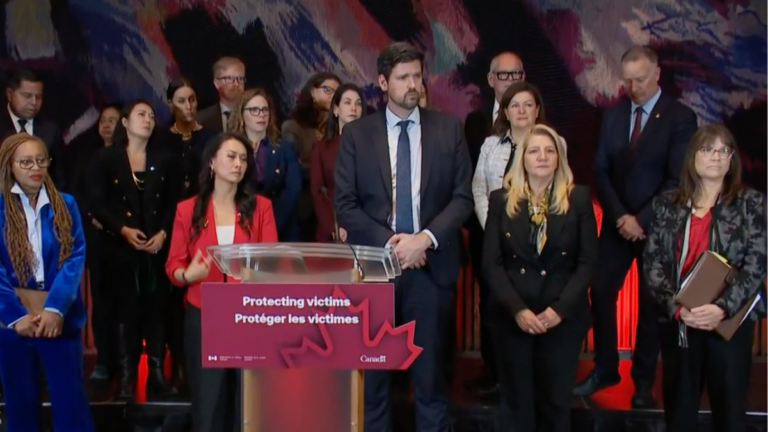
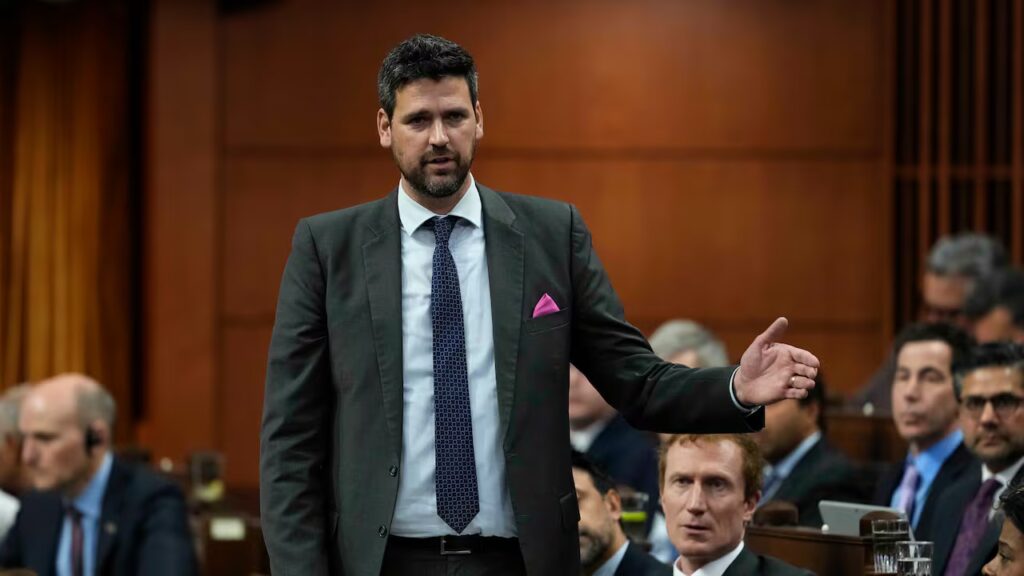
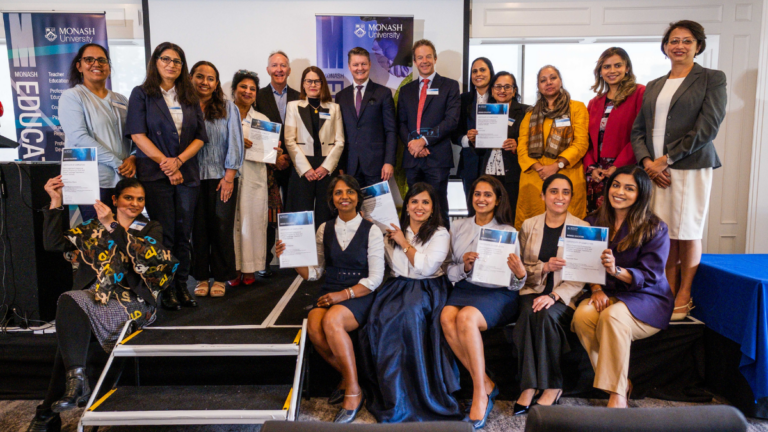
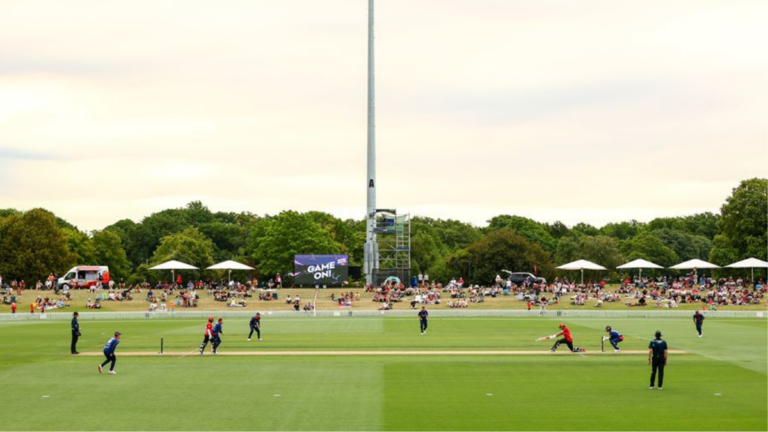
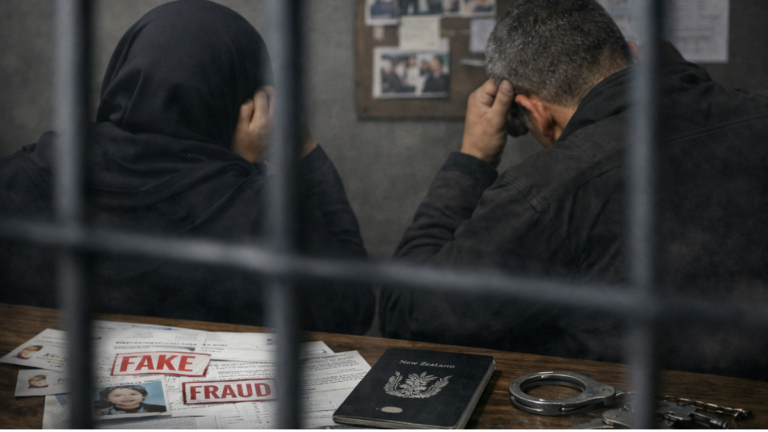
Two relatives of Iranian military commander Qasem Soleimani have been detained in Los Angeles by US immigration authorities, with officials alleging irregularities in their asylum claims and moving to revoke their residency status.
The US Department of Homeland Security said officers from US Immigration and Customs Enforcement arrested Hamideh Soleimani Afshar and her daughter, Sarinasadat Hosseiny, on 3 April.
Authorities identified the pair as the niece and grandniece of Soleimani, the former head of Iran’s Quds Force, who was killed in a US drone strike ordered by then president Donald Trump in 2020.
On April 3, 2026, @ICEgov officers in Los Angeles arrested Hamideh Soleimani Afshar and Sarinasadat Hosseiny, the niece and grandniece of Qasem Soleimani, the late head of the Quds Force of the Islamic Revolutionary Guard Corps who was killed by a drone strike ordered by… https://t.co/4zd4iVnaTL
According to officials, Soleimani Afshar entered the United States on a tourist visa in 2015, was granted asylum in 2019 and later obtained permanent residency in 2021. Her daughter followed a similar path, arriving on a student visa in 2015 before being granted asylum and later a green card.
US authorities allege that travel to Iran after obtaining permanent residency raised concerns about the legitimacy of Soleimani Afshar’s original asylum claim. In a statement, the department said such travel indicated her claim may have been “fraudulent”.
US Secretary of State Marco Rubio said he had moved to terminate the pair’s legal status, adding they were now in custody pending removal proceedings. He alleged Soleimani Afshar had expressed support for the Iranian government and made hostile remarks about the United States.
Officials said lawful permanent residency could be revoked if authorities believed an individual posed a security risk. The case comes amid broader scrutiny of immigration enforcement and national security under the current administration.
Support our Journalism
No-nonsense journalism. No paywalls. Whether you’re in Australia, the UK, Canada, the USA, or India, you can support The Australia Today by taking a paid subscription via Patreon or donating via PayPal — and help keep honest, fearless journalism alive.
The Australian Federal Police has increased patrols across the nation’s major airports ahead of the Easter holiday rush, warning travellers to expect a strong security presence as passenger numbers surge.
High-visibility operations are being rolled out at the AFP’s 10 designated airports, including the recently added Western Sydney Airport, where federal officers formally began security duties in March. The move comes as airports prepare for one of the busiest travel periods of the year, spanning the school holidays.
Protective Service Superintendent Josh Sinclair-Wadham said officers would be deployed throughout the holiday period to maintain safety and reassure travellers, particularly during a time of heightened uncertainty.
The increased presence follows a year of expanded aviation policing activity. The AFP recorded more than 145,000 hours of proactive operations in 2025 — a 29 per cent rise on the previous year — alongside more than 5,300 incidents already responded to at designated airports in the first months of 2026. So far this year, 282 people have been charged with 338 offences, including drug-related crimes, theft and violent behaviour.
Authorities say the additional patrols will focus on intoxication, disruptive conduct and the possession of prohibited items such as illicit drugs and weapons. Specialist capabilities, including canine units and tactical response teams, will also be deployed.
Superintendent Sinclair-Wadham said peak travel periods, often involving delays and long queues, could contribute to a rise in anti-social behaviour. He urged passengers to remain patient and follow directions from airport and airline staff, warning that unlawful conduct would be dealt with swiftly and brought before the courts.
The Australian Border Force will also step up its operations, working alongside police and airport authorities to manage the influx of travellers. Superintendent Elke West said Easter traditionally sees tens of thousands of passengers moving through Australian airports each day, increasing the likelihood of congestion and delays.
She advised travellers to allow extra time for check-in, security and border processing, and reminded passengers that officers would not tolerate abuse while carrying out their duties. Despite the seasonal rush, she said vigilance remained high when it came to detecting suspicious packages and illicit substances.
Industry groups have echoed the call for preparation and patience. Australian Airports Association chief executive Simon Westaway said airports were operating in a complex environment and working to keep passengers moving efficiently despite heavy demand.
Similarly, Airlines for Australia and New Zealand chief executive Stephen Beckett said airlines had added flights and increased staffing to manage the peak, but warned travellers to expect congestion and plan accordingly.
Authorities are also encouraging the public to report suspicious behaviour through the Airport Watch programme, which supports aviation security by relaying information to law enforcement. Travellers are advised to remain alert to unusual activity, including attempts to access restricted areas or gather information about airport operations.
The stepped-up security presence is expected to remain in place until the end of the school holiday period.
Support our Journalism
No-nonsense journalism. No paywalls. Whether you’re in Australia, the UK, Canada, the USA, or India, you can support The Australia Today by taking a paid subscription via Patreon or donating via PayPal — and help keep honest, fearless journalism alive.
Easter is here and chocolate is everywhere – crowding shop shelves, piling up on desks, and likely already sitting in your pantry.
But if you’ve been finding it harder to sleep recently, late-night Easter eggs could be part of the problem.
That’s because some chocolate ingredients, including caffeine and sugar, may be sneakily impacting your sleep.
But if you love chocolate, you don’t have to give it up completely. Instead, here are some science-backed tips for enjoying it without sacrificing your sleep.
The science of chocolate
Most of us will agree that chocolate is delicious. This is because it’s made of tasty ingredients such as cocoa, cocoa butter and sugar.
But it’s more than just a sweet treat. Chocolate contains hundreds of naturally occurring compounds including mild stimulants, which are substances that make the mind or body more active. These stimulants can impact how well you sleep.
Here are three ingredients worth knowing about.
Sugar
Sugar is one of the main ingredients in chocolate. When you eat high-sugar foods, such as chocolate eggs, your blood sugar levels tend to rise quickly. In response, your body releases insulin to bring those levels back down.
So if you eat chocolate in the evening, you’ll likely experience a blood sugar spike. This will temporarily boost your energy levels, but also means you’re less likely to feel naturally sleepy. When that spike wears off, your blood sugar levels will suddenly dip. All these fluctuations can disrupt sleep quality later, making it harder to stay asleep at night.
Caffeine
Chocolate also contains caffeine. Caffeine works by blocking a sleep-promoting chemical in your brain, called adenosine. When the adenosine signal is blocked, we feel more alert. While this is useful during the day, consuming caffeine in the evening can make it harder to fall asleep.
A single chocolate mini-egg contains a tiny amount of caffeine, typically just a few milligrams. If we compare this with a shot of espresso, which contains between 50 and 70 milligrams of caffeine, this doesn’t seem like a lot. But if you eat multiple chocolate eggs at once, say during Easter, this caffeine may start to affect your sleep. Even small amounts of caffeine can delay how quickly you fall asleep, and also impact how how well you sleep. And combining caffeine with sugar, in foods such as Easter eggs, can compound these effects.
Theobromine
Chocolate also contains theobromine, a stimulant commonly found in cocoa beans. Theobromine is similar to caffeine in that it blocks the adenosine signal. Theobromine can also increase your heart rate, meaning you’re more likely to feel restless. So while it isn’t as strong as caffeine, theobromine may impact your ability to fall and stay asleep.
The good news
Thankfully, you don’t have to give up chocolate to sleep well. But if you are tucking into some Easter eggs, here are three questions to ask yourself.
1. When am I eating?
Eating anything close to bedtime can make it harder to fall asleep, and may reduce the quality of your sleep. It might also increase your chance of having vivid dreams.
Late-night eating can also lead to digestive problems. Research suggests the human body has a harder time digesting food at night. If you eat food right before bed it can cause various symptoms, including acid reflux. Acid reflux is a common digestive condition where stomach acid flows back into your food pipe, causing an uncomfortable burning sensation. Eating chocolate in the evening may cause acid reflux because ingredients such as caffeine and theobromine relax the muscles that keep stomach acid in place.
So it’s best to avoid eating any food, including chocolate, at least three hours before you go to bed.
2. What am I eating?
Dark chocolate typically contains more cocoa than other kinds of chocolate. This means it also contains higher levels of caffeine and theobromine. So if you’re reaching for chocolate late at night, it may be best to avoid dark chocolate.
White chocolate is not made from cocoa solids, so generally contains no caffeine. However, it still has a high sugar and fat content. So you should also consider limiting how much white chocolate you eat before bed.
During the day, you can enjoy whatever kind of chocolate you prefer. But in the evening, it’s best to avoid eating any chocolate too close to bedtime.
3. How much am I eating?
Enjoying a small chocolate egg after dinner is unlikely to affect your sleep in any noticeable way. But eating a whole chocolate bunny, particularly right before bed, is another story. What’s key is managing your portions and giving your body time to digest before you head to bed.
The bottom line
For most people, eating chocolate won’t have a major impact on your sleep. But it helps to keep track of when, what, and how much chocolate you’re eating, particularly around bedtime. That way you can enjoy your Easter eggs without sacrificing any shut-eye.
No-nonsense journalism. No paywalls. Whether you’re in Australia, the UK, Canada, the USA, or India, you can support The Australia Today by taking a paid subscription via Patreon or donating via PayPal — and help keep honest, fearless journalism alive.
Foreign Minister Penny Wong has congratulated Balendra Shah, popularly known as Balen, on being sworn in as Nepal’s Prime Minister, praising the country’s successful conduct of elections and highlighting the strong friendship between the two nations.
Congratulations to @shahbalen on being sworn in as Prime Minister of Nepal and to the Interim Government on the successful conduct of elections. Our countries share a strong friendship, and we look forward to working together to promote a peaceful, stable and prosperous region.
Shah, 35, assumed office following a decisive victory in Nepal’s first national election since last year’s youth-led protests. His rise signals a significant shift in Nepali politics, with voters rejecting established parties amid widespread frustration over alleged corruption, nepotism and elite rule.
A former rapper and engineer, Shah previously served three years as mayor of Kathmandu, where he introduced urban reforms, preserved heritage sites, and implemented anti-corruption measures.
Shah’s music, which openly criticised social inequality and government misconduct, helped build his popularity. One of his best-known songs, Balidan (“Sacrifice”), has attracted more than 14 million views on YouTube.
Shah took the oath of office and secrecy in a nationally televised ceremony at the Office of the President in Shital Niwas on Friday, administered by President Ramchandra Paudel.
The ceremony incorporated Vedic–Sanatan traditions, including conch blowing, recitations by 108 Batuks, and chants from 108 Buddhist monks. Senior officials, former prime ministers, and members of the diplomatic corps attended.
As parliamentary party leader of the Rastriya Swatantra Party (RSP), Shah was elected to the House of Representatives from Jhapa-5 in March, defeating former Prime Minister KP Sharma Oli.
Upon taking office, he announced a Cabinet including Swarnim Wagle as Deputy Prime Minister and Finance Minister, Shishir Khanal for Foreign Affairs, and Sunil Lamsal overseeing Physical Infrastructure, Transport and Urban Development, while retaining Defence and Industry portfolios himself.
Born in 1990 in Naradevi, Kathmandu, Shah studied engineering in Nepal and later in Karnataka, India. He is married with one daughter and is the youngest of his parents’ children. Ahead of taking office, he released a song expressing optimism about Nepal’s future, which went viral online.
Support our Journalism
No-nonsense journalism. No paywalls. Whether you’re in Australia, the UK, Canada, the USA, or India, you can support The Australia Today by taking a paid subscription via Patreon or donating via PayPal — and help keep honest, fearless journalism alive.
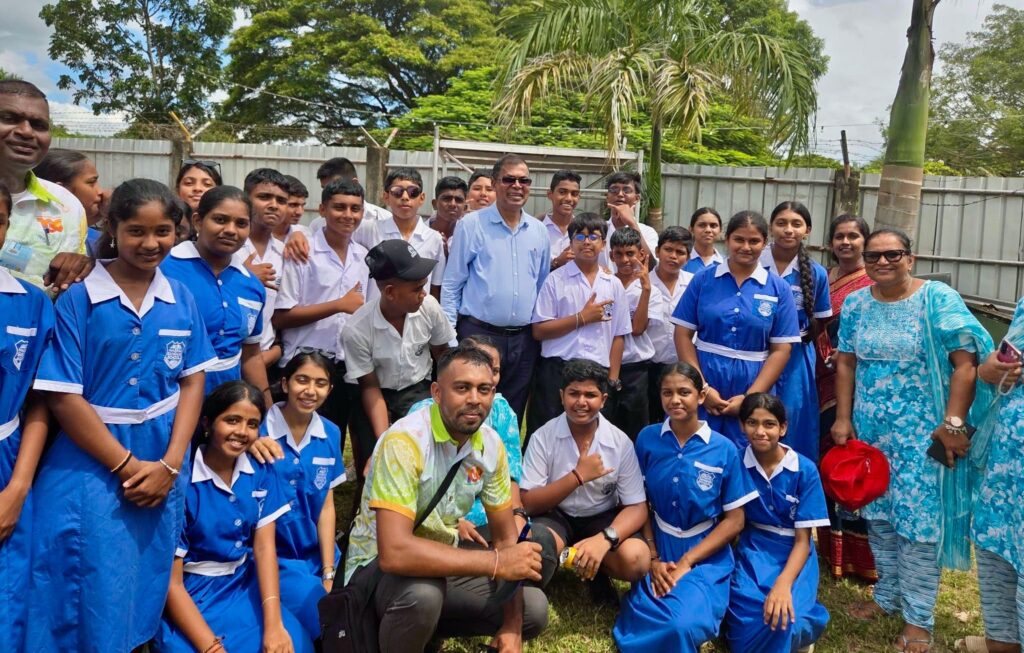
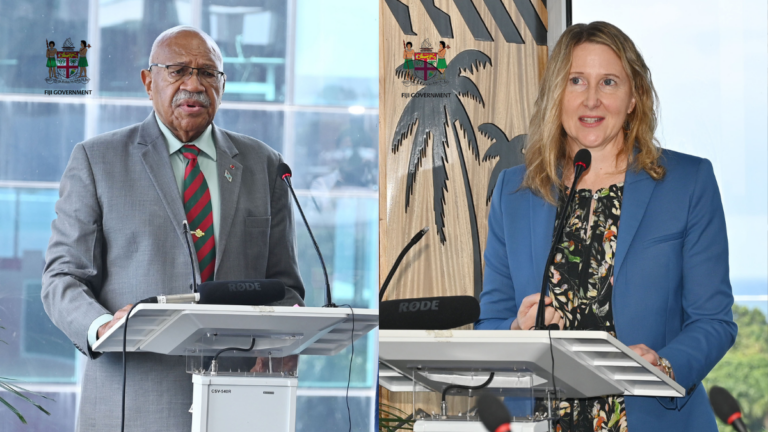
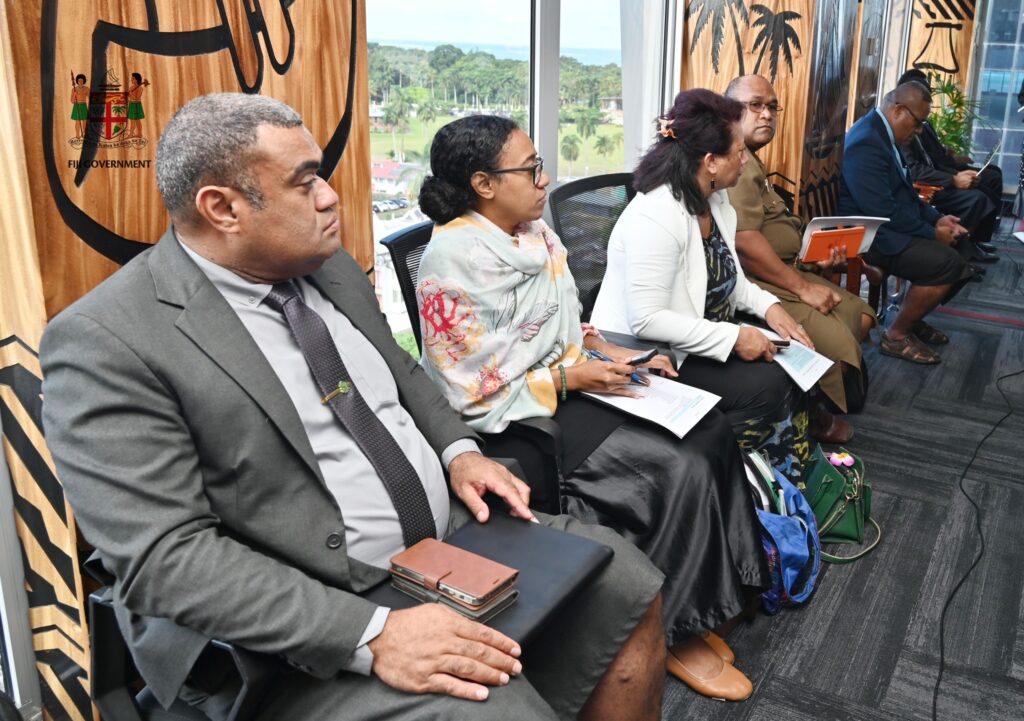
Fiji’s Prime Minister Sitiveni Rabuka has praised the Then India Sanmarga Ikya Sangam (TISI) as a key force in Fiji’s development, as the organisation marked 100 years of community service at a national convention in Nadi.
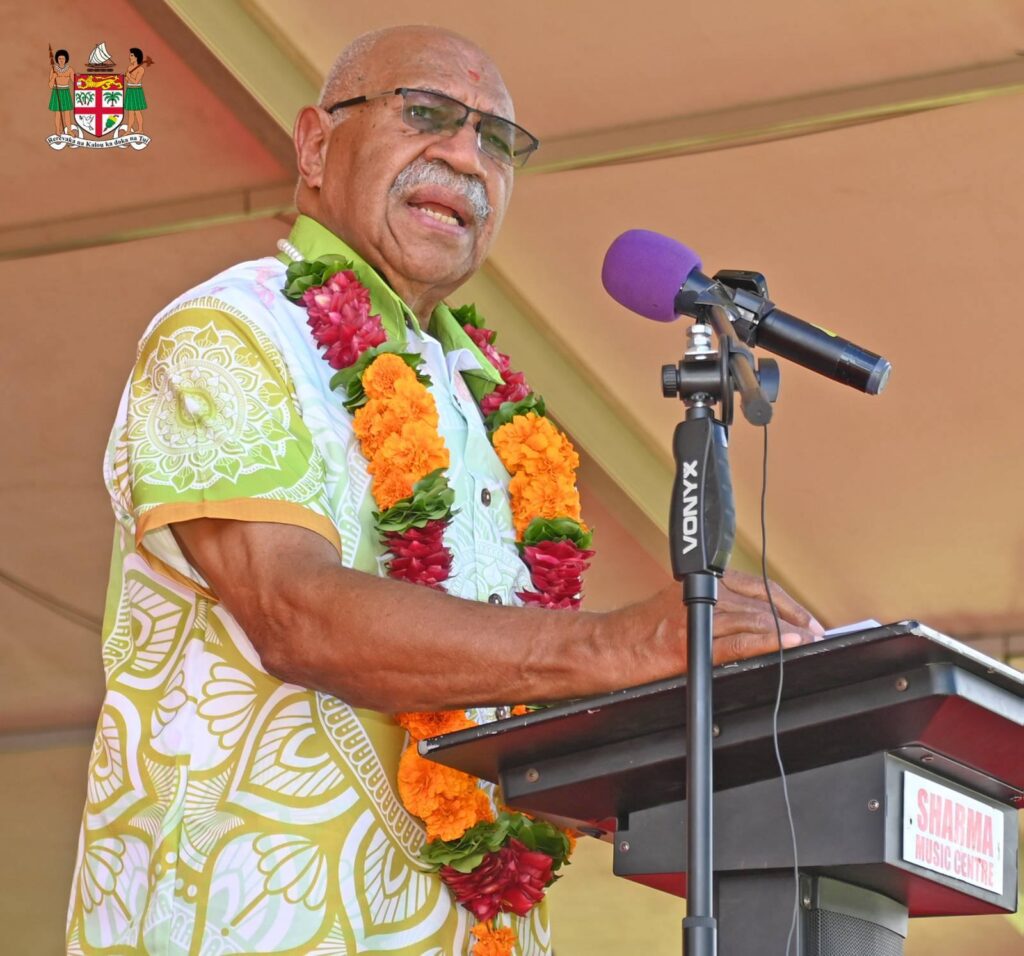
Image: Fiji’s Prime Minister Sitiveni Rabuka has praised the Then India Sanmarga Ikya Sangam (TISI) as a key force in Fiji’s development (Source: Facebook – Fiji Government)
Speaking at the centennial Annual General Convention at King Charles Park, PM Rabuka described the Sangam as a “cornerstone of national resilience and unity”, highlighting its long-standing role in education and social support.
“For 100 years, the Sangam has demonstrated that national resilience is built not by institutions alone, but by people who step forward in service,” he said, adding that its work reflected “everyday acts of care, responsibility, and shared duty” that sustain a united Fiji.
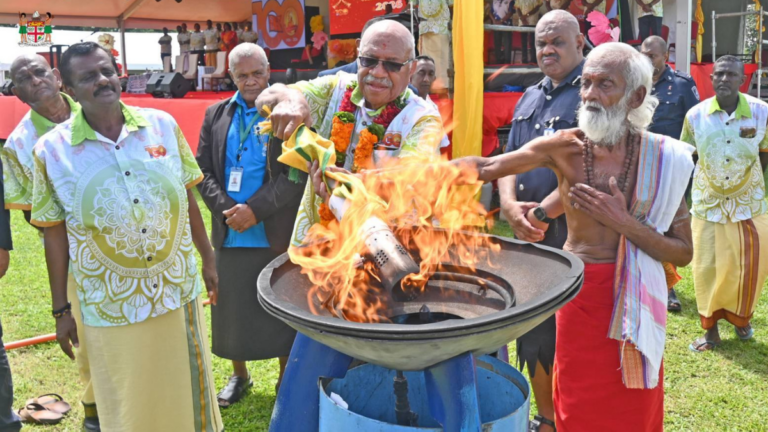
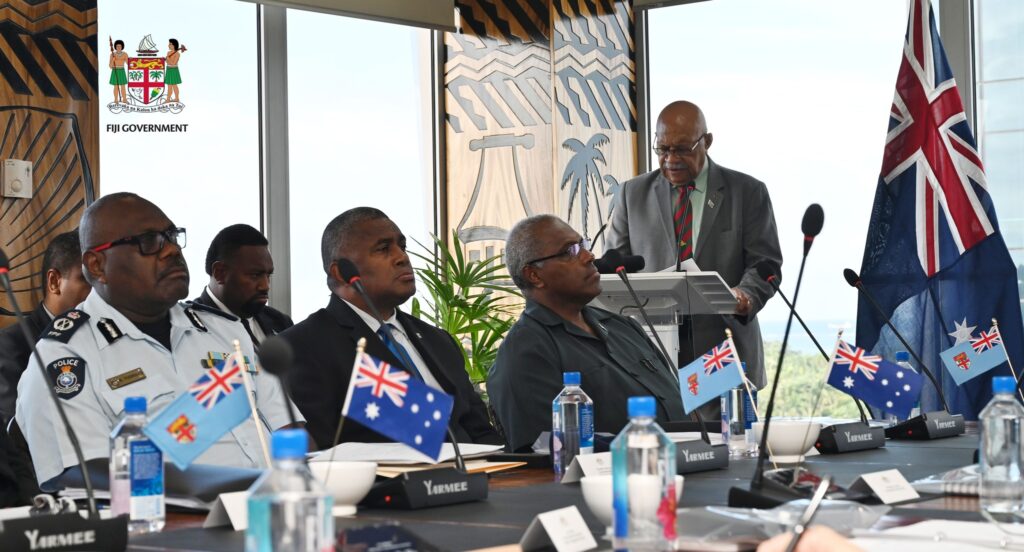
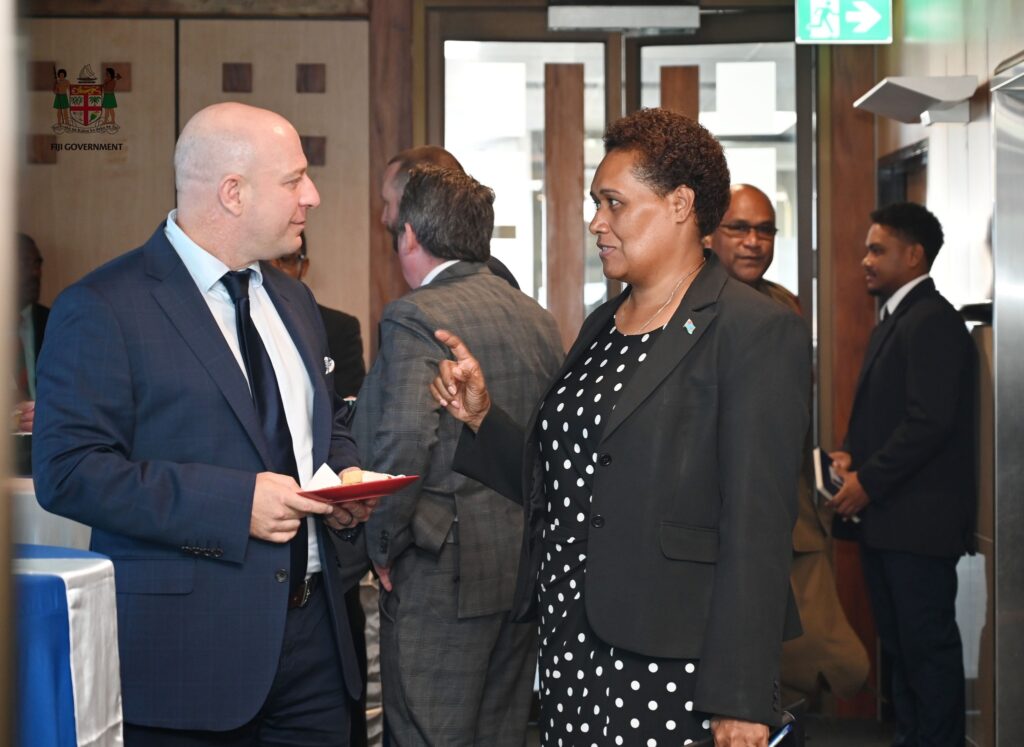
Image: Then India Sanmarga Ikya Sangam (TISI) event (Source: Facebook – Fiji Government)
Founded in 1926, Then India Sanmarga Ikya Sangam has grown into one of the country’s largest community organisations, managing a network of schools and early childhood centres.
PM Rabuka said the group now operates 21 primary schools, five secondary schools, 18 early learning centres and a nursing college in Labasa, collectively serving more than 10,000 students.
He said the Sangam’s educational work had helped produce generations of skilled citizens and reinforced the enduring value of learning, describing education as “the one form of wealth that cannot be diminished”.
As part of the ceremony, PM Rabuka lit a symbolic flame marking the centenary, following a nationwide torch relay tied to the celebrations.
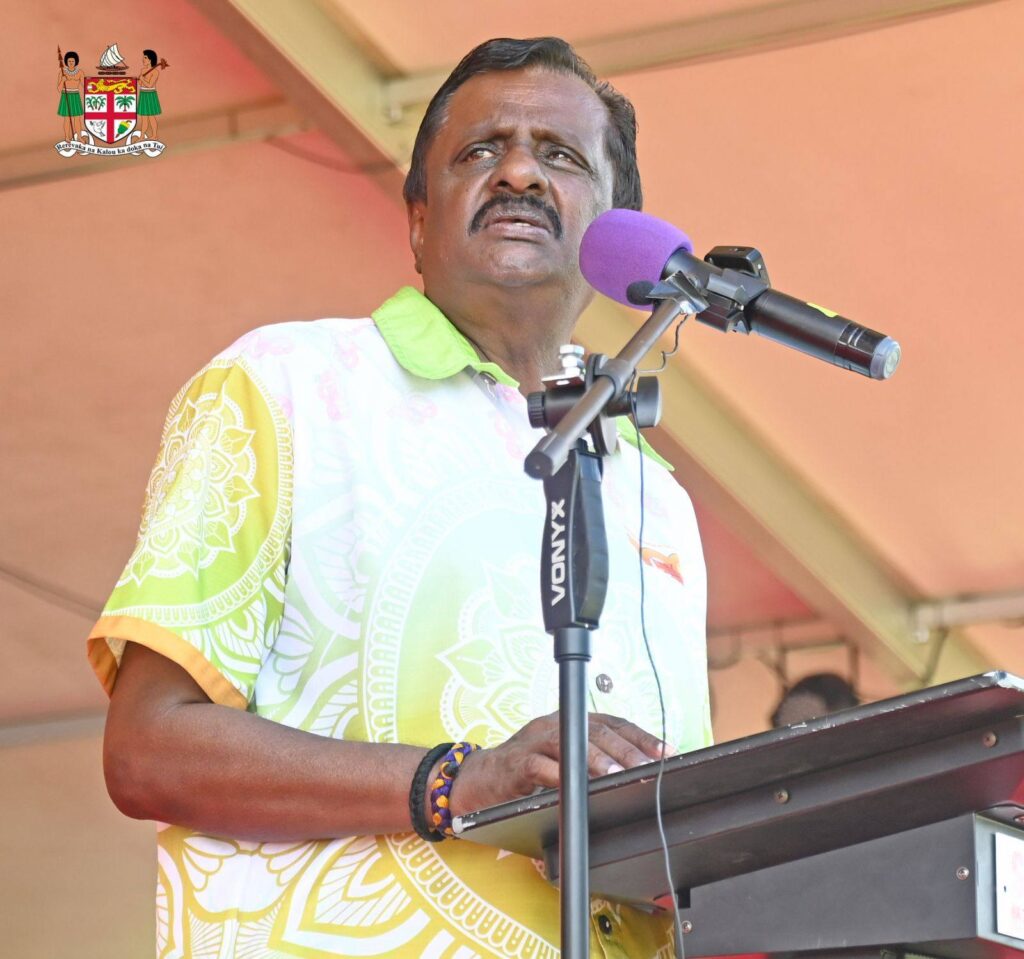
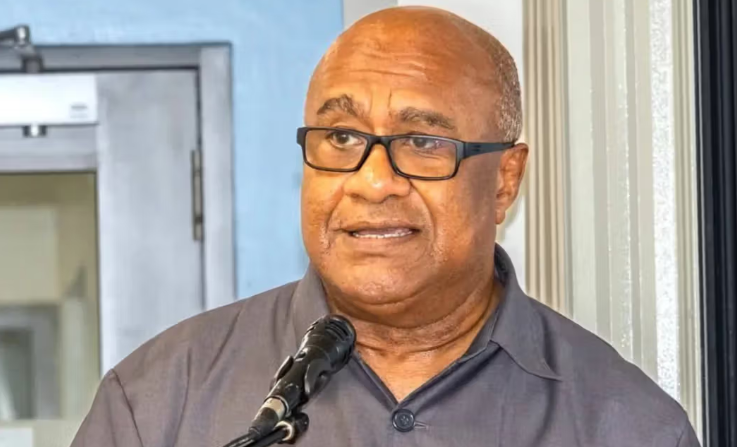
Image: TISI president and Member of Parliament Praveen Kumar Bala (Source: Facebook – Fiji Government)
TISI president and Member of Parliament Praveen Kumar Bala said the flame represented both the organisation’s legacy and its future, while paying tribute to founder Sadhu Kuppuswamy and its origins in Nadi in 1926.
Adding to the tributes, Prof. Biman Prasad, leader of the National Federation Party (NFP), said it was an honour to attend the centennial convention alongside the Prime Minister, describing TISI Sangam as the largest cultural organisation in Fiji with a long-standing commitment to inclusive education.
Image: Prof. Biman Prasad, leader of the National Federation Party (Source: Fiji Government – Facebook)
He said organisations such as Sangam played a critical role during the colonial period, when access to schooling was limited, by providing education “to all, regardless of race or ethnic origin”, a legacy he said continues to shape Fiji’s national identity.
Prof. Prasad also paid tribute to prominent figures associated with the organisation and Fiji’s political history, including A. D. Patel, Jai Ram Reddy and long-serving Sangam president Y. P. Reddy.
He congratulated Sangam members in Fiji and across the diaspora in Australia, New Zealand, Canada and the United States, and expressed hope that future leaders would continue to uphold values of service and integrity.
Image: Prof. Biman Prasad, leader of the National Federation Party (Source: Fiji Government – Facebook)
Separately, Prof. Prasad said he also attended the 64th Sanatan Convention in Navua, organised by the Shri Sanatan Dharam Pratinidhi Sabha of Fiji, describing it as an important platform promoting unity and social responsibility.
In an Easter message, Prof. Prasad extended his wishes to Fijians at home and abroad, reflecting on the significance of the season in the Christian faith. He said the commemoration of the death and resurrection of Jesus Christ carried a message of renewal, compassion and shared purpose, urging communities to draw on those values in strengthening national unity.
Centennial events are being held alongside celebrations linked to the Shri Siva Subramaniya Swami Temple, regarded as the largest Hindu temple in the Southern Hemisphere, with programmes including cultural performances, prayers and community activities.
Image: Government MP Manoa Kamikamica (Source: Facebook)
Separately, Government MP Manoa Kamikamica called for greater inclusivity, saying Indo-Fijians “belong here” and should be recognised simply as Fijians, urging a focus on shared national identity.
Support our Journalism
No-nonsense journalism. No paywalls. Whether you’re in Australia, the UK, Canada, the USA, or India, you can support The Australia Today by taking a paid subscription via Patreon or donating via PayPal — and help keep honest, fearless journalism alive.
The funding, revealed on Friday in a joint statement with Deputy Prime Minister Richard Marles and Health Minister Mark Butler, is aimed at improving access to specialised paediatric care across Victoria and expanding national health information services for children and young people.
The latest commitment adds to $6 million already provided by the federal government to the appeal, which supports treatment, research and training at the hospital.
Officials said the funding would help extend services beyond metropolitan Melbourne, building on previous initiatives that have directed resources to regional health services. In 2025, the appeal distributed $3 million to 41 regional centres, funding equipment, training and education to enable families to access care closer to home.
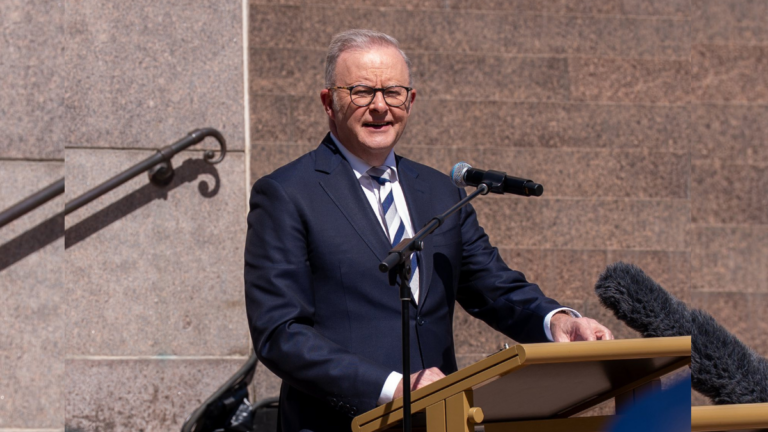
PM Albanese said the long-running appeal reflected a national commitment to supporting children’s health, describing it as an example of Australians “pitching in and helping out people who need it the most”. He said the additional funding would help ensure more children receive care in their own communities.
Minister Marles said the investment would ease pressure on families in regional Victoria by reducing the need to travel for treatment, while Minsiter Butler highlighted the hospital’s role in advancing paediatric care and extending its reach to more communities.
The Good Friday Appeal, first held in 1931, relies on thousands of volunteers and culminates each year in a statewide telethon, raising funds for the Royal Children’s Hospital and paediatric services across Victoria.
Support our Journalism
No-nonsense journalism. No paywalls. Whether you’re in Australia, the UK, Canada, the USA, or India, you can support The Australia Today by taking a paid subscription via Patreon or donating via PayPal — and help keep honest, fearless journalism alive.
Australian Federal Police and partner agencies have charged nine men over an alleged criminal syndicate accused of attempting to import large quantities of illicit drugs into Victoria using offshore transfer methods.
The arrests follow a 10-month investigation, known as Operation Bruce Cremorne, led by the Victorian Joint Organised Crime Taskforce, which brings together the AFP, Victoria Police, Australian Border Force and the Australian Criminal Intelligence Commission.
Authorities allege the group sought to coordinate at-sea drug transfers in Bass Strait, using smaller “daughter vessels” to collect consignments from a larger “mother ship” travelling through Australian waters. While multiple attempts were allegedly made, investigators say no drugs were successfully imported through this method.
The investigation began in May 2025 after a commercial trawler sank off the coast of Port Albert, prompting the rescue of four crew members. Police later formed suspicions about the voyage, citing the vessel’s departure in poor weather and a lack of standard fishing equipment. This led to months of surveillance targeting several boat crews believed to be linked to the broader network.
Eight men were arrested across Victoria, including in Morwell, Glenroy, Cranbourne and Greenvale, while a ninth was taken into custody in Sydney. The men, aged between 31 and 72, face a range of charges including conspiracy to import illicit drugs and trafficking offences. Seven of those charged face a maximum penalty of life imprisonment if convicted.
Investigators also allege links between the syndicate and significant drug seizures interstate. These include 30 kilograms of methamphetamine seized in Perth in August 2025 and 41 kilograms of cocaine intercepted in regional Victoria days later. Police claim the group used connections within the trucking industry to move drugs between states.
An international investigation into the suspected “mother ship” and its organisers remains ongoing, with authorities indicating further arrests are possible.
AFP Detective Superintendent Ray Imbriano said the operation highlighted the role of demand in driving organised crime activity. He said criminals were targeting Australia because of the high prices paid for illicit substances, adding that drug importation fuels violence between rival groups and can endanger bystanders.
Victoria Police Detective Superintendent Dave Cowan said Australia’s appetite for drugs continued to make it an attractive market for organised crime, with harms extending beyond users to the broader community.
ABF Commander Clinton Sims said border authorities remained focused on disrupting transnational criminal networks, while ACIC National Manager Jason Halls pointed to the importance of intelligence-sharing between agencies in preventing large-scale importation attempts.
The matter is before the courts.
Support our Journalism
No-nonsense journalism. No paywalls. Whether you’re in Australia, the UK, Canada, the USA, or India, you can support The Australia Today by taking a paid subscription via Patreon or donating via PayPal — and help keep honest, fearless journalism alive.
Long weekends often bring family and friends together in a mix of generations.
Somewhere between the egg hunt and hot cross buns this weekend, there might be a moment where another adult steps in to “parent” your child in ways that don’t sit well with you. Maybe they are too sharp or too bossy. Or it’s just not how you do things.
These situations are often less about those involved “behaving badly” and more about emotions running high. This goes for kids and adults.
What can you do about it?
What’s going on?
It can be uncomfortable when a friend or relative uses a harsh tone, gives orders or disciplines your child in a way that feels too strong.
Often, this taps into something deeper. Many of us were raised with more punitive or directive parenting styles, and we can feel triggered seeing those approaches repeated with our own children.
At the same time, gatherings can lead to sensory overload. Noise, excitement, sugar and disrupted routines can push everyone closer to their limits. This is especially so for children, who are still developing emotional regulation.
What can you do?
If another adult steps in with your child in a way you don’t like, you can gently enter the interaction – rather than directly confront the other adult in the moment.
It can help to move physically closer, make eye contact, and gently touch your child with a warm smile. This allows you to take the lead without escalating tension. You might say to your child:
Hey, it’s getting loud – let’s step outside for a minute.
Later, if needed, you can have a quiet word with the relative. Try to keep it collaborative rather than critical. For example,
We’re trying to help Lily learn to calm down rather than just tell her to stop yelling. So I usually talk it through with her.
Framing it as your approach (rather than their mistake) reduces defensiveness.
When you’re with someone else’s child
Sometimes you might find yourself needing to respond to a child who isn’t yours. Perhaps they’re grabbing toys, yelling or about to knock over the dessert table. The key here is to focus on providing guidance through giving clear direction.
Instead of jumping straight to commands or corrections, aim for calm and descriptive responses without judgement. For example:
Oops! That was close. Let’s move away from the table.
Looks like you’re really excited, let’s keep the noise a bit lower inside.
I can’t let you throw that, it might hurt someone. Let’s find something else to do.
This aligns with the “emotion coaching” approach to parenting. This acknowledges a child’s feeling/s while setting a clear limit. If the child’s parent is nearby, it’s usually best to loop them in rather than take over.
Hey, just letting you know Poppy is climbing on the table.
This keeps boundaries clear and respects the parent’s role. When you do need to step in (for reasons of safety or respect), keep your tone calm and your language simple.
Avoid shaming the child or raising your voice as this can escalate the situation and undermine the child’s sense of safety, especially when they’re already overstimulated.
What to keep in mind
Get-togethers with friends and family are fun but rarely perfect. Children can experience some big emotions. They can feel left out, disappointed, overwhelmed or overexcited. Adults get triggered and parenting styles differ. During these times, try and hold onto a few core ideas.
Behaviour is communication about children’s underlying emotions, needs and regulatory capacities. This is especially so during high-stimulation events. When children become wild or have meltdowns, it’s a sign they may be overstimulated, emotionally overwhelmed or hungry. So they need a break, a different activity, co-regulation (where the parent uses warmth and empathy to create calm) or food.
Our own reactions are shaped by our past experiences and current capacity. Being aware of this can help us respond in a more measured way and step in to support our child.
If things don’t go smoothly, check in with your child afterwards about their feelings. Or smooth things over with the relative. In the end, the goal isn’t perfect parenting over the long weekend – it’s staying connected, even in the messy moments.
No-nonsense journalism. No paywalls. Whether you’re in Australia, the UK, Canada, the USA, or India, you can support The Australia Today by taking a paid subscription via Patreon or donating via PayPal — and help keep honest, fearless journalism alive.
The controversy surrounding Dhurandhar is being framed as a debate about cinema. It is not. At its heart, this is a fight over narrative ownership — over who gets to assign morality, frame conflict, and determine what stories Indian audiences are permitted to see told on their own terms.
As analyst Utpal Kumar has noted in his recent piece entitled ‘When Bharat speaks, Left-‘liberals’ cry ‘propaganda,’ what is really being contested is not the quality of a film but the legitimacy of its perspective.
For decades, Hindi cinema operated within a loosely defined ideological comfort zone. Certain stories were encouraged, others softened, and some reframed over time. Films dealing with insurgency — Naxalism, Kashmir, the fault lines of the Indian state — tended to follow a recognisable pattern. The movement got the poetry. The state got the scrutiny.
Hazaaron Khwaishein Aisi filtered the Naxalite uprising through youthful idealism and personal longing. Chakravyuh, however layered, situated armed insurgency within a framework of systemic injustice that invited audience reflection. Haider rendered the Kashmir conflict in near-lyrical terms, foregrounding institutional excesses while leaving the question of militancy open to complex, sometimes ambiguous readings.
These are not bad films. Several are genuinely accomplished works of cinema. But they reflect a pattern — and patterns, in aggregate, become a default. The human cost of insurgency on civilian populations sometimes receded into the background, while the ideological motivations of those who took up arms were contextualised and humanised. A parallel strand of filmmaking explored minority and community identities, often with sincerity, though the critical lens applied was not always consistent across subjects.
The cumulative effect was a quiet set of narrative priorities — which stories invited interrogation, and which were more readily contextualised.
It does not reach for moral relativism to soften its framing. It does not calibrate its perspective to fit an established template of mainstream storytelling. It engages with conflict through a national-security lens — the kind that Hindi cinema has, until recently, been hesitant to adopt without extensive qualification.
The response has been swift. Words like “propaganda” and “hyper-nationalism” have entered the discourse, often functioning as conversation-enders rather than starting points for genuine critical engagement.
Which makes it all the more notable when a voice with deep roots in the Indian left pushes back against that framing.
Piyush Mishra — actor, lyricist, playwright, and for much of his career a prominent voice associated with progressive cultural politics — has said plainly that Dhurandhar is cinema, not propaganda. It is a remark worth pausing over. Mishra is not a figure associated with nationalist politics. He spent decades working within the cultural milieu that shaped much of the ideological grammar described above. When someone of his standing and history draws that distinction, it carries weight that is difficult to set aside.
Then there is the matter of money — and this may be where a significant part of the discomfort lies.
Dhurandhar grossed over ₹1,350 crore worldwide — round AUD $248 million. Its sequel, Dhurandhar 2: The Revenge, released in March 2026, has moved even faster. By just its 16th day, the sequel had crossed the ₹1,500 crore mark worldwide, adding roughly another AUD $280 million to the franchise tally. The Dhurandhar franchise has become the first Bollywood series to cross the ₹2,200 crore mark in worldwide gross collections — with Dhurandhar 2 still running. Combined, the two films have grossed the equivalent of over AUD $525 million at the worldwide box office and counting.
That figure deserves to be read in context. The Indian spy thriller genre has for years served as a reliable vehicle for a certain kind of well-connected, studio-backed filmmaking — recognisable faces, substantial budgets, modest returns, and reviews that tended to land softly regardless of quality. Films like Pathaan, Tiger Zinda Hai and War were positioned as tentpole events and performed adequately, but none redrew the map of what Indian cinema could earn or mean. The Dhurandhar franchise has done exactly that — and it has done so from outside the traditional ecosystem of producers, directors and stars who have long exercised an informal hold over which projects get made, which get positioned as prestige, and which get the benefit of the doubt from critics.
When a franchise built on different creative and ideological foundations not only challenges that order but financially obliterates it, the reaction is unlikely to be purely about cinema. The pace at which Dhurandhar 2 broke records — becoming the fastest Indian film to reach the ₹1,500 crore milestone — leaves little room for the argument that audiences were somehow misled or manipulated. They turned up, in extraordinary numbers, of their own accord.
The broader double standard in how such films are discussed is also worth examining. Utpal Kumar points to Hollywood which has long produced films that reflect American geopolitical perspectives. Franchises like Rambo and James Bond construct heroes and adversaries in ways that reinforce a particular national self-image, and are rarely subjected to the same critical framing. The difference is not one of cinematic principle — it is one of whose perspective is considered the default, and whose is treated as requiring justification.
The Kashmir Files indicated that audiences were ready to engage with narratives that confronted difficult realities more directly. Dhurandhar builds on that shift. Such storytelling is no longer on the margins — it is entering the mainstream, both commercially and culturally.
The case for cinematic plurality must be applied consistently. If the medium is genuinely to be a space for diverse voices, it must also accommodate perspectives that challenge established storytelling preferences — not only those that confirm them.
The intensity of the reaction to Dhurandhar points to a deeper discomfort. It is not simply about the film’s content. It is about the breaking of an unspoken expectation: that certain stories, about certain conflicts, would always be told within a certain framework — and that certain people would always be the ones telling them.
That expectation is being tested. And the conversation it has opened is one Indian cinema will need to have honestly.
Support our Journalism
No-nonsense journalism. No paywalls. Whether you’re in Australia, the UK, Canada, the USA, or India, you can support The Australia Today by taking a paid subscription via Patreon or donating via PayPal — and help keep honest, fearless journalism alive.
The Artemis Accords are a set of non-binding principles created to guide peaceful and responsible exploration of the Moon, Mars and deeper space. Introduced in 2020 by NASA alongside the United States government, the framework updates the spirit of the 1967 Outer Space Treaty for a new era in which multiple nations and private companies are preparing to operate on the Moon.
The Accords aim to prevent conflict as space becomes more crowded and strategically important. Countries that sign commit to transparency in their missions, sharing scientific data, registering space objects and communicating openly to avoid harmful interference.
On January 26, 2026, Oman became the 61st nation to sign the accords. The commitments of the Artemis Accords and efforts by the signatories to advance implementation of these principles support the safe and sustainable exploration of space. Image: NASA website (https://www.nasa.gov/artemis-accords/)
A major focus is the idea that space resources can be used responsibly, including mining lunar ice for fuel and life-support systems or extracting materials to support long-term missions. The agreement also encourages the creation of safety zones around operations and the protection of historic sites such as early lunar landing locations.
Since 2020, the number of signatories has grown rapidly, with 61 countries now part of the framework. Key members include the United States, India, Australia, United Kingdom, Canada, Japan, France, Germany, Italy, South Korea, Brazil, United Arab Emirates, Saudi Arabia, New Zealand, Singapore and Ukraine, with more countries continuing to join.
Notably, China and Russia are not part of the Accords and are pursuing a separate lunar cooperation framework.
But despite tensions on Earth, the International Space Station (ISS) remains one of the last major areas of active cooperation between the United States and Russia.
The station is a joint project involving NASA and Roscosmos, along with Europe, Japan and Canada. Even after the Ukraine war began in 2022, both sides continued working together because the ISS is technically interdependent:
Russian modules provide propulsion and orbit adjustments that keep the station from falling back to Earth.
American systems supply power, life-support, and much of the onboard infrastructure.
Astronaut seat-swap agreements still send US astronauts on Russian Soyuz spacecraft and Russian cosmonauts on US commercial crew missions.
This cooperation is expected to continue until the planned retirement of the ISS around the end of the decade.
🚀 Humanity is heading back to the Moon@NASA’s Artemis II has launched, sending astronauts on the first crewed mission toward lunar orbit in over 50 years.🌕
Crew on board: Reid Wiseman, Victor Glover, Christina Koch and Jeremy Hansen
As lunar missions accelerate and long-term plans for Mars take shape, the Artemis Accords are increasingly seen as an early attempt to establish shared rules for how humanity will live, work and cooperate beyond Earth.
Support our Journalism
No-nonsense journalism. No paywalls. Whether you’re in Australia, the UK, Canada, the USA, or India, you can support The Australia Today by taking a paid subscription via Patreon or donating via PayPal — and help keep honest, fearless journalism alive.
The federal government’s Protecting Migrant Workers — Information and Education program has marked 12 months of operation, helping migrant workers understand their workplace rights and recover stolen wages, while exposing cases of exploitation and modern slavery.
Since its launch, as per ABC News, more than 16,400 visa holders have participated in sessions run by unions across the country, offered in dozens of languages.
In Victoria, $236,000 has been recovered for workers through individual case support, while in Queensland, the program identified 70 African migrant workers on a Gatton farm who had been denied superannuation for years. When confronted with the debt, the farm owners “phoenixed” the company to avoid paying, Unions NSW reported.
Across Australia, the $13.5 million program, run by the Department of Home Affairs, has uncovered millions in unpaid wages, threats of visa cancellation, and cases of modern slavery.
In NSW alone, $1.35 million in potential unpaid wage claims has been identified, alongside breaches involving workplace injury and exploitation.
One particularly shocking case involved a woman trapped in domestic servitude for nearly seven years by a prominent Sydney business owner. She was deprived of paid leave and superannuation while cooking, cleaning, and providing personal care seven days a week, only able to leave the house with her employer’s permission. The woman is estimated to have been deprived of $500,000, which unions are now helping her recover.
The program also supports workers brought to Australia under schemes like the Pacific Island Labor Mobility (PALM) program. In Wagga Wagga, about 20 PALM workers—mostly women with young children—attended sessions on their workplace rights, while in South Australia, a worker named Abilio had his wages stolen and work records altered by his employer, who also acted as his landlord.
Unions operating the program are calling for guaranteed funding for three years to continue these efforts.
Support our Journalism
No-nonsense journalism. No paywalls. Whether you’re in Australia, the UK, Canada, the USA, or India, you can support The Australia Today by taking a paid subscription via Patreon or donating via PayPal — and help keep honest, fearless journalism alive.
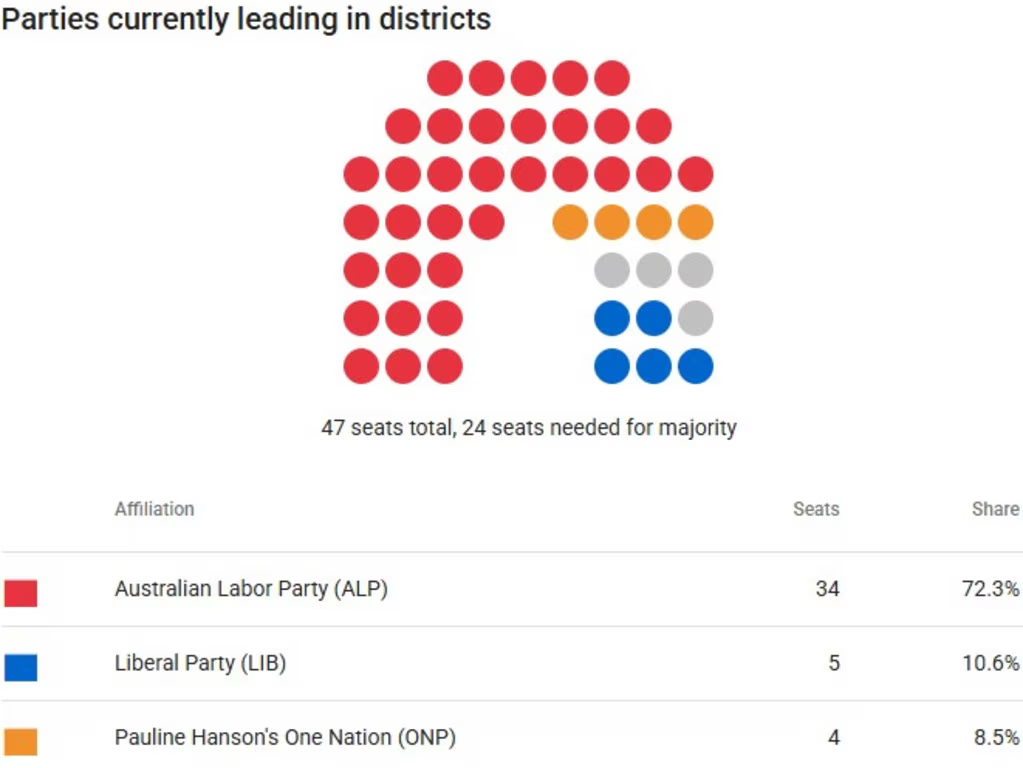
One Nation has clinched the South Australian lower house seat of Narungga after a tightly contested recount, capping off a broader surge that has significantly expanded the party’s presence in the state parliament.
The result, confirmed on Thursday, gives One Nation candidate Chantelle Thomas victory by just 58 votes over Liberal contender Tania Stock. The Yorke Peninsula electorate was the final seat to be declared nearly two weeks after polling day, underscoring the narrow margin in one of the election’s closest races.
Ms Thomas’s win delivers One Nation a fourth seat in the House of Assembly and contributes to a total of seven representatives across both chambers — a notable increase for a party that has traditionally occupied the political fringes in South Australia.
Despite the gain, the Liberal Party of Australia retains opposition status, having secured five lower house seats overall.
Party leader Pauline Hanson told Sky News the result marked a significant milestone for the party in South Australia, with four lower house seats and three in the Legislative Council confirmed after the election.
She said the outcome would see seven One Nation MPs enter parliament, describing it as a sign that voters were seeking change and suggesting the party had positioned itself as an alternative to the major parties.
I want to say a massive congratulations to One Nation SA with confirmation today of 4 lower house seats and 3 upper house seats electing One Nation members.
That means a team of 7 newly elected One Nation MPs heading to parliament to represent South Australians.
— Pauline Hanson 🇦🇺 (@PaulineHansonOz) April 1, 2026
In brief remarks after her election was declared, Ms Thomas thanked supporters and electoral staff involved in the recount, describing the result as a reflection of strong local engagement. She has previously said her decision to run was motivated by a desire to provide “clarity, unity and strength” for voters, adding that many people felt unheard in the current political landscape.
Based in Kadina, Ms Thomas is a mother of three who has worked as a photographer, make-up artist and counsellor. Her campaign focused heavily on grassroots outreach across the electorate.
Narungga had been held by former Liberal-turned-independent Fraser Ellis, who re-contested the seat but secured only about 17 per cent of the primary vote, reflecting a fragmented contest.
The result forms part of a wider set of gains for One Nation across regional South Australia. Among those elected to the lower house are David Paton in Ngadjuri, Jason Virgo in MacKillop, and Robert Roylance in Hammond — all seats with strong regional constituencies where cost-of-living pressures, infrastructure, and local industry have featured prominently in campaign debates.
In the upper house, the party has also secured representation, including the election of Carlos Quaremba, alongside additional candidates such as Rebecca Hewett, further strengthening its legislative footprint.
One Nation’s South Australian leader Cory Bernardi characterised the outcome as a significant shift in voter sentiment, pointing to dissatisfaction with major parties and a perceived disconnect with regional communities. He said the party would seek to work across the political spectrum while advancing its policy agenda, including cost-of-living measures and institutional reforms.
At the national level, party leader Pauline Hanson said the results reflected broader voter frustration, arguing that many Australians were seeking alternatives to established political parties and clearer policy direction.
With seven members now in the South Australian Parliament — four in the lower house and three in the Legislative Council — One Nation’s expanded presence positions it as a more influential crossbench force, particularly on issues affecting regional communities and economic policy.
Support our Journalism
No-nonsense journalism. No paywalls. Whether you’re in Australia, the UK, Canada, the USA, or India, you can support The Australia Today by taking a paid subscription via Patreon or donating via PayPal — and help keep honest, fearless journalism alive.
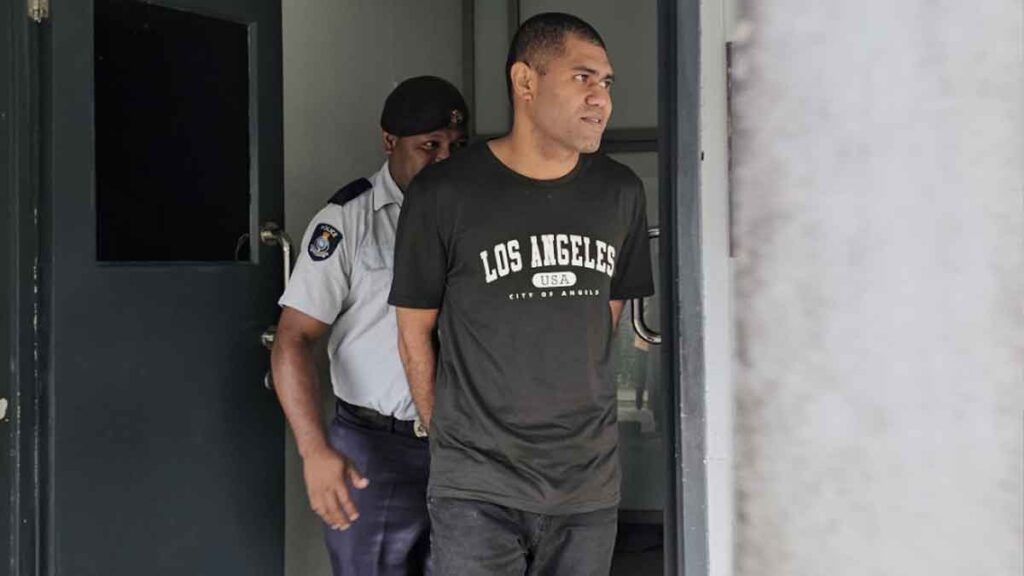
Image: Samuela Tawase, accused of allegedly desecrating the historic Hindu Shiv Mandir in Samabula, Fiji (Source: FijiVillage screenshot)
During his trial at the High Court this morning, as per the FijiVillage, Acting Senior Medical Officer at Saint Giles Hospital, Dr Christine Chand, revealed that Tawase described hearing “evil voices screaming from inside the temple” and two female voices threatening to kill him if he did not comply. This disclosure came during three consecutive sessions with Dr Chand in July last year.
Dr Chand confirmed that Tawase has been diagnosed with schizophrenia, a severe mental disorder that disrupts thought processes and perceptions, often causing hallucinations and delusions.
Despite this, he passed the “Presser” test, which determines whether a defendant has sufficient mental capacity to understand court proceedings.
The doctor also noted Tawase’s history of substance abuse, including smoking suki since age 15 and marijuana from age 18. Dr Chand acknowledged it was possible that a combination of mental illness, medication, and substances may have influenced his behaviour at the time of the incident.
The trial will resume on 13 April, with the State set to call its second witness.
Image: Shiv Mandir in Samabula (Source: FBC News)
The vandalism sparked outrage across Fiji when it occurred last July. Then Deputy Prime Minister and National Federation Party leader Prof. Biman Prasad condemned the act as “absolutely disgusting” and “sacrilegious,” calling for unity and swift justice. Minister for Multi-Ethnic Affairs Charan Jeath Singh echoed the condemnation, describing the attack as “criminal” and a “direct attack” on Fiji’s principles of peace and religious tolerance.
Support our Journalism
No-nonsense journalism. No paywalls. Whether you’re in Australia, the UK, Canada, the USA, or India, you can support The Australia Today by taking a paid subscription via Patreon or donating via PayPal — and help keep honest, fearless journalism alive.
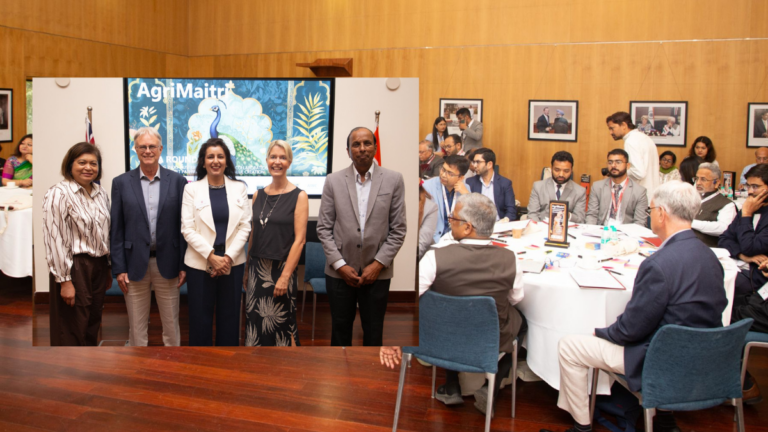
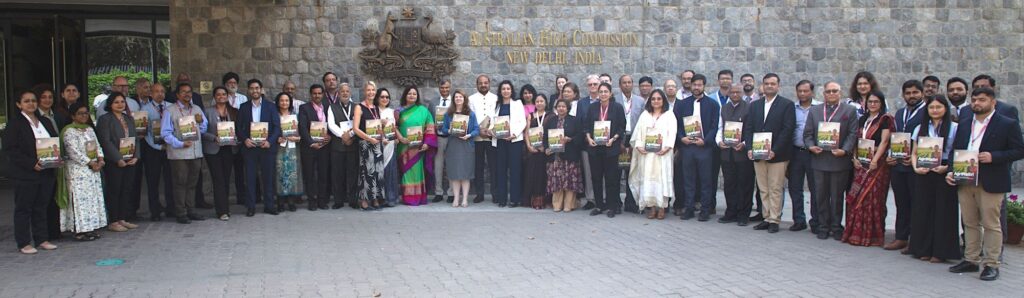
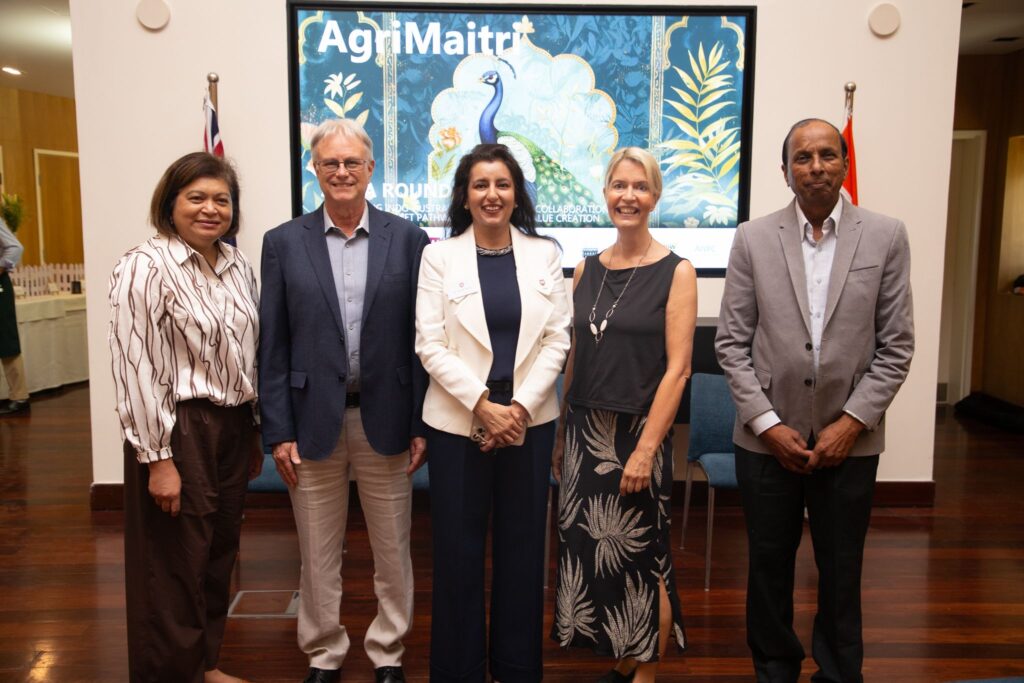
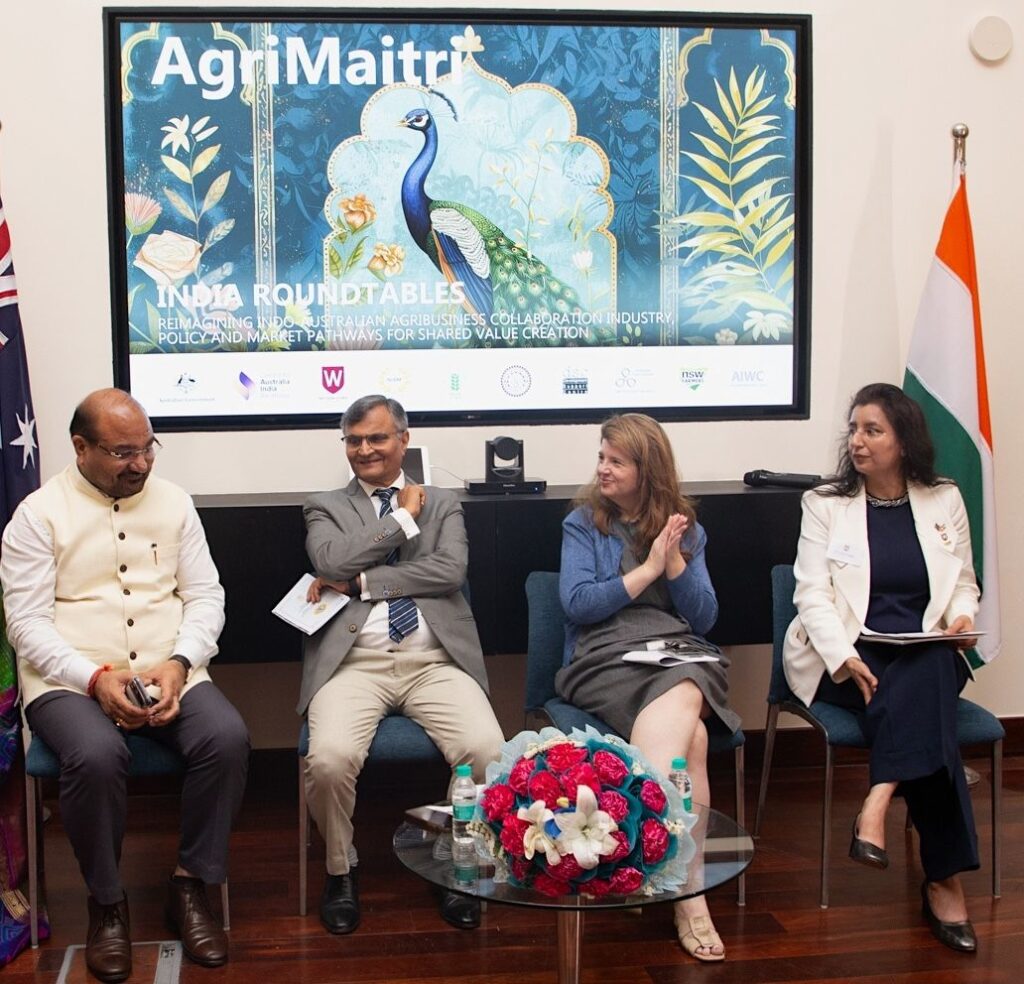
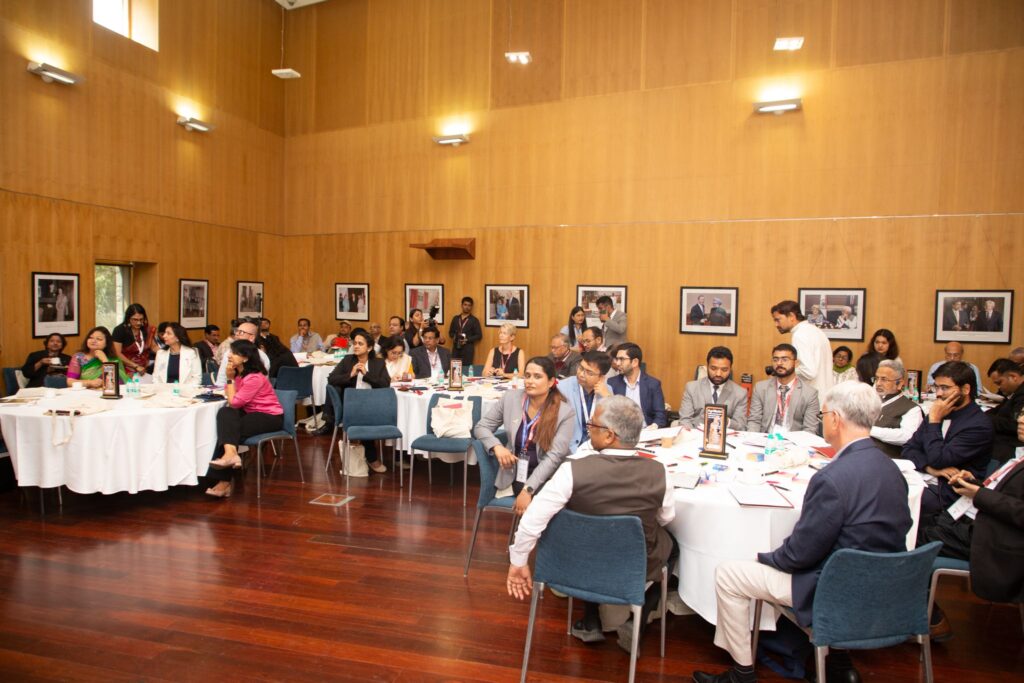
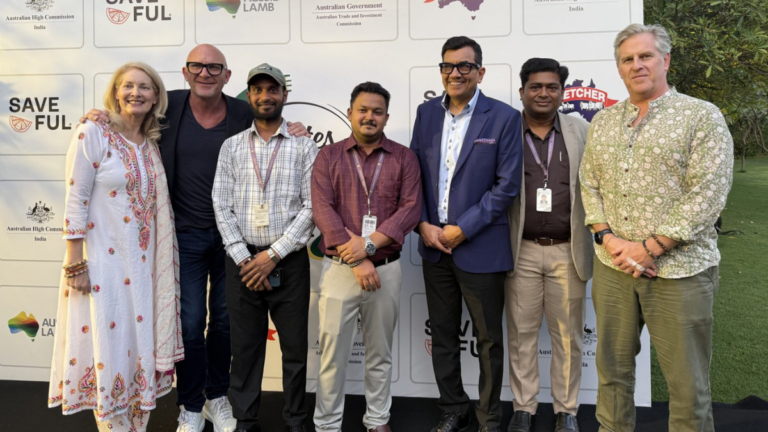
Western Sydney University (WSU) hosted the inaugural AgriMaitri India Roundtable at the Australian High Commission in New Delhi on 16 March 2026, thus marking a moment in reimagining Indo‑Australian agribusiness collaboration.
Image: AgriMaitri India Roundtable launched to strengthen Australia and India agribusiness collaboration (Source: WSU – LinkedIn)
Dr Vanita Yadav, Project Lead for AgriMaitri, said the event was “an important first step in bringing together diverse stakeholders from both countries to co-design actionable solutions for the agribusiness sector.”
The roundtable convened 58 delegates representing government, industry, AgTech, research institutions, academia, chambers of commerce, and trade bodies—creating a dynamic forum for dialogue between Australian and Indian experts.
Image: AgriMaitri India Roundtable launched to strengthen Australia and India agribusiness collaboration (Source: WSU – LinkedIn)
AgriMaitri is led by a transdisciplinary team including Dr Vanita Yadav, Prof. Nicky Morrison, Prof. Basant Maheshwari, Prof. David Tissue, A/Prof Maria Estela Varua, and Prof. Brajesh Singh, alongside partner organisations in India and Australia.
The project is supported by the Maitri Research Grants through the Centre for Australia-India Relations under the Australian Department of Foreign Affairs and Trade.
“‘Maitri’ means friendship in Sanskrit, and this spirit guides our work in AgriMaitri,” Dr Yadav explained.
“By leveraging Australia’s advanced agriscience and premium exports alongside India’s scale, digital agriculture expertise, and growing markets, we aim to create a Shared Value Roadmap for both countries.”
The initiative seeks to address the disconnect between India and Australia’s complementary strengths in agribusiness. AgriMaitri brings together academia, industry, policymakers, farmers, and trade bodies to collaboratively unpack challenges and identify cross-border opportunities that generate shared value.
Image: AgriMaitri India Roundtable launched to strengthen Australia and India agribusiness collaboration (Source: WSU – LinkedIn)
Prof Basant Maheshwari added,
“This roundtable is not just about discussion—it’s about action. By translating complementary capabilities into tangible projects, AgriMaitri can unlock real economic and social impact for both nations.”
Image: AgriMaitri India Roundtable launched to strengthen Australia and India agribusiness collaboration (Source: WSU – LinkedIn)
The launch of AgriMaitri India Roundtables represents a strategic step in strengthening the Australia–India agribusiness partnership, with a focus on co-designed solutions that deliver mutual benefits, innovation, and sustainable growth across the sector.
Support our Journalism
No-nonsense journalism. No paywalls. Whether you’re in Australia, the UK, Canada, the USA, or India, you can support The Australia Today by taking a paid subscription via Patreon or donating via PayPal — and help keep honest, fearless journalism alive.
A timely call from NAB’s fraud team has prevented an Australian home buyer from losing more than $100,000 to a sophisticated property scam.
Daniel*, who was in the middle of purchasing his home, was preparing to pay stamp duty when NAB flagged a large transfer and contacted him to confirm the payment.
NAB Digital Fraud and Scams Analyst Sanu Ale Magar said something about the transfer didn’t sit right. “He explained the payment was for stamp duty. That’s a common part of the home buying process, but something didn’t feel right, so I took a closer look,” she said.
Daniel told NAB that the payment instructions had come via email from his solicitor and appeared legitimate based on his settlement progress. “These scams work because they arrive at exactly the right time,” Sanu explained.
“People are expecting to move large sums of money, so the request doesn’t raise immediate alarm.”
Sanu placed the transfer on hold and advised Daniel to independently confirm the details with his solicitor using a trusted phone number. When he did, he discovered the email had not come from his solicitor at all. The bank details were fraudulent, part of a sophisticated impersonation scam. The transfer, worth more than $100,000, was stopped before any money was lost.
“The relief was immediate,” Sanu said.
“If that payment had gone through, the funds would have been very difficult to recover.”
Business Email Compromise scams like this are increasingly targeting property buyers, with criminals often impersonating solicitors or conveyancers at moments when buyers are under pressure to act quickly. Stamp duty payments are particularly high risk, involving large one-off transfers and tight settlement deadlines.
“For many people, this money represents their life savings,” Sanu said.
“Taking a moment to stop and verify details can prevent enormous financial and emotional stress.”
Chris Sheehan, NAB’s Executive Group Investigations and a former 27-year AFP member, urged Australians to watch for pressure tactics.
“Be especially cautious of urgent payment requests or sudden changes to bank details, even if they appear to come from a trusted organisation.”
“If anything doesn’t feel right, pause and independently verify before making a decision. Most Business Email Compromise scams succeed not because people are careless, but because the request looks routine and sounds reasonable,” Sheehan adds.
“A moment of verification—a call, a message, a second check—can stop a significant financial loss.”
Support our Journalism
No-nonsense journalism. No paywalls. Whether you’re in Australia, the UK, Canada, the USA, or India, you can support The Australia Today by taking a paid subscription via Patreon or donating via PayPal — and help keep honest, fearless journalism alive.
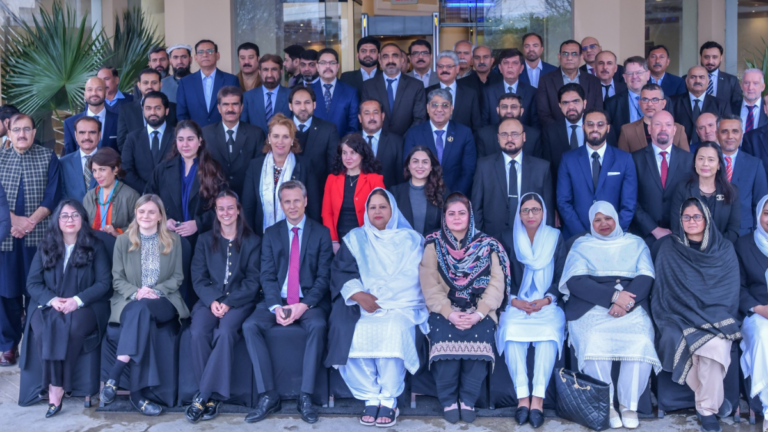
The Australian Federal Police (AFP) has partnered with international agencies, including Pakistan’s Federal Investigation Agency (FIA), to strengthen efforts against migrant smuggling and human trafficking.
AFP personnel based in Islamabad recently took part in a National Dialogue focused on improving criminal justice responses to trafficking in persons and the smuggling of migrants in Pakistan.
The forum, organised by the United Nations Office on Drugs and Crime, brought together key stakeholders to address the growing threat posed by organised crime networks profiting from human exploitation.
Discussions centred on enhancing coordination across agencies and borders to better disrupt these operations and hold offenders accountable.
The AFP contributed to key areas including investigative practices and inter-agency communication, reinforcing its commitment to working alongside the FIA to safeguard vulnerable communities.
Support our Journalism
No-nonsense journalism. No paywalls. Whether you’re in Australia, the UK, Canada, the USA, or India, you can support The Australia Today by taking a paid subscription via Patreon or donating via PayPal — and help keep honest, fearless journalism alive.
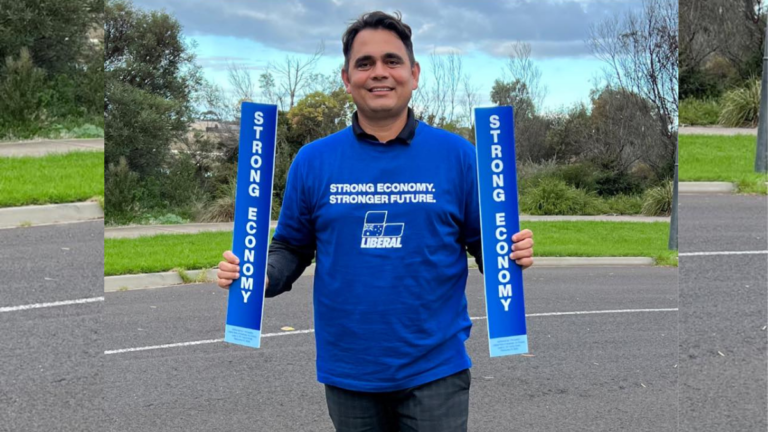
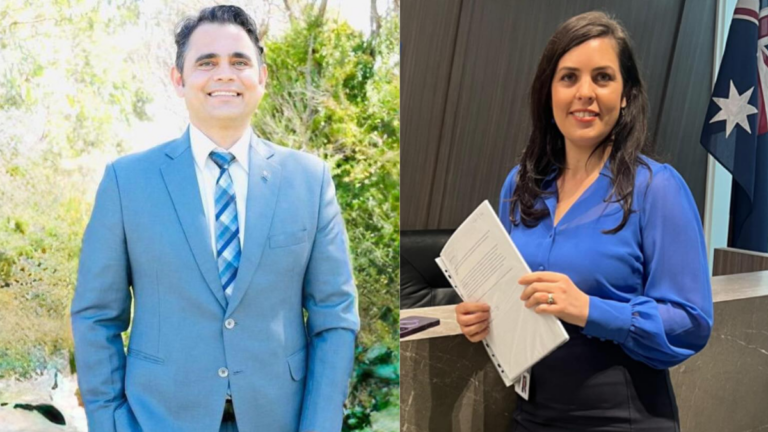
The Victorian Liberal Party’s Western Metropolitan Region preselection has plunged deeper into chaos, with businessman Bobby Lakra accusing party headquarters of unfairly knocking him out of the race after first confirming receipt of his application, then rejecting it as incomplete minutes after the deadline passed.
The latest twist adds to a saga that has already left the party battered in Melbourne’s west. What began with Moira Deeming’s defeat by Dinesh Gourishetty quickly spiralled when Gourishetty was later disendorsed over a reference letter, forcing the Liberals to reopen the preselection process for the coveted number one spot.
Now, that reset has produced yet another controversy.
The Australia Today understands Mr Lakra submitted his application at about 11:30 am on 2 April, comfortably before the 12 pm closing time. Party headquarters is understood to have confirmed receipt of what was described as his “complete” application at 11:42 am.
But after applications closed, Mr Lakra received a call from headquarters telling him that two reference letters were allegedly missing and that his nomination would not be considered.
The Australia Today understands Mr Lakra then produced proof to the Liberal Party state director showing he had submitted all required documents. Despite that, he was told within minutes that his application would still be ruled invalid.
In an email sent to the party president, state director and members of the state executive, Mr Lakra has formally demanded a review of the decision, arguing he followed the rules, acted in good faith and should not be excluded over what he says was most likely a technical issue beyond his control.
“I confirm that I submitted my application and ARC documentation within the stipulated timeframe,” Mr Lakra wrote.
He said that immediately after sending his application email, he contacted membership official Lee Elison to ensure it had been received successfully and was told that it had.
Mr Lakra said he was later informed that the two reference letters had not been attached, but argued that if there had been an omission, it was likely due to “a technical or transmission issue” rather than any failure to comply.
He also pointed out that the names and details of both referees were clearly included in the application itself, saying that alone demonstrated his intention to lodge the letters.
“It would not be logical to provide referee details without intending to submit the corresponding reference letters,” he wrote.
In the same email, Mr Lakra directly challenged the fairness of the party’s decision.
“I respectfully submit that disqualifying my application on this basis is disproportionate and inconsistent with the principles of procedural fairness,” he wrote.
“As a member acting in good faith, having submitted my application on time and verified its receipt, I should not be denied the opportunity to participate due to a likely administrative or technical issue outside my control.”
He went further, invoking natural justice and arguing that candidates should be given “a fair and reasonable opportunity to comply”, particularly where the intent to comply is obvious, the issue is technical rather than substantive, and it can be rectified quickly without compromising the process.
“I therefore formally request that my application be deemed valid,” he wrote.
The fallout from Bobby Lakra’s disqualification is now expected to reshape the outcome of the contest, with strong indications that Moira Deeming is set to be reinstated as the Liberal Party’s number one candidate for the Western Metropolitan Region.
Party sources say the collapse of the challenge from the moderate faction has effectively cleared the path for Deeming’s return to the top of the ticket after her earlier defeat.
The Australia Today understands that the remaining two candidates are now likely to withdraw their applications, a move that would leave Deeming unopposed and cement her position heading into the next state election. If confirmed, it would mark a remarkable turnaround in a preselection battle that has swung repeatedly and exposed deep divisions within the party.
This saga is also spreading well beyond the party room. Within Victoria’s large Indian Australian community, the latest episode is being viewed by some as a betrayal, particularly given Mr Lakra’s profile as a prominent businessman and community figure in Melbourne’s west.
Community representatives told The Australia Today they believe the preselection saga is increasingly looking like a process designed to deliver a candidate favoured by the leadership, rather than one genuinely chosen by the party’s rank and file.
That perception is likely to deepen frustration over a contest that was supposed to restore order after the Deeming-Gourishetty disaster, but has instead produced another round of confusion, anger and allegations of unfairness.
For the Victorian Liberals, the Western Metro preselection is no longer just an internal contest. It is fast becoming a public test of credibility, transparency and whether party headquarters is prepared to back grassroots members or override them when it suits.
With Bobby Lakra now fighting to have his nomination reinstated, pressure is mounting on Liberal leadership to explain how a candidate could be told his application was received, only to be dumped after the clock ran out.
Support our Journalism
No-nonsense journalism. No paywalls. Whether you’re in Australia, the UK, Canada, the USA, or India, you can support The Australia Today by taking a paid subscription via Patreon or donating via PayPal — and help keep honest, fearless journalism alive.
The Victorian Liberal Party’s Western Metropolitan Region preselection contest has reopened just days after a dramatic leadership shake-up involving Moira Deeming and Dinesh Gourishetty.
The party relaunched the preselection process, opening applications from 11:59 pm on 31 March until 12 pm on 2 April, in a rushed bid to stabilise its ticket ahead of the next state election.
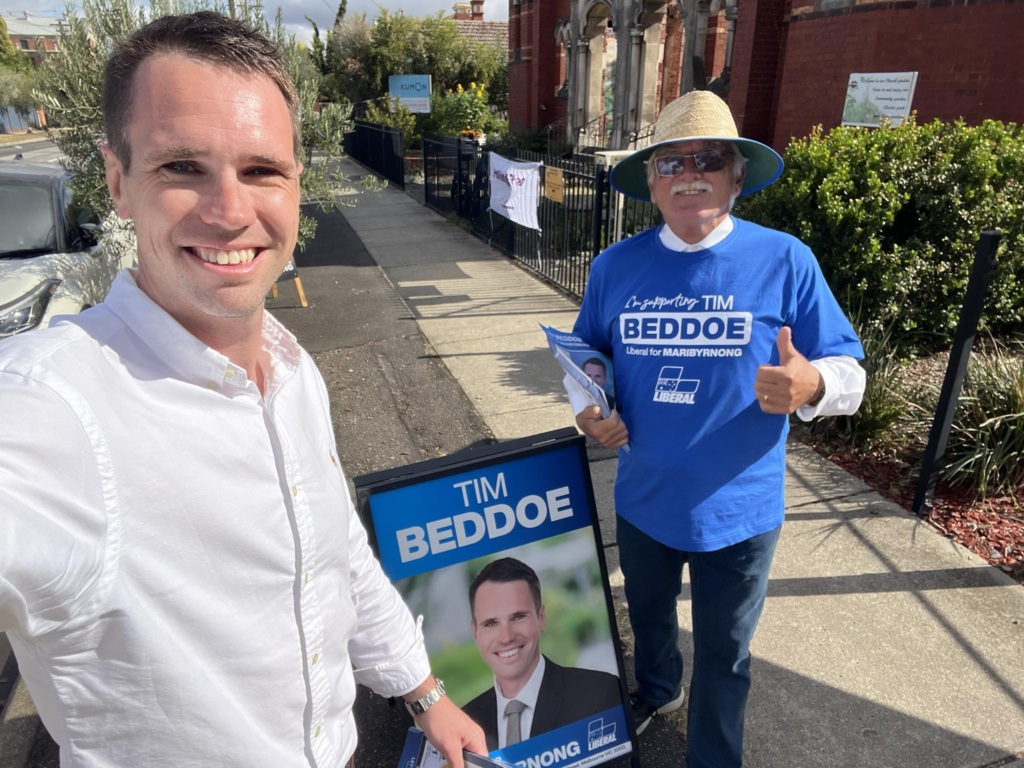
The Australia Today understands three applications have been received for the top position, including businessman Bobby Lakra, former federal candidate Tim Beddoe and incumbent MP Moira Deeming, who is now fighting to retain her political future.
Party insiders say the contest is shaping into a high-stakes battle, with strong indications the final race could come down to Bobby Lakra and Moira Deeming.
Earlier in a 24-hour high-power drama on Sunday-Monday morning, sitting MP Moira Deeming was defeated in preselection by Dinesh Gourishetty, only for the party to later disendorse Gourishetty over a controversial reference letter, forcing the Liberals back to square one.
Who is Bobby Lakra?
Lakra, a prominent figure in Melbourne’s western suburbs, is the owner and director of a real estate agency and has built a reputation as a high-performing agent with nearly two decades of experience in the local property market.
He has been associated with the local liberal branch for the last 10 years.
Within the network, he has received multiple awards, including Gold and Silver recognition for sales performance and marketing.
Beyond business, Lakra has positioned himself as an active community figure, sponsoring the Point Cook Soccer Club, founding a local cricket club and supporting cultural events. He has also been involved in environmental initiatives, including Clean Up Australia Day in the area.
Supporters describe him as a grassroots candidate with deep connections in Melbourne’s west, promoting a “human first” approach and strong accessibility to the community.
Meanwhile, Tim Beddoe, the Liberal candidate for the federal seat of Maribyrnong, is also in the mix. Beddoe has campaigned on a platform focused on small business support and addressing what he describes as long-standing neglect in Melbourne’s north-west suburbs.
Based in Ascot Vale, Beddoe has positioned himself as a working-class voice and has been active in local outreach, while also being seen as politically aligned with Deeming.
For Deeming, the reopened contest represents a critical fight for survival after her shock defeat in the initial preselection. Her future in the party now hinges on whether she can regain support in a contest that has exposed deep internal divisions.
The unfolding saga has raised fresh questions about stability within the Victorian Liberal Party, with repeated resets to the preselection process highlighting factional tensions and ongoing internal conflict.
With the deadline for applications now closed and deliberations underway, attention turns to who will ultimately secure the number one spot in Western Metro, a decision that could shape the party’s standing in Melbourne’s west at the next election.
Support our Journalism
No-nonsense journalism. No paywalls. Whether you’re in Australia, the UK, Canada, the USA, or India, you can support The Australia Today by taking a paid subscription via Patreon or donating via PayPal — and help keep honest, fearless journalism alive.
The family of Gurjit Singh, 27, have been left emotionally and financially devastated after he was fatally attacked in a violent home invasion in January 2024 that shocked the Indian diaspora community.
Singh’s killer, Rajinder, 35, was sentenced to life imprisonment with a minimum non-parole period of 17.5 years in the High Court at Dunedin, New Zealand.
Gurjit Singh was stabbed more than 40 times outside his home, with evidence suggesting an attempted decapitation. His body was found on the lawn of his property, while a window of the house was shattered, indicating a desperate struggle. CCTV footage and DNA evidence were crucial in linking Rajinder to the attack.
As per RNZ, Prosecutor Richard Smith told the court that blood samples from the scene were “500,000 million times more likely” to belong to Rajinder than a random person, adding that his blood and hair were found in the victim’s hands.
Gurjit Singh’s parents say they are happy their son’s killer will be jailed for life, with a minimum of 17.5 years behind bars. Photo- RNZ:Tess Brunton
The court heard that Rajinder had planned the attack, purchasing a knife and tracking Singh’s route home on the night of the murder. He allegedly intended to “clear the air” after feeling aggrieved by Gurjit Singh, who had married a woman Rajinder had previously sought to wed through a marriage broker.
It is reported that Justice Rachel Dunningham told Rajinder: “The most likely motive for your killing was not jealousy, but rather the desire to punish Mr Singh and his new wife…”
“Because from your perspective, she rejected an arranged marriage with you.”
Gurjit Singh had moved to New Zealand in 2016 to earn higher wages to support his elderly parents in India, who had sold all of their land to help him relocate.
Rajinder pictured during sentencing. Photo- RNZ:Tess Brunton
Victim impact statements, as per local media, revealed the family had been left “destroyed” financially and emotionally. “When he finally reached a point where he could lift us up from hardship, he was taken away from us.,” they said.
“Now we have nothing. No land, no savings, no support.”
Gurjit Singh’s widow, Kamaljeet Kaur, described the couple’s brief separation by distance and their plans to start a new life together. “Marrying Gurjit was the brightest moment of my life. He was the heart of our home,” she said.
“We were counting down the days until I could join him in Dunedin, and then his life was taken. Grief has left me emotionally paralysed.”
His father, Nishan Singh, speaking through a translator, said the family was grateful that justice had finally been served. “We are happy that they have got a final justice,” he told the media.
“It was a really tough time for us during the whole trial, especially for my wife because her health is not good.”
Detective Senior Sergeant Nik Leigh, who led part of the investigation, said almost 80 police staff were involved, some remaining at the scene for eight days.
“I remember seeing the reaction from the family when the verdict was handed down. It definitely brings a tear to your eyes.”
It is reported that Rajinder remained silent throughout the hearing. Justice Dunningham also ordered him to pay more than $8,000 in reparation to Gurjit Singh’s parents and widow and issued a firearms prohibition order.
Gurjit Singh’s family described him as a kind, thoughtful man who “noticed when someone was struggling and stepped forward before they even asked.”
Friends recalled him in good spirits on the night of his death, attending a pizza party in Helensburgh before returning home, where he was brutally attacked.
The murder has left Gurjit Singh’s widow facing social stigma, interrupted education, and the daunting challenge of rebuilding her life alone. “Our last hope died with him,” Singh’s family said.
“Rajinder robbed us of our child, our future, and our peace.”
Support our Journalism
No-nonsense journalism. No paywalls. Whether you’re in Australia, the UK, Canada, the USA, or India, you can support The Australia Today by taking a paid subscription via Patreon or donating via PayPal — and help keep honest, fearless journalism alive.
More than 40 new jobs are set to be created in northern Victoria as the Allan Labor Government backs a major expansion of Tongala Nutrition’s dairy processing operations.
Siddharth Jani, Founder and CEO of Tongala Nutrition, said, “We started this journey with a simple vision to bring back life into a regional state-of-the-art factory, create more jobs, grow the business and contribute meaningfully to the local community and the state of Victoria.”
“I am grateful to the Victorian State Government and Regional Development Victoria for recognising our efforts and supporting our growth. Upwards & Onwards!”
Visiting the Tongala facility, Regional Development Minister Jaclyn Symes said the investment would strengthen the region’s role in Australia’s food production industry while driving innovation and economic growth.
“Regional Victoria is the engine room of the nation’s food production industry – creating jobs, leading innovation and driving value and prosperity for communities.”
The expansion is being supported through the Victorian Government’s $150 million Victorian Investment Fund, which is designed to fast-track strategic projects and support fast-growing businesses—particularly in regional areas through a dedicated $50 million stream.
Economic Growth and Jobs Minister Danny Pearson said the project demonstrated how targeted government investment can unlock broader economic benefits.
“Tongala Nutrition’s expansion is a big win for regional Victoria and our dairy industry – and it shows how this Fund is catalysing business investment to drive economic growth and competitive advantage.”
The company, which began producing nutrition products in 2023 after acquiring a former Nestlé factory, is positioning itself as a key player in Victoria’s booming food production sector.
Jani added that the expansion marked a significant step forward for the business.
“This project represents a significant milestone for Tongala Nutrition as we continue to build a world-class dairy and nutrition manufacturing platform in regional Victoria.”
The development adds to Tongala’s growing reputation as a regional success story. It follows the recent expansion of Greenham Australia’s abattoir in the town, which nearly doubled production and created 270 jobs with government support.
Victoria remains Australia’s leading food and fibre exporter, recording a $20.1 billion export result in 2023–24. The latest investment in agribusiness is expected to further cement the state’s global standing while supporting jobs and growth in regional communities.
Support our Journalism
No-nonsense journalism. No paywalls. Whether you’re in Australia, the UK, Canada, the USA, or India, you can support The Australia Today by taking a paid subscription via Patreon or donating via PayPal — and help keep honest, fearless journalism alive.
For centuries, the Shroud of Turin has stood at the crossroads of faith, science and controversy. Now, fresh DNA analysis is adding another unexpected layer to the mystery—suggesting the famous relic may carry genetic traces linked to India.
The linen cloth, believed by many to be the burial shroud of Jesus Christ, has been studied extensively for decades. But new findings reported by New Scientist indicate that nearly 40 per cent of the human DNA found on the fabric belongs to Indian lineages, raising questions about its historical journey.
The renewed attention comes at a deeply significant moment in the Christian calendar. Good Friday, marked on 3 April this year, commemorates the crucifixion, while Easter Monday follows the celebration of the resurrection. For many believers, the Shroud holds profound spiritual meaning during this period, believed to be directly connected to the events remembered over Easter, making the latest scientific findings particularly resonant.
Researchers from the University of Padova analysed samples originally collected in 1978, uncovering a complex genetic mix that reflects centuries of contact rather than a single origin. Italian geneticist Gianni Barcaccia, who first suggested possible Indian links in 2015, led the latest work confirming that the shroud contains a vast diversity of DNA from multiple sources—human, animal and environmental.
Alongside human genetic material, scientists identified traces from domestic animals such as cats and dogs, farm livestock, wild species including deer and rabbits, and even marine life like grey mullet and Atlantic cod. The findings highlight how the cloth has been handled, displayed and exposed to different environments over time, with researchers pointing to “extensive exposure” across the Mediterranean region.
The presence of Indian DNA has sparked renewed debate among historians and scientists. One theory suggests that the linen or yarn used to weave the shroud may have originated in the Indus Valley region, potentially reaching Europe through ancient Roman trade networks.
Another possibility is that individuals of Indian origin may have come into contact with the cloth over centuries, leaving behind genetic traces through handling, pilgrimage or preservation.
Measuring 4.4 metres long and 1.1 metres wide, the shroud remains one of Christianity’s most famous and debated artefacts. Its first recorded appearance dates back to 1354 in France, and for nearly 500 years it has been housed in the Cathedral of Saint John the Baptist in Turin, Italy.
Despite generations of scientific scrutiny—including carbon dating, forensic analysis and now genetic testing—the question of its authenticity remains unresolved. Yet as millions around the world mark Easter, the Shroud of Turin continues to sit at the intersection of belief and evidence, its fibres preserving not just an image, but a layered history of human contact, devotion and enduring mystery.
Support our Journalism
No-nonsense journalism. No paywalls. Whether you’re in Australia, the UK, Canada, the USA, or India, you can support The Australia Today by taking a paid subscription via Patreon or donating via PayPal — and help keep honest, fearless journalism alive.
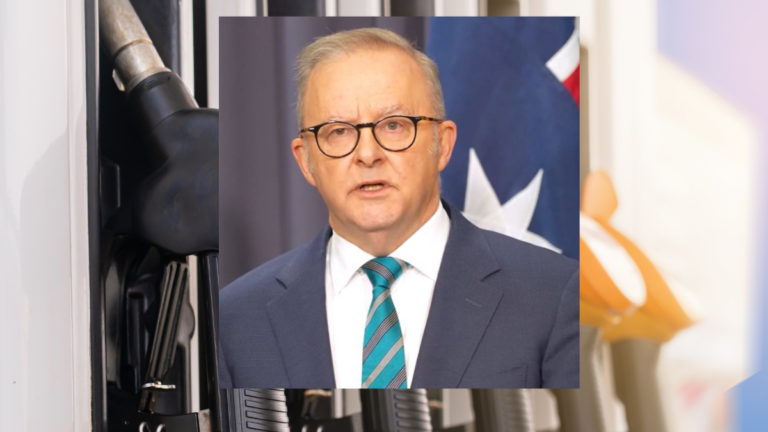
Prime Minister Anthony Albanese delivered a blunt response to the fatal police shooting of fugitive Dezi Freeman, saying he had “no sympathy” for the man accused of murdering two Victorian officers, while also defending the government’s handling of a worsening fuel crisis driven by global conflict.
Speaking with ABC Radio, Albanese described his reaction to Freeman’s death in stark terms: “Good, in a word,” he said, pointing to the killing of Detective Senior Constable Neal Thompson and Senior Constable Vadim De Waart-Hottart as acts that left a lasting emotional impact.
The Prime Minister recalled attending both funerals in Melbourne, describing scenes of grief among officers and families. He emphasised the daily risks faced by police, framing the incident as a reminder of their sacrifice. While pressed on whether any loss of life could be justified, Albanese maintained that Freeman had made his own choices, including resisting arrest and embracing an extremist “sovereign citizen” ideology that authorities have warned poses a broader security risk.
Albanese also confirmed close coordination between federal and state agencies, including the Australian Federal Police and intelligence bodies, as investigations continue into whether Freeman had assistance while evading capture.
Turning to the escalating fuel crisis, Albanese acknowledged the strain on households, describing it as the “biggest spike in petrol and diesel prices in history,” driven by the ongoing war in the Middle East. While conceding that government measures—such as a fuel excise cut—would not fully offset rising costs, he insisted they would provide some relief.
“We’re not immune from global price shocks,” he said, noting that the longer the conflict continues, the greater the economic impact.
Despite growing public concern, the Prime Minister stopped short of outlining a clear trigger for fuel rationing, instead stressing that the government’s priority is to maintain supply. He pointed to a four-stage national plan agreed by Cabinet, currently at stage two, where supply remains stable despite disruptions to some shipments.
“We’ve decided to try and keep supply going,” Albanese said, resisting calls for greater transparency about when stricter measures might be introduced.
The government has already taken steps, including releasing 20 per cent of fuel reserves and underwriting additional imports, as well as strengthening supply arrangements with regional partners.
The interview also highlighted the real-world impact of rising fuel prices, including workers forced to ration petrol spending between pay cycles. Albanese acknowledged these pressures, suggesting that employers and communities may need to step up informally to support those most affected.
He pointed to behavioural shifts, including increased use of public transport and working from home, as Australians adapt to higher costs.
Rejecting claims that government support could fuel inflation, Albanese argued that reducing fuel prices would instead ease cost pressures rather than inject excess demand into the economy.
On the broader geopolitical context, Albanese defended concerns about Iran’s nuclear ambitions and regional influence, while stopping short of endorsing regime change imposed from outside.
“My job is to deal with things as they are,” he said, adding that any political transformation in Iran must ultimately come from its own people.
Support our Journalism
No-nonsense journalism. No paywalls. Whether you’re in Australia, the UK, Canada, the USA, or India, you can support The Australia Today by taking a paid subscription via Patreon or donating via PayPal — and help keep honest, fearless journalism alive.
A Bangladeshi radical Islamic preacher, Mizanur Rahman Azhari, who has previously praised Adolf Hitler as a “divine punishment” against Jews, has been deported from Australia midway through his national speaking tour.
The Bangladeshi preacher, with an estimated 10 million online followers, was delivering his ‘Legacy of Faith’ lecture series in Brisbane, Melbourne, Sydney, and Canberra over Easter.
It is now reported that Azhari’s visa was cancelled on Tuesday, and he is now awaiting deportation.
It is further reported that he has previously been barred from the UK and prohibited from preaching publicly in Bangladesh due to allegations of extremist hate speech.
Liberal Senator Jonathan Duniam told the Senate that community groups had warned parliamentarians, including the minister, about Azhari’s arrival.
“I know a number of members of parliament…received communication from groups including the Australian Federation for Ethnic and Religious Minorities in Bangladesh.”
Senator Duniam highlighted Azhari’s international record of promoting antisemitic conspiracy theories and extremist ideologies.
In a 2023 sermon in the United States, Azhari praised Hitler, dehumanised Jewish people, called them “the biggest terrorists of the world” and a “poisonous blemish,” and claimed they were responsible for global troubles, including AIDS. He reportedly expressed joy in recounting Hitler’s cruelty to Jews.
The senator emphasised that allegations against Azhari extend beyond a single community, noting a “persistent pattern of hate speech” targeting multiple groups, including Hindus and the Bengali culture.
Despite this well-documented history, the Australian government had initially authorised his entry.
Community groups had called for urgent intervention, leading to the cancellation of his visa and the halting of the controversial tour.
Support our Journalism
No-nonsense journalism. No paywalls. Whether you’re in Australia, the UK, Canada, the USA, or India, you can support The Australia Today by taking a paid subscription via Patreon or donating via PayPal — and help keep honest, fearless journalism alive.
Melbourne has been named the world’s most liveable city for the fourth consecutive year – just as a powerful population surge positions it to overtake Sydney as Australia’s largest city within the next decade.
New figures reveal Melbourne added more than 105,000 residents in 2024-25, significantly outpacing Sydney’s growth of around 75,000 and rapidly narrowing the population gap between the two rival cities.
If current trends continue, Melbourne is expected to claim the top spot by around 2032.
The surge, as per ABS, is being driven largely by overseas migration and a strong rebound in global travel.
In January 2026 alone, Australia recorded more than 2.5 million total arrivals, a 5.7 per cent increase year-on-year. Short-term resident returns rose sharply by 7.8 per cent to 1.66 million, while short-term visitor arrivals reached more than 716,000.
Victoria continues to attract a significant share of this influx, with more than 202,000 short-term visitors nominating the state as their destination in January – highlighting Melbourne’s growing appeal as a hub for migrants, international students and skilled workers.
The broader trend reflects a post-pandemic recovery in global mobility, with travel flows approaching – and in some cases exceeding – pre-COVID levels.
Key source countries include New Zealand, the United Kingdom and China, while Australians are increasingly returning from destinations such as Indonesia and Japan.
At the same time, cost-of-living pressures in Sydney are accelerating the shift. Higher inflation and rising household expenses are making Melbourne a more attractive alternative for many.
NSW Liberal Shadow Treasurer Scott Farlow warned that families are under mounting strain, saying,
“Families are being squeezed at the supermarket, at the petrol pump and on their electricity bills.”
He added that the current inflation environment is “bad news for families” and could worsen further amid global uncertainty, underscoring the economic pressures facing households in New South Wales.
Historically, Melbourne has rivalled Sydney closely – and even surpassed it in population during the 19th century. Now, with stronger migration flows, lower inflation and continued global appeal, the balance appears to be shifting once again.
If sustained, Melbourne’s combination of liveability, opportunity and rapid population growth could soon see it reclaim the title of Australia’s largest city – marking a defining moment in the nation’s urban evolution.
Support our Journalism
No-nonsense journalism. No paywalls. Whether you’re in Australia, the UK, Canada, the USA, or India, you can support The Australia Today by taking a paid subscription via Patreon or donating via PayPal — and help keep honest, fearless journalism alive.
The Government of Fiji and the Government of India have reaffirmed their growing partnership, with high-level talks this week set to strengthen cooperation across key agricultural sectors.
Minister for Agriculture, Waterways and Sugar Industry Tomasi Tunabuna met with India’s High Commissioner to Fiji, Suneet Mehta, following the Minister’s official visit to India in January.
A major outcome of that visit was the establishment of a Joint Working Group (JWG) between India’s Ministry of Agriculture and Farmers Welfare and Fiji’s Ministry of Agriculture, Waterways and Sugar Industry, aimed at driving collaboration and knowledge exchange.
The JWG convened on 17 March 2026 to identify priority areas for cooperation, with both nations focusing on strengthening agricultural productivity and sustainability.
Discussions also underscored India’s willingness to extend its existing bilateral agreement with Fiji for a further five years, signalling a long-term commitment to the partnership.
Both sides reaffirmed their shared goal of enhancing technical cooperation and supporting farmers and rural communities, with targeted efforts across key sectors including coconut, rice, cocoa, dairy and sugar.
The renewed collaboration is expected to play a vital role in boosting agricultural resilience and economic development in Fiji while deepening ties between the two nations.
Support our Journalism
No-nonsense journalism. No paywalls. Whether you’re in Australia, the UK, Canada, the USA, or India, you can support The Australia Today by taking a paid subscription via Patreon or donating via PayPal — and help keep honest, fearless journalism alive.
South Australia Police are investigating after a 13-year-old boy was struck by a Toyota sedan, believed to be a taxi, at the intersection of Kyeema Avenue and Winston Avenue in Cumberland Park on Tuesday night.
Police spokesperson said emergency services were called to the roundabout about 7.30 pm, with the boy treated at the scene before being taken to hospital with non-life-threatening injuries.
Police allege the driver left the scene after the crash and then returned about 40 minutes later to speak with officers. SAPOL said the circumstances of the incident, along with the driver’s actions after the collision, are now being examined by officers from the Road Policing Section. No charges had been laid as of Wednesday.
Image Source: Screenshot 7 News Adelaide
Footage aired by 7NEWS showed a police officer confronting the driver after he returned, accusing him of ignoring what he was required to do after a crash. SA Police investigators are examining whether the man could face charges over allegedly leaving the scene, while officers also sought to formally speak with the injured boy in the hospital.
The crash has also renewed local concern about safety at the Cumberland Park roundabout. Residents told local media the area had become increasingly dangerous, with repeated collisions and heavy traffic adding to the risk for pedestrians and nearby homes.
The incident remains under investigation, and police have not yet announced any prosecution outcome. For now, the focus remains on how the collision occurred and why the driver allegedly left before returning to the scene.
Support our Journalism
No-nonsense journalism. No paywalls. Whether you’re in Australia, the UK, Canada, the USA, or India, you can support The Australia Today by taking a paid subscription via Patreon or donating via PayPal — and help keep honest, fearless journalism alive.
Cricket Australia has overhauled its men’s contract list for the 2026–27 season, rewarding key performers from the Ashes triumph while axing several high-profile names in a move that signals a clear shift towards Test cricket.
The new 21-player list, trimmed from 23, includes maiden contracts for Jake Weatherald, Michael Neser and Brendan Doggett, alongside the return of off-spinner Todd Murphy. The changes come as Australia prepares for one of its busiest Test schedules in recent memory, with 20 matches lined up across multiple continents.
Test opener Weatherald’s inclusion is a strong endorsement of the left-hander as a long-term option at the top of the order, following solid Sheffield Shield form. Neser and Doggett were rewarded after playing key roles during the Ashes, with selectors backing their impact in English conditions.
Chair of selectors George Bailey said the decisions reflected both recent performances and the demands of the year ahead.
“The contract list strives to balance reward for performances over time with a lens to the upcoming schedule,” Bailey said.
“The next 12 months encompasses a busy Test schedule across a range of conditions and challenges – South Africa, India and England as well as the Top End and home Tests across the summer.”
“This is reflected in the contract list through a predominance of Test and multi-format players for this cycle.”
The overhaul comes at a cost, with five players dropped from the list. White-ball star Glenn Maxwell, who retired from ODI cricket last year, has been left out along with Matt Short, Sam Konstas and injured quick Lance Morris. Veteran opener Usman Khawaja also drops off following his retirement.
Perhaps the most surprising omission is fast bowler Jhye Richardson, who returned to the Test side during the summer after a long injury lay-off but has not been retained on a central contract.
Bailey said the selectors would continue to rely on a wider player pool throughout the packed calendar.
“Given the upcoming schedule of series, we know we will continue to need and utilise players outside of those contracted,” he said.
“This year, perhaps more than ever, it is essential we continue working closely with and collaborate with states to ensure players are developing and ready for international cricket when they get opportunities.”
The decision to trim the list has also allowed Cricket Australia to offer improved deals to senior players, including captain Pat Cummins and Ashes standout Travis Head, as the team prepares for a defining period.
Australia’s schedule includes a Top End series against Bangladesh, a return Test tour to South Africa, a home series against New Zealand, a high-stakes Border-Gavaskar Trophy campaign in India, and a historic 150th anniversary Test against England at the MCG before an away Ashes tour.
The emphasis on red-ball cricket has shaped selection decisions, with all-rounder Cameron Green still firmly in the team’s plans despite a modest Ashes return. Coach Andrew McDonald confirmed the 24-year-old remains part of Australia’s long-term structure.
“I think the answer to that’s yes,” McDonald said when asked about Green’s place in the side.
“Usman’s retired and he vacates the No.5 position. You’ve got Beau Webster and Green that potentially can play in the same team.”
Selectors have also reaffirmed their faith in Murphy, whose return to the contract list suggests he remains next in line behind Nathan Lyon, particularly ahead of the challenging tour of India.
While some players can consider themselves unlucky, including Matt Renshaw after strong domestic and white-ball performances, the message from selectors is clear: versatility and Test readiness will define Australia’s plans over the next 12 months.
With a demanding schedule looming, the reshaped contract list signals a squad built for endurance, depth and the challenges of cricket’s longest format.
Support our Journalism
No-nonsense journalism. No paywalls. Whether you’re in Australia, the UK, Canada, the USA, or India, you can support The Australia Today by taking a paid subscription via Patreon or donating via PayPal — and help keep honest, fearless journalism alive.
Kashyap Patel, the man at the centre of a growing political controversy in Victoria, has told The Australia Today he was in a “severe state of anxiety and depression” and experiencing suicidal thoughts at the time he sought character references from local leaders Preet Singh and Dinesh Gourisetty.
In an exclusive interview, Patel said his mental health had deteriorated significantly during the period leading up to his court case.
“My mental health was bad, and I was not in the right state of mind,” he said.
“At that point in time I wanted to end my life.”
Patel said he directly communicated those thoughts to community leader Preet Singh.
“I told Preet Singh that I am getting thoughts of wanting to end my life,” he said.
According to Patel, the conversation prompted concern from Singh, who he said took steps to ensure his safety.
“Preet asked me if I was getting help from professionals and contacted my family, informing them about the concerns for my well-being,” Patel said.
He said his family then contacted the private clinic where he had been seeing a psychologist.
Patel also claimed he felt desperate at the time and placed pressure on Singh while asking for a character reference.
“I was in depression and severe state of anxiety,” he said.
“I told Preet Singh that if you don’t give me a letter of reference, I might end my life.”
Singh, who is currently under intense scrutiny over his decision to provide the reference, confirmed to The Australia Today that the situation was deeply confronting.
He told me that I can’t disclose my situation (court case) to anyone, and I can’t trust anyone on this. Please help me.”
“It was a difficult situation for me, as a man with two kids — one nine-year-old and another six-year-old — telling me if I don’t give letters, he may kill himself,” Singh said.
“I chose to save his life and signed the letter.”
The revelations add a new layer to the controversy surrounding both Singh and Liberal figure Dinesh Gourisetty, who also provided a character reference for Patel before his conviction.
Both men have faced significant backlash in recent days, with critics arguing their references showed poor judgment given the seriousness of Patel’s offences.
However, Patel’s account suggests the requests were made during a period of acute mental health crisis, raising questions about the context in which those decisions were made.
The issue has sparked wider debate about how individuals, including public figures, should respond when confronted with someone expressing suicidal intent, particularly in situations intersecting with legal proceedings.
Mental health experts have long warned that threats of self-harm can place individuals in complex and emotionally charged positions, where immediate welfare concerns may conflict with other responsibilities.
The controversy continues to unfold, with community reaction remaining strong and political pressure mounting on both major parties over candidate vetting, judgment, and accountability.
Support our Journalism
No-nonsense journalism. No paywalls. Whether you’re in Australia, the UK, Canada, the USA, or India, you can support The Australia Today by taking a paid subscription via Patreon or donating via PayPal — and help keep honest, fearless journalism alive.
Wyndham mayor Preet Singh has taken a leave of absence from his mayoral duties following mounting community backlash over a character reference he provided for a sex offender.
Speaking exclusively to The Australia Today on Wednesday morning, Cr Singh confirmed he had asked deputy mayor Jasmine Hill to assume mayoral responsibilities from 2 April while he is away.
He declined to say how long he would step aside for.
The controversy erupted earlier this week after it was revealed that Cr Singh wrote a character reference in 2024 for Kashyap Patel, before his election to council.
The remarks have been met with anger from sections of the community, with a protest scheduled for 5pm on Wednesday at the Wyndham Civic Centre in Werribee. Organisers are calling for Cr Singh to permanently stand down as mayor.
In a statement, Cr Singh acknowledged the distress caused by the situation and apologised.
“I want to acknowledge the courage of victim-survivors who continue to speak out. Child sexual abuse is abhorrent, and I unequivocally condemn it,” he said.
He also admitted the reference had raised serious concerns about his judgment.
“For that I am deeply sorry,” he told The Australia Today.
“I sincerely apologise for any hurt or harm caused, particularly to the victim and those in our community impacted by this issue.”
Cr Singh said he respected the community’s right to protest and had reached out to organisers to offer to meet and listen to their concerns.
“I respect the right of community members to express their views, including through peaceful protest,” he said.
The political pressure is also building. Werribee MP John Lister has written to Local Government Minister Nick Staikos seeking advice on the situation, as questions grow over Cr Singh’s future in the role.
For now, Cr Singh says he will inform Wyndham chief executive Stephen Wall if and when he decides to return.
“My commitment remains to serve the Wyndham community with integrity, and to work every day to contribute to a safer and stronger community,” he said.
The controversy has sparked Cr Singh’s political future and community confidence in local leadership.
Support our Journalism
No-nonsense journalism. No paywalls. Whether you’re in Australia, the UK, Canada, the USA, or India, you can support The Australia Today by taking a paid subscription via Patreon or donating via PayPal — and help keep honest, fearless journalism alive.
In a remarkable story of passion, perseverance and national pride, Ryan Williams announced himself on the international stage for the India national football team with a dream debut—scoring the decisive goal in a landmark 2–1 victory over the Hong Kong national football team in a 2026 FIFA World Cup qualifier.
The 32-year-old winger, who made the bold decision to surrender his Australian passport to represent India, needed just four minutes to make history—becoming the fastest debutant ever to score for the country at the international level. His close-range finish set the tone for a breakthrough win, marking India’s first triumph in the current qualification campaign.
Image Source: Football India
“I dreamed about this moment for a long time,” Williams said after the match, visibly emotional following his match-winning contribution.
Born in Perth, Williams previously represented Australia national soccer team at the youth level and earned a senior cap in 2019. His club career has spanned stints with Fulham FC, Portsmouth FC and Perth Glory FC before he moved to India in 2023 to join Bengaluru FC.
His journey to wear Indian colours, however, was far from straightforward. After more than a year navigating citizenship processes and eligibility clearances—including a last-minute delay that ruled him out of a previous fixture—Williams finally stepped onto the pitch in national team colours, calling it a “full circle moment” tied to his family’s heritage.
“My grandfather played in India, and for me to come back and represent the country—it’s something really special,” he said.
Williams is only the second overseas-born player to gain Indian citizenship for footballing purposes, following Arata Izumi in 2013. His arrival also signals a new chapter for Indian football, with many viewing him as a key figure in leading the next generation following the retirement of legendary striker Sunil Chhetri, who scored 95 goals in 157 appearances.
Now wearing the No. 11 shirt, Williams is expected to play a central role in India’s attacking future. Despite the spotlight, he remains grounded.
“A lot of people told me this wasn’t possible,” he said.
“But I believed, and now to be here—it’s a pinch-me moment.”
As India looks ahead in its World Cup qualifying journey, Williams’ story is already being celebrated as a powerful symbol of determination, identity and belief—both on and off the pitch.
Support our Journalism
No-nonsense journalism. No paywalls. Whether you’re in Australia, the UK, Canada, the USA, or India, you can support The Australia Today by taking a paid subscription via Patreon or donating via PayPal — and help keep honest, fearless journalism alive.
Fiji and Australia have strengthened their commitment to regional peace, security, and prosperity through the development of the Vuvale Union, a landmark initiative aimed at deepening bilateral cooperation across multiple sectors.
Speaking at the “Negotiations on the Fiji–Australia Security Treaty: The Vuvale Union” meeting, Prime Minister Sitiveni Rabuka said the Union embodies the “Ocean of Peace” vision adopted by Pacific leaders in 2025 and reflects Pacific-led approaches to regional challenges.
Image Source: Fiji Government
Prime Minister Rabuka said, acknowledging the enduring trust and friendship between the two nations and thanking Australian Prime Minister Anthony Albanese for Australia’s continued support,
“The Vuvale Union is a practical expression of this vision and marks a new chapter in the relationship between Fiji and Australia. First and foremost, it is a partnership that testifies to the strength and maturity of our ties.”
The Prime Minister highlighted that the Vuvale Union builds on decades of shared experiences, including joint participation in global conflicts and peacekeeping missions across the Middle East, Europe, Africa, and the Pacific. He said the Union is grounded in the concept of “Vuvale”—family—based on trust, loyalty, respect, understanding, and responsibility.
Image Source: Fiji Government
He added, noting shared regional challenges such as transnational crime, health pressures, strategic competition, and climate change,
“The initiative is not only for Fiji and Australia but also intended to contribute meaningfully to the wider Pacific region, serving as a blueprint for unity, regionalism, and collective progress.”
Prime Minister Rabuka said the Vuvale Union will strengthen sovereignty, deepen cooperation in security, economic development, trade, investment, and people-to-people linkages, and uphold democracy as the foundation of the partnership.
Image Source: Fiji Government
The meeting included senior Fijian officials, including Police Commissioner Rusiate Tudravu, Acting Minister for Policing Siromi Turaga, and Commander of the Republic of Fiji Military Forces Ro Jone Kalouniwai, as well as the Australian High Commissioner to Fiji, Peter Roberts, and the Australian negotiating team.
Australia’s Chief Negotiator and Head of the Office of the Pacific, Elizabeth Peak, said the Vuvale Union demonstrates the strength of the Fiji–Australia relationship and their shared commitment to a stable, secure, and prosperous Pacific.
“Our discussions are focused on building a modern partnership that enhances regional security, strengthens economic resilience, and expands opportunities for our people. This Union marks an important step in deepening engagement between our nations,” Ms Peak said.
Image Source: Fiji Government
The Vuvale Union represents a significant milestone in Fiji–Australia relations, reaffirming both countries’ dedication to a cooperative, Pacific-led approach to regional peace and security.
Support our Journalism
No-nonsense journalism. No paywalls. Whether you’re in Australia, the UK, Canada, the USA, or India, you can support The Australia Today by taking a paid subscription via Patreon or donating via PayPal — and help keep honest, fearless journalism alive.
India’s surge in refined diesel exports is emerging as an important pressure valve for Australia’s fuel market, helping keep regional supply moving at a time when diesel shortages and price shocks have rattled service stations across the country.
Shipping data reported by Reuters shows India’s diesel exports to Southeast Asia climbed to a more than seven-year high in March, with traders specifically tapping Indian supply for Southeast Asia and Australia after the war-linked disruption to Middle East crude flows and China’s restrictions on refined fuel exports.
That matters for Australia because the country is heavily dependent on imported fuel and gets most of its refined supply from Asia, not from domestic refineries. Australia now meets less than 20 per cent of national fuel demand from its remaining refineries, while the rest is sourced through regional supply chains. In that setting, extra Indian diesel moving into Asia helps widen the pool Australia can buy from as buyers scramble for alternatives.
The scale of India’s shift has been substantial. Reuters said about 1 million metric tonnes of diesel moved from India to Southeast Asia and Australia in March, with around half headed for Singapore and about 90 per cent of the trade shipped by Reliance Industries, operator of the world’s largest refining complex. Analysts quoted by Reuters said India has become one of the main replacement suppliers as Asian buyers that would usually rely on Chinese and northeast Asian cargoes look elsewhere.
For Australia, the immediate issue is not just price but physical availability. The Albanese government has said Australia imports about 90 per cent of its fuel and has faced localised shortages, with several hundred service stations running out of petrol or diesel in recent weeks. Australia had about 30 days of diesel and jet fuel on hand late last week, while more than 53 fuel shipments are currently on their way to Australia from Asia, the United States, Mexico and elsewhere.
Indian diesel is not a complete fix on its own, but it is helping ease the squeeze. Reuters reported traders expect the extra Indian cargoes to ease supply tightness into April, with some market analysts believing the arbitrage still favours east-of-Suez sales for months yet. That gives Australian buyers a better chance of finding replacement cargoes through Asian hubs, especially while the federal government focuses on what Anthony Albanese has called getting more fuel here for Australians.
In practical terms, that means diesel refined in India is becoming part of the regional buffer, helping keep Australian trucks, businesses and service stations supplied during a volatile period. It is not the only source keeping the system moving, but in a market where Australia relies on Asian refining and every available cargo matters, India’s export surge is helping stop a tight market from becoming an even sharper supply crunch at the bowser.
Support our Journalism
No-nonsense journalism. No paywalls. Whether you’re in Australia, the UK, Canada, the USA, or India, you can support The Australia Today by taking a paid subscription via Patreon or donating via PayPal — and help keep honest, fearless journalism alive.
Treasurer Jim Chalmers has announced a new support package aimed at helping Australian businesses manage rising costs and supply pressures driven by the ongoing fuel crisis linked to conflict in the Middle East.
Speaking at a press conference at Parliament House in Canberra, Chalmers outlined a three-part plan designed to provide immediate relief, improve access to credit and ease financial strain on small businesses.
The first measure focuses on tax flexibility, with the Australian Taxation Office set to offer temporary relief for businesses struggling to meet obligations due to fuel supply disruptions.
“The [Australian Tax Office] has agreed to provide temporary relief for businesses unable to meet their tax obligations due to fuel supply issues, where that’s appropriate.”
He said the support could include more flexible payment arrangements and reductions in penalties.
“These could include more generous payment plans, remission of interest and penalties, and also support in various [pay as you go] instalments where there’s been a downturn in taxable income,” he said.
The second element of the package extends an existing exemption from small business responsible lending obligations for another 10 years, a move the government says will make it easier for businesses to access finance.
“We are going to help small businesses access easier and faster credit by extending these for a further 10 years,” Chalmers said.
“This will help ensure small businesses aren’t slugged with additional regulatory burden and delays when they’re accessing loans.”
The third measure involves coordination with banks and financial institutions to provide additional support, including temporary payment deferrals, loan restructuring and emergency increases to credit limits.
The package comes as businesses across the country grapple with rising fuel prices, which are flowing through to transport, logistics and operating costs. Industry groups have warned that prolonged disruptions could place further pressure on small and medium-sized enterprises already operating on tight margins.
The government says the measures are designed to provide short-term relief while maintaining business confidence during a period of global uncertainty, as Australia continues to feel the economic impact of international instability.
Support our Journalism
No-nonsense journalism. No paywalls. Whether you’re in Australia, the UK, Canada, the USA, or India, you can support The Australia Today by taking a paid subscription via Patreon or donating via PayPal — and help keep honest, fearless journalism alive.
The Fair Work Commission handed down a landmark ruling that will phase out “junior” rates of pay for adults aged 18, 19 and 20 in key sectors.
The commission ruled that if they have six months of experience, all those over the age of 18 working in the fast food, retail and pharmacy industries will need to be paid at the full adult rate. The decision will affect about half a million workers in Australia.
The changes are expected to be phased in over the next four years, starting in December. Notably, there will be no change to pay rates for those aged under 18, who will still receive a junior rate.
Why the change?
There’s been a push to abolish junior rates of pay for adults for several years. Tuesday’s ruling follows an application made in 2024 by the Shop, Distributive and Allied Employees’ Association. This initiative was supported by the Australian Council of Trade Unions (ACTU).
The decision changes an important concept in setting wages in Australia. That’s because it recognises adult worker status at age 18 rather than 21 years.
The justification for paying young people less centred on two key arguments. The first was that younger workers are relatively inexperienced and there are costs involved in training them.
The second was that it actually benefited young people. Business groups regularly argued it created an incentive for employers to prioritise taking on younger workers, over those receiving the higher adult rate.
The argument here is that by creating an incentive for employers, it makes it easier for young people to get their first foot in the door in the workplace.
The decision still acknowledges the importance of allowing employers to pay a discount rate for less experienced younger workers. Notably, those with less than six months’ worth of work experience can be paid the relevant junior rate.
This aspect of the decision is a crucial caveat and preserves some of the incentives to employ younger workers.
Why is this important?
Recognising adult wage rates should start at 18 rather than 21 corrects an anomaly which has persisted for some time.
The ruling finally aligns workplace pay with modern social standards and norms. By the time they’re 18, young people have earned the legal right to drive a vehicle, vote in elections (since the 1970s), smoke and drink alcohol.
Australia’s wage system was built on the principle that wages should give people enough money to live on. To illustrate, we can look back on a landmark 1907 ruling, the “Harvester Judgement”.
In a case centring on the Sunshine Harvester Company, Justice Henry Higgins ruled a “fair and reasonable” wage should be enough to support a man, his wife and three children in “frugal comfort”.
This ruling led to the establishment of the national minimum wage in Australia (though initially only for white, male workers).
Fast forward to today, the costs of living for someone aged 18 don’t vary significantly from those of someone aged 22. Young adults paid a junior rate are also disadvantaged over their lifetime earnings to save for a house, accumulate superannuation, and so on.
In the wake of today’s decision, the Australian Retail Council said the decision would:
add significant costs to retail businesses, particularly small and medium-sized operators already under pressure from a sustained cost-of-doing-business crisis.
The council said it represented a move away from “long-standing junior wage settings that have supported youth employment for more than half a century”.
So, could it actually make it harder for young people to get a first job? For one, younger workers aged under 18 will still be paid according to junior rates. It could even boost employment prospects for this younger group, making them more competitive for available jobs.
Evidence from New Zealand, where the youth minimum wage for 16- to 19-year-olds was removed in stages between 2001 and 2008, suggests paying younger workers the adult rate of pay, does not affect their ability to secure a job.
What doesn’t this address?
The decision to scrap junior rates of pay for adults in these sectors will go some way to improve pay equity. But it will not directly address other equity issues, such as gender pay equity and other workplace issues such as the casualisation of labour.
The ACTU has previously highlighted that Australia’s level of casual employment is one of the highest in the world.
Casual labour can impact young people’s ability to pursue a long-term career and leave them behind or on the edges of the primary jobs market.
No-nonsense journalism. No paywalls. Whether you’re in Australia, the UK, Canada, the USA, or India, you can support The Australia Today by taking a paid subscription via Patreon or donating via PayPal — and help keep honest, fearless journalism alive.
A 33-year-old Indian man has been indicted on multiple felony charges after a high-speed police pursuit in Ohio ended in a crash that killed a pregnant teenager and her unborn child.
Tarsem Singh appeared in court in Darke County this week, where he was formally charged over the February incident that claimed the life of 17-year-old Ashlee Holmes.
Indian criminal illegal alien Tarsem Singh’s crash injuries are slight compared those of his 17-YEAR-OLD PREGNANT PASSENGER Ashlee Holmes and her UNBORN CHILD, who were allegedly thrown from his Range Rover and KILLED when he crashed after fleeing from Ohio police at 100 MPH.… pic.twitter.com/JEG2g5vxax
— U.S. Immigration and Customs Enforcement (@ICEgov) March 30, 2026
Authorities allege Singh fled from police at speeds exceeding 120mph before crashing into another vehicle, causing Holmes – who was a passenger -to be thrown from the SUV.
It is reported Homes was pronounced dead at the scene; her unborn child also did not survive.
A grand jury has indicted Singh on eight charges, including two counts each of involuntary manslaughter, reckless homicide and aggravated vehicular homicide, along with charges of vehicular assault and failing to comply with a police order.
He appeared via video link with the assistance of an interpreter before Judge Travis Fliehman, who outlined the charges in court.
Singh confirmed he is not a US citizen.
The court increased his bond to $1 million following a request from prosecutors. Defence lawyer Alexander Pendl said Singh was in the United States on a work visa and did not have the financial means to meet the bond, adding that the case was still at an early stage and that his client was presumed innocent.
Under the bond conditions, Singh must maintain regular contact with his lawyer, undergo any recommended substance abuse or mental health treatment, submit to random testing, and avoid contact with the victim’s family if released.
According to the Darke County Sheriff’s Office, the incident began on 16 February when a deputy attempted to stop a vehicle travelling at 79mph in a 55mph zone. Police said the driver accelerated away, leading officers on a pursuit lasting less than three minutes and spanning several miles.
The chase ended when the SUV left the roadway and overturned after colliding with another vehicle at an intersection. Singh and the other driver were taken to hospital with injuries, while Holmes died at the scene.
US Immigration and Customs Enforcement has lodged a detainer against Singh, meaning he could face deportation proceedings after the criminal case concludes.
His next court appearance is scheduled for 3 April.
Support our Journalism
No-nonsense journalism. No paywalls. Whether you’re in Australia, the UK, Canada, the USA, or India, you can support The Australia Today by taking a paid subscription via Patreon or donating via PayPal — and help keep honest, fearless journalism alive.
The Reserve Bank of Australia has unveiled sweeping changes to the card payments system, confirming card surcharges will be scrapped and interchange fees reduced in a move it says will make payments simpler, fairer and more competitive.
In a Conclusions Paper released today, the RBA said its Payments System Board had finalised a package of reforms following a months-long review of merchant card payment costs and surcharging, including public consultation that began in July 2025.
The biggest change for consumers will be the removal of surcharges on debit, prepaid and credit cards across the designated eftpos, Mastercard and Visa networks from 1 October 2026.
The central bank said the surcharge system, introduced more than 20 years ago, was no longer working as intended. Instead of steering consumers towards cheaper payment methods, many businesses now apply the same surcharge across all card types, while the declining use of cash has further reduced the policy’s effectiveness.
The RBA said folding payment costs into advertised prices would make transactions more transparent for consumers and align with the way most Australians now prefer to pay.
The reform package also includes lower caps on interchange fees, the charges paid by businesses when they accept card payments. The RBA said the change should reduce costs for merchants accepting both domestic and overseas card payments, with small businesses expected to benefit the most because they often pay fees closer to the current cap.
In another major shift, the central bank will require greater transparency from card networks and payment service providers over the fees they charge. The aim is to make it easier for businesses to compare providers and negotiate better deals, while also increasing competition across the payments system.
Most of the changes will begin on 1 October 2026, including the end of surcharging and lower interchange caps for domestic card transactions. More complex measures, including a new interchange cap on foreign cards and additional transparency reforms, will take effect on 1 April 2027 to give the industry more time to prepare.
The RBA has also flagged further scrutiny of other parts of the fast-changing payments market. It plans to launch a fresh public consultation in mid-2026 on whether there is a public interest case for regulating sectors not covered by the current review, including mobile wallets, three-party card networks, buy now, pay later services and e-commerce platforms.
The overhaul marks one of the most significant resets of Australia’s retail payments system in years, with the RBA signalling it wants a market that is easier for consumers to navigate and less costly for businesses to use.
Support our Journalism
No-nonsense journalism. No paywalls. Whether you’re in Australia, the UK, Canada, the USA, or India, you can support The Australia Today by taking a paid subscription via Patreon or donating via PayPal — and help keep honest, fearless journalism alive.
Australian regulators are intensifying scrutiny of sham contracting, warning businesses they face significant penalties as evidence mounts of widespread misuse of contractor arrangements in sectors such as construction and road freight.
The Australian Taxation Office and Fair Work Ombudsman said intelligence from data matching and community tip-offs had revealed persistent patterns of employers misclassifying workers as independent contractors to avoid paying legal entitlements.
Sham contracting occurs when a business presents an employment relationship as a contracting arrangement without reasonable grounds, often denying workers access to superannuation, leave and other protections.
ATO Assistant Commissioner Tony Goding said data continued to highlight questionable practices, particularly in building and construction and road freight. He noted some businesses appeared to believe they could avoid obligations such as superannuation simply by labelling workers as contractors, warning such arrangements were unlawful and increasingly detectable.
Fair Work Ombudsman Anna Booth said the regulator had active investigations into alleged breaches and would pursue enforcement action where necessary. She emphasised it was illegal to misrepresent employment relationships or pressure workers into becoming contractors to perform the same role.
Under the Fair Work Act 2009, courts can impose substantial penalties for sham contracting, including fines of up to $19,800 for individuals and as much as $495,000 for larger businesses, or three times the amount underpaid. Additional liabilities may arise from failing to meet tax and superannuation obligations, including penalties under the Superannuation Guarantee (Administration) Act 1992.
Regulators pointed to a recent case in which nearly $200,000 in penalties were imposed on a Sydney-based company that terminated or threatened to terminate workers before re-engaging them as contractors to perform substantially the same duties.
Authorities say enhanced data-matching capabilities are making it harder for non-compliant businesses to avoid detection. Through taxable payments annual reporting, the ATO monitored nearly 185,000 businesses paying more than 1.4 million contractors in 2024–25, with total payments exceeding $507 billion. The data is cross-checked against tax returns, business records and payroll reporting to identify warning signs, such as contractors working predominantly for a single business or failing to declare income.
Non-compliance has been particularly evident in the road freight sector, where reporting failures have increased in recent years.
The issue is also being driven by intelligence from the ATO-led Shadow Economy Taskforce, which receives close to 1,000 tip-offs each week from workers, customers and competitors. In 2024–25 alone, more than 7,000 tip-offs related to the construction industry, with about one in five alleging sham contracting. A further 800 reports concerned road freight, with nearly a quarter raising similar concerns.
Mr Goding said the combination of community reporting and data analysis was exposing businesses attempting to disguise employment relationships. He added that workers misclassified as contractors were often missing out on key entitlements, including superannuation, overtime and leave.
Regulators are urging businesses to review their arrangements and seek professional advice where necessary, while workers who suspect they have been misclassified are encouraged to contact the Fair Work Ombudsman for assistance.
Support our Journalism
No-nonsense journalism. No paywalls. Whether you’re in Australia, the UK, Canada, the USA, or India, you can support The Australia Today by taking a paid subscription via Patreon or donating via PayPal — and help keep honest, fearless journalism alive.
Australians are losing tens of millions of dollars to increasingly sophisticated scams, with criminals now posing as trusted authorities and even “rescuers” to gain access to bank accounts and cryptocurrency wallets.
New intelligence from the Joint Policing Cybercrime Coordination Centre (JPC3) reveals fraudsters are deploying elaborate tactics to bypass security measures, including mimicking bank hold music and staging coordinated “tag-team” phone calls to trick both victims and financial institutions at the same time.
In one case cited by authorities, a victim lost $350,000 in cryptocurrency within 18 hours after being convinced their digital wallet had been compromised. The scammer, posing as a representative of a legitimate crypto provider, urged the victim to act quickly to secure their funds—only for the money to be siphoned offshore.
Law enforcement says this approach—where scammers present themselves as helping to prevent fraud—is becoming increasingly common across both banking and cryptocurrency sectors.
Figures from the National Anti-Scam Centre show Australians reported losses of $97.6 million to phishing scams in 2025, up from $84.5 million the previous year. These scams typically involve criminals impersonating trusted organisations such as banks, law enforcement or financial advisers to extract sensitive information.
Australian Federal Police Detective Superintendent Marie Andersson said offenders were highly organised and often equipped with detailed personal data obtained through previous breaches. She said this information allowed scammers to establish credibility quickly and manipulate victims into disclosing further details or granting access to their accounts.
Authorities are also seeing coordinated operations where one scammer contacts a bank while impersonating the victim, while another simultaneously engages the victim posing as the bank. Information gathered in real time is then used to defeat security checks and create a convincing narrative.
Common tactics include claims of unauthorised transactions, locked accounts, or compromised devices requiring urgent action. Victims are often pressured to share one-time passcodes, approve transactions, install remote access software, or transfer funds to so-called “safe accounts”.
Detective Superintendent Andersson warned that any unsolicited contact from a bank combined with urgency should be treated with suspicion. She advised people to pause, verify requests independently using official contact details, and avoid clicking on links or sharing login credentials.
Commonwealth Bank executive James Roberts said impersonation scams were becoming more convincing, but noted that legitimate banks would never ask customers to disclose passwords, PINs or authentication codes, or to move money to another account for safekeeping.
Several case studies illustrate the scale of losses. One victim transferred $156,000 after being told to move funds into newly created “secure” accounts, while another lost nearly $200,000 after a scammer replicated bank procedures, including placing them on hold with fake audio.
Authorities are urging victims to report incidents promptly, stressing that scams can affect anyone and early reporting may help limit financial losses.
Support our Journalism
No-nonsense journalism. No paywalls. Whether you’re in Australia, the UK, Canada, the USA, or India, you can support The Australia Today by taking a paid subscription via Patreon or donating via PayPal — and help keep honest, fearless journalism alive.
Melbourne’s west came alive over the weekend as thousands gathered at Grazeland for the return of the Victorian Multicultural Festival, closing out Cultural Diversity Week 2026 with a vibrant celebration of community and culture.
Held from Friday to Sunday, the three-day event transformed the popular Spotswood food precinct into a global showcase of music, dance and cuisine, attracting visitors from across Victoria.
The festival, organised by the Victorian Multicultural Commission in partnership with Grazeland and the Melbourne Food and Wine Festival, featured a packed program of performances reflecting the state’s diverse communities.
Crowds were treated to a mix of traditional and contemporary acts, including Vietnamese lion dancing, Polynesian drumming and Irish dance, alongside a standout performance from Japanese shamisen artist Noriko Tadano.
Across the weekend, audiences also experienced African drum and dance, Latin and European live bands, Turkish belly dancing and Cuban rhythms, with DJs and roving Brazilian performers adding to the atmosphere.
Beyond the stage, food remained at the centre of the celebration. Grazeland’s extensive lineup of vendors served dishes from around the world, from smoky barbecue and rich curries to European classics and Latin American favourites, drawing long queues throughout the event.
Victorian Multicultural Commission chair Vivienne Nguyen said the festival played an important role in bringing communities together and celebrating the state’s diversity.
“As part of Cultural Diversity Week, the VMC Victorian Multicultural Festival – in partnership with Grazeland – highlights the dynamic cultures that shape Victoria’s identity,” she said.
“The festival creates space for communities to be seen, heard and celebrated, while encouraging intercultural exchange. Events like this remind us that when cultures connect, communities thrive.”
The festival marked the finale of Cultural Diversity Week, which runs annually across Victoria and aims to recognise the contributions of multicultural communities.
For many attendees, the weekend was more than just a festival — it was a reflection of modern Victoria, where cultures meet, share and grow together.
Support our Journalism
No-nonsense journalism. No paywalls. Whether you’re in Australia, the UK, Canada, the USA, or India, you can support The Australia Today by taking a paid subscription via Patreon or donating via PayPal — and help keep honest, fearless journalism alive.
The Albanese government has announced about $40 million for multicultural community infrastructure projects across Australia, with applications for the new Infrastructure for Multicultural Communities grants to open on 7 April.
The program will fund shovel-ready projects aimed at building or upgrading spaces used by multicultural communities, with the Department of Home Affairs saying the investment sits within the Modernised Multicultural Grant Program and supports facilities designed to promote connection.
In the announcement, Multicultural Affairs Minister Anne Aly said the funding was about “backing practical community infrastructure” that helps communities thrive and strengthens cohesion across the country.
“When communities have safe, welcoming and fit-for-purpose spaces, it creates opportunities for connection, participation and belonging, and in turn benefits all of us.
Eligible projects include community hubs and centres, museums, libraries and art spaces, meeting and conference facilities, performance spaces and sporting areas. The Home Affairs department says the grant stream will support projects that are constructed, upgraded or extended for multicultural communities, with works due to be completed by June 2028.
Minister Aly added,
“These projects will also support local jobs and local businesses, ensuring this investment delivers both social and economic value in communities across the country.”
The government is pitching the grants as both a social cohesion measure and an economic one, arguing that better facilities can help communities gather, celebrate and participate more fully in Australian life while also generating work for local trades, contractors and suppliers.
Assistant Minister for Citizenship, Customs and Multicultural Affairs Julian Hill said community spaces matter because they are where people gather and support one another.
Hill said “strong communities need strong foundations” and argued multicultural Australians should not be expected to leave their culture behind, with shared spaces helping people celebrate traditions while connecting with the broader community.
“Infrastructure grants are always highly competitive and sought after, and investments will be targeted at the highest quality proposals.”
The grants are expected to be competitive. Forecast information published through the Community Grants Hub says applicants will need to be ready to provide evidence such as development approvals, project plans, budgets, risk management material and proof of land ownership or permission to use the site. The forecast also says priority will be given to new and emerging communities, rural and regional communities, and projects focused on outcomes for women, gender-diverse people and people with disabilities.
For multicultural organisations, the new round offers a chance to secure federal backing for long-planned facility upgrades at a time when many community groups are under pressure to do more with limited space and ageing infrastructure. Full application details will be available through the government grants portal when the round opens next week.
Support our Journalism
No-nonsense journalism. No paywalls. Whether you’re in Australia, the UK, Canada, the USA, or India, you can support The Australia Today by taking a paid subscription via Patreon or donating via PayPal — and help keep honest, fearless journalism alive.
Although Anthony Albanese’s ratings are down in three new federal polls, Labor has maintained a comfortable lead, with the combined vote for the Coalition and One Nation at 46–47% (steady in Newspoll, down one in Redbridge and down three in Fox & Hedgehog).
A Newspoll question finds the US action against Iran is very unpopular, while both the Redbridge and Fox & Hedgehog polls show the petrol crisis is overwhelmingly blamed on Donald Trump or the Iran war. Redbridge has Trump at -55 net favourable in Australia. Trump is currently shielding Labor from a backlash over the fuel crisis.
A national Newspoll, conducted March 23–26 from a sample of 1,232, gave Labor 31% of the primary vote (down one since the late February Newspoll), One Nation 26% (down one), the Coalition 21% (up one), the Greens 12% (up one) and all Others 10% (steady).
With One Nation well ahead of the Coalition in second, no two-party estimate was provided. An estimate using 2025 election preference flows gives Labor a lead under 54–46.
Albanese’s net approval fell three points to -18, with 57% dissatisfied and 39% satisfied. Angus Taylor’s net approval was down four points to -7 (42% dissatisfied, 35% satisfied). Albanese led Taylor by 44–36 as better PM (45–37 previously).
By 72–23, respondents disapproved of the United States military action against Iran. By 63–30, they opposed Australia sending naval vessels to the Strait of Hormuz. Opposition to the US action is far stronger than in the previous week’s Essential poll (42–26).
Here is the graph of Albanese’s net approval in Newspoll, with a trend line. His net approval has slumped eight points in the last two Newspolls, and is only just above his low of -21 in February 2025. But Labor is in a far better position now than it was then.
Redbridge poll: Coalition at just 17%
A national Redbridge and Accent Research poll for The Financial Review, conducted March 23–27 from a sample of 1,003, gave Labor 32% of the primary vote (steady since the late February Redbridge poll), One Nation 29% (up one), the Coalition 17% (down two), the Greens 13% (up one) and all Others 9% (steady).
By respondent preferences, Labor led both the Coalition and One Nation by 53–47 (steady against the Coalition and a one-point gain for One Nation).
Albanese’s net favourability was down four points to -17 (46% unfavourable, 29% favourable). Taylor’s net favourability was down two points to -3, Pauline Hanson’s was down one to -3 and Donald Trump’s was down four points since January to -55. New Nationals leader Matt Canavan debuted at -3.
In a three-way preferred PM question, Albanese had 33% (down one), Hanson 23% (steady) and Taylor 14% (up four).
By 61–14, respondents thought Trump rather than Albanese was most responsible for rising petrol prices.
Cost of living remained the most important issue. Combining the Coalition and One Nation against the combined Labor and Greens, the right led the left by 38–31 on cost of living and also led on four other important issues. The left’s only lead was on healthcare (by 37–32).
Fox & Hedgehog poll
A national Fox & Hedgehog poll for the News Corp papers, conducted March 24–25 from a sample of 1,810, gave Labor 30% of the primary vote (steady since the mid-February F&H poll), the Coalition 23% (down one), One Nation 23% (down two), the Greens 13% (up one) and all Others 11% (up two).
By respondent preferences, Labor led the Coalition by an unchanged 51–49. They led One Nation by 56–44, a three-point gain for Labor. In a three-party preferred question, Labor had 46% (up two), the Coalition 27% (steady) and One Nation 27% (down two). By 2025 election flows, Labor would lead the Coalition by above 53–47.
Albanese’s net approval was down four points to -19 (49% disapprove, 30% approve). Taylor’s net approval was down three to net zero. Albanese led Taylor as preferred PM by 39–35 (40–35 previously). Hanson’s net approval was down four to +5 and Treasurer Jim Chalmers’ net approval was -12.
On what was most responsible for rising fuel prices, 55% blamed the Iran war, 24% the federal government and 15% petrol stations and suppliers. But by 57–18, respondents rated the government’s handling of the fuel crisis poor rather than good. By 76–8, they thought fuel shortages would become widespread across Australia in the coming weeks.
SA election late counting
With 88% of enrolled voters counted in the lower house for the March 21 South Australian election, the ABC has called 34 of the 47 seats for Labor, five for the Liberals, two for One Nation and four for independents, with two still uncalled.
The two uncalled seats are both One Nation vs Liberal contests. In Narungga, One Nation leads the Liberals after preferences by just 25 votes. One Nation is further ahead in MacKillop, but no non-ordinary votes have been counted yet.
Statewide vote shares are 37.6% Labor, 22.8% One Nation, 18.9% Liberals, 10.4% Greens and 10.3% for all Others. Despite beating the Liberals into second by 3.9% on statewide primary votes, the Liberals will win at least one more seat than One Nation, retaining opposition status.
The Liberals’ votes were better distributed than One Nation, and preferences also played a role. The two seats One Nation has clearly won (Hammond and Ngadjuri) were in contests with Labor where Liberal preferences helped One Nation. But in One Nation vs Liberal contests, Labor, Greens and Other preferences have helped the Liberals.
Trump’s US ratings fall to record low
I last covered the Iran war’s effect on Trump’s US ratings two weeks ago. His net approval then was -13.8 in analyst Nate Silver’s aggregate of US national polls, and it has now fallen to -16.6, with 56.7% disapproving and 40.1% approving. Trump is below his previous worst net approval of -15.0.
In the last two trading days, the benchmark US S&P 500 stock market index has lost 3.4%. Since a peak on February 25 in the week before the Iran war started, it has lost 8.3%.
While the S&P is near a “correction” (a 10% drop), it’s still well above a “bear market” (a 20% drop). High petrol prices probably explain Trump’s ratings drop more than the stock market.
Silver also has an aggregate of US support for the Iran war. Net support has fallen 5.1 points in the last two weeks to -14.5, with 53.8% opposed to the Iran war while 39.3% support it.
No-nonsense journalism. No paywalls. Whether you’re in Australia, the UK, Canada, the USA, or India, you can support The Australia Today by taking a paid subscription via Patreon or donating via PayPal — and help keep honest, fearless journalism alive.
Just a few months after India’s Defence Minister Rajnath Singh visited the Australian War Memorial, a display at the newly opened ANZAC Hall exhibition has become a source of unease for the Indian Australian community.
Inside the brand-new ANZAC Hall, there’s a display on Middle Eastern conflicts since 1990, featuring a map of India — but it omits Pakistan-occupied Kashmir and parts of Ladakh, a cartographic error that has drawn concern from many in the community
The Australia Today reached out to the Australian War Memorial regarding the issue. A spokesperson responded:
This graphic is a visual representation of maritime areas of operations across 1990-2020 and is in the Middle East Gallery.
The image is for illustrative purposes only.
The conflict in the Middle East section is part of a major revamp of the Memorial. It’s packed with artifacts, photos, and military gear, showing Australia’s involvement in the Gulf War, the Iraq War, and later operations like patrols and coalition efforts in Iraq and Syria.
The exhibit aims to give visitors a sense of modern warfare, Australia’s commitments abroad, and the realities faced by service members.
Many visitors are angry and worried about the incorrect map because they see it as both a factual mistake and an insult to India’s territorial integrity.
With the long-standing ties between Australia and India—from Indian and Australian soldiers serving alongside each other in World War I to today’s deepening defence and strategic partnership—these concerns carry historical and geopolitical significance.
A viewer said, “I’m completely shocked! How can a Labor government let this happen?”
It underscores how deeply concerned people are that such an oversight went unnoticed before the gallery opened to the public.
Support our Journalism
No-nonsense journalism. No paywalls. Whether you’re in Australia, the UK, Canada, the USA, or India, you can support The Australia Today by taking a paid subscription via Patreon or donating via PayPal — and help keep honest, fearless journalism alive.
The Victorian Liberal Party is facing accusations of double standards after moving to force Dinesh Gourisetty off its Western Metropolitan upper house ticket over a court character reference he provided, while two of the party’s most prominent former prime ministers publicly stood by George Pell when he was convicted and jailed.
The backlash has added another layer of chaos to a party already tearing itself apart over Moira Deeming, factional warfare and candidate vetting.
Gourisetty had only just defeated Deeming for the top spot on the Liberal ticket when it emerged he had provided a 2024 character reference for Kashyap Patel, who later pleaded guilty to grooming and sexually assaulting a 15-year-old girl and to using a carriage service to send indecent communications.
Victorian opposition leader Jess Wilson said Gourisetty was “not welcome” on her team, while party president Philip Davis said his withdrawal had been accepted, even as Gourisetty initially denied stepping aside.
That swift political repudiation is now being measured against the party’s treatment of former leaders John Howard and Tony Abbott during the Pell case. After Pell’s 2018 convictions became public, Howard provided a character reference describing him as a man of “exemplary character”, while Abbott publicly called the verdict “devastating” and confirmed he had personally called Pell.
Abbott was later filmed leaving the prison where Pell was being held, saying only that he had been “visiting a friend”.
The comparison, however, is not exact, and that matters. Pell’s convictions were unanimously quashed by the High Court in 2020, with acquittals entered, meaning he no longer stood convicted in law. Patel’s case is different: he pleaded guilty and was sentenced.
That legal difference is significant, but it does not erase the political question now hanging over the Victorian Liberals:
Why is one reference treated as instantly disqualifying, while support for Pell from senior Liberal figures never appeared to cost them standing inside the broader Liberal family?
For critics inside and outside the party, the answer is uncomfortable. They argue the Gourisetty affair is not only about judgment but about power. Deeming’s preselection loss was already seen as a major factional win for moderates despite support for her from Abbott and other conservatives. When the Patel reference surfaced, the same party that has long embraced Abbott and Howard as elder statesmen moved with remarkable speed to isolate Gourisetty.
That has sharpened suspicion that principles are being applied unevenly. If the standard is that writing in support of someone accused or convicted of child sexual abuse is politically toxic, critics say that standard was not enforced equally when Pell’s defenders included former prime ministers.
The episode has also reopened the wounds of the Deeming conflict rather than closing them. What began as a preselection upset quickly turned into another Liberal catastrophe, with contradictory accounts about whether Gourisetty had withdrawn and renewed fury over who knew what, and when. In that environment, the allegation of double standards is politically potent because it speaks to something bigger than one candidate: a party that appears to enforce moral lines selectively, depending on who is involved and which faction stands to benefit.
For the Victorian Liberals, the immediate problem is not just the fate of one ticket spot in Western Metropolitan. It is the growing perception that judgment inside the party is inconsistent, factional and reactive. Whether Gourisetty ultimately stays out or forces a further internal showdown, the damage is already done.
The party wanted to move beyond the Deeming war. Instead, it has walked straight into a fresh argument over standards, loyalty and hypocrisy.
Support our Journalism
No-nonsense journalism. No paywalls. Whether you’re in Australia, the UK, Canada, the USA, or India, you can support The Australia Today by taking a paid subscription via Patreon or donating via PayPal — and help keep honest, fearless journalism alive.
Australians will get temporary relief at the bowser after Prime Minister Anthony Albanese announced the fuel excise on petrol and diesel will be cut in half for three months, following a national cabinet meeting on the escalating fuel crisis.
The cut will reduce the excise from 52.6 cents a litre to about 26.3 cents a litre, with the change due to take effect from Wednesday.
Albanese said, framing the move as urgent cost-of-living relief,
“We’re making fuel cheaper today because we understand that Australians are under serious pressure.”
The measure is expected to cost the federal budget about $2.55 billion, with Treasurer Jim Chalmers warning the global economic fallout from the conflict is already being felt locally.
“The Middle East war is inflicting serious damage on the global economy and Australians are paying a hefty price,” Chalmers said.
“The steps that we’re announcing are all about taking some of the sting out of these higher petrol and diesel prices.”
The National cabinet also agreed to cut the heavy vehicle road user charge to zero for the same three-month period, a move aimed at easing pressure on trucking companies already struggling with cash flow and higher diesel costs. The broader package sits within a national fuel security plan that Albanese said was designed to ensure there is “one plan, not nine” across the Commonwealth, states and territories.
“For many small trucking companies that are small, they rely upon a cash flow which is under pressure,” Albanese said.
The current charge of 32.4 cents per litre will be reduced to zero, with the next scheduled increase also deferred for six months.
Energy Minister Chris Bowen confirmed legislation to support increased fuel supply would be introduced urgently, with the government seeking swift Senate approval.
“Australians want to know what’s being done to secure our international supply of fuel and oil, and we’re very pleased with the progress that we’ve made,” Bowen said.
The announcement forms part of a broader national fuel security plan agreed by state and territory leaders, designed to coordinate supply responses and ensure consistency across jurisdictions.
Albanese said the plan would create a unified national approach rather than fragmented state responses, outlining “how governments will work together to keep Australia open and to keep our economy going.”
Despite the ongoing cost pressures, the Prime Minister urged Australians not to cancel planned travel over the Easter period, stressing the importance of supporting tourism and regional economies.
“People should enjoy their Easter, and it’s important as well that we keep the economy going,” he said.
The government is trying to calm public concern while avoiding harsher restrictions. Treasurer Jim Chalmers said earlier on Monday that ministers wanted to avoid “COVID-style” interventions where possible, preferring coordinated national action and voluntary behavioural changes over sudden mandates. Albanese also said Australians should not scrap their Easter travel plans, stressing the need to keep tourism regions and the broader economy moving.
The temporary measures are expected to provide immediate relief at the pump, though questions remain about what happens when the three-month window ends and whether further support will be needed if global fuel prices remain elevated.
Support our Journalism
No-nonsense journalism. No paywalls. Whether you’re in Australia, the UK, Canada, the USA, or India, you can support The Australia Today by taking a paid subscription via Patreon or donating via PayPal — and help keep honest, fearless journalism alive.
Fugitive gunman Dezi Freeman has been shot dead by police in Victoria’s north-east, bringing an end to a months-long manhunt linked to the killing of two police officers.
Victoria Police confirmed Freeman was shot shortly after 8.30 am on Monday at a property in the region, with no officers injured during the operation.
The 56-year-old had been on the run since August last year following the fatal shooting of Detective Leading Senior Constable Neal Thompson and Senior Constable Vadim De Waart-Hottart at Porepunkah.
The two officers were killed while executing a warrant at Freeman’s property, an incident that shocked the state and triggered a massive search across the rugged terrain of Mount Buffalo National Park.
Freeman, who had identified with the anti-authority “sovereign citizen” movement, fled into dense bushland immediately after the shooting, prompting one of Victoria’s most extensive manhunts in recent years. The search spanned steep, remote terrain filled with caves and mineshafts, with police combing through more than 100 properties and deploying specialist units, including cadaver dogs.
At the time, the Porepunkah community was placed into lockdown, with residents told to stay indoors as police attempted to locate the armed fugitive. Despite repeated search efforts and public appeals, Freeman remained at large for months, with authorities later suggesting there was a “strong possibility” he may have died in the wilderness.
Monday’s fatal police shooting marks the first confirmed sighting of Freeman since he fled.
Victoria Police said the Professional Standards Command will oversee an investigation into the incident, with the state coroner also expected to attend the scene.
Victorian government minister Sonya Kilkenny described the situation as still unfolding, saying the focus remained on those affected by the earlier tragedy.
She said,
“The main thing is that our thoughts, our concerns and our support are with the Porepunkah community and, of course, the families of the two police officers killed in that tragic incident almost six months ago.”
For those close to the fallen officers, the news brought a sense of closure.
John Bird, a close friend of Senior Constable Thompson, said while nothing could undo the loss, Freeman’s death marked an end to a long and painful chapter.
“It’s a good day,” he said.
“It doesn’t change, Thommo, but it is a good day because at least the person who caused it is not drawing breath anymore.
“It’s just a relief. Like I said, it doesn’t change anything much, but it is closure on that side of things.”
A spokesperson for the Police Association Victoria said the development was “a step forward”, though it would not erase the trauma experienced by officers and the wider community.
“It doesn’t lessen the trauma, give back the futures that were callously stolen or lessen the collective fear and grief that this tragic event has instilled in police and the wider public,” the spokesperson said.
Residents near the scene described a heavy police presence on Monday morning, with roads blocked as officers secured the area.
Ashley Drummond, who was travelling nearby, said he was stopped by police along Murray River Road as the operation unfolded.
“They were in front of me with their vehicle across the road and they were just sort of standing there, I guess, stopping any traffic that was going to try and go down,” he said.
He added it was surprising Freeman had been located so far from where the initial shooting occurred.
“Given how far away from where he originally was, yeah, it’s a strange location to be.”
Freeman’s death closes a major chapter in a case that deeply affected Victoria Police and the broader community, though investigations into Monday’s shooting are ongoing.
Support our Journalism
No-nonsense journalism. No paywalls. Whether you’re in Australia, the UK, Canada, the USA, or India, you can support The Australia Today by taking a paid subscription via Patreon or donating via PayPal — and help keep honest, fearless journalism alive.
The Victorian Liberal Party is facing a fresh crisis, with The Australia Today understanding Western Metropolitan preselection winner Dinesh Gourisetty has been told to resign from the party following fallout over a personal reference he provided for a man convicted of grooming a 15-year-old girl.
The development comes within 24 hours after Gourisetty defeated Moira Deeming in the battle for the top spot on the Liberal ticket for the Western Metropolitan Region, in a result widely seen as a major win for the party’s moderate faction. The Australia Today earlier reported that Gourisetty unseated Deeming in Sunday’s preselection contest, ending her place on the ticket ahead of the 2026 Victorian election.
Now, that victory has been overshadowed by explosive internal fallout. According to information obtained by The Australia Today, the Liberal Party of Australia’s Victorian division has moved against Gourisetty after concerns were raised about his decision to provide a personal reference for Kashyap Patel, a Melbourne man sentenced after pleading guilty to grooming a child under 16, sexual assault and using a carriage service to transmit indecent communication.
However, The Australia Today understands that at the time Mr Gourisetty provided the reference letter, Kashyap Patel pleaded not guilty and told him that he had been framed.
Court details on Patel’s case said he exchanged explicit material with a 15-year-old girl and suggested he could help her work as an escort.
The Australia Today understands Alyson Hannam, State Director of the Liberal Party of Australia (Victoria Division), has asked Gourisetty to resign from the party, dramatically escalating the controversy and throwing the Western Metropolitan ticket into fresh uncertainty.
The move would mark an extraordinary reversal for the Victorian Liberals, who had only just emerged from a bitter preselection contest that exposed deep factional fault lines. Deeming’s defeat had already triggered anger among conservatives and renewed speculation about the party’s direction under its current leadership.
Two separate sources within the party have told The Australia Today that senior figures within the Liberal Party’s administrative committee were aware of the concerns surrounding Dinesh Gourisetty before the Western Metropolitan preselection vote but chose not to act. According to both accounts, the information was known internally before delegates went to the ballot, raising serious questions about the party’s vetting processes and decision-making in the lead-up to the contest.
One source went further, alleging the handling of the situation was politically driven. “They wanted Moira out, and used Dinesh for it,” the source said, suggesting the preselection outcome was influenced by internal factional objectives rather than candidate scrutiny. The claims, if substantiated, are likely to intensify pressure on party leadership
Now at the centre of the storm is not just Gourisetty’s political future, but the Liberal Party’s ability to explain how a newly selected candidate came under such intense scrutiny so soon after winning endorsement from party members.
Neither Gourisetty nor the Victorian Liberal Party has publicly commented on The Australia Today’s exclusive information at the time of publication.
Note: We will update the article once we hear more.
Support our Journalism
No-nonsense journalism. No paywalls. Whether you’re in Australia, the UK, Canada, the USA, or India, you can support The Australia Today by taking a paid subscription via Patreon or donating via PayPal — and help keep honest, fearless journalism alive.
By Cordelia Fine, Kate Lynch and Morgan Anna Weaving
What causes workplace sexual harassment? How can we continue to understand it better? And what can be done to prevent it?
Successful answers to questions like these need a good scientific explanation. But which explanation should we draw on?
Two very different explanations circulate among social scientists. In new research, we compared how the two stack up – and found one of them was a clear winner.
Evolved sexual tendencies or maintaining gender hierarchies?
On one view, sexual harassment – as the name implies – is all about sexuality. According to the evolutionary psychology research program, men and women have evolved different psychological mechanisms to solve the different challenges they faced to successfully reproduce back in the Pleistocene epoch.
For men, these adaptive mechanisms include a greater interest in casual sex and a tendency to mistakenly conclude that women are sexually interested in them. Women, in contrast, evolved to be more sensitive to potential threats to their sexual autonomy – and therefore perceive men’s advances as harassing.
But for social science scholars informed by the gender hierarchy – the idea that men hold more power and status than women – sexual harassment is “an expression of workplace sexism, not sexuality or sexual desire”. It is a mechanism for preserving work roles as masculine terrain and pushing back against threats to men’s higher status within a workplace.
These two accounts offer very different ways of explaining workplace sexual harassment. So how do we go about deciding which one to draw on?
It might be tempting to think one scientific view is preferred over another for political reasons: he likes the evolutionary psychology account because he is a misogynist; or she likes the gender hierarchy account because she is blinded by her feminist ideology.
Putting explanations to the test
These accusations don’t get us very far. Fortunately, the philosophy of science gives us three well-established criteria for what makes for a good scientific explanation.
These three criteria flow from thinking about what scientific explanations are for.
The intrinsic value of explanations is that they provide understanding. We understand something better when we have identified its causes.
When it comes to sexual harassment, ideally the causes we identify will explain a broad range of sexual harassment phenomena. Sexual harassment is not just the “powerful man exploits attractive female subordinate” scenario that tends to get the most press attention.
Scientific explanations also have instrumental value. The causal explanations scientists produce can be used to generate new predictions that can be tested in future research. In other words, a good scientific explanation is also fruitful.
Scientists’ causal explanations can also be used to identify factors that can be manipulated or controlled. This gives society potential interventions to shape outcomes we care about, such as reducing workplace sexual harassment.
Two explanations, head to head
In our recently published research, we used these three criteria for a good scientific explanation to compare the evolutionary psychology and gender hierarchy maintenance accounts of workplace sexual harassment. So what did we find?
First, we found that the gender hierarchy maintenance explanation was clearly superior when it came to identifying causes that make sense of a broad range of workplace sexual harassment phenomena.
Evolutionary psychology makes sense of sexual coercion and some forms of unwanted sexual attention, to be sure. But research shows these kinds of behaviours almost invariably go hand-in-hand with sexist jokes, crude sexual remarks and sexually degrading imagery, such as porn.
None of these behaviours are plausibly about trying to gain sexual favours, even though some are sexual in nature. These behaviours are called “gender harassment” –which is the most common form of sexual harassment.
Unlike evolutionary psychology, gender hierarchy maintenance can explain all three forms of harassment. Demands for sexual favours, sexist remarks and requests for note-taking can all be understood as behaviours that reinforce traditional gender roles and confer greater status and authority to men.
Second, we found that both explanations have given rise to fruitful research programs that generate and test predictions. However, evolutionary psychology faces a challenge here.
The theory’s core prediction is that ancestral men who misperceived sexual interest in women tended to enjoy greater reproductive success, which is impossible to test. It is also plausible that sex pests would have faced disadvantages within close-knit communities. Without a time machine, this prediction can never be tested.
Third, we found the gender hierarchy maintenance explanation has the edge when it comes to identifying effective interventions. Flattening organisational hierarchies, and loosening the link between status and masculinity, are potential ways to change things.
Evolutionary psychology points instead to interventions such as educating men about what counts as sexual harassment. However, evidence suggests this kind of training is not effective. And, of course, the only way to really change people’s evolved adaptive mechanisms would be to change their brains and genes – which we can’t do.
Gender hierarchy maintenance is a better explanation
Our research points to the value of understanding workplace sexual harassment through the lens of gender hierarchy maintenance. This offers hope for the future of workplace culture: it suggests men are not essentially predisposed to be sexual harassers, with little that can be done to alter their evolved natures.
Instead, sexual harassment is best understood as a consequence of our current social and cultural environment. And this is something we can shape to facilitate a better and safer future at work.
No-nonsense journalism. No paywalls. Whether you’re in Australia, the UK, Canada, the USA, or India, you can support The Australia Today by taking a paid subscription via Patreon or donating via PayPal — and help keep honest, fearless journalism alive.
The Indian-origin man behind one of New Zealand’s largest methamphetamine importation schemes can now be identified after abandoning a prolonged legal bid to keep his name secret.
Baltej Singh, a former Auckland businessman, is serving a 22-year prison sentence after admitting to importing more than 700 kilograms of methamphetamine – the largest seizure of its kind by New Zealand authorities.
Baltej Singh’s identity had been suppressed for several years but can now be reported following the conclusion of court proceedings.
It is reported that this case attracted additional attention globally especially amongst the Indian diaspora due to Baltej Singh’s family background.
Baltej Singh is the nephew of Indira Gandhi’s Khalistani assassin, Satwant Singh, one of the bodyguards responsible for her killing in 1984. Court documents stated the assassination left the family widely known among Sikh and Hindu communities globally, exposing them to threats and intimidation.
It is reported by Stuff that the High Court initially granted Baltej Singh permanent name suppression, accepting arguments from his lawyer that revealing his identity could endanger his family. Justice Kiri Tahana found the risk to their safety – including potential threats to life – outweighed the principle of open justice at that stage.
However, the Crown successfully appealed the decision. Prosecutors argued Baltej Singh’s identity had already been reported overseas and that any individuals motivated to harm him or his family would likely already know who he was.
The Court of Appeal agreed, finding there was a clear public interest in identifying a person responsible for offending on such a scale.
Judges ruled that this public interest outweighed what they described as a very low risk of harm to Baltej Singh’s family.
Baltej Singh initially sought to challenge that ruling in the Supreme Court but later withdrew his appeal.
Image: Thousands of cans of Honey Bear beer cans were discovered inside the Manukau unit (Photo: NZ Police)
Investigations revealed a complex international smuggling operation involving shipments disguised as everyday consumer goods. Methamphetamine and its precursor chemicals were concealed inside cans of coconut water, bottles of kombucha and thousands of cans of “Honey Bear” beer transported from countries including India, the United Arab Emirates, Canada and the United States.
Authorities uncovered the operation after multiple consignments arrived in New Zealand between 2021 and 2022. By early 2023, Baltej Singh and his associate, Himatjit “Jimmy” Singh Khalon, were unpacking the shipments at a rented industrial unit in south Auckland, where police later seized both liquid and crystallised methamphetamine.
The case took a tragic turn with the death of 21-year-old Aidan Sagala, who unknowingly consumed meth-laced beer. Medical testing showed extremely high levels of the drug in his system. Khalon, who had distributed some of the contaminated alcohol, later attempted to retrieve it from others.
He was convicted of manslaughter and drug-related charges and sentenced to 21 years’ imprisonment.
Baltej Singh was arrested at Auckland Airport while attempting to board a flight to Dubai, carrying more than $10,000 in cash. Further searches uncovered large quantities of drugs, equipment used to process methamphetamine, and significant sums of money linked to the operation.
At sentencing, prosecutors described Baltej Singh as a calculated organiser who played a key role in coordinating the imports. His defence argued he had been drawn into the scheme because of his business reputation and was acting under direction from overseas.
Justice Tahana accepted he was not at the top of the criminal hierarchy but found his involvement substantial, rejecting claims he had been coerced. She noted the potential harm to the community had the drugs reached circulation would have been severe, particularly for vulnerable groups.
Police said the scale of the seizure would ordinarily represent a major disruption to organised crime, but acknowledged the investigation was overshadowed by Sagala’s death.
Support our Journalism
No-nonsense journalism. No paywalls. Whether you’re in Australia, the UK, Canada, the USA, or India, you can support The Australia Today by taking a paid subscription via Patreon or donating via PayPal — and help keep honest, fearless journalism alive.
Victorian Liberal MP Moira Deeming has lost her preselection battle for the Western Metropolitan Region, marking a significant shift inside the party ahead of the 2026 state election.
Deeming was defeated by Dinesh Gourisetty at a party convention in Melbourne, ending her bid to retain a position on the Liberal ticket in one of the state’s key battleground regions.
Gourisetty, a businessman and prominent figure in Melbourne’s Indian community, secured strong backing from local branches across the western suburbs, with his win reflecting growing support for more moderate candidates within the party.
The result is a major setback for Deeming, who has been one of the most high-profile and controversial figures in Victorian politics since her election to the upper house in 2022. Her tenure has been marked by internal party conflict, including her expulsion from the Liberal Party room in 2023 following a defamation dispute with former leader John Pesutto, and her reinstatement in late 2024.
Despite backing from prominent conservative figures, including former prime minister Tony Abbott and media commentator Peta Credlin, Deeming was unable to hold off the challenge.
The preselection battle also exposed deep divisions within the Victorian Liberal Party, with tensions between conservative and moderate factions playing out in the lead-up to the vote.
Gourisetty’s victory is being seen as part of a broader shift within the party, as leadership and organisational structures move toward a more moderate direction ahead of the November election.
The Western Metropolitan Region is expected to be a key contest at the next state election, with both major parties targeting growing and diverse communities across Melbourne’s west.
Deeming’s loss also raises questions about her political future, although supporters have downplayed speculation about a potential move to minor parties or the crossbench.
The outcome highlights the ongoing internal reshaping of the Victorian Liberals as they prepare for a critical election year, with candidate selection emerging as a key battleground in defining the party’s direction.
Support our Journalism
No-nonsense journalism. No paywalls. Whether you’re in Australia, the UK, Canada, the USA, or India, you can support The Australia Today by taking a paid subscription via Patreon or donating via PayPal — and help keep honest, fearless journalism alive.
Balendra “Balen” Shah, a 35-year-old former rapper, structural engineer, and ex-mayor of Kathmandu, was sworn in on 27 March 2026 as the prime minister of Nepal following a historic victory of his Rastriya Swatantra Party in the 5 March general elections. The ceremony, held in Kathmandu, included formal prayers and rituals, and he was appointed by President Ram Chandra Paudel after his party secured a strong majority in the House of Representatives.
At 35, Shah is the youngest person ever to serve as prime minister in Nepal’s history, and his appointment has been widely recognized as placing him among the youngest national leaders globally. His government is characterized by a remarkably youthful leadership, with 10 out of the 15 ministers under 40 years of age, making it one of the youngest cabinets in the world.
Shah’s rise reflects a significant shift in Nepal’s political landscape. He first gained public attention through his music career and later as mayor of Kathmandu, where he introduced initiatives in urban management and citizen engagement. His political breakthrough came amid widespread frustration with established parties and youth-driven protests that shaped the 2026 election outcome.
Following his swearing-in, Shah appointed a council of ministers consisting largely of young leaders. Some of the key ministers include Dr. Swarnim Wagle as finance minister (51), Shishir Khanal as foreign minister (47), Sudan Gurung as home affairs minister (38), Sunil Lamsal for physical infrastructure and transport (35), Sasmit Pokharel handling education and youth affairs (29), Nisha Mehta as health minister (38), Pratibha Rawal for federal affairs (32), Sobita Gautam as law minister (30), Geeta Chaudhary for agriculture and environment (32), Bikram Timilsina for communication and technology (43), Dipak Kumar Sah for labor and social security (34), and Sita Badi for women and children’s affairs (30). Their ages range from 29 to 51, with most ministers in their 30s, making it an exceptionally young cabinet compared with traditional governments in the region.
Nepal it seems now has World’s Youngest Government Leaders in Power!! Most of the Ministers are in 30s and 40s. Only Finance Minister is above 50. The new Government in Nepal is led by 36 year old @ShahBalen as the Prime Minister. pic.twitter.com/XrVCTBMpB8
International leaders have sent messages of congratulations, and Shah has expressed a commitment to strengthen Nepal’s foreign relations and focus on domestic reforms, including tackling corruption and expanding opportunities for the country’s young population. His premiership marks a new chapter in Nepalese politics, characterized by generational change, youthful leadership, and expectations of reform.
Support our Journalism
No-nonsense journalism. No paywalls. Whether you’re in Australia, the UK, Canada, the USA, or India, you can support The Australia Today by taking a paid subscription via Patreon or donating via PayPal — and help keep honest, fearless journalism alive.
A Pakistani man from Canberra has been charged with murder and predatory driving following a fatal crash on the Monaro Highway in southern New South Wales that claimed the life of a woman from the Bega Valley.
Police allege that 40-year-old Waqas Haider left the crash site before officers arrived.
Emergency services were called to the highway near Colinton, south of Michelago, New South Wales, shortly after midnight on 1 March after reports of a head-on collision between two vehicles.
A 36-year-old woman, later identified as Samantha Holmes from Candelo, died at the scene.
It is reported Haider was located more than 10 hours later in a nearby paddock, about 500 metres from the scene, with a suspected broken ankle.
He was treated by paramedics before being taken under police guard to Canberra Hospital.
Prosecutor Marina Lucero told the court that Hiader had been diagnosed with an unspecified mental health disorder.
Following an investigation by officers from the Monaro Police District, Haider was extradited from the ACT to New South Wales on 24 March and taken to Queanbeyan Police Station, where he was charged with multiple offences.
The charges include murder, two counts of predatory driving, two counts of dangerous driving, dangerous driving occasioning death, and failing to stop and assist after a fatal crash.
Police had initially been examining whether the collision was an “intentional act”.
Haider appeared in court in New South Wales, where he did not apply for bail. Bail was formally refused and he remains in custody. He is due to face court again in June as investigations continue.
Support our Journalism
No-nonsense journalism. No paywalls. Whether you’re in Australia, the UK, Canada, the USA, or India, you can support The Australia Today by taking a paid subscription via Patreon or donating via PayPal — and help keep honest, fearless journalism alive.
Police said the silver Toyota Kluger left Nicholson Road in Lynwood about 3.40am on Saturday before crashing into a bus stop and then a tree. The impact caused significant damage to roadside infrastructure and triggered an emergency response.
A 35-year-old man, believed to be the rideshare driver, sustained minor injuries.
Three passengers – a 32-year-old woman and two children aged seven months and three years — were taken to hospital with serious injuries.
It is reported that the infant was transported to Fiona Stanley Hospital but later died.
The three-year-old child was taken to Perth Children’s Hospital, while the woman was also treated for serious injuries.
Witnesses reported that nearby residents rushed to the scene in the early hours of the morning to assist, with some attempting CPR on the baby before emergency services arrived.
Investigators are examining the circumstances surrounding the crash, including how the vehicle came to leave the road. Authorities are also considering whether the children were appropriately restrained, noting that booster seat requirements differ for taxis and rideshare services in Western Australia.
Police have appealed for anyone who saw the vehicle travelling in the area prior to the crash, or who has dashcam or mobile phone footage, to come forward.
Support our Journalism
No-nonsense journalism. No paywalls. Whether you’re in Australia, the UK, Canada, the USA, or India, you can support The Australia Today by taking a paid subscription via Patreon or donating via PayPal — and help keep honest, fearless journalism alive.
The Australian Federal Police (AFP) said the drugs, weighing about 115kg and with an estimated street value of $106.3 million, were detected by Canadian authorities earlier this year before being replaced with an inert substance and allowed to continue to Australia under controlled conditions.
The operation, conducted with the Royal Canadian Mounted Police (RCMP) and the Canada Border Services Agency, led to the arrest of a third man in Canada and the charging of two Australian-based suspects following coordinated raids in Victoria and New South Wales.
Investigators allege the shipment, identified in January 2026 as it left Canada, contained a crystalline substance hidden inside jars labelled as pickles. Forensic testing later confirmed the substance to be methamphetamine.
After the drugs were substituted overseas, the consignment arrived in Melbourne on 4 March, where officers from the Australian Border Force monitored its movement before it was delivered to an address in Campbellfield on 17 March.
Authorities executed simultaneous search warrants that day at properties in Baxter, Victoria, and Croydon Park in Sydney. A 63-year-old Baxter man and a 40-year-old Croydon Park man were taken into custody.
Police allege items seized from the Sydney property included about $400,000 in cash, silver bullion, a Ford Mustang, jewellery, watches and electronic devices, along with materials linked to drug activity.
The Victorian man appeared before the Melbourne Magistrates’ Court on 18 March, charged with attempting to possess a commercial quantity of a border-controlled drug. The New South Wales man was extradited to Victoria and faced the same court on 25 March, where he was charged with attempting to import a commercial quantity of drugs and conspiracy to import such a quantity.
Both offences carry a maximum penalty of life imprisonment. The men have been remanded in custody and are due to return to court in June and July.
AFP acting commander Simone Butcher said the seizure prevented a significant volume of drugs from reaching the community, noting it had the potential to equate to more than one million street-level deals. She said the case highlighted the importance of international cooperation in tackling organised crime networks operating across borders.
Acting Deputy Regional Commander Tim Arseneault of the RCMP said the operation demonstrated how coordinated global efforts could disrupt criminal enterprises that exploit international supply chains. He added that agencies remained committed to dismantling such networks and preventing harm to communities.
Support our Journalism
No-nonsense journalism. No paywalls. Whether you’re in Australia, the UK, Canada, the USA, or India, you can support The Australia Today by taking a paid subscription via Patreon or donating via PayPal — and help keep honest, fearless journalism alive.
Australians are being urged to scrutinise charitable appeals amid concerns that terrorist groups are posing as legitimate organisations to solicit donations and funnel money into criminal activities.
The warning comes from the Australian Federal Police (AFP)-led Joint Threat Financing Group, which says it has identified cases where individuals and networks falsely present themselves as charities to exploit public generosity. Authorities say funds are often sent overseas under the guise of legitimate donations but are ultimately diverted to support terrorism.
Under Australian law, providing or collecting funds for a terrorist organisation carries severe penalties, including up to 25 years’ imprisonment. Separate offences relating to financing terrorism or individual terrorists can attract life sentences.
Officials stressed that donors must take reasonable steps to ensure their contributions do not reach banned organisations or individuals, including those listed under national counter-terrorism and sanctions frameworks. Breaching Australian sanctions laws can result in penalties of up to 10 years’ jail and significant fines.
AFP Assistant Commissioner Stephen Nutt said the misuse of charitable fronts was a well-established tactic designed to mislead well-meaning donors. He noted that such groups deliberately exploit goodwill, urging Australians to confirm they are donating to verified and properly registered charities.
Authorities recommend checking organisations through the Australian Charities and Not-for-profits Commission (ACNC), which maintains a public register detailing a charity’s operations, leadership and financial reporting. This can help donors confirm whether an appeal is legitimate.
The financial intelligence agency AUSTRAC is working with law enforcement partners to detect and disrupt suspicious financial flows. AUSTRAC Deputy Chief Executive for Intelligence John Moss said terrorist networks routinely attempt to disguise transactions as charitable giving to move money undetected. He added that collaboration through the Joint Threat Financing Group enables authorities to identify and block such transfers.
The multi-agency group brings together specialists from law enforcement, financial regulation and national security bodies, including the Australian Border Force, the Australian Criminal Intelligence Commission and the Australian Taxation Office, alongside international partners.
Members of the public who suspect a fraudulent charity or donation request have been advised to report it to the National Security Hotline.
Support our Journalism
No-nonsense journalism. No paywalls. Whether you’re in Australia, the UK, Canada, the USA, or India, you can support The Australia Today by taking a paid subscription via Patreon or donating via PayPal — and help keep honest, fearless journalism alive.
The study, led by Monash University and published in the journal of Clinical Child Psychology and Psychiatry, was based on interviews with the mothers of 545 three- and four-year-olds.
It found 48% of the group met criteria for a mental health disorder, with 43% meeting the criteria for an anxiety disorder. This included separation anxiety, social phobia, specific phobias (for example, fear of the dark) and generalised anxiety disorder.
While these results seem shocking, the researchers note they should be “treated as preliminary and with caution”.
Other research tells us it’s quite normal for young children to experience some level of anxiety.
How can parents protect their children from anxiety? And how can you tell if they – and you – need more help to manage their mental health?
Some worries are normal
Anxiety is a natural response to a perceived threat, uncertainty or stress. It typically involves feelings of worry, nervousness or unease, along with body reactions such as increased heart rate, muscle tension and stomach issues.
Some degree of anxiety and worry is completely expected in preschool-aged children. Research tells us mild anxiety can even play a protective role — it helps us learn to identify and respond to potential threats.
Common worries and anxieties experienced at this developmental stage include fear of separation from caregivers, new people or situations, loud noises, the dark or nightmares and transitions (for example, going from home to daycare).
In the new Australian study, which we weren’t involved with, the most common form of anxiety for preschoolers was “specific phobias” – 31% of children met criteria for specific phobias. As the researchers note in their paper:
fear responses to scenarios such as the dark, storms, dentists and doctors may be considered normal in preschoolers at low frequencies […] these may be relatively transient compared to other disorders.
This suggests some preschoolers will grow out of some of their childhood worries with time.
What can parents do to help?
There are lots of things parents can do, both proactively and in the moment, when anxiety and worry show up for children.
Talk openly about emotions
Especially when things are calm. This might include reading books and chatting about what anxiety feels like in our body, when it might show up, and what can help. Doing this before your child is overwhelmed helps normalise these feelings, so when anxiety does arise, they have the language and context for it.
Great examples include the books The Huge Bag of Worries by Virginia Ironside, Hey Warrior by Karen Young, and The Feelings Series by Tracey Moroney.
Validate concerns
When you notice your child is worried, gently name what might be going on for them.
Resist the urge to immediately reassure them (for example, saying “you’ll be fine”). Instead, acknowledge and validate the feeling. This helps your child feel understood and shows them their emotions are manageable with your support.
For example, you might say:
It sounds like you might be feeling nervous about going to swimming today. That makes sense, it’s OK to feel worried about new or tricky things.
Practise regulation strategies when times are calm
Strategies such as slowing down our breathing, spending time outdoors, or patting a pet can help manage anxiety.
Try and practise them before anxiety peaks. Make them part of your everyday routine and model them yourself. When children see adults using these tools, it reinforces that everyone has big feelings and there are positive ways to handle them.
Support brave behaviour
Anxiety commonly leads to avoidance. While avoidance can see anxiety symptoms reduce very quickly in the moment, it tends to make anxiety worse over time.
Try and gently encourage your child to engage in the things they feel anxious about. It is often beneficial to start with situations your child feels less anxious about to build their confidence.
For example, if they are anxious about swimming lessons, encourage them to sit by the edge of the pool to start. This doesn’t mean pushing your child. Instead, give your child time and space and stay alongside them as they take small steps. For example, you might say:
I can see this feels hard. How about we try joining in just for the first activity — I’ll stay right here with you.
Let your child know you are proud of them when they do things even when they are feeling anxious.
Signs you might need more help
While anxiety and worry are emotions that all children experience, some of the signs your child might benefit from some additional support include:
anxiety is stopping your child from attending or enjoying kinder, preschool, daycare or other social situations
anxiety is impacting every day life, including your child’s sleep or eating
anxiety is causing significant and ongoing distress and emotional overwhelm for your child or the family more broadly
anxiety is frequently showing up for your child and lasts for more than a few weeks.
Where can you get support?
Making an appointment with your child’s GP is a great first step. They can provide support and referrals to a paediatrician, psychologist or other type of therapist, such as a play therapist or occupational therapist.
You can also talk to your local maternal child health nurse. They can help you understand whether your child would benefit from additional support, and discuss referral options with you.
Free resources are also available for parents on the Raising Children Network (the federal government’s parenting website) and Emerging Minds, a site dedicated to children’s mental health.
No-nonsense journalism. No paywalls. Whether you’re in Australia, the UK, Canada, the USA, or India, you can support The Australia Today by taking a paid subscription via Patreon or donating via PayPal — and help keep honest, fearless journalism alive.
Bangladesh Prime Minister Tarique Rahman marked Genocide Day on 25 March by paying tribute to the victims of the 1971 violence and reiterating Bangladesh’s call for international recognition of the atrocities as genocide.
In a message shared on X, he said March 25 is observed as Genocide Day and paid respect to the martyrs, describing the night of 25 March 1971 as one of the most brutal moments in the country’s history when Pakistani forces launched a military crackdown against civilians.
Rahman stated that the operation included attacks on teachers, intellectuals and civilians in locations such as Dhaka University, Pilkhana and the Rajarbagh Police Lines, and described the events as a pre-planned massacre carried out under Operation Searchlight.
March 25, 1971 is observed as Genocide Day. On the occasion of Genocide Day, 1 pay my deepest respect to all the martyrs.
In the history of freedom-loving Bangladesh, 25 March 1971 remains one of the most disgraceful and brutal days. On that dark night, the Pakistani occupation… pic.twitter.com/ENyyvnz8Tw
He said armed resistance began the same night, including by the 8th East Bengal Regiment in Chattogram, and that this resistance developed into the nine-month Liberation War. He emphasised the importance of educating future generations about the events of 1971 and highlighted the values of equality, human dignity and social justice as part of the country’s founding ideals.
Genocide Day in Bangladesh commemorates the start of Operation Searchlight in 1971, when the Pakistani military launched a large-scale crackdown in what was then East Pakistan that involved widespread killings, sexual violence including mass rape, and the targeting of civilians and the minority Hindu community. The violence triggered a mass humanitarian crisis, with around 10 million refugees fleeing to India.
During the Liberation War, India provided support to the Bengali resistance, hosted millions of refugees who fled the violence, and later intervened militarily in December 1971. The war ended when India defeated Pakistani forces, leading to Bangladesh’s independence and the capture of over 93,000 prisoners of war – the largest surrender in modern military history. India has continued to support Bangladesh’s efforts to secure wider international recognition and remembrance of the 1971 atrocities.
Delhi: MEA spokesperson Randhir Jaiswal says, "We are all aware of the terrible atrocities that was committed by Pakistan during Operation Searchlight in 1971. The genocide involved systematic and targeted killing of millions of Bangladeshi people, innocent people, and mass… pic.twitter.com/zeKKryret7
Separately, a bipartisan resolution has been introduced in the United States House of Representatives seeking recognition of the 1971 atrocities as genocide. The measure was introduced by Democratic Congressman Greg Landsman and Republican Congressman Steve Chabot, reflecting cross-party support.
The resolution calls for official US recognition of the killings carried out during the Bangladesh Liberation War and aims to raise awareness of the mass atrocities, which historians estimate led to the deaths of hundreds of thousands and the displacement of millions. The initiative follows earlier congressional efforts on the same issue and signals renewed attention in Washington to the events of 1971.
Support our Journalism
No-nonsense journalism. No paywalls. Whether you’re in Australia, the UK, Canada, the USA, or India, you can support The Australia Today by taking a paid subscription via Patreon or donating via PayPal — and help keep honest, fearless journalism alive.
A 25-year-old Indian national living unlawfully in the United States has pleaded guilty to a firearms offence after police recovered multiple loaded weapons near the scene of a shooting in Pennsylvania.
Harshpreet Singh entered the plea before US District Judge Catherine Henry, admitting to possession of a firearm while being in the country illegally, according to an announcement by US Attorney David Metcalf. He had been charged by indictment in October last year.
The case stems from an incident in the early hours of 28 August 2024, when state troopers and local police responded to reports of a home invasion and shooting at a residence in Bethel Township.
At about the same time, emergency dispatchers received a separate call about a gunshot victim at a nearby petrol station, less than a kilometre away.
Officers arriving at the station found a man, identified in court documents as A.S., suffering from a gunshot wound to the torso inside a vehicle. Singh and another individual were also in the car at the time. The injured man was taken to hospital for treatment.
Police searches in the surrounding area uncovered two loaded firearms in a gravel lot opposite the petrol station: a Taurus 9mm pistol and a privately made gun without a serial number. A third weapon, a Glock .40 calibre pistol, was located in the yard of the home where the alleged break-in had been reported.
Forensic analysis later identified a DNA mixture from multiple contributors on the recovered weapons, with Singh included as a potential match, investigators said in court filings.
Singh is due to be sentenced on 9 July. He faces a maximum penalty of 15 years in prison, along with a possible term of supervised release and a substantial fine.
Support our Journalism
No-nonsense journalism. No paywalls. Whether you’re in Australia, the UK, Canada, the USA, or India, you can support The Australia Today by taking a paid subscription via Patreon or donating via PayPal — and help keep honest, fearless journalism alive.
Tariq Ramadan, a Swiss Muslim academic and Islamic scholar, has been convicted of multiple rapes in Europe. On 25 March 2026, a Paris criminal court sentenced him in absentia to 18 years in prison for raping three women in France between 2009 and 2016.
The court described the offences as involving serious violence and psychological harm, and it imposed long-term judicial supervision, contact bans, and a permanent ban from French territory. He did not appear at the trial, citing health issues, and a French arrest warrant was issued following the verdict. Currently, he is understood to be in Switzerland under medical care.
On 2 March 2026, at the opening of his Paris trial, Tariq Ramadan’s lawyers submitted a petition requesting that the proceedings be postponed, stating that he was hospitalised in Switzerland and unable to appear in court. The court rejected the request, ruling that he was legally able to stand trial, and the trial proceeded in his absence.
File image – Tariq Ramadan in 2017 – By Irfan kottaparamban – Own work, CC BY-SA 4.0, https://commons.wikimedia.org/w/index.php?curid=95352012
Earlier, Ramadan was convicted in Switzerland for a separate case dating to 2008 in Geneva. Initially acquitted, his conviction for rape and sexual coercion was upheld by the Swiss appeals court in September 2024 and confirmed by Switzerland’s highest court in August 2025. He was sentenced to three years’ imprisonment, two of which were suspended.
Ramadan was widely recognized before his convictions as an Islamic scholar and taught contemporary Islamic studies at the University of Oxford’s St Antony’s College. He was known internationally for his writings on Islam, Muslim identity in Europe, and interfaith dialogue. He is the grandson of Hassan al‑Banna, the founder of the Muslim Brotherhood. Ramadan was regularly featured in media outlets such as Al Jazeera, BBC, and other international platforms and was named by Foreign Policy magazine as one of the Top 100 Global Thinkers in multiple years, reflecting his influence in global debates on religion and society.
Support our Journalism
No-nonsense journalism. No paywalls. Whether you’re in Australia, the UK, Canada, the USA, or India, you can support The Australia Today by taking a paid subscription via Patreon or donating via PayPal — and help keep honest, fearless journalism alive.
Speaking in Canberra on Friday, Albanese said Severe Tropical Cyclone Narelle, a Category 4 system, was impacting the West Pilbara and Gascoyne coasts, while parts of northern Australia were still recovering from recent flooding.
We're working to protect and shield Australians from the worst of the global fuel shock. pic.twitter.com/1SXLqKEnXW
He urged residents in affected areas to follow official advice and look out for one another, acknowledging the role of emergency broadcasters including the Australian Broadcasting Corporation during crises.
At the same time, the Prime Minister said the government was closely monitoring the economic and energy impacts of the Middle East conflict, which he described as having real consequences for Australians through rising costs and supply pressures.
Albanese said Australia’s fuel outlook remained secure in the near term, with additional shipments arranged to offset recent disruptions. Six tankers carrying jet fuel are due to arrive between late March and early April, sourced from China and other suppliers.
Energy Minister Chris Bowen said cancelled fuel shipments had been replaced and supplemented, ensuring petrol, diesel and aviation fuel supplies would remain at or above typical levels in coming weeks.
He pointed to increased deliveries to regional areas, including significant year-on-year rises in fuel volumes across New South Wales, Queensland and Western Australia, though he acknowledged shortages had not yet fully eased due to surging demand.
Terminal sales data showed sharp increases in fuel distribution across multiple locations, indicating both strong demand and improving supply, Bowen said.
Despite this, both ministers conceded regional communities continued to face acute challenges accessing fuel, particularly for transport and agriculture. Albanese said shortages were largely due to distribution constraints rather than a lack of overall supply, with efforts underway to improve delivery into affected areas.
The Prime Minister confirmed he would convene National Cabinet on Monday to coordinate a unified response across states and territories, drawing on lessons from the COVID-19 pandemic to avoid fragmented decision-making.
He said the government was working with industry and international partners to stabilise supply chains, including maintaining close contact with countries such as Malaysia, which he described as a reliable fuel partner.
Asked about calls from the opposition to halve the fuel excise, Albanese said the government would continue to consider cost-of-living measures within broader budget constraints, while Bowen argued reducing support for energy programs such as home batteries would ultimately increase household costs.
On foreign policy, Albanese declined to criticise remarks by Donald Trump regarding Australia’s role in the Middle East, stating that no requests from the United States had been refused. He reiterated Australia’s support for de-escalation while maintaining its alliance commitments.
“We do want to see an end to the conflict,” Albanese said, adding the war was contributing to global economic strain.
Bowen said confidence in fuel supply beyond mid-April would depend on the evolving international situation, noting each day without further shipment cancellations improved the outlook, though uncertainty remained high.
The government said its immediate priority was ensuring Australians could access fuel, particularly in regional areas, as efforts continue to stabilise supply and manage rising demand.
Support our Journalism
No-nonsense journalism. No paywalls. Whether you’re in Australia, the UK, Canada, the USA, or India, you can support The Australia Today by taking a paid subscription via Patreon or donating via PayPal — and help keep honest, fearless journalism alive.
Australian Rules football is being used to help international students in Victoria build social connections and improve wellbeing, under a new state government-backed initiative linking newcomers with the sport.
The program, supported by the Australian Football League in partnership with North Melbourne Football Club and the Western Bulldogs, will introduce up to 200 students to the basics of the game while also giving them the chance to attend live matches.
It forms part of the Study Melbourne Inclusion Program, which funds projects aimed at improving safety, wellbeing and social inclusion for international students living in the state.
AFL executive Rob Auld said the sport had a distinctive role in connecting people, noting the initiative was designed to help students feel included from the outset of their time in Victoria. He said providing an accessible and culturally inclusive introduction to the game could help participants form friendships and develop a sense of belonging, while also encouraging a lasting connection to Australian football.
Victorian Minister for Economic Growth and Jobs Danny Pearson said the broader program supported a range of initiatives considered important to student wellbeing, including driver education, cooking workshops, professional development sessions and arts-based projects. The AFL initiative is one of 14 to receive grants of up to $30,000 this year.
Since its launch in 2015, the Study Melbourne Inclusion Program has funded 178 projects, with total investment reaching $7.8 million and more than 238,000 international students participating.
Victoria continues to attract large numbers of overseas students, supported by its universities, TAFEs and multicultural communities. Melbourne was ranked Australia’s top student city in 2025 by Quacquarelli Symonds, placing fifth globally.
The Victorian Budget 2025–26 includes $18.6 million to continue international education programs, including the inclusion initiative. International education remains the state’s largest services export, generating close to $16 billion in 2024 and supporting about 64,000 jobs.
Support our Journalism
No-nonsense journalism. No paywalls. Whether you’re in Australia, the UK, Canada, the USA, or India, you can support The Australia Today by taking a paid subscription via Patreon or donating via PayPal — and help keep honest, fearless journalism alive.
Around 1:30am on Thursday, 1 January 2026, a woman was sexually touched by an unknown man inside a nightclub on Oxford Street before he left the premises.
Investigators have now released CCTV footage of a man they believe may assist with their inquiries.
The man is described as of Indian/Sub-Continental appearance, 170–180cm tall, medium build, with short black hair and black facial hair.
It is reported that at the time of the alleged incident, he was wearing a navy polo shirt, black pants, and red sneakers.
The suspect was last seen near the corner of Oxford Street and Wentworth Avenue at about 2am.
Police are urging anyone with information about the man or the incident to contact Surry Hills Police Station or Crime Stoppers on 1800 333 000.
Support our Journalism
No-nonsense journalism. No paywalls. Whether you’re in Australia, the UK, Canada, the USA, or India, you can support The Australia Today by taking a paid subscription via Patreon or donating via PayPal — and help keep honest, fearless journalism alive.
Clean drinking water has been restored to Kiwirrkurra, one of Western Australia’s most isolated Aboriginal communities, ending more than four years of dependence on bottled supplies due to groundwater contamination concerns.
Residents of the Ngaanyatjarra lands community, near the WA–Northern Territory border about 700 kilometres west of Alice Springs, had relied on free bottled water since 2020 after elevated levels of naturally occurring fluoride and nitrate were detected in local groundwater.
The return to safe tap water follows a $6.5 million upgrade to the community’s water treatment plant and pipe network, delivered under the state government’s Aboriginal Communities Water Services program. The works included improvements to treatment processes and distribution infrastructure, with parts of the project undertaken by Aboriginal-owned contractor Pilbara Meta Maya.
After a nine-month testing period to confirm water quality, the Department of Health has lifted its advisory for Kiwirrkurra, making it the first community to do so since Water Corporation took over responsibility for Aboriginal water services in 2023.
Water and Aboriginal Affairs Minister Don Punch said the upgrades meant the community now had a reliable supply of drinking water that met health standards, acknowledging residents’ patience during the prolonged disruption and the contribution of local contractors to the project.
Kimberley MLA Divina D’Anna said the restoration of safe drinking water marked a significant step for the community, with expected benefits for both public health and environmental outcomes over time.
The Kiwirrkurra project forms part of a broader effort to improve water infrastructure in remote Aboriginal communities across Western Australia. Seventeen communities have received major upgrades under the program so far, while initial network improvements have been carried out in eight town-based locations. Detailed infrastructure assessments have also been completed in 88 of the 133 communities included in the program to guide future works.
Water Corporation says it will continue supporting Kiwirrkurra’s transition back to drinking tap water, with further pipe renewals and borefield upgrades planned to help secure long-term supply.
Support our Journalism
No-nonsense journalism. No paywalls. Whether you’re in Australia, the UK, Canada, the USA, or India, you can support The Australia Today by taking a paid subscription via Patreon or donating via PayPal — and help keep honest, fearless journalism alive.
Victorians are being urged to embrace the state’s rich multicultural identity as Cultural Diversity Week 2026 gets underway, bringing a packed program of food, music and community events across the state.
Multicultural Affairs Minister Ingrid Stitt said the week was an opportunity to reflect on how people from diverse backgrounds have helped shape modern Victoria and to encourage broader participation in local events.
From major sporting fixtures to grassroots community gatherings, the calendar includes highlights such as Melbourne Victory Football Club’s U-Nite Multicultural Round at Gosch’s Paddock, alongside dozens of council-run events designed to showcase cultural traditions, food and performances.
Guided by this year’s theme, “Culture Connects Us All”, the celebrations will culminate in the Victorian Multicultural Festival on 27–28 March at Grazeland, expected to draw large crowds for what organisers describe as the week’s flagship event.
Stitt said the timing of the celebration carried added significance, noting the importance of unity amid rising discrimination. She said the week focused on recognising the contributions of all communities and reinforcing a shared responsibility to foster inclusion and respect.
She encouraged Victorians to take part in whatever way they could—whether attending events, hosting their own gatherings or sharing personal stories—describing the week as both a celebration and a call to connect.
Victorian Multicultural Commission chair Vivienne Nguyen AM echoed that sentiment, describing culture as a “living, breathing source of joy and purpose” that shapes everyday life.
Nguyen invited people to step outside their own experiences during the week, suggesting that connection could be as simple as a conversation on public transport or sharing a meal at the festival.
The state government says it will continue to support multicultural communities through funding for festivals and events, as well as initiatives such as programs to combat Islamophobia and improve community safety infrastructure.
Support our Journalism
No-nonsense journalism. No paywalls. Whether you’re in Australia, the UK, Canada, the USA, or India, you can support The Australia Today by taking a paid subscription via Patreon or donating via PayPal — and help keep honest, fearless journalism alive.
This cyclone began life near the Solomon Islands on March 16, when moist air rose rapidly and created a low-pressure zone. Narelle crossed the Cape York Peninsula last Friday as an intense but compact category 4 system, and continued a steady westerly track across the Gulf of Carpentaria, the Northern Territory and the Kimberley region of Western Australia.
Today the cyclone crossed as a dangerous category 4 cyclone near Exmouth, in the far northwest of WA. So far, Narelle has travelled more than 5,700 kilometres since it formed as a system near the Solomons, according to the Bureau of Meteorology.
It is relatively rare for an individual tropical cyclone to affect Queensland, the NT and WA. The last time was Severe Cyclone Ingrid in 2005 and Cyclone Steve in 2000. The final path of Narelle is likely to be very similar to Steve, with its final dissipation in the Great Australian Bight.
Narelle is a much more severe cyclone than Steve, however. The system is now twice the size it was when it reached far north Queensland a week ago — as measured by the area of strong gales around its eye. These damaging winds now extend 200–260km from the centre, while destructive storm-force winds extend 110–210km, and the very destructive core of hurricane-force around the eye is 90–130km wide.
The cyclone’s larger core poses a significant threat to settlements in its path from both severe winds and intense rainfall. Dangerous storm surge and ocean inundation is also a high risk for exposed coastal locations along its path. There will be much greater impact if it passes by at or near high tide.
So far, wind and storm surge damage from the cyclone has been minimal, as it has tracked over more sparsely populated areas. Its worst impacts have been heavy rain and flooding across NT catchments, which were already saturated from weeks of monsoonal rain. The west of the continent is unlikely to be so lucky.
Narelle’s track, forward speed and intensity have been remarkably predictable compared with many cyclones in the Australian region. Prevailing easterly winds under the cyclone, associated with a subtropical high pressure ridge over southern Australia, have propelled it along at 15–25km per hour over the past week.
Narelle is now being steered around the northwestern periphery of the same high-pressure system, and this is why its track is now more to the south southwest. It is expected to intensify over warm ocean waters. It will continue to move in a more southerly direction and maintain intensity as a dangerous category 4 cyclone until later today, before weakening to a still severe category 3 system near Shark Bay. The towns of Onslow and Exmouth are expecting severe impacts as the core winds pass over them, with wind gusts of up to 250km per hour. Further south, Carnarvon is expecting winds up to 200km per hour this afternoon.
Severe Weather Update: Tropical Cyclone Narelle moving onto the Western Australia coast
— Bureau of Meteorology, Australia (@BOM_au) March 27, 2026
Weakening over land
The world heritage-listed Ningaloo Reef is likely to be severely affected by the cyclone as its core winds pass along its entire length. This is a double whammy for the reef, after the severe 2025 marine heatwave caused catastrophic coral bleaching and high mortality. Some areas lost up to 60–80% of coral. Coral reefs that are already stressed by coral bleaching are likely to take longer to recover, if they are struck soon after by a powerful tropical cyclone.
Narelle will still be a severe category 3 system when it tracks through Shark Bay, probably on Friday, but will begin to weaken as it moves over land south of the tourist town of Denham. An approaching upper trough from the Southern Ocean will begin to interact with the cyclone and force it to track more quickly to the south-southeast. This will see it weaken to a category 2 as it passes just inland of the major town of Geraldton. Due to forecast changes in wind speed and direction near the cyclone from the west, the strongest winds will shift to its eastern flank and the system will begin to lose its tropical cyclone characteristics.
The WA capital Perth is likely to avoid the core of the cyclone as it undergoes extra-tropical transition. This is when a cyclone loses its tropical warm core and becomes more extra-tropical in structure, meaning its strong winds and heavy rain can be expected to spread out from the centre over a wide area of the greater southwest during Saturday.
On the positive side, widespread rainfalls are forecast for most of the WA Wheatbelt. This will be welcomed by farmers as they typically sow their winter wheat crops between late April and June.
Tropical cyclones becoming more intense
It’s too early to draw a link between Cyclone Narelle and background global heating of the oceans and atmosphere, largely driven by rising greenhouse gases from the combustion of fossil fuels. This will require detailed attribution studies, which factor in natural variations in the climate system with those being driven by human-driven climate change.
Numerous studies now confirm globally tropical cyclones are becoming more intense and delivering higher short-term and daily rainfall than in the past. In the Australian region, there has been a decline in overall cyclone frequency in recent decades, but the ones we’re getting now are more intense and producing more rainfall. This trend is expected to continue under future global heating.
No-nonsense journalism. No paywalls. Whether you’re in Australia, the UK, Canada, the USA, or India, you can support The Australia Today by taking a paid subscription via Patreon or donating via PayPal — and help keep honest, fearless journalism alive.
The global Indian diaspora continues to grow in economic importance, not only through record remittances but through the vast income it earns across advanced economies. The Indian diaspora’s combined earnings exceed the GDP of roughly 170 countries worldwide (2025 estimates).
According to the World Bank, India remains the world’s largest recipient of remittances, receiving around US$130 billion (≈ A$183 billion) annually in recent estimates — far ahead of any other country. These transfers support millions of households and strengthen India’s foreign-exchange reserves.
However, remittances represent only a portion of migrants’ total income. Migration research consistently shows that people working abroad send home just a fraction of what they earn. Studies and migration reports from the World Bank and the International Organization for Migration explain that remittance behaviour varies by income level and migration type but typically falls within a predictable range.
Representative AI image: ChatGPT
Lower-income migrant workers often remit a larger share of earnings to support families, while high-income professionals tend to send a smaller share as they spend, invest and pay taxes in their host countries.
People of Indian origin rank among the highest-earning ethnic groups in several advanced economies, including Australia. High levels of education, strong representation in professional sectors and entrepreneurship have contributed to consistently above-average household incomes in these countries.
Across global migration research, economists commonly use a modelling range of 10–20% of migrant income being remitted. This range is widely used in migration economics to estimate total diaspora earnings when only remittance data is available.
Applying that standard modelling approach to India’s US$130 billion in remittances produces the following income range:
If remittances equal 20% of income → diaspora earnings ≈ US$650 billion
If remittances equal 15% of income → diaspora earnings ≈ US$870 billion
If remittances equal 10% of income → diaspora earnings ≈ US$1.3 trillion
This places the most realistic midpoint near US$900 billion to US$1 trillion (≈ A$1.26T–A$1.40T) annually.
Additionally, a report titled India and its Diaspora: Partners in Progress by Indiaspora estimates that the Indian diaspora earns around US$730 billion (≈ A$1.05 trillion) annually.
The scale is striking. Income at this level exceeds the GDP of most countries worldwide highlighting the extraordinary economic footprint of Indians living abroad.
The Indian diaspora — estimated at more than 30 million people globally — spans high-income professionals in the United States, United Kingdom, Canada Australia and Europe, alongside large overseas workforces in the Gulf.
The diaspora includes Non-Resident Indians (NRIs) and people of Indian ancestry who are now citizens of other countries.
Remittances capture only the money sent home. They do not include taxes paid abroad, business activity, investments, property ownership or retirement savings. Taken together, the Indian diaspora’s footprint stretches beyond India to the economies and cultures of the countries they call home, impacting the global economy through its sheer scale, breadth, magnitude and influence.
*Economic modelling based on remittance ratios widely used in migration economics research from the World Bank and International Organization for Migration.
Support our Journalism
No-nonsense journalism. No paywalls. Whether you’re in Australia, the UK, Canada, the USA, or India, you can support The Australia Today by taking a paid subscription via Patreon or donating via PayPal — and help keep honest, fearless journalism alive.
A Canadian national has pleaded guilty to leading a major drug trafficking operation that smuggled vast quantities of narcotics from the United States into Canada, in a case described by authorities as a significant blow to organised crime networks.
Guramrit Sidhu, 62, from Brampton, Ontario, admitted in a US federal court to engaging in a continuing criminal enterprise. Prosecutors say he orchestrated a sophisticated cross-border operation responsible for moving hundreds of kilograms of methamphetamine and cocaine for distribution.
Sidhu is the central figure in a 23-count indictment filed in January 2024 targeting a large-scale drug trafficking organisation. He has remained in US federal custody since October 2024 following his extradition from Canada.
Court documents reveal that between September 2020 and February 2023, Sidhu led a network that sourced bulk quantities of drugs in the United States before arranging their transport into Canada using long-haul semi-trucks. The narcotics were then distributed through a coordinated network of couriers and associates.
Gurameit Sidhu, 62, of Brampton, Ontario, a Canadian national, pleaded guilty today to leading a criminal organization that – during a roughly one-month span – trafficked from the United States into Canada hundreds of kilograms of methamphetamine and cocaine worth up to $17… pic.twitter.com/C1bRcCKch1
In a concentrated period between September and October 2022, Sidhu oversaw eight separate shipments totalling more than 500 kilograms of methamphetamine and nearly 350 kilograms of cocaine. Authorities intercepted the consignments, estimating their wholesale value at between $15 million and $17 million.
To manage the operation, Sidhu allegedly used coded verification methods, including shared phone numbers and matching serial numbers on currency, to ensure secure exchanges between couriers during transport and delivery.
He is scheduled to be sentenced on 9 July by US District Judge John A. Kronstadt and faces a mandatory minimum sentence of 20 years in prison, with the possibility of life behind bars.
Sidhu is the seventh defendant to plead guilty in the case. Several co-conspirators have already been sentenced, receiving prison terms ranging from just over two years to nine years.
The investigation involved multiple agencies across North America, including the FBI, Los Angeles Police Department, Royal Canadian Mounted Police, and US Customs and Border Protection, highlighting the scale and complexity of the transnational operation.
Support our Journalism
No-nonsense journalism. No paywalls. Whether you’re in Australia, the UK, Canada, the USA, or India, you can support The Australia Today by taking a paid subscription via Patreon or donating via PayPal — and help keep honest, fearless journalism alive.
The Jacinta Allan government has unveiled a new “Midday Power Saver” offer promising Victorians three hours of free electricity in the middle of the day, every day of the week, but the scheme will not begin until 1 October 2026, with key details still not due until May.
Under the announcement, about 2.6 million households will be eligible to opt in through their energy retailer, with the government claiming families could save up to $300 a year, or up to $1,070 for homes with solar panels and batteries.
That headline figure sounds substantial, but the timing is politically awkward. Victorians grappling with power bills, rent, groceries and rising fuel costs need relief now, not in more than six months. Even the government’s own “up to $300 a year” figure works out to about $5.77 a week, welcome, certainly, but hardly transformative for households already falling behind.
On the government’s own description, this is a scheme that rewards flexibility, not one that directly helps every household under pressure.
Premier Jacinta Allan said, “This could save families up to $300 per year off their energy bills, more if they have solar and batteries.”
“It’s another reason why working from home can save you time and money.”
Dropped into Lauren's house in Alphington to share the news that Victorians can get free power for three hours a day, every day – with Labor's Midday Power Saver. pic.twitter.com/uVMmy8KtTB
The government says the plan will help households that can shift electricity use into the middle of the day, specifically naming people who work from home and those with smart appliances. That may suit some households, but it is a different story for shift workers, commuters, casual workers, families with fixed routines, and older Victorians who cannot simply reorganise their day around a tariff window that has not even been fully published yet.
Energy Minister Lily D’Ambrosio said, “Whether you work from home or have smart appliances, the Midday Power Saver will save Victorians money.”
She also used the announcement to attack the opposition, saying, “Liberals will block renewable energy and send power bills up.”
The problem for the government is that many Victorian households are in no position to wait for a future tariff promise. Consumer Action Law Centre said only last week that the cost-of-living crisis was continuing to hit families hard, and that the average energy debt for Victorian callers to the National Debt Helpline last October was $4,264, the highest ever recorded and $1,000 more than the previous October.
Consumer Action Law Centre’s chief executive, Stephanie Tonkin, said calls were surging as people worried about paying their energy bills.
That same statement from Consumer Action welcomed a proposed cut to the Victorian Default Offer from July, worth an average of $46 a year for domestic customers, a modest reduction, but one available sooner than the new midday scheme.
In other words, while regulators and consumer advocates are dealing with the immediate pressure of energy debt and overdue bills, the Allan government has chosen to pitch a future savings plan that will not start until spring.
The government argues the policy is possible because Victoria now produces more electricity than it needs during the day, thanks to renewable energy, and says more than 850,000 Victorians already generate solar power and enjoy cheap or free daytime electricity. But even here, the political framing is doing a lot of work.
Households without solar, without batteries, without work-from-home flexibility, or without appliances they can schedule in the middle of the day, are being told the state’s renewable success will eventually trickle down to them, just not yet.
For struggling families, the real question is simpler: if help is needed, why is it delayed? After years of cost-of-living pressure, a promise of free power starting on 1 October risks looking less like urgent relief and more like a carefully timed announcement with the politics front and centre.
Victorians may well welcome lower bills when they arrive. But for households already choosing between essentials today, the Allan government’s answer is not immediate support. It is another promise to wait.
Support our Journalism
No-nonsense journalism. No paywalls. Whether you’re in Australia, the UK, Canada, the USA, or India, you can support The Australia Today by taking a paid subscription via Patreon or donating via PayPal — and help keep honest, fearless journalism alive.
When Jerusha Mather turned 18, adulthood did not feel like a milestone. It felt like a sudden loss.
Until then, her life with cerebral palsy had been supported by a system built around children. There were specialist teams, coordinated appointments and healthcare workers who understood the condition. But as soon as she aged out of paediatric care, that structure began to fall away.
“Suddenly, I was told adult services were limited,” she says.
“It felt like the system expected my development to just stop.”
For Jerusha, that moment was not just deeply personal. It exposed a problem affecting thousands of Australians living with cerebral palsy.
Although adults now make up 58 per cent of Australians with CP, support systems and healthcare pathways remain heavily focused on childhood. Once young people turn 18, many are left to navigate a far more fragmented system, often with fewer specialist services, longer waits and limited support designed for the realities of adult life.
“Adulthood with CP is dynamic,” she says.
“We’re pursuing higher education, careers and independence. The healthcare system should reflect that.”
Rather than quietly accepting that gap, Jerusha chose to challenge it.
Now a PhD researcher at Monash University, she is investigating neuromodulation in adults with cerebral palsy. But her drive comes from somewhere more personal than academic interest.
Jerusha knows what it means to live inside the system she is studying.
That lived experience shapes the way she approaches research, especially in a field where disabled people have often been studied from the outside rather than leading the work themselves.
“In research, participants can sometimes be treated like data points,” she says.
“But they’re people managing work, study, fatigue and complex systems.”
Her contribution has already earned recognition. She has received the Bridge Create Change Award, joined the L’Oréal-UNESCO For Women in Science mentoring program, and been named by the Australian Academy of Science as a STEM changemaker. Her portrait also hangs in Questacon, recognising female role models in medicine.
But the barriers she studied did not disappear when she entered academia.
During postgraduate study, Jerusha found herself dealing with the same kind of bureaucratic strain many disabled students know too well. Different departments handled academic adjustments, disability services and funding support, but they did not work together. The burden of chasing each one, repeatedly explaining her needs and trying to make the pieces connect became exhausting.
“There were moments where the fragmentation felt overwhelming,” she says.
She says the Disability Gateway, a federal government service designed to provide a single starting point for disability information and support, helped cut through some of that confusion.
“It didn’t remove every barrier,” she says.
“But it reduced the overwhelm and gave me direction.”
Outside the lab, Jerusha’s life is far bigger than the narrow expectations systems often place on disabled people. She trains at the gym to manage her CP, writes poetry, stays grounded in her faith and works as a fashion model signed with inclusive agency Zebedee Talent.
Her poetry collection, Burnt Bones and Beautiful Butterflies, reflects on resilience, disability and identity. Her modelling work, too, is tied to a deeper purpose.
“For me, modelling isn’t just about imagery,” she says.
“It’s about representation and expanding the narrative of what strength and beauty look like.”
She has also spoken out on accessibility in everyday life, including inaccessible packaging that many people without disability rarely stop to think about. Her campaign on the issue attracted more than 13,000 signatures, tapping into a wider frustration over how ordinary design can shut people out.
Still, her long-term focus remains fixed on something bigger than individual advocacy. She wants a healthcare system that does not stop seeing possibilities once a disabled person becomes an adult.
Jerusha’s story is not simply about resilience. It is about what happens when people are forced to build futures that institutions never properly planned for. And it is also about what can change when those same people begin leading the conversation themselves.
For Australians with disability and their carers, support information is available through the Disability Gateway website or by calling 1800 643 787.
Support our Journalism
No-nonsense journalism. No paywalls. Whether you’re in Australia, the UK, Canada, the USA, or India, you can support The Australia Today by taking a paid subscription via Patreon or donating via PayPal — and help keep honest, fearless journalism alive.
In the heart of regional New South Wales, one woman’s commitment to community, connection and compassion has earned her one of the state’s most meaningful honours. Gargi Ganguly has been named the winner of the 2026 Regional Unity Medal, recognising her outstanding contribution to strengthening the economic, social and cultural fabric of regional communities.
Sponsored by My Guardian Group, the award celebrates individuals making a lasting impact outside metropolitan Sydney and for Gargi, that impact is deeply rooted in the regional city of Dubbo.
Arriving in Dubbo in the 1990s on a job transfer, Gargi knew no one. What followed was a remarkable journey of building connections, fostering inclusion and transforming lives.
“My brother supported me financially when I arrived in Australia. When I tried to repay him years later, he told me I should pay it forward,” Gargi said.
“That message became my internal compass. Today in Dubbo, I work so others can feel that same support.”
A passionate advocate for multiculturalism, Gargi believes diversity is one of New South Wales’ greatest strengths.
“We would be foolish not to make the most of it,” she said.
“I see my role as creating opportunities for people to get to know each other, and to thrive—both culturally and economically.”
Recognising the unique challenges faced by migrants in regional areas, Gargi has worked tirelessly to ensure no one feels isolated. She observed that many newcomers arrived in Dubbo to meet visa requirements, only to leave for larger cities.
“I wanted to show people that Dubbo was not just a train station—a place to leave as soon as possible, but a great place to live and raise a family,” she said.
Through her leadership roles as Chair of the Orana Residents of Indian Subcontinental Nations and International Director of the Rotary Club of Dubbo, Gargi has spearheaded initiatives that bring people together across cultures. In her current role as Vice Chair of NPFGuide, she continues to champion well-being and support for community leaders.
Her initiatives range from large-scale events like the Cross-Cultural Carnivale—drawing thousands for food, performances and celebration—to more intimate gatherings with equally powerful impact.
Among them is her ‘Chai and Chat’ program, a monthly session designed to support migrants experiencing isolation. Combining creative activities with practical guidance on topics such as parenting and accessing healthcare, the sessions provide a vital lifeline.
“For some, it’s about building friendships. For others, it’s about practising English,” Gargi said.
“But for some people, it is simply a chance to have a warm, welcoming space where they feel seen and heard. In a regional setting like Dubbo, that is incredibly important.”
Gargi’s work also extends to education and health initiatives, including helping migrant children transition into school and building networks that foster belonging.
“We support a sense of belonging by building community networks and celebrating cultural heritage through social, cultural, wellness and sporting events,” she said.
“I believe that change starts with each of us, the moment we choose to step forward and offer the support that can shift the course of someone’s life.”
For her unwavering dedication to unity and inclusion, Gargi Ganguly now stands as a deserving recipient of the 2026 Regional Unity Medal. This honour reflects not only her journey, but the countless lives she has touched along the way.
Support our Journalism
No-nonsense journalism. No paywalls. Whether you’re in Australia, the UK, Canada, the USA, or India, you can support The Australia Today by taking a paid subscription via Patreon or donating via PayPal — and help keep honest, fearless journalism alive.
Canada’s Liberal government has secured passage of its politically debated anti-hate legislation, with the proposed Combating Hate Act (Bill C-9) clearing the House of Commons and now moving to the Senate for further scrutiny.
The bill introduces new Criminal Code offences, including provisions to criminalise the intentional promotion of hatred against identifiable groups in public, particularly through the use of symbols linked to hate or terrorist organisations.
Supporters say the legislation is a significant step toward strengthening community safety and curbing the public display of extremist imagery.
The legislation passed its final reading with the Bloc Québécois backing, while the Conservatives and the New Democratic Party opposed it.
Bloc support was secured after the government agreed to remove an existing religious exemption in Canada’s hate speech law, previously allowing certain expressions made in good faith on religious grounds.
Justice Minister Sean Fraser, who sponsored the bill, has defended the changes, stating the law is designed to target harmful conduct rather than restrict legitimate religious expression.
The move has been welcomed by sections of the Indo-Canadian and Jewish community, who have long called for stronger action against the glorification of extremist ideologies—including extremist Khalistan-linked elements—and attacks on places of worship.
The bill includes penalties for displaying symbols associated with Canada-banned terrorist organisations, such as Babbar Khalsa International and the International Sikh Youth Federation, as well as acts that incite hatred.
Supporters argue these measures will help deter radicalisation and improve safety for affected communities.
The legislation also draws attention internationally, with comparisons to laws in countries such as Australia, where displaying certain prohibited symbols—such as Nazi imagery—is already a criminal offence under federal law. However, some Indian diaspora groups are now urging the federal government to broaden inclusion of additional extremist symbols, including those linked to Khalistani extremism, within Australia’s legal framework.
While the Canadian bill still requires Senate approval before becoming law, its passage in the lower house marks a key milestone for the government’s agenda to modernise hate speech laws and address rising concerns around extremism.
Support our Journalism
No-nonsense journalism. No paywalls. Whether you’re in Australia, the UK, Canada, the USA, or India, you can support The Australia Today by taking a paid subscription via Patreon or donating via PayPal — and help keep honest, fearless journalism alive.
Victorian public schools are welcoming 18 new Hindi and Punjabi language teachers this term, in a move the Victorian government says will help meet rising demand and give more students the chance to study the two languages at school.
The new cohort is the first to graduate from Monash University’s one-year Languages Methodology Course for Hindi and Punjabi, with their training supported by a $150,000 state government scholarship program.
The announcement marks another step in Victoria’s push to expand Hindi and Punjabi teaching across the public system. It builds on the government’s earlier $3.5 million investment in three beacon schools offering the languages at VCE level: Alkira Secondary College in Cranbourne North, Wyndham Central Secondary College in Werribee and Mount Ridley P-12 College in Craigieburn. Those schools have also been tasked with supporting other teachers and schools looking to develop Hindi and Punjabi programs.
For many Indian-Australian families, the expansion is likely to be seen as more than a curriculum update. It is also a recognition of language, identity and belonging in one of Australia’s most diverse states. The Victorian Government says learning languages other than English helps multicultural students stay connected to their heritage while also improving literacy and communication skills. Government figures, drawn from census data, show more than 170,000 Victorians speak Hindi and Punjabi.
Deputy Premier and Minister for Education Ben Carroll said the new graduates would help deepen cultural understanding in classrooms, saying their work would “strengthen intercultural connections in our schools”.
“We’re making sure we have teachers who can meet the growing demand for Hindi and Punjabi teachers in Victorian schools.”
In last year’s announcement of the VCE rollout, Carroll also said the program was helping connect students with “the rich heritage of India” while broadening access to language study.
The government says Hindi and Punjabi are among the fastest-growing languages in Victorian schools and that the latest intake of teachers is part of a wider effort to build specialist language teaching capacity. It has also flagged a new four-year Language Teaching Scholarship Program from Semester 2 this year, aimed at helping more teachers upgrade their qualifications and move into language education.
As Indian-origin communities continue to grow across Melbourne’s north, west and south-east, the arrival of trained Hindi and Punjabi teachers could prove important in turning community demand into a stronger and more permanent place for the languages in Victoria’s public education system.
Support our Journalism
No-nonsense journalism. No paywalls. Whether you’re in Australia, the UK, Canada, the USA, or India, you can support The Australia Today by taking a paid subscription via Patreon or donating via PayPal — and help keep honest, fearless journalism alive.
Residents and small business owners in Sydney’s northwest are calling for help to identify a group of thieves after a series of break-ins targeting local shops, including Indian restaurants in Seven Hills and Glenwood.
According to 7News, three suspects broke into two Indian restaurants in Seven Hills on Tuesday, causing heavy damage while stealing only a few hundred dollars. Police told the outlet the same group also targeted another Indian restaurant shortly afterwards.
A separate investigation is underway in Glenwood, where police are searching for two armed men accused of breaking into multiple businesses last month. 7News reported the businesses targeted included an Indian restaurant and a grocery store, with the offenders allegedly taking cash registers and money before fleeing. Police have appealed for anyone with information to come forward.
The incidents come amid wider concern about retail crime in New South Wales. The NSW Bureau of Crime Statistics and Research said in its latest quarterly update that “steal from retail store” rose 9.3 per cent in the two years to December 2025, with the increase concentrated in Greater Sydney. BOCSAR also said liquor was the most commonly shoplifted item in 2025.
The Minns government launched a statewide Retail Crime Strategy in October last year, saying it was designed to tackle theft, repeat offending, assaults, intimidation and threats of violence in retail settings. NSW said the strategy included the statewide rollout of Operation Percentile, which had already resulted in 1,080 people being charged with more than 1,395 offences since August 2024.
Retail groups say the pressure on shop owners and staff has become severe. The Australian Retail Council said retail crime is at “crisis level” nationally and estimated retail theft costs retailers about $9 billion a year. In a separate report based on BOCSAR data, retail theft involving alcohol in NSW was reported to have jumped from 2,910 incidents in 2015–16 to 7,003 in 2024–25, a 141 per cent increase over the decade.
Support our Journalism
No-nonsense journalism. No paywalls. Whether you’re in Australia, the UK, Canada, the USA, or India, you can support The Australia Today by taking a paid subscription via Patreon or donating via PayPal — and help keep honest, fearless journalism alive.
New Zealand Cricket has moved to reshape its domestic Twenty20 landscape, endorsing a privately backed franchise competition as it seeks to keep pace with the booming global T20 economy.
The governing body confirmed it has given in-principle support to the proposed NZ20 league, identifying it as the preferred model for the future of the domestic game. The decision follows a wide-ranging review of structures, including consideration of a potential expansion into Australia’s Big Bash League, before opting to pursue a standalone, investment-driven approach at home.
NZC board chair Diana Puketapu-Lyndon said the move reflects a strategic shift to modernise the country’s existing T20 offering, the Super Smash, which has been in place for more than two decades.
She indicated the board saw an opportunity to reinvigorate the competition through new ownership structures and commercial partnerships, while cautioning that key details — particularly around governance and control — are yet to be finalised. Safeguards to ensure the continued visibility and strength of the women’s game will also form a central part of negotiations.
Under the proposed model, six privately owned franchises would be established to attract overseas investment and attract high-profile players, including leading members of the Black Caps and White Ferns.
The move comes amid intensifying global competition in the T20 marketplace. Leagues such as India’s Indian Premier League have transformed the sport’s financial landscape, commanding vast broadcast deals and luring the world’s top talent.
Australia’s Big Bash League and England’s The Hundred have similarly pursued innovation to maintain relevance, while newer tournaments like South Africa’s SA20 and the UAE’s International League T20 are backed by significant private investment and franchise ownership models.
These competitions have not only reshaped player pathways and scheduling but also heightened pressure on smaller cricketing nations to secure their share of talent and revenue. New Zealand, long reliant on centrally contracted players and a traditional domestic structure, now faces the challenge of remaining competitive in a crowded and increasingly commercialised calendar.
If implemented, NZ20 would mark one of the most significant structural changes in New Zealand cricket’s modern era, aligning it more closely with franchise-based systems seen elsewhere. However, questions remain over how the league will balance private investment with national interests, player workloads and international commitments.
Further negotiations are expected before a final decision is made, with NZC signalling that maintaining competitive integrity and supporting both men’s and women’s pathways will be critical to the league’s long-term success.
Support our Journalism
No-nonsense journalism. No paywalls. Whether you’re in Australia, the UK, Canada, the USA, or India, you can support The Australia Today by taking a paid subscription via Patreon or donating via PayPal — and help keep honest, fearless journalism alive.
Two teenage boys have been charged with terrorism-related offences in separate investigations in New South Wales and Victoria.
In Sydney, a 16-year-old is due to appear at a NSW Children’s Court today (25 March, 2026) following an investigation by the NSW Joint Counter Terrorism Team (NSW JCTT). The probe began on 10 December, 2025, after reports of online threats of extremist violence.
Police executed a search warrant at a home in Sydney’s Inner West on 11 December, seizing electronic devices, a gel blaster and a flick knife. The boy was initially refused bail on 12 December but was granted bail on 19 December.
Further examination of his devices allegedly uncovered materials relating to extremist violence and plans for acts of violence. On 24 March, NSW JCTT laid additional charges, including: • One count of collecting documents likely to facilitate a terrorist act (maximum penalty 15 years); • Two counts of making documents likely to facilitate a terrorist act (maximum penalty 15 years each); and • Two counts of possessing violent extremist material (maximum penalty five years each).
He also faces firearms and prohibited weapons charges, each carrying a maximum of 14 years’ imprisonment. The NSW JCTT includes members from NSW Police, Australian Federal Police, ASIO and the NSW Crime Commission.
Meanwhile, in Victoria, a 17-year-old boy has been charged by the Victorian JCTT after intelligence identified an ISIS flag imported to an inner-city Melbourne address. A search conducted on 24 March resulted in the seizure of a mobile phone and laptop for forensic examination.
He faces charges of: • Collecting or making documents likely to facilitate a terrorist act (maximum 15 years’ imprisonment); and • Importing a prohibited item, the ISIS flag, contrary to the Customs Act 1901 (Cth).
The Victorian boy was remanded to reappear at a later court date. Victorian authorities emphasised there is no current identified threat to public safety.
Support our Journalism
No-nonsense journalism. No paywalls. Whether you’re in Australia, the UK, Canada, the USA, or India, you can support The Australia Today by taking a paid subscription via Patreon or donating via PayPal — and help keep honest, fearless journalism alive.
Industry leaders and training providers have joined forces with the Victorian Government to address a looming skills gap, launching a new initiative aimed at preparing the state’s workforce for an increasingly digital economy.
The Victorian Digital Skills Compact was unveiled at Chisholm Institute in Frankston, bringing together representatives from industry and the state’s TAFE network. The initiative is being led by the Victorian Skills Authority and is designed to ensure workers, students and businesses are equipped with the digital capabilities needed both now and in the future.
“Earlier today the Victorian Digital Skills Compact was officially launched,” the authority said in a statement, describing it as a coordinated effort between government, industry and training providers to strengthen digital training across the state.
Digital transformation is reshaping nearly every sector — from healthcare and logistics to finance, manufacturing and the creative industries — and demand for skilled workers is expected to surge. By 2035, Victoria is projected to require an additional 87,700 digital workers, with digital literacy becoming essential across most occupations.
The compact aims to respond to that challenge by aligning efforts across sectors and creating clearer pathways into digital careers. It is expected to make it easier for Victorians, including TAFE and Free TAFE graduates, to transition into technology-focused roles.
“The compact sets out a shared vision for a digitally skilled workforce that drives innovation, boosts productivity and ensures our economy thrives,” the Victorian Skills Authority said.
A key focus will be expanding opportunities for underrepresented groups, including women, First Peoples, people with disability and those in regional areas, while also helping businesses access a broader and more diverse talent pool.
“It ensures businesses have skilled workers so they can sustain and grow, and all Victorians can gain the skills they need to fully participate in a digital economy, and have meaningful employment in a rewarding career,” the statement said.
The initiative is also expected to support productivity and innovation across the economy by encouraging collaboration and faster implementation of training solutions.
“Our compact partners have committed to expanding skills development programs and fostering diverse talent, which will lead to a resilient and future-ready workforce,” the authority added.
The compact establishes a shared platform for stakeholders to address workforce challenges, pool expertise and scale effective programs, as Victoria positions itself to meet the demands of a rapidly evolving digital future.
Support our Journalism
No-nonsense journalism. No paywalls. Whether you’re in Australia, the UK, Canada, the USA, or India, you can support The Australia Today by taking a paid subscription via Patreon or donating via PayPal — and help keep honest, fearless journalism alive.
Just days after meeting with members of the Australian-Iranian community concerned about the safety of family members under the current regime in Iran, the Australian Government announced it will temporarily prevent Iranian nationals on Visitor (Subclass 600) visas from travelling to Australia.
The new restrictions take effect from 26 March 2026 and will last for six months.
Home Affairs Minister Tony Burke said the measure responds to the conflict in Iran and concerns that some temporary visa holders may be unable or unlikely to leave Australia when their visas expire.
“There are many visitor visas that were issued before the conflict in Iran, which may not have been issued if they were applied for now,” Burke said.
“Decisions about permanent stays in Australia should be deliberate decisions of the Government, not a random consequence of who had booked a holiday.”
The Arrival Control Determination applies only to Iranian passport holders currently outside Australia with a Visitor (Subclass 600) visa. Those already in Australia, in transit, or who are spouses, dependent children, or parents of Australian citizens or permanent residents are exempt.
A small number of people may still be granted a “Permitted Travel Certificate” on a case-by-case basis.
“The Australian Government is closely monitoring global developments and will adjust settings as required to ensure Australia’s migration system remains orderly, fair and sustainable.”
The government has consulted with leaders of the Australian-Iranian community, and sympathetic consideration will be given to those with family in Australia.
Applications for new visas remain open and will continue to be assessed on their merits.
Support our Journalism
No-nonsense journalism. No paywalls. Whether you’re in Australia, the UK, Canada, the USA, or India, you can support The Australia Today by taking a paid subscription via Patreon or donating via PayPal — and help keep honest, fearless journalism alive.
Boundaries may have been hit, but bonds were strengthened as Gujarat and Australia came together for a unique friendly cricket match, highlighting the growing sporting collaboration between the two regions.
Image: Phillip Green, High Commissioner of Australia to India, and Harsh Sanghavi, Deputy Chief Minister and Minister for Ports & Culture, Gujarat, captained the respective teams (Source: Facebook)
The T10 match took place on March 23 at Swaminarayan Gurukul Vidyapith in Ahmedabad, bringing together senior officials from both sides.
Phillip Green, High Commissioner of Australia to India, and Harsh Sanghavi, Deputy Chief Minister and Minister for Ports & Culture, Gujarat, captained the respective teams. The match marks the first occasion that senior leaders from the two countries have faced off on the cricket pitch.
Image: Harsh Sanghavi, Deputy Chief Minister and Minister for Ports & Culture, Gujarat (Source: Facebook)
Harsh Sanghavi shared highlights of the event on X, noting:
“Where boundaries were hit, but bonds were built stronger! Gujarat & Australia friendly match.”
He added: “An absolute delight to witness the Gujarat–Australia friendly cricket match today! Great to have H.E. Phillip Green OAM present, adding to the spirit of camaraderie.”
“Both teams showcased incredible courage, sportsmanship, and a true sense of togetherness, reminding us that cricket goes beyond boundaries.”
Cricket brings Australians and Indians together like nothing else. Wrapped up a busy day of appointments in Ahmedabad with a 10/10 match, and a friendly hit with the Deputy Chief Minister of Gujarat, @sanghaviharsh. https://t.co/SVdm3TtckJ
Phillip Green also commented: “Wrapped up a busy day of appointments in Ahmedabad with a 10/10 match, and a friendly hit with the Deputy Chief Minister of Gujarat.”
“Cricket brings Australians and Indians together like nothing else.”
Image: Phillip Green, High Commissioner of Australia to India, and Harsh Sanghavi, Deputy Chief Minister and Minister for Ports & Culture, Gujarat, captained the respective teams (Source: Facebook)
Officials said the initiative is part of a broader collaboration aimed at developing sporting infrastructure in Gujarat.
Australia, which has hosted five Commonwealth Games and whose Brisbane city will stage the 2032 Summer Olympics, is regarded as an expert in managing major sporting events.
Australian sports infrastructure and management companies, including Cox and Populous, have already been involved in developing sports facilities in Ahmedabad and Gandhinagar.
Support our Journalism
No-nonsense journalism. No paywalls. Whether you’re in Australia, the UK, Canada, the USA, or India, you can support The Australia Today by taking a paid subscription via Patreon or donating via PayPal — and help keep honest, fearless journalism alive.
A 35-year-old man from Kilmore has died in a single-vehicle crash near Bendigo, Victoria, leaving behind his wife and newborn child.
He has been identified as Tijo Jose Thomas, a member of Victoria’s Malayali community, who had been travelling to work at the time of the crash.
In a statement, the Melbourne Malayalee Federation expressed its condolences, describing Mr Thomas’s death as a significant loss for both his family and the wider community. He is survived by his wife, Anju Thomas, and their one-month-old infant.
Image: In a statement, the Melbourne Malayalee Federation expressed its condolences, describing Mr Thomas’s death as a significant loss for both his family and the wider community. (Source: Facebook)
Emergency services were called to Huntly–Fosterville Road in Wellsford about 1.45pm, where a red Toyota Yaris had veered off the road and struck a tree. The driver, who was the sole occupant of the vehicle, died at the scene.
Police said the exact circumstances leading to the crash are yet to be determined and investigations remain ongoing.
Authorities have urged anyone who witnessed the incident or who may have dashcam footage to come forward. Information can be provided to Crime Stoppers on 1800 333 000 or via its website.
Support our Journalism
No-nonsense journalism. No paywalls. Whether you’re in Australia, the UK, Canada, the USA, or India, you can support The Australia Today by taking a paid subscription via Patreon or donating via PayPal — and help keep honest, fearless journalism alive.
Horizon Europe, valued at AUD 155 billion, supports projects across critical technologies, advanced computing, climate and clean energy, health, and critical minerals. By participating, Australian institutions could lead and collaborate on large-scale international research efforts that would be difficult to achieve domestically.
Prime Minister Anthony Albanese said the agreement would strengthen ties with Europe and bolster domestic innovation. He noted that associating with Horizon Europe “supports international research collaboration in Australia, creating jobs and driving productivity” and described it as “a great investment in our future”.
Education Minister Jason Clare highlighted the opportunity for Australian researchers to engage with Europe’s top talent, describing it as a chance for universities and researchers “to work on game-changing projects that are good for Australia and our economy”.
Science Minister Tim Ayres said the programme would equip researchers with resources and partnerships to tackle global challenges, from climate change to emerging healthcare technologies. He added that collaboration through Horizon Europe offers “a multiplier effect” for Australia’s research investment, allowing local scientists and industry to lead projects within the EU and the wider Indo-Pacific region.
More than 20 countries, including Canada, New Zealand, South Korea, and the United Kingdom, are already associated with Horizon Europe and have reported significant returns on their investment. Following the treaty process, Australian organisations are expected to be eligible to apply for research calls from early 2027.
The initiative has received backing from Australia’s Group of Eight universities, which support deeper engagement with international research networks.
Support our Journalism
No-nonsense journalism. No paywalls. Whether you’re in Australia, the UK, Canada, the USA, or India, you can support The Australia Today by taking a paid subscription via Patreon or donating via PayPal — and help keep honest, fearless journalism alive.
Melbourne-based education technology company Maxme says it has established a nationwide presence in India in less than two years, marking a major step in the international expansion of an Australian platform focused on developing human skills for students and early-career workers.
Founded in Melbourne in 2019 by chief executive Renata Sguario, Maxme delivers digital training programs aimed at strengthening non-technical skills such as communication, resilience, creative thinking and adaptability. The company says its platform is designed for late secondary school students, university learners and junior employees preparing for workplaces increasingly shaped by artificial intelligence and automation.
India has become Maxme’s first international market, with the company’s growth there supported by Austrade-led delegations, in-market visits and government-backed education promotion events. Sguario said India had long been central to the company’s expansion plans and described the local Austrade team as instrumental in helping Maxme gain traction.
“We’ve built a nationwide business in India in just under two years,” she said, adding that the support received on the ground had given the business confidence to scale.
Rather than pursuing a joint venture model, Maxme chose to establish its own limited liability company in Noida, Uttar Pradesh, after identifying the state as offering the right conditions and incentives for growth. The company now has five full-time employees in India and a network of 25 facilitators, with plans for further expansion as partnerships deepen.
Maxme’s strategy in India has been built around complementing, rather than competing with, existing education and training providers. While many partners focus on technical upskilling, Sguario said Maxme adds the “human upskilling element”, allowing it to fit naturally into a broader skills ecosystem.
That approach has helped the company build 16 major partnerships across India, with programs now running in Bengaluru, Hyderabad, Chennai and Delhi. The business says it is targeting final-year school students, university graduates, teachers and workers in the first few years of their careers.
Maxme has also used Australian government-backed education events to grow its profile in the Indian market. The company participated in education-focused delegations including an EdTech mission and the DIDAC mission in 2025, and also joined the Festival of Australia, a program designed to showcase Australian education offerings across India.
According to the company, these events provided valuable exposure in major cities, generated commercial leads and helped convert relationships into formal agreements. Maxme says it has signed multiple memoranda of understanding with educational institutions, with some already moving into implementation.
Among the examples cited by the company are recent program delivery with Kings Cornerstone International College in Chennai and the launch of programs with Ramaiah Academy in Bengaluru. These projects are being presented as evidence that Maxme’s India operations are now moving beyond market exploration and into active delivery.
The company’s growth in India comes at a time when Australia is seeking deeper engagement with India across education, skills and technology. In that context, Maxme’s expansion is being framed not only as a commercial success for an Australian startup, but also as part of a broader push to turn Australian knowledge-based services into export growth in one of the world’s largest and fastest-growing skills markets.
For Maxme, the next challenge is scale. Sguario has set a target of reaching four million unique users in India by 2030, an ambitious goal in a highly competitive education market. But the company is betting that demand for affordable human skills development will continue to rise as India prepares students and young workers for an economy where technical knowledge alone may no longer be enough.
Support our Journalism
No-nonsense journalism. No paywalls. Whether you’re in Australia, the UK, Canada, the USA, or India, you can support The Australia Today by taking a paid subscription via Patreon or donating via PayPal — and help keep honest, fearless journalism alive.
Three years after orchestrating Canada’s largest gold robbery, Arsalan Chaudhary has admitted in court to masterminding the theft of 6,600 gold bars and millions in foreign currency from Toronto Pearson International Airport in 2023.
Chaudhary, 43, who was arrested at Pearson Airport in January after flying in from Dubai under arrangements made through his lawyers, revealed details of the heist during a hearing on Monday, according to the Toronto Star.
Court documents show that Chaudhary, along with two former Air Canada employees, exploited a cargo delivery that had arrived at an Air Canada warehouse.
The shipment was handed over to the wrong person presenting fake shipping documents, enabling the group to steal gold valued at approximately C$22.5 million.
It is reported in local Canadain media that investigators later found a handwritten ledger in Chaudhary’s possession, which he had used to track the distribution of proceeds from the melted gold.
Crown attorney Jelena Vlacic described the list, valued at C$10.3 million, as detailing payments to individuals involved: an unidentified group received C$5 million, C$1 million went to the “boss,” C$200,000 to “Tommy,” C$150,000 to a “driver,” C$80,000 for a “boat,” C$250,000 for a “condo,” and C$40,000 to “parents.”
Police said the stolen gold was melted and sold in the basement of a jewellery store in Mississauga in the weeks following the theft, but only about C$90,000 worth has been recovered to date.
The court also heard that the alleged getaway driver, Durante King-McLean, fled to the United States after the robbery. Chaudhary said he had arranged the escape, though his brother – whose name was used to book an Airbnb for King-McLean – was unaware. King-McLean was arrested in September 2023 near Harrisburg, Pennsylvania, during a traffic stop where police seized 65 handguns intended for Canada along with two cell phones.
Authorities continue to investigate and recover assets related to the heist. Chaudhary remains in custody, and the matter will proceed through the Canadian court system.
Support our Journalism
No-nonsense journalism. No paywalls. Whether you’re in Australia, the UK, Canada, the USA, or India, you can support The Australia Today by taking a paid subscription via Patreon or donating via PayPal — and help keep honest, fearless journalism alive.
Prime Minister Anthony Albanese has called on Australia’s resources sector to help steer the nation through mounting global instability, warning that the world economy is entering a more volatile and uncertain era.
Speaking at the Australian Minerals Industry Dinner at Parliament House in Canberra on Monday, Albanese said the conflict in Iran had triggered a “global economic storm” that Australia must carefully navigate while strengthening its long-term resilience.
He identified two key challenges: managing the immediate fallout from the crisis and ensuring Australia emerges “stronger, more resilient, more secure and more self-reliant”. He told industry leaders:
“The Australian resources industry is critical to our nation achieving both of these goals.”
Our Fuel Supply Taskforce is up and running.
Coordinator Anthea Harris is already monitoring supply and demand, and working with states and territories.
We’ll keep working to keep fuel moving where it’s needed most.
The Prime Minister outlined a series of urgent measures taken by the federal government to bolster fuel security, including releasing up to 20 per cent of Australia’s minimum fuel stockholdings, supporting domestic refineries, and temporarily easing fuel standards to maximise local supply.
He also confirmed the establishment of a national Fuel Supply Taskforce to coordinate distribution across states and territories, as concerns grow over disruptions to global oil and gas markets.
Albanese said the scale of the crisis had been reinforced in talks earlier in the day with Fatih Birol, warning that ongoing threats to shipping routes and energy infrastructure in the Middle East would have lasting economic consequences—even if the conflict ended soon. “This is not just about trade barriers or sanctions,” he said.
“It goes deeper—into the physical disruption of global energy systems.”
Against this backdrop, Albanese stressed that Australia’s mining sector would play a central role not only in weathering the crisis but in shaping the future global economy, particularly as demand surges for critical minerals such as copper, rare earths and iron ore.
He said the era of predictable, ever-expanding free trade was over, but argued that Australia’s strengths—including its resource base, skilled workforce and reputation as a stable democracy—position it strongly in a more fragmented world.
“In a more volatile world, these strengths are worth more.”
The Prime Minister pointed to growing international demand for Australia’s critical minerals, highlighting recent agreements with major partners including the United States, Canada and the European Union.
He said upcoming talks with European Commission President Ursula von der Leyen would place critical minerals “at the centre” of discussions.
Albanese framed the government’s “Future Made in Australia” agenda as key to capitalising on these opportunities, focusing on expanding domestic manufacturing, investing in clean energy and strengthening supply chains.
He also emphasised that the benefits of the resources boom must be shared, with investment in jobs, wages, infrastructure and regional communities.
“In uncertain times, Australians expect all of us to put the national interest first.”
The Prime Minister acknowledged past policy differences with the mining sector but struck a conciliatory tone, saying collaboration between government and industry would be essential in navigating the challenges ahead.
“Together, we can shape the future—not wait for the future to shape us.”
Support our Journalism
No-nonsense journalism. No paywalls. Whether you’re in Australia, the UK, Canada, the USA, or India, you can support The Australia Today by taking a paid subscription via Patreon or donating via PayPal — and help keep honest, fearless journalism alive.
Fiji’s former Deputy Prime Minister and leader of the National Federation Party (NFP), Prof. Biman Prasad, is in India this week attending a major global gathering of Indian diaspora leaders focused on economic, technological and social challenges.
The event held from 22 to 24 March in Bengaluru brought together political, business and academic figures of Indian origin to discuss issues ranging from artificial intelligence and climate change to trade and philanthropy.
Prof. Prasad said Fiji’s engagement with diaspora networks remained important, particularly in areas such as investment, entrepreneurship and tourism. He added that forums like this could help build connections that support economic development and regional cooperation in the Pacific.
“As Fiji continues to engage with the global Indian diaspora, platforms like this are important in strengthening connections, exchanging knowledge, and exploring opportunities that benefit our people and our region through investment, entrepreneurship and tourism.”
Speaking from the forum, Prof. Prasad said the gathering provided an opportunity to engage with a diverse network of diaspora leaders contributing across multiple sectors. He noted that such platforms allow for the exchange of ideas and the development of partnerships aimed at addressing shared global challenges.
The conference, now in its second year, is intended to strengthen collaboration among members of the global Indian diaspora and examine how these networks can contribute to social and economic progress. Discussions have focused on emerging technologies, sustainability, geopolitical dynamics and the role of diaspora communities in international cooperation.
The event, held on the outskirts of Bengaluru, has attracted participants from across several continents, reflecting the growing influence of diaspora communities in global policy and development discussions.
Support our Journalism
No-nonsense journalism. No paywalls. Whether you’re in Australia, the UK, Canada, the USA, or India, you can support The Australia Today by taking a paid subscription via Patreon or donating via PayPal — and help keep honest, fearless journalism alive.
Victoria’s visitor economy has surged to a record $46.7 billion, with international travellers and major events driving unprecedented growth across the state.
Tourism Minister Steve Dimopoulos announced the milestone, saying the surge in spending is delivering strong benefits for local businesses and jobs.
“Visitors are voting with their feet and Victorian workers and businesses are reaping the benefits.”
New data from Tourism Research Australia shows international visitor spending rose seven per cent year-on-year to $9.7 billion, with regional Victoria recording a standout $840 million – an increase of 30 per cent.
China remains Victoria’s largest tourism market, with visitors spending $3.2 billion in 2025, up nearly 20 per cent. The growth aligns with the state’s targeted China Strategy and Visit Victoria’s “Every bit different” campaign.
Melbourne has retained its position as Australia’s top destination for overnight interstate leisure travellers, attracting 3.5 million visitors who stayed 13 million nights and spent $5.9 billion in the city.
The figures cover the 12 months to December 2025, capped by a blockbuster summer of major events. Highlights included the Australian Open golf featuring Rory McIlroy, the Boxing Day Test, a major exhibition at the National Gallery of Victoria, and the NBA x NBL Melbourne series featuring the New Orleans Pelicans.
Victoria’s international connectivity also received a boost, with Delta Air Lines, Shenzhen Airlines and Hong Kong Airlines launching new services to Melbourne Airport in December, adding 270,000 seats annually.
Accommodation demand has also soared, with Greater Melbourne recording a record 12.1 million hotel room nights sold in 2025 – up by around 680,000 compared to the previous year, and with monthly demand records set in 11 out of 12 months.
Brendan McClements said the state’s global marketing push is continuing to attract new audiences.
“The ‘Every bit different’ campaign gives us the chance to showcase the best of Victoria both locally and internationally – creating demand among tourists who will consider Victoria for their next trip.”
The latest figures build on earlier momentum, with Indian travellers spending $810 million in the year to March 2025 – an 84 per cent increase – highlighting Victoria’s growing appeal in emerging markets.
Support our Journalism
No-nonsense journalism. No paywalls. Whether you’re in Australia, the UK, Canada, the USA, or India, you can support The Australia Today by taking a paid subscription via Patreon or donating via PayPal — and help keep honest, fearless journalism alive.
The debate over whether migration is a positive or negative for the Pacific is a long-standing one. Bernard Poirine’s 1995 paper “Should we love or hate MIRAB” set out both sides of the argument, and why he thought both migration and foreign aid were positives for the Pacific.
Naren Prasad’s blog “The Pacific’s remittance dependence: labour out, cash in“, published on this site on 6 February, is the latest contribution to this debate. Prasad echoes many of the arguments summarised by Poirine and made more recently on this blog by David Abbott and Steve Pollard (based on their 2019 “Mired in MIRAB” paper). Prasad argues that the Pacific is at a worrying turning point and that its growing remittance dependence is bad because it threatens the viability of Pacific island economies and reduces the political urgency for reform.
I disagree with Prasad and in this rebuttal I argue that he ignores the facts, puts forward weak analysis and fails to provide useful migration policy guidance to Pacific governments.
First, the facts. There are only four high-income Pacific countries (excluding colonies) in the Pacific, and three of them have had massive out-migration: Cook Islands, Niue and Palau. If migration is so bad for you, how have these three countries been so successful?
At the same time, the poorest countries in the Pacific (Solomon Islands and Kiribati) are among the ones that have had the least out-migration.
Also, as I have shown in my analysis with Rubayat Chowdhury, in the 2010s the Pacific island region was the fastest growing region in the world — in part because of growing remittances. So where is the worrying turning point that Prasad is talking about, and why does he paint such a bleak future?
Second, the analysis. Prasad focuses on remittances. The three high-income Pacific countries I mentioned above — Cook Islands, Palau and Niue — all got rich by migration (as well as by tourism and rents), but not by remittances. None of them has a high ratio of remittances to GDP. Rather migration helped them get rich by increasing income for those left behind. Tourism cannot expand indefinitely in most Pacific countries and income sources such as fishing licence revenue and foreign aid are largely or completely independent of population. So, for these economies, a smaller population at home is a richer population.
Prasad argues that without migration Pacific economies would be more viable. But, of the Pacific island economies, only Nauru has managed to make it to high-income status without migration, and that is because of its extraordinary regional processing centre arrangement with Australia. Would middle-income countries such as Tonga and Samoa be more viable (richer) without migration? These small island economies are so isolated that they cannot industrialise and their potential to export services is limited as well. Stop or limit their peoples’ ability to live and work overseas and you reduce not increase their viability.
Cook Islands, Niue and Palau not only are high-income countries, but they all have stable populations. They are viable. The question we should be considering is not whether Pacific economies can be viable with migration, but whether they can be without. I would suggest that Nauru is the exception that proves the rule.
Prasad’s other purported negative feedback mechanism from migration to growth is that without migration there would be more pressure for reform and therefore better governance. It is very hard to know what might improve governance where it is weak, but if less migration was one way to do it, then we would expect to see better governance in places without much migration, such as Nauru and Solomon Islands. We don’t. The basic problem with politics in the Pacific is that it is clientelistic. More or less migration is not going to change that.
Some of Prasad’s lines sound compelling but do not survive closer scrutiny. No country has ever got rich from remittances, argues Prasad. Fair enough, but, as I’ve argued above, some Pacific countries have nevertheless got rich through migration. And, even if that wasn’t true, so what? No country has ever got rich from agriculture (at least not since the era of decolonisation). Does that mean agriculture should be discouraged or deplored, or that we would write it off as a development strategy? Of course not.
A final problem with Prasad’s paper is that it has very little guidance for Pacific countries as to what their migration policy should be. An implication of his analysis is that Pacific countries should limit migration opportunities for their citizens. But Prasad avoids this conclusion by falsely claiming that states cannot stop people leaving. But Pacific governments could, simply by not signing up to (or by withdrawing from) the various New Zealand, American and Australian arrangements that provide out-migration opportunities for their citizens.
Does anyone really think a Pacific country would be better off by not taking part in Australia’s PALM or PEV or New Zealand’s RSE and PAC/SQ? I don’t, and I’m yet to meet a Pacific leader who does. In fact, there are a growing number of Pacific leaders calling for freer movement of people across the Pacific.
There is no doubt migration does pose some serious challenges. I recently drew attention to the significant depopulation occurring because of migration in FSM and RMI. Pacific governments should focus on training, on making inward migration easier, and on making it more attractive for residents to stay. Of course, as Prasad says, they should improve governance. But they should not attempt to limit outward migration. Because a Pacific with more migration opportunities is clearly better off than one with fewer.
This article appeared first on Devpolicy Blog (devpolicy.org), from the Development PolicyCentre at The Australian National University.
Contributing Author: Stephen Howes is Director of the Development Policy Centre and Professor of Economics at the Crawford School of Public Policy at The Australian National University.
Support our Journalism
No-nonsense journalism. No paywalls. Whether you’re in Australia, the UK, Canada, the USA, or India, you can support The Australia Today by taking a paid subscription via Patreon or donating via PayPal — and help keep honest, fearless journalism alive.
Nearly eight years ago Australia and the European Union (EU) launched trade negotiations. Finally, today Australian Prime Minister Anthony Albanese and EU President Ursula von der Leyen signed an agreement in Canberra.
Von der Leyen said the deal would remove nearly all tariffs and add about A$8 billion to Australia’s economy a year. She told reporters:
It will become easier for Australia to export to the European Union based on high standards.
Overall the EU, with its 450 million people, is Australia’s third-largest trading partner. In 2024, two-way trade was A$110 billion. In practical terms, however, our exporters are selling into 27 different countries, each with their own culture and retail system.
When Australia walked away from negotiations in 2023, it was because of problems with the EU’s demand for naming rights for food and drink products and the very limited EU offer for tariff-free quotas to sell our agricultural goods in Europe.
The trade negotiations restarted in June last year with a renewed sense of urgency following US President Donald Trump’s sweeping tariffs that upended global trade.
Worlds apart, but now closer than ever 🇦🇺🇪🇺
Australia and Europe are taking our relationship to the next level with a once in a generation Free Trade Agreement and Security and Defence Partnership.
More jobs. More security. More local products in global markets.
The announcement today demonstrates some improvement in the market access offer for beef. The background to the quota limitations on selling Australian beef in Europe is complex, but the agreement is disappointing for both the beef export and lamb export industries.
But it is likely European farmers will still object, as they did with the recent EU-Mercosur trade agreement with South American nations.
Prosecco at home, but not abroad
Turning to naming rights, the standout names that had been disputed until today were parmesan, feta and prosecco. In Australia these are common names – parmesan and feta are names for cheese varieties, similar to cheddar and brie.
Australian producers have always been allowed to use the name prosecco for wine made from prosecco grapes, under our bilateral wine treaty with the EU.
Because prosecco is globally recognised as a grape variety name, Australia has also been able to export prosecco-labelled wine, though not to the EU itself.
Under today’s deal, Australia will give up the right to export wine under the prosecco name and the bilateral wine treaty will be amended to reflect this change, to be phased in over ten years.
Continued domestic use of the word prosecco will be subject to as-yet-undisclosed new labelling requirements.
In 2013 the EU attempted to register the name prosecco in Australia as a certification trademark, but this was rejected. Today’s compromise partly reverses that outcome.
This is a clear loss: it recognises our sovereignty at home, while sacrificing a valuable naming right abroad. Industry sources put the value of this at around A$7 million a year.
What about the cheese makers?
The outcome for parmesan is good, while for feta it seems to at least equal the arrangements for Canada.
Parmesan has now been accepted by the EU as a common name in Australia. This parallels existing EU recognition of parmesan as a common name in its other trading partners, such as South Korea and Japan. Producers of feta will be able to continue to use the name feta.
This is a long and complex treaty and so far only summaries are available. Once the detailed legal wording becomes available, there will be nuances that are not evident today. This includes issues such as the right of existing feta producers to sell their businesses, complete with current naming rights.
Our boutique spirits industry
A little-discussed loss in the trade agreement is the lack of any proper opposition process to dispute the names the EU wants protected by the treaty. This could be of particular concern to new operators in the burgeoning boutique spirits industry.
The EU has achieved “protection” for 231 spirit names and there will be no due process to object to these.
These are exempt from EU regulations requiring that the label state the country of origin of the main ingredient, where this differs from the country of production.
For example, Bresaola della Valtellina – an Italian product – is made from meat imported from Brazil. Nowhere on the label is this disclosed.
On other fronts, claims about improved labour access to Europe remain to be demonstrated, as do claims that European investment in Australia will increase.
But easing Australia’s luxury car tax should not have been necessary. This tax was simply a means of ensuring the wealthy paid a fairer share of tax. There are no trade-related reasons to change it.
Overall, there are large claims as to the benefits of this trade treaty. But some – such as mutual recognition of professional qualifications – will take many years to implement. Only time will tell if the mooted benefits are real wins for Australia as a whole and whether they offset losses such as to prosecco exporters.
No-nonsense journalism. No paywalls. Whether you’re in Australia, the UK, Canada, the USA, or India, you can support The Australia Today by taking a paid subscription via Patreon or donating via PayPal — and help keep honest, fearless journalism alive.
Thousands of Victorian families were left scrambling for the school day on Tuesday as public school teachers, principals and education support staff staged their first statewide strike in 13 years, turning a long-running pay dispute with the Allan government into one of the biggest education flashpoints in the state in more than a decade.
The Australian Education Union says about 30,000 staff stopped work for 24 hours, with up to 500 government schools either closed or heavily disrupted.
Image Source- The Australia Today
The industrial action followed months of bargaining over a new Victorian Government Schools Agreement. Teachers last week rejected an offer the union described as a 17 per cent rise over four years, including an 8 per cent increase for teachers and a 4 per cent rise for education support staff from April, followed by 3 per cent annual increases over the next three years.
Education Minister Ben Carroll has argued the package is worth about 18.5 per cent once allowances are counted, calling it a strong offer.
Image Source- The Australia Today
Union leaders say the dispute is not only about wages, but about whether Victoria can hold on to teachers already stretched by workload, shortages and growing classroom pressure. The AEU is seeking a 35 per cent pay rise over four years, along with smaller class sizes and stronger mental health and classroom support.
It says Victorian teachers remain paid well below colleagues in other states, with the gap particularly sharp along border communities such as Wodonga, where staff can earn substantially more by crossing into New South Wales.
Image Source- The Australia Today
AEU Victorian branch president Justin Mullaly said members had reached a breaking point after months of negotiations failed to deliver an offer they considered fair. The union has also accused the Allan government of leaving public schools underfunded and says the pay gap is worsening staff shortages across the system.
Earlier this year, the union said Victoria’s teachers could be earning as much as $15,359 less than their NSW counterparts by October 2026, while it has linked the broader dispute to delayed public school funding.
Premier Jacinta Allan urged teachers to call off the strike, saying families were already under pressure and that industrial action would only deepen the disruption. The state government has insisted all schools were expected to remain open in some form, but conceded many could offer only limited supervision rather than normal classes. Some principals told families ahead of the strike that support would be prioritised for children of emergency workers, underscoring how stretched the system had become even before staff walked off the job.
The strike itself was backed overwhelmingly by union members, with 98 per cent voting in favour of protected industrial action after the Fair Work Commission approved the move. Thousands gathered at Trades Hall before marching to Parliament House in Melbourne, while regional actions were also held across the state.
In Wodonga, teachers rallied at the Murray River border to highlight the salary gap with NSW. The Independent Education Union, representing Catholic and independent school staff, publicly backed their public-sector colleagues, even though those schools were not part of the stoppage.
What happens next now depends on whether both sides can return to the bargaining table with a revised offer.
The AEU has made clear that today’s walkout may not be the end of the campaign, warning more industrial action could follow if the government does not improve its position. For the Allan government, the dispute is becoming a political test of its claim to lead the “education state”. For teachers, it is a fight over whether the profession in Victoria can still attract and keep the staff students need.
Support our Journalism
No-nonsense journalism. No paywalls. Whether you’re in Australia, the UK, Canada, the USA, or India, you can support The Australia Today by taking a paid subscription via Patreon or donating via PayPal — and help keep honest, fearless journalism alive.
South Australia’s election result is being read inside both major parties as more than a one-off revolt. The headline numbers were already brutal enough: Labor was returned with 37.7 per cent of the primary vote and 32 seats, while One Nation surged to 22.1 per cent — ahead of the Liberals on 19.0 per cent, with the Liberals reduced to just four seats at the time of ABC’s latest count.
But beneath that collapse sat a more consequential shift. The strongest evidence from polling, demographic analysis and seat results suggests South Australia did not simply witness a “right-wing surge”.
It witnessed a political realignment in three directions at once: conservative Liberal voters moved right to One Nation, traditional working-class and tradie-heavy Labor areas swung heavily to One Nation as well, and more affluent or middle-class Liberal voters moved toward Peter Malinauskas’s Labor.
That helps explain what at first glance looks contradictory: Labor won a thumping parliamentary majority while still suffering substantial swings against it in parts of its own blue-collar base. In several working-class and outer suburban Labor electorates, the swing away from Labor was striking — 18.1 per cent in Light, 14.8 per cent in Elizabeth, 12.3 per cent in Taylor, 7.1 per cent in Port Adelaide and 6.3 per cent in Ramsay. Labor held those seats, but the movement was real and large.
That pattern lines up with pre-election and post-election analysis, indicating One Nation was eating into Labor’s traditional working-class territory, especially in lower-income, outer-suburban and less highly educated areas.
An Advertiser/YouGov poll reported before election day found Labor still led among traditional working-class voters, but One Nation had climbed to 29 per cent against Labor’s 35 per cent, an extraordinary figure for a party once seen as peripheral in SA. The same poll said One Nation was strongest among lower-income households, while Labor’s voter base increasingly included people identifying as middle class.
A separate analysis reported by The Australian found the strongest statistical predictors of a swing to One Nation were low incomes, low postgraduate education rates and a high share of labourers in an electorate. It said One Nation’s gains were strongest in outer regional seats but also substantial in outer Adelaide and old industrial suburbs, naming Light, Elizabeth and Port Adelaide as places where Labor lost ground while One Nation broke through.
That matters because it suggests the old Labor bargain with blue-collar South Australia is under real pressure. One Nation did not just take votes from the Coalition in country seats. It also found traction among the sort of economically squeezed, culturally disillusioned voters who once formed the heart of Labor’s industrial base. In Elizabeth, for example, reporting cited by The Australian said One Nation reached nearly a third of the vote, while the Liberal vote there almost disappeared.
At the same time, Labor was cleaning up in places that traditionally formed the Liberals’ metropolitan, professional and middle-class backbone. ABC’s electorate results show Labor gains from the Liberals in Hartley with an 8.4 per cent swing, Unley with 10.1 per cent, Morialta with 10.8 per cent and Colton with 14.9 per cent. Labor also recorded a huge 18.6 per cent swing in Black and held or strengthened in seats such as Dunstan, Adelaide and Gibson.
That pattern supports another key conclusion: the middle-class anti-Labor vote did not simply stay home or drift right. A significant slice appears to have moved to Labor as the Liberals lost authority in the centre. Again, the Advertiser/YouGov poll is instructive: among financially successful middle-class voters, Labor was on 41 per cent, the Liberals on just 22 per cent, and One Nation on 15 per cent. In other words, as the Liberals bled support on their right flank, they were also losing the centre ground to Malinauskas.
That is why the South Australian result was so damaging for the Liberals. They were squeezed from both sides. On the right, One Nation was eating into the culturally conservative and anti-establishment vote. In the centre, Labor was presenting as the safer, more competent option for middle-income and middle-class suburban voters.
The Guardian’s pre-election analysis noted that One Nation had “mostly picked up support from the Liberals”, but also cautioned that Labor’s vote had slipped from its earlier highs and that the Liberals’ collapse could allow One Nation to emerge as the main right-wing vehicle in some seats.
The final result confirmed the broader warning. One Nation did not merely post a protest vote; it overtook the Liberals statewide and won or led in a string of country and outer suburban seats. At the same time, Labor converted a wave of Liberal-held or Liberal-leaning middle-suburban seats, helping it wall off metropolitan Adelaide even as parts of its old working-class base frayed.
The political message is stark. In the contest for centre-right respectability, the Liberals lost centrist voters to Labor. In the contest for anger, grievance and anti-establishment energy, they lost right-wing voters to One Nation. And in parts of outer Adelaide and industrial South Australia, Labor no longer has a monopoly on the tradie and working-class vote that once defined it.
There is still a note of caution. Australia does not publish neat voter migration tables on election night, and some of this interpretation relies on demographic polling, seat swings and aggregate vote patterns rather than direct individual-level vote tracking. But taken together, the available evidence points in one direction: South Australia was not just a bad election for the Liberals. It was a warning that the old class and party alignments are breaking down, with Labor increasingly dominant among the centre and middle class, and One Nation increasingly competitive among the angry, economically strained and culturally alienated voters who once belonged to both major parties.
Support our Journalism
No-nonsense journalism. No paywalls. Whether you’re in Australia, the UK, Canada, the USA, or India, you can support The Australia Today by taking a paid subscription via Patreon or donating via PayPal — and help keep honest, fearless journalism alive.
An Australian Army sergeant of Tongan heritage has made history as the first Pacific Islander to receive the prestigious Federation Star, recognising more than four decades of service to the nation.
Sosefo Puliuvea, who joined the Australian Defence Force (ADF) as a reservist on 5 April 1983, has been awarded the honour after more than 40 years of continuous service.
He is also the longest continuously serving senior non-commissioned officer at the rank of sergeant in the Australian Army.
The Federation Star is awarded to ADF personnel who have demonstrated exceptional dedication through four decades of service, marking one of the military’s most significant long-service recognitions.
Speaking about the milestone, Sgt Puliuvea said the award carried deep personal and community significance.
Image Source: Sosefo Puliuvea
“It means a lot for me… Australia has given us — my family, and a lot of the wider South Pacific people — lots of opportunity,” he told ABC Pacific.
“It meant a lot for me to give something back to the Australian people.”
Image Source: Sosefo Puliuvea
His achievement is being celebrated not only within his family and defence circles but also across Pacific communities, highlighting the longstanding contribution of Pacific Islanders to Australia’s armed forces.
Image Source: Sosefo Puliuvea
Sgt Puliuvea’s recognition marks a historic moment for diversity within the ADF, underscoring both his individual commitment and the growing representation of Pacific communities in Australia’s military ranks. Government and industry would be essential in navigating the challenges ahead.
Support our Journalism
No-nonsense journalism. No paywalls. Whether you’re in Australia, the UK, Canada, the USA, or India, you can support The Australia Today by taking a paid subscription via Patreon or donating via PayPal — and help keep honest, fearless journalism alive.
Retail, fast food and warehouse workers in the ACT have secured a change to the territory’s Anzac Day public holiday arrangements, after the government moved away from its earlier position and recognised Saturday, 25 April 2026, as a public holiday.
The Canberra Times reported on 24 March that the ACT government had reversed its original stance after advocacy from unions, while the ACT government’s current public holidays page now lists Anzac Day in 2026 as falling on both Saturday 25 April and Monday 27 April.
That marks a clear shift from the government’s position late last year. In December, ACT Industrial Relations and Workplace Safety Minister Michael Pettersson said the public holiday would be observed on Monday, 27 April, because Anzac Day falls on a Saturday in 2026.
A formal declaration issued on 28 November went further, stating that Monday, 27 April, would be a public holiday in the ACT and that Saturday, 25 April, would not be a public holiday.
The dispute mattered most for workers in seven-day industries, where rostered shifts often determine whether people can attend dawn services, marches and commemorative events without losing income. The SDA, which represents many retail, fast food and warehouse workers, says that for most workers in those sectors, work on a public holiday is voluntary and attracts higher pay if they do work.
Fair Work’s 2026 public holiday guidance now also lists both Saturday 25 April and Monday 27 April for the ACT, bringing workplace advice into line with the updated ACT holiday listing.
The controversy had also raised questions about why the national capital, home to the Australian War Memorial, appeared set to treat Anzac Day differently from much of the country. The earlier ACT decision drew criticism because it would have left many weekend workers commemorating the day without the protections that usually come with a public holiday, even though the day itself would still have been marked on 25 April.
The unions’ argument was strengthened by the ACT’s own record. Government archives show that when Anzac Day fell on a Saturday in 2020, Monday 27 April was declared a public holiday in addition to Anzac Day on 25 April. In 2021, when Anzac Day fell on a Sunday, an additional public holiday was declared for Sunday 25 April and Monday 26 April was observed as Anzac Day.
The outcome means ACT workers now look set to be able to join Anzac Day commemorations with their public holiday entitlements intact, rather than being forced to choose between work and remembrance.
Support our Journalism
No-nonsense journalism. No paywalls. Whether you’re in Australia, the UK, Canada, the USA, or India, you can support The Australia Today by taking a paid subscription via Patreon or donating via PayPal — and help keep honest, fearless journalism alive.
A new petition launched by Starmans Advocacy Hub is calling on major property platforms to ban AI-edited or heavily enhanced images that misrepresent homes, particularly for people with disabilities.
Twinkle, the campaign founder, writes.
“As an ambulatory walker and wheelchair user, I know how exhausting it is to attend inspections for properties that turn out to be completely unsuitable—all because the images online were misleading.”
The petition claims that real estate platforms such as Domain and realestate.com.au often use AI-generated or digitally altered photos, creating false impressions of accessibility and safety.
It adds that for people with mobility challenges, elderly Australians, and those recovering from injuries, arriving at a property with steps, narrow hallways, or other barriers can be more than an inconvenience—it can prevent independent living altogether.
According to the Australian Bureau of Statistics, about 4.4 million Australians live with a disability, many of whom rely on accurate listings to find suitable housing for work, family, or personal reasons.
The petition calls for real estate platforms to adopt policies requiring genuine, unaltered photographs of properties, and to clearly show access points, driveways, entrances, and pathways.
Advocates say this will not only make housing safer and more accessible but also save time and build trust between platforms and the communities they serve.
“Together, we can push for change,” Twinkle said, urging Australians to sign the petition to ensure “honest, transparent, and accessibility-aware property listings for everyone.”
Support our Journalism
No-nonsense journalism. No paywalls. Whether you’re in Australia, the UK, Canada, the USA, or India, you can support The Australia Today by taking a paid subscription via Patreon or donating via PayPal — and help keep honest, fearless journalism alive.
Prof. Sharath Sriram and his team are helping to transform fertility care with a wearable sensor that could make hormone monitoring during IVF treatment simpler, pain-free, and accessible from home.
An accomplished and distinguished science and research leader, Prof. Sriram is the fourth and current Chief Scientist of Western Australia.
He is renowned for creating and delivering breakthrough technologies in nanoelectronics, sensors, and medical technologies. He is a prominent figure in the scientific community. His work focuses on translating advanced technology for healthcare applications, effectively bringing science fiction to reality.
Building on Prof. Sriram’s groundbreaking work at RMIT University, Melbourne startup Symex Labs is developing a sensor patch capable of detecting key hormones—progesterone and oestradiol—through the skin.
The device aims to eliminate the need for multiple blood draws at clinics, enabling women undergoing IVF to monitor hormone levels from home conveniently.
“Our biosensor will eventually be worn as a patch that uses microscopic microneedles to access hormones in the patient’s interstitial fluid,” said Symex co-founder Edgar Charry.
“The hormones bind to the sensor, producing an electrical signal that informs IVF clinicians if the patient is ready for embryo transfer.”
The technology is supported by $2.5 million in funding from the Federal Government, the University of Melbourne’s Genesis Pre-Seed Fund, Monash IVF, RMIT, and Breakthrough Victoria, through its $100 million University Innovation Platform initiative.
Monash IVF Research Director Mark Green said the sensor could save patients time, money, and stress, particularly for those in regional areas who currently travel long distances for blood tests.
The device also has potential applications beyond IVF, including monitoring polycystic ovary syndrome, perimenopause, and menopause.
Symex co-founder Muhammad Umer noted the sensor could integrate with consumer health apps, offering personalised, real-time hormone tracking.
RMIT Deputy Vice-Chancellor Research and Innovation Distinguished Prof. Calum Drummond said the project exemplifies research with real-world impact, turning foundational science into solutions that benefit thousands of Australians.
The first in-human pilot study is expected within 18 months, with commercialisation slated for early 2028.
Support our Journalism
No-nonsense journalism. No paywalls. Whether you’re in Australia, the UK, Canada, the USA, or India, you can support The Australia Today by taking a paid subscription via Patreon or donating via PayPal — and help keep honest, fearless journalism alive.
A customer has been praised for stepping in during a tense confrontation at a Yarraville bottle shop after a man allegedly tried to steal alcohol and then pulled a knife on a shop worker on Friday night, in an incident that has renewed concerns about retail violence in Melbourne’s inner west. According to 7News, the worker targeted in the confrontation was of Indian origin.
Security footage shows a young man taking a pack of alcohol from the counter and attempting to leave the shop. As the staff member grabbed him by the arm, the man allegedly produced a knife. A shopper wearing a green shirt then moved in, grabbed the weapon and confronted the offender, telling him to leave the store. 7News reported that the alleged thief then asked for the knife back before leaving, and that no one was injured.
Victoria Police had not publicly confirmed an arrest or charges in the matter at the time of publication.
The incident comes at a time of heightened concern about theft and weapon-related offending across Victoria. The latest Crime Statistics Agency figures, released this month, show overall recorded offences in Victoria rose 4.2 per cent in 2025, with theft the main driver of the increase. Victoria Police said the year also saw a record 17,400 knives and machetes seized, while retail crime continued to put pressure on businesses and frontline staff.
Industry groups have also warned that retail crime is becoming more frequent and more violent. The Australian Retailers Association said retail offences in Victoria had surged sharply since 2022, with theft and assault both climbing, arguing that the impact was being felt not just in lost stock but in the safety and well-being of retail workers.
Yarraville and neighbouring parts of Melbourne’s west have seen similar incidents before. In September 2024, police investigated a robbery at a supermarket in nearby Seddon after offenders allegedly stole items, and one offender displayed a knife in his waistband while threatening a shopkeeper.
The Yarraville bottle shop incident is unlikely to change that broader picture on its own, but the CCTV has struck a nerve because it captures something many retailers say has become increasingly common: thefts escalating in seconds into potentially serious violence. In this case, the violence appears to have been stopped only because a bystander acted before the situation got worse.
Support our Journalism
No-nonsense journalism. No paywalls. Whether you’re in Australia, the UK, Canada, the USA, or India, you can support The Australia Today by taking a paid subscription via Patreon or donating via PayPal — and help keep honest, fearless journalism alive.
Wyndham City Council has elected Cr Preet Singh as mayor and Cr Jasmine Hill as deputy mayor, ending a prolonged leadership standoff that had left the fast-growing municipality without a clear political head after last week’s tied vote.
Cr Singh secured six votes at Monday night’s meeting, while Cr Hill also won the deputy mayoralty with six votes. Wyndham’s official website now lists Cr Singh as Mayor of Wyndham.
The result closes a tense chapter for the council, which had failed to break a 5-5 split just days earlier. The mayoral vote ended in a draw between Cr Singh and Cr Peter Maynard, even after an adjournment and repeat vote, laying bare deep divisions inside the chamber. It was announced by Wyndham City Council that a fresh meeting to elect a mayor for the remainder of the 2025-26 term would be held on Monday, 23 March.
The fresh vote became necessary after former mayor Cr Josh Gilligan was suspended from office following a misconduct finding by an independent arbiter. In a statement issued on 25 February, Wyndham City said the arbiter found Cr Gilligan had breached the Model Councillor Code of Conduct, ordered him to issue a written apology and imposed a one-month suspension effective that same day. The council said that under the Local Government Act 2020, the mayoralty became vacant once he was suspended from the office of a councillor, triggering the need for a new election within a month.
Cr Singh had already stepped into the role in an acting capacity after that suspension, but Monday’s vote now gives him the full authority of the office at a time when Wyndham’s internal politics have been under intense public scrutiny.
Wyndham City says Cr Singh was first elected to council in November 2024 and had been elected deputy mayor in November 2025 before now taking over as mayor.
Cr Hill’s election as deputy mayor also adds a familiar figure to Wyndham’s top leadership team. Her official councillor profile says she is serving a second term on council and has previously served as deputy mayor, giving the new leadership pairing a degree of experience as the council attempts to move beyond months of instability and factional tension.
For residents, the vote matters beyond council politics. Wyndham is one of Victoria’s fastest-growing municipalities, and after weeks of public uncertainty, the election of a mayor and deputy mayor restores a defined leadership structure at a time when expectations around governance, stability and delivery remain high.
Support our Journalism
No-nonsense journalism. No paywalls. Whether you’re in Australia, the UK, Canada, the USA, or India, you can support The Australia Today by taking a paid subscription via Patreon or donating via PayPal — and help keep honest, fearless journalism alive.
Australian social enterprise and food-tech platform Saveful has officially launched in India, using a high-profile event at the Australian High Commission in New Delhi to position its technology as part of a wider push to cut household food waste and build more sustainable food systems.
The launch was unveiled at “Plates with Purpose,” held on the sidelines of AAHAR 2026, India’s major food and hospitality trade fair.
Hosted by Australia’s High Commissioner to India and Bhutan, Philip Green, the event brought together representatives from government, hospitality, academia and the social-impact sector. A centrepiece of the evening was a discussion between Australian chef and Saveful ambassador Matt Moran and Indian chef Sanjeev Kapoor on how chefs, technology and governments can work together to create more resilient and sustainable food systems.
Students from the Butterflies School of Culinary and Catering also helped curate the menu, giving the event a practical community dimension alongside its diplomatic and commercial focus.
The India launch marks a major step in Saveful’s international expansion. Saveful says its platform is designed to help households and businesses get more value from ingredients they already have by combining smart technology, behavioural insights and culinary ideas to reduce waste, save time and lower grocery costs.
In Australia, the app has already been rolled out with government backing, including support from Green Industries South Australia, which said the platform helps families turn food already in the fridge, freezer and pantry into usable meals rather than waste.
Green framed the launch as part of a broader Australia-India partnership around sustainable food systems. He said Australia and India shared a strong interest in building resilient food supply chains and described Saveful as an example of how innovation and culinary expertise could deliver practical benefits for households in both countries.
Saveful co-founder and chief executive Kim McDonnell said the move into India was about making smarter food systems more accessible.
“Food is too valuable to be overlooked,” she said.
“Around the world, households and businesses are looking for smarter ways to manage food, save money and make the most of what they already have. Saveful is designed to make that easy.”
The choice of India is significant. The company is entering one of the world’s largest and most varied food markets through a partnership with Centurion University of Technology and Management, which Saveful describes as India’s largest skills-training university and a leader in sustainability-led innovation.
According to the company, the first phase of the rollout will focus on partnerships with universities, chefs and community organisations, before expanding to brands, retailers and food-service operators.
Moran said chefs had an important role in helping people reconnect with the value of ingredients, arguing that good cooking had always been about respect for food. Kapoor said the concept should resonate in India, where home kitchens have long relied on adaptability, thrift and making the most of what is available. His comments suggest Saveful is betting that its core message will fit naturally into Indian cooking culture, rather than requiring a major change in consumer habits.
The launch also comes at a time when food waste is attracting greater global attention. Saveful says about one-third of all food produced worldwide is lost or wasted, costing the global economy hundreds of billions of dollars each year, with much of that loss occurring in homes. While the company’s India plans are still in an early phase, its backers are clearly pitching the platform as both a consumer tool and a broader sustainability product that could appeal to institutions, food businesses and policymakers.
For Australia, the event also served a trade and diplomatic purpose. AAHAR 2026, held in New Delhi from 10 to 14 March, is billed as India’s largest and longest-running food and beverage trade show, and this year marks its 40th edition.
Australian officials used the High Commission event to showcase the breadth of Australian food and beverage products in Indian cuisine and to underline the role of innovation in the broader bilateral relationship.
The India launch gives Saveful exposure in a market where food, technology and sustainability increasingly overlap. The bigger test will come next: whether an app built to help people waste less food in Australian homes can scale in India through partnerships strong enough to turn a diplomatic launch into everyday use.
Support our Journalism
No-nonsense journalism. No paywalls. Whether you’re in Australia, the UK, Canada, the USA, or India, you can support The Australia Today by taking a paid subscription via Patreon or donating via PayPal — and help keep honest, fearless journalism alive.
India’s Prime Minister Narendra Modi has set a historic benchmark in Indian politics, completing 8,931 days as head of an elected government — a record that combines his tenure as Chief Minister of Gujarat and as India’s Prime Minister.
The milestone surpasses the previous record held by Pawan Kumar Chamling, who served as Chief Minister of Sikkim for 8,930 days.
Modi’s journey in public office began on 7 October 2001, when he became Chief Minister of Gujarat. Over more than 13 years, he established himself as the state’s longest-serving leader, navigating crises including earthquakes, recurring droughts, and political instability. On 26 May 2014, he assumed office as India’s 14th Prime Minister, leading a majority government and becoming the first non-Congress leader to secure three consecutive Lok Sabha victories in 2014, 2019, and 2024.
The record highlights nearly 25 years of uninterrupted leadership at the state and national levels, underscoring Modi’s enduring political influence and sustained public mandate. Defence Minister Rajnath Singh praised Modi for his “pure devotion to the nation and its people,” while Home Minister Amit Shah described the milestone as “rooted in service, hard work and unwavering commitment.” Roads and Highways Minister Nitin Gadkari added that it “stands as a testament to enduring public trust and a lifelong mission devoted to Bharat’s growth and progress.”
Beyond political longevity, Modi has achieved several other historic firsts. He is the first Indian Prime Minister born after Independence, the longest-serving Chief Minister of Gujarat, and the first non-Congress Prime Minister to complete two full terms and return for a third. His tenure has been marked by a focus on welfare delivery, infrastructure expansion, economic growth, and international visibility.
Modi’s influence extends into the digital sphere, with over 100 million followers on Instagram, more than 30 million YouTube subscribers, and over 106 million followers on X, making him one of the most-followed global leaders online.
Globally, Modi’s nearly 25-year leadership places him among a small group of long-serving leaders, alongside figures such as Singapore’s Lee Kuan Yew, Cambodia’s Hun Sen, and Bangladesh’s Sheikh Hasina, highlighting sustained political dominance and continuity of governance.
Reflecting on his career, Modi has often credited his experience in Gujarat for shaping his approach to national leadership, describing the transformation of the state as a “powerhouse of good governance” and citing achievements in agriculture, industry, and infrastructure.
With this milestone, Modi continues to cement his place in India’s political history, combining electoral success, governance continuity, and public trust in a career spanning nearly a quarter of a century.
Support our Journalism
No-nonsense journalism. No paywalls. Whether you’re in Australia, the UK, Canada, the USA, or India, you can support The Australia Today by taking a paid subscription via Patreon or donating via PayPal — and help keep honest, fearless journalism alive.
Two people have been sentenced for orchestrating a prolonged campaign of deception targeting New Zealand’s immigration and citizenship systems, marking the end of a complex investigation that spanned several years.
Wijdan Taha Kareem Almajidi received nine and a half months’ home detention, while Hussein Hasan Dawood was sentenced to ten and a half months’ home detention, after being found guilty of using false identities, fraudulent travel documents, and repeated misrepresentation to authorities.
As per Immigration New Zealand (INZ), investigators uncovered that Almajidi entered New Zealand in 2016 under the identity of Dawood’s sister, a New Zealand citizen who had left the country years earlier. That false identity became the cornerstone of an elaborate scheme that included international travel, registering a child’s birth under false details, and submitting successive fraudulent applications for New Zealand passports, residence, and citizenship.
Steve Watson, General Manager of Immigration Compliance and Investigations, said in a statement that the offending was deliberate and sustained.
“This wasn’t a mistake or a one-off lapse in judgement.”
“It was a scheme built carefully and deliberately over time, with each step designed to reinforce the deception and keep it hidden.”
Further layers of deceit emerged during the investigation, including false claims that the pair’s daughter had been born in Iraq, when she was actually born in New Zealand.
The conflicting information across official documents was intended to conceal Almajidi’s unlawful presence in the country.
Watson emphasised the broader impact of such cases. “When people go to such lengths to deceive the system, they undermine the fairness that New Zealanders expect and rely on.”
“This case shows how sustained dishonesty can ripple across multiple systems and years.”
He also praised the collaboration between agencies, particularly with the Department of Internal Affairs, for bringing the case to a conclusion.
“By working closely together and sharing information and expertise, we were able to piece together the full picture and ensure those responsible were held to account.”
The outcome serves as a warning, Watson added: “Schemes like this may be carefully hidden, but they do not stay hidden forever. When people attempt to defraud New Zealand’s immigration system, we will uncover it and act decisively to protect the integrity and fairness of our processes.”
Support our Journalism
No-nonsense journalism. No paywalls. Whether you’re in Australia, the UK, Canada, the USA, or India, you can support The Australia Today by taking a paid subscription via Patreon or donating via PayPal — and help keep honest, fearless journalism alive.
The Indian Navy’s frigate INS Nilgiri has joined Exercise Kakadu 2026 in Australia, with the vessel taking part in the sea phase of the Royal Australian Navy-hosted multinational exercise during its deployment to the Western Pacific.
In a post on X, the Indian Navy said the deployment was aimed at strengthening naval interoperability, cooperation and maritime understanding among participating navies across the Indo-Pacific.
Hosted by Australia every two years, Exercise Kakadu is one of the region’s major maritime drills and, in 2026, brought together 19 nations and more than 6,000 personnel. Australian Defence says this year’s exercise is the 17th iteration of Kakadu and stretches across its biggest geographic footprint yet, from Jervis Bay to Darwin, underlining the scale of the operation and its focus on regional readiness.
India’s participation has already been visible in the lead-up to the main training series. Australian Defence said INS Nilgiri was among the partner warships involved in coordinated manoeuvres off Australia’s northern coast, alongside vessels from Malaysia, the Philippines and Thailand, while transiting down the east coast with HMAS Choules for the Kakadu Fleet Review in Sydney. Those manoeuvres were designed to sharpen ship-handling, improve coordination at sea and build interoperability between partner navies.
The exercise also carried symbolic weight in Australia, with 31 ships from 19 nations entering Sydney Harbour on 21 March for the Kakadu Fleet Review, the largest gathering of foreign warships in the harbour in more than a decade. Australian Defence described the event as both a naval tradition and a demonstration of shared commitment to maritime security and international cooperation, held alongside celebrations marking 125 years of the Australian Navy.
For India, INS Nilgiri’s presence in Australian waters comes as New Delhi continues to project its maritime capabilities more confidently across the Indo-Pacific. The deployment also coincides with preparations for the commissioning of INS Taragiri on 3 April in Visakhapatnam, a new stealth frigate that India’s Ministry of Defence says will be presided over by Defence Minister Rajnath Singh.
According to India’s Press Information Bureau, Taragiri is the fourth Project 17A class platform, a 6,670-tonne frigate built by Mazagon Dock Shipbuilders in Mumbai with more than 75 per cent indigenous content. The vessel has been designed with reduced radar cross-section and is equipped for multi-dimensional operations, including surface warfare, air defence, anti-submarine warfare and humanitarian assistance and disaster relief missions.
Taken together, Nilgiri’s role in Exercise Kakadu and Taragiri’s imminent induction point to India’s push to pair regional naval engagement with a growing self-reliant shipbuilding program. At a time of increasing strategic attention on the Indo-Pacific, the appearance of an Indian frontline frigate in Australia’s premier multinational maritime exercise also reflects the steadily deepening defence and security links between Canberra and New Delhi.
Support our Journalism
No-nonsense journalism. No paywalls. Whether you’re in Australia, the UK, Canada, the USA, or India, you can support The Australia Today by taking a paid subscription via Patreon or donating via PayPal — and help keep honest, fearless journalism alive.
An Adelaide court has found an Indian-origin woman guilty of falsely claiming to be a registered nurse, rejecting her defence as a series of “outright lies” and dismissing her claims she was duped by an online “guru”.
Harpreet Kaur, 33, was convicted on two counts of falsely representing herself as a health practitioner following a trial at the Christies Beach Magistrates Court.
The case centred on her use of a fraudulent registration certificate to secure work in Australia.
As per The Advertiser, the court heard Harpreet Kaur, who was trained as a nurse in India, had failed her Australian certification exams three times before obtaining the document.
It is further reported that she initially pleaded guilty to the charges in 2024 but later withdrew those pleas, arguing she had unknowingly purchased a fake certificate from an online operator who charged her $10,000 for training and documentation.
In her defence, as per The Advertiser, Harpreet Kaur told the court she believed the certificate was legitimate and denied any intent to deceive her employer or authorities.
However, it is reported that the Magistrate Luke Davis rejected her account, finding she had knowingly used a falsified document and had attempted to mislead the court.
He described her evidence as evasive and unconvincing, stating she gave explanations that were “inconceivable” and “absolutely ludicrous”.
The magistrate also dismissed her claim of being scammed, concluding she had been “in cahoots” with what he described as an “elusive, shadowy figure” and was aware her actions were unlawful.
While acknowledging that online scams are common, Magistrate Davis said the evidence against Kaur was overwhelming. He noted the certificate was clearly fraudulent, describing it as “bogus” and “doctored”, and said its lack of authenticity would have been obvious.
Harpreet Kaur now faces a maximum penalty of three years’ imprisonment and a fine of up to $60,000. She is due to return to court next month for sentencing.
Support our Journalism
No-nonsense journalism. No paywalls. Whether you’re in Australia, the UK, Canada, the USA, or India, you can support The Australia Today by taking a paid subscription via Patreon or donating via PayPal — and help keep honest, fearless journalism alive.
Australia and New Zealand have signalled a renewed push to deepen their defence and foreign policy partnership, warning that a more volatile global landscape demands closer coordination between the two long-standing allies.
At the latest round of high-level “2+2” talks in Canberra on 17 March, senior ministers from both countries framed the trans-Tasman relationship as increasingly critical amid intensifying strategic competition and regional uncertainty.
Australia’s Deputy Prime Minister and Defence Minister Richard Marles and Foreign Minister Penny Wong hosted their New Zealand counterparts, Defence Minister Judith Collins and Foreign Minister Winston Peters, for the third Australia–New Zealand Foreign and Defence Ministerial Consultations.
The talks unfolded against a backdrop of shared grief following the recent deadly attack at Bondi, with Australian ministers acknowledging New Zealand’s support and reaffirming a joint commitment to combat antisemitism.
But the focus quickly shifted to broader geopolitical concerns. Both sides warned that shifting global dynamics — from rising great-power rivalry to regional instability — were testing their shared interests, prompting a renewed emphasis on collective security.
At the centre of discussions was the enduring alliance between the two nations, underpinned by the ANZUS Treaty, which marks its 75th anniversary this year. Ministers described the pact as a cornerstone of stability in the Indo-Pacific and pledged to strengthen military interoperability, joint operations and defence industry collaboration over the coming decade.
A newly released defence vision, dubbed “Anzac 2035”, outlines plans for the two countries to operate more seamlessly as a combined force, improving readiness to respond to shared threats.
The Pacific remained a major priority, with both governments stressing that the region’s security and prosperity are closely intertwined with their own. Ministers reaffirmed support for Pacific-led institutions, particularly the Pacific Islands Forum, and committed to backing upcoming leaders’ meetings in Palau and New Zealand.
Climate change was again identified as the most pressing threat facing Pacific nations, with Australia and New Zealand pledging to amplify Pacific voices on the global stage and improve access to climate finance ahead of key international negotiations.
At the same time, both countries flagged growing concerns over transnational crime in the region, including drug trafficking routes through Pacific waters, and agreed to step up coordinated responses.
Beyond the Pacific, ministers addressed a range of global flashpoints. They condemned Russia’s ongoing invasion of Ukraine. They called for an end to hostilities, expressed concern about escalating tensions in the Middle East, and urged restraint, dialogue, and adherence to international law.
China’s actions in the South China Sea and East China Sea were also raised, with both countries warning against unsafe military conduct and reaffirming that disputes must be resolved peacefully under international law. They reiterated support for stability across the Taiwan Strait and opposed unilateral moves to alter the status quo.
Human rights issues featured prominently, including concerns about conditions in Xinjiang, Tibet and Hong Kong, as well as the ongoing crisis in Myanmar, where both nations called for an end to violence and a return to inclusive dialogue.
The ministers also reaffirmed their commitment to multilateral institutions, including the United Nations, and flagged future ambitions for seats on the UN Security Council.
Economic security and resilient supply chains were highlighted as another shared priority, with both sides stressing the importance of open trade in maintaining regional prosperity.
As the talks concluded, both countries underscored that their partnership — spanning defence, diplomacy and regional engagement — would remain central to navigating an increasingly uncertain world.
New Zealand is set to host the next round of consultations in 2027, continuing a dialogue both sides now see as essential to safeguarding stability across the Indo-Pacific and beyond.
Support our Journalism
No-nonsense journalism. No paywalls. Whether you’re in Australia, the UK, Canada, the USA, or India, you can support The Australia Today by taking a paid subscription via Patreon or donating via PayPal — and help keep honest, fearless journalism alive.