Why do I fall asleep on the sofa but am wide awake when I get to bed?

0

By Madeline Sprajcer and Sally Ferguson

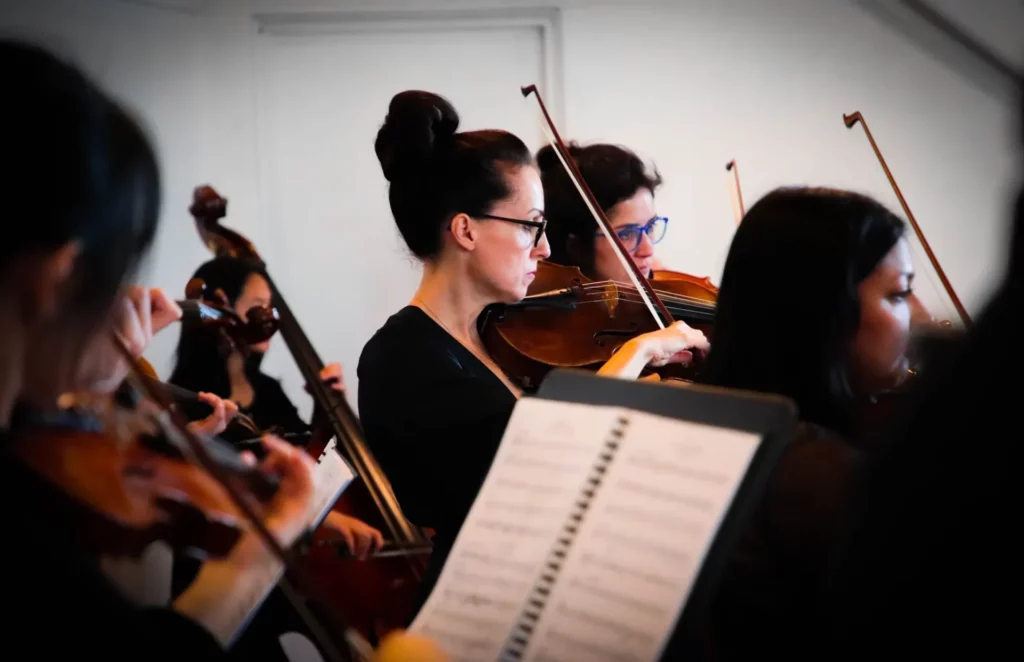
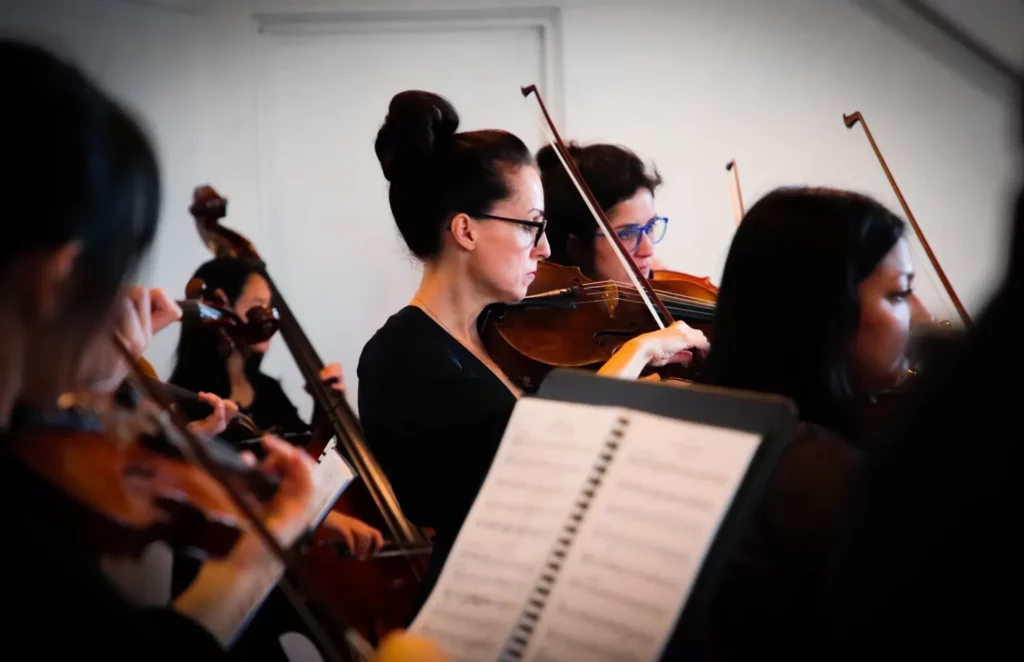
After a long day, you flop onto the sofa and find yourself dozing off while watching TV. The room is nice and warm, the sofa is comfortable, and the background noise of the TV lulls you to sleep.

Then a loved one nudges you awake and reminds you to go sleep – in bed. But when you get there, you find to your frustration that you’re wide awake.

Why does sleep come so easily on the sofa but not always in bed?

Why is it so easy to fall asleep on the sofa?

Sleep pressure is one reason why you fall asleep on the sofa. This refers to the strength of the biological drive for sleep. The longer you’ve been awake, the greater the sleep pressure.

Your body clock or circadian rhythm is another factor. This tells you to be awake during the day and to sleep at night.

Your environment will also impact how likely it is you fall asleep. You might have just eaten a meal, your very comfortable sofa is in a warm room, with dim lighting and maybe a TV program in the background. For many people, this environment is perfect for falling asleep.

So by the end of the day, sleep pressure is strong, your circadian rhythm is telling you it’s time for sleep and your environment is cosy and comfortable.

What happens after a nap on the sofa?

If you’ve had a nap on the sofa before heading to bed, your sleep pressure is likely much lower than it was before your nap. Instead of having more than 16 hours of wakefulness behind you, you’ve just woken up and therefore have less sleep pressure. This can make it much harder to fall asleep in bed.

If you just fell asleep on the sofa for five minutes, you might not have too much trouble getting to sleep in bed. This is because a nap that short is unlikely to reduce your sleep pressure very much. But if you were asleep for an hour, it might be a different story.

Your sleep cycles might also be working against you. Most sleep cycles are about 90 minutes long. They start with light sleep, progress to deep sleep, and then end with light sleep again. If you wake up during deep sleep, you’re probably going to feel groggy – and it might be easy to get back to sleep when you go to bed. But if you wake up during light sleep it could be harder to fall asleep again in bed.

The activities you might do when you get up from the sofa – like turning on bright lights or brushing your teeth – can also make you feel more alert and make it harder to sleep when you get to bed.

Why can’t I fall asleep in my own bed?

There are other reasons why falling also in your bed could be challenging. Many people experience anxiety about falling asleep. They worry about getting enough sleep or falling asleep fast enough.

In such cases, getting into bed can be associated with feelings of stress and apprehension, which make it even harder to sleep. It might be easier to fall asleep on the couch, where there is less stress involved.

It might also be harder to fall asleep in bed because of poor sleep hygiene. This refers to your pre-sleep behaviours and sleep environment.

Good sleep hygiene, or healthy sleep habits, includes having a regular routine before bed, a dark, quiet room to sleep in, and not using your mobile phone in bed. For many people who don’t have good sleep hygiene, their behaviours before bed and their bedroom environment might not be conducive to sleep.

How can I make it easier to fall asleep in bed?

First, make sure your room is dark, quiet and comfortable. In winter this might mean putting a heater on 20 minutes before you go to bed or taking a heat pack to bed with you. In summer, you might consider air conditioning or a fan to make your bedroom comfortable for sleeping.

If you find it easy to fall asleep with the TV on, you might like to play “white noise” in your bedroom as you fall asleep. Some evidence suggests this may make it easier to fall asleep by masking other disruptive noises.

Your behaviour before bed also impacts how easy it is to fall asleep. Making sure you follow the same bedtime routine every night (including going to bed at the same time) can help.

Also, even though it’s hard, try not to look at your phone while you’re in bed. Scrolling on your phone before bed can make it harder to sleep due to both exposure to blue light and the potentially stressful or alerting effect of the content you interact with.

In a nutshell

The best way to make it’s easier to fall asleep in your bed is to avoid falling asleep on the sofa in the first place.

This will ensure all the sleep pressure you build up during the day will be directed towards a deep sleep in your bed.

Madeline Sprajcer, Lecturer in Psychology, CQUniversity Australia and Sally Ferguson, Director, Appleton Institute, CQUniversity Australia

This article is republished from The Conversation under a Creative Commons license. Read the original article.

Support Our Journalism

Global Indian Diaspora needs fair, non-hyphenated, and questioning journalism, packed with on-ground reporting. The Australia Today – with exceptional reporters, columnists, and editors – is doing just that. Sustaining this needs support from wonderful readers like you.

Whether you live in Australia, the United Kingdom, Canada, the United States of America, or India you can take a paid subscription by clicking Patreon. Buy an annual ‘The Australia Today Membership’ to support independent journalism and get special benefits.


Khalistani Gurpreet Singh charged with double stabbing during Indian Independence celebrations

0

An Indian citizen named Gurpreet Singh has been charged by Police with a double stabbing at an Indian Independence Day event in western London.

On Tuesday, 15 August, the Indian British community was celebrating the Indian Independence Day street event in The Broadway, Southall, when some Khalistan supporters came there and started abusing them.

Stabbing accused Gurpreet Singh: Image Source: The Australia Today

An eyewitness Rajvir Singh* (name changed) told The Australia Today, “Five Khalistani goons started abuses to India and Hindus.”

“We responded with slogans like, ‘Bharat mata ki jai’, ‘Vandematram’ and ‘Jai Sri Ram”

“All of a sudden one Khalistani man throws a punch at one of our boys (wearing a black T-shirt with Haryana).”

Rajivir says Khalistan supporters came there with a plan to disrupt the celebration.

A video footage taken by the social media group ‘Southhalls Finest’ shows the whole incident in detail.

“It was just chaos when this Khalistani with black pagadi which was also covering his face took out a knife and stabbed two people.”

Rajvir Singh* says, “A female police officer was next to that Khalistani Gurpreet Singh and after stabbing She ran after to catch him.”

London Met Police has told the media, “A member of the public informed them of an altercation that had taken place.”

“They found two men, in their 30s, with knife injuries. They were taken to hospital where their injuries were assessed as not life-threatening. They have since been discharged.”

25-year-old Gurpreet Singh, from Belmont Road, Ilford, was charged with serious offences of two counts of stabbing.

Superintendent Sean Lynch, responsible for neighbourhood policing in Ealing, said: “I recognise the enormous concern this incident will have caused, both in Southall and in the Sikh communities around London and further afield, in what was an otherwise largely peaceful and celebratory event.

“Our urgent investigation continues.

“We are aware of footage circulating on social media, with people also commenting on what they think happened. We would urge people to avoid echoing or adding to speculation.

Fortunately, none of those injured were seriously hurt and there were no fatalities.”

“Following the incident a Section 35 Dispersal Order was authorised in the area. This has since been removed,” Superintendent Lynch added.

“Mr Singh appeared at Uxbridge Magistrates’ Court Thursday 17 August morning. He was remanded in custody to appear at Isleworth Crown Court on 14 September 2023.”

“A second man, aged in his 20s, was also `arrested and released on bail.”

“Two men were arrested at the scene. Singh [A] has since been charged with the above offences.”

“The other man [B] aged in his 20s has been released on police bail pending further enquiries.”

These Khalistani Goons not only stabbed innocent Indian British community members but also injured a Female police officer of the Met Police department.

“A female officer involved in detaining one of those arrested sustained a small cut to her hand. She did not need hospital treatment,” said Met Police in a statement.

Sarah L Gates Director of Hindu Human Rights in Australia. She has done extensive work on Hinduphobia specially issues faced by UK-based Hindus.

Ms Gates expressed concern that social media handles implicated in the Leicester unrest are again spreading Hinduphobic conspiracy theories.

“Tik Tok monitoring finds dehumanising tropes, threats to kill and anti-immigrant hate against Hindus and Indians. Hindu GBH victims are blamed for the incident.”

“Met Police comments on Sikh social media urging cessation of speculation, fails to call out the hate speech. It lacks cultural sensitivity for Hindus. Some content incites violence, including the shooting of Hindus.

“Met Police are requested to show suitable regard for victims and community safety in the wake of what appears to be a religiously motivated violent extremist incident.”

The investigation is ongoing and is being led by detectives from West Area CID. Enquiries continue.

Note: The Australia Today is trying to find more details and contact other stakeholders, as and when we receive it the story will be updated.

Support Our Journalism

Global Indian Diaspora needs fair, non-hyphenated, and questioning journalism, packed with on-ground reporting. The Australia Today – with exceptional reporters, columnists, and editors – is doing just that. Sustaining this needs support from wonderful readers like you.

Whether you live in Australia, the United Kingdom, Canada, the United States of America, or India you can take a paid subscription by clicking Patreon. Buy an annual ‘The Australia Today Membership’ to support independent journalism and get special benefits.



PM Albanese to visit India next month to participate in G20 Leaders’ Summit

0

Prime Minister Anthony Albanese has confirmed his participation in the upcoming G20 summit to be held in the Indian capital New Delhi next month.

PM Albanese will be among the leaders of G-20 nations who are scheduled to attend the G-20 summit under India’s presidency this September.

The G20 is the world’s preeminent forum for global economic cooperation. Leaders will focus on navigating the global economy back to strong, sustainable and resilient growth, according to a statement by the PM’s office.

“Deepening Australia’s engagement with Southeast Asia is a key priority for my Government. Our futures are intertwined – so it’s essential that we work together to achieve a peaceful, stable and prosperous region,” a press statement from the Australian Prime Minister’s office said quoting Albanese.

“It is more important than ever that Australia works closely with international partners, including through multilateral economic forums like the G20, to address shared challenges and opportunities,”

Albanese said.

“Australia is invested in and committed to the Indo-Pacific to enhance growth and prosperity, stability and respect for sovereignty and lasting peace,” he said.

Albanese said that Australia is proud to be hosting a Special Summit to commemorate the 50th Anniversary of the ASEAN-Australia Dialogue Relations in 2024.

“I look forward to welcoming ASEAN leaders to Australia in March next year,”

he said.

Albanese will travel to Indonesia, the Philippines and India in September to meet with regional leaders to discuss global challenges and advance Australia’s economic, security and climate agenda.

Prime Minister Albanese will attend the 3rd Annual ASEAN-Australia Summit and the 18th East Asia Summit in Jakarta from September 6–7. Australia’s close partnership with ASEAN and its members is critical to achieving mutual prosperity, security and peace in the region.

As part of the Australian Government’s upgrade of relationships with countries of Southeast Asia, Albanese will travel to Manila, the first Australian Prime Minister to undertake a bilateral visit to the Philippines since the year 2003.

The Prime Minister’s meeting on September 8 with Philippines President Ferdinand R Marcos Jr will focus on strengthening cooperation on defence and maritime security, development and education.

“Our partnership with the Philippines is built on close defence and security cooperation, increasing economic relations and warm personal ties, including through the vibrant Filipino-Australian community. I look forward to visiting Manila to meet with President Marcos and affirm our partnership,” Albanese said.

India assumed the G20 presidency on December 1, 2022. 

Support Our Journalism

Global Indian Diaspora needs fair, non-hyphenated, and questioning journalism, packed with on-ground reporting. The Australia Today – with exceptional reporters, columnists, and editors – is doing just that. Sustaining this needs support from wonderful readers like you.

Whether you live in Australia, the United Kingdom, Canada, the United States of America, or India you can take a paid subscription by clicking Patreon. Buy an annual ‘The Australia Today Membership’ to support independent journalism and get special benefits.

India approves MoU on cooperation to expand knowledge and expertise in sports with Australia

0

Indian Union (National) Cabinet chaired by Prime Minister Narendra Modi has approved the Memorandum of Understanding on Cooperation in Sports between the Ministry of Youth Affairs and Sports and the Department of Health and Aged Care of the Government of Australia.

What does it mean?

The bilateral exchange programmes in the field of sports between the two countries will help in expanding knowledge and expertise in the area of sports sciences, athlete and coach training and development, sports governance and integrity, and grassroots participation in sports.

The arrangement is aimed at providing reciprocal benefits to accredited and trusted exporters of both the signatories in the clearance of goods by the Customs authorities of the importing country.

Mutual recognition of Authorized Economic Operators is a key element of the World Customs Organisation’s SAFE Framework of Standards to secure and facilitate global trade to strengthen end-to-end security of supply chains while providing higher facilitation to trade at the global level.

The benefits arising from bilateral cooperation in the field of sports with Australia will be equally applicable to all sportspersons irrespective of their caste, creed, region, religion, and gender.

This arrangement shall benefit Indian and Australian exporters and thereby promote a trade relationship between the two countries.

Mutual Recognition of the Australian Trusted Trader Program in Australia and the Authorized Economic Operator Program in India shall enter into force from the date of signing by the authorized representatives of both countries.

During 2021-22, the USA, the UK, Australia, Canada, Germany, and the Netherlands were among the top importers of Indian sporting goods.

The Australia-India Economic Cooperation and Trade Agreement (ECTA) places Australian goods exporters in a prime position to capitalise on India’s enormous and growing market.

ECTA offers access to the large Indian market of nearly one and a half billion people.

Australia exported $19.3 billion worth of goods to India in 2021, representing 4.2 per cent of Australia’s total exports.

Sports goods exported to Australia from India have recorded significant growth of 32% to reach US$ 32.8 million, in 2021-22. 

Key outcomes

ECTA will eliminate tariffs on over 90 per cent of Australia’s goods exports to India by value, with tariffs on over 85 per cent of our exports eliminated on 29 December 2022, worth almost $12.6 billion of Australia’s dutiable exports to India over the period 2018-2019, and phased elimination of tariffs over 2, 4 or 6 years for an additional 5 per cent of our exports.

Support Our Journalism

Global Indian Diaspora needs fair, non-hyphenated, and questioning journalism, packed with on-ground reporting. The Australia Today – with exceptional reporters, columnists, and editors – is doing just that. Sustaining this needs support from wonderful readers like you.

Whether you live in Australia, the United Kingdom, Canada, the United States of America, or India you can take a paid subscription by clicking Patreon. Buy an annual ‘The Australia Today Membership’ to support independent journalism and get special benefits.

Concern over Japan’s controversial disposal of nuclear waste in Pacific waters

0

By ARALAI VOSAYACO

The Pacific Network on Globalisation (PANG) is disappointed with the Fijian Government and Pacific Islands Forum’s endorsement of the Japanese Government’s plans to dump 1.3 million tonnes of nuclear waste into the Pacific Ocean at the end of this month.

Nuclear justice campaigner Epeli Lesuma said this was a blatant disregard for the expert opinion of a panel of scientists commissioned by the Pacific Islands Forum.

“It’s disappointing because Pacific leaders appointed this panel of experts so ideally our trust should be with them and the recommendations they have provided to us,” Lesuma said.

“These are not just random scientists. These are esteemed and respected professionals engaged to provide us with this advice.”

Last week, Fiji Prime Minister Sitiveni Rabuka said he was satisfied with the International Atomic Energy Agency’s (IAEA) report that stated Japan’s plans to release treated wastewater from the Fukushima nuclear plant into the Pacific Ocean had met relevant international standards.

“I have made it my business as a Pacific Island leader to carefully study the information and data on the matter…I am satisfied that Japan has demonstrated commitment to satisfy the wishes of the Pacific Island states, as conveyed to Japan by the Pacific Island Forum chair,” Mr Rabuka said in a video on the Fiji Government’s official facebook page.

“I am satisfied that the International Atomic Energy Agency (IAEA) report is reassuring enough to dispel any fears of any untoward degradation of the ocean environment that would adversely affect lives and ecosystems in our precious blue Pacific,” he said.

“I am convinced of the seriousness of the IAEA to continuously monitor this process in Japan.”

The controversial plan by Japan continues to spark anger and concern across many communities, environmental activists, non-government and civil society organisations.

Sharing Rabuka’s sentiments was the PIF chairman and Cook Islands Prime Minister, Mark Brown, who said the IAEA was the world’s foremost authority on nuclear safety.

“We have received the comments, and the report from our scientific panel and the IAEA and taking a measured response.

“I’d have to say that as the IAEA is responsible for assessment and for anything to do with the safety of reactors around the world, their findings and credibility need to be upheld.”

For Lesuma and other concerned members of Pacific communities, the fight was more than just the Pacific being used as a dumping ground.

He maintains that the two Pacific Island leaders’ support for the IAEA report discredited the PIF-commissioned panel’s decision and credibility.

“They are contradicting themselves because they have appointed this group of experts to advise them. Yet they do not believe their recommendations.

“It’s disappointing that this panel was appointed during Fiji’s term as Forum chair. Here we were as head of this regional body but now we are backtracking and saying we don’t believe you.”

Mr Lesuma said civil society groups would continue to back the opinions and recommendations of PIF’s independent panel of scientific experts.

“Their opinions were formulated by science and with the Pacific people and the care of the ocean at its centre,” he said.

PIF’s independent panel of experts remains adamant that there is insufficient data to deem the discharge of nuclear waste safe for release into the Pacific Ocean.

In a June statement this year, PIF general secretary Henry Puna said the Pacific Islands Forum remained committed to addressing strong concerns for the significance of the potential threat of nuclear contamination to the health and security of the Blue Pacific, its people, and prospects.

“Even before Japan announced its decision in April 2021, Pacific states, meeting for the first time in December 2020 as States Parties to the South Pacific Nuclear Free Zone Treaty (Treaty of Rarotonga), recalled concerns about the environmental impact of the Fukushima Daiichi Nuclear Reactor accident in 2011 and urged Japan to take all steps necessary to address any potential harm to the Pacific,” he said.

“They ‘called on States to take all appropriate measures within their territory, jurisdiction or control to prevent significant transboundary harm to the territory of another state, as required under international law’.

“These important statements stem from key international legal rules and principles, including the unique obligation placed by the Rarotonga Treaty on Pacific states to “Prevent Dumping” (Article 7), in view of our nuclear testing legacy and its permanent impacts on our peoples’ health, environment and human rights.”

Mr Puna said Pacific states therefore had a legal obligation “to prevent the dumping of radioactive wastes and other radioactive matter by anyone” and “not to take any action to assist or encourage the dumping by anyone of radioactive wastes and other radioactive matter at sea anywhere within the South Pacific Nuclear Free Zone”.

Specific concerns by the forum on nuclear contamination issues were not new, Mr Puna added, and that for many years, the forum had to deal with attempts by other states to dump nuclear waste into the Pacific.

“Leaders have urged Japan and other shipping states to store or dump their nuclear waste in their home countries rather than storing or dumping them in the Pacific.

“In 1985, the forum welcomed the Japan PM’s statement that ‘Japan had no intention of dumping radioactive waste in the Pacific Ocean in disregard of the concern expressed by the communities of the region’.”

Against this regional context, he said the forum’s engagement on the present unprecedented issue signify that for the Blue Pacific, this was not merely a nuclear safety issue.

“It is rather a nuclear legacy issue, an ocean, fisheries, environment, biodiversity, climate change, and health issue with the future of our children and future generations at stake. Our people do not have anything to gain from Japan’s plan but have much at risk for generations to come,” Mr Puna had said.

The Pacific Ocean contains the greatest biomass of organisms of ecological, economic, and cultural value, including 70 per cent of the world’s fisheries. It is the largest continuous body of water on the planet. The health of all the world’s ocean ecosystems is in documented decline due to a variety of stressors, including climate change, over-exploitation of resources, and pollution, a Pacific Islands News Association (PINA) report highlighted.

The PINA news report cited a paper by the US National Association of Marine Laboratories (NAML), an organisation of more than 100 member laboratories, that stated the proposed release of the contaminated water was a transboundary and transgenerational issue of concern for the health of marine ecosystems and those whose lives and livelihoods depend on them.

Japan aims to gradually release 1.3 million tonnes of treated nuclear wastewater from the defunct Fukushima power plant over a period of 30-40 years.

This article was first published in Wansolwara and has been republished here with the kind permission of the editor(s).

Contributing Author: Aralai Vosayaco is a final-year journalism student at The University of the South Pacific. She is also the 2023 News Editor (National) for Wansolwara, USP Journalism’s student training newspaper and online publication.

Disclaimer: The opinions expressed within this article are the personal opinions of the author. The Australia Today is not responsible for the accuracy, completeness, suitability, or validity of any information in this article. All information is provided on an as-is basis. The information, facts, or opinions appearing in the article do not reflect the views of The Australia Today and The Australia Today News does not assume any responsibility or liability for the same.

Support Our Journalism

Global Indian Diaspora needs fair, non-hyphenated, and questioning journalism, packed with on-ground reporting. The Australia Today – with exceptional reporters, columnists, and editors – is doing just that. Sustaining this needs support from wonderful readers like you.

Whether you live in Australia, the United Kingdom, Canada, the United States of America, or India you can take a paid subscription by clicking Patreon. Buy an annual ‘The Australia Today Membership’ to support independent journalism and get special benefits.

Beware! Not all mental health apps are helpful

0

By Jeannie Marie Paterson, Nicholas T. Van Dam and Piers Gooding

There are thousands of mental health apps available on the app market, offering services including meditation, mood tracking and counselling, among others. You would think such “health” and “wellbeing” apps – which often present as solutions for conditions such as anxiety and sleeplessness – would have been rigorously tested and verified. But this isn’t necessarily the case.

In fact, many may be taking your money and data in return for a service that does nothing for your mental health – at least, not in a way that’s backed by scientific evidence.

Bringing AI to mental health apps

Although some mental health apps connect users with a registered therapist, most provide a fully automated service that bypasses the human element. This means they’re not subject to the same standards of care and confidentiality as a registered mental health professional. Some aren’t even designed by mental health professionals.

These apps also increasingly claim to be incorporating artificial intelligence into their design to make personalised recommendations (such as for meditation or mindfulness) to users. However, they give little detail about this process. It’s possible the recommendations are based on a user’s previous activities, similar to Netflix’s recommendation algorithm.

Some apps such as Wysa, Youper and Woebot use AI-driven chatbots to deliver support, or even established therapeutic interventions such as cognitive behavioural therapy. But these apps usually don’t reveal what kinds of algorithms they use.

It’s likely most of these AI chatbots use rules-based systems that respond to users in accordance with predetermined rules (rather than learning on the go as adaptive models do). These rules would ideally prevent the unexpected (and often harmful and inappropriate) outputs AI chatbots have become known for – but there’s no guarantee.

The use of AI in this context comes with risks of biased, discriminatory or completely inapplicable information being provided to users. And these risks haven’t been adequately investigated.

Misleading marketing and a lack of supporting evidence

Mental health apps might be able to provide certain benefits to users if they are well designed and properly vetted and deployed. But even then they can’t be considered a substitute for professional therapy targeted towards conditions such as anxiety or depression.

The clinical value of automated mental health and mindfulness apps is still being assessed. Evidence of their efficacy is generally lacking.

Some apps make ambitious claims regarding their effectiveness and refer to studies that supposedly support their benefits. In many cases these claims are based on less-than-robust findings. For instance, they may be based on:

Moreover, any claims about reducing symptoms of poor mental health aren’t carried through in contract terms. The fine print will typically state the app does not claim to provide any physical, therapeutic or medical benefit (along with a host of other disclaimers). In other words, it isn’t obliged to successfully provide the service it promotes.

For some users, mental health apps may even cause harm, and lead to increases in the very symptoms people so often use them to address. The may happen, in part, as a result of creating more awareness of problems, without providing the tools needed to address them.

While a well-designed mental health app may bring benefits to a user, this shouldn’t be confused with evidence of efficacy. Shutterstock

In the case of most mental health apps, research on their effectiveness won’t have considered individual differences such as socioeconomic status, age and other factors that can influence engagement. Most apps also will not indicate whether they’re an inclusive space for marginalised people, such as those from culturally and linguistically diverse, LGBTQ+ or neurodiverse communities.

Inadequate privacy protections

Mental health apps are subject to standard consumer protection and privacy laws. While data protection and cybersecurity practices vary between apps, an investigation by research foundation Mozilla concluded that most rank poorly.

For example, the mindfulness app Headspace collects data about users from a range of sources, and uses those data to advertise to users. Chatbot-based apps also commonly repurpose conversations to predict users’ moods, and use anonymised user data to train the language models underpinning the bots.

Many apps share so-called anonymised data with third parties, such as employers, that sponsor their use. Re-identification of these data can be relatively easy in some cases.

Australia’s Therapeutic Goods Administration (TGA) doesn’t require most mental health and wellbeing apps to go through the same testing and monitoring as other medical products. In most cases, they are lightly regulated as health and lifestyle products or tools for managing mental health that are excluded from TGA regulations (provided they meet certain criteria).

How can you choose an app?

Although consumers can access third-party rankings for various mental health apps, these often focus on just a few elements, such as usability or privacy. Different guides may also be inconsistent with each other.

Nonetheless, there are some steps you can take to figure out whether a particular mental health or mindfulness app might be useful for you.

  1. consult your doctor, as they may have a better understanding of the efficacy of particular apps and/or how they might benefit you as an individual
  2. check whether a mental health professional or trusted institution was involved in developing the app
  3. check if the app has been rated by a third party, and compare different ratings
  4. make use of free trials, but be careful of them shifting to paid subscriptions, and be wary about trials that require payment information upfront
  5. stop using the app if you experience any adverse effects.

Overall, and most importantly, remember that an app is never a substitute for real help from a human professional.

Jeannie Marie Paterson, Professor of Law, The University of Melbourne; Nicholas T. Van Dam, Associate Professor, School of Psychological Sciences, The University of Melbourne, and Piers Gooding, Postdoctoral Research Fellow, Disability Research Initiative, The University of Melbourne

This article is republished from The Conversation under a Creative Commons license. Read the original article.

Support Our Journalism

Global Indian Diaspora needs fair, non-hyphenated, and questioning journalism, packed with on-ground reporting. The Australia Today – with exceptional reporters, columnists, and editors – is doing just that. Sustaining this needs support from wonderful readers like you.

Whether you live in Australia, the United Kingdom, Canada, the United States of America, or India you can take a paid subscription by clicking Patreon. Buy an annual ‘The Australia Today Membership’ to support independent journalism and get special benefits.

Many common factors between Australia and India that make us bond: Lord Mayor Sameer Pandey

0

Lord Mayor of Parramatta, Sameer Pandey, who is also the first person of Indian origin to be elected to the post. He was first elected to City of Parramatta Council in September 2017, and elected as Deputy Lord Mayor in January 2022.

Cr Pandey is the first person of Indian origin to be elected as Lord Mayor in Australia.

In a candid and free-flowing conversation with Pallavi Jain, Cr Pandey spoke about the India diaspora, Australia India relationship and diversity in politics.

Sharing his feelings about the Indian Independence Day (15th August 1947) he also added that we must remember those who made the ultimate sacrifice so that we could have what we have today.

Watch Video: Lord Mayor of Parramatta Sameer Pandey speaks to Pallavi Jain

$375,000 penalty for underpayment to South Asian migrant workers at waste management facility

0

The Fair Work Ombudsman has secured a total of $375,515 in penalties in the Federal Court after five vulnerable migrant workers were underpaid almost $200,000 for work at waste management facilities in Melbourne.

The workers were underpaid a total of $194,249 over a period of just 20 months in 2018 and 2019 when they were employed to sort waste at facilities in Dandenong and Hallam then operated by Polytrade.

The five affected workers were on protection visas and bridging visas (pending approval of applications for protection visas) after arriving in Australia as refugees from southern Asia. They spoke limited English.

Polytrade was one of the biggest recycling companies in Victoria at the time and held waste management contracts with a number of local government bodies.

The Federal Court has imposed penalties of:

  • $138,600 against Polytrade, now known as PT 349 Pty Ltd, for being an accessory in the underpayment of the workers.
  • $200,375 against PTES 928 Pty Ltd (formerly Polytrade Employment Services Pty Ltd) for directly underpaying the workers. PTES 928 Pty Ltd was set up as a labour provider, employing workers and supplying them to work at Polytrade on an on-hire basis.
  • $27,720 and $8,820, respectively, against Polytrade’s owners, husband-and-wife Mr Man Sang Chen and Ms Pui Shan Ho, for also being accessories in the underpayments. Ms Ho is also the owner of PTES 928 Pty Ltd.

PTES 928 Pty Ltd has back-paid the five underpaid workers in full – and has also made a further $2.2 million in back-payment to workers not involved in the FWO’s legal action who had been underpaid since 2012.

Acting Fair Work Ombudsman Kristen Hannah said blatant underpayment of visa holders in Australia was not tolerated.

“We treat underpayment of migrant workers particularly seriously,” Ms Hannah said.

“These workers can be vulnerable if they are unaware of their entitlements or reluctant to complain. But visa holders have the same workplace rights as all other workers.”

“Any employer that blatantly underpays migrant workers’ basic entitlements risks facing significant penalties. The five workers here were paid only slightly more than half of what they were entitled to.”

“Workers with concerns about their pay or entitlements should contact us for free advice and assistance.”

FWO investigated after receiving a referral from the Australian Workers Union.

Fair Work Inspectors discovered that the five affected employees were paid a flat rate of $22 per hour regardless of when they performed work, despite being required to perform night, weekend and public holiday work. Some of the workers gave evidence in Court that they worked 12-hour shifts, usually six and sometimes seven days per week.

This resulted in underpayment of workers’ minimum wage rate; overtime rates; loadings for casual, night and shift work; and penalty rates for weekend and public holiday work, under the Waste Management Award 2010.

Laws relating to minimum engagement periods, advising employees of their terms of engagement, payment of superannuation entitlements, record-keeping and issuing pay slips in the required form were also breached.

Justice John Snaden said the contravening conduct was “wantonly naïve, at best. At worst, it involved a deliberate and cavalier disregard of important Award safety net obligations”.

The five workers “were paid between 53 and 58 per cent only of what the Award required that they be paid. On any view, those are damning figures”, Justice Snaden said.

Justice Snaden also said the contraventions were “made worse by considering the personal circumstances of the relevant employees”.

“All are from migrant backgrounds and have limited to negligible written and verbal English skills.”

Justice Snaden found that there was a need to impose penalties to deter other employers from similar conduct.

“The court must exact a heavy toll: not merely to ensure that [PTES 928 Pty Ltd] is brought to account for its obnoxious conduct; but also to serve as a warning to other employers who might be minded to ignore their own important Award and statutory obligations in the way that [PTES 928 Pty Ltd] did.”

Justice Snaden found that Polytrade and Mr Cheng “must pay heavy prices” for their active involvement in the contraventions,

“not merely to ensure that they are brought to account for what they did; but also to serve as a warning to others who might be minded to be similarly involved in egregious Award underpayments”.

The FWO filed 138 litigations involving visa-holder workers, and secured $15 million in court-ordered penalties in visa-holder litigations, in the six financial years to June 2023.

Support Our Journalism

Global Indian Diaspora needs fair, non-hyphenated, and questioning journalism, packed with on-ground reporting. The Australia Today – with exceptional reporters, columnists, and editors – is doing just that. Sustaining this needs support from wonderful readers like you.

Whether you live in Australia, the United Kingdom, Canada, the United States of America, or India you can take a paid subscription by clicking Patreon. Buy an annual ‘The Australia Today Membership’ to support independent journalism and get special benefits.
‘Jai Sia Ram’: Why projecting Hindu beliefs on public platform puts target on your back?

0

By Om Prakash Dwivedi

In recent years, ‘Ram’ has gained global recognition in the international political sphere. India’s 77th Independence Day was also witness to this. When was the last time one heard a ‘Jai Sia Ram’ slogan at the University of Cambridge, UK?

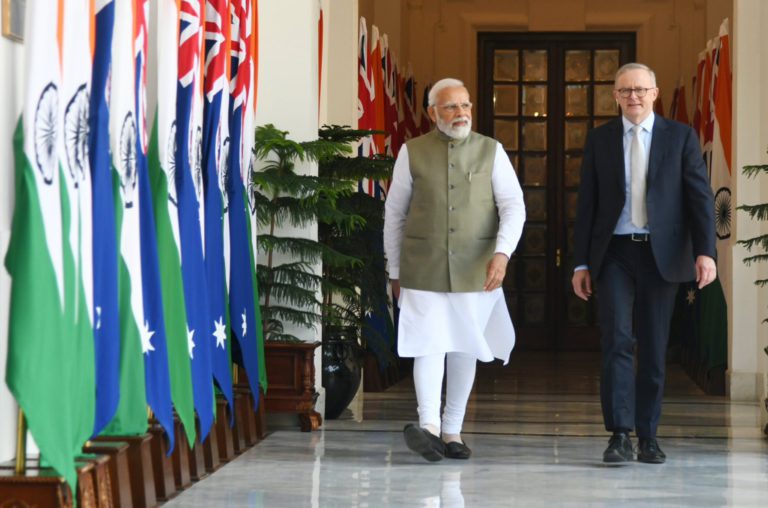
At the ‘Ram Katha event’ organised by India’s spiritual preacher, Murari Bapu, the British PM, Rishi Sunak, surprised everyone by starting his talk with ‘Jai Sia Ram’. In response, Sunak was greeted with cheers and slogans of ‘Jai Sia Ram’ emanating from all corners of the lecture hall. This runs the risk of being counted as ‘democratic backsliding’ if one were to go by the liberal terminology.

PM Rishi Sunak at Murari Bapu katha; Image Source: Facebook Chitrakutdham Talgajarda Morari Bapu

However, Sunank, quickly added, ‘I am proud to be British, proud to be Hindu’, thus affirming his allegiance towards the British nation while also underlining his apparent devotion to Hinduism.

Not shy to demonstrate his staunch belief in Hinduism, Sunak declared,

‘I am proud that a golden Ganesha sits gleefully on my desk at 10 Drowning Street.’

PM Rishi Sunak at Murari Bapu katha; Image Source: Facebook Chitrakutdham Talgajarda Morari Bapu

Sunak’s act may invite disparaging responses from the public and media, at least he has the audacity and honesty to admit his religious practices overtly at a time when many ‘self-declared atheists’ have been seen performing ceremonies at religious places secretly. The height of hypocrisy only to gain political mileage has been the underlying spirit of our flawed notion of secularism.

Likewise, the nature of modern-day democracy is such that one needs to put on a mask to play conveniently between religion and secularism. Perhaps, Sunak chose a different path and, in so doing, refused to dance to the tunes of pseudo-liberals.

Commenting on these quasi-preachers, recently, India’s leading foreign policy maker, Vijay Chauthaiwala launched a broadside against this selective amnesia exhibited by many liberals. Chauthaiwala lamented the way a ‘member of a political dynasty automatically qualifies to be a liberal… only because they are linked to a dynasty in power genetically or by wedlock.’

Whether a state representative can showcase their religious inclination has always been a contentious issue. Of course, religion and politics should not be mixed is the common argument, and rightly so. But how do we see the colonialists’ coercing their religion in different parts of the world under the garb of civilising mission politics? Or, how do we see the rampant, ongoing exercises of manipulative and, at times, coercive, religious conversions? And still, what about the foreign funding generously granted to stoke and spread one’s own agenda under the name of philanthropic exercises?

PM Rishi Sunak; Image Source: Instagram Rishi Sunak

Imagine any Indian PM projecting his/her religious beliefs on a public platform like Sunak did. The media would quickly declare that figure a fascist, intolerant, authoritarian, and even a ‘bhakt’, as evident in our social media parlance. There exists a long tension between religion and politics but so has also been the tussle between democracy and liberalism.

One must never forget that it was religion that led to the establishment of the world’s largest and ugliest colonial empire because religion was used as a transaction and not a tool of engagement. The latter has been the defining feature of Indian democracy. During the recent visit of PM Modi to Australia, the Australian counterpart eulogised him and added, ‘You have brought the spirit of the world’s biggest democracy to Australia’.

PM Rishi Sunak; Image Source: Instagram Rishi Sunak

Indian democracy has thrived because it upholds and promotes religious freedom. Whenever we are in a dilemma to choose between ‘preyas’ (power) and ‘sreyas’ (peace), we have always opted for the latter. At the 76th United Nations General Assembly, PM Modi reinforced this civilisational rendition. He highlighted that “India is not just the oldest democracy but also the mother of democracy.”

Political acts and philanthropy hardly go together. The long, bloody history of colonialism, slavery, and terrorism only reiterates this truth. If religion can be imbibed with spirituality in our political life that may help us a world of good. It may lead us from discord and strife to accord and peace at many levels in our quotidian life.

PM Rishi Sunak at Murari Bapu katha; Image Source: Facebook Chitrakutdham Talgajarda Morari Bapu

The world needs peace and unity, precisely the reason why religion should never be a divisive instrument, it should rather unite people as has been the ultimate destination of all religions, different though they may appear to our human eyes. 

Contributing Author: Om Prakash Dwivedi tweets @opdwivedi82 His interests lie in the field of postcolonial theory.

Disclaimer: The opinions expressed within this article are the personal opinions of the author. The Australia Today is not responsible for the accuracy, completeness, suitability, or validity of any information in this article. All information is provided on an as-is basis. The information, facts, or opinions appearing in the article do not reflect the views of The Australia Today and The Australia Today News does not assume any responsibility or liability for the same.

Support Our Journalism

Global Indian Diaspora needs fair, non-hyphenated, and questioning journalism, packed with on-ground reporting. The Australia Today – with exceptional reporters, columnists, and editors – is doing just that. Sustaining this needs support from wonderful readers like you.

Whether you live in Australia, the United Kingdom, Canada, the United States of America, or India you can take a paid subscription by clicking Patreon. Buy an annual ‘The Australia Today Membership’ to support independent journalism and get special benefits.

FIFA Women’s World Cup: Matildas’ dream run ends as England creates history by entering first time into final 

0

England created history as they enter into the final of the FIFA Women’s World Cup for the first time after defeating Australia in a thrilling 3-1 game on Wednesday. 

Ella Toone put the Lionesses ahead in the first half before Sam Kerr levelled for the co-hosts, but goals from Lauren Hemp and Alessia Russo set up a showdown with Spain on Sunday.

On 36 minutes, Russo displayed perseverance in the penalty area by pulling the ball back for Toone to blast into the top corner.

Australia on 63 minutes equalised with an even better shot from Kerr, who gathered the ball on the halfway line before sprinting at her Chelsea teammate Millie Bright and firing a 30-yard rocket that soared past Mary Earps.

However, the Australian defence failed to cope with Bright’s long pass forward, and Hemp showed great determination and sent her shot beyond Arnold.

Kerr missed two wonderful chances to equalise for the Matildas before England sealed their final berth with four minutes to go when Hemp delivered a superb pass through to Russo, who beat Arnold with an angled effort.

England coach Sarina Wiegman said after the match as quoted by FIFA’s official website, “We achieved the final and it’s unbelievable. It feels like we won it but we didn’t win it, we just won this game. We played a hard game but again we found a way to win.

“We scored three goals. We have been talking about ruthlessness all the time and this team has ruthlessness, whether it is up front or in defence.”

We want to keep the ball out of the net and we really want to win. We stuck together and stick to the plan and it worked again.” 

Australia coach Tony Gustavsson also expressed his disappointment after failing to make it to the final. 

“In the 81st, 83rd and 85th minutes, we had three sitters in a row. It’s a failure to lose a game, [but] I am happy that the fans gave the players support after the game. They are proud of the players, that they leave everything out there.”

Image

“We promised each other we would leave everything out there and that is a success and they left it all out there. Unfortunately tonight it wasn’t enough,” said Gustavsson

Support Our Journalism

Global Indian Diaspora needs fair, non-hyphenated, and questioning journalism, packed with on-ground reporting. The Australia Today – with exceptional reporters, columnists, and editors – is doing just that. Sustaining this needs support from wonderful readers like you.

Whether you live in Australia, the United Kingdom, Canada, the United States of America, or India you can take a paid subscription by clicking Patreon. Buy an annual ‘The Australia Today Membership’ to support independent journalism and get special benefits.

Too many school students are falling behind: how do we help those most at risk?

0

By Melissa Cain and Joanne Quick

There is increasing concern about Australian students falling behind in numeracy and literacy.

NAPLAN results show 16.2% of Year 3 students are at or below the national minimum standards in numeracy and 12.9% are at or below the minimum standards in reading. By Year 9, this climbs to 20.4% and 25.1% respectively.

The 2021 early development census also found 22% of Australian children were developmentally vulnerable in their first year of school.

Federal and state governments are currently working on the next National School Reform Agreement, which ties funding to school reforms and starts in 2025. The consultation paper released last month notes with concern:

too many students are starting school behind or are falling behind in minimum literacy and numeracy standards.

It also asks, what can schools do to help those most at risk of falling behind?

Why do students fall behind?

Students can fall behind for a many reasons and these can be complex.

This may be due to a student’s abilities or perhaps they have a developmental issue or impairment. A student may have missed essential concepts through illness or changing schools. Or they may not have a home environment that helps them learn, such as as healthy food, access to books and adequate sleep.

As the consultation paper notes, Aboriginal and Torres Strait Islander students, students in regional, rural and remote locations, students with disability and students whose parents have low levels of educational attainment are three times more likely to fall below minimum standards.

The learning gap can also increase over time. Early difficulties with learning can quickly become compounded if they are not addressed.

Students who are behind can lose motivation to learn because they have missed essential concepts and find lessons frustrating. They can also start to exhibit challenging behaviours.

However, learning gaps do not necessarily increase. Australian research published this year shows effective teaching can compensate for early learning difficulties.

How do schools identify students?

Identifying students can happen informally and may occur at any age. At preschool a teacher may notice a student has indistinct speech and recommend hearing testing, language support or both. The assessment of cognitive skills – such as literacy and numeracy – will usually happen when students begin school.

At school teachers might observe children playing counting games and sharing out counters to identify which students have difficultly counting up to five.

More formal assessments might involve a young student reading a short list of real and made-up words. They can also include work samples or individual tests for older students. The results can be compared with others of their age or year level.

Teachers also look at students’ engagement in educational activities and school attendance. Pre-COVID figures from 2019 showed at least 25% of Australian students missed at least one month of school per year.

How can students catch up?

How a student catches up will depend on a number of factors. For those with disability, an inclusion plan can make sure students have the right adjustments and supports to learn. This needs to be updated regularly.

For other students, the process of catching up might begin with meeting their basic needs through providing meals, uniforms and communication in home languages.

More generally, catching students up starts with the principle “know students and how they learn”. Teachers aim for a strength-based approach, which values the knowledge and skills students bring to school.

This draws from home knowledge, interests, and learning preferences to make the curriculum more engaging. For example, if a student has a great interest in sport, maths problems can incorporate data from games.

Students will not learn effectively if they do not feel valued, comfortable and safe.

Literacy and numeracy help

Approximately 20% of students require some additional teaching and support to acquire fundamental language, literacy and numeracy skills.

This may involve classroom, small group or individual support. It is easier and more effective to provide extra support early in students’ schooling, but older students can also benefit from intervention.

Due to teacher shortages, there has been an increase in teachers teaching out of their field of specialisation. We don’t yet know what impact this has had on intervention programs.

Most students can catch up

A 2023 study by the Australian Education Research Organisation and Monash University found approximately 95% of students should be able to meet academic benchmarks with quality classroom programs and research-supported interventions. But students with a history of learning difficulties should be carefully monitored as they may require additional support in the future.

About 5% students will need more nuanced interventions and different teaching approaches. For example, a student with a physical disability might be disadvantaged when asked to write by hand. Working on a laptop instead of persisting with hand writing can help.

We need a more consistent approach

Australia has a national curriculum but there are differences between what is taught and how it is taught across the states and territories. There are also considerable differences between schools.

This means students who move schools can be disadvantaged. Figures from 2016 show in New South Wales, 7% of all school children changed school at least once during a year.

We need a more nationally consistent approach to the national curriculum. Jurisdictions’ and schools’ have varied philosophies, priorities and needs. But core standards around appropriate teaching approaches and effective interventions are possible.

There is also a need for increased sharing of information with parents and between schools. National student numbers could be used to track enrolment and core national assessment data.

Some parents and schools may be opposed to this idea for reasons of student privacy. Parents may want their children to have a “fresh start” if they change schools.

We acknowledge these concerns, but sharing key assessment data would reduce time re-assessing students in their new school and support strong teaching from day one.

Melissa Cain, Senior Lecturer in Inclusive Education and Arts Education, Australian Catholic University and Joanne Quick, Senior Lecturer in Literacy, Australian Catholic University

This article is republished from The Conversation under a Creative Commons license. Read the original article.

Support Our Journalism

Global Indian Diaspora needs fair, non-hyphenated, and questioning journalism, packed with on-ground reporting. The Australia Today – with exceptional reporters, columnists, and editors – is doing just that. Sustaining this needs support from wonderful readers like you.

Whether you live in Australia, the United Kingdom, Canada, the United States of America, or India you can take a paid subscription by clicking Patreon. Buy an annual ‘The Australia Today Membership’ to support independent journalism and get special benefits.

Indian delegation in Australia to explore collaboration in higher education

0

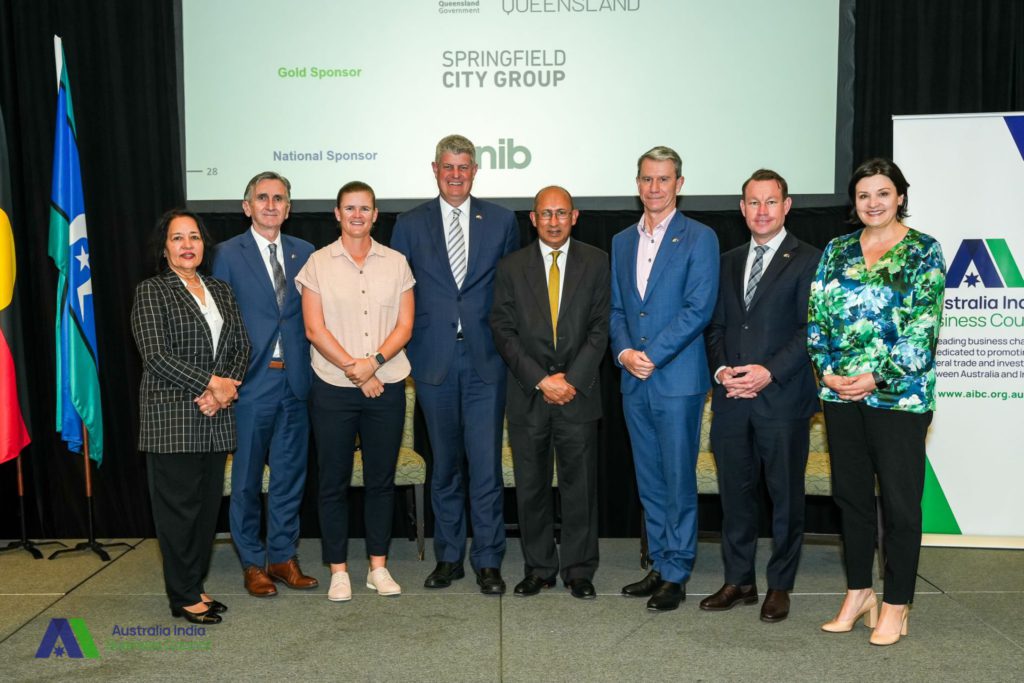
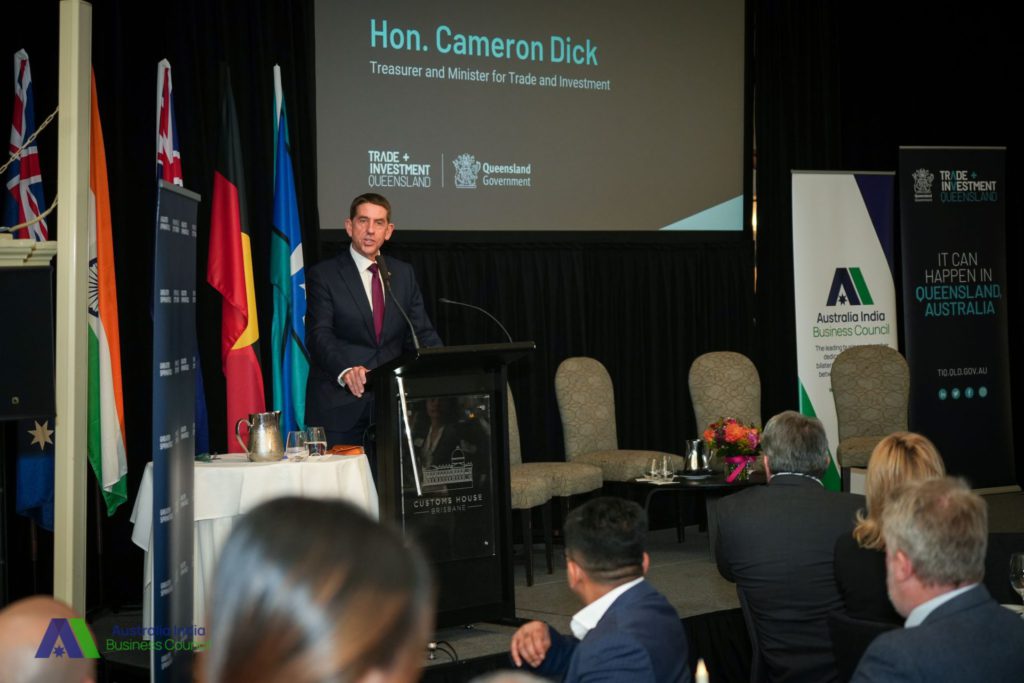
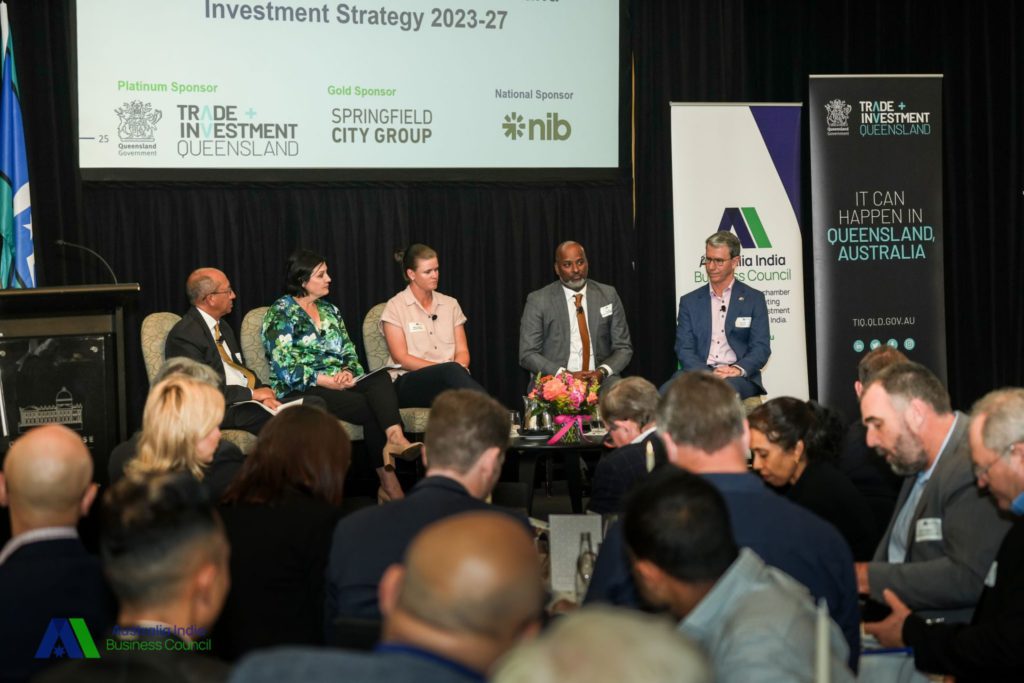
The Australia India Business Council (AIBC) recently hosted FICCI Indian Higher Education Delegation to strengthen the bilateral partnership between Australia and India in the education and edutech sectors.

The FICCI (Federation of Indian Chambers of Commerce & Industry) delegation was hosted in association with Open Learning, Education Centre of Australia (ECA) and New Edge Education Group.

Dr Lalitbhushan Waghmare, Vice Chancellor of Datta Meghe Institute of Higher Education and Research was part of the delegation. Speaking with The Australia Today he said that the delegation was visiting to explore opportunities for collaboration. 

The Director and Head of Education and Skills, FICCI, Rajesh Pankaj, told The Australia Today that they had focussed discussions with top of the line Australian institutions including on research collaboration and partnerships, student and faculty mobility and edtech sector.

Sharing her thoughts with The Australia Today, Western Sydney University’s Pro Vice-Chancellor (International), Professor Linda Taylor said that Australia India relationship was very strong and the bridge between the two countries’ human to human, institutional and country level relationships had reached a level where we are only going to go up and forward.

Dr Preeti Nair, Director, International Relations Cell, Parul University, Vadodara, India was also part of the delegation. She said that she was able to coordinate with many universities and also understood many programmes that can be offered to Indian students through different platforms because of this event.

While speaking with The Australia Today, AIBC National Associate Chair and NSW President Irfan Malik said he was looking forward to outcomes from this delegation.

Australia’s former Minister for Trade, Investment and Tourism, Andrew Robb AO, who was also part of the event said that the bilateral trade agreement (AI-ECTA – Australia India Economic Cooperation and Trade Agreement), which is probably the first of a G20 country that India has done, is borne out of trust.

He added that the ease of commitment in last few years to make it happen has fostered that sense of trust and now its giving rise to extraordinary levels of interaction between Australia and India.

Sydney restaurant in court for not paying annual leave entitlements to two visa-holder chefs

0

The Fair Work Ombudsman has commenced legal action against the former operators of a restaurant in north-west Sydney.

Facing court are Annangrove Road Pty Ltd, which operated ‘EST by Fig and Co’ in Kenthurst before it closed, and the company’s sole director Alfredo Gualterio.

The regulator investigated after receiving requests for assistance from two workers who were employed at the restaurant as full-time chefs for various periods between September 2020 and June 2021.

Both workers were visa holders, including one aged 23 to 24 at the time of employment.

A Fair Work Inspector issued a Compliance Notice to Annangrove Road in July 2022 after forming a belief the workers were not paid accrued but untaken annual leave entitlements when their employment ended, owed under the Fair Work Act’s National Employment Standards.

The Fair Work Ombudsman alleges Annangrove Road Pty Ltd, without reasonable excuse, failed to comply with the Compliance Notice, which required it to calculate and back-pay the workers’ entitlements. It is alleged Mr Gualterio was involved in the contravention.

Acting Fair Work Ombudsman Kristen Hannah said the regulator would continue to enforce workplace laws and take businesses to court where lawful requests are not complied with.

“Where employers do not comply, we will take appropriate action to protect employees. A court can order a business to pay penalties in addition to back-paying workers.”

“Employers should also be aware that taking action to improve compliance in the fast food, restaurant and café sector and protecting visa holders and young workers are priorities for the FWO,” Ms Hannah said.

“Any employees with concerns about their pay or entitlements should contact the Fair Work Ombudsman for free assistance,” Ms Hannah said.

The FWO is seeking penalties for the alleged failure to comply with the Compliance Notice. Annangrove Road Pty Ltd faces a penalty of up to $33,300 and Mr Gualterio faces a penalty of up to $6,660.

The regulator is also seeking a court order for the company to pay compensation for the amount of the alleged underpayments, plus interest.

A directions hearing is listed in the Federal Circuit and Family Court in Sydney on 14 August 2023.

Support Our Journalism

Global Indian Diaspora needs fair, non-hyphenated, and questioning journalism, packed with on-ground reporting. The Australia Today – with exceptional reporters, columnists, and editors – is doing just that. Sustaining this needs support from wonderful readers like you.

Whether you live in Australia, the United Kingdom, Canada, the United States of America, or India you can take a paid subscription by clicking Patreon. Buy an annual ‘The Australia Today Membership’ to support independent journalism and get special benefits.

We need more than police checks: how parents and educators can keep childcare services safe from abuse

0

By David Bartlett, Amanda L. Robertson, and Danielle Arlanda Harris

Last week, a former childcare centre worker was charged with more than 1,600 child abuse offences, sending shivers through the Australian community. There are about 1.4 million children using a childcare service (including centre-based care, family daycare and outside school hours care) around the country.

In response to a confidential briefing about the case last year, Education Minister Jason Clare set up a review into safety practices in the childcare sector.

This will see the Australian Children’s Education and Care Quality Authority work with the Australian Federal Police. They will provide an interim report in October and a final report in December.

Recent Australian research indicates children are most likely to be sexually abused by an adolescent they know (such as a sibling or peer at school) or an adult caregiver in the home.

Nonetheless, the first question parents have understandably asked in the wake of this devastating news is “how could this happen?”. Followed very closely by “is my child safe?”.

We can reduce the likelihood of abuse occurring in childcare centres. This will need governments, childcare services, educators and parents to work together.

Police checks are just the start

Each state and territory requires people who work with children to have a working with children clearance.

There are differences between state and territory jurisdictions but applicants are required to prove their identity and provide prior aliases.

At the centre of the process is a police criminal history check. Certain records, including charges or convictions for child sexual offences or other violent offences would see an application denied.

This is a start. But it does not mean all employees with a clearance are trustworthy. Unfortunately, many offenders remain undetected, let alone prosecuted. And working with children may give employees the opportunity to offend for the first time, or trigger previously unrealised motivations to offend.

The man charged with 1,623 child abuse offences in multiple jurisdictions, including Queensland, had passed the state’s “blue card” check, clearing him to work with children.

Safer recruitment processes

With the current shortage of childcare workers, employers may be tempted to expedite the employment of new staff. But rigorous recruitment practices are vital.

A history of frequent job changes and working at multiple sites and organisations – particularly when accompanied by residential relocations – suggests someone might be trying to evade detection.

Verbal reference checks are more effective than written forms or reports. This includes talking directly to past managers and supervisors, including those in other jurisdictions. Questions should include, were there any concerns about their interactions with children? Were they reported? Would the employer hire them again? If not, why not?

The importance of open plan centres

Even if someone motivated to abuse children gets a job, it is still possible to prevent abuse occurring.

The physical environment of a childcare centre and how it is managed can significantly reduce the opportunity for abuse to occur. Open plan centres allow for natural surveillance and reduce the likelihood of offending.

Where possible, it is also important to prevent blind spots (created by moving furniture, covering windows or building cubbies) that obstruct the natural line of sight. If there are blind spots like windowless offices or storerooms, open door policies or CCTV can be used.

On top of all this, centres can require staff to always be in line of sight of another staff member.

Centres should also ban staff from carrying personal mobile phones during work hours and stipulate where they should be stored. If staff need to take photos of children for documentation or parent reports, this can be done on a centre device that is managed and overseen by multiple staff.

Beware of cognitive biases

Research on child sexual abuse is full of accounts of disbelief a person could engage in that behaviour.

Both parents and centre workers are susceptible to cognitive biases, that can lead them to discount the likelihood a person could abuse children. In the childcare context two factors can increase these biases.

Knowing a person has a working with children check tends to reinforce the view they are a “good person” who would not harm a child.

Child sex abusers also engage in a range of grooming techniques. While community awareness of child grooming techniques is increasing, there is less awareness that offenders often groom parents and colleagues. They do this by ingratiating themselves through acts of kindness and friendship.

These behaviours serve to reinforce they are “good people” and facilitate continued access to children. Overly familiar and personal conduct is another red flag in child-related employment contexts.

Share information

Information sharing is a key part of reducing risk. Centres should have clear processes for staff and parents to safely raise concerns and have them investigated quickly.

Importantly, we must also equip children with the skills to communicate concerns if they arise. This includes teaching them appropriate terminology for body parts and basic rules about safe and unsafe behaviours. This can empower even very young children to disclose abuse.

The vast majority of childcare workers are good people. And if there is clear leadership and governance for childcare centres and good parental awareness, we can improve children’s safety. But we need to remain vigilant.


For support and advice regarding child sexual abuse, you can call Bravehearts on 1800 272 831.

If you are a child, teenager or young adult who needs help and support, you can call Kids Helpline on 1800 55 1800.

If you are an adult who experienced abuse as a child, call the Blue Knot Helpline on 1300 657 380.

You can also call 1800RESPECT on 1800 737 732 to access support for domestic, family and sexual violence.

David Bartlett, Industry Fellow, Griffith University; Amanda L. Robertson, Adjunct Research Fellow – Griffith Criminology Institute, Griffith University, and Danielle Arlanda Harris, Senior Lecturer, Griffith University

This article is republished from The Conversation under a Creative Commons license. Read the original article.

Support Our Journalism

Global Indian Diaspora needs fair, non-hyphenated, and questioning journalism, packed with on-ground reporting. The Australia Today – with exceptional reporters, columnists, and editors – is doing just that. Sustaining this needs support from wonderful readers like you.

Whether you live in Australia, the United Kingdom, Canada, the United States of America, or India you can take a paid subscription by clicking Patreon. Buy an annual ‘The Australia Today Membership’ to support independent journalism and get special benefits.
Indian Independence Day celebrated across Australia

0

By Pallavi Jain and Jai Bharadwaj

The Tricolour was flying high in various cities across Australia as the Indian Diaspora celebrated Indian Independence day with gusto and fervour.

Melbourne became the first city in the world to hoist the Tricolour.

The revelry and festive atmosphere was palpable as Consul General of India in Melbourne, Dr Sushil Kumar danced to the beats of bhangra.

In Perth, Independence Day was celebrated by paying tribute to the ‘Veers’ who sacrificed their lives for India.

The vibrant city of Cairns in Queensland too was aglow with cultural celebrations as GOPIO Cairns Inc. commemorated India’s Independence Day in a grand ceremony at Fogarty Park Esplanade.

This was the first Indian Independence Day celebration in Cairns.

The event was not only a celebration of a historic moment in India’s history but also marked the formal inauguration of the GOPIO Cairns chapter, aimed at fostering unity and connectivity among the Indian diaspora in the region.

The auspicious occasion commenced with the soaring Indian and Australian flags, gracefully unfurling against the backdrop of the picturesque park, while the strains of the respective national anthems echoed through the air, stirring emotions of pride and camaraderie.

In Sydney, the flag hoisting ceremony was followed by a beautiful cultural programme showcasing the cultural vibrancy of India.

VIDEO: Ghoomar by Swastik Institute of Dance, Sydney

And then you had six-year-old, Prahar Shukla, enthralling Consul General of India in Sydney, Mr Manish Gupta, with his rendition of ‘Teri Mitti’.

Support Our Journalism

Global Indian Diaspora needs fair, non-hyphenated, and questioning journalism, packed with on-ground reporting. The Australia Today – with exceptional reporters, columnists, and editors – is doing just that. Sustaining this needs support from wonderful readers like you.

Whether you live in Australia, the United Kingdom, Canada, the United States of America, or India you can take a paid subscription by clicking Patreon. Buy an annual ‘The Australia Today Membership’ to support independent journalism and get special benefits.

Freedom for Life or Life for Freedom: Celebrating India’s 77th Independence Day

0

By Om Prakash Dwivedi

As the largest democracy in the world, India celebrates its 77th Independence Day, it is equally vital to understand the notion of freedom that has kept our civilization alive and thriving. Freedom, as we know, can never be subjective, its meaning lies in its renderings of collective well-being, precisely the reason why the world turned to democracy.

Freedom and democracy, or freedom in democracy, entail an imperative embellishment of the order and maintenance of life. If your freedom to breathe is an irrefutable claim, then so is the others’. This balance is manifested in our cosmic design that takes care of our proportionate share of inhalation and exhalation. Freedom doesn’t lead to suppression but to an acceptance of others, engagement with others, promoting others, and that is possible only when we are free to co-opt these othered communities. As Mahatma Gandhi also underlined, “drops in separation could only fade away; drops in co-operation made the ocean which carried on its broad bosom greyhounds.” Gandhi also foregrounds, “Real Swaraj (freedom) will come, not by the acquisition of authority by a few, but by the acquisition of the capacity by all to resist authority when abused.” 

Freedom imposes on us a duty to preserve and promote this order that we call life. Without life, there will be no meaning of freedom and that’s why we need to be more responsible in our choices and meanings of freedom. That’s also precisely the reason why freedom can not be linked to narratives that happen to be the scaffolding of modern-day nations. Narratives are ideologically driven and politically inclined, often catering to power centres with an implicit aim to be part of that power structure. Narratives can be conveniently twisted and bent down to gain power, as discernible in the acts of some demagogues, thinkers, writers, and even activists in the long history of human civilisation. For many of them, imposition of order is out of the equation, and hence, in the blink of an eye, they perform ideological makeovers to shift from the left to the right. These self-acclaimed custodians of society and nation have also turned out to be custodians of their own image makeover, and in so doing, have emerged as gatekeepers of freedom and its manifestations. They know the art well and perform it even better. Perhaps, one could see some of them as seasonal players whose freedom lies in generating power at the cost of anything. 

No wonder then, that a sense of divisiveness has always underpinned postcolonial India, and it would be naïve to link the periodic cycles of violence to any ideology or political party. Our notion of freedom is so flawed that it led to the partition of the nation, thus also resulting in the concomitant partition of spaces and minds. If one proposes to be the champion of the freedom of our nation, then who is to be blamed for the partition and the accentuated divisiveness so palpable in recent times? We all know the demagogues responsible for this blot on the face of humanity.

Even in international circles, the freedom to render order of life has been replaced with the necessity to vex muscles thus maintaining and legitimising one’s cultural and political hegemony. How would one define the freedom to bomb small nations so abundant in present-day times? We exist because of nature’s exercise to create and maintain an order to nourish and flourish life for all of us. Conversely, our self-serving notions, even practices of freedom have brought us to this point where even breathing spaces have become undemocratized. As Gandhi aptly underlines, “Freedom is never dear at any price. It is the breath of life. What would a man not pay for living?” Likewise, Atal Bihari Vajpayee avers, “We are unnecessarily wasting our precious resources in wars… if we must wage war, we have to do it on unemployment, disease, poverty, and backwardness.”

Freedom, therefore, is not about the ‘I’ but about you and us, about the humans and the more-than-humans as well. The Indian tradition realised this much earlier that’s why it has always promoted claims for the interconnectedness of life. The Shiva Advaita (nondualism) philosophy that underlines, ‘I AM THAT’ underscores the ultimate oneness of life. Similarly, the claim for ‘Vasudhaiva Kutumbakam’ – the earth as one family’ laid down in our ancient text, only points to the need to understand the ultimate outcomes of our freedom exercises.

With this limited time on our hands, we must try to celebrate the mahotsav (festival)of collective freedom, rather than perpetuating and amplifying ideological rigidity and thus choosing to be blind to other alternatives, in fact, they are not alternatives, they are the tenets of life as convincingly demonstrated by many ancient texts. Yet, it is a pity that they do not find mention in our secular exercises. 

The freedom is to choose between life and death, and the freedom also lies, in demanding through democratic institutions, denied spaces of empowerment. Freedom must lead to both physical and mental well-being. We are thriving as a democracy because there is a sense of inclusivity. Perhaps, the best metaphors that come to my mind to illustrate this democratic freedom is that of the sun and the moon. Both exist concurrently but having lived its moment, the sun subsides, allowing the moon to enjoy its time and space. As a society are we civilized enough to have this mutual respect for freedom? 

Contributing Author: Om Prakash Dwivedi tweets @opdwivedi82 His interests lie in the field of postcolonial theory.

Disclaimer: The opinions expressed within this article are the personal opinions of the author. The Australia Today is not responsible for the accuracy, completeness, suitability, or validity of any information in this article. All information is provided on an as-is basis. The information, facts, or opinions appearing in the article do not reflect the views of The Australia Today and The Australia Today News does not assume any responsibility or liability for the same.

Support Our Journalism

Global Indian Diaspora needs fair, non-hyphenated, and questioning journalism, packed with on-ground reporting. The Australia Today – with exceptional reporters, columnists, and editors – is doing just that. Sustaining this needs support from wonderful readers like you.

Whether you live in Australia, the United Kingdom, Canada, the United States of America, or India you can take a paid subscription by clicking Patreon. Buy an annual ‘The Australia Today Membership’ to support independent journalism and get special benefits.
Furniture delivery business operators in court for allegedly underpaying part-time delivery driver

0

The Fair Work Ombudsman has commenced legal action against the operators of a furniture delivery business in Victoria’s Gippsland region.

Facing court are Harris Group Co Pty Ltd, which formerly traded as ‘Harris Trucking’ in Traralgon, and the company’s sole director, Matthew Harris.

The regulator investigated after receiving a request for assistance from a worker who was employed at the business on a part-time basis as a delivery driver between September 2021 and January 2022.

A Fair Work Inspector issued a Compliance Notice to Harris Group in April 2022 after forming a belief the worker had been underpaid overtime and Saturday penalty rates, owed under the Road Transport and Distribution Award 2020, and annual leave entitlements, owed under the Fair Work Act’s National Employment Standards.

The Fair Work Ombudsman alleges Harris Group, without reasonable excuse, failed to comply with the Compliance Notice, which required it to calculate and back-pay the worker’s entitlements.

It is alleged Mr Harris was involved in the contravention.

Acting Fair Work Ombudsman Kristen Hannah said the regulator would continue to enforce workplace laws and take businesses to court where lawful requests are not complied with.

“Where employers do not comply, we will take appropriate action to protect employees. A court can order a business to pay penalties in addition to back-paying workers,” Ms Hannah said.

“Any employees with concerns about their pay or entitlements should contact the Fair Work Ombudsman for free assistance.”

The FWO is seeking penalties for the alleged failure to comply with the Compliance Notice. Harris Group faces a penalty of up to $33,300 and Mr Harris faces a penalty of up to $6,660.

The regulator is also seeking orders for Harris Group to rectify the alleged underpayment in full, plus interest and superannuation.

A hearing is listed in the Federal Circuit and Family Court in Melbourne on 6 October 2023.

Support Our Journalism

Global Indian Diaspora needs fair, non-hyphenated, and questioning journalism, packed with on-ground reporting. The Australia Today – with exceptional reporters, columnists, and editors – is doing just that. Sustaining this needs support from wonderful readers like you.

Whether you live in Australia, the United Kingdom, Canada, the United States of America, or India you can take a paid subscription by clicking Patreon. Buy an annual ‘The Australia Today Membership’ to support independent journalism and get special benefits.
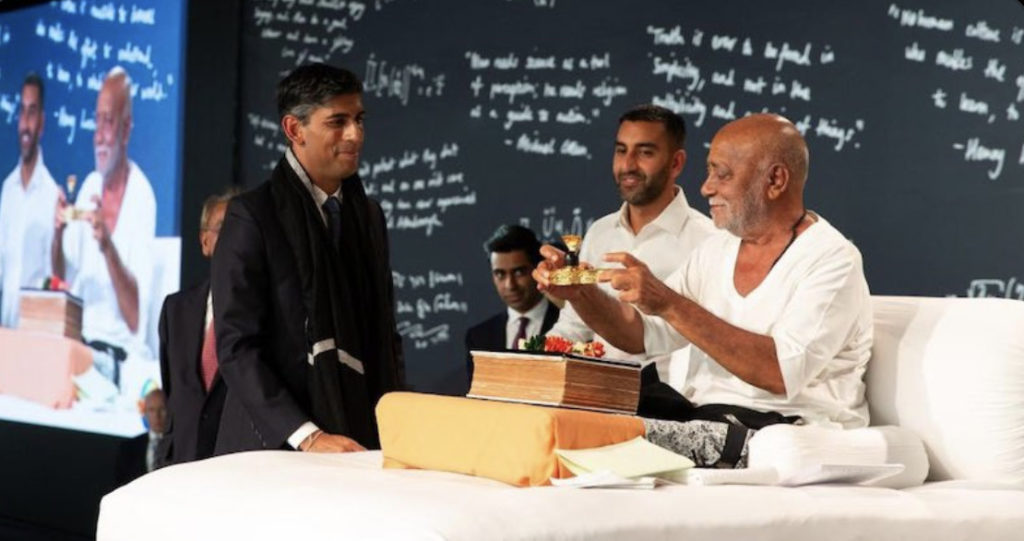
New evidence suggests the world’s largest known asteroid impact structure is buried deep in southeast Australia

0

By Andrew Glikson

Acknowledgment: I’d like to thank my colleague Tony Yeates, who originated the view of the Deniliquin multi-ring structure as an impact structure – and who was instrumental to this work.

In recent research published by myself and my colleague Tony Yeates in the journal Tectonophysics, we investigate what we believe – based on many years of experience in asteroid impact research – is the world’s largest known impact structure, buried deep in the earth in southern New South Wales.

The Deniliquin structure, yet to be further tested by drilling, spans up to 520 kilometres in diameter. This exceeds the size of the near-300km-wide Vredefort impact structure in South Africa, which to date has been considered the world’s largest.

Image: Google Maps

Hidden traces of Earth’s early history

The history of Earth’s bombardment by asteroids is largely concealed. There are a few reasons for this. The first is erosion: the process by which gravity, wind and water slowly wear away land materials through time.

When an asteroid strikes, it creates a crater with an uplifted core. This is similar to how a drop of water splashes upward from a transient crater when you drop a pebble in a pool.

This central uplifted dome is a key characteristic of large impact structures. However, it can erode over thousands to millions of years, making the structure difficult to identify.

Structures can also be buried by sediment through time. Or they might disappear as a result of subduction, wherein tectonic plates can collide and slide below one another into Earth’s mantle layer.

Nonetheless, new geophysical discoveries are unearthing signatures of impact structures formed by asteroids that may have reached tens of kilometres across – heralding a paradigm shift in our understanding of how Earth evolved over eons. These include pioneering discoveries of impact “ejecta”, which are the materials thrown out of a crater during an impact.

Researchers think the oldest layers of these ejecta, found in sediments in early terrains around the world, might signify the tail end of the Late Heavy Bombardment of Earth. The latest evidence suggests Earth and the other planets in the Solar System were subject to intense asteroid bombardments until about 3.2 billion years ago, and sporadically since.

Some large impacts are correlated with mass extinction events. For example, the Alvarez hypothesis, named after father and son scientists Luis and Walter Alvarez, explains how non-avian dinosaurs were wiped out as a result of a large asteroid strike some 66 million years ago.

Uncovering the Deniliquin structure

The Australian continent and its predecessor continent, Gondwana, have been the target of numerous asteroid impacts. These have resulted in at least 38 confirmed and 43 potential impact structures, ranging from relatively small craters to large and completely buried structures.

This map shows the distribution of circular structures of uncertain, possible or probable impact origin on the Australian continent and offshore. Green dots represent confirmed impact craters. Red dots represent confirmed impact structures that are more than 100km wide, whereas red dots inside white circles are more than 50km wide. Yellow dots represent likely impact structures. Andrew Glikson and Franco Pirajno

As you’ll recall with the pool and pebble analogy, when a large asteroid hits Earth, the underlying crust responds with a transient elastic rebound that produces a central dome.

Such domes, which can slowly erode and/or become buried through time, may be all that’s preserved from the original impact structure. They represent the deep-seated “root zone” of an impact. Famous examples are found in the Vredefort impact structure and the 170km-wide Chicxulub crater in Mexico. The latter represents the impact that caused the extinction of the dinosaurs.

Between 1995 and 2000, Tony Yeates suggested magnetic patterns beneath the Murray Basin in New South Wales likely represented a massive, buried impact structure. An analysis of the region’s updated geophysical data between 2015 and 2020 confirmed the existence of a 520km diameter structure with a seismically defined dome at its centre.

The Deniliquin structure has all the features that would be expected from a large-scale impact structure. For instance, magnetic readings of the area reveal a symmetrical rippling pattern in the crust around the structure’s core. This was likely produced during the impact as extremely high temperatures created intense magnetic forces.

A central low magnetic zone corresponds to 30km-deep deformation above a seismically defined mantle dome. The top of this dome is about 10km shallower than the top of the regional mantle.

Magnetic measurements also show evidence of “radial faults”: fractures that radiate from the centre of a large impact structure. This is further accompanied by small magnetic anomalies which may represent igneous “dikes”, which are sheets of magma injected into fractures in a pre-existing body of rock.

This ‘total magnetic intensity’ image of the Deniliquin impact structure portrays its 520km-diameter multi-ring pattern, the central core, radial faults and the location of shallow drill holes. Data from Geoscience Australia, published in Glikson and Yeates, 2022

Radial faults, and igneous sheets of rocks that form within them, are typical of large impact structures and can be found in the Vredefort structure and the Sudbury impact structure in Canada.

Currently, the bulk of the evidence for the Deniliquin impact is based on geophysical data obtained from the surface. For proof of impact, we’ll need to collect physical evidence of shock, which can only come from drilling deep into the structure.

When did the Deniliquin impact happen?

The Deniliquin structure was likely located on the eastern part of the Gondwana continent, prior to it splitting off into several continents (including the Australian continent) much later.

The Deniliquin structure was likely created in eastern Gondwana during the Late Ordovician. Zhen Qiu et al, 2022, CC BY

The impact that caused it may have occurred during what’s known as the Late Ordovician mass extinction event. Specifically, I think it may have triggered what’s called the Hirnantian glaciation stage, which lasted between 445.2 and 443.8 million years ago, and is also defined as the Ordovician-Silurian extinction event.

This huge glaciation and mass extinction event eliminated about 85% of the planet’s species. It was more than double the scale of the Chicxulub impact that killed off the dinosaurs.

It is also possible the Deniliquin structure is older than the Hirnantian event, and may be of an early Cambrian origin (about 514 million years ago). The next step will be to gather samples to determine the structure’s exact age. This will require drilling a deep hole into its magnetic centre and dating the extracted material.

It’s hoped further studies of the Deniliquin impact structure will shed new light on the nature of early Paleozoic Earth.

Andrew Glikson, Adjunct professor, UNSW Sydney

This article is republished from The Conversation under a Creative Commons license. Read the original article.

Support Our Journalism

Global Indian Diaspora needs fair, non-hyphenated, and questioning journalism, packed with on-ground reporting. The Australia Today – with exceptional reporters, columnists, and editors – is doing just that. Sustaining this needs support from wonderful readers like you.

Whether you live in Australia, the United Kingdom, Canada, the United States of America, or India you can take a paid subscription by clicking Patreon. Buy an annual ‘The Australia Today Membership’ to support independent journalism and get special benefits.

“My name is Mohammed, slave of Allah”: Malaysia Airlines grounded at Sydney Airport due to disruptive passenger

0

The Australian Federal Police (AFP ) have responded to an “emergency incident” at Sydney International Airport and arrested a 45-year-old man.

A video has emerged from onboard the plane that clearly shows a man wearing a backpack threatening passengers and staff.

In the video, the man can be seen yelling at cabin crew and passengers in an aisle of the plane:

“My name is Mohammed, slave of Allah. Are you a slave of Allah? Are you? Say it! Say it! Are you a slave of Allah?”

Malaysia Airlines flight MH122, 194 passengers and five crew onboard, was travelling from Sydney to Kuala Lumpur. It departed Sydney Airport at 1.06 pm but was soon forced to turn back due to the disruptive behavior of this passenger at 3.47 pm.

It is reported that the flight was left sitting on the runway for nearly three hours with emergency vehicles nearby.

A Sydney Airport spokesperson told SkyNews.com.au that they are assisting the AFP to manage the incident.

“We are currently supporting emergency agencies in the management of an incident at the airport. The airport is operational with flights arriving and departing. Passengers are encouraged to check directly with their airline regarding the status of their flight.”

About 5.15 pm, the Australian federal police posted to Twitter that its officers were “responding to an emergency incident at Sydney International Airport”.

A spokesperson for the AFP said that they “there is no impending threat to the community” and “the man is expected to be charged later tonight.” AFP will provide an update at an appropriate time.

Support Our Journalism

Global Indian Diaspora needs fair, non-hyphenated, and questioning journalism, packed with on-ground reporting. The Australia Today – with exceptional reporters, columnists, and editors – is doing just that. Sustaining this needs support from wonderful readers like you.

Whether you live in Australia, the United Kingdom, Canada, the United States of America, or India you can take a paid subscription by clicking Patreon. Buy an annual ‘The Australia Today Membership’ to support independent journalism and get special benefits.
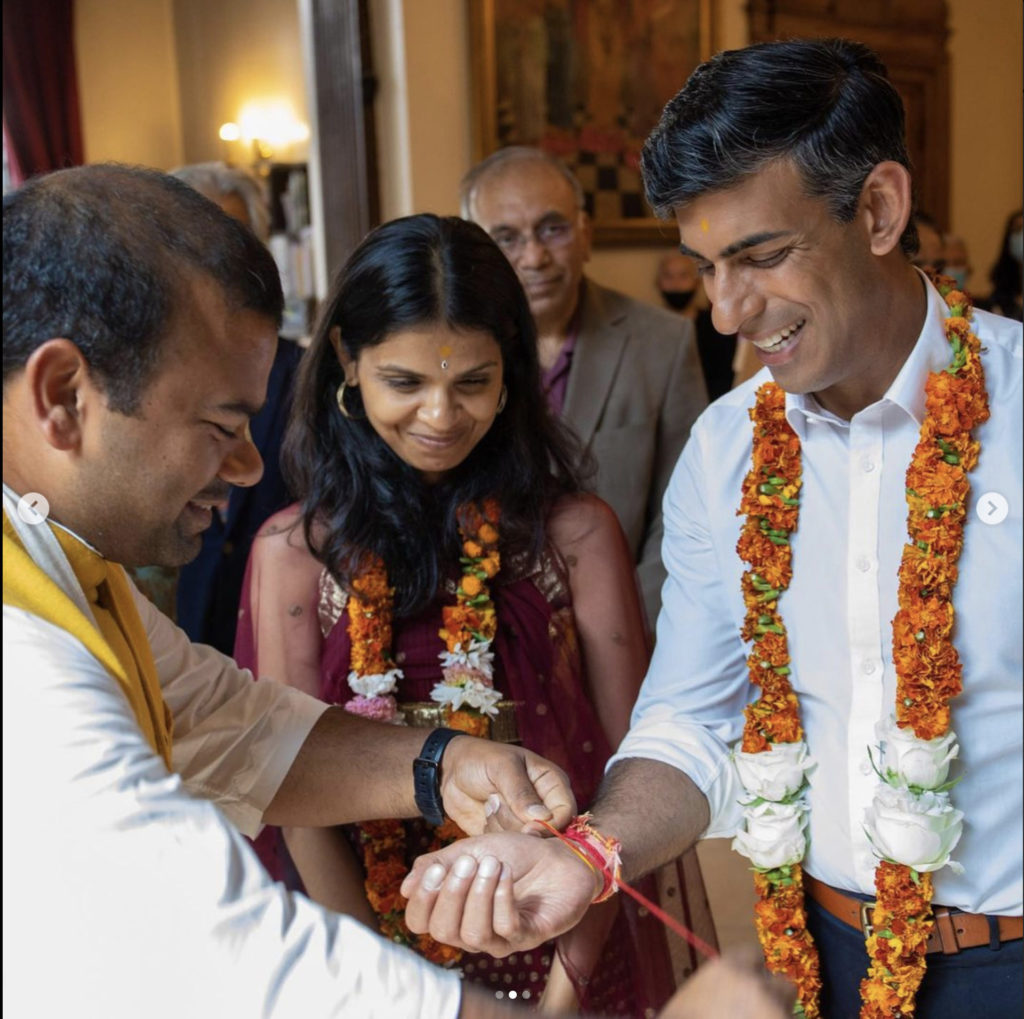
Indian-Australian women ran Sydney’s City2Surf marathon wearing sarees

0

Adding a dash of Indian tadka to the largest fun run in the world, a group of Indian-Australian women took part in City2Surf in Sydney draped in their beautiful six yards. They are all members of Sydney based ‘The Saree Club’.

In an attempt to break stereotypes ten members of The Saree Club took part in this fun run – Ratandeep Kaur, Deepika Gandhi, Aravinda Chaparala, Punita Yadav, Rupa Parthasarathy, Sai Repaka, Manisha Uphadyay, Eshwin Prasad, Deepali Gupta and Winky Gill.

L to R – Deepali, Winky, Dipika, Eshwin, Ratan, Rupa, Sai. Manisha, Aravinda and Punitha

Rupa Parthsarthy was among them. She is the founder of the creative wellness studio ‘Mindkshetra’ This was Rupa’s 2nd City2Surf in a Saree and 4th run overall. Talking about the run she said,

“For me, it’s about challenging stereotypes. And a dedication to my Amma who passed away last year, who loved life. There are a lot of stereotypes when it comes to women, women of colour, sarees, women in fitness, South Asian women who wear sarees you know the list.”

L to R: Aravinda, Ratan, Sai, Eshwin, Rupa, Punitha

The theme was to wear culture as a cape rather than a shackle, and promote ‘Acceptance of culture and inspiring change through fitness’. And embracing a Saree, and wearing it as a cape is part of a personal exploration journey for me, and a way to challenge the perception of women who wear sarees” added Rupa.

Another member of The Saree Club who took part in the run was Ratandeep Kaur:

“I am participating in Saree for City2Surf for the first time as I want to give a challenge to myself that if we have the willingness to do and are committed we can surely walk in a saree for 14 km or maybe more than that,” said Ratandeep. She added “Never Give Up. Nothing is impossible as the word impossible itself has possible in it.

Ratandeep Kaur and Sai Repaka

Eshwin Prasad said that she wanted to do City2Surf in the past but never got to it.

“Doing it in saree is exciting as I love wearing saree and I find saree a versatile wear which is not restricted to certain events only.”.

Sai Repaka works in child care and has been in Sydney for 24 years, she said,

“Been in Sydney for 24 years but never did the City2Surf. Now I feel it was meant to be done in a saree with my saree sisters…I want to show my grand children very proudly this moment.”

Winky Gill works in the IT sector, talking about the run she said,

“In India I had participated in marathons when my kids were quite young and i remember the thrill and excitement. So last year when I got the opportunity to participate in City2Surf and that too in my favourite attire, the saree, I didnt think twice. The whole experience was awesome and that motivated me to participate again this time.”

Punita Yadav is an athlete and was a state champion for 4 years in Gujarat during school days in India. She says that finishing this walk has reinforced her belief in herself and her capabilities.

“In 2022 I was recovering from a backache episode and I set a challenge for myself to walk the City2Surf with my Sarees sakhis. Although I signed up for City2Surf with an intention to drape a saree at an event, it was also a personal challenge to myself to walk that distance. 

Starting in 1971 with just over 2000 participants, City2Surf has become the world’s largest fun run attracting more than 80,000 participants from across the globe.

‘The Saree Club’ founded by Indian-Australian entrepreneur, Poornima Menon, is a network of women who share their love for sarees through stories, culture, traditions and memories. Along the way they also empower and educate each other on social issues.

Support Our Journalism

Global Indian Diaspora needs fair, non-hyphenated, and questioning journalism, packed with on-ground reporting. The Australia Today – with exceptional reporters, columnists, and editors – is doing just that. Sustaining this needs support from wonderful readers like you.

Whether you live in Australia, the United Kingdom, Canada, the United States of America, or India you can take a paid subscription by clicking Patreon. Buy an annual ‘The Australia Today Membership’ to support independent journalism and get special benefits.
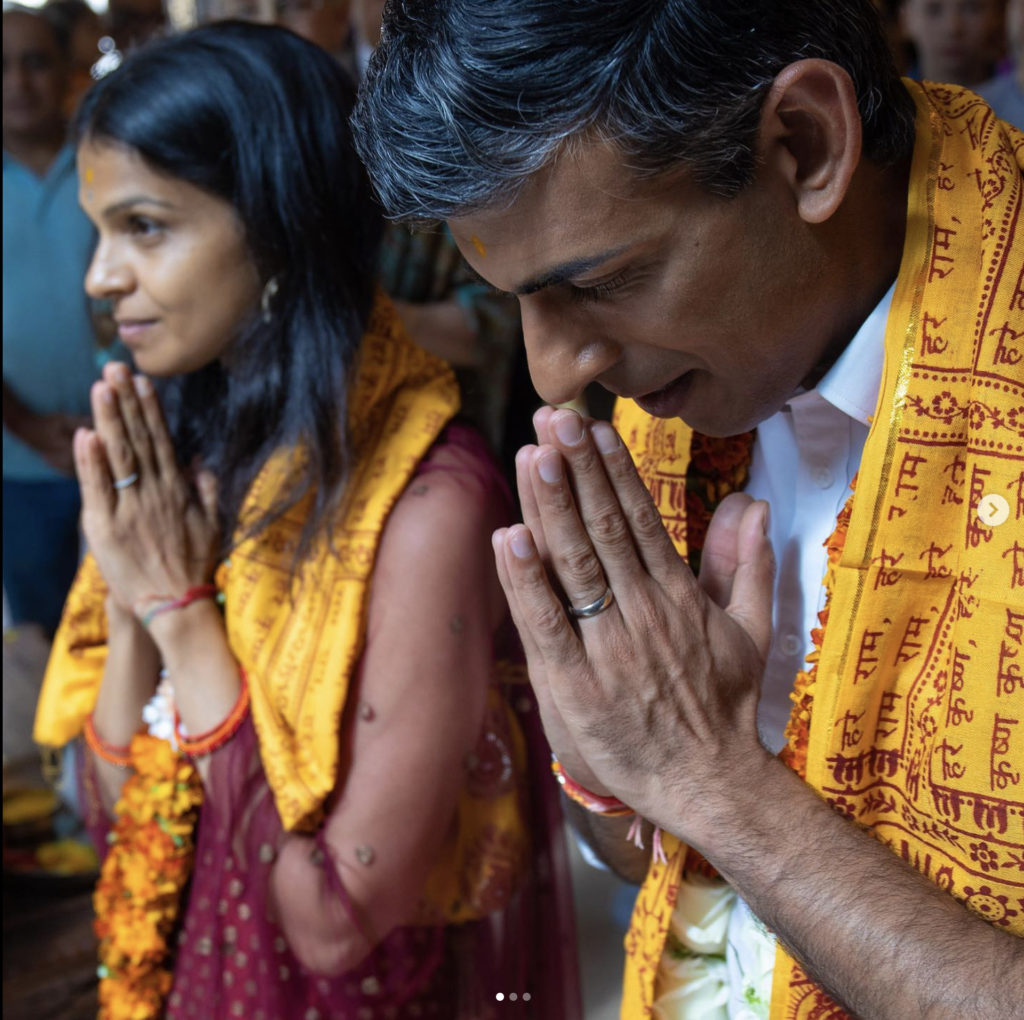
Seeing both poles of Australia and the Pacific Islands

0

By Shailendra Bahadur Singh

Two studies, the 2023 Lowy Institute Poll and a 2020 Whitlam Institute report, provide interesting insights on two interrelated issues — how Australians perceive their country’s role in the Pacific, and how Pacific Islanders view Australia in relation to development and diplomacy in the region.

The Lowy poll is a national survey of 2077 Australians, while the Whitlam report includes focus groups and key informant interviews with 150 participants in Fiji, the Solomon Islands and Vanuatu.

In the Whitlam report, ‘the Pacific’ refers to the region known as the South West Pacific or Melanesia, Micronesia and Polynesia. The authors acknowledge that the results of the report cannot be generalised across the region, although they provide grounds for informed assumptions and further research. There are also limitations in comparing the two studies’ quantitative and qualitative data, but when examined collectively, they can act as a guideline on views on common issues, in spite of the changing nature of the Australia–Pacific Islands relationship.

Barely a month after the release of the Lowy report in June 2023, there were renewed concerns in Canberra and Washington about Solomon Islands Prime Minister Manasseh Sogavare’s closeness to Beijing. His trip to the Chinese capital in July 2023 was his second in four years, and his first since a security deal with China upset Australia and the United States. The latest trip culminated with the opening of the Solomon Islands embassy in Beijing, and the signing of nine agreements, to the consternation of Canberra and Washington.

The seesawing nature of the Australia–Pacific relationship is reflected in the Lowy and Whitlam report findings. Nearly half of the Lowy poll respondents believe that relations have not noticeably changed, as opposed to a quarter who see improvements and a lower number who see deterioration. The Whitlam report highlights disenchantment with Australia’s position on climate change, with feelings that Canberra is yet to ‘fully embrace being a member of the Pacific family’.

These sentiments become evident when Pacific Island leaders express their disapproval of Australia. At the 2019 Pacific Islands Forum (PIF) talks on climate change, Tuvalu’s former prime minister Enele Sopoaga accused Canberra of a ‘neo-colonial’ attitude. In Beijing in July 2023, Sogavare told Chinese media that the Pacific is not the backyard of any country, but is comprised of sovereign nations capable of making their own decisions.

Despite leadership-level scuffles, both reports demonstrate that respondents appreciate Australia–Pacific ties. The Lowy poll shows that most Australians value the Pacific relationship, with overwhelming support for aid to fund disaster relief (92 per cent), long-term economic development (83 per cent), COVID-19 vaccines (80 per cent) and climate change action (76 per cent).

Similarly, the Whitlam Institute report indicates that Pacific islanders value the economic, social, cultural and sporting links with Australia. This is synonymous with Australia’s privileged position in the region as the leading aid donor, security partner and PIF member.

China’s growing Pacific footprint looms large on Australian minds and is shaping citizen attitudes — 84 per cent of respondents favour using aid to counter Beijing’s activities in the region. Yet Pacific respondents see increased geostrategic attention as an opportunity to engage with non-traditional partners like China to pursue their development needs.

This view reflects Pacific leaders’ ‘friend to all, enemy to none’ stance — to engage all potential partners on equal terms, while sometimes pitting them against one another for greater leverage in negotiations. In 2022 alone, Pacific leaders hosted the US Secretary of State Antony Blinken, Chinese Foreign Minister Wang Yi and Australian Foreign Minister Penny Wong to firm up various agreements.

China’s competition with the United States and its uncompromising stance on Taiwan are also weighing on Australian minds. Over 60 per cent of Australians told Lowy they believe that a US–China war over Taiwan is a critical threat. These concerns have nearly doubled compared to 2020 and are apparently fuelled by increased Chinese aggression toward Taiwan.

The prospect of a future conflict seems to have brought Australians closer to the United States — 82 per cent of Lowy’s respondents see the relationship as important for Australia’s security, though this is down 5 per cent from the record high in 2022.

Ironically, Australia and the United States are facing counter-allegations of militarising the region with the Manus Island Naval Base in Papua New Guinea (PNG), which appears to give the US military ‘unrestricted access to the territory of PNG’.

The Lowy poll’s 67 per cent approval for AUKUS could further indicate uneasiness about a US–China conflict, even as analysts observe a ‘limited thaw’ between the adversaries. AUKUS leaders touted the pact as a deterrence against Chinese aggression — half of Australians believe it will make Australia safer.

Some Pacific leaders were initially against AUKUS, alleging a lack of consultation and breaching the non-nuclear proliferation ‘Treaty of Rarotonga’, but were appeased by US assurances that the treaty would be respected.

On climate change, a slim majority (56 per cent) of Australians view global warming as a serious problem needing immediate action, aligning with Pacific sentiments.  The Albanese government took a progressive stance on climate change by declaring a ‘climate emergency’ shortly after taking office in 2022. Pacific leaders have called on Australia to raise its climate ambitions even further if it is to retain its favoured security position in the region.

The delicate nature of Australia–Pacific ties reflects the continuous efforts needed to maintain the relationship, especially with China looming in the background.

This article was first published in East Asia Forum and has been republished here with the kind permission of the editor(s).

Contributing Author: Dr Shailendra Bahadur Singh is Associate Professor of Pacific Journalism at the University of the South Pacific, Fiji. He was a 2022 Pacific Research Fellow at the Australian National University.

Disclaimer: The opinions expressed within this article are the personal opinions of the author. The Australia Today is not responsible for the accuracy, completeness, suitability, or validity of any information in this article. All information is provided on an as-is basis. The information, facts, or opinions appearing in the article do not reflect the views of The Australia Today and The Australia Today News does not assume any responsibility or liability for the same.

Support Our Journalism

Global Indian Diaspora needs fair, non-hyphenated, and questioning journalism, packed with on-ground reporting. The Australia Today – with exceptional reporters, columnists, and editors – is doing just that. Sustaining this needs support from wonderful readers like you.

Whether you live in Australia, the United Kingdom, Canada, the United States of America, or India you can take a paid subscription by clicking Patreon. Buy an annual ‘The Australia Today Membership’ to support independent journalism and get special benefits.
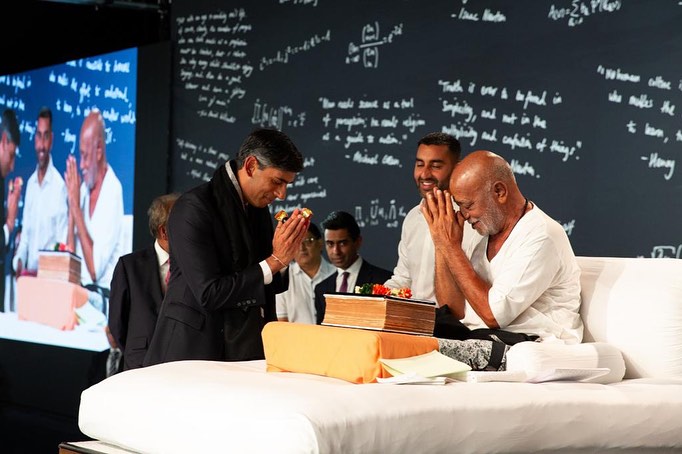
AFP Forensics takes over Questacon for National Science Week 2023

0

The AFP is helping launch National Science Week 2023 by taking over Questacon to showcase the agency’s world-class forensic capabilities to budding scientists young and old.

The sanctioned take over of the National Science and Technology Centre will be led by AFP Chief Scientist Dr Simon Walsh and the AFP Forensics team.

Dr Walsh will oversee the installation of AFP demonstrations at Questacon including facial identification, fingerprint matching, crime scene investigations and digital forensics.

AFP Forensics members will share their expertise at the demonstrations, which were inspired by the National Science Week theme of ‘Innovation: Powering Future Industries’.

Budding scientists visiting Questacon are encouraged to become AFP forensic recruits as part of the ‘special junior forensic investigator’ program and navigate their way across various activities.

AFP Chief Scientist Dr Simon Walsh said the National Science Week event was an important opportunity to educate, encourage and inspire young children to embrace their inner ‘forensic scientist’.

“National Science Week is an excellent opportunity for the AFP to not only celebrate the work we undertake in this space, but also to inspire a new generation of forensic and technology experts,” he said.

“Together with Questacon we have given aspiring mini scientists a hands-on experience and opportunity to see how law enforcement uses science and technology to investigate and combat crime.”

Details about some of the cutting-edge AFP capabilities include:

Facial identification: involves a variety of methods forensic scientists use to identify a person, including the use of forensic artists, facial recognition and facial image-comparison specialists. AFP Forensics members use facial identification images or ‘face-fits’, along with photo boards, image progressions and craniofacial reconstructions to assist with this process.

Fingerprint matching: used to establish the identity of a person and has been used since the early part of the 20th century. Forensics can use inked or digital fingerprints to confirm the identity of a person.

Crime scene forensics: involves the collection, examination and retrieval of physical evidence at the scene of an incident. 

Digital forensics: assists investigators with the identification of digital evidence, along with locating information and data stored on devices.

National Science Week is an annual celebration of science and technology, held each August. This year it will feature more than 1000 events across Australia.

Support Our Journalism

Global Indian Diaspora needs fair, non-hyphenated, and questioning journalism, packed with on-ground reporting. The Australia Today – with exceptional reporters, columnists, and editors – is doing just that. Sustaining this needs support from wonderful readers like you.

Whether you live in Australia, the United Kingdom, Canada, the United States of America, or India you can take a paid subscription by clicking Patreon. Buy an annual ‘The Australia Today Membership’ to support independent journalism and get special benefits.
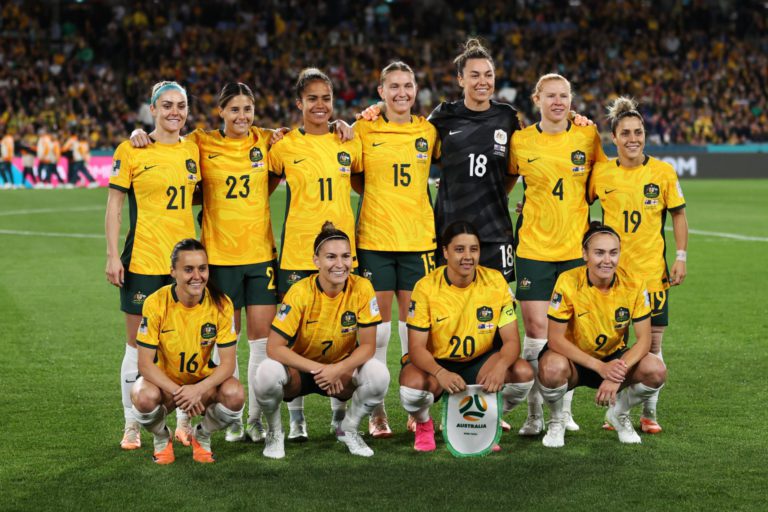
From handing out their own flyers, to sell-out games: how the Matildas won over a nation

0

By Fiona Crawford

As the Matildas prepare for their 2023 FIFA Women’s World Cup sudden-death quarter final against France, they have become the hottest sporting property in the country. For example, formerly uninterested major media just days ago hired a helicopter to spy on one of the team’s training sessions.

The expensive, paparazzi-style move was designed to gather exclusive footage of the team, particularly of injured Matildas captain Sam Kerr.

That conservative media was going to such lengths to gain footage of the team speaks volumes of the starkly different landscape the current Matildas are operating in, and the evolution of a team that’s gone from few resources and relatively anonymity to equal pay and national treasure status.

No longer an afterthought

More people watched the Matildas’ Round of 16 match against Denmark on Channel Seven, the highest rating show of the year to date, than watched the men’s NRL and AFL grand finals last year.

Channel Seven is also delaying Saturday’s news bulletin to broadcast the Matildas’ quarter final, while the AFL will be broadcasting the match in the stadium before the men’s West Coast Eagles versus Fremantle derby.

This is all particularly interesting given FIFA had to castigate broadcasters for undervaluing the broadcast rights in the tournament lead-up.

What’s more, Matildas jerseys are outselling the Socceroos’ jerseys by two to one. It’s worth remembering they were unavailable to buy until recent years because manufacturers didn’t deem there to be a market for them.

More than 1.7 million tickets have been sold, exceeding FIFA’s stretch target of 1.5 million. And the total crowd figure record of 1,353,506 set in 2015 had been surpassed with 12 games to spare.

That’s a far cry from the Matildas’ early years, when players had to produce and hand out flyers to try to attract people to watch their games, or phone television stations and beg them to broadcast matches. When the team travelled to the 2003 world cup, not a single journalist turned up to the airport press conference.

It’s also quite the contrast from the traditional media coverage approach that relegates women’s sport to an afterthought. A 30-year study of women’s sports coverage, published in 2021, determined major media generally adopt a “one and done” approach: a box-ticking exercise, providing a token women’s sports story before a succession of in-depth men’s sports stories.

So, how did we get here?

It was 1988 when the intrepid Matildas ventured out to their inaugural “world cup” – a pilot tournament FIFA only staged after concerted pressure from other organising bodies and women footballers themselves.

There were some significant changes considered or implemented – ones that would not have been tabled for the men’s game. Matches were truncated from 90 to 80 minutes; there was some patronising discussion of whether women would play with a smaller ball; and with the tournament absent any true FIFA badging, the players had to pay $850 each for the privilege of participating. They pulled that fee together by fundraising through lamington drives, car washes, and casino nights.

Still, the Australian team quickly made history by defeating Brazil in an upset victory in the tournament’s first match, setting the tone for an upwards trajectory.

However, the 1995, 1999, and 2003 tournaments were not, by the Matildas’ own standards, considered breakout successes. A harsh red card for Sonia Gegenhuber in the team’s first group-stage match against Denmark in 1995 cruelled the team’s chances from the outset. And 1999 saw Alicia Ferguson awarded the fastest red card in history for an ill-timed tackle two minutes into the game against China.

The Matildas’ sustained upward course arguably began in 2007. The World Cup that year was the first womens’ tournament for which SBS broadcast all the games. It also became the first time the Matildas progressed to the knockout rounds.

Although laundry and internet costs weren’t yet covered, that era also marked the beginning of the players receiving (albeit nominal) daily allowances and playing contracts of up to approximately A$10,000. Administrators were able to leverage that 2007 success into the establishment of the W-League (now renamed the A-League Women’s), the domestic semi-professional football league that helped the Matildas become the first Australian team (women’s or men’s) to win the Asian Cup. It’s also a development pathway for the current Matildas.

2011 marked the emergence of the Matildas’ “golden generation”, with then-youthful players Caitlin Foord and Sam Kerr attending their first Women’s World Cup.

All the focus has been on Kerr in recent years, but at the time, Foord was tipped to be the player to watch, and was named the tournament’s best young player.

Striking for pay parity

To understand the groundbreaking success the Matildas are now experiencing, we must look at the lonely stand they took across the road from governing body Football Federation Australia’s office in 2015.

They were off contract, unpaid, and without medical insurance. Now lapsed, they had been on contracts of around A$22,000 a year: in the ballpark of Australia’s poverty line.

So the Matildas went on strike for two months to draw attention to the imperiled nature of their footballing careers, which demanded full-time, elite-athlete commitment and results, but with part-time, amateur pay.

The headlines that followed encapsulated the exasperation many felt (and still feel) at the inequity women athletes experience. This included the Junkee headline

The Matildas Have Gone on Strike Because, Oh My God Can We Just Pay Them Properly?

The Matildas achieved pay parity with the Socceroos in 2019, but the groundwork for that achievement was laid with that 2015 strike.

The year 2017 also marked an important moment in the team’s evolution. It was when the team sold out Penrith Stadium with a then-record crowd of about 17,000.

The crowd figure signalled there was an engaged audience and market there – it had just been under-catered for.

Fast forward to 2019. Off-pitch distractions imperilled the Matildas’ group-stage world cup results. The team was steered through the tournament by temporarily installed coach Ante Milicic, after incumbent coach Alen Stajcic had been sacked for reasons still not entirely clear.

With the rise of European nations that had invested heavily in women’s football, Australian football had stood still. The Matildas’ opening loss against debutantes Italy put the team under pressure. However, the players then produced the “Miracle of Montpellier”, winning 3-2 against superstars Brazil to salvage their tournament – before being bundled out by Norway on penalties in the round of 16.

This year, the media’s initial focus was on Kerr’s troublesome calf and then late substitution decisions by coach Tony Gustavsson. Under pressure following a shock loss to minnows Nigeria, the Matildas recorded a resounding 4–0 victory over reigning Olympic champions Canada.

Now, in a few pressure-filled hours, Australia’s most successful football team have the potential to make history: to progress to the semi finals for the first time ever.

A win would see Matildas’ media coverage and fandom enter uncharted, euphoric territory. But with record crowds, viewership, and merchandise sales, and with several of their players now household names, in many ways the Matildas will already have won before they even set foot on the pitch.

Fiona Crawford, Adjunct Lecturer at the Centre for Justice, Queensland University of Technology

This article is republished from The Conversation under a Creative Commons license. Read the original article.

Support Our Journalism

Global Indian Diaspora needs fair, non-hyphenated, and questioning journalism, packed with on-ground reporting. The Australia Today – with exceptional reporters, columnists, and editors – is doing just that. Sustaining this needs support from wonderful readers like you.

Whether you live in Australia, the United Kingdom, Canada, the United States of America, or India you can take a paid subscription by clicking Patreon. Buy an annual ‘The Australia Today Membership’ to support independent journalism and get special benefits.

Rani, Kartik, Bhumi, Karan, Vijay and Mrunal win top honours at Indian Film Festival of Melbourne, check all winners

0

‘Pathaan’ has brought waves of happiness among Shah Rukh Khan’s fans once again. The film bagged the People’s Choice Award at the 14th edition of the Indian Film Festival of Melbourne (IFFM). 

Helmed by Siddharth Anand, ‘Pathaan’ starred SRK alongside Deepika Padukone and John Abraham. It has broken several box-office records. It is the highest-grossing film worldwide in the history of Hindi cinema with over Rs 1050 crore gross at the global box office. 

Coming back to IFFM Awards night, it saw honouring the remarkable talents of the Indian film fraternity, spanning across movies and OTT series.

Actor Rani Mukerji was named Best Actor for her performance in ‘Mrs Chatterjee Vs Norway’. Actor Mohit Agarwal took home the Award for Best Performance (Male) in Film for ‘Agra’.

Upon receiving the award, Rani said, “I feel incredibly proud and grateful that Mrs Chatterjee Vs Norway has been embraced and loved by audiences worldwide. It’s a universal story that showcases the power of a mother’s Shakti.”

“Winning the Best Actress Award is a true honour, and I sincerely thank everyone for their applause and appreciation of my performance.”

She added, “As I have always mentioned, receiving an award is like receiving love and adulation from the people who watch my movies.”

“This Best Actress Award for Mrs Chatterjee Vs Norway holds a special place in my heart, as I receive it here in Melbourne at IFFM and it is my first award for the film.”

“The topic we believed in from the beginning has proved its global impact, emphasising once again that the language of good cinema transcends all boundaries,” Mukherji added.

Filmmaker Karan Johar was at the Indian film festival of Melbourne for completing 25 years in the Indian film industry. He received a huge round of applause for his immense contributions to the field of entertainment.

2023 has been going great for filmmaker Karan Johar so far. This year he returned to director’s chair after six years and that too with a bang. 

His latest release ‘Rocky Aur Rani Kii Prem Kahaani’ (RRKPK) received a thunderous response from the audience. The film entered the Rs 100 crore club recently.

On receiving this special honour and especially for the love coming his way post ‘RRKPK’ release, Karan took to Instagram and expressed his gratitude. 

He wrote, “These past few days I’ve just been feeling an overwhelming sense of love and gratitude from all around!!! As I found myself on stage last night halfway across the world in Melbourne – I felt grateful for the magic of cinema. Thank you @iffmelbourne for honouring & celebrating my 25 years as a director. Thank you @mitulange , your love & compassion will forever etch a mark on my heart. All my love.”

Bhumi Pednekar was honoured with the Disruptor of the Year award.

Taking to Instagram, Bhumi shared a string of pictures from the event which she captioned, “Last night went from winning an award to eating the best apple pie. Thank you Melbourne and IFFM for the love.”

Kartik Aaryan was also felicitated with ‘The Rising Global Superstar of Indian Cinema’ award. 
On receiving this special award, Kartik took to Instagram and expressed his gratitude.

Sharing a video from the event he wrote, “Rising Global Superstar of Indian Cinema. Receiving this prestigious award far away from home, my country… surely makes me feel proud but it also brings a lot more responsibility to do better work and to bring more glory to Indian cinema.”

“This award belongs to all my fans and well-wishers around the world who have showered me with their immense love unconditionally. Thank you, Australia for making my first visit to the country special and unforgettable. Will be back soon! Thank you @iffmelbourne.”

His latest release ‘Satyaprem ki Katha’ received a positive response from the audience.
Earlier, he also shared his enthusiasm for being part of IFFM, where he will be honoured with ‘The Rising Global Superstar of Indian Cinema’ award.

“I am truly thrilled to be a part of the Indian Film Festival of Melbourne. This is my first time in Melbourne and to be here for a screening of ‘Satyaprem Ki Katha’ on the day I just landed has been amazing. I’m overwhelmed with all this love and really means a lot that everyone is here. There’s a feeling of togetherness and oneness here,” he added.

Kartik said, “I am deeply honoured and grateful to the Victorian Government and the festival for this prestigious award and humbled to be celebrated at the 14th Indian Film Festival of Melbourne.

Diversity in Cinema Award – Mrunal Thakur

Mrunal Thakur came to Melbourne for the second time to attend IFFM. However, this time she has turned herself into a film superstar in making.

Mrunal took to social media to express her feelings.

“Life truly comes a full circle. My journey in films started in Melbourne and I’m back here again, from opening the festival to now getting this recognition and award, I’m overwhelmed.”

“I’m grateful to the festival for this award of Diversity in Cinema and the best film award for Sita Ramam. Storytelling should have no restrictions of language and cultures, it should be free of such restrictions.

This has inspired me with fresh vigour to do work that makes a difference, and inspires.

Super Excited for what the future holds in this incredible journey of cinema.

Thank you IFFM, thank you Mitu, thank you Melbourne!”

Best Performance (MALE) in a Series
Versatile actor Vijay Varma received this for his outstanding performance in Dahaad.

He wrote on Instagram,

“Anand Swarnakar got me an award 😈
I share this with my #Dahaad team @reemakagti1 @ruchoberoi @aslisona @gulshandevaiah78 @shah_sohum @excelmovies @tigerbabyofficial @primevideoin ❤️
Thank you @iffmelbourne
And my team who helped me look sharp on the night”

While ‘Sita Ramam’ was announced the Best Film, ‘Agra’ was declared the Best Indie Film. 

Here is the complete list of winners:

Jury Awards

Best Documentary
To Kill A Tiger
Best Indie Film
Agra
Best Performance in Film (MALE)
Mohit Agarwal for Agra
Best Performance in a film (FEMALE)
Rani Mukerji for Mrs Chatterjee Vs Norway
Best Director
Prithvi Konanur – Hadinelentu (Seventeeners)
Best Film
Sita Ramam
Best Performance (MALE) in a Series
Vijay Varma for Dahaad
Best Performance (FEMALE) in a series
Rajshri Deshpande for Trial By Fire
Best Series
Jubilee
Best Short Film – People’s Choice
Connection Kya Hain by Nilesh Naik
Best Short Film – Australia
Home by Mark Russel Bernard
Honorary Awards
Equality in Cinema Awards to the movie “Darlings”

People’s Choice Award To Pathaan
Award to Karan Johar for his 25 years as a filmmaker
Rising Global Superstar of Indian Cinema – Kartik Aaryan
Diversity in Cinema Award – Mrunal Thakur
Disruptor Award – Bhumi Pednekar
Rainbow Stories Award to Onir for Pine Cone 

IFFM 2023: Abhishek, Saiyami starrer ‘Ghoomer’ receives standing ovation at Melbourne World Premiere

0

Actors Abhishek Bachchan and Saiyami Kher starrer sports drama film ‘Ghoomer’ received a standing ovation at the opening night of the Indian Film Festival of Melbourne (IFFM) 2023.

‘Ghoomer’ promises to be a cinematic masterpiece that intertwines emotion, drama, and sheer entertainment and is a befitting inspiring human triumphant tale against all odds.

As the curtains rose and the film was showcased for the very first time, the audience was enthralled by the magic that unfolded on screen and the film received thunderous applause and a standing ovation.

Abhishek said at the opening night, “I’m grateful for this platform for the world premiere of our film. Ghoomer is a labour of love. This has been Balki’s dream for a long time.

“I don’t think there’s any better way of giving back to a game you love so passionately, than by making a film dedicated to it”.

The star-studded event witnessed an overwhelming crowd, both from the film fraternity and enthusiastic fans alike with the likes of Kartik Aaryan, Vijay Varma, Mrunal Thakur, Anurag Kashyap, Rajshri Deshpande, Aparshakti Khurana, Vikramaditya Motwane joined in.

Helmed by the acclaimed director R Balki, the film stars Abhishek Bachchan, Saiyami Kher, Shabana Azmi and Angad Bedi in the lead roles.

The film is all set to hit the theatres on August 18.

Abhishek portrays the character of a coach, whose life takes an unexpected turn when he crosses paths with a paraplegic sportsperson, played by the brilliant Saiyami Kher. Their journey together unfolds against societal challenges and personal struggles, all while guided by director R. Balki’s distinctive storytelling prowess. 

Support Our Journalism

Global Indian Diaspora needs fair, non-hyphenated, and questioning journalism, packed with on-ground reporting. The Australia Today – with exceptional reporters, columnists, and editors – is doing just that. Sustaining this needs support from wonderful readers like you.

Whether you live in Australia, the United Kingdom, Canada, the United States of America, or India you can take a paid subscription by clicking Patreon. Buy an annual ‘The Australia Today Membership’ to support independent journalism and get special benefits.

Japinder Sandhu recognised with Point Cook Fire Brigade Champion Firefighter Award

0

Japinder Sandhu has been recognized with the 2022-23 Point Cook Fire Brigade Champion Firefighter Award for his contributions to Country Fire Authority (CFA).

In a statement, Mr Sandhu said:

“A big thanks to my family, friends, and brigade members as achieving this milestone wasn’t possible without your continuous support.”

Mr Sandhu has over 18 years of extensive IT experience in a variety of market sectors and is presently running his own IT Consultancy Business. 

Image: Japinder Sandhu (Source: LinkedIn)

During the 2019/2020 bushfire crisis, Mr Sandhu visited Bairnsdale to provide support for the bushfire victims by organising and running food supply trips and delivering critically needed supplies to a vulnerable community. Here, he met CFA volunteer firefighters and observed their contribution to the community.

“I always shared the experience of my stay in Bairnsdale and meeting the brave firefighters with my son and one day he questioned me “Dad why can’t you be a firefighter?” and my answer to him was “Son its not easy to be a firefighter, you need have a lot of responsibility and courage to be a firefighter.” And he looked sharply into my eyes and said “Well if they can do it what’s stopping you?” and that’s it, within the next 5 minutes, I opened the CFA website and applied for the CFA volunteer firefighter position. Today my Son and the rest of my family, friends, and relatives are proud of me.”

Mathew Hilakari MP observed while presenting the award to Mr Sandhu:

“Was an honour to present the Champion Fire Fighter Award to Japinder Sandhu. Selfless service deserves our thanks everyday, but this day was particularly special.”

On 2 September 2023, Mr Sandhu will climb 28 floors in 25kg of kit to help raise $700,000 to support Lifeline, Peter MacCallum Cancer Foundation, and 000Foundation.

Apart from CFA, Mr Sandhu is also a Volunteer Team Manager of the under-10 boys team at Footscray Hockey Club, a Volunteer Project Coordinator for United Sikhs and Lets Feed, and works very closely with Uniting Wyndham and Werribee.

Support Our Journalism

Global Indian Diaspora needs fair, non-hyphenated, and questioning journalism, packed with on-ground reporting. The Australia Today – with exceptional reporters, columnists, and editors – is doing just that. Sustaining this needs support from wonderful readers like you.

Whether you live in Australia, the United Kingdom, Canada, the United States of America, or India you can take a paid subscription by clicking Patreon. Buy an annual ‘The Australia Today Membership’ to support independent journalism and get special benefits.
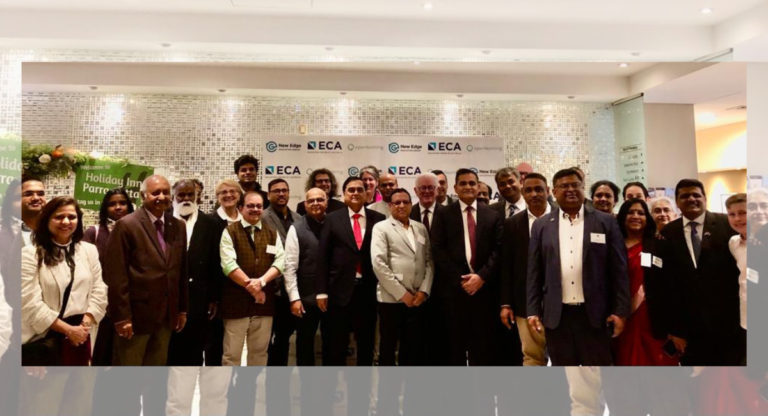
Australian mining company’s assets worth $9.3 million confiscated under alleged foreign bribery investigation

0

Oz Minerals Ltd self-reported to the AFP that employees of Oxiana (Cambodia) Limited, a foreign subsidiary of Oxiana Limited that later became a part of the Oz Minerals group, may have bribed foreign officials to obtain mining rights in Cambodia between November 2006 and October 2009.

The company cooperated with the AFP criminal investigation, which was finalised in September 2021. A decision was made by the Commonwealth Director of Public Prosecutions (CDPP), in accordance with the Prosecution Policy of the Commonwealth (Prosecution Policy), not to initiate criminal proceedings in this matter. 

In making its decision, the CDPP had regard to all relevant public interest factors contained in the Prosecution Policy many of which are referenced in the AFP and CDPP’s Best Practice Guideline on Self-Reporting of Foreign Bribery and Related Offending by Corporations.

The AFP and the company agreed, pursuant to a settlement entered into on 28 April 2023, that benefits which may have been derived from the conduct that led to the acquisition of the mining rights, owned by the controlled subsidiary which has since been sold, should be confiscated.

In the Supreme Court of Victoria on 30 May 2023, the AFP-led Criminal Assets Confiscation Taskforce (CACT) sought, and was granted consent orders, under the Proceeds of Crime Act 2002.

The consent orders provide for:

  • a payment of a pecuniary penalty of $3.65 million;
  • forfeiture of $5.71 million received by the company pursuant to the sale agreement (an immediate total of $9.36 million); and
  • forfeiture of all future right and entitlement to all ongoing payments to the company pursuant to the sale agreement, as revised. The Official Trustee in Bankruptcy, represented by the Australian Financial Security Authority, will hold responsibility for receipt of these future payments on behalf of the Commonwealth. 

AFP Commander Economic, Corporate Crime and Corruption Christopher Woods said when the company changed its personnel and governance systems, it identified the conduct which could amount to offences, and worked with the AFP to ensure its investigation could proceed.

“The company’s cooperation went beyond mere acquiescence in the investigation, and it agreed to provide future cooperation if required,’’ Commander Woods said. “The company has taken significant steps to remediate and avoid a recurrence of similar kinds of conduct to the alleged offending. Given the level of cooperation and remediation shown by the company in this case, the AFP supported the company’s submission to the CDPP that it not be prosecuted on public interest grounds”. 

General Counsel Criminal Assets Litigation at the AFP – Andrew Hanger said “even with a high level of cooperation, companies should not be allowed to retain benefits derived from unlawful activity or which are the proceeds of crime. The AFP led CACT is ensuring that companies relinquish benefits derived from this kind of conduct.”

The AFP encourages companies to self-report foreign bribery and related offences. Criminal and/or civil action under the Proceeds of Crime Act 2002 (Cth) is considered through the AFP and CDPP’s Best Practice Guideline on Self-Reporting of Foreign Bribery and Related Offending by Corporations.

This is the first concluded matter to have involved application of the Best Practice Guideline. The Best Practice Guideline was introduced in 2017 in response to a recommendation of the OECD Working Group on Bribery which monitors compliance with the OECD Convention on Combatting Bribery of Foreign Public Officials in International Business Transactions.

The CACT brings together the resources and expertise of the AFP, Australian Taxation Office, Australian Criminal Intelligence Commission, AUSTRAC and Australian Border Force.

The CACT traces, restrains and confiscates benefits and property derived from unlawful conduct.

Funds confiscated under the Proceeds of Crime Act are deposited into the Confiscated Assets Account, which is managed by the Australian Financial Security Authority on behalf of the Commonwealth. The funds can be invested in programs that benefit the community, such as crime prevention or diversion programs.

Support Our Journalism

Global Indian Diaspora needs fair, non-hyphenated, and questioning journalism, packed with on-ground reporting. The Australia Today – with exceptional reporters, columnists, and editors – is doing just that. Sustaining this needs support from wonderful readers like you.

Whether you live in Australia, the United Kingdom, Canada, the United States of America, or India you can take a paid subscription by clicking Patreon. Buy an annual ‘The Australia Today Membership’ to support independent journalism and get special benefits.
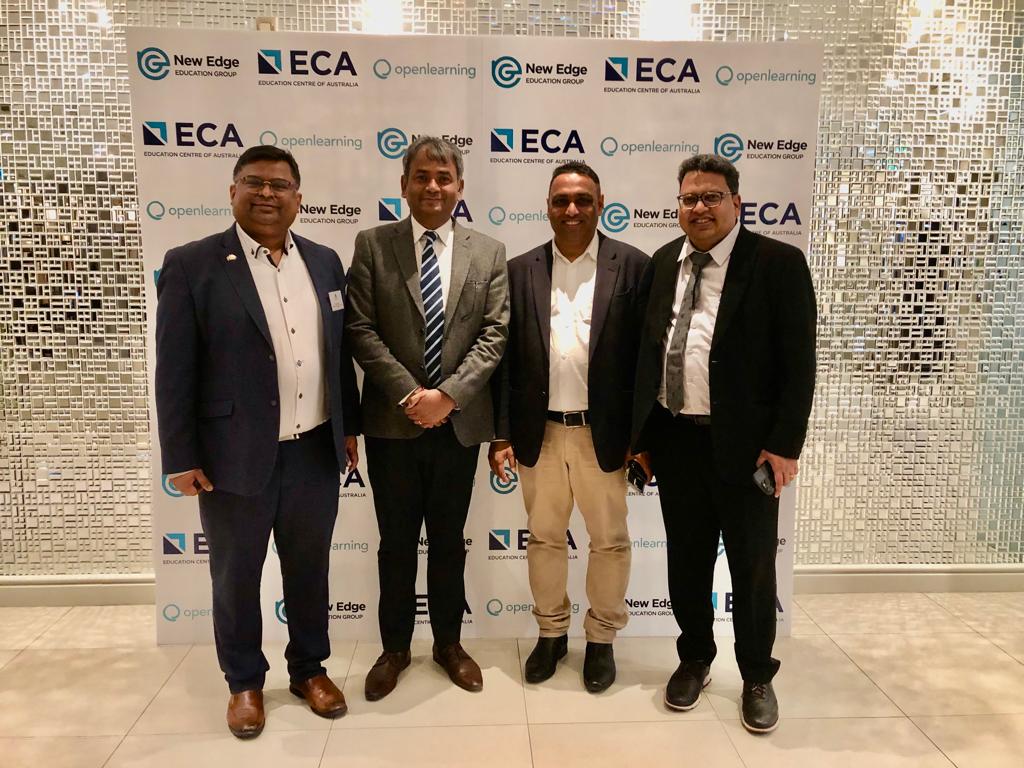
What the Hawaii tragedy means for our flammable continent?

0

By David Bowman

As I hear reports of the fire tearing through the Hawaiian island of Maui, I feel utterly depressed. As a fire scientist, I know the unfolding horror – which has killed 53 people so far – is just the beginning. It’s a portent of what Australia and other countries will experience in a warmer world.

For Australians, the reports inevitably bring back memories of our awful Black Summer in 2019-20. Like the Maui tragedy, those huge, uncontrollable bushfires were a terrifying glimpse of the intense fires we can expect as climate change worsens.

Global warming – the result of fossil fuel burning – means bushfires will become more frequent and severe. Of course, we must reduce greenhouse gas emissions. That is blindingly obvious.

But we must do more than that. Australians must urgently adapt to our fiery future.

Record-breaking heat and fires

The Maui fires have been fuelled by strong winds, dry vegetation and low humidity. People were forced to run into the ocean for safety. Hundreds of structures have been damaged or ruined and many people are injured.

Hawaii is not the only part of the northern hemisphere being ravaged by fire.

In recent weeks, wildfires have ripped through through Canada, Greece, Spain, Portugal and elsewhere. At one point, 1,000 fires were burning in Canada alone.

The fires have in part been fuelled by record-high temperatures. In July, temperatures reached 53.3℃ at California’s Death Valley. In fact, July was Earth’s hottest month on record.

The southern hemisphere is also experiencing highly unusual conditions. Antarctica is struggling to freeze over; it’s reportedly missing a chunk of ice bigger than Greenland.

And Australia is experiencing an unseasonably warm winter. The country looks set for a hot, dry, El Nino-fuelled summer, putting fire crews on high alert.

Australians must heed the warnings

Australia, too, is fast becoming a continent of more uncontrolled fire.

Let’s compare the period of 1988 to 2001, with the period 2002 to 2018. In Australian forests, the average annual burned area in the second period was 350% greater than in the first. If we include 2019 – the year the Black Summer fires began – the increase rises to 800%.

The Black Summer fires were started by lightning and human activity. They were fuelled by extreme heat, record low rainfall and widespread dieback of vegetation. It meant the fires burned at unprecedented intensity.

The Black Summer fires burned more than 24 million hectares nationally. Some 33 people were killed by the fires, more than 429 died from smoke-related effects, and more than 3,000 homes were destroyed.

The drying and warming that drove the Black Summer fires are linked to human-caused climate change. These changes are resulting in longer fire seasons and extended periods of drought.

As I watch the fires blazing in Hawaii, I’m constantly asking myself: when will Australians – who live on one of the most fire-prone continents on Earth – get a grip on this escalating global problem? How many more warning signs do we need?

What must be done

When the bushfire royal commission handed down its report in October 2020, I described it as a “clarion call for change”. Finally, Australia had a map for its journey toward adapting to fires and other natural disasters.

The scope of the commission’s recommendations was vast. For governments alone, it called for changes across land-use planning, infrastructure, emergency management, social policy, agriculture, education, physical and mental health, community development, energy and the environment.

The commission also called for an acknowledgement of the role of Indigenous fire managers in mitigating bushfire risks.

Almost three years on, we haven’t seen the changes needed. We’re behaving as if we’ve got an endless amount of time. Australia is sleepwalking into our fiery future.

The pandemic shows humans are amazingly adaptable. We used an integrated approach to mitigate and adapt to that threat. We need an equivalent response to adapt to fire and climate change – but it’s just not happening.

There is much Australia can do to adapt to fire. We can improve our urban planning regimes and building standards. We can better manage fuel loads in our forests. We can increase our firefighting capacity and get much better at bushfire preparation and early warning systems.

And importantly, we should draw on Indigenous knowledge and the expertise of Aboriginal communities. These approaches could prove vital not only managing extreme fires in Australia, but elsewhere in the world.

Looking ahead

One thing Australians can all agree on is that we don’t want catastrophically uncontrolled fires.

As our Black Summer showed, these fires not only destroy lives, homes and biodiversity. They actually threaten the Earth’s systems. Black Summer pumped huge amounts of carbon into the atmosphere. It depleted the ozone layer. It created an algal bloom in the Southern Ocean bigger than the Australian continent.

It’s vital that we slash greenhouse gas emissions as quickly as possible, to stabilise Earth’s climate. But that’s not sufficient. Australians have to adapt to fire, too.

The fires in Hawaii remind Australians that our summer is just around the corner. We don’t have much time.

This article has been amended to specify the exact date ranges of the comparison between forest areas burned before and after 2001.

David Bowman, Professor of Pyrogeography and Fire Science, University of Tasmania

This article is republished from The Conversation under a Creative Commons license. Read the original article.

Support Our Journalism

Global Indian Diaspora needs fair, non-hyphenated, and questioning journalism, packed with on-ground reporting. The Australia Today – with exceptional reporters, columnists, and editors – is doing just that. Sustaining this needs support from wonderful readers like you.

Whether you live in Australia, the United Kingdom, Canada, the United States of America, or India you can take a paid subscription by clicking Patreon. Buy an annual ‘The Australia Today Membership’ to support independent journalism and get special benefits.
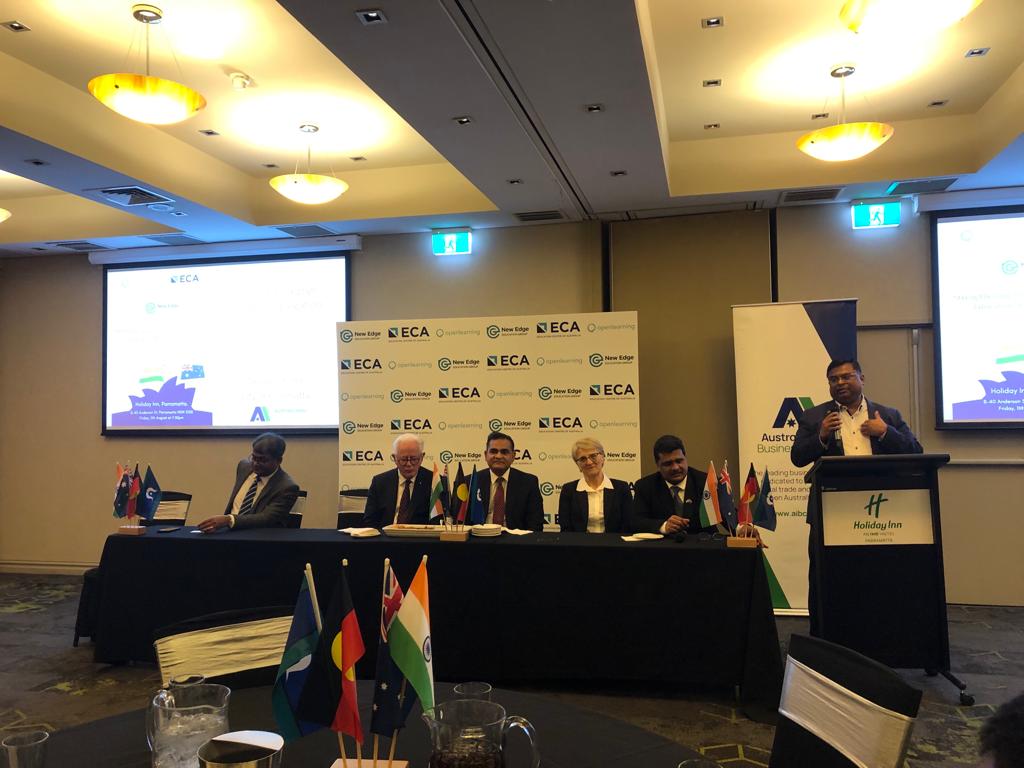
Historic that Australia is hosting Exercise Malabar says Chief of Navy Vice Admiral Mark Hammond

0

Australia welcomed key partners India, Japan and the United States as Naval exercise Malabar 2023 began in Sydney on a beautiful August morning.

Chief of Navy Vice Admiral Mark Hammond said that it was historic that Australia was being afforded the honour of hosting exercise Malabar for the first time.

“The Royal Australian Navy is honoured the Indian Navy has provided us the opportunity to host Exercise Malabar; reinforcing the trust and strength of our Navy to Navy relationship.”

“This esteemed exercise provides rich opportunities for our people to work and train together, to be prepared as high-functioning teams ready to face the complex challenges of the maritime domain.”

“Exercise Malabar is an investment in Australia’s Navy to Navy relationships, as well as the relationship between the four Navies involved. In this way we complement diplomatic efforts to deepen our regional ties and contribute to a region based on trust and respect,” added Vice Admiral Hammond

Exercise Malabar is an important Indo-Pacific military exercise that seeks to deepen interoperability between participating regional partners.

Royal Australian Navy Ships HMAS Brisbane and HMAS Choules are participating in the exercise, with Navy MH60R helicopters and Royal Australian Air Force F-35A Lightning II, Hawk 127 and P-8A Poseidon aircraft. They will join partner nations in high-end training including air defence and anti-submarine exercises, aviation, communications and replenishment at sea between ships.

The Indian Navy is being represented by its multi-role stealth frigate, INS Sahyadri and indigenous destroyer INS Kolkata. A destroyer from the United States and a major surface vessel from Japan are also participating in the naval exercise.

Emphasising on the depth of the relationship between the participating navies, Vice Admiral Hammond also told Pallavi Jain how Malabar 2023 reached Australia even though it was initially going to be held in India.

On Malabar 2023 being hosted in Australia, Deputy Prime Minister, Richard Marles, said that amid the current strategic circumstances, it is more important than ever we partner with our neighbours, and deepen our defence partnerships.

“It is an honour to host Exercise Malabar for the first time here in Australia.

“Cooperation, shared understanding and knowledge coupled with training contributes to shared security and prosperity for our region.”

Sailor’s wheel at Royal Australian Heritage Museum Centre, Sydney (Image: The Australia Today)
Indian Triclour flying high on INS Kolkata docked in Sydney (Image: The Australia Today)

This year marks the 27th iteration of the Malabar series and is being held in Sydney and across Australia’s east from 10 to 21 August. As the naval vessels sailed towards Sydney harbour making their formations the synergy between the participating countries, who are also members of the Quad, was palpable.

Watch Video: The Australia Today reporting from Sydney Naval base

In reference to security considerations in the Indo-Pacific region Rear Admiral Christopher Smith told Pallavi Jain that it was important for like-minded nations to work together to respond to challenges.

Watch Video: Rear Admiral Christopher Smith, Commander Australian Fleet, speaks with The Australia Today

India’s Vice Admiral Dinesh K Tripathi, Flag Officer Commanding-in-Chief, Western Naval Command is also in Sydney for Malabar 2023. He told The Australia Today that maritime domain had changed and that naval exercises of the four countries was a must.

Watch Video: India’s Vice Admiral Dinesh K Tripathi, Flag Officer Commanding-in-Chief, Western Naval Command, speaks with The Australia Today

Speaking at a press conference in Sydney on the eve of the Malabar naval exercise, Commander of US Navy’s seventh fleet, Vice Admiral Karl Thomas, said that the US Navy will contest any excessive claims in the South China Sea.

Watch Video: Commander of US Navy’s seventh fleet Vice Admiral Karl Thomas in Sydney

Rear Admiral Christopher Smith also said, at this presser, that a large portion of the earth is covered by water and a large portion of it is not owned by any individual sovereign country.

Watch Video: Rear Admiral Christopher Smith, Commander Australian Fleet

What to consider when paying for nursing home accommodation?

0

By Anam Bilgrami

Moving yourself or a loved one to a nursing home can be emotional and difficult. While some have their nursing home accommodation costs fully covered by the government (based on a means test), most will have to pay their own way.

The average lump sum room value is A$334,000. Choosing how to pay can make this time even more challenging, particularly for those with low financial literacy.

This is an important and complex decision. It can affect your income, wealth, means-tested aged care fee, and bequests. Here are some things to consider before you decide.

3 ways to pay

You can pay for a nursing home room in three ways.

You can pay the entire room price as a one-off, refundable lump sum (a “refundable accommodation deposit”, sometimes shortened to RAD). This lump sum is refunded to the resident or their estate when the person leaves the nursing home (if they move or pass away).

The refund is guaranteed by the government, even if a provider goes bankrupt.

People who don’t want to pay a lump sum can instead choose rent-style, “daily accommodation payments” (sometimes shortened to DAP).

These are fixed, daily interest-only payments calculated on the total room price. The rate at which they are calculated is known as the “maximum permissible interest rate” or MPIR.

The maximum permissible interest rate is set by the government and is currently 7.9% per annum. The formula for a daily accommodation payment is (RAD × MPIR) ÷ 365.

Unlike lump sums, daily accommodation payments are not refunded.

The third option is a combination payment. This means paying part of the room price as a lump sum, with daily payments calculated on the remaining room amount. On leaving the home, the part lump sum is refunded to the resident or their estate.

With a combination payment, the consumer can choose to pay whatever amount they like for the lump sum.

The table below shows three different ways someone could pay for a room priced at $400,000.

CC BY

So which is best? It’s impossible to say. It depends on a person’s circumstances, family situation, finances, preferences and expected length of stay.

Why do some people choose a lump sum?

One downside of a lump sum (or part lump sum) is that choosing this option means this money is not invested elsewhere.

By handing over the lump sum, for example, you forgo returns you could have made by investing this same money into property or stocks over the period of your nursing home stay.

On the other hand, paying lump sum means you get to avoid the daily interest payments (the 7.9% in the table above).

So you could potentially be better off paying a lump sum if you think there’s no way you could make investment returns on that money that are substantially higher than the interest you’d be charged through daily payments.

One advantage of choosing a lump sum is it’s considered an exempt asset for pension purposes; some people may get more pension if they pay the lump sum.

The lump sum, however, does count as an asset in determining the means-tested care fee.

And if you sell your house, remember any money leftover after you pay the lump sum will be counted as assets when you’re means-tested for the pension and means-tested care fee.

Why might some people prefer daily payments?

Not everyone can can afford a lump sum. Some may not want to sell their home to pay one. Some may want to hold onto their house if they think property prices may increase in the future.

Daily payments have recently overtaken lump sums as the most popular payment option, with 43% of people paying this way. However, recent interest rate rises may slow or reverse this trend.

And if a spouse or “protected person” – such as a dependant or relative that meets certain criteria – is still living in the house, it’s also exempt from assets tests for the pension and other aged care fees.

If the home is vacated by a protected person, its value is still excluded from the pension means test for two years (although rental income is still assessed).

If you do not anticipate a lengthy nursing home stay, daily payments may potentially be the easiest option. But it’s best to consult a financial adviser.

What does the research say?

My research with colleagues found many people choose the lump sum option simply because they can afford to.

Those owning residential property are more likely to pay a lump sum, mostly because they can sell a house to get the money.

People who consult financial advisers are also more likely to choose lump sums. This may be due to financial advice suggesting it’s tough to earn investment returns higher than what you’d save by avoiding the interest charged in the daily payment option.

Some aged care providers prefer lump sum payment since they use these to renovate or refurbish their facilities. But providers are not allowed to influence or control your decision on how to pay.

The recent Royal Commission into Aged Care recommended phasing out lump sums as a payment option, leaving only daily payments. While that would reduce the complexity of the payment decision and remove the incentive for providers to sway decisions, it would also reduce consumer choice.

Is there anything else I should know?

Some 60% of people we surveyed found the decision complex, while 54% said it was stressful.

It is best to seek professional financial advice before you decide.

Services Australia also runs a free Financial Information Service that can help you better understand your finances and the payment decision. But it does not give financial advice or prepare plans.

You have 28 days to choose a payment method after admission, and six months to pay if you choose a lump-sum payment.

In the interim, you will be charged daily interest payments on the room price.

Anam Bilgrami, Research Fellow, Macquarie University Centre for the Health Economy, Macquarie University

This article is republished from The Conversation under a Creative Commons license. Read the original article.

Support Our Journalism

Global Indian Diaspora needs fair, non-hyphenated, and questioning journalism, packed with on-ground reporting. The Australia Today – with exceptional reporters, columnists, and editors – is doing just that. Sustaining this needs support from wonderful readers like you.

Whether you live in Australia, the United Kingdom, Canada, the United States of America, or India you can take a paid subscription by clicking Patreon. Buy an annual ‘The Australia Today Membership’ to support independent journalism and get special benefits.
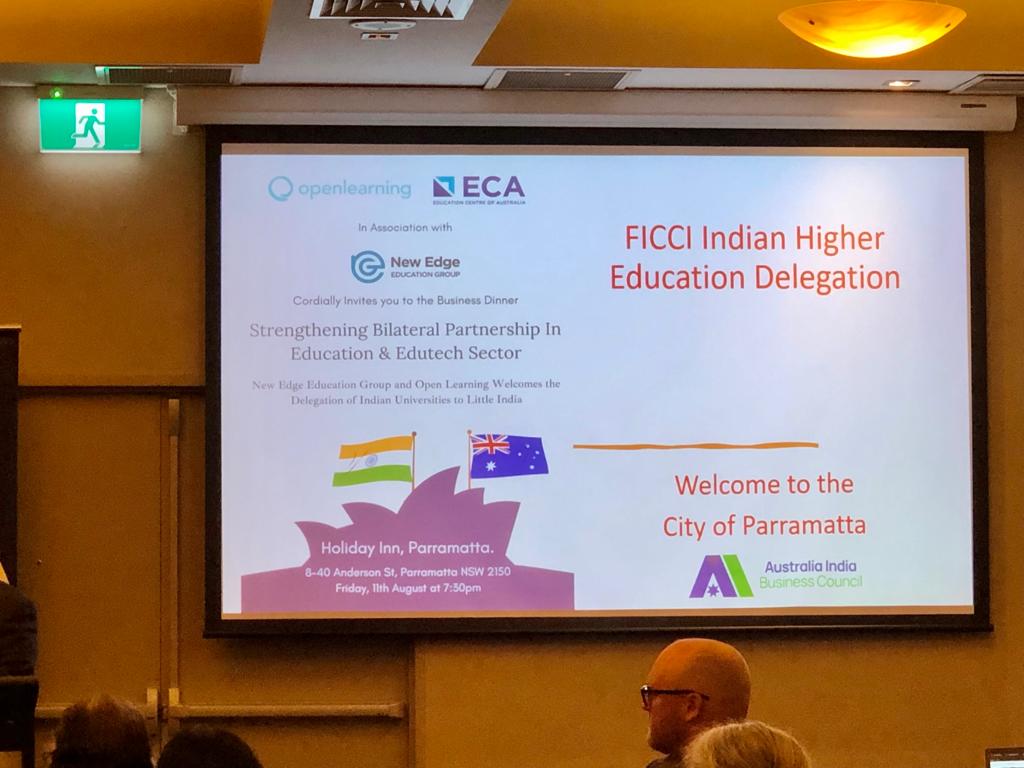
Australia helps Niue police cover more ground in the fight against transnational crime

0

The AFP has provided Niue Police Department’s Transnational Crime Unit (TCU) with a new vehicle to help officers in their efforts to combat transnational crime in the Pacific.

This will enable officers to cover the 269 square kilometres of the small South Pacific island nation, which is home to approximately 1500 people.

Image: Vehicle handed over to Nieu TCU (Source: AFP)

The vehicle was provided by the Pacific Transnational Crime Network (PTCN) and funded through the AFP. As an official Niue Police vehicle, it is fitted with a radio system that connects to the wider police network, as well as other Niue emergency departments. New Zealand Customs recently worked with Niue Police to install the system to ensure emergency services have broad coverage across the country. 

Australia’s High Commissioner to Niue, Louise Ellerton officially presented the vehicle to the Member Assisting the Minister for Police, the Honourable Sina Hekau.

AFP Detective Superintendent Doug Witschi said the AFP was committed to continuing to boost the force’s capability.    

“The AFP is proud to have played a role in ensuring Niue police officers have the flexibility to get out to the community to keep them safe,” Detective Superintendent Witschi said.

“It was a great team effort by Australia and New Zealand to make this happen.”  

Niue Police Chief Tim Wilson said the vehicle was a very welcome addition to the police department’s fleet.

“I want to thank the AFP and Australian Government for providing our members in the TCU with this vehicle, which will make a big difference in their ability to carry out their duties,” Chief Wilson said.

“Vehicles are one of the key pieces of equipment needed by police to ensure we can respond to the public’s call for help in emergencies.”

Established in 2002, the PTCN is a Pacific-led initiative that provides proactive criminal intelligence and investigative capability to combat Transnational Serious and Organised Crime (TSOC) in the Pacific. The PTCN is overseen and guided by the Pacific Islands Chiefs of Police (PICP) Executive Leadership Team (ELT) and is supported by the Australian Federal Police (AFP), New Zealand Police and the United States Joint Interagency Task Force West. 

The PTCN has 28 Transnational Crime Units (TCU), located in 20 of the PICP member countries. The objectives of these TCUs are to enhance transnational crime information sharing across the region and deliver investigative support. The AFP supports the PTCN through the deployment of AFP advisors in the Pacific as well as assistance to the TCUs in relation to critical equipment.

Support Our Journalism

Global Indian Diaspora needs fair, non-hyphenated, and questioning journalism, packed with on-ground reporting. The Australia Today – with exceptional reporters, columnists, and editors – is doing just that. Sustaining this needs support from wonderful readers like you.

Whether you live in Australia, the United Kingdom, Canada, the United States of America, or India you can take a paid subscription by clicking Patreon. Buy an annual ‘The Australia Today Membership’ to support independent journalism and get special benefits.
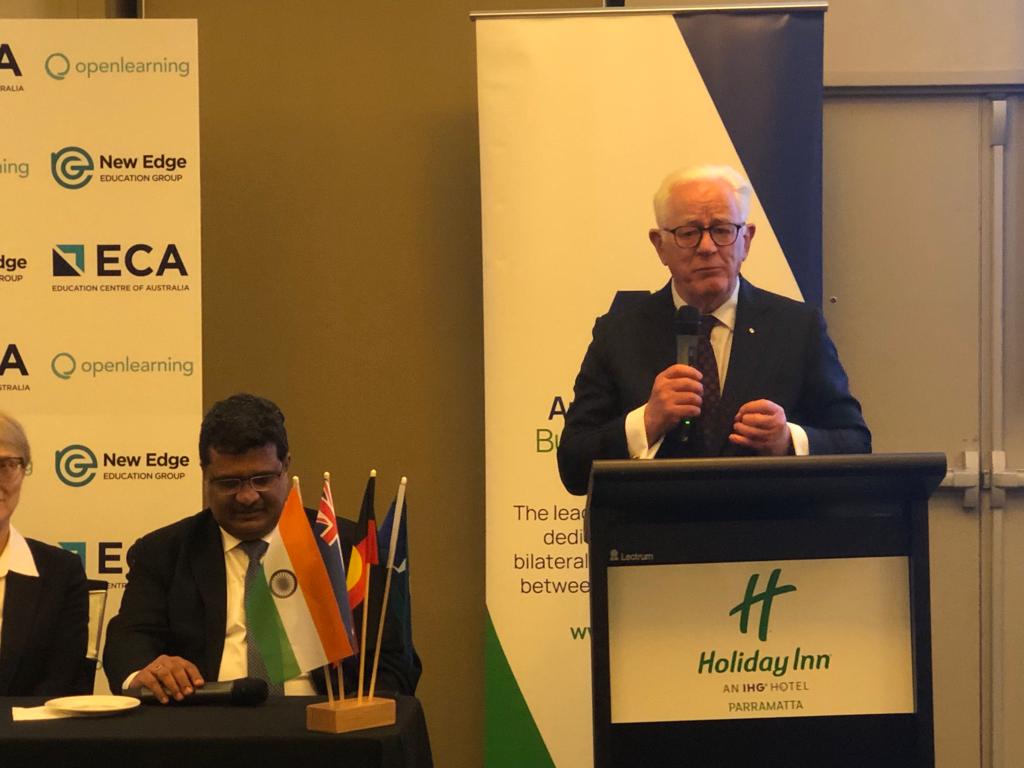
Indian-origin comedy talent shines in Screen Australia’s Fresh Blood initiative

0

Vidya Rajan, Urvi Majumdar, Rohan Ganju, and Sukhjit Kaur Khalsa are members of the successful teams whose projects were finalized for the 2023 Fresh Blood initiative.

‘Ruby Rai’ (Vidya Rajan) is the story of a private investigator in a big city and ‘Urvi Went to an all Girls School’ (Urvi Majumdar, Rohan Ganju, and Sukhjit Kaur Khalsa) will focus on the story of a nerdy Indian girl struggling to fit in an elite academic world.

Fresh Blood has been the launchpad for the careers of some of Australia’s best comedy writers, directors, and performers.

The teams were selected from more than 400 entrants, and each has received $50,000 to make three comedy shorts of 3 x 5 – minutes duration.

Lee Naimo, Screen Australia Head of Online and Games said, 

Fresh Blood has a strong legacy of supporting new comedy creators, and it’s genuinely exciting to be able partner with the ABC again to develop these entertaining projects from these talented teams. I’m looking forward to seeing what comes out of this year’s cohort.”

The shorts will premiere on the ABC’s and creators’ social media platforms. Up to three projects will then be selected by the ABC and Screen Australia to make a longer pilot between 20-27 minutes, with the potential to be commissioned by the ABC as a series.

Rachel Millar, the ABC’s Acting Head of Entertainment said,

“The standard of applications submitted for Fresh Blood 3 has truly knocked our socks off, and narrowing the field to a top ten was a serious challenge. The ABC is thrilled to be running this initiative again in partnership with Screen Australia, and we can’t wait to see what the next generation of comedy creators comes up with. Bring on the lols.”

Fresh Blood has helped launch the careers of comedians such as Aunty Donna, Nina Oyama, Freudian Nip, Fancy Boy, Michael Cusack and Skit Box.

The selected teams are currently taking part in workshops in Sydney.

Support Our Journalism

Global Indian Diaspora needs fair, non-hyphenated, and questioning journalism, packed with on-ground reporting. The Australia Today – with exceptional reporters, columnists, and editors – is doing just that. Sustaining this needs support from wonderful readers like you.

Whether you live in Australia, the United Kingdom, Canada, the United States of America, or India you can take a paid subscription by clicking Patreon. Buy an annual ‘The Australia Today Membership’ to support independent journalism and get special benefits.

India organises mother of all literary festivals – UNMESHA: a confluence of ‘Aadi’ and ‘Aadhunikta’

0

By Om Prakash Dwivedi

In the cultural city of Bhopal, the Ministry of Culture and the Sahitya Akademi organised the mother of all literary festivals, UNMESHA, from 3 August – 6 August 2023. This festival was amazingly supported by the Madhya Pradesh government.

In terms of the invited Speakers, the festival neither discriminated between regions and ideologies nor did it exhibit the selective gatekeeping so commonly witnessed in other literary festivals that take place in different parts of the world.

As we know, most literary festivals suffer from celebrity culture syndrome. But UNMESHA delivered what it stood for – the expansion of our consciousness – thus turning into Asia’s largest literary festival. 

Image: UNMESHA 2023 (Source: Supplied)

States are not known for organising literary festivals, that too, of this magnitude that we attended in Bhopal. With more than 575 speakers from 14 countries, the festival brought together a vibrant platform of 102 languages.

Apparently, such unprecedented diversity is new to literary festivals, but it is certainly not new to our rich cultural tradition that has long stood for and continues to demonstrate and promote unity in diversity. One only needs to see a rainbow and understand the beauty of diverse colours.

As a postcolonial nation, we have been confronted by a recurring tension between secularism and theocracy. Thus, the President of India, praising UNMESHA, highlighted ‘the ability of literature to reveal our common destiny and strengthen our global community.’

Similarly, Madhya Pradesh CM, Shivraj Singh Chouhan, asserted, ‘literature, music, and arts can take care of the overall well-being and happiness of an individual.’ Mangubhai Chhaganbhai Patel, the Madhya Pradesh Governor, reinforced PM’s vision of ‘Ek Bharat, Shrestha Bharat.’ 

The renowned Kannada writer, S.L. Bhyrappa, highlighted the prejudiced nature of secularism that India has been subjected to. Sadly, secularism has gone into the pockets of a few select spokespersons who use it conveniently to mileage their own political motifs. Conversely, what many of us fail to understand is that Indian tradition has long upheld and promoted the notion of supreme consciousness, and that’s precisely the reason we have braved the adversities encountered in the past. 

Image: UNMESHA 2023 (Source: Supplied)

The aim of literature, arts, and social sciences is not to render divisions but rather to create and foster spaces of inclusivity. As pointed out by the Chhattisgarh Governor, Biswabhusan Harichandan, ‘creativity sparks innovation and progress, and is the driving force behind human development.’

In the same vein, JNU, VC, Santishree Pandit, projected her concerns for the marginalisation of creative skills in our higher education setup. She suggested that universities should do away with rote learning and think of promoting a creative culture. She even suggested that as humans we need to appreciate differences, thus pointing to the notion of unity in diversity.

Likewise, UNMESHA rightly focused on creation and sustainability measures for the planetary future. In a panel on Ecocriticism, which was chaired by the well-known critic, Malashri Lal, we saw engaging discussions strengthening our eco-consciousness. As Dhananjay Singh, Member Secretary ICSSR, intriguingly highlighted the importance of the oneness of life and, therefore, the need to strike a syncretic relationship between human and natural world. Even MA Alwar, in another panel on Bhakti literature of India, chaired by the Kerala Governor, Arif Mohammed Khan, delved into the nuances of ‘Soham’ (That I Am), thus underlining the same interrelatedness that underpins the supreme consciousness.

Several other important panels worth mentioning are ‘Feminism in Literature’, ‘Publishing in Indian Languages’, ‘Role of Books in Indian Independence Movement’ that featured Kumud Sharma, Abdus Samad, and Ashok ‘Avichal’. Multiple sessions on ‘Tribal Poets’ Meet’ were filled to capacity in terms of audience. These sessions hosted Ramesh Arya, Tulsi Raman, Lyangsong Tamsang, Sheetal Rajesh, Nawang Tsering Shakspo, among others. The other panel on ‘Importance of Mother Tongue’ saw the presence of Udaya Narayana Singh, Brij Ratan Joshi, and other scholars. Another panel on ‘Multilingual Poetry Reading’ featured Madhav Kaushik, Partha Sarathi, and Vishal Pinjani, among others. The festival also hosted a panel on ‘Idea of India’ that saw the presence of Vishwanath Tewari, Harish Trivedi, and Bhanu Bharti. In yet another panel on ‘What Freedom Means to Me?’ audience listened with rapt attention to Amarendra Khatua, Anant Vijay, Sharan Limbale, and Badri Narayan. 

Other panels worth mentioning were: ‘Discussion on Yoga Literature’ that featured H.R. Nagendra and G.B. Harisha. Also, the panel on ‘Discussions on Epics in India’ saw  Harekrishna Satapathy and Molly Kaushal. The panel on ‘Poetry Traditions on India’, brought together K. Satichdanandan, Anisur Rahman, and other distinguished critics. Also, a panel on ‘Soft Power of India’ generated immense interest. It featured acclaimed poet and playwright poet, H.S. Shivaprakash and the dynamic Pankaj Mittal. 

The valedictory by the Secretary, Sahitya Akademi, K.S. Rao, was important in more ways than one. Rao shed light on the solid support that the Ministry of Culture extended to the Akademi. Gangapuram Kishan Reddy, Arjun Ram Meghwal, Meenakshi Lekhi, the Secretary, Govind Mohan, and his team were all applauded. He also emphasised that with the help of the government, the aim is to make UNMESHA the world’s largest festival.

Kudos to the government of India for bringing the nation together in Bhopal thus also setting up the platform for the upcoming G20 meet. It needs to be added that Rao is slowly attaining an iconic status in the literary landscape of India. Tacit in nature, dynamic in planning and implementation, and grit in determination, Rao a profound lover of literature, has transformed the Akademi in an unprecedented way.

The Akademi which has been largely restricted to seminar halls, is now visible at metro stations, in schools and colleges, and in other public spaces as well. This new culture of public-literature interface will go a long way in strengthening the cultural ethos of the ‘new India’ that PM Modi has been promoting. 

Rao can be seen as the architect who is laying down the foundations of new literary cultures in India. With the support of the Ministry of Culture and the authorities of the Sahitya Akademi, Rao is striving relentlessly to build a bridge between the young Indians and the rich knowledge traditions of India. This is exactly what PM Modi identifies as the confluence of ‘aadi’ and ‘aadhunikta’, the pillars of new India.

The stunning invocation of diversity and inclusivity was the defining feature of UNMESHA. At a time when several literary festivals are being organised, to the extent, that one can rightly question its relevance, UNMESHA, brought together participants from all corners of the country thus turning it into a national festival of the new India. As a nation, we are so fond of festivals, and UNMESHA is the latest addition to our rich tradition of celebrating festivals.

Contributing Author: Dr Om Prakash Dwivedi teaches at Bennett University, Greater Noida. He tweets @opdwivedi82

Disclaimer: The opinions expressed within this article are the personal opinions of the author. The Australia Today is not responsible for the accuracy, completeness, suitability, or validity of any information in this article. All information is provided on an as-is basis. The information, facts, or opinions appearing in the article do not reflect the views of The Australia Today and The Australia Today News does not assume any responsibility or liability for the same.

Support Our Journalism

Global Indian Diaspora needs fair, non-hyphenated, and questioning journalism, packed with on-ground reporting. The Australia Today – with exceptional reporters, columnists, and editors – is doing just that. Sustaining this needs support from wonderful readers like you.

Whether you live in Australia, the United Kingdom, Canada, the United States of America, or India you can take a paid subscription by clicking Patreon. Buy an annual ‘The Australia Today Membership’ to support independent journalism and get special benefits.

Indo-Pacific military Exercise Malabar begins in Australia for the first time

0

Today Australia welcomes key partners India, Japan and the United States to Sydney as it prepares to host Exercise Malabar for the first time.

Deputy Prime Minister, the Hon Richard Marles MP said in a statement:

“It is an honour to host Exercise Malabar for the first time here in Australia. Amid the current strategic circumstances, it is more important than ever we partner with our neighbours, and deepen our defence partnerships. Cooperation, shared understanding and knowledge coupled with training contributes to shared security and prosperity for our region.”

Image: The ship’s company of HMAS Brisbane observe the harbour entry of Exercise Malabar 2023 into Sydney, NSW (Source: Royal Australian Navy / Photographer: LSIS Matthew Lyall)

Exercise Malabar is an important Indo-Pacific military exercise that seeks to deepen interoperability between participating regional partners.

Video: India’s Vice Admiral Dinesh K Tripathi, AVSM, NM, Flag Officer Commanding-in-Chief, Western Naval Command spoke to Pallavi Jain about the Malabar exercise which has come to Australia for the first time.

Chief of the Royal Australian Navy, Vice Admiral Mark Hammond, AO, observed:

“The Royal Australian Navy is honoured the Indian Navy has provided us the opportunity to host Exercise Malabar; reinforcing the trust and strength of our Navy to Navy relationship. This esteemed exercise provides rich opportunities for our people to work and train together, to be prepared as high-functioning teams ready to face the complex challenges of the maritime domain.”

Image: (L-R) Flag Officer Commanding in Chief, Western Naval Command, Vice Admiral Dinesh K Tripathi, AVSM, NM, Commander, U.S. 7th Fleet, Vice Admiral Karl Thomas, USN, Commander in Chief, Japan Maritme Self Defense Force, Vice Admiral Akira Saito and Commander Australian Fleet, Rear Admiral Chris Smith, AM, CSM, RAN at the Exercise Malabar news conference, HMAS Kuttabul, NSW (Source: Royal Australian Navy / Photographer: LSIS David Cox)

He added:

“Exercise Malabar is an investment in Australia’s Navy to Navy relationships, as well as the relationship between the four Navies involved. In this way we complement diplomatic efforts to deepen our regional ties and contribute to a region based on trust and respect.”

Royal Australian Navy Ships HMAS Brisbane and HMAS Choules are participating in the exercise, with Navy MH60R helicopters and Royal Australian Air Force F-35A Lightning II, Hawk 127 and P-8A Poseidon aircraft.

Video: Rear Admiral Christopher Smith, AM, CSM, RAN, Commander Australian Fleet spoke with Pallavi Jain about the importance of Malabar exercise coming to Australia for the first time.

They will join partner nations in high-end training including air defence and anti-submarine exercises, aviation, communications and replenishment at sea between ships.

File photo Malabar Exercise 2020 (Image: @SpokespersonMoD on X)

This year marks the 27th iteration of the Malabar series and will be held in Sydney and across Australia’s east from 10 to 21 August.

Support Our Journalism

Global Indian Diaspora needs fair, non-hyphenated, and questioning journalism, packed with on-ground reporting. The Australia Today – with exceptional reporters, columnists, and editors – is doing just that. Sustaining this needs support from wonderful readers like you.

Whether you live in Australia, the United Kingdom, Canada, the United States of America, or India you can take a paid subscription by clicking Patreon. Buy an annual ‘The Australia Today Membership’ to support independent journalism and get special benefits.
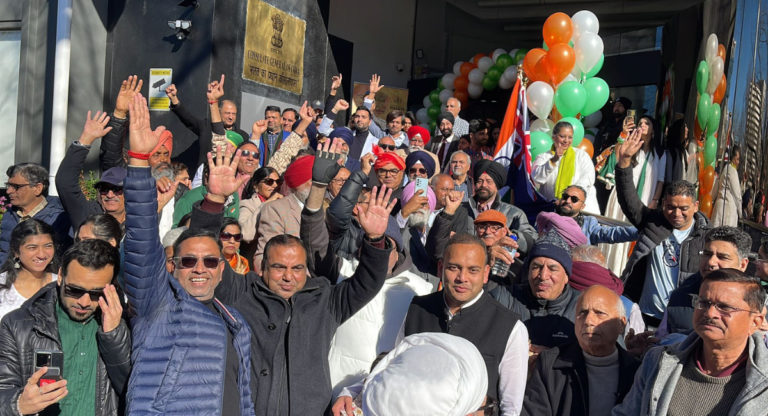
Half a billion dollars recovered for workers in unpaid wages and entitlements for 2022-23

0

The Fair Work Ombudsman has announced recoveries of $509 million in unpaid wages and entitlements for more than a quarter of a million workers in 2022-23.

The recoveries sum is the second-largest annual figure in the national regulator’s history.

Acting Fair Work Ombudsman Kristen Hannah announced the figures in a speech to the Policy-Influence-Reform (PIR) conference in Canberra this morning, and said they were another important achievement.

“The recovery of $509 million in the last financial year is a great result for the workers who have been backpaid their withheld wages, and also for the businesses that pay correctly and are no longer at a disadvantage as a result,” Ms Hannah said.

“The latest recoveries mean the Fair Work Ombudsman has seen more than $1 billion recovered for workers across Australia in the last two years alone.”

More than half of the 2022-23 recoveries – $317 million – came from large corporate and university employers.

“These results occur after the consistent work that our agency has done to create an environment that expects large corporates to prioritise compliance and to report to us when they have got it wrong,” Ms Hannah said.

“The Fair Work Ombudsman is continuing to use all the powers available to us to enforce compliance, especially where breaches impact vulnerable workers.”

In the last year, the Fair Work Ombudsman has accepted Enforceable Undertakings related to backpayments of millions of dollars each from companies including David Jones, Politix, Crown Melbourne and Perth, and Suncorp, as well as three separate universities.

We also commenced major litigations against Super Retail Group and four of its subsidiaries, and against two franchisors, 85 Degrees Coffee and Bakers Delight Holdings, alleging both are liable for franchisee breaches of workplace laws.

Ms Hannah said the regulator had also delivered on its important role to educate on workplace laws, including regular changes.

“As a regulator we recognise that prevention is better than cure, so we put a huge amount of effort into our education and advice function to help ensure employers and workers have the latest accurate information they need to be compliant,” Ms Hannah said.

“We highlight that from today, all national system employees can access ten days of Paid Family and Domestic Violence Leave. That entitlement takes effect for small business today, after commencing for other employers in February. We have a range of updated information to help.”

Support Our Journalism

Global Indian Diaspora needs fair, non-hyphenated, and questioning journalism, packed with on-ground reporting. The Australia Today – with exceptional reporters, columnists, and editors – is doing just that. Sustaining this needs support from wonderful readers like you.

Whether you live in Australia, the United Kingdom, Canada, the United States of America, or India you can take a paid subscription by clicking Patreon. Buy an annual ‘The Australia Today Membership’ to support independent journalism and get special benefits.
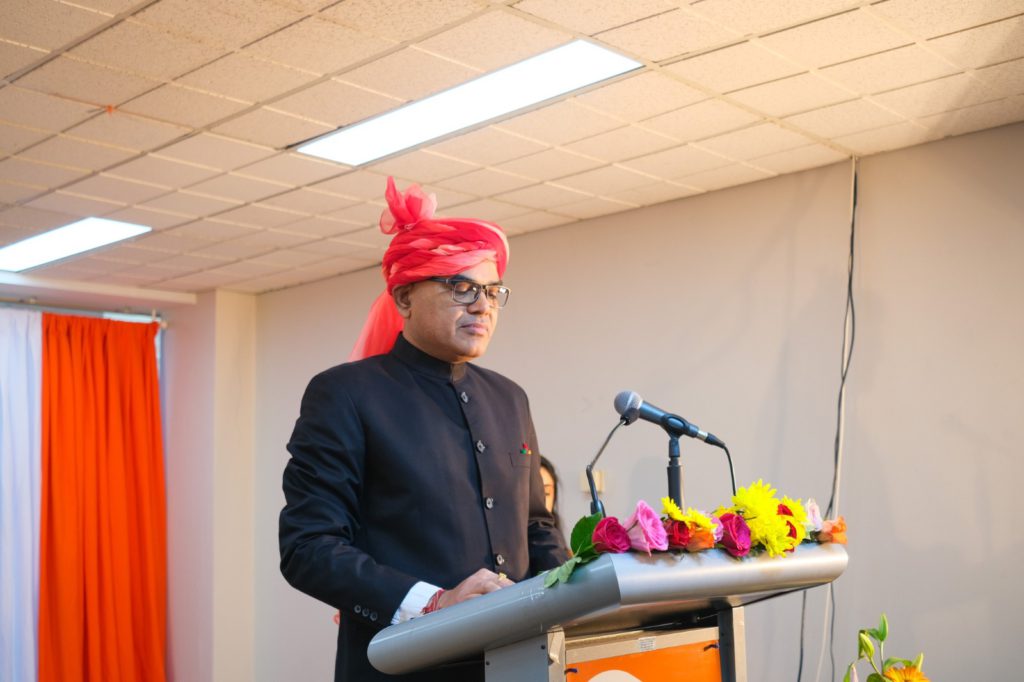
US Navy will contest excessive claims in South China Sea, warns Vice Admiral Karl Thomas

0

The Commander of US Navy’s seventh fleet, Vice Admiral Karl Thomas, has said that the US Navy will contest any excessive claims in the South China Sea. Speaking at a press conference in Sydney on the eve of the Malabar naval exercise, Vice Admiral Thomas said,

“We sail quiet regularly in the South China Sea…presence matters, being out there to be able to maintain some peace some stability in that area is important to challenge claims that may be or not whether in violation or certainly don’t fall align with the United Nations Convention of the Sea.”

“So we have to, have to be there, to contest those excessive claims. We have to do what the US Navy does which is free the navigation ups to contest those excessive claims.”

Watch video: Vice Admiral Karl Thomas, Commander Seventh Fleet, United States Navy

He further added,

“As we operate Malabar it gives us that capability and that tactical interoperability to get to go up there and sail comfortably to ensure that a body of water, the south china sea, which is home to a tremendous amount of trade for the world stays free and stays open.”

Rear Admiral Christopher Smith, Commander Australian Fleet, also said that a large portion of the earth is covered by water and a large portion of it is not owned by any individual sovereign country.

Watch Video: Rear Admiral Christopher Smith, AM, CSM, RAN, Commander Australian Fleet

Exercise Malabar is an annual maritime exercise that enhances planning, training, and employment of advanced warfare tactics between – Royal Australian Navy (RAN), Indian Navy (IN), Japan Maritime Self-Defense Force (JMSDF), and U.S. Navy.

Maritime Self-Defense Force and Vice Admiral Karl Thomas, Commander Seventh Fleet, United States Navy in Sydney (Image: The Australia Today)
Vice Admiral Karl Thomas Commander Seventh Fleet, United States Navy speaking at a press conference in Sydney along with Rear Admiral Christopher Smith, AM, CSM, RAN, Commander Australian Fleet, Vice Admiral Dinesh K Tripathi, AVSM, NM, Flag Officer Commanding-in-Chief, Western Naval Command, Indian Navy and Vice Admiral Akira Saito, Commander in Chief, Self-Defense Fleet, Japan Maritime Self-Defense Force.

This is for the first time that exercise Malabar is being conducted in Australia. The ten-day exercise aims to deepen the interoperability between key partners, Australia, India, Japan and the United States who are also members of the Quad or the Quadrilateral security dialogue. 

Support Our Journalism

Global Indian Diaspora needs fair, non-hyphenated, and questioning journalism, packed with on-ground reporting. The Australia Today – with exceptional reporters, columnists, and editors – is doing just that. Sustaining this needs support from wonderful readers like you.

Whether you live in Australia, the United Kingdom, Canada, the United States of America, or India you can take a paid subscription by clicking Patreon. Buy an annual ‘The Australia Today Membership’ to support independent journalism and get special benefits.

‘Bloom’ misses opportunity to interrogate gaps in Australia’s social fabric

0

By Sarah Austin

Bloom, the new Australian musical produced by the Melbourne Theatre Company, is proudly billed by the company as born and bred right here in Melbourne/Naarm.

Written by Tom Gleisner (of The Castle fame) with music by Katie Weston, the show follows the story of Rose (Evelyn Krape), who reluctantly arrives at Pine Grove Aged Care Home after being told she can no longer live alone. Finn (Slone Sudiro), a university student studying music, arrives on the same day as Rose as part of a scheme offering students board in exchange for domestic duties.

As both Rose and Finn settle into their new accommodation, we meet the eclectic residents of the home and two dedicated care staff. Gloria (Christina O’Neill) has “accidentally” worked at Pine Grove for eight years. Ruby (Vidya Makan) gave up her communications degree at uni for a job that allowed her to do something more meaningful.

Fault lines soon appear. The frugal and punitive manager of Pine Grove, Mrs MacIntyre (Anne Edmonds), puts profit before people. She refuses requests for outings, fresh food and psychosocial programs designed to improve the residents’ (or as Rose puts it, inmates) lives so she can meet a tight fiscal bottom line.

Each character wrestles with the poignant and relatable idea that there is a gap between who they were and who they have become.

This gap occurs across the spectrum of ageing. Ruby asks herself in song if “maybe it’s time”, contemplating leaving Pine Grove and commencing a masters degree in aged care. Resident Sal (Eddie Muliaumaseali’i) silently looks through old photos to connect with his past and the remnants of his past self.

Dismissing the rights of older Australians

This question of aged care homes as for-profit entities was brought into sharp focus during the pandemic. The final report of a Royal Commission into Aged Care and Safety exposed the deep chasms in the sector. It tabled 148 recommendations to parliament in 2021 and has led to significant legislative reform.

The idea suggested at the core of Bloom – that student boarders in aged care homes may lead to significant innovation, intergenerational and reciprocal learning and subsequently improve the quality of life for our elders – is treated glibly and without much substance in the formulaic model of musical theatre.

The story references ideas of the human rights of our elders to have agency to voice complaints, to be treated with respect, to have liberty of movement and the right to social participation.

Specifically, Rose tries to lead an insurrection of residents during an inspection of the facility and refuses pills that make her feel groggy.

Instead of being heard and respected, she is treated as a problem. The suggestion by Mrs MacIntyre is that she is “having a little turn” during her complaints: a moment of insight into how easily we have dismissed the rights of older Australians to exercise choice and be heard on matters that impact them.

Here, Bloom provides an insight into the cruelty inherent in some aspects of the system, and the difference quality care and a good carer can make to someone’s life.

Stark realities and missed opportunities

Toward the end of the play, there is a scene where we watch Rose take her last few breaths in her small hospital bed, in a stark and all-too-familiar room. She is surrounded by Gloria, Ruby and Finn, who provide comfort in her final hours.

In the scene, Finn reflects that Ruby seems very comfortable with death. She responds that both her grandparents lived at her home and she was present when they died.

Ruby’s experience of multi-generational living arrangements that allow for care at home for the elderly is more common in Australian families that include first- or second-generation migrants.

Finn reveals that when his mother died, he was considered too young to be at the hospital.

This scene at Rose’s bedside is a good representation of the missed opportunity in Bloom to starkly represent the realities of our aged care system and our dominant cultural approach to end-of-life care in this country.

Due to the intense staffing shortfall so sharply reflected in the royal commission, unless family were present, it is very possible Rose would have died alone.

I can’t help but imagine how seeing that uncomfortable reality on stage may have been a transformative theatrical moment, seared into the memories of the audience as they make choices about end-of-life and aged care for themselves and those they love.

Instead of tackling the systemic issues around aged care and end of life, Bloom wraps things neatly up in a bow, ending the musical by suggesting the death of Rose led to change at Pine Grove. An unqualified student will now work as a musical therapist and a nice manager has been found to lead the home into a new era.

There is a great track record of musical theatre successfully tackling overtly political material and revealing the gaps in our social fabric and problematising history and power (think of shows like Hamilton, Urinetown and Bran Nue Dae).

Unfortunately, Bloom seems too afraid of its own subject material to truly tackle these issues and reflect their realities back to us.

Bloom is at the Arts Centre Melbourne Playhouse for the Melbourne Theatre Company until August 26.

Sarah Austin, Lecturer in Theatre, The University of Melbourne

This article is republished from The Conversation under a Creative Commons license. Read the original article.

Support Our Journalism

Global Indian Diaspora needs fair, non-hyphenated, and questioning journalism, packed with on-ground reporting. The Australia Today – with exceptional reporters, columnists, and editors – is doing just that. Sustaining this needs support from wonderful readers like you.

Whether you live in Australia, the United Kingdom, Canada, the United States of America, or India you can take a paid subscription by clicking Patreon. Buy an annual ‘The Australia Today Membership’ to support independent journalism and get special benefits.

QUAD defence cooperation ‘enters a new era’ as Australia hosts Malabar exercise

0

At Sydney Harbour, Australia welcomes key partners India, Japan and the United States as it hosts Navy exercise “Malabar” for the first time.

Exercise Malabar is an annual maritime exercise that enhances planning, training, and employment of advanced warfare tactics between – Royal Australian Navy (RAN), Indian Navy (IN), Japan Maritime Self-Defense Force (JMSDF), and U.S. Navy.

Senior representatives from all four countries- Commander Australian Fleet, Rear Admiral Christopher Smith, Indian Navy’s Vice Admiral Dinesh K Tripathi, Vice Admiral Akira Saito, Commander in Chief, Self-Defense Fleet, Japan Maritime Self-Defense Force, Vice Admiral Karl Thomas, Commander Seventh Fleet, United States Navy and Air Commodore Harvey Reynolds, Deputy Air Commander Australia – are in Sydney ahead of the Fleet Entry to introduce Exercise Malabar which begins tomorrow (11th August 2023).

Rear Admiral Christopher Smith speaking at the press conference thanked Indian Navy for the opportunity to host the Malabar exercise.

The ten-day exercise aims to deepen the interoperability between the key partners, Australia, India, Japan and the United States who are also members of the Quad or the Quadrilateral security dialogue. 

The exercise is also designed to deepen the partnership for the Indo-Pacific, for the shared aspiration of a free, open and resilient Indo-Pacific and it will be followed immediately afterwards by AUSINDEX, the bi-annual naval exercise between India and Australia.

Prof. Purnendra Jain is an Emeritus Professor in the Department of Asian Studies at the University of Adelaide.

Prof. Purnendra Jain, University of Adelaide

Speaking with The Australia Today, Prof Jain said, “The high-profile thirty years old Malabar Exercise enters a new era as Australia hosts the naval war games for the first time in its waters.”

“The Malabar Exercise serves as a force multiplier, especially for the freedom of navigation and security of the region.”

“Today these four nations are networked solidly through bilateral, trilateral, and quadrilateral frameworks and are committed to opposing any change in the status quo by force. Each of them believes in a ‘free, open, inclusive, resilient and prosperous Indo-Pacific’,” added Prof Jain.

Indian Navy’s Vice Admiral Dinesh K Tripathi recalled how the Malabar series of exercises began as an annual bilateral naval exercise between India and the US in 1992 and the Australian Navy joined in 2007 and rejoined in 2020. 

For the Malabar exercise, two major Australian ships HMAS Brisbane and HMAS Choules will perform an entry into the Sydney Harbour. The vessels and the aircraft will then proceed out to an exercise area off the coast of New South Wales. 

The Indian Navy will be represented by its multi-role stealth frigate, INS Sahyadri and indigenous destroyer INS Kolkata. 

A destroyer from the United States will be seen along with a major surface vessel from Japan. There’s a large designated and gazetted exercise area which is referred to as the East Australian exercise area which will witness this high-voltage exercise. Though Malabar has four countries as participants, there are no plans or discussions on its expansion at the moment. 

Ashley Townshend is a Non-Resident Senior Fellow at the United States Studies Centre and Senior Fellow for Indo-Pacific Security at the Carnegie Endowment for International Peace.

Ashley Townshend is a Non-Resident Senior Fellow at the United States Studies Centre

Mr Townshend told The Australia Today, Although the Quad is still less than the sum of its parts when it comes to high-end maritime security cooperation, Exercise Malabar is proof that all four nations can come together to deliver practical collective defence outcomes for the Indo-Pacific.

“To increase its value as a leading contributor to regional security, the Quad needs to prioritise collective maritime domain awareness, anti-submarine warfare and maritime logistics.”

“This will require more seamless information sharing and an effort to develop routinised patterns of maritime security cooperation in areas of defined geographic responsibility,” added Mr Townshend who is also the founding co-chair of the annual US-Australia Indo-Pacific Deterrence Dialogue.

During his India visit in March this year, Prime Minister Anthony Albanese announced Australia will host Exercise Malabar.

PM Albanese was received onboard INS Vikrant by India’s Chief of Naval Staff Admiral R Hari Kumar with a Guard of Honour. PM Albanese at the time said his visit reflected the Australian government’s commitment to place India at the heart of Australia’s approach to the Indo-Pacific and beyond. 

Image

Malabar exercise which represents one of the most complex naval activities that the four nations do together is also the capstone exercise that builds on a number of the bilateral exercises that the countries do with each other around the world. 

Notably, the Indo-Pacific region has been subject to significantly enhanced strategic competition. And all partners of this exercise are determined to see greater strategic equilibrium and their purpose is to make sure that there is some concrete action beyond the words and talks. 

Earlier in March this year, US Secretary of State Antony Blinken said that Quad is not a military grouping adding it is now engaged in working together to help countries to deal with humanitarian situations in natural disasters. 

“We are working on things that are really critical,”

Blinken said at a panel discussion of the Quad Foreign Ministers themed ‘The Quad Squad: Power and Purpose of the Polygon’ in the Indian national capital New Delhi in March this year. 

Image

The fourth edition of AUSINDEX was held between September 7 and 10, 2021 in Australia at Off Darwin. Navies of India, Australia, Japan and the USA also participated in Phase I of Exercise Malabar 2021, from August 26 to 29, 2021 off Guam and in Phase II in the Bay of Bengal from October 12 to 15, 2021. 

India also participated as an Observer in Exercise Talisman Sabre 2021 in July 2021. India-Australia Joint Military Exercise AUSTRAHIND 2022 was held in the Indian state of Rajasthan from November 28-December 11, 2022 between Indian Army and the Australian Army, the first exercise in the series of AUSTRA-HIND with the participation of all arms and services contingent from both armies. 

Image

Australia and India have also built links between their defence forces through regular personnel and training exchanges, such as short specialist courses and longer-term higher education positions. Every year, Australia sends officers to attend India’s premiere military educational institutions. 

India also sends four officers to study in Australia annually. Inaugurated in 2023, General Rawat India – Australia Young Defence Officer Exchange Program offers the opportunity each year for fifteen young officers from across Army, Navy, and Air Force, to learn more about each other’s training, operational environments and culture. 

In 2023, 15 young Australian Defence Officers travelled to India and in 2024 it is expected that 15 young Indian Armed Forces officers will travel to Australia, to study Australian Defence capability and culture.

Support Our Journalism

Global Indian Diaspora needs fair, non-hyphenated, and questioning journalism, packed with on-ground reporting. The Australia Today – with exceptional reporters, columnists, and editors – is doing just that. Sustaining this needs support from wonderful readers like you.

Whether you live in Australia, the United Kingdom, Canada, the United States of America, or India you can take a paid subscription by clicking Patreon. Buy an annual ‘The Australia Today Membership’ to support independent journalism and get special benefits.

Historic meeting of multicultural groups in Victorian Parliament to prevent family violence

0

The Multicultural Women’s Alliance Against Family Violence (MWAAFV) hosted a forum on 3 August 2023 at the Victorian Parliament as part of its ongoing advocacy towards establishing Victoria’s first culturally specific women’s refuge and more support services for multicultural communities.

Image: Multicultural Women’s Alliance Against Family Violence (Source: Supplied)

Present at the forum were family violence service providers, community advocates, policymakers, and Members of the Victorian Parliament.

Prominent attendees included Ms Cindy McLeish (Shadow Minister for Women / Family Violence), Dr Samantha Ratnam (Victorian Greens Leader), Ms Molina Asthana (Deputy Chair), Dr Sabi Kaphle (Chair), Ms Cindy McLeish (Member for Eildon Liberal VIC), Mr Nathan Lambert MP, Mr Matthew Hilakari MP, and Ms Ann Milne (Advisor to Minister Ros Spence, Family Violence).

Image: Ruchika Rawat, Secretary of Multicultural Women’s Alliance Against Family Violence (Source: Supplied)

Ruchika Rawat, Secretary of Multicultural Women’s Alliance Against Family Violence, said in a statement: 

“We formed this Alliance as a coalition concerned with the lack of culturally specific and appropriate family violence services in Victoria.”

Ms Rawat added:

“Victoria has a diverse socio-cultural fabric. The multicultural communities’ members, leaders, and grass-root organisations know how to best bring a positive change in their communities. The Forum brought together diverse voices to collaborate and co-design.”

The Forum on funding solutions for culturally specific services to address family violence and empower women; brought forward diverse ideas and passion.

The solutions advocated were:

  • Using an intergenerational family approach that includes men, women, girls, and boys. It is in the family context that behavioural programs and support services are most effective.
  • Encouraging young and older persons from culturally diverse communities to train as counsellors, and advocates to participate in the design of services and policy. 
  • Work towards community awareness and support in their own languages and cultural contexts. 

This Forum also identified key barriers faced by grass root organizations.

Image: Ruchika Rawat (Secretary) and Dr Sabi Kaphle (Chair) (Source: Supplied)

MWAAFV is a coalition concerned with the lack of culturally specific and appropriate family and domestic violence services in Victoria.

Their members comprise multicultural community leaders and representatives working across the family and domestic violence sector.

Support Our Journalism

Global Indian Diaspora needs fair, non-hyphenated, and questioning journalism, packed with on-ground reporting. The Australia Today – with exceptional reporters, columnists, and editors – is doing just that. Sustaining this needs support from wonderful readers like you.

Whether you live in Australia, the United Kingdom, Canada, the United States of America, or India you can take a paid subscription by clicking Patreon. Buy an annual ‘The Australia Today Membership’ to support independent journalism and get special benefits.
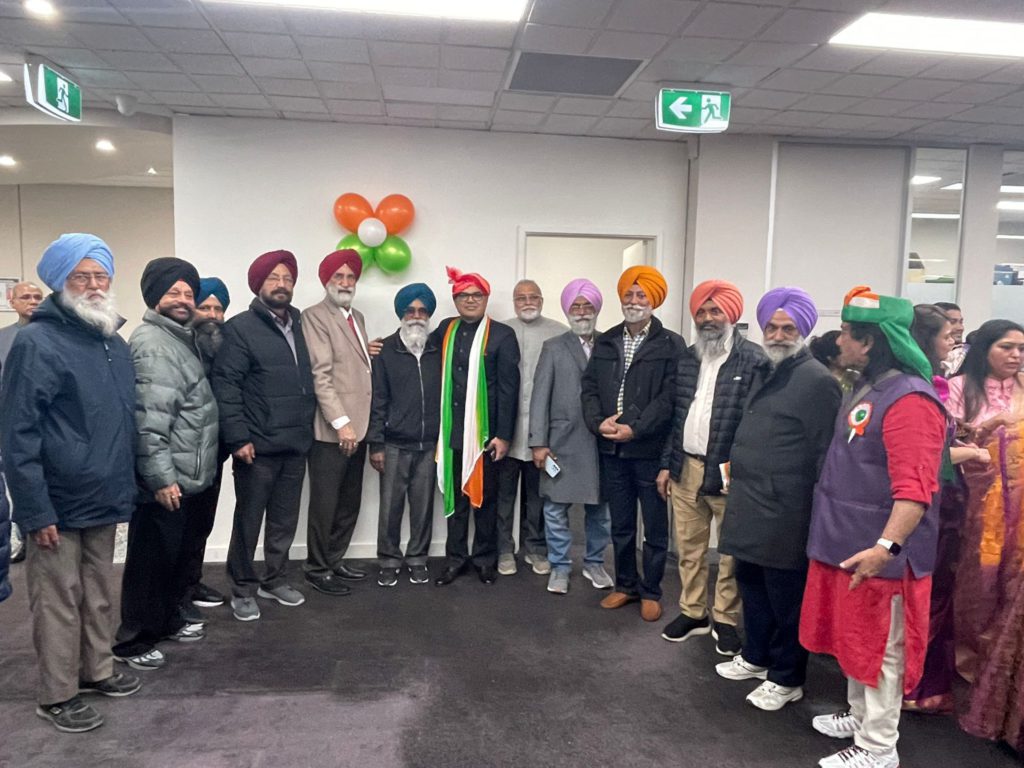
19 men charged with child abuse offences cracking sophisticated online network

0

Nineteen men have been charged and 13 Australian children have been removed from harm under an AFP-coordinated investigation into a sophisticated online child abuse network.

Operation Bakis was a joint investigation with state and territory police that had its origins in the murder of two FBI agents in Florida in 2021.

The AFP-coordinated investigation began in 2022 when the Federal Bureau of Investigation (FBI) provided the AFP-led Australian Centre to Counter Child Exploitation (ACCCE) with intelligence about Australian members of a peer-to-peer network allegedly sharing child abuse material on the dark web.

Two Australian offenders have been sentenced, with others remaining before the courts.

Most of the alleged Australian offenders, some who are also accused of having produced their own child abuse material to share with other members of the network, were employed in occupations that required a high degree of ICT knowledge.

Members used software to anonymously share files, chat on message boards and access websites within the network.

Network members were able to search for and distribute images and videos of child abuse material and allegedly used encryption and other methods to avoid law enforcement detection.

The AFP-led ACCCE coordinated Operation Bakis in Australia and worked with ACT Policing, New South Wales Police Force, Queensland Police Service, South Australia Police, Tasmania Police and Western Australia Police Force.

The alleged Australian offenders were aged between 32 and 81 years old.

It will be alleged some of the children removed had been directly abused, others were removed as a child safety precaution.

Image: Op BAKIS (Source: AFP)

Breakdown by state:

In the ACT, five children have been removed from harm and two alleged offenders are facing 54 charges.

A public servant living in the ACT was sentenced in June 2023 to 14 years and six months’ jail after pleading guilty to 24 charges in the ACT Supreme Court.

In NSW, two children have been removed from harm and five alleged offenders are facing 13 charges.

A call centre operator on the NSW Central Coast was sentenced in June (2023) to five years’ imprisonment after pleading guilty to possessing an estimated 5 terabytes of child abuse material.

In Queensland four children have been removed from harm in that state and five alleged offenders are facing 45 charges.

In South Australia, two children have been removed from harm and five alleged offenders are facing 16 charges.

In Tasmania, one alleged offender is facing five charges.

In Western Australia, one alleged offender is facing five charges.

The related FBI investigation has led to 79 people being arrested for their alleged involvement in the network.

FBI Special Agents Daniel Alfin and Laura Schwartzenberger were shot dead by an offender when they executed a search warrant as part of a related investigation. After their murder the FBI commenced an international operation targeting offenders on the platform.

AFP Commander Helen Schneider said removing children from harm and bringing alleged offenders before the courts was always a priority for law enforcement.

“The success of Operation Bakis was only possible because of the close working relationship between the AFP-led ACCCE and the FBI, and our dedicated personnel who never give up working to identify children who are being sexually assaulted or living with someone who is sharing child abuse material.

“Criminals using encryption and the dark web are a challenge for law enforcement, but Operation Bakis shows that when we work together we can bring alleged offenders before the courts,” Commander Schneider said.

“Viewing, distributing or producing child abuse material is a horrific crime, and the lengths that these alleged offenders went to in order to avoid detection makes them especially dangerous – the longer they avoid detection the longer they can perpetuate the cycle of abuse.

“The success of Operation Bakis demonstrates the importance of partnerships for law enforcement, at a national level here in Australia, but also at an international level.”

FBI Legal Attaché Nitiana Mann said: “We are proud of our longstanding relationship with the Australian Federal Police resulting in 19 Australian men facing criminal prosecution as a result of our collaborative investigation.”

“The complexity and anonymity of these platforms means that no agency or country can fight these threats alone.

“As we continue to build bridges through collaboration and teamwork, we can ensure the good guys win and the bad guys lose.”

ACT Policing, Detective Inspector Stephanie Leonard said: “The strong relationship we have with our colleagues in the FBI and the ACCCE resulted in ACT Policing receiving accurate and comprehensive intelligence.

“We used this to undertake a complex, inter-jurisdictional investigation, resulting in the arrest, prosecution, and incarceration of offenders who may otherwise have escaped detection. The ACT community is undoubtedly safer as a result of this operation.”

Detective Superintendent Linda Howlett from the NSWPF said State Crime Command’s Child Abuse Squad detectives never stop in their pursuit of those who target our community’s most vulnerable.

 “If you choose to offend against children, it is only a matter of time before police come knocking on your door,” Det Supt Howlett said.

 “Together with our law enforcement counterparts, we will continue to use every power available to us to put those targeting children behind bars.”

Queensland Police Service Child Abuse and Sexual Crime Group Acting Detective Superintendent Glen Donaldson said Argos continues to relentlessly target predators who exploit technology in their heinous crimes against children.

“These arrests are a testament to the commitment of QPS and law enforcement agencies globally, to work together to put alleged perpetrators before court and rescue any children in harm’s way,” Det Acting Supt Donaldson said.

“Everything you do online leaves a trace. To those predators who seek to exploit children online, remember the next person you engage with online could be a police officer.”

 South Australia Police Assistant Commissioner John Venditto said: “Through collaboration with international and national agencies, South Australia Police has been able to identify children at risk and taken positive action including charging suspected offenders for serious child sexual abuse matters.”

Tasmania Police Assistant Commissioner Robert Blackwood said: “We know in order to successfully identify, investigate and prosecute child sex offenders, that we must work together with our partner law enforcement agencies.”

“The enhanced Tasmanian Joint Anti Child Exploitation Team as part of our new Tasmania Police Family and Sexual Violence Command means we have more capability and specialist investigators to achieve the best possible outcomes for our community, particularly young people.   

“We will continue to fight child sexual exploitation and bring those who commit these offences before the court.”

The AFP and its partners are committed to stopping child exploitation and abuse and the ACCCE is driving a collaborative national approach to combatting child abuse.

The ACCCE brings together specialist expertise and skills in a central hub, supporting investigations into online child sexual exploitation and developing prevention strategies focused on creating a safer online environment.

Members of the public who have information about people involved in child abuse are urged to contact the ACCCE at www.accce.gov.au/report. If you know abuse is happening right now or a child is at risk, call police immediately on 000.

Support Our Journalism

Global Indian Diaspora needs fair, non-hyphenated, and questioning journalism, packed with on-ground reporting. The Australia Today – with exceptional reporters, columnists, and editors – is doing just that. Sustaining this needs support from wonderful readers like you.

Whether you live in Australia, the United Kingdom, Canada, the United States of America, or India you can take a paid subscription by clicking Patreon. Buy an annual ‘The Australia Today Membership’ to support independent journalism and get special benefits.
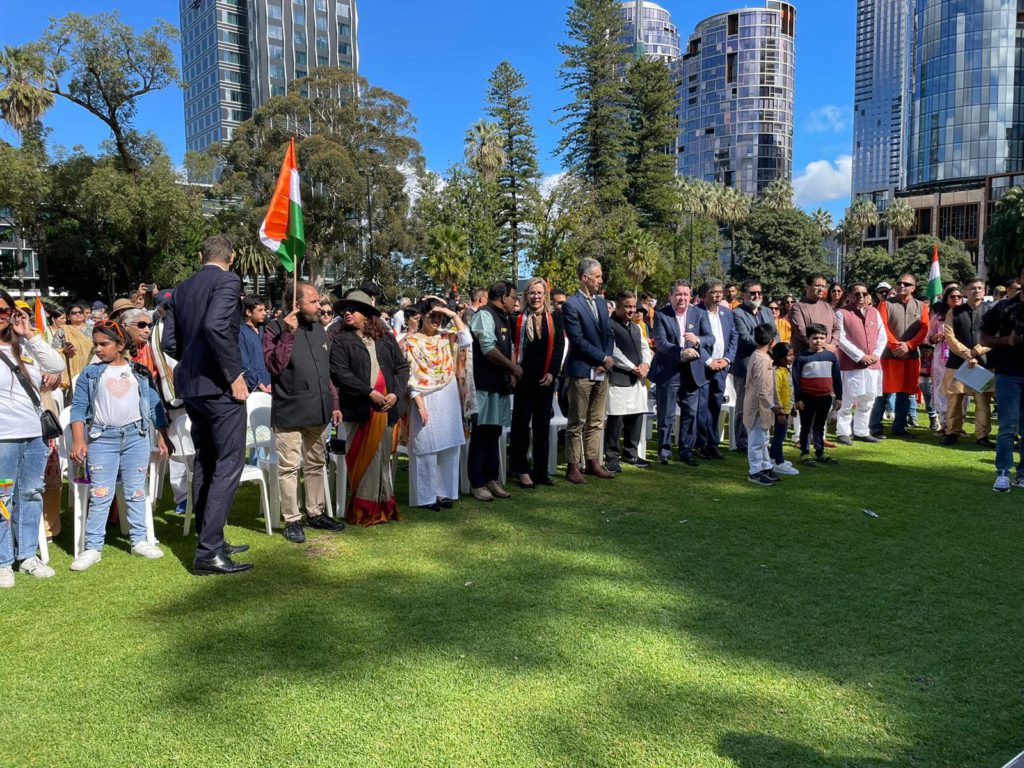
Why do Indigenous students need bilingual teaching at school?

0

By Rikke Louise Bundgaard-Nielsen, Brett Baker, Hilda Ngalmi, and Yizhou Wang

The federal government has recently released the annual Closing the Gap data.

According to the report, 34.3% of Indigenous preschoolers were starting school developmentally on track, compared to almost 55% of non-Indigenous Australian students as of 2021.

About 68% of Indigenous people aged 20–24 years had attained Year 12 or equivalent as of 2021, with a target of 96% by 2031.

Speaking about the Closing the Gap report, Minister for Indigenous Australians Linda Burney noted her disappointment about the results.

The gap is not closing fast enough. I know many people are frustrated by the lack of progress.

But are these reports asking the right questions? Many Indigenous children who do not speak English at home struggle with English at school. This suggests some poor education outcomes may arise from cross-language difficulties.

Our new study investigated children speaking Kriol.

This is the largest Indigenous language after English in Australia. Kriol-speaking children make up the largest group of Indigenous kids with English as a second language.

What is Kriol?

Kriol is the result of contact in the 19th century between speakers of Indigenous languages and English, and many Kriol words come from English.

Kriol has been called “broken English”. But Kriol is neither “broken”, nor English. It is a separate language with its own grammar and vocabulary.

Recognition of the language barrier experienced by Kriol-speaking children has been delayed by two unfortunate assumptions. One is that Kriol is a dialect of Australian English or Aboriginal English, not a separate language.

The other assumption is Kriol is “highly variable” and speakers use many versions of Kriol – including some that are very similar to English. As a consequence, it has been assumed Kriol-speaking children won’t struggle to learn in English when they get to school.

Our research

Our research investigated children’s use of Kriol for the first time.

We spoke to 13 children between four and seven. The children were all students at Wugularr School (also called Beswick) in the Northern Territory. The community language in Wugularr is Kriol, but a range of traditional languages are also spoken.

Less than 1% of the population in Wugularr only speak English at home. Children first learn English when they start preschool.

Our findings

We used two game-like activities to test children’s knowledge of Kriol words and sounds.

In one activity we showed the children a picture of a familiar object (such as a door or an apple) accompanied by a recording in Kriol asking, “what’s this?”. The kids then spoke the word.

In the other “game”, we played recordings of Kriol words – some produced the right way, and some produced with an error. For example, “diger” for “tiger” and “abble” for “apple”. We then used a recorded Kriol prompt asking if the lady in the recording said the word the right or wrong way. (The students found this really hilarious – an adult making so many mistakes!)

These activities showed students had a good knowledge of the sounds of Kriol and the correct shape of words in Kriol, which are important pre-literacy skills. This showed they are ready to learn to read, just not in English.

This also demonstrated very substantial linguistic differences between English and Kriol. This means Kriol-speaking children are not speakers of English, and that they do not effortlessly “slide” into a version of Kriol that is “close enough” to pass for English as a consequence of formal schooling in English.

The need for bilingual education

Our research shows Kriol-speaking children face similar difficulties when they start school as children from other non-English speaking backgrounds.

In an ideal setting, students would be given a bilingual education. This means Indigenous children would be able to use their First Language knowledge and cultural knowledge as a foundation for learning.

Teaching assistant and linguist Hilda Ngalmi is a Wubuy/Nunggubuyu woman from Numbulwar, where Kriol is widely spoken. She collaborated with us on the research. As she explains:

When I teach kids, I have to explain to them in Kriol first. Because that is the language they understand.

The need for bilingual education for children who speak traditional Indigenous languages has been debated for decades in Australia. Support has waxed and waned and today only a small number schools offer a genuine bilingual education.

However, where it does happen, it is having positive results.

For example, Yirrkala School in Northeastern Arnhem Land teaches students “both ways” in local language Yolngu Matha and English. In 2020, eight students became the first in their community to graduate Year 12, with university entry-level scores.

Not making the most of children’s First Language competence creates additional learning barriers for Indigenous children. If we really want to “close the gap”, our education system needs to support students to learn in a bilingual environment.

Rikke Louise Bundgaard-Nielsen, Teaching Associate, The University of Melbourne; Brett Baker, Associate Professor in Linguistics, The University of Melbourne; Hilda Ngalmi, Indigenous Teacher and Linguist, Indigenous Knowledge, and Yizhou Wang, Teaching Associate, The University of Melbourne

This article is republished from The Conversation under a Creative Commons license. Read the original article.

Support Our Journalism

Global Indian Diaspora needs fair, non-hyphenated, and questioning journalism, packed with on-ground reporting. The Australia Today – with exceptional reporters, columnists, and editors – is doing just that. Sustaining this needs support from wonderful readers like you.

Whether you live in Australia, the United Kingdom, Canada, the United States of America, or India you can take a paid subscription by clicking Patreon. Buy an annual ‘The Australia Today Membership’ to support independent journalism and get special benefits.
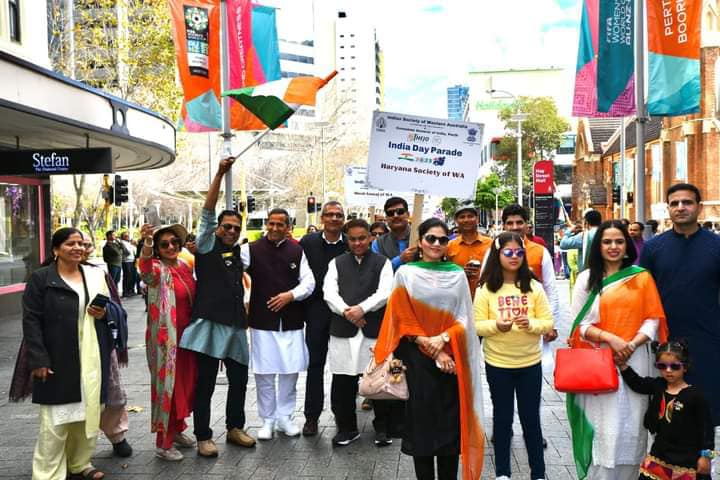
Sydney café operator penalised for not paying Nepali international student

0

The Fair Work Ombudsman has secured a $5,500 penalty in court against the operator of a café in southern Sydney.

The Federal Circuit and Family Court has imposed the penalty against The Lodge MGL Pty Ltd, which trades as Write Coffee Reserve at the Menai Marketplace Shopping Centre, in Menai.

The penalty was imposed in response to The Lodge MGL Pty Ltd failing to comply with a Compliance Notice requiring it to calculate and back-pay entitlements to three workers it had employed for various periods between December 2020 and April 2021.

The FWO investigated after receiving requests for assistance from the affected workers.

Acting Fair Work Ombudsman Kristen Hannah said business operators that fail to act on Compliance Notices need to be aware they can face penalties in court.

“When Compliance Notices are not followed, we are prepared to take legal action to ensure workers receive their lawful entitlements,” Ms Hannah said.

“Employers also need to be aware that taking action to improve compliance in the fast food, restaurant and café sector and to protect vulnerable workers are priorities for the FWO.

“Any employees with concerns about their pay or entitlements should contact us for free advice and assistance.”

A Fair Work inspector issued the Compliance Notice to The Lodge MGL Pty Ltd in August 2021 after forming a belief that the three workers were not paid any wages for the work they had performed.

The workers included a 17-year-old food and beverage attendant who performed about two weeks’ work, a Nepali kitchen attendant on a student visa who performed about six weeks’ work, and an adult food and beverage attendant who performed just over two months’ work.

The workers were back-paid in full only after the FWO commenced legal action.

Support Our Journalism

Global Indian Diaspora needs fair, non-hyphenated, and questioning journalism, packed with on-ground reporting. The Australia Today – with exceptional reporters, columnists, and editors – is doing just that. Sustaining this needs support from wonderful readers like you.

Whether you live in Australia, the United Kingdom, Canada, the United States of America, or India you can take a paid subscription by clicking Patreon. Buy an annual ‘The Australia Today Membership’ to support independent journalism and get special benefits.

Indo-Fijian football star Trina Davis set for trials at Wellington Phoenix

0

In a remarkable development that underlines the growing recognition of Fijian football on the global stage, Digicel Fiji Kula rep Trina Davis is set for trials with the Wellington Phoenix Football Club in New Zealand.

Trina, who has regularly started for the Digicel Fiji Kulas squad, has captivated the attention of football enthusiasts with her exceptional performances on the pitch. As she prepares to embrace the challenge of a trial stint with the Wellington Phoenix, her journey evolves into an inspiring narrative, resonating with aspiring football talents both in Fiji and beyond.

Image: Trina Davis with her parents and sister in Seattle (Source: Facebook)

Born in the United States, Trina is the first Fiji woman professional football player. At the age of 16, she made her international senior debut at the OFC Women’s Nations Cup in 2018. 

She has been an influential figure within the Digicel Fiji Kulas squad, showcasing her prowess as a determined and gifted athlete.

Image: Trina Davis (Source: Facebook)

While this is not her first professional football experience, Trina expressed, she is:

“thrilled and deeply honored to have the chance to demonstrate my capabilities at a prestigious club such as Wellington Phoenix. This opportunity not only reflects my effort but also underscores the potential that Fijian football brings to the global stage.”

The 21-year-old, first inked her professional football contract in 2021, aligning with the Israeli club ASA Tel Aviv. Building on her momentum, she further solidified her career trajectory by securing a contract with Puerto Rico Sol FC the following year where she played in the top-tier league, Superior Femenino de la Liga Puerto Rico.

Image: Roy Krishna (Source: FFA)

Trina’s journey follows in the footsteps of another trailblazer from Fiji, Roy Krishna, the captain of the Digicel Fiji National Team. Krishna’s memorable stint with Wellington Phoenix spanned five years, during which he etched his name as the club’s all-time top scorer and secured prestigious accolades including the A-League Golden Boot and the Johnny Warren Medal for Best Player.

She also articulates her outlook for the Wellington Phoenix trial, anticipating dynamic and fast-paced soccer. While she acknowledges the challenge ahead, she eagerly anticipates the prospect of playing within a team environment once again after being out of the professional scene since her injury last year.

Image: Trina Davis (Source: Facebook)

In her candid assessment of her strengths and areas for growth as a player, Trina shares:

“My primary strengths lie in my speed and strength, my off-ball movements are strategic, and my crosses are pinpoint. I thrive as a team player and use criticism constructively to learn from my errors.”

Trina exudes confidence in her ability to seamlessly integrate into the team and carve a niche for herself by showcasing her abilities and scoring prowess. Confronting the challenges of acclimatising to a new country, she acknowledges the adjustment while embracing the excitement of exploration and experiencing diverse cultures.

Image: Trina Davis (Source: Facebook)

The excitement resonates beyond Davis, as two more Fijian footballers gear up for their own trials in the coming weeks.

Angeline Rekha, a rising star from the Young Kulas and a member of the Fiji U19 team, is set for trials at Wellington Phoenix next month. Similarly, Faazil Ali, a key figure in Fiji’s U20 World Cup squad that competed in Argentina, is set to make his mark as he embarks on his trial concurrently.

Image

Trina extends advice to fellow players contemplating trials, urging them to seize opportunities for experience and exposure.

Adding to this journey, Trina’s teammates, Cema Nasau and captain Sofi Diyalowai, are wrapping up their time with the Orlando Pride who competes in the top-tier National Women’s Soccer League in the US.

Image: Mohammed Yusuf, CEO of Fiji Football Association (Source: FFA)

Mohammed Yusuf, CEO of Fiji Football Association, expressed his pride in yet another national team player venturing into trials.

“Her narrative stands as a motivation for aspiring footballers who dream of playing internationally. With each trial and opportunity, Fijian football improves, paving the way for a brighter sporting future in Fiji.”

These trials have been facilitated through funding from the Oceania Football Confederation.

Support Our Journalism

Global Indian Diaspora needs fair, non-hyphenated, and questioning journalism, packed with on-ground reporting. The Australia Today – with exceptional reporters, columnists, and editors – is doing just that. Sustaining this needs support from wonderful readers like you.

Whether you live in Australia, the United Kingdom, Canada, the United States of America, or India you can take a paid subscription by clicking Patreon. Buy an annual ‘The Australia Today Membership’ to support independent journalism and get special benefits.
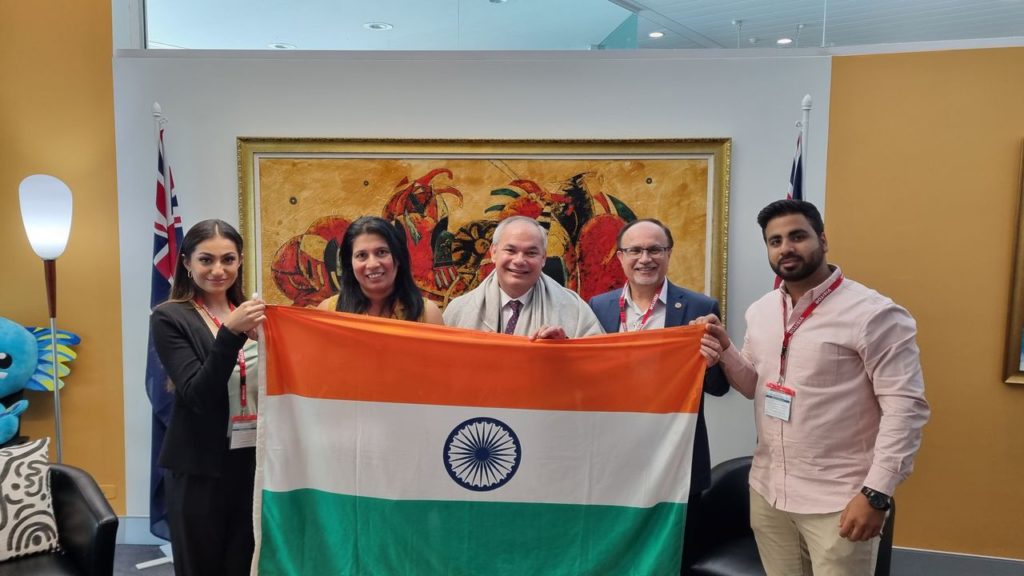
20% of young people who forwarded nudes say they had permission – but only 8% gave it!

0

By Elizabeth Mary Clancy and Bianca Klettke

The sending and receiving of intimate images and videos is increasingly becoming a part of people’s sexual relationships – particularly for teenagers and young adults.

Image-based “sexting” has steadily increased over the past few years. Aggregated data from population-representative studies in the United States, which included 110,380 teenage participants, found about one in five teenagers had either sent or received nudes online. Australian studies report similar rates.

The figures are slightly higher among lesbian, gay and bisexual individuals. However, minimal data have been collected from the broader queer community, including from trans and gender-diverse people.

Research shows there is little harm associated with sexting when all parties involved have consented, including for teenagers. That said, consent isn’t always properly given and received. In such cases there are increased risks of abuse and sexual violence.

Harm from sexting occurs when there are breaches of consent. At the same time, our work in this space shows navigating consent online is much more complex than it might initially seem.

When sexting can lead to harm

People sext for numerous reasons, such as to flirt, to maintain intimate relationships, or for body image reinforcement. But this act can also be weaponized. Non-consensual forms of sexting include:

  • coerced sexting, where someone is forced or manipulated into sexting
  • receiving unwanted sexts (also known as “cyberflashing”)
  • non-consensual sharing of someone’s sexts with others.

These examples of image-based abuse are highly problematic and harmful to victims. Those who have had their intimate images distributed without their consent (sometimes problematically referred to as “revenge porn”) are more likely to experience stigma, shame, reduced employment prospects, suicidal thoughts or self-harm as a result.

Yet, in two studies published in 2019 and 2021, we found people who share these intimate images are usually either unaware or dismissive of the potential concerns.

These people nominated a range of motivations which could be considered relatively harmless, such as sharing pictures because the person depicted was “hot” (according to 44% of respondents), or seeing it as “not a big deal” (48%), or as a joke (31%).

A case of crossed wires?

Our latest study, published in the Journal of Interpersonal Violence, found a stark difference between the proportion of people who said they had given consent to have their intimate images shared, and those who said they’d received consent to do this.

Specifically, from our survey of 2,126 young cisgender adults, 8% said they had knowingly given permission for their sexts to be shared. Men (17.7%) were almost six times more likely than women (3.4%) to have consented to this.

In contrast, of those who indicated they had shared another person’s sexts, 20% said they had received prior consent (with no substantial differences between men and women).

When it came to unwanted or unwelcome sexts, women were more likely to non-consensually disseminate these images. This suggests at least some non-consensual forwarding of nudes may relate to not having wanted to receive them in the first place.

We don’t yet have a large enough sample to determine the rates for people outside the gender binary. However, preliminary data from our work suggest their experiences may be similar to those of cisgender women.

Overall, our findings raise important questions about how people conceptualise “consent” when navigating digital spaces. The discrepancy between those who said they received permission to forward someone’s sexts and those who said they gave it suggests something is amiss.

Progress is pending

There is currently little research and minimal legislative clarity regarding how we define and apply digital consent, both in Australia and globally.

Navigating consent online isn’t as straightforward as in face-to-face situations. While the initial exchange of intimate images between two people is often consensual, questions of consent tend to become murkier over time.

For example, what happens if you shared your intimate images happily at the start of a relationship, but it has since gone sour and ended?

Also, since consent can be revoked at any time, should we enforce the deletion of intimate images once the sender revokes their consent? How would this process be managed and monitored?

Further, how would affirmative consent (which has been introduced via legislation in several states) play out online? How do we define “enthusiastic consent” in an online interaction?

This is clearly a topical issue. A federal parliamentary inquiry is under way to address current and proposed consent laws.

Ideally, the concept of online consent would be included within respectful relationship education. Young people should know how to have clear conversations about how their intimate images may be used – both in the present, and in the future when a relationship has ended.

Our ongoing research is focused on finding ways for people to articulate their expectations around consent realistically and effectively. In the meantime, if your intimate images have been uploaded online, or otherwise shared without your permission, there are steps you can take.

If the individual responsible won’t respond or willingly withdraw the images, you can contact the e-Safety Commissioner to have them taken down from online.

There are also legal implications for those who share someone’s intimate images without consent – or threaten to do so. If you’re in this situation, contact your state or territory police as a first step.

Elizabeth Mary Clancy, Lecturer, School of Psychology, Deakin University and Bianca Klettke, Senior Lecturer in Psychology, Deakin University

This article is republished from The Conversation under a Creative Commons license. Read the original article.

Support Our Journalism

Global Indian Diaspora needs fair, non-hyphenated, and questioning journalism, packed with on-ground reporting. The Australia Today – with exceptional reporters, columnists, and editors – is doing just that. Sustaining this needs support from wonderful readers like you.

Whether you live in Australia, the United Kingdom, Canada, the United States of America, or India you can take a paid subscription by clicking Patreon. Buy an annual ‘The Australia Today Membership’ to support independent journalism and get special benefits.

Pakistani brothers may face jail for alleged $6 million fake Australian postage stamps scam

0

Three Pakistani brothers have been described as the so-called “architect” and “minions” of a massive scam related to Australian postage stamps.

The County Court was told that the brothers came from a wealthy family in Karachi and the news shocked their parents.

While the architect, 26-year-old Faizan Khan, has left Australia, police have taken to court his two “minions” – 23-year-old Obaid and 25-year-old Shaheryer who were studying business degree at La Trobe University.

The County Court was told that the Australian Federal Police (AFP) raided the two brothers’ Brunswick East apartment complex in March 2021.

As per ABC, Prosecutor Simone Tatas told the court that AFP found 35 boxes filled with counterfeit Australian postage stamps.

“Police determined the number of seized stamps was approximately 2.4 million Australian stamps of various denominations with a face value of approximately $6 million.”

Earlier, the Magistrate’s Court was told that the investigators seized $30,000 worth of watches, including a Rolex, a bag of 20 SIM cards, and intercepted four parcels of stamps worth more than $100,000.

Then despite concerns raised by prosecutors that the brothers might flee or try to destroy evidence, Magistrate Swadesir released the brothers on bail with strict conditions. This included that the brothers surrender their Pakistani passports, report daily to a police station, and not leave Australia.

It has now been revealed in court that the eldest brother Faizan ordered “high quality” fake Australian stamps from the online wholesaler Alibaba.

These fake stamps were then sold these fakes to local unsuspecting customers at a bargain price.

In January 2021, Faizan left Australia for Pakistan to get married and still allegedly continued to manage the illegal operation by giving instructions to his younger brothers.

The two younger brothers, according to Ms Tatas, were responsible to package up the orders and post them out.

However, Penny Marcou, the two brothers’ barrister, told the court that they speak limited English and were allegedly questioned without an interpreter present.

In terms of the scam, the barrister said:

“They saw no money from it. They weren’t involved in the actual sales or anything to that level.”

The two brothers’ student visas have been canceled by the federal government and they may now face a maximum of five years in prison for possessing counterfeit postage stamps.

The County Court Judge Gaynor described this scam as “a possible assault on the Australian postal system”:

“They’ve engaged in an enterprise that has the potential to undermine the Australian postage system.”

Shaheryer and Obaid Khan will be sentenced on 16 August 2023.

Support Our Journalism

Global Indian Diaspora needs fair, non-hyphenated, and questioning journalism, packed with on-ground reporting. The Australia Today – with exceptional reporters, columnists, and editors – is doing just that. Sustaining this needs support from wonderful readers like you.

Whether you live in Australia, the United Kingdom, Canada, the United States of America, or India you can take a paid subscription by clicking Patreon. Buy an annual ‘The Australia Today Membership’ to support independent journalism and get special benefits.
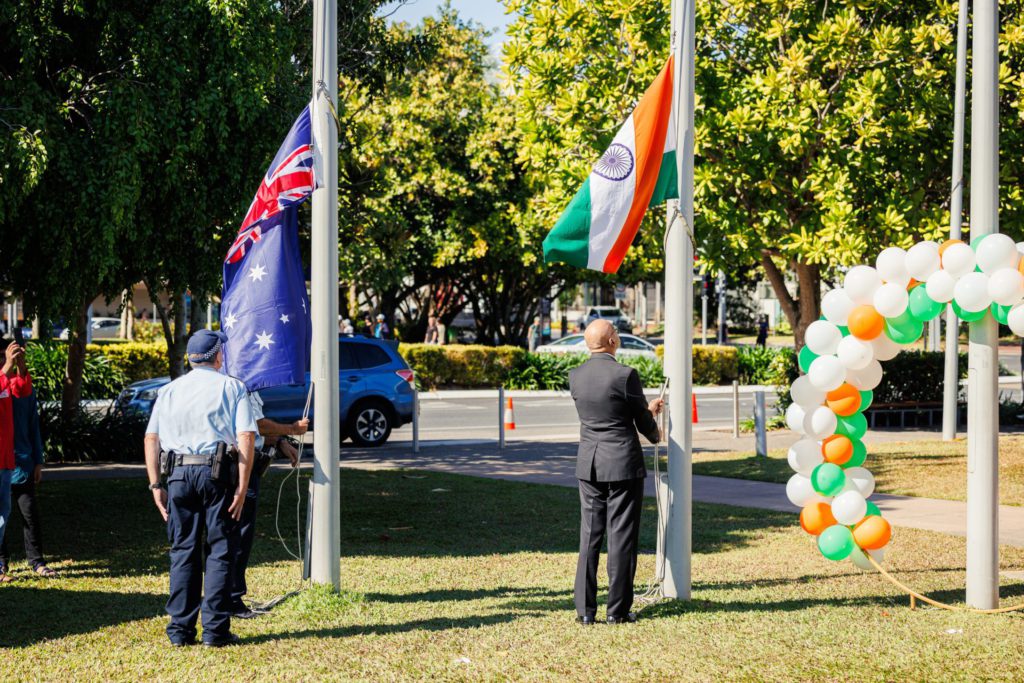
FIFA Women’s World Cup: Australia, England storm into quarterfinals as Matildas beat Denmark

0

Matilda’s booked their berth in the final eight after securing an easy 2-0 win over Denmark. 
Denmark looked to score early, with Pernille Harder making several runs into the defences of her opponents and striking straight at the Aussie goalkeeper Mackenzie Arnold.

Arsenal forward Caitlin Foord gave the Aussies the lead in the 29th minute. Mary Folwer played the ball to Foord on the left and she put it past goalkeeper Lene Christiansen to make it 1-0 for the Aussies. 

The Danes tried to find their way back into the match but lacked any conviction in their efforts. 
In the 70th minute, Fowler clipped the ball to Emily van Egmond, who fed the ball to Hayley Raso, who though off-balance, netted the ball into the bottom left corner of the goal. 

With the game won, the Australian coach Tony Gustafsson gave Chelsea forward Sam Kerr her first minutes on the pitch during the tournament to finish a positive day in Sydney. 

Australia will face France or Morocco in the quarterfinals. England will also face either Jamaica or Colombia in their final eight matches.

On the other side, England overcame 120 minutes of below-par performance against Nigeria and won by 4-2 on penalties to secure their spot in the FIFA Women’s World Cup on Monday at Queensland. 

Nigeria dominated the play for whole of regulation time and the extra time, but England pulled out all the stops during the penalties to secure the final eight spot, despite Lauren James being given a red card. 

In the first half, Nigeria made some chances for themselves but failed to score. For instance, Alozie’s header was saved by Alessia Russo from going into the nets. 

Later, Ashleigh Plumptre’s effort for Nigeria hit the crossbar and another effort of hers was pushed away by Mary Earps.’

England registered their first shot in the 23rd minute. Russo tried taking advantage of a defence error by Nigeria, but Chiamaka Nnadozie saved it well. A half-volley by Rachel Daly also met the palms of the Nigerian goalkeeper. 

England was awarded a penalty 30 minutes into the game, with Rasheeat Ajibade penalised for pulling Daly to the floor during a tussle inside the area. 

The Nigerian players pleaded their case as Georgia Stanway prepared to take the penalty and the spot kick was overturned. 

At half-time, both teams were goalless. Two minutes after the action resumed, Nigeria hit the bar for the second time. The Nigerians continued to make more chances for themselves, with Ajibade and Uchenna Kanu among those trying to score. 

England could have taken a lead in the 75th minute after a header by Daly, but a brilliant save from the goalkeeper Nnadozie denied them the lead. 

Things got worse for Lionesses when James was given a red card for a physical altercation with Alonzie. 

England and Nigeria finished the regulation time goalless and could not convert any of their chances in the extra time either. 

England and Nigeria missed their first penalties but Bethany England smashed the second penalty, making it 1-0. Nigeria missed their second as well. 

Daly converted England’s third penalty and Ajibade scored in the third penalty of Nigeria into a goal to make it 2-1. 

But successful conversions by Alex Greenwood and Chloe Kelly meant that Nigeria was left on the losing side despite a penalty conversion by Christy Ucheibe.

Support Our Journalism

Global Indian Diaspora needs fair, non-hyphenated, and questioning journalism, packed with on-ground reporting. The Australia Today – with exceptional reporters, columnists, and editors – is doing just that. Sustaining this needs support from wonderful readers like you.

Whether you live in Australia, the United Kingdom, Canada, the United States of America, or India you can take a paid subscription by clicking Patreon. Buy an annual ‘The Australia Today Membership’ to support independent journalism and get special benefits.

Australia helping to increase cyber safety awareness across the Pacific

0

The AFP is training and upskilling police officers across the Pacific in cybercrime investigations and delivering cyber safety education and awareness programs to assist Pacific police partners to keep their communities safe and secure online.

Cyber Safety Pasifika (CSP) was established by the Pacific Islands Chiefs of Police (PICP) with the aim of increasing cyber safety awareness in Pacific communities and upskilling Pacific police in the conduct of cybercrime investigations.

The AFP, through the Pacific Police Development Program – Regional (PPDP-R), delivers CSP on behalf of the PICP to support safety and security across the Pacific region.  CSP has rolled out training in Vanuatu, Kiribati, Fiji, Nauru and Samoa during the last year, with police force members from Papua New Guinea, Tuvalu, Tokelau, Solomon Islands and Tonga also taking part.

Participants undertook CSP’s two key foundation programs – Cyber Safety Awareness and Education Community Trainer, and Cybercrime Investigations.

Image: Cyber Safety Pasifika training in Nauru (Source: AFP)

CSP’s awareness and education program equips Pacific police partners with the skills and confidence to deliver presentations to their communities on safely navigating the digital landscape. The program also aims to develop some of those partners into trainers in line with the “by the Pacific, for the Pacific” philosophy, thereby supporting Pacific police to lead the delivery of CSP courses in the future.

The cybercrime investigation program helps participants understand and investigate cyber and technology-enabled crime offences. The course equips Pacific police with tools and techniques that they can utilise in their unique environments when responding to cyber threats and incidents.

Over the past five years, 365 Pacific police officers have undertaken a face-to-face CSP program across 17 Pacific nations. Programs were delivered virtually during the COVID-19 pandemic to ensure police officers could still train and upskill.

The AFP partners with numerous organisations – including the Australian Cyber Security Centre, the Asia-Pacific Network Information Centre, Digicel, the FBI, Meta, and New Zealand Police – to ensure CSP programs are delivered by subject matter experts.

Image: Cyber Safety Pasifika training in Nauru (Source: AFP)

AFP Detective Superintendent PPDP-R Kathryn Polkinghorne said it was more important than ever to grow cyber capability across the Pacific.

“The CSP program is extremely important to the Pacific region in raising community awareness and helping police officers enhance their skills and awareness in the effort to combat cybercrime,” Detective Superintendent Polkinghorne said.

“As internet connectivity across the Pacific region increases, cybercrime becomes a greater risk, so it is vital that police and the broader community know how to stay safe online. 

“The AFP is committed to working with our partners to support the Pacific to engage safely in the digital environment, noting the benefits for communities flowing from safe online connectivity.”

The AFP has delivered the CSP program in  Nauru and Samoa in recent months.

More than 50 police officers took part in the CSP program held in Nauru, including participants and observers from the Department of Education, Women’s and Social Development Affairs, Nauru Government Information Office, Nauru Media and Nauru Government Information, Communication and Technology.

The program was successfully delivered through the Nauru-Australia Policing Partnership (NAPP) program, which has been in place since the AFP first deployed to Nauru in 2004.   

Image: Cyber Safety Pasifika training in Nauru (Source: AFP)

Nauru Police Force Commissioner Iven Notte is a strong supporter of the CSP program and said expanding the delivery of the program to include key partners would further increase the understanding of cyber safety within the community.

“It is very important to protect the Nauru community from cyber harm,” Commissioner Notte said.

“The CSP training better equips the Nauru Police Force to tackle these emerging problems alongside their partners.”

CSP also successfully delivered two programs in Samoa, with participants from the Samoa Police, Prisons and Corrections Services.

Samoa Police Acting Commissioner Leiataua Samuelu Afamasaga, who opened the training course, said Pacific police could utilise the training to respond to cyber threats in their unique environment.

“This course has provided our members with the skills and knowledge to succeed in this field. They have learned about the different types of cybercrime, the tools and techniques used by cyber criminals and the legal framework to investigate and prosecute cybercrimes,” Leiataua said.

“The course has provided our members with the opportunity to develop their problem-solving and analytical skills, and how apply them to the real world.” 

Support Our Journalism

Global Indian Diaspora needs fair, non-hyphenated, and questioning journalism, packed with on-ground reporting. The Australia Today – with exceptional reporters, columnists, and editors – is doing just that. Sustaining this needs support from wonderful readers like you.

Whether you live in Australia, the United Kingdom, Canada, the United States of America, or India you can take a paid subscription by clicking Patreon. Buy an annual ‘The Australia Today Membership’ to support independent journalism and get special benefits.
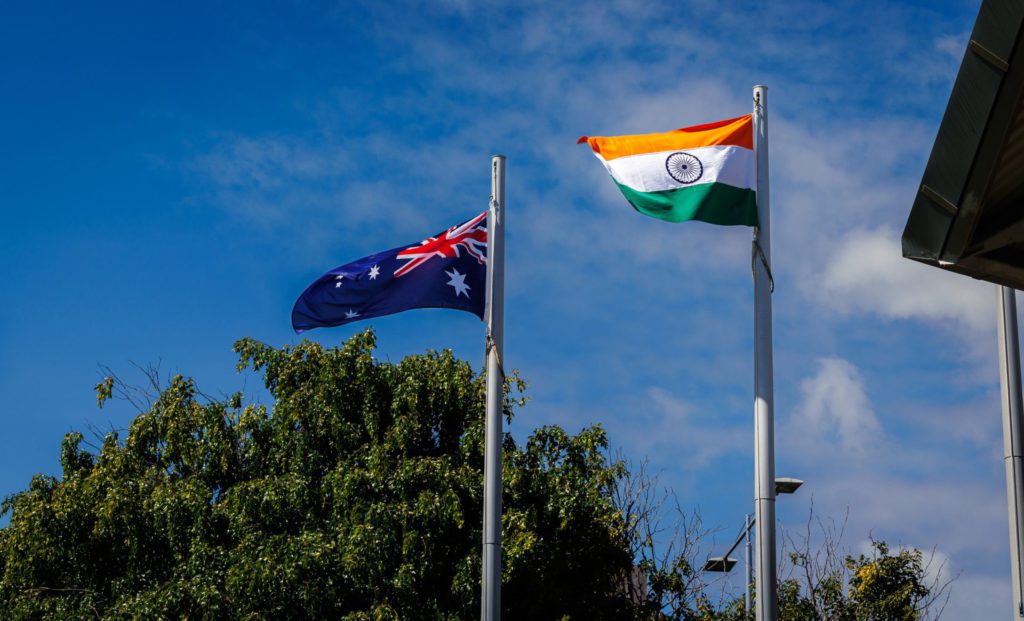
What makes students feel like they belong at university?

0

By Joseph Crawford

Belonging is about feeling accepted, included and valued.

If students feel like they belong at their university, research shows it plays a crucial role in their overall wellbeing, self-esteem, and motivation to study.

As the Universities Accord interim report says, universities have an “obligation to students to foster belonging”. The draft report also notes “too few” Australians are completing university degrees, with completions of a first bachelor degree “at their lowest since 2014”.

Beyond ensuring campuses are safe and inclusive places to study, our new research looks at what factors can predict a sense of belonging for students.

What is happening to student belonging?

The annual Student Experience Survey tracks Australian students’ sense of belonging to their institution.

In 2022, only 46.5% of undergraduate students said they experienced a sense of belonging at university, and while this is slightly higher than 2021 (42.1%), it remains significantly lower than most other areas of student experience. For example, Australian students rated their overall university experience at 75.9%.

The pandemic and the move to more online teaching certainly had an impact on belonging. But this issue pre-dates 2020 and is not unique to Australia.

It is important to reverse this trend. Feeling like they belong can help students overcome challenges and hardships and guard against not completing their degrees.

Our study

Our research uses data from the Student Experience Survey between 2013 and 2019. We looked at more than 1.1 million undergraduate and postgraduate students during this time.

We used machine learning – a form of artificial intelligence that uses data and algorithms to progressively improve its quality (just like Netflix’s ability to recommend movies based on previous viewing) – to ask what actually predicts student belonging?

Analysis of multiple variables from the national student experience survey suggested several causes and connections.

Students want help to settle in

Students want to know they are welcome at their university from the very start. Our research found support for settling in was an important predictor for belonging.

This can mean inductions, orientations and structured opportunities to meet people. This could look like peer mentoring programs and for international students, mobilising the help of ethnic and religious community organisations.

It is also important for universities to have places on campus for students to interact, as well as clubs and events. On top of this, university teaching staff can complete training in how to facilitate social connections between students.

Our study found ease and helpfulness of enrolment and administration systems were not as important to belonging when compared to human connections.

Students need meaningful connections

Our research also showed students wanted to interact with their peers.

But we found interactions outside of class were much more important than interaction in class. This might be because student connection opportunities in class may be poor, or they see on-campus socialising as easier without academic pressure.

The study found it was important for all students – domestic or international – to have interactions with local students.

Local students already know the important places, events and sub-cultures of an area. This may be as simple as where to get the best coffee or cheapest takeaway, but helps students feel like they belong in the community.

Group work and belonging

We found some interactions in class are important: our study suggests learning teamwork in class helped students feel like they belonged as it meant students were working together and interacting with their peers.

However, other skills such as problem solving, critical thinking, subject matter knowledge, and work readiness were far less important when it came to belonging.

Demographic indifference?

Research says a student’s personal identity is an important precursor to belonging. That is, we might belong more easily with those who share characteristics with us.

In our study we looked at students’ age, gender and enrolment type.

But we found these were less significant when it came to belonging. It mattered more if students were able to interact with other students.

Why this matters

While skills development and subject matter expertise are very important for academic outcomes, our research shows when it comes to belonging, students need authentic opportunities to settle into university life and make friends.

In its interim report, the Universities Accord does not look at the commencement or orientation process for students.

It’s final report in December should not miss the opportunity to boost belonging – and thus retention – by focusing on how campuses can include and involve students from the start of their studies. If they do, our research suggests this will have long-term benefits.

Joseph Crawford, Senior Lecturer, Management, University of Tasmania

This article is republished from The Conversation under a Creative Commons license. Read the original article.

Support Our Journalism

Global Indian Diaspora needs fair, non-hyphenated, and questioning journalism, packed with on-ground reporting. The Australia Today – with exceptional reporters, columnists, and editors – is doing just that. Sustaining this needs support from wonderful readers like you.

Whether you live in Australia, the United Kingdom, Canada, the United States of America, or India you can take a paid subscription by clicking Patreon. Buy an annual ‘The Australia Today Membership’ to support independent journalism and get special benefits.

Indian Congress leader Rahul Gandhi’s membership to Parliament restored

0

Indian Parliament’s Lok Sabha (Lower House) Secretariat on Monday restored the membership of Rahul Gandhi after the Indian Supreme Court on August 4 stayed his conviction in the ‘Modi’ surname remark case.

The Congress leader who was disqualified from the Indian Lower House in March 2023 was reinstated as the Member of Parliament from Wayanad.

“In continuation of Notification No. 21/4(3)/2023/TO(B), dated the 24th March, 2023, the Supreme Court of India has passed an order on 04.08.2023 in Special Leave to Appeal (Crl.) No. 8644/2023, staying the conviction of Rahul Gandhi, Member of Lok Sabha representing the Wayanad Parliamentary Constituency of Kerala, which was ordered by the judgment dated 23.03.2023 of the Court of the Chief Judicial Magistrate, Surat in C.C./ 18712/2019,” an official notification issued by the Indian Lok Sabha secretariat read.

“In view of the order dated 04.08.2023 of the Supreme Court of India, the disqualification of Rahul Gandhi notified vide Gazette Notification no. 21/4(3)/2023/TO(B) dated the 24th March, 2023 in terms of the provisions of Article 102(1)(e) of the Constitution of India read with Section 8 of the Representation of the People Act, 1951, has ceased to operate subject to further
judicial pronouncements,” it added.

Congress leader Rahul Gandhi

The Supreme Court, in an interim order on last Friday, stayed Mr Gandhi’s conviction in the criminal defamation case over the ‘Modi surname’ remark.

Upon reaching Parliament Housse, the Congress leader paid tributes to Mahatma Gandhi.
He also updated his account bio on X (formerly known as Twitter) from ‘Dis’Qualified MP’ to ‘Member of Parliament’.

Congress leaders were also seen distributing sweets outside the Parliament.

The apex court issued notices to the Gujarat government and the complainant, in July, on an appeal of the Congress leader challenging the Gujarat High Court order.

The Gujarat High Court, had, in its order earlier, declined to stay his conviction in the criminal defamation case in which Rahul was sentenced to two years in jail by the Surat court over the ‘Modi surname’ remark.

After his conviction in the case, Mr Gandhi was disqualified as MP from Kerala’s Wayanad on March 24. 

Business sponsors named-shamed and sanctioned for allegedly exploiting ‘Skilled Migrant Workers’

0

Australian Border Force has updated its Register of Sanctioned Sponsors, which lists employers who have exploited migrant workers. 

​More than 140 unscrupulous employers have been sanctioned by the Australian Border Force (ABF) during the past financial year for exploiting migrant workers in Australian workplaces.

The figure was revealed as ABF officers around the country conducted an operational blitz throughout July, targeting businesses that sponsor migrant workers to uphold workplace rights, including pay, conditions and health and safety.

Employers who breached their sponsorship obligations can receive large fines, be barred from the opportunity to employ migrant workers in the future, and be publically named on the Register of Sanctioned Sponsors on the ABF website. 

ABF Acting Commander Vaughan Baxter said employers may also be referred for further investigation to ABF partner agencies, including the Fair Work Ombudsman and the Australian Tax Office. 

“The practice of underpaying or exploiting migrant workers has no place in Australia and employers who are taking advantage of their migrant workers should know that it will cost you,” A/g Commander Baxter said. 

“The underpayment and exploitation of migrant workers is a long-standing problem that can significantly impact workers as well as damage Australia’s international reputation.”

A/g Commander Baxter said throughout July ABF officers in every state and territory have so far visited hundreds of workplaces to educate migrant workers and their employers about their workplace rights and obligations, to ensure they are doing the right thing.

“Migrant workers don’t always have the family and networks here for help and advice when they are being treated unfairly at work,” he said.

“We strongly encourage the reporting of worker exploitation, which can be made anonymously, as these reports can be crucial in shining the light on what is an insidious issue.

“If anyone is being exploited or is aware of someone who is being exploited in some way, you can be assured these concerns can be reported through Border Watch, regardless of your visa status.” 

Reports of possible migrant worker exploitation can be made to Border Watch and this can be done anonymously.

In FY2022-23, 148 businesses in total were published on the Register of Sanctioned Sponsors following detailed investigations by the ABF. A wide range of industries were represented, including the hospitality, automotive, construction and hairdressing sectors.

Sanctioned sponsors by state/territory in 2022-2023:

STATE                                                           No. of sanctioned business

QUEENSLAND                                             49        

WESTERN AUSTRALIA                                40

NSW                                                             22

VICTORIA                                                      21

SOUTH AUSTRALIA                                     16

Support Our Journalism

Global Indian Diaspora needs fair, non-hyphenated, and questioning journalism, packed with on-ground reporting. The Australia Today – with exceptional reporters, columnists, and editors – is doing just that. Sustaining this needs support from wonderful readers like you.

Whether you live in Australia, the United Kingdom, Canada, the United States of America, or India you can take a paid subscription by clicking Patreon. Buy an annual ‘The Australia Today Membership’ to support independent journalism and get special benefits.

Shadow Minister Jason Wood distributes eye glasses for beneficiaries in India

0

Shadow Minister for Community Safety, Migrant Services and Multicultural Affairs, Jason Wood MP, who was recently in India distributed free spectacles at an event organized by India Vision Institute (IVI) for underprivileged people in Chennai.

Dr G Sivakumar, District Program Manager, District Blindness Control Society, K Elisha Madhu Kumar, Country Head and Chief Technology Officer, Amada Soft India, and IVI’s CEO Vinod Daniel were also present at the event.

The spectacles distributed are part of IVI’s vision screening campaign for over 4,230 underprivileged people during April-June this year. Vision screenings were organized in Chennai’s Kodambakkam, Chetpet, Santhome, Injambakkam, Ayyapakkam, Villivakkam, Perumalpattu, Medavakkam, and Velachery.

Shadow Minister Jason Wood distributing eyeglasses in India

The campaign is supported by Amada Soft India, a software development company.

The screenings found 2,412 individuals required vision correction, and they will receive free spectacles, with 1,198 referred to hospital for further medical examinations.

Shadow Minister Wood, who is a Federal member from La Trobe in Victoria, said,

“I commend India Vision Institute for this great initiative. The work they are doing, providing eye care for the underprivileged community, is very noble, and I wish them to continue this journey throughout India.”

IVI’s CEO Vinod Daniel thanked Mr Wood for participating in the event.

“With improved vision from the IVI campaign, the underprivileged adults become more productive and improve their earning capability. It also helps reduce accidents and falls,” he said.

“Initiatives such as these need the combined efforts of everyone so as to enable us make a positive impact on lives, in addition to our work in enhancing the country’s Primary Eye Care Capacity by providing access to eye care services for underprivileged Indians and distributing free corrective glasses to those in need, IVI also focuses on advancing the optometry sector through capacity building initiatives, advocacy, and leadership development, as well as supporting young optometrists in career building and upskilling,” Mr Daniel added.

Shadow Minister Jason Wood distributing eye glasses in India

According to IVI, since their inception, their vision screenings have reached 950,000 adults and children across 22 states in India with a focus on providing timely interventions in disadvantaged communities and remote areas.

They also prioritise vision and road safety by collaborating with corporates/organisations to conduct screenings and provide free spectacles for commercial vehicle drivers.

CEO of IVI, Vinod Daniel

Another significant aspect of their work is assisting and upskilling optometrists, who play a crucial role in delivering primary eye care services.

Through capacity-building initiatives, advocacy efforts, and leadership development programs, they aim to ensure that young optometrists are equipped to tackle the challenges they encounter in their careers and practice.

Support Our Journalism

Global Indian Diaspora needs fair, non-hyphenated, and questioning journalism, packed with on-ground reporting. The Australia Today – with exceptional reporters, columnists, and editors – is doing just that. Sustaining this needs support from wonderful readers like you.

Whether you live in Australia, the United Kingdom, Canada, the United States of America, or India you can take a paid subscription by clicking Patreon. Buy an annual ‘The Australia Today Membership’ to support independent journalism and get special benefits.

Australian teacher allegedly racially vilified Indian origin student: “Uber drivers and deliveroo people”

0

The Department of Education has been ordered to make an official apology to a former Cronulla High School student.

The incident happened on 3 March 2021 when a teacher at Cronulla High School allegedly described Indian people as “Uber drivers and Deliveroo people” during a Year 12 business studies class.

It was alleged that the male teacher played an educational YouTube video for the class entitled Elements of Marketing that featured Indians.

Further, it was alleged, that the teacher mocked the female presenter before saying “all Indians are Uber drivers and Deliveroo people, and their service is bad”.

An Indian-origin student and her parents met with the principal and also filed a complaint with NSW Civil and Administrative Tribunal.

The female student said during her evidence at the tribunal:

“As the video was playing, I saw [the teacher], glance at me a few times and continue to mockingly giggle at the lady and her accent.”

The student added:

“I was distressed and uncomfortable that Mr Anderson was looking at me during the video and mocked the Indian presenter, knowing that I am of Indian race. It was embarrassing and hurtful.”

Image: Cronulla High School (Source: change.org)

The teacher denied mocking the female presenter but admitted that he said the following before complaining about the quality of service provided by Uber and food delivery providers.

“Don’t assume because she is Indian that she is an Uber driver or works at 7-Eleven.”

It is reported that the teacher admitted to the tribunal that his statements were “inappropriate” and “racial in nature.”

“At the time there was nothing in the nature of any reactions by the students in the class that day to cause me to think that one or more of the students was upset.”

The Department of Education in a statement provided to the Sydney Morning Herald said:

“We reject all forms of racism and are committed to the elimination of racial discrimination in NSW public schools. The matter was reported to the Professional and Ethical Standards Directorate in 2021 and appropriate action was taken.”

Following the hearing, the teacher received a disciplinary warning and training and the Tribunal has ordered the Department to issue the student with a written apology.

Support Our Journalism

Global Indian Diaspora needs fair, non-hyphenated, and questioning journalism, packed with on-ground reporting. The Australia Today – with exceptional reporters, columnists, and editors – is doing just that. Sustaining this needs support from wonderful readers like you.

Whether you live in Australia, the United Kingdom, Canada, the United States of America, or India you can take a paid subscription by clicking Patreon. Buy an annual ‘The Australia Today Membership’ to support independent journalism and get special benefits.

Australia will soon have its first Islamic Bank adhering to Sharia law

0

By Md Safiullah (Safi) and Abul Shamsuddin

Islamic banks have become an integral part of the financial system in many Muslim-majority countries, as well as in nations with sizeable Muslim minorities such as the United Kingdom, South Africa, Sri Lanka and Thailand.

Australia is poised to join them. From mid-2024, Islamic Bank Australia is set to offer Australia’s 813,000 Muslims a banking service aligned with their religion’s strictures against profiting from interest or investing in harmful industries such as alcohol or gambling.

The fundamental distinguishing feature of an Islamic bank is its adherence to Islamic, or Sharia, law. As such, Islamic banks differ from their counterparts in four main ways: they do not charge or pay interest; they don’t engage in property speculation or activities such as derivatives trading; they do not invest in businesses that are deemed unlawful by Islam; and they typically appoint a second board specifically to oversee their compliance with these rules.

Why do these rules and conventions exist, and how do they work in practice?

1. No interest

For devout Muslims, conventional banking services are problematic because of the main way most banks make profit – by charging interest on loans.

Islam’s holy book, the Quran, prohibits all transactions associated with interest. The third chapter (the Surah Al-Imran, verse 130) says:

O’ you who have Faith! Do not devour usury, doubled and multiplied, and be in awe of Allah; that you may be prosperous.

Usury refers to lending money at unreasonable interest rates, but the term is sometimes used to mean any charging of interest at all. Judaism and Catholicism have also traditionally outlawed usury, although historically they have allowed more wiggle room in how this is applied.

Sharia law prohibits banks from charging any interest on loans at all. But that doesn’t mean Islamic banks are opposed to earning profit.

To comply with Sharia law, an Islamic bank enters into a joint venture or partnership agreement with depositors and borrowers, which allows sharing of profit and loss between bank and customers.

Islamic banks provide loans under a profit-and-loss contract rather than one involving interest-based repayments. In this arrangement, borrowers pay an agreed share of their profits to the bank.

Similarly, deposits with the bank don’t earn interest, but instead they earn a return that will rise or fall in line with the bank’s overall profits.

One potential pitfall of this model is it might encourage borrowers to take unnecessary business risks, knowing their bank will share the losses. This, in turn, would potentially reduce the returns to those who have deposited funds with the bank and also increase the credit risk for banks.

To help guard against this risk, borrowers typically agree to allow the bank to act as a partner in the business, rather than simply as a creditor. This lets the bank monitor the business’s performance more closely, and share directly in its profits and losses.

2. No speculative assets

The Quran (Surah Al-Baqarah, verse 275) says:

…Allah has permitted trading and forbidden usury.

From this, Islamic scholars infer that purchasing land or property purely for speculation is not permissible, but buying it to undertake economic activities is allowed. This means Islamic banks cannot engage in the kind of debt-based financing that underpins the home or business loans offered by many Australian banks.

Instead, an Islamic bank can finance a home purchase by taking part-ownership of the property, according to the proportion of the purchase price that was provided by bank finance rather the buyer’s own funds.

Similarly, Islamic banks can provide loans to buy land that will be used for economic activities, but cannot profit purely from land price appreciation.

Shariah law also prohibits Islamic banks from engaging in derivatives trading (trading in financial products such as futures contracts, options or swaps) because this involves speculating on an asset’s market performance, rather than on economic activity itself.

3. No ‘socially harmful’ business

Sharia law does not allow an Islamic bank to finance economic sectors that are deemed harmful to people’s wellbeing, such as alcohol, tobacco, gambling, adult entertainment, pork products, or arms production.

4. Islamic corporate governance

Islamic banks typically appoint two boards: a regular board of directors similar to those that govern most banks, and a Sharia supervisory board to oversee compliance with Islamic laws.

What are Islamic Bank Australia’s prospects?

The main challenge for Islamic Bank Australia will be to gain accreditation from the Australian Prudential Regulatory Authority (APRA), which regulates Australia’s commercial banking industry. The bank says it is planning to apply for this in mid-2024, after which it can open to the public.

Next, it will need to attract a significant client base. As of October 2022 it reportedly had almost 8,000 prospective customers on its waiting list.

The arrival of Sharia-compliant banking will bring some new issues for Australia’s banking sector more broadly.

Australia does not yet have any supervisory body for monitoring Sharia-compliant banking, meaning all responsibility in this area would fall to the bank’s own supervisory board. In many Muslim-majority countries, such as Malaysia for example, a separate Sharia Advisory Council, typically appointed by the country’s central bank, oversees the Islamic finance industry.

Islamic Bank Australia’s Sharia committee has three members: Malaysia-based Ashraf Md Hashim, who also sits on that country’s Sharia Advisory Council; Mohamed Ali Elgari, an Islamic economics academic in Saudi Arabia; and Australia-based Islamic banking scholar Rashid Raashed.

Many other Islamic banks worldwide also have overseas Sharia scholars sitting on their boards. But given the complexity of the role, these appointees will need to be familiar with current practices in Australia’s financial landscape too.

A related issue is the question of how Islamic Bank Australia will interact with Australia’s existing banks. Besides adhering to Sharia law, it will also need to comply with all of Australia’s banking regulatory requirements. In doing so, it will inevitably come across interest-based transactions.

For example, Islamic Bank Australia must maintain an account for settling any transactions with the Reserve Bank, and will have to refer to existing benchmarks, such as the underlying interest rate, as references for the dividends and charges applied to customers under its profit-and-loss contracts.

Islamic Bank Australia and existing banks will have to get used to adapting to the rules and customs, but it has been done successfully in other Western countries and so Australia should be no exception.

Md Safiullah (Safi), Senior Lecturer in Finance, RMIT University and Abul Shamsuddin, Professor of Finance, University of Newcastle

This article is republished from The Conversation under a Creative Commons license. Read the original article.

Support Our Journalism

Global Indian Diaspora needs fair, non-hyphenated, and questioning journalism, packed with on-ground reporting. The Australia Today – with exceptional reporters, columnists, and editors – is doing just that. Sustaining this needs support from wonderful readers like you.

Whether you live in Australia, the United Kingdom, Canada, the United States of America, or India you can take a paid subscription by clicking Patreon. Buy an annual ‘The Australia Today Membership’ to support independent journalism and get special benefits.
India’s ‘Gond Art’ finds place in Australia through intersection of technology and culture

0

The Swami Vivekananda Cultural Centre (SVCC) at the Consulate General of India in Sydney recently organised a workshop on Gond art with MeMeraki and master artist Venkat Shyam from Bhopal in Madhya Pradesh.

SVCC is a part of the Indian Council for Cultural Relations. Its role is to build cultural relations between India and Australia.

The workshop was a successful intersection between culture and technology, as well across two countries. Many artists believe that India’s Gond art has connections to Australia’s First Nations art.

Director of SVCC in Sydney, Niyati Mehta, speaking with The Australia Today

Artist Venkat Shyam and his late uncle, Jangarh Singh Shyam, a pioneering contemporary Pardhan Gond artist, have their work also exhibited in Australia.

Artist Venkat Shyam conducting the Gond art workshop at SVCC, CGI, Sydney

Yosha Gupta is the founder and CEO of MeMraki. Speaking with The Australia Today, Yosha said that MeMeraki is the world’s first culturetech platform to take the work done by master artists in India, global, so that more people from across the world get access to these amazing artists.

Founder and CEO of MeMeraki, Yosha Gupta, speaking with The Australia Today

During the online workshop artist Venkat Shyam taught the attendees, including children, the basics of Gond paintings and also took questions from the audiences.

Artist Venkat Shyam teaching basics of Gond art

Students from the Sydney Sanskrit School also took part in the workshop and were excited to learn about this very ancient art form.

Students Sion Chakalabbi, Suchit Nandan, Manogna Ghanalinga, Ananya kolluru and Devesh Balakrishna

Gond art is a vibrant and unique form of art that originates from the Gond tribe of Central India. This art form is deeply rooted in the Gond people’s culture, beliefs and traditions which celebrate nature and the interconnectedness of all living beings. The intricate and colourful motifs of Gond art depict flora, fauna and mythical creatures and are created using natural materials such as cow dung, charcoal and plant sap.

The patterns used in Gond art are created using small dots, lines and symbols that come together to form elaborate designs. These patterns are often symmetrical and represent the balance and harmony of nature. Each design whether it’s a dot, dash or a line has its own meaning. For example the dot which is also known as ‘bindu’ in Hindi is a symbol of ‘Shakti’ or divine feminine power.

Gond art is known for its diverse themes which range from depictions of local dietes Baba Dev and Jalharin Mata, representation of spiritual tress such as Saja and Mahua, folklore and creation legend of Naga Baig and Naga Baigin as well as the depiction of various animals like tigers and deers. Contemporary Gond artists are also incorporating modern themes into their art such as depiction of city life and popular culture.

Attendees enjoying and learning Gond art at the workshop at SVCC, Sydney

Mala Mehta OAM, President and Honorary Founder of Indo-Aust Bal Bharathi Vidyalaya (IABBV) Hindi School in Sydney, also participated in the workshop. Sharing her feelings with The Australia Today she said that tribal art for her is very special as every line and a curve tell a story.

Mala Mehta OAM speaking with The Australia Today

Glimpses from Gond art workshop at SVCC organised at Consulate General of India in Sydney

Mrunal Thakur to be honoured with ‘Diversity in Cinema Award’ at Indian Film Festival of Melbourne 2023

0

Actor Mrunal Thakur will be felicitated with a special award at the Indian Film Festival of Melbourne 2023 (IFFM). 

The Diversity in Cinema Award is set to be conferred upon Mrunal Thakur during the festival’s highly anticipated annual gala award night scheduled for August 11, as per a statement. 

Elated about it, Mrunal said, “I am truly honoured and humbled to receive the Diversity in Cinema Award at the Indian Film Festival of Melbourne.

“This recognition reaffirms my belief in the power of storytelling that transcends languages and cultures.”

“As an artist, I’ve always aimed to explore a wide spectrum of characters, and this award motivates me to continue pushing boundaries and taking up roles that challenge and inspire me.”

“I am grateful for the opportunities I’ve had and excited for what the future holds in this incredible journey of cinema,” 

added Thakur.

Meanwhile, on the film front, Mrunal will be seen in a Telugu film titled ‘Hi Nanna’ also starring Nani.’Hi Nanna’ is tipped to be an emotional family entertainer, with Nani playing the role of a father. 
Shouryuv has directed the film.

The film will hit the screens in Telugu, Tamil, Kannada, Malayalam and Hindi languages on December 21 this year. She will also be seen in Zoya Akhtar’s ‘Made in Heaven Season 2’.

The show stars Sobhita Dhulipala, Arjun Mathur, Jim Sarbh, Kalki Koechlin, Shashank Arora, Shivani Raghuvanshi and Vijay Raaz in the lead roles.

IFFM FLASH SALE IS HERE! 
Get ready for the biggest surprise! ANZ PLUS IFFM AWARDS NIGHT 2023
IFFM WEEKEND FLASH SALETHE TIME IS NOW!

SELECT SEATS UP TO 40% OFF EXCLUSIVE OFFER ENDS TONIGHT!
USE PROMO CODE:
IFFMWEEKENDIFFMBIGWEEKEND
CLICK HERE FOR THE BIGGEST SURPRISE 
Offers valid from August 4th, 11:59 PM to August 6th, 11:59 PM *Conditions apply*

IFFM Weekend Flash Sale ends tonight! Last chance to secure your tickets before you catch a case of severe FOMO – trust us, this is the event and discounts you DO NOT want to miss! 

OPENING NIGHT FILM – GHOOMER
The star team of Ghoomer will be in Melbourne; Shabama Azmi, Abhishel Bachchan, Sayami Kher, Angad Bedi along with the director R Balki and producer Dinesh Vijan. The excitement is till the roof and we are thrilled to screen the World Premiere of Ghoomer.

When: 12th August 2023, 7PMWhere: Hoyts District Docklands BUY TICKETS NOW

IFFM CURTAIN RAISER
Rajeev Masand In conversation with Rani Mukerji Masterclass: An extraordinary journey of the exceptionally talented actress
BUY TICKETS NOW FOR IN CONVERSATION WITH RANI MUKERJI

Karan Johar: Celebrating 25 Years of Filmmaking
BUY TICKETS NOW FOR IN CONVERSATION WITH KARAN JOHAR
When: 10th August 2023, 6 PM OnwardsWhere: The Immigration Museum

Support Our Journalism

Global Indian Diaspora needs fair, non-hyphenated, and questioning journalism, packed with on-ground reporting. The Australia Today – with exceptional reporters, columnists, and editors – is doing just that. Sustaining this needs support from wonderful readers like you.

Whether you live in Australia, the United Kingdom, Canada, the United States of America, or India you can take a paid subscription by clicking Patreon. Buy an annual ‘The Australia Today Membership’ to support independent journalism and get special benefits.

Woolworths accused of allegedly underpaying $1 million in long service leave to 1235 former employees

0

Wage Inspectorate Victoria has filed over 1,000 charges in the Magistrates’ Court of Victoria against Woolworths Group Limited and its subsidiary Woolstar Pty. Limited, alleging they failed to pay over $1 million in long service leave to 1,235 former employees, with alleged underpayments ranging from $250 to over $12,000.

Robert Hortle, Commissioner of Wage Inspectorate Victoria, said in a statement:

“Victorians expect businesses with significant payroll resources to get this stuff right. They’d be disappointed to see a household name facing underpayment allegations. Long service leave is a long standing, valued workplace entitlement in Victoria, and the Wage Inspectorate is here to ensure it is paid when it is owed.”

Mr Hortle added:

“The amount of underpayment never tells the full story in long service leave matters. It’s hard to put a value on the leave workers were initially denied. Time that could have been spent with family, travelling or just relaxing.”

It is alleged that between 2018 and 2021, Woolworths Group contravened section 9(2) of Victoria’s Long Service Leave Act 2018 by failing to pay more than $960,000 in long service leave entitlements to 1,199 former employees.

During the same period, Woolstar Pty. Limited is alleged to have also contravened section 9(2) by failing to pay more than $45,000 in long service leave entitlements to 36 former employees.

The maximum penalty for each offence by a body corporate is 60 penalty units for each day during which the offences continue ($9,671.40 from July 2018 to June 2019, $9,913.20 from July 2019 to June 2021 and $10,904.40 from July 2021 to June 2022).

The matter is listed for mention in the Melbourne Magistrates’ Court on 6 September 2023.

In addition to the matter against Woolworths and Woolstar, the Wage Inspectorate has cases against Optus, CommSec and BankWest before the court alleging breaches of Victoria’s long service leave laws.

In 2021, a Wage Inspectorate investigation found over 4,000 former Coles workers in Victoria were underpaid almost $700,000 in long service leave entitlements.

The Wage Inspectorate will not provide further details while the matter is before the court.

Support Our Journalism

Global Indian Diaspora needs fair, non-hyphenated, and questioning journalism, packed with on-ground reporting. The Australia Today – with exceptional reporters, columnists, and editors – is doing just that. Sustaining this needs support from wonderful readers like you.

Whether you live in Australia, the United Kingdom, Canada, the United States of America, or India you can take a paid subscription by clicking Patreon. Buy an annual ‘The Australia Today Membership’ to support independent journalism and get special benefits.

Australia and Vanuatu unveil new police and justice precinct

0

The Australian High Commissioner to Vanuatu Heidi Bootle and Vanuatu Prime Minister Ishmael Kalsakau opened a state-of-the-art police and justice precinct for the community of Rovo Bay on Vanuatu’s Epi Island, further expanding the Vanuatu Police Force’s (VPF) reach to remote communities.

The newly built precinct includes a police station and courthouse that will serve the local community consisting of about 5000 people, with the island located more than 100km north of the capital Port Vila. The new Nailae’na Epi Police station will house seven officers who will be responsible for protecting the local community as well as those on the surrounding islands.    

The AFP, through the Vanuatu-Australia Policing and Justice Program (VAPJP), worked with the governments of Vanuatu, Australia and the United Kingdom to construct the precinct over 18 months.

The new station is equipped with state-of-the-art IT equipment provided under the AFP Pacific Initiatives and will enable the VPF to better respond to emergency incidents while providing enhanced reporting and data coordination.

Both the station and Nakoaena Epi Courthouse are run by solar power, funded by the UK High Commission in Vanuatu, and are built to be climate and cyclone resilient.

The precinct also includes a new playground for the community, which was funded through a Cyber Safety Pasifika and VPF charity golf day last year.  

Both the station and court house have been named in the local Lewo language. The Nailae’na Epi Police Station translates to, if you come to us, we will provide you service. If you cannot come to us, we will come to you.

The Nakoaena Epi Courthouse translates to, when you go to court and receive a penalty, this is to help you understand what you have done is wrong and help you change your ways.

Image: Delegates at the new police precinct ( Source: AFP)

AFP Detective Superintendent Melissa Northam said the AFP was proud to have played a role in ensuring the VPF could expand its capability and reach to communities that needed it most.

“The AFP has worked closely with the VPF to successfully deliver this precinct, despite various challenges thrown our way, including delays from COVID-19, along with Tropical Cyclones Judy and Kevin,” Det Supt Northam said.

“The new precinct will improve access to law enforcement and justice services for the Epi Island community and the AFP is honoured to have contributed to this important initiative together with the Vanuatu Police Force.”

“The AFP has a steadfast partnership with VPF, exemplified through important projects like these new policing facilities”, said Acting VPF Commissioner Astrophile Mwele.

Det Supt Northam affirmed, “We will continue to collaborate with VPF, working together to upskill and enhance the capabilities of our law enforcement partners.”

Support Our Journalism

Global Indian Diaspora needs fair, non-hyphenated, and questioning journalism, packed with on-ground reporting. The Australia Today – with exceptional reporters, columnists, and editors – is doing just that. Sustaining this needs support from wonderful readers like you.

Whether you live in Australia, the United Kingdom, Canada, the United States of America, or India you can take a paid subscription by clicking Patreon. Buy an annual ‘The Australia Today Membership’ to support independent journalism and get special benefits.
What are the treatment options if your child has anxiety?

0

By Simon Byrne

Anxiety disorders are common among Australian children, affecting nearly 7% of those aged 4–11 years.

Children’s fears can focus on areas such as being alone, talking to strangers or going to sleep. In small amounts these fears can be helpful for survival; in large amounts, they can become overwhelming and impairing.

Childhood is the ideal time to treat these problems before they become severe, protracted or lead to other disorders.

A variety of child anxiety treatments are on offer, yet not all treatments are the same or should be considered equal. So how do you face the daunting task of deciding which is best for your anxious child?

First, does my child need help?

The first step is to work out if your child needs treatment. It’s normal for children to experience irrational fears that pass with time. For example, many children and adults are more fearful of spiders than they should be, based on the level of danger.

The main factor that determines whether a child has “clinical anxiety” is the extent to which the fear causes problems in their daily life. If a child who is fearful of spiders, for example, has ongoing trouble leaving home or sleeping because of their fear, they may need extra help.

In younger children, anxiety can be seen as more cautious or avoidant behaviour, which is especially visible when they are in unfamiliar situations.

Keep in mind that anxious children often do not draw attention to themselves and can “go under the radar”. For example, anxious children are often quiet and well behaved at school, so teachers may not be aware they are struggling.

Many anxious children also unfortunately experience other mental health problems, particularly depression, so it’s important to keep an eye out for other issues as well.

What is the best treatment for my anxious child?

Psychotherapy (talking therapy) for child anxiety can be highly effective. A therapist should empathise with your child and assess how their anxiety began and how it effects their life.

Different health professionals may emphasise different ways to understand and treat a child’s anxiety, often using the approach they are more familiar with or trained in.

Children can respond differently to these treatments, so you need to listen to what they find helpful. For example, a family systems therapist may focus on how family dynamics and communication impact on a child’s mental health. Some therapists focus on developing mindfulness skills, teaching children to observe and accept their anxious thoughts and feelings rather than responding to them.

Different treatments have varying levels of evidence. Keep in mind that people often report some benefit from any treatment (like a “placebo effect”), so you need to work out what works best overall. With that said, treatments that teach children skills to manage their anxiety, such as cognitive behaviour therapy (CBT), tend to be most effective.

What is cognitive behaviour therapy?

Cognitive behaviour therapy (CBT) is a broad range of treatments based on the interaction between your child’s thoughts, feelings and behaviours. Therapists encourage children to alter the way they think, which can change how they behave and feel.

CBT programs have been developed and tailored for anxious children and their families, such as the Cool Kids program. These treatments have been rigorously tested and are known to work for many children.

CBT is also freely available online and this can be an easy way to access and try treatment for example, Fear-Less Triple P Online.

These treatments teach the same CBT skills, however, they are delivered and assessed using an online platform, meaning treatment can take place at home.

Does my child need medication?

Antidepressant medications can be highly effective for childhood anxiety but can also cause side effects, so they are often used when psychological therapies have not been effective. Their use should be monitored by a doctor.

What else can I do?

Doing simple things, such as improving your child’s diet, sleep and exercise can have a big effect on their mental health.

It’s important to be supportive and listen to your child when they are distressed, while encouraging them to face their fears. Their fears may seem silly to you, but they are very real for them.

You may also want to involve your child’s school in their treatment, so teachers and parents are on the same page.

Like most services, you may need to shop around to find a mental health professional and treatment that suits you and your child. A psychologist with specific clinical training, experience in CBT and child anxiety can be a good place to start. Doing some research or seeking a referral is definitely worth the effort.

Is my child getting better?

The main way to know if your child is getting better is if they are resuming their normal life. Remember the goal of treatment is not for your child to be completely free of anxiety; it’s to help them manage their anxiety so they still live a full life.

Childhood anxiety is distressing for your child and for the whole family, however, there is reason to be hopeful: there are effective treatments and these problems often pass with time.

It may be a journey, but work with your child and skilled health professionals and you will find the help your family needs.

Simon Byrne, Lecturer in Clinical Psychology, The University of Queensland

This article is republished from The Conversation under a Creative Commons license. Read the original article.

Support Our Journalism

Global Indian Diaspora needs fair, non-hyphenated, and questioning journalism, packed with on-ground reporting. The Australia Today – with exceptional reporters, columnists, and editors – is doing just that. Sustaining this needs support from wonderful readers like you.

Whether you live in Australia, the United Kingdom, Canada, the United States of America, or India you can take a paid subscription by clicking Patreon. Buy an annual ‘The Australia Today Membership’ to support independent journalism and get special benefits.
Here’s how you can be up, close and personal with your favourite Film stars at Indian Film Festival Of Melbourne 2023

0

In its 14th year, the Indian Film Festival Of Melbourne (IFFM) is set for another bumper year, as the largest festival of its kind in the southern hemisphere, returning to venues all across Melbourne from 11-20th August.

IFFM will continue as a hybrid festival incorporating in-person screenings, much-loved IFFM events, special screenings and an online program.

With the much-anticipated world premiere of Ghoomer as its Opening Night Film, the festival has announced that legendary Indian actress Shabana Azmi, star of Ghoomer will hoist the Indian flag at the IFFM Independence Day Celebrations on Saturday 12th August at Alexandra Gardens.

This year sees a shift in venue with IFFM Independence Day celebrations taking place at the scenic Alexandra Gardens, on Peppercorn Lawn. Crowds will enjoy entertaining music and dance performances before the official ceremony. The celebrations will then continue with the IFFM Dance Competition to now continue at Alexandra Gardens from 12 noon.

Shabana Azmi said,

“I am deeply honoured to be a part of the Indian Film Festival of Melbourne and to have been chosen to hoist the Indian national flag on this momentous occasion.”

IFFM has consistently showcased the incredible diversity and creativity of Indian cinema, and I am thrilled to be a part of such a prestigious event that brings our cinema to global audiences.”

This platform is even more special given our film, Ghoomer, which is personally very close to my heart, is making its world premiere at the festival. To be given an opportunity to hoist our national tricolour in the presence of the amazing Indian community who live in Australia is truly an experience I am excited to be part of and witness in person”.

Festival Director, Mitu Bhowmick Lange AM said, “We are thrilled to have the privilege of welcoming the legendary actor Shabana Azmi to hoist the Indian national flag at our Independence Day Celebrations.”

Shabana Azmi’s remarkable contributions to Indian cinema and her unwavering commitment to storytelling have left an indelible mark on the film fraternity.”

Her presence at IFFM 2023 embodies the essence of our festival, which aims to showcase the rich tapestry of Indian cinema to global audiences. We are honoured to have her join us in this celebration of cultural unity and artistic brilliance.”

After premiering to a long-standing ovation at the prestigious Cannes Film Festival this year maverick Indian filmmaker, Anurag Kashyap’s film Kennedy has been selected to book-end the festival, as the Closing Night film to be presented at Hoyts Docklands.

Anurag will attend the screening alongside the film’s lead actors Rahul Bhatt and Sunny Leone.

Kennedy follows the enthralling tale of a long-thought-to-be-dead, insomniac ex-cop, who finds himself entangled in a corrupt system while seeking redemption. Alongside Anurag, the incredibly talented lead cast of Kennedy will share their experiences in the making of the film and insights into their roles, in an exclusive in-conversation session with the audience. With its gripping narrative and powerful performances, this neo-noir thriller promises to be an unforgettable cinematic experience for audiences here in Australia.

Festival Director, Mitu Bhowmick Lange AM said, “Anurag Kashyap is known for his ground-breaking work, and Kennedy is no exception. It is a powerful film that engages the audience from start to finish.

We are proud to have Kennedy as our closing night film and look forward to welcoming Anurag Kashyap and the talented cast to the festival.”

The IFFM Chats will also take place at the National Gallery of Victoria and the Immigration Museum from 11-13th August.

This year’s line-up includes some of the most influential and exciting personalities in Indian cinema including a look at the widespread success of the Telugu romantic period drama Sita Ramam and a revival in epic Indian love stories; an in-depth look at the 25-year career of Hindi director, Karan Johar; and finally, a look at cinema’s role in sustainability with actress and climate change champion Bhumi Pednekar.

VicScreen CEO, Caroline Pitcher said, “Every year, IFFM ignites audiences with a multifaced celebration of community, culture and cinema, showcasing premier films from the sub-continent.

We can’t wait for the festival to return next week, as it takes over some of Melbourne’s most iconic venues, including the National Gallery of Victoria and Art Centre’s Hamer Hall.

VicScreen is proud to have been principal partner of the festival for over a decade and we look forward to welcoming our esteemed international guests.”

Other guests attending the festival this year as part of the IFFM Special Screenings Q&A program include the talented Director behind Agra, Kanu Behl who debuted at the Cannes Film Festival earlier this year to a standing ovation; Director of feature film Hadinelentu (Seventeeners), Prithvi Konanur who was a nominee for the Kim Josek Award at the 2022 Busan International Film Festival; filmmaker and screenwriter Anjali Menon will be here to talk about her Hindi/English film, Wonder Women; the immensely brave subject of the sex trafficking documentary, Fatima will join us for a compelling and insightful Q&A; and Director Varun Grover, will also be part of the screenings to discuss his semi-autobiographical film All India Rank.

Throughout August, IFFM will take over multiple key venues in Melbourne’s CBD and suburbs including the National Gallery of Victoria, Arts Centre Melbourne, Alexandra Gardens and Hamer Hall. This year IFFM has again chosen the Royal Children’s Hospital as its charity partner, and IFFM online viewers will be encouraged to donate to support this essential hospital service.

Tickets to the festival screening and special screenings are now available via https://www.hoyts.com.au/

Tickets to the special screenings are now available via https://www.hoyts.com.au/

Tickets to the glamourous ANZ Plus Indian Film Festival of Melbourne Awards Night 2023 on August 11th are on sale now via Arts Centre Melbourne.

KEY DATES ANNOUNCED:

6 pm SPECIAL SCREENINGS Q&A’s @ HOYTS CINEMAS

Thursday 10th August:

  1. IFFM Curtain Raiser – Rani Mukerji Masterclass: From Tina to Mrs Chatterjee VS Norway @ The Immigration Museum – 6 pm
  2. IFFM Curtain Raiser – Karan Johar: Celebrating 25yrs of filmmaking @ The Immigration Museum – 7.30 pm

Friday 11th August:

  1. IFFM Press Conference, Melbourne CBD – 10.30 am
  2. ANZ Plus IFFM Awards Night @ Hamer Hall, Arts Centre Melbourne – 7 pm

Saturday 12th August:

  1. Flag Hoisting Ceremony for the 76th Anniversary Indian Independence @ Alexandra Gardens, Peppercorn Lawn – 10.30am
  2. IFFM Dance Competition @ Alexandra Gardens, Peppercorn Lawn – 12 noon
  3. IFFM Chats – In conversation with Kartik Aaryan @Clemenger BBDO Auditorium, National Gallery of Victoria – 3 pm
  4. IFFM Opening Night – Ghoomer @Hoyts District Docklands – 7 pm
  5. IFFM Fan Screening SatyaPrem ki Katha @ Hoyts District Docklands -10pm

Sunday 13th August:

  1. IFFM Chats Program @ Clemenger BBDO Auditorium, National Gallery of Victoria, Melbourne – from 11am –

Saturday 19th August :

  1. Panel of Changing Sexuality in Indian Cinema @ NGV, Melbourne
  2. Panel on IFFM’s first film production – My Melbourne @ NGV, Melbourne

Sunday 20th August:

  1. IFFM Closing Night @ Hoyts District Docklands

Sunday 13th August @ HOYTS Docklands

Q&A with Whispering Mountains with Jagath Manuwarna

With director Jagath Manuwarna, uncover important reflections with a deep dive into the world of Whispering Mountains a darkly

dystopian version of Sri Lanka plagued by corruption, political unrest and suicide.

Monday 14 August @ HOYTS Docklands

Q&A with Wonder Women’ Director Anjali Menon

Join Anjali Menon for a thoughtful and warm conversation about sisterhood and storytelling and all things related to her film

Wonder Women.

Tuesday 15 August @ HOYTS Docklands

Q&A with Agra Director Kanu Behl & Mohit Agrawal

With a successful world premiere at the prestigious Cannes Film Festival, experience Agra alongside director Kanu Behl and actor

Mohit Agrawal. Learn all about the filmmaking process and join the conversion on key contemporary issues that the film grapples

with including gender and sexual repression.

Wednesday 16 August @ HOYTS Docklands

Q&A with Fatima

From the harrowing but hopeful documentary Fatima, meet Fatima herself — a woman who escaped a life of sex trafficking at the

Indo-Nepali border and now fights for justice to bring hope to the next generation of young girls.

Thursday 17 August @ HOYTS Docklands

Q&A with Lord Kurzon Ki Haveli

Be a part of the world premiere of Lord Curzon Ki Haveli (Curzon’s Manor) with the team to celebrate this exciting black comedy

thriller, a homage to the legendary Hollywood filmmaker Alfred Hitchcock. Hear from director Anshuman Jha, and actors Rasika

Duggal and Arjun Mathur as we warmly welcome this special film into the world.

Thursday 17 August @ HOYTS Chadstone

Q&A on Karparaa Q&A with Vignesh Kumulai

Join director Vignesh Kumulai to discuss the creation and themes of the Tamil film Karparaa, unpacking elderly neglect, family and

loneliness.

Friday 18 August @ HOYTS Docklands

Q&A with All India Rank directors Varun Grover & Sarita Patil

Experience the Australian premiere of the slice-of-life, coming-of-age dramedy All India Rank, Varun Grover’s directorial debut.

Meet the producer Sarita Patil and director Varun Grover — a multi-talented writer, celebrated comedian and award-winning lyricist.

Friday 18 August @ HOYTS Docklands

Q&A with Tora’s Husband director Rima Das

Meet award-winning director Rima Das to learn all about her unique process of creating her latest film Tora’s Husband, a sensitive

portrait of family, loss, and lockdowns.

Support Our Journalism

Global Indian Diaspora needs fair, non-hyphenated, and questioning journalism, packed with on-ground reporting. The Australia Today – with exceptional reporters, columnists, and editors – is doing just that. Sustaining this needs support from wonderful readers like you.

Whether you live in Australia, the United Kingdom, Canada, the United States of America, or India you can take a paid subscription by clicking Patreon. Buy an annual ‘The Australia Today Membership’ to support independent journalism and get special benefits.
Bollywood meets Symphony at Australian Indian Orchestra’s inaugural concert in Sydney

0

In a first for Australia, and with a vision to connect Australians and Indians through music, Sydney’s Nagaraj brothers have launched the Australian Indian Orchestra (AIO) – Australia’s first and only Symphony Orchestra dedicated to performing Indian music.

The AIO is bringing Australian and Indian musicians, audiences, and hearts together through the fusion of Indian music with Australian orchestras. Encapsulating this connection, the AIO’s inaugural concert “Sydney to Mumbai: A Symphonic Journey to Incredible India” will be held at the iconic Verbrugghen Hall in the Sydney Conservatorium of Music on Sunday 13 August at 5:00pm.

The highly anticipated concert will feature some of the most popular Bollywood songs transformed by the grandeur of a majestic 60-piece Australian Symphony Orchestra. The Symphony Orchestra will comprise of local Sydney musicians and rising talents from the Sydney Conservatorium of Music and Sydney Youth Orchestras and led by the Australian-Indian brothers: Sagar and Suraj Nagaraj. In what promises to be an evening to remember, the audiences will experience the fusion of Indian music with Australian orchestras.

Formed in 2023, the AIO brings Australian and Indian musicians together to create a truly unique musical experience. Celebrating the diversity and versatility of the cultural fabric of music in Australia, the AIO is set to be a cultural gem and inspiration for future generations of musicians in Australia and around the world.

Sagar, 26, is an accomplished violinist who has performed with the Australian World Orchestra.

“This will be the biggest collaboration between Australian and Indian musicians and a landmark event for the cultural fabric of music here in Australia” said Sagar who is also Concertmaster for the Australian Indian Orchestra.

Sagar Nataraj (Image: Supplied)

Star Talent and Orchestra Conductor, Suraj Nagaraj, 20, has single-handedly arranged the program of Bollywood songs for the entire Symphony Orchestra. Suraj is currently also the Concertmaster of the prestigious Sydney Youth Orchestra, where he has led concerts with the London Symphony Orchestra and the Sydney Philharmonia Choirs at the iconic Sydney Opera House.

“Writing the music scores for each of the Bollywood songs that will be performed for an Australian orchestra has been the biggest challenge and highlight for me in preparing for this unique concert. Bringing the two cultures together through music has been a dream for me and I can’t wait to see it all unfold on stage on 13 August,” said Suraj, Artistic Director & Conductor, Australian Indian Orchestra.

Renowned Sydney-based vocalists Avijit Sarkar, Ruhani Dhillon, Vikas Kolar, and Rucha Lange will bring the stage alive with in-demand Indian instrumentalists including Abhijit Dan on tabla, R. Nagraj on sitar, Behzad Ansari on santour, Mayank Singh and Vijendra on guitar and Satyajeet Roy on keyboard and piano.

Combining these leading Australian and Indian musicians on stage will create an unforgettable musical experience for those in attendance. The concert will feature some of the most memorable songs from celebrated Bollywood movies and artists across the decades including Mohammed Rafi, Kishore Kumar, Lata Mangeshkar, Hariharan, Shankar Mahadevan, Sonu Nigam, Shreya Ghoshal, Arijit Singh and more. “Sydney to Mumbai” is set to be the Spectacle of the Year.


“It sounded too good to be true”: Spotlight on cryptocurrency scams in the Pacific

0

By Jonathan Kumar 

ONE of the fundamental reasons Fijian citizens are skeptical of being involved with cryptocurrency is the risk of being scammed. Usually, these scams take place on social media such as Instagram, Facebook and Tiktok.

The director of the Fiji Financial Intelligence Unit (FIU) adds to this skepticism as he warns members of the public to exercise extreme caution and not engage in any cryptocurrency trade or multilevel marketing/pyramid schemes.

Tropik Wood Industries Limited employee Nathaniel Kumar, 24, was approached by a suspicious character’ via Instagram recently, who offered to increase a prior Bitcoin investment 10 times over. But there was a catch.

“This could only happen if I had paid $250 right off the bat. I thought it was going to be easy money, but it sounded too good to be true,” Mr Kumar recalled.

“I did not invest in that because I had friends and family members who had sent money overseas for similar scams without ever getting it back. Many others were not so fortunate.”

Although investing in cryptocurrency has been the latest trend, Mr Kumar was not aware that the Consumer Council of Fiji had issued a statement warning consumers that investing in any cryptocurrency was illegal in Fiji.

According to Chainanalysis Crypto Crime Report: 2022, cryptocurrency-based crimes hit a new all-time high in 2021, with illicit addresses receiving $14 billion over the course of the year, up from $7.8b in 2020.

The report claimed that criminal abuse of cryptocurrency created huge impediments for continued adoption, heightened the likelihood of restrictions being imposed by governments, and worst of all victimised innocent people around the world.

The rapid increase in criminal activity was due to a single scammer, Edvard Sabirov, who had swindled about $95 million from investors in Russia. Sabirov created a pseudo-investment fund in 2021 called Finiko and encouraged people in Europe to get involved with cryptocurrency; investors had done so readily under the assumption that it was a legitimate fund.

This was not in fact a legitimate account but a form of a Ponzi scheme. Sabirov promised high returns on investments while ensuring low risks. Yet no investor ever received any return on capital. He was later arrested in the United Arab Emirates.

This bears similarity to the pyramid scheme circulating in Fiji around the same time period. This was where new investor funds were being used to pay older investors.

The newer members tried to entice other members to join in for them to receive the same benefits. In September 2022, Fiji’s Financial Intelligence Unit (FIU) advised the public of a cryptocurrency scam that was circulating on instant messaging apps such as Viber.

“These scammers have circulated advertisements on various viber and social media groups using the official logo of a government agency and staff photo. These advertisements are fake,” said FIU director Razim Buksh.

“The fake advertisements state that individuals in Fiji can purchase bitcoin, foreign exchange and binary trading using their mobile money wallets or bank transfers.”

He said those wishing to engage in offshore investments, including trading of cryptocurrency or other virtual assets must obtain approval from the Reserve Bank of Fiji.

However, he said, the offshore investment facility was suspended, thus contravening the Exchange Control Act if one engaged in any unauthorised offshore investment.

Several concerns about cryptocurrency also prompted the Fijian Competition and Consumer Commission to issue warnings to Fijians not to get involved in cryptocurrency without first understanding the market.

This article was first published in Wansolwara and has been republished here with the kind permission of the editor(s).

Contributing Author: Jonathan Kumar is a final-year journalism student at The University of the South Pacific’s Laucala Campus, Suva, Fiji. He is also a reporter for Wansolwara, USP Journalism’s student training newspaper and online publication.

Disclaimer: The opinions expressed within this article are the personal opinions of the author. The Australia Today is not responsible for the accuracy, completeness, suitability, or validity of any information in this article. All information is provided on an as-is basis. The information, facts, or opinions appearing in the article do not reflect the views of The Australia Today and The Australia Today News does not assume any responsibility or liability for the same.

Support Our Journalism

Global Indian Diaspora needs fair, non-hyphenated, and questioning journalism, packed with on-ground reporting. The Australia Today – with exceptional reporters, columnists, and editors – is doing just that. Sustaining this needs support from wonderful readers like you.

Whether you live in Australia, the United Kingdom, Canada, the United States of America, or India you can take a paid subscription by clicking Patreon. Buy an annual ‘The Australia Today Membership’ to support independent journalism and get special benefits.
Cooking and heating without gas: what are the impacts of shifting to all-electric homes?

0

By Trivess Moore, Alan Pears, and Joe Hurley

Gas connections for all new housing and sub-divisions will be banned in Victoria from January 1 next year. The long-term result of the state government’s significant change to planning approvals will be all-electric housing. The ACT made similar changes early this year, in line with a shift away from gas across Europe and other locations, although the NSW Premier Chris Minns has baulked at doing the same.

Around 80% of homes in Victoria are connected to gas. This high uptake was driven by gas being seen as more affordable and sustainable than electricity over past decades. The situation has changed dramatically as renewable electricity generation increases and costs fall.

Research has suggested for more than a decade that the benefits of all-electric homes stack up in many locations. New homes built under mandatory building energy performance standards (increasing from 6 to 7 stars in Victoria in May 2024) need smaller, cheaper heating and cooling systems. Installing reverse-cycle air conditioning for cooling provides a cost-effective heater as a bonus.

Savings from not requiring gas pipes, appliances and gas supply infrastructure help to offset the costs of highly efficient electric appliances. Mandating fully electric homes means economies of scale will further reduce costs.

How does this ban help?

To achieve environmentally sustainable development, reforms of planning policy and regulation are essential to convert innovation and best practice to mainstream practice. Planning policy is particularly important for apartment buildings and other housing that may be rented or have an owners’ corporation. Retrofits to improve energy efficiency can be difficult in these situations.

Banning gas in new and renovated housing will cut greenhouse gas emissions. It’s also healthier for households and reduces healthcare costs as well as energy bills and infrastructure costs. The Victorian government suggests the change will save all-electric households about $1,000 a year. Houses with solar will be even better off.

The government appears to be offering wide support to ensure these changes happen, but this will need to be monitored closely.

Some households will face extra costs for electric appliances and solar panels. The government’s announcement of $10 million for Residential Electrification Grants should help with some of these costs while the industry adjusts.

There will be impacts and benefits for the local economy. Some jobs may be lost, particularly in the gas appliance and plumbing industry. The government has announced financial support to retrain people and they will still have essential roles in the existing housing sector.

Many gas appliances are imported, including ovens, cooktops and instantaneous gas water heaters. Some components of efficient electric products, such as hot water storage tanks, are made locally. Local activities, including distribution, sales, design, installation and maintenance, comprise much of the overall cost.

Challenges of change must be managed

Sustainability benefits will depend on what happens with the energy network. We need more renewable energy, energy storage and smarter management of electricity demand.

The shift to all-electric homes may mean winter peak demand for heating increases. Energy market operators and governments will have to monitor demand changes carefully to avoid the reliability issues we already see in summer. However, improving energy efficiency, energy storage and demand management will help reduce this load (and household costs).

While the benefits are clear for new homes, the changes may increase gas costs and energy poverty for residents of existing housing who don’t shift to efficient electric solutions. The government has reconfirmed financial rebates to help households switch from gas.

In addition, existing housing may face building quality and performance issues. Some may require electrical wiring upgrades as part of the transition.

Social acceptance of some electric appliances may also be an issue. For example, our research has found some households dislike the way heating from reverse cycle air conditioners feels. Others do not like cooking on induction cooktops.

Consumer education and modifications to appliances and buildings may be needed to increase acceptance and avoid backlash.

Some electric appliances are available overseas but not in Australia. Higher demand may increase the range of imports. For example, floor-mounted heat pumps can make heating feel similar to gas heating while still providing effective cooling.

We should not assume electric appliances are all equal. To improve consumer protection, action is needed on weak standards and limited and inconsistent public information. For example, information on noise levels and efficiency under a range of weather conditions must be standardised.

Moving housing away from gas is an important step in the transition to a zero-carbon economy and energy system. Careful management is needed to ensure this transition is effective, accepted and fair.

Continued planning reforms are also essential to ensure environmentally sustainable development of housing and communities. Other urgent priorities include urban cooling and greening, and circular economy approaches to reduce the material and waste impacts of housing and thus the carbon that goes into building and running homes.

Trivess Moore, Senior Lecturer, School of Property, Construction and Project Management, RMIT University; Alan Pears, Senior Industry Fellow, RMIT University, and Joe Hurley, Associate Professor, Sustainability and Urban Planning, RMIT University

This article is republished from The Conversation under a Creative Commons license. Read the original article.

Support Our Journalism

Global Indian Diaspora needs fair, non-hyphenated, and questioning journalism, packed with on-ground reporting. The Australia Today – with exceptional reporters, columnists, and editors – is doing just that. Sustaining this needs support from wonderful readers like you.

Whether you live in Australia, the United Kingdom, Canada, the United States of America, or India you can take a paid subscription by clicking Patreon. Buy an annual ‘The Australia Today Membership’ to support independent journalism and get special benefits.
Queensland launches its India Trade and Investment Strategy 2023–27

0

The Queensland-India Trade & Investment Strategy 2023-27 was launched in Brisbane on 2 August at the Australia India Business Council’s (AIBC) Australia India Address.

India is Queensland’s second-largest export market and this relationship is built on a foundation of economic and institutional linkages, people-to-people ties, and a shared vision for a stable and prosperous Indo-Pacific.

The strategy has identified opportunities in specific sectors and outlined strategic priorities and actionable initiatives.

These include forging ties with key states in India to create commercial opportunities, enhancing aviation links, building connections with Indian industry for education and training, launching the flagship India Growth Program and mobilizing the diaspora.

Image: Queensland-India Trade Strategy 2023-27 launch event (Source: AIBC – LinkedIn)

Jodi McKay, National Chair of AIBC, said in a statement:

“the new strategy sets a bold path to diversifying Queensland’s trade offering. Sport and tourism are also included in the strategy – which is cruicial in the lead up to Brisbane hosting the Olympic Games.”

In his special video message, Manpreet Vohra, the Indian High Commissioner to Australia, commended the Queensland government for the focused strategy.

Image: Queensland-India Trade Strategy 2023-27 launch event (Source: AIBC – LinkedIn)

The Hon Cameron Dick MP, Treasurer & Minister for Trade & Investment, Queensland, led the development of the strategy.

Delivering the keynote address in the presence of over 150 business and sports leaders, academia, and entrepreneurs, Minister Cameron Dick observed:

“In partnering with India, we will continue to build a platform for state-wide economic growth and development. This strategy elevates our world class sectors, allowing us to partner with India in shared prosperity and security.”

The Hon Stirling Hinchliffe, Minister for Tourism, Innovation and Sport and Minister Assisting the Premier on Olympics and Paralympics Sport and Engagement was also present at the launch.

Image: Queensland-India Trade Strategy 2023-27 launch event (Source: AIBC – LinkedIn)

A special panel was moderated by Peter Varghese AO, Chancellor of the University of Queensland, on making the strategy come alive and touching on the potential for sports in the bilateral relationship.

Panelists included Jess Jonassen – Australian cricketer; Jodi McKay – National Chair, AIBC; Paul Henry – Managing Director APAC & Founder, Populous; and Tim Thomas – CEO, Centre for Australia India Relations provided unique and precious insights for succeeding in this corridor.

The Indian economy is ten times the size of Queensland and the Indian diaspora has grown to over 90,000, making it the second-largest non-European diaspora in the State.

Sikh religious dagger ‘Kirpan’ allowed in Queensland schools

0

Queensland Supreme Court has overturned a law banning Sikh ceremonial or religious daggers on school premises.

The court found that banning Sikh religious symbols will amount to racial discrimination under the Racial Discrimination Act.

Image: Queensland Supreme Court (Source: Lawyer’s Weekly)

Earlier, Queensland had introduced a law allowing Sikhs to carry a Kirpan but soon barred it from carrying it inside schools.

Kamaljit Kaur Athwal decided to take the Queensland government to court over claims that the Weapons Act was discriminatory.

The court initially dismissed Kamaljit’s claim that the Weapons Act was discriminatory. However, after an appeal, the court noted that the legislation was “inconsistent”:

“Carrying a kirpan as a symbol of a religious commitment would, at least ordinarily, constitute a use of the knife for a lawful purpose – namely, religious observance. To say that both Sikhs and non-Sikhs cannot practise their religion while wearing a knife ignores the fact that carrying a knife is only a feature of the religious observance of Sikhs.”

The three judges in the Court of Appeal further added:

“A law which prohibits a person from carrying a knife in a school for religious purposes impacts on Sikhs by preventing them from lawfully entering schools while adhering to their religious beliefs. No other group finds their freedom of religion or freedom of movement limited in that way.”

Image: Mark Ryan MP (Source: Twitter)

Queensland’s police minister, Mark Ryan, told the Guardian:

“We’ll have a look at it. The conversation, I think, needs to be with the Commonwealth government. So obviously, when I next see the commonwealth attorney general, I’ll mention Queensland’s position and our good work around trying to reduce knife crime and the efforts that we’ve done to do that.”

Two years ago in a New South Wales school, a 16-year-old boy was stabbed twice by a 14-year-old with a Kirpan. Based on this incident, the NSW government too has banned all students from carrying knives to schools. However, this ban was soon lifted after community outrage and due consultation processes.

$5 million in assets confiscated of alleged family day care fraudster

0

The AFP has restrained a property in Western Australia and more than $4 million from bank accounts, following an investigation into alleged family daycare fraud.

Ahead of search warrants executed yesterday (2 August, 2023), the AFP-led Criminal Asset Confiscation Taskforce (CACT) successfully restrained the assets, which included a property in the Perth suburb of Caversham and about $4.2 million held in two bank accounts, under the Proceeds of Crime Act 2002 (Cth).

The AFP alleges the assets are owned by a family daycare provider suspected to be claiming fraudulent childcare subsidy payments, with the money held in the accounts suspected of being the proceeds of crime.

The AFP Criminal Assets Investigation was launched after the Commonwealth Department of Education investigation – codenamed Operation Velo – uncovered alleged false subsidy claims coordinated by a Perth-based family day care service provider.

Image: Op VELO linked CACT seizure (Source: AFP)

The AFP provided further assistance to the Department of Education today with the execution of multiple criminal search warrants across Perth’s northern suburbs in support of the Department of Education’s ongoing investigation.

This activity also involved fraud investigators from the Department of Education and Services Australia, together with compliance staff from the West Australian Department of Communities, Education and Care Regulatory Unit.

AFP Acting Commander Amelia McDonald said the CACT worked closely with criminal investigators from multiple agencies to identify and restrain suspected proceeds of crime in order to deliver maximum impact to the criminal environment. 

“The AFP’s ability to break the cycle of illicit profit sends a strong message to criminals that their luxury lifestyles are an illusion which will inevitably disappear after police knock on their door,” Acting Commander Amelia McDonald said.

“We want to remind offenders that crime doesn’t pay. In a time of rising cost of living pressures, it is crucial we target, identify and prosecute those breaking the law. Their actions drive up costs and hit the pockets of hardworking, honest Australians – and it will not be tolerated. Furthermore, this is not a victimless crime and robs the Australian public of Government funds that support essential services such as health and education.”

The CACT brings together the resources and expertise of the AFP, Australian Taxation Office, Australian Criminal Intelligence Commission, AUSTRAC and Australian Border Force. Together, these agencies trace, restrain and ultimately confiscate criminal assets.

The funds derived from the sale of confiscated assets are placed into the Confiscated Assets Account which is managed by the Australian Financial Security Authority on behalf of the Commonwealth. These funds can be distributed by the Attorney-General to benefit the community through crime prevention, intervention or diversion programs or other law enforcement initiatives across Australia.

Support Our Journalism

Global Indian Diaspora needs fair, non-hyphenated, and questioning journalism, packed with on-ground reporting. The Australia Today – with exceptional reporters, columnists, and editors – is doing just that. Sustaining this needs support from wonderful readers like you.

Whether you live in Australia, the United Kingdom, Canada, the United States of America, or India you can take a paid subscription by clicking Patreon. Buy an annual ‘The Australia Today Membership’ to support independent journalism and get special benefits.
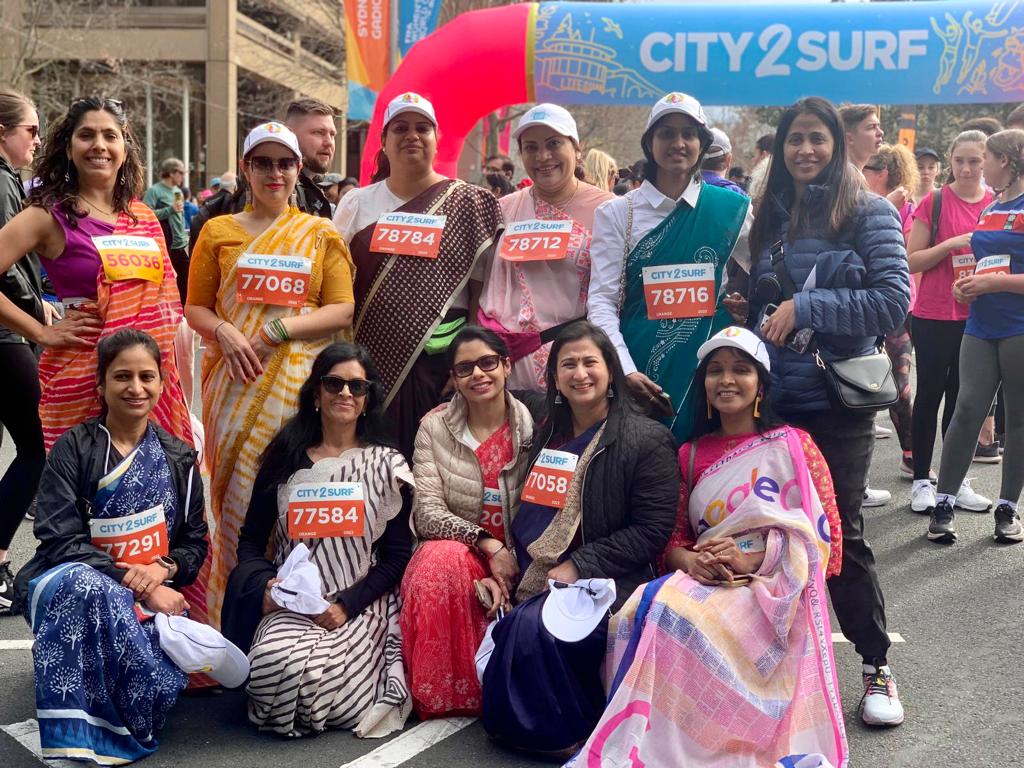
Do you drink each day or just on the weekends?

0

By Megan Lee and Emily Roberts

In recent years, drinkers have become more aware of the health dangers of drinking alcohol, from disease to risky behaviour and poorer wellbeing. Events like the just-finished Dry July, Febfast and Hello Sunday Morning – when people voluntarily abstain from alcohol for periods of time – are growing in popularity and raise awareness about the risks involved in overindulgence.

Many people extend these alcohol-free periods throughout the year by incorporating alcohol-free days into their weekly routines, while still enjoying a drink on the weekends.

But does drinking the same amount spread over the week versus just on the weekends, make any difference health-wise?

How much is too much?

Australian alcohol guidelines and the World Health Organization state there is no safe level of alcohol use. For adults who do drink, the guidelines recommend a maximum of four drinks in one sitting or ten in a week. (A zero-alcohol approach is recommended for under-18s and during pregnancy.)

For some, this may not sound like much at all. One in four Australians exceed the recommendation of no more than four drinks in one session with men more likely to do so than women. This amount can result in alcohol poisoning, damage to brain cells and a higher likelihood of engaging in risky behaviours leading to violence, accidents and unprotected sex.

But what about a wine each night?

Even abiding by the Australian alcohol guidelines and drinking in moderation – one or two drinks each day over the week – can be risky. Possible health outcomes of moderated drinking include increased risk of cancer, liver and heart disease, alcohol use disorder, and an increase in the symptoms of anxiety and depression.

Everyone processes alcohol at a different rate depending on age, gender, body shape and size. However, for most people, alcohol can still be detected in the blood 12 hours after consumption. When the body is constantly processing the toxins in alcohol, it can lead to a chronic state of inflammation which is linked to physical and mental health risks.

There are several biological mechanisms associated with alcohol’s impact on the brain. Alcohol destroys the fine balance of the bacteria in the gut microbiome, which has been linked to brain health.

Alcohol consumption disrupts the function of the amygdala – a part of the brain important for processing and regulating emotion, including our fear response. When this is impaired we are less likely to pay attention to our fears and more likely to engage in risk-taking behaviour.

Areas involved in language production and comprehension are also affected by alcohol, with too much leading to slurred speech and the inability to comprehend communication from others. When drinking dulls frontal lobe brain function, it can can lead to changes in personality for some people. Blackouts can occur from the influence of alcohol on the hippocampus.

So, no drinking then?

While sobriety may be the answer for optimal health, depriving ourselves of the things we enjoy can also lead to negative mental health and a higher likelihood we will binge in the future. This is why alcohol-free days are becoming so popular, to balance health risks while also giving us the chance to enjoy social activities.

Including alcohol-free days in your routine can give the body a chance to rehydrate, detoxify and repair itself from the toxic properties of alcohol. Detoxification can lead to improved liver function and sleep quality, less water retention and easier weight control, clearer thinking, improved memory, more energy, clearer skin, a strengthened immune system and decrease symptoms of anxiety and depression.

Alcohol-free days can also create a domino effect by encouraging other healthy behaviours like eating more fruits and vegetables, drinking more water, improved sleep patterns and getting up early to exercise.

6 tips for better drinking balance

If you’re looking to incorporate more alcohol-free days into your routine you could try to

  1. set realistic goals. Clarify how many and what days will be your alcohol-free days, mark them on a calendar and set reminders on your phone
  2. plan alcohol-free activities and find alcohol alternatives. List all the activities you like that do not include drinking and plan to do these at the times of the day you would normally drink
  3. make alcohol “invisible”. Keeping beer out of the fridge and wine and spirits in closed cupboards keeps them from the forefront of your mind
  4. seek support and encouragement from your partner and/or family
  5. incorporate stress management techniques like meditation and mindfulness. Observe how you feel on alcohol-free days and note positive changes in your physical and mental wellbeing
  6. reflect on your progress. Acknowledge and celebrate each alcohol-free day. Allow yourself non-alcoholic rewards for achieving your goals.

Finally, it’s important to know everyone slips up now and then. Practice self-forgiveness if you do have a drink on a planned alcohol-free day and don’t give up.

Megan Lee, Senior Teaching Fellow, Psychology, Bond University and Emily Roberts, PhD Candidate, Psychology, Bond University

This article is republished from The Conversation under a Creative Commons license. Read the original article.

Support Our Journalism

Global Indian Diaspora needs fair, non-hyphenated, and questioning journalism, packed with on-ground reporting. The Australia Today – with exceptional reporters, columnists, and editors – is doing just that. Sustaining this needs support from wonderful readers like you.

Whether you live in Australia, the United Kingdom, Canada, the United States of America, or India you can take a paid subscription by clicking Patreon. Buy an annual ‘The Australia Today Membership’ to support independent journalism and get special benefits.

Bollywood diva Rani Mukerji to conduct masterclass at IFFM 2023

0

Actor Rani Mukerji is all set to share her insights and conduct a masterclass at the Indian Film Festival of Melbourne (IFFM).

The Indian Film Festival of Melbourne (IFFM) announced the presence of Rani Mukerji, as one of its key guests for the 2023 edition.

As part of her visit to the Indian Film Festival of Melbourne, Rani Mukerji will be hosting a special masterclass at the iconic Immigration Museum in Melbourne.

The museum’s historic backdrop, resonating with the subject matter of the film, serves as a poignant setting to discuss the trials and tribulations faced by immigrants in various countries.

The masterclass will take place on August 10, a day before the festival commences on August 11.

Speaking about it, Ranj Mukerji said in a statement, “This film has been a remarkable journey for me as an actor, and I am overwhelmed by the love and appreciation it has received from audiences worldwide.”

“I am truly elated and humbled to be a part of the Indian Film Festival of Melbourne 2023, representing my film ‘Mrs. Chatterjee Vs Norway.’

“It is a story that holds immense significance, shedding light on the struggles faced by immigrants, transcending geographical boundaries.

“The Immigration Museum in Melbourne serves as a befitting backdrop for our masterclass, as it symbolises the challenges and triumphs that immigrants encounter when they settle in foreign lands. It is my privilege to engage in a conversation about this film, its relevance, and the larger themes it addresses,” added Ms Mukerji.

Festival director of IFFM Mitu Bhowmick Lange said, “We are truly honoured to have Rani Mukerji join us at the Indian Film Festival of Melbourne this year.”

“Her exceptional performance in ‘Mrs. Chatterjee Vs Norway’ has left a lasting impact on audiences worldwide.”

“We believe that her masterclass at the Immigration Museum will provide a unique perspective on the film’s theme, offering valuable insights into the immigrant experience,” said Ms Lange, the festival director of IFFM.

Rani Mukerji’s outstanding performance in the critically acclaimed film ‘Mrs Chatterjee Vs Norway’ has earned her a nomination in the Best Actress category, and she will be participating in the festival to share insights into her role and the film.

Mrs. Chatterjee vs. Norway (2023) - IMDb

‘Mrs Chatterjee Vs Norway,’ a heart-wrenching film based on the real-life tale of a mother’s struggle against the Norwegian foster care system, has struck a chord with audiences worldwide. Rani Mukerji’s powerful portrayal of the protagonist, Mrs Chatterjee, showcased the unwavering determination of a mother fighting to regain custody of her children.

The film sheds light on the challenges faced by immigrants in foreign countries, highlighting the realities of their struggles and experiences.

The 14th Indian Film Festival of Melbourne will run from August 11 to August 29, showcasing an array of outstanding Indian films across various genres and also films from the Indian subcontinent.

Support Our Journalism

Global Indian Diaspora needs fair, non-hyphenated, and questioning journalism, packed with on-ground reporting. The Australia Today – with exceptional reporters, columnists, and editors – is doing just that. Sustaining this needs support from wonderful readers like you.

Whether you live in Australia, the United Kingdom, Canada, the United States of America, or India you can take a paid subscription by clicking Patreon. Buy an annual ‘The Australia Today Membership’ to support independent journalism and get special benefits.
Gold Coast man charged with 1623 child abuse offences, including rape, against 91 children

0

An AFP investigation has led to a former childcare worker being charged with 1623 child abuse offences against 91 children – including 136 counts of rape and 110 counts of sexual intercourse with a child under 10 – in Brisbane, Sydney and overseas between 2007 and 2022.

The Gold Coast man, 45, has been in custody in Queensland since August 2022 when the AFP arrested and charged him initially with two counts of making child exploitation material and one count of using a carriage service for child pornography material.

After the man was charged last year, the AFP will allege further self-produced child abuse material was identified on electronic devices allegedly owned by the man. The AFP launched Operation Tenterfield immediately after arresting the man on 21 August last year.

Operation Tenterfield has in part focussed on identifying the children in the alleged child abuse material recorded at childcare centres in Queensland (10) and NSW (one), and an early learning centre attached to a school overseas.

The AFP alleges the man recorded his offending on phones and cameras while working in 10 childcare centres in Brisbane between 2007 to 2013, and 2018 to 2022; an overseas location in 2013 and 2014; and one centre in Sydney between 2014 and 2017. All the children allegedly offended against were pre-pubescent girls. The man worked at other childcare centres but the AFP is highly-confident the man did not allegedly offend at those centres.

The AFP is also highly-confident that all 87 Australian children who were recorded in the alleged child abuse material have been identified. The AFP believes the man recorded all his alleged offending.

The parents of all the Australian children recorded in the alleged child abuse material have been informed of the investigation. Some of the individuals identified in the alleged child abuse material are now aged over 18 years and have been informed. Support services have been offered and continue to be provided.

The AFP is working with international authorities to help identify four children recorded in alleged child abuse material created overseas.

The AFP Queensland Joint Anti-Child Exploitation Team (JACET) and victim identification specialists from the AFP and Queensland Police Service (QPS) have been working tirelessly since the man’s arrest last year to identify all children in the alleged child abuse material.

In November, 2022, the AFP provided evidence to NSW Police Force (NSWPF) to enable an investigation for the alleged offending in NSW. NSWPF launched Strike Force Boorong to investigate alleged offending in Sydney. With the assistance of the AFP, NSWPF notified families and individuals identified under Operation Tenterfield.

Operation Tenterfield with the assistance of Strike Force Boorong has undertaken detailed forensic investigations of more than 4000 images and videos containing alleged child abuse material, which was allegedly created by the man.

In July, 2023, the AFP laid further charges against the man (on top of the three original charges) for the alleged offending against 64 children in Queensland and four children overseas.

Those charges include:

  • 136 counts of rape contrary to section 349 of the Criminal Code 1899 (QLD), which carries a maximum penalty of life imprisonment;
  • 604 counts of indecent treatment of a child under 16 contrary to section 210 of the Criminal Code 1899 (QLD), which carries a maximum penalty of 20 years’ imprisonment;
  • 613 counts of making child exploitation material, contrary to section 228B of the Criminal Code 1899 (QLD), which carries a maximum penalty of 20 years’ imprisonment;
  • 83 counts of possessing, controlling, producing, distributing or obtaining child pornography material outside Australia, contrary to section 273.5 of the Criminal Code (Cth), which carries a maximum penalty of 15 years’ imprisonment;
  • One count of possessing, controlling, distributing or obtaining child pornography material contrary to section 474.19 of the Criminal Code (Cth), which carries a maximum penalty of 15 years’ imprisonment; and
  • Six counts of possessing child exploitation material, contrary to section 228D of the Criminal Code (QLD), which carries a maximum penalty of 14 years’ imprisonment.

In June, 2023, NSWPF laid charges for alleged offending against 23 children in NSW. Charges include:

  • 68 counts of sexual intercourse with a child under 10 contrary to section 66A(1) of the Crimes Act 1900 (NSW), which carries a maximum penalty of life imprisonment;
  • 42 counts of aggravated sexual intercourse with a child under 10 under authority contrary to section 66A(2) of the Crimes Act 1900 (NSW), which carries a maximum penalty of life imprisonment;
  • 69 counts of aggravated indecent assault contrary to section 61M(2) of Crimes Act 1900 (NSW), which carries a maximum penalty of 10 years’ imprisonment; and
  • One count of producing child abuse material contrary to section 91H(2) of the Crimes Act 1900 (NSW), which carries a maximum penalty of 10 years’ imprisonment.

NSWPF has issued a first instance warrant for the man’s future extradition.

Operation Tenterfield has been complex and has involved highly-skilled victim identification specialists. Up to 35 AFP members have been involved in the investigation since August 2022.

The AFP thanks QPS and NSWPF for dedicating resources to the investigation.

The genesis of Operation Tenterfield is linked to QPS locating alleged child abuse images and videos on the dark web in 2014.

QPS posted them on an international victim identification database, seeking assistance from the global victim-identification community.

The AFP and other agencies examined the images but they contained few distinguishable clues for investigators to follow.

But in August, 2022, the AFP was able to trace objects identified in the background of the alleged images and videos posted on the dark web between 2013 and 2014 to a Brisbane childcare centre.

Following inquiries with the childcare centre, the AFP executed a search warrant on 20 August, 2022, in Brisbane, and arrested the man in Brisbane’s southwestern suburbs. He was charged with making and distributing child abuse material that was allegedly posted on the dark web.

In the next 48 hours, the AFP executed two further search warrants including at the man’s Gold Coast home and seized electronic devices allegedly containing child abuse material created by the man.

In September 2022, the AFP coordinated a joint-agency taskforce with QPS at the Australian Centre to Counter Child Exploitation (ACCCE) to review nearly 4000 seized images and videos the man had allegedly created.

Victim identification specialists helped identify 91 children who had allegedly been offended against by the man.

The childcare centres will not be named to help protect the identity of alleged victims.

AFP Northern Assistant Commissioner Justine Gough said the AFP and other agencies were providing ongoing support to parents and children.

“The AFP, working with support services, has ensured parents and carers have received as much information as possible as this investigation continues,” Assistant Commissioner Gough said.

“I can assure members of the Australian public that if you have not been contacted by law enforcement, it is extremely unlikely your child was allegedly offended against by the man.

“The AFP is highly-confident that all the Australian children who were recorded in the alleged child abuse material have been identified.

“The AFP and our partners never gave up trying to identify the alleged offender and the children in the alleged abuse material.

“Given there were so many alleged images and videos of children recorded over 15 years on the alleged offender’s devices, the process of identification took time, skill and determination.

“While I am extremely proud of law enforcements’ persistence and their unwavering dedication to identify this alleged offender, and stop further abuse, this is chilling news.

“It is with a heavy-heart that the AFP and other law enforcement dedicate so much time and resources to prevent and take action against individuals who commit heinous crimes against children.

“There is not much solace I can give parents and children who have been identified under Operation Tenterfield, but I can tell you that we never gave up, and we never will when it comes to protecting children.

“This is a distressing time for families, carers and the community broadly.

“We know this type of news can re-traumatise survivors of sexual abuse, and, please, I urge those survivors to seek support, or talk to a trusted network, if today’s news has caused distress.”

Queensland Police Service Acting Assistant Commissioner Col Briggs said this outcome was the culmination of years of dedicated and complex investigation across jurisdictions.

“From the moment Argos located images of victim children being shared on the dark web in 2014 an extensive examination was launched to identify the children in the pictures,” Acting Assistant Commissioner Briggs said.

“The challenges posed by an investigation of this type were significant and officers never gave up on identifying this alleged offender, reminding themselves that everything you do online leaves a trace.

“In recent years investigators engaged the support of a joint-agency Victim Identification Taskforce at the ACCCE, with several agencies working together to ensure the victims and their families were located.

“These allegations are horrific and confronting, but I commend all investigators from each jurisdiction in their relentless efforts to ensure that our community is made safer as a result of the arrest of the alleged perpetrator.

Assistant Commissioner Michael Fitzgerald from the NSWPF State Crime Command confirmed the man would also be facing child sex abuse related charges in NSW. 

“Today we announce that the NSW Police Force have issued a warrant for this man’s arrest in our home state, where he faces 180 child sex abuse charges against 23 victims aged one to five,” Assistant Commissioner Fitzgerald said.

“Once this man faces the AFP charges in Queensland, we will be seeking to extradite him to Sydney to face the full force of the law in New South Wales.

“This is one of the most horrific cases of alleged child abuse our detectives have seen, and we will continue to relentlessly pursue this matter on behalf of the 23 victims of NSW, who remain our number one priority.

“Alongside our partner agencies, we are absolutely committed to prosecuting anyone who goes after our community’s most vulnerable.”

The case is scheduled for a mention in Brisbane Magistrates Court on 21 August, 2023.

The AFP urges anyone in the community who needs to access support to visit the ACCCE website – www.accce.gov.au – for a full list of available support services with contact details.

Members of the public who have information about people involved in child abuse and exploitation are urged to call Crime Stoppers on 1800 333 000 or www.accce.gov.au/report. If you know abuse is happening right now or a child is at risk, call police immediately on 000.

Research conducted by the ACCCE in 2020 revealed only about half of parents talked to their children about online safety.

Support Our Journalism

Global Indian Diaspora needs fair, non-hyphenated, and questioning journalism, packed with on-ground reporting. The Australia Today – with exceptional reporters, columnists, and editors – is doing just that. Sustaining this needs support from wonderful readers like you.

Whether you live in Australia, the United Kingdom, Canada, the United States of America, or India you can take a paid subscription by clicking Patreon. Buy an annual ‘The Australia Today Membership’ to support independent journalism and get special benefits.

Indian-Australian scientist helps create yeast dust to detect COVID-19

0

Researchers from The University of Queensland have made dust from baker’s yeast that can detect COVID-19 and could safeguard communities against future pandemics.

AIBN research fellow Dr Selvakumar Edwardraja said the yeast sensor technology can be genetically programmed to detect specific viral strains, such as the COVID-19 variants Delta and Omicron, and give health systems a head start on new and emerging viral threats jumping from animals to people.

“The constant mutation of COVID-19 means it is no longer enough to test whether someone has been infected,” Dr Edwardraja said.

“We must now be able to quickly identify which variant a patient has, where it has come from, and what needs to be done to treat it.”

The powdery ‘nanoprobes’ developed at UQ’s Australian Institute for Bioengineering and Nanotechnology (AIBN) are synthetic yeast fragments that can be deployed in environments such as airports, hospitals, stadiums and sewers to detect COVID-19 biomarkers.

Image: Research co-author Dr Chris Howard and research fellow Dr Selvakumar Edwardraja with lead researcher Professor Matt Trau (Source: UQ) 

Lead researcher and director of the AIBN’s Centre for Personalised Nanomedicine Professor Matt Trau said the yeast nanoprobes can also be integrated into current COVID-19 testing platforms.

“Yeast has long been a cheap and abundant ingredient in bread and beer and thanks to its unique chemical properties, it can now be used in diagnostic technologies that rival PCR testing for speed and sensitivity,”

Professor Trau said.

“We often refer to yeasts as biofactories because they are the oldest industrial microorganisms. In this case, we are using the same historically inexpensive and highly scalable food production systems to create a sensor powder that can be deployed in the environment to detect a range of viral threats.”

Fluorescent, electrochemical or dye-based analysis techniques are used to examine the nanoprobes to see if they’ve been exposed to a virus.

Research co-author Dr Chris Howard said the cost-effective and easily scalable nature of the yeast nanoprobes means the technology is an accessible tool for pandemic defence systems.

“If we want to block new and more severe variants from taking hold, we need diagnostic tools that are quick to make and distribute and can be tweaked for a wide range of on-site testing processes,”

Dr Howard said.

“With yeast being so cheap, this technology could be important for low resource regions of the globe that cannot afford current expensive diagnostic tests.”

The nanoprobe technology is described in full in Nature Nanotechnology.

Support Our Journalism

Global Indian Diaspora needs fair, non-hyphenated, and questioning journalism, packed with on-ground reporting. The Australia Today – with exceptional reporters, columnists, and editors – is doing just that. Sustaining this needs support from wonderful readers like you.

Whether you live in Australia, the United Kingdom, Canada, the United States of America, or India you can take a paid subscription by clicking Patreon. Buy an annual ‘The Australia Today Membership’ to support independent journalism and get special benefits.

Australia should offer our ‘Pacific family’ access rather than simply reacting to China

0

By Joanne Wallis

During his recent speech at the Solomon Islands National University, Minister for International Development and the Pacific Pat Conroy said “strategic competition […] is an unavoidable reality for our region”.

July has already seen Solomon Islands Prime Minister Manasseh Sogavare visit China, French President Emmanuel Macron visit Vanuatu, Papua New Guinea and New Caledonia, and United States Secretary of State Antony Blinken visit Tonga (Australia and New Zealand).

This follows visits by an array of leaders and senior officials to the region over the past year. There have been several high-level dialogues, including the historic United States-Pacific Island Country Summit in September 2022.

Reflecting its proximity and historic role, Australia has been at the forefront of this competition. Since launching its “Pacific step-up” in 2018, it has committed billions of dollars (on top of being the largest donor), and instigated a raft of security, infrastructure and other activities.

But too often Australia’s initiatives have resembled whack-a-mole reactions to China’s activities. For example, the government funded Telstra to buy Digicel Pacific after China Mobile expressed interest. It also built the Coral Sea Cable after Huawei bid to lay it, and it re-developed the Black Rock Peacekeeping and Humanitarian & Disaster Relief Camp after China indicated interest. Australia’s Infrastructure Financing Facility for the Pacific seeks to counter China’s Belt and Road Initiative infrastructure lending, motivated by – disputed – claims about “debt-trap diplomacy”.

After a July visit to Solomon Islands, Defence Minister Richard Marles suggested that Australia is “very keen” to whack another mole: helping the Solomon Islands to establish a military.

This followed Sogavare signing a policing pact during his visit to China. That pact built on a bilateral security agreement signed in April 2022 that several Australian commentators interpreted as paving the way for a Chinese military base. However, the Solomon Islands government refutes this.

While it is the Solomon Islands government’s sovereign right to establish a military, questions over its likely benefit should give Australia pause. Law and order are best guaranteed by police, and ultimately, by addressing sociopolitical challenges. This includes uneven development and underdevelopment.

Solomon Islands does not share a land border (a justification for Papua New Guinea having a defence force), and its maritime territory is already protected by a police maritime unit aided by the Australia-backed Pacific Maritime Security Programme. While the logistical capabilities of defence forces are useful for humanitarian and disaster relief, given challenges of funding and scale, the most efficient way to provide it would be through developing a regional capability.

Australia may be concerned that China will otherwise step in. But even if Australia does help, it wouldn’t have the right to control a new Solomon Islands’ defence force. And while Australia provided substantial assistance to rebuild Solomon Islands’ police force during RAMSI, that hasn’t stopped China from developing its own relationship with that force, including through providing training and equipment.

There are also a few cautionary tales from elsewhere in the Pacific. The deployment of the Papua New Guinea Defence Force (PNGDF) during the Bougainville conflict exemplified how a military can be used against a domestic population. And coups in Fiji demonstrate how the military can unseat a government. Australia had established the PNGDF during its colonial administration and had provided decades of support to the Fijian military.

Australia has legitimate strategic interests in Solomon Islands and the Pacific more broadly. And it is right to be concerned about China’s activism. But it needs to think carefully about how it responds.

In fact, there are alternative ways for Australia to improve its regional relationships that are far less costly – and risky.

Australia makes it difficult for Pacific people to come to Australia. It hosts temporary Pacific workers under the Pacific Australia Labour Mobility (PALM) scheme, as well as Pacific students, many of whom are funded by Australia Awards. But these programs often have culturally, economically, and legally exclusionary consequences.

The Labor government is attempting to improve the Pacific Australia Labour Mobility (PALM) scheme and enhance the experience of Pacific Australia Award students. Its establishment of the Pacific Engagement Visa that will allocate 3,000 permanent migration places to Pacific peoples annually is welcome. But that scheme has been delayed, and questions about its implementation remain unanswered.

It is time for Australia to implement a visa-waiver program for citizens of Pacific countries. While citizens of certain wealthy countries can apply in advance for free visitor visas (and New Zealand citizens can apply for one on arrival), citizens from Pacific countries are only eligible for expensive visas, which require extensive paperwork.

The contradiction between Australia describing the region as its “Pacific family”, yet making it difficult for Pacific peoples to visit, has generated frustration in the region.

Indeed, most Pacific countries offer Australians the ability to obtain visitor/tourist visas on arrival. And Pacific leaders have long lobbied for a visa-waiver from Australia.

After all, if Australia genuinely sees itself as part of the “Pacific family”, why do we throw open our door to Europeans and Americans, but not to Pacific people?

A visa-waiver program could also be the precursor to Pacific people being offered visa-free entry similar to what we offer New Zealanders. That would be a genuine act of family “care” and “love”. And something China can’t beat.

Joanne Wallis, Professor of International Security, University of Adelaide

This article is republished from The Conversation under a Creative Commons license. Read the original article.

Support Our Journalism

Global Indian Diaspora needs fair, non-hyphenated, and questioning journalism, packed with on-ground reporting. The Australia Today – with exceptional reporters, columnists, and editors – is doing just that. Sustaining this needs support from wonderful readers like you.

Whether you live in Australia, the United Kingdom, Canada, the United States of America, or India you can take a paid subscription by clicking Patreon. Buy an annual ‘The Australia Today Membership’ to support independent journalism and get special benefits.

Indian international student’s tragic death in Sydney calls for reforms in Australia’s food-delivery industry

0

22-year-old Akshay Doultani was killed when an SUV hit his delivery motorbike in the Epping area in Sydney while he was working for Uber Eats.

Akshay came from Mumbai in India to study Master’s degree in finance at Macquarie University in Sydney in February after receiving a scholarship.

Image: Akshay Doultani with his family (Source: ABC screenshot)

Senator Tony Sheldon identified Akshay in his short statement to parliament highlighting the plight of gig workers in Australia.

“Twelve deaths since 2017, 12 families who have been failed by the system. Akshay deserves flexibility on his terms. Having that minimum safety net may have saved one of those 12 lives.”

Akshay is the 12th food delivery rider to be killed on the Australian road since 2017.

Akshay’s cousin Pratik Kamath told the ABC:

“The only reason why he wanted to come abroad was not [just to] have a good life for himself but to provide more amenities for his family so they could live a lifestyle that was much better.”

Akshay was riding for Uber Eats on 22 July when there was a collision with an SUV.

Paramedics treated Akshay and took him to the Royal North Shore Hospital where he died hours later.

Image: Akshay Doultani (Source: ABC screenshot)

Akshay’s uncle Sunil Paryani travelled from Hong Kong to repatriate the body told ABC:

“The most important thing is to get Akshay back home and then we can have our own Indian rituals, after that we will see the course of action we take. It’s very hard for the parents to digest their only son is no more.”

Uber Eats said in a statement:

“We are in contact with his family and loved ones and are providing our support.”

NSW Police and Safework NSW are investigating Akshay’s accident and death.

Support Our Journalism

Global Indian Diaspora needs fair, non-hyphenated, and questioning journalism, packed with on-ground reporting. The Australia Today – with exceptional reporters, columnists, and editors – is doing just that. Sustaining this needs support from wonderful readers like you.

Whether you live in Australia, the United Kingdom, Canada, the United States of America, or India you can take a paid subscription by clicking Patreon. Buy an annual ‘The Australia Today Membership’ to support independent journalism and get special benefits.

India’s Reliance Industries signs MoU with Brookfield to manufacture renewable power equipment in Australia

0

Brookfield Asset Management, a global alternative asset manager, has signed a Memorandum of Understanding (MoU) with Reliance Industries.

The MoU aims to explore opportunities for manufacturing renewable energy and decarbonisation equipment in Australia, fostering the nation’s energy transition and fostering sustainable development. Australia’s energy transition has been gaining momentum in recent years as the nation strives to reduce its carbon footprint and achieve its emissions reduction targets.

The MoU between Brookfield and Reliance Industries is set to play a pivotal role in accelerating and de-risking this transition by enabling the local production of clean energy equipment, including photovoltaic (PV) modules, long-duration battery storage and wind energy components.

Under the terms of the MoU, Brookfield and Reliance Industries will collaborate on direct capital investment and the development of skills, knowledge and expertise in the renewable energy sector within Australia.

By leveraging Reliance’s vast experience in solar panel technology and long-duration battery storage, both companies aim to establish advanced manufacturing operations in Australia.

These operations will focus on the production and assembly of equipment essential for the construction of renewable energy projects, catering to all market players, including Origin Energy Markets.

The collaboration is a step for Brookfield, which is committed to bringing global manufacturing technology and expertise to Australia.

Earlier in March, Brookfield signed a binding agreement with EIG to acquire Origin Energy, and along with its institutional partners, GIC and Temasek, has proposed investing between 20 billion USD and 30 billion USD over the next ten years to expedite the country’s energy transition.

The MoU’s primary objective is to ensure a consistent and sufficient supply of clean energy equipment required to develop up to 14 GW of new, large-scale generation and storage capacity in Australia.

Establishing onshore sovereign manufacturing capability for the energy transition could create around 18,000 direct and indirect jobs, with a particular focus on regions heavily impacted by the transition, such as the Hunter Valley in New South Wales and the La Trobe Valley in Victoria.

Luke Edwards, Brookfield Renewable Head of Australia, emphasised the significance of the energy transition for the country and its local manufacturing industry.

He said, “Australia has a proud history of manufacturing and an abundance of raw materials, but the industry is not currently cost-competitive.

“The energy transition creates an opportunity to bring advanced manufacturing processes created offshore to Australia, which would secure the supply of critical equipment for the transition to help drive down Australia’s emissions faster and contribute significantly to job creation.”

Brookfield’s expertise in committing long-term capital to enable the energy transition makes it uniquely suited to support these manufacturing initiatives.

Its track record in large-scale investments, such as the 30 billion USD Intel Chip plant in Nevada, demonstrates its innovative approach to reshoring essential and strategic manufacturing processes and supply chains.

Brookfield Asset Management is a leading global alternative asset manager with approximately 825 billion USD of assets under management across renewable energy, infrastructure, real estate, private equity, credit, and other sectors.

The company focuses on investing client capital for the long term, with a strong emphasis on real assets and essential service businesses that form the backbone of the global economy.

Anant Ambani, director, Reliance New Energy Limited, reaffirmed the company’s dedication to a global clean energy ecosystem and its enthusiasm for investment opportunities in India and beyond.

“We are confident that Reliance and Brookfield will explore avenues in green energy in Australia, accelerating the nation’s transition to a Net Zero future and providing a fillip to the global green energy movement,”

Ambani said.

Reliance Industries Limited is India’s largest private sector company with a consolidated revenue of INR 976,524 crore (118.8 billion USD) and a net profit of INR 74,088 crore (9.0 billion USD) for the year ended March 31, 2023.

Its diverse activities span hydrocarbon exploration and production, petroleum refining and marketing, petrochemicals, advanced materials and composites, renewables (solar and hydrogen), retail, and digital services.

Reliance is the largest private sector firm from India to appear on Fortune’s Global 500 list of “World’s Largest Companies” for 2022, currently ranked 104th.

The company is ranked 45th in Forbes Global 2000’s list of “World’s Largest Public Companies” for 2023, placing first among Indian corporations.

Reliance has been named one of the world’s 20 best companies to work for, ranking first among Indian corporations.

Forbes’ list of the World’s Best Employers for 2022. It is listed as one of LinkedIn’s “Top Companies.” 

At least five killed in Indian state of Haryana after attack on Hindu religious procession

0

Violent clashes between Hindus and Muslims had erupted just 50 km south of the Indian national capital New Delhi. At least five people, including two police personnel, were killed in the clashes, police officials told Reuters.

The violence erupted after a Hindu religious procession passing through was attacked in the Muslim-dominated Nuh region in Haryana state, the officials said.

Two home guards constables were shot dead and about a dozen police officers were injured. The deceased have been identified as Neeraj and Gursevak who were deployed at Khedali Daula police station.

As per the police officials, the mob attacked the police teams when they were rushing towards Mewat from Gurugram.

Earlier hundreds of Hindu pilgrims had to take refuge in a local temple when a large group of Muslim community members attacked a Hindu religious ‘Shobha Yatra.’

Haryana Home Minister Anil Vij told ANI, “Some people were held against their will inside a temple.”

“Those trapped inside the temple shared their live location with me through Google navigation. I passed on certain instructions to the police.”

An officer, Mamata Singh, led a police team, braving the odds, and reached the scene on time. The people held inside the temple were rescued,”

Minister Vij said.

Nuh Deputy Commissioner appealed to all to maintain peace and informed that all stranded people have been rescued.

Nuh Deputy Commissioner Prashant Panwar says, “Section 144 has been imposed in the district. Curfew orders have been given…We appeal to all to maintain peace.

“All stranded people have been rescued… 1 casualty has been reported. The situation is normal now and a curfew has been imposed in the district…”.

Gurugram CP Kala Ramachandran appealed to the people not to post anything related to the incident on social media which can hurt religious sentiments.

“Don’t put any post on social media related to this incident that spreads violence and frenzy, which can hurt religious sentiments, mutual brotherhood and spread unrest.”

Nuh (Haryana), August 01 (ANI): A damaged two-wheeler vehicle lies on the road in the aftermath of a clash, in Haryana’s Nuh on Tuesday. A violent clash erupted between two groups during the Vishwa Hindu Parishad procession. (ANI Photo)

“If anyone puts such posts on social media or the Internet, prompt action will be taken against him by the Gurugram Police,” said CP Kala Ramachandran

By the evening, the violence had spilled over into neighbouring Gurugram, where a mosque was torched, killing the cleric and injuring another person.

Haryana Chief Minister Manohar Lal Khattar called the incident “unfortunate” and said that clashes broke out at several places and that a big conspiracy seems behind the violence.

While taking to Twitter, said that the guilty in the incident will not be spared.

“Incident is unfortunate. I appeal to everyone to maintain peace in the state. The guilty will not be spared at any cost, and the strictest action will be taken against them,” Khattar said.

Haryana government has suspended mobile internet services.

The Haryana Government, in an official notification, has said that the order has been taken to stop the spread of misinformation and rumours through social media platforms.

“In order to stop the spread of misinformation and rumours through various social media platforms, such as WhatsApp, Facebook Twitter, etc.

on mobile phones and SMS, for facilitation and mobilisation of mobs of agitators and demonstrators who can cause serious loss of life and damage to public and private properties by indulging in arson or vandalism and other types of violent activities.”

Home Secretary, Haryana do order the suspension of the mobile internet services and all dongle services etc. provided on mobile networks except the voice calls in the territorial jurisdiction of district Nuh of Haryana State,” the order said.

It further said that all telecom service providers of Haryana are directed to ensure the compliance of this order.

Former Haryana CM Bhupinder Singh Hooda called the incident ‘unfortunate’ and said, “This is a very unfortunate incident. I appeal to people to maintain peace and law and order. “

Congress MP Deepender Hooda also appealed to the people to maintain peace.

“The incident from Mewat is very unfortunate I’m appealing to people with folding hands…please maintain brotherhood, harmony and peace…,”

Hooda said.

Haryana Home Minister Anil Vij on Nuh clashes; “Not random act of violence.”

“It did not seem to be a random act of violence. All communities have been residing peacefully in Nuh. Someone appeared to have incited violence.”

“Someone masterminded and engineered it. Stones, along with weapons and bullets, were stockpiled at various places,”

the Minister Vij said.

He added that like in previous years, adequate security arrangements were made for the procession.
“Like previous years, we had deployed an adequate number of police personnel along the Yatra route.”

“However, I don’t want to jump to any conclusion,” Minister Vij added.

Meanwhile, Aam Admi Party (AAP) MP Sanjeev Arora issued a notice to Indian Parliament’s upper house- Rajya Sabha seeking a short-duration discussion on August 2 over the communal violence that has erupted.

AAP MP Sanjeev Arora in his notice emphasised that the violence has spread to Gurugram and Indian Central government should take immediate steps to restore law and order in the region.

“I am deeply concerned about the recent communal violence that erupted in the Nuh area and later spread to Gurgaon, resulting in the loss of lives of three security personnel and injuries to many others. I condemn this act of violence and appeal for peace and harmony among all communities,” the notice read.

“I also express my solidarity with the people who are trapped in Narhar temple and urge the authorities to rescue them as soon as possible.”

“I urge the government to take immediate steps to restore law and order, ensure the safety and security of all citizens, and initiate a dialogue with all stakeholders to address the underlying issues that led to this conflict,” it added.

Sunny Leone’s ‘Kennedy’ to close 14th Indian Film Festival of Melbourne

0

Sunny Leone has received a lot of praise for her outstanding performance in the critically acclaimed film ‘Kennedy.’

Recently, Sunny took to Instagram to share a photo of herself reading a massive script, which sparked curiosity among netizens. She captioned the post, “That’s one huge script. Going to be great!!!!!”

IFFM Closing Night Film - Kennedy Sunny Leone; Image Source: @IFFM
IFFM Closing Night Film – Kennedy Sunny Leone; Image Source: @IFFM

‘Kennedy’ is directed by Anurag Kashyap and has been selected as the closing night film at the 14th Indian Film Festival of Melbourne(#IFFM).

Kashyap shared his excitement about his film being selected for closing night at the IFFM and said,

“I am delighted that ‘Kennedy’ is the closing film at IFFM.”

“It’s the first Indian film festival we are playing in the world, and I am excited to know the response of the audience.”

IFFM Closing Night Film - Kennedy; Image Source: @IFFM
IFFM Closing Night Film – Kennedy; Image Source: @IFFM

“I will be there to attend the same and gauge the response, and am sure that they’ll like the film, like the global audience who’s seen the film till now”.

The movie was also screened at the Cannes Film Festival and now it is another major achievement for the film.

Helmed by Kashyap ‘Kennedy’ stars Sunny Leone, Rahul Bhatt and Abhilash Thapliyal in the lead roles. The film revolves around an insomniac ex-cop, long thought to be dead, but still operating for the corrupt system, and looking for redemption.

The closing night ceremony of the festival will be graced by a number of celebrities.
Kashyap along with Sunny Leone and Rahul Bhat will also attend the event and talk about their film.

The festival, celebrating the best of Indian cinema, will conclude with the screening of ‘Kennedy’ on August 20 in Melbourne.

The 14th Indian Film Festival of Melbourne will run from August 11 to August 29, showcasing an array of outstanding Indian films across various genres and also films from the Indian subcontinent.

Kennedy
Director: Anurag Kashyap
Cast: Rahul Bhat, Sunny Leone, Mohit Takalkar
Language: Hindi, English, Marathi
Runtime: 143 mins

Support Our Journalism

Global Indian Diaspora needs fair, non-hyphenated, and questioning journalism, packed with on-ground reporting. The Australia Today – with exceptional reporters, columnists, and editors – is doing just that. Sustaining this needs support from wonderful readers like you.

Whether you live in Australia, the United Kingdom, Canada, the United States of America, or India you can take a paid subscription by clicking Patreon. Buy an annual ‘The Australia Today Membership’ to support independent journalism and get special benefits.

Does a woman’s menstrual cycle affect her athletic performance?

0

By Sara Chica-Latorre and Michael Pengelly

During the Women’s FIFA World Cup, it has been wonderful to see the spotlight turn to female athletes.

There’s always been more research on male athletes compared to female athletes, but the gap is narrowing.

One thing we still don’t know enough about is the effect of the menstrual cycle on athletic performance.

What does the menstrual cycle do to a woman’s body?

The menstrual cycle is a complex cascade of events typically lasting 28 days. The primary female sex hormones oestrogen and progesterone rise and fall as the body cycles through four phases, beginning at menstruation, maturation and releasing of an egg (ovulation), preparation for pregnancy, and restarting the cycle if the egg is not fertilised.

Fluctuations in female sex hormones have been associated with changes in inflammation, metabolism, muscle activation and body composition, which can influence athletic performance.

For instance, inflammation decreases when the body is preparing to ovulate, reaching its lowest point around ovulation. It then increases following ovulation and peaks during menstruation.

This peak coincides with lower perceived performance among many female athletes.

The menstrual cycle can also give rise to symptoms including pain, cramps, weakness, and poor sleep and focus, challenging performance during training and competition.

For example, research conducted in elite female soccer players found over 87% of players perceived reduced power and increased fatigue during menstruation, while over 66% perceived their reaction time and recovery to be affected.

Considering the approximate maximum career length of soccer players (21 years) and a woman’s fertile life, that adds up to about 250 times throughout a woman’s soccer career that performance may be compromised.

Trends observed among female soccer players closely mirror the experiences of other female athletes, with over 74% reporting negative effects mainly during the first days of menstruation.

For some, this may lead to reduced training participation, potentially compromising skill development, fitness levels, and even their chances of being selected for competition.

But the menstrual cycle is complex, and its effects can vary between athletes and sports. Consequently there is disagreement regarding whether the menstrual cycle universally affects athletic performance, with some research indicating no influence of the menstrual cycle on certain performance measures. But these studies are few and had various logistical limitations, including a small number of participants.

Also important to note is that most studies to-date have excluded women using hormonal contraceptives, which is about 50% of female athletes and 28% of female soccer players. The use of hormonal contraceptives suppresses natural hormonal fluctuations and replaces them with external synthetic versions of female sex hormones, affecting the athlete differently.

Clearly the extent and severity to which the menstrual cycle impacts athletic performance is highly variable and complex, with more research needed. So for now it’s sensible to consider the effects of the menstrual cycle on an individual basis.

How to support athletic performance at all cycle stages

It’s essential for players to familiarise themselves with their own cycles to understand how they’re affected throughout, as well as communicate any menstrual cycle-related issues to support staff (physicians and coaches). This awareness can guide adjustments in training and nutrition when required.

For example, oestrogen has an important influence on iron levels in females, such as chronic oestrogen deficiency is linked to iron deficiency. Iron status can also be compromised by blood loss during menstruation, depending on the heaviness and duration of bleeding.

Iron is essential for human function, facilitating energy production and the transportation of oxygen around the body. In soccer, about 60% of elite female players present as iron deficient, compared to less than 12% of their male counterparts. For an iron deficient midfielder, this might translate into covering less distance at lower speeds.

It’s therefore important female athletes have their iron levels regularly checked by qualified practitioners. Addressing deficiencies through diet, supplementation, or iron transfusions, will ensure athletic performance during training and competition is not compromised.

Individual athletes’ training loads can also be strategically managed to accommodate severe menstrual symptoms.

Football clubs around the world have been experimenting with this strategy since it gained popularity during the 2019 Women’s FIFA World Cup. But how does it look in practice?

For team sport athletes, such as soccer players, this can be a demanding logistical task. It’s not easy to track the menstrual cycles of more than 25 players concurrently, and hold training sessions at convenient times for all of them. The complexities are heightened when training and game days cannot be avoided.

But performance coaches must consider athletes’ needs and ensure they’re prepared for competition, while minimising the risk of injury and menstrual discomfort. Coaches should also ensure athletes maintain adequate nutrition for both competition and to support their menstrual cycle.

For an athlete who reports severe menstrual symptoms during the first days of menstruation (such as increased pain and weakness), this might translate into reduced training intensity, additional recovery days, and an anti-inflammatory diet that also supports the restoration of iron levels (increased intake of nuts, seeds, berries, lean red meats, and fibre and Omega-3 rich foods).

And it’s important to keep in mind some athletes might experience menstrual cycle issues in phases other than menstruation. So, training and nutrition should be flexible and individualised across the cycle.

Using this approach, athletes can mitigate the influence of the menstrual cycle on their performance, giving them the best opportunity to achieve their athletic potential and success during competition.

Sara Chica-Latorre, Phd Candidate and Research Assistant, Research Institute for Sport and Exercise, University of Canberra and Michael Pengelly, PhD Candidate, Research Institute for Sport and Exercise, University of Canberra

This article is republished from The Conversation under a Creative Commons license. Read the original article.

Support Our Journalism

Global Indian Diaspora needs fair, non-hyphenated, and questioning journalism, packed with on-ground reporting. The Australia Today – with exceptional reporters, columnists, and editors – is doing just that. Sustaining this needs support from wonderful readers like you.

Whether you live in Australia, the United Kingdom, Canada, the United States of America, or India you can take a paid subscription by clicking Patreon. Buy an annual ‘The Australia Today Membership’ to support independent journalism and get special benefits.

Breathe easy RBA has kept interest rates on hold

0

For a second straight month, the Reserve Bank of Australia has decided to keep interest rates steady, giving borrowers hope that the tightening cycle has reached its end.

At its August board meeting on Tuesday, the RBA kept the official cash rate at 4.1% – where it’s remained since June – as inflation continues to track lower and household spending slows.

RBA governor Philip Lowe said in a post-meeting statement, “The higher interest rates are working to establish a more sustainable balance between supply and demand in the economy and will continue to do so.”

“In light of this and the uncertainty surrounding the economic outlook, the board again decided to hold interest rates steady this month. This will provide further time to assess the impact of the increase in interest rates to date and the economic outlook.”

At its meeting today, the Board decided to leave the cash rate target unchanged at 4.10 per cent and the interest rate paid on Exchange Settlement balances unchanged at 4.00 per cent.

Interest rates have increased by 4 percentage points since May last year. This will provide further time to assess the impact of the increase in interest rates to date and the economic outlook.

Inflation in Australia is declining

Inflation is currently at 6 per cent. Goods price inflation has eased, but the prices of many services are rising briskly. Rent inflation is also elevated. The central forecast is for CPI inflation to continue to decline, to be around 3¼ per cent by the end of 2024 and to be back within the 2–3 per cent target range in late 2025.

The Australian economy is experiencing a period of below-trend growth and this is expected to continue for a while. Household consumption growth is weak, as is dwelling investment. The central forecast is for GDP growth of around 1¾ per cent over 2024 and a little above 2 per cent over the following year.

Conditions in the labour market remain very tight, although they have eased a little. Job vacancies and advertisements are still at very high levels, although firms report that labour shortages have lessened. With the economy and employment forecast to grow below trend, the unemployment rate is expected to rise gradually from its current rate of 3½ per cent to around 4½ per cent late next year. Wages growth has picked up in response to the tight labour market and high inflation. At the aggregate level, wages growth is still consistent with the inflation target, provided that productivity growth picks up.

Returning inflation to target within a reasonable timeframe remains the Board’s priority. High inflation makes life difficult for everyone and damages the functioning of the economy. It erodes the value of savings, hurts household budgets, makes it harder for businesses to plan and invest, and worsens income inequality.

And if high inflation were to become entrenched in people’s expectations, it would be very costly to reduce later, involving even higher interest rates and a larger rise in unemployment. To date, medium-term inflation expectations have been consistent with the inflation target and it is important that this remains the case.

Some further tightening of monetary policy may be required to ensure that inflation returns to target in a reasonable timeframe, but that will depend upon the data and the evolving assessment of risks. In making its decisions, the Board will continue to pay close attention to developments in the global economy, trends in household spending, and the outlook for inflation and the labour market. The Board remains resolute in its determination to return inflation to target and will do what is necessary to achieve that.

Support Our Journalism

Global Indian Diaspora needs fair, non-hyphenated, and questioning journalism, packed with on-ground reporting. The Australia Today – with exceptional reporters, columnists, and editors – is doing just that. Sustaining this needs support from wonderful readers like you.

Whether you live in Australia, the United Kingdom, Canada, the United States of America, or India you can take a paid subscription by clicking Patreon. Buy an annual ‘The Australia Today Membership’ to support independent journalism and get special benefits.

Distorting, misrepresenting and manipulating history through narratives

0

By Dr Sakul Kundra

Histories around the World, even Pacific History, have faced numerous events that have gone through distortion of facts and their representation. The colonizers in Asia, the Pacific, and around the world have used this distortion of history to colonize under the banner of a ‘civilizing mission’ and establish their colonial control. The European colonizers believed that their principles and practices can only free the peopled living in the colonies. However, many history writing goes through history distortion, which means manipulation, misrepresentation, misleading, malformation, and alteration of historical facts and narrations.

The objectivity of each piece of historical evidence is questionable, as historians try to critically analyze the facts based on the available historical sources, and their narratives form part of the historiography. History cannot reach the ultimate objectivity as it comes through the mind of historian, who has their own prejudices and biases. Historians tried to keep subjectivity to a minimum to achieve the most legitimate historical narration of the event and fact’s analyzation, and discern the truth of the past.

Representative image: Writer (Source: CANVA)

The readers should know the historical background and ideology of the historian before looking into their writings to understand the motives, dislikes, ambitions, or passion of their historical writings. This op-ed presents the synoptic overview of the concept of distortion in history.

Illegitimately distorting or misuse of history by intentionally negating or undermining historical evidence is known as negationism. For example, in many histories of colonies, imperialist historians tried to negate the significance of the colonies by deliberately propagating and promoting their ideology, whereas indigenous historians attempted to revive indigenous history.

History has also noticed the change of focus and ideology of historians supported by the political government of the times, which may promote the rewriting of history curriculum that suits their political, economic, cultural, and social propaganda.

The modern world has noticed many dictators who have used their own propaganda to mobilise the agenda and establish their ideological and political influence.  

Distortion in history happens when historians tamper with historical sources and even add potentially false information to the available evidence. Another way is ignoring the relevant facts and misleading the historical narration, especially the errors of history like the wars and killing, genocide, and injustice against humanity.

Manipulating photographs and images using advanced technologies too leads to the distortion of history. On many occasions, mass media including movies, television, and radio, press information are based on myths, presenting historical facts in their own way to get commercial success. The facts are twisted to serve their ulterior motives. The Internet revolution to provide innumerable unreliable sources has also intensified the process of distortion.

History gives lessons to confront and learn from past mistakes to make the present better and aim to make the future progressive. The present is the by-product of the past, so why not make objective retrospection of history and question the history based on evidence to remove the uncertain ambiguities in history?

Myths, fairy tales, and fabrications are considered to be not part of history. Oral history based on memory is vulnerable to manipulation as it passes through every generation with word of mouth. The historian attempts to achieve the truth but cannot achieve absolute history as subjectivity follows human beings.

Many historians have ulterior motives to present the facts in a tricky and twisted manner that are far away from the real attested truth supported by historical evidence and sources. They are distorting the past of humanity and historical evolution. With the rise of historical sources in the modern world, the complexity of achieving objectivity in history has also expanded. Many rulers have destroyed historical sources with their own personal motives, leading to the distortion of history.

Representative image: Bookshelf (Source: CANVA)

Innovative methods keep on developing to distort history, the popular methods are doing selective study with the aim of misrepresentation through historical facts, manipulation of statistics, targeted audience for the presentation of ambiguous facts, intentionally mistranslating historical sources of foreign language, presenting of forged sources and evidence to claim the historical truth.

Sometimes, the researchers give preference to one fact over others to deceive the audience; and on other occasions, the method of intentional omission is adopted. They deceive the audiences for their own personal agenda, so the main factors behind distortion can be political, social, economic, cultural, and other motives; establishing ideological influence and establishing control is another motive behind distorting history. 

With every age, historians and researchers make efforts to work over distorted histories to test the distorted facts with the available sources and present a more objective interpretation. Sometimes many historians deny the historical facts and abuse the sources to present their own historical discourse. 

Many historians are influenced by pre-conceived notions and ideologies so they mostly write the history through their own lens of perceptions. This time-consuming practice is mostly done with some objective and to gain the benefit, be it establishing propaganda, influencing the ideology, generating political mass support, and mobilising the followers.

In conclusion, simple ways may be adopted to check historical manipulation of facts by thoroughly assessing the reliability of the historical sources, expanding knowledge of means of distortion, and basic skills of reading extensive materials to determine the objectivity. Identify the author and comprehend the ideology behind their writings to closely examine the manner to assess the truth. Historical manipulation is a danger for history, that needs to be curbed for establishing harmony and enriching the past.

Contributing Author: Dr Sakul Kundra is an Associate Dean (Research) and Assistant Professor at the College of Humanities and Education at Fiji National University. The views expressed are his own and not of this newspaper or his employer. 

Disclaimer: The opinions expressed within this article are the personal opinions of the author. The Australia Today is not responsible for the accuracy, completeness, suitability, or validity of any information in this article. All information is provided on an as-is basis. The information, facts, or opinions appearing in the article do not reflect the views of The Australia Today and The Australia Today News does not assume any responsibility or liability for the same.

Support Our Journalism: Global Indian Diaspora needs fair, non-hyphenated, and questioning journalism, packed with on-ground reporting. The Australia Today – with exceptional reporters, columnists, and editors – is doing just that. Sustaining this needs support from wonderful readers like you.

Whether you live in Australia, the United Kingdom, Canada, the United States of America, or India you can take a paid subscription by clicking Patreon. Buy an annual ‘The Australia Today Membership’ to support independent journalism and get special benefits.

Hundreds of families to benefit as scheme extended for victims of collapsed builders

0

Applications have opened for an expanded government support scheme to help Victorians whose builder collapsed without having taken out insurance on their behalf – as required by law.

Several hundred extra families could apply for payments, joining clients of Porter Davis Homes who paid a 5 per cent deposit to the company but were left in the lurch when the company did not take out mandatory Domestic Building Insurance (DBI) as they should have.

The expanded scheme now covers Porter Davis Homes customers who paid 3 per cent amounts under pre-deposit “tender agreements”.

Image: Minister for Government Services Danny Pearson (Source: Twitter)

Minister for Government Services Danny Pearson said in a statement:

“We’ve moved swiftly to open applications for the expanded scheme because we understand how important this support will be for families. People make big sacrifices to get a deposit and to then lose that through the actions – or inactions – of their builder is heart-breaking. We’ll work to verify claims as quickly as we can.”

The scheme also covers eligible customers of the collapsed Hallbury Homes and Snowdon Developments who made a payment of up to 5 per cent of the value of their building contract, including amounts for plans and specifications, where their builder did not take out DBI.

The scheme covers clients of builders that have gone into liquidation in the 2022/23 financial year where the customers have made deposits but been left without DBI through no fault of their own. Payment of up to $50,000 are available.

Any customer affected by the liquidation of a building company other than Porter Davis, Hallbury Homes and Snowdon Developments during the last financial year, and meets the above criteria, is encouraged to provide their details at vic.gov.au/liquidated-builders-customer-support so this can be followed up.

More than 200 families from the original Porter Davis Homes group of 5 per cent deposit-makers have already been approved for payments.

The Department of Government Services is working with affected customers to process applications for support as quickly as possible.

Domestic builders must by law take out DBI on behalf of customers when they accept a legal deposit.

The Government has announced plans to reform the Domestic Building Contracts Act 1995, strengthen domestic building insurance requirements and introduce a new offence with tougher penalties for builders who request deposits without taking out the required insurance.

Applications under the expanded scheme can be lodged at vic.gov.au/liquidated-builders-customer-support-scheme. More information is available on the website or by calling 1300 579 089.

Support Our Journalism

Global Indian Diaspora needs fair, non-hyphenated, and questioning journalism, packed with on-ground reporting. The Australia Today – with exceptional reporters, columnists, and editors – is doing just that. Sustaining this needs support from wonderful readers like you.

Whether you live in Australia, the United Kingdom, Canada, the United States of America, or India you can take a paid subscription by clicking Patreon. Buy an annual ‘The Australia Today Membership’ to support independent journalism and get special benefits.
Stuart Broad ends his glorious career with fairytale finish as England deny Australia first away Ashes win since 2001

0

Game-changing spells by England’s Chris Woakes and Moeen Ali denied Australia their first Ashes win in away from home since 2001 and Stuart Broad scripted a fairytale finish to his career by taking the final two wickets, defeating the visitors by 49 runs in the fifth and final Ashes Test at The Oval on Monday.

With this, England has drawn the series 2-2. Australia has retained the Ashes urn, but they have not won it outright, something that they have not done since 2001 in England. After the second session was washed out due to rain, Australia started the final session of the day at 238/3 with Steve Smith (40) and Travis Head (31) standing unbeaten at the crease, needing 146 runs to win.

Image

Smith and Head continued to build pressure on England bowlers, with the visitors needing less than 150 runs to win.

With the help of a cracking boundary by Travis Head, Australia crossed the 250-run mark in 69 overs, needing 131 runs to win.

Smith reached his half-century in 89 balls.
The 95-run stand between Smith and Head was broken by Moeen Ali when Head edged his delivery into the slips to Joe Root. The big wicket of Head was taken for 43 runs off 70 balls. Australia’s half side was back in the hut at 264 runs, needing 120 runs to win.

England made a comeback in the match, with Chris Woakes getting the prized wicket of Smith, who nicked the ball straight into the hands of Zak Crawley for 54. Later, Moeen dismissed the dangerous Mitchell Marsh for just six after being caught behind by Jonny Bairstow. Woakes then in the next over got Mitchell Starc for a two-ball duck.

The tides turned in favour of England, who had reduced Australia to 275/7 with 109 runs to go.
Moeen’s golden arm continued to do wonders for England, as skipper Pat Cummins was caught by England captain Ben Stokes at leg slip for nine. Australia was 294/8 and needed 90 runs with two more wickets left.

Image

Australia reached the 300-run mark in 83.2 overs.
Alex Carey and Todd Murphy continued the run chase, bringing down the equation to 55 runs to win.
But Stuart Broad helped England get back in the game, dismissing Murphy for 18 after he edged the ball to Bairstow. With this, England was one wicket away from drawing the series. Carey was Australia’s last hope.

Broad completed a fairytale finish to his career, taking his final wicket, dismissing Carey for 28 after he was caught by Bairstow. Australia was all out for 334 runs, losing by 49 runs.

Chris Woakes (4/50), Moeen Ali (3/76) were the pick of the bowlers for England. Stuart Broad took two wickets and Mark Wood got one wicket.

Earlier, Chris Woakes and Mark Wood provided the early breakthrough on Day 5 of the ongoing fifth Ashes Test to help England stage a fine comeback against Australia here at Kennington Oval on Monday.

At Lunch, Australia’s score read 238/3 with Steve Smith (40) and Travis Head (31) standing unbeaten at the crease, needing 146 runs to win.

In the 41st over of Australia’s innings, Chris Woakes made Warner dance on his tune as the batter managed to get some bat on an inswinger before it hits his pads.

But the very next ball the seamer removed Australia opener Warner as the batter’s slight edge was carried by wicketkeeper Bairstow to gratefully snaffle. Warner’s innings in England ends on 60 and it was the breakthrough the hosts desperately needed.

Ashes retained; Image Source: Twitter @cricketaus

The right-handed batter Marnus Labuschagne then came out to bat. A couple of overs later, Woakes in red-hot form gave visitors another blow as he delivered a swing-back ball in at left-hander Khawaja and struck him on the stumps.

The batter decided to take a review, with three red dots shown on the crease indicating Khawaja to go back in the pavilion.

Woakes did the damage in the morning, bowling beautifully to dismiss David Warner caught behind and Usman Khawaja lbw, sending both Aussie openers went back into the pavilion.

Australia was in a bit of bother early on the fifth day, but got still plenty of batting to come. Steve Smith then came out to bat for Australia and the batter got off to the mark from the final delivery as it raced away for four off the outside edge.

In the 49th over, Mark Wood found the edge of Labuschagne’s bat and it was carried enough for Zak Crawley to take the catch in the slips, leaving Australia struggling at 169/3.

Travis Head then came out to bat for Australia. The direction continued to shift as Smith slammed two boundaries in James Anderson’s over.

Smith went on the attack in the first session and Head gave him able support. Head took a liking to some of Anderson’s bowling and found boundaries off veteran England pacer as he drove the ball through mid-on, then pushed through the covers for four on the next delivery.

Anderson managed to keep things tight for the remaining four balls of the 56th over, but Australia crossed the 200-run mark, needing 178 more runs to win.

The partnership of Smith and Head brought Australia back into the game after early blows. The Smith-Head partnership passed the 50-run mark as the lunch breaks get closer.

At the end of the first session of the fifth day, Australia’s score read 238/3 with Steve Smith (40) and Travis Head (31) standing unbeaten at the crease.

Australia started the final day of the match at 135/0, with Usman Khawaja (69*) and David Warner (58*) unbeaten during a run-chase of 384 runs.

In their second innings, England was all out for 395 runs and they gained a lead of 383 runs over Australia, setting them 384 to win.

Ashes retained; Image Source: Twitter @cricketaus

Zak Crawley (73 in 76 balls, with nine fours) and Ben Duckett (42 in 55 balls) stitched a solid 79-run opening stand. Crawley had a 61-run stand for the second wicket with skipper Ben Stokes (42 in 67 balls, with three fours and a six). Later, Stokes had a 73-run stand for the third wicket with Joe Root. After Stokes’ departure, Harry Brook was also dismissed quickly, leaving England at 222/4.

Then it was Root and Jonny Bairstow who had a fifth-wicket partnership of 110 runs. Root was dismissed for 91 off 106 balls, with 11 fours and a six and Bairstow was later dismissed for 78 in 103 balls, with 11 fours, leaving England at 360/6. A useful 29 by Mooen Ali in his final Test innings proved to be vital in taking England to 395.

Mitchell Starc (4/100) and Todd Murphy (4/110) were the top bowlers for Australia.
In their first innings, Australia was bundled out for 295 runs and they had a 12-run lead. They lost wickets at regular intervals. At the top of the order, Steve Smith (71 in 123 balls, with six fours) and Usman Khawaja (47 in 157 balls with seven fours) delivered key contributions which kept Australia’s innings together.

Down the order, skipper Pat Cummins (36) and an aggressive Todd Murphy (34 in 39 balls with two fours and three sixes) helped the Aussies gain the lead, putting on a 49-run stand. Smith and Cummins had also put on a 54-run stand for the eighth wicket.

Chris Woakes (3/61) emerged as the pick of the bowlers for England, while Root, Wood and Broad took two wickets each. James Anderson got one wicket.

In their first innings, England was bundled out for 283 runs after being put to bat first by Australia. Harry Brook (85 in 91 balls with 11 fours and two sixes) top-scored for England and had a 111-run stand with Moeen Ali (34 in 37 balls with three fours and two sixes) after England slipped to 73/3. Later a 49-run stand for the eighth wicket between Mark Wood (28) and Chris Woakes (36) helped England reach a decent first-innings score.

Mitchell Starc (4/82) was the pick of the bowlers for Australia. Josh Hazlewood and Todd Murphy took two wickets each while skipper Pat Cummins and Mitchell Marsh got a wicket each.

Brief Scores: England: 283 and 395 (Joe Root 91, Jonny Bairstow 78, Mitchell Starc 4/100) vs Australia: 295 and 334 (Usman Khawaja 72, David Warner 60, Chris Woakes 4/50).

Support Our Journalism

Global Indian Diaspora needs fair, non-hyphenated, and questioning journalism, packed with on-ground reporting. The Australia Today – with exceptional reporters, columnists, and editors – is doing just that. Sustaining this needs support from wonderful readers like you.

Whether you live in Australia, the United Kingdom, Canada, the United States of America, or India you can take a paid subscription by clicking Patreon. Buy an annual ‘The Australia Today Membership’ to support independent journalism and get special benefits.
We need more than a definition change to fix Australia’s culture of permanent ‘casual’ work

0

By David Peetz

The surprising thing about the Albanese government’s announced reforms to “casual” employment is not that they’re happening. It’s that employer advocates are getting so excited about them, despite the small number of people they will affect and the small impact they will have.

That’s not to say the changes aren’t needed. Rather, true reform of the “casual” employment system, of which this is just a first but important step, has a lot further to go to resolve the “casual problem”.

What is the ‘casual problem’?

This problem is that most “casual” workers aren’t really casual at all — as shown by analysis that I and colleague Robyn May did, using unpublished data from the Australian Bureau of Statistics (ABS).

The premise for hiring them is that the work is intermittent, short-term and unpredictable. But, as you can see from the chart, the last time the ABS collected these data, a majority of “casuals” worked regular hours.


Almost 60% of “casuals” had been in the job for more than a year. About 80% expected to still be there in a year’s time.

Only 6% of “casuals” (1.5% of employees) worked varying hours (or were on standby), had been with their employer for a short time, and expected to be there for a short time.

Even now, some “casuals” have been doing the same “casual” work for over 20 years.

Permanent ‘casuals’

All this has led to a class of “permanent casuals” – a nonsense term. They should more accurately be called “permanently insecure”.

The one thing “casuals” have in common is they’re not entitled to sick leave or annual leave, and they are in a precarious employment situation. Their contract of employment only lasts till the end of their work day.

That means they have much less power than other workers. So little power, in fact, that barely half of them even get the casual loading they are meant to be paid in compensation for not receiving other entitlements.

On average, low-paid “casuals” get less pay than equivalent permanent workers, despite the loading.


Changing legal definitions

Not many “casuals” have been brave enough to challenge this exploitative relationship. But when they did a few years ago, Australia’s courts agreed permanent casual work was nonsensical.

To be a “casual worker”, there had to be no promise of ongoing employment. A court would judge this not just by what was in the formal contract of employment but also by what the employer actually did. If they kept hiring you, week after week, on a predictable roster, you weren’t casual.

In 2018, mine worker Paul Skene challenged his classification as a casual worker, arguing he had done pretty much the same work, with a few changes along the way, for five years.

The Federal Court agreed he wasn’t a casual employee and should be back-paid annual leave. Another mine worker, Robert Rossato, had a similar victory in 2020.

Employer organisations were “outraged” by the “billions” in back pay they could be forced to pay for having misclassified ongoing workers as casuals. They lobbied the Morrison government to amend the law, and challenged the rulings in the High Court.

The Morrison government changed the law in early 2021, to give primacy to the written contract, ignore employer behaviour, and protect employers from back-pay claims.

Later that year the High Court overturned the Federal Court decisions, ruling it was the written employment contract that mattered. If that was worded a certain way, you couldn’t test whether a worker was “casual” by whether the employer treated them that way afterwards.

Labor promised to overturn these interpretations, and that’s what this proposal does.

What will the legislation change?

The details of the government’s plan is still not clear, but it is likely it will seek to amend the Fair Work Act to revert to something close to the pre-2020 definition of casual work, with a procedural twist.

It will again be possible to judge whether an employee is “casual” based on employer behaviour. And an employee who repeatedly works a similar roster can, after six months, demand “permanency” – meaning rights to sick leave, annual leave, and better protection against arbitrary sacking.

The twist: until they demanded “permanency” they won’t be entitled to any leave. So employers will be protected against claims for back pay.

Theoretically this could affect hundreds of thousands of “casual” workers. In reality, it will likely help far fewer.


Suppose you’re a “casual” labour hire worker in mining. You can tell what time you’ll start work on the first Friday next June. You go to your employer — the labour hire company — and say: “Make me permanent.” The labour hire company says: “We can’t. You might not have a job tomorrow.”

And indeed, now that you’ve asked, maybe you won’t have a job. So would you really ask?

It will depend critically on the protections offered to workers who ask to convert, and how credible they are to workers.

Most people only expect a few people to make the demand. Workplace relations minister Tony Burke says he believes only a “very small proportion” of “casuals” working regular shifts will do so.

Part of that reluctance will be fear of the consequences, and part of it will be that many casuals rely on their casual loading. About half of “casuals” are on the award minimum rate, compared with 15% of “permanent” full-time workers. Most cannot afford to “choose” to trade the money for holidays and other entitlements.

If you’re not getting the casual loading, you’ve got nothing to lose — except your job. If the power imbalance means you don’t get the loading, you won’t fancy your chances.

So, it will just work for a small number or workers – though it’s likely to be very important to them.

More needs to be done

In short, this is a good step but more needs to be done.

In most other wealthy countries all workers – including temporary workers – are entitled to annual leave. That’s not the case in Australia, because of the “casual” ruse. These laws will not change that.

There should be universal leave entitlements. Sure, there needs to be a loading where work is unpredictable, and hence so short-term that leave entitlements would not be practical.

But everyone else should get annual and sick leave, and minimum award wages should be high enough that low-wage workers don’t have to rely on the casual loading to get by.

The challenge should be about how we transition to that situation.

David Peetz, Laurie Carmichael Distinguished Research Fellow at the Centre for Future Work, and Professor Emeritus, Griffith Business School, Griffith University

This article is republished from The Conversation under a Creative Commons license. Read the original article.

Support Our Journalism

Global Indian Diaspora needs fair, non-hyphenated, and questioning journalism, packed with on-ground reporting. The Australia Today – with exceptional reporters, columnists, and editors – is doing just that. Sustaining this needs support from wonderful readers like you.

Whether you live in Australia, the United Kingdom, Canada, the United States of America, or India you can take a paid subscription by clicking Patreon. Buy an annual ‘The Australia Today Membership’ to support independent journalism and get special benefits.

Bhumi Pednekar to be honoured with Disruptor Award at Indian Film Festival of Melbourne 2023

0

Actor Bhumi Pednekar will be honoured with the Disruptor Award at the Indian Film Festival of Melbourne 2023 (IFFM) for her impeccable work both on and off-screen.

In her career, she has etched a strong position for herself as a powerhouse performer working on films with strong subjects that matter. In addition, this recognition will also be for her relentless commitment to addressing climate change and promoting sustainability. The award will be presented to the actor on the festival’s opening day, August 11.

Speaking of this honour, Bhumi said, “I am so grateful for having been awarded as the Disruptor of the year by IFFM, it means a lot to me.”

“This acknowledgement by IFFM strengthens my belief that I’m following the correct course and making progress in the right direction. I’m thrilled to celebrate the power of cinema and creative spirit with everyone present at IFFM this year.”

“Through my work, through the films and roles I take up, the causes that I support and stand up for and for everything I do to champion climate conservation, this is exactly what I strive for – I strive to live a life of impact.”

“The film festival’s unwavering dedication to promoting Indian cinema globally and providing a platform for artists to showcase their work is truly commendable”

“I aim at changing society for the better, by championing the representation of women in cinema and fighting for gender inclusivity, and working towards achieving environmental stability.”

The Award will be presented to Bhumi by a dignitary from the Victorian government, highlighting the collaborative effort between the festival and the government in promoting impactful work in the entertainment industry.

As part of the recognition, she will be engaging in a special fireside chat with a live audience on sustainability, further cementing her role as a catalyst for change.

The festival will take place from August 11 to August 20.

Meanwhile, Bhumi will be next seen in the thriller film ‘The Ladykiller’ opposite actor Arjun Kapoor.

‘The Ladykiller’ will chronicle the story of a small-town playboy who falls in love with a ‘self-destructive beauty’ as they embark on a whirlwind romance. Ajay Bahl, who previously helmed movies like ‘BA Pass’ and ‘Section 375’, has directed this film.

Support Our Journalism

Global Indian Diaspora needs fair, non-hyphenated, and questioning journalism, packed with on-ground reporting. The Australia Today – with exceptional reporters, columnists, and editors – is doing just that. Sustaining this needs support from wonderful readers like you.

Whether you live in Australia, the United Kingdom, Canada, the United States of America, or India you can take a paid subscription by clicking Patreon. Buy an annual ‘The Australia Today Membership’ to support independent journalism and get special benefits.

Homeowners’ anxious wait as RBA to take a close call on interest rate

0

IT consultant Ravi Mathur bought a house in Melbourne’s southeastern suburb Glen Waverley just two years back in January 2021. It is a great property close to a good school and University for his daughter, however, calculations are very tight after twelve straight interest rise in as many months.

Like most stretched borrowers Ravi and his wife Amandeep Kaur Mathur are crossing their fingers for an extended interest rate pause when the Reserve Bank board meets.

Amandeep told The Australia Today, “It was a good investment which had benefits beyond property.”

“Today, both of us are questioning our move from Point Cook to Glen Waverly des

The convincing slowdown in inflation and cautious consumers have upped the chances of a second month on hold on Tuesday after the central bank held the cash rate steady at 4.1 per cent in July. 

Working in the other direction is another set of strong jobs market data and persistently high rents and services inflation, which will keep the possibility of another rate hike alive.

The bulk of experts surveyed by Finder expect the central bank to stay on hold in August, although about one in three expect rates to move higher this week.

If it’s a pause, mortgage holders will welcome the relief as the full force of the 12 interest rate hikes to date work through the economy.

Hundreds of thousands of homeowners have been insulated from higher interest rates thanks to their ultra-low fixed-rate loans.

But when these loans expire, borrowers will be bumped onto the much more expensive variable or fixed-rate loans now on offer.

Even for variable-rate mortgage holders, the last few rate increases are unlikely to have fully impacted their accounts.

Banks typically take two or three months to respond to cash rate movements and process changes. 

Once all 12 hikes are passed on, RateCity analysis has the average borrower with a $500,000 mortgage stumping up well over $1100 extra toward their loan compared to what they were paying before interest rates started going up. 

Higher mortgage costs and rising prices for food, energy and other goods and services are already pushing up household budgetary pressures.

A financial stress index assembled by NAB revealed its sixth quarterly hike in a row in June to reach a seven-year high.

While meeting mortgage repayment and rents emerged as a prominent stressor, they ranked lower than some other sources of distress like saving for retirement.

Despite the tough financial environment, most borrowers are making their mortgage repayments, as the leaders of the big four banks told a parliamentary inquiry earlier this month. 

But financial pressures have prompted some homeowners to sell up, with Compare the Market data showing 5.5 per cent of mortgagees are preparing to put their homes on the market. 

The cash rate decision will dominate the start of the week, but by Friday eyes will be fixed on a fresh set of economic forecasts from the Reserve Bank.

The statement on monetary policy maps out the central bank’s assessment of how the economy is tracking domestically and internationally. 

Along with the cash rate decision, Tuesday will also be a big day for housing data, with CoreLogic to release its national home price index.

The Australian Bureau of Statistics will drop lending and building approvals data on the same day, while it will release international trade numbers on Thursday.

US shares have continued their march higher as slowing inflation in the world’s biggest economy pushes the Federal Reserve towards the end of its rapid-fire interest rate hiking cycle.

On Friday, the Dow Jones Industrial Average rose 176.37 points, or 0.5 per cent, to 35,459.09, while the S&P 500 gained 44.76 points, or 0.99 per cent, to 4582.17.

The Nasdaq Composite index added 266.55 points, or 1.9 per cent, to 14,316.66.

Australian share futures were up 19 points, or 0.25 per cent, to 7376.

The benchmark S&P/ASX200 index finished Friday down 52.3 points, or 0.7 per cent, at 7403.6.

Support Our Journalism

Global Indian Diaspora needs fair, non-hyphenated, and questioning journalism, packed with on-ground reporting. The Australia Today – with exceptional reporters, columnists, and editors – is doing just that. Sustaining this needs support from wonderful readers like you.

Whether you live in Australia, the United Kingdom, Canada, the United States of America, or India you can take a paid subscription by clicking Patreon. Buy an annual ‘The Australia Today Membership’ to support independent journalism and get special benefits

India Roadshow: Opportunities for Australian businesses in a “shining light in growing markets”

0

Investment NSW, in partnership with the Department of Foreign Affairs and Trade (DFAT), Consul General of India (CGI) in Sydney, Business NSW and the Australia India Business Council (AIBC) recently organised a multi-city roadshow to present the opportunities for exporters resulting from the Australia-India Economic Cooperation and Trade Agreement (AI-ECTA).

During the roadshow conducted across Sydney CBD, Parramatta, New Castle and Wollongong, industry stakeholders, government representatives and NSW businesses informed exporters how to navigate and maximise the benefits of Australia’s free trade agreement with India.

The speakers at the Parramatta edition of the roadshow included Lord Mayor of Parramatta, Sameer Pandey, CEO of Centre for Australia India Relations, Tim Thomas, Executive Director at Business NSW, David Harding, Chief Negotiator with Free Trade Agreements and Stakeholder Engagement Division at DFAT, Frances Lisson, Chairperson of Flavourtech, Leon Skaliotis, Trade and Investment Director, India, at Investment NSW, Malini Dutt, Executive Director at Business Western Sydney, David Borger, and AIBC’s National Associate Chair and President NSW, Irfan Malik.

Executive Director at Business NSW, David Harding, in a conversation with The Australia Today, said that opportunties are huge in India. He added that India speaks English, it has the same forms of contract as Australia, it’s not difficult to do business in India so lets demystify that and trade more.

Audio: Executive Director of Business NSW, David Harding speaking with The Australia Today’s Editor Pallavi Jain

(L to R) Irfan Malik, Frances Lisson, David Harding and Leon Skaliotis

Leon Skaliotis is the Chairperson of Flavourtech and shared his experiences of doing business with India at the roadshow. He told Pallavi Jain that Flavourtech has been doing manufacturing and exporting processing equipment for the food and beverages industry into India for the last 30 years. He added that India is a shining light in growing markets and there is so much opportunity occurring in India at the moment.

Audio: Chairperson of Flavourtech, Leon Skaliotis, speaking with Pallavi Jain

Speaking about the roadshow, AIBC’s National Associate Chair and President NSW, Irfan Malik, said that the key was to focus on Australian business especially Australian SMEs who all have an opportunity with India.

Audio: AIBC’s National Associate Chair and President NSW, Irfan Malik speaking with Pallavi Jain

Support Our Journalism

Global Indian Diaspora needs fair, non-hyphenated, and questioning journalism, packed with on-ground reporting. The Australia Today – with exceptional reporters, columnists, and editors – is doing just that. Sustaining this needs support from wonderful readers like you.

Whether you live in Australia, the United Kingdom, Canada, the United States of America, or India you can take a paid subscription by clicking Patreon. Buy an annual ‘The Australia Today Membership’ to support independent journalism and get special benefits

#Ashes 5th Test: Rain washes out final session, Australia at 135/0 in pursuit of total dominance

0

Rain washed away the third and final session of the fifth and final Ashes Test between England and Australia on Sunday.

At the end of the day’s play, Australia were at 135/0, with Khawaja (69*) and Warner (58*) unbeaten. Khawaja and Warner reached their respective half-centuries as Australia looked absolutely solid at the end of a rain-interrupted second session during day four of the match, inching towards a 150-run opening partnership.

Image
Image Source: @CricketAus

At the end of the session, Australia was at 135/0, with Khawaja (69*) and Warner (58*) unbeaten.
Following the start of the second session, the duo continued to bat in a good rhythm, unleashing some timely boundaries on England.

Aussies reached the 100-run mark in 32.1 overs.
Khawaja reached his third half-century of the series in 110 balls by smashing Mark Wood for a four. His knock had five fours.

Image
Image Source: @CricketAus

Warner also reached his half-century, his second in the series, in 90 balls. His knock had seven fours.
In the 36th over, Khawaja -Warner smashed Joe Root for three fours.

The rain stopped play in the 38th over and an early tea was taken.
Notably, at the end of the first session, Australia was at 75/0, with Usman Khawaja (39*) and David Warner (30*) unbeaten.

England started the first session at 389/9, with James Anderson (8*) and Stuart Broad (2*) unbeaten.
Broad received a ‘Guard of Honour’ from Australian players as he walked down to the field to play his final international cricket match.

Image
Image Source: @englandcricket

Broad sent the crowd present at the venue into loud cheers as he smashed Mitchell Starc for a massive six over deep mid-wicket in the first over of the session.

However, in the very next over, Todd Murphy clinched his fourth wicket by dismissing Anderson for eight runs. England was bundled out for 395 runs and led by 383 runs.

A target of 384 runs was set for Australia to win the Ashes series 3-1 or else England could make it 2-2.

Mitchell Starc (4/100) and Murphy (4/110) were the top bowlers for the Aussies. Skipper Pat Cummins and Josh Hazlewood got one wicket each.

Australia came out to chase 384 runs. Openers David Warner and Usman Khawaja gave the visitors a good start.

Image
Image Source: @englandcricket

As the innings progressed, Warner showed more aggression with the bat than Khawaja.
At the end of 10 overs, Australia was at 38/0 with Khawaja (20*) and Warner (16*) unbeaten.
Australia reached the 50-run mark in 13.2 overs.

Khawaja -Warner continued to hammer England with timely boundaries.

At the end of 20 overs, Australia was 63/0, with Warner (28*) and Khawaja (29*) unbeaten.
The duo took Australia safely through the first session.

Brief Scores: England: 283 and 395 (Joe Root 91, Jonny Bairstow 78, Mitchell Starc 4/100) vs Australia: 295 and 135/0 (Usman Khawaja 69*, David Warner 58*). 

Support Our Journalism

Global Indian Diaspora needs fair, non-hyphenated, and questioning journalism, packed with on-ground reporting. The Australia Today – with exceptional reporters, columnists, and editors – is doing just that. Sustaining this needs support from wonderful readers like you.

Whether you live in Australia, the United Kingdom, Canada, the United States of America, or India you can take a paid subscription by clicking Patreon. Buy an annual ‘The Australia Today Membership’ to support independent journalism and get special benefits.

Indian-Australian students emerge on top in Premier’s VCE Awards

0

Victoria’s best and brightest from 2022 were recognised for excelling in one or more subjects as the state’s top-performing VCE students of 2022 at the Premier’s VCE Awards.

The top performing students received their Premier’s VCE Awards during a prestigious ceremony at the Melbourne Convention Centre – in front of their families and 1000 guests.

A total of 300 students received 331 awards across 88 subjects: including 294 Study Awards, 34 Top All-Round VCE High Achiever Awards and three Top International Student Awards.

The Top All-Round VCE High Achiever awards recognise those students who achieved study scores of 46 or higher out of 50 in at least five VCE subjects, while Study Awards recognise the best performers in individual VCE subjects.

Top All-Round VCE High Achievers 2022

  • Lavya Bassi, Melbourne High School
  • Anish Narayan, Melbourne High School
  • Uday Parmar, Melbourne High School
  • Nishil Shah, Haileybury College

Study Awards 2022

  • Dishita Jathar, Box Hill High School – Accounting
  • Manu Udupa, The University High School – Algorithmics (HESS)
  • Anish Narayan, Melbourne High School – Chemistry
  • Uday Parmar, Melbourne High School – Chemistry and Mathematical Methods
  • Arnav Chauhan, Haileybury College – English
  • Kishore Murali, John Monash Science School – Environmental Science
  • Tanay Kulkarni, Melbourne High School – Further Mathematics
  • Ami Aggarwal, Victorian School of Languages – Hindi
  • Ananaya Mittal, Victorian School of Languages – Hindi
  • Hritik Jagtap, Nossal High School
  • Shion Kim, Ringwood Secondary College – Legal Studies
  • Rishi Sethi, Haileybury College – Legal Studies
  • Nishil Shah, Haileybury College – Sociology
  • Saatvik Sehgal, Hume Anglican Grammar – Systems Engineering
  • Siddharth Shrivastava, Oberon High School – Systems Engineering
  • Mahesh Namasivayam, Victorian Tamil Association – Tamil
Image: Minister for Education Natalie Hutchins (Source: Twitter)

Minister for Education Natalie Hutchins congratulated our highest VCE achievers, which include a saxophonist from Rowville Secondary College now studying music at Monash University and a Melbourne High School student who was inspired by the pandemic to study medicine.

Minister Hutchins said in a statement:

“Our top performing VCE students deserve enormous congratulations for their commitment and hard work – receiving outstanding academic results and making Victoria proud. Supporting students to achieve their full potential is part of how we’re making Victoria the Education State – and these award winners demonstrate the commitment, adaptability and excellence of Victorian students and schools.”

A student from Mallacoota P-12 College who founded a local ‘youth sanctuary’ for young people to connect and find support in the wake of the 2020/21 Black Summer bushfires has also been recognised for their achievement.

Minister Hutchins added:

“Our $115.5 million Student Excellence Program investment is equipping schools with the resources, tools and professional learning opportunities needed to support high-ability students and make sure they have the tools they need to follow their passions and talents. Every school now has a high-ability practice leader to coordinate their school’s participation in these programs and to support their students to reach their full potential.”

A full list of the Premier’s VCE Awards is available at www.vic.gov.au/premiers-vce-awards

Support Our Journalism

Global Indian Diaspora needs fair, non-hyphenated, and questioning journalism, packed with on-ground reporting. The Australia Today – with exceptional reporters, columnists, and editors – is doing just that. Sustaining this needs support from wonderful readers like you.

Whether you live in Australia, the United Kingdom, Canada, the United States of America, or India you can take a paid subscription by clicking Patreon. Buy an annual ‘The Australia Today Membership’ to support independent journalism and get special benefits.

Allegedly intoxicated passengers removed from international flight

0

The AFP has removed three passengers from an international flight bound for Indonesia, with an airline forced to unexpectedly divert its aircraft to Darwin to offload the group over concerns for their escalating disruptive behaviour.

AFP officers at Darwin International Airport were called to remove three Queensland men from the flight that originated in Brisbane on Friday afternoon (28 July, 2023).

Darwin Airport Commander, Superintendent Greg Davis said the AFP would not tolerate offensive and disruptive behaviour on board aircrafts or inside airports across Australia.

Representative picture of airplane; Image source: @CANVA

“We know that the majority of passengers do the right thing and they should not have their travel disrupted or feel unsafe because of the bad behaviour of some individuals,” said Supt Davis.

“We again remind the public that airports are not nightclubs. We have zero tolerance for abusive and aggressive behaviour at airports and on aircraft.”

Airline cabin crew identified an East Brisbane man, 42, a Sheldon man, 20, and a Wellington Point man, 20, had allegedly become intoxicated during the flight and asked the passengers to move from their seats in the exit row, as they would be unable to perform assistance in the event of an emergency.

Representative picture of airplane; Image source: @CANVA

It is alleged the men, initially refused to comply with the directions of the cabin crew, before eventually moving seats.

The men then allegedly became increasingly disruptive on board the flight, consuming duty-free alcohol they had brought on board, while one passenger was also allegedly observed vaping in their seat.

The aircraft captain then made the decision to divert the flight to Darwin, over concerns the group’s behaviour may escalate further.

AFP officers entered the cabin and escorted the three males from the flight without incident at around 4pm on Friday afternoon.

The trio were spoken to and cautioned by police within the terminal and subsequently released from police custody.

Representative image: Vaping (Source: CANVA)

The group are expected to be fined in relation to the incident for the following offences:

• Offensive or disorderly behaviour

• Consume Alcohol

• Smoking (includes e-cigarettes) on board aircraft

The aircraft then continued its journey to Denpasar following the diversion to Darwin to offload the passengers.

Support Our Journalism

Global Indian Diaspora needs fair, non-hyphenated, and questioning journalism, packed with on-ground reporting. The Australia Today – with exceptional reporters, columnists, and editors – is doing just that. Sustaining this needs support from wonderful readers like you.

Whether you live in Australia, the United Kingdom, Canada, the United States of America, or India you can take a paid subscription by clicking Patreon. Buy an annual ‘The Australia Today Membership’ to support independent journalism and get special benefits.
Paresh Rawal excited about Indian Film Festival of Melbourne premiere of ‘The Storyteller’

0

Actor Paresh Rawal starrer ‘The Storyteller’ is all set to be screened at the Indian Film Festival of Melbourne.

Directed by Anant Narayan Mahadevan, the film is based on the legendary Satyajit Ray’s short story “Golpo Boliye Tarini Khuro” and explores the themes of originality versus plagiarism.

Excited about the film’s Australian premiere, Rawal said in a statement,

“I am absolutely thrilled and delighted to be a part of the film which will be premiered in IFFM, Australia.”

“My experience was very enthralling and satisfying. This kind of story itself is a rarity and with the terrific bunch of talent as my co-artist is fulfilling. I am eternally grateful to my producers and my director Mr Ananth Mahadevan.”

Tarini Ranjan Bandhopadhyay played by Paresh Rawal, is an unconventional narrator, who gained a reputation for his tendency to change professions, having transitioned between 32 jobs throughout his working life.

At the age of 60, residing in Kolkata and widowed, Tarini’s sole regret is his inability to fulfil his late wife Anuradha’s long-standing wish for a vacation. With retirement now upon him and an abundance of free time, Tarini finds himself distanced from his loved ones.

“In The Storyteller,we delve into the life of a prosperous entrepreneur who enlists the services of a storyteller to alleviate his insomnia,”

read a statement.

“It is a tremendous privilege to receive this recognition for my work in Indian cinema. I have always believed in the power of storytelling and the ability of films to touch hearts and inspire minds. I look forward to celebrating the magic of cinema together.”

The 14th Indian Film Festival of Melbourne will run from August 11 to August 29, showcasing an array of outstanding Indian films across various genres and also films from the Indian subcontinent.

The Storyteller
Director: Ananth Narayan Mahadevan
Cast: Paresh Rawal, Adil Hussain, Tannishtha Chatterjee, Revathy, Anindita Bose
Language: Hindi
Runtime: 116 mins | 2022 | India

Support Our Journalism

Global Indian Diaspora needs fair, non-hyphenated, and questioning journalism, packed with on-ground reporting. The Australia Today – with exceptional reporters, columnists, and editors – is doing just that. Sustaining this needs support from wonderful readers like you.

Whether you live in Australia, the United Kingdom, Canada, the United States of America, or India you can take a paid subscription by clicking Patreon. Buy an annual ‘The Australia Today Membership’ to support independent journalism and get special benefits.

Let’s take a Free Walking Tour of Melbourne

0

By Tupur Chakrabarty

Whoever invented the Free Walking Tour is a genius!

Spend 2-3 hours of your first day in a new city walking around with a knowledgeable guide, exploring key sights and landmarks, hearing stories and connecting with other tourists, and you know you’re off to a good start. It’s called a ‘free’ tour because there’s no fixed price and it’s entirely tip-based. At the end of the tour, you decide how much it was worth and tip accordingly. A ballpark amount in Australia would probably be $15-$20 per head; in Europe, the average would be €10. And if you feel it was worth nothing, you can just walk away without tipping a single cent. Few travellers do that though!

We’d walked in Tallinn, Stockholm, Copenhagen and Rotterdam with Free Walking Tour groups, but never in Melbourne! This had been niggling us for some time, so over the Easter break in 2023, a week before we officially launched our blog, we finally went on an I’m Free Walking Tour of Melbourne Sights!

We met outside State Library Victoria for a 10:30 start. Even though entering the library is not part of the walking tour, do come back here for a free, one-hour History of the Library Tour, which takes place once a day. The time varies daily, so check beforehand and book. The State Library is also home to the armour of Ned Kelly, the Australian bushranger who was a criminal to some and a heroic underdog to others. Built in ‘the marvellous Melbourne era’ – as our lovely guide Sam called the period of Gold Rush, when the city experienced massive economic growth – the State Library was opened in 1856. On the left of the building is a statue of Joan of Arc, and on the right is Saint George slaying the dragon; but the most relevant statue is the one right in front of the building – the statue of Sir Redmond Barry, an academic and the first Chancellor of the University of Melbourne, who not only commissioned the State Library to be built, but also donated his entire private collection of books for the cause. Despite that, most Melburnians remember him as the judge who sentenced Ned Kelly to death.

Image: Free Walking Tour (Source: Author supplied)

From the State Library, we headed to the Old Melbourne Gaol, a long bluestone building erected in the 1840s and in operation until 1929. Ned Kelly was brought here to be put on trial. However, when 70,000 Victorians signed a petition for his release, Judge Redmond Barry had no other option but to sentence him to death. Kelly was hung by the neck on 11 November 1880. An equally, if not more, interesting prisoner here was Michael Crimmins, a three-year-old orphan who was sentenced to six months in prison in 1856 for ‘being idle and disorderly’!

From the Old Melbourne Gaol, we continued on Russel Street to the crossing of Victoria Street, to see the Eight Hour Day Monument. Unveiled in 1903, this monument commemorates the fact that Melbourne was the first city to grant its working citizens the right to an eight-hour working day. Some of our fellow-walkers’ jaws dropped as Sam listed some of the benefits of working in Melbourne – overtime pay, public holidays, high minimum wages and long service leave!

Our walk continued along Victoria Street and then Drummond Street, past the best specimens of Victorian houses anywhere in the world! That’s because, unlike the UK, Melbourne residents weren’t asked to pull apart their metal fences and railings during the Second World War and donate them to be turned into arms and ammunition. Each of these houses costs well over a million!

Next stop: Carlton Gardens and the Royal Exhibition Building. We noticed a number of trees in the garden with metal bands wrapped around their trunks. Sam explained that the metal was there to protect non-native trees from possums so they couldn’t climb these trees and scratch off or eat the new growth. The traditional custodians of the land, the Kulin Nation people, still hold ceremonies in the Carlton Gardens and are still apparently involved in the approval or disapproval of any development project in Melbourne. If you ever visit Melbourne, do go on an Aboriginal Walking Tour to learn about the world’s oldest living culture.

The Royal Exhibition Building was built in 1879 and opened the following year for the Melbourne International Exhibition. The UNESCO World Heritage Convention site says the building was part of the international exhibition movement, which took place between 1851 and 1915 in major cities like Paris, New York, Vienna, Kolkata, Kingston and Santiago. A guided tour of the Royal Exhibition Building would be well worth it.

Standing in front of the building, Sam told us a funny story. Even though the land around Victoria was believed to be very similar to regions where gold had been found, no gold was found in Victoria until the Port Philip District separated from New South Wales, in 1851, and the colony of Victoria was formed. Then suddenly there was gold all over Victoria! More than 20 million ounces of it! Today that gold would be worth $35 billion.

From here we walked to the Parliament Gardens. The first thing you notice in this small garden right next to the Parliament Building is the ‘C’-shaped water feature called Coles Fountain. Made with recycled shopping trolleys, the fountain was a donation from the supermarket chain Coles in 1981. Behind the fountain, you see the tall palm trees and the spires of St Patrick’s Cathedral. The Cathedral is absolutely majestic and certainly worth a visit. Do read up on the features of the Cathedral before you go for a fun ‘I spy’ game! The Cathedral wasn’t part of the walking tour, so we had a little wander in the Parliament Garden and took photos of the statue of Sir Douglas and Lady Gladys Nicholls, two Aboriginal community leaders who were strong advocates of Aboriginal and Torres Strait Islander people. Sir Douglas was the first Aboriginal Australian to be knighted. From the garden, we headed out to the Parliament House. Public tours of the Parliament Building run several times a day on weekdays, but it’s best to check the website before visiting. The building, to quote Sam, looks like a ‘layer cake’, thanks to the bluestone bottom half and sandstone top half!

Image: Free Walking Tour (Source: Author supplied)

From there we walked to Crossley Street, went past Pellegrini’s, where Australia’s first espresso machine was installed, then through Chinatown and past the Chinese Museum to QV shopping centre, which was where…

…the first part of our walk ended.

The second part was shorter, with fewer stories, but just as enjoyable. The main purpose of this part of the tour was to inspire visitors to explore the route later in their own time and at their own pace.

We walked via Tattersalls Lane, stopping briefly to look at the lady of the lane (- not sure if that is her name!), a mural created perhaps in 2012, and then took Little Bourke Street and Bourke Street to come to the front of Bourke Street Mall (you can’t miss the Myer and David Jones shopfronts!) The footpath in front of Bourke Street Mall is a popular place for street performers or buskers. We didn’t know that the buskers had to audition in front of the Melbourne City Council and get a permit before performing, so the standard is quite high. The mall building was built in the 1880s, during the marvellous Melbourne era.

Next on the tour were two of Melbourne’s most iconic shopping centres: the Royal Arcade and the Block Arcade. As you walk the corridor of the Royal Arcade, look up to admire the glass and wrought iron canopy, and the 7-feet giant duo Gog and Magog above the southern entrance, ringing the clock on the hour, The Block Arcade was inspired by an arcade in Milan and used the same colours and style. Apparently, Italian tilers sailed to Melbourne with the tiles to lay the mosaic floor, and the Block still has a supply of all the colours except the deep chocolate!

Then we walked to Degraves Street via Centre Place, threading our way through the crowd that had gathered there for lunch. There is little point in trying to describe these two lanes – they have to be experienced first-hand.

We were only 15-20 minutes from the end of our tour. We walked past Flinders Street Station with its iconic analog clocks. If a local says ‘meet at the clocks’, they mean here! Sam said the clocks were replaced with a digital version in 1980, but the public outcry saw the analog clocks reinstalled within a day!

We didn’t stop at Federation Square, although you could and check out the Ian Potter Centre of the NGV Australia, the Australian Centre for the Moving Image (ACMI) and the Koori Heritage Trust. We crossed the Princes Bridge instead and headed to the arts precinct: the Arts Centre. The spire of the Arts Centre is apparently unfinished! It was meant to be covered with copper along with the wavy metal structure skirting it so it would look like the tutu of a spinning ballerina, but they ran out of copper! It reminded me of the Blue Hall in Stockholm City Hall, which isn’t blue at all because when the architect saw the exposed red brick walls, he loved them so much that the plan to paint them blue was discarded!

Our final stop was Hamer Hall, the outside of it, of course. From the inside, the concert hall apparently feels like it has been excavated deep into the ground. We finished the tour on the terrace of Hamer Hall, with a magnificent skyline view of Melbourne.

Compressing a two-and-a-half-hour walk into a 7-minute read is impossible! I know that! But I hope this post inspires you to wander around our beautiful city. And for the numerous stories that I could not possibly fit into this post, book an I’m Free Walking Tour.

This article was first published in the blog Travels That Make Us and has been republished here with the kind permission of the author.

Contributing Author: Tupur Chakrabarty is an education manager. She lives in Melbourne with her husband and daughter and dreams of endless travels in wondrous lands.

Disclaimer: The opinions expressed within this article are the personal opinions of the author. The Australia Today is not responsible for the accuracy, completeness, suitability, or validity of any information in this article. All information is provided on an as-is basis. The information, facts, or opinions appearing in the article do not reflect the views of The Australia Today and The Australia Today News does not assume any responsibility or liability for the same.

Support Our Journalism: Global Indian Diaspora needs fair, non-hyphenated, and questioning journalism, packed with on-ground reporting. The Australia Today – with exceptional reporters, columnists, and editors – is doing just that. Sustaining this needs support from wonderful readers like you. Whether you live in Australia, the United Kingdom, Canada, the United States of America, or India you can take a paid subscription by clicking Patreon. Buy an annual ‘The Australia Today Membership’ to support independent journalism and get special benefits.
Union penalised $70k for unlawful conduct on Brisbane site

0

The Federal Court has imposed a $70,000 penalty against the Communications, Electrical, Electronic, Energy, Information, Postal, Plumbing and Allied Services Union of Australia (known as the CEPU) for unlawful conduct on a Brisbane construction site.

The penalty is the result of legal action commenced by the Australian Building and Construction Commissioner (ABCC) in relation to conduct at the ‘Southpoint A’ hotel and apartment construction site in Brisbane’s Southbank precinct.

The CEPU admitted breaching the Building and Construction Industry (Improving Productivity) Act and the Fair Work Act by organising unlawful industrial action at the site.

Acting Fair Work Ombudsman Kristen Hannah said court penalties are important to affirm the seriousness of breaching laws related to disrupting work on construction sites.

“Consistent with other industries, in commercial building and construction the Fair Work Ombudsman will investigate reports of non-compliance and hold to account those who are acting outside the law, including the organising of unlawful industrial action,” Ms Hannah said.

The conduct involved a CEPU official organising employees of a plumbing company performing work at the site to cease working for 3.5 hours on 1 December 2017.

Allegations of contraventions against former CEPU official Andrew Blakely and the workers allegedly involved in the industrial action were withdrawn.

Under federal legislation, responsibility for the case transferred from the ABCC to the Fair Work Ombudsman in December 2022.

myTax is fast and free – so why do 2 in 3 Australians still pay to lodge a tax return?

0

By Jawad Harb and Elizabeth Morton

Ten years ago, the Australian Taxation Office (ATO) created the “myTax” portal, an easy way to lodge your tax return online.

There was an “e-Tax” filing option before the 2015-16 tax year, but this was quite complicated and barely better than filling out a form online.

In comparison, myTax is simpler and more automated. It’s available 24 hours a day, is free to use, and you will typically get your refund within two weeks.

But the chances are you won’t be using it.

In fact, slightly less than 36% of Australia’s 15 million taxpayers used the myTax portal in 2020-21 – the most recent tax year for which the tax office has published data.

About 64% of tax returns were lodged through tax agents. This is one of the highest rates among 38 Organisation for Economic Co-operation and Development nations. Meanwhile, just 0.6% of Australians still used the paper-based form.


So why have Australians – who have quickly embraced the internet for everything from shopping to dating – been so slow to embrace myTax?

For some, particularly older people, it’s about being intimidated by the technology. Others may be concerned with cybersecurity risk.

But for most it’s about the perceived complexity of the tax system and the process, regardless of the technology. They see using a tax agent as easier and the way to maximise their tax refund.

While in some cases this may be true, in many instances it’s simply a perception – but one the tax office will need to address if it wants to promote use of myTax.

Reasons for the low uptake of myTax

Our research suggests most people who have used the myTax portal think it is easy to use.

We surveyed 193 taxpayers who have used the system. About three-quarters agreed the system was clear and understandable, and said they would keep using it.

But of course these are people who have chosen to use the system, so their responses don’t shed much light on the reasons people don’t use myTax.

Answers to that come from other published research, in particular from the Inspector-General of Taxation (the independent office investigating complaints about the tax system) as well as the House of Representatives’ Standing Committee on Tax and Revenue.

Evidence submitted to these bodies indicate that Australians prefer tax agents to avoid errors in claiming deductions.

The parliamentary committee’s 2018 inquiry into the tax system was told the use of tax agents ballooned from about 20% in the 1980s, peaking at about 74% of all taxpayers:

The Tax Commissioner considered that the size of the TaxPack had probably contributed to that rise, driving many people with simple tax affairs to a tax agent because it looked daunting.

In short, habits are hard to break. Having come to rely on tax agents, most Australians keep using them, despite the system being vastly improved.

For example, the myTax system now simplifies the process by pre-filling data from government agencies, health funds, financial institutions and your own employer. About 80% of our survey respondents said this was helpful.

Taking care of the digital divide

This suggests the main barrier to increasing use of the myTax system is mostly habit and the perception the tax system is too complicated to navigate without an expert.

There is also a small percentage of people who feel uncomfortable with computers. This is reflected in the minority of respondents in our study who said they were unlikely to use myTax again, as well as the tax office’s data showing some people continue to stick with paper lodgement.

Those more likely to find the system daunting are the elderly, those with low English skills, people with disabilities and those with low educational attainment.

These people’s needs should not be forgotten as the Australian Digital Government Strategy aims to making Australia a “world-leading” digital government by 2025, delivering “simple, secure and connected public services”.

Even with the greatest online system in the world, it’s unlikely there will ever be a complete transition.

Jawad Harb, PhD Candidate, RMIT University and Elizabeth Morton, Research Fellow of the RMIT Blockchain Innovation Hub, Lecturer Taxation, RMIT University

This article is republished from The Conversation under a Creative Commons license. Read the original article.

Four feared dead in Helicopter crash near hamilton island

0

A helicopter crash and the desperate search for the four personnel on board have overshadowed top-level strategic talks between Australian and United States officials.

International military training exercise ‘Talisman Sabre’ has been put on hold entirely amid frantic search efforts for four Australian aviators feared dead Friday night. 

The MRH 90 Taipan helicopter, similar to the one pictured below, went down at about 10.30 pm into waters off Hamilton Island. 

Image Source Supplied

A search is underway and the families of the four crash victims have been notified.

Foreign Minister Penny Wong and Defence Minister Richard Marles met their US counterparts in Brisbane on Saturday morning to discuss security, stability and the progression of a major defence deal.

But much of the focus was on the search for four people missing after an Australian Army helicopter crashed into waters off Hamilton Island in Queensland during joint military exercises late on Friday.

The accident served as a stark reminder of the risks faced by those serving their countries and the courage they showed,

Minister Wong said.

“We do meet with heavy hearts today,” she told the 33rd Australia-United States Ministerial Consultations.

Hamilton Island; Image Source: @Canva

US Secretary of State Antony Blinken said both nations were grateful for the dedication and service of military personnel and their work to secure the freedom the two nations shared.

US Defense Secretary Lloyd Austin said training accidents were always tough.

“The reason why we train to such high standards is so that we can be successful, we can protect lives when we are called to answer any kind of crisis,”

he said.

It’s the first time the ministers are meeting since the announcement of Australia’s agreement to secure nuclear submarines under the AUKUS security deal.

The submarines are expected to be high on the agenda after opposition within US Congress signalled progress on the deal could stall. 

A small group of Republicans is threatening to block the agreement, citing concerns the US Navy will be left short. 

Another top agenda item is the creation of a local missile manufacturing industry that could begin shipping guided weapons to the United States and other nations within two years.

The plan, set to be unveiled on Saturday, is being driven by the Russian war in Ukraine, which has highlighted Western nations’ lack of ammunition stocks.

Mr Marles said the Australia-US relationship was only getting stronger.

“One thing is really clear: now is the time to be working closely with friends,”

he said on Friday.

“The alliance between our two countries is at the heart of Australia’s national security and our world view and we look forward to progressing that relationship over the course of the next two days.” 

Mr Blinken said in a challenging global climate, it was important for like-minded nations to work in partnership.

“It makes such a huge difference to have close friends as we tackle the challenges that we both face around the world and also try to find opportunities (for) progress,” he said.

Mr Marles and Mr Austin are due to travel to north Queensland to meet Australian and US troops taking part in military drills as part of the Talisman Sabre exercise.

The trip was planned before the crash on Friday night.

Support Our Journalism

Global Indian Diaspora needs fair, non-hyphenated, and questioning journalism, packed with on-ground reporting. The Australia Today – with exceptional reporters, columnists, and editors – is doing just that. Sustaining this needs support from wonderful readers like you.

Whether you live in Australia, the United Kingdom, Canada, the United States of America, or India you can take a paid subscription by clicking Patreon. Buy an annual ‘The Australia Today Membership’ to support independent journalism and get special benefits.
16-year-old Rhyan Singh and two friends robbed and stabbed on his birthday in Melbourne

0

Rhyan Singh who was celebrating his 16th birthday with two friends was stabbed and ambushed by a gang armed with machetes on Thursday evening.

Police have now arrested a 20-year-old man following this alleged armed robbery and stabbing in Tarneit.

The police said in a statement:

“An altercation occurred and the youths were stabbed a number of times before the offenders left the scene.”

Image: Rhyan Singh (Source: 7News screenshot)

The teenagers were playing basketball at a leisure centre in Caroline Springs when they were ambushed in Melbourne’s west which has been described as an unprovoked attack.

After the game, Rhyan was planning to go for a celebratory family dinner when a group of about seven to eight males attacked the teenagers.

Image: Rhyan Singh with parents (Source: 7News screenshot)

Three teenagers have been stabbed in Bayden Powell Drive, Tarneit, and robbed of their shoes and phones.

Rhyan’s mother Sushma Manandhar told 7NEWS:

“(It’s) not fair … we were planning for his birthday. We ordered his favourite cheesecake. When we heard this news our world just collapsed.”

The thugs demanded that the teenagers hand over their mobile phones. Further, they ordered Rhyan to hand over his new Nike Air Jordan sneakers, a birthday gift.

Image: Rhyan Singh’s parents (Source: 7News screenshot)

The three victims were taken to hospital with non-life-threatening injuries.

Sushma Manandhar added that there was blood everywhere, and her son thought he was dying.

“When he said ‘mummy I love you, I think I’m dying, I’ve been stabbed, I think I’m dying’ I was like, ‘that’s it, that’s it, we’ve lost him forever’.”

Rhyan is recovering in a hospital where doctors performed surgery on his left hand. His two friends are also recovering in the same hospital.

The 20-year-old man has been charged with armed robbery, robbery, and recklessly causing serious injury.

The investigation into the incident is ongoing. Anyone who witnessed the incident or has any information has been urged to contact Crime Stoppers.

Support Our Journalism

Global Indian Diaspora needs fair, non-hyphenated, and questioning journalism, packed with on-ground reporting. The Australia Today – with exceptional reporters, columnists, and editors – is doing just that. Sustaining this needs support from wonderful readers like you.

Whether you live in Australia, the United Kingdom, Canada, the United States of America, or India you can take a paid subscription by clicking Patreon. Buy an annual ‘The Australia Today Membership’ to support independent journalism and get special benefits.
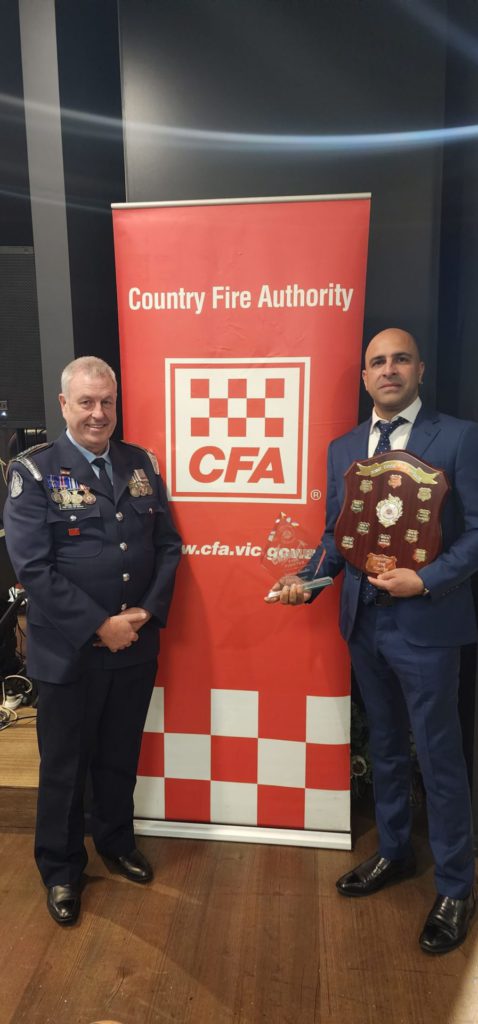
Indian Film Festival of Melbourne set to celebrate Karan Johar’s 25 years in film industry

0

The year 2023 holds a special significance for Karan Johar as he celebrates 25 remarkable years in the Indian film industry. To make it grand, The Indian Film Festival of Melbourne (IFFM) is all set to pay tribute to the filmmaker by celebrating his visionary storytelling, and his unwavering passion for cinema.

The festival, taking place from August 11 to 20, will showcase Karan Johar’s exceptional contribution to Indian cinema by hosting a series of events and special screenings in his honour.

Commenting on this, and his attendance at the festival, Karan said in a statement, “I am deeply honoured to be a part of the 14th Indian Film Festival of Melbourne.”

May be an image of 1 person and text that says "Indian Film Fesivalof MELBOURNE 2023 Principal artner ICTORIA VICSCREEN dovernment Enjoy a CINEMATIC evening with KARAN JOHAR at the ANZ PLUS IFFM AWARDS NIGHT 2023 HAMER HALL, ARTS CENTRE MELBOURNE AUGUST 11, FRIDAY 7PM ONWARDS BUY TICKETS NOW"

“This year holds a special significance for me as I celebrate 25 years as a filmmaker, and I can’t think of a better platform than this festival to commemorate this milestone in my career.”

“Returning for the third time at the festival, I am overwhelmed by the love and support I have received from the Australian audience.”

“The festival’s curation of a special experience and celebrations to mark this momentous landmark in my journey fills me with a sense of joy and gratitude. It is an opportunity for me to reflect upon the last 25 years as a filmmaker, the challenges, the triumphs, and the learnings that have shaped my artistic vision.”

“I look forward to engaging in a special talk at the festival, where I will share insights and anecdotes from my journey, hoping to inspire and connect with fellow filmmakers and cinema enthusiasts”.

Speaking about the upcoming celebration, Festival Director Mitu Bhowmick Lange said, “Karan Johar is a true icon of Indian cinema, and his impact on the industry cannot be overstated.

“We are privileged to honour his extraordinary career and his invaluable contributions to Indian filmmaking at this year’s Indian Film Festival of Melbourne. Karan’s remarkable journey as a filmmaker spans 25 years, during which he has created a legacy that will be cherished for generations to come”.

Karan Johar, who made his directorial debut in 1998 with the iconic film “Kuch Kuch Hota Hain,” has captivated audiences with his unique vision and ability to tell larger-than-life stories.

Over the years, Karan established himself as a distinguished director, leaving an indelible mark on Indian cinema.

Not only has Karan Johar achieved tremendous success as a filmmaker, but he has also made significant contributions as a producer. His internationally acclaimed production house has brought forth groundbreaking films that have garnered global recognition. Moreover, Johar’s dedication to nurturing talent, both in front of and behind the camera, has resulted in the launch of numerous budding artists and industry professionals.

After over six years, Karan is returning to the director’s chair with his upcoming movie ‘Rocky Aur Rani Kii Prem Kahaani’.

The film stars Ranveer, Alia Bhatt, Dharmendra, Jaya Bachchan and Shabana Azmi in the lead roles and has released in the theatres on July 28.

Rocky Aur Rani Kii Prem Kahaani promises to be a wholesome, big-screen entertainer, blending Johar’s storytelling finesse with an impressive ensemble cast, grandeur and music. There were also many scenes of the two romancings and fighting, celebrating all kinds of festivals with their families, and possibly a wedding.

Support Our Journalism

Global Indian Diaspora needs fair, non-hyphenated, and questioning journalism, packed with on-ground reporting. The Australia Today – with exceptional reporters, columnists, and editors – is doing just that. Sustaining this needs support from wonderful readers like you.

Whether you live in Australia, the United Kingdom, Canada, the United States of America, or India you can take a paid subscription by clicking Patreon. Buy an annual ‘The Australia Today Membership’ to support independent journalism and get special benefits.
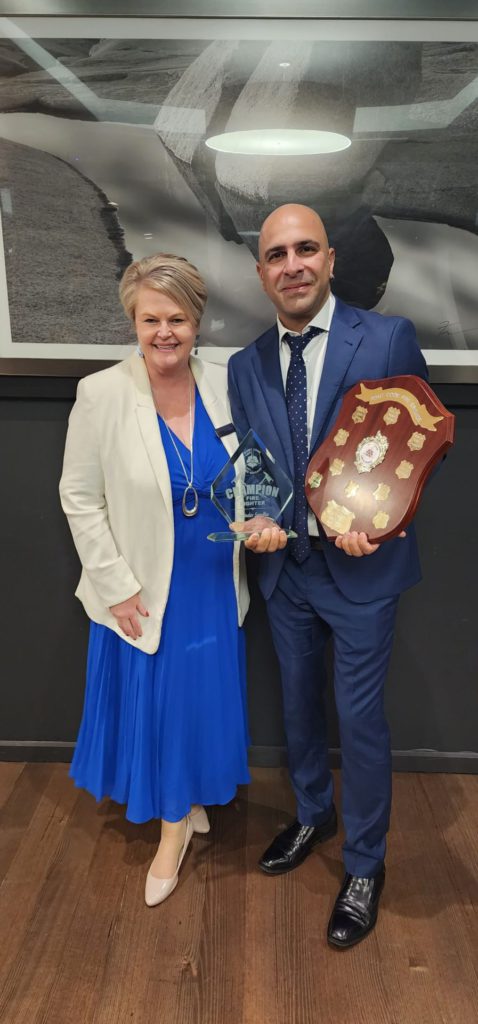
#Ashes 5th Test: Australia gain slender 12-run lead as England pacers dominate

0

Domination by England pace bowlers helped them stay alive in the fifth and final Ashes Test against Australia at The Oval on Friday as the visitors could gain only a slender lead of 12 runs at the end of day two play.

At the end of day two, Australia was bundled for 295 in reply to England’s 283 in the first innings.

Australia started the final session at 186/7, with Steve Smith (40*) and Pat Cummins (1*) unbeaten.
Smith and Cummins carried on with their partnership. Smith survived a run-out attempt by Bairstow. The bat was outside the crease, but the wicketkeeper had dislodged the bails before collecting the ball.

Smith ‘would have been given out’ with zing bails

Smith was saved from a run out on the “benefit of the doubt” to batter. At first, it seemed that Smith was short of his ground.

But, after seeing replays, umpire Nitin Menon ruled that the bail was not completely dislodged from both grooves of Jonny Bairstow until Smith was in his crease. Bairstow had knocked off a bail with his arm and when the ball reached his grooves, Smith was in the crease.

“I honestly don’t know the rules, I think there was enough grey area to give that not out. It looked like the benefit of the doubt sort of stuff, the first angle I saw I thought out, and then the side angle it looked like the bails probably dislodged,” Broad said as quoted by ESPNcricinfo.

Image
Image Source; Twitter @cricketAus

Australia brought up their 200 runs in 78.3 overs.
In the 81st over, Smith smashed Stuart Broad for two back-to-back fours to bring up his half-century in 98 balls.

Smith and Cummins eventually brought up their fifty-run partnership.
Their 54-run partnership came to an end after Smith was caught behind by Bairstow for 71 off 123 balls, consisting of six fours. Australia was 239/8 at that point.

Australia crossed the 250-run mark in 92.5 overs.
Murphy made his intentions clear to counter-attack right from the start, smashing Mark Wood for two sixes in the 95th over.

The duo fell one run short of a fifty-run partnership after Murphy’s attacking knock of 34 in 39 balls with two fours and three sixes was ended by Woakes. Australia was 288/9 at that point.
Joe Root got his second wicket as he dismissed Cummins for 36 after he was caught by Ben Stokes near the boundary. Australia was all-out for 295 and lead by 12 runs.

Woakes (3/61) emerged as the pick of the bowlers for England, while Root, Wood and Broad took two wickets each. James Anderson got one wicket.

Image
Image Source; Twitter @englandcricket

Earlier, it was complete domination from England pacers, led by veteran Stuart Broad as Australia lost some key batters during the second session during the second day of the fifth Ashes Test against Australia at The Oval on Friday.

At the end of the second session, Australia was at 186/7, with Steve Smith (40*) and Pat Cummins (1*) unbeaten.

Australia started the second session at 115/2 with Steve Smith and Usman Khawaja unbeaten at the crease with scores of 13* and 47* respectively.

Stuart Broad helped England solidify their grip on the match when he dismissed both Usman Khawaja (47 in 157 balls) and Travis Head (4) in quick succession. With this, he brought up his 150 Ashes wickets and became the first England bowler and overall third bowler to do so.

Image
Image Source; Twitter @cricketAus

Australia was 127/4 after these two quick dismissals.
Following this dismissal, Mitchell Marsh and Smith carried the innings forward.

Australia reached the 150-run mark in 59.5 overs.
Marsh injected some life into the innings with some aggressive shot-making. However, he could last for only 28 balls as James Anderson took his wicket by hitting the top of his leg stump for 16 runs. Australia was 151/5 at that point.

Smith held the other end steady, but Australia continued to lose wickets. Alex Carey was dismissed for just 10 runs after Ben Stokes caught him on a Joe Root delivery. Australia was 170/6 at that point.
Mitchell Starc also was dismissed for seven runs by Mark Wood. England was 185/7.

Smith and skipper Cummins took the Aussies through the remainder of the session without any loss of wicket.

At the end of the first session, Australia registered a score of 115/2 with Steve Smith and Usman Khawaja unbeaten at the crease with scores of 13* and 47* respectively.

Khawaja and Marnus Labuschagne kicked off Day 2 looking to chase down the massive trail of 222 runs.

Labuschagne solely depended on his defensive technique to face the fierce English bowling line-up. Khawaja on the other hand took up the role of scoring boundaries.

Their innings progressed steadily with both batters taking their time on the pitch and dictating the run rate according to their own terms. Their partnership was a complete contrast to England’s ‘Bazball’ approach.

They got to the drinks with 21 runs after facing 14 overs. Both batters were quite comfortable defending against England’s bowling length which was slightly short of the length.

Before Australia reached the three-digit mark, Mark Wood removed Labuschagne from the pitch for a score of 9 after facing 82 balls.

Wood found a thick outside edge, Bairstow decided to hold his ground, Root saw the opportunity a little too late as he snatched the ball with his left hand to end Labuschagne’s stay on the pitch.
Steve Smith came in to replace the departing batter and played two beautiful straight drives to push Australia’s scoring rate.

Australia scored a total of 54 runs in the entire first session. Labuschagne ended up with the third-lowest strike rate for an Australian batter in an Ashes innings after facing a minimum of 75 balls.

Brief Score: England 283 (Harry Brook 85, Ben Duckett 41, Mitchell Starc 4/82) trails Australia 295 (Steve Smith 71, Usman Khawaja 47; Chris Woakes 3/61).

Support Our Journalism

Global Indian Diaspora needs fair, non-hyphenated, and questioning journalism, packed with on-ground reporting. The Australia Today – with exceptional reporters, columnists, and editors – is doing just that. Sustaining this needs support from wonderful readers like you.

Whether you live in Australia, the United Kingdom, Canada, the United States of America, or India you can take a paid subscription by clicking Patreon. Buy an annual ‘The Australia Today Membership’ to support independent journalism and get special benefits.
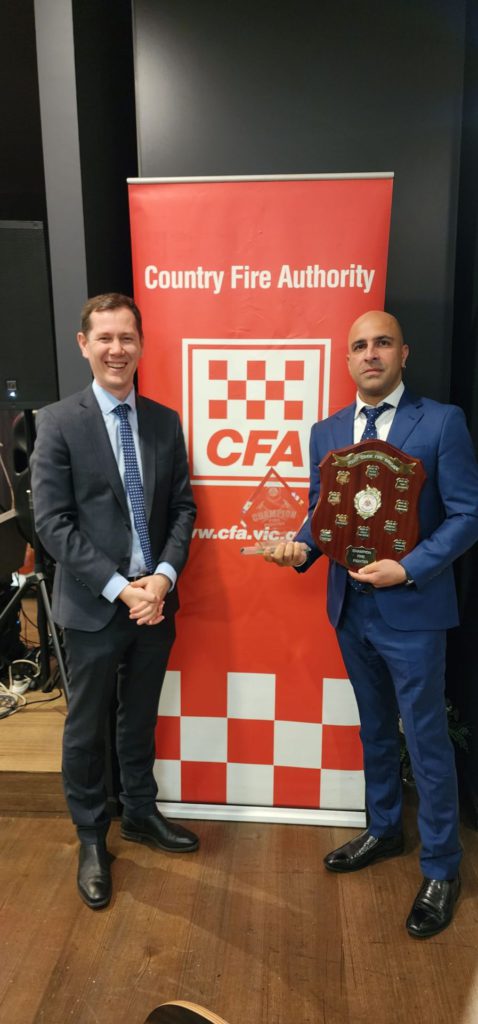
Domestic violence can happen to anyone, important to remove stigma, says Indian-Australian entrepreneur Poornima Menon

0

‘The Saree Club’ in Sydney recently organised ‘Respect and Recover’, a forum to create awareness regarding domestic violence in the community.

Kittu Randhawa is the founder of the Indian (Sub-Continent) Crisis and Support Agency. ICSA is the first fully CALD organisation running professional support services for the target community with a dedicated focus on client-centric support services and advocacy. Speaking to The Australia Today she emphasised that safety of victims is paramount.

Kittu Randhawa speaking with Pallavi Jain

L to R Sonali, Yojna Parekh, Nimish Matani, Kittu Randhawa, Lord Mayor of Parramatta Sameer Pandey, Mittu Gopalan and Poornima Mohandas

Kittu has been an advocate against dowry abuse since 2013. She is committed to seeking reform in legislation and systems to protect women who are victims of this form of abuse and was one of the panellist at the forum.

Other panellists included CA Nimish Matani, Lawyer Mittu Gopalan and Migration Consultant Yojna Parekh who discussed the financial, legal and immigration implications related to the issue of domestic violence.

Lord Mayor of Parramatta, Sameer Pandey, who was also on the panel spoke about the steps the Parramatta council has taken to prevent domestic and family violence and support victims of dowry abuse.

The community voice on the panel was rendered by Sonali and the interactive art session was conducted by Rupa Parathasarthy from Mindkshethra.

The event was supported by Elizabeth Lovell CEO Lifeline ( Harbour to Hawkesbury) and Veronica McDonald CEO Lifeline ( Macarthur and Western Sydney region) and their respective teams.

Veronica told the The Australia Today that domestic violence is a form of social disempowerment and that people die every week at the hands of their family because of it.

Veronica McDonald speaking with Pallavi Jain

Poornima Menon is a successful entrepreneur and founder of ‘Five pleats by Poornima Menon’. She is also the founder of ‘The Saree Club’, a network of passionate women who share their love for sarees through stories, culture, traditions and memories. Along the way they empower and educate each other on social issues, fund raise for purposeful causes and provide a safe space for support. She told The Australia Today that domestic violence can happen to anyone and it is important to remove the stigma around it.

Poornima Menon speaks with Pallavi Jain

1800RESPECT is the national domestic, family and sexual violence counselling, information and support service. You can call 1800 737 732 or reach out via the online chat on their website.

Call 000 if you are in danger

Support Our Journalism

Global Indian Diaspora needs fair, non-hyphenated, and questioning journalism, packed with on-ground reporting. The Australia Today – with exceptional reporters, columnists, and editors – is doing just that. Sustaining this needs support from wonderful readers like you.

Whether you live in Australia, the United Kingdom, Canada, the United States of America, or India you can take a paid subscription by clicking Patreon. Buy an annual ‘The Australia Today Membership’ to support independent journalism and get special benefits.

Australians are living and working longer – but not necessarily healthier

0

By Kim Kiely and Mitiku Hambisa

Australians are living and working longer, but a longer working life doesn’t always come with equivalent gains in healthy life.

Our analysis of change in life expectancy, health transitions and working patterns of more than 10,000 middle-aged Australians over the past two decades shows divergences in the number of years they can expect be in good health at work and in retirement.

In particular, education matters.

Those who left school before year 12 are losing years of healthy life, with their extra years in the workforce mainly comprising years of poor health. This is opposite to the trend among people who completed high school.

And while men and women experienced improvements in life expectancy, on average women are not gaining extra healthy life years.

Australians are being encouraged to extend their working life. For this to be sustainable and equitable, government and workplaces policies will need to make allowances for the health capacity of mature-age workers.

How we found our results

We’ve calculated healthy working life expectancies – the average number of years a person can expect to work in good health – for 50-year-olds using data from the Household, Income and Labour Dynamics in Australia (HILDA) survey. This is a longitudinal survey, meaning it seeks to interview the same households every year (about 17,000 people), enabling researchers to track life trajectories.

We identified two age groups within HILDA’s survey sample and followed each cohort for 10 years. The first group was 4,951 people aged 50 years and older in 2001. The second group was 6,589 people aged 50 years and older in 2011.

To estimate a healthy working life expectancy, we looked at how people transitioned in and out of good health and employment each year (based on survey data about their paid employment and long-term health conditions that limited participation in everyday activities).

By combining this with deaths data, we have calculated the average duration spent (i) working in good health, (ii) working in poor health, (iii) retired in good health, and (iv) retired in poor health.

Differences by education

The following graphs show our results, based on expectancies at age 50.

We show our data in this way, rather than total healthy life and working life expectancies from birth, because we followed people from age 50 and is this is the time from which workers start to plan for and transition into retirement.

Typically we understand life expectancies to be calculated from birth, but they can be estimated for any age. If you live to 50, your life expectancy is greater than when you were born.

Our first graph shows healthy life expectancies according to school completion. These estimates reflect the cumulative number of years a person will, on average, be healthy or unhealthy from age 50.

Across the two cohorts, those with low education lose 0.8 years of healthy life, while those with high education gain 0.8 years of healthy life.

As with all statistics, there is uncertainty in these estimates. (Our original analysis includes 95% confidence intervals but we do not show them here.)


These inequities are amplified in working-life expectancies, as the next graph shows. Among early school leavers, at age 50 healthy work years rose from 7.9 to 8.4 years, an increase of six months. But their years working in poor health rose from 2.7 to 3.6 years, a difference of 11 months.

In contrast, for those who completed year 12, at age 50 healthy work years rose from 9.6 to 10.5 years, an increase of 11 months. Their years working in poor health rose from 3.1 to 3.5 years, a difference of five months.


The next graph illustrates what this means in proportional terms.


The next graph shows working life expectancies by sex. Men, on average, will spend 25% of their remaining working years in poor health, and women 24%. These percentages have not changed over time.


These findings are consistent with previous analyses demonstrating social inequalities in health expectancies to have been maintained over time, and possibly widened in some circumstances. In that study, women with low educational attainment appeared to have had negligible improvements in life expectancy and lost healthy life years.

Implications for governments and employers

Australia has this month raised the age at which people qualify for the age pension to 67.

When the pension was introduced in 1908, the qualifying age was 65 for men and 60 for women. At the time, average life expectancy for Australians at birth was about 55 for men and 59 for women. Now it exceeds 81 for men and 85 for women (though is considerably lower for some groups, notably Indigenous Australians).

There’s an obvious rationale to prolong people’s working lives – to meet the challenges posed by population ageing and sustain the social security system. Nevertheless, consideration should be made for inequalities in life expectancy and health expectancy. For many ageing workers, health limitations constrain their capacity and opportunity to work.

To achieve longer working lives, workplaces will need to become more supportive of mature-age workers, including accommodating long-term health conditions.

This will likely involve addressing ageism in the workplace, increasing employer demand for older workers, creating appropriate work roles to fit the capacities and preferences of older workers, and providing pathways to lifelong education and training.

We may also need to rethink our idea of flexible work, which has largely centred around the needs of parents and younger workers. Many older workers will have expectations for an independent and active retirement period, and it should be possible for flexible work arrangements to accommodate this.

Finally, we should not discount the unpaid contributions made by many older adults through community service and providing care to loved ones.

Kim Kiely, Lecturer, Statistics and Data Science, University of Wollongong and Mitiku Hambisa, Senior Research Associate, UNSW Sydney

This article is republished from The Conversation under a Creative Commons license. Read the original article.

Support Our Journalism

Global Indian Diaspora needs fair, non-hyphenated, and questioning journalism, packed with on-ground reporting. The Australia Today – with exceptional reporters, columnists, and editors – is doing just that. Sustaining this needs support from wonderful readers like you.

Whether you live in Australia, the United Kingdom, Canada, the United States of America, or India you can take a paid subscription by clicking Patreon. Buy an annual ‘The Australia Today Membership’ to support independent journalism and get special benefits.

Punjabi Christians stage protest at Melbourne’s Indian Consulate against Manipur Violence

0

As the Indian government was submitting an affidavit on the morning of 28 July to inform the Supreme Court of India that it has “zero tolerance towards any crimes against women” some 64 men, women and children were staging a protest at Indian Consulate in Melbourne against ‘Manipur Violence’ calling it a crime against Christians.

This group of people came there under the banner of ‘Worldwide Christian Alliance,” an unregistered body created for this protest by the Melbourne-based followers of Ankur Narula Ministries which is headquartered in the Indian state of Punjab’s Jalandhar City.

None of the people who were at the protest was from Manipur and had no knowledge of the historical issue between the two tribes of the state. All of the protesters were Punjabi-speaking followers of Ministries.

The Protesters were holding banners like ‘Stop burning churches’ and ‘Stop hatred and violence in Manipur, however, were reluctant to acknowledge that hundreds of Hindu temples belonged to tribal Meitei.

Neeraj Dhiman who converted to Christianity in January 2023 through Ankur Narula Ministries was leading the protesting group.

Mr Dhiman told The Australia Today, “There are many incidents of rape and murder happening in Manipur but authorities have not taken much action.”

He questions the sincerity of the Manipur government and police authorities,

“Action should be taken without thinking about which tribe they belong to,”

added Mr Neeraj.


Another protester from the same church group who does not want to be named says he receives WhatsApp videos from India which has shaped his opinion about the issue.

What happened in Manipur

The violence in Manipur between the Hindu Meiteis and the tribal Kuki, who are Christians, erupted after a rally by the All Tribal Students Union of Manipur (ATSUM) on May 3 in protest against the proposed inclusion of people belonging to the Meitei community in the list of Scheduled Tribes (STs) for affirmative action.

The state has been in the grip of violence and civilian unrest for over three months now and the Indian central government had to deploy central paramilitary forces to bring the situation under control. 

Last week a 26-second video from Manipur triggered outrage in the whole of India where two women were stripped naked, assaulted and paraded by a mob.

The incident allegedly took place on May 4, a day after ethnic clashes broke out in Manipur.
After a video of the same went viral, the police swung into action and arrested seven people, including the main accused.

The Indian media reports that the mobile phone from which Manipur women’s viral video was shot has been recovered and the person who shot the video has also been arrested.

A female protester Nancy argues that she is standing here for women’s right to be safe in their own homes and streets.

Despite holding the banners which target Hindu Meiteis Nancy concedes that both Kuki and Meiteis should stop violence.

“The government has the responsibility to bring communities to the table for peace talks so that these senseless acts of violence against women stop Asap,”

said Ms Nancy.

What is Indian government doing

According to Indian media reports, nearly 35,000 security personnel has been deployed on the ground.

“No shortage of medicine and daily supplies, prices of food and essential materials are under control, a large number of government staff are returning to work, schools are also slowly resuming”, An Indian official informed the media.

Meanwhile, the Indian government held several rounds of talks with members of the Kuki and Meitei communities.

“Six rounds of talks with each community were held”,

official said.

Indian Prime Minister Narendra Modi is constantly monitoring the situation in Manipur.

“He is regularly being briefed by Home Minister and Ministry of Home Affairs (MHA) officials.”

Indian Ministry of Home Affairs (MHA) in its affidavit to the court today morning said that the case of the viral video of two women is being transferred to the Central Bureau of Investigation (CBI), India’s prime investigation agency.

Several Police teams have been formed for mass operations at several locations to arrest identified culprits and an Additional SP rank officer has been entrusted to investigate the case, under the constant supervision of other senior police officials.

Indian Ministry of External Affairs (MEA) on Thursday 27 July assured its global partners that “authorities are taking action to bring perpetrators to justice and restore peace in Manipur.”

MEA Official Spokesperson Arindam Bagchi while addressing a media briefing said,

“As you are aware, this is a matter on which our authorities, particularly the viral video, but other incidents also on which our authorities are taking action to bring the perpetrators to justice and restore peace and normalcy in Manipur.” 

Support Our Journalism

Global Indian Diaspora needs fair, non-hyphenated, and questioning journalism, packed with on-ground reporting. The Australia Today – with exceptional reporters, columnists, and editors – is doing just that. Sustaining this needs support from wonderful readers like you.

Whether you live in Australia, the United Kingdom, Canada, the United States of America, or India you can take a paid subscription by clicking Patreon. Buy an annual ‘The Australia Today Membership’ to support independent journalism and get special benefits.
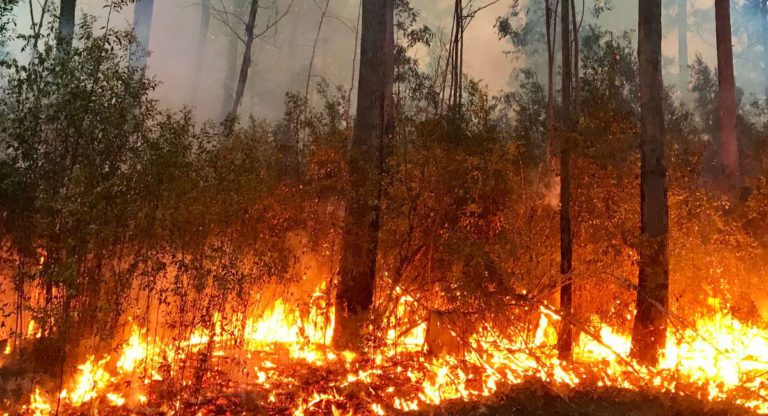
#Ashes: Australia dominates day 1 despite Brook’s half-century

0

A dominant show by Australian bowlers, particularly pacer Mitchell Starc outshined an elegant half-century by Harry Brook as the visitors found themselves in a position of comfort while batting against England in the fifth and final Ashes Test at The Oval on Thursday.

At the end of the first day of play, Australia was 61/1, with Usman Khawaja (26*) and Marnus Labuschagne (2*) unbeaten. England started the final session at 250/7, with Mark Wood (23*) and Chris Woakes (15*) unbeaten.

At the start of the final session, Murphy struck early to remove Mark Wood for 28 off 29 balls. This ended the 49-run partnership between Wood and Woakes. England was 261/8.
Broad was quickly dismissed by Starc for seven, reducing England to 270/9.

Starc completed a four-wicket haul by dismissing Woakes for 36, after the batter mistimed a pull caught by Travis Head at deep square leg.

Image

England was bundled out for 283 runs. Starc (4/82) was the pick of the bowlers for Australia. Murphy and Hazlewood also got a couple of wickets. Cummins and Marsh got one wicket each.

Australia came to bat in their first innings.
Openers David Warner and Chris Woakes gave Aussies a solid start, seeing of the new ball well.
Woakes delivered the first breakthrough to the Aussies, dismissing Warner for 24 after he was caught by Zak Crawley. Australia was 49/1.

Marnus Labuschagne was next up on the crease and took Australia through the remainder of the session without any loss of wicket.

Earlier, England started the second session at 131/3, with Harry Brook and Moeen Ali unbeaten on the crease with scores of 48 and 10 respectively.

Image

Brook brought up his half-century in just 44 balls.
In the 31st of the innings, Brook and Moeen brutally attacked Aussie skipper Pat Cummins’ pace. Brook smashed two fours while Moeen smashed a four and six each to take 19 runs from this over.
England reached the 150-run mark in 30.2 overs.

Moeen Ali continued to punish Australian bowlers until spinner Todd Murphy dismissed him for 34 off 37 balls, consisting of three fours and two sixes. England was 184/4 and this also ended a quickfire century stand between Brook and Moeen.

England endured a big blow when skipper Ben Stokes was bowled by Mitchell Starc for just three. England was 193/5.

Image

England touched the 200-run mark in 40.4 overs.
Just a few overs later, Josh Hazlewood also clean-bowled Jonny Bairstow for four. England was 208/6.
In the very next over following Bairstow’s dismissal, Starc got his second wicket as Steve Smith caught Harry Brook in the slips for 85 off 91 balls, consisting of 11 fours and two sixes. England was 212/7.

The pair of Mark Wood and Chris Woakes gave some respite to England, displaying a wide array of attacking shots.

England reached the 250-run mark in 50 overs.
The duo helped England end the second session at 250/7, with Wood (23*) and Woakes (15*) unbeaten.

In the first session, Australia’s pacers dominated England’s opening order to end the first session of the first day of the final Ashes Test on a positive note on Thursday at the Oval.

At the end of Lunch, England managed to put up a score of 131/3, with Harry Brook and Moeen Ali unbeaten on the crease with scores of 48(41)* and 10(28)* respectively.

England kicked off the session with their usual ‘Bazball’ style. They cruised through the first 10 overs scoring at a run rate of nearly five an over. At the end of 10 overs, England is 49/0, with Ben Duckett (37*) and Zak Crawley (11*).

Australia managed to bring a halt to the English duo’s scoring rate with Mitchell Marsh bringing an end to Duckett’s bright innings for a score of 41.

A half-hearted appeal following a faint edge from the gloves ended Duckett’s stay on the pitch. Cummins saw the opening and introduced himself into the attack to further inflict damage to England’s batting set-up.

The Australian skipper removed Crawley from the other end for 22 to further increase Australia’s dominance in the session. Hazlewood added the icing on the cake by chopping off Joe Root for 5.
Australia could have enjoyed control if Alex Carey managed to hold onto the ball following an edge from Brook. The young English batter made the most of the opportunity and took the fight against the Australian bowlers.

A few edges flew past the third slip as he continued to keep the scoreboard ticking for the hosts.
Moeen Ali held onto the other end taking his time with each passing ball. Brook played the majority of the balls as they built an unbeaten partnership of 58.

England ended the session on 131 despite losing three wickets.

Brief Scores: England: 283 (Harry Brook 85, Ben Duckett 41, Mitchell Starc 4/82) vs Australia: 61/1 (Usman Khawaja 26*, David Warner 24, Chris Woakes 1/8).

Support Our Journalism

Global Indian Diaspora needs fair, non-hyphenated, and questioning journalism, packed with on-ground reporting. The Australia Today – with exceptional reporters, columnists, and editors – is doing just that. Sustaining this needs support from wonderful readers like you.

Whether you live in Australia, the United Kingdom, Canada, the United States of America, or India you can take a paid subscription by clicking Patreon. Buy an annual ‘The Australia Today Membership’ to support independent journalism and get special benefits.

Surprise inspections on 20 farms to curb potential visa worker underpayments and exploitation

0

The Fair Work Ombudsman has made surprise inspections of horticulture businesses around Queensland’s Lockyer Valley region to check workers are getting the right pay.

Fair Work Inspectors are on the ground at Gatton this week to assess about 20 farms and labour-hire companies.

Businesses were selected to be assessed for compliance with workplace laws based on intelligence such as anonymous reports indicating potential worker underpayments, or because they employ visa holder workers who can be vulnerable.

The farms inspected grow a range of produce including broccoli, lettuce, shallots, corn and pumpkin.

The FWO has received intelligence regarding potential non-compliance in the region, such as alleged non-payment for time worked; unlawfully low flat rates, underpaid minimum rates, below-Award rates to visa holders, unpaid casual, weekend and public holiday loadings, unauthorised deductions and pay slip breaches.

Acting Fair Work Ombudsman Kristen Hannah said the agency was committed to boosting compliance among agriculture sector employers.

“Inspectors are out in the field to hold employers to account if they are not meeting their obligations. We will take enforcement action where appropriate. We also act to ensure employers understand their legal responsibilities, including record-keeping and the minimum wage guarantee for pieceworkers,” Ms Hannah said.

“The agriculture sector employs a significant number of migrant workers who can be vulnerable to exploitation as they may have limited English skills, or be unaware of their rights or unwilling to raise concerns. It is important visa holders know that they have the same workplace rights as all other workers.”

“Employers who need assistance meeting their obligations should contact the FWO directly for free advice. We also urge workers with concerns about their wages and entitlements to reach out to us. They can report anonymously if they prefer.”

Inspectors are speaking with growers, labour hire operators, managers and employees on the ground, and are requesting records.

They are on alert for low rates of pay that breach the Horticulture Award (where applicable), including with regard to piece rates; record-keeping and payslip breaches; and contraventions of the Fair Work Act’s National Employment Standards including failure to provide the Fair Work Information Statement.

The investigations are part of the regulator’s national Agriculture Strategy, which began in December 2021. Under the strategy, the FWO is targeting more than 300 businesses in 15 ‘hot spot’ regions over two and a half years where there are identified high risks of non-compliance. Industry sectors being investigated include viticulture, horticulture, meat processing and agriculture.

Inspectors can issue Infringement Notices (fines) of up to $1,878 for an individual or $9,390 for a company for breaches of payslip and record-keeping obligations.

Where breaches warrant court action, a court can order penalties of up to $18,780 per contravention for an individual and $93,900 per contravention for companies. Maximum penalties are 10-times higher if a court determines breaches were serious contraventions under the Fair Work Act.

Support Our Journalism

Global Indian Diaspora needs fair, non-hyphenated, and questioning journalism, packed with on-ground reporting. The Australia Today – with exceptional reporters, columnists, and editors – is doing just that. Sustaining this needs support from wonderful readers like you.

Whether you live in Australia, the United Kingdom, Canada, the United States of America, or India you can take a paid subscription by clicking Patreon. Buy an annual ‘The Australia Today Membership’ to support independent journalism and get special benefits.

IBAC findings into corrupt politicians to spark donation, planning reforms

0

Political donation and planning rules face sweeping overhauls after a corruption inquiry into a property developer’s shady dealings to influence local councillors and Victorian MPs.

The Independent Broad-based Anti-corruption Commission on Thursday released its long-awaited Operation Sandon report into Casey Council and property developers in Melbourne’s southeast.

The investigation centred on four planning proposals involving John Woodman and his clients, including one to rezone land in Cranbourne West as residential to increase its value.

Casey councillors Sameh Aziz and Geoff Ablett accepted almost $1.2 million in payments and in-kind support for promoting the interests of Mr Woodman and his clients.

The pair repeatedly failed to declare conflicts of interest with Mr Woodman or his companies and continued trying to influence other councillors even when they did, IBAC said.

“Our investigation exposed significant weaknesses in the process for amending planning permits, with conflicted councillors easily able to manipulate the process for personal gain,” acting commissioner Stephen Farrow writes.

“The investigation showed the extent to which a property developer and consultant such as Mr Woodman can invest across the political spectrum to buy access to decision-makers at the local and state government levels.”

Findings of guilt or recommendations to lay charges cannot be made in an IBAC report but the watchdog can make a referral to prosecutors after its release.

Mr Woodman has fought the report’s release through the courts since March 2022, including a failed appeal on Monday.

In his official response, he declared there was “no evidence” his work as a consultant was to improperly influence and claimed he did not rely on the support of Mr Aziz and Mr Ablett.

Beyond the council, Mr Woodman donated more than $470,000 to the Labor and Liberal parties between 2010 and 2019 to access state decision-makers.

Both major parties agreed to accept membership payments in instalments from different accounts or entities to allow Mr Woodman not to federally declare the contributions.

“These fundraising entities were an important way of buying access to elected officials and senior decision-makers without transparency,”

the report reads.

Between $10,000 and $27,000 was donated to each of the election campaigns for Labor’s former Cranbourne MP Jude Perera, his successor Pauline Richards and Narre Warren MP Judith Graley.

The watchdog ruled Mr Woodman successfully lobbied two MPs he donated to, but Ms Richards was singled out with an adverse finding.

There was no evidence Ms Richards approached then-planning minister Wynne or his office before he rejected the Cranbourne West land rezoning proposal in 2020.

Ms Richards admitted she could have been more circumspect in accepting Mr Woodman’s “generous offer” but denied furthering his interests, which IBAC accepted.

No adverse findings were made against Mr Wynne, Treasurer Tim Pallas or Premier Daniel Andrews among others.

But the report detailed several representations made to Mr Andrews, including a 2017 lunch with Mr Woodman and others after a winning bid of more than $10,000 at a political fundraiser.

In a covertly intercepted phone call, lobbyist Philip Staindl described a conversation he had with the premier at a 2019 function to Mr Woodman.

“He said the premier praised Mr Woodman’s contribution to the Labor Party and lamented the fact Mr Woodman was being pursued with allegations of corruption by a journalist who was an ‘arsehole’,”

the report said.

Mr Staindl also suggested he had given the premier Mr Woodman’s telephone number and Mr Andrews had expressed interest in calling him.

In his secret examination, Mr Andrews told IBAC he could not recollect a conversation with Mr Staindl at the function but said some of the things recounted to Mr Woodman did not “ring true” or “sit well” with him.

The premier accepted Mr Staindl may have given him Mr Woodman’s number but it was “highly unlikely” it would have been to talk about a planning application.

The 308-page report did not name former City of Casey mayor Amanda Stapledon who did not provide a response before dying by suicide in 2020.

Thirty-four recommendations were made by the watchdog, including stripping councils of statutory planning responsibilities and a possible political donations ban on high-risk groups such as property developers.

Lifeline 13 11 14

Beyond blue 1300 22 4636

Support Our Journalism

Global Indian Diaspora needs fair, non-hyphenated, and questioning journalism, packed with on-ground reporting. The Australia Today – with exceptional reporters, columnists, and editors – is doing just that. Sustaining this needs support from wonderful readers like you.

Whether you live in Australia, the United Kingdom, Canada, the United States of America, or India you can take a paid subscription by clicking Patreon. Buy an annual ‘The Australia Today Membership’ to support independent journalism and get special benefits.