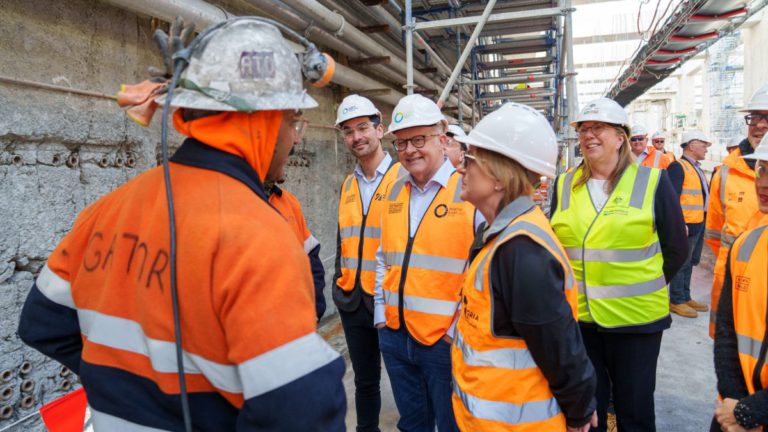
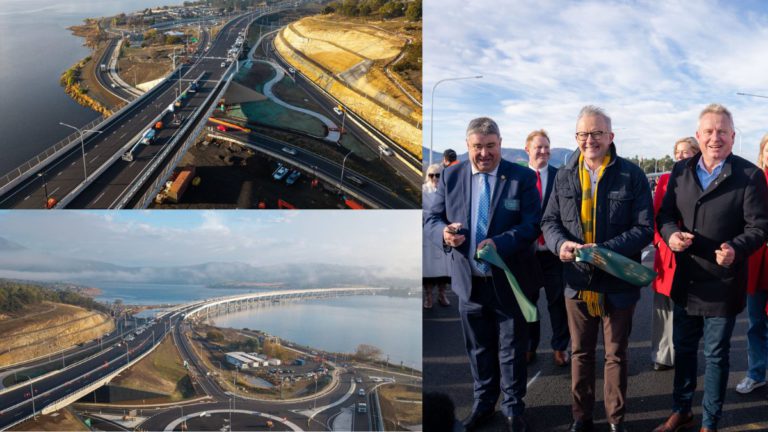
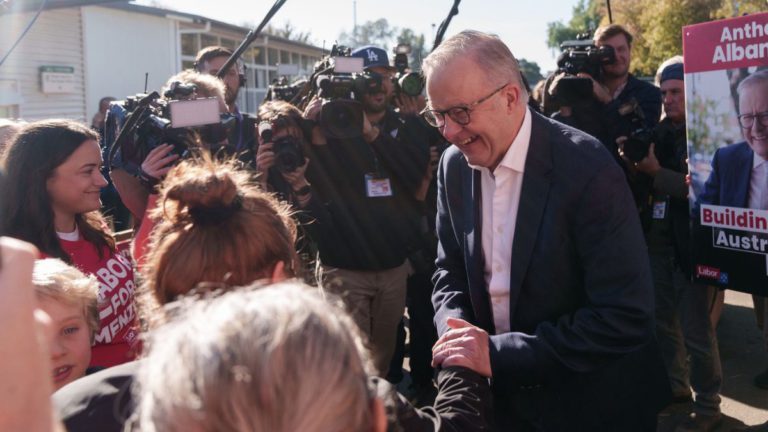
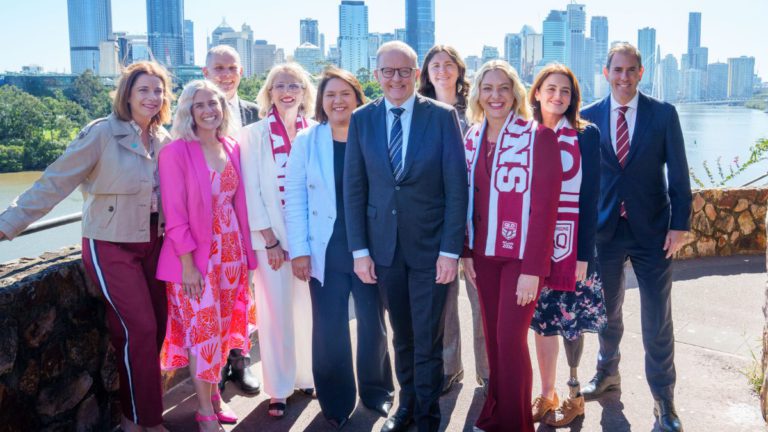
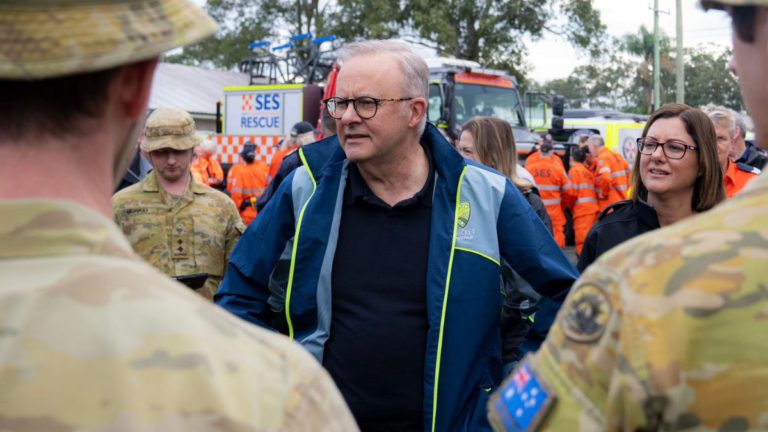
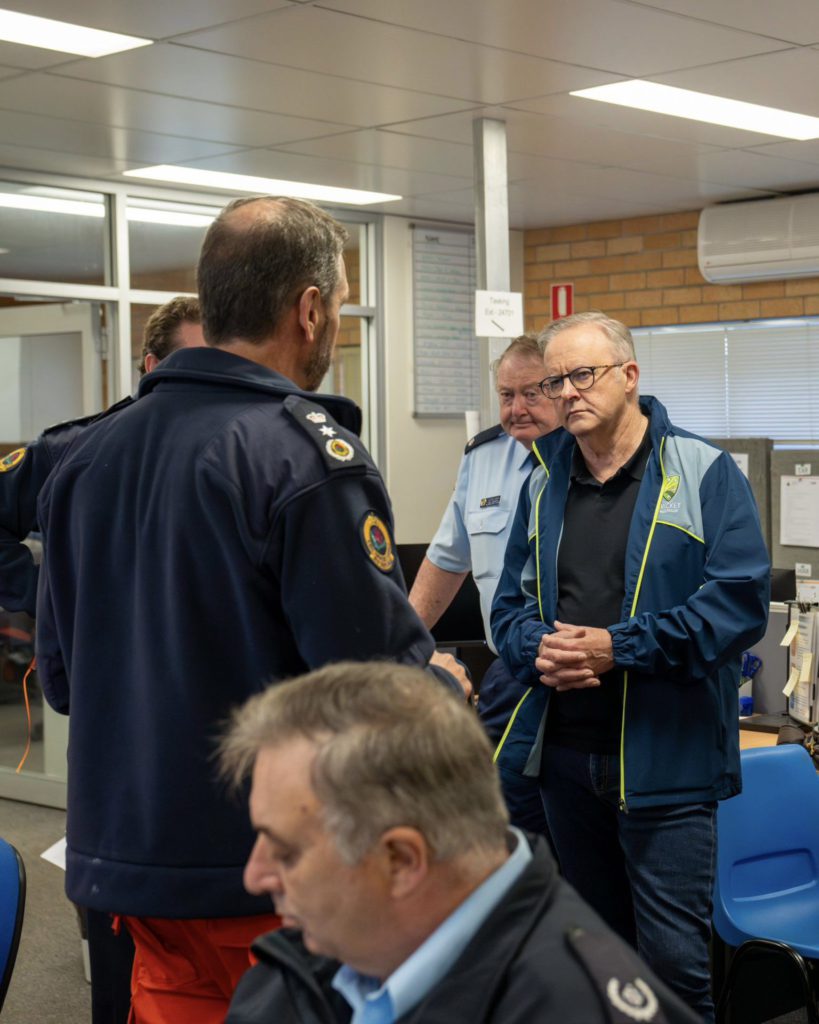
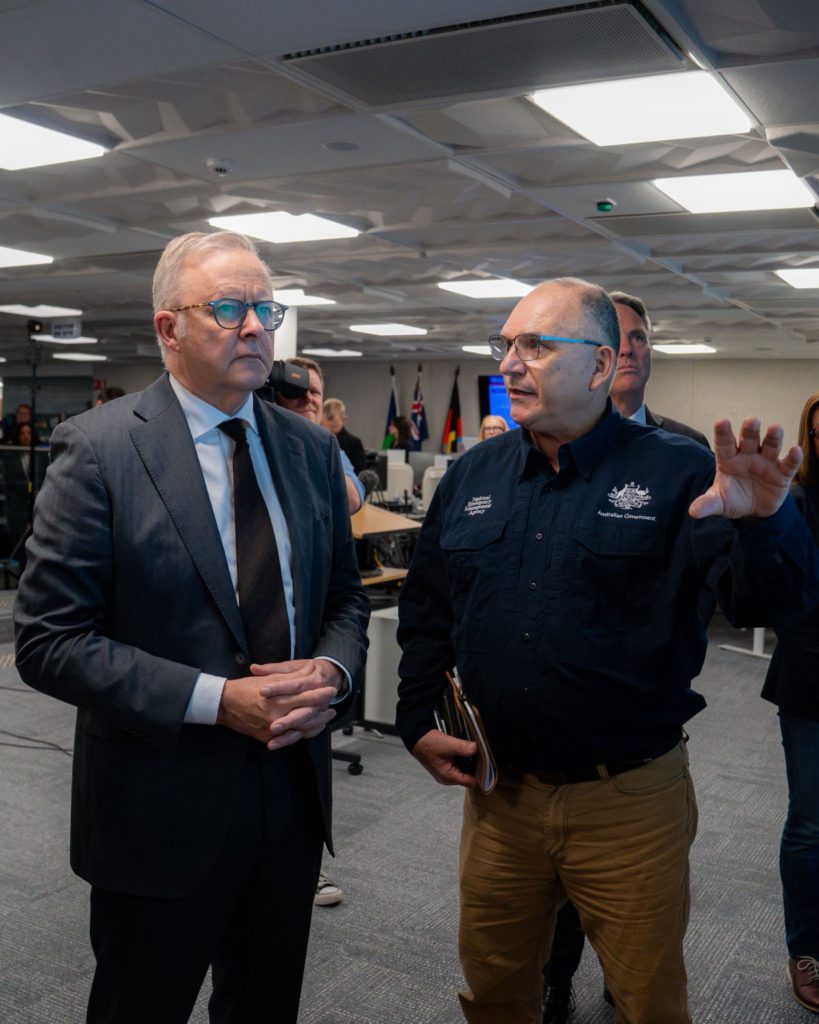
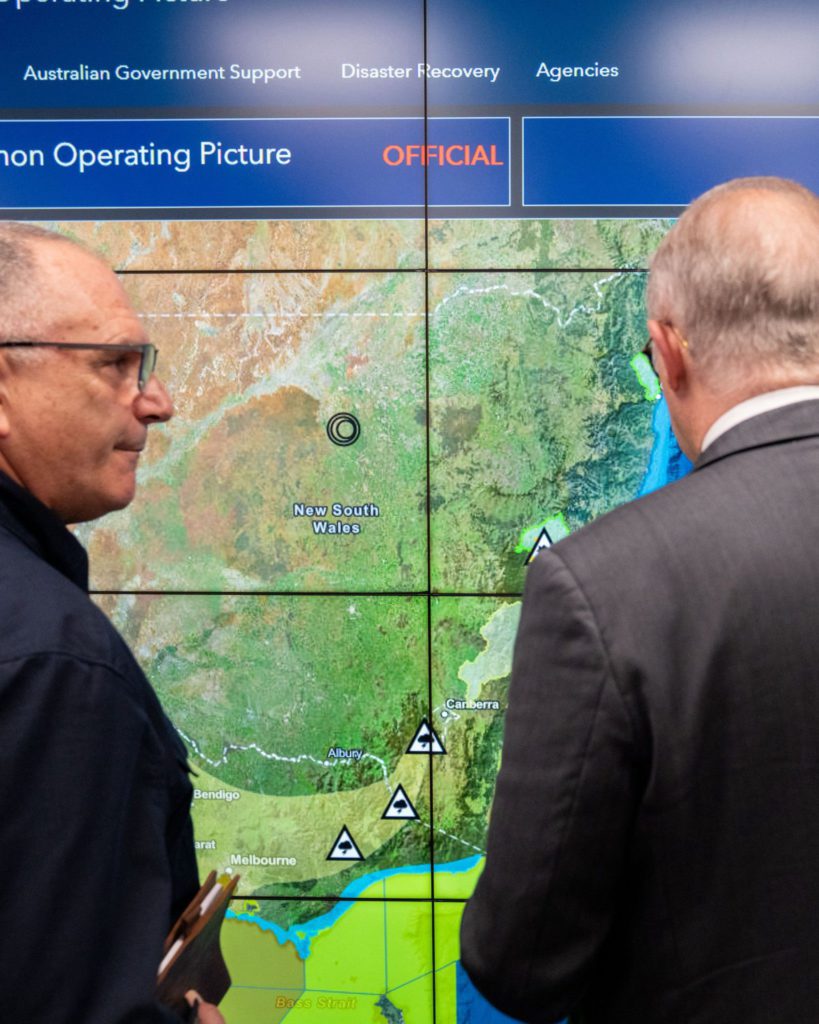
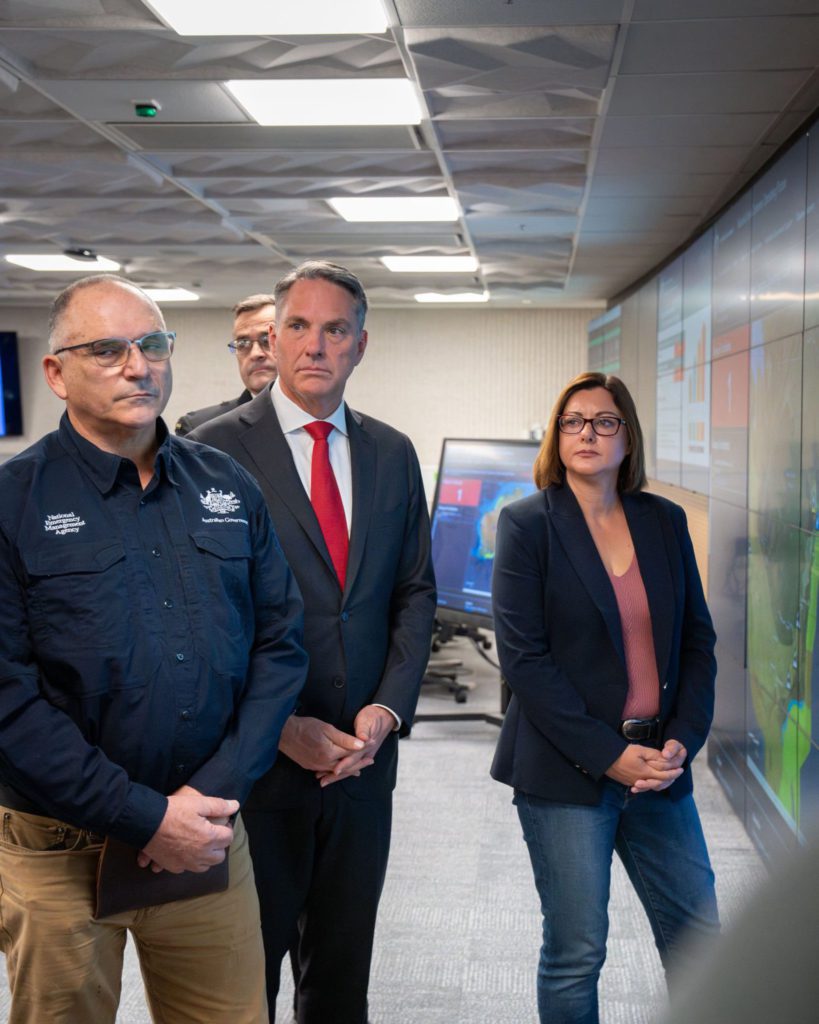
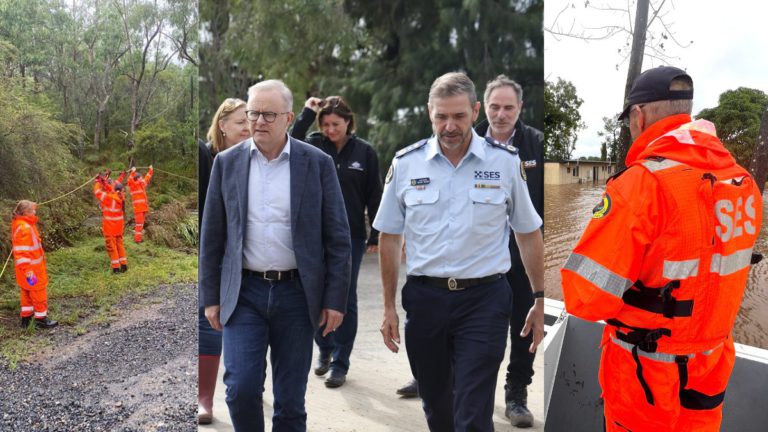
Prime Minister Anthony Albanese returned to Victoria this week to celebrate a major milestone in the North East Link Project, marking a significant step forward in easing congestion and boosting productivity for Melbourne’s growing population.
Speaking in the electorate of Menzies, Albanese thanked Victorians for their continued support in the recent election and highlighted the government’s strong commitment to Victorian infrastructure, including a $5 billion federal contribution to the project. He emphasised that this investment will cut travel times by 35 minutes, remove 15,000 trucks from local roads, and create thousands of jobs.
Less time in traffic. More jobs for Victorians.
More than 8,000 people are already working on the North East Link – creating good, secure jobs while building the roads Melbourne needs.
We’re working with the Victorian Government to make your daily commute quicker and safer. pic.twitter.com/en4mx3XA63
“Less time in traffic. More jobs for Victorians,” Albanese posted on X.
“More than 8,000 people are already working on the North East Link — creating good, secure jobs while building the roads Melbourne needs. We’re working with the Victorian Government to make your daily commute quicker and safer.”
“The North East Link is about breaking down traffic congestion, making it easier for people to get around Melbourne for work, recreation, and business,” the Prime Minister said.
“This project also improves road safety and reduces emissions by getting cars off the road and out of traffic lights.”
Victorian Premier Jacinta Allan, who joined Albanese on site, echoed the sentiment, noting that the long-awaited project was finally becoming a reality. “Thirty metres below Lower Plenty Road, we’ve just relaunched the tunnel boring machines to build the missing link in our freeways,” she posted on X.
“The North East Link has been a line on the map for 60 years — but now, in partnership with the Albanese Labor Government, we’re getting on with it. Once complete, it’ll take thousands of trucks off local roads and get families home safer and sooner.”
Thirty metres below Lower Plenty Road, we've just relaunched the tunnel boring machines to build the missing link in our freeways.
The North East Link has been a line of the map for 60 years – but now in partnership with the Albanese Labor Government, we're getting on with it.… pic.twitter.com/LGTk4YFZfm
The project features twin tunnels stretching over six kilometres, upgrades to the Eastern Freeway and M80 Ring Road, and the state’s first dedicated busway, all designed to support Melbourne’s freight, logistics, and commuter needs.
On other matters, the Prime Minister addressed questions on superannuation tax reforms, ongoing free trade negotiations with the European Union, and the inclusion of Senator Dorinda Cox in the Labor team amid controversy.
He reaffirmed the government’s commitment to fair and productive economic policies, promising continued engagement with all stakeholders to secure deals that benefit Australia.
Albanese also expressed support for urban redevelopment projects in Tasmania, including the Macquarie Point site in Hobart, highlighting the importance of transforming waterfront precincts to benefit communities and economies.
The Prime Minister concluded by emphasising the government’s focus on economic growth, declining inflation, and low unemployment, with infrastructure investment as a key driver for a better and fairer future.
Support our Journalism
No-nonsense journalism. No paywalls. Whether you’re in Australia, the UK, Canada, the USA, or India, you can support The Australia Today by taking a paid subscription via Patreon or donating via PayPal — and help keep honest, fearless journalism alive.
What began as a powerhouse political partnership between the world’s richest man and the most powerful politician in America has spectacularly imploded.
It appears that the alliance between US President Donald Trump and Elon Musk—once marked by backslaps, Cabinet meetings, and a golden key ceremony—has devolved into a full-blown public feud featuring social media mudslinging, contract threats, and sensational Epstein allegations.
Is it time to create a new political party in America that actually represents the 80% in the middle?
Elon Musk and President Trump’s partnership, turned conscious uncoupling, has now entered its most combative phase. The pair spent Thursday trading insults and, at times, open threats, as tensions boiled over across press briefings and social media platforms.
“Look, Elon and I had a great relationship. I don’t know if we will anymore,” Trump told reporters in the Oval Office.
“I’m very disappointed in Elon. I’ve helped Elon a lot.”
Musk hit back instantly on X, accusing Trump of “ingratitude” for the support he provided during the 2024 election.
“Without me, Trump would have lost the election. Dems would control the House and the Republicans would be 51-49 in the Senate.”
Musk wrote referencing both his personal donations—reportedly in the hundreds of millions—and his control of X, which many believe shaped election discourse.
Trump, agitated by the barrage, took to Truth Social, escalating the feud by threatening to strip Musk’s companies of lucrative federal subsidies and contracts. “The easiest way to save money in our Budget, Billions and Billions of Dollars, is to terminate Elon’s Governmental Subsidies and Contracts,” Trump declared.
“Elon was ‘wearing thin,’ I asked him to leave… and he just went CRAZY!”
Musk’s retaliation was swift and dramatic. “In light of the President’s statement about cancellation of my government contracts, @SpaceX will begin decommissioning its Dragon spacecraft immediately,” Musk posted, referencing the spacecraft that recently brought four astronauts back from the International Space Station.
In light of the President’s statement about cancellation of my government contracts, @SpaceX will begin decommissioning its Dragon spacecraft immediately pic.twitter.com/NG9sijjkgW
But the tech mogul wasn’t done. “Time to drop the really big bomb,” Musk wrote to his 220 million followers. He then alleged—without presenting any evidence—that Donald Trump is named in the still-unreleased Jeffrey Epstein files.
“@realDonaldTrump is in the Epstein files. That is the real reason they have not been made public. Have a nice day, DJT!” Musk tweeted, later adding: “Mark this post for the future. The truth will come out.”
Time to drop the really big bomb:@realDonaldTrump is in the Epstein files. That is the real reason they have not been made public.
The explosive claim tapped into a persistent undercurrent of conspiracy theories surrounding Epstein’s client list, though no credible evidence has emerged publicly linking Trump to undisclosed documents.
In the past year alone, Musk had advised Trump, travelled aboard Air Force One, attended Mar-a-Lago weekends, and even joined Cabinet meetings wearing a MAGA hat. But their bond appears to have frayed beyond repair.
A major tipping point came when Musk began railing against Trump’s so-called “Big Beautiful Bill,” branding it a “disgusting abomination” that would inflate the federal deficit. The criticism didn’t sit well with Trump, who sees the bill as central to his legacy.
The Trump tariffs will cause a recession in the second half of this year https://t.co/rbBC11iynE
The fallout could have serious implications. The U.S. Department of Transportation, which regulates Tesla’s operations, is already probing its “Full Self-Driving” software following a fatal crash. And any severing of government ties could stall Musk’s ambitions to launch mass-market robotaxis.
As the dust settles, the once-unstoppable Trump-Musk alliance stands as a cautionary tale of political proximity in the digital age—when tweets, not treaties, define loyalties, and one viral post can collapse billion-dollar friendships.
Support our Journalism
No-nonsense journalism. No paywalls. Whether you’re in Australia, the UK, Canada, the USA, or India, you can support The Australia Today by taking a paid subscription via Patreon or donating via PayPal — and help keep honest, fearless journalism alive.
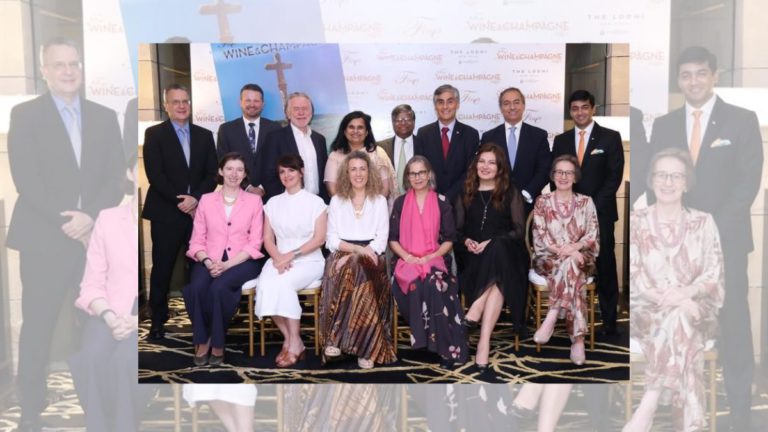
Australia made a flavourful impression at the 14th edition of the FINE Ambassadors’ & High Commissioners’ Table held in New Delhi on 27 May 2025, with a delegation led by Philip Green OAM, Australia’s High Commissioner to India.
Image: High Commissioner Philip Green at the 14th edition of the FINE Ambassadors’ & High Commissioners’ Table in New Delhi on May 27, 2025 (Source: LinkedIn – Austrade)
The prestigious event, hosted by Fine Wine and Champagne India Magazine, is an annual celebration that brings together diplomats and dignitaries from around the globe to foster cultural exchange through the universal language of fine wine and gastronomy.
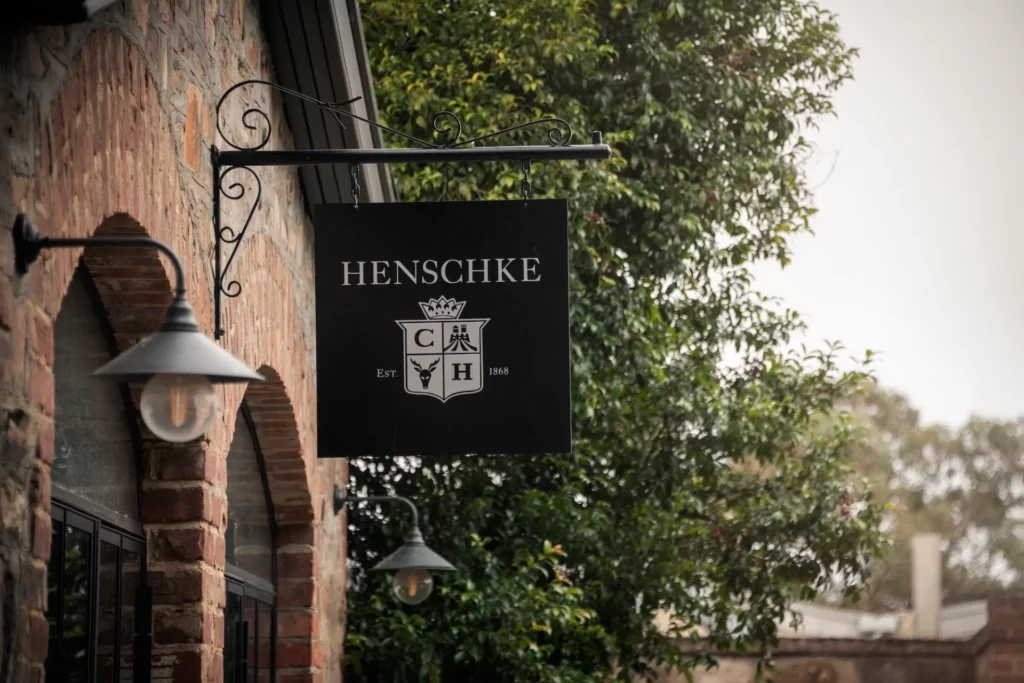
Australia’s offering this year was the Henschke Keyneton Euphonium 2015 from South Australia’s Barossa Valley — a rich expression of the nation’s proud winemaking tradition and commitment to sustainable practices.
Image: Henschke Keyneton Euphonium 2015 from South Australia’s Barossa Valley (9Source: X)
High Commissioner Philip Green remarked, adding his thanks to hosts Rajiv and Ritu Singhal for “an evening of fine wine and good food.”
“A bit of friendly competition against fellow Ambassadors from key wine producing countries.”
A pleasure to highlight 🇦🇺 wine at the 14th FINE Ambassador's & High Commissioner's Table! A bit of friendly competition against fellow Ambassadors from key wine producing countries. Thank you @rajiv_singhal & @ritu_singhal for inviting us to an evening of fine wine & good food. pic.twitter.com/KMqO6R91Op
Australia remains one of the world’s top wine exporters, with export values soaring by 41% year-on-year to $2.64 billion as of March 2025.
Known for its varietal range — from Shiraz and Cabernet Sauvignon to vibrant Rieslings — Australian wine continues to appeal to diverse global tastes while upholding values of innovation, quality, and environmental responsibility.
Boutique wineries like Henschke have become cultural ambassadors in their own right, contributing to Australia’s soft power and trade diplomacy.
As wine becomes a vessel for storytelling and connection, events like this underscore the role of ‘wine diplomacy’ in building bridges, sharing cultures, and forging lasting partnerships.
Support our Journalism
No-nonsense journalism. No paywalls. Whether you’re in Australia, the UK, Canada, the USA, or India, you can support The Australia Today by taking a paid subscription via Patreon or donating via PayPal — and help keep honest, fearless journalism alive.
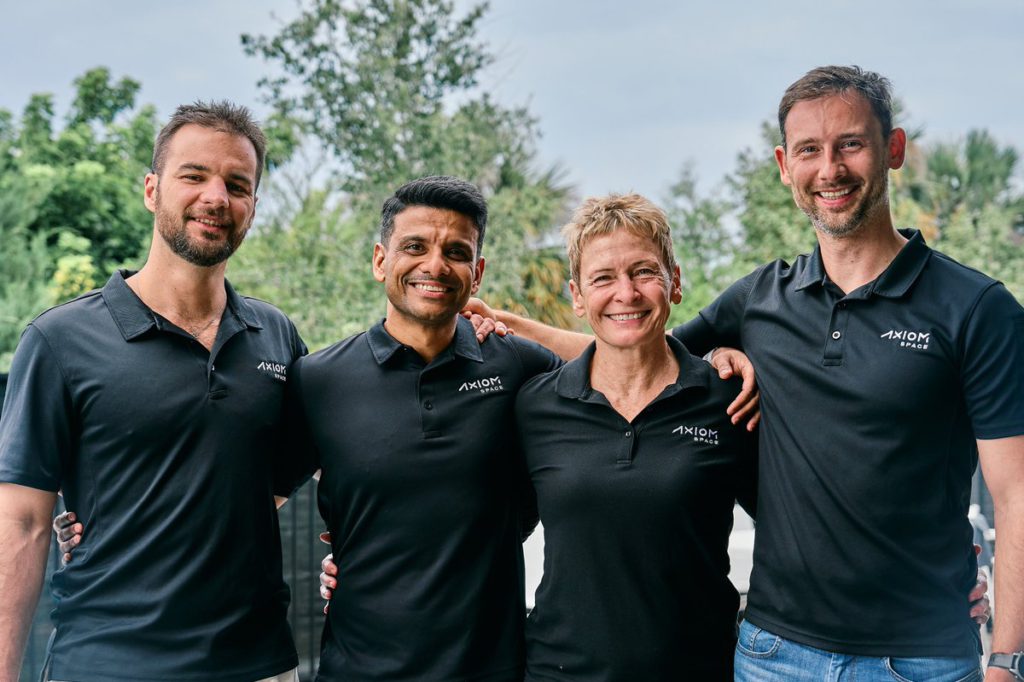
Group Captain Shubhanshu Shukla is set to become only the second Indian national to travel to space—and the first to visit the International Space Station (ISS)—when he pilots Axiom Mission 4 (Ax-4) on 10 June 2025.
The private mission, operated by Houston-based Axiom Space in partnership with NASA and SpaceX, will carry a four-member multinational crew to the orbiting laboratory for up to two weeks of scientific work, outreach, and commercial activities.
Group Captain Shubhanshu Shukla; Image Source: Axiom Mission 4 (Ax-4)
Crew and Mission Overview Ax-4’s crew comprises Commander Peggy Whitson of the United States, Pilot Shubhanshu Shukla of India, and Mission Specialists Sławosz Uznański-Wiśniewski of Poland and Tibor Kapu of Hungary. Whitson—an ex-NASA astronaut who has commanded the ISS twice and performed ten spacewalks—will lead the mission, with Shukla serving as her second-in-command and primary pilot during launch, docking, undocking, and re-entry phases. Uznański-Wiśniewski and Kapu will round out a crew that marks each of their respective countries’ first visits to the ISS in over four decades.
Group Captain Shubhanshu Shukla; Image Source: Axiom Mission 4 (Ax-4)
Liftoff is scheduled for 12:22 UTC on 10 June (8:22 am EDT; 17:52 IST) from Launch Complex 39A at NASA’s Kennedy Space Centre, using a SpaceX Falcon 9 Block 5 rocket to carry a Crew Dragon C213 capsule into low Earth orbit.
The spacecraft will dock at the ISS’s Harmony module (Zenith port), where the astronauts plan to remain for up to 14 days before returning via splashdown in the Pacific Ocean near California.
Group Captain Shubhanshu Shukla; Image Source: Axiom Mission 4 (Ax-4)
India’s First ISS Pilot Since 1984 Shukla’s selection follows the 1984 flight of Rakesh Sharma aboard a Soviet Soyuz, when Sharma spent eight days on the Salyut 7 station. Thirty-one years later, India’s burgeoning space program is on track for its own crewed missions, most notably the Gaganyaan project slated for 2027, making Shukla’s Ax-4 seat a valuable stepping-stone.
The 39-year-old Group Captain, a fighter pilot in the Indian Air Force since 2006, has accrued over 2,000 flying hours on MiGs, Sukhois, Dorniers, Jaguars, and Hawks. He was one of four IAF officers shortlisted last year for Gaganyaan, India’s first indigenous crewed flight, which aims to orbit three astronauts at 400 km altitude for three days.
Group Captain Shubhanshu Shukla; Image Source: Axiom Mission 4 (Ax-4)
Speaking during a virtual press briefing on 3 June, Shukla said, “It has been an amazing journey so far, but the best is yet to come. As I go into space, I carry not just instruments and equipment, I carry the hopes and dreams of a billion hearts. I request all Indians to pray for the success of our mission.”
He has trained since August 2024 under a regime managed by Axiom Space, NASA, and the Indian Space Research Organisation (ISRO), including physical conditioning, spacecraft systems proficiency, and psychological assessments.
Group Captain Shubhanshu Shukla; Image Source: Axiom Mission 4 (Ax-4)
Scientific Objectives and Experiments During their stay aboard the ISS, the Ax-4 crew will conduct roughly 60 scientific experiments and outreach events. India contributed seven experiments, focusing on microgravity’s effects on biology and materials. Key projects include:
Crop Seed Study: Investigators will examine how six varieties of crop seeds behave in microgravity, with post-flight cultivation on Earth to identify traits that could facilitate space-based agriculture. “This project aims to help understand how crops may be grown in space for future exploration missions,” said former NASA scientist Mila Mitra.
Microalgae Cultivation: Three strains of microalgae will be grown in space to assess their potential as food, biofuel, or life-support components, helping select the most viable species for long-duration missions.
Tardigrade Resilience: Known for their extreme-survival abilities, tardigrades will be observed in space to measure egg-laying, hatching, and revival rates compared with ground controls, offering insight into cellular and genetic adaptations.
Muscle Atrophy and Treatment: Research into exercise regimens and possible countermeasures against muscle loss in microgravity aims to improve astronaut health during long-term missions.
Ocular Health Study: Investigators will monitor gaze fixation and rapid eye movements to understand how extended computer use in zero gravity affects vision, stress, and overall well-being—data that could influence future spacecraft computer interface designs.
Group Captain Shubhanshu Shukla; Image Source: Axiom Mission 4 (Ax-4)
Whitson emphasised that Ax-4’s science program “not only advances basic research but also paves the way for future human habitats on the Moon, Mars, and beyond,” reflecting Axiom’s goal of expanding low Earth orbit access.
Training and Preparations Since 25 May, the four astronauts have been in quarantine at the Johnson Space Centre in Houston to minimise COVID-19 risk before launch. They participated virtually in a pre-launch press conference on 3 June, where they introduced “Joy,” a white toy swan to be the mission’s unofficial “fifth crew member” as a morale booster and public engagement symbol.
Group Captain Shubhanshu Shukla; Image Source: Axiom Mission 4 (Ax-4)
Axiom Space’s Michael Suffredini remarked, “With Ax-4, we are demonstrating the value of public-private partnerships in space exploration. Bringing first-time nations to the ISS broadens humanity’s reach and fosters collaboration across borders”.
NASA’s Dana Weigel, manager of the ISS program, added, “Private astronaut missions like Ax-4 are critical to NASA’s vision for low Earth orbit commercialisation and will inform future endeavours, including Gateway and Artemis.”
ISRO Chairman V Narayanan highlighted the mission’s benefits: “The training and collaborative experience our astronaut gains aboard the ISS will be phenomenal.
“It strengthens India’s readiness for Gaganyaan and other deep-space efforts,”
he said, noting that India invested ₹5 billion ($59 million) to secure Shukla’s seat and training.
Group Captain Shubhanshu Shukla; Image Source: Axiom Mission 4 (Ax-4)
Significance for India’s Space Ambitions Ax-4 arrives at a transformative moment for India’s space sector. With Gaganyaan’s crewed flight planned for 2027, followed by a proposed Indian space station by 2035 and a crewed Moon mission by 2040, Shukla’s ISS experience will inform astronaut training protocols, life-support research, and mission planning. “Even stars are attainable,” Shukla declared in a Times of India interview, inspiring a new generation to pursue STEM careers and dream big.
At home, student and public engagement events are scheduled to let Indians ask questions of their first ISS pilot “while floating in microgravity,” according to ISRO project director Sudeesh Balan. These interactions aim to foster space literacy and demonstrate scientific principles in action.
Group Captain Shubhanshu Shukla; Image Source: Axiom Mission 4 (Ax-4)
Looking Ahead If all goes according to plan, the Ax-4 crew will dock with the ISS approximately 24 hours after liftoff, carrying supplies, research equipment, and personal items—among them, Joy the toy swan. During their stay, they will coordinate with ISS Expedition 69 crew members to manage payload operations, conduct experiments, and participate in live educational broadcasts. After up to 14 days, Crew Dragon will undock and re-enter Earth’s atmosphere for a parachute-assisted splashdown off the California coast. The mission is expected to last between 14 and 21 days in total.
For Group Captain Shukla, the voyage represents both personal triumph and national pride.
“I carry hopes and dreams of a billion hearts,”
he said.
Group Captain Shubhanshu Shukla; Image Source: PIB
“This mission is not just about me; it’s about India’s place in the cosmos.” As India watches, Shukla’s flight aboard Ax-4 will stand as a landmark in the nation’s ascent toward human spaceflight leadership.
Support our Journalism
No-nonsense journalism. No paywalls. Whether you’re in Australia, the UK, Canada, the USA, or India, you can support The Australia Today by taking a paid subscription via Patreon or donating via PayPal — and help keep honest, fearless journalism alive.
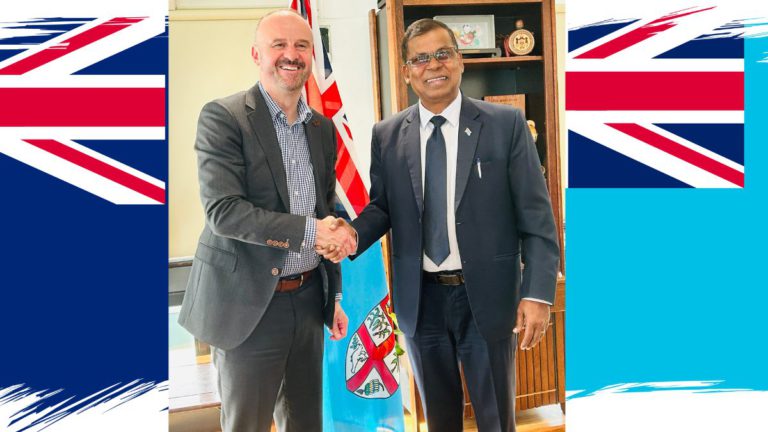
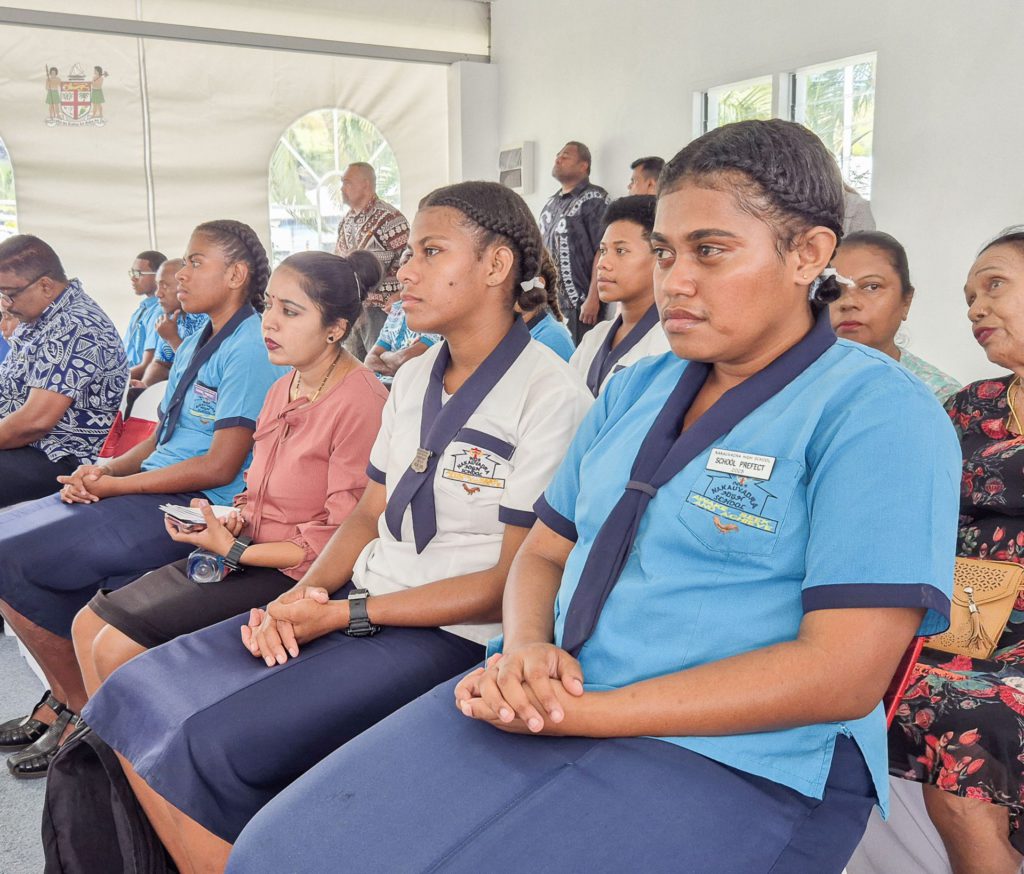
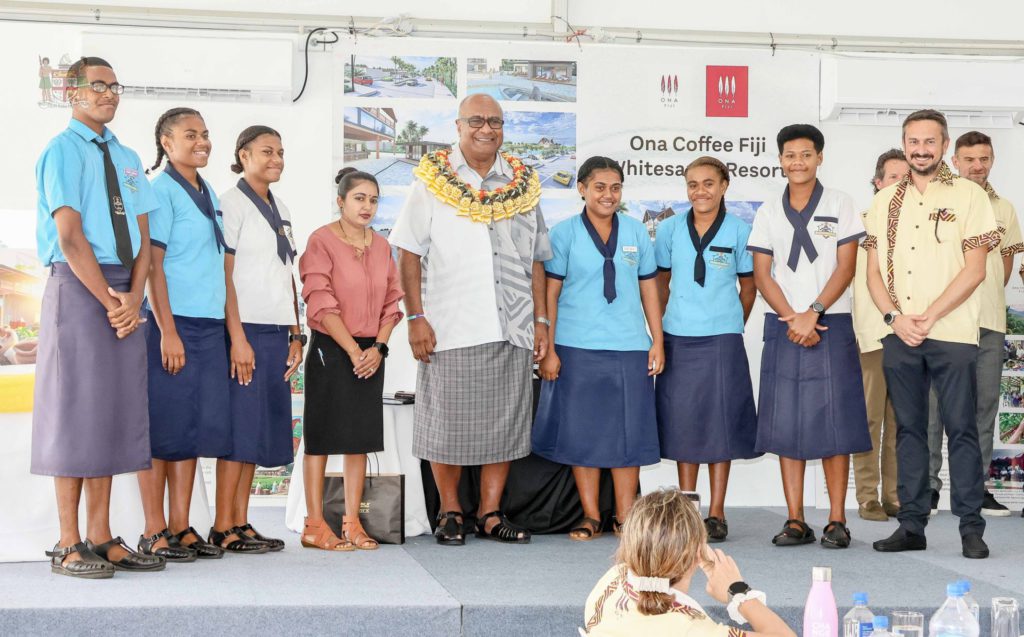
Fiji’s Deputy Prime Minister and Minister for Finance, Prof. Biman Prasad, welcomed the Chief Minister of the Australian Capital Territory (ACT), Andrew Barr, at Ro Lalabalavu House in Suva — marking another milestone in the ever-strengthening Vuvale Partnership between Fiji and Australia.
The courtesy call highlighted growing cooperation between the two nations, with discussions centred around economic development, trade, tourism, labour mobility, and climate action. Prof. Prasad thanked the Australian government for its continued support towards Fiji’s development, particularly in infrastructure, education, healthcare, and budget assistance.
“We had fruitful discussions on economic cooperation, tourism and regional solidarity. The Vuvale Partnership continues to grow stronger!”
🇫🇯🤝🇦🇺 Pleased to welcome ACT Chief Minister Mr. Andrew Barr and his delegation today. We had fruitful discussions on economic cooperation, tourism and regional solidarity. The Vuvale Partnership continues to grow stronger! #Vuvalepartnership@FijiGovernmentpic.twitter.com/F1DXsIVdKO
— Professor Biman Prasad DPM, Fiji (@bimanprasad) June 4, 2025
Mr Barr, widely credited with driving Canberra’s economic and tourism success, is leading an ACT Government and Canberra Business Chamber trade mission to the Pacific this week, with stops in Suva and Wellington. The delegation includes senior ACT officials, further cementing strong ties between Australia and the Pacific.
A key highlight of the visit will be the signing of a landmark agreement to establish the Council of Pacific Capital Cities — a first-of-its-kind partnership between the capitals of Australia, New Zealand, and Fiji, with plans to include other Pacific capitals over time.
“Our cities face common challenges – from the impacts of climate change to pressures on housing and infrastructure,” said Barr.
“Through this Council, we’re committing to practical cooperation and knowledge sharing that will strengthen our communities and support sustainable, inclusive growth. This is also an important step in recognising the role of cities in regional diplomacy.”
The agreement includes a three-year work plan, annual rotating summits, and initiatives to boost trade, tourism, transport, and cultural and educational exchanges across the region.
In Suva, the ACT delegation will sign a Memorandum of Understanding with Suva City Council. The visit reaffirms the ACT’s long-term commitment to regional city partnerships.
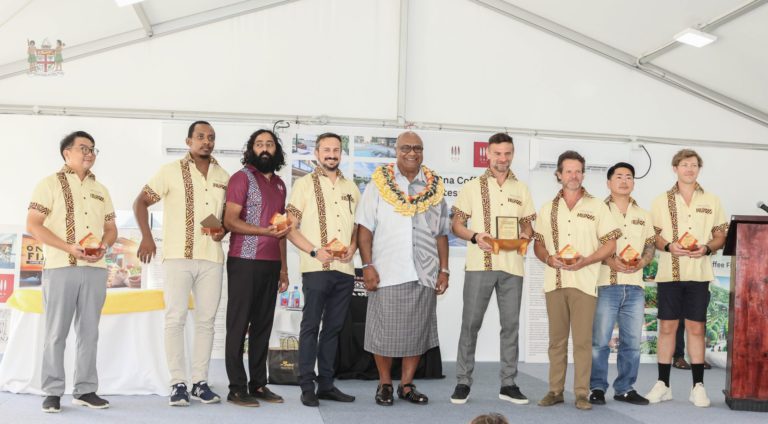
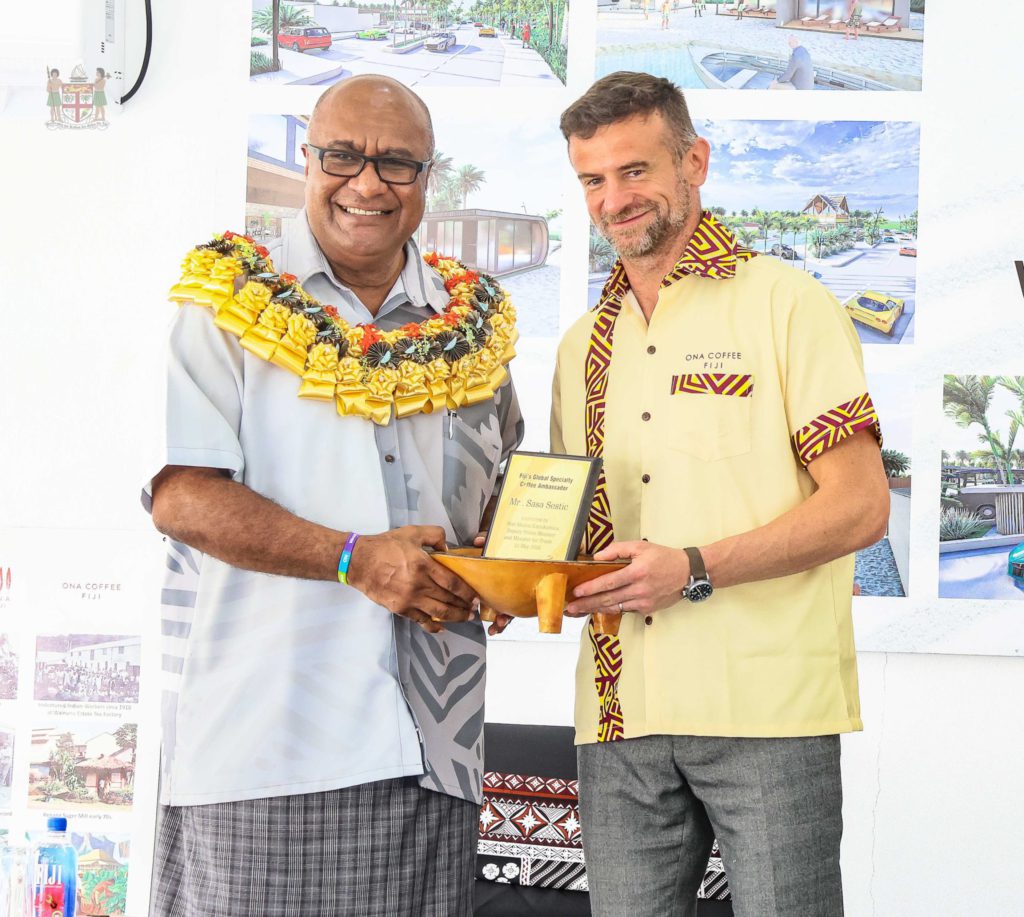
Following earlier successful trade missions, ACT businesses such as Aspen Medical, EPC Solar, and ONA Coffee are already expanding their presence in Fiji — a trend expected to grow as ties deepen through this new city-to-city cooperation framework.
Support our Journalism
No-nonsense journalism. No paywalls. Whether you’re in Australia, the UK, Canada, the USA, or India, you can support The Australia Today by taking a paid subscription via Patreon or donating via PayPal — and help keep honest, fearless journalism alive.
Two separate incidents at Perth Airport have led to criminal charges for West Australian men accused of abusive and threatening conduct, as the Australian Federal Police (AFP) reinforces its zero-tolerance stance on anti-social behaviour in aviation precincts.
A 24-year-old man appeared in Perth Magistrates Court on 5 June after allegedly threatening airline staff and verbally abusing AFP officers. The incident occurred on 16 May, after the man’s brother missed a scheduled flight to Broome.
AFP officers were called to the domestic terminal, where the man was allegedly using threatening and offensive language. Despite being warned, he reportedly continued to abuse officers and was arrested at the scene.
He has been charged with one count of acting in a disorderly manner in public, under section 74A of the WA Criminal Code, which carries a maximum penalty of a $6000 fine.
In a separate incident on 18 May, another WA man, 36, was charged after allegedly using offensive language at a departure gate and resisting arrest.
Police allege the man was talking loudly on a mobile phone and using offensive language. When approached by officers, he reportedly made abusive hand gestures and resisted arrest. Even after being restrained, he allegedly attempted to flee before being secured in a police vehicle.
He pleaded guilty on 19 May in Perth Magistrates Court to: One count of obstructing Public Officers (section 172, Criminal Code WA), and One count of acting in a disorderly manner in public. He was fined $1500.
AFP Inspector Peter Brindal said such behaviour would not be tolerated. “All travellers, visitors and staff deserve to feel safe at the airport and shouldn’t be subjected to offensive or aggressive incidents,” he said.
“If anyone feels unsafe or witnesses anything suspicious inside the Perth Airport precinct, they are urged to contact Airport Watch or report it to the nearest AFP officer.”
Support our Journalism
No-nonsense journalism. No paywalls. Whether you’re in Australia, the UK, Canada, the USA, or India, you can support The Australia Today by taking a paid subscription via Patreon or donating via PayPal — and help keep honest, fearless journalism alive.
When does a school’s responsibility for student behaviour end? Is it at 3pm when the bell goes? Or does a school still have to respond to harmful behaviour after hours?
The Victorian government has announced new powers for government school principals to suspend or expel students for serious misbehaviour beyond the school grounds. The powers will begin in July, from the beginning of term 3.
The state government says this will “address concerns around harmful behaviour that happens outside school hours […] but affects student and staff safety”.
The new powers have a particular focus on online safety and follow similar moves in South Australia and New South Wales.
What does this mean for schools and students?
A blurry line
The line between when “school” starts and finishes is blurry. Anti-social activities and their impacts don’t neatly fall at a convenient time or location.
But the impacts of cyberbullying are very much felt during school hours. Bullying can lead to decreased academic performance – even in primary school. It can also lead to fractured social relationships. So schools are deeply involved. They may need to provide additional academic and welfare support for the student, as well as manage any social tensions and flare-ups on campus.
As the eSafety Commission has warned, teachers can also face online abuse from students.
So school leaders are needing to support both student and staff mental health.
Although the attack took place outside the school grounds, after the final bell, the court determined the NSW public high school had a duty “beyond the confines of the school boundaries and outside of its operating hours”. In part, this was based on previous known violence from one of the perpetrators.
Schools now exist in a dynamic and complex set of ecosystems and the new Victorian powers acknowledge and respond to this reality.
What does it mean for principals?
For some school leaders, there may be relief they can deal with the consequences of the most severe and destructive actions. This could include online harassment or recent incidents such as rating students’ physical appearances.
Research including the annual survey I run with colleagues, shows being an Australian school leader takes an ongoing emotional toll. The work often involves dealing with violence and abuse.
Expelling kids should be a very last resort
As a community, we can all agree schools should be places that are safe and free from violence of any kind.
But the removal of any student from a school signals a series of breakdowns. This is why schools have policies and procedures to try and resolve these issues positively before the consequences become more severe. Schools will normally use intervention strategies such as counselling, behaviour monitoring and formal cautions before suspension emerges as a possibility. Sadly, these do not always result in changed behaviour.
As consequences escalate, so too do their impacts.
Students who begin to disengage from their learning can get caught in a spiral of increasing disengagement, leading to repeat instances of suspension and then expulsion. This can then chart a distressing path for some towards incarceration.
So we need to focus on strategies which reduce this pathway.
This includes initiatives that boost students’ engagement at school such as those in the Better and Fairer Schools Agreement (part of the new funding agreement between the federal and state governments). We also need funds to increase counsellors and psychologists in schools.
Being able to expel students for out-of-school behaviour will help manage some of the symptoms of poor student behaviour. But unless the underlying causes are also addressed, expulsion will not resolve the issues – and ultimately transport the problem to another community.
No-nonsense journalism. No paywalls. Whether you’re in Australia, the UK, Canada, the USA, or India, you can support The Australia Today by taking a paid subscription via Patreon or donating via PayPal — and help keep honest, fearless journalism alive.
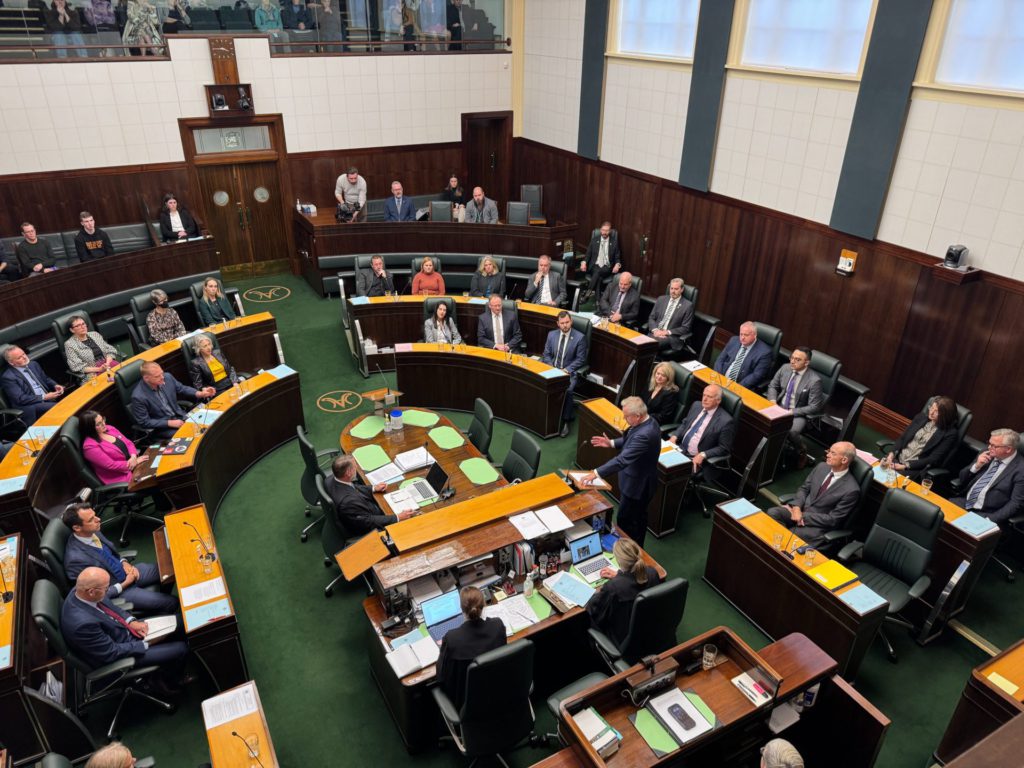
Premier Jeremy Rockliff was ousted as Tasmania’s head of government after a no-confidence motion passed by a single vote in the House of Assembly on Thursday afternoon. The motion succeeded 18 votes to 17, with opposition-aligned Speaker Michelle O’Byrne casting the deciding vote against the minority Liberal government in line with her party loyalty.
As a result, Rockliff must now seek a fresh mandate, heading to Government House to request a snap election.
Opposition Leader Dean Winter moved the no-confidence motion, arguing that Rockliff’s administration had lost credibility due to ballooning state debt projections, plans to cut public sector jobs and proposals to offload state assets. Winter contended that the 2025–26 budget laid bare the government’s failure to manage finances responsibly, warning that debt could exceed $10 billion within four years and that critical infrastructure projects were in jeopardy. He accused Rockliff of “wrecking Tasmania’s finances” and asserted that Labor and its crossbench allies could provide steadier stewardship.
The debate spanned two days, during which all 35 members of the House of Assembly took turns addressing their constituents’ concerns. Labor, the Greens, and three crossbenchers—Craig Garland, Kristie Johnston and Andrew Jenner of the Jacqui Lambie Network—voiced alarm over the government’s fiscal trajectory and its handling of major projects such as the proposed Macquarie Point stadium, which faced public backlash due to its $945 million price tag. Green MP Tabitha Badger further pressed Winter to clarify whether Labor would seek a minority arrangement with the Greens rather than trigger an election.
When the division was called at 3:42 pm, the vote was deadlocked at 17–17. Under long-standing convention, Speaker O’Byrne—elected to her role in 2024 on a Labor ticket—exercised her casting vote against confidence in the Rockliff government.
O’Byrne emphasised that, despite relinquishing formal participation in caucus meetings, she had pledged to adhere to Labor’s position:
“No one in this chamber could realistically expect me to provide confidence to a Liberal government,”
she declared.
With Governor Barbara Baker overseas, Rockliff is scheduled to cue a meeting with Lieutenant-Governor Christopher Shanahan at Government House. Under Tasmania’s constitution, Shanahan can either grant Rockliff’s request for an early election, invite the Liberals to re-form government under a new leader, or allow Labor to negotiate confidence and supply terms with crossbenchers to avoid an immediate poll. Senior constitutional scholars have noted that a leadership handover within the Liberal Party is unlikely in the absence of clear crossbench support.
Premier Jeremy Rockliff Image Source: The Australia Today
In a measured response to the vote, Rockliff told reporters that he would advise the Lieutenant-Governor to dissolve parliament and call a state election. He warned that Tasmanians did not want, nor could they afford, another ballot so soon after the March 2024 poll, suggesting that Labor’s maneuvering had created unnecessary uncertainty.
He highlighted record-low unemployment figures and investments in health, education and community safety achieved under his leadership, insisting that any election would “be on [Winter’s] head”.
Winter, for his part, rejected Rockliff’s characterisation, stating that it was the premier’s decision to take Tasmania back to the polls after losing support on the floor of the House. He insisted that Labor’s priority was to ensure responsible governance, criticising Rockliff’s record on budget deficits and accusing him of putting Tasmania’s future “on the credit card.” Winter reiterated that Labor was “not prepared to stand idly by” while the state’s fiscal challenges deepened under the current administration.
Industry and community groups have voiced concern that ongoing political instability will jeopardise key projects. The proposed Macquarie Point stadium—touted as essential for Tasmania’s entry into the Australian Football League—could face further delays or cancellation if a new government is formed without a majority. Tasmania Devils officials warned that their fledgling AFL bid could be placed in “serious jeopardy” if a leadership change derailed stadium funding.
Crossbenchers emphasised that any approach to forming government should prioritise Tasmania’s financial health. Independent Craig Garland argued that a second snap election within 15 months would erode business confidence and hamper economic recovery following the COVID-19 pandemic, urging all parties to consider bipartisan alternatives. Kristie Johnston, another independent, called for a pause on large-scale infrastructure spending until the budget outlook stabilised.
With the state heading into uncharted territory, the Lieutenant-Governor’s decision will carry significant weight. Should he agree to a dissolution, Tasmania will hold elections likely in July; if not, Labor would have the opportunity to test its support in the Assembly without returning to voters. Whichever path Shanahan chooses, the outcome will determine whether Rockliff’s brief premiership ends definitively or if he can broker an unlikely deal to remain in power. Either way, Tasmanians face a period of heightened political uncertainty as the island state seeks stable governance at a critical fiscal juncture.
Support our Journalism
No-nonsense journalism. No paywalls. Whether you’re in Australia, the UK, Canada, the USA, or India, you can support The Australia Today by taking a paid subscription via Patreon or donating via PayPal — and help keep honest, fearless journalism alive.
What began as a jubilant celebration of Royal Challengers Bengaluru’s maiden IPL title ended in tragedy on Wednesday, when a stampede outside the M Chinnaswamy Stadium left at least 11 people dead and over 30 injured. India’s Prime Minister Narendra Modi expressed his sorrow, calling the incident “heart-rending.”
The mishap in Bengaluru is absolutely heartrending. In this tragic hour, my thoughts are with all those who have lost their loved ones. I pray that those who are injured have a speedy recovery: PM @narendramodi
Thousands of fans had gathered to greet the team, which was holding its victory parade following an 18-year wait for the trophy. However, poor crowd management, confusion over entry procedures, and the overwhelming turnout led to chaos.
🚨 RCB Victory Parade: Today at 5 pm IST. ‼️
Victory Parade will be followed by celebrations at the Chinnaswamy stadium.
We request all fans to follow guidelines set by police and other authorities, so that everyone can enjoy the roadshow peacefully.
— Royal Challengers Bengaluru (@RCBTweets) June 4, 2025
Eyewitnesses described people fainting and being trampled as crowds surged through the stadium gates. Some fans even attempted to climb walls and trees for a glimpse of their heroes.
Metro records revealed a staggering 8.7 lakh passengers used the service that day — many heading to the stadium — making it one of the highest single-day commuter counts, and adding to the pressure on an already overwhelmed city centre. Authorities later halted metro services at key stations near the venue in a last-minute attempt at crowd control.
NEW DISTURBING VISUALS ALERT
4.51 PM: Stampede outside gate of stadium. Horrifying cries for help will shake anyone to their core. Several die and several injured.
5.35 PM: Karnataka Dy CM joins RCB players to bask in glory of victory. Humanity dies. pic.twitter.com/WCoeUWyjPS
Karnataka’s Chief Minister Siddaramaiah ordered a magisterial inquiry, admitting, “No one expected this crowd. The tragedy has erased the joy of victory.” Deputy CM D K Shivakumar also acknowledged the authorities were “unable to make proper arrangements.”
Deeply shocked by the tragic loss of lives in the stampede during the RCB victory celebrations near Chinnaswamy Stadium. A moment of joy has been eclipsed by sorrow.
I extend my deepest condolences to the bereaved families and wish a speedy recovery to the injured.…
Amid reports of unconscious fans being carried from metro stations and police using canes to control the crowd, metro services were briefly suspended, and mobile jammers deployed to manage the chaos. Hospitals nearby reported treating cases ranging from dehydration and fractures to trauma.
𝗢𝗳𝗳𝗶𝗰𝗶𝗮𝗹 𝗦𝘁𝗮𝘁𝗲𝗺𝗲𝗻𝘁: 𝗥𝗼𝘆𝗮𝗹 𝗖𝗵𝗮𝗹𝗹𝗲𝗻𝗴𝗲𝗿𝘀 𝗕𝗲𝗻𝗴𝗮𝗹𝘂𝗿𝘂
We are deeply anguished by the unfortunate incidents that have come to light through media reports regarding public gatherings all over Bengaluru in anticipation of the team’s arrival this… pic.twitter.com/C0RsCUzKtQ
— Royal Challengers Bengaluru (@RCBTweets) June 4, 2025
RCB released a statement saying it was “deeply anguished” by the events, offering condolences and confirming that their programme was amended once the situation became clear. A planned victory lap was cancelled, and players left the venue early.
BCCI secretary Devajit Saikia called the incident “a negative side of popularity,” noting that better planning was required for such large-scale events.
The stadium, which holds 35,000, saw crowds reportedly reaching over 200,000 across surrounding areas. While fans inside celebrated with the team, outside, confusion and grief engulfed families who had only come to witness history — and instead became part of a tragedy.
Support our Journalism
No-nonsense journalism. No paywalls. Whether you’re in Australia, the UK, Canada, the USA, or India, you can support The Australia Today by taking a paid subscription via Patreon or donating via PayPal — and help keep honest, fearless journalism alive.
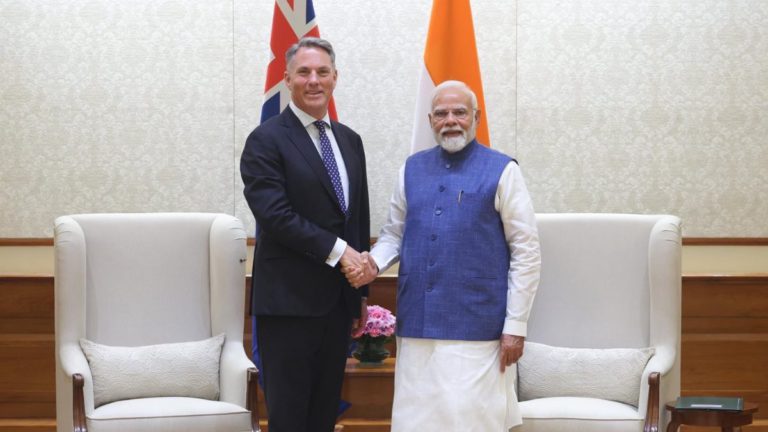
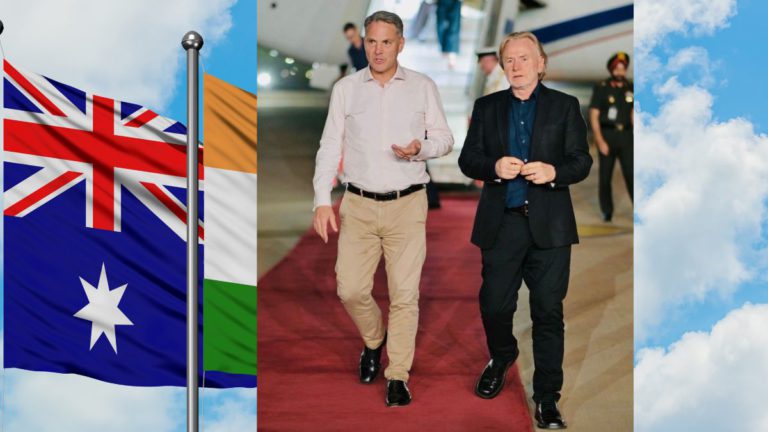
Deputy Prime Minister and Defence Minister, Richard Marles, met with Indian Prime Minister Narendra Modi in New Delhi this week, marking a milestone in the deepening India–Australia defence partnership.
The visit coincided with the fifth anniversary of the Comprehensive Strategic Partnership between the two nations — a relationship that both leaders say has reached unprecedented levels of cooperation.
“It was an honour to meet with Prime Minister Modi today in New Delhi on the fifth anniversary of our Comprehensive Strategic Partnership,” Marles said.
“We reflected on the unprecedented progress we have achieved in our defence cooperation.”
An honour to meet with @narendramodi today in New Delhi on the fifth anniversary of our Comprehensive Strategic Partnership. We reflected on the unprecedented progress we have achieved in our defence cooperation. pic.twitter.com/MssWJGXgVV
Prime Minister Modi echoed that sentiment, stating,
“Had a productive discussion on deepening the India-Australia Comprehensive Strategic Partnership. Our shared vision for a stable, secure, and prosperous Indo-Pacific continues to guide our collaboration.”
Glad to meet Deputy Prime Minister of Australia Richard Marles. Had a productive discussion on deepening the India-Australia Comprehensive Strategic Partnership, which marks its fifth anniversary today. Our shared vision for a stable, secure, and prosperous Indo-Pacific continues… pic.twitter.com/VucoShDe4l
Marles’s visit to India forms part of a broader South and Southeast Asia tour from 2–5 June, aimed at reaffirming Australia’s commitment to the region.
“Our deepening cooperation is at the heart of Australia’s approach to ensure the Indo-Pacific remains open, inclusive and resilient.”
Reviewed the full range of the India- Australia defence partnership during the extremely fruitful meeting with Australia’s Deputy Prime Minister and Defence Minister @RichardMarlesMP in New Delhi. His personal commitment and leadership in strengthening bilateral defence… pic.twitter.com/VSGAEyBOQN
In New Delhi, Marles also held formal talks with Indian Defence Minister Rajnath Singh. Both leaders acknowledged the remarkable strides made in defence ties over the past three years.
During opening remarks, Marles underscored the significance of the relationship, describing India as “a friend with whom we want to make common cause.” He said,
“We feel we have never had a more strategic alignment with India than we do now… Our relationship with you is of the highest priority.”
He added that defence collaboration has become “a significant part of the entire bilateral relationship,” expressing Australia’s ambition for a robust joint declaration on defence and security and a roadmap for maritime cooperation.
Singh, in turn, credited Marles’s leadership for the growing momentum in the defence relationship. “It is heartening to note the significant milestones achieved in our bilateral defence relations,” he said.
“Largely due to your personal commitment and leadership, defence cooperation has emerged as an important pillar of our comprehensive strategic partnership.”
#WATCH | Delhi | Defence Minister Rajnath Singh delivers the opening remarks during the meeting with Deputy Prime Minister and Defence Minister of Australia, Richard Marles.
He says, "… It is heartening to note the significant milestones achieved in our bilateral defence… pic.twitter.com/pNpjmmUWQJ
Amid talks of long-term regional collaboration, the two leaders also addressed pressing security challenges. Singh acknowledged Australia’s support following a recent terrorist attack in Pahalgam, saying,
“India thanks Australia for its unequivocal support to India’s resolute response against the barbaric act of terror.”
Marles responded with a message of solidarity:
“We want to make clear that Australia stands with India and all countries in combating terrorism… Our thoughts and our prayers are with the families of those who were killed in the appalling terrorist attack.”
As both countries chart a shared path through an increasingly contested Indo-Pacific, the defence partnership is not only growing stronger — it is becoming central to their broader strategic alignment.
“We want to be ambitious,” Marles said, “about how we work together to shape a peaceful, secure and prosperous region.”
Support our Journalism
No-nonsense journalism. No paywalls. Whether you’re in Australia, the UK, Canada, the USA, or India, you can support The Australia Today by taking a paid subscription via Patreon or donating via PayPal — and help keep honest, fearless journalism alive.
An Indian-origin young man has sparked a debate online on casual racism after he was mistaken for an Uber Eats driver while trying to order food at a McDonald’s outlet.
Praveen Param said he experienced the incident at a local restaurant on 31 May when he walked up to the counter and was immediately typecast.
Image: Praveen Param (Source: TikTok screenshot)
Praveen recalled:
“The gentleman behind the counter looks at me, looks at the screen, looks back at me and I already knew what was going to come out of his mouth.”
“He says: ‘Uber?’ I said, ‘No, I would like to order please.’”
After receiving his meal, Praveen decided to confront the employee, asking why he had assumed he was a delivery driver.
“I said to him, ‘Just because a lot of people from my ethnic background may do Uber, it doesn’t mean everyone does Uber — assuming that only makes you look like an a**hole.’”
But instead of acknowledging the bias, Praveen alleged that the staff member doubled down.
“This white man then obviously decides to double down on his racism and says, ‘Oh nah, I didn’t mean it like that. It’s just that the people who come into this Maccas who are Indian often end up being Uber drivers.’”
The exchange, which Praveen shared publicly on TikTok, has reignited debate about the subtle yet damaging impact of racial profiling in daily life.
“This is the reality of being a South East Asian person living in Australia,” he said.
“No matter what your achievements are, how you treat people, how you dress, or how you conduct yourself, you will always be reduced to some stereotype by some white person out there. Australians — do better.”
However, reactions to his post were mixed. Some even dismissed his concerns, suggesting he was overreacting.One commenter wrote:
“Nothing wrong with the assumption. The Uber guy is just doing a job.”
Others, however, supported Praveen, stating:
“What is wrong with these comments? His point is that an assumption was made about him based on his race and that is inherently RACIST.”
“I am a white woman and no one would ever assume I was doing Uber,” another wrote.
“These comments telling him to leave Australia are disgusting. Shame on all of you.”
In response to the incident, McDonald’s issued an apology and encouraged Praveen to get in touch. A spokesperson toldDaily Mail Australia, “At McDonald’s, we are committed to giving our customers a great experience every time they visit our restaurants.”
“Our doors are open to everyone, and we strive to ensure our restaurants are safe, inclusive, and respectful workplaces for our customers and crew. We are sorry to hear of this customer’s experience and encourage them to reach out to our customer service team so we can investigate further.”
For Praveen, the incident is emblematic of a broader issue. “I’m not asking for special treatment,” he said.
“I just want people to stop reducing us to tired assumptions. That’s not respect — that’s racism.”
Praveen added that this wasn’t an isolated incident but rather a common experience for many non-white Australians. In a follow-up TikTok video, Praveen addressed the racist comments he received after sharing his experience of being stereotyped at a McDonald’s.
“The comments on my video just prove my point. Casual racism is so ingrained that people don’t even see it.”
this is the reality of racism in Australia — you share your experiences, and people gaslight you, try to silence you, and tell you to leave. i’m not here to make anyone comfortable, i’m here to speak the truth. Australia is MY home too, and i belong here whether or not you like it. racists stay pressed ✌🏽 #racism#racismneedstostop#brownandproud
Prvaeen’s has urged people to reflect on their own behaviour and challenge ingrained biases. His response highlights the challenges faced by individuals who speak out against everyday racism and the need for broader societal reflection on these issues.
Support our Journalism
No-nonsense journalism. No paywalls. Whether you’re in Australia, the UK, Canada, the USA, or India, you can support The Australia Today by taking a paid subscription via Patreon or donating via PayPal — and help keep honest, fearless journalism alive.
The bill, tabled Tuesday by Prime Minister Mark Carney’s government, imposes stricter timelines for refugee applications — requiring claims to be made within 14 days of arrival. Those who apply after more than a year in Canada will no longer receive a hearing before the Immigration and Refugee Board (IRB), though they will undergo a risk assessment to ensure they are not returned to conflict zones or unsafe conditions.
We just introduced the Strong Borders Act, equipping law enforcement with the right tools to secure our border, fight organized crime, and keep Canadians safe.
The proposed law also empowers officials to suspend or cancel immigration applications in bulk where systemic fraud is suspected. It revives asylum reforms previously blocked in Parliament and strengthens Canada’s response to concerns from the United States over border security and drug smuggling.
Public Safety Minister Gary Anandasangaree said the changes are part of a broader effort to “restore balance to the system” and ensure Canada’s refugee protection framework remains credible and sustainable.
In recent years, officials have reported an increase in asylum applications from international students and temporary residents, particularly from India’s Punjab region. Government figures show that in the first eight months of 2024 alone, approximately 13,000 international students claimed asylum in Canada. While not all of these claims are linked to political activity, a significant number cite fears of persecution tied to pro-Khalistan sentiment.
Between 2013 and 2023, more than 6,500 individuals from India applied for asylum, with many claims citing Khalistani ideology.
#WATCH | Ottawa, Canada: On the immigration system of Canada, Joe Adam George, Canadian National Security Expert says, "…Unfortunately, what we have seen this year since the fallout of this crisis (India-Canada diplomatic row) last September, there has been a significant uptick… pic.twitter.com/Nr4GwoMuU5
A recent incident in Ontario has drawn public attention to growing community tensions allegedly linked to such dynamics. Indian-origin landlord Raman Kumar, now based in the U.S. for work, has accused a group of tenants—international students who moved into his Canadian property in October 2024—of not paying rent or utilities since January 2025.
In a video interview posted by independent journalist Nitin Chopra on X, a Khalistan flag is visibly tied to a post outside Kumar’s house. Kumar claims the flag was erected without his permission and has caused distress in the neighbourhood. “This is putting me under extreme mental stress,” he said.
“I live in a rented house myself, and these tenants are making my life miserable.”
He also alleges that more people are living in the home than were originally on the lease, and that local residents have filed noise complaints, especially over disturbances at night. Legal proceedings have begun, but Kumar warns the situation is escalating.
Chopra adds, “Some of the defaulter tenants has applied for Refugee status & now threatening the landlord with human rights violations.”
Indian security agencies have previously flagged a concerning pattern in which pro-Khalistan elements allegedly sponsor the migration of vulnerable Sikh youth from Punjab, offering support for visas and jobs in return for participation in separatist activities on Canadian soil.
It was reported that these youths, often struggling students or undocumented migrants, are reportedly recruited for protests, radical gatherings, or anti-India demonstrations. With significant influence over religious institutions in cities such as Surrey, Brampton, and Edmonton, extremist networks are accused of facilitating a form of human trafficking, exploiting Canada’s liberal immigration system with minimal oversight.
4.9 million people in Canada have expired visas or visas that are about to expire. Do you they have a plan to ensure they will leave? 🤔
In all seriousness Canada has a housing shortage, massive healthcare wait times and job scarcity. The Libs need to act, now. pic.twitter.com/OkvsD4gtc7
— Michelle Rempel Garner (@MichelleRempel) June 4, 2025
Canadian MP Michelle Rempel Garner has also raised alarm over the scale of visa overstays, stating,
“4.9 million people in Canada have expired visas or visas that are about to expire. Do they have a plan to ensure they will leave?”
She warned that the situation is worsening Canada’s housing crisis, healthcare wait times, and job scarcity, urging, “The Libs need to act, now.”
The new legislation also contains broader national security provisions, including: • Enhanced powers for law enforcement to access electronic communications, • Expanded authority to inspect mail and goods in transit, • A cap on large cash transactions (above $10,000) to deter laundering, • New powers for Canadian border agents to monitor chemical precursors used in drug production.
The Canadian Coast Guard will also gain powers to conduct patrols and share intelligence with security agencies.Officials say the legislation reflects growing concern over the impact of irregular migration on public services, housing, and community trust in the immigration system. While some critics warn that vulnerable people may be affected, the government maintains that refugee protection will remain available for those genuinely at risk.
“This is about fairness, security, and sustainability,” Minister Anandasangaree said, noting he will discuss the reforms with U.S. border officials in the coming weeks.
Support our Journalism
No-nonsense journalism. No paywalls. Whether you’re in Australia, the UK, Canada, the USA, or India, you can support The Australia Today by taking a paid subscription via Patreon or donating via PayPal — and help keep honest, fearless journalism alive.
This is the opening keynote address from the 2025 Pacific Update held at the Laucala campus of The University of the South Pacific (USP) on 3 June.
When I was invited to speak today, I was asked to share my vision as Secretary General — where I see opportunities for collective progress and how we can work more effectively as one Blue Pacific Continent. It is an opportunity I welcome.
The theme before us — measuring the economic performance of the Pacific Islands — is both timely and provocative.
For us, economic performance must reflect more than numbers. It must reflect how well we respond to challenges, how connected we are across our sea of islands, and how prepared we are to shape our own futures.
For a long time, indicators of our economic performance have been handed to us with little consideration of our Pacific context. As a result, the true reflection of our resilience, of our quality of life, of our well-being, are not captured.
The Pacific region has an opportunity to change this – through fora such as this – and discuss ways to tell our story in the Pacific Way.
Our capacity to be able to gather, manage and analyse data has been an ongoing challenge for us. I know there have been ongoing efforts by institutions such as USP and agencies such as the Pacific Community and UN agencies to build our capacities to do this. However, I believe this is an opportunity for us to rethink and revisit the indicators we are chasing, and consider whether they are the ones that truly reflect our progress.
Looking at our labour market, labour mobility has been one of the most tangible sources of income, skills, and opportunity for Pacific households. Yet, across the region, the systems that support movement are still fragmented and externally shaped.
We must do better.
That is why I have consistently advocated for a future where Pacific peoples can move more freely — for work, for study and for opportunity. This must be a deliberate, regional priority.
To enable mobility, we must invest in connectivity — physical, digital and financial.
This includes tackling the high cost and complexity of inter-island transport. It means removing the regulatory and procedural barriers that prevent our farmers and producers from accessing regional and global markets. Trade is a powerful enabler of economic diversification and we must continue working to strengthen intra-regional trade routes and harmonise trade-related frameworks and standards.
It also means restoring correspondent banking relationships so remittances flow securely and affordably.
As I emphasised at the Pacific Banking Forum last year: banking is not just about regulation — it is about livelihoods. It is about whether a student can be supported by their family. Whether a business can pay its suppliers. Whether a community can send and receive money without penalty.
We must also broaden how we define progress.
GDP growth is important. But it cannot tell us if a coastal community is resilient to disaster or if our youth are gaining real opportunities to thrive.
The 2050 Strategy for the Blue Pacific Continent offers a more complete vision. It helps us look beyond fiscal measures and consider peace and security, environmental health, digital inclusion, cultural identity and people-centred development.
In this context, the recent UN General Assembly endorsement of the Multidimensional Vulnerability Index (MVI) is a significant milestone. It ensures that global development tools are finally being tailored to the realities of countries like ours.
For the Blue Pacific, the MVI represents a vital step toward ensuring that our structural vulnerabilities are fully recognised and addressed in a comprehensive and equitable manner. It acknowledges our region’s acute exposure to climate change and natural disasters, as well as the enduring challenges of geographic isolation including high transport costs and limited access to global markets.
This is the kind of metric that matters. This is the kind of index that must now inform how partnerships are shaped, how financing is allocated and how the Pacific is supported to succeed on its own terms.
To deliver on these goals, we need a regional system that works better. Through the ongoing Review of the Regional Architecture, we are taking a hard look at how we organise ourselves — how we reduce duplication, improve coherence and strengthen delivery.
We must move from fragmentation to functionality. From competition to complementarity. From inwardness to integration.
Let us not allow nationalism dim the power of Pacific regionalism. In an age of converging challenges, unity is not a choice. It is our only competitive advantage.
Let me close by suggesting this: the best indicator of Pacific economic performance is not found on a graph or a chart. It is found in the lives of our people. It is in how easily they move, how well they connect, how confidently they plan for their future.
Let us use this Pacific Update to recommit to a vision of economic performance rooted in connection, inclusion and shared prosperity.
Contributing Author: Baron Waqa is the Secretary General of the Pacific Islands Forum. Born in Boe, Nauru, he began his tenure as Secretary General in June 2024.
Support our Journalism
No-nonsense journalism. No paywalls. Whether you’re in Australia, the UK, Canada, the USA, or India, you can support The Australia Today by taking a paid subscription via Patreon or donating via PayPal — and help keep honest, fearless journalism alive.
Between January 2024 and January 2025, 150 unique reports were made to ReportCyber, the federal platform for reporting online crime. These scams — often involving cryptocurrency transactions via ATMs — have stripped Australians of an estimated $3.1 million, with each victim losing an average of more than $20,000.
Investment scams were the most common, followed by extortion emails and romance scams. Victims were predominantly women and nearly half were aged over 51. That demographic detail aligns with separate findings by AUSTRAC, which estimates $275 million moves through crypto ATMs in Australia each year — and a significant portion of that, intelligence suggests, is scam-related.
AFP Commander Graeme Marshall said the numbers reflect widespread under-reporting. “Scams are everywhere, targeting people from all walks of life and costing Australians billions of dollars each year,” he said.
“But with crypto ATM scams, we suspect many more are falling victim without even realising it, or they feel too embarrassed to come forward.”
Crypto ATMs — which allow users to buy or sell digital currencies using cash — have exploded in number across the country, growing from just 23 machines in 2019 to more than 1,600 in 2025. As their footprint has grown, so has their misuse. Scammers are increasingly pressuring victims to use these machines to send cryptocurrency directly to them — a method that is nearly impossible to trace or reverse once completed.
Authorities are responding through a joint taskforce between the AFP, AUSTRAC, and the JPC3, aimed at curbing the trend. Educational posters and warning materials are now being placed at crypto ATM locations to alert potential victims about how these scams operate and how to report suspicious activity.
Marshall emphasised that awareness is key. “The better informed the public is about the warning signs and red flags associated with these scams, the more likely they won’t fall for scammers’ shady tactics,” he said.
Scammers often build trust through romance, job offers, or tech support hoaxes, and then strike with urgent requests to send crypto. In some cases, scammers pose as utility providers or government agencies demanding payment in cryptocurrency — something no legitimate organisation would ever do.
“If something sounds too good to be true, it probably is,” said Marshall.
“Don’t send cryptocurrency to someone you haven’t met in person, and never use a crypto ATM to make payments to strangers, romantic interests, or for so-called investments.”
Authorities are urging Australians to report incidents, however small they may seem. Victims should cut off all contact with the scammer, report the incident to police and Scamwatch, and notify their digital currency exchange provider. Speaking up, Marshall said, is one of the best ways to help others avoid falling into the same trap.
Support our Journalism
No-nonsense journalism. No paywalls. Whether you’re in Australia, the UK, Canada, the USA, or India, you can support The Australia Today by taking a paid subscription via Patreon or donating via PayPal — and help keep honest, fearless journalism alive.
By Panos Karanikolas, Chris Maylea, and Hamilton Kennedy
In an emergency, police are often the first called to the scene. But they are rarely equipped to deal with complex mental health crises.
Following recent parliamentary inquiries and royal commissions there has been a push – led by researchers, advocates and some senior police officials – for a shift to a health-led and paramedic-first response.
South Australia is one of a number of states trialling a program based on a “co-responder” model. This means trained specialists accompany police to some mental health call-outs in the community.
So, how do co-responder programs work? And are they effective? Here’s what the evidence says.
The current situation
Mental health legislation in all states and territoriesgives police the power to use “reasonable force” to transport people who “appear to have a mental illness” to hospital to prevent harm.
In most cases, this involves police taking people experiencing mental health crises to hospital emergency departments, without help from mental health clinicians or paramedics.
Those who need mental health support may not need a hospital stay.
One study found only one in five (23%) of those taken to emergency by police – usually after expressing intention to self-harm – were admitted.
The strain on police resources is also significant. For example, in New South Wales, police now respond to triple zero calls about mental health crises in the community every nine minutes (in Victoria it’s every ten).
Criminalising mental health
The mere presence of police alone can escalate already heightened emotional situations.
Yet the main reason police take people to hospital is for self-harm or suicidal distress, and most are not deemed to be of risk to others.
What do people with mental health issues want instead?
In our research, conducted in 2021–2022, we interviewed 20 people across Australia who’d had police intervene when they had a mental health crisis.
Those we spoke to often had multiple experiences of police call-outs over their lifetime.
They told us excessive use of force by police had traumatising and long-term effects. Many were subject to pepper spray, tasers, police dogs, batons, handcuffs and restraints, despite not being accused of committing criminal offences.
For example, Alex*, said:
I was having an anxiety attack, and they pepper sprayed me. I had bruises all over my hands from the handcuffs they put on really roughly, even though I wasn’t under arrest. Then they took me to hospital.
In our study, people with mental health issues said they would prefer an ambulance-led response wherever possible, without police attending at all.
They also wanted to be linked to therapeutic and community-based services, including mental health peer support, housing, disability support and family violence services.
What are co-responder programs?
Co-responder programs aim to de-escalate mental health incidents, reduce the number of emergency department presentations and link people experiencing mental health crises with services.
These programs, such as the one being trialled in South Australia, mean mental health clinicians (for example, social workers, counsellors or psychologists) attend some mental health incidents alongside police.
Peer-reviewed research shows these kinds of responses can be effective when compared to traditional police-led interventions.
The success of programs in the United States and Canada shows many mental health crises can safely managed without police involvement, for example by addressing issues such as homelessness and addiction with health workers, and reducing the number of arrests.
Co-responder programs are not universally available. Often, they do not operate after usual business hours or across regions.
There is also a lack of long-term evaluations of these programs. This means what we understand about their implementation, design and effectiveness over time can be mixed.
More broadly, the mental health sector is facing significant and ongoing labour shortages across Australia, posing another resourcing challenge.
How can responses to mental health crises be improved?
Last year, the final report from the Royal Commission into Victoria’s Mental Health System recommended paramedics should act as first responders in mental health crises wherever possible, instead of police, diverting triple zero calls to Ambulance Victoria.
However that reform has been delayed, with no indication of when it may be implemented.
A 2023 NSW parliamentary inquiry also remarked on the need to explore reducing police involvement.
Co-responder and ambluance-first models offer an improvement.
But our research suggests people with lived experience of mental health issues want more than ambulances replacing the police as crisis responders.
They need a mental health system that supports them and provides what they needed, when they need it: compassionate, timely and non-coercive responses.
*Name has been changed.
If this article has raised issues for you, or if you’re concerned about someone you know, call Lifeline on 13 11 14.
No-nonsense journalism. No paywalls. Whether you’re in Australia, the UK, Canada, the USA, or India, you can support The Australia Today by taking a paid subscription via Patreon or donating via PayPal — and help keep honest, fearless journalism alive.
Deputy Prime Minister and Minister for Defence, Richard Marles, has arrived in India for high-level meetings, marking a significant diplomatic moment as the visit coincides with the fifth anniversary of the Australia–India Comprehensive Strategic Partnership.
Philip Green OAM, the Australian High Commissioner to India, highlighted the importance of the occasion, posting on social media:
“Five years ago tomorrow, 🇦🇺 & 🇮🇳 signed our Comprehensive Strategic Partnership. Your visit to India so early in your second term reflects the strength & continuity of our enduring relationship.”
भारत में आपका स्वागत है उप प्रधानमंत्री एवं रक्षा मंत्री @RichardMarlesMP| 5 years ago tomorrow, 🇦🇺 & 🇮🇳 signed our Comprehensive Strategic Partnership. Your visit to India so early in your second term reflects the strength & continuity of our enduring relationship. 🇮🇳🤝🇦🇺 pic.twitter.com/qLgOJC5lQu
Marles’ trip is part of a broader four-nation tour of South and Southeast Asia from 2 to 5 June 2025, which includes visits to the Maldives, Sri Lanka, and Indonesia. The visit underscores Australia’s commitment to strengthening defence and diplomatic ties across the Indo-Pacific region.
“Australia values our relationships with neighbours in the Indo-Pacific. Our deepening cooperation is at the heart of Australia’s approach to ensure the Indo-Pacific remains open, inclusive and resilient.”
In India, Minister Marles is expected to hold discussions with key leaders and defence counterparts on shared regional priorities, maritime security, and sovereignty. His meetings aim to reaffirm the shared vision both nations have for the Indian Ocean and broader Indo-Pacific stability.
Alongside the Maldives Minister of Defence, Mohamed Ghassan Maumoon, I am proud to announce Australia will gift an Australian-built Guardian-class Patrol Boat to Maldives. This initiative will support the Maldives in strengthening their maritime security capability, and more… pic.twitter.com/Bhw4isFpJQ
In the Maldives and Sri Lanka, the Deputy Prime Minister will discuss Australia’s continued support for sovereign capability development. His visit to Indonesia will include talks with his counterpart to reinforce Canberra’s strategic commitment to regional peace and prosperity.
Marles added in his statement:
“I look forward to meeting leaders and welcome productive discussions on how we can work together to shape a peaceful, secure, and prosperous region that is respectful of sovereignty.”
The high-level diplomatic outreach aligns with the Albanese Government’s broader Indo-Pacific strategy focused on fostering partnerships and maintaining regional balance amid rising geopolitical tensions.
Support our Journalism
No-nonsense journalism. No paywalls. Whether you’re in Australia, the UK, Canada, the USA, or India, you can support The Australia Today by taking a paid subscription via Patreon or donating via PayPal — and help keep honest, fearless journalism alive.
Three Indian nationals from Punjab who went missing in Iran earlier this month have been rescued by Tehran police, the Iranian Embassy in India confirmed on Tuesday, citing local media reports.
The men — Hushanpreet Singh from Sangrur, Jaspal Singh from SBS Nagar, and Amritpal Singh from Hoshiarpur — had been travelling through Iran on 1 May on their way to Australia, where a local travel agent had promised them lucrative job opportunities. Instead, they were allegedly kidnapped soon after their arrival in Varamin, a southern suburb of Tehran.
According to reports, the kidnappers contacted the families via video calls showing the men tied up with ropes and knives pressed against their necks, demanding a ransom of Rs 1 crore (approximately AUD 18,000).
The families had been able to communicate with the men only until 11 May. The travel agent who arranged their passage reportedly disappeared after the men went missing.
The Iranian police launched a swift operation that led to the safe release of the men, local news agency Tasnim reported. The Iranian Embassy said consular officials were closely monitoring the case in coordination with judicial authorities and had kept the Indian Embassy informed throughout.
The Indian Embassy in Tehran had strongly urged Iranian authorities to urgently trace the missing men and ensure their safety. The families expressed relief but remained cautious as investigations continue.
Three missing Indian citizens freed by Tehran police Local media in Iran say police have found and released three Indian men who had gone missing in Iran.https://t.co/YAkirkKRHg
Additionally, the Iranian Embassy warned travellers against illegal migration routes and false promises made by unscrupulous agents.
“Given the nature of this incident, Indian citizens are strongly advised not to be deceived by promises from unauthorised individuals or illegal agencies offering overseas travel,” the Embassy said in a social media post.
The incident highlights the risks faced by many Indians, particularly from Punjab, who seek work abroad through unauthorised channels.
Support our Journalism
No-nonsense journalism. No paywalls. Whether you’re in Australia, the UK, Canada, the USA, or India, you can support The Australia Today by taking a paid subscription via Patreon or donating via PayPal — and help keep honest, fearless journalism alive.
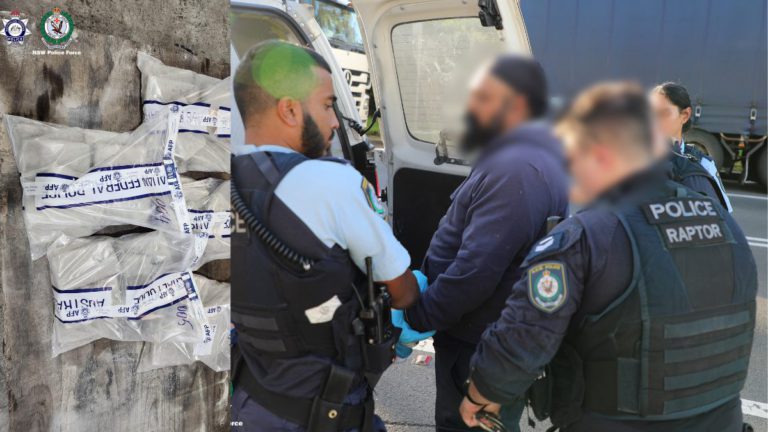
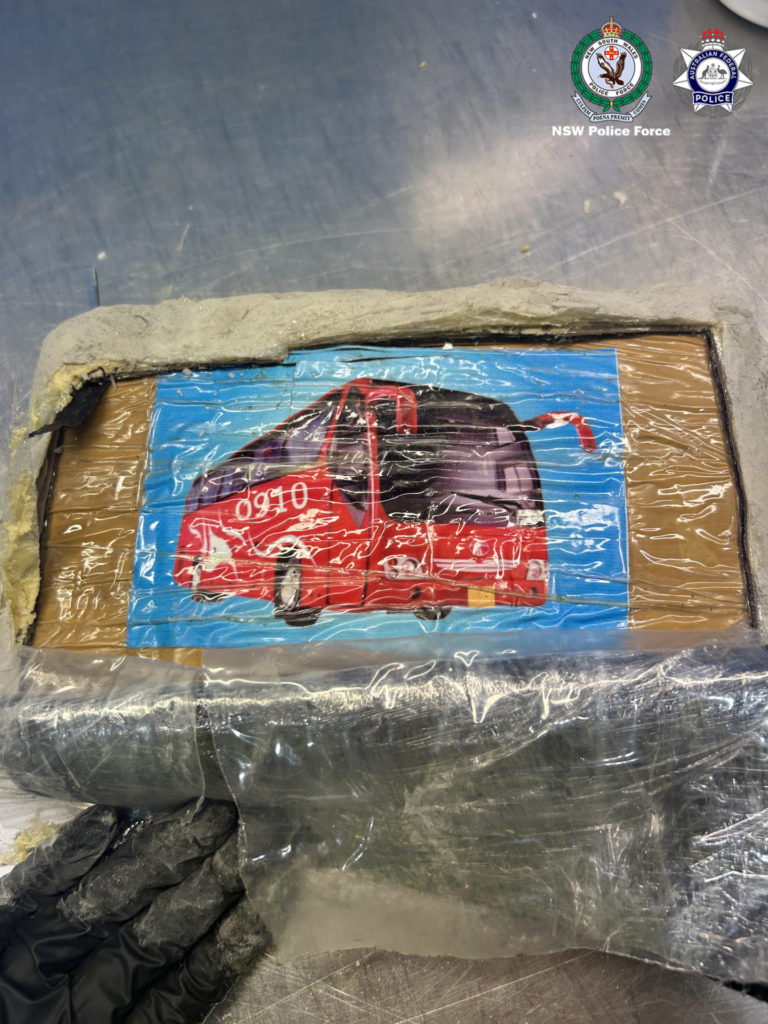
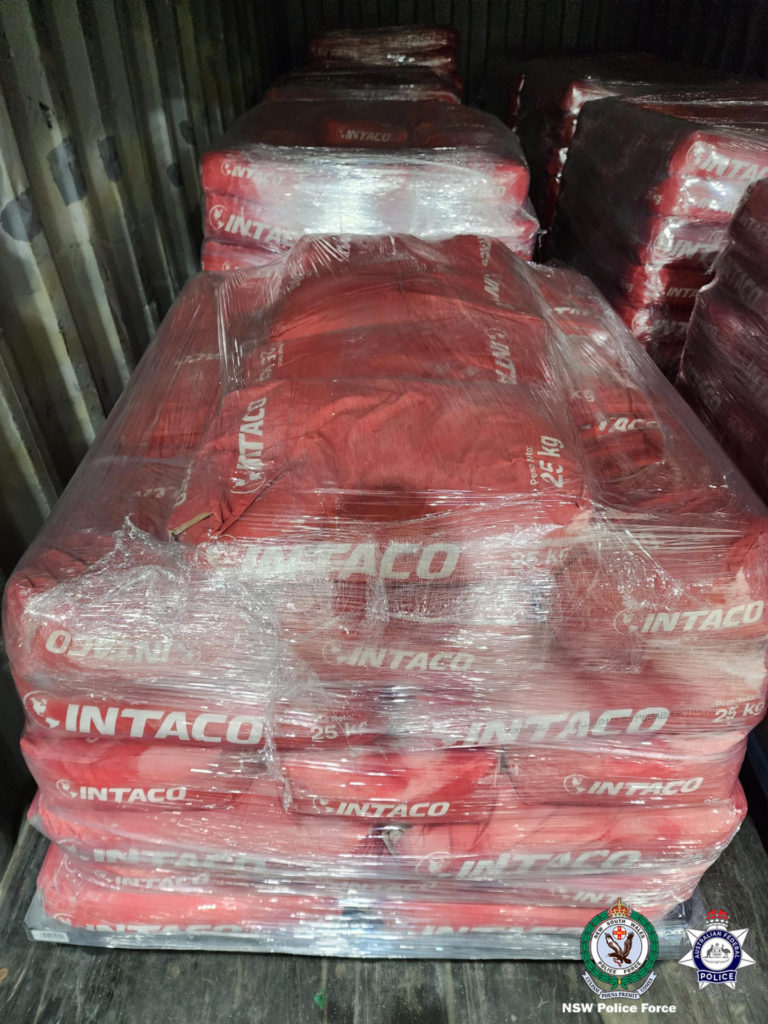
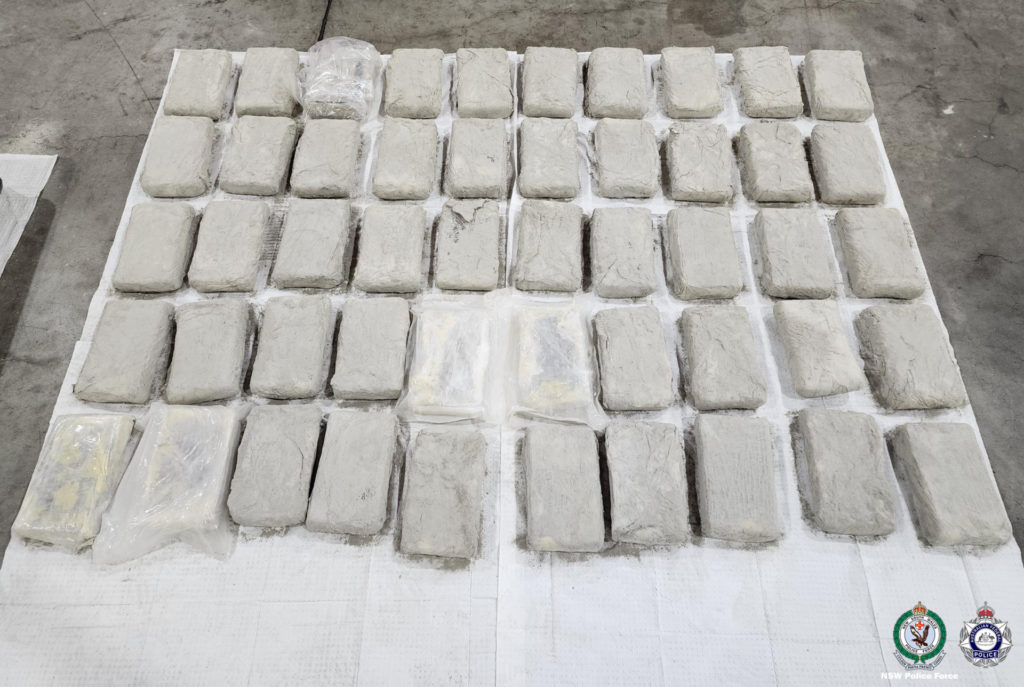
A two-year, multi-agency investigation culminated in the arrest of 42-year-old Gurvindar Singh, whom authorities allege masterminded a sprawling syndicate that smuggled 20 million illegal cigarettes and nearly half a tonne of drugs into Sydney. Police say the operation also involved 50 kg of cocaine concealed in cement bags, 280 kg of liquid methamphetamine, and a network of “trusted insiders” at port facilities facilitating the scheme.
Image Source- AFP
Senior law enforcement sources reveal that the first major breakthrough occurred in August 2024 when MAST intercepted a consignment of 280 kg of liquid methamphetamine shipped from Vancouver, Canada. Undercover surveillance and telephone intercepts enabled officers to trace the illicit cargo from port storage to a clandestine cool-down operation in Riverstone, Sydney’s north-west. Two men were arrested that night, leading investigators to identify Singh as the suspected ringleader behind the syndicate
Image Source- AFP
Further probes uncovered evidence that Singh’s network used a Punchbowl freight company to arrange three separate cigarette shipments from the UAE, totalling more than 20 million illegal cigarettes. When CBP authorities in January 2025 spotted irregularities, the team thwarted one such shipment.
A subsequent raid on a Wetherill Park property in May uncovered 50 kg of cocaine concealed within red cement bags imported from Panama only days earlier. Upon realising police had swapped the cocaine for an inert substance, Singh was allegedly heard on intercepted calls saying, “It’s fake,” police will allege in court.
Image Source- AFP
Investigation Uncovers International Smuggling Network Beginning in September 2023, the Multi Agency Strike Team (MAST)—comprising NSW Police, Australian Federal Police (AFP), Australian Border Force (ABF), NSW Crime Commission, Australian Criminal Intelligence Commission (ACIC), AUSTRAC, and the Australian Taxation Office (ATO)—targeted what they describe as a highly organised criminal group linked to a freight forwarding company in Punchbowl. Detectives allege that Singh leveraged legitimate logistics channels to import illegal tobacco and drugs from multiple countries, including Canada, the United Arab Emirates (UAE), and Panama.
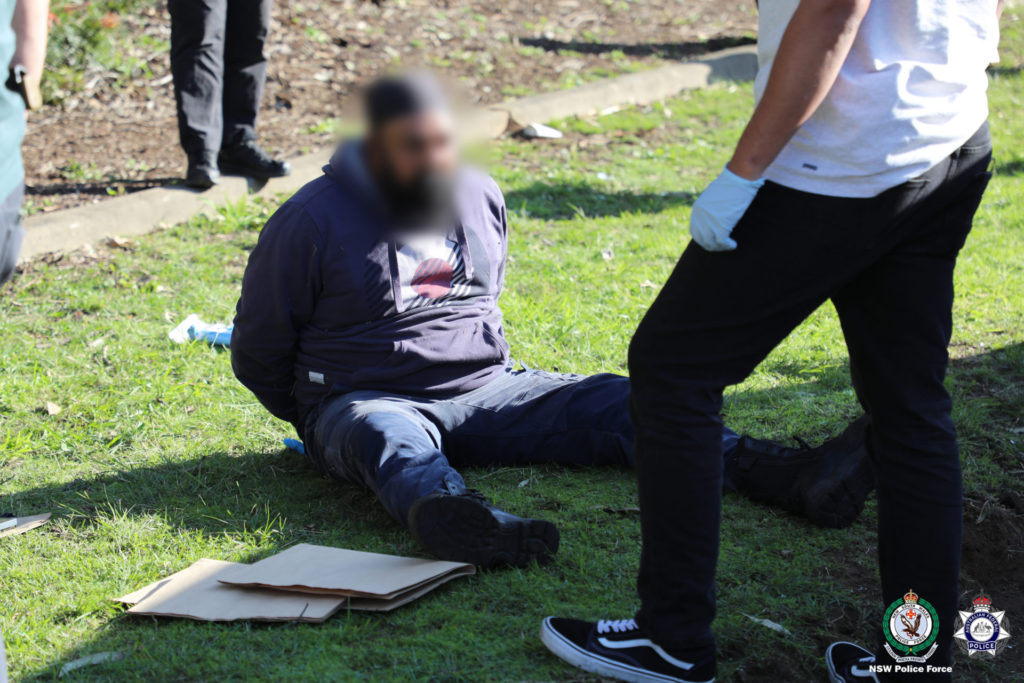
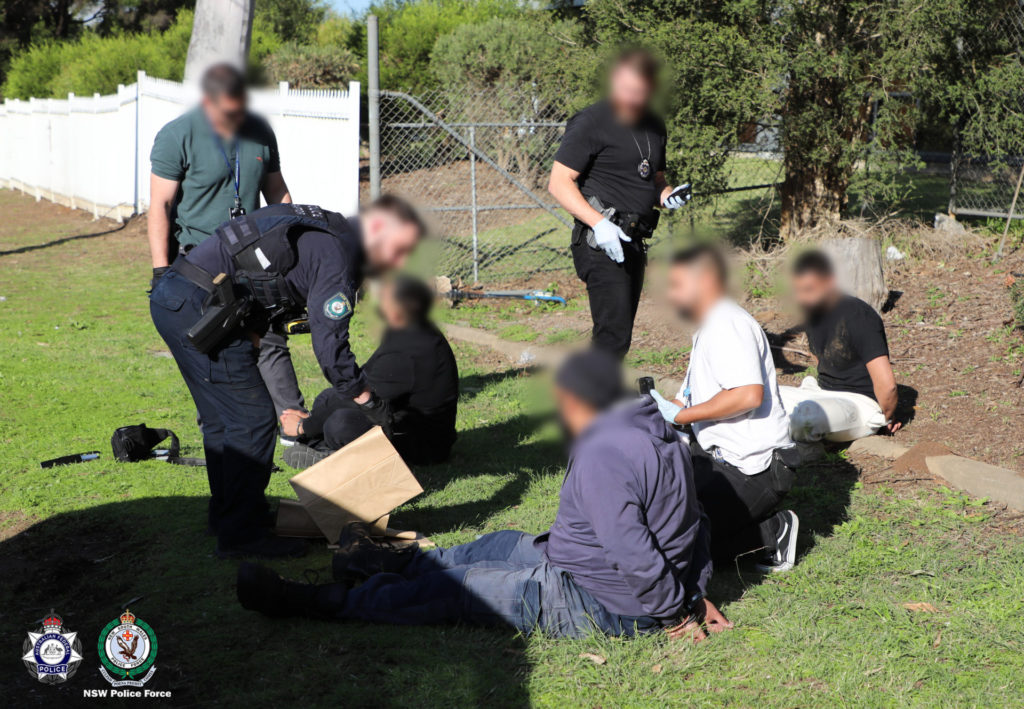
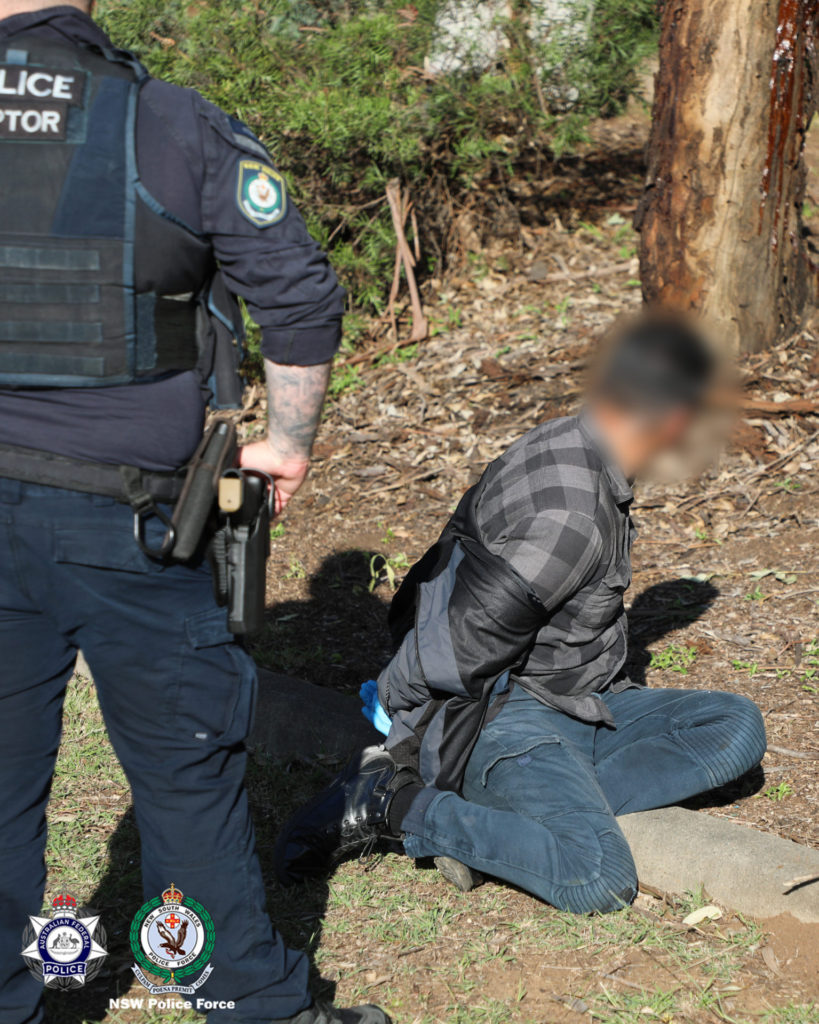
Raid and Arrests In the early hours of last Friday, more than 150 officers executed coordinated raids across southwestern Sydney, focusing on properties in Wetherill Park, Punchbowl, and surrounding suburbs. Singh was apprehended as he exited a vehicle outside a private residence near a police van.
Image Source- AFP
Six associates—two of whom are Canadian nationals, 24-year-old Aman Kang and 31-year-old Mani Singh Dhaliwal—were also taken into custody. Kang and Dhaliwal are accused of recovering and distributing the 50 kg cocaine consignment to organised crime networks in Sydney. A seventh suspect was arrested at Sydney Airport on Saturday while attempting to board an international flight, police say.
At a Tuesday press conference, AFP Detective Superintendent Peter Fogarty remarked,
“These individuals exploited privileged access within legitimate logistics and transport companies to orchestrate large-scale drug and tobacco imports.
They abused the trust inherent in these positions to subvert border controls”.
Image Source- AFP
Fogarty confirmed that investigators seized 20 million illicit cigarettes, 50 kg of cocaine, and 280 kg of liquid methamphetamine during the operation, along with digital devices, cash, and vehicles linked to the smuggling ring.
Charges and Court Proceedings Singh faces a total of five counts of importing a commercial quantity of border-controlled drugs and illegal tobacco, two counts of dealing with proceeds of crime, and two counts relating to leading a criminal group.
If convicted, he could face life imprisonment. Kang and Dhaliwal each face charges of possessing a commercial quantity of drugs and participating in a criminal group. All suspects were denied bail during their initial appearances and will next appear at Downing Centre Local Court in July.
Image Source- AFP
At Parramatta Bail Court on Sunday, Singh’s lawyer, Ahmed Dib, argued that his client should be released on bail due to underlying health conditions and his role as the family’s sole breadwinner. Dib offered Singh’s home as surety.
Magistrate Josephine Carling rejected the application, citing the gravity of the charges and risk of flight, as Singh allegedly used a sophisticated international network to facilitate large-scale smuggling.
“Given the volume of illegal tobacco and narcotics purportedly imported, the risk to community safety is substantial,”
Carling observed.
Political Reaction Sparks Debate Over Tobacco Excise The bust has reignited scrutiny of Australia’s high tobacco excise, with critics arguing that skyrocketing legal prices have fueled the black market. On Wednesday, NSW Premier Chris Minns reiterated calls for the federal government to reassess the current excise regime.
Image Source- AFP
“Our legitimate tobacconists cannot compete with criminals selling cigarettes for a fraction of the cost. Organised crime thrives when legal avenues are strangled by excessive taxation,”
Minns stated.
He cited a recent decline in excise revenue—from $16.3 billion in 2019–20 to a projected $7.4 billion in 2024–25—as evidence that higher taxes have not curbed demand but instead enriched illicit networks.
Minns emphasised that while public health objectives underpin tobacco excise hikes, enforcement has not kept pace. “We have the harshest excise rates, yet law enforcement still lacks sufficient resources to police this market effectively. It’s time for a national strategy to recalibrate the balance between taxation and enforcement,” he told reporters at Parliament House in Sydney.
Opposition Leader Mark Speakman countered that the solution lies in bolstering enforcement resources, not cutting excise, warning that reducing the tax could undermine long-term efforts to reduce smoking rates.
Image Source- AFP
Impact and Next Steps Police allege the syndicate generated at least $443,000 in proceeds from selling illegal cigarettes on Sydney’s black market alone. Additionally, the concealment of 50 kg of cocaine inside cement bags and the attempted importation of 280 kg of liquid methamphetamine demonstrate the network’s ambition and reach.
“This was not a small-scale operation; this was an enterprise worth tens of millions of dollars, spanning multiple continents,”
Superintendent Fogarty noted.
Authorities continue to examine financial records, shipping manifests, and digital evidence seized during raids. Officials warn that further arrests are likely as investigators trace additional conspirators who played roles in financing, logistics, and distribution. The AFP’s financial crime unit is also investigating potential money laundering, as Singh and associates allegedly moved large sums through shell companies and complex financial networks.
As Gurvindar Singh and his co-accused await further court appearances, authorities maintain that this case represents a significant blow to transnational criminal networks operating in Australia. Investigators hope the high-profile arrests and seizures will deter similar operations and prompt policymakers to address longstanding enforcement challenges.
Singh’s next court appearance is scheduled for July 31 at the Downing Centre Local Court, where he will be formally arraigned on all charges.
Support our Journalism
No-nonsense journalism. No paywalls. Whether you’re in Australia, the UK, Canada, the USA, or India, you can support The Australia Today by taking a paid subscription via Patreon or donating via PayPal — and help keep honest, fearless journalism alive.
Two Chinese nationals have been charged in the United States with smuggling a dangerous fungus classified as a potential agroterrorism weapon, raising serious national security concerns and prompting strong reactions from federal authorities.
Confirming the arrest, Kash Patel, Director of the FBI, praised the efforts of the FBI Detroit Counterintelligence Task Force and CBP, “The individual, Yunqing Jian, is alleged to have smuggled a dangerous fungus… into the U.S. to research at the University of Michigan. Evidence also indicates she had expressed loyalty to the Chinese Communist Party and had received funding from the Chinese government.” Patel added:
“Your FBI will continue working tirelessly to be on guard against it.”
New… I can confirm that the FBI arrested a Chinese national within the United States who allegedly smuggled a dangerous biological pathogen into the country.
The individual, Yunqing Jian, is alleged to have smuggled a dangerous fungus called "Fusarium graminearum," which is an…
— FBI Director Kash Patel (@FBIDirectorKash) June 3, 2025
Yunqing Jian, 33, and Zunyong Liu, 34—both citizens of the People’s Republic of China—face multiple federal charges including conspiracy, smuggling goods into the United States, making false statements, and visa fraud.
Jian was arrested by the FBI in connection with the illegal import of Fusarium graminearum, a highly noxious fungus that attacks wheat, barley, maize and rice. Known to cause “head blight,” the fungus produces toxins that can lead to vomiting, liver damage, and reproductive harm in humans and livestock. The pathogen has also been blamed for billions of dollars in agricultural losses globally, and is classified in scientific literature as a potential agroterrorism weapon.
Chinese Nationals Charged with Conspiracy and Smuggling a Dangerous Biological Pathogen into the U.S. for their Work at a University of Michigan Laboratory. Read more: https://t.co/fiKASwlr8spic.twitter.com/5JredrRanG
Federal authorities allege Jian, who worked at a University of Michigan lab, received Chinese government funding for her research on the fungus and maintained documented allegiance to the Chinese Communist Party. Investigators say her boyfriend, Liu—himself a researcher at a Chinese university—first denied, then admitted to smuggling the fungus through Detroit Metropolitan Airport for study at the same U.S. university.
“This case is of the gravest national security concerns,” said Attorney Gorgon.
“These individuals stand accused of covertly bringing a potential agroterrorism agent into the American heartland under the guise of academic research.”
FBI Special Agent in Charge Cheyvoryea Gibson said,
“These individuals exploited their access to laboratory facilities at a local university to engage in the smuggling of biological pathogens, an act that posed an imminent threat to public safety.”
CBP’s Marty Raybon stressed the broader impact of the plot, calling it “indicative of CBP’s critical role in protecting the American people from biological threats that could devastate our agricultural economy and cause harm to humans.”
Patel alos echoed the gravity of the case, stating,
“This is a sobering reminder that the CCP is working around the clock to deploy operatives and researchers to infiltrate American institutions and target our food supply, which would have grave consequences… putting American lives and our economy at serious risk.”
Jian is expected to appear this afternoon in federal court in Detroit for her initial hearing. Authorities remind the public that a complaint is only an allegation, not evidence of guilt, and a formal indictment decision will follow the completion of the investigation.
The FBI and U.S. Customs and Border Protection are leading the case.
Support our Journalism
No-nonsense journalism. No paywalls. Whether you’re in Australia, the UK, Canada, the USA, or India, you can support The Australia Today by taking a paid subscription via Patreon or donating via PayPal — and help keep honest, fearless journalism alive.
In a landmark recognition of the Indian diaspora’s contribution to New Zealand’s digital economy, Sunit Prakash and Lalita Kasanji have been appointed Members of the New Zealand Order of Merit (MNZM) in the King’s Birthday 2025 Honours List.
The husband-wife duo are the first Indian-origin recipients to be honoured by New Zealand for services to Information Technology and the Indian community, joining a very select group of just 15 people recognised in this field since 1995.
Image: Sunit Prakash appointed Member of the New Zealand Order of Merit (MNZM) in the King’s Birthday 2025 Honours List (Source: Supplied)
Long-time digital and community advocates, Prakash and Kasanji lived in Seaforth, NSW, from 1997 to 2007, where Prakash served as Director of Support Operations Asia Pacific Japan (APJ) for a Nasdaq-listed tech company.
“I was able to compare New Zealand against Australia and the rest of APJ and saw firsthand the Indian tech community in Australia, as well as the advanced relations between Australia and India.”
Their influential research, combining global tech expertise with sociological insight, revealed that Indian IT professionals contribute over NZ$350 million annually to New Zealand’s economy. They identified predictors of success and developed catalyst programs to enhance visibility and growth among the community.
Drawing from their own migration and settlement experiences, they recognised that Indian professionals in New Zealand possess unique insights and cross-market expertise. Yet, this value was often under-appreciated.
Image: Lalita Kasanji appointed Member of the New Zealand Order of Merit (MNZM) in the King’s Birthday 2025 Honours List (Source: Supplied)
Their advocacy led to a formal recommendation to the government for a Digital & IT Trade Delegation to India, aligning with New Zealand’s efforts to strengthen ties with one of the world’s fastest-growing economies.
“As new arrivals to New Zealand, Indians take the tall poppy syndrome very seriously,” noted Kasanji. This awareness inspired the couple to foster a highly engaged, professionally curated community of Indian tech workers – a first in New Zealand.
Their work has been acknowledged nationally, not just for elevating the Indian tech diaspora but also for shaping policy conversations around trade, talent and digital transformation.
Prakash holds an MBA from NMIMS, Mumbai, and has worked with global IT leaders including IBM Sweden and IBM NZ. He’s a published author and an active voice in tech and policy forums.
Kasanji, a sociologist by training, completed her Master’s at Victoria University of Wellington with a focus on Gujarati migration. She was a founding employee at the precursor to the Ministry for Ethnic Communities and continues to serve on numerous business and community boards, including collaborations with the Museum of New Zealand Te Papa Tongarewa.
Their son, Arjun Prakash, a Sydney University graduate and Seaforth Public School alumnus, is currently pursuing a PhD in Artificial Intelligence in the US as part of the inaugural Quad Fellowship.
This honour comes as New Zealand actively seeks to boost digital trade and finalise a Free Trade Agreement (FTA) with India. The strategic importance of India – both as an emerging tech powerhouse and talent source – is reflected in the timing and significance of this award.
With Indians comprising 6% of New Zealand’s population and forming a significant share of its 120,000-strong digital and IT workforce, this recognition underscores a long-overdue acknowledgement of decades of quiet, yet transformative, contribution.
Support our Journalism
No-nonsense journalism. No paywalls. Whether you’re in Australia, the UK, Canada, the USA, or India, you can support The Australia Today by taking a paid subscription via Patreon or donating via PayPal — and help keep honest, fearless journalism alive.
In a landmark move marking 50 years since Australia’s first multiculturalism policy, the Albanese Government has announced the revival of the Office for Multicultural Affairs (OMA) within the Department of Home Affairs — signalling a renewed commitment to celebrating and valuing the country’s rich cultural diversity.
Federal Minister for Multicultural Affairs Dr Anne Aly, now elevated to a standalone Cabinet position for the first time in history, unveiled the plan alongside Minister for Home Affairs Tony Burke.
The new OMA will serve as a central hub to align multicultural policies and programs, bringing together key functions including the Adult Migrant English Program, Translating and Interpreting Service (TIS National), and various community grants.
ImageL: Dr Anne Aly attending the first meeting of the new cabinet (Source: Facebook)
“Multiculturalism is not just for a section of our society. Each of us belongs to an Australia enriched by 65,000 years of First Nations culture and the stories of those who came across the seas,” said Dr Aly told SBS News.
“This is about more than celebrating multiculturalism — it’s about valuing diversity and embedding equality across every level of public life.”
The office will work across all three tiers of government to foster a cohesive, inclusive national approach. It aims to shift perceptions away from viewing multicultural communities through a lens of surveillance or social cohesion responsibility alone, concerns long echoed by diaspora groups.
Image: Minister for Home Affairs Tony Burke (Source: Facebook)
Minister for Home Affairs Tony Burke echoed this sentiment, stating:
“Modern Australia and multicultural Australia are the same thing. This office ensures every Australian feels welcomed and at home.”
While the plan falls short of last year’s Multicultural Framework Review recommendation for a dedicated standalone department covering multicultural affairs, immigration, and citizenship, community leaders view the office as a meaningful step forward — particularly as it now sits within Cabinet and closer to the Prime Minister’s ear.
The revival also pays homage to the legacy of former Prime Minister Bob Hawke, who established the original Office for Multicultural Affairs in 1986 under Dr Peter Shergold. Though that office lost prominence by the mid-1990s, Dr Aly’s announcement reflects a symbolic and strategic revival — one aimed at reshaping multicultural policy for a modern, inclusive Australia.
Support our Journalism
No-nonsense journalism. No paywalls. Whether you’re in Australia, the UK, Canada, the USA, or India, you can support The Australia Today by taking a paid subscription via Patreon or donating via PayPal — and help keep honest, fearless journalism alive.
In a bold move to blend flavour with diplomacy, the Indian Federation of Culinary Associations (IFCA) and Meat & Livestock Australia (MLA) have signed a Memorandum of Understanding (MoU) to promote premium Australian lamb across India’s vibrant culinary scene.
Billed as a significant step towards global culinary collaboration, the partnership aims to elevate the presence of Australian lamb—a high-quality, clean, and sustainable source of protein—in traditional and contemporary Indian kitchens.
Austrade South Asia celebrated the agreement, calling it a “landmark collaboration” that will foster innovation, sustainability, and knowledge exchange between India and Australia.
Dr Monica Kennedy, General Manager of the Australian Trade and Investment Commission (Austrade), South Asia, noted,
“Australian lamb has firmly established itself as a premium choice in the Indian market. With no import duty, consistent supply across India, and a diverse range of 14 versatile cuts, it is an exceptional offering for consumers and chefs alike.”
From biryanis and kebabs to fusion dishes, Australian lamb is poised to inspire a new generation of chefs and food enthusiasts in India. This collaboration marks more than a trade alliance—it’s a culinary bridge between two nations rich in food heritage.
Australian lamb exports to India have seen significant growth, especially after the elimination of tariffs through the Australia-India Economic Cooperation and Trade Agreement (AI-ECTA) in 2022.
The AI-ECTA agreement eliminated a 30% tariff on sheep meat exports, giving Australian exporters a competitive advantage. Austrade predicts that Australian sheep meat exports to India will increase considerably by 2030.
Support our Journalism
No-nonsense journalism. No paywalls. Whether you’re in Australia, the UK, Canada, the USA, or India, you can support The Australia Today by taking a paid subscription via Patreon or donating via PayPal — and help keep honest, fearless journalism alive.
Royal Challengers Bengaluru (RCB) ended their 18-year wait for an Indian Premier League title with a thrilling six-run victory over Punjab Kings in a pulsating final at Ahmedabad’s Narendra Modi Stadium on Tuesday night, thanks to a match-winning spell from Krunal Pandya and tight bowling from Bhuvneshwar Kumar, Josh Hazlewood and Yash Dayal.
Chasing 191, Punjab Kings managed to keep themselves in contention through a late surge from Shashank Singh, who remained unbeaten on 61 off 30 balls, but ultimately fell short at 184 for seven.
Royal Challengers Bengaluru captain Rajat Patidar lifted the trophy amid scenes of jubilation, ending a nearly two-decade-long wait for both the franchise and their talisman, Virat Kohli.
Ahmedabad, June 04 (ANI): Royal Challengers Bengaluru’s players celebrate with the trophy after winning the Indian Premier League 2025 final match against Punjab Kings, at Narendra Modi Stadium in Ahmedabad on Tuesday. (ANI Photo)
“It has been 18 long years. I have given this team my youth, prime and experience. I have tried to win it every season, gave it everything I have,” Kohli said shortly after the final, his voice thick with emotion.
“To finally have it is an unbelievable feeling. Never thought this day would come, I was overcome with emotion after the last ball was bowled.
I gave each and every ounce of my energy, and it is an amazing feeling.”
Ahmedabad, June 04 (ANI): Royal Challengers Bengaluru’s captain Rajat Patidar lifts the trophy after the team’s win in the Indian Premier League 2025 final match against Punjab Kings, at Narendra Modi Stadium in Ahmedabad on Tuesday. (ANI Photo)
Kohli’s innings of 43 runs off 35 balls laid a solid foundation for Bengaluru’s total of 190 for nine, but it was Rajat Patidar (26 off 16) and Jitesh Sharma (24 off 10) who provided the late momentum.
After being put in to bat, RCB got off to a flying start as Phil Salt punished a short ball from Arshdeep Singh for a maximum over the long-leg boundary and followed it up with a boundary off the final delivery of the first over. Kohli and Patidar then navigated the powerplay, reaching 55 for one in the first six overs, only for Mayank Agarwal to break the partnership by trapping Patidar lbw in the 11th over.
Virat Kohli and Liam Livingstone attempted to rebuild before Kohli’s top edge offered a relatively straightforward catch to Azmatullah Omarzai, leaving Bengaluru at 101 for three in the 15th over.
Ahmedabad, June 04 (ANI): Royal Challengers Bengaluru’s Virat Kohli, with former teammates AB de Villiers, Chris Gayle and others, celebrate with the trophy after winning the Indian Premier League 2025 final match against Punjab Kings, at Narendra Modi Stadium in Ahmedabad on Tuesday. (ANI Photo)
It was then that Jitesh Sharma unleashed a 10-ball blitz, smashing back-to-back sixes off Kyle Jamieson to inject fresh momentum. Jamieson fought back by dismissing Livingstone (25 off 15) in the same over, but RCB managed to post 190 for nine, with Hazlewood (3/48) and Arshdeep (3/40) doing the bulk of the damage.
In pursuit of 191, Punjab Kings began positively, the opening pair of Priyansh Arya (24 off 19) and Prabh Simran Singh (26 off 22) dispatching Bhuvneshwar Kumar for a boundary and a six in the opening over. However, a stunning catch from Phil Salt at the ropes sent Priyansh back to the pavilion for 24, and Punjab slipped to 43 for one after five overs. Krunal Pandya, who had conceded just three runs in his first over, continued to build pressure. In the eighth over, Prabh Simran, looking to take on Krunal, holed out to Bhuvneshwar at cover to leave Punjab 72 for two.
Ahmedabad, June 04 (ANI): Royal Challengers Bengaluru’s Virat Kohli lifts the trophy after the team’s win in the Indian Premier League 2025 final match against Punjab Kings, at Narendra Modi Stadium in Ahmedabad on Tuesday. (ANI Photo)
Shreyas Iyer’s stay at the crease was brief; Romario Shepherd trapped him lbw for one in the 10th over, making it 79 for three at halfway. Josh Inglis (39 off 23) and Nehal Wadhera (15 off 16) offered resistance, but Krunal’s consistent lines forced Inglis to top-edge on the first ball of the 13th over, conceding 39.
Punjab’s chase faltered further as Romario Shepherd conceded 10 in his 12th over but then dismissed Wadhera (15) caught by Krunal at point. That wicket, combined with Bhuvneshwar’s wicket of Marcus Stoinis, left Punjab reeling at 142 for six in 16.4 overs, needing 48 off 20 balls.
Ahmedabad, June 04 (ANI): Royal Challengers Bengaluru’s Virat Kohli and Liam Livingstone pose for a picture with the trophy after winning the Indian Premier League 2025 final match against Punjab Kings, at Narendra Modi Stadium in Ahmedabad on Tuesday. (ANI Photo)
Azmatullah Omarzai’s dismissal to Yash Dayal for one quickly reduced Punjab to 145 for seven in 17.2 overs. The equation was 42 off 18 balls, and while Shashank Singh launched two sixes off Hazlewood’s 18th over—bringing the equation down to 29 off six—RCB’s bowlers held their nerve.
Bhuvneshwar conceded a six off the first ball of the penultimate over but conceded only one more boundary, leaving 29 needed off the final over. Hazlewood kept his composure, and despite Shashank smashing three sixes and a four, Punjab finished at 184 for seven, six runs short.
Krunal Pandya finished with figures of two for 17, Bhuvneshwar Kumar claimed two for 38, and Yash Dayal impressed with one for 18 in his three overs. Hazlewood completed his spell with one for 54, and Romario Shepherd picked up another wicket, each contribution ensuring that RCB’s bowlers shared the workload effectively in the high-pressure encounter.
Ahmedabad, June 04 (ANI): Royal Challengers Bengaluru’s Virat Kohli, holding the trophy, celebrates with teammates after winning the Indian Premier League 2025 final match against Punjab Kings, at Narendra Modi Stadium in Ahmedabad on Tuesday. (ANI Photo)
Punjab captain Shreyas Iyer, visibly dejected, credited Krunal Pandya for turning the tide. “Considering the last game, I personally felt that 200 was a par score. They bowled brilliantly, especially Krunal.”
“He carries a lot of experience. I believe that was the turning point. I am very proud of each and every individual who has participated in this team,”
Iyer said.
He also praised his young players: “There are a lot of youngsters who are playing their first season, and they’ve shown a lot of fearlessness. We wouldn’t be here without them. Kudos to them.
“I’m sure when they come next year, they will carry immense experience with them. We can build some tactics and strategies around that so that we can play some decent cricket.”
Shreyas vowed to return stronger: “We have to be here and win the trophy next year. The way we turned up to each game with the belief that we can win this game, hopefully, we can be here next season and play some good cricket.”
For Royal Challengers Bengaluru, the triumph marks a long-awaited landmark. Virat Kohli, who had come close on several occasions, finally tasted IPL glory. “What AB has done for the franchise is tremendous. I told him, ‘This win is as much yours as it is ours. I want you to celebrate with us.’ He has been the player of the match so many times for this franchise despite being retired for four years. It tells you the impact he has had on the league, the team and me. He deserves to be on the podium, lifting the cup,” Kohli added, referring to his compatriot and former teammate AB de Villiers, who was present at the final.
Ahmedabad, June 04 (ANI): Royal Challengers Bengaluru’s players celebrate with the trophy after winning the Indian Premier League 2025 final match against Punjab Kings, at Narendra Modi Stadium in Ahmedabad on Tuesday. (ANI Photo)
Kohli reflected on his loyalty to the franchise: “I have stayed loyal to this team, no matter what. I have had moments where I thought otherwise, but I stuck by them. I stood behind them, they stood behind me. And I always dreamt of winning it with them. And this is far more special than winning it with anyone else because my heart is with Bangalore, my soul is with Bangalore.”
“And as I said, this is the team I am going to play for till the last day that I play the IPL. So this one is right up there because, as a sportsman, when you grind for something in such a high-intensity tournament, you want to win the big moments, and this one was missing. And tonight,
I am going to sleep like a baby.”
Defying years of heartbreak and close calls, RCB finally secured their maiden IPL crown, etching their name into history and providing a fitting reward for Kohli’s unwavering dedication to the franchise.
Support our Journalism
No-nonsense journalism. No paywalls. Whether you’re in Australia, the UK, Canada, the USA, or India, you can support The Australia Today by taking a paid subscription via Patreon or donating via PayPal — and help keep honest, fearless journalism alive.
The federal government has launched a “rapid review” to look at what works to prevent bullying in schools.
Led by mental health experts, the review will underpin a new national standard to respond to bullying. This follows the death of a young Sydney school student last year.
It also comes as the Queensland government rolls out a A$33 million anti-bullying plan in the state’s schools.
As schools, parents and governments look at what more can be done to prevent bullying, we have to ask why children bully other kids.
If we understand the motives, we can help these children change their behaviour – and achieve their goals or have their needs met in other ways.
Bullying – Image Source; CANVA
What lies behind bullying?
Research tells us children broadly bully for social reasons. For example, a 2022 study showed children can bully to gain social status among peers – to be seen as powerful, tough or cool. Or they can bully to maintain status as part of an in-group. Perhaps another child is seen as a “threat” to that status.
Children can also bully for revenge for perceived insults. Or for entertainment – making a joke at another student’s expense.
Research shows motivations can also differ depending on the type of bullying. For example, face-to-face bullying seems to involve more children who bully for social dominance, while those who cyberbully do it more for entertainment and “fun”.
In a 2014 study, Marilyn Campbell and colleagues asked different groups about their perceptions of why young people engaged in cyber-bullying. Parents said children did it out of revenge for being bullied themselves, teachers said students did it for fun, and students thought others cyber-bullied because of peer pressure.
This highlights how complex understanding children’s motives can be.
Children may not bully for long
We should be careful about thinking of all students who bully as long-term “bullies”.
Most children who bully try the behaviour and stop when it does not get them what they want, just as many children who are victimised are not bullied for long.
Though, of course, even being bullied for a short time can still be damaging and traumatic for the student on the receiving end.
This could suggest there is a developmental phase in bullying, as most bullying occurs between children in Year 6 through to Year 10.
However, there are those students who persistently bully others and these are the students whose behaviour remains a problem despite interventions and prevention approaches.
Bullying – Image Source: CANVA
Who is more likely to bully?
There are certain personality types who are more likely to persistently bully others. These include:
Parenting can also be a factor. For example, being overvalued but not well disciplined by parents can lead to higher traits of narcissism and a greater likelihood a child will bully.
What can we do?
Children who persistently bully may require targeted and nuanced approaches. Current approaches emphasise restoring positive relationships, rather than punishments or sanctions.
One approach is individual motivational interviewing. Here a school counsellor shows young people they can achieve their goals by other means. This encourages perpetrators to see there are more benefits in not bullying than in bullying. For example, “I want to be popular. But if I bully, I also make other kids scared of me and not want to hang around me.”
These programs focus on emotional intelligence and emotional literacy, enabling students to recognise and manage their emotions, understand the perspectives of others and have positive relationships with peers.
Schools which respect the diversity of students, are also better placed to address bullying. If all students have opportunities to participate in learning, it will develop their sense of belonging to their school community. This not only decreases rates of bullying but supports students who have been victimised.
If this article has raised issues for you, or if you’re concerned about someone you know, call Lifeline on 13 11 14 or Kids Helpline on 1800 55 1800.
No-nonsense journalism. No paywalls. Whether you’re in Australia, the UK, Canada, the USA, or India, you can support The Australia Today by taking a paid subscription via Patreon or donating via PayPal — and help keep honest, fearless journalism alive.
Former Canadian Prime Minister Stephen Harper has urged Ottawa to move past its diplomatic standoff with India, calling the country an “indispensable partner in a volatile world” and warning political parties to cut ties with Khalistani extremists.
Harper’s remarks come as a potential turning point in Canada-India relations, with a newly elected government in Ottawa signalling its desire to rebuild bridges after a year of escalating tensions.
“There is no reason why countries like Canada and India cannot be those enlightened voices working together,” Harper said on Saturday at the IMEC Canada-India Charity Gala in Brampton, Ontario, where he received an award from a group promoting bilateral business ties.
“We can and should do this by putting our recent disputes behind us.”
Harper issued a strong call for Canadian political parties — including his own former Conservative Party — to “sever” connections with those advocating for Khalistan, carved out of India.
“Those who seek to bring the battles of India’s past to Canada have no place in our political discourse,” he said, referring to the extremist movement.
“Parties cannot hope to build a strong relationship with India while maintaining links with groups that aim to divide modern India.”
While acknowledging the democratic rights of all Canadians, Harper underscored that Khalistani extremists should not influence government policy. His remarks notably avoided referencing the RCMP’s 2023 allegations that “Indian agents” were involved in the murder of Khalistani extremist, banned by India, Hardeep Singh Nijjar in British Columbia — charges New Delhi dismissed as “absurd.”
Tensions between the two countries escalated under the leadership of former Prime Minister Justin Trudeau, who publicly alleged without providing any credible proof that the Indian government was involved in Nijjar’s killing. The fallout included the downgrading of diplomatic ties and reciprocal expulsions of diplomats. India accused Canada of providing a safe haven for Khalistani extremist elements.
However, the election of Liberal Party leader Mark Carney as Canada’s new prime minister appears to be opening the door to a diplomatic reset. Indian Prime Minister Narendra Modi was quick to congratulate Carney on social media as provisional results projected a Liberal victory, though short of a clear majority.
“India and Canada are bound by shared democratic values, a steadfast commitment to the rule of law, and vibrant people-to-people ties,”
Modi posted.
“I look forward to working with you to strengthen our partnership and unlock greater opportunities for our people.”
The message marked a sharp shift in tone after years of frosty exchanges.
Diplomatic and local political sources told The Australia Today that Carney has expressed interest in rebuilding relations with India and has many allies in New Delhi, including within Modi’s government.
Ajay Bisaria, who served as India’s envoy to Ottawa during 2020-2022, said:
“Carney has a firm mandate to reorder Canadian global priorities at a time when he faces a volatile US and a dangerous China.
This also marks an inflection point for India-Canada ties since Carney has the opportunity to fix what Trudeau wantonly broke.”
International diplomacy and trade experts say the changed global environment, including Canada’s ongoing trade tensions with the United States, is encouraging Ottawa to diversify its economic partnerships.
“Canada is actively seeking political and trade partnerships beyond North America,” a senior source said, adding that the reset also reflects relief in India over the electoral downfall of New Democratic Party (NDP) leader Jagmeet Singh, a vocal supporter of the Khalistan movement. In an embarrassing situation for his party, Singh not only lost his seat but the NDP is poised to lose national party status, weakening the influence of pro-Khalistan voices in Parliament.
The emerging thaw has also prompted renewed discussion on how Canada and India can manage their security disagreements without derailing the broader relationship.
Harper, who led Canada from 2006 to 2015, has long been a supporter of deepening ties with India. On Saturday, he revealed that his government’s decision to open a Canadian trade office in Gujarat — Modi’s home state — in 2009 went against advice from Global Affairs Canada. He defended the move as a strategic investment in future relations.
Earlier this year, Harper criticised the Liberal government’s deteriorating India policy, stating in a speech in New Delhi that he “didn’t entirely understand” why relations had soured. He accused the Khalistan movement of infiltrating Canadian political institutions and praised Modi for not disrupting vital people-to-people connections.
Support our Journalism
No-nonsense journalism. No paywalls. Whether you’re in Australia, the UK, Canada, the USA, or India, you can support The Australia Today by taking a paid subscription via Patreon or donating via PayPal — and help keep honest, fearless journalism alive.
Thailand’s Opal Suchata Chuangsri has made history by becoming the first woman from her country to win the Miss World crown.
The 21-year-old was crowned Miss World 2025 at a dazzling ceremony held at Hyderabad’s HITEX Exhibition Centre, marking a proud milestone for Thailand and the wider Asia-Pacific region on the international stage.
In her first interview after the win, Opal admitted the moment still feels surreal.
“It feels like a dream… this is the first crown for Thailand,”
she said, reflecting on her three-year journey in the world of pageantry.
She was crowned Miss World Thailand just a week before leaving for India, Opal’s swift rise to the global stage captured hearts worldwide.
Image Source- Miss World- Instagram
Opal’s win was driven not just by beauty, but by purpose. Through her campaign ‘Opal For Her’, she’s raising awareness about breast cancer—a mission inspired by her own experience of undergoing surgery to remove a breast lump at just 16.
“People still think breast cancer only affects women above 30 or 40. That’s not true,” she said.
“It is curable if you detect it early. I want to use my platform to spread this message.”
Image Source- Miss World- Instagram
Despite the buzz around a possible Bollywood future, Opal remains focused on her advocacy work.
“Winning the crown comes with responsibility. I want to prioritise my goals during my reign.
There may be opportunities after, but for now, this platform is about creating awareness and addressing important issues.”
Image Source- Miss World- Instagram
This year’s pageant saw strong performances from across the globe. From the Asia and Oceania region, India’s Nandini Gupta and Australia’s Jasmine Stringer were both among the top five semifinalists. However, neither advanced into the top 8 or the final 4.
India’s Nandini made a graceful impact, particularly with her finale gown inspired by the sacred River Ganges—a tribute to Indian culture, designed by a Vietnamese fashion artist. Her presence in the Top 20 was a proud moment for the host nation.
Image Source- Miss World- Instagram
Australia’s Jasmine Stringer also impressed with her poise and purpose. A primary school teacher from the Gold Coast, Jasmine is a talented singer, equestrian, and author who uses her platform to advocate against domestic and family violence.
Her ‘Beauty With a Purpose’ project honours the memory of Tara Brown, a family friend who was a victim of domestic violence. Jasmine’s community engagement and dedication earned her a place among the top five semifinalists for Asia and Oceania.
Image Source- Miss World- Instagram
The final four regional winners who progressed to the last round were Martinique (Americas & Caribbean), Ethiopia (Africa), Poland (Europe), and Thailand (Asia & Oceania). The top 8 included Brazil and Martinique from the Americas, Ethiopia and Namibia from Africa, Poland and Ukraine from Europe, and the Philippines and Thailand from Asia & Oceania.
Image Source- Miss World- Instagram
While the crown went to Thailand, India and Australia’s performances highlighted their commitment to using beauty as a force for good.
Support our Journalism
No-nonsense journalism. No paywalls. Whether you’re in Australia, the UK, Canada, the USA, or India, you can support The Australia Today by taking a paid subscription via Patreon or donating via PayPal — and help keep honest, fearless journalism alive.
Sharath Sriram, Professor with RMIT, has been appointed Western Australia’s new Chief Scientist, bringing a dynamic mix of cutting-edge research, commercialisation expertise and national science policy leadership to the state’s top science advisory role.
Premier Roger Cook announced the appointment, thanking outgoing Chief Scientist Professor Peter Klinken AC for more than a decade of transformative service. Sriram, a trailblazing researcher in nanoelectronics and medical technologies, begins a three-year term that will see him advising government on science, technology and innovation strategies vital to WA’s economic and social future.
“I welcome Professor Sharath Sriram to the role and know that with his wealth of experience, WA is in a safe pair of hands when it comes to further unlocking our science and technology potential,”
said Premier Cook.
A distinguished science and research leader, Sriram has spent nearly two decades developing breakthrough technologies in nanoelectronics, sensors, and medical devices—areas he describes as “turning science fiction into reality.”
He is currently the Director of the Discovery to Device facility at RMIT, a $15 million hub enabling medical device prototyping and small-volume manufacturing. He previously led the development of RMIT’s $60 million Micro Nano Research Facility, one of Australia’s largest multi-user, interdisciplinary research platforms.
As co-leader of the Functional Materials and Microsystems Research Group at RMIT, Professor Sriram focuses on translating discoveries at extremely small size scales into practical technologies that benefit healthcare, electronics and communication systems. His research portfolio includes smart aged-care bedding, wearable biosensors for molecular monitoring, and respiratory illness diagnostics—all examples of his commitment to technology with human impact.
Beyond the lab, Sriram has become one of Australia’s most influential science advocates. He has served on the board of Science & Technology Australia (STA) since 2018 and currently leads the organisation as President. He delivered a National Press Club address in 2023 on building a connected innovation ecosystem and maximising the return on Australia’s R&D investment. He is a vocal champion for diversity and inclusion in science, as well as the advancement of early- and mid-career researchers.
STA CEO Ryan Winn praised the appointment:
“Sharath is an outstanding and innovative Australian researcher who has the runs on the board, taking great ideas through to product development and turning them into economy-boosting businesses.
He’s a superb choice to be Western Australia’s new Chief Scientist.”
RMIT Vice-Chancellor and President Professor Alec Cameron echoed the sentiment: “Sharath is an outstanding advocate for applied research, playing a vital role in building Australia’s innovation ecosystem.”
“His ability to drive collaboration across government, industry and academia epitomises how we can create greater impact.”
In his new role, Professor Sriram will advise the WA Government on science priorities, economic diversification, and the development of future industries, while also inspiring the next generation of scientists and engineers through STEM outreach.
WA’s outgoing Chief Scientist, Professor Peter Klinken, was widely credited with guiding the state through major strategic shifts in science, including contributions to the WA Innovation Strategy, the STEM Skills Strategy, and the energy transition. Science and Innovation Minister Stephen Dawson thanked him for his “dedication and enduring contribution” and expressed confidence in the leadership of his successor.
Professor Sriram will continue as STA President until November 2025 and will maintain his RMIT affiliations while serving as WA’s fourth Chief Scientist.
With his unique ability to bridge science, policy, and industry, Sharath Sriram is poised to shape Western Australia’s innovation agenda at a time when bold thinking and connected leadership are more crucial than ever.
Support our Journalism
No-nonsense journalism. No paywalls. Whether you’re in Australia, the UK, Canada, the USA, or India, you can support The Australia Today by taking a paid subscription via Patreon or donating via PayPal — and help keep honest, fearless journalism alive.
Star all-rounder Glenn Maxwell has announced his retirement from One-Day International (ODI) cricket after a 13-year career in the 50-over format. The decision, confirmed by Cricket Australia on Monday, allows Maxwell to focus on the 2026 ICC Men’s T20 World Cup in India and Sri Lanka, the Big Bash League, and other franchise commitments.
Cricket Australia’s statement read, “Match-winning Australian all-rounder Glenn Maxwell has retired from One-Day International cricket to focus on Australia’s campaign to win the T20 World Cup next year.”
“Maxwell has made the decision to prioritise his preparation for the 2026 ICC Men’s T20 World Cup in India and Sri Lanka, the Big Bash League and his other global commitments.”
Maxwell’s ODI résumé is remarkable: 3,990 runs at an average of 33.81, including a career-best 201* with four centuries and 23 fifties. His off-spin yielded 77 wickets at 47.32, with best figures of 4/40.
Yet perhaps his most legendary performance came against Afghanistan in the 2023 World Cup. Chasing 293, Australia stumbled to 7/91 before Maxwell battled cramps and searing heat to score 201 off 128 balls. Alongside Pat Cummins’s scratchy 12, Maxwell’s unbeaten innings lifted Australia to an improbable victory and, ultimately, the World Cup title with a win over India in Ahmedabad.
Reflecting on his departure from ODIs, Maxwell said, “I think back to right at the start, I was picked ahead of my time and out of the blue. I was just proud to be playing a couple of games for Australia. I thought I was just going to have that. Since then, I have been able to go through the ups and downs of being dropped, being brought back, playing in a few World Cups and being a part of some great teams.”
However, Maxwell admitted that his body was no longer keeping pace with ODI demands. “I felt like I was letting the team down a little bit with how my body was reacting to the conditions,” he told the Final Word podcast.
After a career-threatening leg injury and a gruelling schedule, Maxwell said his fielding performance dipped, a concern that became apparent during the ICC Champions Trophy. “I had a good chat with [Chair of Selectors] George Bailey, and I asked him what his thoughts were going forward.”
We talked about the 2027 World Cup, and I said to him,
“‘I do not think I am going to make that, it is time to start planning for people in my position to have a crack at it and make the position their own.”
Maxwell insisted he would not relinquish his spot if he still believed he could perform. “I always said I was not going to hand my position over if I felt like I was still good enough to play. I did not want to just hold on for a couple of series and almost play for selfish reasons.”
“They are moving in such a clear direction, so this gives them the best look at what the line-up is leading into that next World Cup. I know how important that planning is.”
Maxwell’s ODI strike rate of 126 ranks second in history, behind only West Indies hard-hitter Andre Russell. In World Cups alone, he amassed 901 runs in 27 matches at an average of 47.42, struck at over 160, and took 12 wickets. He also owns the record for the fastest World Cup century—40 balls against the Netherlands in 2023 at Delhi.
Cricket Australia Chief Executive Todd Greenberg paid tribute to Maxwell’s “exciting and influential” ODI career. “Glenn’s ballistic batting has lit up the cricket world and been one of the cornerstones of Australia’s continued success in the 50-over game, including his heroic role in the 2023 World Cup triumph,” Greenberg said.
“As with other greats, crowds have flocked to grounds just to watch Glenn bat, and children have been inspired to pick up a bat after seeing him put opposition attacks to the sword.”
Chair of Selectors George Bailey echoed those sentiments. “Glenn will be known as one of the one-day game’s most dynamic players, who had key roles in two ODI World Cup victories. His level of natural talent and skill is remarkable. His energy in the field, underrated ability with the ball and longevity have been superb. What else stands out is his passion for and commitment to playing for Australia.”
Bailey added, “Fortunately, he still has much to offer Australia in the T20 format. All things going well, he will be pivotal in the next 12 months as we build toward the [T20] World Cup early next year.”
Maxwell’s exit ends a 149-match ODI stint that included two World Cup triumphs (2015 and 2019) and countless highlights. As Australia looks ahead to 2026, the team will rely on Maxwell’s T20 prowess while an emerging generation fills the ODI void he leaves behind.
Support our Journalism
No-nonsense journalism. No paywalls. Whether you’re in Australia, the UK, Canada, the USA, or India, you can support The Australia Today by taking a paid subscription via Patreon or donating via PayPal — and help keep honest, fearless journalism alive.
Millions of low-paid Australian workers are set to receive a wage increase from 1 July, after the Fair Work Commission (FWC) approved a 3.5 per cent pay rise.
The decision, handed down today following months of submissions and lobbying from unions and business groups, will affect 2.9 million workers nationwide. The increase will lift the national minimum wage from $24.10 to $24.95 per hour, equivalent to $948 per week for a full-time, 38-hour work week.
The wage bump lands between the Australian Council of Trade Unions’ (ACTU) push for a 4.5 per cent increase and employer groups’ call for a rise of no more than 2.5 per cent. Last year, the FWC opted for a slightly higher 3.75 per cent increase.
BREAKING: Around 3 million workers will get a real pay rise from 1 July.
The 3.5 per cent adjustment comes amid ongoing cost-of-living pressures. While annual inflation currently sits at 2.4 per cent, the Reserve Bank of Australia expects it to rise to 3.1 per cent by mid-2026 as temporary government subsidies such as energy bill relief wind down.
ACTU Secretary Sally McManus welcomed the pay rise but said many workers are still just getting by. “It’s about whether you can keep up with your bills or not — whether your life gets slightly better or goes backwards,” she told AAP.
“When you’re on those wages, you’re not saving money. Everything you earn, you spend.”
The ACTU had argued for a higher-than-inflation rise to compensate for years of stagnant real wage growth, especially in award-reliant sectors such as hospitality, retail, and care work, where a disproportionate number of workers are female, part-time, or casual.
Aust Fair Work Commission granted 3.5% rise in min/award wages impacting ~25% of workers or ~10.5% of the national wages bill. This is down from 2023 & 2024 rises,would give workers a 1% real wage rise & is consistent with current wages grth. No chg to our infl or RBA rates views pic.twitter.com/q5ynNWQ5LJ
Employer groups, including the Australian Chamber of Commerce and Industry and the Council of Small Business Organisations, had warned that a larger increase would hit small businesses hard and could lead to job losses or closures. They argued that many companies are still grappling with high operating costs and rising superannuation contributions.
However, McManus countered that consumer spending, not wages, is the real issue.
“Businesses are struggling because people don’t have enough money to spend,”
she said.
The federal government did not recommend a specific figure but had called for a “sustainable” increase that ensured real wage growth without undermining economic stability.
The new rate will directly affect those on minimum award rates — about one in five employees — although the number of workers on the absolute minimum wage is estimated to be under 100,000.
The FWC’s decision is seen as a balancing act, aiming to deliver a real wage increase to Australia’s lowest paid without adding fuel to inflation or placing excessive strain on employers.
Support our Journalism
No-nonsense journalism. No paywalls. Whether you’re in Australia, the UK, Canada, the USA, or India, you can support The Australia Today by taking a paid subscription via Patreon or donating via PayPal — and help keep honest, fearless journalism alive.
Australia has spotlighted Maharashtra as a rising powerhouse in India’s defence, aerospace, and maritime industries, with strategic cities Pune and Mumbai taking centre stage.
To deepen bilateral engagement, Austrade’s Trade Commissioner Nathan Davis and Business Development Director Lt Cdr Bidisha Pandey (Retd) recently led a targeted outreach initiative across the region.
Image: Austrade’s Trade Commissioner Nathan Davis and Business Development Director Lt Cdr Bidisha Pandey (Retd) led a targeted outreach initiative across Pune and Mumbai to engage with key Indian stakeholders and explore high-impact collaboration opportunities (Source: Austrade – LinkedIn)
The team connected with leading Indian stakeholders, including SAGE Automation, Max-Link Adventure Sports Club Pvt. Ltd., Bharat Forge Ltd, Larsen & Toubro, Elcome Integrated Systems Pvt. Ltd., Avisa Strategic Solutions LLP, and ITUS Sports and Safety Private Limited.
Image: Austrade’s Trade Commissioner Nathan Davis and Business Development Director Lt Cdr Bidisha Pandey (Retd) led a targeted outreach initiative across Pune and Mumbai to engage with key Indian stakeholders and explore high-impact collaboration opportunities (Source: Austrade – LinkedIn)
These engagements aimed to foster meaningful relationships and gain deeper insight into local market needs, paving the way for high-impact collaboration between Indian and Australian firms.
Image: Austrade’s Trade Commissioner Nathan Davis (Source: Austrade – LinkedIn)
“There is a shared vision to co-develop cutting-edge, future-ready solutions, and Indian industry leaders have shown strong enthusiasm to partner with Australia,” Austrade stated on LinkedIn.
Image: Austrade’s Trade Commissioner Nathan Davis and Business Development Director Lt Cdr Bidisha Pandey (Retd) led a targeted outreach initiative across Pune and Mumbai to engage with key Indian stakeholders and explore high-impact collaboration opportunities (Source: Austrade – LinkedIn)
This initiative is seen as laying the groundwork for long-term strategic partnerships that could drive innovation and unlock new growth in critical sectors.
Support our Journalism
No-nonsense journalism. No paywalls. Whether you’re in Australia, the UK, Canada, the USA, or India, you can support The Australia Today by taking a paid subscription via Patreon or donating via PayPal — and help keep honest, fearless journalism alive.
Fiji’s Deputy Prime Minister and Minister for Tourism and Civil Aviation, Viliame R. Gavoka, has announced the resignation of Tourism Fiji CEO Brent Hill, commending his outstanding contribution to the recovery and growth of the tourism industry.
Image: Fiji’s Deputy Prime Minister and Minister for Tourism and Civil Aviation Viliame R. Gavoka (Source: X)
“On behalf of the Fiji Government and the people of Fiji, I extend our heartfelt gratitude to Mr Brent Hill for his incredible service to our nation,” said DPM Gavoka.
“Brent’s leadership over the past four years has not only helped revitalise our tourism sector after the global pandemic but also elevated Fiji’s image on the world stage with authenticity and heart.”
Ahead of AHICE Fiji's Investment in Tourism Summit next week, Tourism Fiji CEO, Brent Hill discusses record-breaking tourism growth and investment opportunities with HM Magazine and the Fiji Sun.
Hill was praised for championing Fijian culture, sustainability, and inclusivity—ensuring that the growth of tourism created meaningful opportunities for local MSMEs, artisans, and communities. Under his leadership, campaigns like Where Happiness Comes Naturally captured the essence of Fiji and resonated globally.
“While we bid Brent farewell with gratitude, we also wish him and his family the very best as they begin their next chapter in Australia. Vinaka vakalevu, Brent!”
In response, Hill expressed heartfelt thanks:
“What a tireless champion for tourism and the people in it you are. You have so much passion and love for Fiji it was infectious, and I’m proud to have played a small role alongside yourself in achieving the success we have. Vinaka.”
Image: Tourism Fiji CEO Brent Hill (Source: X)
Earlier in May 2025, Hill had shared in an interview with The Fiji Times that Tourism Fiji was seeking a modest increase in its budget allocation in the upcoming 2025–2026 National Budget.
“Last year our allocation was about $45 million. We’re looking at just a modest increase on that,” Hill said, citing rising global competition, the need to spend in strong currencies like the US dollar, and the importance of keeping pace with the growth of Fiji Airways.
“We need the money to be able to do that… but we are doing it in a modest way as well, with the revenue that comes back from tourism.”
Image: Tourism Fiji Chair and CEO of Fiji Airways Andre Viljoen with Tourism Fiji CEO Brent Hill (Source: Fiji Sun)
Tourism Fiji Chair Andre Viljoen, who has also resigned as CEO of Fiji Airways, praised Brent Hill as an outstanding and inspirational leader whose strategic vision and commitment to Fijian culture significantly shaped the organisation and tourism sector. He noted Hill’s strong focus on sustainability, including the large-scale introduction of electric vehicles, the development of a green-certified office in Nadi, and initiatives like the Bin It or Bag It campaign and Loloma Hour.
Viljoen also acknowledged Hill’s efforts in building a high-performing team and leading the development of two major corporate plans, which contributed to record-breaking visitor arrivals post-COVID.
A global search is now underway to find Hill’s successor, as he prepares to conclude his role at Tourism Fiji at the end of August. Originally from Adelaide, Hill’s departure marks the end of a significant chapter, with his leadership credited for guiding the industry’s recovery and repositioning Fiji as a premium, people-focused travel destination.
Support our Journalism
No-nonsense journalism. No paywalls. Whether you’re in Australia, the UK, Canada, the USA, or India, you can support The Australia Today by taking a paid subscription via Patreon or donating via PayPal — and help keep honest, fearless journalism alive.
The joint operation, codenamed Operation Artemis, was led by the United States Federal Bureau of Investigation (FBI) in partnership with the AFP, the Royal Canadian Mounted Police, and Nigeria’s Economic and Financial Crimes Commission. It targeted a sophisticated criminal syndicate allegedly responsible for thousands of online sextortion crimes that have devastated victims worldwide — particularly teenagers.
Among those arrested were two Nigeria-based offenders linked to the tragic suicide of a 16-year-old boy in New South Wales in 2023.
Image: Operation Artemis (Source: AFP)
AFP Acting Commander Ben Moses, who leads the ACCCE, hailed the international cooperation behind the operation.
“This global operation sends a clear message to those who exploit children online. Law enforcement is united and determined to find you — no matter where you hide.”
Acting Commander Moses added:
“These crimes are calculated and devastating, often pushing vulnerable young people into extreme distress. Thanks to the coordinated action of our partners, we achieved meaningful results including an immediate and significant reduction in sextortion reports across Australia.”
The network’s cruel scheme coerced young victims into sharing sexually explicit images and then blackmailed them by threatening to release the content unless they paid up. In the US alone, more than 20 teen suicides have been linked to sextortion cases since 2021, highlighting the grave consequences of these digital crimes.
Although many of the victims were based in North America, the impact of the offending rippled across the globe — reaching Australia and other nations.
During the operation, two AFP officers were deployed to Nigeria where they helped trace digital activity, link evidence to suspects, and identify both perpetrators and victims. Investigators from the AFP-led Australian Centre to Counter Child Exploitation (ACCCE) also contributed by analysing seized data and ensuring coordination with ongoing Australian investigations.
Their efforts have had measurable local results. In the 2023–2024 financial year, the ACCCE received 58,503 reports of online child exploitation, including 1,554 sextortion-related reports — a stark indicator of the growing scale and sophistication of online child abuse.
However, since the arrest phase of Operation Artemis concluded in early 2023, the AFP has reported a significant and immediate drop in sextortion cases — suggesting the operation has disrupted key offenders.
Despite the success, online threats targeting Australian children persist. The ACCCE continues to receive reports from the public, and law enforcement agencies remain vigilant.
Support our Journalism
No-nonsense journalism. No paywalls. Whether you’re in Australia, the UK, Canada, the USA, or India, you can support The Australia Today by taking a paid subscription via Patreon or donating via PayPal — and help keep honest, fearless journalism alive.
Head lice, fleas and tapeworms have been humanity’s companions throughout our evolutionary history. Yet, the greatest parasite of the modern age is no blood-sucking invertebrate. It is sleek, glass-fronted and addictive by design. Its host? Every human on Earth with a wifi signal.
Far from being benign tools, smartphones parasitise our time, our attention and our personal information, all in the interests of technology companies and their advertisers.
In a new article in the Australasian Journal of Philosophy, we argue smartphones pose unique societal risks, which come into sharp focus when viewed through the lens of parasitism.
What, exactly, is a parasite?
Evolutionary biologists define a parasite as a species that benefits from a close relationship with another species – its host – while the host bears a cost.
The head louse, for example, is entirely dependent on our own species for its survival. They only eat human blood, and if they become dislodged from their host, they survive only briefly unless they are fortunate enough to fall onto another human scalp. In return for our blood, head lice give us nothing but a nasty itch; that’s the cost.
Smartphones have radically changed our lives. From navigating cities to managing chronic health diseases such as diabetes, these pocket-sized bits of tech make our lives easier. So much so that most of us are rarely without them.
Yet, despite their benefits, many of us are hostage to our phones and slaves to the endless scroll, unable to fully disconnect. Phone users are paying the price with a lack of sleep, weaker offline relationships and mood disorders.
From mutualism to parasitism
Not all close species relationships are parasitic. Many organisms that live on or inside us are beneficial.
Consider the bacteria in the digestive tracts of animals. They can only survive and reproduce in the gut of their host species, feeding on nutrients passing through. But they provide benefits to the host, including improved immunity and better digestion. These win-win associations are called mutualisms.
The human-smartphone association began as a mutualism. The technology proved useful to humans for staying in touch, navigating via maps and finding useful information.
Philosophers have spoken of this not in terms of mutualism, but rather as phones being an extension of the human mind, like notebooks, maps and other tools.
From these benign origins, however, we argue the relationship has become parasitic. Such a change is not uncommon in nature; a mutualist can evolve to become a parasite, or vice versa.
Smartphones as parasites
As smartphones have become near-indispensible, some of the most popular apps they offer have come to serve the interests of the app-making companies and their advertisers more faithfully than those of their human users.
These apps are designed to nudge our behaviour to keep us scrolling, clicking on advertising and simmering in perpetual outrage.
The data on our scrolling behaviour is used to further that exploitation. Your phone only cares about your personal fitness goals or desire to spend more quality time with your kids to the extent that it uses this information to tailor itself to better capture your attention.
So, it can be useful to think of users and their phones as akin to hosts and their parasites – at least some of the time.
While this realisation is interesting in and of itself, the benefit of viewing smartphones through the evolutionary lens of parasitism comes into its own when considering where the relationship might head next – and how we could thwart these high-tech parasites.
On the Great Barrier Reef, bluestreak cleaner wrasse establish “cleaning stations” where larger fish allow the wrasse to feed on dead skin, loose scales and invertebrate parasites living in their gills. This relationship is a classic mutualism – the larger fish lose costly parasites and the cleaner wrasse get fed.
Sometimes the cleaner wrasse “cheat” and nip their hosts, tipping the scale from mutualism to parasitism. The fish being cleaned may punish offenders by chasing them away or withholding further visits. In this, the reef fish exhibit something evolutionary biologists see as important to keeping mutualisms in balance: policing.
Could we adequately police our exploitation by smartphones and restore a net-beneficial relationship?
Evolution shows that two things are key: an ability to detect exploitation when it occurs, and the capacity to respond (typically by withdrawing service to the parasite).
A difficult battle
In the case of the smartphone, we can’t easily detect the exploitation. Tech companies that design the various features and algorithms to keep you picking up your phone aren’t advertising this behaviour.
But even if you’re aware of the exploitative nature of smartphone apps, responding is also more difficult than simply putting the phone down.
Many of us have become reliant on smartphones for everyday tasks. Rather than remembering facts, we offload the task to digital devices – for some people, this can change their cognition and memory.
Governments and companies have only further cemented our dependence on our phones, by moving their service delivery online via mobile apps. Once we pick up the phone to access our bank accounts or access government services, we’ve lost the battle.
How then can users redress the imbalanced relationship with their phones, turning the parasitic relationship back to a mutualistic one?
Our analysis suggests individual choice can’t reliably get users there. We are individually outgunned by the massive information advantage tech companies hold in the host-parasite arms race.
The Australian government’s under-age social media ban is an example of the kind of collective action required to limit what these parasites can legally do. To win the battle, we will also need restrictions on app features known to be addictive, and on the collection and sale of our personal data.
No-nonsense journalism. No paywalls. Whether you’re in Australia, the UK, Canada, the USA, or India, you can support The Australia Today by taking a paid subscription via Patreon or donating via PayPal — and help keep honest, fearless journalism alive.
A 45-year-old man is facing multiple felony charges, including first-degree murder, after allegedly launching what authorities are calling an “act of terrorism” on a pro-Israel demonstration in Boulder’s popular pedestrian mall on Sunday afternoon.
We are aware of and fully investigating a targeted terror attack in Boulder, Colorado. Our agents and local law enforcement are on the scene already, and we will share updates as more information becomes available. @FBI
— FBI Director Kash Patel (@FBIDirectorKash) June 1, 2025
Using what police describe as a “makeshift flamethrower,” the suspect—identified by the FBI as Mohamed Sabry Soliman—reportedly attacked a crowd participating in a “Run for Their Lives” awareness walk calling for the release of Israeli hostages in Gaza.
Witnesses and authorities say Soliman was heard shouting “Free Palestine” during the assault.
Suspect of the Colorado Terror Attack on Jewish Israeli protestors in Colorado has been arrested. Investigations are underway. Local Police to brief media shortly. FBI is on the scene. https://t.co/zHiNf3YECMpic.twitter.com/4pXjREacJX
Eight people, aged 52 to 88, were hospitalised with burn injuries, one of them in critical condition. The attack occurred at around 1:30 p.m. near the intersection of 13th Street and Pearl Street. Emergency responders found multiple victims suffering from burns at the scene. Four were taken to Boulder Community Hospital, while two others were airlifted to a specialist burn unit in Aurora.
Soliman was taken into custody without incident and examined in hospital before being transferred to Boulder County Jail, where he is being held on a $10 million bond. He faces at least eight felony charges, including crimes against at-risk adults and elderly persons.
As per reports, Soliman, an Egyptian national, overstayed his non-immigrant visa after entering the U.S. via Los Angeles in August 2022, during the Biden administration. Though authorised to stay until February 2, 2023, he remained in the country and filed an immigration claim in September 2022. He was granted work authorisation in March 2023, which remained valid until March 2024, according to Homeland Security and ICE sources.
Our leadership team on the ground in Boulder will be updating you shortly on the attack in Boulder. This act of terror is being investigated as an act of ideologically motivated violence based on the early information, the evidence, and witness accounts. We will speak clearly on…
The FBI has confirmed it is investigating the incident as a “targeted terror attack,” citing “ideologically motivated violence” based on evidence and witness accounts. FBI Deputy Director Dan Bongino and Director Kash Patel both underlined the gravity of the assault, linking it to an uptick in antisemitic attacks across the country.
I’m horrified to learn that an incendiary device was thrown at participants in the Run for Their Lives walk as they peacefully raised awareness for the hostages held in Gaza.
This was not an isolated incident. This antisemitic terrorist attack is part of a horrific and…
Leo Terrell, head of the Justice Department’s antisemitism task force, condemned the incident as a “terrorist attack” against Jews and their supporters. “This was not an isolated incident,” he said, pointing to a broader trend of escalating violence. “This antisemitic terrorist attack is part of a horrific and growing wave of hatred.”
The attack occurred on the eve of Shavuot, a significant Jewish holiday, further heightening concern within the community. Miri Kornfeld, spokesperson for Run for Their Lives, said all upcoming events have been cancelled, describing the attack as “devastating” and quoting one participant who recalled the scene as “the floor burning beneath them.”
As the American Jewish community continues to reel from the horrific antisemitic murders in Washington, D.C., it is unfathomable that the Jewish community is facing another terror attack here in Boulder, on the eve of the holiday of Shavuot no less. Several individuals were…
Colorado Governor Jared Polis condemned the attack on X, calling it a “heinous act of terror,” while the White House confirmed that President Donald Trump had been briefed on the situation.
The Boulder incident follows several high-profile antisemitic attacks in recent months, including the fatal shooting of two Israeli Embassy staffers in Washington, D.C., and a Molotov cocktail attack on Pennsylvania Governor Josh Shapiro’s residence during Passover.
Boulder Police Chief Stephen Redfearn called the attack a “tragedy” and “unacceptable,” though he initially refrained from characterising it as terrorism.
Investigations are ongoing.
Support our Journalism
No-nonsense journalism. No paywalls. Whether you’re in Australia, the UK, Canada, the USA, or India, you can support The Australia Today by taking a paid subscription via Patreon or donating via PayPal — and help keep honest, fearless journalism alive.
In a landmark moment for Tasmania, the much-anticipated Bridgewater Bridge has officially opened, ushering in a new era of connectivity, safety, and economic opportunity for the island state.
Touted as the largest transport infrastructure project in Tasmania’s history, the $786 million bridge has been delivered on time and on budget, symbolising the strength of intergovernmental cooperation and local ingenuity.
Standing 1.2 kilometres long with four traffic lanes and a 3-metre-wide shared path for pedestrians and cyclists, the new bridge replaces ageing infrastructure with a sleek, modern design aimed at meeting the state’s transport needs for decades to come. It improves traffic flow, reduces bottlenecks, supports freight movement, and enhances safety across multiple modes of transport.
Big news for Tassie 🚗
The brand new Bridgewater Bridge is officially open – making it quicker and easier to get where you need to go.
Less time stuck in traffic. Safer trips for drivers, walkers and cyclists. And supporting local jobs every step of the way.
“Today we opened the new Bridgewater Bridge, but this is about more than a structure – it’s about building a better future for Tasmania.”
The project was funded through a partnership between the Australian and Tasmanian governments, with the Commonwealth contributing $628.8 million and the remaining $157.2 million provided by the state.
Describing the day as “historic,” Tasmanian Premier Jeremy Rockliff paid tribute to the local workforce:
“This is a bridge built by Tasmanians, for Tasmanians. It’s been talked about for decades, but together we’ve delivered it. Each of the 1000 workers who helped build it can take enormous pride in knowing they’ve shaped Tasmania’s future.”
The new bridge—marking the fifth crossing of the River Derwent at Bridgewater—will open to traffic on Monday, 2 June, with all four lanes operating at 80 km/h. It is designed to support both current demand and future growth, with improved access for marine traffic thanks to a higher clearance and removal of the old lift span, eliminating previous river traffic delays.
Federal Minister for Infrastructure Catherine King noted the project’s long-term impact.
“The first Bridgewater Bridge opened in 1848. Today we open the fifth, a lasting legacy that will benefit generations of Tasmanians. This is what transformative infrastructure looks like—supporting communities, boosting economies, and making travel safer and faster.”
Importantly, the project also served as a training ground for Tasmania’s next generation of skilled workers. Targeted employment and training programs created pathways for apprentices, trainees, and people new to the civil construction industry, ensuring the benefits extend well beyond the bridge itself.
Minister for Infrastructure Kerry Vincent added,
“This is more than just concrete and steel—it’s a symbol of what the future holds for Tasmania. I thank the local community for their resilience and patience throughout construction.”
While the bridge opens to traffic this week, finishing touches will continue across the site, including landscaping, removal of temporary barges, and completion of a new roundabout connecting Old Main Road and Gunn Street.
Support our Journalism
No-nonsense journalism. No paywalls. Whether you’re in Australia, the UK, Canada, the USA, or India, you can support The Australia Today by taking a paid subscription via Patreon or donating via PayPal — and help keep honest, fearless journalism alive.
Topping the list is Ranjna Patel, who has been appointed a Dame Companion of the New Zealand Order of Merit for services to ethnic communities, health, and family violence prevention.
Patel co-founded Tāmaki Health in 1977, which has since become New Zealand’s largest privately owned primary healthcare group, serving over 330,000 patients. She was the first person of Indian origin to be inducted into the New Zealand Business Hall of Fame in 2024 and the first woman to receive the Kiwibank Innovator of the Year award in 2021.
In 2014, she co-founded Gandhi Nivas, an early intervention initiative for men at risk of family harm, which has supported more than 6,000 families in Auckland. Patel said she was humbled by the recognition and described it as a reflection of her commitment to community well-being, social cohesion, and inclusive problem-solving.
Image: Panchanatham Narayanan
Panchanatham Narayanan, president of the New Zealand Federation of Multicultural Councils, has been appointed an Officer of the New Zealand Order of Merit for his services to multicultural communities.
Already a Queen’s Service Medal recipient, Narayanan was recognised for his leadership in Huarahi Hou, a community-based integration model grounded in New Zealand’s bicultural foundations. He dedicated the honour to the resilience and diversity of New Zealand’s multicultural communities.
The husband-wife team of Sunit Prakash and Lalita Vanmali Kasanji were appointed Members of the New Zealand Order of Merit for services to the Indian community and contributions to New Zealand’s IT sector. They co-founded the New Zealand Centre for Digital Connections with India in 2023 to foster digital and technology collaboration.
Image: Sunit Prakash and Lalita Kasanji
Prakash noted their work addressed a previously unoccupied space connecting New Zealand, India, and digital innovation. Their joint research has also highlighted the contributions of Indian IT professionals in New Zealand and provided frameworks for visibility and growth.
Image: Narendra Bhana, Parminder Kaur, and Narayanan Kutty Pulloothpadath
Narendra Bhana, Parminder Kaur, and Narayanan Kutty Pulloothpadath were each awarded the King’s Service Medal for services to the Indian and multicultural communities.
Bhana, a former president of the New Zealand Indian Central Association, emphasised the importance of political engagement and leadership development within the Indian community.
Kaur, who leads the Indian NZ Association of Christchurch and runs the Women’s Helping Hand Trust, dedicated her honour to the women and volunteers she has worked with.
Pulloothpadath, who has been active in community advocacy in Taranaki for 25 years, echoed similar sentiments about community service and inclusion.
With Indians comprising 6% of New Zealand’s population, these Indian-origin honourees reflect the growing recognition of the significant contributions made by ethnic communities in shaping a more inclusive and diverse Aotearoa New Zealand.
Support our Journalism
No-nonsense journalism. No paywalls. Whether you’re in Australia, the UK, Canada, the USA, or India, you can support The Australia Today by taking a paid subscription via Patreon or donating via PayPal — and help keep honest, fearless journalism alive.
India’s Chief of Defence Staff General Anil Chauhan and Australia’s Chief of Defence Force Admiral David Johnston held high-level bilateral discussions during the recently concluded 22nd Shangri-La Dialogue in Singapore, Asia’s leading defence summit.
The meeting, which followed last month’s tense military standoff between India and Pakistan, centred on the strategic outcomes of Operation Sindoor and explored avenues to deepen the India-Australia defence partnership.
Both military leaders exchanged views on the evolving regional security architecture, with a strong focus on enhancing maritime cooperation.
General Anil Chauhan, Chief of Defence Staff #India held bilateral discussions with Admiral David Johnston, Chief of Defence Force, #Australia, centered on #OperationSindoor and shared perspectives on the evolving regional landscape. Both military leaders discussed security… pic.twitter.com/PuOtAtwNGm
The Shangri-La Dialogue, convened annually by the International Institute for Strategic Studies (IISS), brought together top military and strategic officials from across the Indo-Pacific, Europe and the Middle East.
This year’s edition saw frank discussions on rising geopolitical tensions, particularly in the Indo-Pacific region.
General Chauhan’s participation in the Dialogue came amid renewed diplomatic and military outreach following India’s latest engagements in the region. His dialogue with Admiral Johnston marked a reaffirmation of the growing strategic convergence between India and Australia.
Support our Journalism
No-nonsense journalism. No paywalls. Whether you’re in Australia, the UK, Canada, the USA, or India, you can support The Australia Today by taking a paid subscription via Patreon or donating via PayPal — and help keep honest, fearless journalism alive.
Image: Gaurav Kundi being forced onto Payneham Road by South Australia Police (Source: Nine News)
The video shows Gaurav Kundi being forced onto Payneham Road while he and his partner, Amritpal Kaur, loudly protest his innocence. “I’ve done nothing wrong,” Kundi shouts, while Kaur films and cries out that the police are acting unfairly.
Kundi loses consciousness after being tackled to the ground. His partner says an officer allegedly drove a knee into his neck — a move that echoes the 2020 George Floyd case in the United States.
Image: Gaurav Kundi’s wife Amritpal Kaur (Source: Nine News)
“I stopped filming because I panicked when the officer knelt on him,” Kaur told 9News. She also claims Kundi’s head was slammed against the police car and the road during the arrest.
Kundi was taken to the Royal Adelaide Hospital, where doctors say his brain and neck nerves are severely damaged. Kaur said:
“Maybe he will wake up if his brain works, or maybe he will not.”
Police say Kundi violently resisted arrest after leaving his home intoxicated. The couple had allegedly been arguing, and a passing patrol reportedly mistook the incident for domestic violence. Kaur insists he was simply drunk and loud, not violent.
Image: Gaurav Kundi (Source: Nine News)
South Australia Police have launched an internal investigation and are reviewing body-worn camera footage. Acting Assistant Commissioner John DeCandia said he was “comfortable” officers acted appropriately based on initial evidence but investigations are ongoing.
“I can say that from that evidence I’ve looked at, from that body-worn video, but it is only one portion, I’m comfortable, but that is only one police officer.”
Image: Gaurav Kundi and Amritpal Kaur (Source: Nine News)
No charges have been laid. Meanwhile, Kaur remains at her partner’s bedside, praying for his recovery.
“Nothing else I can do.”
The incident continues to raise questions about police conduct and use of force during arrests.
Support our Journalism
No-nonsense journalism. No paywalls. Whether you’re in Australia, the UK, Canada, the USA, or India, you can support The Australia Today by taking a paid subscription via Patreon or donating via PayPal — and help keep honest, fearless journalism alive.
Shreyas Iyer’s unbeaten 87 off 41 deliveries powered Punjab Kings (PBKS) into their second Indian Premier League (IPL) final—and their first since 2014—by defeating five-time champions Mumbai Indians (MI) by five wickets in Qualifier 2 at the Narendra Modi Stadium on Monday.
Chasing a daunting target of 204, Punjab chased down the total with an over to spare, finishing on 207/5. Iyer’s sparkling captain’s knock guided his team home and etched his name into IPL history: he is now the first captain to lead three different franchises into the final. Having previously captained Delhi Capitals (DC) in 2020 and Kolkata Knight Riders (KKR) to an IPL title in 2024, Iyer’s leadership pedigree continues to grow.
Ahmedabad, Jun 01 (ANI): Punjab Kings’ captain Shreyas Iyer during the Qualifier 2 match against Mumbai Indians in the Indian Premier League, 2025, at Narendra Modi Stadium in Ahmedabad on Sunday. (ANI Photo)
Shaky start, then Iyer’s masterclass Punjab’s chase began nervously. Prabhsimran Singh fell cheaply to Trent Boult for 6, leaving PBKS at 13/1 in 2.1 overs. Priyansh Arya then injected brief momentum with a quickfire 20 off 10 balls, but was dismissed by Ashwani Kumar when the score was 55/2 in 5.1 overs.
It was at this juncture that Iyer took charge. Partnering with Australian wicketkeeper-batter Josh Inglis, the duo steadied the ship. Inglis contributed a brisk 38 off 21 deliveries—featuring five fours and two sixes—before MI skipper Hardik Pandya drew him back at a critical moment, momentarily halting Punjab’s momentum. At 106/3 in 10.3 overs, the required run rate remained high, but Punjab’s intent never wavered.
Ahmedabad, Jun 01 (ANI): Punjab Kings’ captain Shreyas Iyer after the team’s victory against Mumbai Indians in the Qualifier 2 match of the Indian Premier League, 2025, at Narendra Modi Stadium in Ahmedabad on Sunday. (ANI Photo)
Nehal Wadhera joined Iyer at the crease, and together they stitched an invaluable 84-run partnership for the fourth wicket. Wadhera, playing with freedom and purpose, fell just shy of a half-century for 48, giving Hindi TV sensation Ashwani Kumar his second scalp. Yet by then, the platform was firmly laid for Iyer to march his side to victory. Despite Mumbai’s tight fielding and bowling changes, Iyer remained unfazed—his clean striking ensured Punjab crossed the 150-run mark in 15.1 overs.
With five wickets still in hand and 26 needed from 30 balls, Iyer continued to dominate. He sealed the win in the 19th over with a towering six, raising his bat to a rapturous salute from teammates and fans alike. His 87* included five boundaries and eight sixes—a captain’s innings that will be remembered as one of Punjab Kings’ greatest.
Iyer on calmness and intent In the post-match presentation, Iyer reflected on his approach: “I don’t know, to be honest, I love such big occasions. I always say to myself and to my colleagues in the team that the bigger the occasion, the calmer you are, the better the results. Today was a right example where I was focusing more on my breathing rather than sweating out there.”
“All players need to be assertive and show intent from ball one. The intent was stupendous, and even for me, I had to take some time.”
He added.
Iyer also praised his teammates’ resilience, particularly highlighting how they bounced back after an earlier loss to Royal Challengers Bengaluru (RCB). “From the other end, the batsmen were striking pretty well. I know the more time I spend on the field, the better I get, and my vision also gets better.”
Ahmedabad, Jun 01 (ANI): Punjab Kings’ captain Shreyas Iyer plays a shot during the Qualifier 2 match against Mumbai Indians in the Indian Premier League, 2025, at Narendra Modi Stadium in Ahmedabad on Sunday. (ANI Photo)
“Just throw the imagination and also the hiccup in the bin and not think too much about where we went wrong because throughout the season we’ve been playing amazing.”
Mumbai’s batting firepower sets up stiff target Earlier in the evening, MI posted a formidable 203/6 in their 20 overs. Opener Rohit Sharma fell cheaply for 8, but Jonny Bairstow made a brisk 38 off 24 balls before Vijaykumar Vyshak removed him. By the 10th over, Mumbai had reached 100, largely on the back of two significant contributions of 44 runs each by left-hand batter Tilak Varma (44 off 29) and Suryakumar Yadav (44 off 26). Their partnerships kept the run rate elevated and frustrated PBKS bowlers.
In the death overs, Naman Dhir played a decisive cameo: 37 off just 18 deliveries, including seven boundaries, propelled Mumbai past the 200-run mark. For Punjab, leg-spinner Azmatullah Omarzai claimed 2/43, while Kyle Jamieson (1/30), Marcus Stoinis (1/14), Vyshak (1/30), and Yuzvendra Chahal (1/39) shared the remaining wickets. Jasprit Bumrah, a key bowler for MI, was uncharacteristically expensive—blighted by an off-colour spell that cost 40 runs in his four overs.
Ahmedabad, Jun 01 (ANI): Punjab Kings’ captain Shreyas Iyer plays a shot during the Qualifier 2 match against Mumbai Indians in the Indian Premier League, 2025, at Narendra Modi Stadium in Ahmedabad on Sunday. (ANI Photo)
Key bowling performances Despite Mumbai’s strong finish, Punjab’s bowlers struck at crucial intervals. Omarzai’s two wickets prevented MI from posting a mammoth total, and Jamieson’s cleanup of Suryakumar Yadav for 44 helped restrict the run flow. However, the fielding unit missed a few catching opportunities, allowing Mumbai to capitalise in the middle overs.
Conversely, Mumbai’s bowling attack failed to maintain pressure. Ashwani Kumar’s 2/55 was the standout effort, but his medium pace leak in the death overs proved costly. Hardik Pandya and Boult snared a wicket each, but were unable to stem Iyer’s onslaught.
Ahmedabad, Jun 01 (ANI): Punjab Kings’ captain Shreyas Iyer and Mumbai Indians’ captain Hardik Pandya at the toss for the Qualifier 2 match of Indian Premier League, 2025, at Narendra Modi Stadium in Ahmedabad on Sunday. (ANI Photo)
Iyer’s captaincy legacy With this victory, Punjab Kings have ended an 11-year wait for a finals appearance. Shreyas Iyer’s unbeaten knock and astute leadership marked him as the first skipper to headline three different IPL finalists. As he now sets his sights on a potential second IPL trophy—following his title win with KKR in 2024—Punjab’s dressing room buzzes with belief.
“This is a special moment for our franchise and our fans,” Iyer said. “We’ve worked incredibly hard all season, and to come back from that loss to RCB earlier and produce a performance like today is a testament to our collective spirit. Now, we go into the final with confidence.”
What lies ahead Punjab Kings will face Royal Challengers Bengaluru in the IPL 2025 final, a match that promises to be a blockbuster. For MI, it is another season of near-misses—continuing a trend of falling short when it matters most. For PBKS, under Iyer’s captaincy, 2025 has already become a season for the ages, and they will enter the final on June 14 as underdogs with momentum and a match-winner at the crease.
With his captain’s knock and cool demeanour under pressure, Shreyas Iyer has firmly stamped his authority as one of the IPL’s rising leadership stars—and given Punjab Kings fans a reason to dream of lifting the trophy for the first time in franchise history.
No-nonsense journalism. No paywalls. Whether you’re in Australia, the UK, Canada, the USA, or India, you can support The Australia Today by taking a paid subscription via Patreon or donating via PayPal — and help keep honest, fearless journalism alive.
Federal Education Minister Jason Clare has announced that Labor’s first legislative move when Parliament returns in July will be to cut every HECS-HELP student debt by 20 per cent, with the reduction backdated to 1 June to offset annual indexation.
“Wiping 20% off every student debt is the very first piece of legislation Labor will introduce when Parliament returns… and it’ll be backdated to this Sunday, 1 June.”
Clare explained that although HECS debts will be indexed on 1 June as usual, the legislation—once passed—will effectively override that increase. “If you’ve got a HECS debt today of $50,000… it will cut your $50k debt by 20% or $10,000. From $50k to $40k. Indexation will then be applied on the $40k, not the $50k,” he said.
“It means less debt and more money in your pocket. Not the government’s.”
Indexation will then be applied on the $40k not the $50k.
In an interview with ABC Radio Adelaide, Clare reaffirmed the plan, confirming it would affect approximately three million Australians with outstanding university or TAFE debts. The estimated cost to the federal budget is around $700 million over four years, with a longer-term impact of $16 billion.
Clare also clarified that the new legislation will raise the minimum income threshold at which repayments start—from $54,000 to $67,000—and lower annual repayments. For example, someone earning $70,000 will see their yearly repayment reduced by approximately $1,300. These changes stem from recommendations by Bruce Chapman, the original architect of the HECS system.
When asked whether those who pay off their HECS debt after 1 June will be eligible for a refund, Clare said the government would examine the matter to ensure fairness but reiterated the benefit is aimed at current debt holders.
Clare also addressed broader education reforms, including the potential review of the Morrison-era Job-ready Graduates Scheme, which significantly increased student contributions for arts degrees. He acknowledged that the scheme had failed to reduce enrolments in those fields and pledged that the newly created Australian Tertiary Education Commission would assess long-term solutions.
In response to questions about NAPLAN results and declining high school completion rates, Clare said the government’s new funding agreement with states and territories will invest $16.5 billion into schools, tied to reforms like phonics checks, early numeracy assessments, and catch-up tutoring. He highlighted the urgent need to lift outcomes for students in disadvantaged communities, where one in three fall below minimum literacy and numeracy standards.
The Minister also noted the importance of increasing civic education and understanding of Australia’s political system, particularly in high school, and pointed to government efforts to make school visits to Parliament House more accessible.
Clare confirmed the government’s continued focus on early childhood education, including a 15 per cent pay rise for early educators and building more centres in under-served areas.
“We’ve got to deliver on the things we committed to,” he said.
“Cutting student debt by 20 per cent is just the beginning.”
Support our Journalism
No-nonsense journalism. No paywalls. Whether you’re in Australia, the UK, Canada, the USA, or India, you can support The Australia Today by taking a paid subscription via Patreon or donating via PayPal — and help keep honest, fearless journalism alive.
More than three years after an Indian family of four froze to death in a blizzard while attempting to cross into the United States from Canada, the man accused of orchestrating the illegal crossing has been sentenced to 10 years in prison.
Patel was convicted in November 2024 on four counts related to an international human smuggling operation. Judge Tunheim had earlier declined to overturn the jury’s verdicts, stating,
“This was not a close case.”
Patel and his co-accused, Steve Anthony Shand, a US citizen from Florida, were accused of running a smuggling network that brought dozens of Indian nationals to Canada on student visas, then illegally moved them across the US border.
Among the victims was the Patel family from Dingucha, a village in Gujarat, western India. Jagdish Patel, 39; his wife Vaishaliben, in her mid-30s; their 11-year-old daughter Vihangi; and three-year-old son Dharmik froze to death on 19 January 2022. Their bodies were found by the Royal Canadian Mounted Police just north of the border near Emerson, Manitoba.
Prosecutor Michael McBride described the family’s final moments in chilling detail. Jagdish died shielding his son’s face with a frozen glove. Vihangi wore “ill-fitting boots and gloves”. Vaishaliben was found slumped against a fence she may have mistaken for safety. The wind chill that morning was recorded at –38°C.
Seven other migrants in their group survived, though only two reached Shand’s van, which had become stuck in the snow on the Minnesota side. One woman was airlifted to hospital with frostbite and hypothermia. Another survivor, who had never seen snow before arriving in Canada, testified they wore only the inadequate clothing given by the smugglers.
Prosecutors pushed for a sentence of 19 years and 7 months for Patel, and 10 years and 10 months for Shand. McBride told the court that as the Patel family wandered the blizzard in search of Shand’s vehicle, Shand texted Patel: “we not losing any money.” When arrested, Shand denied that anyone else was out in the snow, effectively abandoning the group to their fate.
Shand was also sentenced on Wednesday. His lawyer, federal defender Aaron Morrison, asked for a lighter sentence of just 27 months, arguing that Shand was a desperate driver with no role in planning or profiting from the scheme. “Mr Shand was on the outside of the conspiracy,” Morrison said.
“He did not have decision-making authority.”
Patel, who was arrested at Chicago’s O’Hare Airport in February 2024, has remained in custody. His lawyers argued the evidence was insufficient for conviction and have requested a government-funded lawyer for an appeal. Patel claims to have no income or assets.
Support our Journalism
No-nonsense journalism. No paywalls. Whether you’re in Australia, the UK, Canada, the USA, or India, you can support The Australia Today by taking a paid subscription via Patreon or donating via PayPal — and help keep honest, fearless journalism alive.
In a landmark moment for India’s military history, the first-ever cohort of 17 women cadets graduated from the National Defence Academy (NDA) in Pune on 29 May 2025, standing shoulder to shoulder with 322 male cadets of the 148th course. This momentous occasion marks a significant stride towards gender inclusivity in the Indian armed forces and is the direct outcome of a historic Supreme Court ruling in 2021, which for the first time in the NDA’s 75-year history, allowed women to apply to the prestigious tri-services academy.
Following the court’s direction, the Union Public Service Commission conducted the first entrance exam for women in 2021. Of the 5.7 lakh applicants, 1.78 lakh were women — but only 17 cleared the grueling selection process, earning their places in the academy’s first co-ed batch, which commenced training in 2022. Representing the Army (9), Navy (3), and Air Force (5), these pioneering cadets underwent three years of rigorous military, academic, and physical training, reshaping not only their personal destinies but also redefining the meaning of leadership, equality, and discipline at the cradle of India’s military leadership.
Transformative milestone in NDA’s nation-building legacy: First-ever batch of 17 Female Cadets pass out from #NDA after completing 148th Course – Spring Term 2025
A total of 336 cadets complete rigorous military & academic training
The convocation ceremony held on 29 May was followed by the grand Passing Out Parade on 30 May at the iconic Khetrpal Parade Ground in Khadakwasla, with General (Retd) VK Singh, former Chief of Army Staff and current Governor of Mizoram, serving as the Reviewing Officer.
Gen. Singh hailed the event as a historic milestone in India’s journey towards greater inclusivity and empowerment. “Today is a uniquely significant day in the history of the academy as the first batch of female cadets pass out from the NDA,” he said, describing the 17 cadets as a symbol of “Naari Shakti” and envisioning a future where one of them might one day rise to the highest ranks of service.
Image: 17 women cadets graduated from the National Defence Academy (NDA) in Pune on 29 May 2025
Among the standout graduates is Cadet Ishita Sharma from Uttarakhand, who left an economics degree behind to pursue her dream of service. Now the Division Cadet Captain, she leads with academic excellence and resolve. “We crossed many boundaries,” she said.
“Our course is filled with merit holders, academic toppers, and achievers in physical training.”
Her sentiments are echoed by Cadet Harsimran Kaur from Punjab, who comes from a family of soldiers.
“We never imagined we’d walk through these gates. But we did — and we are stronger for it.”
Cadet Shriti Daksh, daughter of a retired Wing Commander, led the Arts stream and spoke of how her training brought her closer to her father’s legacy.
“My father dropped me off at the academy with pride. Now I’ll march on the parade ground just like he once did.”
“We’re not just passing out — we’re setting benchmarks for generations to follow.”
The young women were trained alongside their male counterparts in horse-riding, weapon handling, swimming, and leadership drills. While physical standards were modified in recognition of biological differences, the values of discipline, courage, and character remained the same. As Ishita put it,
“The academy breaks you — and then rebuilds you. What emerges is a leader.”
The 339 cadets of the 148th course, including the 17 women, were awarded academic degrees and course completion certificates from Jawaharlal Nehru University. Cadet Lucky Kumar topped the Science stream, Battalion Cadet Captain Prince Kumar Singh Kushwah led in Computer Science, Division Cadet Captain Shriti Daksh ranked first in the Arts stream, and Academy Cadet Captain Udayveer Singh Negi, who also commanded the parade, emerged as the top performer in the BTech stream. NDA Commandant Vice Admiral Gurcharan Singh expressed confidence that the pioneering female cadets would go on to become exemplary leaders in their respective services.
As these 17 women prepare to continue their training at the Indian Military Academy, Indian Naval Academy, and Air Force Academy, they march not just with pride and rank — but with the hopes of a nation, the dreams of countless young women, and the weight of history on their shoulders. Their presence has redefined the NDA and marked a new chapter in India’s armed forces — one where courage, character, and leadership know no gender.
Support our Journalism
No-nonsense journalism. No paywalls. Whether you’re in Australia, the UK, Canada, the USA, or India, you can support The Australia Today by taking a paid subscription via Patreon or donating via PayPal — and help keep honest, fearless journalism alive.
On a tender Parisian Sunday evening, Roland Garros became witness to one of the most poignant moments in tennis history. Rafael Nadal, the warrior who turned the French Open into his own cathedral of greatness, bid an emotional farewell to the tournament that came to define his extraordinary career. What unfolded on Court Philippe-Chatrier was not just a goodbye—it was a celebration of a legend, a legacy, and a life of relentless passion, humility, and grit.
The King of Clay: A Once-in-a-Generation Greatness
Rafael Nadal’s statistics at Roland Garros are not just impressive—they’re mythical. Fourteen French Open titles. A mind-boggling 112 wins to just 4 losses. The kind of dominance never seen before and unlikely to be repeated ever again. Nadal didn’t just win here; he immortalized what it means to dominate on a surface.
(Image: @RafaelNadal)
From his first triumph as a 19-year-old in 2005 to his final valiant appearance in 2025, Nadal didn’t merely play matches—he waged battles. He fought through injuries, pain, and fierce opponents, always emerging as a symbol of unwavering perseverance. His left-handed whip of a forehand, tireless court coverage, and mental fortitude became synonymous with the red clay of Roland Garros. Fans didn’t just watch Nadal—they revered him.
A Footprint Forever: A Fitting Tribute
As the ceremony unfolded after what might be his last appearance at Roland Garros, the organizers honoured Nadal in a way befitting a champion of his stature. A plaque featuring his footprint, name, and the iconic number “14” was embedded permanently into the clay of Court Philippe-Chatrier. It is now a permanent symbol of the indelible mark Nadal has left on this tournament.
This tribute ensures that long after the matches are played and new champions are crowned, future generations will walk over the very ground that Rafael Nadal once ruled and be reminded that greatness once stood right there and it wont be easy to leave another footprint as big as Rafa.
Adding to the emotional weight of the evening was a rare, heartfelt reunion of tennis’ “Big Four.” Roger Federer, Novak Djokovic, and Andy Murray—Nadal’s greatest rivals and closest companions on the tour—stood beside him. In a sport often painted as lonely, their presence was a testament to the camaraderie and mutual respect that defined this golden era.
The bromance between these men was prominent highlight of the evening that bid goodbye to the Legendary icon. It brought tears to everyone just like Nadal cried when Roger Federer hung his boots. There were no rackets in hand, no trophies to be claimed—only admiration, tears, and brotherhood.
Federer – Nadal relationship goes a long back in decades , respect & rivalry, as Federer places hand on Rafa’s shoulder, Djokovic applauds with misty eyes, and Murray offers a knowing smile. We witnessed it all. The court that had seen their epic battles now hosted an emotional closure, the kind that few sports rivalries ever achieve. It was more than a farewell; it was a celebration of friendship as well.
As the crowd stood in ovation and tribute videos played across the big screen, Nadal addressed the fans in three languages—Spanish, French, and English. His voice trembled with emotion but not sadness. There was no trace of regret.
“It’s not a sacrifice when you are doing what you love,” he said. “I have given everything I had, every single time I stepped onto this court. And I’m proud of that.” It wasn’t just what he said—it was how he said it. With honesty. With humility. And with the same raw authenticity that endeared him to fans for two decades. His speech was not a goodbye, but a thank you—from a champion to the sport that gave him purpose, and from a man to the people who stood by him.
Rafael Nadal’s story is not one of just titles and trophies. It is a tale of grit over glory, of purpose over perfection. It is the story of a boy from Mallorca who came to Paris with a dream—and left as a symbol of excellence for the world. What he achieved at the French Open will be remembered not just for the numbers, but for the way he did it.
With honour. With respect. With pain and passion worn equally on his sleeve. And now, as his footprint becomes a part of the very clay he once commanded, it serves as a lasting inspiration. To never give up. To fight with heart. And to believe that greatness is not just about winning—it’s about the legacy you leave behind. Rafael Nadal’s chapter at Roland Garros has ended—but his legend will live on forever.
Contributing author: Abhishek Tongia is a passionate cricket aficionado based in Sydney, Australia, where he has resided for over a decade. With a deep love for the game, he actively engages in discussions and writings about cricket across various platforms. Outside of his cricket obsession, Abhishek is a seasoned IT Professional and Solution Architect, applying his technical expertise in his everyday work.
Support our Journalism
No-nonsense journalism. No paywalls. Whether you’re in Australia, the UK, Canada, the USA, or India, you can support The Australia Today by taking a paid subscription via Patreon or donating via PayPal — and help keep honest, fearless journalism alive.
What goes up must come down, and earlier this week yet another of SpaceX’s Starships, the biggest and most powerful type of rocket ever built, came back down to Earth in spectacular fashion. In the sky above the Indian Ocean, it exploded.
This was the ninth test flight for the rocket, and the third catastrophic failure in a row, just this year.
Is this what we should expect from the very ship some are counting on to take humans further than we’ve ever been in the solar system? Or does this failure point to deeper concerns within the broader program?
The Starship program from Elon Musk’s space technology company, SpaceX, has been in development for more than a decade now and has undergone many iterations in its overall design and goals.
The Starship concept is based upon the SpaceX Raptor engines to be used in a multistage system. In a multistage rocket system, there are often two or three separate blocks with their own engine and fuel reserves. These are particularly important for leaving Earth’s orbit and travelling to the Moon, Mars and beyond.
With Starship, the key factor is the ability to land and reuse vast amounts of the rocket stages again and again. The company’s Falcon 9 vehicles, which used this model, were fantastically successful.
Initial tests of Starship began in 2018 with two low-altitude flights showing early success. Subsequent flights have faced numerous challenges with now four complete failures, two partial failures and three successes overall.
Just two days ago, during the latest failed attempt, I watched alongside more than 200 other space industry experts at the Australian Space Summit in Sydney. Broadcast live on a giant screen, the launch generated an excited buzz – which soon turned to reserved murmurs.
Of course, designing and launching rockets is hard, and failures are to be expected. However, a third catastrophic failure within six months demands a pause for reflection.
On this particular test flight, as Starship positioned itself for atmospheric re-entry, one of its 13 engines failed to ignite. Shortly after, a booster appeared to explode, leading to a complete loss of control. The rocket ultimately broke apart over the Indian Ocean, which tonnes of debris will now call home.
Polluting Earth in pursuit of space
We don’t know the exact financial cost of each test flight. But Musk has previously said it is about US$50–100 million.
The exact environmental cost of the Starship program – and its repeated failures – is even harder to quantify.
For example, a failed test flight in 2023 left the town of Port Isabel, Texas, which is located beside the launch site, shaking and covered in a thick cloud of dirt. Debris from the exploded rocket smashed cars. Residents told the New York Times they were terrified. They also had to clean up the mess from the flight.
Then, in September 2024, SpaceX was fined by the US Environmental Protection Agency and the Texas Commission on Environmental Quality for 14 separate incidents since 2022 where the launch facilities discharged polluted water into Texas waterways. Musk denied these claims.
That same month, the US Federal Aviation Administration (FAA) proposed a fine of US$633,009 in civil penalties should be issued to SpaceX. This was on the grounds of using an unapproved launch control room and other violations during 2023. Musk denied these claims too and threatened to countersue the FAA for “regulatory overreach”.
It’s unclear if this suit was ever filed.
Two other failed launches in January and March this year also rained rocket debris over the Caribbean, and disrupted hundreds of commercial flights, including 80 which needed to be diverted and more than 400 requiring delayed takeoff to ensure they were entering safe air space.
Until last year, the FAA allowed SpaceX to try up to five Starship launches a year. This month, the figure was increased to 25.
A lot can go wrong during a launch of a vehicle to space. And there is a long way to go until we can properly judge whether Starship successfully meets its mission goals.
We can, however, look at past programs to understand typical success rates seen across different rocketry programs.
The Saturn V rocket, the workhorse of the Apollo era, had a total of 13 launches, with only one partial failure. It underwent three full ground tests before flight.
SpaceX’s own Falcon 9 rocket, has had more than 478 successful launches, only two in flight failures, one partial failure and one pre-flight destruction.
The Antares rocket, by Orbital Sciences Corporation (later Orbital ATK and Northrop Grumman) launched a total of 18 times, with one failure.
The Soyuz rocket, originally a Soviet expendable carrier rocket designed in the 1960s, launched a total of 32 times, with two failures.
No sign of caution
Of course, we can’t fairly compare all other rockets with the Starship. Its goals are certainly novel as a reusable heavy-class rocket.
But this latest failure does raise some questions. Will the Starship program ever see success – and if so when? And what are the limits of our tolerance as a society to the pollution of Earth in the pursuit of the goal to space?
For a rocketry program that’s moving so fast, developing novel and complex technology, and experiencing several repeated failures, many people might expect caution from now on. Musk, however, has other plans.
Shortly after the most recent Starship failure, he announced on X (formerly Twitter), that the next test flights would occur at a faster pace: one every three to four weeks.
No-nonsense journalism. No paywalls. Whether you’re in Australia, the UK, Canada, the USA, or India, you can support The Australia Today by taking a paid subscription via Patreon or donating via PayPal — and help keep honest, fearless journalism alive.
Twelve-year-old Western Australian sharpshooter Samarthy Sangwan has had a standout season on the national shooting circuit, finishing fourth overall in the 10m Air Pistol Junior Men’s event at the 67th ISSF National Championships held at the Sydney International Shooting Centre from May 18–24, 2025.
Image: Twelve-year-old Western Australian sharpshooter Samarthy Sangwan (Source: CGI Perth – Facebook)
The International Shooting Sport Federation (ISSF) Nationals brought together the country’s top young shooters, and Samarthy’s impressive performance placed him as the highest-ranked Junior Men’s shooter from Western Australia.
Proud parents Praveen and Sunaina told The Australia Today, “We are proud to share that in the 10m Air Pistol Junior Men, Samarthy finished 4th overall and was the top Junior Men’s shooter from Western Australia.”
“An incredible accomplishment, especially considering he was the youngest competitor at the nationals.”
Image: Rhein Donau junior Samarthy Sangwan comes 2nd in RDPC Granny’s Guns Open mixed air pistol final (Source: West Australian Pistol Association – Facebook)
Just weeks earlier in April, Samarthy claimed silver in the Mixed Air Pistol Final at the Rhein Donau Pistol Club’s Granny’s Guns Open. Shooting against seasoned Australian international representatives, he qualified with a personal best score of 542 — the highest among junior competitors — and held his own in a tense final where the lead changed hands multiple times.
With one shot to go, Scott Anderson (CFPC) led by just 0.6 and held on to win gold by a narrow 0.7 margin. Bailey Groves (CFPC) claimed bronze. The closely fought contest highlighted Samarthy’s composure under pressure and rising status in the sport.
Image: Twelve-year-old Western Australian sharpshooter Samarthy Sangwan (Source: CGI Perth – Facebook)
A proud representative of Western Australia’s Indian community, Samarthy only turned 12 in March 2025 and has been shooting competitively for just 17 months. His rapid progress and consistent top-tier finishes signal a bright future ahead.
Support our Journalism
No-nonsense journalism. No paywalls. Whether you’re in Australia, the UK, Canada, the USA, or India, you can support The Australia Today by taking a paid subscription via Patreon or donating via PayPal — and help keep honest, fearless journalism alive.
In Melbourne’s south-east, an extraordinary construction project is quietly taking shape—one that blends centuries-old religious tradition with modern Australian ingenuity. Like a giant marble jigsaw puzzle, ornately carved blocks from India are being assembled to bring Victoria’s first Jain temple to life.
The project, led by the Melbourne Shwetambar Jain Sangh (MSJS), is the realisation of a long-held dream for Victoria’s small but deeply committed Jain community.
“However small we are, our vision is not small. Our dream is not small,” said Nitin Doshi, MSJS president, speaking to the ABC.
“It was our wish and will that we build this community centre and temple with our own money. We have not approached anybody for financial help.”
Since its founding in 2007 by a handful of Jain families, MSJS has grown into a dynamic, close-knit community. The temple project—expected to cost between $15 and $18 million—is the culmination of nearly two decades of devotion, fundraising and careful planning.
Image: Melbourne’s Jain community (Source: Shanya Shah)
To date, the group has raised over $12 million, including $3 million from just 200 families during a 2016–17 campaign that helped secure land for the temple. Another $5.8 million has flowed in from ceremonial and cultural events. The remainder is expected to come from upcoming fundraisers and continuing community support.
But the challenges haven’t just been financial. Building a traditional Jain temple in Australia meant strict adherence to religious principles—such as avoiding the use of steel—while still complying with local building codes.
Project consultant Shwetal Shah, a structural engineer and community member, explained to the ABC how innovation helped bridge the gap:
“Instead of steel, we used glass fibre to reinforce concrete, allowing us to meet both spiritual and engineering requirements.”
The temple is being constructed from 1,500 tonnes of marble sourced from Makrana in Rajasthan—the same marble used to build the Taj Mahal. Around 5,000 individually numbered pieces were hand-carved and pre-assembled in India to ensure a perfect fit before being shipped to Melbourne.
“Once we knew it worked, we brought it here and put it back together like a jigsaw puzzle,” Shah told the ABC.
Beyond bricks and mortar, the community’s commitment has taken on spiritual dimensions. Since 2015, members have undertaken daily fasting (Upvas) in a rotating roster that now includes around 140 people. Over 3,500 fasts have taken place so far.
“It reminds us that we must complete this properly with full faith,” said Vikram Jain, an accountant who fasts with his wife and son.
“No matter how long it takes, we are committed to it.”
iMAGE:Young Jains have embraced fasting and volunteering as part of the temple’s spiritual journey (Source: Shanya Shah)
Young members like 20-year-old health science student Shanya Shah have also joined the fasting effort.
“We believe this collective spiritual energy helps overcome obstacles along the way and allows smooth progression of building our temple.”
Looking ahead, the MSJS community hopes to complete the temple by late 2026. For many, it represents more than a place of worship—it is a symbol of endurance, unity, and cultural legacy.
“This is a once-in-a-lifetime opportunity,” said Shanya.
“It fills me with a deep sense of fulfilment, gratitude and pride to be part of something so meaningful, built for the first time on Melbourne soil.”
Support our Journalism
No-nonsense journalism. No paywalls. Whether you’re in Australia, the UK, Canada, the USA, or India, you can support The Australia Today by taking a paid subscription via Patreon or donating via PayPal — and help keep honest, fearless journalism alive.
Image: Arjun Bharadwaj delivered a lecture entitled ‘Indian Perspective of Truth and Beauty in Homer’s Epics‘ (Source: The Greek Herald)
Hosted by the Greek Orthodox Community and Church of Canberra (GOCCC), the Hellenic Club of Canberra, and Fair Canberra, the evening featured celebrated scholar Vidwen Sri Arjun Bharadwaj, who examined the deep cultural parallels between ancient Greek and Indian civilisations.
Titled Indian Perspective of Truth and Beauty in Homer’s Epics, the lecture unpacked universal human values from Greek mythology, interpretations of truth and beauty in Homer’s works, and striking cross-cultural similarities.
Bharadwaj, who studied Classical Greek at the University of Zurich, offered nuanced insights that resonated strongly with both scholars and community members.
Image: Emceed by John Loukadellis of the GOCCC (Source: The Greek Herald)
Emceed by John Loukadellis of the GOCCC, the event welcomed several dignitaries including Nikolaos Varellas, Deputy Head of Mission at the High Commission of Cyprus; Andrew Satsias from the Hellenic Club; Nick Manikis from Fair Canberra; Elizabeth Minchin, former ANU Professor of Classics; and Shanti Reedy, President of the Hindu Council of ACT and Deputy Chair of Multicultural Canberra.
Image: Arjun Bharadwaj delivered a lecture entitled ‘Indian Perspective of Truth and Beauty in Homer’s Epics‘ (Source: The Greek Herald)
Organisers and attendees alike praised the event for its intellectual richness and the vibrant cultural dialogue it fostered between Greek and Indian traditions.
The quality of life ranking is based on a range of indicators, including life expectancy, income per person, income equality, housing expenditure, access to recreation and cultural sites, and crime rate.
Canberra, which was ranked second in 2024, overtook Grenoble in France to claim the top position this year.
The Global Cities Index evaluates the world’s 1,000 largest cities across five categories: Economics (30%), Human Capital (25%), Quality of Life (25%), Environment (10%), and Governance (10%). These categories are assessed through 27 specific indicators to determine a city’s overall performance and ranking.
While Canberra excelled in quality of life, it ranked lower in other categories: 15th in Governance, 103rd in Human Capital, 241st in Environment, and 245th in Economics. As a result, Canberra’s overall ranking dropped to 52nd in 2025, down from 44th the previous year.
New York was rated the best overall city in the 2025 Index, followed by London and Paris. New York and London maintained their lead positions for the second consecutive year, driven by strong performance in Economics and Human Capital. Paris, San Jose, and Seattle completed the top five, with the latter two performing well in GDP per person and quality of life measures.
Two Australian cities—Melbourne and Sydney—were ranked in the top 10 globally. Melbourne was Australia’s highest-ranked city at sixth place, improving from ninth in 2024. It performed particularly well in Human Capital, ranking 12th globally due to its strong higher education sector and skilled workforce. Melbourne also ranked in the top 20 for Economics, the top ten per cent for Environment, and shared 15th place with Sydney for Governance.
Sydney moved from 16th to seventh in the global rankings, supported by improvements in Quality of Life and Environment. It surpassed Melbourne in Human Capital, owing to its large concentration of corporate headquarters and a diverse foreign-born population. However, rising housing costs continue to impact its Quality of Life score.
Brisbane rose from 27th in 2024 to 23rd in 2025, overtaking Perth to become Australia’s third-highest-ranked city. It was noted for its high life expectancy, international demographic, and strong educational institutions. Environmental factors such as natural disasters and high housing costs, however, weighed on its performance.
Perth fell from 23rd to 31st, with its economic reliance on mining contributing to lower diversity in its economy. Canberra also experienced a slight drop in overall ranking, despite topping the global list for Quality of Life, supported by high life expectancy and strong income equality.
Other Australian cities in the 2025 Index include Adelaide, which ranked 54th (down from 51st), and the Gold Coast, which improved from 81st to 69th.
The Global Cities Index, compiled by Oxford Economics, provides a comparative assessment of the world’s leading urban areas using consistent data and methodology. It aims to identify the relative strengths and weaknesses of cities as they adapt to global economic uncertainties. In 2024, the cities in the index collectively housed a third of the world’s population and contributed nearly 60 per cent of global GDP.
Support our Journalism
No-nonsense journalism. No paywalls. Whether you’re in Australia, the UK, Canada, the USA, or India, you can support The Australia Today by taking a paid subscription via Patreon or donating via PayPal — and help keep honest, fearless journalism alive.
In the flickering candlelit rooms of 19th-century England, readers eagerly awaited the next instalment of Charles Dickens’ The Pickwick Papers, serialised in monthly parts. That palpable anticipation, the collective joy of following a story unfold piece by piece, may seem like a relic of the past. And yet, today, in the age of TikTok, Kindles, and crowded online forums, the serialised novel is experiencing a vibrant and radical revival.
This resurgence is not merely a nostalgic callback but a profound shift in the literary landscape. Through platforms like Wattpad, RoyalRoad, Webtoon, WuxiaWorld, and Substack, serialisation has found a new home, adapting to the habits and hopes of a digital age. This revival has implications not just for how we read and write, but for the very structure of the publishing industry, the role of readers, and our definitions of what constitutes literary value.
Serialisation is not a new invention. It was once the lifeblood of literary culture. In the 1800s, authors like Charles Dickens (Oliver Twist, David Copperfield), Wilkie Collins (The Woman in White), Fyodor Dostoevsky (The Brothers Karamazov, The Idiot), Alexandre Dumas (The Count of Monte Cristo), and Harriet Beecher Stowe (Uncle Tom’s Cabin) all embraced this form. Their novels were published in magazines or newspapers, chapter by chapter, sometimes over the course of years.
The reasons were pragmatic: full-length books were expensive, but serialised instalments were affordable, accessible, and highly profitable for publishers. More importantly, serialisation shaped narrative form. Writers often tailored their stories to suit the tastes and reactions of their readers, inserting cliffhangers, dramatic reveals, and emotional appeals to keep audiences returning for more.
In a way, serialisation was a democratic form of literature — alive, iterative, and responsive.
Fast-forward to today, and the serialised novel is flourishing once again, not in dusty pamphlets but on sleek screens. Wattpad, RoyalRoad, Kindle Vella, Substack, Webtoon, and WuxiaWorld are just a few of the platforms enabling writers to publish their work incrementally, building communities around their stories.
These platforms function much like their 19th-century predecessors, but with digital upgrades. Writers upload chapters at their own pace, and readers respond in real time, leaving comments, theories, feedback, and emotional reactions. In effect, the readers become part audience, part editor. They help shape the development of the novel, offering encouragement, critique, and even fan art or spin-off content.
Many stories from these platforms have garnered international fame. Web novels published in Chinese, Korean, or Japanese and serialised on regional platforms have been translated into English due to overwhelming popularity. Sites like WuxiaWorld and Webtoon have capitalised on this boom, translating epic fantasy sagas, romance thrillers, and supernatural dramas for global audiences hungry for fresh content. Some of these serialised novels have gone on to become mainstream hits, leading to published paperbacks, TV adaptations, and even anime series.
Writers such as Anna Todd, whose After series began as One Direction fan fiction on Wattpad, have gone on to land publishing deals and movie adaptations. Similarly, Tae Ha Lee, who writes the popular series The Beginning After the End under the pen name TurtleMe, has seen his work translated into more than ten languages, adapted into a serialised comic, and even receive an anime adaptation — a testament to how web-serialised stories can achieve global success and cross-media recognition. Stories that start on RoyalRoad or Tapas have been acquired by traditional publishers and turned into polished, bestselling books. The boundaries between amateur and professional, digital and print, are increasingly blurred.
One of the most transformative aspects of this resurgence is its challenge to traditional publishing. Historically, publishing has been gatekept by profit-driven editorial boards that favour safe, marketable content. New or unconventional voices often struggle to break in. Serialised platforms, however, lower the barrier to entry, allowing anyone with a story to reach an audience.
This democratisation is powerful. It gives marginalised voices, experimental forms, and niche genres space to breathe. Writers can experiment, fail, improve, and succeed — all while in dialogue with their readers. The feedback loop is fast, emotional, and often deeply communal. Readers champion the works they love, effectively becoming grassroots publicists.
From a reader’s perspective, this opens up a vast, vibrant field of narratives that deviate from the conventional. Think of vampire romances set in intergalactic boarding schools, slow-burn fantasy sagas with 500 chapters, or philosophical slice-of-life epics. Many of these stories would never pass the filter of traditional publishing, but they thrive in the serialised form.
But this brave new frontier is not without its shadows. The floodgates have opened, and with it comes a deluge of content — not all of it good. The sheer volume of serialised fiction can overwhelm readers and dilute the sense of literary quality that traditional gatekeeping once enforced.
One can argue that this trend risks diminishing the perceived value of literature itself. If anyone can publish, what separates a literary masterpiece from a barely edited fantasy diary? The line is no longer clear. The market is flooded with derivative plots, underdeveloped characters, and hastily written chapters. The ease of publication sometimes leads to a drop in quality control, making it harder for truly excellent works to rise to the top.
At the same time, the pressure on writers to maintain constant output to keep readers engaged can lead to burnout and inconsistency. Unlike traditional publishing, where editing and curation are built into the process, serialised fiction often sacrifices polish for speed.
Yet, even with its imperfections, the return of the serialised novel represents something deeply human: our desire to tell and follow stories in real time, as part of a community. It is a literary form that breathes, evolves, and connects. It allows readers to be more than consumers; they become collaborators.
This shift challenges our notions of what literature is and who gets to write it. It also revives something older than print: the idea of stories as communal experiences, passed along in fragments, shaped by many voices.
In a world that often feels fragmented and fast-paced, serialisation invites us to slow down and savour a narrative — one chapter at a time. Like Dickens’ eager readers, we find ourselves once again waiting, wondering, and returning for more.
And maybe, just maybe, that is literature at its most alive.
Support our Journalism
No-nonsense journalism. No paywalls. Whether you’re in Australia, the UK, Canada, the USA, or India, you can support The Australia Today by taking a paid subscription via Patreon or donating via PayPal — and help keep honest, fearless journalism alive.
The Australian Federal Police (AFP) has teamed up with law enforcement partners from Southeast Asia, Australia, and Qatar to tackle a growing cybercrime threat in the region — including a disturbing trend where victims are trafficked, coerced, and forced to work as elite scammers.
This year’s theme, “Collaborating across borders: strengthening regional efforts against cybercrime,” emphasised the urgent need for unified responses to increasingly complex cyber threats.
Image: Cybercrime Leaders Working Group (CLWG) held in Cebu, Philippines (Source: AFP)
A key focus was on the rise of ‘forced cybercrime’, where victims are trapped in debt bondage and brutalised into working scam operations, known as ‘boiler rooms,’ run by transnational criminal syndicates.
Two Indonesian victims, speaking under disguise and pseudonyms for safety, shared harrowing accounts of being trafficked and forced into scam centres in Thailand, Vietnam, and Myanmar.
The conference also addressed emerging trends such as ransomware groups and criminals’ exploitation of artificial intelligence for cybercrime.
AFP Assistant Commissioner Richard Chin, who attended the event, highlighted the critical role of intelligence sharing and cooperation in disrupting these criminal networks.
“Hearing from the brave victims gave law enforcement vital insight into the human cost and complexity behind forced cybercrime operations.”
Image: Cybercrime Leaders Working Group (CLWG) held in Cebu, Philippines (Source: AFP)
The forum was officially opened by Australia’s Ambassador to the Philippines, Her Excellency HK Yu, alongside Judge Jaime Santiago, Director of the Philippines National Bureau of Investigation, and Undersecretary Gilberto Cruz from the Presidential Anti-Organised Crime Commission.
Her Excellency Yu stressed the importance of international collaboration, saying,
“By sharing best practice, we can help each other strengthen our systems and processes.”
Judge Santiago noted the forum reaffirmed “the critical role of international collaboration in combatting transnational cyber threats,” while Undersecretary Cruz pointed to initiatives like Operation Firestorm and the National Anti-Scam Centre as examples of ongoing efforts.
Southeast Asia has become a global hotspot for cyber-enabled scam networks targeting Australians. In 2024, Scamwatch received nearly 250,000 scam reports from Australians, with losses topping $318 million.
Since launching Operation Firestorm in August 2024, the AFP has supported the shutdown of three scam centres in Manila, resulting in hundreds of arrests and seizures of thousands of digital devices.
Assistant Commissioner Chin said,
“The AFP will continue working with international partners to disrupt cybercriminals wherever they operate. Cybercrime knows no borders, and neither should our efforts to fight it.”
Support our Journalism
No-nonsense journalism. No paywalls. Whether you’re in Australia, the UK, Canada, the USA, or India, you can support The Australia Today by taking a paid subscription via Patreon or donating via PayPal — and help keep honest, fearless journalism alive.
The Australian Bureau of Statistics (ABS) has this week released new data which tells us about the presence of per- and polyfluoroalkyl substances (PFAS) in Australians’ bodies.
The findings are concerning, showing PFAS are detectable in the vast majority of the Australian population, to varying levels.
But are they cause for alarm? What do these findings mean for our health?
‘Forever chemicals’
PFAS, often called “forever chemicals”, are a group of thousands of different human-made chemicals. The molecular structure of PFAS chemicals – characterised by extremely strong bonds between carbon and fluorine atoms – makes PFAS resistant to degradation.
Many PFAS products are very effective for their resistance to water, oil, grease and stains, while others promote foaming. Since the 1940s, PFAS chemicals have been widely used in many consumer and industry products, such as non-stick pans, stain-resistant fabrics and firefighting foam.
Important exposure pathways include ingestion of PFAS in drinking water, in food, or absorption through the skin. Absorption of small amounts progressively builds up in the organs of people and animals, particularly the liver.
Exposure to PFAS is associated with a heightened risk of many adverse health outcomes. These include reduced fertility, and increased risk of some cancers, liver disease, kidney disease, high cholesterol and obesity.
Digging into the data
The ABS data measured 11 types of PFAS. The group of PFAS chemicals they selected reflects the most commonly detected forms from previous studies. The concentration of PFAS chemicals is measured in blood serum in nanograms per millilitre (ng/mL).
Three types of PFAS were detected in the blood of more than 85% of Australians, while the remainder were detected in lower proportions of people.
PFOS accumulation has been a major problem in firefighters. Many were exposed occupationally to PFOS, sometimes for decades, and many suffered an unusually high incidence of disease, including a suspected cancer cluster.
The below graph shows the level of PFOS increases with age. This could be because it accumulates in the body over time, and because many types of PFOS are being phased out. From 2004 its use in firefighting was phased out by major users, such as the Department of Defence.
PFOS was also found to be higher in males – research shows PFAS is excreted more rapidly in females, including through menstruation and breastfeeding.
The second most commonly detected type of PFAS detected in Australian blood samples was perfluorooctanoic acid (PFOA), in 96.1% of samples. PFOA has recently been classified by the World Health Organization as a group 1 carcinogen, meaning it’s a recognised cancer-causing agent.
The third most commonly detected type of PFAS was perfluorohexane sulfonic acid (PFHxS), which was detected in 88.1% of samples.
So what are the implications?
The National Health Measures Survey identified a relationship between higher mean PFOS levels and markers of chronic disease including high total cholesterol levels, diabetes and kidney function.
However, it’s important to note this is only 7,000 people, and the data were weighted to be representative of the Australian population. There may be other factors, such as lifestyle or occupation, that have influenced the results.
While these findings may be concerning, they’re not cause for alarm. The scientific evidence more broadly doesn’t tell us conclusively whether concentrations of PFAS equivalent to those seen in the current data would have a direct effect on disease outcomes.
Some good news is that overall, this data suggests we have less PFAS in our blood compared to people in other countries.
Why this data is important
The ABS report provides the most detailed national baseline data on PFAS in the Australian population to date.
While many people are concerned about PFAS, some Australian communities have been particularly worried.
For example, in August 2024 it was revealed that a water filtration plant in the Blue Mountains contained substantial concentrations of PFAS. This was probably due to a major petrol tanker crash in 1992 and residual effects of PFAS from firefighting foam used to respond to that incident.
While people can have a blood sample taken to measure PFAS levels, it’s very expensive. NSW Health advises PFAS testing is not covered by Medicare or private health insurance.
Reports are emerging of Blue Mountains residents that have paid for blood testing getting very high concentrations of PFAS. These ABS results will help people who do receive blood testing assess how their results compare with typical results of a person of the same age and sex. People with concerns should consult a medical professional.
The ABS data will also be valuable for medical practitioners and public health authorities, providing important information to guide the management of PFAS contamination and its potential health effects.
No-nonsense journalism. No paywalls. Whether you’re in Australia, the UK, Canada, the USA, or India, you can support The Australia Today by taking a paid subscription via Patreon or donating via PayPal — and help keep honest, fearless journalism alive.
Faizan Zaki, a 13-year-old seventh-grader from Dallas, Texas, was crowned the 2025 Scripps National Spelling Bee champion after flawlessly spelling the French word éclaircissement — meaning “enlightenment” — in the 21st and final round of the prestigious competition.
Zaki, who attends C.M. Rice Middle School, claimed the coveted Scripps Cup along with US$50,000 in prize money and a commemorative medal, besting over 240 spellers from across the United States and beyond.
#Speller207 Faizan Zaki left everything on stage. A four-time competitor, 2024 Runner-Up, and now, the 2025 Scripps National Spelling Bee Champion! Summing up his journey, “I was amazed when I won my first school bee. Then I just kept winning.”🐝 #TheBeeTurns100#SpellingBeepic.twitter.com/CDJ3kuYcCt
— Scripps National Spelling Bee (@ScrippsBee) May 30, 2025
As the word was announced, Faizan’s eyes lit up. Without asking for any clarifications, he launched into the spelling, miming keystrokes with calm precision. His only giveaway was a slight tremble in his voice. When the final letter was declared correct, he collapsed to the stage floor in joy as confetti rained from the ceiling.
13-year-old Faizan Zaki from Allen, Texas spelled the word 'eclaircissement' to win the 2025 Scripps National Spelling Bee 🔥
He didn't even need to ask a question before spelling it correctly 😤
“I don’t even know what I’m going to say. I’m just really happy,” Zaki said, visibly shaking as he clutched the giant ceramic trophy.
Image: Faizan Zaki crowned the 2025 Scripps National Spelling Bee champion (Source: Scripps National Spelling Bee)
This victory was four years in the making. Faizan first appeared at the national bee in 2019, tying for 370th place. In 2023 and 2024, he returned, finishing second last year in a dramatic tiebreaker. This year, he completed his spelling journey in triumph, becoming the fifth contestant to win the bee a year after placing second.
Talk about foreshadowing! Turns out we would see #Speller207 Faizan Zaki again and again and again after his 2019 Bee apperaance. From the youngest speller at the Bee in 2019 to runner-up in 2024, and he's now our 2025 Bee Champion. Congrats, Faizan! #TheBeeTurns100#SpellingBeehttps://t.co/x8zXUzsAqJ
— Scripps National Spelling Bee (@ScrippsBee) May 30, 2025
His parents, Arshia Quadri and Zaki Anwar, have supported his spelling journey from the start, turning a family activity into a lifelong passion. “He loves learning and words,” said Quadri in a past interview.
“We just wanted him to experience the bee and be happy.”
Faizan’s win also cements Texas’s dominance in the bee, marking the state’s 17th national champion — more than any other.
Image: Bruhat Soma is the 2024 Scripps National Spelling Bee Champion (Source: Scripps National Spelling Bee)
Zaki’s friend and last year’s winner, Bruhat Soma, praised him with a touch of humour: “I think he cared too much about his aura.” Meanwhile, his father summed it up simply:
“He’s the GOAT. He knows the dictionary in and out.”
For Faizan, the bee is more than a competition.
“The Spelling Bee is my life.”
Image: 100 years image (Source: Scripps National Spelling Bee)
The 2025 Spelling Bee marks the 100th anniversary of the first national competition, which began with just 9 spellers and has since grown to involve millions of students nationwide. This year’s iconic contest was held at the Gaylord National Resort and Convention Center in suburban Maryland.
Support our Journalism
No-nonsense journalism. No paywalls. Whether you’re in Australia, the UK, Canada, the USA, or India, you can support The Australia Today by taking a paid subscription via Patreon or donating via PayPal — and help keep honest, fearless journalism alive.
Up to eight people, believed to be Chinese nationals, have been detained by Australian authorities after reportedly arriving by boat on the remote Northern Territory coast earlier this week.
ABC reports that the first six men were found on Tuesday by local workers walking near Maningrida, a remote Indigenous township around 500 kilometres east of Darwin in Arnhem Land. A further two were picked up the next day by Indigenous rangers and later handed over to the Australian Border Force (ABF).
The ABF has not commented on the operation, and it remains unclear where the group has since been taken. However, sources familiar to the ABC with the matter say the group reached the Australian mainland by sea, though the vessel they used has not been located. Authorities suspect they may have been dropped off by an Indonesian fishing boat.
Shadow Home Affairs Minister Andrew Hastie seized on the incident to criticise the Albanese government, claiming it exposed “underinvestment in our border security and defence capabilities.”
“We should have unblinking surveillance on our northern approaches, but instead we have illegal boats penetrating our borders,” Hastie told the ABC.
“This signals weakness to the people smugglers that business is back on under Labor.”
Both the Australian Border Force and Home Affairs Minister Tony Burke declined to respond to questions from the ABC, citing a policy of not commenting on “operational matters.”
Minister Burke, while neither confirming nor denying the arrival, hit back at Hastie’s remarks, accusing him of giving ammunition to criminal networks. He told ABC.
“Two days into the job and Hastie is already providing talking points that will be used by criminal people smugglers.”
The incident comes amid rising concerns about people smuggling operations involving Chinese nationals. Last year, several similar ventures were reported in the media, including one disrupted by Indonesian authorities.
Support our Journalism
No-nonsense journalism. No paywalls. Whether you’re in Australia, the UK, Canada, the USA, or India, you can support The Australia Today by taking a paid subscription via Patreon or donating via PayPal — and help keep honest, fearless journalism alive.
Fiji’s Prime Minister Sitiveni Rabuka has confirmed the dismissal of Attorney-General Graham Leung, marking a major political shift following the findings of the Commission of Inquiry (COI) into the appointment of suspended FICAC Commissioner Barbara Malimali.
Image: Fiji’s Prime Minister Sitiveni Rabuka (Source: Facebook)
In an official statement issued this afternoon, Prime Minister Rabuka said:
“Today, I have decided to exercise the power conferred upon me by Section 92(3)(b) of the Constitution, to dismiss Mr Graham Everett Leung as a Minister holding the office of Attorney-General, with immediate effect. I had appointed Mr Leung as a Minister of my Cabinet to serve as Attorney-General on 5 June 2024. The findings in the recent Report of the Commission of Inquiry into the appointment of the FICAC Commissioner have made it evident to me that Mr Leung’s position in my Cabinet is now untenable. This is not a decision I have taken lightly.”
Speaking to FBC News, Leung acknowledged that it is the Prime Minister’s constitutional prerogative to appoint or replace ministers. While refraining from further comment, he said he respects Rabuka’s authority and is grateful for the opportunity to have served. He also wished the Government every success.
Image: Fiji’s Attorney-General Graham Leung (Source: Facebook)
The Prime Minister has confirmed that President Ratu Naiqama Lalabalavu acted on his advice to suspend Malimali. Lavi Rokoika has been appointed Acting FICAC Commissioner with immediate effect, while Lisiate Fotofili’s appointment as Deputy Commissioner has been rescinded. Fotofili will return to his substantive position in the judiciary.
The COI’s final report, submitted on 14 May 2025, comprises eight chapters and ten annexures, totalling 648 pages. Although Rabuka had earlier indicated the report would be made public, he now says its release must be handled cautiously to avoid prejudicing ongoing investigations or infringing on the civil rights of those named.
“I ask the people of Fiji to remain patient as we carefully map the implementation of the COI Report,” Rabuka said.
“I am committed to the release of the report, which is funded by the people of Fiji. However, this will be done in a manner to ensure that investigations are not prejudiced, civil rights of accused persons are respected and the rule of law maintained.”
Legal experts have raised concerns over how the report is being handled, with some warning it could be used to target individuals without proper legal process. Under the Commissions of Inquiry Act, evidence presented to the commission cannot be used in court proceedings except in cases of perjury.
Support our Journalism
No-nonsense journalism. No paywalls. Whether you’re in Australia, the UK, Canada, the USA, or India, you can support The Australia Today by taking a paid subscription via Patreon or donating via PayPal — and help keep honest, fearless journalism alive.
A Central Victorian farmer says he returned from a protest in Melbourne to find 80 prized merino sheep — worth about $12,000 — stolen from his property in a brazen daylight theft.
Strathlea farmer and volunteer firefighter Tony Butler was devastated after discovering his sheep had been taken while he joined a rally against the emergency services levy in Melbourne last week.
Image: Tony Butler’s property is near Castlemaine. (Supplied to ABC: Tony Butler)
“You feel used, you feel defiled, you feel disrespected,” Butler told ABC.
“That was just the icing on the cake, to come home and find someone had been helping themselves to your stock. That was the last straw — I’ve nearly had enough.”
The theft reportedly occurred around 8:30am on Wednesday, 21 May, while Butler was away overnight with family and fellow farmers attending the protest.
Authorities believe four men were involved, allegedly herding the sheep into a light blue enclosed trailer attached to a white van at Browns Track. A woman driving in the area witnessed the theft and alerted police.
Goldfields crime investigators have since released digitally generated images of three suspects based on witness descriptions.
Image: Police have released digitally generated images of the suspects. (Supplied: Victoria Police)
Detective Senior Constable Daniel Barker said the sheep rustlers may be part of a “network of offenders” suspected of making multiple trips to the property over several days.
“These farmers are doing it hard enough as it is with the drought — let alone having people coming onto their property and stealing livestock,” he said.
“This incident stands out because it was so brazen — committed at 8:30am, in daylight.”
Image: Hundreds of firefighters from statewide protested in Melbourne city on the morning of the state budget delivery day (Supplied to Cranbourne News)
Butler, who runs about 8,000 sheep in a mixed farming operation, said the stolen animals were two-and-a-half-year-old ewes, in lamb and from a prized wool-producing bloodline.
He suspects the thieves exploited the farmers’ absence during the Melbourne rally.
“I suspect that because of the farmers’ rally in Melbourne, they [thought they] had less of a chance of being caught.”
This is not the first time Butler’s property has been targeted. He has previously installed security cameras and is now trialling GPS-tracking eartags that send alerts when stock are moved at irregular hours.
Police are investigating whether the stolen sheep are being moved to Melbourne or surrounding suburbs. Anyone with information is urged to contact Crime Stoppers.
Support our Journalism
No-nonsense journalism. No paywalls. Whether you’re in Australia, the UK, Canada, the USA, or India, you can support The Australia Today by taking a paid subscription via Patreon or donating via PayPal — and help keep honest, fearless journalism alive.
The button was pressed to electronically distribute preferences for the New South Wales Senate today. All analysts expected Labor to win the final seat, for a three Labor, two Coalition, one Green result. Instead, One Nation won the final seat, for a two Labor, two Coalition, one Green and one One Nation result. This is a One Nation gain from the Coalition.
Six of the 12 senators for each state and all four territory senators were up for election on May 3. Changes in state senate representation are measured against 2019, the last time these senators were up for election. State senators elected at this election will start their six-year terms on July 1.
Senators are elected by proportional representation in their jurisdictions with preferences. At a half-Senate election, with six senators in each state up for election, a quota is one-seventh of the vote, or 14.3%. For the territories, a quota is one-third or 33.3%.
Final primary votes in NSW gave Labor 2.63 quotas, the Coalition 2.06, the Greens 0.78, One Nation 0.42, Legalise Cannabis 0.24, Trumpet of Patriots 0.17, the Libertarians 0.13 and Family First 0.11. One Nation defeated Labor’s third at the final count by 0.89 quotas to 0.87.
Labor was hurt by the Greens being well short of quota, and getting preferences from left sources that would otherwise have gone to Labor, while right-wing parties united behind One Nation. The Greens only crossed quota at the second last count, and their small surplus wasn’t enough for Labor to catch One Nation.
I covered Senate results from other states and territories earlier and this week.
In the later piece, I talked about the two-party count. This isn’t finished yet in NSW or Victoria, but one side of politics usually needs about 57% of the two-party vote in a state to win four of the six senators (four quotas). This is very difficult to achieve.
In Tasmania, Labor won the two-party count by over 63–37, but missed out on three senators owing to Jacqui Lambie. In South Australia, Labor won by over 59–41 and the left won a 4–2 Senate split. In Victoria, Labor leads by nearly 57–43, and the left won a 4–2 Senate split. In Western Australia and NSW, Labor won by less than 56–44 and the Senate was tied 3–3 between left and right.
Out of the 40 Senate seats that were up at this election, Labor won 16 (up three), the Coalition 13 (down five), the Greens six (steady), One Nation three (up two) and Lambie and David Pocock one each (both steady). The Coalition lost senators in all mainland states, with Labor gaining in Victoria, South Australia and Queensland, and One Nation in NSW and WA.
The 36 state senators elected in 2022 won’t be up for election until 2028. For the whole Senate, Labor has 28 out of 76, the Coalition 27, the Greens 11, One Nation four and there are six others. Labor will need either the Greens or the Coalition to reach the 39 votes needed for a Senate majority.
In 2022, the United Australia Party (UAP) won a seat in Victoria. During the last term, Lidia Thorpe defected from the Greens, Fatima Payman from Labor and Tammy Tyrrell from the Jacqui Lambie Network. The six others are these four, Pocock and Lambie.
Counting Thorpe, Payman and Pocock as left and the UAP as right, the left overall has a 42–32 Senate majority, with two others (Lambie and Tyrrell).
National Senate primaries and results by state
Nationally, Labor won 35.1% of the Senate vote (up 5.0% since 2022), the Coalition 29.9% (down 4.4%), the Greens 11.7% (down 0.9%), One Nation 5.7% (up 1.4%), Legalise Cannabis 3.5% (up 0.2%), Trumpet of Patriots 2.6% and Family First 1.5%.
Labor won 34.6% nationally in the House of Representatives, so their Senate vote was 0.5% higher than in the House. It’s likely the lack of a Teal option helped Labor in the Senate.
This table shows the senators elected in each state and territory in 2025, with the seat share and vote share at the bottom. Despite the losses in NSW and WA, Labor and the Greens are overrepresented in the Senate relative to vote share.
Others are greatly underrepresented, but this is because most other parties are either left or right-wing, and their preferences go to Labor, the Greens, the Coalition or One Nation rather than to more others.
For the combined left to lose control of the Senate in 2028, they would need to lose four seats. The only seat that looks vulnerable is the WA seat won by Payman for Labor in 2022. Even if the Coalition wins in 2028, the Senate is likely to be hostile to the Coalition.
At a double dissolution election, all senators are up for election at the same time. If the Coalition wins in 2028, a double dissolution would be an option to seek to change a hostile Senate.
Preference distributions for WA and Queensland
Final WA primary votes gave Labor 2.53 quotas, the Liberals 1.86, the Greens 0.90, One Nation 0.41, Legalise Cannabis 0.28, the Nationals 0.25 and Australian Christians 0.19.
One Nation defeated Labor’s third at the final count by 0.90 quotas to 0.86. When the Nationals were excluded, the Liberals got a large surplus. As in Victoria, Liberal preferences heavily favoured One Nation over Labor and Legalise Cannabis.
But Legalise Cannabis preferences were not as good for Labor as in Victoria, with Labor winning these preferences by 13 points over One Nation, rather than 24 points in Victoria.
Final Queensland primary votes gave the Liberal National Party 2.17 quotas, Labor 2.13, the Greens 0.73, One Nation 0.50, Gerard Rennick 0.33, Trumpet of Patriots 0.26 and Legalise Cannabis 0.25.
Both the Greens and One Nation easily reached a quota on the distribution of preferences, with Rennick finishing far behind on 0.55 quotas.
No-nonsense journalism. No paywalls. Whether you’re in Australia, the UK, Canada, the USA, or India, you can support The Australia Today by taking a paid subscription via Patreon or donating via PayPal — and help keep honest, fearless journalism alive.
Leading the list once again is mining queen Gina Rinehart, whose empire is now worth a staggering $38.1 billion. Joining her at the top are property tycoon Harry Triguboff, packaging and recycling mogul Anthony Pratt and family, tech entrepreneur Scott Farquhar, and resources magnate Clive Palmer.
But beyond the familiar names, the list also highlights the impressive rise of Indian subcontinent origin Australians who are making serious waves in the business world.
Delhi-born industrialist Vivek Chaand Sehgal ranks 19th with a net worth of $8.05 billion. As founder and chairman of the global car parts manufacturer Samvardhana Motherson International, Sehgal saw a strong year, with revenue up 25% and expansion into consumer electronics via a partnership with Japan’s Sanko. However, trade tensions dampened the company’s stock, shaving a bit off his valuation.
Image: Vikas Rambal
At 31st is Vikas Rambal, the quietly ambitious chemical engineer behind a massive $6.4 billion fertiliser project on Western Australia’s Burrup Peninsula. Rambal, who arrived in Perth three decades ago, now owns 55% of the plant through his private company Perdaman, with the rest backed by Global Infrastructure Partners and several international banks. Once operational in 2027, the project aims to reduce Australia’s reliance on imported urea and includes construction of the world’s largest ammonia plant next door.
Image: Robin Khuda
Also making headlines is Robin Khuda, ranked 77th with a fortune of $3.13 billion. The AirTrunk founder and former Financial Review Business Person of the Year sold the bulk of his stake when Blackstone acquired the data centre company in a $24 billion megadeal. Khuda, a Bangladeshi immigrant, is now expanding into residential property development.
Image: Maha Sinnathamby
Another standout is at number 82, Surburban city-builder Maha Sinnathamby, the Malaysian-born visionary behind Greater Springfield in Queensland. Having bought the land in 1992 for $7.2 million, Sinnathamby transformed it into the nation’s largest masterplanned city, with more than $18 billion invested in infrastructure to date.
From high-tech data centres to fertilisers and car parts, this year’s Rich List paints a dynamic picture of Australia’s evolving economy—and the increasingly diverse backgrounds of its wealthiest individuals.
Support our Journalism
No-nonsense journalism. No paywalls. Whether you’re in Australia, the UK, Canada, the USA, or India, you can support The Australia Today by taking a paid subscription via Patreon or donating via PayPal — and help keep honest, fearless journalism alive.
From his cricket-loving childhood in India to championing grassroots cricket in Australia, Jambekar’s journey is one of passion, service and commitment. He recalls:
“I started playing cricket at a very young age.”
After moving to Australia in 2006, he joined St Virgil’s Cricket Club in the Old Scholars Competition, which later merged with the Southern Cricket Association. In 2011, he moved to Blackmans Bay District Cricket Club, where he still plays today.
His contributions to the game go far beyond the pitch. In 2021, Jambekar joined the board of the Huon Channel Cricket Association (HCCA) and now serves as its treasurer. That same year, he began umpiring to address a shortage of officials.
“I think every player and coach should give it a go—it helps the game and the community.”
“There was a shortage of umpires, and I had some spare time,” he explains.
“It felt like the right thing to do. Plus, it gave me a chance to see how challenging umpiring really is. As players, it’s easy to criticise decisions, but when you’re the one making them, you realise how tough it is.”
Since then, he has officiated in A, B, C, and Women’s competitions under the HCCA. He also coaches the Summerleas Eagles Women’s team, a position he has held for the past two seasons. Jambekar says:
“In Women’s cricket, it’s especially rewarding to help players understand the game and support its growth.”
He credits mentors Marcus Newman and Andrew Main, along with Cricket Tasmania’s training programs, for sharpening his umpiring skills.
Jambekar now urges other cricket lovers to consider donning the umpire’s hat.
“It’s a thankless job, but it gives you a whole new perspective. When it’s one or two umpires against 22 players, you really understand the pressure. I think every player and coach should give it a go—it helps the game and the community.”
With national honours now under his belt, Jambekar’s story is a powerful reminder that cricket’s true champions don’t always make the headlines—they make a difference.
Support our Journalism
No-nonsense journalism. No paywalls. Whether you’re in Australia, the UK, Canada, the USA, or India, you can support The Australia Today by taking a paid subscription via Patreon or donating via PayPal — and help keep honest, fearless journalism alive.
A dream pilgrimage to India has turned into a nightmare for a Melbourne family, with two members killed and a young girl left in a coma following a devastating crash in southern India.
Dass Santiago, 45, and his five-year-old daughter Natasha died after the family’s van collided with a bus on a highway en route to Tamil Nadu on 21 May. Also killed in the tragic crash were Dass’s brother, sister-in-law, and other relatives.
The family from Clyde North had travelled to India to visit Dass’s ailing mother and commemorate the death of his older brother, who passed away in Sydney last year.
Sandra Edward, Dass’s wife, is currently recovering in a local hospital with life-threatening injuries. Their eldest daughter, Angela, remains in a coma after undergoing two brain surgeries.
“Absolutely devastating and shattering,” said family friend Philomena Peters, speaking to 7News.
Leon Vieyra, another close friend, described the family as “very generous” and said their visit included a pilgrimage to the sacred site of Velankanni.
“They’re such a beautiful family. We need better medical facilities to cope with this magnitude they’re going through,” he said.
Sandra, despite her injuries, has launched a GoFundMe campaign from her hospital bed, pleading for help to repatriate herself and her daughter to Australia.
“My heart is ripped to shreds,” she wrote in the fundraiser description. “I saw my husband die in front of me. That image is burned into my mind, a cruel, relentless torment.”
“Then, the most devastating news imaginable: my youngest daughter, my sweet Tash, who was turning six next month, succumbed to her injuries. How can I ever comprehend that I will never hold my little angel again?”
Sandra is now appealing to the public for assistance to bury her husband and daughter, and to medically evacuate herself and Angela back to Australia for urgent specialised care.
The fundraiser has raised more than $102,000 since its launch last week.
The Department of Foreign Affairs and Trade confirmed it is providing consular assistance. “We send our deepest condolences to the family at this difficult time,” a spokesperson said.
Support our Journalism
No-nonsense journalism. No paywalls. Whether you’re in Australia, the UK, Canada, the USA, or India, you can support The Australia Today by taking a paid subscription via Patreon or donating via PayPal — and help keep honest, fearless journalism alive.
A provider operating under the name Cocoon SDA Care and its director Muhammad Latif have been permanently banned from delivering services under the National Disability Insurance Scheme (NDIS), following a damning investigation that revealed systemic misconduct, including fraudulent claims and breaches of participant privacy.
The NDIS Quality and Safeguards Commission announced the banning of orders against Horizon Solutions Australia Pty Ltd, trading as Cocoon SDA Care, and its director, which will take effect on 7 June 2025. The Commission has also refused Horizon’s application for registration renewal, superseding a suspension issued on 9 May 2025.
The investigation, part of a broader operation by the cross-government Fraud Fusion Taskforce (FFT), uncovered serious breaches, including charging for services to deceased or incarcerated participants and unlawful misuse of personal information.
Image Source- SDA Care Facebook page
“Horizon has grossly violated the trust placed in them by participants, families and frontline staff – this was nothing less than callous and deliberate abuse of a system designed to support dignity, independence and fairness for people with disability,” said NDIS Quality and Safeguards Commissioner Louise Glanville.
The Commission found repeated breaches of the NDIS Code of Conduct and concluded that Horizon lacked the competence to deliver NDIS services. “A permanent ban on the company and its director prevents any future access to NDIS funds and sends a strong message to the community that fraud and exploitation will not be tolerated,” Commissioner Glanville added.
The Commission has been working closely with the National Disability Insurance Agency (NDIA) and other federal bodies through the Fraud Fusion Taskforce, which was launched in November 2022 with $150 million in funding. Since its inception, the taskforce has driven a 250% increase in tip-offs and nearly doubled the success rate of prosecutions for NDIS-related fraud.
Federal authorities had monitored Horizon for an extended period, responding to multiple tip-offs. A formal notice of intention to ban the provider and Mr Latif was issued in March 2025, with swift compliance action following.
Image Source- SDA Care Facebook page
NDIA CEO Rebecca Falkingham confirmed that specialist teams were deployed to support affected participants. “The safety of participants is our absolute priority and we’ve made sure participants have had the support they need to move to alternative providers,” she said.
Ms Falkingham also credited the Fraud Fusion Taskforce for enabling a coordinated crackdown on those attempting to exploit the NDIS. “This whole-of-government approach ensures we can effectively target fraud and uphold the integrity of the Scheme.”
The Commission stated that it continues to monitor other individuals and entities linked to Horizon and will take further enforcement action as necessary.
Support our Journalism
No-nonsense journalism. No paywalls. Whether you’re in Australia, the UK, Canada, the USA, or India, you can support The Australia Today by taking a paid subscription via Patreon or donating via PayPal — and help keep honest, fearless journalism alive.
Victoria Police allege the woman began behaving erratically around 9.50pm at a supermarket on Nicholson Street, where she allegedly stabbed a 45-year-old male staff member in the stomach before fleeing the store.
She was then seen in the car park of a nearby fast-food restaurant, where she allegedly demanded a lift from a 21-year-old man. A struggle ensued and the man sustained a stomach laceration.
The woman is further accused of assaulting a 52-year-old man at a hotel on Macleod Street shortly after, leaving him with a non-life-threatening arm injury.
Police allege the final attack occurred at the Bairnsdale Train Station, where a 25-year-old man was stabbed in the shoulder.
Officers arrested the woman at the train station a short time later. She has been identified as a resident of Ravenhall and has been charged with intentionally causing injury and recklessly causing injury.
She is expected to face Bairnsdale Magistrates’ Court today.
The supermarket worker remains in hospital with serious but non-life-threatening injuries, while the three other men were treated for minor injuries and released.
Anyone who witnessed the incidents or has relevant footage is urged to contact Crime Stoppers on 1800 333 000 or visit www.crimestoppersvic.com.au.
Support our Journalism
No-nonsense journalism. No paywalls. Whether you’re in Australia, the UK, Canada, the USA, or India, you can support The Australia Today by taking a paid subscription via Patreon or donating via PayPal — and help keep honest, fearless journalism alive.
UNESCO’s World Heritage Committee has again raised grave fears for the future of the Great Barrier Reef, highlighting the problems of water pollution, climate change and unsustainable fishing.
The committee this week released draft decisions regarding the conservation of 62 World Heritage properties. This included the Great Barrier Reef, for which it noted:
Overall, while progress has been made, significant challenges remain in achieving water quality targets, managing extreme climate impacts, and ensuring the long-term resilience of the property.
The comments confirm what experts already know too well: despite substantial investments from successive Australian governments, threats to the Great Barrier Reef remain.
Climate change is the greatest threat to the Great Barrier Reef and other coral reefs around the world. But water pollution is the most significant local threat. That issue, along with unsustainable fishing, is entirely within Australia’s control.
The World Heritage Committee will consider the draft decision at its next meeting in Paris in July. It may amend the decision, but the concerns are now on the public record.
What’s all this about?
The Great Barrier Reef has been on UNESCO’s World Heritage list for more than 40 years. The listing recognises outstanding natural and cultural places around the world.
The reef is jointly managed by the Australian and Queensland governments. UNESCO’s draft decision expressed “utmost concern” at the findings of last year’s outlook report, published by the Great Barrier Reef Marine Park Authority. It noted:
the overall outlook for the property remains one of continued deterioration due largely to climate change, while the long-term outlook for the ecosystem of the property also remains ‘very poor’.
Poor water quality persists
Poor water quality is a major issue on the Great Barrier Reef. It is caused when sediment, nutrients, pesticides and pollution from land-based activities, such as land clearing, farming and coastal development, are carried into the ocean.
Image Source- CANVA
In its draft decision, UNESCO noted with “regrets” that the latest water quality targets for sediment and nitrogen – a key component of fertilisers – were not achieved. UNESCO said the updated water quality plan should ensure targets and actions “are sufficiently ambitious and funded”.
As the below graph shows, actions from 2009 to now have reduced pollution only by about half the desired amounts. At the existing rate of progress and funding commitments, the targets will not be met until 2047 (for sediment) and 2114 (for dissolved inorganic nitrogen).
The draft decision also requests a halt to illegal land clearing while strengthening vegetation laws – both fundamental to reducing water pollution.
Severe weather events exacerbate the water quality problem. In February this year, for example, floodwaters from ten major rivers merged to form extensive flood plumes along 700 kilometres of coastline from Cairns to Mackay, and up to 100 kilometres offshore.
Such plumes can remain present for months after a flood. They can smother seagrass and corals, and cause damaging algal growth.
Queensland’s floods in February discharged large plumes of sediment-laden floodwaters towards the Great Barrier Reef. This Sentinel 2 satellite image shows sediment from the Burdekin River estuary south of Townsville. Tropwater, CC BY-NC-ND
The wicked problem of climate change
UNESCO’s draft decision noted “the overall outlook for the property remains one of continued deterioration due largely to climate change”.
Ocean heatwaves can lead to coral bleaching and potentially death. Mass bleaching occurred again this year on the Great Barrier Reef – the sixth such event since 2016.
UNESCO described as “deeply concerning” preliminary results showing heat stress was the highest on record during the 2023–24 mass bleaching event.
Climate change is also expected to produce more frequent and intense extreme weather events such as tropical cyclones, which can damage reefs and island ecosystems.
UNESCO called on Australia to align its policies with the global goal of “limiting global temperature to 1.5°C above pre-industrial levels”, and to take steps to mitigate negative impacts from extreme weather events.
Unsustainable fishing practices damage the Great Barrier Reef. UNESCO’s draft decision noted progress in eliminating gillnet fishing, which is on track for the target of 2027.
The fishing method involves mesh nets which can accidentally kill other wildlife, including threatened species such as dugongs, turtles, dolphins and sawfish.
But smaller nets can still be used throughout much of the World Heritage area, so some threats to threatened species remain.
UNESCO also urged Australia to expand electronic monitoring of commercial fishing vessels, and to ensure the targets in its Sustainable Fisheries Strategy are met. It also called for a comprehensive review of coral harvesting, which primarily supplies the global aquarium trade.
What next?
Despite the significant resources and management efforts Australia expends on the Great Barrier Reef, serious threats remain.
The Great Barrier Reef is struggling under the cumulative impacts of a multitude of threats. The problems outlined above are not isolated challenges.
Both the Queensland and Australian governments could do far more to boost the health of the reef. Clearly, more funding is needed. Without it, the future of the Great Barrier Reef is in jeopardy, and so too its tourism and fishing economies, and thousands of jobs.
UNESCO has now asked Australia to provide more comprehensive results from the recent mass bleaching on the Great Barrier Reef, along with an updated plan to improve water quality. Its draft decision maintains the spotlight on conservation concerns for this precious natural asset.
No-nonsense journalism. No paywalls. Whether you’re in Australia, the UK, Canada, the USA, or India, you can support The Australia Today by taking a paid subscription via Patreon or donating via PayPal — and help keep honest, fearless journalism alive.
In a relaxed and rollicking interview on Brisbane’s Nova radio, Prime Minister Anthony Albanese mixed banter, music nostalgia and politics, declaring confidently, “Australia is the best country in the world.”
Albanese made a rockstar-style entrance — timed perfectly with a Rihanna track — prompting the hosts to joke, “I’m not coming in until they play Rihanna,” to which the PM quipped, “Exactly.”
The light-hearted conversation drifted into 90s music, Origin footy heartbreak, DJing days, and his love for the South Sydney Rabbitohs. He cheekily admitted he’d only made it to one game this year — the one where Souths pipped the Broncos with Latrell Mitchell’s heroics, to the despair of Queensland fans.
“You’re doubling down on us,” laughed the hosts as Albanese recalled Latrell’s epic field goal and tackle on a “rampaging Payne Haas,” which left Broncos fans crushed.
But the banter gave way to more serious reflections on political life. The PM noted that politics is “an honourable profession” but not for the faint-hearted, stressing the personal toll, public scrutiny, and resilience required.
“You’ve got to be motivated by wanting to make a difference,” he said, recalling moments where government policies had tangibly helped Australians, from housing support to single parent payments.
Albanese also shared insights on upcoming infrastructure plans tied to the Brisbane 2032 Olympics. He assured listeners that the government was committed to delivering value-for-money legacy projects, like a new arena and upgraded facilities, hinting at a mix of public and private investment.
“It will happen,” he said confidently, adding that the Games would be a moment for Brisbane to shine — just like Sydney did in 2000.
The PM wrapped with fond memories of cheering on weightlifters over beers during the Sydney Olympics:
“Everyone in the audience wants everyone to be successful.”
With cracking one-liners, classic rock throwbacks, and a dose of optimism, the Prime Minister’s Nova appearance served up Albanese at his most relatable — part fan, part leader, and all in for Australia.
Support our Journalism
No-nonsense journalism. No paywalls. Whether you’re in Australia, the UK, Canada, the USA, or India, you can support The Australia Today by taking a paid subscription via Patreon or donating via PayPal — and help keep honest, fearless journalism alive.
The Trump administration announced a sweeping crackdown on student visas for Chinese nationals, signalling a major escalation in immigration and national security policies targeting international students.
Secretary of State Marco Rubio said the State Department will “aggressively revoke” visas for Chinese students, especially those with links to the Chinese Communist Party or studying in sensitive fields.
The department will also revise visa criteria to impose stricter scrutiny on future visa applications from China and Hong Kong.
The U.S. will begin revoking visas of Chinese students, including those with connections to the Chinese Communist Party or studying in critical fields.
The announcement comes alongside a directive, signed by Rubio and circulated to all US embassies and consulates, to pause scheduling new student visa interviews while preparing for expanded social media screening of applicants.
“Effective immediately, consular sections should not add any additional student or exchange visitor visa appointment capacity,” the memo states, warning of “potentially significant implications” for visa processing delays and a shift in consular priorities towards US citizens, immigrant visas, and fraud prevention.
The Trump administration has recently revoked thousands of student visas nationwide, citing concerns about national security threats and ideological risks. It has also targeted elite institutions such as Harvard, attempting to bar them from enrolling international students — a move currently blocked by a judge pending ongoing litigation.
"There can be no compromise with antisemitism."
Watch Secretary Rubio's recorded remarks at the Foreign Ministers' Conference on Combating Antisemitism below. @IsraelMFApic.twitter.com/qw5na62GBw
— Special Envoy to Monitor and Combat Antisemitism (@StateSEAS) May 28, 2025
International education advocates condemned the policy, highlighting its negative impact on student mobility and university finances. Fanta Aw, CEO of the Association of International Educators, told NBC,
“International students are not a threat… This decision will discourage many from coming to the US and disrupt their studies.”
Students caught in the tightening restrictions express uncertainty and fear. A master’s student from Shanghai told the BBC,
“Even if I study in the US, I may be chased back to China without getting my degree. That’s so scary.”
The administration has not detailed how social media screening will be implemented but insists it is necessary to “protect Americans and rebalance” the US relationship with China, accusing Chinese students of intellectual property theft and espionage.
Rubio’s move comes amid ongoing trade negotiations with China and his long-standing hawkish stance on Chinese influence, including prior efforts to ban Confucius Institutes and TikTok.
As international students face delays and paused appointments worldwide, universities warn of lasting financial and academic consequences if the restrictions persist. The future of thousands of foreign students currently enrolled or planning to study in the US remains uncertain.
Support our Journalism
No-nonsense journalism. No paywalls. Whether you’re in Australia, the UK, Canada, the USA, or India, you can support The Australia Today by taking a paid subscription via Patreon or donating via PayPal — and help keep honest, fearless journalism alive.
In the aftermath of recent federal elections in both Australia and Canada, the progressive left has suffered a dramatic and humbling defeat. The Australian Greens and Canada’s New Democratic Party (NDP), once seen as influential voices for climate action and social justice, were soundly rebuked at the ballot box. Most strikingly, both parties’ leaders lost their own seats, a bitter irony reminiscent of Shakespearean tragedy, where ambition and over-confidence lead to a catastrophic downfall.
Thank you Melbourne, and to the Greens movement, for the last 15 years.
Australia’s Greens faced a humiliating setback and a bruising reality check. Their leader, Adam Bandt, conceded defeat in his Melbourne electorate, a seat he had held for five consecutive elections spanning 15 years. The party had been so confident of Bandt’s victory—and wider electoral gains—that they barely campaigned on the ground in Melbourne. Labor’s candidate, Sarah Witty, was relatively unknown and underestimated. The Greens had ambitiously projected winning nine lower house seats, expecting to retain their four seats and pick up five more across metropolitan Melbourne, Brisbane, NSW, Perth, and Adelaide.
Similarly, in Canada, NDP endured a particularly severe blow, winning only seven seats—well short of the 12-seat threshold required to maintain official party status in the House of Commons. Government House Leader Steven MacKinnon confirmed this loss, a parliamentary rule that severely limits the party’s influence and resources moving forward.
A major factor was the defeat of longtime leader Jagmeet Singh, who came third in the newly redistributed Burnaby Central riding, ending his federal political career after nearly a decade at the helm.
Singh’s s-called widespread popularity on social media, bolstered by collaborations with well-known Canadian influencers such as Lilly Singh, Kardea Brown, and Jessica Wetz, who amplified his progressive messages, ultimately failed to translate into electoral success. Despite millions of followers engaging with his TikTok and Instagram content, this digital acclaim proved no substitute for resonating with voters facing inflation, housing shortages, and job insecurity.
The Greens’ campaign leaned heavily on social media influencers and activists such as climate advocate Brittany Higgins and TikTok star Taryn Brumfitt, but also enlisted popular figures like Abby Chatfield—who, along with another high-profile feminist influencer, Clementine Ford, used by the party, has since been engaged in a very public online spat, highlighting the fragmented and sometimes chaotic nature of influencer-driven political campaigns. While this strategy generated significant online buzz, it did not convert into the necessary votes.
On election night, two of the three Brisbane seats were lost, and the key battleground seats of Melbourne and Wills—seen as the Greens’ best chance for growth—were hanging by a thread. Ultimately, Bandt “fell just short” in Melbourne, conceding defeat without taking questions and urging the media to report climate change with greater seriousness, even as critics accused the Greens of insufficient environmental messaging during the campaign.
Both parties’ leaders losing their seats serves as a stark, almost Shakespearean symbol of political hubris. Like kings undone by their own hubris, they misread the signs, mistaking applause in the court of social media for the will of the people. Their heavy reliance on influencers and viral content created a performance theatre disconnected from the grounded, local concerns of voters. This over-confidence in digital influence came at the expense of grassroots engagement, door-knocking, and substantive policy discussion—elements critical to winning trust in diverse electorates.
Meanwhile, their centrist opponents concentrated on the unglamorous yet crucial issues of housing supply, cost-of-living pressures, and economic stability—approaching social media influencers with much greater caution. These messages, while less captivating online, resonated deeply with suburban and regional voters who felt the pinch in their daily lives. The Greens and NDP, by contrast, appeared tone-deaf to these realities, leaving a vacuum quickly filled by more pragmatic political forces.
This political downfall is a cautionary tale for progressive parties navigating the digital age. Social media can amplify voices but cannot replace the hard work of building coalitions, listening to communities, and crafting policies that address voters’ material needs. Until the Greens and the NDP realign their strategies—balancing online presence with authentic, on-the-ground connection—they risk becoming sidelined actors in their national stories, victims of their own digital illusions and misplaced confidence.
Support our Journalism
No-nonsense journalism. No paywalls. Whether you’re in Australia, the UK, Canada, the USA, or India, you can support The Australia Today by taking a paid subscription via Patreon or donating via PayPal — and help keep honest, fearless journalism alive.
Australian actress and filmmaker Clare McCann has launched an urgent $300,000 GoFundMe campaign to cryogenically preserve the body of her 13-year-old son, Atreyu McCann, who tragically took his own life following months of alleged relentless bullying at a New South Wales public school.
In a heartbreaking message shared on the fundraising page and her social media, McCann revealed that her “worst nightmare” came true on Friday, 23 May 2025, when Atreyu died by suicide after what she described as months of brutal torment ignored by school and government authorities.
“I had begged the school, the Department of Education, and Children’s Services to intervene,” McCann wrote.
“I have medical records, psychologist reports, a formal PTSD diagnosis from his doctor, and emails proving I raised the alarm repeatedly. But nothing was done. No one stepped in. And now, my beautiful boy is gone.”
McCann, 32, is racing against time to raise the funds needed for cryopreservation, saying there is a seven-day window to preserve Atreyu’s body or lose forever “the opportunity for him to live again” if future science allows.
“This is about hope and justice,” McCann stated.
“Refusing to let my son’s story end in silence.”
The funds will go toward the immediate costs of cryopreservation, legal transportation, required medical and legal services, and establishing a trust in Atreyu’s name. Any surplus will support a national anti-bullying reform campaign, legal action against institutions that failed him, and assistance for other families affected by similar negligence.
McCann, best known for her role on Channel V’s Blog Party, is a prominent figure in the entertainment industry, running Cherry Productions and serving as the founder of the Sydney Women’s International Film Festival. Her son had followed in her footsteps, appearing in several of her projects including the film Benefited, the TV series Deadly Women, and the short film Black Truck.
A friend, Scarlett Wathen, is also supporting the fundraiser, and messages of support have poured in from across the country as the public reels from the tragedy.
“It breaks my heart beyond what words can compare to share that in a moment of unbearable pain, Atreyu took his own life,” McCann wrote in an earlier post.
“He was the brightest light in my world – kind, creative, and endlessly loved.”
The campaign has ignited fresh calls for urgent education reform, with McCann vowing to use her platform to ensure no other child suffers the same fate.
If you or someone you know is struggling, support is available: Lifeline: 13 11 14 Beyond Blue: 1300 22 4636 Headspace: headspace.org.au
Support our Journalism
No-nonsense journalism. No paywalls. Whether you’re in Australia, the UK, Canada, the USA, or India, you can support The Australia Today by taking a paid subscription via Patreon or donating via PayPal — and help keep honest, fearless journalism alive.
A wave of development is transforming the Northern Division of Fiji, as schools, markets, and rural industries receive major upgrades through a collaborative effort between the Fijian and Australian governments.
Image: Deputy Prime Minister and Minister for Finance Prof. Biman Prasad joined by Australian High Commissioner Peter Roberts in Savusavu (Source: Facebook)
From new classrooms in Dreketi to upgraded market stalls in Savusavu, Deputy Prime Minister and Minister for Finance Prof. Biman Prasad says these changes are more than bricks and mortar—they represent hope, dignity, and opportunity for communities across Vanua Levu.
“These upgrades mean more than buildings—they provide dignity for our teachers and better learning environments for our children,” said Prof. Prasad during a visit to Dreketi Primary and Maramarua Primary Schools, where he was joined by Australian High Commissioner Peter Roberts.
Image: Deputy Prime Minister and Minister for Finance Prof. Biman Prasad (Source: Facebook)
The schools are part of Australia’s FJ$56.98 million Cyclone Recovery Program, which has helped rebuild nine schools across the region while also supporting healthcare and critical infrastructure development.
In Savusavu, the spotlight turned to the newly upgraded municipal market—an essential lifeline for hundreds of local women vendors. The renovation was implemented under the UN Women-led Markets for Change initiative and funded by the Australian Government, building on earlier Fijian Government investment.
“This market is not just a place of commerce. It’s a space where women sustain their families, support their communities, and grow their businesses,” said Prof. Prasad.
Image: Australian High Commissioner Peter Roberts in Savusavu (Source: Facebook)
Also in Savusavu, the DPM visited an innovative mabé pearl and handicraft development initiative, which is helping shape the future of Fiji and Tonga’s pearl industries.
The five-year project, which began in 2022, is a partnership between the Ministry of Fisheries, Australia’s ACIAR, and local women’s cooperatives. It focuses on sustainable livelihoods, better governance, and boosting the value of small-scale enterprises.
“These efforts align closely with our national priorities—improving rural healthcare, expanding educational access, and strengthening infrastructure,” Prof. Prasad said.
He announced that upcoming budget plans include the addition of a mortuary at Dreketi Health Centre and increased funding for roads and farm access.
“Our government has reformed the scholarship system, increased social welfare allowances, introduced back-to-school support, and raised the minimum wage to ease the cost of living—especially in rural areas.”
Image: Deputy Prime Minister and Minister for Finance Prof. Biman Prasad in Savusavu (Source: Facebook)
Prof. Prasad, who grew up in Dreketi, expressed gratitude to the Australian Government and the High Commission team for their enduring support.
“It’s always special to return home and see real progress on the ground. These projects are improving lives today and shaping a better future.”
With every new classroom and market stall, Vanua Levu’s rural revival is gaining strength—one that blends resilience, innovation, and international partnership.
Support our Journalism
No-nonsense journalism. No paywalls. Whether you’re in Australia, the UK, Canada, the USA, or India, you can support The Australia Today by taking a paid subscription via Patreon or donating via PayPal — and help keep honest, fearless journalism alive.
A 27-year-old Perth woman has been sentenced to seven years and six months’ imprisonment, with a non-parole period of four years and six months, after a jury convicted her of attempting to possess a commercial quantity of methamphetamine.
She was one of two family members arrested for their roles in a failed 2021 scheme to import 5 kg of methamphetamine into Australia by international mail.
Her father, 67, pleaded guilty to the same charge and received a six-year sentence, backdated to September 2021. Both the daughter and her father were convicted under sections 11.1 and 307.5(1) of the Criminal Code (Cth).
The operation began when Australian Border Force officers intercepted a package from the United States addressed to a Mirrabooka residence in August 2021. Inside 21 A4 envelopes, hidden between sheets of paper, was a white substance later confirmed by testing to be more than 80 per cent pure methamphetamine. AFP officers replaced the illicit cargo with an inert substance and delivered it under surveillance; the pair then opened, weighed and photographed the packages before officers moved in to arrest them.
AFP Inspector Chris Colley praised the collaborative effort, noting that “while 5 kg of methamphetamine might seem like a relatively small amount, it equates to about 50,000 individual street deals and methamphetamine causes significant community harm.”
He added that “on average, 38 people were hospitalised each day in Australia for methamphetamine-related incidents in 2022-23,” underlining the urgency of law-enforcement action.
“The AFP and our partners remain committed to protecting the community from the scourge of drugs and to targeting those individuals who seek to profit from the illicit trade,”
Insp Colley said.
Acting Superintendent Carmen Lee of the ABF emphasised the power of data and intelligence in stopping such plots, “even those as unsophisticated as this one.”
She explained that officers inspect over a million mail items nationwide each week and “continue to work hand in glove with our law-enforcement partners to monitor intelligence and observe trends to ensure we are stopping these harmful substances from saturating our communities, and ensure those responsible are held to account.”
Help and support If you or someone you know needs advice about drug or alcohol treatment, call the National Alcohol and Other Drug Hotline on 1800 250 015.
For information about drug and alcohol addiction treatment or support, go to the Turning Point website.
Support our Journalism
No-nonsense journalism. No paywalls. Whether you’re in Australia, the UK, Canada, the USA, or India, you can support The Australia Today by taking a paid subscription via Patreon or donating via PayPal — and help keep honest, fearless journalism alive.
Prime Minister Anthony Albanese joined Renee Coffey, Member for Griffith, in Brisbane to celebrate a strong Labor election result in Queensland and outline his government’s priorities for the state’s future.
Speaking at a doorstop interview on Brisbane’s south side, Albanese welcomed the newly elected Queensland Labor MPs and praised the party’s historic caucus size and diversity.
“We have a caucus of 124 — the largest ALP caucus ever in federal parliament — truly representative of the nation, with a majority of women in Cabinet,”
he said.
The Prime Minister highlighted Labor’s success in winning seven seats across Queensland, including traditionally Greens-held electorates like Dickson, where new MP Ali France triumphed after years of campaigning. Albanese said this broad support reflected Queenslanders’ optimism about the state’s economic prospects, boosted by education, healthcare and infrastructure investments.
“Queensland is the most regional state and has enormous potential to drive Australia’s economic growth,” Albanese said, noting recent agreements with the Queensland Government on school funding and Medicare expansions.
Albanese also expressed empathy for communities affected by recent floods and drought, announcing an additional $36 million in support for farmers and producers. “Our government will be driven by the principle that no one is left behind,” he stated.
Treasurer Jim Chalmers, also present, reinforced the government’s optimism, citing encouraging inflation figures and a strong labour market. Queensland has doubled its Labor contingent in the House of Representatives. The people of Queensland voted for higher wages, lower taxes, and a plan to build Australia’s future — with Queensland front and centre,” Chalmers said.
Addressing questions about Brisbane’s proposed $2.5 billion arena and the federal government’s role in funding Olympic infrastructure, Albanese confirmed ongoing discussions with the Queensland Government. “We want to make sure there is a legacy for the Games that benefits Queenslanders for years to come,” he said.
On national security, Albanese reiterated that any sale or lease of the Port of Darwin must remain in Australia’s national interest, signalling scrutiny of foreign investment proposals.
Concluding, Albanese affirmed his commitment to regular engagement with Queensland communities, promising continued support for regional as well as metropolitan areas.
“Queensland is a growing, dynamic state with a crucial role to play in Australia’s future,” he said, “and we intend to keep working hard for all Queenslanders.”
Support our Journalism
No-nonsense journalism. No paywalls. Whether you’re in Australia, the UK, Canada, the USA, or India, you can support The Australia Today by taking a paid subscription via Patreon or donating via PayPal — and help keep honest, fearless journalism alive.
Opposition Leader Sussan Ley has unveiled a sweeping reshuffle of the Coalition front bench, axing key figures including Jane Hume and Sarah Henderson, moving leadership rival Angus Taylor out of Treasury, and demoting Senator Jacinta Nampijinpa Price following a dramatic week in conservative politics.
The announcement comes after the Liberal and National parties formally reunited following a week-long rift triggered by internal tensions and the fallout of their crushing federal election defeat. Flanked by Nationals leader David Littleproud, Ley described the new-look shadow ministry as one that “balances experience with new talent” and positions the Coalition as a team of “strivers and optimists”.
Sussan Ley with David Littleproud (Source: Facebook)
In a major shake-up, long-serving shadow treasurer Angus Taylor has been reassigned to the defence portfolio. Queensland MP Ted O’Brien will take on the influential Treasury brief, a move that signals a shift in economic messaging. Andrew Hastie, previously defence spokesperson, moves into home affairs, displacing James Paterson, who now takes on the finance portfolio.
Angus Taylor (Source: X)
Jane Hume, who held the finance role and was widely considered a key supporter of Taylor, has been dumped from the front bench entirely. Ley denied political motivations behind the decision, despite speculation stemming from Senator Hume’s controversial role in the campaign debate around working from home and her perceived loyalty to Taylor.
“She is an enormously talented, fantastic member of this team who has contributed amazingly over her political career and will continue to do so,”
Ley said, attempting to quell speculation of factional retribution.
Jacinta Nampijinpa Price (Source: Facebook)
Senator Jacinta Nampijinpa Price, who crossed the floor from the Nationals to the Liberals in a failed bid to become deputy leader, has been demoted from the shadow cabinet. She now holds the outer ministry portfolio of the defence industry. Her abrupt switch between parties and challenge for the deputy role reportedly unsettled both Liberal and National colleagues, contributing to her sidelining.
Several key Ley loyalists have been rewarded. Former Minister Alex Hawke makes a return to the front bench as shadow industry minister. Moderate Liberal Andrew Bragg takes over the housing and productivity portfolio, while Michaelia Cash becomes the new shadow foreign affairs spokesperson.
Dan Tehan moves to energy and emissions, Jonathon Duniam replaces Sarah Henderson in education, and Angie Bell takes on environment and youth. Tim Wilson and Kerrynne Liddle also join the front bench ranks in employment and social services, respectively.
Among the Nationals, David Littleproud retains the agriculture portfolio, Kevin Hogan keeps trade, and Bridget McKenzie remains in infrastructure. Susan McDonald stays in resources, while Darren Chester replaces Barnaby Joyce in veterans’ affairs. Joyce, along with Michael McCormack, has been moved to the backbench.
Former deputy prime ministers Barnaby Joyce and Michael McCormack are among several senior figures who have been relegated. Other casualties from Peter Dutton’s previous line-up include Claire Chandler, Sarah Henderson, and Jane Hume. Tony Pasin, Michelle Landry, and Rick Wilson have also lost assistant roles, while figures such as Hollie Hughes, James Stevens and Luke Howarth were not re-elected or reappointed.
In a nod to gender representation, several women have been appointed to assistant roles. Maria Kovacic will take on family violence, Melissa Price returns in science and cyber, Zoe McKenzie takes on education and mental health, and Leah Blyth will focus on families and communities. Gisele Kapterian is expected to serve in communications and technology if elected to Bradfield.
Maria Kovacic (Source: X)
The full shadow cabinet includes Sussan Ley as Opposition Leader, Ted O’Brien in Treasury, Michaelia Cash in Foreign Affairs, James Paterson in Finance, Angus Taylor in Defence, Julian Leeser as Attorney-General, Andrew Hastie in Home Affairs, Anne Ruston covering Health, Jonathon Duniam in Education, Kerrynne Liddle in Social Services and Indigenous Affairs, Andrew Bragg in Housing and Productivity, Tim Wilson in Employment, David Littleproud in Agriculture, Bridget McKenzie in Infrastructure, Kevin Hogan in Trade, Dan Tehan in Energy and Emissions, Angie Bell in Environment and Youth, Susan McDonald in Resources, Alex Hawke in Industry, Melissa McIntosh in Communications, and James McGrath in Electoral Matters.
Ley defended the reshuffle as forward-looking, saying the Coalition had turned a corner after the election debacle. “Every MP and senator has a role to play, even if they’re not formally in the line-up,” she said. The new frontbench, she claimed, represents “the full range of our philosophical traditions, values and perspectives across our two great party rooms.”
Support our Journalism
No-nonsense journalism. No paywalls. Whether you’re in Australia, the UK, Canada, the USA, or India, you can support The Australia Today by taking a paid subscription via Patreon or donating via PayPal — and help keep honest, fearless journalism alive.
Led by clinical psychologist Dr Charlotte Keating and youth mental health expert Dr Jo Robinson AM, the review will examine current anti-bullying practices in schools and explore best-practice methods to create safer learning environments. The goal is to develop a unified, evidence-based national approach.
“Bullying is not just something that happens in schools, but schools are places where we can intervene and provide support for students,” said Minister for Education Jason Clare.
“All students and staff should be safe at school, and free from bullying and violence.”
The review will consult widely with stakeholders across both metropolitan and regional Australia, engaging directly with students, teachers, parent groups, education departments and the non-government sector.
All students and staff should be safe at school, and free from bullying and violence.
That’s why we’re taking action to develop a national standard to address bullying in schools.
Last year we worked together to ban mobile phones in schools. This is another opportunity for us… pic.twitter.com/68N4Ndfw4U
According to the Minister, this is part of a broader effort to improve student wellbeing.
“Last year we worked together to ban mobile phones in schools. This is another opportunity for us to support students, teachers and parents across the country.”
Submissions, which can be made anonymously, are open until 20 June 2025 via the Department of Education website. The insights gathered will contribute to a final report to be presented to all Australian Education Ministers in the coming months.
“We will listen to parents, teachers, students and work with the states and territories to get this right.”
No-nonsense journalism. No paywalls. Whether you’re in Australia, the UK, Canada, the USA, or India, you can support The Australia Today by taking a paid subscription via Patreon or donating via PayPal — and help keep honest, fearless journalism alive.
The New Democratic Party (NDP) will not regain official party status in the House of Commons after a devastating election result that saw the party reduced to just seven seats, falling well short of the 12-seat threshold required under parliamentary rules.
Government House Leader Steven MacKinnon confirmed the decision on Monday, stating, “The law requires 12 members.”
Interim NDP Leader Don Davies expressed disappointment but said discussions are ongoing with the Prime Minister’s Office and the Board of Internal Economy to secure limited parliamentary privileges and resources for the diminished caucus.
“We’ve already made some progress,” Davies told reporters. “These ‘little privileges’ are wins for a national party that earned the votes of 1.2 million Canadians.”
Image: Don Davies Facebook
Without official party status, the NDP loses its ability to pose daily questions in Question Period, guaranteed representation on standing committees, and access to essential funding granted to recognised parties. Davies emphasised the importance of ensuring the NDP can still function effectively in Parliament, even in reduced form.
The party has previously lost official status in 1993 but bounced back by the 1997 election. This year’s result, however, was the worst in NDP history, marking a stunning reversal of fortunes.
A major factor in the party’s downfall was the resignation of long-time leader Jagmeet Singh, who failed to retain his Burnaby Central seat. Singh came in third in the newly redistributed riding, ending his federal political career after leading the party since 2017.
Speaking to supporters on election night, a tearful Singh said, “We may lose sometimes, and those losses hurt… but we are only defeated if we stop fighting.” He thanked his family, supporters, and campaigners, while expressing pride in the party’s achievements such as dental care and pharmacare.
During the campaign, Singh had defended his decision not to trigger an election earlier, warning against a potential Conservative majority under Pierre Poilievre. But once the campaign began, the Liberals regained ground under new leader Mark Carney, whose focus on the economy and sovereignty concerns related to U.S. President Donald Trump resonated with voters.
While Prime Minister Carney has ruled out a formal governing arrangement with the NDP like the one struck by his predecessor Justin Trudeau in 2022, Davies said the Liberals will need to collaborate with other parties in a minority parliament.
The NDP has yet to announce its leadership race plans, and Singh’s resignation speech marked the end of a significant chapter for the party. A former Ontario MPP and lawyer, Singh made history as the first person of a visible minority to lead a major federal party in Canada. His departure leaves the party searching for both a new leader and a renewed identity.
In the meantime, Davies said the NDP will continue to advocate for working Canadians on key issues such as affordability, housing, and health care. But without official party status, their fight just got harder.
Support our Journalism
No-nonsense journalism. No paywalls. Whether you’re in Australia, the UK, Canada, the USA, or India, you can support The Australia Today by taking a paid subscription via Patreon or donating via PayPal — and help keep honest, fearless journalism alive.
A Flat Bush (Auckland) restaurant owner is urging fellow hospitality businesses to stay vigilant after a takeaway order worth $364 was allegedly not paid for, despite a photo of a bank transfer being shown as proof of payment.
Mandeep Singh, owner of Indian Accent, told The Indian Weekender that on 18 May, a man claimed his card was not working and presented what appeared to be a screenshot of a completed bank transfer.
“The photo of the bank statement looked authentic, but we never received the money,” Singh said.
Singh had taken a copy of the couple’s driver’s licence and contact details at the time. Initially, considering it an isolated incident, he later came across a Facebook post from another restaurant, Rak Khun – Thai Eatery & Bar in Takanini, reporting a similar experience.
That post, dated 21 May, described how a customer’s card had been declined, followed by a photo of a supposed bank transfer. According to the post, the payment never arrived.
Singh has since reported the matter to the police.
In a statement to The Indian Weekender, police confirmed they had received a report about a suspected fraud involving a Flat Bush restaurant and were assessing the matter.
Following his social media warning to other restaurant owners, Singh reported receiving anonymous, abusive phone calls. He has provided recordings of the calls to police.
Authorities have not confirmed any charges, and investigations are ongoing.
Support our Journalism
No-nonsense journalism. No paywalls. Whether you’re in Australia, the UK, Canada, the USA, or India, you can support The Australia Today by taking a paid subscription via Patreon or donating via PayPal — and help keep honest, fearless journalism alive.
Fiji and Australia’s renewed Vuvale Partnership continues to deliver tangible benefits for Fijians, with Labasa Hospital set to receive a state-of-the-art medical waste incinerator that promises safer and more sustainable healthcare in Vanua Levu.
The groundbreaking ceremony, attended by Australian High Commissioner to Fiji Peter Roberts, Fiji’s Deputy Prime Minister Prof. Biman Prasad, and Minister for Health Dr Atonio Lalabalavu, marks a milestone in the nations’ deepening cooperation on infrastructure and public health.
“Smarter, more sustainable healthcare,” posted High Commissioner Roberts.
“Great to join Deputy Prime Minister @bimanprasad and Minister for Health to turn the sod for a new incinerator for Labasa Hospital.”
🇫🇯 🇦🇺 Smarter more sustainable healthcare. Great to join Deputy Prime Minister @bimanprasad and Minister for Health to turn the sod for a new incinerator for Labasa Hospital. Part of our health and infrastructure partnership. #VuvalePartnership@MOHFijipic.twitter.com/xeyFSnawZ8
Deputy Prime Minister Prof. Prasad echoed the sentiment:
“Today marks a major step forward for healthcare in Vanua Levu. With support from @dfat and @AusHCFJ, we break ground on a state-of-the-art medical waste incinerator for Labasa Hospital. A safer, cleaner, and more sustainable Fiji is on the way.”
Today marks a major step forward for healthcare in Vanua Levu. With support from @dfat & @AusHCFJ, we break ground on a state-of-the-art medical waste incinerator for Labasa Hospital. A safer, cleaner, and more sustainable Fiji is on the way. 🇫🇯🤝🇦🇺 #FijiHealth#Partnershippic.twitter.com/edsYI46Ex1
— Professor Biman Prasad DPM, Fiji (@bimanprasad) May 27, 2025
The incinerator is part of a wider health and infrastructure initiative under the renewed and elevated Vuvale Partnership, signed in October 2023. Since its launch, Australia has committed over FJD280 million in new investments, solidifying its role as Fiji’s largest development partner.
At the heart of this partnership is the goal of delivering resilient and inclusive growth. In the 2023–24 financial year alone, more than FJD87 million was allocated to Fiji for budget support, enabling the government to meet critical service delivery goals.
Notably, FJD36 million each has been directed towards strengthening Fiji’s health and education systems, with FJD14.7 million earmarked for the CWM Hospital Masterplan and FJD10.8 million for rural electrification.
Healthcare support under the Vuvale framework also includes the rollout of the mSupply logistics and information system across the Ministry of Health, significantly improving the availability of essential medicines nationwide.
Support our Journalism
No-nonsense journalism. No paywalls. Whether you’re in Australia, the UK, Canada, the USA, or India, you can support The Australia Today by taking a paid subscription via Patreon or donating via PayPal — and help keep honest, fearless journalism alive.
Buttons have been pressed to electronically distribute preferences for the Senate in South Australia, Tasmania and the Northern Territory. Labor gained a seat from the Liberals in SA, with the other two unchanged. There’s also been further counting in close lower house seats.
Six of the 12 senators for each state and all four territory senators were up for election on May 3. Changes in state senate representation are measured against 2019, the last time these senators were up for election.
Senators are elected by proportional representation in their jurisdictions with preferences. At a half-Senate election, with six senators in each state up for election, a quota is one-seventh of the vote, or 14.3%. For the territories, a quota is one-third or 33.3%.
Labor has won three of the six SA senators, the Liberals two and the Greens one. This is a gain for Labor from the Liberals since the last time these seats were contested in 2019. The left has won a 4–2 split from the SA Senate.
Final primary votes in SA gave Labor 2.66 quotas, the Liberals 1.93, the Greens 0.90, One Nation 0.37 and Legalise Cannabis 0.20. On the distribution of preferences, the second Liberal and lead Green achieved quota, with Labor’s third candidate winning the last seat against One Nation by 1.00 quotas to 0.80.
Analyst Kevin Bonham said the final gap of 0.20 quotas in Labor’s favour was smaller than the 0.25 quotas in The Poll Bludger’s Senate model from May 18, but most of the change was explained by a smaller primary vote gap between Labor and One Nation than when this model was last updated.
In Tasmania, Labor won two of the six senators, the Liberals two, the Greens one and Jacqui Lambie was re-elected, with no change in standings from 2019. Final primary votes gave Labor 2.47 quotas, the Liberals 1.65, the Greens 1.14, Lambie 0.51, One Nation 0.36 and Legalise Cannabis 0.24.
Both Lambie and the second Liberal achieved a full quota on the distribution of preferences. Final standings were 1.05 quotas for Lambie, 1.01 for the second Liberal and 0.80 for Labor’s third. At the previous exclusion point, One Nation was eliminated 0.16 quotas behind Labor’s third.
The Poll Bludger’s model had the final Tasmanian seat close between the major parties. Bonham said Lambie’s share of One Nation preferences was about the same as in 2022, but the Liberals had a much bigger share than expected and Labor a much lower share.
In the NT, Labor and the Country Liberal Party (CLP) each won one seat, unchanged from 2022. Final primary votes gave Labor 1.05 quotas, the CLP 0.98, the Greens 0.33 and One Nation 0.23. The CLP crossed quota with several other candidates still in the count.
We are still waiting for Senate results from Victoria, the ACT, New South Wales, Queensland and Western Australia. In Victoria, NSW and WA, Labor is leading One Nation on primary votes in the contest for the last seat. If The Poll Bludger’s models are correct, Labor will win all these seats and the left will hold a large Senate majority.
House updates in Bradfield, Goldstein and Calwell
In the ABC’s seat count, Labor has won 94 of the 150 House of Representatives seats, the Coalition 43 and all Others 12, with one seat still undecided (Bradfield). Labor has won Calwell.
After the completion of the distribution of preferences last Friday, the Liberals led Teal candidate Nicolette Boele by just eight votes in Liberal-held Bradfield, a reversal from a 43-vote Boele lead last Wednesday. A full recount started Monday and is expected to take two weeks to complete. The Liberal’s lead has increased to ten votes in the recount.
The Poll Bludger said formality checks on votes received as preferences by the two leading candidates were mainly responsible for the Liberal’s gain, as votes previously counted were ruled informal. During the recount, all primary votes are subject to formality checks, and this could help Boele.
The Liberal won 38.1% of the primary vote to Boele’s 27.0%. The Poll Bludger said if primary votes for the Liberals and Boele are excluded in rough proportion to primary votes for other candidates during the distribution of preferences, the Liberal will lose 65 votes and Boele 45. If this occurs, Boele would gain a net 20 votes and win by 12 votes.
In Goldstein, several errors were found during the distribution of preferences. Correcting these errors mainly helped Liberal Tim Wilson, whose lead over Teal incumbent Zoe Daniel surged from 135 to 444 votes on Friday before finishing at 260 votes on Saturday. A partial recount of all Wilson and Daniel primary votes and informals will start on Wednesday.
In Labor-held Calwell, which has 13 candidates, final primary votes were 30.5% Labor, 15.7% Liberals, 12.0% for independent Carly Moore, 10.7% for independent Joseph Youhana, 8.3% for the Greens and 6.9% for independent Samim Moslih.
On the distribution of preferences, Moslih’s preferences flowed strongly to the Greens, and the Greens overtook Youhana. On Youhana’s exclusion, Moore overtook the Liberals. The Greens had 16.6% at their exclusion, and 69% of their preferences flowed to Labor. After this exclusion, Labor had 48.0%, Moore 29.7% and the Liberals 22.3%. Labor defeated Moore by 55.1–44.9 at the final count.
Tasmanian upper house election results
Every May two or three of Tasmania’s 15 upper house seats are up for election for six-year terms. On Saturday there were elections in Liberal-held Montgomery, Labor-held Pembroke and Nelson, held by left-wing independent Meg Webb. No postal votes have been counted yet and there are no two-candidate votes, just primary votes.
In Nelson, Webb led the Liberals by 51.8–34.0 with 14.2% for the Greens. In Pembroke, Labor had 44.1%, the Greens 21.1% and an independent 20.6%. In Montgomery, independent Casey Hiscutt led the Liberals by 31.8–29.4 with 21.6% for the Greens and 13.0% for the Shooters.
If this occurs, the Liberals would lose a seat to an independent, so the upper house standings would become three Liberals out of 15, three Labor, one Green and eight independents.
No-nonsense journalism. No paywalls. Whether you’re in Australia, the UK, Canada, the USA, or India, you can support The Australia Today by taking a paid subscription via Patreon or donating via PayPal — and help keep honest, fearless journalism alive.
When Virat Kohli announced his retirement from Test cricket, it wasn’t just the departure of a player—it was the conclusion of a glorious chapter that reshaped Indian cricket forever. Kohli wasn’t merely a run machine or a charismatic leader; he was the heartbeat of a generation; a relentless warrior who made Indian cricket believe that dominance abroad was not a dream but an expectation.
Rewriting the Indian Test Cricket Narrative
Before Kohli took over as full-time Test captain in 2015, India had a modest record overseas and an image of being fierce at home but fragile on foreign soil. Under Kohli’s leadership, that perception changed dramatically. With 40 wins in 68 Tests as captain—India’s most successful Test skipper—he turned a generation of players into believers. More than statistics, it was the intent and aggression he brought to the longest format that changed everything.
India’s Virat Kohli celebrates his century during Day 3 of the first Test match against Australia in the Border Gavaskar Trophy, at Perth Stadium, in Perth on Sunday. (ANI Photo)
Kohli instilled a belief that Test cricket was the ultimate format, not a fading legacy. His own passion for whites, his emotional outbursts, and his body language inspired a new generation to respect and love the red-ball game again.
Re-igniting the Zeal in Indian Cricket
What set Kohli apart wasn’t just his numbers, but his infectious intensity. Whether batting at 100 or fielding at slip on a hot day, his energy was the same. That commitment rubbed off on others. Players like Rishabh Pant, Mohammed Siraj, and Shubman Gill have often spoken about how Kohli’s attitude made them raise their own games.
He was the emotional engine of the team, and that fire often translated into performances that had fans across the world glued to five-day contests. In an era where T20s are the rage, Kohli made Test cricket cool again.
Driving the Fitness Revolution
One of Kohli’s biggest, most lasting contributions to Indian cricket has been the fitness revolution. From transforming his own physique to demanding Yo-Yo tests and athletic standards for team selection, Kohli made elite fitness non-negotiable. He didn’t just walk the talk—he led by example. This culture shifted India from being a skill-heavy team to a skill-plus-speed-and stamina team. Players like Hardik Pandya, KL Rahul, and Ravindra Jadeja emerged not just as cricketers but as athletes, able to chase down balls, dive, sprint, and stay injury free longer.
Redefining Indian Fast Bowling
For decades, Indian cricket was associated with great spinners and decent swing bowlers. Kohli flipped the script. He backed fast bowlers relentlessly, supported rotation policies, and created a pool of quicks that could terrorize batsmen in any conditions.
Antigua, Jun 22 (ANI): India’s Jasprit Bumrah celebrates the dismissal of Bangladesh’s captain Najmul Hossain Shanto during their Super 8 Group 1 match in the ICC Mens T20 World Cup 2024, at Sir Vivian Richards Stadium in Antigua on Saturday. (ANI Photo)
The likes of Jasprit Bumrah, Mohammed Shami, Ishant Sharma, and later Mohammed Siraj found in Kohli a captain who gave them freedom and fire. Under his leadership, India consistently took 20 wickets in Test matches, even on flat tracks abroad—a feat that once seemed improbable.
Kohli’s India didn’t just participate in overseas Tests—they hunted. Series wins in Australia (2018–19), drawn series in England (2-1 before the final postponed Test), and a rise to the No.1 ICC Test ranking were all anchored in this fast-bowling philosophy.
Fulfilling Sourav Ganguly’s Dream
If Sourav Ganguly gave Indian cricket its spine in the early 2000s, it was Virat Kohli who added muscle and aggression to that body. Ganguly had once said he wanted to build a team that could win overseas Test matches. Kohli turned that dream into a sustained campaign.
He didn’t fear conditions, he didn’t compromise on pace, and he never played for draws. His insistence on winning Tests away from home set a new benchmark. He made the team fearless and unapologetically aggressive, often out-sledging teams in their own backyard.
What Kohli’s Retirement Means for the Future
Kohli’s exit from the Test arena is symbolic. It signals the end of an era where India stood taller, shouted louder, and fought harder. His absence will not just be felt in the runs column—it will echo in the dressing room, on the field, in the faces of young players who looked to him in tough moments.
Virat Kohli against Pakistan in Asia Cup 2023; Image Source; @BCCI Twitter
The next generation will inherit the structure he built: a fit, aggressive, and fearless Indian Test side. But replacing his presence, leadership aura, and sheer will to win will be a challenge. Yet, his legacy is secure.
India now enters every Test series, home or away, as contenders.
Youngsters value the Test cap like never before.
Fitness is no longer a choice—it’s a way of life. Kohli’s real impact isn’t in just what he did—but in what Indian cricket will continue to do because of him.
In Conclusion
Virat Kohli’s Test retirement is not the end—it’s a handing over of a torch he carried with honour and fire. He didn’t just play Tests—he resurrected them for India. He gave us memories, victories, and above all, a mindset.
As he walks away from the red ball, Indian fans everywhere should stand up, not just to applaud a great cricketer—but to salute a transformational leader who redefined what it meant to play for India.
Contributing Author: Abhishek Tongia is a passionate cricket aficionado based in Sydney, Australia, where he has resided for over a decade. With a deep love for the game, he actively engages in discussions and writings about cricket across various platforms. Outside of his cricket obsession, Abhishek is a seasoned IT Professional and Solution Architect, applying his technical expertise in his everyday work.
Support our Journalism
No-nonsense journalism. No paywalls. Whether you’re in Australia, the UK, Canada, the USA, or India, you can support The Australia Today by taking a paid subscription via Patreon or donating via PayPal — and help keep honest, fearless journalism alive.
Communities across the Hunter and Mid North Coast of New South Wales are receiving a significant boost in flood recovery efforts, with the Albanese Government rolling out a fresh wave of support aimed at helping locals get back on their feet.
From Tuesday, 27 May, Australian Defence Force personnel will be deployed alongside Disaster Relief Australia teams to assist with clean-up and early recovery operations. The coordinated effort, led by the National Emergency Management Agency (NEMA), will see reinforcements from emergency services not only from across Australia—including ACT, Queensland, Victoria, Tasmania, South Australia, and Western Australia—but also from New Zealand.
“This is about standing with people in their toughest moments,” Prime Minister Anthony Albanese said.
“At the worst of times, we see the best of the Australian character, and we’ve seen that once again in New South Wales.
My message to these communities is simple: we’ve got your back.”
PM Anthony Albanese; Image Source- X:@AlboMP
The recovery effort includes on-the-ground assistance with welfare checks, clearance of access routes, and the restoration of vital infrastructure. Deputy Prime Minister Richard Marles said the presence of Defence Force personnel will be critical in supporting overwhelmed local resources.
“They’ll be there this week, working shoulder-to-shoulder with emergency services and Disaster Relief Australia to help communities through the early recovery phase,”
he said.
PM Anthony Albanese; Image Source- X:@AlboMP
Nineteen Local Government Areas have been covered under the jointly funded Commonwealth-State Disaster Recovery Funding Arrangements. These include provisions for emergency accommodation, essential household items, and financial support for local councils, small businesses, and primary producers.
Personal Hardship Payments are also available, providing urgent assistance for essentials such as food, clothing, and medicines. Further, from 2:00 pm today, eligible workers in Kempsey, Port Macquarie-Hastings, Mid-Coast, and Dungog can apply for the Commonwealth’s Disaster Recovery Allowance, which offers up to 13 weeks of income support.
PM Anthony Albanese; Image Source- X:@AlboMP
Emergency Management Minister Kristy McBain reaffirmed the government’s commitment to ensuring communities aren’t left behind. “This clean-up support on the ground is just the beginning of getting people back on their feet,” she said.
“There will be a united effort between all levels of government to support impacted communities at every stage of recovery.”
Image Source- X:@AlboMP
She added that more tailored assistance would be activated as damage assessments continue and the full extent of the disaster becomes clearer.
Additionally, a Community Recovery Support Fund, co-funded by the Albanese and Minns Governments, will be made available to assist local councils with immediate clean-up and restoration work as the situation unfolds.
No-nonsense journalism. No paywalls. Whether you’re in Australia, the UK, Canada, the USA, or India, you can support The Australia Today by taking a paid subscription via Patreon or donating via PayPal — and help keep honest, fearless journalism alive.
The Victorian opposition has unveiled a bold plan to scrap stamp duty for first home buyers on all properties—established or off-the-plan—valued up to $1 million, in a policy designed to revive home-ownership for young Victorians.
Shadow Treasurer James Newbury will make the announcement a centrepiece of today’s Budget Reply speech, declaring stamp duty “one of the most punitive taxes in the country”.
Under the proposal, first home buyers would pay zero stamp duty on purchases up to $1 million—a tax relief worth an average of $40,000 on a $750,000 home.
According to the Parliamentary Budget Office, more than 17,000 first home buyers would claim exemptions in the plan’s first full year, injecting confidence into a property market that critics say has been stifled by high upfront costs.
Victoria’s Opposition Leader Brad Battin
“Under Labor, young Victorians are being taxed out of a future,” said Opposition Leader Brad Battin.
“After a decade of economic vandalism under Labor, this is the circuit-breaker Victoria desperately needs.”
Shadow Treasurer Newbury argued that the policy would remove “one of the biggest barriers” for renters stuck in the private market. “This is about rewarding aspiration and giving young Victorians the final leg up they need,” he said.
“Labor has introduced 61 new or increased taxes in 10 years—30 of them on property. We say enough is enough.”
Victoria’s Shadow Treasurer James Newbury
The first home buyers’ duty exemption would apply immediately on passage, with a legislated sunset, though no end date has yet been specified. Proponents argue that by cutting stamp duty, the policy will help individuals and stimulate broader economic activity by unlocking transactions stalled by high transaction costs.
Housing affordability advocates have long called for reform of Victoria’s stamp duty regime. Unlike other states that offer concession-based schemes or land tax alternatives, Victoria remains heavily reliant on upfront duties, which can amount to tens of thousands of dollars on a typical mortgage.
Labor Treasurer Jaclyn Symes has so far defended the status quo, pointing to recent expansions of stamp duty concessions for off-the-plan purchases and first home buyers. The government’s 2025–26 Budget extended a measure that has saved buyers an average of $24,517, but only through October 2025 and subject to property-value caps.
Treasurer Jaclyn Symes; Image Source- Parliament of Victoria
Critics of the opposition’s plan warn of significant revenue losses—stamp duty raises more than $10 billion annually for the state—and urge a thorough cost-benefit analysis. However, the Liberals and Nationals insist the long-term boost to the economy and the social dividends of increasing home ownership will more than offset short-term fiscal impacts.
“First home buyers aren’t asking for a handout—they just want a fair go,” Newbury added.
“By cutting this tax, we’re restoring hope and making home ownership possible again.”
The government is expected to respond this afternoon, setting the scene for a heated debate over one of Victoria’s most controversial taxes.
Support our Journalism
No-nonsense journalism. No paywalls. Whether you’re in Australia, the UK, Canada, the USA, or India, you can support The Australia Today by taking a paid subscription via Patreon or donating via PayPal — and help keep honest, fearless journalism alive.
Fiji’s Deputy Prime Minister and Minister for Finance, Prof. Biman Prasad, has paid tribute to the Arya Samaj movement, describing its 150-year legacy as a powerful symbol of reform, moral values, and educational empowerment.
Image: Fiji’s Deputy Prime Minister and Minister for Finance, Prof. Biman Prasad, has paid tribute to the Arya Samaj movement at the 2025 Arya Convention and the 108th Annual General Meeting held at DAV Girls College in Samabula (Source: X)
Speaking at the 2025 Arya Convention and the 108th Annual General Meeting held at DAV Girls College in Samabula, Prof. Prasad acknowledged the profound contributions of Arya Samaj to Fiji’s education sector and social fabric. He commended the movement’s pioneering role in establishing schools and even a university, which have collectively uplifted generations of Fijians.
Image: Fiji’s Deputy Prime Minister and Minister for Finance, Prof. Biman Prasad, has paid tribute to the Arya Samaj movement at the 2025 Arya Convention and the 108th Annual General Meeting held at DAV Girls College in Samabula (Source: X)
“You may be small in number, but your reach, your impact, your influence has been great,” he said, reflecting on the Arya Samaj’s historic roots in 1875 India and its establishment in Fiji in 1918. He highlighted how the values of its founder, Maharshi Swami Dayanand Saraswati, remain deeply relevant—especially in advancing women’s rights, religious freedom, and equal access to education.
Honoured to join the 2025 Arya Convention at DAV Girls College, Suva. 150 years of Arya Samaj—champions of Vedic education, social reform, and unity. Your legacy of moral values and community service continues to inspire us all. #AryaSamaj150#Fijinewspic.twitter.com/9o1mYfKq5d
— Professor Biman Prasad DPM, Fiji (@bimanprasad) May 25, 2025
Prof. Prasad also addressed efforts in past years to marginalise vernacular languages, including Hindi, from the education system. “There was an attempt in the country to dilute—and perhaps even remove—the teaching of vernacular languages,” he said, adding that the government is now firmly committed to reversing that trend.
Highlighting the irony of the situation, he pointed out that:
“some of the individuals who were once part of the effort to dilute Hindi are now able to speak the language in Parliament and other public spaces.”
In recognition of the importance of language and cultural preservation, he announced that the government will provide additional funding to the University of Fiji for the establishment of a dedicated Centre for Hindi Studies. He reaffirmed the government’s broader commitment to restoring vernacular language education, strengthening health infrastructure, and addressing pressing issues such as drug abuse and youth empowerment.
Image: Fiji’s Deputy Prime Minister and Minister for Finance, Prof. Biman Prasad, has paid tribute to the Arya Samaj movement at the 2025 Arya Convention and the 108th Annual General Meeting held at DAV Girls College in Samabula (Source: X)
Prof. Prasad also paid heartfelt tribute to the forefathers of the Indo-Fijian community and the founder of Arya Samaj, Maharshi Swami Dayanand Saraswati, acknowledging their sacrifices in keeping their religion, culture, and identity alive.
“We are the beneficiaries of their hard work.”
Image: Fiji’s Deputy Prime Minister and Minister for Finance, Prof. Biman Prasad, has paid tribute to the Arya Samaj movement at the 2025 Arya Convention and the 108th Annual General Meeting held at DAV Girls College in Samabula (Source: X)
He concluded with a message of unity, encouraging greater collaboration between civil society, faith-based groups, and government to “improve the quality of life for all people.”
“This celebration is not just about looking back; it’s about shaping the future with the same courage, clarity, and commitment our forebears showed.”
Held under the theme “150 Years of Arya Samaj’s Contribution Towards Social Reform, Vedic Education, and Unity”, the convention drew hundreds of members and dignitaries from across the country to honour the movement’s enduring legacy in Fiji.
Support our Journalism
No-nonsense journalism. No paywalls. Whether you’re in Australia, the UK, Canada, the USA, or India, you can support The Australia Today by taking a paid subscription via Patreon or donating via PayPal — and help keep honest, fearless journalism alive.
Megan loved the freedom of ice skating. Ronya was always singing along to pop songs. Cherie’s favourite activity was horse riding. Leela found joy in dancing. Eve spent her afternoons shooting hoops on the basketball court. And Darren was just a baby.
Image: Ronya Livoni (Source: AFP)
They never met. They came from different places, families and lives. But Megan, Ronya, Cherie, Leela, Eve and Darren are forever connected by a devastating truth — they all vanished as children and remain missing to this day.
Image: Megan Louise Mulquiney (Source: AFP)
On International Missing Children’s Day (IMCD), observed globally on 25 May, the Australian Federal Police (AFP)-led National Missing Persons Coordination Centre (NMPCC) has renewed its plea for public assistance in solving the cases of these six long-term missing children.
Image: Leela McDougall (Source: AFP)
The children — Megan Louise Mulquiney (ACT), Ronya Livoni (NT), Darren Jason Shannon (SA), Cherie Westell (VIC), Leela McDougall (WA) and Eve Askew (TAS) — disappeared between 1973 and 2007. Darren was the youngest, just 11 months old at the time he vanished.
Image: Eve Askew (Source: AFP)
Their families have courageously shared memories and personal stories through the NMPCC, hoping someone out there may hold the missing piece that could help bring them home. These tributes are featured on the NMPCC website under the 2025 International Missing Children’s Day section.
Image: Cherie Westell (Source: AFP)
AFP Commander Joanne Cameron said the stories offer a human face behind each case, sharing favourite colours, hobbies, and cherished moments from the children’s lives.
“This International Missing Children’s Day, we have featured six missing persons on our website in the hope someone, somewhere, knows something and reports it.”
Commander Cameron said.
“When a loved one is missing, families often experience what we call ambiguous loss — a form of grief that never quite settles. It’s a relentless cycle of hope and heartbreak. Without answers, it’s incredibly difficult for families to move forward.”
The AFP remains committed to keeping these stories alive, urging the public to view the profiles and report any information that may assist police investigations.
Image: Darren Shannon (Source: AFP)
Each year, Australian police receive around 50,000 missing person reports — half involving young people aged between 13 and 17. Most are found quickly, with about 95 per cent located within a week.
However, cases unresolved after three months are classified as long-term. As of 2024, there are approximately 2,700 long-term missing persons in Australia, with 132 new cases added this year alone.
The reasons people go missing are varied and complex — from mental health issues and miscommunication to domestic violence and, in the most tragic instances, criminal acts. While many children are found quickly, adults are more likely to remain missing in the long term.
Commander Cameron stressed the importance of community engagement:
“Every piece of information, even something small, can be incredibly valuable when it comes to locating a missing person. Behind every case is a family, a friend, a community — all waiting for answers. If you know something, please report it.”
No-nonsense journalism. No paywalls. Whether you’re in Australia, the UK, Canada, the USA, or India, you can support The Australia Today by taking a paid subscription via Patreon or donating via PayPal — and help keep honest, fearless journalism alive.
This means machetes will be added to the list of things – such as swords, crossbows, slingshots, pepper spray and about 40 other items – that are essentially banned.
Possession of a prohibited item can result in penalties of two years imprisonment or a fine of more than $47,000.
Victoria is the first state in Australia to outright ban machetes. In other jurisdictions, machetes (like knives) may be used for lawful purposes, and are “controlled” or “restricted” – meaning you need a reasonable excuse or valid reason for possessing one.
Most jurisdictions (except Tasmania and the Northern Territory) prohibit sales to minors.
Allan said the sales ban will have no exceptions, meaning nobody will be able to purchase a machete.
However, machetes are a useful tool, particularly for agricultural purposes, and outdoor uses such as camping.
When the new laws come into effect in September, people will be able to apply for a special “commissioner’s approval” to possess a machete. The exact details of who may be granted an exemption, and under what circumstances, are not yet clear.
Nor is it clear whether people will have to, for example, pay for a permit to own a machete, or what measures people may have to take to prevent unauthorised access or theft.
How much of a problem is knife crime in Australia?
Despite alarming headlines and political rhetoric about a knife crime epidemic, it is hard to say exactly how much of a problem knife crime is.
Statistics about weapon use and unlawful possession are not always disaggregated by type of weapon.
Crime statistics are notoriously slippery, and what looks like a “crisis” can often be the result of changes in policing practices. For instance, when police run an intensive operation searching for knives in public places, they are more likely to find knives in public places. This does not necessarily mean there are more people out there carrying knives.
The one crime where statistics are fairly clear is homicide: knives or other sharp instruments have long been the most common weapon used in Australia.
The actual number of homicides involving knives or sharp instruments has stayed relatively stable over time. When you take into account the increase in how many people live in Australia, the rate per head of population has fallen.
It is tempting to think a machete ban would reduce these figures even more. Unfortunately, violence prevention is not that simple.
Homicides that involve people using their hands and feet have declined markedly over time. Why has this “method”, which is available to anybody, fallen so much? The answer is: nobody really knows.
This tells us we need to look beyond types of weapons.
Will the ban achieve anything?
Violence is complex and simple “solutions” may make people feel safe (at least temporarily) but seldom deliver real results over the longer term.
It’s easy for governments to ban things, which is why they do it so often. But we should pay close attention to what Victorian Police Minister Anthony Carbine said in March:
This is Australia’s first machete ban, and we agree with police that it must be done once and done right. It took the UK (United Kingdom) 18 months – we can do it in six.
Victoria’s machete ban from September 1 will be an Australian first. A record number of almost 15,000 knives were seized by @VictoriaPolice in 2024. Police powers will be extended to stop & search people for weapons for longer at areas like train stations & shopping centres. pic.twitter.com/CtoSkNM3he
Lawmaking should never be a race. Nor should politicians be mere mouthpieces doing what police tell them.
Police are the ones we turn to for protection when violence breaks out, but this does not mean they are the only ones we should go to when we are looking for the most effective ways to deal with problems.
Tackling violence takes serious commitment to complex and intensive programs that focus on the root causes, particularly among at-risk families and disadvantaged, marginalised youth.
This is hard work that takes a long time, includes many different stakeholders, and seldom sways votes. Focusing on the choice of weapon is simply a distraction.
There is no question the sight of machete-wielding youths storming through a busy shopping centre is terrifying. People should be able to go about their business without fearing they will be attacked.
But reducing violence takes a lot more than banning one particular weapon, as Victoria will likely find out.
No-nonsense journalism. No paywalls. Whether you’re in Australia, the UK, Canada, the USA, or India, you can support The Australia Today by taking a paid subscription via Patreon or donating via PayPal — and help keep honest, fearless journalism alive.
The Victorian government has announced an immediate ban on the sale of machetes in response to a violent gang confrontation at Northland shopping centre last Sunday, where multiple men armed with large blades clashed in broad daylight.
Around 2.30 pm, witnesses reported screaming and chaos erupting in the centre’s food court as rival groups, believed to be motivated by “retaliation”, confronted each other. Shoppers scrambled for safety when one man brandished a machete, chasing others through the mall.
A 20-year-old bystander sustained serious injuries and remains in stable condition in the hospital; two other males self-presented to the hospital with injuries.
Victoria Police arrested a 16-year-old boy and a 15-year-old boy at the scene, charging them with affray, intentionally causing injury, and possession of a controlled weapon. Authorities continue to search for up to eight additional suspects who fled the centre in the aftermath.
Premier Jacinta Allan condemned the “appalling” violence and confirmed that from Wednesday, retailers will no longer be permitted to sell machetes.
“These knives are dangerous weapons—they have no place on our streets,”
Premier Allan said.
A statewide ban on possession of machetes will follow on September 1, under forthcoming legislation.
Staff and patrons who witnessed the brawl described a normally tranquil Sunday afternoon, shattered by sudden violence. Café owner Ali Ozeer recalled hearing chilling screams, while cinema-goer Julie Bolton said the lights suddenly came on as the film screening was halted. Retail worker Vea Chainet described customers “bolting” into her store seeking refuge.
Victoria Police have increased patrols around Northland and other shopping centres in the wake of the attack. Opposition Leader Brad Battin echoed calls for even swifter action, urging that the possession ban be brought forward immediately.
The ban on machete sales marks the latest in a series of measures by the Andrews government to curb youth violence and reduce the availability of lethal weapons. With Victoria’s knife-related assaults rising in recent years, lawmakers say the ban is a necessary step to protect communities and discourage the use of dangerous blades in public spaces.
Support our Journalism
No-nonsense journalism. No paywalls. Whether you’re in Australia, the UK, Canada, the USA, or India, you can support The Australia Today by taking a paid subscription via Patreon or donating via PayPal — and help keep honest, fearless journalism alive.
Fiji has officially joined the global specialty coffee scene with the launch of ONA Coffee Fiji in Rakiraki, a move celebrated as a transformative moment for rural communities and the national economy.
Speaking at the launch event on Friday at Duadua Beach Resort, Deputy Prime Minister and Minister for Trade, Cooperatives, MSMEs and Communications Manoa Kamikamica described the initiative as a major step in economic diversification and agri-export innovation.
“This is not just a commercial venture,” said the DPM.
“It is an investment in the future of our farmers, our rural communities, and our place in the global specialty coffee market.”
The launch drew a diverse crowd of multinational stakeholders, government officials, farmers’ representatives, and school students. More than the arrival of a respected international brand, ONA Coffee Fiji signals a bold national ambition: to place Fijian-grown coffee on the world map.
Led globally by World Barista Champion Sasa Sestic, ONA Coffee’s Fiji operations are being spearheaded locally by Maheer Prasad. The company is working with 30 farmers in the Ra province, planting one million high-quality seedlings across 500 acres. The varieties selected—Arabica and Liberica—are globally competitive and suited to Fiji’s environment.
Beyond farming, ONA Coffee Fiji aims to build processing facilities in Rakiraki and other parts of the country. This localised approach will generate employment, build technical expertise, and retain greater economic value within communities.
“From planting to processing, the value chain remains rooted in the community,” said Kamikamica, underlining the significance of local ownership and capacity-building.
Specialty coffee joins the ranks of other successful Fijian commodities such as yaqona, ginger, and turmeric, as the government works to diversify its export portfolio. Kamikamica said the government’s role in this transformation is facilitative and collaborative, citing updated legislation, streamlined investment processes, and multi-agency support mechanisms.
“Inclusivity and access are key to the transformation,” he said, noting improvements such as land tenure arrangements with iTaukei communities, creating an Agriculture Business Taskforce, and updated immigration policies for foreign investors.
Technological innovation is also playing a role. With Starlink and Google connectivity services rolled out in 2024, even the most remote farms will have real-time access to markets and information.
“Improved connectivity is a game-changer for our agriculture sector,”
Kamikamica added.
For local farmers, the launch of ONA Coffee Fiji offers not just income but dignity, pride, and renewed purpose.
“You are the backbone of this industry,” Kamikamica told the farmers present.
“With your knowledge and hard work, we can grow a product that commands premium prices abroad and builds pride at home.”
Support our Journalism
No-nonsense journalism. No paywalls. Whether you’re in Australia, the UK, Canada, the USA, or India, you can support The Australia Today by taking a paid subscription via Patreon or donating via PayPal — and help keep honest, fearless journalism alive.
Emergency crews were scrambling to rescue residents trapped by floodwaters on Wednesday as heavy rain pummelled the Mid North Coast of New South Wales.
In some areas, more than 200 mm of rain has fallen in 24 hours. At the town of Taree, low-lying areas are flooded as the Manning River reached record levels, passing the 1929 record of six metres.
At the same time, South Australia, Victoria, Tasmania and Western Australia are in drought amid some of the lowest rainfall on record.
So what is going on, and when will the wet weather end?
Why is NSW so wet?
The wet weather in NSW is due to a combination of factors.
A trough is sitting over the Mid North Coast and stretching offshore. Troughs are areas of low pressure and can bring rain and unstable conditions. This trough is bringing extensive cloud and rain to the affected region.
In addition, winds from the east are also bringing moisture to the coast.
Since Sunday, all this has been compounded by a “cut-off low” in the upper atmosphere. These low-pressure systems are separated from the main westerly flow of winds, and often move slowly.
The combination of the trough near the ground, and low pressure at higher levels in the atmosphere, can cause air to converge and rise. As air rises it cools, moisture condenses and rain occurs.
In the next few days, the cut-off low will move away but is likely to be replaced in the same region by another upper-level low-pressure system moving in from the southwest. This will likely mean heavy rain over the east coast region in the coming days and into Friday.
On top of all this, a persistent high pressure system in the Tasman Sea is also pushing cloud onto the NSW coastline.
An upper-level low with a high in the Tasman is a typical set of conditions for flooding on the NSW Mid North Coast. Those conditions are also forecast to persist for the coming days.
One-week rain totals over Australia ending May 21. Green represents heaviest rainfall. Bureau of Meteorology
So why are parts of Australia in drought?
The NSW north coast was quite wet in March and April – partly due to a hangover from Tropical Cyclone Alfred.
That meant the ground was already wet and full when rain began falling this week. So instead of soaking in, the water more easily turned to runoff and became floodwater.
But the differences are not unusual. Australia is a big place, and rainfall dynamics are quite localised. It’s fairly common to see very wet conditions in one area and very dry conditions in another.
Unfortunately the current heavy rain in NSW probably won’t make a huge difference to drought-stricken areas. The moist air flows are likely to dry out as they cross the Great Dividing Range. But a change in weather patterns means from Sunday, rain may fall in some areas of Victoria and South Australia suffering from drought. https://www.youtube.com/embed/5yFBMwCgq4g?wmode=transparent&start=0 A weather update on May 21 from the Bureau of Meteorology.
Is climate change causing this?
As the planet warms, scientists are very confident that Earth’s average surface temperature will warm, and heatwaves will get worse. However, rainfall projections are much less certain.
Projecting all types of precipitation is difficult. The water cycle is complex. Climate models – while powerful – can struggle to accurately simulate local rainfall patterns. And these patterns vary considerably over time – a natural phenomena that can make the climate trend hard to identify.
So what does this mean for autumn rainfall projections for Australia in future? None of the rainfall projections show a strong signal, and so scientists do not have high confidence in the results.
Having said this, there’s a hint of a drying trend across southwest Western Australia and parts of western Victoria and southeast South Australia, where conditions are dry now.
And for the Mid North Coast of NSW, currently experiencing heavy rain and flooding, autumn rainfall projections hint at slightly at heavier extreme rainfall.
No-nonsense journalism. No paywalls. Whether you’re in Australia, the UK, Canada, the USA, or India, you can support The Australia Today by taking a paid subscription via Patreon or donating via PayPal — and help keep honest, fearless journalism alive.
The Board of Control for Cricket in India (BCCI) has named 25-year-old Shubman Gill as the new captain of the Indian Test side, with 27-year-old wicketkeeper-batter Rishabh Pant appointed as vice-captain.
The announcement came alongside the 18-member squad for the upcoming five-match series against England, slated to begin at Headingley on June 20.
Mumbai, May 24 (ANI): BCCI (Board of Control for Cricket in India) chief selector Ajit Agarkar addresses a press conference in Mumbai on Saturday. (ANI Photo)
Gill succeeds Virat Kohli, who retired from Test cricket earlier this month after a storied 14-year career. Known for his elegant strokeplay and maturity beyond his years, Gill will lead a relatively youthful Indian unit. Pant, fresh from leading India in limited-overs cricket, brings his aggressive style and match-winning instincts to the vice-captaincy role.
The selectors have backed several emerging players, with Rohit Sharma and Kohli’s departures leaving sizeable gaps. Tamil Nadu’s Sai Sudharsan earns his first Test call-up after a prolific Ranji Trophy season in which he amassed 304 runs at an average of 76.00, including a double century. Bengal veteran Abhimanyu Easwaran, with over 7,600 first-class runs, also returns to the squad after a productive domestic season.
India’s Shubhman Gill and Rohit Sharma running between the wickets on the second day of the Third Test Match at Sydney Cricket Ground, in Sydney on Friday. (Photo Courtesy: ICC Twitter)
Vidarbha’s Karun Nair, whose 303 not out remains the only triple century by an Indian in England, has fought his way back into contention following a strong Ranji campaign (863 runs at 53.93). Nitish Reddy and Yashasvi Jaiswal provide additional options for middle-order stability and aggressive starts, respectively, while KL Rahul offers experience at age 33.
Jasprit Bumrah retains the mantle of lead paceman, despite fitness concerns ruling out fellow veteran Mohammed Shami. Bumrah will be joined by Mohammed Siraj, Prasidh Krishna, Arshdeep Singh, Akash Deep, and Shardul Thakur in a pace battery expected to exploit English conditions. India’s spin department blends experience and youth, with Ravindra Jadeja offering left-arm variety alongside Kuldeep Yadav’s wrist spin and Washington Sundar’s off-breaks. Dhruv Jurel is the reserve wicketkeeper.
India’s last bilateral Test series in England ended in a memorable 4–1 victory in 2021. This summer’s tour marks the start of the 2025–27 ICC World Test Championship cycle. With a mix of fresh talent and seasoned campaigners, Gill’s side aims to continue India’s recent dominance in the overseas arena.
Image: Indian cricketers Virat Kohli and KL Rahul with their spouses (Source: Instagram post)
BCCI secretary Devajit Saikia confirmed that fitness concerns prevented Shami’s selection, while Jasprit Bumrah’s workload management will be monitored ahead of the first Test at Leeds. The full squad list is:
Selectors and the BCCI have expressed confidence that this refreshed squad, led by Gill and Pant, will uphold India’s new era in Test cricket as they seek to defend the World Test Championship mace and continue their overseas success.
Support our Journalism
No-nonsense journalism. No paywalls. Whether you’re in Australia, the UK, Canada, the USA, or India, you can support The Australia Today by taking a paid subscription via Patreon or donating via PayPal — and help keep honest, fearless journalism alive.
Dr Tara Chand, president of the Baloch American Congress, has called on Indian Prime Minister Narendra Modi to support the Baloch people’s fight for independence from Pakistan, describing it as a cause that aligns with India’s values and interests.
In a letter shared on social media, Dr Chand urged Modi to “lend meaningful support for a free Balochistan,” warning that the region’s people are enduring “oppression and genocide under Pakistan’s regime.”
He added that “a free Balochistan would be a blessing for peace-loving India” and appealed directly:
“Stand with us for justice.”
This public appeal to India follows earlier high-level engagements in the United States. In January 2025, Dr Chand wrote to President Donald J. Trump, highlighting widespread human rights abuses in Balochistan and calling for urgent U.S. intervention.
In his letter, he detailed that since 2006, more than 5,000 Baloch activists, students, intellectuals and ordinary citizens have been forcibly disappeared by Pakistani security forces, with over 1,500 reported extrajudicially killed.
“Thousands have been abducted, and the region is in crisis,” he wrote.
“We must advocate for justice and support a fact-finding mission.”
He warned that Pakistan is conducting a war “without witnesses” by sealing off Balochistan from international media and human rights organisations. He argued that many actions of the Pakistani state fit the UN’s definitions of genocide and crimes against humanity.
In addition to state violence, he condemned the growing influence of religious extremism, stating that “religious extremists produced by Islamic schools are threatening the socio-cultural traditions of Baloch society,” and accused the state of using them as “proxy death squads.”
In March 2025, Dr Chand addressed another appeal to U.S. Secretary of State Marco Rubio, stating that the Pakistani occupation of Balochistan, which began on 27 March 1948, was in violation of international laws against colonialism. “The Baloch conflict with Pakistan is one of the most protracted conflicts since World War II,” he wrote, blaming the Pakistani military for unleashing “unprecedented brutality” in recent months and specifically targeting the Baloch intelligentsia, including political activists, journalists, engineers, and doctors.
He also cited the recent arrest of human rights campaigner Dr Mahrang Baloch and members of the Baloch Yekjahti Committee as further evidence of Pakistan’s attempt to crush Baloch civil society.
“Their history has been distorted, their language is on the brink of extinction, and a fundamentalist Islamic social outlook is overshadowing their secular beliefs,”
he warned.
Dr Chand also raised alarm over China’s growing footprint in the region, particularly through the China-Pakistan Economic Corridor (CPEC). He said the handover of the port city of Gwadar to Chinese control represents “a new manifestation of socialist colonialism” and poses a grave threat to Balochistan’s autonomy, culture, and demographic balance.
A graduate of Bolan Medical College in Quetta and a former provincial minister, Dr Chand has been involved in Baloch politics since his youth. He now lives in exile in the United States, where he continues to campaign for Baloch rights and independence.
Balochistan, once a sovereign region before British colonisation in 1839, is now divided between Pakistan, Iran, and Afghanistan. Despite its vast reserves of natural gas and minerals and over 600 miles of strategic coastline near the Strait of Hormuz, the majority of its population lives in poverty. The Baloch nationalist struggle—fought through political resistance and five armed uprisings since Pakistan’s annexation in 1948—continues to this day.
Dr Chand’s call to Prime Minister Modi reflects the growing effort among the global Baloch diaspora to internationalise their cause and secure diplomatic support for a peaceful, sovereign Balochistan.
Support our Journalism
No-nonsense journalism. No paywalls. Whether you’re in Australia, the UK, Canada, the USA, or India, you can support The Australia Today by taking a paid subscription via Patreon or donating via PayPal — and help keep honest, fearless journalism alive.
A powerful new documentary, Girmit: The Fields of Sadness, has officially premiered in Suva, shedding light on the long-overlooked stories of Indian indentured labourers in Fiji during British colonial rule.
Fiji’s Deputy Prime Minister and Minister for Finance, Prof. Biman Prasad, praised the film after meeting director and co-producer Shyam Upadhyay, calling it “a deeply moving and powerful film that sheds light on the untold stories of our Girmitiyas.”
“This film is more than just a documentary,” he said.
“It is a profound tribute to our shared history — a call to remember, to honour, and to educate.”
Image: Fiji’s Deputy Prime Minister and Minister for Finance, Prof. Biman Prasad, with film’s director and co-producer Shyam Upadhyay in Suva, Fiji (Source: Facebook)
The 90-minute film captures the pain, resilience and contributions of the more than 60,500 Indians who were brought from British India to work on sugarcane plantations in Fiji between 1879 and 1916 under the indenture system. These workers came to be known as Girmitiyas, a term derived from the mispronunciation of the word “agreement.”
The documentary, produced by Rajendra Prasad and his wife Aruna, is based on Prasad’s 2004 novel Tears in Paradise. A descendant of the Girmitiyas, Prasad said the project was born out of a need to bring this hidden history to the forefront.
“I found that the history of the Girmitiyas was missing from textbooks, and then I realised it wasn’t an accident — it was deliberate,” Prasad told RNZ.
“Their labour became the backbone of the Fijian economy, yet their stories have remained largely untold.”
Image: Rajendra Prasad, author of 2004 novel Tears in Paradise (Source: Supplied to RNZ)
Girmit: The Fields of Sadness reveals the harsh realities of life on colonial plantations: gruelling labour, poor living conditions, loss of cultural identity, and forced conversions. Despite these hardships, the Girmitiyas laid the foundations of modern Fiji and shaped the country’s cultural and economic landscape.
Upadhyay, who has over two decades of experience in the Indian film industry, told RNZ compiling 40 years of history into a 90-minute film was “a huge challenge.”
“The most difficult part was sourcing original photographs and archival material. The post-production alone took more than ten months.”
Image: A shot from the documnetary Girmit: The Fields of Sadness (Source: Facebook)
The film, which had a limited screening in 2024, is now being shown in cinemas again and will soon tour internationally. The creators hope the documentary becomes a vital educational and cultural resource, sparking dialogue, pride and critical thinking among Indo-Fijian youth — and recognition of the Girmitiyas’ legacy across the Pacific and beyond.
Support our Journalism
No-nonsense journalism. No paywalls. Whether you’re in Australia, the UK, Canada, the USA, or India, you can support The Australia Today by taking a paid subscription via Patreon or donating via PayPal — and help keep honest, fearless journalism alive.
Image: AFP-led CACT restrains more than $20 million in assets (Source: AFP)
AFP CACT Commander Jason Kennedy said targeting the wealth of alleged offenders sends a clear message.
“By seizing the assets of offenders driven by greed, we strike at the heart of their motivation – personal profit,” he said.
“Recovering illicit gains removes the incentive that fuels these crimes. Offenders often view asset confiscation as more punishing than a prison sentence.”
The investigation began in February 2023 after a referral from the Department of Health and Aged Care raised concerns over suspicious PBS claims made between 2014 and 2023. The alleged fraud is estimated at over $10 million.
Image: AFP-led CACT restrains more than $20 million in assets (Source: AFP)
AFP officers executed search warrants at the 58-year-old man’s residence in Dural and a pharmacy in Cabramatta East. He was subsequently charged with two counts of dealing in proceeds of crime worth over $1 million and two counts of dishonesty causing a loss to the Commonwealth. These charges carry maximum penalties of 25 and 10 years’ imprisonment, respectively. He is currently on bail and due back in court on 6 June 2025.
Following the searches, CACT suspected that many of the man’s high-value assets were proceeds of crime and on 22 May 2025, successfully applied to the NSW Supreme Court to restrain them under the Proceeds of Crime Act 2002.
Among the frozen assets are:
A mansion in Dural, NSW
A business premises in East Cabramatta, NSW
Multiple bank accounts
12 vehicles: seven BMWs, two Ferraris, two Lamborghinis, and a McLaren
Image: AFP-led CACT restrains more than $20 million in assets (Source: AFP)
The restrained assets are now under the management of the Australian Financial Security Authority (AFSA). If legal proceedings are successful, AFSA will liquidate the assets and place the proceeds in the Commonwealth Confiscated Assets Account (CAA). These funds are reinvested into crime prevention, law enforcement, and drug rehabilitation initiatives.
The CACT includes representatives from the AFP, Australian Criminal Intelligence Commission, Australian Taxation Office, AUSTRAC, and Australian Border Force.
Support our Journalism
No-nonsense journalism. No paywalls. Whether you’re in Australia, the UK, Canada, the USA, or India, you can support The Australia Today by taking a paid subscription via Patreon or donating via PayPal — and help keep honest, fearless journalism alive.
By Mitchell Sarkies, Faran Naru, Janet Long, Jeffrey Braithwaite, and Kate Churruca
Floodwaters have engulfed large parts of New South Wales, with at least one person dead and almost 50,000 evacuated after days of heavy rainfall in a “one-in-500-year” flood event. The scale of the disaster is still unfolding and affected communities will be recovering for some time to come.
One question worth asking is: how ready are our hospitals to cope when disaster strikes?
A growing body of research, including our own, has looked at how hospitals might contend with disasters like floods, bushfires, heatwaves, cyclones or even mass injury events such as a stadium collapse. The answer? There’s room for improvement.
Australia is already prone to natural disasters, which are expected to become more frequent and severe as the climate changes.
Research around the world shows hospital administrators can better plan for how they’d cope if a disaster or terrorist attack wiped out their hospital’s capacity to function normally.
In the last 24 hrs from 5am, we have had 328 incidents reported including 16 flood rescues.⁰⁰
🏠 About 32,000 residents are still isolated due to the flood waters which are starting to slowly recede and 305 remain under evacuation orders.
When flood strikes, large parts of the hospital stop working
In March 2022, rapidly rising floodwaters on Australia’s east coast posed an imminent threat to Ballina Hospital, on the NSW far north coast.
With a few hours’ notice, staff safely evacuated the whole hospital to a nearby high school. This included 55 patients, essential equipment, supplies and medications.
Our study documented this remarkable achievement via seven interviews with doctors and nurses integral to the evacuation.
Several key themes emerged:
communication was disrupted: there was no mobile phone reception. Field hospital staff requested a satellite phone, but it was sent without any battery charge or a charging device
staff shortages: flooded roads prevented doctors and nurses from reaching the hospital. However, they could get to the high school field hospital, which still had road access
managing volunteers was tricky: community support was praised. However, there were so many volunteers, security was called to ensure volunteers didn’t get into spaces that would compromise the patient confidentiality, privacy and safety
patient tracking was a challenge: it was hard to keep track of vulnerable evacuated patients with cognitive decline or behavioural impairment
transport had to be improvised: cars, buses and taxis were used to transport equipment, medication and supplies
triage for patient transfers and discharging was crucial: health professionals prioritised less critical patients first, as they often make up the majority. By swiftly addressing their needs, staff could then concentrate on the smaller group of patients requiring intensive care.
Some workers, dealing with their own personal losses during the evacuation, had to be sent home. One staff member told us:
There were a couple of nursing staff who also lived within the flood risk area, and they had children at home, so we needed to let them go home.
Another said:
We did end up with almost too many people wanting to help, which is lovely, but it becomes a problem because we don’t need this many people.
A third staff member said:
Everybody was accounted for. We had a list of patients at one end and then when they got there, they put a new list of who was there and who was coming; that was all written on a big whiteboard.
Disaster simulation: when a semi-trailer crash causes a stadium collapse
Natural disasters aren’t the only kind of catastrophe for which hospitals must prepare.
Our research has also looked at how hospitals might contend with a human-made disaster such as a mass casualty or injury event.
More than 200 hospital staff participated in the three‐hour long exercise, which simulated a semi‐trailer crashing into a stadium grandstand. Some 120 “patients” were taken to the hospital with crush, burn, smoke inhalation and other injuries.
In the simulation, clinicians had to adapt quickly. New patients were continuously coming via the ambulance ramp and private cars.
Participants had to make rapid collective decisions on treatment and transfers based on patient conditions and severity.
During the exercise, additional random disruptive scenarios were introduced to test the clinicians’ ongoing responses. This included the city mayor repeatedly calling the Hospital Emergency Operations Centre for updates.
Some key challenges included:
some of the hypothetical patients died from a lack of critical care equipment
an overwhelming number of minor injuries had to be managed
clinicians were uncertain about how many casualties were en route to the hospital and how many beds to make available for them
a shortage of orderlies to accompany transfers from the emergency department to surgical theatres or for scans
difficulties in keeping track of patients and bed allocations.
We also observed hospital staff adapting to the situation. This included:
paediatricians treating adult patients with minor injuries
staff fast‐tracking triage
staff manually ventilating patients using a specialised resuscitation balloon when mechanical ventilation equipment was unavailable
running scans and imaging in batches instead of individually, due to the limited number of orderlies.
A growing body of research
Research shows that despite many hospitals having excellent, longstanding hospital disaster management plans, things can still go wrong. After the Fukushima nuclear accident in Japan, nearly half of evacuated stroke and renal failure patients died in vehicles or on arrival to another hospital.
Overall, our research shows many Australian hospitals have excellent disaster preparedness planning. However, some areas require improvement well before disaster strikes. Adapting on-the-fly as your hospital is inundated with floodwater or struck by another disaster means things have been left too late.
Mitchell Sarkies, Senior Lecturer, Horizon Fellow and NHMRC Emerging Leadership Fellow at the Sydney School of Health Sciences, University of Sydney; Faran Naru, PhD student, Centre for Healthcare Resilience and Implementation Science, Macquarie University; Janet Long, Associate Professor, Australian Institute of Health Innovation, Macquarie University; Jeffrey Braithwaite, Professor, Health Systems Research and Founding Director, Australian Institute of Health Innovation, Macquarie University, and Kate Churruca, Senior Research Fellow in the Centre for Healthcare Resilience and Implementation Science at the Australian Institute of Health Innovation, Macquarie University
No-nonsense journalism. No paywalls. Whether you’re in Australia, the UK, Canada, the USA, or India, you can support The Australia Today by taking a paid subscription via Patreon or donating via PayPal — and help keep honest, fearless journalism alive.
Cricket writer and commentator Bharat Sundaresan has officially joined the Aussie fold, taking his citizenship oath in Mount Barker, South Australia, three months after his wife, Isha Chatterjee.
The Indian-born journalist, known for his vibrant style and deep cricket insights, has long considered himself “true blue” — and now, it’s on paper.
“It’s been overwhelming in the best way possible. I’ve just been showered by love,” Sundaresan told ABC after the Thursday night ceremony.
“I’ve felt Australian from the day I moved here. It feels good that finally Australia will accept me as one of your own.”
Based in the Adelaide Hills, Sundaresan has been embraced by cricket fans across the country for his unique storytelling, unmistakable wardrobe, and ever-curious approach to the game.
It’s very official now. No turning back for either you or me, Australia. This has felt so meant to be from the start. We are ONE & I couldn’t be more excited for our partnership. I’ll take first strike #SecondInnings#Australianpic.twitter.com/KzfWWE0Q1I
Sundaresan’s journey from Mumbai to Mount Barker is as colourful as his commentary. He first visited Adelaide in 2014 as a reporter with The Indian Express and was instantly smitten.
“I’ve been to Sydney, Melbourne and Perth, but Adelaide just feels like my city.”
Image: Indian-origin Cricket writer and commentator Bharat Sundaresan (Source: Facebook)
In 2018, he moved to Australia to work with Cricbuzz, becoming the first Indian to report as a foreign correspondent on Australian cricket. But it was Isha, who moved ahead of him in 2017 to study special education, who paved the way. “I always tell people it was the easiest move ever,” Bharat told ABC.
“I had a wife who still wanted me to come and live with her. She had a house she was renting. She bought a car.”
Their love story began in college — Bharat was instantly taken, Isha initially taken aback. “He said I was the most beautiful woman he’d ever met,” she recalled. “I thought, ‘Oh, creep alert!’” But the connection stuck. Even during a two-year stretch when they saw each other for just two weeks, they remained committed.
Image: Isha Chatterjee and Bharat Sundaresan (Source: Facebook)
Together now in the Adelaide Hills, the couple have created a vibrant life — one filled with cricket, creativity, and shared wardrobes. “Moving to Australia has just given him the freedom to be himself,” Isha told ABC.
“He’s always been a great journalist but here, he’s just found himself.”
Bharat echoed that sentiment:
“Australia feels so close to my heart. It allowed me to find something I never could in India — me. I owe a lot to this country.”
Image: Bharat Sundaresan (Source: Facebook)
Reflecting on the milestone, he posted on Facebook:
“As a child growing up in Bombay, I was enamoured by all things Australia while watching Channel 9’s cricket coverage. Never did I imagine I’d ever get to visit this fantasy land, let alone call it home.”
Now, with citizenship complete, Bharat is looking forward to giving back:
“I don’t want to just be Australian for the sake of it. I think I can make a difference.”
Support our Journalism
No-nonsense journalism. No paywalls. Whether you’re in Australia, the UK, Canada, the USA, or India, you can support The Australia Today by taking a paid subscription via Patreon or donating via PayPal — and help keep honest, fearless journalism alive.
Emeritus Prof. Chennupati Jagadish, a pioneering nanotechnology researcher at The Australian National University (ANU), has been elected as a Fellow of the prestigious Royal Society of London — one of the world’s oldest and most respected scientific institutions, founded in 1660.
We’re proud to share that four Fellows of the Australian Academy of Science have been elected to the @RoyalSociety—one of the highest honours in science.
Among this distinguished group is Professor Chennupati Jagadish, President of the Academy, who has been elected as a Fellow… pic.twitter.com/T0VtUZABeh
— Australian Academy of Science (@Science_Academy) May 21, 2025
Prof. Jagadish, who grew up studying by kerosene lamp in a small Indian village, described the honour as “humbling and gratifying” in a heartfelt post on LinkedIn, crediting his success to the kindness of mentors, his family, and decades of collaboration with students and colleagues.
“All the credit goes to my group members — students, postdocs, colleagues, and collaborators — past and present,” he wrote. He also expressed gratitude to his parents, schoolteachers, and the countries that shaped his journey: India, Canada, and Australia.
The recognition celebrates not only his groundbreaking work in nanotechnology — including developments in LED technology, solar cells, and neuron manipulation — but also his leadership in science, having served as President of the Australian Academy of Science and contributed to major scientific bodies such as the IEEE Photonics Society and the Australian Nanotechnology Network.
Since joining ANU in 1990 on a two-year contract, Prof. Jagadish has remained for 35 years, supported by the university’s robust infrastructure and technical expertise. He has published over 880 research papers and mentored countless young scientists.
But despite these remarkable achievements, Prof. Jagadish remains focused on values of kindness, generosity, and empowerment.
Image: ANU Emeritus Professor Chennupati Jagadish elected Royal Society Fellow (Photo: Jamie Kidston/ Source: ANU Reporter)
“Success for me is secondary — seeing others succeed is what makes me happy,” he said in an interview with ANU Reporter.
“The kindness and generosity of my teachers has enabled me to be who I am today.”
Prof. Jagadish and his wife Vidya have donated $140,000 to launch the Future Research Talent (FRT) program at ANU, supporting students from developing nations. Their gift has since grown into a $1 million fund, benefiting students from India, Sri Lanka, and Indonesia.
Prof. Jagadish’s election places him alongside scientific luminaries such as Isaac Newton, Charles Darwin, and Stephen Hawking. The Royal Society’s President, Sir Adrian Smith, praised this year’s cohort of new Fellows for their diverse achievements and global impact.
“They represent the very best of scientific endeavour — from tackling global health challenges to reimagining what AI can do for humanity,” Sir Smith said.
Among this year’s newly elected Fellows are a Nobel Prize winner, the first Sudanese scientist to join the Society, and pioneers in neuroscience, HIV prevention, and AI development.
Prof Jagadish was elected as an International Member of the US National Academy of Engineering in 2020 and was formally inducted in Washington DC in 2022.
Though I got elected as an international member of the US National Academy of Engineering in 2020 it was good to be inducted into NAE in Washington DC today. pic.twitter.com/8eUggu3J7M
That same year, he was also inducted as an International Fellow of the Royal Academy of Engineering by HRH Princess Anne in London.
I am humbled and grateful for the honour been inducted into the Royal Academy of Engineering as an international fellow by the HRH Princess Royal Anne last week in London pic.twitter.com/twluEOGONf
Reflecting on his journey from village student to Royal Society Fellow, Prof. Jagadish said:
“I’m so grateful to the Royal Society for honouring me — and to the many people who helped me along the way.”
Support our Journalism
No-nonsense journalism. No paywalls. Whether you’re in Australia, the UK, Canada, the USA, or India, you can support The Australia Today by taking a paid subscription via Patreon or donating via PayPal — and help keep honest, fearless journalism alive.
An Indian-origin Ipswich doctor facing explosive allegations of rape, sexual assault, and torture is fighting for bail after spending a month behind bars.
Queensland police allege that Dr Singh raped one woman, sexually assaulted another, and unlawfully detained a third in his consultation room—each on separate occasions.
It is reported by 7News that in court, one woman claimed she was forced to “physically resist” Singh and was pressured into taking a specific medication.
Dr Singh is also accused of allegedly offering a $100,000 bribe to a victim’s solicitor in an alleged attempt to obtain confidential legal information.
His medical licence was suspended by Queensland’s health watchdog last month.
Dr Singh had been practising in Australia for more than a decade, with previous postings in Townsville and Deloraine, Tasmania.
It is reported that in court, his defence lawyer conceded that Singh’s career prospects are now “limited.”
Following Friday’s bail hearing, a 7NEWS reporter questioned Singh’s lawyer outside court about how his client was coping in custody, but received no response. The legal team also declined to say whether Singh would contest the charges.
The judge has reserved a decision on bail until next week. Singh will remain in custody in the meantime.
Support our Journalism
No-nonsense journalism. No paywalls. Whether you’re in Australia, the UK, Canada, the USA, or India, you can support The Australia Today by taking a paid subscription via Patreon or donating via PayPal — and help keep honest, fearless journalism alive.
Prime Minister Anthony Albanese has reassured flood-affected communities on New South Wales’ Mid North Coast that they are not facing the disaster alone, as emergency services continue to respond to severe flooding that has claimed four lives and isolated more than 50,000 people.
“My message to Australians impacted by the devastating floods is this — you are not alone,” the Prime Minister said, announcing the activation of disaster assistance across 19 local government areas, including Armidale, Muswellbrook and Walcha.
Albanese also confirmed that applications for income support will open Monday through Services Australia for those who have lost income or work due to the flooding.
My message to Australians impacted by the devastating floods on the Mid North Coast is this – you are not alone.
We’ve now activated disaster assistance across 19 local government areas, including new support for Armidale, Muswellbrook and Walcha.
Albanese urged residents to stay informed through nsw.gov.au/emergency and committed to ongoing support:
“We will keep working to help communities stay safe and recover — together.”
He also paid tribute to the NSW State Emergency Service (SES), praising their dedication during the crisis. “The SES don’t ask for praise, but they deserve it,” he said. “In the worst of times, we see the very best of the Australian character.” On Friday, he visited the SES in Maitland for a briefing and to thank responders in person.
The SES don’t ask for praise, but they deserve it.
They’ve been on the ground in NSW through rising waters, making sure communities have the support and information they need.
In the worst of times, we see the very best of the Australian character.
The scale of the emergency remains serious, with the SES handling over 1,000 incidents in the past 24 hours, including 339 flood rescues. There are currently 140 active warnings across the state, and many communities remain isolated. Residents are encouraged to use the ‘Hazards Near Me’ app to monitor conditions and heed evacuation advice.
Albanese expressed his condolences following the confirmation of another fatality on the Mid North Coast.
“I am devastated to hear of another death in floodwaters. All of our thoughts are with his loved ones and the community during this incredibly difficult period.”
I am devastated to hear of another death in floodwaters on the Mid North Coast.
All of our thoughts are with his loved ones and the community during this incredibly difficult period.
We urge everyone to stay up to date. Please stay updated via @NSWSES and @BOM_NSW and look out…
Emergency services are stretched as the situation evolves. There are currently 39 emergency warnings in place urging evacuations or movement to higher ground. About 9,000 people are under evacuation orders. Heavy rainfall is moving south, affecting the Illawarra, South Coast and inland areas, with Sydney and Newcastle bracing for continued rain and possible flash flooding.
The Nepean Dam is currently spilling, and there are warnings that the Warragamba Dam could follow. The SES has performed 736 flood rescues since the emergency began, and while water levels are starting to ease in some areas, authorities stress that conditions remain volatile.
⚠️ In the past 24 hours , NSW SES has had more than 1023 incidents reported including over 339 flood rescues. 🚩Currently, 140 warnings are active for the state, with multiple communities now isolated. We urge everyone to stay informed, as the situation is changing rapidly. pic.twitter.com/AA1ubvCOZP
The St Vincent de Paul Society has launched the Vinnies NSW Flood Appeal to assist people impacted by the disaster. The charity is calling for financial donations, which it says are the most effective way to provide support as damaged infrastructure hinders the delivery of physical goods.
Vinnies volunteers will be at recovery centres offering grocery vouchers and financial relief and will also conduct mobile outreach in hard-to-reach areas. Services include the distribution of food, hygiene products, sleeping bags, and emotional support. Homelessness hubs such as Matthew Talbot in Newcastle and Pete’s Place in Coffs Harbour will offer shelter and essential supplies to those without stable housing.
If you need help from the SES, call 132 500. For life-threatening emergencies, dial Triple Zero (000). Stay updated via @NSWSES, @BOM_NSW, and nsw.gov.au/emergency.
Support our Journalism
No-nonsense journalism. No paywalls. Whether you’re in Australia, the UK, Canada, the USA, or India, you can support The Australia Today by taking a paid subscription via Patreon or donating via PayPal — and help keep honest, fearless journalism alive.
US President Donald Trump has reignited his trade war rhetoric, threatening a 25% tariff on iPhones and Samsung smartphones not made in the United States — a move that instantly wiped about $70 billion off Apple’s market value.
In a post on his Truth Social platform, Trump declared that iPhones sold within the US must be manufactured domestically.
“I have long ago informed Tim Cook of Apple that I expect their iPhones that will be sold in the United States of America will be manufactured and built in the United States, not India, or anyplace else. If that is not the case, a tariff of at least 25% must be paid by Apple to the US.”
Apple shares fell 2.6% in early trading Friday, briefly pushing the tech giant’s valuation under $3 trillion. The shockwave also rippled through the broader market, with the S&P 500 dropping 1%, and Nasdaq falling 1.1%.
Trump expanded the warning beyond Apple, telling reporters he would apply the same 25% tariff to Samsung and any other phone brands made outside the US.
“When they build their plant here, there’s no tariffs. So they’re going to be building plants here.”
This comes amid growing scrutiny of Apple’s overseas production, particularly in India, where the tech firm has been shifting iPhone assembly to reduce reliance on China and avoid escalating tariffs.
Apple’s CEO Tim Cook said during a recent earnings call that the majority of iPhones sold in the US this quarter would be assembled in India.
President Donald Trump called Apple CEO Tim Cook "Tim Apple" during a meeting at the White House on Wednesday pic.twitter.com/B6z3tzeBeO
Despite Apple’s February pledge to invest $500 billion in US manufacturing over the next four years, including a new server production plant in Houston, Texas, there has been no commitment to shift iPhone assembly stateside.
Analysts remain sceptical. Wedbush Securities estimated that an iPhone made in the US could cost up to $3,500 due to labour and infrastructure costs. Wedbush analyst Dan Ives said:
“We believe the concept of Apple producing iPhones in the US is a fairy tale that is not feasible.”
Others argue that Apple is more likely to absorb the cost of tariffs than undertake the logistical and financial challenge of relocating its supply chain.
With over 60 million iPhones sold in the US annually, the fallout from a potential tariff could be significant. Analysts warn that higher handset prices or delays in US sales are likely if tensions escalate.
Make In India 🇮🇳🔥
>Apple supplier Foxconn has completed its $230M project to build dorms for 18,000 workers in Tamil Nadu.
>It's now building worker dormitories for 30K workers at its 300-acre iPhone campus in Bengaluru, Karnataka. pic.twitter.com/cGDu8tx6Rz
No-nonsense journalism. No paywalls. Whether you’re in Australia, the UK, Canada, the USA, or India, you can support The Australia Today by taking a paid subscription via Patreon or donating via PayPal — and help keep honest, fearless journalism alive.
Foreign Minister Senator Penny Wong said the deal highlights the importance of international cooperation.
“We need international cooperation on health to help keep Australia, our region, and the world safe. The adoption of the WHO Pandemic Agreement demonstrates the value of the international community working together to find solutions to shared global challenges.”
The landmark agreement, adopted by the World Health Assembly, builds on lessons learned during the COVID-19 crisis. It sets out plans for enhanced global cooperation, including improved multi-sectoral disease surveillance and better access to vaccines during global health emergencies.
While the agreement has now been adopted, final technical details are still to be negotiated. Australia will not begin its treaty-making process until the agreement officially opens for signature — a move not expected before mid-2026.
Health Minister Mark Butler echoed this view, warning that another global health crisis is inevitable.
“The next pandemic is not a matter of if, but when. We have a collective responsibility to protect public health in all of our countries. The adoption of the WHO Pandemic Agreement is an important step forward.”
Australia played a key role in shaping the agreement, serving as Vice-Chair of the Intergovernmental Negotiating Body and representing the Western Pacific region. Officials emphasised that under the agreement, Australia will retain full sovereignty over its public health decisions.
Once the agreement comes into force, it is expected to better equip Australia and its regional neighbours to reduce pandemic risks, respond more effectively, and minimise the economic and social impact of future health emergencies.
Support our Journalism
No-nonsense journalism. No paywalls. Whether you’re in Australia, the UK, Canada, the USA, or India, you can support The Australia Today by taking a paid subscription via Patreon or donating via PayPal — and help keep honest, fearless journalism alive.
Amid the chaos, videos posted on social media show people deliberately entering or standing above swollen rivers and flooded roads. It is a pattern of dangerous behaviour that occurs frequently during natural disasters in Australia.
Filming unsafe acts for social media is not just risky for participants. It may inspire copycat behaviour, and, if things go wrong, can endanger the lives of rescuers. It’s a public health problem which requires new remedies.
Emergency services routinely warn the public not to enter floodwaters – on foot or in vehicles. But many people ignore the warnings, including those out to create social media content.
In a startling example posted on Tiktok during the current floods, a young man stands on a mossy log which has fallen over a flooded river. The video, accompanied by dramatic music, shows swirling floodwaters surging beneath him. One wrong step, and the man could easily have drowned.
In other examples posted on Tiktok in recent days, a woman wades through murky floodwaters, and a person films as the car they are travelling in drives down a flooded road.
These behaviours can lead to injury and death. They can also put emergency services personnel in harm’s way. In 2021, for example, a woman fell into a swollen river on Canberra’s outskirts while trying to take a selfie with friends, prompting a police official to warn:
There is no photo or social media post that is worth risking your life to get. Any water rescue puts the lives of not only of yourself but those of emergency services personnel at risk.
How should the problem be tackled? Previous research by others has recommended “no-selfie zones”, barriers, and signs as ways to prevent selfie incidents. But our research suggests these measures may not be enough.
The phenomenon of selfie-related incidents requires a public health approach. This entails addressing the behaviour through prevention, education, and other interventions such as via social media platforms.
Official warnings compete with – and can lose out to – more emotionally compelling, visually rich content. If the public sees other people behaving recklessly and apparently unharmed, then even clear, fact-based warnings can be ignored.
This is especially true in communities experiencing “alert-fatigue” after having gone through disasters before.
Sometimes, vague terminology in warnings means the messages don’t necessarily cut through. We’ve seen this before in relation to surf safety. Technical phrases such as “hazardous swell” don’t change behaviour if people don’t understand what they mean.
For warnings to work, they need to be clear and provide instruction – stating what the danger actually is, and what to explicitly do, or not do.
For social media users, that might mean spelling out not to go into floodwaters to capture content for social media.
We’ve also previously called on social media companies to be held more accountable for the dangerous content they publish – by flagging risky content and supporting in-app safety messaging, especially at high-risk locations or during extreme weather events.
If you’re in or near a flood zone, follow guidance from emergency services to keep yourself and your loved ones safe.
When it comes to using social media in an emergency:
stay entirely out of floodwaters, even for a quick photo
think before you post. Your safety is more important than your content. No post is worth risking your life
avoid glamourising risk. Sharing risky photos or videos can influence others to do the same, potentially with worse outcomes
follow official advice. Floodwaters are unpredictable. Warnings are issued for a reason
use your platform for good. Share verified information, support affected communities and help amplify safety messages.
As extreme weather becomes more frequent in Australia under climate change, so too will the urge to document them. But we risk turning disasters into digital spectacles – at the expense of our lives and that of rescuers.
Samuel Cornell, PhD Candidate in Public Health & Community Medicine, School of Population Health, UNSW Sydney and Amy Peden, NHMRC Research Fellow, School of Population Health and Co-founder UNSW Beach Safety Research Group, UNSW Sydney
No-nonsense journalism. No paywalls. Whether you’re in Australia, the UK, Canada, the USA, or India, you can support The Australia Today by taking a paid subscription via Patreon or donating via PayPal — and help keep honest, fearless journalism alive.
The sentencing of an Indian-origin man who killed an Adelaide woman in a high-speed crash has been delayed as his legal team argues he faces religious hardship behind bars.
Sandford, who was just minutes from home on a quick trip to buy cooking oil, died after her car was T-boned while exiting a petrol station around 10pm.
Image: Bhupinder Singh killed Christine Sandford after his speeding car hit hers (Credit: 7NEWS)
It is reported that Singh’s lawyer told the Adelaide District Court his client’s inability to properly observe his faith in prison constitutes undue hardship. The court has now adjourned sentencing until 6 June to consider the argument.
Victim impact statements were also presented, with Sandford’s daughter, Taniesha, tearfully describing the devastating loss of her mother.
“The weight of her absence is something I struggle to carry every day,” she said.
“I used to feel safe. Now, I live in constant anxiety knowing how quickly someone you love can be taken away.”
Judge Paul Muscat told Singh he was driving at speeds between 150 and 161km/h in the moments leading up to the crash and dismissed Singh’s earlier claim to police that he wasn’t speeding.
Singh will return to court next week for further submissions ahead of his sentencing.
Support our Journalism
No-nonsense journalism. No paywalls. Whether you’re in Australia, the UK, Canada, the USA, or India, you can support The Australia Today by taking a paid subscription via Patreon or donating via PayPal — and help keep honest, fearless journalism alive.
In a dramatic escalation of its campaign against elite academic institutions, the Trump administration has stripped Harvard University of its ability to enrol international students, ordering the expulsion or transfer of thousands already studying at the Ivy League campus.
The move, announced by Homeland Security Secretary Kristi Noem, cited accusations that Harvard had “fostered violence and antisemitism” and “co-ordinated with the Chinese Communist Party”. The Department of Homeland Security (DHS) has revoked the university’s Student and Exchange Visitor Program certification, effectively ending its right to host foreign students.
This administration is holding Harvard accountable for fostering violence, antisemitism, and coordinating with the Chinese Communist Party on its campus.
It is a privilege, not a right, for universities to enroll foreign students and benefit from their higher tuition payments… pic.twitter.com/12hJWd1J86
Harvard University swiftly condemned the decision as “unlawful” and retaliatory, warning of significant damage to its academic mission and to the broader U.S. education system. The university said in a statement:
“This retaliatory action threatens serious harm to the Harvard community and our country.”
The crackdown affects nearly 6,800 international students — 27 per cent of Harvard’s enrolment in 2024–25 — and has prompted an outcry from education leaders and international partners.
Among them, Australian ambassador to the US, Kevin Rudd, expressed concern for the estimated 120 Australian students at Harvard. “I know this will be distressing for Harvard’s many Australian students,” Rudd posted on X (formerly Twitter).
“The embassy is working with the United States government to obtain the details of this decision. We also intend to engage the administration more broadly on the impact of this decision for Australian students and their families.”
We are monitoring closely developments at Harvard University in relation to the administration’s statement this afternoon on the future enrolment of international students. I know this will be distressing for Harvard’s many Australian students. The Embassy is working with the…
The decision comes after Harvard reportedly refused to comply with previous DHS demands for information on visa-holding students, including footage of protest activities dating back five years. In a letter, Noem gave the university 72 hours to submit detailed records if it wishes to regain certification.
Trump, who returned to the presidency in January, has vowed to rid American campuses of foreign students he deems hostile to U.S. values and to dismantle diversity and inclusion (DEI) programs. Harvard, unlike some other institutions, had resisted this political pressure — making it a prime target for the administration.
Harvard is being held accountable for collaboration with the CCP, fostering violence, antisemitism, and pro-terrorist conduct from students on its campus. pic.twitter.com/bdJDTtJr8O
During a Fox News interview, Noem signalled the administration is eyeing similar action at other institutions, including Columbia University. “Absolutely, we are,” she said.
“This should be a warning to every other university to get your act together.”
The revocation has also triggered political backlash in Washington, with Representative Jamie Raskin calling it “an intolerable attack on Harvard’s independence and academic freedom”. The university is already suing the federal government over a $US3 billion ($4.7 billion) freeze on grants. Trump has also threatened to strip Harvard of its tax-exempt status.
Harvard President Alan Garber responded to President Trump’s threat to revoke the school’s tax-exempt status, saying doing so would be "highly illegal" and "destructive."
Meanwhile, the Department of Health and Human Services has pulled an additional $US60 million ($94 million) in funding from Harvard, citing failure to curb antisemitic harassment — a claim the university disputes.
International students at Harvard significantly boost the university’s revenue and the local economy, contributing an estimated $US384 million ($600 million) and supporting nearly 4,000 jobs in 2023–24. In 2022, the largest groups came from China, Canada, India, South Korea, Britain, Germany, Australia, Singapore and Japan.
Support our Journalism
No-nonsense journalism. No paywalls. Whether you’re in Australia, the UK, Canada, the USA, or India, you can support The Australia Today by taking a paid subscription via Patreon or donating via PayPal — and help keep honest, fearless journalism alive.
Blacktown Police are appealing for public assistance to identify a man following an alleged assault outside Westpoint Shopping Centre on Sunday, 4 May 2025.
The incident occurred at around 2.30pm near the Patrick Street entrance of the centre. Police have released an image of a man they believe may be able to assist with their enquiries.
The man is described as being of Indian background, aged between 30 and 35, approximately 170 cm tall, with short dark hair, unshaven, and was wearing a grey fleeced jumper, black track pants, and carrying a black backpack at the time.
Anyone who recognises the man or has information that could assist investigators is urged to contact Crime Stoppers NSW on 1800 333 000 or submit a report online at nsw.crimestoppers.com.au. You can remain anonymous and all information is treated with strict confidence.
Police remind the public not to report information via NSW Police social media channels.
Support our Journalism
No-nonsense journalism. No paywalls. Whether you’re in Australia, the UK, Canada, the USA, or India, you can support The Australia Today by taking a paid subscription via Patreon or donating via PayPal — and help keep honest, fearless journalism alive.
Renowned Indian-origin biotechnologist and award-winning scientist Dr Parwinder Kaur has made history by becoming the first Sikh woman elected to any Australian Parliament, and the first to be sworn in with a Sikh scripture, Gutka Sahib, in hand.
Image: Dr Parwinder Kaur has made history by becoming the first Sikh woman elected to any Australian Parliament (Source: LinkedIn)
“This is a day I will carry with me forever,” Dr Kaur said.
“It’s an incredible honour and a deeply humbling milestone. As a migrant, a mother, and a woman in STEM, I carry with me the stories of countless others who deserve to see themselves reflected in leadership.”
Now a Member of the Legislative Council (MLC) in Western Australia, Dr Kaur’s swearing-in was rich with cultural significance.
A #Historic Moment in WA Parliament With her head covered in a traditional scarf and standing barefoot out of deep respect, Dr Parwinder Kaur made history as she took her oath to become a Member of the Legislative Council — placing her hand on the #Sikh scripture, GutkaSahib. This marks the first time in Western Australia’s parliamentary history that a swearing-in has been conducted with a Sikh scripture. A proud moment for representation, diversity, and the #Indian community in Australia. 🇦🇺
Standing barefoot and with her head covered in a traditional scarf as a sign of reverence, she took her oath in a ceremony that broke new ground in Australian political history.
Image: Dr Parwinder Kaur with Premier Roger Cook (Source: Facebook)
Her induction comes during the Cook Labor Government’s historic third consecutive term and marks a significant step forward for representation, inclusion, and diversity in leadership. Despite being placed 13th on the Labor ticket for the Upper House, Dr Kaur successfully secured a seat, underlining both the party’s strength and her growing prominence.
Image: Dr Parwinder Kaur with family at Western Australia Parliament (Source: LinkedIn)
Born and educated in India, Dr Kaur arrived in Australia as a PhD scholar. She went on to establish herself as a leading force in biotechnology, with over 15 years of experience in genomic research — particularly in the conservation of threatened species. She has led an innovative DNA Lab and currently co-leads DNA Zoo Australia, a groundbreaking initiative using genomics to empower biodiversity conservation.
Image: Dr Parwinder Kaur has made history by becoming the first Sikh woman elected to any Australian Parliament (Source: LinkedIn)
Looking ahead, Dr Kaur says she is committed to shaping a future for Western Australia that is inclusive, evidence-driven, and underpinned by the belief that technology should uplift every community.
“I’m honoured. I’m ready. And I’m committed to serving this great state that has given me so much. I’m here because of you — and now, I’m here for you. Let’s get to work.”
Dr Kaur’s election and symbolic swearing-in have been hailed as a milestone moment for multicultural Australia, and for every young person who sees their identity reflected in her story.
Support our Journalism
No-nonsense journalism. No paywalls. Whether you’re in Australia, the UK, Canada, the USA, or India, you can support The Australia Today by taking a paid subscription via Patreon or donating via PayPal — and help keep honest, fearless journalism alive.