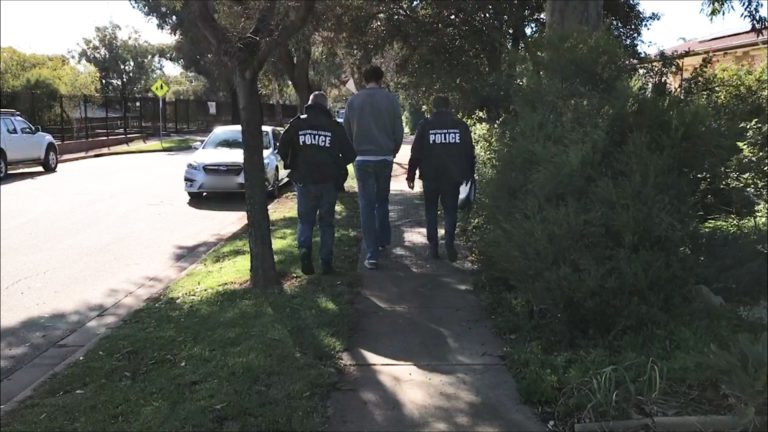
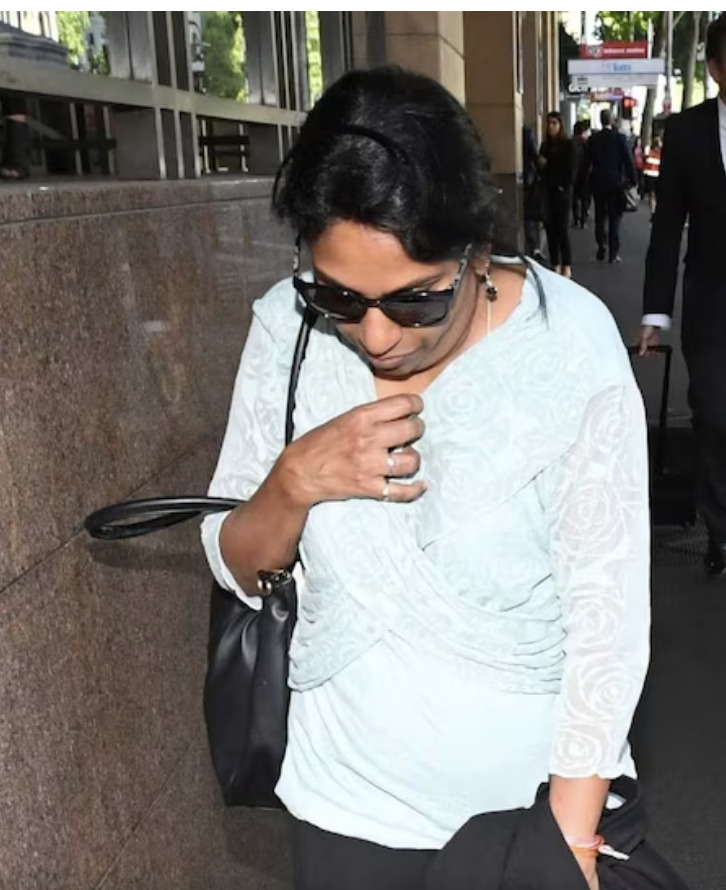
The Fair Work Ombudsman has secured $16,650 in penalties in court against the former operator of a beauty therapy clinic in north-west Sydney.
The Federal Circuit and Family Court has imposed the penalty against Meriel Enterprises Pty Ltd, which formerly traded as Meei Clinic in Baulkham Hills.
The penalty was imposed in response to Meriel Enterprises failing to comply with a Compliance Notice requiring it to calculate and back-pay entitlements owed to a part-time beauty therapist it employed from March to June, 2021.
Meriel Enterprises back-paid the employee only after the Fair Work Ombudsman commenced legal action.
Acting Fair Work Ombudsman Kristen Hannah said business operators that fail to act on Compliance Notices need to be aware they can face penalties in court on top of having to back-pay workers.
“When Compliance Notices are not followed, we are prepared to take legal action to ensure workers receive their lawful entitlements,” Ms Hannah said.
“Any employees with concerns about their pay or entitlements should contact the FWO for free assistance.”
The FWO investigated after receiving a request for assistance from the affected worker.
A Fair Work Inspector issued the Compliance Notice to Meriel Enterprises in July 2021 after forming a belief the worker was underpaid minimum wages and Saturday penalty rates under the Hair and Beauty Industry Award 2010 and annual leave entitlements under the Fair Work Act’s National Employment Standards.
Judge Nicholas Manousaridis said he was satisfied that the failure to comply with the Compliance Notice “manifested a conscious disregard by Meriel Enterprises Pty Ltd of its obligations”.
Judge Manousaridis found that there was a need to send a message to employers that a failure to comply with a compliance notice will not be tolerated.
Australia’s inflation rate has fallen for the second consecutive quarter.
After reaching a 30-year high of 7.8% at the end of 2022, annual inflation as measured by the Bureau of Statistics’ quarterly Consumer Price Index slid to 7% in the March quarter of 2023 and fell further to 6% in the June quarter.
The quarterly results are consistent with the newer monthly measure of annual inflation which has also been falling since hitting a high of 8.4% in December.
The monthly measure slid to 5.4% in June.
Helping bring inflation down were state government electricity rebates and cuts in the prices some households paid for medicines.
The prices of new dwellings grew more slowly as demand eased and problems with the supply of materials improved.
Conversely, there were sharp increases in the prices of insurance and some other financial services.
The bureau’s measure of rents (which covers rents paid in distinction to more widely quoted measures of rents advertised) grew by 6.7% in the year to June, up from 4.9% in the year to March, and the most since 2009.
Underlying inflation down
To get a better idea of what would be happening were it not for some of these unusual and outsized moves, the bureau calculates what it calls a trimmed mean measure of “underlying” inflation.
This excludes the 15% of prices that climbed the most in the quarter and the 15% of prices that climbed the least or fell.
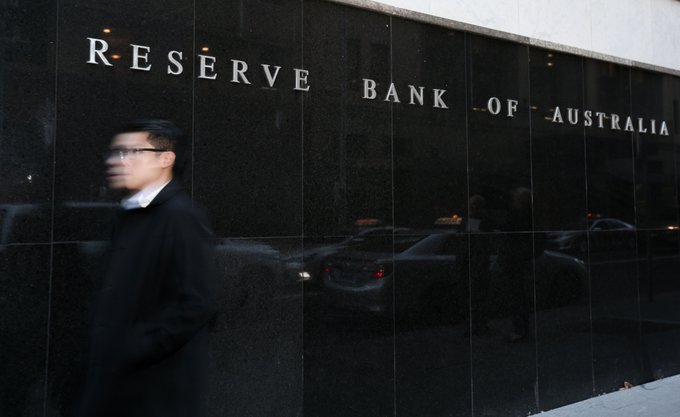
This measure, closely watched by the Reserve Bank, is also falling and is now 5.9%.
The fall in Australia’s inflation is in line with falls in other Western nations including the United States, Canada and the United Kingdom. They have been brought about by an easing of supply bottlenecks and slowing economic activity in response to increases in interest rates.
An exception is China, which has almost no inflation.
Much of the slide in Australia’s inflation rate reflects weaker economic growth.
The economy grew only 0.2% in the March quarter. The Reserve Bank believes it grew by only that much again in the June quarter.
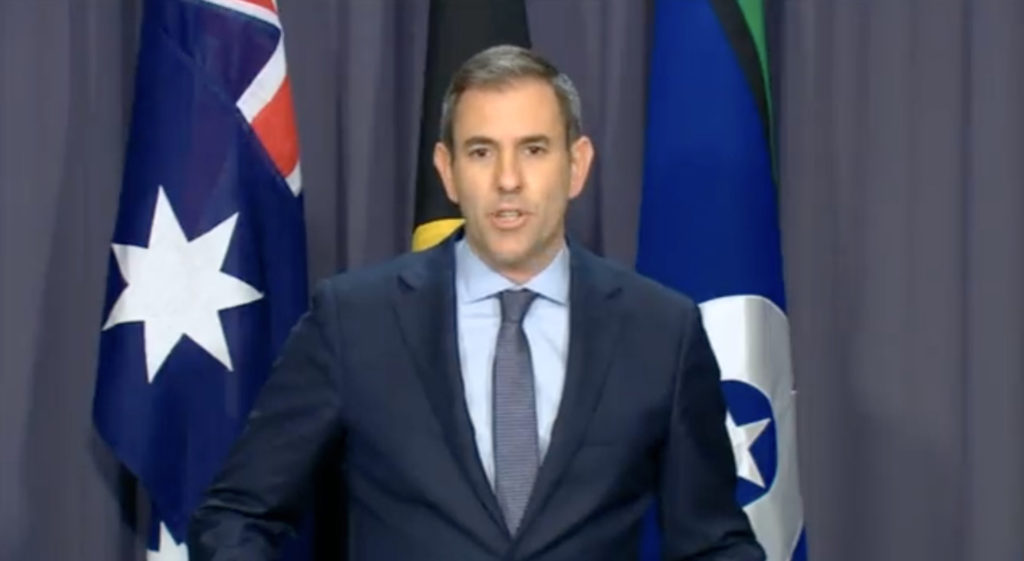
Treasurer Jim Chalmers was keen to highlight the role of his budget cost-of-living package which he said would help with rent, energy bills and childcare.
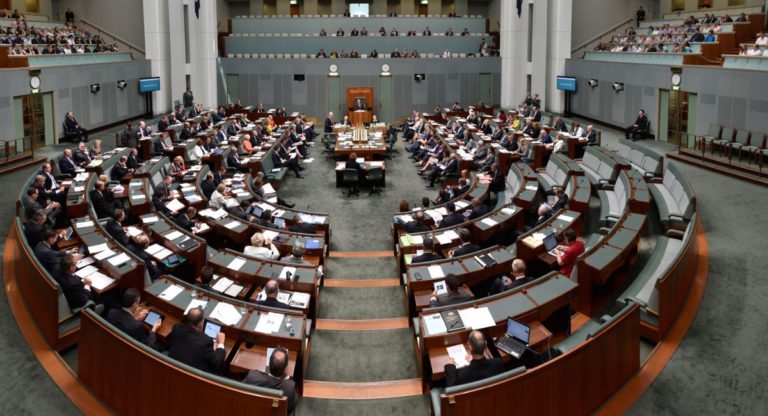
The Federal Budget; Treasurer Jim Chalmers; Image Source: Supplied
Many common medicines would become cheaper from September as a result of the government’s decision to allow some people to buy two months’ worth of supply for the price of a single prescription.
Chalmers said inflation was only 0.8% in the June quarter itself, less than half the rate of the quarterly peak in the March quarter of 2022, just before the 2022 election.
While he would prefer inflation to be falling more quickly, Australia was “making progress”.
What does it mean for my mortgage?
The 6% inflation rate is lower than the 6.3% forecast for June in the Reserve Bank’s Statement of Monetary Policy released in May, although that forecast assumed a lower cash rate than the 4.1% the bank lifted its cash rate to in June.
This makes it look as if inflation is falling fast enough to reach the bank’s 2-3% target band by mid-2025, which is a pace the bank had said was acceptable.
Outgoing governor Phil Lowe defended that pace in April, saying
if we can get inflation back to 3% by mid-2025 and preserve many of those job gains that have been delivered in the last few years, that’s a better outcome than getting inflation back to 3% one year earlier and having more job losses.
Incoming governor Michele Bullock has also argued a faster return to target would likely mean unnecessary job losses, saying:
our judgement is that if we can return inflation to target in a reasonable timeframe – while preserving as many of the employment gains as we can – that would be a better outcome.
Today’s news does not suggest the bank needs to lift rates further. It shows it is still on what Lowe calls the “narrow path” to getting things right.
It is possible that the broad-based increases in the inflation rate for services, driven in part by faster wage growth, might be a concern for the bank. And it is possible the present low unemployment rate could push up wage growth further.
But it is likely to take comfort from the fact inflation is falling as it expected it to, and at about the expected pace. It will meet to discuss rates next Tuesday.
It certainly isn’t likely to cut rates for quite some time. At 6%, inflation remains well above its 2-3% target.
Global Indian Diaspora needs fair, non-hyphenated, and questioning journalism, packed with on-ground reporting. The Australia Today – with exceptional reporters, columnists, and editors – is doing just that. Sustaining this needs support from wonderful readers like you.
Whether you live in Australia, the United Kingdom, Canada, the United States of America, or India you can take a paid subscription by clicking Patreon. Buy an annual ‘The Australia Today Membership’ to support independent journalism and get special benefits.
“It’s so important for us to acknowledge this journey has not been the smoothest or easiest. I know first-hand how painful it can be to see posts like these wondering if and when your time will be. We send our love and strength to other couples who are struggling with fertility or loss,” she wrote.
The duo got married on March 27, 2022, in an intimate ceremony in both Hindu and Christian traditions.
Support Our Journalism
Global Indian Diaspora needs fair, non-hyphenated, and questioning journalism, packed with on-ground reporting. The Australia Today – with exceptional reporters, columnists, and editors – is doing just that. Sustaining this needs support from wonderful readers like you.
Whether you live in Australia, the United Kingdom, Canada, the United States of America, or India you can take a paid subscription by clicking Patreon. Buy an annual ‘The Australia Today Membership’ to support independent journalism and get special benefits.
The Fair Work Ombudsman has recovered $684,543 in wages for 1,004 underpaid workers after investigating employers in Melbourne’s food precincts.
Fair Work Inspectors investigated 84 businesses across Albert Park, Balaclava, Brighton, Elwood, Port Melbourne, Prahran, South Yarra, St Kilda and Windsor in the inner south; and Footscray, West Footscray, Seddon, Yarraville, Newport and Williamstown in the inner west.
In the 82 completed investigations, 86 per cent of businesses had breached workplace laws. Businesses were selected for surprise inspections based on their risk of breaching workplace laws. At-risk businesses had a history of non-compliance with the FWO, had been the subject of anonymous tip-offs, or employed vulnerable visa holders.
Of the 71 businesses found to be in breach, 69 had underpaid their workers and 24 had failed to meet pay slip or record-keeping requirements.
The most common breaches found were underpaying penalty rates (52 businesses), followed by failing to pay minimum wages including casual loading (51 businesses) and record-keeping issues (17 businesses).
“Uncovering high levels of non-compliance in Melbourne’s fast food, restaurant and café sector, as the FWO has nationwide, is disappointing. Employers can’t pick and choose which wage laws they follow and those doing the wrong thing are being found out,” Ms Hannah said.
“The Fair Work Ombudsman will continue to prioritise improving compliance in this sector, which we know employs many visa holders and young workers who can be vulnerable.”
“Employers can use our free tools and resources if they need assistance meeting their obligations. Workers with concerns about their pay or entitlement should come forward for help,” Ms Hannah said.
The largest recovery from one business was $83,272 for 170 employees in St Kilda.
In response to the breaches, the FWO issued a Compliance Notice each to 68 businesses, recovering $684,543 for 1,004 workers. There were 32 Infringement Notices issued for pay slip and record-keeping breaches, resulting in $54,721 in fines paid.
The regulator continues to investigate two businesses. Non-compliant businesses were told that any future breaches may lead to higher-level enforcement action by the Fair Work Ombudsman.
Modern slavery is back in the spotlight, after fresh media reports of migrants allegedly being brought to Australia as students but being forced to work long hours under harsh conditions with minimal pay.
In Australia, more than half of modern slavery survivors are migrants.
Across our research on modern slavery, survivors (and the caseworkers and service providers who support them) consistently say issues with Australia’s visa system prevent people from getting the help they need.
In other words, the current design of the system helps replicate and reproduce the shameful inequalities at the heart of modern slavery in Australia.
An unscrupulous employer engineered a path to this country for this young hopeful Chinese man, then put him to work for a pittance. When Qi complained about his conditions, his boss confiscated his passport. https://t.co/4UESZPWJIV
Australia’s temporary visa system promotes insecurity for migrants that can cause or contribute to exploitation.
For example, perpetrators can use a person’s insecure visa status to coerce victims to work for low pay or put up with poor conditions.
One survivor told us:
You need to have a visa to be in Australia, so you are going to do whatever is required.
In response to years of advocacy from migrant-led organisations, researchers and human rights experts, the Albanese government recently introduced new measures to protect migrant workers at risk of exploitation.
This is a welcome first step. But our research has found Australia’s visa system continues to harm migrants once they have experienced exploitation.
Sometimes you’re afraid to report, because you might be going to lose the job. You might be going to lose your visa and everything you know.
This situation is exacerbated by requirements for survivors of modern slavery to report to the Australian Federal Police (AFP) to access key services.
One caseworker told us:
People that have faced any type of exploitation may fear of authority and will be reluctant to go to the police to initiate any type of support, or they might be having a lot of fear in terms of the consequences of an insecure or unknown immigration status.
Australia’s modern slavery visa framework
The federal government’s human trafficking visa framework enables migrants assessed by the AFP as victims of slavery to get a visa.
Under this framework, only those willing to give evidence against their alleged perpetrator(s) are granted long-term visas.
However, even these visas are still “temporary”. Survivors remain on them for the duration of a criminal justice process, which can last for years.
More than half the survivors formally identified by the AFP are on temporary visas.
Albanese government announces laws to tackle migrant worker exploitation https://t.co/k9ulwLHC1f
In other words, survivors often remain burdened by the insecurity that comes with temporary visas long after they’ve sought help.
Survivors locked out of mainstream services
Some temporary visa conditions can limit survivors’ access to support services such as Medicare and Centrelink.
One caseworker explained:
[Your] visa in Australia determines access to services. If it’s health, if it’s education, anything, it determines what happens next. The outcomes are not as good for people on temporary visas where they cannot access those payments.
Survivors described being left destitute, desperate and in a state of limbo without any access to services.
Temporary visa status can also make it impossible for survivors to find suitable and secure housing.
The combination of insecure visa status and insecure housing can prevent many survivors from regaining their independence and moving forward with their lives.
Risks of further harm
For survivors on temporary visas, not being able to access vital supports means many face risks of re-exploitation.
Survivors with children are particularly susceptible to experiencing further harm when temporary visas prevent them from supporting their families.
end up thinking, ‘well, I’m just going to have to try and get money anyway anyhow’.
Another caseworker said:
I’ve seen clients engaging with high-risk industries like sex work or fruit picking – where their work rights are not being met – in order to try and send something back to their children.
The human impact
The experience of Grace*, who participated in our research, shows how these elements conspire to produce exploitative conditions, hinder help-seeking and hamper recovery from slavery.
Grace met her former partner while in Australia and applied for a temporary partner visa when her existing visa expired. She was granted a bridging visa while her application was being processed.
Shortly after giving birth to their child, Grace and her child were trafficked out of Australia, allegedly by her partner.
Grace’s bridging visa was immediately cancelled, leaving her unable to return to Australia to support her child, who is an Australian citizen.
While overseas, Grace tried many times to seek support from Australian authorities but was constantly hindered by her lack of visa or residency.
When her case eventually came to the attention of the AFP, they facilitated her return to Australia, and she was granted a temporary visa through the government’s human trafficking visa framework.
Throughout her recovery from exploitation, Grace has constantly faced barriers to supporting herself and her child due to the temporary status of this visa, saying:
With the bridging visa, you can stay, you can work, but you can’t do much around it. You can’t go to school. I want to study, but I can’t afford it.
And I’m really stuck with that. Even when I look for job, there’s some jobs that required to be a permanent resident or citizen. Every job I applied for asked about residency status.
I felt uneasy to explain my case and the reason why I had that visa. Same issue regarding applying for rental. I can’t get over it. So, it’s just hard for the visa.
Protecting the system rather than the people
As modern slavery survivor and advocate Sophie Otiende puts it:
Care cannot exist when we focus on protecting the system rather than the people at all costs.
Australia’s visa system is entrenched within the problem of modern slavery, and future changes to it must refocus on caring for those who are most vulnerable to exploitation.
Migrant workers need further protection from exploitation caused by temporary visas, such as those recently proposed by the government.
To support their recovery from exploitation, migrant survivors of modern slavery need:
guaranteed access to mainstream supports
swifter access to permanent visas and
clearer pathways to residency.
*Names have been changed to protect identities. If you or someone you know needs help, contact the Australian Red Cross Support for Trafficked People Program on 03 9345 1800 or email national_stpp@redcross.org.au
Global Indian Diaspora needs fair, non-hyphenated, and questioning journalism, packed with on-ground reporting. The Australia Today – with exceptional reporters, columnists, and editors – is doing just that. Sustaining this needs support from wonderful readers like you.
Whether you live in Australia, the United Kingdom, Canada, the United States of America, or India you can take a paid subscription by clicking Patreon. Buy an annual ‘The Australia Today Membership’ to support independent journalism and get special benefits.
Ms Chandran was born in the United Kingdom to doctor parents. She came to Australia at the age of three and grew up in Canberra.
In a statement, Ms Chandran said:
“It means so much to me that Chai Time at Cinnamon Gardens, a novel that explores what it means to ‘be Australian’, has been recognised in this way.”
Image: Shankari Chandran (Source: Facebook)
This novel is set in an aged care facility in contemporary western Sydney and Sri Lankan civil war. It’s major theme is the role that stories play in national identity.
“I’m Australian and this particular story explores the lives and voices of people on the margins of that definition, but whose lives and voices are no less important than others. It explores the way we shape our new home and the challenges we face in asserting our right to be here.”
The judges have praised Ms Chandran’s novel which is an intergenerational epic confronting Australia’s uneasy relationship with multiculturalism and postcolonial trauma.
The judges’ said in a joint statement:
“It treads carefully on contested historical claims, reminding us that horrors forgotten are horrors bound to be repeated, and that the reclamation and retelling of history cannot be undertaken without listening to the story-tellers amongst us.”
This prestigious literary award is named after celebrated Australian author Stella Maria Sarah Miles Franklin and is in its 66th year.
The 2023 Miles Franklin Literary Award judges were the State Library of NSW Mitchell librarian and chair Richard Neville, academic and poet Elfie Shiosaki, and academic and translator Mridula Nath Chakraborty, author and literary critic Bernadette Brennan, and critic James Ley.
Iris by Fiona Kelly McGregor (Pan Macmillan Australia)
Support Our Journalism
Global Indian Diaspora needs fair, non-hyphenated, and questioning journalism, packed with on-ground reporting. The Australia Today – with exceptional reporters, columnists, and editors – is doing just that. Sustaining this needs support from wonderful readers like you.
Whether you live in Australia, the United Kingdom, Canada, the United States of America, or India you can take a paid subscription by clicking Patreon. Buy an annual ‘The Australia Today Membership’ to support independent journalism and get special benefits.
Westgate Sexual Offences and Child Abuse Investigation Team detectives are appealing for information following the sexual assault of a teenager in Point Cook last year.
Investigators have been told a man approached the 16-year-old victim in the vicinity of Palmers and Dunnings roads and grabbed her by the arm on Friday 9 December about 3 pm.
The man then walked with the teen for about 10 minutes and during this time sexually assaulted her.
Detectives have released a computer-generated image of the man along with a still image and CCTV.
The man is perceived to be of Indian sub-continental appearance, about 25 years old, with a slim build and brown eyes, with the whites of his eyes described as being tinted yellow. He also had black hair and a black beard.
He was wearing a black jacket and pants and reportedly told the victim his name was Sam.
Anyone with information about the identity of the man is urged to call Crime Stoppers on 1800 333 000 or submit a confidential report at www.crimestoppersvic.com.au.
Support Our Journalism
Global Indian Diaspora needs fair, non-hyphenated, and questioning journalism, packed with on-ground reporting. The Australia Today – with exceptional reporters, columnists, and editors – is doing just that. Sustaining this needs support from wonderful readers like you.
Whether you live in Australia, the United Kingdom, Canada, the United States of America, or India you can take a paid subscription by clicking Patreon. Buy an annual ‘The Australia Today Membership’ to support independent journalism and get special benefits.
Casual workers could soon have the right to become permanent employees, but business groups warn the changes threaten to devastate many small firms.
Employment Minister Tony Burke has unveiled reforms to force bosses to offer casual staff who work regular hours a permanent job.
Workers would not have to take up the offer and could remain casual employees to continue receiving loadings on their hourly rates.
More than 850,000 people will be covered by the changes, but Mr Burke expects most casuals will opt for the status quo.
Employment Minister Tony Burke: Image Source: Facebook @TonyBurke
He said the proposal would neither deter employers from taking on casual workers nor impact the bottom line for business.
“I don’t see in a million years how this can add costs to business, because instead of paying the loading, you pay leave, you never pay both … and they’re calculated to offset each other,”
he said.
Mr Burke said the changes would improve workers’ rights and close a loophole used by employers to avoid paying permanent entitlements to an ongoing workforce.
Businesses would not have to back-pay employees for any entitlements gained by moving to permanent employment.
Casual Worker; Image Source: @CANVA
“At the moment you can be working a full-time roster for a year and you still get classed as a casual,” Mr Burke said.
“There’ll be some people with those sorts of hours who want to stay where they are and nothing will change for them, but for people who want security this gives them a way to be able to do it.”
Australian Council of Commerce and Industry chief executive Andrew McKellar warned the changes could create uncertainty for large employers and smash small businesses.
“They are concerned that if they lose that flexibility, the ability to roster people according to demand and according to the requirements of the business, that’s a fundamental change,” he said.
“Our concern is that what the government is proposing would take us backwards, it would unpick that existing level of certainty.
“That can’t be a good thing for employment and it can’t be a good thing for small business.”
Australian Industry Group chief executive Innes Willox said the proposed change could result in a radical restriction on employers’ ability to engage casual workers for regular and predictable hours.
Casual Worker; Image Source: @CANVA
He said many casuals valued working regularly and having predictability while wanting the option not to work.
“Defining casual employment in a way that prevents or discourages an employer from offering casual regular and predictable hours would be a mistake that would damage the economy and hurt both businesses and employees,” he said.
“It won’t help anyone if an employer is forced to convert a casual employee to a permanent job if one doesn’t genuinely exist.
“The real risk is that employees will be laid off down the track.”
Australian Council of Trade Unions secretary Sally McManus said the government’s proposal was modest but welcome.
“People who are working regular jobs with regular hours deserve regular rights,” she said.
“I don’t think that it could be fairer than that.”
“The government is leaving it in the hands of the worker to decide, if they’re working regular hours, they want to be a permanent employee, get sick leave and annual leave or whether they want to keep their loading and remain as a casual.
Global Indian Diaspora needs fair, non-hyphenated, and questioning journalism, packed with on-ground reporting. The Australia Today – with exceptional reporters, columnists, and editors – is doing just that. Sustaining this needs support from wonderful readers like you.
Whether you live in Australia, the United Kingdom, Canada, the United States of America, or India you can take a paid subscription by clicking Patreon. Buy an annual ‘The Australia Today Membership’ to support independent journalism and get special benefits.
2023-24 Vic Country U17 Male Emerging Players Squad: Tanush Nandini (Ringwood)
2023-24 Vic Metro U17 Male Emerging Players Squad: Aryan Sharma, Aayan Nadeem, Reyaan Farooq and Gurbir Singh
Cricket Victoria’s Emerging Players programs will utilise a mixture of Cricket Performance staff and Victorian Premier Cricket coaches to lead the program.
The program aims to identify and prepare players for the next levels of elite cricket.
Cricket Victoria said in a statement:
“It will see players training under the eye of CV HP Coaching Staff on Sundays and Tuesdays throughout pre-season to improve their game technically, tactically, physically, and mentally.”
The pre-season phase of the Emerging U17 squad will commence on 23 July. While some matches will be played during the September school holidays leading to the trial games in October 2023.
The Victorian Country / Victorian Metro U17 Teams will be selected in November 2023 ahead of the National Championships from 4 – 11 January 2024 in regional Victoria.
Support Our Journalism
Global Indian Diaspora needs fair, non-hyphenated, and questioning journalism, packed with on-ground reporting. The Australia Today – with exceptional reporters, columnists, and editors – is doing just that. Sustaining this needs support from wonderful readers like you.
Whether you live in Australia, the United Kingdom, Canada, the United States of America, or India you can take a paid subscription by clicking Patreon. Buy an annual ‘The Australia Today Membership’ to support independent journalism and get special benefits.
The Fair Work Ombudsman has commenced legal action against a construction company in Melbourne – Green Vic Pty Ltd.
The regulator investigated after receiving a request for assistance from a worker who was employed at the business as Finishes Foreman and then as a full-time Project Maintenance Manager between May 2019 and August 2022.
A Fair Work Inspector issued a Compliance Notice to Green Vic Pty Ltd in January this year after forming a belief the worker had not been paid personal leave entitlements, owed under the Fair Work Act’s National Employment Standards, for a period of leave he took in July 2022.
The Fair Work Ombudsman alleges Green Vic Pty Ltd, without reasonable excuse, failed to comply with the Compliance Notice, which required it to calculate and back-pay the worker’s entitlements.
Acting Fair Work Ombudsman Kristen Hannah said the regulator would continue to enforce workplace laws and take businesses to court where lawful requests are not complied with.
“Where employers do not comply, we will take appropriate action to protect employees. A court can order a business to pay penalties in addition to back-paying workers,”
Ms Hannah said.
“Any employees with concerns about their pay or entitlements should contact the Fair Work Ombudsman for free assistance.”
The FWO is seeking a penalty against Green Vic Pty Ltd. The company faces a penalty of up to $41,250 for the alleged failure to comply with the Compliance Notice.
The regulator is also seeking orders for Green Vic Pty Ltd to rectify the alleged underpayment in full, plus interest and superannuation.
A directions hearing is listed in the Federal Circuit and Family Court in Melbourne on 14 August 2023.
Support Our Journalism
Global Indian Diaspora needs fair, non-hyphenated, and questioning journalism, packed with on-ground reporting. The Australia Today – with exceptional reporters, columnists, and editors – is doing just that. Sustaining this needs support from wonderful readers like you.
Whether you live in Australia, the United Kingdom, Canada, the United States of America, or India you can take a paid subscription by clicking Patreon. Buy an annual ‘The Australia Today Membership’ to support independent journalism and get special benefits.
By Amelia Ruscoe, Fiona Boylan, and Pauline Roberts
Australian primary schools are becoming increasingly reliant on commercial programs for teaching students. This means the content and the way students are being taught is outsourced to a third-party provider, who is not your child’s teacher.
Pre-pandemic research, commissioned by the New South Wales Teachers Federation in 2017 showed 28% of the state’s public school teachers already regularly used commercial products. We know the use of commercial programs increased since the start of COVID with increasing demands on schools.
The use of programs has grown to the point where some state education departments provide guidance about their use and even have endorsed resources.
These programs may seem like a good solution when teaching resources are stretched and the community demands evidence of learning progress. But their use can threaten children’s engagement in learning and undermine the value of professional teaching staff.
School teacher; Image Source: @CANVA
What are commercial programs?
These are programs developed by commercial organisations and sold to schools in prepackaged form. Some parents may already be familiar with literacy programs used to teach reading. But commercial programs are developed and sold across all areas of the curriculum.
Packages include programs of work with prescribed lessons and timing for delivery. They can even include scripts for teachers to read aloud during lessons. Teachers are trained how to use these programs by the provider. They are told it will only be effective if they copy the provider’s content and methods.
The developers also advocate a “whole school” approach, which means the program is taught across all year levels and incorporates its assessment tools, interventions and extension programs.
The cost to schools can be thousands of dollars, plus associated resources like worksheets and tests, and professional development. They are paid for out of school budgets via both government funding and school fees.
Why are schools using commercial programs?
The use of commercial programs in Australian schools has increased dramatically over the last 15 years since the introduction of NAPLAN and publication of test results on the MySchool website.
More transparency around school performance was intended to empower parents to make informed choices and drive school improvement. However, pressure to prove a school’s academic performance has created urgency for schools to find strategies that will give them a competitive edge.
At the same time, there has been a broader, global shift in education towards standardisation, high-stakes accountability and the use of corporate management models.
School teacher; Image Source: @CANVA
It is easy to see why schools use commercial programs. They offer efficient, consistent delivery of content across year levels. They also save teachers planning time and come with ready-made resources for lessons.
But schools often adopt these programs to reduce workload or because they have become widely accepted by other schools, rather than investigating whether they are endorsed and peer-reviewed by Australian or international education experts.
Why is it a problem?
Most commercial programs claim to be “evidence-based”. But this can be based on small, selective or inadequate research that cannot be generalised to all students.
They may rely on “direct instruction” teaching methods – where the teacher stands at the front and instructs students – and prioritise a quick pace for rapid academic gains.
This is despite broad understanding that hands-on, play-based experiences support meaningful learning and are more inclusive in the classroom.
Commercial programs also require teachers to “trust the program”, which can limit the teacher’s capacity to meet individual children’s needs.
All the while, it is taking autonomy away from teachers, while devaluing their professional knowledge and skills.
Reliance on commercially driven third parties is at odds with the evidence-based training teachers receive at university. It also makes it harder for education students to develop essential teaching and programming skills during their professional placements.
School teacher; Image Source: @CANVA
What do parents need to know?
It is important parents ask who (or what) is behind their child’s learning at school.
Commercial programs are inherently generic and may rely on teaching methods including repetition of content and skills, often without opportunity for “real life” application that sustains children’s motivation to learn.
This can have an impact on a child’s engagement at school, because they are being “talked at” rather than allowed to explore ideas and develop thinking and communication skills that lead to understanding.
Particularly in the early years of school, homogeneous teaching makes it harder for children to learn at their natural pace – and to support their social and emotional development.
Schools need to be transparent about the commercial programs they adopt so parents are aware of the costs, how the programs are delivered, and what that means for their child’s engagement in learning on a daily basis.
Global Indian Diaspora needs fair, non-hyphenated, and questioning journalism, packed with on-ground reporting. The Australia Today – with exceptional reporters, columnists, and editors – is doing just that. Sustaining this needs support from wonderful readers like you.
Whether you live in Australia, the United Kingdom, Canada, the United States of America, or India you can take a paid subscription by clicking Patreon. Buy an annual ‘The Australia Today Membership’ to support independent journalism and get special benefits.
Tasmania’s premier will take on responsibility for state development among other portfolios, after reshuffling his cabinet in the wake of months of political turbulence.
Jeremy Rockliff announced on Sunday he would head a combined portfolio of state development, trade and the Antarctic and also don caps for tourism and hospitality.
The premier retains his role as minister for mental health and wellbeing.
Outgoing Community Services Minister Nic Street has been appointed minister for stadia and events in the reshuffle, as well as housing and construction.
Senior MP Guy Barnett will take on the premier’s dropped health portfolio, which Mr Rockliff said the minister was passionate about.
“The decision to hand over the reins of health was not taken lightly but I can make this decision because – despite increasing demand – our health system is in the best place it has been for a very long time,”
Mr Rockliff told reporters on Sunday.
“Guy has been a passionate advocate in his past and current ministerial responsibilities and I believe he will also very strongly bring passion and drive to the responsibility of health.”
Tasmanian opposition leader Rebecca White slammed the call and noted energy prices had jumped under Mr Barnett’s watch as energy minister.
“Why would Tasmanians believe he’s going to do a better job as minister for health, particularly given he was so unenthusiastic about his new job he didn’t even turn up to the announcement?”
Ms White said.
“Jeremy Rockliff’s attempted ‘reset’ does show he’s right about one thing – Tasmania does need change.”
Mr Rockliff said Tasmania’s economy was “leading the pack” nationally but wasn’t immune to global and domestic economic headwinds.
Inflation, rising interest rates and a slowing national economy prompted him to take on state development and along with it, direct responsibility for the Department of State Growth, he said.
Mr Barnett previously held the portfolio.
The premier said there was enormous potential to grow the state’s Antarctic industry as Tasmanians were leaders in science, research, logistics and service capabilities.
It was important to reunite the tourism and hospitality roles as economic powerhouses, Mr Rockliff said.
The premier flagged a ministerial shuffle on Thursday, conceding his minority government had been “knocked off course” by the crossbench departure of two MPs over Hobart’s contentious stadium plans.
The government plunged into minority on May 12 when Lara Alexander and John Tucker quit the party to become independents.
They raised concerns around transparency over the proposed $715 million waterfront venue, a condition of the AFL granting Tasmania a licence for a team.
The AFL has said the state cannot have a team without the stadium, which still faces two votes in both houses of parliament and a planning commission assessment.
As state development minister, Mr Rockliff will be responsible for the vision for the stadium precinct and its investment, despite Mr Street’s appointment to the stadia portfolio.
In Sunday’s announcement, the premier said Jo Palmer would take on community services and development, while Madeleine Ogilvie would be minister for women and prevention of family violence.
Felix Ellis will take over as Racing Minister from Ms Ogilvie, who endured heavy criticism in the role.
Mr Rockliff said he could only commend Ms Ogilvie for her work across a range of portfolios and every minister faced scrutiny.
Acting Greens leader Dr Rosalie Woodruff said the reshuffle offered nothing for Tasmanians and was a desperate attempt to stave off internal political division.
Ms Ogilvie’s time as racing minister was a “series of catastrophes” and Mr Barnett had not demonstrated a capacity to work with stakeholders, Dr Woodruff said.
The ministers will be sworn in on Tuesday.
Support Our Journalism
Global Indian Diaspora needs fair, non-hyphenated, and questioning journalism, packed with on-ground reporting. The Australia Today – with exceptional reporters, columnists, and editors – is doing just that. Sustaining this needs support from wonderful readers like you.
Whether you live in Australia, the United Kingdom, Canada, the United States of America, or India you can take a paid subscription by clicking Patreon. Buy an annual ‘The Australia Today Membership’ to support independent journalism and get special benefits.
Australia retained the Ashes 2023 title after rain completely ruled out the fifth day of the fourth test match on Sunday at Emirates Old Trafford in Manchester.
Australia were leading the series by 2-1 and the rain prevented the play on the final two days of the Test, which resulted in a draw.
After retaining the Ashes, Australian skipper Pat Cummins said that though the team did not retain it in the most ideal circumstances, they are happy to do so and the result does not change the way they are looking at the final Test.
“Our preference is to come over here and win the Ashes. Not the greatest of circumstances but happy to retain it now.”
“What happened today does not really change how we look at the next game. It has been an amazing group, we all turned up here very motivated. Will be a special week at The Oval. We all turned up here to win the series, retaining the Ashes is nice but we are fully focused on winning it (by winning the final Test),” said Cummins in the post-match presentation.
“Tough one to take” after dominating Australia
England skipper Ben Stokes said that the result is pretty hard to take after dominating the visitors for the majority of the match. He said they want to finish off the series on a high with a win in the final Test.
“It is a tough one to take, you know (the match ending in a draw). The kind of cricket we played on the first three days and being on the wrong side of the weather, it is a tough one. But it is a part of the journey.”
“I think coming into this game, it was a do-or-die game for us. Bowling them out for 320 and scoring 590, we could not do much. We will have a lot of pride to play the next game,” said Stokes in the post-match presentation.
What Happened on ground
On the fourth day, rained had intervened most of the game. The stumps were called when 214-5, taking a lead of 61 runs. Mitchell Marsh 31* and Cameron Green 3* were at the crease at the close of play in the second session after which the game did not resume. With the opening session washed out because of a shower and a wet outfield, Australia resumed their innings post the lunch break at 113/4.
Looking increasingly assured and confident at the crease, Labuschagne raised his fifty with a couple of tearaway Mark Wood.
Australia added 150 runs in 52.3 overs, with Labuschagne and all-rounder Mitchell Marsh holding the fort for the visitors.
Labuschagne brought up his century in the 63rd over, off Moeen Ali’s bowling. He took 161 balls to achieve his first three-figure mark since December.
After suffering early blows, Australia limped back into contention, riding on the enterprising partnership between Labuschagne and Marsh.
The Aussies reached 200 in the 64th over. England turned to Joe Root’s golden arm to bring an end to the partnership. The former England skipper induced an edge off Labuschagne’s bat, which was pouched safely by Bairstow behind the stumps.
England ended Day 3 on a strong note as Mark Wood dominated the entire final session to take the hosts one step closer to levelling the series on Friday.
The fifth and final match will start on July 27 at the Oval in London.
Support Our Journalism
Global Indian Diaspora needs fair, non-hyphenated, and questioning journalism, packed with on-ground reporting. The Australia Today – with exceptional reporters, columnists, and editors – is doing just that. Sustaining this needs support from wonderful readers like you.
Whether you live in Australia, the United Kingdom, Canada, the United States of America, or India you can take a paid subscription by clicking Patreon. Buy an annual ‘The Australia Today Membership’ to support independent journalism and get special benefits.
India, the world’s biggest rice exporter, has decided to amend the rice export norms putting the non-basmati white rice in the “prohibited” category.
It is understood this prohibition or ban on non-basmati white rice export is to stabilise domestic rice demand and price.
The Indian government said in a statement:
“In order to ensure adequate availability of non-basmati white rice in the Indian market and to allay the rise in prices in the domestic market, the government of India has amended the export policy.”
India has seen domestic retail prices for non-basmati white rice go up 11.5% in 12 months while international sales of Indian rice soared by 35%.
Representative image: Rice (Source: CANVA)
India’s Directorate General of Foreign Trade (DGFT) notification said, “The export policy relating to non-basmati white rice (Semi-milled or wholly milled rice, whether or not polished or glazed: Other) has been revised from “free” to “prohibited” and it has come into force immediately. “
However, the DGFT also added that exports of such a variety of rice will be permitted under certain conditions where loading,
“has commenced before the issue of notification and where the shipping bill is filed and vessels have already berthed or arrived and anchored in Indian ports and their rotation number has been allocated before this notification”.
The approval of loading in such vessels will be issued only after confirmation by the concerned port authorities regarding anchoring/berthing of the ship for loading of Non-basmati rice prior to the Notification.
Trade experts believe that this decision will lead to the cancellation of orders worth almost 2 million metric tons of rice valued at $1.4 billion.
India caters to 40% of the supply and sells 500,000 tons of non-basmati rice every month.
Representative image: Rice (Source: CANVA)
Also, export will be allowed on the basis of permission granted by the government to other countries to meet their food security needs and based on the request of their government.
West African country Benin is one of the major importers of non-basmati rice from India. Other destination countries are Nepal, Bangladesh, China, Cote D’ Ivoire, Togo, Senegal, Guinea, Vietnam, Djibouti, Madagascar, Cameroon Somalia, Malaysia, Liberia, and UAE.
The Indian government has also extended a ban on wheat and sugar exports along with the ban on non-basmati white rice effective from 20 July.
India in September 2022 banned the exports of broken rice and imposed a 20 per cent duty on exports of non-Basmati rice, except for parboiled rice amid concerns about overestimated low production due to a fall in area under the paddy crop. It later lifted the ban in November.
Support Our Journalism
Global Indian Diaspora needs fair, non-hyphenated, and questioning journalism, packed with on-ground reporting. The Australia Today – with exceptional reporters, columnists, and editors – is doing just that. Sustaining this needs support from wonderful readers like you.
Whether you live in Australia, the United Kingdom, Canada, the United States of America, or India you can take a paid subscription by clicking Patreon. Buy an annual ‘The Australia Today Membership’ to support independent journalism and get special benefits.
The AFP Joint Policing Cybercrime Coordination Centre (JPC3) has charged a Melbourne man for allegedly laundering more than $176,000 stolen from Australian businesses targeted by cybercriminals.
AFP Operation Dolos-EMMA8 began in August 2022 after an Australian bank alerted the AFP about unusual financial transactions.
AFP Senior Constable Khali Sherer said anyone could be a victim of business email compromise, with cyber-criminals using sophisticated techniques to trick their targets.
“Business email compromise has become a particularly prominent cyber threat, which is why the AFP, through Operation Dolos, remains focused on protecting Australians who are being targeted in these attacks.”
Senior Constable Sherer added:
“If you think an email is suspicious, make further enquiries. Call and check directly with the business or organisation you are dealing with. It is reasonable to ask questions to protect yourself or your company.”
The investigation allegedly identified that from June 2021 to May 2022 the man, now 23, received $176,192 in funds suspected of being the criminal proceeds of business email compromise (BEC) frauds. He allegedly dispersed the funds among a number of accounts, before transferring the money to another individual.
It is alleged that one of the deposits related to proceeds of crime derived from a BEC attack on an Australian construction company.
The company allegedly lost more than $17,000 after receiving a fraudulent email from a furniture supplier claiming their bank details had changed. They subsequently paid the funds into a bank account that was allegedly in the man’s name.
The AFP will allege the man acted as a money mule, facilitating the movement of funds obtained through BEC fraud and other cyber-enabled crimes in Australia.
The AFP executed a search warrant at his Footscray home in November 2022, seizing a number of electronic devices and small amounts of illicit drugs.
Examination of the evidence seized from the search warrant led to the man’s arrest on 13 July 2023.
The man appeared briefly in Melbourne Magistrates Court on 13 July 2023. He is next due to appear in court on 5 October charged with:
One count of dealing with the proceeds of crime, money or property worth $100,000 or more, contrary to section 400.4(2B) of the Criminal Code 1995 (Cth);
One count of possessing a drug of dependence, namely cocaine, contrary to section 73(1)(b) of the Drugs, Poisons and Controlled Substances Act 1981 (Vic); and
One count of possessing a drug of dependence, namely cannabis, contrary to section 73 (1)(a) of the Drugs, Poisons and Controlled Substances Act 1981 (Vic).
The maximum penalty for the proceeds of crime charge is 10 years’ imprisonment, while the drug charges carry a maximum penalty of 12 months imprisonment.
The AFP established the multi-agency task force Operation Dolos in January 2020 to target the growing threat of business email compromise.
It comprises the JPC3, State and Territory police, Australian Criminal Intelligence Commission, Australia Cyber Security Centre, AUSTRAC and the financial sector.
Operation Dolos has already prevented more than $45 million from being lost to cybercriminals conducting BEC.
In 2021-2022, Australians reported losses of more than $98 million to business email compromise attacks, with an average loss of $64,000 per reported incident.
Support Our Journalism
Global Indian Diaspora needs fair, non-hyphenated, and questioning journalism, packed with on-ground reporting. The Australia Today – with exceptional reporters, columnists, and editors – is doing just that. Sustaining this needs support from wonderful readers like you.
Whether you live in Australia, the United Kingdom, Canada, the United States of America, or India you can take a paid subscription by clicking Patreon. Buy an annual ‘The Australia Today Membership’ to support independent journalism and get special benefits.
Australia presents a mixed picture of national well-being, according to the government’s Measuring What Matters report released by Treasurer Jim Chalmers.
On the positive side, over the past two decades, life expectancy has increased, income and job opportunities have improved, and we are better at accepting diversity.
But Australians now have more chronic health conditions, access to care and support services is more difficult, and there has been little progress on mental health.
While school outcomes have improved, they are falling behind other countries, and we are spending less time developing new skills.
After a trial run of a wellbeing statement in Treasurer Jim Chalmers’ first budget last year, he says this is the first proper national wellbeing framework.
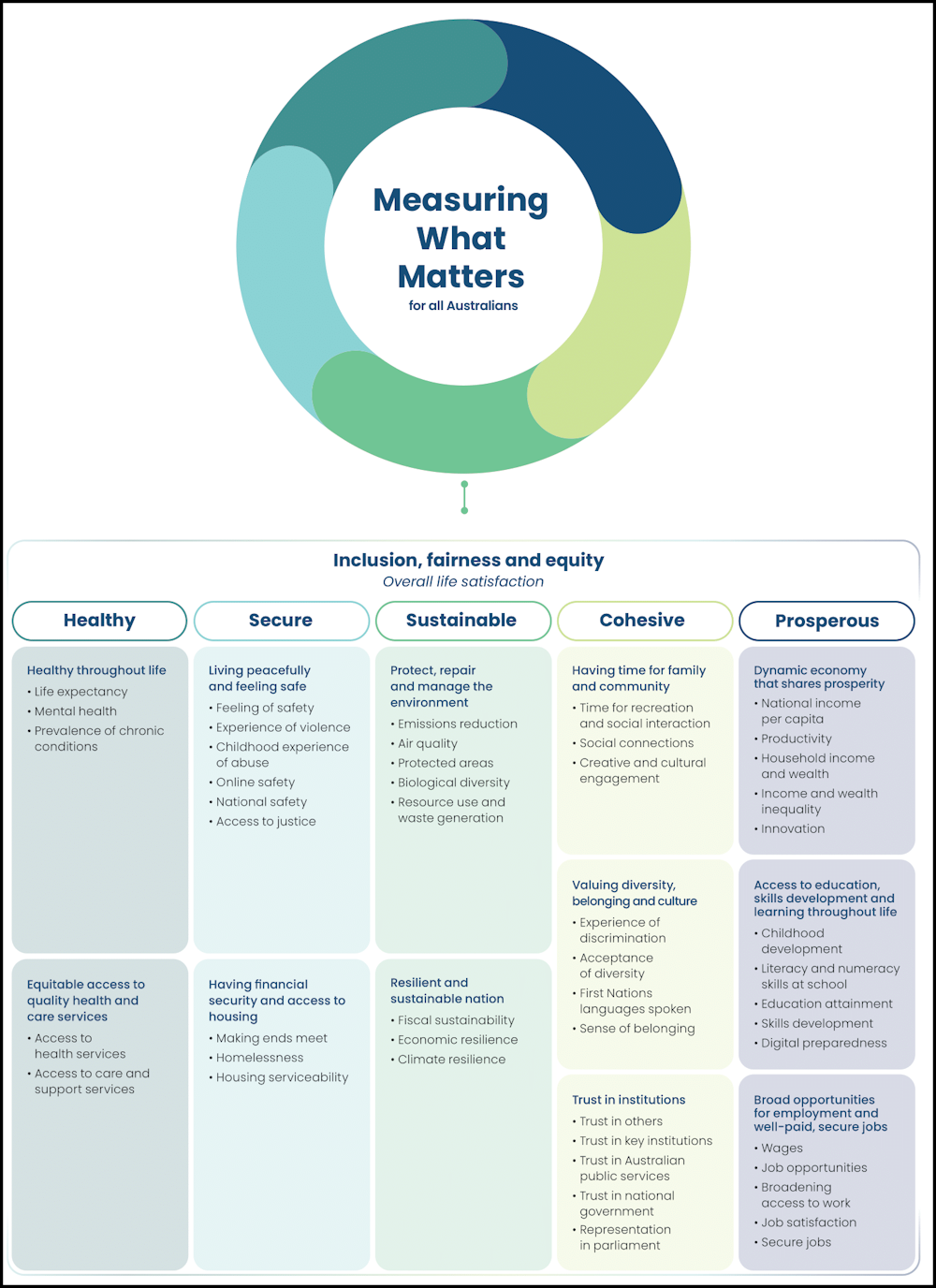
Fifty indicators are used to measure well-being under five themes: how healthy, secure, sustainable, cohesive and prosperous we are. The idea is to go beyond the traditional economic measures.
Measuring What Matters, Commonwealth Treasury
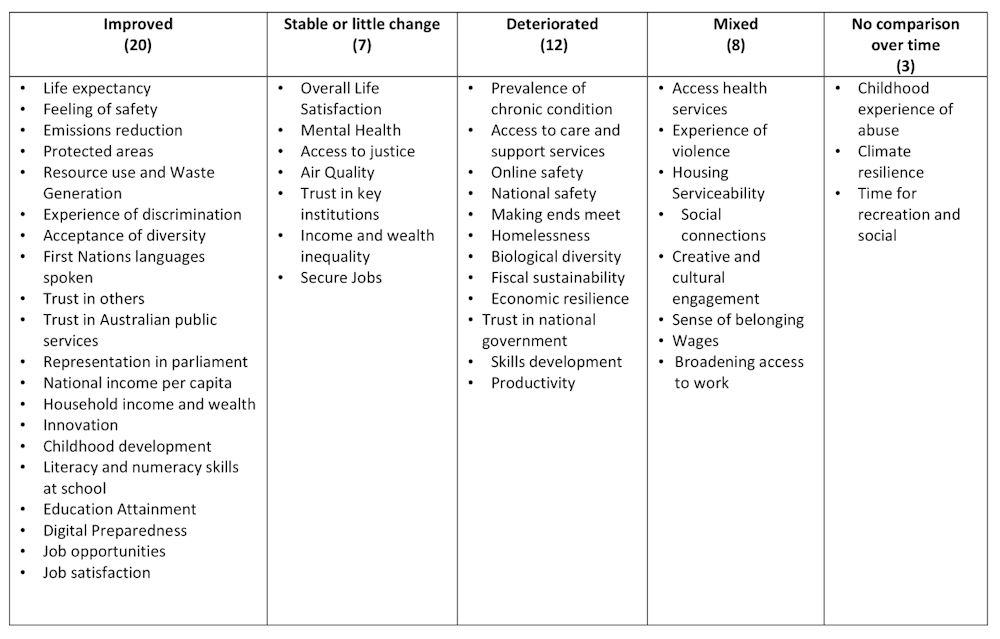
The report says that over recent decades there have been improvements in 20 of the 50 indicators, while seven have been stable or little changed, and 12 have gone backwards. Eight have mixed trends, and for three there is no comparable data.
There has been environmental progress: on emissions reduction, resources use and waste generation. But biological diversity has deteriorated.
Household income and wealth have improved, as has job satisfaction, but people are finding it harder to make ends meet and homelessness is worse. Fiscal sustainability and economic resilience have also deteriorated.
There’s been little change in income and wealth inequality. The outcome on wages is mixed.
Trust in the national government has fallen, although trust in others has increased.
In relation to Indigenous Australians, the report says: “the concept of wellbeing has always been the result of preserving and maintaining culture, which directly affects mental, physical and spiritual health”.
As a result:
the whole of population indicators outlined in this Framework are not an accurate measure of First Nations wellbeing as they are limited in their ability to represent these intrinsic cultural differences or acknowledge the past practices that have had detrimental impacts
There has been little change in Australians’ overall life satisfaction in recent years.
“Between 2014 and 2020 the average overall life satisfaction in Australia (out of 10) was relatively stable at around 7.5 between 2014 and 2019 before declining slightly to 7.2 in 2020,” the report says.
Global Indian Diaspora needs fair, non-hyphenated, and questioning journalism, packed with on-ground reporting. The Australia Today – with exceptional reporters, columnists, and editors – is doing just that. Sustaining this needs support from wonderful readers like you.
Whether you live in Australia, the United Kingdom, Canada, the United States of America, or India you can take a paid subscription by clicking Patreon. Buy an annual ‘The Australia Today Membership’ to support independent journalism and get special benefits.
Following the conclusion of rain-hit day four of the fourth Ashes Test, Australian batter Marnus Labuschangne said that keeping the role of weather in mind, the team’s focus on the final day is to bat the entire day to secure the draw and retain the Ashes.
England’s chances to keep the Ashes alive took a hit as during a rain-affected day four, not only did the hosts miss out on a lot of precious game time, but a century by Labuschagne also reduced England’s lead to just 61 runs. The hosts need to take five wickets to win the match by an innings.
If they win, they will keep the Ashes alive at 2-2, setting up an exciting decider or else, the best they can do is win the fifth Test and draw the series 2-2. But still, the Aussies will retain the Ashes in case of a series draw.
In this situation, Labuschagne said that his team was aware of the fact that day four was not going to be long and they had to “stay on” for as much as two hours. Now, their chances of winning their first Ashes series away from home since 2001 look strong.
“As players you have to be prepared to play, and think we saw we took the game on,”
“We knew the task we had. We knew it was not going to be a massively long day, but we had to be on for that two-hour stint. For us now, it is about retaining the Ashes, this is what it comes down to, whatever time we have left tomorrow, there is only one option which is bat out the day. The rain will play its part but I certainly think there will be some play,” he added.
Labuschagne was not at all enthusiastic about taking a lead and giving England a chance to chase. “No, no chance, zero. As in get ahead? We are sixty behind!” he said.
“I mean if Mitch gets going maybe if Mitch and Green put on an absolutely unbelievable partnership, but I think we are just going to let it play out, get bowled out when we do. I do not think we are going to give England a sniff, I think that is exactly what they would like,”
he concluded.
Australia ended the fourth day at 214/5, with Cameron Green (3*) and Mitchell Marsh (31*) unbeaten. Labuschagne smashed his second century away from home, scoring 111 in 173 balls with 10 fours and two sixes. With this, England’s lead is just 61 runs for now.
Earlier, in reply to Australia’s 317 in the first innings, England had scored 592 runs in their first innings. They had gained a lead of 275 runs.
Australia became a victim of some heavy hitting from the host’s top seven batters. Zak Crawley (189 in 182 balls, with 21 fours and three sixes) led the attack with his maiden Ashes ton.
Moeen Ali (54 in 82 balls, with seven fours), Joe Root (84 in 95 balls with eight fours and a six), Harry Brook (61 in 100 balls, with five fours), skipper Ben Stokes (51 in 74 balls with five fours) and Jonny Bairstow (99* in 81 balls with 10 fours and four sixes) played impactful knocks.
Besides Josh Hazlewood’s five-wicket haul, Mitchell Starc and Cameron Green took two wickets each while Pat Cummins got one.
After opting to field first, England bundled out Australia for 317 in the first innings.
Marnus Labuschagne (51), Mitchell Marsh (51), Steve Smith (41), Travis Head (48) and Mitchell Starc (36) played some vital knocks for the Aussies.
Chris Woakes (5/62), Stuart Broad (2/68) and James Anderson (1/51) impressed with the ball for England.
Support Our Journalism
Global Indian Diaspora needs fair, non-hyphenated, and questioning journalism, packed with on-ground reporting. The Australia Today – with exceptional reporters, columnists, and editors – is doing just that. Sustaining this needs support from wonderful readers like you.
Whether you live in Australia, the United Kingdom, Canada, the United States of America, or India you can take a paid subscription by clicking Patreon. Buy an annual ‘The Australia Today Membership’ to support independent journalism and get special benefits.
There are strong indications of a paradigm shift in the troika of decisions the United States Supreme Court recently delivered. The Court’s ruling “on affirmative action, students loan and free speech,” writes Gerard Baker, Editor at Large of The Wall Street Journal, “heralded a counterrevolution against the left’s dominance of American institution.”
Supreme Court ruling
The case of Students for Fair Admissions v. Harvard College and the University of North Carolina (UNC) was particularly interesting to Asian Americans, Indians included. In the case against Harvard, the Supreme Court, in a 6-3 judgment, found it unconstitutional to consider race in university admissions. Both Harvard and UNC used race to favor some applicants over others, most notably Asian Americans. Writing for the majority, Chief Justice unequivocally declared that: “Eliminating racial discrimination means eliminating all of it.”
The Justices also rejected Justice Lewis Powell’s “educational diversity” rationale. The rationale, the Justices claimed, has led to an unconstitutional racial discrimination system.
Job ready student; Image Source: @CANVA
Affirmative Action
The Affirmative Action program of the 1960s assumed that the disparity between the black and whites in academic achievement would dissipate in about a quarter century. “We expect that 25 years from now, the use of racial preference will no longer be necessary to further the interest approved today,” wrote Justice Sandra Day O’Connor in her Grutter opinion.
In the 1978 Supreme Court case Regents of the University of California v. Bakke, Justice Lewis Powell ruled that the school’s quota system violated the Equal Protection Clause of the Fourteenth Amendment and Title VI of the Civil Rights Act of 1964. The University of California at Davis medical school had rejected Bakke’s application based on the school’s racial quota system. In its judgment, however, the Court left the door open for the colleges to use the race of a student to be considered an option, among many, to create a diverse student body.
As time went by, the stated goal of the affirmative action program in US educational institutions got severely diluted. The program’s benefits now extend to Hispanics, Native Americans, and other “minority” groups. As correcting the past took a back seat, diversity, and equity elements crept into it. The program used many criteria to favor some students at the cost of others – most often Asian Americans.
Affirmative Action Penalizes Asian Americans
The Supreme Court decision against Harvard and North Carolina’s race-conscious admissions policies “was the acknowledgment that in granting racial preferences to black and Hispanic students and in penalizing those who are Asian American – which, of course, includes Indian students – these schools relied on abhorrent, anti-Asian stereotypes,” said Renu Mukherjee, a policy analyst at the Manhattan Institute.
In an exclusive conversation with this author, Mukherjee said that “Harvard gives Asian students the poorest “personality ratings” out of any racial or ethnic group and suggests that because these students perform so highly on the school’s objective academic and extracurricular ratings, they must lack courage, compassion, and depth. This is the textbook definition of racism.”
Left-Wing Advocacy Groups Fudge Policy Debates
One of the key aspects of the affirmative action program has been the near complete absence of the recognition of the attitudes of Asian Americans – the primary victims of this race-conscious discrimination – in policy debates. This lack of perspective is a byproduct of the profound disconnect between what many Asian and Indian American advocacy groups present and what the Asian American public opinion is on the issue of affirmative action.
The mainstream media narrative suggests that Asian Americans overwhelmingly support Affirmative Action in college admissions. Such a narrative is based on biased AAPI Data that shows over two-thirds of Asian Americans support affirmative action. Mainstream media outlets often cite this survey to bolster their claim. They also claim that those who oppose affirmative action are nothing but “vocal Asian American minority railing against affirmative action.”
One of the major surveys that publish demographic and policy research data on Asian Americans (and Pacific Islanders) is AAPI Data. Its biennial Asian American Voter survey has questions about affirmative action. However, a closer look at the AAPI Data reveals that a biased framing of survey questions about affirmative action is responsible for positive responses from Asian Americans. A detailed study of AAPI Data by Renu Mukherjee finds that survey questions “appear to be designed to elicit a favorable view of affirmative action from respondents.”
Mukherjee explains that surveys that ask questions from the respondents in a more neutral way “elicit, on average, a much less positive view” of affirmative action. Mukherjee cites examples from Pew Research Center, Gallup, and Quinnipiac to back her claim. The Early and Late 2022 Pew Research Center poll of Asian Americans on race-conscious college admissions shows that 63 and 76 percent of respondents oppose affirmative action.
“You’d be forgiven,” said Mukherjee, “however, for believing the opposite to be true, as the mainstream media has relied on a faulty statistic from AAPI Data [70% of Asian Americans support affirmative action].”
Mukharjee blames “left-wing activist organizations, and other liberal Asian American advocacy groups, including those that purport to represent the interests of Indian American students and families,” for this gross misrepresentation. Mukherjee also calls out left-wing researchers for ignoring college admission discrimination against Asian American students for their social alienation.
Loosening Grips of the Cultural Left?
The affirmative action ruling of the Supreme Court indicates a loosening of the grips of the cultural left on American institutions. “But since that hegemony was established in large part through half a century of grotesque judicial overreach,” writes Baker, “it was likely to be truly overturned only by a judiciary that would finally move to substitute restraint for activism.”
America is imperfect, and we are too far from being a genuinely color-blind and discrimination-free society. One of the ways to eliminate educational discrepancies at the college level is to reinforce our K-12 education, which traps too many minority students into “failure factories.” The progress cannot, however, be based on skin color. As Chief Justice Roberts writes: “Our constitutional history does not tolerate that choice.”
This article was first published in India Currents and has been republished here with the kind permission of the editor(s).
Contributing Author: Avatans Kumar is a columnist, public speaker, and activist. A JNU, New Delhi, and the University of Illinois at Urbana-Champaign alumnus, Avatans holds graduate degrees in Linguistics. Avatans is a recipient of the 2021 San Francisco Press Club’s Bay Area Journalism award.
Disclaimer: The opinions expressed within this article are the personal opinions of the author. The Australia Today is not responsible for the accuracy, completeness, suitability, or validity of any information in this article. All information is provided on an as-is basis. The information, facts, or opinions appearing in the article do not reflect the views of The Australia Today and The Australia Today News does not assume any responsibility or liability for the same.
Support Our Journalism
Global Indian Diaspora needs fair, non-hyphenated, and questioning journalism, packed with on-ground reporting. The Australia Today – with exceptional reporters, columnists, and editors – is doing just that. Sustaining this needs support from wonderful readers like you.
Whether you live in Australia, the United Kingdom, Canada, the United States of America, or India you can take a paid subscription by clicking Patreon. Buy an annual ‘The Australia Today Membership’ to support independent journalism and get special benefits.
Australia’s largest bilateral military exercise with the United States, Exercise Talisman Sabre, officially commenced with an opening ceremony on-board HMAS Canberra.
Australia’s largest bilateral military exercise with US, Exercise #TalismanSabre2023 has officially commenced following an opening ceremony in Sydney. Over the next two weeks 13 nations will participate in high-end multi-domain warfighting across sea, land, air, cyber and space. pic.twitter.com/KRxIzsSgz9
This year, personnel from India, the Philippines, Singapore and Thailand are attending as observers.
Image: Representatives from each of the 13 participating nations attended the opening ceremony held on board #HMASCanberra in Sydney, NSW (Source: Talisman Sabre – Twitter)
Deputy Prime Minister, Richard Marles, joined United States Secretary of the Navy, Carlos Del Toro for the official opening at Sydney’s Fleet Base East.
“The scale and design of the exercise will provide more depth, complexity and challenge for our defence forces as we work together to build our defence cooperation. … Talisman Sabre is a practical demonstration of our commitment to working with our international partners to maintain the security and stability of our region.”
Over the next two weeks 13 nations will participate in high-end multi-domain warfighting across sea, land, air, cyber and space.
Now in its tenth iteration, 2023 is the largest Exercise Talisman Sabre in terms of its geographical area and the number of participating partners.
Image: Talisman Sabre (Source: Twitter)
The exercise aims to enhance interoperability and develop strong relationships between participating military forces.
United States Secretary of the Navy, The Hon Carlos Del Toro observed:
“The scope of this exercise and the opportunity it provides for all of us to train above, at, and below the sea, as well as ashore, increases our ability to work together in the countering challenges we may face here in the Indo-Pacific region.”
The Exercise will involve field training exercises including force preparation and logistics activities, amphibious landings, ground force manoeuvres, air combat and maritime operations.
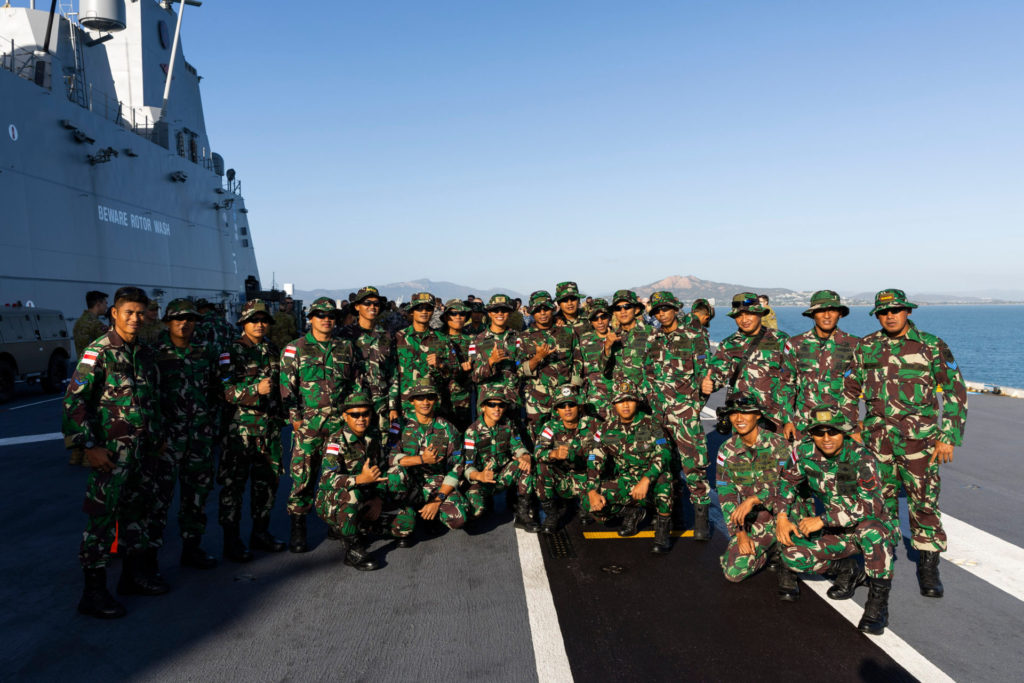
Image: Members from the Indonesian Armed Forces at Talisman Sabre (Source: Twitter)
In addition to the United States, forces from Canada, Fiji, France, Germany, Indonesia, Japan, New Zealand, Papua New Guinea, the Republic of Korea, Tonga and the United Kingdom will participate in the exercise.
Chief of Joint Operations Lieutenant General Greg Bilton added:
“Every nation who has joined us in Australia for Talisman Sabre will integrate operations across air, land, maritime, space and cyber domains, challenging our defence forces to synchronise military efforts from the tactical to strategic levels.”
Talisman Sabre 2023 will involve more than 30,000 military personnel deploying across Queensland, Western Australia, the Northern Territory and New South Wales. For the first time exercises will also take part around Norfolk Island.
Next week, the Deputy Prime Minister will travel to Queensland with United States Secretary of Defense, Lloyd J. Austin III to visit Australian and US service members participating in Exercise Talisman Sabre.
Support Our Journalism
Global Indian Diaspora needs fair, non-hyphenated, and questioning journalism, packed with on-ground reporting. The Australia Today – with exceptional reporters, columnists, and editors – is doing just that. Sustaining this needs support from wonderful readers like you.
Whether you live in Australia, the United Kingdom, Canada, the United States of America, or India you can take a paid subscription by clicking Patreon. Buy an annual ‘The Australia Today Membership’ to support independent journalism and get special benefits.
On Wednesday, Education Minister Jason Clare released a much-anticipated report on universities. This is the interim report of the Universities Accord review.
The review, commissioned in November 2022 and led by Professor Mary O’Kane, has been tasked with creating a “visionary plan” for Australian higher education. It is examining everything from university governance, to research, teaching, international students and student wellbeing.
But one area of great interest is what will happen to the fees students pay to attend university. For domestic government-supported students, these are called “student contributions”.
The government and the review panel are also emphasising equity of access to higher education and the report suggests major changes to how university funding works. These changes would be invisible to students, but the goal is for more people from disadvantaged backgrounds to enrol in university and complete their degrees.
Job ready student; Image Source: @CANVA
Student fees are set to change (again)
The interim report confirms the Job-ready Graduates scheme for student fees be scrapped. This was introduced in 2021 by the Morrison government.
It was intended to steer students to courses that matched labour market demand (such as teaching or nursing) or other national priority areas (such as mathematics and foreign languages). Student contributions for these courses were discounted.
Other courses, notably arts degrees, saw price increases. The cost of most subjects more than doubled.
But this does not work. Along with other higher education policy analysts, I argue student contributions only have small effects on student choices. The main practical consequence is some students will be burdened with HELP debts that take decades to repay, if they ever are repaid.
The accord review panel agrees, noting:
the continuation of these current arrangements risk causing long-term and entrenched damage to Australian higher education.
Job ready student; Image Source: @CANVA
Narrowing the list of alternative systems
The review panel has delayed any firm recommendations on what will replace Job-ready Graduates until its December 2023 final report, but some version of a multi-rate system looks set to return.
So what happens now? One option is to reverse the worst of Job-ready Graduates, and take arts students and others affected by high student contributions back to their old rates. But this would be a disappointing response for a review supposed to come up with “big ideas”. As the interim report observes, a simple reversal would “cost in the order of A$1 billion a year”.
Some university interest groups suggest going back to a flat student contribution rate, where every student pays the same fee. This was the system between 1989 and 1996. Students in longer degrees would still pay more, but the annual fee would be the same regardless of course.
Without fully ruling it out, the accord panel says this “risks unfair trade-offs”. Indigenous, regional, low socioeconomic status and female students would all pay more on average than they do now. This is because they are more likely to take courses that are currently discounted under Job-ready Graduates including nursing, teaching and agriculture.
My proposal
Other interest groups favour a system where student contributions are linked to expected future income. The interim report mentions this in a neutral way.
The interim report does not directly mention my variant of this, which is also based on expected future incomes and aims to narrow differences in HELP repayment times between courses.
This would require a greater focus on the total average debt a student accumulates before starting full-time work – recognising some courses take longer or are more likely to involve additional study.
My proposal would also take into account varying patterns of post-study income. Graduates of some courses can walk straight into well-paid jobs, while others take longer to find work and have lower initial salaries. These factors can have significant effects on repayment times.
Job ready student; Image Source: @CANVA
More higher education opportunities
Two key goals for the accord are to expand the higher education system to meet labour market skill needs and to provide more opportunities for people from disadvantaged backgrounds. The interim report suggests a target of parity in participation rates between the general population and people classified as low socioeconomic status, living in a regional area or with disability by 2035.
This is very unlikely. As Clare pointed out in his National Press Club speech on Wednesday, school results for some disadvantaged groups have been going backwards in recent years. He has other school-focused reviews to address this, but the interim report cites no evidence such rapid change could be achieved in just over a decade.
They do, however, have many ideas for expanding opportunity. While short on detail, they propose a “universal learning entitlement” for tertiary education, including vocational and higher education. Currently anyone who meets university entry criteria is eligible for a government subsidised place and a HELP loan, but whether they receive it depends on whether a university will accept them.
The accord panel also suggest the funding rate a university receives per student might be linked to student as well as course characteristics. This already happens in the school system. Existing higher education programs distribute fixed amounts of money between universities based on their share of enrolments of disadvantaged groups. But this funding is not linked to additional teaching and support costs.
These costs are potentially very large. They would also require substantial revision of current definitions of disadvantage. Two equity groups – low socioeconomic status and regional – are based purely on geographic measures.
They are OK as rough indicators of broad trends in the sector, but they are well-known to misclassify the disadvantage level of individual students. To reach the people who need help, we will need more precise indicators.
What now?
There is a huge amount of work and debate to happen between now and the end of the year. The interim report calls for advice on more than 70 policy ideas over 150 pages. The accord panel and Clare say they are are keeping their minds open. In his National Press Club address Clare specifically invited critique and alternatives.
Submissions containing these – or offering support – are due by September 1.
Global Indian Diaspora needs fair, non-hyphenated, and questioning journalism, packed with on-ground reporting. The Australia Today – with exceptional reporters, columnists, and editors – is doing just that. Sustaining this needs support from wonderful readers like you.
Whether you live in Australia, the United Kingdom, Canada, the United States of America, or India you can take a paid subscription by clicking Patreon. Buy an annual ‘The Australia Today Membership’ to support independent journalism and get special benefits.
In a new research paper, Australian and Chinese researchers have found evidence of Southeast Asia’s oldest known curry.
The research shows the trading of spices for culinary use goes way back some 2,000 years through the global spice trade in Asia, Africa, and Europe.
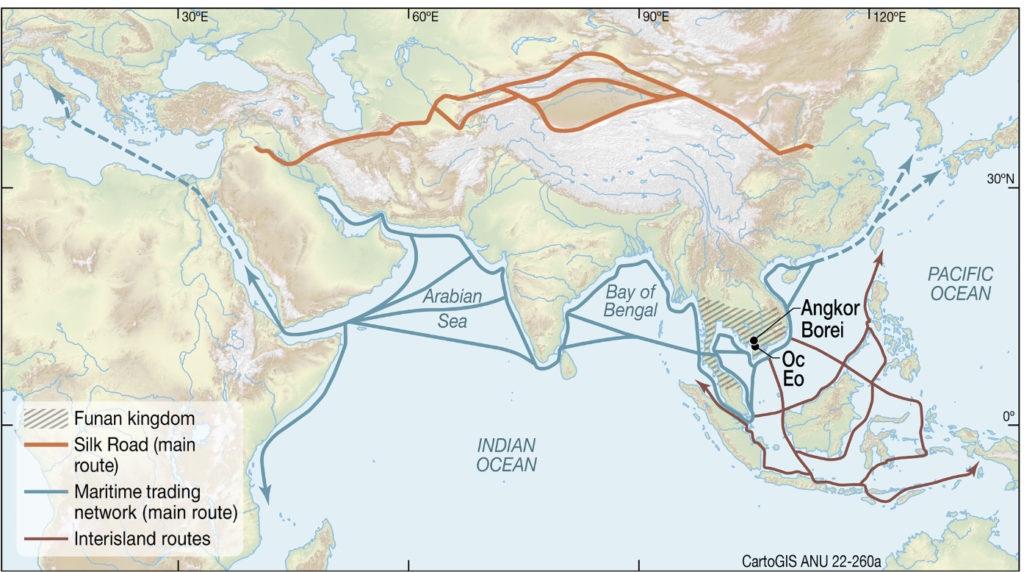
Image: Potential maritime trading networks, the realm of Funan, and the location of Oc Eo. (Source: Authors)
In fact, the research found the oldest evidence of curry ever found outside India.
Research has shown that the history of curry began more than 4,000 years ago in India where starch grains of turmeric, ginger, eggplant, and mango were found in human teeth and in cooking pots during archaeological excavations.
Further, earlier studies in South Asia have reported archaeological presences of black pepper, mustard, clove, nutmeg, and cardamom.
Representative image: Spices (Source: CANVA)
Weiwei Wang and Hsiao-chun Hung, researchers at the Australian National University, say:
“Before this study, we had limited evidence of ancient curry at archaeological sites – and the little evidence we did have mainly came from India. Most of our knowledge of the early spice trade has therefore come from clues in ancient documents from India, China and Rome.”
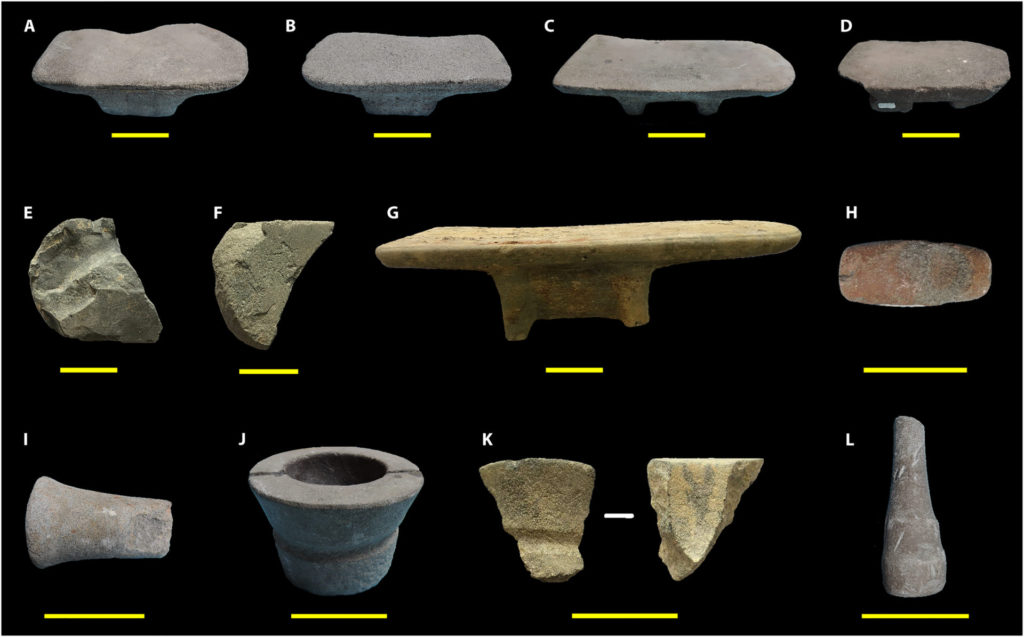
The researchers used a technique called starch grain analysis to analyze microscopic remains recovered from a range of grinding and pounding tools excavated from the Oc Eo site.
They add:
“We made the intriguing discovery at the Oc Eo archaeological complex in southern Vietnam. We found eight unique spices, originally from different sources, which were likely used for making curry. What’s even more fascinating is that some of these would have been transported over several thousand kilometres by sea.”
Oc Eo is located on the border between An Giang and Kien Giang provinces on the southwestern side of the Mekong Delta, southern Vietnam.
Image: An aerial view of brick foundations at Go Sau Thuan in the Oc Eo complex (Source: Khanh Trung Kien Nguyen)
From 2017 to 2019, most of the stone grinding tools, “pesani”, were excavated by the research team and some were previously collected by the local museum.
At the Oc Eo site were also excavated Hindu and Buddhist religious monuments as it was considered an important centre for the processing of metals, glass for jewellery, and pottery.
Representative image: Ancient food preparation equipment reported in this research – (A to D and G) Footed grinding slabs. (E and F) Fragments thereof. (H, I, and L) Mullers/ pestles. (J) Complete mortar. (K) Mortar fragment (for details, see Supplementary Materials, table S2). Scale bar, 10 cm (Source: Authors)
Researchers note that the Indian stone grinding type tools were initially brought to Oc Eo by early migrants from the region and later locally manufactured.
The researchers add:
“Of the 40 tools we analysed, 12 produced a range of spices including turmeric, ginger, fingerroot, sand ginger, galangal, clove, nutmeg and cinnamon. This means the occupants of the site had indeed used the tools for food processing, including to powder the rhizomes, seeds and stems of spice plants to release flavour.”
The researchers recovered a total of 717 starch grains from the surfaces of the 12 studied implements, of which 604 were identifiable to species.
The starch grain analysis on spices found at Oc Eo confirmed that these wouldn’t have all been available in the region naturally. These spices would have been transported either via the Indian or Pacific Ocean.
The artifacts analyzed in the research corresponded with traditional Indian spice grinding tools. Thus the researchers observe that it proved “curry has a fascinating history beyond India, and that curry spices were coveted far and wide.”
“So it’s interesting to note that nearly 2,000 years ago, individuals living outside India had a strong desire to savour the flavors of curry – as evidenced by their diligent preparations.”
This new study has contributed to the knowledge about how Indian culture influenced the formation of early Southeast Asian cuisines within the global spice trade and colonial networks.
Support Our Journalism
Global Indian Diaspora needs fair, non-hyphenated, and questioning journalism, packed with on-ground reporting. The Australia Today – with exceptional reporters, columnists, and editors – is doing just that. Sustaining this needs support from wonderful readers like you.
Whether you live in Australia, the United Kingdom, Canada, the United States of America, or India you can take a paid subscription by clicking Patreon. Buy an annual ‘The Australia Today Membership’ to support independent journalism and get special benefits.
The cancellation of the 2026 Commonwealth Games by Victorian Premier Daniel Andrews took all stakeholders – Commonwealth Games officials, athletes, sports bodies and local government officials – by surprise.
The Andrews administration will likely deal with the political fallout from not honouring its contract to host the games, but there may be legal and reputational damage ahead.
The principal reason given for pulling out of the games was financial. The Victorian government has said that based on its projections, the costs had ballooned from the initial projection of A$2.6 billion to more than A$6 billion. Such an investment could no longer be justified.
There were hints earlier this year that a significant reassessment of Victoria’s commitment to the games was taking place.
In the state budget for 2023–24, delivered in May, the treasury admitted the risks to Victoria’s economic outlook were greater than normal. The state has a growing debt burden, with net debt forecast to grow from about $135.4 billion in 2024 to $171.4 billion by 2026–27.
These projections mean Victoria’s net debt as a proportion of the state economy would, by the time the games were to take place in 2026, be approaching 24%. This is also going to be an election year in Victoria.
Victoria’s debt is due in part to long periods of lockdown during the COVID pandemic, which necessitated significant public spending. In some senses, the Commonwealth Games could be said to be a victim of long COVID.
Other reasons behind the cancellation
Behind the financial reasons for cancelling the games, there were a number of other factors in play.
First, it would be far easier in financial, contractual and reputational terms to not honour a contact with the Commonwealth Games Federation than it would be to pull out of an Olympics or a World Cup. The revenues generated by the Commonwealth Games in terms of sponsorships, broadcasting, ticketing and sports tourism are a fraction of those generated during one of the other two mega-events.
Second, in a sporting context, the largest sports in Victoria – Australian Rules football, the football and rugby codes and cricket – will largely be unaffected by Victoria not hosting the games. Other sports such as swimming and field hockey, for which the games are important in terms of participation, broadcasting and commercial exposure for the athletes, are easier for the government to let down.
Third, the blowback from regional Victoria, which was to be the hosting hub for the games, will be softened by the fact that investment commitments will still be upheld by the government. Some $2 billion will be directed to social and affordable housing and other infrastructure commitments in the regions.
A breach of contract and likely settlement
However, the issue for government lawyers as they deal with the ramifications of walking away from the host contract is that, in strict legal terms, all of this context is irrelevant to the other party, the Commonwealth Games Federation.
In signing a contract, the Victorian government was saying it was willing and financially able to host the games. And the federation had the legitimate expectation the games would be delivered, as per the contract.
It is very unlikely this matter will end up in court – it will almost certainly be settled through compensation to the federation for breach of contract.
On damages, Katie Sadleir, the chief executive of the Commonwealth Games Federation, said expected revenues would be taken into account.
There are a series of clauses [in the host contract] that articulate the kind of cash flows that would have happened if the games had gone on.
There are likely also to be discussions on compensation for the reputational damage that has been done to the Commonwealth Games brand and for the logistical nightmare of searching for a new host.
Commonwealth Games representatives are likely to question the government’s projections of cost blowouts and ask whether they had been exaggerated to provide cover for pulling out of the contract. The initial cost projections were in line with the costs of recent games in the Gold Coast (2018) and Birmingham (2022).
Plus, independent reports suggested the Birmingham games resulted in a considerable net benefit to the English Midlands region.
Moreover, the federation is likely to stress that what the Victorian government did is highly unusual in the history of mega sporting events.
Another argument the federation could make: it was the government’s decision to host the games in its regional areas (thus entailing significant infrastructure costs).
According to John Coates, vice president of the International Olympic Committee, this regional model was never workable without federal support. Now, the fact it proved unworkable is a loss the Victoria government must bear.
Reputational damage for the games themselves
There is no doubt the Victorian government is currently in an uncomfortable spot. Victoria prides itself as being the sporting centre of Australia. It hosts the Boxing Day Test, followed by the Australian Open, the Formula One Grand Prix, the AFL Grand Finals and the Melbourne Cup. There will be some collateral reputational damage associated with this decision.
In the longer term, the Commonwealth Games are also now in a confronting position. The games are not as popular or prominent as they once were. Although the Olympics can carry it off as a commercial juggernaut, hosting a multi-sports event once every four years is difficult to sustain with ever-increasing costs.
The sports world moves on quickly and to be blunt the appeal of the Commonwealth Games is struggling to maintain the pace. Even though the cancellation was a shock on Tuesday, the attention of the Australian sporting public was soon diverted to the next Ashes cricket test and the Women’s World Cup.
The inaugural edition of the Commonwealth Games – then known as the British Empire Games – was held in Hamilton, Ontario, in August 1930. A month earlier, the first edition of the men’s FIFA World Cup took place in Uruguay.
At the time, the events were of a similar magnitude. They are not anymore.
There is no doubt the centenary of the FIFA World Cup in 2030 will be a genuinely global celebration. The legacy of Victoria’s aborted 2026 Commonwealth Games may well be that the 2030 centenary edition struggles even to find a host.
Global Indian Diaspora needs fair, non-hyphenated, and questioning journalism, packed with on-ground reporting. The Australia Today – with exceptional reporters, columnists, and editors – is doing just that. Sustaining this needs support from wonderful readers like you.
Whether you live in Australia, the United Kingdom, Canada, the United States of America, or India you can take a paid subscription by clicking Patreon. Buy an annual ‘The Australia Today Membership’ to support independent journalism and get special benefits.
It is paramount to integrate leadership and ethics if the students aspire to be the leaders of today and tomorrow. Global South academic and student leaders strive hard to achieve a place for themselves. Overall, every teacher is responsible for teaching not just the subject alone but also promoting ethical values like honesty, integrity, respect, compassion, and fairness.
The students should be encouraged to consider the ethical implications of their actions, thereby nurturing a sense of personal responsibility and accountability. Students should comprehend and develop leadership skills to make rational decisions in real-world scenarios when they are faced with ethical dilemmas.
Efforts should be made to create a suitable platform to lead in order to address the issues surrounding them. The encouragement on the ethical aspects should be taken into consideration. The cultivation of leadership abilities and ethical behaviour shall shape the human capital to be the future leaders who shall contribute positively within the society and nation building. This op-ed highlights Encounters and Dilemmas of everyday life to motivate the students to be the future leaders of tomorrow with ethical values.
Ethical Encounters and Ethical Dilemma
An ethical encounter for a student can be when a student has an assignment due the next day, what shall that student do, does he/she attempt to research and write the assignment, or does the student copy from the internet or a friend to submit the assignment?
In professional life, an ethical encounter can be a close friend misses his assigned task in an organisation, what shall the person do to let the colleague continue the unethical practices, or should one report it to the concerned authorities? If one goes a bit higher at a national level, should capital punishment be banned/legalized in different nations? When addressing global issues, is it acceptable for developed nations to test their nuclear test in the Pacific Islands, as happened in the past?
Noel Preston (Understanding Ethics, 2007) defines “ethics as concerning about what is right, fair, just or good; about what we ought to do, not just what is the case or what is most acceptable or expedient?” Some scholars believe critical reasoning and a critical mind take time to develop through continuous lifelong experience.
Ethical Dilemma is generally explained when the alternatives all seem wrong/right in some way but one has to choose among the available options. Ethical Dilemma involves ‘the need to choose from two or more morally acceptable courses of action or sometimes the need to choose between equally unacceptable alternatives’ (Hamric, Spross, and Hanson, 2000).
Image: the Trolley Problem
Philippa Foot (1967) poses ‘the Trolley Problem’: a fictional scenario in which an onlooker has the choice to save five people in danger of being hit by a trolley by diverting the trolley to kill just one person. What will you do: to save one person? Let the five people die? or you can do nothing by standing as an innocent bystander?
This problem was made complex by ‘The Trolley and the Fat Man’ (J.J. Thomson, 1985). You are standing on an overpass that looks out over the track. There are five people tied down on the track, and the trolley is speeding toward them. This time, there is no spur, but there is a fat man near you on the bridge. If you throw him over the edge, he will land on the track and stop the car with his weight. In the process, he will die. What do you do: Will you push the fat man? Do nothing so five people will die? Be an innocent bystander?
To answer these ethical dilemmas, two approaches are usually adopted by theorists, the first being consequentialist that argue that the actions that lead to harm is permissible if it promotes a good end, whereas non-consequentialist would disagree with this and purports that killing someone (in the above to scenarios) is incorrect in all circumstances regardless of the consequence.
The Virtue of Ethics and Golden Mean
Ancient Greek philosophy, especially Aristotle’s ethical theory, is the source of the virtue of ethics and the idea of the golden mean.
Ethical virtue, according to the golden mean, may be attained by striking a middle ground between two extremes by adopting a balanced approach. The virtues of two extremes are considered as vices by Aristotle. The golden mean is the point of balance between these two extremes. For example, the vice of deficiency is cowardice, the golden mean is courage and the vice of excess is rashness; another example vice of deficiency is indecisiveness, the golden mean is self-control and the vice of excess is impulsiveness.
Golden Mean, as an ethical principle, helps the person to strive towards achieving a balance decision by avoiding both the extremes of moral deficiencies and excess. Determining the Golden Mean requires rational judgement by taking all factors into consideration. It is worth noting that Golden Mean is not a hard and fast straightforward formula for making ethical actions, but it requires practical wisdom and the capacity to adjust to the intricacies of real-world circumstances to adopt a virtuous action. Everyone has a different approach to take day-to-day ethical encounters but it depends on the personal choice to adopt the means to tackle them. Some may support the Golden Mean approach while other differs.
Image: Dr Sakul Kundra (Supplied)
Contributing Author: Dr Sakul Kundra is an Associate Dean (Research) and Assistant Professor at the College of Humanities and Education at Fiji National University. The views expressed are his own and not of his employer.
Disclaimer: The opinions expressed within this article are the personal opinions of the author. The Australia Today is not responsible for the accuracy, completeness, suitability, or validity of any information in this article. All information is provided on an as-is basis. The information, facts, or opinions appearing in the article do not reflect the views of The Australia Today and The Australia Today News does not assume any responsibility or liability for the same.
Support Our Journalism
Global Indian Diaspora needs fair, non-hyphenated, and questioning journalism, packed with on-ground reporting. The Australia Today – with exceptional reporters, columnists, and editors – is doing just that. Sustaining this needs support from wonderful readers like you.
Whether you live in Australia, the United Kingdom, Canada, the United States of America, or India you can take a paid subscription by clicking Patreon. Buy an annual ‘The Australia Today Membership’ to support independent journalism and get special benefits.
The Indian diplomats globally are being targeted by Khalistan extremists in their “Kill India” campaign.
The High Commissioner of India in Australia Manpreet Vohra, the Consul General of India in Melbourne Dr Sushil Kumar and the Consul General of India in Sydney Manish Gupta were sent intimidating posters in which they are called “Indian Terrorists in Australia” by Khalistan extremists.
Image Source; The Australia Today
Threats to these Indian diplomats are not an isolated case but a consolidated global campaign of targeted harassment and intimidation.
A poster and video being circulated on social media has pictures of diplomats and the text reads “Indian Terrorists in Australia” Crime: Assassination of Nijjar and Terrorism against Khalistan.”
The Australia Today can confirm that a lot of social media posts by Australia-based Khalistan supporters are calling forthe “BesigeIndian Mission” against these diplomats, which stands to physically harm them.
Terror outfit ‘Sikhs for Justice’ is behind the announcement of this “Kill India” campaign with pictures of Indian diplomats in Australia, Canada and the USA.
Image Source; The Australia Today
The Australia Today has received a message from the ‘Sikhs for Justice’ chief Gurpatwant Singh Pannun claiming to be behind the “Kill India” campaign.
He says, Under the “Kill India” campaign, SFJ announced to “Besiege” the Indian Missions in Canada, USA, UK, Portugal, Italy, Germany and Australia.”
“And designating Mission Heads Sanjay Verma, Taranjit Sandhu, Vikram Doraiswami and Manpreet Vohra as “Chief Architects” of sponsoring and inciting violence against Khalistan supporters.”
Image Source; The Australia Today
The Australia Today has reached out to Indian High Commission and Consulate General. A highly placed official who doesn’t want to be named told The Australia Today, “We have provided threatening pictures and videos circulating in social media to local security officials (Victoria Police and Australia Federal Police).”
“Australian authorities have the responsibility to provide adequate security to Indian mission and diplomats.”
The official also pointed out that despite repeated threats to Indian diplomats the inadequate response is very frustrating.
The Australia Today has reached out to the Department of Foreign and Trade (DFAT) and other security stakeholders, as soon as we shall receive a response the story will be updated.
Support Our Journalism
Global Indian Diaspora needs fair, non-hyphenated, and questioning journalism, packed with on-ground reporting. The Australia Today – with exceptional reporters, columnists, and editors – is doing just that. Sustaining this needs support from wonderful readers like you.
Whether you live in Australia, the United Kingdom, Canada, the United States of America, or India you can take a paid subscription by clicking Patreon. Buy an annual ‘The Australia Today Membership’ to support independent journalism and get special benefits.
A delegation of Indian businesses representing industry bodies – TEXPROCIL – The Cotton Textiles Export Promotion Council, Council For Leather Exports – India (CLE), Carpet Export Promotion Council (CEPC) and Federation of Indian Export Organisations (FIEO) from India, recently showcased their export offerings for the Australian market at the Global Sourcing Expo at the International Convention Centre in Sydney (ICC Sydney). The delegation was co-hosted by the Consul General of India in Sydney and the Australia India Business Council (AIBC).
Consul General of India, Sydney, Manish Gupta
This was one of the largest delegations from India, of more than 40 companies, looking to explore collaboration leveraging the Australia India Economic Cooperation and Trade Agreement (AIECTA) agreement based on bilateral opportunities.
Rakesh Kumar Choudhary from TEXPROCIL, who was part of the delegation mentioned that India is working on developing its own cotton brand ‘Kasturi’ with inputs from Australian technology.
The AIBC also organised B2B sessions along with Australian Chapter of the ICAI (Institute of Chartered Accountants of India) Sydney representatives with several of these companies to match them with market opportunities and potential supply chain partners in Australia.
Speaking with The Australia Today Consul General of India in Sydney, Mr Manish Gupta, said that this was the first such delegation from the textile, home furnishings, leather goods and carpet sectors from India to come to Australia after the signing of the Australia India Economic Cooperation and Trade Agreement. He added that there are huge opportunities here and that he was hopeful that these Indian products will make a huge impact in the Australian market.
With reference to the textile and leather sectors, National Chair of AIBC, Jodi McKay, told The Australia Today that as the market expands and grows, Australian businesses who have traditionally focussed on China in these two sectors, need to be brave and come out of their comfort zones to look at new way of doing things
National Chair of AIBC, Jodi McKay
National Chair of AIBC, Jodi McKay, speaking with Pallavi Jain
Irfan Malik, National Associate Chair & President NSW, AIBC said that it was great to see the interest and drive from Indian businesses across several industry sectors supported by the Industry bodies and Indian Government to engage with Australian market to explore business and market access pathways leveraging AIECTA agreement.
National Associate Chair & President NSW, AIBC, Irfan Malik
“Some of these opportunities that have opened up are purely based on the people to people connect and have been facilitated by the Indian Diaspora led Business community. This has been a great example of leveraging the strong Indian Diaspora business networks in Australia.”
Further outcomes such as virtual buyer seller meet and market entry / launch activities are being organised to support these businesses added Mr Malik.
The Fair Work Ombudsman has secured $30,000 in penalties in court against a construction and home maintenance company in Brisbane and its director.
The Federal Circuit and Family Court has imposed a $25,000 penalty against Design Wolf Solutions Pty Ltd, which has traded as Designwolf Building Solutions, and a further $5,000 penalty against company director Brenton John Bound.
The penalties were imposed in response to Design Wolf Solutions’ failing to comply with a Compliance Notice requiring it to calculate and back-pay entitlements owed to an adult apprentice builder it employed between August 2020 and May 2021.
Mr Bound was involved in the contravention.
In addition to the penalties, the court has ordered Design Wolf Solutions to back-pay the worker’s outstanding entitlements in full, plus interest.
Representative picture of Construction and home maintenance company; Image Source: @CANVA
Acting Fair Work Ombudsman Kristen Hannah said business operators that fail to act on Compliance Notices need to be aware they can face penalties in court on top of having to back-pay workers.
“When Compliance Notices are not followed, we are prepared to take legal action to ensure workers receive their lawful entitlements,”
Ms Hannah said.
“Any employees with concerns about their pay or entitlements should contact the FWO for free assistance.”
The FWO investigated after receiving a request for assistance from the affected worker, who was aged 23 when he commenced employment with Design Wolf Solutions.
Fair Work Inspectors issued a Compliance Notice to Design Wolf Solutions in September 2021 in response to the company underpaying the worker’s annual leave entitlements under the Fair Work Act’s National Employment Standards.
Representative picture of Construction and home maintenance company; Image Source: @CANVA
Judge Salvatore Vasta found that there had been a complete failure by Design Wolf Solutions and Mr Bound to engage with the Fair Work Ombudsman to resolve the matter.
“The behaviour of both respondents has been to treat the Compliance Notice with utter contempt,”
Judge Vasta said.
In imposing the penalties, Judge Vasta said: “Deterrence will only be met if there are meaningful consequences for the behaviour exhibited by the respondents.”
Employers and employees can visit www.fairwork.gov.au or call the Fair Work Infoline on 13 13 94 for free advice and assistance about their rights and obligations in the workplace. An interpreter service is available on 13 14 50.
Slower employment growth, faster population growth and a steady rate of unemployment are the main stories from the Bureau of Statistics’ labour force update, released on Thursday.
Employment climbed by 32,600 between May and June, while the population grew 49,900. The rate of unemployment (happily) remains fixed at 3.5 per cent, although to two decimal places, it fell from 3.55% to 3.47%.
This story isn’t new. The waning of the Delta wave of COVID-19 from late 2021 brought a strong recovery in the demand for workers. Even after the immediate bounce-back from lockdowns, employment grew impressively.
In the nine months from November 2021, total employment increased by an average of 55,000 per month – double the 20,000 to 30,000 common before COVID.
Thereafter, employment growth has grown more slowly, by an average of 35,600 per month since August 2022.
Population growth has climbed as employment growth has slowed. During the nine months to August 2022, in which major restrictions on immigration remained, it averaged 37,200 per month.
After that time, with those restrictions removed, population growth averaged 50,300 per month.
Who is getting work has been changing
Mid-2022 didn’t just mark a change in the pace of employment growth. It also marked a shift in the sources of employment growth.
Up to August 2022, extra workers had been drawn from unemployment and from new entrants joining the labour force, as well as from population growth.
But since August 2022, employment growth has come almost entirely from population growth. The rates of unemployment and of labour force participation have remained largely constant.
Why unemployment didn’t jump
A combination of slowing job growth and faster population growth ought to have pushed up the unemployment rate. But so far that hasn’t happened.
Having hit a low of 3.5% in August 2022, unemployment has stayed there pretty much the whole time since.
The reason is our record level of job vacancies. Fewer new jobs are being created, but an unusually high number of vacancies is keeping the demand for workers high.
New entrants to the labour force have been able to take up those vacancies, rather than becoming unemployed.
Where population growth coming from
The higher rate of population growth is coming from increased immigration, a term that encompasses international students and working holidaymakers.
Net overseas migration (the extent to which arrivals exceed departures) averaged 23,270 per month in the first half of 2022, and then 35,200 in the second half.
A big part of the growth is from the return of international students and working holidaymakers.
Unsurprisingly, the biggest reductions in job vacancies came in the occupations where these temporary visa holders make up the largest shares of the workforce.
Since mid-2022, the vacancy rate for food trade workers has fallen from 4.4% to 3.0%, the largest fall by far of any occupation group.
Vacancy rates for hospitality and food preparation workers have each fallen by about three-quarters of a percentage point.
Where to from here
Continued (now modest) growth in new job creation, together with the huge backlog of vacancies, might well allow the rate of unemployment to remain around its current level – even with a high rate of population growth.
Whether that does indeed happen depends on how future growth in new jobs is affected by actions of the Reserve Bank aimed at dampening economic growth.
So far, these actions have slowed the jobs market, but haven’t sent it into a tailspin.
Whether that remains the case will be the story to watch in the coming months.
Global Indian Diaspora needs fair, non-hyphenated, and questioning journalism, packed with on-ground reporting. The Australia Today – with exceptional reporters, columnists, and editors – is doing just that. Sustaining this needs support from wonderful readers like you.
Whether you live in Australia, the United Kingdom, Canada, the United States of America, or India you can take a paid subscription by clicking Patreon. Buy an annual ‘The Australia Today Membership’ to support independent journalism and get special benefits.
Healthcare provider Apollo Health Limited has back-paid staff more than $4.86 million, including interest and superannuation, and signed an Enforceable Undertaking (EU) with the Fair Work Ombudsman.
The not-for-profit charitable organisation, owned by St John Ambulance Western Australia Limited (St John WA) since 2016, self-reported to the regulator in November 2021 after discovering underpayments during a self-initiated review.
Apollo Health operates a range of medical centres, trading as St John Health, which provide medical, dental, urgent care, pharmacy, physiotherapy, imaging and diagnostic services across Western Australia.
Underpayments were caused by payroll issues that were not identified by St John WA when it acquired Apollo Health in 2016. There were also failures to correctly apply some provisions of the relevant modern awards, and time recording was found to be inadequate or incomplete.
As a result, between July 2013 and July 2021, Apollo Health underpaid 446 current and former employees about $3.8 million, excluding superannuation and interest.
Employees were underpaid their minimum rates, overtime, penalty rates, allowances, annual leave and annual leave loading owed under modern awards, the National Employment Standards and the Fair Work Act.
The company has remediated all underpayments to all employees it could find, with more than $4.86 million, including interest and superannuation, back-paid to 438 current and former employees.
Most back-payments range from $15 to $12,000. The highest backpayment was $139,446.
Before this EU commenced, Apollo Health paid to the FWO the money owed to the remaining eight former employees who are not yet located.
Acting Fair Work Ombudsman Kristen Hannah said an EU was appropriate as Apollo Health had cooperated with the FWO’s investigation and demonstrated a strong commitment to rectifying underpayments.
“Under the Enforceable Undertaking, Apollo Health has committed to implementing stringent measures to ensure all of its workers are paid correctly. These measures include commissioning, at its own cost, an independent audit to check its compliance with workplace laws next year,” Ms Hannah said.
“This matter demonstrates how important it is for employers to place a high priority on their workplace obligations, to ensure that their systems provide for full compliance with all entitlements. Shortcomings in Apollo Health’s payroll system and broader compliance were left unchecked, which led to hard-working employees missing out on their money,” Ms Hannah said.
“We expect all employers to invest the time and resources to regularly review whether they are meeting all lawful entitlements and to remedy any issues.”
Underpaid employees, engaged full-time, part-time and casually, worked in medical centres in Armidale, Cannington, Cockburn, Joondalup, and Kambalda. They had health, professional and support service roles and performed healthcare, medical, dental and nursing duties.
The EU also requires Apollo Health to write to all underpaid employees to notify them of the commencement of the EU; publish a notice in a newspaper about its contraventions; and establish a telephone hotline plus a dedicated email for all employees who worked during the relevant period to make enquiries.
Support Our Journalism
Global Indian Diaspora needs fair, non-hyphenated, and questioning journalism, packed with on-ground reporting. The Australia Today – with exceptional reporters, columnists, and editors – is doing just that. Sustaining this needs support from wonderful readers like you.
Whether you live in Australia, the United Kingdom, Canada, the United States of America, or India you can take a paid subscription by clicking Patreon. Buy an annual ‘The Australia Today Membership’ to support independent journalism and get special benefits.
The International Agency for Research on Cancer (IARC), which is the specialised cancer agency of the World Health Organization, has declared aspartame may be a possible carcinogenic hazard to humans.
Another branch of the WHO, the Joint WHO and Food and Agriculture Organization’s Expert Committee on Food Additives has assessed the risk and developed recommendations on how much aspartame is safe to consume. They have recommended the acceptable daily intake be 0 to 40mg per kilo of body weight, as we currently have in Australia.
A hazard is different to a risk. The hazard rating means it’s an agent that is capable of causing cancer; a risk measures the likelihood it could cause cancer.
It’s used in a variety of products including carbonated drinks such as Coke Zero, Diet Coke, Pepsi Max and some home brand offerings. You can identify aspartame in drinks and foods by looking for additive number 951.
Food products such as yogurt and confectionery may also contain aspartame, but it’s not stable at warm temperatures and thus not used in baked goods.
Commercial names of aspartame include Equal, Nutrasweet, Canderel and Sugar Twin. In Australia the acceptable daily intake is 40mg per kilo of body weight per day, which is about 60 sachets.
In America the acceptable daily intake has been set at 75 sachets.
What evidence have they used to come to this conclusion?
IARC looked closely at the evidence base from around the world – using data from observational studies, experimental studies and animal studies.
They found there was some limited evidence in human studies linking aspartame and cancer (specifically liver cancer) and limited evidence from animal studies as well.
They also considered the biological mechanism studies which showed how cancer may develop from the consumption of aspartame. Usually these are lab-based studies which show exactly how exposure to the agent may lead to a cancer. In this case they found there was limited evidence for how aspartame might cause cancer.
There were only three human studies that looked at cancer and aspartame intake. These large observational studies used the intake of soft drinks as an indicator of aspartame intake.
All three found a positive association between artificially sweetened beverages and liver cancer in either all of the population they were studying or sub-groups within them. But these studies could not rule out other factors that may have been responsible for the findings.
A study conducted in Europe followed 475,000 people for 11 years and found that each additional serve of diet soft drink consumed per week was linked to a 6% increased risk of liver cancer. However the scientists did conclude that due to the rarity of liver cancer they still had small numbers of people in the study.
In a study from the US, increased risk of liver cancer was seen in people with diabetes who drank more than two or more cans of a diet soda a week.
The third study, also from the US, found an increase in liver cancer risk in men who never smoked and drank two or more artificially sweetened drinks a day.
From this they have decided to declare aspartame as a Group 2b “possible carcinogen”. But they have also said more and better research is needed to further understand the relationship between aspartame and cancer.
IARC has four categories (groupings) available for potential substances (or as they are referred to by IARC, “agents”) that may cause cancer.
What does each grouping mean?
Group 1 Carcinogenic to humans: an agent in this group is carcinogenic, which means there is convincing evidence from human studies and we know precisely how it causes cancer. There are 126 agents in this group, including tobacco smoking, alcohol, processed meat, radiation and ionising radiation.
Group 2a Probably carcinogenic to humans: there are positive associations between the agent and cancer in humans, but there may still be other explanations for the association which were not fully examined in the studies. There are 95 agents in this group, including red meat, DDT insecticide and night shift work.
Group 2b Possibly carcinogenic in humans: this means limited evidence of causing cancer in humans, but sufficient evidence from animal studies, or the mechanism of how the agent may be carcinogenic is well understood. This basically means the current evidence indicates an agent may possibly be carcinogenic, but more scientific evidence from better conducted studies is needed. There are now 323 agents in this group, including aloe vera (whole leaf extract), ginkgo biloba and lead.
Group 3 Not classifiable as a carcinogen: there’s not enough evidence from humans or animals, and there is limited mechanistic evidence of how it may be a carcinogen. There are 500 agents in this group.
So do I have to give up my diet soft drink habit?
For a 70kg person you would need to consume about 14 cans (over 5 litres) of soft drink sweetened with aspartame a day to reach the acceptable daily intake.
But we need to remember there may also be aspartame added in other foods consumed. So this is an unrealistic amount to consume, but not impossible.
We also need to consider all the evidence on aspartame together. The foods we typically see aspartame in are processed or ultra-processed, which have recently also been shown to be detrimental to health.
And artificial sweeteners (including aspartame) can make people crave more sugar, making them want to eat more food, potentially causing them to gain more weight.
All together, this indicates we should be more careful about the amount of artificial sweeteners we consume, since they do not provide any health benefits, and have possible adverse effects.
But overall, from this evidence, drinking the occasional or even daily can of a diet drink is safe and probably not a cancer risk.
Correction: this article originally stated each serve of soft drink in a study was linked to a 6% increased risk of liver cancer, however it was each additional serve per week. This has been amended.
Australia’s next Reserve Bank governor, Michele Bullock – the first woman in the job – will take office in September at a time when much of the bank’s work in fighting inflation will be done and its focus will be on changing the way it operates.
We congratulate Michele Bullock as next RBA Governor. An outstanding economist, Michele is well placed to navigate future economic challenges. Governor Philip Lowe will continue his term until 17 September with Michele commencing 18 September. https://t.co/6NLOdrOWfq#RBA#auspolpic.twitter.com/9wrCJIfy1o
— Reserve Bank of Australia (@RBAInfo) July 14, 2023
She is already the deputy governor, having been appointed to that post by the previous treasurer Josh Frydenberg in April last year.
Both Treasurer Jim Chalmers and Prime Minister Anthony Albanese say she is the right person to implement recommendations of the independent review of the bank intended to make it less insular and more open to outside perspectives.
BREAKING: Congratulations Michele Bullock, Australia’s 9th Reserve Bank Governor.
Michele is an outstanding economist, with a long and distinguished career at the central bank.
At a critical time for the global economy, her job will be an important one.
Yet, as a 38-year veteran of the bank, having joined in 1985, she could be seen as perhaps another insider.
But in another way she is an outsider, having been in positions outside of the core economic policy group since 1998 and only being on the RBA’s Board for the past year.
In those 25 years, Bullock has worked as either assistant governor or head of the parts of the bank that deal with the payments system, the financial system, business services, and the issuing of currency.
Not being part of the group that helped make the interest rate decisions for which the bank has come under makes her well placed to do things differently.
Bullock was raised in regional New South Wales and studied economics at high school and the University of New England, graduating with honours.
She inherits an organisation criticised in this year’s independent review for being “insular” and vulnerable to “group think” and for encouraging mortgage holders to believe it would not be increasing rates shortly before it began a series of 12 near-consecutive rate increases in May 2022.
Why was Philip Lowe passed over?
Chalmers was keen to point out that the decision not to reappoint Governor Philip Lowe at the end of his seven-year term was in no day a personal reflection of Lowe’s work, thanking him
for more than four decades of dedication and commitment and service, not just to the Reserve Bank and not just to the economy, but to our country as well; Phil Lowe goes with our respect, he goes with our gratitude, and he goes with dignity.
Lowe’s work during the early years of the COVID crisis was indeed top-notch. He worked around the clock to keep the economy afloat during a myriad of lockdowns and shortages.
However the government clearly thought he was not the best person to lead the bank from here on, even though he had said he was prepared to serve. Why not?
Here are three reasons:
One is the mistake he made as governor trying to keep the unemployment rate high to reign in home prices prior to the pandemic.
Under Lowe, the bank adopted a deliberate policy of keeping interest rates higher than were needed to restrain inflation, leading to higher-than-needed unemployment.
An estimate by myself and Andrew Leigh, calculated using the Reserve Bank’s own economic model published in the Economic Record, finds this cost the economy more than 270,000 jobs.
Another reason to deny Lowe a second term is the bank’s mistaken approach to forward guidance, which effectively promised Australian households that interest rates would stay near zero until 2024. This turned out not to happen, hurt many home buyers and damaged the bank’s credibility.
And yet another reason is that the review of the bank found a hierarchical work environment in which decisions were not questioned, staff were not listened to and agreement with those at the top was encouraged.
Lowe rejected several of these findings, which is why changing the culture at the top of the bank would have been difficult had he remained.
What’s next?
The big question facing the bank at the moment is how high to lift interest rates to reign in inflation and bring it back towards the RBA’s 2–3% target band.
Bullock and her replacement as deputy (to be announced by Chalmers shortly) take office in September.
By then it is unlikely there will be much to do differently. Inflation is on the way down throughout the world. This week US inflation fell to just below 3%, the least since March 2022. Australia gets its next quarterly update this month.
On Friday the ANZ bank changed its view of the future course of interest rates, saying it expected no further hikes from here on.
It stressed this change of view was unrelated to the change of governor.
In its view, consumer spending was deteriorating, and much of the damage from the 12 interest rate rises to date was yet to be felt.
Whether or not Bullock faces fewer challenges than Lowe did, she is well placed to lead one of Australia’s most important institutions into the 21st century.
From being an outsider to crossing global boundaries, Priyanka Chopra established herself as an influential icon with her outstanding work over the years.
Her acting chops definitely helped her garner the limelight. She has been in the film industry for 20 years and with every project, she has always tried to give her best. As she turns a year older on July 18, let’s take a look at some of her outstanding performances.
Priyanka portrayed the role of an autistic girl, Jhilmil, in director Anurag Basu’s film ‘Barfi’. The romantic comedy-drama film was released in the year 2012 and also starred Ranbir Kapoor, Ileana D’cruz in the lead roles. This is still one of her most memorable performances. PeeCee received a lot of appreciation from the audience for her amazing performance and the was declared a hit.
The global icon portrayed the role of Indian boxing champion Mary Kom in her biopic. The film was helmed by Omung Kumar and also starred Darshan Kumaar in the lead role. For the film, Priyanka made every effort to be perfect, from mastering fundamental boxing techniques to acing her physical transformation and much more.
Talking about Priyanka’s best films, how can we forget about Madhur Bhandarkar’s drama film ‘Fashion’. She received a National Award for her performance in the film. Priyanka portrayed the role of Meghna Mathur, a small-town girl with enormous hopes of becoming a top fashion model. The film follows her journey as she becomes engrossed in the glamour world and loses sight of herself as she strives to become a top model. Kangana Ranaut and Mugdha Ghodse also played important parts in this film.
Helmed by the director duo Abbas-Mastan, Priyanka played the role of a bold, confident, wealthy, and powerful lady who is obsessed with her job and will do anything for name and glory. She received massive responses for the negative character in the film from the audience. The film also starred Akshay Kumar, Kareena Kapoor Khan and Amrish Puri in the lead roles and was declared a hit.
Helmed by Sanjay Leela Bhansali the film was released in the year 2015 and was declared a blockbuster hit. Priyanka played the role of Kashibai, the wife of Peshwa Bajirao in which she excelled. Her confidence, her emotions and her dialogue delivery everything about her performance was on point. The film also starred Ranveer Singh and Deepika Padukone in the lead roles.
Which of Priyanka Chopra movies is your favourite?
Victoria’s Premier Dan Andrews has cancelled hosting the 2026 Commonwealth Games because they were too expensive.
The rights to host the 2026 event were awarded to regional Victoria last year after Birmingham replaced South Africa’s Durban as host of the 2022 Games.
But Victorian Premier Daniel Andrews announced on Tuesday his government would no longer support the Games because it was clear the cost would exceed $6 billion.
“We were pleased to be asked to host the 2026 Commonwealth Games – but not at any price. I think all Victorians would agree that more than $6 billion is just too much,” said Premier Andrews.
“Frankly, $6 billion to $7 billion for a 12-day sporting event, we are not doing that – that does not represent value for money, that is all costs and no benefit,”
he added.
The Victorian government set aside $2.6b for the event, with Geelong, Bendigo, Ballarat and Gippsland slated to host their own athletes’ villages and sports programs.
Mr Andrews said the government considered moving the Games to Melbourne, holding fewer sports and having fewer regional hubs, but all options were too expensive.
“None of those options stack up, and we’re not going to be hosting the Games in 2026,”
he said.
Treasurer Tim Pallas had been seeking a dollar-for-dollar contribution from the federal government.
Mr Andrews said even if the federal government did come to the party, the Games were not worth the money.
“I wouldn’t spend half of that money even if I got the other half from Canberra, because you know that’s coming at the expense of something else – hospitals, schools, roads,”
he said.
Prime Minister Anthony Albanese said the decision was one for the Victorian government.
About 100 people based in Geelong were employed to co-ordinate the Games, with some of them expected to lose their jobs, while others had been seconded from other roles.
Regional Victoria became the only bidder for the Games after Durban in South Africa lost the 2022 event, and the original 2026 host city Birmingham had to step in for last year’s competition.
Meetings were held with Commonwealth Games leadership in London on Monday night Australian time and will continue.
Victorian Opposition Leader John Pesutto and Nationals Leader Peter Walsh described the scrapping as “a massive humiliation for Victoria”.
“The cancellation of the Commonwealth Games is hugely damaging to Victoria’s reputation as a global events leader,”
they said in a joint statement.
The Victorian government statement says the main reason we agreed to host the Games was to deliver lasting benefits in housing, tourism and sporting infrastructure for regional Victoria.
While Victoria will no longer host the Games, some infrastructure projects will still go ahead.
There will be $1b spent on more than 1300 new social and affordable housing homes across regional Victoria, $150 million will be spent on tourism and events, and all of the permanent and upgraded sporting facilities planned will go ahead.
The new homes will include a mix of social and affordable housing – and we’ll work with councils, regional partnerships and local communities to determine the right mix of stock and locations for each region.
The government statement says, “Tourism is a vital part of regional Victoria’s economy. A new $150 million Regional Tourism and Events Fund will ensure our regions have the best of everything on offer with new events, new attractions and more accommodations. “
Every one of the permanent new and upgraded sporting infrastructure projects planned as part of the Games will still proceed – and all shall be completed as planned.
Support Our Journalism
Global Indian Diaspora needs fair, non-hyphenated, and questioning journalism, packed with on-ground reporting. The Australia Today – with exceptional reporters, columnists, and editors – is doing just that. Sustaining this needs support from wonderful readers like you.
Whether you live in Australia, the United Kingdom, Canada, the United States of America, or India you can take a paid subscription by clicking Patreon. Buy an annual ‘The Australia Today Membership’ to support independent journalism and get special benefits.
The Australian Space Agency (ASA) is investigating a mysterious object found on Jurien Bay in Western Australia.
In a post, ASA said: “We are working to confirm whether the object could be part of a foreign space launch vehicle that has washed up on shore, and liaising with global counterparts who may be able to provide information about the object.”
Image source: Australian Space Agency (LinkedIn)
Netizens are buzzing with speculation regarding the origin of the mysterious objects, with a number of theories suggesting it to be part of India’s recently launched Chandrayaan-3 mission.
ISRO Chandrayaan 3; Image Source: ISRO
Given the time spent by the debris in the ocean and the number of shellfish attached to it, experts believe this could be a piece from India’s Chandrayaan-1 mission.
Dr Ajeet Kumar, who was an RA on Chandrayaan-2 Project at the Indian Space Research Organisation (ISRO), says the debris look “very similar to the “Third and fourth stages of the PSLV-C11 launcher” used during the Chandrayaan-1.”
Image: Third and fourth stages of the PSLV-C11 launcher (Source: ESA)
The above photo shows the hoisting of the third and fourth stages of the Chandrayaan-1 launcher, PSLV-C11 at the Satish Dhawan Space Center in Sriharikota.
We are currently making enquiries related to this object located on a beach near Jurien Bay in Western Australia.
The object could be from a foreign space launch vehicle and we are liaising with global counterparts who may be able to provide more information.
— Australian Space Agency (@AusSpaceAgency) July 17, 2023
As the origin of the mysterious object is unknown, ASA has requested the local community to “avoid handling or attempting to move the object.”
“We are committed to the long-term sustainability of outer space activities, including debris mitigation and continue to highlight this on the international stage.”
Further, if any member of the local community spots any further suspected debris they should immediately report it to local authorities (space.monitoring@space.gov.au).
Last August, the federal government set up an expert panel to look at teacher education in Australia.
In part, this was born out of education ministers’ concerns about the shortage of teachers around Australia and the need to “ensure graduating teachers are better prepared for the classroom”.
The panel, led by Sydney University vice-chancellor Mark Scott (who also chairs The Conversation’s board), released a discussion paper in March. The final report was released on Thursday night.
Education Minister Jason Clare supports teachers but says they need to be “better prepared” before they enter a classroom.
Teaching is a tough and complex job and this is all about making sure they are better prepared from day one.
Teachers certainly need more support to do their jobs. But this report recommends more oversight and regulation, which will not help the profession.
What’s in the report?
The Strong Beginnings report makes 14 recommendations. These include establishing “core content” for teaching degrees, or “what every teacher should know”. Universities will have to include this content in their programs if they are to retain their accreditation.
It recommends a new “quality assurance board” to oversee the changes, and public reporting on who universities accept into their teaching programs, whether those students stick to their studies and whether they get a job afterwards.
The panel also proposes “modest financial incentives” to encourage universities to make “genuine and successful efforts” to improve their teacher education programs.
And it recommends more structure around practical experience, mentoring and support for those who decide to decide to swap careers to teaching.
We do need improvements
The panel and I agree on one thing: improvements across the education sector are needed if we are to meet the goals of the 2019 Alice Springs (Mparntwe) Education Declaration. Here, all Australian education ministers agreed on a vision “for a world class education system that encourages and supports every student to be the very best they can be”.
Some recommendations have merit: boosting practical experience through system-wide placement agreements, increasing investment in practical experience, and giving professional recognition to teachers supervising education students. These proposals acknowledge graduates are shaped by the whole education system, not just content absorbed while studying.
Some recommendations are benign: improved mid-career pathways and flexible learning for post-graduate students from other fields makes sense, particularly given dire teacher shortages that are worsening attrition, not only among beginning teachers.
But the panel adopts the now all-too-familiar approach of increasing layers of regulation and telling teacher educators how to do their jobs.
Mandated core content
The first two recommendations mandate four areas of core content for universities to “add to” their initial teacher education programs:
the brain and learning, or content that provides teachers with an understanding of why specific practices work
effective pedagogical (or teaching) practices
classroom management, or how to foster positive learning environments
responsive teaching, to ensure teachers teach in ways that are culturally and contextually appropriate.
But this is a double up. This content is already required by the existing accreditation process. It’s also already examined by universities including through teaching performance assessments required of final year students. This was an outcome of a review of initial teacher education in 2014.
How students learn, effective pedagogy, classroom management, and culturally and contextually responsive teaching are central to all teacher education programs in Australia.
A surprising level of detail
What is most astonishing about the proposed core content is the level of detail provided by the panel, outlining what must be included in initial teacher education programs to meet new performance standards from the accreditation body, the Australian Institute for Teaching and School Leadership.
Here we see a level of government input into teaching degrees which would never be tolerated for medical, nursing, law or engineering programs. The content proposed is not widely agreed in the sector, either. The emphasis on “brain science” assumes a straightforward link between laboratory-based scientific evidence and its practical application in the classroom.
The 115 submissions to the panel’s discussion paper have been made public for the first time on Friday morning. This has left little time to check the panel’s claim that “stakeholders broadly supported both the core content and formalising it [via accreditation]”.
However, the University of Sydney School of Education and Social Work submission queries the reliability and trustworthiness of the evidence underpinning the proposed core content, expressing concern about “the way the evidence base itself was constructed”.
This specification of core content comes from the Australian Education Research Organisation (a government created, independent education evidence body). It has no particular expertise in research on teacher education. The approach taken is narrow and overlooks swathes of high quality research, as detailed in the University of Sydney submission.
What’s missed in education debates – which invariably pitch teaching practices against each other – is that what matters most is the underlying quality of the teaching. The report assumes new graduate teachers deliver poor teaching and their university education is to blame. This premise has been challenged by recent studies, which show new teachers teach just as well as those with years of experience.
We will need proper evaluation
The new regulations recommended by the panel treat teacher educators as if they aren’t already motivated to improve the student experience and outcomes, understand and incorporate the latest educational research, or engage in good practice. The assumption seems to be that providers will not “improve” unless incentivised financially by the panel’s recommended “transition” and “excellence” funds.
This is nonsense. Current systems of regulation and accountability mean providers are constantly required to demonstrate improvement. Teacher educators could in fact do more to refine their programs if not hamstrung by so much administration.
To be clear, I’m all for reform, having dedicated my academic career to improvements for teachers and students. But in the same way teachers need to be able to focus on teaching and learning (not paperwork), teacher educators need the time and space to do their jobs. And not be hampered by endless reviews and misguided regulation.
At a meeting on Thursday, state, territory and federal education ministers agreed in principle to all the report’s recommendations.
If this is the chosen path to improvement, then proper evaluation of these latest reform efforts is crucial. We can’t afford to arrive a few years down the track without being able to point to what did or didn’t work and why. Producing robust evidence on the impact of these reforms is essential in maintaining a focus on what really matters – better support for teachers and positive outcomes for all Australian students.
The Federal Court has imposed $60,040 in penalties against the Construction, Forestry, Maritime, Mining and Energy Union (CFMMEU) and one of its delegates for unlawful conduct on a Melbourne construction site.
The Court has imposed a $55,000 penalty against the CFMMEU and a $5,040 penalty against CFMMEU delegate Jason Roach.
The penalties are the result of legal action commenced by the Australian Building and Construction Commissioner (ABCC) in relation to conduct at the ‘Melbourne Quarter – Commercial Tower 2MQ Project’ site on Collins Street, in Melbourne’s Docklands precinct.
On 20 April 2020, CFMMEU delegate Jason Roach breached the Fair Work Act when he prevented a subcontractor performing work on the site because he was not a paid-up CFMMEU member. Mr Roach’s conduct was also attributed to the CFMMEU (as a CFMMEU delegate).
The conduct included Mr Roach telling the subcontractor he could not perform work unless he paid a membership fee to the CFMMEU and then preventing the subcontractor from performing work after the subcontractor refused to pay the fee.
In imposing the penalties, Justice Michael Wheelahan found that the matter involved “serious” and “necessarily deliberate” conduct and that Mr Roach knew his representation to the subcontractor that he was required to be a paid-up member of the CFMMEU to work on the site was false and misleading.
Justice Wheelahan found that there was a need to impose penalties to give effect to the object of deterrence and to induce compliance.
“This is intended to have a high deterrent value so as to induce compliance with the Fair Work Act by the Union through all its officials, officers, employees and agents,” Justice Wheelahan said.
Under federal legislation, responsibility for the case transferred from the ABCC to the Fair Work Ombudsman in December 2022.
Acting Fair Work Ombudsman Kristen Hannah said court penalties are important to affirm the seriousness of breaching laws related to disrupting work on construction sites.
“Consistent with other industries, in commercial building and construction the Fair Work Ombudsman will investigate reports of non-compliance and hold to account those who are acting outside the law, including the Fair Work Act’s provisions that protect freedom of association,” Ms Hannah said.
A South Australian man was sentenced to nearly three years in jail by the Adelaide District Court for transmitting hundreds of photos and videos of children being abused.
The man, 31, pleaded guilty to nine offences, after being charged in 2020 as a result of a South Australian Joint Anti-Child Exploitation Team (SA JACET) investigation into an online user accessing and uploading child abuse material.
The investigation began when the AFP-led Australian Centre to Counter Child Exploitation (ACCCE) received a report from the United States’ National Centre for Missing and Exploited Children (NCMEC) about an Australian uploading hundreds of horrific photos and videos of children being abused to a cloud-based storage account.
The AFP linked the man to the illegal online activity and the SA JACET executed a search warrant at the man’s Ingle Farm home on 12 June 2020.
Investigators seized electronic items, including a hard drive and PlayStation gaming console, and when they examined the items they found child abuse material stored on a cloud-based storage account and evidence of him trading child abuse material with other users via a social media account.
AFP Sergeant Joe Barry said the AFP and partners in Australia and overseas were committed to protecting children.
“Anyone who views or shares this material is committing a crime,’’ Sergeant Barry said.
“Our message to online offenders has not changed – if you procure, access or transmit child abuse material, you will be identified, arrested and prosecuted.
“This is not a victimless crime. Children are not commodities to be used for the abhorrent gratification of sexual predators.”
The man pleaded guilty to the following offences:
Four counts of using a carriage service to access child abuse material, contrary to section 474.22 (1)(a)(i) of the Criminal Code 1995 (Cth);
Four counts of using a carriage service to transmit child abuse material, contrary to section 474.22 (1)(a)(iii) of the Criminal Code 1995 (Cth); and
One count of possessing or controlling child abuse material obtained or accessed using a carriage service, contrary to section 474.22A(1) of the Criminal Code 1995 (Cth).
The man was sentenced to two years, nine months and 26 days in jail with a non-parole period of 12 months.
The SA JACET comprises the AFP and South Australia Police.
The AFP and its partners are committed to stopping child exploitation and abuse and the ACCCE is driving a collaborative national approach to combatting child abuse.
The ACCCE brings together specialist expertise and skills in a central hub, supporting investigations into online child sexual exploitation and developing prevention strategies focused on creating a safer online environment.
Members of the public who have information about people involved in child abuse are urged to contact the ACCCE at www.accce.gov.au/report. If you know abuse is happening right now or a child is at risk, call the police immediately on 000.
If you or someone you know is impacted by child sexual abuse and online exploitation, support services are available at www.accce.gov.au/support.
Research conducted by the ACCCE in 2020 revealed only about half of parents talked to their children about online safety. Advice and support for parents and carers about how they can help protect children online can be found at www.thinkuknow.org.au, an AFP-led education program designed to prevent online child sexual exploitation.
For more information on the role of the ACCCE, what is online child sexual exploitation and how to report it visit www.accce.gov.au.
Support Our Journalism
Global Indian Diaspora needs fair, non-hyphenated, and questioning journalism, packed with on-ground reporting. The Australia Today – with exceptional reporters, columnists, and editors – is doing just that. Sustaining this needs support from wonderful readers like you.
Whether you live in Australia, the United Kingdom, Canada, the United States of America, or India you can take a paid subscription by clicking Patreon. Buy an annual ‘The Australia Today Membership’ to support independent journalism and get special benefits.
The 20-year-old Carlos Alcaraz produced a masterful comeback performance against seven-time champion Novak Djokovic to win the men’s singles final match 1-6, 7-6(6), 6-1, 3-6, 6-4 here at the Centre Court on Sunday to clinch Wimbledon 2023 crown and his second Grand Slam title.
The Spanish sensation won his second major title, having triumphed at the 2022 US Open. The 20-year-old Spaniard snapped Djokovic’s 34-match winning streak at Wimbledon with his four-hour, 42-minute victory in a most incredible fashion. Djokovic converted two of his six break points to deliver an early statement in the pair’s third ATP Head2Head series.
Carlos Alcaraz defeats Novak Djokovic in Wimbledon final; Image Source: Twitter @Wimbledon
Alcaraz, whose powerful groundstrokes enabled him to advance to his first Wimbledon final with just two sets lost, was unable to consistently break through his opponent’s resistance.
On serve, Djokovic carried on with his amazing tournament. In the first game of the set, he only had one break point, and he once sent his second serve down at 120 mph in response to Alcaraz attacking his second serve. The Serbian dominated the show in the first set as he broke Alcaraz twice to eventually seal the set 6-1.
Alcaraz levelled the Wimbledon final against Novak Djokovic at 1-6, 7-6(6) after clinching an intriguing 85-minute second set. During Alcaraz’s first Wimbledon championship encounter, Djokovic jumped out in front on Centre Court with a dominant first-set performance while Alcaraz battled to settle in. In the second set, a more composed Alcaraz jumped out to an early 2-0 lead.
Despite the Serbian player’s efforts to rally and have a set chance at 6/5, the World No. 1 maintained his composure behind serve and eventually powered a rasping backhand return winner on his first set point to equalise the match.
The Spaniard overcame a rapid start from Djokovic to lead the Serbian 1-6, 7-6(6), 6-1. In the third set, Alcaraz proceeded to display his extensive shotmaking repertoire in the third set, buoyed by his victory in the tie-break. He kept the pressure on Djokovic, who made 18 unforced errors in an atypical third set performance, with to his forehand power and some incredible deft touches.
Alcaraz broke Djokovic three times in the third set, including in a remarkable 27-minute game at 3-1 which featured 13 deuces, to move ahead in a gripping championship match on Centre Court.
In the fourth set, Djokovic was determined to win a record-breaking 24th major, and the Serbian upped his game once more in the fourth set of what was turning out to be an all-time great final on Centre Court. After holding in the second game after recovering from 15/40, he reverted to his rock-solid play from the first set, broke Alcaraz twice to regain the initiative and set up a one-set shootout for the championship.
After losing his serve three times in the previous set, Djokovic’s service game improved, which allowed him to reenter the game. The Serbian won the set despite only hitting nine wins to Alcaraz’s fourteen, saving both break points he was presented with.
The Spaniard came out all guns blazing and clinched the final match by a 6-4 victory in the decider as Alcaraz recovered from a shaky start to deliver a high-quality championship-match display. He became just the fifth man in the Open Era to win multiple major titles prior to turning 21.
Support Our Journalism
Global Indian Diaspora needs fair, non-hyphenated, and questioning journalism, packed with on-ground reporting. The Australia Today – with exceptional reporters, columnists, and editors – is doing just that. Sustaining this needs support from wonderful readers like you.
Whether you live in Australia, the United Kingdom, Canada, the United States of America, or India you can take a paid subscription by clicking Patreon. Buy an annual ‘The Australia Today Membership’ to support independent journalism and get special benefits.
Following the May 1987 Coup where a third-ranking Colonel Sitiveni Rabuka overthrew an elected government and the supporters of the coup, the Indigenous Fijian Taukei Movement held noisy demonstrations throughout the country with the support of the military and the police.
For the Indigenous Fijian Taukei Movement, the Fiji Labour Party-National Federation Party Coalition was “Indian-dominated” and as such had Ministers who could undermine Indigenous Fijian land and customary rights because they could not be trusted because of their race.
On the other side of the debate were supporters of the Labour-led Coalition who labelled the deposed government as “multiracial” and argued that Indigenous Fijian culture, customary rights, and land were fully protected under the 1970 Constitution, where Indigenous Council of Chiefs had permanent veto powers to disallow any move to undermine Taukei rights.
The term race has a different and unique ethnic reference point in Fiji. A more elaborate race concept emerged following the implementation of the 1997 Constitution. Indo-Fijians longed for political justice in the form of equal political rights, whereas Indigenous Fijians wanted cultural, economic, and social justice as part of the constitutional and political settlement between Indo-Fijians and indigenous Fijians.
Both communities articulated their own ethnic grievances as urgent issues but their narratives never intersected or were not allowed to intersect by the political class. These contending race viewpoints amplified racial conflict and set in motion disjunctive narratives within ethnic groups as each tried to spin its position as a strategy for peace, stability, and good government.
Image: George Speight and Former Fijian Prime Minister Mahendra Pal Chaudhary
In 2000, Indo-Fijians argued that race was a factor in deposing the government led by Indo-Fijian Prime Minister Mahendra Chaudhry whilst the rebel Indigenous Fijian ITaukei nationalists argued that an Indo-Fijian-dominated government led by an “Indian” Prime Minister were the reason for the chaos and mayhem at the Fiji Parliament House for 56 days where government ministers were held at gunpoint and often beaten for refusing to acquiesce to the demands of their captors. Both communities, Indo-Fijians, and Indigenous-Fijians used race to justify their political positions.
Both communities use race to raise a variety of racial injustices including elite, sectional, and intra-communal interests that exploit racial divisions for their political and economic benefit. In Fiji, the questions of race are rarely settled, and they cannot be addressed unless there is some form of meaningful Truth and Reconciliation Commission into Fiji’s troubled past.
However, such as the commission is a distant memory because truth-telling, ethnic reconciliation and monetary reparations for those who have been wronged are caught in a complex cultural, traditional, and ethnic web. The moment an Indigenous Fijian raises an issue of racial injustice, it is assumed that the intended target of such claims is the non-Indigenous race and vice versa.
Such perceptions stifle critical discussions on race since it is aimed at cancelling or silencing or reducing race discussions before it even starts. The Fijian community including the Fijian diaspora should ensure that racial grievance, of any form and by any community in Fiji, is allowed to be communicated, debated, and addressed within a multiracial governance framework.
Following the 2016 coup, Taukei Fijians were removed from positions of authority and influence, and many fled the country as the political class that came to power in 2006 promoted their friends and families in the public service and in state-owned companies and corporations. Many Indo-Fijians felt that their political rights were finally restored and large numbers of the community voted for FijiFirst Party in the 2014, 2018 and 2022 elections.
However, while Indo-Fijians were doing well under FijiFirst, Taukei Fijians fell further behind with high unemployment, poverty and unable to leverage the equal distribution of lease money. Many Taukei Fijians filled up prisons and turned to hard drugs, including Marijuana cultivation which was seen by many as an alternative to a life of misery and poverty.
Image: Former Fijian PM Mahendra Pal Chaudhry with PM Sitiveni Rabuka, Prime Minister of Fiji (Source: Twitter)
There was hope for the Taukei community following the emergence in 2018 of the 1987 coup leader Sitiveni Rabuka, went on to form the Peoples’ Alliance Party and formed a coalition with the National Federation Party and Social Democratic Liberal Party to win the December 2022 election.
Immediately afterwards FijiFirst claimed that racially motivated attacks were widespread against Indo-Fijians for their support for the defeated FijiFirst Party and called on the police and the military to intervene. However, rumours of racial violence were unfounded, but it drew the police and the military into the race and ethnicity debate, raising concerns of perhaps another coup.
The 2013 Constitution, imposed by a decree, ensures that the military remains the guardian of the constitution and tensions between the military and the government have been brewing, following the announcement of Filipo Tarakinikini as Fiji’s representative to the United Nations, replacing Dr Satendra Prasad. Tarakinikini was a key negotiator between the George Speight Group and Fiji military at the height of the crisis in 2000.
Whilst Tarakinikini was acquitted on allegations of being a supporter of the 2000 coup, he was declared a deserter by the Fiji military and his appointment to the UN has caused friction at the military barracks in Fiji.
Furthermore, the return of Ratu Uluilakeba Mara, the son of former President and Prime Minister, Ratu Sir Kamisese Mara caused further unease with the military high command. Before his escape from Fiji to Tonga, senior members of Fiji’s Military Council, Ratu Uluilakeba Mara along with Pita Driti, criticised the Bainimarama regime of being influenced by the former Attorney General Aiyaz Khaiyum, who was accused of dismantling Taukei Fijian institutions and land rights.
Following the election of the coalition government in Fiji, former Attorney General Aiyaz Khaiyum was charged with abuse of office along with the former Prime Minister Voreqe Bainaimarama and former Police Commissioner, Sitiveni Qiliho.
Image: Fiji coup.
It has been confirmed by the Minister for Home Affairs, Pio Tikoduadua, that Voreqe Bainimarama is related to the Commander of the Fiji military, Major General Jone Logavatu Kalouniwai, who has repeatedly called on the new coalition government to adhere to the 2013 Constitution and advise against the release of George Speight.
There are a number of issues intersecting in Fiji including the new coalition governments’ unhappiness with the imposed 2013 constitution, the election promise to bring back out of cold previous players such as Filipo Tarakinikini, Ratu Uluilakeba Mara and George Speight, and move the country forward with some form of national reconciliation or truth and reconciliation commission.
The question is can the coalition effectively manage disparate and conflicting interests and move the country forward while keeping the military at bay, and well away from getting embroiled in the political affairs of the country when the constitution of the country has given the army licence to intervene at its discretion at any time.
Contributing Author: Dr Sanjay Ramesh lives and works in Sydney.
Disclaimer: The opinions expressed within this article are the personal opinions of the author. The Australia Today is not responsible for the accuracy, completeness, suitability, or validity of any information in this article. All information is provided on an as-is basis. The information, facts, or opinions appearing in the article do not reflect the views of The Australia Today and The Australia Today News does not assume any responsibility or liability for the same.
Support Our Journalism
Global Indian Diaspora needs fair, non-hyphenated, and questioning journalism, packed with on-ground reporting. The Australia Today – with exceptional reporters, columnists, and editors – is doing just that. Sustaining this needs support from wonderful readers like you.
Whether you live in Australia, the United Kingdom, Canada, the United States of America, or India you can take a paid subscription by clicking Patreon. Buy an annual ‘The Australia Today Membership’ to support independent journalism and get special benefits.
An urgent problem for governments around the world in the digital age is how to tackle the harms caused by mis- and disinformation, and Australia is no exception.
Together, mis- and disinformation fall under the umbrella term of “fake news”. While this phenomenon isn’t new, the internet makes its rapid, vast spread unprecedented.
It’s a tricky problem and hard to police because of the sheer amount of misinformation online. But, left unchecked, public health and safety, electoral integrity, social cohesion and ultimately democracy are at risk. The COVID-19 pandemic taught us not to be complacent, as fake news about COVID treatments led to deadly consequences.
But what’s the best way to manage fake news spread? How can it be done without government overreach, which risks the freedom and diversity of expression necessary for deliberation in healthy democracies?
Last month, Minister for Communications Michelle Rowland released a draft exposure bill to step up Australia’s fight against harmful online mis- and disinformation.
It offers more stick (hefty penalties) and less carrot (voluntary participation) than the current approach to managing online content.
If passed, the bill will see Australia shift from a voluntary to a mandatory co-regulatory model.
Following an EU model
According to the draft, disinformation is spread intentionally, while misinformation is not.
But both can cause serious harms including hate speech, financial harm and disruption of public order, according to the Australian Communications and Media Authority (ACMA).
To date, research shows countries tend to approach this problem in three distinct ways:
non-regulatory “supporting activities” such as digital literacy campaigns and fact-checking units to debunk falsehoods
voluntary or mandatory co-regulatory measures involving digital platforms and existing media authorities
anti-fake news laws.
The Albanese government’s draft bill will bring us closer to the European Union-style model of mandatory co-regulation.
Platforms remain responsible, not government
Initial opinions about the bill are divided. Some commentators have called the proposed changes “censorship”, arguing it will have a chilling effect on free speech.
These comments are often unhelpful because they conflate co-regulation with more draconian measures such anti-fake news laws adopted in illiberal states like Russia, whereby governments arbitrarily rule what information is “fake”.
For example, Russia amended its Criminal Code in 2022 to make the spread of “fake” information an offence punishable with jail terms of up to 15 years, to suppress the media and political dissent about its war in Ukraine.
To be clear, under the proposed Australian bill, platforms continue to be responsible for the content on their services – not governments.
The new powers allow ACMA to look under the platform’s hood to see how they deal with online mis- and disinformation that can cause serious harm, and to request changes to processes (not content). ACMA can set industry standards as a last resort.
The proposed changes don’t give ACMA arbitrary powers to determine what content is true or false, nor can it direct specific posts to be removed. Content of private messages, authorised electoral communications, parody and satire, and news media all remain outside the scope of the proposed changes.
This followed government recommendations arising out of a lengthy Australian Competition and Consumer Commission (ACCC) inquiry into digital platforms. This first effort at online regulation was a good start to stem harmful content using an opt-in model.
But voluntary codes have shortfalls. The obvious being that not all platforms decide to participate, and some cherry-pick the areas of the code they will respond to.
The proposed changes
The Australian government is now seeking to deliver on a bipartisan promise to strengthen the regulators’ powers to tackle online mis- and disinformation by shifting to a mandatory co-regulatory model.
Under the proposed changes, ACMA will be given new information gathering powers and capacity to formally request an industry association (such as DIGI) vary or replace codes that aren’t up to scratch.
Platform participation with registered codes will be compulsory and attract warnings, fines and, if unresolved, hefty court-approved penalties for noncompliance.
These penalties are steep – as much as 5% of a platform’s annual global turnover if repeatedly in breach of industry standards.
The move from voluntary to mandatory regulation in Australia is logical given the EU has set the foundation for other countries to hold digital technology companies responsible for curbing mis- and disinformation on their platforms.
Questions remain
But the draft bill raises important questions to address before it’s legislated as planned for later this year. Among them are:
how to best define mis- and disinformation? (at present the definitions are different to DIGI’s)
how to deal with the interrelationship between mis- and disinformation, especially regarding election content? There’s a potential issue because research shows the same content labelled “disinformation” can also be labelled “misinformation” depending on the online user’s motive, which can be hard to divine
and why exclude online news media content? Research has shown news media can also be a source of harmful misinformation (such as 2019 election stories about the “Death Tax”).
While aiming to mitigate harmful mis- and disinformation is noble, how it will work in practice remains to be seen.
An important guard against unintended consequences is to ensure ACMA’s powers are carefully defined along with terms and likely circumstances requiring action, with mechanisms for appeal.
Global Indian Diaspora needs fair, non-hyphenated, and questioning journalism, packed with on-ground reporting. The Australia Today – with exceptional reporters, columnists, and editors – is doing just that. Sustaining this needs support from wonderful readers like you.
Whether you live in Australia, the United Kingdom, Canada, the United States of America, or India you can take a paid subscription by clicking Patreon. Buy an annual ‘The Australia Today Membership’ to support independent journalism and get special benefits.
Friday 14 July at 2.35 pm IST, the dreams and aspirations of an entire nation soared as India’s Chandrayaan-3 took off from Sriharikota, Andhra Pradesh. As the mission gets closer to achieving its objectives, it will elevate India to the esteemed position of being the fourth country to successfully touch down on the lunar surface.
Excitement and anticipation were building as India’s space agency, the Indian Space Research Organisation (ISRO), prepared for the highly anticipated launch of Chandrayaan-3. This mission marks the country’s third lunar exploration endeavour, aimed at furthering our understanding of the Moon and paving the way for future scientific breakthroughs.
As the final countdown was underway, scientists and space enthusiasts around the world eagerly awaited this momentous event. With significant developments and meticulous planning, India’s highly anticipated Chandrayaan-3 carries with it the aspirations of an entire nation.
— Parveen Kaswan, IFS (@ParveenKaswan) July 14, 2023
The Mission: A Brief Overview
Chandrayaan-3 is the third lunar mission by ISRO, the premier space agency of India. Building upon the successes and lessons learned from Chandrayaan-1 and Chandrayaan-2, this ambitious mission is designed to accomplish even greater feats of scientific discovery and exploration.
One of the primary objectives of Chandrayaan-3 is to land a rover on the lunar surface. The rover will be equipped with advanced scientific instruments and cameras to analyze the Moon’s geological characteristics, map its topography, and study the presence of water molecules. The data collected from this mission will contribute to our understanding of the Moon’s origin, evolution, and potential for supporting future human missions.
Latest Developments and Progress
ISRO has been actively working on the development and preparation of Chandrayaan-3 since the launch of Chandrayaan-2 in July 2019. The organisation has been focused on rectifying the technical issues that led to the partial failure of Chandrayaan-2’s lander, Vikram.
“The main lacuna in the last Chandrayaan-2 mission was that there were off-nominal conditions that were initiated in the system. Everything was not nominal. And the craft was not able to handle the off-nominal condition for a safe landing,” ISRO Chief S Somnath stated in a recent interview.
According to Mr Somanath, the mission design of Chandrayaan-3 ensures a successful landing even in the event of component failures. Various potential scenarios such as sensor malfunction, engine failure, algorithmic issues, and calculation errors were carefully analysed, and corresponding measures were devised to overcome these challenges.
Notably, ISRO has been collaborating with international partners to enhance the mission’s capabilities and leverage expertise from around the world. Partnerships with various space agencies and scientific institutions have allowed India to access advanced technologies, expertise, and support in areas such as navigation, communication, and payload development.
The Chandrayaan-3 launch vehicle consists of a heavy-lift GSLV Mk III rocket, capable of carrying the mission’s payload into space. This rocket has been successfully used by ISRO in previous missions, ensuring a robust and reliable launch vehicle for Chandrayaan-3.
The Final Countdown begins!
The final countdown represents the culmination of extensive planning, meticulous preparations, and countless hours of hard work by the dedicated team at the Indian Space Research Organisation (ISRO).
During the final countdown, various critical activities take place to ensure a smooth and successful launch. The launch vehicle, GSLV Mk III, undergoes meticulous checks to verify its readiness for the mission. Systems and subsystems are thoroughly tested, including the spacecraft, lander, and rover, to ensure their functionality and reliability in the harsh conditions of space.
At this stage, the mission controllers and engineers closely monitor all parameters, verifying that everything is functioning within the designated parameters. Any last-minute adjustments or corrections are made to ensure optimal performance during the launch sequence.
Refined Mission Objectives
Chandrayaan-3 has refined its mission objectives based on the lessons learned from the previous Chandrayaan missions. The primary goal remains to successfully land a rover on the lunar surface and conduct extensive scientific experiments and studies. The rover is equipped with advanced instruments to analyse the Moon’s composition, map its terrain, and study the presence of water ice and other resources.
Improved Technical Readiness
ISRO has dedicated significant efforts to address the technical challenges faced during the previous mission, Chandrayaan-2. Lessons learned from the partial failure of the lander, Vikram, have led to rigorous testing and improvements in various systems and components. The spacecraft and the lander have undergone meticulous reviews, ensuring their readiness for the upcoming launch.
Collaborative Efforts and International Partnerships
Recognizing the significance of collaboration in space exploration, ISRO has actively sought partnerships with international space agencies and institutions. This collaborative approach has allowed India to access cutting-edge technologies, expertise, and valuable resources. Through these partnerships, Chandrayaan-3 has received support in critical areas such as navigation, communication, and scientific payload development, strengthening the mission’s chances of success.
Launch Vehicle: GSLV Mk III
Chandrayaan-3 will be propelled into space by the Geosynchronous Satellite Launch Vehicle Mark III (GSLV Mk III), known for its reliability and robustness. The GSLV Mk III, also used in previous Indian missions, has proven its capability to deliver payloads to the intended orbits. This launch vehicle’s track record adds confidence to the final countdown for Chandrayaan-3.
Video Source: ISRO
Final Thoughts
The launch of Chandrayaan-3 signifies India’s unwavering commitment to space exploration and its determination to take giant leaps in scientific knowledge and technological capabilities. Through meticulous planning, collaboration with international partners, and rectification of previous technical issues, ISRO has demonstrated its dedication to learning from past experiences and ensuring the success of future missions.
Chandrayaan-3’s ambitious objectives, including the landing of a rover on the lunar surface and comprehensive scientific exploration, hold great promise for advancing our understanding of the Moon’s mysteries. The data and insights gained from this mission will not only contribute to the global scientific community but also lay the groundwork for future human missions to the Moon.
As India shoots for the Moon once again, it solidifies its position as a significant player in the field of space exploration. The country’s ambitious efforts, backed by cutting-edge technology and skilled scientists, pave the way for further advancements in lunar research and inspire the next generation of scientists and engineers.
With the launch of Chandrayaan-3, India showcases its determination to leave an indelible mark on humanity’s journey into space. As the nation’s space program continues to reach new heights, the future looks incredibly bright for both India and the scientific community at large. The world eagerly awaits the successful completion of Chandrayaan-3 and the wealth of knowledge it will bring us from Earth’s closest celestial neighbour.
Author: Ashif Shamim is an accomplished professional communicator leveraging his extensive knowledge of global events and economic trends to provide insightful analysis and commentary.
An individual, driven by a passion for current affairs, world economy, politics, and social media trends, he continues to make a significant impact in the field, bringing clarity and compelling narratives to complex topics and captivating audiences around the globe.
Disclaimer: The opinions expressed within this article are the personal opinions of the author. The Australia Today is not responsible for the accuracy, completeness, suitability, or validity of any information in this article. All information is provided on an as-is basis. The information, facts, or opinions appearing in the article do not reflect the views of The Australia Today and The Australia Today News does not assume any responsibility or liability for the same.
Support Our Journalism
Global Indian Diaspora needs fair, non-hyphenated, and questioning journalism, packed with on-ground reporting. The Australia Today – with exceptional reporters, columnists, and editors – is doing just that. Sustaining this needs support from wonderful readers like you.
Whether you live in Australia, the United Kingdom, Canada, the United States of America, or India you can take a paid subscription by clicking Patreon. Buy an annual ‘The Australia Today Membership’ to support independent journalism and get special benefits.
A NSW woman who allegedly spat and kicked at officers at Gold Coast Airport on Monday (10 July 2023) has been charged with stealing and obstructing police.
Airport retail staff reported an alleged theft to the AFP and patrolling officers questioned a woman, 33, about the incident.
The AFP found an allegedly stolen item in the woman’s bag and placed her under arrest.
It will be alleged the woman became uncooperative and violent towards police, spitting and kicking at the arresting officers before she was restrained.
AFP acting Superintendent Josh Kinghorn said the behaviour showed a complete disregard for the safety of frontline workers as well as the travelling public and was a timely reminder that the AFP had zero tolerance for violence at airports.
“Despite the increased traffic through Gold Coast Airport during the school holidays and in the lead up to major festivals, the vast majority of people are passing through peacefully but unfortunately incidents like this are not uncommon,” Acting Superintendent Kinghorn said.
“There is no excuse for disgusting, foul or criminal behavior towards anyone in the airport, be it police officers, airline staff or other airport employees.
“The AFP will continue to prioritise national security at designated airports and remains focused on preventing, disrupting and responding to security and criminal threats to ensure the safety of the travelling public.
“If you are committing a crime or threatening violence then you will be arrested and charged.”
The woman is due to appear in Coolangatta Magistrates Court on 20 November 2023, charged with:
Four counts of obstructing a Commonwealth Public Official, contrary to section 149.1 of the Criminal Code Act 1995 (Cth)
One count of Stealing, contrary to section 8 of the Criminal Code Act 1899 (QLD)
One count of public nuisance, contrary to section 6 of the Summary Offences Act 2005 (QLD)
If you require police presence at an airport, or wish to report an incident or provide information please call the AFP’s Airport Watch on 131 AFP (131 237).
For police, fire or ambulance response to an emergency or life threatening situation, call 000.
Avi Loeb, a physicist from Harvard University in the US, has recovered 50 tiny spherical iron fragments from the bottom of the Pacific Ocean that he claims may be material from an interstellar alien spaceship.
Loeb is linking his finding with the passage of a fireball in January 2014. The meteor was observed by sensors of the US Department of Defense that track all objects entering the Earth’s atmosphere. It was recorded as travelling faster than most meteors and eventually broke up over the South Pacific Ocean near Papua New Guinea.
Data on the object is held by Nasa’s Centre for Near Earth Object Studies (CNEOS). The meteor’s official name is CNEOS 20140108, and is also referred to as IM1 (for interstellar meteor).
There is a very large scientific leap from observing a fireball to claiming it is an alien spaceship. What is the evidence on which Loeb bases the claim? And how likely is it to be true?
‘Oumuamua, an interstellar comet
We have already had at least one visitor from interstellar space – the comet ‘Oumuamua. The appearance of 1I/2017U1, the official name for ‘Oumuamua, was certainly an unusual event. The object was observed in 2017 as it was leaving the Solar System. Its trajectory is different from the near-circular orbits of the planets and elliptical orbits of comets.
The comet’s path was traced back, with scientists discovering that it had come from well beyond the outermost fringes of the Solar System. Scientists were excited but also intrigued – although its shape was not captured on camera, the way that light reflected from it as it rotated suggested that it had an odd shape like a cigar when viewed side-on or a plate when viewed from the top.
In a thoughtful article written in 2018, Loeb speculated that ‘Oumuamua might be artificial, rather than natural in origin – the product of an alien civilisation. He suggested that we should keep searching for interstellar debris in the Solar System.
In pursuit of such debris, Loeb’s team interrogated the CNEOS database, looking for objects with unusual orbital characteristics. That’s when they found CNEOS 20140108 and, based on its high velocity, suggested it was an interstellar meteor – giving it the more manageable name of IM1.
Modelling the path of the fireball, Loeb identified a specific area of the South Pacific where he believed debris from IM1 would be deposited. Following a dredging operation in the area with a powerful magnet, he now claims to have found material from IM1.
But what are the chances that he has found genuine interstellar debris at all, never mind a spaceship?
Cosmic spherules?
The metallic spherules that have been recovered are each about half a millimetre in diameter. It isn’t impossible for them to be of extraterrestrial origin: several previous expeditions have recovered spherules from space from the seabed.
The first expedition to find such samples was HMS Challenger in 1872-76. Material dredged from the ocean floor contained many metallic droplets, described at the time, quite accurately, as “cosmic spherules”. Droplets from space are spherical because they solidify from molten material torn from the surface of meteorites as they traverse the atmosphere.
Subsequent expeditions throughout the 20th century have also found cosmic spherules at the bottom of the ocean, but it has become harder to identify them. This is because, in the 150 years since the Challenger expedition, the amount of pollution has increased on Earth.
In 1872, the industrial revolution was in its infancy in Europe and practically non-existent in the southern hemisphere. Hence pollution such as “fly ash” (waste from burning coal) and particles from vehicles was minimal. Many of these pollutants are also spherical in appearance and metallic in composition.
Today, products from industrial processes and vehicles are everywhere. So, without an actual analysis of the composition of the spherules and a comparison with analyses of meteorites (and common terrestrial pollutants), it is not possible to identify any as extraterrestrial.
This is simply not true. We have an abundance of interstellar material on Earth. Some of it is almost certainly on the ocean floor, but not in the form collected by Loeb.
The interstellar material to which I am referring comes in several different varieties. It is well known by astronomers that the interstellar medium – the space between stars – is not empty, but contains several different molecules, many of which are organic (made up of chains or rings of carbon). A portion of these molecules got mixed into the region of space where the Solar System was starting to form.
Stars themselves have also contributed material to the interstellar medium, as they evolved or exploded as supernovas. Some of this material comes as tiny diamonds or sapphires – rare mementoes of stars that lived and died before the Sun was born. These grains became part of the dust cloud that collapsed to form the Solar System, and were eventually carried to Earth in meteorites.
Alien spacecraft?
Loeb’s evidence for an extraterrestrial source for the material – never mind an interstellar origin – is rather shaky. He has found metallic spherules. For me (and many others) to accept that these spherules are extraterrestrial, I’d need firm analytical evidence. What is their composition? What is their age? Can we rule out terrestrial pollutants? Can we rule out debris from extraterrestrial material from within the Solar System?
We know meteors from our Solar System contain iron and nickel, echoing the relative abundances of these metals in the Sun. But the spherules apparently contain “negligible” amounts of nickel – thus indicating that they are almost certainly not from meteors within the Solar System. This does not, however, prove they are interstellar – it merely makes it more likely that they’re terrestrial pollutants.
The most convincing evidence would be to measure an age for the spherules greater than that of the Sun – which would identify them as interstellar.
And that would be amazing, but it would not necessarily identify them as having an artificial, rather than natural origin. I am not sure what evidence would be sufficiently convincing for this – maybe the autograph of the alien engineer who built the spacecraft?
An international research centre tackling climate change in the Pacific region from a uniquely business perspective has welcomed a $2 million funding commitment from the Fiji Government.
Pacific Action on Climate Transitions (PAC) is focusing on the critical links between business and climate change and finding real-world solutions for communities at the front line of our changing environment.
Fijiian Deputy Prime Minister and Minister of Finance, Hon. Professor Biman Prasad introduced the 2023 Budget in Parliament, which contained the funding commitment. He said:
“[Fiji’s] very existence depends on us, all working together to solve the critical problems posed by climate change and environmental degradation. The funding allocation to PACT was to facilitate co-designed projects between academia, civil society and the Ministries that will build resilience in response to climate change, strengthen the Fijian economy and contribute to Fiji’s regional leadership in addressing climate change.”
Image: NU Acting Vice-Chancellor Professor Unaisi Nabobo-Baba (Source: Twitter)
FNU Acting Vice-Chancellor Professor Unaisi Nabobo-Baba welcomed the climate change research funding. She observed:
“As the national university, we are extremely thankful to the Government of the day for their funding commitment towards PACT. This is a testament to the Government’s commitment to working towards exceptional research in the areas of climate change adaptation and mitigation – which will benefit not only numerous Fijian families and communities but the entire Pacific Region.”
PACT Deputy Director Professor Seema Narayan added:
“Our long-term plan for PACT is to provide urgently needed policies that governments in the Pacific Island Nations can use to design effective economic and social mitigation and adaptation policies. We welcome the Fiji Government’s support for PACT to build the country’s capabilities against the effects of climate change in Fiji, which we consider quite groundbreaking. Until now, very little climate change policy research has focused on the role of business and industry.”
Launched in March this year, the PACT is a partnership between the Fiji National University (FNU) and Monash University’s Monash Business School.
It will focus on the critical links between business and climate change, and finding real-world solutions to communities at the front line of our changing environment.
Image: Head of Monash Business School Professor Simon Wilkie (Source: Monash Uni)
Head of Monash Business School Professor Simon Wilkie said:
”This generous support from the Fijian Government underlines the importance of our partnership with the people of Fiji. Monash University’s other initiatives in the region, such as the World Mosquito Program and the Revitalising Informal Settlements and their Environments (RISE) program have already made a real difference to the lives of communities throughout the Pacific at the frontline of climate change impacts.”
In addition to its research focus, the PACT centre will provide high-quality training and capacity building for local policymakers.
As per reports, the centre will aid policymakers looking to effectively fund mitigation and adaptation measures in the Pacific region and beyond, as well as providing high-quality training and capacity building.
The Fair Work Ombudsman has secured $54,264 in court penalties against the operators of a health food retailer in regional northern NSW for failing to pay compensation to two unfairly dismissed workers.
The Federal Circuit and Family Court has ordered a $45,288 penalty against Rainbow Wholefoods Pty Ltd, which is based in Lismore, and a further $8,976 penalty against company director and shareholder, Anthony Stillone.
The penalties were ordered after Rainbow Wholefoods admitted breaching the Fair Work Act by failing to comply with Fair Work Commission orders that required it to pay a total of $50,967.20 in compensation to two workers it had unfairly dismissed. Mr Stillone was involved in the contraventions.
In addition to the penalties, the Court has ordered Rainbow Wholefoods to pay the compensation in full to the two workers, who have received only partial payment to date.
Fair Work Ombudsman Sandra Parker said business operators that do not comply with Fair Work Commission orders need to be aware they can face court-imposed penalties on top of having to make any outstanding payments to workers.
“It is fundamental for the integrity of the workplace relations system that orders made by the Fair Work Commission are complied with,” Ms Parker said.
“We are prepared to take legal action to hold employers accountable and ensure employees receive compensation they are lawfully entitled to.”
“Any employees with concerns about their pay or entitlements should contact us for free advice and assistance.”
In April 2021, the Fair Work Commission found that in July 2020, Rainbow Wholefoods unfairly dismissed two workers – a manager and a shop assistant – it had employed since 2015 and 2018, respectively.
The Fair Work Commission ordered the company to pay $31,280 compensation to the manager and $19,697.20 compensation to the shop assistant, within three weeks.
The workers lodged requests for assistance with the Fair Work Ombudsman after the company failed to make the payments.
The Fair Work Ombudsman commenced an investigation and attempted to secure voluntary compliance before commencing legal action in 2021.
Rainbow Wholefoods made part-payment of the compensation earlier this year – but it still owes the office manager more than $21,000 and the shop assistant more than $9,000.
By Jo-An Occhipinti, Adam Skinner, Ian Hickie, and Yun Ju Christine Song
Studies using traditional statistical methods have long indicated a link between unemployment and suicide. But until now it has been unclear if this relationship is causal. That is, even though the suicide rate is higher among the unemployed, can we definitely say unemployment directly leads to suicide?
We now can. Using advanced analytic techniques borrowed from ecology we have found clear evidence of a causal relationship.
Based on Australian Bureau of Statistics data on underutilised labour and suicide rates, we estimate that unemployment and underemployment in the 13 years from 2004 to 2016 directly resulted in more than 3,000 Australians dying by suicide – an average of 230 a year.
These findings have profound political, economic, social and legal implications, particularly in light of government and central bank policies that “require” unemployment.
How we detected causality
To test for causal effects of unemployment and underemployment on suicide, we applied a technique known as convergent cross mapping.
This method has been developed over the past decade to detect causality in complex ecosystems. Among other things, it has been used to study and show causal relationships between cosmic rays and global temperature, and humidity and influenza outbreaks. The period of our study (2004 to 2016) was bound by the quality of available data.
Challenging economic orthodoxies
A clear relationship between unemployment and suicide challenges governments and institutions to take greater responsibility for the impact of policies and actions. It challenges the ethics of ideas that require some level of unemployment for economic efficiency.
For example, last month the Reserve Bank of Australia’s deputy governor, Michele Bullock, said the unemployment rate would have to rise to curb inflation. The central bank expects the unemployment rate to rise to 4.5% by the end of 2024. The current rate is 3.6%, with a further 6.3% of workers underemployed.
As Bullock noted, “full employment” to most people means that anyone who wants a job can find one. But most economists believe there is a need for a certain level of unemployment to prevent inflation.
This level is known as the Non-Accelerating Inflation Rate of Unemployment (NAIRU). It’s a theoretical concept, so there’s no way to be sure what the level should be, but before the pandemic the consensus was that it was about 5%.
Impetus for far-reaching reform
These findings of the human cost of joblessness bolsters the case for policies to achieve full employment as well as reduce the negative consequences of unemployment, through providing a liveable income and strengthening mental health systems.
Why should the unemployed face deprivation, stigmatisation and despair when unemployment is a consequence of deliberate policy decisions?
We hope our findings will spur discussions about expanding unemployment benefits and labour market reforms to achieve greater job security. We also hope to provoke a deeper conversation about the design of the economy and how it values people, beyond simply making money.
Building on the ideas of University of Queensland economist John Quiggin, the Mental Wealth initiative is proposing a social participation wage. Set at the rate of a liveable wage, it would recognise the social value of unpaid volunteer work, civic participation, environmental restoration, artistic and creative activity, and activities that strengthen the social fabric of nations.
Legally there are implications concerning duty of care and the obligation of governments and institutions to safeguard the wellbeing of the population. These findings should contribute to discussions about legal frameworks relating to employment, work health and safety, discrimination and human rights.
A direct causal relationship between unemployment and suicide demands a re-evaluation of policies, a prioritisation of full employment, adequate social safety nets to prevent poverty, mental-health system reform, and greater urgency in shifting to a wellbeing economy.
If this article has raised issues for you, or if you’re concerned about someone you know, you can call these support services, 24 hours, 7 days:
Lifeline: 13 11 14
Suicide Call Back Service: 1300 659 467
Kids Helpline: 1800 551 800 (for people aged 5 to 25)
Seriously injured Indian International Student Swapnil Singh* (name changed on request) is in Westmead Hospital after being attacked by Khalistan supporters in Sydney’s western suburb of Merrylands.
Mr Singh was on his way to work as his shift starts at 6 am.
He told The Australia Today, “Today, morning at 5.30 am when I was going to work some 4-5 Khalistan supporters attacked me.”
“I work as a driver and my vehicle was parked just 50 meters from where I live.”
“As soon as I sat in my driving seat these Khalistan supporters came out of nowhere.”
“One of them opened the left side door of my vehicle and hit me with an iron road on my cheekbone under my left eye.”
“After which they opened the driver-side door and dragged me out of the vehicle and started beating me with iron rods.”
“Two of them were doing video recording on their phones while 4-5 were hitting me from all sides.”
“They were repeatedly raising the slogan “Khalistan Zindabad” the whole time,”
recalled Mr Singh.
“Everything happened within 5 minutes and they left saying this should be enough lesson for me for opposing the Khalistan issue, if not they are ready to give me more lessons like this.”
Image: Westmead Hospital (Source: website)
Someone from the neighborhood or passersby on the street called NSW Police after seeing the incident.
NSW Police officers called paramedics at the scene and Mr Singh was taken to Westmead Hospital with serious injuries to his head, leg, and arm.
NSW Police spokesperson has provided a statement to The Australia Today.
The statement says, “Shortly after 5.40 am on Friday 14 July 2023, officers attached to Cumberland Police Area Command attended Rupert Street, Merrylands West, following reports of an assault.“
“Police have been told a 23-year-old man was walking along Rupert Street before he was assaulted by four men armed with a metal pole.“
NSW Police
“The 23-year-old was allegedly kicked, punched, and hit with the metal pole repeatedly before the four men left the scene in a grey sedan.“
“The man was taken to Westmead Hospital for treatment.
“Inquiries are continuing, anyone with information is urged to contact the police,” the statement added.
The Australia Today is given to understand Mr Singh is going through corrective surgery on his arm, which is split open at the elbow area.
Andrew Charlton Member of Parliament for Parramatta and Merrylands suburb comes under his electorate.
Image: Andrew Charlton MP for Parramatta (Source: Twitter)
Mr Charlton told The Australia Today, “There is no place in our local community for extremism or violence of any kind.”
“People should be safe and secure in our community. I have contacted the relevant authorities regarding this incident and will monitor the situation as it unfolds,”
Mr Charlton said.
“My thoughts are with the victim and their family at this distressing time,” added Mr Charlton.
This is not the first time when Khalistan supporters have terrorised Sydney-based Indian international students for opposing their divisive ideology.
Yogesh Khattar is the President of Indo Australia Sanatan Society.
Mr Khattar visited Swapnil in the Westmead Hospital and told The Australia Today, Our community is being targeted and threatened by Khalistani extremists.
“Also, it looks like a deliberate strategy to create fear among us. We all know that a campaign based on creating fear may bring some short-term benefits to few, but will not work in the long run.”
Yogesh Khattar, President of Indo Australia Sanatan Societyat Westmead Hospital
“I have been involved in regular discussions with the Engagement and hate crime unit and doing my best to reduce this tension within the community but it seems that these people believe in violence and creating an atmosphere of fear.
“My humble request to the Police is to catch these extremists and put them behind bars and don’t let them spread this hatred in our beautiful country.”
The Australia Today has contacted the Consulate General of India (CGI) in Sydney and other community stakeholders. We will update the story as soon as we receive a statement.
NOTE: In case you have any information regarding this incident or any similar incident please reach out to admin@theaustraliatoday.com.au
Support Our Journalism
Global Indian Diaspora needs fair, non-hyphenated, and questioning journalism, packed with on-ground reporting. The Australia Today – with exceptional reporters, columnists, and editors – is doing just that. Sustaining this needs support from wonderful readers like you.
Whether you live in Australia, the United Kingdom, Canada, the United States of America, or India you can take a paid subscription by clicking Patreon. Buy an annual ‘The Australia Today Membership’ to support independent journalism and get special benefits.
In a historic moment, French President Emmanuel Macron bestowed the Grand Cross of the Legion of Honour on Indian Prime Minister Narendra Modi on Thursday.
It is the highest French honour in military or civilian orders. With this, PM Modi becomes the first Indian PM to receive this honour.
Indian PM Modi thanked French President Macron for the honour on behalf of the people of India. The award ceremony took place at the Elysee Palace where Macron hosted PM Modi for a private dinner.
“Prime Minister Narendra Modi was conferred with the Grand Cross of the Legion of Honour, France’s highest award, on 13 July 2023, by H.E. Mr. Emmanuel Macron, President of the Republic of France. Prime Minister thanked President Macron for this singular honour on behalf of the people of India,” the Ministry of External Affairs said in the statement.
Indian Ministry of External Affairs spokesperson Arindam Bagchi in a tweet stated, “A warm gesture embodying the spirit of India-France partnership. PM @narendramodi conferred with the Grand Cross of the Legion of Honour, the highest award in France by President @EmmanuelMacron.”
A warm gesture embodying the spirit of 🇮🇳-🇫🇷 partnership.
In the past, the Grand Cross of the Legion of Honor has been received by select prominent leaders and eminent personalities from across the world. These include the former South African President Nelson Mandela, King Charles – the then Prince of Wales, Former German Chancellor Angela Merkel, and Former United Nations Secretary-General Boutros Boutros-Ghali, among others.
This honour given by France is yet another one in a series of top international awards and honours bestowed by various countries on PM Modi.
These include Order of the Nile by Egypt in June 2023, Companion of the Order of Logohu by Papua New Guinea in May 2023, Companion of the Order of Fiji in May 2023, Ebakl Award by the Republic of Palau in May 2023, Order of the Druk Gyalpo by Bhutan in 2021, Legion of Merit by the US Government in 2020, King Hamad Order of the Renaissance by Bahrain in 2019, Order of the Distinguished Rule of Nishan Izzuddin by Maldives in 2019, Order of St. Andrew award by Russia in 2019, Order of Zayed Award by UAE in 2019, Grand Collar of the State of Palestine Award in 2018, State Order of Ghazi Amir Amanullah Khan by Afghanistan in 2016 and Order of Abdulaziz Al Saud by Saudia Arabia in 2016.
Earlier on Thursday, French President Emmanuel Macron hosted PM Narendra Modi for a private dinner at his official residence, Elysee Palace in Paris on Thursday (local time). PM Modi was received by French President Emmanuel Macron and French First Lady Brigitte Macron.
Image Source: @PIB
The Prime Minister, who arrived in Paris on Thursday on a two-day official visit, was accorded a ceremonial welcome at the airport. He was welcomed by French Prime Minister Elisabeth Borne at the airport.
Support Our Journalism
Global Indian Diaspora needs fair, non-hyphenated, and questioning journalism, packed with on-ground reporting. The Australia Today – with exceptional reporters, columnists, and editors – is doing just that. Sustaining this needs support from wonderful readers like you.
Whether you live in Australia, the United Kingdom, Canada, the United States of America, or India you can take a paid subscription by clicking Patreon. Buy an annual ‘The Australia Today Membership’ to support independent journalism and get special benefits.
Treasurer Jim Chalmers has appointed Michele Bullock as Governor of the Reserve Bank of Australia for a seven-year term commencing 18 September 2023.
The outgoing Governor of RBA Philip Lowe said the Treasurer has made a first-rate appointment.
“I congratulate Michele on being appointed Governor. The Reserve Bank is in very good hands as it deals with the current inflation challenge and implementing the recommendations of the Review of the RBA. I wish Michele all the best.”
The role of Reserve Bank Governor comes with several responsibilities, including Chair of the Reserve Bank Board, the Payments System Board and the Council of Financial Regulators. As Governor, Ms Bullock will also be responsible for the management of the Bank under the Reserve Bank Act 1959.
Following the announcement, Deputy Governor Michele Bullock said I am deeply honoured to have been appointed to this important position. It is a challenging time to be coming into this role, but I will be supported by a strong executive team and boards.”
“I am committed to ensuring that the Reserve Bank delivers on its policy and operational objectives for the benefit of the Australian people,”
said Ms Bullock.
Ms Bullock was appointed to the Deputy Governor position on 2 April 2022. She is Deputy Chair of the Reserve Bank Board and Deputy Chair of the Payments System Board and a member of Chief Executive Women (CEW). Prior to that role, Ms Bullock was the Assistant Governor (Financial System).
Ms Bullock also held a variety of senior management positions in the Bank. She was Assistant Governor (Business Services), Assistant Governor (Currency), Adviser for the Currency Group and, before that, Head of the Payments Policy Department.
Governor Lowe will continue in his position until the end of his term on 17 September 2023. The position of Deputy Governor from 18 September 2023 will be filled by the Treasurer in due course.
The AFP seized 174kg of ketamine, following operational activity in Victoria over the last two days. This amount of ketamine has an estimated wholesale value of $6.9 million.
Image: Op WOODGATE (Source: AFP)
AFP Detective Superintendent Transnational Serious and Organised Crime Anthony Hall said the AFP was aware of criminal syndicates evolving their methodology in attempt to bring harmful illicit substances into Australia and concealing ketamine within liquid concrete was no exception.
“Ketamine is a dangerous and illicit sedative. Its dissociative effects block sensory brain signals and can cause memory loss, feelings of being detached from one’s body and prevent their ability to perceive danger,” Detective-Superintendent Hall said.
“Unfortunately, in Australia, an average of 40 people are admitted to hospitals every week as a result of experiencing the harm caused by drug use.”*
“This total seizure of about 174kg of ketamine and 25kg of MDMA means significant harm to the community had been prevented, thanks to the work of the police officers in both Australia and those offshore whom have collaborated with AFP through the AFP’s international network.
“Operation Woodgate originated from intelligence shared by the Spanish Guardia Civil with AFP International Command via AFP London Post.
“This highlights the strength in our agency’s international law enforcement partnerships and is one example of our commitment to aggressively creating a hostile environment for transnational serious and organised crime syndicates to operate, no matter where it is in the world.”*
Two men, an Altona man, 37, and a Sunshine North man, 33, are accused of coordinating and facilitating a 80kg ketamine import, along with a third man from Hoppers Crossing, 32, who is accused of attempting to take possession of the illicit drugs.
They were arrested late yesterday (Tuesday 11 July, 2023) in Lara near Geelong, as part of a Transnational Serious and Organised Crime investigation.
The three alleged onshore criminal syndicate members have been charged, in connection to the importation of the 80kg of the border controlled drug, which was hidden inside tubs of liquid cement sent from Spain to Australia.
The investigation – codenamed Operation Woodgate – began in late May, after the AFP’s International Command received intelligence from the Spanish Guardia Civil, alerting officers at the AFP’s London Post to a suspicious consignment sent to Australia via sea cargo.
Image: Op WOODGATE (Source: AFP)
The consignment, containing 360 buckets of liquid cement/micro cement arrived into Melbourne on 26 June, 2023. AFP Crime Scene and Forensic Teams examined the shipment and allegedly identified about 80kg of ketamine within plastic tubes, concealed inside approximately 40 buckets of liquid micro cement.
AFP officers conducted a controlled operation, involving the delivery of the consignment to a property in Merrimu, near Bacchus Marsh on Tuesday (11 July, 2023).
It is alleged the Sunshine North man collected the 80kg ketamine and transported it to a large rural property in Lara, near Geelong, where two other alleged members of the criminal syndicate, the Altona man and Hoppers Crossing man moved and unpacked the consignment, pouring out the liquid concrete to locate the illicit drugs.
The AFP, with assistance from Victoria Police arrested the group and executed a search warrant at the Lara property, seizing multiple opened buckets of cement and other material, mobile phones and additional evidence relating to the importation.
Police also located a further 80kg of suspected ketamine buried in the ground at the Lara address.
The operational activity continued throughout the night on Tuesday and today (Wednesday 12 July, 2023) at a home in Altona, along with two commercial storage facilities in Yarraville and Williamstown in Melbourne’s west.
Image: Op WOODGATE (Source: AFP)
Detective Superintendent Hall said the arrest of this alleged Victorian-based syndicate should serve as a clear warning to transnational serious organised crime groups attempting to import drugs into Australia.
“The AFP is aware of your evolving methods and the arrest of these three men is yet another example that together with our vast network of partners, the AFP is aggressively attacking and defeating your illicit operations,” he said.
“We are committed to working with our state, Commonwealth and international law enforcement partners to continue to target, identify and dismantle your criminal operations – as we have done here today.”
The AFP located and seized two high powered gel blasters, about 25kg of suspected MDMA and approximately 14kg of suspected ketamine, along with an estimated $210,000 in cash.
This resulted in a total of 174kg of ketamine being seized as part of Operation Woodgate.
The Altona man, 37 was charged with a series of offences including:
• Importation of a commercial quantity of border controlled drugs, namely Ketamine, contrary to section 307.1 Criminal Code 1995;
• Attempt to possess commercial quantities of unlawfully imported border controlled drugs, namely Ketamine, contrary to section 307.5(1) by virtue of section 11.1 of the Criminal Code (Cth) 1995;
• Possess commercial quantities of border controlled drugs, namely Ketamine, contrary to section 307.5(1) of the Criminal Code (Cth) 1995; and
• Dealing in money or property that is proceeds of indictable crime of value AUD100,000 or more, contrary to section 400.4(1) of the Criminal Code (Cth)
The Sunshine North man, 33, was charged with:
• Importation of a commercial quantity of border controlled drugs, namely Ketamine, contrary to section 307.1 Criminal Code 1995; and
• Attempt to possess commercial quantities of unlawfully imported border controlled drugs, contrary to section 307.5(1) by virtue of section 11.1 of the Criminal Code (Cth) 1995.
The Hoppers Crossing man, 32, was charged with:
• Attempt to possess commercial quantities of unlawfully imported border controlled drugs, contrary to section 307.5(1) by virtue of section 11.1 of the Criminal Code (Cth) 1995 The maximum penalty for these offences is life imprisonment.
They are expected to face the Melbourne Magistrates’ Court today (Wednesday 12 July, 2023).
Investigations remain ongoing and further arrests are possible.
*Figure obtained from the Australian Institute of Health and Welfare
The following services provide people with access to support and information:
• For free and confidential advice about alcohol and other drug treatment services call the National Alcohol and Other Drug Hotline on 1800 250 015.
New research released by The Smith Family shows how leaving school can be a difficult and complex time for young people from disadvantaged backgrounds. It also shows how COVID has made this more difficult and complex.
The new report includes a survey of more than 1,000 young people who were in Year 12 in late 2020 and 33 interviews with some of these survey respondents. The same group was surveyed in 2021.
This research looks at what has happened since the group left school two years ago. It looks at whether they are working or studying, and what is influencing their choices and pathways after school.
The good news
The good news is more young people from low income families are working or studying after they have left school, up from 77% in 2021 to 85% in 2022.
Only 3% were not working, studying, doing unpaid work, volunteering or looking for work in 2022, compared to 5% in 2021.
But 10% of the group did not complete year 12 – echoing a national decline in the number of young people who are not finishing school.
In recent years, school retention rates have reached record lows.
COVID’s impact
But the study also found some interviewees were pulling out of study and training because they can’t afford it. As Kim* explained:
You pretty much have assignments back-to-back, and you’ve got placement as well […]. So you’ve got to think, ‘can I go that long without working for an income?’
This mirrors a wider trend, where students (of all ages) from fields such as teaching, social work and nursing, say they need income support while doing compulsory unpaid work placements.
COVID lockdowns also disrupted young people’s plans and made it difficult for them to restart. One interviewee, Peter, said:
I needed a specific amount of placement to be able to get my Cert II. And, you know with COVID […] I couldn’t actually get my hours […] And I moved on […] it’s not really a goal anymore.
Precarious work
The study also shows young people from disadvantaged backgrounds working in precarious part-time, low-level jobs (if they can find work at all). As Mercedes told the researchers:
I wasn’t getting paid properly. I was chasing my pay all the time.
Peter also spoke of the difficulty of finding work:
I was putting like 20 resumes in a month. No one answered me […]
Of those in work, 14% were working two or more jobs, 37% wanted to work more hours, and 34% had looked for a new job in the past four weeks. The most common jobs were in retail and sales, labouring and other construction, transport, distribution and warehouse roles, and hospitality.
A complex web of factors explains these trends.
More recently, pandemic lockdowns and school closures have affected the mental health of young Australians, which in turn has seen less school participation and Year 12 completion.
This has made it harder for young people to get and maintain job and follow studies after school. Of those surveyed, 30% said they had poor mental health. Of this group, 46% said it “often” or “always” had an impact on things other young people want to do.
But even before the pandemic, many public schools did not have enough resources to support senior students from disadvantaged backgrounds into employment. This is a missed opportunity and shows how, thanks to funding scarcity, government schools can end up inadvertently reproducing disadvantage.
There have long been calls to overhaul careers education. And the need for this has only become more acute, due to the pressures of COVID and declining student mental health.
In the longer-term, the job market has changed and this has disproportionately affected young people. While there is high demand for retail work, the emphasis is on skilled occupations.
During the past year, 60% of total employment growth has been in occupations that require a vocational qualification, compared to 36% in professions requiring a university degree. Meanwhile, vocational education and training continues to be in disarray and in needs of more funds and focus.
Governments have lots of opportunities now to listen
The Smith Family’s findings come at a time when governments and policy makers are looking closely at how training, employment and education work in Australia.
A federal Parliament inquiry is currently looking the status of vocational education and training, while the Treasury’s employment white paper, due in September, is looking at how all Australians can enjoy full employment.
The Universities Accord review is also looking at making higher education more accessible to people from disadvantaged backgrounds.
The Smith Family research shows once again how young people from disadvantaged backgrounds need additional support both at school and once they leave.
The continued impact of the pandemic, together with the rising cost-of-living, show how governments need to be very mindful of how they are supporting a whole generation as they navigate their way into post-school life.
Global Indian Diaspora needs fair, non-hyphenated, and questioning journalism, packed with on-ground reporting. The Australia Today – with exceptional reporters, columnists, and editors – is doing just that. Sustaining this needs support from wonderful readers like you.
Whether you live in Australia, the United Kingdom, Canada, the United States of America, or India you can take a paid subscription by clicking Patreon. Buy an annual ‘The Australia Today Membership’ to support independent journalism and get special benefits.
The International Cricket Council (ICC) today announced equal prize money for men’s and women’s teams at ICC events while also making changes to the over-rate sanctions in Test cricket.
Equal prize money for men’s and women’s events
The decision was made during the ICC Annual Conference held in Durban, South Africa, marking a significant milestone in ICC’s endeavour to achieve prize money parity by 2030, surpassing the predetermined timeline for the same.
Teams will now receive equal prize money for finishing in similar positions at comparable events as well as the same amount for winning a match at those events.
“This is a significant moment in the history of our sport and I am delighted that men’s and women’s cricketers competing at ICC global events will now be rewarded equally,”
ICC Chairman Greg Barclay said.
“Since 2017 we have increased prize money at women’s events every year with a clear focus on reaching equal prize money and from here on in, winning the ICC Women’s Cricket World Cup will carry the same prize money as winning the ICC Men’s Cricket World Cup and the same for T20 World Cups and U19s too.
“Cricket is genuinely a sport for all and this decision from the ICC Board reinforces that and enables us to celebrate and value every single player’s contribution to the game equally.”
The winners and runners-up at the ICC Women’s T20 World Cup 2020 and 2023 received $1 million and $500,000 respectively, which was five times the amount offered in 2018.
The prize money for the ICC Women’s Cricket World Cup 2022, too, rose to $3.5m from the $2m that was awarded for winning the 2017 edition in England.
A large investment for member nations
Each member of the ICC will also receive substantial increases in funding, thanks to the implementation of a strategic investment fund dedicated to promoting global growth initiatives aligned with the ICC Global Growth Strategy.
“The success of our media rights and commercial programme for our next four-year cycle means we are able to invest more money than ever before into our sport,”
Barclay said.
“All Members will receive a base distribution and then additional revenue will be in relation to contribution to the global game both on and off the field. This is by far the largest level of investment ever to go into cricket and it’s a once-in-a-generation opportunity for our Members to accelerate growth and engage more players and fans and drive competitiveness.”
The ICC also extended support to member nations to create sustainable revenue streams and develop the game.
New events that are coming up will now require a minimum of seven local players or Associate Member players. The organising Member will also pay a solidarity fee to the Home Board of a player.
Note: This article is republished from ICC under a Creative Commons license. Read the original article.
Disclaimer: The opinions expressed within this article are the personal opinions of the author. The Australia Today is not responsible for the accuracy, completeness, suitability, or validity of any information in this article. All information is provided on an as-is basis. The information, facts, or opinions appearing in the article do not reflect the views of The Australia Today and The Australia Today News does not assume any responsibility or liability for the same.
Support Our Journalism
Global Indian Diaspora needs fair, non-hyphenated, and questioning journalism, packed with on-ground reporting. The Australia Today – with exceptional reporters, columnists, and editors – is doing just that. Sustaining this needs support from wonderful readers like you.
Whether you live in Australia, the United Kingdom, Canada, the United States of America, or India you can take a paid subscription by clicking Patreon. Buy an annual ‘The Australia Today Membership’ to support independent journalism and get special benefits.
Ayothi’ is a beautiful Tamil film interpreting humanity brilliantly and depicting deep human sensibilities and emotions through effective writing. Director-turned-actor Sasikumar’s film is Manthira Murthy’s directorial debut. Released in March 2023, ‘Ayothi’ garnered appreciation from the audience and positive reviews from critics. All the actors have acted superbly in this riveting film. The paramount reason to watch the film is its exceptional story with genuine emotions, human values and excellent acting by Sasikumar, Yashpal Sharma and others. The film has a slow start but later picks up well with the emotional, impactful screenplay and with heart touching climax.
After watching ‘Ayothi’, superstar Rajnikanth tweeted, praising actor Sasikumar, director Manthira Murthy, producers and the team.
அயோத்தி…
நண்பர் சசிகுமாருக்கு ரொம்ப நாட்களுக்குப் பிறகு அருமையான கருத்துள்ள ஒரு வெற்றிப் படம்.
முதல் படத்திலேயே தான் ஒரு தலை சிறந்த இயக்குநர் என்று நிரூபித்திருக்கிறார் ஆர். மந்திரமூர்த்தி.
தயாரிப்பாளருக்கு என்னுடைய பாராட்டுகளும், வாழ்த்துகளும்!#Ayothi
The film received good response on social media from celebrities and fans which attracted the attention of other film industries of India. The makers of ‘Ayothi’ are planning a remake in Hindi and Telgu.
Produced by Ravindran under the banner of Trident Arts and directed by Manthira Murthy, it stars Sasikumar, Yashpal Sharma, Pugazh, Preethi Asrani, Bose Venkat and Master Advait Vinod in lead roles. Sasikumar has played the role of an ambulance driver while actor Yashpal Sharma is shown as a North Indian residing in Ayodhya, who travels with his family from Ayodhya to Rameshwaram.
‘Ayothi’ is a Tamil film but 70% dialogues are in Hindi. It is full of human values and touching emotions, is an astonishing creation in today’s artificial era. ‘Ayothi’ is inspired by a real incident that happened in 2012. The viewer travels through the story despite the dramatic approach but the film successfully leaves a lasting impression on the viewers. The makers have displayed issues like superstition and conservative outlook of men very well. The director has skillfully kept the plot simple, without introducing too many characters, events or subplots which is commendable.
In the beginning, Yashpal Sharma is shown informing his wife and two children that they will go on a pilgrimage to Rameshwaram on Diwali festival. Yashpal Sharma’s character is shown as religiously orthodox, rude, always angry, behaving cruelly with his wife, which is highly condemnable, due to which his wife and children are compelled to live in a fearful atmosphere. His daughter Shivani is a college student and younger son a school student. None of them have the slightest idea that due to an unexpected event their lives will forever change.
Sasikumar has played his part with utmost ease and proved that he is a highly talented actor. Manthira Murthy has set a beautiful journey for Sasikumar’s character as he knows very well what a real hero should be. Originally a comedian, Pugazh has done full justice to his role as Sasikumar’s friend. Priti Asrani, as Yashpal Sharma’s daughter, has excelled in delivering a realistic, effective performance. The director has used close-ups to highlight Preeti Asrani’s acting skills. ‘Master Advait Vinod’, has played the role of Yashpal Sharma’s younger son very well despite his young age.
Actor Yashpal Sharma has once again impressed with his stellar performance. He proves that any character can be portrayed effectively through effortless acting.
Manthira Murthy’s beautiful craft has caught the attention of viewers and critics. The characters and dialogues are well crafted, keeping them as realistic as possible. Composer N.T. Raghunathan’s background score takes the emotional scenes to a different level, making the audience connect with the characters. Other technical aspects have also helped in keeping the audience engaged. The lack of major conflicts in the screenplay is made up for by deep, intense emotions that resonate with the audience. The involvement of South Indian audiences in the emotional journey of a North Indian family is a major point worth mentioning, which will be considered a rarity in Tamil cinema. In the end, the unexpected twist wins the hearts of the audience.
Contributing Author: Sushma ‘Shandilya’ is a well-known Hindi poet and writer based in Bhopal, Madhya Pradesh, India. Her short stories, articles and plays have been published in leading Indian publications. Sushma ‘Shandilya’ writes on various contemporary issues including themes around women empowerment. She is also a yoga teacher.
Disclaimer: The opinions expressed within this article are the personal opinions of the author. The Australia Today is not responsible for the accuracy, completeness, suitability, or validity of any information in this article. All information is provided on an as-is basis. The information, facts, or opinions appearing in the article do not reflect the views of The Australia Today and The Australia Today News does not assume any responsibility or liability for the same.
India skipper, Rohit Sharma, and young opener, Yashasvi Jaiswal, laid the foundation for a big score on the first day of the first Test match against West Indies at Windsor Park on Wednesday.
At the end of Day 1, India managed to put up a score of 80/0 with Rohit and Jaiswal unbeaten on the crease with respective scores of 30(65)* and 40(73)* respectively. Despite a couple of early LBW shouts against Rohit, India’s opening stand didn’t face issues in the third session.
Yashasvi Jaiswal took his time to open his account, but as soon as he adjusted himself to the pitch conditions he started to take on the bowlers with confidence.
He opened his account with a beautifully executed shot to find the fence for a four. He tried to find the boundary once again with another shot but the fielder denied him to claim back-to-back boundaries. Rohit on the other hand looked confident with his shot selection and defensive approach for the majority of the third session.
West Indies bowlers, on the other hand, struggled to find consistency in their line and length. This became evident after their review for an LBW appeal against Rohit Sharma was denied by the umpire’s call.
Both players will be keen to convert their ominous starts into big scores on Day 2. Earlier in the game, Alick Athanaze for the hosts took the battle against India bowlers, he took his time on the crease before launching his counterattack.
Shardul Thakur kicked off the second session with a maiden over with Athanaze holding onto his ground with his impressive defensive technique.
However, in the next over he made his intent clear with a classic cover drive off Jadeja’s overpitched delivery which landed just outside the off stumps.
On the other end, Joshua Da Silva’s struggle continued against the spin attack. He tried to push for a single in Jadeja’s second over of the session but the attacking field setup didn’t leave enough room for him to steal a single.
He eventually lost his battle against the spinner as he got caught up in two minds. The ball landed short with a touch of extra bounce, the ball went on to glance off his gloves and land straight into the hands of Ishan Kishan.
Athanaze continued to pick up boundaries trying to drag his team to a respectable score. He joined hands with Jason Holder to keep the hosts in the battle.
Back-to-back maiden overs once again brought pressure back on the Caribbean team. His shots to find the fence bore an uncanny resemblance to former WI skipper Brian Lara. His impressive flick shot off Jadeja’s over in the 44th over was one of the prime examples of him being Lara in disguise.
Holder-Athanaze’s impressive 41-run stand ended after Mohammed Siraj was introduced back into the attack. Holder gave away a simple catch to Shardul Thakur to send the experienced all-rounder back to the pavilion for a score of 18(61).
Alzarri Joseph stepped on the crease and opened his account with an impressive boundary. However, Ashwin ensured that Joseph didn’t produce further shots as impatient Joseph tried to clear the boundary but in his eagerness to clear the boundary he failed to read the carom ball. His shot only resulted in a thick edge which was taken comfortably by Jaydev Undakat. Joseph departed for a score of 4(11).
West Indies received the final blow before the end of the second session with Ashwin dismissing the dangerous Athanaze for 47(99).
Ravichandran Ashwin scripts history and becomes thethird Indian to claim 700 international wickets
Ashwin joined an elite list that is dominated by spinners as he claimed his fifth 5-wicket haul against the Caribbean team, according to ESPNcricinfo.
Ravichandran Ashwin became the third Indian bowler to claim more than 700 wickets in international cricket.
Former India head coach, Anil Kumble, is on top of the chart and is the leading wicket-taker for the country with 956 international wickets.
Former India spinner, Harbhajan Singh, stands on the second position with a record of taking 711 wickets in international cricket.
Ashwin will have the opportunity to move past him in this two-match Test series. Ashwin’s five-wicket haul was also his third Test five-for against the West Indies, according to International Cricket Council.
Shardul Thakur also joined the party with Ashwin as he took the wicket of Raymon Reifer at 2. West Indies batter had no reply to India’s experienced bowling lineup.
India ended the first session with a wicket of Jermaine Blackwood at 14 (34) when Siraj took a brilliant catch on Ravindra Jajeda’s bowling.
Brief score: West Indies 150 (Alick Athanaze 47, Kraigg Brathwaite 20; Ravichandran Ashwin 5-60) vs India 80/0 (Yashasvi Jaiswal 40*, Rohit Sharma 30*).
As the world continues to grapple with climate change, the community of Drawa in the highlands of Cakaudrove province, Vanua Levu, is setting an example for sustainable development. After 10 years of successful forest conservation and carbon trading, Drawa is now experiencing the tangible benefits of their innovative approach.
From economic growth to environmental preservation, their efforts are yielding impressive results. According to the Ministry of Forestry, this pioneering move has led Fiji to be one of the 15 countries in joining the carbon trade program by signing an emissions reduction payment agreement, making it the sole Small Island Developing State in the Pacific to do so.
Diving deep into the story of Drawa’s triumph and uncovering the secrets to their thriving community, the community was confronted with a tough decision.
Their old-growth 4,120 hectares of forest, which had sustained them for generations was being targeted for logging. Similar to numerous indigenous communities throughout the Pacific region, the customary landowners of Drawa found themselves in a predicament where they had to balance the preservation of their forests with the need to generate income for survival.
Reducing Emissions from Deforestation and forest Degradation (REDD+) senior project officer with Live & Learn Fiji, Beato Dulunaqio said the logging coupes had already been mapped out and community members were starting to clear the forest for timber.
“But just as they were faced with the prospect of losing their forest forever, the eight mataqali, or clans, of Drawa were presented with an opportunity to save it,” he said.
“The Drawa community stood at the forefront of environmental preservation by embracing the Nakau methodology.”
Recognising the significance of their forest, the Mataqali established the Drawa Block Forest Community Cooperative and pioneered the use of “payment for ecosystem services” (PES) to safeguard it.
Mr Dulunaqio said their efforts were bolstered by the support of Nakau and Live & Learn Fiji, with whom they formed a strong partnership to launch a pioneering carbon trading initiative.
“The community’s unwavering commitment to environmental conservation serves as an inspiration to many others, and their success stands as a testament to the power of collective action.”
Project Success
The ownership of the project and forests lies with the Drawa Block Forest Community Cooperative, which comprises more than 400 native Fijian landowners from three villages.
Every year, this initiative produces more than 18,000 carbon credits. The Drawa Block Forest Community Cooperative also serves as a habitat for various endangered species such as the Barred tree skink (Emoia trossula), the Vanua Levu slender tree skink (Emoia mokosariniveikau), and the remarkable Fiji ground frog (Cornufer vitiana).
The Drawa rainforests, situated on the Wailevu-Deketi Highlands, provide sanctuary to a diverse range of flora, including 385 plant species, of which 47 per cent are exclusive to Fiji.
The area supports 22 native bird species, making it an officially recognised important bird area in Fiji. Mr Dulunaqio said the success of this project allowed Live & Learn Fiji to replicate the model for Fiji’s ecosystems adaptation-based project.
“This Conservation Project, also known as REDD+, is also the first ever carbon trading business in Fiji,” he said.
“This has informed the National REDD+ Unit within the Ministry of Forestry, which aims to educate eligible communities to preserve their forest and natural resources and incentivise them to sell their carbon credits.”
Mr Dulunaqio said the success of this project showed that Fijian communities could be leaders in forest conservation that also provided economic, social and climate resilience benefits.
“After winning the Energy Globe Award in 2020, Drawa has not only been recognised in Fiji and the Pacific but globally.
“They have taken the first step towards achieving Sustainable Development Goal (SDG) 13 in taking action to combat climate change and its impacts,” he said.
Robbie Henderson, Nakau’s chief executive officer, said the Drawa project proved eco-friendly community development was achievable.
“It maintains the community’s reliance on nature without posing a threat to its resources,” he said.
Carbon credits income and development
Carbon credits has fuelled the community progress in investing in a sustainable future. A decade has passed and the community now derives a substantial income from forest carbon credits, while the forest remains intact.
The community has ventured into the rainforest honey business, which serves as an alternative source of livelihood and promotes nature-positive community development.
Drawa Project business manager Waita Curuvale said the honey business, which involved harvesting and selling honey at local markets, empowered women to take ownership of their economic development.
“We ensure that the income from credit sales is properly shared as many things are done by women. They really appreciate the benefits coming from the project,” she said.
“Observing our forest in the Drawa block and understanding the methods of preserving and safeguarding it, while also allowing our people to reap economic benefits, has transformed our perspective on the significance of forest conservation.”
Echoing the sentiments of the women from Lutukina Village, Ms Curuvale said the combined benefits of the project significantly transformed their mindset towards economic opportunities.
“One of the major advantages they observed is the ability to upgrade their toilet facilities,” Ms Curuvale said.
“In the past, several families lacked proper sanitation, but with the revenue generated from carbon sales, women in the community are gradually constructing flush toilets to improve their families’ living conditions.
“This development has greatly benefited the community, and the women are proud to have played a role in it.”
Apart from the upgraded toilets, women and families in Lutukina have enjoyed other advantages. These include access to bank accounts, scholarships for school fees and educational equipment for students, and the creation of useful networks where women have a stronger voice in local governance and cooperation with non-governmental organisations operating in the region. The honey business and forest carbon have had a positive impact on the lives of the people in Lutukina.
Nakau has also ensured, as outlined in their methodology, that women have equal access to the income generated by the carbon project and have a say in how it is reinvested.
Resilient rainforests: Lifeline in extreme weather
When Cyclone Yasa struck Drawa in December 2020, the villages, infrastructure, and food sources in the area were severely impacted, just like much of Fiji.
However, the intact and healthy rainforest was able to provide support to the community. According to Peni Maisiri, chairman of the Drawa Block Forest Community Cooperative, the cyclone had a significant impact on the villages, particularly the Drawa block.
“The community relied heavily on the fishing grounds in the forest, which remained intact despite the cyclone,” he said.
He emphasised that leaving the forest intact could bring many benefits to the community.
Reducing Emissions from Deforestation and forest Degradation (REDD+) senior project officer with Live & Learn Fiji, Beato Dulunaqio said the logging coupes had already been mapped out and community members were starting to clear the forest for timber.
“But just as they were faced with the prospect of losing their forest forever, the eight mataqali, or clans, of Drawa were presented with an opportunity to save it,” he said.
“The Drawa community stood at the forefront of environmental preservation by embracing the Nakau methodology.”
Recognising the significance of their forest, the Mataqali established the Drawa Block Forest Community Cooperative and pioneered the use of “payment for ecosystem services” (PES) to safeguard it.
Mr Dulunaqio said their efforts were bolstered by the support of Nakau and Live & Learn Fiji, with whom they formed a strong partnership to launch a pioneering carbon trading initiative.
“The community’s unwavering commitment to environmental conservation serves as an inspiration to many others, and their success stands as a testament to the power of collective action.”
Project Success
The ownership of the project and forests lies with the Drawa Block Forest Community Cooperative, which comprises more than 400 native Fijian landowners from three villages.
Every year, this initiative produces more than 18,000 carbon credits. The Drawa Block Forest Community Cooperative also serves as a habitat for various endangered species such as the Barred tree skink (Emoia trossula), the Vanua Levu slender tree skink (Emoia mokosariniveikau), and the remarkable Fiji ground frog (Cornufer vitiana).
The Drawa rainforests, situated on the Wailevu-Deketi Highlands, provide sanctuary to a diverse range of flora, including 385 plant species, of which 47 per cent are exclusive to Fiji.
The area supports 22 native bird species, making it an officially recognised important bird area in Fiji. Mr Dulunaqio said the success of this project allowed Live & Learn Fiji to replicate the model for Fiji’s ecosystems adaptation-based project.
“This Conservation Project, also known as REDD+, is also the first ever carbon trading business in Fiji,” he said.
“This has informed the National REDD+ Unit within the Ministry of Forestry, which aims to educate eligible communities to preserve their forest and natural resources and incentivise them to sell their carbon credits.”
Mr Dulunaqio said the success of this project showed that Fijian communities could be leaders in forest conservation that also provided economic, social and climate resilience benefits.
“After winning the Energy Globe Award in 2020, Drawa has not only been recognised in Fiji and the Pacific but globally.
“They have taken the first step towards achieving Sustainable Development Goal (SDG) 13 in taking action to combat climate change and its impacts,” he said.
Robbie Henderson, Nakau’s chief executive officer, said the Drawa project proved eco-friendly community development was achievable.
“It maintains the community’s reliance on nature without posing a threat to its resources,” he said.
Carbon credits income and development
Carbon credits has fuelled the community progress in investing in a sustainable future. A decade has passed and the community now derives a substantial income from forest carbon credits, while the forest remains intact.
The community has ventured into the rainforest honey business, which serves as an alternative source of livelihood and promotes nature-positive community development.
Drawa Project business manager Waita Curuvale said the honey business, which involved harvesting and selling honey at local markets, empowered women to take ownership of their economic development.
“We ensure that the income from credit sales is properly shared as many things are done by women. They really appreciate the benefits coming from the project,” she said.
“Observing our forest in the Drawa block and understanding the methods of preserving and safeguarding it, while also allowing our people to reap economic benefits, has transformed our perspective on the significance of forest conservation.”
Echoing the sentiments of the women from Lutukina Village, Ms Curuvale said the combined benefits of the project significantly transformed their mindset towards economic opportunities.
“One of the major advantages they observed is the ability to upgrade their toilet facilities,” Ms Curuvale said.
“In the past, several families lacked proper sanitation, but with the revenue generated from carbon sales, women in the community are gradually constructing flush toilets to improve their families’ living conditions.
“This development has greatly benefited the community, and the women are proud to have played a role in it.”
Apart from the upgraded toilets, women and families in Lutukina have enjoyed other advantages. These include access to bank accounts, scholarships for school fees and educational equipment for students, and the creation of useful networks where women have a stronger voice in local governance and cooperation with non-governmental organisations operating in the region. The honey business and forest carbon have had a positive impact on the lives of the people in Lutukina.
Nakau has also ensured, as outlined in their methodology, that women have equal access to the income generated by the carbon project and have a say in how it is reinvested.
Image: Jerry Lotawa, lead forest ranger with the Drawa Block Forest Community Cooperative. Picture: Supplied
Resilient rainforests: Lifeline in extreme weather
When Cyclone Yasa struck Drawa in December 2020, the villages, infrastructure, and food sources in the area were severely impacted, just like much of Fiji.
However, the intact and healthy rainforest was able to provide support to the community. According to Peni Maisiri, chairman of the Drawa Block Forest Community Cooperative, the cyclone had a significant impact on the villages, particularly the Drawa block.
“The community relied heavily on the fishing grounds in the forest, which remained intact despite the cyclone,” he said.
He emphasised that leaving the forest intact could bring many benefits to the community.
Jerry Lotawa, the lead ranger with the Drawa Block Forest Community Cooperative, explained that the forest provided the village with food, including prawns, eels, fish, seeds, and fruit, as well as clean drinking water.
He also highlighted the importance of the Drawa forest carbon project in changing the community’s attitude towards managing the forest sustainably.
Without the project, Jerry believes that the community’s attitude towards the forest would have been different, nd they may have continued to cut down and burn trees.
“The project brought a new idea to the community, emphasising the importance of managing the forest sustainably and minimising damage to the environment,” he said.
Projects in Development Nakau CEO, Robbie Henderson said the valuable expertise and knowledge gained from the Drawa initiative can serve as a source of inspiration for other communities that are facing similar challenges.
“It demonstrates that carbon projects can provide essential economic assistance to people without causing harm to their forests,” he said.
“As the global community gathered at COP27 and COP15, the need for urgent nature-based solutions to combat our climate and nature crises has become more crucial than ever before.”
Mr Henderson said these international forums emphasise the importance of implementing solutions that safeguard the environment, preserve biodiversity, and support local communities.
“Preserving intact primary forests that can support carbon projects is a key strategy for companies striving towards achieving net zero emissions through offsets,” he said.
Nakau is presently collaborating with local partners and communities in Vanuatu, Solomon Islands, and Papua New Guinea to establish new projects.
This article was first published in Wansolwara and has been republished here with the kind permission of the editor(s).
Contributing Author: Viliame Tawanakoro is a final-year student journalist at USP’s Laucala Campus. He is also the 2023 student editor for Wansolwara, USP Journalism’s student training newspaper and online publication.
Disclaimer: The opinions expressed within this article are the personal opinions of the author. The Australia Today is not responsible for the accuracy, completeness, suitability, or validity of any information in this article. All information is provided on an as-is basis. The information, facts, or opinions appearing in the article do not reflect the views of The Australia Today and The Australia Today News does not assume any responsibility or liability for the same.
The man, 39, was arrested by the AFP at Brisbane International Airport on Tuesday (11 July) and appeared in the Brisbane Magistrates Court yesterday (12 July), where he was remanded in custody to reappear on Friday (14 July).
AFP Commander Naomi Binstead said the AFP took all reports regarding the safety and security of Australian high office holders seriously and assessed each matter against information provided.
She said:
“The AFP supports political expression and freedom of speech, but when it leads to criminal behaviour – including threats and harassment – it will not be tolerated.”
The man has been charged with:
One count of using a carriage service to make a threat to a person to kill that person, contrary to subsection 474.15(1) of the Criminal Code 1995 (Cth);
One count of using a carriage service to make to a person a threat to kill another person contrary to subsection 474.15(1) of the Criminal Code 1995 (Cth); and
Five counts of using a carriage service to harass, threaten, or menace, contrary to subsection 474.17(1) of the Criminal Code 1995 (Cth).
The maximum penalty for these offences is 10 years’ imprisonment and five years’ imprisonment, respectively.
RISE Accelerator is delivered through a powerful partnership between Australia’s CSIRO and Atal Innovation Mission (AIM), the Government of India’s flagship initiative to promote a culture of innovation and entrepreneurship.
This is purpose-built to help Indian and Australian startups with mature cutting-edge technology fast-track their cross-border impact.
Image: Prerana Mehta (Source: LinkedIn)
Prerana Mehta, the Head of the Strategic Partnerships Group at CSIRO, said in a post: “We are very excited to partner with Australian and Indian corporates and the innovation ecosystem who believe in making change.”
She added:
“Ecosystems come and go. We need to be strategic and competitive. We need to be courageous and let go of those things that aren’t taking us forward. We need to evaluate and reevaluate to ensure that our ecosystem remains relevant.”
It is reported that initially, the RISE Accelerator will focus on supporting startups working on environment and climate technologies – areas of importance to both India and Australia.
Image: RISE (Source: Prerana Mehta – LinkedIn)
The program will be tailored to support startups working on a range of areas such as:
climate smart agriculture
clean energy
waste and circular economy
climate smart mobility.
The RISE Accelerator will provide support to startups, micro, and small-to-medium enterprises that are working on innovative technology and are considering overseas expansion between India and Australia.
British banks will soon be required to reimburse customers who fall victim to authorised push payment fraud – where a scammer convinces you to authorise a payment, generally by masquerading as a legitimate business or person.
The new rules from the UK’s Payment Systems Regulator are intended to incentivise all businesses involved in payments to take more action against scam activity, with reimbursement costs split 50:50 between the bank that sends and the bank that receives the payment.
There is a strong case that banks and other payment providers in Australia (and New Zealand) should be made to do the same. Scam-related losses are soaring, and banks are falling short of detecting, stopping and recovering losses.
In 2022 Australians lost at least $3.1 billion to scams – an 80% increase on 2021. The Australian Competition and Consumer Commission says the actual losses were far higher, because about 30% of victims don’t report their loss to anyone.
Credit Card Scam; Image Source: @CANVA
While the biggest losses came from investment scams (totalling $1.5 billion), payment redirection scams – where a scammer impersonates a business or individual asking for payment – amounted to A$224 million.
Among the most vulnerable groups are older people (25% of losses were reported by those aged 65+), people with a disability (6% of reported losses), and people from culturally and linguistically diverse communities (almost 10% of reported losses).
What are Australian banks doing?
No regulations oblige Australian banks to reimburse scam victims, though some banks have self-governed reimbursement policies.
While banks have dedicated fraud teams to prevent scams and support victims, the most recent review of the four major banks’ processes by the Australian Investments and Securities Commission, published in April, says they detected and stopped just 13% of scam payments.
Reimbursement policies and practices varied from bank to bank but the overall rate was low – ranging from 2% to 5%.
The review described the banks’ approaches to liability, reimbursement and compensation as “inconsistent and generally very narrow”.
Why the UK has made banks responsible
The greater obligations being imposed on British banks follows attempts by the UK’s Payment Systems Regulator to improve consumer protections through a voluntary code of conduct.
Introduced in May 2019, this voluntary code was intended, under certain conditions, to ensure the reimbursement of victims of “authorised push payment” scams. These conditions included the customer taking reasonable care and notifying any scam incident to the bank.
But the Payment Systems Regulator wants 95%. So it has pressed for a mandatory reimbursement scheme. Under the new provisions, money must be reimbursed within 48 hours of a fraud being reported.
The idea is to get banks to put more effort into detecting and preventing scams.
Overall, the UK has accepted the need for a more regimented regulatory approach over a market-based one.
A more pragmatic approach needed
While the Australian Investments and Securities Commission’s own reports have revealed the sorry state of scam prevention, management, and reimbursement practices at major banks, the regulatory body is still not walking in the footsteps of the UK. It is instead advising banks to improve their governance and scam management practices.
The Australian Banking Association, which represents the banking sector, has strongly argued against regulation supporting mandatory reimbursement. It has even been suggested this could increase scamming losses because of the risk customers will take less care if they know any losses will be covered by their bank. It has called for greater personal responsibility in preventing scam losses.
But such an argument ignores the effects of the digitisation push by financial service providers, which has made scamming so much easier. Scammers are also becoming more sophisticated.
The statistics speak for themselves. Scamming losses are increasing. Recovery rates are meagre. A more pragmatic approach based on this reality and banks’ fiduciary responsibilities is needed.
Disclaimer: The opinions expressed within this article are the personal opinions of the author. The Australia Today is not responsible for the accuracy, completeness, suitability, or validity of any information in this article. All information is provided on an as-is basis. The information, facts, or opinions appearing in the article do not reflect the views of The Australia Today and The Australia Today News does not assume any responsibility or liability for the same.
Support Our Journalism
Global Indian Diaspora needs fair, non-hyphenated, and questioning journalism, packed with on-ground reporting. The Australia Today – with exceptional reporters, columnists, and editors – is doing just that. Sustaining this needs support from wonderful readers like you.
Whether you live in Australia, the United Kingdom, Canada, the United States of America, or India you can take a paid subscription by clicking Patreon. Buy an annual ‘The Australia Today Membership’ to support independent journalism and get special benefits.
Jake Macapagal is a well-known Filipino actor who has made a name for himself in the entertainment industry with his amazing talent and acting skills.
Image: Jake Macapagal (Source: Supplied)
Jake has over 35 years of experience on stage and screen and is best known for his ability to bring depth to the characters he plays.
He has appeared in a variety of other notable projects, including HBO Asia’s Halfworlds and Ben Rekhi’s Watch List.
His most recent series is No Escape on Paramount+ which is set in the Philippines.
The seven-part suspense drama series shot in Thailand is directed by Hans Herbots and written by Kris Mrksa. It has been adapted from Lucy Clarke’s best-selling novel ‘The Blue’ and features a number of stars from Australia and New Zealand.
In, No Escape, Jake is playing the role of Col. Justin Reyes from the local Filipino police force who’s determined to discover what really happened on the yacht – The Blue.
Jake says: “The role means a lot to me! I am the one investigating what happened on the yacht, so I follow them to Australia. But that’s easier said than done because it’s out of my jurisdiction.”
Image: Jake Macapagal in No Escape (Source: Supplied)
Jake has seen his share of struggle and demotivating criticism in his three decades of journey in the entertainment industry.
In 2010, Jake attended an eight-week acting course in Australia. He was told by an acting teacher that he is not going to make it in the industry as people are not going to cast him in any roles.
He adds:
“Discrimination was part of the experience in Australia … that’s 13 years ago…The teacher said without knowing anything about my background as a performer and where i want to be as an actor.”
Metro Manila is considered one of Jake’s standout performances. This critically acclaimed film earned him a nomination for ‘Most Promising Newcomer’ at the BIFA Awards.
Image: Jake Macapagal in Metro Manilla (Source: Screenshot)Image: Rajkumar Rao in Citylights (Source: Screenshot)
Right now, Jake is finding it difficult to connect with filmmakers and actors in India. He says:
“I tried to connect with directors and actors in India after metro manilla was made as citylights. However, none of the Indian filmmakers have responded back!”
Jake is hopeful that for a prosperous Indo-Pacific film industry to develop and churn out stories that matter Indian filmmakers will need to be more open to their creative brothers and sisters in the region.
He observes:
“We need Indo-Pacific people to tell our stories with collaborations across the board.”
Given Jake’s vast experience and talent, there’s no doubt that his status as a rising star in the entertainment industry is confirmed. His career trajectory will also help open doors for other Filipino and Indo-Pacific actors who want to make their mark in the entertainment industry.
To know more about Jake Macapagal’s career and journey in the entertainment industry, listen to his exclusive interview with Dr Amit Sarwal.
Victoria is celebrating the outstanding achievements of students, teachers and employers across the state at the 69th Victorian Training Awards to be held next month.
These awards recognize excellence in the vocational education and training sector in the state.
— Victorian Training Awards (@VicTrainAwards) July 11, 2023
Minister for Training and Skills Gayle Tierney today officially announced the 40 finalists that have been named across 14 categories, including six individual awards, four employer awards, four training organisation awards and the Industry Collaboration Award.
Image: Minister for Training and Skills Gayle Tierney (Source: Twitter)
“The Victorian Training Awards are a fantastic opportunity to celebrate the achievements of our apprentices, students, teachers, trainers and employers. We had a record number of nominations for this year’s event – showcasing how our investment in TAFE and training is helping more Victorians get the training they need for the careers they deserve.”
With record-breaking numbers of nominations this year, this exceptional talent cements Victoria’s position as the national leader in vocational education and training.
Leela Subramaniam has been nominated in the Apprentice of the Year category.
Image: Leela Subramaniam (Source: Facebook)
Leela’s cookery career began after a family tragedy. She’d been working part-time in hospitality while undertaking a Bachelor of Laws and Commerce when her father died. Unable to concentrate on her studies, Leela withdrew, commenced Certificate III in Commercial Cookery at Chisholm, and transitioned to apprentice chef at work.
Image: Leela Subramaniam (Source: Facebook)
On completing her apprenticeship in 2022, she was promoted to junior sous chef. Her head chef proudly declared that a graduate being promoted to a leadership role was unheard of.
Now, Leela helps run the kitchen and leads a team of 8 during busy shifts, ensuring that each meal exiting the kitchen is perfect. Leela also won Apprentice of the Year at the 2023 Chisholm Education Awards. Leela plans to eventually open her own 20-seater fine dining restaurant and work towards winning some chef hats. She is passionate about encouraging other young women to consider a career as a chef.
These education champions come from across Victoria, including Bendigo, Geelong, Warrnambool, Wodonga and Warragul. Organisations nominated include the Chisholm Institute, TAFE Gippsland, The Gordon, South West TAFE, Smart Business Solutions, Jayco Australia and the Victorian Aboriginal Community Controlled Health Organisation.
Minister Tierney added:
“We’re making sure every Victorian has access to the training they need for the job they want, with more than $545 million invested in TAFE through the Victorian Budget 2023/24. We’ve delivered nation-leading reforms to fix the broken TAFE and vocational education system left by the former Napthine Liberal Government including offering Free TAFE for more than 80 courses and short courses.”
This year’s winners will be announced at the Victorian Training Awards gala ceremony on Friday, 18 August, with each one receiving $5,000 in prize money and the opportunity to represent Victoria at the Australian Training Awards.
Presented by the Victorian Skills Authority, the Awards are supported by the Apprenticeship Employment Network (AEN), and the Global Apprenticeship Network (GAN) Australia.
The Brown Girl Woke initiative hopes to continue empowering Samoan youth in fighting against the culture of silence in violence.
And according to founder Maluseu Doris Tulifau, it is essential to support young people in finding their voice and speaking out on these issues.
Ms Tulifau, 29, launched the non-profit feminist organisation in the US in 2014, and used the platform to share her own experience as a survivor of violence. She worked in community development and human rights in California before moving to Samoa.
“I’m a survivor of sexual abuse and when I started to tell my story in America, I was already an activist promoting Pacific Islanders in higher education,” Ms Tulifau said.
In 2018, she began the second chapter of Brown Girl Woke initiative in Samoa where she uncovered the culture of silence and factors that fueled this.
“There are many reasons a lot of us don’t reach that pedigree because of social issues, economic background and our environment around taboo issues and not speaking out.
“I wanted to empower young women and men on these taboo issues in the community, especially on domestic violence and sexual abuse,” Ms Tulifau said.
The organisation’s humble beginnings motivated her to create an environment of refuge for girls who were suffering in silence.
“I started Brown Girl Woke as a club university for girls to be a part of a support group, with the understanding that they would find solutions, understand patriarchy and why women don’t speak up,” she explained.
Today, Brown Girl Woke is working with primary and secondary schools to educate and create awareness on a range of social issue.
“We now run after school programs that teach literary, safety kids, climate change, stem and more. We teach about human rights and as a feminist organisation, we also teach about systems that protect gender inequality,” said Ms Tulifau.
“We now have two Brown Girl Woke clubs at the National University of Samoa and The University of the South Pacific.”
The performing arts has also become a safe space for Brown Girl Woke to raise awareness and provide a voice for young people.
“We would conduct workshops using songs, dance, spoken word poetry and skits. This is the way to tell their story and feel safe and supported, and unmasking themselves without feeling shame or blame,” she said.
Aside from supporting those affected by violence, Ms Tulifau and her group of activists at BGW have also been helping with range of issues such as sexual health, youth development, mental health, as well as awareness on the representation of women in Parliament.
The teams have also helped children in intensive care, funding scholarships for undergraduate students and providing monthly groceries for families in need in the country.
Ms Tulifau acknowledged the many donations and contributions to their cause over the years.
This news article was first published in Wansolwara and has been republished here with the kind permission of the editor(s).
Contributing Author: Leitu Fereti (Samoa) is a final-year journalism student at USP’s Laucala Campus. She is also a reporter for Wansolwara, USP Journalism’s flagship student training newspaper and online publication.
Disclaimer: The opinions expressed within this article are the personal opinions of the author. The Australia Today is not responsible for the accuracy, completeness, suitability, or validity of any information in this article. All information is provided on an as-is basis. The information, facts, or opinions appearing in the article do not reflect the views of The Australia Today and The Australia Today News does not assume any responsibility or liability for the same.
Parenting teenagers can feel daunting. With high rates of youth mental health diagnoses and persistent messages about adolescents’ desire for independence, parents and carers are searching for ways to support their kids and have a relationship with them.
Family connectedness – the sense of belonging and closeness that can be present in families of all shapes and sizes – can protect young people’s wellbeing and mental health.
Feeling connected to family can provide a stable foundation for positive development and building a sense of self. Family connection helps young people feel secure and supported at home as they cope with the changes of adolescence and explore the world and relationships around them.
But it’s not always easy to foster when the teenager in your life says they want you to leave them alone. Here are some ideas to try.
Pushing away but wanting connection
Our previous research involved interviews with young people, who told us that although their words and actions sometimes push relatives away, they need and value time with family much more than we might realise.
Similar research suggests young people still want family involvement, despite sometimes sending mixed messages. In 2020, 80% of 15–to-19 year olds surveyed rated family relationships as very or extremely important.
Here’s what young people told us they wanted family to do.
1. Be present in their lives
Time with family members is important to young people. Connections are built by being engaged with your teenagers during the mundanity of life – while washing the dishes together, sharing meals or driving places.
Young people need to see you are genuinely interested in their lives. Ask open-ended questions and remember the important things they tell you. A good first step is putting away your phone – yep, just like we keep telling them to.
Do not assume changes in their mood are just due to hormones or neurological shifts. Teenagers in our research told us sometimes they hide away in their bedrooms because their parents are focused on work and not mentally present to connect with.
When life gets busy, be explicit that you value time with them and want more of it.
If you are not living with your young person, showing a consistent interest in their lives is crucial to maintaining your connection.
2. Share in each other’s interests
Common interests naturally support time together and engaged conversations.
Ask about the things they care about. Spend time together doing the things they enjoy – op-shopping, hiking, watching movies. Think about ways they can enjoy their interests at home – cook a meal or watch a movie together.
3. Value them for who they are right now
Young people want to feel valued as an important part of the family and have their individuality and ideas respected.
They are used to adult opinions being valued above their own and appreciate you taking their views seriously and being willing to change your mind.
Our research revealed different ways to show you respect and accept them. Young people want you to accept their friends, notice their strengths, and be trusted with subject and career choices. They definitely do not want to be compared to their siblings.
4. Balance freedom and boundaries
For many young people, being given independence is a sign of trust and helps them feel more connected.
Even young people recognise they can be given too much independence and, in the long term, see reasonable boundaries as a sign of care.
Negotiate fair boundaries with your young person, develop mutually agreed consequences and talk things through calmly when things do not go to plan.
You don’t have to do it alone
I often hear parents express guilt about how they parent. But parents are not solely responsible for family connection. Young people and the wider family also play an important role.
Supportive relationships with siblings, extended family and close friends extend their network of support. You can support and encourage these relationships with others by keeping communication open and suggesting opportunities to spend time together.
Hang in there!
Do not let your idea of adolescent independence stop you from engaging with the young people in your life – they value staying connected with family, even if they do not always show it.
Even if connections have become strained, most young people will be open to new efforts to connect. As they grow, you can think about moving towards interdependence and a more mutually supportive relationship.
And just like the younger stages of infancy and childhood, this too shall pass. As teenagers move towards adulthood, most young people will become clearer and more expressive about how they value you and your relationship.
Global Indian Diaspora needs fair, non-hyphenated, and questioning journalism, packed with on-ground reporting. The Australia Today – with exceptional reporters, columnists, and editors – is doing just that. Sustaining this needs support from wonderful readers like you.
Whether you live in Australia, the United Kingdom, Canada, the United States of America, or India you can take a paid subscription by clicking Patreon. Buy an annual ‘The Australia Today Membership’ to support independent journalism and get special benefits.
The so-called July 8 “Freedom Day” rallies for Khalistan in Melbourne, London, San Francisco, Vancouver, and Toronto passed with little or no notice in the mainstream media.
After threatening the High Commissioner of India in Australia and the Consulate General of India in Melbourne, Khalistani supporters gathered in abysmal numbers outside the Indian Consulate in Melbourne.
Propaganda posters proclaiming “Kill India” over an illustration of a pen piercing a rifle, and featuring photos of India’s top diplomats with a caption identifying them as the “killers” of Mr Nijjar were displayed.
“Faces of Shaheed Nijjar’s killers in Australia.”
Mr Nijjar was shot dead in the parking lot of the Surrey, British Columbia, gurdwara on June 18.
So, did India’s High Commissioner in Australia travel to Canada to join a “death squad” in killing Hardeep Nijjar?
Terry Milewski, an eminent Canadian journalist and the author of “Blood for Blood – Fifty Years of the Global Khalistan Project,” says:
“No, India’s High Commissioner in Melbourne did not take a 26,000-km round trip to British Columbia to join a death squad of his colleagues in killing Hardeep Nijjar.”
He adds that Sikhs for Justice (SFJ) and other similar organizations want “to convince people that Sikhs suffer an ‘ongoing genocide’ in India.”
It doesn’t matter to Khalistan propaganda that the vast majority of the world’s Sikhs live in India – mainly Punjab – and “they see no genocide.”
Terry observes that to keep the propaganda ongoing “India must be painted as a fascist, genocidal hellscape where Sikhs are being wiped out and every Consul is a roaming assassin.”
According to intelligence sources, India’s had enough of the extremist propagnada and holds Canada responsible for the excesses of its Khalistanis. India’s ministry of External Affairs has raised concerns over threats to its diplomats in the posters that are being circulated.
Further, according to Terry, such bonkers propaganda allies are not about “imaginary diplomatic death squads”:
“They’re a bid to whip up anger about India among Sikhs who don’t live there.”
He notes that such threats are the modus operandi of Khalistani extremists:
“They provoke the outside world and, if anyone pushes back, bingo: they’re the defenders of Sikh rights.”
Terry adds that such propaganda posters that highlight Indian diplomats as “killers” should be taken seriously as this can definitely endanger their lives by spreading lies and smear campaigns worldwide.
Watch Terry Milewski’s exclusive interview with The Australia Today on the role of India’s “deadly diplomats” in Global Khalistan’s bonkers propaganda.
Support Our Journalism
Global Indian Diaspora needs fair, non-hyphenated, and questioning journalism, packed with on-ground reporting. The Australia Today – with exceptional reporters, columnists, and editors – is doing just that. Sustaining this needs support from wonderful readers like you.
Whether you live in Australia, the United Kingdom, Canada, the United States of America, or India you can take a paid subscription by clicking Patreon. Buy an annual ‘The Australia Today Membership’ to support independent journalism and get special benefits.
The Fair Work Ombudsman has commenced legal action against the operator of a burger outlet in Darwin.
Facing court is Territory Tough Pty Ltd, which operates a burger outlet trading as “Good Thanks” in Darwin’s CBD.
The regulator investigated after receiving a request for assistance from a young worker who was employed at the restaurant as a full-time chef between May 2019 and June 2022.
The worker, aged between 17 and 20 at the time, was engaged in a commercial cookery apprenticeship.
A Fair Work Inspector issued a Compliance Notice to Territory Tough in October 2022 after forming a belief the company had not paid the worker wages for time spent attending registered training as part of his apprenticeship, as required under the Restaurant Industry Award 2010 and the Restaurant Industry Award 2020.
The Fair Work Ombudsman alleges Territory Tough, without reasonable excuse, failed to comply with the Compliance Notice, which required it to calculate and back-pay the worker’s entitlements.
Fair Work Ombudsman Sandra Parker said the regulator would continue to enforce workplace laws and take businesses to court where lawful requests are not complied with.
“Where employers do not comply, we will take appropriate action to protect employees. A court can order a business to pay penalties in addition to back-paying workers.”
“Employers should also be aware that taking action to improve compliance in the fast food, restaurant and café sector and protect vulnerable employees, such as young workers, are priorities for the FWO.”
“Any employees with concerns about their pay or entitlements should contact the Fair Work Ombudsman for free assistance,” Ms Parker said.
The FWO is seeking penalties in court for the alleged failure to comply with the Compliance Notice. Territory Tough faces a penalty of up to $33,300.
The regulator is also seeking an order for Territory Tough to rectify the alleged underpayments in full, plus interest and superannuation.
A directions hearing is listed in the Federal Circuit and Family Court in Darwin on 24 July 2023.
Since Russia invaded Ukraine last year, NATO meetings and summits have been receiving significantly more attention compared to previous years. And there are several big-ticket items on the agenda at the upcoming summit in Vilnius, Lithuania, which begins on Tuesday.
The foremost issue is, of course, NATO’s future military support to Ukraine in its ongoing war against Russia, particularly in the wake of reports of weapon delivery delays and the United States’ controversial decision to send cluster munitions to the Ukrainians.
The allies will also discuss Ukraine’s potential membership in the group. Ukraine is seeking an invitation and a roadmap to eventually join NATO, which the US and Germany, in particular, have resisted while an active war is occurring.
The members will also agree on the first major overhaul of NATO’s military plans since the Cold War and an increase in their individual defence spending. NATO Secretary-General Jens Stoltenberg is looking for commitments from all 31 members to spend at least 2% of their gross domestic product on defence – something that was considered an aspiration rather than a baseline a decade ago.
Biden has said repeatedly that Ukraine won't join NATO during the war because it implies that US troops would be sent to the frontline. No one should be disappointed or surprised. Look instead at the details of the package that will be offered this week https://t.co/pvabHiUm4Z
The other invitees receiving considerable attention are four leaders from the Asia-Pacific: Australian Prime Minister Anthony Albanese, New Zealand Prime Minister Chris Hipkins, Japanese Prime Minister Fumio Kishida and South Korean President Yoon Suk Yeol. The four will be in attendance for the second year in a row, following last year’s NATO summit in Madrid.
While NATO’s outreach efforts to the Asia-Pacific region are still in the infancy stage, they have generated some criticism in recent days. Former Australian Prime Minister Paul Keating called Stoltenberg a “supreme fool” for boosting the bloc’s ties with the region. And French President Emmanuel Macron is reportedly opposed to the opening of a proposed NATO liaison office in Tokyo.
With NATO so heavily focused on Ukraine at the moment, its interest in a region half-way around the world does raise some questions. Why are these four leaders becoming regular features at a summit for European and North American countries?
First, these countries have been among the most prominent members of the international coalition supporting Ukraine and sanctioning Russia. So, their presence at a security conference where Ukraine will be discussed makes sense.
More importantly, though, the Indo-Pacific region featured prominently in NATO’s 2022 Strategic Concept, a key document that outlines the alliance’s values, purpose and role.
For the first time last year, the document referred to China’s ambitions and policies as a major challenge to NATO’s security, interests and values. It also specifically addressed the growing cooperation between China and Russia, which NATO sees as a threat to the established rules-based international order.
As such, the Strategic Concept called the Indo-Pacific “important for NATO, given that developments in that region can directly affect Euro-Atlantic security”.
This makes the case quite clear for NATO to strengthen its existing partnerships in the region and develop new ones.
But despite hesitations among some commentators, the four Asia-Pacific countries generally want to move in the direction of stepping up their cooperation with NATO.
Indeed, if the Madrid summit served as an opportunity for the four Indo-Pacific partners to showcase their support for Ukraine and pledge stronger commitment to future collaboration with NATO, the Vilnius summit will serve as a benchmark to assess the progress that’s been made.
This is why, in the lead-up to the summit, NATO has been working to formalise its partnerships with the four countries.
Japan and Australia have been at the front of these efforts. Japanese media reported last week that Tokyo and Canberra have wrapped up negotiations with NATO on a new agreement called the “Individually Tailored Partnership Program (ITPP)”. This program specifies the key areas of cooperation between each country and the NATO bloc.
New Zealand and South Korea are working to finalise their individual agreements with the alliance, too.
The partnerships will largely focus on areas of global concern, such as maritime security, cybersecurity, climate change, outer space, and emerging and disruptive technologies (including artificial intelligence).
And from a defence standpoint, NATO and the four partners will aim to improve the “interoperability” of their militaries – the ability of different military forces and defence systems to effectively work together and coordinate their actions.
This might entail deepening the knowledge of each other’s military assets, improving the relationships between their soldiers and other military personnel, and expanding joint drills.
Why is this happening now?
The intensifying and deepening relations between NATO and its Indo-Pacific partners can be interpreted in two ways.
First, these partnerships form another important link in the expanding network of diplomatic and security ties between the US, its Western allies and the Indo-Pacific region. They complement partnerships like AUKUS and the Quad.
Beyond this, we can also view these agreements in the context of NATO’s evolving outreach with the rest of the world over the past couple decades.
Previously, NATO’s collaborations with Indo-Pacific countries involved pooling resources for security operations in non-NATO members, such as the Balkans in the 1990s and Afghanistan in the 2000s.
Nowadays, strengthening these partnerships is seen as a vital part of responding to the new challenges and threats posed by Russia and China.
Of course, this does not mean we will see NATO military equipment or troops permanently stationed in the Indo-Pacific. Nor would it be realistic to expect the Indo-Pacific countries’ military contributions to Ukraine to lead to a more permanent set-up in Europe.
Similarly, while all of this is aimed at intensifying security cooperation among US allies in the Indo-Pacific, this is in no way a prelude to the creation of a NATO-like collective defence pact in the region.
However, given the complexities of the current tensions with Russia and China, there is a clear need for greater coordination and cooperation among a larger group of countries. These new partnerships can be effective in addressing everything from disinformation and maritime security to cyber defence and competition in space.
Chinese President Xi Jinping and Russian President Vladimir Putin would obviously prefer these partnerships to slow down. Indeed, China has criticised the proposed NATO liaison office in Tokyo as an attempt to “destroy regional peace and stability”.
China and Russia might even find some comfort in seeing the clear differences among the four partners as to their desired level of engagement with NATO.
However, all four Indo-Pacific countries can agree on one fundamental fact – they expect to see more competition with both China and Russia in the future, not less.
The Indian Film Festival of Melbourne (IFFM) was officially launched on Monday by IFFM Festival Director, Mitu Bhowmick Lange AM at the NGV Community Hall in Melbourne.
Festival Director, Mitu Bhowmick Lange AM said,
“As we celebrate our 14th year of bringing the best of Indian cinema to Australia, it is our firm belief that the essence of storytelling transcends boundaries and connects us all. Our carefully curated line-up celebrates diversity, creativity, and ingenuity.”
“From thought-provoking documentaries to captivating narratives and entertaining short films, our festival showcases the incredible talent and vision of filmmakers from the Indian subcontinent.”
This year, IFFM’s 14th edition will run from the 11th – 20th August and will continue as a hybrid festival incorporating. in-person screenings, much-loved IFFM events, special screenings and an online program. The online program can be accessed via the IFFM streaming platform, ensuring film lovers everywhere can enjoy the hottest cinema offerings from both India and the Indian subcontinent all year round.
IFFM’s Opening Night will feature the world premiere of the much-anticipated Hindi film, Ghoomer directed by prominent filmmaker R Balki, starring Indian cinema icon Shabana Azmi as well as Abhishek Bachchan and rising stars Saiyami Kher and Angad Bedi.
The film is inspired by the incredible achievements of Hungarian athlete Karoly Takacs, who was the first athlete with a disability to reach the podium in shooting at the Olympic Games. The film follows the story of an Indian cricketer played by Saiyami Kher, with Abhishek Bachchan playing the role of her coach.
“We are so excited to open the festival with the world premiere of Ghoomer from one of India’s most respected and loved film-makers R.Balki. It’s the perfect fit for our festival as it celebrates the human spirit and inclusive storytelling,”
Ms Lange added.
“It’s indeed an honour and pleasure for us that ‘Ghoomer’ will be the opening film at the IFFM,” said Abhishek Bachchan and R Balki in a joint statement,
“It’s only fitting for a film that believes that ‘Sport makes life worth living’ to be launched in the sport capital of the world, Australia, the land of the MCG. Welcome to the first preview of ‘Ghoomer”.
added statement.
Saiyami added, “I am thrilled and extremely honoured that ‘Ghoomer’ will be the opening film at IFFM.”
“This is a film very very close to my heart. Playing a sport on screen was always my dream, I have been manifesting it since I started acting. I’m so glad it’s finally come true. For me, this film is much beyond the sport. It’s a story of triumph in extreme adversity.”
“Feels extra special that people will be watching this film at IFFM for the first time. Couldn’t have asked for anything better coming to the land of the great Shane Warne to showcase our film”.
said Saiyami.
Ms Lange says, “We invite audiences to embark on a cinematic journey by immersing themselves in this rich tapestry of emotions. We look forward to welcoming audiences from across the continent as we celebrate the magic of cinema and the boundless possibilities it offers to inspire, entertain, and provoke meaningful conversations.”
However, As change is the only constant in life, it has also come true for IFFM. This year flag hoisting for Indian Independence Day will also be done at a new spot this year.
Ms Lange says, “We understand the sentiments of people as they see Federation Square as a home for flag hoisting, however, due to FIFA world cup bookings we are unable to secure it this year.”
“The good news is we have a bigger space just across the road at Arts Centre Melbourne,to celebrate Indian Independence Day with all the fanfare and celebrity guests,”
She said.
In 2023, the Festival will present over 120 films in more than 20 languages bringing together South Asian: stories from across the globe, with more still to be announced.
This year’s program is made up of feature films, including prestigious international festival prize-winners, and hard-hitting documentaries tackling crucial contemporary issues from established and upcoming documentarians – all sitting within its usual dynamic program streams: Beyond Bollywood, Hurrah Bollywood, Documentaries, Short Films (Official Selection), Film India World, Films from the Subcontinent and Made in Melbourne.
Other program highlights include the award-winning Indian filmmaker Rima Das’s drama, Tora’s Husband, which successfully premiered at Cannes Film Festival this year and was the first Indian film to be included in the prestigious Platform section of TIFF in 2022.
Set against the stunning backdrop of Assam, the film follows a family man’s life unravelling in the face of the COVID-19 pandemic. From accomplished director Kanu Behl, Agra will make its Australian premiere at this year’s festival, after also preceding a world premiere at Cannes Film Festival. Behl’s feature film Agra takes an unfiltered look at sexual repression in India.
Fresh from Berlin International Film Festival, the Marathi feature film, Aatmapamphlet (Autobio-Pamphlet) is a fast-paced comedy, which tells the twin stories of childhood love and of momentous social change in 1990s India.
Hindi feature film, All India Rank, is Varun Grover’s semi-autobiographical debut feature and is a film that diagnoses the malaise of a society where children squander their best years living their parents’ dreams and parents let their self-worth repose on their children’s achievements.
After acclaimed inclusions at both the Busan International Film Festival 2022 and the International Film Festival of India (IFFI) 2022, director Prithvi Konanur’s feature film, Hadinelentu (Seventeeners) examines the irreparable damage on the lives of two seventeen-year-olds when their selfie sex video is leaked on the Internet.
The award-winning documentary While We Watched, directed by Vinay Shukla chronicles the working days of infamous Indian broadcast journalist Ravish Kumar as he navigates a spiralling world of truth and disinformation.
After a successful competition inclusion at Sydney Film Festival this year, Devashish Makhija’s thriller Joram, starring Manoj Bajpayee will also make its Victorian debut.
The festival is proudly presented by the Victorian Government via VicScreen, which is a principal partner of the festival and further cements Melbourne as a destination that celebrates India and the Indian subcontinent.
The festival remains one of the most popular Indian Film Festivals outside of India and continues to celebrate diversity through cinema.
As always, IFFM will continue to showcase the best of cinema from this enormous industry that encompasses not only Bollywood, but a mosaic of different regions, tastes, and cultures.
The festival will also continue to provide a platform to upcoming filmmakers through its World Remit Short Film Competition, as well as bring all the glamour and excitement of Indian cinema’s most talked about talent to Melbourne at its red-carpet event, the ANZ Plus IFFM Awards night.
Established in 2010, the festival consistently strives to program films that provide a robust forum for conversation and that enhance not only India’s rich storytelling tradition but also look to challenge people’s notions of this country which has emerged in recent years as the fastest-growing major economy in the world.
Throughout August, IFFM will take over multiple key venues in Melbourne’s CBD and suburbs including the National Gallery of Victoria, Arts Centre Melbourne, and the Hoyts venues across Melbourne.
Tickets to the glamourous ANZ Plus Indian Film Festival of Melbourne Awards Night 2023 on August 11th are on sale now via Arts Centre Melbourne.
Sunday IFFM Closing Night @ Hoyts District Docklands
Support Our Journalism
Global Indian Diaspora needs fair, non-hyphenated, and questioning journalism, packed with on-ground reporting. The Australia Today – with exceptional reporters, columnists, and editors – is doing just that. Sustaining this needs support from wonderful readers like you.
Whether you live in Australia, the United Kingdom, Canada, the United States of America, or India you can take a paid subscription by clicking Patreon. Buy an annual ‘The Australia Today Membership’ to support independent journalism and get special benefits.
43-year-old Rajiv ‘Raj’ Jayarajah who was evacuated from Bali to Melbourne after he suffered a seizure and collapsed in front of his eight-year-old son has died in hospital.
Family friend Andrew MacQueen who has started the GoFundMe campaign to cover the family’s medivac expenses and other costs which could be around $250,000. He confirmed the news overnight, telling supporters:
“We are so sad to let you know that Raj passed away today.”
Raj suffered a seizure in his hotel room that caused him to collapse resulting in a head injury and brain haemorrhage. He underwent urgent brain surgery before he was placed in an induced coma.
Raj was then flown to Melbourne on a Life Flight where the team at The Alfred Intensive Care Unit performed a number of tests on Raj and informed the family that “there was nothing that could be done to save him.”
Raj was surrounded by family and friends when he passed away.
“We are shattered to lose Raj so young – it’s a huge loss for so many people who loved him, most of all his loving family. It is hard to imagine life without him, and we will now begin the mourning process.”
The AFP has charged two Queenslanders after an adult allegedly encouraged a child, 14, to enter a restricted area by riding on a baggage carousel.
Canberra Airport Group contacted AFP officers about the 2 July incident, which was allegedly captured on security cameras.
The AFP will allege CCTV footage showed two men filming the child as he entered a secure area.
Police stopped a man, 58, and a child, 14, at Canberra Airport yesterday (9 July, 2023) before their scheduled return flight to Queensland. A phone, which allegedly contained footage of the incident, was seized for examination.
Images: Canberra Airport incident (Source: AFP)
Detective Acting Inspector Jon Horrocks said the AFP had zero tolerance for poor behavior at airports.
“Airport security is no joke and restrictions exist to ensure the safety and security of the travelling public and workers,” he said.
“Canberra Airport Group, the AFP and industry partners take any security breaches at airports seriously and people can be prosecuted if they commit a criminal offence.”
The two individuals were charged with entering a security restricted area at a designated airport through access control points, contrary to regulation 3.16B of the Aviation Transport Security Regulations 2005 (Cth).
The man is scheduled to appear before ACT Magistrates Court on 3 October, 2023.
AN increase in the number of reported cases of domestic violence in Fiji between 2021 and 2022 can be seen as a sign of empowerment for women to speak up and speak out against their abusers instead of suffering in silence, says The University of the South Pacific counsellor Carlos Perera.
According to the Fiji Women’s Crisis Centre (FWCC), 212 cases of domestic violence were reported in 2021 while 522 cases were recorded for 2022.
“The statistics will continue to increase unless we change our strategy in dealing with the issues from a multi-sectoral dimension predominately focusing on the perpetrators and males in our community,” he said.
He said domestic violence was a serious issue that affected all aspects of emotional and physical harm to the victim without any form of remorse.
“Domestic violence affects all aspects of a victim’s life and permanent effects to their mental and physical health; relationships with friends, family, and children; their career; and their economic well-being,” Mr Perera said.
“There has been a lot of exposure particularly focusing on the survivor but not enough work is being done with the perpetrator. This is another contributing factor of the constant rise in domestic violence.”
Dr Sara Amin, a sociology lecturer at USP, said more exposure had been given to protect and assist victims.
She said the criminal justice system in Fiji for the longest time had understood violence in the home as something that was not the business of the government or state so it was not considered a crime.
“It is considered a crime now because of the women’s movement in the struggle and fight in making sure that this form of violence is unacceptable,” Dr Amin said.
In the regional context, Solomon Islands (SI) has one of the highest rates of family and sexual violence (FSV) in the world, with 64 per cent of women aged 15–49 reporting physical or sexual abuse, according to the 2009 Solomon Islands Family Health and Safety Study by the Pacific Community (SPC) for SI Ministry of Women, Youth & Children’s Affairs.
The survey noted that women in Solomon Islands were more likely to experience severe forms of physical partner violence, such as punching, kicking, or having a weapon used against them, rather than just moderate violence.
Kane Don, a third-year Solomon Islands student at USP Laucala campus, said domestic violence was a serious issue that affected majority of women and girls who stayed silent for years but were now finally speaking out.
“Solomon Islands is still going through the rise in reported cases of domestic violence but women are no longer scared to open up about their abuse, which is a good sign of moving forward together,” Mr Don said.
Meanwhile, the study highlighted significant contributors to the high incidence of domestic violence cases in Solomon Islands including the acceptability of violence against women – the majority of women (73 per cent) believe that a man is justified in beating his wife under some circumstances (in particular, for infidelity and disobedience).
Other contributors to domestic violence cases in Solomon Islands include frequent use of physical punishment to discipline women who are seen as transgressing their prescribed gender roles, the common practice of physically disciplining children, which means that children learn from a young age that physical violence is normal (cycle of violence).
This article was first published in Wansolwara and has been republished here with the kind permission of the editor(s).
Contributing Author: Andrew Naidu is a final-year journalism student at USP Laucala Campus. He is also a subeditor for Wansolwara, USP Journalism’s student training newspaper and online publication.
Disclaimer: The opinions expressed within this article are the personal opinions of the author. The Australia Today is not responsible for the accuracy, completeness, suitability, or validity of any information in this article. All information is provided on an as-is basis. The information, facts, or opinions appearing in the article do not reflect the views of The Australia Today and The Australia Today News does not assume any responsibility or liability for the same.
So, you’ve bought crypto. You’re not alone. Though the statistics are inexact, some surveys suggest as many as 21% of Australian adults now own crypto assets (and that a further 8% have owned them in the past).
If you managed to make gains in the past year, you may need to pay extra tax. Or you may be able to use losses to offset other gains you have made.
The tricky part is working out those gains or losses. This isn’t based just on when you convert your crypto assets into Australian dollars. Every transaction – or what the tax office calls a “disposal” – triggers a taxable point. So you need to keep track of these.
How the tax office treats crypto assets
The Australian Tax Office treats cryptocurrency holdings like other investment assets, such as company shares or real estate.
In general, if its market value (in Australian dollars) when you dispose of your crypto is greater than when you bought it, you’ve made a capital gain. If it’s lower, you’ve made a loss.
How capital gains are taxed differ for businesses and professional traders. But for individuals – “mum and dad” investors – the key point is that capital gains tax is effectively the same as income tax. A capital gain is added to your assessable income, and therefore to the income tax you owe.
A capital loss can be offset against capital gains but not against other assessable income. If you have no capital gains in a given year, the loss can be carried forward to a future year.
The key issue, then, is how to calculate your net capital gain – by working out the capital gain or loss for each “taxable event”.
How do I record my gains (or losses)
Generally, from the tax office’s perspective, a taxable event occurs every time you dispose or transact with crypto – whether that be paying for goods or services, swapping it for another crypto asset, gifting it, or converting it into cash.
The big exception to this is if you use cryptocurrency as actual currency, to buy goods for personal use – such as a meal, concert ticket or white goods for your home. If you use crypto to buy a personal use asset for less than A$10,000, you can usually disregard the capital gain. This is known as the personal use exemption.
However, there are rules around this to prevent gaming the system.
The longer you’ve held crypto, the more likely the tax office is to regard it as an investment, and deny the exemption. It doesn’t provide any specific time frame but the example on its website mentions longer than six months as indicating the crypto is being held an investment.
For everything else, any crypto disposal is a taxable event, even if it doesn’t involve conversion to fiat currency (in our case, Australian dollars).
Calculating the capital gain
Let’s consider a scenario where you decided to swap one crypto asset for another.
Say you bought A$1,000 worth of the world’s second-largest cryptocurrency, Ether, in late 2020 when it was trading at about A$1,000 a unit.
In early 2023, when Ether’s market value hits A$3,000, you decided to swap it all for the world’s largest cryptocurrency, Bitcoin (perhaps because you thought Bitcoin had better long-term prospects).
That transaction wouldn’t have involved Australian dollars – but the tax office still expects you to report the capital gain as if it had.
So what was the capital gain on that hypothetical transaction?
It is the difference between the market value (in Australian dollars) of the Ether when bought (A$1,000) and the market value of the Bitcoin acquired (A$3,000). The capital gain would be A$2,000.
Do I pay tax on all my capital gain?
Actually no, so long as you’ve owned the asset for at least 12 months.
For any asset held longer than 12 months, you only have to pay tax on half the capital gain – what the tax office describes as a 50% discount. (This was a controversial reform introduced by the Howard government in 1999.)
So continuing with the Ether-Bitcoin scenario from above, because you owned the Ether for long enough, that transaction would only add A$1,000 to your assessable income, rather than A$2,000.
You input this information into the tax return by answering key questions set out in Question 18 of the individual tax return.
Can crypto tax software help?
There are online apps that can help do the heavy lifting of calculating your capital gains. They generally charge a fee, often based on the level of activity.
These are particularly useful if you transact often, or have a number of crypto wallets. But you will still need to double-check the results before relying on them to complete your tax return.
The calculators work by importing data from your digital wallet. Then, based on quantity, value, time of transaction and exchange rates, they will calculate your net capital gain for the year.
However, they may not account for things such as non-taxable disposals. You may need to add information manually – and it is your responsibility to ensure you are reporting to the tax office correctly.
What if I don’t declare?
The tax office acknowledges the complex nature of crypto can lead to a genuine lack of awareness about tax obligations, and that crypto’s pseudonymous nature “may make it attractive to those seeking to avoid their taxation obligations”.
But don’t think you can get away with not declaring your gains. The tax office has ways to match data from sources such as digital exchanges to identify possible tax evasion.
In past years, it has warned hundreds of thousands of taxpayers about deficiencies in their lodged returns.
If you are found to have understated your tax liabilities, you will have to pay that debt, as well as interest and penalties.
Disclaimer: The content of this article is for general information only. It is not intended as professional, legal or tax advice, for this you should consult a suitably qualified accountant or other professional. Any reliance you place on the information provided is at your own risk. The tax law and Australian Tax Office position is subject to both prospective and retrospective changes.
Chris Woakes and Harry Brook put on an impressive display with the bat, supported by Mark Wood’s crucial contribution in the final moments of the game, leading England to a thrilling 3-wicket victory over Australia on Day 4 of the third Test at Headingley Cricket Stadium on Sunday.
Five years ago Ben Stokes scripted history by pulling off one of the most remarkable victories in the history of Test cricket against Australia. Now, five years later the result still favoured England, Australia was once again on the receiving end but the only difference was Woakes and Stokes switching their roles.
England resumed the session with a score of 154/4 with Harry Brook batting (40*) and Ben Stokes (7*) on the crease.
Australia tipped the balance of scale as Mitchell Starc dismissed Stokes and Bairstow in quick succession.
Starc with his experience ensured Stokes didn’t pull off another Headingler miracle on them. The ball glanced off his bat and went straight into the hands of Alex Carey. Bairstow was next to follow as he tried to go for a bid drive, found an inside edge and the ball crashed into the stumps.
Brook held England’s innings together after facing an unprecedented setback. Chris Woakes joined hands with him and they pushed England close to victory with a half-century stand.
With the game slipping away from their hands, Starc was called back into the thick of the action as Harry Brook continued to carry the hosts towards the finish line successfully.
He sent back the young England batter with the hosts needing just over 20 runs to win and leaving Australia just three wickets away from victory.
But, Mark Wood hit a crucial six off Pat Cummins next over and then smashed a Starc half-volley for four in the next over to put all fears of an Australian comeback back to their place. Woakes finished off the game by finding the fence and the crowd let out a nostalgic roar that echoed the feeling of 2019.
Earlier in the match, England ended day three at 27/0, with Ben Duckett (18*) and Zak Crawley (9*) unbeaten. They are chasing 251 runs to keep the Ashes alive.
On Day 3, Australia was bundled out for 224 in their second innings. Important knocks came from Head (77), Usman Khawaja (43) and Marnus Labuschagne (33). Australia was once reduced to 90/4, but a 41-run stand between Head and Mitchell Marsh (28) and another 41-run stand between Head and Todd Murphy (11) took Aussies lead to 250 runs.
Stuart Broad (3/45), Chris Woakes (3/68), Mark Wood (2/66) were the best bowlers for England. The pace trio helped England get a tight grip on the game. Moeen Ali also took two wickets.
Catch up on all the action as we get into the pointy end of this third Testhttps://t.co/UjDnIQehlH
Also, England was in huge trouble in their first innings and was at 87/5 at one point with Zak Crawley (33) being a key contributor at the top. Another Headingley masterclass from Stokes (80 in 108 balls with six fours and five sixes) and important knocks from Moeen Ali (21) and Mark Wood (24 in eight balls, with one four and three sixes) took England to 237.
England were trailing Australia by 26 runs.
Pat Cummins, the skipper was the best bowler for Aussies, taking 6/91. Mitchell Starc took two wickets. Mitchell Marsh and Todd Murphy got one each.
England put Australia to bat first and the visitors were bundled out for 263 runs in 60.4 overs.
Australia slipped to 85/4, but with a 155-run stand for the fifth wicket between Mitchell Marsh (118 in 118 balls, 17 fours and four sixes) and Travis Head (39 in 74 balls), the Aussies were back on track. But after the dismissal of these two batters, Australia experienced another collapse and was bundled out for 263 runs.
Wood (5/34) was the pick of the bowlers for England. Chris Woakes (3/73) and Stuart Broad (2/58) also bowled really well.
Bravus Mining and Resources’ enduring commitment to Townsville has been further cemented with the successful move into a new Head Office. The miner relocated from the Telstra Building in South Townsville at the end of a six-year lease – but not far; just 200m into new, fit-for-purpose, premises at the corner of McIlwraith and Dean streets.
Bravus Mining and Resources Chief Operating Officer Mick Crowe said the new multi-year tenancy aligned with the business’ commitment to being an operation that can keep employing people, keep engaging local suppliers, and keep giving back to the local community over the long term.
“What is so exciting about this new office is how it builds on the successes the Carmichael mine has enjoyed in operations to date, and how it puts our people in the right environment to continue to succeed,” Mr Crowe said.
“The foundation of our commitment to providing long-term jobs and economic opportunities for our people and our local communities is us being a responsible, sustainable, miner, and our new home in McIlwraith Street is a fundamental part of that.”
“We’re really pleased to still be in a fantastic part of the city with access to Palmer Street, which our people love, and now we’re even closer to the stadium for when we go to cheer on the Cowboys.”
Mr Crowe said the long-term upside for local people was enormous, with generational work and business opportunities for north and central Queenslanders in mining as people in nations like India, Vietnam, and the Philippines sought a comfortable, modern, lifestyle with fridges, consumer goods and televisions.
“The reality is global energy demand is increasing, not decreasing, as nations in Asia lift their people out of poverty by providing affordable, reliable thermal energy to partner with renewables,” he said.
“India, for example, has more people than Europe, America and Oceania put together – all up around a sixth of the world’s population – and they all want the same standard of living we enjoy in Australia.
“What that means is our export coal sector will be a vital part of the global energy mix for decades to come, and for the people of Townsville, that means a secure job for you, for your kids and your grandkids at Carmichael as an operator or a tradie or a chef or any of the dozens of roles you find on our mine site.”
Note: Above article is published as per The Australia Today’s global content partnership initiative.
The Mount Waverley woman, Kumuthini Kannan, and her husband, Kandasamy Kannan, were convicted and jailed in 2021 after an AFP investigation established the couple had kept a victim as a slave for 8 years.
The couple had forced the victim to live in squalid conditions, while cooking, cleaning and caring for their children before she collapsed and was admitted to hospital with severe malnourishment, diabetes and gangrene of the feet and hands.
During the sentencing, Justice John Champion observed:
“Slavery is regarded as a crime against humanity. Your offending occurred in the daily presence and with the obvious knowledge and comprehension of your children. You set them a deplorable example of how parents should act towards another human being.”
Further, Justice Champion noted that the couple has been “almost compulsive liars” and said: “This court publicly condemns you both for your disgraceful conduct.”
The AFP charged the couple in June 2016 with slavery offences and in 2020, while awaiting trial, the Mount Waverley woman attempted to pervert the course of justice by calling the victim to threaten her and warn her not to give evidence during the court proceedings.
AFP Detective Superintendent Simone Butcher said any attempt to tamper with the integrity of a trial was of serious concern to police.
She said:
“The AFP is committed to maintaining the integrity of our criminal justice system. No one is above the law, and the public should feel confident that anyone who tries to interfere with the judicial process is risking serious punishments.”
Image: Kandasamy Kannan and Kumuthini Kannan (Source: ABC News screenshot)
In February 2020, the AFP Human Trafficking Team charged the woman with attempting to pervert the course of justice, contrary to section 43 of the Crimes Act 1914 (Cth), and the matter was heard separately to the slavery proceedings.
On 13 June 2023, the woman pleaded guilty to the offence and was yesterday (7 July, 2023) sentenced in the County Court of Victoria to a further two years and six months’ imprisonment. The Judge ordered that the sentence would start 18 months’ before the completion of her current sentence for the slavery offences.
The court had sentenced the woman to eight years’ imprisonment, with a non-parole period of four years for the slavery offences. Her husband, was sentenced to six years’ imprisonment, with a non-parole period of three years.
This took the head sentence to nine years, with a non-parole period of four years and six months. She will be eligible for parole in January 2026.
This is the first of its kind case solely about slavery by domestic servitude in Australia and experts say the longest period of enslavement in the country.
Justice Champion also noted that the concept of slavery needed to be redefined:
“Slavery can be much more subtle than that, and may not involve physical restraint. It must be reaffirmed as that possessing or using a person in a condition of slavery is repugnant, degrading of the human condition, and a gross breach of human rights.”
If you or someone you know is being exploited, help is available. For information and confidential advice please contact Australian Red Cross. Call (03) 9345 1800 or visit redcross.org.au/stpp.
Guardian dogs do a great job of protecting Australian livestock from predators.
In a new survey of Australian farmers, we have found that with correct management, these dogs can be very effective in the long term, and at a lower cost than alternative methods. These findings should inform policy on livestock management.
An ancient practice
The use of guardian dogs for livestock protection has a long history – farmers have been using dogs to protect their livestock from predators for thousands of years.
The earliest evidence of this dates to 9,000 years ago in southern Greece. Books on agriculture written 2,000 years ago in ancient Rome made it clear that livestock guardian dogs were essential for successful farming and gave detailed instructions on their selection and management.
Guardian dogs remained important throughout Europe and Asia until the twentieth century. Then, their use declined because of widespread extermination of predators and they were almost forgotten.
Now, livestock guardian dogs are making a comeback. They allow farming to coexist with wild predators, improving both biodiversity conservation and profitability of farming.
Members of the flock
In Australia, dingoes and foxes are major threats to livestock. Farmers usually respond to this threat by killing predators or fencing them out, but these methods are costly and don’t always work.
Instead, some farmers have turned to guardian dogs for help.
Traditionally, guardian dogs worked with shepherds; in modern farming they usually work independently. Pups are raised in close contact with livestock and bond with them. As adults they essentially become members of the flock or herd, giving it continuous protection and (in some respects) leadership.
This way of protecting livestock is still rare in Australia. Ten years ago we assessed its effectiveness by surveying 150 farmers who were using livestock guardian dogs. We found the dogs were very successful. Farmers reported that when they introduced guardian dogs to their farms, livestock losses dropped from previously high levels, often to zero.
Success was as high on very large properties with many animals to protect as it was on small farms.
A Maremma sheepdog with its sheep on an Australian farm. Linda van Bommel
Good for the long haul
But we had a lingering worry. What if it is just too hard to keep this system working in the long term? Maybe predators initially avoid farms protected by guardian dogs but eventually learn to outsmart or intimidate them and go back to killing livestock; or perhaps farmers find guardian dogs too difficult to manage in the long term and give up on them.
For our new research, we re-surveyed the same farmers to ask how they fared over the intervening decade. Were they still using guardian dogs? If so, were the dogs still working well, and if not why had the farmer stopped using them? Either way, we wanted to know what problems they had faced.
Half the farmers in our original sample no longer used guardian dogs, but this was mostly because they had retired or otherwise changed their business such that the dogs were not needed, not because they had failed.
Some farmers gave up on guardian dogs because of two kinds of problems: 24% had trouble with dog misbehaviour, and 19% had trouble with neighbours who objected to the presence of these dogs close to their own farms.
A Maremma sheepdog guarding her cattle in Queensland. Linda van Bommel, Author provided
Almost all farmers (96%) still using guardian dogs said they protected livestock as well as they had done ten years earlier. The two exceptions were cases where livestock numbers had increased without a matching increase in the number of dogs.
All farmers who still used guardian dogs said they would recommend them to other farmers. That was also true of almost all farmers (98%) who had stopped using guardian dogs. That is, even those who had trouble with their dogs still saw their potential value.
Because of these good reviews, use of guardian dogs is evidently rising. We asked our participants how many other farmers had started using guardian dogs as a result of personal contact with them. From the answers, we estimate that farmer-to-farmer contact is increasing the total number of Australian farms with guardian dogs by 5% per year.
A policy for the future
There is a message here for government policy. The evidence from our own and other research is that livestock guardian dogs protect livestock more successfully and at a lower cost than alternative methods.
We now know that once established on a farm, guardian dogs can continue to work well for the long term. The problems our farmers encountered could largely be resolved by expert help in managing dog behaviour and provision of better information to the general farming community.
Government agencies that met these needs could reduce the failure rate of guardian dogs and increase uptake beyond the currently modest rate driven by word of mouth.
Maremma pups learning to be sheep guardians in Victoria. Linda van Bommel, Author provided
However, no Australian government currently provides any support or encouragement for farmers to use guardian dogs. The lack of government interest in this proven method of livestock protection is in stark contrast to the official support provided for fencing and killing predators.
We believe that relevant government agencies should develop programs to support and promote wider use of livestock guardian dogs in Australian farming.
This would not only help farm businesses but also bring environmental benefits. In particular, guardian dogs could help solve the vexing problem of management of dingoes.
Dingoes are good for ecosystems, and they help landholders by controlling populations of species like kangaroos and feral goats that can overgraze habitat and compete with livestock. But dingoes can be devastating predators of some livestock, especially sheep.
Livestock guardian dogs offer a way to cut through this dilemma, retaining dingoes while keeping livestock safe.
A possible pardon for the figurehead of Fiji’s violent 2000 coup has the potential to put the Pacific island country’s reformist government and its influential military at loggerheads.
The last time an amnesty for George Speight was proposed nearly two decades ago, it helped set in motion another coup and entrenched a role for the military in politics, a tension that Fiji continues to grapple with today.
The renewed speculation about the former businessman’s release from prison also highlights the possibility of political instability at a time when Fiji, one of the few Pacific island countries with its own defense force, is central to U.S. efforts to counter China’s increased influence in the region.
Fiji has suffered four coups since the late 1980s, all rooted in the economic and political divides between indigenous Melanesian Fijians and the descendants of indentured Indian laborers.
Speight claimed to be acting in the interest of indigenous Fijians when his forces stormed parliament on May 19, 2000 and took Fiji’s first prime minister of Indian descent, Mahendra Chaudhry, and his cabinet hostage.
The rebellion, which resulted in several deaths among rebel and loyalist soldiers, was eventually quelled by the military, but at the cost of dividing and scarring that institution. In 2002, Speight was condemned to death for treason, but his sentence was commuted to life in prison.
The architects of the other coups, current Prime Minister Sitiveni Rabuka and his predecessor Frank Bainimarama – Fiji’s strongman leader from 2006 to 2022 – were powerful enough to guarantee their own immunity from prosecution.
The prospect of freedom for Speight and his conspirators was zero until Bainimarama’s FijiFirst party was defeated in national elections last December.
The supporters of two of the three parties in the current coalition government led by Rabuka are largely indigenous Fijian and, for that reason, the new administration seems willing to facilitate a Mercy Commission review of Speight’s petition for a pardon.
This has not been to the liking of the military which, under the 2013 constitution introduced under Bainimarama’s government, has “overall responsibility” to ensure the “security, defense and wellbeing of Fiji.”
Earlier this month, Military Commander Jone Kalouniwai expressed his reservations about any move to pardon Speight.
In response, Acting Minister of Home Affairs, Filimoni Vosarogo, was respectful. He expressed appreciation that the commander had brought the military’s concerns to him, which he said was a demonstration of commitment to the rule of law.
In his statement, Vosarogo was at pains to assure the commander that the government would consider his views, and explained in detail the process that the Mercy Commission was required to follow.
It was not the first time the military had expressed dissatisfaction with the new government.
In January, Kalouniwai raised concerns about “sweeping changes” made by Rabuka’s coalition, which acted quickly to replace Bainimarama-era appointees in the civil service and opened investigations into alleged official misconduct.
That situation was quickly diffused by Minister of Home Affairs Pio Tikoduadua – formerly a lieutenant colonel in the Fijian military – who called Kalouniwai for a meeting, and assured the commander that all government actions were guided by the law.
The events in the months following Speight’s coup help explain why a pardon for Speight is anathema to Fiji’s military leaders.
Besides social and economic damage, the upheaval factionalized the defense force and threatened its previously unchallenged authority by unleashing rebel soldiers and civilian coup supporters against the establishment.
During the standoff, the emboldened rebels captured key security installations. The most serious incidents were the takeover of the Sukanaivalu Barracks in northern Fiji on July 7, 2000; the storming of a police station and the taking of 30 hostages; and the attempted mutiny at the Queen Elizabeth Barracks in the capital, Suva, on Nov. 2, 2000.
The Sukanaivalu Barracks was recaptured six weeks later without the rebels putting up a fight, and while the Queen Elizabeth Barracks uprising was short-lived, it was bloodier.
A rebel plot to assassinate Bainimarama – then the military commander – failed, but three soldiers loyal to the civilian government were killed, including one who was shot while he slept. Four rebel soldiers were reportedly rounded up, tortured and killed by loyalist troops.
A proposal in 2005 by a civilian government led by Laisenia Qarase to pardon Speight and his co-conspirators with a “Reconciliation, Tolerance and Unity Bill” only served to heighten social tensions.
Those indigenous Fijians who saw Speight as a champion of their cause supported the bill while most Fijians of Indian descent, who felt they were the victims of a racist coup, opposed it.
In December 2006, Bainimarama made good on threats to remove the elected Qarase government. This coup, like the two that Rabuka led in 1987 and Speight’s 2000 overthrow of the civilian government, caused deep divisions in Fiji.
Rabuka, whose coups aimed to protect indigenous Fijian political power, now presents himself as a reformer who vows to right the wrongs of the authoritarian Bainimarama era.
His government recently repealed a draconian media law that allowed fines and prison time for content deemed against the national interest.
However, it also cannot afford instability or a loss of investor confidence as government finances are challenged in the aftermath of the Covid-19 pandemic and its damage to Fiji’s crucial tourism industry.
Kalouniwai, for his part, has previously called on soldiers to respect the result of the December election.
Many Fijians, still picking up the pieces after the economic downturn, will be hoping he heeds his own advice.
This article was first published in Benar News and has been republished here with the kind permission of the author/editor(s).
Contributing Author: Dr Shailendra Bahadur Singh is an associate professor and head of the journalism program at The University of the South Pacific in Fiji. He has written widely on Pacific media, politics and development.
Disclaimer: The opinions expressed within this article are the personal opinions of the author. The Australia Today is not responsible for the accuracy, completeness, suitability, or validity of any information in this article. All information is provided on an as-is basis. The information, facts, or opinions appearing in the article do not reflect the views of The Australia Today and The Australia Today News does not assume any responsibility or liability for the same.
After threatening Manpreet Vohra (High Commissioner of India in Australia) and Dr Sushil Kumar (the Consulate General of India in Melbourne), Khalistani supporters gathered in abysmal numbers outside the Indian Consulate in Melbourne today as part of their 8 July protest of the killing of Hardeep Singh Nijjar in Canada.
Image: Khalistan rally (Source: The Australia Today)
In today’s protest on St Kilda Road, Jai Bharadwaj, the Editor of The Australia Today, was physically pushed, abused, and verbally intimidated by supporters of Khalistani extremist movement. In the video below you can see how the man in yellow shirt is being egged on by a woman to get nearer to Mr Bharadwaj after which Mr Bharadwaj has to call the police to intervene.
Another Khalistan supporter had earlier tried to get too close to Mr Bharadwaj in order to intimidate him as he was covering their propaganda protest.
WATCH Video: The Australia Today’s Live and Exclusive coverage of Khalistan propaganda protest from Indian Consulate in Melbourne
In the past, Khalistan supporters have also targeted and threatened The Australia Today team. Australian police and security officials are looking into this and working on those cases.
Earlier, posters proclaiming “Kill India” over an illustration of a pen piercing a rifle, and featuring photos of India’s top diplomats with a caption identifying them as the “killers” of Mr. Nijjar were widely circulated and posted.
The text read: “Faces of Shaheed Nijjar’s killers in Australia.”
Khalistan extremist threatening Indian diplomats; Image Source: The Australia Today
Mr Nijjar was shot dead in the parking lot of the Surrey, British Columbia, gurdwara on June 18. As per reports, India’s National Investigation Agency (NIA) had accused Mr Nijjar of being a Khalistani terrorist.
Well-known Canadian journalist Terry Milewski tweeted: “Khalistanis plan worldwide rallies tomorrow in a bonkers bid to brand Indian diplomats as murderers. How bonkers? Well, India’s top diplomats in Australia are among the alleged “KILLERS” of “Shaheed” Hardeep Nijjar, shot June 18 in BC. Hey, it’s only 13,000 km away…and they’d have 6 other Indian diplomats to help them, all supposedly trecking across the globe to kill Nijjar, from S Francisco, Birmingham, Ottawa…There’s no rest for The Deadly Diplomats!”
Khalistanis plan worldwide rallies tomorrow in a bonkers bid to brand Indian diplomats as murderers. How bonkers? Well, India's top diplomats in Australia are among the alleged "KILLERS" of "Shaheed" Hardeep Nijjar, shot June 18 in BC. Hey, it's only 13,000 km away… 1/7 pic.twitter.com/7SS4sHQmMY
According to intelligence sources, India has raised concerns over threats to its diplomats in the posters that are being circulated.
The Australia Today was given to understand that Indian Consulate in Melbourne has had two separate briefings with the Department of Foreign Affairs and Trade (DFAT) and Australian Federal Police (AFP) officials.
An Indian official who does not want to be named told The Australia Today: “Indian Authorities are taking this very seriously and are in touch with relevant Australian officials.”
They added:
“We all should condemn this terror, Melbourne is the third best city to live in and here the democratic values and harmony of the community are being destroyed by few.
A Department of Foreign Affairs and Trade (DFAT) spokesperson told The Australia Today: “The Australian Government takes seriously its obligations under the Vienna Convention to ensure the security of foreign missions and their staff in Australia.”
“Australia does not tolerate hate speech, violence, or threats of violence. Any threat to accredited officials residing in Australia will be investigated.”
Khalistan rallies on 8 July were also held in London, San Francisco, Vancouver, and Toronto. It is reported that using money and migration banned in India extremist organsiation Sikhs for Justice (SFJ) is promoting this protest in Australia.
Support Our Journalism
Global Indian Diaspora needs fair, non-hyphenated, and questioning journalism, packed with on-ground reporting. The Australia Today – with exceptional reporters, columnists, and editors – is doing just that. Sustaining this needs support from wonderful readers like you. Whether you live in Australia, the United Kingdom, Canada, the United States of America, or India you can take a paid subscription by clicking Patreon. Buy an annual ‘The Australia Today Membership’ to support independent journalism and get special benefits.
Sublime bowling display from Moeen Ali, Stuart Broad and Chris Woakes provided England with the upper hand over Australia as the visitors finished on 116/4 in response to hosts 237, taking a 142 runs lead during the Day 2 of the ongoing third Ashes Test here at Headingley on Friday.
At the time of stumps, Australia’s score read 116/4 with Mitchell Marsh (17) and Travis Head (18) unbeaten at the crease. The guests took a first-innings lead of 26 runs after bowling out England for 237 on Friday.
England resumed their dominant show against Australia as they kept visitors on their toes for runs. Australia lost star batter Marnus Labuschagne in the 25th over as the latter handed an easy catch to Harry Brook on Moeen’s delivery.
Moeen struck in the 27th over again as he removed Steve Smith for mere 2 runs. In the 34th over of the game, Usman Khawaja was removed by Chris Woakes for 43 runs. Australia en
Mitchell Marsh (17) and Travis Head (18) carried Australia to stumps with 142 runs lead.
Earlier, Usman Khawaja and Marnus Labuschagne made steady progress, extending their team’s lead On Day 2 of the third Test of the Ashes 2023 series at the Headingley Stadium. Despite an early setback caused by Stuart Broad, the Australian batter remained resilient and focused on building their advantage.
At the end of the second session, Australia managed to put up a score of 29/1 in 12 overs with Khawaja and Labuschagne unbeaten at the crease with scores of 20(34)* and 7(33)* respectively. Australia looked to begin the second innings with positive intent as Khawaja and David Warner looked to gather runs at a brisk pace. However, Broad came up to dismiss Warner (1) for the 17th time and put England in control.
But, Labushagne and Khawaja restricted the damage by holding on to their wickets and keeping the scoreboard ticking. Australia managed to take a lead of 55 runs after suffering a massacre earlier in the innings.
Ben Stokes and Mark Wood began the second session in pure ‘Bazball’ style with Wood smashing two fours and one maximum on the first three balls of Mitchell Starc’s over. However, he failed to keep up the momentum as Pat Cummins claimed his wicket to bring an end to his T20-style knock of 24(8). Stuart Broad stepped in and Stokes began his onslaught on the Australia bowlers.
Starc once again was on the receiving end with Stokes smashing him for three boundaries in a row. Cummins once again stepped in to restrict the damage by sending Broad back to the pavilion. Stokes passed the 50 run-mark and continued to score boundaries for fun with just a wicket in hand. As he closed on to score his second consecutive Test century, Todd Murphy took matters into his own hand and claimed the wicket of the dangerous skipper for a score of 80(108). This wicket marked the end of England’s innings for a score of 237.
Earlier in the first session, England lost wickets quickly, which made the situation worse for them. Australian bowlers gave no chance for a comeback to England’s batters. In the 19.2 over, Pat Cummins took the wicket of Joe Root. A slight edge carried the ball into the safe hand of David Warner who was at first slip.
In the 24.3 over, Mitchell Starc got the wicket of Jonny Bairstow. He poor shot by Bairstow led the ball into the hands of Steve Smith who took a brilliant catch at second slip. Jonny Bairstow made 12 runs off 37 balls while hitting two boundaries. In the 39.4 over, Pat Cummins struck again this time he took the wicket of Moeen Ali. A top-edge led the ball high into the air only to fall into the hands of Steve Smith.
Moeen Ali scored 21 runs off 46 balls while hitting two boundaries. In the 42.1 over, Mitchell Starc took the wicket of Chris Woakes. He swing his bat but the ball knicked the edge and went into the gloves of wicketkeeper Alex Carey. Chris Woakes made 10 runs off 10 balls and hit one maximum.
Brief Score: Australia 263 & 116/4 (Travis Head 18*, Mitchell Marsh 17*; Moeen Ali 2-34) vs England 237 (Ben Stokes 80(108), Mark Wood 24(8) and Pat Cummins 6-91)
According to IIE data, in 2021-22, the top 10 senders of students to US higher education institutions were:
China
India
South Korea
Canada
Vietnam
Taiwan
Saudi Arabia
Brazil
Mexico
Nigeria
In 2021-22, Chinese enrolments fell by -8.6%, in contrast to an 18.9% year-over-year leap in Indian enrolments.
Experts believe that the increasing focus on India is due to the “unpredictable Chinese student market”.
Dr Esther D. Brimmer, NAFSA executive director and CEO, told ICEF Monitor:
“The US is in a global competition for talent and our share of the international student market is declining while other English-speaking countries are seeing their share rise. International students are a well-spring of fresh ideas, talent, and experiences and have fueled American innovation for generations.”
Further, 61% of responding US colleges and universities indicated that they have received more applications for 2023-24.
Image: Volume of international student applications reported by US colleges, 2020/21–2023/24 (Source: IIE)
According to the IIE, in 2021-22, there were more international graduate students (41%) than foreign undergraduates (36%) studying in the US.
This was for the first time in a decade!
Image: Undergraduate recruitment priorities reported by US colleges for 2023-24 (Source: IIE)
In the US, international students contributed $33.8 billion to the economy in 2021-22 while pre-COVID it stood at $45 billion in 2018.
More than 4 in 10 graduate recruiters are focused on outreach to international students in undergraduate programmes in the US.
At the graduate level, graduate recruiters mentioned India (77%) as a top market.
Image: Graduate recruitment priorities reported by US colleges for 2023-24 (Source: IIE)
Education experts believe that given the increased applications along with intensified graduate recruitment, the proportion of Indian students in US higher education will show record growth.
The IIE’s report is based on responses from 527 US higher education institutions collected from 27 April to 19 May 2023.
Education Ministers have agreed in principle to major reforms to how we train teachers, following the release of the report of the Teacher Education Expert Panel.
Teachers, principals, students, unions, parent groups and many other education leaders are meeting with Education Ministers today to work on the next National School Reform Agreement. pic.twitter.com/iLEJi59q96
The report notes that: “too many beginning teachers have reported that they felt they needed to be better equipped for the challenges they faced in the classroom on starting their teaching careers.”
The report makes clear that by ensuring all ITE students learn and can apply the teaching practices that work best, teachers will be better prepared for the classroom and more likely to stay in teaching.
Minister for Education Jason Clare said in a statement:
“Our teachers are awesome and teaching is one of the most important jobs in the world. Teaching is a tough and complex job and this is all about making sure they are better prepared from day one.”
According to the report, “a 10 percentage point uplift in ITE retention rates would result in nearly three thousand additional graduates” each year.
Today I met with the NSRA Ministerial Reference Group to discuss the Consultation Paper for the Review to Inform a Better and Fairer Education System.
It's important these key stakeholders have the opportunity to have their say on the reforms needed in the next NSRA. pic.twitter.com/OYnkqU8Krp
The report contains 14 recommendations across four key areas of reform.
The proposed reforms are designed to:
Strengthen initial teacher education programs, including establishing and embedding core content and mandating it in national accreditation. (Recommendations 1-3)
Improve practical teaching experience, including better coordination of practical experience delivery and national guidelines, and professional recognition of mentor teachers to support teachers in mentoring ITE students. (Recommendations 8-11)
Enhance postgraduate teacher education for mid-career entrants, including developing and scaling high-quality mid-career programs, such as paid, employment-based pathways (Recommendation 12-14).
The Panel, led by Professor Mark Scott, was established by Minister for Education, Jason Clare to provide advice on how to improve initial teacher education (ITE) to better prepare teachers for the classroom.
The Panel members included:
Professor Mark Scott AO
Emeritus Professor Bill Louden AM
Professor Michele Simons
Dr Jenny Donovan
Mr Andrew Peach
Ms Rebecca West
Teacher Education Expert Panel Chair Professor Mark Scott AO added:
“The panel’s recommendations will support beginning teachers to successfully transition into the profession and will make them more likely to stay in teaching. The recommendations will make a crucial contribution to addressing workforce shortages.”
Education Ministers have agreed in principle to all the report’s recommendations and will work on the following immediate steps:
Develop national practical teaching guidelines by the end of 2023.
Amend accreditation standards and procedures by the end of 2023.
Ensure core content is embedded in all ITE programs before the end of 2025.
In a recent display of ignorance and hypocrisy, former US President Barack Obama made unsolicited comments regarding the “protection of the Muslim minority in a majority-Hindu India” during Indian Prime Minister Narendra Modi’s state visit to the United States.
Obama’s audacity to suggest that the “protection of the Muslim minority” is essential to prevent India from “pulling apart” is not only uninformed but also deeply offensive. It is evident that Obama fails to comprehend India’s internal dynamics, its secular ethos, and the nation’s commitment to safeguarding the rights of all citizens.
Indian officials, including Finance Minister Nirmala Sitharaman and Defense Minister Rajnath Singh, aptly questioned Obama’s credibility in making such remarks. Sitharaman rightly pointed out that Obama presided over a presidency that saw bombings in Muslim-majority countries such as Syria and Yemen.
Throughout Barack Obama’s tenure in office, Afghanistan experienced a significant increase in civilian casualties. In 2014, when Obama initiated the withdrawal of troops from the country, many hoped it would lead to a period of peace and stability in the region. However, instead of achieving those goals, this action presented an opportunity for a drastic escalation in air warfare.
President Barack Obama is photographed during a presidential portrait sitting for an official photo in the Oval Office, Dec. 6, 2012. (Official White House Photo by Pete Souza) Wikipedia
Afghanistan bore the brunt of U.S. bombardment, with the administration relentlessly dropping 1,337 weapons on the country in 2016 alone. The year 2016 witnessed a staggering total of 26,171 bombs (including drones and other forms of weaponry) dropped by the Obama administration across seven countries, including Syria, Iraq, Afghanistan, Libya, Yemen, Somalia, and Pakistan.
Unfortunately, the consequences of these military operations resulted in the loss of innocent lives. On average, from 2007 to 2016, the United States, in collaboration with its allies, took the lives of 582 civilians annually. These casualties stand as a tragic reminder of the devastating toll that warfare and military interventions had on civilian populations.
It is worth mentioning that the Obama administration’s collaboration with Pakistan’s ISI contributed to human rights violations in Afghanistan and further destabilised Pakistan. How can someone with such a record lecture India on protecting its citizens?
Indian Muslims are an integral part of the diverse fabric of Indian society, and they lead lives of dignity and respect. They have the freedom to practice their religion, celebrate their festivals, and participate in various cultural and social activities. India’s secular constitution ensures that all citizens, irrespective of their religious background, are treated equally under the law.
It is vital to recognize that Indian Muslims are not a minority but the second-largest majority in the country. India’s secular foundation ensures equal treatment for all citizens, regardless of their religious affiliation. Terms like “Hindu India” and “Muslim India” used by Obama are not only meaningless but also perpetuate a regressive mindset that Indian Muslims themselves reject.
Indian Muslim; Image source: Twitter
The idea of dividing India along religious lines, as Obama implies, is archaic and parochial. The tragic partition of India and Pakistan in 1947, fueled by this very concept, resulted in immense bloodshed and the birth of a failed state that exports terrorism. It is essential to remember that the secular and democratic Republic of India recognizes citizens based on their rights and not their religious identities.
Contrary to Obama’s misguided comments, Indian Muslims have the right to vote, hold public office, and contribute to the nation’s progress. They have made significant contributions to various fields, including politics, armed forces, academia, arts, science, and business. Indian Muslims have excelled in diverse professions and have achieved remarkable success, proving that they are not marginalized or oppressed as Obama suggests.
Indian Muslims have actively participated in politics and governance, holding influential positions in the government and representing the interests of their constituencies. In fact India has had two Muslim Presidents (President is the official Head of the State in the Republic of India) Dr Zakir Hussain and Dr A.P.J Abdul Kalam.
President A.P.J. Abdul Kalam (Image: By Government of India – https://newsonair.gov.in/marathi/Marathi-Main-News.aspx?id=12684 http://abdulkalam.nic.in/profile.html (Government of India) https://www.flickr.com/photos/meaindia/20083381321/ (under Creative Commons, GODL-India applies as MEA is a Ministry of the Government), GODL-India, https://commons.wikimedia.org/w/index.php?curid=86383999)
Legendary cricketers like Mansoor Ali Khan Pataudi, Zaheer Khan, and Mohammed Shami have made invaluable contributions to Indian cricket. Tennis player Sania Mirza, and badminton player Syed Modi are among the many Indian Muslim athletes who have brought glory to the nation.
Indian Muslims have demonstrated their entrepreneurial spirit and business acumen in various sectors. Billionaires from prominent business families like Azim Premji (Wipro) to successful entrepreneurs like Yusuf Ali (Lulu Group), they have created thriving enterprises, providing employment opportunities and contributing to the country’s economic growth.
By Carine06 from UK – Sania Mirza, CC BY-SA 2.0, https://commons.wikimedia.org/w/index.php?curid=78032105DAVOS/SWITZERLAND, 24JAN13 – Azim H. Premji, Chairman, Wipro, India, looks on during the session ‘Unconventional Energy- Sustaining Natural Resources’ at the Annual Meeting 2013 of the World Economic Forum in Davos, Switzerland, January 24, 2013.
Copyright by World Economic Forum
swiss-image.ch/Photo Moritz Hager
Indian Muslims have also enriched the literary, arts and entertainment landscape of the country. Shah Rukh Khan, often referred to as the “King of Bollywood,” is one of the most prominent and influential actors in the Indian film industry. With his charismatic presence and versatile performances, Shah Rukh Khan has garnered a massive fan following not only in India but also across the globe. His journey from humble beginnings to becoming a global icon is a testament to his talent, hard work, and dedication. Shah Rukh Khan’s success story resonates with millions of aspiring actors, inspiring them to pursue their dreams and overcome obstacles.
Shah Rukh Khan (Image: By Bollywood Hungama, CC BY 3.0, https://commons.wikimedia.org/w/index.php?curid=73834854)
Dr. A.P.J. Abdul Kalam, often fondly remembered as the “People’s President,” was an eminent scientist and an inspirational figure in India. Known as the “Missile Man of India,” Dr. Kalam played a crucial role in the development of India’s missile and space programs. His contributions to India’s defense and space research were instrumental in shaping the nation’s scientific advancements.
Dr. Kalam’s dedication to education and his passion for inspiring young minds were remarkable. Even after his tenure as President, he continued to engage with students and impart knowledge through lectures and interactions. Dr. Kalam believed in the potential of India’s youth and encouraged them to pursue their dreams with determination and hard work.
His humility, simplicity, and commitment to the welfare of the nation earned him immense respect and admiration. Dr. Kalam’s vision for a developed and prosperous India, driven by scientific innovation and inclusive growth, continues to inspire generations.
President A.P.J. Abdul Kalam (Image: By Bhaskar De – Own work, CC BY-SA 4.0, https://commons.wikimedia.org/w/index.php?curid=41771227)
Both Dr. Kalam and Shah Rukh Khan serve as role models, representing different realms of achievement. While Shah Rukh Khan’s success in the entertainment industry has entertained and enthralled millions, Dr. Kalam’s scientific contributions and inspirational leadership have shaped India’s technological advancements and inspired generations to strive for excellence.
These examples represent just a fraction of the numerous accomplished Indian Muslims who have excelled in diverse fields. Their achievements underline the inclusive nature of Indian society, where individuals are recognized for their talent, skills, and contributions rather than their religious identity. Such successes are a testament to the opportunities and support available in India for individuals to pursue their aspirations and make a positive impact.
It is essential to recognize and celebrate the accomplishments of Indian Muslims, as they contribute to the nation’s progress and foster a sense of unity and pride among all citizens. Their achievements exemplify the strength and diversity of India as a multicultural society.
Indian Muslims do not need a self-proclaimed savior like Barack Obama. They enjoy equal rights as Hindu citizens, actively participate in the democratic process, and contribute to society. While acknowledging the challenges faced by some, Indian Muslims are fully capable of addressing and resolving them without external interference.
An Indian nationalist would welcome constructive dialogue, but would also reject unsolicited advice that stems from ignorance and hypocrisy. We focus on addressing internal issues with the determination and resilience that have defined our nation throughout history, without the interference of those who fail to understand our diverse and dynamic society.
Contributing Author: Omer Ghazi is a proponent of religious reform and identifies himself as “an Indic Muslim exploring Vedic knowledge and cultural heritage through music”. He extensively writes on geo-politics, history and culture and his book “The Cosmic Dance” is a collection of his poems. When he is not writing columns, he enjoys playing drums and performing raps.
Disclaimer: The opinions expressed within this article are the personal opinions of the author. The Australia Today is not responsible for the accuracy, completeness, suitability, or validity of any information in this article. All information is provided on an as-is basis. The information, facts, or opinions in the article do not reflect the views of The Australia Today and The Australia Today News does not assume any responsibility or liability for the same.
Many people, at some stage in their search for a career, have worked for free in return for some much-valued experience. But it’s surprisingly hard to find exact numbers.
A 2016 national survey of 3,800 Australians found more than half (58%) of respondents aged 18 to 29 and more than a quarter (26%) aged 30 to 64 had done unpaid work at least once in the previous five years.
There is also data suggesting more than a third (37.4%) of Australia’s university students are doing courses that involve real work as part of their tertiary studies. In 2017 that amounted to 451,263 work-related learning experiences.
This is not uniquely Australian. In 2013 an EU survey of 12,921 people found 46% aged from 18 to 35 had done at least one internship, with more than half of those being unpaid.
Representative picture of Intern: Image Source: @CANVA
Why people are prepared to work for free
So why are so many people around the world signing up to do unpaid jobs, in the guise of traineeships, internships or work experience?
One reason must be the strong promotion of internships as a step from education to employment. Employers have frequently identified practical experience as an important factor in deciding who to hire.
Internships have also been enthusiastically endorsed by many universities plus industry and government as a way to help students develop relevant skills to move into the graduate labour market.
Many Australian students do unpaid work in the hope of securing work in their preferred careers. Representative picture of Intern: Image Source: @CANVA
With these groups backing internships, is it any wonder so many students and graduates believe an internship is essential to securing graduate employment?
But there’s a downside to internships stakeholders are reluctant to discuss.
Not everyone can get an internship
When internships are either a prerequisite for professional accreditation or pseudo-mandatory – you can’t get a job without one – then only those who have completed a placement can enter the profession.
Those who can’t afford to do unpaid work or lack the connections to secure a placement may be left behind. This can be a tragedy for the individual, whose dreams of working in a particular industry might be dashed.
As well, the proliferation of unpaid (or low-paid) internships has the potential to have a much broader impact. It risks entrenching existing disadvantages and limiting diversity in professions.
Unlike in the EU, trainees in Australia have very few entitlements. Representative picture of Intern: Image Source: @CANVA
It may also displace paid employment and undermine labour standards, as employers replace paid workers with a revolving door of interns who are treated as “cheap dead-end labour”.
This is not a theoretical concern, there is evidence some of Australia’s tertiary students face obstacles that limit their capacity to secure or complete internships.
This includes disadvantaged students, including those from low socio-economic backgrounds, rural areas, those who are Indigenous and others who cannot do work placements required to get professional accreditation.
These poor outcomes are driving calls for reform. The European parliament recently endorsed a proposal to amend the 2014 Quality Framework for Traineeships requiring all trainees in EU countries to be fairly remunerated.
What is being done to regulate internships
On top of this, a growing number of countries have increasingly tough regulations regarding internships. For example, France banned open-market internships in 2014, and now only allows regulated internships that are completed by a university student as part of their studies.
The French regulation sets out stringent supervision requirements from both the workplace hosts and the university and obligations for payment when the internship exceeds a set period. Belgium, Estonia, Italy, Lithuania, Portugal and Slovenia have also implemented specific laws requiring payment for open market traineeships.
The EU’s response to concerns about unpaid internships highlights the need for Australia to consider its position.
Currently, Australian regulations fail to regulate internships in any comprehensive way.
Instead, there are piecemeal rules dealing with isolated issues such as protecting interns against discrimination or harassment or ensuring universities’ internship courses meet set standards.
While these issues are important, dealing with them in isolation does not resolve the broad and complex issues internships raise.
Representative picture of Intern: Image Source: @CANVA
The Future of unpaid work
Most stakeholders value internships so they are likely to continue. Therefore, we need to consider how they can be regulated to reduce negative outcomes and maximise the benefits. This will require a national debate to answer a range of difficult questions, including:
• what do we think the value of work is, and what is the impact of allowing unpaid work on individuals and society? Are we prepared to accept this impact?
• who should pay for training and skills development: individuals, employers, or society?
• who in our workplaces should be protected by labour laws and who should be excluded?
Once we have these answers, we can decide what the role of internships in Australia should be, and craft a regulatory regime to achieve that. Perhaps our conclusion should be, as articulated by the EU parliament, that it’s time we stopped exploiting interns and paid them a fair day’s pay.
After getting bowled out on Day 1 of the ongoing third Ashes Test, Australia made a swift comeback as their bowlers got the better out of English batters with the hosts finishing on 68/3 in response to Australia’s 263 at Headingley on Thursday.
Day 1 at Headingley didn’t disappoint as thirteen wickets fell on the opening day of the third Ashes Test between England and Australia. At the time of stumps, England’s score read 68/3 with Joe Root (19) and Jonny Bairstow (1) unbeaten on the crease.
On a thrilling day of Ashes cricket, two stunning comebacks dominated the headlines. Mitchell Marsh hit his third Test century to help Australia recover from a shaky start in his first Test match since 2019. Cameron Green was out with an injury.
However, Mark Wood’s blistering pace proved too much for Australia’s lower order, as the visitors lost six wickets in 8.3 overs and were bowled out for 263.
Pat Cummins responded by recalling Ben Duckett, who had scored two half-centuries at Lord’s, and Harry Brook early. From 22/2, England’s batting was bolstered by Zak Crawley and Joe Root, but Marsh’s good day continued as the medium pacer found Crawley’s edge.
Joe Root and Jonny Bairstow carried England to stumps, but the hosts are still trailing by 195 runs and will want to take a lead in the first innings with the series on the line.
Earlier, star batters Travis Head and Mitchell Marsh did the repair works with a firm 155-run stand after England pacers Stuart Broad and Chris Woakes rattled Australia with four quick scalps early into the Day 1.
At the time of Tea Australia’s score read 240/5 with Travis Head (39) unbeaten at the crease. After Lunch resuming their innings at 191/4 the duo of Travis Head and Mitchell Marsh steadied Australia’s innings after they suffered early hiccups.
Mitchell Marsh came out all guns blazing as he slammed English bowlers all around the ground while keeping a fine partnership with Travis Head.
In the 48th over of the innings, Marsh slammed a stunning century in 102 balls. However, Marsh fell for a brilliant 118 on the stroke of tea as Chris Woakes gave his team a much-needed breakthrough. Earlier, England bowlers dominated the first session in the 3rd Ashes Test at Headingley on Thursday as they took four wickets and kept Australia at a score of 91-4.
Steve Smith and Marnus Labuschagne were the only Australian batter to cross the 20-run mark. England’s Stuart Broad took two wickets and gave away just 20 runs in five overs. England’s skipper Ben Stokes won the toss and opted to field first.
In the 1st over, with the new ball, Stuart Broad took the wicket of David Warner. A big edge led the ball into the safe hands of Zak Crawley in the slip. David Warner scored four runs off five balls. In the 12.6 over, Mark Wood cleaned all ends up of Usman Khawaja’s wicket. Wood bowled a blistering ball with a pace of 95mph, knocking the leg stump off the ground.
In the 24.2 over, Stuart Broad struck again this time he took the wicket of Steve Smith. A little inside edge on the bat led the ball to fall into the hands of the wicketkeeper Jonny Bairstow. Steve Smith made 22 runs off 31 balls while smashing one boundary and one maximum.
Brief Score: Australia 263 ( Mitchell Marsh 118, Travis Head 39; Stuart Broad 2-58) vs England 68/3 (Joe Root 19*, Jonny Bairstow 1*; Pat Cummins 2-28).
21-year-old Indian international nursing student Jasmeen Kaur whose body was found in Adelaide was stalked, abducted and killed by Tarikjot Singh in March 2021.
Now, it has been revealed to the court that Ms Kaur was bound by cable ties and buried alive by her in South Australia’s Flinders Ranges.
This gruesome murder involving “uncommon level of cruelty,” according to 9News update, has been dubbed an “act of vengeance” in the court.
Image source: Jasmeen Kaur – Supplied
Prosecutor Carmen Matteo told court:
“She had to have been consciously suffering what could only be described as the absolute terror of breathing in and swallowing soil and dying in that way.”
Ms Kaur had been living with her aunt and uncle in Adelaide and working as an aged care worker while studying to be a nurse.
She went missing from outside her workplace and later Ms Kaur’s remains were found more than 400 kilometres away by SA Police.
The court also heard Mr Singh planned this killing because he was unable to get over the breakdown of their relationship.
Image: Jasmeen Kaur
Mr Singh pleaded guilty to Ms Kaur’s murder as it was revealed that he was caught on CCTV hours before the murder at a Bunnings in Mile End buying gloves, cable ties, and a shovel.
It is reported that Ms Kaur’s mother was also present in court to hear the sentencing submissions.
While Mr Singh’s lawyer has requested for a merciful sentence a it is a “crime of passion”, prosecution told court that he should be jailed for life.
The decision in this case will be made next month.
After almost fourteen hours of speculations and rummers about the most wanted man by Indian security agencies Sikhs for Justices chief Gurpatwant Singh Pannun comes out of hiding.
The Australia Today was approached by one of the key members of ‘Sikhs for Justice’ informing Pannun was alive.
And to confirm this fact they have sent a video to The Australia Today where Pannun can be seen threatening India and Indian diplomats with dire consequences.
In the video, Pannun can seen standing in front of the UN Headquarters in New York.
He threatens Indian diplomats by saying,
“YES, we will hold Sandhu-Verma-Doraiswami-Malhotra-Vohra, the Indian diplomats in US, Canada, UK, Italy and Australia accountable for the assassination of Shaheed Nijjar”.
The Sikhs for Justice supporters are also sending an American phone number saying,
“If you don’t believe Gurpatwant Singh Pannun is alive call this number SFJ Mobile: +1-917-789-****” Earlier Indian media was reporting unconfirmed reports that Pannun was killed in a traffic accident.
Khalistani terrorists like Gurpatwant Pannu should live to be 100 years old – at least. This will prolong their agony and frustration as they watch the rise of India while their host countries like Canada and the UK become third world nations. pic.twitter.com/Xh2xJ93LkM
— Rakesh Krishnan Simha (@ByRakeshSimha) July 5, 2023
Many social media handles speculated about this information, however, few did try to debunk it as false.
Regarding the news about the alleged car accident in my neighborhood in California and the death of SFJ Gurpatwant Singh Pannu, I would like to emphasize that the information is FAKE & FALSE. I kindly urge everyone to refrain from spreading this misinformation. pic.twitter.com/aOy1MeLRRr
— Sukhi Chahal ll ਸੁੱਖੀ ਚਾਹਲ (@realSukhiChahal) July 5, 2023
Support Our Journalism
Global diaspora needs fair, non-hyphenated and questioning journalism, packed with on-ground reporting. The Australia Today – with exceptional reporters, columnists and editors – is doing just that.
Sustaining this needs support from wonderful readers like you.
Whether you live in Australia, United Kingdom, Canada, United States of America or India you can take a paid subscription by clicking Patreon
Buy an annual The Australia Today Membership to support independent journalism and get special benefits.
The Fair Work Ombudsman has secured a $106,430.63 court penalty against a labour-hire company, after it underpaid dozens of vulnerable visa holders working on farms in Far North Queensland.
The Federal Circuit and Family Court has imposed the penalty against NQ Powertrain Pty Ltd after it admitted breaching workplace laws by underpaying 87 visa holders a total of $49,933 between December 2018 and May 2020.
The company made deductions from the workers’ wages for accommodation and transport costs that exceeded the maximum lawfully allowable and underpaid their entitlements under the Horticulture Award 2010.
The workers were from countries including Papua New Guinea, Vanuatu and the Solomon Islands.
NQ Powertrain employed the workers under the then Pacific Labour Scheme (PLS) and Seasonal Worker Programme (SWP) and supplied them on an on-hire basis to farms at locations near Cairns, including Innisfail, Tolga, Walkamin, Mareeba, Upper Daradgee and Mourilyan.
Fair Work Ombudsman Sandra Parker said that employers in the agriculture sector, including labour hire companies, that underpay vulnerable workers risk facing significant consequences.
“Making unlawful deductions from workers’ wages and failing to pay the correct minimum entitlements is unacceptable,” Ms Parker said.
“Improving compliance in the agriculture sector and protecting vulnerable workers like visa holders, who may be unaware of their rights or unwilling to speak up, continue to be top priorities for the FWO.”
“Any employees with concerns about their pay or entitlements should contact us for free advice and assistance.”
The FWO investigated NQ Powertrain after receiving reports of potential non-compliance from the Queensland Labour Hire Licensing Compliance Unit and the Commonwealth Government departments administering the PLS and SWP.
They picked, sorted and packed fruit and vegetables and performed general labouring and housekeeping tasks on farms.
Most of the underpayment amount – more than $42,000 – consisted of NQ Powertrain making unlawful deductions from the workers’ wages for accommodation at either a boarding house in Mareeba or a farmhouse in Tolga.
The deductions were unlawful because they exceeded what NQ Powertrain actually paid for the accommodation.
Inspectors found more than a dozen instances of NQ Powertrain deducting, in total, in excess of $1000 more from a worker’s wages than was required to cover their accommodation costs.
NQ Powertrain also unlawfully deducted $3,100 from workers’ wages for airport transport costs, in contravention of the Fair Work Act, and underpaid their Sunday overtime rates, time-off-in-lieu entitlements and minimum-engagement pay, under the Horticulture Award 2010.
Individual underpayments ranged from $17 to $2,041.
NQ Powertrain rectified the underpayments in full after the FWO investigated. The company ceased trading in 2022.
The SWP and PLS were consolidated under the Pacific Australia Labour Mobility (PALM) Scheme in 2022. The FWO has a dedicated PALM Scheme webpage which includes general information about workplace rights and entitlements, and links to relevant resources, including translated resources.
India’s best-known SUV Mahindra Scorpio has officially been announced as the fastest production vehicle to cross the Simpson Desert in Australia.
The Scorpio was driven by a team of two drivers to set a new GUINNESS WORLD RECORDS™ title for the “Fastestcrossing by a production vehicle of the Simpsondesert”.
We have got the GUINNESS WORLD RECORDS™ title for “The fastest crossing by a production vehicle of the Simpson desert in 13hrs 21 mins 5 secs, driven by G.Corbett & B.Robinson on 16th March 2023 in a Scorpio-N.” @MoitraJoydeep@SachinArolkar @vijaynakrahttps://t.co/C6awxFuBpHpic.twitter.com/8u3ruOjcHf
Sachin Arolkar, Head International Operations, Mahindra & Mahindra Ltd. said in a statement:
“We are proud to have pushed the boundaries of what is possible with this vehicle, and we cannot wait for Australian enthusiasts to experience the thrill that Scorpio brings.”
Scorpio crossed 1100 sand dunes and endured a peak outside temperature of 50 degrees Celsius, all in 13 hours, 21 minutes and 5 seconds.
Mahindra Scorpio- N was driven by Gene Corbett (Total Driver) and Ben Robinson (4WD Industries) on the 16th of March 2023.
“The Mahindra Scorpio has truly proven its unbeatable durability, high endurance, and unmatched capability by becoming the fastest production vehicle to cross the Simpson Desert, the toughest desert crossing in the world.”
The Australian High Commission in India has also congratulated Mahindra Australia for breaking the record in the Simpson.
— Australian High Commission India (@AusHCIndia) July 5, 2023
Mahindra launched Scorpio in April in Australia and is now hopeful that this achievement will showcase SUV’s exceptional capability and reliable performance.
The second Ashes Test ended in tense scenes on Sunday following the controversial dismissal of English batsman Jonny Bairstow. His stumping infuriated a pro-England crowd at the famous Lord’s ground and divided the cricketing world.
While the Australians would no doubt have preferred to win with less controversy, did they actually do anything wrong?
In answer to that question, it’s widely accepted, even by the English team, that his dismissal was within the laws of cricket. But critics then invoked the “spirit of cricket” to suggest the Australians should not have asked for the dismissal to be upheld. So what is the difference?
The laws of cricket detail the rules of the game of cricket worldwide. They have been owned and maintained by the Marylebone Cricket Club (MCC) in London for over 200 years.
The rules are clear and the many English fans and past players, along with the current captain and coach, have acknowledged the umpires were correct according to those laws.
That’s when we get to the “spirit”. Since the late 1990s, the laws of cricket have also had an introductory statement or preamble. It states that cricket should be played not only according to the laws, but also in the “spirit of cricket”“.
This preamble is aimed at reminding players and officials of their responsibility for ensuring cricket is played in a truly sportsmanlike manner.
The two captains have the main responsibility for ensuring the spirit of fair play is upheld. This primarily involves making sure players show respect for other players, officials and the traditional values of cricket. It is against the spirit of the game to do things such as dispute an umpire’s decision, verbally or physically abuse a player or umpire, or cheat.
The problem is the “spirit of cricket” is a subjective and slightly hazy concept. Respected English cricket writers have even suggested it has not existed since 1882, using an example of conduct by the “father of cricket”, W.G. Grace himself.
While cricket is united under its laws, cricket is a global game and the idea of the “spirit” differs around the world. Consequently, opinions about Bairstow’s dismissal have been highly polarised. Many English players and fans are very angry at what has occurred, accusing Australia of going against the “spirit of cricket”. The fact they narrowly lost the match no doubt intensified this feeling.
Their anger is reflected in the front-page stories in numerous English newspapers and in social media posts. Twitter has had tens of thousands of tweets under trending hashtags such as #Ashes, #Bairstow and #SpiritofCricket.
Interestingly, a look at these hashtags also reveal numerous accusations of hypocrisy by the English, backed up with examples of England’s questionable, and sometimes very similar, conduct. These examples have included central figures such as English players StuartBroad, JonnyBairstow and coach Brendon McCullum.
Additionally, the only player who has been fined for displaying conduct contrary to the spirit of the game in this Ashes series is English player Moeen Ali.
Former Australian captain Ricky Ponting noted that a key part of the spirit of cricket was respecting the umpire’s decision, which in this instance he said the English players, fans and press had not. Indeed, several MCC members have been suspended over their abuse of Australian cricketers returning to their dressing room.
Perhaps the key lesson that both sides could learn can be encapsulated in the old saying that people who live in glass houses shouldn’t throw stones, particularly in the modern age when evidence can be quickly found on the internet.
Neither country has a clean slate when it comes to the “spirit of cricket”. Both should be careful about trying to take the moral high ground. Trevor Chappell’s underarm bowl is one of the most infamous Australian examples, still remembered over 40 years later.
Bairstow’s dismissal is the most recent controversy and unlikely to be the last.
As the Australian team heads to Leeds for the third Test starting on Thursday, there are concerns tensions could boil over, on and off the field. Leeds is known for its raucous atmosphere. Cricket Australia has increased security for the Australian team and reportedly told players to remain extra vigilant when dining out in restaurants during the remaining weeks of the Ashes.
We may never get complete agreement on the “spirit of cricket” and whether the Australians breached it on this occasion. Perhaps the closest we can get is to agree with former Australian bowler and Yorkshire coach Jason Gillespie, who believes that
by playing within the laws of the game you are playing within the spirit of the game.
Let’s hope the remainder of the series sees a cooling of tensions and more focus on the last three Tests being played hard but fair, without reigniting “spirit of cricket” debates that no one wins.
Rajiv “Raj” Jayarajah, the 43-year-old Melbourne, who was stranded in Bali after suddenly falling ill while on holiday has been evacuated to Gold Coast by Air Ambulance Australasia.
Andrew, Raj’s friend, who started a GoFundMe campaign said in a post:
“The air ambulance jet has now departed Gold Coast for Bali and plans to bring Raj home to Melbourne tomorrow for critical hospital care.”
Raj suffered a seizure in his hotel room that caused him to collapse resulting in a head injury and brain haemorrhage.
Raj’s friend Andrew told 7NEWS the medical episode was completely out of the blue.
“It just shocked everybody. It almost doesn’t seem real, to think that I’d literally seen him the day before, or two days before, we were hanging out.”
Raj’s 10-year-old son who was present in the hotel room at the time alerted the staff.
According to Andrew, Raj was taken to the hospital in critical condition and placed in an induced coma in the ICU.
“He has been put into an induced coma where they have been working with both Doctors in Bali and Australia to keep him alive and stable.”
Andrew started the funding campaign to cover the family’s medivac expenses and other costs which could be around $250,000.
Andrew updated:
“Your donations have, and will continue to be, so gratefully received and will be critically important to supporting Raj and his family in the long and difficult road ahead.”
The insurer now has agreed to cover all of Raj’s Bali hospital and travel costs, and will also be reimbursing the family the cost of his repatriation to Australia by Air Ambulance Australasia.
News Corp Australia’s News Sport Network has announced the appointment of Sachin Kumar as General Manager (GM) of Product and Partnerships.
Sachin has experience in strategy, sports, and in negotiations with the media. He is also well-known for redesigning the global cricket calendar for broadcasters and fans.
Image: Sachin Kumar (Source: LinkedIn)Image: News Sport Network MD Michael Wilkins (Source: LinkedIn)
Michael Wilkins, Managing Director (MD) of News Sport Network, said in a statement that these new appointments will build on the audience and commercial growth.
“The News Sport Network leadership team provides coordinated direction for sport and wagering across our business. Success is built on executing nationally with content, commercial and marketing which is why these new appointments are key to delivering the ultimate experience for both our consumers and clients.”
Prior to joining News Corp Australia in 2019, Sachin worked for almost a decade in leadership positions at Cricket Australia to develop strategy, scheduling and international relations.
At KommunityTV, he has been instrumental in building the company’s sport strategy, creating the partnership framework with codes, and scaling its live community sport streaming across Australia.
Image: L to R: Sachin Kumar, Charles Shelton-Agar, Genevieve McCulloch and Paul Zines (Source: adnews)
In his new role, Sachin will be responsible for partnerships with sporting codes and driving commercial revenue across the network.
Along with Sachin, GM of product Charles Shelton-Agar has been appointed GM of audience growth for News Perform; Genevieve McCulloch has been appointed head of commercial product; and head of product Paul Zines has been appointed head of fantasy sports.
Last week, The Australian newspaper reported some parents have been prompted to start their own schools to give their children the type of education they want.
One of these is Hartford College in Sydney, a new Catholic school with an emphasis on the liberal arts, including classical literature, languages and philosophy. It has about 22 students enrolled and the founding parents say they want to engage the “whole” child and will have mentors for each student.
Previously when we think of parents taking their child’s education into their own hands, we may think of homeschooling (which is certainly growing in Australia).
But there is a long tradition of parents and local communities starting their own schools if they feel what’s on offer is not suiting their families’ needs.
A student at Adelaide’s Ngutu College, recently founded to put Aboriginal culture at the centre of learning. Ngutu College. Author supplied.
Ragged schools
Before compulsory schooling, Ragged schools appeared in Melbourne as early as 1859.
The idea for these community-funded schools came from England, and provided a free moral education for poor and homeless children roaming the streets of Melbourne and Sydney.
In the 20th century, parents of children with a disability, established schools to meet the specific needs of their children. For example, in 1945 Adelaide parents set up the Cora Barclay Centre for children who were deaf from the post-war measles pandemic.
A Ragged School in the Rocks in Sydney. Wikimedia Commons, CC BY
This was influenced by American education philosopher John Dewey’s ideas about democratic schools and the freedom given to students in Scottish educator A.S. Neill’s Summerhill school. Australian parents and teachers were also emboldened by the civil and children’s rights movements.
But the boom in small, humanist schools was short-lived as state education departments moved to centralisation and standardisation. By the end of the century, community schools had either disappeared or had evolved into places for students who were not progressing in mainstream schools.
Low-fee, faith-based schools
In the 1980s and 1990s Australia saw an increase in faith-based parent and community-initiated schools.
After a 1981 High Court decision, the federal government began to fund a wider range of schools, including religious schools. Rules that limited the establishment of new schools were also scrapped, further opening up new parent and community-initiated schools.
These schools were “low fee”, mainly Christian schools and usually in growth areas. In the 1990s, parents and leaders from refugee communities also banded together to develop schools that reflected their faith and community.
New, specialist schools
Since 2012, the Gonski education reforms have made it even more economically feasible for parents, and communities to establish new independent schools.
The federal government now funds 80% of each non-government school’s schooling resource standard. This is an estimate of how much public funding a school needs to meet its students’ educational needs.
This has seen small schools that cater to a specific parent or community need become more common. The largest growth area of these is Special Assistance Schools, that are primarily for students who have dropped out of mainstream school.
But there are also new schools for students with high academic potential, bush schools, sports schools, performing arts and music schools, science-based schools and sustainable schools.
How do parents create a new school?
Not every vision for a new school is successful. Setting up a new school takes leadership, time, commitment, determination and money.
The school must be able to satisfy the state’s schools accrediting authority they have premises, a governance structure with a board, will be able deliver a curriculum and meet safety and protection requirements for staff and students.
For the last four years, we have been researching the development of a new Adelaide school, Ngutu College. It was established by former state school principal and Kamilaroi Man, Andrew Plastow, in response to teacher and community concern.
It describes itself as having:
Aboriginal cultures as its soul, children as its heart and the arts as it spine.
It took 18 months, from the initial discussions with community, to open its classroom doors to students in 2021.
Ngutu has 230 students of which 44% are Indigenous. As it expands to Year 12, it will be capped at 350 students to retain its community focus.
Hartford College and Ngutu College are worlds apart in their vision of education but both are small schools, driven by communities wanting to do the best for its children.
Ngutu College took 18 months to open its doors. Ngutu College/Author supplied.
What does this mean for the mainstream system?
Parents and communities are setting up their own schools because they feel their needs are not being met in the mainstream system, which has increasingly been tied to narrow ideas of “success”.
The strength of public education is the interaction between children, young people and their wider community. The more separate, specialised schools that are set up, the more the public loses these students, parents and communities.
In an ideal world, the local public school is able to provide for diverse students and communities. This means schools need to be open and responsiveto the needs of students. This means parents and communities also need to be involved in shaping how their schools are run and their children are educated.
The Kingdom of Tonga in the middle of the South Pacific Ocean was known as a “paradise” island. But not anymore. Plastic and glass waste is an ongoing problem in Tonga’s environment and it has created a dilemma for the government.
How will the government address this issue? Does it need to ban plastic and glass materials or such goods from being imported to Tonga?
Tonga was well known to many tourists for its stunning natural beauty, pristine beaches, and rich cultural heritage but nowadays some tourists and peace corps volunteers—who were here before—has said that Tonga has really changed as villages, islands and other places that were used to be beautiful are now all completely a disaster with an acute waste problem.
This is due to the fact as they witness—some people dump their rubbish everywhere, especially at beaches and public areas. Plastic bags are very helpful to many people, but after people make use of them, they don’t put them in the right place like the rubbish bin.
Dr Peter Suren, a professor from Germany who lived in Tonga 30 years ago, talked about the development he has noticed over the years compared to when he first visited Tonga in 1990.
“For us palangi foreigner, if we come here to Tonga and see all the plastic waste,, we feel unwell. We think how can the people live here with their houses full of tins and whatever rubbish and then we feel unwell about it. Why? because now in the Western countries, we have the audacity to see plastic in a very bad light and we stop to produce plastic bags,” he told Wansolwara.
He said the issue was common among the Pacific Islands and the region should work together to address this issue.
“There must be something done this way to stop this problem— especially in the small islands,” Dr Suren added.
Tonga is made up of approximately 170 islands and atolls, with a total sea area of 700,000 square kilometers. Only 36 islands are inhabited, while the remainder is largely untouched. The kingdom’s population is only 106,017 according to the 2021 census.
In countries like Tonga, most of the population heavily rely on the ocean for their daily meals, but as years have gone by, there has been a decline in the marine species and their livelihood due to various reasons such as littering.
As such, the government and other organisations like the community group, No Pelesitiki Campaign, are working together to find ways to solve these issues such as recycling plastic and glass waste.
The No Pelesitiki Campaign promotes the use of replacement bags such made from coconut leaves and biodegradable material, instead of single-use plastics.
Eleni Tevi of the No Pelesitiki Campaign says that their campaign is not exclusive to picking up rubbish in coastal areas as they have now reached a milestone of transforming plastic into handicrafts for women to make earrings, dresses, handbags, and others.
“We are trying to teach women how to make use of plastic waste to make earrings, dresses, and handbags not only to help with their income but also to keep the environment and ocean free of plastic waste,” she said.
One of the ways to do so is the creation of the Tapuhia Landfill—most of the concern is because the landfill is full of plastic as it makes up about 90 per cent of the rubbish at Tapuhia. The landfill 11km from the Capital Nuku’alofa is a former quarry and was opened as a sanitary landfill in 2007.
Aid shipments after the January 2022 volcanic eruption have also added to the plastic waste problem. The kingdom received more than 200 shipments of aid supplies which included 86,000 plastic bottles of water. Most of these bottles ended up in the Tapuhia Landfill.
Even though trash bins have been provided for the public to use, the Deputy Director of the Environment Department, Mafileó Masi says, it is a pity that people continue to litter on the beaches and the coastal areas today.
“There are cleaning campaigns on the way and it is not enough to keep the beaches and coastal waters clean as people continue to litter,” she said.
“There are also some people who use the beach for cleaning their meat products, especially beef, and leaving behind their plastic waste.”
The department also aims to conduct public awareness programmes on the importance of keeping the environment clean and to curb littering.
“People should be aware of the significance of keeping the environment clean and safe from any plastic waste as it contains toxic chemicals which will harm the marine organism for a long period of time,” warns Masi.
Meanwhile, the Tongan Department of Environment is working on developing a roadmap for the reuse of plastic waste as part of effort to minimise littering. Once it is completed, the department hopes to engage donors to fund their projects on the reusing of plastic waste.
However, the department is urging the people to be more responsible as their actions will not only affect them—but will also affect a lot of people and the oceans’ living species.
The concern is that with such a huge amount of plastic waste, it harms the marine organism and affects the environment negatively.
This article was first published in Wansolwara and has been republished here with the kind permission of the editor(s).
Contributing Author: Fresh Polutele is a second-year journalism student (Tonga) at The University of the South Pacific (USP.)
Disclaimer: The opinions expressed within this article are the personal opinions of the author. The Australia Today is not responsible for the accuracy, completeness, suitability, or validity of any information in this article. All information is provided on an as-is basis. The information, facts, or opinions appearing in the article do not reflect the views of The Australia Today and The Australia Today News does not assume any responsibility or liability for the same.
Mortgage holders can breathe a sigh of relief as the Reserve Bank of Australia has kept interest rates on hold.
Board has today decided to leave the cash rate target unchanged at 4.10 per cent and the interest rate paid on Exchange Settlement balances unchanged at 4.00 per cent.
Interest rates have been increased by 4 percentage points since May last year.
Reserve Bank said in a statement, “The higher interest rates are working to establish a more sustainable balance between supply and demand in the economy and will continue to do so. In light of this and the uncertainty surrounding the economic outlook, the Board decided to hold interest rates steady this month.”
“This will provide some time to assess the impact of the increase in interest rates to date and the economic outlook.”
Reserve Bank Of Australia; Picture Source: @CANVA
Australia’s central bank moved to the sidelines in July after 12 interest rate rises in the tightening cycle, leaving the official cash rate at 4.1 per cent.
The ASX jumped 30.9 points, or 0.43 per cent, within one minute of the RBA announcement.
RBA governor Philip Lowe said keeping interest rates steady would give the board more time to assess the state of the economy.
But in a statement, Dr Lowe kept a reference to more tightening if the situation calls for it, which he included last month.
“Some further tightening of monetary policy may be required to ensure that inflation returns to target in a reasonable time-frame, but that will depend upon how the economy and inflation evolve,”
he said.
A sharp fall in the monthly consumer price index fed into the July decision, but the governor said inflation was “still too high and will remain so for some time yet”.
Representative image: Inflation (Source: CANVA)
Dr Lowe also flagged signs of a slowing economy and a labour market starting to lose some heat.
Household consumption was also highlighted as a “significant source of uncertainty”.
“The combination of higher interest rates and cost-of-living pressures is leading to a substantial slowing in household spending,”
Dr Lowe said.
The 400 basis points of interest rate hikes so far have been felt keenly by borrowers.
The aggressive tightening has added more than $1000 to monthly repayments on the standard variable rate home loan compared with April last year, before interest rates started going up.
Support Our Journalism
Global diaspora needs fair, non-hyphenated and questioning journalism, packed with on-ground reporting. The Australia Today – with exceptional reporters, columnists and editors – is doing just that.
Sustaining this needs support from wonderful readers like you.
Whether you live in Australia, United Kingdom, Canada, United States of America or India you can take a paid subscription by clicking Patreon
Buy an annual The Australia Today Membership to support independent journalism and get special benefits.
The High Commissioner of India in Australia Manpreet Vohra and the Consulate General of India in Melbourne Dr Sushil Kumar are being threatened by Khalistan extremists.
A poster being circulated on social media has pictures of both diplomats and the text reads “Faces of Shaheed Nijjar’s killers in Australia.”
The Australia Today has seen social media posts by Australia-based Khalistan supporters which are calling for “decisive action” against these diplomats, which stands to physically harm them.
The Australia Today was given to understand that Indian Consulate in Melbourne has had two separate briefings with the Department of Foreign Affairs and Trade (DFAT) and Australian Federal Police officials.
An Indian official who does not want to be named told The Australia Today,
“We all should condemn this terror, Melbourne is the third best city to live in and here the democratic values and harmony of the community are being destroyed by few.
“Indian Authorities are taking this very seriously and are in touch with relevant Australian officials.”
A Department of Foreign Affairs and Trade spokesperson told The Australia Today
“The Australian Government takes seriously its obligations under the Vienna Convention to ensure the security of foreign missions and their staff in Australia.”
“Australia does not tolerate hate speech, violence, or threats of violence. Any threat to accredited officials residing in Australia will be investigated.”
Since then Khalistani extremists are targeting Indian diplomats in Canada, United States of America, United Kingdom and Australia.
Ambassador of India in USA Taranjit Singh Sandhu and the Consulate General of India in San Francisco Dr TV Nagendra Prasad were threatened and targeted the same way with posters.
Last night on 3rd July (In USA 2nd July), Indian Consulate in San Francisco was firebombed by Khalistani extremists.
This video was sent to The Australia Today by known Khalistan propagandists on social media,
US condemns attempted arson by Khalistan supporters against Indian Consulate in San Francisco
The US has strongly condemned the reported vandalism and attempted arson by pro-Khalistan supporters against the Indian Consulate in San Francisco on Sunday (local time).
“The US strongly condemns the reported vandalism and attempted arson against the Indian Consulate in San Francisco on Saturday. Vandalism or violence against diplomatic facilities or foreign diplomats in the US is a criminal offence,” US state department spokesperson Matthew Miller said in a tweet on Monday (local time).
The U.S. strongly condemns the reported vandalism and attempted arson against the Indian Consulate in San Francisco on Saturday. Vandalism or violence against diplomatic facilities or foreign diplomats in the U.S. is a criminal offense.
Earlier, Indian External Affairs Minister Dr S. Jaishankar responded to these posters by saying,
“We have requested our partner countries like Canada, the United States, the UK and Australia not to give space to the Khalistanis.”
#WATCH | On names of Indian diplomats in Khalistani posters in Canada, EAM Dr S Jaishankar, says "We have requested our partner countries like Canada, the United States, the UK and Australia not to give space to the Khalistanis. This will affect our relations. We will raise this… pic.twitter.com/U4IQBzZ35X
Indian diplomats in Canada were also targeted by Khalistan extremists.
The poster with photos of the High Commissioner of India in Canada Sanjay Kumar Verma and Consul General in Toronto Apoorva Srivastava was doing the rounds on social media.
"Kill India," the poster screams. No diplomat should be threatened like this. We have to hope the High Commissioner and the Consul are well protected and that the Nijjar murder is rapidly solved. (Whoever made the poster is no genius. There's no Indian "embassy" in Toronto.) pic.twitter.com/OUL5MXbdTe
India summons Canadian envoy over Khalistani extremists threatening Indian diplomats
India has summoned Canadian High Commissioner in New Delhi over propaganda material, including posters, containing threats to Indian diplomats being circulated in Canada and has served a demarche to the Justin Trudeau government.
According to sources, India raised concerns over threats to its diplomats in posters being circulated in Canada with information on a Khalistan rally to be held on July 8. The posters contained threats to the Indian High Commissioner to Canada Sanjay Kumar Verma and the Consulate General of India, Toronto, Apoorva Srivastava.
Canadian Foreign Minister Melanie Joly on Tuesday said that her country is in close contact with Indian officials in light of some “unacceptable” posters that have appeared in Canada, regarding a protest planned for July 8, which bears the names and photos of some top Indian diplomats.
The Canadian minister said that her country takes its obligations under the Vienna Conventions regarding the safety of diplomats very seriously. She also said that the actions of a few do not speak for the entire community.
My comment regarding some of the promotional material circulating for a planned protest on July 8. pic.twitter.com/yYoWDCvAdi
In the past global Khalistan supporters have targeted The Australia Today team and threatened them to kill, Security officials are still working on those cases.
The Australia Today has contacted a number of stakeholders including Prime Minister Anthony Albaenese’s office for a statement. As we receive them we shall be updating the news story.
Support Our Journalism
Global diaspora needs fair, non-hyphenated and questioning journalism, packed with on-ground reporting. The Australia Today – with exceptional reporters, columnists and editors – is doing just that.
Sustaining this needs support from wonderful readers like you.
Whether you live in Australia, United Kingdom, Canada, United States of America or India you can take a paid subscription by clicking Patreon
Buy an annual The Australia Today Membership to support independent journalism and get special benefits.
Victoria Police have arrested six people allegedly involved in an organised crime syndicate responsible for over 50 large-scale copper thefts.
The thefts are estimated to have cost in excess of $780,000 across Melbourne’s northern suburbs.
North West Metro Regional Crime Squad, Detective Inspector Patrick Watkinson, said in a statement:
“Some may think that this is a victimless crime – but the impact of large-scale copper theft is serious. Not only does it significantly damage critical infrastructure, it also causes undue distress and disruption to the community through the loss of internet and power services, or disruptions to transport networks.”
Detectives from the North West Metro Regional Crime Squad have been investigating at least 50 of the alleged incidents of copper thefts in Melbourne’s northern suburbs between January and June this year.
Police seized an estimated $95,000 worth of copper as part of a series of warrants executed late last week.
It’s alleged that the offenders used portable power tools to cut through cabling at telecommunications pits to steal large quantities of copper.
The thefts are reported to have caused significant damage to infrastructure as well as causing undue distress to the community through disruptions to internet and power services.
Detective Inspector Watkinson said they police are “confident that the arrests made by the North West Metro Regional Crime Squad will make an impact into this type of offending across metropolitan Melbourne.”
Detectives from the North West Metro Regional Crime Squad along with members from the Mill Park Divisional Response Unit conducted a series of search warrants on Thursday and Friday in Bundalong, Bundoora, Cottles Bridge, Reservoir and Eltham.
The six people arrested include:
• 43-year-old Bundoora man charged with the theft of $215,000 worth of copper cabling and criminal damage to the value of $30,000 to telecommunication footpath pits. He has been bailed to appear at the Wangaratta Magistrates’ Court on 21 September.
• 31-year-old Bundoora woman charged with theft. She has been bailed to appear at the Heidelberg Magistrates’ Court on 22 November.
• 39-year-old Eltham man charged with possession of methyl amphetamine and is expected to be charged on summons in relation to theft of copper. He has been bailed to appear at the Heidelberg Magistrates’ Court on 22 November.
• 58-year-old Cottles Bridge man charged with handle stolen goods. He has been bailed to appear at the Heidelberg Magistrates’ Court on 23 November.
• A 34-year-old Glenroy man and a 31-year-old Reservoir man were also arrested and released pending further enquiries.
The theft of copper causes significant damage to critical infrastructure, impacting telecommunication networks, public transport signalling and power supply.
Detective Inspector Watkinson added:
“Our message to anyone thinking of stealing copper to make a quick dollar is simply don’t; we have a number of methods allowing us to disrupt this offending as well as enabling us to identify and track down those involved.”
Anyone who has information about criminal activity is urged to contact Crime Stoppers on 1800 333 000 or make a report online at www.crimestoppersvic.com.au
I was a teenager during Australia’s 1990s “recession we had to have”, and remember clearly a friend asking his dad for some money to go to the movies.
With equal parts frustration and resignation, the dad explained he’d been retrenched and wasn’t certain employment was on the horizon in his near future. So he really didn’t have any spare money for cinema tickets.
Rather than being scary or upsetting, as rather clueless teenagers this felt like something of a lightbulb moment.
Many kids learn about their parents financial difficulties this way. Something they’ve always been able to have is suddenly denied them. The penny drops.
But it’s not easy talking to your kids about the cost-of-living crunch. Many fear worrying their kids or leaving them with a lifelong “scarcity mindset”, where a person is forever cursed with a feeling spending money is always wrong.
So how can parents communicate the financial realities to their children? And how might the messaging be different with younger kids versus teens?
For younger kids, keep things calm and simple
Most primary-aged children are oblivious to macro conditions outside their home and immediate community. They haven’t yet developed the ability to put sudden changes into perspective.
The key here is not to have your own anxieties rub off on your kids.
Children this age look to their parents as beacons of information and will very much mirror any fear or anxiety you express. They may even blow things out of proportion.
Keeping things calm and simple is key.
Provide a basic explanation that things cost money, and you don’t have as much money as normal right now, so as a family there are certain things you just can’t afford.
Very young children can be relentlessly narcissistic in their outlook – this is developmentally normal.
They might even demand you work more or harder so they can afford their desired items and activities. The best you can do is laugh it off and offer to try – but explain that for now, the kids will have to come up with something else to do.
Consider a plan to substitute their previous activities with free ones. For example, explain they can’t play their usual sport this season, but you are going to head to the local park every week to kick the ball around and have a picnic instead.
Ask teens for their opinions and ideas
Depending on their intrinsic interest in the news and understanding of maths, finance and economics, a sudden and unexpected drop in finances may also come as a shock to teenagers.
But at around 12 years of age, children undergo somewhat of an explosion in frontal lobe function. Their capacity to comprehend and process even complex information increases quite markedly.
So teens may not only understand your current situation, but be able to help out.
Giving teens a “role” to play in assisting the family builds a sense of competence and offers a team-based problem-solving approach to the emotional concerns they may be feeling. In other words, they’ll feel less powerless.
This approach is underpinned by what psychologists and researchers call “self-determination theory”.
This well-studied concept posits that most humans have an innate need to:
experience and demonstrate autonomy (making your own choices, acting on your own volition)
competence (feeling like you’re good at something, have achieved something worthwhile)
relatedness (working well with others, especially people important to you).
So working as a team towards a common goal is a great way for a family to pull together and help each others’ mental wellbeing.
Discuss with your teens what activities, events and items might need to go on the backburner or be discontinued.
And don’t forget, teens have a very well-honed hypocrisy radar – there’s no point suggesting they cut back on recreational activities, for example, if you are not willing to do the same.
Use this as an opportunity to discuss the difference between “wants” and “needs” and ask them to sort family spending into those categories. Discuss points of disagreement calmly.
Ask your teens to brainstorm ways to improve your financial efficiency – and help you in doing so. They might enjoy coming up with ideas such as grocery shopping with a strict meal plan in cheaper stores, looking for specials, riding or walking to school where possible, getting a part time job or helping out with childcare.
Rather than fixating on what we have to go without, work with your teenagers to come up with proactive ideas on what you can do differently. Frame it as working together to achieve the same aim.
Teach your kids there can be challenges in life, but how you go about managing them is the key. This will help them develop into resilient adults.
Papua New Guinea Minister for Communication & Information Technology, Timothy Masiu, has again assured that the anticipated PNG Media Development Policy is not meant to ban or regulate media.
His latest comments came during the signing of two milestone memorandums of understanding in Suva this month with The University of the South Pacific’s Journalism Programme.
The MOU with the PNG state-owned broadcaster, National Broadcasting Corporation, was signed by NBC managing director Kora Nou and witnessed by Mr Masiu and USP vice-chancellor and vice-president regional campuses and global engagement, Dr Giulio Paunga.
Mr Nou also signed the MOU for the Pacific Islands News Association in his capacity as president, witnessed by PINA managing editor Makereta Komai.
PNG’s draft media policy, announced on February 6 this year, was designed to improve democracy, and support the country’s development, according to Mr Masiu.
There were, however, strong initial concerns in PNG and in regional countries that the policy could increase the regulation of journalists and the media, as was the case in Fiji, with its Media Industry Development Act, which was repealed by the new Fiji Government on April 6 this year.
“We are promoting free media – free media must always be the pinnacle of what we do in terms of what we do as a democracy and economy in PNG and the Pacific as well,” said Mr Masiu.
“The PNG Media Development Policy is not going to ban media or regulate media. It is not that.
“We are proposing a policy that will help improve working conditions of journalists and reporters in PNG.”
Mr Masiu, a former journalist, said he was aware of the challenges media colleagues faced in terms of pay, accommodation, resources and working conditions.
“We don’t have equipment to work with, cameras are falling apart, recorders falling apart, editing machines are not working – so all these things, we want to capture in the policy so that it can become more stronger,” Mr Masiu assured.
“[And it] means putting government on notice that we should look after our media and make them work freely, without even saying no to certain things.
“We want to have an open and robust conversation on how to address impediments. We will also get the Media Council in PNG to be more vigorous in doing their work in helping our media in the country.”
Mr Masiu said the draft policy was in the final stages, which was public consultation.
It is understood an initial consultation process was held following the announcement in February, lasting just eleven days. The minister granted an extension, which was followed by a consultative workshop on March 2.
Pacific media expert Dr Singh welcomed the Minister’s assurances.
“We understand that there are challenges with PNG media, as with the media in other Pacific Island countries. Usually, these problems relate to lack of capacity. Training and development are the answers, not censorship,” said Dr Singh.
Dr Singh is the co-lead author of a report with Dialogue Fiji executive director Nilesh Lal on the Fiji Media Industry Development Act 2010 – An Analysis, which touched on important lessons and insights on the challenging issue of media freedom and regulation in a multiethnic society with conflict dynamics like Fiji.
Dr Singh had earlier expressed concerns about PNG’s proposed media policy in his column in the East Asia Forum and in an article in the PNG Post Courier newspaper.
He said the PNG draft media proposal had parallels with the legislation in Fiji, where journalists feared retribution for critical reporting.
“We hope that PNG Communications Minister Masiu is correct and that the journalists will not be suppressed or penalised,” Dr Singh said.
In his previous comments, PINA president Nou said news media of the Pacific were as unique as the islands and cultures they come from.
He said the media played a crucial role in shaping a healthy democracy and exposed corruption in the democratic system in the hope that governments would address these problems and put in place policies and systems that were accountable and transparent and served its citizens well.
Mr Nou had said without a free, neutral, and active media, democracy was meaningless.
This article was first published in Wansolwara and has been republished here with the kind permission of the editor(s).
Contributing Author: Geraldine Panapasa is a teaching assistant with the Journalism Programme at The University of the South Pacific in Suva, Fiji. She is also the supervising editor-in-chief of the USP Journalism students training newspaper and online publications, Wansolwara. She has 15 years’ experience as a print media journalist in Fiji and held various editorial roles within the newsroom.
Disclaimer: The opinions expressed within this article are the personal opinions of the author. The Australia Today is not responsible for the accuracy, completeness, suitability, or validity of any information in this article. All information is provided on an as-is basis. The information, facts, or opinions appearing in the article do not reflect the views of The Australia Today and The Australia Today News does not assume any responsibility or liability for the same.
Ben Stokes’ incredible knock of 155 runs couldn’t secure the win for his side as Australian bowlers bounced and won the 2nd Ashes Test by 43 runs at the Lord’s Cricket Ground on Sunday.
With this win, Australia is 2-0 up in the five-match series. At the beginning of the second session, England need 128 runs to win. The second session resumed as England was 250/6 after 58 overs. Ben Stokes was batting on 114* and on comes Stuart Broad on 2*.
Ben Stokes played a captain’s knock of 155 runs off 213 balls. He gave the Australian bowlers a tough time as his explosive batting style was hard to deal with.
Eventually, the Aussies fought their way back in the came as Josh Hazelwood took the wicket of Ben Stokes. After which, England’s wickets kept falling one after the other. After 68.2 overs, Ben Stokes scored 151* runs off 197 balls. He smashed nine boundaries and nine maximums.
Also after the 68th over, 100 run partnership was done between Ben Stokes and Stuart Broad. 300 run mark came up for England in 71.4 over. Ben Stokes was batting on 155* and Stuart Broad on 11*.
In the 72.1 over, Josh Hazelwood took the big wickets of Ben Stokes who was looking to take away the game from Australia’s hand.
A miss hit shot led to the dismissal of Ben Stokes, as Alex Carey comfortably took the catch. Ben Stokes made 155 runs off 213 balls. He smashed nine boundaries and nine maximums. In the 73.1 over, Pat Cummins took the wicket of Ollie Robinson, thanks to an outstanding catch by Steve Smith. Ollie Robinson scored one run off six balls.
In the 74.1 over, Josh Hazelwood took the wicket of Stuart Broad, the catch was taken by Cameroon Green. Stuart Broad scored 11 runs off 36 balls, he hit two boundaries. In the 81.3 over, England were all out at the score of 327.
Mitchell Starc took the last wicket of Josh Tongue. He scored 19 runs off 26 balls. Cummins (3/69), Starc (3/79) and Josh Hazlewood (3/80) did the most damage to England batters. After Lunch, England managed to put up a score of 243/6 with skipper Stokes and Stuart Broad unbeaten with scores of 108(147)* and 1(10)* respectively.
Ashes Test 2; Images Source: @ICC
The dramatic session started with England batters losing their nerves against Australia’s bouncer ploy and ended with Stokes receiving thunderous applause from the crowd while climbing the stairs and the crowd booing Australian players as they made their way back to the dressing room. England started the session on a positive note with Ben Duckett and Stokes keeping the scoreboard ticking and picking up boundaries on possible occasions.
The momentum started to shift in Australia’s favour as Starc and Hazlewood started to produce precise bodyline bouncers. Duckett was the first batter who lost his cool and decided to go after the bowler. He tried to play a pull shot off Hazlewood but failed to time his shot. A top edge carried straight into the hands of Alex Carey behind the stumps. Duckett departed for a score of 83(112). Jonny Barstow stepped on the crease to carry England’s hope of clinching victory alive. He was mindful of the short balls, left them on occasion and focused more on strike rotation.
The nerves started to settle down once again as the Three Lions looked to take control of the chase. But once again Australia managed to make a comeback with a touch of cunningness.
Jonny Bairstow’s debatable run-out
In the 52nd over Bairstow ducked following a bouncer from Cameron Green, and the ball went straight into the hands of Carey. Bairstow casually walked off the crease thinking that the ball was dead. Carey saw the opportunity and took it. His direct hit clipped the bails off the stumps and gave Bairstow a moment that he won’t forget for the rest of the series. Bairstow departed for a score of 10(22).
Things started to heat up as once again the spirit of cricket was questioned. Stokes saw everything and decided to turn the Test match into a T20I game as he switched through gears with each ball. The crowd continued to boo Australia bowlers on every bouncer, while Stokes continued to smash the ball for fun. Green became his target as he struck 24 runs in a single over.
Stuart Broad on the other end held on to his wicket and barely took a run. Australia tried to put pressure on Broad with their bouncer plan, and the veteran pacer survived all of them. He even went on to take a dig at Carey by saying ‘Is the ball dead?’
Stokes raised his bat in the 56th over by sending the balls flying into the stands. England ended the session with a score of 243/6 in 57 overs and is still in need of 128 runs.
England had started the day at 112/4, with Stokes (29*) and Duckett (50*) unbeaten. Australia had got a 370-run lead over England after they scored 279 in their second innings. Usman Khawaja (77), Steve Smith (34) and Marnus Labuschagne played crucial knocks for the Aussies.
England bowled well, with Broad taking 4/65. On the other hand, Tongue, and Robinson got two wickets while Stokes and Anderson got one.
MCC apologises to the Australian team after Members verbally abused players in Long Room
Australia’s opening duo Usman Khawaja and David Warner were confronted by spectators in Lord’s Long Room after the end of the first session of Day 5.
“It is alleged that players and staff from the Australian team were verbally abused, with some being physically contacted, as they made their way to lunch through the members’ area,”
Cricket Australia said in a statement.
Initially, it was Khawaja who was seen talking to a spectator as the crowd continued to “boo” the entire Australian team. David Warner was behind the line witnessing the heated conversation between Khawaja and the spectator.
Usman Khawaja was pulled back by security after speaking to one the members inside the long room 😳
Warner then stepped in to have a chat with that spectator. Umpires and security staff intervened to separate Warner and he ended up leaving the scene.
The video footage surfaced on social media emerged which revealed more patrons yelling abuses and calling Australian players ‘cheats’.
“The Long Room is unique in world cricket and the great privilege of players passing through the Pavilion is very special,” an MCC spokesperson said as quoted by cricket.com.au.
“After this morning’s play, emotions were running high, and words were unfortunately exchanged with some of the Australian team, by a small number of Members. We have unreservedly apologised to the Australian Team and will deal with any Member who has not maintained the standard we expect through our disciplinary processes. It was not necessary to eject anyone from the ground and I am pleased to say that there was no repeat of this as the players resumed the field for this afternoon’s session,” the MCC spokesperson concluded.
In their first innings, England was bundled out for 325 runs and they trailed by 91 runs against Australia.
Ben Duckett (98) and Harry Brook (50) scored vital half-centuries for England. Mitchell Starc (3/88) took three scalps while Josh Hazlewood and Travis Head got two.
Australia in the 1st innings made 416 runs. Steve Smith topped the scoring charts with 110 in 184 balls, with Travis Head (77) and David Warner also making attacking fifties. Tongue (3/98) and Robinson (3/100) took crucial wickets for England.
Brief Scores: England: 325 and 327 (Ben Stokes 155, Ben Duckett 83, Pat Cummins 3/69) lost to Australia: 416 and 279 (Usman Khawaja 77, Steve Smith 34, Mitchell Starc 3/88).
The AFP has charged two people over their alleged involvement in a transnational crime syndicate that imported 84kg of ketamine into Australia concealed inside two new commercial vans.
The men, 28 and 29, appeared in Parramatta Local Court yesterday (2 July, 2023) charged with attempting to possess a commercial quantity of border controlled drugs.
The men were both remanded in custody to appear again at Parramatta Local Court on Thursday (6 July).
Image: Op Meribel (Source: AFP)
Operation Meribel began in May, 2023, after the AFP received intelligence from law enforcement partners about a criminal syndicate allegedly importing drugs hidden inside commercial vans.
Investigations identified a bulk cargo carrier transporting two new vehicles suspected to conceal the drugs which arrived in Melbourne on 15 May, 2023.
Australian Border Force (ABF) officers examined the vehicles on the vessel and allegedly found drugs concealed inside panels of the vehicles.
The AFP seized 79 plastic bags, allegedly containing the 84kg of ketamine, and replaced them with a harmless substance before the vehicles were delivered to their intended destination in NSW.
This amount of ketamine has an estimated wholesale value of $3,360,000.
Once the vessel arrived in NSW, the vehicles were transported to a Sydney car dealership, where one was later collected.
Police were monitoring the vans when they allege the men stole one of them – which contained about half of the substituted drugs – removed the packages, placed them into another vehicle and then abandoned the van.
It will be alleged police followed the men to the Sydney suburb of Yennora. On 1 July, 2023, the AFP followed the vehicle allegedly carrying the substituted drugs to Smithfield, where officers arrested the two men and executed search warrants on two vehicles.
The two men were subsequently charged with attempting to possess a commercial quantity of an unlawfully imported border controlled drug, namely ketamine.
The offence carries a maximum penalty of life imprisonment.
AFP Acting Assistant Commissioner Kate Ferry said preventing 84kg of ketamine from reaching Australian communities was a significant win in the fight against the international illicit drug trade and testament to the AFP’s strong relationships with partners in Australia and overseas.
“Ketamine is a dangerous sedative known to be used illicitly as a ‘date rape’ drug. Its dissociative effects block sensory brain signals and can cause memory loss, feelings of being detached from one’s body and the inability to perceive dangers,” A/AC Ferry said.
“This operation shows transnational organised crime groups will send any substance they think they can make money from, they do not care about the harm they cause. These criminals pose a significant threat to Australia’s economy, our security and our way of life.
“Investigations like these are a testament to the strong working relationships the AFP has with law enforcement agencies around the world and show our resolve to make a hostile environment for organised crime.”
Image: Op Meribel (Source: AFP)
ABF Assistant Commissioner East Erin Dale said criminal groups were attempting to import dangerous drugs with increasing levels of audacity.
“This was, put simply, an outrageous attempt to import a highly dangerous substance that could have caused untold harm if let loose on the community,” AC Dale said.
“Criminal groups continue to get bolder and more creative in their attempts to import these substances but results like this show that our sophisticated targeting and detection methods will bring them undone.
“The border is an asset that holds immeasurable strategic value for our nation and that is why the ABF works alongside our valued partners day and night to ensure criminals fail in their many attempts to undermine its integrity.”
The investigation into the organised crime syndicate responsible for this importation is ongoing.
Australia’s new National Anti-Corruption Commission is due to begin its operations today. Already there is much talk about who and what it should investigate.
So what kinds of cases can – and will – the NACC pursue? And how will its performance be judged?
The answers will be crucial not only to its own reputation, but overall public confidence in our newly strengthened public integrity system.
Leadership is one key to success
Last-minute compromises in the NACC’s design, like the insertion of the “exceptional circumstances” threshold for Royal Commission-style public hearings, left some wondering about its capabilities.
But as an agency which still clearly has strong powers and substantial resources, its credibility now rests primarily on the good judgement of its leadership and how it performs.
The new commissioner, Paul Brereton, is best known as leader of the Australian Defence Force’s difficult and chilling inquiry into war crimes allegations in Afghanistan. Standing down as a NSW appeals judge to accept the NACC appointment, he said he sensed a changing
tide in the affairs of the nation, which might significantly change for the better the governance of our Commonwealth.
Other encouraging appointees include Nicole Rose, the former head of Australia’s anti-money laundering regulator Austrac, and Philip Reed, the former CEO of the NSW Independent Commission Against Corruption.
A clear first case for NACC to handle?
So, what should this capable team sink its teeth into first?
A clear example of the type of case the NACC should take on is the alleged abuse of public office by retiring Coalition frontbencher Stuart Robert.
Now allegations have emerged, which he denies, that businesses planned to secretly channel kickbacks from contracts to Robert or his Liberal National Party fundraising vehicles.
Our research shows this basic question of whether senior officials are misusing their office for personal or political gain, or for friends and associates, lies at the heart of Australians’ corruption concerns.
Vitally, there is now an independent federal agency able to investigate and say clearly if there has been wrongdoing, or not.
Who can bring a case to the agency?
How this case should get to the NACC raises important questions.
Calls for the government to “refer” Robert to the NACC point to a dangerous assumption the agency should only investigate if it receives a specific, official complaint. This risks it being seen as a political “attack dog”.
In fact, any member of the public can ask the NACC to investigate based on their concerns about what has been reported. Or, indeed, even journalists can.
Most of the NACC’s business is actually likely to come from new legal requirements for all public service agencies to notify the commission if they become aware of any issue involving staff that “could involve corrupt conduct that is serious or systemic”. This is a huge step forward.
In the Robert case, Services Australia is already investigating alleged internal conflicts of interest affecting contracts won by the same consulting firm at the centre of the allegations against Robert.
Government Services Minister Bill Shorten has asked his agencies for further advice on how all these allegations should be resolved – but obviously, this is what the NACC is for. From this point forward, the relevant agencies should simply refer such cases without needing to be asked.
Crucially, there’s another way the NACC can decide which case to take on. If its own risk assessments, intelligence or the public debate identify cases of concern, it need not wait for anyone’s “referral”. Under the act which created it, the NACC is free to commence an inquiry into any suspected corruption issue it “becomes aware of”, including on its “own initiative”. Logically, it should do so.
Could PwC be investigated?
Other possible cases are less clear cut – underlining the tests of perceived relevance the new NACC now faces.
There have been prominent calls for the NACC to investigate the PwC scandal. Here, confidential government information about planned tax avoidance laws was used by the consulting firm to help its clients avoid the crackdown. Other similar conflicts of interest continue to be revealed.
But legal experts are rightly doubtful whether the NACC could investigate. While the agency can probe allegations of improper release of government information or corruption within a “contracted” service, PwC’s conduct was part of its own business and most likely falls outside the NACC’s government-focused jurisdiction.
There is also uncertainty over when and how the agency will investigate misuse of public funds for political pork-barrelling, such as the Morrison government’s sports and carpark rorts. Or the Australian National Audit Office’s most recent scathing report on the government’s even larger health and hospital funding program.
The NACC’s scope extends to “grey area” and political corruption, like pork-barrelling. However, this is only if it involves a breach of public trust or could adversely affect the honesty or impartiality of a public official’s work and the problem is serious or systemic.
It’s not yet clear how these thresholds will be met.
Why other reforms still matter
The uncertainties are a reminder not to expect more of the NACC than it was designed to deliver – and that other reforms are still key to ensuring government integrity.
For example, it is hard to imagine a more serious lapse of public integrity than the Robodebt scandal.
However, this is not the type of case the NACC is ever likely to investigate, because no personal corruption was involved. To prevent such massive failures of fairness, transparency and legality, we need other reforms, such as a far more robust Commonwealth ombudsman.
Similarly, everything hinges on stronger whistleblower protections. But while there have been some welcome first steps, there is much more to be done.
For instance, we need better protections for public and private employees alike, backed up by a whistleblower protection authority. Again, this work goes beyond the NACC, but the commission’s credibility will depend upon it.
Expectations are very high
Of course, there’s even more which will influence the NACC’s effectiveness, including:
how it balances the need for transparency with its often secret operations
whether its work leads to timely prosecutions, sanctions and positive change, and
whether it completes its own inquiries in a timely way – one of the biggest criticisms of the landmark NSW ICAC findings against former premier Gladys Berejiklian and state MP Darryl Maguire.
The NACC will need to be politically visible, yet totally independent. It must be scrupulously meticulous, but also clear-minded, values-driven and brave.
All this is possible. But after years of growing expectations, the NACC certainly has no small task.
Lethal opening spells by Mitchell Starc and Pat Cummins destroyed England’s top order but Ben Stokes-Ben Duckett formed a resilient half-century stand to give the hosts some hope to chase a stiff target of 371 runs set by Australia in the second Ashes Test at Lord’s on Saturday.
At the end of the fourth day’s play, England were 114/4, with Duckett (50*) and Stokes (29*) unbeaten at the crease. England started their chase of 371 runs in the final session.
Australia was off to a start to remember as pacer Mitchell Starc dismissed Zak Crawley (3) and Ollie Pope (3) in less than five overs. England were 13/2.
Ben Duckett and Joe Root attempted to rebuild the innings. However, Pat Cummins cut their rebuilding efforts as Root gloved the ball to David Warner in slips for 18, continuing his disappointing run in the Test. England was 41/3. In the same over, Cummins clean-bowled the danger man Harry Brook for just four runs.
England sunk to 45/4 and needed a long partnership to get back into the game. They touched the 50-run mark in 15.3 overs.
Stokes-Duckett continued to stitch a partnership to bring back England’s innings in order. The duo brought up their 50-run partnership in 69 balls with a mix of strike rotation and some calculated aggression. England reached the 100-run mark in 25.1 overs.
Duckett reached his fifty in 62 balls which consisted of six fours. This was his seventh fifty in Test cricket.
Starc took the catch as Duckett struck but it was deemed not out by the third umpire as the catch was not clean.
The duo took England through the remainder of the session without any loss of wicket. Fiery bowling spells from Josh Tongue, Stuart Broad, and Ollie Robinson helped England bundle out Australia for 279 in their second innings with the visitors setting the hosts a target of 371. England pacers came roaring back with quick wickets to keep alive hopes of the hosts squaring the five-match series.
Australia started the second session at 222/4, with Cameron Green (15*) and Alex Carey (10*) unbeaten. They led by 313 runs.
In the 88th over, Ollie Robinson got the wicket of Cameron Green, courtesy of a brilliant catch by Ben Duckett. Cameroon Green made 18 runs off 66 balls with three hits to the fence. Australia was 239/6 at that point.
Ollie Robinson struck again in the 90th over, getting the wicket of wicketkeeper-batsman Alex Carey. Joe Root took an outstanding catch to send Carey back for 21 runs off 72 balls. His innings was studded with three boundaries. Australia was 242/7 at the fall of Carey’s wicket. Australia reached the 250-run mark in the 91st over.
Soon after, Stuart Broad took the wicket of Pat Cummins, with Ben Duckett accepting a regulation offering from the Aussie skipper. Pat Cummins scored 11 runs off 29 balls, hitting two boundaries. Australia was 261/8 at the fall of Cummins.
In the 97th over, Ben Stokes took the wicket of Josh Hazelwood. The speedster, who is known to hang around with the bat, fell for 1 off just 3 balls, reducing Australia to 264/9. Stuart Broad took the last wicket of Nathan Lyon, who hobbled to the crease and batted on one leg after sustaining a calf injury. He scored 4 off 13 balls, with one boundary. Australia was bundled out for 279 runs.
Probing spells by pacers Josh Tongue and Stuart Broad helped England push back Australia by delivering some crucial blows, but the advantage was still with the visitors as they went into Lunch leading by over 300 runs on Day 4 of the second Ashes Test at Lord’s on Saturday. At the end of session one, Australia was at 222/4, with Cameron Green (15*) and Alex Carey (10*) unbeaten. They lead by 313 runs.
Australia started the first session of Day 4 at 130/2, with Usman Khawaja (58*) and Steve Smith (6*) unbeaten.
In a statement of intent, Smith started the proceedings by flicking Ollie Robinson to the fence on the very first ball of the day.
In the 51st over, Smith upped the ante by smashing James Anderson for three boundaries. Australia brought up the 150-run mark in 50.5 overs.
With Smith going great guns at one end, Khawaja relied mainly on strike rotation and his solid defence while also smashing two boundaries in the opening session. Smith-Khawaja brought up their 50-run stand in the 58th over.
Broad struck gold for England as Khawaja hit a mistimed pull to Matthew Potts, on the field as a substitute, at fine leg. Khawaja scored 77 in 187 balls, consisting of 12 fours. Australia was 187/3 at that point and the 64-run stand between Smith-Khawaja was over.
Smith was dismissed in the next over by Josh Tongue as Smith hit a mistimed shot that went straight into the hands of Zak Crawley at fine leg. England got their big fish Smith for 34, his knock consisted of five fours. Australia was 190/4.
Broad infused more life into the match, getting the important wicket of Travis Head for just 7. Joe Root pouched him safely at short-leg, reducing Australia to 197/5.
With a boundary of the bat of Alex Carey, Australia reached the 200-run mark in 69 overs. A boundary by Cameron Green took Australia’s lead beyond 300 runs. Carey-Green ended the first session without any further loss.
Brief Scores: England: 325 and 114/4 (Ben Duckett 50*, Ben Stokes 29, Mitchell Starc 2/40) trail Australia: 416 and 222/5 (Usman Khawaja 77, Steve Smith 34, Josh Tongue 2/43) by 257 runs.
Victorian Government will extend the Porter Davis support scheme to other clients of collapsed builders who were left significantly out of pocket due to the actions of their builders.
Several hundred additional families may be eligible for one-off support payments after their builder failed to take out mandatory Domestic Building Insurance (DBI) on their behalf, and then went into liquidation.
Image: Acting Assistant Treasurer Tim Pallas(Source: Twitter)
Acting Assistant Treasurer Tim Pallas said in a statement:
“Dreams turned to nightmares for people who should have been protected by their builders, and that’s not acceptable.”
He added:
“We’ve backed the original Porter Davis families, and now other hardworking families who have similarly suffered over the past 12 months will have the certainty and confidence they deserve to move ahead.”
Eligible Porter Davis Homes customers who paid 3 per cent pre-deposit money for “tender agreements”, but received no DBI cover, will also have access to payments of up to $50,000.
In addition to Porter Davis tender deposit customers, the support scheme will be extended to clients of other builders that have gone into liquidation in the past 12 months where the customers have been left without DBI through no fault of their own.
Some customers of Snowdon Developments and Hallbury Homes have had similar experiences to Porter Davis customers and could be eligible for a payment capped at $50,000.
For a person to be eligible under the scheme extension, their builder must have entered liquidation between 1 July 2022 and 30 June 2023.
The first payments to Porter Davis Homes customers under the Labor Government’s original customer support payment scheme will land in the coming days.
Following verification of details with the company’s liquidator, confirmation letters are being progressively issued and payments will be made to customers who paid standard 5 per cent deposits, but were left without cover because the company did not take out mandatory DBI on their behalf.
Refunds for these customers will be paid up to the legal maximum deposit of 5 per cent under the Domestic Building Contracts Act 1995. The Government opened the customer support payment scheme in late May.
Domestic builders must by law take out DBI on behalf of customers when they accept a legal deposit – the Victorian Building Authority (VBA) is investigating the failure of Porter Davis to do so for many customers.
The Government has already announced plans to reform the Domestic Building Contracts Act 1995, strengthen domestic building insurance requirements and introduce a new offence with tougher penalties for builders who request deposits without taking out the required insurance.
People who have been affected by the liquidation of a builder in the past 12 months can provide details at vic.gov.au/liquidated-builders-survey. Guidance on how to make an application will be provided in due course.