The attack reportedly took place near MacQuarrie Hall at about 12.45am on 7 February. Campus police say a group of five individuals, believed to be non-students, confronted and assaulted the student. Investigators are reviewing surveillance footage and speaking with witnesses. No arrests have been announced.
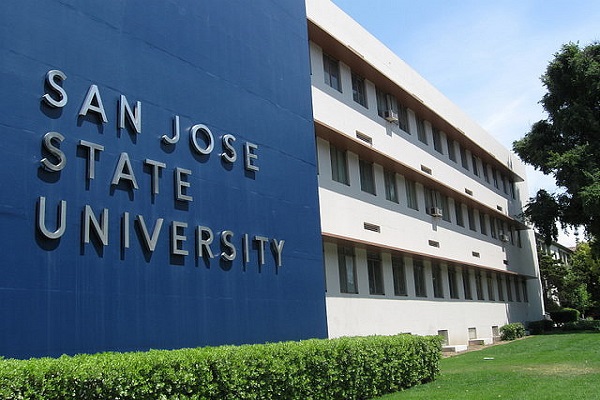
Image: San Jose University (Source: Website)
Student leaders say the victim was targeted because of his visible religious identity. According to Hasmeet Kaur, president of the university’s Sikh Collegiate Federation, the attackers forced the student to the ground and removed his dastaar — a Sikh turban regarded as a sacred article of faith. She said she had viewed mobile phone footage of the incident recorded by another student, though the video has not been released publicly.
Kaur alleged the attackers repeatedly referred to the victim as Hindu during the assault, misidentifying his faith. The error was also echoed in an initial campus-wide communication. In a subsequent statement, Kathryn Kaoudis, the university’s Vice President for Administration and Finance, acknowledged the mistake, saying the institution “misidentified the student as Hindu instead of Sikh” and accepted responsibility for the harm caused.
In a formal statement, the university condemned the attack, stating that “hate crimes are evil acts that harm entire communities and have no place in our community”. Officials said they are reviewing campus safety measures, including the possible installation of additional cameras, and assessing support services for affected students.
The assault has prompted calls for accountability and reform. A town hall meeting drew students, community members and the victim’s family. Harshdep Singh, the student’s brother, described the attack as traumatic but said the family was grateful he was safe. He also urged authorities to strengthen their response.
The Sikh Collegiate Federation plans to present a list of demands to university leaders, including cultural sensitivity training and Sikh awareness programmes aimed at preventing similar incidents.
Image: San Jose University (Source: Website)
Leaders from a local Hindu temple have also alerted their community, noting that the attackers appeared to conflate Sikh and Hindu identities. Both Sikh and Hindu organisations have encouraged visibly observant students to report any threats or harassment.
Federal data show that bias-motivated crimes against religious minorities remain a concern nationwide. According to the most recent reports from the Federal Bureau of Investigation, Sikhs continue to be among the most frequently targeted religious groups in hate crime statistics, while anti-Hindu incidents have also risen in recent years. Civil rights advocates caution that official figures likely underestimate the true scale of the problem due to underreporting.
The reported assault follows other bias-related incidents near MacQuarrie Hall. In November 2025, racist graffiti and a written threat referencing a potential mass shooting were discovered in a campus bathroom, prompting heightened security and temporary class disruptions.
University officials say previous reviews of hate-crime allegations have led to changes in reporting and response procedures. The investigation into the 7 February assault remains ongoing.
Support our Journalism
No-nonsense journalism. No paywalls. Whether you’re in Australia, the UK, Canada, the USA, or India, you can support The Australia Today by taking a paid subscription via Patreon or donating via PayPal — and help keep honest, fearless journalism alive.
Victorian Liberal MP David Southwick has accused extremists of “hijacking” Melbourne’s streets after fresh graffiti targeting him appeared on the forecourt of Parliament House of Victoria.
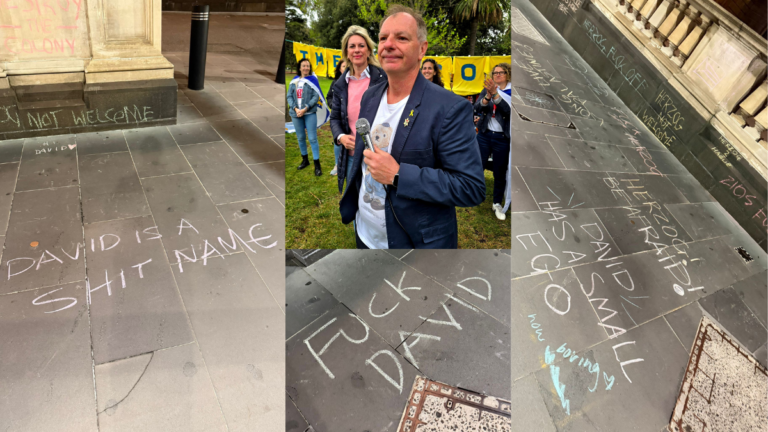
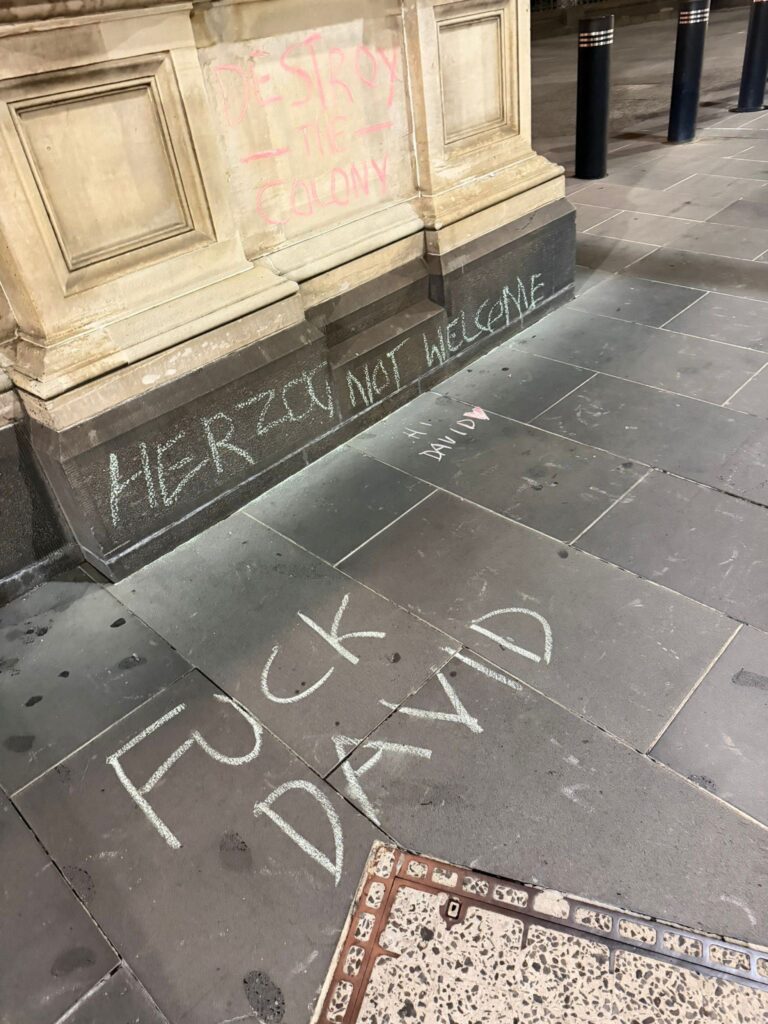
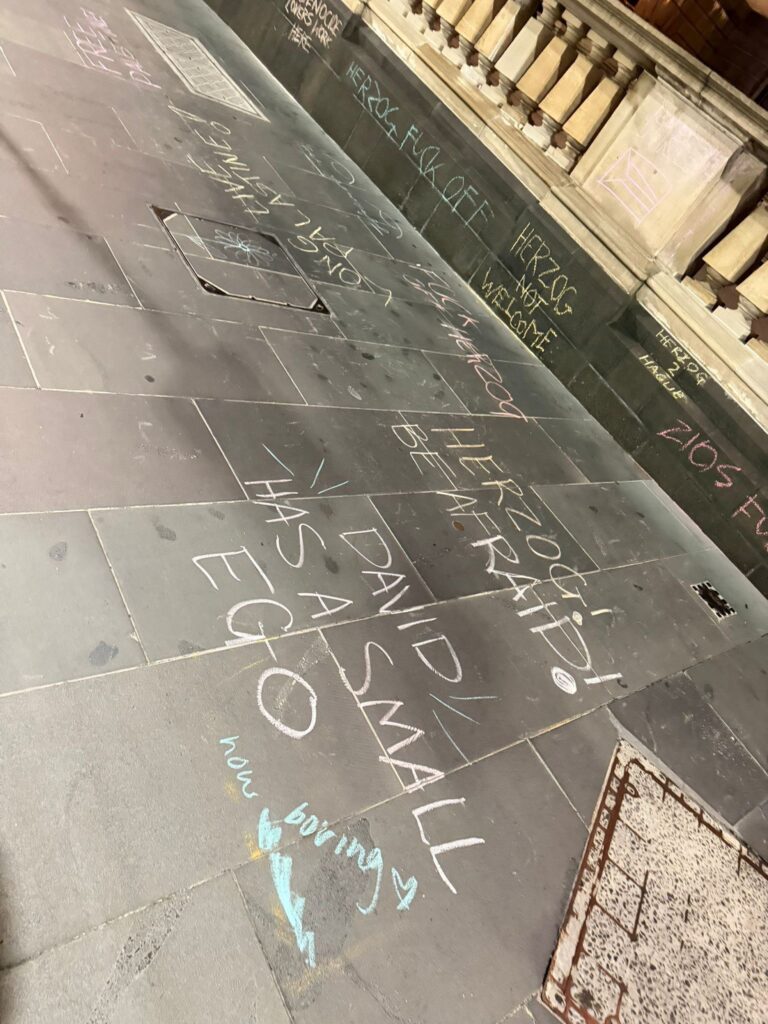
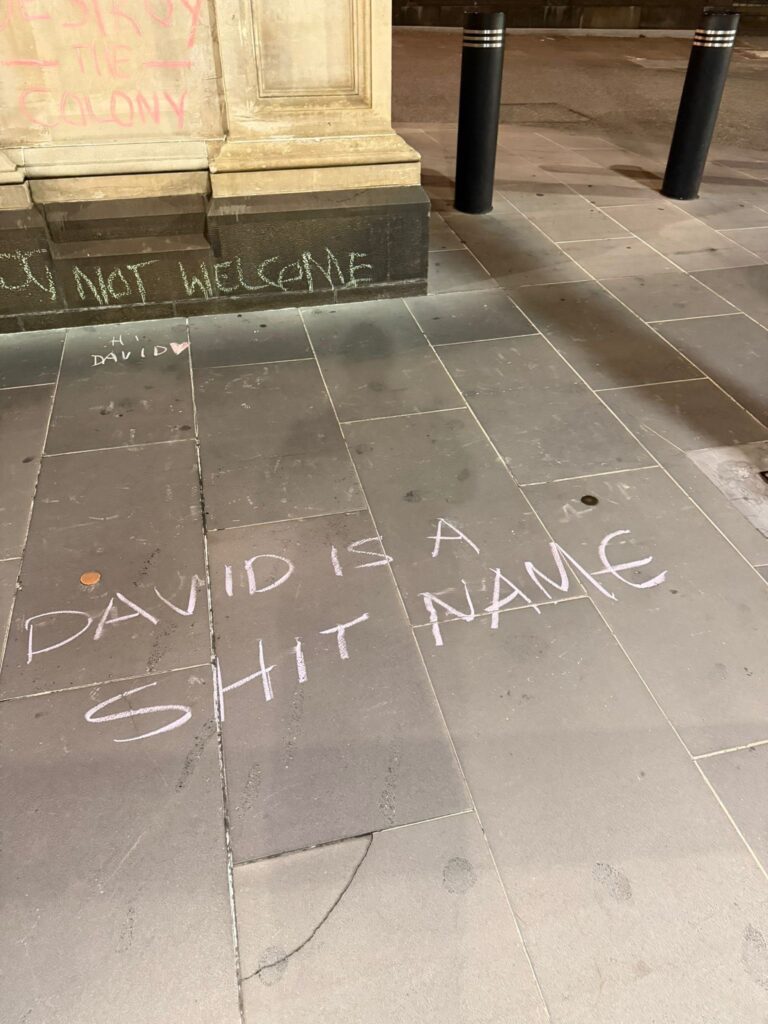
The latest incident involved offensive slogans scrawled on the floor outside Parliament, including messages such as “Fuck David”, “David is a shit name”, “David has a small ego”, and “zios fuck”.
Southwick said the vandalism reflected a broader pattern of extremist behaviour and again called on Premier Jacinta Allan to take stronger action.
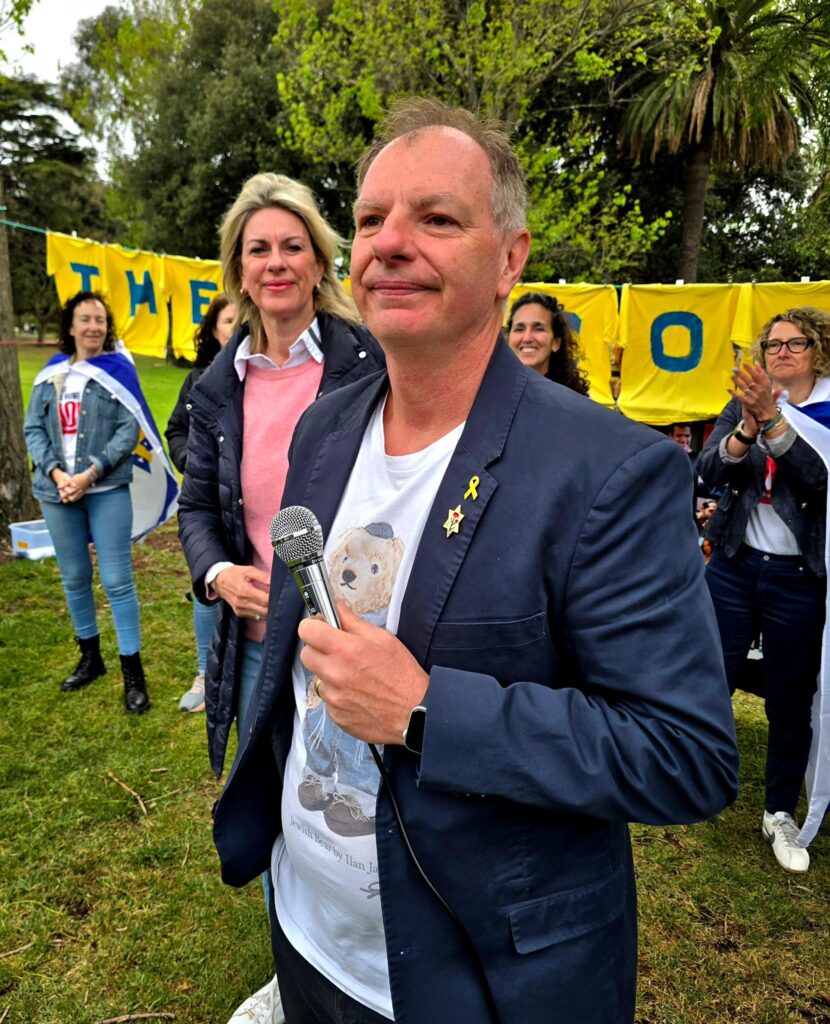
File Image: Victorian Liberal MP David Southwick (Source: Victoria)
In a Facebook post this week, the Member for Caulfield said he was “glad to be living rent free in the minds of the extremists hijacking the streets of Melbourne”, before questioning when the state government would step in.
“Our great city has once again been hijacked by protesters, pulling thousands of officers away from real frontline work,” he wrote.
“Victoria Police do a tremendous job, but they simply don’t have the powers needed to deal effectively with extremists. Ten months until the election. Change is coming.”
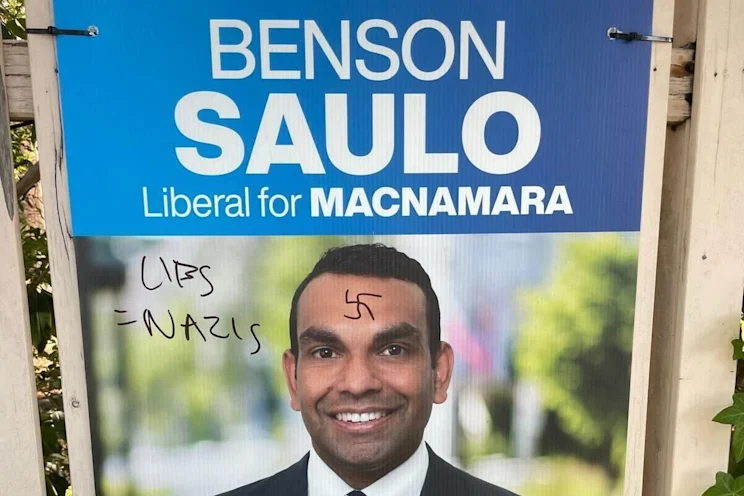
The graffiti follows earlier acts of political vandalism. Last year, Southwick discovered a sign on his fence supporting Liberal candidate Benson Saulo in the federal seat of Macnamara had been defaced with the words “Libs = Nazis”, along with a swastika drawn on Saulo’s forehead.
Saulo, who is Indigenous, told Southwick at the time that his campaign material across the electorate had been vandalised in a similar way.
In 2023, antisemitic graffiti on the steps of Parliament House also drew condemnation from Southwick, who described the display as “an affront to every Victorian who values our inclusive, tolerant and multicultural community”.
“The behaviours today by neo-Nazis are a deliberate attempt to incite hatred and violence and are nothing short of sickening,” he posted on X at the time.
Today’s incident on the steps Parliament House is an affront to every Victorian who values our inclusive, tolerant and multicultural community.
The behaviours today by neo-Nazis are a deliberate attempt to incite hatred and violence and are nothing short of sickening.
Southwick has repeatedly argued that Victoria Police require stronger powers to deal with extremist conduct, saying repeated protests and acts of vandalism are stretching frontline resources across Melbourne.
Support our Journalism
No-nonsense journalism. No paywalls. Whether you’re in Australia, the UK, Canada, the USA, or India, you can support The Australia Today by taking a paid subscription via Patreon or donating via PayPal — and help keep honest, fearless journalism alive.
A free first aid training course tailored for truck drivers is now available in Punjabi, Hindi, Mandarin and Arabic, in a move aimed at boosting safety across Australia’s road freight industry.
The initiative, known as Truckie First Aid, is a joint partnership between NatRoad and St John Ambulance. It is designed to equip drivers with life-saving skills and the confidence to act quickly at crash scenes.
Industry figures show that 67 per cent of truck drivers will be first on the scene of a road crash at some point in their career. The new 30-minute course aims to ensure they are prepared when every second counts.
The training is free, easy to complete on a mobile phone or computer, and provides a certificate upon completion. It is available in English, Punjabi, Hindi, Mandarin and Arabic, broadening access to vital safety knowledge for Australia’s diverse trucking workforce.
NatRoad said the program reflects the critical role truck drivers play not only in keeping goods moving, but also in responding to emergencies on the nation’s highways.
Founded in 1948, NatRoad is Australia’s largest national association representing road freight operators. The $66 billion road freight industry underpins the economy, ensuring supermarkets are stocked, hospitals are supplied and businesses remain connected across metropolitan, regional and remote communities.
The not-for-profit body represents thousands of members, from owner-drivers and family-run operations to major national fleets. It works closely with governments and regulators to advocate for safer roads, fairer heavy vehicle laws and practical reforms that recognise the realities of running a transport business.
Truckie First Aid forms part of that broader safety focus, with NatRoad encouraging drivers not to wait to gain the skills that could one day save a life.
“Don’t wait. Take Truckie First Aid today and save a life tomorrow,” the organisation said in promoting the course.
Support our Journalism
No-nonsense journalism. No paywalls. Whether you’re in Australia, the UK, Canada, the USA, or India, you can support The Australia Today by taking a paid subscription via Patreon or donating via PayPal — and help keep honest, fearless journalism alive.
Tucked away in a rainforest just outside Savusavu, a small cocoa farm is quietly proving that Fiji can produce good-quality chocolate while protecting the environment and supporting local farmers.
KokoMana Chocolate Factory and Cocoa farm produces fine-flavour, pure Fijian chocolate using cocoa grown on its own farm and sourced from local suppliers.
The founders Richard Markham and Anne Moorhead established the farm in 2012 on what was once degraded land sparsely populated with old raintrees.
Mr Markham and Ms Moorhead have decades of experiences in sustainable development. With more than 40 years of experience in agricultural development and research, Mr Markham worked on several agricultural development projects in Suva.
Ms Moorhead is a writer and editor specialising in sustainable development in the Pacific Islands.
Mr Markham said his motivation for starting the farm was to apply lessons learnt from decades of work in a practical agri-business setting.
“My personal motivations for establishing this farm was to apply lessons from I learnt from my 40 years of working in agricultural development in Africa, Central America and the Pacific, and make them work in the private sector, without government subsidies,” Mr Markham said.
“The farm has steadily restored soil fertility through agro-forestry despite ongoing challenges from pests, diseases, and repeated natural disasters.”
The farm consisting of a six-member team, operates in all-natural controlled environment. It is home to 400 cocoa trees across 16 varieties, alongside 80 to 90 forest plant species including yaqona, Vesi trees (Moluccan Ironwood) and turmeric, that support biodiversity.
According to Mr Markham, a cocoa tree takes two to three years of consistent care before it begins to flower, and another six months before the pods are ready to harvest.
Since planting its cocoa forest, the KokoMana has been hit by four tropical cyclones.
Following Tropical Cyclone Yasa and Tropical Cyclone Ana during the COVID-19 pandemic, the farm had no cocoa to harvest for almost a year and had to rely entirely on external suppliers.
Staying true to their philosophy of working with nature, the farm avoids using pesticides and chemical treatments.
Instead, they rely on vegetable waste and their three environmentally friendly cats for rat control.
Mr Markham said the cats reduce the damage down to 10 per cent, which by the standards of organic agriculture is not bad.
While KokoMana supplies chocolate to local supermarkets and hotels, Mr Markham says the work highlights the potential of cocoa farming in Fiji and the support it needs.
Despite KokoMana’s environmentally friendly approach to cocoa farming, Mr Markham says the challenges faced within the farm mirror the issues of Fiji’s cocoa sector.
One major reason, he said, is that farmers were given seedlings but no long-term support.
“People think Cocoa is a low maintenance crop, and they confuse low maintenance with zero maintenance,” Mr Markham said.
“It’s not a high maintenance crop, but for four or five hundred trees, you need to at least put in a family for half a day’s work each week, maybe two to four hours each week to do maintenance. If you don’t do that, you will harvest nothing because the cocoa will get overrun by what we call black pod disease.”
Another gap present is the lack of processing facilities, leaving farmers to struggle with producing good-quality cocoa beans.
“You need a minimum of 300 pods to be ripe at the same time to get a vigorous fermentation which will then have to be dried by the sun,” he explained.
“Without that, you won’t get the flavor, and if the beans are dried using copra dryer, they end up tasting like campfire.”
To address this, KokoMana buys ripe cocoa pods directly from out growers. Mr Markham said while the approach is costly, it ensures quality.
“Even if it’s not profitable, we do it anyway because we want to build this industry. It’s sort of an economic model, trying to show that if you do it right, you can have a business that’s environmentally friendly, socially responsible and have a fair trade.”
KokoMana is committed to showing how cocoa farming can be sustainable. With real investment, this model could help revive Fiji’s cocoa industry.
This article was first published on Wansolwara News and has been republished with permission.
Support our Journalism
No-nonsense journalism. No paywalls. Whether you’re in Australia, the UK, Canada, the USA, or India, you can support The Australia Today by taking a paid subscription via Patreon or donating via PayPal — and help keep honest, fearless journalism alive.
The vehicles authorities are concerned about aren’t really e-bikes at all. They’re effectively illegal electric motorbikes, able to accelerate rapidly — some to more than 100 kilometres per hour — and often without the safety standards of a legal motorbike. For years, these vehicles were imported through a loophole allowing them to be used on private land. But once in Australia, most end up on roads, bike paths and public space.
The thrill of these vehicles can be a potent cocktail for young people. Their range and speed gives teens more independence before they can legally get a car. That’s great. But teens are also generally more likely to take risks and test boundaries, and less likely to comply with rules. Unsurprisingly, injury and death rates among younger e-bike riders are rising given widespread access to cheap, fast, unlicensed vehicles – often by their well-meaning parents.
How did we get here?
Many people associate e-bikes with parents ferrying kids around on electric cargo bikes, or commuters in business attire zipping to work without raising a sweat. These types of legal vehicles are pedal-assisted and limited to 25km/h.
But the term “e-bike” covers a huge range of vehicles in a booming sector. In 2017, around 9,000 e-bikes were sold across Australia. This year, sales are tipped to be close to 300,000, worth A$1.3 billion.
One reason for the boom: national import standards on high-powered models were loosened in 2021 to reduce red tape at the border.
In late 2025, a more stringent import standard was reintroduced. But because thousands of overpowered vehicles are already here, this won’t be an overnight fix.
If we think of non-compliant e-bikes as illegal electric motorcycles, the risks make more sense. Legal motorbikes, whether electric or petrol, are notoriously dangerous. In 2024, 278 riders died, representing 21% of Australia’s road fatalities despite being just 4.5% of registered vehicles. This is one reason the licence test and safety requirements for motorbikes are rigorous. By contrast, riders of these electric motorbikes don’t sit any test and don’t have to register their vehicle.
Australia doesn’t collect national statistics on e-bike injuries and deaths. What we do know suggests young, usually male e-bike riders are more likely to be injured. Data from the Netherlands and China indicates e-bike riders are more likely to be injured or die than riders of unpowered bikes.
In the United States, e-bike injuries tend to be much more severe, more like motorbike rider injuries than pedal bikes: pelvic fractures, brain injuries, concussion. When pedal bike riders are injured, just 0.3% die. When e-bike riders are injured, the US figure is 11%. https://www.youtube.com/embed/-N0ufEhEcT8?wmode=transparent&start=0 High powered e-bike ride-outs have become popular in Australian cities.
How are young people getting access?
One way young people have been getting these bikes is as gifts from parents.
Why? Reasons include a lack of knowledge about how fast the bikes can go and the risks they present. E-bikes broadly promise more independence for teens and less driving for parents, a benefit many “chauffeur” parents appreciate. The blanket term “e-bike” can make parents think of the overpowered models as just bicycles with a boost.
The spike in popularity means peer pressure is reportedly a factor. “Rideouts” organised and popularised through social media can draw many riders. On TikTok, these vehicles have become status symbols – “tools of identity and rebellion”.
Closing Pandora’s box?
Coverage in recent months has verged on moral panic. But it’s not helpful to think of e-bikes as a threat. The challenge is protecting the excellent uses of e-bikes while weeding out unsafe models.
As we have argued, the word “bike” in “e-bike” is misleading. E‑bikes should be treated as a separate category to pushbikes.
To help parents and other buyers, we should distinguish between street-legal pedal-assisted e-bikes capped at 25km/h, and illegal electric motorcycles with a throttle and much higher top speeds.
What should authorities do?
To get illegal electric motorbikes off the roads, police would benefit from the ability to test the voltage or top speed of e-bikes, as their UK counterparts do.
On the legal front, enforcing the newly adopted standard will be essential – not only at the border, but also at points of sale.
But this won’t be enough, given riders can overclock legal e-bikes by removing built‑in speed restrictions.
Here, authorities could require importers to ensure e-bike software can’t be altered without manufacturer authentication. We already have models for this, such as Queensland’s anti-tampering laws for regulated vehicles such as heavy freight trucks.
E-bike sellers should be required to display prominent, standardised labels and advise buyers that tampering with speed limiters will void their warranty, insurance and legal road access. It must be clear responsibility falls on the owner and rider.
New laws could be useful to restrict higher-powered e-bikes to adults, while teens aged 13–17 could access lower-powered pedal-assist models, ideally with mandatory training or licensing.
Real safety requires infrastructure
E-bikes are here to stay. Even if authorities successfully clamp down on the illegal electric motorbikes, there’s much to be done to use these vehicles safely and effectively.
It might make sense for slower e-bikes to be able to access shared paths and bike lanes, while legal higher-powered e-bikes can use roads.
But in most parts of most Australian cities, bike infrastructure is poor. Bike lanes peter out into traffic and gaps are common. Cycling infrastructure has long been grossly underfunded.
If we are to keep everyone safe on roads, trails and bike lanes, it won’t be enough just to ban overpowered e-bikes. Safety requires careful laws – and real infrastructure.
No-nonsense journalism. No paywalls. Whether you’re in Australia, the UK, Canada, the USA, or India, you can support The Australia Today by taking a paid subscription via Patreon or donating via PayPal — and help keep honest, fearless journalism alive.
The dress code applies to the council’s 30-seat ‘Hop, Skip and Jump’ shuttle, which services coastal suburbs including Manly, Fairlight and Balgowlah. Signs at bus stops now instruct passengers to “dress appropriately” and require “clothing must be worn over swimwear.”
As per the Guardian, Deputy mayor Candy Bingham said some swimwear, particularly thong-style bikinis, can be confronting for elderly passengers and create hygiene issues when wet or sandy clothing soils bus seats.
“People are worried about the hygiene aspect when they sit on the seats … swimmers, wet from the beach and covered in sand, make a mess and leave the seats damp.”
Under the new rules, bus drivers can legally refuse entry to passengers whose clothing is “likely to dirty or damage the vehicle, or cause inconvenience or damage to other passengers or the driver.”
Council spokespeople noted that even dry swimwear cannot be reliably assessed for wetness.
The move has sparked debate online, with some criticising the council for policing beach fashion, while others support the ban as a common-sense measure. Cultural expert Lauren Rosewarne from the University of Melbourne said the rule reflects longstanding societal norms around public presentation, noting a persistent gender double standard in how women’s clothing is scrutinised.
The policy comes amid a broader trend in Australian councils regulating swimwear in public spaces. In 2025, the Blue Mountains Council prohibited G-string bikinis at public pools, citing similar hygiene and community comfort concerns.
Passengers now risk being turned away at the door if they fail to comply with the Northern Beaches dress code—a reminder that even in beachside Sydney, some standards still apply once you step off the sand.
Support our Journalism
No-nonsense journalism. No paywalls. Whether you’re in Australia, the UK, Canada, the USA, or India, you can support The Australia Today by taking a paid subscription via Patreon or donating via PayPal — and help keep honest, fearless journalism alive.
The Hindu Canadian Foundation (HCF) has accused Brampton Mayor Patrick Brown and the National Post of “irresponsible framing” after a Hindu religious image was used in an opinion piece about Canada’s growing extortion crisis.
In a strongly worded statement, HCF said it was “unacceptable” that a Hindu image was inserted into an article discussing criminal extortion networks and public safety concerns in Peel Region, arguing the image had “zero relevance to the topic”.
“This is not journalism or an opinion piece — this is irresponsible framing and direct targeting of Hindu Canadians.”
It is unacceptable that @patrickbrownont chose to use a Hindu image in an article about Canada’s extortion crisis , an image that has zero relevance to the topic. This is not journalism or opinion piece this is irresponsible framing and direct targeting of Hindu Canadians.
— Hindu Canadian Foundation (HCF) (@officialHinduCF) February 13, 2026
The organisation stressed that the op-ed focused on transnational criminal networks and violent extortion incidents in Peel Region, with “no connection whatsoever to Hindu communities”.
“So why insert a Hindu photo? Why manufacture an association that does not exist?”
HCF argued that such imagery reinforces harmful stereotypes and fuels suspicion towards a “peaceful, law-abiding community”, adding that Hindu Canadians “deserve better than to be used as visual scapegoats for issues we have nothing to do with”.
It also claimed Mayor Brown had a “long history of controversial positioning on community issues” and demanded accountability from both him and the publication for what it described as a “harmful and misleading portrayal”.
Multiple Arrests Made in an Extortion Investigation
“As the mayor of Brampton, I’ve seen the extortion crisis hit our communities hard,” Brown wrote, citing more than 40 incidents allegedly linked to transnational networks, including shootings and arsons targeting families and businesses.
A violent crime ring—linked to extortion, drive-by shootings, and arsons—has been dismantled by Peel Police. 18 arrests, nearly 100 charges, and $4.2 million in seized assets, including firearms.
This kind of organized crime doesn’t deserve leniency—it demands real consequences.… pic.twitter.com/GmdNkYKYFB
He urged stronger federal collaboration, including the involvement of the Financial Transactions and Reports Analysis Centre of Canada (FINTRAC) and the Canada Border Services Agency (CBSA) in local extortion task forces, arguing that delays in accessing electronic data were hampering investigations.
Mayor Brown called for the swift passage of Bill C-2, the Strong Borders Act, particularly its lawful access provisions, which he said would allow police to more quickly obtain subscriber information and transmission data in transnational crime cases involving encrypted platforms such as WhatsApp.
Peel Regional Police is leading efforts to combat extortion in #PeelRegion, working in partnership with municipal, provincial, and federal agencies across Canada.
The Mayor’s position has been echoed by federal and provincial leaders at a recent anti-extortion summit in Brampton, where ministers pledged funding and new enforcement measures to combat organised crime.
Ottawa has committed up to $1 million to support Peel Regional Police’s extortion task force and announced plans to establish a Regional Integrated Drug Enforcement Team in partnership with Ontario.
I had a productive meeting in Ottawa with Public Safety Minister Gary Anandasangaree and Secretary of State for Combatting Crime Ruby Sahota to address the extortion crisis impacting Surrey and communities across Canada.
Despite broad political agreement on tackling organised crime, the HCF insists that associating a Hindu image with an article on extortion is unjustified and damaging.
“We will not allow Hindu Canadians to be misrepresented or targeted through careless media choices,” the statement said, reiterating its call for accountability.
Support our Journalism
No-nonsense journalism. No paywalls. Whether you’re in Australia, the UK, Canada, the USA, or India, you can support The Australia Today by taking a paid subscription via Patreon or donating via PayPal — and help keep honest, fearless journalism alive.
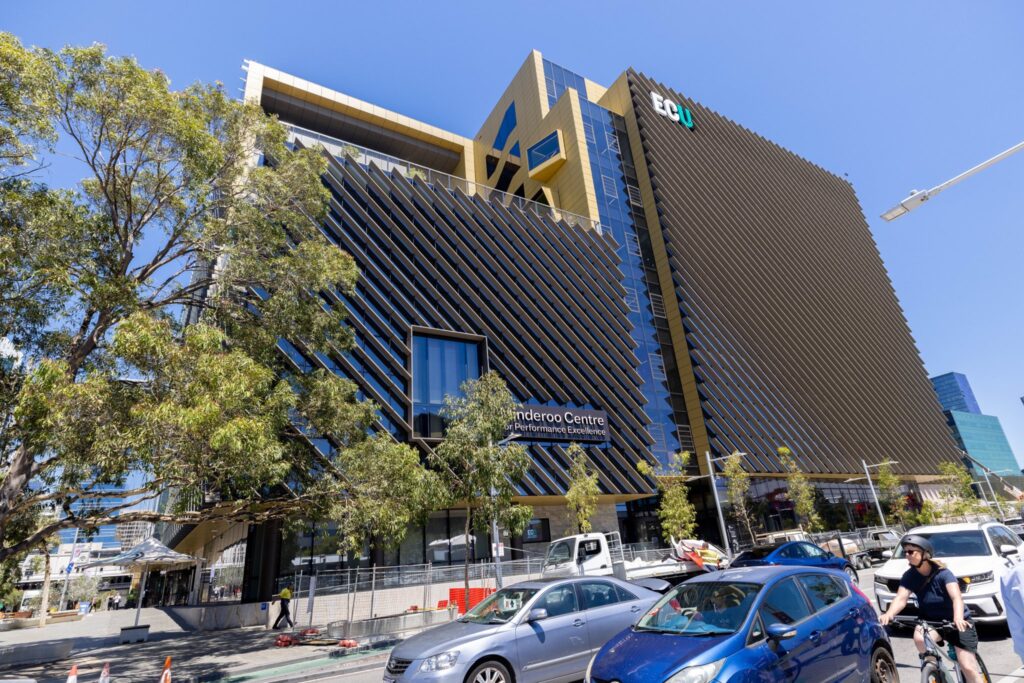
The doors have officially opened to Edith Cowan University’s new City campus, marking a historic milestone for Perth as it welcomes its first comprehensive inner-city university and signalling what leaders have described as a new era in education.
Jointly funded by the Albanese Government, the Cook Government and the university, the world-class 11-super-level campus dedicated to creative industries, business and technology is set to reshape the city’s educational, cultural and social landscape.
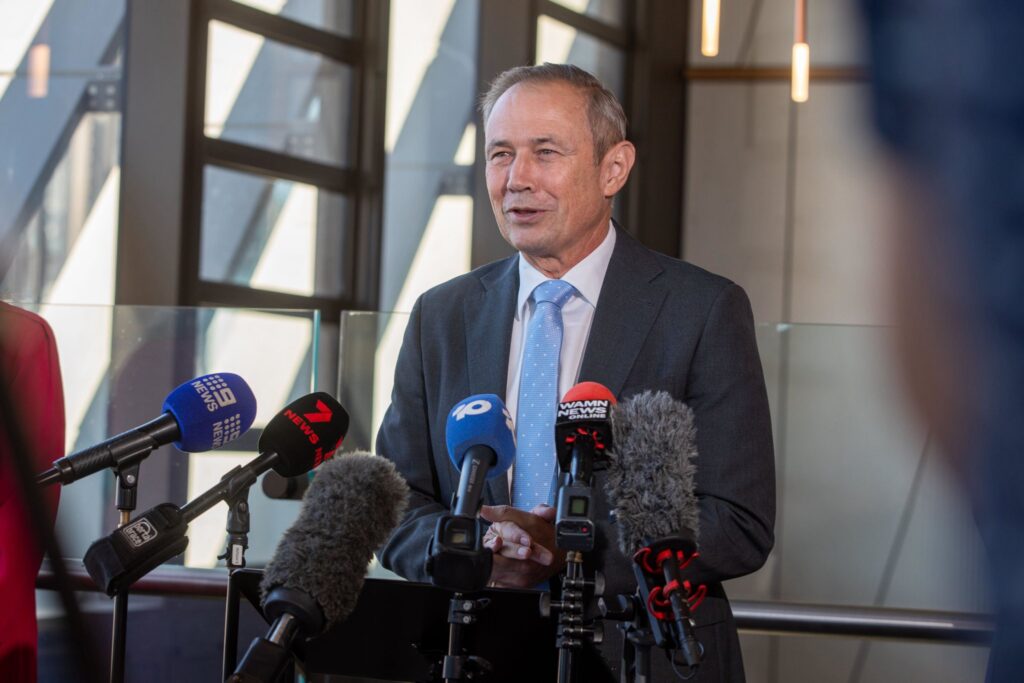
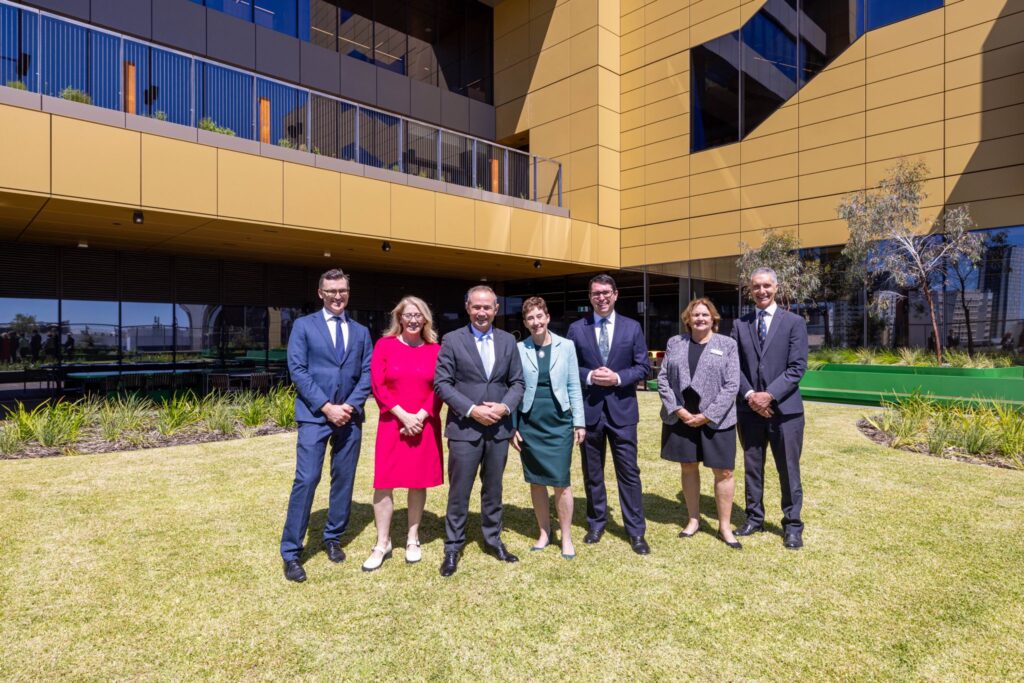
Image: ECU City is officially open (Source: Roger Cook – Facebook)
With thousands of students arriving for the first time this month, the purpose-built facility has been designed to connect learners directly with industry, culture and community in a modern, city-based environment. About 8,500 students and staff are expected to be based at the campus from semester one, bringing a daily surge of activity to the Perth CBD and a boost to surrounding businesses.
Image: Western Australia Premier Roger Cook at the ECU City (Source: Roger Cook – Facebook)
Western Australia Premier Roger Cook said investing in higher education was central to his vision of maintaining the state’s strong economy. He noted the State had committed nearly $200 million to the project, describing it as a generational development that would make skilling, upskilling and reskilling more accessible to Western Australians.
Beyond education, the Premier said the campus would help knit together Northbridge and the CBD, anchored by the city’s growing public transport network, fostering a vibrant and creative economy in the heart of Perth. He added that collaboration with the Albanese Government would help ensure Perth remained one of the best places in the world to live, raise a family and secure a quality job.
“My government is proud to have worked alongside the Albanese Government to deliver this project, which will ensure Perth stays the best place in the world to live, raise a family, and get a quality job.”
Image: ECU City is officially open (Source: Roger Cook – Facebook)
Federal Education Minister Jason Clare called the building a striking new landmark and an engine of opportunity, saying thousands of students would build their futures there each year.
“Thousands of students will build their futures right here every year.”
Federal Infrastructure Minister Catherine King said that as classes begin, thousands of students will head into the CBD each day, creating new economic, educational and social opportunities. She described the project as a once-in-a-generation transformation of Perth’s heart and said the Commonwealth was proud to back the city’s future.
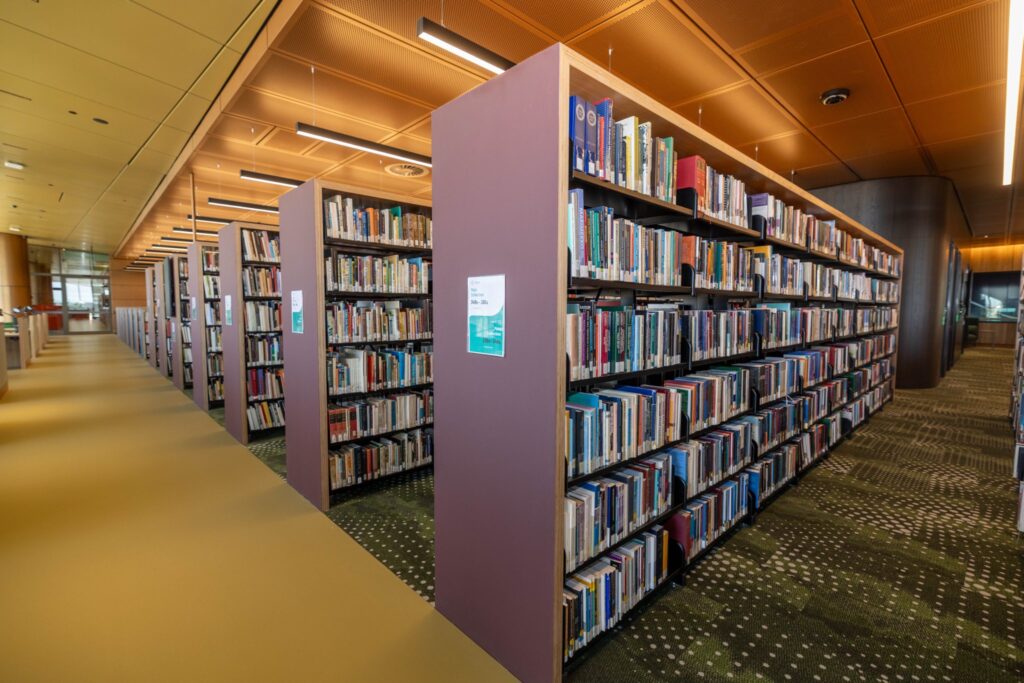
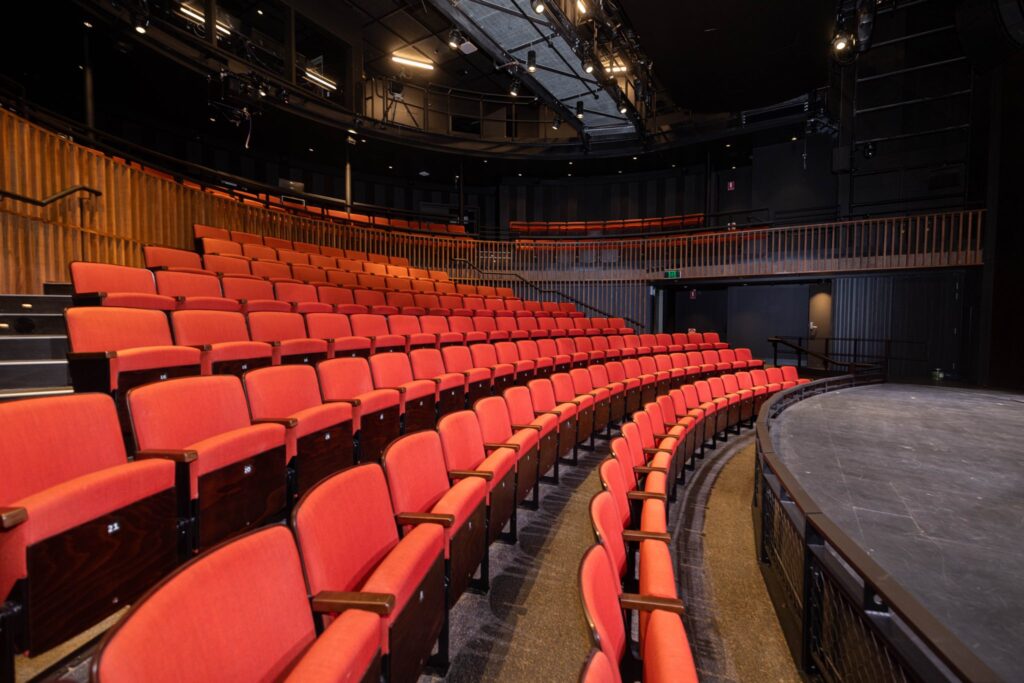
The campus features state-of-the-art teaching facilities, specialist business, law, creative arts and technology spaces, advanced screen and media production facilities, and extensive student support and wellbeing services. Eight public performance venues are expected to host more than 300 performances annually, while the main foyer boasts one of the Southern Hemisphere’s largest indoor LED displays, delivering immersive digital content year-round. Its distinctive media façade, spanning two sides of the building, will turn the structure itself into a creative canvas for students, staff and the public.
“With classes starting, thousands of students will head to the Perth CBD every day creating new economic, educational, and social opportunities.”
WA Treasurer Rita Saffioti said the campus was already breathing new life into the CBD, creating a thriving inner-city hub and delivering lasting benefits to nearby businesses as thousands travel in daily. She highlighted its accessibility, positioned above the Perth Busport and within walking distance of the METRONET rail network, describing it as a key part of the government’s vision for a modern, connected city.
Image: ECU City is officially open (Source: Roger Cook – Facebook)
Planning and Lands Minister John Carey said the influx of staff and students would be a game-changer for the inner city, increasing vibrancy and foot traffic in the CBD and Northbridge, while also fuelling a boom in student accommodation.
“This new campus has also fuelled a boom in student accommodation, ensuring more people live in the city.”
Tertiary and International Education Minister Tony Buti said students would immediately benefit from the outstanding CBD facility, adding that Western Australia would reap broader rewards from an institution focused on nurturing talent and developing skills for the wider community.
Image: ECU City is officially open (Source: Roger Cook – Facebook)
Federal Member for Perth Patrick Gorman described the development as not just an asset for Perth but for the entire nation, predicting it would attract students and visitors who value education, culture and community, injecting fresh vibrancy into the city and placing Perth firmly on the map for education and culture.
“This is not just an asset for Perth, it is an education asset for all of Australia.”
The campus also becomes the new home of the Western Australian Academy of Performing Arts, including the Minderoo Centre for Performance Excellence. It brings together the School of Business and Law, creative humanities programmes from the School of Arts and Humanities — including the WA Screen and Media Academy — as well as technology and cyber security programmes from the School of Science and Kurongkurl Katitjin, the University’s Centre for Indigenous Australian Education and Research.
Image: ECU City is officially open (Source: Roger Cook – Facebook)
Vice-Chancellor Professor Clare Pollock described the opening as an historic moment not only for the university but for Perth and Western Australia. She said the city had joined the ranks of the world’s great cities with its first comprehensive inner-city university campus, built for creative arts, business, law, performance and technology students to learn, engage and create as they embark on their careers.
“This is a campus that will enrich the student experience and the very city itself. It’s a place of possibility and discovery.”
Calling it a place of possibility and discovery, Professor Pollock said the campus would enrich both the student experience and the city itself, bringing students, industry, culture and community together in the heart of Perth to shape the future side by side.
Support our Journalism
No-nonsense journalism. No paywalls. Whether you’re in Australia, the UK, Canada, the USA, or India, you can support The Australia Today by taking a paid subscription via Patreon or donating via PayPal — and help keep honest, fearless journalism alive.
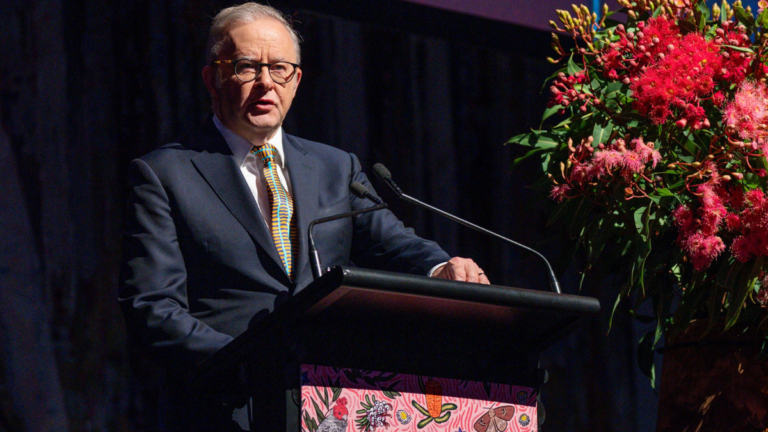
Speaking at the annual anniversary breakfast on Friday, PM Albanese said standing alongside survivors each year remained “one of my greatest honours as Prime Minister”, paying tribute to their strength and resilience.
“Your strength gave us all the chance of a better Australia,” he told those gathered, including survivors and community leaders.
Reflecting on the historic Apology delivered 18 years ago, PM Albanese described it as the fulfilment of a long-overdue promise — one that some had resisted out of fear. He noted that former prime minister John Howard had warned saying sorry would be “calamitous” for the country.
“It was anything but,” PM Albanese said, arguing the nation instead came together in “fundamental decency”.
He recalled the moment in February 2008 when then prime minister Kevin Rudd delivered the Apology in Parliament. Watching from the chamber, PM Albanese said he saw “tears, relief and quiet pride” on the faces of those in the public gallery — particularly survivors who had fought for decades to be heard.
“The Apology was an honest reckoning with our history,” he said, acknowledging that children had been torn from their families and culture, and that “what was broken could not be easily put together”.
He invoked the story of respected Aboriginal leader Lowitja O’Donoghue, who was taken from her mother at the age of two and reunited with her 33 years later. Quoting her biographer Stuart Rintoul, PM Albanese described a reunion marked not by embrace but uncertainty — “they did not know how to be with one another” — underscoring the depth of trauma carried by the Stolen Generations.
The National Apology to the Stolen Generations remains one of my proudest days as a parliamentarian.
It was a moment of catharsis, unity and healing for our nation.
We marked today’s anniversary by hearing the stories of survivors and celebrating their resilience. pic.twitter.com/WH48HEfoKs
While the Apology acknowledged the pain of the past, PM Albanese said it was also a call to action for a “better, fairer, stronger Australia” — one in which Indigenous and non-Indigenous Australians share equal opportunity and power over their own destinies.
He acknowledged the bipartisan support shown at the time, including by former opposition leader Brendan Nelson, saying unity had been essential to the moment.
The Prime Minister also announced up to $87 million over four years for specialised Stolen Generations services, including family tracing and reunification programs aimed at addressing the ongoing and intergenerational impacts of forced removals.
“These services are vital in supporting healing and acknowledging the traumatic impacts of being removed from family, culture and Country,” he said.
With next year marking 30 years since the landmark Bringing Them Home report, PM Albanese returned to the words of its co-author Mick Dodson, who said Indigenous people who gave evidence “just wanted people to know the truth”, not to induce guilt.
“Truth is essential because we can only truly know where we’re going if we know where we’ve been,” the Prime Minister said, acknowledging the presence of Shannan Dodson and her work with the Healing Foundation.
PM Albanese also reflected on attending the 40th anniversary of the handback of Uluru by the Hawke Government, recalling the joy described by traditional owner Aunty Pamela Taylor when the land was finally returned.
Such moments, he said, offered a glimpse of “the even greater Australia we can be”.
However, he cautioned against complacency, noting that while progress had been made under the Closing the Gap framework, there were areas where improvement had stalled.
“It is starkly clear that we have no room for complacency,” he said, adding that racism remained “a real and present danger”, referencing a recent alleged terrorist attack in Perth.
Addressing Aboriginal and Torres Strait Islander people directly, PM Albanese reiterated a message he said he had delivered in Parliament: “We see you. We stand with you.”
He concluded by describing the Apology not as a final word, but as the beginning of a shared national chapter.
“The story of the Apology began when we — as a nation — decided to listen. To open our ears and open our hearts,” he said.
“That is the chapter we continue to write — with determination, with optimism, and above all, with each other.”
Support our Journalism
No-nonsense journalism. No paywalls. Whether you’re in Australia, the UK, Canada, the USA, or India, you can support The Australia Today by taking a paid subscription via Patreon or donating via PayPal — and help keep honest, fearless journalism alive.
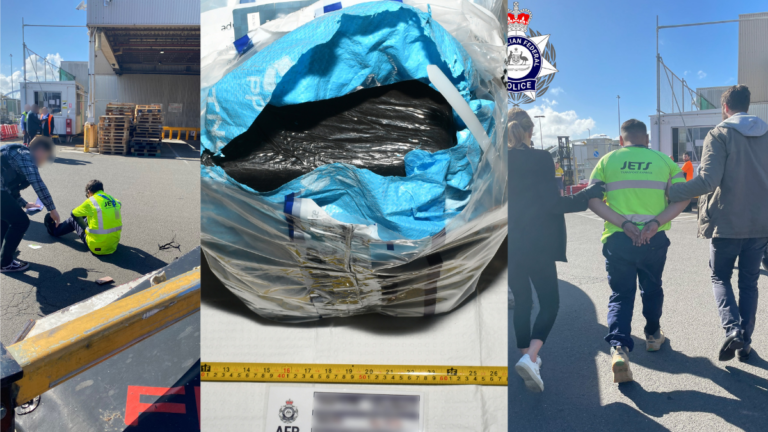
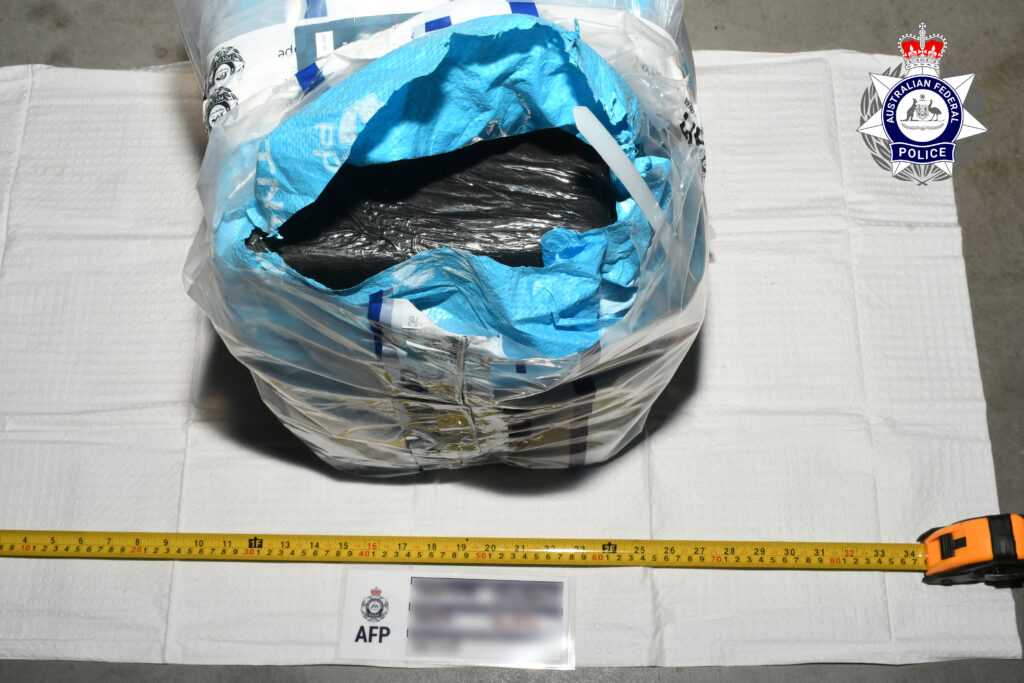
A Padstow man linked to organised crime has been sentenced to 10 years’ imprisonment for coordinating the importation of 100kg of cocaine concealed in the cargo hold of a passenger plane.
The 44-year-old’s sentence follows the earlier jailing of three other men — including two so-called “trusted insiders” with access to restricted areas of Sydney Airport — who received a combined maximum of 15 years and nine months behind bars for their roles in the same criminal enterprise.
Image: Op Lucian – 100kg BCD import (Source: AFP)
AFP Detective Acting Inspector Paul Watt said the agency and its partners remained determined to prevent organised crime groups from exploiting Australia’s airports and those entrusted with secure access.
“To anyone who works in an airport environment and may be lured by the false promise of a life of crime, these offences carry the potential of life imprisonment,” Det Acting Insp Watt said, describing Operation Lucian as evidence of the serious consequences offenders face.
“You are up against a well-resourced, capable and unrelenting opposition in the AFP and our partners. We will not allow criminals to make our communities less safe,” he added.
“Operation Lucian spared Australians from the violence, addiction and further criminality this shipment of cocaine would have brought to our shores.”
The Australian Federal Police (AFP) launched an investigation in October 2022 after an airline reported suspicious activity near the cargo area of a Sydney-bound flight departing Johannesburg, South Africa.
Investigators identified two airport workers with authorised access to restricted zones who were suspected of exploiting their positions to remove items from the cargo hold of an inbound aircraft, bypassing standard security screening processes.
Image: Op Lucian – 100kg BCD import (Source: AFP)
After a 12-month probe, the AFP linked the Padstow man to the insiders and confirmed he was coordinating the planned importation in October 2023.
Officers moved in as members of the syndicate attempted to offload the cocaine — estimated to have a street value of $40 million — from the aircraft. The 44-year-old was arrested at Rushcutters Bay.
He pleaded guilty in the Downing Centre Local Court on 30 October 2024 to conspiracy to import a commercial quantity of cocaine, contrary to section 307.1 of the Criminal Code (Cth).
On Friday (13 February 2026), he was sentenced to 10 years’ imprisonment and will serve a non-parole period of five years.
One alleged member of the syndicate remains before the courts.
Support our Journalism
No-nonsense journalism. No paywalls. Whether you’re in Australia, the UK, Canada, the USA, or India, you can support The Australia Today by taking a paid subscription via Patreon or donating via PayPal — and help keep honest, fearless journalism alive.
The number of “serious incidents” in Australian early childhood services – including long daycare – is increasing. According to a new Productivity Commission report, there were 160 such incidents per 100 services in 2024-25. This is up from 148 and 139 in the previous two years.
A serious incident is one that seriously compromises the health, safety or wellbeing of a child. This includes serious injury or illness requiring medical attention, any event where emergency services attended, a child going missing or being locked in or out of the premises. It can also include abuse or the death of a child.
The figures come amid continuing concern about safety in early childhood services around Australia. Last week, regulators reported a family daycare had been shut down after knives and poison were kept within reach of kids in Sydney; while in South Australia, the regulator warned of supervision “blind spots”.
Why are we seeing this increase? What does it mean for families and educators?
In its most recent report in December 2025, the national agency reported an increase across almost every kind of serious incident. The most commonly reported incident type was “injury, illness, or trauma”, which accounted for 77.7% of serious incident reports.
Why aren’t we seeing a drop?
The latest figures predate the slew of recent child safety reforms across the sector. So it may take time for us to see a change in annual data reporting.
In fact, the increase is not a surprise. Data released by the national agency has shown a persistent increase in serious incident reports, which are currently up 62% from 2016-17 (the earliest available report on these figures). There have also been particularly marked increases over the last five years.
What is less clear is what is causing this increase and how to fix it.
Are people becoming more aware?
The latest rise may indicate the sector is becoming more transparent, as opposed to more dangerous.
With the recent increase in public scrutiny and subsequent policy changes around child safety – including shorter time frames for mandatory reporting and restrictions on the use of digital devices – services, educators, and even families may be more likely to report serious incidents when they occur.
If this is so, a stronger reporting culture would be a welcome outcome.
Or are services under stress?
On the other hand, Australian and international research shows safety risks increase when educators and services are operating under strain.
Research indicates management (or who is running a service) is a key factor when it comes to quality.
Although the national agency’s reports do not let us compare serious incident rates of for-profit versus not-for-profit services, for-profits tend to provide lower quality services for children, and have been less likely to improve their rating under the national quality framework.
On top of this, publicly available data from the third quarter of 2025 (the most recent we have), shows private for-profit services are more likely to be “working towards the national quality standard” on children’s health and safety than other early childhood provider types.
This is why the steady increase in large for-profit providers in Australia is a significant concern.
So is childcare safe or not?
Despite the awful revelations about abuse in the sector, the OECD notes that early childhood services are generally safer than un-regulated care. This includes care by relatives, babysitters or privately employed nannies. This is because services such as long daycare are regulated by a national quality framework and standards.
A 2025 independent report found several NSW services were on a secret government list as “very high risk” but were publicly rated as “meeting” national quality standards.
As of November 2025, families can now access new content on the Starting Blocks website to check the compliance history of their service. This includes when a service was last visited by a regulatory authority, and any formal breach notifications over the last two years.
Will the recent and upcoming reforms be enough?
The current debate about safety and quality are still largely reactive and risks-based. For example, shutting down unsafe providers and training educators to spot potential abuse.
We need more focus on the broader factors – such as educator working conditions, workforce quality and management capability – which research shows will lift quality and boost safety overall.
No-nonsense journalism. No paywalls. Whether you’re in Australia, the UK, Canada, the USA, or India, you can support The Australia Today by taking a paid subscription via Patreon or donating via PayPal — and help keep honest, fearless journalism alive.
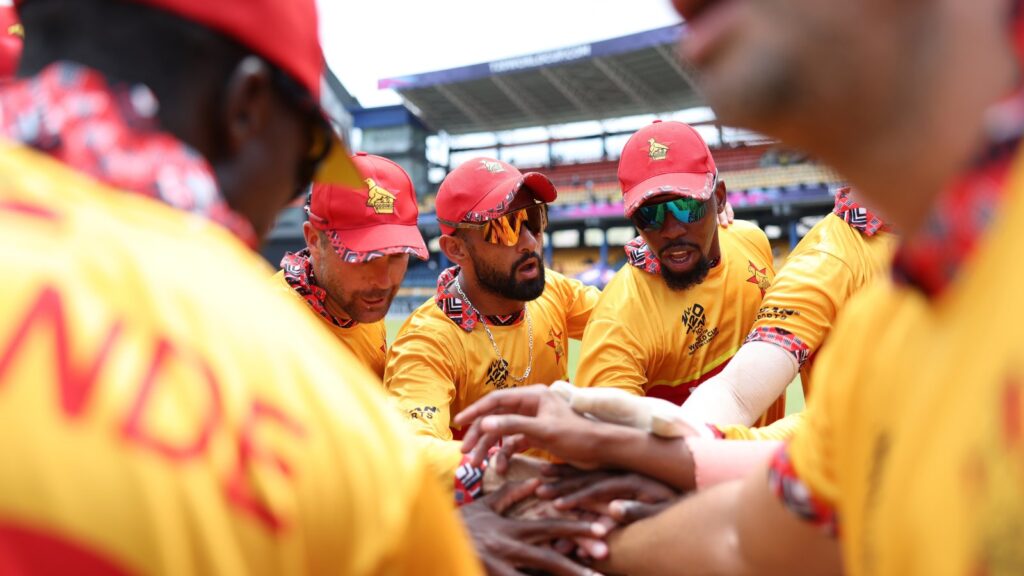
Australia’s campaign at the ICC Men’s T20 World Cup suffered a significant setback on 13 February 2026 after a shock 23-run defeat to Zimbabwe in Colombo.
Playing at the R. Premadasa Stadium, Zimbabwe delivered one of the tournament’s biggest upsets so far. Batting first, Zimbabwe posted a commanding 169/2 from their 20 overs, building a platform that ultimately proved beyond Australia’s reach.
(Image: X – @ICC)
The innings was anchored by Brian Bennett, who remained unbeaten on 64, guiding his side through the middle and death overs with composure. Zimbabwe’s disciplined batting effort ensured they finished strongly and set a competitive total under lights. Blessing Muzarabani was the standout with the ball, finishing with a brilliant 4‑for‑17 to dismantle the opposition batting lineup and power Zimbabwe’s win.
(Image: X – @ICC)
In response, Australia were unable to keep pace with the required rate and finished 23 runs short of the target, handing Zimbabwe a landmark victory in the Group B contest.
(Image: X – @ICC)
The result tightens the group standings and raises fresh questions about Australia’s consistency in the tournament, while Zimbabwe’s win significantly boosts their progression hopes in the competition.
Support our Journalism
No-nonsense journalism. No paywalls. Whether you’re in Australia, the UK, Canada, the USA, or India, you can support The Australia Today by taking a paid subscription via Patreon or donating via PayPal — and help keep honest, fearless journalism alive.
IndianCare will stage a large-scale community sports festival in Melbourne’s west next month, aiming to put Indian women at the centre of International Women’s Day celebrations and tackle the gap in recreational sport for adult women balancing work, family and caregiving responsibilities.
The Desi Women’s Sports Fest will be held on 7 March 2026 from 10 am to 6 pm at the Victoria University Community Sports Stadium in Footscray and is expected to draw around 500 participants, including women and their family members.
IndianCare is a community-based, ethno-specific non-profit organisation in Victoria supporting the well-being, inclusion and empowerment of people of Indian origin through culturally responsive programs, welfare initiatives and community events.
Organisers say the event has been designed as an alternative to the formal talks and panels often associated with International Women’s Day, with a focus on fun, community connection and family participation. Women aged 18 and above will take part in the main sports and games, while children, partners and parents will be encouraged to attend as supporters, with a dedicated kids’ zone and workshops for adult family members running alongside the sporting program.
IndianCare General Manager Vasundhara Kandpal said participation remains a challenge because many women have little time for themselves.
“Most women are working, managing homes, and looking after children and elders. They are doing the heavy lifting, and there is very little time left for themselves,” she said.
IndianCare President Jaya Manchikanti said the festival also aims to improve representation in sport.
“Desi women need to see themselves represented in sports and games so that they too can enjoy the benefits of being active in a sport-loving country like Australia,” she said.
The program will feature a mix of sport and playful team activities, including badminton, tug-of-war and “nostalgic favourites” such as lemon-and-spoon races and hula hoop races, as well as information stalls and workshops.
A prize pool of approximately $6,000, along with multiple lucky draws, is expected to be a key drawcard.
Kandpal said the intention was to flip the usual dynamic in families and community events. “Women are so often the ones cheering from the sidelines,” she said. “This Women’s Day, we want to reverse the roles, putting women on the field and their families in the stands, cheering them on.”
IndianCare says the festival builds on its broader work delivering free or low-cost sports and wellbeing programs across Whittlesea, Casey, Melton, Brimbank, Hobson’s Bay and Wyndham, including activities such as badminton, swimming, yoga and aqua aerobics.
The organisation says its weekly programs engage more than 500 women, many of whom played sport earlier in life but stepped away as responsibilities increased, particularly migrant women settling into a new country.
The festival is supported by VicHealth, with organisers saying the partnership reflects a shared focus on physical activity, inclusion and community wellbeing.
Registration is now open via Humanitix, with further information available through IndianCare’s website.
No-nonsense journalism. No paywalls. Whether you’re in Australia, the UK, Canada, the USA, or India, you can support The Australia Today by taking a paid subscription via Patreon or donating via PayPal — and help keep honest, fearless journalism alive.
Four foreign nationals have been charged after Victoria Police uncovered an alleged large-scale cannabis cultivation operation worth an estimated $10 million in the state’s north-west, in what authorities say is a major blow to organised crime networks.
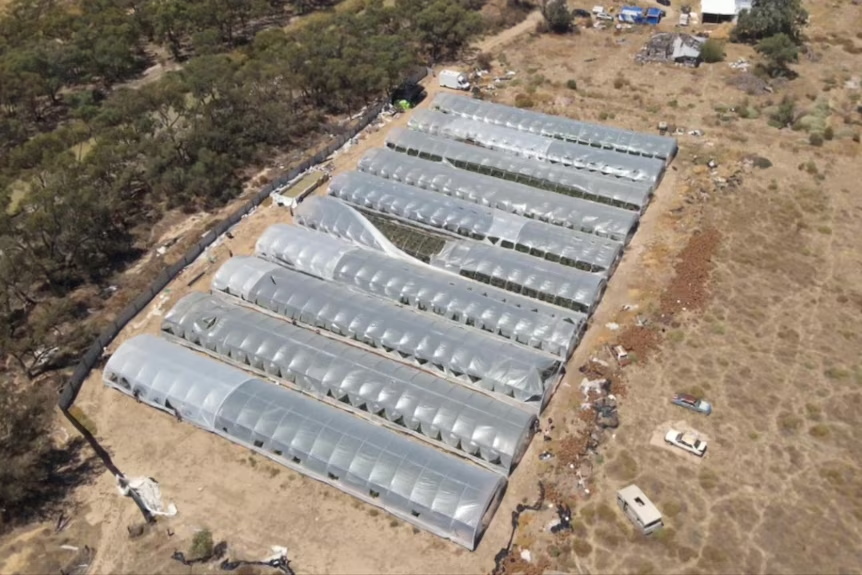
Police raided a rural property at Milnes Bridge, between Kerang and Cohuna, on Tuesday, discovering 10 large greenhouses allegedly housing around 4,700 cannabis plants. The plants, weighing more than 2.5 tonnes, were at varying stages of maturity and are believed to have a street value of approximately $10 million.
Image Source: Victoria Police
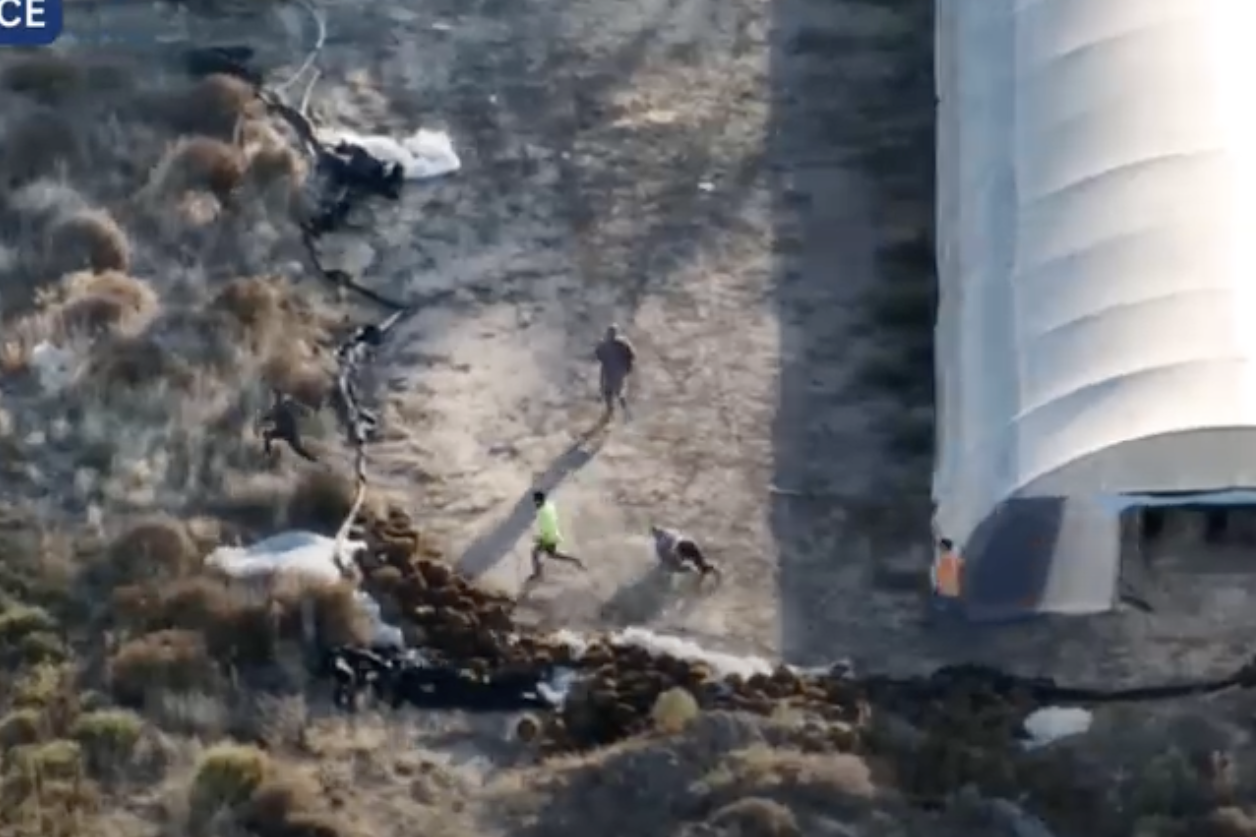
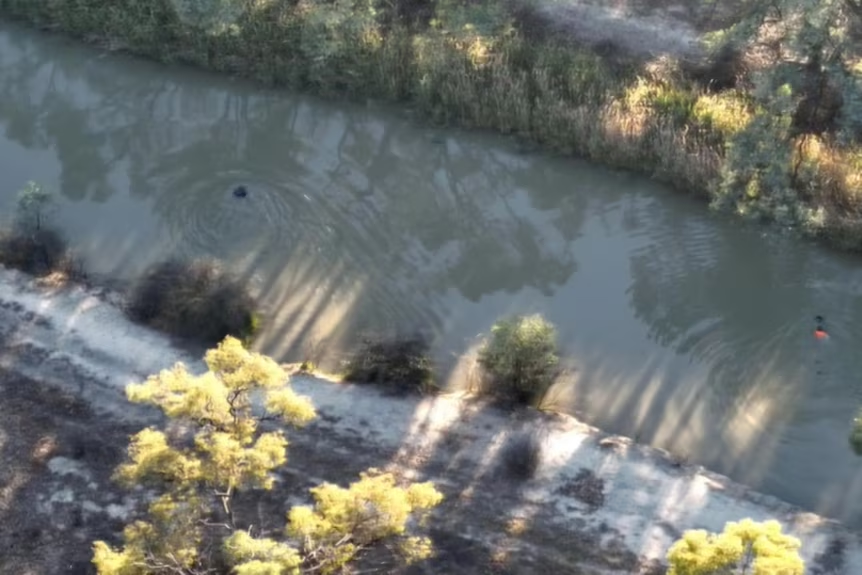
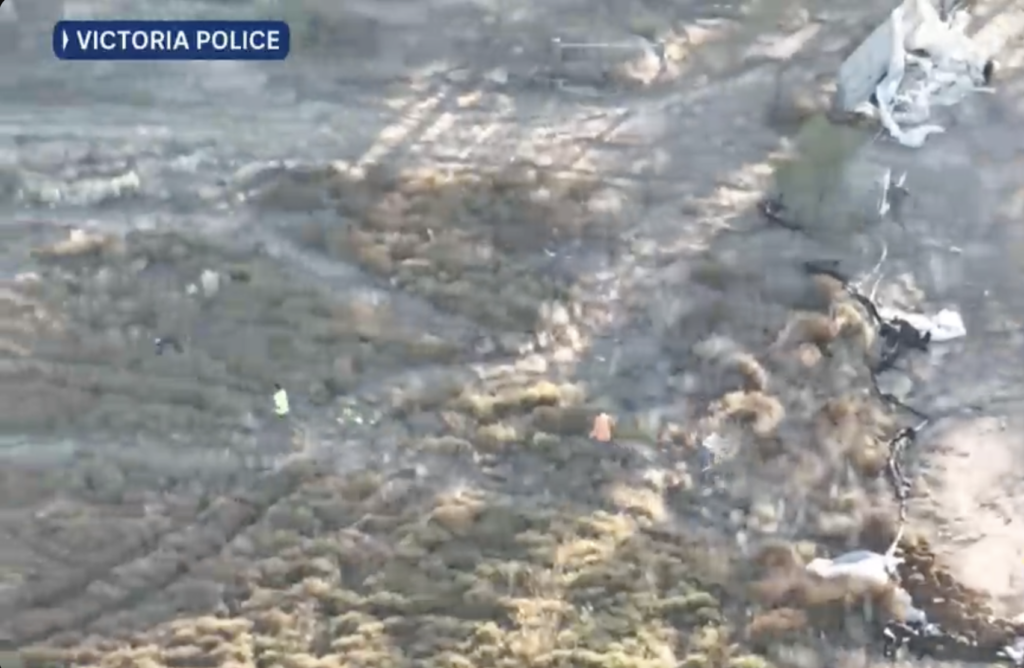
Victoria Police said five men attempted to flee the property when officers arrived, with three allegedly trying to escape by swimming across a nearby irrigation channel. Four men, aged 39, 41 and two aged 51, were arrested at the scene, while another man remains on the run.
The arrested men, all foreign nationals, have been charged with cultivating and trafficking a commercial quantity of cannabis. They appeared before Bendigo Magistrates’ Court on Wednesday and were remanded in custody, with the case set to return to court in May.
Image Source: Victoria Police
Acting Detective Inspector Matt Pascoe said the operation demonstrated police commitment to disrupting illegal drug operations and protecting the community. “Any time we’re able to remove significant quantities of illicit drugs from the streets is a win for community safety,” he said. “We know the cultivation and trafficking of drugs is what fuels organised crime groups.”
Investigators and forensic specialists spent three days dismantling the greenhouse operation. Police also seized electronic devices, CCTV equipment and items allegedly used to bypass electricity systems, suggesting a sophisticated setup designed to support commercial-scale production.
Authorities confirmed the cannabis plants would be destroyed after forensic examination, while investigations continue into the broader criminal network. Police are urging anyone with information to come forward as efforts continue to locate the fifth suspect and dismantle any associated organised crime activity.
Image Source: Victoria Police
The bust highlights ongoing concerns about organised criminal syndicates using rural properties to establish large-scale drug cultivation operations across regional Australia.
Support our Journalism
No-nonsense journalism. No paywalls. Whether you’re in Australia, the UK, Canada, the USA, or India, you can support The Australia Today by taking a paid subscription via Patreon or donating via PayPal — and help keep honest, fearless journalism alive.
India delivered a commanding all-round performance to defeat Namibia by 93 runs in their ICC T20 World Cup Group A match at the Arun Jaitley Stadium in New Delhi on Thursday, powered by explosive half-centuries from Ishan Kishan and Hardik Pandya and a decisive spell from Varun Chakravarthy.
The victory takes India to the top of Group A with two wins from two matches, level with Pakistan but ahead on net run rate.
New Delhi, Feb 12 (ANI): India’s Ishan Kishan plays a shot during the ICC Men’s T20 World Cup 2026 match against Namibia, at Arun Jaitley Stadium, in New Delhi on Thursday. (ANI Photo/Rahul Singh)
After being put in to bat, India piled up a formidable total of 209/9, thanks to a blistering 61 off just 24 balls from Kishan and a late 52 off 28 balls from Hardik.
Kishan set the tone early with an aggressive powerplay assault, smashing four consecutive sixes in one over and reaching his half-century in just 20 deliveries. His innings, featuring six fours and five sixes, helped India race to 86/1 after six overs — their third-highest powerplay score in T20 internationals.
India also reached the 100-run mark in just 6.5 overs, the fastest team century in T20 World Cup history.
Despite losing wickets in the middle overs, Hardik steadied the innings and accelerated towards the finish, completing his fifty in 27 balls. Shivam Dube added a valuable 23 as India crossed the 200-run mark.
Image Source: ICC
Namibia skipper Gerhard Erasmus was the standout bowler for his side, claiming 4/20 to briefly stem India’s momentum.
Chasing a daunting target of 210, Namibia made a promising start, reaching 57/1 in the powerplay as Louren Steenkamp and Jan Nicol Loftie-Eaton counter-attacked with confidence.
However, India’s bowlers turned the match decisively in the middle overs.
Mystery spinner Varun Chakravarthy delivered a match-defining spell, taking 3 wickets for just 7 runs in two overs to dismantle Namibia’s middle order. Axar Patel supported him with 2/20, while Hardik Pandya contributed 2/21 to ensure Namibia never recovered.
Namibia’s resistance collapsed rapidly as wickets fell in clusters, and they were eventually bowled out for 116 in 18.2 overs.
Steenkamp top-scored for Namibia with 29, while Jan Frylinck added 22 in the early stages of the chase.
India’s disciplined bowling effort ensured the target remained out of reach, sealing a comprehensive victory and reinforcing their status as one of the tournament favourites.
With back-to-back wins, India now sits in a strong position in Group A as they continue their campaign for another T20 World Cup title.
Brief scores: India 209/9 (Ishan Kishan 61, Hardik Pandya 52; Gerhard Erasmus 4/20) defeated Namibia 116 (Varun Chakravarthy 3/7, Axar Patel 2/20, Hardik Pandya 2/21) by 93 runs.
New Delhi, Feb 12 (ANI): Indian players walk back to the pavilion after winning their ICC Men’s T20 World Cup 2026 match against Namibia, at Arun Jaitley Stadium, in New Delhi on Thursday. (ANI Photo/Rahul Singh)
Support our Journalism
No-nonsense journalism. No paywalls. Whether you’re in Australia, the UK, Canada, the USA, or India, you can support The Australia Today by taking a paid subscription via Patreon or donating via PayPal — and help keep honest, fearless journalism alive.
GV Health psychiatrist Associate Professor Dr Ravi Bhat AM has been recognised as one of the first-ever Rural Champions by the Royal Australian and New Zealand College of Psychiatrists (RANZCP), honouring his long-standing commitment to mental health care in rural communities.
Since moving to Shepparton from India in 1999, Dr Bhat has played a pivotal role in strengthening mental health services and fostering a sustainable rural workforce. He is one of just two psychiatrists nationally to be appointed as an inaugural Rural Champion under the RANZCP’s initiative, which aims to address workforce shortages in regional psychiatry and promote rural training and retention.
Reflecting on his move to Shepparton, Dr Bhat said the local community made the transition smooth for his young family.
“The community here has been extraordinarily kind; in the first year, we experienced many acts of generosity from complete strangers,” he said.
“Being a part of a strong, supportive community is what motivates me the most, both personally and professionally.”
Dr Bhat has contributed extensively to psychiatric research, including studies on delirium in older adults, suicide, and mental health service delivery in rural areas. He emphasises the importance of rural training for medical students and junior doctors, highlighting that strong community connections encourage trainees to stay, ultimately building a sustainable rural workforce.
In recognition of his service, Dr Bhat was also named a Member of the Order of Australia (AM) in the general division, honouring his significant contributions to medicine and rural psychiatry. “I feel very honoured,” he said.
“It’s gratifying that working in a rural area has been recognised, which I think is more important than anything… and we continue to work to improve health for our rural communities.”
Dr Bhat praised his colleagues for their commitment to staying in Shepparton. “Once people decide it’s worth staying here, then you can make a bigger difference in mental health services and move forward,” he said.
He also highlighted the disparity in mental health support across rural Australia, where about one-third of Australians live, but only a fraction of psychiatrists and mental health nurses serve.
“There is a big gap between the impact of mental illness and the availability of helping professionals,” he said.
Beyond healthcare, Dr Bhat is an active member of the Shepparton community, serving on the board of Goulburn Valley Grammar School, supporting local arts, and participating in theatre initiatives.
“I hope this recognition shows that you don’t have to work in Melbourne or Sydney to achieve good outcomes — you can make a real difference working rurally,” he said.
Support our Journalism
No-nonsense journalism. No paywalls. Whether you’re in Australia, the UK, Canada, the USA, or India, you can support The Australia Today by taking a paid subscription via Patreon or donating via PayPal — and help keep honest, fearless journalism alive.
Two Indian nationals have been fined a combined $29,800 and deported from Australia after Australian Border Force (ABF) officers uncovered undeclared whisky concealed inside cartons falsely labelled as beer in a sea cargo container in Sydney.
The ABF investigation began after officers detected irregularities in imported alcohol shipments during routine cargo screening. Authorities discovered whisky products hidden within boxes declared as beer, triggering a detailed inquiry into suspected customs violations.
Under Australian law, imported goods must be accurately declared to ensure correct duties, taxes and regulatory compliance. Misdeclaring alcohol is treated as a serious offence, as it can be used to avoid significant excise duties and import taxes.
Investigation and seizure under Customs Act
On 8 July 2025, ABF investigators executed search warrants under the Customs Act 1901 to seize the cargo and collect evidence linked to the undeclared alcohol. Authorities allege the two men attempted to interfere with the shipment by contacting the manager of an underbond facility — a licensed storage location for imported goods awaiting customs clearance — seeking to remove the concealed whisky and replace it with beer to conceal the violation.
Further warrants were carried out on 20 August 2025 as investigators expanded their inquiry and gathered additional evidence.
Following the investigation, ABF officers issued infringement notices totalling $29,800 for making false declarations in connection with imported goods.
Visas cancelled, individuals depart Australia
The case was referred to the Department of Home Affairs, which cancelled one student visa and one tourist visa on 7 October 2025, citing breaches of visa conditions and Australian customs laws.
After their visas were cancelled, both individuals departed Australia.
Visa cancellation powers allow authorities to remove non-citizens who breach Australian laws or pose risks to the integrity of the immigration and customs system.
ABF warns of serious consequences
ABF Superintendent Mel Stewart said the penalties highlight the consequences of attempting to misdeclare goods entering Australia.
“There are significant penalties for making a misdeclaration when importing goods,” Superintendent Stewart said.
She emphasised that smuggling and misdeclaration undermine legitimate businesses and Australia’s regulated import system.
“Such actions undermine legitimate Australian businesses and the integrity of systems designed to support honest taxpayers,” she said.
Superintendent Stewart added that ABF officers use intelligence-led targeting and advanced screening methods to detect illicit imports and ensure offenders are held accountable.
Broader enforcement and border protection efforts
The incident forms part of ABF’s broader efforts to combat illegal importation, customs fraud and tax evasion. Australia imposes strict controls on alcohol imports due to public health, taxation and regulatory requirements.
Excise duties and import taxes on alcohol are among the highest in Australia, making misdeclaration a common method used by offenders seeking to avoid payment.
ABF officers routinely inspect sea cargo containers, using data analysis, intelligence sharing and physical inspections to identify suspicious shipments.
Authorities say enforcement actions such as fines, visa cancellations, and deportations serve as deterrents and reinforce the integrity of Australia’s border and customs system.
The ABF has warned importers, businesses and individuals that strict penalties apply to anyone attempting to circumvent customs laws, and investigations into similar breaches remain ongoing.
Support our Journalism
No-nonsense journalism. No paywalls. Whether you’re in Australia, the UK, Canada, the USA, or India, you can support The Australia Today by taking a paid subscription via Patreon or donating via PayPal — and help keep honest, fearless journalism alive.
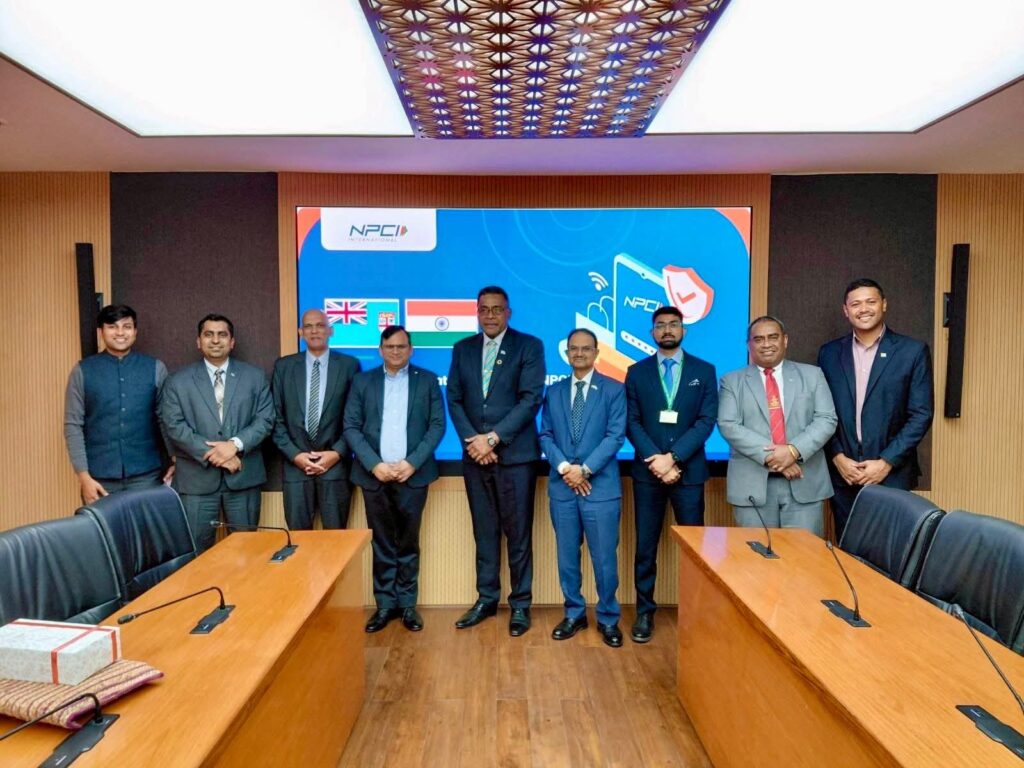
Fiji has taken further steps to strengthen its longstanding relationship with India, as Minister for Finance, Commerce and Business Development Esrom Immanuel undertakes a series of high-level engagements across the country.
Currently in India, the Minister’s visit is focused on expanding cooperation in priority sectors and reinforcing the historic ties between the two nations.
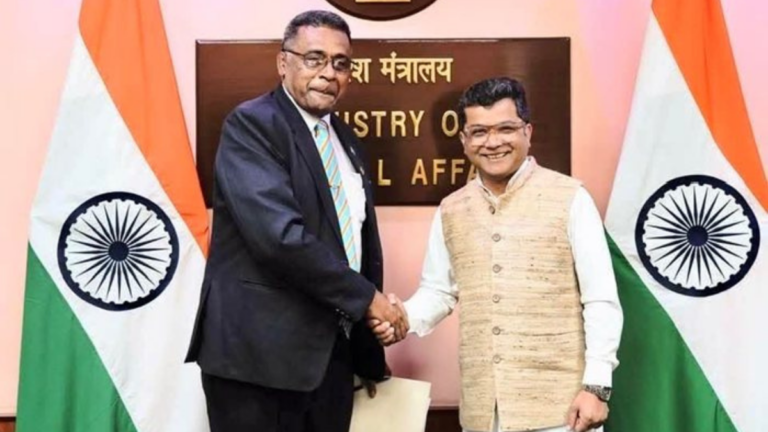
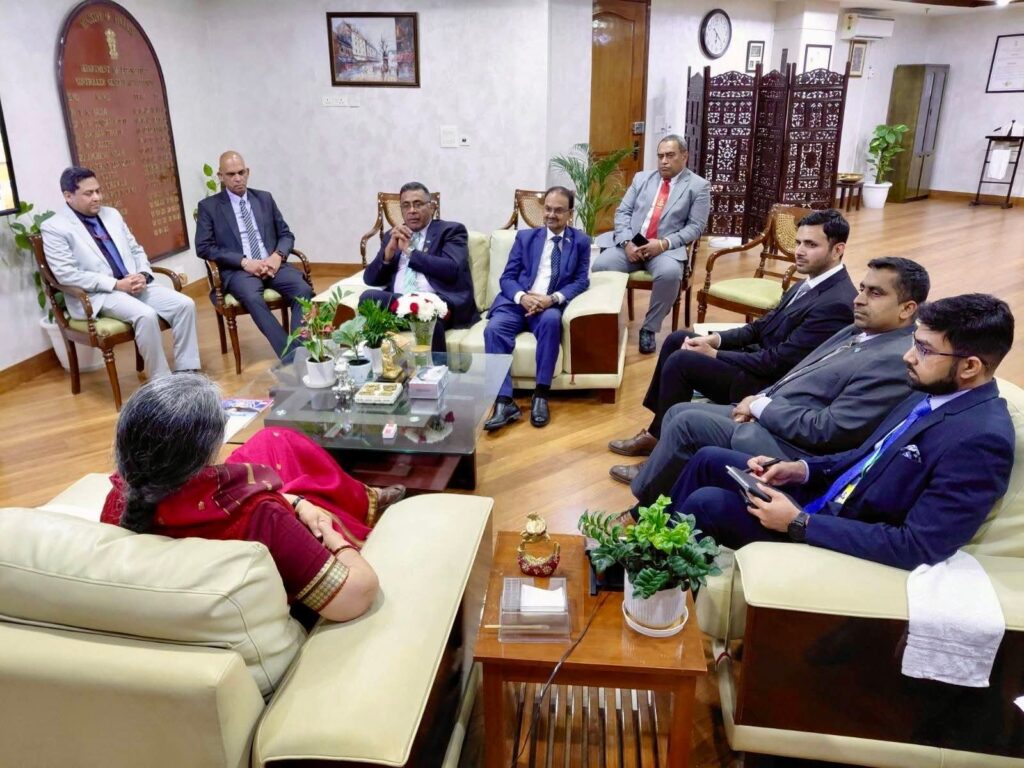
During the visit, he met with India’s Union Minister of State for External Affairs and Textiles, Pabitra Margherita. Both leaders reflected on the deep historical and cultural links shared by Fiji and India and reaffirmed their commitment to advancing the partnership.
Image Source: Supplied Fiji Government
Margherita expressed India’s readiness to support Fiji in key areas, including healthcare, digital governance, agricultural development, education and skills training, trade, cultural exchange and strengthening people-to-people connections.
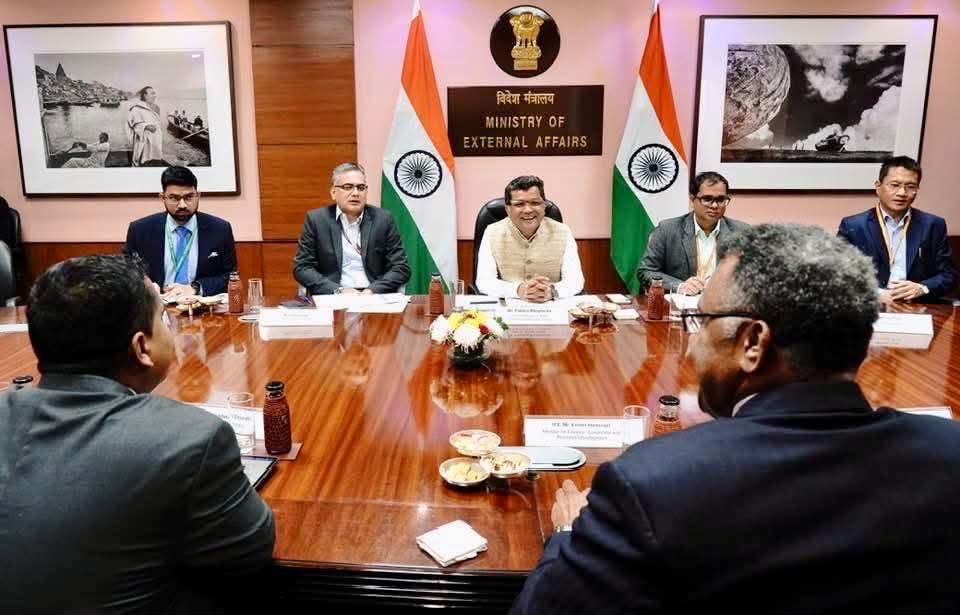
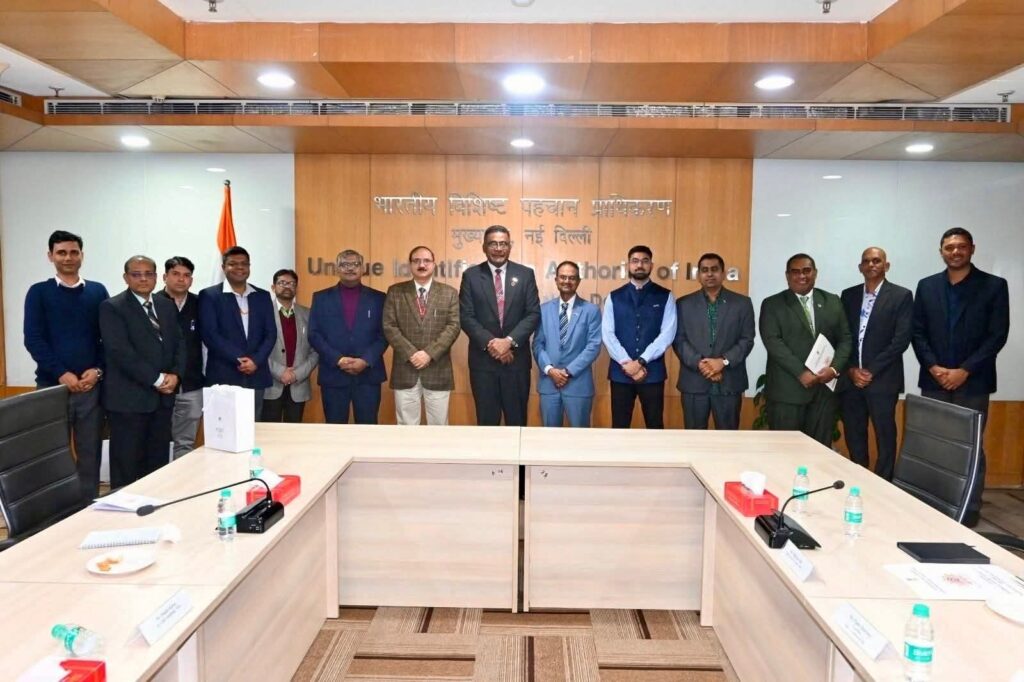
Immanuel also held discussions with senior Indian officials and institutional leaders aimed at supporting Fiji’s digital transformation and economic development. Meetings were conducted with Bhuvnesh Kumar, Chief Executive Officer of the Unique Identification Authority of India; Subhransu Sekhar Acharya, Chairman and Managing Director of the National Small Industries Corporation; T. C. A. Kalyani from India’s Ministry of Finance; and representatives from the National Payments Corporation of India.
Discussions centred on potential collaboration in digital identity systems, support for small and medium enterprises, public financial management and digital payments infrastructure — areas viewed as critical to Fiji’s modernisation agenda.
Image Source: Supplied Fiji Government
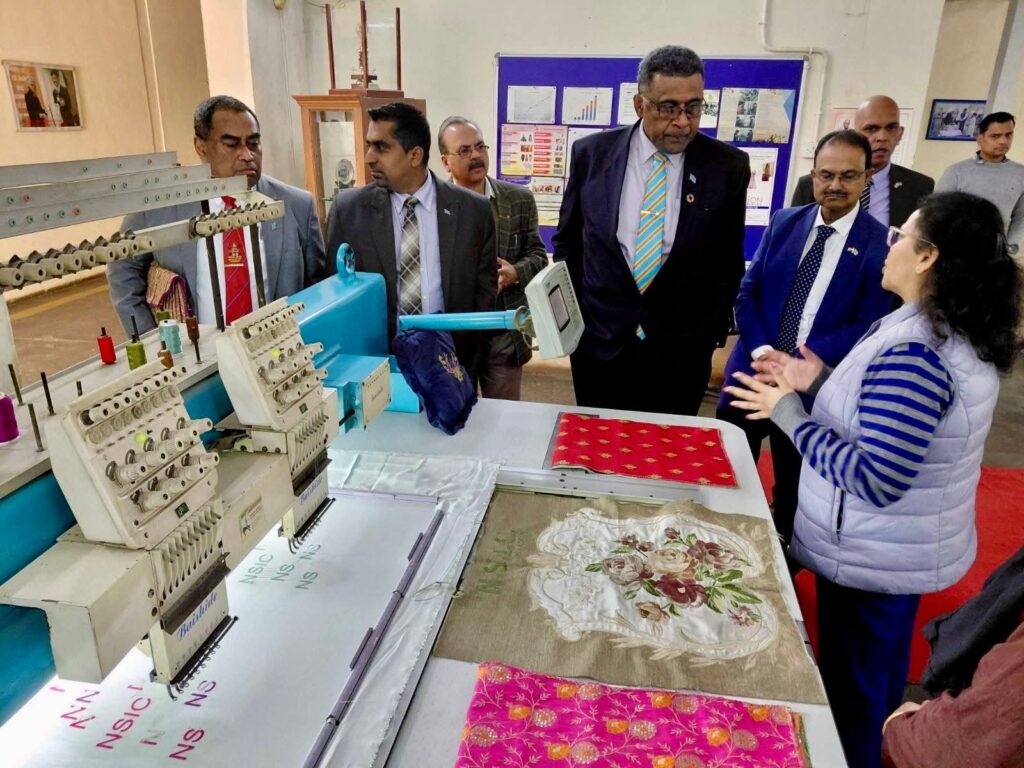
Healthcare cooperation was another priority during the trip. The Minister met executives from Apollo Hospitals in Delhi to explore partnerships aimed at expanding access to specialised tertiary care for Fijian patients.
Later in Chennai, Immanuel is scheduled to officiate at the 27th Founder’s Day celebration of MIOT International. India remains a key destination for Fijians seeking advanced medical treatment, and MIOT has expanded its presence in Fiji through the management of cardiac services at Lautoka Hospital in partnership with Aspen.
Image Source: Supplied Fiji Government
The renewed engagement highlights a relationship anchored not only in shared history, but also in common values of democracy, mutual respect and social justice — principles that continue to guide cooperation between Fiji and India.
Support our Journalism
No-nonsense journalism. No paywalls. Whether you’re in Australia, the UK, Canada, the USA, or India, you can support The Australia Today by taking a paid subscription via Patreon or donating via PayPal — and help keep honest, fearless journalism alive.
Angus Taylor has been elected leader of the federal Liberal Party after defeating Sussan Ley in a decisive party room ballot, marking a major shift in Australia’s opposition leadership and triggering immediate political fallout in Canberra.
The leadership spill was confirmed after Liberal MPs voted to vacate Sussan Ley’s position, with Taylor subsequently winning the leadership contest by a clear margin of 34 votes to 17, according to party whip Aaron Violi. The result was stronger than many political observers had anticipated and signals significant backing for Taylor within the Liberal caucus.
Victorian senator Jane Hume was elected deputy leader following a separate ballot, defeating Queensland MP Ted O’Brien in the final round by 30 votes to 20. The deputy leadership contest involved multiple candidates, with Dan Tehan and Melissa Price eliminated in earlier rounds.
The leadership change comes amid ongoing instability within the Liberal Party following its landslide defeat at the 2025 federal election, which saw Labor secure a commanding parliamentary majority and weaken the Coalition’s position nationally.
Spill motion ends Ley’s leadership
The leadership contest was triggered after Liberal MPs voted in favour of a spill motion, effectively ending Ley’s tenure as leader. The motion itself passed with a similar margin, demonstrating strong internal momentum for change.
Ley, who had taken over leadership following the Coalition’s election loss, left the party room with supporters following the vote and was later applauded by colleagues in her office. She did not immediately address the media.
Taylor and Ley were the only candidates to formally nominate for the leadership, reflecting a direct contest between two senior figures within the party.
Deputy leadership reshaped
Jane Hume’s election as deputy leader strengthens the party’s economic and policy leadership team. Hume, a Victorian senator and former finance spokesperson, defeated Ted O’Brien after a competitive multi-round vote.
Dan Tehan received 11 votes in the second round before being eliminated, while Melissa Price was eliminated in the first round after securing just two votes.
Hume’s victory positions her as a key figure in rebuilding the party’s economic messaging and reconnecting with voters after recent electoral setbacks.
Immediate political reaction
The leadership outcome drew swift political reactions from across the spectrum. Prime Minister Anthony Albanese and Labor strategists quickly launched campaign messaging targeting Taylor, seeking to tie him to previous Coalition economic policies and leadership decisions.
Labor released online advertisements shortly after the result was announced, portraying Taylor as part of the previous Coalition leadership team and framing him as a continuation of the past political direction.
Meanwhile, former Liberal prime minister Tony Abbott publicly endorsed Taylor’s leadership, calling on party members to unite behind him and focus on rebuilding voter support.
Party unity and future direction
Taylor’s election comes at a critical moment for the Liberal Party as it attempts to recover from electoral losses, internal divisions and declining support in key metropolitan areas.
The leadership change is expected to influence the party’s policy direction, electoral strategy and positioning ahead of the next federal election, which is due by 2028.
Taylor, who previously served as shadow treasurer, is regarded as a senior economic voice within the party and is expected to focus heavily on economic management, cost-of-living pressures and fiscal policy as central themes of the opposition’s platform.
The leadership reshuffle also reflects broader efforts by the Liberal Party to reset its public image, rebuild internal unity and re-establish itself as a competitive alternative government.
Leadership transition marks a turning point
The decisive nature of the vote underscores a clear majority within the party seeking a change in leadership and direction. With Taylor and Hume now leading the Liberal Party, attention will turn to how the opposition reshapes its strategy and messaging in response to Labor’s dominance and evolving political dynamics.
The coming months are likely to determine whether the new leadership team can stabilise the party, unify factions and rebuild voter confidence ahead of the next national poll.
Support our Journalism
No-nonsense journalism. No paywalls. Whether you’re in Australia, the UK, Canada, the USA, or India, you can support The Australia Today by taking a paid subscription via Patreon or donating via PayPal — and help keep honest, fearless journalism alive.
Premier Jacinta Allan is under intense pressure to step down after a report revealed the Victorian government may have ignored widespread alleged corruption within the Construction, Forestry, Maritime, Mining and Energy Union (CFMEU).
Opposition Leader Jess Wilson called the report a “failure of leadership” and demanded Allan explain why taxpayer money was allowed to reach bikies and organised crime figures on Big Build projects.
Wilson said the $15 billion wasted equates to over $5,000 per Victorian household and could have funded thousands of nurses, police officers, or teachers.
“Clearly, as Minister for Transport Infrastructure and now Premier, she has been utterly compromised in her ability to take action against the CFMEU.”
An investigation by anti-corruption expert Geoffrey Watson SC detailed systemic misconduct within the union, including bribes, extortion, and links to organised crime. Watson told a Queensland inquiry the government’s inaction had cost taxpayers an estimated $15 billion, with some estimates suggesting losses could reach $30 billion.
The report, released amid explosive reporting in The Age, also highlighted that sections linking the CFMEU to the Victorian Labor government were removed prior to publication. As per report, Mark Irving KC, the administrator tasked with reforming the union, admitted to ordering the deletions, which allegedly covered government inaction and the union’s ties to criminal networks.
Watson said he was “angry” about the removal of these sections, which suggested both the Andrews and Allan governments were aware of serious misconduct but failed to act. “Much of that $15 billion has been poured directly into the hands of criminals and organised crime gangs,” the report stated.
Veteran journalist Neil Mitchell described the revelations as the worst scandal he has seen in 50 years of covering Victorian politics.
Speaking to SkyNews Australia, he argued that Allan, who served as Infrastructure and Transport Minister for nine years before becoming Premier in 2023, either ignored the misconduct or was incompetent in failing to address it. “The Premier’s got to step down. She really must step down,” Mitchell said.
“Either she knew and turned a blind eye, or she didn’t know and was incompetent.”
The CFMEU administrator confirmed the allegations have been referred to the AFP, Victoria Police, the Fair Work Commission, and other relevant agencies.
Meanwhile, Victorian Attorney-General Sonya Kilkenny defended the government’s efforts to tackle corruption in the construction industry. Kilkenny told ABC Radio Melbourne:
“You can see from the actions we’ve already taken, when we acted really swiftly to eradicate this kind of rotten culture that was exposed in parts of Victoria’s construction sector.”
Watson’s 136-page report also included shocking allegations of inappropriate conduct on construction sites, such as the hiring of strippers as cleaners and claims of drug distribution. He described the Setka-era CFMEU as a “crime organisation” that had grown too powerful for anyone to challenge.
Support our Journalism
No-nonsense journalism. No paywalls. Whether you’re in Australia, the UK, Canada, the USA, or India, you can support The Australia Today by taking a paid subscription via Patreon or donating via PayPal — and help keep honest, fearless journalism alive.
Australia’s stand-in captain Travis Head has praised his team’s all-round performance after a dominant 67-run victory over Ireland in their opening ICC Men’s T20 World Cup match in Colombo, calling it a “nice start” to the tournament.
Leading the side in the absence of regular captain Mitchell Marsh, Head said Australia delivered strongly with both bat and ball to begin their campaign on a confident note.
“Nice start. Obviously, it’s nice to get into the tournament. I thought everyone played really, really well, so positive note,” Head said after the match.
“The way Nel (Nathan Ellis) and Zamps (Adam Zampa) bowled throughout the second innings was exceptional. It’s what we need from them, too. They are probably the leaders of our attack.”
Australia posted an imposing total of 182/6 after winning the toss and electing to bat first. Marcus Stoinis led the scoring with an aggressive 45 off 29 balls, while Josh Inglis provided a quick boost with 37 from just 17 deliveries. Matt Renshaw also made a valuable contribution with 37 runs, helping Australia set a challenging target for Ireland.
Ireland’s chase never gained momentum as Australia’s bowlers took control early. Nathan Ellis produced a superb spell, finishing with figures of 4/12, while Adam Zampa delivered another outstanding performance with 4/23 to dismantle Ireland’s batting lineup. The disciplined bowling attack restricted Ireland to just 115 runs, sealing a comprehensive victory.
Zampa’s performance also marked a personal milestone, as he overtook Pakistan legend Shahid Afridi to become the joint-second-highest wicket-taker in T20 World Cup history. The Australian leg spinner now has 40 wickets in 22 matches, level with Afghanistan’s Rashid Khan, and trailing only Bangladesh’s Shakib Al Hasan, who leads with 50 wickets.
Australia’s strong opening result comes despite the absence of Mitchell Marsh, who was ruled out of the match after suffering a painful groin injury during training that resulted in internal bleeding. Head stepped in as captain and guided the team effectively, demonstrating leadership and composure in a high-stakes tournament environment.
Australia are also set to receive a major boost with veteran batter Steve Smith expected to join the squad during the tournament. Smith, who was not part of the initial playing XI, remains a key figure in Australia’s T20 setup, bringing vast experience and stability to the middle order. His presence is expected to strengthen the batting lineup and provide additional leadership support as Australia progress through the competition.
Smith’s return will add further depth to an already strong Australian side featuring a mix of experienced campaigners and in-form performers. With Australia aiming to reclaim the T20 World Cup title, the inclusion of one of the country’s most accomplished batters could prove crucial in high-pressure knockout matches later in the tournament.
The win puts Australia in a strong position early in the competition, reinforcing their status as one of the tournament favourites. With both experienced players and emerging performers contributing, the team appears well-balanced as they pursue another T20 World Cup title.
Australia will next face Zimbabwe at the R. Premadasa Stadium in Colombo on Friday, where they will aim to build on their strong start and maintain momentum in the tournament.
Support our Journalism
No-nonsense journalism. No paywalls. Whether you’re in Australia, the UK, Canada, the USA, or India, you can support The Australia Today by taking a paid subscription via Patreon or donating via PayPal — and help keep honest, fearless journalism alive.
Free swimming and water safety lessons will become a permanent feature of Northern Territory primary schools, with the Finocchiaro CLP Government locking in ongoing funding after what it has described as a successful first year of the program.
The Swimming in Schools initiative, introduced in 2025, saw 17,899 students from 160 schools take part — representing about 6.7 per cent of the Territory’s total population. From 2026, the program will be embedded into schools’ annual budgets, backed by $3 million in funding each year for government and non-government schools.
The scheme comes at no cost to families, with the government estimating a household with two primary school-aged children will save around $328 a year.
Education and Training Minister Jo Hersey said the move delivered cost-of-living relief while ensuring children gained vital lifesaving skills. “Under the CLP, your children will learn to swim just like they learn to read and write,” Mrs Hersey said.
“Exploring waterfalls, swimming at local springs or pools, boating and fishing are all part of the unique Territory lifestyle. We want to protect that by teaching our youngest Territorians how to swim while they’re in primary school.”
The government said the program had already led to significant improvements in swimming competency. Before the introduction of free lessons, an average of 338 Year 6 students met the National Benchmark for Swimming and Water Safety. After the first full year of the program, that figure rose to 843 students.
Executive Director of Royal Life Saving NT, Floss Roberts, described the policy shift as transformative. “This ensures children across the Northern Territory will not miss out on essential swimming and water safety skills that save lives,” she said.
“In 2025, 17,899 primary school students participated, with 843 achieving the national competency benchmark — an outstanding result for our first year of delivery. Our focus now is to build on this strong foundation and continue increasing participation and achievement in 2026.”
The program has also highlighted the challenges faced by remote schools. Alpurrurulam School in the Barkly region travelled a total of 655 kilometres to ensure its students could take part in lessons.
Initial plans to access facilities in Mount Isa were unable to proceed due to cross-border arrangements. A dedicated swimming week was later organised in Tennant Creek, but when the pool unexpectedly closed due to maintenance and compliance issues, alternative arrangements were made.
Teachers and students ultimately travelled an additional 105 kilometres to the Devils Marbles Hotel, where lessons were delivered by a qualified AUSTSWIM instructor.
The Department of Education and Training said the outcome demonstrated its commitment to equity and access for remote communities, ensuring students did not miss out despite significant logistical hurdles.
The government has framed the permanent rollout as part of its broader agenda focused on growth, certainty and security across the Territory.
Support our Journalism
No-nonsense journalism. No paywalls. Whether you’re in Australia, the UK, Canada, the USA, or India, you can support The Australia Today by taking a paid subscription via Patreon or donating via PayPal — and help keep honest, fearless journalism alive.
The Albanese Government has unveiled a fresh round of investments aimed at accelerating progress on Closing the Gap, releasing its 2025 Annual Report and 2026 Implementation Plan in partnership with First Nations representatives through the Coalition of Peaks.
The report outlines gains made over the past year and sets out priorities for 2026, with a strong focus on jobs, cost-of-living relief, housing, health and community safety in Aboriginal and Torres Strait Islander communities.
Prime Minister Anthony Albanese said meaningful progress depended on governments listening and backing community-led solutions.
“Closing the Gap only works when governments listen to First Nations people and invest in community-led, practical solutions,” he said.
Among the headline measures is a $299 million investment to double the Remote Jobs and Economic Development Program from 3,000 to 6,000 jobs. About 1,500 roles have already been created, with the government saying the program delivers “the dignity of work with decent pay and conditions”.
PM Albanese said Australians broadly supported the national effort. “Australians want to close the gap because we all believe in the meaning of the fair go,” he said.
“The task before us is to build a future in which all Australians have access to the same opportunities.”
Cost-of-living relief in remote communities will also be expanded, with $27.4 million to lift the cap on the Low-Cost Essentials Subsidy Scheme. The scheme, which reduces the price of 30 essential grocery items, currently covers 113 stores but will now extend to all 225 eligible remote stores nationwide.
A further $32.7 million will expand the Store Efficiency and Resilience Package to 75 additional remote outlets, helping maintain fresh stock during the wet season and in areas where distance complicates transport.
In a significant move on community safety, the government will roll out Our Ways – Strong Ways – Our Voices: National Aboriginal and Torres Strait Islander Plan to End Family, Domestic and Sexual Violence 2026–2036, backed by an immediate $218.3 million investment. It is the first standalone national plan focused specifically on ending violence against Aboriginal and Torres Strait Islander women and children.
Health reform also features prominently. As part of a new hospital funding agreement secured at National Cabinet, the Commonwealth will invest a record $250 million, matched by $200 million from states and territories, to improve outcomes for First Nations patients.
An additional $144.1 million will go towards health infrastructure upgrades across Aboriginal Community Controlled Health Services, building on more than 100 projects already delivered or underway. Crisis support service 13YARN will receive $13.9 million to extend its hours and introduce a text messaging service, expanding access to culturally safe counselling.
The government has also committed $44.4 million to expand the Birthing on Country program, providing culturally safe maternity care to around 1,100 mothers and babies each year, alongside $2.6 million to boost the First Nations Health Worker Traineeship program. Aboriginal Hostels Ltd will receive $48.3 million to continue delivering short-term accommodation services.
Minister for Indigenous Australians Malarndirri McCarthy said the new measures built on existing commitments and were already delivering results, “Our investments in Closing the Gap are making a difference and in 2026 we are building on these successes.”
“The Government is creating thousands more real jobs in remote communities with decent pay and conditions, reducing housing overcrowding, easing the cost of living by lowering the cost of 30 essential items in more remote communities and improving access to health care.”
Ms McCarthy added that reforming how governments work with First Nations communities remained central to the agenda.
“We continue to drive changes to the way governments work with First Nations people, organisations and communities, to ensure policies and programs are developed in genuine partnership.”
Deputy Lead Convenor of the Coalition of Peaks Scott Wilson welcomed the collaborative approach, saying lasting progress required Aboriginal and Torres Strait Islander leadership.
“Closing the Gap means giving Aboriginal and Torres Strait Islander people and organisations the power and resources to lead solutions. We’ve seen it happen and we know it works,” he said.
“Our people and organisations have the knowledge and trust of their communities and that is exactly what’s needed to drive real, lasting change.”
Mr Wilson said the Coalition of Peaks was encouraged by the government’s commitment to partnership in designing and delivering the new and expanded programs, and hoped to see continued investment in the Aboriginal community-controlled sector.
The new measures build on major commitments already underway, including a 10-year, $4 billion joint investment to halve overcrowding in remote Northern Territory communities, $600 million in dedicated First Nations housing funding through the Housing Australia Future Fund, and expanded Indigenous Ranger programs.
The full 2025 Annual Report and 2026 Implementation Plan is available on the National Indigenous Australians Agency website.
Support our Journalism
No-nonsense journalism. No paywalls. Whether you’re in Australia, the UK, Canada, the USA, or India, you can support The Australia Today by taking a paid subscription via Patreon or donating via PayPal — and help keep honest, fearless journalism alive.
A 13-year-old boy who swam four kilometres through rough, shark-frequented waters to raise the alarm after his family was swept out to sea has been hailed as a hero by emergency services.
Earlier, marine authorities were unaware of the family’s peril until Austin reached land and contacted emergency services.
About 6 pm, Austin, his 47-year-old mother Joanne, and his siblings Beau, 12, and Grace, 8, were caught in strong offshore winds while kayaking and paddle boarding. Swept kilometres from shore in deteriorating conditions, the teenager made the decision to attempt the return journey alone to get help.
When his kayak began taking on water, Austin was forced to abandon it and swim the remaining distance. He later revealed the mental battle he faced in the water.
“I just said, ‘all right, not today, not today, not today’,” he told Sky News.
“I do breaststroke, I do freestyle, I do survival backstroke.
“I hit the bottom of the beach and I just collapsed, and then after that I had to sprint 2km to go get to the phone.”
Authorities said he initially swam for about two hours wearing a life jacket before removing it when it began to hinder his progress.
The South West coastline is known for frequent shark sightings, with WA’s SharkSmart website recording multiple sightings along the coast in the week leading up to the incident.
After swimming about four kilometres to shore, Austin ran a further two kilometres along the beach before reaching a phone and making the calm, clear triple zero call that triggered a major rescue effort.
A multi-agency operation was coordinated by the Water Police Coordination Centre in North Fremantle, with support from the South West District Office. The deployment included an AMSA search and rescue aircraft from Perth, the RAC Rescue helicopter from Bunbury, two vessels from Marine Rescue Naturaliste and two from Marine Rescue Busselton.
At about 8.30pm — around 10 hours after entering the water — Joanne, Beau and Grace were located clinging to a paddleboard about 14 kilometres offshore. A volunteer marine rescue vessel retrieved them and brought them safely back to land. They were taken to Busselton Health Campus for assessment and later released without serious injury.
Naturaliste Marine Rescue commander Paul Bresland described Austin’s swim as a “superhuman” effort.
“He swam in, he reckons, the first two hours with a life jacket on,” Mr Bresland told the ABC.
In a Facebook post, Marine Rescue Busselton described the outcome as a “fantastic effort” by all involved in “very trying conditions”, while warning the public to be mindful of strong offshore winds common at this time of year.
South West Police Inspector James Bradley said the family’s life jackets played a crucial role in their survival.
“Thankfully, all three people were wearing life jackets, which contributed to their survival,” he told the ABC.
“The actions of the 13-year-old boy cannot be praised highly enough — his determination and courage ultimately saved the lives of his mother and siblings.”
In a rare move, and with his mother’s permission, WA Police released audio of Austin’s emergency call in the first episode of Operation Podcast, highlighting how clear and accurate information can significantly assist first responders.
Police said while Austin is too young to join the force, his composure and decisive actions reflect the very qualities sought in future recruits.
Support our Journalism
No-nonsense journalism. No paywalls. Whether you’re in Australia, the UK, Canada, the USA, or India, you can support The Australia Today by taking a paid subscription via Patreon or donating via PayPal — and help keep honest, fearless journalism alive.
AFP Commissioner Krissy Barrett has issued a stark warning to extremists and hate groups, declaring authorities will “disrupt and intervene however and whenever we lawfully can” as terror threats evolve across Australia.
Opening her address at Senate Estimates on Wednesday evening, Commissioner Barrett said it was the AFP’s first appearance since the Bondi Beach terrorist attack on 14 December 2025, which remains the subject of an active criminal investigation and a Royal Commission.
She confirmed investigators continue to allege a father and son acted alone in the Bondi attack and were inspired by ISIS. The father was shot dead by police during the incident. His son was charged on 17 January 2026 by the NSW Joint Counter Terrorism Team — comprising NSW Police, the AFP, ASIO and the NSW Crime Commission.
The man, who remains in custody, faces 59 charges, including one count of committing a terrorist act, 15 counts of murder and 40 counts of causing grievous bodily harm with intent to murder. The most serious offences carry a maximum penalty of life imprisonment.
Commissioner Barrett said she would not provide further detail to avoid prejudicing the ongoing investigation or future court proceedings.
In a separate case, she revealed that on 4 February 2026, the Western Australia Joint Counter Terrorism Team charged a 31-year-old man over an alleged terrorism offence linked to a rally held in support of First Nations people on 26 January.
Police allege the man threw a home-made improvised device into the crowd and acted to advance a nationalist and racially motivated ideological cause, targeting First Nations people. The charge carries a potential life sentence.
Commissioner Barrett said authorities were increasingly concerned about individuals driven by grievance and radicalised rapidly, often online.
“We are witnessing the continued rise of individual grievance,” she said, noting some offenders no longer seek networks or co-conspirators but instead act alone, fuelled by world events, perceived injustices or personal fixations.
She said loneliness and social exclusion may also be contributing factors, with vulnerable individuals turning to online forums where extreme views are normalised.
While religiously motivated violent extremism continues to make up the majority of terrorism investigations, the AFP is seeing a rise in ideologically motivated extremism and lone actors radicalised in short timeframes.
Of particular concern is a growing number of young people drawn towards hate and violence. Since 2020, Joint Counter Terrorism Teams have charged 26 youths with terrorism-related offences.
Commissioner Barrett warned that, given current trends, it was likely young offenders could in future be placed under the Commonwealth’s High Risk Terrorist Offender regime, which allows for extended detention or strict monitoring after a sentence has been served.
In response to the evolving threat landscape, the AFP has established National Security Investigations teams — commonly referred to as “hate disrupter squads” — to intervene earlier and prevent escalation.
Since their creation, the teams have charged 21 people nationwide, most over alleged threats against parliamentarians, senior office holders and the Jewish community. The squads are now being expanded across all states and territories.
Following the recent passage of the Combatting Antisemitism, Hate and Extremism Act, Commissioner Barrett said the AFP would adopt a more aggressive disruption strategy, including releasing more operational information to reassure communities and deter offenders.
She confirmed the existence of two standing operations: Operation Drakelow, targeting white supremacists, and Operation Antrobus, focused on known and emerging hate preachers.
“We know who many of these malicious manipulators are,” she said, adding some were attempting to skirt the edges of the law with legal advice to avoid prosecution.
Even where criminal thresholds are not met, the AFP would continue to use lawful disruption tactics, both overt and covert.
“That unpredictability should worry those who are on our radar — and those who will be as we widen our net,” she said.
Her message to extremists was blunt:
“If you are one of these groups or individuals — your life will become very uncomfortable.”
Commissioner Barrett urged anyone aware of individuals mobilising towards violence to contact authorities or the National Security Hotline on 1800 123 400.
Support our Journalism
No-nonsense journalism. No paywalls. Whether you’re in Australia, the UK, Canada, the USA, or India, you can support The Australia Today by taking a paid subscription via Patreon or donating via PayPal — and help keep honest, fearless journalism alive.
University study is a major commitment and is quite different to high school. This big new phase of life can feel both daunting and exciting.
But many first years don’t have anyone they can ask for advice on transitioning from school to uni, or may be the first in their family to go to uni.
Reaping the benefits of uni doesn’t happen through hope or just turning up to lectures – you need to ask questions, and be an active, independent learner.
Over the last two decades, I have taught thousands of first year students from various disciplinary backgrounds. I regularly teach a large first year academic writing class, and have designed and managed undergraduate arts courses for nearly half a decade. Providing these evidence-based tips in the early weeks of study helps students take control and set them up for success.
Uni lecturers generally expect students to devote ten to 15 hours of study to each subject each week.
If you’re enrolled in three or more subjects, your studies are almost equivalent to a full-time job.
You might spend this time:
reading the subject materials (study guides, textbook chapters, set readings)
going to lectures
attending tutorials/seminars/workshops
working on assessment tasks
reading widely and reflecting on what you’ve read
regularly checking online learning management systems (such as Blackboard, Moodle or Canvas) for updates and discussion.
So, what do you need to know to survive and thrive as a first year at uni?
1. Do the readings before class, and attend
Reading ahead of time will help you get familiar with what will be taught and identify tricky things to listen out for.
Prepare some questions on these trouble spots to ask in class. It’s likely your classmates will have the same queries.
Showing up helps you stay informed about the subject content and housekeeping, like due dates and how to tackle assignments. Some classes require you to attend or participate to pass.
Going to lectures and tutorials, and having dedicated study hours gives structure and purpose to your day, which help you adjust to university life and stay on track.
2. Keep up. It’s easier than catching up
The study timetable outlines what topics and readings will be covered weekly. Put that timetable somewhere you can see it often. Letting your readings and work pile up can become pretty scary. Missing lectures and ignoring your work will make life harder than it needs to be.
Much of uni study success is about being organised. Your lecturers will have devised the most appropriate order in which to teach you new information.
Prioritise your readings and remember you might have to read them a few times to grasp the content – this is normal in academia.
3. Take notes in class and on your textbooks
This means you can record your interpretation and understanding of what the lecturer is saying while it’s being said.
Your understanding of a topic is really tested when you paraphrase it into your own words.
Once you’ve made your in-class notes, write them up while they’re fresh in your mind. To improve retention, opt for handwriting these rather than typing. You might have to block out some time directly after class for this.
Your textbook and readings are not designed to remain pristine. Write notes in the margins, circle important words and phrases, and use sticky notes.
4. Use positive reframing
When you’re working through new material, it’s easy to succumb to the overwhelm and start directing a lot of negative energy towards it.
Learning a new skill involves shifting from controlled processing to automatic processing. Initially it takes lots of time and mental effort to develop a new skill. With practice, it gets easier.
Your time at uni is about more than just achieving good marks. It is about cultivating your curiosity.
5. Keep a glossary of terms and practise what you’ve learnt
Each week you’ll be learning new terms and concepts. Keeping a log of these as you learn them, giving a brief definition and example or two, will make revision easier.
Work these new terms into your assignments to show your marker you’ve engaged with the subject materials.
Some subjects have weekly exercises and activities to help you understand and consolidate the topic. Take these seriously and use them to revise.
6. Know what’s expected
Yes, you need to know when assignments are due. But you also need to know the university policies and guidelines around things such as asking for an extension, plagiarism, AI use, and conduct. If in doubt, ask your lecturers.
No-nonsense journalism. No paywalls. Whether you’re in Australia, the UK, Canada, the USA, or India, you can support The Australia Today by taking a paid subscription via Patreon or donating via PayPal — and help keep honest, fearless journalism alive.
Two Chinese nationals have been charged over claims they secretly gathered information on a Canberra-based Buddhist association on behalf of a Chinese government security agency.
A 25-year-old man and a 31-year-old woman were arrested on Wednesday and are due to appear in the ACT Magistrates Court. Each has been charged with one count of reckless foreign interference under Commonwealth law, an offence that carries a maximum penalty of 15 years’ imprisonment.
AFP Assistant Commissioner for Counter Terrorism and Special Investigations Stephen Nutt described foreign interference as a serious threat to Australia’s democratic institutions and social cohesion.
“Australia is not immune to foreign interference, and we should not expect this arrest will prevent further attempts to target our diaspora communities.”
He urged members of culturally and linguistically diverse communities to report suspicious conduct, noting they were more often victims of foreign interference or transnational repression than perpetrators.
The latest charges bring to five the number of people accused under Australia’s foreign interference laws since they were introduced in 2018. Separate investigations previously resulted in charges against a Victorian man in 2020 and a New South Wales man in 2023.
ASIO Director-General Mike Burgess said foreign interference remained one of the country’s principal security challenges. “Multiple foreign regimes are monitoring, harassing and intimidating members of our diaspora communities,” he said.
“This sort of behaviour is utterly unacceptable and cannot be tolerated.”
The arrests follow a long-running investigation known as Operation Autumn-Shield, launched in March 2025 after the Australian Security Intelligence Organisation (ASIO) provided intelligence to the Australian Federal Police-led Counter Foreign Interference Taskforce.
Police allege the pair worked with a third Chinese national, who was charged in August last year, to covertly obtain information about the Canberra branch of Guan Yin Citta, a Buddhist organisation banned in China in 2017. Authorities claim the group acted under the direction of a public security bureau in China.
Search warrants were executed in the ACT in July 2025 as part of the probe.
Anyone who believes they are being threatened is encouraged to contact local police on 131 444, or Triple Zero (000) in an emergency. Information about suspected foreign interference can be reported to the National Security Hotline on 1800 123 400.
Support our Journalism
No-nonsense journalism. No paywalls. Whether you’re in Australia, the UK, Canada, the USA, or India, you can support The Australia Today by taking a paid subscription via Patreon or donating via PayPal — and help keep honest, fearless journalism alive.
Detectives from the Transit Crime Investigation Unit are seeking the public’s help to identify a man involved in a lewd act near a bus stop in Altona North last year.
The incident occurred on Wednesday, 8 October, between 3.45pm and 4.15pm at the intersection of Millers Road and Berkley Crescent. Investigators say the man performed the act in view of members of the public.
Police have released a computer-generated image of the suspect, who is described as being in his late 20s, with a stocky build, thick dark beard and moustache, and tanned skin. He was wearing a grey hooded jumper featuring a Neovision motif, grey track pants, and red, white and black high-top Jordan trainers.
Anyone with information that could help identify the man is urged to contact Crime Stoppers on 1800 333 000 or via www.crimestoppersvic.com.au.
Support our Journalism
No-nonsense journalism. No paywalls. Whether you’re in Australia, the UK, Canada, the USA, or India, you can support The Australia Today by taking a paid subscription via Patreon or donating via PayPal — and help keep honest, fearless journalism alive.
Ten people, including a suspected shooter, have died following a shooting in Tumbler Ridge, a small town in British Columbia, Canadian authorities say.
Six fatalities were reported inside Tumbler Ridge Secondary School, while two more people were found dead at a nearby residence believed to be linked to the incident. Another person died while being transported to hospital. The suspected shooter was confirmed dead at the scene, authorities said.
At least 25 others are being treated for injuries at a local medical centre. Police have not confirmed whether additional suspects were involved.
The Royal Canadian Mounted Police (RCMP) described the situation as “rapidly evolving” and praised the quick coordination between the school, first responders, and the community. Superintendent Ken Floyd said authorities are focused on keeping the town safe and supporting those affected.
Tumbler Ridge, with a population of around 2,400, was placed on lockdown as additional RCMP and ambulance resources were deployed. Larry Neufeld, the local member of the legislature, urged residents to shelter in place while police continue their operation.
“The community’s safety is our priority,” Neufeld said. “Please return to your homes and allow the RCMP to restore safety to this beautiful town.”
Tumbler Ridge Secondary School serves around 175 students from Grades 7 to 12. Both the secondary school and the local elementary school were under a “lockdown and secure” order during the response.
Support our Journalism
No-nonsense journalism. No paywalls. Whether you’re in Australia, the UK, Canada, the USA, or India, you can support The Australia Today by taking a paid subscription via Patreon or donating via PayPal — and help keep honest, fearless journalism alive.
“We will burn down the Fiji Sun.” You sit down to start your workday and this is the first thing that flashes across your screen. Will you stay on and do your job as a reporter or consider fleeing?
The tone and the content have become familiar to Iva Nataro, a senior journalist at the Fiji Sun newspaper.
“People go to the extent of saying we will burn down the Fiji Sun office including everyone in it. They actually post this online. For a couple of times, we had to inform the police that we have been receiving these kinds of threats.”
Nataro’s experience is not the exception. In fact, threats, abuse and other forms of harm communicated using online or digital interfaces have proliferated in the last decade. These hazards, grouped under the term technology-facilitated threats (TFTs), have increased in number and the content has worsened in severity since the COVID-19 lockdowns and the pivot to remote working.
We have heard incidents of colleagues mocked online for what they wore while on camera or while live streaming on Facebook. Others have recounted how their names and other details were doxed, or posted online, after they investigated the release of intimate images of public figures. The investigations by the journalists ultimately proved some of the images were fake.
“Honestly, we are exposed every day because of the line of work that we do,” Nataro told me recently.
When they are exposed to TFTs, journalists often lack the skills and training to effectively assess them. They are caught unawares.
Often, the exposure takes place on platforms where they share professional content alongside personal engagements. Because of the way social media functions, exposure can be cyclical and take place whenever and wherever online connectivity is established.
Furthermore, those like Nataro and Irwin Angiki, the editor of The Island Sun newspaper in Solomon Islands say that the close-knit nature of their communities adds new layers of complexity to TFT exposure. The chances of journalists’ knowing the source of the threat is high, even where posts are anonymous. Their communities expect the journalists to act as gatekeepers. But the reactions they get can be divisive and, at times, hateful. A Vanuatu journalist said:
“Sometimes when you go to church on Sunday, you meet everybody, the politician, the police chief, the influencer … and they all expect you to be the journalist and nothing else.”
When exposed to a relentless cycle of online dangers without the skills to mitigate them, journalists are left feeling overwhelmed and unable to execute their professional duties effectively.
Angiki spoke of the persistence of the “bullet-proof” approach to journalism which was preventing journalists from addressing these concerns with transparency.
“Big majority of them – they are what we call thick-skinned. They don’t display that much of effect or hurt or pain from online abuse.”
When the exposure and impact becomes too hard to handle, exposed journalists resort to removing themselves from, or silencing themselves in, online spaces.
“I’ve had some really junior colleagues who have reached the extent of wanting to leave the media industry, they have experienced such online abuse or online bullying to the extent that they want to leave the Fiji Sun and stop being a journalist altogether,” Nataro said.
Even if they remain, their journalism can suffer. Angiki related the experience of a junior colleague whose work deteriorated due to online trolling. She wanted to “change beats”, or move away from the sector of the community allocated to her for reporting, when confronted with waves of abuse and threats. Angiki and other colleagues dissuaded her.
“She went back. But then you noticed her stories were briefer. We noticed details contained less character — the government said this, the government said that. More like parroting, which was safer than what attracted these online idiots. So, yeah, it affected the way she wrote her stories. It was just straight parroting,” he said.
CJT has been leading efforts in the region to provide skills to journalists in the Pacific region to tackle TFTs. Nataro and Angiki have taken part in the CJT AsPac Fellowship which provides introductory awareness training on trauma-informed journalism. They also played significant roles as fellows in the innovative 2024 fellowship on tackling Technology-Facilitated Gender Based Violence. Angiki said:
“Back here we associate trauma with serious stuff like death, serious accidents. [But] we’ve never associated our work, journalism, with trauma. When I brought back what I learned from Brisbane and shared with my reporters, it was a big shake-up, like we woke up.”
TFTs are dynamic and quickly adapt to socio-political trends. With the wide and easy use of AI technology, they can be scaled up, infused with fakes and misinformation which makes them hard to track. Newsroom leaders we have worked with from the Pacific talk of their own sense of vulnerability when they find it hard to deal with exposure in their newsrooms.
The threats are unlikely to ease any time soon. In fact, they could ramp up.
Meta has announced that it is considering expanding community notes outside of the US. The blueprint it plans to use is X’s own adoption of community notes in place of moderation. If Meta goes ahead with its plans without proper guardrails, Facebook, Instagram and Threads will soon turn into versions of X.
The proliferation of TFTs has shown us that the digital hazards to which journalists are exposed easily seep through generic interventions aimed at slowing them down. Threats have to be contextualised within the information space in which they manifest. The journalist who is facing the exposure has to be placed right at the core of any threat analysis and efforts at prevention.
Disclosure: The Centre for Journalism and Trauma Asia Pacific was previously known as the Dart Centre Asia Pacific. The 2024 Technology-Facilitated Gender Based Violence fellowship received funding support from the Google News Initiative.
This article appeared first on Devpolicy Blog (devpolicy.org), from the Development PolicyCentre at The Australian National University.
Contributing Author: Amantha Perera is a researcher, academic and writer currently based in Australia. He is in the final stages of a PhD candidature at University of South Australia and a director and consultant at the Centre for Journalism and Trauma Asia Pacific, formerly known as the Dart Centre Asia Pacific.
Support our Journalism
No-nonsense journalism. No paywalls. Whether you’re in Australia, the UK, Canada, the USA, or India, you can support The Australia Today by taking a paid subscription via Patreon or donating via PayPal — and help keep honest, fearless journalism alive.
A major corruption investigation into the construction union CFMEU has triggered political shockwaves, after previously undisclosed findings alleged that taxpayer-funded infrastructure projects were infiltrated by organised crime and cost blowouts linked to union misconduct reached an estimated $15 billion.
The allegations emerged after CFMEU administrator Mark Irving, KC, released to The Age previously deleted sections of a report by anti-corruption barrister Geoffrey Watson, SC, following questions about whether politically sensitive material had been removed from the final version.
Watson, a former counsel assisting the Independent Commission Against Corruption, conducted an 18-month probe into corruption and criminal infiltration within the CFMEU. In a brief statement, he confirmed parts of his report were removed and said he had been directed to make changes. Irving’s office said the sections were initially excluded because the administrator was “not satisfied that they were well-founded or properly tested.”
Allegations government ‘knew but did nothing’
The most politically explosive finding alleged that the Victorian government was aware of growing corruption risks linked to CFMEU activity on major infrastructure projects but failed to intervene.
According to Watson’s findings, the government had a duty to monitor project costs and corruption risks but “did nothing about it,” despite evidence of escalating problems. The report suggested officials feared industrial disruption and project shutdowns if they confronted unlawful behaviour.
Watson wrote that government inaction, alongside contractor failures, allowed organised crime figures and bikie-linked operators to become embedded in publicly funded infrastructure projects.
The findings directly contradict longstanding denials by Victorian Premier Jacinta Allan, who has said she was unaware of corruption concerns until media investigations exposed the issue in 2024.
Victoria’s Attorney-General Sonia Kilkenny has defended the government’s actions, saying the Watson report was commissioned federally and the state had taken steps to address corruption, including referring allegations to police and anti-corruption bodies.
Estimated $15 billion cost to taxpayers
Watson’s report estimated that corruption and unlawful conduct increased infrastructure project costs by about 15 per cent, describing the figure as “probably conservative.”
Based on Victoria’s massive infrastructure pipeline, he concluded that CFMEU-related corruption had cost taxpayers approximately $15 billion.
“Much of that $15 billion has been poured directly into the hands of criminals and organised crime gangs,” Watson wrote.
Major projects cited as vulnerable included key components of Victoria’s $100 billion Big Build program, such as the Suburban Rail Loop, the North East Link, the Melbourne Metro Tunnel, and rail line upgrades.
The Big Build is jointly funded by the state and federal governments and represents one of the largest infrastructure programs in Australian history.
Report redactions spark transparency concerns
The release of the deleted sections followed scrutiny from a Queensland Commission of Inquiry examining CFMEU conduct and its impact on taxpayer-funded projects. The inquiry had been provided with a redacted version of the report and sought access to the full findings.
Sources familiar with the matter said the redacted version omitted entire sections critical of government oversight, raising concerns about transparency.
The CFMEU was placed into administration by the Albanese government in August 2024 following widespread allegations of corruption, violence and organised crime infiltration revealed in investigative reporting.
Irving has since removed dozens of officials and introduced reforms aimed at restoring integrity within the union.
Wider investigations and political fallout
The Watson report represents one of the most serious formal findings of corruption risks linked to a major Australian union and publicly funded infrastructure projects.
Investigations into CFMEU conduct are ongoing across multiple states, including Queensland and New South Wales, where inquiries are examining allegations of intimidation, cost blowouts and criminal infiltration in construction projects.
The controversy is expected to intensify political pressure on both federal and Victorian governments, with opposition figures demanding greater transparency and accountability over the handling of corruption allegations and the decision to initially withhold parts of the report.
Authorities and inquiries continue to examine the full extent of the allegations, with further public hearings and findings expected in the coming months.
Support our Journalism
No-nonsense journalism. No paywalls. Whether you’re in Australia, the UK, Canada, the USA, or India, you can support The Australia Today by taking a paid subscription via Patreon or donating via PayPal — and help keep honest, fearless journalism alive.
The former operators of a western Sydney medical centre have been ordered to pay $36,000 in penalties after failing to address alleged underpayments to a registered nurse.
As per Fair Work, the Federal Circuit and Family Court imposed a $30,000 fine on Well Health Medical Services Pty Ltd, which previously ran the Well Health Medical Hub in Merrylands, and a further $6,000 penalty on its sole director, Irfan Khan.
The case stemmed from the company’s failure to comply with a Fair Work Ombudsman Compliance Notice requiring it to calculate and repay wages and entitlements owed to a full-time nurse employed between October 2020 and September 2023.
It is reported that the court found Mr Khan was directly involved in the breach.
Alongside the penalties, the court ordered the company to comply with the notice, including correcting any underpayments and paying outstanding superannuation and interest.
Fair Work Ombudsman Anna Booth said employers who ignored compliance notices risked facing court action in addition to being required to back-pay workers.
“Where employers do not comply, we will take appropriate action to protect employees. Courts can impose penalties on businesses and order payments to workers.”
Ms Booth also encouraged workers with concerns about pay or entitlements to contact the Fair Work Ombudsman for free assistance.
The regulator launched its investigation after receiving a request for help from the affected nurse. A Fair Work inspector issued the compliance notice in December 2023, after forming the view the company had breached the Nurses Award 2020 and the National Employment Standards under the Fair Work Act.
The inspector believed the nurse had been underpaid minimum wages and annual leave loading, was not paid for accrued but unused annual leave when her employment ended, and was also unpaid for her final 46 hours of work.
In his ruling, Judge Peter Papadopoulos found the company’s failure to comply with the notice was deliberate and described Mr Khan as an “intentional participant” in the breach. He also noted neither the company nor its director had shown any contrition.
Judge Papadopoulos said penalties were necessary to deter the respondents and other employers from similar conduct, warning that compliance with statutory notices was not optional and that failing to engage properly with regulators would attract serious consequences.
Support our Journalism
No-nonsense journalism. No paywalls. Whether you’re in Australia, the UK, Canada, the USA, or India, you can support The Australia Today by taking a paid subscription via Patreon or donating via PayPal — and help keep honest, fearless journalism alive.
The Australian Federal Police have released an arrest photograph of alleged crime boss Kazem Hamad, warning associates that his detention marks an escalation — not an end — to the international investigation into his syndicate.
AFP Commissioner Krissy Barrett said the image was released with the permission of Iraq’s National Centre for International Judicial Cooperation, after Iraqi authorities independently arrested Hamad in January following their own criminal probe.
Hamad remains in custody at a secret location in Iraq, with the AFP confirming it is actively supporting the Iraqi investigation by sharing operational intelligence linked to crimes the force believes were committed or directed in Australia.
“The AFP’s job is not done,” Commissioner Barrett said, issuing a clear warning to those connected to Hamad’s network to “look long and hard” at the arrest photo.
Image: HAMAD – Arrest Photo (Source: AFP)
AFP officers travelled to Iraq again last week to provide further assistance, with additional key investigative information shared between authorities as the inquiry continues.
In Australia, the AFP remains focused on Operation Carmen, its long-running investigation into Hamad and his alleged syndicate, which police suspect is operating across five states and one territory.
Investigators say Hamad’s arrest has triggered leadership instability within the group, with infighting and dysfunction creating fresh opportunities for law enforcement to disrupt and dismantle the network.
The AFP has vowed to use every available partnership, capability and legislative power to identify all individuals linked to the syndicate, working closely with state and territory police who have already made significant arrests and laid charges against alleged members.
Members of the public with information about Kazem Hamad or his associates are urged to contact the National Security Hotline on 1800 123 400.
Support our Journalism
No-nonsense journalism. No paywalls. Whether you’re in Australia, the UK, Canada, the USA, or India, you can support The Australia Today by taking a paid subscription via Patreon or donating via PayPal — and help keep honest, fearless journalism alive.
Liberal Senator Jacinta Nampijinpa Price has launched a fierce attack on the ABC, accusing its leadership of encouraging racism and breaching its charter after the national broadcaster aired a provocative Australia Day–period program, Always Was Tonight.
In a Facebook post following a tense Senate Estimates hearing, Senator Price said she had put ABC executives “on notice” over what she described as serious failures of impartiality and editorial judgement.
Image: Liberal Senator Jacinta Nampijinpa Price at the Senate Estimates hearing (Source: SkyNews screenshot)
Senator Price argued it was unacceptable for taxpayer-funded television to broadcast content that “racialises Australians, distorts history and deliberately drives division”, dismissing claims the material was merely satire. “Let’s be clear: this was not harmless comedy,” she wrote.
“It was ideological activism, aired on government-funded TV. Public money should never be used to fund racism or political activism.”
Image: Liberal Senator Jacinta Nampijinpa Price’s post (Source: Facebook screenshot)
During the hearing, Senator Price cited a series of on-screen text lines from the show that she said amounted to attacks on white Australians, including references to dispossession and jokes about “white saviour complex”.
The senator directed her questioning at ABC Managing Director Hugh Marks, asking why the broadcaster was, in her view, heightening racial tensions between Indigenous and non-Indigenous Australians.
Marks rejected the accusation, saying the program was not intended to promote racism but to raise awareness of difficult and important issues. “I don’t think we are encouraging racism,” he told the committee, adding that audiences were entitled to judge for themselves whether the show had achieved its aims.
Senator Price pushed back, demanding an explanation of how what she called “attacks on white Australians” could be justified as public interest content. When Greens Senator Sarah Hanson-Young interjected to label the program satire, Senator Price retorted that offensive commentary could not be excused simply by calling it a joke.
The show, hosted by former AFL player Tony Armstrong, also drew criticism for its closing monologue, in which Armstrong allegedly addressed January 26 and told viewers not to be a “dog”.
Senator Price argued that such remarks went beyond satire and amounted to denigration, questioning whether the ABC’s intent was to shame Australians who did not share the program’s perspective on the national day.
She also linked the content to earlier remarks made by Marks at the National Press Club, where he emphasised the ABC’s role in social cohesion and its obligation to take no editorial stand. Quoting further lines from the program, Senator Price said the broadcast vilified British settlement and oversimplified Australia’s history, leaving “no nuance”. “I’m personally offended,” she told the hearing, referencing her own family history.
“We’re told to venerate one part of our history and hate the rest.”
Marks defended the ABC’s broader Australia Day programming, pointing to events such as the Australian of the Year Awards and the Australia Day Concert as evidence of balance. While acknowledging some viewers would find Always Was Tonight distasteful or confronting, he said the broadcaster believed there were important conversations to be had.
The ABC has faced a series of recent criticisms over its coverage of domestic and international issues, prompting renewed scrutiny of whether it is meeting its charter obligations of accuracy and impartiality. Senator Price warned that, in a highly charged environment, the public broadcaster had a responsibility to lower temperatures rather than inflame them.
“The ABC should be doing its best to unite Australians,” Senator Price said, “not to teach our children to see each other through the lens of blame and division.”
Support our Journalism
No-nonsense journalism. No paywalls. Whether you’re in Australia, the UK, Canada, the USA, or India, you can support The Australia Today by taking a paid subscription via Patreon or donating via PayPal — and help keep honest, fearless journalism alive.
The Victorian Government has appointed an expanded Multicultural Health Advisory Committee to help shape Victoria’s health system, aiming to address barriers faced by culturally and linguistically diverse communities.
Health Minister Mary-Anne Thomas announced the strengthened committee this week, saying it would ensure the state’s healthcare system works effectively for all Victorians, regardless of cultural background or language.
Health Minister Mary-Anne Thomas
Victoria is one of Australia’s most diverse states, with residents representing more than 300 ancestries, speaking over 290 languages and practising more than 200 faiths. While diversity is a defining strength, government officials acknowledge many multicultural communities face challenges accessing healthcare due to language barriers, cultural differences and limited access to appropriate information.
The advisory committee brings together healthcare professionals, community leaders and representatives from key multicultural organisations, including the Ethnic Communities’ Council of Victoria, the Victorian Multicultural Commission and the Victorian Refugee Health Network. Members bring both professional expertise and lived experience, which the government says will help identify gaps and improve engagement between communities and the health system.
The committee will be chaired by Parliamentary Secretary for Women’s Health Kat Theophanous, who said the group would play a key role in supporting fairer health outcomes and ensuring diverse voices are reflected in health policy.
One of its first tasks will be to support the rollout of the Victorian Multicultural Health Survey, expected to open in early 2026. The survey will allow multicultural and multifaith communities to share their healthcare experiences and highlight barriers, helping inform future reforms and service improvements.
The committee’s expanded role will also include advising on mental health, including the implementation of the Diverse Communities Mental Health and Wellbeing 10-Year Framework. The framework aims to ensure all Victorians can access a safe, inclusive and culturally appropriate mental health system.
Minister for Multicultural Affairs Ingrid Stitt said listening to diverse communities was essential to building a respectful and inclusive healthcare system, while Minister Thomas emphasised the committee would help translate community feedback into practical action.
The government said the initiative forms part of its broader Multicultural Health Action Plan 2023-27, which seeks to improve access, equity and health outcomes across Victoria’s diverse population.
The announcement comes amid growing recognition that culturally responsive healthcare is critical to improving outcomes, particularly as Victoria’s multicultural population continues to expand.
Support our Journalism
No-nonsense journalism. No paywalls. Whether you’re in Australia, the UK, Canada, the USA, or India, you can support The Australia Today by taking a paid subscription via Patreon or donating via PayPal — and help keep honest, fearless journalism alive.
Recent polling has delivered a spike for the anti-immigration party One Nation, triggering media speculation that Australian politics is on the cusp of a populist realignment.
The latest Newspoll had Labor on 33%, One Nation on 27%, and the Coalition on just 18% of primary votes, which constituted both a historic high for One Nation and an all-time low for the Coalition.
Headlines tell us Pauline Hanson’s party is “soaring”, with some analysts asking if she could lead the country or emerge as opposition leader amid a populist uprising.
Yet, the evidence for either of those happening is thin. For a start, it relies on mid-term polling following a landslide victory for Labor in the 2025 election – in other words, is shows one in four Australians would currently vote for One Nation.
A 27% primary vote is certainly a notable boost for Hanson’s party. But framing it as a pathway to One Nation leadership misreads what is fundamentally a Coalition-induced problem. Here are several reasons why One Nation’s support is likely to hit a ceiling.
One Nation is officially more popular than the Liberal Coalition in new polling.
Even PM Anthony Albanese has called the surge "worrying."
Historically, One Nation’s limited electoral success has been mostly in Queensland (22.7% first preference in the 1998 state election) and upper houses, where it currently holds four Senate seats out of 76.
Even then, the two One Nation senators contesting the 2025 election were well below quota on primary votes and relied heavily on Coalition preference flows to leapfrog rivals in the WA and NSW count. It was as much about a Coalition preference deal as a One Nation success story.
Australian prime ministers emerge from the lower house (the brief exception was John Gorton), where One Nation has virtually no presence beyond the defection of former National party leader, Barnaby Joyce. Turning a poll spike into a One Nation government would require Hanson (or Joyce) to contest a lower house seat, sustained national support across diverse issues, and a leap from niche anti-immigration messaging to broad policy appeal.
Mid-term polls, especially those not counting undecided voters, often reflect protest sentiment rather than durable electoral momentum. Excluding undecided voters fails to show the degree of voter volatility, especially this far out from a full-term election due in 2028.
Labor’s primary vote has also softened, taking on heavy criticism for its response to the Bondi massacre, and with interest rates rising again and renewed mortgage pain, it too is not immune to a mid-poll protest vote.
Governments (and opposition parties) can suffer mid-term slumps without translating into election losses. Only a year ago, polling pointed to a one-term Labor government and a Coalition victory. Five months later, Labor secured an unprecedented 94-seat win and Liberal leader Peter Dutton lost his own seat.
As former British Prime Minister Harold Wilson, once quipped: “A week can be a long time in politics”, so too with early polling and the final ballot.
One Nation’s recent boost is framed as a rise in right-wing populism tapping into a wave of global anti-immigration sentiment.
But there’s no denying voter frustration with Liberal–National infighting. Sussan Ley’s weakened leadership, with Angus Taylor openly canvassing for her job, has created openings for protest from disaffected Coalition supporters. A quarter of voters at the last election had already moved away from the major parties leading to the rising tide of the independents, particularly the teals, at the expense of former (moderate) liberal heartland seats like Kooyong in Victoria.
Twice in nine months, the Coalition partnership has imploded. It has been patched back together again now, but few see this as a solid arrangement, and most expect an imminent leadership spill in the Liberal Party.
While dismayed National voters could switch to One Nation and follow Joyce, it would put a handful of National seats in play at best. This is especially so given the Queensland version of the party, the Liberal National Party, remains a united single entity against the federal Labor government.
Further, the likelihood of moderate Liberals agreeing to a One Nation–Liberal Coalition replacing the Nationals, is fanciful. Liberal member for Flinders Zoe McKenzie dismissed this notion last week.
Geography and candidate quality further limit Hanson’s prospects. Australia’s population is concentrated on the east coast, where One Nation’s support is uneven, and weak in major cities. Some commentators suggest current polling and high profile recruits such as Cory Bernardi could see upcoming state elections produce lower house One Nation representatives. Even so, state voting patterns are not good predictors of federal election outcomes. Queensland is a good example of that.
One Nation has long struggled to recruit candidates capable of surviving media scrutiny and upholding parliamentary responsibilities. Since the party’s inception until 2023, out of 36 One Nation representatives at state and federal level, only seven have lasted long enough to face re-election. The party’s history of candidate controversies – think of Hanson’s falling-outs with Mark Latham, Fraser Anning and David Oldfield – have been a drag on the party. https://www.youtube.com/embed/qHfrcbcsmHc?wmode=transparent&start=0
Structural factors reinforce these limits. Preferential and compulsory voting systems favour parties with broad public appeal, making it hard for niche-issue parties like One Nation to translate short-term polling attention into seats.
Hanson’s decades-long focus on immigration, cultural threat, and elite betrayal grabs media attention. She is a shrewd political communicator whose polling narratives and immigration rhetoric reinforce one another, driving visibility and public engagement. For example, a Sky News clip of Hanson headlined “Polling higher than the Liberals” currently has 272,000 views. Another segment on immigration, framed around claims that migrants “don’t want to assimilate”, has drawn 180,000 views.
Yet, the party’s message amplification should not be confused with persuasion. These are the same anti-migration themes Hanson has promoted since the 1990s, with limited success in expanding her electoral base. They ignore immigrants’ vital roles in Australia’s health and regional workforces, and in Australian society more generally.
While anti-immigrant sentiment has risen in the wake of the horrific Bondi terror attack, issue salience fluctuates. The most important issues closer to polling day are typically broader, such as cost-of-living pressures, housing affordability, health and aged care. And the next election is still two years away.
For now, the polls tell us more about voter frustration, volatility and media incentives than about who will govern Australia in 2028.
No-nonsense journalism. No paywalls. Whether you’re in Australia, the UK, Canada, the USA, or India, you can support The Australia Today by taking a paid subscription via Patreon or donating via PayPal — and help keep honest, fearless journalism alive.
Bangladesh heads to the polls on February 12, 2026, in what could be a make-or-break moment for its fragile democracy. This is 18 months after violent student-led fury toppled the Awami League Government on August 5, 2024. Sheikh Hasina, Bangladesh’s longest-serving female prime minister and daughter of Bangladesh’s founder Sheikh Mujibur Rahman, flew in exile to India on a Military Helicopter.
The Awami League was officially banned in Bangladesh in May 2025, when the interim government barred all party activities under the Anti‑Terrorism Act amid ongoing tribunal proceedings against its leaders — a move widely viewed as politically motivated.
Awami League’s lowest seat tally in their history was 62 out of 300 seats in the 2001 Bangladesh polls, despite securing 40.13% votes. After the July uprising, the party defied predictions of its demise by winning local bar council elections, though its formal ban later restricted Awami League-backed candidates from participating. According to Voice of America’s Independent survey, 57% Bangladeshis supported Awami League’s return to politics, contradicting the executive decision to ban the party.
File picture – Former Bangladesh PM Sheikh Hasina (Image: The Australia Today)
With the Awami League’s secular bloc absent, Bangladesh’s centre-right BNP and the Islamist oriented Jamaat E Islami now confront each other, reshaping the nation’s first completely religiously inclined election.
Australia pledged AU$2 million to support Bangladesh in holding a transparent, inclusive, and peaceful national election known as the Ballot Project. Following the formation of the military-backed interim government Australia also opened a new Home Affairs office in Dhaka.
Australia will work with the Asian Network for Free Elections (ANFREL) to support independent international election observation for Bangladesh’s 13th Parliamentary Election. pic.twitter.com/svlAJW4Z6w
Australia’s Ties since the Independence of Bangladesh
The Australian public played a real part in Bangladesh’s 1971 Liberation War. Canberra quickly recognised Sheikh Mujibur Rahman’s Awami League government on January 31, 1972. Before that, Prime Minister William McMahon pushed Pakistan to find a political solution. Australians rallied, collecting aid for Bengali refugees pouring out of the conflict.
Mr William Ouderland from Perth, once a guerrilla commando, trained Bengali freedom fighters to fight against Pakistan. He earned the Bir Pratik gallantry award from the Awami League government in 1972.
— Munazir Hussain Syed (@Munazir43rd) July 7, 2015
The official suppression of the Awami League
Human Rights Watch blasted Muhammad Yunus’s interim government for using harsh Anti-Terrorism Act amendments to crack down on Awami League supporters, calling it draconian. On May 12, 2025, the government slapped a “temporary” nationwide ban on all Awami League activities. Meetings, publications, and even social media posts are all off-limits while courts investigate alleged abuses from Sheikh Hasina’s long rule. Six Human Rights Organisations wrote a joint letter to the interim Govt to remove the ban.
The protest to ban the Awami League quickly spiralled, turning into a scene charged with extremist energy. Islamist groups, some previously convicted of having ties with Al Qaida, participated in the crowd. At the centre, Mufti Jashimuddin Rahmani, a cleric infamous for his radical views, waved the flag of Taliban.
DELHI FACES STATE BACKED ISLAMIST RAGE IN DHAKA. YUNUS UNSHEATHS HIS CADRE
Mufti Jashimuddin Rahmani, chief of the Ansarullah Bangla Team, an Al-Qaeda-inspired outfit now known as Ansar al Islam, launches into an anti-India fusilade. Rahmani was freed by Yunus last year. pic.twitter.com/HTNO8iXXsD
Members of the banned Hizb ut-Tahrir, Hefazat-e-Islam, and Rahmani’s associates with criminal records showed up, their presence thickening the tension in the streets. The demonstration splintered; Jamaat E Islami and Islami Chatra Shibir broke off, shouting, “No Awami League in the land of Nizami, no Awami League in the land of Golam Azam.”
Abdullah Al Noman Shamim, Secretary General of the Awami Youth League in Australia and a member of the Australian Labour Party, said:
“Canberra was regularly briefed about human rights abuses and undemocratic crackdowns under Muhammad Yunus’s interim regime. Things like the Anti-Terrorism Act, which suspended Awami League activities defying UN Recommendations, didn’t go unnoticed. At first, Australian officials seemed dazzled by Yunus’s global reputation, but now, with the February 12 non-inclusive polls coming up, they can notice the reality.”
Still, Noman points out in concern, “no one’s really being held responsible. Bangladeshi Australians pushed hard. They reached out to the Australian Government, human rights organisations, and the mainstream media, urging them to pay attention and look beyond the reforms.”
Noman Shamim, Secretary General: Bangladesh Awami Youth League, Australia (Image: Supplied)
The Election Australians are funding
‘‘True democracy requires the participation of all political parties,’’ said Dr AKM Jamal Uddin, Professor of Sociology at the University of Dhaka.
He criticized Yunus’s government for banning major parties, including the Awami League, calling the upcoming election one-sided and undemocratic. He also doubts the number of voters could be fraudulently inflated to make the election appear legitimate, warning it poses a threat to regional and global stability.
‘‘In my view, the security forces did kill protesters, while some demonstrators and Islamist infiltrators also resorted to violence. However, I personally did not see any Awami League activists in civilian clothes shooting at protesters.’’ said a July protester and former leader of a newly formed student party, NCP, Ms Neela Israfil.
Neela Israfil (Image: Supplied)
‘‘Such funding of the ballot project by countries like Australia and the EU creates a dangerous precedent. Western nations usually oppose party bans, so supporting such an election by a democratic country is truly tragic,’’ added Dr Imran H. Sarker, exiled leader of the Gana Jagaran Mancha.
“Just as Australia downgraded Bangladeshi student visa intake from Level 1 to Level 3 due to visa and documentation fraud, they must act on this non-inclusive fraud election already funded by hard-earned taxpayer money,’’ said an Australian Bangladeshi who did not wished to be named.
The Canadian Human Rights Network, Global Centre for Democratic Governance, counted 47 extrajudicial killings during the Interim Government’s short transition until June 2025. Meanwhile, Paris-based JMBF logged 60 separate incidents, with 70 people killed without due process, between July 2024 and August 2025. A Report by Odhikar, a Dhaka-based Human Rights group, stated that at least 281 people have been killed due to Political Violence since the Interim Govt took over until September 2025.
Image: Sydney protests Bangladesh’s persecution of minorities (Source: AFERMB – Supplied)
A group of US Lawmakers wrote a letter to Chief Adviser Muhammad Yunus, expressing concern about the total ban of the Awami League ahead of the election.
“Bangladeshi people deserve the opportunity to choose an elected government through a free and fair election,” said the U.S. lawmakers
British MP Bob Blackman did not hold back in the Parliament when he addressed Bangladesh’s political climate and human rights issues, especially with national elections on the horizon. He called out the ongoing ban on Bangladesh’s Awami League, warning that keeping a major party out of the process raises serious doubts about the country’s commitment to democracy.
“If political parties are prevented from standing in elections, democracy itself is placed in question,” said Blackman.
Today, I raised my concerns on Bangladesh.
With elections looming, the Awami League are still banned.
I am also horrified to see that Hindu's are murdered and their temples burned.
I called on the Govt to act to protect minorities and ensure free and fair elections. pic.twitter.com/DTTCCgcN2S
Blackman also spoke out strongly against violence targeting Bangladesh’s Hindu minority, citing killings and the destruction of temples, which he described as grave assaults on human rights and religious freedom.
Contributing Author: S M Faiyaz Hossain is a Bengali Freelance Journalist and contributor, based in Australia
Disclaimer: The opinions expressed within this article are the author’s personal opinions. The Australia Today is not responsible for the accuracy, completeness, suitability, or validity of any information in this article. The information, facts, or opinions appearing in the article do not reflect the views of The Australia Today, and The Australia Today News does not assume any responsibility or liability for the same.
Support our Journalism
No-nonsense journalism. No paywalls. Whether you’re in Australia, the UK, Canada, the USA, or India, you can support The Australia Today by taking a paid subscription via Patreon or donating via PayPal — and help keep honest, fearless journalism alive.
Organised by Sounds Australia in partnership with the Victorian Music Development Office and the Australian Consul-General in Mumbai, the visit aims to deepen collaboration with India’s rapidly expanding contemporary music scene.
Image: IIMW Goa 2025 (Source: IIMw)
Paul Murphy, Australia’s Consul-General in Mumbai, highlighted the growing collaboration between the two countries. “India’s music market offers vast opportunities for Australian artists and industry leaders,” he said.
“This engagement provides a powerful platform to showcase Australia’s music ecosystem, forge new partnerships, and explore bilateral opportunities.”
Did you know India is now the world’s second largest streaming market? That’s why we're supporting @SoundsAustralia to bring a delegation to India International Music Week in Mumbai. We’re backing the bilateral creative economy through the Australia–India Connections Program. https://t.co/Qt5PshBXTp
— Australian Consulate General, Mumbai (@AusCG_Mumbai) February 9, 2026
The Australian delegation includes artist managers, distributors, promoters, producers, and record labels, all set to take part in curated panels, strategic meetings, networking sessions, and public events. Two Australian artists, Milan Ring and Reuben De Melo, will also perform during the festival.
Image: Milan Ring (Source: Instagram)Image: Reuben De Melo (Source: Instagram)
Sounds Australia has a long history of engagement in India, having showcased acts such as The Aston Shuffle, Big Scary, Cloud Control, Karnivool, Kate Miller-Heidke, Peking Duk, Sampology, and Sheppard across cities including Bangalore, Delhi, Kolkata, Mumbai, and Pune.
Previous industry delegations have participated in events like NH7 Weekender, Nokia Music Connects, All About Music, and SXSW Sydney, opening pathways for touring, partnerships, and cultural exchange.
Image: Esti Zilber, Executive Producer at Sounds Australia (Source: LinkedIn)
Esti Zilber, Executive Producer at Sounds Australia, said the delegation builds on the organisation’s track record of connecting Australian artists with global opportunities.
“By strengthening relationships with key industry players in India, we’re creating lasting networks that help position Australian talent in one of the world’s most dynamic music markets.”
With India now ranking as the world’s second-largest streaming market, the IIMW visit reinforces Australia’s commitment to fostering cultural and creative exchange, expanding artist mobility, and connecting with India’s thriving live and digital music communities.
Support our Journalism
No-nonsense journalism. No paywalls. Whether you’re in Australia, the UK, Canada, the USA, or India, you can support The Australia Today by taking a paid subscription via Patreon or donating via PayPal — and help keep honest, fearless journalism alive.
Pew Research’s January 2026 survey on President Donald Trump’s declining popularity is not just another data drop in America’s endless polling culture. It is a diagnostic report on a deeper political fatigue, one that extends beyond Trump himself and speaks to the limits of disruption as a governing style, both in the U.S. and worldwide.
On paper, the headline numbers are stark. Trump’s approval rating has slipped to 37%. Only 27% of Americans now support all or most of his policies, down sharply from the last year. Interestingly, this erosion is not driven by Democrats- whose opposition was always baked in- but by Republicans themselves. Confidence among his own base has softened across leadership, ethics, democratic values and even basic fitness to govern. That is the real story. When your core believers start doubting the sermon, something structural is going wrong.
File image: President Donald Trump (Source: X)
Trump’s political strength has always rested on disruption. In his first term, chaos was new, even entertaining to supporters who saw it as a wrecking ball against entrenched elites. In his second term, the same chaos reads less like rebellion and more like repetition. Pew’s finding that half of Americans believe Trump’s actions have been “worse than expected” points to a simple truth: shock value has a short shelf life.
Globally, we have seen this pattern before. From UK’s Boris Johnson to Brazil’s Jair Bolsonaro, populist leaders often peak early on the promise of radical change, then decline when disruption fails to translate into institutional competence. Governing is boring by design- systematic, incremental and sluggish. Trump’s style resists that reality, and voters, including Republicans, appear increasingly aware of the cost.
The most damaging data point in the Pew report’s finding is ethical confidence – only 21% of Americans believe Trump acts ethically in office, with a steep decline even among Republicans. This matters more than partisan theatrics. Democracies don’t collapse because people disagree; they weaken when trust in institutions erodes.
By a more than two-to-one margin, Americans overall oppose President Donald Trump’s proposal to take over Greenland from Danish control.
Democrats overwhelmingly oppose the U.S. taking over Greenland whereas Republicans are more divided. https://t.co/RhyWPmhlko
In a global context, this is a red flag. The U.S. has long projected itself as a benchmark democracy, imperfect but norm-driven. When large segments of its own population doubt their president’s commitment to democratic values, America’s moral authority abroad shrinks. Allies recalibrate. Adversaries exploit. The decline in confidence that Trump “respects democratic values” is not just a domestic concern- it’s a geopolitical signal.
Another revealing trend is the drop-in support for Trump’s policies, again driven entirely by Republicans. This suggests less ideological conversion and more disappointment with outcomes. Executive orders, aggressive tariffs, symbolic hardlines—these generate headlines but not always durable results.
Globally, voters are becoming more transactional. They ask: Is my life better? Is inflation under control? Is the system stable? Trump’s policy messaging often prioritizes dominance and spectacle over coherence. Pew’s numbers imply that even supporters are beginning to separate rhetoric from results. In political terms, that’s deadly.
Perhaps the most underappreciated finding is that a majority of Republicans now say GOP members of Congress are not obligated to support Trump if they disagree with him. This is subtle but seismic. Trumpism thrived on enforced loyalty, fall in line or get primaried. Pew suggests that this spell is weakening.
The share of Republicans who say congressional Republicans have an obligation to support Trump’s policies is down from the beginning of his term. pic.twitter.com/y6mWzhfIYE
In comparative politics, this moment matters. When ruling parties begin reclaiming internal dissent, it often signals a transition phase: either reform from within or fragmentation. We have seen this in parties across Europe facing populist takeovers.
In broader context, Trump’s popularity decline fits a broader global pattern. The post-pandemic world is unstable, vulnerable and institutionally fragile. Voter’s tolerance is declining for the leaders who govern through conflict alone. They want stability with reform, not disruption without direction.
Trump’s second-term challenge is that he is running yesterday’s playbook in a changed world. The Pew data captures that mismatch. Younger voters globally are less forgiving of leaders who appear out of sync with contemporary realities.
What Pew doesn’t say, but implies
Pew, to its credit, doesn’t speculate. But the numbers imply something clear: Trump’s problem is not just opposition- it’s diminishing belief. Power in modern democracies is sustained less by fear or loyalty and more by credibility. Once credibility slips, even strong personalities struggle to recover.
Trump remains a formidable political figure. A 73% approval rating among Republicans is nothing to dismiss. But the trend lines matter more than the snapshot. And the trend lines suggest fatigue, skepticism and a slow return to institutional thinking.
At last, Pew’s report is less about Trump’s fall and more about democracy’s immune response. Voters, even the partisan ones, eventually demand the real results, restraint and respect for norms. When disruption stops delivering, the numbers always catch up.
Contributing Author: Amarjeet Verma is a policy researcher, columnist, and aspiring author. He addresses contemporary issues spanning international relations, public policy, and politics.
Disclaimer: The opinions expressed within this article are the author’s personal opinions. The Australia Today is not responsible for the accuracy, completeness, suitability, or validity of any information in this article. The information, facts, or opinions appearing in the article do not reflect the views of The Australia Today, and The Australia Today News does not assume any responsibility or liability for the same.
Support our Journalism
No-nonsense journalism. No paywalls. Whether you’re in Australia, the UK, Canada, the USA, or India, you can support The Australia Today by taking a paid subscription via Patreon or donating via PayPal — and help keep honest, fearless journalism alive.
An Indian-origin family living in Epping, Melbourne, has been left shaken after discovering a series of racist hate notes scattered across their front yard.
The man *Mr Kumar (real name hidden), who moved to Australia almost ten years ago, said in a Facebook post that he noticed the small pieces of paper while cleaning his car.
The notes contained offensive language, including messages such as “go back to India” and “die Nazi”. There were no signs or symbols displayed at his property.
“I can’t understand why anyone would do this,” Mr Kumar told news.com.au.
“There’s no reason for something like this to happen.”
The incident has left the family feeling unsafe in their own home, particularly with a newborn, a toddler, and elderly relatives living with him. “That night we didn’t go out for our usual walk,” he said.
“I didn’t feel safe leaving my children at home.”
Mr Kumar shared the incident on a local Facebook community page to warn neighbours and stress that racism has no place in the area.
While the post attracted messages of support, it also highlighted that similar incidents may be occurring elsewhere.
One council worker reported finding notes in a public garden bed near the Whittlesea Civic Centre, reading “dirty people” on paper of the same size. Other residents said they had seen offensive material in surrounding streets.
Mr Kumar emphasised that his post was not seeking sympathy.
“I just wanted to make the community aware so we can all stay vigilant and look out for one another.”
Mr Kumar noted that his family appears to have been specifically targeted, as they are the only Indian household in the immediate area.
Since the incident, Mr Kumar has begun checking his property each morning before letting his children outside and plans to install CCTV cameras — an added expense while he is on leave caring for his newborn.
“It’s something that sticks in your mind.”
The family reported the incident to Victoria Police.
Mr Kumar said his initial call was discouraging, with one officer suggesting there was little that could be done because no property damage had occurred. A second call to another station was more positive, with officers taking the report seriously and asking for evidence.
Despite the distressing experience, the man praised the diversity of his community. “We’re lucky to live among people from many backgrounds who proudly call themselves Australians,” he wrote online.
“That diversity is the beauty of Australia. Hate like this doesn’t represent who we are.”
Victoria Police confirmed they received a report on 3 February of offensive material left outside homes along a main road in Epping. “The origin of the matter is unknown at this stage, and an investigation is ongoing,” police said. They urged anyone with dashcam or CCTV footage, or other information, to contact Crime Stoppers on 1800 333 000 or submit a confidential report at www.crimestoppersvic.com.au.
Support our Journalism
No-nonsense journalism. No paywalls. Whether you’re in Australia, the UK, Canada, the USA, or India, you can support The Australia Today by taking a paid subscription via Patreon or donating via PayPal — and help keep honest, fearless journalism alive.
India has cemented its place as one of Australia’s most important tourism markets, ranking as the fourth-largest overall source of international visitors, with strong and steady arrivals through 2024 and 2025 pointing to sustained long-term growth.
Around 400,000 Indian visitors travelled to Australia in both 2024 and 2025, highlighting the resilience of the market and its growing contribution to the national visitor economy.
Tourism data shows India’s impact extending beyond national figures. At a state level, India ranked third among source markets in both Victoria and South Australia, reflecting its strong presence across multiple regions rather than being concentrated in a single gateway city.
Nearly 400,000 Indian visitors travelled #DownUnder last year! 🇮🇳 continues to be Australia's fourth largest group of international visitors. From beachgoers to business leaders, 🇦🇺 is ready to welcome even more Indian travellers in 2026 – & beyond. 🦘🏖️ 📷 credit: @TourismAuspic.twitter.com/epJdhR9W9T
Industry analysts say the consistent performance over consecutive years sets the stage for significant expansion. Indian visitor numbers to Australia are projected to climb to nearly 1.2 million by 2035, potentially lifting India into Australia’s top four tourism markets by volume.
India’s outbound travel market is expected to surge over the next decade, with an estimated 70 million Indians travelling overseas each year by 2035. For Australia, this presents a major economic opportunity, with spending by Indian travellers forecast to rise from around $1.5 billion annually to $6.1 billion in a moderate growth scenario, and as much as $9.1 billion under stronger growth assumptions.
Rising household incomes, improved flight connectivity and Australia’s sizeable Indian diaspora — including a large international student population — continue to drive travel, particularly for visiting friends and relatives. At the same time, affluent Indian travellers are increasingly seeking premium, personalised experiences, while business travel is expanding alongside deeper commercial ties, especially in the meetings, incentives, conferences and exhibitions sector.
The profile of Indian travellers is also evolving, with future visitors expected to be younger, more gender-balanced and less likely to travel in large multi-generational family groups, opening new opportunities for Australian tourism operators.
Industry figures say sustained growth from India reflects the impact of targeted marketing campaigns, a streamlined digital visa system and expanded air services between the two countries. Additional direct flights are widely seen as critical to supporting the next phase of expansion.
With Australia ranked among the world’s leading tourism destinations and international arrivals forecast to reach up to 20 million annually by 2035, tourism leaders say capturing a greater share of India’s fast-growing outbound travel market will be essential to the industry’s long-term success.
Support our Journalism
No-nonsense journalism. No paywalls. Whether you’re in Australia, the UK, Canada, the USA, or India, you can support The Australia Today by taking a paid subscription via Patreon or donating via PayPal — and help keep honest, fearless journalism alive.
An Indian-origin Uber driver convicted of sexually assaulting a teenage passenger has dropped his opposition to media publishing his photograph.
Satwinder Singh was sentenced to seven years and two months in prison in December 2025 following an incident in February 2023, when he picked up a teenage passenger from a Hamilton pub but did not take her directly to her intended destination.
As per NZ Herald, Singh, who told authorities he held a “distorted view” of New Zealand women, was found guilty of one count of assault and three counts of indecent conduct by Judge Tini Clark at the Hamilton District Court.
At the time of sentencing, Singh’s defence lawyer sought to prevent the publication of his photograph, citing concerns for a close relative’s mental health.
The court allowed the photograph to be taken but reserved a decision on publication. Singh has now agreed to its release.
The court heard that Singh’s actions breached the trust expected of a driver transporting a passenger. The victim immediately contacted police following the incident and has since reported lasting effects on her sense of personal safety.
Judge Clark said the incident had a “significant” impact on the teen, leaving her cautious about going out alone and struggling with everyday activities. She now lives with her parents and continues to cope with anxiety in public spaces.
During sentencing, as per NZ Herald, Singh’s defence argued for a reduced term, citing his Sikh Indian background and the fact that he had only lived in New Zealand for 11 years.
Judge Clark rejected these arguments, noting that drivers are expected to meet safety standards and that cultural background cannot excuse unsafe or unlawful behaviour.
As per RNZ, the judge observed that if dispensation was granted, anyone who had English as a second language would then ask “for some sort of special credit”.
“The victim was entitled to a safe ride home,” the judge said, emphasising Singh’s full responsibility for his actions.
Support our Journalism
No-nonsense journalism. No paywalls. Whether you’re in Australia, the UK, Canada, the USA, or India, you can support The Australia Today by taking a paid subscription via Patreon or donating via PayPal — and help keep honest, fearless journalism alive.
For romance scammers, timing is everything. The clock starts ticking the moment they send a message to a potential victim, and experts say the crucial window to hook someone can be as short as 48 hours.
In the lead-up to Valentine’s Day, the Joint Policing Cybercrime Coordination Centre (JPC3) is warning Australians about romance scams, which were the third-most reported scam type in 2025, with 3,432 cases recorded by Scamwatch. These scams, which combine emotional manipulation with financial deception, unfold quickly and convincingly, often preying on vulnerable individuals navigating major life changes.
A typical scenario begins with a direct message from a stranger online. The conversation feels immediate and familiar, sometimes with shared interests or even pets that have the same name. The scammer urges the potential victim to move the chat to private apps like WhatsApp or Telegram, citing convenience. For some, the request raises suspicion, but for others, it feels like the natural next step in a budding romance. Once contact moves off-platform, the scammer begins a tailored grooming process designed to extract money. In 2025 alone, romance scammers reportedly stole $28 million in Australia, with 71 per cent of incidents initiated online.
Certain demographics are particularly at risk. People over 55, widows, recently separated individuals, and retirees are commonly targeted, especially those rebuilding confidence after life changes such as retirement, relocation, or health challenges. Detective Superintendent Marie Andersson of the AFP said early warning signs are often subtle. “A request to move a conversation off a dating or social media platform shortly after initial contact can be a first red flag,” she said. “Dating platforms have safety measures, which scammers want to bypass. Once they move the conversation elsewhere, victims are isolated and more vulnerable to emotional and financial manipulation.”
Other signs include excessive attention or “love-bombing,” oversharing personal stories, excuses for not meeting in person or via video, and encouragement to keep interactions secret from friends and family. Det Supt Andersson described the critical 48-hour period as a reflection of the scammers’ high-volume, big-business approach. Many operate from overseas call centres or “boiler rooms,” following scripts and working around the clock to hook victims quickly before drawing out the relationship to maximise financial gain.
The consequences can be devastating. One divorced woman in her 50s met a man on a chat group who claimed to be wealthy and interested in marriage. Over the course of a month, he sent fake identification photos and videos, convincing her to invest in a supposed AI application. She transferred more than $600,000 to an overseas bank, including a significant portion borrowed from her mortgage, before realising the truth and reporting the matter to ReportCyber and her bank. Recovery of the funds is unlikely. In another case, a man in his 60s believed he had been in an online relationship for two years. During that time, he sent money through banks, remittance services, PayPal, and cryptocurrency, and even took out a mortgage for a house he never purchased. Each attempt to recover his money was met with threats or further deception, leaving him with losses of up to $800,000. Police referred the matter to authorities in the Philippines after identifying a suspected money mule account.
To help Australians protect themselves, JPC3 has launched ClickFit: Romance Scams, a national awareness campaign providing practical advice for online dating. Keeping conversations on verified platforms, checking social media profiles, seeking video calls or in-person meetings, and seeking trusted advice from friends or family can all reduce risk. From 9–13 February, police nationwide will host a National Week of Prevention, offering presentations to educate people on the warning signs of romance scams and how to navigate online dating safely.
For more information or to arrange a police presentation in your area, visit www.afp.gov.au/clickfit.
Support our Journalism
No-nonsense journalism. No paywalls. Whether you’re in Australia, the UK, Canada, the USA, or India, you can support The Australia Today by taking a paid subscription via Patreon or donating via PayPal — and help keep honest, fearless journalism alive.
The head of the International Monetary Fund, Kristalina Georgieva, has warned young people will suffer the most as an AI “tsunami” wipes out many entry-level roles in coming years.
Tasks that are eliminated are usually what entry-level jobs do at present, so young people searching for jobs find it harder to get to a good placement.
Georgieva is not alone. Other economic and business experts have warned about AI taking entry-level jobs.
As young people prepare to start or continue their university studies, they may be feeling anxious about what AI means for their job prospects. What does the current research say? And how can you prepare for a post-AI workforce while studying?
The situation around the world
At the moment, the impact of AI is uneven and depends on the industry.
A 2025 report from US think tank the Brookings Institution suggests, in general, AI adoption has led to employment and firm growth. Most importantly, AI has not led to widespread job loss.
At the same time, consulting firm McKinsey notes many businesses are experimenting with AI and redesigning how they work. So, some organisations are seeking more technically skilled employees.
Crucially, AI is affecting each industry differently. So, we might see fewer entry-level jobs in some industries, but more in others, or growth in specialist roles.
For example, international researchers have noted that agriculture has been a slow adopter of AI. By contrast, colleagues and I have found AI is being rapidly implemented in media and communications, already affecting jobs from advertising to the entertainment industries. Here we are seeing storyboard illustrators, copywriters and virtual effects artists (among others) increasingly being replaced by AI.
So, students need to look carefully at the specific data about their chosen industry (or industries) to understand the current situation and predicted trends.
To do this, you can look at academic research about AI’s impacts on industries around the world, as well as industry news portals and free industry newsletters.
Get ready while studying
Students can also obviously build their knowledge and skills about AI while they are studying.
Specifically, students should look to move from “AI literacy” to “AI fluency”. This means understanding not just how AI works in an industry, but also how it can be used innovatively in different contexts.
If these elements are not already offered by your course, you can look at online guides and specific courses offered by universities, TAFE or other providers.
Students who are already familiar with AI can keep expanding their knowledge and skills. These students can discover the latest research from the world’s key publishers and keep up to date with other AI research news.
For students who aren’t really interested in AI, it’s still important to start getting to grips with the technology. In my research, I’ve suggested getting curious initially about three key things: opportunities, concerns and questions. These three elements can be especially helpful for getting across industry developments: how AI is being used, what issues it’s raising, and which impacts still need to be explored.
All students, no matter how familiar they are with AI, can also concentrate on developing general competencies that can apply across any industry. US researchers have pinpointed six key “durable skills” for the AI age:
effective communication, to engage with others successfully
good adaptability, to respond to workplace, industry and broader social changes
strong emotional intelligence, to help everyone thrive in a workplace
high-quality creativity, to work with AI in innovative ways
sound leadership, to help navigate the challenges that AI creates
robust critical thinking, to deal with AI-related problems.
So, look for opportunities to foster these skills in and out of class. This could include engaging in teamwork, joining a club or society, doing voluntary work, or getting paid work experience.
Don’t forget ethics
Finally, students need to consider the ethical issues this new technology creates. Research suggests AI is bringing about changes in ethics across industries and students need to know how to approach AI dilemmas.
For example, they need to feel confident tackling questions about when to use and not use AI, and whether the technology’s environmental impacts outweigh its benefits in different situations.
Students can do this through focused discussions with classmates, facilitated by teachers to tease out the issues. They can also do dedicated courses on AI ethics.
No-nonsense journalism. No paywalls. Whether you’re in Australia, the UK, Canada, the USA, or India, you can support The Australia Today by taking a paid subscription via Patreon or donating via PayPal — and help keep honest, fearless journalism alive.
Fiji’s partnership with India is being strengthened through scholarship and training programmes that are shaping the nation’s human resource development while fostering diplomatic and cultural links between the two countries.
The Indian Council for Cultural Relations (ICCR) provides more than 3,000 scholarships each year to students from nearly 180 countries, including Fiji, offering opportunities to pursue higher education across a wide range of disciplines in India.
Image: Fiji’s Minister for Multi-Ethnic Affairs, Culture, Heritage, Arts and Public Enterprise, Charan Jeath Singh, and Indian High Commissioner to Fiji, Sumit Mehta, with ICCR alumni at the Fiji Alumni Meet. (Source: Facebook)
Indian High Commissioner to Fiji, Sumit Mehta, emphasised that these initiatives are part of India’s broader commitment to knowledge sharing and capacity building with Fiji and other Pacific nations. Under the Indian Technical and Economic Cooperation (ITEC) Programme, nearly 100 Fijian professionals participated in specialised training programmes last year alone, with over 1,000 Fijians benefiting since 2007.
Cooperation between the two countries also extends into healthcare. India and Fiji are collaborating on the establishment of a 100-bed super-specialty hospital in Suva. The project’s tender process is currently underway, with construction set to begin once procurement procedures are complete.
Image: Fiji’s Minister for Multi-Ethnic Affairs, Culture, Heritage, Arts and Public Enterprise, Charan Jeath Singh, and Indian High Commissioner to Fiji, Sumit Mehta, with ICCR alumni at the Fiji Alumni Meet (Source: Facebook)
Minister for Multi-Ethnic Affairs, Culture, Heritage, Arts and Public Enterprise, Charan Jeath Singh, officiated as chief guest at the ICCR Fiji Alumni Meet, reaffirming the strong and enduring relationship between Fiji and India.
In his address, Minister Singh described the Fiji–India relationship as unique and deeply rooted in history, shaped by shared heritage, strong people-to-people connections, and common values of democracy, pluralism, and respect for diversity.
“From the Girmit legacy to our contemporary diplomatic engagement, India has remained a trusted and valued partner of Fiji. This relationship continues to deepen and strengthen, reflected in the frequency and quality of high-level engagements between our two countries.”
Image: Fiji’s Minister for Multi-Ethnic Affairs, Culture, Heritage, Arts and Public Enterprise, Charan Jeath Singh, and Indian High Commissioner to Fiji, Sumit Mehta, with ICCR alumni at the Fiji Alumni Meet. (Source: Facebook)
The Minister highlighted the role of cultural collaboration in strengthening bilateral ties, pointing to Fiji’s partnership with ICCR in hosting major international events, including the World Hindi Conference in 2023, attended by India’s External Affairs Minister Dr Subrahmanyam Jaishankar, and the inaugural International Ramayan Conference in 2016.
Minister Singh also emphasised the central role of education in the Fiji–India partnership, describing the ICCR scholarship programme as one of its most meaningful pillars.
“For decades, ICCR scholarships have enabled Fijians to study in India, where they not only gain academic knowledge but also serve as ambassadors for Fiji while experiencing India’s rich cultural and social life.”
He noted that ICCR alumni return home with valuable skills, global perspectives, and a deeper understanding of India, contributing directly to Fiji’s national development while strengthening the bonds of friendship between the two nations.
Image: ICCR alumni at the Fiji Alumni Meet (Source: X)
Former ISSR scholarship recipient Sherine Prasad praised the programme for providing academic opportunities alongside strong welfare support during crises. She recalled studying in India during the COVID-19 pandemic, noting that Banaras Hindu University, the scholarship programme, and the Indian government prioritised student safety and facilitated repatriation despite the high costs of international travel at the time.
The importance of these educational initiatives was further highlighted during the ICCR Fiji Alumni Meet at the Civic Centre in Suva, hosted by the High Commission of India and the Swami Vivekananda Cultural Centre. High Commissioner Mehta welcomed guests and spoke about ICCR scholarships and the activities of the High Commission.
The event featured reflections from ICCR alumni on their academic journeys in India, as well as cultural performances in Kathak and Bharatanatyam. A “Vande Mataram” exhibition also showcased India’s rich traditions, celebrating the deep-rooted bonds between the two nations.
Support our Journalism
No-nonsense journalism. No paywalls. Whether you’re in Australia, the UK, Canada, the USA, or India, you can support The Australia Today by taking a paid subscription via Patreon or donating via PayPal — and help keep honest, fearless journalism alive.
Israeli President Isaac Herzog has paid tribute to the victims of the Bondi terror attack during an official visit to Australia, describing the incident as an attack not only on the Jewish community but on Australian society as a whole.
President Herzog visited Bondi, where he laid a wreath and observed a moment of silence in memory of those killed in the attack. The gesture was intended as a sign of solidarity with the victims’ families and with Australia’s Jewish community, which has been deeply affected by the violence. Herzog said the loss of innocent lives was a reminder of the need for unity and vigilance against extremism and hatred in all its forms. He also praised the extraordinary courage of those who risked their lives to help and protect others during the attack.
Here at Bondi Beach in Sydney, the scene of the horrific antisemitic terror attack at a Chanukah celebration in December, I begin my official visit to Australia at the invitation of Governor-General Sam Mostyn, Prime Minister Anthony Albanese, and the Australian Jewish community.… pic.twitter.com/if3X6VnZAo
Speaking at the memorial, the Israeli President expressed condolences to the families of the victims and acknowledged the broader impact of the attack on the Australian public. He emphasised shared democratic values between Israel and Australia and highlighted the importance of standing together in the face of terrorism and antisemitism.
The four-day visit (8-12 February 2026) forms part of a broader diplomatic engagement aimed at reinforcing ties between Israel and Australia. During his time in the country, President Herzog is scheduled to meet senior Australian political leaders and representatives of the Jewish community in Sydney, Melbourne and Canberra. Discussions are expected to focus on bilateral relations, community safety and cooperation on issues of mutual concern.
I was deeply moved to meet, embrace, and speak to thousands of members of Sydney's incredible Jewish community. Amidst the pain of the Bondi attack, the community has shown exceptional strength, spirit and faith. We have always felt your deep love for Israel. Tonight, we are… pic.twitter.com/fld4TIXN1Z
The President’s visit has been welcomed as a gesture of compassion and support, particularly in the aftermath of the antisemitic terrorist attack. Some protesters have expressed opposition, linking their demonstrations to broader tensions surrounding the Middle East conflict but authorities have emphasised the importance of peaceful expression and maintaining public safety during the visit.
Support our Journalism
No-nonsense journalism. No paywalls. Whether you’re in Australia, the UK, Canada, the USA, or India, you can support The Australia Today by taking a paid subscription via Patreon or donating via PayPal — and help keep honest, fearless journalism alive.
A Western Australian Labor MP has drawn criticism on social media after likening her return to federal parliament to fly-in, fly-out (FIFO) work, prompting accusations that the comparison was out of touch with the realities faced by mining and resources workers.
MP Tania Lawrence posted on Facebook that she and fellow Labor MP Zaneta Mascarenhas were heading back to Canberra “like FIFO workers” to legislate on reforms, including measures to improve life for university students on campus and stronger telecommunications protections for consumers.
“We’ve got your back,” Lawrence wrote.
The post quickly attracted a flurry of responses, with many commenters taking issue with the FIFO comparison. Several said the remark diminished the demanding conditions faced by FIFO workers, who often spend extended periods away from their families in physically challenging environments.
One commenter said the post could be interpreted “so many different ways” and described the comparison as inappropriate, noting that FIFO work typically involves “dirty and hot” conditions. Another wrote that it was “disrespectful” to compare parliamentary travel with FIFO roles, pointing out that many FIFO workers spend months each year away from home.
Others argued the two roles were “chalk and cheese”, saying MPs have far more choice and flexibility than FIFO workers. “It’s like comparing going on holidays to going to a detention centre,” one comment read, while still encouraging Labor to “keep up the good work”.
Additional comments accused politicians of being disconnected from everyday work realities, with some questioning the trend of “glamorising FIFO work” and others saying Australia did not need “fly-in politicians”.
The comments emerged as federal MPs return to Canberra for the first scheduled sitting of parliament for 2026, with the legislative agenda expected to be dominated by economic reform.
The Treasurer has indicated the May federal budget is likely to feature spending restraint, alongside a renewed focus on productivity and tax reform. He has also left the door open to potential changes to capital gains tax settings, fuelling speculation that the government may seek to revive elements of its 2019 proposal to impose heavier taxes on property investors.
Support our Journalism
No-nonsense journalism. No paywalls. Whether you’re in Australia, the UK, Canada, the USA, or India, you can support The Australia Today by taking a paid subscription via Patreon or donating via PayPal — and help keep honest, fearless journalism alive.
India and Canada have taken significant steps to deepen cooperation on national security, law enforcement, and cybersecurity, following high-level talks between India’s National Security Advisor (NSA) Ajit Doval and Canada’s Deputy Clerk and National Security and Intelligence Advisor to the Prime Minister, Nathalie Drouin, in Ottawa.
The discussions were part of the regular bilateral security dialogue between the two countries and resulted in a shared work plan to guide collaboration on pressing security priorities.
According to the Ministry of External Affairs (MEA), the agreement reflects the progress made in initiatives aimed at safeguarding citizens and enhancing the security of both nations.
A key outcome of the dialogue is the establishment of security and law-enforcement liaison officers in each country.
These officers will facilitate streamlined communication, strengthen working-level relationships between agencies, and enable the timely exchange of information on issues of mutual concern, such as transnational organised crime and the illegal trafficking of narcotics, including fentanyl precursors.
The talks also focused on formalising cooperation in the field of cybersecurity. Both nations are committed to enhancing policy coordination and information sharing to better respond to cyber threats. In addition, discussions will continue on collaboration in areas such as fraud prevention and immigration enforcement, ensuring compliance with domestic laws and international obligations.
Before he met with Drouin, NSA Doval held talks with Canada’s Minister for Public Safety, Gary Anandasangaree, further underscoring the focus on strengthening bilateral security ties.
The MEA noted that the visit marks an important step in building a more robust framework for cooperation between India and Canada, reflecting their shared commitment to tackling evolving security challenges and protecting the safety of their citizens.
The establishment of liaison officers, combined with the joint work plan, is expected to create a more coordinated approach to tackling organised crime, cyber threats, and other national security concerns, signalling a new chapter in Indo-Canadian security collaboration.
Support our Journalism
No-nonsense journalism. No paywalls. Whether you’re in Australia, the UK, Canada, the USA, or India, you can support The Australia Today by taking a paid subscription via Patreon or donating via PayPal — and help keep honest, fearless journalism alive.
A man has been arrested after a suspicious fire broke out at a church in Melbourne’s inner west overnight, prompting an emergency response and raising concerns about the safety of religious institutions in Victoria.
Emergency services were called to the Church of Christ in Maidstone, about eight kilometres west of Melbourne’s CBD, shortly after 1am on Sunday, 8 February 2026, following reports that the building was on fire. Firefighters arrived to find flames at the front of the church and spreading into the roof structure, forcing crews to act quickly to contain the blaze.
Fire Rescue Victoria worked to prevent the fire from engulfing the entire building, successfully bringing the situation under control before major structural damage occurred. Authorities confirmed that no one was inside the church at the time, and no injuries were reported.
Victoria Police have since confirmed the blaze is being treated as suspicious, with investigators arresting a 36-year-old man from nearby Footscray close to the scene. The man is currently in custody and is being questioned by detectives as part of an ongoing investigation into the cause of the fire.
Police said the arrest was made after officers responded rapidly to the incident and located a suspect in the vicinity of the church. However, authorities have not yet disclosed whether charges have been laid, and investigations remain active.
The incident has been referred to specialist investigators, including fire scene examiners, who are working to determine whether the blaze was deliberately lit and, if so, the motive behind the suspected arson.
Suspicious fires targeting community buildings, including places of worship, are treated as serious offences under Victorian law, with arson carrying severe penalties if proven in court. Investigators will examine forensic evidence from the scene, including burn patterns, accelerants and CCTV footage, to establish how the fire started.
The Maidstone church serves as an important place of worship for its local congregation, and the fire has caused concern among community members about the vulnerability of religious institutions.
The incident comes amid heightened national sensitivity around attacks on community and religious sites, following several vandalism and arson incidents involving places of worship across Australia in recent years. Law enforcement agencies have repeatedly warned that attacks targeting religious buildings can have wider social impacts beyond physical damage, affecting community cohesion and public safety.
Victoria Police have urged anyone who witnessed suspicious activity in the area or who has dashcam or CCTV footage from around the time of the incident to come forward.
“Anyone with information that may assist investigators is urged to contact Crime Stoppers,” police said in a statement.
Authorities are continuing to interview the arrested man and assess evidence as part of the investigation. It remains unclear whether the church was specifically targeted or whether the fire was an isolated criminal act.
The investigation is ongoing. The police have not ruled out laying charges pending the outcome of further inquiries.
Support our Journalism
No-nonsense journalism. No paywalls. Whether you’re in Australia, the UK, Canada, the USA, or India, you can support The Australia Today by taking a paid subscription via Patreon or donating via PayPal — and help keep honest, fearless journalism alive.
Nearly $2 million in cash and assets linked to an alleged interstate drug syndicate have been restrained following court orders in Brisbane, marking a major win for an AFP-led proceeds of crime investigation.
Orders made by the Brisbane District Court on Wednesday, 5 February 2026, followed a long-running investigation by the Criminal Assets Confiscation Taskforce (CACT) into an alleged criminal network involved in the trafficking and manufacture of illicit drugs across Queensland, New South Wales and the Northern Territory.
The assets were originally seized by the Australian Federal Police in July 2022 during an operation that dismantled the alleged syndicate. Subsequent investigations focused on tracing ownership of the assets, which were suspected to be the proceeds of criminal activity.
The court ordered the forfeiture of more than $1.7 million in cash discovered hidden under a bed at a Brisbane property belonging to the former partner of an alleged syndicate member. Additional orders were made restraining other seized assets, including a boat and further cash, valued at about $235,000.
AFP Commander Jason Kennedy said targeting criminal profits was critical to disrupting organised crime.
“Taking the profit out of crime strikes at one of its biggest drivers,” Commander Kennedy said. “Money made through criminal activity is often used to fund further offending, so removing those funds helps protect the community.”
He said criminals who lived lavishly off illegal gains were exploiting the wider community. “That is an affront to hard-working Australians who do the right thing every day,” he said.
Australia’s proceeds of crime laws allow authorities to restrain and confiscate assets linked to criminal activity through civil court processes, even in cases where there is no related criminal prosecution. These powers include forfeiture, unexplained wealth and pecuniary penalty orders.
Once legal proceedings are finalised, confiscated assets are liquidated by the Australian Financial Security Authority, with funds deposited into the Commonwealth Confiscated Assets Account. The Attorney-General can then redistribute the money to support crime prevention, intervention and other law enforcement initiatives.
The CACT brings together the AFP, AUSTRAC, the Australian Taxation Office, Australian Border Force and the Australian Criminal Intelligence Commission to target the financial foundations of serious and organised crime.
Support our Journalism
No-nonsense journalism. No paywalls. Whether you’re in Australia, the UK, Canada, the USA, or India, you can support The Australia Today by taking a paid subscription via Patreon or donating via PayPal — and help keep honest, fearless journalism alive.
Along with negative gearing, the capital gains tax discount has long been suggested as one cause of Australia’s housing affordability crisis.
The tax applies to the capital gain when an asset is held for more than a year, and it currently includes a “discount” of 50% on the total gain as a nominal offset for inflation.
Australia only introduced a capital gains tax in 1985, applying it to all gains made from investments. Importantly, the family home was not included, but investment properties were. Originally, the tax applied to the gain in value above inflation, known as the consumer price index (CPI) method.
Each year, Treasury calculates the costs of tax policies. This data reveals that in 2024–25 the 50% discount cost the budget an estimated $19.7 billion. This is partly driven by increases in housing prices which have far outpaced inflation, as shown below.
It is notable that between 1986 and 1999 housing prices were growing slightly faster than inflation, but since 1999 (the year the 50% discount was introduced) they have accelerated.
The benefits flow to the wealthy and people over 60
The benefits from the capital gains tax discount overwhelmingly benefit the wealthy and older people.
The Treasury’s Tax Expenditure and Insight Statements show that in 2022–23 89% of the benefit went to the top 20% of income earners, with 86% flowing to those in the top 10%. On average, the highest income earners received a benefit of more than $86,000, while those in the bottom 60% received around $5,000.
Similarly, older people benefit far more than younger people. People over 60 received 52% of the benefit, while those between 18 and 34 received 4%. That is despite both groups comprising around 29% of the adult population.
Current attention is centred on the prospect of the government reducing the capital gains tax concession for landlord investors in residential property. This reduction would have the combined effect of reducing the attractiveness of owning an investment property.
A further option is to retain this “gift” to landlords and investors, but to make it work much harder to improve housing outcomes, especially for households who are caught in the lower-quality end of the private rental market.
We have previously proposed to make negative gearing and capital gains tax concessions available only to investors who adhere to higher national dwelling and tenancy quality standards or who participate in social housing investment schemes. Landlords who did not want to operate according to these requirements would not receive either negative gearing or capital gains tax concessions.
How the housing system rewards wealth, not work
But a bigger problem lies beyond the investor segment of the residential housing market.
The total overall value of Australia’s residential stock is around $12 trillion. Of this, about $4.5 trillion is growth since 2020, spurred in part by very low interest rates over 2020–22. Around 65% of residential dwellings are owned by owner-occupiers, who are exempt from paying capital gains tax on their primary residence.
Growth in dwelling prices is due to many factors. Income growth and availability of credit are among the most important.
Since the deregulation of Australia’s financial sector in the 1990s, greater access to housing finance and relatively low interest rates have allowed households to leverage their incomes into tax-free capital gains in housing.
Wealthier households can gear their incomes and existing assets into even more valuable housing assets that they can also live in. This comes at the expense of households with lower incomes and assets, or those who are renters.
There is no sound economic reason why owner-occupied housing should be exempt from capital gains tax.
A more rational taxation system that supports home ownership but discourages asset speculation could provide greater financial support to first home buyers but also demand a greater tax share of the capital gains that their asset enjoys.
The tax rate could be set to allow capital growth in line with inflation, wages or the economy (gross domestic product), but then apply to the gains beyond that.
Such an arrangement could also tax higher-value properties at a higher rate than cheaper properties – thus tilting the burden of taxation towards the wealthy whose properties see the greatest capital growth.
Is housing a human right or an asset?
Ultimately, there is a more fundamental question to be answered about role of housing in society.
While housing has always had a speculative dimension in addition to providing shelter and comfort, the past 30 years since financial deregulation has seen the balance shift in favour of the former.
The question facing the current government is to what extent it is prepared to reduce speculation in housing in favour of the social purpose of housing? Does it have the appetite for a structural reset that prioritises housing as a home, rather than as a debt-geared speculative asset?
Is this a government of nervous tweaks and twiddles, or might the dire times in housing embolden landmark transformation? Can the values that Labor espouses be translated into progressive policy?
No-nonsense journalism. No paywalls. Whether you’re in Australia, the UK, Canada, the USA, or India, you can support The Australia Today by taking a paid subscription via Patreon or donating via PayPal — and help keep honest, fearless journalism alive.
The Islamic State group has claimed responsibility for a deadly bombing at a Shi’ite mosque on the outskirts of Pakistan’s capital Islamabad, an attack that killed at least 30 people and injured scores of others during Friday prayers.
The explosion occurred when a suicide bomber targeted worshippers gathered at the Khadija Tul Kubra Imambargah, one of the largest Shi’ite mosques in the area. According to Pakistani security officials, the attacker opened fire at the mosque’s entrance before detonating an explosive device inside the compound, causing extensive casualties.
ISIS claimed the attack through its propaganda channels, saying it deliberately targeted Shi’ite worshippers, continuing its long-standing campaign of sectarian violence in Pakistan. Authorities said the claim aligns with the group’s past tactics and ideology, though investigations are ongoing to identify all those involved in planning and facilitating the attack.
ISIS has claimed responsibility for the Islamabad suicide bombing on a Shia Shrine yesterday which killed 69 and injured over 170. Many in Afghanistan and India believe this is Pakistan Army’s own doing for several Geopolitical reasons. Events of the future may have an answer. pic.twitter.com/fbDPpmtD0G
Emergency services rushed the injured to nearby hospitals, where several victims remain in critical condition. Officials warned that the death toll could rise due to the severity of injuries sustained in the blast.
Pakistan’s leadership strongly condemned the attack, calling it an act of terrorism aimed at destabilising the country and inciting sectarian hatred. Security was tightened across Islamabad and other major cities, particularly around religious sites, as authorities launched intelligence-based operations to track down those responsible.
The bombing marks one of the deadliest attacks in Islamabad in recent years and has renewed concerns about the continued presence of extremist networks capable of striking even heavily guarded parts of the capital.
Security analysts have long pointed out that elements within Pakistan’s security establishment have supported and nurtured Islamic State Khorasan Province (ISKP) as a hedge against the Afghan Taliban, a group that was itself earlier backed by Pakistan. Repeated international warnings that the direct or indirect cultivation of extremist networks — whether for global jihad or against neighbouring India or Afghanistan — would ultimately prove self-destructive for Pakistan are now playing out, as terrorist groups once viewed as strategic assets increasingly turn their violence inward, targeting civilians and religious communities within the country.
Support our Journalism
No-nonsense journalism. No paywalls. Whether you’re in Australia, the UK, Canada, the USA, or India, you can support The Australia Today by taking a paid subscription via Patreon or donating via PayPal — and help keep honest, fearless journalism alive.
Two foreign fishing vessels intercepted in the Torres Strait last week have been destroyed at sea by the Australian Border Force, as authorities step up efforts to deter illegal fishing in northern waters.
The boats were among four foreign vessels stopped on 24 January 2026 following reports from the Torres Strait community. The interceptions were carried out amid suspected illegal fishing activity in Australian waters.
After detailed assessments and consultation with the Australian Fisheries Management Authority, two of the vessels and their crews were escorted back to Indonesian waters. The remaining two boats were seized and later destroyed at sea in line with Australian law.
The Border Force says the action reflects a broader surge in enforcement across northern Australia, confirming a 40 per cent increase in the destruction of seized vessels this financial year compared with the same period last year.
Operating through Maritime Border Command, the ABF works alongside multiple agencies to protect fisheries, marine ecosystems and the livelihoods of communities that rely on healthy coastal waters.
Maritime Border Command Acting Deputy Commander Brooke Dewar said illegal foreign fishers should have no doubt about Australia’s position.
“Australia does not tolerate illegal foreign fishing,” she said, adding that officers are operating on the water, in the air and in coastal communities every day to safeguard the Torres Strait and Far North Queensland.
She warned that those entering Australian waters to fish illegally face serious consequences, including the loss of their catch, equipment and vessels, as well as the possibility of prosecution in Australian courts.
The ABF uses a layered enforcement approach across northern Australia, combining surveillance aircraft, patrol vessels, fast-response boats and intelligence shared with partner agencies, including the Australian Defence Force. Authorities say information provided by local communities remains critical, particularly in remote coastal regions.
Community reporting has recently played a decisive role in several operations. On 14 January 2025, ABF vessel Storm Bay intercepted an Indonesian boat off Roko Island in Far North Queensland after locals raised concerns. The crew was stopped before any fishing occurred and later escorted out of Australia’s Exclusive Economic Zone.
Officials say illegal foreign fishing increased after the COVID period, driven by depleted fish stocks and economic pressures in the region, but targeted operations are beginning to curb the activity.
While much of the work happens far from population centres, Acting Deputy Commander Dewar said it is making a difference. Even when enforcement is not visible, she said, authorities are acting on every report and maintaining constant vigilance across Australia’s northern maritime borders.
Support our Journalism
No-nonsense journalism. No paywalls. Whether you’re in Australia, the UK, Canada, the USA, or India, you can support The Australia Today by taking a paid subscription via Patreon or donating via PayPal — and help keep honest, fearless journalism alive.
Most public debate about schooling focuses on what happens inside the classroom – on lessons, tests and academic results.
But students also spend significant time at school outside formal classes. While break times vary between Australian schools, a 2026 study suggests average recess and lunch periods take up about 12-16% of school time. This is between 62-82 minutes per day across both primary and high school. By comparison, Finland – regarded as one of the world’s leading education systems – sets aside more than 19% of the school day for breaks.
Recess and lunch are generally regarded as “breaks” from learning – where children can play or have free time. But given they make up such a significant part of the school day, should schools and education systems give them more consideration?
Our study
In a new study, we surveyed 130 primary and high school teachers about their views on school break times.
Teachers came from 25 countries and were recruited by targeted posts on social media. The majority of participants were female, from co-educational schools, had taught for more than 11 years and were working within early elementary/primary grade levels up to Year 2.
Teachers completed an online survey that included short, rating questions and longer, open-ended responses.
We deliberately included teachers from outside Australia. Schools across the world face similar pressures in terms of crowded curricula, accountability demands, risk management requirements and growing concerns about students’ wellbeing.
Teachers from Australia, the United States, Canada, the United Kingdom, New Zealand and other countries told remarkably similar stories.
Why breaks are important
Teachers in our study were clear that time outside the classroom supports learning. As well as recharging students, other studies show outdoor play and exploration are linked to stronger social skills, self-regulation, confidence, physical health and classroom engagement.
One New Zealand teacher noted:
physical strength via play supports academic learning, ability to concentrate, and the importance of risky play […] supports resilience.
Several teachers said when this time was supported well, it helped them build relationships and understand students in ways classroom teaching alone could not.
Research also tells us active supervision from teachers can strengthen students’ sense of belonging at school, which is a powerful protective factor against bullying.
It’s demanding for teachers
Teachers described rostered playground supervision during recess and lunch (often labelled “yard duty”) as demanding, unpredictable work.
Teachers need to constantly scan outdoor areas for safety risks, manage injuries and conflicts, support distressed or dysregulated students and make rapid decisions about inclusion and behaviour. This includes decisions about when to allow children to work things out and when to step in, when there is rough-and-tumble play and minor conflicts.
But there’s no training
Despite the benefits and demands of recess and lunch periods, teachers consistently reported they were rarely given preparation or professional learning to support students and give them opportunities to learn during these times.
On average, teachers rated their preparation to support in this area at just two out of ten (one UK teacher said they had to source their own training). As a result, decisions were often driven by risk avoidance rather than developmental value.
But with more training and expertise, teachers could support play by scanning for early signs of harm or exclusion, then using brief coaching prompts. For example, “What do you think would make this activity work for everyone?”, “How could you solve this so it feels fair?” and “What rule do you want to agree on before you restart?” can help students negotiate, reset boundaries and re-join the group.
This helps students to learn social skills and resilience, rather than relying on teachers to sort things out.
What about the weather?
Amid episodes of extreme heat and wild weather, teachers also need to be able to make rapid safety decisions about outdoor time.
Teachers in our study reported they have limited guidance here, beyond students needing to come indoors at certain temperatures. This highlighted the need for clearer preparation about handling weather. As one Australian high school teacher noted, colleagues “dread” wet weather days or extreme heat, with multiple classes in a confined space.
Further support for teachers could include flexible timetabling (having outdoor play earlier, when the day is cooler) and resources to support consistent decisions and safe adaptation when conditions allow.
Do we need a name change?
Teachers also identified broader barriers around break times. These included limited funding for outdoor spaces and school policies that frame breaks as a supervision “duty” rather than as a legitimate part of education.
Many teachers felt terms such as “recess” or “break time” signal this time is less important. Several suggested reframing it as “discovery time” or “outdoor exploration” to better reflect what children are actually doing and learning.
Teachers also expressed concern that opportunities for outdoor time decline sharply in high school. Even though young people face increasing mental health and wellbeing challenges and may benefit from more support to be outside.
What else could we do?
Improving learning beyond the classroom requires a shift in mindset from school leadership and education policy makers.
Schools can start by recognising this time as a legitimate part of learning. This includes providing teachers with basic professional guidance on play, inclusive supervision and risk-benefit decision making in the playground.
Allowing teachers to supervise students they know well can also help build relationships. This may include setting up simple play opportunities (such as helping to set up a student-led play zone or theme).
At a broader level, clearer links between learning beyond the classroom and curriculum goals are needed. This can give teachers evidence and guidance to help them get the most of this time, not just for students’ wellbeing but for their learning.
No-nonsense journalism. No paywalls. Whether you’re in Australia, the UK, Canada, the USA, or India, you can support The Australia Today by taking a paid subscription via Patreon or donating via PayPal — and help keep honest, fearless journalism alive.
A family visit to Perth has ended in devastating tragedy after a grandmother from Nepal was killed when a car slammed into the home where she was sleeping in the city’s inner east.
Bishnu Kumari Gurung, also known as Himali, 53, died late on Friday night when a yellow Ford Falcon left Alexander Road in Rivervale and crashed into the rental property shortly before midnight. Police said the vehicle crossed onto the wrong side of the road, mounted a driveway, smashed through a fence and ploughed into the house.
Image: Bishnu Kumari Gurung, also known as Himali, 53, died late on Friday night (Source: GoFundMe)
Ms Gurung was asleep in the front room of her daughter and son-in-law’s home at the time. She became trapped beneath the wreckage and died at the scene. CCTV footage from the property shows the moment of impact, with sparks flying as the car tore through the bedroom.
Neighbours rushed outside after hearing what one described as a “big bang”. Local resident Ali Currimbhoy said the impact was so loud he initially thought “a plane had dropped on top” of his roof.
Emergency services soon flooded the street, with police, ambulances and fire crews blocking off the road as SES teams worked to stabilise the damaged home.
Image: Yellow Ford Falcon left Alexander Road in Rivervale and crashed into the rental property shortly before midnight (Source: 9News)Image: SES at the rental property (Source: 9News)
The alleged driver, a 36-year-old man from Kewdale, and his 43-year-old passenger were not injured. The driver was arrested at the scene and has since been charged with manslaughter and criminal damage or destruction of property. He was denied bail and is due to face Perth Magistrates Court on Sunday. Major Crash Investigation officers are continuing to examine the moments leading up to the collision.
Ms Gurung had arrived in Australia only months earlier with her husband to visit family. On Saturday, relatives gathered outside the shattered home, struggling to come to terms with their sudden loss.
Family and friends have remembered her as a warm, loving and deeply generous woman. A family member described her as “the heart and soul of our family, our greatest source of strength, comfort and laughter”. Another said she would always be remembered for her kindness, charm and unwavering smile.
A GoFundMe page has been launched in her honour to help cover funeral expenses and support the family through what they describe as overwhelming emotional, psychological and financial hardship. Her daughter, Srijana Gurung, said the donations would help the family adjust to life without her mother’s “love and presence” during a time of immense grief.
Support our Journalism
No-nonsense journalism. No paywalls. Whether you’re in Australia, the UK, Canada, the USA, or India, you can support The Australia Today by taking a paid subscription via Patreon or donating via PayPal — and help keep honest, fearless journalism alive.
Australia has launched a pioneering research hub dedicated entirely to life after cancer, with the Australian Research Centre for Cancer Survivorship (ARCCS) officially opening through a $40 million partnership between UNSW Sydney and Cancer Council NSW.
The Centre — the first of its kind globally — reflects a growing shift in cancer care as survival rates rise. With more than 1.6 million Australians now living with or beyond a cancer diagnosis, attention is increasingly turning to what happens after treatment ends. While advances in prevention, early detection and therapies have transformed outcomes, many survivors continue to face lasting physical, psychological, social and financial challenges linked to their cancer experience.
ARCCS Director Professor Bogda Koczwara AM said the Centre was founded on the recognition that survivorship often comes at a cost. Thanks to improved diagnosis and treatment, cancer is no longer “the death sentence it once was” for many people, she said, but too often survivors are left to manage the long-term consequences alone. The Centre’s mission, she added, is to ensure every survivor receives personalised, ongoing support so they can adapt, recover and ultimately flourish.
Bringing together academic expertise and community connection, the Centre will lead research aimed at reshaping health systems so surviving cancer also means living well. Its work will inform clinical practice, services and public policy across Australia, with a strong focus on equity and access, particularly for people in regional and rural communities.
Rather than viewing cancer in isolation, the Centre will examine survivorship in the context of a person’s broader health, life circumstances and complex needs. Professor Koczwara said this person-centred approach was critical to addressing the physical, emotional and financial pressures that can follow treatment, stressing that “we must create a world where every cancer survivor is supported through the delivery of personalised care”.
A key pillar of the Centre’s work will be collaboration with survivors, carers, primary healthcare providers and industry to design, test and implement new models of survivorship care that can be embedded across the health system.
UNSW Professor Phoebe Phillips AM, herself a cancer survivor and carer for her late husband, Associate Professor Joshua McCaroll, said the launch marked a necessary reset in how cancer care is delivered. Too often, she said, the system prioritises efficiency over humanity, with patients pushed through treatment pathways focused solely on eliminating disease. A simple question — “How do you feel today?” — can make a profound difference, yet is frequently overlooked.
UNSW Vice-Chancellor and President Professor Attila Brungs described the Centre, housed within the UNSW Health Translation Hub, as a major milestone for cancer research and care in Australia. He said ARCCS represented a globally unique model that elevated the voices and needs of survivors, translating research into evidence-based solutions that improve quality of life long after treatment ends.
Cancer Council NSW CEO Professor Sarah Hosking said the partnership reflected both the extraordinary progress made in cancer survival and a clear commitment to addressing what comes next. With more people than ever living beyond a cancer diagnosis, she said there was a distinct need for research tailored to those navigating life after cancer. The Centre’s focus on helping people not just survive but thrive, she added, would drive better support, better care and ultimately better outcomes for survivors.
As Australia’s survivor population continues to grow, the Australian Research Centre for Cancer Survivorship is expected to play a central role in redefining what it means to live beyond cancer — placing quality of life, dignity and long-term wellbeing at the heart of cancer care.
Support our Journalism
No-nonsense journalism. No paywalls. Whether you’re in Australia, the UK, Canada, the USA, or India, you can support The Australia Today by taking a paid subscription via Patreon or donating via PayPal — and help keep honest, fearless journalism alive.
The latest National Housing Supply and Affordability Council analysis shows the country is likely to fall more than a quarter-of-a-million homes short of the federal government’s target to build 1.2 million homes by 2029. Its data shows only around 938,000 dwellings are expected to be built in the five-year period, leaving a shortfall of about 262,000.
Another economic estimate suggests demand exceeds supply by 200,000 to 300,000 homes, pushing prices and rents higher as Australians compete for a limited stock of houses.
This gap between demand and supply is why many voices in policy and industry argue traditional ways of building houses are too slow and too expensive.
As Bunnings, Australia’s biggest hardware retailer starts selling tiny homes, it feels like a turning point.
But are backyard pods the answer to a national housing crisis?
Prefab and modular homes in Australia
In response to slow and costly traditional building, many in industry and government have pointed to modern solutions such as modular, prefab or even 3D-printed homes as a key part of the solution.
The idea is to make components or whole sections of homes in dedicated facilities and then assemble them quickly on site.
Recent government analysis shows some of these factory-based homes can be built up to 50% faster than conventional construction, helping speed housing delivery.
The market for prefab and modular buildings is growing in Australia and globally.
Bunnings has recently started selling flat-pack backyard pods that have captured attention.
The pods, small modular units costing from about $26,000, can be assembled in days.
At first glance, this looks like an affordable housing innovation. But the reality is more nuanced.
These pods are fundamentally temporary. Their size, layout and fit-out reflect short-term or secondary use rather than long-term residential living.
Beside this, many pods avoid full planning or building approval in some locations, which is a strong signal they are being treated, legally, as ancillary structures.
They are most useful as offices, studios, guest rooms or extra space but unlikely to be suitable as permanent homes for families.
While the price is eye-catching, it does not include site preparation, ground works, connections for power and water, or any compliance costs, all of which can add substantially to the final price.
Buyers would also need somewhere to put the pod – either owning land, or being able to use someone else’s.
Permits and approvals may be required depending on the location and intended use, further complicating the picture.
Bunnings has not said it is entering the housing market to help solve the national crisis. But its decision to partner with prefab manufacturers comes as major lenders and builders are embracing factory-built housing as part of broader affordability responses, and as analysts note growing consumer interest in faster, lower-cost housing options amid soaring property prices.
Why scale matters
The key to reducing housing costs through industrialised construction is scale.
When production levels are small, factories cannot spread fixed costs over many units.
This results in high prices, even if units can be completed quickly.
In countries where factory-built housing works at scale, companies build the same homes repeatedly. That allows workers to get faster and factories to spread the cost of specialised equipment across many homes. They also have strong supply chains for components and labour.
By comparison, Australia’s sector is still small and most manufacturers produce only a handful of units each year.
Without big volumes and steady demand, off-site building can’t unlock real cost reductions.
That said, Bunnings’ entry is noteworthy.
It shows mainstream retail channels see a business opportunity in modular building products. It may help raise public awareness of alternative construction methods in everyday Australian life.
What are the long-term fixes?
The housing challenge will not be solved by pods.
What is needed is much larger investment into these alternative methods of construction, from both state and federal governments, aligned with international partnerships that bring technology, expertise and industrial scale.
Countries that have succeeded in using factory-built homes at scale have done so through coordinated policy support, strong industrial strategies, workforce training and investment in manufacturing facilities.
Some also combine this with land reform, faster approvals and direct procurement of homes for public needs.
A way forward
Bunnings’ backyard pods may be an interesting new product line.
They can provide extra space and appeal to certain buyers but they are not a long-term housing solution for most Australians.
Bunnings is riding the shift toward factory-built housing but the real shift is bigger: Australia needs to build high-quality homes at scale, not just sell small pods.
Australia needs a dramatic expansion of factory-based building capacity, supported by policy, investment and a clear pathway from small prototypes to large-volume, high-quality homes for communities in need.
No-nonsense journalism. No paywalls. Whether you’re in Australia, the UK, Canada, the USA, or India, you can support The Australia Today by taking a paid subscription via Patreon or donating via PayPal — and help keep honest, fearless journalism alive.
A 25-year-old man from Morayfield has faced court in Queensland, accused of possessing violent extremist material following a joint investigation by federal authorities.
The man appeared in Caboolture Magistrates Court on Thursday after being charged by the Australian Federal Police (AFP) over content allegedly stored on his mobile phone. The investigation dates back to May 2024, when Australian Border Force (ABF) officers in New South Wales intercepted an air cargo package addressed to him that reportedly contained Nazi flags.
AFP Detective Acting Superintendent Tim Murphy said authorities would act decisively against conduct that threatened Australia’s social fabric. “There is no place in Australian society for violent or extremist content,” he said. “Anyone engaging with this type of material will be investigated and brought before the courts.”
After that interception, AFP officers visited the man’s home and issued him with official information outlining the illegality of publicly displaying Nazi symbols.
Authorities say the matter escalated in September last year when the man arrived at Brisbane International Airport and was selected by ABF officers for further screening. During a baggage and digital device examination, officers allegedly discovered violent extremist material on his phone and referred the findings to the AFP.
The AFP subsequently seized the device and conducted a forensic examination, which allegedly uncovered additional material, including edited first-person footage of overseas mass shootings and other files depicting serious violence.
AFP Commissioner Krissy Barrett said the case highlighted the role of the National Security Investigations teams, established late last year to focus on individuals and groups causing serious harm to social cohesion.
On Wednesday, AFP National Security Investigations officers executed a search warrant at a Morayfield property, arresting the man and charging him with one count of possessing or controlling violent extremist material accessed using a carriage service, under Commonwealth criminal law. The offence carries a maximum penalty of five years’ imprisonment.
ABF Superintendent John Ikin said border officers played a critical role in protecting the community. “We have zero tolerance for anyone who engages in or supports violent extremism,” he said. “We will continue to work closely with our law enforcement partners and use all available powers to detect and prosecute those involved.”
The accused was refused bail and is due to appear next in Brisbane Magistrates Court on 6 March.
Support our Journalism
No-nonsense journalism. No paywalls. Whether you’re in Australia, the UK, Canada, the USA, or India, you can support The Australia Today by taking a paid subscription via Patreon or donating via PayPal — and help keep honest, fearless journalism alive.
Investment Fiji has begun a high-level outreach mission across India, holding a series of meetings in New Delhi, Mumbai and Bengaluru aimed at attracting partners and investors to help modernise and expand Fiji’s key industries.
The visit targets one of the world’s fastest-growing economies, with India emerging as a global leader in technology, agriculture and manufacturing. Officials say strengthening ties with Indian businesses will open doors for Fijian products in major Indian cities, while allowing Fiji to tap into specialist expertise that can be transferred back home.
At the centre of the discussions is a push to move Fiji beyond traditional trade and towards value-added production. Rather than exporting raw commodities, Investment Fiji is seeking partnerships that help local producers turn harvests into premium, globally competitive goods that command higher prices and create better jobs.
Investment Fiji is moving beyond traditional trade to help transform our raw harvests into premium products. This strategy ensures Fiji’s goods are more competitive and can be sold at a better price in global markets.
Meetings with Indian business leaders have focused on several priority sectors, including modern farming and food processing, information technology and services, healthcare and manufacturing, and tourism. The aim is to ensure Fiji’s industries are aligned with global advances and better positioned for long-term growth.
In New Delhi, Investment Fiji met with Praveer Shrivastava, Executive Director of the Plant Based Foods Industry Association, to explore positioning Fiji as a Pacific hub for the production of healthy, plant-based foods. The discussions centred on bringing technical expertise into local facilities to help farmers process and package produce to international standards.
Further talks were held with Dr Shivam Sharma, Director of Partnerships at Absolute Biotech, and his team, to advance a proposed Fiji–India agri-industrial partnership. Absolute Biotech specialises in the use of beneficial microbes to develop natural fertilisers that support plant growth while reducing reliance on harsh chemicals. Officials say such technology could boost yields, improve soil health and support more sustainable farming practices in Fiji.
The meetings also explored how modern biotechnology could deepen scientific understanding of kava, potentially leading to new beverages and health products for international markets.
Investment Fiji is currently in India for a series of meetings in Delhi, Mumbai, and Bengaluru. Our goal is to connect with partners and investors who can help grow and modernize our local industries.
Investment Fiji says the discussions are about more than attracting capital. By targeting specific, high-impact sectors, the agency is seeking technology, skills and knowledge that can lift productivity, strengthen local manufacturing and expand export opportunities for products such as kava, cassava and other root crops.
Officials describe the India visit as part of a long-term strategy to ensure Fiji makes better use of its resources and builds industries that are resilient, innovative and ready for the future.
Support our Journalism
No-nonsense journalism. No paywalls. Whether you’re in Australia, the UK, Canada, the USA, or India, you can support The Australia Today by taking a paid subscription via Patreon or donating via PayPal — and help keep honest, fearless journalism alive.
Pakenham’s much-loved Yakkerboo Festival will celebrate its 50th anniversary next weekend with a milestone event reflecting the extraordinary growth and diversity of Melbourne’s south-eastern fringe.
Held on 14 and 15 February at PB Ronald Reserve, the free two-day festival is expected to draw about 5,000 people, marking its golden jubilee with one of the most inclusive programs in its history.
Known as a festival “by the people, for the people”, Yakkerboo has long been a social anchor for Pakenham, the heart of Cardinia Shire — one of Victoria’s fastest-growing and most culturally diverse regions. The festival’s name comes from a First Nations word meaning “place of greener pastures”, acknowledging the area’s Indigenous heritage while embracing the many cultures that now call the region home.
That diversity will be on full display this year, with performances and participation from the Indian dance troupes, Sikh groups, Amadalla Muslim Community,LivFit All Abilities and a wide range of local cultural, sporting and community organisations.
Families and community groups from across Asia, Africa, the Middle East and beyond are set to take part.
Festival organisers say the event has been deliberately designed to be accessible and affordable, with free entry across both days and a packed program of entertainment, activities, food trucks and market stalls.
Saturday evening will feature free stage performances, roaming entertainers and a major fireworks display at 9pm, while Sunday morning will begin with the iconic Yakkerboo Parade at 10am. Hundreds of participants in colourful costumes will parade past the much-loved Mr Yakkerboo mascot — a three-metre fibreglass bunyip with a question-mark tail — along the reserve’s pathways.
Sunday will also offer unlimited carnival rides for $15, giving access to 13 attractions including pony rides and a petting zoo, with prices kept deliberately low to ensure affordability.
Celebrating the newest members of the community, the Yakkerboo Baby competition invites families with babies born in Cardinia Shire between 1 January and 14 February 2026 to enter for the chance to win a gift basket valued at more than $150.
The festival’s 50th year comes at a time of rapid change for the region. Cardinia Shire’s population grew by more than 25 per cent between 2016 and 2021 and is forecast to increase by a further 63,000 people by 2041. Pakenham alone has grown by more than 16 per cent in five years, with the municipality now ranked among Melbourne’s top three for growth in communities from non-English speaking backgrounds.
“In a region changing this quickly, Yakkerboo offers something irreplaceable — a shared experience that brings together long-time locals and newly arrived families,” a festival spokesperson said. “Whether you’ve lived here for 50 years or five days, Yakkerboo is your festival.”
Run entirely by volunteers, Yakkerboo is supported by grants and sponsorships, with major backers this year including Cardinia Shire Council, Southside Racing, Ray White Pakenham, O’Connor Beef and Mayfair Childcare. All local not-for-profit groups are offered free space to promote their work, while market stall fees are kept low to maximise participation.
The anniversary also marks a remarkable comeback after the pandemic threatened the festival’s future. Cancelled in 2020 and scaled back dramatically in the years that followed, Yakkerboo has been steadily rebuilt by a small but determined volunteer committee. With new sponsors and strong community support, organisers say 2026 will be the biggest event since before COVID.
Beyond the weekend itself, Yakkerboo’s history continues to be celebrated, with a “History of Yakkerboo” exhibition currently showing at Cardinia Cultural Centre and later at Pakenham Library. Plans are also under way for Yakkerboo the Musical, a community-focused production slated for late 2026.
For many families, Yakkerboo is more than a festival — it is a tradition spanning generations. As the bunyip mascot looks on once again, organisers say the 50th anniversary is both a celebration of the past and a reflection of the vibrant, multicultural future taking shape in Pakenham.
Support our Journalism
No-nonsense journalism. No paywalls. Whether you’re in Australia, the UK, Canada, the USA, or India, you can support The Australia Today by taking a paid subscription via Patreon or donating via PayPal — and help keep honest, fearless journalism alive.
India’s Under‑19 cricket team has once again demonstrated its dominance on the global stage by winning the ICC Under‑19 Men’s Cricket World Cup. This triumph marks India’s sixth title in the tournament’s history, further solidifying their reputation as a powerhouse in junior cricket.
(Image: X- @BCCI)
In the final, India faced England and set an imposing total of 411 for 9. A standout innings by Vaibhav Sooryavanshi, who scored 175 runs, powered India’s massive score. England, in response, were restricted to 311 runs, giving India a 100‑run victory. Sooryavanshi’s performance not only guided India to the title but also earned him recognition as the tournament’s standout player.
Vaibhav Sooryavanshi (Image: X- @BCCI)
Indian Prime Minister Narendra Modi posted on X congratulating the team: “Proud of our U-19 team for bringing home the World Cup.”
India’s cricketing talent shines!
Proud of our U-19 team for bringing home the World Cup. The team has played very well through the tournament, showcasing exceptional skill. This win will inspire several young sportspersons too. Best wishes to the players for their upcoming…
India’s road to the final was marked by consistent performances, combining aggressive batting with disciplined bowling. In the semifinals, they chased down a total of 311 against Afghanistan, winning by seven wickets and demonstrating their depth and resilience.
Captain of Indian U19 team Ayush Mhatre (Image: X – @BCCI)
This latest title reinforces India’s structured youth cricket programs and the pipeline of talent progressing to the senior national side. With several young stars already attracting attention from franchise leagues around the world, India’s victory underscores the country’s ability to consistently produce world-class cricketing talent.
Support our Journalism
No-nonsense journalism. No paywalls. Whether you’re in Australia, the UK, Canada, the USA, or India, you can support The Australia Today by taking a paid subscription via Patreon or donating via PayPal — and help keep honest, fearless journalism alive.
The 10th edition of the ICC Men’s T20 World Cup starts today. The tournament returns to the Indian shores after a decade and will be jointly hosted by India & Sri Lanka across iconic venues in cities such as Mumbai, Kolkata, Chennai, Delhi, Ahmedabad, Colombo, and Kandy from 7th February to 8th March 2026.
Held every two years, the Men’s T20 World Cup 2026 will feature 20 teams this year from across the world, with Italy qualifying for their first-ever World Cup.
The teams are divided into four groups, each comprising five teams.
ICC Men’s T20 World Cup – Groups
Group A – India, Namibia, Netherlands, Pakistan & USA
Group B – Australia, Sri Lanka, Zimbabwe, Ireland & Oman
Group C – England, West Indies, Scotland, Italy & Nepal
Group D – South Africa, New Zealand, Afghanistan, Canada & UAE
India starts the tournament as the overwhelming favourites. It is rare to see such a huge gap in the top teams before a global tournament. India’s ability to score runs in the powerplay, the resurgence led by six-hitting maverick Abhishek Sharma and match-winners Varun Chakravarthy, Hardik Pandya and Bumrah, means that it would take a miracle to beat them. No team has won back-to-back World Cups, and no host nation has ever been crowned champions as well, which gives the Men in Blue a chance to create history.
Never bet against the Aussies. The last two series losses against India at Home (1-2) and a surprising whitewash against Pakistan (0-3) pose many questions for Mitchell Marsh and co. Their struggle to tackle spin, injuries to key players like Tim David and Josh Hazelwood, and with Pat Cummins and Steve Smith missing out, it’s a relatively young Aussie side that’s gunning for their second World Cup title. When it comes to World Cups, though, you rule out Australia at your own peril, and they start as strong contenders.
England have had the perfect preparation in Sri Lanka, whitewashing them 3-0 just before the tournament begins. They ticked all the boxes with Adil Rashid, Will Jacks, and Jacob Bethell, who used their spin to great effect. With Sam Curran’s wicket-taking abilities and Jofra Archer’s pace, they seem a formidable side with power-hitters such as Jos Butler, Harry Brook and Phil Salt to lead the batting. They have a relatively easy group draw against associate teams, which might help them fill any gaps before the big matches.
New Zealand makes up the fourth semi-finalist in the prediction list. Notwithstanding the dismal loss to India (1-4) in the last series, there are a lot of positives to carry them to the coveted semi-final spot. Opener Finn Allen is one of the most attacking players in the cricket world right now and comes fresh off a record-breaking BBL season with the Perth Scorchers. With Daryl Mitchell’s ability to play spin well and a balanced bowling attack including Jacob Duffy, Matt Henry and Lockie Fergusson, the only hurdle could be how well the spin-duo of Mitchell Santner and Ish Sodhi perform on spin friendly wickets. If they fire, New Zealand could potentially be a serious finalist contender.
Who’s the dark horse?
With a semi-final outing in the last tournament, Afghanistan is the dark horse in the T20 World Cup with a high potential to reach the semis again. Captain Rashid Khan is a bowler perfectly suited to the sub-continental conditions, and if Noor Ahmed and Nabi come good, their spin attack could be lethal. With a strong batting lineup led by Ibrahim Zadran and Rahmanullah Gurbaz and a handy mix of all-rounders, this could be their moment in the sun.
(Image: ICC LinkedIn)
Where to watch the World Cup?
The T20 World Cup will be streamed live on the following channels across Australia & India:
India – Star Sports (TV channel) & JioHotstar (digital feed across 8 languages)
Australia – Prime Video (paid subscription), ABC Listen App & Sen Radio
Global – World-feed audio commentary in English via the ICC mobile app
Timings for Australia and India matches?
India will play all its matches (including group stage, semi-finals and finals) in the prime-time slots for Indian audiences. Matches begin at 7 pm Indian Standard Time (IST), which equates to 12:30 amfor Sydney, Melbourne, ACT & Hobart, 9:30 pm for Perth, 11:30 pm for Queensland and 12 am for Adelaide.
Australia’s opening match against Ireland will be streamed at 8:30 pm (AEDT) on February 11th, followed by a better start in the second match at 4:30 pm (AEDT) on February 13th against Zimbabwe. The last two group-stage games and the first two super eight stage matches will be streamed at 12:30 am (AEDT), while the third super eight game is back at the 8:30 pm (AEDT) slot. However, the semi-finals and finals will be streamed at 12:30 am (AEDT).
Contributing author: Sandip Janee is a Sydney-based sports marketing professional and Special Correspondent – ICC Men’s T20 World Cup 2026 for The Australia Today, covering match analysis, fan stories and video content. His deep-rooted passion for cricket and sport has led him to work across major global sporting and consumer brands over the past 14 years.
Disclaimer: The opinions expressed within this article are the author’s personal opinions. The Australia Today is not responsible for the accuracy, completeness, suitability, or validity of any information in this article. The information, facts, or opinions appearing in the article do not reflect the views of The Australia Today, and The Australia Today News does not assume any responsibility or liability for the same.
Support our Journalism
No-nonsense journalism. No paywalls. Whether you’re in Australia, the UK, Canada, the USA, or India, you can support The Australia Today by taking a paid subscription via Patreon or donating via PayPal — and help keep honest, fearless journalism alive.
Mahouts (elephant handlers) at Manas National Park and Tiger Reserve in western Assam are being trained to work with elephants without pain or force, as part of an international programme aimed at improving the welfare of captive Asian elephants.
The four-day training, held from February 1 to 4, 2026, brought together specialists from Australia’s H-ELP Foundation, teams from Kaziranga National Park, and the Wildlife Trust of India (WTI). The initiative took place at Manas, an 850-square-kilometre UNESCO World Heritage Site that borders Bhutan and lies about 130 kilometres northwest of Guwahati.
Mark Trayling, chairperson of the H-ELP Foundation, said the long-term objective is to create a group of master trainers who can pass on the methods to mahouts across northern India. “Although we come from a country without elephants, Australia and India share strong values in wildlife protection,” he said.
“We both work towards the same goal: giving these animals the best possible life.”
C. Ramesh, Field Director of Manas National Park and Tiger Reserve, told TNIE that the initiative positions Manas as an important contributor to global conservation efforts. “We are proud to be at the forefront of elephant welfare,” he said.
“By adopting world-leading, scientifically backed methods, we are showing how collaboration can deliver kinder and more sustainable outcomes for elephants.”
With nearly one-third of the world’s critically endangered Asian elephant population living in captivity, the programme focused on replacing traditional coercive practices with evidence-based, ethical training methods. The goal was to help mahouts communicate effectively with elephants while reducing stress and risk for both animals and handlers.
Dr Andrew McLean, lead trainer from the H-ELP Foundation, told The Hindu the programme worked closely with a select group of mahouts from Manas and Kaziranga to demonstrate welfare-friendly alternatives to force-based control.
“The emphasis is on positive, pressure-release reinforcement rather than punishment,” Mr McLean said.
“The training follows four steps: a voice command, gentle stick direction, verbal praise such as ‘shabash’, and a food reward. Over time, the aim is to rely mainly on voice commands and hand signals.”
He explained that the approach is particularly valuable during routine veterinary procedures, such as lifting a leg or allowing an inspection, which are essential for elephant health but can be stressful if handled poorly.
Dr Bhaskar Choudhury, a wildlife veterinarian at the WTI-run Centre for Wildlife Rehabilitation and Conservation at Kaziranga, said frustration sometimes led mahouts to resort to force when elephants did not respond quickly. “This training should make a real difference,” Dr Choudhury said.
“Mahouts already share a strong bond with their elephants. These methods help them remain calm and gentle, which ultimately benefits everyone involved.”
According to park officials and trainers, the programme is also about safety. Younger mahouts who participated in the training said it had changed their understanding of how elephants respond to humans.
The programme also aims to address a wider gap in formal training for mahouts. Dr Choudhury noted that with the end of traditional wild elephant capture and training, structured knowledge of captive elephant management has gradually declined.
Support our Journalism
No-nonsense journalism. No paywalls. Whether you’re in Australia, the UK, Canada, the USA, or India, you can support The Australia Today by taking a paid subscription via Patreon or donating via PayPal — and help keep honest, fearless journalism alive.
The Fiji Government has confirmed it will not appeal a High Court ruling that found the dismissal of former anti-corruption commissioner Barbara Malimali was unlawful, a decision that intensifies pressure on Prime Minister Sitiveni Rabuka and reopens debate about the independence of the country’s key institutions.
Image: Prime Minister Sitiveni Rabuka (Source: Facebook)
In a statement acknowledging the judgment in HBJ 5/2025 Barbara Malimali v The President of Fiji and Others, the government said it had accepted the court’s findings after taking legal advice and consulting President Ratu Naiqama Lalabalavu. While the original decision to revoke Malimali’s appointment was made on advice from senior legal counsel, the government said it respected the court’s conclusion and would not challenge it on appeal.
The High Court ruling underscored the constitutional role of the judiciary and the separation of powers, the statement said, adding that the matter would now return to the Judicial Services Commission (JSC), which has the constitutional mandate to deal with appointments and removals. Rabuka reiterated his confidence in Fiji’s democratic institutions and the government’s commitment to the rule of law, judicial independence and accountability.
The decision follows a turbulent year marked by Malimali’s suspension in May 2025 and the revocation of her appointment a month later, after President Lalabalavu acted on the prime minister’s advice in response to a Commission of Inquiry (COI) into her appointment as head of the Fiji Independent Commission Against Corruption (FICAC). That inquiry, led by Australian judge David Ashton-Lewis, found the appointment process to be legally invalid and procedurally corrupt, and made severe criticisms of Malimali and senior figures across government and the legal profession.
Image: (Left to right) Justice David Ashton-Lewis, President Ratu Naiqama Lalabalavu and Janet Mason when the COI report was handed over on 1 May 2025 (Photo: Fiji Government – Facebook)
Despite those findings, the High Court ruled this week that her removal was unlawful, a judgment widely seen as politically damaging for Rabuka. In the immediate aftermath, the prime minister publicly suggested he would consider resigning if an appeal failed, though cabinet ministers later moved to soften that position, saying he had not admitted wrongdoing and retained the full backing of his colleagues.
Malimali is now seeking close to US$1.4 million (about FJ$3 million) in compensation for lost wages and damages, as well as reinstatement to her former role. Outside the court in Suva, she thanked her legal team and supporters, saying she had been vindicated after months of public controversy. Her lawyer, Tanya Waqanika, said her client’s legal career and reputation had been “destroyed” in Fiji and the wider Pacific, arguing that only the JSC—not the prime minister—had the authority to recommend her removal.
Image: Former anti-corruption commissioner Barbara Malimali (Source: Facebook)
Waqanika said Malimali’s compensation claim was comparable to a previous case involving a former solicitor-general dismissed under the Bainimarama administration, and noted that Malimali had since been cleared of criminal allegations relating to abuse of office. She also said the COI report was being challenged in court and should not stand in the way of reinstatement.
Critics, however, have questioned the prospect of a substantial payout. Lawyer Janet Mason, who assisted the COI, told RNZ she would be “appalled” if Malimali were awarded millions of dollars, given the inquiry’s findings about the flaws in her appointment. Mason noted that the High Court did not rule on damages and had referred the matter back to the JSC, which is expected to meet Malimali, her lawyers, the solicitor-general and the prime minister’s legal representatives to decide how to proceed.
The controversy has also revived concerns about the broader handling of the COI. The inquiry implicated senior figures, including judges and politicians, in alleged misconduct, but several police investigations arising from its findings have since been dropped due to insufficient evidence. Mason said there was little political appetite to implement the report’s recommendations, raising questions about why the inquiry was commissioned in the first place.
Support our Journalism
No-nonsense journalism. No paywalls. Whether you’re in Australia, the UK, Canada, the USA, or India, you can support The Australia Today by taking a paid subscription via Patreon or donating via PayPal — and help keep honest, fearless journalism alive.
A Bendigo sporting trailblazer who helped change the course of women’s cricket in Australia has been immortalised in bronze, with a new sculpture honouring Barbara Rae unveiled at Queen Elizabeth Oval.
Premier and Member for Bendigo East Jacinta Allan and Member for Bendigo West Maree Edwards joined sculptor Lis Johnson and members of Rae’s family to reveal the artwork, commissioned under the Allan Labor Government’s Victorian Women’s Public Art Program.
The location carries deep historical weight. Queen Elizabeth Oval was the site of Australia’s first women’s cricket match in 1874, when teams known as the ‘Blues’ and the ‘Reds’ faced off during the Bendigo Easter Fair. Rae, just 19 at the time, captained the winning Blues side and emerged as the match’s top scorer.
At a time when women needed permission to take part in what was widely regarded as a male-only sport, Rae not only played but led. She was instrumental in organising the landmark match, recruiting players and running coaching sessions that helped bring the game to life.
More than 150 years on, her legacy is evident in the strength of women’s cricket across the country, now marked by record crowds and soaring participation.
Premier Jacinta Allan said the sculpture recognised both Rae’s sporting achievements and her broader impact. “This is a powerful tribute to a much-loved Bendigo local who left an enduring mark on Australian cricket and helped advance equality for women in sport,” she said.
Maree Edwards said unveiling the sculpture at the birthplace of women’s cricket made the moment especially meaningful. “It’s a privilege to help honour Barbara Rae right here in Bendigo, in a place that can inspire the next generation of female sportswomen,” she said.
The sculpture is the first of six projects being delivered through the Victorian Women’s Public Art Program, which aims to address the underrepresentation of women in statues and public artworks across the state. Supported by McClelland Sculpture Park + Gallery, the initiative celebrates women who have demonstrated leadership, excellence and service across diverse fields.
Minister for Women Mary-Anne Thomas said public recognition of women’s achievements mattered. “Barbara Rae was a trailblazer, and this sculpture ensures her contribution is recognised for generations to come,” she said.
Greater Bendigo Council Mayor Andrea Metcalf described the artwork as a milestone. “This is the first sculpture honouring a female cricketer in Victoria and only the second in Australia. Barbara Rae paved the way for women’s cricket, and she did it right here in Bendigo,” she said.
Abhishek Awasthi, Councillor for Kennington, City of Greater Bendigo said, “Barbara’s statue is a lasting tribute to her courage, legacy – a powerful reminder of Bendigo’s rich sporting history.”
For Rae’s family, the unveiling was both emotional and affirming. Her great-granddaughter, Diane Robertson, said seeing her contribution permanently recognised was deeply moving. “Barbara set a remarkable example for women and girls in sport, and it’s thrilling to see her legacy honoured in this way,” she said.
Future artworks under the program will recognise workers’ rights advocates Agnes Chambers and Agnes Doig, the Wonthaggi Miners Women’s Auxiliary, and the women who shaped the Montsalvat Artists Community in Eltham.
Support our Journalism
No-nonsense journalism. No paywalls. Whether you’re in Australia, the UK, Canada, the USA, or India, you can support The Australia Today by taking a paid subscription via Patreon or donating via PayPal — and help keep honest, fearless journalism alive.
A man has been shot dead by police after allegedly stabbing a woman multiple times, stealing vehicles and launching a dangerous pursuit across the New South Wales Mid North Coast, in what authorities believe may be a domestic violence-related attack.
The violent chain of events unfolded early Friday morning in Tuncurry, about 300 kilometres north of Sydney, leaving a woman seriously injured, a police officer harmed, and ending in a fatal police shooting after officers say their lives were directly threatened.
Police were first called to a home on Heath Avenue, Tuncurry, following reports of a violent home invasion involving weapons, including a knife and a chainsaw. A 28-year-old woman was found with multiple stab wounds and serious injuries. She was airlifted to John Hunter Hospital in Newcastle, where she remains in a serious but stable condition.
Authorities believe the alleged attacker, a 41-year-old man known to the woman and believed to be in a de facto relationship with her, fled the scene before police arrived.
Violent escape and carjacking rampage
Police allege the man stole a white four-wheel-drive vehicle from a nearby service station and was later spotted driving erratically on Stewart Parade in Tuncurry. Officers initiated a pursuit after he allegedly drove through a sporting field in an attempt to evade capture.
The situation escalated dramatically when the man crashed on the Forster-Tuncurry Bridge and allegedly carjacked a ute, continuing his escape while ramming police vehicles and injuring one officer.
He then fled to a residential property on Idlewoods Crescent in nearby Rainbow Flat, where the confrontation with police intensified.
NSW Police Assistant Commissioner David Waddell said officers repeatedly attempted to subdue the man without lethal force.
“He ran towards a police officer and was fatally shot,” Waddell said.
“We have had to use lethal force by firing of a firearm, but that was only after multiple attempts to stop this man using a Taser, and there was a direct threat to the police officer’s life.”
Police said officers deployed Tasers several times, but the man continued advancing while armed with a knife, forcing police to respond with lethal force.
Officers immediately provided first aid, but the man died at the scene.
Domestic violence link under investigation
Police have confirmed that investigators are examining whether the attack was linked to domestic violence, describing the incident as having a “definite domestic aspect”.
“We’re definitely not ruling out domestic violence, and we’ll be looking at the domestic violence history,” Assistant Commissioner Waddell said.
Authorities are also investigating whether mental health issues, drug use or other factors may have contributed to the man’s actions.
A critical incident investigation has been launched, with homicide detectives examining the circumstances surrounding the police shooting. The investigation will be independently overseen by the Law Enforcement Conduct Commission, as is standard procedure in fatal police encounters.
Renewed focus on frontline policing risks
The incident highlights the escalating dangers faced by frontline police responding to violent domestic situations, which remain one of the most unpredictable and high-risk areas of policing.
Police emphasised that lethal force is used only as a last resort when officers or members of the public face an imminent threat of serious harm or death.
Assistant Commissioner Waddell said officers acted to protect themselves and others after exhausting other options.
The injured police officer is expected to recover.
Support services and broader context
The stabbing and fatal police shooting come amid continued national concern over domestic violence in Australia, which remains one of the leading drivers of violent incidents attended by police.
Authorities urged anyone affected by domestic violence to seek support.
Support services include:
National Sexual Assault, Domestic and Family Violence Counselling Service (1800RESPECT) – 1800 737 732
Lifeline – 13 11 14
Beyond Blue – 1300 224 636
NSW Police say investigations into the full circumstances of the incident remain ongoing.
Support our Journalism
No-nonsense journalism. No paywalls. Whether you’re in Australia, the UK, Canada, the USA, or India, you can support The Australia Today by taking a paid subscription via Patreon or donating via PayPal — and help keep honest, fearless journalism alive.
NSW Police are investigating after a video allegedly showing two teenage girls hurling racist abuse and assaulting shoppers inside a Sydney supermarket spread rapidly across social media.
The footage, filmed near the self-checkout area of a Coles store at Burwood Westfield in the city’s inner west, is understood to have been recorded about 5.30pm on Tuesday, February 3, before circulating widely the following day.
In the video, the girls appear to confront customers believed to be of East Asian background as store staff attempt to de-escalate the situation and contact security. One of the teens is heard allegedly shouting: “All of you are putrid f…ing dogs,” while the confrontation later shifts towards an Uber Eats delivery driver, who is singled out with a racist slurs.
The situation escalates when a bystander intervenes. One of the girls is seen throwing a shopping basket towards the woman, continuing the verbal abuse, making offensive gestures and appearing to spit in the direction of the person filming.
NSW Police confirmed officers from Burwood Police Area Command have launched an investigation after becoming aware of the video. In a statement, police said the footage depicts “two females at a supermarket in a shopping centre on Burwood Road, Burwood”.
“Following inquiries, a 12-year-old girl was spoken to by police,” the statement said. “As inquiries continue, police are urging anyone who may have witnessed the incident or been the victim of an assault to contact Burwood Police Station or Crime Stoppers on 1800 333 000.”
The clip drew widespread condemnation online after being shared by a Sydney community news account, attracting hundreds of comments criticising the behaviour and calling for those responsible to be identified. Several users questioned where the teenagers’ parents were, while others praised the woman who stepped in to challenge the abuse.
The account owner said the video had been submitted by a follower and suggested the teenagers may have been linked to other recent incidents caught on camera, though this has not been confirmed by authorities.
Burwood is home to a large Asian community and is widely recognised as one of Sydney’s most multicultural suburbs, with census data showing a significant proportion of residents identifying with Chinese heritage.
Support our Journalism
No-nonsense journalism. No paywalls. Whether you’re in Australia, the UK, Canada, the USA, or India, you can support The Australia Today by taking a paid subscription via Patreon or donating via PayPal — and help keep honest, fearless journalism alive.
Relations between Victoria’s Liberal leadership and the Islamic Council of Victoria (ICV) have descended into open conflict, with critics and political analysts warning that the state’s flagship interfaith initiative, Open Mosque Day, risks becoming a “selectively open” and politically aligned event rather than a genuine exercise in community unity.
The controversy erupted after the ICV withdrew an invitation to Shadow Minister for Multicultural and Multifaith Affairs Evan Mulholland to attend and speak at the 2026 Open Mosque Day, an annual initiative designed to foster understanding between Muslim communities and the broader public.
The decision followed parliamentary speeches by Mulholland and other Liberal MPs responding to the Bondi terrorist attack, in which they warned against extremist rhetoric and antisemitism while reaffirming their support for multicultural communities.
The fallout has triggered accusations of political bias, legal tensions, and broader concerns about whether taxpayer-funded multicultural programs are being administered impartially.
At the centre of the dispute is the Victorian Government’s decision to allocate $400,000 in public funding to support Open Mosque Day through to 2027, in partnership with the Islamic Council of Victoria.
While the Allan Labor Government has promoted the event as an opportunity to “combat hate and foster understanding,” critics argue the exclusion of elected opposition representatives undermines its credibility as a non-partisan interfaith initiative.
Political analysts say the decision to disinvite Mulholland, despite his role as Shadow Minister responsible for multicultural affairs, risks transforming what was intended as a bridge-building exercise into a politically selective event.
“When taxpayer funds support community engagement programs, there is an expectation that those programs remain politically neutral and inclusive,” one Melbourne-based political analyst, Helena*, said, who doesn’t want her name to be published.
“The exclusion of senior elected representatives based on political disagreement raises legitimate questions about whether this remains an open community event or has become a partisan platform.”
Invitation withdrawn amid escalating tensions
The ICV withdrew Mulholland’s invitation after parliamentary condolence speeches addressing the Bondi terrorist attack, which killed 15 people celebrating Hanukkah.
In his address, Mulholland praised multicultural communities while warning against extremist rhetoric.
“Our multicultural community is made up of fantastic citizens. But as members of parliament, it is our duty to know where the line is,” he said.
Mulholland referred to inflammatory remarks previously made by an unnamed religious figure targeting Jewish people, warning that extremist rhetoric could contribute to violence.
“Tragedies like this do not happen out of nowhere. They begin with hateful bile like this,” he told parliament.
He later defended his record of engagement with Muslim communities, stating he had attended numerous community events and advocated for religious freedom.
“Victoria is a place where people of all faiths can and do worship freely. But incitement to harm is not worship, it is hate speech,” he said.
However, the Islamic Council of Victoria accused Liberal MPs of promoting Islamophobic rhetoric and unfairly associating Muslim communities with terrorism.
ICV president Mohamed Mohideen said Muslim communities were already facing rising hostility.
“We expect better from our politicians and leaders,” he said.
Legal tensions and claims of defamation
The situation escalated further when the ICV published a public statement accusing Mulholland and fellow Liberal MPs Matthew Guy and Renee Heath of Islamophobia and falsely linking Muslim institutions to extremist violence.
Multiple sources confirmed the Liberal MPs viewed the statement as defamatory and conveyed legal concerns to the council, which subsequently deleted the statement.
Despite removing the allegations, the ICV proceeded with withdrawing Mulholland’s invitation, deepening the political rift.
Opposition figures argue the withdrawal contradicts the stated purpose of Open Mosque Day as a platform for open dialogue and mutual understanding.
Mulholland said his engagement with Muslim communities had always been respectful and constructive.
“My record of engagement with our Muslim community speaks for itself, having attended countless events, Iftar dinners and advocacy on behalf of Muslim Victorians,” he said.
“We continue to call on the Labor Government to legislate its social cohesion pledge so that taxpayer money no longer goes towards associations who have spouted incitement.”
Taxpayer funding raises questions about neutrality
The controversy has intensified scrutiny of the Victorian Government’s financial backing of the initiative.
The Allan Labor Government committed $400,000 to support Open Mosque Day through to 2027, describing the program as part of broader efforts to combat Islamophobia and strengthen social cohesion.
Victorian Multicultural Affairs Minister Ingrid Stitt encouraged Victorians to participate.
“Victorian Mosque Open Day is a great opportunity for all Victorians to step inside their local mosque, meet the community and learn more about the Islamic faith in a welcoming space,” she said.
However, critics argue the withdrawal of opposition representatives undermines the program’s legitimacy as a publicly funded, inclusive initiative.
Some community leaders have also questioned whether the ICV represents the full diversity of Victoria’s Muslim population, noting that only a fraction of mosques across the state participate in the Open Mosque Day program.
Analysts warn of broader implications
Political observers warn the dispute risks damaging trust in multicultural institutions and weakening Victoria’s long-standing reputation as a global model of multicultural harmony.
“Multicultural programs must remain inclusive and politically neutral, especially when funded by taxpayers,” an analyst said.
“If events designed to promote understanding instead exclude elected representatives based on political disagreement, it undermines their purpose.”
The dispute also highlights broader tensions in Australia’s political landscape, as leaders grapple with balancing counter-extremism messaging while preserving community cohesion.
A test for Victoria’s multicultural model
Victoria has long promoted itself as one of the world’s most successful multicultural societies, with strong interfaith engagement and community partnerships.
However, the escalating confrontation between political leaders and Muslim organisations risks exposing deeper divisions.
For many observers, the controversy surrounding Open Mosque Day raises fundamental questions about fairness, accountability and whether publicly funded multicultural initiatives are being administered in a way that reflects the interests of all Victorians.
With political tensions rising and legal threats lingering, Open Mosque Day — once seen as a symbol of unity — has now become a flashpoint in Victoria’s increasingly polarised debate over multiculturalism, extremism, and the role of publicly funded community organisations.
Support our Journalism
No-nonsense journalism. No paywalls. Whether you’re in Australia, the UK, Canada, the USA, or India, you can support The Australia Today by taking a paid subscription via Patreon or donating via PayPal — and help keep honest, fearless journalism alive.
British Columbia Premier David Eby has called for changes to Canada’s immigration and deportation laws, arguing the system is being misused by people accused of serious crimes, including extortion linked to intimidation campaigns in Surrey.
Speaking at a press conference on Tuesday, Eby said concerns intensified after two individuals arrested in Surrey in connection with alleged extortion offences went on to claim refugee status rather than being immediately removed from the country.
Every family needs peace and security at home. Stopping extortion is our number one public safety priority. We’re working with police, communities and all levels of government and we will not rest until this threat is over. pic.twitter.com/uNALStVZC3
Eby said it was “ludicrous” that people accused of orchestrating what he described as ongoing, terror-style intimidation within the community could access refugee protections. He questioned how such individuals could be allowed to pursue asylum claims based on fears of returning to India, while their alleged criminal activities continued to affect residents in Canada.
While he acknowledged immigration and refugee officials were attempting to expedite the cases, Eby said the broader legal framework does not adequately account for public safety when serious criminal allegations are involved.
Communities affected by extortion deserve to know that supports and services will be there when needed. We’re creating a new community advisory group for the BC Extortion Task Force to hear directly from people who are most impacted. pic.twitter.com/0BmG62JBUZ
The premier also raised concerns about limits within the Immigration and Refugee Protection Act, saying people allegedly involved in extortion networks or already removed by the Canada Border Services Agency are not always identifiable under the legislation. He said this restricts the release of names or images that could help police gather intelligence from the community.
“When people know who is involved, they come forward with information about associations, locations and businesses that may have been targeted,” Eby said, describing such tips as critical investigative leads.
Eby said he has taken the issue to the federal government and has been told work is underway to determine whether certain identities could be disclosed under public safety exemptions.
He also said fear has spread through parts of Surrey, with residents reluctant to leave their homes, attend celebrations or draw attention to their businesses. Developers, he added, are hesitant to share information about future projects, while some families reporting extortion threats have experienced inconsistent police responses.
Eby said RCMP Commissioner Mike Duheme has assured him that a meeting will take place this week involving Surrey Police Service leaders and Assistant Commissioner John Brewer, head of the B.C. RCMP Extortion Task Force, to ensure coordinated messaging and a consistent approach.
“Inconsistent communication makes people feel authorities aren’t working together on the issue that matters most to them,” Eby said. “That’s not acceptable.”
Non-citizens who commit extortion must not be tolerated within our borders.
The debate has spilled into federal politics, with Conservative Leader Pierre Poilievre posting online that non-citizens who commit extortion should face firm consequences. “Charge them. Convict them. Deport them,” he wrote.
Support our Journalism
No-nonsense journalism. No paywalls. Whether you’re in Australia, the UK, Canada, the USA, or India, you can support The Australia Today by taking a paid subscription via Patreon or donating via PayPal — and help keep honest, fearless journalism alive.
An Indian-origin man living in Sydney has been reportedly scammed out of almost $76,000 in a sophisticated digital fraud that impersonated law enforcement officials, police say.
The case is now under investigation by the Ahmedabad Cyber Crime Department in India.
As per India Today, the scam came to light after the man’s father, who still lives in Ahmedabad, Gujarat, noticed unauthorised withdrawals from his son’s bank accounts and lodged a complaint.
Indian authorities warn that NRIs are increasingly being targeted by fraudsters using intimidation and false claims of criminal activity.
Police say the victim received a WhatsApp call in late August 2025 from an Indian number. The caller claimed to be an officer from Mumbai’s Crime Branch and alleged that suspicious transactions linked to “anti-national activities” had been conducted using the man’s accounts.
To heighten the pressure, as per reports, the scammers allegedly kept the victim under continuous video surveillance and instructed him not to meet or speak with anyone. They warned that failure to comply could result in arrest by Australian authorities or detention if he returned to India.
Under their instructions, the man bought a new phone and SIM card, which allowed the fraudsters to access his devices remotely. They then extracted banking information and withdrew AUD 25,000 (roughly INR14 lakh) from his Australian account. The fraud later extended to India, where $54,000 (roughly INR34 lakh) was reportedly taken from a fixed deposit in Ahmedabad.
Throughout the ordeal, the perpetrators allegedly reassured the victim that the money would be returned. After nearly a month of intimidation, he contacted the Australian Cyber Security Centre, while his father reported the missing funds to Indian authorities.
Investigations are ongoing in both countries. Police are urging Australians, particularly those living overseas, to be cautious of unsolicited calls claiming to be from law enforcement and to never share personal or banking details.
Support our Journalism
No-nonsense journalism. No paywalls. Whether you’re in Australia, the UK, Canada, the USA, or India, you can support The Australia Today by taking a paid subscription via Patreon or donating via PayPal — and help keep honest, fearless journalism alive.
Two Melbourne brothers have begun a new chapter at boarding school, but a community fundraiser to secure their education and long-term stability is still far from finished.
Ryan and Dhanush Chandaka have faced an extraordinarily difficult year following the sudden death of their father, Arjun Rao Chandaka, in December. Described by family members as a hardworking and devoted parent, Arjun was the sole provider for the family.
In the weeks after his death, the boys’ mother was hospitalised for acute mental health care and later travelled to India to be supported by her sisters, leaving the brothers without a parent able to care for them in Australia.
To keep them together and maintain continuity in their education, a Melbourne school offered both boys enrolment from 2026, with boarding the only viable option. The arrangement allows the older brother to complete Year 12 while the younger begins Year 7, preserving a sense of routine and stability amid the upheaval.
“Boarding gives them the structure, care and familiarity they need at such a difficult time,” the family said, adding that keeping the brothers together was a priority.
Image: Melbourne brothers Ryan and Dhanush (Source: MyCause)Image: Melbourne brothers Ryan and Dhanush (Source: MyCause)
The cost of tuition and boarding for both boys exceeds $89,000, a figure well beyond what the family can manage alone. A fundraising campaign on MyCause, titled Honouring a Father’s Legacy: Keeping His Boys in School in Australia, has been launched to help cover the expenses.
Supporters have been sharing updates as the boys settle into their new environment, marking milestones such as their first formal uniform event and their initial days on campus. Organisers say the fundraiser has reached about 20 per cent of its target so far and is still urgently seeking support.
Any funds raised will go directly towards schooling costs, with any surplus used to help the boys maintain contact with their mother through travel between Australia and India. Their cousins, who are coordinating the campaign, will act as local emergency contacts and provide weekend care to support their wellbeing.
Family members say the campaign is about more than finances — it is an effort to honour their father’s legacy by protecting his sons’ education and giving them the stability he worked so hard to provide.
Support our Journalism
No-nonsense journalism. No paywalls. Whether you’re in Australia, the UK, Canada, the USA, or India, you can support The Australia Today by taking a paid subscription via Patreon or donating via PayPal — and help keep honest, fearless journalism alive.
A key part of the negotiation was $2 billion designed to help hospitals move more than 3,000 patients stranded in hospital waiting for discharge to a more appropriate aged-care facility.
However this wasn’t included in the final agreement. Instead, the states will need to dip into their overall funding allocation to pay for any changes.
Being stuck in hospital is not good for older people or their families. Stranded older people are at risk of getting an infection in hospital. Their families are under pressure to find and agree to long-term support.
It’s also bad for hospitals, which end up allocating scarce resources to patients who could be much more efficiently looked after in a residential care facility or with home support.
This results in unhappy patients and families, much higher health-care costs, and longer waits for others who need hospital care.
So how did we get into this situation? And what might happen next?
Why are patients stranded?
Most older people waiting for discharge need a pathway to rehabilitation and ongoing support. That includes transition care to facilities such as rehabilitation centres or units and ongoing support at home, or residential care.
About 60% of older patients discharged from hospital through transition care go home; the remainder need residential care.
Discharge is more likely to be delayed when this transition care is unavailable or poorly planned, and there is a shortage of home and residential care.
The broader problem is the disconnect between the Commonwealth-run aged care and disability programs and the state and territory-run public hospital system.
Rising demand and long waits
Demand for aged care is increasing dramatically as more people reach older age. The proportion of population aged 65 and over has increased from 14.7% to 17.3% over the past decade and it is projected to increase to 19.3% over the next.
At any one time, about one-quarter of those aged 65 and over use either home care or residential care.
But the supply of support at home and residential care has not kept up with growing demand. Despite the introduction of a new aged care system in November last year, unacceptably long waiting times for aged care support at home and residential care persist.
In 2024-25, the average waiting time for a home care package for eligible older people was a staggering 245 days, double what it was a year earlier.
The wait for residential care was little better. On average older people eligible for residential care waited for 162 days.
Shifting costs to patients
The Commonwealth is determined to reign in the cost of its long-term care programs for older people and people with disabilities.
Government has been unwilling to consider levies, taxes and insurance models to underwrite the costs of aged care.
Instead, it has introduced a user-pays model. So at the same time as waiting times have increased, out-of-pocket costs have risen.
With the new aged care model introduced last November, for residential care:
the maximum cost of buying or renting a place has increased by nearly 40%
the lifetime cap on out-of-pocket costs has increased by about 60%
part-pensioners and self funded retirees must now pay a new “hotelling” contribution
providers are increasingly charging optional extra service fees.
For the new Support at Home program, all new users, including full pensioners, will now pay mandatory out-of-pocket contributions for everyday services such as cleaning, laundry and gardening, and independent living support including showering and toileting.
Effectively, the Commonwealth funds and regulates aged care from Canberra, and lets the local market of providers and consumers sort out the price of services and where they are provided. The Commonwealth has no direct involvement in their planning or management.
The result is a postcode lottery of fragmented home and residential care providers. These are difficult to navigate and have little connection to hospital services.
About a quarter of the 700 residential care providers report they are breaking even or making a loss. Their return-on-investment isn’t sufficient to encourage enough capital investment to address the shortfall of 10,000 aged care beds per year.
Meanwhile, cost pressures are driving increasingly larger “big box” corporatised institutional facilities to maximise their profits.
Without either a low-cost capital investment fund from the government or higher returns on investment, providers will be unwilling to take the risk of investing in new beds to meet the shortfall.
The Commonwealth is betting that increased charges for residential aged care users will improve the return on investment and encourage new building.
Home-care providers are also feeling squeezed
Similarly, around 25% of support at home providers report breaking even or losing money and putting up their hourly rates to make ends meet.
For the increasing number of self-funded retirees, these costs are high and may discourage them from using home care when they need it.
What might happen next?
It’s unclear the new user-pays model will deliver the necessary uplift in return on investment to increase the supply of aged care services in the near future.
If it doesn’t, some of the hospital agreement funding will need to be used to increase the supply of residential and home care.
Western Australia is already taking action to encourage more investment in residential care. Whether others do so remains to be seen.
The states may also invest funds in their own transition care, hospital-in-the home and rehabilitation facilities to ease pressure on hospitals.
No-nonsense journalism. No paywalls. Whether you’re in Australia, the UK, Canada, the USA, or India, you can support The Australia Today by taking a paid subscription via Patreon or donating via PayPal — and help keep honest, fearless journalism alive.
The theft of a Mahatma Gandhi statue in Melbourne has drawn fresh international condemnation and emotional reactions from the global artistic community, as India urged Australian authorities to act swiftly to recover the monument and bring those responsible to justice.
Internationally renowned sculptor Naresh Kumar Kumawat, director of the Matu Ram Art Centres and the artist who designed the Mahatma Gandhi statue, said news of the theft was deeply painful, not just as a creator but as someone who views such monuments as belonging to the world.
“It is deeply painful to hear about the theft of the Mahatma Gandhi statue in Australia,” Mr Kumawat said.
“Whether a statue is my own creation or the work of another artist, these monuments are not just metal; they are symbols of peace that belong to the whole world. Using an angle grinder to cut down a figure of Bapu is an act of extreme disrespect, not just to India, but to the values of non-violence.”
“My heart goes out to the Indian community in Melbourne. You can remove a physical statue, but the message of harmony it stands for is something no one can ever steal.”
Image Source: The Australia Today
Victorian Premier Jacinta Allan has strongly condemned the theft of the Mahatma Gandhi statue in Rowville, expressing solidarity with Victoria’s Indian-Australian community and reaffirming the state’s commitment to multicultural respect.
“We strongly condemn this attack on the statue of Mahatma Gandhi and stand with Victoria’s Indian community at this time,” the Premier said.
She emphasised that “Victoria is a proudly multicultural state, and there is zero tolerance for acts that target or disrespect cultural monuments.”
“Victoria Police is actively investigating this matter to locate and identify those responsible and hold them to account.”
Image Source: The Australia Today
India formally condemned the vandalism and removal of the statue, which was located at the Australian Indian Community Centre in Rowville. Responding to media queries, India’s Official Spokesperson Randhir Jaiswal said New Delhi had taken up the matter strongly with Australian authorities.
India has strongly condemned the vandalism and theft of the Mahatma Gandhi statue in Melbourne, urging Australian authorities to act swiftly to recover the monument and hold those responsible accountable.
“We strongly condemn the vandalisation and removal of the Mahatma Gandhi statue located at the Australian Indian Community Centre in Rowville, Melbourne by unidentified people,” Mr Jaiswal said.
“We have strongly raised the matter with Australian authorities and urged them to take immediate action to recover the missing statue and hold the culprits accountable.”
The incident was first reported by The Australia Today, which revealed that the bronze statue — a gift from the Indian Council for Cultural Relations in New Delhi — had been stolen, triggering a police investigation and renewed anxiety within Melbourne’s Indian-Australian community. The statue was inaugurated on 12 November 2021 by former Australian prime minister Scott Morrison and has since stood as a symbol of peace, non-violence and shared democratic values.
Victoria Police confirmed that officers from the Knox Crime Investigation Unit are investigating the alleged theft, which is believed to have occurred in the early hours of Monday, 12 January. Police said three unknown offenders allegedly removed the statue from the charity premises on Kingsley Close, Rowville, at about 12.50 am.
“Officers have been told the offenders used an angle grinder to cut the statue,” police said in a statement.
Investigators have warned scrap metal dealers to remain vigilant for anyone attempting to sell a bronze statue and urged members of the public to report suspicious activity. Anyone with information, CCTV footage or who witnessed the incident has been asked to contact Crime Stoppers.
#India has strongly condemned the vandalism and removal of a #MahatmaGandhi statue in Melbourne, calling on #Australian authorities to act quickly to recover the monument and hold those responsible accountable.
The theft has reopened old wounds for the community, reviving memories of an earlier attack on the same statue. Within 24 hours of its inauguration in November 2021, the monument was vandalised by unknown individuals, an act that sparked widespread condemnation in Australia and India. That incident occurred during a period of heightened tension linked to Khalistan-related extremist activity, which has previously targeted Indian diplomatic missions, community spaces and cultural symbols in several Western countries.
Statues of Mahatma Gandhi have been targeted in Australia and overseas by vandals who view them as symbolic sites, despite Gandhi’s global standing as an icon of non-violence. In some international cases, offenders were caught attempting to cut statues with power tools, a method that now bears similarities to the Rowville theft, although police have not confirmed any motive or ideological link in the current investigation.
The incident has also drawn condemnation from Victorian opposition figures. Shadow Minister for Multicultural and Multifaith Affairs Evan Mulholland said the theft was deeply distressing and undermined the sense of safety multicultural communities should feel.
“Our multicultural communities should feel safe and respected in every suburb of this state,” he said, adding that the perpetrators must be held to account and urging anyone with information to assist police.
Local MP for Rowville, Kim Wells, said the act was distressing not only for the Indian-Australian community but for all residents who value peace and multicultural harmony, while Liberal candidate for Rowville, Max Williams, said the attack struck at the heart of local community values.
A bronze statue of Mahatma Gandhi has been cut and stolen from a community centre in Rowville — reviving memories of past vandalism and raising serious questions about the safety of cultural landmarks and multicultural communities in Victoria. Reports @DrAmitSarwal#Rowville… pic.twitter.com/iLIlS53xjm
Leaders within the Indian-Australian community have warned that the incident goes beyond property crime, touching on deeper issues of cultural safety, respect and the protection of community landmarks. While Victoria Police have not attributed the theft to any group or ideology, the statue’s history and the manner of its removal have intensified calls for a thorough investigation and stronger safeguards for culturally significant monuments.
Police say inquiries are continuing and that all possibilities remain open, including whether the statue was stolen for its scrap metal value or as a deliberate act of vandalism or intimidation. For now, authorities say their priority is recovering the statue and identifying those responsible, as the incident once again highlights the vulnerability of symbols of peace in an increasingly polarised world.
Support our Journalism
No-nonsense journalism. No paywalls. Whether you’re in Australia, the UK, Canada, the USA, or India, you can support The Australia Today by taking a paid subscription via Patreon or donating via PayPal — and help keep honest, fearless journalism alive.
International students whose visa applications are refused will no longer be guaranteed an in-person appeal hearing, after the federal government passed laws aimed at speeding up an overburdened migration review system.
Under legislation approved on Wednesday, the Administrative Review Tribunal (ART) can be directed to decide certain migration cases solely on written submissions, removing the need for oral hearings.
The change is expected to cut about an hour from each case and help deal with a swelling caseload, particularly involving student visa refusals.
Attorney-General Michelle Rowland said in a statement student visa matters would be the first category targeted under the reforms, describing them as necessary to improve efficiency.
“These new measures are an important step towards strengthening the tribunal and ensuring its resources are used effectively.”
The tribunal exists to allow people to challenge incorrect bureaucratic decisions, but lengthy processing times have also made it vulnerable to misuse. Lodging an appeal allows applicants to remain in Australia while their case is under review — sometimes for years — even when their claims ultimately fail.
While the issue has long affected asylum claims, it has intensified sharply in the student visa system following the post-pandemic surge in international enrolments. As of November 2025, there were 48,826 active student visa appeals before the ART, more than double the number recorded less than a year earlier when the backlog first exceeded 20,000.
New cases are arriving faster than they can be finalised. Between 1 July and 30 November, 15,582 student visa appeals were lodged, but only 4,823 were resolved. Of those decided, 44 per cent were set aside, 25 per cent were upheld, and 29 per cent were withdrawn.
As a result, the median processing time for student visa appeals has blown out to one year and four months, compared with under 11 months at the end of 2024.
The surge coincides with higher rejection rates for students applying for visas while already in Australia on other temporary visas. Monthly appeals have jumped from just 257 in January 2024 — when onshore rejection rates sat around 10 per cent — to an average of about 3,000 a month, alongside rejection rates now typically between 20 and 30 per cent.
A government spokesperson told The Age that removing oral hearings was expected to save tribunal members about an hour per case, helping to ease mounting delays.
Support our Journalism
No-nonsense journalism. No paywalls. Whether you’re in Australia, the UK, Canada, the USA, or India, you can support The Australia Today by taking a paid subscription via Patreon or donating via PayPal — and help keep honest, fearless journalism alive.
“You want a friend in Washington? Get a dog.” Although made in an American context, this observation by President Harry S. Truman has universal appeal. It highlights the unpredictable and treacherous nature of politics, whether it’s the chameleon-like antics of politicians or the fickleness of voters. The precariousness of politics was felt most acutely in Suva as recently as October 2025.
Few anticipated that two of Fiji’s three deputy prime ministers, elected with much fanfare in December 2022, would be forced to resign over allegations of failure of ministerial integrity. The Fiji Independent Commission Against Corruption is an autonomous body, at least constitutionally, but Biman Prasad and Manoa Kamikamica’s indictments still sparked speculation about political conspiracies and high-level skulduggery. This political earthquake was far removed from the euphoria of the People’s Alliance Coalition’s election victory over the FijiFirst Government — won on the promise of a fresh start.
Led by Prime Minister Sitiveni Rabuka, the People’s Alliance Party’s partnership with the National Federation Party and the Social Democratic Liberal Party secured electoral victory on a show of unity and a set of vote-winning pledges: cost-of-living relief, curbing government wastage and greater media freedom. Restoring media freedom was relatively straightforward, perhaps because it was cost-free, and was implemented almost immediately through the repeal of the draconian Media Industry Development Act.
Other pledges — such as addressing the national debt and the budget deficit — proved far more difficult, in part because of global economic conditions. So too did resisting the urge to increase parliamentary salaries, which rose by 130–138%. Additional benefits were added for good measure: tax-free vehicle purchases for cabinet ministers, increased overseas travel allowances for the prime minister and president, and non-taxable duty allowances, business-class travel, and enhanced life insurance coverage for MPs.
In comparison to other jurisdictions, the salary increases may not, in themselves, be unreasonable. The core problem, as noted by some observers, is that Parliament should not be determining its own benefits. The approvals also stunned many because of the Coalition’s longstanding criticism of FijiFirst over pay levels, and its pre-election pledges to slash them.
Moreover, questions were raised about affordability given Fiji’s ballooning debt and deficit, which the Coalition had pledged to address as part of its plan to eliminate what it saw as the excesses of the previous FijiFirst Government. Increasing parliamentary benefits seemed an odd way of honouring those commitments. There is also the question of whether taxpayers are getting value for money.
Perhaps the increase in benefits should not have been entirely surprising, as such outcomes are often consistent with the realities of politics in Fiji and elsewhere. So much so that Wales, for example, is considering becoming the world’s first country to introduce laws that would allow politicians to lose their jobs for deliberately lying during election campaigns.
Fijian voters, who may be disillusioned, are not entirely powerless. With elections scheduled for next year, they may well turn the tables on their representatives by springing a few surprises at the ballot box. Governance, after all, is a shared responsibility between the government and the governed. Voters usually get the government they vote for, and recent experiences are a reminder of the importance of informed political participation and the prudent use of voting power.
Especially when, as a nation, Fiji has a long and arguably worsening experience with unfulfilled or broken promises, whether by politicians or coup leaders.
Fiji’s coup culture and its fallout are a reminder of the saying: “The road to hell is paved with good intentions.”
The coups of 1987 and 2000 were carried out by political and military elites claiming to represent indigenous iTaukei interests, while the 2006 coup was justified on the grounds of good governance, equality and national unity. It is safe to assume that none of these utopian promises has fully materialised. The country appears more divided than ever, and too many people remain trapped in poverty.
According to World Bank estimates, of the roughly 258,000 people (29.9%) living in poverty, about 75% are iTaukei — underscoring how ordinary communities bear the costs of elite power struggles rather than benefit from them.
Coup instigators’ rhetoric is one thing, but what is more troubling is that elected leaders increasingly seem unbothered by going back on their word — even by their own low standards of keeping election promises. Granted, structural pressures typical of a young, transitional democracy like Fiji can make reforms around debt and budget deficits complex and difficult.
However, successive governments are failing even when it comes to basic good governance policies and practices, which are often pillars of sustainable development.
As part of its self-proclaimed “clean-up campaign”, the ousted FijiFirst Government promised many things, including merit-based appointments to boards and other government positions. Instead, appointments were frequently made on the basis of offspring, as at the Fiji Sports Council; siblings, as at the Fiji Broadcasting Corporation; and in-laws and cronies across various institutions.
This was rightly criticised by the Coalition when in opposition, with promises to address the problem once in power. But has the Coalition honoured its word, or are we seeing more of the same?
Some observers argue that under the FijiFirst Government, appointments made in the name of merit disproportionately marginalised iTaukei representation in certain areas. Against this backdrop, the Coalition’s approach has been described by some as a form of “rebalancing” through prioritising iTaukei candidates.
The concern now is whether the pendulum has swung too far in the other direction, with appointments continuing to be made largely on the basis of family ties, clanship, kinship and friendship.
These questions go beyond due process. Appointments to key positions shape the country’s long-term progress and development. Merit should not become an afterthought, nor should appointments result in blatant exclusion, as both undermine confidence in the system and risk exacerbating Fiji’s brain drain across all ethnicities, including among qualified iTaukei.
This possibility was raised recently by the Chair of the Great Council of Chiefs (GCC), Ratu Viliame Seruvakula, who stated that Fiji needed other races to progress. “If every other race left Fiji, we’d be doing exactly what we were doing to cause more pain to the country,” he said.
As Truman noted, politics can be a dirty game. To make it cleaner, politicians must be accountable and guided by a long-term vision. One way to ensure politicians take voters seriously is to punish them at the polls when they fail to keep their promises.
This is the path to a healthier, performance-based political system — driven by respect for, and fear of, the voter’s power. Achieving this depends not only on politicians but also on an engaged, ethical and informed electorate that votes on issues rather than race, religion, party or personality.
As the country entered 2026, Prime Minister Rabuka offered a welcoming New Year’s message, emphasising teamwork, unity and inclusiveness: “Fijians must work together with faith, hope, and shared responsibility to overcome challenges and build a stronger, united nation.”
He reminded the country that the Coalition Government was elected on a “promise of integrity, inclusion and reform”. Since these virtues were the Coalition’s mantra and winning formula in 2022, the government would do well to apply them consistently in its daily decisions and long-term vision.
The bottom line, as alluded to by the GCC chair, is that indigenous leadership now plays a central role in shaping Fiji’s political direction. With that power comes a duty to build a country that works for future generations of iTaukei while ensuring that ethnic minorities continue to feel included and valued as equal stakeholders in a shared future.
Disclosure: The views expressed are those of the author only.
This article first appeared on the Devpolicy Blog (devpolicy.org), published by the Development Policy Centre at The Australian National University.
Contributing Author: Dr Shailendra B. Singh is Associate Professor of Pacific Journalism at The University of the South Pacific, based in Suva, Fiji, and a member of the advisory board of the Pacific Journalism Review.
Support our Journalism
No-nonsense journalism. No paywalls. Whether you’re in Australia, the UK, Canada, the USA, or India, you can support The Australia Today by taking a paid subscription via Patreon or donating via PayPal — and help keep honest, fearless journalism alive.
The alleged attempt to bomb a peaceful Invasion Day rally in Perth has been formally declared an act of terrorism, triggering strong condemnation from Australia’s political leaders and intensifying scrutiny of racially motivated extremism following the first terrorism charge of its kind in Western Australia.
A 31-year-old man has been charged with engaging in a terrorist act under section 101.1 of the Criminal Code (Cth) after police alleged he threw a home-made improvised explosive device into a crowd gathered in Perth’s CBD on 26 January during a rally supporting First Nations people.
The device failed to detonate, but authorities say the act itself met the threshold for terrorism and carries a maximum penalty of life imprisonment.
The charge was laid by the Western Australia Joint Counter Terrorism Team, comprising the Australian Federal Police, Western Australia Police and ASIO.
AFP Commissioner Krissy Barrett said investigators were satisfied the high legal bar required for a terrorism charge had been met, alleging the act was carried out to advance a national, racially motivated ideological cause.
Police allege the man threw the device at 12.18 pm and was arrested by WA Police just minutes later. Within 40 minutes, the Joint Counter Terrorism Team had assumed control of the investigation under Operation Dumfries, triggering the activation of elevated Commonwealth powers and access to specialist counter-terrorism resources.
Commissioner Barrett said investigators had worked intensively to assess whether the accused acted alone and whether there was any ongoing risk to the community. She said authorities did not believe there was any residual threat at this stage, though the investigation remains active.
Image Source: WA Police
Prime Minister Anthony Albanese condemned the alleged attack as terrorism driven by racism and hatred, saying the failure of the device to explode did not diminish the seriousness of the act. Speaking in parliament after being briefed by federal and state police commissioners, Mr Albanese said the intended consequences would have been catastrophic.
“The intended consequences would have, indeed, been horrific — death, injury, trauma beyond imagining,” he said.
He said the crowd was allegedly targeted because it was Indigenous and described the ideology behind the alleged act as hatred that should have been consigned to history but continued to fester online. Addressing First Nations communities directly, Mr Albanese said the government and the nation stood with them and recognised their right to protest peacefully without fear.
Western Australian Premier Roger Cook said the terrorism charge alleged the accused was motivated by hateful, racist ideology and described the incident as deeply confronting for the state. The attack took place in front of thousands of people, including families and Elders, on a date of heightened cultural and political significance.
WA Police Commissioner Col Blanch acknowledged public concern over the time taken to formally declare the incident an act of terror, explaining that investigators needed to establish intent and ideological motivation before laying a terrorism charge.
He said that while the act would instinctively be viewed as terrorism by the public, the legal threshold required detailed proof.
Opposition Leader Sussan Ley also condemned the alleged attack, urging calm and restraint while warning of the fragility of Australia’s social cohesion. She told parliament that Australians must nurture peaceful, civil debate and guard democracy against hate and violence, saying the country could never accept violence as a way of resolving political differences.
The announcement of the terrorism charge followed growing pressure from First Nations leaders for a stronger and clearer political response. Independent senator Lidia Thorpe accused national leaders of initially minimising the seriousness of the attack, saying racism and hate remained real and needed to be treated as such.
She moved a motion in parliament stating the government had a duty to protect all people equally from hate and violence, backed by several Labor First Nations senators.
In a joint statement, Home Affairs Minister Tony Burke and Minister for Indigenous Australians Malarndirri McCarthy said the rapid engagement of the Joint Counter Terrorism Team ensured the investigation was handled by specialists from the outset. They said First Nations people, like all Australians, had the right to gather peacefully without fearing for their safety.
Commissioner Barrett used the announcement to issue a broader warning to individuals and groups advocating hate-driven violence, confirming the rollout of newly established AFP National Security Investigations Teams in Western Australia. She said these teams would take proactive action against those eroding social cohesion by mobilising hatred toward violence.
“This update is as much a warning as it is an update,” Commissioner Barrett said, noting that an individual was now facing life imprisonment because of their alleged actions. She urged anyone with information about extremist views or mobilisation toward violence to contact authorities or the National Security Hotline.
The accused remains in custody and is due to appear in Perth Magistrates Court on 17 February, where the Commonwealth terrorism charge will be heard alongside state-based offences.
Support our Journalism
No-nonsense journalism. No paywalls. Whether you’re in Australia, the UK, Canada, the USA, or India, you can support The Australia Today by taking a paid subscription via Patreon or donating via PayPal — and help keep honest, fearless journalism alive.
Two British nationals have been directed to leave India after allegedly placing pro-Palestinian stickers across the temple town of Pushkar in Rajasthan, authorities said on Monday.
Lewis Gabriel D and Anushi Emma Christine reportedly violated the terms of their tourist visas by engaging in political activity.
Police said they were alerted on 21 January after the couple was seen putting up stickers around the town, which read:
“Free Palestine. Boycott Israel.”
“Engaging in activities that disrespect other nations while on Indian soil is a clear violation of visa rules,” Additional Superintendent of Police Rajesh Meena told The Times of India. Speaking to India Today, he added:
“Our monitoring of foreign nationals is very strict. Anyone found breaching tourist visa conditions will face strict action, including deportation and blacklisting.”
The couple was served a formal notice under the Immigration and Foreigners Act of 2025, their visas were revoked, and they were ordered to leave the country immediately. Police confirmed the stickers were removed with local assistance.
Pushkar, known for its sacred lake and annual camel fair, has also become a popular destination for young Israeli tourists unwinding after military service.
Local media reports indicate that about 2,000 Israelis are currently in the town, many frequenting establishments linked to Chabad, a global Hasidic Jewish movement.
India has maintained a cautious diplomatic stance, strengthening ties with Israel while continuing to support a two-state solution in international forums.
Support our Journalism
No-nonsense journalism. No paywalls. Whether you’re in Australia, the UK, Canada, the USA, or India, you can support The Australia Today by taking a paid subscription via Patreon or donating via PayPal — and help keep honest, fearless journalism alive.
The latest National Centre for Vocational Education Research (NCVER) report covering January to September 2025 reveals the state recorded the largest percentage growth in the nation across multiple VET measures.
Student numbers rose by 4 per cent to 67,915, while subject enrolments jumped 7.6 per cent and training hours increased 8.3 per cent. Program enrolments also grew by 0.6 per cent—the only increase nationwide.
Blair Boyer, South Australia’s Minister for Education and Child Development, hailed the figures as a sign of the state’s growing workforce capabilities. “South Australia is leading the nation when it comes to training more skilled workers for secure, well-paid jobs in areas such as AUKUS, building more homes and boosting renewable energy,” he said.
“By training more South Australians we are making sure everybody shares in the benefits of our government’s economic transformation.”
The rise in TAFE enrolments was particularly striking. In the first nine months of 2025, 35,085 students attended TAFE, up 3 per cent from 2024 and 20.4 per cent from 2022, when the sector was recovering from previous cuts and closures. Boyer credited this growth to government investment in rebuilding TAFE.
“TAFE SA was on its knees when we came to government. We’ve now re-built TAFE to ensure South Australians have access to a high-quality, public training provider—and more South Australians are studying there as a result.”
Growth was not limited to TAFE. Other training providers recorded a 5.5 per cent increase in student numbers, reaching 34,120—13.1 percentage points above the national decline of 7.6 per cent. Enrolments in courses aligned with government priority areas such as construction, defence, care, manufacturing, and clean energy rose by 4.8 per cent, with electrotechnology programs seeing a 38.8 per cent surge.
Joe Szakacs, Minister for Innovation and Skills, highlighted the broader economic importance of the trend. “The South Australian economy needs an additional 80,000 skilled workers over the next five years,” he said.
“That’s why the Malinauskas Labor Government is investing in TAFE and training—and we’re seeing the benefits of that through more South Australians being skilled up for the job they want.”
The increase was evident across diverse student groups. School students grew 11.3 per cent, apprentices and trainees 5.7 per cent, and unemployed students at enrolment 9.2 per cent. Female students, young people under 25, regional and remote learners, and Aboriginal and Torres Strait Islander students all saw significant growth—the highest percentage increases in the nation for their groups.
Szakacs emphasised that the government’s deliberate focus on priority areas was paying off. “Enrolments are particularly strong in construction, health and education.”
“We’ve had a deliberate strategy to align our training system with the areas in which we need more skilled workers. This data shows the strategy is working.”
Support our Journalism
No-nonsense journalism. No paywalls. Whether you’re in Australia, the UK, Canada, the USA, or India, you can support The Australia Today by taking a paid subscription via Patreon or donating via PayPal — and help keep honest, fearless journalism alive.
A heated verbal confrontation between Rahul Gandhi, the Leader of the Opposition in the Lok Sabha, and Ravneet Singh Bittu, Union Minister of State for Railways, erupted outside Parliament on Wednesday, underscoring the deepening political acrimony that has paralysed the ongoing Budget Session.
The exchange unfolded at the gate (Makar Dwar entrance) of the Indian Parliament amid protests by suspended opposition MPs, and quickly escalated into a personal and politically charged spat, with Gandhi calling Bittu a “traitor” and the BJP minister responding by branding Gandhi a “desh ke dushman” (enemy of the nation).
The confrontation came as both Houses of Parliament were repeatedly adjourned due to sustained sloganeering by opposition members, a day after eight MPs were suspended for the remainder of the Budget Session over alleged disorderly conduct inside the Lok Sabha.
The flashpoint outside Parliament
According to multiple video clips circulating on social media, the altercation began when Bittu, walking past protesting Congress MPs, remarked that they were “sitting as if they had won a war.”
The comment drew a sharp response from Rahul Gandhi, who pointed at the minister and said,
“Here is a traitor walking right by. Look at the face.”
Gandhi’s remark was a clear reference to Bittu’s defection from the Congress to the ruling Bharatiya Janata Party (BJP) in 2024.
In a moment that appeared simultaneously taunting and theatrical, Gandhi extended his hand and added,
“Hello, brother, my traitor friend. Don’t worry, you will come back.”
Bittu refused to shake hands and shot back, calling Gandhi a “desh ke dushman.” The exchange quickly drew other MPs into the frame, with party colleagues stepping in to prevent further escalation.
Background of the parliamentary standoff
The confrontation took place against the backdrop of a broader parliamentary crisis. Earlier in the day, the Lok Sabha had been adjourned till noon after opposition MPs staged loud protests over the suspension of eight members, including Congress MPs Hibi Eden, Manickam Tagore, Amarinder Singh Raja Warring and CPI(M) MP S Venkatesan.
The suspensions followed a dramatic scene in the House on Tuesday, when opposition members allegedly violated parliamentary rules and “threw papers at the Chair” after Rahul Gandhi insisted on raising a specific reference to the 2020 India-China standoff in eastern Ladakh during discussions.
Parliamentary Affairs Minister Kiren Rijiju moved the suspension motion, which was adopted despite protests from opposition benches. The move has further inflamed tensions during a session already overshadowed by disputes over the India–US trade agreement and national security issues.
Bittu invokes 1984 and Operation Blue Star
Responding to Gandhi’s “traitor” jibe, Ravneet Singh Bittu launched a blistering counterattack, invoking some of the most painful chapters in Sikh history to accuse the Congress — and the Gandhi family — of hypocrisy.
Bittu referenced Operation Blue Star and the 1984 anti-Sikh riots, alleging that Congress governments were responsible for violence against Sikhs and the desecration of sacred sites.
“They think they are the biggest patriots,” Bittu said.
“The Gandhi family started a fire. Bullets were fired at the Guru Granth Sahib inside the Golden Temple. Thousands of Sikhs were killed.”
He also invoked his own lineage, noting that his grandfather, former Punjab Chief Minister Beant Singh, played a role in restoring stability in Punjab during a turbulent period.
“If Rajiv Gandhi is called a shaheed, then I too come from a family of shaheed-e-azam,” Bittu said.
The minister accused Gandhi of changing his tone only after Bittu joined the BJP.
He said, adding that Gandhi’s attempt to shake hands after the remark appeared patronising,
“You were fine when I was with you. Now that I am in the BJP, you use this language.”
BJP and allies escalate criticism
The exchange drew swift and fierce reactions from BJP leaders. Delhi Minister Manjinder Singh Sirsa condemned Gandhi’s remarks as an insult to the Sikh community, saying, “A Sikh sardar can never be a traitor.”
BJP spokesperson Jaiveer Shergill also weighed in, calling Gandhi “unfit” for the role of Leader of the Opposition and accusing him of repeatedly questioning the armed forces and undermining national interests.
Bittu later went further, describing Gandhi and some Congress MPs as behaving like “sadak ka gunda” (street thugs) and alleging that Gandhi attempted to escalate the confrontation physically — a claim denied by Congress leaders.
A session mired in bitterness
The confrontation between Gandhi and Bittu reflects the increasingly personal tone of political conflict in Parliament, where policy disagreements are now frequently overshadowed by historical grievances, identity politics and accusations of betrayal.
With repeated adjournments, suspended MPs protesting outside the House, and senior leaders trading barbs in public view, the Budget Session has so far struggled to focus on substantive legislative business.
As Parliament was again adjourned till 3 pm during Union Commerce Minister Piyush Goyal’s address on the India–US trade deal, Wednesday’s scenes offered a stark reminder of how far political discourse has deteriorated — raising questions about whether consensus and decorum can be restored in the weeks ahead.
Support our Journalism
No-nonsense journalism. No paywalls. Whether you’re in Australia, the UK, Canada, the USA, or India, you can support The Australia Today by taking a paid subscription via Patreon or donating via PayPal — and help keep honest, fearless journalism alive.
The NSW Government is shining a spotlight on 31 exceptional women and girls whose leadership, resilience and community spirit have earned them a place as finalists in the 2026 NSW Women of the Year Awards.
Premier Chris Minns said every finalist reflects the strength and diversity of New South Wales.
“Each of these women and girls is changing lives not for recognition, but because they believe in lifting up their communities.”
Now in its 14th year, the awards recognise individuals from across the state who are improving lives, driving innovation, strengthening communities and inspiring the next generation. Winners across five categories will be announced at a gala ceremony at the International Convention Centre, Sydney, on Thursday 5 March, the flagship event of NSW Women’s Week 2026, which runs from 2 to 8 March.
Dr Mithila Zaheen, a finalist for NSW Young Woman of the Year, is a cardiology advanced trainee, researcher and clinical lecturer committed to improving women’s cardiovascular health and access to healthcare for vulnerable communities.
Her PhD focuses on spontaneous coronary artery dissection, a rare heart condition that disproportionately affects women. Beyond the hospital and research lab, Dr Zaheen volunteers with Street Side Medics, the Water Well Project and Aboriginal and refugee support programs, delivering free healthcare and education to underserved communities. Her work has already earned statewide recognition, including being named AMA (NSW) Registrar of the Year in 2022.
Image: Shanvi Govinda Raju
At just 11 years old, Shanvi Govinda Raju, a finalist in The Ones to Watch category, is proving that age is no barrier to leadership. Since the age of seven, Shanvi has supported causes ranging from cancer research to children with incarcerated parents, organised book drives, and used her artwork to promote messages around environmental protection, peace and gender equality.
Proud of her language and cultural heritage, she encourages young people to embrace diversity, kindness and creativity as tools for change.
Image: Ruvi Pooliyadde
Fourteen-year-old Ruvi Pooliyadde, also recognised in The Ones to Watch category, has combined compassion with action through her ‘Poppy Flower’ project, crocheting and donating handmade poppies to support veterans and community organisations.
She has also authored a book on the history of the poppy flower to raise awareness and funds. Beyond Australia, Ruvi teaches English via Zoom to students in rural Sri Lanka through her ‘Sharing Knowledge’ initiative, while volunteering locally to help preschool children prepare for school.
Minister for Women Jodie Harrison said the 2026 awards attracted an extraordinary number of nominations.
“Our finalists come from all corners of the state, working across health, education, business, culture and community services. Their contribution enriches our communities and sets an example for girls and women everywhere.”
The full list of finalists spans categories including NSW Premier’s Woman of Excellence, NSW Aboriginal Woman of the Year, NSW Community Hero, NSW Regional Woman of the Year, NSW Young Woman of the Year and The Ones to Watch, highlighting achievements from Lane Cove to Dubbo and from the Northern Beaches to the Snowy Monaro.
The awards ceremony will be livestreamed, allowing communities across the state to celebrate the women and girls who are helping shape a more inclusive, compassionate and innovative New South Wales.
Support our Journalism
No-nonsense journalism. No paywalls. Whether you’re in Australia, the UK, Canada, the USA, or India, you can support The Australia Today by taking a paid subscription via Patreon or donating via PayPal — and help keep honest, fearless journalism alive.
Victorian councils have been issued new guidelines aimed at strengthening protections for ratepayers experiencing financial hardship, family violence or economic abuse, as part of a move by the Allan Labor Government to ease cost-of-living pressures.
Premier Jacinta Allan said the Victorian Government was focused on easing cost-of-living pressures by delivering practical support for families, particularly children. She said the measures were aimed at ensuring students have access to essentials such as school breakfasts and dental checks, can continue to take part in camps, sports and excursions, and that families can more easily and quickly access ADHD prescription refills.
“This is about supporting working families – and giving them one less thing to worry about.”
Victorian families need cost of living relief.
It's why we're stepping in to provide real help. To make sure school kids get breakfast. And dental checks. To make sure they don't miss out on camps, sports and excursions. To make it easier and quicker to access ADHD prescription… pic.twitter.com/YV0Tofknx6
Minister for Local Government Nick Staikos on Tuesday announced new Ministerial Guidelines on the Payment of Rates and Charges, which are now in effect across the state. The guidelines set out clearer and fairer expectations for how councils should identify and respond to hardship cases.
Developed in consultation with ratepayers, councils and key stakeholders, the framework is designed to ensure councils act in a compassionate and proportionate way when dealing with residents facing financial or personal difficulties.
Mr Staikos said the guidelines would help ensure vulnerable Victorians are treated fairly during difficult times.
“These hardship guidelines will ensure councils treat ratepayers who are dealing with difficult financial or personal circumstances with compassion, fairness and understanding,” he said.
“By providing clear guidance, we’re giving councils the tools they need to support vulnerable Victorians facing prolonged hardship or unforeseen hurdles such as job loss, illness or changes to family circumstances.”
Under the new rules, councils are encouraged to offer more flexible payment options, including rate deferrals, waivers and tailored payment plans, to help ease pressure on struggling households.
The guidelines also require councils to make their hardship policies and application processes easier to access, both online and in person, reducing barriers for people seeking support. Councils are further encouraged to refer ratepayers to financial counsellors, helping residents navigate hardship applications and access professional advice.
Councils rely on rates and charges to fund essential local services and infrastructure, including parks, libraries, community centres, roads, footpaths and sporting facilities.
To help manage household budgets, rate increases have been capped at 2.75 per cent for the 2026–27 financial year, in line with forecast Consumer Price Index movements.
Support our Journalism
No-nonsense journalism. No paywalls. Whether you’re in Australia, the UK, Canada, the USA, or India, you can support The Australia Today by taking a paid subscription via Patreon or donating via PayPal — and help keep honest, fearless journalism alive.
Prime Minister Anthony Albanese has used an International Women’s Day address at Parliament House to reaffirm Labor’s commitment to advancing gender equality in practice, not just in principle, declaring that equality for women is central to Australia’s national interest.
Speaking in Canberra on Thursday, Albanese acknowledged Australia’s long history of leadership on women’s rights, tracing it back to Jessie Street, one of only eight women among 850 delegates at the founding of the United Nations in 1945. Street was instrumental in ensuring the UN Charter explicitly referenced discrimination on the basis of sex.
Quoting Street’s warning that “where the rules are silent, women are not usually considered”, Albanese said this year’s International Women’s Day theme, Balance the Scales, was a reminder that inequality still exists globally — and that progress in Australia had only come because women organised, campaigned and demanded change.
He pointed to past legal and structural barriers faced by Australian women, including bans on married women working in the public service, limited access to single parent payments, and the absence of no-fault divorce or a Family Court, noting that none of those barriers “fell over on their own”.
When women get ahead, Australia moves forward.
And across healthcare, parental leave, wages and super, we’re making progress for women.
I’m proud to lead our nations first government with a majority of women.
Albanese said Labor’s decision to adopt affirmative action in 1994 marked a shift from aspiration to accountability, making gender equality something that could be measured and enforced.
“I am proud to lead the first government in Australian history with a majority of women,” he said, arguing that greater female representation had strengthened both policy and governance by ensuring decision-making reflected “modern Australia”.
The Prime Minister highlighted a series of reforms aimed at improving women’s economic security and workforce participation, including record investment in women’s health, wage increases in female-dominated sectors such as aged care and childcare, the removal of the childcare Activity Test, expansion of paid parental leave to six months, and the introduction of superannuation on parental leave.
He also addressed gender-based violence, describing it as an issue Australia once met with silence from neighbours, institutions, politicians and the media. Albanese said national awareness had shifted due to the courage of women speaking out, but stressed that the current test was “action and outcomes”.
Among key measures, he cited the introduction of 10 days’ paid family and domestic violence leave, increased crisis accommodation and affordable housing, expansion of the Leaving Violence Program, and reforms to prevent perpetrators from using social security and financial systems as tools of coercive control.
The government, he said, was also focusing on prevention, including early intervention for young men to break cycles of abuse.
Albanese concluded by saying that balancing the scales would require coordinated economic, social and legal reform — and the involvement of both women and men.
“Greater equality for women is a test of our national character,” he said, adding that Australia could once again lead globally by staying true to its values of fairness, opportunity and aspiration for all.
Support our Journalism
No-nonsense journalism. No paywalls. Whether you’re in Australia, the UK, Canada, the USA, or India, you can support The Australia Today by taking a paid subscription via Patreon or donating via PayPal — and help keep honest, fearless journalism alive.
Australian Border Force (ABF) officers have intercepted illicit tobacco and vapes worth an estimated $1 billion in evaded duty during the second quarter of the 2025–26 financial year, stopping vast shipments before they could reach the black market.
Between 1 October and 31 December 2025, authorities seized more than 467 tonnes of illicit cigarettes and loose-leaf tobacco, alongside tens of thousands of vapes, in what the ABF says reflects intensified enforcement and stronger domestic and offshore collaboration.
Image: Australian Border Force remains on the front foot of tobacco targeting (Source: ABF)
New South Wales officers foiled several major sea cargo importations, including the seizure of 14.4 million cigarettes hidden in a shipping container from China in mid-October. Just days later, officers uncovered more than 2.5 tonnes of molasses tobacco concealed behind juice products, while in November 52,800 vapes were found in a container from Kuala Lumpur falsely declared as dumbbells and trampolines.
Vape liquid detections have also surged. In Adelaide, ABF officers seized three litres of vape liquid from Hong Kong mislabelled as diffuser fragrance, while Brisbane officers intercepted multiple international mail consignments from the UK and France totalling more than 5.5 litres.
Image: Australian Border Force remains on the front foot of tobacco targeting (Source: ABF)
Tasmania recorded one of its largest cigarette seizures just before Christmas, when officers searched a shipping container from Poland and uncovered over 5.4 million illicit cigarettes declared as stretch film.
At Melbourne Airport, Victorian officers have stopped multiple travellers attempting to smuggle tobacco products in their luggage over the past three months. Interceptions included travellers arriving from Lebanon carrying kilograms of tobacco and thousands of cigarettes, a traveller from Taiwan with 23,400 cigarettes, and a woman from Lebanon found with 11.5kg of tobacco and 13,200 cigarettes, who is now facing prosecution.
Image: Australian Border Force remains on the front foot of tobacco targeting (Source: ABF)
Illicit Tobacco and Vape Enforcement Commander Greg Dowse said the figures highlight the scale of the problem and the ABF’s determination to disrupt criminal networks.
“Detecting and seizing illicit tobacco remains a top enforcement priority for the ABF,” Commander Dowse said. “Our agency is dedicated to breaking the business model of illicit tobacco at every opportunity, and these examples are just the tip of the iceberg.”
He added that enforcement efforts extend well beyond Australia’s borders through intelligence sharing and cooperation with law enforcement and regulatory partners.
The ABF has urged the public to report suspected illicit tobacco activity through Border Watch, noting that information can be provided anonymously and plays a key role in protecting the community.
Support our Journalism
No-nonsense journalism. No paywalls. Whether you’re in Australia, the UK, Canada, the USA, or India, you can support The Australia Today by taking a paid subscription via Patreon or donating via PayPal — and help keep honest, fearless journalism alive.
LONG seen as a quiet, small and tranquil town nestled among lush mountains with a simple, peaceful lifestyle, Macuata is now rapidly evolving and positioning itself as a centre of attraction in the Northern Division.
This comes as the Macuata Tourism Association (MTA), soon to be formalised as the Macuata Tourism Council, pushes ahead with developments aimed at sparking a major ecotourism boost in the region.
For a long time, it has been generally agreed that Macuata, because of its natural beauty, has the potential for both local and international tourism, especially among the Fijian diaspora.
It is only now that some meaningful projects are being developed, with budgetary support and World Bank funding of $200 million finalised recently.
Development details
MTA Secretary Amelia Simmons outlined several projects in an interview with Wansolwara, as part of our ‘Focus on the North’ coverage.
There are major plans for the famous Floating Island, including walking planks, an upgraded access road and a visitor centre, to make this site, which is popular with visitors, more accessible, comfortable and appealing.
As Ms Simmons said, visitors deserve better standards, which will, in turn, attract even more tourists.
A parking facility is also proposed for the Nagigi Naag Mandir, along with small discovery expedition cruises for 200–300 visitors.
Further upgrades are planned for the Three Sisters Mountain and the Waiqele and Tambia hot springs.
Labasa Town Council Special Administrator and MTA President Paul Jaduram confirmed that a $3.25m grant facilitated by former finance minister Biman Prasad will support these projects, which will be implemented with sustainability in mind.
To safeguard environmental protection, environmental stewards will play a central role in the Council, which will also generate income for the community and encourage them to protect the environment as a source of tourism.
Ms Simmons stressed that extensive feedback would be sought from a wide range of community and industry representatives.
These include members from designated ecotourism sites, landowners, the Commissioner Northern, the Divisional Planning Officer, Labasa’s business community and ratepayers, as well as other key individuals, all of whom will serve as key stakeholders in the Council.
Growth benefits
These developments are expected to generate year-round income and provide a much-needed economic boost for Labasa, helping the town overcome its current challenges caused by heavy reliance on a single industry, sugar.
“Labasa relies heavily on the sugar mill, and as a result, when the mill is running, business thrives, but as soon as it stops, the town feels the impact.
“That’s why there is a frantic push for us to develop ecotourism in Macuata,” said Ms Simmons.
A former journalist with Communications Fiji Ltd in the 1980s, Ms Simmons, who is originally from Labasa, returned from the United States of America to reinvest in her hometown.
Speaking on the impact of the planned developments, she said: “We envision that over the next five years, ecotourism in Macuata will be booming, and this will change the dynamics for the Northern Division.
“It will encourage people to move from the mainland and even entice Fijians living in New Zealand, Australia and the United States to return home. People will want to come back, even if only for six months.”
Ms Simmons said this would inject significant revenue into the economy, giving it a much-needed boost.
Challenges
The MTA Secretary noted, however, that the town must overcome existing infrastructural challenges to fully realise the benefits of increased tourism.
“The community has been pushing for a bypass road for 40 years with little progress, and only recently has the government announced plans for a new bypass road and bridge,” she highlighted.
Upgrades to transport facilities are also an important aspect when looking at such developments, she emphasised.
“With an expected influx of visitors, these structural issues need to be addressed now to ensure the smooth development of tourism in the region.”
Mr Jaduram expressed concern about Labasa being consistently sidelined in government development plans, claiming that the bulk of the US$200m World Bank grant for northern projects was directed towards Savusavu.
“Much of the World Bank grant allocation went to Savusavu – that is not the North,” he asserted.
In response, former finance minister Mr Prasad acknowledged that while the North had been neglected, this trend had shifted under recent policies.
“In the last three years, our policies and budgetary allocations have boosted economic activities and investment in Vanua Levu,” he said.
Mr Prasad highlighted that the 10-year World Bank tourism project, which is currently under way, will bring significant benefits for the town in the coming years.
Tourism’s ripple effect
The developments are set to further boost investor confidence in the town.
“Once the upgrades to these major tourism sites take place, more people will be encouraged to build their businesses in Labasa,” the MTA Secretary stated.
Shedding light on the town’s accommodation capacity to handle the expected wave of arrivals, Ms Simmons noted that there is currently limited business potential to attract new investment.
“Right now, we don’t have enough demand. Mostly it’s government ministers moving back and forth, with only a handful of local and international tourists.
“That level of activity isn’t enough to encourage people to invest in building their businesses here,” she said.
However, as the planned tourism projects take off, other businesses are set to follow suit, confident they will reap the benefits.
Ramada Encore by Wyndham at Damodar City Labasa, operated by Damodar North Pte Limited, is the first international hotel brand in Labasa.
Meanwhile, the Charan Jeath Singh Group has invested $5m to expand the Grand Eastern Hotel to meet rising accommodation demand in Labasa this year.
The tourism projects will also pave the way for additional infrastructural developments, bringing substantial benefits to the town.
This article was first published on Wansolwara News and has been republished with permission.
Support our Journalism
No-nonsense journalism. No paywalls. Whether you’re in Australia, the UK, Canada, the USA, or India, you can support The Australia Today by taking a paid subscription via Patreon or donating via PayPal — and help keep honest, fearless journalism alive.
A 19-year-old man from Sydney’s inner west is set to face the NSW Bail Division Local Court today after being charged over an alleged online threat directed at a foreign head of state.
The Australian Federal Police (AFP) launched an investigation in January 2026 after receiving a report about a threatening post made on a social media platform. The individual targeted is classified as a foreign head of state and an internationally protected person.
Investigators from the AFP’s National Security Investigations (NSI) team allegedly identified the Newtown resident as the person responsible for the post.
With assistance from the NSW Police Security Investigations Unit, officers executed a search warrant at a Newtown home on Tuesday, 4 February. Police seized several items, including a mobile phone and drug paraphernalia.
The man has been charged with one count of using a carriage service to make a threat to kill, an offence under section 474.15(1) of the Commonwealth Criminal Code. He was refused police bail.
If convicted, the charge carries a maximum penalty of 10 years’ imprisonment.
The AFP said the matter falls under the remit of its National Security Investigations teams, which were established in October 2025 to focus on individuals and groups posing serious risks to Australia’s social cohesion, including threats directed at vulnerable communities such as the Jewish community.
Support our Journalism
No-nonsense journalism. No paywalls. Whether you’re in Australia, the UK, Canada, the USA, or India, you can support The Australia Today by taking a paid subscription via Patreon or donating via PayPal — and help keep honest, fearless journalism alive.
The fracture in the Western security story is no longer subtle. It is loud, transactional, and increasingly personal, driven by the return of Donald Trump to the world’s most consequential bully pulpit. Europe can still pretend this is a temporary mood swing in Washington, but its institutions are behaving like they know better. The continent that once outsourced deterrence to America, cheap energy to Russia, and industrial inputs to China is now discovering what strategic adulthood costs—and how fast.
The war in Ukraine remains the anvil on which Europe’s assumptions keep breaking. For three years, the battlefield has acted like an audit. It has tested whether NATO stockpiles are real, whether European procurement can scale, and whether democracies can sustain willpower when the price is no longer abstract. It is not that Europe has done nothing. It has moved money, missiles, and ammunition. Yet the tempo of the war has repeatedly exposed a deeper weakness: Europe’s defence industry and political cohesion were built for peacetime optimisation, not wartime surge. Even the European Union’s own internal papers and proposals have treated ammunition as a headline requirement, not a footnote—a recognition that industrial mass has returned as a strategic variable.
Over this, Trump has layered a second stress test: alliance reliability. NATO is still standing, but it is being bent into a shape that looks less like shared purpose and more like a subscription service. The 5% defence-spending target that began as a negotiating cudgel has become a psychological ceiling Europe is being dared to hit, with public threats and political theatre attached. In June 2025, NATO leaders endorsed a higher spending goal under U.S. pressure, while Trump openly signalled punitive instincts toward laggards, turning collective defence into a live bargaining arena.
The Arctic question around Greenland sharpened the point. When the leader of the alliance’s dominant power toys with the idea of coercion against territory tied to Denmark, the damage is not merely diplomatic. It is doctrinal. It normalises the language of acquisition over sovereignty, and it teaches smaller allies that Article 5 comfort depends on the mood in the Oval Office. Danish Prime Minister Mette Frederiksen responded in January 2026 by saying dialogue on Arctic security must respect territorial integrity—a sentence that should never have needed repeating inside NATO.
The mood has also infected the broader “rules-based order” that Europe invokes as if it were self-executing law. Consider the case of Mauritius and the Chagos Archipelago. In 2019, the International Court of Justice advised that the UK’s separation of the Chagos Archipelago from Mauritius was unlawful, and the UN General Assembly called on the United Kingdom to withdraw its administration. Yet great-power interests and basing realities, including the military footprint on Diego Garcia, ensured that legal clarity did not translate into clean compliance. The lesson is corrosive: international law is decisive until it collides with strategic utility.
At the United Nations itself, the crisis is even less theoretical. Antonio Guterres warned in late January 2026 of “imminent financial collapse” driven by unpaid dues and structural budget rules, with reporting that the United States is the largest debtor across multiple UN accounts. This is not just a spreadsheet problem. It is a strategic signal: when Washington delays or withholds, the institution’s operational capacity shrinks, and its political centre of gravity shifts.
It is also important to be accurate about the money. The United States remains the largest assessed contributor to the UN regular budget, with China close behind; Russia is not remotely the biggest funder, even if it remains a permanent Security Council veto-holder. On peacekeeping assessments, China is a top payer while Russia sits far lower in the table. Europe’s problem is not that Beijing and Moscow have “bought” the UN with donations. It is that a cash-strapped UN becomes more brittle, more politicised, and easier for hard powers to pressure, while America’s own commitment becomes a variable.
Trump, meanwhile, has turned the symbolism of peace into another performance metric. He has repeatedly argued he deserves the Nobel Peace Prize, claiming credit for “ending” multiple conflicts—a claim that none beyond the Oval Office back. The pursuit has become so brazen that it has dragged Nordic leaders into his orbit. Reporting around his communications with Jonas Gahr Støre, and commentary from the Nobel ecosystem, illustrates how a prize meant to sanctify moral authority is being treated as a transactional trophy.
All of this lands on a Europe that is trying to rearm while still living inside yesterday’s dependencies. Energy is the most obvious. Before 2022, Russia supplied more than 40% of the EU’s gas. Even after the shock, Russia’s share fell but did not vanish, and the EU has only now finalised a phased ban on Russian gas imports stretching into 2027. Europe lectures the world on strategic discipline while paying—even if less than before—for molecules that help finance the adversary it condemns.
The second dependency is industrial: critical minerals, rare earths, magnets, and supply-chain choke points where China remains dominant. The EU’s own Council materials acknowledge cases of near-total reliance, including heavy rare earths. The European Central Bank has warned that export restrictions and disruptions can feed inflation and strategic vulnerability across key industries. Europe cannot speak credibly about sovereignty while its clean-tech and defence-adjacent manufacturing remains exposed to upstream controls.
So Europe is talking again, sometimes quietly, sometimes theatrically, about what it once treated as taboo: autonomous deterrence. French President Emmanuel Macron said in March 2025 that he would open a debate on using France’s nuclear deterrent to protect European partners, insisting control would remain French. NATO Secretary General Mark Rutte has publicly pushed back on fantasies of a separate European army, warning that real autonomy would demand staggering spending and, inevitably, a nuclear conversation Europe has avoided for decades.
The same realism is visible in how Europe now engages China. Britain’s experience is instructive. In January 2026, the UK approved China’s plan for a massive new embassy in London, a decision framed as part of a shifting Western calculation. Reports suggest that the move helped clear the way for Prime Minister Keir Starmer to visit Beijing—a reminder that Beijing understands leverage and sequences concessions accordingly.
This is where India enters the frame as a strategic exit ramp. Europe’s emerging posture is simple: diversify risk, build industrial depth, and find partners that can carry weight in a fractured order. Under Prime Minister Narendra Modi, that has converged with India’s own ascent, its appetite for defence manufacturing, and its insistence on strategic autonomy. The proof arrived on 27 January 2026, when India and the EU concluded a landmark free trade agreement, with European Commission President Ursula von der Leyen calling it the “mother of all deals.” It was not merely commerce. It was alignment architecture, negotiated in a world where Washington’s reliability is being priced in as uncertain.
Washington’s line that Europe should “guilt” India over Russian oil now sounds selectively moral. Europe itself negotiated its own glide path away from Russian gas, years long, legally cushioned, and politically convenient. It is learning, late, that purity is a luxury and resilience is a system. In that system, India is not being courted because it is perfect. It is being courted because it matters.
The endgame is not romance. It is capability. A Europe that wants to survive Trump-proofing will have to spend more, produce more, and de-risk more. An India that seeks lasting global standing will have to convert demographic and economic scale into defence-industrial outcomes that allies can bank on. The EU-India equation, then, is not a feel-good “values partnership.” It is a hard-headed wager that, in a world where treaties fray, budgets collapse, and alliances become conditional, security will belong to those who can build, deter, and deliver.
Contributing Author: Rahul Pawa is an international criminal lawyer and director of research at the New Delhi–based think tank Centre for Integrated and Holistic Studies (CIHS).
Support our Journalism
No-nonsense journalism. No paywalls. Whether you’re in Australia, the UK, Canada, the USA, or India, you can support The Australia Today by taking a paid subscription via Patreon or donating via PayPal — and help keep honest, fearless journalism alive.
Warning: This story contains language and visuals that may be distressing to some readers.
A Pakistani international student in Victoria was assaulted and allegedly targeted in a racist attack outside a 7-Eleven service station in Brunswick West, with the incident captured on CCTV and mobile phone footage. Victoria Police have confirmed that an investigation into the assault is ongoing.
The incident occurred on 3 January 2026 at around 11.50pm after Mr Cheema* had just finished work at the service station and had closed the shop. He said the confrontation began after one of the individuals urinated near the store, prompting him to ask the man to show respect and not urinate there.
Video footage shows the man approaching the shop and beginning to urinate nearby.
This brief exchange escalated into violence, with one man allegedly punching Mr Cheema multiple times. He stated that his wife, who was present at the scene, was crying and shouting for the assault to stop, while a bystander attempted to intervene.
CCTV footage of the assault
He further alleged that a second man who was with the first man also punched him in the face, causing him to lose consciousness and fall to the ground. Mr Cheema said the attackers made racist remarks during the assault, including telling him to “go back to your f*** country.”
Video footage of the assault (no audio)Video footage of the assault
He also said that while his wife was contacting the police, the group moved aggressively towards his wife, causing him to fear she would also be assaulted. He said he did not retaliate at any point due to concern for her safety. CCTV footage from the service station, along with mobile phone videos of the incident, has been provided to the police.
In response to a follow-up by this publication, Victoria Police said in an email:
“Police are investigating an assault in Brunswick on 3 January. It is understood a 27-year-old man was assaulted by two unknown men and a woman outside a service station on Melville Road about 11.50pm.”
“Prior to the assault, it is believed a verbal altercation between the victim and one of the men occurred. During the assault, officers have been told one of the men made offensive comments towards the victim. The trio then fled the scene in a grey Kia Sportage wagon. The victim sustained minor injuries. The investigation remains ongoing.”
Anyone with information is urged to contact Crime Stoppers on 1800 333 000 or submit a confidential report online at www.crimestoppersvic.com.au.
*Real name withheld for security reasons
Support our Journalism
No-nonsense journalism. No paywalls. Whether you’re in Australia, the UK, Canada, the USA, or India, you can support The Australia Today by taking a paid subscription via Patreon or donating via PayPal — and help keep honest, fearless journalism alive.
A New South Wales resident has been hit with a record $540,000 infringement notice for alleged serious breaches of the Migration Act, in what authorities say is the largest penalty ever issued to an individual under strengthened employer compliance laws.
The fine follows an extensive Australian Border Force investigation into an alleged unlawful labour-hire syndicate accused of exploiting migrant workers across regional NSW.
Authorities allege the individual operated a large-scale illegal enterprise that employed temporary visa holders and unlawful non-citizens through multiple companies, housed them in overcrowded and substandard accommodation, and systematically underpaid workers.
Over the past year, officers from the Department of Home Affairs executed 12 search warrants at properties linked to the individual, uncovering evidence of 50 alleged breaches involving the employment of temporary visa holders and people without lawful status. Investigators reported that some migrant workers were living in squalid conditions described as akin to modern slavery.
The investigation further alleges the individual targeted temporary migrants and visitors whose visas carried strict work conditions, falsely promising sponsored work visas in exchange for thousands of dollars. In some cases, fraudulent or invalid protection visa applications were allegedly lodged without the workers’ knowledge.
Those workers were then referred to agricultural labour-hire companies in regional NSW, despite some allegedly being in breach of their visa conditions.
Since 1 July 2024, more than $3 million in infringement notices have been issued nationwide under tougher employer compliance laws.
Authorities have reiterated that Australia will not tolerate abuse of its visa system or the exploitation of migrant workers, who play a vital role in the economy, particularly in rural and regional areas. Foreign workers and temporary visa holders who believe they are being exploited are urged to seek assistance.
Support our Journalism
No-nonsense journalism. No paywalls. Whether you’re in Australia, the UK, Canada, the USA, or India, you can support The Australia Today by taking a paid subscription via Patreon or donating via PayPal — and help keep honest, fearless journalism alive.
A Chinese international student described by friends as cheerful and warm-hearted has drowned while swimming at Sydney’s Maroubra Beach after trying out a newly purchased diving mask.
Fangqi Peng, 30, was at the popular eastern suburbs beach on Sunday afternoon with three friends who were collecting sea snails along the shoreline.
Shortly after 3pm, Peng entered the water alone to test the mask while the others continued searching among rocks some distance away.
7News reports that friends later told police they lost sight of him as rocks obstructed their view and assumed he would quickly return. When Peng did not reappear, emergency services were called to the beach shortly after 4pm, triggering a search operation.
NSW Police confirmed on Tuesday that a man’s body was located offshore about 12.20pm and is believed to be that of the missing swimmer.
One of Peng’s friends, identified only as Lee, told 7News that the group realised something was wrong only when they were preparing to leave and Peng had not come back, despite telling them he would “be right back”.
“The distance between us was quite large, and the rocks blocked our view, so we couldn’t see him at all.”
Friends described Peng as confident in the water and familiar with the area, often visiting Maroubra Beach to collect sea snails. He had moved to Australia from Harbin in northeast China more than two years ago and was studying while working part-time in construction.
Lee remembered Peng as a positive and gentle presence among his friends.
“He was kind-hearted, easygoing and genuinely good to everyone,” he said.
“He was like a little ray of sunshine, always smiling.”
Another friend said Peng cared deeply for his parents, making his sudden death especially difficult for those close to him.
“All of his friends are really struggling to accept this,” Lee said. “It all happened so suddenly.”
A report will be prepared for the coroner.
Support our Journalism
No-nonsense journalism. No paywalls. Whether you’re in Australia, the UK, Canada, the USA, or India, you can support The Australia Today by taking a paid subscription via Patreon or donating via PayPal — and help keep honest, fearless journalism alive.
A New Year’s Eve video filmed in Melbourne’s CBD has ignited a fresh national debate over race, identity and the politics of division, prompting the federal Minister for Multicultural Affairs Julian Hill to accuse Pauline Hanson and her party of deliberately targeting multicultural communities for political gain.
The controversy centres on Bianca Colecchia, the Victorian state secretary of One Nation, who shared footage of crowds outside Flinders Street Station on New Year’s Eve and invited viewers to play what she called a game of “spot the Westerner”.
Panning across revellers gathered in Melbourne’s city centre, Colecchia declared that the crowd “doesn’t look like a Western nation at all” and blamed multiculturalism for what she described as the erosion of Australia’s cultural identity and social cohesion.
“Multiculturalism is a failed concept,” she said in the video.
“When you start seeing demographic change and clusters of groups of people that are supposed to be a minority, and all of a sudden, we are the minority, it is a problem.”
The remarks, which were widely shared online, immediately drew condemnation for framing visible diversity as a threat and for singling out people in public spaces based on appearance. Critics also pointed to the setting: New Year’s Eve in central Melbourne, one of Australia’s largest tourist events, which attracts hundreds of thousands of visitors, including international holidaymakers.
Image Source: Bianca Colecchia, One Nation
‘Blatant racism dressed up as commentary’
In a strongly worded video response, Minister Julian Hill accused One Nation of engaging in “blatant racism” and warned against normalising the rhetoric of the populist right.
“Pauline Hanson doesn’t give a damn about you,” Hill said.
“Yet again, Pauline Hanson’s One Nation is caught out in blatant racism. This time, a paid official of her party is posting videos inviting people to play ‘spot the Westerner’.”
Image Source: The Australia Today
Hill highlighted the irony at the centre of the controversy: Colecchia herself migrated to Australia from Italy in 2016 and has previously spoken proudly about the opportunities the country afforded her.
“We’ll put aside the irony that this paid official only arrived in Australia herself a few years ago and speaks with a thick Italian accent,” Hill said.
“Who cares? My own family came from Italy during the Second World War. We welcomed them, just as we’ve welcomed people from all parts of the world who want to contribute, sign up to our democratic values and respect their fellow Australians.”
Hill went further, arguing that the rhetoric of this kind has real-world consequences.
“The truth is that millions of Australians — including many in my community in south-east Melbourne — have been feeling unwelcome or unsafe simply because of the colour of their skin or their ethnic heritage, even if they’ve been here for generations,” he said.
Hypocrisy and selective outrage
Online reaction to Colecchia’s video was sharply divided. While some commenters echoed her claims that Melbourne no longer “felt like home”, many others called out what they described as hypocrisy and racialised double standards.
“Brown migrant with an accent complaining about other brown migrants with accents?” one commenter wrote. Others noted that Australia’s First Nations peoples could, with greater historical legitimacy, ask who truly “belongs” in public spaces.
Australia’s demographic reality further undercut the claims. According to the Australian Bureau of Statistics, around one-third of Australians were born overseas or have at least one parent born overseas, a figure that reflects decades of post-war migration that has shaped the modern nation.
Melbourne, in particular, has long marketed itself as one of the world’s most multicultural cities, with diversity underpinning its economic, cultural and educational life.
One Nation’s familiar playbook
For critics, the episode fits a long-established pattern within One Nation: using immigration and cultural anxiety as political weapons, even as party figures themselves benefit from Australia’s migration system.
Hill accused Hanson of duplicity, arguing that One Nation amplifies division in public while aligning with mainstream conservative parties in parliament.
“Pauline Hanson is a hypocrite,” he said.
“She says one thing on social media and in the community, but when she turns up to work — when she turns up to vote — she votes with the Liberals.”
The Minister also warned that instability within the major conservative parties risked creating space for more extreme rhetoric to gain traction.
“We cannot let the collapse and chaos within the Liberal and National parties normalise the kind of racism we’re seeing from the populist right,” Hill said.
A broader political reckoning
Colecchia, a former model and admirer of Donald Trump and Italian Prime Minister Giorgia Meloni, has previously framed her politics as defending “heritage” and “national identity”. Yet her own biography, published by One Nation, celebrates Australia as a country that allowed her to rebuild her life — a contradiction not lost on critics.
The controversy arrives at a moment of heightened scrutiny of political language, social cohesion and the responsibilities of public figures in an era of polarisation. It also underscores a deeper fault line in Australian politics: whether diversity is treated as a national strength or recast as a threat.
For Hill, the stakes are clear.
“This country works because people of different backgrounds live together with mutual respect,” he said.
“When politicians try to turn neighbours against each other for clicks or votes, they’re not defending Australia — they’re undermining it.”
As the video continues to circulate, the episode has become less about one New Year’s Eve post and more about the direction of political debate itself — and whether Australia will push back against racialised fear-mongering or allow it to creep further into the mainstream.
Support our Journalism
No-nonsense journalism. No paywalls. Whether you’re in Australia, the UK, Canada, the USA, or India, you can support The Australia Today by taking a paid subscription via Patreon or donating via PayPal — and help keep honest, fearless journalism alive.
Jashanpreet Singh, a 27-year-old California man accused of founding an outlaw motorcycle gang linked to the Hells Angels, has pleaded guilty to serious federal firearms offences in the United States.
Singh, of Lodi, admitted to unlawfully dealing in firearms and unlawfully possessing a machine gun, US Attorney Eric Grant announced on Tuesday.
According to court documents, Singh founded the Punjabi Devils Motorcycle Club, a Stockton-based outlaw bikie group alleged to have associations with the Hells Angels.
It is reported that on June 6, 2025, Singh attempted to sell a cache of illegal weapons to an undercover law-enforcement officer, including a short-barrelled rifle, three assault-style firearms, three machine-gun conversion devices and a revolver.
A search of Singh’s vehicle and residence uncovered additional prohibited weapons and parts, including a fully automatic machine gun, another conversion device, a silencer and high-capacity drum magazines.
Today, the founder of the “Punjabi Devils” motorcycle club, a #Stockton based outlaw motorcycle gang associated with the Hells Angels, pleaded guilty to unlawfully dealing firearms and possessing a machine gun following a multi-agency investigation.
Officers also discovered a live “pineapple-style” hand grenade and what authorities believed to be a military-grade electronic Claymore mine. Due to the danger posed, the San Joaquin County Sheriff’s Office bomb squad destroyed both explosive devices at the scene.
Singh initially faced state charges in San Joaquin County but failed to appear in court on July 21, 2025, prompting a bench warrant for his arrest. Two days later, federal authorities were alerted that Singh had booked a flight to India and was due to depart from San Francisco International Airport on July 26.
FBI agents arrested Singh at the airport before he could leave the country. He has remained in federal custody since.
The investigation involved multiple agencies, including the FBI, the Bureau of Alcohol, Tobacco, Firearms and Explosives, Homeland Security Investigations, US Customs and Border Protection, and several California state and local law-enforcement bodies.
Singh is scheduled to be sentenced on May 11, 2026, by US District Judge Dale A. Drozd. He faces up to five years’ imprisonment and a fine of up to US$250,000 for unlawfully dealing in firearms, and up to 10 years’ imprisonment and a further US$250,000 fine for unlawfully possessing a machine gun. The final sentence will be determined by the court under federal sentencing guidelines.
Prosecutors said the case forms part of Operation Take Back America, a nationwide US Justice Department initiative targeting violent crime, organised criminal groups and transnational criminal networks.
Support our Journalism
No-nonsense journalism. No paywalls. Whether you’re in Australia, the UK, Canada, the USA, or India, you can support The Australia Today by taking a paid subscription via Patreon or donating via PayPal — and help keep honest, fearless journalism alive.
A patch of overgrown grass along a busy Melbourne thoroughfare has become the unlikely centre of a fresh political clash, with the Victorian Liberals accusing the Allan Labor Government of failing to perform even the most basic duties of governance.
The dispute erupted after Liberal Victoria shared a Facebook post declaring, “This government can’t even do the basics, it’s time to turf them out,” alongside footage of Opposition Leader Jess Wilson pushing a lawnmower along Victoria Parade.
In the video, Ms Wilson says the scene symbolises a wider failure by the state government. “The Allan Labor government can’t afford to mow the grass anymore. So we decided to do it for them,” she said.
“Victoria, it’s time to turf this government out.”
The strip of grass in question runs down the centre of Victoria Parade, where tram tracks divide two starkly different landscapes. On the East Melbourne side, maintained by the City of Melbourne, the grass is lush, green and neatly trimmed. Just metres away, on the Fitzroy side, the grass is often knee-high, dry and discoloured.
While much of Fitzroy falls under the City of Yarra’s control, the neglected nature strip does not. Victoria Parade is a state-owned road, meaning responsibility for its maintenance — including mowing and watering — sits with the Victorian Government.
A long-running stand-off between the state and Yarra Council over who should carry out that work has left the strip untouched, drawing criticism from local leaders. Yarra Mayor Stephen Jolly has labelled the situation “embarrassing” and urged the government to step in.
“We’re not in the prairies of North Dakota,” Mr Jolly joked in a video posted late last year, standing beside the overgrown grass. He said several major roads in Yarra are state-owned and have been “neglected”, with no regular cleaning, resurfacing or lawn maintenance.
Mr Jolly warned that if the council were to take over the work, it would cost ratepayers around $1 million.
“The easier solution is the state government actually doing their job,” he said, directly appealing to Premier Jacinta Allan to intervene.
He later told 3AW radio that the City of Melbourne had quietly stepped in on its side of the road because it could afford to do so. “They’re the richest council in Victoria, probably in Australia,” he said.
“They’re three times richer than us, but the other 78 councils don’t have that luxury.”
The issue escalated on Sunday when Ms Wilson arrived at the site with a mower and several Liberal MPs, turning the maintenance dispute into a political statement. Liberal MP Nicole Werner, who also appeared in the video, said the situation showed a government that “can’t do the basics”, adding that “the only thing better than fresh grass is a fresh start”.
3AW host Jacqui Felgate described the contrast along Victoria Parade as a clear example of dysfunction between councils and the state. “On one side it looks like the MCG — perfect,” she said.
“On the other, it’s yellow, high and looks terrible.”
Mr Jolly likened the divide to “North and South Korea”, arguing the council is being forced to absorb costs that the state should bear. He said cost-shifting from the government to Yarra Council amounted to almost $24 million, citing responsibilities such as school crossings and needle collection around the North Richmond injecting room.
Beyond appearances, the mayor warned that the lack of maintenance posed safety risks. A small fire broke out on a nearby nature strip in Collingwood last weekend, which he said was fuelled by long, dry grass.
Asked to clarify who is responsible for mowing nature strips on state roads, a spokesperson for the Premier did not directly answer. Instead, attention was drawn to comments from Transport Infrastructure Minister Gabrielle Williams, who dismissed the Liberals’ actions as a political “stunt”.
She accused the opposition of focusing on theatrics in an election year, saying the government remained focused on stability and investment. “We will stay focused on making Victorians’ lives easier,” she said.
Support our Journalism
No-nonsense journalism. No paywalls. Whether you’re in Australia, the UK, Canada, the USA, or India, you can support The Australia Today by taking a paid subscription via Patreon or donating via PayPal — and help keep honest, fearless journalism alive.
The Fijian government is actively tackling issues faced by its citizens working under the Pacific Australia Labour Mobility (PALM) scheme, including family separation, welfare, and delays in recruitment, Minister for Employment Agni Deo Singh has said.
Speaking on 2 February, as per fijivillage, Minister Singh acknowledged concerns raised by the public but stressed that the Ministry of Employment’s powers are limited.
“The law does not give us any authority to force a worker in Australia or New Zealand to return to Fiji over personal matters, such as extramarital affairs.”
Minister Singh highlighted the steps taken to support workers overseas, including pre-departure training to ensure they meet their responsibilities and continue sending remittances home.
The government has also strengthened its overseas support network, appointing four country liaison officers in Australia and one in New Zealand over the past three years, where previously there were none.
“These officers assist both workers and employers whenever issues arise, ensuring concerns are addressed quickly and efficiently.”
He dismissed claims that employers in Australia and New Zealand were rejecting Fijian workers due to crime or domestic violence, clarifying that no such reports have been received. Singh added that individuals involved in illegal activity did not enter through the PALM scheme but instead travelled on other visas or held foreign citizenship.
While most workers comply with regulations and behave responsibly, Minister Singh noted that a small number attempt to remain overseas illegally. He emphasised that these cases are isolated and do not represent the wider workforce.
The Minister reaffirmed that the Ministry continues to closely monitor overseas employment programmes to ensure that both workers and employers meet their obligations.
Support our Journalism
No-nonsense journalism. No paywalls. Whether you’re in Australia, the UK, Canada, the USA, or India, you can support The Australia Today by taking a paid subscription via Patreon or donating via PayPal — and help keep honest, fearless journalism alive.
India has strongly condemned the vandalism and removal of a Mahatma Gandhi statue in Melbourne, calling on Australian authorities to act quickly to recover the monument and hold those responsible accountable.
Responding to media queries on behalf of The Australia Today on Tuesday, India’s Official Spokesperson Randhir Jaiswal said New Delhi had raised the matter with Australian authorities following the theft of the bronze statue from the Australian Indian Community Centre in Rowville.
“We strongly condemn the vandalisation and removal of the Mahatma Gandhi statue located at the Australian Indian Community Centre in Rowville, Melbourne by unidentified people,” Mr Jaiswal said.
“We have strongly raised the matter with Australian authorities and urged them to take immediate action to recover the missing statue and hold the culprits accountable.”
The incident was first reported by The Australia Today, which revealed that the statue — a gift from the Indian Council for Cultural Relations (ICCR) in New Delhi — had been stolen, prompting a police investigation and renewed concern within Melbourne’s Indian-Australian community.
The statue was inaugurated on 12 November 2021 by former Australian prime minister Scott Morrison and is regarded as a symbol of peace, non-violence and shared democratic values.
Victoria Police confirmed that officers from the Knox Crime Investigation Unit are investigating the alleged theft, which is believed to have occurred in the early hours of Monday, 12 January.
In a statement, police said three unknown offenders allegedly stole the statue from the charity premises on Kingsley Close, Rowville, at about 12.50 am.
“Officers have been told the offenders used an angle grinder to cut the statue,” police said.
Investigators have warned scrap metal dealers to remain alert for anyone attempting to sell a bronze statue and urged the public to report any suspicious activity. Anyone with information, CCTV footage or who witnessed the incident has been asked to contact Crime Stoppers on 1800 333 000 or via its website.
Painful echoes of past vandalism
The theft has revived memories of an earlier attack on the same statue. Within 24 hours of its inauguration in November 2021, the monument was vandalised by unknown individuals, drawing widespread condemnation in both Australia and India.
That incident occurred amid heightened tensions linked to Khalistan-related extremist activity, which has previously targeted Indian diplomatic missions, community spaces and symbols associated with India in several Western countries.
In Australia and overseas, statues of Mahatma Gandhi have been targeted by vandals who view them as symbolic sites, despite Gandhi’s global standing as an icon of non-violence. In some international cases, offenders were caught attempting to cut statues with power tools — a method now bearing similarities to the Rowville theft, though police have not confirmed any motive or ideological link in the current case.
Political condemnation
The theft has drawn condemnation from Victorian opposition figures, who expressed solidarity with the Indian-Australian community and called for those responsible to be brought to justice.
Shadow Minister for Multicultural and Multifaith Affairs Evan Mulholland described the incident as deeply distressing.
“Our multicultural communities should feel safe and respected in every suburb of this state,” he said.
“I stand with Victoria’s Indian community at this distressing time and urge anyone with information to assist Victoria Police in bringing those responsible to justice.”
Mr Mulholland said crimes of this nature were an attack on shared values of respect and inclusion, adding that the Liberals and Nationals expressed sadness at what he described as “an act of cultural vandalism”.
Local MP for Rowville Kim Wells said the theft was upsetting for both the Indian-Australian community and the wider local population.
“This act is deeply distressing for our local Indian-Australian community and for all residents who value respect, peace and multicultural harmony,” he said.
Liberal candidate for Rowville Max Williams also condemned the incident, saying it struck at the heart of community values and had no place in the suburb.
Community concerns
Leaders within the Indian-Australian community have voiced alarm that a statue representing peace and non-violence has once again been targeted, raising concerns about cultural safety and the protection of community landmarks.
While Victoria Police have not attributed the theft to any group or ideology, the statue’s history and the manner of its removal have intensified calls for a thorough investigation and stronger safeguards for culturally significant monuments.
Police say inquiries remain ongoing and that all lines of investigation are being explored, including whether the statue was stolen for scrap metal or as a deliberate act of vandalism or intimidation.
For now, authorities say their priority is the recovery of the statue and identifying those responsible, as the incident renews debate over the vulnerability of cultural symbols in an increasingly polarised global climate.
A bronze statue of Mahatma Gandhi at the Australian Indian Community Centre in Rowville has been stolen, prompting a police investigation and renewed concern within Melbourne’s Indian-Australian community.
The statue, which was gifted by the Indian Council for Cultural Relations (ICCR), New Delhi, was inaugurated on 12 November 2021 by former Australian Prime Minister Scott Morrison and holds significant cultural, historical and symbolic importance for the community.
Victoria Police confirmed on Monday that officers from the Victoria Police Knox Crime Investigation Unit are investigating the theft, which allegedly occurred in the early hours of Monday, 12 January.
Statue allegedly cut with angle grinder
According to a statement provided to The Australia Today, police believe the statue was stolen by three unknown offenders from the charity premises on Kingsley Close, Rowville, at approximately 12.50 am.
“Officers have been told the offenders used an angle grinder to cut the statue,” the statement said.
The investigation remains ongoing, with police warning scrap metal dealers to remain vigilant for anyone attempting to sell the bronze statue and to report any suspicious activity immediately.
Anyone with information, CCTV footage or who witnessed the incident is urged to contact Crime Stoppers on 1800 333 000 or via www.crimestoppersvic.com.au.
A troubling history of vandalism
The theft has revived painful memories of earlier attacks on the same statue. Within 24 hours of its inauguration in November 2021, the Gandhi statue was vandalised by unknown individuals, prompting widespread condemnation across Australia and India.
At the time, the incident was reported to police and investigated, though no public arrests were announced. The vandalism occurred amid heightened tensions linked to Khalistan-related extremist activity, which has previously targeted Indian diplomatic missions, community spaces and symbols associated with India in several Western countries.
In earlier incidents in Australia and overseas, Khalistan supporters have attempted to damage or deface statues of Mahatma Gandhi, viewing them as symbolic targets despite Gandhi’s global reputation as an icon of non-violence.
In some cases internationally, offenders were caught attempting to cut through statues using power tools, a method that now bears similarities to the Rowville theft, though police have not confirmed any motive or ideological link in the current case.
Political condemnation and calls for accountability
The theft has also drawn condemnation from senior Victorian opposition figures, who have expressed solidarity with the Indian-Australian community and called for those responsible to be brought to justice.
Shadow Minister for Multicultural and Multifaith Affairs Evan Mulholland said the incident was deeply distressing and undermined the sense of safety multicultural communities should feel across the state.
“Our multicultural communities should feel safe and respected in every suburb of this state.
I stand with Victoria’s Indian community at this distressing time and urge anyone with information to assist Victoria Police in bringing those responsible to justice. The perpetrators must be held to account,” Mr Mulholland said.
He also extended support to community leaders and families unsettled by the theft, describing it as an attack on shared values of respect and inclusion.
“Crimes like this are an attack on all Victorians who value respect, inclusion and the strength of our diverse society,” he said, adding that the Liberals and Nationals “express our sadness at this act of cultural vandalism and offer our support to the vibrant Indian-Australian community”.
Local MP for Rowville, Kim Wells, said the theft and vandalism of the Mahatma Gandhi statue was deeply upsetting for both the Indian-Australian community and the wider local population.
“This act is deeply distressing for our local Indian-Australian community and for all residents who value respect, peace and multicultural harmony,” Mr Wells said.
Liberal candidate for Rowville, Max Williams, also condemned the incident, saying it struck at the heart of community values.
“I know firsthand how much the Indian community contributes to our local area, and this attack on their culture and values has no place in Rowville,” he said.
Opposition figures also linked the incident to broader concerns about crime across Victoria, with Mr Mulholland and Mr Williams pointing to rising crime rates and calling for stronger action to protect community spaces and culturally significant landmarks.
Community concerns and calls for accountability
Leaders within the Indian-Australian community have expressed alarm that a statue representing peace, non-violence and democratic values has again become a target.
Community representatives say the incident goes beyond property crime, touching on issues of cultural safety, respect for multicultural heritage and the need to confront extremist intimidation, regardless of its source.
While Victoria Police have not publicly attributed the theft to any group or ideology, the use of an angle grinder and the statue’s previous history have intensified calls for a thorough investigation and greater protection of culturally significant public monuments.
Ongoing investigation
Police have confirmed that inquiries are continuing and that all lines of investigation remain open. Authorities are examining the possibility that the statue may have been stolen for scrap metal value, while also assessing whether it was a deliberate act of vandalism or intimidation.
The Australian Indian Community Charitable Trust has not yet issued a public statement, but sources say members are cooperating fully with police and assisting with enquiries.
As the investigation continues, the incident has once again highlighted the vulnerability of cultural and community landmarks — and the enduring sensitivity surrounding symbols of peace in an era of global political polarisation.
For now, police say their priority remains the recovery of the statue and identifying those responsible.
Support our Journalism
No-nonsense journalism. No paywalls. Whether you’re in Australia, the UK, Canada, the USA, or India, you can support The Australia Today by taking a paid subscription via Patreon or donating via PayPal — and help keep honest, fearless journalism alive.
Australia’s central bank has lifted the interest rate, increasing the cash rate by 25 basis points to 3.85 per cent, as inflationary pressures re-emerged in the second half of 2025 and demand in the economy proved far stronger than policymakers expected.
In a unanimous decision, the Reserve Bank of Australia said inflation, while well down from its 2022 peak, had “picked up materially” in recent months and was now likely to remain above the bank’s 2–3 per cent target range for some time.
The move marks a sharp reversal from earlier expectations that Australia had entered a sustained disinflation phase, and has renewed scrutiny of the federal government’s failure to contain demand-side pressures, particularly in housing, migration and fiscal spending.
Inflation returns as demand runs hot
The RBA said its decision was driven by a clear shift in the balance of risks. Private demand — both household spending and business investment — has strengthened “substantially more than expected”, while capacity in the economy remains constrained.
Housing activity and prices are continuing to rise, credit remains readily available, and the impact of earlier rate cuts has not yet fully flowed through to prices and wages. Financial conditions, the Board noted, may no longer be restrictive.
At the same time, the labour market has remained tight. Unemployment has come in lower than forecast, underutilisation remains low, and while headline wage growth has eased slightly, broader wage measures and unit labour costs are still elevated.
Together, these trends point to an economy where too much demand is chasing too little supply, a problem the RBA has repeatedly warned cannot be solved by monetary policy alone.
A failure of fiscal discipline
Economists and market analysts say today’s decision highlights a growing disconnect between the RBA’s inflation-fighting mandate and the federal government’s economic settings.
While the central bank has tightened policy to cool demand, Commonwealth fiscal policy has remained expansionary, with large structural spending commitments, cost-of-living relief measures that stimulate consumption, and no meaningful attempt to offset demand through savings or tax reform.
Housing supply remains constrained, yet population growth — driven by record migration levels — has continued at a pace that outstrips infrastructure and dwelling construction. The result has been rising rents, upward pressure on wages, and renewed inflation persistence.
The RBA was explicit that capacity pressures reflect “greater momentum in demand” combined with limited growth in supply. That combination, critics argue, is the direct consequence of policy choices made in Canberra.
Monetary policy left to do the heavy lifting
The central bank has repeatedly stressed that interest rates are a blunt tool. Yet, in the absence of coordinated fiscal restraint, the burden of inflation control has once again fallen on households with mortgages.
The RBA noted that credit remains easily accessible and that earlier rate reductions are still working their way through the economy, meaning inflation risks remain skewed to the upside.
With government bond yields, money-market rates, and the exchange rate already rising on expectations of tighter policy, today’s rate hike reinforces a message that rates may stay higher for longer, or rise further, if demand does not slow.
Global conditions no longer a brake
While global uncertainty remains elevated, the RBA said international developments have so far had “little or no depressing effect” on Australia’s economy. In fact, growth and trade in major partner economies have surprised on the upside.
This removes another potential source of disinflation that policymakers had hoped might ease domestic pressures.
In other words, Australia cannot rely on global weakness to do the work that domestic policy has failed to do.
What this means for households
For borrowers, the decision translates into immediate pressure on already stretched budgets. Mortgage repayments will rise at a time when rents, insurance, energy and food costs remain high.
The RBA acknowledged uncertainty about how restrictive policy currently is — a signal that the bank itself is not convinced rates have yet done enough to bring inflation decisively back to target.
For renters, the outlook is a little better. Strong demand, limited housing supply and population growth continue to push rents higher, feeding directly into the inflation the RBA is now trying to suppress.
A warning shot to Canberra
The central bank’s statement reads as a warning as much as a policy explanation.
Inflation has re-accelerated. Capacity constraints remain binding. Demand is too strong. And without changes to fiscal and structural policy, interest rates will remain the primary lever — regardless of the political cost.
The RBA reiterated that it will “do what it considers necessary” to deliver price stability and full employment, signalling it will not hesitate to act again if inflation fails to moderate.
That leaves a stark reality: unless the federal government moves to curb demand, expand supply and show fiscal restraint, households will continue to pay the price through higher interest rates.
Support our Journalism
No-nonsense journalism. No paywalls. Whether you’re in Australia, the UK, Canada, the USA, or India, you can support The Australia Today by taking a paid subscription via Patreon or donating via PayPal — and help keep honest, fearless journalism alive.
Three men have been charged after an alleged extortion-related shooting in the Canadian city of Surrey, near Vancouver, British Columbia in Canada, as police warn of a sharp rise in similar crimes this year.
Surrey Police Service (SPS) said officers were patrolling the coastal Crescent Beach neighbourhood at about 3.50am on February 1 when they received reports of shots fired and a small fire outside a home near Crescent Road and 132 Street.
The suspects were arrested a short time later after getting into a rideshare vehicle near 28 Avenue and 140 Street. The investigation was taken over by SPS’s Major Crime Section.
Harjot Singh, 21, Taranveer Singh, 19, and Dayajeet Singh Billing, 21, have each been charged with one count of discharging a firearm into a place, a serious offence under Canada’s Criminal Code that carries lengthy prison terms.
Police said the accused are foreign nationals and that Canada Border Services Agency has been notified, a step that can have immigration consequences if convictions are recorded.
Investigators said further charges may still be laid as the case develops.
The three men arrested on Feb 1, 2026 by Surrey Police Service following shots fired incident are now charged with Criminal Code offences. Investigation is ongoing and additional charges may be forthcoming. All three remain in custody. Details: https://t.co/kka3lpvIss#SurreyBCpic.twitter.com/mIa2DKPpiR
In a move rarely taken unless police believe it is necessary, SPS has released photographs of the three accused, saying it hopes the images will prompt witnesses, victims or associates to come forward with information about their movements before or on the morning of the shooting.
Surrey, a city of about 600,000 people in British Columbia, has seen a surge in extortion-linked violence, particularly targeting businesses. According to police, there have been 46 reported extortion cases in the city since the start of the year, including 11 incidents involving gunfire and one arson attack. More than half of the victims are repeat targets.
Community concern has grown, with residents holding rallies this week to call for stronger action against organised crime and intimidation.
All three men remain in custody until at least February 5, 2026 and the Surrey Police are urging anyone with information, including CCTV or dashcam footage, to contact Surrey Police Service and quote file number 26-10642 (SP). A C$250,000 reward fund, established in September 2025, remains available for information that leads to charges and convictions in extortion-related cases.
Support our Journalism
No-nonsense journalism. No paywalls. Whether you’re in Australia, the UK, Canada, the USA, or India, you can support The Australia Today by taking a paid subscription via Patreon or donating via PayPal — and help keep honest, fearless journalism alive.
Victoria has celebrated a record-breaking Australian Open, with crowds, economic gains, and international attention all hitting new highs. Minister for Tourism, Sport and Major Events Steve Dimopoulos hailed the tournament as a triumph for both sport and the state’s economy.
“This is another shining example of why we are the events capital of Australia,” Dimopoulos said. “The 2026 Australian Open has been a great success, smashing attendance records, filling hotels, and shining the international spotlight on our city and state. It kickstarts a jampacked pipeline of major events, which supports our visitor economy and more than 288,000 Victorian jobs.”
Over three weeks, 1.368 million fans packed Melbourne Park, surpassing last year’s record of 1.2 million. Victoria’s transport network rose to the occasion, with almost 5,000 extra tram services, around 400 extra train services, 150 special buses, and free public transport on weekends making travel easier for visitors.
Australian Open Women’s Final with Wu Chun.
With record breaking attendances, this year’s AO has been a major success.
It's events like the Australian Open that make Victoria the sporting and major events capital of Australia. pic.twitter.com/Siuamasq6h
The economic impact of the Australian Open continues to dwarf other events. The tournament contributes over $565.8 million annually to Victoria’s economy, generating more than 2,300 full-time equivalent jobs, and has delivered $3.46 billion to the state over the past decade. Hotels, restaurants, and local businesses enjoyed a surge in trade, with January set to break the record for the highest number of room nights sold in Melbourne.
The action on court was just as historic. Spanish star Carlos Alcaraz became the youngest man to complete the career Grand Slam, defeating 24-time major winner Novak Djokovic in a thrilling 2-6, 6-2, 6-3, 7-5 victory. Meanwhile, Elena Rybakina captured her second Grand Slam title, overcoming world number one Aryna Sabalenka 6-4, 4-6, 6-4 in the women’s singles final.
Doubles action also thrilled fans. In the men’s final, British pair Neal Skupski and Christian Harrison defeated Australians Jason Kubler and Marc Polmans 7-6(7-4), 6-4, with Skupski claiming his fifth career Grand Slam doubles title. Belgian-Chinese duo Elise Mertens and Shuai Zhang triumphed in the women’s doubles, coming back from an early 1–4 deficit to defeat Anna Danilina and Aleksandra Krunic 7-6(4), 6-4, securing Mertens’ third Australian Open doubles crown and Zhang’s third major title.
The tournament kicked off with a record-setting Opening Week, welcoming more than 217,000 fans to qualifying matches, charity events, AO Live entertainment, and the first-ever Australian Open Opening Ceremony featuring tennis legend Roger Federer. Day 5 of the main draw alone saw 103,956 spectators attend, setting a new single-day attendance benchmark.
Dimopoulos said the record-breaking Australian Open underscored Victoria’s position as a global events powerhouse. “Major events drive our record-breaking visitor economy, which supports more than 288,000 jobs in Victoria. We are the only place on the planet with a Grand Slam, Grand Prix, NFL in-season games, the Boxing Day Test and AFL Grand Final, the race that stops the nation, gigs across the state, and world-class major events all year round.”
Support our Journalism
No-nonsense journalism. No paywalls. Whether you’re in Australia, the UK, Canada, the USA, or India, you can support The Australia Today by taking a paid subscription via Patreon or donating via PayPal — and help keep honest, fearless journalism alive.
A new national program is pairing Australian classrooms with aviation and aerospace professionals, as educators and industry leaders look to address skills shortages and broaden student pathways into STEM careers.
Applications have opened for Aviators in Schools, an initiative led by the CSIRO in partnership with Aviation/Aerospace Australia that connects teachers with industry experts to bring real-world aviation experience into primary and secondary schools.
The program launches against a backdrop of rapid technological change in aviation and ongoing concerns about Australia’s STEM pipeline, particularly the low participation of women and Aboriginal and Torres Strait Islander peoples in science, technology and engineering fields.
CSIRO Director of Education and Outreach Ruth Carr said making STEM learning relevant and practical was key to engaging students and improving long-term workforce outcomes.
“STEM education is critical to Australia’s long-term success and to improving employment opportunities for young people,” Ms Carr said.
“It gives students the confidence to explore a wide range of career options and contribute to the industries shaping our future.”
Under the model, teachers are matched with aviation and aerospace professionals through flexible partnerships that may include mentoring, classroom talks, site visits, hands-on demonstrations and co-designed projects aligned with curriculum requirements.
Aviation/Aerospace Australia chief executive Anntonette Dailey said the initiative was designed to tackle structural barriers that continue to limit participation in the sector.
“We know that a lack of access to relevant role models and mentors, as well as awareness about the opportunities available — particularly in engineering and technical roles — remains a significant barrier.”
She said evidence consistently showed that more diverse workforces led to better decision-making and innovation, and that early exposure to industry was critical in shaping career aspirations.
One school already benefiting from the approach is Findon Primary School in Victoria, where teacher Steevi-Anne Flack said the program helped define the school’s emerging STEM focus.
“STEM was a new initiative for us and we weren’t entirely sure where we wanted to take it,” Ms Flack said.
“Working with an aeronautical engineer brought in fresh ideas and helped us see what was possible.”
She said students responded strongly to lessons that linked classroom experiments with real-world aerospace applications.
“It was fascinating for them to see how something as simple as making lava lamps could connect to aerospace engineering,” she said.
“That real-world connection made a big difference.”
The program is free for registered teachers in Australian primary and secondary schools and is open to STEM professionals with experience in aviation, aerospace or related fields.
Aviators in Schools forms part of CSIRO’s broader STEM Professionals in Schools initiative, which supported more than 1,100 teachers and 900 industry professionals across Australia in 2025.
The initiative is supported by the Australian Government Department of Education and the Women in Aviation Industry Initiative, and delivered by CSIRO in partnership with Aviation/Aerospace Australia.
Support our Journalism
No-nonsense journalism. No paywalls. Whether you’re in Australia, the UK, Canada, the USA, or India, you can support The Australia Today by taking a paid subscription via Patreon or donating via PayPal — and help keep honest, fearless journalism alive.
Prime Minister Anthony Albanese and Opposition Leader Sussan Ley has called on Australians to reflect on the courage and sacrifice of those who served their nation during the annual Last Post Ceremony at the Australian War Memorial.
Speaking on Monday, PM Albanese began by acknowledging the traditional owners of the land and paying his respects to Elders past, present and emerging. He also recognised visiting dignitaries, parliamentary colleagues, senior defence officials, and representatives from the Returned and Services League and the Australian War Memorial.
“The simplest of phrases carries the deepest meaning: Lest we forget,” the Prime Minister said, describing the words as a heartbeat echoing through cemeteries, battlegrounds, memorials and photographs around the world.
Highlighting the enduring link between the War Memorial and Parliament House, PM Albanese said the spirit of democracy in Australia is rooted in the courage of generations of Australians who have served their country.
“They have served with courage. With character. With humanity.”
Lest we forget.
Every Australian who fell, and every Australian who came home but never left the battle. Every Australian who has served, and every Australian who serves today.
Before each parliamentary year, we gather at the Australian War Memorial to remember their service,… pic.twitter.com/Sjj0aHaX4C
He reflected on the words of former Prime Ministers John Curtin and Ben Chifley, recalling Curtin’s call during the Second World War to fight for “a peace worth the winning” and Chifley’s tribute to those who “fought the darkness – but not lived to see the light.”
Joining Prime Minister Albanese at the Last Post Ceremony, Opposition Leader Ley reflected on the significance of the occasion at the start of a new parliamentary term.
She highlighted the connection between Parliament and the Australian War Memorial, saying: “This place reminds us of the true cost of war. There’s a reason Parliament and the Cabinet room were built in the direct line of sight to the seat of our national soul – so that we in Parliament may never forget the sacrifices of those who answered the call to serve.”
“They served so that we may live and work in this great country free from tyranny. We thank them. We remember them. Lest we forget.”
At the outset of a new Parliamentary term, and in the 125th year of our Commonwealth, we Parliamentarians gather at the @AWMemorial to remember and reflect. This place reminds us of the true cost of war. There’s a reason Parliament and the Cabinet room were built in the direct… pic.twitter.com/svOgA5kLch
The Prime Minister emphasised that while nothing can fully repay the debt owed to those who served, Australians honour their legacy through remembrance.
“Together, we tend memory like a flame, ensuring its glow can be passed into the hands – and hearts – of generations to come,” he said, concluding with the timeless reminder: “Lest we forget.”
The Last Post Ceremony, held annually at the Australian War Memorial, marks a solemn occasion for Australians to honour the service and sacrifice of military personnel past and present.
Support our Journalism
No-nonsense journalism. No paywalls. Whether you’re in Australia, the UK, Canada, the USA, or India, you can support The Australia Today by taking a paid subscription via Patreon or donating via PayPal — and help keep honest, fearless journalism alive.