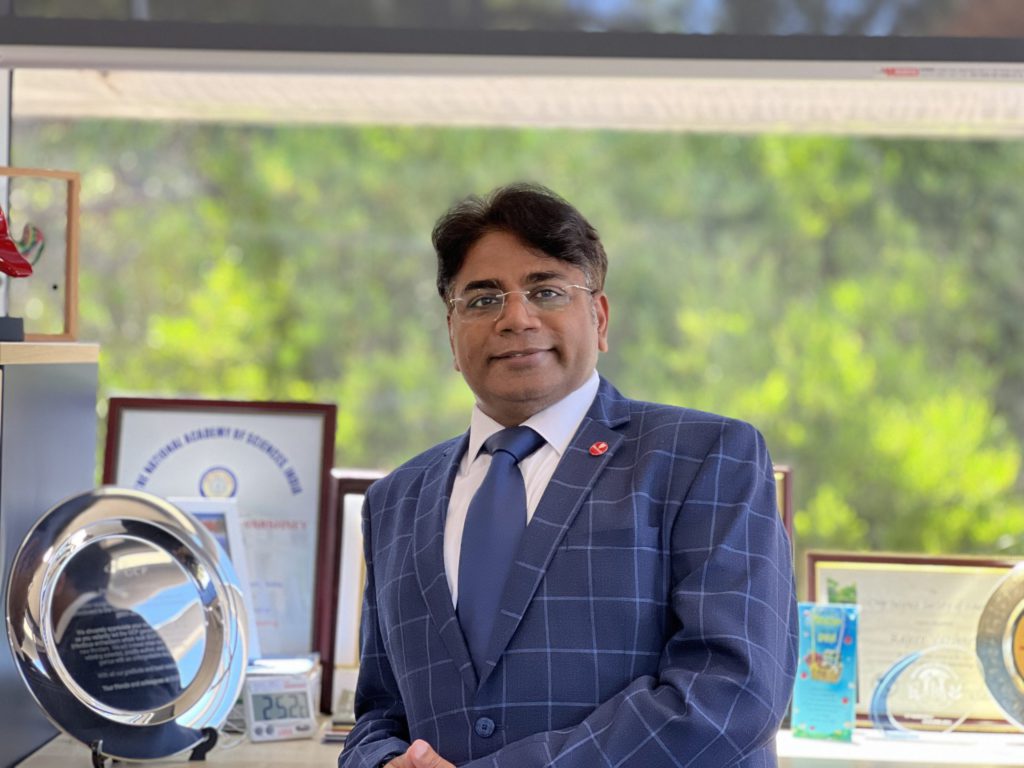
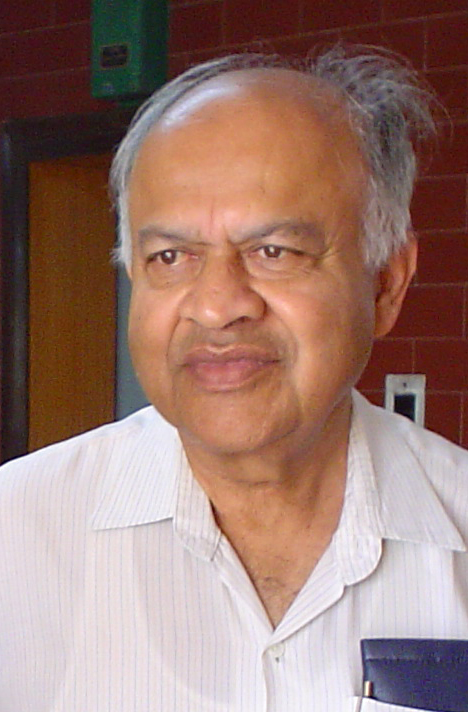
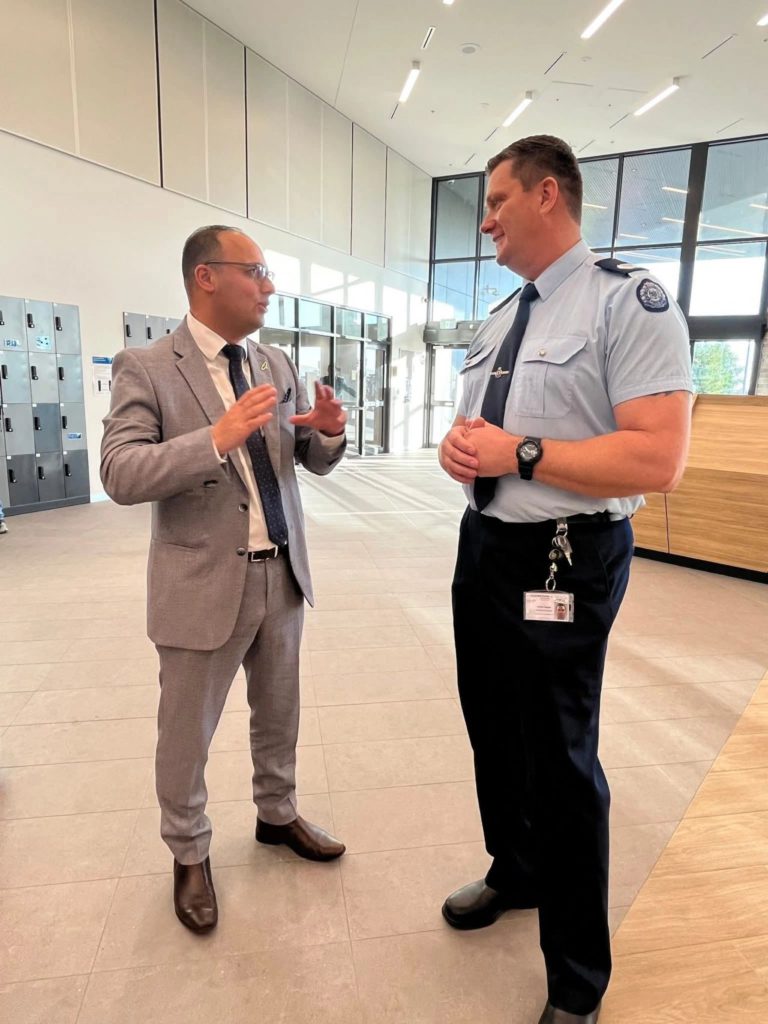
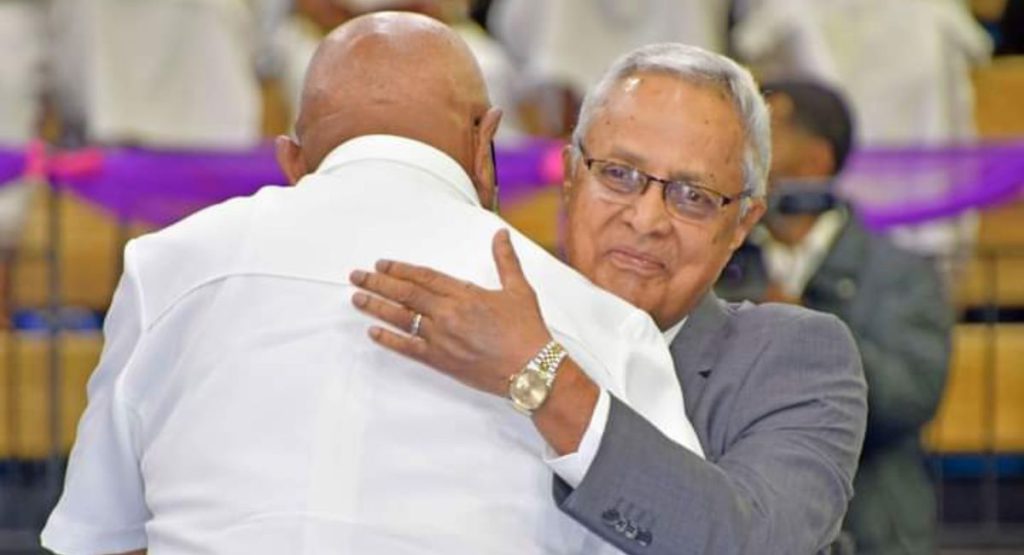
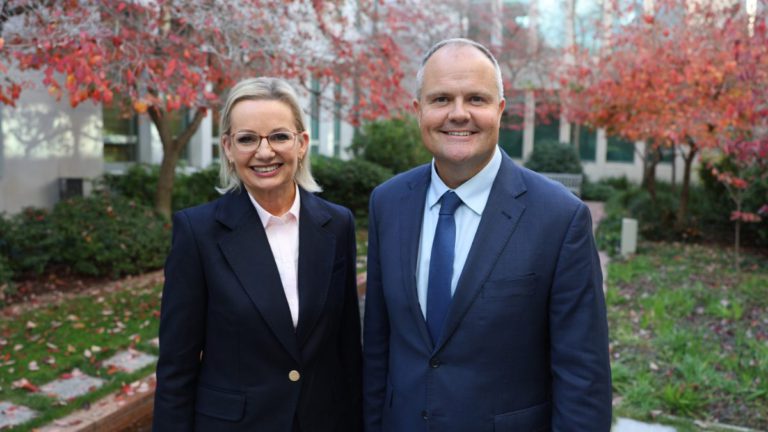
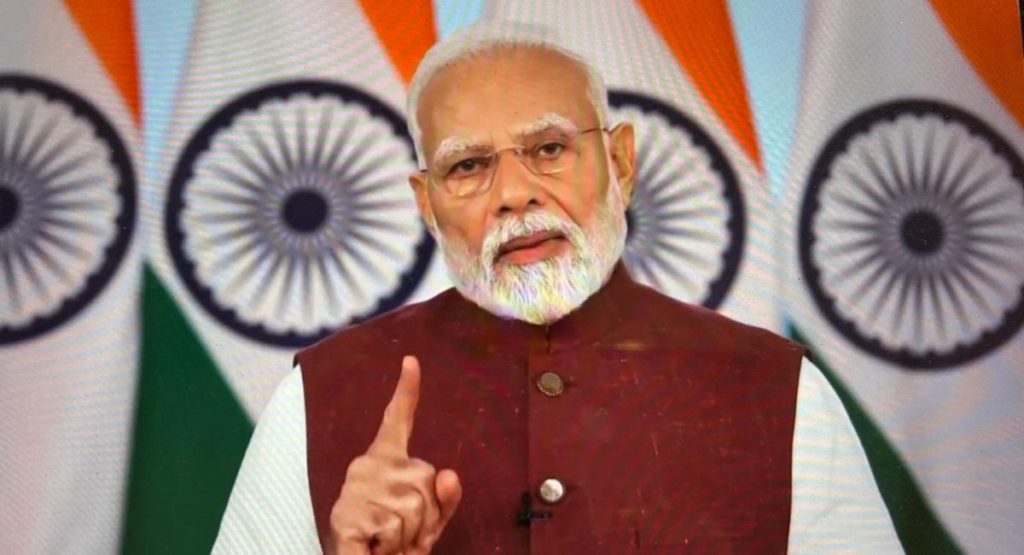
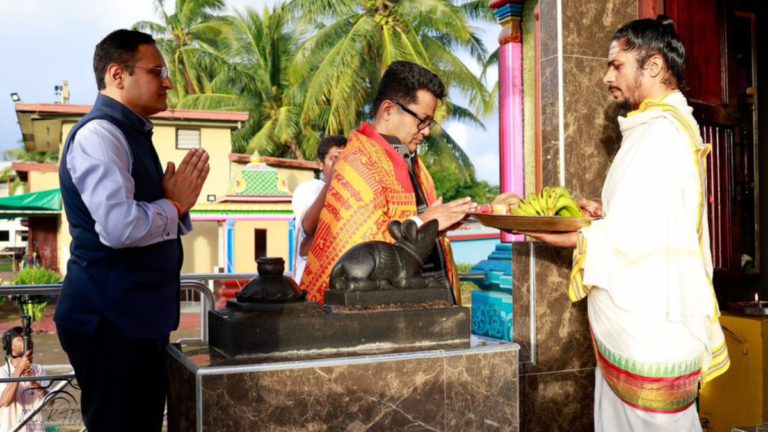
Image: Prof. Rajeev Varshney from Murdoch University (Source: Facebook)
Among the new Fellows is Prof. Rajeev Varshney from Murdoch University, renowned for his groundbreaking work in crop genomics that is shaping the future of agriculture in Australia and beyond. His large-scale genome sequencing and haplotype cataloguing have led to the development of over 20 climate-resilient and high-yielding crop varieties.
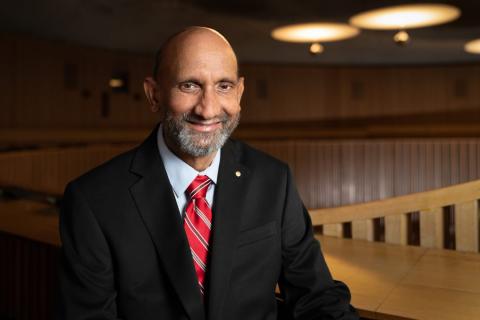
“Each Fellow has made remarkable contributions in their field, demonstrating the vital role that science plays in addressing our most pressing challenges and expanding human knowledge,” said Academy President, Prof. Chennupati Jagadish AC.
Image: Academy President, Prof. Chennupati Jagadish AC (Source: AAS)
Prof. Varshney, whose research spans continents from India to Africa, Germany to Australia, has been instrumental in decoding the genomes of more than a dozen crops. His work has significantly impacted broadacre and horticultural crop industries, including genome assemblies for 15 Australian chickpea varieties and ten Australian horticultural crop varieties. His team is currently working to develop the pangenome of Australian wheat using data from over 300 wheat lines.
He has also trained over 450 scientists and led major international programmes using genomics to breed drought- and pest-resistant crops for farmers in Asia and sub-Saharan Africa—particularly focusing on legume crops such as chickpea, pigeonpea and groundnut.
Prof. Varshney’s global recognition includes fellowships from over 10 scientific and agricultural academies and more than 30 prestigious awards, including India’s Shanti Swarup Bhatnagar Prize, the Rafi Ahmed Kidwai Award, and the International Crop Science Award from the United States.
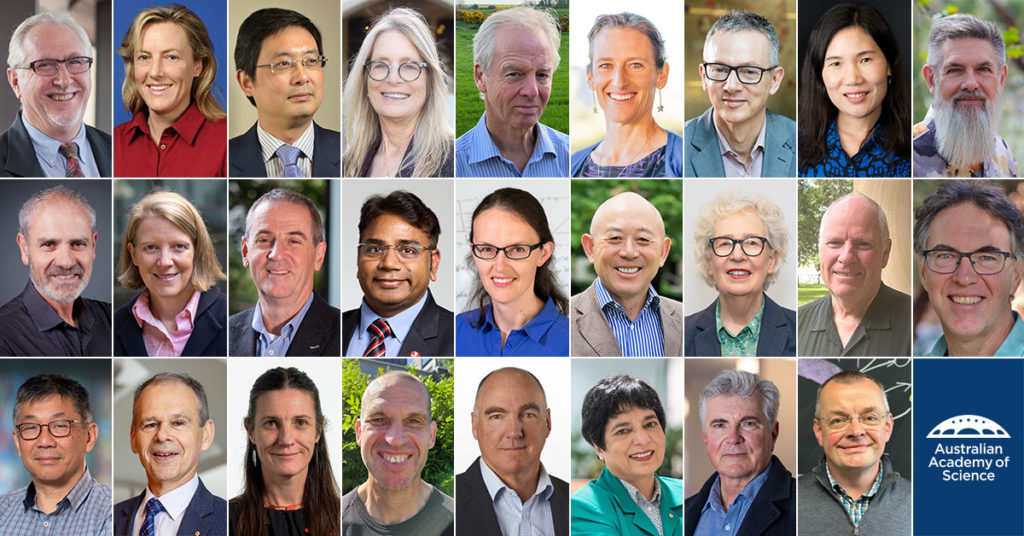
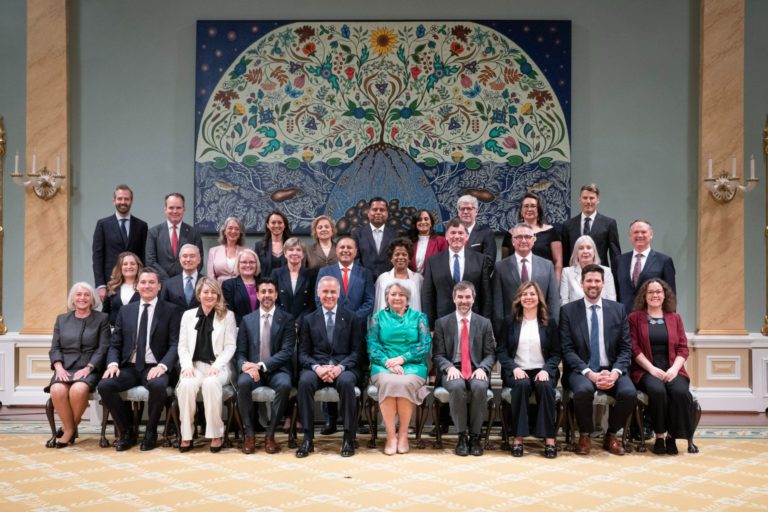
Image: 26 new Fellows elected to the Academy in 2025 (Source: AAS)
Joining him in the 2025 cohort is Prof. Helen Christensen from UNSW Sydney, whose pioneering digital mental health interventions have revolutionised global access to treatment for depression and anxiety, and Prof. Tamara Davis from The University of Queensland, known for her foundational work in theoretical cosmology and dark energy.
The 26 Fellows of the Academy elected in 2025 are:
Professor David Adams FAA FAHMS, University of Wollongong
Professor Gabrielle Belz FAA FAHMS, University of Queensland
Dr Josep Canadell FAA FTSE, CSIRO
Professor Deli Chen AO FAA, University of Melbourne
Professor Helen Christensen AO FAA FAHMS FASSA, UNSW Sydney
Professor Tamara Davis AM FAA, University of Queensland
Professor Jeffery Errington FAA FRS, University of Sydney
Professor Jürgen Götz FAA FAHMS, University of Queensland
Professor Xiaojing Hao FAA FTSE, UNSW Sydney
Professor Mark Howden FAA FTSE, Australian National University
Professor David Huang FAA FAHMS, Walter and Eliza Hall Institute of Medical Research
Professor Trevor Ireland FAA, University of Queensland
Dr Marlene Kanga AO FAA FTSE, iOmniscient Pty Ltd
Professor Derek Leinweber FAA, University of Adelaide
Professor Robert Mahony FAA, Australian National University
Professor Richard Middleton FAA, University of Newcastle
Professor Christina Mitchell AO FAA FAHMS, Monash University
Dr Andrew Nash FAA FTSE, CSL Limited
Professor Jessica Purcell FAA, Monash University
Professor Clare Scott AM FAA FAHMS, Walter and Eliza Hall Institute of Medical Research
Professor Aidan Sims FAA, University of Wollongong
Professor Michael Stumpf FAA, University of Melbourne
Professor Rajeev Varshney FAA FRS, Murdoch University
Professor Guoxiu Wang FAA, University of Technology Sydney
Professor Nicole Webster FAA, University of Tasmania
Professor Anthony Weiss AM FAA FTSE FAHMS, University of Sydney
“The Academy is proud to welcome such a diverse group of outstanding scientists whose work spans from improving mental health outcomes to securing our food future and unravelling the mysteries of the universe,” Prof. Jagadish said.
Support our Journalism
No-nonsense journalism. No paywalls. Whether you’re in Australia, the UK, Canada, the USA, or India, you can support The Australia Today by taking a paid subscription via Patreon or donating via PayPal — and help keep honest, fearless journalism alive.
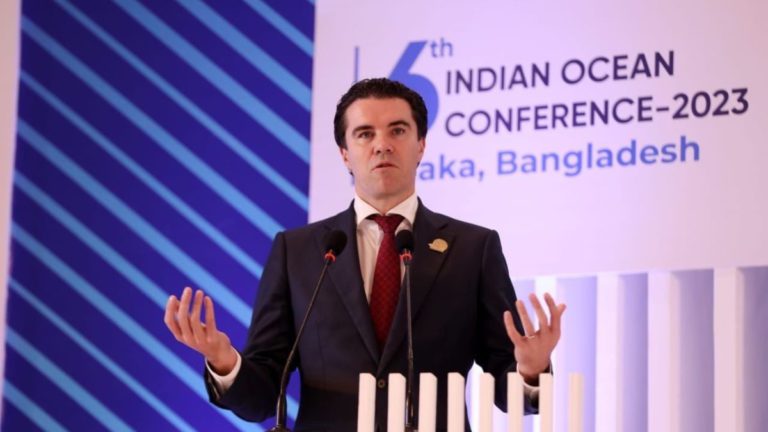
Australia’s newly appointed Special Envoy for Indian Ocean Affairs, Tim Watts, has outlined his vision to boost Australia’s diplomatic and strategic footprint across one of the world’s most critical maritime regions.
In an interview with ABC Radio National’s Breakfast program, Watts said his new role builds on the Albanese Government’s efforts to deepen regional engagement over the past three years.
The former Assistant Minister for Foreign Affairs described the Indian Ocean as a strategic priority, highlighting its centrality to Australia’s trade, security, and diplomatic agenda.
“In the influencing business, half the job is turning up,” Watts said, pledging to leverage relationships built during his previous portfolio to expand Australia’s influence and presence in the region.
The Indian Ocean spans from East Africa to Southeast Asia, but Watts noted Australia’s main focus lies in its immediate neighbourhood – particularly the northeast Indian Ocean and South Asia. He cited India as a major partner in both trade diversification and defence collaboration.
Watts also underscored the region’s diversity, pointing to common interests among Indian Ocean Rim countries, such as securing vital shipping lanes and tackling maritime security issues. “Half of Australia’s seabound trade leaves from Indian Ocean ports,” he noted, adding that Western Australians, in particular, grasp the region’s importance.
As Special Envoy, Watts aims to position Australia as a committed and cooperative partner in a region where no single nation can act alone. He emphasised working with key middle powers, including India, Indonesia, and South Africa, to build a peaceful, prosperous, and rules-based maritime order.
When asked about aid and development, Watts flagged continued support for humanitarian issues such as the Rohingya refugee crisis in Bangladesh – currently Australia’s largest humanitarian aid commitment – and shared environmental concerns facing island nations.
Watts concluded by reaffirming Australia’s responsibility and opportunity in the Indian Ocean:
“We have the biggest exclusive economic zone, one of the longest coastlines, and a huge search and rescue zone. It’s not just in our interest—it’s our duty to engage.”
Support our Journalism
No-nonsense journalism. No paywalls. Whether you’re in Australia, the UK, Canada, the USA, or India, you can support The Australia Today by taking a paid subscription via Patreon or donating via PayPal — and help keep honest, fearless journalism alive.
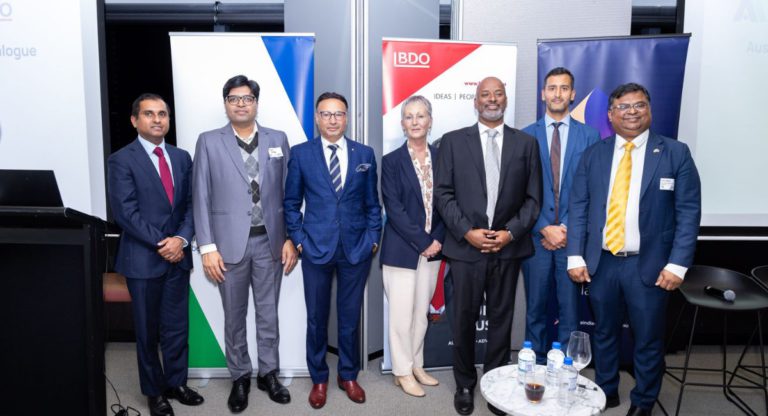
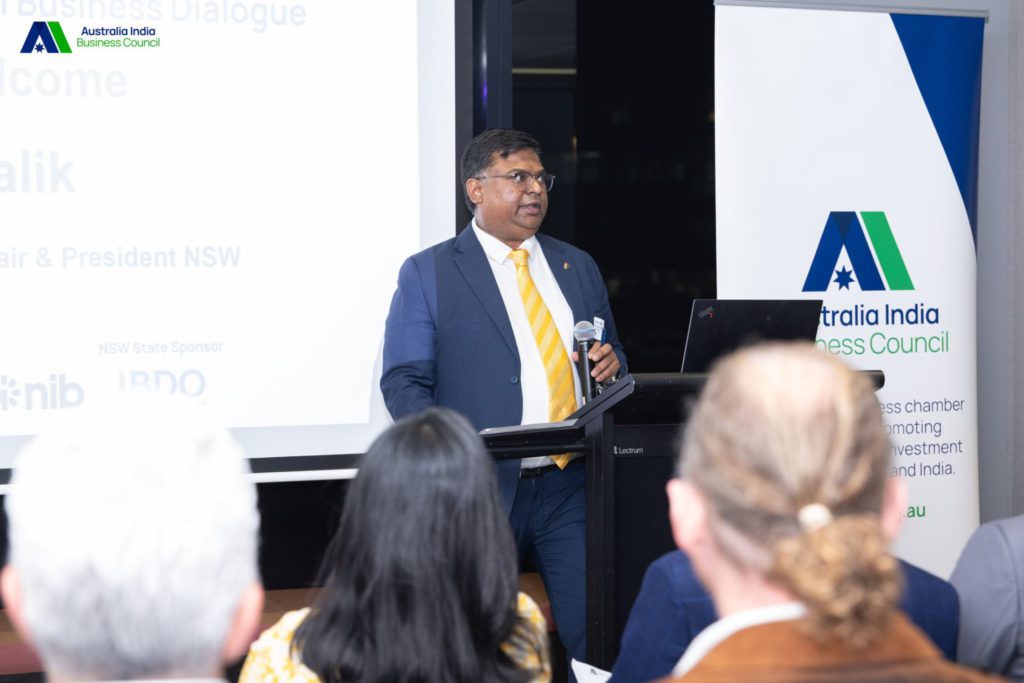
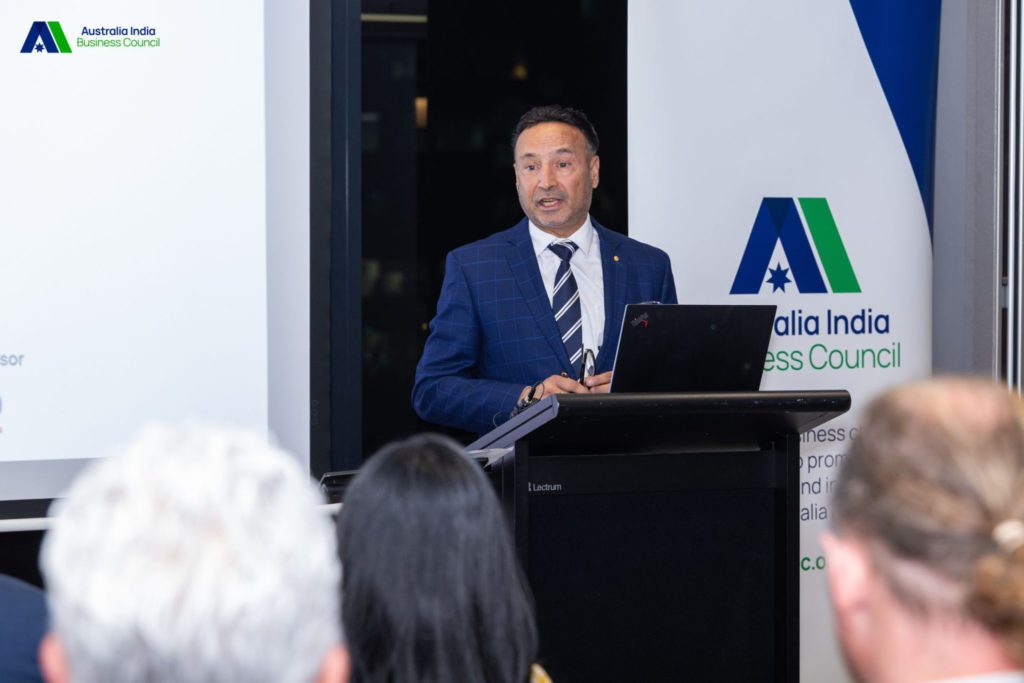
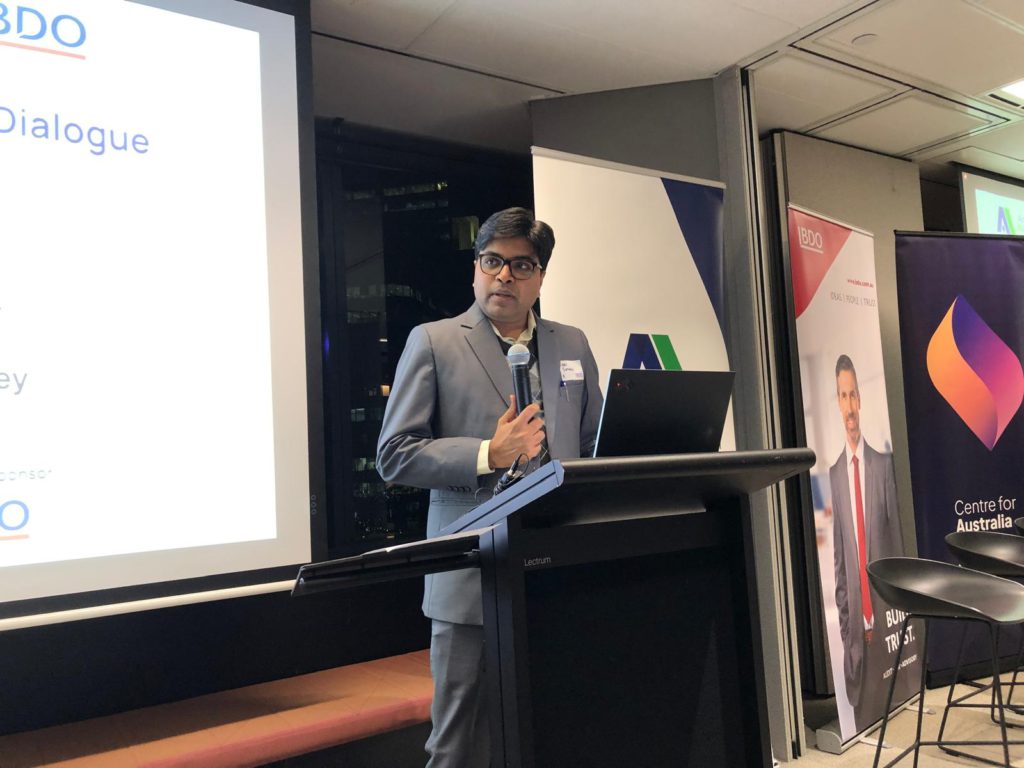
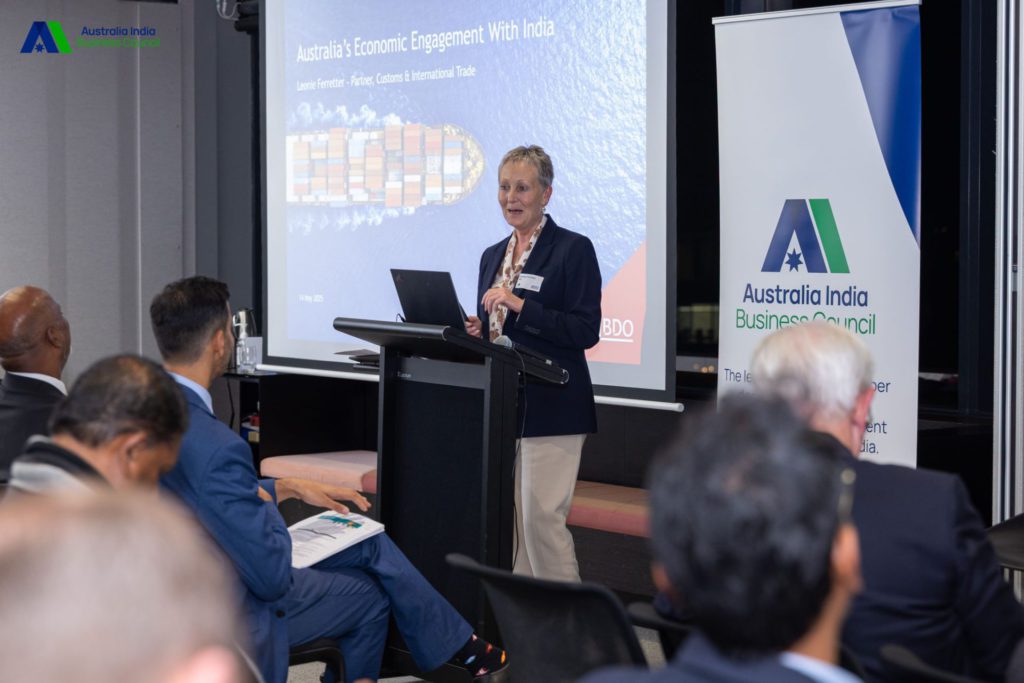
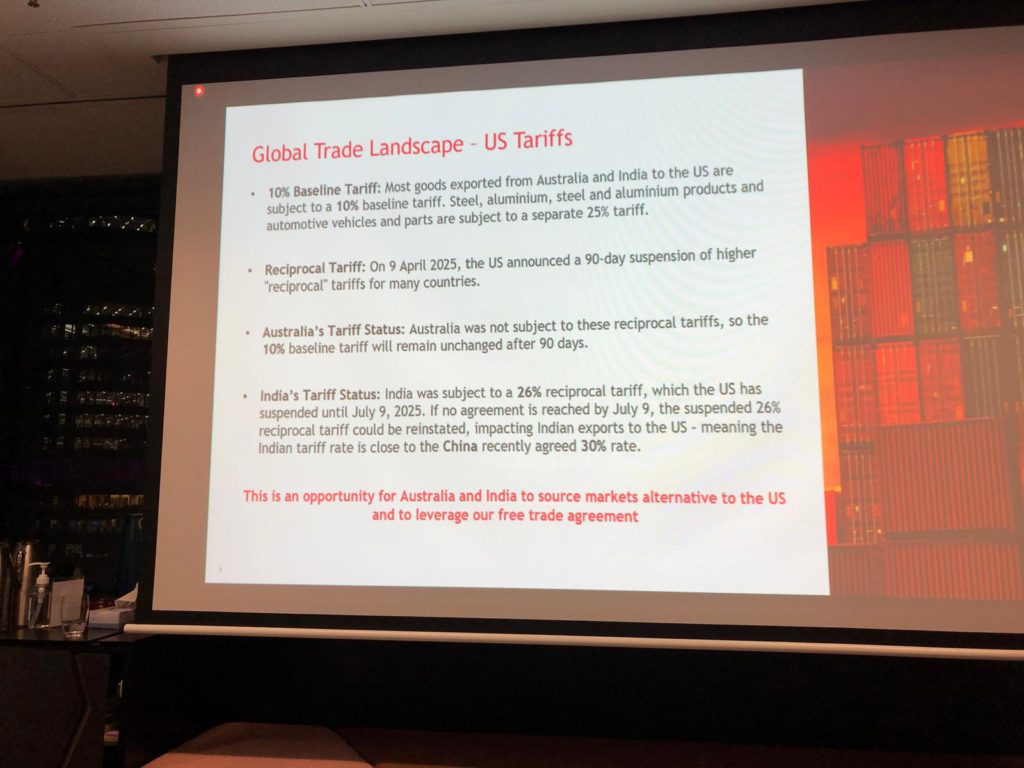
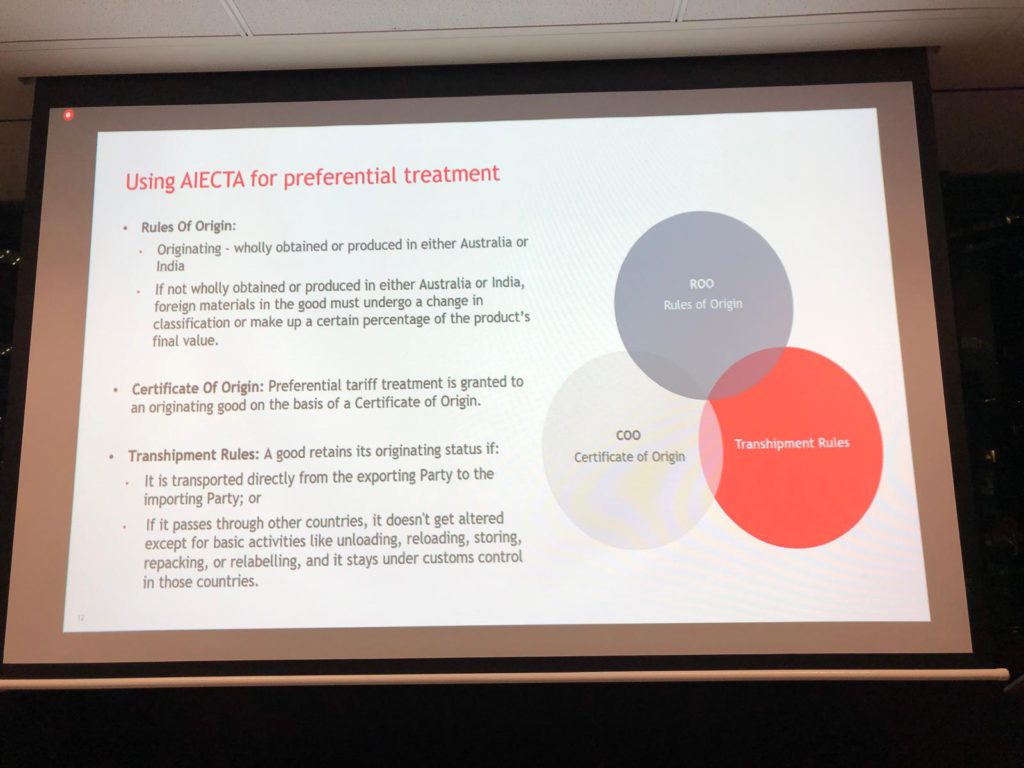
The Australia India Business Council (AIBC) hosted its Australia–India Bilateral Business Dialogue this week in Sydney, bringing into focus two central themes: Global Tariff Dynamics and Australia’s Renewed Engagement Roadmap with India.
The overarching message was clear—the time is now for Australian businesses to capitalise on strategic partnerships with India.
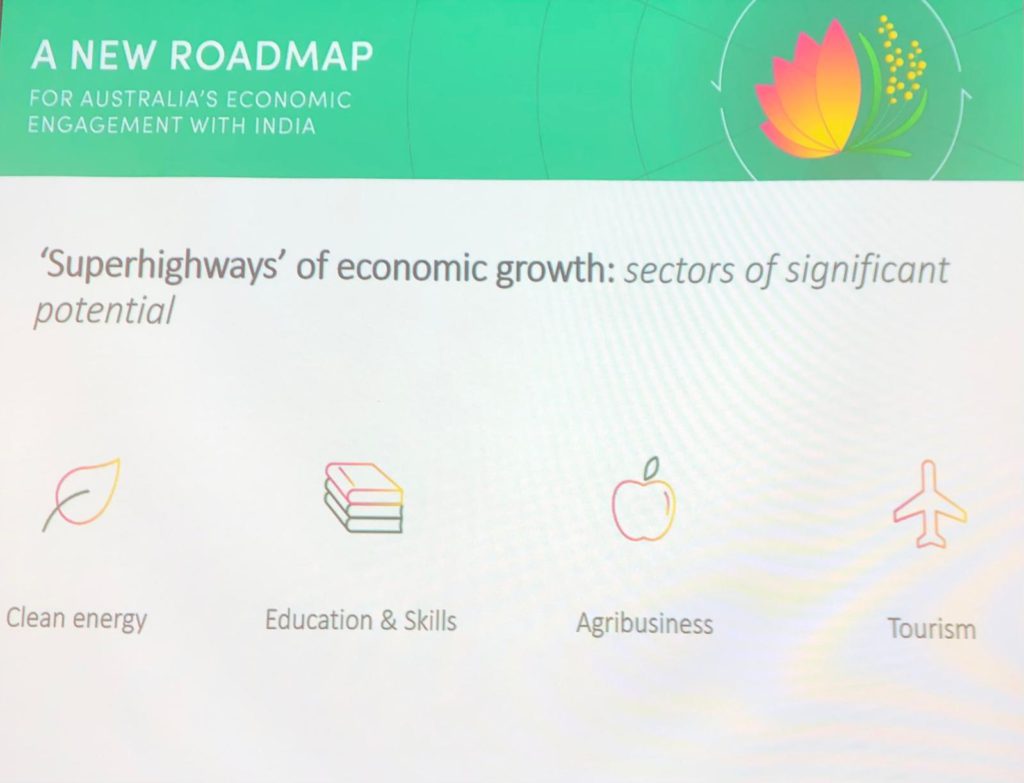
Tim Thomas and Ari Nagar from the Centre for Australia–India Relations (CAIR), who were part of the dialogue, identified clean energy, education & skills, agribusiness and tourism, as “super highways of growth,” highlighting the rising levels of Government-to-Government (G2G) and Government-to-Business (G2B) engagement.
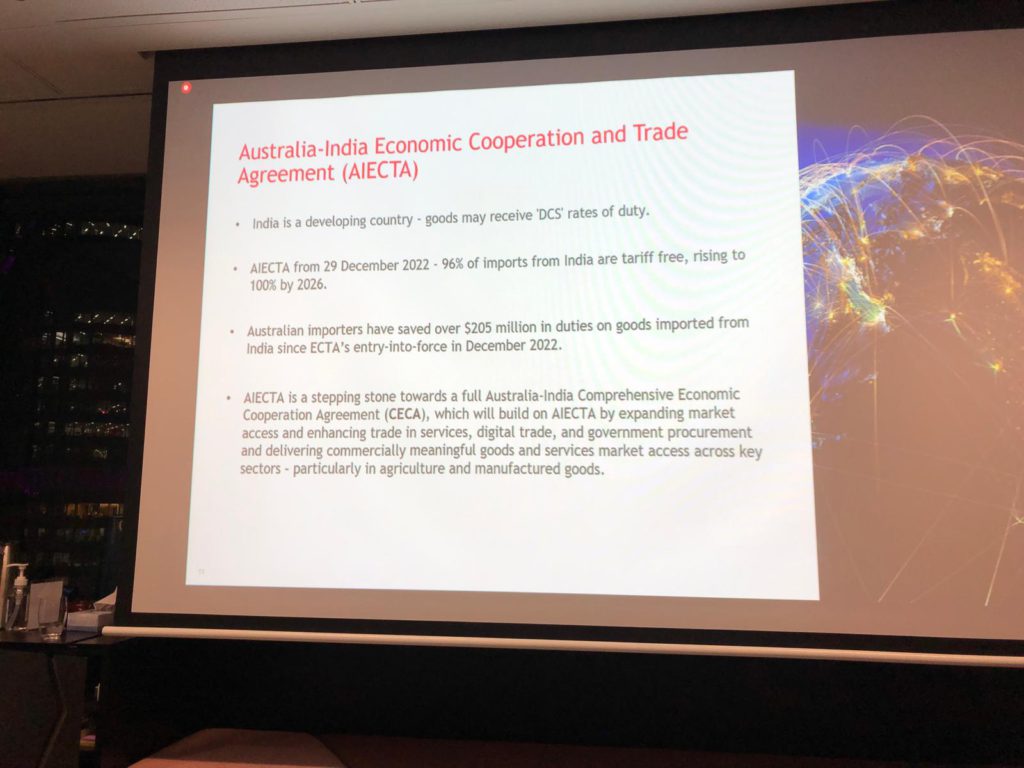
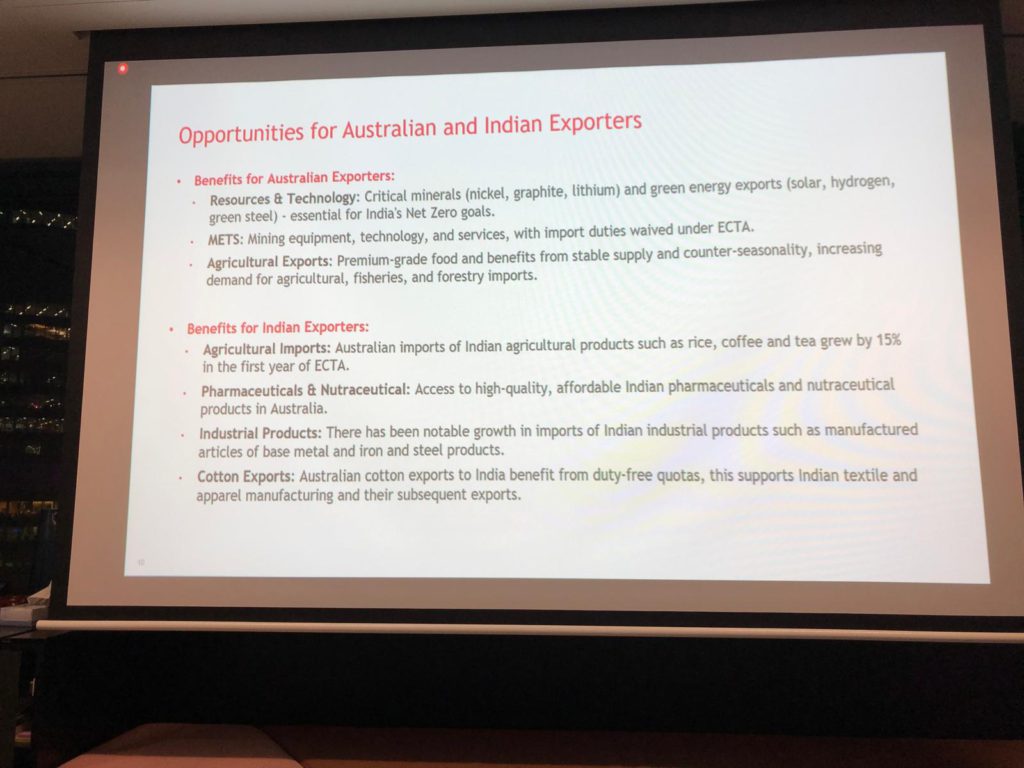
According to CAIR agri exports from Australia to India increased by 146% while non coal exports rose by 95% after ECTA (Australia-India Economic Cooperation and Trade Agreement) was implemented.
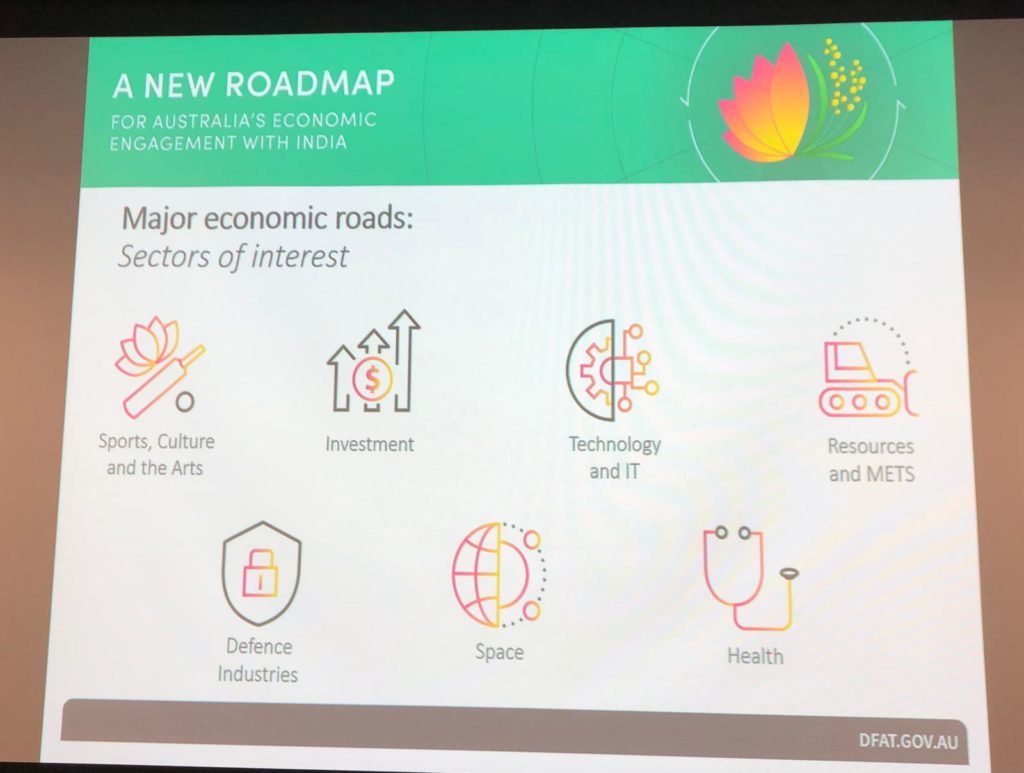
Several other areas were identified as sectors of interest.
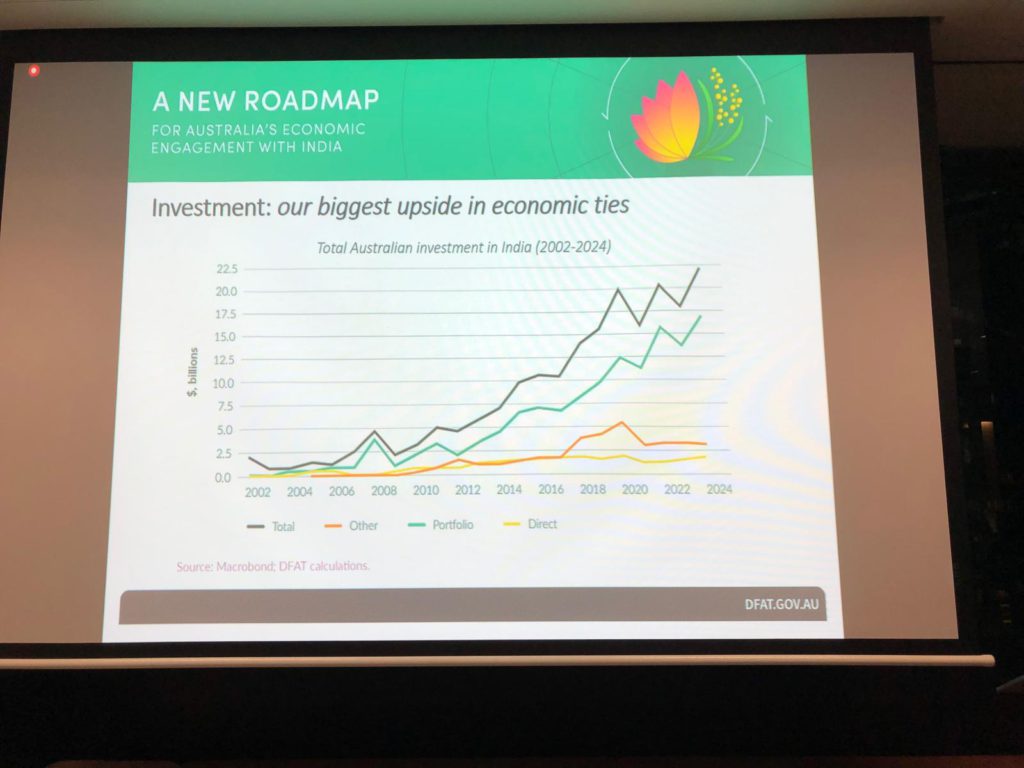
CAIR CEO, Tim Thomas, however mentioned that while overall economic scenario was looking good, direct FDI from Australia to India was still at low levels.
With trade momentum growing under the Australia–India Economic Cooperation and Trade Agreement (AI-ECTA), and increased synergy across key sectors, the Australia–India relationship is poised for a period of transformative growth. Discussions centred on opportunities in global trade, critical minerals, smart energy, defence, and commercial collaboration.
AIBC NSW President Irfan Malik welcomed delegates and reflected on the progress made since the ECTA came into effect in December 2022. He emphasised the need to support more Australian—especially regional—businesses in accessing India’s high-growth markets, with the shared trade goal of $100 billion by 2030. “AIBC, as the leading bilateral industry body, is working closely with government and industry stakeholders in both countries to deliver real trade outcomes,” he noted.
AIBC National Chair Deepak-Raj Gupta OAM reaffirmed AIBC’s commitment to guiding businesses through this evolving landscape. “Australia–India trade relations are unique. It’s vital we convert opportunities into lasting partnerships, and AIBC is here to assist in that journey,” he said.
Nirav Kumar Sutaria, Consul (Commercial) at the Consulate General of India, Sydney, remarked, “We are in a new era of the India–Australia partnership.”
Leonie Ferretter, Partner at BDO Australia, provided key insights into Global Tariff Dynamics, underlining the opportunities emerging from current free trade agreements between the two nations.
Closing the session, BDO Partner Burton Andrews extended a vote of thanks and urged Australian businesses to explore entry into the Indian market, leveraging strategic support from organisations such as AIBC.
Support our Journalism
No-nonsense journalism. No paywalls. Whether you’re in Australia, the UK, Canada, the USA, or India, you can support The Australia Today by taking a paid subscription via Patreon or donating via PayPal — and help keep honest, fearless journalism alive.
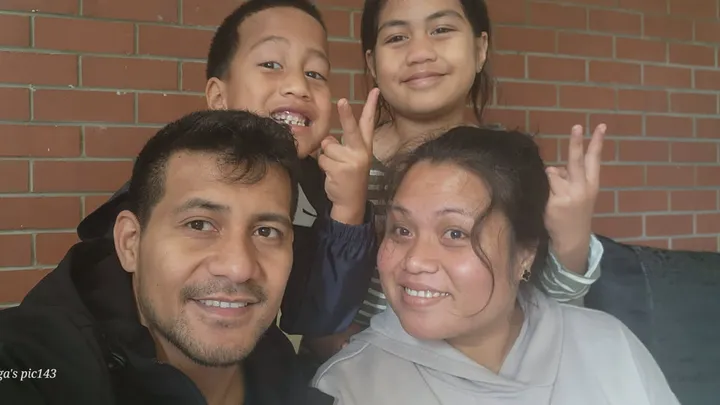
The 29-year-old had been enjoying a day out with his wife Tongauea, their two young children, and friends at the notorious fishing spot near Albany when tragedy struck. Around 1.30pm, Moni lost his footing and plunged into the surf. His life jacket reportedly failed to inflate, and despite frantic efforts by his friends, he could not be rescued.
“I witnessed everything. It’s just devastating,” Tongauea told 7NEWS.com.au. “I was helpless. My heart breaks.”
Image: Monitake “Moni” Karakaua with his wife Tongauea (Source: Supplied to 7News)
The family’s joy just weeks earlier, celebrating their 10th wedding anniversary, now sits in stark contrast to their grief. Tongauea described Moni as “a workaholic”, a man of faith, and a pillar of strength for her and their children, six-year-old Arima and eight-year-old Sarah.
“I’m so blessed to have him as a husband and their father. No one can replace him,” she said.
Originally from Fiji, Moni had moved to Katanning—277km southeast of Perth—in 2020, leaving behind his family with the dream of building a better future in Australia. After securing a job with sheep meat processor WAMMCO, he worked tirelessly, longing for the day his wife and children could join him. That dream was finally realised just seven months ago.
But now, just months after their long-awaited reunion, Tongauea is left to navigate the overwhelming grief of losing her husband and the daunting reality of raising their children alone.
Image: Monitake “Moni” Karakaua with his wife Tongauea (Source: GoFundMe)
“On the afternoon of Anzac Day, Tonga and her children, Sarah and Arima, stood helplessly on the shore as the ocean tragically claimed her husband Moni. Moni was the sole breadwinner of the family,” Sharon writes.
“Now, Tonga is left to navigate the devastating grief of her missing partner and soulmate. She faces an uncertain future and the overwhelming responsibility of raising their children alone.
They are now facing the difficult task of leaving Australia and returning to Fiji — where they hope to find emotional support, extended family, and a chance to rebuild their lives.”
Sharon adds: “This is a time of immense sorrow and transition for the family, and your generosity — no matter how big or small — will make a meaningful difference.
“Please consider donating and sharing this fundraiser with others. Your kindness will help this family begin to heal and find stability after such a painful loss.”
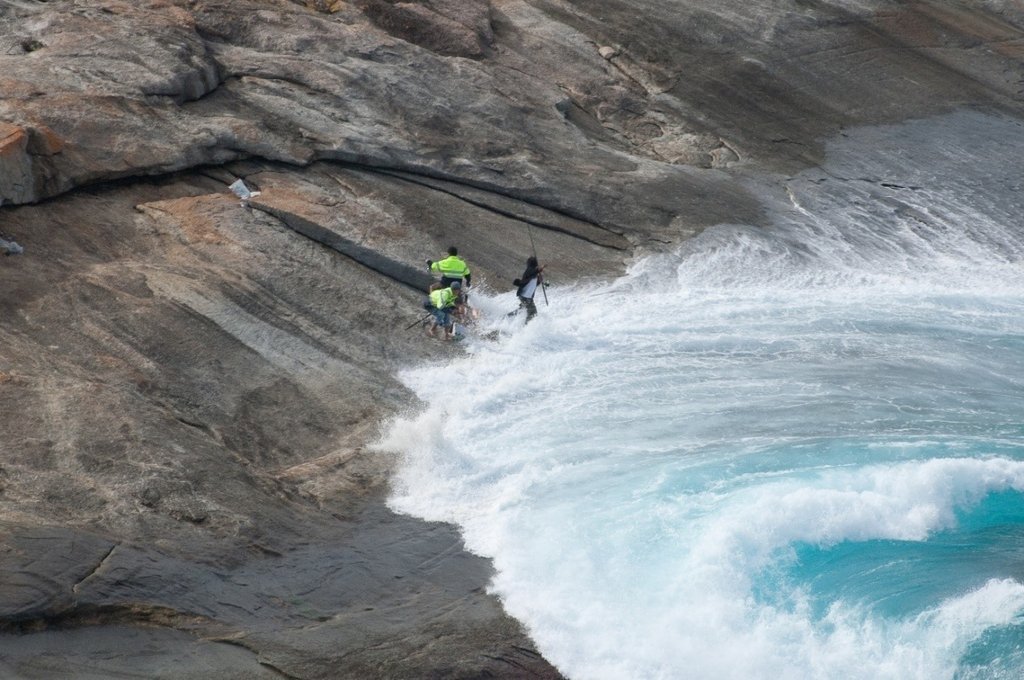
The Salmon Holes, described by authorities as “beautiful but treacherous”, has claimed more than a dozen lives over the past 40 years. Life jackets were made mandatory at the site in 2019, but unpredictable swells and slippery granite slopes continue to pose grave risks.
Image: Salmon Holes (Source: Parks and Wildlife Service WA/Facebook)
Just weeks before Moni’s disappearance, the Parks and Wildlife Service WA warned rock fishers:
“Don’t risk it… Even calm days can quickly turn.”
It is also reported that the locals have renewed calls for access to the rocks to be closed off, especially during the Easter salmon run when visitors flock to the area, unaware of the dangers.
Support our Journalism
No-nonsense journalism. No paywalls. Whether you’re in Australia, the UK, Canada, the USA, or India, you can support The Australia Today by taking a paid subscription via Patreon or donating via PayPal — and help keep honest, fearless journalism alive.
Australia’s plan to build 1.2 million new homes by 2029 is in trouble. A new report by the National Housing Supply and Affordability Council (NHSAC) shows we are likely to miss this ambitious target by a huge margin.
At the current pace, the council forecasts we will fall about 262,000 homes short of the goal. In other words, for every five homes we need, we’re only on track to build about four.
No state or territory is building enough to meet its share. This is more than just a number; it means the housing affordability crisis will continue unless we act fast.
The report lays out five areas of priority for reform. But implementing its recommendations will require bolder action than we’re currently seeing.
Think about that: half of your income gets spent on maintaining a roof over your head. That’s well above one common measure of “housing stress” for lower-income households: spending more than 30% of gross income on housing.
Anyone planning to purchase their first home faces an average savings period that extends beyond ten years just for their deposit.
For renters, the report found it now takes 33% of median household income to cover the cost of a new lease.
It doesn’t help that rental vacancy rates are near record lows, around 1.8% nationwide. This means renters are competing fiercely for very few available homes. This drives rents even higher.
Why is housing so unaffordable?
Australians can see the daily reality this report describes. And it can have disproportionate negative impacts on vulnerable groups in society.
For example, the rate of homelessness among First Nations people has been about 8.8 times the rate for non-Indigenous Australians.
Supply remains a key factor underpinning Australia’s housing crisis. We simply aren’t building enough homes. Australia completed approximately 177,000 new dwellings in 2024 but that fell short of demand for about 223,000 new homes.
And the report predicts we will remain behind our targets for upcoming years. Under current policy settings, a forecast total of 938,000 new homes will be built between mid-2024 and mid-2029, well short of the Housing Accord’s 1.2 million home target.
Five priorities for fixing it
The report identifies five essential action areas needed to restore Australia’s housing system to proper functioning.
1. Lift social and affordable housing to 6% of all homes
In 2021, only about 4% of dwellings were for social or affordable housing. Governments and not-for-profits must add many more low-rent homes so people on modest incomes aren’t trapped on long waitlists.
Prefabricated panels, modular kits and even 3D printed structures can halve building time and use fewer tradies.
Federal and state governments could fund factories, training and pilot projects to get these methods into the mainstream.
The report also calls on the government to address labour and skills shortages.
3. Fix planning systems and unlock land
Quicker approvals, firm deadlines and updated zoning would let builders put taller or denser housing near transport, jobs and schools. Governments also need to bundle and service big sites so work can start without years of red tape.
4. Support for renters
The report calls on governments to support better outcomes for renters, and to fully implement National Cabinet’s “Better Deal for Renters” agreement.
This includes through fair notice requirements, no-fault eviction limits and longer leases.
It also calls for more support for institutional investment. Tax settings that attract super funds and insurers into large build-to-rent projects would add professionally managed apartments and steady rents.
Paying a small yearly land charge instead of a huge upfront stamp duty lets people move or downsize with less of a financial hit, freeing under-used homes and smoothing the market.
Change won’t be easy
The council’s proposed solutions seem excellent when studied theoretically, but their practical application will prove challenging.
One big challenge is the construction workforce. The current workforce lacks enough skilled tradespeople to build homes at the necessary speed. This can result in major delays – even when funding exists.
Another barrier is the planning system itself. Changing planning and zoning regulations faces significant political challenges.
Higher-density developments face community resistance because of the “not in my backyard” (NIMBY) problem while councils tend to move slowly in updating their regulations.
However, the report notes signs of progress in some states. The New South Wales government has accelerated approval processes and also emphasises “transit-oriented development” – putting new homes near planned and existing transport infrastructure.
Similarly, moving to land tax is easier said than done: State governments generate revenue from stamp duty and a shift to an alternative system would require many years to implement. The absence of federal backing and state incentive payments risks delaying this reform.
What the new government should do
NHSAC’s report doesn’t just diagnose the problem, it offers a roadmap to a healthier housing system.
But those recommendations require bold action. Prime Minister Anthony Albanese’s government has a crucial opportunity to turn words into deeds.
Australia’s housing woes didn’t appear overnight, they are the result of decades of under-supply and policy missteps. Turning things around won’t be instant – but it is achievable with sustained effort.
No-nonsense journalism. No paywalls. Whether you’re in Australia, the UK, Canada, the USA, or India, you can support The Australia Today by taking a paid subscription via Patreon or donating via PayPal — and help keep honest, fearless journalism alive.
A young couple working at the Israeli Embassy was shot dead outside the Capital Jewish Museum on Wednesday night in what authorities and officials are calling a despicable act of antisemitic violence.
Israeli President Isaac Herzog called the attack “a despicable act of hatred” and extended support to the victims’ families and the embassy staff.
“The US and Israel will stand united in defence of our people and our shared values.”
I am devastated by the scenes in Washington DC.
This is a despicable act of hatred, of antisemitism, which has claimed the lives of two young employees of the Israeli embassy.
Our hearts are with the loved ones of those murdered and our immediate prayers are with the injured.…
— יצחק הרצוג Isaac Herzog (@Isaac_Herzog) May 22, 2025
The victims, a man and a woman, had just exited the museum around 9pm (local time) when a gunman approached a group of four people and opened fire, according to Metropolitan Police Chief Pamela Smith. Both victims died at the scene.
Israeli diplomat Walid Abu Haya confirmed that two Israeli Embassy staff members were killed in a terrorist attack outside the Jewish Museum in Washington, DC, describing it as a “heinous terrorist attack.” He highlighted the ongoing threat faced by Israeli and Jewish institutions globally, saying:
“Israeli embassies and Jewish and Israeli institutions have long been targets of violent and extremist terror… Such terrorism will not deter us from continuing to represent Israel among the nations and to stand firm in the justice of our path.”
He offered condolences, adding,
“May the memory of our fallen colleagues be blessed, and my heart is with their families.”
Two of our colleagues from the Israeli Embassy in Washington were murdered last night in a heinous terrorist attack at the Jewish Museum in the city. Israeli embassies and Jewish and Israeli institutions have long been targets of violent and extremist terror, and many diplomats… pic.twitter.com/NGmQeCOWCU
— 🎗️Walid Abu Haya 🇮🇱 (@WalidAbuHaya1) May 22, 2025
“They were a beautiful couple who came to enjoy an evening in Washington’s cultural centre,” said Israeli Ambassador to the United States Yechiel Leiter.
“The young man purchased a ring this week with the intention of proposing to his girlfriend next week in Jerusalem.”
*Spokesperson at the Israeli embassy in Washington Tal Naim Cohen*: Two staff members of the Israeli embassy were shot this evening at close range while attending a Jewish event at the Capital Jewish Museum in Washington DC.
We have full faith in law enforcement authorities on…
The alleged shooter, identified as 30-year-old Elias Rodriguez of Chicago, was seen pacing outside the venue before launching the attack. He then entered the museum and was quickly detained by event security.
Witness Yoni Kalin on Fox5 shares more details:
Rodriguez was let in by security guards, he asked for cops & when they arrived he admitted crime.
“He grabbed a red kaffiyeh out of his pocket and started ‘Free Palestine’ chant, ‘there’s only one solution, Intifada revolution.’” pic.twitter.com/8fayT8jTaA
The museum was hosting a high-profile reception for young Jewish diplomats and professionals, organised by the American Jewish Committee (AJC). “We are devastated that an unspeakable act of violence took place outside the venue,” said AJC CEO Ted Deutch.
Screenshot
US and Israeli officials expressed shock and grief in the wake of the shooting. President Donald Trump said he had spoken to Ambassador Leiter and pledged full support. “These horrible DC killings, based obviously on antisemitism, must end, NOW!” Trump wrote on Truth Social.
“Hatred and radicalism have no place in the USA.”
“These horrible D.C. killings, based obviously on antisemitism, must end, NOW! Hatred and Radicalism have no place in the USA. Condolences to the families of the victims. So sad that such things as this can happen! God Bless You ALL!” —President Donald J. Trump pic.twitter.com/Z30bjAQOpZ
US Attorney-General Pam Bondi, who visited the site, echoed the outrage:
“We will bring this depraved perpetrator to justice.”
Homeland Security Secretary Kristi Noem confirmed the victims were Israeli Embassy staff. “We are actively investigating and working to get more information to share. Please pray for the families of the victims,” she posted on X.
Two Israeli Embassy staff were senselessly killed tonight near the Jewish Museum in Washington DC. We are actively investigating and working to get more information to share. Please pray for the families of the victims.
We will bring this depraved perpetrator to justice.
Danny Danon, Israel’s Ambassador to the United Nations, described the shooting as “a depraved act of anti-Semitic terrorism.” He urged US authorities to take strong action and reaffirmed Israel’s commitment to protecting its citizens and diplomatic staff worldwide.
The fatal shooting that took place outside the event that took place at the Jewish Museum in Washington, D.C. is a depraved act of anti-Semitic terrorism. Harming the Jewish community is crossing a red line. We are confident that the US authorities will take strong action against… pic.twitter.com/mVyXHjGyxU
— Danny Danon 🇮🇱 דני דנון (@dannydanon) May 22, 2025
FBI Director Kas Patel confirmed his team has been briefed on the deadly shooting outside the Capital Jewish Museum in Washington, D.C., and said the FBI is working closely with local police. He urged compassion for those affected:
“Please pray for the victims and their families.”
My team and I have been briefed on the shooting tonight in downtown DC outside the Capital Jewish Museum and near our Washington Field Office. While we’re working with MPD to respond and learn more, in the immediate, please pray for the victims and their families. We will keep…
— FBI Director Kash Patel (@FBIDirectorKash) May 22, 2025
The Capital Jewish Museum is located just steps from the FBI’s Washington field office and a few blocks from DC police headquarters. Police have not yet confirmed a motive, but Chief Smith noted there was no prior intelligence suggesting a threat.
Investigations are ongoing.
Support our Journalism
No-nonsense journalism. No paywalls. Whether you’re in Australia, the UK, Canada, the USA, or India, you can support The Australia Today by taking a paid subscription via Patreon or donating via PayPal — and help keep honest, fearless journalism alive.
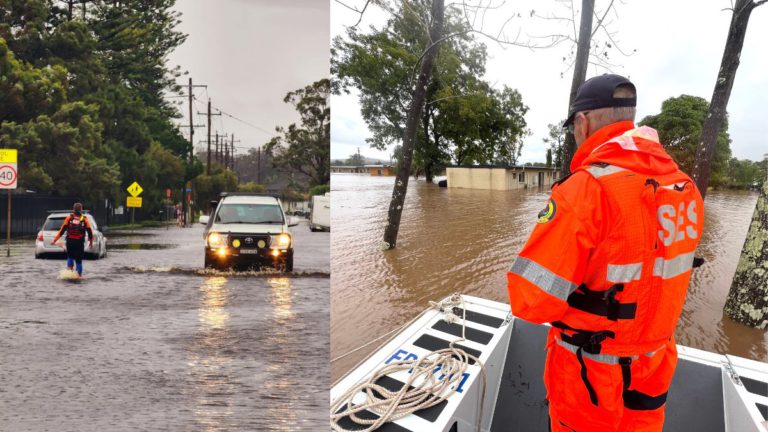
Torrential overnight rains have left tens of thousands of residents stranded across New South Wales’s mid-north coast, as floodwaters continue to rise and rescue crews warn there is “nowhere to go” for many isolated communities.
Emergency services confirmed on Thursday that the body of a 63-year-old man was recovered at Moto, south of Port Macquarie, after days of relentless downpours pushed tributaries of the Hastings River well over their banks. Police also say three people remain missing in the region, prompting an urgent appeal for any witnesses to contact authorities.
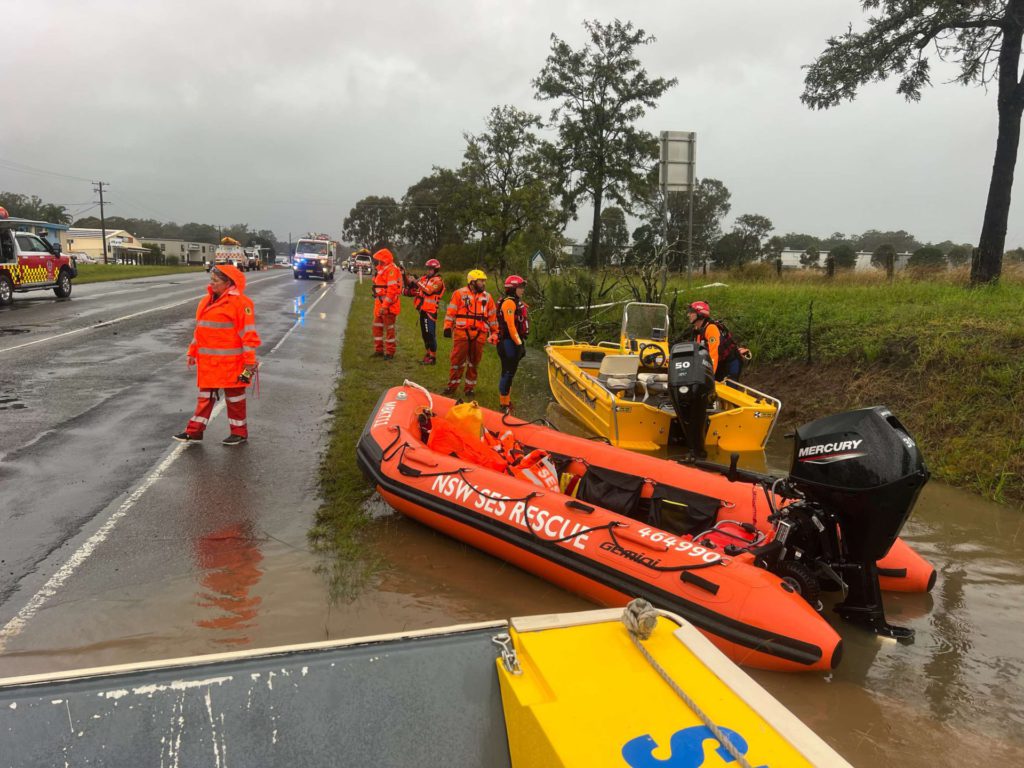
Image Source: NSW SES
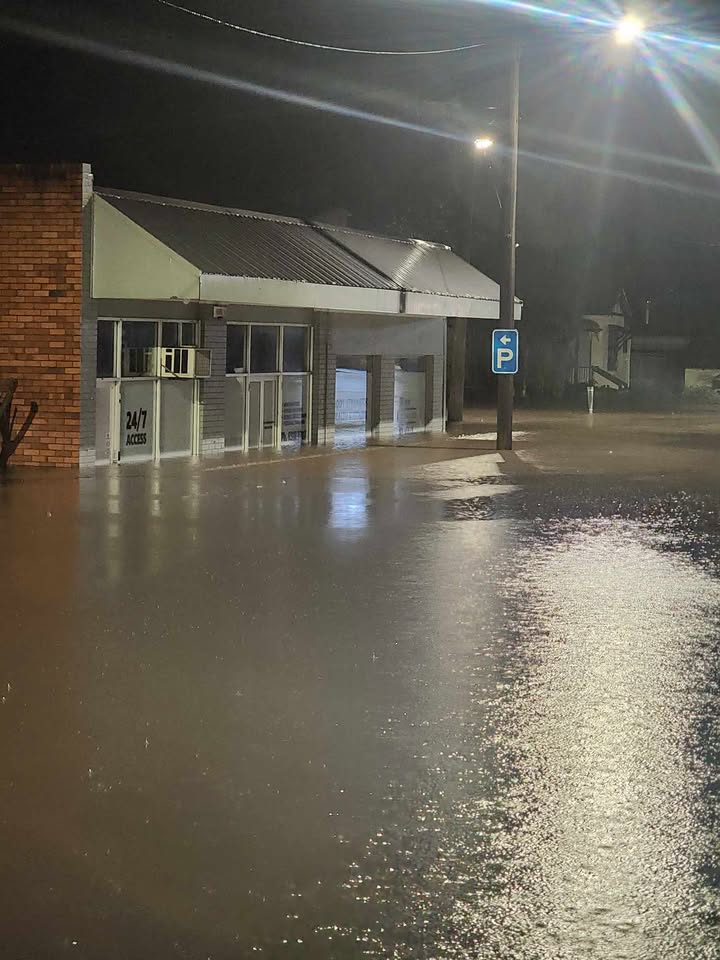
Communities cut off, roads washed away More than 20,000 residents between Port Macquarie and South West Rocks are now cut off by floodwaters, with entire towns accessible only by air or boat. Key highways — including the Pacific and Oxley — have been closed by landslips and overtopped bridges, forcing families to shelter in evacuation centres or on higher ground.
Local SES commander Rachel Thompson said at a briefing that conditions remain dire.
“Some households are completely surrounded by water. Our crews have been doing overnight evacuations by boat, but many people simply have nowhere to go until the river recedes,”
she said.
Rain to continue into the weekend The Bureau of Meteorology has forecast another 50–100 mm of rain for the mid-north coast through Saturday morning, prolonging the flood threat.
Severe Weather Update: Major flooding and heavy rain continue for New South Wales.
— Bureau of Meteorology, Australia (@BOM_au) May 22, 2025
“Rivers are already at record or near-record levels. Any additional rain will exacerbate flooding and slow the recovery process,”
a senior meteorologist warned.
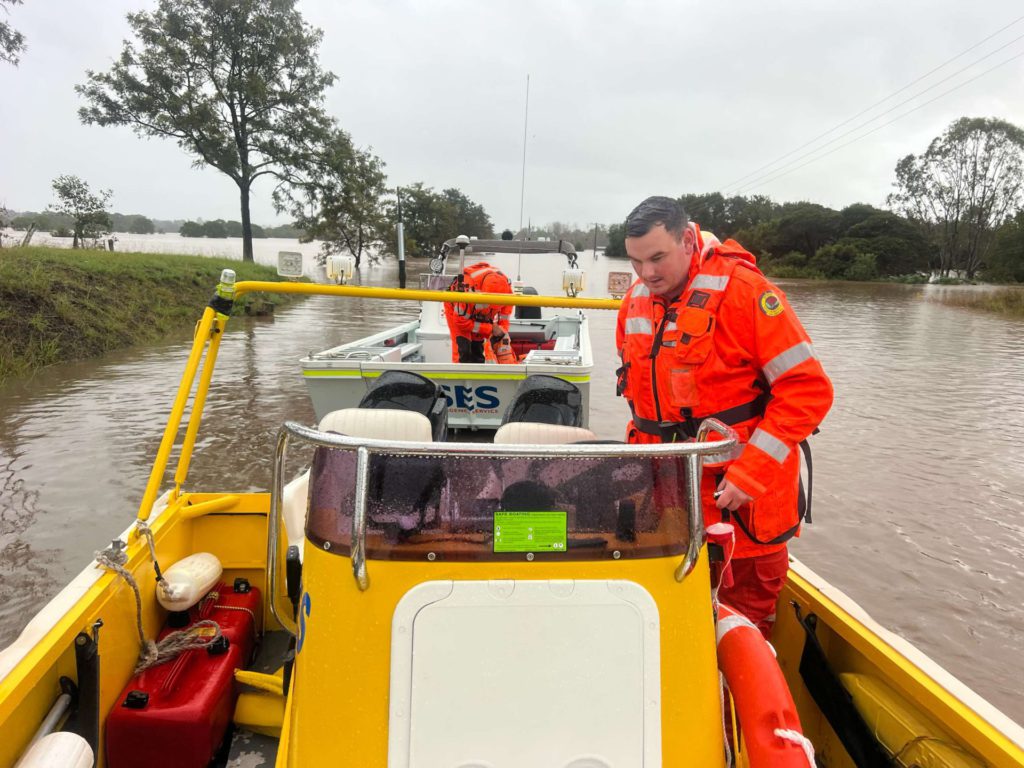
Rescues and relief operations ramp up A joint task force of State Emergency Service (SES), Rural Fire Service and Australian Defence Force personnel has been mobilised to deliver supplies and evacuate vulnerable residents. Helicopters have been ferrying food, water and medical kits to isolated settlements, while rescue boats patrol inundated streets.
Image Source: NSW SES
Health authorities are monitoring waterborne disease risks in flood-affected areas and have established mobile clinics at evacuation centres in Kempsey and Crescent Head.
Rising human toll This week’s flooding is the latest in a string of extreme weather events to hit eastern Australia. In February, heavy rains across the Northern Rivers brought one of the region’s worst deluges on record, killing 13 people. While the death in Moto marks the first confirmed flood fatality on the mid-north coast, authorities fear the toll may yet rise.
Mid North Coast Local Health District chief executive Dr. Simon Hare urged residents to remain vigilant.
“Even if floodwaters appear to ease, waterways can remain fast-flowing and dangerous. Please heed all warnings and do not attempt to cross flooded roads,”
he said.
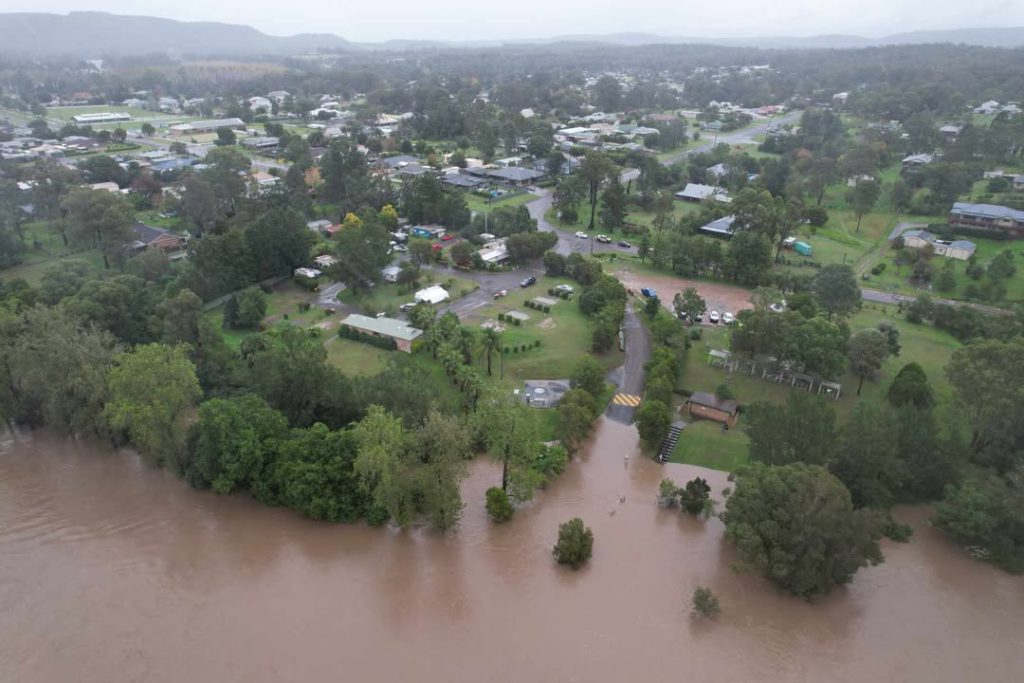
Image Source: NSW SES
Communities unite Amid the crisis, neighbourhood groups have mobilised to support their towns. GoFundMe pages have sprung up to assist families who have lost homes and belongings, and regional charities are coordinating donations of bedding, clothing and fuel.
Mayor Anthony Turner of Port Macquarie-Hastings Council praised local volunteers.
“The spirit of community resilience here is extraordinary. Neighbours are helping neighbours, and that solidarity will carry us through these difficult days,”
he said.
Image Source: NSW SES
As floodwaters slowly begin their retreat, attention now turns to cleanup and rebuilding — a process that, in some areas, may take weeks or even months. For now, however, the priority remains life-saving rescues and ensuring every isolated resident receives the help they need.
How you can help Anyone with suitable four-wheel-drive vehicles who can assist with supplies or evacuations is urged to register with the NSW SES at ses.nsw.gov.au.
Donations to support flood-affected families can be made through established charities such as the Australian Red Cross and GIVIT.
Support our Journalism
No-nonsense journalism. No paywalls. Whether you’re in Australia, the UK, Canada, the USA, or India, you can support The Australia Today by taking a paid subscription via Patreon or donating via PayPal — and help keep honest, fearless journalism alive.
On International Tea Day (21 May 2025), there’s more to celebrate than just a hot brew. For India and Australia, tea is not only a beverage but a symbol of shared histories, economies, and cultures. From the bustling ports of Kolkata and Chennai during the days of British rule to modern cafés in Melbourne and Brisbane, the humble tea leaf has traversed oceans and centuries to embed itself in the fabric of both nations.
British India was a lifeline for colonial Australia, with supplies incoming from major ports like Bombay (now Mumbai), Madras (now Chennai), and Calcutta (now Kolkata). Ships brought everything from jute and textiles to essential food grains and, of course, tea. In many ways, the same leaf that fuelled the afternoon routines of workers in Sydney also gave the Indian subcontinent its iconic identity as the world’s tea capital. Just like India became the world’s largest tea producer, it also became the cultural custodian of chai — a lifeline for millions of Indians outside India. Even today, whether it’s the roadside tapri in Delhi or a hipster café in Fitzroy, the call remains the same: Ek cup chai ho jaye, mate?
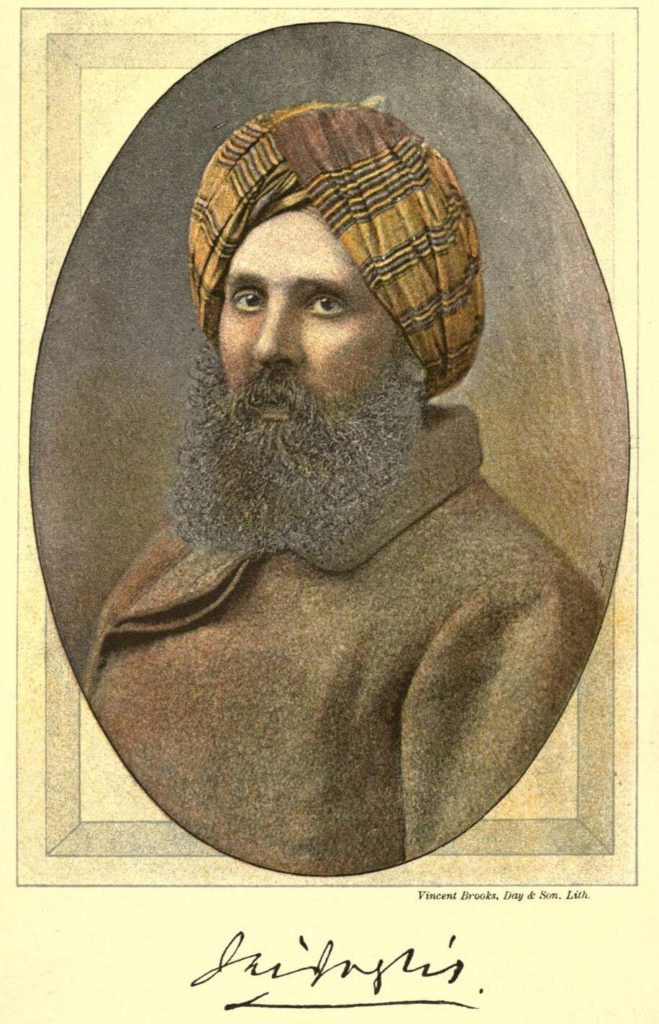
Image: James Inglis, an Australian agent for the Calcutta Tea Syndicate (Source: Wikipedia)
Historically, India’s tea industry began under British colonial interests in the early 19th century when commercial plantations were first established in Assam. By the late 1800s, Indian and Ceylon (Sri Lankan) teas were being promoted in Australia thanks to individuals like James Inglis, an Australian agent for the Calcutta Tea Syndicate. He understood early on that Australia’s future lay in embracing the East, especially when it came to trade in consumables like tea. His work helped position Indian tea as an alternative to expensive Chinese imports, and images of swagmen brewing Indian tea in the bush became part of a colonial Australian aesthetic.
Fast forward to the present, and the numbers speak volumes. In 2024, India exported tea worth over USD $15 million to Australia, according to Trading Economics. That might seem modest, but it forms part of a wider trend: India’s tea exports hit a decade-high of 254.67 million kilograms in 2024, making it the world’s third-largest exporter after Kenya and China.
— Indian Tech & Infra (@IndianTechGuide) May 21, 2025
Australia has become a quiet but important market for Indian tea, largely due to the growing Indian diaspora and the increasing popularity of chai culture. Small businesses led by Indian-Australian entrepreneurs are reinventing how tea is consumed. For example, Uppma Virdi’s “Chai Walli” has become a national success story. Her brand sells ethically sourced Indian blends and hosts tea education workshops that reframe chai as a wellness product, not just a cultural symbol.
Similarly, other brands like “Origin Tea,” based in Brisbane but inspired by the South Asian tradition of tea-making, are now mainstream in Australian supermarkets. Their Sticky Chai product — a blend of honey, spices, and black tea — has bridged cultures by blending the essence of masala chai with modern packaging and retail strategies.
No doubt, Australia’s tea landscape is enriched by a diverse array of establishments that celebrate both global traditions and local innovations. In Perth, the Australian Tea Company stands out as a purveyor of premium teas sourced directly from growers worldwide, ensuring freshness and authenticity in every cup. Melbourne’s vibrant tea scene includes Dropout Chaiwala, founded by Sanjith, an international student from La Trobe University. This establishment brings the essence of Indian street chai to Australia, offering a variety of blends that resonate with the Indian diaspora and tea enthusiasts alike. Another Melbourne gem, Chai N Chilli, specializes in Maharashtrian cuisine and traditional Indian teas, providing patrons with an authentic taste of Mumbai’s street food culture. Beyond these, Australia’s tea offerings are further diversified by brands like Tea Leaves, boasting over 300 varieties of teas and herbal blends, and T BAR, a family-owned company offering over 120 unique blends, including Australian-made chai latte syrups . These establishments collectively highlight Australia’s growing appreciation for tea, blending international flavors with local tastes.
There’s a beautiful irony in how the imperial logistics of the 19th century have transformed into 21st-century entrepreneurial synergy. Back then, British shipping routes were dictated by extractive trade policies. Today, India and Australia collaborate as equals, partners in trade, and co-authors of a contemporary cultural chapter. Tea, which once travelled on East India Company ships, now arrives through ethical sourcing chains and is shared on café menus from Dandenong to Darwin.
But perhaps the most profound part of this story lies in how tea has stayed constant — a quiet unifier in an increasingly fractured world. In India, chai is a moment of pause, a social lubricant, and a ritual. In Australia, it has morphed from being just an “imported drink” to a symbol of multicultural identity. Whether you call it chai or tea, whether you brew it with cardamom and milk or steep it clear with lemon, it carries history, flavour, and connection.
'Chai Pe Charcha' with beneficiaries of e-rickshaws & their families. Glad to see them so happy. pic.twitter.com/M7gVjRgxCy
In fact, in the lead-up to India’s 2014 general elections, Prime Minister Narendra Modi’s “Chai Pe Charcha” campaign emerged as a groundbreaking political initiative that leveraged his humble beginnings as a tea seller to foster direct engagement with voters nationwide. Utilizing a blend of satellite, DTH, internet, and mobile technologies, Modi interacted with citizens at over 1,000 tea stalls across 300 cities, discussing topics ranging from good governance to economic reforms. These sessions, dubbed “footpath parliaments,” allowed real-time Q&A interactions, effectively transforming traditional political discourse into accessible community dialogues. The campaign not only capitalized on a political jibe about Modi’s past but also resonated deeply with the Indian populace, contributing significantly to the Bharatiya Janata Party’s historic electoral victory.
During his 2023 visit to Australia, Prime Minister Modi addressed a vibrant Indian diaspora at Sydney’s Qudos Bank Arena, where he highlighted the deepening cultural ties between India and Australia. In a light-hearted moment, he remarked,
“I’ve heard that Chatkazz ‘Chaat’ and ‘Jalebi’ from Jaipur Sweets at Harris Park are very delicious. I want you all to take my friend Australian PM Albanese to that place.”
This endorsement not only spotlighted Harris Park’s status as Sydney’s ‘Little India’ but also underscored the role of Indian tea and cuisine in fostering cross-cultural connections. Responding to Modi’s suggestion, Australian Prime Minister Anthony Albanese visited Harris Park with MP Andrew Charlton, savoring the recommended dishes and sharing his experience on social media, stating,
“We tried out Prime Minister Narendra Modi’s recommendations of chaat at Chatkazz and jalebi at Jaipur Sweets—a winner!”
This culinary exchange exemplified the growing camaraderie between the two nations, further cemented by the joint laying of the foundation stone for the ‘Little India’ gateway in Harris Park, symbolizing the enduring friendship and the significant contributions of the Indian community in Australia.
So on International Tea Day, let’s not just celebrate the drink, but the decades of trade, migration, and mutual respect it represents. Let’s honour the dockworkers of yesteryear and the chai startups of today. Let’s raise a cup — or as we say in Australia, let’s put the kettle on: Ek cup chai ho jaye, mate!
Support our Journalism
No-nonsense journalism. No paywalls. Whether you’re in Australia, the UK, Canada, the USA, or India, you can support The Australia Today by taking a paid subscription via Patreon or donating via PayPal — and help keep honest, fearless journalism alive.
Australia has officially dethroned Norway to become India’s largest supplier of fresh and chilled salmon, marking a major milestone for the Australian seafood industry.
The surge has been driven by a combination of trade diplomacy and evolving Indian tastes. Thanks to the Australia-India Economic Cooperation and Trade Agreement (AI-ECTA), tariffs on Australian salmon have dropped from 30% in 2022 to 12.9% in 2024 — and are set to fall to zero by 2028. This has given Australian producers a price edge over competitors, fuelling growth in one of Asia’s fastest-expanding premium food markets.
Image: Table showing value of imported salmon in India, 2020–2024, A$ (000s)
Austrade, the Australian Trade and Investment Commission, has played a key role in this seafood success story. Its trade advisors have worked closely with Indian importers, restaurants and chef associations to promote top-quality Tasmanian salmon. This strategic push has opened doors for producers like Tassal Group and Huon Aquaculture to meet India’s growing appetite for premium protein.
Murray Spence, Austrade’s Trade and Investment Commissioner for Agri-business in South Asia, said in a LinkedIn post:
“Thanks to our impeccable quality, consistent supply, and price competitiveness, we are seeing increasing interest from Indian importers and the HoReCa sector. Aussie salmon is now catering to a booming demand for premium seafood in India.”
India’s culinary landscape is evolving rapidly. High-end restaurants, rising disposable incomes, and the influence of shows like MasterChef Australia are transforming local tastes. The country’s strong tradition of fish consumption, especially in coastal regions, has further eased the path for salmon.
Beyond big business, the boom has also brought a boost to small, family-owned salmon farms in Tasmania. With exports nearing the billion-dollar mark, regional communities are reaping the benefits of global demand.
And salmon may just be the start. With the door now open, other premium Australian seafoods — including toothfish, bluefin tuna, barramundi, lobster and oysters — are poised to dive into the Indian market.
As Austrade put it on LinkedIn:
“Aussie salmon isn’t just swimming — it’s soaring.”
Support our Journalism
No-nonsense journalism. No paywalls. Whether you’re in Australia, the UK, Canada, the USA, or India, you can support The Australia Today by taking a paid subscription via Patreon or donating via PayPal — and help keep honest, fearless journalism alive.
Westpac is bracing for a major round of redundancies, with reports suggesting more than 1500 jobs could be slashed in what would be the bank’s largest workforce reduction in a decade.
The bank’s new chief executive, Anthony Miller, is driving a cost-cutting campaign aimed at simplifying systems and technology under a transformation program dubbed “Unite.”
According to the Australian Financial Review, managers across the bank have been instructed to identify how to cut staff by 5 per cent—equivalent to about 1700 roles—over the coming months.
While Westpac would not confirm specific figures, a spokesperson told 9news.com.au that some redundancies are under consideration as the bank reviews its operations.
“We adjust the composition of our workforce according to our investment priorities,” the spokesperson said.
“While we continue to invest in extra bankers and customer-facing roles, other programs and initiatives may need fewer resources. This means, from time to time, we make changes that may impact some roles and responsibilities.”
The spokesperson added that Westpac had hired nearly 5000 people over the past year and would aim to minimise job losses through retraining and redeployment.
The looming cuts follow Westpac’s disappointing first-half results earlier this month, which saw investor confidence wane as margins tightened in the highly competitive business-lending sector. Since stepping into the top job in December, Miller has already overhauled the executive team as part of his broader strategy to streamline operations and restore profitability.
Westpac, founded in 1817, which currently employs more than 30,000 staff in Australia, had already shed nearly 900 full-time jobs in the last financial year.
No-nonsense journalism. No paywalls. Whether you’re in Australia, the UK, Canada, the USA, or India, you can support The Australia Today by taking a paid subscription via Patreon or donating via PayPal — and help keep honest, fearless journalism alive.
US President Donald Trump has confronted South African President Cyril Ramaphosa in a heated Oval Office exchange over alleged violence against white farmers, escalating tensions in an already strained bilateral relationship.
President Donald J. Trump Welcomes South African President Cyril Ramaphosa to the White House 🇺🇸 🇿🇦 pic.twitter.com/lz1E01LcJT
The meeting, intended to “reset” US–South Africa relations, quickly turned confrontational as Trump claimed white Afrikaner farmers were facing “death, death, death, horrible death” and were fleeing the country due to “violence and racist laws”.
Image Source: White House Video Screenshot
He suggested Australia was being “inundated” with fleeing white South Africans, echoing his previous assertion that a “genocide” is underway — a claim South African officials and courts have firmly rejected.
At one point, Trump ordered the lights dimmed in the Oval Office so his staff could play a video montage, including footage of a far-left South African politician chanting “kill the farmer”. Ramaphosa questioned the accuracy of the video, asking, “Have they told you where that is, Mr President? Because this I’ve never seen.” Trump replied, “It’s in South Africa, that’s where.”
Image Source: White House Video Screenshot
South African police recorded 26,232 murders in 2024, with only 44 linked to farming communities. Of those, just eight victims were farmers. Government data consistently shows that while rural violence is a concern, farmers of all races are affected, and the majority of victims of violent crime are Black South Africans.
President Trump Participates in a Bilateral Meeting with the President of South Africa https://t.co/cobesP6DGH
The meeting’s tone shifted sharply after a journalist asked Trump what it would take to convince him there is no “white genocide” in South Africa. Ramaphosa attempted to answer on Trump’s behalf, prompting Trump to respond curtly, “I’d rather have him answer it.” Ramaphosa then said Trump needed to listen to the voices of South Africans, including some “who are his good friends”.
Despite moments of levity — including golf banter and a joke from Ramaphosa about not having a private jet to offer Trump — the discussion remained tense. Trump reiterated his accusation that South Africa is expropriating land from white farmers. Ramaphosa countered that no land had been seized and accused Trump of acting on misinformation.
In a symbolic gesture, Ramaphosa’s delegation included South African golf legends Ernie Els and Retief Goosen, and luxury tycoon Johann Rupert, aimed at easing Trump’s concerns and strengthening ties. Trump, however, remained unconvinced, stating, “We have thousands of stories talking about it, we have documentaries, we have news stories.”
South Africa maintains that its land reform process is constitutional and necessary to correct historical injustices. In 2018, Australia debated offering special visas to white South African farmers after similar claims were raised by Trump and then-Home Affairs Minister Peter Dutton — though the Turnbull government later ruled out preferential treatment.
Support our Journalism
No-nonsense journalism. No paywalls. Whether you’re in Australia, the UK, Canada, the USA, or India, you can support The Australia Today by taking a paid subscription via Patreon or donating via PayPal — and help keep honest, fearless journalism alive.
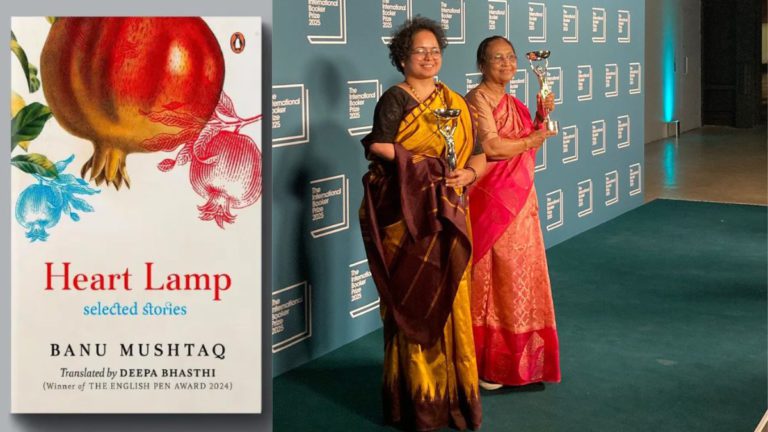
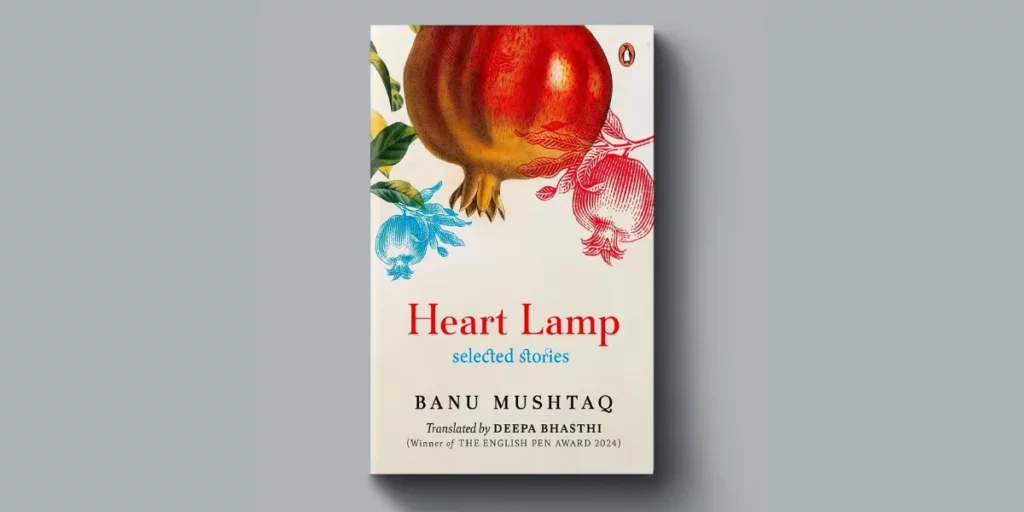
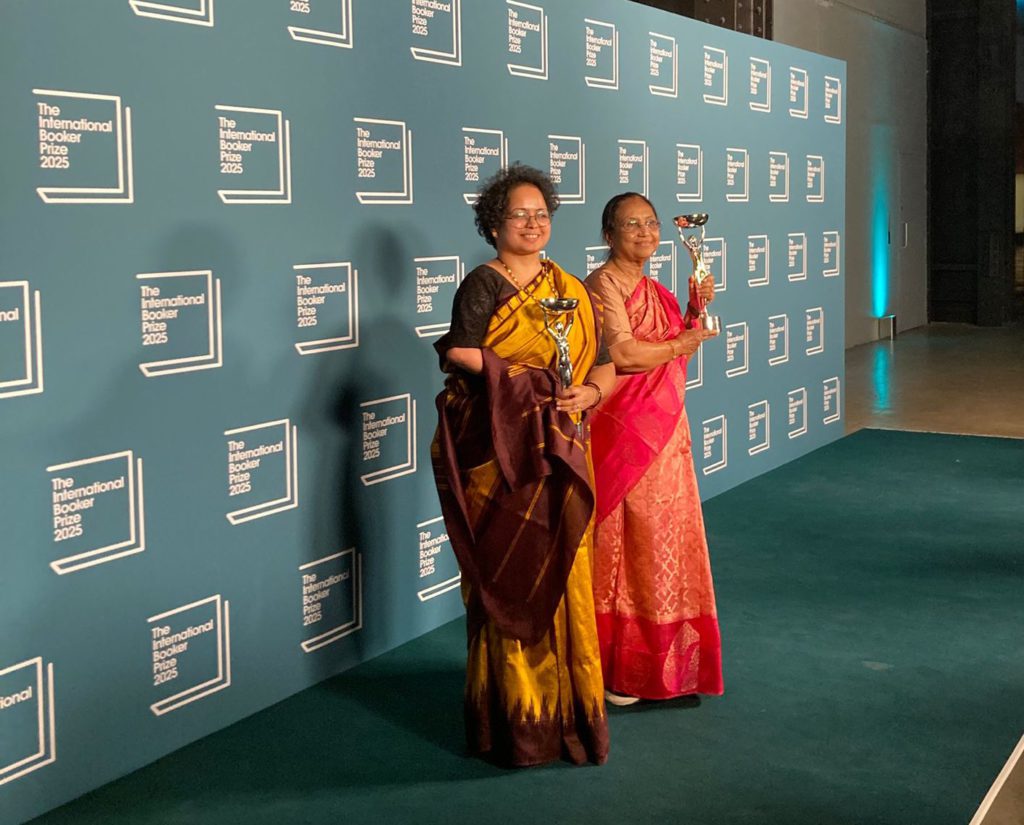
In a moment of pride for Indian and world literature, lawyer-activist-writer Banu Mushtaq and translator Deepa Bhasthi have won the 2025 International Booker Prize for Heart Lamp. This is the first short story collection to receive the honour and the first book translated from Kannada to be recognised by the award.
We're delighted to announce that the winner of the #InternationalBooker2025 is Heart Lamp by Banu Mushtaq, translated by Deepa Bhasthi.
— The Booker Prizes (@TheBookerPrizes) May 20, 2025
The £50,000 prize, announced at a ceremony held at London’s Tate Modern by Chair of Judges and acclaimed author Max Porter, is shared equally between Mushtaq and Bhasthi. The award celebrates fiction translated into English and recognises the vital contribution of translators in bringing diverse global voices to new audiences.
— The Booker Prizes (@TheBookerPrizes) May 20, 2025
Heart Lamp features 12 stories written between 1990 and 2023, inspired by the real-life struggles of women who sought legal assistance from Mushtaq, a 77-year-old lawyer, activist, and towering figure in progressive Kannada literature. Through powerful, poignant narratives, she explores the lives of Muslim girls and women navigating patriarchal expectations, religious conservatism, caste discrimination, and economic hardship in southern India.
Mushtaq, who becomes only the second Indian author to win the prize after Geetanjali Shree in 2022, opened her acceptance speech with a poetic metaphor: “This moment feels like a thousand fireflies lighting up a single sky — brief, brilliant, and utterly collective.” She added,
“This is more than a personal achievement. It is an affirmation that we thrive when we embrace diversity, celebrate our differences, and uplift one another.”
Deepa Bhasthi, who becomes the first Indian translator to win the award, was lauded for her “radical translation” that brings to English “a plurality of textures and voices,” as noted by Max Porter. He praised Heart Lamp as “beautiful, busy, life-affirming stories” that challenge conventional boundaries of language and literature. Bhasthi, who selected the stories herself from over 50 written by Mushtaq, dedicated her win to women whose stories are often erased or silenced.
Image: Lawyer-activist-writer Banu Mushtaq and translator Deepa Bhasthi (Source: The Booker Prize – X)
“Sheffield-based independent publisher And Other Stories also celebrated its first-ever Booker win with this publication,” organisers noted.
The International Booker shortlist also featured: • A Leopard-Skin Hat by Anne Serre (trans. Mark Hutchinson) • Perfection by Vincenzo Latronico (trans. Sophie Hughes) • Under the Eye of the Big Bird by Hiromi Kawakami (trans. Asa Yoneda) • On the Calculation of Volume I by Solvej Balle (trans. Barbara J. Haveland) • Small Boat by Vincent Delecroix (trans. Helen Stevenson)
This year’s win marks a major milestone for Kannada literature, a language spoken by over 65 million people, now given a global platform. Mushtaq summed up the significance of this breakthrough:
“To write in Kannada is to inherit a legacy of cosmic wonder and earthly wisdom. This book is my love letter to the idea that no story is local or small.”
A reading from the winning work by actor Ambika Mod was also featured at the prize ceremony, which continues to amplify voices that reshape the global literary canon.
Support our Journalism
No-nonsense journalism. No paywalls. Whether you’re in Australia, the UK, Canada, the USA, or India, you can support The Australia Today by taking a paid subscription via Patreon or donating via PayPal — and help keep honest, fearless journalism alive.
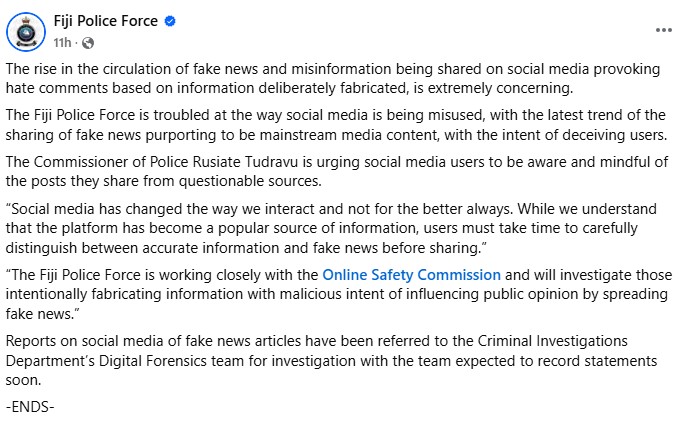
The Fiji Police Force has raised serious concerns about the growing spread of fake news and misinformation on social media platforms, warning that fabricated content is fuelling hate speech and public unrest.
Commissioner of Police Rusiate Tudravu said the force is alarmed by the latest trend of false news stories being shared online, often disguised as legitimate mainstream media content, with the intent to deceive users and manipulate public opinion.
“Social media has changed the way we interact—and not always for the better,” Tudravu said.
“While we understand it’s become a popular source of information, users must take time to carefully distinguish between accurate information and fake news before sharing.”
The Fiji Police Force is now working with the Online Safety Commission to investigate individuals deliberately spreading false information online. Cases have been referred to the Criminal Investigations Department’s Digital Forensics team, which is expected to begin recording statements as part of the probe.
Authorities are urging social media users to exercise greater caution and responsibility when engaging with online content.
Support our Journalism
No-nonsense journalism. No paywalls. Whether you’re in Australia, the UK, Canada, the USA, or India, you can support The Australia Today by taking a paid subscription via Patreon or donating via PayPal — and help keep honest, fearless journalism alive.
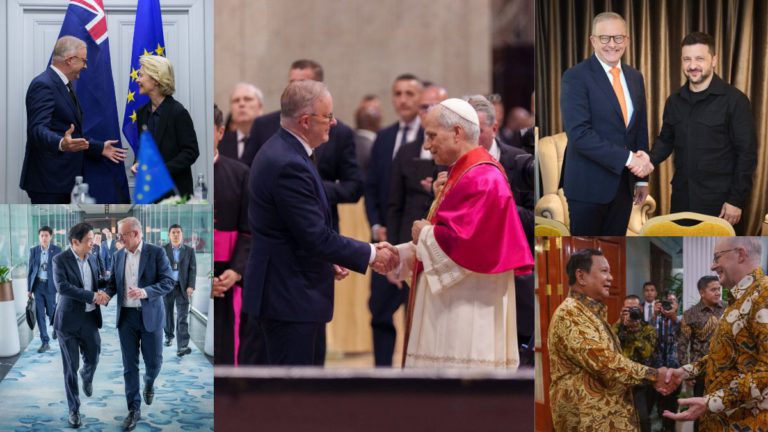
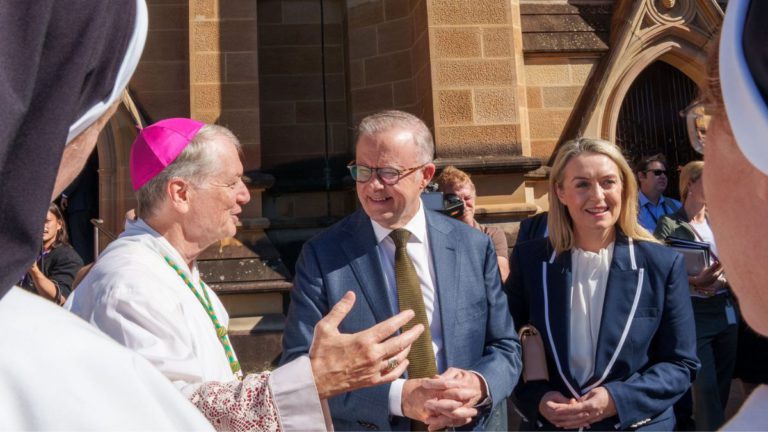
Prime Minister Anthony Albanese has concluded his first round of international engagements since his re-election, marking a significant moment on the world stage with meetings across Europe and Asia, including a historic audience with the newly inaugurated Pope.
The first words of His Holiness Pope Leo XIV to the world were "peace be with you all,” words that will resonate Australia’s five million Catholics.
This morning I visited Domus Australia here in Rome along with Archbishop Fisher and Archbishop Comensoli.
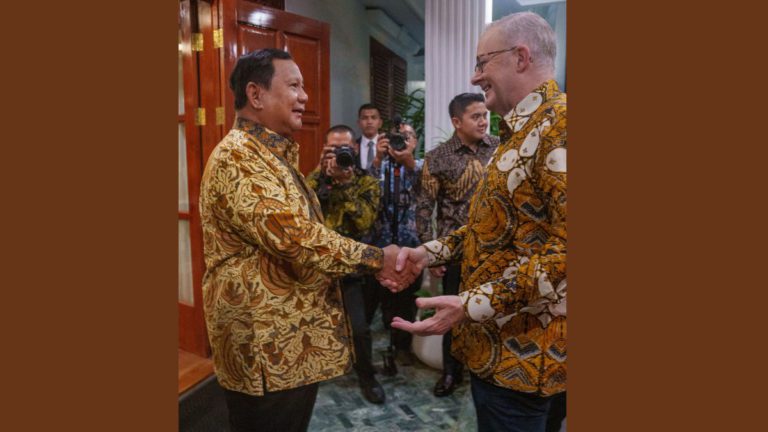
Albanese began his diplomatic tour in Indonesia, where he held successful talks with President Prabowo Subianto, reinforcing Australia’s commitment to its closest neighbour. “I was so pleased to again make Indonesia my first bilateral leaders’ meeting after the election,” said the Prime Minister.
“I look forward to working closely with my friend President Prabowo on our shared priorities across security and defence, trade and investment and more.”
The Prime Minister then travelled to the Vatican to represent Australia at the Papal Inauguration of His Holiness, Pope Leo XIV. In a rare honour, Albanese was granted a private audience with the Pope, during which he extended a formal invitation to visit Sydney for the 2028 International Eucharistic Congress.
“It was an honour to represent Australia at the inauguration of Pope Leo XIV,” he said.
“His Holiness’ message about peace and social justice is one that resonates not only with Catholics, but with everybody around the world.”
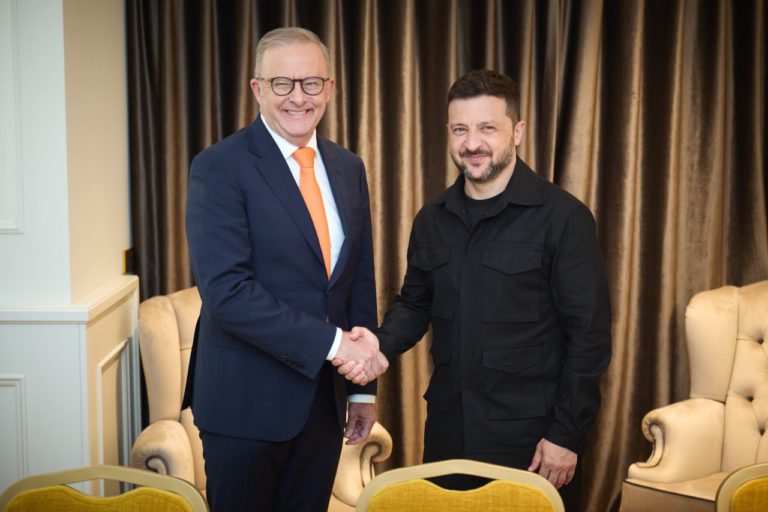
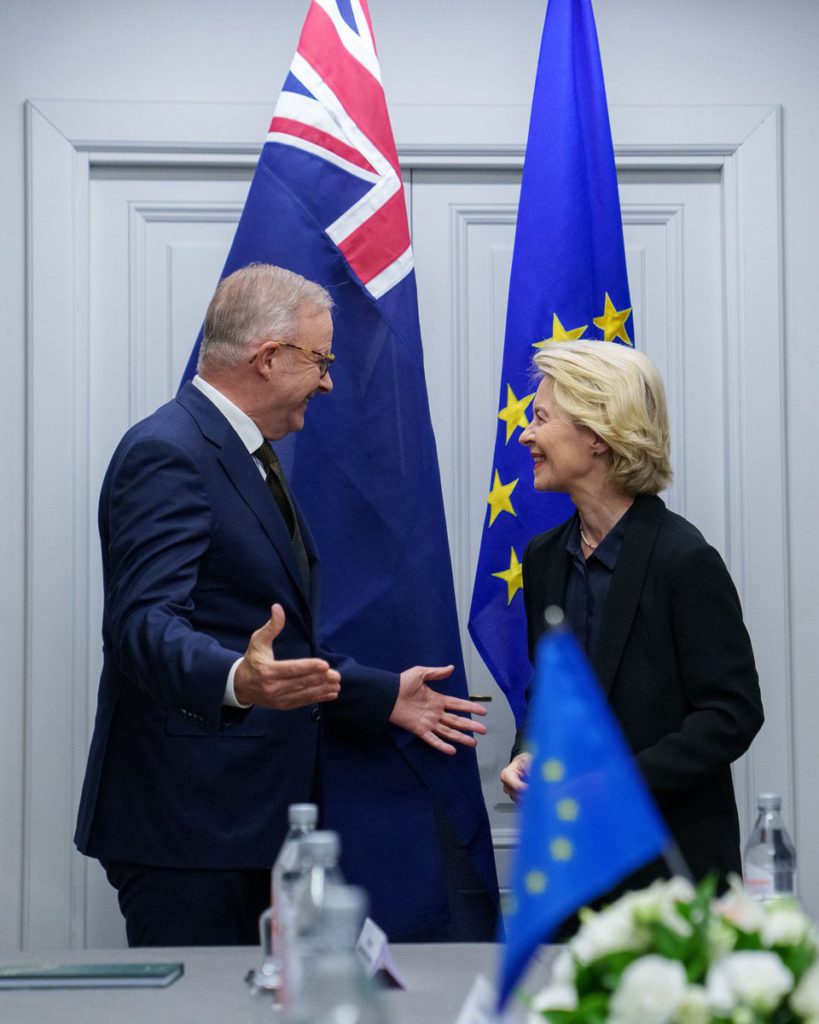
In Rome, the Prime Minister also engaged in high-level discussions with key global figures including Ukrainian President Volodymyr Zelenskyy and European Commission President Ursula von der Leyen.
“We reiterated our shared commitment to concluding a free trade agreement which delivers real benefit for the economies of Australia and Europe.”
Albanese reaffirmed Australia’s unwavering support for Ukraine amid its ongoing conflict.
“I assured President Zelenskyy of Australia’s ongoing and steadfast support. Australia will continue to stand by Ukraine.”
On his return to Australia, Albanese made a brief stopover in Singapore, meeting with recently elected Prime Minister Lawrence Wong. The two leaders reaffirmed their commitment to strengthening the Australia–Singapore Comprehensive Strategic Partnership.
“Australia’s prosperity and economic future are linked with Southeast Asia,” Albanese said.
“I look forward to further discussing our Government’s focus on expanding this partnership during our Annual Leaders’ Meeting later this year.”
Free trade means more jobs and a stronger economy.
That’s why we’re working towards a free trade agreement with the European Union.
Albanese reaffirmed Australia’s commitment to securing a free trade agreement with the European Union during a meeting with European Commission President Ursula von der Leyen. “Free trade means more jobs and a stronger economy,” Albanese stated.
“That’s why we’re working towards a free trade agreement with the European Union.”
He added that the two leaders also discussed their ongoing cooperation to support global peace and security.
Australia and Singapore believe in free trade and global rules that keep our region stable.
We have so much in common. And by working together, we can deliver for our economies and for our security.
Prime Minister Lawrence Wong, thank you for meeting with me today to further… pic.twitter.com/IicvqBNatu
The Prime Minister’s tour underscored Australia’s commitment to both regional stability and global cooperation, highlighting the country’s active role in shaping international dialogue on security, trade, and shared values.
Support our Journalism
No-nonsense journalism. No paywalls. Whether you’re in Australia, the UK, Canada, the USA, or India, you can support The Australia Today by taking a paid subscription via Patreon or donating via PayPal — and help keep honest, fearless journalism alive.
In its most recent battle with authorities in Australia, X (formerly Twitter) has launched legal action in the Federal Court, seeking an exemption from a new safety standard aimed at preventing the spread of harmful material online.
The standard in question is known as the Relevant Electronic Services Standard. It came into effect in December 2024, but won’t start being enforced by Australia’s online regulator, eSafety, until June this year.
Compared with the social media ban for under-16s, this standard has been a side issue in the broader topic of online safety. So what exactly is it? And will it be effective at preventing the spread of harmful material online?
What is the standard?
The Relevant Electronic Services Standard contains criteria to help address the pervasiveness of harmful and illegal material distributed online. It is particularly focused on child sexual exploitation content, depictions of extreme violence, illegal drug material, and pro-terror content.
Relevant electronic services (RES) are digital services that enable user-to-user content. This includes instant messaging, email and chat platforms. The legal definition also includes some online gaming services.
Under Australia’s Online Safety Act 2021, the communications minister may exempt some services or platforms from being defined as an RES. The minister can also set conditions on the service for exemption, such as having a robust moderation service, or being a messaging service for internal employees of a company.
Some social media platforms, such as Facebook and X, may be defined as RES. That’s because they also offer user-to-user messaging services. It is sensible, then, for the Federal Court to determine whether they fall under social media codes or RES standards, or both.
The standards require RES to implement systems, processes and technologies to detect and remove child sexual abuse and pro-terror material from their services, and to actively deter end-users from distributing this material.
There are consequences for services that fail to comply. The eSafety commissioner, Julie Inman Grant, can issue a formal warning or infringement notice, or have the courts apply a civil penalty.
What does the standard do?
The Online Safety Act 2021 imposes obligations on RES providers, particularly regarding the handling of harmful material. This material is categorised into several classes, including Class 1A and Class 1B content.
Class 1A material typically means child exploitation and pro-terror content. Class 1B material refers to extreme violence, promotion of crime, and illegal drug-related content.
The class of content is determined by referring to the National Classification Scheme. This scheme sets standards for the ratings of films.
Class 1A and 1B material is content, texts and images that would be “refused classification” under the scheme. That is, it would be material that is usually not allowed to be distributed at all. Class 2 material is what we usually consider X-rated or 18+ material.
At the moment, the eSafety commissioner can ask a RES to remove Class 1 or Class 2 content, or the service can be penalised. However, the next step has been to work with industry to develop codes that require service providers to be more proactive in preventing Class 1 content being shared between their users.
Will the standard be effective?
X wants its platform to be treated as exempt, and governed by the similar but less stringent Social Media Code instead. Whatever the Federal Court decides, however, there are other issues to consider.
Part of the difficulty with the scheme is that it relies on harmful content coming to the attention of the eSafety commissioner. This usually happens when an end-user makes a complaint.
But our recent research, which surveyed 2,520 representative Australians and will be published later this year, found that only about 10% of users who were the target of digital harms reported them to the eSafety commissioner. Among those who had witnessed harmful content or behaviour, only 6% reported. About 40% of Australians don’t believe reporting will make any difference.
Another issue with the industry standards raised by digital rights activists is that it may require services to investigate user messages even when end-to-end encryption of messages is used. That may have serious privacy implications.
A global treaty could help
This ties into broader problems with the online safety framework.
Much of the focus has been on managing platforms and getting platforms to police users and content – a necessary approach to avoid penalising individuals and overwhelming courts.
However, service provider policing often fails to meet the norms of due process, such as transparency and the right to appeal decisions.
It also makes platforms and messaging providers the “arbiters” of free speech and censorship, instead of governments, courts and communities.
While setting standards on platforms is one part of the solution, we need to continue developing remedies to protect users. This may include global agreements and multilateral treaties, similar to the International Covenant on Civil and Political Rights, so all countries can share the burden locally for digital harms that occur across jurisdictions, and ensure due process and the protection of privacy.
Rob Cover, Professor of Digital Communication and Director of the RMIT Digital Ethnography Research Centre, RMIT University
No-nonsense journalism. No paywalls. Whether you’re in Australia, the UK, Canada, the USA, or India, you can support The Australia Today by taking a paid subscription via Patreon or donating via PayPal — and help keep honest, fearless journalism alive.
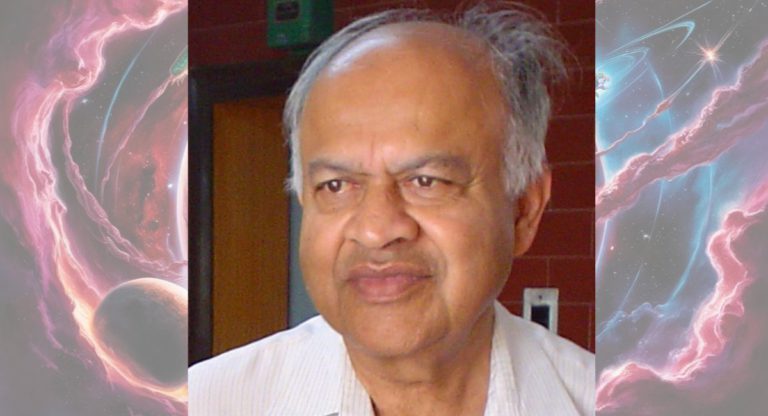
Internationally acclaimed astrophysicist Professor Jayant Vishnu Narlikar has passed away at the age of 87 in Pune, India. Born on July 19, 1938, in Kolhapur, Maharashtra, Prof. Narlikar was a distinguished alumnus of Banaras Hindu University (BHU), where he completed his B.Sc. in 1957. He hailed from a scholarly family—his father, Vishnu Vasudeva Narlikar, was the Head of the Mathematics Department at BHU, while his mother, Sumati Narlikar, was a respected Sanskrit scholar.
Prof. Narlikar pursued higher studies at Cambridge University, where his academic brilliance was widely recognised. He won the prestigious Tyson Medal in the Mathematical Tripos and went on to earn multiple degrees: a BA in 1960, a PhD in 1963, an MA in 1964, and a ScD in 1976, with a focus on astronomy and astrophysics. His achievements were further honoured with the Smith’s Prize (1962) and the Adams Prize (1967).
India’s Prime Minister Narendra Modi condoled his passing, calling it a monumental loss for the scientific community.
The passing of Dr. Jayant Narlikar is a monumental loss to the scientific community. He was a luminary, especially in the field of astrophysics. His pioneering works, especially key theoretical frameworks will be valued by generations of researchers. He made a mark as an…
He served as a Fellow at King’s College, Cambridge (1963–1972) and was a founding member of the Institute of Theoretical Astronomy (1966–1972). During this period, in 1966, he married Mangala Rajwade, a mathematician with a PhD. Prof. Narlikar is survived by their three daughters—Geeta, Girija, and Leelavati—all of whom have pursued careers in science.
In 1972, Prof. Narlikar returned to India and joined the Tata Institute of Fundamental Research (TIFR), where he led the Theoretical Astrophysics Group. In 1988, he was appointed by the University Grants Commission to establish the Inter-University Centre for Astronomy and Astrophysics (IUCAA) in Pune, serving as its founding director until his retirement in 2003. He remained associated with IUCAA as an emeritus professor.
Prof. Jayant Narlikar (Image: By Biswarup Ganguly – Own work, CC BY 3.0, https://commons.wikimedia.org/w/index.php?curid=14985638)
Prof. Narlikar was globally respected for his groundbreaking work in cosmology. He proposed alternative theories to the Big Bang, exploring concepts such as Mach’s Principle, action-at-a-distance physics, quantum cosmology, and the theory of gravity. He served as President of the Cosmology Commission of the International Astronomical Union from 1994 to 1997.
He collaborated with Fred Hoyle on stellar nucleosynthesis which explains how the elements in the universe—like carbon, oxygen, and iron—are created inside stars from lighter elements like hydrogen and helium. He was also a proponent of the panspermia hypothesis, which suggests that life on Earth may have originated in space. Along with scientists like Fred Hoyle and Chandra Wickramasinghe, Narlikar explored the possibility of life being transported via meteorites or interstellar dust. Between 1999 and 2003, he led a pioneering experiment that collected microorganisms from altitudes up to 41 km, suggesting a potential extraterrestrial origin of some microbial life.
(Image: CANVA AI)
Beyond research, Prof. Narlikar was a passionate science communicator. He authored numerous books and articles, and produced science programmes across English, Marathi, and Hindi media. For his efforts in popularising science, he was awarded the UNESCO Kalinga Prize in 1996.
Prof. Narlikar was honoured with the Padma Bhushan in 1965—at just 26 years of age—and the Padma Vibhushan in 2004 for his extraordinary contributions to science.
His legacy lives on in the generations of scientists he inspired, the institutions he helped build, and the cosmic questions he fearlessly explored.
Support our Journalism
No-nonsense journalism. No paywalls. Whether you’re in Australia, the UK, Canada, the USA, or India, you can support The Australia Today by taking a paid subscription via Patreon or donating via PayPal — and help keep honest, fearless journalism alive.
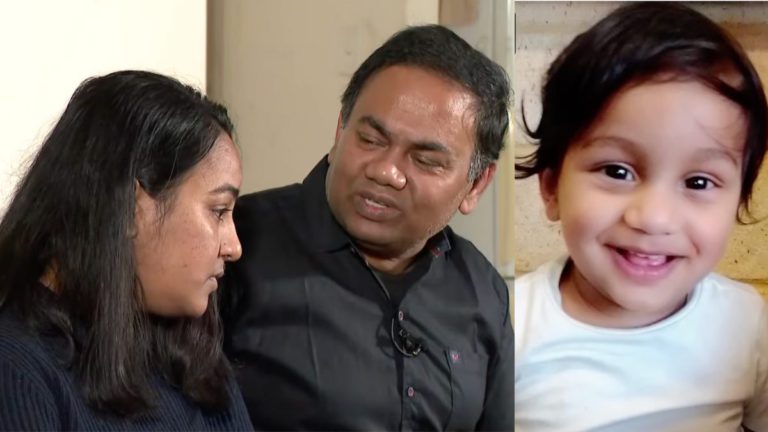
The tragic death of 21-month-old Sandipan Dhar is now the focus of a coronial inquest, examining whether a simple blood test could have saved his life.
Sandipan died at Joondalup Health Campus in March 2024. A post-mortem revealed he had acute blastoma leukaemia, undiagnosed despite two visits to the emergency department for a persistent fever following routine vaccinations.
As per ABC, Sandipan’s parents, Sanjoy and Saraswati Dhar, claim they repeatedly asked for a blood test during their first ED visit and even had a referral from their GP. But hospital staff claim they have no memory of the request.
“I would document it in the notes if it was a repeated or insistent request, perhaps,”
nurse Carlo Rocchiccioloi told the court.
Junior doctor Caolan O’Hearrain acknowledged the GP letter mentioned blood tests, but said the request didn’t appear urgent or repeated.
“They’d gone to their GP a few times and the GP had sent them in looking to get bloods done,” he said, adding that he was reassured by the toddler’s improving temperature and heart rate.
Coroner Sarah Linton said the inquest would explore whether a blood test during Sandipan’s initial visit could have flagged the blood disease in time.
After being discharged, it is reported that Sandipan’s condition worsened. The family returned to the ED on 24 March. He died that evening.
In the weeks leading up to his death, Sandipan was also seen twice by Dr Sanjeev Rana at Key Largo Medical Centre. Initially, diagnosing tonsillitis, Dr Rana became increasingly concerned and wrote a referral letter urging a hospital blood test.
“He looked miserable. I just couldn’t ignore the parental concern.”
Despite the referral, the court heard that by the time Sandipan was brought back to ED, his condition had become irreversible.
Only Sandipan’s father was present in court on Tuesday. Outside, he expressed frustration at the condolences offered.
“These are by force … I should have heard it one year prior, not today,” he said.
“I can only accept the apology from Dr Rana because I can see that it came from his heart.
The rest I don’t.”
Support our Journalism
No-nonsense journalism. No paywalls. Whether you’re in Australia, the UK, Canada, the USA, or India, you can support The Australia Today by taking a paid subscription via Patreon or donating via PayPal — and help keep honest, fearless journalism alive.
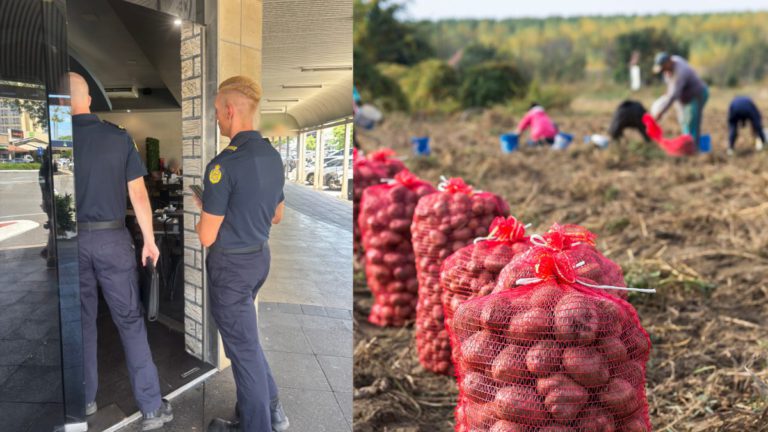
Australian Border Force (ABF) officers from the Department of Home Affairs carried out a targeted, three-day operation across the Cairns region aimed at stamping out migrant worker exploitation and ensuring employer compliance with visa conditions.
The coordinated campaign, led by immigration compliance officers from the Field Operations and Sponsor Monitoring (FOSM) command and bolstered by partner agencies, focused primarily on the personal services and hospitality industries—sectors identified as high-risk for worker mistreatment.
“Protecting vulnerable migrant workers, reminding employers of their legal obligations and assisting those in need were the three pillars of our deployment,” said Superintendent Melati Smith, who oversees Field Operations in Queensland and the Northern Territory.
“Our officers are trained to pivot between enforcement and support—we are uncompromising on non-compliant employers, while remaining sensitive and compassionate when engaging exploited individuals.”
Over the course of the operation, more than 20 businesses were inspected. Officers uncovered multiple breaches of the Migration Act, including the employment—and in some instances the on-site residence—of three individuals without work rights. Two of those workers were granted bridging visas to allow them to depart Australia voluntarily, while the third person has been placed on a formal removal pathway.
Immigration compliance field officers are now considering issuing substantial infringement notices to the non-compliant businesses, which face penalties under the strengthened provisions of the Migration Act. Possible sanctions range from enforceable undertakings and civil penalties to criminal prosecution and prohibition from hiring overseas workers in the future.
“These results reaffirm the need for an ongoing national focus on industries where migrant workers remain at risk of exploitation,”
Superintendent Smith said.
She also urged employers to verify visa entitlements before hiring through the Home Affairs’ Visa Entitlement Verification Online (VEVO) system, saying,
“It has never been easier for employers to do the right thing.”
The ABF encourages anyone with information on potential immigration offences or suspicious activity to report via the Border Watch portal. Reports may be made anonymously.
Key outcomes of the Cairns operation:
20+ businesses inspected
Three undocumented workers were discovered (two granted bridging visas; one on removal pathway)
Multiple visa and employment contraventions identified
Infringements and prosecutions under consideration against non-compliant employers
This operation underscores the ABF’s dual mission: safeguarding Australia’s migration system while protecting the rights and welfare of overseas workers.
Support our Journalism
No-nonsense journalism. No paywalls. Whether you’re in Australia, the UK, Canada, the USA, or India, you can support The Australia Today by taking a paid subscription via Patreon or donating via PayPal — and help keep honest, fearless journalism alive.
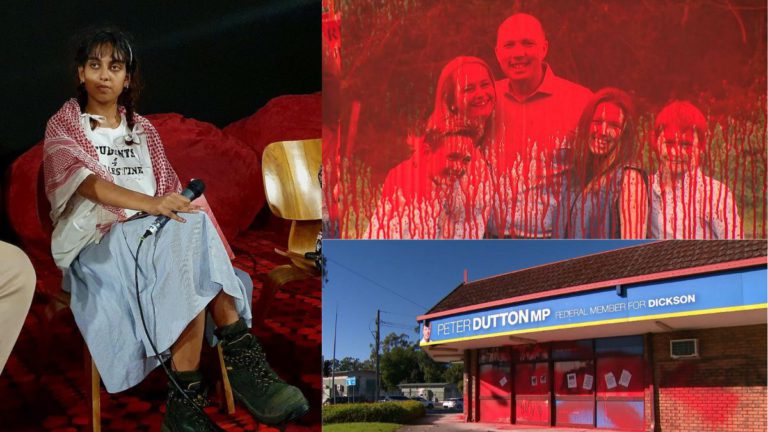
A teenager who used a fire extinguisher filled with red paint to vandalise former federal opposition leader Peter Dutton’s electorate office during the 2025 election campaign has been sentenced to community service.
Eighteen-year-old Aahana Nag appeared at Brisbane Magistrates Court on Tuesday, flanked by supporters, where she pleaded guilty to a charge of wilful damage over the April 29 incident targeting Dutton’s Arana Hills office in Brisbane’s north.
The court heard Nag arrived with three others in the early hours of the morning, donning a surgical mask before spraying the front of the office with red paint and plastering posters criticising Dutton’s stance on the Gaza conflict and his ties to US President Donald Trump.
Police were called to the scene around 2.30 am and used dogs to track and apprehend Nag. She sustained scarring and bruising after being mauled by a police dog. Officers found surgical gloves, masks, a baseball cap and a balaclava in her backpack.
Defence lawyer Terry Fisher told the court that Nag’s actions were politically motivated, claiming she was driven by a deep awareness of social injustices, including comments Dutton had made on Palestine and the environment.
“This was an act of resistance, and Peter Dutton does not support us,”
Nag said outside court, her face shielded by supporters.
She was sentenced to 20 hours of community service to be completed within six months. No conviction was recorded.
During the campaign, Dutton had described the attack as “outrageous” and a threat to democratic values. He went on to lose his seat of Dickson to Labor’s Ali France — a historic first for an opposition leader.
While most of the graffiti has been cleared from the now-vacant office, red paint remains on the walls, and the words “Fascists don’t represent us” are still visible on the ground.
Support our Journalism
No-nonsense journalism. No paywalls. Whether you’re in Australia, the UK, Canada, the USA, or India, you can support The Australia Today by taking a paid subscription via Patreon or donating via PayPal — and help keep honest, fearless journalism alive.
Victoria’s inaugural budget under Treasurer Jaclyn Symes has delivered a slim $600 million surplus, but it comes at the cost of record debt levels and deep cuts to the public service.
Symes revealed net debt will climb from $167.6 billion in 2024-25 to $194 billion by 2028-29—its highest-ever level. Interest payments will soar from $7.6 billion this year (about $20.7 million every day) to $10.6 billion in three years (almost $29 million daily).
“Reducing net debt as a proportion of gross state product is a measure we’re focused on,”
Symes told parliament.
To rein in spending, the government has earmarked $3.3 billion in “efficiency dividends” from the public sector, primarily via job cuts. While the budget papers incorporate 1,200 full-time equivalent (FTE) roles being eliminated—some through natural attrition—Symes confirmed up to 3,000 jobs could go once a review by public service commissioner Helen Silver is complete.
“Victoria had 500 entities and 3,400 public boards,” Symes said.
“You can’t tell me there’s not some fat in there.”
Opposition Leader Brad Battin condemned the process as “lost control,” accusing the government of taxing Victorians rather than living within its means.
“You can’t fix a cost-of-living crisis by continuing to increase taxes across every single property in Victoria,”
he said, targeting the controversial Emergency Services and Volunteers Fund that will raise $1.6 billion next year.
The budget’s $600 million surplus relies on a $2.5 billion rise in tax revenue to $41 billion—driven by payroll tax, stamp duties and the new emergency services levy—and a $1.6 billion GST windfall. Yet debt as a share of the economy remains stubbornly high at about 25 per cent of gross state product.
Major project cost blowouts have already added $3.3 billion to Victoria’s liabilities, including an $827 million overrun on the Metro Tunnel. Across 518 government-funded projects, average cost increases of 1.9 per cent were recorded since last year’s budget.
Social and economic trade-offs
Despite fiscal strains, the government has lifted spending on health ($11.1 billion, including $634 million for nine new or redeveloped hospitals), mental health ($497 million), and crime prevention ($1.6 billion). Funding for ambulance wait-time improvements ($167 million) and police recruitment ($92 million) also rose.
But some stakeholders warn that the budget lacks vision. The Community and Public Sector Union labelled the public service cuts “a disgrace,” arguing the $3.3 billion savings target is unrealistic without undermining frontline services.
Conversely, the Victorian Council of Social Service and Foodbank Victoria praised cost-of-living relief measures such as free transport for children and increased food relief funding. “Demand has been something like we haven’t seen in 17 years,” Foodbank CEO Dave McNamara said.
A cautious outlook The RBA’s recent rate cuts and moderating inflation have eased some pressure on households, but Symes warned that global volatility—including trade tensions and geopolitical risk—poses an ongoing threat to growth.
“This move will make monetary policy somewhat less restrictive,”
she said.
With debt service already consuming 6.5 per cent of expenditure and expected to rise to 9 per cent by 2028-29, Victoria faces the challenge of balancing infrastructure needs, frontline services and fiscal sustainability—all while navigating an uncertain economic landscape.
Support our Journalism
No-nonsense journalism. No paywalls. Whether you’re in Australia, the UK, Canada, the USA, or India, you can support The Australia Today by taking a paid subscription via Patreon or donating via PayPal — and help keep honest, fearless journalism alive.
The Australian Government has pledged $5.7 million to support Fiji’s national HIV Response Plan, Foreign Minister Penny Wong announced today during the launch of the Clinical Services Plan at Suva’s Colonial War Memorial Hospital (CWMH).
The funding will bolster disease surveillance, testing, and vital community-led prevention and treatment initiatives, Wong confirmed, marking a significant step in Australia’s ongoing support for Fiji’s health sector.
“This is about helping Fiji and the region prepare for the future – not only with infrastructure but with a trained and ready healthcare workforce,” Minister Wong said.
The new commitment complements Australia’s broader $30 million investment in upgrading CWM Hospital infrastructure and its $8 million annual support to strengthen Fiji’s health systems.
(Image: X – @SenatorWong)
The Clinical Services Plan launched today outlines the future healthcare service needs for Fiji and the region, providing a strategic blueprint for the new national hospital as well as improvements at CWM itself. Already, works are underway at CWM including the renovation of the acute patient ward, repairs to maternity plumbing, upgraded water storage, and roof repairs to resolve ongoing leaks.
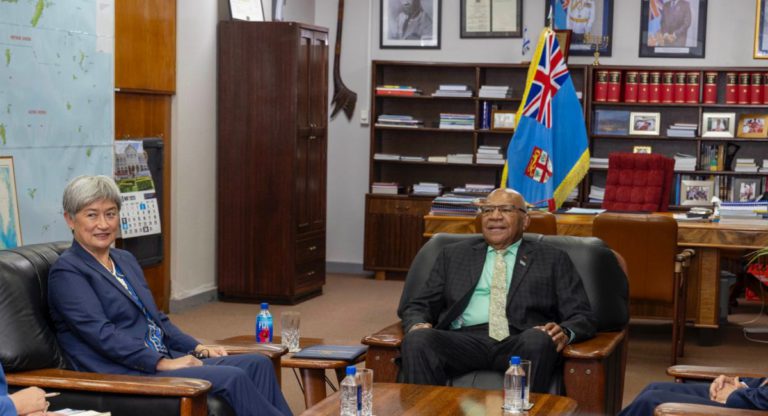
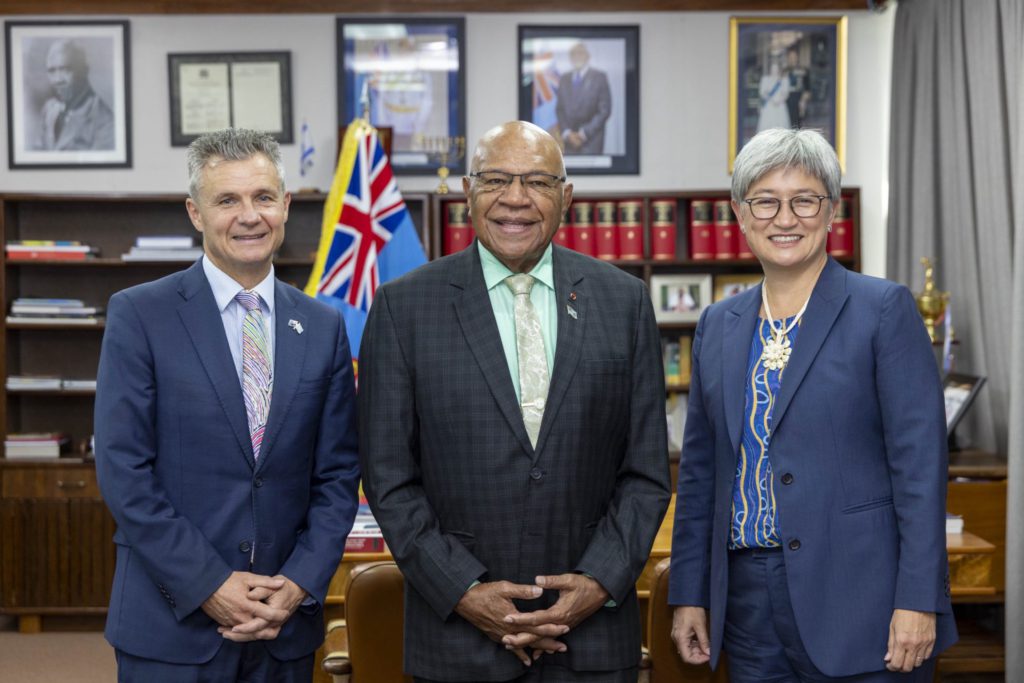
Wong, accompanied by Assistant Minister for Foreign Affairs and Trade Matt Thistlethwaite on his first overseas mission, is visiting Fiji, Tonga and Vanuatu this week to reaffirm Australia’s commitment to its Pacific neighbours.
“Our Vuvale Partnership with Fiji is built on respect, trust, and delivering outcomes for our people,” Wong said. “Australia and Fiji are family. In uncertain times, we are counting on each other to build resilience in our nations and across the Pacific family.”
Earlier in the day, Prime Minister Sitiveni Rabuka met with the Australian delegation and welcomed the renewed support, describing the Vuvale Partnership as a symbol of the enduring strength and shared vision between the two nations.
Wong reiterated Australia’s pledge to continue listening to Fiji’s needs and supporting the country’s leadership role in fostering peace and unity in the region. The bilateral talks also addressed climate resilience, economic development, regional security, and stronger people-to-people ties.
This marks Wong’s seventh visit to Fiji as Foreign Minister – a sign, she said, of Australia’s steadfast commitment as the Pacific’s largest development partner.
Support our Journalism
No-nonsense journalism. No paywalls. Whether you’re in Australia, the UK, Canada, the USA, or India, you can support The Australia Today by taking a paid subscription via Patreon or donating via PayPal — and help keep honest, fearless journalism alive.
India’s Union Home Minister and Minister of Cooperation, Shri Amit Shah, today launched the redesigned Overseas Citizen of India (OCI) Portal, aimed at delivering a faster, safer, and more user-friendly experience for over 5 million OCI cardholders and new applicants globally.
Speaking at the launch in New Delhi, Shah said, “Today, launched the revamped OCI Portal with an up-to-date user interface to make registration of Overseas Citizens seamless. The new features will include improved functionality, enhanced security, and a user-friendly experience.” He added that the platform marks a “major step forward in boosting citizen-friendly digital governance.”
Under the leadership of Prime Minister Narendra Modi, India has been committed to offering world-class immigration services to persons of Indian origin living abroad. Shah noted the importance of ensuring Indian-origin citizens—residing across numerous countries—face no obstacles when visiting or staying in India.
(Image: X – @AmitShah)
Accessible via ociservices.gov.in, the new portal replaces the decade-old version launched in 2013. It is operational across more than 180 Indian missions and 12 Foreigners Regional Registration Offices (FRROs), collectively processing approximately 2,000 applications daily.
Key new features include: • Modern user dashboard with auto-fill capabilities and integrated FAQs • Simplified navigation and editing options before submission • Application-specific document categorisation and eligibility display • Online payment integration for FRRO applicants • In-built image cropping for photo and signature uploads • Reminder alerts and multi-factor authentication for enhanced security
On the technical front, the portal boasts infrastructure modernisation with load balancing, latest platform upgrades including Bootstrap 5.3 and Struts 2.5.30, SSL/TLS encryption, and cybersecurity enhancements such as server hardening and regular penetration testing.
(Image: X – @AmitShah)
Introduced through an amendment to the Citizenship Act in 2005, the OCI scheme grants overseas Indians—excluding those with lineage from Pakistan or Bangladesh—the right to live, work, and travel in India with special privileges.
The new portal reflects India’s digital transformation journey and responds to user feedback and evolving technology trends
Support our Journalism
No-nonsense journalism. No paywalls. Whether you’re in Australia, the UK, Canada, the USA, or India, you can support The Australia Today by taking a paid subscription via Patreon or donating via PayPal — and help keep honest, fearless journalism alive.
The Reserve Bank of Australia (RBA) today reduced its official cash rate by 25 basis points, lowering it from 4.10 per cent to 3.85 per cent. This is the second quarter-point cut since February and marks the first time in two years that the cash rate has slipped below 4 per cent.
“At its meeting today, the Board decided to lower the cash rate target by 25 basis points to 3.85 per cent,”
the RBA announced in its post-meeting statement.
This second cut of the year is expected to feed through quickly to lending rates, with Canstar estimating a borrower on a $750,000 mortgage will save around $114 each week.
The RBA cited the continued moderation in inflation as the primary justification for today’s easing. Data for the March quarter showed annual headline inflation at 2.4 per cent—within the RBA’s 2–3 per cent target band—and the trimmed mean measure at 2.9 per cent, dipping below 3 per cent for the first time since 2021.
“Inflation has fallen substantially since its peak in 2022, as higher interest rates have worked to bring aggregate demand and supply closer to balance,” the RBA noted.
“While headline inflation is likely to rise over the coming year as temporary factors unwind, underlying inflation is now expected to remain around the midpoint of the target range through much of the forecast period.”
Despite easing inflation, the Board emphasised that both international and domestic economic uncertainty remain elevated. Trade policy tensions, recent tariff announcements, and geopolitical risks have contributed to volatility in global financial markets. The RBA warned these factors could weigh on global growth and spill over into Australia’s economy
Domestically, however, there are signs of recovery. Real household incomes have improved, private demand is lifting, and some measures of financial stress have eased. Yet, businesses report that weak demand limits their ability to pass on cost increases, and labour market indicators remain mixed. Employment is growing but wage pressures persist alongside sluggish productivity.
“The outlook remains uncertain. While consumption growth is expected to pick up as real incomes rise, recent data suggest the pace may be slower than previously anticipated,”
the Board said.
In ending its statement, the RBA reiterated that price stability and full employment remain its dual mandate. With inflation now squarely in the target band and upside risks abating, the Board judged that a modest easing of monetary conditions was appropriate.
“With inflation expected to remain around target, an easing in monetary policy at this meeting was appropriate,” the RBA concluded.
“This move will make monetary policy somewhat less restrictive, but the Board remains cautious given the heightened uncertainty about demand and supply.
The Board will be attentive to data and evolving risks when making its future decisions.”
Market and lender responses
Markets had fully priced in today’s rate cut, and major banks quickly followed suit. National Australia Bank (NAB) announced it will pass on the full 0.25 per cent reduction to its standard variable mortgage rates effective 30 May 2025, giving borrowers immediate relief on their home loan repayments.
What comes next? The RBA will closely monitor upcoming consumption, labour market, and inflation data, as well as global economic developments. Further rate adjustments will depend on how these factors evolve and whether risks to the inflation outlook become more balanced or skewed.
Support our Journalism
No-nonsense journalism. No paywalls. Whether you’re in Australia, the UK, Canada, the USA, or India, you can support The Australia Today by taking a paid subscription via Patreon or donating via PayPal — and help keep honest, fearless journalism alive.
Nationals leader David Littleproud has confirmed his party will not re-enter a formal Coalition agreement with the Liberal Party, citing key policy disagreements and a desire to chart their own course ahead of the next federal election.
Following what he described as a “mature” and “respectful” discussion with Liberal leader Sussan Ley, Littleproud said the decision had unanimous backing from the Nationals party room.
“We come here not wanting to have to scrap over every last crumb to make sure that we get what we deserve,” he said. “The collective wisdom of everyone in that room today… I think our democracy is healthier for it.”
(Image: X – @D_LittleproudMP)
Nationals senator Bridget McKenzie revealed that the split followed the Liberals’ rejection of a “reasonable request” on a package of policies including divestiture powers to tackle supermarket monopolies, a nuclear energy policy, and a new Regional Australia Future Fund.
“A reasonable request was put to a trusted partner and it was refused,” McKenzie said. “These were policies we fought an election on just weeks ago.”
Despite the breakdown, Littleproud said the door remained open to rekindling the Coalition before the next election.
“I gave her [Ley] the commitment that I’ll work with her every day to help rebuild the relationship to the point we can re-enter a Coalition,” he said. “But at this juncture, we’re making a principled position… to build on what we achieved and to move forward.”
Ley, who is leading a review and rebuild of the Liberal Party following recent electoral losses, has vowed to focus on core Liberal values such as lower taxes, education reform, and strengthening Australia’s military alliances. In an opinion piece published in The Australian, she likened the task to the comprehensive Valder Review after the Fraser government’s defeat in 1983.
(Image: Screenshot X – @sussanley)
Divides over climate and energy policy—particularly nuclear energy and the Coalition’s net-zero by 2050 target—have also strained negotiations. Some Nationals are pushing the Liberals to commit to nuclear energy as a condition of any future agreement.
Littleproud reiterated his party’s support for net zero, but added that achieving it would likely require nuclear energy.
“You can’t get to net zero without nuclear,” he told Channel Seven’s Sunrise. “Whether it’s government-owned reactors or simply removing the moratorium… you have to be pragmatic.”
Liberal senator Jane Hume expressed concern that ditching net zero would conflict with voter expectations.
“The electorate has sent us a very clear message about what they want in their government,” she told Sky News. “Abandoning net zero, I don’t necessarily think is consistent with that.”
Labor’s Assistant Minister Andrew Leigh urged Ley and the Coalition to offer bipartisan certainty on climate policy to attract clean energy investment and ensure the “climate wars” remain in the past.
Ley’s negotiations have been delayed in part due to the death of her mother, Angela Braybrooks, on Saturday.
Support our Journalism
No-nonsense journalism. No paywalls. Whether you’re in Australia, the UK, Canada, the USA, or India, you can support The Australia Today by taking a paid subscription via Patreon or donating via PayPal — and help keep honest, fearless journalism alive.
Israeli Prime Minister Benjamin Netanyahu has sharply criticised Western leaders for urging an end to Israel’s military campaign in Gaza, accusing them of emboldening Islamist terrorist group Hamas and undermining Israel’s right to defend itself after the October 7 massacre.
In a forceful statement, Netanyahu said: “By asking Israel to end a defensive war for our survival before Hamas terrorists on our border are destroyed, and by demanding a Palestinian state, the leaders in London, Ottawa and Paris are offering a huge prize for the genocidal attack on Israel on October 7, while inviting more such atrocities.”
Netanyahu reminded the world that the war began on 7 October 2023, when Hamas launched a brutal cross-border attack, killing around 1,200 people—mostly civilians—and taking more than 250 hostages into Gaza, many of whom remain in captivity.
Israel Hostages; File Image Source; X/Twitter
The Israeli leader rejected growing international calls for a ceasefire and reiterated that Israel will not stop its military operations until key conditions are met: the release of all hostages, disarmament of Hamas, exile of its leadership, and full demilitarisation of Gaza.
“Israel accepts President Trump’s vision and urges all European leaders to do the same. The war can end tomorrow if the remaining hostages are released, Hamas lays down its arms, its murderous leaders are exiled and Gaza is demilitarised. No nation can be expected to accept anything less—and Israel certainly won’t,” he stated.
Calling the conflict a “war of civilisation over barbarism,” Netanyahu insisted that Israel would continue to defend itself “by just means until total victory is achieved.”
Image: X – @Netanyahu
The Israeli PM’s remarks come in direct response to a joint statement issued by France, the United Kingdom and Canada, which condemned the Israeli government’s military actions in Gaza as “disproportionate” and warned of possible sanctions.
“We strongly oppose the expansion of Israel’s military operations in Gaza. The level of human suffering in Gaza is intolerable… We will not stand by while the Netanyahu Government pursues these egregious actions,” the statement read. The leaders further called for the immediate release of hostages and full, unrestricted humanitarian access into Gaza.
French President Emmanuel Macron added: “The level of human suffering is intolerable. We must all work toward implementing the two-state solution.”
The joint statement warned that permanent forced displacement of Gaza’s civilian population would be a breach of international humanitarian law and condemned inflammatory rhetoric from some Israeli officials.
French President Emmanuel Macron (Image: X- @EmmanuelMacron)
Australian Foreign Minister Senator Penny Wong echoed these concerns, joining a joint donor statement that included the EU and nearly two dozen countries. The statement criticised Israel for blocking humanitarian aid for over two months, warning that the population of Gaza faces starvation and medical collapse.
“We urge all parties to return to a ceasefire and hostage deal,” Wong said, emphasising that aid organisations must be allowed to operate freely.
The donor group rejected Israel’s new model for aid delivery, warning that it places both beneficiaries and humanitarian workers at risk and politicises aid, undermining international humanitarian law.
While Netanyahu insists on a military victory to eliminate Hamas—classified as a terrorist organisation by the US, EU, UK, Australia and others—international leaders are increasingly rallying around a ceasefire, humanitarian relief, and a renewed push for a two-state solution.
The upcoming 18 June High-Level Conference on the Two-State Solution at the United Nations, co-chaired by France and Saudi Arabia, is seen as a pivotal moment. Western powers have pledged to work with the Palestinian Authority, Israel, and regional actors to create a post-Hamas future for Gaza.
Support our Journalism
No-nonsense journalism. No paywalls. Whether you’re in Australia, the UK, Canada, the USA, or India, you can support The Australia Today by taking a paid subscription via Patreon or donating via PayPal — and help keep honest, fearless journalism alive.
The AusIndia Fair 2025 once again lit up the ACT with colour, culture, and community spirit — a true celebration of the deepening ties between Australia and India. Held last Saturday, the event brought together dignitaries, politicians, and community leaders to honour the enduring friendship between the two democracies.
MLA Peter Cain also praised the event, stating,
“Congratulations to Roshan Menon, President of FINACT, and team on another very successful AusIndia Fair 2025, celebrating the enduring friendship and shared cultural richness between Australia and India.”
Image: MLA Peter Cain with Roshan Menon, President of Federation of Indian Associations of ACT Inc, and Sandi Mitra (Source: FINACT- Facebook)
Sandi Mitra, in a passionate post, emphasised the strength of the bilateral relationship, saying, “India is a top-tier security partner for Australia. Our relationship is built on trust, respect, and a shared interest in regional stability.
“It’s more than just trade – it’s about democracy, shared values, and a vision for the future. Our strategic partnership is one of the most promising of this century.”
He added,
“What an honour to meet dignitaries, community leaders, and politicians. A heart-throbbing event. Salute to my homeland Australia and my motherland India.”
The AusIndia Fair, now a staple in Canberra’s multicultural calendar, was first envisioned by Dr Harjinder Dhindsa and Dr Sunita Dhindsa and brought to life in 2018 with Dr Krishna Nadimpalli. Since then, it has evolved into a major celebration of Indian-Australian heritage and unity.
Image: MLA Peter Cain lighting the lamp (Source: FINACT- Facebook)
Under the leadership of FINACT President Roshan Menon and Fair Coordinator Praneeth Gala, the festival continues to flourish — a kaleidoscope of cultures, cuisines, and creativity.
The AusIndia Fair 2025 was a vibrant showcase of Indian-Australian culture, filled with captivating live performances, energetic Bollywood dance routines, and soulful musical acts. Visitors indulged in a delicious array of Indian street food and regional delicacies, while stalls featuring traditional arts, crafts, and clothing added a rich cultural flair.
Families enjoyed a day of fun with sports displays, kids’ activities, and interactive community booths. The event also served as a platform for local talent and a celebration of shared values such as democracy, diversity, harmony, and inclusion. From start to finish, the Fair was a joyous celebration of unity, heritage, and the growing bond between Australia and India.
From its humble beginnings to becoming one of Canberra’s most anticipated multicultural events, the AusIndia Fair reflects the vibrancy, resilience, and unity of the Indian-Australian diaspora — and the powerful strategic partnership that continues to grow between two of the world’s leading democracies.
Support our Journalism
No-nonsense journalism. No paywalls. Whether you’re in Australia, the UK, Canada, the USA, or India, you can support The Australia Today by taking a paid subscription via Patreon or donating via PayPal — and help keep honest, fearless journalism alive.
Darren Pollard, 59, from Sedan, died at the scene of the collision on Ridley Road in Cambrai about 1.15pm on Sunday, 18 May. The crash, involving a Toyota SUV, a Holden SUV, and a truck, also left two other men injured.
The truck driver, a 33-year-old man from Salisbury Plain, and the 69-year-old driver of the Holden SUV from Meadows, were both airlifted to hospital with non-life-threatening injuries.
Image: Jacqui-Lee and Darren Pollard (Source: GoFundMe)
Pollard’s wife, Jacqui-Lee, shared her heartbreak in a tribute on social media, describing her husband as “the light of my life” and “a beautiful, gentle soul.”
“He was just out doing a quick run to the shops and never made it home,” she wrote. “Darren spent his life helping others and always protecting those that were important to him. I don’t know how I’m supposed to go on without him.”
A GoFundMe page has been set up for the family as they make funeral arrangements. The crash marks the 31st life lost on South Australian roads so far this year.
Support our Journalism
No-nonsense journalism. No paywalls. Whether you’re in Australia, the UK, Canada, the USA, or India, you can support The Australia Today by taking a paid subscription via Patreon or donating via PayPal — and help keep honest, fearless journalism alive.
Biometric data, including students’ facial and voice profiles, was collected across New South Wales public schools for weeks via Microsoft Teams before the state’s Department of Education became aware of the issue and acted to disable it.
According to 9News, the data collection was triggered in mid-March when Microsoft quietly activated a new “voice and face enrolment” feature by default in its Teams video conferencing app. The feature creates biometric profiles to improve meeting experiences by identifying who is speaking and enhancing audio quality. It also feeds information into Microsoft’s CoPilot AI to improve transcription and meeting summaries.
However, the NSW Department of Education was not informed about the change and only switched off the feature in early April after being alerted. A spokesperson confirmed that the feature was disabled and any collected biometric profiles were deleted within 24 hours of discovery.
“The Department of Education does not collect student biometric data,” the spokesperson reiterated. “Any face or voice recognition profiles that were created have been removed.”
File image: Shadow Education Minister Sarah Mitchell (Source: X)
Shadow Education Minister Sarah Mitchell described the incident as a “complete breach of privacy and trust for every student and parent”. Speaking on 2GB Radio, she slammed the lack of transparency, noting that many parents were still unaware the data had even been collected.
“Not only do we not know how long the data was held, but we also have not been told what the data was used for while it existed,” she said.
“What’s even more concerning is that it appears there are parents out there who are not even aware this occurred – and that is simply not good enough.”
Mitchell has called for a full investigation and urged NSW Education Minister Prue Carr to take immediate action to identify how many students were affected, who had access to the data, and whether parents will be formally notified.
Despite the department’s swift response once notified, it remains unclear how many students and staff were impacted during the weeks the feature remained active.
Microsoft Teams is widely used across NSW public schools as a core digital learning platform, promoted by the department as a “one-stop communication platform” for classes, video lessons, assignments and collaboration. The department had previously encouraged educators to “unlock the potential of Microsoft Teams in your classroom”.
The incident has raised broader concerns about the risks of third-party technology updates being automatically rolled out in sensitive environments like schools without prior consent or oversight.
Support our Journalism
No-nonsense journalism. No paywalls. Whether you’re in Australia, the UK, Canada, the USA, or India, you can support The Australia Today by taking a paid subscription via Patreon or donating via PayPal — and help keep honest, fearless journalism alive.
The Australian Federal Police (AFP) has marked the successful conclusion of Operation Australis25, a nationwide security mission that ensured the safety of all Parliamentarians and candidates during the 2025 Federal Election campaign.
Running from 28 March to 3 May, the operation mobilised over 600 AFP members who delivered round-the-clock protective security — from the Prime Minister to independent candidates — at public appearances and events.
Specialist teams were deployed to respond rapidly to threats, manage intelligence, conduct investigations, and provide close personal protection. In total, more than 43,000 hours were committed to this effort.
“Operation Australis25 was a testament to the AFP’s unwavering commitment to safeguard Parliamentarians and democracy,” said Commander Protection Operations Mark McIntyre, highlighting the high coordination between AFP units and their state and territory partners.
Throughout the operation, the AFP assessed 51 reports of alleged offences, including threats made in person or online against political candidates. Ten cases were formally investigated, with four individuals already charged over election-related state offences. Investigations into several other cases remain ongoing.
Commander McIntyre confirmed that the AFP also responded to an earlier incident outside of the official operation timeframe, when a Ballarat man was charged in April 2025 for allegedly sending threatening emails to a Parliamentarian’s office.
“No significant incident or criminal conduct compromised the integrity of the election,” McIntyre said.
“The AFP takes seriously any threats targeting Federal Parliamentarians — online or physical. It is a criminal offence and carries penalties of up to 10 years’ imprisonment.”
Operation Australis25 drew on the full breadth of the AFP’s Specialist Protective Command, including tactical response, bomb and canine units, and close protection teams, ensuring candidates could campaign safely and without intimidation.
As the nation moves forward from the election, the AFP remains vigilant, with six investigations still active and two reports under evaluation. Police say more charges could follow.
McIntyre commended AFP officers and their law enforcement partners for their “unwavering dedication to upholding democracy and public safety”, particularly during a period of heightened political activity.
Australia has become world-famous for its wine, but the industry faces an uncertain future. Too many grapes grown amid falling consumer demand, an oversupply of budget wine, and an undersupply of premium wine are just some of the problems besetting the industry.
There are still many small and medium-sized wineries across Australia. But the industry is dominated by a few large players, as well as “vertical integration” with ownership linkages between wineries and retailers.
Just this month, a merger between global drinks giant Pernod Ricard’s Australian, New Zealand and Spanish wine brands and Accolade Wines (one of Australia’s largest winemakers) was completed, creating a new giant – Vinarchy – to be based in Adelaide with A$1.5 billion in annual revenue.
This move will involve an estimated cull of up to 50 wine brands, which speaks to a broader story of growing concentration. Numerous Australian wine companies have come up for sale in recent years, and the industry is undergoing rationalisation.
The current pressures will require an overall reduction in wine production, and a focus on premium over ordinary wines. Grape-growers and some smaller wineries are likely to be most affected.
Still the top drop
According to Wine Australia, the Australian wine industry currently has about 6,000 grape growers and 2,156 wineries. It employs 163,790 people (full- and part-time) and contributes $45 billion to the Australian economy each year.
This large size shouldn’t come as too much of a surprise. Wine is the most popular alcoholic drink in Australia. But troubles have been brewing for the industry for years.
Domestic wine consumption has been in steady decline, down 9% since 2016–17.
However, the picture is nuanced. Wine isn’t a staple product; it is a discretionary purchase. Prices in Australia can range from less than $5 to well over $1,000 per bottle, and palates vary significantly among consumers.
Price is generally regarded as an indicator of quality. Wine selling in Australia in the “ordinary” price range of less than $15 per bottle is declining, but wine selling in the “premium” ($15 per bottle and above) price range is increasing.
In the face of decreased global wine consumption, Australia’s shrinking domestic market has also been faced with a steady decline in wine exports. This is problematic for producers looking to exports to offset declines in domestic sales.
A warm country
These woes are impacting the wine industry in different ways at different points along the supply chain. Let’s start with grape-growing.
The current challenge is for growers of “ordinary-quality” grapes in the shrinking marketplace. The Riverina and Riverland areas are the main grape-producing areas of Australia and achieve a low price per tonne.
There is still high demand for “premium-quality” grapes but these are generally grown in select regions of Australia, typically with a cooler climate.
Unsurprisingly, grapes from warm inland regions of Australia account for 72% of wine grape production, at an average price of $345 per tonne, whereas grapes from cool temperate regions achieve an average price of $1,531 per tonne.
The future impacts of climate change need to be assessed, and are already playing into growers’ decisions. Cooler regions are becoming more highly sought after for grape-growing.
Coupled with increased demand for premium grapes, this will make warm inland regions increasingly problematic. Unlike seasonally planted crops such as vegetables and grain, new grape vines require three years after planting before bearing decent levels of fruit. Farmers must determine the most appropriate long-term use of their land.
The challenge of standing out
Many of Australia’s 2,156 wineries are small-scale (typically privately owned). Other wineries are much larger, with extensive resources. Most consumers are largely unaware of most of these wineries – how many wine brands can you list?
Such diversity already presents a challenge for various wineries trying to market themselves. Adding to this, a large number of Australian wine brands are owned by just a few large industry players, some with links to retailers via vertical integration.
With the trend towards less consumption overall, and towards premium-quality wines instead of ordinary-quality wines, some wineries may need to shift their focus.
On the challenges facing the industry, acclaimed Victorian winemaker Rick Kinzbrunner told me:
We need a better balance of supply and demand and especially more emphasis on top quality wines at reasonable prices.
Why this matters to you
If you’re a wine drinker, current wine industry issues may seem irrelevant. But the ongoing oversupply of ordinary-quality wine for the near future offers plenty of price discounts.
For consumers of premium wines, given current high demand, be wary: does what you’re getting quality-wise match the price? Some wines marketed at high prices don’t have the quality to match.
Consumers may wish to increase direct contact with wineries (via cellar doors, websites and mailing lists) and independent retailers to expand their options.
Winners and losers will emerge as inevitable industry change occurs.
No-nonsense journalism. No paywalls. Whether you’re in Australia, the UK, Canada, the USA, or India, you can support The Australia Today by taking a paid subscription via Patreon or donating via PayPal — and help keep honest, fearless journalism alive.
A Sydney school already marked by tragedy was thrown into turmoil again on Monday morning, after a man allegedly threatened staff, prompting an urgent lockdown and a police search.
St Andrew’s Cathedral School, located at the corner of Druitt and Kent Streets in the heart of Sydney’s CBD, was placed in lockdown just before 9.45am when the man reportedly returned to the campus after making earlier threats.
Specialist police units swept through the school building in a coordinated response, but despite extensive searches, the man could not be found. Authorities later confirmed the lockdown was lifted once the premises were declared safe.
“Staff had been threatened, and a search of the building was conducted with the assistance of specialist resources,” NSW Police said in a statement.
“An investigation is now underway into the incident, and inquiries continue to locate the man.”
James was allegedly brutally killed on 25 October 2023 by her ex-partner and colleague Paul Thijssen, who attacked her in a school bathroom with a hammer. He later took his own life by jumping from cliffs at Vaucluse.
The latest incident has reignited concern among the school community, still recovering from the trauma of James’ death.
Police are urging anyone with information about Monday’s incident to contact Crime Stoppers as their investigation continues.
Support our Journalism
No-nonsense journalism. No paywalls. Whether you’re in Australia, the UK, Canada, the USA, or India, you can support The Australia Today by taking a paid subscription via Patreon or donating via PayPal — and help keep honest, fearless journalism alive.
Australia will soon dispatch another tranche of battle tanks to Ukraine, Prime Minister Anthony Albanese told President Volodymyr Zelenskiy during their bilateral meeting on the margins of Pope Leo XIV’s inauguration mass at the Vatican on Saturday. Zelenskiy, in turn, urged Canberra to impose further sanctions on Russia as the conflict in Eastern Europe enters its fourth year.
“More tanks are on their way,” Mr Albanese confirmed, reiterating Australia’s commitment of A$1.5 billion in military and defence assistance since Russia’s full-scale invasion began in early 2022.
Zelenskiy presses for sanctions, prisoner swap assistance
President Zelenskiy thanked Australia “very much for your military support, for your strong words and supporting the coalition of the willing,” and called for deeper economic pressure on Moscow. According to a transcript released by the Prime Minister’s office, Zelenskiy said,
“Together we can move closer to peace—with pressure on Russia. We are very thankful for sanctions. I wanted to raise with you…to put more pressure, more sanctions on Russia.”
Mr Albanese affirmed Australia’s 1,400 existing sanctions against Russian individuals and entities and pledged to explore additional measures. He also sought further Ukrainian cooperation in securing the release of Australian academic Oscar Jenkins, held in Kyiv’s detention system, thanking Zelenskiy “for what you have said with Mr Jenkins.”
European Union discussions highlight defence ties
Earlier in the day, Mr Albanese met privately with EU President Ursula von der Leyen, who floated the possibility of closer defence cooperation between Australia and the European Union. While no formal agreement was struck, the two leaders discussed how shared values—particularly support for international law and Ukraine’s sovereignty—could underpin deeper security ties.
Image Source- X/@AlboMP
“It was an assertion of Europe’s values being consistent with Australia’s values…and in what ways we could explore further defence cooperation,”
Mr Albanese told reporters.
They also reviewed progress on the stalled Australia–EU free trade agreement, with both sides expressing optimism about resolving remaining agricultural access issues.
Vatican visit underscores Australia’s global standing
Mr Albanese described his invitation to the papal inauguration as an “extraordinary honour” and called his brief audience with Pope Leo XIV “very warm and personal.” He told the pontiff that Australia’s five million Catholics would be “watching and wishing him well in his pontificate,” and shared a poignant moment recalling his late mother, a devout Catholic, who he felt was “looking down from heaven with the biggest smile.”
“The Australian people need to be proud of how we are seen in the world,” Mr Albanese reflected.
“We’re straight talkers, we get things done, we’re a multicultural nation.”
He noted that almost every leader he met in Rome claimed a personal connection to Australia—a testament to its diaspora and international reputation.
Mr Albanese said Australia stood ready to join any future peace process or “coalition of the willing” convened by Britain and France—provided it secured Ukraine’s consent and set clear conditions for Russia. Until then, Canberra will maintain robust military, financial and diplomatic support.
“We’ve said if a peace process emerges, we would consider being involved in a coalition of the willing. Until then, we’ll continue to provide support,”
he said.
As world leaders returned home from the Vatican, Australia’s message was clear: strengthened defence ties, tougher economic measures on Russia, and unwavering solidarity with Ukraine, even as global attention shifts across a host of crises, from the Middle East to climate change.
Support our Journalism
No-nonsense journalism. No paywalls. Whether you’re in Australia, the UK, Canada, the USA, or India, you can support The Australia Today by taking a paid subscription via Patreon or donating via PayPal — and help keep honest, fearless journalism alive.
The Queensland District Court ruled in April 2025 that the assets be permanently seized under the Proceeds of Crime Act, following the conclusion of Operation Gouldian — a complex probe into stolen cryptocurrency and cyber hacking that began in 2018.
The investigation was sparked after AUSTRAC received a tip from law enforcement authorities in Luxembourg regarding suspicious Bitcoin transactions. The digital trail led to a Queensland man previously convicted of hacking a US-based gaming company. Authorities suspected a link between the man and the 2013 theft of 950 Bitcoin from a French cryptocurrency exchange.
Although no criminal charges were laid, Australia’s robust proceeds of crime laws enabled the CACT to restrain the assets, arguing they were not supported by legitimate income.
Image: AFP-led Criminal Assets Confiscation Taskforce (CACT) has secured the forfeiture of more than $4.5 million worth of assets (Source: AFP)
In July 2023, the AFP executed search warrants at the Beachmere property after securing court orders to restrain the house, a black 2019 Mercedes-Benz sedan, and 24.99454224 Bitcoin. Two years later, those assets have now officially been forfeited, with proceeds from their future sale to be reinvested into crime prevention and law enforcement programs.
AFP Commander Jason Kennedy said the case highlights a key strategy in fighting organised and cyber-enabled crime.
“Criminals are driven by greed at the expense of honest Australians,” he said.
“Profits from these crimes often fund further illegal activity, which is why we work tirelessly to strip criminals of their financial incentives and reinvest that money into keeping communities safe.”
Since July 2019, the CACT has restrained over $1.2 billion in suspected criminal assets, ranging from houses and yachts to fine art and cryptocurrency.
Formed in 2012, the CACT brings together experts from the AFP, Australian Border Force, ATO, AUSTRAC and the Australian Criminal Intelligence Commission. Their combined efforts use civil-based legal powers to trace, freeze, and confiscate illicit wealth — even when no criminal charges are filed.
Seized assets are managed by the Australian Financial Security Authority (AFSA) and liquidated, with proceeds paid into the Commonwealth Confiscated Assets Account. Funds from this account are used to support crime prevention, drug intervention, and broader law enforcement initiatives across the country.
Support our Journalism
No-nonsense journalism. No paywalls. Whether you’re in Australia, the UK, Canada, the USA, or India, you can support The Australia Today by taking a paid subscription via Patreon or donating via PayPal — and help keep honest, fearless journalism alive.
But humanities students paying nearly A$17,000 a year for their studies – thanks to the Job-ready Graduates scheme introduced by the Morrison government – will probably have to wait until 2027 for lower fees.
Reduction in student debt
People with student debt will benefit from a 20% cut to how much they owe. As the Greens support wiping student debt entirely, Labor is likely to only need one or two other senators to pass the cut.
With more Labor senators elected, Labor will be less reliant on crossbenchers to get legislation through parliament.
Labor says the debt reduction will apply before 3.2% indexation is applied to HELP loan balances on June 1 this year. Given that this deadline is mere weeks away, the necessary legislation will probably need to be retrospective.
On average, the 20% reduction will save Australia’s 3 million student debtors about $5,500 each.
A new student debt repayment system
Another promised Labor change will deliver quick cash benefits to the about 1.2 million people making compulsory student debt repayments.
If the Senate agrees, for the 2025-26 financial year, the income threshold to start repaying student loans will increase from $56,156 to $67,000. Anyone earning less than $67,000 in 2025-26 will repay nothing that financial year, compared to between $561 and $1,340 under current settings.
Once the $67,000 income threshold is reached, student debtors will repay 15% of their income above this amount up to an income of $125,000, when the rate moves up to 17%. For example, a person earning $68,000 will be $1,000 above the new threshold – 15% of $1,000 equals a repayment of $150. Under the current system, somebody earning $68,000 would repay $1,360.
Employers will deduct lower HELP repayments from their payroll, delivering extra cash to student debtor employees. Given the limited time before the thresholds are scheduled to change on July 1, employers may start with the old repayment system and transition to the new one after the necessary legislation passes.
Understand the fine print
During the election campaign, the Parliamentary Budget Office released work it did on HELP repayment scenarios for independent ACT Senator David Pocock, who was re-elected on Saturday.
This showed how under Labor’s proposed system, people with student debt will take longer to repay and incur higher indexation costs. If student debtors are concerned about this they can make voluntary repayments.
What happens to the Job-ready Graduates scheme?
A key to reducing repayment times is students accruing less debt in the first place. The Morrison government’s Job-ready Graduates policy increased student contributions for business, law and most arts subjects. Currently they pay $16,992 a year for their studies.
The Coalition introduced this change in 2022 in a bid to encourage more university students to study “job-ready” teaching, nursing and STEM subjects.
Last year, the Australian Universities Accord final report recommended student contributions should no longer be designed to steer course choices. Instead they should be based on expected future earnings.
Using this principle, humanities students would pay the cheapest student contribution level. But this will not happen quickly.
The new commission has a lot of work to do, with new student contributions forming part of a broader funding overhaul. The government then needs to accept any recommendations and legislate the new rates.
Unfortunately for current students, this process means that student contributions are unlikely to change before 2027 at the earliest.
International students
While many domestic students are set to eventually pay less for their education, international students face early increases in costs. During the election campaign, Labor announced student visa application fees will increase from $1,600 to $2,000. As recently as June 2024 the visa application fee was only $710.
This latest visa increase adds another item to an already long list of policies designed to discourage or block potential international students. It probably isn’t the last.
With Labor returned, eligible teaching, nursing and social work students will receive $331.65 a week when on mandatory work placements.
While the “Commonwealth Prac Payments” policy is scheduled to start on July 1, the necessary legal instrument is not yet in place.
Late in the election campaign the Coalition announced that, if elected, it would proceed with Prac Payments as a loan, rather than a grant.
With the election result, Prac Payments can go ahead as originally planned. The minister can authorise the necessary delegated legislation before parliament sits. While the Senate could later “disallow” Prac Payments, the new Senate numbers make this very unlikely.
This will be a per-student payment made to universities for each low socioeconomic status and First Nations student, along with each student enrolled at a regional campus. The idea is similar to needs-based funding for schools.
Whether or not current education minister Jason Clare remains in the portfolio, Labor has a large higher education agenda to implement. In some areas, the detail is already clear. But significant work remains to develop the new Australian Tertiary Education Commission and a new domestic student funding system.
With several policy start dates due in the next eight weeks, the government will need to move quickly.
No-nonsense journalism. No paywalls. Whether you’re in Australia, the UK, Canada, the USA, or India, you can support The Australia Today by taking a paid subscription via Patreon or donating via PayPal — and help keep honest, fearless journalism alive.
Former President Joe Biden has been diagnosed with an aggressive form of prostate cancer that has already spread to his bones, according to a statement released by his office on Sunday. The 82-year-old Democrat’s condition was discovered after he reported worsening urinary symptoms, prompting doctors to identify a suspicious nodule on his prostate.
Medical evaluations revealed a high-grade tumour with a Gleason score of 9 (Grade Group 5), indicating the cancer’s advanced stage and its metastasis to the skeletal system. Despite the severity, physicians have determined that the cancer remains hormone-sensitive, raising the prospect of effective treatment strategies.
“Last week, President Joe Biden was seen for a new finding of a prostate nodule after experiencing increasing urinary symptoms. On Friday, he was diagnosed with prostate cancer, characterised by a Gleason score of 9 (Grade Group 5) with metastasis to the bone,” the statement read.
“While this represents a more aggressive form of the disease, the cancer appears to be hormone-sensitive, which allows for effective management.”
Biden and his family are currently consulting with specialists to chart the best course of action. Treatment for hormone-sensitive, metastatic prostate cancer often includes androgen-deprivation therapy, sometimes combined with radiation or chemotherapy, though specific plans have not yet been disclosed.
Context and background
Prostate cancer is the most common non-skin cancer among men in the United States. A Gleason score of 9 indicates poorly differentiated cells and an aggressive tumour growing rapidly and is more likely to spread beyond the prostate gland. Bone metastases can cause significant pain and increase the complexity of treatment due to the risks of fractures and decreased mobility.
Political and personal impact
Biden’s diagnosis comes amid renewed health scrutiny during and after his presidency. A forthcoming book by journalists Jake Tapper and Alex Thompson, Original Sin: President Biden’s Decline, Its Cover-Up, and His Disastrous Choice to Run Again, draws on interviews with over 200 Democratic insiders to suggest that aides had grown increasingly concerned about Biden’s physical stamina late in his term.
According to the book, White House physicians reportedly advised measures—including shorter walking routes, the installation of handrails, and discreet wheelchair readiness—to mitigate the risk of falls. Critics seized upon the former president’s unsteady performance during the June 2024 debate against then-President Donald Trump, which precipitated his decision to end his reelection bid.
Despite these political undercurrents, the current announcement focuses solely on Biden’s health and the family’s determination to pursue an effective treatment plan.
Biden’s medical team is expected to provide further updates once a treatment regimen is finalised. In the meantime, supporters and allies have rallied around the former president, expressing confidence in his resilience and the hormone sensitivity of his cancer as encouraging factors.
Support our Journalism
No-nonsense journalism. No paywalls. Whether you’re in Australia, the UK, Canada, the USA, or India, you can support The Australia Today by taking a paid subscription via Patreon or donating via PayPal — and help keep honest, fearless journalism alive.
In a clear diplomatic copycat move of India’s recent international push, Pakistan has announced its own political delegation to visit key Western capitals including London, Washington, Paris and Brussels.
The delegation will be led by Pakistan People’s Party (PPP) Chairman Bilawal Bhutto Zardari and includes prominent political and diplomatic figures such as Dr Musadiq Malik, Engineer Khurram Dastagir, Senator Sherry Rehman, Hina Rabbani Khar, Faisal Sabzwari, Tehmina Janjua, and Jalil Abbas Jilani.
I was contacted earlier today by Prime Minister @CMShehbaz, who requested that I lead a delegation to present Pakistan’s case for peace on the international stage. I am honoured to accept this responsibility and remain committed to serving Pakistan in these challenging times.…
— BilawalBhuttoZardari (@BBhuttoZardari) May 17, 2025
This move comes days after India released an ambitious plan to send seven all-party delegations of Members of Parliament abroad to present the country’s stance on the recent flare-up with Pakistan following the April 22 Pahalgam terror attack and India’s subsequent retaliatory military action, Operation Sindoor.
India’s outreach aims to highlight Pakistan’s role in cross-border terrorism and to rally international support. The delegations, representing a wide political spectrum, are tasked with visiting global capitals, engaging foreign governments, media, and civil society to reinforce India’s message of zero tolerance towards terrorism.
I am honoured by the invitation of the government of India to lead an all-party delegation to five key capitals, to present our nation’s point of view on recent events.
When national interest is involved, and my services are required, I will not be found wanting.
Leading one of the delegations is senior Congress leader Shashi Tharoor, who was selected despite recent tensions within his party over his public endorsement of the government’s military response. Tharoor expressed gratitude, saying,
“When national interest is involved, and my services are required, I will not be found wanting.”
Other MPs heading Indian delegations include:
Ravi Shankar Prasad (BJP) – covering Saudi Arabia, Kuwait, Bahrain, Algeria
Sanjay Kumar Jha (JDU) – visiting Japan, Singapore, South Korea, Malaysia, Indonesia
Baijayant Panda (BJP) – location undisclosed
Kanimozhi Karunanidhi (DMK)
Supriya Sule (NCP) – visiting Oman, Kenya, South Africa, Egypt
Shrikant Eknath Shinde (Shiv Sena)
India’s multi-party teams, each comprising 5–7 MPs, will visit several countries including the United States, United Kingdom, Qatar, United Arab Emirates, and South Africa, starting later this month. The effort is being coordinated by Minister of Parliamentary Affairs Kiren Rijiju, who emphasised that “in moments that matter most, Bharat stands united.”
One mission. One message. One Bharat 🇮🇳 Seven All-Party Delegations will soon engage key nations under #OperationSindoor, reflecting our collective resolve against terrorism.
Notably, this outreach comes at a time when Pakistan is facing increased international scrutiny for its alleged harbouring of terror networks. Analysts suggest Islamabad’s hastily announced tour may be an attempt to counter India’s diplomatic momentum.
A recent India Today opinion piece described the initiative as “a masterstroke of optics”, particularly with Tharoor and AIMIM’s Asaduddin Owaisi touted as ideal candidates to challenge Pakistan’s narrative globally—combining eloquence with legal acumen.
#WATCH | Hyderabad, Telangana | AIMIM Chief Asaduddin Owaisi says, "… Pakistanis have not seen anyone else so outspoken or handsome. They only see me in India… They should keep listening to me; their knowledge will increase, and their ignorance will disappear." pic.twitter.com/YtSLORYfrA
Following India’s suspension of the Indus Waters Treaty in response to the April 22 Pahalgam terror attack, Zardari stirred controversy with a provocative speech, declaring, “Whether water flows in this Indus or their blood.” In a scathing response, Indian Union Minister Hardeep Singh Puri suggested Zardari should “get his mental condition checked” and sarcastically told him to “jump somewhere in water”—questioning how he could if there would be no water left. Zardari later attempted to soften his stance in May, claiming Pakistan remained open to peace with India, a shift that further fuelled public mockery of his earlier aggressive tone. Most recently, Zardari was widely mocked online after a video clip went viral, with many users ridiculing his dramatic rhetoric.
— Lt Col Vikas Gurjar 🇮🇳 (@Ltcolonelvikas) May 16, 2025
While India’s present outreach has been framed as a bipartisan national effort, Pakistan’s move is being viewed as reactive, lacking a clear message or unified domestic consensus.
Support our Journalism
No-nonsense journalism. No paywalls. Whether you’re in Australia, the UK, Canada, the USA, or India, you can support The Australia Today by taking a paid subscription via Patreon or donating via PayPal — and help keep honest, fearless journalism alive.
To showcase cross-party solidarity, the Indian government today announced seven multi-party parliamentary delegations set to tour key countries under “Operation Sindoor,” the mission to expose Pakistan’s state-sponsored terrorism on the global stage.
Union Parliamentary Affairs Minister Kiren Rijiju released the roster of 63 Members of Parliament representing every major party, declaring their unified purpose: “One mission. One message. One Bharat.” In a post on X, he emphasised that the delegations will “engage key nations under Operation Sindoor, reflecting our collective resolve against terrorism.”
The trips will take place over the next fortnight, with each delegation led by a senior MP and tasked with meeting heads of state, foreign ministers, think-tanks, and diaspora groups to highlight India’s zero-tolerance policy on terror. The visits follow India’s precision strikes on terror bases in Pakistan and Pakistan-occupied Jammu and Kashmir on May 7, conducted in retaliation for the Pahalgam massacre on April 22.
Delegations and Destinations
Group 1 (Middle East & North Africa)
Leader: BJP MP Baijayant Panda
Countries: Saudi Arabia, Kuwait, Bahrain, Algeria
Members include: AIMIM chief Asaduddin Owaisi, former J&K CM Ghulam Nabi Azad, ex-Foreign Secretary Harsh Shringla
Group 2 (Europe I)
Leader: BJP’s Ravi Shankar Prasad
Countries: UK, France, Germany, Italy, Denmark
Members include: Shiv Sena’s Priyanka Chaturvedi, Congress’s Amar Singh, ex-MEA Minister M.J. Akbar
Group 3 (East & Southeast Asia)
Leader: JD(U) national working president Sanjay Kumar Jha
Countries: Indonesia, Malaysia, South Korea, Japan, Singapore
Members include: Trinamool’s Yusuf Pathan, CPI(M)’s John Brittas, ex-External Affairs Minister Salman Khurshid
Group 4 (Gulf & Africa I)
Leader: Shiv Sena MP Shrikant Eknath Shinde
Countries: UAE, Liberia, Congo, Sierra Leone
Members include: BJD’s Sasmit Patra, IUML MP M. Basheer, former diplomat Sujan Chinoy
Group 5 (Americas)
Leader: Congress’s Shashi Tharoor
Countries: USA, Panama, Guyana, Brazil, Colombia
Members include: BJP’s Tejasvi Surya, Shiv Sena’s Milind Deora, ex-Ambassador to US Taranjit Singh Sandhu
Group 6 (Europe II)
Leader: DMK MP Kanimozhi Karunanidhi
Countries: Spain, Greece, Slovenia, Latvia, Russia
Members include: AAP’s Ashok Kumar Mittal, RJD’s Prem Chand Gupta, former diplomat Jawed Ashraf
One mission. One message. One Bharat 🇮🇳 Seven All-Party Delegations will soon engage key nations under #OperationSindoor, reflecting our collective resolve against terrorism.
Mr. Rijiju stressed the importance of bipartisanship in confronting terrorism:
“Our delegations carry a singular, unequivocal message:
India stands united against the scourge of terror. We will not waver or cower under threats.”
He noted that the strikes under Operation Sindoor had already demonstrated India’s resolve. By dispatching parliamentary envoys from across the political spectrum, New Delhi aims to reinforce that message internationally and to counter Pakistan’s propaganda campaigns.
Operation Sindoor background
Launched on May 7, Operation Sindoor targeted nine terror camps linked to Jaish-e-Mohammed, Lashkar-e-Taiba, and Hizbul Mujahideen. India’s coordinated air and drone strikes eliminated over 100 militants and damaged military infrastructure at 11 Pakistani airbases. Pakistan retaliated with artillery fire and attempted drone incursions before both sides agreed to a cessation of hostilities on May 10.
The Indian delegations will depart over the coming days, holding high-level talks and press events to publicise evidence of Pakistan’s support for terrorism. Each group will return with reports on international responses and opportunities to deepen defence, intelligence, and counter-terror cooperation.
As the nation watches, India’s parliamentarians will seek to ensure the world hears one harmonious refrain: there can be no compromise with terror.
Support our Journalism
No-nonsense journalism. No paywalls. Whether you’re in Australia, the UK, Canada, the USA, or India, you can support The Australia Today by taking a paid subscription via Patreon or donating via PayPal — and help keep honest, fearless journalism alive.
The latest incident follows a string of suspicious fires in the area, many linked to tobacco shops, raising concerns this latest attack could be a case of mistaken identity.
Authorities are urging anyone with information to come forward, as the family grapples with the emotional and financial toll of the devastating fire — only partially covered by insurance.
Support our Journalism
No-nonsense journalism. No paywalls. Whether you’re in Australia, the UK, Canada, the USA, or India, you can support The Australia Today by taking a paid subscription via Patreon or donating via PayPal — and help keep honest, fearless journalism alive.
Victorian Premier Jacinta Allan has announced a major cost-of-living relief measure, revealing that public transport will be free for all children and teenagers under the age of 18 from 1 January next year.
The new initiative will allow kids and teens to travel for free on buses, trams and trains anywhere in Victoria using a new youth myki card.
“Every child, every day, everywhere,” the Premier declared in her announcement, adding that the policy would ease pressure on families across the state.
“It’s just one way we’re supporting Victorians with the cost of living — because we’re focused on what matters most.”
We're making it easier for Victorian families with free public transport for under 18s, anywhere in Victoria.
Every child, every day, everywhere.
Starting 1 January, kids and teens can take PT for free with a new youth myki, that can be used like any other myki – to tap on a…
Currently, a yearly student pass costs $755, meaning families with three children could save more than $2,200 annually.
Support our Journalism
No-nonsense journalism. No paywalls. Whether you’re in Australia, the UK, Canada, the USA, or India, you can support The Australia Today by taking a paid subscription via Patreon or donating via PayPal — and help keep honest, fearless journalism alive.
A trusted Indian-origin property manager at Oranga Tamariki and her husband allegedy defrauded the government agency of more than $2 million in a brazen, years-long scheme that ended in business-class tickets to India and criminal convictions.
Neha Sharma, 36, who worked as the property and facilities manager for Oranga Tamariki, was sentenced to three years in prison after pleading guilty to multiple charges including obtaining by deception, money laundering, and using forged documents. Her husband, Amandeep Sharma, director of construction company Divine Connection Ltd, has also pleaded guilty and will be sentenced in June.
The Christchurch-based couple orchestrated an elaborate fraud by secretly inserting Amandeep’s company into the government agency’s job system, with Neha personally approving and allocating work to Divine Connection—despite knowing it was a serious conflict of interest and that the company was not an approved supplier.
The NZ Herald reports that Neha Sharma had forged job references to land her role at Oranga Tamariki in 2021, where she oversaw property maintenance across Canterbury. She used her access to internal systems to list Divine Connection as a contractor, then steered $2.1 million worth of jobs to the company over 15 months, many with inflated invoices or unrelated personal expenses—including a television purchased for her own home.
At work, Neha hid her relationship with Amandeep, messaging him reminders to act independently and telling colleagues he was just another contractor. The pair even brought a friend into the call centre to help direct jobs to Divine Connection.
It is reported that by late 2022, concerns over suspicious invoicing and Neha’s unauthorised job allocations prompted an internal investigation at Oranga Tamariki. When it became clear her husband’s company was registered to her home address, Neha abruptly resigned, claiming she was being unfairly targeted.
Days later, the Sharmas altered company records to remove Amandeep’s name, replacing him with an unwitting acquaintance. The Serious Fraud Office launched a criminal investigation, eventually raiding their home in March 2023. Authorities discovered they had three properties, three vehicles, and nearly $800,000 in liquid assets—most of which they attempted to transfer to India.
Just weeks after the raid, the couple fled New Zealand on a one-way business-class flight to Chennai with 80 kilograms of luggage. They had tried to liquidate their assets before departing and falsely claimed to have sold the company.
Despite being on the run, Neha briefly secured another government role at the NZ Transport Agency using the same fake references, with her husband posing as a referee.
Appearing in the High Court at Christchurch, Neha Sharma blamed “baby brain” for her actions and is now serving her sentence in the mothers’ and babies’ unit. The Crown noted she showed no genuine remorse or offered any repayment.
Oranga Tamariki CEO Andrew Bridgman said the case was a serious breach of public trust but praised the swift internal response and the agency’s subsequent reforms.
“Corruption of this kind is utterly unacceptable,” Bridgman said.
“We’ve strengthened our internal controls, improved training, and implemented more rigorous governance to prevent this from ever happening again.”
The Ministry of Education confirmed Sharma’s initial references were forged and said her recruitment had been managed by an external agency. Their own internal audit found no financial misconduct during her tenure.
Support our Journalism
No-nonsense journalism. No paywalls. Whether you’re in Australia, the UK, Canada, the USA, or India, you can support The Australia Today by taking a paid subscription via Patreon or donating via PayPal — and help keep honest, fearless journalism alive.
Led by the Department of Home Affairs’ Sponsor Monitoring Unit (SMU), the six-month operation spans every state and territory, targeting more than 100 hospitality venues — including many in regional areas not previously visited by compliance teams.
Armed with new legal powers and working alongside the Fair Work Ombudsman, SMU officers are inspecting workplaces and meeting with both employers and migrant workers to investigate breaches of sponsorship arrangements.
SMU National Superintendent Jason Boyd said more than 50 unannounced inspections have already taken place, with over 30 employers under investigation for suspected exploitation — including cases of underpayment, illegal wage deductions and workers being forced to work excessive hours.
“A special focus of our operation is ensuring employers are not financially abusing migrant workers by charging back the costs of their sponsorship,” Superintendent Boyd said.
“Migrant workers have the same rights and protections as Australian citizens, and we are sending an abundantly clear message: Australia will not tolerate the exploitation of vulnerable workers or abuse of the visa system.”
The crackdown is being powered by new rules and harsher penalties introduced on 1 July 2024, designed to deter employers from using a person’s immigration status to exploit them.
Employers found breaking the law face severe consequences, including civil prosecution, fines, and being publicly named as ‘prohibited employers’.
Boyd said this operation represents a major step forward in protecting migrant workers and ensuring compliance.
“These new powers give us an enhanced range of options to deal with those doing the wrong thing,” he said.
“Employers using foreign workers must comply with both Australian workplace and immigration laws.”
Support our Journalism
No-nonsense journalism. No paywalls. Whether you’re in Australia, the UK, Canada, the USA, or India, you can support The Australia Today by taking a paid subscription via Patreon or donating via PayPal — and help keep honest, fearless journalism alive.
“We know, we know,” as Saul Bellow’s character Mr. Sammler says about human behaviour, “we also forget, forget.” This act of knowing and forgetting is central to understanding the abysmal condition of many public universities worldwide. As George Orwell wrote,
“The further a society drifts from the truth, the more it will hate those who speak it.”
In the same way, the pursuit of knowledge seems to be condemned from all corners of power because we have echo chambers dictating the virtue signals. So, while most of us are aware of the wrongdoings in universities, the majority prefer to remain silent, lest it involves risk not only to one’s job but also to certain predefined privileges. The language of greed and fear is always inadequate to express the importance of public reason, which is ingrained in the DNA of our universities. No wonder both the public and public reason are pushed to the peripheries of policymaking.
We live in times of great paradox, where universities are being asked to toe the culture of the market rather than lead in creating cultures of autonomy and meritocracy. To turn our institutions into endorsements of capital and xenophobic culture is a sign of our failure to feel and to think for a sense of collectiveness. We cannot think collectively for various reasons. Most obvious are the facts that we have wired ourselves to the particularities of selective ideologies, and then there exists a large army of pseudo-intellectuals in academia who only think in terms of profit and loss to remain ensconced in their personal extravagance, feeding off both citizens’ taxes and state privileges while letting students’ rights and entitlements fade into oblivion. If communities struggle to access quality education in these public institutions, it is largely because education no longer figures in the list of priorities for governments and many of our so-called visionary academic leaders. Perhaps it is also due to our willed consent to let these universities die.
Universities, whose purposive action is to produce thinkers, activists, and professionals—thus blurring the palpable societal distinctions of caste, class, and other forms of hierarchy—have apparently been asked to divorce themselves from communities and public reason. What was supposed to be the pinnacle of our imagination is slowly being pushed into shambles. The inherent signature style of universities—merit, thinking minds, and professionalism—is now, unfortunately, found only on their websites and brochures. One can even say that normative moorings and commitment to society are available only for window marketing at our educational institutions. Indeed, a strange turn of events! Public reason and activism are not only discouraged but seen as theatrics of anti-isms. Public reason, sanctified as the flesh and bone of our universities, is being privatised strategically through the eulogising and sloganeering of ‘bright future’ and ‘industry meritocracy.’ No wonder we are witnessing the fall—indeed, the death—of public institutions across the world, and the subsequent rise of private ones.
But this is not a coincidence. We are all culpable for this disastrous turn of events, as it is happening across ideologies. We are at that critical juncture where the public sharpens its imagination—or at least pretends to do so—on the lynchpin of social media websites, so that demagoguery can be easily served as truth. It is no surprise, therefore, that the decline in public reasoning within our institutions is linked to the devaluation and condemnation of thought itself, and the death of universities could be the last nail in the coffin. Gandhi, Socrates, Hannah Arendt, or for that matter any leading thinker or activist, is no longer needed because most of our universities are interested neither in the pursuit of reason nor in its defence. These were places where the pursuit of knowledge was once promoted and advanced, but nowadays learners are categorically injected with the indoctrination of knowing the needs of industries and performing national jingoism—which, of course, is linked not only to a structural deficit but also to intellectual impoverishment. Such performances have been institutionalised, legitimised, and celebrated at many public institutions. Merit is no longer required if one can convincingly demonstrate the parroted language of an ideology that aligns with power. This transformation is demanded even of our academic community, no matter which ideologies they are inflated with. Once coded with the ‘ism’ of the power at the centre, one can be assured of selection through a ‘two-minute’ interview panel or a good leadership position. The monotony of ideological performance is becoming the sole parameter for selection at many institutions. Universities are turning into performance-based management systems, and as they do so, the vision becomes intellectually constricted and constricting, thereby losing the intellectual claims and societal commitments for which these institutions once stood since time immemorial.
So, while the institutions are gasping for breath, depriving communities of quality education, we tend to ignore this because many of our institutional leaders have become stochastic parrots, who have neither any vision of the public good nor any understanding of the role of education. How, then, can one dream of becoming a leader in the twenty-first century when the focus is pinned down on producing robot-like employees, programmed to demonstrate productivity and far removed from thinking? But this was bound to happen, as leadership positions in universities are largely becoming political. Once appointed, one must shed any grain of intellectualism to elevate political ideologies to the status of doctrinal truths within universities. Some of these leaders go to the extent of becoming PR agents, playing the deafening tune of ideological supremacy because, before their loyalty to institutions and the public, what matters is their strict loyalty to ideological performance. Such embedded beliefs are legitimised as givens and, therefore, cannot be questioned. In the wake of the daily supply of a surplus of misinformation coded as historical anecdotes, public universities are turning into gateways to a colosseum culture, where public reason is forced to fight against cannibalistic state-capital resources. The worst part is that most of us seem to be enjoying this culture, reminiscent of what W.B. Yeats once said:
“The best lack all conviction, while the worst / Are full of passionate intensity.”
The only hope we can derive is from the fact that we do have (in)visible academic leaders who possess the audacity to defy the templates of ideological performances—what mostly gets qualified as a national template as well. These leaders may have ideological moorings, but what makes them exceptional is their undiluted commitment to meritocracy, thereby promoting a community of shared meaning and purpose.
Contributing Author: Prof. Om Prakash Dwivedi is a literary critic and columnist.
Support our Journalism
No-nonsense journalism. No paywalls. Whether you’re in Australia, the UK, Canada, the USA, or India, you can support The Australia Today by taking a paid subscription via Patreon or donating via PayPal — and help keep honest, fearless journalism alive.
The five-week program, hosted by the Australian Federal Police (AFP), began this week at the cutting-edge Pacific Policing Development and Coordination Hub in Pinkenba, Brisbane.
Image: Eyas Mahadeen, UN Police Division rep, with AFP Commander Phillippa Connell (Source: AFP)
Developed in partnership with the United Nations, the course brings together 100 police officers from across the Pacific and Timor-Leste, marking the start of a bold vision to build a deployable, Pacific-led UN peacekeeping capability.
AFP Deputy Commissioner Lesa Gale said the initiative reflects a long-standing, productive relationship between Australia and the UN, responding to growing regional ambitions to play a more active role in international peacekeeping.
“In 2024, the Pacific Island Chiefs of Police reaffirmed the importance of United Nations Peacekeeping Mission deployments and expressed a desire for regional capabilities to be world leading in their ability to respond and deploy as required.”
Deputy Commissioner Gale added, “The inaugural course will significantly advance those ambitions, giving Pacific member nations a meaningful international role in helping nations move from conflict to peace.
“It also highlights the region’s collective policing approach and draws global attention to initiatives like the Pacific Policing Initiative (PPI), a Pacific-led and Australian-backed effort to strengthen peace and security.”
The Pinkenba hub, purpose-built to support the PPI, offers accommodation for participants who will complete practical and classroom-based training over five weeks. Topics range from driving and road safety to child protection and preventing sexual exploitation and abuse.
Image: Phillippa Connell, Chris Goldsmid, Eyas Mahadeen and Caroline Taylor (Source: AFP)
The diverse international training faculty includes experts from the AFP, Fiji Police Force, and Australian Defence Force, Uganda, Ghana, Italy, Nepal, Argentina, Türkiye, and Jordan. The closing ceremony will be attended by dignitaries such as UN Police Adviser Faisal Shahkar, marking a significant milestone.
AFP Assistant Commissioner Nigel Ryan said the training aligned with the region’s collaborative policing evolution and reinforced Australia’s role as a preferred partner for sustained peace and security in the Pacific.
Image: UN Peacekeeping training cohort at Pinkenba 2 (Source: AFP)
Participating nations alongside the AFP include Samoa, Kiribati, Fiji, Timor-Leste, Solomon Islands, Vanuatu, Tonga, Tuvalu, Federated States of Micronesia, and Nauru.
The UN Police Peacekeeping Training course stands as a proud example of how international cooperation and shared regional aspirations can deliver lasting global impact — from the Pacific to the world.
Support our Journalism
No-nonsense journalism. No paywalls. Whether you’re in Australia, the UK, Canada, the USA, or India, you can support The Australia Today by taking a paid subscription via Patreon or donating via PayPal — and help keep honest, fearless journalism alive.
When Prime Minister Anthony Albanese steps into St Peter’s Square for the inaugural Mass of Pope Leo XIV on Sunday, the optics will be far more than pious courtesy.
For a day, the Vatican will temporarily be the world’s premier diplomatic stage. And a canny Australian leader can use such an occasion to advance domestic and foreign policy agendas simultaneously.
Faith optics and domestic politics
Albanese has lately spoken of “reconnecting” with his Catholic heritage. He called the election of the US-born pontiff “momentous” for believers and non-believers alike.
In multicultural Australia, where roughly one in four citizens identifies as Catholic, Albanese’s trip to the Vatican allows him to reassure a core constituency that sometimes feels politically overlooked: Catholics.
This signalling costs Albanese nothing. Yet, it helps to boost Labor’s broader narrative of inclusion and respect for faith communities.
St Peter’s Square as a diplomatic crossroads
The inaugural mass will also attract a rare concentration of global powerbrokers in one square kilometre. The head-of-state guest list is still fluid, but several confirmations make the trip worth Albanese’s while.
The Australian has reported that Albanese hopes to bend the ear of European Commission President Ursula von der Leyen and European Council President António Costa.
Albanese will also get a chance to meet Prince Edward, who will represent King Charles III, as well as his newly elected counterpart in Canada, Prime Minister Mark Carney.
Ukrainian President Volodymyr Zelensky is also expected to attend after a week of overtures to the new pope concerning Kyiv’s quest for a just peace in its war with Russia.
Speculation was swirling around the possibility of US President Donald Trump returning to Rome, fresh from his high-visibility appearance at Pope Francis’s funeral on April 26.
For Albanese, a corridor encounter with Vance would allow him to set a personal tone before his expected visit to Washington later this year, without the media glare that accompanies an Oval Office photo-op.
Why leaders flock to the Vatican
Some commentators may frame the attendance of world leaders at the mass cynically: a chance to use a sacred event for their own political purposes.
Yet, politicians have long been a fixture at papal events. Such participation is hardly exceptional. It reflects a centuries-old dynamic in which those with temporal political power seek moral sanction, and the papacy demonstrates its enduring capacity to convene the political order.
First, it is a neutral micro-state whose moral authority can confer legitimacy on secular, political initiatives. Consider, for example, John Paul II’s role in Poland’s democratic revolution.
Second, the Holy See’s diplomatic corps is the world’s oldest continuous foreign service. It boasts diplomatic relations with 184 states, including Palestine and Taiwan (one of a dozen states in the world to do so).
Although every pontiff is first and foremost the universal pastor of the Catholic Church, the Lateran Treaty of 1929 also endowed him with full sovereignty over the territory of Vatican City.
The pope’s head-of-state status is most visible at multilateral forums. In 2024, for instance, Pope Francis became the first pontiff to address a G7 summit, speaking in a special session on artificial intelligence.
He also had a string of bilateral meetings on the sidelines with the leaders of the United States, Ukraine, France, Brazil, Turkey, Canada and India, among others.
When a pope travels, host governments roll out the symbols of a state visit, though the Vatican insists on calling such trips “apostolic journeys”. Conversely, when foreign leaders come to Rome, they are received in the pope’s own apartments, not in a government palace. These meetings therefore take on a spiritual, as well as political, cast.
In short, the pope moves with ease between being a shepherd and sovereign. His spiritual authority opens doors for dialogue, while his head-of-state status allows him to receive ambassadors, sign treaties and sit across the table from presidents and prime ministers.
The result is a singular blend of moral voice and diplomatic reach unmatched in global affairs.
Pragmatic statecraft under the colonnade
For a middle-power such as Australia, dialogue between a prime minister and a pope can have a multiplier top-down effect. These discussions often echo across chancelleries in the Global South, especially in Catholic Latin America and the Philippines. These are both priority markets for Australian education and green-hydrogen exports.
In Rome, Albanese can also affirm Australia’s commitment to multilateralism at a moment when Indo-Pacific tensions have nudged Canberra towards increased defence spending and an over-militarised image. The sacred stage permits a softer register: diplomacy as dialogue, not deterrence.
When the incense clears on Sunday, most viewers will remember the pageantry: the fisherman’s ring (a gold signet ring cast for each new pope), the pallium (the white woollen band draped over the pope’s shoulders during mass), and the roar of 100,000 pilgrims.
Yet, the quieter choreography in the diplomatic boxes may shape trade flows, security partnerships and refugee corridors for years.
Albanese appears to have recognised this rare alchemy. Showing up in Rome is pragmatic statecraft, executed under Bernini’s colonnade. This is where religious and political figures have long mingled — and will continue to do so as long as popes and prime minister seize the moment.
No-nonsense journalism. No paywalls. Whether you’re in Australia, the UK, Canada, the USA, or India, you can support The Australia Today by taking a paid subscription via Patreon or donating via PayPal — and help keep honest, fearless journalism alive.
In his first overseas bilateral meeting of the Government’s second term, Prime Minister Anthony Albanese returned to familiar ground—Jakarta—for the annual Australia–Indonesia Leaders’ Meeting.
This marked Albanese’s fourth visit to Indonesia as Prime Minister, a frequency that signals more than just diplomatic routine. “I am pleased to again make Indonesia my first bilateral leaders’ meeting in this new term of Government,” he said. “It reflects the high priority I accord to this vital relationship.”
The leaders’ Joint Communiqué outlines a broad and ambitious agenda aimed at deepening the two countries’ Comprehensive Strategic Partnership. From boosting economic ties and defence collaboration to health security and climate resilience, the meeting reflected the growing breadth of the relationship.
We're working with Indonesia to grow our economies, boost jobs, and deliver a more secure region.
Albanese and Prabowo discussed enhancing trade and investment, particularly through Invested: Australia’s Southeast Asia Economic Strategy to 2040. The plan is designed to help Australian businesses tap into emerging opportunities in Indonesian sectors such as renewable energy, healthcare, agriculture, infrastructure and mining.
“Our two great nations continue to invest in each other through our strong trade relationship,” Albanese noted, pointing to mutual economic gains and the “deepening of bonds between us.”
Central to these efforts is the review and expansion of the Indonesia–Australia Comprehensive Economic Partnership Agreement (IA-CEPA). The refreshed framework will seek to accommodate growth areas driven by digital trade, the net zero transition, and critical and emerging technologies.
Saya merasa terhormat menerima kunjungan kenegaraan Perdana Menteri Persemakmuran Australia, Yang Mulia @AlboMP, yang merupakan kunjungan resmi pertamanya setelah terpilih kembali dalam Pemilu Federal Australia 2025. Dalam kunjungan perdana ini, kami menaruh fokus pada penguatan… pic.twitter.com/4WdRY3hpKE
Security and defence cooperation also featured prominently in the talks. Building on the momentum from last year’s Australia–Indonesia Defence Cooperation Agreement, the Albanese Government unveiled a suite of new initiatives, including $15 million over four years to enhance maritime cooperation and establish an annual dialogue on maritime issues. The Australian Defence Force will also host Indonesian military personnel for training exercises in the Northern Territory later this year. In addition, $3.5 million will be directed toward a clinical anti-malaria drug trial for the Indonesian military.
Beyond security, the leaders turned their attention to health resilience, with Australia committing $100 million to support Indonesia’s efforts to detect and respond to infectious diseases.
“We’re partnering with Indonesia on its domestic priorities to bolster regional stability and health security.”
Further initiatives include support for Indonesia’s sovereign wealth fund, Danantara, to join the International Forum of Sovereign Wealth Funds, and conduct an investor roadshow in Australia. Australia will also contribute $50 million to the Fund for Green Infrastructure, under the bilateral KINETIK partnership, to accelerate clean energy projects and climate-ready infrastructure.
Education and people-to-people ties remain a strong pillar in the relationship. Australia will double the number of participants in its Indonesian Language Learning Ambassadors program, and offer ten scholarships to Indonesian educators under the Garuda Schools Program to pursue a Master of Education in Australia.
Sport also featured on the bilateral agenda, with leaders welcoming enhanced cooperation between Football Australia and the Football Federation of Indonesia (PSSI). Plans are underway for major event collaboration and women’s football mentorship.
Summing up the tone of the meeting, Albanese reflected,
“I am proud of the enduring friendship between Australia and Indonesia, and I look forward to working closely with President Prabowo on our countries’ shared priorities.”
Support our Journalism
No-nonsense journalism. No paywalls. Whether you’re in Australia, the UK, Canada, the USA, or India, you can support The Australia Today by taking a paid subscription via Patreon or donating via PayPal — and help keep honest, fearless journalism alive.
A 28-year-old Tongan man has been arrested and charged after allegedly stabbing and assaulting two contractors from Villawood Immigration Detention Centre in Sydney’s west.
NSW Police were called to Clyde around 4am on Thursday following reports that a 54-year-old man had been stabbed in the cheek and neck, while a 36-year-old man was assaulted. Both men, who sustained non-life-threatening injuries, were taken to Westmead Hospital.
The contractors were reportedly transporting the Tongan national from Villawood to Sydney Airport when the incident occurred. Following the attack, the man fled the scene, prompting NSW Police to issue an arrest warrant and a public warning not to approach him. He was last sighted in Harris Park.
By 9:40pm on Friday, police received a tip-off that the man had been spotted in Eschol Park, about 50 kilometres south-west of Sydney’s CBD. Officers from Campbelltown Police Area Command located and arrested him shortly after in nearby St Andrews. A 24-year-old woman was also taken into custody.
The man has since been charged with causing grievous bodily harm with intent to murder, and wounding with intent to cause grievous bodily harm. He was refused bail and is scheduled to appear in Parramatta Local Court on Sunday.
The woman has been charged with knowingly harbouring an escaped inmate. She has been granted bail and is expected to appear at Campbelltown Local Court on Thursday.
Support our Journalism
No-nonsense journalism. No paywalls. Whether you’re in Australia, the UK, Canada, the USA, or India, you can support The Australia Today by taking a paid subscription via Patreon or donating via PayPal — and help keep honest, fearless journalism alive.
Announced as part of the Victorian Budget 2025/26, the initiative will allow more than 650,000 seniors to travel by train, tram or bus for free across the entire state on weekends—saving regular travellers up to $360 a year.
Currently, seniors enjoy free travel on weekends within two neighbouring fare zones. This limits travel opportunities for those wanting to journey further—for example, from Ballarat to Ballan or Melbourne to Bendigo.
Under the new plan, those restrictions will be lifted, offering free weekend travel across all 16 fare zones, from Wodonga to Warrnambool and beyond.
“This is about making it easier for seniors to see family, enjoy a day out with the grandkids or experience the best of Victoria—without the extra cost,” said Premier Jacinta Allan.
“Costs can add up, especially for seniors, and I’m on their side.”
And during weekdays, they'll continue to be eligible for a 50 per cent discount.
The policy builds on the success of the regional fare cap introduced in 2023, which significantly reduced concession fares—cutting trips like Bendigo to Melbourne from $24.08 to under $10. Since then, over 50 million regional trips have been made, saving Victorians an estimated $132 million.
Tourism operators across regional Victoria are expected to benefit from increased weekend visitors, as seniors take advantage of the expanded travel offer and nearly 200 additional V/Line weekend services already added under the fare cap scheme.
“Seniors will continue to get a 50 per cent discount on weekday fares, but on weekends, they won’t pay a cent,” said Minister for Public Transport Gabrielle Williams.
“We’ve added hundreds more weekend services and now we’re making them free for seniors.”
Member for Bendigo West Maree Edwards said the move would particularly benefit regional communities:
“We’re focused on what matters most—easing cost of living pressures and making it easier for regional seniors to get around and visit loved ones.”
To access the free weekend travel, passengers must use a Senior myki and carry their Victorian Seniors Card while touching on and off as usual. While the system will still record trips, no fares will be deducted.
To be eligible for a Victorian Seniors Card, residents must be aged 60 or over, a permanent resident of the state, and work less than 35 hours per week.
Support our Journalism
No-nonsense journalism. No paywalls. Whether you’re in Australia, the UK, Canada, the USA, or India, you can support The Australia Today by taking a paid subscription via Patreon or donating via PayPal — and help keep honest, fearless journalism alive.
A New Jersey man who stabbed and partially blinded renowned author Sir Salman Rushdie during a live speaking event in New York has been sentenced to 25 years in prison — the maximum penalty allowed.
Hadi Matar, 27, was found guilty of second-degree attempted murder and assault earlier this year for the 2022 attack, which occurred as Rushdie was addressing an audience at the Chautauqua Institution, a centre for arts and education. The jury delivered its verdict in February after a two-week trial.
Rushdie, who was 75 at the time, was stabbed approximately 15 times in the face, neck, chest, and thigh. The violent assault left him blind in one eye, with a damaged liver and a paralysed hand due to nerve injury.
The attack shocked the world and came 35 years after the publication of The Satanic Verses, Rushdie’s controversial novel that led to a fatwa by Iran’s Ayatollah Khomeini and forced the author into hiding for nearly a decade.
Matar, dressed in jail attire and wearing handcuffs, addressed the court on Friday before sentencing. He showed no remorse, instead calling Rushdie a “bully” and “hypocrite,” and accused him of disrespecting others under the guise of free speech.
Judge David Foley handed down the maximum sentence and said he feared Matar might reoffend. “What prevents you from doing this again?” he asked. The judge also condemned the fact that Matar targeted a venue that stands as a symbol of free expression.
The attack was witnessed by over 1,400 people, including Henry Reese, who was on stage moderating the session and was also injured. Matar received an additional seven-year sentence for the assault on Reese, to be served concurrently with the attempted murder sentence.
Prosecutors described the stabbing as a “premeditated, targeted attack,” and slow-motion footage shown in court captured Matar rushing the stage and launching the knife assault. A trauma surgeon testified that Rushdie would have died without immediate medical help.
Rushdie did not attend the sentencing but submitted a victim impact statement. In previous interviews, he recalled believing he was dying as he lay in a pool of his own blood.
Matar’s lawyer argued for a 12-year sentence, citing his client’s lack of criminal history and the absence of evidence about motive. However, the judge dismissed that argument, pointing to Matar’s own words and actions in court.
In addition to the state conviction, Matar faces separate federal terrorism charges, including allegations that he attempted to provide support to Hezbollah, a designated terrorist organisation. He has pleaded not guilty to those charges, and his legal team says the case is complex and still in the discovery phase.
Rushdie has since chronicled the attack and his recovery in his memoir Knife: Meditations After an Attempted Murder, published last year.
Support our Journalism
No-nonsense journalism. No paywalls. Whether you’re in Australia, the UK, Canada, the USA, or India, you can support The Australia Today by taking a paid subscription via Patreon or donating via PayPal — and help keep honest, fearless journalism alive.
A 24-year-old Fijian mother, Riha Kumar, has issued a heartbreaking plea for urgent medical assistance after being diagnosed with a life-threatening mediastinal tumour and pleural effusion, which has now progressed into a confirmed case of cancer.
In a powerful message shared on GoFundMe, Riha describes the emotional and physical toll of her condition, revealing she can no longer hold her 8-month-old daughter, Zemira, due to the excruciating pain and fatigue caused by the spreading tumour.
“Zemira is the light of my life—my reason for breathing, for fighting, for hoping,” she wrote.
“Some days, I can’t even hold my daughter… that pain cuts deeper than anything cancer could ever do.”
Riha’s medical crisis took a devastating turn in March 2025, when a biopsy conducted in Fiji was never sent overseas for further testing as promised. This delay of over a month allowed the aggressive tumour to grow unchecked, infecting her lungs and severely deteriorating her health.
Facing the grim reality of inadequate treatment options in Fiji, Riha must now urgently travel to India for potentially life-saving care, including surgery, chemotherapy, and laser therapy. The estimated cost of treatment is between USD $50,000 and $65,000—an amount well beyond her reach.
“I am physically and emotionally exhausted. I’ve lost so much weight and strength,” she said.
“I’m terrified—not just for myself, but for my daughter, who needs her mother.”
With time running out, Riha is appealing to the public for support through donations or by sharing her story. She hopes that with help, she can get the treatment she needs and have the chance to watch her daughter grow up.
“Please, help me hold my baby again—without pain, without fear,” her message concludes.
Support our Journalism
No-nonsense journalism. No paywalls. Whether you’re in Australia, the UK, Canada, the USA, or India, you can support The Australia Today by taking a paid subscription via Patreon or donating via PayPal — and help keep honest, fearless journalism alive.
Radhakrishnan, who is Chennai born, said Stanford’s remarks were “careless at best and prejudiced at worst,” and criticised the minister for singling out one ethnicity while responding to a question in Parliament on 6 May.
Image: Screenshot of Stanford’s reply to a responding to a question in New Zealand Parliament on 6 May (Source: Fcaebook – Labour MP Priyanca Radhakrishnan)
Stanford was answering queries about her use of a personal Gmail account for official business when she attempted to downplay concerns by stating:
“I receive a lot of unsolicited emails like, for example, things from people in India asking for immigration advice, which I never respond to. I almost regard those as being akin to spam.”
Image: Labour MP Priyanca Radhakrishnan (Source: Facebook)
The comment drew swift backlash. Radhakrishnan told The Indian Weekender that it was “unacceptable” for a minister to generalise people from one country and dismiss their correspondence.
“Comments like these serve to reinforce negative stereotypes against an entire community of people,” she said.
“Particularly given New Zealand’s important relationship with India.”
Image: Immigration Minister Erica Stanford (Source: Facebook)
Stanford defended her remarks, saying Radhakrishnan had misunderstood her.
“I did not say it is automatically considered as spam,” she clarified.
“I said ‘I almost regard those as being akin to spam’.”
But Radhakrishnan, a former minister for ethnic communities, reiterated her stance in a social media post on 10 May, criticising Stanford’s tone and the decision to single out Indians.
“If you’re from India, don’t bother emailing her because it’s automatically considered spam,” she wrote.
“So much for the National government’s focus on strengthening the relationship between India and NZ.”
Stanford further clarified that emails to her personal account fall outside her ministerial responsibilities and are not responded to. She insisted official correspondence is handled appropriately through her parliamentary office.
“It’s a long-standing tradition for immigration ministers to denigrate Indian migrants,” he said.
“Minister Stanford’s glib comment reflects the general disdain both major political parties and INZ have for migrants from India.”
McClymont added that frontline immigration decisions are susceptible to unconscious bias, influenced by ministerial attitudes and operational practices at Immigration New Zealand.
New Zealand and India bookend the Indo-Pacific, but distance is no barrier to our pursuit of a brighter future for both our nations.
The controversy comes at a time when Prime Minister Christopher Luxon has called for an “all-of-New Zealand” approach to strengthening ties with India. Critics argue comments like Stanford’s undermine that goal and risk alienating a key migrant community.
Support our Journalism
No-nonsense journalism. No paywalls. Whether you’re in Australia, the UK, Canada, the USA, or India, you can support The Australia Today by taking a paid subscription via Patreon or donating via PayPal — and help keep honest, fearless journalism alive.
India’s Lok Sabha Speaker Om Birla has extended warm congratulations to Milton Dick on his re-election as Speaker of the House of Representatives in the 48th Parliament of Australia.
“Warmly congratulated my good friend Milton Dick MP on his re-election as the Speaker of the House of Representatives in the 48th Parliament of the Commonwealth of Australia.”
Warmly congratulated my good friend @MiltonDickMP on his re-election as the Speaker of the House of Representatives in the 48th Parliament of the Commonwealth of Australia. Also congratulated on the historic victory of Labor Party in the Parliamentary elections earlier this… pic.twitter.com/Xlab55qh1W
He also congratulated Dick on the Labor Party’s historic victory in the recent federal election and conveyed his best wishes for a successful tenure.
“I look forward to continuing our close cooperation to further strengthen India-Australia ties, including deeper engagement between our democratic institutions.”
Earlier, Dick had taken to Facebook to express his gratitude, saying:
“I am so honoured to have been appointed, unopposed, as the Government nominee for Speaker of the House of Representatives for the 48th Parliament.”
As part of parliamentary convention, Dick announced he would exclude himself from all Labor caucus meetings and would now seek support from fellow MPs to continue in the role.
I’ll now consult with Members of Parliament for their support to continue in the role of Speaker.
Dick was first elected Speaker in 2022 and is known for his promise of impartiality, accessibility, and commitment to a safe workplace at Parliament House. A former Brisbane City Councillor and Queensland Labor state secretary, he was elected as the Member for Oxley in 2016 and has since become Queensland’s third federal Speaker since World War II.
Though he once made headlines for being ejected from Parliament after bringing in Muppet toys, Dick now holds one of the most prestigious and powerful posts in Canberra. The Speaker ranks above the deputy prime minister and even former prime ministers in the official order of precedence.
As Speaker, Dick plays a crucial ceremonial and administrative role and is responsible for ensuring debates in the House of Representatives are conducted according to standing orders—a challenge he shares with his Indian counterpart, Om Birla, who presides over 543 members of the Lok Sabha.
Support our Journalism
No-nonsense journalism. No paywalls. Whether you’re in Australia, the UK, Canada, the USA, or India, you can support The Australia Today by taking a paid subscription via Patreon or donating via PayPal — and help keep honest, fearless journalism alive.
The recent conflict between India and Pakistan triggered by the horrific terrorist attack in Pahalgam, India on 22 April has been a game changer in geo-politics. While no one doubted India’s military might (it has consistently ranked fourth in the global military power index behind US, Russia and China), the scale and precision of the damage India inflicted on Pakistan has reset global military matrix and will have long term consequences for the world’s arms markets.
Pakistan, while not in the top tier of the world’s best armed forces, is ranked 12th on the same index. So at least on paper it was never militarily considered a lightweight even though its economy and political structure has collapsed.
What India’s strategic decimation of Pakistan signals is that its military power is far greater than many security analysts had previously assessed. On May 7, 2025, India launched missile strikes deep into Pakistani territory—without the element of surprise—targeting key terror infrastructure. Just two nights later, it followed up with precision attacks on at least eight Pakistani military airbases across the country including Rahim Yar Khan and Sarghoda. The Chinese supplied air defence system of the Pakistanis seems to have completely collapsed resulting in Pakistan’s defacto surrender and request for a ceasefire.
Airstrike at Sargodha airbase in Pakistan, Satellite Image Source: Damien Symon X/@detresfa_
According to well known combat veteran and security analyst John Spencer, after just four days of calibrated military action, it was objectively conclusive: India achieved a massive victory.
“Operation Sindoor met and exceeded its strategic aims—destroying terrorist infrastructure, demonstrating military superiority, restoring deterrence, and unveiling a new national security doctrine. This was not symbolic force. It was decisive power, clearly applied.”
"After just four days of calibrated military action, it is objectively conclusive: India achieved a massive victory. Operation Sindoor met and exceeded its strategic aims—destroying terrorist infrastructure, demonstrating military superiority, restoring deterrence, and unveiling… https://t.co/YvxCjaJJRs
John who is also Chair of Urban Warfare Studies at Modern War Institute, West Point, added that ‘Operation Sindoor’ was not about occupation or regime change and critics who argue India should have gone further are missing the point.
Operation Sindoor was not about occupation or regime change. It was limited war executed for specific objectives. Critics who argue India should have gone further miss the point. Strategic success isn’t about the scale of destruction—it’s about achieving the desired political… https://t.co/YvxCjaJJRs
India is the only country in the 21st century to have secured such a swift and decisive military victory against another nation, achieving its strategic objectives with remarkable precision. This conflict could mark a turning point in modern warfare, where non-state actors will no more be delinked from the states sponsoring them and a terror attack will be seen as an act of war.
This also marked the first instance of a direct military confrontation between two nuclear-armed nations with India sending a clear message that it will not be deterred by nuclear blackmail. In a recent address to the nation, Indian Prime Minister Narendra Modi stated,
“We will take strict action at every place from where the roots of terrorism emerge. India will not tolerate any nuclear blackmail. India will strike precisely and decisively at the terrorist hideouts developing under the cover of nuclear blackmail.”
Some reports suggest that India targeted areas near Pakistan’s nuclear weapons facilities, though both nations have officially denied these claims.
What India has achieved with Operation Sindoor is unprecedented in the modern era, not just militarily but diplomatically as well. Not a single major power—including those historically considered unfriendly toward India—criticized the strikes on carefully selected terror targets within Pakistan. This tacit global acceptance effectively legitimizes India’s new doctrine on counterterrorism.
Regarding U.S. President Donald Trump’s remarks on the conflict, there has been a noticeable shift in tone. Initially, he claimed that his administration had ‘brokered’ the ceasefire between India and Pakistan by leveraging trade—a claim India dismissed. However, in his latest statement made in Qatar, Trump struck a more measured note, saying, “I won’t say I did it, but I sure as hell helped settle the problem between India and Pakistan.”
Well known Austrian war historian Tom Cooper has said that India brought Pakistan’s to its knees and that India’s military strength has stunned the world. Commenting on the situation, Tom observed that Pakistan was in deep shock following the overwhelming dominance displayed by the Indian Armed Forces. He noted that this may be the first such decisive military victory by any country since Operation Desert Storm in 1991, when the U.S.-led coalition defeated Iraq.
Former Pentagon official and a senior fellow at the American Enterprise Institute, Michael Rubin added that there is absolutely no spin that the Pakistani military can put on what occurred to shield themselves from the full reality of the fact that they not only lost, but they lost very, very badly.
#WATCH | Washington, DC | On India-Pakistan conflict, former Pentagon official and a senior fellow at the American Enterprise Institute, Michael Rubin, says, "…Pakistan went running to try to achieve a ceasefire like a scared dog with its tail between its legs. There is… pic.twitter.com/KxedVCO5Dd
In a troubling trend, sections of the international legacy media appeared to serve as propaganda platforms for Pakistan, even as clear evidence of India’s overwhelming military success was widely available.
For example, media coverage was disproportionately focused on Pakistani claims of having shot down Indian jets—claims made without any substantiating evidence. Even if such losses occurred for arguments sake (no proof provided by anyone as yet), they were strategically irrelevant: on May 7, India successfully conducted airstrikes at nine separate locations across Pakistan, despite Islamabad anticipating an attack.
ScreenshotScreenshotScreenshotScreenshot
This Indian strike hit the heart of Pakistan’s jihadist infrastructure, deep inside its territory, in Bahawalpur, about 200 km from the India-Pakistan border. The city serves as the headquarters of Jaish-e-Mohammed, a militant group behind numerous attacks in India. pic.twitter.com/TRRjbqtqV8
To put this in perspective, it’s akin to reporting Alexander the Great’s invasion of Persia like this: “King Darius III claims 50 Macedonian chariots were destroyed. Experts note these chariots were drawn by elite Russian-bred horses. However, Persian forces—bolstered by superior Chinese steeds—won the day.” Such reporting misses the larger picture entirely.
There may indeed have been aerial skirmishes between the Indian Air Force (IAF) and the Pakistan Air Force (PAF), with potential aircraft losses on both sides. Yet this does not alter the strategic outcome: India dismantled Pakistan’s Chinese-supplied air defense system and exposed the vulnerabilities of both Chinese weaponry and Turkish drones. In fact, during a press briefing, Indian Air Marshal A.K. Bharati confirmed that India had shot down Pakistani Air Force jets—a significant detail that was conspicuously absent from the headlines of international media outlets.
For context, during the U.S.-led Operation Desert Storm in 1991, the victorious coalition lost 75 aircrafts—27 of them American.
India’s own air defense systems successfully intercepted a wave of retaliatory attacks from Pakistan, including incoming missiles—demonstrating resilience, advanced technological capability and cutting-edge innovation.
Imagery released by MAXAR/ @VishnuNDTV spotlights damage at Pakistan’s Rahim Yar Khan airfield – the Indian Air Force strike showcases runway denial capability, an approximate 6-meter wide crater reveals the exposed subgrade layer rendering the strip inoperable pic.twitter.com/hmIdbKsnFX
The reporting that followed India’s strikes on Pakistani military airbases—some of which were confirmed by uploaded videos with visibly shaken Pakistanis—was, also at times, disingenuous.
#IndiaPakistanTensions escalate to new high. Pak military confirms Indian strikes on 3 air bases across Punjab: Noor Khan in Rawalpindi near Islamabad, Murid in Chakwal district, Rafiqi in Shorkot. See unverified video👇. Pak says no assets damaged but to “wait for our response” pic.twitter.com/PAiXFstugB
For instance, The New York Times published a piece that acknowledged India had provided evidence of its strikes while Pakistan had not. Yet, the headline misleadingly suggested an equal conflict. The headline also carried a clear undertone of bias, downplaying the bombing of multiple Pakistani airbases as merely “limited damage.” One must ask: would even a single airstrike on a military base in Europe or the United States be treated so casually?
#BREAKING The New York Times exposes @OfficialDGISPR lies and says India inflicted much more damage to Pakistan while Pakistan was unable to do so and satellite images do not clearly show any damage as per claims.
From the very outset of the conflict—when India struck terrorist targets deep inside Pakistan and Pakistan-occupied Jammu and Kashmir (PoJK)—sections of the international media started echoing Pakistani claims, often without evidence. This included false reports such as Pakistan taking Indian soldiers prisoner (Bloomberg), capturing a female Indian pilot (Al Jazeera), and claims that India was the first to request a ceasefire (CNN).
On the other hand, most international media outlets failed to report that Abdul Rauf Azhar, a senior Jaish-e-Mohammed (JeM) commander long suspected of orchestrating the December 2002 abduction, torture and beheading of WSJ journalist Daniel Pearl was reportedly killed in Indian strikes.
“Bahawalpur.”
I still have chills in my heart from when I first heard that town’s name in late January 2002. For the 23 years since, I have reported on how Pakistani intelligence and military leaders have used that city — Bahawalpur — in the southern province of Punjab as a base… pic.twitter.com/nFF6geUTp7
This signals a troubling phenomenon unfolding in the West. The issue isn’t simply about credibility—mainstream media outlets had already lost much of that after peddling the false narrative of Weapons of Mass Destruction in Iraq. In that case though they acted on behest of their Governments.
The slanted coverage of the Russia-Ukraine conflict, where Russia apparently has been losing the war from the get go can also be explained from a biased national perspective since Russia is seen as an adevrsary of western nations. But the recent coverage of the Israel-Hamas conflict, and now India’s operations against Pakistan’s terror infrastructure, marks a more dangerous turn: parts of the Western press appear to be actively doing propaganda on behalf of terrorist sympathizers.
Worse still, they seem to be lending credibility to a state like Pakistan—a country that received billions in Western aid only to channel funds to terrorist groups that killed Western soldiers. A country where the world’s most wanted terrorist Osama bin Laden was living next to a military cantonement in a sprawling house as if he were a guest of the state.
Rather than scrutinize the complete collapse of Pakistan’s Chinese-supplied air defense systems, these media houses continued to amplify unverified and debunked Pakistani claims with doctored images, edited videos, and laughable official statements.
Pakistan Air Force Air Vice Marshal Aurangzeb Ahmed: "Attacking the S-400 is easier than identifying it because it's centre of gravity."
Hard to say which is worse – the PAF's inability to defend Pakistan or their PR skills. Thankfully Ahmed didn't say, "Good man the lalten." pic.twitter.com/ujssDjeyOb
— Rakesh Krishnan Simha (@ByRakeshSimha) May 14, 2025
Priceless! Pak Deputy PM Ishaq Dar quotes a fake newspaper article in Pak Parliament—fact-checked by Pakistan’s own Dawn newspaper. pic.twitter.com/KtBMAftIce
Let us not forget: Pakistan’s military has a history of deceit, including its shameful refusal to acknowledge its dead soldiers after the 1999 Kargil War—men who were ultimately given proper burials by the Indian Army.
While these developments have no bearing on India or for that matter Israel, having enemy assets embedded within the media establishment could prove disastrous if the war was to ever reach home. A compromised media with trojan horses within the fourth estate could shape public perception, influence policy, and could tip the scales between victory and defeat. It is imperative that security agencies scrutinize whether some of these propagandists are acting independently or operating—directly or indirectly—under the influence or payroll of hostile foreign powers.
Recent developments also make it increasingly clear that Australia cannot rely on the United States for its national security. From the chaotic and humiliating withdrawal from Afghanistan, to Washington’s failure to prevent the Russia-Ukraine war, and now its reluctance to back a key QUAD partner in counter-terrorism operations, the U.S. appears to lack both the will and the strategic clarity to support its allies in the Indo-Pacific. In contrast, India has emerged as the only dependable partner in the region—capable, willing, and assertive enough to counterbalance an increasingly aggressive China.
Pakistan which is an Islamic Republic, is on its 25th IMF bailout package. It is effectively controlled by its military, led by Army Chief Asim Munir—a general known for his communal and bigoted views, including the belief that Hindus and Muslims are inherently different and that his own culture is ‘superior’. The current Director General of Inter-Services Public Relations (ISPR) in Pakistan, Lt Gen Ahmed Sharif Chaudhry who invoked ‘Jihad’ in his briefing and clearly stated that ‘Islam’ was a part of their training, is the son of Sultan Bashiruddin Mahmood, a US designated terrorist.
Did you know : Iman, Taqwa, Jihad fi Sabilillah drives the Pakistan Army
This was confirmed by DGMO spokesperson
He is correct because this is in fact the motto of Pakistan Army 😲i.e. they exist to do Jihad
India is the world’s largest secular liberal democracy and the world’s fifth largest economy. The briefings on Operation Sindoor in India, while it was ongoing, were led by Foreign Secretary Vikram Misri and two senior female officers from the armed forces—Wing Commander Vyomika Singh, a Hindu, and Colonel Sofiya Qureshi, a Muslim. The difference between the two armed forces could not be more stark.
Image-Source-PIB
Pakistani society appears to have become so septic that despite clear visual evidence of the attacks and a well-documented history of using terrorism as an instrument of state policy, it remains in denial—unwilling to acknowledge either the reality of terror emanating from its soil or the decisive blow delivered by India. A society that refuses to confront its own failures and instead clings to mass delusions is not only a threat to itself, but also to the broader international community.
Nearly two decades ago, the late U.S. Secretary of State Madeleine Albright described Pakistan as an “international migraine.” In 2011, the then US Secretary of State, Hillary Clinton, warned that “you can’t keep snakes in your backyard and expect them only to bite your neighbors”—a pointed reference to Pakistan’s continued support for terrorist groups. Sadly, those warnings remain as relevant today as they were then.
Support our Journalism
No-nonsense journalism. No paywalls. Whether you’re in Australia, the UK, Canada, the USA, or India, you can support The Australia Today by taking a paid subscription via Patreon or donating via PayPal — and help keep honest, fearless journalism alive.
A motion condemning the deadly April 22 terror attack in Pahalgam, Jammu and Kashmir, failed to pass in New Zealand’s Parliament last week after the Green Party objected to its wording, despite cross-party attempts to find consensus.
The Islamist terror attack, which killed 26 Hindus, drew strong condemnation from New Zealand Prime Minister Christopher Luxon. But efforts to formally record Parliament’s stance ended in deadlock.
On May 5, ACT Party MP Parmjeet Parmar introduced a draft motion seeking Parliament’s agreement to three key points: condemning the terror attack, offering condolences to the victims, and acknowledging the grief experienced by the Indian New Zealand community.
However, the Green Party refused to support the motion as worded, citing concerns over its alignment with Parliament’s Standing Orders. Under parliamentary rules, motions without notice can only be adopted with unanimous agreement — meaning a single party’s objection can block it.
Attempting to build consensus, ACT delayed tabling the motion until May 6. During negotiations, the Green Party proposed an alternative version, stripping references to “terror attack” and Indian New Zealanders.
Their version read:
“That this House express its deepest condolences to those who lost family and friends in Pahalgam, Kashmir, on 22 April.”
Labour offered a middle-ground option, stating:
“That this House condemn the terrorist attack that occurred in Pahalgam, Kashmir, on 22 April and express its deepest condolences to those who lost family and friends in this tragic event.”
ACT indicated it was open to Labour’s version, but the Green Party held firm, saying only its own version was acceptable. Te Pāti Māori backed the Green Party’s wording.
On May 6, Parmar proceeded with the original motion in the House, where it was rejected on a voice vote due to the lack of unanimous support.
Speaking to The Indian Weekender, Green Party whip Ricardo Menéndez March defended his party’s position, saying the ACT motion violated procedural rules:
“We would have been entirely supportive of a statement of that kind on the tragic Kashmir attack, consistent with the types of Motions without Notice that are regularly used in the House.”
Observers have noted a contrast between the party’s stance now and in 2019, when it supported a similar motion condemning the Easter Sunday attacks in Sri Lanka and a synagogue shooting in San Diego.
At the time, then-Green co-leader Marama Davidson had said,
“The Green Party too absolutely stands with this House in condemning both the attack against Christians… and those worshipping at the Chabad of Poway synagogue in San Diego.”
Te Pāti Māori, meanwhile, clarified to The Indian Weekender that they would not have blocked ACT’s original motion if it had come to a vote.
“Te Pāti Māori did not ask for the wording to be changed… We agreed with alternate wording provided by the Green Party as a fair compromise for cross-party support,”
a spokesperson said.
“We do not wish to politicise pain and suffering, or fuel tensions in these heightened times. We condemn all forms of violence. Our condolences are with those who lost their loved ones to these senseless killings.”
The episode has sparked debate in the Indian diaspora about recognition of targeted violence and consistency in the way Parliament responds to international acts of terror.
Support our Journalism
No-nonsense journalism. No paywalls. Whether you’re in Australia, the UK, Canada, the USA, or India, you can support The Australia Today by taking a paid subscription via Patreon or donating via PayPal — and help keep honest, fearless journalism alive.
A young Australian family returned from an overseas holiday to a devastating scene—finding a squatter inside their Shepparton rental home, who claimed it was his, while smoking marijuana, eating pizza, and watching TV.
Sanjay ‘Jay’ Kuikel, 32, a junior doctor who relocated with his family from Darwin to regional Victoria for a safer lifestyle, discovered the intruder on 3 May after returning from a four-week trip to Nepal with his wife Nilima, 30, and their two young children.
“We came back at 7.30 pm and it was dark and cold. When we opened the door, this guy was just sitting there like he lived there,” Kuikel told Daily Mail Australia.
“He said this was his house.”
The shocked father quickly took his family to a neighbour’s house and called police, fearing for their safety.
“I immediately thought, ‘Who is this guy? Is he going to attack my kids?’ All of those horror feelings.”
Police later arrested a 47-year-old man of no fixed address, who has since been charged with breaching an intervention order after returning to the home days later. He is expected to face Shepparton Magistrates Court on Friday.
Police reportedly told the family that up to 20 people had been coming in and out of the home while they were away.
Footage captured by Kuikel showed extensive damage—clothes strewn across floors, cigarette butts and drug paraphernalia in the kitchen, and alcohol on a child’s high chair. The family estimates they lost around $45,000 worth of belongings, including 300 grams of gold jewellery—much of it gifted or saved as cultural investments—and essential household items.
Image Source- Sanjay Kuikel
“About 100 grams was our wedding jewellery, and the rest was savings. That’s all gone,”
Dr Kuikel said.
The family did not have contents insurance or a safety deposit box due to cost constraints.
The emotional toll has been equally harrowing. “My daughter is scared a stranger might come into this house,” he said.
“It’s not easy to leave them at night when I’m on call.”
Despite multiple police visits, Kuikel said the alleged squatter repeatedly returned to the property, even changing the locks after the owner replaced them. Feeling unsafe, the family terminated their lease and moved back into temporary hospital accommodation.
Victoria Police confirmed the man returned to the property area on May 9 and 10, leading to his arrest on breaching an intervention order. He has been granted bail and is set to appear at Shepparton Magistrates’ Court on Friday. The investigation is ongoing.
Police said the incident and acknowledged “ongoing issues with squatters” in the area, stating they are working with community services to address it.
In an effort to recover and rebuild, Kuikel has launched a GoFundMe campaign seeking $10,000 to replace essential items and support his young family. “Every contribution, no matter how small, helps us take a step toward rebuilding and healing,” he said.
The fundraiser highlights the family’s distress, detailing their losses and the urgent need for support:
“We lost not just our belongings, but our peace of mind.”
Support our Journalism
No-nonsense journalism. No paywalls. Whether you’re in Australia, the UK, Canada, the USA, or India, you can support The Australia Today by taking a paid subscription via Patreon or donating via PayPal — and help keep honest, fearless journalism alive.
Queensland’s health and wellness producers are making powerful strides in India’s fast-growing fitness sector, with local favourite ‘International Protein’ leading the charge. Teaming up with Indian partner ‘All Time Nutrition’.
The Queensland-based sports nutrition brand is building a loyal following by combining science-backed supplements with a deep understanding of local tastes and trends.
“Queensland’s health and wellness producers are particularly renowned for their excellence across the functional foods and beverages sector, nutraceuticals sector, and sports and wellness nutrition sector,” said Annette D’Silva, Director South Asia for Trade and Investment Queensland.
“We’re so pleased to work alongside International Protein and their partner All Time Nutrition in India.”
The partnership symbolises more than just product exports—it represents a commitment to localisation, authenticity, and long-term collaboration. From creating India-specific flavours to crafting culturally resonant content, International Protein’s tailored approach is a masterclass in navigating complex global markets.
This comes at a time when India’s health and wellness industry is experiencing an unprecedented surge.
It’s protein supplements market is projected to reach around US$428 million by 2030, with plant-based options tipped to drive the next wave of growth. As gyms, fitness centres, and wellness apps gain popularity across urban and semi-urban India, the demand for innovative, clean nutrition products is skyrocketing.
India’s rise as a global economic powerhouse further amplifies its appeal for Queensland exporters. Set to become the world’s third-largest economy by 2030, India boasts a growing middle class, robust digital infrastructure, and rising consumer spending, forecast to exceed US$6 trillion within the decade.
With public-private partnerships transforming sectors such as telecoms and infrastructure, and rapid urbanisation expected to impact over 300 million people by 2050, the appetite for high-quality, sophisticated goods and services is only set to increase.
India is currently Queensland’s fourth-largest two-way merchandise trading partner and the third-largest export market. The ongoing momentum in Australia-India trade relations—bolstered by the Australia-India Comprehensive Economic Cooperation Agreement (in force since December 2022)—underscores the strategic importance of such business alliances.
In India’s fitness revolution, Queensland is there every step—and every rep—of the way.
Support our Journalism
No-nonsense journalism. No paywalls. Whether you’re in Australia, the UK, Canada, the USA, or India, you can support The Australia Today by taking a paid subscription via Patreon or donating via PayPal — and help keep honest, fearless journalism alive.
The High Commission of India in Suva, in collaboration with the Indian Council for Cultural Relations (ICCR) and Vanualevu Shree Sanatan Dharam Sabha, hosted a vibrant celebration of Bhojpuri folk culture this week, featuring a dazzling performance by the Rakesh Upadhyay-led Bhojpuri Folk Music and Dance Group.
Performing at the Seaqaqa Cultural Centre, the group captivated the audience with energetic dances and soulful music that evoked joy and deep cultural pride. The event was part of a broader cultural outreach effort by the High Commission and its Swami Vivekananda Cultural Centre.
The Bhojpuri Folk Music & Dance Group, led by the incredibly talented Mr. Rakesh Upadhyay and sponsored by @iccr_hq delivered an unforgettable performance at the Seaqaqa Cultural Centre, Seaqaqa. This vibrant event was proudly organized by @HCI_Suva and @iccr_suva, in… pic.twitter.com/Iztxuu33Db
“The Bhojpuri Folk Music & Dance Group, led by the incredibly talented Mr. Rakesh Upadhyay and sponsored by ICCR HQ, delivered an unforgettable performance,” said the High Commission. “A heartfelt thank you to everyone who joined us—your presence and enthusiasm made the evening truly special!”
Fiji’s Deputy Prime Minister, Professor Biman Prasad, also attended the Suva leg of the performance, calling it “a powerful tribute to our Girmitiya heritage.”
“It was an honour to join the Bhojpuri Folk Dance Group event hosted by the High Commission of India and the Swami Vivekananda Cultural Centre,” said DPM Prasad. “The performance reminded us of the strength, resilience, and cultural richness of our forebears.”
Pleased to join the Bhojpuri Folk Dance Group event at USP. A heartfelt thanks to the Indian High Commission for strengthening our cultural ties. Together, we honour our Girmitiya roots and build on our shared heritage. #FijiIndiaFriendship#CulturalDiplomacy@HCI_Suvapic.twitter.com/M4t8zp8zBV
— Professor Biman Prasad DPM, Fiji (@bimanprasad) May 15, 2025
He praised India’s continued cultural partnership, highlighting initiatives such as ICCR scholarships, the ITEC programme, and the Know India Programme, which he said “continue to empower our youth and strengthen people-to-people connections.”
“As we honour our shared history, we also look to the future—one rooted in unity, peace, and cultural understanding,” he said.
The event marked a significant moment in Indo-Fijian cultural engagement, celebrating historical ties while embracing the promise of future collaboration.
Support our Journalism
No-nonsense journalism. No paywalls. Whether you’re in Australia, the UK, Canada, the USA, or India, you can support The Australia Today by taking a paid subscription via Patreon or donating via PayPal — and help keep honest, fearless journalism alive.
The ABC has called Labor wins in 93 of the 150 House of Representatives seats. The Coalition has won 43 seats, the Greens one and all Others 11, with two seats (Bradfield and Calwell) remaining undecided.
The Poll Bludger has documented the changes in the close seats. In Goldstein, Teal incumbent Zoe Daniel has surged back from a peak deficit of 1,472 votes to now trail Liberal Tim Wilson by just 292 votes on strong absents and declaration pre-polls after she lost postals by 61–39. But only about 800 votes remain, so Wilson will still win.
On Tuesday, the Liberal lead in Liberal-held Bradfield over a Teal candidate closed to just 59 votes, and the ABC uncalled a race they had called for the Liberal the previous day. On Wednesday the Liberal lead increased to 80 votes, but it’s now fallen back to 43 votes. About 420 votes remain to be counted. The Liberals will probably lead when all votes are counted, but there will be a recount.
The Liberal National Party has held Longman after declaration pre-polls failed to follow the trend to the left in other close seats. They now have an unassailable 335-vote lead over Labor.
Australian Parliament: Image Source: The Australia Today
In Australia’s preferential voting system, the top two candidates on primary votes are not necessarily the final two. The bottom candidate is excluded, and their votes are distributed to remaining candidates, and this continues until only two are left. During this process, the third candidate can pass the second, therefore making the final two.
So far the only interesting seat where this has occurred is Flinders, where Teal candidate Ben Smith passed Labor despite trailing in third on primary votes by 22.3% to 21.3%, with the Liberals well ahead with 41.2%. The Liberals defeated Smith in the final count by 52.3–47.7 to hold Flinders.
Calwell has 13 candidates. Primary votes are 30.5% Labor (down 14.3% since the 2022 election), 15.7% Liberals (down 8.1%), 12.0% for independent Carly Moore, 10.9% for independent Joseph Youhana, 8.1% for the Greens (down 1.6%) and 6.9% for yet another independent.
The danger for Labor is that either Moore or Youhana overtake the Liberals on the distribution of preferences, then beat Labor at the final count on Liberal preferences. Friday is the last day for receipt of late postals. Once all votes are counted, the distribution of preferences can start. We should know the result in Calwell next week.
If Labor wins Calwell and the Liberals win Bradfield, the final seat totals will be 94 Labor out of 150 (up 17 from 77 out of 151 in 2022), 44 Coalition (down 14), one Green (down three), nine independents (down one) and two others (steady). By the UK’s method, this would be a Labor majority of 38 (25% in percentage terms).
Bad as this result is for the Coalition, they would be lucky to win three seats (Longman, Bradfield and Goldstein) by less than a 50.2–49.8 margin. The narrowest Labor win was in Bean (by 50.3–49.7 against an independent).
Turnout for the election is now 89.1%, and is likely to be over 90% once all votes are counted. National primary votes are 34.6% Labor (up 2.0%), 31.9% Coalition (down 3.8%), 12.1% Greens (down 0.2%), 6.4% One Nation (up 1.4%), 1.9% Trumpet of Patriots (down 2.1% from United Australia Party in 2022), 7.4% independents (up 2.1%) and 5.7% others (up 0.7%).
I explained previously that the electoral commission’s national two-party preferred count does not currently include “non-classic” seats where the major party candidates were not the final two. There will be a special count later in these seats between Labor and Coalition candidates.
The ABC’s two-party estimate is currently a Labor win by 54.9–45.1, while The Poll Bludger has Labor winning by 54.4–45.6. We’ll need to wait for two-party counts in the non-classic seats to resolve this difference.
In the Senate, nationally, 86.8% of enrolled voters have been counted, only 2.3% behind the House count. There have only been minor changes to primary votes since last Friday’s article on the Senate, so my assessment is unchanged from that article.
Albanese’s ratings jump in Essential poll
Essential is the first pollster to return since the election, but it hasn’t done a voting intentions poll. In this national poll, conducted May 7–11 from a sample of 1,137, Anthony Albanese’s net approval jumped 14 points since the pre-election Essential poll to +11 (50% approve, 39% disapprove).
Former Liberal leader Peter Dutton, who lost his seat of Dickson at the election, slumped 18 points on net approval to -30. Voters still thought Australia was on the wrong track by 42–37 (52–31 before the election).
In this poll, the Greens and all Others did well with late deciders (those who decided who to vote for in the last few days of the election campaign). Cost of living was rated one of the top three issues by 87% on what decided their vote, including 53% who said it was the top issue.
Sussan Ley, who was elected Liberal leader on Tuesday, was preferred by 16% as Coalition leader, with Angus Taylor on 12% and Dan Tehan on 7%, with 45% unsure and 20% “none of the above”. Among those who voted for the Coalition, Taylor led Ley by 23–20.
By 58–42, voters thought Labor should stick to the policies it took to the election, rather than be more ambitious now that it has a strong majority.
No-nonsense journalism. No paywalls. Whether you’re in Australia, the UK, Canada, the USA, or India, you can support The Australia Today by taking a paid subscription via Patreon or donating via PayPal — and help keep honest, fearless journalism alive.
The Victorian Joint Counter Terrorism Team (JCTT)—comprising Victoria Police, the Australian Federal Police (AFP) and the Australian Security Intelligence Organisation (ASIO)—today unveiled CCTV images of the suspects believed responsible for the politically motivated arson attack on Melbourne’s Adass Israel Synagogue on 6 December 2024.
Authorities are urging anyone who recognises the three hooded offenders or who had access to a distinctive blue 2020 VW Golf sedan to contact Crime Stoppers or the National Security Hotline.
Op Hilfield; Image Source: Victoria Police
“This is no normal crime and that is why it is being investigated by the JCTT with the full force and capability of Victoria Police, the AFP and ASIO,” warned AFP Assistant Commissioner Stephen Nutt.
“Do not stay silent—come forward.”
Op Hilfield; Image Source: Victoria Police
Chilling new footage
The released footage shows the blue Golf circling the synagogue in Caulfield multiple times before parking at the main entrance. Three masked individuals emerge, wielding an axe to breach the door, then ferry red jerry cans back and forth to douse the lobby in accelerant. One trip inside sees the suspects ignite the liquid before fleeing in the stolen vehicle toward Melbourne’s western suburbs.
Op Hilfield; Image Source: Victoria Police
Investigators confirm the same Golf—fitted with cloned plates—was used in at least two other violent incidents: the Lux nightclub arson in South Yarra (November 2024) and an arson-and-shooting in Bundoora on the night of the synagogue attack.
While the synagogue act remains under a terrorism investigation, the nightclub fire and Bundoora shooting are being treated as non-politically motivated crimes by Victoria Police.
“Fire is absolutely uncontrollable, and the sheer recklessness of this offending cannot be tolerated,”
said Victoria Police Counter Terrorism Command Assistant Commissioner Tess Walsh.
Op Hilfield; Image Source: Victoria Police
Mounting law-and-order fears
Critics argue the synagogue attack—and subsequent violent crimes linked by the same vehicle—expose deeper failings in Victoria’s law enforcement and community safety. Despite repeated public appeals and the high-profile nature of the incident, no arrests have been made nearly six months after the fire, leaving some community leaders calling for faster action.
“It is only luck that stands between a fire that damages property and a fire that kills dozens of people,”
Assistant Commissioner Walsh stressed.
Community advocates say the state’s court backlogs and stretched police resources risk undermining public trust.
Op Hilfield; Image Source: Victoria Police
“Victorians deserve the confidence that justice is swift and effective,” said Rabbi Yaakov Glasman of the Rabbinical Council of Victoria.
“Delay only amplifies fear,”
he added.
Relentless pursuit continues
Both Assistant Commissioners Nutt and Walsh emphasised that the JCTT has reviewed more than 1,400 CCTV feeds and pulled in intelligence from multiple agencies. They praised the Jewish community and wider public for providing footage and tips, but warned that the suspects remain dangerous.
“We suspect some of the individuals involved are extremely violent,” Commissioner Nutt said.
“I remind those involved that the penalty for terrorism is life imprisonment… It is just a matter of time before police knock on your door.”
Op Hilfield; Image Source: Victoria Police
Victorian Premier Jacinta Allan has yet to comment directly on the synagogue arson, but faced questions in parliament over whether the state was doing enough to protect faith communities and prevent extremist violence.
How you can help
Anyone with information on the Adass Israel Synagogue arson—or who can place the blue VW Golf in their vicinity last December—is urged to call Crime Stoppers on 1800 333 000, submit a confidential tip at www.crimestoppersvic.com.au, or contact the National Security Hotline on 1800 123 400.
The joint investigation remains active, as Victoria’s top counter-terrorism authorities vow to bring those responsible to justice and restore community confidence in public safety.
Support our Journalism
No-nonsense journalism. No paywalls. Whether you’re in Australia, the UK, Canada, the USA, or India, you can support The Australia Today by taking a paid subscription via Patreon or donating via PayPal — and help keep honest, fearless journalism alive.
The Victorian Labor government has pledged an additional $61 million in the 2025/26 state budget to extend its stamp duty concession for off-the-plan apartments, units and townhouses by another 12 months. The move is designed to cut upfront costs, accelerate construction and save homebuyers an average of $25,000.
Since its expansion, the average saving through the concession has been $24,517 per buyer. A typical purchaser of a $620,000 apartment now pays around $4,000 in stamp duty, down from approximately $32,000—a cut of $28,000.
“Young people can’t afford homes in a housing crisis, and I’m on their side,” Premier Jacinta Allan said.
“That’s why we’re slashing stamp duty for off-the-plan units and townhouses—to build more homes and make them cheaper to buy.”
Treasurer Jaclyn Symes highlighted the benefit to both buyers and builders:
“We have listened to industry, and we’re acting. This isn’t just great news for homebuyers trying to get into the market. It’s also a huge win for homebuilders.”
Housing and building minister Harriet Shing said the extension would help ensure new homes are not only affordable but well-located:
“As our city grows, we’re determined to help more Victorians to buy their own affordable, energy-efficient and well-built home that’s close to public transport, jobs and services.”
The Australia Today
Planning minister Sonya Kilkenny added that the policy contrasted sharply with the Coalition and Greens, who she said were
“Working together to block new homes and lock young people out of their dreams.”
Beyond stamp duty cuts, the budget invests $24 million to develop 50 “Train and Tram Zone” activity centres in inner and middle Melbourne, speeding up approvals for apartments and townhouses near public transport hubs. A further $12.1 million will fund planning for 13,200 new homes and 8,600 jobs in Melbourne’s outer suburbs through precinct structure plans at Clyde South and Derrimut Fields.
Altogether, these measures aim to tackle Victoria’s ongoing housing shortage by driving a greater supply of both owner-occupier and rental properties in growth corridors and established suburbs.
For more details on off-the-plan concessions, visit sro.vic.gov.au/offtheplan.
Support our Journalism
No-nonsense journalism. No paywalls. Whether you’re in Australia, the UK, Canada, the USA, or India, you can support The Australia Today by taking a paid subscription via Patreon or donating via PayPal — and help keep honest, fearless journalism alive.
AFP Superintendent Peter Hatch said the case highlighted the importance of maintaining strict airport protocols.
“Airport employees are entrusted with privileged access to certain secure areas, and anyone caught exploiting that trust for personal reasons can face prosecution,” Supt Hatch said.
“The AFP and its partners enforce strict protocols at the airport to keep all staff, travellers, and visitors safe.”
The woman, from Alexander Heights, was sentenced in Perth Magistrates Court on Tuesday (13 May 2025) following an investigation by the Australian Federal Police (AFP).
The breach occurred on 18 February 2025, when the woman—who was not rostered to work—dropped her family off at the airport. She then used her ASIC to access multiple secure zones and enter the international departures hall.
Posing as a staff member, she showed her ASIC to airline personnel, boarded the plane with her family, and helped them find their seats. She was intercepted by airport staff as she exited the aircraft, and the AFP was alerted.
Her security privileges were suspended the same day. She later pleaded guilty to unlawfully entering a secure area, contrary to aviation security regulations.
Support our Journalism
No-nonsense journalism. No paywalls. Whether you’re in Australia, the UK, Canada, the USA, or India, you can support The Australia Today by taking a paid subscription via Patreon or donating via PayPal — and help keep honest, fearless journalism alive.
Prime Minister Anthony Albanese touched down in Jakarta on Wednesday evening, receiving a guard of honour and a warm welcome from President Prabowo Subianto and Economic Affairs Minister Airlangga Hartarto. This visit marks Mr Albanese’s first international trip since his landslide re-election on May 3, underlining that “our region comes first,” the prime minister told supporters on Instagram.
“Australia and Indonesia are the nearest of neighbours and the closest of friends,” Mr Albanese posted.
“Working with President @prabowo over the coming years, we will build stronger connections between our two countries.”
PM Anthony Albanese in Indonesia: Image Source: PM&C
Why Indonesia first?
Choosing Indonesia as his inaugural destination follows a tradition dating back to John Howard’s prime ministership. By reaffirming this gesture, Mr Albanese signals that Canberra views Jakarta as its top regional partner.
“There’s no more important relationship than the one we have with Indonesia,”
he said in Perth just before departure.
Australian Strategic Policy Institute analyst Gatra Priyandita noted that this move underscores Canberra’s commitment to Southeast Asia.
“Albanese wants to make sure Jakarta understands that Indonesia remains a key priority,”
Ms Priyandita said.
Deepening defence cooperation
At the heart of Mr Albanese’s agenda is defence and security cooperation. Last year’s landmark security pact—signed when President Prabowo visited Canberra—paved the way for expanded joint exercises, intelligence sharing, and military interoperability. This visit aims to translate that agreement into concrete programs.
With rising regional tensions, including China’s expanding naval presence, both leaders are expected to discuss:
Joint military drills: increasing the frequency and scale of exercises like “Garuda Shield.”
Maritime security: enhancing patrols in the Indo-Pacific corridor.
Technology transfers: sharing surveillance, drone, and cyber-defence capabilities.
“Defence tops our priority list,” a senior Australian official said, adding that Canberra is keen to deepen trust amid strategic uncertainty.
Balancing ambitions and neutrality
Despite mutual interest in stronger defence ties, Indonesia remains cautious about formal alliances. President Prabowo has reiterated Jakarta’s commitment to non-alignment, steering clear of binding military blocs. Indonesia’s recent outreach to BRICS and its ongoing defence relationship with Russia illustrate this careful balancing act.
Australian observers acknowledge these limits but emphasise that the existing security agreement does not compromise Indonesia’s neutrality. Instead, it opens practical avenues for collaboration without entangling either country in broader geopolitical rivalries.
Brief but symbolically powerful
Mr Albanese’s visit to Jakarta lasts just one full day. After meetings with President Prabowo and senior Indonesian ministers, he departs for Rome to attend the Vatican’s papal inauguration and meet European leaders. Nevertheless, the short stop in Jakarta carries outsized significance, reaffirming the enduring Australia-Indonesia partnership at a critical juncture for regional security.
As the prime minister’s convoy departed Halim Perdanakusuma Airport, it was clear that both capitals regard this encounter as more than a customary courtesy—rather, it is the opening act in a renewed era of strategic cooperation that places defence at its core.
Support our Journalism
No-nonsense journalism. No paywalls. Whether you’re in Australia, the UK, Canada, the USA, or India, you can support The Australia Today by taking a paid subscription via Patreon or donating via PayPal — and help keep honest, fearless journalism alive.
In a carefully staged visit to Adampur Air Force Station on Wednesday, Prime Minister Narendra Modi chose imagery and rhetoric that underscore India’s military prowess and national unity, an unmistakable counter to recent Pakistani disinformation campaigns.
Touching down in a Mig-29 transport, Mr Modi was photographed greeting fighter pilots beneath the Indian tricolour, before inspecting advanced drone systems and mock enemy fortifications.
Jalandhar, May 13 (ANI): Prime Minister Narendra Modi is saluted by an Air Force official upon his arrival at Adampur Air Base, in Jalandhar on Tuesday. (ANI Photo)
Each image was deliberately framed to project strength: pilots in crisp uniforms, armed with indigenously produced Astra missiles and loitering munitions, flanked by gleaming Sukhoi jets.
Jalandhar, May 13 (ANI): Prime Minister Narendra Modi walks along with Air Force officials upon his arrival at Adampur Air Base, in Jalandhar on Tuesday. (ANI Photo)
“When Indian drones demolish enemy fortifications and missiles strike with precision, the enemy hears only one phrase—‘Bharat Mata Ki Jai,’”
Mr Modi declared, his fists raised atop a camouflaged vehicle.
Jalandhar, May 13 (ANI): Prime Minister Narendra Modi addresses during his visit to the Adampur Air Base, in Jalandhar on Tuesday. (ANI Photo)
That slogan—resonating through the prime minister’s address—served a dual purpose: rallying Indian troops and deflating Pakistan’s narrative that its military can operate with impunity. In recent days, Pakistani defence spokespersons and their media outlets have circulated doctored images suggesting Indian airbases were vulnerable to drone incursions.
Modi’s visit, captured in high-resolution government photographs, directly refutes those claims.
“Operation Sindoor is not an ordinary military operation.
It is the confluence of India’s policy, intentions and decisiveness. India is the land of Buddha as well as Guru Gobind Singh Ji.
Guru Gobind Singh Ji had said -सवा लाख सेएक लड़ाऊं , चि ड़ि यन तेमबाज़ तड़ुाऊं , तबैगु गोबि दं सि हं नाम कहाऊं ।”
PM Modi said.
Security analysts point out that the prime minister’s timing was no accident. Coming just days after Operation Sindoor—India’s precision strikes on nine terror targets in Pakistan and Pakistan-occupied Kashmir—these photos reinforce the message that India’s modernised Air Force and drone fleet are battle-tested and battle-ready.
“Even in the darkest of nights, India has the capability to illuminate the sky, forcing the enemy to witness the indomitable spirit of the nation,”
Mr Modi said, standing under the runway lights.
Jalandhar, May 13 (ANI): Prime Minister Narendra Modi and members of the Armed Forces chant ‘Vande Mataram’ and ‘Bharat Mata Ki Jai’ during his visit to Adampur Air Base, in Jalandhar on Tuesday. (ANI Photo)
The images of men and women air warriors at Adampur also highlight India’s recruitment success: a fact the prime minister linked to burgeoning national pride and community trust in defence institutions.
“The masters of terror have now understood that there will be only one result of raising an eye towards India – destruction!
There will be only one result of shedding the blood of innocent people in India – destruction and great devastation!”
added PM Modi.
Jalandhar, May 13 (ANI): Prime Minister Narendra Modi interacts with soldiers during his visit to the Adampur Air Base, in Jalandhar on Tuesday. (ANI Photo)
Social media engagement metrics show the prime minister’s photos and clips—circulated under the hashtag #BharatMataKiJai—have already outperformed recent video snippets shared by Pakistani military spokespersons, registering millions of views and likes on X and Instagram within hours.
Political observers note that Mr Modi has seized the high ground in the information war by combining stirring visuals with forceful language, underscoring India’s technological edge with systems like the S-400 air-defence battery and Akash missile.
The prime minister’s deliberate choice of the Adampur backdrop signals to both domestic and international audiences that India will no longer allow its strategic messaging to be distorted.
Jalandhar, May 13 (ANI): Prime Minister Narendra Modi and members of the Armed Forces chant ‘Vande Mataram’ and ‘Bharat Mata Ki Jai’ during his visit to Adampur Air Base, in Jalandhar on Tuesday. (ANI Photo)
“Every moment of Operation Sindoor stands as a testament to the strength and capability of India’s armed forces,”
Mr Modi said, saluting personnel of the Air Force, Army, Navy and Border Security Force.
Jalandhar, May 13 (ANI): Prime Minister Narendra Modi with soldiers during his visit to the Adampur Air Base, in Jalandhar on Tuesday. (ANI Photo)
As regional tensions simmer, the prime minister’s Adampur engagement—amplified by official photographs showing precision strikes, maps and uniformed officers—has arguably neutralised Pakistan’s recent propaganda push, replacing it with a vivid portrait of an India confident in its modern military capabilities.
Jalandhar, May 13 (ANI): Prime Minister Narendra Modi with soldiers during his visit to the Adampur Air Base, in Jalandhar on Tuesday. (ANI Photo)
Support our Journalism
No-nonsense journalism. No paywalls. Whether you’re in Australia, the UK, Canada, the USA, or India, you can support The Australia Today by taking a paid subscription via Patreon or donating via PayPal — and help keep honest, fearless journalism alive.
If you have a job in Australia, you’ve probably noticed each of your payslips has a section telling you how much superannuation will be paid alongside your wages.
But while your wages are deposited in your bank account, however frequently you receive a payslip – whether that’s weekly, fortnightly or monthly – it’s a different story for your super.
Image Source: CANVA
Under current superannuation laws, employers are only required to pay super into an employee’s nominated fund at least four times a year – 28 days after the end of each quarter – although many do pay more regularly.
But that’s set to change. From July 1 2026, new “payday super” rules will require employers to pay super into the employee’s fund within seven days of wages.
This reform was announced in the 2023–24 federal budget, allowing employers, superannuation funds and software providers three years to set up compliant systems. But it hasn’t yet been legislated.
Now, some industry groups are calling for a further delay of up to two years. So, who are these reforms designed to benefit? And does business really need more time to get ready?
Missing or incorrect super
Missing or incorrect super payments present a huge problem for Australia’s retirement system.
The Super Members Council claims one in four Australians are missing out on the correct amount of superannuation contributions.
Image Source: CANVA
The Australian Taxation Office (ATO) estimates A$5.2 billion of guaranteed superannuation went unpaid in 2021–22.
This can be due to payroll errors, misclassification under an award or, in extreme cases, non-payment of superannuation as a form of wage theft. All these things can be harder to spot when super is paid less frequently.
Rules only requiring super to be paid quarterly may have been appropriate 30 years ago, in the early days of the superannuation guarantee. Business systems were often not computerised, and wages were often paid in cash.
Times have changed
Payroll systems are now much more sophisticated.
From 2018, the federal government rolled out the single-touch payroll program that requires employers to report wages in real time, including details of superannuation guarantee withheld from an employee’s wages.
The government is already benefiting from the increased automation of data submitted through this system.
In simple terms, the coming changes are basically a change in timing. Payments will be transferred to an employee’s super fund in the same way their wages are transferred directly to their bank account.
Once bedded down, the changes will provide benefits across the board to employees, employers and the government.
Currently, if an employee believes the correct amount of superannuation is not being paid to their fund, they are expected to follow this up directly with the ATO.
Unfortunately, many employees presume the withheld amount shown on the payslip has already been paid into their super account.
Unless a member is actively monitoring their super balance, they may be unaware that the amount shown on their payslip is not being paid into their fund on a timely basis.
Benefits for business
Employers should also benefit from these changes, many of whom already do transfer superannuation when wages are paid.
Currently, superannuation guarantee payments are run on a separate payment cycle to payroll, coinciding with payment of tax liabilities. If payments are on the same cycle as payroll, it should make budgeting easier, and ensure the separate super payment run is not overlooked.
Image Source: CANVA
This assumes, of course, that the business is not relying on unpaid superannuation contributions to manage their cash flows elsewhere in the business. If that is the case, payday super changes will help protect the employee if the employer runs into financial difficulties.
The change will also allow the tax office to match deductions and payments in real time to detect fraud – and check that super is actually being paid. This can reduce audit costs and – in the long run – reduce reliance on the aged pension as super account balances improve.
Why wait any longer?
So, with all of these expected benefits, why has the financial services sector this month asked for implementation to be delayed further – by up to two years? The building blocks of the system – electronic payments to transfer funds and the government’s single-touch payroll gateway – are already in place.
One challenge is legislative. Although announced in May 2023, the draft legislation was only released for consultation in March 2025.
The Superannuation Guarantee (Administration) Act 1992 needs extensive amendments to rewrite references to the calculation and payment of the superannuation guarantee charge.
The draft legislation also makes some changes to definitions that may impact on how systems must be set up for payday super. Although not intended to change entitlements, they need to be made accurate in the software.
Still, payday super has the potential to strengthen Australia’s superannuation system, protecting employee contributions and smoothing the payment system for employers. Concerns around its implementation are largely due to the time it has taken for the draft legislation to emerge.
Following the election, the federal government has the numbers to pass this legislation as a matter of priority.
No-nonsense journalism. No paywalls. Whether you’re in Australia, the UK, Canada, the USA, or India, you can support The Australia Today by taking a paid subscription via Patreon or donating via PayPal — and help keep honest, fearless journalism alive.
Victorian Premier Jacinta Allan’s state budget has earmarked $727 million to expand prison capacity, but justice advocates argue the one-dimensional approach risks exacerbating the very problems it seeks to solve.
“Throwing money at more beds without investing in crime prevention or rehabilitation takes the public for mugs,”
says Brendan Gogarty of Jesuit Social Services.
Image Source: Victoria Government
Newly enacted “tough bail” laws have seen the remand population climb 22% for adults and a staggering 71% for young people compared to April 2024. On any given night, Victoria holds 37.4% of its prison population on remand—the second-highest proportion nationally—and 83% of children in custody are unsentenced. Indigenous youth remain disproportionately affected, making up 13% of those in youth detention despite representing only 1% of the state’s population.
Budget Focus: Beds and Boots on the Ground
Premier Allan insists the funding is critical to “keep Victorians safe” by bringing almost 1,000 adult beds and 88 youth beds online, including the new Western Plains Correctional Centre due to open mid-year. The budget also backs 320 new youth justice officers and 400 adult corrections roles, extending an $8,000 sign-on bonus to attract recruits statewide.
Our tough new bail laws are working – so we're ramping up capacity in our prisons and youth justice centres and hiring more corrections staff. pic.twitter.com/ZXda8XQK2U
“More serious and repeat alleged offenders are going to jail, not getting bail—that’s why we need more beds, now,”
Allan said.
Image Source: Victoria Government
Rehabilitation and Prevention Overlooked
Critics warn that Victoria risks replicating a national trend where incarceration rates more than doubled over four decades, even as crime, including homicides, halved. The Greens point out that the state spends more on prisons than on public housing, while funding for youth crime prevention programs has plunged by 46%, down to just $12.9 million in 2024/25.
“Without community-based programs—education, mental health support, secure housing—we’re just cycling people through jail,”
says Victorian Aboriginal Legal Service CEO Kirsty Archibald.
A Call for Balanced Investment
While the budget includes some expansion of health, rehabilitation and support services in custody, advocates argue these measures are dwarfed by the emphasis on detention.
They point to the 178% rise in remand over the past decade and the 216% jump in youth remand since 2023, calling for parallel investments in:
Early intervention: youth mentoring, school engagement, and family support
Rehabilitation: expanded vocational training, mental health and drug treatment
Alternatives to custody: community sentencing, restorative justice programs
“This is a mock drill of a bigger war on crime,” says Jesuit Social Services’ Brendan Gogarty.
“We’ll only win if we prevent crime before it starts—beds won’t do that.”
As Victoria braces for a population rebound and the new prison wing at Western Plains, the debate intensifies over whether the state’s response will truly enhance community safety or simply lock more people behind bars without addressing root causes.
For more analysis and reaction to the Victorian budget, visit The Australia Today.
Support our Journalism
No-nonsense journalism. No paywalls. Whether you’re in Australia, the UK, Canada, the USA, or India, you can support The Australia Today by taking a paid subscription via Patreon or donating via PayPal — and help keep honest, fearless journalism alive.
Canada’s Prime Minister Mark Carney today unveiled his 38-member cabinet—28 ministers complemented by 10 Secretaries of State—and appointed Indian-origin Anita Anand as Minister of Foreign Affairs, marking a significant moment for Canada’s South Asian community.
“Canada, meet your new Cabinet,” Carney announced on X, highlighting priorities that include forging a “new economic and security relationship with the United States,” addressing the cost-of-living crisis, and strengthening Canada’s economy to lead the G7.
Anita Anand: From Procurement to Diplomacy
Anand, a law professor-turned-politician, previously served with distinction as Minister of Public Services and Procurement. She gained national acclaim for overseeing the accelerated procurement and distribution of COVID-19 vaccines, negotiating billions of dollars in contracts under intense timelines.
Born in Kentville, Nova Scotia, to immigrant parents from India, Anand’s ascent reflects Canada’s commitment to diversity at the highest levels of government.
I am honoured to be named Canada’s Minister of Foreign Affairs. I look forward to working with Prime Minister Mark Carney and our team to build a safer, fairer world and deliver for Canadians. pic.twitter.com/NpPqyah9k3
In her new capacity, she will steer Canada’s diplomatic engagements worldwide, from reaffirming ties with longstanding allies in Europe and Asia to championing Global South coalitions in multilateral fora.
“I am honoured to serve as Canada’s Foreign Affairs Minister,” Anand said in a statement.
“Our world faces complex challenges—from climate change to global security—and I look forward to working with partners across the globe to promote peace, prosperity, and human rights.”
Cabinet Composition and Key Portfolios
Carney’s expanded ministry features a blend of veterans and newcomers:
Shafqat Ali as President of the Treasury Board
Francois-Philippe Champagne retaining Finance and National Revenue
Sean Fraser as Justice Minister and Attorney General
Chrystia Freeland shifted to Transport and Internal Trade
Gary Anandasangaree, a fellow legislator of Tamil heritage, as Public Safety Minister
Melanie Joly overseeing Industry
New Secretaries of State include roles dedicated to Artificial Intelligence, Crown-Indigenous Relations, and Tourism—a testament to the government’s focus on innovation and reconciliation.
Charting Canada’s Path Forward
With a narrow Senate balance, Carney underscored the need for cross-party cooperation to pass critical legislation.
“This cabinet is focused, ready, and built for this moment,” he said, calling on all members to deliver on the electorate’s mandate.
As Foreign Affairs Minister, Anand inherits pivotal files: the Canada-US trade relationship, Canada-India trade relationship, the Indo-Pacific Strategy, and diplomatic responses to evolving global crises—from Russia’s aggression to climate-induced humanitarian challenges.
Her appointment not only elevates Canada’s diplomatic corps but also shines a spotlight on the contributions of the Indian diaspora to Canadian public life. Observers note Anand’s rise could bolster Canada’s engagement with South Asia and strengthen ties in sectors such as technology, renewable energy, and education.
Support our Journalism
No-nonsense journalism. No paywalls. Whether you’re in Australia, the UK, Canada, the USA, or India, you can support The Australia Today by taking a paid subscription via Patreon or donating via PayPal — and help keep honest, fearless journalism alive.
Nearly 2,000 ballot papers went missing on election night and were later recovered from the Sydney home of a temporary Australian Electoral Commission (AEC) worker, the ABC has revealed.
The AEC confirmed in a statement the sealed container—holding 1,866 House of Representatives votes from the seat of Barton—was not delivered to the central counting centre on May 3, after being collected from the Hurstville polling place.
The commission said the container remained sealed and intact and the incident did not affect the outcome of the election, with Labor’s Ash Ambihaipahar securing the seat with more than 60 per cent of the two-party-preferred vote over Liberal candidate Fiona Douskou.
Image: Two candidate preferred (TCP) for Barton, NSW (Source: AEC)
However, the AEC has launched an investigation into how the container ended up in the possession of the transport officer and remained undetected for days. Officials only noticed it was missing during a routine recount last week as part of the mandatory second count of all House of Representatives ballot papers.
Image: First preference count for the division of Barton, NSW (Source: AEC)
In a statement, the AEC said all votes were counted in the presence of scrutineers on election night, and results were reported in real time. Ballot papers were then securely packaged, with two House of Representatives containers expected to be transported. Only one was returned.
“The staff member responsible erroneously returned one less container than was expected.”
After several days of inquiries, AEC staff recovered the missing container from the transport officer’s home. The exact location inside the home was not disclosed, but the recovery took place during a conversation outside the property.
The AEC said the security seals on the container were unbroken and that all ballot papers were accounted for. The fresh scrutiny count matched the original tally, confirming the result was unaffected.
While the AEC does not believe the incident was deliberate, it described the worker as having been “indifferent to the implications” of the missing materials and acknowledged “challenges in communicating” with the individual.
“This shouldn’t have occurred, and the AEC is deeply concerned,” the commission said, adding that work is underway to review its return-of-materials process.
With more than 100,000 staff employed and over 90,000 ballot paper transport containers used across 7,000 voting venues nationwide, the AEC said such errors are rare, but reinforced the importance of robust safeguards.
Support our Journalism
No-nonsense journalism. No paywalls. Whether you’re in Australia, the UK, Canada, the USA, or India, you can support The Australia Today by taking a paid subscription via Patreon or donating via PayPal — and help keep honest, fearless journalism alive.
Tim Watts has been appointed by Prime Minister Anthony Albanese as Australia’s first-ever Special Envoy for Indian Ocean Affairs, a move that signals Canberra’s growing commitment to the geopolitically crucial region. He was serving as Assistant Minister for Foreign Affairs in the previous Albanese government.
“The Indian Ocean region matters to Australia,” Watts declared in a post on LinkedIn, highlighting the government’s increasing diplomatic, economic, and strategic engagement across an area he described as “home to the world’s fastest-growing economies and a centre of geostrategic contest.”
File image: Former Assistant Minister for Foreign Affairs Tim Watts at IOC24 Roundtable in Perth, Western Australia (Source: LinkedIn)
Spanning from Africa’s east coast to Western Australia, the Indian Ocean region includes Southeast Asia, South Asia, and dozens of island nations. It carries more than a third of the world’s bulk cargo traffic and two-thirds of global oil shipments, making it pivotal to global commerce and security.
Watts pointed to the 7th Indian Ocean Conference in Perth, co-hosted by Australia and India, as a demonstration of the shared stakes in the region’s stability. “Australia is an Indian Ocean country,” he said, adding that Perth remains “our Indian Ocean capital.”
In his new role, Watts will leverage his extensive diplomatic experience – including visits to India, Bangladesh, Sri Lanka, and the Maldives – to strengthen Australia’s regional partnerships. Notably, he has opened Australian diplomatic posts in Kolkata and Bengaluru, reflecting growing ties with India.
Addressing mounting regional challenges – from political instability in Bangladesh and Myanmar to climate-induced displacement and strategic tensions – Watts had reaffirmed Australia’s commitment to shaping “a peaceful, stable, and prosperous Indian Ocean region.”
He also reaffirmed support for multilateral bodies such as IORA (Indian Ocean Rim Association) and initiatives like the Bali Process to combat people smuggling and transnational crime.
“Australia wants to model positive, thoughtful and deliberate conduct across the region,” Watts said, calling for cooperation rooted in mutual respect, sovereignty, and international law.
Support our Journalism
No-nonsense journalism. No paywalls. Whether you’re in Australia, the UK, Canada, the USA, or India, you can support The Australia Today by taking a paid subscription via Patreon or donating via PayPal — and help keep honest, fearless journalism alive.
Australians are still hooked on home-delivered meals, with food delivery services booming despite the return of dine-in dining out. New research from KPMG reveals that the number of delivery drivers has almost doubled over the past decade, reaching 86,800 workers in 2024 — a 99.5% increase.
The study highlights major shifts in the Australian workforce between 2014 and 2024, with more people employed in the gig economy, healthcare, and personal wellbeing sectors. While chefs and fast-food cooks have increased, the number of waitstaff and club managers has declined, driven by app-based ordering and changing customer habits.
“Australians are increasingly prioritising convenience and wellbeing,” said KPMG urban economist Terry Rawnsley.
“QR codes and apps are replacing waitstaff, but the demand for delivery and food prep workers is surging.”
The broader employment landscape shows Australia’s workforce grew by nearly 23% — from 11.4 million to 14 million workers — over the decade. Aged care, childcare, allied health, and nursing roles dominated the fastest-growing sectors, mirroring demographic trends like the ageing population and greater female workforce participation.
“Governments are investing heavily in aged care, disability support, and childcare to meet this demand,” Rawnsley said.
Tech & IT professionals also saw massive growth, up 55% with 176,400 more jobs in fields like software development, IT security, and systems administration. But this digital revolution came at a cost for traditional roles, with sharp declines in Executive Assistants (down over 20%), Travel Agents (down nearly 35%), and Print Manufacturing workers (down 23%).
Meanwhile, Australia’s manufacturing sector grew by 9.1% overall, driven by shifts in supply chains post-COVID. Food and wood manufacturing roles increased, while assembly jobs stagnated due to automation.
Personal well-being also emerged as a national priority. Fitness instructors grew by 32%, nutritionists by 50%, and psychologists by 24,700, indicating a heightened focus on mental and physical health.
The nation’s most common jobs in 2024 are familiar faces: retail workers (793,900), food service staff (356,100), nurses and midwives (383,500), teachers (384,800), and aged and disabled carers (429,400).
“These are the people we interact with daily — they keep society running,” Rawnsley said.
As Australia navigates a post-pandemic economy, the data underscores a future shaped by digitisation, care, and convenience, with takeaway food remaining close to the nation’s heart.
Support our Journalism
No-nonsense journalism. No paywalls. Whether you’re in Australia, the UK, Canada, the USA, or India, you can support The Australia Today by taking a paid subscription via Patreon or donating via PayPal — and help keep honest, fearless journalism alive.
The countdown is on for a landmark moment in Australian space history, with the first-ever attempt to launch an Australian-made rocket into orbit from Australian soil set to take place this week.
🚀 The launch window for @GilmourSpace Eris Test Flight 1 will open on Thursday morning AEST at their site in North Queensland.
It is the first Australian made rocket aiming for orbit from Australian soil. pic.twitter.com/Bzj5D4wxTG
— Australian Space Agency (@AusSpaceAgency) May 12, 2025
Gilmour Space Technologies’ Eris Test Flight 1 is targeting lift-off from Thursday morning, with the launch window opening at the company’s Bowen Orbital Spaceport in North Queensland. This mission marks the first sovereign-made orbital launch vehicle attempt in the nation’s history — and the first orbital launch from Australia in over 50 years.
Officials from the Australian Space Agency’s Office of the Space Regulator are on-site alongside Gilmour staff to oversee the launch preparations.
Standing 23 metres tall and weighing 34 tonnes, the Eris rocket is designed to carry payloads of up to 300 kilograms into Low Earth Orbit. Powered by a unique hybrid propulsion system, the three-stage Eris Block 1 is the result of nearly a decade of development by Gilmour Space, a venture-backed company founded by Queensland brothers in 2015.
And our Industry Growth Program in last week’s budget helps turn ideas into success stories.
Gilmour Space Technologies started in Queensland as just two brothers, and they now employ almost 200 people. And this mission is the culmination of several major milestones for Gilmour Space.
Image: Prime Minister Anthony Albanese at Gilmour Space Technologies’ Gold Coast factory 9Source: X)
In 2016, it launched Australia’s first privately developed hybrid rocket using 3D printed fuel. In 2020, it secured a contract to launch a 35-kilogram spacecraft for Space Machines Company — the largest payload announced by an Australian company at the time. In 2022, a launch agreement was signed with Commercial Space Technologies Ltd, offering up to 50 kilograms payload capacity on Eris Block 1. In May 2023, Prime Minister Anthony Albanese unveiled the Eris rocket as Australia’s first locally developed orbital launch vehicle. In March 2024, the Bowen Orbital Spaceport became Australia’s first licensed orbital launch facility. And in November 2024, Gilmour Space received the nation’s first orbital launch permit.
Located within the Abbot Point State Development Area, the Bowen launch site is Australia’s first licensed commercial orbital spaceport. Supported by the Juru traditional owners, the spaceport is hailed as a bridge from “Country to Sky”.
Support our Journalism
No-nonsense journalism. No paywalls. Whether you’re in Australia, the UK, Canada, the USA, or India, you can support The Australia Today by taking a paid subscription via Patreon or donating via PayPal — and help keep honest, fearless journalism alive.
According to a report in FBC, Rabuka condemned the recent alleged remarks made by Rajendra Chaudhry — who resides overseas — saying they unfairly targeted the iTaukei community and individuals, sparking widespread public backlash. He called on both father and son to refrain from allegedly fuelling racial hatred, stressing that such behaviour undermines national unity.
Image: Fiji’s Prime Minister Sitiveni Rabuka (Source: X)
“Fiji is going through a sensitive healing process,” Rabuka said, referencing the ongoing work of the Truth and Reconciliation Commission.
“All Fijians, especially political figures, must contribute responsibly to public discourse.”
The Prime Minister acknowledged that Mahendra Chaudhry may have experienced racism in the past but insisted that it does not justify making broad, divisive statements. Citing a recent example, Rabuka said Chaudhry’s comments on scholarship distribution lacked proper analysis.
“He could have had a better look at the allocation numbers, applicant data, and costs — it would have helped him form a more objective view.”
Image: Former Fijian PM Mahendra Pal Chaudhry with PM Sitiveni Rabuka, Prime Minister of Fiji (Source: Twitter)
The clash between the two political leaders has intensified in recent months.
In March 2025, Chaudhry labelled Rabuka “unfit to lead” following the Prime Minister’s backflip on reinstating former Minister Lynda Tabuya, who had been demoted after a private video of her dancing naked surfaced. Despite earlier suggesting she would make an ideal minister for information after her traditional apology, Rabuka later ruled out her return to Cabinet.
“Rabuka keeps changing his mind without offering any real explanation,” Chaudhry said in an interview with RNZ Pacific.
“This kind of inconsistency raises serious questions about his ability to govern.”
The Labour leader further criticised Rabuka’s international travel, accusing him of neglecting domestic issues like rising crime and police misconduct.
“Instead of peddling his ‘Ocean of Peace’ abroad at $3,000 per day, he should focus on bringing peace at home.”
He also highlighted the ongoing failure to appoint a permanent Police Commissioner, describing the force as “adrift” and the Prime Minister’s frequent travel as “a fortune in tax-free allowances.”
In response, Rabuka reaffirmed his commitment to accountability during a recent appearance on Straight Talk with Vijay Narayan, saying underperforming ministers will be removed regardless of status.
“We’ve set clear key performance indicators. Ministers know what is expected.”
Support our Journalism
No-nonsense journalism. No paywalls. Whether you’re in Australia, the UK, Canada, the USA, or India, you can support The Australia Today by taking a paid subscription via Patreon or donating via PayPal — and help keep honest, fearless journalism alive.
Sussan Ley has been elected Liberal leader after defeating rival Angus Taylor in a party room vote on Tuesday. Now the leadership question is settled, the hard work of rebuailding the party can begin.
In the wake of its election loss, the Coalition has foreshadowed a sweeping policy review. Where the Coalition lands on the contentious nuclear energy policy will be keenly watched.
The majority Labor government is likely to easily push legislation through the lower house. However, the Senate numbers mean Labor needs backing from either the Greens or the Coalition to pass bills into law.
So where does Ley stand on nuclear energy and other pressure points across the environment and energy portfolios? Ley’s stance on four key issues, including during her time as environment minister in the Morrison government, provides important insights.
The fact is the latest technology reactors in nuclear-powered submarines in operation today don’t need to be refuelled for 30 years. And the money being invested into research and development is only going to make these new nuclear technologies even better.
A second-term Labor government will further progress its existing energy policies, including measures to reach its target of 82% renewable energy in the the National Electricity Market by 2030.
Ley has accepted the need for a renewable energy transition, but says it should be led by nuclear power and gas.
She has suggested enormous wind turbines and large-scale solar farms are dominating the landscape in rural areas. She also claims renewable energy projects generate insurance risks because battery storage increases fire risks.
The Albanese government intends to complete reform of Australia’s federal environment laws, known collectively as the Environment Protection and Biodiversity Conservation Act (or EPBC Act). Labor’s proposed reforms stalled in the Senate last term.
The independent review that preceded the reform, led by Graeme Samuel, was initiated by the Morrison government under Ley, who served as environment minister from 2019 to 2022.
An interim report from the Samuel review was released in July 2020. Ley seized on recommendations that suited her government’s agenda – notably, streamlining the environmental approvals process to speed up decisions on proposed developments. She vowed to start working on them even before the review was finalised, and before public comment on the draft was received.
Ley put bills to parliament in August 2020 and February 2021 seeking to amend the laws. The first sought to hand powers for environmental approvals to the states. The proposal was criticised for lacking environmental safeguards.
This prompted Ley to introduce a second bill which sought to ensure state agreements were monitored and audited. It also provided for new “national environmental standards” to guide approval decisions.
But both bills lapsed before the 2022 election after failing to secure Senate support.
National environmental standards were a key recommendation from the Samuel review, and also a centrepiece of Labor’s proposed reforms. However, Labor’s proposed standards were more robust and focused on outcomes.
The bills Labor introduced to parliament in 2024 also sought establish Australia’s first national environment protection agency to carry out compliance and enforcement. This body would have had more power than Ley’s proposed commissioner.
So while Labor’s proposed reform package was bolder, both Ley and her then Labor counterpart Tanya Plibersek’s proposals were comprised of similar ingredients. Given Ley has shown support for some elements of Labor’s reform package before, namely devolving powers to states and implementing standards, there may be some grounds for negotiation.
When the Coalition reflects on the resounding defeat at the election, Ley’s hard stance on climate may soften.
Finding common ground
Ley brings a deeper understanding of nature law reform to the position of Liberal leader than her predecessor Peter Dutton. This raises the prospects for overhauling the EPBC Act this term.
However, Ley’s priority is likely to be streamlining the environmental approval process rather than increasing protections afforded to threatened species and ecosystems.
On the topic of gas playing a significant ongoing role in Australia’s energy mix, Ley will find many like minds in the Labor government.
When it comes to the energy transition, much rests on the party room decision on whether to persist with a nuclear power policy. Nevertheless, with or without nuclear, Ley’s previous statements suggest she will continue to argue against wind and solar generation energy on cost and reliability grounds.
No-nonsense journalism. No paywalls. Whether you’re in Australia, the UK, Canada, the USA, or India, you can support The Australia Today by taking a paid subscriptionâvia Patreon or donating via PayPal — and help keep honest, fearless journalism alive.
Indian Prime Minister Narendra Modi made his first address last night (12 May 2025) following the execution of ‘Operation Sindoor’ which saw India destroy terror camps and military bases deep inside Pakistan’s territory with airstrikes.
Modi said that he salutes the armed forces, military, intelligence agencies and scientists of India and dedicated their valour, bravery, and courage to every mother, sister and daughter of the country.
Today, every terrorist knows the consequences of wiping Sindoor from the foreheads of our sisters and daughters, added Modi.
Modi in his address also reiterated that ceasefire was achieved after Pakistan reached out directly to India rebuffing American President Donald Trump’s claims of involvement.
“India caused heavy damage to Pakistan in the first three days itself, which it had never imagined. That’s why after India’s aggressive action, Pakistan started looking for ways to escape. Pakistan was pleading to the world to ease tensions. And after suffering heavy losses, Pakistan’s army contacted our DGMO on the afternoon of 10th May. By then we had destroyed the infrastructure of terrorism on a large scale.”
“The terrorists were eliminated. We had destroyed the terror camps established in the heart of Pakistan. Therefore, when Pakistan appealed and said that it will not indulge in any sort of terror activities or military audacity further, India considered it. And I am repeating again, we have just suspended our retaliatory action against Pakistan’s terror and military camps. In the coming days we will measure every step of Pakistan on the criterion that what sort of attitude Pakistan will adopt ahead,” said Modi
Operation Sindoor targeted nine terror camps in Pakistan and Pakistan-occupied Kashmir (PoK) on 7 May, resulting in the elimination of many terrorists including Abdul Rauf Azhar long suspected of orchestrating the brutal torture and murder of Wall Street Journal (WSJ) journalist Daniel Pearl.
He asserted that talks and terror cannot go hand in hand and any potential future dialogue with Pakistan would focus solely on terrorism and the return of Pakistan occupied Kashmir (PoK).
Image: Pakistan’s senior military and civil officials, along with residents, attend a funeral of in Muridke with suspected terrorist on May 7, 2025 (Source: X)
Modi highlighted that the world witnessed India’s resolve turning into action on May 7, sending a clear message against state-sponsored terrorism.
Modi said that while this is not an era of war it is also not an era of terrorism. He also said that Operation Sindoor has only been put on pause and not ended and that India will be watching Pakistan’s next steps.
If you target us with a terror attack, we will give the strongest response on our own terms. This is the new normal. There is a red line, added Modi.
Instead of acting against terror, Pakistan attacked us and our civilian areas as well as military. Indian Air Defence system destroyed their missiles. Pakistan attacked us at border. Yet India hit in the heart of Pakistan. Our drones and missiles hit them, said Modi.
ScreenshotScreenshotScreenshot
Bahawalpur and Muridke in Pakistan have emerged as the global universities of terrorism. Globally terror attacks have had their links with Pakistan including 9/11 London Tube bombings, he added.
Image Source: Damien Symon X/@detresfa_
Giving a stern message Modi said that if there is a terrorist attack on India, a fitting reply will be given.
“We will give a befitting response on our terms only. We will take strict action at every place from where the roots of terrorism emerge. Secondly, India will not tolerate any nuclear blackmail. India will strike precisely and decisively at the terrorist hideouts developing under the cover of nuclear blackmail.”
“Bahawalpur.”
I still have chills in my heart from when I first heard that town’s name in late January 2002. For the 23 years since, I have reported on how Pakistani intelligence and military leaders have used that city — Bahawalpur — in the southern province of Punjab as a base… pic.twitter.com/nFF6geUTp7
“Thirdly, we will not differentiate between the government sponsoring terrorism and the masterminds of terrorism. During Operation Sindoor the world has again seen the ugly face of Pakistan, when top Pakistani army officers came to bid farewell to the slain terrorists. This is strong evidence of state-sponsored terrorism. We will continue to take decisive steps to protect India and our citizens from any threat.”
Modi also emphasised on the need for Pakistan to destroy its terror infrastructure.
“The way the Pakistani army, Pakistan government are encouraging terrorism, it will destroy Pakistan one day. If Pakistan wants to survive, it will have to destroy its terror infrastructure. There is no other way to peace. India’s stand is very clear… Terror and talks cannot go together… Terror and trade cannot go together…. Water and blood cannot flow together.”
He also invoked Lord Buddha in his address,
“Today is Buddha Purnima. Lord Buddha has shown us the path of peace. The path of peace also goes through power. Humanity should move towards peace and prosperity. Every Indian should be able to live in peace, and can fulfill the dream of Viksit Bharat (Developed India). For this, it is very necessary for India to be powerful. And it is also necessary to use this power when required. And in the last few days, India has done just that.”
“Once again, I salute the Indian Army and Armed forces. I bow to the courage of every Indian, to the oath and resolve of unity of the people of India.”
Image-Source-PIB
India launched ‘Operation Sindoor in reply to the ghastly terror attack in Pahalgam on April 22. The attack had killed 26 people. India struck nine terror sites deep inside Pakistan and Pakistan occupied Jammu and Kashmir (POJK). The operation’s targets were selected exclusively on credible intelligence to dismantle infrastructure of UN designated terrorist groups like Jaish-e- Mohammed (JeM) and Lashkar-e-Taiba (LeT) who planned cross-border terrorist attacks, while avoiding civilian harm and avoiding military facilities.
India reiterated that its actions were focused, measured and non-escalatory, with civilian lives and infrastructure deliberately protected. But Pakistan chose to up the ante with a series of unprovoked escalations using artillery guns, drone strikes, missiles and other munitions.
This outreach followed a series of Indian retaliatory strikes on several Pakistani military bases (also confirmed by Pakistan) which came after two nights of Pakistani attempts to target locations along India’s northern and western borders, including civilian areas.
It appears that the successful strikes by India on some of Pakistan’s most important military bases like Rahim Yar Khan and Sargodha was perhaps the final nail in the coffin for Pakistan to stop its dangerous and escalatory behaviour.
Support our Journalism
No-nonsense journalism. No paywalls. Whether you’re in Australia, the UK, Canada, the USA, or India, you can support The Australia Today by taking a paid subscription via Patreon or donating via PayPal — and help keep honest, fearless journalism alive.
In a controversial statement, US President Donald Trump claimed that his administration’s trade tactics played a key role in defusing tensions between India and Pakistan.
Speaking about the diplomatic standoff, Trump said, “I’m very proud to let you know that the leadership of India and Pakistan was unwavering and powerful… They really were, from the standpoint of having the strength, wisdom, and fortitude to understand the gravity of the situation. And we helped a lot with trade.”
Trump elaborated that he warned both nations,
“If you stop it [the conflict], we’re doing trade. If you don’t stop it, we’re not going to do any trade. People have never really used trade the way I used it.”
He claimed this pressure tactic led to a sudden de-escalation: “All of a sudden they said, ‘I think we’re gonna stop’, and they have.”
Reacting sharply, Indian opposition MP and noted author Shashi Tharoor criticised Trump’s remarks, calling them “disappointing for India in four important ways.”
Tharoor pointed out that Trump’s comments drew a false equivalence between India and Pakistan, ignored the US’s earlier stance on Pakistan’s support for cross-border terrorism, and offered Islamabad “a negotiating framework it has not earned.”
He added, “India will never negotiate with a terrorist gun pointed at its head,” and criticised the suggestion of international mediation on Kashmir, which he said aligns with the objectives of terror outfits.
VIDEO | Delhi: Here’s what Congress MP Shashi Tharoor (@ShashiTharoor) said when asked about the US announcement of the India-Pakistan ceasefire from Washington, DC on Saturday:
“I see it as a particular politician wanting to take credit for something, and I can see that the… pic.twitter.com/n2UjacLVLa
Tharoor also warned that the statement “re-hyphenates” India and Pakistan, undermining decades of diplomatic progress that treated the two countries separately on the world stage.
“This is a major backward step,” Tharoor concluded.
Support our Journalism
No-nonsense journalism. No paywalls. Whether you’re in Australia, the UK, Canada, the USA, or India, you can support The Australia Today by taking a paid subscription via Patreon or donating via PayPal — and help keep honest, fearless journalism alive.
Prime Minister Anthony Albanese has unveiled his revamped second-term cabinet, retaining Jason Clare as Minister for Education and appointing Julian Hill as Assistant Minister for International Education, in what he described as a historic reshuffle of the largest Labor caucus in Australian federal history.
Announced at a press conference in Canberra on May 12, the reshuffle signals a sharpened focus on Australia’s international education sector — the country’s fourth-largest export — amid ongoing concerns about regulatory oversight and student experience.
“International education is such an important export for Australia,” Albanese said. “It provides income, international connections, and strengthens our ties globally… It’s important that students who come here get a quality education.”
Hill, who will also retain his role as Assistant Minister for Customs and Multicultural Affairs, brings experience as the former co-chair of the Parliamentary Friends of International Education — a cross-party group that facilitates dialogue between government and the education sector.
Cabinet
Anthony Albanese MP
Prime Minister
Richard Marles MP
Deputy Prime Minister Minister for Defence
Senator Penny Wong
Minister for Foreign Affairs
Dr Jim Chalmers MP
Treasurer
Senator Katy Gallagher
Minister for Finance Minister for the Public Service Minister for Women Minister for Government Services
Senator Don Farrell
Minister for Trade and Tourism Special Minister of State
Tony Burke MP
Minister for Home Affairs Minister for Immigration and Citizenship Minister for Cyber Security Minister for the Arts
Mark Butler MP
Minister for Health and Ageing Minister for Disability and the National Disability Insurance Scheme
Chris Bowen MP
Minister for Climate Change and Energy
Catherine King MP
Minister for Infrastructure, Transport, Regional Development and Local Government
Amanda Rishworth MP
Minister for Employment and Workplace Relations
Jason Clare MP
Minister for Education
Michelle Rowland MP
Attorney-General
Tanya Plibersek MP
Minister for Social Services
Julie Collins MP
Minister for Agriculture, Fisheries and Forestry
Clare O’Neil MP
Minister for Housing Minister for Homelessness Minister for Cities
Madeleine King MP
Minister for Resources Minister for Northern Australia
Senator Murray Watt
Minister for the Environment and Water
Senator Malarndirri McCarthy
Minister for Indigenous Australians
Anika Wells MP
Minister for Communications Minister for Sport
Pat Conroy MP
Minister for Defence Industry Minister for Pacific Island Affairs
Dr Anne Aly MP
Minister for Small Business Minister for International Development Minister for Multicultural Affairs
Senator Tim Ayres
Minister for Industry and Innovation Minister for Science
Outer Ministry
Matt Keogh MP
Minister for Veterans’ Affairs Minister for Defence Personnel
Kristy McBain MP
Minister for Regional Development, Local Government and Territories Minister for Emergency Management
Andrew Giles MP
Minister for Skills and Training
Senator Jenny McAllister
Minister for the National Disability Insurance Scheme
Dr Daniel Mulino MP
Assistant Treasurer Minister for Financial Services
Senator Dr Jess Walsh
Minister for Early Childhood Education Minister for Youth
Sam Rae MP
Minister for Aged Care and Seniors
Assistant Ministers
Patrick Gorman MP
Assistant Minister to the Prime Minister Assistant Minister for the Public Service Assistant Minister for Employment and Workplace Relations
Matt Thistlethwaite MP
Assistant Minister for Immigration Assistant Minister for Foreign Affairs and Trade
Dr Andrew Leigh MP
Assistant Minister for Productivity, Competition, Charities and Treasury
Ged Kearney MP
Assistant Minister for Social Services Assistant Minister for the Prevention of Family Violence
Emma McBride MP
Assistant Minister for Mental Health and Suicide Prevention Assistant Minister for Rural and Regional Health
Senator Anthony Chisholm
Assistant Minister for Resources Assistant Minister for Regional Development Assistant Minister for Agriculture, Fisheries and Forestry
Josh Wilson MP
Assistant Minister for Climate Change and Energy Assistant Minister for Emergency Management
Julian Hill MP
Assistant Minister for Citizenship, Customs and Multicultural Affairs Assistant Minister for International Education
Rebecca White
Assistant Minister for Health and Aged Care Assistant Minister for Indigenous Health Assistant Minister for Women
Dr Andrew Charlton MP
Cabinet Secretary Assistant Minister for Science, Technology and the Digital Economy
Senator Nita Green
Assistant Minister for Northern Australia Assistant Minister for Tourism Assistant Minister for Pacific Island Affairs
Peter Khalil MP
Assistant Minister for Defence
Special Envoys
Susan Templeman MP
Special Envoy for the Arts
Luke Gosling OAM MP
Special Envoy for Defence, Veterans’ Affairs and Northern Australia
Dan Repacholi MP
Special Envoy for Men’s Health
Josh Burns MP
Special Envoy for Social Housing and Homelessness
Marion Scrymgour MP
Special Envoy for Remote Communities
Kate Thwaites MP
Special Envoy for Climate Change Adaptation and Resilience
Tim Watts MP
Special Envoy for Indian Ocean Affairs
Albanese, who launched the Australia-India Alumni Association a decade ago, emphasised the need for strong leadership in the sector: “There are literally hundreds of thousands of students who have a relationship with Australia. This sector is complex, and Julian Hill is someone who’s been involved as a local member. I think he’ll be a very good appointment.”
The announcement comes amid controversy over a proposed hike in student visa fees, a move that has sparked pushback from education providers and student advocacy groups.
In a statement following the announcement, Hill said the reshuffle marked an “extraordinary opportunity” for the government and the Labor Party to “change this country for the better.” He added: “I am deeply humbled by the trust that was put into my government with the election, and we certainly won’t take it for granted.”
The newly formed ministry has been officially sworn in today by the Governor-General.
The Group of Eight (Go8), representing Australia’s leading research-intensive universities, welcomed the appointments and reaffirmed its commitment to working with the government on national priorities such as productivity and sovereign capability.
Go8 Chief Executive Vicki Thomson congratulated Clare on his reappointment and welcomed Senator Tim Ayres as the new Minister for Industry, Innovation and Science. “The Albanese Government has recognised that R&D is essential to lifting productivity and underwriting national prosperity,” she said.
Calling for an urgent overhaul of Australia’s research and education policy landscape, the Go8 urged the government to scrap the controversial Job Ready Graduates scheme and boost R&D investment to 3% of GDP. “Our universities are a national asset,” said Thomson. “We stand ready to support the government to educate the next generation, drive innovation, and secure Australia’s future.”
Support our Journalism
No-nonsense journalism. No paywalls. Whether you’re in Australia, the UK, Canada, the USA, or India, you can support The Australia Today by taking a paid subscription via Patreon or donating via PayPal — and help keep honest, fearless journalism alive.
Sussan Ley has been elected as the first female leader of the federal Liberal Party, edging out rival Angus Taylor in a closely contested leadership ballot that marks a turning point for the party.
Ley, 63, secured 29 party room votes to Taylor’s 25, stepping up from her former role as deputy leader following Peter Dutton’s exit from parliament. Her victory signals a shift in direction for the Liberals as they seek to rebuild after their federal election loss, with Ley pledging to modernise the party and move away from the “captain’s calls” style of leadership.
Shadow energy minister Ted O’Brien was elected deputy leader, defeating Herbert MP Phillip Thompson 38 votes to 16. Senator Jacinta Nampijinpa Price had earlier ruled herself out of the deputy leadership race.
Ley, the Member for Farrer since 2001, has served in multiple senior portfolios under the Howard, Abbott, Turnbull and Morrison governments, including health, environment and education. A former aircraft pilot and taxation officer, she holds degrees in taxation and accountancy, and is aligned with the party’s moderate faction.
While her leadership campaign faced speculation over past internal leaks, Ley positioned herself as a consultative and future-focused alternative to the more conservative Taylor. Known for her feminist stance and a quirky name change inspired by numerology, she has also publicly voiced admiration for tech billionaire Elon Musk.
Ted O’Brien, her new deputy, has represented the Queensland seat of Fairfax since 2016 and entered the shadow cabinet in 2022. A fluent Mandarin speaker with degrees in economics and business administration, he has long championed nuclear energy as part of Australia’s energy mix.
Ley’s election marks a historic milestone in the Liberal Party’s 80-year history and sets the stage for a rebrand as a more inclusive and progressive centre-right force.
Support our Journalism
No-nonsense journalism. No paywalls. Whether you’re in Australia, the UK, Canada, the USA, or India, you can support The Australia Today by taking a paid subscription via Patreon or donating via PayPal — and help keep honest, fearless journalism alive.
British luxury carmaker Jaguar Land Rover (JLR), owned by India’s Tata Motors, is reportedly reviewing its global creative advertising account, currently held by Accenture Song and in-house agency Spark44, following intense criticism of its recent rebrand campaign.
The Telegraph reports the move comes just months after Jaguar unveiled a radical brand overhaul that ditched its iconic ‘growler’ badge and embraced a futuristic new visual identity—featuring a geometric ‘J’ and ‘L’ logo and a high-concept ad starring brightly dressed models, but notably, no cars.
The new slogan, “Copy Nothing,” has been mocked by critics, including Reform UK leader Nigel Farage and Tesla CEO Elon Musk, for abandoning the marque’s storied “Jag-man” legacy.
Despite JLR’s insistence that the agency review is unrelated to the public backlash, the timing has raised eyebrows.
Jaguar’s sales have plummeted—down to just 33,320 cars in 2024, a sharp fall from 61,661 in 2022 and 161,601 in 2019. The slump mirrors what some analysts are calling a broader corporate trend of “woke rebranding,” comparing Jaguar’s misfire to Bud Light’s controversial 2023 collaboration with transgender influencer Dylan Mulvaney, which led to a consumer boycott and a dramatic drop in sales.
Image: Jaguar unveiled a radical brand overhaul that ditched its iconic ‘growler’ badge and embraced a futuristic new visual identity (Source: Jaguar – X)
“If we play in the same way that everybody else does, we’ll just get drowned out.”
Glover reportedly later attributed the backlash to “vile hatred and intolerance,” particularly regarding online abuse directed at models featured in the ad.
The campaign culminated in the unveiling of Jaguar’s new electric concept, the Type 00, at Miami Art Week—sporting boxy lines and bold hues like Miami Pink and London Blue. The vehicle boasts a 478-mile range and ultra-fast charging but failed to win over traditional fans who lamented the shift away from Jaguar’s signature sleek design.
Still, the company maintains that the brand reboot was always meant to provoke discussion. “The scale of the reaction has been unprecedented,” said a spokesperson.
“It shows just how much emotional attachment people have to Jaguar.”
Founded in 1922 as the Swallow Sidecar Company in Blackpool, England, Jaguar originally made sidecars for motorcycles. It later became S.S. Cars Limited and launched its first “sports saloon” in 1935, followed by the iconic SS Jaguar 100. After World War II, the company rebranded as Jaguar to avoid associations with the Nazi-era SS. Over the decades, Jaguar built a reputation for blending British craftsmanship with racing pedigree, producing classics such as the XK120, the E-Type, and the XJ series.
In 2008, Tata Motors acquired both Jaguar and Land Rover from Ford and merged them into Jaguar Land Rover Limited in 2013. Under Tata’s ownership, Jaguar has attempted to reposition itself as a forward-thinking, all-electric luxury brand—but not without controversy.
Farage, taking to social media platform X, wrote simply:
Though Accenture Song remains under contract until mid-2026, sources suggest a change could be imminent. As Jaguar pivots towards becoming an exclusive, all-electric marque—aiming to sell fewer cars priced over £100,000—the next phase of its identity may hinge on whether it can recover from the PR fallout and reconnect with its loyal base.
Support our Journalism
No-nonsense journalism. No paywalls. Whether you’re in Australia, the UK, Canada, the USA, or India, you can support The Australia Today by taking a paid subscription via Patreon or donating via PayPal — and help keep honest, fearless journalism alive.
The President of the Republic of Fiji, Ratu Naiqama Lalabalavu, welcomed the Minister of State for External Affairs of India, Pabitra Margherita, during a courtesy call at the State House on 12 May 2025, marking the Indian minister’s first official visit to Fiji.
Image: President of the Republic of Fiji, Ratu Naiqama Lalabalavu, welcomed the Minister of State for External Affairs of India, Pabitra Margherita (Source: Facebook – Fiji Government)
President Lalabalavu extended warm greetings on behalf of the Fijian Government and its people, reaffirming the historical and cultural bonds between the two nations, especially during the Girmit Day commemorations. He emphasised that although diplomatic relations were formally established 54 years ago, the India-Fiji connection stretches back 146 years to the arrival of Indian indentured labourers, whose descendants now form a vibrant part of Fijian society.
“Our shared history is the foundation of a relationship that has evolved into strong cooperation across health, trade, agriculture, education, and climate change,” President Lalabalavu said.
“Fiji deeply values India’s leadership in advocating for the Global South and its partnership in building a climate-resilient world.”
He acknowledged India’s support in sustainability initiatives, notably the solarisation project at the State House, and praised India’s commitment to reducing emissions and investing in a green transition.
Image: President of the Republic of Fiji, Ratu Naiqama Lalabalavu, welcomed the Minister of State for External Affairs of India, Pabitra Margherita (Source: Facebook – Fiji Government)
Minister Margherita expressed his gratitude for Fiji’s hospitality, calling the island nation “God’s own country.”
Pleasure to interact with ICCR Alumni in Nadi — shining examples of the enduring educational and cultural bonds between India and Fiji.
Their contributions across sectors reflect the strength of people-to-people ties nurtured through India’s scholarship and exchange programmes.… pic.twitter.com/x0TuVWypkd
— Pabitra Margherita (@PmargheritaBJP) May 12, 2025
The Minister visited the State House solarisation project and earlier engaged with the Indian diaspora and Friends of India in Nadi. He also inaugurated a session with ICCR alumni, highlighting their contributions as symbols of enduring educational and cultural ties.
It was also a pleasure to virtually inaugurate the Yoga Centre in Seaqaqa🇫🇯 along with Hon. Agni Deo Singh, Minister for Employment, Productivity and Industrial Relations of Fiji.
The centre reflects our strong historical cultural ties and will promote holistic health and… pic.twitter.com/T1wSsynLTm
— Pabitra Margherita (@PmargheritaBJP) May 12, 2025
In a virtual ceremony, he opened a yoga centre in Seaqaqa alongside Fiji’s Minister for Employment, Agni Deo Singh. Minister Margherita observed:
“This centre reflects our strong historical and cultural ties and promotes holistic health and wellness.”
Minister Margherita announced upcoming Indian-supported projects, including a 100-bed super-specialty cardiology hospital in Nasinu and a forthcoming memorandum of understanding on pharmacopeia. He also urged greater uptake of Indian government scholarships, noting that Fiji only utilises about 75% of the allocated quota annually.
Support our Journalism
No-nonsense journalism. No paywalls. Whether you’re in Australia, the UK, Canada, the USA, or India, you can support The Australia Today by taking a paid subscription via Patreon or donating via PayPal — and help keep honest, fearless journalism alive.
Queensland Police have released images of a man they believe could help with an investigation into the violent robbery of a teenage boy on a train at Sadliers Crossing late last year.
Around 8.45pm on 30 December 2024, a 17-year-old boy was seated alone in the front carriage of a train heading to Rosewood when he was approached by an unknown man as the train neared Thomas Street Station.
The man allegedly threatened and assaulted the boy before stealing a silver chain necklace. He then fled the train on foot, heading towards Brisbane Road in West Ipswich.
Police describe the man as having a slim build and a moustache. He was last seen wearing long blue pants, a black jacket, and a cream or white cap.
Authorities are urging the man in the released images, or anyone who witnessed the incident or recognises him, to come forward.
No-nonsense journalism. No paywalls. Whether you’re in Australia, the UK, Canada, the USA, or India, you can support The Australia Today by taking a paid subscription via Patreon or donating via PayPal — and help keep honest, fearless journalism alive.
In a bold assertion of India’s military preparedness, top defence officials showcased intercepted enemy drones and missile debris, underscoring the robustness of the country’s layered air defence system.
#WATCH | Delhi | DGMO Lieutenant General Rajiv Ghai says, "Targetting our airfields and logistics is way too tough… I saw that Virat Kohli has just retired from test cricket; he is one of my favourites. In the 1970s, during the Ashes between Australia and England, two… pic.twitter.com/B3egs6IeOA
India’s Director General of Military Operations (DGMO) Lieutenant General Rajiv Ghai used a striking cricket analogy to describe India’s impenetrable grid:
“Targeting our airfields and logistics is way too tough… Even if you crossed all the layers, one of the layers of this grid system will hit you.”
Drawing inspiration from legendary Australian bowlers, he quoted the famed Ashes-era phrase: “Ashes to ashes, dust to dust, if Thommo don’t get ya, Lillee must,” to illustrate the inevitable failure of enemy attacks against India’s multi-layered defences.
Image: Dennis Lillee and Jeff Thomson (Source: cricket.com.au)
Lieutenant General Rajiv Ghai also paid tribute to cricketer Virat Kohli, calling him one of his favourites after the star’s retirement from Test cricket.
On a hostile WACA pitch, Thomson and Lillee broke bones and spirits—prompting emergency reinforcements for the English side, including 41-year-old Colin Cowdrey. The legendary pace battery left a trail of injuries and fear, with Thomson later admitting,
“I’d rather hit them than get them out.”
#WATCH | Delhi: Air Marshal AK Bharti says, "All our military bases, all our systems continue to remain fully operational and ready to undertake any future missions should the need so arise." pic.twitter.com/HWQwP5ol6Q
The Indian military presented evidence of a Chinese-origin PL-15 air-to-air missile, reportedly used by Pakistan, and wreckage from Turkish-made YIHA and Songar drones, all neutralised by Indian forces.
Air Marshal AK Bharti reaffirmed India’s readiness:
“All our military bases and systems remain fully operational and ready to undertake any future missions.”
He highlighted the evolving nature of threats, especially drone warfare, stating,
“Numerous waves of drones and UCAVs employed by Pakistan were thwarted by indigenous soft and hard kill counter-UAS systems.”
Air Marshal AK Bharti praised the indigenously developed Akash air defence system for its stellar performance, attributing operational success to sustained government investment in defence capabilities over the past decade.
#WATCH | Delhi: Vice Admiral AN Pramod says, "Effectively using multiple sensors and inputs, we are maintaining continuous surveillance to degrade or neutralise threats as they emerge or manifest to ensure targeting at extended ranges. All these are conducted under the umbrella… pic.twitter.com/emSuQ4TfFK
Vice Admiral AN Pramod detailed how India’s naval surveillance and targeting systems work seamlessly across platforms:
“We are maintaining continuous surveillance to degrade or neutralise threats… under a comprehensive and effective layered fleet air defence mechanism that caters to drones, high-speed missiles, and aircraft.”
The Indian military’s message was clear—India’s defences are ready, resilient, and backed by homegrown technology, strategic foresight, and unwavering vigilance.
Support our Journalism
No-nonsense journalism. No paywalls. Whether you’re in Australia, the UK, Canada, the USA, or India, you can support The Australia Today by taking a paid subscription via Patreon or donating via PayPal — and help keep honest, fearless journalism alive.
In a heartfelt Instagram post on Monday, former India captain Virat Kohli announced his decision to retire from Test cricket, drawing the curtain on a remarkable 14-year journey in the sport’s most demanding format.
“It’s been 14 years since I first wore the baggy blue in Test cricket,” Kohli wrote.
“The quiet grind, the long days, the small moments that no one sees but that stay with you forever…
I’ve given it everything I had, and it’s given me back so much more than I could’ve hoped for.”
Kohli’s Test résumé speaks volumes. In 123 matches, he amassed 9,230 runs at an average of 46.85, including 30 centuries—a tally that places him fourth on India’s all-time list behind Sachin Tendulkar, Rahul Dravid and Sunil Gavaskar. His career-best 254* and seven double hundreds as captain underscore the consistency and appetite for big scores that defined his prime.
A journey of peaks and valleys Kohli debuted against the West Indies in June 2011, struggling for just 76 runs in his first five innings. Yet it wasn’t long before his talent shone through: a first Test century (116 at Adelaide in 2012) announced his arrival during a tough tour when even India’s legends found runs hard to come by.
Between 2016 and 2019, Kohli enjoyed one of the richest runs by a Test batter in history, compiling 4,208 runs at 66.79, with 16 centuries in 43 matches. He became the first captain to smash seven double hundreds—and consistently led by example through rough tours and redemption arcs.
However, the turn of the decade saw Kohli’s form dip. From 2020 onwards, he managed just 2,028 runs in 39 Tests at 30.72, punctuated by only three hundreds. A bright patch in 2023—a tally of 671 runs at 55.91—offered hope, but his 2024–25 Border-Gavaskar Trophy in Australia yielded just one fifty from nine innings.
Highs in hostile conditions Kohli’s career is studded with heroics in challenging conditions: 692 runs and four centuries against a Mitchell Johnson-fired Australian attack in 2014–15; a triumphant 593 runs in the 2018 England tour—rebounds from his forgettable 2014 tour; and match-winning knocks from Centurion to Edgbaston under pressure.
Looking ahead While Kohli steps away from Test whites, he remains available for limited-overs cricket. His departure leaves a void in the red-ball side—particularly in leadership and run-scoring prowess—just as India readies for a new ICC World Test Championship cycle.
“I’m walking away with a heart full of gratitude—for the game, for the people I shared the field with, and for every single person who made me feel seen along the way,” Kohli concluded.
“I’ll always look back at my Test career with a smile. #269 signing off.”
As Indian cricket salutes one of its modern greats, fans around the world will cherish the small, unseen moments—off-season preparation, early morning nets, inspiration behind the scenes—that shaped Kohli’s legacy in whites.
Support our Journalism
No-nonsense journalism. No paywalls. Whether you’re in Australia, the UK, Canada, the USA, or India, you can support The Australia Today by taking a paid subscription via Patreon or donating via PayPal — and help keep honest, fearless journalism alive.
Prime Minister Anthony Albanese today announced his new ministry, marking the largest Australian Labor Party caucus since federation. With 92 Labor members in the House of Representatives—and the possibility of a few more after outstanding recounts—the prime minister says his expanded team embodies “capacity, talent and energy” to deliver on the government’s election promises.
“This is an extraordinary opportunity for ministers—and for our entire caucus—to pursue an ambitious agenda to change this country for the better,”
PM Albanese told reporters in Canberra.
Senior Leaders Secure Key Portfolios
Deputy Prime Minister Richard Marles retains his role and adds the Defence portfolio, underscoring Labor’s commitment to national security and support for the ADF.
Senator Penny Wong will continue as Foreign Affairs Minister, while Treasurer Jim Chalmers and Finance Minister Katy Gallagher remain in their pivotal economic roles. Don Farrell takes the newly combined Trade, Tourism and Special Minister of State brief, reflecting the government’s focus on strengthening Australia’s global links.
“During the campaign, I confirmed these ministers would continue their responsibilities, and I’m grateful for their steady leadership,”
the prime minister said.
Several high-profile ministers will stay on in familiar roles:
Richard Marles, Deputy Prime Minister and Minister for Defence
Penny Wong, Foreign Affairs Minister
Jim Chalmers, Treasurer
Katy Gallaher, Minister for Finance, Minister for the Public Service, Minister for Women, Minister for Government Services
Don Farrell, Minister for Trade and Tourism and Special Minister of State.
Tony Burke, Minister for Home Affairs, Immigration and Citizenship, Cyber Security as well as the Arts
Mark Butler, Minister for Health and Ageing, Disability and the NDIS
Chris Bowen, Minister for Climate Change and Energy
Catherine King, Minister for Infrastructure, Transport, Regional Development and Local Government
Amanda Rishworth, Minister for Employment and Workplace Relations
Jason Clare, Minister for Education
Michelle Rowland, Attorney-General
Tanya Plibersek, Minister for Social Services
Julie Collins, Minister for Agriculture, Fisheries and Forestry
Clare O’Neil, Minister for Housing, Homelessness as well as Minister for Cities
Madeleine King, Minister for Resources and Northern Australia
Murray Watt, Minister for the Environment and Water
Malarndirri McCarthy, Minister for Indigenous Australians
Annika Wells, Minister for Communications and Minister for Sport
Pat Conroy, Minister for Defence Industry and Minister for Pacific Island Affairs
Attorney-General Michelle Rowland will take over from Mark Dreyfus, and Anne Aly joins cabinet as Minister for Small Business, International Development and Multicultural Affairs—her appointment reflecting the government’s priority on diversity and global engagement.
New and Elevated Roles for Emerging Talent
Several first-term and mid-career MPs will step into cabinet for the first time, signalling a generational renewal within Labor’s ranks:
Julian Hill as Assistant Minister for International Education, acknowledging the sector’s export importance
Daniel Mulino as Assistant Treasurer, bolstering the economic team with his Yale-trained expertise
Andrew Charlton as Cabinet Secretary, drawing on his experience as an international sherpa
Annika Wells as Minister for Communications and Sport, ahead of the 2032 Brisbane Games
PM Albanese said these new roles—and the mix of continuity and fresh talent—would ensure his government remains responsive to both ongoing challenges and emerging priorities.
“We have the right people in the right places,” the prime minister asserted, noting that more than 57 per cent of the ministry are women—the highest proportion in Australian history.
In parallel, the Nationals are convening in Canberra to select their next leader. Deputy Prime Minister Marles’s elevation has emboldened a leadership challenge between David Littleproud and Matt Canavan, who has argued for revitalised urban messaging to reclaim city seats.
With the new cabinet set to be sworn in tomorrow morning, Mr Albanese emphasised that Labor would not take its electoral mandate for granted—and that swift action would follow as ministers meet to finalise implementation plans for policies ranging from cost-of-living relief to climate objectives and national security enhancements.
Support our Journalism
No-nonsense journalism. No paywalls. Whether you’re in Australia, the UK, Canada, the USA, or India, you can support The Australia Today by taking a paid subscription via Patreon or donating via PayPal — and help keep honest, fearless journalism alive.
Fiji’s Prime Minister Sitiveni Rabuka delivered a powerful and emotional speech in Labasa today, honouring the legacy of the Girmitiyas during the closing ceremony of the 146th Girmit Commemoration at Subrail Park.
“The legacy of the Girmitiyas is not just historical — it is alive in the heartbeat of modern Fiji,” Rabuka declared.
“Their determined spirit laid the very foundations of our nation’s economic, cultural, and social development.
Let it be known that the Girmitiyas’ story is not just the story of the Indo-Fijian community; it is Fiji’s story — a major part of our shared history.”
Emphasising unity and healing, Rabuka said Fiji must move forward with a renewed commitment to justice and reconciliation. “At Fiji where every citizen, regardless of ethnicity or background, feels seen, valued, and included,” he said, highlighting the work of the Fiji Truth and Reconciliation Commission as a key step toward national healing.
The Prime Minister also reflected on the early integration of the iTaukei and Girmitiyas, recounting the story of Mahabir, a 16-year-old indentured labourer who found kindness and shelter in a Fijian village.
“If one considers this small anecdote, we can say things might have been different if the two races had been allowed to intermingle more freely.
Our history may have taken a different course.”
Fiji’s Deputy Prime Minister and Minister for Finance, Prof. Biman Prasad, also joined Prime Minister Rabuka in Labasa.
Reflecting on the occasion, he stated,
“As we reflect on 146 years since the arrival of the first Girmityas, we pay tribute to their legacy and commit to a united, just future.”
Honoured to be in Labasa alongside Prime Minister Hon. @slrabuka and fellow delegates for the National Girmit Commemoration. As we reflect on 146 years since the arrival of the first Girmityas, we pay tribute to their legacy and commit to a united, just future. #Girmit146pic.twitter.com/RHbAzLRL7C
— Professor Biman Prasad DPM, Fiji (@bimanprasad) May 12, 2025
Rabuka called on the nation to embrace unity, saying, “Now, fast-forward 146 years — I believe we must focus on that unity and forget about the differences. We have lived long enough to leave no room for segregation, disunity, or distrust. We are now one people, belonging to one nation. It is time to build that nation — together.”
He described the Girmitiyas not as passive victims but as proud individuals who fought oppression and shaped their own identity in a foreign land.
Citing historian Dr Ahmed Ali, Rabuka said,
“The Indians interpreted Girmit as their baptism of fire, which gave them inalienable rights in Fiji — a land where they desired and intended to remain permanently.”
The Prime Minister reaffirmed the Coalition Government’s commitment to national unity, including the declaration of public holidays for Girmit Day and Ratu Sir Lala Sukuna Day. “Both events are a way to remember and remind us of the past and how we can move as a nation together.”
Rabuka also acknowledged Fiji’s enduring ties with India, the land from which the Girmitiyas came. “Our friendship with India has matured over 55 years of diplomatic ties, shaped by shared values, cultural bonds, and mutual respect,” he said, citing India’s support in health, education, language, and economic sectors.
Interacted with the vibrant Indian Diaspora and Friends of India in Nadi.
— Pabitra Margherita (@PmargheritaBJP) May 12, 2025
As the commemorative event concluded, Prime Minister Rabuka and visiting India’s Minister of State for External Affairs, Pabitra Margherita, honoured 27 direct descendants of the original Girmitiyas in a moving ceremony.
The 146th Girmit Commemoration not only celebrated a vital chapter in Fiji’s past but also set a hopeful tone for the nation’s future — one built on the shared sacrifices and unbreakable spirit of its people.
Support our Journalism
No-nonsense journalism. No paywalls. Whether you’re in Australia, the UK, Canada, the USA, or India, you can support The Australia Today by taking a paid subscription via Patreon or donating via PayPal — and help keep honest, fearless journalism alive.
India’s precision strikes under ‘Operation Sindoor’ have left several Pakistani airbases severely damaged and forced Islamabad to request a ceasefire after three days of military escalation. The operation, launched in retaliation for the 22 April terror attack in Pahalgam that killed 26 civilians, saw Indian fighter aircraft target nine terror sites deep inside Pakistan and Pakistan-occupied Jammu and Kashmir (POJK) on 7 May.
Well-known OSINT (Open Source Intelligence) expert Damien Symon revealed satellite evidence of the damage caused by Indian strikes on strategic Pakistani military installations. Satellite imagery captured by LANDSAT over Sargodha Airbase on 10 May suggests runway 14/32 was struck at two points, one near its intersection with runway 06/24. At Rahim Yar Khan Airbase, Pakistan has declared its only runway non-operational and issued a NOTAM in effect until 17 May. These successful strikes, particularly on Rahim Yar Khan and Sargodha, appear to have been the final nail in the coffin, forcing Pakistan to halt its dangerous and escalatory posture.
Overlaying an image released by the Indian firm (KAWASPACE) over yesterday's LANDSAT image spotlights damage at Pakistan’s Sargodha Airbase – the Indian Air Force strike appears to have hit runway 14/32 at two locations – one of those is near the intersection with runway 06/24 pic.twitter.com/LguqfNAZ6v
Further imagery from Indian firm KAWASPACE and Chinese satellite providers confirmed significant structural damage at Nur Khan, Bholari, and Jacobabad Airbases. Precision targeting avoided aircraft but focused on ground support infrastructure, hangars, and operational zones. At Bholari, debris and structural damage near the runway were evident, suggesting possible degradation of quick reaction capabilities.
On 10 May, following intense cross-border hostilities and Pakistani retaliation with drone strikes, artillery, and missiles, Pakistan’s Director General of Military Operations (DGMO) made an urgent call to his Indian counterpart at 3:30 pm, specifically requesting a ceasefire. India agreed, but not before delivering a calibrated and focused military response.
“In a swift and calibrated response, Indian armed forces carried out precision strikes only at identified military targets. These included technical infrastructure, command and control centres, radar sites, and weapon storage areas,” said Wing Commander Vyomika Singh at a joint press briefing alongside Foreign Secretary Vikram Misri and Colonel Sofia Qureshi. Key Pakistani military targets at Murid, Chaklala (Rawalpindi), Rahim Yar Khan, Sukkur, and Sunia were engaged using air-launched precision munitions. Radar sites at Pasrur and Sialkot were also neutralised.
Symon also debunked Pakistan’s misinformation campaign, highlighting doctored images falsely claiming damage to Indian military sites. He pointed out that a manipulated photo of Jammu Airport, which predates 9–10 May 2025, was being circulated to imply destruction that never occurred.
Imagery from today shows no visible runway damage at Udhampur Airport, contrary to circulating claims. It's likely that ongoing runway maintenance work, started in April was misinterpreted, PAF itself released imagery showing possible damage located away from the airstrip pic.twitter.com/zKbSiLm7HC
Additionally, he confirmed that recent imagery shows no visible damage at Udhampur Airport, clarifying that routine runway maintenance initiated in April was likely misrepresented as airstrike damage. Even Pakistan Air Force–released visuals showed any possible damage was located away from the runway.
India reiterated that Operation Sindoor was measured, non-escalatory, and aimed exclusively at dismantling the terrorist infrastructure of UN-designated groups such as Jaish-e-Mohammed (JeM) and Lashkar-e-Taiba (LeT), avoiding civilian areas and Pakistani military assets unless used for terrorist operations.
Even The New York Times, often critical of India’s Modi government, reported that the strike on Nur Khan Airbase triggered panic in Islamabad over fears that India might target Pakistan’s nuclear facilities, prompting the hurried call for a ceasefire.
India has now made its position clear: any act of terrorism will be viewed as an act of war. The subcontinent remains tense, but for now, the guns are silent.
Support our Journalism
No-nonsense journalism. No paywalls. Whether you’re in Australia, the UK, Canada, the USA, or India, you can support The Australia Today by taking a paid subscription via Patreon or donating via PayPal — and help keep honest, fearless journalism alive.
In celebration of Mother’s Day, Divya Jyoti Jagrati Sansthan (DJJS) brought together more than 250 women and girls for a transformative workshop titled “Mother, The Super Hero” under its corporate PEACE Program.
The all-women event was facilitated by Sadhvi Tapeshwari Bharti, Sadhvi Parma Bharti and Sadhvi Shailasa Bharti—three sanyasi disciples of DJJS founder Ashutosh Maharaj—and underscored the theme that true motherhood blossoms through inner awakening.
Mother’s Day: Image Source: DJJS
Bollywood, Baking and Bonding Opening with a musical tribute, Sadhvi Shailasa Bharti led attendees through iconic Bollywood songs on motherhood, including a stirring rendition from Neerja:
The lyrics—celebrating a mother’s steadfast love in a world that may not understand her child’s worth—set an emotional tone.
Next, Sadhvi Parma Bharti guided a session on balanced parenting techniques, exploring the interplay of discipline and leniency. Participants tested their creativity in a flat-bread competition—shaping dough into symbolic forms—judged by dignitaries including Counsellors Shivali Chatley, Susan McIntyre and Jasmine Hill. Winners received prizes for the most inventive and well-executed breads.
A lively cultural segment followed: women dusted off their shoes for traditional Garba and Dandiya dances, illustrating the many dimensions of motherly identity—from caregiver to cultural torchbearer. In her remarks, Sadhvi Parma Bharti stressed the importance of “saying no to bitterness and yes to forgiveness” as mothers navigate complex family dynamics, including relationships with in-laws.
Mother’s Day: Image Source: DJJS
Pran-Yog for Super Moms Sadhvi Tapeshwari Bharti then led a pranayama workshop, teaching breathing techniques tailored to reduce stress, sharpen mental clarity and restore emotional balance—vital tools for modern mothers juggling multiple roles.
Awakening Soulhood for Motherhood In the closing session, Sadhvi Tapeshwari Bharti offered a spiritual roadmap:
“Motherhood reaches its fullest expression through inner awakening. When dual energies—feminine and masculine—are harmonized by practicing Brahm Gyan, a mother becomes a conscious guide for future generations.”
She highlighted DJJS’s global reach in imparting this transformative knowledge, empowering women to fulfil their maternal roles with strength, clarity and purpose.
“We honour not just our mothers but the sacred feminine energy of Maa Durga—symbol of strength, love and righteousness.
You are the true embodiment of Durga’s spirit.”
She extended gratitude to the volunteers and sponsors for delivering a “spiritually uplifting and well-coordinated event.”
Mother’s Day: Image Source: DJJS
The workshop was made possible by Teesdale Family Medical Centre, Trinity Medical Group, Gurzora Homes, Perfect Web Designer, Lotus Family Clinic, Urban Dream Real Estate, Brilliant Migration Club and many more, alongside community partners such as Sahara Victorian Association, Let’s Feed, Vedic Global and Aastha.
As the DJJS Sadhvis reminded participants, the journey of motherhood is as much about inner transformation as it is about outer care—true superhero strength emanates from the awakened soul.
Support our Journalism
No-nonsense journalism. No paywalls. Whether you’re in Australia, the UK, Canada, the USA, or India, you can support The Australia Today by taking a paid subscription via Patreon or donating via PayPal — and help keep honest, fearless journalism alive.
At just 19, Sahil Jha is pedalling his way into the hearts and headlines of the world, embarking on a jaw-dropping 20,000-kilometre solo bicycle journey across four continents to raise awareness about the global soil crisis.
In Australia, starting in March 2025 from Bundaberg, Queensland, Sahil is cycling through deserts, mountains, snow and scorching heat, all in a bid to promote sustainable farming practices and advocate for global soil health policies.
Sahil’s ambitious mission: to plant 11 million trees, engage policymakers and institutions, and inspire a movement to prevent what he calls “soil extinction.”
“The mission is to raise awareness about the global soil crisis and advocate for sustainable agricultural practices that can restore soil health.”
Landed in 🇦🇺 and instantly felt at home, thanks to a powerful 'Welcome to Country’ by a Turrbal Elder. Seeing the passion while speaking at @UQGatton is🔥. I invite soil champions & leaders of 🇦🇺for a dialogue on this critical topic of #savesoil during my solo bicycle ride in AU. https://t.co/r2gq3PSMVApic.twitter.com/tIOtQqGNLV
The young changemaker’s campaign, rooted in the Save Soil movement, began when he was just 16 and rode 15,000 km across India in 15 months. Along the way, he connected with over 250 institutions, politicians, and influencers, delivering passionate calls to protect our planet’s most vital resource: its soil.
Honouring Sahil Jha’s incredible journey to Canberra cycling 1500 KMS in Australia for the #SaveSoil movement! Hosted by the Indian High Commission, with Penny Wensley AC as Guest of Honour, the event celebrated a powerful call for environmental action—one pedal at a time.… pic.twitter.com/jMGKsPrdR5
Sahil’s journey has already inspired support from international leaders and organisations. In Canberra, the Indian High Commission hosted a special session to honour Sahil’s efforts. The event was graced by notable guests including the Hon. Penny Wensley AC, former Governor of Queensland; Irina Thakur, Deputy High Commissioner of India; and senior diplomats from the US, France, and other countries.
In a post on X, Sahil wrote, “Truly a proud moment for my country Bharat 🇮🇳🌏. Feeling proud to carry Bharat’s message for soil health across borders. Let’s make soil a global priority.”
Truly a proud moment for my country Bharat 🇮🇳🌏
Thanks to @HCICanberra and H.E. Mr. Gopal Baglay for hosting a special session on the #SaveSoil movement as a part of my global bicycle 🚲 journey across 4 continents to raise awareness about the soil crisis.
The soil crisis, Sahil emphasises on his GoFundMe page, is no longer a future threat—it’s a present danger with devastating consequences:
Nutrition: Over 2 billion people suffer from nutritional deficiencies due to poor soil health.
Climate: Degraded soils emit more carbon dioxide and worsen water scarcity.
Biodiversity: Ecosystems and species are vanishing with declining soil quality.
Food Security: In 20 years, we may grow 40% less food for an expected population of 9.3 billion.
Sahil believes the solution lies in boosting soil organic content and adopting sustainable agricultural practices worldwide.
As he cycles from Sydney to Adelaide, supporters are urged to join him, even for a few kilometres, or host local events to amplify the message.
Incredible dedication at just 19! 🚴♂️
Congratulations on taking such a meaningful journey to raise awareness about the global soil crisis. Wishing you strength and support as you carry this message across continents. 🌍#SaveSoil#ConsciousPlanethttps://t.co/qpYaNYj9Ho
— Conscious Planet #SaveSoil (@cpsavesoil) April 14, 2025
Amod Datar, Australian coordinator of the Save Soil movement, has called on cycling clubs and communities to show solidarity.
“It will be wonderful if riders and supporters can accompany Sahil or host small sessions where he can speak about the urgent action required.”
Cycling 🚴♂️ around the world 🌏 solo at the age of 19, It’s hard, exhausting, uncomfortable, but this is what it takes to inspire a billion people to save our soil from extinction. Let’s make it happen
Sahil’s campaign is helping to cover logistics, equipment, accommodation, and outreach. He is also calling for sponsors, social media shares, and community engagement to spread the word. “This isn’t just my journey,” Sahil says.
“It’s a collective mission to secure a healthy future for all. With your support, we can turn the tide on soil degradation—one pedal at a time.”
To follow or support Sahil’s journey, visit his official campaign page or join the conversation using #SaveSoil.
Support our Journalism
No-nonsense journalism. No paywalls. Whether you’re in Australia, the UK, Canada, the USA, or India, you can support The Australia Today by taking a paid subscription via Patreon or donating via PayPal — and help keep honest, fearless journalism alive.
India’s Union Minister of State for External Affairs and Textiles, Pabitra Margherita, has arrived in Fiji on his first official visit to the Pacific nation, following key government engagements in New Zealand.
Kicking off his tour with a spiritual note, Minister Margherita visited the iconic Sri Siva Subramaniya Swami Temple in Nadi — the largest Hindu temple in the South Pacific — calling it a symbol of “our enduring spiritual and cultural connection.”
Blessed to visit the Sri Siva Subramaniya Swami Temple in Nadi — the largest temple in the South Pacific that embodies our enduring spiritual and cultural connection.
— Pabitra Margherita (@PmargheritaBJP) May 11, 2025
During his visit, the Minister highlighted the ongoing Tamil language classes in Fiji, supported by the Government of India through the Ministry of External Affairs, and delivered in partnership with the Fijian Ministry of Education, the Fiji Government, and TISI Sangam.
“This initiative is preserving linguistic heritage and deepening the bonds between our peoples.”
A major highlight of Margherita’s visit is his participation as Guest of Honour at the Girmit Day celebration in Labasa today.
The event commemorates the arrival of Indian indentured labourers in Fiji and pays tribute to their lasting contribution to the country’s cultural and social fabric.
Honoured to call on H.E. @bimanprasad, Deputy Prime Minister & Minister of Finance of Fiji, in Nadi 🇫🇯 .
Discussed the whole gamut of India-Fiji bilateral cooperation across key sectors. 🇮🇳🤝🇫🇯
— Pabitra Margherita (@PmargheritaBJP) May 11, 2025
On the sidelines of the celebrations, the Minister held talks with Fiji’s Deputy Prime Minister and Finance Minister, Prof. Biman Prasad. “Discussed the whole gamut of India-Fiji bilateral cooperation across key sectors,” Margherita shared, underscoring a commitment to deepening development partnerships and exploring new avenues for mutual growth.
Support our Journalism
No-nonsense journalism. No paywalls. Whether you’re in Australia, the UK, Canada, the USA, or India, you can support The Australia Today by taking a paid subscription via Patreon or donating via PayPal — and help keep honest, fearless journalism alive.
This week, as the Fiji Truth and Reconciliation Commission (FTRC) begins laying the groundwork for its trauma-informed processes, the timing is deeply symbolic.
As we are in Labasa to participate in this year’s Girmitya Day commemorations, which honoured the arrival of the first indentured labourers from India in 1879, Fiji finds itself once again in a moment of reckoning — not just with history, but with the emotional and psychological toll it continues to exact across generations.
Girmitya Day is a solemn reminder of a painful chapter in Fiji’s past: the story of over 60,000 men, women, and children brought to Fiji under colonial rule, many of whom endured unimaginable hardship, exploitation, and dislocation.
The legacy of that system still lives in the bones and bloodlines of Fiji’s people, shaping identity, relationships, and national narratives. Yet for decades, silence has shrouded much of that experience.
The work of the FTRC is aiming to break that silence.
One core tenet of the FTRC’s mission is that healing must be trauma-informed. This means more than simply acknowledging harm — it means creating processes that are grounded in empathy, care, and safety. It means making space for survivors to speak their truth without being retraumatised, and for communities to listen, reflect, and grow.
The inclusion of mental health services in the Commission’s plan is a landmark step in recognising that reconciliation is as much about emotional recovery as it is about historical accuracy.
This is especially important in a country like Fiji, where intergenerational trauma has often been unspoken yet deeply felt.
Whether the pain stems from indenture, dislocation, colonial violence, political upheaval, or social exclusion, the scars are passed down not only through memory but through silence. Truth-telling — and the safe, supported space to do so — is the beginning of healing. Not just for individuals, but for the nation.
The importance of historical documentation in this process cannot be overstated. Without honest records, without survivor testimony, without naming what happened and how, we cannot move forward. Girmitya Day serves as a poignant example: it has taken generations for that chapter of history to be acknowledged nationally. But with recognition has come an opportunity — for pride, for mourning, for understanding.
The work ahead will not be easy. Reconciliation is not a destination; it is a practice. It asks us to listen deeply, to honour truth, and to hold each other with care.
As Fiji remembers its Girmitya forebears and embarks on this critical truth-telling journey, we are reminded that healing begins with acknowledgment — and that healing, like history, belongs to all of us.
Contributing Author: Marcus Brand is the Chairperson of the Fiji Truth and Reconciliation Commission. With over 25 years of international experience in democratic governance, constitutional reform, and post-conflict recovery, he brings a deep commitment to human rights and the rule of law. Trained in law and international relations, he has worked across Europe, Asia, the Middle East, and North Africa.
Support our Journalism
No-nonsense journalism. No paywalls. Whether you’re in Australia, the UK, Canada, the USA, or India, you can support The Australia Today by taking a paid subscription via Patreon or donating via PayPal — and help keep honest, fearless journalism alive.
Industry Minister Ed Husic, dumped from the frontbench ahead of Anthony Albanese’s announcement of his new ministry, has made an excoriating attack on Deputy Prime Minister Richard Marles, describing him as a “factional assassin”.
Marles, chief of the Victorian right, in large part drove factional changes which saw Husic, from the New South Wales right, and Attorney-General Mark Dreyfus, from the Victorian right, pushed out of the lineup for the revamped ministry.
In the shakeout, Marles’ numbers man, Sam Rae, will be elevated from the backbench to the ministry, despite having only been in parliament for a single term.
Husic said on Sunday,
“I think when people look at a deputy prime minister, they expect to see a statesman, not a factional assassin”.
Asked on the ABC whether that meant he was saying Marles had put his own ambition to boost his numbers ahead of the good of the party, Husic said, “I think a lot of people would draw that conclusion”.
Ed Husic: Image Source: The Australia Today
“I think he needed to exercise leadership, he’s part of the leadership group. We’ve got to be able to manage these things in an orderly way.”
“There will be a lot of questions put to Richard about his role, and that’s something that he will have to answer and account for.”
Husic said Prime Minister Anthony Albanese had called him on Saturday – it had been only a brief call – and they will meet on Monday. He looked forward to that being a constructive discussion about the role he could keep playing.
Husic, the only Muslim in the cabinet, in part blamed his outspokenness on Gaza for his demotion.
“You can’t celebrate diversity and then expect it to sit in a corner, silent.
“You need to speak up when you bring those different views to either a cabinet table or to a caucus.
“I certainly took the view that you need to speak up for the communities that you care about. I certainly tried to help us navigate wretchedly difficult issues, such as what we’re seeing has unfolded in Gaza post the horrors of October 7.
“I don’t think I could ever stay silent in the face of innocent civilians being slaughtered in their tens of thousands and being starved out of Gaza.
“So I tried to find the way to be able to speak at the cabinet table and speak elsewhere, to be able to make sure that the communities we represent know that their voices are heard.
“You should have the ability to speak up on the issues that you believe in. You should have the ability to question.
“I would hate to think we get to a situation like Trump Republicans who know something’s wrong and don’t speak. I’m not saying that’s the case here, but there’s a role, a value in questioning,” he said.
Husic is reported to have clashed with Foreign Minister Penny Wong in cabinet over the Middle East issues. He also had differences with Treasurer Jim Chalmers on some economic issues.
Husic said he would have liked Albanese to have intervened over his demotion but the PM had declined to get involved.
He blamed Marles for putting Albanese into such a position. It was “especially disrespectful of the deputy prime minister to put the prime minister in a terrible place where he was being asked to intervene”. But if Albanese had exercised the great authority he had coming out of the election, “no one would have quibbled”.
“We’ve obviously got to be able to avoid these type of episodes […] the factional grubbiness,” Husic said.
Because of the factional numbers after the election, the NSW right was due to drop a minister. Husic said he chose not to push it to a factional vote to decide who went. “I did not want to put my colleagues through a national ballot.”
No-nonsense journalism. No paywalls. Whether you’re in Australia, the UK, Canada, the USA, or India, you can support The Australia Today by taking a paid subscription via Patreon or donating via PayPal — and help keep honest, fearless journalism alive.
India and Pakistan agreed to a ceasefire last evening (10 May 2025) after a few tense nights in the Indian subcontinent following ‘Operation Sindoor’ which targeted terror sites in Pakistan and Pakistan occupied Jammu and Kashmir (POJK) on 7 May.
India had launched ‘Operation Sindoor’ on May 7 in reply to the ghastly terror attack in Pahalgam on April 22. The attack had killed 26 people. India struck nine terror sites deep inside Pakistan and Pakistan occupied Jammu and Kashmir (POJK). The operation’s targets were selected exclusively on credible intelligence to dismantle infrastructure of UN designated terrorist groups like Jaish-e- Mohammed (JeM) and Lashkar-e-Taiba (LeT) who planned cross-border terrorist attacks, while avoiding civilian harm and avoiding military facilities.
Image-Source-PIB
India reiterated that its actions were focused, measured and non-escalatory, with civilian lives and infrastructure deliberately protected. But Pakistan chose to up the ante with a series of unprovoked escalations using artillery guns, drone strikes, missiles and other munitions.
According to highly placed sources India agreed to the ceasefire following a call from Pakistani DGMO at 3.30pm on 10 May 2025 to his Indian counterpart saying Pakistan would not undertake any more strikes specifically requesting a ceasefire.
"It was agreed that both sides would stop all firing and military action on land and in the air & sea with effect from 1700 hours Indian Standard Time today. Instructions have been given on both sides to give effect to this understanding." – Vikram Misri @MEAIndia during a… pic.twitter.com/tkJ3PbdhjX
— Ministry of Information and Broadcasting (@MIB_India) May 10, 2025
This outreach followed a series of Indian retaliatory strikes on several Pakistani military bases (also confirmed by Pakistan) which came after two nights of Pakistani attempts to target locations along India’s northern and western borders, including civilian areas.
“In a swift and calibrated response, Indian armed forces carried out a precision strike only at identified military targets. These included technical infrastructure, command and control centre, radar sites, and weapon storage areas. Pakistan military targets at Murid, Chaklala (Rawalpindi), Rahim Yar Khan, Sukkur, and Sunia were engaged using air-launched precision weapons from our fighter aircraft. Radar sites at Pasrur and Sialkot aviation base were also targeted using precision munitions,” said Indian Wing Commander Vyomika Singh at a an earlier joint press briefing with Foreign Secretary Vikram Misri and Colonel Sofia Qureshi.
It appears that the successful strikes by India on some of Pakistan’s most important military bases like Rahim Yar Khan and Sargodha was perhaps the final nail in the coffin for Pakistan to stop its dangerous and escalatory behaviour. Even a publication like the New York Times which is seen as inmical to India’s Modi government conceded that after India attacked Nur Khan air base reportedly panic spread that India would decapitate Pakistan’s nuclear facilities and they scrambled for a ceasefire.
India has now stated that any act of terrorism will be seen as an act of war by India.
This is a paradigm shift in policy and puts Pakistan on notice which has used terrorists as an instrument of state policy for decades not just against India but against several other countries.
Osama Bin Laden, head of terrorist organisation Al-Qaeda and architect of the 9/11 terror attacks in the US, was found to be living in Abbottabad near a cantonment area of the Pakistani army in a sprawling house. He was killed in a US raid in 2012.
9/11 World Trade Center Terror attack; Picture Source: @Twitter State Department
International affairs analysts like Christine Fair have spoken about Pakistan using terrorism as an instrument of state policy “that arches across the countries of South Asia” including Afghanistan, Bangladesh, Sri Lanka as well as throughout India.
What India has demonstrated with this operation is that India will no more allow Pakistan to bleed India with a low intensity conflict. There will be high costs attached to any potential terrorist plots hatched in Rawalpindi (headquarters of Pakistani army).
Jammu and Kashmir in India has been thriving for the past couple of years with millions of tourists visiting the stunning paradise on earth. Its real Gross State Domestic Product grew by 7.06% in the fiscal year 2024-25 while estimate for nominal GSDP growth are over 11%.
The Pahalgam terrorist attack was crafted to hit tourism in the region and create communal tensions in India. But what Pakistan got in response was a bloody nose from India and a chance for an ‘off the ramp’ to de-escalate.
The diplomatic read outs from various international stakeholders in this regard are also telling. Not a single country has been critical of India striking terror camps in Pakistan on 7 May. Infact Turkey and EU specifically mention counter-terrorism measures indicating which way the winds of global diplomacy are blowing. This should be a clear signal to Pakistan that it should give up on its communally loaded agenda against India and stop using terrorists in a proxy war againt India and other countries.
#Statement | The Foreign Ministry welcomes the ceasefire agreement between the Islamic Republic of #Pakistan and the Republic of #India, optimistic that it will restore security and peace in the region. pic.twitter.com/f6AOefL9d1
Pakistan is an Islamic republic unlike India which is the world’s largest secular liberal democracy. It is a country which continues to have subhuman medieval laws like apostasy and blasphemy being punishable by death. It is also illegally occupying not just parts of India’s Jammu and Kashmir but also Balochistan. Hence it will require massive internal reforms and external pressure for Pakistan to fundamentally change its worldview.
It also remains to be seen for how long the ceasefire will last especially if the current communal and bigoted minded Pakistan Army Chief Asif Munir continues to remain the defacto dictator of Pakistan. This is a man who in the 21st century believes that Muslims and Hindus are different in every way including their ambitions and that their culture was ‘superior’.
Pakistan which is on its 25th bailout package from the IMF is facing grave socio-economic challenges. The army’s popularity in Pakistan is also at an all time low after former Prime Minister Imran Khan’s arrest. Some commentators believe that the terrorist attack in Pahalgam was orchestrated by Munir to deflect attention from the downward spiral that Pakistan is in and secure an extension of his term as the army chief which expires later this year.
It will be also interesting to know what happens in Pakistan next which has a history of hanging or ousting its leaders both civilian and military given the events of the past few days. There are people in Pakistan who reportedly are unhappy about a religious fanatic like Munir bringing their country close to destrcution because of his bigotry.
An important ally that Pakistan had in this whole episode were sections of the international media that were peddling fake news taking Pakistani officials at face value without any evidence including but not limited to Pakistan blowing up five Indian jets and taking Indian soldiers prisoners (Bloomberg), Pakistan capturing an Indian female pilot (Al-Jazeera) and India reaching out for a ceasefire first (CNN). In fact Pakistan has not contested Indian Foreign Secretary’s statement that Pakistani DGMO directly called his Indian counterpart on 10 May and the two sides agreed to halt all military actions, on land, at sea, and in the air.
On the other hand, the massive damage caused in Pakistan with India’s targeted strikes was being shared by Pakistanis themselves.
#IndiaPakistanTensions escalate to new high. Pak military confirms Indian strikes on 3 air bases across Punjab: Noor Khan in Rawalpindi near Islamabad, Murid in Chakwal district, Rafiqi in Shorkot. See unverified video👇. Pak says no assets damaged but to “wait for our response” pic.twitter.com/PAiXFstugB
The hits on Pakistan happened because of its failed air defence system which is reportedly Chinese. However, this blatant breach of its air defence system is not being reported by international media suggesting there is more here than meets the eye.
In contrast geo-political experts are hailing India’s air defence system, a fact that is being intentionally omitted from international media coverage.
India demonstrated both the strength of its layered air defenses—many indigenously built, alongside Israeli and Russian systems—and its ability to penetrate Pakistan’s Chinese-made defenses like the HQ-9/P, LY-80, and FM-90. https://t.co/Eful8KJAr8
Additionally, most international media outlets have failed to report that Abdul Rauf Azhar, a senior Jaish-e-Mohammed (JeM) commander long suspected of orchestrating the December 2002 abduction, torture and beheading of WSJ journalist Daniel Pearl was reportedly killed in Indian strikes.
The dubious role of legacy media in this situation raises some serious questions and should invite investigations by security agencies. While the credibility of many of these organisations was lost after years of lying about so called ‘weapons of mass destruction’ that led to the second Gulf War, it is a matter of concern why they would be allegedly doing China’s bidding.
Support our Journalism
No-nonsense journalism. No paywalls. Whether you’re in Australia, the UK, Canada, the USA, or India, you can support The Australia Today by taking a paid subscription via Patreon or donating via PayPal — and help keep honest, fearless journalism alive.
A vibrant splash of pink sarees lit up Melbourne’s Mother’s Day Classic as a group of Indian-Australian women doctors and their supporters—calling themselves the Saheli Club—participated in the annual charity run, walking in unison to raise awareness about breast and ovarian cancer in multicultural communities.
Image: Indian-Origin women inpink sarees at the Mother’s Day Classic in Melbourne (Source: Supplied)
For these doctors, who treat cancer patients in their everyday work, their debut in 2023 event was more than a fundraiser. It was a powerful statement about representation, health equity, and cultural pride.
Donning bright pink sarees and salwar kameezes, the Sahelis turned heads and sparked conversations.
“What started as a fun way of getting active together has turned into a statement,” said Dr Nisha Khot, one of the organisers.
“We wanted to show that embracing our cultural identity can go hand in hand with supporting broader community causes and staying healthy.”
Image: Indian-Origin women inpink sarees at the Mother’s Day Classic in Melbourne (Source: Supplied)
Dr Khot added taht their participation also spotlighted an important issue: the exercise and cancer screening gaps that persist among women from multicultural and non-English speaking backgrounds.
“We wanted to send a two-fold message to Indian–Australian women—the importance of physical activity and of cancer screening.”
The women’s joyful, eye-catching presence this year too drew interest and admiration from fellow participants and bystanders, many of whom stopped to take photos and learn more about the meaning behind their traditional clothing.
Dr Khot explained the broader aim:
“It’s important that we are seen, heard, and active in public life. And what better way than through a joyful, colourful expression of culture?”
The Saheli Club’s message resonated: cultural visibility and community health advocacy can go hand-in-hand.
Image: Indian-Origin women inpink sarees at the Mother’s Day Classic in Melbourne (Source: Supplied)
The 2025 Mother’s Day Classic held today (Sunday 11 May) in Melbourne along with many other Victorian locations offered participants the chance to support breast cancer research, ovarian cancer research, or both, through 4K, 8K, or 12K walk/run events. Since 1998, the event has raised over $47 million for vital research—with a new focus from 2024 on halting ovarian cancer in its tracks, alongside the ongoing fight against breast cancer.
Support our Journalism
No-nonsense journalism. No paywalls. Whether you’re in Australia, the UK, Canada, the USA, or India, you can support The Australia Today by taking a paid subscription via Patreon or donating via PayPal — and help keep honest, fearless journalism alive.
India’s Union Minister of State for External Affairs and Textiles, Pabitra Margherita, has arrived in Fiji on his first official visit to the Pacific nation, after concluding key government engagements in New Zealand.
“Glad to arrive in Nadi on my first official visit to Fiji,” Margherita posted, expressing his enthusiasm and the significance of the visit.
Glad to arrive in Nadi on my first official visit to Fiji.
Looking forward to my participation in the Girmit Day celebration in Labasa – a special occasion honoring shared history and friendship. 🇮🇳🤝🇫🇯.
— Pabitra Margherita (@PmargheritaBJP) May 10, 2025
A major highlight of his visit is participation in the Girmit Day celebration in Labasa, where he will serve as Guest of Honour. The event commemorates the arrival of Indian indentured labourers in Fiji and honours their enduring contribution to the country’s cultural and social fabric.
On the sidelines of the celebrations, Minister Margherita met with Fiji’s Deputy Prime Minister and Finance Minister, Prof. Biman Prasad. Their discussions covered a wide range of issues focused on enhancing bilateral cooperation, development partnerships, and exploring new avenues for mutual growth.
“Discussed the whole gamut of India-Fiji bilateral cooperation across key sectors,” Margherita said following the meeting.
Honoured to call on H.E. @bimanprasad, Deputy Prime Minister & Minister of Finance of Fiji, in Nadi 🇫🇯 .
Discussed the whole gamut of India-Fiji bilateral cooperation across key sectors. 🇮🇳🤝🇫🇯
— Pabitra Margherita (@PmargheritaBJP) May 11, 2025
The Fijian Coalition Government, through Deputy PM Prasad, reiterated its commitment to strong international partnerships that deliver real benefits for the Fijian people.
Representing the Government of India, Margherita’s visit underscores New Delhi’s commitment to strengthening diplomatic and cultural ties in the Indo-Pacific, particularly through people-to-people connections with the Indian diaspora in Fiji.
The Ministry of External Affairs has strongly backed the visit, seeing it as a boost to India’s Act East and Indo-Pacific engagement strategies.
Support our Journalism
No-nonsense journalism. No paywalls. Whether you’re in Australia, the UK, Canada, the USA, or India, you can support The Australia Today by taking a paid subscription via Patreon or donating via PayPal — and help keep honest, fearless journalism alive.
In a significant yet short-lived step towards de-escalation, India and Pakistan agreed to a ceasefire following direct communication between their Directors General of Military Operations (DGMOs). The agreement, confirmed by Indian Foreign Secretary Vikram Misri, was to halt all military action across land, sea, and air from 5:00 pm IST on 9 May 2025.
"It was agreed that both sides would stop all firing and military action on land and in the air & sea with effect from 1700 hours Indian Standard Time today. Instructions have been given on both sides to give effect to this understanding." – Vikram Misri @MEAIndia during a… pic.twitter.com/tkJ3PbdhjX
— Ministry of Information and Broadcasting (@MIB_India) May 10, 2025
Indian External Affairs Minister Dr S. Jaishankar stated, “India and Pakistan have today worked out an understanding on stoppage of firing and military action,” reaffirming India’s unwavering stance against terrorism in all its forms.
India and Pakistan have today worked out an understanding on stoppage of firing and military action.
India has consistently maintained a firm and uncompromising stance against terrorism in all its forms and manifestations. It will continue to do so.
However, just a few hours later, Misri reported that Pakistan had already violated the agreement, undermining the fragile truce.
For the last few hours, there have been repeated violations of the understanding arrived at earlier this evening between the Directors General of Military Operations of India and Pakistan. This is a breach of the understanding arrived at earlier, today. The Armed Forces are… pic.twitter.com/dd2eZSQZNq
US President Donald Trump acknowledged the ceasefire on social media, while Secretary of State Marco Rubio confirmed he had been in contact with senior officials from both India and Pakistan to support efforts at de-escalation.
Over the past 48 hours, @VP Vance and I have engaged with senior Indian and Pakistani officials, including Prime Ministers Narendra Modi and Shehbaz Sharif, External Affairs Minister Subrahmanyam Jaishankar, Chief of Army Staff Asim Munir, and National Security Advisors Ajit…
The ceasefire came amid heightened tensions following India’s launch of ‘Operation Sindoor’ on 7 May, in response to the deadly Pahalgam terror attack of 22 April that killed 26 Hindus. This was a chilling instance of a targeted attack, in which Islamist terrorists demanded to know his victims’ religion. Those identified as Muslim were asked to recite the declaration of faith, while anyone who identified as Hindu was shot at point-blank range. Traumatised women spared—seemingly to bear witness and recount the horror.
In retaliation, India targeted nine terror sites linked to UN-designated groups such as Jaish-e-Mohammed (JeM) and Lashkar-e-Taiba (LeT), while taking care to avoid civilian or military casualties. Pakistan escalated in retaliation, using artillery and drone strikes.
A high level meeting was chaired by PM @narendramodi at 7, Lok Kalyan Marg. Those who attended the meeting included Defence Minister @rajnathsingh, NSA Ajit Doval, CDS General Anil Chauhan, armed forces chiefs and senior officials. pic.twitter.com/mECIeuREKz
As India targetted terror infrastructure in Pakistan and Pakistan-occupied Kashmir, the Western response has largely centred on calls for de-escalation—failing, yet again, to distinguish between a democracy fighting terror and a state nurturing it.
A must watch: Pakistan thinks social media posts count as “proof.” Meanwhile, India’s High Commissioner to the UK shows a photo of the Pakistani military honoring a Internationally.-sanctioned terrorist with a state funeral. Stop calling them victims. They are the factory.… pic.twitter.com/i43B8dZqtu
White House Press Secretary Karoline Leavitt has stated that President Donald Trump seeks a swift de-escalation of tensions between India and Pakistan, with National Security Advisor Marco Rubio maintaining ongoing contact with both sides. Trump expressed hope for restraint and a peaceful resolution, reaffirming America’s commitment to regional stability.
“It’s a shame. We just heard about it as we were walking in the doors of the Oval. Just heard about it. I guess people knew something was going to happen based on a little bit of the past. They’ve been fighting for a long time. They’ve been fighting for many, many decades. And centuries, actually, if you think about it. I hope it ends very quickly.”
While Trump’s remarks may appear neutral on the surface, they reflect a familiar Western tendency to reduce a deeply asymmetric conflict to a vague, age-old feud between “two sides.”
President Trump reacts to India's airstrikes in Pakistan:
"They've been fighting for a long time. They've been fighting for many, many decades. And centuries, actually, if you think about it. I hope it ends very quickly." pic.twitter.com/Xa9lRDhNY7
— The American Conservative (@amconmag) May 6, 2025
In reality, this is not merely a geopolitical rivalry—it is, as Trump himself acknowledged when he said, “They’ve been fighting for many, many decades. And centuries, actually, if you think about it”—it is a civilisational war for the soul of India.
As I said earlier, at stake is the clash between a democratic, pluralistic India and Pakistan, a state that, for decades, has weaponised Islamist jihadist ideology to destabilise its neighbours, including Afghanistan, while deflecting from its own internal failures.
In fact, India’s Foreign Secretary Vikram Misri, addressing the escalating tensions following the April 22 Pahalgam massacre, delivered a sharp rebuke of Pakistan’s long-standing role in fostering terrorism.
“I don’t need to remind the audience where Bin Laden was found.”
#OTD in #history 2011, #USA Special Forces killed Osama bin Laden. The raid on his compound was made possible by #Congress' joint resolution, giving the #POTUS the power to kill 9/11's terrorists. "Today's achievement," Obama said, "is a testament to the greatness of our country" pic.twitter.com/NkO3uCvXbV
— US Capitol Historical Society (@CapitolHistory) May 2, 2025
Misri referenced al-Qaeda leader Osama bin Laden’s safe haven in Abbottabad—just a few kilometres from a major Pakistani military installation—as emblematic of Pakistan’s duplicity. “Pakistan’s reputation as the epicentre of global terrorism is rooted in numerous such instances,” he asserted.
“It is home to a large number of UN-proscribed terrorists—and to those who continue to glorify them as martyrs.”
#WATCH | Delhi: Foreign Secretary Vikram Misri says, "Pakistan's reputation as the epicentre of global terrorism is rooted in a number of instances… I don't need to remind where Osama Bin Laden was found and who called him a martyr…Pakistan is also home to a large number of… pic.twitter.com/fqXnIhBuNs
This is not the first time Indian and American administration acknowledged Pakistan’s duplicity. In 2018, the U.S. military announced the cancellation of $300 million in aid to Pakistan, accusing it of failing to act against militants operating near the Afghan border. Pentagon spokesman Lieutenant Colonel Kone Faulkner cited Pakistan’s “lack of decisive actions” in support of the South Asia Strategy.
Trump had also tweeted that Pakistan had repaid years of American aid with “nothing but lies & deceit.” That decision—along with Congress’s earlier stripping of $500 million in Coalition Support Funds—was a rare but commendable step toward accountability.
Unfortunately, such clarity is short-lived. Vice President J.D. Vance recently summed up America’s current stance on Fox News:
“We’re not going to get involved in the middle of war that’s fundamentally none of our business.”
Vice President JD Vance on India-Pakistan War 🇮🇳🇵🇰
“We’re not going to get involved in the middle of war that’s fundamentally none of our business”. pic.twitter.com/aC5yTCe0my
— Donald J. Trump 🇺🇸 Update (@TrumpUpdateHQ) May 9, 2025
While US non-interventionism may sound pragmatic, this hands-off attitude reveals a larger problem in the Western mindset—an unwillingness to morally engage when the victims of Islamist violence are not Western, white, or Christian. When bombs go off in Boston or Paris, it’s global news; when tourists are massacred in Kashmir, it’s shrugged off as just another “Indian tourist” dying.
This hypocrisy is amplified by a vocal segment of the Western Left, now mostly compromising of Indian subcontinetal diaspora, that routinely sanitises jihadist violence in South Asia. Rather than confronting Islamist terrorism, they mask it with euphemisms like “militancy,” “student uprising,” or “freedom struggle.” Sanctioned Islamist terror leaders who openly call for the annihilation of Hindus are given ideological cover under the banners of human rights or freedom of expression.
There can be no sweeping Pakistan’s crimes under the carpet—especially after its own Defence Minister, Khawaja Asif, openly admitted on Yalda Hakim’s Sky News programme that his country had carried out the “dirty work” of sponsoring terrorism for nearly three decades. His startling confession even appeared to shock Hakim, the seasoned Afghan-origin Australian journalist known for her incisive reporting.
'Did you see my face?!'
Pakistan's Defence Minister, Khawaja Asif, shocked @SkyYaldaHakim when he revealed Pakistan has supported terrorist groups on behalf of the US.
I am not surprised that much of the Western media, paralysed by the fear of being labelled Islamophobic, has either expressed shock or failed to scrutinise the glaring double standards: Pakistan is not a victim of terrorism—it is a sponsor of it as India has been highlighting for decades on international platforms.
We have been the victims of Pakistani terror for three decades. We have shown incredible self-restraint, far more than the US would have ever shown. Yet we have been rewarded with more attacks. External Affairs Committee Chairman Dr. @ShashiTharoor speaks to @IamNaveenKapoor… pic.twitter.com/UemBSPr53s
Dr Shashi Tharoor, renowned Indian author and Chairman of the External Affairs Committee, has underscored the uncomfortable truth that the West often denounces Islamist terrorism only when it poses a direct threat to its own security. He pointed out that India has endured three decades of Pakistani-backed terrorism with remarkable self-restraint—far more than what any other nation, including the United States, would likely have shown. Yet, despite this restraint, India continues to face relentless attacks.
To put into perspective, India has been the victim of a relentless and well-documented campaign of Pakistan-backed terrorism for over three decades. These include the 1993 Mumbai bomb blasts that killed over 250 people; the 2001 Indian Parliament attack that nearly brought both nations to war; the 2008 Mumbai terror siege by Lashkar-e-Taiba that left 166 people dead, including foreigners; the 2016 Pathankot airbase attack; the 2016 Uri attack on an army base; and the 2019 Pulwama suicide bombing that killed 40 CRPF personnel. The most recent Pahalgam massacre on April 22, 2025, in which 26 Hindus were gunned down by Islamist extremists after asking their religion, fits into this tragic continuum. Each attack has followed the same pattern: jihadist operatives radicalised, trained, and armed on Pakistani soil, operating with impunity under the protection of the state or its intelligence proxies.
India’s External Affairs Minister, Dr S. Jaishankar, aptly highlighted the apathy of Western and European elites during the GLOBSEC Bratislava Forum:
“Europe has to grow out of the mindset that Europe’s problems are the world’s problems, but the world’s problems are not Europe’s problems.”
Most recently, Dr Jaishankar again criticised Europe for its inability to adapt to the shifting global power dynamics, asserting that New Delhi sought “partners, not preachers” in the evolving multipolar world. This time his comments came after EU High Representative Kaja Kallas called for restraint from both India and Pakistan.
Dr Jaishankar argued that such statements failed to recognise Pakistan’s role in cross-border terrorism, drawing a false equivalence between victim and aggressor. He remarked,
“When we look at the world, we look for partners, we don’t look for preachers. Particularly, preachers who don’t practice at home what they preach abroad.”
He further noted that Europe was struggling to adjust to the realities of a multipolar world, while the US had become more self-sufficient, and China was maintaining its stance.
Message to the world (specially EUROPE)
🎤🗣️ “When 🇮🇳 look out at world, we look for partners. We don’t look for preachers. Particularly preachers who don’t practice at home what they preach abroad.”
— REACH 🇮🇳 (UK) Chapter (@reachind_uk) May 4, 2025
In fact, I would argue that this mindset goes beyond Europe, reflecting the selective empathy and geopolitical arrogance of the Western establishment, particularly among its ruling elites and institutions.
If the international community truly seeks peace in the Indian subcontinent, it must start by holding Pakistan accountable—not by pressuring India to “de-escalate” or, worse, providing Pakistan with IMF bailouts despite its long-standing support for terrorism.
The IMF’s approval of a $1 billion bailout for Pakistan, raising the total disbursements to $2.1 billion, has sparked concern, particularly from India, which warned that the funds could be misused. Despite these objections, the IMF proceeded with the disbursement. Pakistan’s Prime Minister Shehbaz Sharif welcomed the decision, dismissing India’s protests, while the Pakistani military escalated tensions by launching weapon-carrying drones and missiles at Indian cities and military targets for the third consecutive night.
I’m not sure how the “International Community” thinks the current tension in the subcontinent will be de-escalated when the IMF essentially reimburses Pakistan for all the ordnance it is using to devastate Poonch, Rajouri, Uri, Tangdhar & so many other places.
Omar Abdullah, Chief Minister of Jammu and Kashmir, rightly criticises the international community’s approach to the escalating tensions in the subcontinent. He raises a valid concern about the prospects of peace when the IMF effectively finances Pakistan’s military actions. Abdullah pointed out,
“I’m not sure how the ‘International Community’ thinks the current tension in the subcontinent will be de-escalated when the IMF essentially reimburses Pakistan for all the ordnance it is using to devastate Poonch, Rajouri, Uri, Tangdhar & so many other places.”
Pakistan's 'Bigotry, Chauvinism, & Irresponsibility' Has 'Initiated A Problem That Did Not Need To Start – External Affairs Committee Chair @ShashiTharoor explains how India has shown restraint and "is not anxious" to escalate the situation. #OperationSindoorpic.twitter.com/4vP5caDFiV
Dr Tharoor has on Western media interviews patiently explained that India has shown restraint in the face of rising tensions, stating that the country “is not anxious” to escalate the situation. He has criticized Pakistan for its “bigotry, chauvinism, and irresponsibility,” arguing that these factors had “initiated a problem that did not need to start.”
I wish these dignitaries could tell us: "What exactly are you mourning? What role models you wish your children to revere? What have you learned from this man? https://t.co/Z6DRQFJvkR
By now, the world recognises—echoing the words of Trump—that this conflict could have been resolved decades ago had there been a genuine commitment to justice. Peace that ignores justice merely delays future violence. In the face of terrorism, calls for neutrality risk enabling impunity.
The Bhagavad Gita speaks to the moral complexity of peace and conflict, affirming that standing up against injustice is not only justified but a moral duty. In this context, confronting terrorism—particularly in regions like Pakistan where it has long found safe haven—is not a call to war, but a principled stand for peace through justice. It is a necessary step to prevent future tragedies like Pahalgam, where innocent people are targeted and killed simply for being Hindu.
Support our Journalism
No-nonsense journalism. No paywalls. Whether you’re in Australia, the UK, Canada, the USA, or India, you can support The Australia Today by taking a paid subscription via Patreon or donating via PayPal — and help keep honest, fearless journalism alive.
A Nepali-owned gold shop in Lutwyche, Brisbane, was robbed on Thursday, 8 May, by an armed group of four individuals who made off with a large quantity of gold jewellery.
Police are still searching for the members of a gang of masked thieves, who raided a Lutwyche jewellery store with a toddler inside. robbery brisbane jewellery lutwyche police theives 7NEWS
Queensland Police have launched an investigation into the brazen daytime heist and are appealing to the public for dashcam or CCTV footage from the area around the time of the incident.
Image: Armed robbery at jewelery shop in Brisbane (Source: 7news screenshot)
In the aftermath of the armed robbery shopowner Tejendra Ghimire, nearby business owners, and local community leaders have voiced concerns and called for greater safety measures to protect small businesses in the area.
Image: Armed robbery at jewelery shop in Brisbane (Source: 7news screenshot)
Police continue to search for the suspects, and further updates are expected as enquiries progress.
Image: Armed robbery at jewellery shop in Brisbane (Source: 7news screenshot)
Support our Journalism
No-nonsense journalism. No paywalls. Whether you’re in Australia, the UK, Canada, the USA, or India, you can support The Australia Today by taking a paid subscription via Patreon or donating via PayPal — and help keep honest, fearless journalism alive.
Australia’s premium malting barley has made its debut in the Indian market, marking a significant milestone in the agricultural and trade relationship between the two nations.
Image: The launch event took place at the Tipsy Bull Brewhouse in Bengaluru, Karnataka (Source: Austrade South Asia – LinkedIn)
The launch event took place at the Tipsy Bull Brewhouse in Bengaluru, Karnataka, where the focus was on the innovative #CollabBrew initiative, which brings together Australian malts and the creative energy of Indian craft brewers.
Australia has long been a major player in the global malting barley market, producing around 12 million metric tonnes (MMT) of barley annually. Between 30% to 40% of this is allocated for malting, with the rest used for animal feed or food production.
The country is responsible for supplying approximately 30% to 40% of the world’s malting barley, prized for its high germination rates, uniform malting characteristics, and excellent extract yields. These traits make Australian barley ideal for beer production and distilling spirits such as malt whiskey and Japanese shochu.
The Australian barley industry is concentrated in the regions of Western Australia, Victoria, New South Wales, and South Australia. Each year, between 55% to 70% of Australia’s barley is exported, with key markets in China, the Middle East, and Japan. With India’s beer consumption on the rise, the Indian market presents a promising new frontier for Australian barley suppliers.
The partnership between Joe White Maltings and The Catalysts Group has been made possible through the Australia-India Economic Cooperation and Trade Agreement (AIECTA). This agreement has enabled smoother trade flows between the two countries and has provided Australian farmers with new opportunities in India.
Image: Prime Minsiter ANthony Albanese with his Indian counterpart Narendra Modi (Source: X – Narendra Modi)
In 2020, India’s approval of phosphine fumigation for malting barley and in-transit cold treatment for fruits has been a game-changer, allowing Australian producers to access the lucrative Indian market. India’s malt market is estimated at 500,000 tonnes, valued at over $100 million, and this market is expected to grow significantly in the coming years.
The Australian government views this as a strategic opportunity to boost exports and support farmers, with the goal of establishing Australian barley as a key player in India’s expanding beer market.
As pointed above, beer consumption in India is still smaller than in East Asian countries, but with the country’s expanding middle class and growing interest in craft beers, the market is expected to expand rapidly.
The launch of Aussie Pils, a crisp, refreshing lager brewed with Australian barley and Kiwi hops, marks the beginning of this exciting collaboration. The Tipsy Bull Brewhouse, a trendy venue, provided the perfect setting for the debut of this new beer. The event demonstrated how Australian barley can be combined with Indian creativity to produce unique and high-quality beers that appeal to local tastes.
Australian barley is already well known for its high-quality malting characteristics, which are essential for brewing a wide variety of beer styles. Aussie Pils is the first of many products to showcase Australian barley in India, and its success could pave the way for more Australian beers to enter the Indian market. The combination of Australian barley and Kiwi hops offers a fresh take on traditional beer styles and is expected to resonate with India’s growing craft beer scene.
Image: The launch event took place at the Tipsy Bull Brewhouse in Bengaluru, Karnataka (Source: Austrade South Asia – LinkedIn)
This partnership between Joe White Maltings, The Catalysts Group, and Tipsy Bull Brewhouse is more than just a collaboration between two industries; it is a demonstration of how global trade and innovation can foster new opportunities and create lasting economic connections. The collaboration highlights the potential of expanding trade between Australia and India, particularly in the agricultural and food production sectors.
Support our Journalism
No-nonsense journalism. No paywalls. Whether you’re in Australia, the UK, Canada, the USA, or India, you can support The Australia Today by taking a paid subscription via Patreon or donating via PayPal — and help keep honest, fearless journalism alive.
Prime Minister Anthony Albanese has shared a simple yet heartfelt message on Mother’s Day: “Happy Mother’s Day, Australia.”
Marking his first Mother’s Day since being re-elected in 2022, Albanese shared a photo reflecting on the personal sorrow the day brings as he remembered his late mother, Maryanne.
In 2023, Albanese has shared a bittersweet post on social media, saying Mother’s Day had always been difficult, marking the day his mother went to hospital and never returned. “Mother’s Day is a special day. Yet for me and many others it’s always a bit difficult,” he wrote, alongside photos of the two together.
“Mother’s Day was the day my mum went to hospital and never came back.”
Maryanne passed away on 25 May 2002, aged 65. She had raised her only child alone in public housing in Sydney’s inner west, battling rheumatoid arthritis and surviving on a disability pension. Despite their struggles, Albanese said his mother’s love and courage laid the foundation for his life and political journey.
“She always gave me unconditional love. And I feel very privileged to have had that. Mums really are special,” he said.
The Prime Minister, who has shared similar tributes in past years, often speaks of the sacrifices his mother made and how her strength inspired his belief in a fairer Australia. He has also recounted the challenges his mother faced as a young Catholic woman in 1963 who chose to keep a child conceived out of wedlock, raising him under the belief that his father had died.
Image: Prime Minister Anthony Albnaese with his mother, Maryanne (Source: Facebook)
In his 2021 Mother’s Day tribute, Albanese shared a heartfelt reflection on the last day he spent with his late mother, Maryanne, and the life lessons she taught him through adversity.
He recalled the day vividly: “I remember it was a Sunday in autumn of 2002. I had just flown back to Sydney from Canberra to take my mum Maryanne and her sister Margaret out for Mother’s Day lunch.”
“When I got to her home in Camperdown, I knew something wasn’t right. The front door had been left open.”
Maryanne suffered a brain aneurism that day and was rushed to hospital.
“Mum would spend two weeks in hospital before finally passing. Over those two weeks, we said goodbye – twice. Both times she came through – she was a real fighter. On the third time, she didn’t make it.”
Albanese also used the post to reflect on broader themes of poverty, disability, and social justice.
“We lived in council housing, which gave us a sense of security and stability. It was our home.”
“She taught me how to save – and how to spend wisely – because every dollar had to count.”
“The cutbacks that happened in mum’s lifetime meant she had to justify the support she was receiving.”
He said those experiences inspired his political journey:
“Truth is, mum was left behind – by people who counted her out, and by governments who cut back support.”
“I know the difference that governments can make on people’s lives because I lived it. Mum lived it. It’s what motivated me to get into politics.”
He closed the tribute with warmth and gratitude:
“Mum always gave me unconditional love. And I feel very privileged to have had that. Mums really are special.”
“Compared with her life, mine’s been an absolute dream,” Albanese once said in an interview, describing his mother’s sacrifices as the reason he entered politics — to ensure no Australian is left behind.
Albnaese simple message this Mother’s Day resonates with many who also grieve lost loved ones while honouring the enduring impact of mothers.
Support our Journalism
No-nonsense journalism. No paywalls. Whether you’re in Australia, the UK, Canada, the USA, or India, you can support The Australia Today by taking a paid subscription via Patreon or donating via PayPal — and help keep honest, fearless journalism alive.
The bust, part of a complex, multi-agency operation under Strike Force Blaine, followed weeks of surveillance sparked by a suspicious cash purchase of a 13-metre motor cruiser in Sydney’s Sutherland Shire on 28 April 2025.
Image: Strike Force Blaine targeting drug supply and money laundering (Source: AFP)
AFP Assistant Commissioner Stephen Dametto said the joint operation showcased how pooling resources across agencies leads to real results.
“The AFP and NSW Police Force have a long history of disrupting criminal networks attempting to import drugs that destroy our community,” he said.
“The bad news for them is we’ll continue working together to target organised crime syndicates who wrongly believe they can operate with impunity.”
He warned of the dangers and futility of maritime drug trafficking:
“Importation of drugs via the sea is inherently dangerous. Criminals using this smuggling method risk both their freedom and their lives.”
According to police, detectives from the State Crime Command’s Organised Crime Squad, in collaboration with the Australian Federal Police (AFP) and NSW Crime Commission, quickly zeroed in on the vessel and its suspected links to drug supply and money laundering.
Image: Strike Force Blaine targeting drug supply and money laundering (Source: AFP)
Officers monitored the boat as it travelled north through Nelson Bay and Port Macquarie before it was intercepted at sea around 9:30am on Friday, 9 May 2025, while heading back to shore near South West Rocks.
Two men, aged 24 and 26, were arrested on board and taken to Coffs Harbour Police Station. Officers allegedly discovered 1,110 blocks of cocaine—totalling 1.039 tonnes—hidden aboard. Police say the haul represents over a million individual hits of cocaine.
Simultaneously, three more suspects—aged 28, 29 and 35—were arrested on land after officers intercepted two vehicles attempting to flee the South West Rocks area. They were taken to Taree Police Station.
Strike Force detectives and the AFP later executed multiple search warrants across the Newcastle suburbs of Beresfield, Edgeworth, Belmont North and Cardiff South, seizing electronic devices, documents, and clothing. Another warrant at a Catherine Hill Bay home yielded communications devices and cash.
Image: Strike Force Blaine targeting drug supply and money laundering (Source: AFP)
NSW Police State Crime Commander, Acting Assistant Commissioner Jason Weinstein, praised the swift and coordinated response of law enforcement.
“Whether on land or sea, NSW Police have the investigative capability to disrupt and undermine criminal enterprise,” he said.
“This seizure shows how our continuous monitoring of known organised crime methodologies—alongside industry partners—can be rapidly turned into a successful multi-agency operation.”
“These drugs, if allowed into our communities, would have had devastating impacts, particularly in regional townships. Our ability to pivot and protect the community is evident in this week’s actions,” he added.
The two men arrested on the vessel were charged with supplying a large commercial quantity of a prohibited drug and participating in a criminal group. The three men detained on shore face similar charges. All five were refused bail in Parramatta Bail Court on Saturday and will appear in Coffs Harbour Local Court on 15 July.
Investigations into the source of the drugs and other possible associates of the group remain ongoing.
Support our Journalism
No-nonsense journalism. No paywalls. Whether you’re in Australia, the UK, Canada, the USA, or India, you can support The Australia Today by taking a paid subscription via Patreon or donating via PayPal — and help keep honest, fearless journalism alive.
Labor’s extraordinary election result has triggered a power play that has exposed the uglier entrails of Labor factionalism.
Even before the new caucus met in Canberra on Friday, the Labor right had dumped two of its cabinet ministers: Attorney-General Mark Dreyfus and Industry Minister Ed Husic. Dreyfus is from the Victorian right, Husic from the New South Wales right.
In Labor, factionalism can trump merit. Not always, of course, but undoubtedly more often than is desirable, and certainly in this case.
These dramatic demotions to the backbench have been driven by two factors.
The left has more numbers in the caucus after the election, meaning that to preserve factional balances, one minister from the right had to go.
And then Deputy Prime Minister Richard Marles used his heft as chief of the Victorian right to protect the numbers of that group in the ministry, at the expense of the NSW right, and to secure a key promotion.
In sacrificing Dreyfus who, while from the right, isn’t a serious factional player, Marles has seen the elevation into the outer ministry of his numbers man Sam Rae (as well as another Victorian right-winger, Daniel Mulino).
Rae, little known publicly, has only been in parliament since 2022. He’s a former Victorian Labor state secretary and was a partner at PwC. Mulino, with a substantial background in economic policy, has served in both the Victorian and federal parliaments.
Some see the Marles move as, in part, looking to shore up his numbers for any future leadership race. While this might sound far-fetched, given Anthony Albanese’s huge win and declaration he’ll serve a full term, aspirants always have an eye on the future. The manoeuvre won’t be missed by another leadership aspirant, Treasurer Jim Chalmers, a Queenslander who is also from the right.
Given his enhanced authority, Albanese could have intervened to protect the two ministers – there was an attempt from within the NSW right to get him to do so for Husic – but has chosen to let the factional power play take its course. He said on Thursday, “we have a process and we’ll work it through”, adding that “no individual is greater than the collective, and that includes myself”.
In the fallout, with the loss of Dreyfus there will be no Jewish minister, which is unfortunate in light of the government’s strained relations with the Jewish community. Husic’s demotion takes the only Muslim out of cabinet, although the speculation is another Muslim, Anne Aly, will be elevated to cabinet.
Former prime minister Paul Keating was scathing of the demotions, denouncing the “appalling denial of Husic’s diligence and application in bringing the core and emerging technologies of the digital age to the centre of Australian public policy”.
Can't have a mad night in parliament without a Paul Keating contribution…. on lightweight factions pic.twitter.com/iN7d5OVgeQ
Keating said Albanese’s non-intervention in relation to Husic “is, in effect, an endorsement of a representative of another state group – in this case, the Victorian right faction led by Richard Marles – a faction demonstrably devoid of creativity and capacity”.
Keating described the treatment of the two ministers as “a showing of poor judgement, unfairness and diminished respect for the contribution of others”.
It will take a while to see what ripples the factional power play brings. Husic, certainly, is feisty. He could become a strong voice on a Labor backbench that has been basically quiescent. He is already booked to appear on the ABC’s Insiders program on Sunday and its Q&A panel on Monday.
Now that the factions have had their say, the prime minister allocates jobs, with particular interest on what Environment Minister Tanya Plibersek receives.
On the other side of politics, it is not surprising there is widespread anger, ill feeling and recriminations, given the magnitude of the Liberals’ defeat. The contest for leadership between the party’s Deputy Leader Sussan Ley and Shadow Treasurer Angus Taylor had already become willing before the bombshell defection of Senator Jacinta Price from the Nationals to the Liberals increased the angst exponentially.
The Nationals feel betrayed that their star performer has walked out on them. Her defection will complicate negotiations between the Liberals and the Nationals over their inter-party agreement.
The move, part of the attempt by Taylor, from the right, to boost his support, is further dividing the Liberal party. It is not yet clear whether Price will join a ticket with Taylor to run for deputy. In interviews on Thursday night and Friday morning she kept her options open, presumably to determine what numbers she would draw.
While having the Liberal deputy in the Senate would be inconvenient, it has precedent. Fred Chaney, then a senator, became deputy in Andrew Peacock’s coup against John Howard in 1989. It didn’t end well.
If Price did run, that might help Taylor with some Liberals currently uncertain of which leadership contender to support, because they would know she would be popular in their branches.
But for the moderates in the party, who want the Liberals to find a path back in traditional urban areas, the arrival of Price, with her hardline right views, sends all the wrong signals. The leafy city suburbs are populated with small-l voters and professional women, who would not see themselves in tune with Price’s views.
It there was a Taylor-Price leadership team that would be an unmistakable message – that the Liberals were tracking very significantly away from the mainstream in which most voters swim.
Price was the leading figure who helped sink the Voice referendum, but she has not yet proved herself on the broader range of issues. In the campaign, her reference to “make Australia great again” was used against the Coalition to claim it was “Trumpian”.
Explaining her move, Price says that she had actually always wanted to sit in the Liberal party room. She comes from the Northern Territory Country Liberal party, whose representatives sit with either the Liberals or the Nationals, according to a formula.
On her timing, Price said, “right now, amongst many of the conversations I have had with those leading up to making this decision, is that extraordinary times call for extraordinary measures”.
Within the Liberals, Price, given her profile and her status as a poster-woman of the rightwing media, will potentially be hard to handle.
While Labor savours the taste of triumph, and the Coalition drinks the the bitter brew of defeat, a week on Dreyfus, Husic and the Nationals discover the limits of loyalty.
No-nonsense journalism. No paywalls. Whether you’re in Australia, the UK, Canada, the USA, or India, you can support The Australia Today by taking a paid subscription via Patreon or donating via PayPal — and help keep honest, fearless journalism alive.
In a crucial step towards de-escalation, India and Pakistan have agreed to a ceasefire. Indian Minister for External Affairs Dr S. Jaishankar said,” India and Pakistan have today worked out an understanding on stoppage of firing and military action. India has consistently maintained a firm and uncompromising stance against terrorism in all its forms and manifestations. It will continue to do so.”
India and Pakistan have today worked out an understanding on stoppage of firing and military action.
India has consistently maintained a firm and uncompromising stance against terrorism in all its forms and manifestations. It will continue to do so.
Earlier Indian Foreign Secretary Vikram Misri confirmed that Pakistan’s Director General of Military Operations (DGMO) contacted his Indian counterpart on 10 May 2025 and the two sides agreed to halt all military actions, on land, at sea, and in the air, effective from 5:00pm IST (Indian Standard Time). Misri noted that instructions had been issued to enforce the ceasefire, with another round of DGMO-level talks scheduled for May 12 at noon.
"It was agreed that both sides would stop all firing and military action on land and in the air & sea with effect from 1700 hours Indian Standard Time today. Instructions have been given on both sides to give effect to this understanding." – Vikram Misri @MEAIndia during a… pic.twitter.com/tkJ3PbdhjX
— Ministry of Information and Broadcasting (@MIB_India) May 10, 2025
In an earlier press conference, while speaking to the media, India’s Foreign Secretary said, “Pakistan’s actions constituted provocation, escalation. In response India defended and reacted in a responsible and measured fashion”.
Pakistan Deputy PM and Foreign Minister Ishaq Dar also confirmed the ceasefire, “Pakistan and India have agreed to a ceasefire with immediate effect. Pakistan has always strived for peace and security in the region, without compromising on its sovereignty and territorial integrity.”
US President Donald Trump posted about the ceasefire on social media.
US Secretary of State Marco Rubio also mentioned that he had engaged with senior Indian and Pakistani officials.
Over the past 48 hours, @VP Vance and I have engaged with senior Indian and Pakistani officials, including Prime Ministers Narendra Modi and Shehbaz Sharif, External Affairs Minister Subrahmanyam Jaishankar, Chief of Army Staff Asim Munir, and National Security Advisors Ajit…
India’s Ministry of Information and Broadcasting however posted on X that stoppage of firing & military action between India and Pakistan was worked out directly between the two countries.
It also clarified that there is no agreement to hold discussions on any other issue at any other place. This comes in response to Mr. Rubio’s post, where he claimed that the governments of India and Pakistan had agreed to an immediate ceasefire and to begin talks on a broad range of issues at a neutral site.
.@MEAIndia announces that stoppage of firing & military action between India and Pakistan was worked out directly between the two countries.
The Pak DGMO initiated the call this afternoon after which discussions took place and understanding reached.
— Ministry of Information and Broadcasting (@MIB_India) May 10, 2025
India had launched ‘Operation Sindoor’ on May 7 in reply to the ghastly terror attack in Pahalgam on April 22. The attack had killed 26 people. India struck nine terror sites deep inside Pakistan and Pakistan occupied Jammu and Kashmir (POJK). The operation’s targets were selected exclusively on credible intelligence to dismantle infrastructure of UN designated terrorist groups like Jaish-e- Mohammed (JeM) and Lashkar-e-Taiba (LeT) who planned cross-border terrorist attacks, while avoiding civilian harm and avoiding military facilities. This saw Pakistan up the ante with a series of unprovoked escalations using artillery guns, drone strikes and other munitions.
Highly placed sources told The Australia Today that India agreed to the ceasefire following a call from Pakistani DGMO at 3.30pm today (10 May 2025) to his Indian counterpart saying Pakistan would not undertake any more strikes and specifically requesting a ceasefire.
This outreach followed a series of Indian retaliatory strikes on several Pakistani military bases, which came after two nights of Pakistani attempts to target locations along India’s northern and western borders, including civilian areas.
The United States has also acknowledged a shift in India’s war doctrine, with any future terror attack on Indian soil to be treated as an act of war by Pakistan. Sources confirmed that the suspension of the Indus Waters Treaty remains in effect. No information will be shared with Pakistan, and India will proceed with water infrastructure projects on the three northern rivers.
Meanwhile, on May 9, the International Monetary Fund (IMF) agreed to release $1 billion to Pakistan as part of its 25th bailout package. Sources revealed to The Australia Today that this provisional tranche is contingent on Pakistan’s immediate acceptance of the ceasefire, with the remaining funds tied to continued compliance.
Support our Journalism
No-nonsense journalism. No paywalls. Whether you’re in Australia, the UK, Canada, the USA, or India, you can support The Australia Today by taking a paid subscription via Patreon or donating via PayPal — and help keep honest, fearless journalism alive.
Indian batting stalwart Virat Kohli has communicated his intention to retire from Test cricket to the Board of Control for Cricket in India (BCCI), just over a month before India’s five-match ICC World Test Championship series against England begins in Leeds on June 20.
This revelation comes only two days after Kohli’s long-time opening partner Rohit Sharma announced his own decision to hang up his whites.
Sydney, Jan 01 (ANI): India’s cricketer Virat Kohli meets Australian Prime Minister Anthony Albanese, ahead of the start of the fifth Test match between India and Australia, in Sydney on Wednesday. (ANI Photo)
According to sources, Kohli, who made his Test debut against the West Indies in November 2011, has been in discussions with BCCI officials for the past month regarding the timing and formalities of his departure from the red-ball game.
If confirmed, the 35-year-old would bring to a close a 14-year Test career that produced 9,230 runs in 123 matches at an average of 46.85, including 30 centuries and 28 half-centuries.
Kohli’s finest period in Tests came between 2016 and 2019, during which he amassed 4,208 runs in 43 matches at an astonishing average of 66.79, registering 16 hundreds and 10 fifties. That purple patch cemented his reputation as one of the modern era’s premier batsmen and saw India rise to the top of the ICC rankings.
Perth [Australia], Nov 24 (ANI): India’s Virat Kohli celebrates his century during Day 3 of the first Test match against Australia in the Border Gavaskar Trophy, at Perth Stadium, in Perth on Sunday. (ANI Photo)
However, the past few seasons have seen a notable dip in form. In the 2020s Kohli has scored 2,028 runs in 39 Tests at an average of 30.72, with just three hundreds—most recently a gritty ton at Perth in January 2024—contrasting sharply with his earlier prolific output. His most recent Test stint, the Border-Gavaskar Trophy in Australia, yielded 190 runs in nine innings at 23.75, a solitary century in Perth standing out amid otherwise modest returns.
Despite this downturn, team management and selectors are keen to retain Kohli’s experience for the England tour, especially as India adapts to new leadership. With Rohit Sharma’s retirement and Shubman Gill widely tipped to assume the Test captaincy, Kohli’s presence will be crucial in mentoring a largely fresh middle order. Alongside all-rounder Ravindra Jadeja and pace spearhead Jasprit Bumrah, Kohli is one of the few remaining senior campaigners capable of anchoring India in challenging overseas conditions.
Sydney, Jan 01 (ANI): Indian cricket team meets Australian Prime Minister Anthony Albanese, ahead of the start of the fifth Test match between India and Australia, in Sydney on Wednesday. (ANI Photo)
England holds a special place in Kohli’s Test narrative. His first tour in 2014 yielded a disappointing 134 runs in 10 innings, but he returned four years later to top the 2018 series run-charts with 593 runs at 59.30, including hundreds at Edgbaston and Lord’s. Overall, he has played 17 Tests in England, scoring 1,096 runs at 33.21, with two centuries and five fifties.
As Kohli looks to bring down the curtain on his red-ball tenure, India will bid farewell to one of its most decorated batsmen. His decision underscores a changing of the guard for a side entering a new World Test Championship cycle, even as it prepares to challenge England on their home turf.
Support our Journalism
No-nonsense journalism. No paywalls. Whether you’re in Australia, the UK, Canada, the USA, or India, you can support The Australia Today by taking a paid subscription via Patreon or donating via PayPal — and help keep honest, fearless journalism alive.
The Australian Department of Foreign Affairs and Trade (DFAT) has updated its travel advice for India, warning Australians to exercise a high degree of caution nationwide and to avoid certain regions entirely in light of escalating military clashes along the India–Pakistan border.
The revised guidance, current as of 10 May 2025, comes amid intensified artillery fire, missile and drone strikes across the Line of Control in Jammu and Kashmir and renewed cross-border shelling in Rajasthan, Punjab and Gujarat by Pakistan.
Exercise a high degree of caution in India overall DFAT advises all visitors to stay vigilant for terrorism, crime and civil unrest. Australians should monitor local news and official warnings, register their presence with the SmartTraveller portal and follow directions from Indian authorities and emergency services.
Do not travel Australians are strongly urged to avoid non-essential travel to:
The Union Territory of Jammu and Kashmir, the entire India–Pakistan border region (except the Attari–Wagah crossing) and the state of Manipur
These areas face the highest risk of armed clashes, terrorist incidents and violent demonstrations. The only exception is Ladakh, which was constituted as a separate Union Territory in October 2019 and is not covered by the “do not travel” advisory.
Reconsider your need to travel Non-essential travel to the Attari–Wagah border crossing, Chhattisgarh (and its border districts), Nagaland and parts of Assam (including Tinsukia, Dibrugarh, Charaideo and Sivasagar) should be postponed or cancelled. Visitors who choose to enter these regions must ensure their travel insurance remains valid and seek professional security advice.
Disruptions and safety considerations
Air travel interruptions Several airports in north-west India have suspended operations due to security concerns. Australians flying to or within India should confirm flight schedules with their carriers well in advance and remain flexible to last-minute changes.
Military activity and shelter advice In border states and contested areas, DFAT warns of ongoing artillery exchanges and limited early-warning systems. Travellers in affected districts should identify nearby shelters, maintain situational awareness and heed evacuation orders from local law enforcement or military officials.
Large gatherings—whether political rallies, religious festivals or crowded markets—present an elevated risk of violence or stampedes. DFAT recommends keeping a clear exit route in mind, avoiding demonstrations and staying away from high-profile or symbolic targets.
Local emergency contacts
Australians in distress should dial 112 for immediate help in India. The Australian High Commission in New Delhi can be reached at +91 11 4119 0000 and email assistance@dfat.gov.au. Mobile and internet coverage may be disrupted in remote or conflict-affected regions.
With cricket suspended and tensions spilling over into civilian life, the Australian government stresses that while India remains a popular destination for tourism, business and study, current security realities demand vigilance, careful planning and adherence to official guidance.
Travelers should remain informed via the SmartTraveller website and local media, and be prepared to alter or abandon itineraries on short notice.