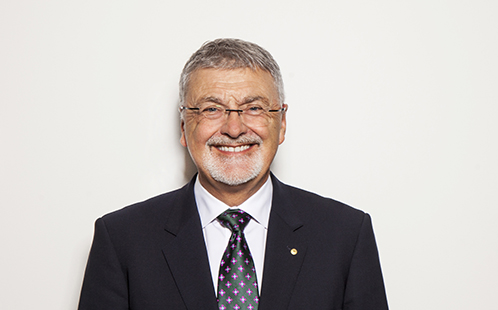
Indian-origin Prof. Madhu Bhaskaran to co-lead ‘Women in STEMM Australia’

0

Women in STEMM Australia has appointed Prof. Madhu Bhaskaran and Sarah Chapman to replace outgoing co-chair and co-founder, Michelle Gallaher.

The organisation was founded in 2014. It shares wide-ranging information relevant to women and underrepresented groups in STEMM.

Further, it amplifies STEMM associations and social enterprises whose values and goals are aligned and also shines a light on the gaps in the sector, including in policy and best practice.

A statement by Women in STEMM Australia said:

“Together, the new leadership team wants to create a broader, more inclusive network for a diverse range of underrepresented students and professionals in science, technology, engineering, mathematics, health and medicine across all professional sectors.”

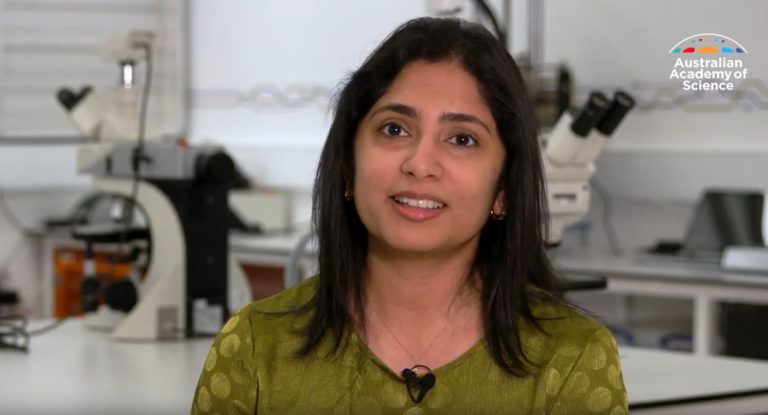
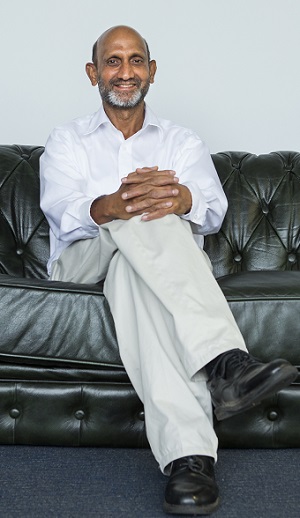
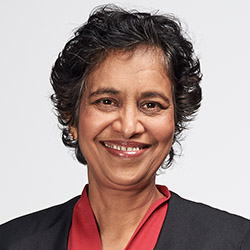
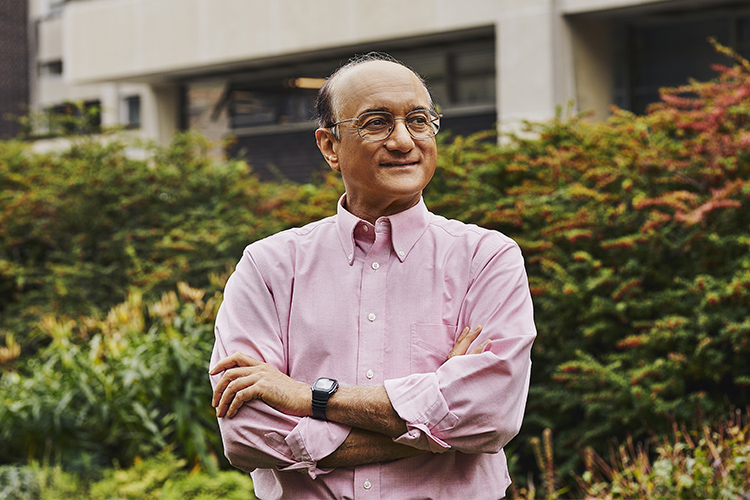
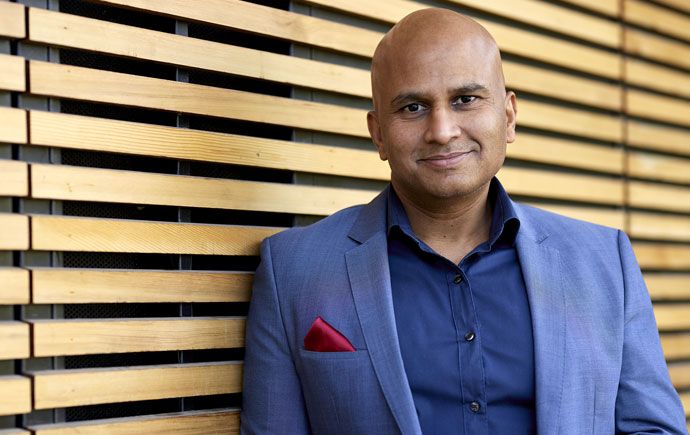
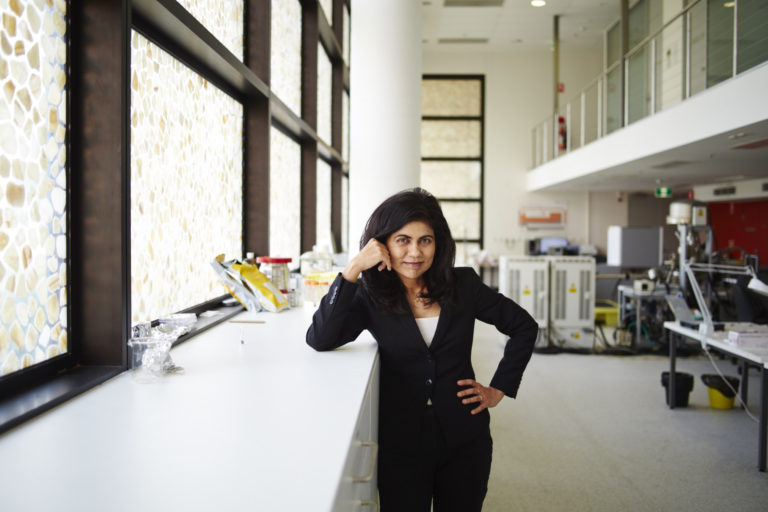
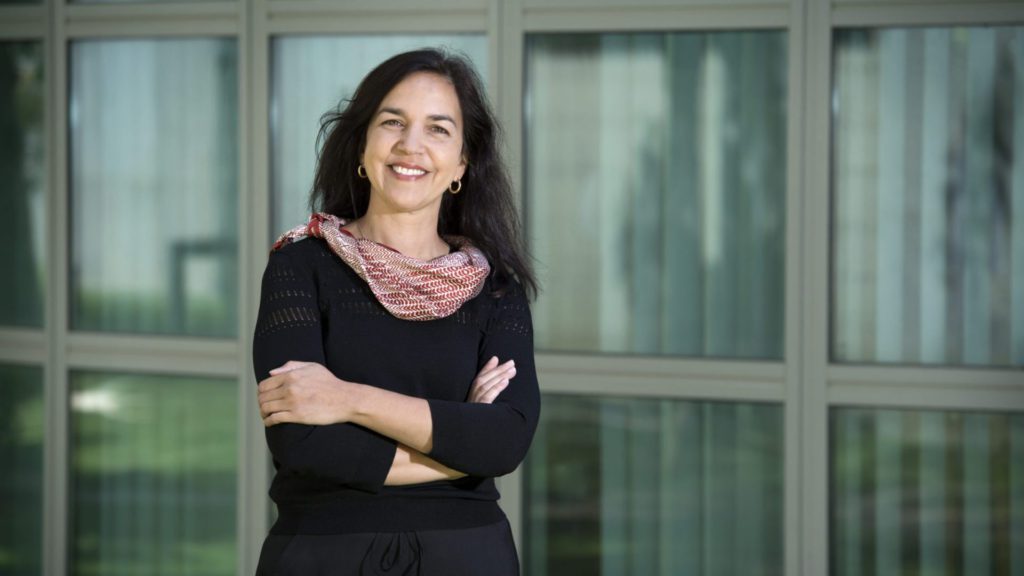
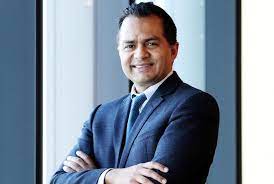
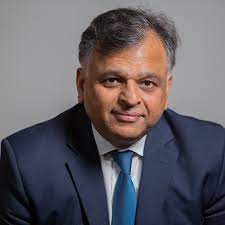
Prof. Bhaskaran, who leads the Functional Materials and Microsystems Research Group at RMIT University in Melbourne, is a globally recognised engineer and applied research leader. She is also the Associate Dean for Higher Degrees by Research at the School of Engineering. 

She is a staunch advocate for women in science and a highly committed advocate of diversity, inclusion, and allyship in STEMM.

Image source: Prof. Madhu Bhaskaran – RMIT.

Prof. Bhaskaran is also co-founder of the Women Researchers’ Network at RMIT University and has served on the Executive then Board of Directors with Women in STEMM Australia since 2015.

On her appointment as co-chair, she said:

“It is an honour to take on this role alongside Sarah and I am excited to see how we can bring our multi-sector experience to this organisation’s leadership.

Diversity and inclusion conversations and measures have come a long way since Women in STEMM Australia was first established and I am very proud to have this opportunity to take the organisation forward with a clear lens of intersectionality.”

Prof. Bhaskaran has served for years on the Women in STEMM Australia board and has received numerous awards for her innovative research, industry collaborations, and leadership.

These include the Batterham Medal from the Australian Academy of Technology & Engineering, the Frederick White Prize from the Australian Academy of Science, and the Eureka Prize for Outstanding Early Career Researcher.

In 2020, Prof. Bhaskaran also won the ‘40 Under 40: Most Influential Asian-Australian Award’ in the Science & Medicine category.

Sarah Chapman is Head of Department at the Department of Education and Training at Townsville State High School (Queensland). She graduated from the James Cook University (JCU) with a Bachelor of Science (Honours Class 1) in 1999 and a Bachelor of Education in 2004.

Sarah has been instrumental in the development and implementation of the Australian School Innovation in Science, Technology and Mathematics project which aims to develop specific skills and an interest in science in middle school students.

Sarah Chapman said,

“I am humbled to continue on the Women in STEMM Australia legacy founded by two very inspirational women, Marguerite and Michelle.”

“This organisation will continue to connect women across the nation and provide a platform of influence, allyship, and advocacy. I am moved to have the opportunity to co-lead with Madhu and bring more depth of focus on underrepresented groups within the STEMM ecosystem,” she added.

Outgoing co-chair Michelle Gallaher said,

“I am delighted to reflect and celebrate the achievements of our diverse community at this important moment, and to pass the baton to the next generation of leaders.”

The act of passing the leadership on recognises and models the importance of relinquishing a seat to make way for new voices and ideas. An action that we need to see more of in the STEMM community.” 

What is hindering the rise of the Indian-origin CEO in Australia?

0

Parag Agrawal who has just been appointed as the new CEO of Twitter is part of a growing list of Indian-origin CEOs heading tech giants such as Google, Microsoft, Adobe, IBM, and Vimeo.

Tesla’s Elon Musk summed up Parag’s rise, along with other Indian-origin CEOs, in his tweet: “USA benefits greatly from Indian talent!”

Image source: Parag Agrawal – Twitter.

37 years old Parag, a Ph.D. in computer science from Stanford University, is the youngest person to run a company in the S&P 500. He will receive an annual salary of $US1 million and a stock award worth $US12.5 million.

However, in Australia, CEOs coming from a culturally diverse background are a rare species. This is despite the fact that India is one of the largest sources of permanent migrants who are largely professionally successful and well respected in Australia.

The Australia Today has covered the rise of Indian-origin CEO’s in Australia.

Indian-Australian CEO's making their mark

This list includes Stockland’s Tarun Gupta, Orica’s Sanjeev Gandhi, Link’s Vivek Bhatia, Pact’s Sanjay Dayal, and Newcrest’s Sandeep Biswas.

The 2021 Board Diversity Index, by Watermark Search International and Governance Institute of Australia, found that ninety per cent of directors were of Anglo-Celtic or European background.

“The Australian boardroom is still very much the product of our Anglo and European heritages.”

Representative picture of Australian Board Room; Source: @CANVA

This is the result of the hangover of the White Australia Policy.

However, the report adds that the scene is changing.

“There is some evidence that Asian representation is growing but there remains a substantial opportunity to better reflect the importance of the Asian market and the changing complexion of Australia’s population.”

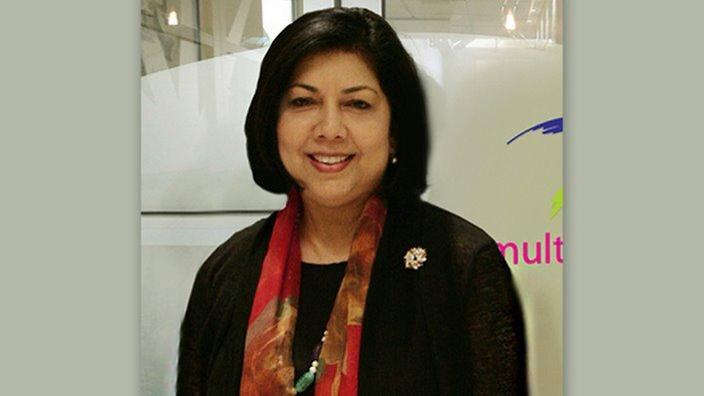
Image source: Sheba Nandkeolyar – MultiConnexions Group.

In a LinkedIn post, Sheba Nandkeolyar, founder of MultiConnexions Group and past national chair of the Australia India Business Council (AIBC), observes that this lack of diversity is a result of non-recognition of India’s prestigious educational institutions.

“Fantastic news. I hope the IIMs and IITs get recognised here too. 20 years ago when I came to Australia they had no idea about these institutions.”

Image source: Diversity Council of Australia chair Ming Long – YouTube.

Diversity Council of Australia chair Ming Long told ABC that even the migrants who studied in Australia often hit the glass or bamboo ceiling in their corporate career.

“They graduate through Australia, work in corporate Australia, but then hit a ceiling and cannot get past it.”

It is specially hard for women from diversed backgrou to make their mark and build up experience in a boardroom.

A report entitled “Women CEOs in America 2021” presented by the Women Business Collaborative has shown that 8.2% Fortune 500 CEOs are women.

So, the obvious question to ponder is: Why aren’t there more women CEOs from diverse backgrounds in Australia?

Imagse source: Ted Baillieu – Wikipedia.

Today, the world over the Indian-origin CEOs are a shining example of Indian migrants’ resilience and adaptability.

In Australia, as former Victorian Premier and the Chair of the Australian Heritage Council Ted Baillieu observes they will inevitably rise to the top if given a chance.

“The Indian Diaspora here are well tuned to education and to commerce. You put the two together and inevitably the cream will rise to the top.”

Given the rise of India and its Diaspora, it would be an understatement to say that Australia too will benefit greatly from its Indian talent.

New laws introduced to identify bullying and harassing anonymous online trolls, but are they enough

0

In a new social media crackdown, the Australian government plans to introduce new laws that will unmask anonymous online trolls.

The Morrison government will hand Australian courts the power to order tech giants to identify perpetrators or risk bearing the cost of defamation payouts themselves.

Image source: Twitter.

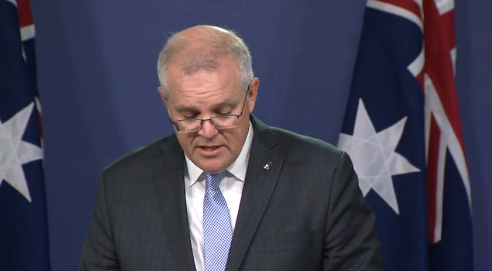
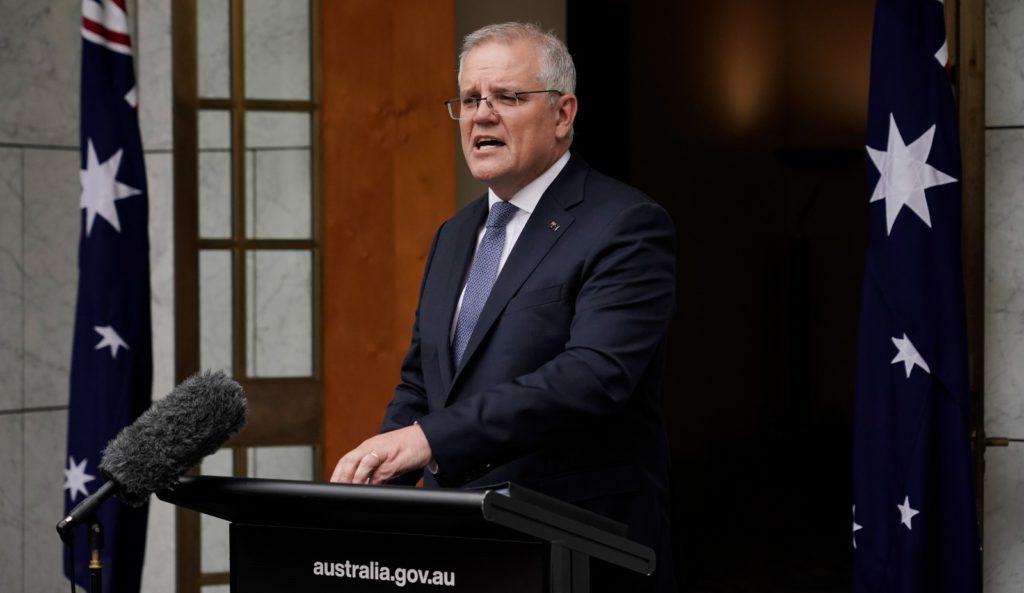
Prime Minister Scott Morrison told media:

“They have that responsibility. They have created this world. They have created the space, and they need to make it safe, and if they won’t, we will make them laws such as this, and I will campaign for these all around the world as I have done on so many other occasions with Australia taking the lead.”

He added that there is no place for “cowardice” in Australia.

“Free speech is not being allowed to cowardly hide in your basement and sledge … and harass people anonymously and seek to destroy their lives.” 

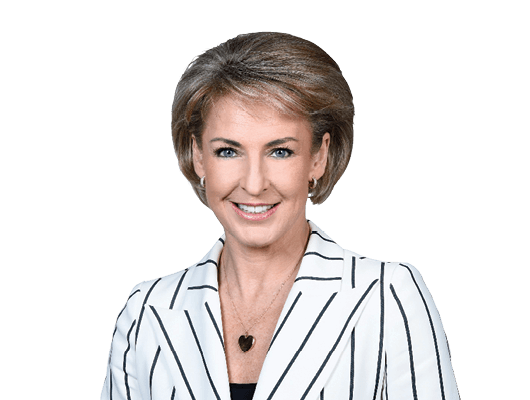
Image source: Michaelia Cash – Liberal Party.

Attorney-General Michaelia Cash told the media that if the legislation passes, online trolls will not be allowed to hide behind anonymous accounts.

“We will also put in place another mechanism for people who are subject to defamatory comments. They will be able to apply to the Federal Court of Australia for an end user discloser order.”

Under the new Australian laws, people who believe they have been defamed online will also be able to get court orders forcing social media giants to reveal who is responsible for the posts.

Twitter and Facebook will now need to create a complaints scheme that will allow victims of trolling to know if the comments were made in Australia.

Online Trolls: Picture Source: @CANAVA

If found so, the victim will be able to obtain the contact details of the troll, with their consent.

If consent is not given by the poster then the victim can get a new form of the court order.

This new order, “End-user Information Disclosure Order”, will allow a social media company to unmask trolls without consent.

Indian-Australian Spelling Bee Champion Theekshitha Karthik, felicitated by PM Morrison

0

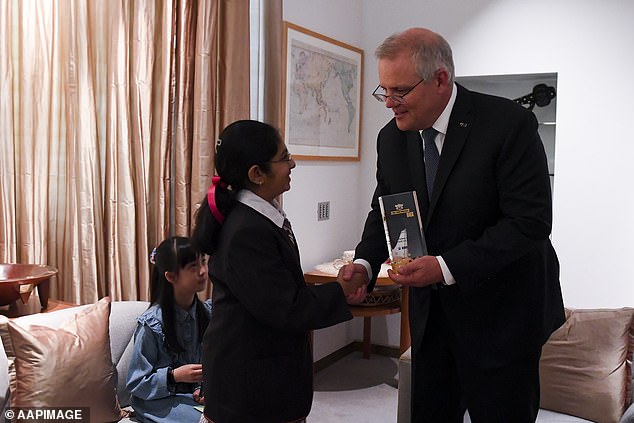
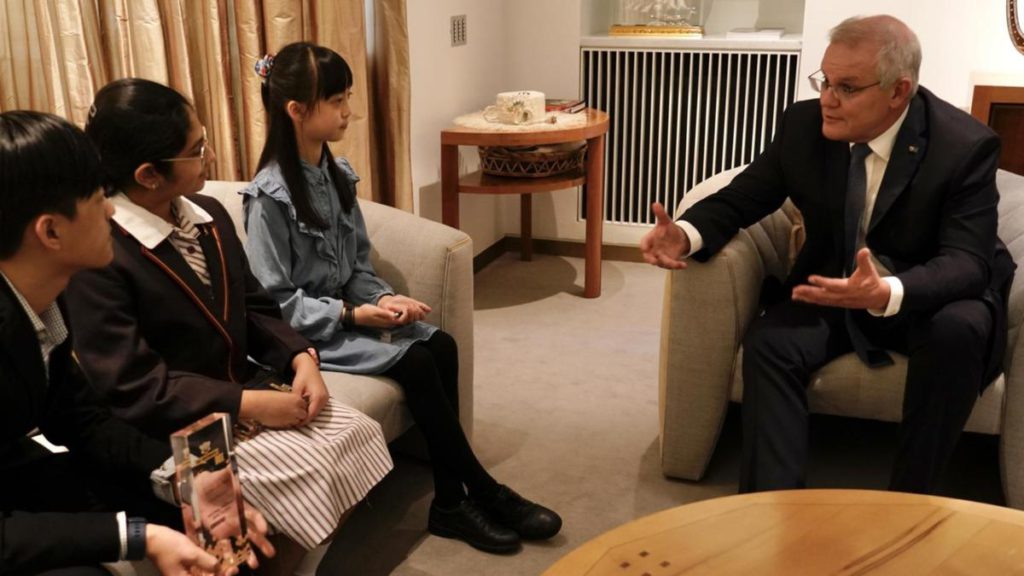
2021’s best Australian young spellers met with Prime Minister Scott Morrison at the Parliament House.

The following champions were given their awards for winning the Prime Minister’s Spelling Bee in June 2021.

·       Arielle Wong from Donvale Christian College, VIC (Year 3/4 category)

·       Theekshitha Karthik from Haileybury College, VIC (Year 5/6 category)

·       Evan Luc-Tran from The McDonald College, NSW (Year 7/8 category)

The Prime Minister said in a statement:

“I want to thank all students who had a go this year and challenged their spelling skills, and special congratulations to Arielle, Theekshitha and Evan on their achievements.”

He added:

“No matter what you want to be when you grow up, spelling and reading are foundation skills that will stay with you for life, and are important to your wellbeing, future learning and success.”

Image source: Facebook.

The Prime Minister’s Spelling Bee is a national spelling competition for school children from Years 3 to 8.

It aims to promote and encourage students’ oral and written literacy and spelling skills.

All participants had 15 minutes to spell 30 words, with the winners determined by the accuracy and speed of submitting their answers online.

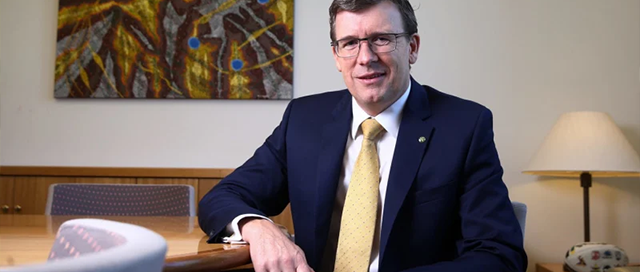
Minister for Education and Youth Alan Tudge said almost 21,000 students from 490 schools across the country participated in this year’s Spelling Bee.

“Congratulations to every student who took part this year, and I encourage families, teachers and young people to talk to their local school about taking part again in 2022.”

The 2022 Prime Minister’s National Spelling Bee will be hosted by News Corp’s Kids News on the kidsnews.com.au website.

The free competition will be held digitally, with no physical competition elements.

It will run in Term 3, 2022, and registrations are planned to open on Monday, 25 July 2022.

Migrants on employee-sponsored visas exploited in Australia, reveals survey

0

Melbourne-based Migrant Workers Centre’s report that surveyed 700 migrants has found that migrants who are on employer-sponsored visas are often exploited and suffer from very high levels of stress.

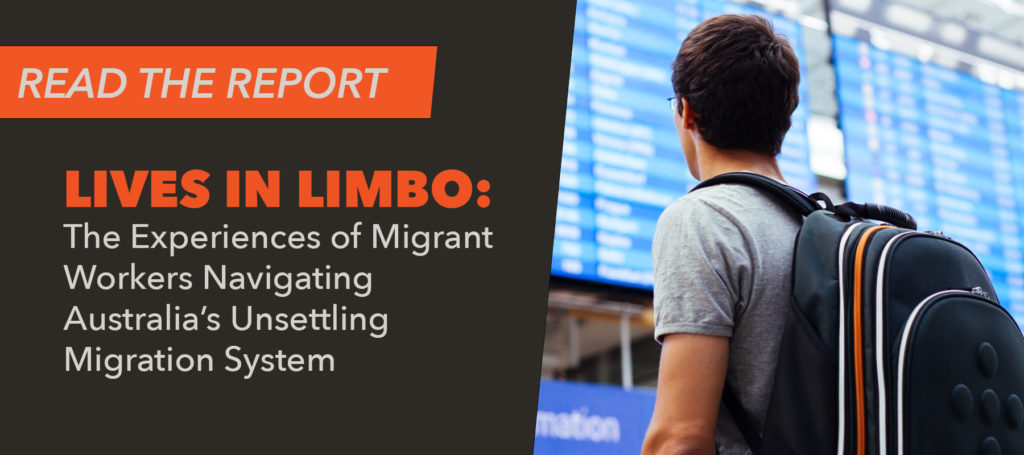
The findings published in Lives in Limbo: The Experiences of Migrant Workers Navigating Australia’s Unsettling Migration System that draws upon over fifty in-depth interviews “reveal a broken migration system that sets workers up for exploitation and perpetual uncertainty.”

Matt Kunkel, CEO of Migrant Workers Centre, said in a statement:

“The nation’s migration program has structurally brewed a population of precarious workers.

Strengthening pathways to permanent residency will provide social and economic benefits to all workers in Australia.”

According to this report, sixty-five per cent of temporary visa holders in Australia have experienced underpayment.

Further, one in four surveyed said that they have been exploited in the workplace.

It also found that ninety-one per cent of those who were underpaid, were on temporary visas with no pathway to permanent residency in Australia.

Image source: Lives in Limbo – Migrant Workers Centre’

The report notes that on average, it takes workers 5.1 years to acquire PR with the longest wait time being 13 years.

“The Government constantly changes the rules of the game to create a perpetually temporary class of workers who are keeping our economy going, but with limited workplace protections and social safety nets.”

The report observes that despite Australia relying on overseas workers from unskilled backpackers to highly trained doctors and IT workers, the visa system often left workers with a high level of uncertainty, stress, and open to exploitation.

It points to loopholes in visa programs such as employer-sponsored visas which leave workers vulnerable to exploitative bosses and visa scams, and often tens of thousands of dollars out of pocket.

Image source: Matt Kunkel – LinkedIn.

Matt Kunkel adds:

“Workers on temporary visas experience workplace exploitation because the system creates barriers to reporting industrial wrongdoing.

Visas expire before lengthy court processes can be completed, or the loss of employment can lead to the disruption of many years of settlement.”

He suggests a complete overhaul of the present visa system to minimise the exploitation of migrant workers.

“We need an overhaul of the visa system so workers’ lives don’t rest solely in the hands of a single employer, and all long-term migrants have an opportunity for permanent residency.”

Due to fears about the Omicron COVID variant, the Australian government has once again delayed its plan to allow skilled workers back into the country.

In a statement, the Australian government said that the decision to pause the reopening of the borders was made on the basis of medical advice. 

“The National Security Committee has taken the necessary and temporary decision to pause the next step to safely reopen Australia to international skilled and student cohorts, as well as humanitarian, working holiday maker and provisional family visa holders from December 1 until December 15.” 

International students and skilled migrants who had booked their flights and accommodation have lost significant amounts of money as a result of the delay. 

Here are the steps WHO recommends individuals take against Omicron COVID-19

0

Recently, on the advice of WHO’s Technical Advisory Group on Virus Evolution (TAG-VE), WHO designated the variant B.1.1.529 a variant of concern, named Omicron.

It is not yet clear whether Omicron is more transmissible compared to other variants, including Delta.   

Researchers in South Africa and around the world are conducting studies to better understand many aspects of Omicron.

According to the WHO, it is also not yet clear whether infection with Omicron causes more severe disease compared to infections with other variants, including Delta.

WHO is working with technical partners to understand the potential impact of this variant on our existing countermeasures, including vaccines. 

As Omicron has been designated a Variant of Concern, there are several actions WHO recommends countries to undertake:

  • enhancing surveillance and sequencing of cases;  
  • sharing genome sequences on publicly available databases, such as GISAID;
  • reporting initial cases or clusters to WHO; and
  • performing field investigations and laboratory assessments to better understand if Omicron has different transmission or disease characteristics, or impacts effectiveness of vaccines, therapeutics, diagnostics or public health and social measures. 

For the common people, WHO recommends that the most effective steps individuals can take to reduce the spread of the COVID-19 virus is:

  • to keep a physical distance of at least 1 metre from others;
  • wear a well-fitting mask;
  • open windows to improve ventilation;
  • avoid poorly ventilated or crowded spaces;
  • keep hands clean;
  • cough or sneeze into a bent elbow or tissue; and
  • get vaccinated when it’s their turn.  

WHO reports that its preliminary data suggests that there are increasing rates of hospitalization in South Africa, but this may be due to increasing overall numbers of people becoming infected, rather than a result of specific infection with Omicron. 

Countries, such as Australia and India, are continuing to implement the effective public health measures to reduce COVID-19 circulation overall

Vaccine for 5-11 years old will be available within days, Here’ what we know

0

The National Cabinet was told that the Therapeutic Goods Administration and the Australian Technical Advisory Group on Immunisation are in late-stage consideration regarding when Pfizer can be rolled out to 5 to 11-year-olds.

A highly placed official in the Federal government has told The Australia Today, Vaccine for the 5 to the 11-year-old cohort is most likely to be available much before the Christmas holidays.

Besides, Australia’s COVID-19 vaccine rollout continues to expand. To date over 39.2 million doses of COVID-19 vaccines have been administered in Australia, including 95,247 in the previous 24 hours. In the previous 7 days, more than 604,000 vaccines have been administered in Australia. 

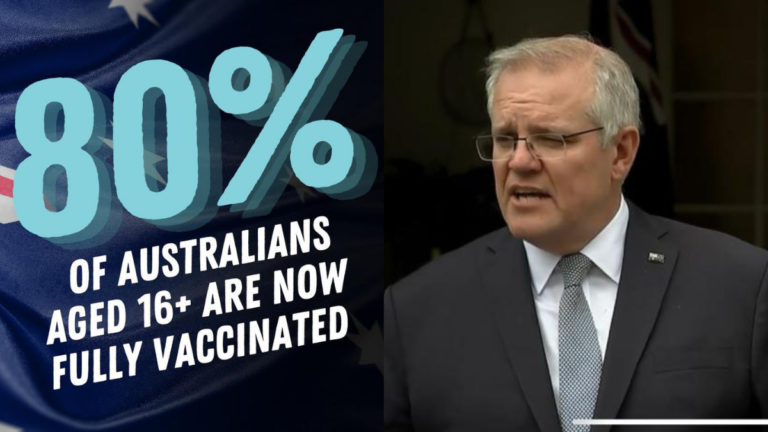
The Health ministry data shows more than 92.4 per cent of the Australian population aged 16 years and over have now had the first dose of a COVID-19 vaccine, including over 97.4 per cent of over 50-year-olds and more than 99.9 per cent of over 70-year-olds. 

More than 87 per cent of Australians aged 16 years and over are now fully vaccinated including more than 93.7 per cent of over 50-year-olds and more than 97.3 per cent of Australians over 70 years of age.

Since the beginning of the pandemic, there have been 210,239 confirmed cases in Australia and sadly 2,006 people have died. More than 47.8 million tests have been undertaken, with over 1 million tests reported in the past 7 days.

National Cabinet was told that Australia has sufficient supplies of booster shots available, with contracts in place for 85 million doses of the Pfizer vaccine, 15 million doses of the Moderna vaccine, and 51 million doses of the Novavax vaccine.

Australia’s Chief Medical Officer Professor Paul Kelly says at this stage it is known that the Omicron strain has a high number of mutations, particularly within its spike protein.

However, early data indicates Omicron may be more transmissible when compared with previous variants of the virus which causes COVID-19. At this stage, there is insufficient evidence that vaccines and treatments are less effective against Omicron than other variants and no evidence at this stage that Omicron is a more severe disease.

‘Story of my team’: Indian Cricketing legend Kapil Dev on Bollywood thriller ’83’ trailer, watch in

0

Former India captain Kapil Dev could not be more proud of the makers of ’83’ who have the hard task of portraying India’s World Cup in 1983 on the silver screen.

Sharing the trailer of ’83’ starring Ranveer Singh, Kapil Dev wrote on Instagram: “The story of my team.” Helmed by director Kabir Khan, ’83’ revolves around India’s historical 1983 Cricket World Cup win.

The movie features Ranveer Singh as Kapil Dev, captain of the World Cup-winning team. Interestingly, Deepika Padukone will be seen playing Romi, Kapil Dev’s wife in ’83’, which will hit the big screen on December 24.

Tahir Raj Bhasin, Jiiva, Saqib Saleem, Jatin Sarna, Chirag Patil, Dinker Sharma, Nishant Dahiya, Sahil Khattar, Ammy Virk, Addinath Kothare, Dhairya Karwa, R Badree and Pankaj Tripathi are also a part of the film.

It was on June 25, 1983, when India lifted their first-ever cricket World Cup title, defeating West Indies in the finals by 43 runs at the Lord’s Cricket Ground. It is now 38 years to India’s triumph in the tournament.

The World Cup-winning team was led by all-rounder Kapil Dev. India’s World Cup final playing XI included Sunil Gavaskar, K Srikkanth, Mohinder Amarnath, Yashpal Sharma, SM Patil, Kapil Dev (c), Kirti Azad, Roger Binny, Madan Lal, Syed Kirmani, and Balwinder Sandhu.

Official Poster of movie 83; Picture Source: Instagram by @RanveerSingh

After the win, cricket got a fillip in India, elevating the sport to religion for fans with every child wanting to become a cricketer.

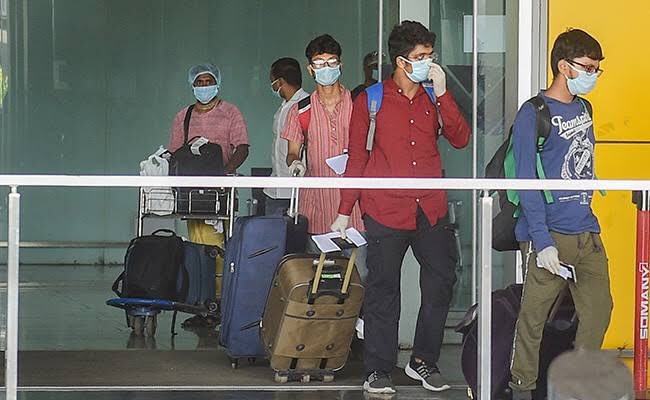
Are you travelling to India, Here’ revised guidelines for International travellers amid Omicron fears

0

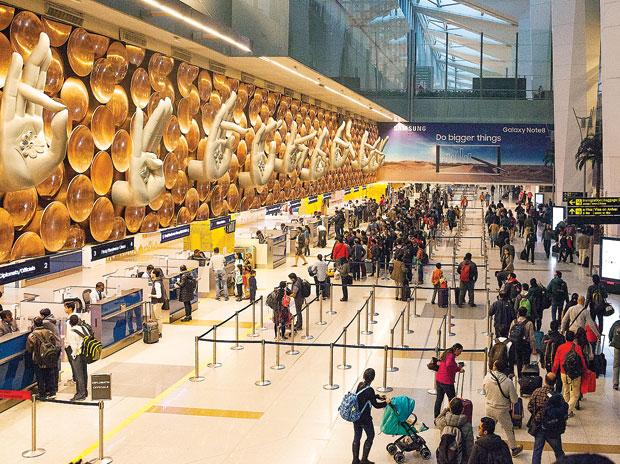
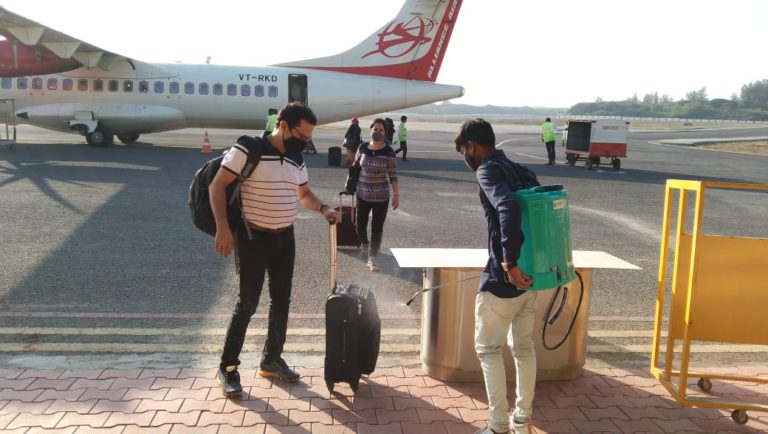
Indian Government has issued revised guidelines to be followed by international travellers in the country amid the rising global outbreak of Omicron, the new variant of the coronavirus.

These guidelines will come into effect from December 1.

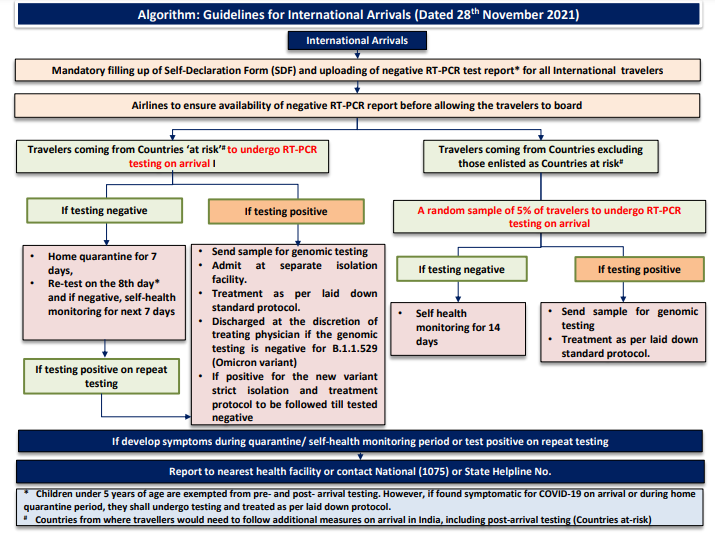
Here are the fresh rules for international travellers as per the Indian Health ministry guidelines.

When you are planning to travel:

a. Submit a self-declaration form on the online Air Suvidha portal before the scheduled
travel, including the last 14 days travel details.

b. Upload a negative COVID-19 RT-PCR report*. This test should have been conducted
within 72 hrs prior to undertaking the journey.

c. Each passenger shall also submit a declaration with respect to the authenticity of the
report and will be liable for criminal prosecution if found otherwise.

When you are boarding the flight:

1- Airlines to allow boarding by only those passengers who have filled in the Self Declaration
Form on the Air Suvidha portal,
uploaded the negative RT-PCR test report.

2- Only asymptomatic travellers will be allowed to board after the thermal screening.

3- All passengers shall download the Aarogya Setu app on their mobile devices.

When you arrive at an Indian Airport:

1- De-boarding should be done ensuring physical distancing.
2- Thermal screening would be carried out in respect of all the passengers by the health officials present at the airport. The self-declaration form filled online shall be shown to the airport health staff.
3- The passengers found to be symptomatic during screening shall be immediately isolated and taken to a medical facility as per health protocol. If tested positive, their contacts shall be
identified and managed as per laid down protocol.

Protocols for Travellers from specified Countries at risk:

List of Countries from where travellers would need to follow additional measures on arrival in India, including post-arrival testing (Countries at-risk).
This list is current on 29th November 2021

  1. Countries in Europe including The United Kingdom
  2. South Africa
  3. Brazil
  4. Bangladesh
  5. Botswana
  6. China
  7. Mauritius
  8. New Zealand
  9. Zimbabwe
  10. Singapore
  11. Hong Kong
  12. Israel

A- Submission of sample for post-arrival COVID-19 test* at the point of arrival (self-paid). Such travellers will be required to wait for their test results at the arrival airport before leaving or taking a connecting flight.

B- If tested negative they will follow, home quarantine for 7 days. Re-test on the 8th day of arrival in India* and if negative, further self-monitor of their health for next 7 days.

C- If such travellers are tested positive, their samples should be sent for genomic testing at the INSACOG laboratory network.

1- They shall be managed at a separate isolation facility and treated as per laid down standard protocol including contact tracing.

2- The contacts of such positive cases should be kept under institutional quarantine or at home quarantine monitored strictly by the concerned State Government as per laid down protocol.

Protocols for Travellers from Countries excluding those Countries at risk:

They will be allowed to leave the airport and shall self-monitor their health for 14 days’ post-arrival.

A sub-section (5% of the total flight passengers) shall undergo post-arrival testing at random at the airport on arrival.

a. The 5% of such travellers in each flight shall be identified by the concerned airlines
(preferably from different countries).
b. Such travellers shall be escorted by the concerned airlines/MoCA to the testing area on
arrival.
c. The cost of testing of such travellers shall be borne by MoCA.
d. Laboratories shall prioritise testing of samples from such travellers.
e. If such travellers are tested positive, they shall be managed as per laid down standard
protocol and samples would be further sent for genomic testing.

If travellers under home quarantine or self-health monitoring, develop signs and symptoms
suggestive of COVID-19 or test positive for COVID-19 on re-testing, they need to immediately self-isolate and report to their nearest health facility or call National helpline number (1075)/ State Helpline Number.

The existing guidelines have been revised in view of reporting of a new variant of SARS-CoV-2, named Omicron (B.1.1.529), which has been now classified as a Variant of Concern by the World Health Organization, the Health Ministry said.

Parag Agrawal takes over as CEO of Twitter, replacing Jack Dorsey

0

Twitter CEO Jack Dorsey has decided to step down as CEO of the company.

Indian-American Dr Parag Agrawal, presently Twitter’s CTO, will take over the helm, the company said Monday.

Dorsey said in a statement,

“I’ve decided to leave Twitter because I believe the company is ready to move on from its founders.”

Dorsey, 45 yo, was serving as both the CEO of Twitter and Square, his digital payments company.

He will remain a member of the board until his term expires at the 2022 meeting of stockholders. 

Agrawal has been with Twitter for more than a decade and had been in charge of strategies involving artificial intelligence and machine learning.

He earned an undergraduate degree from the Indian Institute of Technology Bombay, and a Ph.D. in computer science from Stanford University. Later, he held research internships at AT&T, Microsoft, and Yahoo before joining Twitter.

Agrawal said in his note to Dorsey:

“The world is watching us right now, even more than they have before. Lots of people are going to have lots of different views and opinions about today’s news. It is because they care about Twitter and our future, and it’s a signal that the work we do here matters.”

Dorsey said in an email he published on Twitter that Agrawal has been his choice to lead the company “for some time given how deeply he understands the company and its needs.”

Dorsey, who co-founded the social media giant in 2006, served as CEO until 2008 before being pushed out of the role. He returned to lead Twitter in 2015 after former CEO Dick Costolo stepped down.

Sundar Pichai, CEO of Google and Alphabet, tweeted his congratulations to Agrawal.

With his appointment as CEO of Twitter, Agrawal has joined fellow Indian-origin techies at the helm of Google (Sundar Pichai), Microsoft (Satya Nadella), IBM (Arvind Krishna), VMWare (Raghu Raghuram), and Adobe (Shantanu Narayen).

Visa holders and International students need to wait till 15 December as Federal government Pauses return

0

The Federal government has taken a decision to pause to reopen Australia to international students and skilled migrant cohorts, as well as humanitarian, working holidaymakers, and provisional family visa holders from 1 December until 15 December.

Government sources say it is a temporary decision and will ensure Australia can gather the information needed to better understand the Omicron variant, including the efficacy of the vaccine, the range of illness, including if it may generate more mild symptoms and the level of transmission.

Australia’s borders are already closed to travellers except for fully vaccinated Australian citizens, permanent residents and immediate family, as well as fully vaccinated green lane travellers from New Zealand and Singapore and limited exemptions.

All arrivals to Australia also require a negative PCR test and to complete Australian traveller declaration forms detailing their vaccination status and confirming requirements to comply with state and territory public health requirements.

On Saturday, the Australian Government announced the following measures:

1.       Effective immediately, anyone who is not a citizen or permanent resident of Australia, or their immediate family including parents of citizens, and who have been in African countries where the Omicron variant has been detected and spread – within the past 14 days – will not be able to enter Australia.
The countries are- South Africa, Namibia, Zimbabwe, Botswana, Lesotho, Eswatini, Malawi and Mozambique.

2.       Australian citizens and permanent residents, immediate family members including parents arriving from these countries will need to go into immediate supervised quarantine for 14 days subject to jurisdictional arrangements.

3.       Anyone who has already arrived in Australia and who has been in any of the eight countries within the past 14 days must immediately isolate themselves and get tested for COVID-19 and follow jurisdictional quarantine requirements which will include quarantine for 14 days from the time of departure from southern Africa.

4.       These restrictions also apply to people, for instance, international students and skilled migrants, arriving from the safe travel zones established with New Zealand and Singapore who have been in any of the eight countries within the past 14 days.

There are no flights planned from these countries.

The reopening to travellers from Japan and the Republic of Korea will also be paused until 15 December.

These measures will also be continued until 15 December.

Seychelles has been removed from the list of countries of concern.

Australian Border Force retains the discretion to allow people in who are already in transit to enter, but these people will be subject to state-based isolation requirements.

Under state public health requirements, New South Wales and Victoria have already initiated testing and 72 hours of isolation requirements for Australian citizens, permanent residents and immediate family members entering the country.

In other states, 14 days of managed quarantine is required, and traveller cap arrangements are in place.

The Australian Government’s quarantine facility at Howard Springs in Darwin is available to support returning Australians each fortnight as required.

Prime Minister Scott Morrison has called a meeting of the National Cabinet tomorrow to further discuss the Omicron variant and Australia’s response.

Australia has one of the highest vaccination rates in the world, with 92.3 per cent having had a first dose and 86.8 per cent of our eligible population now double vaccinated, and Australia has one of the only whole of population booster programs being delivered, with around 415,000 Australians having received their booster.

Australia’s response to Omicron COVID-19; State-wise details inside

0

Here are the statewide details of the response to the new Omicron COVID-19 variant of concern.

Victoria (VIC) rules;

1- All travellers arriving in Victoria who have visited South Africa, Namibia, Zimbabwe, Botswana, Lesotho, Eswatini, Seychelles, Malawi, and Mozambique in the past 14 days are required to undertake 14 days’ hotel quarantine.

2- Fully Vaccinated travellers from other countries after arriving in VIC travellers are required to quarantine at home for any other private accommodation, including hotels, for 72 hours upon arrival. You cannot transit through Victoria during this period. 

3- Travellers must get a Covid test within 24hrs and if negative they are still required to quarantine for 72 hours after the arrival.

4- Travellers are also required to get a PCR test between day 5 & 7.

New South Wales (NSW) rules:

1- Travellers arriving into NSW who have visited South Africa, Namibia, Zimbabwe, Botswana, Lesotho, Eswatini, Seychelles, Malawi, and Mozambique in the past 14 days are required to undertake 14 days’ hotel quarantine.

2- Fully Vaccinated travellers from other countries after arriving in NSW are required to quarantine at home or a place where you can self isolate in NSW by the most direct route for 72 hours upon arrival.

3- Travellers must get a PCR test within 24 hours of arrival and on or after Day 6. Travellers cannot transit from SYD to another domestic flight.

4- Travellers can transit by road beyond Sydney to another NSW region to self-isolate and test. 

Queensland (QLD) rules:

1- No changes, currently all overseas travellers are required to hotel quarantine for 14 days. Once QLD hit 80% (from 17 Dec or earlier) 14-day quarantine is still required, some fully vaccinated travellers may be eligible for home quarantine otherwise hotel quarantine will be required. 

South Australia (SA) rules:

1- Fully vaccinated overseas travellers are required to quarantine for 14 days (changed from 7), be tested on arrival, days 6 & 13. Unvaccinated require an exemption to get into the state.

Western Australia (WA) rules:

1- No changes, fully vaccinated overseas travellers are required to hotel quarantine for 14 days, to be tested on arrival, day 5, 13, 17 & 21. 

Northern Territory (NT) rules:

1- No changes, fully vaccinated overseas travellers are required to quarantine for 14 days in a supervised facility. Unvaccinated require an exemption to get into the state.

We are continuing to monitor the individual state’s new rules and will send through updates as they come through.

Is digital gaming the next frontier in Australia-India relationships?

0

The Perth USAsia Centre is inviting interested people for a virtual discussion on digital gaming as the next frontier in the Australia-India relationship.

The Centre’s next session is entitled ‘Beyond Delhi series: Digital Gaming as the Next Frontier in the Australia-India Relationship.’

In fact, the Government of India’s ‘Australian Economic Strategy’ has identified digital gaming opportunities with Bengaluru as an emerging sector for Indian-Australian collaboration.

In India, Bengaluru is often described as India’s Silicon Valley and Mumbai has the world’s largest and fastest-growing entertainment industries that attract mainstream consumers.

Image source: Digital Gaming – @CANVA

While Australia’s gaming industry is advanced with its own licensed content, India is enjoying investments from Alibaba and Tencent.

The proposed webinar will explore how Australia and India can benefit from shared experiences, technology, investment, and partnerships.

The proposed speakers include:

  • Biren Ghose, Country Head, Technicolor India
  • Jens Schroeder, Director of Member and Industry Relations, Interactive Games & Entertainment Association (IGEA)
  • Sonia Arakkal, Policy Fellow, Perth USAsia Centre (moderator)

The Centre located at the University of Western Australia is a non-partisan, not-for-profit institution strengthening relationships and strategic thinking between Australia, the Indo-Pacific, and the USA.

It is a leading think tank focusing on geopolitical issues, policy development, and building a strategic affairs community across government, business and academia. 

Market Mantra: Is it start of downturn due to new virus variant as Australian shares record sharp fall

0

A worrying new and possibly vaccine-resistant COVID-19 variant unnerved the investors and sent Australian shares tumbling for a third week in a row.

Despite better than expected retail sales data, the Australian shares recorded their worst session in two months on Friday with all major sectors tumbling.

With investors seriously concerned about the new virus and possible lockdowns in the near future, every sector was sold on Friday with only 14 stocks recording a rise. The energy stocks, travel sector, and bank shares were all hit as with fears of lockdowns there are also concerns economic activity will reduce.

With investors currently in shoot first and asking questions later until more is known about the new variant, the investors are also nervous about whether we will even get a Christmas rally.

The futures for Australia are down 104 points or 1.4% for Monday open and set to continue with the decline.  The projected drop on Monday after Friday’s decline will mark Australia’s biggest fall in two consecutive sessions in more than 18 months.

Market Mantra: Down turn; Picture Source: @CANVA
Market Mantra: Downturn; Picture Source: @CANVA

The fall in future prices for Australian shares very strongly indicates that the investors are unclear about the implications of longer-term implications of the Omicron variant on Australian markets. With signs that the new strain is spreading and questions over its resistance to vaccines it is highly likely that it will continue to weigh in on market sentiment till we get further clarity on the new virus variant.

According to Ryan Detrick, chief marketing strategist for LPL Financial “Investors are selling in front of bad news. The economic recovery has been quite impressive and the one thing that could knock it over completely would be a more dangerous variant.”

Many analysts believe that should the new strain trigger the reimposition of mass social restrictions it could truly derail the economic recovery. With the delta wave fresh in minds of investors it is likely that the sell-down will continue.

Looking forward to this week the investors will be looking forward to the GDP data on Wednesday. We believe though that with Sydney and Melbourne being in lockdown for the most part of the third quarter the GDP numbers will likely be negative and may push the market further South.

It will also be a fairly busy week overseas with US non-farm payrolls, employment and unemployment figures, manufacturing figures, new car sales, and home sales all coming out this week.

Image: Wikipedia.

The resurgent concerns over the spread of a new variant of coronavirus sent traders scrambling to safe haven. As such the appeal of gold as safe haven drove traders towards the safety of the yellow metal.

The new variant from South Africa possibly evades immune responses and has resulted in travel bans by Britain, European Union, and Australia from the African nation. Markets are scared the new variant will impact the economy more strongly than the Delta strain and this has spurred demand for the safe bullion.

The rise on Friday though was still not enough to save gold from recording the worst weekly decline for gold since August 6 on increased expectations that the US Federal Reserve will raise interest rates at a faster pace.

However, the new virus-driven economic uncertainty is expected to slow down Fed Reserve’s plan to normalize the monetary policy thus boosting appeal for gold.

Australian Gold; Picture Source: @CANVA

Oil prices posted a fifth consecutive weekly drop last week and recorded their largest single-day April 2020 on Friday as the resurgence of lockdown fears due to the new coronavirus variant added to concerns that the supply surplus could grow due to a demand slowdown just as supply increases.

Although WHO said that further investigation is needed to determine if the new variant is more resistant to the vaccines it was enough for traders to sell oil on the concern of a decrease in travel and potential new lockdowns, both of which could hit demand.

With most European nations and Australia now limiting travel from several nations affected by the new variant the oil prices may continue to fall as the last thing the oil complex would need is another threat to the air travel recovery.

Oil traders this week will be keeping a keen eye on the OPEC+ meeting on Thursday. The OPEC+ nations will decide whether it will continue with its plan to add 400,000 barrels a day to production quotas in January 2022. Many analysts believe that the new virus and release of oil from reserves by the US, India, and China could result in OPEC+ nations suspending its output hike.

In regards to the local currency, the Australian Dollar continued to slump for a fourth consecutive week amid coronavirus-led risk aversion which is in full swing.

Traders ignored an upbeat retail sales data as fresh coronavirus woes from Africa and Eurozone kept sentiments sour.

The Australian Dollar continues to look extremely bearish against most currencies as traders react to the Omicron variant of coronavirus, which is seen as a risk-off event. As long as the negative impact of the new variant remains in the market traders will be much more comfortable holding the safer currencies such as the US Dollar, Japanese Yen, and Swiss Franc as opposed to the risk currency such as the Australian Dollar.

Technically speaking the commodity currency against the greenback has broken below the 200-week MA and the momentum is strongly bearish. The market looks set to test support at 0.70 level and if the bears capture it then the Aussie dollar is looking towards 0.68 level against the USD over the longer term.

Australian-Dollar; Picture Source: @CANVA

At this stage, any rally in the local currency will be an opportunity to sell further and should be treated as such. However, keep in mind this is based on current risk sentiment in the market. Any positive news in regards to the new variant can quickly change the risk appetite of the market and send the Aussie back up.

The markets around the world were shaken by news regarding new coronavirus derivatives. The Indian Rupee was no different. With news of the new mutation, investors fled from riskier currencies resulting in the Rupee recording its worst week since October 8th.

With people concerned that the new variant might cause even more economic destruction the Indian shares plunged pushing the currency further lower with the market expecting RBI to get more cautious due to uncertainty.

In the world of cryptocurrencies, the crypto market followed world markets lower with Bitcoin hovering around two-month lows at the US $54,000.

On Monday the digital currency opened at $57K. It then rallied to $59K and by Thursday was looking prime to take over the US $60 K.

However, with a new coronavirus variant emerging the bears rediscovered their mojo and sent BTC tumbling to US$54K.

With uncertainty in the air following renewed lockdown worries and the proposed ban of cryptocurrencies in India, the next couple of weeks will be crucial for cryptocurrencies.

The Altcoins also took a major blow however some of them managed to hold their ground. BNB was up about 10%, CRO 41% for the week and AVAX recorded 10% weekly gains. The metaverse coins also continued to be a rage last week with both Sandbox and Decentraland (MANA) recording strong rallies.

However, at this stage, we think it would be best to sit on the sidelines and see how the market shapes up in the following days and if the correction will most likely worsen or we will get a recovery in the crypto space.

In agricultural products, wheat and corn continued to rally as export sales for both beat record expectations.

The corn exports from the US to Mexico and Canada were up 58% from the previous week while the wheat imports for Japan and Nigeria were up 42% from the week before.

The wheat imports from importing nations have now been up 70% from the prior 4-week average.

The price of soybean however declined for the week as the new COVID variant weighed on world markets. With authorities in European Union, Britain, India, and Australia announcing stricter border control as scientists scramble to find more information about the new variant the demand for oilseed commodities took a hit.

Author: Ateev Dang is a trader and trading coach by profession. He runs his own business called Glow trades Pty Ltd where he teaches anyone who is interested in starting their trading journey how to trade. He can be contacted at adang@glowtrades.com.au.

Disclaimer:

The writers’ opinions in the above article are their own and do not constitute any financial advice whatsoever. Nothing published by The Australia Today constitutes an investment recommendation, nor should any data or content publication be relied upon for providing any investment activities.

We strongly recommend that you perform your own independent research and/or speak with a financial advisor or qualified investment professional before making any financial decisions.

‘Sacred India Gallery’ located in Australia gets Indian PM Modi’s praise

0

In his recent ‘Mann ki Baat’ programme, the Indian Prime Minister Narendra Modi lauded the role played by Sacred India Gallery in connecting Australia with India. He said:

“An Australian lady visited Vrindavan and was smitten by the beauty & divinity of Vrindavan-the land of Kanha, that she carried this beautiful with her to her homeland & now promotes the teachings of Vrindavan in Australia.

Vrindavan attracts people from all around the world. No one can fathom the bliss of Vrindavan, its infinite.”

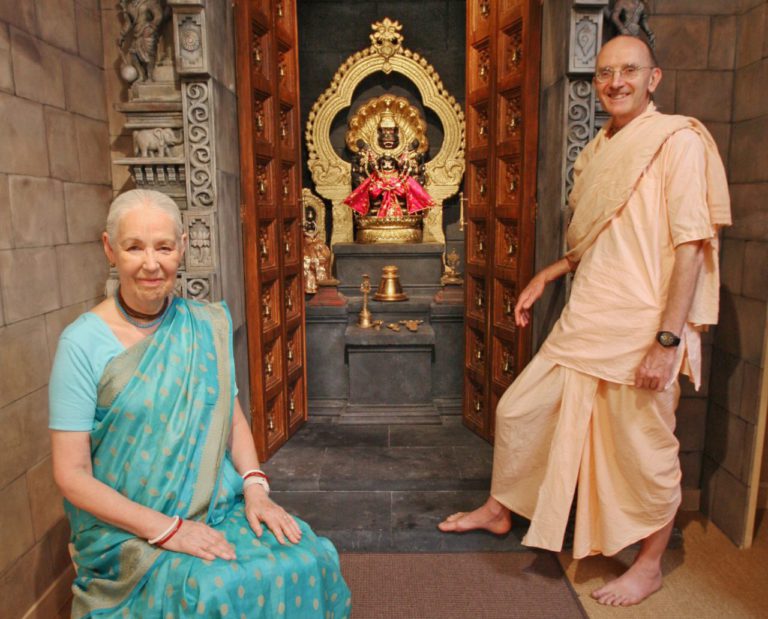
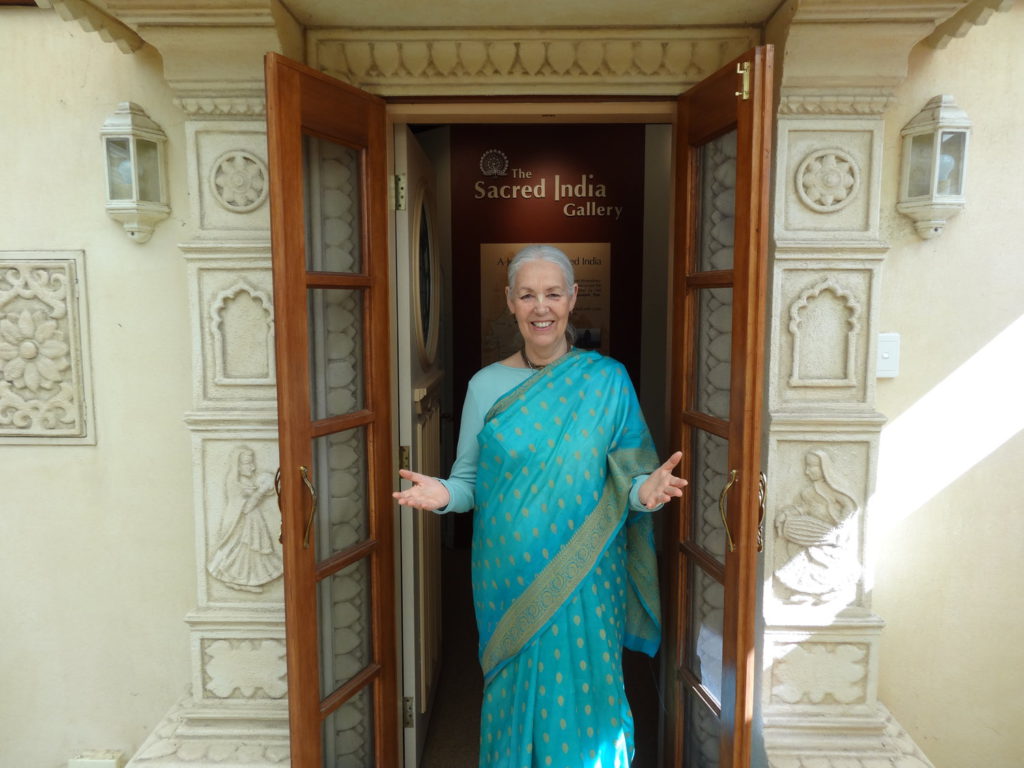
The Sacred India Gallery is situated in the Swan Valley region of Western Australia and opened to the general public in 2012.

For the last 9 years, visitors have been enriched by the one-hour guided tour of the Gallery.

Image source: Sacred India Gallery.

This tour has breathtaking installations and the incredible miniature work of resident artist Jagattarini Dasi.

WATCH VIDEO: A Remarkable Journey to Sacred India!

Jagattarini Dasi joined the International Society for Krishna Consciousness (Iskcon) in 1970 and lived in Vrindavan for 13 years.

Here she was enamoured by India’s people, traditions, food, and art.

“In her spare time, she regularly journeyed by local transport to significant holy places throughout the outlying Braja District.”

She returned to Australia in 1996 and started creating exquisite miniature scale dioramas.

Jagattarini Mataji continues to draw her artistic inspiration from Vraja Dhama.

Image source: Sacred India Gallery

She has been working with a variety of mediums producing miniature three-dimensional diorama exhibits, depicting Krishna’s nectarean Vrindavan pastimes.

“She is establishing these dioramas within a project known as Gopinatha Dharma, which is meant to attract souls to the glories of Sri Vrindavan Dhama.”

These can be seen in the gallery that has some intricate displays consisting of traditional Indian carvings and original miniatures that capture the sights, sounds, and mystical atmosphere of spiritual India.

Image source: Sacred India Gallery.

PM Modi said the amazing effort of Jagattarini “indeed shows us the power of Krishna Bhakti” and “I wish her all the best in this work.” 

This was the 83rd edition of his PM Modi’s monthly ‘Mann ki Baat’ address.

WATCH VIDEO: PM Modi’s Mann Ki Baat with the Nation, November 2021

Indian High Commissioner in Australia Manpreet Vohra said, “It is wonderful to see the cultural and spiritual sites and atmosphere of India so beautifully recreated in The Sacred India Gallery near Perth.”

“I thank Jagat Tarini Ji and her team of volunteers for creating this unique experience of Indian sacred places for the learning and enjoyment of our Australian friends.

It is testimony to the historical ties and flourishing cross-cultural influences between India and Australia,”

added Mr Vohra.

The detailed reference to The Sacred India Gallery and the work of John Lang, made by Prime Minister Modi in his Mann Ki Baat today, is a mark of the appreciation and gratitude felt by all Indians.

Indian-origin Nanotech pioneer Prof. Jagadish appointed as President of Australian Academy of Science

0

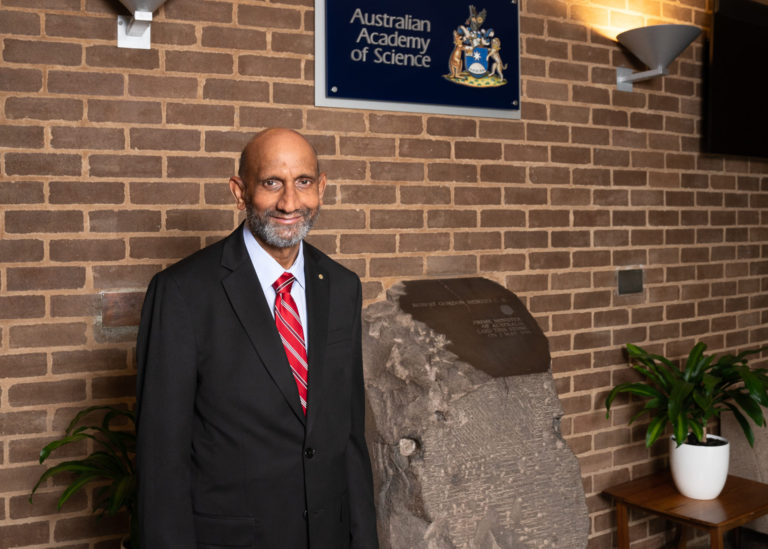
Indian-Australian Physicist and Nanotechnology Pioneer Prof. Chennupati Jagadish has been appointed as the President of the prestigious Australian Academy of Science (AAS).

Prof. Jagadish who studied by the light of a kerosene lamp up until grade seven went on to receive a B.Sc. degree from Nagarjuna University in 1977, M.Sc (Tech) degree from Andhra University in 1980, and M.Phil. and Ph.D. degrees from the University of Delhi in 1982 and 1986, respectively.

He moved to Australia in 1990 and became an Australian citizen in 1995. Here, he established a major research program in the field of optoelectronics and nanotechnology.

Prof. Jagadish is currently a Distinguished Professor and Head of the Semiconductor Optoelectronics and Nanotechnology Group at the Australian National University (ANU) in Canberra.

He was first elected to the AAS in 2005 and is acknowledged as a world leader in the research field of semiconductor optoelectronics.

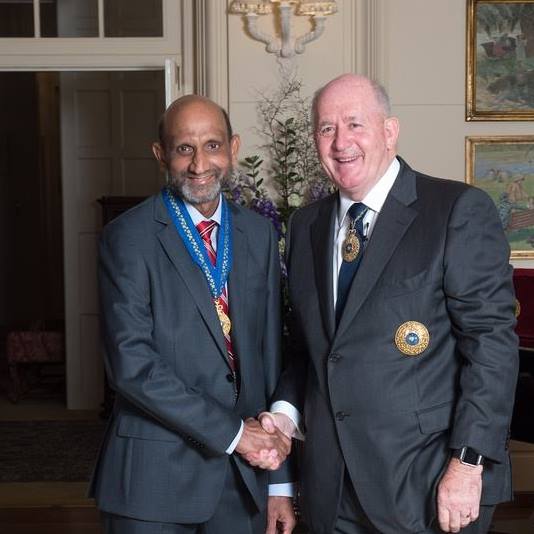
Image source: Prof. Jagadish with His Excellency Sir Peter Cosgrove – Facebook.

In 2016, Prof. Jagadish was awarded the Companion of Order of Australia medal by His Excellency Sir Peter Cosgrove, Governor-General of Australia.

He is also the winner of the 2000 Institute of Electrical and Electronics Engineers, Inc (USA) (IEEE) Third Millennium Medal, 2017 Welker Award from ISCS, 2017 IUMRS Somiya Award, 2018 AVS Nanotechnology Recognition Award, and the 2019 Thomas Ranken Lyle Medal from Australian Academy of Science and Global Leadership Award from the President of University of South Florida.  

Prof. C. Jagadish has published more than 980+ research papers (700+ journal papers), holds 6 US patents, co-authored a book, co-edited 15 books, guest-edited 20 special issues of journals, and edited 12 conference proceedings.  

His achievements have been predicated on a deep understanding of the underlying solid-state physics including defects and diffusion processing.

He also holds honorary positions at  IIT Hyderabad, National Taiwan University, University of Electronic Science and Technology of China, Chengdu; University of Tokyo, Anna University, Mangalore University, ICT Mumbai, Hefei University of Technology, Taoyuan University of Technology, Nanjing University, and Oxford University.

‘Proud of you’: Ricky Ponting reacts as Shreyas Iyer becomes India’s 303rd Test cricketer

0

Former Australia cricket captain Ricky Ponting AO is proud of Shreyas Iyer as the batter made his Test debut for India against New Zealand in Kanpur.

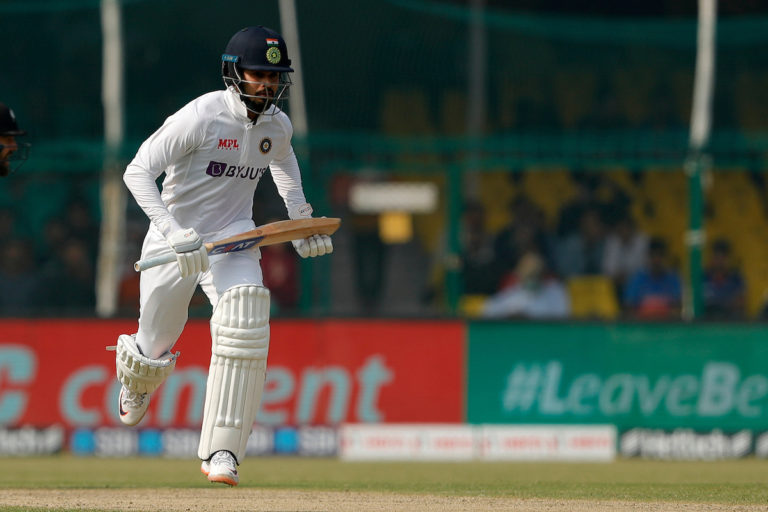
26-year-old Shreyas Iyer became India’s 303rd Test cricketer, receiving his maiden Test cap from the legendary Sunil Gavaskar.

This Test cap has come after 4592 first-class runs in 54 matches at an average of 52.18.

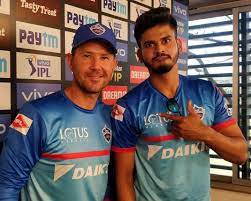
Image source: Ricky Ponting with Shreyas Iyer – Facebook.

Shreyas Iyer registered half-century as India dominated Day 1 of the ongoing first Test on Thursday. At stumps on Day 1, India’s score read 258/4 with Iyer (75*) and Jadeja (50*) currently unbeaten at the crease.

Resuming third and final session at 154/4, Iyer and Jadeja began from where they left off and the right-handed Iyer brought up his half-century in the 68th over of the innings. Iyer and Jadeja ensured that India do not lose any more wickets before the close of play on Day 1.

Ricky Ponting, who is also the head coach of the Delhi Capitals, posted a heart-warming message for the batter on Twitter.

Ricky Ponting, a three-time World Cup-winning captain, has worked closely with Shreyas Iyer at Delhi Capitals to deliver a stellar show in IPL 2020.

After IPL 2021, Shreyas Iyer was selected for India’s main squad to play in the three-match T20Is series against New Zealand.

Shreyas Iyer scored 5 and 25 in the first and third T20Is and did not get a chance to bat in the second game as India wrapped up the series 3-0 to inflict a whitewash on the BlackCaps.

It hasn’t been an easy year for Shreyas Iyer. He missed a lot of action due to a shoulder injury sustained against England.

Shreyas Iyer made his ODI debut back in 2017, played 54 limited-overs matches.

Time machine, Ramayan and The Queen of Jaz gang Vaishnavi Anantha

0

Vaishnavi Anantha, a 9th grader from Hyderabad, is only 14 years old. However, unlike most kids her age, she is already a published author.

She is writing a four-book series on a very fascinating theme with two of her books The Jaz Gang: A Dangerous Escapade and The Jaz Gang & the Mystic Warrior already being published. Her upcoming book and the third instalment in the series are The Jaz Gang & The Mystery of the Secret Chamber.

Let’s meet this extremely talented young author to know more about her books and why she chose to write on the theme that she did which is almost impossible to guess from the title of her books.

Australia Today: Tell us about your books and what is the theme?

Vaishnavi: The JAZ Gang is a four-book series, and the theme revolves around three teenagers who discover a time machine and decide to visit the Ramayana era particularly Mithila because they wish to prove that Ramayana wasn’t a mythical story as claimed by several western historians. They choose Mithila because a lot is written and said about Lord Rama but there are lesser-known facts about Devi Sita.

Ramayana has been explored several times in various forms, so, I’ve included a lot of adventure, thrill and have tried to come up with some totally different aspects of Ramayana to keep the readers hooked while giving away subtle messages about our rich culture.

Australia Today: When did you first come across the Ramayana and what impression did it leave on you?
Vaishnavi:
When I was a young girl, every night I would request my grandma to tell a story and she would narrate the Ramayana or the Mahabharata. So, back then I would just listen to those stories, enjoy them, and fall asleep. But in the last few years, my mom would always tell me about Ramayana. She would tell that Ramayana is not just about Lord Rama defeating Ravana. It’s not about him being worshipped as God. It’s much more than that.

Ramayana teaches us about sacrifice, discipline, love, family, and other deeper aspects of life. My mom would tell that Lord Rama was a normal human being like us who became extraordinary and achieved impossible feats in his life because of the principles he followed. So, Ramayana is about imbibing Lord Ram and Devi Sita’s qualities and trying to bring about a positive change in our lives.

But in the same breath, I used to hear many westerners claim that the greatest Indian epics are nothing but mere ‘mythology.’ So, I would ask my mom that if we Indians have faith in Ramayana and Mahabharata then how can the western world not believe us? On what basis are they denying the fact that the Ramayana and the Mahabharata could have existed? As an answer to my question, mom would say that maybe it’s because Lord Rama achieved something we cannot even think of, they seized to believe us.

I feel that the Ramayana and the Mahabharata existed. Recently only NASA discovered a nearly 30-mile-long bridge connecting India and Sri Lanka and they named it ‘the Adam’s bridge.’ But coincidently, in Ramayana too, when Lord Rama had to cross the Indian ocean to rescue his wife who was being held captive in Lanka, he had built a bridge connecting India and Sri Lanka with the help of his army and that very bridge is what we Indians calls ‘the Rama Setu.’ So, there is much such evidence that proves that Ramayana and Mahabharata were real and not just some ‘myth’. I believe in those stories. I strongly feel that they existed and that they were an exceptionally advanced civilisation that dominated the world thousands of years ago.

Australia Today: How did you think about writing a book mixing the ancient and the futuristic?

Vaishnavi: Initially, it all began because I felt that kids and teens like me know truly little about our rich past. While we’re interested in knowing more about Greek or Roman mythology, we find it boring to know about our own culture.

Another reason I feel we are not interested in knowing more about our culture is because of our history textbooks. Though they highlight the achievements of our invaders, I feel, little is written about the accomplishments of the Indian rulers, saints, or freedom fighters. Today, we all know about the Taj Mahal and the complete history behind it but though some of us would have heard about the famous temples, I reckon that not many would know about its history or who built it and why?

Thus, I thought about mixing the ancient and the futuristic, so that, I could share with my fellow readers about our rich Indian culture and history in a manner which they would enjoy reading.

Australia Today: Are your friends or schoolmates aware of Ramayana or Mahabharata?

Vaishnavi: I feel we know very little about Ramayana or the Mahabharata these days. Though our grandparents or parents still enjoy reading or watching these epics, I feel that somehow the western influence has dramatically increased amongst kids like me, and we are losing interest in knowing anything about the great Indian epics. Though we may watch serials based on these for fun, we are failing to understand the very essence of these epics. All we know is that Lord Rama killed Ravana, and the Pandavas defeated the Kauravas.

Today, if we’re asked anything about Greek or Roman mythology, we can answer at lightning speed, thanks to books like Harry Potter or Percy Jackson but the scenario is completely different when it comes to learning or finding out more about our very own culture.

Australia Today: Do you wish to convey a message through this book or do you write it only for the reader’s enjoyment?

Vaishnavi: I definitely wish to convey a message through this series, and I’ve shared it in the author’s note of my 2nd book.

So, through my books, I want to tell my fellow readers that India was and is much more than just a ‘land of thousand deities.’ We weren’t superstitious or illogical. In fact, we were quite the opposite. Though most of the things we do might sound meaningless, the reality is that every single belief or ritual of ours has some hidden scientific reason which we are unaware of, the reason being that the information was wrongly interpreted over the years. A simple example could be: a superstition in India is that we must not go near the Peepal tree at night as evil spirits reside there. But the scientific reasoning which restricts us from going near the Peepal tree is that they release large amounts of carbon dioxide in the night!

We must feel proud of our nation and not feel ashamed or embarrassed about it. India was home to one of the oldest empires in the world. We gave rise to one of the most sophisticated civilisations. Not only that but we were also the world’s richest country, a.k.a. the superpower for nearly thousands of years!

In recent times, I read articles that said that we should stop dwelling in our past and look towards our future. I’d like to differ on this, as I believe, it’s our past that shapes our thought process and future. So, it is time we try to know more about our rich past and heritage and do whatever we can to take it forward.

Australia Today: Did you always plan it to be a four-part series?

Vaishnavi: Well, frankly speaking, never in my wildest dreams I would have ever thought that someday I would become an author. I had never imagined that I would write a novel that would go on to become a four-part series. All I was bothered about was asking my mom (who was the one who suggested and encouraged me to write a book) ‘how can I write a book?’

 But when I was halfway through, I thoroughly started enjoying the entire process of writing. With my mom’s encouragement, constant guidance, and God’s enlightenment I could extend my story and convert it into a gripping, four-part series.

Australia Today: Now tell us how you came about this name?

Vaishnavi: Well, coming up with the title name was definitely not an easy task. I and my mom would discuss a lot and rack our brains on it. Initially, I would end up with unique or rather bizarre titles, many of which would not even make much sense to the storyline. But suddenly one day just out of the blue, I got this fascinating name ‘The JAZ Gang’ based on the initials of the protagonists of my book (Jay, Archie & Zenisha).

Australia Today: Were you at all worried as to how you will make time to write this book or that was never a challenge?

Vaishnavi: The journey of writing was definitely a challenge, and it was not at all easy juggling between studies and book writing, but I was lucky as my parents have always given more importance to extracurricular activities and not just studies and right from an early age, they inculcated in me the habit of time-management.

 I decided to home school, of course with the support of my parents, during the outbreak of corona, and that’s when I stumbled upon writing. So, I guess, the corona was a boon for me. So, I always prepare a timetable and plan my day in a manner that allows me to spare time for book writing along with enjoying all other extracurricular activities and studies.

Australia Today: Is this book a children’s book or is it for everyone?

Vaishnavi: At first, it began as a children’s book, but as I continued to write, several elements were added, making my book suitable for all ages. So, whether a teen or an adult, I feel everyone will enjoy reading it as it has the gripping elements of fantasy, adventure, values, and history. It’s a book that parents can read along with their younger kids and enjoy.

Australia Today: Which are your top 3 favourite books and who is your favourite author and why?

Vaishnavi: I’m sure quite a lot of people would be shocked to know that I started reading books at the age of 12 only. Before that, I literally used to despise reading books. It’s only since the last one and a half years that I began enjoying book-reading. It’s hard to choose the top 3 as I have enjoyed reading most of whatever I’ve read in this short span, but still, if I had to choose then they would be The Nancy Drew Series by Carolyn Keene, The Boy Who Harnessed The Wind by William Kamkwamba and Bryan Mealer, and Three Thousand Stiches by Sudha Murty.

Coming to the second part of the question, in the fiction genre, one of my favourite authors is Carolyn Keene because Nancy Drew’s books were the first novels that I began reading. Her novels are very gripping, short yet fast-paced.

In the non-fiction genre, my favourite author is Sudha Murty because whatever she writes, it comes from her heart. I can connect with her books as all her stories are to the point, simple, and very touching.

Apart from being an author, Vaishnavi is also a YouTuber and recently got a black belt in Teakwood. She enjoys travelling to historical places. Vaishnavi also likes to draw, swim, play badminton, read books, and experiment with new things on the computer.

Big changes for 485 visa and international student visa holders returning to Australia, Here’ details

0

The Federal Government will introduce changes to visa settings that will provide much-needed flexibility for international students as they set to return to Australia.

The new settings will extend measures to protect the post-study work rights of international students as well as extend the temporary graduate visa from two to three years for masters by coursework graduates.

Minister for Education and Youth Alan Tudge said the announcement would accelerate the COVID-19 recovery process for the 2022 academic year.

“This will help ensure the rapid return of international students,”

Minister Tudge said.

“It provides clear incentives for institutions and students and ensures students are not disadvantaged from being prevented from coming to Australia earlier.

“The extension of the Innovation Grants will help English language providers who have been hit particularly hard by COVID.”

While the latest data (as of August 2021) shows international student enrolments are down 17 per cent overall compared to August 2019, the ELICOS sector has experienced the greatest decline in enrolments at 71 per cent for that same period.

Minister for Immigration, Citizenship, Migrant Services Alex Hawke said changes to visa settings for the international education sector gave students some much-needed reprieve as Australia’s borders were set to reopen.

“The changes are targeted to not only support international students but are also a crucial component of our economic recovery and will help us retain and attract skilled workers.”

Mr Hawke added.

This is how new visa settings will look:

  • Temporary Graduate (subclass 485) visa holders who have been unable to travel to Australia as a result of COVID-19 international border restrictions will be able to apply for a replacement visa. This will allow current and former Temporary Graduate (subclass 485) visa holders whose visas expired on or after 1 February 2020 to re-apply for a new subclass 485 visa of the same duration as their original visa.
  • Additionally, the Federal Government will increase the length of stay on the Temporary Graduate visa from two to three years for Masters by coursework graduates, matching that of Masters by research graduates.
  • Vocational Education and Training (VET) sector graduates will also receive a two year Temporary Graduate visa.
  • The new visa settings will also extend existing measures for students and temporary graduates to recognise time spent offshore studying online to count towards qualifying for a temporary graduate visa.

Federal Government will also introduce further targeted measures to support the international education sector to roar back, as international borders reopen.

More than $37 million will be available to support those international education providers most affected by COVID-19. Extended regulatory fee waivers and additional grants are elements of this.

The package includes:

  • $27.8 million in regulatory fee relief  for the duration of 2022, including certain fees for Australian Skills Quality Authority (ASQA), Tertiary Education Quality and Standards Agency (TEQSA), Commonwealth Register of Institutions and Courses for Overseas Students (CRICOS) registrations, and the Tuition Protection Service (TPS) Levy.
  • Extension of the current FEE-HELP loan fee exemption until 31 December 2022, benefiting around 30,000 undergraduate higher education students studying at institutes of higher education and public universities.
  • An additional $9.4 million to extend the Innovation Development Fund, delivering further short-term targeted support to private English Language Intensive Courses for Overseas Students (ELICOS) providers to diversify their education offerings into online and offshore delivery.

Australia lists ‘Hezbollah’, neo-Nazi outfit ‘The Base’ as terrorist organisations

0

Federal Government has listed the Lebanese Shia party Hezbollah and neo-Nazi organisation The Base as terrorist organisations.

The designations make it a criminal offence to be a member of The Base or Hezbollah. Anyone guilty of terrorist organisation offences, including being a member, recruiting, receiving training or acquiring funds for a terrorist organisation can face imprisonment for up to 25 years.

Hezbollah is based in Lebanon and functions as a Shia Islamist political party and a militant group, which has formed alliances with Iran and Syria.

Security experts have warned Hezbollah’s international network is expanding in size and influence, but prefers covert operations rather than direct conflict, reported ABC News.

Until now Australia has only listed the group’s External Security Organisation (ESO) on the terrorist list, exempting its military and political wings. Adding the entirety of Hezbollah to the list – including the political wing that has government representation – may complicate aid flowing to Lebanon, which is beset by a political and economic crisis.

Home Affairs Minister Karen Andrews said Hezbollah was providing support to other terrorist organisations in the region, such as Palestinian Islamic Jihad and Hamas’s Izz al-Din al-Qassam Brigades.

Last year, Hezbollah vowed revenge for a US drone strike that killed Iranian Quds Force commander Qasem Solemaini.

The Federal government’s bipartisan committee on intelligence and security has also recommended the entirety of Palestinian group Hamas be listed as a terror organisation.

Further, Minister Andrews described the white supremacist group The Base as “a violent, racist and neo-Nazi organisation” known to be planning attacks in several nations.

The Chair of the Parliamentary Joint Committee on Intelligence and Security, Senator James Paterson has welcomed the announcement by the Morrison government to list the entirety of Hezbollah as a terrorist organisation, as well as the neo-Nazi organisation The Base.

The decision acts upon the unanimous bipartisan recommendation of the PJCIS in its report in June that the existing listing of Hezbollah’s External Security Organisation be expanded to cover all of Hezbollah.

Senator Paterson said,

“This decision sends the strong message that Australia has zero-tolerance for terrorism and stands shoulder to shoulder with like-minded partners around the world who also list Hezbollah in its entirety. Australians will be safer thanks to this decision by the Morrison government.” 

Earlier this year, the ABC report revealed The Base was actively targeting men as young as 17 for recruitment in Australia.

The Base group was formed in 2018 and has sought to establish terrorist cells in several nations in an attempt to establish a fascist, white ethno-state.

In the United States, several men linked to the group were being prosecuted for offences including conspiracy to murder. The far-right group was already designated a terrorist organisation in Canada and the United Kingdom. 

Indian-Australian Trailblazer Mathematician Prof. Asha Rao Inducted to Victorian Honour Roll of Women

0

Indian-Australian professor and former Interim Director of the Australian Mathematical Sciences Institute (AMSI), Prof. Asha Rao has been inducted into the 2021 Victorian Honour Roll of Women in the Trailblazer category.

She is passionate about mathematics and gender issues that stymie the progress of women and girls in STEM careers.

As the founding chair of Women in Maths, Prof. Rao has put in place several initiatives to improve gender equity within the mathematical sciences in Australia. 

The Victorian Honour Roll of Women celebrates the outstanding contributions made by women from all walks of life.

Inductees in the Victorian Honour Roll of Women are selected by an independent assessment panel consisting of community representatives.

A shortlist of candidates is sent to the Minister for Women for her consideration and selection.

Image source: Victorian Government’s Minister for Women, Gabrielle Williams – Parliament of Victoria.

The Victorian Government’s Minister for Women, Gabrielle Williams, said that the 2021 Victorian Honour Roll of Women inductees recognise women from all walks of life who have made outstanding contributions to the Victorian community.

It also acknowledges the many ways in which women have made a lasting impact on the state of Victoria.

“Each year, the Victorian Honour Roll of Women recognises women who have demonstrated remarkable leadership and excellence in their field of expertise, interest, endeavour, or through their commitment to the community.”

Since 2001, over 700 women have been recognised for their incredible efforts in Victoria, Australia and beyond.   

Inductees to the Honour Roll are recognised for their achievements in a broad range of fields.

These fields include science, arts, environment, law, social justice, family violence prevention, research, health, media, and education.

“They each represent the courage and determination of women across Victoria using their unique skills, experiences and insights to forge a brighter path for all women.”

Image source: Prof. Asha Rao – AMSI.

Prof. Rao is a mathematician by training and applying algebraic techniques to a wide variety of problems.

These problems range from designing better codes for communication to detecting money laundering and describing human interactions in the physical space.

Her research has led to closed and open meetings on cybersecurity as well as to observe the United Nations intergovernmental meetings on cybercrime.

As a cybersecurity expert, Prof. Rao appears regularly on audiovisual and print media and has won RMIT Media star awards.

She started her academic career as a casual tutor at RMIT in 1992, rising through the ranks to become a professor. Prof. Rao is currently the Associate Dean of Mathematical Sciences at RMIT University.

Have suggestions for ‘Australia-India Free Trade Agreement’ tell DFAT to make them count

0

Australia’s Department of Foreign Affairs and Trade (DFAT) is inviting submissions from interested individuals, businesses, and other interested stakeholders on the potential opportunities and impacts of an Australia-India Comprehensive Economic Cooperation Agreement (CECA), or Free Trade Agreement. 

“We welcome renewed submissions from interested parties that provided submissions for earlier CECA negotiations, or provided related submissions during the negotiations for a Regional Comprehensive Economic Partnership (RCEP).”

As per the DFAT website, these submissions can address interests in a possible interim agreement which will pave the way for a full CECA.

“Individuals, organisations and groups that make submissions will be registered as stakeholders by the Department for further consultation and follow up as appropriate.”

In 2020, Australia and India trade exceeded $24 billion thus making India Australia’s 7th largest trading partner.

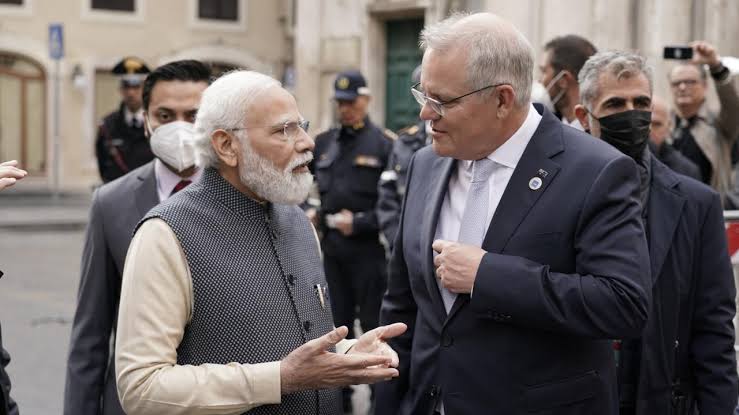
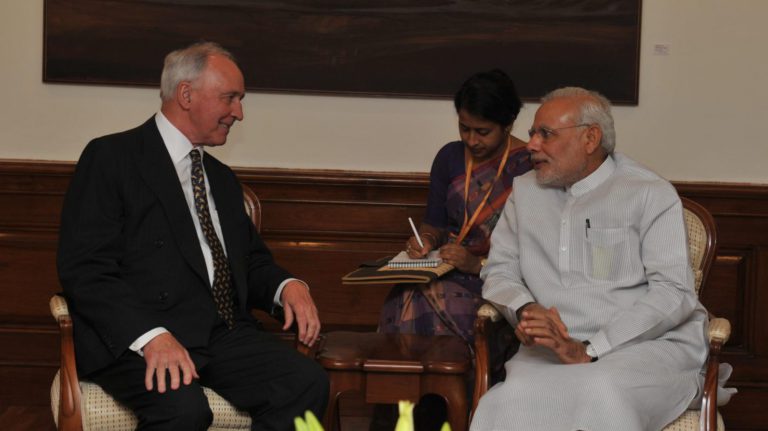
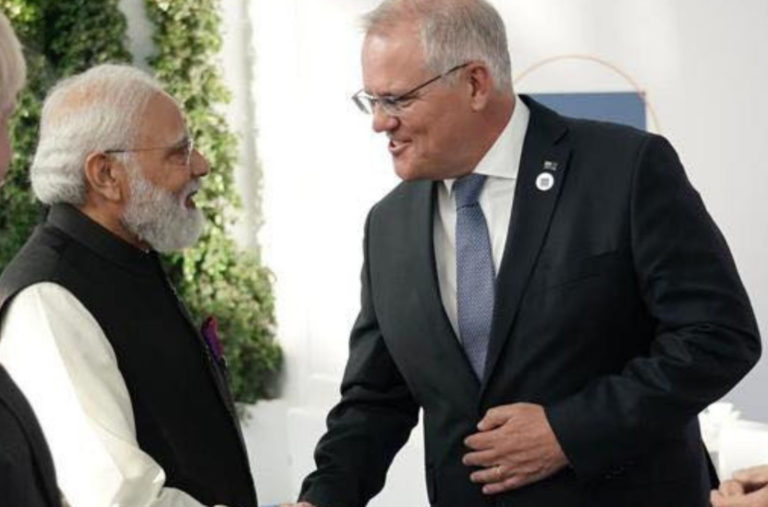
PM Scott Morrison and Indian PM Narendra Modi in Chat: Picture Source: @PIB

Australian and Indian stakeholders are invited to consider and comment on the commercial, economic, regional, and other impacts that could be expected to arise from a future interim agreement, as well as from a full CECA.

“In your submission, you may wish to focus on specific market access challenges and other issues of importance in doing business with India. Especially helpful would be information on tariff and non-tariff barriers to goods trade, barriers and other issues affecting services trade, and barriers to investment.”

Due to COVID-19 and its impact worldwide, circumstances have changed since earlier rounds of talks.

DFAT says that stakeholders may wish to update or re-submit their earlier submissions and hence they have re-opened the submissions for the following issues:

  • goods market access (tariffs and quotas)
  • rule of origin (including associated procedures)
  • non-tariff barriers to trade in goods (including technical barriers and customs issues)
  • cross-border trade in services
  • financial services
  • investment, including investor-state dispute settlement
  • government procurement
  • intellectual property, including geographical indications
  • barriers to trade in emerging and innovative industries e.g, biotechnology, artificial intelligence, IT incubators
  • movement of persons
  • competition policy
  • sustainable development

The information provided through these submissions will assist the Australian Government in determining the nation’s key priorities for CECA.

In addition, it will also lead to a possible interim agreement as a pathway to a full CECA.

These submissions may take several forms — from a short email to a more comprehensive analytical paper.

These can be confidential as well as public as DFAT may publish the suggestions on its website unless the author specifically requests that the submission, or part thereof, be handled in confidence.

If you are interested in making a submission, kindly lodge one via email: indiafta@dfat.gov.au

To see Australia-India FTA submissions from earlier negotiations, see https://www.dfat.gov.au/trade/agreements/negotiations/aifta/submissions/australia-india-fta-submissions/australia-india-fta-submissions-earlier-negotiations.

Indian-Australian tea company named amongst Top 50 Food & Beverages startups

0

In recent years, the food & beverages industry in Australia has grown. This is recognised as high growth and profit sector due to its huge potential for value addition.

After water, tea is the most consumed beverage in the world. While many consumers are seeking tea products for diverse functions such as energy-boosting and anti-inflammatory to slimming and relaxing benefits. 

With the increase in Australia’s multicultural population, no wonder an Indian-Australian tea startup has earned the place in the Top 50 food & beverage market.

Mr. Pradeep Dubey, based in Perth, is the co-founder of DeWine and Chief Executive Officer of the Australian Tea Company (ATC).

“We are quite excited. After these challenging two years, ATC is all set to bounce back in early next year with the first flush (harvest) of tea.”

Image source: Pradeep Dubey , Chief Executive Officer – ATC.

Pradeep is an alumnus of Annamalai University, RMIT, and Curtin University. He is passionate about working with entrepreneurs from different migrant communities living in Australia.

Pradeep started ATC in 2017 as a vertically integrated and multi-channel tea company.

ATC uses e-commerce to bring tea straight to the cup, right from the source, cutting across several trade layers.

According to Pradeep, this business model keeps intact the freshness and antioxidant characters of the tea.

“We procure our teas directly from the growers, with our sourcing centres located in the tea growing regions in India including Darjeeling, Assam, and in Nepal.

With our production/packaging facility located in India (New Delhi NCR), we can assure the quality, freshness of the teas.”

In addition to this accolade, Pradeep has also won the International Achievers’ Award 2021 for his achievements in international business engagement and relationship building, between Australia and India.

In his Linkedin post, Pradeep thanked people who have been part of his journey:

“I consider this as recognition for me and my team for our exemplary #teamwork. More to come and we will be audacious and united always … #Team ATC!! Kris Christine, Team ATC India!! Australian Tea Company.”

Selected from over 5000 nominations, this prestigious award is presented by the Indian Achievers’ Forum.

On the question of what does future hold for Australia-India relations via tea, Pradeep feels that the Australian tea market has evolved dramatically in the past few years in line with consumers’ changing behaviour.

“Today, tea drinkers are more interested in high-quality products that give them specific health benefits, which have driven demand for healthy green, functional botanical tea and herbal blends.”

He adds that right now ATC has around sixteen types of tea products.

Pradeep plans to grow it with the support of tea lovers in Australia. He says:

“IN ADDITION, THE PERCEPTION OF TEA HAS ALSO CHANGED. CONVENTIONAL TEA DRINKERS PERCEIVE TEA AS A REFRESHING, RELAXING AND ENERGY DRINK. TEA IS A PART OF THEIR EVERYDAY LIFE. WHEREAS YOUNGER CONSUMERS PERCEIVE IT AS A SENSUAL AND WELLNESS DRINK. THEY ARE INTERESTED IN INNOVATIVE FLAVOUR COMBINATIONS, AS WELL AS IN AUTHENTICITY AND THE STORY BEHIND CERTAIN BRANDS. NATURAL, EARTHY FLAVOURS SUCH AS GINGER, MATCHA, TURMERIC AND CUMIN ARE IN HIGHER DEMAND.”

For the future, keeping in mind the range and flavours of tea that India offers, the ATC is planning to organise tea education tours bringing both countries closer.

Qantas starts direct flights between Melbourne and Delhi on 22 December

0

Qantas has announced it will launch a brand-new international route from Melbourne to Delhi on 22 December 2021.

This flight will be connecting Victoria to the Indian capital on a Qantas-operated flight for the first time in the airline’s history.

The new Melbourne-Delhi flight will operate four times a week, year-round. Same-day connections will also be available from Brisbane, Sydney and Canberra.

Flights from Melbourne to Delhi will initially operate via Adelaide, while flights from Delhi to Melbourne will operate nonstop.

This follows the recent announcement of flights from Sydney to Delhi, which start next month. When this route went on sale, Qantas saw the fastest booking surge for flights leaving Australia since the airline announced its international restart plans in August.

Image

Qantas Group CEO Alan Joyce said the relaunch of international flights from Victoria will pave the way for long-awaited reunions with loved ones, as well as help the state retain its position as one of Australia’s premier destinations for global travellers.

“Victorians have done it tougher than most over the past two years and we think many will see the restart of Qantas international flights as another important step towards life getting back to normal,”

Mr Joyce said.

“The restart of our international flights is only possible because of the way Victorians and Australians more broadly have rolled up their sleeves to get the jab.”

Image

Qantas will also relaunch flights from Melbourne-London on 27 November 2021 and Melbourne-Los Angeles on 19 December 2021.

While the international travel experience will largely be the same as pre- COVID, some things will look and feel a little different, particularly in the short term.

Qantas has rolled out a range of new initiatives including a customised digital travel guide designed to help passengers navigate travel requirements before they leave home.

The launch of international flights coincides with the opening of the Qantas First Lounge at Melbourne International Airport.

While normally reserved for Platinum Frequent Flyers, Qantas will extend an invitation to customers travelling in Business, Gold Frequent Flyers and Qantas Club members to visit the First Lounge until the neighbouring Business Lounge reopens.

Customers will be offered a hybrid dining experience designed by Neil Perry featuring some of the most popular menu items from both the First and Business lounges, such as salt and pepper squid with green chilli dipping sauce, Neil’s pork and veal lasagna and the signature pavlova, as well as fine wines and barista coffee.

For a limited time, the menu will also feature chicken satays and vegetable samosas to celebrate the restart of Singapore flights and the new Melbourne-Delhi flights.

All passengers on Qantas international flights are required to be fully vaccinated, unless they are under 12 years old, are 12-17-year-olds travelling to Australia with their family or guardian or have an exemption.

Initial international flights are limited to Australian citizens, permanent residents and their immediate families and parents in line with Federal Government requirements. It’s expected this will be extended to other travellers in the coming months.

Australia ready to welcome back fully-vaccinated Visa Holders including International Students, Here’ details

0

From 1 December 2021, fully vaccinated eligible visa holders including skilled and student cohorts, as well as humanitarian, working holidaymakers, and provisional family visa holders, can come to Australia without needing to apply for a travel exemption.

Under these arrangements, travellers must:

·         Be fully vaccinated with a completed dosage of a vaccine approved or recognised by Australia’s Therapeutic Goods Administration (TGA)

·         Hold a valid visa for one of the eligible visa subclasses

·         Provide proof of their vaccination status

·         Present a negative COVID-19 Polymerase Chain Reaction (PCR) test taken within three days of departure.

Travelers to Australia must comply with the quarantine requirements in the state or territory of their arrival, and any other state or territory to which they plan to travel.

The return of skilled workers and international students to Australia will further cement Australia’s economic recovery, providing valuable workers to economic needs and supporting the important education sector. 

From 1 December 2021, Australia will also welcome back fully vaccinated citizens from Japan and the Republic of Korea. Under these arrangements, citizens of Japan and the Republic of Korea who hold a valid Australian visa will be able to travel from their home country quarantine-free to participating states and territories, without needing to seek a travel exemption.

Under these arrangements, travellers must:

·         Depart from their home country

·         Be fully vaccinated with a completed dosage of a vaccine approved or recognised by the TGA

·         Hold a valid Australian visa

·         Provide proof of their vaccination status

·         Present a negative COVID-19 PCR test taken within three days of departure.

Today’s announcement follows earlier changes that have seen people welcoming home fully vaccinated Australians, permanent residents, and immediate family members since 1 November, and follows the commencement of the Singapore safe travel zone yesterday.

Market Mantra: Australian shares at loss as miners and big banks sink

0

Australian shares marked a second straight weekly drop as a revised takeover bid for Crown resorts was unable to counter the slump in big banks and miners.

The Big Four banks led the decline on the share index for the week after Commonwealth Bank of Australia flagged margin pressures on Wednesday. Even though CBA did recover some of the lost ground on Friday, climbing by 1.3% after announcing its latest foray into cryptocurrency space and buying a stake in its crypto trading partner – Gemini, it was not enough to lift the financials for the week. Overall the financials recorded a decline of 3.6% for the week, it’s worse since October 2020.

According to Kunal Sawhney, CEO of Kalkine grou:

“At a time when the fierce competition in the key home loan market is hurting the banks margins substantially, one can expect the financial sector to remain under pressure for quite some time.”

Usually a hike in interest rates help ease such margin pressures. The Reserve Bank, however, has made it clear that it is in no hurry to raise interest rates. As such an interest rate hike in the coming months seem highly unlikely.

Image source: Big Four oZ banks – Wikipedia.

The miners were also down 1.5% for the week as iron ore prices sank to an 18-month low last week on worries that weak demand for the steel-making ingredient in China, the world’s largest steel producer, will continue to persist beyond 2021.

However, it was a week where the troubled casino group Crown Resorts grabbed the headlines as it soared 17.1% to climb most in almost eight months after Blackstone group made a 6.2 billion takeover for the group. Investors in CWN have been doing it tough lately as the Royal Commission into the operations of the troubled casino found serious wrongdoings on a fairly widespread scale. As such confirmation of a higher offer from Blackstone will come as music to their ears. At the time of closing of trade on Friday, the shares in Crown casino were trading at $11.54, which is still below the offer price of $12.50.

Moving forward the traders will be monitoring the situation in Europe where the old CoVid-19 spooked the markets once again. On Friday night Austria became the first nation in Western Europe to reimpose a complete National lockdown again as coronavirus cases continue to rise. The German Health Minister Jens Span also said that the situation in Germany was so grave that the lockdown couldn’t be ruled out.

The news resulted in an immediate sell down of stocks in European and American sessions as investors fretted about renewed lockdowns. Banks and travel companies in Europe and US sessions bore the brunt of losses as investors worried about reduced economic activity if case numbers are to rise further and other nations go into lockdown again.

Since Friday night the focus has been changed from inflation back to CoVid-19. This week we believe news regarding CoVid-19 lockdowns in Europe will remain the headline and most of the trades in the market will be driven by COVID.

Australian Gold; Picture Source: @CANVA

The resurgent concerns about COVID-19 and looming lockdowns in Europe rattled the world markets on Friday night and pushed the investors towards safe havens. Gold was no different and edged higher for the week as rising inflationary pressures and renewed coronavirus restrictions in Europe clouded the growth outlook and boosted the appeal for the yellow metal as a safe haven.

According to Edward Meir, an analyst with ED&F Man Capital Markets:

“Gold has started focusing much more closely on the inflation picture and discounted the impact of stronger dollar and rising interest rates. There’s still a lot more monetary and fiscal stimulus in the pipeline that should keep the inflation fairly elevated and keep gold prices in turn high.”

The Gold prices, however, did take a bit of a tumble on Friday night after Federal Reserve Governor Christopher Waller called for early tapering of economic support to help chart a tighter monetary policy.

Fed speak has been a big catalyst for gold movements and as such gold traders will need to see what happens over the next couple of weeks before having any strong convictions in regards to what the Fed will do regarding interest rates.

Oil prices posted a fourth consecutive weekly drop last week and sank to a six-week low as new COVID lockdowns sparked demand concerns.

It was the first time since March 2020 that oil prices declined for four weeks in a row with US Crude Oil declining 4% alone on Friday on lockdown worries. Lockdowns sap demand for petroleum products as people are not moving around and businesses are closed. As such if the lockdown measures spread to the rest of Europe or even to nations outside Europe, it could tip the oil market into oversupply.

oil price going up; Picture Source: @Canva

While the oil market remains in a good position with OPEC+ countries limiting the increase in supply, the lockdowns however will remain a risk for oil prices, especially if other nations decide to follow Austria’s lead.

In regards to the local currency, the Australian Dollar declined for a third week in a row as COVID risk aversion resurfaced with rising cases and lockdowns in Europe. Austria instituted a full national lockdown and Germany is contemplating a return to restrictions as rising coronavirus cases defy high vaccination rates in both countries.

The US dollar also gained strength against most other currencies including the Aussie as a potential rate divergence surfaced with the US Federal Reserve moving towards an early rate rise in 2022 and the Reserve Bank of Australia expecting no rate rise till 2024.

Looking forward the fundamental and technical outlook both do not favor AUD. While US Governor Lowe’s prediction of an earlier than expected rate rise weighs on the Aussie against the USD, weak demand from China and risk-off sentiment due to the coronavirus situation in Europe all impact Aussie negatively.

Australian-Dollar; Picture Source: @CANVA

Technically speaking AUD/USD is resting on weak support and it looks like the 2021 low of 0.7130 from August would come into play. The MACD cross of the signal line below remains the dominant technical condition. The RSI has also moved lower, but not entered the oversold territory yet, thus suggesting there are more losses for the local currency ahead.

The Indian Rupee also came under pressure due to a surging US Dollar. However, it rose against the Australian Dollar as the INR showed a bit more resilience on the news that the Indian government expects the economy to grow by 105% in the current fiscal year as the economy rebounds from the pandemic.

The traders in Indian currency will now turn their focus to RBI which is expected to announce India’s foreign reserves this week. The traders will also be cautious amidst rising coronavirus cases in Europe and the economic impact of new restrictions.

Indian-Rupee; Picture Source: @CANVA

In the world of cryptocurrencies, the crypto market stumbled and stabilised as Bitcoin’s Taproot network update went live last week.

Bitcoin went into a meltdown last week reaching a monthly low of US $56,000 on Thursday. It has since recovered some of the lost ground to be trading around $58,500 at the time of writing the report, recording an 8% weekly decline.

In a report from Coin Market Cap, the crypto market capitalisation stood at the US $2.6 Trillion last week. Both BTC and Ethereum despite the recent declines have gained twofold and sixfold respectively this year.

In terms of money inflows, despite an 8% decline in prices last week money continues to flow into Bitcoin. Capital inflow into Bitcoin hit an all-time high of $9 billion this year, with $151 million inflowing into Bitcoin last week, its thirteenth consecutive week of inflows.

The latest price swings follow plans by the Biden administration report proposing new legislation to regulate stable coins. The infrastructure bill signed by US President-elect includes provisions that firm up tax reporting requirements for cryptocurrency exchanges, which has big implications for crypto investors.

In positive news for the cryptocurrencies however Indian Government, which for long has opposed digital currencies is reportedly planning to introduce a new legal framework around crypto by early next year with classifications on usage, treatment of crypto as well as income tax and GST implications to be detailed.

In agricultural products, wheat prices continue to rally near multi-year highs as rumours of fresh sales of French wheat to China reinforced expectations of tight wheat supplies in major exporting areas.

A tender of 130,000 tonnes of animal feed wheat issued by the Philippines and International Grains Council cutting its forecast for 2021/22 wheat production further helped wheat prices.

The prices of soybean and corn however fell after a strong harvest season in the US. The demand for soybean, however, remains strong from ethanol producers and it is expected any decline is only temporary as with wheat in tight supplies, there is plenty of support for future grain prices.

Author: Ateev Dang is a trader and trading coach by profession. He runs his own business called Glow trades Pty Ltd where he teaches anyone who is interested in starting on their trading journey how to trade. He can be contacted at adang@glowtrades.com.au.

Disclaimer:

The writers’ opinions in the above article are their own and do not constitute any financial advice whatsoever. Nothing published by The Australia Today constitutes an investment recommendation, nor should any data or content publication be relied upon for providing any investment activities.

We strongly recommend that you perform your own independent research and/or speak with a financial advisor or qualified investment professional before making any financial decisions.

Know ‘Historiography’ before you judge post-colonial Indian History

0

Before studying Indian historiography, one has to know the meaning of the term ‘historiography’ that comes from history + iography (field of study) or history of history or study of historical perspectives.

The readers need to be aware of the past in the present to make it better for the future, where history plays a prominent role, and historiography reflects methods of historians in the construction of history by using specific sources, methodology, and theoretical perspectives.

Thus it refers to ‘investigation of historical methodology’ and ‘body of scholarly debate about the past.

E. H. Carr stated, “Historiography is a progressive science, in the sense that it seeks to provide constantly expanding and deepening insights into a course of events which is itself progressive. This is what I should mean by saying that we need a constructive outlook over the past”.

The old historiographical interpretations are not discarded but instead included and superseded by the new historiography to understand the event with new techniques and sources presented by reinterpretation by old or new historians.

If we take an example of Indian history, it is usually categorised into three periods ancient, medieval and modern, each having its own historiography. These periodizations have also been challenged by future historians.

Historiography is divided based on the subject matter to give details of historical voices of that subject, these historical voices come together to formulate schools of historiography e.g. in the Indian context is studied in the historiography of Cambridge, Nationalist, Marxist, Subaltern and many more schools of thoughts. Different schools of thoughts have historians who agree with each other and present a similar approach in their methodology.

What is Historiography?

In simple terms, the historiography of a theme comprehensively includes the previous and present historians’ interpretation of a certain issue. For example the historiography of ancient, medieval, and modern historiography identified by the historians based on sources available at the time and space.

General the term is explained as  “the study of the methods of historians in developing history as an academic discipline, and by extension is any body of historical work on a particular subject. The historiography of a specific topic covers how historians have studied that topic using particular sources, techniques, and theoretical approaches.”

Historiography identifies the prominent thinkers and explains the structure of scholarly debate on a certain topic. Thus it is meant to convey the scholarship of other historians rather than interpretation of the subject on its own.

This is ‘history of historical writing’, as “When you study ‘historiography’ you do not study the events of the past directly, but the changing interpretations of those events in the works of individual historians” (Furay & Salevouris, 1988). This includes the manner in which historians have defined or written about history; historians different approaches, theories, and methods to interpret and write the history.

Overall, this is the studying the changes that emerged in the interpretations of those events as perceived by the narratives of different historians. Therefore, it can be stated, historiography is not a past in itself but the study of historical interpretation of the past over specified events.

Usually, historiography may serve as an introduction to a research paper, that highlights the major papers and books that are written on the specific theme or field of study. It also identifies the academics that were more successful in justifying their argument in the debate. This equips the researcher to understand the past interpretations and present their analysis to the current historiography. It helps to comprehend the value of historical works.

E.H. Carr (1964) wrote, “The facts of history never come to us ‘pure’ since they do not and cannot exist in a pure form: they are always refracted through the mind of the recorder. It follows that when we take up a work of history, our first concern should not be with the facts which it contains but with the historian who wrote it.”

The interpretations of the past arguments over an event put forward by the historians are studied in historiography. It explains how historical events are reinterpreted by historians across history. The objective historiography justifies the past ‘facts’ and places them in the wider context or narrative.

Conclusion

Historiography is important to understand what is known about the past and how historians have attempted to comprehend it; it explains the changing interpretations of those events by the different historians.

Every scholar studying any history initially examines the historiography of the theme to develop understandings of what are historical arguments about that period, event or subject. Thus, it becomes pivotal to understand historiography to put forward own interpretation that will contribute to the existing literature.

Author: Dr Sakul Kundra, A.HOD Department of Social Science, College of Humanities and Education, Fiji National University.

Dr Sakul Kundra; Picture Source: Supplied

Disclaimer: The views expressed are his own and not of The Australia Today or his employer. For comments or suggestions, email. dr.sakulkundra@gmail.com

RMB Café in court for underpaying International students

0

Legal action against the operators of a café on Degraves Street in Melbourne’s central business district has been commenced by The Fair Work Ombudsman.

Facing court is Aisha & Umma Enterprises Pty Ltd, which trades as RMB Café.

Fair Work Inspector issued a Compliance Notice to the company in June 2020 after forming a belief that 13 workers, engaged variously as food and beverage attendants and cooks, had not been paid all entitlements owed under the Restaurant Industry Award 2010 for work performed between May 2017 and August 2019.

The workers included five International student visa holders.

“The inspector formed a belief that the employees were underpaid minimum wages for ordinary hours, weekend penalty rates, and public holiday rates.”

The FWO alleges that the company, without reasonable excuse, failed to comply with the Compliance Notice, which required the back-payment of the workers’ outstanding entitlements in full. The Compliance Notice required a total payment of $36,479.26 to the employees.

Aisha & Umma has paid a total of $4,701.42 to date

Fair Work Ombudsman Sandra Parker said the regulator would continue to enforce workplace laws and take businesses to court where lawful requests are not complied with.

“Where employers do not comply, we will take appropriate action to protect employees. A court can order a business to pay penalties in addition to back-paying workers.”

The Fair Work Ombudsman does not tolerate the exploitation of any worker, including migrants who can be vulnerable due to factors such as limited English or little understanding of their rights under Australian law. All workers in Australia have the same rights, regardless of citizenship or visa status.

Ombudsman spokesperson said, “We prioritise matters that involve migrant workers, who we know can be vulnerable to exploitation.”

In 2020–21, Ombudsman secured $2,082,051 in court-ordered penalties in matters involving migrant workers and recovered $824,443 in unpaid wages.

One important point for migrant workers to remember is that Fair Work Ombudsman has an agreement with the Department of Home Affairs, called the Assurance Protocol, where visa holders can ask for our help without fear of their visa being cancelled for breaches of their work-related visa conditions. Information and conditions are available on their webpage for visa holder workers.

Any employees with concerns about their pay or entitlements should contact the Fair Work Ombudsman for free assistance,”

Ms. Parker said.

The FWO is seeking a penalty against Aisha & Umma Enterprises Pty Ltd. The company faces a penalty of up to $33,300.

The regulator is also seeking an order for the company to comply with the Compliance Notice, which includes rectifying any underpayments in full, plus interest and superannuation.

A directions hearing is listed in the Federal Circuit and Family Court in Melbourne on 11 November 2021.

Note:
Employers and employees can visit www.fairwork.gov.au or call the Fair Work Infoline on 13 13 94 for free advice and assistance about their rights and obligations in the workplace. An interpreter service is available on 13 14 50. Small businesses can find targeted resources at the Small Business Showcase.

No Quarantine For Fully-Vaccinated International Students in Victoria

0

International students arriving in Melbourne under the Government’s Student Arrivals Plan do not have to quarantine, provided they can demonstrate that they meet vaccination conditions.

Victoria’s Minister for Trade Martin Pakula said that the ‘arrival plan’ has been updated to reflect standard entry requirements for fully-vaccinated international travellers, including international students, in place since 1 November.

International arrivals will need to demonstrate their vaccination status with a vaccine registered or recognised by the Australian Therapeutic Goods Administration. Arrivals must also comply with all relevant Commonwealth entry requirements, including visas and travel exemptions.

Minister Pakula added, “The amazing vaccination effort of Victorians means fully-vaccinated international arrivals, including students enrolled at our universities and colleges, will not have to serve a period of hotel quarantine.”

“International students add to the cultural richness and diversity of our state. They are valuable members of our community and we look forward to welcoming them back soon.”

In order to enter Victoria without quarantine, international arrivals must comply with the Victorian Government’s testing requirements, including testing negative to COVID-19 within 72 hours of their departure.

The International Student Arrivals Plan was endorsed by the Commonwealth Government last month, with the first group of international students planning to arrive in December.

Under the Plan, priority has been given to students who need to return to Victoria to do practical work, including research, health, and medical students.

The Plan provides for the safe return to study in Victoria for international students, and a pipeline for continued arrivals through 2022. Around 49,000 international students enrolled with Victorian education providers remain offshore due to border closures while about 70,000 are currently in Victoria.

International education is a critical services export and jobs provider for Victoria, contributing a peak of $13.7 billion to the state’s economy and supporting around 79,000 Victorian jobs prior to the pandemic.

To remain connected to offshore students, the Victorian Government has established Study Melbourne Hubs in Shanghai, Kuala Lumpur, and Ho Chi Minh City, and virtually in India and Latin America.

The hubs provide offshore international students with support and study facilities and promote Victoria as a study destination.

More information about the Plan is available at coronavirus.vic.gov.au/international-student-arrivals-plan.

Indian-origin scientist awarded top science prize worth $1-million

0

Prof. Sajeev John, a 64-year-old professor, and Canada Research Chair in Optical Sciences at the University of Toronto has been awarded Canada’s top science prize.

He was named this year’s recipient of the $1-million Gerhard Herzberg Canada Gold Medal.

This is the highest honour given out by the Natural Sciences and Engineering Research Council of Canada (NSERC) and is awarded annually for “sustained excellence” and “overall influence” of research conducted in Canada.

NSERC said in a statement:

“Thanks to his discoveries, it may be possible to process information optically rather than electronically, enabling a supercomputing technology more stable and scalable than quantum computers.”

Prof. John has developed a way to confine and control light which is similar to the way electrons are controlled in electronics.

The technique is now being used for non-invasive laser surgeries and the development of a thin solar cell “coating” for buildings, cars, and even clothing.

Prof. John told CBC that the phone call from NSERC president Alejandro Adem, informing him he had won, took him by surprise.

“The Herzberg Canada Gold Medal will be very useful in attracting other aspiring young scientists to work on my team and be a part of this effort.

So quite a lot of it is going to be used to, you know, to bring in good PhD students, postdocs, visiting scientists — people that can work on the project.”

Indian High Commission in Canada tweeted its congratulatory message celebrating this win.

Professor Leah Cowen, University of Toronto’s associate vice-president of research, congratulating Prof. John said:

“From his ground-breaking work on confining and harnessing the flow of photons to his leadership in exploring applications for his research in optical micro-chips, optical communications and information processing, laser technologies, solar energy-harvesting and clinical medicine – his impact has been remarkable.”

Prof. John was born in India and grew up in Ottawa. His current research focus is on climate change.

“The area that I’m most excited about right now is in using the concept of trapping light to trap light from the sun.” 

He is also an officer of the Order of Canada, a Canada Council Killam Prize for Natural Sciences, and a Citation Laureate celebrating “Nobel-class” scientists.

WATCH VIDEO: Sajeev John: Photonic crystals increase solar efficiency

“Let’s start afresh,”: Indian PM Modi announces to repeal all three farm laws

0

In a major move, Indian Prime Minister Narendra Modi on Friday announced the repealing of the three Central farm laws.

In his televised address, PM Modi said, “Today I want to tell everyone that we have decided to repeal all three farm laws.”

Farmers have been protesting the government’s three farm laws since had passed the Farmer’s Produce Trade and Commerce (Promotion and Facilitation) Bill, 2020, and the Farmers (Empowerment and Protection) Agreement of Price Assurance and Farm Services Bill, 2020.

The three farm laws are–

1- The Farmers’ Produce Trade and Commerce (Promotion and Facilitation) Act provides for setting up a mechanism allowing the farmers to sell their farm produce outside the Agriculture Produce Market Committees (APMCs). Any license-holder trader can buy the produce from the farmers at mutually agreed prices. This trade of farm produces will be free of mandi tax imposed by the state governments.

2- The Farmers (Empowerment and Protection) Agreement of Price Assurance and Farm Services Act allows farmers to do contract farming and market their produces freely.

3-The Essential Commodities (Amendment) Act is an amendment to the existing Essential Commodities Act. 

What I am doing is for the welfare of the nation assures PM Modi

Prime Minister said,

“Whatever I did, I did for farmers. What I am doing, is for the country. With your blessings, I never left out anything in my hard work. Today I assure you that I will now work even harder, so that your dreams, nation’s dreams can be realised.”

Urging farmers to return to their homes and “let’s start afresh”, Prime Minister Narendra Modi said the constitutional measures to repeal the laws will begin in the Winter session of Parliament which is likely to commence from November 29.

Social media erupted with mixed reactions from farmers to social experts.

“We have decided to repeal all three farm laws, will begin the procedure at the Parliament session that begins this month. I urge farmers to return home to their families and let’s start afresh,”

said PM Modi.

Prime Minister said farmers’ welfare and agriculture development is the top priority of the government.

“When the country gave us the opportunity to serve as Pradhan Sevaks in 2014, we gave top priority to agricultural development and farmer welfare. Many people are unaware of the truth that 80 percent are small-scale farmers who have less than 2 hectares of land and are over 10 crores in population. This piece of land is their survival,”

he said.

“To overcome the challenges of the small farmers of the country, we worked all-round on seeds, insurance, markets, and savings. Along with good quality seeds, the government also connected the farmers with facilities like neem coated urea, soil health card, and micro-irrigation. Many steps were also taken for the farmers to get the right price for their produce in return for their hard work. The country strengthened its rural market infrastructure,” Prime Minister stated.

Image

“We worked to provide farmers with seeds at reasonable rates and facilities like micro-irrigation, 22 crore soil health cards. Such factors have contributed to increased agriculture production. We strengthened Fasal Bima Yojana, brought more farmers under it,” PM Modi said.

Tim Paine steps down as Australia’s Test captain, after a sexting scandal

0

Australia Test skipper Tim Paine has stepped down as the captain of the side ahead of the much-awaited Ashes opener after allegations emerged of improper conduct in 2017.

At a press conference at Blundstone Arena on Friday where Paine read out a prepared statement, the 36-year-old conceded a private text exchange between him and a former colleague, now made public, was unbecoming of his role.

While he did not breach Cricket Australia’s code of conduct, a fact confirmed by a CA media release on Friday, Paine decided he would step down from the captaincy.

“It’s an incredibly difficult decision, but the right one for me, my family, and cricket,”

said Paine.

“As background on my decision, nearly four years ago, I was involved in a text exchange with a then-colleague. At the time, the exchange was the subject of a thorough CA Integrity Unit investigation, throughout which I fully participated in and openly participated in.

“That investigation and a Cricket Tasmania HR investigation at the same time found that there had been no breach of the Cricket Australia Code of Conduct.

“Although exonerated, I deeply regretted this incident at the time, and still do today. I spoke to my wife and family at the time and am enormously grateful for their forgiveness and support.

“We thought this incident was behind us and that I could focus entirely on the team, as I have done for the last three or four years.

“However, I recently became aware that this private text exchange was going to become public. On reflection, my actions in 2017 do not meet the standard of an Australian cricket captain, or the wider community.

“I’m deeply sorry for the hurt and pain that I have caused to my wife, my family, and to the other party. I’m sorry for any damage that this does to the reputation of our sport.

“And I believe that it is the right decision for me to stand down as captain, effective immediately. I do not want this to become an unwelcome disruption to the team ahead of what is a huge Ashes series.”

England and Australia will lock horns in the five-match Ashes, beginning December 8 at the Gabba, Brisbane. Cricket Australia on Friday informed about Paine’s decision to leave captaincy “immediately”.

Cricket Australia in a statement said the Board has accepted Paine’s resignation and will now accelerate the process of identifying and appointing a new Test captain.

“Tim felt it was in the best interests of his family and Australian cricket to take this decision to step down as captain,”

CA Chair Richard Freudenstein said in a statement.

“The Board has accepted Tim’s resignation and will now work through a process with the National Selection Panel of identifying and appointing a new captain.

“While the Board acknowledges an investigation cleared Tim of any breach of the code of conduct regarding this matter some years ago, we respect his decision.

“CA does not condone this type of language or behavior,” the statement concluded.

Alok Kulkarni wins 2021 Distinguished Alumni Award in Engineering from Monash University

0

Indian-origin Alok Kulkarni has been awarded the 2021 Distinguished Alumni Award for the Faculty of Engineering.

Mr. Kulkarni completed his Bachelor of Engineering in Electrical and Computer Systems Engineering with Honours from Monash in 1994.

Monash presents awards to alumni in recognition of those who have demonstrated outstanding professional achievements, inspirational leadership, and exceptional human qualities.

A passionate entrepreneur, Mr. Kulkarni said via LinkedIn:

“It was truly an honour to receive this recognition from Monash. I didn’t feel like I belonged in the company of such amazing accomplished recipients. Thank you again! Ancora Imparo.

Proud to be part of the Monash community, the vision and ideals Monash stands for. The Clayton campus is a sight to behold with incredible buildings but it’s the Monash team that makes it truly special.”

He is the Co-founder, Chief Executive Officer, and Chairman of software company Cyara.

Cyara’s Customer Experience (CX) Assurance platform is used by more than 300 global brands.

He founded this company in 2006 in Melbourne with Luan Tran and Bonny Malik.

The key vision behind Cyara is to create an easy-to-use CX Assurance platform that could help enterprises be confident that they were delivering great customer experiences each and every time.

The company’s headquarters are now in Silicon Valley, and it received Series A funding in 2016.

Prior to Cyara, Mr. Kulkarni was the Director of Solutions Engineering at Genesys and has also held roles at National Australia Bank, NEC, and others.

Mr. Kulkarni speaks regularly at industry and partner conferences, and he is also a director at TiE, a global non-profit organisation dedicated to giving back by helping entrepreneurs.

As part of TiE, Mr. Kulkarni mentors Australian entrepreneurs and is responsible for corporate memberships within the TiE Melbourne chapter.

“India’s Digital revolution is rooted in democracy”: PM Modi at the inaugural Sydney Dialogue

0

India’s Prime Minister Narendra Modi delivered the keynote address at The Sydney Dialogue on the theme “India’s technology evolution and revolution”.

Mr. Modi thanked the people of Australia for inviting him to the inaugural Sydney Dialogue.

“It is a great honour for the people of India that you have invited me to deliver the keynote at the inaugural Sydney Dialogue. I see this as a recognition of India’s central role in the Indo Pacific region and in the emerging digital world.”

Underlining the impact of the digital age, Modi said:

“The digital age is changing everything around us. It has redefined politics, economy and society. It is raising new questions on sovereignty, governance, ethics, law, rights and security. It is reshaping international competition, power and leadership.”

Prime Minister Modi said India’s space sector was open to private investment and that the agriculture sector was reaping the benefits of the digital revolution.

He highlighted the leaps in India’s digital revolution:

“India’s digital revolution is rooted in our democracy, our demography and the scale of our economy. The digital age is changing everything around us.

It has redefined politics, economy and society. It is raising new questions on sovereignty, governance, ethics, law, rights and security.” 

Mr. Modi highlighted the five important transitions taking place in India:

“We’re building the world’s most extensive public information infrastructure…We’re on our way to connecting 6,00,000 villages.

We used technology to deliver over 1.1 billion doses of vaccines across India using Cowin and Aarogya Setu. Our ‘one nation, one card’ will deliver benefits to the population anywhere in the country.”

PM Modi said that the world must work together as it is ushered in a new era of opportunities for progress and prosperity.

PM Modi’s address was preceded by introductory remarks by the Australian Prime Minister Scott Morrison.

The Sydney Dialogue is an annual summit of cyber and critical technologies to discuss the fallout of the digital domain on the law and order situation in the world.

It is an initiative of the Australian Strategic Policy Institute.

WATCH VIDEO: The Sydney Dialogue keynote address: India’s Prime Minister – Narendra Modi

Ind vs NZ, 1st T20I: Suryakumar Yadav, Rohit star as hosts register nervy 5-wicket win

0

Suryakumar Yadav (62) and Rohit Sharma (48) starred with the bat as India chased down 165 to defeat New Zealand by five wickets in the first T20I of the three-match series here at the Sawai Mansingh Stadium on Wednesday.

Chasing 165, India got off to an excellent start as openers Rohit Sharma and KL Rahul put on 50 runs inside the first five overs. However, the introduction of Mitchell Santner paid off as he dismissed Rahul (15) on the first delivery of the sixth over.

Suryakumar Yadav then joined Rohit in the middle and the duo took the hosts’ score to 85/1 at the halfway mark, still, 80 runs away from the target. Rohit and Suryakumar kept on chipping away at runs, and the hosts were in firm control of the game.

New Zealand got the much-needed breakthrough in the 14th over as Trent Boult got the better of India skipper Rohit (48). Suryakumar kept on going on his merry way and he brought up his half-century off just 34 balls.

India was in a comfortable position but the quick wickets of Suryakumar (62) and Shreyas Iyer (5), saw the hosts needing 10 runs to win off the final over. Daryl Mitchell was chosen to bowl the final over, and in the end, Rishabh Pant (17*) and Axar Patel (1*) managed to take India over the line.

Earlier, Martin Guptill and Mark Chapman played knocks of 70 and 63 respectively as New Zealand posted a total of 164/6. Asked to bat first, New Zealand got off to the worst start possible as on just the third ball of the innings, Daryl Mitchell (0) was clean bowled by Bhuvneshwar Kumar. Mark Chapman then joined Martin Guptill in the middle and the duo took New Zealand’s score to 41/1 after the end of the powerplay.

Chapman and Guptill kept on moving the scoreboard slowly and steadily, and at the halfway mark, the Kiwis score read 65/1. In the 11th over bowled by Mohammed Siraj, Guptill changed the tempo as he smashed 16 runs, giving the much-needed momentum to the Kiwis. Chapman also went on to register his half-century and the visitors were looking in firm control.

Image

Chapman finally departed after playing a knock of 63 and he was sent back to the pavilion by Ravichandran Ashwin. In the very same over, Ashwin sent Glenn Phillips (0) back to the pavilion, reducing Kiwis to 110/3 in the 14th over. In the final four overs, New Zealand managed to add 34 more runs, taking the score past the 160-run mark.

Brief Scores: New Zealand 164/6 (Martin Guptill 70, Mark Chapman 63; Ravichandran Ashwin 2-23) vs India 166/5 (Suryakumar Yadav 62, Rohit Sharma 48; Trent Boult 2-31).

Nearly all restrictions to lift for fully vaccinated Victorians, from 11:59 PM

0

The Victorian Government has announced almost all Covid-19 restrictions will end from 11.59 pm Thursday for fully vaccinated residents.

This announcement comes as the state prepares to hit the 90% double-dose vaccine milestone for those aged 12 and over by Saturday or Sunday.

HIGHLIGHTS:

From Friday density or capacity limits on retail and hospitality will be scrapped and unlimited visitors to homes are permitted.

Masks will still be required on public transport, in hospitals and aged care facilities and in retail settings.

Rules for close contacts will also change, with the requirement to only self-quarantine until a negative PCR test result is received.

Premier Daniel Andrews said, “The milestone we’re about to hit is brilliant, allowing Victoria to return to something like the normal life we remember – businesses open, the city thriving, and families getting back to doing the things they love together.”

Details:
From this coming weekend, fully vaccinated Victorians can hit the dance floor once again, there’ll be no limits in the home and no caps or density limits for cafés and restaurants.

All indoor and outdoor events with less than 30,000 fully vaccinated attendees will be able to proceed with no special approval and outdoor events with 30,000 or more will only need to publish their COVIDSafe Plan.

Indoor venues – including stadiums that have a capacity of 30,000 or more – will need to get a one-off approval of their COVIDSafe Plan from the Victorian Government.

Major events like the Boxing Day Test and the Australian Open will be able to proceed at fully capacity, subject to the approval of the MCG and Melbourne Park’s COVIDSafe Plan.

Masks will still be required for primary school staff and visitors and for students in Years 3 to 6, for workers serving the public at hospitality venues, for workers and customers at indoor retail, for visitors and select workers in hospitals or care facilities, and for people using public transport, taxi/rideshare and planes.

Unless health services see a significant jump in hospitalisations, customers for retail will no longer need to wear masks after 15 December – in line with NSW settings.

High-risk work settings such as corrections and meat, poultry and seafood processing will continue to require masks.

There will still be mask requirements, density limits and caps in place for weddings, funerals, places of worship and other settings if the vaccination status of attendees is not being checked. The usual exceptions will apply.

Non-essential retail settings across Victoria will join the vaccinated economy and will only be open to Victorians who are fully vaccinated, under 12 years and two months, or have a valid exemption.

Victorians who test positive will be further empowered to take action and protect others, with simple advice and guidance to help them inform their ‘social contacts’ on what to do.

If you come into contact with a positive case:

From 11:59 pm tonight, the vast majority of people who come into contact with a confirmed positive case outside their home won’t have to self-quarantine. These contacts will be required to get a standard (PCR) test and isolate until they get a negative result.

This means exposure in places like offices, restaurants or nightclubs won’t automatically result in quarantine for the patrons or staff, who previously would have been designated Primary Close Contacts at Tier 1 exposure sites.

However, the Department of Health will continue to manage emerging outbreaks of concern and ‘superspreader events’ and can impose a quarantine period on contacts on a case-by-case basis, depending on the evidence.

Cases are required to notify their workplace, school or childcare about their positive result.

Once informed by the case, workplaces will also have to identify and notify employees and sub-contractors – but not customers – who were exposed to advise them to get tested.

Schools/childcare will also identify and inform staff and student contacts.

School and workplace contacts presenting to testing centres for their PCR test will also be offered Victorian-funded rapid antigen tests (RATs) for recommended use before entering sensitive settings.

In good news for businesses, the changes effectively mean the end of mandatory deep cleaning, and the Departmental ‘clearance’ process. They will self-manage their exposure in line with public health guidance. However, COVIDSafe practices are strongly encouraged and a COVIDSafe plan is still required.

Exposure sites will no longer be published. Instead, the Department will use the new alert function in the Service Victoria app to notify patrons of higher-risk venues where positive cases have been present – such as restaurants, gyms and nightclubs – and advise them to get tested.

Minister for Health Martin Foley said, “By focusing on high-risk settings, cases and contacts – and safely removing rules that could sweep hundreds of thousands of people into long quarantine at any one time.”

“Victoria is charting a path for the rest of Australia for how to live with COVID-19 as a manageable endemic when cases inevitably increase nationwide.”

The Department will not trace or manage these contacts.

Individuals who test positive are strongly recommended to tell the social contacts they have spent time with and encourage them to get tested.

With a simple call-to-action, the advice can move faster when the individual is empowered to do it among the people they know.

People who live with someone who has COVID-19 pose the highest transmission risk. Household contacts who have had more than four hours of contact with a case inside a household, accommodation or care setting must isolate for 7 days if fully vaccinated or 14 days if not fully vaccinated, with a PCR test required on day 0 and for release.

If children under 12 are household contacts, they will be considered fully vaccinated if everyone else in their household aged over 12 is fully vaccinated.

Workers exposed at work, and children who are exposed at school or early childhood centres will need to show a negative PCR test result to return to work or school – with recommended RAT testing thereafter.

In addition to isolation changes for contacts, people who have COVID-19 will be required to isolate for 10 days, instead of 14 days.

When the settings are in effect, a new online portal offering clear and simple ‘checklist’ advice for cases, contacts, workplaces and schools will be published at www.coronavirus.vic.gov.au/checklist, which will also include advice on how to have the conversation with family and friends.

COVIDSafe settings will also be published at https://www.coronavirus.vic.gov.au/coronavirus-covidsafe-settings.

Australia announces a new Consulate-General and Centre of Excellence in India

0

Prime Minister Scott Morrison has announced at #BTS2021 that Australia is strengthening its technology partnership with India through the establishment of: a new Consulate-General in Bengaluru, Karnataka and a Centre of Excellence for Critical and Emerging Technology Policy, also to be based in India.

The new Consulate-General in Bengaluru will focus on deepening Australia’s ties to India’s vibrant innovators, technologists and entrepreneurs in one of the world’s most important commercial centres.

Picture Source: Twitter@Scott Morrison-Marise Payne

PM Morrison said:

“Australia’s new mission in Bengaluru would expand our diplomatic presence in India to five posts. Australia will deepen our ties to India’s innovators, to your technologists and entrepreneurs – as well as India’s governments at all levels.”

Bengaluru is the world’s fastest growing technology hub. So, the new Consulate-General will expand Australia’s diplomatic presence in India to five diplomatic posts.

This is further to Australia’s High Commission in New Delhi & Consulates-General in Mumbai, Chennai and Kolkata, deepening its engagement with Indian governments at all levels.

The Centre of Excellence is among the flagship initiatives of Australia’s new Action Plan for Critical Technologies.

PM Morrison said:

“Helping our nations shape technology governance so it aligns with our values and supports an open, inclusive and resilient Indo-Pacific region. The Centre will also promote investment opportunities and innovation between Australia and India in technology, and amplify our policy influence globally.”

This Centre will provide a practical platform for Australia and India to work together to shape technology governance that aligns with our values and supports an open, inclusive and resilient Indo-Pacific. 

It will bring together Australian and Indian technologists, policy practitioners, academics, researchers and thought leaders.

Image source: Australia’s Minister for Foreign Affairs and Minister for Women the Hon Marise Payne

Australia’s Minister for Foreign Affairs and Minister for Women the Hon Marise Payne said:

“It will promote stronger investment opportunities and cutting-edge innovation in cyber, critical and emerging technologies. It will amplify Australia’s and India’s policy impact globally, while visiting fellows from around the Indo-Pacific will broaden the Centre’s influence.”

Ms Lisa Singh, CEO of Australia India Institute and former Australian Senator, tweeted:

India’s Prime Minister Narendra Modi will address the Sydney Dialogue today.

Husband wants permanent resident wife to be deported from Australia back to India

0

According to a recent story by A Current Affair, a Sydney-based Indian-origin young man, Knawal, wants his Melbourne-based wife Naina to be deported back to India after their marriage unravelled.

The couple is separated and Naina has officially requested Punjab Police that the dowry her family paid for their marriage should be returned.

“All I want, give me back whatever my parents paid in this wedding and whatever my parents gave you, just give me back.”

Kanwal claims his wife’s demands are what initially caused some friction and things got worse after Naina received permanent residency in Australia.

He further claimed he also received a call from one of Naina’s relatives while they were visiting India. He told A Current Affair:

“Saying I’m impotent and I’m not keeping Naina happy and he’s going to file a case against me. I was shocked I was absolutely shocked. I can tell you I’m not impotent.”

Naina filed a complaint against her husband with the Punjab Police and it included a request for the husband to repay the wedding dowry and compensation.

Kanwal flew to Sydney to visit a doctor who gave him a note confirming he was not impotent.

Now Kanwal’s family told A Current Affair that if they don’t front up to face the allegations, they could lose their family home in India in order to pay the compensation.

As per Australia’s deportation process, permanent residents and certain New Zealand citizens who are not Australian citizens can be deported if:

  • convicted of certain serious crimes and received a prison sentence; or
  • considered to be a threat to the security of Australia.

A person whose visa has been cancelled on the grounds of not meeting the character test may have a right to judicial review.

Molina Swaroop Asthana, a Melbourne-based lawyer and activist, says publishing such personal disputes is not the best way to deal with them.

Ms Asthana wrote on social media:

“Honestly, how can Channel 9 air this story as current affairs? It’s just a couple airing their dirty laundry in public to get back at each other. Channel 9 makes it sound like there were massive issues including dowry and deportation but it’s nothing more than a nasty spat between a couple.”

She adds that as a lawyer see has seen worse things in many communities and such unnecessary story in national media only shows “Indians in a bad light.”

Petrol, electricity and interest rates may go up in Australia, warns PM Morrison

0

Australia’s Prime Minister Scott Morrison has warned that interest rates could rise higher than necessary if the economic recovery is not managed properly.

A new national “Australian mortgage and rental affordability survey” has predicted dire consequences for the economy in case of an increase in interest rates.

The survey was commissioned by Australia’s peak finance and mortgage broker body, the Finance Brokers Association of Australia (FBAA), and conducted by respected research firm McCrindle.

It shows that two-thirds of Australians believe a full one percentage point rise in interest rates would put pressure on their financial position.

This rise would mean that the majority of Australian borrowers and renters would not be able to meet a mortgage or rent increase.

Image source: FBAA’s managing director Peter White AM – FBAA.

FBAA’s managing director Peter White AM says that Australians had possibly grown complacent after almost 11 years without seeing a rate rise.

“Many Australians are clearly on the brink and are sleepwalking into disaster, living in the false hope that rates will stay this low. This survey is a wake up call and shows that even a small rise in rates – which is looking more likely next year with rising inflation – could be catastrophic for our nation.”

Mr White further adds that one per cent is not a large increase but it will likely happen soon.

“My message to Australians is that we must be better prepared.”

The housing market has soared in Australia and there is a reasonable chance will undergo a correction.

Image Source: Prime Minister Scott Morrison -Twitter

PM Morrison has also warned that recovery from the pandemic has to be secured otherwise people will see petrol, electricity, and interest rates go up.

He told reporters:

“That’s why economic management is so important now, as we come out of COVID, having secured our health through the pandemic, we now must secure the economic recover.”

Image source: RBA governor Philip Lowe – Wikipedia.

RBA governor Philip Lowe believes that markets have “completely overreacted” to inflation data and the cash rate will not be increased for a couple of years.

“I still struggle with the scenario that rates would need to be raised next year.”

The cash-rate is currently at a record low 0.1 per cent and the central bank has lowered the rate 18 times in the last 11 years.

Managing cash-rate and economic recovery is important for PM Morrison as the next federal elections will be held before the end of May 2022, which is when the current senate term expires.

Australian police arrests two on alleged slavery charge at a cake business in Sydney

0

The Australian Federal Police (AFP) has charged a man and woman following an investigation into alleged human trafficking and servitude at a cake business in Western Sydney.

AFP’s investigation, codenamed Operation Silverbolt, began in March 2018 after the Fair Work Ombudsman reported an allegation of mistreatment of a worker at the business.

A 59-year-old man is accused of allegedly being verbally abusive, threatening deportation, monitoring the victim’s phone calls to family offshore and taking away their passport.

“The victim was also allegedly isolated from the community, was not given a steady wage or paid for the amount of hours worked, and was allegedly reliant on the man and woman for food.”

Throughout the investigation, AFP officers gathered witness statements and evidence of the alleged exploitation and mistreatment by the business operators.

Image source: AFP – Facebook.

AFP’s Human Trafficking investigators executed multiple search warrants at a home and businesses in western Sydney.

The 59-year-old man and a 48-year-old woman were arrested, and investigators seized three mobile phones and multiple financial documents got further analysis.

Human trafficking, slavery and slavery-like practices such as servitude, forced labour and forced marriage are complex crimes and a major violation of human rights in Australia. 

AFP Detective Inspector Jeremy Staunton told media:

“For the financial year 2020/2021, the AFP received 224 reports of human trafficking, slavery and slavery-like offences. So far this financial year the AFP has received 111 reports.” 

The 48-year-old woman was charged with conducting a business involving the servitude of another person, contrary to section 270.5(2) of the Criminal Code Act 1995 (Cth). This offence carries a maximum penalty of 15 years imprisonment.

The 59-year-old man from Denham Court was also charged with conducting a business involving the servitude of another person. He was additionally charged with trafficking in persons – entry into Australia – deception as to sexual services, exploitation or confiscation, contrary to section 271.2(2) of the Criminal Code Act 1995 (Cth). This offence carries a maximum penalty of 12 years imprisonment.

The man and woman received bail under strict conditions and are scheduled to appear in Downing Centre Local Court on 14 December 2021.

Image source: AFP.

Australia’s slavery, slavery-like and human trafficking offences are set out in Division 270 and 271 of the Commonwealth Criminal Code Act 1995.

If you are at risk of modern slavery or know someone who may be at risk, contact Anti-Slavery Australia on (02) 9514 8115 for free and confidential legal advice or the Australian Red Cross on (03) 9345 1800.

Anyone with information on human trafficking occurring in Australia can report it to the AFP on 131 AFP (237) or via the AFP website.

For more information on human trafficking, including the signs a person may be at risked of being trafficked, visit the Human trafficking page.

Google to invest $1 billion in Australia’s digital future

0

Google’s CEO Sundar Pichai has announced a Digital Future Initiative worth a $1 billion commitment to Australia while speaking at an event in Sydney.

Prime Minister Scott Morrison, Chargé d’Affaires Mike Goldman from the US Embassy, and CSIRO CEO Larry Marshall joined Google CEO Sundar Pichai virtually to launch the initiative which will support new jobs, drive innovation and give Australians the tools they need to plan for the digital future.

This program will be delivered over a period of five-year and include initiatives to strengthen digital infrastructure, develop Australian technology and talent, and solve global and local challenges.

Mr. Pichai said, “Looking ahead, we want to help Australia shape the next wave of innovations, and bring the benefits of technology to more people.”

“To help, today I’m proud to announce our biggest investment in Australia yet: a five-year, A$1 billion commitment to launch the Digital Future Initiative.”

This investment will focus on three areas.

  • First, it will help develop Australia’s digital infrastructure, focused on cloud computing.
  • Second, it will broaden the opportunity Google provides for local tech talent — including the launch of our first research hub in Australia. At Google Research Australia, they will build a team of local researchers and engineers to help tackle important issues, creating jobs and providing education and training.
  • Third, Google will create new technology partnerships to help solve Australian and global challenges. That includes working with the CSIRO team to explore clean energy and protecting the Great Barrier Reef, and with Macquarie University to advance quantum computing.

Partnerships like these will be at the heart of the Digital Future Initiative.

Mr Pichai said, “Growing up in Chennai, I remember listening to the cricket test series between Australia and India on the radio, and was glad to see the rivalry continue in that amazing series last summer.”

“Over time, I would come to realise the important role Australia has played in some of the world’s most significant technologies, including Wi-Fi.”

What the Digital Future Initiative can do for Australians, and our economy

Google says that the Digital Future Initiative is an investment in the extraordinary talent and creativity of Australians. It’s about ensuring every Australian has access to technology to realise their potential.

It’s about laying foundations for a strong digital economy that can compete globally and support good jobs locally. And continuing Australia’s proud record of world-first innovation, harnessing technology to solve big challenges and create new opportunities for decades ahead.

The Digital Future Initiative will support 6,529 direct jobs and 28,057 total jobs across Australia and deliver $1.259 billion in direct investment and $6.716 billion in total economic impact.

Henry Ergas AO and Green Square Associates

Google believes a strong digital future is one where everyone has access to technology and the skills to use it, where the Internet economy fulfils its immense potential, and Australia’s long tradition of innovation can grow and thrive.

Indian-origin scientist named 2022 NSW Australian of the Year

0

56-year-old Indian-origin waste research scientist and engineer Prof. Veena Sahajwalla has been named the 2022 NSW Australian of the Year.

Prof. Sahajwalla is the founding director of the UNSW Centre for Sustainable Materials Research and Technology (SMaRT).

She is also an Australian Research Council laureate and has aunched the world’s first e-waste microfactory and a plastics microfactory.

Prof. Sahajwalla is well-known for pioneering the high-temperature transformation of waste in the production of a new generation of ‘green materials’.

She collaborates with universities, industry and community groups to develop and use recycling science. And is also a judge on ABC TV’s The New Inventors and has appeared on Q+AThe DrumWar on Waste and Australian Story.

NSW Premier Dominic Perrottet said in a statement that the state’s recipients, across four categories, “embody the Australian spirit.”

“All are selfless in their dedication, and their individual stories remind us all that we have the power to help others, to bring about real change and to improve the lives of many in the community.”

Prof. Sahajwalla was announced as the recipient at a ceremony in Sydney’s Luna Park and broadcast live via YouTube.

May be an image of 1 person, standing, the Sydney Harbour Bridge and text

The cremony was attended by Her Excellency Margaret Beazley AC QC, Governor of NSW and NSW Premier Dominic Perrottet.

The four NSW recipients will join those from the other states and territories for the national awards to be announced on January, 25, 2022.

WATCH: 2022 New South Wales Australian of the Year Awards

When Indian parents hire Band-Baja, not for your marriage but to celebrate school opening

0

An Indian family hired a band to perform outside school as children started face-to-face classes.

The scene of jubilation was recorded outside Springdales School Dhaula Kuan.

The video was first shared on Twitter by a user named Safir.

The video shows the musical band as parents and children cheer on enthusiastically.

Now, the video of the amusing sight has now taken social media by storm.

The schools were reopened in New Delhi on November 1 and many have implemented different recess times for all classes in accordance with COVID-19 protocols. 

The netizens found it hilarious and started retweeting the video with funny captions. 

Driver fined for driving with mattresses tied to roof with bedsheets

0

In Canada, a 25-year-old Brampton driver was fined $160 by the Ontario Provincial Police (OPP) for relying on passengers to hold down a mattress by hand

with bedsheets.

Caledon OPP issued the fine for an insecure load after pulling the driver over.

Image source: OPP – Wikipedia.

OPP tweeted: “If the sheet fits… you still might not want to use it…Please use your head when transporting your bed.”

The Brampton driver’s action was so disappointing that OPP used the hashtags “facepalm” and “epic fail” in its tweet.

Constable Ian Michel told media that the car was a small four-door black sedan and the driver had recruited his friends to help him transport his bed.

“The sheet was his fitted sheet from the one mattress. The front passenger was holding one end and the rear left passenger was holding the other end.”

Image source: OPP – Twitter.

Constable Michel added that one of the passengers even had put a ball into the sheet so they could hold above it, to make it easier to hang on.

“Getting some extra grip is a little engineering win in this situation but the overall final design still fails miserably.”

OPP told the driver to make proper arrangements to have the mattresses moved.

Later, a friend of the driver arrived with a van to help them transport the mattresses.

The police often remind motorists that if they are planning on moving large objects it is important to do it the right way:

  • Use a van or truck with an enclosed cargo area to carry large load;
  • Use proper strapping that have load rating exceeding what you are transporting; and
  • Use of a net or tarp can assist in securing the load in an open trailer or truck bed.

The Brampton driver was given just a fine and no demerit points.

In Australia, it is not illegal to move your mattress on top of a car, however, in doing so a person must secure it properly as per the regulations of Load Restraint Guide for Light Vehicles that is designed to help people safely restrain loads on their light vehicle.

Mitchell Marsh, Warner star as Australia defeat NZ to lift maiden T20 WC title

0

Mitchell Marsh and David Warner played knocks of 77 and 53 respectively as Australia lifted its maiden T20 World Cup title here at the Dubai International Stadium on Sunday.

In the summit clash, Australia outclassed New Zealand by eight wickets with seven balls to spare while chasing a target of 173. Chasing 173, Australia got off to a bad start as the side lost its skipper Aaron Finch (5) in the third over of the innings as he was sent back to the pavilion by Trent Boult. Mitchell Marsh joined David Warner in the middle and the duo took the team’s score to 43/1 after the end of the powerplay.

Warner took a special liking to Kiwi spinners Ish Sodhi and Mitchell Santner, and the left-handed batter brought up his half-century in the 11th over of the innings. However, the introduction of Trent Boult paid a dividend straight away as he cleans bowled Warner (53) in the 13th over, reducing Australia to 107/2.

Marsh continued with his carnage and he smashed Ish Sodhi for 16 runs in the 14th over, bringing up his half-century and Australia needed just 48 runs to win from six overs. In the end, Marsh and Glenn Maxwell (28*) guided Australia home by eight wickets.

Earlier, Kane Williamson played a brilliant inning of 85 runs as New Zealand posted 172/4 against Australia Asked to bat first, New Zealand openers Martin Guptill and Daryl Mitchell put on 28 runs for the first wicket, however, this partnership was broken by Josh Hazlewood in the fourth over as he sent Mitchell (11) back to the pavilion. After the end of the powerplay, New Zealand’s score read 32/1.

Kane Williamson and Guptill found the going tough as Australia bowlers managed to maintain a stranglehold over them in the middle overs. However, in the 11th over, Williamson changed the tempo of the innings as he smashed Mitchell Starc for 19 runs. But in the very next over, Adam Zampa dismissed Guptill (28), reducing New Zealand to 76/2.

Australia defeat NZ to lift maiden T20 WC title; Picture Source: Twitter @ICC

Williamson smashed two back-to-back sixes off Glenn Maxwell and he brought up his half-century in the 13th over of the innings. The Kiwi skipper decided to go after Starc and in the 16th over bowled by the left-arm seamer, Williamson managed to score 22 runs, and New Zealand was looking in firm control at 136/2.

Australia defeat NZ to lift maiden T20 WC title; Picture Source: Twitter @ICC

Glenn Phillips departed after playing a 16-run knock and in the same over, Hazlewood dismissed Williamson (85), pegging New Zealand back. In the final two overs, the Kiwis managed to add 23 more runs, taking the score past the 170-run mark.

“Lot of people say this but I really don’t have words right now. An amazing six weeks with this group. The coaching staff came up to me in the West Indies and said you’ll bat three for this tournament/series. Absolutely jumped at the idea of that. Done a little bit of that for the Scorchers,” said Mitchell Marsh in a post-match presentation.

“I must thank everyone in the support staff for backing me. Not a whole lot of thinking that goes into that (first ball for six). Just wanted to go out there and have a presence. Big Marcus Stoinis always talks about having a presence,”

he added.
Australia defeat NZ to lift maiden T20 WC title; Picture Source: Twitter @ICC

Brief Scores: New Zealand 172/4 (Kane Williamson 85, Martin Guptill 28; Josh Hazlewood 3-16) vs Australia 173/2 (Mitchell Marsh 77*, David Warner 53; Trent Boult 2-18).

Market Mantra: Is possibility of tougher curbs on mortgage lending on cards?

0

The high US inflation numbers have been rattling world markets recently. Australia is no different. With all risks off the table, ASX started the week with four consecutive sessions of losses.

However, it seemed like signs of a rebound in iron ore prices were all the excuse the Australian shares needed to end their losing streak. With iron ore prices jumping more than 5% on Thursday night the big iron miners such as BHP (up 2.85%), FMG (rising by 1.9%) and RIO (jumping 3.5%) all rallied to push through for strong gains on Friday.

Despite the gains on Friday, the four days of losses meant that the ASX still shed 0.2% for the week. Although given the inflation worries that have kept bulls away that looks like a strong result for the Australian market. The news that Chinese property developer Evergrande had miraculously arranged for funds and made some required interest payments also boosted the sentiment in the Australian market.

The big four banks also rose, thus overcoming concerns that tougher mortgage curbs are on their way. APRA released an information paper last week preparing the banks for the possibility of tougher curbs on mortgage lending. APRA’s paper stated that it could also impose limits on higher-risks loans if the raised risks for the financial system.

Australian Banks; Reprentative picture @CANVA

However, with Australian job numbers also coming out last week and Australia’s total employment still 1.2% below its pre-coronavirus peak in 2020 we believe both APRA and the Reserve Bank of Australia will remain cautious before undertaking any measures that may tighten the condition of the economy any further.

Looking forward to this week the Reserve Bank will be a big focus again with the minutes of the RBA board meeting released on Tuesday. Given these minutes will provide an explanation on why the RBA decided to scrap the three-year bond yield target, they will be of more importance than usual.

On Tuesday, the RBA governor Dr. Phillip Lowe is also delivering a paper on “Recent Trends in inflation.” Given inflation is the topic of discussion on everyone’s mind lately with prices rising inexorably, the traders will be keeping a keen eye on it. Two other senior RBA officials, Tony Richards, Head of Payments Policy and Luci Ellis, Assistant Governor (Economic) are also delivering speeches his week and will be worth monitoring.

Looking overseas the traders in Australia will keep a keen eye on Chinese data. China will be releasing its retail sales, production, investment, unemployment data, and house price index this week. China is Australia’s largest trade partner, the traders will look for the forest of data coming out this week to monitor the status of the economy. China has been hit hard recently by higher raw material prices, elevated freight costs, electricity shortages, and environmental curbs. The strong export numbers from China had been the only saving grace.

In regards to gold, bullion posted its best week in six months as inflation fears continue to grow. Gold is often seen as a strong hedge against inflation and with US consumer prices continuing to grow and the Central Banks around the world reluctant to increase interest rates, the gold prices have gained as much as the US $110 per ounce since 03 November. Even a strong US Dollar could not dampen the mood of gold traders as a big jump in US consumer prices took center stage.

Usually, a strong US dollar dampens demand for the yellow metal amongst buyers of other currencies. With Central Banks reassuring that they are in no hurry to raise interest rates in the immediate future, Societe Generale analysts forecast gold prices to rise up to $1950 an ounce in the first quarter of 2022. Oil prices posted a third consecutive weekly drop last week after US drillers added oil and gas rigs for a third week in a row.

A strong US dollar amongst worries that the US Federal Reserve will accelerate plans to boost interest rates tame inflation and also speculation that President Biden’s administration may release from the US Strategic Petroleum Reserve to cool prices further aided the decline in oil prices.

According to Louise Dickson, senior oil markets analyst at Rystad Energy, “This week has been a good reminder for oil markets that prices are not only affected by the supply-demand trajectory but also from monetary policy forecasts and by forms of government interventions. Higher interest rates would provide even further support to the dollar and even more downward pressure on oil prices.”

oil price going up; Picture Source: @Canva

The US Energy Secretary, Jennifer Granholm also said on Monday that Biden could act as soon as this week to address soaring fuel prices. With air travel, however picking up rapidly across the globe, Russia’s Rosneft, the world’s second-largest oil company by output after Saudi Aramco, on the other hand, warned of even higher prices as demand outstripped supply.

In regards to the local currency, the Australian Dollar declined for a second week in a row as employment data missed the target. Last week Australia reported that it had lost 46.3K job positions in October. While we at The Australia Today did mention in our report last week that we expect the unemployment to grow due to continued lockdowns in NSW and Victoria in the month of October, most analysts were expecting the market to add 50K jobs.

The data meant that Australia’s unemployment rate has now jumped to 5.25% as the participation rate increased to 64.7%. It was all downhill for the local currency from there as market sentiment took a turn for the worse.

Market Mantra: Representative Picture; ; Image Source: @CANVA

The Australian Dollar has in the last ten days have shed all the gains it had made in a month. Technically speaking, the AUD/USD pair seems to have hit its interim top and is ready to resume its slide. It is now sitting below the 61.8% Fibonacci entrancement level of its 0.7169 to 0.7555 rally and looking to test the 100 and 200 SMA convergence at around 0.7200 level. With the RSI pointing lower and consolidating firmly around 37, the chances of Aussie resuming its decline are much stronger.

The Indian Rupee also fell against most currencies, weighed down by a muted trend in domestic equities and persistent foreign fund outflows. India had been having a strong IPO interest from foreign investors lately. In the last couple of weeks, however, the trend has reversed. The spot remained negative for the IPO-related inflows last week. With inflationary concerns affecting the risk mood, there is now concern that the IPO-related inflows may dry out sooner than expected thus putting further pressure on the Indian Rupee.

According to Sriram Iyer, Senior Research Analyst at Reliance Securities, “An interest rate hike in S could lead foreign outflows from India and increase volatility across asset classes including currencies. In the world of cryptocurrencies, Bitcoin went through a considerable roller-coaster all week, first reaching an all-time high at the US $69K and then retracing subsequently. The digital currency started the last week hovering around the $61K mark. It soon started to rally and on Wednesday reached a new all-time high of $69K.

Unfortunately, straight after that the largest cryptocurrency took a beating and turned south. The BTC fell by $6,000 in value which saw $700 million worth of leveraged positions liquidated. The price then consolidated right above $65K before decreasing again. It was sitting around US $64K at the time of writing the report.

It would be safe to say that most of the other cryptocurrencies followed Bitcoin south and dropped in value with it. Things, however, do not look too bad as given the price of cryptocurrencies at the start of last week most coins are still in profit despite the correction. Bitcoin is up 3% for the week, Etherium 1%, Binance coin about 9%, Shiba Inu roughly 8%, and Litecoin a staggering 26%.

One interesting development this week was the Ethereum Name Services (ENS) airdrop. The platform released the governance token and airdropped it to anyone who had used the service at least once before. The average amount received was roughly 190 ENS tokens which is currently worth a little over the US $10K.

In agricultural products, wheat prices continue to rally to reach a nine-year high on concerns about tight exportable global supply. Soybean and corn also gain strength for the week. Wheat rose by more than 7% to record its best week in four months from the prospect that Russia, the world’s top supplier could curb exports. Russia also plans to set export quotas for the first half of 2022 according to Russian Agriculture Minister, Dmitry Patrushev.

Although Brazil cleared the import of genetically modified wheat from Argentina, the shipments of the new variety are unlikely to resume anytime soon given opposition from the strong wheat millers lobby and uncertainty surrounding broader global acceptance. The soybean and corn also added to their prices last week as the market digested news of a cut in US soybean yield by the US Department of Agriculture.

Author: Ateev Dang is a trader and trading coach by profession. He runs his own business called Glow trades Pty Ltd where he teaches anyone who is interested in starting their trading journey how to trade. He can be contacted at adang@glowtrades.com.au.

Disclaimer: The writers’ opinions in the above article are their own and do not constitute any financial advice whatsoever. Nothing published by The Australia Today constitutes an investment recommendation, nor should any data or content publication be relied upon for providing any investment activities.

We strongly recommend that you perform your own independent research and/or speak with a financial advisor or qualified investment professional before making any financial decisions.

No quarantine in NSW for fully vaccinated international students

0

The New South Wales (NSW) government has announced that international students wanting to study in NSW will no longer need to undertake quarantine if they are fully vaccinated.

Image source: Premier Dominic Perrottet – NSW gov.

Premier Dominic Perrottet told media that international education is vital in connecting NSW to the world.

“This is a significant milestone in our road map to recovery and I can’t wait to welcome back such an important part of our community.”

Students will return via flights to NSW from December 2021 through a pilot plan’s phased approach.

As per this plan the first chartered plane of returning international students to touch down on December 6.

The first flight will carry around 250 students from more than 15 nations that including Indonesia, Singapore, Vietnam, South Korea, China, and Canada.

The second flight will bring in students from India and other South Asian countries as per the NSW government’s schedule.

Images Source: Stuart Ayres, NSW Minister for Jobs, Investment, Tourism – Twitter.

Stuart Ayres, NSW Minister for Jobs, Investment, Tourism, tweeted:

“No quarantine for fully vaccinated international students arriving in NSW. Can’t wait to have you back!”

The announcement comes 18 months after Australia’s borders closed to international students.

It also makes NSW the first Australian state to accept fully vaccinated arrivals without quarantine.

Indian International Students in Australia; Picture Source: @CANVA

More than 290,000 international students were studying in NSW before the pandemic.

In fact, two in five (38 per cent) of Australia’s international students choose to study in NSW.

The incoming international students to NSW must be vaccinated with a TGA recognised vaccine and the Commonwealth Government has approved their travel to Australia.

PM Morrison unveils Mahatma Gandhi statue at Australian Indian Community Centre

0

The Indian Australian community of Victoria got another reason to feel at home today as Prime Minister Scott Morrison unveiled India’s father of the nation Mahatma Gandhi’s statue at the Australian Indian Community Centre in Melbourne.

On a typical Melbourne afternoon, Sky opened its heart with light showers as PM Morrison pulled off the covers with his Minister for Education Alan Tudge and Assistant Minister for Multicultural Affairs Jason Wood.

PM Scott Morrison said, There is just an easiness, a natural connection between Indian culture and this wonderful land. And it just sits very comfortably and it comes so naturally. Between Australia and India, we do share very important beliefs and values in democracy and liberal democracy, in believing in the individual, their enterprise and their freedom, in particular.”

“And to unveil a statue in honour of Mahatma Gandhi is a very important opportunity for us to reflect on that particular element of the relationship.”

Prime Minister Morrison was very appreciative of the Indian government’s gesture of donating the Gandhi statue.

https://www.facebook.com/TheAustraliaTodayNews/videos/599838944472118

“Consul General, can I thank you very much. Can I particularly thank you very much for the very kind and generous donation of the statue of Mahatma Gandhi? Thank you very much, thank you,” 

said Mr Morrison

Council General of India in Melbourne Rajkumar was all smiling to see months of coordination to become a permanent pilgrimage site for Indian Australians.

Council General Rajkumar thanked the Morrison government for helping the Indian Australian community to build an Australian Indian Community Centre and called the Mahatma Gandhi statue as a stepping stone for a greater relationship between the two countries.

PM Morrison fondly remembered his ‘good friend’ Indian Prime Minister, Narendra Modi.

“There are only two people missing from today’s event. One is Jenny and the other one is Narendra. And perhaps we’ll be able to remedy that next year sometime.”

https://www.facebook.com/TheAustraliaTodayNews/videos/632796224383122

 Chairperson & Founding Trustee of Australia Indian Community Charitable Trust, Vasan Srinivasan requested Prime Minister Scott Morrison to look into the diverse needs of the growing Indian Diaspora in Victoria.

Mr Vasan explained Christmas wish lists for the community as there is no place for Indian-origin artists and other cultural groups to call home.
Which PM Morrison happily obliged to consider.

T20 WC: Magical Matt helps Australia win over Pak to set up final against NZ

0

Marcus Stoinis and Matthew Wade played unbeaten knocks of 40 and 41 respectively as Australia defeated Pakistan by five wickets to enter the final of the ongoing ICC Men’s T20 World Cup here at Dubai International Stadium on Thursday.

Australia will now lock horns against New Zealand in the summit clash on Sunday at the Dubai International Stadium.

Chasing 177, Australia got off to the worst start possible as skipper Aaron Finch (0) was sent back to the pavilion by Shaheen Shah Afridi on just the third ball of the innings. However, David Warner and Mitchell Marsh did not let the momentum drop and the score read 52/1 after the end of the sixth over.

Pakistan stormed right back into the match as Shadab Khan dismissed Marsh (28), and this brought Steve Smith to the middle. In his next over, Shadab dismissed Smith (5). At the halfway mark, Australia was at 89/3, still needing 88 runs to win from 60 balls.

Shadab got the biggest wicket possible as he sent the set batter Warner (49) back in the hut in the 11th over. Reverse and switch hits are the go-to shot for Glenn Maxwell, but this proved his downfall in this match, and Shadab bagged his fourth wicket, to reduce Australia to 96/5 in the 13th over.

In the last five overs, Australia needed 62 runs to win. Matthew Wade and Marcus Stoinis kept on registering boundaries and in the last two overs, Aaron Finch’s side needed 22 to win. In the second last over, Hasan Ali dropped a simple catch of Wade, and it came to bite Pakistan, as Australia registered a win by five wickets.

Wade scored 41 off just 17 balls.

Earlier, Mohammad Rizwan and Fakhar Zaman played knocks of 67 and 55 as Pakistan scored 176/4. Asked to bat first, Pakistan got off to a steady start as openers Babar Azam and Rizwan put on 47 runs inside the first six overs. Both batters put on 71 for the first wicket, and this partnership was finally broken by Adam Zampa in the 10th over.

Babar (39) looked to break the shackles by scoring a six, but he only managed to hand a simple catch to David Warner. Fakhar Zaman joined Rizwan in the middle and the duo did not let the momentum drop for Pakistan. The duo registered boundaries at regular intervals and after 15 overs, Pakistan’s score read 117/1. Rizwan and Zaman went all guns blazing and heading into the final three overs, Pakistan had nine wickets in hand.

Rizwan (67) was sent back to the pavilion by Mitchell Starc in the 18th over and this brought the big-hitting Asif Ali in the middle. In the final three overs, Pakistan managed to add 33 more runs to take their total past the 170-run mark.

Brief Scores: Pakistan 176/4 (Mohammad Rizwan 67, Fakhar Zaman 55*; Mitchell Starc 2-38) vs Australia 177/5 (David Warner 49, Matthew Wade 41*, Shadab Khan 4-26).

Indian Ph.D. researchers studying in Australia win the most prestigious scholarship

0

Joint-PhD scholars of the University of Queensland (UQ) and Indian Institute of Technology Delhi (IITD) Academy of Research – UQIDAR – have received India’s most prestigious scholarships to become Prime Minister’s Research Fellows 2021.

The scheme was announced in the Budget 2018-19 and researchers are selected through a rigorous selection process.

The PMRF is given to the brightest new minds in the fields of science and technology.

Successful research fellows contribute to their local community teaching once a week for the duration of their Ph.D.

The PMRF fellowship recipients, Ms. Sushmita Ghosh and Mr. Marut Jain are jointly supervised by UQ and IIT-D researchers.

Their projects aim to solve the high energy usage of Internet of Things (IoT) communication networks and to improve petrochemical refinery wastewater treatment.

Sushmita holds a Bachelor of Technology in Electronics and Communication Engineering and a Masters of Technology in Very Large Scale Integration (VLSI) Design from the National Institute of Technology, Agartala.

Image source: Sushmita Ghosh – UQ.

Her Ph.D. is on improving the power-hungry sensors in our digital world under the supervision of Prof. Raja Jurdak and Prof. Swades De.

She says sensors play a vital role and are now their major application during this pandemic.

“But in many applications, these sensors are deployed in a dense manner to monitor the environmental condition over a large area, which requires huge energy to continue their operations. They also create a huge amount of data, which increases the communication energy as well.”

Through her research, she aims to solve these problems.

“I have developed machine learning-based adaptive sensing algorithms that reduce the amount of data that needs to be collected from the sensors and increases the energy efficiency of these vast real-time monitoring networks.”

Sushmita’s research could be directly used to build up India’s smart city infrastructure.

Marut’s PhDs too is concerned with improving the impact of technologies on our environment under the supervision of Dr. Mark Blaskovich and Prof. K. K. Pant.

Image source: Marut Jain – UQ.

He has received both his Bachelor of Science (Honours) in chemistry and Masters of Science in chemistry, specialising in inorganic chemistry, from the University of Delhi.

He says that today petrol and diesel are an inevitable part of our life. However, there are challenges in its use.

“Petrol refineries produce an excessive amount of hazardous chemicals in their water streams, which is a major concern from a waste management and sustainability perspective. Removal of toxic and hazardous chemicals like phenol and its derivatives is vital as phenols are carcinogenic and non-degradable.”

Marut’s study is focused on the development of a low-cost and green adsorbent.

This study will help in the removal of phenols and their derivatives from Petrochemical Refinery wastewater.

“We use chemical compounds along with agricultural and biological waste products for the development of a novel hybrid aerogel – like an industrial jelly – to achieve the goal of waste to wastewater treatment. This work will result in the development and analysis of a lost-cost technology for the treatment of petrochemical refinery wastewater using waste products.”

Marut is a lifetime member of the Indian Science Congress Association and is a student fellow of the Indian Chemical Society.

The UQIDAR CEO, Dr Rajeev Shorey, says he is very proud of Marut and Sushmita’s achievements.

“I applaud their determination to make a difference in their local community and the world.”

Currently, the UQIDAR Ph.D. program has 71 students enrolled jointly-supervised by UQ and IIT-D faculty members.

Rare records of 320,000 Punjabi soldiers from World War I released online

0

The records of 320,000 Indian troops mostly belonging to Punjab have been found.

These soldiers fought in the first world war and their records were left unread in the basement of the Lahore Museum in Pakistan for 97 years.

These important files have been digitised and uploaded on to a website under a project completed by the United Kingdom Punjab Heritage Association (UKPHA) and the University of Greenwich.

Dr Gavin Rand, of the University of Greenwich, told the Guardian:

“The personal and family histories of Punjab’s first world war volunteers are largely unknown, even to many descendants. Few Indian veterans left written records of their service, and many Punjabi family histories are dominated by the upheavals and migrations which followed Punjab’s partition in 1947.”

While descendants of British soldiers could search databases of service records, the families of Indian soldiers who fought in the world wars were unable to use any such service.

Image source: Prof. Peter Stanley – Twitter.

Well-known historian Prof. Peter Stanley tweeted:

“This will potentially transform aspects of Great War history for India and Pakistan.”

Indian soldiers served in France, the Middle East, Gallipoli, Aden, East Africa, and many parts of British India during the first world war.

In fact, Punjabi soldiers comprised of Hindus, Muslims, and Sikhs and made up almost a third of the British Indian armed forces.

The rare registers were first compiled by the Punjab government in 1919 at the end of World War I.

World War One: Convalescent Indian soldiers with British military medics outside the Royal Pavilion, Brighton. Photograph, 1914/1918. Created 1914-1918. Work ID: k7kaujhe. https://www.lookandlearn.com

These registers comprise 26,000 handwritten as well as typed pages.

These documents provide village-by-village data on the war service of Indian soldiers including information related to their family background and regiment.

About 45,000 records from Jalandhar and Ludhiana, in India, and Sialkot, in Pakistan, have so far been uploaded to this website.

Data from a further 25 districts comprising an estimated 275,000 soldiers’ records will be released soon.

Former Australian Prime Minister points finger at Narendra Modi for abolishing Article 370 in Kashmir

0

Former Australian Prime Minister Paul Keating was seen in conversation with Laura Tingle on Australia’s strategic framework at the National Press Club.

In his talk, Keating said Taiwan is not a vital Australian interest, mocked and denounced the AUKUS security pact, accused Australian political parties of losing their way on foreign policy and asked to give it respect to China, and believed that the Australian public was being led astray on China by a debate dominated by intelligence services.

When asked how Australia could resurrect its relationship with China he said Beijing was keen for more respect from Australia 

“What the Chinese want, I think, is respect for what they have created.”

On being pointed to human rights abuse in China, Keating diverted and instead pointed finger at India’s Prime Minister Narendra Modi.

“We should always speak out human rights, we should always reserve the right to speak out on human rights, whether it’s the Uyghurs in China, but can I also say, it’s the Muslims in Kashmir. Here is Prime Minister Modi, our new friend, who has suspended, repudiated the autonomy of Kashmir, which is 94% Muslim. No wave of indignation in the Sydney Morning Herald or the Age about that.

I mean, India is an ally. We don’t talk about allies, we only talk about notional enemies.”

In his conversation, he mentioned India’s Kashmir twice and abolishing Article 370 in 2019.

The criticism of India’s actions, as Jahnavi Sodhi points in her article, came from some Muslim nations and known anti-India politicians in the West who were part of Pakistan-sponsored committees and think-tanks.

Most regional organisations didn’t oppose India thus pointing to the nation’s logical steps in bringing peace and also pointing to India’s global standing as an economic, strategic, and geopolitical power.

Keating didn’t point to China’s actions in Hong Kong or its military and economic support to Pakistan who is creating problems through Islamist jihadi terrorists in Jammu & Kashmir.

Also at no point, he feel it ideal to use this stage to highlight the recent macabre genocidal-level events and destitute conditions of Hindus, Sikhs, and other minorities in Pakistan, Bangladesh, and Afghanistan.

In 2015, Keating was in Delhi and met with Modi – a meeting that was soon forgotten given the fact that Keating’s views didn’t matter for either Australia or India.

Image source: Paul Keating and Narendra Modi – 2015 ‘ PIB India – Twitter.

In September 2019, Keating in his opinion piece denounced India.

Keating said that he cannot imagine India coming to help Australia in case of a war with China.

“The moment a loud shot was fired, the Indians would lock themselves in their peninsula and the Japanese would do what they always do, negotiate from under the table.

That would leave the United States and mugs like us carrying a military fight to the Chinese all by our righteous selves.”

Dr. Lavina Lee, an expert in international relations at Macquarie University, in her opinion piece pointed to India’s strengthened defence cooperation and countered Keating’s argument.

“Keating sets up and takes down a strawman in dismissing India, and therefore the Quad, on the basis that India is not a formal ally and is unlikely to commit its blood to common cause.

If that were the standard, one might as well dismiss the importance of Australia’s relationships with regional countries such as Indonesia.”

While recent events have clearly proven that China is openly threatening anyone who doesn’t follow its dictate, Keating argued at NPC that Beijing’s threat to the existing world order had been wildly overstated. 

“China does not represent a contiguous threat to Australia.”

Liberal party senator James Paterson told the Guardian that Keating’s assessment is “out of date”.

“…he does not even reflect the views of the Labor party he once led. His views on China are out of date and out of touch.”

On Keating’s strange preference and support for China, Sky News host Rita Panahi said it seemed he “kowtow to China.”

In fact, he even cited a recent speech by the Chinese President, Xi Jinping, for the Australian public to believe that Beijing would try to resolve the matter harmoniously.

He did not bother to touch upon Chinese political influence through ‘debt trap’ diplomacy and coercion over India’s neighbours Bangladesh, Nepal, the Maldives, and Sri Lanka.

As a seasoned politician, Keating is knowledgeable of India’s bilateral and trilateral alliances and collaborations from security to COVID-19 vaccines that make India a preferred peaceful partner. He is also well aware that the international community accepts India’s preference for its strategic autonomy and internal matters that would deter both China and Pakistan from using military force against India and its allies in the region.

Paul John Keating was elected to the House of Representatives in 1969 as the Member for Blaxland and in 1975 he became the youngest ever federal Minister. In 1991, Keating became Prime Minister in December 1991 and led the ALP again in March 1993. However, following the defeat of the ALP in March 1996, Mr. Keating resigned from Parliament.

WATCH VIDEO: Paul Keating addresses the National Press Club on Australia’s strategic framework

Victorian Government never delivered promised ventilators to India

0

The Victorian government’s much-publicised donation of 1000 ventilators to COVID -affected India was never fulfilled.

In early May, Victoria’s acting premier James Merlino announced that they would send the ventilators to India as part of a $41 million package which also included supporting equipment such as connectors and humidifiers.

“The situation in India right now is nothing short of devastating. We simply cannot sit by and do nothing. We must step up and provide real, tangible support,”

Mr Merlino wrote in a tweet at the time.

“That’s why we’re sending 1000 ICU ventilators to support Indian doctors, nurses, and medical staff.”

However, a new revelation was made in the public accounts and estimates committee hearing. When questioned by Liberal Democrat MP David Limbrick Victorian health officials did not know whether the pledge had been followed through.

“I’m not sure,”

Department of Health secretary Euan Wallace said.

As per government officials, there were more than 4000 ventilators in the state’s stockpile, and would seek to confirm details on the Indian ventilator pledge.

It’s understood the Indian government advised that the donation of medical equipment was no longer required in June.

However, one of the highly placed officials in the Indian Ministry of External Affairs told The Australia Today, “Our requests were very specific to our friends, However, we would not comment who promised what and whether those promises were 100% fulfilled.”

Indian High Commission’s officials in Canberra are tight-lipped on the issue.

Australian Foreign Minister Marise Payne release a press statement on 4 June saying, Nineteen of India’s 36 states and union territories have already received Australian medical supplies from previous deliveries, including 3000 ventilators and 250 oxygen concentrators.

These form part of our $37.1 million packages of support for India. Working in partnership with the Indian Government, the Indian Red Cross Society, and local authorities are distributing Australian-donated supplies to people most in need.

“India is a great friend of Australia and a comprehensive strategic partner. We share so much in common as peoples, as democratic nations, and we extend our deepest sympathies and condolences and our support to the nation of India and the people of India and the Prime Minister of India, Prime Minister Modi.”

said Prime Minister Scott Morrison

Victoria’s donation was first sought to be made through the commonwealth’s donation of supplies to the Delta-hit country, but the federal government was unable to help with suitable shipping for the ventilators.

While suitable arrangements were being pursued which took longer than expected time, the situation in India improved.

International students’ entry to New Zealand in early 2022 is unlikely

0

New Zealand universities are hopeful that international students will be able to return to the country in July 2022.

Universities New Zealand says that the country’s international enrolments have remained “astonishingly high.”

Image source: Universities New Zealand CEO Chris Whelan

UNZ CEO Chris Whelan told RNZ Education that the country’s eight institutions had about 14,000 international students.

Whelan says numbers have definitely gone down as students completed their studies online.

“At this stage our international student numbers are about 70 percent of what they were pre-Covid, quite astonishingly high.”

Image source: NZOffshoreMigrants – Twitter.

Earlier, a group of 80 Indians who live in New Zealand either on migrant or student visas staged a protest at the Jantar Mantar in New Delhi.

In a tweet, the protestors claim that despite paying thousands of dollars and having a valid work visas, Indian offshore migrants are fighting for their rights.

“Because The PM of New Zealand @jacindaardern and Immigration Minister keep ignoring these migrants for more than 19 months.”

For the past 18 months, these people have been stranded in India as New Zealand has suspended travel from India due to the ongoing COVID-19 pandemic.

However, UNZ also believes that it is not practical to expect large numbers of international students in the country.

International students: Picture Source: @int_students11

The entry of the international students will depend on the relaxation of isolation and quarantine requirements.

“We want students to return, but only in ways that are safe for New Zealand.”

Other countries such as Australia are moving forward to allow international travel by people who were double-vaccinated.

Australia’s strict border closure due to the COVID pandemic has also had a significant impact on international student enrolment at Australian universities.

The latest Australian government figures show there are currently 259,752 student visa holders in Australia while 148,464 student visa holders outside of Australia.

Image source: Federal Education Minister Alan Tudge – AIEC.

Federal Education Minister Alan Tudge speaking at #AIEC2021 said:

“I cannot be clearer about our desire to get international students back into the country.  They have been an incredible source of revenue for our institutions and other businesses, they generate important linkages across our neighbouring countries, and many students have gone on to become outstanding citizens of our nation.”

He further added:

“Of course, they have also been an important source of labour while they are here, not just during their time that they are studying, but also in their post-study work rights which many students take advantage of.”

On the question when we do start to get our international student numbers up again, Minister Tudge said:

“We do need to do things differently to make the sector more sustainable and to create new opportunities for growth.”

Recent reports have found that since March 2021 applications had grown by 148 per cent in Canada, 150 per cent in the United Kingdom, and 422 per cent in the United States.

In the light of the pilot plans that have been announced by New South Wales, the ACT, Victoria, South Australia, and Queensland, the return of the international students to Australia appears optimistic.

Should daily singing the Australian national anthem be made compulsory in schools?

0

A recent policy proposed at a state Liberal National Party council meeting in Gladstone, Queensland, says that schoolchildren should sing the Australian national anthem, ‘Advance Australia Fair’, every day before starting class.

Image source: Fiona Simpson, MP – Facebook.

According to local media, Fiona Simpson, MP for Maroochydore on the Sunshine Coast, said such a policy could help foster strong ‘national identity’.

“We must ensure our children understand how important it is as part of their national identity and then grow that as citizens.”

These LNP members have appealed to Queensland opposition to adopt this policy.

Singing the Australian national anthem is a standard practice for most schools, usually weekly during an assembly or parade day.

Image source: Pinky Singh – Facebook.

Former state candidate Pinky Singh said singing the national anthem at school could help foster unity among children, regardless of race or religion. 

Many indigenous and migrant activists feel that the lyrics do not accurately represent them and their heritage. 

Prominent indigenous critics have claimed that describing Australia as a ‘young nation’ overlooks the fact that Aboriginal people have lived on the continent for thousands of years.

In 2020, indigenous team refused to sing the Australian national anthem played in the lead up to the NRL game against the Indigenous All Stars and Maori All Stars.

Cody Walker said in a post-match media interaction that he wasn’t comfortable with a version of the Australian anthem being played at the game.

“To be honest no (it shouldn’t be played) – it just brings back so many memories from what’s happened and I think everyone in Australia needs to get together and work something out. … It doesn’t represent me and my family.” 

PM Scott Morrison; Picture Source: The Australia Today
Image source: PM Scott Morrison

Soon, Prime Minister Scott Morrison announced that the second line of the anthem had been changed from “for we are young and free” to “for we are one and free.”

“While Australia as a modern nation may be relatively young, our country’s story is ancient, as are the stories of the many First Nations peoples whose stewardship we rightly acknowledge and respect.”

The change was done by Proclamation made by the Governor General, General the Honourable David Hurley AC DSC (Retd), on the Government’s advice.

The original composition of ‘Advance Australia Fair’ was written by Peter Dodds McCormick in 1878 and was four verses long.

In 1974 ‘Advance Australia Fair’ was adopted as the Australian National Anthem, but in 1976 ‘God Save The Queen’ was reinstated.

Full lyrics of Advance Australia Fair

VERSE ONE

Australians all let us rejoice,

For we are one and free;

We’ve golden soil and wealth for toil;

Our home is girt by sea;

Our land abounds in nature’s gifts

Of beauty rich and rare;

In history’s page, let every stage

Advance Australia Fair.

In joyful strains then let us sing,

Advance Australia Fair.

VERSE TWO

Beneath our radiant Southern Cross

We’ll toil with hearts and hands;

To make this Commonwealth of ours

Renowned of all the lands;

For those who’ve come across the seas

We’ve boundless plains to share;

With courage let us all combine

To Advance Australia Fair.

In joyful strains then let us sing,

Advance Australia Fair.

51 per cent drop in international student applications at Australian universities

0

Australia’s strict border closure due to the COVID pandemic has had a significant impact on international student enrolment at Australian universities.

International student visa holders have been locked out of Australia for close to 20 months.

Many have also been left campaigning for their return and appealing to the authorities to create a plan to bring them back. 

Findings from Adventus, international student recruitment marketplaces, show that the number of students applying to study at Australian universities has dropped 51% since March this year.

Image source: Adventus Chief Executive Officer Ryan Trainor.

Adventus Chief Executive Officer Ryan Trainor told AAP that students are looking elsewhere.

“This may have a long-term impact on the country as we have lost nearly two years of students and the flow-on effect may have longer-term implications if the government does not create a united, every-state message to the students worldwide.” 

The latest Australian government figures show there are currently 259,752 student visa holders in Australia while 148,464 student visa holders outside of Australia.

Image source: Universities Australia Deputy Chief Executive Anne-Marie Lansdown.

Universities Australia Deputy Chief Executive Anne-Marie Lansdown told AAP there had been a decline in commencing international students.

“The closure of international borders during the COVID-19 pandemic has obviously had an impact on the willingness of international students to enrol at an Australian university.”

Adventus also found that since March applications had grown by 148 per cent in Canada, 150 per cent in the United Kingdom, and 422 per cent in the United States.

In the light of the pilot plans that have been announced by New South Wales, the ACT, Victoria, South Australia, and Queensland, the return of the international students to Australia appears optimistic.

Those education providers that have been more dependent on the Indian, Nepalese and Vietnamese as opposed to the Chinese market, have also been hit very hard, with commencement numbers from those markets falling very hard.

Whereas, the commencement numbers for Chinese higher education students overall is down only 26% and some public universities have actually had an increase in international student enrolments (offshore of course).

Image source: Federal Education Minister Alan Tudge.

Federal Education Minister Alan Tudge speaking at #AIEC2021 said:

“I cannot be clearer about our desire to get international students back into the country.  They have been an incredible source of revenue for our institutions and other businesses, they generate important linkages across our neighbouring countries, and many students have gone on to become outstanding citizens of our nation.”

He further added:

“Of course, they have also been an important source of labour while they are here, not just during their time that they are studying, but also in their post-study work rights which many students take advantage of.”

On the question when we do start to get our international student numbers up again, Minister Tudge said:

“We do need to do things differently to make the sector more sustainable and to create new opportunities for growth.”

Australia is highly concentrated in students from five countries, and particularly from China and India. 

The top five source markets make up 72 per cent of university enrolments compared with 61 per cent in the United States, 45 percent in the UK and 66 per cent in Canada.

In some universities, one nationality makes up 80 per cent of their entire international student cohort.

Ideally, Australia would also like to have a greater diversity of courses in which international students enrol. And in particular, a stronger alignment with Australian skills needs, given that so many international students do stay on and become long term residents.

The National Skills Commission has identified greater skills needs in emerging fields that will drive growth in the future. These include data and digital specialists, the health profession, and engineers — especially those in energy.

However, currently, almost half of the international enrolments at Australian Universities are concentrated in commerce, while fields like engineering, maths, technology and health attract significantly lower shares than the OECD average. 

Market Mantra: Australian shares on a roll despite CBA and Westpac raising their fixed interest mortgage rate

0

Australian shares recorded their best week since late May as benefited from higher commodity prices.

The benchmark gained 3.1% for the week as investors also took comfort from the fact that the Bank of England left its benchmark rate at a record low while the US Federal Reserve also signalled it was in no hurry to lift interest rates.

The gold miners like Northern Star Resources (+6.3%), Evolution Mining (+4.8%), St Barbara Mining (+3.6%) and New Crest Mining (+3.6%) were some of the best-performing stocks benefiting by a 0.7% rise in gold prices for the week.

Shares for Newscorp (+6.9%), REA (+5.6%), Pro Medicus (+3.9%) and Cromwell Property (+4.9%) also rose sharply.

Australian Gold; Picture Source: @CANVA

However, the week was not so rosy for Westpac which fell 9% for the week and was the only bank amongst the big four to end in red. Westpac shares were dumped in large numbers after it reported high expenses and full-year results missed targets. The fall in share prices means Westpac has now fallen below NAB and is no longer Australia’s second most valuable bank in terms of market capitalisation.

The week also saw both Commonwealth Bank and Westpac raising their fixed interest mortgage rate. On Thursday, Westpac lifted its rate for the second time in a fortnight while CBA has lifted its home loan rate for the second time in just over three weeks.

According to a report published by Rate City, 33 lenders in Australia have so far raised interest rates at least once in the past month. This has further fuelled expectations of sooner than expected rate hikes by the Reserve Bank as a result of higher inflation.

Australian Banks; Reprentative picture @CANVA

Moving ahead the bullish sentiment is expected to continue on Monday on the back of a positive finish on Wall Street. The investors will be keeping a close eye on Octobers job data.

We expect the unemployment rate to rise a whisker due to Sydney and Melbourne being in lockdown for most of October.

The inflation figures of both China and the US released next week will also keep investors nervous. The inflationary pressures have been on everybody’s mind and the inflation report will provide further direction to the equity markets.

In regards to gold, gold prices also recorded their largest weekly gain since mid-May as major Central Banks across the globe expressed a dovish tone on rate hikes. The market was expecting Central Banks to start lifting interest rates to control the sky-scraping inflation. However, the move disappointed the investors, however in turn restoring safe-haven allure for the yellow metal.

The US Fed Chair Jerome Powell stated last week that the US is in no rush to hike the rate in a near future. The Bank of England then surprised the market by keeping its interest rates on hold. Reserve Bank of Australia also hinted it will raise Australia’s cash rate in 2023, disappointing analysts who were expecting an interest rate rise from as early as November 2022. New Zealand was the only major economy to raise the interest rates last week for the first time in half a decade.

Apart from that, physical demands of gold ramped up in India due to the religious festive season, adding to further bullish waves in gold. The jewellers were hoping for bumper gold sales during Diwali and the numbers did not disappoint.

Moving ahead gold bulls should continue to draw strength from the hesitancy of Central Banks to lift prices and strong physical demand from India.

Oil prices recovered after recording their first weekly loss in 10 the week before as OPEC+ nations rebuffed calls from the US, Japan and India to increase supply and instead maintained plans for a gradual return of output.

OPEC+ nations had a restricted supply of oil after the coronavirus pandemic led to evaporation of demand. The OPEC+ nation on Thursday agreed to stick to their plan to raise oil output 400,000 barrels per day from December, ignoring calls from US President Joe Biden for extra output to reduce rising oil prices. Earlier Japan and India have also raised concerns about rising oil prices and requested an increase in oil supply.

Moving forward all eyes will be on China who stated on Sunday that they will be tapping its state fuel reserve to boost market supply and stabilise prices. The national refiners in refiners in China have also ramped up output sharply to avert fuel shortage in World’s second-largest oil user.

In regards to the local currency, the Australian Dollar recorded its first weekly fall in six after RBA hinted it could lift Australia’s cash rate in 2023.

Australian-Dollar; Picture Source: @CANVA

The move resulted in the local currency falling sharply against the greenback as some of the major bank economists were predicting the nation’s central bank to increase the interest rates as early as November 2022.

The Australian Dollar however rose against the British Pound after Pound Sterling was sold heavily following the Bank of England’s surprise decision to not lift interest rates. For weeks the UK’s Central Bank had been hinting that it would announce an interest rate hike, only to disappoint the market again.

This week the October jobs data on Thursday and inflation numbers from China, Australia’s largest trading partner and the USA on Wednesday will keep investors in AUD nervous. We believe that continuously rising US energy costs and other rising cost pressures will result in higher inflation and will likely serve as a reminder that the Central Banks around the globe would need to start following New Zealand in raising interest rates sooner than expected.

The Indian Rupee, on the other hand, rose against all major currencies including the US and Australian Dollars as customer sentiment improved after the government announced it will reduce taxes on petrol and diesel in an attempt to control inflation.

The announcement comes as oil prices continue to trade at multi-year highs and remain elevated after OPEC+ countries decided to stick to its oil increase output agreed in July.

India is also expected to receive a big increase in revenue. Many economists expect India to exceed the target revenue of US $207.77 billion for 2020/21, which would mark its first beat in four years.

Strong data from India’s dominant service sector, showing that the sector grew at the fastest pace in a decade also boosted the suggestion that India’s economic recovery is on track for the RBI to hike interest rates sooner than expected.

Indian-Rupee; Picture Source: @CANVA

In the world of cryptocurrencies, it was a very dynamic week. While Bitcoin failed to produce any meaningful gains for the past week and struggled to clear the resistance around the US$62,500 mark and is trading near the US$62,000 mark at the time of writing the report.

The Altcoins, specially the meme coins and play to earn projects on the other hand saw a lot of action. Shiba Inu in particular saw a lot of action after one of the biggest holders started moving coins. This sparked fear in the market and resulted in the coin falling close to 30% at one time. The meme coin was down 17% for the week at the time of writing the report.

Elsewhere the play to earn coins took off after Facebook announced its rebranding to Meta. Mark Zuckerberg is often remembered as one of the builders of the Metaverse and the announcement sparked a rally in coins like Decentraland, The Sandbox and Axie Infinity all surged straight away.

The last week also saw CBA becoming the first bank in Australia to support cryptocurrency and allowing users of its CommBank app to trade Cryptocurrencies. In addition in another positive news for the cryptocurrencies the new mayor-elect of New York, Eric Adams announced that he will be taking his first three paychecks entirely in Bitcoin. The mayor-elect also stated on his social media account that he intend to make New York the “Centre of Cryptocurrency Industry.”

Commonwealth_Bank_branch_office; Picture Source: By Maksym Kozlenko - Own work, CC BY-SA 4.0,
Commonwealth_Bank_branch_office; Picture Source: By Maksym Kozlenko – Own work, CC BY-SA 4.0,

In agricultural products, tightening global supplies and strong demand continue to propel wheat prices higher. Corn and soybean prices however recorded a weekly loss as the US report due this week is expected to show bigger harvest estimates.

Dry growing conditions in Russia and Ukraine, the top wheat exporting countries have added to supply concerns while demand continues to strengthen with higher than expected purchases by top buyers led by Saudi Arabia to prepare for any upcoming food shortage.

The recent rains in Argentina have helped in the development of wheat crops and could help in resting some of the food shortage fears. According to Phin Ziebell, an agribusiness economist at National Australia Bank “Inflationary expectations and supply-demand fundamentals are supportive for wheat prices. Corn and soybean prices are likely to be capped at current levels.”

Author: Ateev Dang is a trader and trading coach by profession. He runs his own business called Glow trades Pty Ltd where he teaches anyone who is interested in starting their trading journey how to trade. He can be contacted at adang@glowtrades.com.au.

Disclaimer:

The writers’ opinions in the above article are their own and do not constitute any financial advice whatsoever. Nothing published by The Australia Today constitutes an investment recommendation, nor should any data or content publication be relied upon for providing any investment activities.

We strongly recommend that you perform your own independent research and/or speak with a financial advisor or qualified investment professional before making any financial decisions.

Are you planning to watch Bollywood dhamaka “Sooryavanshi,” Here is what you should know

0

Just in case you want to double your Diwali festivities with a Bollywood Dhamaka, a star stud Rohit Shetty movie ‘Sooryavanshi’ is here to add to your celebrations.

The film is produced by Reliance Entertainment and Rohit Shetty Picturez in association with Dharma Productions and Cape of Good Films.

Anyways, we don’t want to give you gyan about how the movie was made during the global pandemic, so let’s talk about the story.

Starting off from when Akshay Kumar was introduced in Simmba, Sooryavanshi traces the acts and serious antics of DCP Veer Sooryavanshi, the chief of the Anti-Terrorism Squad in India.

Along with his partner, Katrina Kaif, making it one of the biggest films of the year. Sooryavanshi belongs to the cop universe of Rohit Shetty which also comprises the characters of Singham (played by Ajay Devgn) and Simmba (played by Ranveer Singh).

Films director Rohit Shetty said, “I have waited for a long time to release ‘Sooryavanshi’ on the big screens and it’s heartening to get such a wide release across the world.”

“I hope and pray that the audience will enjoy watching it in the cinemas with family and friends this festive season.”

Mr Shetty said.

The action-packed adventures of an anti-terrorist squad in India.

DCP Veer Sooryavanshi, the chief of the Mumbai Anti-Terrorism Squad, and his team join forces with Inspector Sangram Bhalerao and DCP Bajirao Singham to stop a terrorist batch planning to attack Mumbai.

Did they manage to avert the attack or in a very unusual twist they face something which you can’t make out from the trailers?

If you want to find the answers to these questions here is the list of Australian sessions.

AUSTRALIA SESSIONS
NEW SOUTH WALES
HOYTS Westpoint Blacktown
Fri 5:00 PM, 6:00 PM, 8:15 PM, 9:00 PM Sat 2:40 PM, 6:00 PM, 6:20 PM, 9:00 PM, 9:15 PM Sun 2:35 PM, 5:50 PM, 6:15 PM, 8:30 PM, 9:00 PM Mon 2:45 PM, 6:00 PM, 7:30 PM, 9:00 PM Tue 5:10 PM, 6:00 PM, 9:00 PM, 9:15 PM Wed 2:45 PM, 4:15 PM, 6:00 PM, 7:30 PM, 9:00 PM

HOYTS Bankstown
Fri 9:10 PM Sat, Sun, Mon,Tue, Wed, 6:15 PM

HOYTS Wetherill Park
Daily 3:00 PM, 6:00 PM, 9:00 PM

HOYTS Chatswood Mandarin
Fri, Sat 2:30 PM, 5:40 PM, 8:40 PM Sun 12:50 PM, 5:50 PM, 8:40 PM Mon, Tue, Wed 2:30 PM, 5:40 PM, 8:40 PM

HOYTS Broadway
Fri, Sat, Sun, Mon, Tues 3:10 PM, 8:45 PM

HOYTS Eastgardens
Fri, Mon-Wed 9:00 PM Sat-Sun – 6:30 PM

HOYTS Entertainment Quarter Showground
Daily except for Tues 3:15 PM, 8:50 PM

HOYTS Mt Druitt
Daily 2:30 PM, 5:40 PM, 8:50 PM

HOYTS Warrawong
Fri 8:50 PM Sat, Sun 8:30 PM

Event Burwood
Fri 11:00 AM, 12:30 PM, 3:30 PM, 6:30 PM, 8:30 PM, 9:30 PM Sat 11:00 AM, 12:30 PM, 1:30 PM, 3:30 PM, 6:30 PM, 8:30 PM, 9:30 PM Sun 11:00 AM, 12:30 PM, 1:30 PM, 3:30 PM, 6:30 PM Mon, Tue 10:30 AM, 1:30 PM, 4:30 PM, 6:15 PM, 7:30 PM Wed 10:30 AM, 1:30 PM, 4:30 PM, 7:30 PM

Event Liverpool
Fri 1:00 PM, 4:00 PM, 6:30 PM, 8:40 PM, 9:30 PM Sat 6:00 AM, 1:00 PM, 3:00 PM, 6:30 PM, 8:40 PM, 9:30 PM Sun 1:00 PM, 4:00 PM, 6:30 PM Mon, Tue 1:00 PM, 4:00 PM, 6:00 PM, 7:00 PM Wed 1:00 PM, 4:00 PM, 7:00 PM

Event Castle Hill
Daily exc. Mon, Wed, 6:00 PM, 9:00 PM Mon, Wed 5:30 PM, 8:30 PM

Event Parramatta
Fri 12:00PM, 2:20 PM, 6:00 PM, 8:50 PM, 9:20 PM Sat 12:00 PM, 1:15 PM, 3:10 PM, 6:20 PM, 8:50 PM, 9:20 PM Sun 12:00 PM, 1:15 PM, 3:15 PM, 6:30 PM Mon, Tue, Wed 12:00 PM, 3:10 PM, 6:30 PM

Event Campbelltown
Fri, Sat 6:15 PM, 9:15 PM Sun 4:00 PM, 7:00 PM Mon, Tue, Wed 3:50 PM, 7:00 PM

Event Ed Square
Fri 6:00 PM, 9:00 PM Sat 3:45 PM, 6:00 PM, 9:00 PM Sun 3:45 PM, 6:45 PM Mon, Tue, Wed 6:30 PM

Event Hornsby
Sun, Fri, Sat 2:30 PM, 5:30 PM, 8:30 PM Mon, Tue, Wed 6:30 PM

Event Top Ryde
Sun, Fri, Sat 6:00 PM, 9:00 PM Mon, Tue, Wed 6:00 PM

Event Beverly Hills
Fri 4:00 PM, 6:30 PM Sun, Sat 4:00 PM

Event Hurstville
Sun, Fri, Sat 3:30 PM, 6:30 PM, 9:00 PM Mon, Tue, Wed 4:15 PM, 7:15 PM

Event Glendale
Daily exc. Thu 3:15 PM, 6:15 PM

Event Macquarie
Daily exc. Mon, Wed, 6:00 PM, 9:00 PM Mon, Wed 4:15 PM, 7:15 PM

Event Shellharbour
Fri 3:15 PM, 6:15 PM, 9:15 PM Sun, Sat 6:15 PM, 9:15 PM Mon, Tue, Wed 3:50 PM, 6:45 PM

Event Coffs Harbour
Fri, Sat 8:30 PM Wed 6:30 PM Mon, Tue 6:15 PM

Event Wollongong
Daily exc. Sun 5:30 PM Sun 5:40 PM

Event Tuggerah
Sun, Fri, Sat 9:00 PM Mon, Tue, Wed 8:30 PM

Event Bondi
Fri, Sat 9:00 PM Sun 7:15 PM Mon, Tue 7:00 PM

Griffith City Cinema
Fri 5:30 PM Sat 2:40 PM, 6:05 PM Sun, Mon, Tue, Wed 2:40 PM

Village Albury
Sat 5:00 PM Sun 7:30 PM Mon 8:00 PM

Ritz
Fri, Sun 9:10 PMQUEENSLAND
HOYTS Sunnybank
Daily 2:30 PM, 5:50 PM, 8:50 PM

HOYTS Stafford
Daily 5:40 PM, 8:50 PM

HOYTS Redcliffe
Daily 5:30 PM, 8:45 PM

Event Brisbane City Myer
Fri, Sat 3:00 PM, 6:00 PM, 9:00 PM Sun 2:45 PM, 5:30 PM, 8:15 PM Mon, Tue, Wed 3:30 PM, 7:00 PM

Event Garden City Mt Gravatt
Fri 6:00 PM, 9:00 PM Sat 3:45 PM, 6:00 PM, 9:00 PM Sun 3:45 PM, 6:45 PM Mon, Tue, Wed 6:30 PM

Event Chermside
Fri, Sat 6:15 PM, 9:15 PM Sun 6:20 PM Mon, Tue, Wed 6:15 PM

Event Townsville Central
Fri, Sat 9:00 PM Mon 4:40 PM Wed 4:30 PM

Event Maroochydore
Fri, Sat 1:45 PM, 4:45 PM, 8:00 PM Sun 1:30 PM, 4:45 PM, 7:00 PM Mon, Tue, Wed 1:45 PM, 4:45 PM, 7:00 PM

Event Springfield
Daily exc. Mon, Wed 6:00 PM, 9:00 PM Mon, Wed 6:00 PM

Event Pacific Fair
Fri 3:30 PM, 6:15 PM, 8:45 PM Sat 3:30 PM, 6:15 PM, 8:50 PM Sun 1:20 PM, 5:30 PM, 8:30 PM Mon, Tue, Wed 3:10 PM, 6:00 PM, 8:30 PM

Event Cairns Earville
Fri 2:00 PM, 4:30 PM, 6:30 PM Sat, Sun 3:15 PM, 6:20 PM Mon, Tue 11:10 AM, 2:10 PM Wed 10:10 AM

Event Toowoomba Strand
Fri, Sat 3:30 PM, 6:40 PM Mon 1:30 PM

Event Mt Pleasant / Mackay North
Fri 12:50 PM, 8:50 PM Sat 3:15 PM, 8:50 PM Sun 4:00 PM Mon, Wed 1:30 PM Tue 10:30 AM

Event Southport Australia Fair
Fri 3:00 PM, 6:15 PM, 8:50 PM Sat 2:50 PM, 6:20 PM, 9:00 PM Sun 4:15 PM, 7:45 PM Mon 2:00 PM Tue 3:30 PM, 6:45 PM Wed 3:20 PM, 6:20 PM

Event Rockhampton North
Daily exc. Thu 9:00 PM

Event Indooroopilly
Fri, Sat 3:00 PM, 6:00 PM, 9:00 PM Sun 2:50 PM, 5:50 PM Mon, Tue, Wed 3:15 PM, 6:15 PM

Event Browns Plains
Fri, Sat 5:30 PM, 8:30 PM Sun 5:30 PM Mon, Tue, Wed 3:45 PM

Event Toombul
Fri 9:10 PM Sat 9:15 PM Sun 4:10 PM Mon, Tue, Wed 6:15 PM

Event North Lakes
Daily except for Mon, Wed 8:45 PM

Cineplex Victoria Point
Fri, Sat, Sun, Mon, Tues, Wed 10:20 AM, 6:15 PM

Dendy Coorparoo
Fri 10:40 AM , 6:20 PM Sat 6:10 PM Sun 10:20 AM Mon 10:40 AM Tues 10:40 AM, 6:15 PM Wed 10:40 AM

SOUTH AUSTRALIA
HOYTS Arndale
Fri, Sat 3:45 PM, 9:00 PM Sun, Mon, Tue, Wed 4:00 PM, 9:00 PM

HOYTS Tea Tree Plaza
Daily except Fri 3:10 PM, 8:50 PM Fri 3:15 PM, 8:50 PM

HOYTS Salisbury
Fri 7:00 PM, 9:20 PM Sat 6:00 PM, 8:00 PM Sun 4:20 PM, 8:00 PM

HOYTS Norwood
Daily except Sun 2:00 PM, 5:20 PM, 8:30 PM Sun 5:20 PM, 8:30 PM

Event Marion
Daily exc. Thu 11:15 AM, 2:15 PM, 4:00 PM, 5:30 PM, 7:15 PM, 8:30 PM

TASMANIA
Village Glenorchy
Fri, Sat 8:45 PM

Village Eastlands
Fri, Sat 9:00 PM Sun, Mon 5:50 PM

Village Launceston
Fri 8:45 PM Tues 6:30 PM

Village Hobart
Fri 5:15 PM Mon 9:30 PM

ACT
HOYTS Belconnen
Fri 2:30 PM, 7:50 PM, 9:10 PM Sun, Sat 2:30 PM, 7:40 PM, 9:10 PM Mon, Tue, Wed 2:30 PM, 7:50 PM, 9:10 PM

HOYTS Woden
Daily 5:10 PM, 8:30 PM

Dendy Canberra
Fri 6:30 PM Sat 8:45 PM Sun 3:15 PM Tues 10:00 AM VICTORIA
HOYTS Chadstone
Daily 3:10 PM, 6:20 PM, 9:30 PM

HOYTS Highpoint
Daily 3:10 PM, 6:20 PM, 9:20 PM

HOYTS Northland
Daily 7:45 PM

HOYTS Melbourne Central
Daily except for Fri 6:15 PM Fri 9:00 PM

HOYTS Forest Hill
Daily 9:10 PM

HOYTS Broadmeadows
Daily 6:30 PM, 8:50 PM

HOYTS Watergardens
Daily 3:00 PM, 6:10 PM, 9:20 PM

HOYTS Eastland
Fri 7:15 PM, 9:00 PM Sat, Sun, Mon, Tue 6:10 PM, 8:45 PM Wed 6:10 PM

HOYTS Frankston
Daily 7:45 PM

HOYTS Victoria Gardens
Daily 9:00 PM

HOYTS Greensborough
Daily 1:20 pm, 9:10 pm

HOYTS Docklands
Daily except Tues. 12:00 PM, 3:00 PM, 6:10 PM, 9:20 PM Tue 12:10 PM, 3:00 PM, 6:10 PM, 9:20 PM

Village Werribee
Daily except for Thu and Fri 5:00 PM, 8:10 PM Fri 5:00 PM, 8:10 PM, 9:00 PM

Village Geelong
Fri 3:40 PM Sat, Sun, Mon 9:15 PM Tues, Wed 3:30 PM, 9:15 PM

Village Bendigo
Sun 4:00 PM

Village Sunshine
Fri, Sat 12:30 PM, 1:45 PM, 4:00 PM, 5:30 PM, 7:30 PM 9:10 PM Sun, Mon, Tues, Wed 1:45 PM, 5:15 PM, 8:40 PM

Village Fountain Gate
Daily except Fri, Thu 1:30 PM, 7:10 PM, 8:30 PM Fri 1:30 PM, 5:10 PM, 8:30 PM, 9:30 PM

Village Knox
Daily except for Thur, Wed 2:30 PM, 5:45 PM 9:00 PM Wed 2:30 PM, 9:00 PM

Village Airport West
Daily 2:30 PM, 8:30 PM

Village Shepparton
Fri, Tues 7:45 PM

Village Southland
Daily except for Thur 1:45 PM, 5:30 PM, 9:10 PM

Village Crown Casino
Daily except Fri, Tues 3:15 PM, 9:00 PM Fri 3:15 PM, 8:45 PM Tues 9:00 PM

Village Century City
Fri, Sat, Sun12:00 PM, 5:45 PM, 8:50 PM Mon, Tues, Wed 5:45 PM 8:50 PM

Village Jam Factory
Daily except for Thur, Wed 8:30 PM Wed 8:40 PM

Village Plenty Valley
Fri, Mon, Tues, Wed 2:20 PM, 9:00 PM Sat, Sun 1:50 PM 9:00 PM

Village Doncaster
Daily except for Thu 9:10 PM

Village Morwell Mid Valley
Sat, Tues 9:00 PM

Village Karingal
Fri, Sun 8:45 PM

Wallis Mildura Cinema
Sat 1:15 PM Sun 2:10 PM

Regent Ballarat
Fri, Sat 8:05 PM Sun 4:00 PM, 7:15 PM Tues, Wed 7:15 PM

Classic Cinemas in Elsternwick
Fri 1:15 PM, 8:30 PM Sat, Sun 12:15 PM, 9:00 PM Mon 12:15 PM, 8:30 PM Tues 8:30 PM Wed 12:15 PM, 8:30 PM

Lido
Fri 12:30 PM, 9:00 PM Sat, Sun 8:50 PM Mon 12:20 PM, 9:00 PM Tues, Wed 3:10 PM, 8:50 PM

WESTERN AUSTRALIA
HOYTS Carousel
Fri 12:00 PM, 5:40 PM, 8:15 PM, 8:50 PM Sun 12:00 PM, 1:40 PM, 3:00 PM, 4:50 PM, 7:00 PM, 8:00 PM Sat 12:00 PM, 1:40 PM, 3:00 PM, 4:50 PM, 8:00 PM, 9:00 PM Mon, Tue, Wed 12:00 PM, 5:40 PM, 8:15 PM, 8:50 PM

HOYTS Garden City
Daily except Fri 5:00 PM, 8:15 PM Fri 2:30 PM, 5:40 PM, 8:45 PM

HOYTS Southlands
Fri 8:40 PM Sat, Sun, Mon, Tues 3:00 PM 8:50 PM Wed 8:40 PM

Event Morley
Fri 3:20 PM, 6:25 PM, 9:15 PM Sat, Sun 3:25 PM, 6:25 PM, 9:15 PM Mon, Tue, Wed 3:30 PM, 6:45 PM

Event Innaloo
Daily exc.Fri, Sat 3:10 PM, 6:15 PM Fri, Sat 3:00 PM, 6:15 PM, 9:00 PM

NORTHERN TERRITORY
Event Casuarina
Daily exc. Sun, Sat 6:10 PM, 8:55 PM Sat, Sun 6:00 PM, 8:55 PM

Alice Spring Cinema
Mon 7:00 PM
BUY TICKETSHOYTSEVENTVILLAGE

Australia achieves 80pc fully vaccinated status, find out what changes you

0

Australia’s COVID-19 vaccine rollout continues to expand with more than 80 per cent of Australians aged 16 years and over are now fully vaccinated, including more than 87 per cent of over 50-year-olds and more than 92 per cent of Australians over 70 years of age.

To date, 36.4 million doses of COVID-19 vaccines have been administered in Australia, including a record 181,833 doses in the previous 24 hours.

In the previous 7 days, more than 1.1 million vaccines have been administered in Australia. More than 89 per cent of the Australian population aged 16 years and over have now had the first dose of a COVID-19 vaccine, including over 95 per cent of over 50-year-olds and more than 99 per cent of over 70-year-olds. 

In a video message on social media, Prime Minister Scott Morrison congratulated Australians on reaching the 80 per cent vaccination target. He described it as a “magnificent milestone.”

“That’s four out of five, how good is that? This has been a true Australian national effort,”

Mr Morrison said.

“A big thanks goes to our nurses, our doctors, our healthcare workers and pharmacists, everyone who has been involved in this extraordinary effort,” added PM Morrison.

Vaccination and Booster Plans

National Cabinet discussed the roll out of the booster program following approvals by the Therapeutic Goods Administration (TGA) and Australian Technology Advisory Group on Immunisation (ATAGI) supporting COVID-19 boosters for Australians aged 18 and over who have received two doses at least six months ago. 

The booster program has commenced for immunocompromised Australians and high priority groups. Already around 150,000 third doses have been administered.

The booster program will open more broadly on 8 November 2021.

The booster roll out will continue to utilise the existing vaccination infrastructure with around 10,000 general practices and pharmacies, augmented by in-reach services and state clinics across Australia.

National Cabinet received advice from the Chief Medical Officer on emerging scientific evidence of the benefits of vaccinating for 5-11-year-olds.

“A vaccination program for children aged 5-11 years will be implemented if supported by upcoming regulatory decisions from the TGA and advice from ATAGI.”

National Plan to Transition Australia’s COVID-19 Response

National Cabinet received its final update from Professor Jodie McVernon from the Doherty Institute on the second phase of modelling work under the National Plan to transition Australia’s National COVID-19 Response.

The modelling also confirmed the importance of Streamlined public health responses, such as testing and isolating only close contacts, combined with high vaccination rates, can also reduce transmission risks. It also finds shorter periods of quarantine below 14 days may be effective for vaccinated people testing positive.

Doherty found that localised health strategies may be required with high case numbers and for key high-risk groups, areas, and settings, including Indigenous communities and in schools.

The modelling found that cases resulting from international arrivals will be manageable as 80 per cent or more of the eligible Australian population are fully vaccinated.

Doherty found that surveillance in high-risk areas to identify outbreaks early and contact management can reduce infections, keep schools open and minimise disruptions to face-to-face learning.

Living with COVID-19 – Revised Test, Trace, Isolate and Quarantine (TTIQ) and Public Health and Social Measures (PHSMs) 

National Cabinet received updated advice from AHPPC on the test, trace, isolate, and quarantine (TTIQ) measures and public health and social measures (PHSMs) in place during the transition to living with COVID-19.

National Cabinet agreed, from Phase C, to adopt a risk-based approach to changes to quarantine arrangements for contacts, including differential arrangements for fully vaccinated close contacts.

For vaccinated primary close contacts:

·       Jurisdictions to adopt an appropriate testing regime

·       Jurisdictions to consider risk-based quarantine arrangements for fully vaccinated primary contacts, including no quarantine or minimal quarantine for up to 7 days

·       Casual contacts, where identified, required only to seek testing and isolate if experiencing symptoms, and avoid high-risk settings until a negative result

·       Unvaccinated close contacts quarantined for 14 days

National Cabinet endorsed the AHPPC papers on vaccinations of home care and disability care workers.

Borders and International Travel

National Cabinet noted the successful reopening of international borders with no quarantine into New South Wales, the Australian Capital Territory, and Victoria for fully vaccinated international arrivals. Since the last National Cabinet:

·       Commonwealth has set new caps for vaccinated and unvaccinated inbound arrivals

· One-way travel bubble has reopened with New Zealand

·       Removal of restrictions on outbound travel for fully vaccinated Australians

·       Quarantine free travel into NSW, Victoria, and ACT for fully vaccinated international arrivals, including Australians, permanent residents, immediate family, parents, and exempt foreigners visa holders. Already around 7,000 fully vaccinated travellers have arrived through Sydney and Melbourne Airports

·       Commencement of Pacific Pathways Plan for workers from COVID free Pacific countries

·       Extension of travel exemptions for inbound travel for parents of Australians

·       Singapore two way travel bubble for Singaporean Nationals will commence on 21 November

National Cabinet also noted a paper on international cruise ship reopening.

National Cabinet noted that states and territories will control the recommencement of cruises in each jurisdiction when the Commonwealth Minister for Health and Aged Care has revoked the BioSecurity (Human Biosecurity Emergency)(Human Coronavirus with Pandemic Potential)(Emergency Requirements for Cruise Ships).

Ensuring COVID-19 Outbreak Readiness for Indigenous Communities

National Cabinet noted the risks of COVID-19 outbreaks for Indigenous communities from the easing restrictions in Phases B and C of the National Plan to transition Australia’s National COVID-19 Response, particularly where vaccination rates are lower, including in regional and remote communities.

National Cabinet agreed that the Commonwealth and all jurisdictions will update outbreak management plans, in partnership with the Aboriginal and Torres Strait Islander community sector, and ensure that Emergency Management Australia (EMA) is consulted in the updated planning, and that plans include timely requests for support through EMA where needed, particularly to support localised vaccine acceleration and/or establishing quarantine facilities.

The Commonwealth and all jurisdictions will return to National Cabinet in December with updated outbreak management plans for a final agreement.

Diwali is not a Hindu festival, claims JNU researcher, but what do you think?

0

A Ph.D. fellow based at Jawaharlal Nehru University (JNU) in New Delhi (India), has written an article claiming that Diwali is not a Hindu festival.

According to the article published in The Print, Neo-Buddhists claim that this day “marked the completion of 84,000 stupas by King Ashoka.”

“Deep Daan Utsav is the acknowledgement by Neo-Dalit Buddhists of King Ashoka’s effort to revive Buddhism in India.”

The day, Karthik Amavasya was celebrated by the lighting of deep (lamps) and giving dana (grain) to Buddha Bhikkhus.

The author cites Dr. Vijay Kumar Trisharan who has argued that Deep Daan Utsav, which is now the popular Hindu festival of Diwali, was “actually a festival of the Mulnivasi, who were Buddhists.”

Dr. Trisharan further claims that “Brahminical forces appropriated the festival, thereby diminishing the Buddhist ideology.”

The author points to the celebration of Deep Daan Utsav among Buddhist Bahujan communities in India today as a process of claiming back “something that has been shunned from mainstream historiography, which never acknowledged the contestation between myth and history.”

“The practices include lighting up houses, listening to Buddhist verses, visiting viharas, donating to Bhikkhus, etc. These practices are attempts by the Bahujans to revive and claim historical glorification.

The significance lies in tracing the history of Buddha and Ashoka, which is an anti-caste practice of thinking about a casteless society that Buddhist philosophy discussed.”

In the Indian community, Diwali is considered an important festival in Jainism, Buddhism, and Sikhism.

The name of the festival is derived from the Sanskrit term Deepavali which means “row of lights.” 

The lighting of the lamps, decorating temples, fireworks, and distributing sweets to celebrate the light of Mahavira, Buddha, and Guru Hargobind’s holy knowledge.

In North India, Hindus celebrate the homecoming of Bhagwan Rama along with Devi Sita, Prince Lakshmana, and Bhagwan Hanuman to the city of Ayodhya after defeating King Ravana. While in South India the festival marks Bhagwan Krishna’s defeat of the demon Narakasura.

Readers of the Print have questioned the logic and timing of publishing Kalyani’s “nonsense” piece on the day of Diwali. They have asked the Print to “apologize and withdraw this piece” that targets Hindus.

Rahul Dravid appointed Team India head coach, to take charge from T20Is against NZ

0

The Cricket Advisory Committee comprising Sulakshana Naik and RP Singh unanimously appointed Rahul Dravid as the head coach of Team India (Senior Men).

The former India captain will take charge from the upcoming home series against New Zealand. The BCCI had invited applications for the said position on October 26 to appoint Mr. Ravi Shastri’s successor, whose term gets over after the ongoing ICC T20 World Cup.

The Board congratulates Shastri (former Team Director & Head Coach), B. Arun (Bowling Coach), R. Sridhar (Fielding Coach), and Vikram Rathour (Batting Coach) on a successful tenure. Under Shastri, the Indian Cricket Team adopted a bold and fearless approach and performed creditably both in-home and away conditions.

India climbed to the top position in the Test format and made it to the final of the inaugural World Test Championship in England.

India became the first Asian team to win a Test series in Australia (2018-19) and followed it with another series win in 2020-21. India was also the first team to win all 5 T20Is in a bilateral series when it blanked New Zealand 5-0. Under Shastri and his team’s guidance, India won all their seven Test series at home.

Sourav Ganguly, President, BCCI in a release said:

“The BCCI welcomes Rahul Dravid as the Head Coach of India’s senior men team. Rahul has had an illustrious playing career and is one of the greats of the game.

He has also served Indian cricket as Head of National Cricket Academy (NCA) with distinction. Rahul’s effort at the NCA has nurtured several young cricketing talents who have gone on to represent the country at the international stage. I am hopeful that his new stint will take Indian cricket to new heights.”

Jay Shah, Honorary Secretary, BCCI said: “There is no better person than Rahul Dravid and I am delighted to see him being appointed as the Head Coach of the Indian Cricket Team. With two World Cups scheduled to take place in the next two years, it is important to have a seamless transition, and the former India captain is the right man for the job.

Having provided the much-needed direction to NCA and overseen the progression of the boys at India U-19 and India A level, we believe this is also a natural progression for him as a coach. I have no doubt that under him, the Indian team will dominate in all formats. The Board will soon make appointments of other coaching staff, who will support the Head Coach in jointly achieving our targets.”

Rahul Dravid, Head Coach, Team India said:

“It is an absolute honour to be appointed as the new Head Coach of the Indian Cricket Team and I am really looking forward to this role. Under Mr. Shastri, the team has done very well, and I hope to work with the team to take this forward.

Having worked closely with most of the boys either at NCA, U19 and India A setup, I know they have the passion and desire to improve every day. There are some marquee multi-team events in the next two years, and I look forward to working with the players and the support staff to achieve our potential.” 

Should Australia declare optional public holiday on Diwali?

0

Recently, Democratic Congresswoman Carolyn B. Maloney has introduced a bill in Congress to establish Diwali as a federal holiday in the US.

Maloney said at an event at the US Capitol:

“I’m very, very happy and excited to be introducing the Deepavali Day Act this week alongside members of the Congressional Indian Caucus, which will enshrine Diwali into law as a federal holiday.”

Maloney, a Congresswoman from New York, is joined by members of the Indian Caucus, including lawmakers Ro Khanna and Raja Krishnamoorthi and Sanjeev Joshipura, Executive Director of Indiaspora. 

If the bill gets approval, the Diwali holiday would be observed in federal institutions.

In 2016, Maloney has successfully worked to get the US Postal Service approve and issue a commemorative stamp honouring Diwali.

At the recent event, Krishnamoorthi has also introduced a resolution in the US Congress recognising the religious and historical significance of Diwali.

Maloney added that Diwali this year symbolises the nation’s continuing journey out of the darkness of COVID-19.

“It is truly appropriate that Diwali this year symbolises our nation’s continuing journey out of the darkness of COVID-19 and the terrible effects that Democrat depended on the people of our nation.” 

Congressman Gregory Meeks, Chairman of the House Foreign Affairs Committee, has supported the legislation.

“This is something that should be shared with all of us In American society. It’s a good day, because we’re talking about light over darkness. And that’s what this is about.” 

In countries such as Singapore, Fiji, Mauritius, Suriname, Trinidad, and Malaysia, where there is a large presence of Indian Diaspora Diwali is celebrated as a public holiday.

However, in countries such as the UK, South Africa, Canada, New Zealand and Australia, Indian community leaders and Hindu organisations are demanding that the most important national festival of Hindus, Diwali, be considered for inclusion on the national calendar as a public holiday.

Image source: https://www.change.org/p/justin-trudeau-to-have-diwali-festival-of-light-as-statutory-holiday-in-canada

In fact, for the past two decades, South Africa’s Hindu community has been writing submissions to the South African government to consider Diwali as a public holiday in the country.

In Australia, Karthik Arasu, an Indian-origin candidate running for the Australian senate election of 2016, even campaigned for getting a public holiday on Diwali.

He told the media that keeping in mind the number of Indian-origin people in Australia it is time that people get a holiday on Diwali.

Do you think that the government of Australia should recognise Diwali and declare it as a public holiday?

Is Elon Musk an easy target for left-wing activists?

0

United Nation report released in May 2021 found that at least 155 million people faced crisis levels of food insecurity in 2020.

UN Secretary-General António Guterres notes in the report:

“Conflict and hunger are mutually reinforcing. We need to tackle hunger and conflict together to solve either…We must do everything we can to end this vicious cycle. Addressing hunger is a foundation for stability and peace.”

Recently David Beasley, the Director of the UN’s World Food Programme (WFP), tweeted asking billionaires like Elon Musk to “step up now, on a one-time basis.” 

Beasley called for action from Tesla’s Elon Musk and Amazon.com Inc.’s Jeff Bezos who are atop the Bloomberg Billionaires Index.

Further, Beasley told CNN

“The top 400 billionaires in the United States, the net-worth increase was $1.8 trillion in the past year. All I’m asking for is .36% of your net-worth increase. I’m for people making money, but God knows I’m all for you helping people who are in great need right now. The world is in trouble.”

Dr. Eli Dvaid, Co-Founder at Deep Instinct Sec and DeepCube fact-checked UN’s tweet and cliamex that 2% of Musk’s wealth is $6B while in 2020 WFP raised $8.4B – “How come it didn’t ‘solve world hunger?”

In response to Dr. David’s tweet, even Musk posted a challenge to UN officials’ claims.

Musk wrote in a Twitter post that WFP should describe their request in “open accounting” and explain “exactly how $6B will solve world hunger.”

Musk, whose current net worth of $311 billion, said that he “will sell Tesla stock right now and do it.”

US-based journalist Edward Luce tweeted that Musk’s net worth is now more than the entire Gross Domestic Product (GDP) of Pakistan.  

Arora Akanksha who stood for UN Secretary-General’s position in 2021 tweeted that it is “very interesting how the UN of today gets away scot-free.”

In response, Beasley tweeted to Musk that “$6B will not solve world hunger, but it WILL prevent geopolitical instability, mass migration and save 42 million people on the brink of starvation.”

While, Musk once again insisted that WFP should publish its “current & proposed spending in detail,” so that “people can see exactly where the money goes.”

As CEO of Tesla and SpaceX, founder of The Boring Company, and co-founder of OpenAI and Neuralink, Musk is an out of box thinker who knows both business and charity.  

Earlier this year, Musk went on a single largest charitable commitment of $150 million.

The way Musk works definitely makes him an easy target for Left activists and bureaucratic organisations that wish to ‘wealth shame’ or ‘wealth guilt’ the world’s rich.

However, many people have dismissed such left critiques and believe that generally, billionaires tend to do a good job at giving away their money.

To the general public, Elon Musk’s fair charitable acts, business acumen, innovative thinking, and frank tweets make him appear as a possible candidate who could fill the leadership vacuum in such bureaucratic organisations to reinvigorate them for the public good.

Aditya Chopra adopts ‘Dilwale Dulhania Le Jayenge’ into musical for his Broadway debut as director

0

Indian film-maker Aditya Chopra is set to make his Broadway directorial debut with his record-setting worldwide blockbuster, Dilwale Dulhania Le Jayenge (DDLJ). 

Chairman and Managing Director of India’s biggest film studio Yash Raj Films,  Aditya Chopra has directed and produced some of the biggest blockbusters in the history of Indian cinema.

His debut feature, the historic romantic film ‘Dilwale Dulhania Le Jayenge‘, which was released in 1995, is still running in theatres. Popularly called DDLJ, it is one of the highest-grossing movies in the history of Indian cinema and the biggest IP of the country’s rich and diverse movie industry. 

After 26 years, Aditya Chopra is set to direct DDLJ again but this time on Broadway.  Aditya has been working on this passion project for the past three years and has brought together a stellar, extremely diverse team, comprising some of the best talents of Broadway and India for the same. 

Broadway Debut of DDLJ; Picture Source: Supplied

ADITYA CHOPRA’s Love affair with Broadway:
Summer 1985.
“I was 14 and on a holiday in London. My parents took my brother and me for our first musical theatre experience. The lights dimmed, the curtains lifted and what unfolded in the next 3 hours left me speechless and stunned. 

Until then, I was a kid who was an avid movie watcher, and what I loved the most was big screen Indian blockbusters. But that day what I saw on stage blew my mind. I couldn’t believe that this kind of spectacle could be created live on stage. But the most significant aspect that resonated with me was how similar musical theatre was to our Indian films.

It was just not the fact that both use songs to tell the story, I was the feeling they evoked.  The burst of colours, the heightened drama, the passionate singing, the unabashed dancing, a classic story, a happy end. It filled me with the same joy and emotions that a good Indian film does. I realised then, that worlds apart, languages apart, western musical theatre and Indian films are two long-lost lovers separated in time.

Autumn 2021…

I’m embarking on my most ambitious project to date. 26 years back I started my career with a film called Dilwale Dulhania Le Jayenge (DDLJ, what it is more famously known as).

The film created history and changed my life and many others forever. But what many don’t know is that I never intended to make DDLJ in Hindi.

Chairman and Managing Director of India’s biggest film studio Yash Raj Films,  Aditya Chopra; Picture Source: Supplied

As a 23-year-old young man greatly influenced by Hollywood and American pop culture, I thought I would make a couple of Indian films and then I would be off to Hollywood and make DDLJ for a worldwide English-speaking audience with Tom Cruise as my leading man. That obviously didn’t happen. DDLJ was released in 1995 and became the longest-running film in Indian cinema. It gave me my identity and kick-started an amazing journey for which I’ll always be grateful.

26 years later I’m going back to my original vision of the story of DDLJ, a love story of an American boy and an Indian girl, a love story of two cultures…two worlds. But this time the medium is not cinema but theatre. 26 years later I will be directing DDLJ all over again but this time as an English language Broadway Musical for a worldwide audience. 

I’m terribly nervous and incredibly excited. I’m a hardcore cinema guy, I have never done theatre in my life and here I am trying to pull off the craziest ambition of my life. But what is giving me confidence is the fantastic team that I have. 

Each one of them is a master of their field and their brilliance and expertise is going to make this a fantastic show. In the past 3 years as we have developed this passion project, I have learned so much from them and discovered the unbelievable talent that the Broadway community has.

I feel 23 again, the same age I was when I directed DDLJ. I’m once again a student, each one of my team members is more experienced than me in the world of theatre, I’m the rookie and I’m loving every moment of it. I’m all set to learn, explore, create and enjoy with these wonderful theatre artists and the magical world of Broadway Musicals. See you on stage in Autumn 2022 with Come Fall in Love – The DDLJ Musical.”

DILWALE DULHANIA LE JAYENGE (DDLJ) poster: Picture Source: Yashraj Films


‘Come Fall in Love – The DDLJ Musical’ is being produced by Yash Raj Films. 

Based on an original story by Chopra, the musical will feature book and lyrics by Laurence Oliver Award-winner Nell Benjamin (Legally Blonde, Mean Girls), top Indian songwriters Vishal Dadlani & Shekhar Ravjiani will serve as composers.

Nell Benjamin says “DDLJ was my introduction to Indian filmmaking before I even knew who the amazing Aditya Chopra was, and the movie had such joy and heart that I fell in love with it.”

“I was so happy to be approached to do the musical and I hope my work helps everyone fall in love with Simran and Rog and their journey across multiple cultures to love. The world can always use a little more cultural understanding, and I can’t wait to sit in a theater with an audience sharing the joy and surprise of Come Fall in Love – The DDLJ Musical.”


Tony and Emmy winner Rob Ashford (Frozen, Thoroughly Modern Millie, The Boys from Syracuse) will choreograph with associate choreographer Shruti Merchant.

The design team will also include set design by Emmy and Tony Award winner Derek McLane (Moulin Rouge!, Hairspray Live!, 33 Variations) and music supervision by Tony, Grammy, and Emmy Award-winning Bill Sherman (In The Heights, Sesame Street, Hamilton). Adam Zotovich is the Executive Producer for the project. 

Come Fall in Love – The DDLJ Musical is set to be on stage in the Broadway season of 2022-2023, with a World Premiere at the Old Globe Theatre in San Diego in September 2022. A global casting search begins shortly headed by Duncan Stewart of Stewart/Whitley casting and Yash Raj Films casting head Shanoo Sharma. 

Market Mantra: Shares market fall while Australian dollar rises on inflation concerns

0

Australian shares ended the week lower on growing concerns over rising inflation in the country with technology, financial and energy stocks leading the losses.

The equity market recorded its worst week in four with sentiment battered by inflationary concerns in Australian markets after the island nation recorded an increase in core inflation to a six-year high level during the third quarter.

Most sectors ended in red as market lost steam after the inflation data was released on Wednesday. That RBA then also skipped a key 2024 bond purchase on Thursday spooked the markets further, with technology stocks being the hardest hit.

Rising interest rates will not only be bad for the home buyers when they flow through, the first place where they hit is the share markets as people withdraw money from shares and put in higher interest-paying accounts.

Surprisingly though, the banks which usually benefit from an interest rate rise were also sold across Australia on inflation worries.

With oil prices also taking a breather and oil recording its first down week since August negatively impacted the energy index. Miners were also down on weaker commodity prices with China’s attempts to limit coal prices sending shudders through markets.

Given the market weakness last week, which was inspired by speculations of an interest rate rise due to rising worries, the upcoming RBA meeting on Melbourne Cup day will be particularly important.

Historical the Melbourne Cup meeting has produced surprises more often than other meetings and we believe this will be no different with Reserve Bank in our view watering down any rate rise expectations till 2024. With US markets also closing on a record high on Friday we expect the positive momentum to flow into Australian equity market.

In regards to gold, gold prices declined as rising US Bond yields and a stronger US Dollar weighed the precious metal down. Even rising inflation concerns was unable to provide any support to declining gold prices.

Gold is often considered an inflation hedge, a rising interest rates tends to push bond yields higher and with US dollar also rising it dents the appeal of non-yielding yellow metal.

Technically speaking the outlook for gold remains neutral. The resistance at 1813 remain strong and it seems the price for gold will continue to drift lower until the resistance is properly challenged.

This week the gold investors will be closely keeping eyes on Fed meeting on 02 and 03 November where US Federal Reserve is expected to announce when it will start tapering.Oil recorded its first weekly loss in 10 weeks after a rise in US crude inventory and the prospect of more supply from Iran eased supply concerns.

Iran last week stated that talks on reviving the international deal on its nuclear programme will restart by the end of November. The expectation of nuclear talks being resumed with Iran increased expectations that this will bring Iran a step closer in boosting its oil exports.

US crude stocks also recorded a 4.3 million barrel rise in this week’s report and hence eased concerns about shortage of oil, at least temporarily to some extent.

Oil has surged in 2021 as economies open up after being hit with the COVID 19 pandemic and OPEC+ not increasing supply on fear of future lockdowns. Algeria said on Thursday that crude output by OPEC+ should not exceed 400,000 barrels per day because of continuing pandemic related uncertainties and risks. Thus raising concerns that oil is heading for $100 per barrel.

However with US, India and Japan officials asking for more crude supplies amid global power crisis all eyes will be on OPEC+ meeting on 04 November.

In regards to the local currency, the Australian Dollar rallied for a fifth consecutive week Aussie enjoying CPI-led gains. A moderate annualised growth rate of 2% in the US, down from 6.7% in the previous quarter also boosted the Australian currency against the greenback with investors speculating that a weak US economic performance will delay Federal Reserve’s decision to taper with interest rates in the US.

In Australia the CPI jumped at 2.1% for the third quarter, up from 1.6% from previous quarter.  The market participants immediately rushed to speculation after the news that the Australian Reserve Bank will hike interest rates sooner than expected, this despite the RBA confirming previously that rates will not change till at least 2024.

Retail sales in Australia also increased 1.3% in September compared to expected 0.2%, providing further boost to the local currency.

The Indian Rupee on the other hand continued to decline against the greenback on the risk averse sentiment and concerns about high oil prices. With India facing energy crisis and demand for oil continuing the grow, continuous high prices have continued to impact the Indian rupee negatively.

Currently the US market is sitting at 75 level against the Indian Rupee. The 75 level has been a bit of cap for the buyers and Reserve Bank of India tends to be very aggressive to bring the price down between 72 and 75 when this level breaks. As such with the greenback testing this level it will be interesting to see how the RBI allows things to move from here.

In the world of cryptocurrencies, Bitcoin is trading around the US $60,000 mark at time of writing this report. The digital currency witnessed a slight correction after hitting a new all-time high of $66,999.Despite the correction the momentum for Bitcoin largely remains bullish with ETF approval, ETF launch and FDIC chair indicating that the agency is working to establish clear guidelines on the intersection between crypto and the US banking world. However, having said that there is a strong resistance at $67,000 mark with the asset correcting by almost 14% to hit the weekly low of $57,653.

Ethereum on the other hand had another week of significant rally. Ether broke through stiff resistance at US $4,000 and reached all time high of $4,401. ETH has been up by 25% in October and is trading in an uptrend with rising moving averages and relative strength index (RSI) in the positive territory indicating that the buyers have an upper hand.

In regards to other altcoins Polygon has been the one that have grabbed our attention of late. Over the last two weeks Polygon has surged by about 35% and volumes have increased significantly too. With chart patterns now forming a bullish flag we believe Polygon could hit US$ 3 by end of the year.

Similarly BAT token has been gaining significant traction in the crypto community too. The Brave browser, which acts as backbone for BAT, has seen a mammoth rise in its user base. This has significantly contributed to the asset’s appreciation of late.

In agricultural products, corn futures continued to rise to hit a two and a half month peak as harvest slowdowns across the Midwest left users scrambling for supplies.The rainy weather in US has caused delays in harvesting in the US and this has boosted prices for both corn and soybeans.

The wheat prices also continued to rally to reach multi-year highs. Strong import demand, poor spring wheat harvest and an export duty by Russia, world’s largest wheat exporter, have heightened concerns about relatively tight wheat supplies this season.

The rising fertiliser prices have also added to the supply concerns. The rising fertiliser prices in US have markets concerned that the farmers may not have planted as much grains, which could make food prices go up further.There are talks of strategic reserve type situation with many world buyers stocking up on various grains in anticipation of a food shortage in the near future.

Author: Ateev Dang is a trader and trading coach by profession. He runs his own business called Glow trades Pty Ltd where he teaches anyone who is interested in starting on their trading journey on how to trade. He can be contacted on adang@glowtrades.com.au

Disclaimer:The writers’ opinion in the above article are their own and do not constitute any financial advice whatsoever. Nothing published by The Australia Today constitutes an investment recommendation, nor should any data or content publication be relied upon for providing any investment activities.

We strongly recommend that you perform your own independent research and/or speak with a financial advisor or qualified investment professional before making any financial decisions.

Australia recognises India’s indigenously made ‘Covaxin’ for travel purpose

0

In a major move, Australia’s Therapeutic Goods Administration (TGA) has determined that Covaxin (manufactured by Bharat Biotech, India) and BBIBP-CorV (manufactured by Sinopharm, China) vaccines would be ‘recognised’ for the purpose of establishing a traveller’s vaccination status.

This recognition is for travellers aged 12 and over who have been vaccinated with Covaxin, and those 18 to 60 who have been vaccinated with BBIBP-CorV.

In recent weeks, the TGA has obtained additional information demonstrating these vaccines provide protection and potentially reduce the likelihood that an incoming traveller would transmit COVID-19 infection to others while in Australia or become acutely unwell due to COVID-19.

The supporting information has been provided to the TGA from the vaccine sponsor and/or the World Health Organisation.

Currently, TGA approved or recognised COVID-19 vaccinations are:

  • Comirnaty (Pfizer)
  • Vaxzevria (AstraZeneca)
  • Covisheld (AstraZeneca)
  • Spikevax (Moderna)
  • Janssen-Cilag (Johnson & Johnson)
  • Coronavac (Sinovac)
  • BBIBP-CorV (Sinopharm)
  • Covaxin (Bharat Biotech)

Importantly, recognition of Covaxin, and BBIBP-CorV, along with the previously announced recognition of Coronavac (manufactured by Sinovac, China) and Covishield (manufactured by AstraZeneca, India), means many citizens of China and India, as well as other countries in our region where these vaccines have been widely deployed, will now be considered fully vaccinated on entry to Australia.

This will have significant impacts on the return of international students, and the travel of skilled and unskilled workers to Australia.

In addition, with input from the TGA, ATAGI has determined that those who have received two doses of a TGA-approved or recognised vaccine at least 14 days apart are regarded as fully vaccinated from 7 days after the second dose (with the exception of the Janssen vaccine, where they are regarded as fully vaccinated 7 days after the single dose).

This includes homologous (two doses of the same vaccine) and heterologous (two doses of two different TGA-approved or recognised vaccines) schedules.

From 1 November 2021, vaccinated Australians and permanent residents aged 12 and over may depart Australia without the need to seek a travel exemption.

Information about this, and what constitutes ‘fully vaccinated’, can be found at Travel for vaccinated Australians and permanent residents.

India’s Supreme Court to hear plea against order banning firecrackers on Diwali

0

The Supreme Court of India will hear a plea today against the High Court order banning the sale, purchase and use of all firecrackers in West Bengal.

Earlier, the High Court of West Bengal had banned firecrackers during Kali Puja, Diwali and other festivities.

A special bench of justices A. M. Khanwilkar and Ajay Rastogi would hear the plea.

Image source: Supreme Court – India – Wikipedia.

The plea claims that the October 29 order passed by the high court was “patently erroneous.”

The Supreme Court has allowed the use of green firecrackers within permissible limits across all states.

The plea filed by the chairman of a West Bengal-based firecracker association and another group notes:

“The high court failed to appreciate that green crackers with reduced emission by a minimum of 30 percent have been introduced in the local market. These are environment friendly.”

Image source: Calcutta High Court – Wikipedia.

In its order, the High Court had said that the expression “firecrackers” will cover all types of sparklers as well as other similar materials.

“The state should ensure that there is no use or display or bursting of firecrackers of any type at all during Kali Puja, Diwali celebrations as well as Chhath Puja, Jagadhatri Puja, Guru Nanak’s Birthday and Christmas and New Year’s Eve celebrations this year.”

The high court has ordered the police to maintain a strict vigil and take appropriate measures against those found violating the order.

It has also added that only wax or oil-based diyas may be used for the occasions.

Image source: Wax diyas.

The current plea requests ex-parte interim stay on the operation of the high court order.

“The high court failed to appreciate that the firecrackers manufacturers under the supervision and guidance of the competent authorities of both the central and state government are now engaged in manufacturing only green crackers which conform to permissible smoke and noise levels in terms of the directions of the apex court and the National Green Tribunal.”

The petitioners represent the interest of about seven lakh families who are involved in the fireworks industry.

Due to this ban on the sale and use of firecrackers people have suffered irreparable losses which may lead to the shutdown of the firecracker industry.

Do you know about William Shakespeare’s family in Kolkata?

0

At the start of the 19th century, Bengal became the home for the Shakespear family of Calcutta, whose ancestry dated back to close relations of William Shakespeare.

In Calcutta’s South Park Street Cemetery, one can still find two Shakespear tombs.

One of them belongs to John Talbot Shakespear, born in 1783 to John and Mary Shakespear in England; the other belongs to his wife Emily. 

Image source: Shakespear tombs in Calcutta’s South Park Street Cemetery - author's photograph.
Image source: Shakespear tombs in Calcutta’s South Park Street Cemetery – author’s photograph.

Shakespear arrived in Calcutta during the early 1800s as an East India Company official, marrying Emily Amelia Thackeray in 1803. 

She was the eldest daughter of William Makepeace Thackeray senior, who was the grandfather of the more famous Calcutta-born author William Makepeace Thackeray. 

Image source: William Makepeace Thackeray – Wikipedia.

Emily’s brother, Reverend Francis Thackeray, married John Talbot Shakespear’s sister Mary Anne. 

Another brother, Richmond, arrived from London around the same time to become the Secretary to the Board of Revenue. He married Anne Becher and their son, William Makepeace Thackeray, was born in 1811 at Thackeray House in Alipore. 

Clearly, the eminence of the Thackerays seems to have overshadowed the lineage of the Shakespearean relative in their midst. 

Thus, Thackeray’s father’s name Richmond also became the name of the youngest son of John Talbot and Emily Shakespeare, Sir Richmond Campbell Shakespear. 

He would later acquire renown as an agent to the Governor-General of Central India and a Companion of the Bath.  Another son of John Talbot and Emily was named William Makepeace Shakespear.

Image source: Extract from John Talbot Shakespear’s will specifying burial in a grave he had purchased next to his wife’s IOR/L/AG/34/29/37 p.46.

But what do we know about John Talbot himself, and how does his ancestry trace back to Shakespeare?

John Talbot Shakespear was appointed by Richmond Makepeace Thackeray as the assistant to the Collector of Birbhum. John’s brother Henry also served in the Bengal Civil Service. John’s own successful career at the East India Company was truncated by his death at sea onboard the Rose in 1825, a few months after the death of his wife.

Image source: Memorial inscriptions for John Talbot and Emily Shakespear from South Park Street Cemetery recorded in The Bengal Obituary (Calcutta, 1851).

We cannot ascertain whether the Thackerays knew about John Talbot’s illustrious relative. 

The oldest recognizable discovery of John Talbot’s lineage dates back to George Russel-French’s Shakspeareana Genealogica (1869), later reproduced by Charlotte Carmichael Stopes in Shakespeare’s Family (1901). 

Despite the variant spelling of this ‘Shakespear’ branch (without the ‘e’), it belonged to the Stepney (or Shadwell) Shakespeare. They had either descended from William Shakespeare’s brother Gilbert, or his uncle Thomas. 

Russel-French claimed that this family tree was supplied to him by Lieutenant Colonel John Davenport Shakespear, a nephew of John Talbot. 

Key evidence to the linkage between the Shakespeare and Shakespear families was two-centuries-old ‘drawing on a parchment of a coat of arms, pronounced by an eminent herald’ which is exactly the same as the coat of arms granted to William Shakespeare’s father in 1596.  John Davenport Shakespear possessed this in the 1860s.


India has been generous to Shakespeare, adopting his works. 

However, John Talbot has not been recognised, as his and his wife’s tombs languish in oblivion.

Image source: Former British prime minister David Cameron – Wikipedia.

Recently, there have been reports of former British prime minister David Cameron’s lineage dating back to John Talbot Shakespear. But historians are yet to take note of the Shakespear in question being a significant leaf on a stem of the bard’s family that branched out to India.

(This article was first published as “William Shakespeare’s family in Calcutta in the British Library’s ‘Untold lives blog‘)

Author: Arup K. Chatterjee teaches at OP Jindal Global University, India, and is the author of The Purveyors of Destiny: A Cultural Biography of the Indian Railways (2017), The Great Indian Railways (2018), Indians in London: From the Birth of the East India Company to Independent India (2021) and The Great Indian Railway Saga (2022).

“Indian students most welcome”: Australia ready to bring back its international students

0

In its plan to revive the billion-dollar international education sector which was left devastated by the COVID-19 pandemic, the Victorian Government is set to welcome back international students.

Image source: Lisa Singh, CEO – AII.

Former Australian Senator and currently the CEO of the Australia India Institute, Lisa Singh tweeted: “Indian students most welcome.”

The University of Melbourne has welcomed the Andrews government’s International Student Arrivals Plan.

This has been endorsed by the Australian Government to provide a safe pathway for a limited number of international students to arrive in Victoria each week.

“These places will be prioritised for university students who urgently need to return to Victoria to do practical work, such as health and medical students, and postgraduate research students.”

This plan will enable international students and graduate researchers to return to the university campuses for the start of the 2022 academic year.

Image source: University of Melbourne Vice-Chancellor Duncan Maskell.

University of Melbourne Vice-Chancellor Duncan Maskell said he was delighted with the plan.

“We acknowledge the Victorian Government for supporting the safe return of international students and thank the Australian Government for approving the plan.”

According to the latest plan, only a small group of international students will be able to return to the University of Melbourne each week.

Ten vice-chancellors have signed a letter of support for the government’s plans.

University administrators are optimistic that a large proportion of new or returning international students will be studying on campus in 2022.

Image source: Professor Michael Wesley, the University of Melbourne’s Deputy Vice-Chancellor (International).

Professor Michael Wesley, the University of Melbourne’s Deputy Vice-Chancellor (International), says the plan was a positive outcome for current and prospective students.

“International students and graduate researchers make a significant contribution to university life, and we have badly missed them.”

Image source: Deakin University Vice-chancellor Iain Martin.

Deakin University Vice-chancellor Iain Martin told the Age said this plan would send the strongest signal that Australia was opening up to the rest of the world.

“We are delighted there’s a plan and a path forward. Symbolically, it is incredibly important to say to the rest of the world, ‘Australia is open’.” 

The universities are working closely with the Victorian Government on specific details of the plan.

Image source: The Conversation.

International student visa holders enrolled with a Victorian university are encouraged to wait for their respective university to contact them.

“If you have not been contacted, it means you have not been selected yet.”

As per this plan, Victoria’s universities will provide funding towards the additional quarantine places (A$5,000) for students in the first stage of the plan. While students will cover the costs of their flight.

Image source: The Conversation.

More than 17,000 Indian students are outside while 48,000 are studying inside Australia during the pandemic.

This plan would allow for about 2,100 additional students in Victoria before the first semester.

Are you worried about 5 to 11 year olds COVID vaccine, Here’s what we know so far

0

Vasso Apostolopoulos, Victoria University; Athina (Tina) Soulis, The University of Melbourne; Jack Feehan, Victoria University, and Maja Husaric, Victoria University

Australian children aged five to 11 could begin receiving the Pfizer vaccine by the end of November, with the nation’s regulator currently reviewing the health and safety data.

Pfizer submitted a partial application to Australia’s Therapeutic Goods Administration (TGA) this week and will supply the remaining data over the next two weeks. The TGA will then review all the information and make a decision about whether to approve the vaccine for use in this age group.

Barring any issues, TGA head John Skerritt expects a decision will be made by the end of November. The Australian Technical Advisory Group on Immunisation (ATAGI), will then advise the government on the timing of the rollouts.

So what does the data say so far on safety and efficacy? And what are the benefits of vaccinating children aged five to 11?

Children will soon get vaccination; Picture Source: @CANVA

Why vaccinate children?

While the risk of severe COVID in children is low, a small proportion of children who are infected will become severely unwell, and some of them will die from the virus.

As Delta case numbers rise, so too will the number of serious cases and fatalities. In the United States, children represented more than six million (16.4%) of the total COVID reported cases (8,208 cases per 100,000 children). More than 23,582 US children have been hospitalised and 558 children died (0.01% of child COVID cases).

Multi-system inflammatory syndrome in children (MIS-C) has been reported in children following COVID infection. This can cause multiple parts of the body to become inflamed, including the heart, lungs, eyes, brain, kidneys, skin and gastrointestinal system.

Since May 2020, 5,217 cases of MIS-C have been reported in the United States, with a median patient age of nine years; 46 children have died from the condition.

Children will soon get vaccination; Picture Source: @CANVA

Thankfully, although MIS-C can be serious, most children who are diagnosed with MIS-C recover with medical care.

The long-term effects of COVID are still unknown. In adults, even mild infection can cause a range of ongoing symptoms of long COVID. These include fatigue, shortness of breath, joint and muscle pain, loss of smell, chest pain and problems with memory, concentration and sleep.

Data from the UK found 9.8% of children aged 2–11 years reported at least one long COVID symptom five weeks after, with other research suggesting they rarely last more than 12 weeks.

However, data from Russia which is yet to be peer-reviewed found one-quarter of children discharged from hospital had symptoms more than five months later.

Even if a small proportion of children have long-term symptoms, this is of concern, and further studies are required.

There are also other factors to consider. With children under 12 completely unvaccinated, these children can potentially spread the virus to older, vulnerable people.

Children will soon get vaccination; Picture Source: @CANVA

This may be a particular risk where the extended family lives together or older relatives care for younger family members.

Are the vaccines safe for children?

This week, the US Food and Drug Administration’s (FDA) independent advisory committee recommended Pfizer be made available to children aged 5-11 years.

When approved, children will receive a reduced dose (one-third of the adult dose) and will receive two doses, at the same schedule as adults: approximately three weeks apart.

In order for the new vaccines to gain approval for a new use, they must undertake their own trials to show they are safe and effective in that population specifically.

A recent submission to the FDA showed a robust immune response following the vaccine. It also provided a good safety profile, with side effects comparable to those seen in a study of 16-25-year-olds.

So far, no cases of myocarditis or pericarditis (inflammation of the heart and around the heart) have occurred among the children aged 5-11 in the three months after their second dose.

However, as the vaccination is rolled out to larger groups, there is a small risk of myocarditis and pericarditis.

But the benefits of being vaccinated – in preventing severe disease, hospitalisation and death – outweigh the risk of the rare inflammatory heart conditions, as you can see in the data below.

While the initial studies were not designed to measure efficacy, they showed the vaccine regimen was 90.7% effective at preventing COVID infection.

Of the vaccinated children who developed COVID, symptoms tended to be very mild and didn’t include a fever. Non-vaccinated children generally presented with headaches and fever.

What about the other vaccines?

Early data on Moderna, another mRNA-based vaccine, found it was safe and induced strong antibody responses in 6-11-year-olds. Children aged 6-11 were given half the adult Moderna dose, twice, 28 days apart.

As with adults and adolescents, the most common side effects in children aged 6-11 from Moderna were fatigue, headache, fever and pain at injection site; the majority were mild or moderate.

Moderna plans to submit the data to the FDA, European Medicines Agency, and other regulators in the near future.

Children will soon get vaccination; Picture Source: @CANVA

The protein-based vaccine Novavax, (currently under evaluation by the TGA), has plans to evaluate its use in younger children, however, the necessary trials are long from completion. So far, no preliminary data is available.

A study evaluating the AstraZeneca vaccine in children was paused due to safety concerns about blood clots and is unlikely to continue.

Should I vaccinate my children?

Given the strong safety and efficacy of the vaccines, and the increasing risk of children contracting COVID as the only remaining population of unvaccinated people, the benefits significantly outweigh the risks.

Vaccination will also play an important role in ensuring vulnerable children can continue to participate in social and educational activities with their peers, and reduce their role in spreading the virus.

It’s OK for parents to have questions about the vaccines. If you do, talk to your GP who can listen to your concerns and discuss the evidence and how that relates to your circumstances.

Vasso Apostolopoulos, Professor of Immunology and Associate Provost, Research Partnerships, Victoria University; Athina (Tina) Soulis, Strategic Advisor, Neuroscience Trials Australia, Florey Institute of Neuroscience and Mental Health, The University of Melbourne; Jack Feehan, Research Officer – Immunology and Translational Research, Victoria University, and Maja Husaric, Senior Lecturer; MD, Victoria University

This article is republished from The Conversation under a Creative Commons license. Read the original article.

Air India will start Sydney-Delhi flights from 15 November, Booking opens today

0

Air India is set to resume operations in Delhi- Sydney-Delhi sector with a thrice-a-week service from 15th Nov ’21.

Bookings open from 5:30 PM AESDT today through Air India Website, Booking Offices, Call Centre & our Authorised Travel Agents.

Air India told The Australia Today, “Currently no flights are scheduled to/from Melbourne. We will update you as soon as we get information regarding flights to/from Melbourne.”

Earlier, Qantas has announced it will start flights to the Indian capital New Delhi on 6th December 2021.

“Hello Delhi! For the first time in almost a decade, we’re flying direct to India. Flights from Sydney to Delhi take off before Christmas.”

While announcing direct flights to India Prime Minister Scott Morrison reminded about the fact that how important it was for the Indian Australian community to reunite children with their grandparents.

PM Morrison said, “I know, particularly in our Indian community, that (Uniting with parents) has been a very important issue for them, and I know that will be welcome, and Alan and the team will be flying them here with these wonderful new services going through Darwin. That’s great news for the Northern Territory as well.

Manish an IT consultant told The Australia Today, “As soon as my wife heard of the announcement of direct flights, She has called everyone back home informing that we will make it to the function.”

“Of course we are very excited, so are my parents who have not met their grandchildren for two years,”

said Mr Sonewal.

However, Before you plan your travel please ensure eligibility regarding entry into your destination.

No exemption required to leave country for vaccinated Australians from 1 November

0

An IT consultant Manish Kumar Sonewal has been planning to go to India for a few months as his parents will be celebrating their 50th marriage anniversary in December and his family has planned a big birthday party to celebrate.

He knew getting a travel exemption for his wife and two kids for this occasion was not possible under government regulations.

However, today he is scrambling to find out a suitable flight that can take them to New Delhi, India’s capital.

Manish told The Australia Today, “As soon as my wife heard of the announcement of No exemption required to leave the country, She has called everyone back home informing that we will make it to the function.”

“Of course we are very excited, so are my parents who have not met their grandchildren for two years,”

said Mr Sonewal.

Minister for Home Affairs Karen Andrews said the Morrison Government was committed to easing ​restrictions for fully vaccinated Australians, in line with soaring vaccination rates and the National Plan to transition Australia’s COVI​D-19 response.

“Our first priority is Australian citizens and permanent residents and today we are delivering on that by removing restrictions on fully-vaccinated Australians travelling out of Australia.

The easing of these restrictions is possible thanks to our impressive national vaccination rates, and I thank all those who have done the right thing and rolled up their sleeve,”

Minister Andrews said.

Minister Andrews argues “Our system of border exemptions has kept Australia free from widespread COVID transmission for more than 18 months.”

Minister for Health and Aged Care, Greg Hunt, said these changes have been made on medical advice regarding the protection provided by COVID-19 vaccination for travelling Australians.

“Australian citizens and permanent residents who want to travel overseas will need to provide proof that they are fully vaccinated with a TGA approved or recognised vaccine, with the second dose occurring at least seven days prior to travel.

These changes will also facilitate travel by children under 12 years of age,”

Minister Hunt said.

“We want Australians to be able to reunite with their loved ones, whether it’s for births, weddings or just to visit family. Vaccination is the most effective way to protect our community against COVI D -19 and I’d like to thank every single Australian who has come forward and received a COVID-19 vaccine, which has helped us get to this point.”

People who do not meet these eligibility requirements will continue to require a travel exemption to travel overseas and will be subject to current passenger caps and quarantine arrangements (managed by states and territories) when returning to Australia.

However, Someone wanting to travel overseas should also familiarise themselves with state and territory quarantine arrangements.

New changes to the Human Biosecurity Determinations also clarify the arrangements for incoming international travel by creating clear exemptions for medical evacuation flights and people who are ‘persistent shedders’ of the COVID-19 virus.

“I look forward to further easing restrictions over coming weeks and months as more and more Australians become fully vaccinated. Before the end of the year, we anticipate welcoming fully vaccinated skilled workers and international students,”

Minister Andrews added.

New rules also simplify the pre-flight testing requirements to be three days (rather than 72 hours) and ensure that decisions on exemptions to testing are taken on the basis of recent medical advice.

More information on pre-departure testing and requirements for masks during the flight is available on the Department of Health website

Meet the Indian-origin bosses of Australian companies

0

The Indian Diaspora is among the fastest-growing ethnic groups in Australia.

In fact, according to the census, 1 in 25 Australians now has Indian heritage.

India is also the largest source of permanent migrants who are largely professionally successful and well respected in Australia.

This is is also reflected in the number of Australia’s CEOs who are joining a growing number of global business leaders of Indian origin.

Image source: Ted Baillieu – Wikipedia.

Former Victorian Premier and the Chair of the Australian Heritage Council Ted Baillieu told BOSS:

“The Indian Diaspora here are well tuned to education and to commerce. You put the two together and inevitably the cream will rise to the top.”

Stockland’s Tarun Gupta, Orica’s Sanjeev Gandhi, Link’s Vivek Bhatia, Pact’s Sanjay Dayal, Newcrest’s Sandeep Biswas, and Cleanaway’s Vik Bansal have done the hard yakka and made it in Australia.

These CEOs are a shining example of Indian migrants’ resilience and adaptability and also the rising influence of India on Australia’s trade policy.

Today, India has been amongst Australia’s top 10 trading partners and things are improving for the good.

Tarun Gupta, CEO of Stockland, who came to Australia to study in the 1990s says:

“India makes you quite resilient and adaptable.”

He is not surprised to see the rise given the determination and sacrifices most Indian business leaders have faced to reach the top in Australia.

Son of a respected police officer, as a student in Newcastle, Gupta even worked as a kitchen hand and a tandoori chef.

“The manager asked me what I wanted to do and I said, ‘I want to be the CEO,’ and you could see the smile on his face.”

Link’s Vivek Bhatia also came to Australia in 1999 and did jobs in sales and call centres.

He soon joined KPMG and was then promoted at Wesfarmers and after this became the head of the NSW government’s workers’ compensation insurer icare.

“You know that you have come here to prove a point. You know you have sacrificed, staying away from your family and friends and if you have done that sacrifice, then you might as well make the most of it.”

InfraBuild CEO Vik Bansal came to Australia from Delhi in the early 1990s to study electrical engineering.

He sold ads for a local newspaper as a telemarketer and applied for jobs. He was advised that to land a good job in Australia he must shorten his Indian name.

“I met a headhunter who gave me some frank advice to shorten my name to Vik. My first interview, the manager asked me what I wanted to do and I said: ‘I want to be the CEO’ and you could see the smile on his face.”

Son of a lawyer father and teacher mother, Bansal has ” an unparalleled appetite for education” and is “highly competitive.”

However, earlier this year, due to some issues at the company Bansal resigned from Cleanaway.

“I was there almost six years. It was the highest point of my career and to some extent the lowest. It hurts you as a human being, as a parent, as a leader [but] you have to learn and move on. …

My lessons in this area have been in the public domain, which is personally disappointing. But what’s most important is to learn, reflect, grow, stand-up, and move on.”

Orica’s CEO Sanjeev Gandhi spent 26 years with German chemical giant BASF SE. He worked in India, Germany, Japan, Singapore, and Hong Kong.

Pact’s CEO Sanjay Dayal spent a decade at Orica. He was hired to rebuild confidence in the then-ailing packaging group Pact.

Newcrest’s Sandeep Biswas, originally from West Bengal, obtained a degree in chemical engineering degree from Queensland University and soon joined Mt Isa Mines.

The story of an Indian-origin CEO in Australia is definitely inspiring but it is dominated by men. It would be fair if more Indian-origin women were given an equal opportunity on the boards of Australian companies.

Indian engineers to help deliver vital Australian electricity project

0

Specialist engineers from Siemens Energy in India have arrived in Australia for the pre-commissioning of critical technology.

QNI Project Director Colin Mayer said:

“Transgrid has worked closely with authorities to make sure that we have the international expertise we need, while complying with COVID-19 requirements.

We now have three experts from Siemens Energy in Australia to begin this specialised process.”

This technology will be used on the Transgrid Queensland-NSW Interconnector (QNI) upgrade project.

Transgrid enables the smooth operation of over 13,000km of high voltage transmission wires and 110 substations in NSW and the ACT, with connections to Victoria and Qld.

Image source: Transgrid Queensland -NSW Interconnector.

The two Indian engineers will help deliver vital equipment for the project to help keep the grid stable.

Hansel Gracias, Commissioning Engineer, and Jaskaran Singh, Installation Supervisor from Siemens Energy, have started working at the Transgrid Dumaresq substation.

Sharing this news, Australia’s High Commissioner to India, the Hon. Barry O’Farrell AO tweeted:

The two Indian engineers have travelled from Goa and Delhi.

Hansel Gracias says:

“Australia is beautiful, especially Dumaresq, where the land is probably like it was hundreds of years ago. It’s not like Delhi.”

They completed a 14-day quarantine period in Adelaide, flying into Brisbane Airport, followed by a five-hour drive to accommodation near the substation.

Jaskaran Singh who is excited to be in Australia and looking forward to seeing some Kangaroos says:

“Coming from Delhi, which is the capital of India and very crowded, to Dumaresq – where there are not many people – has been very interesting. My kids keep on asking me to ‘please, send some photos of kangaroos!’ But, unfortunately, we haven’t seen any yet.”

Siemens Energy has 91,000 employees who are part of the world’s most valued energy technology company.

WATCH VIDEO: International experts arrive to assist on Queensland -NSW Interconnector QNI

Indian company withdraws same-sex Karvachauth advt after social media backlash by LGBTIQ community

0

Indian consumer goods giant Dabur has withdrawn an advertisement showing a same-sex couple celebrating Karva Chauth.

This advt was for Dabur’s Fem Creme bleach and was criticised by a section of social media users.

The advt shows two young Indian women preparing for their first Karva Chauth festival, while one is applying bleach on the other’s face. Both are discussing the significance of the Indian festival. Soon, the audience sees the women facing each other dressed in sarees with a sieve and a decorated plate with water in front of them. This is the moment that shows the people that the two women are actually partners.

The last shot is of Fem’s logo on the screen and the voiceover says, “glow with pride.”

This advt went viral on social media platforms with users giving an array of reactions and comments to a same-sex couple celebrating Karvachauth.

Some social media users appreciated the advertisement for its inclusivity and progressive depiction of Hindu marriage.

Social commentators felt it was a good way to bring some understanding about same-sex couples. However, the LGBTIQ community slammed Dabur for using queer representatives to promote a ‘regressive’ ritual and racist product.

Twitterati called it an endorsement of “colourism” and a “patriarchal tradition” which demeans the LGBTIQ pride. 

Another person who identified with the LGBTIQ community said, “I do not want such kinds of queer representatives.”

While many others said that the once again a commercial has targeted Hindu festival. 

Madhya Pradesh Home Minister Narottam Mishra in a press conference objected to Dabur’s advt and said he has directed the DGP to ask the company to withdraw the advertisement.

Issuing an “unconditional” apology, Dabur India said:

“Fem’s Karwachauth campaign has been withdrawn from all social media handles and we unconditionally apologise for unintentionally hurting people’s sentiments.”

In a separate statement, Dabur said:

“Our intention is not to offend any beliefs, customs and traditions, religious or otherwise. If we have hurt he sentiments of any individual or group, it was unintentional, and we apologise.”

This is the third Indian advt this year that has seen social media backlash.

Earlier, FabIndia was criticised for a collection named ‘Jashn-e-Riwaaz’ and CEAT Tyres was criticised for advising people not to burst crackers on Diwali.

Kashmiris mark Black Day to protest Pakistan’s illegal occupation

0

In 2019, Indian media reported that Indian Foreign Minister, S. Jaishankar “expects India to have jurisdiction over POK one day.”

“Our position on PoK (Pakistan Occupied Kashmir) has always been and will always be very clear. PoK is part of India and we expect one day that we will have the physical jurisdiction over it.” 

Further, Jitendra Singh, Minister of State, stated that “the Modi government is now aiming at retrieving parts of Pakistan-Occupied Kashmir to make them part of the Indian mainland.”

With this also came a statement by Chief of Army Staff, General Bipin Rawat, that the Indian Army is “ready” (to “capture” Pakistan-Occupied-Kashmir) and waiting for a political decision, raised hopes amongst Kashmiris.

These Kashmiris, in spite of the fear of Pakistan-trained terrorists and their calls for “Azadi,” have always supported India – 1947, 1965, and 1999 – by informing the authorities about enemy movement.

The question that begs to be raised is how are people in the West unaware of Pakistan’s invasion and pillage of Kashmir in October 1947

These people are well aware of Pakistan’s role in sponsoring and spreading terror in the region and other parts of the world.

Image source: Wikipedia.

In the West, thanks to a dedicated band of Pakistan-origin and -sponsored activists, politicians, academics, and journalists, people are unaware of PoK – Pakistan-Occupied Kashmir.

Only these groups who follow Pakistan’s stance on Kashmir are allowed to visit PoK and report to the West the fake narrative that Pakistan has built around its illegal occupation of the valley.

These sponsored groups have lobbied aggressively to push Pakistan’s narrative on the status of J&K in their respective countries.

A good example is the British All-Party Parliamentary Group on Kashmir (APPGK), consisting of MPs from the Labour, Conservative, and Pakistani heritage, which received money (USD 17,917 approx) from Pakistan for a visit to PoK.

In return, Labour MP Debbie Abrahams has been extremely critical of India’s decision to abrogate Article 370 and constantly points to human rights abuse in J&K while keeping silent on Pakistan’s support to jihadists and human rights abuses in PoK. 

Such people have actually made Pakistan appear as a champion for Muslim Kashmiris while presenting India’s Hindutva force suppressing calls for ‘Azadi in J&K.

PoK mainly comprises two regions: Portion of Kashmir and Gilgit-Baltistan – a territory occupied by the Pakistani military.

According to Arif Jamal, a US-based journalist, and author, these areas are used to train Kashmiri jihadists such as Hizbul Mujahideen and Jamaat ud-Dawa/Lashkar-e-Taiba against India.

“Most Kashmiri jihadist groups have their training camps in mainland Pakistan as well as in the Pakistan-ruled Kashmir.”

Image source: Wikipedia.

Pakistan government’s official position is that it is merely administering PoK until a United Nations-sanctioned plebiscite takes place.

With this plebiscite, the people of Jammu and Kashmir (J&K) will be able to determine whether they will join India or Pakistan.

The UN Security Council (UNSC) cannot enforce such a plebiscite as the resolution requires that Pakistan must withdraw its forces from J&K for it to happen.

For India, J&K is legitimately its territory as Maharaja Hari Singh acceded on 26 October 1947.

Earlier this year, India even rejected the elections held in PoK. Ministry of External Affairs spokesperson Arindam Bagchi said India lodged a “strong protest” with Pakistan on a “cosmetic exercise” to hold elections in PoK.

In 2019, even the New York Times journalists who were granted access to PoK noted suppression of rights and frustration amongst people who want freedom from Pakistan.

In fact, PoK rights activist Amjad Ayub Mirza in 2020 raised a demand at the United Nations Human Rights Council (UNHRC) to merge PoK with India.

She pointed to how the world seems to be “hypnotised by the fake narratives spun by the Pakistani government” and the people are “desperate to gain freedom” from the hands of the Pakistani occupation.

Image source: Kashmir Archives – Twitter.

Traditionally, Pakistan-sponsored Kashmiris and their sympathisers have observed October 27 as a Black Day to mark the landing of Indian troops to fight Pakistan-backed Pashtoon tribal invaders.

However, since last year, Kashmiris who recognise India’s legitimacy over J&K have started marking October 22 as Black Day to highlight Pakistan’s illegal invasion and occupation of the valley.

This year on October 22, the Kashmiri Community in Washington DC has shared their stories observing the day as ‘Black Day.’

Unlike PoK, J&K as one of the states in the Indian Union provides Kashmiri people the same constitutional rights as the rest of India.

Scholars working in this area are well aware that Pakistan wants to keep the Kashmir dispute alive by sponsoring academics and activists alike to justify its huge defense spending. It further aims to receive large concessions and payments from the US and other powers under the ruse of neutralising terrorists.

After Afghanistan, Pakistan stands naked and alone on the world stage as a prominent supporter of the Taliban.

While India’s government relentlessly tries to improve things and work on development, the state of J&K has once again become a target of Jihadist attacks.

There is no surprise that the targets are Kashmiri Hindus, local Muslims who support India, and people from other states of India who have come for employment or business – reminding Kashmiris of the exodus of Pandits from the valley.

Once again, people are requesting the Indian government to take strict action before the situation becomes volatile with interference from the Pakistan-trained Taliban who is now waiting to enter Kashmir and destabilize India.

While Kashmiris mark 22 October Black day all over the world, a call for a tough stance against Jihadist elements present in J&K appears as the need of the hour.

Market Mantra: The equity market leads Australian shares on a high

0

Australian shares rallied for a third week in a row with Macquarie Bank hitting a record price of $199.06, just a whisker below the $200 mark.

More importantly, the Australian market gained in four out of five trading days last week, even as miners tried to weigh down on the index with lower iron ore and energy prices.

The Volatility Index known as VIX has fallen all week last week and hence signals that the market is getting closer to more settled trading conditions.

With iron prices going lower it was a tough week for mining giants BHP which fell by 2.2% and Rio which saw its value reduce by 1.8%.

Market Mantra- Equity Market; Picture Source: @CANVA

Australia also entered its reporting period last week with Lynas reporting a decline of 35% in quarterly sales. The world’s largest rare earth producer outside China immediately fell 8.1% after the news.

The Travel stocks continued to get bought as Qantas said it is preparing to bring forward a restart of flights.

There is a lot of optimism on economic recovery and growth post -lockdowns and investors have been buying Blue chip stocks on optimism. Woolworth, Wesfarmers, CSL have all been beneficiaries of investor optimism.

Having said that we believe we will see a bit of up-and-down this week with uncertainty surrounding the Evergrande property group in China continues to be a worry.

Australia relies considerably on exports to China and any offshore defaults from Evergrande will impact the Australian market more than any other global market.

The news that Evergrande had come up with cash to pay a bond payment due over the past weekend did settle investors’ nerves. At the time of writing, this report Evergrande did make a last-minute payment and the news should provide the boost on Monday morning.

In regards to gold, gold surged to its highest levels in 6 weeks, lifted on a weaker US Dollar and a pick-up in inflation expectations bolstered demand for the safe-haven asset.

A second consecutive week of decline in the US dollar index also bolstered the appeal of gold by making it less expensive for buyers holding other currencies.

There is a perception in the market that Federal Reserve is behind the curve when it comes to tackling inflation and is not doing enough to slow inflation. Many investors view gold as a hedge against inflation and with inflation being the talk of the town at the moment gold may find some more support.

With Atlanta, US Fed President Raphael Bostic said he expects high inflation to persist into 2022 the investors will be focusing on Fed Chair Jerome Powell’s comments in a panel discussion on Friday.

Oil extended the gain for a ninth consecutive week, thus recording the longest stretch of weekly gains since 2015, as US crude supplies shrink and OPEC+ continues to remain cautious with the supply.

oil price going up; Picture Source: @Canva

US President Joe Biden said on Thursday that Americans should expect high gasoline prices to continue next year because of supply being withheld by OPEC and other foreign oil producers.

With no signs in the market that OPEC+ is going to come forward with any meaningful amount of additional crude oil in the near future, oil soared to its highest price since 2014 on concerns that rising consumption is racing ahead of supply. The shortage of natural gas and coal globally is also triggering extra demand for oil products.

With OPEC+ nations, however, refusing to increase supply as they believe the Coronavirus pandemic is not over and the lockdowns may return have bolstered the imbalances between supply and demand in recent months.

In regards to the local currency, the Australian Dollar rallied for a fourth consecutive week with soaring equities reflecting the risk-on mood that backs the Aussie.

The Australian Dollar has been tracking momentum in Wall Street’s higher and firmer gold prices also supported the commodity-driven currency. Also providing a boost to the local currency was easing of COVID restrictions across Australia.

Australian-Dollar; Picture Source: @CANVA

COVID restrictions are easing around across Australia with Victoria recently coming out of the world’s longest lockdown. Last time when this happened in Quarter 4 last year the GDP saw a strong pickup. Analysts believe it will be the same this year thus providing favourable conditions for the Aussie.

This week the currency traders will be keeping a close eye on Australia’s CPI numbers, due Wednesday. The CPI numbers will provide important information on the impact of lockdown on economic activity. Retail sales figures are also due on Friday.

For the Indian currency, it was a mixed week. The higher oil prices and inflation fears pushed the Rupee lower to reach 75.65 against the US Dollar. However, as the week progressed INR reversed its losses with INR bulls cheering one billion COVID vaccinations at home.

Indian-Rupee; Picture Source: @CANVA

Indian Prime Minister Narendra Modi lauded the promise of jabbing the majority of the nation’s population and taming the virus risk also added to Rupee optimism.

The Rupee, however, lost against the Australian Dollar as the risk-on sentiment was more in favour of the Australian currency. With inflation fears continuing in the market, the INR traders will wait for the US PMIs due later in the week.

In the world of Cryptocurrencies, the week went by saw Bitcoin price reaching a new all-time high around the US $67K. The week also saw the approval of the first-ever futures BTC ETF in the US, an 87% flash crash on BinanceUS due to an algorithm error, and a correction towards US$60,000.

Altcoins also followed suit with Bitcoin rising and coming to a couple of dollars away from marking an all-time high. However, they failed to do so as markets corrected by almost 10-12%.

Bitcoin; Picture Source: @CANVA

All in all, we feel the time-to-time corrections in the Crypto world are important as not everyone in the market can make money. As such when there is too much greed or fear where almost everyone is either long or short market often changes directions to flush people out. It was the same instance here. The recent 10-12% correction that we saw towards the close of the week was necessary for the healthy price rise of Bitcoin.

The crypto market had been in the greed stage and many times such corrections come to flush out overleveraged traders. It seems the current correction may have brought greed levels to an acceptable number.

Agriculture; Picture Source: @CANVA

In agricultural products, wheat has continued to rally higher amid tight supply and food shortage concerns. Adverse weather conditions in Russia, the world’s largest wheat exporter, and a rise in Russian export taxes have raised serious concerns about food shortage in the coming months and have been pushing the price of grains higher.

A slow US corn and wheat harvest progress with both sectors falling well behind last year’s pace has provided another bullish catalyst to both wheat and corn.

Agriculture; Picture Source: @CANVA

Adding to the bullish run for the food grains last week was the confirmation of a strong week of soy and corn exports from the US to China. China bought 2.9 million tonnes of soybean from the US recently and has added more confidence for soybean demand.

Author: Ateev Dang is a trader and trading coach by profession. He runs a business called Glow trades Pty Ltd where he teaches anyone who is interested in starting on their trading journey how to trade. He can be contacted at adang@glowtrades.com.au.

Disclaimer:

The writers’ opinions in the above article are their own and do not constitute any financial advice whatsoever. Nothing published by The Australia Today constitutes an investment recommendation, nor should any data or content publication be relied upon for providing any investment activities.

We strongly recommend that you perform your own independent research and/or speak with a financial advisor or qualified investment professional before making any financial decisions.

More freedom for Victoria on Diwali with 80 vax rates

0

Victoria will reach its 80 per cent double dose vaccination milestone almost a week ahead of schedule, on Friday 29 October. And the state will reach a 90 per cent double dose milestone – predicted to be as early as 24 November – a significant easing of all major restrictions will occur.

Victoria’s Premier Daniel Andrews announced that on Friday 29 October at 6:00 pm, Victoria will move forward in opening up and more restrictions will fall away.

Regional Victoria and metropolitan Melbourne will unite and move forward on the same restrictions, enabling people from Melbourne to travel to regional Victoria and interstate again.

Festivals after 29th October

Dhanteras on Tuesday 2nd November
Choti Diwali- Kali Chaudas on Wednesday 3rd November
Diwali- Laxmi Pooja on Thursday 4th November
Govardhan Pooja on Friday 5th November
Bhaiya Dooj on Saturday 6th November

Up to 10 people (including dependents) per day will be able to visit homes in metropolitan Melbourne.

To ensure this is done safely, it’s highly recommended that Victorians only permit people aged 12 years and over who are fully vaccinated to visit them at home.

Up to 30 people including dependants can gather in public outside.

Most indoor settings, including restaurants, pubs, gyms, and hairdressers will open with no caps subject to a DQ4 (1 per 4sqm) limit if all staff and patrons are fully vaccinated. Most outdoor settings will remain at DQ2 (1 per 2sqm) limit up to 500, where staff and patrons are fully vaccinated.

These indoor and outdoor settings will also apply to weddings, funerals, and religious gatherings if all attendees are fully vaccinated. Caps of 30 people will apply for weddings, funerals, and religious gatherings if vaccination status is unknown.

Premier Daniel Andrews said, “We made a deal with the Victorian community – we asked them to get vaccinated and promised that when they did, we would open up and begin to live alongside the virus. Today we are delivering on that promise.”

“Victorians have met this challenge beyond any of our expectations and these vaccination rates are an incredible achievement. We’re on our way to being one of the most vaccinated – and therefore one of the safest – places in the entire world,”

added Premier.

Entertainment venues will reopen. For indoor seated venues including cinemas and theatres, there will be a 75 per cent capacity or DQ4 up to 1,000 people and for non-seated indoor entertainment venues, there will be a DQ4 limit with no patron cap.

Outdoor seated and non-seated entertainment venues including stadiums, zoos, and tourist attractions will be open with a DQ2 limit of up to 5,000 where staff and patrons are fully vaccinated.

Events – such as music festivals – will be able to host up to 5,000 attendees, subject to any restrictions related to the venue.

The Chief Health Officer may also grant approval for larger crowds for significant events and venues under the Public Events Framework.

Masks will remain mandatory indoors but are no longer required outdoors. It is highly recommended you continue to wear a mask outdoors where you cannot physically distance, such as busy streets or outdoor markets.

The next milestone in the Roadmap will be when Victoria hits the 90 per cent double dose vaccination target for Victorians 12 years and over – predicted to be as early as Wednesday 24 November.

At this point, caps or density quotients will be removed for all settings, and masks will only be mandatory indoors in some high-risk settings such as hospitals, aged care, public transport, and justice and correctional facilities.

There will be no restrictions for indoor and outdoor events provided they follow COVID Safe rules including vaccination requirements.

Events with significant numbers of children may not be able to operate at full capacity while vaccines remain unavailable for children. There will be some caps for religious ceremonies, weddings, and funerals where vaccination status is unknown.

If you haven’t booked your appointment, please book it today. Over the next week, there are 123,000 first and second-dose appointments available. Victorians can also book a vaccine appointment through their GP or pharmacist.

For more info on the Roadmap or to book a vaccination visit coronavirus.vic.gov.au/coronavirus-covidsafe-settings.

T20 WC: Australia beats South Africa in nail-biting thriller

0

Australia all-rounder Marcus Stoinis played a knock of 24 runs as his side defeats South Africa by five wickets in a nail-biting thriller match here at the Sheikh Zayed Stadium, Abu Dhabi on Saturday.

Both the teams played the first Super 12s match of the ICC Men’s T20 World Cup 2021 in Abu Dhabi on Saturday. Chasing 119, Australia started off at a low pace with skipper Aaron Finch being sent back by Anrich Nortje without scoring a single run.

Following Finch, David Warner and Mitchell Marsh also lost their wickets and by the end of the 7.5 overs, Australia was 38/3.

Steve Smith played an innings of 35 runs in 34 balls and kept the hopes for his side alive. But at the end of the 15.2 overs, Smith and Glenn Maxwell were also sent back, leaving the team’s total to 81/5. It was Stoinis, who in partnership with wicketkeeper Matthew Wade, ended the match with a boundary and took Australia home.

Earlier in the match, South Africa lost early wickets, with Australia’s Josh Hazelwood and Adma Zampa scalping two wickets each. The South African skipper Temba Bavuma was the first wicket, which was followed by Van der Dussen and Quinton de Kock. Batter Aiden Markram then smashed 40 runs off 36 balls and brought his side to a decent total of 118/9.

Needed bit of luck to go our way and it did, says Aaron Finch

“The dugout was relaxed than I was. Quite stressful, and I was nervous. Stoinis and Wade showed a cool head to get us over the line, and that is what a bit of experience can do. Maxwell did a really good job with the ball. We knew he had good catchups in the power play. Our whole bowling unit was outstanding,” said the Australian skipper in a post-match presentation.

“We have some world-class players back in our side now and experienced players count in a World Cup. SA are as good a fielding team as anyone in the world. They are quick, bowl with discipline. We needed a bit of luck to go our way and it did,”

he added.

Finch also called praised bowler Josh Hazlewood for his breakthrough performance in the nail-biting thriller.

Image

“Ideally I would have loved to push Hazlewood for a third over in the power play. He is a world-class bowler. He has accuracy and on a wicket providing variation, it can be tough. We understand that at different points guys need to rest and it gives others opportunities,” said Finch.

Australia will now be facing Sri Lanka for their next ICC Men’s T20 World Cup clash on October 28 in Dubai, while South Africa will be going against West Indies on October 26.

Image

Brief scores: South Africa 118/9 (Aiden Markram 40, Kagiso Rabada, 19; Anrich Nortje 4-21); Australia 121/5 (Steve Smith 35, Marcus Stoinis 24; Josh Hazelwood 2-19)

Three Professors targeted for being ‘Hindu’ by student Maha Hasan Alshawi, read full report

0

While Indian Americans in the United States are all set to celebrate the month of October as Hindu Heritage Month, a strange case has come to light targetting Hindu professors of a prestigious college just because of their religious affiliation.

Earlier, Congressman Raja Krishnamoorthi has earlier said in the House of Representatives that recognising the contribution and work of Hindus in America is important.

“Hindus in the United States include physicians, lawyers, scientists, economists, philosophers, artists, academics, business leaders, government officials and Members of Congress.”

He had added that this was important, especially “given the disturbing rise of prejudice and racism in this country, including Hinduphobia.”

Now, the student-led Twitter account Hindu on Campus informed about an attempt by a former computer science Ph.D. student named Maha Hasan Alshawi to unsuccessfully target and oust three Hindu professors.

Along with these claims, Maha Hasan Alshawi had initially alleged that her research advisor Dr. Alberto Quattrini Li entered her office without permission in 2019  and touched his private part twice for 20-30 seconds in her presence. 

Last year, she also launched a 24-day hunger strike to push the college to investigate her complaints.

She soon ended the hunger strike as the school agreed to open an external investigation.

However, the first investigation report cleared Prof. Li of any wrongdoing and noted that he was not even present in the Upper Valley when such an incident occurred.

The investigators’ report also found that Maha Hasan Alshawi, who is no longer a graduate student at Dartmouth, did not disclose that she had made nearly identical claims against a former professor of hers in Egypt at the American University in Cairo.

“We find that there is insufficient evidence to support … a finding that (professor Alberto Quattrini Li) engaged in any conduct that would constitute Sexual or Gender-Based Harassment or Retaliation.”

She further accused her three professors from the Computer Science Department, namely, Deeparnab Chakrabarty, Amit Chakrabarti, and Prasad Jayanti of ‘retaliation’ and ‘discrimination on the basis of religion’ for complaining against her research advisor Li.

Maha Hasan Alshawi alleged that Professor Amit Chakrabarti did not continue as her research advisor and ‘forced’ her to find a new supervisor before April 3, 2020. 

During the investigation, the Director of Institutional Diversity and Equity (IDE) Antonio Ferrantino noted that Maha Hasan Alshawi had made obscure remarks about the religious identity of Hindu professors in an email dated June 16, 2020.

“As I said before, (Respondent) Jayanti, (Respondent) Amit (Chakrabarti), Professor Deeparnab (Chakrabarty), and (Student 3) all belong to the same religion (Hindu), and they are all friends and colleagues.”

She added in her email:

“I think they were helping [Respondent] Jayanti in abusing me because I am a Muslim. Why do you think they abused me by threatening and penalizing me but they didn’t abuse anyone else?”

Although the IDE Director again asked her to provide specific information about the alleged harassment, the complainant refused to give any information.

“She said she believed that Hindus like seeing Muslims being tortured but there were no specifics. It was just her belief.”

Maha Hasan Alshawi also alleged that “Professor Prasad Jayanti was a member of an ‘Anti-muslim organisation named Rashtriya Swayamsevak Sangh (RSS).”

“As to the report that Respondent Jayanti was a member of an anti-Muslim organisation, there was insufficient information to support that allegation. Respondent Ferrantino noted that the sole basis for the allegation was Complainant’s statement that she heard about Respondent Jayanti’s membership “online by an individual who lives in India.”

The report notes that she refused to provide further information about the Indian source and her allegations could not be ascertained with certainty. 

External investigators retained by Dartmouth College cleared the three Hindu professors of any wrongdoing.

Despite the investigation report exonerating the Hindu professors, all have come under the attack of radical Islamists who tweeted in support of Maha Hasan Alshawi using the hashtag #justice4mahahasan.

Suhag A. Shukla, the Executive Director of Hindu American Foundation (HAF) observes that “This incident exposed by @hinduoncampus predated #DGH, but is exactly what it perpetuates.”

Many others, including Subash Kak and Dr. Indu Viswanathan, found the whole complaint “bizarre,” “absurd,” “shocking,” “disturbing,” and “alarming.”

They took to Twitter to highlight there should be “no place for #Hinduphobia” in academia.

The majority of Maha Hasan Alshawi’s complaints were made against Jayanti and Chakrabarti, she also accused two employees with the Title IX office — Gary Sund and Kristi Clemens — as well as Associate Dean for the Sciences Daniel Rockmore and former Director of Institutional Diversity and Equity Antonio Ferrantino of all failing to properly investigate her claims against Li.

Investigators’ decision, released on the Dartmouth College website, is the final of two reports released this year.

Dartmouth College spokeswoman Diana Lawrence declined to comment to the media on the outcome apart from writing.

“This is the final report and the investigation is now closed.”

The report is from Maureen Holland and Peter Lim, of the Philadelphia law firm Cozen O’Connor, and who work with institutions dealing with allegations of sexual harassment and abuse.

The deafening silence of Australian Media over Bangladesh Hindu Genocide

0

Australian mainstream media outlets just silenced six days of jihadi terror attacks against Bangladeshi Hindus sparked off by a false allegation of blasphemy on 13 October 2021.

On Thursday, The Australia Today reported police had identified the primary suspect, Iqbal Hossain. CCTV footage of Hossain shows him leaving Darogabari (shrine) after 2 am on 13 October 2021.

It shows him carrying a book like the ‘Koran’ later found in the lap of Bhagwan Hanuman at Nanua Dighir Par Durga puja pandal. He is captured leaving with a mace identical to one found missing from the Bhagwan Hanuman murti in the morning.

The Financial Express reports today that police arrested the suspect at Cox’s Bazar on Thursday 21 October at 10 pm.

Citti media interviewed ISKON Vice President and spokesperson Radharamn Das of Calcutta last night for the first time since the attacks.

Mr. Das said calls to ‘behead anyone who dishonours their book’ leading up to Hossain’s arrest only ceased once the culprit was found to be ‘a member of their own community and ‘not a kaffir.’

Image

The Financial Express says Kotwali Police were called to remove the text from the murti on 13 October but video of the officer holding the text went viral on social media coupled with hate speech to attack Hindu sites for desecrating a book.

Das recounts that soon after, a mob of around 500 entered the temple and brutally attacked devotees during lunch at 2 pm. Footage on social media documented violent men tearing down the Durga puja pandal outside the temple. Das says they beat the devotees inside, killing one and abducting another before murdering him and throwing the body into a pond. The deities were destroyed, while the murti of Srila Prabhupad and the temple’s books were burnt before looting.

Silence in the media, and the removal of accounts uploading footage for no good reason by Twitter, compromised citizen justice efforts to share news as violence spread across Bangladesh in a series of about 282 incidents. The Financial Express reports Police have arrested 450 culprits over 72 of the cases.

Concern over delayed responses expressed by Das indicates bureaucratic malaise coupled with likely media suppression. ISKON had immediately contacted the Indian Government, who Das says, told ISKON they were in talks with Bangladesh counterparts. ISKON wrote to the United Nations who took three days to reply before the Dhaka official finally condemned the attacks over Twitter.

Das says no media paid attention until Hindus got on the streets and protested. Reports in America showed opposing protests calling for justice on blasphemy.

Bangladesh news reports on SBS Australia were the only mainstream source here and are strictly Bangladeshi Government approved content. A lack of subtitles made these reports inaccessible and SBS did not report anything in English.

No reporting from the Australian National Broadcaster, ABC, the Sydney Morning Herald nor the Age. In fact, it was not only crickets but cricket from SBS News on 17 October 2021 in a search by date for Bangladesh news.

Some commentators fear this uniform silence is a sign of collaborative pressure to cover up atrocities or a sign of imminent Hindu Genocide. The ISKON spokesperson Radharamn Das takes the combined factors of failure to condemn and stop the attacks, media silence, and shutdowns as a red flag for Hindu safety all around. The same picture is seen across international responses.

For example, the United States Embassy in Bangladesh of 19 October 2021 statement on Dhaka makes no mention of the word Hindu and calls it ‘targeted violence, orchestrated hate and religious violence.’

Das called upon Hindus to wake up, to become physically fit and fight for their human rights. He urged Hindus to learn from their perpetrators and realise they cannot rely on the police and the government to protect them.

He said Hindus were treated as outsiders in their own country and he recommended they take responsibility for their own safety.

Why Strategic Planning is vital to the resilience of Research and Teaching

0

The last two years have been trying times for the students and Universities under the impact of COVID-19. The compelled transition from face-to-face to online/blended mode of teaching has taught new lessons to not just students but to the entire academia.

There has been the closure of schools and tertiary institutions that has made to think towards adjusting teaching pedagogy and research craft.

During the course of these pandemic restrictions, the schools and universities around the world must be making strategic plans to show their resilience in terms of research and teaching that can make a meaningful difference in the years to come. This op-ed discusses the importance of Strategic Planning among Universities.

Strategic Planning

“Strategic planning is a management technique that helps organizations set future goals and objectives to achieve more stable and predictable growth” (Hall, 2013). This planning establishes the future roadmap by identifying the strength and weaknesses of the current institution to grow and excel in the future.

The provides a strong sense of directions and outlines the measurable goals. This includes strategic thinking to assess the constraints and evaluate the institution’s vision as well as a mission to strengthen the current practices to achieve your goals.

Recently, I got the opportunity to be a part of similar strategic planning at my employer’s platform. This was the College of Humanities and Education Workshop, [Fiji National University] co-sponsored by Civic leaders for Clean Transaction (CLCT)- Integrity Fiji. The relevant theme was “Facilitating Integrity in Research and Teaching & Learning predicated on Humanities and Education”.

This was only made possible by the thinking tank of the college’s Dean Prof. Unaisi Nabobo-Baba’s farsighted vision to get together with all academic leaders of college with HOS, HODs, and prominent leaders in their respective expertise to get together to discuss the issues of past researches profile and teaching and learning framework to lead the future years in line with FNU 2021-2026 strategic planning. Integrity Fiji reflected the values of CHASE: Care, Honesty, Authenticity, and Sincerity, led by Dr. Joseph Veramu to enlighten the constructive work done by their organization.

The opening remark was given by the Minister of Education, Heritage, and Arts [MEHA] Hon. Premila Devi Kumar on the theme of working together on “Quality Education and the Integrity of Teachers. MEHA’s expectations of the CHE, FNU and areas of mutual collaboration”. 

Hon Excellency set the platform vision for the university to work in partnership with the ministry to mutually coordinate among each other as long-term strategic planning. Issues of quality teaching, Curriculum management, transition towards digital world, focus areas of research and teaching, versatile programs constructive discussion were held.

This shows the leader of the nation coming down to the University level to show their support towards the vision and mission of Fiji’s National University.

These workshops may be held in most of the institutions in Australia, the Pacific and across the world, they are finding new pathways for future academic growth. In regard to research profile, the researchers have not held back during a pandemic but they have transformed themselves into online data-based research where physical fieldworks were not possible.

They have used webinars, online research forums, e-conferences, and discussions to adopt a vision for research. Similarly, in teaching and learning, the tertiary institutions have developed their new curriculum without compromising on the quality. This has been a change from quantity to quality teaching and learning. These changes have set a milestone and made the world understand the life does not take a pause, it is always clicking.

Conclusion

A pandemic may have made things slow and halted the research, teaching, and learning processes, but strategic planning holds the key for making future goals that are enabled by the people to have local, regional, national and global influences.

Author: Dr Sakul Kundra, A.HOD Department of Social Science, College of Humanities and Education, Fiji National University.

Dr Sakul Kundra; Picture Source: Supplied

Disclaimer: The views expressed are his own and not of The Australia Today or his employer. For comments or suggestions, email. dr.sakulkundra@gmail.com

Victorians can travel internationally without an exemption and No quarantine for fully vaccinated international arrivals from 1 November

0

Victoria has removed quarantine requirements for fully vaccinated international arrivals from 1 November as it powers towards its 80 per cent double-dose vaccination rate.

Fully vaccinated international travellers will be able to enter Victoria without spending 14 days in hotel quarantine as part of the Victorian Government’s Roadmap to Deliver the National Plan.

There will no longer be a cap on fully vaccinated returning Australians wishing to enter Victoria, and the opening of borders to Victorians coming home will reunite families and friends and boost states vaccinated economy.

International arrivals will need to demonstrate their vaccination status to the Commonwealth with a vaccine approved or recognised by the Therapeutic Goods Administration.

TGA recognised vaccines are:

Pfizer (Comirnaty) AstraZeneca (Vaxzevria) Moderna (Spikevax) COVID-19 Vaccine Janssen (Johnson and Johnson) Coronavac (Sinovac) Covishield (AstraZeneca/Serum Institute of India)

Arrivals will also be required to test negative to COVID-19 within 72 hours of their departure and will be required to undertake testing within 24 hours of arrival in Victoria.

Premier Daniel Andrews says, “Victorians have achieved something incredible, and I couldn’t be prouder. Thank you, Victoria.”

“Today’s welcome news was made possible because of the hard work Victorians did to get vaccinated. With our first-dose vaccination rate at 90 per cent, we’ll open Victoria’s vaccinated economy – and we can’t wait to welcome the rest of the world,”

added Premier Andrews

In line with Commonwealth protocols, children under 12 arriving with fully vaccinated parents and people with a valid medical exemption will be considered fully vaccinated.

Any person who tests positive for COVID-19 once in Victoria, or their primary close contact, will be required to isolate at home just as in any other case in the community, while unvaccinated international travellers will be subject to mandatory 14-day hotel quarantine unless they can prove their vaccination status during their quarantine period.

Melbourne; Picture Source: @CANVA

International travellers in hotel quarantine as of 1 November who have had their vaccination status verified on the Australian Immunisation Register and who have returned a negative test will be released regardless of whether they have completed 14 days’ quarantine.

From 1 November, Victoria will cap the number of unvaccinated or unverified international travellers at 250 a week.

While Victoria is opening, international arrivals will still need to comply with Commonwealth visa requirements that currently restrict entry to Australian citizens or residents, unless there is an exemption.

As these changes are made, COVID-19 Quarantine Victoria will have an ongoing role in safeguarding the health of those in quarantine.

This includes international arrivals who don’t meet the new entry criteria, as well as frontline workers and the hundreds of other Victorians currently in CQV hotels because it’s unsafe for them to quarantine where they live.

The Commonwealth’s new quarantine facility at Mickleham is under construction and is on track for becoming operational in January to house unvaccinated arrivals, as emergency accommodation following natural disasters such as brushfires or for use in future pandemics.

With Victoria’s first-dose vaccination rate at 90 per cent and growing every day, these changes will help to return Australians come home safely while preserving the health system and ensuring Victorians can still get the healthcare they need when they need it most.   

The date 1 November also coincides with the date Victorians will be permitted to travel internationally without having to seek an exemption from the Commonwealth Government.

Victoria came out of lockdown at 11.59 pm last night after hitting 70 per cent double-dose vaccination. The next milestone in the Roadmap will be when Victoria hits the 80 per cent double dose vaccination target, which is predicted to be the first week of November.

If you haven’t had your first dose, please get it today. From now and until Sunday 31 October there are more than 140,000 first and second dose appointments available. Victorians can also book a vaccine appointment through their trusted GP or pharmacist.

Your parents will be able to come to Australia, as travel exemption applications open today

0

Friday morning bought good news for Melbourne residents Senthil and Rekha on two fronts.
First, Melbourne is lockdown free and second, they will be able to reunite with their parents after a gap of two years.

From today, parents of Australian citizens and permanent residents are eligible to apply for a travel exemption, for travel to Australia from 1 November 2021.

Minister for Home Affairs Karen Andrews said the changes would reunite many families separated by the pandemic.

“For more than 18 months, many families with parents overseas have missed weddings, funerals, the birth of grandchildren, and other significant events.

I thank these families for their patience and their sacrifice over this period,”

Minister Andrews said.

In a Sydney program while announcing direct flights to the Indian capital New Delhi Prime Minister Scott Morrison reminded about the fact that how important it was for the Indian Australian community to reunite children with their grandparents.

PM Morrison said, “I know, particularly in our Indian community, that (Uniting with parents) has been a very important issue for them, and I know that will be welcome, and Alan and the team will be flying them here with these wonderful new services going through Darwin. That’s great news for the Northern Territory as well. 

Event image

Rekha is already collecting all the necessary documents required to apply the exemption for her parents.

My parents missed seeing the kids for almost two years given the International border closures. Having parents here creates such an excellent vibe for my kids and I get to relax a bit too 🙂

She told The Australia Today, “My twin boys are very eager to reunite with their grandparents.”

Minister Andrews rightly says, “With today’s change, parents of Australian citizens and permanent residents can reunite in Australia; they can once more hold their grandchildren and gather in-person to share life’s significant milestones.”

In line with Australia’s National Plan, as the national vaccination rate continues to climb Minister for Home Affairs intends to further ease travel restrictions over the coming weeks and months.

A variety of parental relationships are recognised for exemption, including biological, adoptive, legal, step-parent, and parent-in-law.

It is required when you apply for a travel exemption, you must provide the Department with evidence of your relationship.   

https://www.facebook.com/JasonWood.updates/posts/440275377469401

Examples of evidence that you can provide

You need to provide evidence of your:

  •  immediate family member’s Australian citizenship or permanent residency, or
  •  immediate family member of a New Zealand citizen usually resident in Australia.

Evidence that you can provide include:

  • Australian passport, Australian citizenship certificate and/or Australian birth certificate
  • evidence of permanent residence in Australia
  • evidence of New Zealand citizenship and usual residency in Australia; and
  • you must provide evidence of your relationship to the Australian citizen, permanent resident or New Zealand citizen who is usually resident in Australia.
Parent of an adult Australian citizen or permanent resident can provide following as evidence for eligibility:
  • Evidence that your adult child is an Australian citizen or permanent resident, such as:
    • Australian passport
    • Australian citizenship certificate
    • Australian birth certificate
    • evidence of permanent residence in Australia.

AND

  • Evidence of your parental relationship with the Australian citizen or permanent resident, such as:
    • birth certificate
    • adoption certificate
    • marriage certificate
    • family status certificate or family book if officially issued and maintained.

Spouse

Examples of evidence that you can provide include:

  • marriage certificate or other evidence that your marriage is valid in Australia
  • evidence of a mutual commitment between the parties to the exclusion of all others, such as combined personal matters.  This could include, but is not limited to, shared bank statements, loan agreements, utility bills, property contracts
  • evidence of a genuine and continuing relationship, including documents that verify the length of the relationship
  • evidence of a shared household showing that the individuals are living together, or don’t live apart permanently. This could include, but is not limited to, documents that show living arrangements or household bills are in both names
  • shared responsibility for care and support of children.

De facto partner

Examples of evidence that you can provide include:

  • evidence of a genuine and continuing relationship over a substantial period of time, including documents that verify the length of the relationship
  • evidence of a mutual commitment between the parties to the exclusion of all others, such as combined personal matters. This could include, but is not limited to, shared bank statements, loan agreements, utility bills, property contracts
  • shared responsibility for care and support of children
  • evidence that the relationship has been declared to and accepted by other government bodies, public institutions and authorities, including the date it was declared
  • evidence of a shared household, the individuals are living together, or don’t live apart permanently, including the timeframe they have been living together. This could include, but is not limited to, documents that show living arrangements or household bills are in both names.

Dependent child

Examples of evidence that you can provide for children under 18 years of age include:

  • identity documents that prove the relationship between the dependent child and the Australian citizen, permanent resident or New Zealand citizen who is usually resident in Australia, such as a birth certificate
  • adoption papers or court orders, if applicable
  • proof of sole custody, if applicable.

Examples of evidence that you can provide for children who are 18 years of age or over include:

  • evidence demonstrating that the child who is 18 years of age or over is completely or substantially reliant on their parent(s) for assistance, including:
    • financial
    • food, clothing and lodging
    • medical and educational costs
  • evidence demonstrating dependence on parents has continued for a substantial period of time
  • evidence from a medical expert demonstrating dependence on parent(s), if applicable.

Parents and Legal Guardians of dependent children

A guardian, in relation to a child, is a person who has responsibility for the long-term welfare of the child and has all the powers, rights, and duties vested by law or custom in the guardian of the child, and may also have:

  • the right to have the daily care and control of the child, and
  • the right and responsibility to make decisions about the daily care and control of the child

Evidence in the form of your child’s birth certificate or legal documentation relevant to your case may be provided.

Things to consider when supplying evidence

When assessing exemption requests, the following information will not be considered in your favour:

  • false or misleading information and documents representing circumstances that never existed or no longer exist 
  • inappropriate images.

Providing ineligible, irrelevant, unreadable, and/or duplicate information will delay the assessment process.

Information and documents should be written in English or accompanied by appropriate English translations.

Chat logs and/or social media posts may not, on their own, be enough evidence of co-habitation and may not prove a mutual commitment to an ongoing relationship. Applicants should consider providing other kinds of evidence to prove those matters.

Applications for a travel exemption can be made through the Department of Home Affairs Travel Exemption Portal, for travel to Australia from 1 November 2021.

Parents must also have a valid passport, visa, and proof of vaccination for travel to Australia.

However, all international travellers remain subject to state and territory quarantine arrangements of their disembarking airport.

Are you planning to travel to India? Here’s what you need to do

0

International travellers from the UK, Europe, the Middle East and seven more countries, even if tested negative, will have to quarantine for at least a week

International borders are slowly opening up for travellers, students and workers, but there are still restrictions in place. While for some countries quarantine is mandatory even for fully vaccinated people, some countries exempt travellers from it on being presented a negative RT-PCR test.

The Union Ministry for Health & Family Welfare issued guidelines for international arrivals, based on the increasing evidence that new powerful variants of COVID-19 were driving the pandemic

There are two sets of guidelines. A standard operating procedure (SOP) for all international travellers and additional procedures for those coming from the United Kingdom, Europe, the Middle East, South Africa, Bangladesh, Botswana, China, Mauritius, New Zealand and Zimbabwe.

Delhi-Airport; Picture Source: @CANVA

SOP for All International Travellers

Before travelling, the passengers must submit a self-declaration form on the Air Suvidha portal and upload a negative COVID-19 RT-PCR report conducted within 72 hours prior to the scheduled travel. People who are travelling owing to a death in the family will be exempted from the RT-PCR test, but they will have to seek such exemption on the portal 72 hours before boarding.

Also, the travellers will have to give an undertaking on the portal or otherwise to the Union Ministry of Civil Aviation saying they would abide by the appropriate government authority’s decision to undergo home quarantine/self-monitoring of their health as warranted.

On arrival, a thermal screening shall be done and passengers found to be symptomatic shall be immediately isolated and taken to a medical facility.

Delhi Airport; Picture Source: @CANVA

The passengers who are travelling owing to a death in the family will be prioritised for sample collection and allowed to exit the airport. Those who submitted a negative RT-PCR negative report on the portal will be allowed to leave the airport or take their transit flights.

Additional Procedures

Originally, only the travellers coming or transiting from the UK, Europe and the Middle East had to follow these additional procedures. Later, on August 31, 2021, a memorandum was issued to include South Africa, Bangladesh, Botswana, China, Mauritius, New Zealand and Zimbabwe to the list.

Before travelling, people coming or transiting from the above-mentioned places will have to follow all the SOP other travellers will. Additionally, they will also have to declare their travel history for the past 14 days in the self-declaration form. They will also have to specify in the form if they plan to disembark at the arrival airport or take further flights to reach their final destination in India.

On arrival, the passengers will be additionally mandated to get a self-paid test done. Those taking connecting flights will have to spend a minimum of 6-8 hours at the arrival airport. They should book the connecting flights accordingly. The airport will make arrangements for passengers waiting for test results. Passengers can also book the test online on the Air Suvidha portal.

India Travel; Melbourne Airport; Picture Source: The Australia Today

Those exiting at the arrival airport will be allowed to leave after giving their samples and the IDSP will follow up with them.

Even if tested negative, the passengers will be advised to quarantine at home for a week. The Integrated Disease Surveillance Programme (IDSP) has been tasked with following up with these passengers after a week and conducting another test. If again tested negative, they will be released from quarantine and asked to continue monitoring their health for another week.

If Tested Positive

If anyone is tested positive, either at the airport or during the home quarantine period or their contacts who turn positive, they will be taken to and treated in an institutional isolation facility coordinated by the respective state health authority. Also, their positive sample will be sent to Indian SARS-CoV-2 Genomics Consortium (INSACOG) Labs.

If the sequencing is consistent with the current SARS-CoV-2 virus genome circulating in the country, the person, if not a severe case, may be sent for home quarantine. But if the infection is severe, they will be treated at the facility.

Delhi-Airport; Picture Source: @CANVA

If the genomic sequencing indicates the presence of a new variant, the patient will continue to remain and be treated in a separate isolation unit. They will again be tested 14 days later and will be kept in the isolation facility till the sample is tested negative.

Co-passengers of the patients seated in the same row, three rows in front and three rows behind along with identified cabin crew will also be sent to institutional quarantine centres. They will be tested on the seventh day or early if they develop symptoms.

People arriving through seaports/land ports will also have to undergo the same protocol. And, travellers should also check the regulations of the destined state to be well informed about any additional requirements.

Is Facebook planning to change its company name?

0

The tech giant, Facebook, is planning to announce a rebrand that may result in changing its company name, according to The Verge.

This move, as per the sources, would see Facebook, Instagram, WhatsApp, and Oculus, put under an umbrella company with a new name.

It would be very similar to the structure of Alphabet, the parent company of Google.

The report says that Facebook’s founder and chief executive, Mark Zuckerberg, plans to discuss the rebrand at the company’s Connect conference on Oct. 28.

The rebranding follows explosive testimony earlier this month from a whistleblower urging lawmakers to regulate Facebook.

Image source: Former Facebook project manager Frances Haugen – Screenshot.

Former Facebook project manager Frances Haugen told a Senate subcommittee the social network “put their astronomical profits before people.”

Haugen has been behind the leak of a number of documents to the Wall Street Journal.

This includes showing internal research revealing that 30% of teenage girls felt Instagram made dissatisfaction with their body worse.

In response, Zuckerberg wrote in a blog post:

“At the heart of these accusations is this idea that we prioritize profit over safety and wellbeing. That’s just not true.”

According to the news report, the rebrand is aimed at reflecting Facebook’s push into the metaverse.

Image source: screenshot Facebook.

The idea of Metaverse was first coined in a dystopian novel and is very popular in Silicon Valley. 

Metaverse is a new way to connect people online leveraging augmented and virtual reality.

The Verge reports that the new name for the holding company could be linked to Horizon.

This word has been used in at least two virtual reality products that the company is developing.

Facebook is developing a social virtual reality platform called Horizon Worlds as well as a virtual-reality meeting service called Horizon Workrooms.

Image source: Shankha Basu, associate professor of marketing at the University of Leeds – Twitter.

Shankha Basu, associate professor of marketing at University of Leeds, told Reuters:

“Having a different parent brand will guard against having this negative association transferred into a new brand, or other brands that are in the portfolio.” 

Mark Zuckerberg launched his company as Facebook 17 years ago.

Today it has just under 2.8 billion daily users and its shares have performed strongly this year, up 25% since January.

Earlier this month, Facebook, WhatsApp, and Instagram went offline for five hours after routine maintenance went wrong.

In a statement, Facebook said, “it does not comment on rumors or speculation.”

India crosses landmark 1 Billion COVID-19 vaccine inoculations

0

In a landmark achievement, India’s cumulative COVID-19 vaccination coverage crossed 100 crore doses on Thursday.

A total of 1 Billion (100 crores) vaccine doses have been administered so far to eligible beneficiaries, as per the CoWin portal of India on Thursday morning.

The feat was achieved in over 10 months of the starting of India’s COVID-19 vaccination drive on January 16. Today, Indian Prime Minister Narendra Modi said “India scripted history” and expressed his gratitude to doctors, nurses and all those who worked to achieve this feat.

“India scripts history. We are witnessing the triumph of Indian science, enterprise and collective spirit of 130 crore Indians. Congrats India on crossing 100 crore vaccinations. Gratitude to our doctors, nurses and all those who worked to achieve this feat. #VaccineCentury,”

PM Modi tweeted.

However, the journey of the COVID-19 vaccine in India started soon after the first case of viral infection was reported in December 2019 in China’s Wuhan.

By March 2020, the world witnessed the collapse of numerous industries, closure of international and local borders, and disrupted global supply chain, after some of the biggest economies in the world were forced to go into lockdown.

Researchers worldwide raced against time to develop a vaccine against the deadly virus that was claiming the lives of millions across the globe.

As per a report of the Indian Brand Equity Foundation, as of December 2020, there were more than 200 COVID-19 vaccine candidates in the development stage across the world, of which, at least 52 candidates were undergoing human trials.

To inoculate the country’s huge population of some 900 million people, the Drugs Controller General of India (DCGI) gave the green light to Oxford-AstraZeneca vaccine–Covishield (manufactured under licence by Serum Institute of India) and Covaxin (India’s indigenous vaccine developed locally by Bharat Biotech), on January 3, 2021.

In phase 1 of the vaccination drive which was launched on January 16, all health care and frontline workers were eligible to take jabs.

Image

On March 1, the next phase of the inoculation programme started, making the population over 60 years, and those above 45-years of age with co-morbidities eligible for vaccination. The programme was extended to all above 45 years of age on April 1.

On April 13, the DCGI also approved the use of Russia’s Sputnik V vaccine (manufactured under license by Dr Reddy’s Laboratories).

The national immunisation programme against the COVID-19 vaccine was expanded for the entire adult population, that is everyone above the age of 18 on May 1.

With this, India became one of the first countries in the world to allow all adults to seek a vaccine.

Image

Since then, India has also granted Emergency Use Authorization (EUA) to three other vaccines by Moderna, Johnson & Johnson and Zydus Cadila.

On October 12, the Subject Expert Committee (SEC) of the drug regulator also recommended granting an emergency use authorization to Bharat Biotech’s Covaxin for children aged between 2-18 years as well.

The latest addition in India’s vaccines basket is Zydus Cadila’s ZyCoV-D. The Ahmedabad-based pharma company announced has received EUA from DCGI for the country’s second indigenous vaccine, and the world’s first plasmid DNA vaccine–ZyCoV-D on August 20.

Indian Union Health Minister Mansukh Mandaviya congratulated the citizens of India on crossing 100 crore COVID-19 vaccination coverage and attributed the achievement to Prime Minister Narendra Modi.

“Congratulations India! This is the result of the able leadership of visionary Prime Minister Narendra Modi. #VaccineCentury,”

Mandaviya tweeted in Hindi 

PM Modi said, “Today, this day of October 21, 2021, has been recorded in history. The nation now has strong armour of 100 crore Covid vaccine doses to combat this biggest pandemic in 100 years. India has crossed the 100 crore vaccine dose mark sometime back.”

The Prime Minister further said that this achievement belongs to every citizen of India.

“I express my gratitude to all the vaccine manufacturing companies of the country, workers engaged in vaccine transportation, health sector professionals engaged in vaccine development,”

Prime Minister Modi added.

World lauds India’s landmark achievement of 100 cr COVID-19 vaccinations

T20 WC: Ashwin, Rahul and Rohit standout as India defeat Australia in warm-up

0

Ravichandran Ashwin, KL Rahul, and Rohit Sharma were the standout performers as India defeated Australia by eight wickets in the warm-up match of the ongoing ICC Men’s T20 World Cup here at the ICC Academy Ground on Wednesday.

While Ashwin took two wickets, Rahul and Rohit played knocks of 39 and 60 respectively as India chased down the target of 153 quite comfortably. Suryakumar Yadav also chipped in with an innings of 38 runs.

Chasing 153, India got off to a steady start as openers KL Rahul and Rohit Sharma put together 42 runs inside the first six overs. Both batters stitched together an opening stand of 68 runs and it finally ended in the 10th over as Ashton Agar had Rahul (39) caught at the hands of David Warner.

Rohit and Suryakumar Yadav did not let the asking rate creep up, and the duo kept on registering boundaries at regular intervals, keeping India ahead. Both batters ensured that India does not suffer from more hiccups, and with the side 26-run away from the target, Rohit decided to retire hurt after playing a knock of 60.

Image
Rohit Sharma; Picture Source: @BCCI

In the end, India registered a comfortable victory with Suryakumar (38) and Hardik Pandya (14) remaining unbeaten at the crease.

Earlier, Steve Smith and Marcus Stoinis played knocks of 57 and 41 respectively as Australia posted a total of 152/5. Opting to bat first, Australia got off to the worst start possible as David Warner (1), Aaron Finch (8) and Mitchell Marsh (0) lost their wickets cheaply. Ravichandran Ashwin dismissed Warner and Marsh while Ravindra Jadeja sent Finch back to the pavilion, reducing Australia to 11/3 in the fourth over.

Image

Glenn Maxwell and Steve Smith then got together at the crease and the duo revived the innings for Australia. Both batters put on 61 runs for the fourth wicket, but as soon as Australia started gaining an upper hand, Rahul Chahar dismissed Maxwell (37) in the 12th over, reducing Australia to 72/4.

Image

Marcus Stoinis then joined Smith in the middle and the duo accelerated the innings for Australia. Smith went on to bring up his half-century in the 17th over of the innings. In the final two overs, 21 more runs were scored and as a result, Australia posted a total of more than the 150-run mark.

Brief Scores: Australia 152/5 (Steve Smith 57, Marcus Stoinis 41; Ravichandran Ashwin 2-8) vs India 153/2 (Rohit Sharma 60, KL Rahul 39; Ashton Agar 1-14).

Remaining and expanding: what the Taliban’s return mean for jihad terrorism

0

Greg Barton, Deakin University

Spoiler alert: we are not winning the global war on terror. If the past 20 years of fighting terrorism by military means have shown us anything, it is that going to war makes things worse.

The direct costs in terms of human suffering – lives lost, societies destroyed and trillions of dollars spent – are multiplied by unintended consequences and cascading problems.

Invading Iraq in 2003 created a vacuum quickly filled with violent insurgencies that led directly to the rise of the Islamic State and indirectly to a devastating decade of civil war in Syria. It did not make sense at the time and it certainly does not make sense now.

Launching a military campaign in Afghanistan weeks after the attacks of September 11, however, started out looking like a sensible response. Osama bin Laden and al-Qaeda had planned and directed the attacks from the mountains of eastern Afghanistan.

It was there in the late 1980s, during the struggle of the Afghan mujahideen against the Soviet military, that al-Qaeda – “the base” – had been formed to support foreign mujahideen. The mission was to further radicalise and equip them to take jihad to the world.

Image

The initial US special forces operation, which then Prime Minister John Howard insisted Australia join, had the goal of capturing or killing bin Laden and the al-Qaeda leadership. It also aimed to deny al-Qaeda a safe haven in Afghanistan to launch further attacks.

The Taliban regime that had come to power in Kabul five years earlier chose to protect al-Qaeda and suffered the consequences. Mullah Baradar and other Taliban leaders yielded power in Kabul in November, much more quickly than anyone had anticipated. They then staged a strategic retreat to insurgent mode.

In 2002, mission creep saw an international coalition doing what many said should have been done a decade earlier when the Soviets left. For a moment, nation-building seemed to be working, but then attention turned to invading Iraq.

Image

Even without the distraction of marching on Baghdad and sinking into a rapidly expanding quagmire of our own making, pretty much every mistake in counter-insurgency and nation-building that could be made in Afghanistan was made. A brittle, corrupt, incompetent and highly centralised government in Kabul presented opportunities on all fronts to the Taliban insurgency.

Even after a massive military surge early in the second decade of the 21st century that saw 140,000 International Security Assistance Force NATO troops enter the conflict, the patient Taliban remained. Then, after the sharp drawn-down of international troops in 2014, the Taliban insurgency expanded.

Image

Long story short, the war on terror, and fighting terrorism by military means, has been a largely unmitigated failure. Even in Africa, where failing states and jihadi insurgencies have demanded military responses, victories have been short-lived. At best, as in Somalia, they have resulted in costly stalemates.

Military interventions have been costly and counter-productive

This is not to say the struggle against global terrorism has been complete without result. Elaborate terror plots targeting cities around the globe, first by al-Qaeda and then by IS, have been defeated and prevented on an impressive scale. But this has been achieved primarily by police-led counter-terrorism intelligence operations, working with communities, intercepting communications in terrorist networks and disrupting plots.

Military successes, such as the destruction of the IS caliphate in Syria and Iraq, have come not only at an enormous cost but also as corrections to problems created by military interventions.

Image

Now in Afghanistan, there is the only failure. Two decades of significant achievement in transforming Afghan society, if not building a robust government, have been washed away.

Not only that, the original success in defeating jihadi terrorism is also at an end, with the return of the Taliban and the success of the Islamic Emirate of Afghanistan project.

Developments in Afghanistan will be significant for at least three key reasons.

First, the triumph of the Taliban after two decades of struggle against the combined forces of NATO and the US is being seized on as evidence of divine approval for the global jihadist cause.

Ironically, although declaring a global war on terror proved to be a monumental mistake, jihadi movements such as al-Qaeda, the Taliban and IS are defined by their commitment to what they claim to be a holy war. That is why the success of the Taliban, after 20 years of struggle, resounds around the world. And that is why, for all of their post-victory rebranding and social media information campaign, the Taliban, as a jihadi movement, remains bound to al-Qaeda.

Second, the mountains of Afghanistan will once again become home to mujahideen from across Asia and around the world. Jihadi camps in Afghanistan will return to making a significant contribution to the recruitment, radicalisation, training and networking of new generations of jihadi fighters and movements in South-East Asia.

The mountains of Afghanistan will again become training grounds for jihadi terrorists from around the world. AAP/Australian Department of Defence handout

The Taliban regime in Kabul (or Kandahar) will, despite the Taliban’s existential commitment to global jihad, likely seek to distance itself from such camps. It will exploit plausible deniability, as it focuses on rehabilitating and reinventing its international reputation and securing the long-term viability of the Islamic emirate. This will potentially have the not insignificant benefit of restraining the Taliban from some of the brutal excesses of the past, particularly with respect to the oppression of women and the persecution of minority groups like the Hazara.

But it will also contribute to a third, more insidious challenge. As world powers like China and Russia, neighbours like Iran and Pakistan, and Muslim nations like Indonesia and Malaysia seek to engage with the emirate in order to moderate the Taliban regime, local Islamist groups will exploit the opportunity to push the boundaries of the permissible in South-East Asia. This is already on display with statements congratulating “our brothers the Taliban” from radical Islamist political groups such as the Malaysian Islamic Party (PAS).

The threat in southeast Asia

Over the past two decades, jihadi extremism with origins in the Afghan alumni – mujahideen trained and radicalised in Afghanistan in the 1980s and 1990s, and groups formed in Afghanistan such as Jemaah Islamiyah and the Abu Sayyaf Group – has been foundational to violent extremism in our region. This was amplified by a new generation of South-East Asian mujahideen returning from Syria and Iraq.

The stage is set for a new era of terrorist growth in South-East Asia and around the world. The IS motto of “remaining and expanding” rang hollow in the wake of the destruction of the caliphate.

Now, as the Islamic Emirate of Afghanistan is set to eclipse the caliphate in scale and longevity, the jihadi catch-cry appears to have been met with divine vindication.

Greg Barton, Chair in Global Islamic Politics, Alfred Deakin Institute for Citizenship and Globalisation, Deakin University

This article is republished from The Conversation under a Creative Commons license. Read the original article.

Prime Minister Scott Morrison writes a heartfelt letter to Victorians

0

Over the past almost two years, Victoria, like so much of the world, has been engaged in the battle of our generation. Beating COVID-19.

With the state reaching the 70 per cent double dose vaccination milestone, victory is in sight.

I want to thank each and every Victorian for the incredible job you’ve done.

Again and again, Victorians have stepped up. Thank you to all Victorians who have had a double dose of a COVID-19 vaccine – and to those who have a first or second dose booked in.

I welcome Premier Andrews’ announcement to safely reopen as part of the National Plan. 

Bringing down state borders and bringing down the international border. 

Reuniting families and friends. Getting businesses going again. Firing up jobs. 

And I look forward to the safe easing of more restrictions across Victoria as the vaccination rate continues to surge.   

Victorians have sacrificed so much over the course of extended lockdowns.

Crucially, you’ve rolled up your sleeves, with a first dose vaccination rate of almost 90 per cent – that’s higher than the United Kingdom.

If Victoria was a country it would be the 12th most vaccinated in the OECD on first doses. 

Having reached  70 per cent double dose – a critical early mark of the National Plan – you’re about to start reclaiming your lives.

It’s a new chapter, as you begin to open up safely. And stay safely open.

We’ll see relaxations for the fully vaccinated at restaurants, cafes, cinemas, gyms, religious gatherings, weddings, and funerals.

Children are heading back to school.

Next month, when the 80 per cent fully vaccinated target is met, Victorians will enjoy even more freedoms.

We’re taking our lives back.

And it’s been achieved by Victorians – and Australians and their governments from all states and territories – signing up to the National Plan.

Working together.

The Morrison Government rolled up its sleeves with significant vaccine supply and record economic support. 

We have provided Victorians with more than 10.8 million COVID-19 vaccines, including almost 685,000 doses that were brought forward to deal directly with outbreaks

Our Government has provided Victorians with over $51 billion in economic support to date,  the highest per capita support of any state.

Over $28 billion in JobKeeper Payments, over $5 billion in Coronavirus Supplement, and to combat the impact of Delta, over $3.7 billion in COVID-19 Disaster Payments and over $2.4 billion as our half of Business Support Payments.

We’ve saved lives and livelihoods the Australian way, and now Australians are reclaiming their Australian way of life.

Whether you’re in Victoria or NSW, Queensland or Western Australia, we can feel proud.

We have now administered more than 33 million vaccines around the country.  

That’s over 85 per cent of eligible over 16s who have had a first dose and the 70 per cent double dose mark now also achieved nationally (70.01 per cent).

Australia’s double dose vaccination rate has surpassed the United States, and over the coming month, we are on track to overtake Israel, France, and Germany.

And with first doses administered to around two-thirds of 12 to 15-year-olds, thank you to all those parents and kids for responding magnificently to the challenge.

I can understand in Victoria how tough the lockdowns have been.

However, vaccinations are clearly winning the fight.

The vaccines are doing their job. The vaccines are working. 

As a result, freedoms are very close for every state or territory that has at some stage been subject to lockdown, or for those states locked in and wanting to see loved ones interstate.

Planes are ready for take-off again, as we prepare to reignite international travel and bring Australians home.

All of this has been achieved by following the National Plan, and Australians getting vaccinated at record rates. 

We understand that every state is starting at a different point, but we all want the same ending – to bring our country together again, and join the rest of the world. 

I know all Premiers and Chief Ministers want this. It’s what the National Plan that we agreed to is all about.

For locked-down states, it’s been about winning freedoms back.

For others, it’s about protecting the freedoms you’ve been fortunate to enjoy by safely reopening as a nation.

But for everyone, it’s about getting back to living our lives as we once did, as best we can.

The vaccine supply is there for everyone. Right now.

So please, go and get your second jab. If you haven’t already, please get your first dose. Encourage your friends and family to also get vaccinated.  

Victoria, you know this has been the battle of our generation. It’s been long and tough. There have been many sacrifices. 

We can’t be complacent. We still have to take one step at a time safely and ensure we always put that safety goal first as we reopen our country.

So thank you again. For rolling up your sleeves, not just in terms of getting the vaccines, but for the sacrifices you’ve made and the resilience you’ve demonstrated.

And thank you to the thousands of nurses, doctors, pharmacists, and health care workers who have cared for us protected us, and vaccinated us. 

Let’s bring this home – that 70 per cent has to become an 80.

And most importantly, ensure that we are back together with our families, friends, and loved ones this Christmas.

Making this Christmas the best ever.

Written by Scott Morrison, Prime Minister of Australia

Iqbal Hossain planted ‘Quran’ in Puja pandal, ‘Hindus Genocide’ followed in Bangladesh

0

Police have identified the culprit behind the Comilla incident that sparked violence against Hindu minorities in Bangladesh, according to a report published in Dhaka Tribune.

Image source: Twitter.

Seven people were killed, temples and puja pandals vandalized, hundreds of Hindus lost their homes and businesses following the Comilla incident.

In total, 101 Hindus religious sites were desecrated and 181 Hindu shops or establishments were attacked all in the timeframe of just 6 days.

Image source: Comilla Superintendent of Police (SP) Farooq Ahmed

Comilla Superintendent of Police (SP) Farooq Ahmed has told the local media that a man named Iqbal Hossain, 35 yo, son of Nur Ahmed Alam from the Sujanagar area of the city has been identified through CCTV.

Iqbal kept the Holy Quran at Nanua Dighir Par puja mandap in Comilla on October 13.

In the CCTV footage, it was seen that Iqbal took the Quran from a mosque and walked to the Puja venue. Later, he was seen walking away with the Hindu God Hanuman’s club in his hand.

Comilla SP confirmed that Iqbal is absconding and could not be arrested as of Wednesday.

Image source: Bangladesh Home Minister Asaduzzaman Khan Kamal.

Bangladesh Home Minister Asaduzzaman Khan Kamal has earlier said that authorities had identified the person behind the Comilla incident.

“I hope the prime suspect in the Comilla incident will be arrested soon… he has been changing locations frequently to avoid getting caught. We’ll be able to unfold the Comilla incident once he’s arrested.”

Meanwhile, Dipu Moni, the most powerful minister of the Hasina government has hinted at Pakistan’s hand without taking its name. She told the media:

“These attacks were pre planned. It is very evident that foreign players are trying to conspire against us, sitting there. But, we have to be vigilant”.

Till now, police have filed four cases over the Comilla incident and arrested 41 people. The arrested includes four of Iqbal’s known associates.

Police arrested another person Md Foyez Ahmed, 41 yo, on October 13. He had posted a Facebook live from the Puja venue on that day.

Open photo

Based on allegations of defamation of the Holy Quran at a Hindu puja mandap, violence broke out at several districts in Bangladesh during the Durga Puja celebrations.

Iqbal’s family stated that if Iqbal was really guilty, then he should be punished.

2020 Presidential candidate & former Congresswoman, Tulsi Gabbard, has condemned “hate and violence directed towards devotees of God in their temples in Bangladesh.”

Meanwhile, Twitter has suspended/deleted the official accounts of ISKCON Bangladesh and ‘Bangladesh Hindu Unity Council’.

Many people believe that this step was taken as they posted gruesome and horrific images and videos of violence against Hindus.

Image source: Twitter.

Many social media users have tweeted their disappointment on Twitter.

Well-known writer Tasleema Nasreen tweeted in astonishment “victim Iskcon’s account was deleted”!

Many protest rallies have been organised around the world coming together in solidarity with ISKCON members and Hindus in Bangladesh.

Former Aussie cricketer Michael Slater arrested over alleged domestic violence incident

0

Former Australian cricketer Michael Slater has been arrested on Wednesday, after an alleged domestic violence incident last week.

The 51-year-old was taken on Wednesday morning to Manly police station, where he remains, in the custody as per media reports.

New South Wales police confirmed that they received reports of a domestic violence incident alleged to have occurred on October 12.

Image
Image by | @Joelcarrett – AAP

“Officers attached to the Eastern Suburbs Police Area Command commenced an investigation yesterday [on Tuesday] after receiving reports of a domestic violence incident alleged to have occurred on Tuesday 12 October 2021,”

NSW Police said in a statement on Wednesday.

“Following inquiries, detectives attended a home at Manly about 9.20 am and spoke with a 51-year-old man. He has since been arrested and taken to Manly police station,” the statement added.

Image

Mr. Slater was scheduled to be one of the Prime commentators for the upcoming Ashes series between Australia and England. However, this dogma of Domestic violence accused will not his case.

People close to Cricket Australia have hinted that it’s very unlikely Michael Slater will be seen in the commentary box this summer.

Slater played in 74 Test matches and 42 One Day Internationals for the men’s Australia national cricket team. During his test career which lasted for close to a decade, he smashed 5,312 runs before his 2004 retirement.

“Indian girls’ power shine on stage” as Apple celebrates its women techies

0

Tech giant Apple unveiled its next line-up of MacBook Pro with new M1 chips, next-generation AirPods, and other products.

This was also the time for Apple to celebrate the contribution of its Indian-origin women techies.

Image source: Apple CEO Tim Cook – Apple.

Apple CEO Tim Cook set the tone of the show detailing its latest products and services during the ‘Unleashed’ event at Apple Park in Cupertino, California.

Image source: Apple Unleashed – Apple/Handout.

The new M1 chips have helped propel Mac sales, which were up 32% to $26 billion in the first nine months of Apple’s fiscal 2021.

Image source: Apple’s Susmita Dutta – Apple Inc/Handout

After Cook, Susmita Dutta who is the engineering program manager for SoC (system-on-chip) for audio products, introduced the next-generation AirPods.

Dutta’s Linkedin profile says that she is a Madras University graduate in engineering and joined Apple nearly four years ago as a system test design lead.

Prior to this, she had worked at GE Healthcare for more than seven years as a lead system designer (ABUS Ultrasound) in California.

Image source: Apple’s Shruti Haldea speaks about the MacBook Pro – Apple Inc/Handout

After Dutta, Shruti Haldea from the Mac team joined the stage with top company executives.

She presented Apple’s new and all-powerful MacBook Pro with next-gen M1 chips.

She took the audience through the machine that is meant primarily for developers, filmmakers, creators, and innovators.

Haldea has been working at Apple for more than 12 years.

An MBA from Harvard Business School, she joined Apple as a global supply manager and became product line manager for Pro Mac in 2019.

In April 2021, Navpreet Kaloty had presented iMac at Apple’s ‘Spring Loaded’.

A Bachelor of Applied Science in mechanical engineering from the University of Waterloo, Kaloty is an engineering programme manager at Apple’s Cupertino headquarters.

This was a proud moment for Indian people and many took to Twitter to show their happiness.

Multicultural Minister Alex Hawke served notice for omitting ‘material facts’ on Vishal Jood issue

0

Federal Multicultural Minister Alex Hawke is in the middle of a social media storm for allegedly omitting ‘material facts’ about Indian International student Vishal Jood’s departure from Australia.

Vishal Jood boarded a flight for India on Friday 15 October, after which Minister Hawke released a statement and wrote on his social media account on Twitter, Facebook, and Linkedin. Many in the Indian Australian community believe the statement and posts were not in good taste and allegedly had many insinuations towards the Australian Hindu community.

First, let’s understand Vishal Jood’s saga.

Australia is home to over 50,000 Indian International students among which majority live in two big cities Sydney and Melbourne. A large number of these Indian international students come from the State of Punjab and Haryana.

People who have studied in Universities in India or Australia and lived away from home know most students have their own large groups based on like-unlike, University, course, region, religion, language, filmstar, cricketer and these days politics.

Here in Sydney within the last year and a half, two groups of students originating from the Indian states of Punjab and Haryana fought among themselves and with each other over “Girls and regional supremacy in India.”

Vishal Jood was also part of one such group, out of six fights Vishal’s group was involved in they were dominant in five fights and suffered in one of them.

These fights and their results became a matter of social media humiliation on “TicTok.’ Just like Bollywood movies, both groups were putting traps on lonely opposite side members coming back from University and work. One step further a honey trap was also drawn by a Punjabi origin group to lure a Haryanvi boy, which resulted in an online video of him being thrashed.

Late last year when the Indian government introduced ‘New Farm laws’ new groups emerged on the basis of their family support on the issue. It is very important to point out that a lot of Haryana groups were opposing Farm laws along with Punjabi groups.

However, when Khalistani elements of Sydney entered the protests on Indian Farm Law’s things changed for Haryanvi student groups.
Haryanvi groups requested to keep protests against Farm laws rather than against India, But Khalistan supporters made it a point that protests be a tool to their propaganda against India and its elected government.

Khalistan supporters were disrespecting India tricolour in Canada, Britain, the USA, and Australia during Indian Republic day week. And the incident at Delhi’s Red fort disgusted most Diaspora members.

Indian Australian groups organised the “Tiranga Rally” to show their support for the Indian national flag in multiple cities of Australia. However, the Sydney rally got maligned by the nexus of actors from academia, media, and politics.

At the end of this rally, Vishal Jood was attacked by a group of people who were allegedly abusing India, the Indian Prime Minister, and the Indian flag. Video of this attack on Mr. Jood was circulated on social media.

The spin masters of Sydney Indian Diaspora with the help of a section of local media and few manipulative politicians painted the participants of ‘Tiranga Rally’ with some sinister motive.

There was no proof to their claims but still, their propaganda was treated as the only truth.

Vishal Jood was arrested and slapped with eleven charges by NSW police. Which made headlines in Australia as well as Indian.

Besides Vishal two other international students of Punjabi background were arrested by NSW police, they are also facing the same charges but no one cared to report on them.

Vishal was not sentenced for “Hate Crime.”

Australian and Indian media claimed in their reports that Vishal Jood attacked Sikhs due to his religious hate. This was proved as a fake claim in NSW Court, Magistrate Price rejected any such charge.

“The learned magistrate did not accept that Vishal’s conduct was motivated by animosity towards Sikhs.”

Anyway, in a plea bargain, Vishal pleaded guilty to engaging in a fight that had nothing to do with the Sikh community but was a young boy’s street fight.

He pleaded guilty to being armed with a weapon (a baseball bat) with intent to commit an indictable offense and damaging property (the car window).

“The learned magistrate found that these offences were below the medium range of objective seriousness.”     

Social commentators said that in Australia generally, such street fights result in nothing more than community service sentences but in Vishal Jood’s case, he was sent to jail.

Few media outlets still tried to portray that he pleaded guilty to attacks on Sikhs, they can potentially be sued for defamation.

Vishal Jood was released on the morning of 15 October 2021.

He was interviewed by Australian Immigration officers after his release. As at the time of his release Vishal’s Visa had expired Immigration officers offered him a ‘Bridging Visa’ so that he could get time to apply for an appropriate visa for himself.

Vishal Jood was not deported from Australia

Vishal Jood refused bridging Visa and told immigration officers that he intend to return back to India immediately.
He was provided a Visa that legalised his status in Australia.

Vishal traveled to India from Australia while on that visa.

His Lawyer Barrister Amendra Singh told The Australia Today,

“Everyone should know that Vishal Jood was not deported from Australia.”

Australia’s Federal Minister for Multicultural Affairs Alex Hawke is an MP from Sydney’s electorate of Mitchell. His constituency has a large population of Indian Australians both from Hindu and Sikh backgrounds.

What did Multicultural Minister Hawke say?

Minister Hawke issued a statement that read, “Attempts to undermine Australia’s social cohesion will not be tolerated.”
 
“I am pleased that this unfortunate event has seen our resilient local Hindu and Sikh communities unite. In particular, I want to thank community leaders who have worked hard to support their communities in the face of these unfortunate events. Their efforts to build cross-community unity and resilience against the attempts by a small minority to incite discord and disharmony have demonstrated the importance and benefit of our nation’s strong social cohesion,” the statement further reads.

A lot of Australian community members objected to this statement. One of them wrote on social media calling it “Casual racism to create social disharmony and drive a political wedge because they see votes in this dog-whistling.”

Minister Hawke didn’t stop there, he posted a link on his Twitter, Facebook, and Linkedin account from a website whose story was full of inaccuracy about Vishal Jood’s case and departure from Australia.

Twitter account of Minister Alex Hawke

Facebook Page of Minister Alex Hawke:


Linkedin account of Minister Alex Hawke:

Federal Multicultural Affairs Minister Alex Hawke’s actions resulted in a social media storm of misinformation and accusations towards the Australian Hindu community.

Vishal Jood’s Lawyer Amendra Singh said, “It is incumbent on a Cabinet Minister issuing a statement to provide a complete, balanced and objective account of the issue he is communicating about.”

AUS Minister's misinformed tweet puts Vishal Jood's life in danger: Lawyer sets the record straight.

Mr. Singh also said Minister Alex Hawke’s approach to this issue is highly unusual.
As Minister Hawke…

  1. Tweets a link from private news portal carrying a picture of Vishal Jood.
  2. States that Vishal was an unlawful non-citizen at the time of his arrest.
  3. States that “attempts to undermine Australia’s social cohesion will not be tolerated.”
  4. Refers to an “unfortunate event that has seen our resilient local Hindu and Sikh communities unite” 

Here is are the screenshots of misinformation published in the article shared by Minister Alex Hawke.

Federal Multicultural Minister Alex Hawke has a responsibility and duty of care towards the Indian Australian community still, he chose to amplify factually and legally inaccurate information to his thousands of followers on social media platforms.

Vishal Jood receiving threats and abuse

Barrister Amendra Singh says, “Hundreds have now joined the dots in the Minister’s tweets and are using it to conclude that Vishal was convicted of hate crimes against Sikhs and was deported because of this. He is receiving threats and abuse, and is being called names such as “terrorist.”

Mr. Singh says what the Minister omits to tweet is more significant.

  • That Vishal Jood was not dealt with by the court on the basis that his actions were motivated by animosity towards any community.
  • That Vishal Jood did not leave Australia because he was deported for committing criminal offences.  

Only Minister Hawke can answer why he posted an article with inaccurate information on his social media accounts.

The Australia Today has seen a notice which Vishal’s solicitors have sent to Minister Alex Hawke inviting him to clarify his position.

The Australia Today wrote to Minister Alex Hawke for his response, he has not provided it at the time of publishing this article. We shall update the article once we receive his reply.

Three Indian-Americans appointed as White House Fellows

0

The US President’s Commission on White House Fellows has announced the appointment of 19 young emerging leaders as its class of White House Fellows for 2021-22.

This includes three Indian Americans: Dr Sunny Patel, Joy Basu, and Dr Aakash Shah.

Image source: White House – Wikipedia.

According to the White House:

“The prestigious White House Fellowship program embeds professionals from diverse backgrounds for a year of working as a full-time, paid fellow for White House staff, Cabinet Secretaries, and other senior government officials.”

The President’s Commission on White House Fellows described it as the most diverse class in the history of the programme.

Image source: US President Joy Biden – Wikipedia.

Selection into the program is based on a record of professional accomplishment, evidence of leadership skills, the potential for further growth, and a commitment to service. 

Image source: Dr Sunny Patel – Linkedin.

Placed at the Department of Homeland Security, Dr Sunny Patel is a child and adolescent psychiatrist and public health physician.

He has an MD from the Mayo Clinic, an MPH from Harvard, and bachelor’s and master’s degrees in biology and physiology, respectively, from UCLA with college and departmental honors.

Dr. Patel has recently completed his fellowship at NYU and volunteered as a palliative care physician at Bellevue Hospital and his adult psychiatry residency at Cambridge Health Alliance and Harvard Medical School.

He also launched a comprehensive mental health response for thousands of frontline workers during the COVID-19 pandemic and spearheaded health interventions for vulnerable populations in the United States and abroad, including in India, Thailand, and the Dominican Republic.

Dr. Patel has served as a resident tutor in medicine at Adams House of Harvard College and his research has been published in numerous journals and informed policy initiatives, including work presented at the United Nations General Assembly.

Image source: Joy Basu – Linkedin.

Joy Basu from San Francisco has been placed at the White House Gender Policy Council.

Joy earned her BA in Public Policy and Economics from Duke University and JD and MBA from Stanford University with a certificate in public management and social innovation.

While at Stanford, she served as co-president of the Women of Stanford Law, as an Arbuckle Fellow, and as a leader of the Afghanistan Legal Education Project.

Earlier, she served as a senior adviser to innovative businesses seeking authentic and impact-integrated growth. She was also the first chief of staff at TPG Growth.

She has served as The Rise Fund’s global sector lead for food and agriculture; a consultant at McKinsey & Company; and a project manager to the World Economic Forum’s New Vision for Agriculture.

She currently serves as a trustee for the Heifer International Foundation and a term member of the Council on Foreign Relations.

Image source: Dr Akash Shah – Linkedin.

Dr. Aakash Shah has been placed at the Department of Health and Human Services.

He is a practicing emergency room doctor at Hackensack Meridian Health and has helped treat some of the earliest confirmed cases of COVID-19 during the pandemic in the US.

Dr. Shah also serves as the Director of Addiction Medicine and the Medical Director of Project HEAL at Jersey Shore University Medical Center as well as the Medical Director of New Jersey Reentry Corp.

He previously served as the Founder and Executive Director of Be Jersey Strong and as an adviser to several locals, state, and federal campaigns and policymakers.

The prestigious White House Fellowship program was created by President Lyndon B. in 1964, to give the Fellows first hand, high-level experience with the workings of the Federal Government.

I risk my life for Australians but your rules don’t allow me visit my mother: An Open letter to PM Morrison

This open letter is written by an international student who is away from his family hasn’t seen them for years because of this situation and border closure.

He requests PM Scott Morrison to treat temporary residents with the same rules as Australian citizens and permanent residents.

“Dear PM Scott Morrison Sir,
Do you care about an international student from India who is studying for 3 days and working the rest of the week vaccinating at the Royal Exhibition Building, Melbourne to make the Australian community safe and help people on the way to their freedom?

Yes, I am talking about myself, my name is Ujjwal. I am an international student who hasn’t seen his mum for 3 years now.
I am literally in tears writing this letter to you. Let me tell you what I do. My work is as an Enrolled Nurse Vaccinator at ***** Hospital, Melbourne helping in the COVID-19 clinic.

In the last few months, I have looked after so many people and interacted with them while vaccinating duties.

There are many people with multiple perspectives.
Some drive me crazy when they say “throw the vaccine in the bin and update it in the system that you jabbed me.” Due to coronavirus circumstances, many people are mentally unwell as they share their stories with me.

At certain points, I also struggle with my mental health and consult with internal support persons. I am fully vaccinated and doing my part to help Australia in vaccinating community.

However, Respected Prime Minister sir, you made a statement that from 1st November all fully vaccinated Australian citizens and permanent residents can travel anywhere in the world. What about temporary visa holders? Are we more prone to coronavirus than Australian citizens or permanent residents?

Why this discriminatory treatment to us?

I don’t think this is fair to a person who is working with no days off to help everyone to be safe and take them towards freedom from lockdowns.

“I also have family like citizens and permanent residents. I also have feelings for them. I am speechless now I don’t know, I can’t continue writing this as I am crying now.”

Sir, I get bruises on my nose and ears due to the mask and other PPE I wear for my 8-10 hours shift. I don’t mind these bruises and tell myself I am a healthy soldier and they are my badge of honor.

My mother who lives in a small village in India tells me over the phone, “Do everything to help your chosen country Australia to be proud of you.”

But, It looks like you are still not satisfied with our hard work or you just don’t care about us.

As I am in this situation so many other people are as well. That’s why I want to make all anti-vaxxers and protesters think about the health staff and families of those who suffered from this situation.

I want to say to them that there is NO CHOICE, you must be vaccinated to secure your jobs and to go out. DO NOT DELAY IT you need it today or tomorrow. Please understand, no matter what you need vaccines to be safe and free.

I urge each and every eligible Australian to get vaccinated as soon as possible do not delay and do not worry about side effects as COVID is worse than side effects.

And think about health care workers like me, if you just want freedom then we temporary Visa holders also want the same to see our mother and father. It will only happen when everyone is vaccinated.

I request everyone with my folded hands and the last word I would say is “LET’S GET IT DONE”

Ujjwal
Nurse, on a temporary visa

NSW government unveils almost half a billion-dollar plan to support survivors of domestic violence

0

The New South Wales government has unveiled a record support package of $484.3 million for victims and survivors of domestic violence.

Image source: NSW Premier Dominic Perrottet – Twitter

In a statement detailing the record investment, Premier Dominic Perrottet said:

“Everyone has a right to live a life free from violence and abuse, a right that is far too often callously eroded by those who perpetrate domestic violence.”

Premier Perrottet announced a nearly half a billion dollars package which will be delivered over the next four years to achieve the following:

  • $426.6 million – to expand “Core and Cluster” arrangements and to deliver and operate an additional 75 refuges for women and children escaping domestic violence.
  • $52.5 million – to the Community Housing Innovation Fund partnership with community housing to provide about 200 sustainable and affordable houses for women suffering domestic violence.
  • $5.2 million – to trial dedicated support for accompanied children and young Australians – in two districts – at risk or experiencing homelessness.

In addition to counselling, legal assistance, education and employment support to women and children escaping DFV, the core sites mentioned in the plan will also provide meeting rooms, audio-visual equipment for court appearances, kitchen facilities and playgrounds.

Image source: Minister for Women Bronnie Taylor – Facebook.

Revealing that nearly 40 per cent of people who accessed specialist homelessness services in NSW from 2019-2020 has experienced domestic abuse, Minister for Women Bronnie Taylor said:

“One of the most important things we can do in government is to ensure that when a victim-survivor makes the courageous decision to leave a violent home – a time when she actually faces the greatest risk – that there’s a secure, supportive environment waiting to help her.” 

Image source: Mark Speakman – Twitter.

Minister for Prevention of Domestic and Sexual Violence Mark Speakman said the trial – outlined in the package – would help support an additional 3,200 children and young people who he said were often the silent victims of DFV. 

Image source: Chair of Domestic Violence NSW Annabelle Daniel – Twitter.

Chair of Domestic Violence NSW Annabelle Daniel welcomed the NSW government’s investment.

“We are pleased to see this new funding announcement recognising the urgent need for refuge supports in rural, regional and remote area and across NSW.” 

NSW Police are called to more than 140,000 domestic and family violence (DFV) incidents per year.

Meanwhile in Australia, on average one woman is killed every nine days by a former or current partner.

‘Fabindia’ copes severe backlash for appropriating Deepavali as ‘Jashn-e-Riwaaz,’ deletes tweet

0

Fabindia, an Indian traditional garments retailer, faced severe backlash online for its latest Deepavali collection called ‘Jashn-e-Riwaaz’ (celebration of custom).

Image source: Wikipedia.

This new collection has also been featured by the popular magazine Vogue.

Image source: Fabindia – Twitter.

To reach a wider audience, Fabindia tweeted:

“As we welcome the festival of love and light, Jashn-e-Riwaaz by Fabindia is a collection that beautifully pays homage to Indian culture.” 

The advertisement depicted several male and female models donning sarees and kurta pyjamas. 

Image source: Fabindia – Twitter.

Many social concentrators said that with missing bindis and tilak on the foreheads of the models, one thing is clear that Fabindia is not celebrating a Hindu festival but it’s secularised version.’

Few even claimed it is a deliberate attempt to appropriate Hindu festivals by a lobby that is working in India and overseas to undermine everything Hindu.

Some users pointed to FabIndia’s audacity of not even mentioning the word Diwali or Deepavali in their latest promotional campaign.

In fact, they just referred to it as the ‘festival of love and light.’

Image source: Tejasvi Surya, Twitter.

Indian ruling political outfit Bhartiya Janta Party (BJP) leader and National President of BJP Yuva Morcha (Youth Wing), Tejasvi Surya, took to Twitter and objected to the clothing brand’s ad campaign. 

Image source: Chairman of Manipal Global Education, Mohandas Pai – Twitter.

Chairman of Manipal Global Education, Mohandas Pai, also slammed the brand for its choice of words.

“Maan you do not get it! Use of Alien terms for a Hindu festival is a deliberate attempt to take away our heritage and subvert it! You can use any brand name you want post-Diwali but at this time, linking it to Diwali shows a perverted mindset!” 

Image source: Rajkumar – Twitter.

MLA of Purola, Rajkumar, tweeted:

“Deepavali is not Jash-e-Riwaaz…Period!!! Seems like Fab India has done this deliberately to hurt Hindu Sentiment.”

Many other social media users pointed that Hindu festivals bear the same significance as Muslim and Christian ones.

Some even said that making such self-depreciating and whitewashed advertisements was nothing short of disrespecting Hinduism.

Following a severe backlash online with #BoycottFabIndia trending, the tweet was promptly removed by Fabindia.

Australia needs two million migrants in the next five years

0

NSW government advice to new Premier Dominic Perrottet is that Australia needs two million migrants over the next five years.

This was revealed by an Australian newspaper that had accessed a “top-secret, politically sensitive” advice written by top NSW bureaucrats.

Image source: Premier Dominic Perrottet – Twitter.

Speaking to reporters, Mr. Perrottet confirmed he wanted immigration increased.

“I think that’s important – I’m somebody who believes in a big NSW, I think that provides greater opportunity and prosperity for people right across the state.” 

The advice prepared by the Department of Premier and Cabinet as part of an incoming premier’s brief encouraged “an aggressive resumption of immigration levels as a key means of economic recovery and post-pandemic growth.”

The document further stated:

“An ambitious national immigration plan similar to Australia’s post-World War II approach would ensure Australia would benefit from skills, investment and population growth.”

This explosive post-World War II-style immigration is needed to rebuild the economy and address labor shortages as NSW emerges from the COVID-19 pandemic.

Image source: Peter Shergold, chancellor of Western Sydney University – website.

Peter Shergold, the Chancellor of Western Sydney University, told AFR:

“There is a need to return to higher levels of migration across the board, both in terms of skilled migration and being more generous to people coming in under specialist humanitarian visas and, indeed, international students returning on temporary visas.”

Image source: Dick Smith – screenshot.

However, speaking to Sky News businessman Dick Smith said it was a “ridiculous” plan.

“No one wants 100 million, it’s an arid country, we’d be crazy to go to that size.”

Image source: Simon Kuestenmacher, Co-Founder & Director at The Demographics Group – Screenshot.

Simon Kuestenmacher, Co-Founder & Director at The Demographics Group, told 3AW Drive that this intake can work on just one condition.

“Infrastructure growth must keep pace with population growth. And we haven’t done this.”

The NSW government’s advice advocated for a “doubling” of pre-Covid immigration levels for the next five years.

Mr. Perrottet clarified to reporters that the first priority was on bringing home stranded Australians and then international students.

“What’s the next stage after returning Australians? You move to tourism and you move to labour, and immigration will be a key focus.

I want to have those conversations with the federal government as quickly and as early as possible. The earlier we have those discussions the brighter our future will be.”

Net overseas migration reached 240,000 in 2018-19, before falling sharply to around 194,000 in 2019-20.

Market Mantra: Australian shares rise to three weeks high as risk sentiment rebounds

0

Australian shares rallied for a second week in a row with travel stocks taking off after New South Wales announced the resumption of international travel from 01 November.

With COVID 19 restrictions starting to ease and the US entering into earnings season with solid profits from Morgan Stanley and Citi group it seems that the capital markets are picking up steam as we head into the Christmas period.

A heavily oversubscribed Judo Bank was also welcomed positively by the investors as ASX recorded its first week-on-week gains since September. The SME lender is listing on 01 November and set a record in bidding value.

The announcement by NSW Premier Dominic Perrottet also put a spring up in travel stocks with Flight Centre jumping 3.77%, Regional Express rallying 6.12%, Webjet gaining 4.05%, Corporate Travel Management lifting by 2.69% and Qantas rising 1.97%.

Qantas also added that it would also bring forward the restart of its international flights by two weeks to November 1.

Even though Prime Minister Scott Morrison somewhat spoiled the party by clarifying it would be only Australian citizens, residents and their immediate family members who would be allowed in, rather than tourists, students and skilled workers, it did not reduce the momentum.

The travel stocks in Australia have been rising for a couple of months in Australia anticipation of the opening of international borders and we believe they may continue their journey North as more and more restrictions are eased.

The week also saw a rise in mining giants BHP and FMG as iron prices continued to firm again. Rio Tinto however missed out on rally and dropped after posting its third-quarter production results and downgrading its full-year Pilbara shipping guidance. Rio Tinto also cut guidance on iron ore production in Canada.

The banks also recovered after dips in the week before. With inflation being the talk of the town any increase in interest rate rise should be beneficial for banks and thus we can see any dips in banking prices to be quickly bought up by investors looking to bag a blue-chip stock on discount.

The investors will be keeping a close watch on banking stocks with three of the four banks reporting annual results end of this month, while Commonwealth Bank of Australia will provide its quarterly update in November.

Moving forward continuing progress in the battle to contain COVID-19 infections and opening up further will be vital in helping to continue the market momentum.

In regards to gold, it was another week of aggressive swings. A dip in US Dollar Index and falling Treasury bonds helped gold gain ground during the start of the week. As the week closed, however, gold’s historical investment function, as a hedge against inflation, returned to relevance to pull the yellow metal down.

With investors lacking conviction during the start of the week gold found buyers around $1760 region and briefly went above US$1800/ounce. However, a rebound in US bond yields as the week closed and a surprise increase in September retail sales dented traders confidence in the precious metal.

As per Phillip Streible, chief market strategist at Blue Line Futures in Chicago ‘Gold has everything going against it. Real rates are rising, equities are higher, so is Bitcoin.”

Reduced stimulus and talks of interest rates rise also go against the bullion as the opportunity cost of holding the precious metal goes up. Moving forward, investors will be keeping a close eye on the physical gold market and hoping that the festival season in India will bolster the demand for gold and in return flip the prices back up for gold.

Oil extended its gains for an eighth consecutive week, to reach new multi-year highs. The eight straight weeks of gains also marked the longest streak of weekly gains for the black gold since 1999.

Image source: mines.gov.in

A massive shortage of coal and natural gas in Asia and Europe has left the power plants reluctantly having to choose crude oil over natural gas. This is a pattern not seen in over a decade and a stark reversal from the foregone conclusion of natural gas being the preferred fuel for power generation.

The current increase in oil demand from power producers has further squeezed the already tight oil supplies. With OPEC nations in no hurry to increase oil prices, Valendara Energy Partners have forecasted that crude oil prices to test US $90 level or higher by next month.

Given the rise in natural gas prices recently they believe even if crude oil prices climb above $100 per barrel, they would still be more economical than natural gas. Thus exerting upward pressure on oil prices.

Many analysts believe that even if oil output is further ramped up in the coming months the oil market will remain undersupplied by roughly 1 million barrels per day in the fourth quarter. With Northern Hemisphere entering into the winter months this should continue to boost oil prices shortly.

In regards to the local currency, the Australian Dollar rallied for a third consecutive week as investors were buoyed by easing COVID restrictions.

Despite another disappointing Australian labour market report, the commodity-based currency was able to capitalise on increasing risk sentiment. The labour report might have been disappointing, however, the traders were looking at the future and with Australia now unwinding restrictions and moving forward with reopening we should see more upward movements in the Aussie dollar.

Having said that the situation remains fluid as COVID cases continue to be on the rise. A reintroduction of lockdowns in case the delta cases explode could derail the optimism. The Australian currency is one of the most sentiment sensitive currency can be left vulnerable if lockdowns make a comeback.

Moving forwards traders of Australian currency will keep a close eye on Chinese GDP data, due this week. China is Australia’s largest trade partner and softer growth for China negatively impacts the Aussie. Having said that power crisis in Asia has meant that China has started to buy Australian coal again. While Australia is also capitalising on coal demand from India to combat power shortages.

For the Indian currency, the week has not been as positive. While the Rupee did make a mild gain against the US Dollar on risk-on sentiment, it fell against a basket of other currencies such as the Euro, Australian Dollar, Canadian Dollar, New Zealand Dollar and Pound Sterling.

As per the data released by the government, India’s trade deficit widened to record levels in September, reaching $22.6 billion as crude oil and gold imports surged.

The widening trade deficit however has currently been cushioned by an inflow of foreign funds in the stock market and IPOs in India, thus keeping the Reserve Bank of India calm.

However, rising oil prices continue to impact the Indian currency. India has about 77% dependency on oil imports and rising oil prices have resulted in Rupee falling about 3.3% against the US Dollar since 1st September. Other major Asian currencies have depreciated only about 1% against the greenback during the same period.

In the world of Cryptocurrencies, the cryptocurrencies surged for the second week in a row to go past the $2.5 trillion mark after expecting to green light from the US regulator.

Bitcoin blazed through the US $60,000 and hit highs of $63,000 on Saturday before falling back slightly. It however was enough to move the combined cryptocurrency market to over $2.5 trillion, thus returning to its May peak.

With Bitcoin, Ethereum and most other altcoins rocketing higher, the analysts are predicting a ludicrously strong rally through the rest of 2021.

As per Nick Spanos, creator of Bitcoin Centre NYC and co-founder of Zap.org, Bitcoin is expected to hit $100,000 before the end of the year. Mr Spanos also expects Ethereum price to more than double to between US$10,000 and $20,000.

Last week also saw Ripple, move back over the US $1. XRP has endured major losses recently and has amassed immense hate from the SEC. It was also shown the door by many exchanges. Despite this, the citizens of the UK invested heavily in Ripple. As per a report published by Finance Magnate, Ripple was the most sought after cryptocurrency in the UK, followed by Cardano.

In agricultural products prices of wheat has continued their record march higher as drought fears in the Northern hemisphere continue to bite. Iran placed an order to buy a record 8 million tonnes of wheat after its domestic crop was hit by drought.

Bread is a staple in Iran and jumps in food imports and high global grain prices are expected to hit the country finances hard. The country is currently suffering its worst drought in 50 years and continue to reflect global food security concerns fuelled partly by economic hardships caused by COVID.

With supply in Russia also hit by drought-like conditions, and the arrival of La Nina conditions the food prices across the globe are now at their highest in 46 years.

September 2021 was Earth’s fifth warmest September since record-keeping began in 1880. This also brought with it drought-like conditions in Russia and Canada, two of the largest wheat producers in the world. As such the 2021 harvest is not expected to meet consumption requirements in 2021/22 thus keeping the price for food grains higher in the foreseeable future.

Author: Ateev Dang is a trader and trading coach by profession. He runs his own business called Glow trades Pty Ltd where he teaches anyone interested in starting on their trading journey on how to trade. He can be contacted at adang@glowtrades.com.au.

Disclaimer:

The writers’ opinions in the above article are their own and do not constitute any financial advice whatsoever. Nothing published by The Australia Today constitutes an investment recommendation, nor should any data or content publication be relied upon for providing any investment activities.

We strongly recommend that you perform your independent research and/or speak with a financial advisor or qualified investment professional before making any financial decisions.