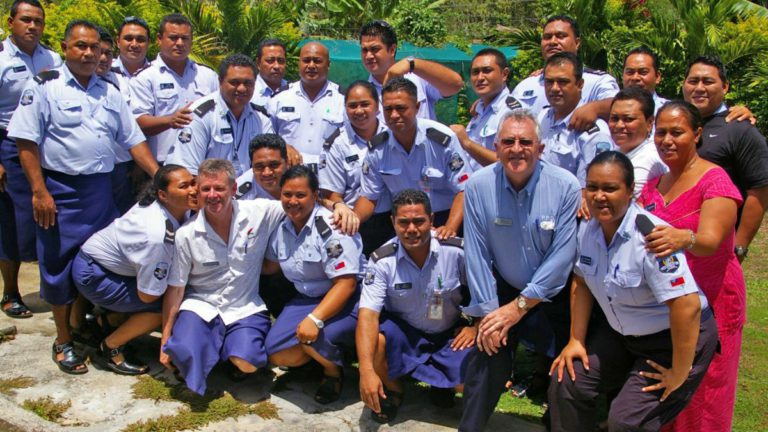
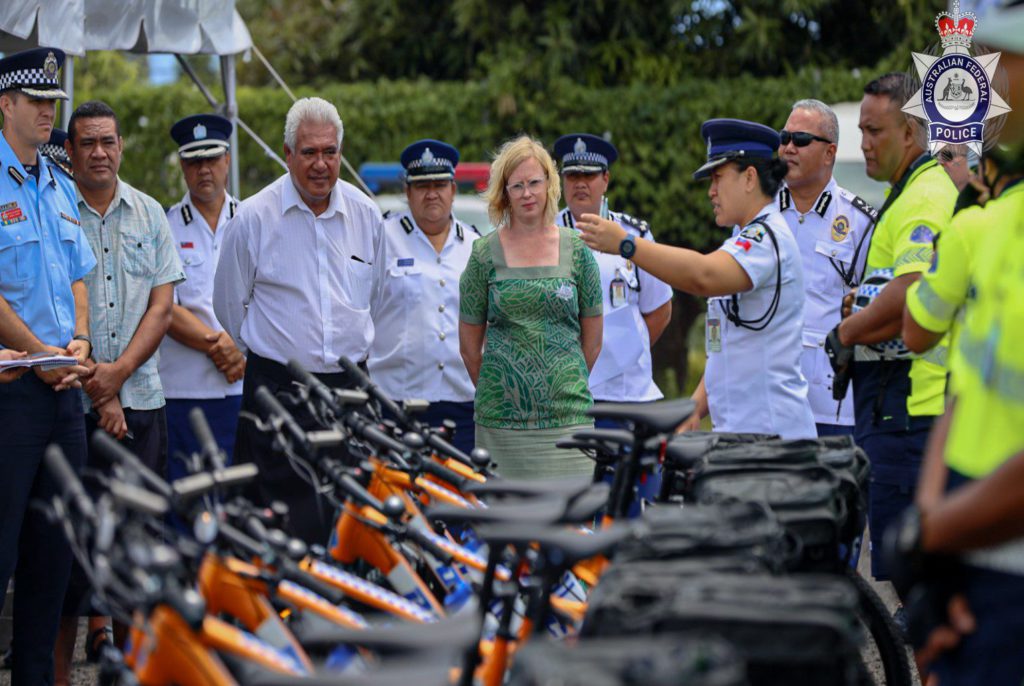
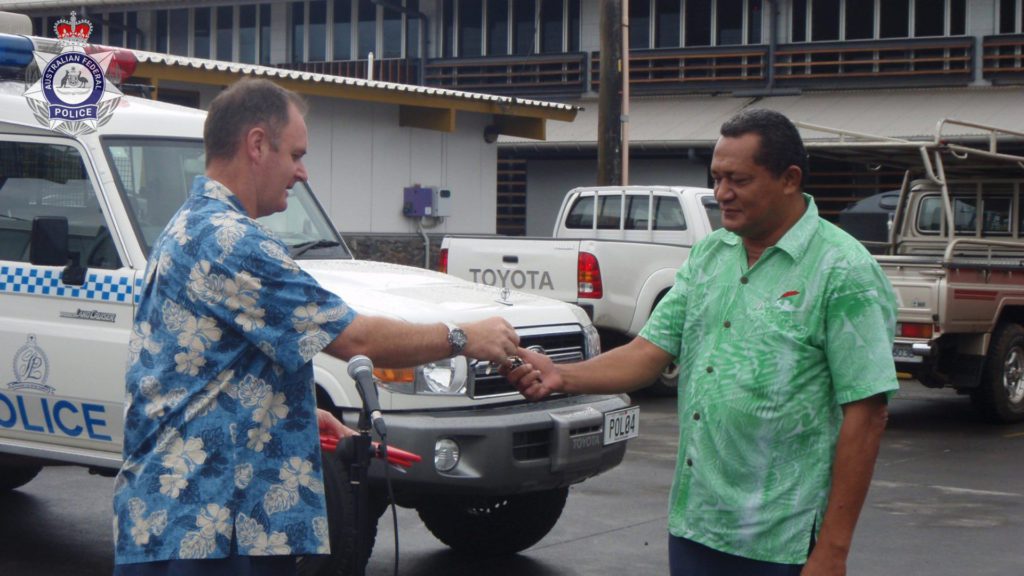
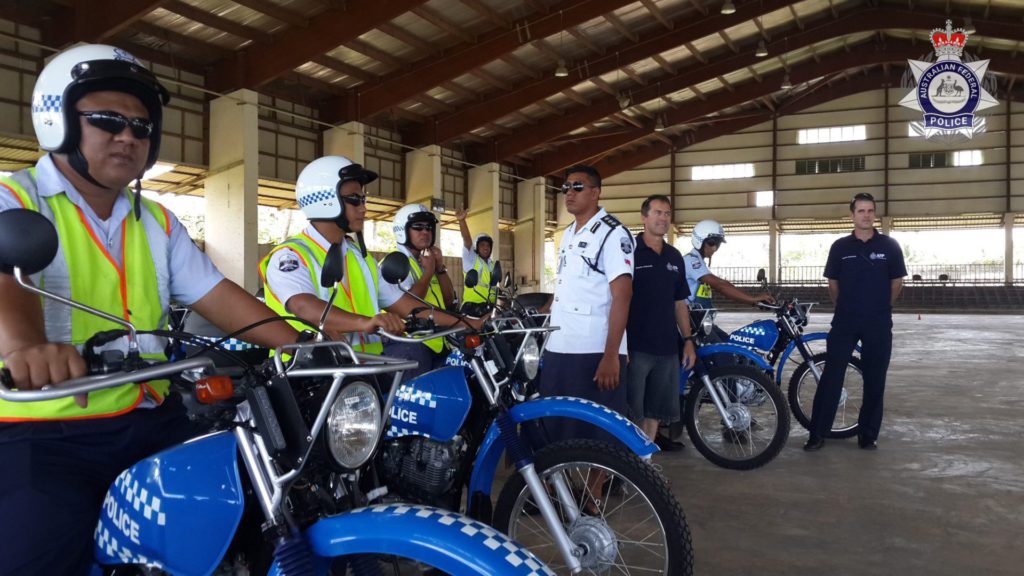
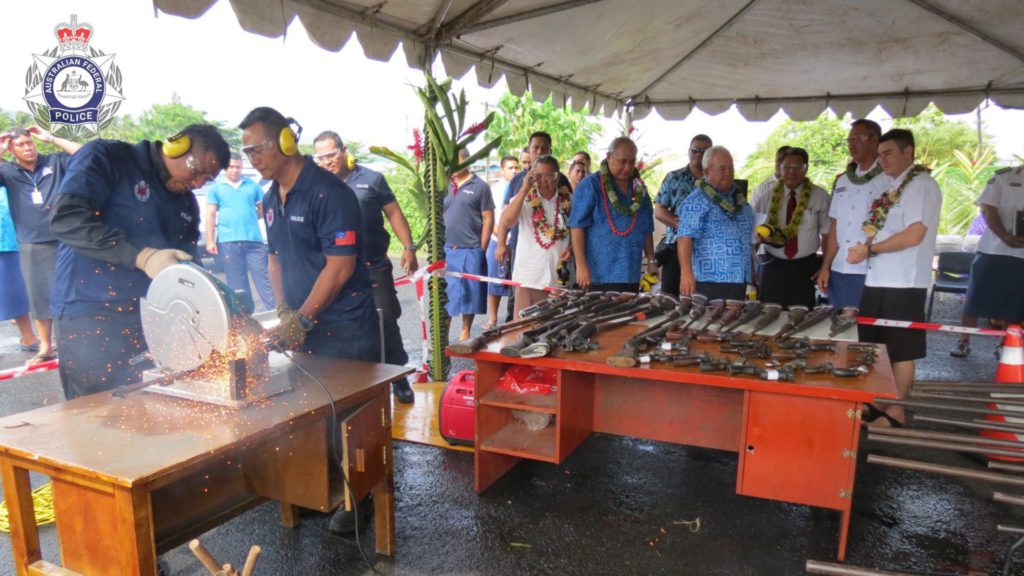
Boost in Policing Capabilities as Australia Hands Over Patrol Vessel to PNG

0

The Royal Papua New Guinea Constabulary (RPNGC) has received a significant boost to its policing capabilities with the handover of a Police Patrol Vessel (PPV) from the Australian Federal Police (AFP).

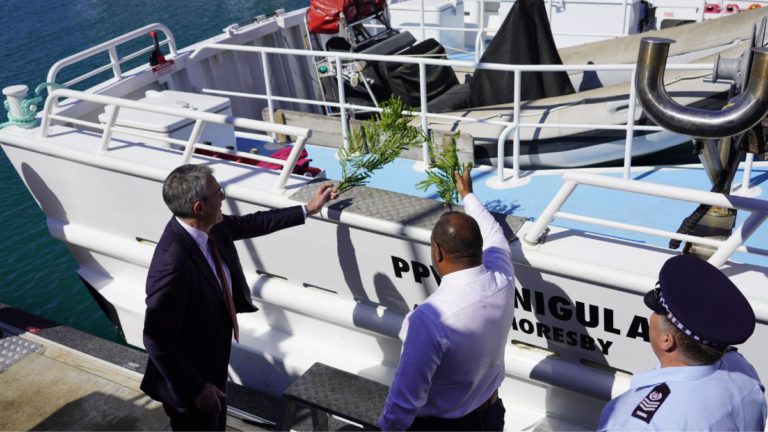
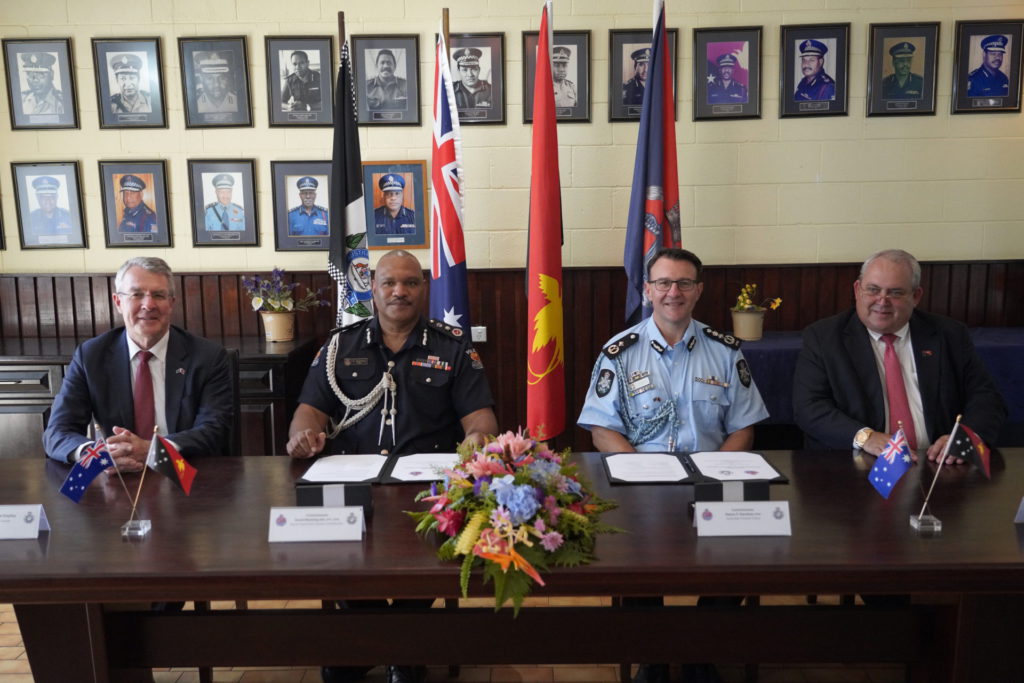
The vessel, named PPV Minigulai, was officially commissioned and handed over by Attorney-General Mark Dreyfus KC MP on 18 June 2024.

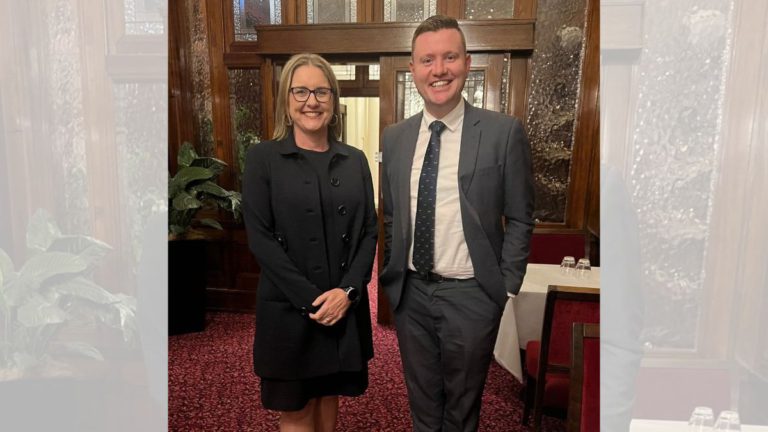
Image: Handover of a Police Patrol Vessel (PPV) from the Australian Federal Police (Source: AFP)

On the occasion, Attorney-General Dreyfus said: “Our partnership is based on our common history, our close geography and our shared vision for a peaceful, safe and prosperous Pacific.”

Originally acquired from the Tasmanian Police, PPV Minigulai will play a crucial role in combating transnational crime and supporting joint cross-border operations.

As part of the handover, the AFP, through the PNG-Australia Policing Partnership (PNG-APP), will collaborate closely with the RPNGC Water Police Directorate to train officers in the vessel’s operation.

The vessel is set to enhance the RPNGC’s ability to deliver policing services to remote coastal communities across Papua New Guinea.

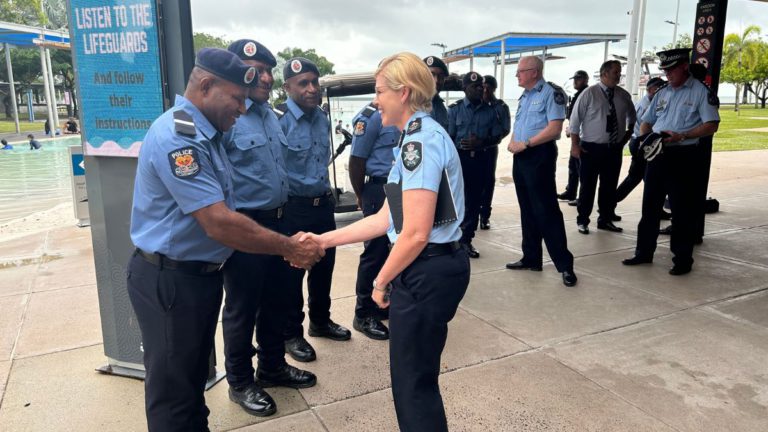
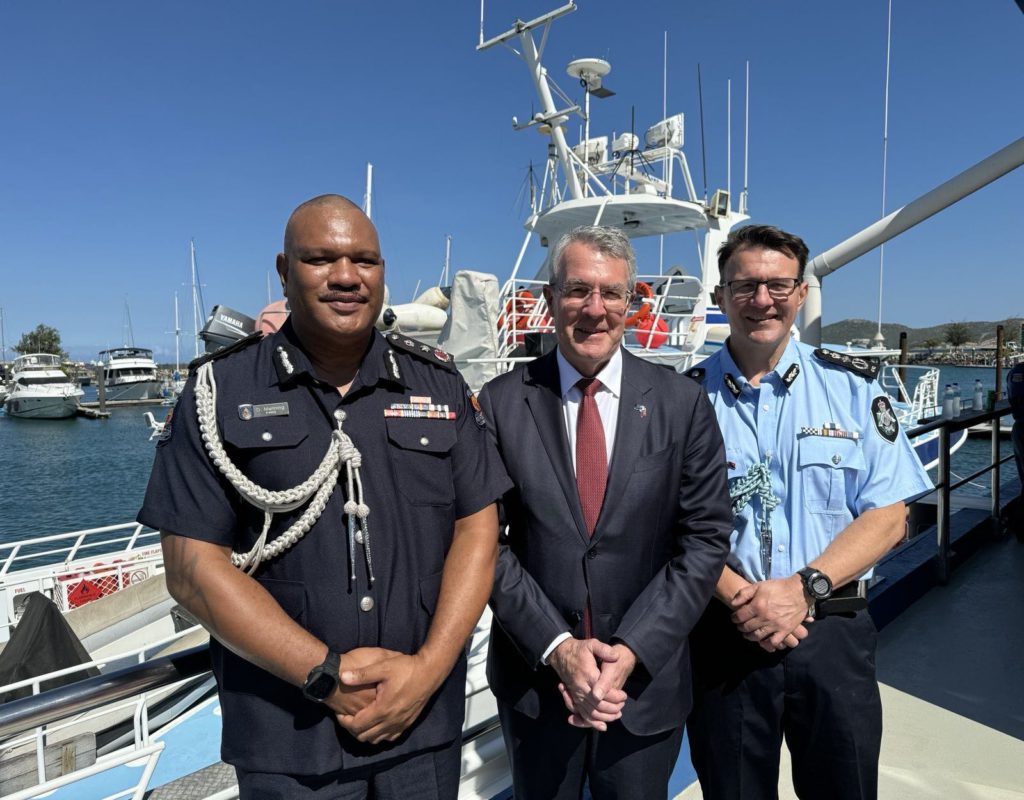
Image: Handover of a Police Patrol Vessel (PPV) from the Australian Federal Police (Source: AFP)

AFP Commissioner Reece Kershaw expressed pride in supporting the commissioning of PPV Minigulai, highlighting its importance in border protection, rescue operations, and marine enforcement.

“Police Patrol Vessel Minigulai is an important tool in the fight against transnational organised crime, and we look forward to continuing to work closely with the RPNGC to help keep communities safe,” Commissioner Kershaw said.

RPNGC Commissioner David Manning emphasised the vessel’s role in strengthening the rule of law in remote areas and maintaining a strong maritime presence.

“This new Police Patrol Vessel is the largest maritime asset in the RPNGC fleet, and will ensure we continue to develop capacity, delivering effective policing services across our country,” he said.

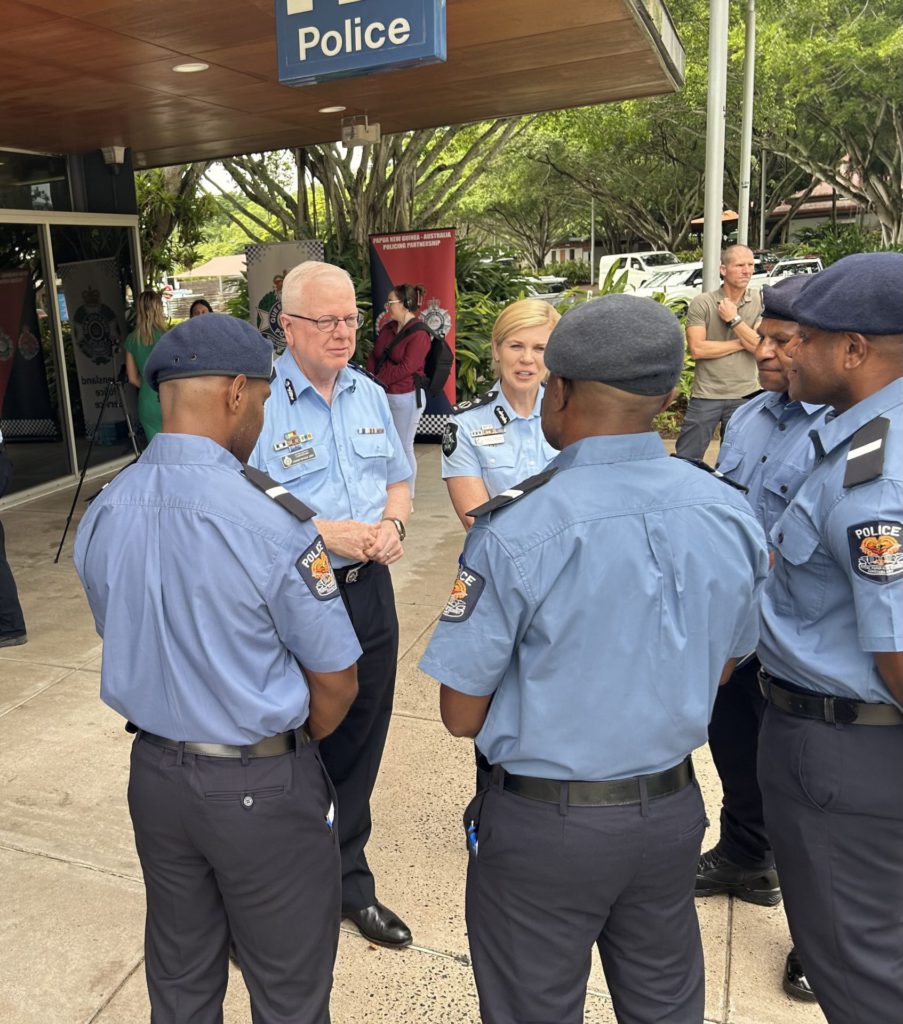
Image: Handover of a Police Patrol Vessel (PPV) from the Australian Federal Police (Source: AFP)

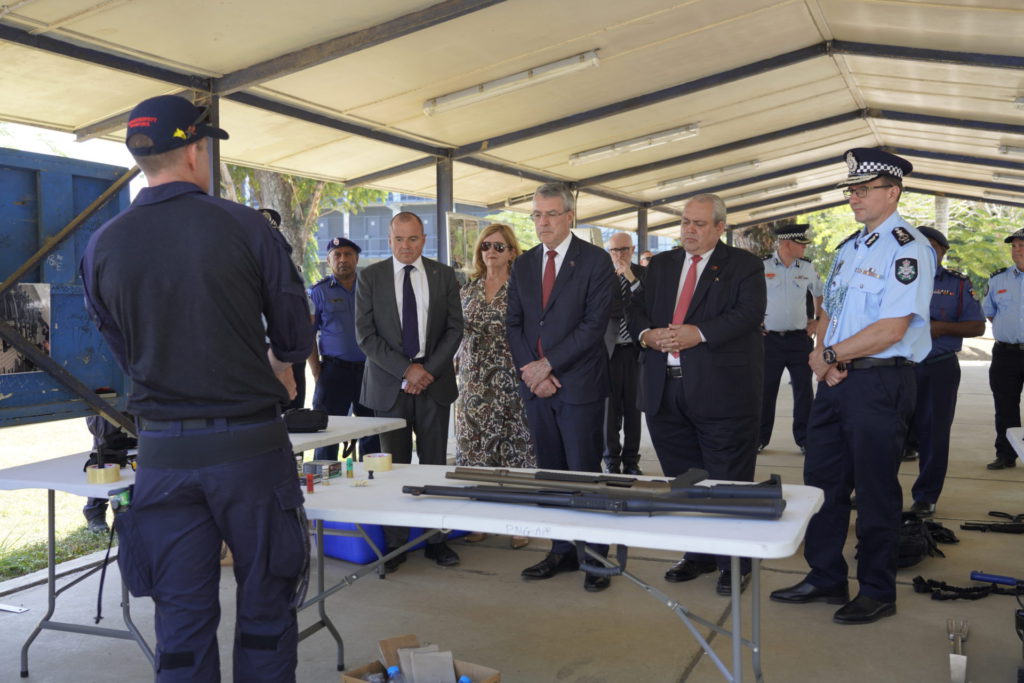
During his visit to Port Moresby, Mr Dreyfus toured the Bomana Police Training College with Commissioners Kershaw and Manning. The college will host a new Recruit and Investigations Training Centre, a project under the PNG-Australia Bilateral Security Agreement, aimed at providing a regional centre of excellence for developing key police capabilities across the Pacific.

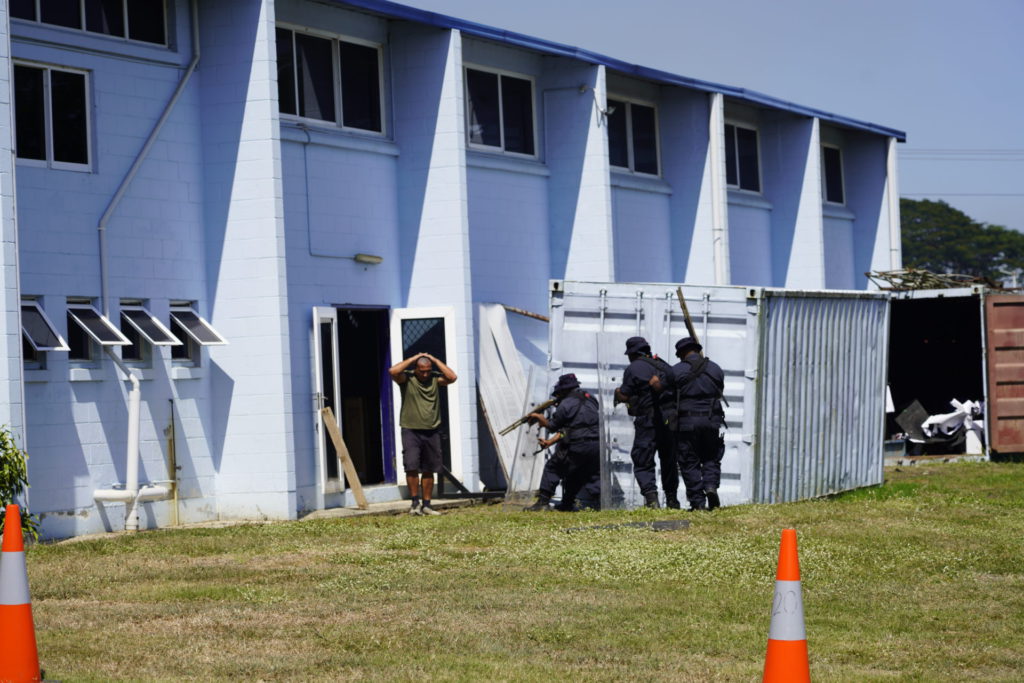
RPNGC officers showcased less-than-lethal use of force training to the visiting delegation, a training initiative supported by the AFP through the PNG-APP. This training addresses a capability gap in handling civil disorder and armed offenders and is currently being rolled out in Port Moresby and Lae, with plans to extend to other provincial centres including Mount Hagen and Kokopo.

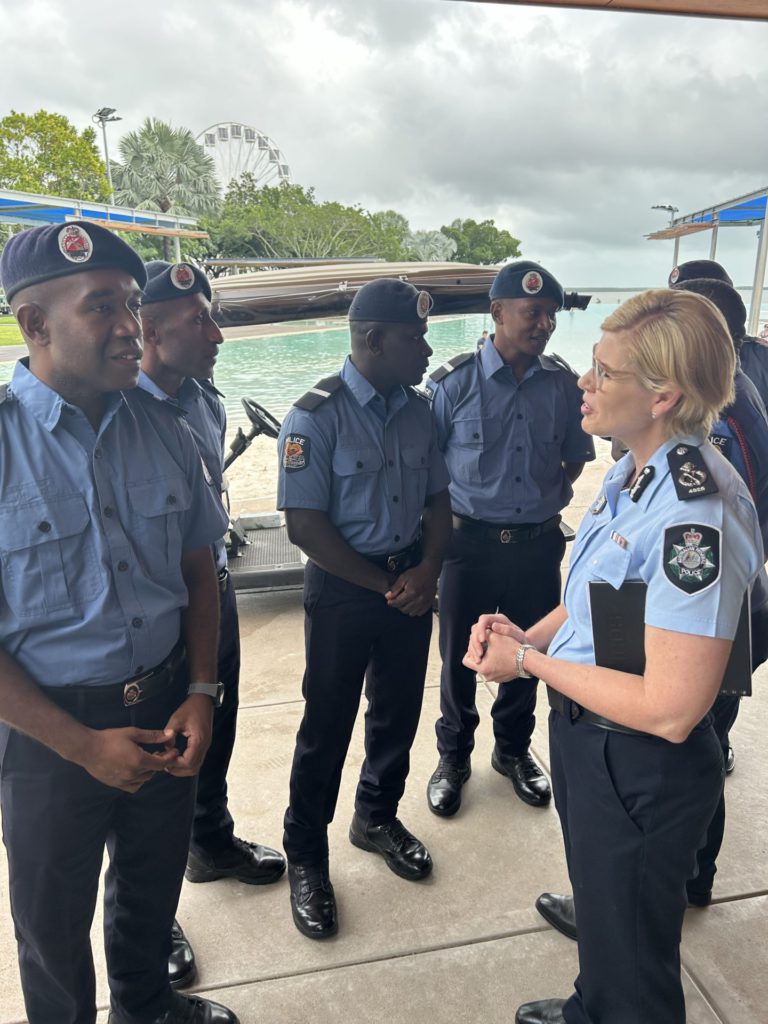
Image: PPV Minigulai/Bomana Training College (Source: AFP)

In line with Australia’s commitments under the bilateral security agreement, the AFP is also supporting the construction of police housing across priority provinces. The first police barracks-style accommodations will be built in Port Moresby, Kokopo, and Mount Hagen, facilitating the deployment of RPNGC recruits to regional centres upon graduation.

Further solidifying the partnership, Commissioners Kershaw and Manning signed an extension of the Advisory Deployment of Australian Federal Police Memorandum of Understanding. This agreement ensures AFP advisors will continue their close collaboration with the RPNGC until at least June 2027.

Image: Handover of a Police Patrol Vessel (PPV) from the Australian Federal Police (Source: AFP)

Commissioner Kershaw reaffirmed the AFP’s commitment to the partnership, stating, “The AFP and RPNGC have a longstanding and positive relationship, and we look forward to continuing our cooperation to equip the RPNGC with the support and tools needed for effective policing.”

Commissioner Manning echoed this sentiment, noting the strength and maturity of the relationship between the RPNGC and AFP. “Through the PNG-Australia Policing Partnership, we are delivering region-leading training and capabilities to our police force and supporting similar capabilities across our region,” he said.

Support Our Journalism

‘Global Indian Diaspora and Australia’s multicultural communities need fair, non-hyphenated, and questioning journalism, packed with on-ground reporting. The Australia Today – with exceptional reporters, columnists, and editors – is doing just that. Sustaining this needs support from wonderful readers like you.

Whether you live in Australia, the United Kingdom, Canada, the United States of America, or India you can take a paid subscription by clicking Patreon and support honest and fearless journalism.

Humour can make you a better workplace leader, if you use it properly – here’s how

0

By Nilupama Wijewardena, Charmine Hartel, and Ramanie Samaratunge

When asked to describe an ideal organisational leader, many people might be inclined to use quite serious adjectives such as solemn, determined or results-oriented.

Yet one trait is not only often overlooked, but also essential for managers.

Humour – whether it manifests as a funny anecdote, joke, performance or witty remark – is a crucial tool for good leadership.

When used well, humour can increase employees’ psychological empowerment, job performance and wellbeing, and also make people perceive their leaders as more effective.

But many managers are not humour-savvy. As a result, humour is often used ad hoc rather than as a tool. And because humour can be risky if misunderstood or misinterpreted, some leaders avoid using it at all.

Our recently published paper introduces a humour toolkit specifically for organisational leaders. Its primary goal is to deepen the understanding of the humour process. It’s about the “why”, “when” and “how” of using humour in a leadership context.

What is humour?

Most people have a good intuition for what humour is, but it can be a hard thing to put a finger on.

We define humour as “any form of communication that creates unexpected or surprising meanings, resulting in amusement for the listeners or audience”.

Leaders’ humour is therefore any message, verbal or nonverbal, shared by a leader which is – importantly – funny or amusing to the employee.

Women at work with notepads laughing and smiling around table
Effective use of humour by leaders can increase employee performance and satisfaction. RF._.studio/Pexels

Paul Malone’s seminal work on humour in the workplace called on leaders to use humour not just because it’s fun, but also as a tool to increase employees’ satisfaction and performance.

Where appropriate, this could include intentionally sharing a funny anecdote during a meeting, incorporating humour into an email, giving a funny pep talk to the sales team, or using amusing mimes to communicate instructions.

But leaders’ humour can also be unintentional, such as a sudden slip of the tongue during a presentation that makes the audience laugh. Both types of humour can help employees feel motivated, appreciated and less stressed at work.

Using humour effectively at work

At an academic level, there are two key elements of a “workplace humour event”: humour creation and humour appreciation.

Man laughing while looking at phone screen
Humour needs to be appropriate to the context and the task. GaudiLab/Shutterstock

It starts with a humour creator – in our case a leader – who, based on their intentions, delivers humour through a suitable channel (verbal or written) to an employee, and receives a response.

But the success of this interaction – humour appreciation – is influenced deeply by the quality of the relationship between the leader and employee and the context in which it occurs – the organisational culture, what an employee is doing and who else is present.

The employee’s characteristics, such as gender, cultural background and responsiveness to humour, are also important factors in how humour will be received.

Employees are more likely to appreciate leaders’ humour if:

  1. they have a high-quality, trusting relationship with the leader
  2. they perceive that the leader used humour with positive intentions
  3. the humour is appropriate to the situation
  4. the joke is inoffensive to them or others.

Delivering humour effectively is like any other storytelling. A leader must master the art of delivering a humorous message, using an appropriate tone of voice, stance, and range of facial and bodily expressions, with a particular emphasis on timing the punchline for maximum impact.

Leaders must also be able to listen and respond to their employees and stay attuned to the different emotional responses that different types of humour elicit from different employees.

Dos and don’ts for leaders when using humour

Using humour constructively in the workplace centres on paying close attention to relationships and effectively adjusting to different people and contexts. It should only be used with mutually constructive intentions.

Here are some general guidelines:

Dos:

  1. Get to know employees and develop trusting relationships before using humour with them. This helps to match humour type with employee characteristics.
  2. Regularly weave humour into interactions with employees to bring about desired work outcomes.
  3. Allow employees to respond back with humour.

Don’ts:

  1. Humour is counterproductive in instances where employees’ lives are threatened, or in dire or catastrophic situations.
  2. Never use negative humour (such as sarcasm or aggressive humour) that bullies or belittles employees.
  3. Don’t aim to be a stand-up comedian at work. Be natural and spontaneous.

Nilupama Wijewardena, Lecturer, College of Business and Law, RMIT University; Charmine Hartel, Distinguished Professor, Associate Dean Research Impact, Director Opportunity Tech Lab, Monash University, and Ramanie Samaratunge, Associate Professor, Department of Management, Monash University

This article is republished from The Conversation under a Creative Commons license. Read the original article.

"The

Support Our Journalism

‘Global Indian Diaspora and Australia’s multicultural communities need fair, non-hyphenated, and questioning journalism, packed with on-ground reporting. The Australia Today – with exceptional reporters, columnists, and editors – is doing just that. Sustaining this needs support from wonderful readers like you.

Whether you live in Australia, the United Kingdom, Canada, the United States of America, or India you can take a paid subscription by clicking Patreon and support honest and fearless journalism.
Australians Warned of Bitterly Coldest Day of the Year

0

Australians have been warned to prepare for a “bitterly cold” morning on Wednesday, 19 June 2024, as temperatures plummet to what could be the coldest day of the year so far.

A cold front sweeping in from the south will bring freezing mornings and nights, particularly affecting Sydney and Melbourne.

Wednesday is forecast to be the coldest morning of the year for both cities.

On Wednesday, Sydney’s minimum temperature could drop to six degrees, with a maximum of 18 degrees. Melbourne is expected to see temperatures plummet to three degrees with possible showers and a maximum of 12 degrees.

However, there could be some relief, as Sydney may experience “lovely winter sunshine” on Tuesday and Wednesday afternoons.

Meanwhile, Canberra will continue to endure freezing conditions with a minimum temperature potentially dropping to -3 degrees and a maximum of 10 degrees. Brisbane will see a low of nine degrees and a high of 22 degrees.

On the west coast, Perth will be relatively chilly with a low of eight degrees and a high of 18 degrees, while Darwin enjoys a low of 17 degrees and a high of 31 degrees.

In South Australia and Tasmania, Adelaide will “shiver” with a minimum temperature of nine degrees and a high of 17 degrees, as Hobart braces for frost with a low of five degrees and a high of 12 degrees.

Towards the end of the week, temperatures are expected to rise slightly as the cold front moves away.

Support Our Journalism

‘Global Indian Diaspora and Australia’s multicultural communities need fair, non-hyphenated, and questioning journalism, packed with on-ground reporting. The Australia Today – with exceptional reporters, columnists, and editors – is doing just that. Sustaining this needs support from wonderful readers like you.

Whether you live in Australia, the United Kingdom, Canada, the United States of America, or India you can take a paid subscription by clicking Patreon and support honest and fearless journalism.

Australian customers want more direct services to India, says Melbourne Airport CEO Lorie Argus

0

Melbourne, home to the largest Indian diaspora population in Australia, has seen a rapid increase in demand for direct flights to India. Over the past year, direct flights between Melbourne and India have increased by over 300 per cent compared to pre-pandemic levels.

Image: Melbourne Airport CEO Lorie Argus (Source: AAA Board)

In an interview with Indian Express, Melbourne Airport CEO Lorie Argus emphasised the significance of the Indian market for the airport, highlighting its vast potential for direct air connectivity.

“India is critical for us. It is at the top of the list in terms of importance because it is our fastest-growing long-haul market,” Argus stated.

“Even with the growth in direct connectivity to India, 70 per cent of the traffic between India and Australia still goes through connecting hubs like Singapore, and those hubs have really not suffered. This shows us that the demand is underserviced.”

When asked about the importance of direct flights versus connecting through hubs, Argus emphasised that point-to-point traffic is crucial for Melbourne Airport.

“we want to serve what our customers want. And our customers are telling us that they want more direct services.”

Image: Qantas and Indigo (Source: website)

Regarding Air India and IndiGo, Argus confirmed ongoing discussions to increase flights.

“IndiGo just announced their codeshare partnership with Qantas, which shows that they see the opportunity in Australia and I think most certainly we will see IndiGo flying to Australia with those new aircraft.”

Additionally, Argus highlighted Melbourne Airport’s status as the largest air cargo hub in Australia with the first quarter of this year reporting 40 per cent of all cargo going through Melbourne.

On the expansion of Air India’s services, Argus expressed a desire to see the Melbourne-Mumbai service increase from thrice weekly to daily.

“We would love to explore the opportunity of connecting with more Indian cities.”

Argus also confirmed discussions with Air India about establishing direct flights between Melbourne and Bengaluru.

Argus said that Melbourne Airport has grown direct services to India in the last 12 months by 330 per cent, and all those flights are going full. She attributed the high demand to Melbourne’s significant international Indian student population, which also brings in their families and relatives, as well as high-demand segments in IT and business.

Support Our Journalism

‘Global Indian Diaspora and Australia’s multicultural communities need fair, non-hyphenated, and questioning journalism, packed with on-ground reporting. The Australia Today – with exceptional reporters, columnists, and editors – is doing just that. Sustaining this needs support from wonderful readers like you.

Whether you live in Australia, the United Kingdom, Canada, the United States of America, or India you can take a paid subscription by clicking Patreon and support honest and fearless journalism.
AFP Seeks Next Generation Talent in Biggest Recruitment Campaign

0

The AFP is reminding Australians of the rewarding and exciting career of its Protective Service Officers (PSO) as the deadline approaches for applications to close in one of the AFP’s biggest recruitment campaigns.

Running since last year, the campaign has attracted hundreds of new PSOs applications ahead of an expansion of operations.

PSOs have the opportunity to be stationed across Australia in both metropolitan cities and regional areas, while also offering opportunities to work overseas as part of the agency’s global operations.

New recruits will join the more than 800 AFP PSOs who play a key frontline role in protecting the community and Commonwealth infrastructure.

PSOs provide an armed first-response capability at locations across the country, including Parliament House in Canberra, major Australian airports, Defence locations and other places of critical infrastructure.

Opportunities for regional work are available at Cairns and the Gold Coast in Queensland, Geraldton and Exmouth in Western Australia and Pine Gap in the Northern Territory.

Acting Commander Josh Kinghorn said the AFP was seeking recruits from a variety of backgrounds.

“Our PSO workforce is diverse and bring all sorts of life experiences with them when they start working for the AFP. What they all do have in common though is a desire to serve and protect their local and national communities, good fitness and health, a sense of adventure and a willingness to adapt and learn.”

Acting Commander Kinghorn added:

“As a PSO, there’s no chance of being caught behind a desk – they are our boots on the ground, working with important people across Australia and the world in an extremely rewarding career. What our workforce does is important. If you’re motivated to do something different that keeps our country safe — there’s a world of opportunities in the AFP.”

To be eligible to become a PSO, an applicant must be over the age of 18, an Australian citizen, hold a minimum education level of at least a Year 10 Certificate with further work experience or vocational education qualifications. Applicants must also hold current first aid and CPR certifications and be able to swim 100m freestyle.

PSO recruits are paid a wage to attend the AFP College in Canberra with meals and accommodation fees are covered.

After graduation PSOs receive a salary of $72,690 (inclusive of 22% composite) plus overtime and penalties. Those deployed to any of the three remote locations (Pine Gap, Exmouth and Geraldton) will receive up to $30,000 per year as part of the Remote Defence Capability Payment and an additional Remote Localities Allowance.

PSOs receive their roster months in advance which supports work/life balance and allows them make the most of their six weeks of annual recreational leave and four mandatory rest days.

Those willing to deploy to the AFP’s remote locations may be selected for advancement courses more quickly.

Support Our Journalism

‘Global Indian Diaspora and Australia’s multicultural communities need fair, non-hyphenated, and questioning journalism, packed with on-ground reporting. The Australia Today – with exceptional reporters, columnists, and editors – is doing just that. Sustaining this needs support from wonderful readers like you.

Whether you live in Australia, the United Kingdom, Canada, the United States of America, or India you can take a paid subscription by clicking Patreon and support honest and fearless journalism.
South Australia’s plan to ban political donations raises big risks as well as benefits

0

By Anne Twomey

The South Australian government has proposed banning political donations because of the risk and the perception that they buy undue influence and fuel corruption. Premier Peter Malinauskas said the aim was to “give South Australians confidence that decisions are being made because they’re the right thing to do”, rather than reciprocation for donations.

Malinauskas also said legislation had been challenging to draft, with much thought given to how it would hold up if tested in the High Court.

So what is this law proposing? How likely is it to withstand legal challenges? And what might it mean for democracy?

What would the law do?

The proposed law would ban political parties and candidates (other than new entrants) from receiving political donations. Instead, they would be provided with public funding for both campaigning and party administration. Campaign spending by political parties and candidates would be capped during the period prior to a state election to keep the cost of public funding down.

Political parties could still receive party membership fees of up to A$100 per member. This is intended to encourage parties to engage with the community and seek to broaden their membership. Otherwise, there is a real risk that if parties are fully supported by government handouts, they lose touch with the community.

Outside influence on campaigns

One of the biggest difficulties with political donation reform is the dilemma of how to treat third-party campaigners. These are the people and organisations that are not running for election themselves, but have a political interest to push. They include environmentalists, charities, miners, welfare groups, business groups, trade unions, pubs and clubs, and Indigenous bodies. If they spend more than a certain amount on political expenditure in the period prior to an election, they need to register.

Attempts to muzzle third-party campaigners, such as trade unions, from communicating their views during election campaigns have previously been struck down by the High Court. This is most likely why this new scheme would not place any caps on political donations to third parties or on their electoral expenditure. All third parties will have to do is meet disclosure requirements of donations, debts and spending. They will also have to use a “state campaign account” for receiving donations and for political expenditure.

The risk is once political parties and candidates are banned from receiving donations and have capped spending, political donations will instead flow to third parties, which can receive and spend as much as they like.

This gives significant political power to third-party interest groups, which can use their spending power to pressure parties and candidates to support their causes. It has the potential to distort election campaigns, with well-funded interest groups dominating the discourse and forcing political parties to dance to their tune.

A better approach may be to impose carefully calibrated expenditure caps on third parties, which allow them to communicate their political views effectively, but not to dominate the campaign at the expense of parties and candidates.

Rules around ‘associated entities’

When spending caps are applied, it is necessary to prevent parties from subverting them by establishing associated entities as third parties with their own separate caps, or in the South Australian case, no expenditure cap at all.

The proposed law prohibits arrangements between a political party and a third party to circumvent the expenditure cap. In addition, any donation to an “associated entity” is treated as a donation made to the party with which it is associated.

Controversially, the definition of an associated entity expressly excludes “registered industrial organisations” (trade unions). However, affiliation fees by trade unions are treated as donations and would fall within the donation ban.

Favouring the incumbents

Another problem with public funding schemes is that they are usually skewed towards major parties and incumbent politicians. This is because they are tied to the number of first-preference votes candidates receive and/or the number of seats a party wins at the election.

For example, once donations are banned, the SA scheme will provide funding for party administration between elections. Funding will be allocated to a registered political party according its number of MPs. The funding therefore not only favours incumbents, but also has the effect of favouring the government (which ordinarily has the most MPs) over the opposition and minor parties, even though all parties face many of the same administrative costs.

While 50% of this funding must be used for administration, the rest may be used for election expenditure. This effectively boosts the amount available to incumbent parties and favours the party that won the most seats at the previous election.

Independent MPs are given a smaller administrative assistance amount, which can be used for any purpose. In addition, MPs have staff and various allowances that give them a significant campaigning advantage.

New political parties and new independent candidates don’t get any of this support. Their only compensation is that they are exempt from the ban on political donations, so they can raise donations capped at $2,700.

There are also distinctions regarding advance funding for election campaigns. Under the SA scheme, registered political parties can claim a portion of their election campaign funding in advance, calculated by reference to first preference votes given to the party’s endorsed candidates at the previous general election.

As new entrants have no previous election results, they only have advance access to a relatively small fixed amount per endorsed candidate. They also cannot claim it unless they can list sufficient numbers of electors who endorse them (100 for a House of Assembly candidate and 500 for a Legislative Council candidate). If they don’t gain at least 4% of first preference votes at the ensuing election, they are entitled to no public funding at all.

Why does this matter? First, because a healthy democracy needs to accommodate newcomers, competition and disruption. A law that protects and supports existing parties only is likely to result in political stagnation and the loss of public engagement in politics.

Second, the High Court in the Australian Capital Television case struck down the validity of a law concerning political advertising on the grounds that it unfairly favoured incumbents. The law banned political advertising on electronic media, except for free political ads, 90% of which were allocated to parties with elected members, based on their proportion of first-preference votes at the previous election.

Only 10% of the free airtime was allocated to new and independent candidates. This was insufficient to save the law. Justice McHugh argued one cannot seek to justify a law as levelling the playing field if it “favours the sitting members and their political parties at the expense of the views of those who do not hold political power”.

Whether the SA scheme has done enough to support new entrants will be a matter for the High Court to assess if the scheme is challenged.

Constitutional challenges

Any law that has the effect of limiting political advertising is vulnerable to challenge for breaching the constitutionally implied freedom of political communication. In addition to the risk the law might be too skewed in favour of incumbents, the High Court has also previously struck down a law that sought to ban political donations from any organisation or person other than an enrolled voter.

In that case, however, there was a gap between the amount of public funding provided and the expenditure cap, which the party had to fund, including by donations. Whether a ban that goes even further (prohibiting all political donations) would be valid may depend upon the relationship between the expenditure cap and the various types of funding payable to parties, independents and new entrants.

Could this happen federally?

The federal government has signalled its interest in electoral reform. We don’t yet know its plans.

But one of the advantages of the federal system is reform experiments can be undertaken by states on a smaller scale. The rest of the country can then see whether they work and should be adopted elsewhere.

The SA proposal is one such experiment. If it passes, survives any constitutional challenges and fulfils its aims, others may well adopt it. But it needs to prove itself first.

Anne Twomey, Professor Emerita in Constitutional Law, University of Sydney

This article is republished from The Conversation under a Creative Commons license. Read the original article.

"The

Support Our Journalism

‘Global Indian Diaspora and Australia’s multicultural communities need fair, non-hyphenated, and questioning journalism, packed with on-ground reporting. The Australia Today – with exceptional reporters, columnists, and editors – is doing just that. Sustaining this needs support from wonderful readers like you.

Whether you live in Australia, the United Kingdom, Canada, the United States of America, or India you can take a paid subscription by clicking Patreon and support honest and fearless journalism.
Australian textile giant Warwick Fabrics launches first Experience Centre in India

0

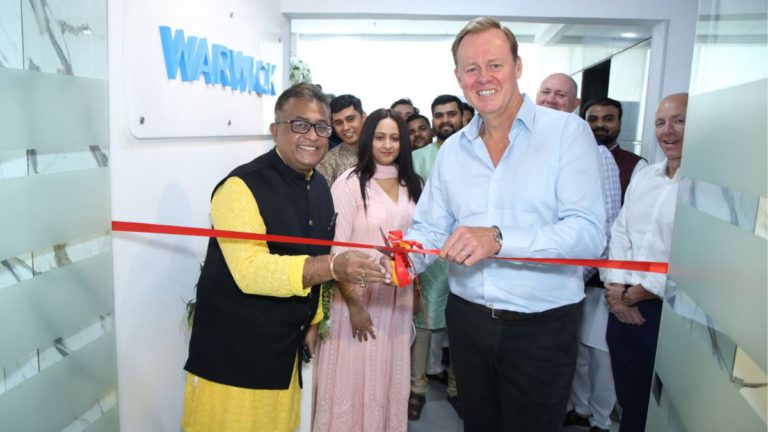
Warwick Fabrics (Australia) Pty. Ltd., a leader in fabric and textile innovation, has launched its first Experience Centre in Okhla, New Delhi, India.

Image: Warwick Fabrics’ New Delhi Experience Centre (Source: Austrade South Asia – LinkedIn)

The Australian Trade and Investment Commission (Austrade) South Asia celebrated this milestone, marking Warwick Fabrics’ expanding journey in India.

Image: Warwick Fabrics’ New Delhi Experience Centre (Source: Austrade South Asia – LinkedIn)

The event was graced by the Warwick Australia team, their experienced India team, and other prominent industry guests.

Warwick Fabrics, with operations in Australia, the United Kingdom, and New Zealand, and affiliations worldwide, is a key player in international design and distribution. The company exports interior upholstery and window covering textiles to over 50 countries.

Image: Warwick Fabrics’ New Delhi Experience Centre (Source: Austrade South Asia – LinkedIn)

Introduced to the Indian market in 2007, Warwick has established a strong presence in the mid to high-end market segment over the past 16 years.

Warwick Fabrics India has diversified its offerings, supplying fabric to sectors such as kitchen and wardrobe manufacturing, gym equipment, multiplex developments, home theatres, coworking spaces, and hotels.

Image: Warwick Fabrics’ New Delhi Experience Centre (Source: Austrade South Asia – LinkedIn)

The company’s 20,000 sq ft state-of-the-art warehouse, equipped with advanced technology, services growth corridors throughout South Asia, solidifying Warwick Fabrics as a preferred supplier in the architectural, interior, and commercial sectors.

Support Our Journalism

‘Global Indian Diaspora and Australia’s multicultural communities need fair, non-hyphenated, and questioning journalism, packed with on-ground reporting. The Australia Today – with exceptional reporters, columnists, and editors – is doing just that. Sustaining this needs support from wonderful readers like you.

Whether you live in Australia, the United Kingdom, Canada, the United States of America, or India you can take a paid subscription by clicking Patreon and support honest and fearless journalism.
Transforming community health and wellbeing through ancient wisdom and modern science

0

In a refreshing departure from mainstream health trends dominated by obsession over ever-changing diets and supplements, a transformative initiative has emerged within Victoria’s Maroondah Indian Community (MIC).

Teaming up with Peak Health Mastery (PHM), led by Dr Arun Dhir and Monique Davey, this collaboration seeks to redefine health and wellbeing through a blend of ancient Indian wisdom and modern science.

The focal point of their effort, the Radical Wellness 101 program, unfolded over eight weeks, from April 21st to June 9th, marking a significant milestone for 15 participants from diverse backgrounds.

Using a revolutionary tool named the ‘Health Barometer,’ participants tracked their progress across ten vital parameters before and after the program.

Astonishingly, they collectively reported enhancements ranging from 10% to 30% in just two months.

One participant shared her success story, stating,

“I lost 3 kilos over eight weeks, didn’t experience pre-menstrual (PMS) symptoms, and felt exuberant energy levels throughout the day.”

Dr Dhir, the program’s leading figure, underscored the necessity for medical professionals to dispel health misconceptions.

His philosophy, encapsulated by the quote “Health is not merely the absence of disease. True health radiates through one’s aura, influencing even those in the outermost circles,” resonated deeply with participants.

Gagan Agrawal, MIC’s secretary, stressed the significance of collaboration among local governments, non-profits, and community members in addressing health challenges.

“Bringing together local health experts and community members allows us to share ideas and address issues specific to our environment. This approach not only tackles local health concerns but also unites diverse communities around a common priority—our health!”

The program’s success lies in its holistic approach, integrating structured education, physical activity, and mindfulness practices. Each 90-minute session covered mind, body, heart, gut, and soul, comprising 30 minutes each of education, exercise, and meditation.

MIC and PHM have announced an ongoing partnership to expand this transformative initiative to a wider audience. This collaboration not only promises to redefine health paradigms but also aims to build a healthier, more united community in Maroondah and beyond.

Support Our Journalism

‘Global Indian Diaspora and Australia’s multicultural communities need fair, non-hyphenated, and questioning journalism, packed with on-ground reporting. The Australia Today – with exceptional reporters, columnists, and editors – is doing just that. Sustaining this needs support from wonderful readers like you.

Whether you live in Australia, the United Kingdom, Canada, the United States of America, or India you can take a paid subscription by clicking Patreon and support honest and fearless journalism.

‘Blackmail’ of students engaged in contract cheating prompts crackdown by Australian universities

0

The Tertiary Education Quality and Standards Agency (TEQSA), Australia’s higher education watchdog, has raised alarms that cheating syndicates run by criminal organisations are becoming more aggressive.

Dr Helen Gniel, TEQSA’s director of the academic integrity unit, told SMH:

“We know that blackmail [of students] happens. We’ve seen direct evidence where people have written to TEQSA and said ‘I did all this student’s work and they didn’t pay me, I want you to take away their degrees’. [There’s also been] an uptick in aggression directed at the staff who do the really important work of detection.”

TEQSA has recently also blocked 79 new websites offering contract cheating services, bringing the total number of banned pages to nearly 370.

Thousands of students across Australia have been accused of cheating and paying others to complete their work, resulting in an increase in contract cheating which is an academic misconduct.

New data shows that the University of Sydney reported a staggering 1000% increase in serious academic cheating cases referred to the registrar between 2021 and 2023, necessitating additional resources to clear a backlog of cases.

A spokeswoman for University of Sydney told SMH:

“Alongside a number of indicators of misconduct, we also use a range of technologies to detect and investigate cases. Where appropriate, we investigate writing style, IP address, website access and use analytical data, text- and code-matching software, web bots and other resources. Our decision maker then makes a finding on the balance of probability, taking all the evidence into account.”

Meanwhile, the University of Wollongong saw a nearly 50% rise in substantiated academic misconduct allegations in 2023 compared to 2022. Much of the increase at the University of Wollongong was attributed to a spike in misconduct during online exams. In contrast, the University of Sydney’s move away from online exams in 2023 led to a decrease in exam-related misconduct. However, the university noted a “concerning increase” in contract cheating, where students pay others to complete their work.

Dr Paul Watters, a Melbourne-based academic and cybersecurity expert, said in a statement on LinkedIn:

“I think we need to seriously consider 100% invigilation as the only valid mechanism for assessment. If the levels are this bad at a Go8, imagine the rest of the sector.”

Support Our Journalism

‘Global Indian Diaspora and Australia’s multicultural communities need fair, non-hyphenated, and questioning journalism, packed with on-ground reporting. The Australia Today – with exceptional reporters, columnists, and editors – is doing just that. Sustaining this needs support from wonderful readers like you.

Whether you live in Australia, the United Kingdom, Canada, the United States of America, or India you can take a paid subscription by clicking Patreon and support honest and fearless journalism.

High-tech Guardian-class patrol boat runs aground on first voyage in Fiji

0

A Pacific patrol boat has run aground in Fiji during its first voyage, just months after being handed over by the Australian government.

Fiji’s Navy confirmed that the RFNS Puamau struck a reef while patrolling the remote Lau group of islands, midway through its inaugural two-week mission.

The high-tech vessel was commissioned less than a month ago, after being gifted to Fiji’s Prime Minister Sitiveni Rabuka at a ceremony in Perth in March.

In a statement, Fiji’s Navy emphasised that their primary concern is “the safety and welfare of all crew onboard and safely recovering the vessel.”

“A crisis management team has been assembled to oversee the situation, with emergency support crews en route and secondary support arrangements underway in collaboration with our partners.” 

The crew of RFNS Puamau returned to Suva after being collected by another vessel, RFNS Savenaca.

Fiji’s Navy has deployed another patrol boat to aid the stricken vessel, while efforts are underway to pump water out of the engine room to control flooding.

Australia is assisting with the recovery operation and has sent specialised recovery equipment that would be used to extract the boat from the reef, with a second vessel set to transport the gear to the site.

An Australian defence spokesperson told media:

“Australia remains committed to being the security partner of choice for Pacific countries. Our view, shared by Pacific leaders, is that security in the region is best provided by the Pacific family.”

Nineteen Guardian-class patrol boats have been delivered to Pacific nations under the Pacific Maritime Security Program.

Last year, Australia handed over a new Guardian-class patrol boat to Samoa after the $30 million Nafanua II ran aground in October 2021, rendering it beyond repair. Other incidents include Tuvalu’s HMTSS Te Mataili and Vanuatu’s RVS Takuare, which were both badly damaged by twin cyclones in March last year.

Australia has since announced the fast-tracking of a replacement boat for Tuvalu, and the RVS Takuare is currently being repaired in Cairns.

Support Our Journalism

‘Global Indian Diaspora and Australia’s multicultural communities need fair, non-hyphenated, and questioning journalism, packed with on-ground reporting. The Australia Today – with exceptional reporters, columnists, and editors – is doing just that. Sustaining this needs support from wonderful readers like you.

Whether you live in Australia, the United Kingdom, Canada, the United States of America, or India you can take a paid subscription by clicking Patreon and support honest and fearless journalism.

Australia Secures Unbeaten Streak with a Thrilling Victory Over Scotland

0

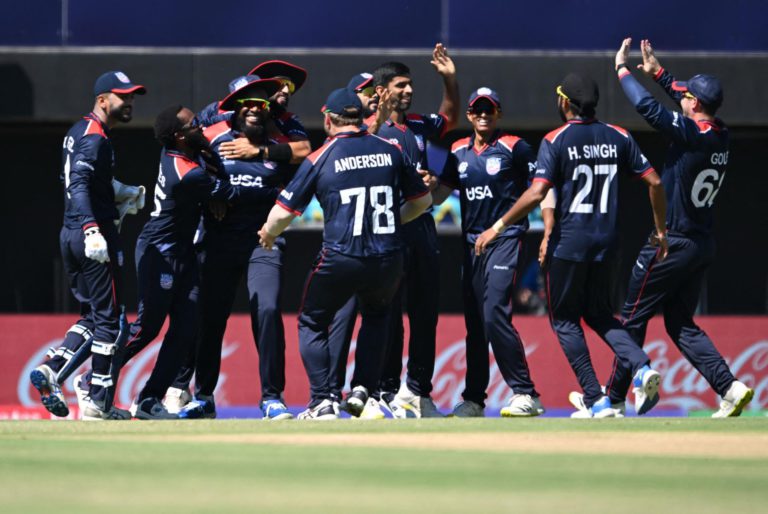
Australia’s unbeaten streak in the ICC T20 World Cup continued as they triumphed over Scotland by five wickets in a gripping match on Sunday. This win placed Australia at the top of Group B with a perfect record of four wins in four games, amassing eight points.

Conversely, with two wins, one loss, and one no-result, Scotland finished third, missing out on the Super Eights. Defending champions England, sharing the same win-loss record as Scotland, advanced due to a superior net run rate.

A Challenging Run Chase

Chasing a target of 181 runs, Australia faced early hurdles. Spinner Brad Wheal’s maiden over in the second over, which included David Warner’s dismissal for just one run, set the tone for a challenging chase. Warner was caught by Scotland’s skipper Richie Berrington. Australia stood at 2/1 in 1.2 overs.

Skipper Mitchell Marsh joined Travis Head on the crease, but the partnership was short-lived. Marsh was dismissed by Safyaan Sharif for eight runs, with Charlie Tear taking a catch at deep midwicket. Australia was 34/2 in 5.1 overs.

At the end of the powerplay, Australia struggled at 36/2, with Glenn Maxwell (1*) and Head (24*) at the crease.

The Comeback

Despite losing Maxwell for 11 runs in the eighth over to Mark Watt’s turning delivery, Australia began to find stability. At the halfway mark, Australia was 74/3 with Head and Marcus Stoinis at the crease. The duo played a critical role in reviving the innings. A particularly fruitful 14th over saw Stoinis hit Michael Leask for two sixes and a four, helping Australia reach the 100-run mark in 13.4 overs.

Head completed his half-century in 45 balls, leading Australia to 121/3 by the end of the 15th over. However, Head’s dismissal for 68 runs in 49 balls by Sharif’s delivery slowed Australia’s momentum temporarily.

Stoinis, undeterred, reached his half-century in just 25 balls. Despite his dismissal by Watt after scoring 59 runs, Australia remained on course, needing 26 runs from the final three overs.

Sealing the Victory

Tim David and Matthew Wade ensured the chase was completed without further hiccups. David’s boundaries in the 18th over brought the target within reach. Despite a dropped catch in the final over, Australia sealed the victory at 180/5 with two balls to spare.

Mark Watt and Safyaan Sharif were notable bowlers for Scotland, with figures of 2/34 and 2/42 respectively.

Scotland’s Innings

Earlier, Scotland set a competitive target of 181 runs, led by Brandon McMullen’s explosive 60 off 34 balls. Despite losing opener Michael Jones early, Scotland recovered with a strong partnership between McMullen and George Munsey, who scored 35 runs. Richie Berrington contributed a crucial unbeaten 42 runs, helping Scotland to a respectable total.

Australia’s bowlers did an excellent job, particularly Glenn Maxwell, who took 2/44. Nathan Ellis, Ashton Agar, and Adam Zampa each chipped in with a wicket.

Looking Ahead

Australia’s victory highlights their dominance in the group stage, setting a confident tone as they move into the Super Eights. Their consistent performance underscores their readiness to contend for the T20 World Cup title. Meanwhile, Scotland will reflect on missed opportunities and aim for better outcomes in future tournaments.

Brief Scores:

  • Scotland: 180/5 (Brandon McMullen 60, Richie Berrington 42*, Glenn Maxwell 2/44)
  • Australia: 186/5 in 19.4 overs (Travis Head 68, Marcus Stoinis 59, Mark Watt 2/34)

Stay tuned for more updates as the ICC T20 World Cup progresses.

Support Our Journalism

‘Global Indian Diaspora and Australia’s multicultural communities need fair, non-hyphenated, and questioning journalism, packed with on-ground reporting. The Australia Today – with exceptional reporters, columnists, and editors – is doing just that. Sustaining this needs support from wonderful readers like you.

Whether you live in Australia, the United Kingdom, Canada, the United States of America, or India you can take a paid subscription by clicking Patreon and support honest and fearless journalism.

Is your child experiencing ‘winter burnout’? Here’s what to look out for

0

By Samantha Vlcek

We know children often miss more school days in the winter months, as sickness sets in.

But at this time of year, parents and teachers can also notice children disengaging from preferred activities and finding it more difficult to get through the day.

What are the signs a child may be burned out? And how can you help?

The winter months are tough

Burnout can happen at any time, but children are more likely to experience seasonal fatigue during winter, making burnout more likely.

Cold, wintry weather and shorter hours of sunlight have impacts on children, just like the rest of us.

At school, there is an increased likelihood of rainy day programs where children stay inside for most of the day. These changes limit opportunities for children to exert energy through a game of footy or racing friends onto the monkey bars.

Poor weather conditions also reduce opportunities to head to a playground after school or shoot some hoops in the driveway.

Classrooms are a breeding ground for illness and as children get more rundown, they are more likely to get sick.

Beyond the downsides of being unwell, when children are absent they are isolated from their peers. Children at school may also feel lonely when their friends are away.

It’s now also many months since the long summer break. So it is not surprising your child might might be running out of steam.

A child hides under cushions on a couch.
Winter months can see more sickness and less time to be outdoors. Pixabay/ Pexels, CC BY

What is burnout?

Burnout is more than just feeling tired or wanting a break from regular activities. Burnout refers to a state of mental, physical and emotional exhaustion.

We know it can impact children as well as adults.

In children, we see signs of burnout in the way they approach previously enjoyed activities and relationships.

In the short term we see more school refusal, sleeping a lot more or finding it difficult to get to sleep, increases in appetite or eating a lot less, coming home excessively tired, being less interested in talking about their day, or having more arguments with friends.

We also see children try to avoid attending extracurricular activities or family events they typically enjoy.

There are long-term impacts

But the long-term impacts of unsupported burnout are even more damaging.

Research shows that prolonged feelings of stress and exhaustion in children can lead to disengagement from learning activities, and school avoidance.

When fatigue and anxiousness last for more than a few days, we can also see children not want to socialise with peers, which in turn can lead to social problems and further isolation.

Without proactive supports, research shows being burned out can lead to ongoing reductions in physical fitness, attention span and working memory (where we hold short-term information).

What can parents do?

Parents should be on high alert for signs of burnout at this stage of the term. There are lots of ways you could support your child, including:

  • give your child a wellbeing break away from school for a day or two to reset and recharge
  • take a short pause on extracurricular activities and reevaluate the necessity of other regular commitments. Is your child doing too much?
  • organise some special family time, such as watching a show together or playing a board game (homework tasks can wait)
  • speak to your child about how it is OK to reach out to you or other trusted adults if they are finding things more difficult than usual.

If your child isn’t bouncing back to their usual self within a few days, talk to your child’s teacher and see what they are noticing. Teachers will have insights into any changes in the classroom routine that might be influencing your child’s mood or behaviour.

If you remain concerned, make an appointment with their GP or paediatrician to discuss what you are noticing and investigate ways to help.

What can teachers do?

Teachers can also help their students through the gloomy winter months. No doubt, they too will need to recharge their own energy levels, almost halfway into the year.

Teachers could focus more on wellbeing than education concepts. This could include “gentle afternoons” with mindfulness activities, yoga sessions or a focus on physical and cognitive games.

There is no perfect recipe for how long these strategies are needed – parents and teachers know their children best, and can evaluate the situation and find the most appropriate path forward.

The goal is to reduce the likelihood of children being burned out, and ensure they can be in the best frame of mind to enjoy school, their lessons and their friends.

Samantha Vlcek, Lecturer in inclusive education, RMIT University

This article is republished from The Conversation under a Creative Commons license. Read the original article.

"The

Support Our Journalism

‘Global Indian Diaspora and Australia’s multicultural communities need fair, non-hyphenated, and questioning journalism, packed with on-ground reporting. The Australia Today – with exceptional reporters, columnists, and editors – is doing just that. Sustaining this needs support from wonderful readers like you.

Whether you live in Australia, the United Kingdom, Canada, the United States of America, or India you can take a paid subscription by clicking Patreon and support honest and fearless journalism.

Trudeau’s economic and migration policies blamed for historic decline in Canada’s living standards

0

The latest data from Statistics Canada on gross domestic product (GDP) for the first quarter of 2024 reveals a disturbing trend: while the Canadian economy is technically growing, the living standards of Canadians continue to fall.

The report noted: “If we factor in the new data for the beginning of 2024, we see that the current ongoing decline is worsening. Inflation-adjusted per-person GDP now sits 3.1 per cent below the level it was in mid-2019, and the decline is approaching five-years in length. In other words, Canada is approaching the milestone of experiencing the longest decline in individual living standards of the last 40 years.”

This development casts a critical spotlight on the economic policies of Prime Minister Justin Trudeau’s government.

Key Findings:

  • GDP Growth: The inflation-adjusted GDP, which measures the final value of all goods and services produced, increased by 0.4% in the first quarter of 2024.
  • Living Standards Decline: Inflation-adjusted GDP per person, a key indicator of individual living standards, fell by 0.2%, decreasing to $58,028.
  • Population Growth: Canada’s population grew by 0.6% during the same period, outpacing economic growth.

The disconnect between overall economic growth and individual living standards can be attributed to the Trudeau government’s economic policies. The rate of economic growth has been insufficient to keep up with the rapid population increase, leading to a decline in per-person GDP.

From mid-2019 to the end of 2023, inflation-adjusted per-person GDP fell from $59,905 to $58,134, a 3.0% drop. The recent data for 2024 shows an ongoing decline, now totaling 3.1% below mid-2019 levels.

This decline is nearing five years, making it one of the longest and most significant declines in living standards over the past 40 years. It is second only to the more than five-year decline from mid-1989 to 1994, which saw a 5.3% drop.

The report adds: “Weak economic growth combined with a fast-growing population over the last several years have resulted in Canadians experiencing a marked and prolonged decrease in living standards. With new data showing no sign of improvement, Canadians and governments across the country should realize that the status quo cannot continue.”

This data underscores the urgent need for the Trudeau government to reassess and overhaul its economic policies. With Canadians experiencing one of the longest and deepest declines in living standards in decades, it is clear that the current approach is unsustainable.

Experts are calling the Trudeau government to take effective measures to ensure that economic growth translates into improved living standards for all Canadians.

Support Our Journalism

‘Global Indian Diaspora and Australia’s multicultural communities need fair, non-hyphenated, and questioning journalism, packed with on-ground reporting. The Australia Today – with exceptional reporters, columnists, and editors – is doing just that. Sustaining this needs support from wonderful readers like you.

Whether you live in Australia, the United Kingdom, Canada, the United States of America, or India you can take a paid subscription by clicking Patreon and support honest and fearless journalism.

More than 13 years jail for man who pleaded guilty to child sexual abuse offences

0

A Victorian man has been sentenced to 13 years and eight months’ imprisonment by the Melbourne County Court after pleading guilty to 13 child abuse offences, including the persistent sexual abuse of a child under 16 years of age outside of Australia.

The Epping man, 46, communicated with overseas-based victims via social media applications to solicit child abuse material and arrange to meet minors in the Philippines across an extended period. There was evidence on some occasions he made payments to overseas facilitators in exchange for child abuse material.

AFP Detective Superintendent Bernard Geason said the AFP’s strong relationships with law enforcement partners were crucial to bring to justice a man who caused significant harm to young victims.

“We cannot send a clearer message to offenders – if you engage in these abhorrent activities, you will be found and face the full force of the law. Online child abuse causes significant harm to victims who suffer each time images or videos of their abuse is accessed and shared.”

Australian Border Force (ABF) officers conducted a search on the man at Melbourne International Airport on his arrival from the Philippines in September 2022. The man’s phone was found to contain child abuse material and seized.

ABF Superintendent Kelly-Anne Parish said the ABF remained absolutely resolute in its approach to child exploitation material.

“Cases like these sadly demonstrate that child abuse material is not a victimless crime. Our officers are dedicated to disrupting this abhorrent crime.”

The AFP took carriage of the investigation and, with the assistance of Victoria Police, executed a search warrant at the man’s home in November 2022, seizing a laptop and external hard drives.

A forensic review of the electronic devices, including the mobile phone, uncovered more than 900 files of child abuse material, including self-produced videos of the man engaging directly in sexual intercourse and sexual activity with a child under 16 years of age in the Philippines.

As a result of information provided to the Philippine Internet Crimes Against Children Centre (PICAAC) via the AFP Manila Post, two nine-year-old girls were removed from harm by the Philippine National Police in February and March 2023.

The man pleaded guilty on 26 March 2024 to:

  • One count of persistent sexual abuse of a child outside of Australia, contrary to subsection 272.11(1) of the Criminal Code (Cth); and
  • Nine counts of groom a person to make it easier to engage in sexual activity with a child outside Australia, contrary to subsection 272.15A(1) of the Criminal Code (Cth);
  • Two counts of use carriage service to solicit child abuse material and cause child abuse material to be transmitted to himself, contrary to subsection 474.22(1) of the Criminal Code (Cth);
  • One count of possess or control child abuse material obtained or accessed using a carriage service, contrary to subsection 474.22A(1) of the Criminal Code (Cth).

The man was subsequently sentenced to a total of 13 years and eight months’ imprisonment with a non-parole period of nine years and six months on Tuesday, 11 June, 2024.

Support Our Journalism

‘Global Indian Diaspora and Australia’s multicultural communities need fair, non-hyphenated, and questioning journalism, packed with on-ground reporting. The Australia Today – with exceptional reporters, columnists, and editors – is doing just that. Sustaining this needs support from wonderful readers like you.

Whether you live in Australia, the United Kingdom, Canada, the United States of America, or India you can take a paid subscription by clicking Patreon and support honest and fearless journalism.

7,000 years tools discovered at sacred Aboriginal women’s site used for birthing ceremonies

0

By Irina Ponomareva, Colin McLennan, Justine Kemp, and Marie Wallace

Investigation of a sacred area at Avon Downs in Jangga Country, Central Queensland, has uncovered evidence of stone tool production in a place that was traditionally restricted to women.

We detail our findings in newly published research in collaboration with archaeological expert Liz Hatte and Jangga Elders Colin McLennan and Marie Wallace.

Irina Ponomareva

Our excavation of the layered sediments at Avon Downs reveals a long history of raw stone extraction and tool making. In the short period of our study, we recorded about 1,500 stone artefacts on the surface and under the ground.

And this is just the tip of the iceberg, as we expect more detailed evidence of tool production to be found beneath the site’s surface and in neighbouring areas.

By dating these artefacts, we have traced a 7,000-year history of continuous stone tool production by Aboriginal women – including objects traditionally associated with men. We are also the first team to ever date a sacred Aboriginal women’s area.

General view at the Thirteen Mile Creek site. Irina Ponomareva

Hundreds of generations of tool making

Using a technique called optically stimulated luminescence, we measured the age of individual sand grains within the artefact-rich layers of the hill slope. We were then able to date the artefacts by association.

The uncovered artefacts varied in age from about 430 years ago (before the first Europeans arrived) to some 7,000 years ago. This implies the site was used for stone tool production and possibly as a sacred women’s area for hundreds of generations.

Jangga Elders Colin McLennan and Marie Wallace have a shared memory extending as far back as at least six generations. They understand the site has always been forbidden to men, as it continues to be today.

While some of the relevant sacred knowledge remains restricted, we can report Jangga women came to Gaio Nanhi Bura (women’s sacred place) to give birth and perform associated ceremonies until the turn of the 20th century.

Some of the stone tools were used in sacred ways, such as for cutting the umbilical cord of newborn babies, says Wallace. Drill points, ochre and a grinding stone and muller are further evidence of everyday tool making and decoration.

The rare discovery of an unfinished axe, ready to be ground and polished, is also somewhat surprising, as axe making is typically associated with male crafters.

The axe blank found at the Thirteen Mile Creek site. Irina Ponomareva

The site remains a direct link between modern Jangga women and their ancestors. Today’s Jangga women who have visited and worked on the site describe feeling a strong sense of peace and belonging, as well as the presence of their ancestors.

Railway project disruptions

Like many other Aboriginal sites in Australia, the Avon Downs Women’s Area has faced threats. It sits in the way of the North Galilee Basin Rail Project, which stretches from the Carmichael coal mine to the port at Abbot Point.

Planning for this project started in 2012, prompting cultural heritage surveys, assessments and negotiations with Traditional Owners.

In 2014, the sacred area at Avon Downs was revealed following a survey and consultations with Jangga Elders. The artefacts themselves, which had been partially hidden by thick spinifex grass, were discovered in 2020 during cultural heritage monitoring before the clearance of native forest.

After extended negotiations with the Carmichael project representatives, and some news coverage of the archaeological discoveries, a solution was found.

For the benefit of future study, the site was conserved as a protected portion inside the rail corridor – but not without any loss. This portion is a fragmented piece of a much larger complex of camp sites and knapping floors (areas where stone tools were shaped) – but there is no longer free access between these individual sites.

So while the railway project will not run directly through, it has still compromised the integrity of the area.

A map with the location of the site. Irina Ponomareva

Protecting sacred area

Sacred Aborignal women’s sites are often difficult to protect in their entirety. It can be challenging to demonstrate their cultural value when the associated knowledge is restricted to a few members of the Aboriginal community.

The protection of these sites has been hampered by past misunderstandings of Aboriginal cultures, as well as racism, sexism and misogyny.

Throughout Australia, there are only a handful of examples where Aboriginal women have chosen to disclose secret information to protect sacred women’s sites for future generations.

When explaining the importance of protecting and recording Jangga traditional knowledge and culture, Wallace emphasised the Jangga people’s belief that such sacred places can even be dangerous:

You are not supposed to touch anything, or take away something. They can make you sick.

Jangga people maintain the sanctity of these areas in their collective memory, providing a seamless connection between living memory and the dated sequence of sediments and artefacts.

And while their current cultural traditions in the Avon Downs Women’s Area can be traced back to several hundred years, we may be able to extend this to several thousand as more archaeological evidence becomes available.

Irina Ponomareva, Adjunct Research Fellow in Griffith Center for Social and Cultural Research (GCSCR), Griffith University; Colin McLennan, Jangga Elder, Indigenous Knowledge; Justine Kemp, Senior Research Fellow in Geomorphology, Griffith University, and Marie Wallace, Jangga Elder, Indigenous Knowledge

This article is republished from The Conversation under a Creative Commons license. Read the original article.

"The

Support Our Journalism

‘Global Indian Diaspora and Australia’s multicultural communities need fair, non-hyphenated, and questioning journalism, packed with on-ground reporting. The Australia Today – with exceptional reporters, columnists, and editors – is doing just that. Sustaining this needs support from wonderful readers like you.

Whether you live in Australia, the United Kingdom, Canada, the United States of America, or India you can take a paid subscription by clicking Patreon and support honest and fearless journalism.

Australian cities least affordable for middle-income buyers in global housing report

0

Australia’s major cities Sydney, Melbourne, Adelaide, Brisbane and Perth are in the least affordable 25 per cent of cities in the list of 94 markets included in an international study on housing affordability.

Sydney has been named as the second-least affordable city for middle-income buyers, trailing only behind Hong Kong.

The report placed Melbourne and Adelaide at seventh and ninth positions respectively. Brisbane and Perth also featured in the least affordable 25 per cent of the 94 cities surveyed.

The report notes that “among the major housing markets covered in this edition, the
least unaffordable housing market in Australia (Perth) is at least 50% more affordable than the most unaffordable market (Sydney).”

Melbourne received a 9.8 ranking, behind Hong Kong on 16.7, Sydney’s 13.8, Vancouver’s 12.3, San Jose’s 11.9 and Los Angeles’ 10.9.

Image: Housing Affordability Ratings by Nation: Totals by Market (Source: Demographia)

The study said:

“Affordability is disappearing in high-income nations as housing costs now far outpace income growth. The crisis stems principally from land use policies that artificially restrict housing supply, driving up land prices and making home ownership unattainable for many.”

Demographia’s report scrutinises housing markets across the English-speaking world, with data collected from Australia, Canada, Hong Kong, Ireland, New Zealand, Singapore, the United Kingdom, and the United States.

Image: The gap in median multiple between a country’s most and least affordable market (Source: Chapman University Center for Demographics and Policy)

The report employs the “median multiple” metric, which is the ratio of median house prices to median incomes, to compare different markets within and across countries.

The report highlights the alarming trend of diminishing housing affordability, particularly for middle-income households. It suggests that limited affordability threatens to erode the middle class, traditionally marked by the ability to own a home.

Image: Rates of home ownership (Source: Chapman University Center for Demographics and Policy)

Canada’s Vancouver rounded out the top three in the annual housing affordability study conducted by Demographia.

While Australian cities dominated the list of least affordable markets, nine out of the top ten most affordable cities were located in the United States.

The Chapman University Frontier Centre for Public Policy, which produces the Demographia International Housing Affordability Report, underscores the growing disparity in housing affordability. This extensive assessment underscores the challenges faced by middle-income buyers in securing homes, particularly in Australia’s major capitals.

Support Our Journalism

‘Global Indian Diaspora and Australia’s multicultural communities need fair, non-hyphenated, and questioning journalism, packed with on-ground reporting. The Australia Today – with exceptional reporters, columnists, and editors – is doing just that. Sustaining this needs support from wonderful readers like you.

Whether you live in Australia, the United Kingdom, Canada, the United States of America, or India you can take a paid subscription by clicking Patreon and support honest and fearless journalism.
Couple faces court over alleged debt bondage and visa fraud

0

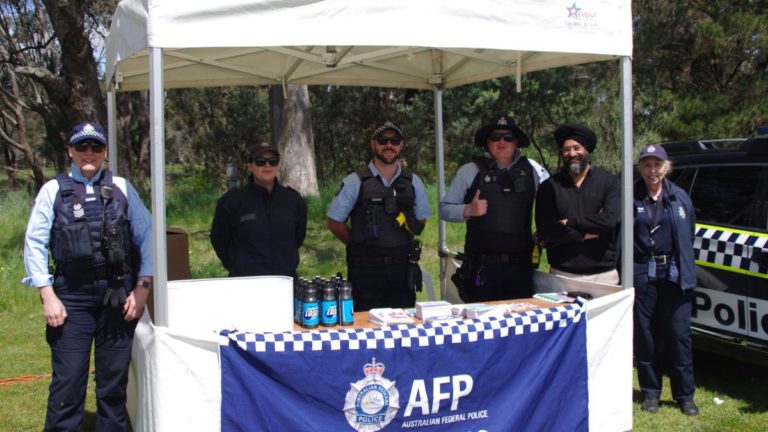
A West Australian couple is set to appear before Perth Magistrates Court today, 14 June 2024, following charges of debt bondage, falsifying visa documents, and passport offences uncovered during an investigation by the Australian Federal Police (AFP) into human trafficking.

The AFP alleges that a 32-year-old man and his 37-year-old partner, residents of Ocean Reef, engaged in illegal practices involving a foreign national who arrived in Australia in late 2023 to work at their regional WA massage business.

According to authorities, the couple provided false information on visa applications, initially arranging a tourist visa rather than a work visa for the 36-year-old woman from the Philippines, who had been recruited as a masseuse.

Upon her arrival at Perth airport in September 2023, the AFP claims the couple confiscated the woman’s passport and proceeded to underpay her while imposing excessive debts allegedly related to visa costs and business expenses. The woman, reportedly coerced into complying with their demands, was purportedly not provided with proper pay slips, instructed against socialising locally, and forced to reside at the business premises.

Further allegations suggest that when the woman attempted to secure a student visa for language studies, the couple orchestrated a deceptive scheme involving falsified financial documents and manipulative cash transactions to meet visa requirements. The AFP asserts that the couple subsequently claimed additional fees from the woman, including costs for educational expenses and business equipment.

According to acting Sergeant Kevin Loermans from the AFP’s Human Trafficking Team, such exploitative practices constitute debt bondage and highlight the vulnerability of individuals coerced into working under duress. He emphasised the seriousness of these offences under Australian law, stressing that all workers are entitled to fair treatment and that retaining someone’s passport without consent is illegal.

“Criminals can generate hundreds of thousands of dollars profiting off vulnerable individuals who may feel unwilling or unable to report exploitative conditions out of fear of retribution by perpetrators, social isolation and financial dependence on offenders,” a/Sgt Loermans added.

The couple, identified as a Chinese national aged 32 and his 37-year-old partner, have each been charged with multiple offences, including conducting activities leading to debt bondage, illegal possession of a foreign travel document, and submitting false information on visa applications under the Migration Act 1958.

As the case unfolds, the AFP continues to underscore its commitment to safeguarding the rights and welfare of victims of human trafficking, urging the public to remain vigilant and report any suspicious activities related to exploitation.

The court proceedings today are expected to shed further light on the alleged abuses and determine the course of legal action against the accused couple.

Support Our Journalism

‘Global Indian Diaspora and Australia’s multicultural communities need fair, non-hyphenated, and questioning journalism, packed with on-ground reporting. The Australia Today – with exceptional reporters, columnists, and editors – is doing just that. Sustaining this needs support from wonderful readers like you.

Whether you live in Australia, the United Kingdom, Canada, the United States of America, or India you can take a paid subscription by clicking Patreon and support honest and fearless journalism.
India repatriates 45 victims of Kuwait fire; Minister K.V. Singh onboard aircraft to Kochi

0

A special Indian Air Force aircraft carrying mortal remains of 45 Indian victims who died tragically in the fire incident in Kuwait has taken off for Kochi.

India’s Minister of State for External Affairs Kirti Vardhan Singh, who coordinated with Kuwaiti authorities ensuring swift repatriation, is onboard the aircraft.

Eralier, Minister Singh visited Jahra Hospital to meet the injured Indian workers who were brought from Mangaf site. He appreciated the good care provided by Kuwaiti authorities to the Indian patients for faster recovery.

Minister Sheikh Fahad has now given orders to Kuwait Municipality and the Public Authority for Manpower to launch immediate action to address similar violations.

“What happened today is a result of the greed of company and building owners.”

Interior Minister Sheikh Fahad Al-Yousuf Al-Sabah ordered police to apprehend the owner of the Mangaf building where a fatal blaze that occurred Wednesday, the building’s janitor, as well as the owner of the company responsible for the workers who live in said building pending… pic.twitter.com/wDZrE03oeJ — KUWAIT TIMES (@kuwaittimesnews) June 12, 2024

The devastating fire claimed the lives of Indian men hailing from Kerala, Uttar Pradesh and West Bengal.

According to state officials, the mortal remains of the Kerala victims are expected to be brought to Kochi where Chief Minister Pinarayi Vijayan and cabinet members will receive the coffins at the airport.

India’s Prime Minister Narendra Modi expressed his condolences to the victims and announced an ex-gratia of Rs 2 lakh from PMNRF to be given to the next of kin of each deceased and Rs 50,000 to the injured.

Support Our Journalism

‘Global Indian Diaspora and Australia’s multicultural communities need fair, non-hyphenated, and questioning journalism, packed with on-ground reporting. The Australia Today – with exceptional reporters, columnists, and editors – is doing just that. Sustaining this needs support from wonderful readers like you.

Whether you live in Australia, the United Kingdom, Canada, the United States of America, or India you can take a paid subscription by clicking Patreon and support honest and fearless journalism.
Global demand for oil could peak soon

0

By Jen Purdie

This week’s announcement of the government’s plans to reopen New Zealand’s territorial waters to oil drilling comes as no surprise. All three coalition parties campaigned on reversing the 2018 ban on offshore oil exploration.

But it flies in the face of projections that demand for oil could peak as early as this decade.

Minister for Resources Shane Jones has confirmed the government plans to reverse the ban later this year and seeks to incentivise oil investors by paying them a bond in case their drilling rights are cancelled by future governments.

The government is also considering weakening a law that requires oil and gas permit holders to pay for the decommissioning and clean-up of wells. This law was passed in 2021 in response to taxpayers having to pick up a NZ$400 million bill for decommissioning the Tui oil field after the financial collapse of the oil company.

The government’s decisions go against projections by many sources, including the International Energy Agency, that demand for oil will decline soon as we electrify the global transport fleet. Consequently, investment in oil exploration is projected to decline too.

Peak oil demand

The use of fossil fuels is due to decline this decade, according to several major oil companies. A 2023 report by Shell projects fossil fuel use dropping rapidly in coming decades, while BP thinks oil demand for combustion has already peaked.

Many large organisations think peak oil demand will happen this decade or the 2030s. This includes the International Energy Agency (IEA), which has predicted demand for oil will peak before 2030.

The Organisation of Petroleum Exporting Countries (OPEC) and Exxon Mobil are bullishly stating they see oil growth continuing, albeit at a slower rate, into the 2040s. But at the same time, Exxon Mobil is investing significantly in renewable energy, lithium mining and carbon capture technology.

Even if oil demand peaks later than forecast, the progression from prospecting to exploration and mining can take decades. Projects prospected now may not yield fuel until demand is already in decline.

We have enough oil to make the energy transition

We’ve known for some time that remaining fossil fuels must stay in the ground to meet the Paris Agreement goal of keeping the world below 2°C above pre-industrial temperatures.

The last UN climate summit – COP28 held late last year – agreed to “transition away from fossil fuels” and signalled the “beginning of the end” of the fossil fuel era.

But further to this, the IEA has stated we don’t need any new fossil fuel exploration or development, with enough projects already in existence or planned to meet global energy demand forecasts to 2050. New research agrees, saying governments around the world should stop issuing new oil, gas and coal licences.

In line with decreasing oil demand, BP also projects declining investment in new oil and gas infrastructure globally in coming decades. The IEA’s World Energy Investment report notes an ongoing hesitancy about oil and gas investment comes partly from concerns about downward long-term demand projections.


New Zealand does not import natural gas, but our gas fields have been yielding less than forecast for some years. Therefore, to remain independent, some more maintenance drilling or limited new expansion may be needed to see us through the energy transition. But using taxpayer dollars to pay international oil companies to come to New Zealand doesn’t make economic or environmental sense.

The momentum for the energy transition is unstoppable

The good news is that the world’s energy sector, which produces almost 75% of global emissions, is now transitioning at an ever increasing rate. Significant amounts of renewable electricity generation (which is now far cheaper than fossil fuel generation) are being built, with global renewable capacity set to double this decade.

New Zealand’s electricity system is already 85% renewable. Significant investment in renewable generation is under way ($42 billion by 2030) to supply the approximate doubling of electricity needed for the expected mass electrification of transport and industrial heat by 2050.

Renewables are also being built to replace retiring coal plant. Global coal consumption peaked in 2013 and has flatlined since. In 2021, the COP26 global climate meeting in Glasgow agreed to phase down coal, and 60 national (and 51 sub-national) governments have joined the Powering Past Coal Alliance, committing them to phasing out all coal-fired power plants and not building new ones.

Other uses of fossil fuels are in industrial heat and transport. Electric vehicle demand is skyrocketing globally, with the global fleet growing from 300,000 vehicles in 2013 to 41 million in 2023. With prices falling, electric vehicles are expected to reach price parity with internal combustion engine cars as early as 2025.

Most large global vehicle manufacturers have pledged to produce only electric vehicles by 2030 or 2040. And 30 countries, including New Zealand, have signed the Zero Emissions Vehicle declaration to ban new petrol or diesel vehicle sales entirely by 2040.

New Zealand should be enabling the energy transition

The world is moving very rapidly away from coal and oil, and eventually all fossil fuels. A growing number of countries require adherence to Paris Agreement pledges by their trading partners. The recently signed free trade deal between New Zealand and the EU imposes trade sanctions if Paris pledges are not met.

New Zealand’s current emissions reduction policies take us on a track that is much less than our per capita global fair share to limit warming.

New Zealand should be moving away from oil drilling and instead invest in the energy transition, including decarbonisation of industrial heat, subsidising low-emitting vehicles and charging high emitters, better public transport and bike lanes, increased EV charging infrastructure, and “urban mining” (recycling) of batteries and other technology currently filling rubbish dumps.

Jen Purdie, Senior Research Fellow, Centre for Sustainability, University of Otago

This article is republished from The Conversation under a Creative Commons license. Read the original article.

"The

Support Our Journalism

‘Global Indian Diaspora and Australia’s multicultural communities need fair, non-hyphenated, and questioning journalism, packed with on-ground reporting. The Australia Today – with exceptional reporters, columnists, and editors – is doing just that. Sustaining this needs support from wonderful readers like you.

Whether you live in Australia, the United Kingdom, Canada, the United States of America, or India you can take a paid subscription by clicking Patreon and support honest and fearless journalism.

Tragic building fire claims lives of 41 Indians in Kuwait, PM Modi assures assistance

0

A devastating fire that swept through a building in Kuwait, housing foreign workers, resulting in the tragic deaths of at least 40 Indian nationals and injuring more than 50 others, according to India’s external affairs ministry.

India’s Prime Minister Narendra Modi chaired a meeting to review the situation in the wake of the fire mishap in Kuwait. He posted on X: “GoI is doing everything possible to assist those affected by this gruesome fire tragedy.”

India’s Ambassador to Kuwait Adarsh Swaika visited Jahra Hospital to meet the injured Indian workers who were brought from Mangaf site.

It is reported that the building had reportedly had nearly 160 people living in it, who are workers of the same company. Local authorities have suggested that the blaze was linked to violations of building codes.

Kuwait’s Interior Minister Sheikh Fahad Al-Yousuf Al-Sabah confirmed the grim toll during a visit to the site and ordered the arrest of the building’s owner, as reported by local media.

Minister Sheikh Fahad has now given orders to Kuwait Municipality and the Public Authority for Manpower to launch immediate action to address similar violations.

“What happened today is a result of the greed of company and building owners.”

MEA Dr S. Jaishankar spoke to Kuwaiti FM Abdullah Ali Al-Yahya on the fire tragedy in Kuwait. He posted on X: “Apprised of the efforts made by Kuwaiti authorities in that regard. Was assured that the incident would be fully investigated and that responsibility will be fixed. Urged the early repatriation of the mortal remains of those who lost their lives. He emphasized that those injured were getting the requisite medical attention.”

Prime Minister Modi expressed his condolences to the victims and announced an ex-gratia of Rs 2 lakh from PMNRF to be given to the next of kin of each deceased and Rs 50,000 to the injured.

In response to the tragedy, India’s junior external affairs minister, Kirti Vardhan Singh, is in Kuwait to facilitate the early repatriation of the deceased and ensure medical assistance for the injured.

Support Our Journalism

‘Global Indian Diaspora and Australia’s multicultural communities need fair, non-hyphenated, and questioning journalism, packed with on-ground reporting. The Australia Today – with exceptional reporters, columnists, and editors – is doing just that. Sustaining this needs support from wonderful readers like you.

Whether you live in Australia, the United Kingdom, Canada, the United States of America, or India you can take a paid subscription by clicking Patreon and support honest and fearless journalism.
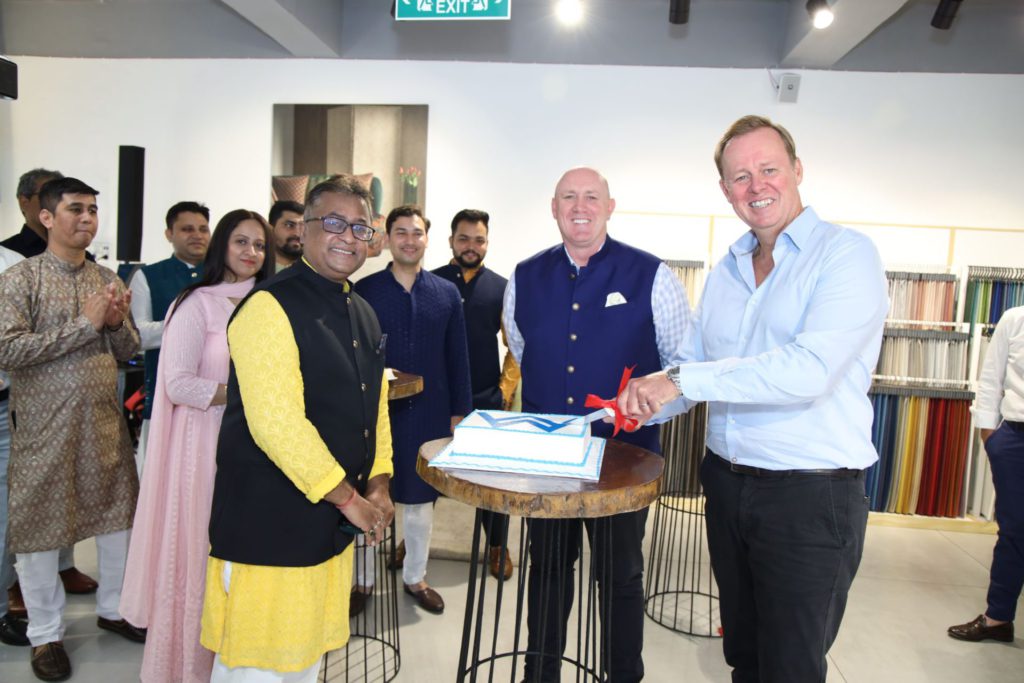
Melbourne Woman Charged in Alleged Facebook Marketplace Scams

0

A 37-year-old woman from Donvale, Melbourne, has been charged following an investigation by Victoria Police into a series of alleged scams on Facebook Marketplace.

The woman is accused of deceiving at least 20 victims across Australia.

According to Victoria Police, the woman offered high-end fashion items for sale on social media from April to May this year. However, it is alleged that after receiving payments from customers, she failed to deliver the goods, keeping the money instead.

“The deceptions amount to thousands of dollars,” police stated.

The woman was arrested by detectives on 12 June at her Donvale home and has been charged with 25 counts of obtain property by deception.

She was granted bail and is scheduled to appear at Ringwood Magistrate’s Court today.

Support Our Journalism

‘Global Indian Diaspora and Australia’s multicultural communities need fair, non-hyphenated, and questioning journalism, packed with on-ground reporting. The Australia Today – with exceptional reporters, columnists, and editors – is doing just that. Sustaining this needs support from wonderful readers like you.

Whether you live in Australia, the United Kingdom, Canada, the United States of America, or India you can take a paid subscription by clicking Patreon and support honest and fearless journalism.
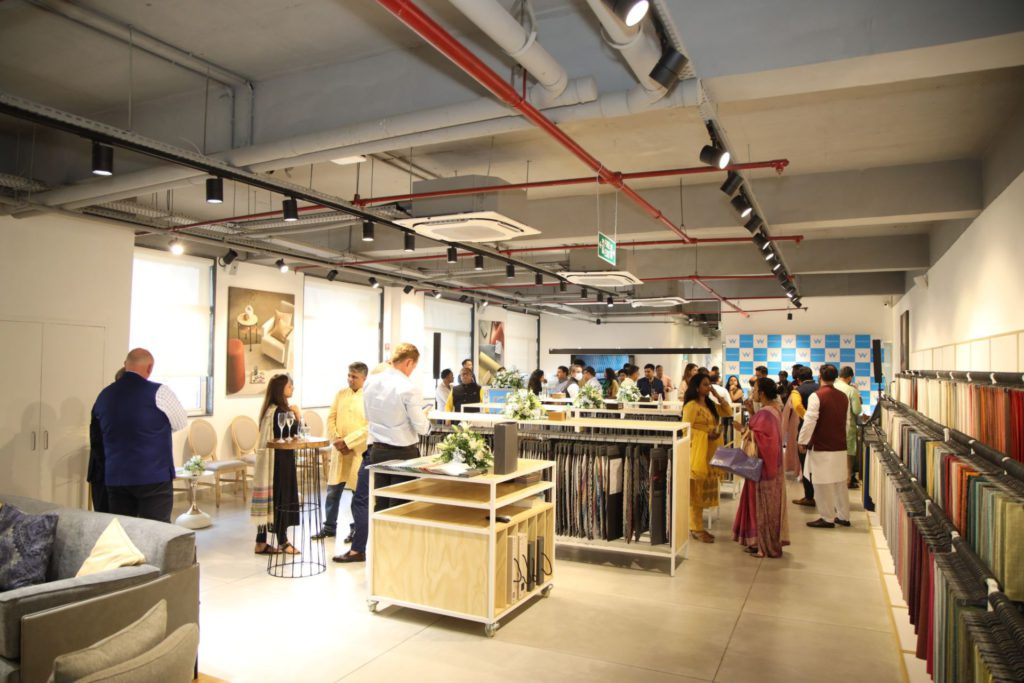
Australia’s Unemployment Rate Falls to Four Percent in May, Surpassing Expectations

0

In a surprising boost to the Australian economy, the unemployment rate has fallen by 0.1 percentage points to four per cent in May, aligning with economists’ expectations.

This marks a positive shift in the job market, bolstered by the addition of 39,700 jobs over the month, according to data released by the Australian Bureau of Statistics (ABS). The job growth exceeded forecasts, with analysts originally predicting a 30,000 increase in employment.

Bjorn Jarvis, the head of labour statistics at ABS, highlighted the significant drop in unemployment figures.

“With employment rising by around 40,000 people and the number of unemployed falling by 9,000 people, the unemployment rate fell to four per cent,”

Jarvis stated.

The jobless rate was anticipated to decline as a higher-than-usual number of individuals waited to commence work in the preceding month. Jarvis explained that the influx of people starting or returning to their jobs in May contributed to the reduction in unemployment and the rise in employment.

Steady Participation and Unexpected Growth

The participation rate, which measures the proportion of people aged 15 and over who are either working or actively seeking work, remained stable at 66.8 per cent. This stability, coupled with the unexpected job growth, highlights the resilience of Australia’s labour market amidst broader economic challenges.

Economists had broadly expected the unemployment rate to dip from 4.1 per cent to four per cent, with a consensus on a 30,000 employment lift. The actual figures surpassed these expectations, reflecting a robust job market that continues to thrive despite external pressures.

Economic Context and Central Bank Policies

Australia’s job market stands out as a bright spot in an economy otherwise facing challenges from higher interest rates and elevated inflation. The Reserve Bank of Australia (RBA) has been implementing a series of interest rate hikes to combat inflation, which has naturally led to a slowing economy.

Despite this, the unemployment rate has remained at historically low levels, and job growth has been resilient.

The central bank is scheduled to meet next week to decide on its June interest rate policy. The RBA anticipates a gradual weakening of the labour market but is adopting a measured approach to ensure that inflation returns to target levels without compromising employment gains.

A Balancing Act

The current situation presents a delicate balancing act for policymakers. While the RBA is committed to controlling inflation, it also aims to sustain employment gains and avoid a sharp increase in unemployment. The steady job growth and low unemployment rate suggest that, so far, the strategy is working.

Looking Ahead

The latest figures from the ABS provide a hopeful outlook for Australia’s economy, indicating that the job market is maintaining strength despite broader economic pressures. As the country navigates through these challenging times, the continued focus will be on sustaining employment while managing inflation and other economic variables.

The labour market’s performance in May sets a positive tone for the upcoming months, with stakeholders keenly watching the RBA’s decisions and the subsequent impact on the economy.

Support Our Journalism

‘Global Indian Diaspora and Australia’s multicultural communities need fair, non-hyphenated, and questioning journalism, packed with on-ground reporting. The Australia Today – with exceptional reporters, columnists, and editors – is doing just that. Sustaining this needs support from wonderful readers like you.

Whether you live in Australia, the United Kingdom, Canada, the United States of America, or India you can take a paid subscription by clicking Patreon and support honest and fearless journalism.

X Introduces Private Likes to Enhance User Privacy

0

Social media platform X, formerly known as Twitter, has rolled out a new feature that allows users to like posts privately. Starting Wednesday (US local time), X users can now like posts without anyone else being able to see their activity.

This move aims to enhance privacy and foster a more comfortable online environment.

Privacy First: A New Era for Likes

Upon logging into their accounts, users will encounter a pop-up notification stating,

“Your Likes are now private. We are making Likes private for everyone to better protect your privacy. Liking more posts will make your ‘For you’ feed better.”

This change is part of X’s broader strategy to ensure that user interactions on the platform remain discreet and protected from public scrutiny.

While users will still be able to see the posts they have liked, others will not. However, users will continue to see who has liked their posts, and like counts along with other metrics will still appear under notifications for one’s posts.

Elon Musk’s Vision for a Safer Interaction

Elon Musk, the owner of X, emphasised the importance of this change. On his X timeline, Musk wrote, “It’s important to allow people to like posts without getting attacked for doing so!”

This statement underscores the platform’s commitment to preventing online harassment and fostering a safer space for users to express

Support Our Journalism

‘Global Indian Diaspora and Australia’s multicultural communities need fair, non-hyphenated, and questioning journalism, packed with on-ground reporting. The Australia Today – with exceptional reporters, columnists, and editors – is doing just that. Sustaining this needs support from wonderful readers like you.

Whether you live in Australia, the United Kingdom, Canada, the United States of America, or India you can take a paid subscription by clicking Patreon and support honest and fearless journalism.
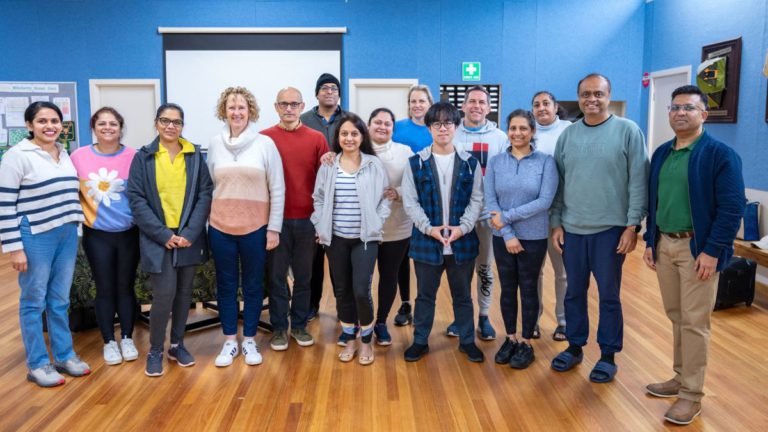
What to do if you, or someone you know, is targeted with deepfake porn or AI nudes

0

By Nicola Henry

This week, about 50 female students from Victoria’s Bacchus Marsh Grammar School had fake, sexually explicit images of them shared without their consent on Instagram and Snapchat. Images of their faces, purportedly obtained from social media, were stitched onto pornographic images using artificial intelligence (AI).

Deepfake porn, or what our team calls “AI-generated image-based sexual abuse”, involves the use of AI to create a nude and/or sexual image of a person doing or saying things they haven’t said or done.

Celebrities and public figures, predominantly women, have experienced such abuse for nearly a decade, with various deepfake porn sites and “nudify apps” readily available online.

But as these technologies become more accessible and sophisticated, we’re starting to see this problem creep into our homes and schools. Teens – and even children – are now being targeted.

How widespread is deepfake abuse?

In 2023, my colleagues and I surveyed more than 16,000 adults in ten countries and found that, despite widespread media coverage (particularly in Western countries), the concept of deepfake porn isn’t well known. When informed about it, however, most respondents indicated it should be criminalised.

Among respondents from Australia, 3.7% had been a victim of deepfake porn as an adult. This was the highest rate reported from the countries we surveyed.

At the same time, 2.4% of Australian respondents said they had created, shared or threatened to share a deepfake photo or video of another person without their consent. This too was a higher figure than every other country we surveyed except the United States.

Men were more likely to report being a victim of deepfake abuse, and more likely to report being a perpetrator. Men were also less likely to find the viewing, creating and/or sharing of deepfake pornography to be problematic.

What can you do if you’re targeted?

Image-based abuse can be a distressing experience. But victims should know they’re not alone, it isn’t their fault and there is plenty of help out there. Here are some steps they can take.

1. Report it

Creating or sharing deepfake sexual images of minors is a criminal offence under Australia’s federal child sexual abuse material (“child pornography”) laws. It’s also a criminal offence to share non-consensual deepfake porn of an adult (and a crime to create it if you’re in Victoria).

Whether you’re the victim, or someone you know is, you can report deepfake abuse to digital platforms, to the Australian Centre to Counter Child Exploitation (if the person depicted is a minor) and to the eSafety Commissioner.

Image Source @CANVA
Image Source @CANVA

If you’re in danger, contact the police or ambulance on triple zero (000). If it’s not an emergency, you can call the Police Assistance Line (131 444) or your local police station. The same steps apply if you’re a bystander who has come across non-consensual deepfake pornography of someone else online.

The eSafety commissioner can take action against image-based abuse under the federal Online Safety Act, and can work with victims and their supporters to get the content taken down within 24 hours. They can also issue formal warnings, take-down orders and civil penalties to individuals and technology companies that fail to take action.

Unfortunately, the deepfake content may continue to circulate even after it is taken down from the initial platform.

2. Seek help

If you’ve been targeted, it’s a good idea to talk to someone you trust, such as a friend, family member, teacher, counsellor or psychologist.

Our website has a list of relevant support services for victim-survivors of image-based abuse, including specialist services for Aboriginal and Torres Strait Islander people, migrants and refugees, young people, people with disabilities, people from LGBTQI+ communities and sex workers.

Even if you’re not ready to talk about the experience, you can still find useful information about image-based abuse online, including on the eSafety commissioner’s website.

Image Source @CANVA
Image Source @CANVA

We’ve also developed a chatbot called Umibot, which provides free confidential advice and support to people who have experienced image-based abuse, including deepfake abuse. Umibot also has information for bystanders and perpetrators.

If you’re Aboriginal or Torres Strait Islander, you can check out WellMob. This is an online resource made by Indigenous Australians to provide information on social and emotional well-being.

Resources for young people are also available from ReachOut, Beyond Blue, Youth Law Australia and Kids Helpline.

3. Create a digital hash to stop the spread

The United Kingdom’s Revenge Porn Helpline and Meta have developed two digital hashing tools for victim-survivors. These are Stop NCII for adults, and Take It Down for minors.

Anyone in the world can use these tools to generate an anonymous digital hash (a unique numerical code) by scanning the image from their device. This hash is then shared with the companies participating in the scheme (including Facebook, Instagram, Pornhub, TikTok and OnlyFans) so they may detect and block any matches on their platform. You aren’t required to upload the image, which means no one else sees it, nor does it leave your device.

It’s important to note this tool won’t block the image from appearing on platforms that aren’t part of the scheme. You also need to have access to the images in the first place to use the tool.

4. Block, report and distance yourself from the perpetrator (if it’s safe to do so)

You can block the perpetrator(s) through your mobile and on social media, and report them to the relevant platforms and authorities. In the case of platforms, it’s not always clear what will be done once a report is lodged, so it’s a good idea to ask about this.

If the perpetrator is someone you know, such as a classmate or student, authorities can take action to ensure you don’t interact with that person anymore.

Last week, a boy was expelled from Melbourne’s Salesian College after he used AI to create sexually explicit images of a female teacher.

5. Boost your online safety

The eSafety commissioner has step-by-step video guides on a range of online safety topics, from how to change your privacy settings on social media, to how to choose strong passwords.

For women experiencing family or domestic violence, the following resources may also be helpful:

Nicola Henry, Professor & Australian Research Council Future Fellow, Social and Global Studies Centre, RMIT University

This article is republished from The Conversation under a Creative Commons license. Read the original article.

Support Our Journalism

‘Global Indian Diaspora and Australia’s multicultural communities need fair, non-hyphenated, and questioning journalism, packed with on-ground reporting. The Australia Today – with exceptional reporters, columnists, and editors – is doing just that. Sustaining this needs support from wonderful readers like you.

Whether you live in Australia, the United Kingdom, Canada, the United States of America, or India you can take a paid subscription by clicking Patreon and support honest and fearless journalism.
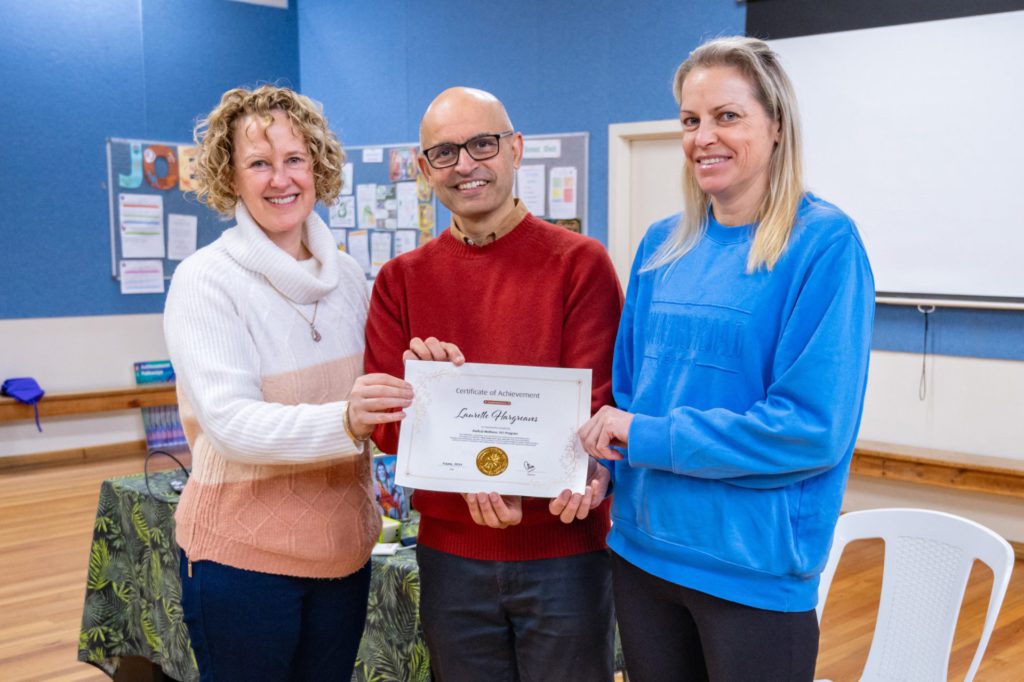
Arshdeep and Suryakumar Shine as India Clinches Thrilling Win Over USA

0

In the T20 World Cup encounter at the Nassau County International Cricket Stadium, India maintained their unbeaten streak with a thrilling 7-wicket victory over co-hosts USA on Wednesday.

The star-studded performance, marked by Arshdeep Singh’s ferocious bowling and a match-winning partnership between Suryakumar Yadav and Shivam Dube, propelled India into the Super 8.

Arshdeep’s Fiery Start

Opting to bowl first, India struck early and hard. Arshdeep Singh delivered a masterclass in fast bowling, finishing with staggering figures of 4-9. The young pacer set the tone by removing Shayan Jahangir for a duck and Andries Gous for 2 in the very first over, leaving the USA reeling.

Arshdeep Singh: Image Source: X – @T20WorldCup

Stand-in captain Aaron Jones briefly resisted, showcasing some brilliant shots before falling to Hardik Pandya for 11. The USA’s hopes were momentarily revived by Steven Taylor (24) and Nitish Kumar (27), who steadied the ship with some sensible batting.

Axar Patel, however, provided a crucial breakthrough by dismissing Taylor. Arshdeep returned to dismantle the middle order, claiming the wicket of the dangerous Nitish Kumar, leaving the USA at 81/5.

Pandya and Bumrah Seal the Deal

Hardik Pandya contributed with two wickets for 14 runs, while the seasoned Jasprit Bumrah faced some aggression from Corey Anderson and Harmeet Singh, who smashed him for 14 runs in an over. Despite this, the USA could only muster 110/8 in their 20 overs.

India’s Nerve-Wracking Chase

Chasing a modest target of 111, India faced early jitters. The ‘Men in Blue’ lost their star openers, Rohit Sharma and Virat Kohli, early in the innings, sending a wave of excitement through the stadium. Suryakumar Yadav and Rishabh Pant stabilised the innings with a crucial 29-run partnership.

Rohit Sharma; Image Source: X – @T20WorldCup

Shivam Dube, struggling for form, joined Yadav at the crease. Together, they navigated the tricky surface and ensured the asking rate remained within reach. The USA’s fielding faltered as the pressure mounted, resulting in a five-run penalty for not starting an over on time.

Suryakumar Yadav; Image Source: X – @T20WorldCup

With the USA players visibly deflated, Suryakumar (50*) and Dube (31*) opened their arms. They chased down the total with ten deliveries to spare, marking the highest successful run chase in New York.

Captain’s Thoughts and Celebrations

Following the thrilling win, Indian skipper Rohit Sharma despite his early dismissal, praised the team’s resilience.

“It’s never easy to chase on such surfaces, but our bowlers set the platform, and Suryakumar and Shivam capitalised beautifully,”

he said.

India’s victory over the USA not only secured their place in the Super 8 but also highlighted their ability to handle pressure in critical situations. The blend of disciplined bowling and strategic batting showcased why India remains a formidable force in the T20 format.Image

Brief Score:

  • USA: 110/8 (Steven Taylor 24, Nitish Kumar 27; Arshdeep Singh 4-9)
  • India: 111/3 (Suryakumar Yadav 50*, Shivam Dube 31*; Saurabh Netravalkar 2-18)

With this win, India continues to soar in the T20 World Cup, leaving fans eagerly anticipating their next encounter.

Support Our Journalism

‘Global Indian Diaspora and Australia’s multicultural communities need fair, non-hyphenated, and questioning journalism, packed with on-ground reporting. The Australia Today – with exceptional reporters, columnists, and editors – is doing just that. Sustaining this needs support from wonderful readers like you.

Whether you live in Australia, the United Kingdom, Canada, the United States of America, or India you can take a paid subscription by clicking Patreon and support honest and fearless journalism.
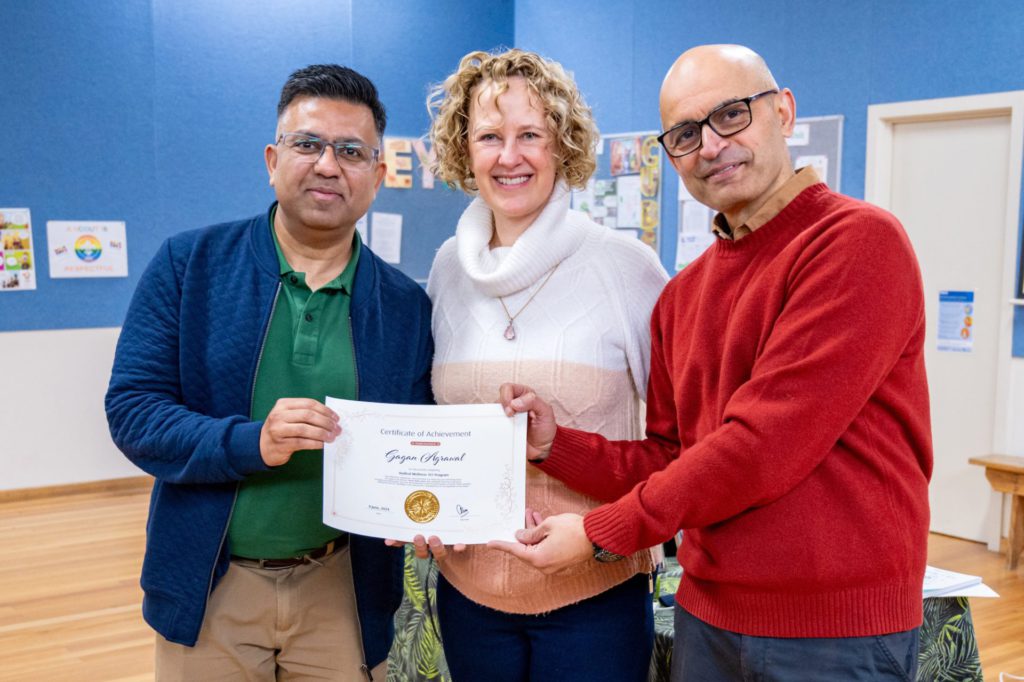
Australian Government Cracks Down on ‘Visa Hopping’ International Students with New Measures

0

The Australian government is intensifying its efforts to curb “visa hopping” by international students by introducing stricter regulations to tighten control over immigration pathways.

Earlier this year, a series of reforms aimed at reducing migration levels and enhancing the integrity of the student visa system were implemented.

In a further step announced today by Minister for Home Affairs Clare O’Neil, the Albanese government will enact additional measures starting 1 July.

Image: Minister for Home Affairs Clare O’Neil (Source: X)

A statement from Minister O’Neil’s office said:

“The visitor to student pathway has become increasingly prevalent, with over 36,000 applications since 1 July 2023 to the end of May 2024. This measure closes a pathway that has been used to attempt to subvert the Government’s strengthened offshore student visa integrity measures.”

The new regulations will see the closure of two specific pathways that have been identified as methods to “subvert” offshore student integrity measures.

O’Neil added that Australia needs a migration system which “delivers the skills we need, but doesn’t trade in rorts, loopholes and exploitation.”

“Our Migration Strategy outlines a clear plan to close the loopholes in international education and this is the next step in delivering that plan.”

Under the new rules, holders of Visitor Visas and Temporary Graduate Visas will no longer be eligible to apply for Student Visas while onshore.

These changes reflect the government’s commitment to ensuring that visa regulations are not exploited and that the migration system remains robust and fair.

The biggest growth in visa hopping has been in the VET sector, where there is a lower likelihood of a credible course progression. However, according to Home Affairs, in 2022–23 almost 69,000 students granted a subsequent student visa in Australia have stayed in, or shifted into, studying in VET, compared to 42,000 students pre-pandemic in 2018–19.

Support Our Journalism

‘Global Indian Diaspora and Australia’s multicultural communities need fair, non-hyphenated, and questioning journalism, packed with on-ground reporting. The Australia Today – with exceptional reporters, columnists, and editors – is doing just that. Sustaining this needs support from wonderful readers like you.

Whether you live in Australia, the United Kingdom, Canada, the United States of America, or India you can take a paid subscription by clicking Patreon and support honest and fearless journalism.

YouTuber shot dead while covering people’s reaction to India-Pakistan cricket match

0

The anticipation for the India vs Pakistan clash in the T20 World Cup 2024 in New York led to a tragic incident.

In Pakistan ahead of the much-anticipated match, a 24-year-old YouTuber Saad Ahmed was filming a vlog in the city’s mobile market.

While interviewing people about their expectations for the India vs Pakistan game, Saad approached a security guard who was not keen on appearing in the video.

Pakistan media reports that after repeated questioning, Gul Hassan, the guard, lost his temper and shot Saad.

CCTV footage revealed the interaction between Saad and the guard before the shooting. It is also being reported that the guard was Waziristani and was reportedly finding it difficult to converse in Urdu.

Further reports indicate that Saad was immediately taken to the hospital but was pronounced dead on arrival. He was the sole provider for his family, adding a layer of heartbreak to the incident.

The news of Saad’s murder quickly spread on social media. One of Saad’s friends shared with Pakistan’s Geo TV that he had spoken to the YouTuber before he went to the market.

Local police indicated that the security guard’s training may not have adhered to the established guidelines, and they were initially unable to provide a clear explanation for the incident. They have apprehended the guard, his weapon has also been seized, and an investigation is underway.

Support Our Journalism

‘Global Indian Diaspora and Australia’s multicultural communities need fair, non-hyphenated, and questioning journalism, packed with on-ground reporting. The Australia Today – with exceptional reporters, columnists, and editors – is doing just that. Sustaining this needs support from wonderful readers like you.

Whether you live in Australia, the United Kingdom, Canada, the United States of America, or India you can take a paid subscription by clicking Patreon and support honest and fearless journalism.

Indian-Australians mourn loss of two women after ‘freak wave’ swept them into sea

0

The Sydney’s Indian community is in mourning following the tragic deaths of two women who were swept out to sea by a large wave in the city’s south on Monday.

The Sydney Malayalee Association confirmed the identities of the victims as 35-year-old Marwa Hashim and 38-year-old Nirsha Haris, both Indian nationals, in a heartfelt Facebook post.

John Jacob, the organisation’s public officer, told the Guardian that the community were saddened by the news of their deaths.

“The whole community are sad about it, they were both very popular and well known. They were very active in the community, they both worked in catering and would provide traditional meals from the Kerala region at community events. Much of the community visited their family home today, its a tragedy. And it was so sudden too, its an unimaginable accident.”

The incident occurred at Cape Solander in Kurnell, located in the Sutherland Shire, around 4:30 pm.

Emergency services were promptly called after reports emerged that three women had been washed off the rocks into the ocean.

Joe McNulty, New South Wales police superintendent, told media that the women had been picnicking in the Botany Bay national park.

“There is an extended rock platform that does protrude out into the ocean and, when a wave hits that, it stands up and has a significantly extra amount of force that would knock those people from their feet and drag them back into the water with the reclining wave going back into the ocean,”

One of the women managed to climb back onto the rocks and was assisted to safety by members of the public. However, a frantic search ensued for the other two women, with NSW Police and PolAir scouring the waters. Sadly, both were found unconscious and pulled from the ocean.

Despite the best efforts of paramedics and a Toll Helicopter doctor, the women could not be revived at the scene. Authorities have initiated an investigation into the incident, though no suspicious circumstances have been identified.

Marwa’s sister, Roshna Hashim was taken to hospital and was treated for hypothermia and a leg injury. She is in a stable condition.

This heartbreaking event has left the Sydney’s Indian community in deep sorrow as they come to terms with the loss of two of their own.

Support Our Journalism

‘Global Indian Diaspora and Australia’s multicultural communities need fair, non-hyphenated, and questioning journalism, packed with on-ground reporting. The Australia Today – with exceptional reporters, columnists, and editors – is doing just that. Sustaining this needs support from wonderful readers like you.

Whether you live in Australia, the United Kingdom, Canada, the United States of America, or India you can take a paid subscription by clicking Patreon and support honest and fearless journalism.
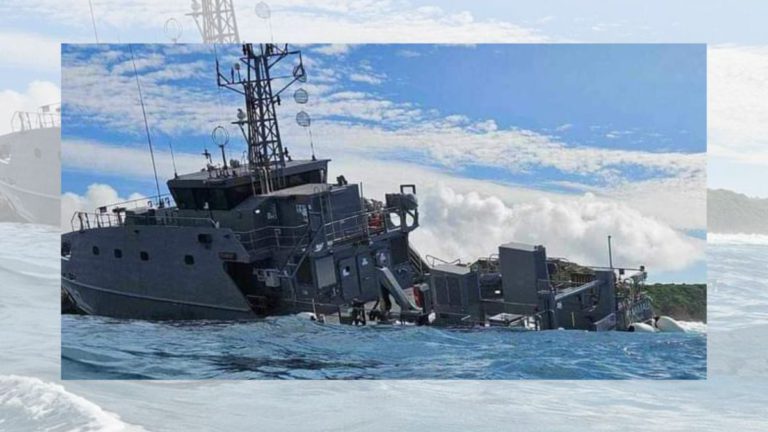
Extreme heat is a killer for outdoor sporting events – let’s plan properly to keep everyone safe

0

By Hannah Mason, Amy Peden, Anthony Leicht, Jemma King, and Richard Franklin

Attending outdoor sporting events can be life-threatening. Amid soaring temperatures, event organisers need to take extra care – not just for athletes, but also for officials, spectators and volunteers.

The consequences of extreme heat exposure range from dehydration to heatstroke and even death. National Rugby League player Keith Titmuss died in 2020 due to “exertional heat stroke” following an excessive pre-season training session. Scorching temperatures also disrupted the 2019 Australian Open and wreaked havoc during the 2023 Sydney Marathon.

In Paris, the 2024 Summer Olympics will proceed with no air conditioning in the athlete’s village. To reduce greenhouse gas emissions, organisers chose alternative cooling measures such as insulation, double-glazing, fans and pumping cool water through the floor. Unconvinced, the Australian Olympic Committee is buying portable air con units just in case. Athletes from poorer nations are expected to just keep their curtains shut.

In the lead-up to the Brisbane 2032 Summer Olympics and other major sporting events in Queensland, the state government wants to prepare for extreme heat. Our new research explores this health hazard, the strategies recommended to reduce heat exposure at sporting events, and who is responsible for ensuring these strategies are put in place. Here we offer practical tips for all involved. We’re going to need them more than ever as the world warms. https://www.youtube.com/embed/-wkTXDmN4pM?wmode=transparent&start=0 Inside the 2024 Paris Olympics Athletes’ Village, where there’s no air conditioning (7 News Australia)

What we did and what we found

We conducted an international review of research published between 2010 and 2023 to determine the current state of knowledge in this area.

Our systematic approach honed in on 40 peer-reviewed articles about heat at major sporting events. These were events held in large venues that attracted local, domestic and international spectators. The recommendations fell into six themes: planning, mitigation strategies, medical, policy, education and research.

A consistent pattern of heat-related challenges emerged. The rate of heat-related illness increased along with the temperature. Certain groups of people were more vulnerable to heat. Athletes participating in endurance events such as long-distance running were at higher risk than those participating in short-duration sports involving throwing (javelin, discus) or jumping (high jump, long jump). The diverse needs of those with multiple medical conditions and differing abilities including Paralympic athletes also warrant special consideration.

We found the significant health risks of heat should be considered before, during and after major sporting events. Individuals, coaches, officials and organisers all have a role to play.

Our findings can inform evidence-based strategies to protect the health of those attending and competing in such events now and into the future.

It’s not just about athletes

While athletes may have prepared to compete in hot conditions, using technology such as cooling vests or cold-water immersion, spectators are less likely to deliberately prepare their bodies for extreme temperatures. But there are plenty of things we can all do.

We can drink plenty of fluids, seek shade and use sun protection. Ideally, venue management will have provided access to drinking water, shady spaces and cooling (misters, fans or air conditioning). All requires careful planning and thoughtful construction.

Organisers need to decide what time to run each event, what temperatures will trigger heat policies (such as pushing events to a cooler time slot), whether rules need to be changed in the event of extreme heat (such as more or earlier break times), and what measures need to be in place to protect officials, spectators and volunteers.

Top tips for spectators

Here are some practical tips you can use to reduce heat-related risks when extreme heat strikes:

  1. think about where your seat is located and whether there will be any shade, or whether you will be directly exposed to the elements
  2. find out whether you can come and go, or attend the event later in the day – where possible, avoid events timed for the hottest part of the day
  3. wear light-coloured, loose-fitting clothes and a hat
  4. see if you can bring your own water bottle into the event and refill it, and make sure you are well hydrated before, during and after the event
  5. avoid caffeine and alcohol as these drinks can make your more dehydrated
  6. check what event organisers have planned for extreme weather such as heatwaves.

A warning to event organisers

A great deal has changed since Australia hosted the Sydney Olympics at the turn of the century.

There are no excuses in 2024. All sports and sporting events should have a heat policy that addresses players, spectators and officials. Sports Medicine Australia’s Extreme Heat Policy is a good example.

For major sporting events, engaging with health services should be part of the planning process. Then they can prepare for the possibility of multiple people presenting with heat stroke.

At the event, medical teams should be skilled in recognising the warning signs of heat related illness, as well as diagnosis and treatment.

With extreme heat events becoming more common worldwide, sporting bodies must be prepared to alter scheduled events (including the time, location, scheduled breaks, and so on) as required.

Let’s ensure outdoor sporting events can continue in a warming climate.

By working together, we can provide safer, more enjoyable experiences for all involved.

Hannah Mason, Research assistant in Public Health, Medical, and Veterinary Sciences, James Cook University; Amy Peden, NHMRC Research Fellow, School of Population Health & co-founder UNSW Beach Safety Research Group, UNSW Sydney; Anthony Leicht, Professor in Exercise Science, James Cook University; Jemma King, Lecturer, Public Health, James Cook University, and Richard Franklin, Professor of Public Health, James Cook University

This article is republished from The Conversation under a Creative Commons license. Read the original article.

"The

Support Our Journalism

‘Global Indian Diaspora and Australia’s multicultural communities need fair, non-hyphenated, and questioning journalism, packed with on-ground reporting. The Australia Today – with exceptional reporters, columnists, and editors – is doing just that. Sustaining this needs support from wonderful readers like you.

Whether you live in Australia, the United Kingdom, Canada, the United States of America, or India you can take a paid subscription by clicking Patreon and support honest and fearless journalism.

India’s Pasmanda Muslims are victims of ‘Muslim appeasement’ by Nehru-Gandhi family

0

By Dr Faiyaz Ahmad Fyzie

The issue of Muslim appeasement was once again in discussion amid the Lok Sabha elections 2024. A series of allegations and counter-allegations is going on by both sides.

In this article, we will try to understand what role the Nehru-Gandhi family played in Muslim appeasement and how the Indian Muslim society, especially the indigenous Pasmanda Muslims, was affected by it.

Nehru Period

India’s first Prime Minister Jawaharlal Nehru is known for his nation building attitude. But he remained almost inactive on the questions of social reform and social justice in Muslim society. His government did not consider it appropriate to take any steps towards reforming Muslim personal laws. It is not that his attention was not drawn towards this.

Abdul Qaiyum Ansari, a freedom fighter and a strong soldier of the first Pasmanda movement, had also written several letters to Nehru on these issues. J. B. Kripalani had said at the time of Hindu Marriage Act that the Nehru government should make arrangements for monogamous marriage for Muslims also. He also said that Muslim society is ready for this and if there are any shortcomings should be taken into account. Maybe he was referring to Asim Bihari’s social movement.

Remarkably, Asim Bihari had by then raised a significant amount of awareness inside the Pasmanda Muslim community through a specific campaign advocating for social justice, women’s education, and adult education within the Muslim community.

In this connection Dr Rajendra Prasad had said that why is there talk of reform only among Hindus? Are Muslims not citizens of this country? Aren’t there deprived people and women among them? Is there no need for reform in their society?

Additionally, Dr Shyama Prasad Mukherjee had said that the Nehru government did not have the courage for social reform against the discrimination prevalent in the Muslim society. On the contrary, the Congress’s Ashraaf leaders of that time and the ultra orthodox Ashraaf Maulanas of Jamiat Ulema-e-Hind had strongly opposed the reform in the Muslim society and the reservation of social justice, saying that the Muslim society is governed by Sharia law and there is no casteism in Islam.

Prominent among them were Maulana Azad, Zakir Hussain, Rafi Ahmed Kidwai, Syed Mahmood, Tajamul Hussain, Maulana Hifzur Rahman, and former Muslim Leaguer Begum Qudsia Ejaz Rasool, etc.

In fact, Begum Ejaz Rasool had said in praise of Sharia law that Muslims are proud of the fact that Sharia law gives great rights to women. However, other leaders like Sardar Patel, Dr. Ambedkar, Kripalani, Dr. Shyama Prasad Mukherjee, Rajendra Prasad, and C. Rajagopalachari were emphasizing the need for social reform in the Muslim society.

Meanwhile, Ashraaf Muslim MPs praised Nehru for reforming the Hindu society and not reforming the Muslim society. It is an irony that while the modern world was appreciating the reforms, the Ashraaf leaders and intellectuals were calling not carrying out reforms as a praiseworthy act and the Nehru government remained a silent spectator on this entire episode.

During the debate on reform of personal law of Hindu society, Congress’s treatment of Muslims as a separate category only strengthened Muslim communalism and hindered the progress of the society. It appears that Nehru could not do justice to his concept of secularism on this issue. Although, his views changed towards the end of his life, in his last interview given in May 1964, while approving of the foreign-identifying Ashraaf and the indigenous Pasmanda, he said that most of the Muslims living in India are natives converted from Hindus. But by then it was too late and Pasmanda society had already suffered the consequences. Nehru died just a few days after the interview.

Nehru will always be remembered as a nation builder, but as a secular Prime Minister of a secular country, his policies towards Muslim society created obstacles in improving the evil practices of Muslim society, social justice in Muslim society and prevention of Muslim communalism. And by these means he laid the foundation of Muslim appeasement. It seems that the Ashraaf leaders and Ashraaf Maulanas of that time, especially the Maulanas of Jamiat Ulema-e-Hind, were responsible for all this, under whose influence Nehru withdrew his steps from reforms in the Muslim society.

Indira Period

Like her father, Prime Minister Indira Gandhi also kept making the mistake of considering the Muslim community as a homogeneous unit. In the matter of Muslims, like her father, she remained dependent on Ashraaf leaders and Ashraaf Maulvis.

All India Muslim Personal Law Board was also born under these circumstances as a result of Ashraaf Muslim appeasement. At that time, Indira government was bringing amendments in the law for adoption of children but Ashraaf leaders, intellectuals and Maulvis strongly opposed it. They came together and formed an organization known as All India Muslim Personal Law Board.

Under the guise of protecting Islam and the personal law of Muslims, this organisation emerged as a staunchly religious organisation with medieval feudal mentality, anti-women and anti-Pasmanda Muslim and an acceptance of racial and ethnic hierarchy as Islamic. It would be ironical that Indira did not make even the slightest effort to know the stand of the indigenous Pasmanda Muslim community on this issue. Otherwise the situation could have become somewhat positive.

However, prominent and vocal voices of the indigenous Pasmanda community were present at that time in the form of Minister Noor Muhammad and Minister Abdul Qaiyum Ansari of the Congress government in the state of Bihar. She left the vulnerable deprived indigenous Pasmanda Muslims at the mercy of the Muslim Personal Law Board, an Ashraaf led organisation with a medieval feudal and religious fundamentalist mindset.

To appease the Ashraaf Muslims, Indira brought a law in 1981 and reversed the 1967 decision of the Supreme Court and restored the minority status of Aligarh Muslim University. It is well known that due to the minority status of AMU, the entry of Pasmanda Muslims which stand 90% of total Muslim population, as it’s academic, non-academic staff and as students are almost difficult due to not getting the benefits as per the reservation policy provided by the Constitution of India.

If AMU had not been given minority status by the Indira government, then the reservation for social justice provided by the Constitution would have been implemented there and it would have been easier for the deprived Pasmanda Muslims who come under OBC and ST reservation to get admission.

Indira always kept herself away from the important responsibility of social reform among Muslims. This was not appropriate for a secular Prime Minister of a secular country. The main reason for this seems to be Indira’s excessive dependence on Ashraaf leaders. Nazma Heptullah and Abida Ahmed, despite being women, continued to mislead Indira by following Ashraaf patriarchal mindset in this case.

Rajiv Period 

Rajiv Gandhi became the Prime Minister of India with a historic victory in sympathy of his mother’s death. His clean, spotless, honest and secular image was attractive, from which even the indigenous Pasmanda community had expectations. But like his mother and maternal grandfather, he considered the Muslim society as a homogeneous unit and continued to work on the advice of Ashraaf leaders, Maulanas and intellectuals.

Due to this both the country and Pasmanda had to suffer huge losses, and Rajiv’s secular image was also tarnished. The way he appeased the Ashraf Muslims in the Shah Bano case and overturned the decision of the Supreme Court by bringing a law in the Parliament while assimilating the anti-women character of the All India Muslim Personal Law Board, it deeply hurt the Pasmanda Muslim women. It is worth noting that divorce and polygamy are not a big issue among Ashraaf Muslims. On the contrary, for the Pasmanda Muslims who are deeply rooted in the Indian civilization, divorce and polygamy are considered indecent and anti-social acts.

Even in the case of Babri Masjid and Ram Janmabhoomi, Rajiv’s complete inclination was towards All India Muslim Personal Law Board and Ashraaf Maulvi Ali Mian Nadvi. This issue was made much more complicated by Rajiv Gandhi’s decision to unlock the lock of Babri masjid and sideline Hashim Ansari, a Pasmanda muslim and the primary litigant this dispute.

Here it would be interesting to remember that the famous Pasmanda activist and renowned surgeon of the country, Dr Ejaz Ali, had said that ‘hamen Babri nahi Barabari chahiye’ (we do not want Babri but equality). The study of the then media reports clearly reveals that the agreement to open the lock of Babri Masjid and lay the foundation stone of Ram Mandir was a result of the consent and connivance of Ali Mian Nadwi, the then president of the All India Muslim Personal Law Board (AIMPLB), in exchange for changing the Supreme Court verdict in the Shah Bano case.

Another action of Rajiv Gandhi, making Urdu the second state language of Uttar Pradesh, was also the result of Ashraaf Muslim appeasement. It is worth noting here that Urdu is the language of Ashraaf Muslims which they developed as a communal tool. In Uttar Pradesh, the native language of Pasmanda Muslims has been Hindi and the regional dialect of Hindi language such as Awadhi, Brij Bhojpuri, Bundeli, etc., they have been using Hindi extensively in reading and writing.

Rajiv Gandhi is well-known for bringing the computer revolution in the country. But his negative attitude towards social reform and social justice in the Muslim society proved to be a major obstacle in the upliftment of the indigenous Pasmanda Muslims. 

In later years, Congress and Sonia Gandhi’s attitude towards Muslim matters has been similar to that of her husband and mother-in-law. The attitude of future Congress leaders Rahul Gandhi and Priyanka Gandhi in the matter of social reform and social justice in Muslim society is also not very clear and till now no clear vision is being reflected in their activities regarding the problems of indigenous Pasmanda Muslims.

In my opinion, not giving proper share to Pasmanda Muslims in Rahul Gandhi’s Bharat Jodo Yatra and Bharat Jodo Nyaya Yatra indicates that Rahul Gandhi’s approach towards Muslim matters will remain the same as that of his ancestors, which is neither in the interest of the Muslim society nor in the interest of the country.

Contributor: Dr Faiyaz Ahmad Fyzie is a well-known Socio-Pasmanda activist, author, translator, columnist, media panelist, and a medical doctor by profession.

Support Our Journalism

‘Global Indian Diaspora and Australia’s multicultural communities need fair, non-hyphenated, and questioning journalism, packed with on-ground reporting. The Australia Today – with exceptional reporters, columnists, and editors – is doing just that. Sustaining this needs support from wonderful readers like you.

Whether you live in Australia, the United Kingdom, Canada, the United States of America, or India you can take a paid subscription by clicking Patreon and support honest and fearless journalism.

Modi 3.0 Government Unveils New Cabinet Portfolios, Here’s who got what

0

The Modi 3.0 government is ready to move forward after portfolios to its Union Council of Ministers being allocated by India’s Prime Minister Narendra Modi. The reshuffle sees several senior leaders retaining their previous portfolios while introducing new faces into key ministries directly impacting the grass-roots.

The Cabinet Committee on Security (CCS) remains unchanged with Union Ministers Rajnath Singh, Amit Shah, Nirmala Sitharaman, and S Jaishankar continuing in their respective roles of Defence, Home, Finance, and External Affairs.

India's Prime Minister Narendra Modi chairs his first Union Cabinet meeting at the start of his third term, in New Delhi on Monday.; Image Source:PIB
India’s Prime Minister Narendra Modi chairs his first Union Cabinet meeting at the start of his third term, in New Delhi on Monday.; Image Source: PIB

Key Retentions:

  • Rajnath Singh: Defence
  • Amit Shah: Home, Cooperation
  • Nirmala Sitharaman: Finance, Corporate Affairs
  • S Jaishankar: External Affairs
  • Nitin Gadkari: Road Transport and Highways
  • Sarbananda Sonowal: Ports, Shipping, and Waterways
  • Bhupendra Yadav: Environment, Forest, and Climate Change
  • Virendra Kumar: Social Justice and Empowerment
  • Ashwini Vaishnaw: Railways, Electronics, and Information Technology; now also handling Information and Broadcasting
  • Piyush Goyal: Commerce and Industry
  • Dharmendra Pradhan: Education
  • Hardeep Singh Puri: Petroleum and Natural Gas

New Faces and Changed Portfolios:

  • JP Nadda: Health, Chemicals, and Fertilizers
  • Shivraj Singh Chouhan: Agriculture and Farmers’ Welfare, Rural Development
  • Manohar Lal Khattar: Housing and Urban Affairs, Power
  • Mansukh Mandaviya: Labour and Employment, Youth Affairs and Sports
  • Pralhad Joshi: Consumer Affairs, Food and Public Distribution, New and Renewable Energy
  • Jyotiraditya Scindia: Communications, Development of the North Eastern Region
  • Gajendra Singh Shekhawat: Culture, Tourism
  • Kiren Rijiju: Parliamentary Affairs, Minority Affairs
Screenshot

Allies’ Representation:

  • Kinjarapu Ram Mohan Naidu (TDP): Civil Aviation
  • Chirag Paswan (LJP): Food Processing Industries
  • Jadhav Prataprao Ganpatrao (Shiv Sena): Minister of State (Independent Charge) of the Ministry of Ayush and Health
  • HD Kumaraswamy (JD(S)): Heavy Industries, Steel
  • Jitan Ram Manjhi (HAM): Micro, Small and Medium Enterprises
  • Rajiv Ranjan Singh (Lalan Singh, JD(U)): Panchayati Raj, Fisheries, Animal Husbandry, and Dairying
  • Jayant Chaudhary (RLD): Skill Development and Entrepreneurship, Minister of State in the Ministry of Education

First-Time MPs:

  • Suresh Gopi (BJP): MoS Petroleum and Natural Gas, Tourism
  • Ravneet Singh Bittu (BJP): MoS Food Processing Industries, Railways
  • Raksha Nikhil Khadse (BJP): MoS Youth Affairs and Sports

The new cabinet also includes:

  • Jitendra Singh (BJP): Continuing roles in Science and Technology, Earth Sciences, PMO, Personnel, Public Grievances, Pensions, Atomic Energy, and Space.
  • Ramdas Athawale (RPI): Social Justice and Empowerment

The reshuffle, advised by Prime Minister Narendra Modi, aims to balance experience with fresh perspectives, ensuring robust governance. With BJP’s allies gaining significant representation, the portfolio allocation underscores the coalition’s strength following their victory in the recent Lok Sabha elections, where BJP-led NDA secured 293 seats.

Prime Minister’s Roles: Prime Minister Narendra Modi retains charge of the Ministry of Personnel, Public Grievances, and Pensions, Department of Atomic Energy, and Department of Space, besides overseeing key policy issues.

This strategic blend of continuity and new appointments reflects the Modi 3.0 government’s commitment to effective governance and addressing grass-roots concerns, setting the stage for continued development and reform.

Support Our Journalism

‘Global Indian Diaspora and Australia’s multicultural communities need fair, non-hyphenated, and questioning journalism, packed with on-ground reporting. The Australia Today – with exceptional reporters, columnists, and editors – is doing just that. Sustaining this needs support from wonderful readers like you.

Whether you live in Australia, the United Kingdom, Canada, the United States of America, or India you can take a paid subscription by clicking Patreon and support honest and fearless journalism.
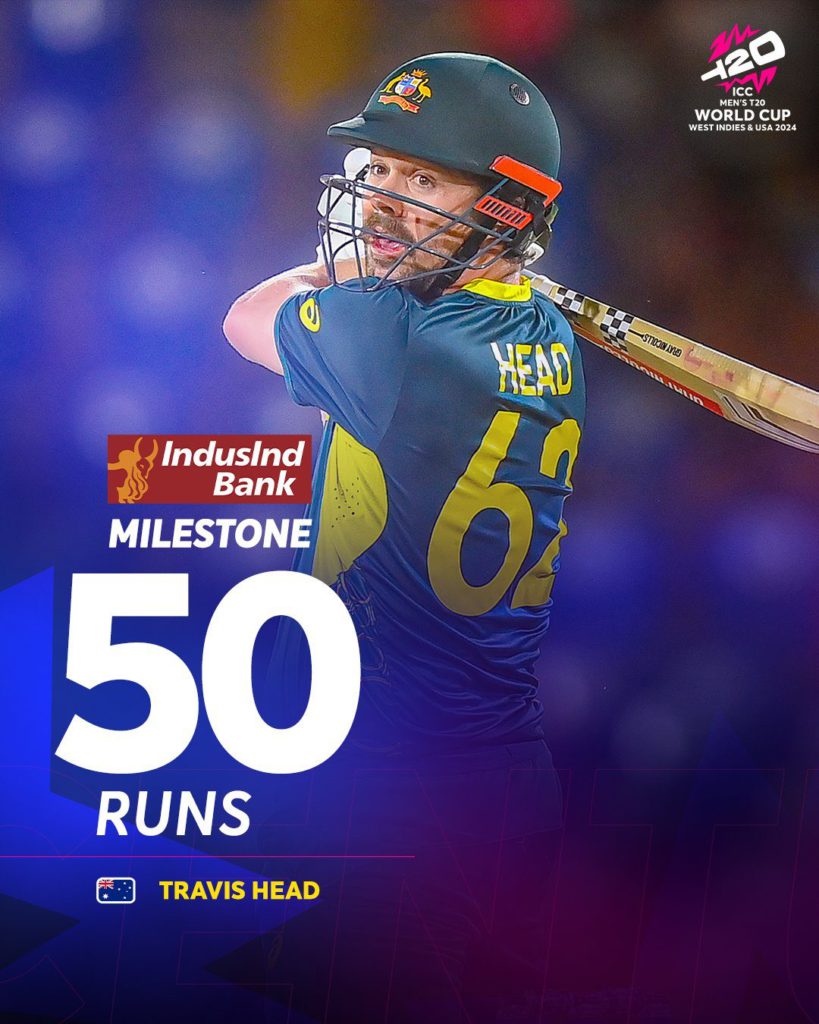
“Not the Australian Way”: PM Albanese Condemns Pro-Palestinian Protestors’ Vandalism of US Consulate in Sydney

0

Prime Minister Anthony Albanese has strongly condemned the attack on the US consulate in Sydney, carried out by pro-Palestinian protesters. The incident, which occurred on Monday, saw a mob defacing the consulate with pro-Palestinian graffiti and damaging property with a sledgehammer.

Image Source: US Consulate Sydney

“This is not the Australian way,” Albanese declared in a news conference in Canberra, emphasising that such acts of vandalism do not contribute to resolving the complex Middle East conflict.

He also urged the protesters to “turn the heat down,”

“The Middle East conflict is a difficult issue. It is complex. It certainly needs some nuance and isn’t a matter of just sloganeering,”

Image Source: US Consulate Sydney

Details of the Incident

Security footage revealed a hooded individual, with their face obscured, smashing windows at the consulate around 3 am on Monday. The consulate’s coat of arms was also defaced with red inverted triangles, a symbol used by some to represent Palestinian resistance.

Image Source: US Consulate Sydney

New South Wales Premier Chris Minns also denounced the attack, describing it as “reprehensible.”

Minns highlighted the negative impact such actions have on public discourse, stating,

“It’s an indication of a kind of coarsening of the public debate that no one needs in Australia. This kind of behaviour will be investigated and punished by NSW police.”

Image Source: US Consulate Sydney

Previous Incidents and Ongoing Tensions

This is not the first instance of vandalism targeting US diplomatic missions in Australia. In April, the same consulate was defaced with the words “Free Gaza,” and a similar incident occurred at the US consulate in Melbourne last month. These attacks reflect the growing tensions and frustrations among certain groups regarding the ongoing conflict in the Middle East.

Australia’s Position on the Middle East Conflict

Australia, a close ally of Israel, has increasingly voiced criticism of Israeli Prime Minister Benjamin Netanyahu’s handling of the war in Gaza. In April, Prime Minister Albanese condemned Israel’s explanation for the killing of Australian woman Zomi Frankcom and six other aid workers in an air strike in central Gaza as “not good enough.”

Image Source: US Consulate Sydney

The recent attack on the US consulate underscores the need for a more nuanced approach to discussing and addressing the complexities of the Middle East conflict.

“Measures such as painting the US Consulate do nothing to advance the cause of those who have committed what is, of course, a crime to damage property,”

Albanese reiterated, calling for a more thoughtful and constructive dialogue.

As the investigation into the attack continues, Australian leaders are calling for calm and a return to civil discourse. The actions of a few should not overshadow the broader efforts to seek peace and understanding in a conflict that affects millions.

Support Our Journalism

‘Global Indian Diaspora and Australia’s multicultural communities need fair, non-hyphenated, and questioning journalism, packed with on-ground reporting. The Australia Today – with exceptional reporters, columnists, and editors – is doing just that. Sustaining this needs support from wonderful readers like you.

Whether you live in Australia, the United Kingdom, Canada, the United States of America, or India you can take a paid subscription by clicking Patreon and support honest and fearless journalism.
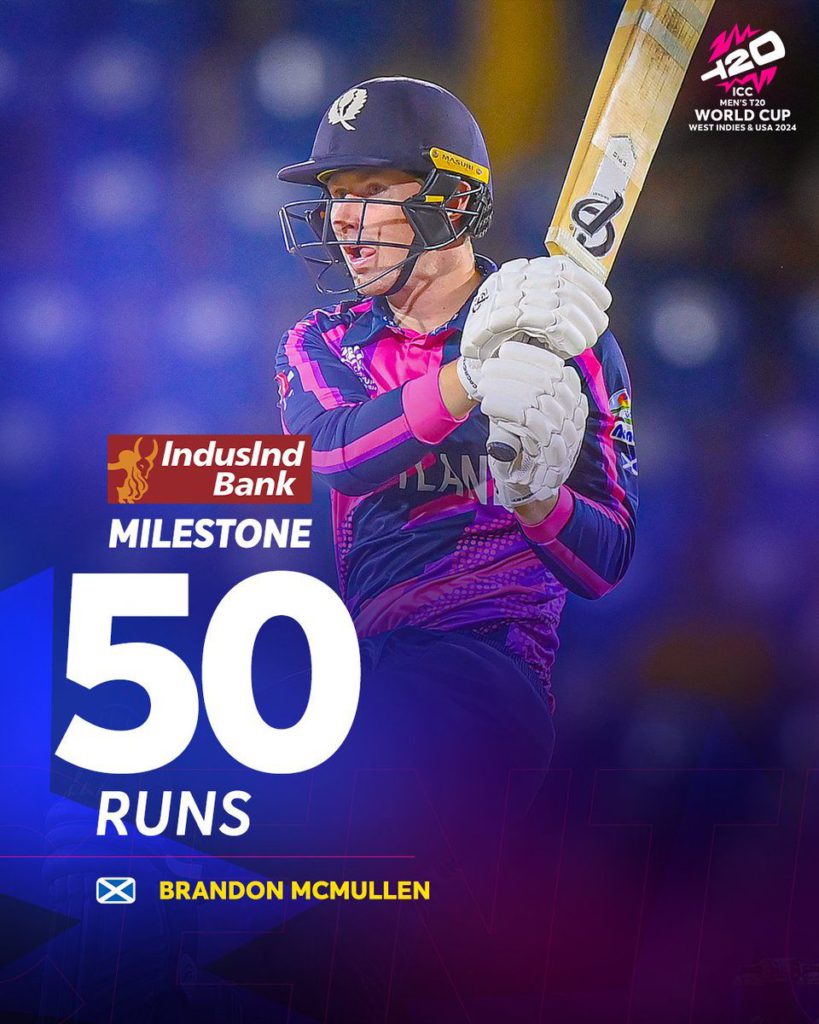
India-Australia Collaboration: SORR INDIA’s ‘Go Green for Planet Blue’ Initiative Shines on World Ocean Day

0

On World Ocean Day 2024, SORR INDIA, a frontrunner in the sustainable blue economy, hosted a series of impactful events as part of their “Go Green for Planet Blue” initiative.

The event, held at Swaraj Dweep (Havelock), aimed to integrate coastal communities into sustainable practices and was supported by notable partnerships with NITI Aayog and CSIRO under the India-Australia “Rise Accelerator” program.

Led by Commandant Pradeep Kumar Kushwaha (Retd.), CEO & Country Head of SORR INDIA, the organisation promoted ocean conservation and climate action. One of the highlights was the promotion of diving among young girls, encapsulating the theme “Take Action – Catalysing Action for Our Ocean and Climate”.

Prominent Activities and Campaigns

Celebrated swimmer and lifesaver Saachi Gramopadhye, along with dive master trainee Anusha Kayastha, took a hands-on approach to marine conservation by removing marine litter under the supervision of PADI instructor Saw Powdethey at the Scubalove Dive Centre. This effort underscored the critical need for clean oceans.

To raise awareness about sustainable menstruation, SORR INDIA distributed 100 packets of biodegradable sanitary napkins to women divers and participants. The launch of the “Every Day is an Ocean Day” campaign further solidified their commitment, pledging to provide a year’s supply of biodegradable sanitary napkins to 365 girls, aligning with Sustainable Development Goals (SDGs) 3 (Good Health and Well-being) and 14 (Life Below Water).

Commandant Pradeep Kumar Kushwaha emphasised the integration of modern science-based tools to enhance the campaign’s efficacy.

“Modern science-based tools such as data analytics, machine learning, drones, etc., will be deployed to enhance the efficacy of the campaign besides training at least 100 fishermen by next World Ocean Day 2025 in each coastal state to become qualified Ocean Warriors to work in the Blue Economy Sustainability drive and steer the New Oil campaign further,”

he stated.

Ambitious Projects and Global Collaboration

SORR INDIA’s ambitious projects aim to deploy sustainable oil recovery and remediation systems across India’s water bodies.

This initiative, in collaboration with the Indian Coast Guard, ports, and shipping industries, seeks to not only clean water bodies but also create better livelihoods for coastal communities, supporting India’s Net Zero goals. Robert Manning, General Manager of SORR Australia, praised the team’s success and emphasised global collaboration in line with SDG 17 (Partnerships for the Goals).

Commandant Pradeep Kumar Kushwaha noted the significance of the RISE accelerator program, wherein SORR Australia will act as the technology partner, supporting SORR INDIA with green tech to manufacture customised pollution response solutions.

This partnership aims to establish a circular economy with zero landfills at the end of life, enhancing India’s leadership in the Indian Ocean Region (IOR) under the Government of India’s flagship program SAGAR (Security and Growth for All in the Region).

The Global Context and India’s Role

Globally, approximately 19-23 million tonnes of plastic waste are dumped into aquatic ecosystems annually, equivalent to about 2,000 garbage trucks of plastic every day. India, alongside other Asian countries, contributes significantly to ocean plastic pollution due to inadequate waste management infrastructure. SORR INDIA’s initiatives are a vital step towards mitigating this issue by promoting sustainable practices and reducing plastic waste.

With these bold steps, SORR INDIA is poised to transform the “Planet Blue,” making it a cleaner, more sustainable place. Their comprehensive approach, integrating modern technology, community engagement, and international collaboration, sets a benchmark for ocean conservation efforts globally.

As the world grapples with the challenges of marine pollution and climate change, initiatives like these offer a beacon of hope and a roadmap for sustainable development.

Support Our Journalism

‘Global Indian Diaspora and Australia’s multicultural communities need fair, non-hyphenated, and questioning journalism, packed with on-ground reporting. The Australia Today – with exceptional reporters, columnists, and editors – is doing just that. Sustaining this needs support from wonderful readers like you.

Whether you live in Australia, the United Kingdom, Canada, the United States of America, or India you can take a paid subscription by clicking Patreon and support honest and fearless journalism.

Pakistan supported terrorists cowardly attack Hindu pilgrims in India, 9 dead and 33 injured

0

Terrorist organisation The Resistance Front (TRF), allegedly backed by Pakistan, has claimed responsibility for the brutal terror attack on a bus carrying Hindu pilgrims in the Reasi district of Jammu and Kashmir, India.

The terrorist attack resulted in the deaths of nine individuals and left 33 others injured, including little children. The identities of the passengers are still being confirmed, but it is believed they were from Uttar Pradesh.

Manoj Sinha, the LG of J&K, strongly condemned the cowardly terror attack. He posted on X: “Met the injured pilgrims at Government Medical College, Jammu & Narayana Hospital, Katra and wished them a speedy recovery. The entire nation stands firmly with the families of martyred pilgrims in this hour of grief.”

Amit Shah, Indian Home Minister, expressed his sorrow over the incident and assured that the perpetrators would be brought to justice. He posted on X: “The culprits of this dastardly attack will not be spared and will face the wrath of the law.”

According to local media reports, the brutal attack occurred as the bus was returning from the Shiv Khori shrine, en route to the base camp of the Mata Vaishno Devi shrine in Katra.

Terrorists, concealed in a nearby forest, ambushed the vehicle and opened fire. The driver of the bus, struck by a bullet, lost control, causing the vehicle to plunge into a gorge.

TRF, in a statement, warned of more such attacks on “tourists and non-locals,” describing the Reasi assault as the “beginning of a renewed start.”

India’s National Investigation Agency (NIA) has been tasked with probing the attack and a massive search operation has been initiated to locate the terrorists.

Prime Minister Narendra Modi has been briefed on the situation and has directed that the injured receive the best possible medical care. This attack coincided with his swearing-in for a third consecutive term in Delhi.

Support Our Journalism

‘Global Indian Diaspora and Australia’s multicultural communities need fair, non-hyphenated, and questioning journalism, packed with on-ground reporting. The Australia Today – with exceptional reporters, columnists, and editors – is doing just that. Sustaining this needs support from wonderful readers like you.

Whether you live in Australia, the United Kingdom, Canada, the United States of America, or India you can take a paid subscription by clicking Patreon and support honest and fearless journalism.

Mass resignations by founding members shake FijiFirst Party

0

In a dramatic turn of events, the founding members of the FijiFirst party, including former prime minister Frank Bainimarama and ex-attorney-general Aiyaz Sayed-Khaiyum, have resigned from the party.

Local media reports confirm that party president Ratu Joji Satalaka, vice president Selai Adimaitoga, acting general secretary Faiyaz Koya, and treasurer Hem Chand have also stepped down.

Sayed-Khaiyum disclosed that vice president Ravindran Nair and founding member Salesh Kumar were among the latest to leave. The resignation letters were submitted to the Registrar of Political Parties on Friday, 7 June.

While speaking to the local media outside court, Sayed-Khaiyum said “So we now have a situation where we have 17 people who voted for a pay rise when the rest of Fiji is suffering.”

“Ordinary people, these police officers, prison wardens, ordinary Fijians who work in factories are not getting a pay rise. But these 17 people who voted for a pay rise compromised the principle of Fiji First. If you read the constitution of Fiji First, it talks about ensuring there’s equality, economic equality, some form of parity that takes cognizance of the working-class people of this country,” he added.

FijiFirst MP Ketal Lal expressed his dismay on Facebook, describing it as a “Sad day for Fiji.”

This upheaval follows FijiFirst’s recent confirmation that it had expelled 17 MPs for defying a party directive and voting for a pay rise.

These MPs plan to contest their expulsion, intending to remain in parliamentary opposition, highlighting internal divisions within Fiji’s largest single party.

Registrar of Political Parties, Ana Mataiciwa, told local media the party’s constitution did not have guidelines on how internal party disputes were resolved, which was in breach of the Political Parties (Registration, Conduct, Funding and Disclosures) Act 2013.

Support Our Journalism

‘Global Indian Diaspora and Australia’s multicultural communities need fair, non-hyphenated, and questioning journalism, packed with on-ground reporting. The Australia Today – with exceptional reporters, columnists, and editors – is doing just that. Sustaining this needs support from wonderful readers like you.

Whether you live in Australia, the United Kingdom, Canada, the United States of America, or India you can take a paid subscription by clicking Patreon and support honest and fearless journalism.

International student caps are creating a huge headache for universities

0

By Peter Hurley and Melinda Hildebrandt

Just before the May budget, the federal government made a surprise announcement: it will introduce caps on the number of international students in the country.

It is fair to say this plan is really worrying some Australian universities.

The sector argues cutting student numbers will see job losses and less money to do research. They also warn cuts will hurt their international reputation and place in global rankings.

This is because international education is a vital source of funding for Australia’s universities. Universities collected about A$8.6 billion from international students in 2022 – more than a quarter of all revenue.

Given the sums involved, the introduction of caps has the potential to have the most significant impact on Australia’s tertiary education system in decades. But a major unanswered question is what the caps will be and how they will be calculated.

Remind me, what did the government announce?

Education Minister Jason Clare introduced legislation to parliament on student caps almost immediately after the budget was released. This would provide ministerial powers to regulate international education in Australia by:

  • pausing the registration of new providers and new courses
  • limiting the enrolments of overseas students by provider, course or location, over a year
  • automatically suspending and cancelling courses.

This comes as the government seeks to reduce net overseas migration (the increase in the number of people in Australia) to pre-pandemic levels of about 260,000 people per year.

It also follows similar moves in Canada and the United Kingdom, which have introduced changes to limit the number of international students in their countries.

How did we get here?

As the Treasury explained last week, it underestimated net overseas migration by 25%. International students are the major cause of this.

They are now at record levels, with about 870,000 current and former international students in Australia. They make up the largest part of the temporary migrant population.

During the pandemic, the number of international students in Australia more than halved. In December 2019, there were more than 630,000 international students in Australia. By December 2021, there were 315,000. Since Australia reopened its borders, the number of international students entering the country have rebounded much quicker than anticipated.

Along with pent-up demand, the Morrison government introduced policies to encourage international students to return. This included removing caps on the number of hours a student could work and allowing students to stay longer after they have finished their course.

Now, amid dual housing and cost-of-living crises, international students have also become a political issue. Not only is the federal government looking to decrease net overseas migration but the opposition wants to go even further.

Who is affected by this change?

So far, the focus of the impact on international student caps has been on universities. But there could be much wider impacts in the economy and community if international student numbers are capped.

One thing that is often lost in the debate is the diversity of the international education sector. Universities only make up about 40% of current international student enrolments.

The remainder of students are in private colleges, English language schools and secondary schools.

International students are also important parts of Australia’s workforce. The occupation with the largest number of international students is “carer and aides”. This means industries like aged care and disability support rely on an international student workforce.

In 2023, international education was also Australia’s fourth largest export valued at $48 billion. Of this, $17 billion was collected in course fees and the remaining $31 billion was spent in the broader economy.

This means any change to international student numbers could have an impact way beyond the campuses of Australia’s elite universities.

We still need detail

During his budget speech, Treasurer Jim Chalmers focused on housing as a central to how caps will be calculated.

As he told parliament:

[…] for too long, enrolments have grown without being matched by an increase in student housing supply.

We will limit how many international students can be enrolled by each university based on a formula, including how much housing they build.

But it is not yet clear how this will happen.

It is also unclear how much international students are impacting upon housing costs. Some research has shown the impact of international students on housing and rental prices is small.

One factor the government could consider here is how many domestic students are enrolled at a particular institution. This is so domestic students do not suffer from a cut that sees fewer resources where they study.

In Australia, it is certainly true the larger, more prestigious universities have the most international students. But they also enrol huge numbers of domestic students.

The largest private vocational colleges enrol almost exclusively international students, usually in courses like business and hospitality. As our analysis (below) shows, of the ten largest private providers, nine were private colleges where there were few domestic students.

It is important to note, this is the part of the international education sector identified as having the most problems with compliance and exploitation. This is what the government has been keen to crack down on when it talks about “shonky” providers.

What happens now?

The bill has been referred to the Senate’s education committee, which is due to report on August 15.

In many ways “too many students” is a good problem to have. It demonstrates Australia’s international education sector is strong.

But we have to watch out for unintended consequences. The diversity of the system – from elite, research universities educating both international and domestic students to private colleges largely educating international students – also needs to be taken into account.

And to adequately understand the impacts, we need more detail now from the government about how they plan to do it.

Peter Hurley, Director, Mitchell Institute, Victoria University and Melinda Hildebrandt, Policy Fellow, Mitchell Institute, Victoria University

This article is republished from The Conversation under a Creative Commons license. Read the original article.

"The

Support Our Journalism

‘Global Indian Diaspora and Australia’s multicultural communities need fair, non-hyphenated, and questioning journalism, packed with on-ground reporting. The Australia Today – with exceptional reporters, columnists, and editors – is doing just that. Sustaining this needs support from wonderful readers like you.

Whether you live in Australia, the United Kingdom, Canada, the United States of America, or India you can take a paid subscription by clicking Patreon and support honest and fearless journalism.

Historic Win for Team India: Thrills and Spills in T20 World Cup Clash Against Pakistan

0

ICC T20 World Cup match that will be remembered for ages, Team India clinched a historic six-run victory over arch-rivals Pakistan, defending the lowest total ever in the tournament’s history. The electrifying encounter at Nassau County Stadium saw India defend a modest 119 runs, restricting Pakistan to 113/7 and cementing their place at the top of Group A.

Match Highlights

India sets low target:

  • Virat Kohli and Rohit Sharma gave India a solid start, with Rohit smashing a six in the first over.
  • However, early breakthroughs by Pakistan’s bowlers, particularly Naseem Shah and Haris Rauf, restricted India to 119 runs.
  • Rishabh Pant’s composed innings amidst the fall of wickets provided some stability to the Indian innings.

Pakistan’s Chase:

  • Pakistan’s chase began cautiously, with skipper Babar Azam managing just 13 runs before being dismissed by Bumrah.
  • Mohammed Rizwan’s steady 31 runs kept Pakistan in the game, but wickets at regular intervals, including crucial strikes by Axar Patel and Pandya, derailed their chase.
  • The pressure mounted as Bumrah and Arshdeep Singh bowled tight overs, culminating in a dramatic final over where Pakistan fell short by six runs.

Incredible Bowling Display

India’s bowlers delivered a masterclass, led by pace spearhead Jasprit Bumrah, whose spell of 3/14 was pivotal in choking Pakistan’s run chase. Hardik Pandya’s crucial wickets and Rishabh Pant’s heroics behind the stumps added to the pressure on Pakistan.

Bumrah expressed his delight in the post-match press conference, highlighting the significance of disciplined bowling in conditions that offered little assistance.

“When the bat and ball challenge is good, it is more interesting to watch the match,”

he said.

His strategic bowling played a critical role in India’s defence, focusing on accuracy and exploiting the large boundaries.

India’s Innings: A Struggle for Runs

After losing the toss and being put into bat, India’s innings got off to a promising start with Rohit Sharma smashing a six off Shaheen Afridi in the first over. However, rain interrupted the match, and upon resumption, India lost momentum.

Virat Kohli was dismissed for just four runs by Naseem Shah, followed by the wicket of Rohit Sharma for 13, taken by Afridi.

Despite a few boundaries from Rishabh Pant, India struggled to build substantial partnerships. Naseem Shah and Haris Rauf’s disciplined bowling restricted the Indian batters, with Shah claiming three crucial wickets. India managed to reach a modest total of 119 runs.

Pakistan’s Chase: A Tight Contest

Chasing 120, Pakistan began cautiously with skipper Babar Azam and Mohammed Rizwan at the crease. Jasprit Bumrah delivered an early breakthrough, dismissing Babar for 13, with a brilliant low catch by Suryakumar Yadav at slips. Pakistan reached 35/1 by the end of the powerplay, maintaining a measured approach.

Despite keeping wickets in hand, Pakistan found it challenging to accelerate on a tricky surface. Axar Patel’s dismissal of Usman Khan and Hardik Pandya’s crucial wicket of Fakhar Zaman for 13 added to Pakistan’s woes. Bumrah’s exceptional bowling continued to stifle the run chase, removing Rizwan for a hard-fought 31.

The Final Overs: High Drama

As the pressure mounted, Pakistan needed 37 runs in the final five overs. Pandya struck again, dismissing Shadab Khan, and Bumrah’s consistent line and length saw him pick up another wicket, reducing Pakistan to 102/6 with 18 runs needed in the last over.

Arshdeep Singh’s final over proved decisive. He removed Imad Wasim for 15 with another fine catch by Pant, and despite Naseem Shah’s efforts, Pakistan fell short, ending their innings at 113/7. Bumrah’s spell of 3/14 and Pandya’s 2/24 were instrumental in India’s defence of the low total.

Reactions from the Cricketing World

The thrilling match garnered reactions from cricket legends and officials:

  • Sachin Tendulkar lauded the bowlers, tweeting, “T20 may be a batters’ game, but in New York, bowlers were the Apple of our eyes today.”
  • Jay Shah, BCCI Secretary, celebrated the victory, emphasizing its significance against Pakistan: “One more WIN, and this one… means a little more!”
  • Irfan Pathan and Virender Sehwag heaped praise on Bumrah for his match-winning performance.
  • Suresh Raina commended the team’s character and hunger to win.
  • Anil Kumble and Harbhajan Singh highlighted the historical significance of defending such a low total.

With two wins in two games, India tops Group A, positioning themselves strongly for the knockout stages. In contrast, Pakistan’s back-to-back losses have put their tournament hopes in jeopardy, making their path to the next stage increasingly difficult.

This match not only showcased India’s bowling prowess but also underscored the importance of mental fortitude and strategic execution in T20 cricket.

Support Our Journalism

‘Global Indian Diaspora and Australia’s multicultural communities need fair, non-hyphenated, and questioning journalism, packed with on-ground reporting. The Australia Today – with exceptional reporters, columnists, and editors – is doing just that. Sustaining this needs support from wonderful readers like you.

Whether you live in Australia, the United Kingdom, Canada, the United States of America, or India you can take a paid subscription by clicking Patreon and support honest and fearless journalism.

Niharika Hiremath as youngest recipient joins Sakshi Thakur and Harinder Kaur in King’s Birthday Honours List 2024

0

In a historic first, Niharika Hiremath OAM of Melbourne, at just 29 years old, has been recognised as the youngest recipient in this year’s King’s Birthday Honours 2024.

Joining her in the distinguished list are two other remarkable women of Indian origin: Melbourne’s social entrepreneur Sakshi Thakur and Sydney’s family violence activist Harinder Kaur of the Harman Foundation.

Niharika Hiremath: Championing Mental Health

Niharika Hiremath is a well-known s a mental health advocate and member of the National Mental Health Commission’s Independent Advisory Board. Her advocacy for mental health centres on integrating culturally responsive systems into healthcare. As a ‘lived experience partner’, her work is informed by her personal journey through the mental health system, highlighting the need for greater awareness and communication in this field.

Niharika has been awarded the OAM for her outstanding service to community health, reflecting her generation’s commitment to mental health advocacy.

Sakshi Thakur: Empowering Women through Social Enterprise

Image: Sakshi Thakur OAM (Source: Facebook)

Sakshi Thakur OAM, based in Melbourne, exemplifies the link between empowering women and strengthening communities. Leaving behind a high-profile corporate career, she founded ‘Sewing the Seeds’, a social enterprise that equips women in Puducherry with textile skills, thereby enhancing their family’s quality of life. She also founded Humanism, a social enterprise that creates dignified jobs with humans from marginalised and low-income communities. In 2018, she started Humanism Global to focus her energy and purpose on marginalised women’s needs and aspirations.

Sakshi’s work, which blends economic sustainability with social impact, has earned her the OAM for service to the community through social welfare organisations.

Harinder Kaur: Battling Domestic Violence

Image: Harinder Kaur (Source: LinkedIn)

In Sydney, Harinder Kaur has made significant strides in addressing domestic and family violence through the Harman Foundation, which she established in 2013. The foundation has assisted over 500 families experiencing violence and runs educational programs aimed at changing community attitudes. The Foundation also provides a variety of grassroots services such as food relief, counselling support, as well as referrals for other services including legal assistance.

Harinder’s efforts have been recognised with the OAM for service to the community through social welfare organisations.

These three exceptional women are among 737 Australians honoured in the King’s Birthday Honours list for 2024.

Image: Governor-General David Hurley

Governor-General David Hurley extended his congratulations to all recipients, noting,

“I would like to congratulate all those recognised in today’s Honours List. Some names are well-known, but the vast majority are not – they are people who work tirelessly and selflessly to make a difference in our community. I have been steadfast that the Order must reflect the diversity of our community – I am pleased by the progress we have made over the last five years.”

This year’s Honours list is notable for achieving gender parity with 49.9% female recipients. Governor-General Hurley, presenting his final Honours list, remarked on the progress made over the past five years towards reflecting the diversity of the Australian community.

The investiture of awards will take place in the coming months, with recipients being honoured by the Governor-General at Government House in Canberra, or by State Governors or the Administrator of the Northern Territory.

Update: An earlier version of this story included an incorrect photograph of Niharika Hiremath OAM. This has been rectified in the current version. We apologise for the error.

Support Our Journalism

‘Global Indian Diaspora and Australia’s multicultural communities need fair, non-hyphenated, and questioning journalism, packed with on-ground reporting. The Australia Today – with exceptional reporters, columnists, and editors – is doing just that. Sustaining this needs support from wonderful readers like you.

Whether you live in Australia, the United Kingdom, Canada, the United States of America, or India you can take a paid subscription by clicking Patreon and support honest and fearless journalism.
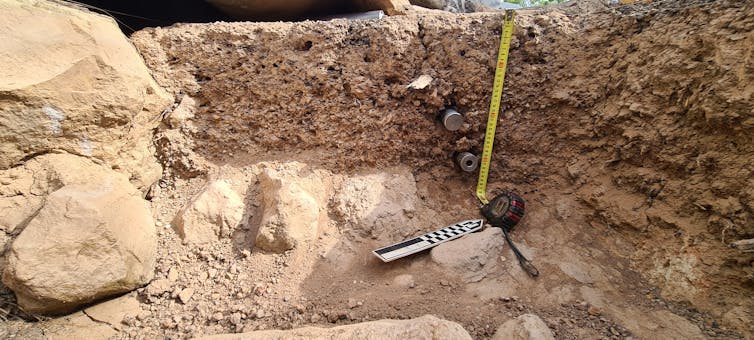
Modi 3.0: Listening to Ground Realities Key to India’s Empowerment and Development

0

By Om Prakash Dwivedi

Stories are fictitious but their impact can be monumental in real life. By nature, humans are attuned to stories, which is precisely why humanities and social sciences gain currency in our real lives. In storytelling, both the characters and the storyteller become fellow travelers as they analyze the ongoing twists in the plot development, linking them with their personal journeys. For, the stories we tell go on to share our surroundings and society, including national and international agendas. That is exactly what we witnessed in the just concluded election result for the 18th Lok Sabha. While the BJP swept the poll with accentuating fervour, it needs to do some work to regain the faith in a few regions.

Short of a complete majority, the BJP’s narratives of development were somewhat outflanked by the combined counter-narratives by the Opposition of the diminishing of the Constitution and an acute degree of miscalculations of the ground-level reality. How else does one justify the victory of the three independent candidates, two from Punjab and one from Kashmir, all having connections to separatist aspirations? Or for that matter, the loss of the BJP in the Ayodhya constituency despite the construction of the Ram temple after a marathon wait of more than 500+ years. For example, the Faizabad region was teeming with anger due to the loss of property and land and the fact that many of them were not properly compensated.

As Suryakant Pandey, a local politician from the Ayodhya constituency pointed out, “The displaced residents, who were given land by the State government elsewhere, are yet to get legal rights over the allotted land. The government has plans to develop Ayodhya as a world-class climate-smart city.” Likewise, many of these people approached the Allahabad High Court and filed a writ petition against the State government, hoping to gain some relief in the case of the lost lands.

Any master storyteller would prefer to develop his plot keeping the conflicting views of diverse characters. This is where the BJP seemed to have erred in the present elections. Coming back to story-telling, any avid reader would tell you that it is not just the palpable words visible on the pages that matter, but the gaps and silences in story-telling matter more. How did the BJP, a party that has been so adept in narrative buildings discount this fact in the wake of its 400+ clarion call?

Perhaps, it was a case of teeming arrogance as many critics point out. Perhaps not. I believe it was largely a case of not paying attention to developments outside of its own echo chamber. For, in story-telling, oratory skills need to be in alignment with listening capacity. Rightly, John Bryan of the Sarah Lee Corporation points out, “You have to be willing sometimes to listen to some remarkable bad opinions. Because if you say to someone, ‘That’s the silliest thing I’ve ever heard; get on out of here!’ — then you’ll never get anything out of that person again, and you might as well have a puppet on a string or a robot.”

The task of echo chambers is vital to stoke and engender narratives, and each political party has its own echo chamber. But the political erudition also lies in listening to other stories outside one’s echo chamber. As Kabir once famously said, “निंदक नियरे राखिए, ऑंगन कुटी छवाय, बिन पानी, साबुन बिना, निर्मल करे सुभाय। ( Keep your critic close, you get to know your faults if someone criticizes you, and you have a chance to correct them).To condone but not condemn processes within the echo chamber can impair the listening ability. Likewise, the narratives generated by and within the echo chamber can obfuscate the ground-level reality. Swapan Dasgupta sharply observes, “What is more noteworthy is that the alarm signals were not picked up by BJP prior to polling to contain any potential damage.”

The tenure of Modi 3.0 and his team will start today. His iron-clad figure is still the national face and continues to appeal to the Indians and several global leaders. Under his dynamic leadership, the team has been highly successful in appealing to new geographical territories with its strong narratives, the party needs some imaginational stretch in the regions it didn’t perform to its expectations.

As Modi said, “NDA’s third term will see a new ‘Golden Chapter’ in India’s development, and this is Modi’s guarantee.” He added that “uplifting 25 crore Indians from poverty is our commitment to foster the empowerment of the deprived” and that he is focussed on the “holistic development of all including the SC-ST-OBCs while also facilitating women-led development.”

To bring them all together Modi 3.0 may need a stronger team on the ground who are willing to listen to the ground reality and relay the same to the higher authorities so that the trust and faith in the BJP can be only strengthened. After all, in any democracy conversations and negotiations matter a lot. That is why, Modi 3.0 should encourage more narratives from scholars in the field of humanities and social sciences.

Support Our Journalism

‘Global Indian Diaspora and Australia’s multicultural communities need fair, non-hyphenated, and questioning journalism, packed with on-ground reporting. The Australia Today – with exceptional reporters, columnists, and editors – is doing just that. Sustaining this needs support from wonderful readers like you.

Whether you live in Australia, the United Kingdom, Canada, the United States of America, or India you can take a paid subscription by clicking Patreon and support honest and fearless journalism.

Canada’s Minister of Public Safety condemns Khalistani glorification of violence

0

Recently, the spectre of Khalistani extremism has once again cast a dark shadow over Canadian soil. Reports of imagery depicting the assassination of Indian Prime Minister Indira Gandhi in Vancouver have drawn sharp rebukes, notably from Canadian Minister of Public Safety, Dominic LeBlanc.

Minister LeBlanc posted on X: “This week, there were reports of imagery depicting the assassination of Indian Prime Minister Indira Gandhi in Vancouver. The promotion of violence is never acceptable in Canada.”

This statement by Minister LeBlanc resonates deeply amonmgst the Indian diaspora community members, especially from North India, as it underscores the urgent need for Western democracies to critically assess and robustly counteract the support for Khalistani extremist ideology within their borders.

Commenting on a recent atatck on Danish Prime Minister Mette Frederiksen was “beaten” by a man in a Copenhagen square at Kultorvet, Canada’s Prime Minister Justin Trudeau posted emphatically:

“We cannot dismiss or normalize acts of aggression like this. It’s dangerous to our democracies.”

Meawnhile, PM Trudeau or his office has not released any statement on Khalisatni glorification of violence and intimidation of citizens in his own country.

Mocha Bezirgan, a young investigative journalist, was the first one to bravely cover Khalistan separatists gathering in front of India’s consulate in Vancouver. He pointed out how bullet-ridden effigy of former Indian Prime Minister Indira Gandhi who was assassinated by her Sikh bodyguards was prominently displayed and glorified at this rally.

“Signs reading “KILL MODI politics” were spotted, and a picture of Talwinder Singh Parmar, the self-proclaimed mastermind of the Air India bombings, was being glorified as a “Canadian Singh who attained martyrdom fighting Indian terror forces.”

Through provocative displays and incendiary rhetoric that celebrates violence as a means to an end, Khalistanis are advocating for a separate Sikh state of Khalistan (Land of the pure), to be carved out of Northern India. This movement reached its bloody zenith in the 1980s and early 1990s, resulting in thousands of deaths and widespread chaos especailly in Punjab.

Image source: Indian Express.

The imagery of PM Gandhi’s assassination is not merely a historical reference; it is a symbol of violence that has no place in a civilised society. The dissemination and promotion of such imagery serve to incite hatred and violence, contravening Canadian laws and values.

Chandra Arya, Member of Parliament of Canada, has been calling upon Trudeau government and local law enforcement agencies to take immediate action against Khalistan supporters.

“This is continuation of threats with a similar float in Brampton couple of years back and few months back Pannu of Sikhs for Justice asking Hindus to go back to India…The prominence of bindi on the forehead of Indira Gandhi is to make doubly sure the intended targets are Hindus in Canada.”

Western democracies, including Canada and Australia, pride themselves on upholding principles of peace, tolerance, and the rule of law. Ironically, these are the very foundations that extremist ideologies undermine. By glorifying acts of violence, especially against politicians, Khalistanis directly contradict the values of peaceful coexistence and democratic discourse. It fosters a culture of hate and divisiveness, which can lead to communal tensions and social fragmentation within multicultural societies.

The support for such extremist ideologies, even if limited to a vocal minority, poses significant risks. It not only emboldens these individuals to undertake acts of violence, believing them to be justified in the pursuit of their political goals, but also endangers the lives of innocent citizens.

There needs to be a clear and unequivocal condemnation of all forms of extremism by Western political leaders, community organisations, and civil society members. Additionally, the law enforcement agencies must be proactive in identifying and neutralising threats posed by extremist groups to local community.

Fostering better integration and engagement within the Indian diaspora is crucial too. Indian community leaders should be encouraged to work with authorities to address grievances and promote a narrative of inclusion and harmony.

The Khalistani extremist ideology, with its dangerous appeal and destructive history, poses a significant threat to the values and safety of societies like Canada and Australia. The glorification of violence and extremism, especially pushed from West, under any pretext is unacceptable in any democracy.

Support Our Journalism

‘Global Indian Diaspora and Australia’s multicultural communities need fair, non-hyphenated, and questioning journalism, packed with on-ground reporting. The Australia Today – with exceptional reporters, columnists, and editors – is doing just that. Sustaining this needs support from wonderful readers like you.

Whether you live in Australia, the United Kingdom, Canada, the United States of America, or India you can take a paid subscription by clicking Patreon and support honest and fearless journalism.

Laapataa Ladies copy of Australian producer’s film, claims Bollywood filmmaker

0

Veteran Bollywood filmmaker and actor Ananth Mahadevan has alleged that Aamir Khan and Kiran Rao’s Netflix blockbuster Laapataa Ladies is similar to his debut full-length TV film. 

In 1999, Mahadevan’s Ghunghat Ke Pat Khol was produced by Metro Gold, also known as Channel 9 Gold, a Hindi-language TV channel in India, under their Director’s cut series.

In an Instagram post, Mahadevan, who is also a National Award-winning filmmaker, said: “My very first full length feature GHOONGHAT KE PAT KHOL was for Channel9 Gold, the Australian producer who opened shop in India in 1999.”

“It was a delightful story of two brides in the traditional Ghunghat getting mixed up in a train and finding themselves in Bombay with the wrong husband. The search for the right man and wife ends in a twist that challenges tradition and redefines the institution of marriage,” he added.

In an interview with Times Now, Mahadevan hinted that Rao’s film has similar plot points to his original work: “I don’t have any proof if Laapataa Ladies’ writer has seen my film on YouTube. When I searched for my movie on YouTube, it had disappeared and that’s when I realised that it was pulled down. I didn’t reach out to Aamir [Khan, producer] or Kiran because they will only point out the differences. But the premise, situations and a lot of scenes are similar. The mix-up in the train and railway station, and the ghunghatwala photo are straight from my film. I’ll treat it as flattery more than anything else.”

Kiran Rao’s film Laapataa Ladies stars Nitanshi Goel, Pratibha Ranta, Sparsh Shrivastava and Ravi Kishan.

Reacting to Ananth’s allegations, Laapataa Ladies‘ writer Biplab Goswami told the Deccan Chronicle that he had submitted the script at the Cinestaan India’s Storytellers Contest in 2018 and his story is original.

“I received the first runner-up award for it. I wrote the synopsis a decade ago. My story, script, dialogues, characterisation and scenes are all 100 per cent original. I have not been inspired by any story, movie or novel,” he added.

Laapataa Ladies‘ director Kiran Rao too has rubbished Mahadevan’s claim: “With all due respect, I have not seen Mr Mahadevan’s film or heard about it before this, so until I watch it I cannot comment.”

However, since the release of Rao’s Lapataa Ladies, Mahadevan’s film Ghunghat Ke Pat Khol had been taken down from YouTube in India.

Nivedita Shukla, a Dublin-based novelist and screenplay writer, posted on X that it is surprising that Mahadevan’s original work “the telefilm which was available on YouTube, has now been removed after Laapataa Ladies picked up and Ananth called out the makers.”

https://twitter.com/OfRunjh/status/1793909872398078101

Metro Gold channel was a joint venture between India’s Door Darshan Metro and Australia’s Nine Gold of Kerry Packer and Vinay Maloo of HFCL – Nine Broadcasting India.

Metro Gold’s programming was targeted at family audiences with popular shows such as Mamla Gadbad HaiSaamne Wali KhidkiTede Medhe Sapnay, and Chonch Ladi Re Chonch.

Support Our Journalism

‘Global Indian Diaspora and Australia’s multicultural communities need fair, non-hyphenated, and questioning journalism, packed with on-ground reporting. The Australia Today – with exceptional reporters, columnists, and editors – is doing just that. Sustaining this needs support from wonderful readers like you.

Whether you live in Australia, the United Kingdom, Canada, the United States of America, or India you can take a paid subscription by clicking Patreon and support honest and fearless journalism.

Unheard Voices and Resistance of Pakistan occupied Jammu and Kashmir

0

By Kanwal Singh and Sagina Walyat

In an unprecedented crackdown, Pakistani forces unleashed brute force on a peaceful march to Muzaffarabad in Pakistan occupied Jammu and Kashmir (PoJK), organized by the J&K Awami Action Committee. This march, which resulted in  protesters succumbing to injuries by direct firing from police and over hundred being grievously wounded by police,  was a continuation of the region’s longstanding resistance against the oppressive and regressive policies of the Pakistani government. The protest was not an isolated incident but a manifestation of decades of accumulated frustration and suffering under exploitative economic policies.

The Joint Action Committee articulated three primary demands during the recent protest. First one was that electricity should be provided at the cost of production. Another demand was for subsidized flour, aimed at easing the economic strain on the local population, the third demand was End of Elite Privileges. The protesters called for an end to the privileges granted to the POJK  elites, which have been draining more than half of the region’s budget. These privileges include rent-free offices provided by the Pakistani state. Notably, the basic amenities charges are higher in Pojk compare to other parts of Pakistan. The Protest is the result of the policies that have deprived people of the region of their resources, said Randhir Jaiswal, an official spokesperson of Ministry of External Affairs, India.  

As the protest gained local and Indian media attention, Pakistan government agreed on two demands out of the three. However, the protest has joined the chorus of voices in the region demanding complete liberation from Pakistani control. The recent events have reignited the call for freedom and self-determination among the people of POJK, highlighting the need for a more sustainable and equitable governance model in the region.

Voices from POJK: Insights from Peace Advocate & POJK Activist Romi Sharma

To gain a deeper understanding of the aspirations of the people in POJK, we engaged in a comprehensive discussion with Romi Sharma—a prominent peace builder, and an activist with ancestral roots in Pallandhri-Sadhnooti area of POJK. Through her social media channels and programs, Romi has played a pivotal role in reuniting families and friends separated by the 1947 partition, giving a platform to the voices from POJK. She serves as a bridge between J&K and POJK, interviewing countless individuals from the region and preserving their shared cultural heritage. 

Reflecting on her interviews, Sharma shared, “Even after 75 years of partition, the culture and language on both sides remain the same. There is a profound emotional connection that the partition could not sever. She highlights the strong resentment among the educated youth, who perceive J&K in India as way more developed and prosperous while they struggle for basic necessities. Romi further added that over the past seventy years, the residents of PoJK had surrendered to the belief that they would never again have the opportunity to converse with their friends and family in J&K. Hence, it is nothing short of a miracle that through her channel, these connections have been rekindled.

Furthermore, the immediate demand of the people in POJK , until the eventual reunification of POJK with J&K, is the creation of a corridor or a passage connecting the two regions, facilitating the reunion of families separated since 1947.

Sharma further explained that over time, “Pakistan has systematically altered the administrative structure, vesting control over POJK with the Pakistani government. In 1974, the ‘State Subject Rule’ in the Northern Areas, like Gilgit Baltistan, was abolished, allowing Pakistanis, primarily Pathans and Punjabi Muslims, to settle and own properties, leading to significant demographic changes.

The government in PoJK serves merely as a puppet, with Pakistan exerting complete control over the area, even utilizing it for terrorist activities against India. The economic conditions in PoJK are dire, characterized by rampant inflation. For years, people have been forced to live apart from their families due to the lack of job opportunities, roads, and infrastructure. Additionally, the electricity generated in the region is sold at exorbitant rates.

In Muzaffarabad and other divisions, while the “State Subject Rule” partially persists, Punjabi businessmen dominate the markets. Pakistan, initiated efforts to attract entrepreneurs from Punjab. However, these endeavors continue to face resistance from the local population in Muzaffarabad, preventing any significant alteration in the demographic composition. Consequently, to fill the void in low-wage occupations such as masonry, labor, and carpentry, individuals from Khyber Pakhtunkhwa (KPK) and Punjab were permitted to work in the Poonch, Mirpur, and Muzaffarabad Divisions.

A large proportion of Mirpur’s population has migrated and settled in the UK and other European nations. They often recruit workers from Punjab for various positions, including watchmen, tailors, and masons. Gilgit Baltistan is heavily impacted by the Chinese corridor, whereas in POJK, the Muzaffarabad area is prominently affected.

Historical Context and Cultural Continuity- The Unfading Shadows of History

George Orwell’s profound observation, “The most effective way to destroy people is to deny and obliterate their own understanding of their history,” serves as a poignant reminder of the traumatic legacy of the 1947 partition and its profound impact on the erstwhile state of Jammu and Kashmir. This history, as recounted by our grandparents who were compelled to abandon their ancestral lands, reveals a time when Jammu and Kashmir stretched from Muzaffarabad in the west to Gilgit-Baltistan in the north. The partition, an event never intended to bisect this region as it lay outside the Radcliffe Line, shattered lives, displacing families and friends. Yet, even after 75 years, the cultural and linguistic bonds between Jammu and Kashmir and POJK remain resilient and intact.

Jammu and Kashmir, once a vassal state under Maharaja Ranjit Singh, was consolidated during the Sikh Empire. Following the Second Anglo-Sikh War, 1846, the Treaty of Amritsar was signed between the British Empire and Raja Gulab Singh, establishing the princely state of Jammu and Kashmir under British suzerainty. The territorial integrity and geographical boundaries of Jammu and Kashmir remained intact under successive Dogra rulers until the treacherous attack by Pakistan forces (some disguised as tribal militia) in 1947 as Jammu and Kashmir king Maharaja Hari Singh was deciding whether to accede to India or Pakistan.

In the face of these tumultuous events, Maharaja Hari Singh of the erstwhile Riyasat of Jammu and Kashmir signed the Instrument of Accession, thereby integrating Jammu and Kashmir into the Dominion of India. This legal document, signed in 1947, stipulated that the accession covered three key subjects: defense, external affairs, and communications, with India pledging assistance in these areas. However, the invasion by Pakistan forces and subsequent UN-brokered ceasefire led to the division of the state, with significant portions falling under Pakistani control, now known as Pakistan Occupied Jammu and Kashmir (POJK) or so- called Azad Jammu and Kashmir (AJK).

POJK is divided into two sections: Jammu and Kashmir and Gilgit-Baltistan. It shares borders with the Pakistani provinces of Punjab and Khyber Pakhtunkhwa to the south and west, Gilgit-Baltistan to the north, and the Indian union territories of Jammu and Kashmir and Ladakh to the east. Muzaffarabad serves as the capital of POJK/AJK, which is further divided into three divisions: Mirpur, Muzaffarabad, and Poonch. Key locales in so-called AJK, include Muzaffarabad, Mirpur, Kotli, Rawalakot, Bagh, Palandri, Bhimber, Hattian Bala, Neelum Valley, Jhelum Valley, and Sudhanoti. The region’s primary communities are the Gujjars and Pahari tribe, but over the past 75 years, Pakistan has significantly altered the demography of POJK.

China’s Influence in POJK, Global Silence and International Apathy

China’s influence in POJK adds an additional dimension to the region’s troubles. Pakistan, grappling with longstanding economic instability, has increasingly leaned on China. The China-Pakistan Economic Corridor (CPEC), a flagship project of China’s Belt and Road Initiative, traverses POJK, making the region strategically significant for Beijing, and this has led to demographic changes and increased Chinese presence, further complicating the region’s dynamics and exacerbating local grievances. The situation in Balochistan, the starting point of CPEC and home to the crucial Gwadar port, mirrors the neglect and exploitation seen in POJK.

Pakistan’s longstanding internal crisis and pervasive corruption, coupled with the growing strategic importance of PoJK and Balochistan for China, are leading the country to repeat its past mistakes and inciting sovereignty crises in these regions. The recent conflict in PoJK risks spilling over into Balochistan, potentially invigorating its long-standing freedom movement. In such scenarios, this additional instability threatens the viability and future of China’s highly aspirational China-Pakistan Economic Corridor (CPEC) project, and furthermore expediting Pakistan’s existential crisis.

These frequent protests across Pakistan including POJK – Gilgit- Baltistan also exposing Pak’s fake narratives on peaceful Pakistan occupied J&K. As the people in these regions continue to bear the brunt of continued exploitation, illegal arrests, forced disappearance and abuse, highlighting the dire consequences of this geopolitical dynamic. Despite severe human rights violations in these regions, the international community, particularly the Organization of Islamic Cooperation (OIC) and Western media, has largely remained silent. This silence contrasts sharply with their vocal stance on human rights issues elsewhere. Jamil Maqsood, a prominent PoJK activist based in Brussels argue that “India is not responsible for these conflicts, as it has a legitimate and constitutional claim over POJK and seeks unification of Jammu and Kashmir, which was disrupted by the invasion of tribal militias and the Pakistani army in 1947.”

India’s Committed Stance 

Post-2014, India has adopted a robust and proactive diplomatic stance on POJK, a significant departure from the past. Frequent and articulate commentary from the Indian government on POJK is gaining acknowledgment from international communities. Pakistan’s deliberate demographic changes since 1947 present a serious challenge, as protests continue to erupt. The perceived failure of CPEC and the resulting disenchantment among the people across the Line of Control (LOC) are now redirecting their aspirations towards India, seen as a beacon of development.

Human Rights PoJk Activist, Jamil Maqsood emphasizes that the sole desire of POJK’s people is to be integrated with the state of J&K, administered by India. India considers Pakistan Occupied Jammu and Kashmir (POJK) to be an integral part of its territory, illegally occupied by Pakistan. 

The Indian Parliament has consistently passed resolutions reaffirming its stance and denouncing Pakistan’s actions in the region. These resolutions unequivocally assert India’s sovereignty over the entire Jammu and Kashmir territory, including PoJK, and demand the region’s return to Indian governance. A notable resolution, passed on February 22, 1994, reiterated India’s dedication to peacefully resolving the Jammu and Kashmir issue while voicing concern over human rights violations in POJK. Out of the 114 seats in the Jammu and Kashmir Legislative Assembly, 24 are permanently reserved for representatives from Pakistan Occupied Jammu and Kashmir (PoJK).

The narrative of POJK is one of resilience and unyielding spirit amidst decades of oppression and neglect. The voices echoing from this troubled region reflect a collective yearning for justice, autonomy, and reunification with their cultural and historical roots in Jammu and Kashmir. As Pakistan continues to impose exploitative policies and demographic manipulations, the people of POJK remain steadfast in their demands for equitable treatment and recognition. This also marks a significant moment for India, as the residents of Pakistan Occupied Jammu and Kashmir (POJK) are turning their hopeful  gaze towards India, seeking a path of progress and development.

India stands with a strong political stance and a proactive, vocal diplomatic approach, a departure from previous norms. As firmly stated by EAM Dr. S. Jaishankar, “Our Position on POJK has always been and will always be very clear. POJK is part of India and expect one day we will have the jurisdiction, physical jurisdiction over it.”

The current policy is poised to pave the way for this integration. It is imperative for global stakeholders to acknowledge and address the legitimate grievances of the POJK populace, ensuring that their cries for freedom and self-determination are not lost in the cacophony of geopolitical maneuvering. The enduring cultural and emotional bonds between J&K and POJK serve as a testament to the indomitable spirit of a people who, despite decades of separation, remain united in their pursuit of a shared and prosperous destiny. However, there’s looming uncertainties on unification, amongst majority of people of Indian Jammu and Kashmir with respect to additional anticipated economic burden and demographic challenges.

Contributor(s): Kanwal Singh is a Scholar, Policy Analyst and Columnist from Jammu & Kashmir, India and Sagina Walyat is a Researcher, Delegate Australia-India Youth Dialogue, AsiaGlobal Fellow, The University of Hongkong and India based Human Rights Lawyer at High Courts.

Support Our Journalism

‘Global Indian Diaspora and Australia’s multicultural communities need fair, non-hyphenated, and questioning journalism, packed with on-ground reporting. The Australia Today – with exceptional reporters, columnists, and editors – is doing just that. Sustaining this needs support from wonderful readers like you.

Whether you live in Australia, the United Kingdom, Canada, the United States of America, or India you can take a paid subscription by clicking Patreon and support honest and fearless journalism.
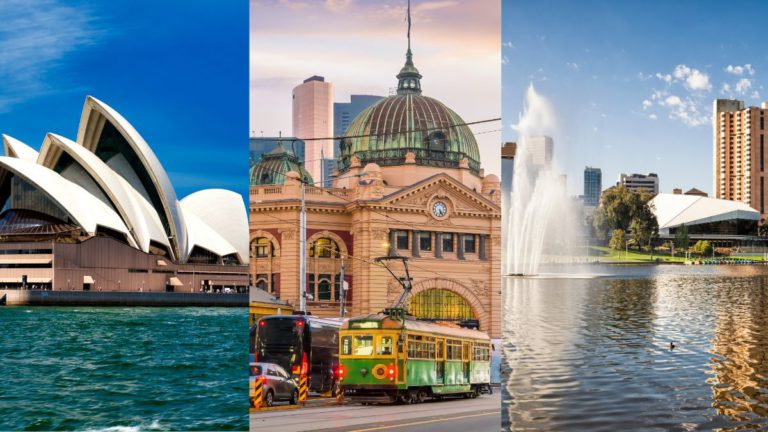
Use of AI deepfake and social media misinformation a serious threat to India’s democracy

0

The proliferation of artificial intelligence (AI) and deepfake technology has revolutionised various sectors, including entertainment and education. However, this powerful technology has also been weaponised to spread misinformation, with social media influencers playing a significant role in disseminating these falsehoods.

An incident involving the Bharatiya Janata Party (BJP) in India highlights the dangers posed by deepfake technology. The BJP lodged a complaint about a video that falsely depicted Amit Shah, a senior party leader, stating that the party intended to end reservation quotas for Scheduled Castes (SCs), Scheduled Tribes (STs), and Other Backward Classes (OBCs). In reality, Shah had referred to ending quotas for Muslims based on religious grounds.

For the uninitiated, deepfake technology allows for the creation of highly realistic but entirely fabricated videos, making it increasingly difficult for the average viewer to discern truth from fiction.

The implications of such misuse are particularly dire for democratic societies, where the integrity of information is paramount to informed decision-making and public trust, especially during elections.

According to political pundits, this deliberate distortion of Shah’s words had severe repercussions, given the sensitive nature of reservation policies in India.

Prof. Paul Watters, a well-known cybersecurity expert, agrees that the use of deepfake “is a serious threat to democracy” as it “is difficult to detect by using automated and scalable means.

“There may be some level of subjectivity involved in determining whether a video or image file is a deepfake, so social media companies might face challenges to develop practical solutions. We need better technologies to identify, trace, track and block social media accounts involved in propaganda, misinformation and disinformation,” he adds.

When such technology falls into the hands of those with malicious intent, the potential for harm is enormous. Social media influencers, with their vast reach and influence, can easily become unwitting or willing conduits for spreading these falsified narratives.

As the health of a democracy relies on the free flow of accurate information, voters must be able to trust that the information they receive is truthful and complete to make informed decisions. When misinformation, especially in such a convincing format as a deepfake video, spreads unchecked, it erodes public trust.

People begin to question not only the veracity of specific claims but also the reliability of all sources of information. This scepticism can lead to apathy, disengagement, and a polarised electorate, undermining the very foundations of democratic governance.

Dr Om Dwivedi, a UP resident, says the state’s election results were neither surprising nor unexpected “as there was disconnect between the party leadership and the ground reality.”

“No doubt the opposition used the AI well to propagate this false narratives. However, UP politics is all about caste and employment, and not about any individual. Samajwadi Party did this social engineering carefully. Also, the call for 400+ seats diminishing the Constitution triggered fear in certain sections of society,” he adds.

ICT Associate Professor Ritesh Chugh from CQUniversity Australia says that it is imperative for governments, regulatory bodies, and social media platforms to collaborate on effective strategies to combat this threat.

“Measures such as prompt removal of deepfake content, identification and penalisation of perpetrators, and public education campaigns are essential. Preserving the authenticity of information is crucial for upholding the principles of democracy and ensuring informed decision-making by citizens,” he adds.

Last year, Prime Minister of India Narendra Modi observed: “The deepfake videos have become a matter of deep concern in the society. The way deepfakes are spreading in the era of Artificial Intelligence is a big crisis! Through our programmes, we should ensure educating people about what deepfake is, how big a crisis it can turn out to be, and what can be its impacts.”

Concerted efforts to educate the public about the existence and dangers of deepfakes through media literacy programs can empower individuals to critically evaluate the information they encounter and recognize potential misinformations. Regulatory frameworks also need to be updated to address the challenges posed by AI and deepfake technology.

Dr Chugh further suggests that “the general public also has a critical role in combatting the spread of deepfakes and disinformation by staying informed, verifying sources, supporting fact-checking efforts, reporting suspected deepfakes, advocating for transparency measures, and actively engaging in critical analysis of information.”

The case involving the deepfake video in Indian election 2024 serves as a stark reminder of the perils posed by the misuse of AI technology in the digital age. To safeguard democracy, it is crucial to develop robust regulatory and media education mechanisms to detect and counteract deepfake technology.

Support Our Journalism

‘Global Indian Diaspora and Australia’s multicultural communities need fair, non-hyphenated, and questioning journalism, packed with on-ground reporting. The Australia Today – with exceptional reporters, columnists, and editors – is doing just that. Sustaining this needs support from wonderful readers like you.

Whether you live in Australia, the United Kingdom, Canada, the United States of America, or India you can take a paid subscription by clicking Patreon and support honest and fearless journalism.
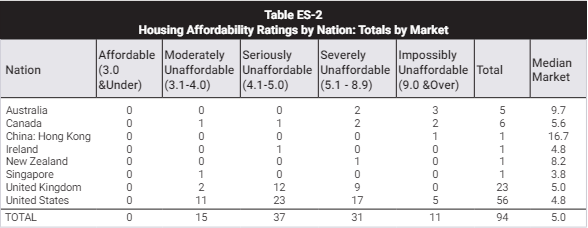
Melbourne’s Telangana Cultural Day celebrations transport attendees to a magical land

0

On June 8, 2024, the Melbourne Telangana Forum hosted a spectacular celebration of Telangana Cultural Day 2024 at the Williamstown Townhall.

The event was a resounding success, transporting attendees to a mythical land through vibrant cultural programs, particularly those performed by children.

This years celebrations highlighted the involvement of Indian-origin children and students in cultural performances throughout the event.

An audience member told The Australia Today that “It was a captivating experience to watch the children perform and present a comprehensive overview of Shri Ram’s life, with each group depicting various stages through drama, classical songs, and dance performances.”

Their pride and enthusiasm were palpable as they took to the stage, showcasing their talents and bringing the rich traditions of Telangana to life.

Viv Nguyen, Victorian Multicultural Commissioner, attended the event said ina statement:

“The best feature of this festival is the involvement of the children and students in the cultural performances throughout the entire event. So many took to the stage to perform with pride. I am too proud of their participation and of the work of the teachers who dedicate their professionalism to the job and the parents who support their children’s participation.”

The pride in their performances was evident, reflecting the hard work and professionalism invested by all involved.

The success of the celebration was a testament to the strong support from local businesses, the tireless efforts of the organising committee, and the overwhelming endorsement from the community.

The large crowds that filled the Townhall demonstrated the community’s enthusiasm and solidarity, making the Telangana Cultural Day truly unforgettable.

Telangana Formation Day is celebrated as Telangana Cultural Day. This marks the creation of the state of Telangana on June 2, 2014, making it the 29th state of India at that time. The day, both in celebrated India and abroad, continues to honour the journey and achievements of the state’s citizens, celebrating their resilience and cultural heritage.

Support Our Journalism

‘Global Indian Diaspora and Australia’s multicultural communities need fair, non-hyphenated, and questioning journalism, packed with on-ground reporting. The Australia Today – with exceptional reporters, columnists, and editors – is doing just that. Sustaining this needs support from wonderful readers like you.

Whether you live in Australia, the United Kingdom, Canada, the United States of America, or India you can take a paid subscription by clicking Patreon and support honest and fearless journalism.
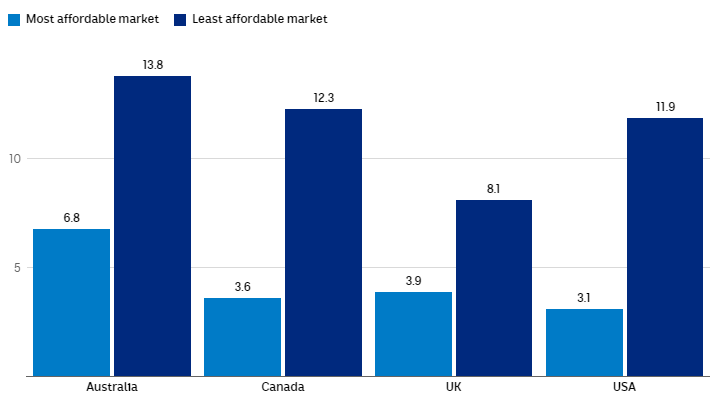
Indian-Origin Toddler’s Death in Perth Sparks Outrage Over Healthcare Discrimination

0

In a deeply tragic incident, a toddler Sandipan Dhar of Indian-origin in Perth Hospital died allegedly after being refused a blood test. This heartbreaking incident has ignited a heated discussion about healthcare discrimination and the importance of cultural competence in medical services.

Before his untimely demise, Sandipan’s parents, Sanjoy and Saraswati Dhar, sought medical help at the Key Largo Medical Centre GP practice due to his persistent fever. Despite multiple visits and repeated requests, their plea for a blood test to diagnose their son’s condition was consistently refused by the medical staff.

Image Source: Screeshots ABC Video
Image Source: Screenshots ABC Video

Highlighting their growing frustration as Sandipan’s condition continued to decline despite ongoing medical treatment, Dhar recounted,

“We were increasingly dissatisfied with the care Sandipan was receiving, so we headed directly to the hospital from the medical centre.”

Their fears were further intensified when hospital staff, on March 22, assessed Sandipan and concluded he was “completely fine,” dismissing their concerns even as his symptoms persisted.

Image Source: Screeshots ABC Video
Image Source: Screenshots ABC Video

This refusal came despite the parents’ insistence and their obvious concern for their child’s deteriorating health. Reports indicate that the refusal was allegedly influenced by the family’s Indian background, highlighting a disturbing instance of racial and cultural biases and insensitivity in healthcare provision.

Parents’ Plea and Hospital’s Response

Sandipan’s parents have spoken out, expressing their anguish and frustration. They recounted how their pleas for a simple blood test were ignored by the hospital staff.

Emphasising the implicit bias that may have played a role in their tragic loss, the heartbroken father said,

Image Source: Screenshots ABC Video

“I may not have an Australian accent, but my child’s life mattered just as much.”

Western Australia’s Health Minister Amber-Jade Sanderson acknowledged the family’s distress, saying, “It’s certainly the case that the family feels they weren’t heard.”

Image Source: Screeshots ABC Video
Western Australia’s Health Minister Amber-Jade Sanderson; Image Source: Screenshots ABC Video

Ramsay Health Care, responsible for Joondalup Health Campus, acknowledged a communication disconnect but maintained that the care provided was appropriate.

Dr Shane Kelly, Ramsay’s state manager, emphasised the importance of addressing the differing perspectives between the staff and the Dhar family.

Image Source: Screenshots ABC Video

Sandipan’s death is now undergoing a SAC 1 clinical review, and it is likely that the WA coroner will also conduct an investigation.

SAC 1 situations refer to clinical incidents that have resulted in or had the potential to result in serious harm or death, attributed to the healthcare provided rather than the patient’s underlying condition or illness.

Minister Sanderson mentioned that the Dhar family has been in contact with the WA attorney-general, and they are receiving additional support.

Community and Public Reaction

The Indian Australian community, as well as various human rights groups, have reacted with outrage and sorrow. This incident has prompted calls for a thorough investigation into the hospital’s protocols and the behaviour of its staff. Many are demanding accountability and measures to ensure that such discrimination does not recur.

 “The system failed us, and we need to ensure that no other family experiences such a tragedy,”

Mr Dhar added.

Parallels Drawn to Aishwarya Aswarth’s Case in Sandipan Dhar’s Tragic Death

A family spokesperson has noted similarities between Sandipan Dhar’s tragic death and that of Aishwarya Aswarth nearly three years ago. While there are distinct differences in the cases, both incidents underscore critical issues in healthcare response and management.

Aishwarya Aswarth died in April 2021 at Perth Children’s Hospital from a blood infection while waiting for treatment, highlighting severe lapses in timely medical intervention.

Minister Amber Jade-Sanderson said the circumstances of Sandipan’s case were not the same as Aishwarya’s.

“[Aishwarya] was a largely healthy young girl who contracted an infection which led to sepsis,” Ms Sanderson said.

Broader Implications

This tragic event has also brought to light broader issues of healthcare access and equity. Discrimination in healthcare settings can have fatal consequences, and this case underscores the need for robust training in cultural competence for healthcare providers. Ensuring that all patients receive unbiased and empathetic care is crucial for preventing such tragedies in the future.

In response to the incident, there are growing calls for policy changes and the implementation of stricter guidelines to address and prevent discrimination in healthcare. Advocacy groups are urging West Australia’s government to take concrete steps to promote inclusivity and equity in the healthcare system.

This heartbreaking incident is a sobering reminder of the consequences of healthcare discrimination and the urgent need for reforms to protect all patients, regardless of their background. As the investigation continues, the hope is that lessons learned from this tragedy will lead to meaningful changes that ensure better healthcare outcomes for everyone.

Support Our Journalism

‘Global Indian Diaspora and Australia’s multicultural communities need fair, non-hyphenated, and questioning journalism, packed with on-ground reporting. The Australia Today – with exceptional reporters, columnists, and editors – is doing just that. Sustaining this needs support from wonderful readers like you.

Whether you live in Australia, the United Kingdom, Canada, the United States of America, or India you can take a paid subscription by clicking Patreon and support honest and fearless journalism.
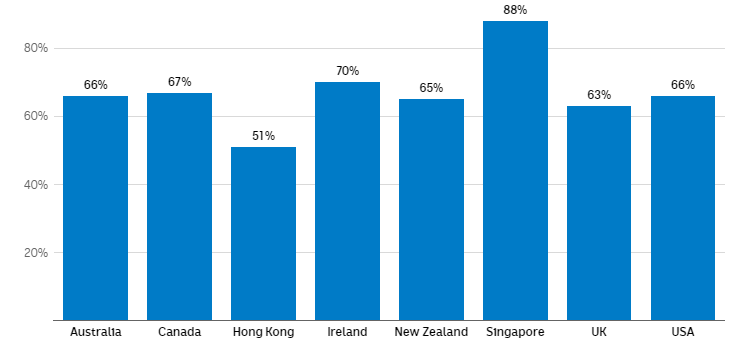
Australian Jews celebrate the heroic operation rescuing four Israeli hostages from Hamas in Gaza

0

Four Israeli hostages, namely Noa Argamani (25), Almog Meir Jan (21), Andrey Kozlov (27), and Shlomi Ziv (40), were rescued in a heroic operation by the IDF, ISA and Israel Police.

The hostages were rescued from two separate locations in the heart of Nuseirat, Gaza, after being kidnapped by Hamas from the Nova music festival on October 7, 2023.

In Israel, the families of the hostages, supported by tens of thousands of people, united to demand the return of the remaining hostages: “A deal that can bring them all back – the living for rehabilitation and the murdered for burial.”

Meanwhile, the Australian Jews joined together in Melbourne to celebrate the rescue of four hostages by the IDF: “The whole Jewish world is full of joy.”

The Zionist Federation of Australia expresses profound relief and gratitude for the successful rescue. ZFA President Jeremy Leibler said in a statement:

“This war started when Hamas invaded Israel on 7 October and murdered over a thousand people, before taking hostage 250 innocents. It will end when the hostages come home and Hamas surrenders. We pray for that day to come.”

In Israel, after rescue, Noa Argamani hugged and buried her face in her father’s chest, overcome with emotion as she saw him for the first time since her abduction by Hamas terrorists eight months ago.

The Israel Defense Forces (IDF) conducted a high-risk rescue operation in Al-Nuseirat, central Gaza, which involved an air assault.

IDF Rear Admiral Daniel Hagari stated there were “under 100 casualties.” In a statement, Hagari said,

“This operation was a success in rescuing and returning four hostages. We will continue to do everything to return the 120 hostages still held in Gaza. We are confident that we will reach you, and this operation will not end until you are returned home.”

In a heartfelt video released by the Israeli government, Argamani expressed her relief and joy. “I’m so happy to be here,” she said, having been reunited with her father in a hospital. “I’m very moved, I haven’t heard Hebrew for so long.”

According to the IDF, the four hostages were rescued from two locations in Nuseirat and are now in good medical condition. They were held in two apartment buildings in a residential neighbourhood, the same area where an Israeli strike hit a UN school earlier in the week, resulting in 40 deaths.

Rear Admiral Hagari highlighted the complexity and danger of the operation, stating that hundreds of Israeli troops participated in the “complex daytime operation” that had been meticulously planned for weeks. “While under fire inside the buildings and on the way out from Gaza, our forces rescued our hostages,” he said, sending a clear message to Hamas about Israel’s determination to bring all hostages home. One Israeli soldier was killed during the operation.

Israeli Prime Minister Benjamin Netanyahu’s told media outside Sheba Hospital after meeting with the rescued hostages and their families.

“We will not let up until we complete the mission and return home all the hostages, both those alive and dead.”

The Palestinian authorities reported that the IDF’s heavy bombardment of the Al-Nuseirat Camp during the rescue operation left at least 210 Palestinians dead and 400 wounded.

Support Our Journalism

‘Global Indian Diaspora and Australia’s multicultural communities need fair, non-hyphenated, and questioning journalism, packed with on-ground reporting. The Australia Today – with exceptional reporters, columnists, and editors – is doing just that. Sustaining this needs support from wonderful readers like you.

Whether you live in Australia, the United Kingdom, Canada, the United States of America, or India you can take a paid subscription by clicking Patreon and support honest and fearless journalism.

Urgent warning to Australians as surge in cybercriminal activity targets online users with malicious malware

0

The Australian Federal Police (AFP) is urging online users to bolster their digital defenses in response to a significant rise in cybercriminals deploying Remote Access Trojans (RATs) to steal and control personal data. These sophisticated malware variants can secretly take over a victim’s device, enabling hackers to conduct surveillance and extract sensitive information without the user’s knowledge.

RATs are particularly insidious, embedding themselves through various vectors such as seemingly legitimate email attachments and video game modifications (mods). Once installed, they provide cybercriminals with unauthorized access to webcams, microphones, passwords, and other critical data, often with minimal detection by antivirus software.

Recent AFP intelligence highlights a worrying trend: both domestic and international criminals are increasingly using RATs to infiltrate victims’ devices. One Australian man, charged in April, allegedly developed and sold a RAT named ‘Firebird’ on a hacking forum, showcasing the global reach and dangerous potential of this malware.

AFP Acting Assistant Commissioner Chris Goldsmid stressed the importance of robust cybersecurity practices. He advised that RATs are like a digital plague, spreading and taking control of devices to exploit victims globally.

“This is a reminder for all Australians to practice good cyber hygiene, and of how important it is to keep software and virus protection updated. Vulnerabilities in old or unprotected software are often the target for criminals attempting to gain control over a system so the owner can be targeted and exploited.”

The AFP’s commitment to combating this cyber menace is evident in their recent actions. A Geelong man received a three-year good behavior bond for embedding the Orcus RAT in game mods, compromising over 700 devices. The AFP also collaborated with the Malta Police Force to arrest a key figure in the distribution of the Warzone RAT, dismantling a network that targeted victims worldwide.

Under the Criminal Code Act 1995 (Cth), unauthorized use of RATs for data theft and remote access is punishable by up to 10 years in prison. The AFP continues to target and prosecute individuals involved in such activities.

For those who suspect they may be victims of RAT malware, the AFP recommends visiting cyber.gov.au for guidance on protection and recovery measures.

This surge in RAT-related cybercrime underscores the critical need for all Australians to practice good cyber hygiene and remain vigilant against emerging digital threats.

Support Our Journalism

‘Global Indian Diaspora and Australia’s multicultural communities need fair, non-hyphenated, and questioning journalism, packed with on-ground reporting. The Australia Today – with exceptional reporters, columnists, and editors – is doing just that. Sustaining this needs support from wonderful readers like you.

Whether you live in Australia, the United Kingdom, Canada, the United States of America, or India you can take a paid subscription by clicking Patreon and support honest and fearless journalism.

Australia Secures Thrilling 36-Run Victory Over England in T20 World Cup Showdown

0

Australia delivered a masterclass in both batting and bowling to secure a 36-run victory over England in a thrilling ICC T20 World Cup match at Bridgetown, Barbados on Saturday.

The win cements Australia’s position at the top of Group B with two wins in two games, while England is left reeling at fourth place with a loss and a no-result game.

Explosive Start for Australia

After being put to bat first, Australia’s openers, Travis Head and David Warner, set the tone with a blistering 70-run partnership. Warner, in particular, was in imperious form, smashing 39 off just 16 balls with two fours and four sixes.

Head complemented him well with a quick-fire 34 off 18 balls. Their aggression saw Australia racing to 50 runs in just 3.4 overs.

Despite losing both openers in quick succession, Australia’s middle order maintained the momentum. Skipper Mitchell Marsh (35 off 25) and Glenn Maxwell (28 off 25) put together a crucial 65-run partnership to steer Australia past the 100-run mark. Contributions from Marcus Stoinis (30 off 17) and Matthew Wade (16*) ensured Australia posted a formidable total of 201/7 in their 20 overs.

AusVsEng T20 World Cup; Image Source- X @T20WorldCup

England’s bowlers had a tough day, with Chris Jordan (2/44) being the pick of the lot. Adil Rashid, Liam Livingstone, Moeen Ali, and Jofra Archer each chipped in with a wicket.

England’s Chase: A Fiery Start Fizzles Out

Chasing a daunting target of 202, England’s openers Jos Buttler and Phil Salt came out all guns blazing. The duo matched Australia’s aggression, keeping the run rate close to ten per over during the powerplay.

By the end of six overs, England was comfortably placed at 54/0, with Salt and Buttler looking dangerous.

AusVsEng T20 World Cup; Image Source- X @T20WorldCup

However, the introduction of Adam Zampa into the attack turned the game on its head. Zampa clean-bowled Salt for 37 and then removed Buttler for 42, putting the brakes on England’s chase. The wickets of hard-hitting Will Jacks and Jonny Bairstow soon followed, thanks to disciplined bowling from Marcus Stoinis and Josh Hazlewood, leaving England at 124/4 in 14.1 overs.

Australian Bowlers Seal the Victory

With the required run rate climbing, England struggled to keep up. Pat Cummins and Zampa continued to apply pressure, picking up crucial wickets at regular intervals. Cummins’ exceptional bowling in the 16th over, which saw the dismissal of Moeen Ali for 25, further dented England’s hopes.

Despite a brief resurgence from Liam Livingstone, who hit a massive six, England could not keep up with the required rate. Cummins struck again, removing Livingstone for 15, effectively sealing the game for Australia. England eventually fell short, finishing at 165/6 in their 20 overs.

Key Performances and Takeaways

Pat Cummins (2/23) and Adam Zampa (2/28) were the standout bowlers for Australia, demonstrating control and precision in their spells. The disciplined bowling performance in the latter half of the innings was instrumental in Australia’s victory.

For England, the aggressive start by their openers showed promise, but the middle-order collapse and lack of significant partnerships proved costly. The inability to maintain momentum and capitalize on the powerplay set the stage for their defeat.

Looking Ahead

Australia’s comprehensive performance has solidified their dominance in Group B, and they will look to carry this momentum forward in their upcoming matches. England, on the other hand, needs to regroup and address their middle-order fragility and bowling inconsistencies if they are to keep their World Cup hopes alive.

This thrilling encounter not only showcased the competitive spirit of both teams but also highlighted the importance of maintaining composure and delivering under pressure in the T20 format. As the tournament progresses, fans can expect more such exciting clashes that make the ICC T20 World Cup a spectacle to behold.

Support Our Journalism

‘Global Indian Diaspora and Australia’s multicultural communities need fair, non-hyphenated, and questioning journalism, packed with on-ground reporting. The Australia Today – with exceptional reporters, columnists, and editors – is doing just that. Sustaining this needs support from wonderful readers like you.

Whether you live in Australia, the United Kingdom, Canada, the United States of America, or India you can take a paid subscription by clicking Patreon and support honest and fearless journalism.

Down Under to Dhaka: An Aussie kid’s experience on the roads and rickshaws

0

By ShNaajh

My last visit to Dhaka was so long ago that I barely remembered a thing. That is why, when we returned to my dad’s home city in late March this year, I was prepared to fully immerse myself in the experience and make new memories. What I didn’t know was how many of those new memories would be made on the roads of Dhaka.

If you are ever in the capital city of Bangladesh, you must experience its roads and rickshaws. If you can’t decide which roads, I hope my top picks help!

Driving from Uttara (New Dhaka) to Old Dhaka

It was our first day in Dhaka as tourists and also my first time experiencing the traffic the city is infamous for. From the cool comfort of my grandad’s car, I saw dust wafting in the air creating a foggy haze. The sound of car horns coming from all directions filled my ears and we were surrounded by buses and rickshaws that threatened to scrape against the car. There were intersections where we stood still for minutes on end, and pedestrians used the lack of movement to cross the street – some of them had huge boxes and large plastic packets balanced on their heads, their confidence astounding. The lanes that keep cars from going too close to each other in Australia served no such purpose in Dhaka as vehicles freely crossed over them.

We drove a lot that day, and for the first time, I felt I understood the true meaning of sensory overload.

ShNakharibajar

ShNakharibajar has to be the narrowest street I’ve ever walked in. There were shops on either side of the road – some were cooking up breakfast, some had craftspeople making jewellery, and some simply had vendors waiting for customers.

The road might have been 4-5 metres wide, but the crowd made it seem like 3! Whenever a rickshaw or a CNG would pass, people would press up against the sides of the road to make room for the vehicle. From all the wheels and feet that trod on the road, dust flew in the air mixing in with the smell of deep-fried food, incense from the temples, raw fish and sweat. Ever so often there was a small temple with people praying inside. My Thamma (grandma) went into most of them but spent the longest time in the Kali temple.

Above our heads were wires intertwined for years. We soon entered a much narrower alley, so narrow that you could touch the walls on both sides. Wires were hanging so low in places that you had to watch your head. Bells would ring constantly from the countless rickshaws speeding through the street.

ShNaakharibajar was a lively place with lots going on no matter which way you looked. Even though I found the crowd, the sounds and the smells (both the good and the bad) overwhelming at times, I still wouldn’t have wanted to miss out on the experience.

Crossing Mirpur Road in front of Gausia Market

Gausia Market was apparently the only place where we could buy falls for my mum’s saris. It took us forever to find the shop, but I had no complaints since the shopping centre was air-conditioned, The moment we got out though, the heat and humidity hit us hard. We had to cross to the other side of the road, which I knew would be no simple task. The cars were slow but steady; they refused to stop for anything. Crossing the road meant risking it all; taking one step into the busy street could be costly, but there was no turning back.

In Australia, people put their hands up to a driver to say thank you for giving way. But the second a person puts their hand up in Dhaka while stepping into the traffic, it can mean only one thing, and that is to tell the approaching vehicles to stop, which they don’t by the way – they just slow down to give you an extra millisecond to pass!

We followed other people to get to the fence that separated the two directions of traffic, but that was only half the journey, a checkpoint and a resting place before the mission went on. I looked across the fence completely baffled as to how we would get to the other side until I spotted them, the gaps between the metal bars that lined the fence. It seemed that some of the bars had been removed from the fence so people could duck under the gaps and make their way through the second half of the road, once again taking brave steps through the honking cars and bell-ringing rickshaws, finally to the safety of the other side of the road. That’s exactly what we did too.

Then we stood on a skinny concrete divider that rose as a safe island between the steady streams of vehicles, rickshaws and pedestrians. Everyone would stay perched up on the concrete until they spotted a rickshaw to take them, or a bus or their car. We stood like barrelmen, the concrete platform our crow’s nest, as we looked out onto the busy road in search of my grandad’s car.

The Elevated Expressway

It was the afternoon rush hour and we were returning home. The roads were so congested that we found ourselves moving very little with each passing minute. To escape the traffic, we chose to take the Elevated Expressway. Each journey on it costs a small car 80 taka. This was the first time since our arrival in Dhaka that we were driving at 60 kilometres per hour, without any signals and without any traffic.

From the vantage point of the Elevated Expressway, the horizon could be seen. The car was drifting smoothly and there was no sound of honking or beeping or ringing around us. The familiar madness of driving around Dhaka had vanished. There were other cars, but they were barely noticeable.

The sun was setting. It looked like an incandescent ball of flames suspended in the air, The sky was painted in grey watercolour. My gaze drifted back down to the flats, offices and houses that looked like an assortment of matchboxes each basking in the glow of the departing sun before it took its final bow and hid behind the horizon.

Padma Bridge

We’d heard that Padma (pronounced pawdda) Shetu, the 3.686-billion-US-dollar bridge over the Padma River, was an engineering marvel. My dad had already been on it and wouldn’t let us leave Bangladesh without seeing it!

We paid a toll of 750 taka – that’s each way – and my granddad’s small car sped up like we do in Australia when entering a freeway.

The day was overcast. It felt like the car was driving in the sky and was surrounded by clouds. It seemed like we had entered a separate world from our own, with the distant buildings made nearly invisible by the thick fog that shielded the bridge from the rest of the world. There were very few cars on the road, and the familiar hustle and bustle of the city had disappeared.

We drove smoothly. Through each window, the distant water could be seen down below. As it was summer, the river bed was visible in places. They looked like small islands scattered far and wide or clustered together. The buoys I spotted stood tall and confident but aimlessly rocked back and forth in the water. The cargo ships, on the other hand, were sailing steadily through the fog. Everything seemed mysterious.

After we’d been to Padma Bridge, a Dada (a friend of my grandad) told me that new drills had to be manufactured so they could go deep enough into the river bed to build the bridge.

The Rickshaws

The streets of Dhaka became the new F1 racecourse as I climbed onto the cycle rickshaw with my mum to go to the Aarong in Jashimuddin Avenue, Uttara. As soon as the rickshaw began to move, I found myself holding on for dear life! The roads were bumpy and the whole rickshaw thudded when it came crashing back down after each pothole or speedbump on the road. Any opening of even the smallest kind to get ahead of everyone else sharing the road was seized by the driver immediately and instinctively.

Cars honked from every direction, but not enough to stop the rickshaw from slipping in in front of them. The rickshaw driver would shout, trying to scare the others into giving him space as the rickshaw’s wheels threatened to get caught on those of the neighbouring rickshaws. Passengers were faced with a whirlwind of emotions and the biggest question was whether to be impressed by the feat the driver was undertaking or to be scared by what could come next. It was as if the brakes no longer existed! The rickshaw would near the vehicle in front of it, and just as I would squeeze my eyes shut and hold on tight to my seat from fear of the impending crash, the rickshaw would swerve like a pro F1 driver!

Battery-Operated Rickshaws

And then there were the battery-operated rickshaws! The rickshaw sped through the streets as the battery whirred beneath the driver’s feet. Some of them didn’t even have pedals. The bumps that had once filled the rickshaw rides could barely be felt, thanks to the smoothness provided by technology! It quickly became clear that the battery-powered rickshaws were at the top of the pecking order as they seemed unstoppable rulers of the roads.

After riding on a battery-powered rickshaw, whenever I saw older cycle-rickshaw drivers, I noticed that they either had no passengers or struggled to carry the ones they did. It made me wonder whether having a battery-powered rickshaw would’ve made their lives easier.

Even after returning to Melbourne, I found that parts of Dhaka stayed with me, most often in the form of me forgetting to put on my seatbelt! And when we went Aurora-hunting in Brighton last month, I found myself holding my hands up as my parents and I jaywalked! This was our Dhaka-style road-crossing! When we’re driving somewhere, sometimes I look out the window, surprised by the absence of traffic that I had grown so used to during my week there. I cannot say I miss it, but the roller-coaster-rickshaw-rides? That’s a different story!

This was first published in Travels That Make Us and has been republished here with the kind permission of the author and blog admins.

Support Our Journalism

‘Global Indian Diaspora and Australia’s multicultural communities need fair, non-hyphenated, and questioning journalism, packed with on-ground reporting. The Australia Today – with exceptional reporters, columnists, and editors – is doing just that. Sustaining this needs support from wonderful readers like you.

Whether you live in Australia, the United Kingdom, Canada, the United States of America, or India you can take a paid subscription by clicking Patreon and support honest and fearless journalism.
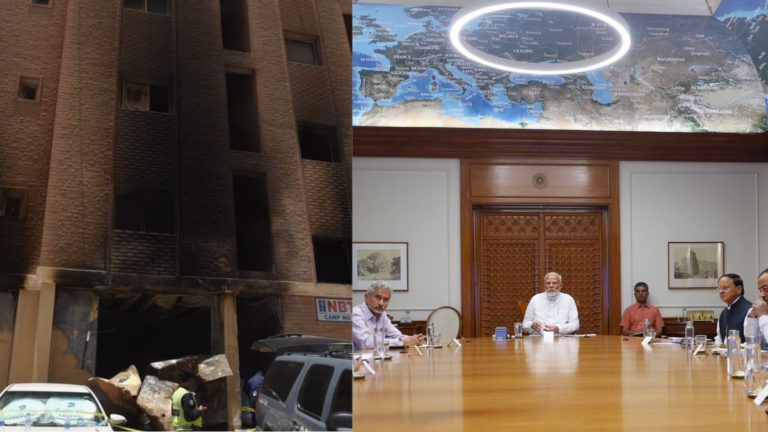
32-year-old man jailed for $400,000 fraud attempt on dead girlfriend’s super and life insurance

0

A Woodbridge, Western Australia, man has been sentenced to three years and 10 months’ imprisonment for fraudulently attempting to access almost $400,000 in superannuation and life insurance benefits of his girlfriend after her unexpected death in 2019.        

The man, 32, was sentenced in the Perth District Court on 7 June, 2024, after being found guilty by a jury in March, 2024, of logging into the woman’s superannuation account on her mobile phone and changing the beneficiary nomination to his own details.

The AFP charged the man in July 2020 after investigating claims the woman’s superannuation account had been accessed in the hours after her death from medical complications.

AFP Detective Inspector Andrea Coleman said highly-skilled AFP investigators worked hard every day to prevent people from profiting at the expense of others.

“In this case, we have helped to protect this young woman’s nest-egg and ensure the money is provided to the beneficiary who she chose.”

The woman’s relatives had reported concerns about her financial affairs after the man tried to get a copy of her death certificate.

The man was convicted after a jury trial of one count of using a mobile phone to commit a serious offence (fraud), contrary to subsection 474.14(2) of the Criminal Code 1995 (Cth).

He was sentenced to three years and 10 months’ imprisonment with a non-parole period of one year and 11 months.

Support Our Journalism

‘Global Indian Diaspora and Australia’s multicultural communities need fair, non-hyphenated, and questioning journalism, packed with on-ground reporting. The Australia Today – with exceptional reporters, columnists, and editors – is doing just that. Sustaining this needs support from wonderful readers like you.

Whether you live in Australia, the United Kingdom, Canada, the United States of America, or India you can take a paid sub

Schrödinger’s cat confused as losers rejoice, victors distraught in historic Indian elections

0

The recently concluded Indian General elections were truly historic. Almost a billion humans were eligible to vote in the largest democratic elections ever held in the world and over 640 million exercised their right to chose their government.

The incumbent Prime Minister Narendra Modi also made history as he became only the second PM of India to lead a Government for the third straight time. The only other PM who achieved this feat was India’s first, Jawaharlal Nehru, in 1962, over half a century ago.

India is the world’s largest secular, liberal, democracy and in Indian elections till the votes are counted no one can say with certainty who will win. We at The Australia Today kept reiterating this fact in our coverage of the elections.

Most opinion and exit polls were giving the ruling BJP a majority on their own comfortably like in 2014 and 2019, which would be well over 272 seats in the 543 seat Parliament, and the BJP led National Democratic alliance (NDA) a thumping majority (average of around 350 seats). In short it was estimated that Mr Modi will be back as the PM of India.

And that is what has happened. Prime Minister Modi is back. The results were not as great for the BJP as the polls indicated but nevertheless they were good enough for them to get back in power. The BJP finally got 240 seats, 32 shy of a majority on its own. The NDA got 293.

NDA Meeting in New Delhi; Image Source: x @BJP4India

While this number may not look that great compared to the BJPs’ last two performances in general elections but if you were to really analyse these figures this is the third best performance for any party in Indian General elections in 40 years.

The opposition I.N.D.I alliance, which comprised of many regional parties and the principle opposition party Congress, got 234 seats. So the BJP has gotten more seats on its own then the entire opposition put together. No doubt the Congress has done way better than anyone expected but at 99 seats this is the third worst performance by the Congress since India’s independence and the third straight loss for the grand old party of India in general elections

However, in what may be an unprecedented event since the dawn of human civilisation, after a hat-trick of wins, there was a sense of doom and gloom among supporters of Mr Modi and the BJP while there was a triumphant and jubilant mood in the Congress camp after a hat-trick of losses!

This tweet by BJP National Spokesperson Shezad Poonawalla sums up the sentiment at the BJP camp.

While this is a tweet from the Congress party.

Stretching the theory of half glass full optimism to extreme proportions, the Congress really has set an example of how not to let any number of defeats pull you down. There is something for all of us to learn here. On the other hand BJP and its supporters must give up their, if I don’t score a 100%, I am a loser syndrome (a common syndrome found in very high performing students in India).

These reactions could potentially pose a challenge for any AI programme that were to analyse data on Indian elections in the digital space and surely Schrödinger’s cat would be as confused about these reactions as it would be about its own existence.

One positive outcome of these elections though is that EVMs (Electronic Voting Machine) have performed to perfection. Before these elections whenever the BJP won the EVMs were accused of not working properly or being hacked and when the opposition parties won they apparently worked perfectly all right. But in these elections even though the BJP has won it seems the EVMs have worked without a hitch. The opposition has not yet made an issue of it. Such is their sense of joy.

What remains to be seen is who has the last laugh given these election results, Prime Minister Modi, de facto leader of the Congress party Rahul Gandhi or Schrödinger’s cat!

Support Our Journalism

Global Indian Diaspora and Australia’s multicultural communities need fair, non-hyphenated, and questioning journalism, packed with on-ground reporting. The Australia Today – with exceptional reporters, columnists, and editors – is doing just that. Sustaining this needs support from wonderful readers like you.

Whether you live in Australia, the United Kingdom, Canada, the United States of America, or India you can take a paid subscription by clicking Patreon and support honest and fearless journalism.

Alarming rise of violence and threats against MPs: Is this the new normal in democracies?

0

On Friday evening, Danish Prime Minister Mette Frederiksen was “beaten” by a man in a Copenhagen square at Kultorvet. The man was subsequently arrested by police and no further comments or remarks on the case has been released.

The prime minister is “shocked by the incident” and there has been a quick widespread condemnation of such “violence against democratically elected leaders in our free societies.”

In recent days, several incidents involving violence and threats towards peaceful citizens and Members of Parliament (MPs) across various democracies have raised concerns about the potential normalisation of such behaviour. From physical assaults to stalking and vandalism of property, these actions undermine the principles of democracy and respect for public office. Examining incidents from Australia, India, and Canada offers a sobering insight into this disturbing trend.

In Australia, the elected representatives are in shock at the number of these alarming incidents, with the offices of several Labor MPs, including Federal Attorney-General Mark Dreyfus anmd Minister Bill Shorten, being targeted with vandalism in Melbourne. Graffiti on the building included the phrases “Free Gaza” and “Glory to the martyrs.” The use of red paint and graffiti is symbolic, often intended to convey an aggressive message. Vandalism of elected representatives offices disrupts their ability to serve their constituents effectively and sends a message that others who may oppose that those in public office are not safe from extremist’s wrath, even in their professional spaces.

In India, a woman Central Industrial Security Force (CISF) constable, Kulwinder Kaur, allegedly slapped newly elected Bharatiya Janata Party (BJP) MP Kangana Ranaut at an airport. Kaur has been charged under Sections 323 (voluntarily causing hurt) and 341 (wrongful restraint) of the Indian Penal Code, yet no arrest has been made. This incident, involving a high-profile MP known for her strong stance against Khalistan extremism and outspoken nature, highlights the increasing tension and potential for physical confrontations between public figures and so-called activists. The lack of immediate arrest in this case raises questions about the enforcement of laws designed to protect citizens and whether such acts are being taken seriously enough by the Indian authorities.

In Canada, MP Kevin Vuong, elected for Spadina—Fort York, reported being followed and photographed by an unknown woman while out with his wife. Vuong, known for his vocal stance on antisemitism, described this incident as intimidating and invasive. The incident, as well as photographs of the drivers and their licence plate, were shared with both parliamentary security personnel and Toronto police.

While Prime Minister keeps repeating “rule of law” as a mantra, this form of non-physical harassment signifies a shift towards psychological intimidation, aiming to create a climate of fear and discomfort among Candian politicians who oppose Hamas. Such actions not only endanger the personal security of MPs and their loved ones but also threaten to stifle free speech and robust political debate, as MPs may become hesitant to voice strong opinions if they fear retribution.

Australia’s Prime Minister Anthony Albanese has denounced protests outside Labor’s offices and alleged intimidation of MPs and their staff as a bad development for democracy. Albanese said the “blockade” of his own office had been supported by “Greens and state Greens”.

Representative image: PM Anthony Albanese and FM Penny Wong at Press Conference (Source: Twitter)

In a Senate committee hearing Foreign Minister Senator Penny Wong accused the Greens of “participating in protests which have become violent and aggressive.”

“What we have seen are protests which go beyond peaceful protests, we have a right to peaceful protest in this country. But we should rightly condemn protests which are violent and which are hateful and aggressive.”

Peter Khalil, the chair of parliament’s committee of intelligence and security, told Guardian Australia that “violence, intimidation, harassment, hate speech and damage of property crosses the line and needs to be called out.” He added that the Greens’ approach to the conflict had been “morally reprehensible” and also accused them of “whipping up anger and grievance, making things worse” in pursuit of votes. Labor MP for Higgins, Michelle Ananda-Rajah, agreed and has also accused the Greens of causing “social unrest.”

The Australian Greens rejected Labor’s claims as “not correct”: “The Greens support peaceful protest, we will continue to do so, and we support the protest organisers’ calls for no property damage or breakage.”

These incidents across different democratic nations point to a worrying trend where violence and threats towards citizens and MPs are becoming more frequent and, arguably, more accepted and even celebrated on social media. This normalization can have severe consequences for democracy.

First, it undermines the rule of law and the sanctity of democratic institutions. When MPs are attacked, either physically or psychologically, it diminishes the respect for the positions they hold and the democratic process they represent. Second, if the personal cost of public service includes a heightened risk of violence and harassment of loved ones, these increasing threats and acts of violence can deter capable individuals from entering politics.

Democracies thrive on healthy debate and peaceful protests are a legitimate form of democratic expression, allowing citizens to voice their concerns and hold public officials accountable. However, the challenge lies in distinguishing between legitimate, non-violent protest and extremist ideological propaganda masked as activism that cross the line into violence and intimidation.

Upholding the integrity and safety of public officials is fundamental to the health of our democracies. Law enforcement agencies in Australia, India and Canada must take a consistent stand to send a clear message on consequences for those who engage in such extremist and violent behavior. Through a commitment to civil discourse, we can ensure that our political representatives can perform their duties without fear of violence or intimidation.

Support Our Journalism

‘Global Indian Diaspora and Australia’s multicultural communities need fair, non-hyphenated, and questioning journalism, packed with on-ground reporting. The Australia Today – with exceptional reporters, columnists, and editors – is doing just that. Sustaining this needs support from wonderful readers like you.

Whether you live in Australia, the United Kingdom, Canada, the United States of America, or India you can take a paid subscription by clicking Patreon and support honest and fearless journalism.

Hindus this, Hindus that! Stop the blame game: We are not our worst enemies!

0

By Nandini

As the news began filtering in about the BJP and NDA not having as many numbers as we had been expecting and the Ayodhya results that shocked us all, the WhatsApp groups of Modi supporters erupted into accusations and laments, self-flagellation as some sections are often wont to do.

“Hindus are their own worst enemies.”

“Hindus stab Hindus in the back.”

“Hindus sell themselves for a few rupees.”

“Hindus this, Hindus that!”

Amidst the blame game, devoid of substantiated reasons, facts or data, we found ourselves in a state of self-inflicted embarrassment.

Let’s reflect for a moment. It’s merely a decade or generously speaking, fifteen years since the Hindus began their journey of consolidation. Undoubtedly, there’s a long road ahead, but the journey has commenced.

We were divided by our colonisers, our differences highlighted, our commonalities ignored, and thereafter by the Congress who followed the same playbook to the letter.

It was to their advantage that they broke us up into manageable pieces, leaving us to scavenge morsels, pleading for reservations. Even once-proud communities were reduced to vying for reserved slots, a stark reminder of our fractured existence.

In the present, amid soaring national aspirations, what does Rahul Gandhi offer? A caste census!

Instead of fostering unity, he perpetuates age-old schisms, for nothing unnerves them more than a consolidated Hindu vote.

The Congress as we know has fine-tuned into an art, catering to 15% of the population, peddling obscurantism, illiteracy, ghettoization, and archaic personal laws. It’s a convenient formula: easy work, easy money, easy power.

Our repeated descent into self-blame only serves to reinforce their stratagem. This isn’t how we wage a protracted battle, a civilizational struggle. No army can prevail when plagued by self-doubt and worse, suspicion.

Over the past decade, my observation has been clear: our propensity to yield too easily, to shift blame, especially onto our own.

On platforms like X (formerly Twitter), even prominent voices question,

“What have we done to you?”

“We have never done this; we didn’t do that…”

“Why?”

The irony is palpable, perhaps the answer is in the question!

We mock the others for victimhood card, which they pull out at the slightest excuse, but we are not far behind. The only difference is they rarely question themselves whereas we only question ourselves.

Them: “Hai! You provoked us! And then you made it worse by defending yourself!”

Us: “But what did we do? We do nothing except blame ourselves!”

Yes, introspection and self-questioning are important in every community and society, but certainly not to the point that it paralyzes you to a jellyfish level.

Fortunately, a renaissance is underway.

In the past decade, we’ve rediscovered our valour, celebrated our heroes, and embraced our resilience. This awakening instils pride and unity, exemplified by the ascent of Narendra Modi. It’s a lesson we must cherish, safeguard, and not forsake or fall apart in moments of vulnerability.

Reflecting on the Henderson-Brooks Report of 1962, which squarely blamed the political class for India’s humiliation, we find a crucial lesson. While acknowledging defeats is essential, dwelling on them cripples. The Indian army exemplified this shift post-1962, addressing deficiencies in training and equipment. Subsequently, it not only triumphed in four wars against Pakistan but also delivered a resounding response to China at Nathu La in 1967-68, a chapter often overlooked.

My limited point is that to constantly remember where you were defeated debilitates you. But to learn from it and fight back makes you a victor!

Remember, we are one, we will consolidate as one. We can only win as one. Whatever it takes!

Author: Nandini Bahri Dhanda is an Interior Architect. She has lived across sixteen states in India & travelled all over the world. Her interest in art, culture, history politics & above all a passion for communicating & chatting with people across the board, finds her voice in her blog.

Disclaimer: The review was first published on her blogspot, We have republished it with kind permission from the author. You can read the original copy by clicking here.

Follow her on Twitter @NAN_DINI_

Support Our Journalism

‘Global Indian Diaspora and Australia’s multicultural communities need fair, non-hyphenated, and questioning journalism, packed with on-ground reporting. The Australia Today – with exceptional reporters, columnists, and editors – is doing just that. Sustaining this needs support from wonderful readers like you.

Whether you live in Australia, the United Kingdom, Canada, the United States of America, or India you can take a paid subscription by clicking Patreon and support honest and fearless journalism.

T20 World Cup: Super Over Drama and Pakistan’s Shocking Loss against US

0

The United States secured a historic victory over Pakistan in a super over finish at the Grand Prairie Stadium in Dallas.

The match, which had all the elements of a cricketing classic, highlighted both the strengths and the vulnerabilities of the Pakistani side, leading to significant criticism of their performance under pressure.

A Disappointing Start for Pakistan

Pakistan’s innings began on a shaky note after losing the toss. Despite an early six from Mohammed Rizwan, he was dismissed for a mere nine runs, leaving Pakistan at 9/1 in the first 1.2 overs. The early dismissals continued with Usman Khan and Fakhar Zaman failing to make significant contributions. By the end of the powerplay, Pakistan was struggling at 30/3, with Babar Azam and Shadab Khan at the crease.

USvsPak T20 World Cup match; Image Source: X @T20WorldCup

The middle overs saw some resistance, primarily from Shadab Khan, who aggressively attacked the USA bowlers, hitting two successive sixes in the 10th over. However, just when Pakistan seemed to be gaining momentum, Nosthush Kenjige’s disciplined bowling brought another double blow, removing both Shadab and Azam Khan in quick succession. Pakistan’s inability to build on these partnerships highlighted their lack of depth and resilience in batting.

USvsPak T20 World Cup match; Image Source: X @T20WorldCup

Pakistan’s Inconsistent Batting

Pakistan’s captain, Babar Azam, managed to score 44 runs but faced criticism for his cautious approach, which put pressure on the other batsmen. Despite hitting crucial boundaries, his inability to accelerate the run rate significantly affected Pakistan’s total. The lower order, led by Shaheen Afridi’s quick 23* off 16 balls, managed to push the score to 159/7, but it was evident that Pakistan’s total was below par on a batting-friendly pitch.

Kenjige’s exceptional figures of 3/30 and Saurabh Netravalkar’s economical 2/18 were instrumental in restricting Pakistan, exposing the latter’s over-reliance on their top order.

USvsPak T20 World Cup match; Image Source: X @T20WorldCup

US’s Steady Chase and Pakistan’s Sloppy Fielding

In response, the US began steadily, with Monank Patel playing a captain’s knock, scoring a crucial 50 off 38 balls. Despite early jitters and the loss of Steven Taylor, Patel and Andries Gous steadied the ship with a solid partnership. However, Pakistan managed to claw back into the game, thanks to crucial wickets by Haris Rauf and Mohammad Amir.

USvsPak T20 World Cup match; Image Source: X @T20WorldCup

As the game drew to a close, the US required 15 runs off the final over. Haris Rauf, tasked with defending the total, faltered under pressure. Aaron Jones’ timely six and Nitish Kumar’s boundary ensured the game went into a super over, revealing Pakistan’s inability to maintain composure in crunch moments.

Super Over Drama

In the super over, the US batted first and set a target of 19 runs, aided by Pakistan’s sloppy fielding and Amir’s lacklustre bowling. Pakistan’s chase in the super-over was equally dramatic but ultimately disappointing. Despite a boundary from Iftikhar Ahmed, his dismissal by Netravalkar and Pakistan’s failure to chase the target highlighted their strategic and execution flaws under pressure.

USvsPak T20 World Cup match; Image Source: X @T20WorldCup

A Wake-Up Call for Pakistan

The US’s historic victory against Pakistan is a testament to their grit and strategic planning. For Pakistan, this match served as a critical wake-up call. Their batting line-up’s inconsistency, the captain’s cautious approach, and the bowlers’ failure to perform under pressure raised serious questions about their preparation and mindset.

Pakistan’s defeat in such a high-stakes game not only highlights the need for a more aggressive and resilient approach but also underscores the importance of mental toughness in critical moments. Moving forward, Pakistan must address these issues if they aim to be serious contenders in international cricket.

Support Our Journalism

‘Global Indian Diaspora and Australia’s multicultural communities need fair, non-hyphenated, and questioning journalism, packed with on-ground reporting. The Australia Today – with exceptional reporters, columnists, and editors – is doing just that. Sustaining this needs support from wonderful readers like you.

Whether you live in Australia, the United Kingdom, Canada, the United States of America, or India you can take a paid subscription by clicking Patreon and support honest and fearless journalism.

From Controversy to Clarity: Australia Introduces Tougher Visa Regulations with Direction 110

0

In a move aimed at bolstering community safety and addressing the complexities of Australia’s migration system, Immigration Minister Andrew Giles announced the signing of Ministerial Direction 110.

This new directive, which replaces the contentious Direction 99, emphasises the protection of the Australian community and common sense as its guiding principles.

Strengthening Visa Cancellation Policies

Minister Giles highlighted that the government has already cancelled numerous visas on character grounds to safeguard the community. However, he pointed out that recent Administrative Appeals Tribunal (AAT) decisions have not always aligned with the government’s intent or public expectations.

“Since the beginning of last week, I have cancelled 40 visas in the national interest,” Giles stated.

“Today, we take the next step in strengthening our cancellation system to better reflect community expectations.”

Ministerial Direction 110 clarifies that the safety of the Australian community is the government’s highest priority. It places greater weight on protecting the community in visa decisions and elevates the impact on victims of family violence to one of the primary considerations, reflecting the government’s zero-tolerance approach to family and domestic violence.

Addressing Flaws in Direction 99

The introduction of Direction 110 comes after a significant political and public backlash against its predecessor, Direction 99. This earlier directive was intended to bring a “common sense” approach to appeals by non-citizen criminals whose visas had been cancelled. However, it led to controversy when it was used to reinstate the visas of several individuals with serious criminal histories, including a man later accused of murder.

Prime Minister Anthony Albanese had committed to New Zealand in 2022 that Australia would stop deporting people with criminal histories who had spent most of their lives in Australia but were New Zealand-born and unable to become Australian citizens. Direction 99 sought to honour this promise by considering a person’s connection to Australia as a primary factor in visa decisions.

However, more than 30 people whose visas were cancelled on the grounds of family violence and other serious offences managed to reverse these cancellations by highlighting their Australian connections. This included individuals convicted of child sexual abuse and one charged with murder last month.

Under intense political pressure, Giles re-cancelled 35 visas and replaced Direction 99 with the newly established Direction 110.

Key Changes in Direction 110

While Direction 110 still gives primary consideration to both criminal histories and connections to Australia, the principles shaping these considerations have shifted. Unlike Direction 99, which generally afforded a higher level of tolerance for serious conduct by non-citizens who have lived in Australia for most of their lives, Direction 110 only states that it “may” afford tolerance, depending on the circumstances.

Moreover, the new directive stresses that “the safety of the Australian community is the highest priority of the Australian government.” It also mandates primary consideration of the impact of the offending on any victims and their families, which was previously listed as an “other consideration.”

Direction 110 also removes explicit language that gives more weight to the fact that a person has children who are Australian citizens or permanent residents. Instead, it retains broader language about “family or social links.”

Minister Giles’ Stance

Minister Giles defended the new directive, stating,

“The revised Direction makes it clear that the safety of the Australian community is the government’s highest priority. This common sense approach ensures that our migration system is working always in our national interest.”

Giles argued that Direction 110 addresses issues not only with Direction 99 but also with the Coalition-era direction that preceded it. The government pointed to several cases during the Coalition’s tenure where deportations were overturned for similar reasons.

Civil Society Groups’ Response

The introduction of Direction 110 has not been without criticism. A coalition of over 40 legal, civil society, and human rights groups issued a statement expressing concern over the ongoing attacks on Direction 99 and independent decision-making by the AAT.

“We are deeply concerned by the ongoing attacks in media and political commentary on ministerial Direction 99 and independent decision-making in character matters by the Administrative Appeals Tribunal,” the statement read. “These attacks are misleading and discriminatory and threaten the rule of law.”

The group, which includes the Human Rights Law Centre and the Asylum Seeker Resource Centre, emphasised that Direction 99 involved only minor changes to previous directives and stressed the importance of independent decision-making based on comprehensive evidence.

“Everyone in Australia, no matter their background or visa status, deserves to be treated equally before the law and have their circumstances fully and independently considered before lifelong consequences are visited on them,” the statement concluded.

Support Our Journalism

‘Global Indian Diaspora and Australia’s multicultural communities need fair, non-hyphenated, and questioning journalism, packed with on-ground reporting. The Australia Today – with exceptional reporters, columnists, and editors – is doing just that. Sustaining this needs support from wonderful readers like you.

Whether you live in Australia, the United Kingdom, Canada, the United States of America, or India you can take a paid subscription by clicking Patreon and support honest and fearless journalism.

Australian High Commission joins Indian PM Modi in honoring mothers with tree planting on World Environment Day

0

On the occasion of World Environment Day, Indian Prime Minister Narendra Modi launched a heartfelt and innovative campaign, #एक_पेड़_माँ_के_नाम (#Plant4Mother), aimed at encouraging people across India and the globe to plant a tree in tribute to their mothers.

The initiative reflects Modi’s ongoing commitment to environmental sustainability and personal connection to nature.

The campaign quickly gained traction, with the Australian High Commission among the first to join.

Image: Australian High Commission staff joins Indian PM Modi in honoring mothers with tree planting on World Environment Day (Source: X)

Members of the Australian High Commission planted trees at their compound, marking their solidarity with the Prime Minister’s initiative.

In a tweet, Philip Green OAM, the Australian High Commissioner, expressed their pride and commitment: “Exactly what we did this morning at our High Commission compound to mark #WorldEnvironmentDay. We are proud to join you in this campaign @narendramodi ji.”

Environmental experts and activists have praised Indian PM Modi’s campaign, noting that it aligns with broader global efforts to address ecological challenges.

This initiative not only emphasises environmental conservation but also fosters a sense of community and shared purpose. It encourages individuals to take a proactive role in combating climate change and promoting biodiversity, while simultaneously celebrating the nurturing spirit of mothers.

World Environment Day is the United Nations day for encouraging worldwide awareness and action to protect our environment. The theme for 2024, ‘Land restoration, desertification, and drought resilience,’ underscores the importance of restoring degraded land and building resilience to droughts and desertification.

Support Our Journalism

‘Global Indian Diaspora and Australia’s multicultural communities need fair, non-hyphenated, and questioning journalism, packed with on-ground reporting. The Australia Today – with exceptional reporters, columnists, and editors – is doing just that. Sustaining this needs support from wonderful readers like you.

Whether you live in Australia, the United Kingdom, Canada, the United States of America, or India you can take a paid subscription by clicking Patreon and support honest and fearless journalism.

Former Sydney Airport employee jailed for three years following $450,000 theft

0

A former airport employee who generated $450,000 from selling personal electronics stolen from cargo at Sydney Airport has been sentenced to three years and four months’ imprisonment.

The AFP identified the man, 38, as a potential suspect following a report of a theft at the airport’s cargo facility in February 2022. The man was employed as a freight handler and had access to electronic devices located in an air cargo container.

On 5 May, 2022, the AFP executed a search warrant at the man’s Green Valley home and seized smartphones, smart watches and tablet devices worth about $50,000

Further inquiries revealed the man had received a number of electronic devices stolen from the airport facility which he then sold, gifted, or kept for personal use.

AFP officers located $189,000 cash in the boot of the man’s car and identified a further $261,000 transferred into his personal bank accounts. This money, which totalled $450,000, was criminal proceeds generated from the sale of the stolen electronic devices.

AFP Sydney Airport Police Commander Morgen Blunden said the AFP was committed to targeting crime occurring at the airport.

“People with trusted access in an airport precinct are critical to the successful operation of Australia’s tourism and trade sectors, but the AFP will not hesitate to investigate and prosecute those who abuse this trust. Criminals are motivated by profit and greed and the AFP has zero tolerance to those to abuse their access to airside operations for their illegal pursuits,” Det. Supt Blunden said.

The man was arrested and charged with receiving stolen property contrary to section 188 of the Crimes Act 1900 (NSW) and knowingly deal with proceeds of crime contrary to section 193B (2) of Crimes Act 1900 (NSW).

The man’s partner, 45, was also arrested and charged with two counts of dealing with money or other property reasonable suspected of being proceeds of crime under $100,000 contrary to section 400.9 (1A) of the Criminal Code (Cth).

The pair pleaded guilty to the charges and on 11 December 2023. The woman was sentenced by the Downing Centre District Court to an intensive corrections order of 70 hours community service.

On Wednesday (29 May 2024), the man was sentenced by the Downing Centre District Court to three years and four months’ imprisonment, with a non-parole period of two years.

Support Our Journalism

‘Global Indian Diaspora and Australia’s multicultural communities need fair, non-hyphenated, and questioning journalism, packed with on-ground reporting. The Australia Today – with exceptional reporters, columnists, and editors – is doing just that. Sustaining this needs support from wonderful readers like you.

Whether you live in Australia, the United Kingdom, Canada, the United States of America, or India you can take a paid subscription by clicking Patreon and support honest and fearless journalism.
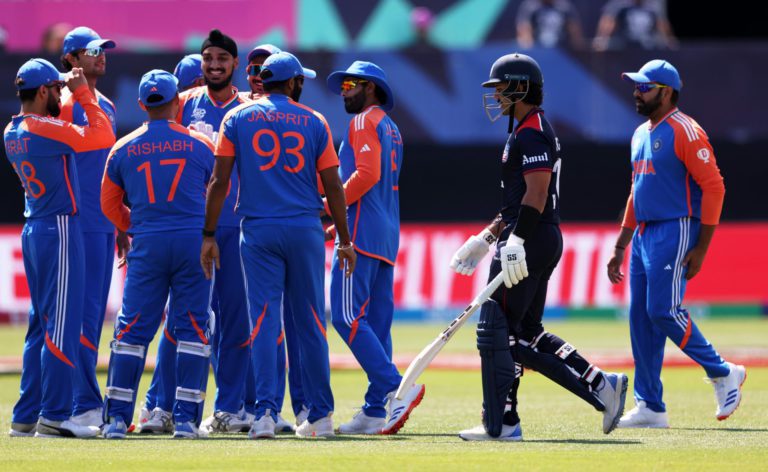
Australian Defence Force is allowing foreign recruits to join

0

By Ned Dobos

From July this year, New Zealand nationals will be eligible to serve in the Australian Defence Force. From January 2025, so will Americans, Canadians and Brits. This raises a number of political and ethical issues that will need to be addressed in due course, but some of the early misgivings are unfounded.

Under the new rules, a foreign national from any of these countries need only live in Australia for one year before applying for admission. One might wonder whether this is enough time for any individual to become sufficiently socially bonded to Australia.

So, will these new recruits identify with the civilian population they are entrusted to protect? Maybe not. But why assume other members of the force are any different in this respect?

Us and them

In countries that rely on professional volunteers to populate their armed forces, the military and civilian worlds tend to drift apart and develop distinct (and often conflicting) sets of values, ideologies and attitudes.

Journalist Arthur Hadley once called this “The Great Divorce”. Sociologists today usually call it the “civil-military gap”. It tends to give rise to what I have elsewhere called “warrior-class consciousness”. This is where soldiers come to think of themselves as a distinct caste, rather than a sample of the general population from which they are drawn.

Over time, this feeling of being separate from one’s parent society can mutate into feelings of contempt and even hostility toward the civilian “other”.

US journalist Thomas Ricks found evidence of this among US Marines in the 1990s. At the time, he described it as their “private loathing for public America”. Even after a relatively short period of time in the service, Ricks noticed that Marines started looking at old non-military friends and colleagues with a certain disdain, to the point of avoiding social encounters with them as much as possible. https://www.youtube.com/embed/ZLgg-m1wN2E?wmode=transparent&start=0

Eminent military historian Hew Strachan finds much the same among the UK armed forces. Its members are said to see British civilians “as mentally soft and physically feeble”. Military writer Carl Forsling coined the term “veteran superiority complex” to describe this phenomenon.

Should the US and UK expunge from their armed forces any member who is revealed to be insufficiently socially bonded to the civilian population? Would we do that? Unlikely.

But then it is not clear why we should be so bothered by the prospect of a foreign national joining the Australian Defence Force without yet feeling like “one of us”. Any professional soldier that spends enough time sequestered away from his or her parent society is liable to feel alienated from it to some degree.

Risk-averse recruits?

A related worry is that foreign nationals without deep-seated communal bonds will not be prepared to make the sacrifices necessary for effective military service.

A unique feature of the military profession is that it is governed by an “unlimited liability covenant”, so-called because there is no limit to the sacrifice a soldier can legitimately be asked to make.

Soldiers are bound by an “obligation to die”, in the words of philosopher Cheyney Ryan, or at least a duty of obedience unto death.

An explanatory note on the Work Health and Safety Act, issued by the Chief of the Australian Defence Force, stated explicitly that (unlike civilian workers), force members “do not have the right to cease work where they are concerned about […] an immediate or imminent exposure to a hazard”.

Existing defence force personnel, most of whom are born and bred on our shores, may be willing to accept this “unlimited liability” for the sake of their homeland, but can we really expect a foreigner to knowingly give up their life for a country they hardly know?

The problem with this argument is that it makes a dubious assumption about why military personnel are willing to make the personal sacrifices they do.

When asked whether the soldiers who have died in Australia’s past wars should be thought of as “making a glorious sacrifice for their country”, General Sir Peter John Cosgrove had this to say:

It wasn’t like that […] at all. They were scared. When they got hit, they were calling for Mum. They were calling out in agony. They died horribly. And not a lot of them would have said, ‘I do this for Australia’. They were doing it because of that bonding moment between human beings, where they said, ‘Bill’s going over the top, and Tom’s going. I’ve got to go. I can’t have them thinking I’m weak’.

In other words, when soldiers sacrifice their lives or their limbs, they do it, usually, for their fellows-in-arms, not for their institution or their flag or for the people back home.

This explains why even members of profit-driven mercenary groups, or “private military contractors”, are often just as willing to make the ultimate sacrifice as national servicemen and women.

Consider the case of Executive Outcomes, a private firm whose activities in Sierra Leone helped to stabilise the country after years of civil war. Its employees are said to have “never shirked from combat”.

International relations researcher Scott Fitzsimmons describes one situation in which an Executive Outcomes contractor “charged through the hail of bullets and RPG rounds to drag their beleaguered colleagues to safety”.

This should allay any doubts we might have about the willingness of foreign nationals recruited into the Australian Defence Force to face danger with the same bravery as their native-born or already naturalised counterparts.

None of this is to suggest the defence force’s decision to open its doors to outsiders is entirely unproblematic. But if what we are worried about is our defence force admitting members who do not strongly identify with Australian society, or who are unwilling to make the sacrifices demanded by their role, we needn’t be.

Ned Dobos, Senior Lecturer in International Ethics, UNSW Sydney

This article is republished from The Conversation under a Creative Commons license. Read the original article.

"The

Support Our Journalism

‘Global Indian Diaspora and Australia’s multicultural communities need fair, non-hyphenated, and questioning journalism, packed with on-ground reporting. The Australia Today – with exceptional reporters, columnists, and editors – is doing just that. Sustaining this needs support from wonderful readers like you.

Whether you live in Australia, the United Kingdom, Canada, the United States of America, or India you can take a paid subscription by clicking Patreon and support honest and fearless journalism.

eSafety commissioner drops court effort to force Elon Musk to put international ban on stabbing video

0

By Michelle Grattan,

The eSafety Commissioner has abandoned the legal case to try to force X – formerly Twitter – to remove footage of the April stabbing attack on a Sydney bishop from the platform worldwide.

This follows a federal court ruling in May rejecting eSafety’s argument for a ban globally. The judge ruled such a ban would not be a “reasonable” step because it would likely “be ignored or disparaged in other countries”, and took issue with the attempt to regulate the global internet. eSafety had argued for a continuation of an earlier injunction in the case.

Elon Musk’s X blocked the video for Australian audiences as a result of the commissioner’s order but refused to impose a wider ban.

Musk has challenged the validity of the commissioner’s order in the Administrative Appeals Tribunal.

In a statement on Wednesday the commissioner, Julie Inman Grant, said she had decided to discontinue the federal court proceedings and instead welcomed the opportunity for an independent review by the Administrative Appeal Tribunal of her decision to issue a removal notice.

“Our sole goal and focus in issuing our removal notice was to prevent this extremely violent footage from going viral, potentially inciting further violence and inflicting more harm on the Australian community. I stand by my investigators and the decisions eSafety made.

“Most Australians accept this kind of graphic material should not be on broadcast television, which begs an obvious question of why it should be allowed to be distributed freely and accessible online 24/7 to anyone, including children,”

she said.

Inman Grant said a key concern for her had been “the ease by which children were able to access this extremely violent stabbing video on X.

“As the national online safety regulator, I expect responsible companies to be taking action in relation to this type of content.”

Her announcement came as News Corp Australasia Executive Chairman Michael Miller strongly attacked big tech companies and said they should made to pay “a social licence.”

“This social license would be a package of laws and requirements that Tech monopolies would need to meet if they want access to Australian consumers,” he said.

“Under this license, the Australian government would be able to make the platforms liable for all content that is amplified, curated, and controlled by their algorithms or recommender engines – no hiding behind Section 230 in Australia.

“The licence should require that each platform has an effective consumer complaints handling system, including call centres contactable by telephone with expert staff in Australia.”

Miller said the licence should also include a contribution to the money being spent on mental health problems and a requirement to honour the media bargaining code for compensating publishers and media companies for using their content.

He said penalties should include crime sanctions for companies and executives that agreed to the licence but then broke the rules.

They should also include “the power to ultimately block access to our country and our people if they refuse to play by our rules,” Miller told the National Press Club.

“Companies wanting to do business here also have to meet our standards and sign up to our rules, laws and expectations. But the global tech monopolies that have changed our lives and our nation choose not to meet those standards.

“They refuse to play by our rules. These Tech giants – especially social media networks such as Meta, TikTok and X – operate outside our legal system.

“We know the collective damage they cause – to our young and elderly, businesses, big and small, to our democracy, and to our economy.

“How long will Australia allow them to operate as a protected species? It’s been long enough.”

Michelle Grattan, Professorial Fellow, University of Canberra

This article is republished from The Conversation under a Creative Commons license. Read the original article.

Support Our Journalism

‘Global Indian Diaspora and Australia’s multicultural communities need fair, non-hyphenated, and questioning journalism, packed with on-ground reporting. The Australia Today – with exceptional reporters, columnists, and editors – is doing just that. Sustaining this needs support from wonderful readers like you.

Whether you live in Australia, the United Kingdom, Canada, the United States of America, or India you can take a paid subscription by clicking Patreon and support honest and fearless journalism.

Priyanka Chopra Jonas Kicks Off ‘The Bluff’ Shoot in Australia, Shares Delightful Snippets with Fans

0

The ever-stunning Priyanka Chopra Jonas has started filming for her new project, ‘The Bluff’ in Australia. The international superstar took to Instagram, sharing a tantalising glimpse of her script, which had “Om” written on it. “It begins…,” she captioned the post, sending fans into a frenzy of excitement.

Image Source Instagram/PriyankaChopraJones

A Pirate’s Tale with a Twist

Set in the 19th century Caribbean, ‘The Bluff’ promises to be an action-packed adventure. Directed by Frank E. Flowers, the film follows a former female pirate, portrayed by Priyanka, who must protect her family as the mysterious sins of her past catch up to her. The plot is as thrilling as it sounds, combining historical intrigue with the swashbuckling charm of the pirate genre.

The project is backed by the powerhouse team of Russo Brothers, AGBO Studios and Amazon MGM Studios, ensuring high production values and a captivating storyline. Priyanka is not just the lead actor but also serves as a producer, showcasing her multifaceted talent in the film industry. This collaboration marks her second venture with the Russo Brothers, following her stellar performance in their Amazon Original series ‘Citadel’.

Image Source Instagram/PriyankaChopraJones

Touchdown with Malti Marie

Priyanka’s Australian adventure isn’t just professional—it’s a family affair. The actress shared a heartwarming video on Instagram, documenting her arrival in Australia with her adorable daughter, Malti Marie. The video begins with their flight landing, followed by a glimpse of little Malti curiously looking out at the airport.

The sweet mother-daughter moment has melted hearts worldwide, adding a personal touch to Priyanka’s professional journey. Fans were delighted to see this side of the actress, balancing her demanding career with her role as a doting mother.

The Charm of ‘The Bluff’

‘The Bluff’ stands out not only for its gripping storyline but also for its star-studded team. With Priyanka at the helm, supported by the Russo Brothers’ visionary production, the film is poised to be a blockbuster. Set against the lush backdrop of the Caribbean, the movie promises breathtaking visuals, intense drama, and unforgettable performances.

Priyanka’s character, a former pirate with a shadowy past, adds depth and complexity to the narrative, promising a portrayal that will resonate with audiences. Her ability to embody such diverse roles continues to impress, making her one of the most versatile actors in the industry today.

Image Source Instagram/PriyankaChopraJones

Building Anticipation

As filming begins, the buzz around ‘The Bluff’ is palpable. Priyanka’s social media updates provide fans an exciting peek behind the scenes, building anticipation for the film’s release. The combination of historical intrigue, action, and personal drama set against the picturesque Caribbean makes ‘The Bluff’ one of the most eagerly awaited projects in recent times.

The film showcases Priyanka’s acting prowess and commitment to producing meaningful and engaging cinema. Her collaboration with the Russo Brothers again signifies a perfect blend of creativity and expertise, promising a cinematic experience that will captivate audiences globally.

As Priyanka Chopra Jonas embarks on this new cinematic journey, ‘The Bluff’ promises to be a thrilling addition to her already impressive repertoire. With its rich storyline, stellar cast, and top-notch production team, the film is set to make waves in the entertainment world. Fans eagerly await more updates and glimpses from the set as Priyanka continues to charm and inspire with her incredible talent and dedication.

Stay tuned for more updates on ‘The Bluff’ as Priyanka Chopra Jonas and her team bring this exciting tale to life on the big screen!

Support Our Journalism

‘Global Indian Diaspora and Australia’s multicultural communities need fair, non-hyphenated, and questioning journalism, packed with on-ground reporting. The Australia Today – with exceptional reporters, columnists, and editors – is doing just that. Sustaining this needs support from wonderful readers like you.

Whether you live in Australia, the United Kingdom, Canada, the United States of America, or India you can take a paid subscription by clicking Patreon and support honest and fearless journalism.

Indian democracy is not just safe but vibrant and invincible too

0

With the declaration of the 2024 election results, democracy has been marked safe in India. It is a beacon of hope to moral virtue signallers as every vote is counted and every Electronic Voting Machine (EVM) is found functioning with the precision of a Swiss watch.

“This is public’s victory and a win for democracy,” Congress party President Mallikarjun Kharge told media. Now in a display of unparalleled confidence, the Indian National Congress (INC) party has emerged victorious in the most significant of battles—moral superiority on social media; despite the minor setback of failing to secure actual significant parliamentary seats and wiped out in a good number of states.

To many, the 2024 elections have once again shown India’s democratic process is not just robust, but practically invincible. That’s the beauty of India’s democracy under Prime Minister Narendra Modi.

Let’s face it, none of the EVMs were hacked and Indian democracy is definitely not in danger! No hacks, no breaches, no technological tomfoolery. Just pure, unadulterated democracy at work. What a testament to the strength of Indian democracy that despite multiple oppositions and controversies, the will of the people shone through unblemished.

One can never forget the gallant efforts of eco-chamber critics, social media influencers, foreign media and their brigade of entitled desi journalists to save Indian democracy. With their finely tuned moral compasses and impeccable sense of timing, they swooped in to rescue India—or should I say INDIA—from the clutches of imminent doom. Their insightful op-eds, alarmist reports, and relentless criticism were supposed to enlighten the unwashed masses and steer the nation towards the enlightened path of INDIA.

Additionally, in a dazzling display of intellectual prowess, brilliant echo chamber political scientists and historians tirelessly pointed out the supposedly dire state of science under PM Modi’s regime. All this is done while conveniently glossing over the remarkable successes of various scientific initiatives and the impressive strides in indigenous technological advancements. Truly, their selective amnesia and artful dodging of inconvenient facts exemplified the pinnacle of academic integrity and objective analysis.

When I pointed this fact to my dear friend Om Dwivedi, he wasn’t surprised. Munching on a khasta kachauri of Praygraj, Om observed: “Enlightenment has a political ideology, even institutions run by certain elite members of Lutyens or the Woke group.”

“Loyal and committed enlightened individuals to the Western factories, they find ‘Make in India’ model a tad middle class or without guaranteed foreign funding. Likewise, Science and Social Sciences need the oxygen supply of the West to become enlightened. Once enlightened, the task is to ensure that this enlightenment process emboldens its sacrosanct purpose of secularism by mocking and condemning India,” he adds.

At least, for many, Bharat prevailed over such well-intentioned internal and external intervention!

Accepting the mandate, PM Modi told the crowd at his party’s headquarters in Delhi: “Today’s victory is the victory of the world’s largest democracy. Today, India is taking everyone along. A strong Bharat will become a powerful pillar of a strong world. The NDA government, irrespective of parties in states, will work along with them.”

This is the marvel of the Indian electoral process itself – more than 640 million votes were cast and counted flawlessly in the marathon election held over a span of six weeks. Meanwhile, other countries such as the US can barely get their act together.

Image: Lok Sabha election result 2024: Results and trends (Source: Livemint)

While the BJP may have the trivial matters of governance and policy in their grasp, it is the INDI Alliance that holds the sacred torch of moral victory as they bask in the warm glow of self-righteousness.

Of course, the real champions here are the voters who can give a little hiccup to anyone – all just part and parcel of the grand democratic political mosaic of India. By now, politicians and political pundits know very well that winning an election in India is less about policies, and more about the blessed algorithms of the masses.

Congratulations from world leaders for the third time Prime Minister Narendra Modi has flowed in via social media, in English and Italian too! The White House has also commended India for its “vibrant democratic process.”

Until the next elections “Indian democracy in danger” or “democratic backsliding of India” narrative can rest. So, here’s to the 2024 Indian elections – a shining example of how democracy, when combined with technology and social media, can create a result as unpredictable as the colour of the sunrise that I see from my home.

Support Our Journalism

‘Global Indian Diaspora and Australia’s multicultural communities need fair, non-hyphenated, and questioning journalism, packed with on-ground reporting. The Australia Today – with exceptional reporters, columnists, and editors – is doing just that. Sustaining this needs support from wonderful readers like you.

Whether you live in Australia, the United Kingdom, Canada, the United States of America, or India you can take a paid subscription by clicking Patreon and support honest and fearless journalism.

India’s Modi wins historic third term in bittersweet victory as the world’s biggest democratic elections spring a surprise

0

India’s Prime Minister Narendra Modi has won a historic third term in the world’s biggest democratic elections, a feat only achieved by the first Prime Minister of India, Jawaharlal Nehru before him. The ruling BJP led NDA has won 293 seats in the 543 seat Indian Parliament. The number required for a simple majority is 272.

(Image: BJP / X)

On the other hand the Congress which was leading the opposition I.N.D.I. Alliance has got 99 seats. Even though this is almost double the number of seats they got in the last elections and much better than their lowest ever score of 44 in 2014, this is the third straight defeat for the Congress party and one of its worst performances ever since India’s Independence. The alliance itself has got 232 seats.

However, in spite of winning a third term, the BJP has not secured a majority on their own this time unlike in the 2014 and 2019 elections. The BJP has got 240 seats this time, down 63 seats from last elections. Hence a surreal situation has emerged where the supporters of the winning party seem to be distraught while the supporters of the losing alliance seem to be rejoicing.

(Image: Congress / X)

A tweet by well known commentator Dr Anand Ranganathan sums up this sentiment.

Most opinion polls and then exit polls gave BJP a majority on its own and the NDA alliance a thumping majority like the last time. Given the weight of these expectations, the results surprised everyone including the Indian stock market. The BSE Sensex crashed over 4000 points (5.74%) while the Nifty was down over 1300 points (5.93%). The profession of psephology also took a beating as most of the exit polls were way off the mark.

The real surprise in these elections were the results from India’s biggest state (population wise) Uttar Pradesh. In the last election the BJP won 62 seats there but this time that figure is down to 33. The BJP in fact even lost the seat of Faizabad which includes Ayodhya, where Mr Modi recently inaugurated a Temple dedicated to Lord Ram, 500 years after it was demolished by invaders at the same site.

But on the brighter side for the BJP they swept the eastern state of Odisha where they won 20 out of 21 seats and have also won the state assembly elections ending the 24-year-old rule of Naveen Patnaik and the Biju Janata Dal (BJD).

The two N’s, leader of the Telgu Desam Party (TDP), N. Chandrababu Naidu and Janta Dal United (JDU), Nitish Kumar have become important players of the NDA Alliance with 16 and 12 seats in their kitty. TDP has also swept the assembly elections in Andhra Pradesh and is forming the next government in the state.

As the final figures of elections in the world’s biggest liberal, secular, democracy come in, the fake propaganda about India turning into an “electoral autocracy” by certain vested interests within India and abroad will hopefully be laid to rest given these results.

According to the Election Commission of India over 640 million people (out of the almost billion eligible voters) cast their votes for the Indian General elections.

Amid looming international student visa changes three Australian universities emerge in top 20 globally

0

In a significant stride for higher education, Australian universities have improved their standings in the latest QS World University Rankings 2025, conducted by global higher education specialist Quacquarelli Symonds.

This year, 38 Australian institutions secured spots on the prestigious list, with nine placing in the top 100 and three breaking into the top 20. The University of Melbourne led the charge at 13th globally, followed by the University of Sydney at 18th and the University of New South Wales at 19th.

Ben Sowter, senior vice-president at QS, emphasized the importance of bolstering teaching resources: “Australian universities have long been built on the intellectual, cultural and economic benefits derived from internationalisation, and their ability to continue recruiting elite academic talent will determine their success in a shifting higher education landscape.”

However, this success of the Australian universities is shadowed by potential challenges. Proposed cuts to international student numbers could place significant financial strain on major universities and vocational institutions. Australian universities might face a collective shortfall exceeding $500 million in 2024, potentially leading to up to 4,500 job losses.

Jessica Turner, CEO of QS, highlighted the impact of Australia’s tighter regulations on international student visas: “[Australia’s] $48bn export sector … relies heavily on international student fees to fund research and maintain its cutting-edge status. It is important to balance regulatory measures with the need to support the international education sector and the opportunities it provides. We hope that a thoughtful approach will be taken to avoid unintended negative impacts on students, universities and Australia’s global competitiveness.”

The QS World University Rankings are based on millions of academic papers and insights from 280,000 academics and employers across 1,500 universities. The latest results also reveal a notable decline in the rankings of British and American institutions, though the Massachusetts Institute of Technology (MIT) maintained its top position for the 13th consecutive year.

Support Our Journalism

‘Global Indian Diaspora and Australia’s multicultural communities need fair, non-hyphenated, and questioning journalism, packed with on-ground reporting. The Australia Today – with exceptional reporters, columnists, and editors – is doing just that. Sustaining this needs support from wonderful readers like you.

Whether you live in Australia, the United Kingdom, Canada, the United States of America, or India you can take a paid subscription by clicking Patreon and support honest and fearless journalism.

LGBTQ Community Shows Strong Support for PM Modi in Indian General Election, Survey Reveals

0

In a surprising turn of events, a recent poll conducted by a popular gay dating app has revealed substantial support for the Indian Prime Minister Narendra Modi and his Bharatiya Janata Party (BJP) among India’s LGBTQ+ community.

The survey, which ran from April 17 to April 25, 2024, aimed to understand the political preferences of LGBTQ+ individuals ahead of the general election. The results have garnered significant attention, showcasing a diverse range of political alignments within the community.

Survey Results

The poll saw participation from 2,150 users across India, with the following results:

  • BJP (Bharatiya Janata Party): 50.9% (1,094 votes)
  • INC (Indian National Congress): 25.6% (551 votes)
  • AAP (Aam Aadmi Party): 3.4% (72 votes)
  • DMK (Dravida Munnetra Kazhagam): 3.2% (69 votes)
  • AITC (All India Trinamool Congress): 1.3% (27 votes)
  • Others: 15.6% (337 votes)

This significant support for the BJP highlights a shift in political dynamics, as the party traditionally seen as conservative gains traction within a community often perceived to align more with progressive parties.

Understanding the Shift

Several factors contribute to the growing support for the BJP among the LGBTQ+ community:

  1. Economic and Development Policies: Prime Minister Narendra Modi’s focus on economic growth, development, and job creation resonates with many LGBTQ+ individuals seeking stability and prosperity. The government’s efforts to improve infrastructure and digital connectivity have also been well-received.
  2. Social Media and Outreach: The BJP’s adept use of social media platforms to engage with diverse demographics, including the LGBTQ+ community, has helped them gain support. Targeted campaigns and outreach initiatives have made the party’s policies more accessible and appealing.
  3. Perception of Strong Leadership: Many in the LGBTQ+ community perceive Modi’s leadership as strong and decisive, qualities that are valued amid the complexities of Indian politics. His government’s handling of national security and foreign relations also appeals to voters seeking stability.
  4. Grassroots Engagement: The BJP’s efforts to engage with various communities at the grass-roots level have fostered a sense of inclusion. Local BJP leaders have been more visible and active in addressing the concerns of LGBTQ+ individuals, contributing to their growing support base.

Diverse Political Voices

The survey’s findings challenge the stereotype that the LGBTQ+ community predominantly supports progressive or left-leaning parties. The significant support for the BJP demonstrates the community’s diverse political landscape and varied priorities.

“As I always say, do not mistake the loudest voices you see on TV, social media, and protests to be the only voices of the LGBTQ+ community. We are diverse, and not everyone shares the same political ideology,”

remarked one of the survey’s analysts.

Methodology and Limitations

The survey employed a self-selecting sample method, inviting participation through in-app messages. While this approach is not suitable for making statistically robust election predictions, it provides valuable insights into the preferences of the LGBTQ+ community.

Key points about the survey’s methodology:

  • Participation was anonymous and voluntary.
  • The survey did not delve into detailed demographics beyond age and voting intentions.
  • Measures were taken to prevent multiple submissions, although some limitations remain.

It’s essential to note that this poll does not include a large segment of the LGBTQ+ community, such as lesbians, who are not represented on the platform used for the survey.

Implications for the Election

The strong support for the BJP among LGBTQ+ individuals has influenced broader electoral strategies and highlighted the need for all political parties to address the diverse needs of this community. The BJP’s ability to attract this support may prompt other parties to re-evaluate their engagement and outreach efforts.

The poll results have sparked discussions about the evolving political preferences within the LGBTQ+ community in India. As the country sees the results of the 2024 general election, the growing support for the BJP underscores the complex and varied political landscape. While the survey’s methodology has its limitations, the data provides a glimpse into the community’s shifting allegiances and the broader implications for Indian politics.

The voices and preferences of the LGBTQ+ community have played a crucial role in shaping the discourse and determining the outcome. The BJP’s ability to garner significant support from this community reflects its broader appeal and the dynamic nature of contemporary Indian politics.

Support Our Journalism

‘Global Indian Diaspora and Australia’s multicultural communities need fair, non-hyphenated, and questioning journalism, packed with on-ground reporting. The Australia Today – with exceptional reporters, columnists, and editors – is doing just that. Sustaining this needs support from wonderful readers like you.

Whether you live in Australia, the United Kingdom, Canada, the United States of America, or India you can take a paid subscription by clicking Patreon and support honest and fearless journalism.

Study Australia Entrepreneurship Challenge winners announced

0

In a thrilling conclusion to this year’s Study Australia Entrepreneurship Challenge (SAEC), the winners of #SAEC2024 have been announced.

The SAEC2024 aims to engage year 11 students from Indian high schools and provide a platform to allow school teams to dive deep into the world of entrepreneurship and innovation. All school teams are mentored by dedicated faculty members throughout the competition.

This years top honour went to Team Environmental Einsteins from Manava Bharati India International School, New Delhi, whose outstanding presentation and innovative ideas captivated the judges.

The runners-up for the cahllenge were Team Tech Titans from Birla Open Minds International School, Hyderabad (First runner-up) and Team Swaraj AI Squad from Swaraj India Public School, Kanpur (Second runner-up).

The competition was fiercely contested, with every team delivering near-perfect performances, making the judges’ decision exceptionally difficult. The judges observed: “We are truly impressed by the creativity and potential these young talents demonstrated with their flawless presentations.”

This three-week program showcased opportunities in Australia’s education sector and the Australian entrepreneurial and start-up ecosystems. The winners will be given scholarships to study at top Australian universities.

Support Our Journalism

‘Global Indian Diaspora and Australia’s multicultural communities need fair, non-hyphenated, and questioning journalism, packed with on-ground reporting. The Australia Today – with exceptional reporters, columnists, and editors – is doing just that. Sustaining this needs support from wonderful readers like you.

Whether you live in Australia, the United Kingdom, Canada, the United States of America, or India you can take a paid subscription by clicking Patreon and support honest and fearless journalism.
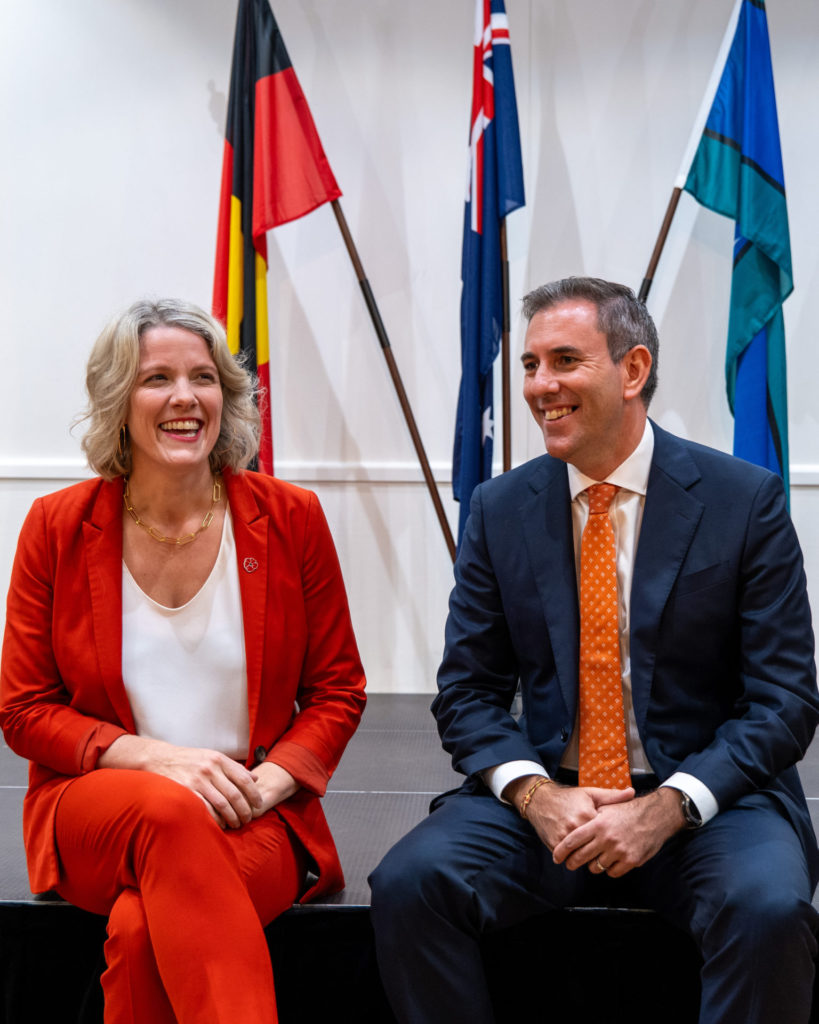
New Sankalps from the Sadhana in Kanniyakumari

0

By Narendra Modi, Prime Minister of India

The biggest festival of democracy, the 2024 Lok Sabha Elections, is concluding today in our nation, the Mother of Democracy. After a three-day spiritual journey in Kanniyakumari, I have just boarded the plane for Delhi.Through the day, Kashi and numerous other seats have been in the midst of voting.

My mind is filled with so many experiences and emotions… I feel a boundless flow of energy within myself. The 2024 Lok Sabha elections are the first in the Amrit Kaal. I began my campaign a few months ago from Meerut, the land of the First War of Independence of 1857. Since then, I have traversed ac-ross the length and breadth of our great nation. The final rally of these elections took me to Hoshiarpur in Punjab, the land of the great Gurus and a land associated with Sant Ravidas Ji. After that, I came to Kanniyakumari, at the feet of Maa Bharti.

It is natural that the fervour of the elections was echoing in my heart and mind. The multitude of faces seen in rallies and road shows came in front of my eyes. The blessings from our Nari Shakti… the trust, the affection, all of this was a very humbling experience. My eyes were getting moist… I entered into a ‘sadhana’ (meditative state). And then, the heated political debates, the attacks and counter-attacks, the voices and words of accusations which are so characteristic of an election… they all vanished into a void. A sense of detachment came to grow within me… my mind became completely detached from the external world.

Meditation becomes challenging amidst such huge responsibilities, but the land of Kanniyakumari and the inspiration of Swami Vivekananda made it effortless. As a candidate myself, I left my campaign in the hands of my beloved people of Kashi and came here.

I am also grateful to God for instilling in me these values from birth, which I have cherished and tried to live up to. I was also thinking about what Swami Vivekananda must have experienced during his meditation at this very place in Kanniyakumari! A part of my meditation was spent in a similar stream of thoughts.

Amidst this detachment, amidst the peace and silence, my mind was constantly thinking about the bright future of Bharat, the goals of Bharat. The rising sun at Kanniyakumari gave new heights to my thoughts, the vastness of the ocean expanded my ideas, and the expanse of the horizon continuously made me realise the unity, the Oneness, embedded in the depths of the universe. It seemed as if the observations and experiences undertaken in the lap of the Himalayas decades ago were being revived.

Friends, Kanniyakumari has always been very close to my heart. The Vivekananda Rock Memorial in Kanniyakumari was built under the leadership of Shri Eknath Ranade ji. I had the opportunity to travel extensively with Eknath ji. During the construction of this memorial, I had the opportunity to spend some time in Kanniyakumari as well.

From Kashmir to Kanniyakumari… this is a common identity that is deeply ingrained in the heart of every citizen of the country. This is the ‘Shakti Peeth’ (seat of Shakti) where Maa Shakti incarnated as Kanya Kumari. At this southern tip, Maa Shakti performed penance and waited for Bhagwan Shiva, who was residing in the Himalayas at the northernmost parts of Bharat.

Kanniyakumari is the land of confluences. The sacred rivers of our country flow into different seas, and here, those very seas converge. And here, we witness another great confluence – the ideological confluence of Bharat! Here, we find the Vivekananda Rock Memorial, a grand statue of Saint Thiruvalluvar, Gandhi Mandapam, and Kamarajar Mani Mandapam. These streams of thought from these stalwarts converge here to form a confluence of national thought. This gives rise to great inspirations for nation-building. This land of Kanniyakumari gives an indelible message of unity, especially to any person who doubts Bharat’s nationhood and the sense of unity.

The grand statue of Saint Thiruvalluvar in Kanniyakumari seems to be looking at the expanse of Maa Bharti from the sea. His work Thirukkural is one of the crown jewels of the beautiful Tamil language. It covers every aspect of life, inspiring us to give our best for ourselves and for the nation. It was my great fortune to pay my respects to such a great figure.

Friends, Swami Vivekananda once said, “Every nation has a message to deliver, a mission to fulfil, a destiny to reach.”

For thousands of years, Bharat has been moving forward with this sense of meaningful purpose. Bharat has been a cradle of ideas for thousands of years. We have never considered what we have acquired as our personal wealth or measured it purely by economic or material parameters. Therefore, ‘Idam-na-mama’ (this is not mine) has become an inherent and natural part of the character of Bharat.

Bharat’s welfare benefits our planet’s journey to progress as well. Take the freedom movement as an example. Bharat gained independence on Aug 15, 1947. At that time, many countries around the world were under colonial rule. Bharat’s independence journey inspired and empowered many of those countries to achieve their own freedom. That same spirit was seen decades later when the world came face to face with the once in a century Covid-19 pandemic. When concerns were raised about the poor and developing countries, Bharat’s successful efforts provided courage and assistance to many nations.

Today, Bharat’s governance model has become an example for many countries around the world. Empowering 25 crore people to rise above poverty in just 10 years is unprecedented. Innovative practices such as Pro-People Good Governance, aspirational districts, and aspirational blocks are being discussed globally today. Our efforts, from empowering the poor to last-mile delivery, have inspired the world by prioritising individuals standing at the last rung of society. Bharat’s Digital India campaign is now an example for the entire world, showing how we can use technology to empower the poor, bring transparency, and ensure their rights. Inexpensive data in Bharat is becoming a means of social equality by ensuring the reach of information and services to the poor. The whole world is witnessing and studying the democratisation of technology, and major global institutions are advising many countries to adopt elements from our model.

Today, Bharat’s progress and rise are not just a significant opportunity for Bharat alone, but also a historic opportunity for all our partner countries around the world. Since the success of the G20, the world has been increasingly envisioning a bigger role for Bharat. Today, Bharat is being acknowledged as a strong and important voice of the Global South. The African Union has become a part of the G20 group at the initiative of Bharat. This is going to be a crucial turning point for the future of African countries.

Friends, the development trajectory of Bharat fills us with pride and glory, but at the same time, it also reminds the 140 crore citizens of their responsibilities. Now, without wasting a single moment, we must step forward towards greater duties and larger goals. We need to dream new dreams, convert them into reality and begin living those dreams.

We must see Bharat’s development in a global context, and for this, it is essential that we understand Bharat’s internal capabilities. We must acknowledge Bharat’s strengths, nurture them, and utilise them for the benefit of the world. In today’s global scenario, Bharat’s strength as a youthful nation is an opportunity from which we must not look back.

The world of the 21st century is looking towards Bharat with many hopes. And we will need to make several changes to move forward in the global scenario. We also need to change our traditional thinking regarding reform. Bharat cannot limit reform to just economic reforms. We must move forward in every aspect of life towards the direction of reform. Our reforms should also align with the aspirations of a ‘Viksit Bharat’ (developed India) by 2047.

We must also understand that reform can never be a unidimensional process for any country. Therefore, I have laid out the vision of reform, perform, and transform for the country. The responsibility of reform lies with leadership. Based on that, our bureaucracy performs, and when the people join in with the spirit of Jan Bhagidari, we witness a transformation taking place.

We must make excellence the fundamental principle to make our country a ‘Viksit Bharat’. We need to work quickly in all four directions: Speed, Scale, Scope, and Standards. Alongside manufacturing, we must also focus on quality and adhere to the mantra of ‘zero defect-zero effect’.

Friends, we should take pride in every moment that God has blessed us with birth in the land of Bharat. God has chosen us to serve Bharat and fulfil our role in our country’s journey towards excellence.

We must redefine our heritage in a modern way while embracing ancient values in a modern context.

As a nation, we also need to reassess outdated thinking and beliefs. We need to free our society from the pressure of professional pessimists. We must remember that freedom from negativity is the first step towards achieving success. Success blossoms in the lap of positivity.

My faith, devotion, and belief in the infinite and eternal power of Bharat are growing day by day. Over the past 10 years, I have seen this capability of Bharat grow even more and have experienced it firsthand.

Just as we utilised the fourth and fifth decades of the 20th century to impart a new momentum to the freedom movement, we must lay the foundation for a ‘Viksit Bharat’ in these 25 years of the 21st century. The freedom struggle was a time that called for great sacrifices. The present times call for great and sustained contributions from everyone.

Swami Vivekananda had said in 1897 that we must dedicate the next 50 years solely for the nation. Exactly 50 years after this call, Bharat gained independence in 1947.

Today, we have the same golden opportunity. Let’s dedicate the next 25 years solely for the nation. Our efforts will create a strong foundation for the coming generations and the coming centuries, taking Bharat to new heights. Looking at the energy and enthusiasm of the country, I can say that the goal is not far away now. Let us take swift steps… let us come together and create a Viksit Bharat.

(These thoughts were penned by Prime Minsiter Narendra Modi on 1st June between 4:15 PM and 7 PM during his return flight from Kanniyakumari to Delhi.)

Support Our Journalism

‘Global Indian Diaspora and Australia’s multicultural communities need fair, non-hyphenated, and questioning journalism, packed with on-ground reporting. The Australia Today – with exceptional reporters, columnists, and editors – is doing just that. Sustaining this needs support from wonderful readers like you.

Whether you live in Australia, the United Kingdom, Canada, the United States of America, or India you can take a paid subscription by clicking Patreon and support honest and fearless journalism.
Australia Deepens Defense Ties with India Amid Growing Concerns Over China

0

Australia is making strategic moves to strengthen its defence relationships with key partners in the Indo-Pacific region. This shift, aimed at countering China’s rising influence and assertive actions, underscores Australia’s commitment to regional security and stability. Recent statements by Australian Deputy Prime Minister and Defence Minister Richard Marles highlight this strategic pivot, emphasising deeper ties with India among other regional players.

Expanding Defense Relationships

At the IISS Shangri-La Dialogue in Singapore, Richard Marles outlined Australia’s expanded defence relationships with nations such as India, Japan, South Korea, Indonesia, Vietnam, and other Southeast Asian partners. Deputy PM Marles emphasised that these relationships have never been stronger, reflecting a collective effort to bolster regional resilience.

Deputy PM Richard Marles at Shangri-La Dialogue in Singapore: Image Source; X @RichardMarlesMP

“A strong multilateral dimension is crucial,” Marles noted, underscoring the significance of ASEAN in this regional strategy. He also highlighted the importance of the global rules-based order, which he described as a 200-year project aimed at creating an open and inclusive global system.

“The global rules-based order is not a just a device – as some would cynically suggest – to protect the prerogatives of great powers and to prevent the rise of new ones. Rather, at its core is a two-hundred-year project to build a global system that is open and inclusive,”

Defence Minister Marles said.

Strengthening the Indo-Pacific Alliance

India stands out as one of Australia’s most critical Indo-Pacific partners. Robust people-to-people links and close governmental cooperation mark the relationship between the two nations. This partnership is part of a broader strategy to manage the strategic challenges posed by China’s actions in the region.

Marles’ comments on China’s aggressive behaviour in the West Philippine Sea and its stance towards Taiwan further underline the urgency of this cooperation. He called the actions by Chinese vessels, including the use of water cannons and ramming of Philippine vessels, a “serious escalation of tensions” that is inconsistent with international law.

Deputy PM Richard Marles at Shangri-La Dialogue in Singapore: Image Source; X @RichardMarlesMP

“China’s behaviour towards Taiwan sparks similar concerns,” Marles added, pointing out that PLA exercises simulating attacks and blockades of Taiwan do not inspire confidence in a peaceful resolution. He stressed the importance of China demonstrating its commitment to sovereignty and territorial integrity, which is consistent with the principles of the UN Charter.

He said,

“The Australian Navy has also experienced recent unsafe and unprofessional behaviour by the PLA Navy and the PLA Air Force. I want to stress that the great bulk of the PLA’s interaction with the ADF are safe and professional.”

“But the size and speed of PLA development means that interaction is occurring much more frequently. And activities that the ADF has conducted in the region for decades, safely and consistent with international law, are increasingly contested by the PLA,” he added.

The Role of the United States

Australia’s deepening alliance with the United States is a cornerstone of its defence strategy. Enhanced force posture cooperation in Australia and recent US force posture enhancements in Japan and the Philippines signify a coordinated effort to counterbalance China’s influence. This cooperation extends beyond bilateral ties to a broader network of partnerships to ensure regional stability.

Minister Marles emphasised that trust in Chinese intent is crucial for maintaining the global rules-based order and building a stable Indo-Pacific region. He pointed to recent unsafe interactions between the Australian Defence Force (ADF) and the People’s Liberation Army (PLA), including incidents in the East China Sea, as examples of China’s increasingly assertive military posture.

Regional Implications and Future Outlook

Australia’s strategic realignment is about responding to immediate threats and shaping a sustainable and secure regional order. By strengthening ties with India and other regional players, Australia is working to create a united front capable of addressing the multifaceted challenges posed by China’s actions.

The emphasis on multilateralism, respect for international law, and collaborative security initiatives is central to this approach. The IISS Shangri-La Dialogue serves as a vital platform for these discussions, bringing together leaders from across the globe to address pressing security issues and promote regional stability.

As Australia navigates the complexities of the Indo-Pacific region, its deepening defence ties with India and other regional partners reflect a strategic commitment to managing the threats posed by China’s assertive actions. This multifaceted approach, rooted in cooperation and respect for international norms, aims to ensure the region’s stable and prosperous future.

Australia’s proactive stance, underscored by recent statements from Deputy Prime Minister Richard Marles, highlights the importance of building a resilient regional security framework in an era of growing geopolitical challenges.

Support Our Journalism

‘Global Indian Diaspora and Australia’s multicultural communities need fair, non-hyphenated, and questioning journalism, packed with on-ground reporting. The Australia Today – with exceptional reporters, columnists, and editors – is doing just that. Sustaining this needs support from wonderful readers like you.

Whether you live in Australia, the United Kingdom, Canada, the United States of America, or India you can take a paid subscription by clicking Patreon and support honest and fearless journalism.

Why Congress’ High Social Media Reach Fails to Translate into Ground Support for Election 2024?

0

In today’s digital age, the high social media reach of a political party is often misconstrued as an indicator of widespread ground support. However, this assumption can be misleading, as evidenced by the experiences of India’s major political parties, the the Indian National Congress (Congress) and the Bharatiya Janata Party (BJP).

Recently, Congress’s social media head Supriya Shrinate claimed that her party’s social media reach has surpassed that of the BJP. She even presented data demonstrating the party’s dominance on major platforms including YouTube, Instagram, Facebook, and Twitter.

According to Shrinate, data collected between March and May, Congress achieved 613 million views on YouTube, Facebook reach climbed from 50 million to 105 million, Twitter impressions surged from 117 million to 128 million, YouTube views increased from 80 million to 233 million, and Instagram reach expanded from 78 million to 154 million. 

The party’s followers are using this surging social media popularity as evidence enough that all 2024 election exit polls are factually wrong and the INDI Alliance will win 295+ seats thus making Rahul Gandhi the new Prime Minister of India.

However, political pundits are not satisfied with mere social media numbers to predict a political party’s win in any election. Several factual reasons underline why social media popularity does not necessarily translate into electoral success or genuine grassroots support.

The demographics of social media users do not accurately represent the entire voting population. Jai Bharadwaj, the founder of The Australia Today, says “Social media engagement can be artificially inflated.”

This includes the use of bots, fake accounts, and coordinated online activities to amplify their message and influence public opinion.”

Jai Bharadwaj says that many social media influencers and political parties around the world have been allegedly accused of using bots and paid followers to boost their online presence.

“This artificially enhanced reach creates an illusion of widespread support that may not reflect the actual sentiment on the ground,”

he adds.

Such tactics highlight the growing trend of political parties globally turning to sophisticated digital strategies to shape electoral narratives, raising concerns about the authenticity of online political discourse and its impact on democracy.

In India, despite the impressive use of social media campaigns, it has been the traditional, door-to-door canvassing and grassroots mobilisation that has played a crucial role in most electoral victories.

Sanjeev Singh, author of The Online Effect: Decoding X to Predict Election Results, says: “No doubt social media is an important tool to engage with one’s audience but a cohesive campaign strategy aligns your social media efforts with on-ground activities and ensures that messages and goals are consistent across all platforms.”

Singh believes that social media is a powerful tool, but it cannot replace the need for a genuine connection with the electorate.

“Parties can leverage real-time interactions on social media to drive participation in on-ground activities. Encourage on-ground participants to share their experiences on social media, creating a cycle of engagement that amplifies both channels,” he adds.

Moreover, engagement via social media can amplify echo chambers, where users are exposed primarily to content that reinforces their existing beliefs. This can create a skewed perception of a party’s popularity.

For example, the BJP’s sophisticated use of targeted messaging and WhatsApp groups has created a strong online presence, yet this does not always translate to broader acceptance, as seen in some state elections where the party faced defeat despite their robust online campaigns.

In my opinion, social media reach can often prioritise sensationalism over substantive policy discussions. While online strategies may effectively highlight their achievements and attack the opposition, these do not always address the nuanced and localised issues that concern voters.

The Congress may have found success through social media alliances but at the grassroots level has failed to address issue-based politics that resonate more directly with Indian voters’ daily lives.

Sanjeev Singh advises all political parties: “Balancing social media engagement and on-ground campaign activities requires strategic planning, consistent messaging, and integrated measurement tools.”

“The key is not to view digital and physical efforts as separate entities but as complementary components of a unified strategy.”

What we see is that while a high social media reach can enhance visibility and influence narratives, it does not guarantee ground support or electoral success. The BJP and Congress’s experiences illustrate that authentic voter engagement, understanding local issues, and effective on-the-ground campaigning are indispensable for true political support.

Support Our Journalism

‘Global Indian Diaspora and Australia’s multicultural communities need fair, non-hyphenated, and questioning journalism, packed with on-ground reporting. The Australia Today – with exceptional reporters, columnists, and editors – is doing just that. Sustaining this needs support from wonderful readers like you.

Whether you live in Australia, the United Kingdom, Canada, the United States of America, or India you can take a paid subscription by clicking Patreon and support honest and fearless journalism.

UK based crime group sentenced for crystal meth import to Australia

0

Three people who sent crystal methamphetamine to Australia – where it could have been worth up to $8.2 million – have been jailed by Croydon Crown Court in the United Kingdom.

A woman, 54, from Croydon, and two men from Kent, 54 and 53, were convicted for their roles in a drug trafficking operation in January following an investigation by the Organised Crime Partnership (OCP) – a joint National Crime Agency and Metropolitan Police Service unit.

The investigation began after 24 kilograms of methamphetamine was seized in Australia by Australian Border Force officials, who handed the shipment over to the AFP.

Enquiries undertaken by the AFP established that the shipment had come from the UK.

OCP investigators discovered the drugs had been sent from Croydon on 25 June 2021, with CCTV images identifying a woman working in the cargo sector at the time. The images also captured a man, subsequently identified as the 54-year-old, sending a shipment labelled ‘two glass Buddhas’ to Australia.

The woman was responsible for the security inspection of the item. The package did not contain anything except the drugs, which were not concealed, which prosecutors alleged proved she had not checked the contents.

The 53-year-old man acted as a ‘middle man,’ putting the other two parties in touch with each other to facilitate the exportation of the drugs

OCP investigators also identified two other shipments were previously sent to Australia on 2 and 24 June, 2021.

The named senders on all three shipments were individuals who had their passports stolen. One of the stolen passports, along with a debit card used to pay for the shipping of two consignments, were found in a search of the 54-year-old man’s home.

All three were convicted on 13 January, 2023, after a trial at Croydon Crown Court.

They were sentenced respectively to 12 years imprisonment, less discounts of one year, by the Croydon Crown Court.

Richard Smith, from the Organised Crime Partnership, said: “This organised crime group sought to make huge profits by trafficking dangerous drugs to Australia. They used Stewart’s inside knowledge of the cargo industry to try to ensure their shipments made it overseas.

“We worked closely with the Australian Federal Police to dismantle this criminal supply chain and protect the public in both countries from the impact of the illegal drugs trade.”

Detective Superintendent Callum Hughes, AFP Senior Officer London, noted the importance of international cooperation between the AFP and the Organised Crime Partnership (OCP) team in identifying and prosecuting a transnational organised crime group seeking to import illicit drugs into Australia from the United Kingdom.

“This outcome should serve as a warning to those who seek to undertake this type of criminal activity; the risk of lengthy imprisonment far outweighs the short-term benefits of your actions,” Det-Supt Hughes said.

“The AFP through its officers based in London has an excellent relationship with UK law enforcement agencies such as the NCA, and the chances of any group or individual being identified and prosecuted for this type of criminal behaviour has never been higher.”

Support Our Journalism

‘Global Indian Diaspora and Australia’s multicultural communities need fair, non-hyphenated, and questioning journalism, packed with on-ground reporting. The Australia Today – with exceptional reporters, columnists, and editors – is doing just that. Sustaining this needs support from wonderful readers like you.

Whether you live in Australia, the United Kingdom, Canada, the United States of America, or India you can take a paid subscription by clicking Patreon and support honest and fearless journalism.
The strange case of global university rankings and need to decolonize Indian universities curricula

0

By Om Prakash Dwivedi

There is a thin line between fact and fiction. Yet, fiction can become fact, and fact a far-fetched fiction. Fact can be constructed and, therefore, can also be manipulated, whereas fiction mostly accounts for imagination and the subsequent hope for a better future. Much as we know about this, little we have done collectively to diminish the prejudiced facts that distort and marginalize the Indian higher education system, explicitly tying our imagination with the Western ideological underpinnings. Dominated as it is, largely by the Left-liberal narratives, Western theories and ideas continue to underline Higher education in India, misrepresenting its positionality in the global world. The reasons are not emancipatory rather are rooted in the self-serving agenda.

Such strategic narratology poses several pressing issues that need to be addressed to liberate the Indian Higher education system from the apocryphal storytelling of the West, aided and abetted by the distorted ranking systems. In fact, it would not be wrong to question such global rankings, which only work to position and embolden Western education higher up the ranks while diminishing and constantly questioning the ethos and value of the Indian higher education system.

The data available to corroborate this ongoing collusion between the ranking systems and neocolonial structures of higher education systems explains the higher rate of migration of Indian students to overseas countries in pursuit of a better education. As per the International Consultants for Education and Fairs (ICEF), “the number of Indian students enrolled in foreign higher education institutions (HEIs) is expected to reach 20 lakh by 2025, up from the 7.7 lakh students who studied overseas in 2023.” Likewise, the Business Standard points out: “In 2023, India topped the total overseas higher education expenditure at a whopping $60 billion, followed by China at $40 million.” In the same vein, the Associated Chambers of Commerce and Industry of India (ASSOCHAM) mentions that “students choosing to move abroad for higher education cost India about $17 billion a year in lost revenue.”

The figure is overwhelming and so is the financial loss suffered by India due to this mass migration. Neither I aim to cast aspersions on the quality of higher education that Western Universities offer nor do I intend to subscribe to any model of rectitude. Western universities have their merits and one cannot contest that. My concern, however, is about the way narratives are controlled, constructed, and stoked, painting the entire higher education system in India in a negative and dismal shade, thereby offering an alternative to moving to Western universities.

Consequently, the modern Indian continues to be intrigued by the Western education model. The degree of fascination with the Western ways is such that such can easily qualify as its bhakt. Bhakti has various shades and colours. After all, bhakts can also be those who love to see and imagine everything white-centric. But our colonized ways of thinking have made us blind to this other colour of bhakti so deep-rooted and pervasive in our quotidian postcolonial life. Rankings legitimize and narrativize a rhapsodizing image of Western universities undermining Indian universities and Indian Knowledge systems (IKS).

Energized with this other side of the white bhakti, Ramchandra Guha claims that Narendra Modi has undermined the practice of science in India. In yet another piece, Yamini Aiyar, the chief executive for Policy Research, New Delhi Aiyar Yamini desperately tries to demonstrate the intellectual feebleness of India’s education systems to the leading UK journal Nature, by claiming that the “future of Indian Science is on the ballot.” When rebutted by the eminent writer and critic, Amit Sarwal, with facts, Nature was quick to divert its lens of critique to social sciences, which also turned out to be a flawed one, teeming with a sense of overdomineering and condescending prejudiced voice that cannot digest the rise of India on the global map.

This caricatured understanding of Indian universities is largely a result of our fanatical disavowal of Indian Knowledge systems (IKS). The mantle of certifying Indian universities and Indian intellectuals is still rooted in the West, a privilege granted to them. These virtue-signalling gestures and practices of Western ideology need broadside responses from our educationalists and higher education leaders. We need creative and dialogic spaces to disseminate and promote Indian Knowledge Systems to counter the sloganeering of the competence deficit that grips our higher education space.

The insularity of the West needs to be contested with the critical fecundity of the IKS. In my recent interaction with the visionary higher education leader from Lucknow, Er. Pooja Agarwal, emphasized the urgency to stand the scrutiny of the Western narratives by curating and promoting our narratives from the IKS. She expressed her concerns about the mental squeamishness towards our own history and culture and the subsequent veneration of the Western education system. Driving home the point of higher education regeneration in India, she expressed the need to be more rooted while treading the path of modernity, thus proposing a need to decolonize our minds, curricula, and pedagogy. The intellectual fortitude that Er. Agarwal advocates is sadly amiss in the ethos of our higher education model, barring a few scholars and leaders. How to trigger this decolonial moment? How to mark a shift and attention to our narratives?

The rise of the Indian higher education system needs not only institutional revival but also intellectual revival and, that should be done with a blend of modernity and ancient wisdom. Modernity needs to be wedded to ancient wisdom to ensure a sustainable model of the future. That is why the National Education Policy (NEP) promotes IKS. In his effort to sensitize higher education teachers and leaders about IKS, the UGC Chairman, Mamidala Jagadesh Kumar announced that “In collaboration with the IKS cell established by the Ministry of Education, UGC is now training 1,000 teachers from across India in IKS to familiarize faculty members with the nuances of the IKS. …We do not want IKS to be taught as a separate subject. It should be integrated into the regular curricula where possible.”

Can we have a decolonial movement in our universities – not rejecting any traditions based on their origin, but analyzing them to see if these models serve longer goals? Can we have open spaces for dialogical thinking in universities, debating epistemological tools available in different knowledge traditions?

Contributing Author: Om Prakash Dwivedi tweets @opdwivedi82. His interests lie in the field of postcolonial theory.

Disclaimer: The opinions expressed within this article are the personal opinions of the author. The Australia Today is not responsible for the accuracy, completeness, suitability, or validity of any information in this article. All information is provided on an as-is basis. The information, facts, or opinions appearing in the article do not reflect the views of The Australia Today and The Australia Today News does not assume any responsibility or liability for the same.

Support Our Journalism

‘Global Indian Diaspora and Australia’s multicultural communities need fair, non-hyphenated, and questioning journalism, packed with on-ground reporting. The Australia Today – with exceptional reporters, columnists, and editors – is doing just that. Sustaining this needs support from wonderful readers like you.

Whether you live in Australia, the United Kingdom, Canada, the United States of America, or India you can take a paid subscription by clicking Patreon and support honest and fearless journalism.
Amid Modi’s historic third term, here are some career options for Rahul Gandhi post-2024 election defeat

0

The lengthy 7-phase election in the world’s largest democracy India came to an end Saturday June 1, 2024. The Bhartiya Janta Party (BJP) is seeking a historic third term for Prime Minister Narendra Modi. While, the votes will be counted on Tuesday June 4, 2024, most exit polls have projected Prime Minister Modi all set to extend his decade in power with a third consecutive term.

Recently, Sadanand Dhume, who is well-known for his incisive commentary on Indian politics and economics, made observation on X that Indian National Congress leader Rahul Gandhi seems unsuited to the cut-throat world of Indian politics.

Dhume wrote: “Recently I pointed out the obvious fact that Rahul Gandhi is unsuited to politics and would be better off pursuing something for which he has natural aptitude. He could set up a private gym in south Delhi, or start his own travel show on YouTube. Maybe he’ll finally get the hint?”

Rahul Gandhi’s political journey has been marked by a mix of successes and notable failures. As a scion of the Nehru-Gandhi family, he entered politics with high expectations and managed to rejuvenate the Congress party’s youth wing and bring attention to important social issues.

Rahul Gandhi’s notable success includes the Congress party’s victory in the 2009 general elections, where he played a significant role in the campaign. However, his leadership has also been marred by several electoral defeats, most significantly the party’s poor performance in the 2014 and 2019 Lok Sabha elections, which saw the BJP secure overwhelming majorities.

Political pundits argue that Rahul Gandhi’s inconsistent political strategy and lack of a clear, compelling vision have contributed to the party’s declining influence, raising questions about his effectiveness as a leader in India’s dynamic political landscape.

In light of Dhume’s observation, it’s worth exploring alternative paths where his skills and interests might truly shine, especially if the Congress party and the INDI Alliance face another defeat in the 2024 Lok Sabha elections.

  • 1. Fitness Enthusiast and Gym Owner: Rahul Gandhi’s well-documented interest in fitness could pave the way for a new career as a health and wellness entrepreneur. Opening a private gym would not only align with his personal interests but also allow him to inspire and guide others towards healthier lifestyles. His public persona could draw in a substantial clientele, making the venture a potential success.
  • 2. Travel Show Host on YouTube: With his extensive travel experiences and a knack for connecting with people from diverse backgrounds, Rahul Gandhi could start his own travel show on YouTube. This platform would enable him to share his journeys, cultural explorations, and adventures with a global audience. It would also give him a fresh start in a field that values storytelling and authentic engagement.
  • 3. Author and Speaker: Rahul Gandhi’s unique political experience could translate well into writing. He could write books or delve into motivational speaking. His insights, though divisive in politics, might find a more appreciative audience in literary circles or on the speaking circuit.
  • 4. Social Activism and NGO Work: Given his passion for socio-economic issues, Rahul Gandhi could focus on social activism and contribute to non-governmental organisations (NGOs). His work could span various causes such as education, economy, environmental protection, or poverty alleviation. This would allow him to continue making a difference in society without the constraints of political office.
  • 5. Educational Reformer: Rahul Gandhi could leverage his international education and experiences to work on reforming the Indian educational system. Establishing a think tank or an educational institution aimed at innovative learning methods could be a fulfilling and impactful avenue.

The best option for Rahul Gandhi, my good friend Dr Om P Dwivedi suggests, is to mix all of the above and get a Visiting Professorship at Oxbridge.

Dr Dwivedi says: “Since these two Universities rely heavily on his expertise on India, and regularly invite him to share his deep knowledge of the country, I think this is the best time that Oxbridge gets him on board. His scholarship par excellence will certainly add more value to these elite institutions. Will these institutions continue to demonstrate their commitment to Rahul Gandhi, that is the question?”

Dhume’s remark might sound blunt, but it sheds light on a crucial reality: sometimes, recognising one’s strengths and realigning one’s career path can lead to greater personal fulfilment and societal contribution. Perhaps it’s time for Rahul Gandhi to consider these alternative ventures, which could very well align better with his talents and passions.

On the other hand, if Rahul Gandhi plans to stay in politics and contest the 2029 elections, he needs to undergo a strategic transformation.

Firstly, he should focus on building a strong, cohesive narrative that resonates with the broader electorate, emphasising clear, actionable policies rather than broad, abstract ideas. He must strengthen the Congress party’s organisational structure and fostering a new generation of dynamic leaders would also be crucial.

Additionally, Rahul Gandhi should improve his public communication skills to present himself as a decisive and relatable leader. He must communicate using knowledge and fact-based messaging that may bolster his political presence. By demonstrating steadfast commitment, transparency, and adaptability, Rahul Gandhi can work towards revitalising his political career and the Congress party’s fortunes.

Support Our Journalism

‘Global Indian Diaspora and Australia’s multicultural communities need fair, non-hyphenated, and questioning journalism, packed with on-ground reporting. The Australia Today – with exceptional reporters, columnists, and editors – is doing just that. Sustaining this needs support from wonderful readers like you.

Whether you live in Australia, the United Kingdom, Canada, the United States of America, or India you can take a paid subscription by clicking Patreon and support honest and fearless journalism.
18-year-old US traveller charged with allegedly importing 26kg of meth in suitcases

0

A US citizen will remain bail refused until next month, charged after allegedly attempting to import more than 25kg of methamphetamine in his luggage earlier this week.

The man, aged 18, was stopped by Australian Border Force (ABF) officers on Wednesday (29 May, 2024) after arriving into Sydney Airport on board a flight from the United States.

Upon inspection of the man’s two suitcases, ABF officers located more than 20 packages wrapped in plastic wrap, with initial testing providing a presumptive positive for methamphetamine.

A total of 26kg of methamphetamine was seized, which has an estimated potential street value of more than $24 million.

Image: US Meth (Source: AFP)

ABF Travel East Commander Rose Cracknell said the volume seized at the border today has stopped hundreds of thousands of individual street deals flooding Sydney’s streets.

“This particular detection shows how some individuals and syndicates are taking brazen risks to attempt to circumvent our borders. Our ABF officers at the airport are highly skilled to observe passenger behaviours, relying on not only intelligence, but instinct to identify potential threats.”

Commander Cracknell added:

“This is a significant detection of methamphetamine, one which will stop potential harm to tens of thousands of families. This should also serve as a warning for any other traveller who wishes to run the gauntlet and attempt to bypass our border controls – we will stop you in your tracks and you will be put before the courts.”

Image: US Meth (Source: AFP)

Australian Federal Police (AFP) officers were notified and attended the airport to conduct further inquiries.

AFP Detective Superintendent Peter Fogarty said the AFP worked hand-in-glove with ABF to ensure the safety of the Australian community.

“Criminal groups continue in their efforts to import these insidious substances and the negative impact that illicit drugs have on the Australian community cannot be overstated.”

Det Supt Fogarty further observed: 

“This amount of methamphetamine could have been broken down to an estimated 260,000 individual street deals. Our message remains clear – those who seek to inflict harm on Australians, we will find you and you will be brought before the court where you could face life imprisonment.”

The man was subsequently arrested and charged with one count of import of a border controlled drug contrary to 307.1 of the Criminal Code Act 1995. He was refused bail at Sydney’s Downing Centre Local Court on Thursday, to next appear on 24 July 2024.

Members of the community are encouraged to report suspicious border-related activity through Border Watch at www.abf.gov.au/borderwatch. By reporting suspicious activities, you help protect Australia’s border and the community. Reports can be made anonymously.

Support Our Journalism

‘Global Indian Diaspora and Australia’s multicultural communities need fair, non-hyphenated, and questioning journalism, packed with on-ground reporting. The Australia Today – with exceptional reporters, columnists, and editors – is doing just that. Sustaining this needs support from wonderful readers like you.

Whether you live in Australia, the United Kingdom, Canada, the United States of America, or India you can take a paid subscription by clicking Patreon and support honest and fearless journalism.

Are cheap public transport fares good policy?

0

By Abraham Leung and Matthew Burke

As part of a six-month trial, public transport fares in Queensland will soon be slashed to just 50 cents per trip for everyone.

The cheap fares will apply to all trips on buses, light rail, trains, and ferries, over any distance, in cities and towns that are part of the Translink network.

Very-low flat fares have become fashionable policy as governments respond to cost of living pressures around the world.

Person waits at bus stop in UK
The UK’s £2 cap on many single bus fares in England has been extended to the end of 2024. Detail from UK Department for Transport

In 2022, Germany experimented with a flat-rate €9 per-month rail pass over a 90-day period. And just last year, the UK government implemented a £2 fare cap on many single bus journeys in England.

Last summer, Western Australia offered free public transport to SmartRider pass users for five weeks.

Captive” users of public transport – who have limited access to private vehicles and few alternatives – would surely welcome such schemes.

But who stands to benefit the most? Is offering free or nearly-free public transport a good policy idea?

The benefits aren’t spread evenly

Some trips across Queensland will now be extraordinarily cheap. You’ll be able to travel from the Sunshine Coast to the Gold Coast for just 50 cents, if you don’t mind a four-hour trip on trams, trains and buses.

At an individual level, adults travelling the longest distances will benefit most. But as a group, commuters in the inner and middle suburbs of Brisbane and tertiary students will enjoy most of the benefits.

There are a few regional cities with well-frequented bus services, notably Townsville and Toowoomba. Passengers travelling from Yeppoon to Rockhampton, or from Proserpine airport to Airlie Beach, will get inter-city travel at an amazing price.

But the regions will otherwise benefit less than in South East Queensland, given the limited demand for public transport, and the lesser provision of services.

Will people ditch their cars and get back on public transport?

Queensland’s government hopes the move will boost public transport usage and reduce congestion.

The impacts of low flat fares on patronage have been studied elsewhere. Early reports from Germany suggested that €9-a-month fares were popular and even led to some overcrowding during peak tourist seasons.

To investigate the trial, researchers conducted a before-and-after survey to understand behaviour changes. They found that public transport use did increase, but not all trips taken privately were substituted.

It has been argued that car ownership produces lock-in effects. Affordable fares are only one of the motivators that can encourage a shift to public transport. Buses and trains also need to be frequent, reliable and comfortable when competing against private car travel.

The layout of Queensland’s cities and towns is highly car dependent. Our previous work has examined how spatial layout and the availability of public transport affect its patronage in different cities. Transport statistics reveal only about 10% of trips use public transport in Brisbane, while the figure is as high as 90% in Hong Kong.

A 4x4 gridded map comparing the level of service of public transport in Hong Kong and Greater Brisbane.
The level of service of public transport in Greater Brisbane (above, including Ipswich, Moreton Bay, Logan and Redland) is much less frequent and accessible than in Hong Kong (below). Author provided, CC BY

The new low fares might help relieve congestion on a few arterial roads where public transport corridors run alongside an alternative, most notably on the M1 motorway between the Gold Coast and Brisbane. But with limited public transport coverage across much of Queensland, heavily discounted fares may not lead to a dramatic uptake in use.

What will the social and economic impact be?

This leads to a bigger debate on how we should price public transport and who should pay for it.

There is no straightforward answer to this. Even when public transport is made very cheap or even free, someone ultimately has to pay for it. The merits of any pricing policy should be evaluated in terms of the winners and losers across society as a whole, referred to as transport equity. Equity can have two dimensions:

  • horizontal – reducing inequality between people in similar groups
  • vertical – giving a greater share of resources to disadvantaged groups.
https://youtube.com/watch?v=EPjq-nsn55s%3Fwmode%3Dtransparent%26start%3D0

Everyone in Queensland will now pay 50 cents, no matter how far they go, which creates strong horizontal equity between travellers.

But the wealthy have reclaimed the centre of Australian cities, including Brisbane. As these nearly-free flat fares benefit so many inner-city and middle-suburban commuters, a very hefty subsidy will be going to a group who don’t necessarily need it, paid for by other forms of taxation.

Are there other ways to subsidise public transport?

Yes. One alternative is to directly target programs to those in need, such as by ring fencing benefits to a smaller area. This was recently tested in Los Angeles under a program called Universal Basic Mobility.

A transport stipend of US$150 per month was provided via a debit card called a “mobility wallet” to residents of a disadvantaged neighbourhood. The card could be also used for e-scooters, taxis and even Uber or Lyft. Service improvements were also rolled out.

Queensland itself has long provided free fares where they are seen to have a social benefit. The largest city councils often provide free bus travel for seniors outside peak hours, and popular “free” public transport to large stadiums for concerts or sporting events is covered by a fee hidden in the ticket price.

The state has also trialled another alternative – the ODIN Pass – which provides affordable multi-mode (bus, train, ferry and e-scooter) trips for students via a “Mobility as a Service (MaaS)” smartphone app.

Free or heavily discounted public transport can be a good idea – where it can help meet social goals. But it’s best when targeted at the most disadvantaged.

Abraham Leung, Senior Research Fellow, Cities Research Institute, Griffith University and Matthew Burke, Professor, Cities Research Institute, Griffith University

This article is republished from The Conversation under a Creative Commons license. Read the original article.

Support Our Journalism

‘Global Indian Diaspora and Australia’s multicultural communities need fair, non-hyphenated, and questioning journalism, packed with on-ground reporting. The Australia Today – with exceptional reporters, columnists, and editors – is doing just that. Sustaining this needs support from wonderful readers like you.

Whether you live in Australia, the United Kingdom, Canada, the United States of America, or India you can take a paid subscription by clicking Patreon and support honest and fearless journalism.
Want Hindu community to feel safe when they attend temples: NSW Minister Steve Kamper

0

The NSW Government is aiming to ensure places of worship across the state are safer and more secure through the Safe Places for Faith Communities Program.

The Safe Places for Faith Communities Program will see 103 community and faith organisations share in $5 million of grants to ensure the places where faith communities gather and practice remain safe. Six Hindu organisations have received over 650,000$ under this programme.

The program takes a resilience-based approach to safety and security by supporting prevention, preparedness, response and recovery measures at places where faith communities gather.

Funds from this program will go towards upgrading security and surveillance systems as well as initiatives such as managing challenging behaviour training and multi-faith grief support.

The program is an election commitment and is part of a wider $15 million pledge over four years. It was developed in consultation with faith and religious groups and experts across the state, as well as Multicultural NSW’s Community Resilience and Response Plan (COMPLAN) Committee.

NSW Minister for Multiculturalism Steve Kamper said,

“NSW is the most successful multifaith state in Australia, our respect of the many faiths and cultures that make up this state enriches our society and our communities.

“Places of worship must always be havens where faith members can gather in peace and prayer,  knowing they are safe.”

“The NSW Government is proud to be delivering on our election commitment and we know these projects will deliver real, tangible benefits for faith communities across NSW.”

Minister Kamper further told The Australia Today,

“We want all faith communities in NSW to feel safe and secure, including our Hindu community when they are attending their temples or community sites.”

NSW Premier Chris Minns with Multicultural Minister Steve Kamper with Tilak and Kalava at the at NSW Government’s Diwali function (File Image: NSW Government)

The Hindu organisations that have received funding under this programme are:

Satsang Hindu Maha Sabha of NSWSecurity Fencing of the Temple and Grounds$                               39,000.0042 Kibo Rd, Regents Park
Chinmaya Mission AustraliaSafety Project$                               49,670.0038 Carrington Rd, Castle Hill
Sri Venkateswara Temple, HelensburghSecurity System$                             225,746.001 Temple Rd, Helensburgh
ISKON Krishna FarmCCTV and Internet Connectivity$                               48,890.00525 Tyalgum Rd, Eungella
Vedanta Centre of SydneySecuring Religious Community Venue$                               50,000.00144A Marsden Rd, Ermington
International Society for Krishna Consciousness SydneyISKCON Sydney Temple Security Infrastructure Upgrade$                             250,000.00180 Falcon St, North Sydney

Speaking about this programme Chair of NSW Faith Affairs Council Michael Stead said:

“As faith leaders across NSW, we are very thankful that the NSW Government has listened to our requests to improve the safety and security of our places of worship.”

“We are proud of our status of one of the most successful multicultural jurisdictions in the world and know that that diversity is reflected in the many faith groups that practice in NSW.”

 “Our churches, mosques and synagogues are central to our communities and we know this program will help make them safer for generations to come.”

India’s opposition to abstain from post-election TV debates, here’s why this is a sign of hypocrisy

0

The Indian National Congress Party’s (INC) decision to abstain from sending spokespersons to media panels post-election is a glaring sign of hypocrisy. This move by the grand old party of India starkly contradicts the fundamental principles of freedom of speech and transparency, principles which the party has historically championed.

Pawan Khera, the Chairman of Media & Publicity Department at AICC, said on X: “The Indian National Congress will not participate in the debates on #ExitPolls.”

Meanwhile, Congress’s close ally Samajwadi Party leader Akhilesh Yadav, who studied in Australia, also made a similar announcement for his party workers. Yadv posted on X: “It is a special appeal to you all that you should not get influenced by any BJP ‘exit poll’ and remain fully alert, maintain your confidence and stand firm and remembering our basic mantra of victory ‘voting is also being cautious’, celebrate the victory of the constitution, democracy and the people of the country only after getting the certificate of victory.”

By choosing to silence their own representatives, the opposition political parties, especially Congress, not only evades public scrutiny but also undermines the democratic process that thrives on open dialogue and accountability. This behaviour, to some experts, mirrors fascist inclinations, where the suppression of dissent within the political party and the avoidance of accountability are common tactics.

In an earlier piece, I have presented how India’s Prime Minister Narendra Modi, who is expected to win a third term in the election that got underway on April 19, is often reported by his critics as having authoritarian tendencies. One must be clear that the concept of labelling leaders as “dictators” or “fascists” often emanates from Leftist ideology, which tends to present right-wing or nationalist leaders as authoritarian. If you dare not to hop on the Leftist bandwagon, well, prepare to be stamped with the labels of “dictator” or “fascist” faster than you can blink!

For the uninitiated, fascist tendencies are characterised by the suppression of dissent, the centralisation of power, and the erosion of democratic norms and individual freedoms. Such tendencies often involve the manipulation of information and the silencing of voices to maintain control. Such a tendency helps foster an environment of fear and conformity amongst party workers thus stifling open debate and critical thinking, which are crucial for democratic governance.

In a democracy, political entities are expected to engage with the media and the public, answering tough questions and standing by their policies and actions.

Furthermore, given this latest decision of Congress party, people will believe that the party spokespersons would undoubtedly struggle to rationalise their electoral defeat under the leadership of Mallikarjun Kharge and Rahul Gandhi.

Congress party’s performance in the 2014 and 2019 Lok Sabha elections highlights a significant and troubling decline. In the 2014 elections, the Congress faced a devastating defeat, winning only 44 seats out of 543, which marked their lowest tally in history. Their vote share plummeted to approximately 19.3%, reflecting a dramatic loss of support compared to previous elections. The situation did not improve significantly in the 2019 elections, where the Congress managed to win just 52 seats, slightly up from 2014 but still far below their historical performance. The vote share in 2019 remained nearly stagnant at around 19.5%.

These consecutive poor showings, which is going to continue in 2024 as well, underscore a critical period of introspection and re-evaluation for the Congress party, as they struggle to regain their footing and resonate with the Indian electorate in the face of strong competition from the Bharatiya Janata Party (BJP), which secured overwhelming majorities in both elections. In fact, BJP leader and Union Home Minister Amit Shah has advised the opposition: “I want to tell the Congress party not to run away, face the defeat and introspect.”

The persistent electoral setbacks faced by the Congress party can be attributed to a variety of factors, including an inconsistent policy positions and ineffective leadership. Under Kharge, and Rahul Gandhi, the party has been criticised for lacking a clear and cohesive vision, often appearing fragmented and reactive rather than proactive.

Additionally, Congress party’s spokespersons have often failed to effectively represent their views in news debates, contributing to its declining public image. Their frequent inability to articulate clear, coherent arguments and counter the narratives set by BJP has undermined the party’s credibility.

To the general audience, Congress spokespersons mostly appear fragmented and reactive along with lacking preparation thus leading to communication missteps and controversies that detract from the party’s message. Their occasional resort to personal attacks and defensive posturing, rather than constructive dialogue, has alienated potential young and middle-class supporters.

No doubt, defending such a track record in media panels would require addressing these deep-seated issues, which is a daunting task given the current state of disarray within the party. This avoidance strategy, while temporarily shielding the party from immediate criticism, ultimately betrays an inability or unwillingness to confront and rectify their shortcomings, further eroding public trust.

According to Election Commission of India guidelines, television channels and news outlets will be able to run exit poll data and its results on June 1 after 6.30 pm.

In a democracy, as the votes are counted and results are declared, post-election media exit polls and debates are crucial because they provide a platform for transparency, accountability, and public engagement. These debates allow all political parties to explain their performance, address voter concerns, and outline their future strategies. They also facilitate a critical analysis of the election outcomes, helping the electorate understand the implications of the results. Congress party should remember that such debates promote healthy political discourse, ensuring that diverse viewpoints are heard and scrutinized, which is essential for an informed and participatory democratic process.

Support Our Journalism

‘Global Indian Diaspora and Australia’s multicultural communities need fair, non-hyphenated, and questioning journalism, packed with on-ground reporting. The Australia Today – with exceptional reporters, columnists, and editors – is doing just that. Sustaining this needs support from wonderful readers like you.

Whether you live in Australia, the United Kingdom, Canada, the United States of America, or India you can take a paid subscription by clicking Patreon and support honest and fearless journalism.

Marking 15-year partnership, Australia invests $6.5 million in Samoa’s security upgrades

0

The AFP has committed more than $6.5 million to national security upgrades in Samoa as it celebrates 15 years of working in the Pacific nation with the Samoa Police, Prisons and Corrections Services (SPPCS) under the Samoa Australia Police Partnership (SAPP).

The partnership has grown continuously in the past 15 years, with the SAPP delivering training programs, providing a broad range of equipment and sharing knowledge.  

AFP Assistant Commissioner Nigel Ryan APM and AFP Acting Commander Elias Petropoulos travelled to Samoa to sign new agreements with Samoa Police Commissioner Auapaau Logoitino Filipo as they marked the partnership milestone on 29 April, 2024.

Image: AFP & Samoa 15 years’ in partnership (Source: AFP)

AFP Assistant Commissioner Ryan said the AFP and Samoa Police had learned from each other during the time spent working together in the past 15 years, enabling each agency to better respond to emerging threats that impacted the region and their shared communities.

“We are honoured to have been welcomed by the Samoan community and the AFP members based here have embraced the Samoan way of life, which they will have with them forever.”

The AFP has three members based in Samoa, where they work with Samoa Police to support a safe and stable Samoa and the security of the blue pacific.

Image: AFP & Samoa 15 years’ in partnership (Source: AFP)

Samoan Police Commissioner Auapaau Logoitino Filipo expressed gratitude to the AFP and the new agreement, saying:

“this Training Support Agreement signifies a renewed commitment to our partnership with the AFP and highlights the importance of continuous training in maintaining the highest standards of law enforcement in Samoa”.

Samoan authorities highlighted multiple new policing capabilities, including a new Cyber Safety Pasifika Laboratory which was supported by the AFP.

An additional $6.5 million will help fund a new emergency radio network, an augmented Police Operations Centre and the rollout of the Safer City CCTV Network designed to increase community safety.

The upgrades and equipment will assist with the safe and secure delivery of the Commonwealth Heads of Government Meeting (CHOGM), which will be hosted in Samoa in October, 2024.

Image: AFP & Samoa 15 years’ in partnership (Source: AFP)

As part of the 15-year anniversary, the AFP and SPPCS reaffirmed their mutual commitment to the partnership by signing a Training Support Agreement, to roll out improved training capabilities and assist with the transition to a new police academy in Samoa.

The new agreement builds on existing support provided by the AFP to Samoa Police, which has resulted in more than 5000 training positions on more than 430 courses and conferences spanning the past 15 years.

Image: AFP & Samoa 15 years’ in partnership (Source: AFP)

Other key events during the visit were demonstrations and the official openings of AFP-funded facilities, including the:

  • Samoa Police Operations Centre, which will provide strong support to CHOGM;
  • Samoa Police Cyber Safety Pacifika Computer Lab;
  • Digital Forensics Laboratory, followed by a tour of the AFP-funded forensics area;
  • Renovation to the Pacific Transnational Crime Coordination Centre; and
  • Showcasing the Breath Analysis Calibration equipment at the Scientific Research Organisation of Samoa (SROS). This is a first for Samoa and ensures self-sustainment of breath testing capability.

Support Our Journalism

‘Global Indian Diaspora and Australia’s multicultural communities need fair, non-hyphenated, and questioning journalism, packed with on-ground reporting. The Australia Today – with exceptional reporters, columnists, and editors – is doing just that. Sustaining this needs support from wonderful readers like you.

Whether you live in Australia, the United Kingdom, Canada, the United States of America, or India you can take a paid subscription by clicking Patreon and support honest and fearless journalism.
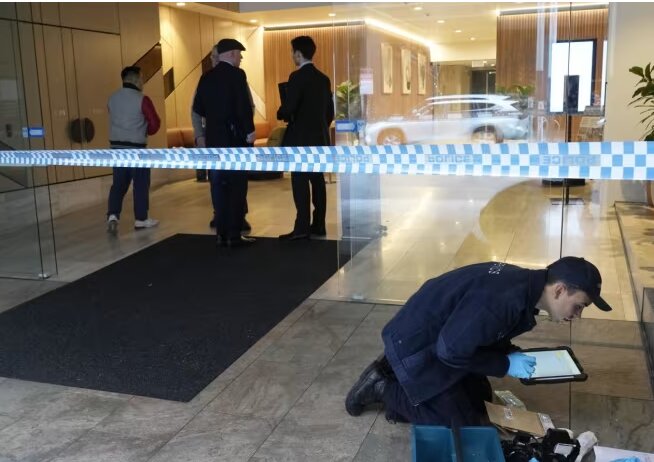
Meta removes fake Chinese accounts amplifying Khalistan propaganda in Australia

0

Meta has published its latest “Adversarial Threat Report,” which provides an overview of the various coordinated manipulation efforts detected and removed from Meta’s apps.

The report states that Meta has taken significant action against a network originating from China that amplified Khalistan propaganda.

Meta has removed 37 Facebook accounts, 13 Pages, five Groups, and nine Instagram accounts for violating its policy against coordinated inauthentic behaviour promoting Khalistan.

“This operation was uncovered during our internal investigation into suspected coordinated inauthentic behaviour,” Meta’s report states.

“We found that the network used compromised and fake accounts to pose as Sikhs, post content, and manage Pages and Groups.”

The network targeted multiple services including Facebook, Instagram, Telegram, and X (formerly Twitter).

It consisted of several clusters of fake accounts, including one with links to an unattributed CIB network from China targeting India and the Tibet region, which Meta had previously disrupted in early 2023.

These clusters often amplified each other, with most engagement coming from their own fake accounts, likely to create the illusion of popularity.

“We detected and disabled some of these fake accounts using our automated systems even before the investigation,” the report added.

“They appeared to have created a fictitious activist movement called Operation K, calling for pro-Sikh protests in countries such as New Zealand and Australia.”

The network posted primarily in English and Hindi about news and current events. This included images likely manipulated by photo editing tools or generated by artificial intelligence, along with posts about floods in the Punjab region, the Sikh community worldwide, the Khalistan independence movement, the assassination of Hardeep Singh Nijjar, a pro-Khalistan independence activist in Canada, and criticism of the Indian government.

“We removed this activity early, before it was able to build an audience among authentic communities,” the Meta report said.

The removed accounts had a modest following: about 2,700 accounts followed one or more of the Pages, about 1,300 accounts joined one or more of the Groups, and under 100 accounts followed one or more of the Instagram accounts.

“This action underscores our commitment to safeguarding our platforms against coordinated inauthentic behaviour and protecting the integrity of discourse on our services,” the report concluded about this issue.

Image: Khalistan Tiger Force chief Hardeep Singh Nijjar and Counsel and spokesman for Sikh’s For Justice Gurpatwant Singh Pannun

Terror organisation Khalistan Tiger Force chief Hardeep Singh Nijjar was gunned down by two unknown assailants in his car in the parking lot of the Guru Nanak Sikh Gurdwara in Surrey, British Columbia. Indian National Investigation Agency (NIA) had in July 2022 announced a cash reward of Rs 10 lakh on Nijjar in the case of the killing of a Hindu priest in Jalandhar. Nijjar had ties with Pakistan and visited the country in 2013 to meet Jagtar Singh Tara, who assassinated former Punjab Chief Minister Beant Singh, and officials of the Inter-Services Intelligence (ISI). 

Support Our Journalism

‘Global Indian Diaspora and Australia’s multicultural communities need fair, non-hyphenated, and questioning journalism, packed with on-ground reporting. The Australia Today – with exceptional reporters, columnists, and editors – is doing just that. Sustaining this needs support from wonderful readers like you.

Whether you live in Australia, the United Kingdom, Canada, the United States of America, or India you can take a paid subscription by clicking Patreon and support honest and fearless journalism.

Australia is the ‘allergy capital of the world’

0

By Jennifer Koplin and Desalegn Markos Shifti

Australia has often been called the “allergy capital of the world”.

An estimated one in ten Australian children develop a food allergy in their first 12 months of life. Research has previously suggested food allergies are more common in infants in Australia than infants living in Europe, the United States or Asia.

So why are food allergies so common in Australia? We don’t know exactly – but local researchers are making progress in understanding childhood allergies all the time.

What causes food allergies?

There are many different types of reactions to foods. When we refer to food allergies in this article, we’re talking about something called IgE-mediated food allergy. This type of allergy is caused by an immune response to a particular food.

Reactions can occur within minutes of eating the food and may include swelling of the face, lips or eyes, “hives” or welts on the skin, and vomiting. Signs of a severe allergic reaction (anaphylaxis) include difficulty breathing, swelling of the tongue, swelling in the throat, wheeze or persistent cough, difficulty talking or a hoarse voice, and persistent dizziness or collapse.

Recent results from Australia’s large, long-running food allergy study, HealthNuts, show one in ten one-year-olds have a food allergy, while around six in 100 children have a food allergy at age ten.

In Australia, the most common allergy-causing foods include eggs, peanuts, cow’s milk, shellfish (for example, prawn and lobster), fish, tree nuts (for example, walnuts and cashews), soybeans and wheat.

Allergies to foods like eggs, peanuts and cow’s milk often present for the first time in infancy, while allergies to fish and shellfish may be more common later in life. While most children will outgrow their allergies to eggs and milk, allergy to peanuts is more likely to be lifelong.

Findings from HealthNuts showed around three in ten children grew out of their peanut allergy by age six, compared to nine in ten children with an allergy to egg.

Are food allergies becoming more common?

Food allergies seem to have become more common in many countries around the world over recent decades. The exact timing of this increase is not clear, because in most countries food allergies were not well measured 40 or 50 years ago.

We don’t know exactly why food allergies are so common in Australia, or why we’re seeing a rise around the world, despite extensive research.

But possible reasons for rising allergies around the world include changes in the diets of mothers and infants and increasing sanitisation, leading to fewer infections as well as less exposure to “good” bacteria. In Australia, factors such as increasing vitamin D deficiency among infants and high levels of migration to the country could play a role.

In several Australian studies, children born in Australia to parents who were born in Asia have higher rates of food allergies compared to non-Asian children. On the other hand, children who were born in Asia and later migrated to Australia appear to have a lower risk of nut allergies.

Meanwhile, studies have shown that having pet dogs and siblings as a young child may reduce the risk of food allergies. This might be because having pet dogs and siblings increases contact with a range of bacteria and other organisms.

This evidence suggests that both genetics and environment play a role in the development of food allergies.

We also know that infants with eczema are more likely to develop a food allergy, and trials are underway to see whether this link can be broken.

Can I do anything to prevent food allergies in my kids?

One of the questions we are asked most often by parents is “can we do anything to prevent food allergies?”.

We now know introducing peanuts and eggs from around six months of age makes it less likely that an infant will develop an allergy to these foods. The Australasian Society of Clinical Immunology and Allergy introduced guidelines recommending giving common allergy-causing foods including peanut and egg in the first year of life in 2016.

Our research has shown this advice had excellent uptake and may have slowed the rise in food allergies in Australia. There was no increase in peanut allergies between 2007–11 to 2018–19.

Introducing other common allergy-causing foods in the first year of life may also be helpful, although the evidence for this is not as strong compared with peanuts and eggs.

What next?

Unfortunately, some infants will develop food allergies even when the relevant foods are introduced in the first year of life. Managing food allergies can be a significant burden for children and families.

Several Australian trials are currently underway testing new strategies to prevent food allergies. A large trial, soon to be completed, is testing whether vitamin D supplements in infants reduce the risk of food allergies.

Another trial is testing whether the amount of eggs and peanuts a mother eats during pregnancy and breastfeeding has an influence on whether or not her baby will develop food allergies.

For most people with food allergies, avoidance of their known allergens remains the standard of care. Oral immunotherapy, which involves gradually increasing amounts of food allergen given under medical supervision, is beginning to be offered in some facilities around Australia. However, current oral immunotherapy methods have potential side effects (including allergic reactions), can involve high time commitment and cost, and don’t cure food allergies.

There is hope on the horizon for new food allergy treatments. Multiple clinical trials are underway around Australia aiming to develop safer and more effective treatments for people with food allergies.

Jennifer Koplin, Group Leader, Childhood Allergy & Epidemiology, The University of Queensland and Desalegn Markos Shifti, Postdoctoral Research Fellow, Child Health Research Centre, Faculty of Medicine, The University of Queensland

This article is republished from The Conversation under a Creative Commons license. Read the original article.

"The

Support Our Journalism

‘Global Indian Diaspora and Australia’s multicultural communities need fair, non-hyphenated, and questioning journalism, packed with on-ground reporting. The Australia Today – with exceptional reporters, columnists, and editors – is doing just that. Sustaining this needs support from wonderful readers like you.

Whether you live in Australia, the United Kingdom, Canada, the United States of America, or India you can take a paid subscription by clicking Patreon and support honest and fearless journalism.

Retd. Rear Admiral Sudarshan Shrikhande awarded Maitri Fellowship to research at University of Wollongong

0

The University of Wollongong’s Australian National Centre for Ocean Resources and Security (ANCORS) has been awarded one of seven inaugural Maitri Fellowships by the Centre for Australia-India Relations within the Department of Foreign Affairs and Trade (DFAT).

The fellowship has been awarded to Rear Admiral Sudarshan Shrikhande (retd), an expert in security-related fields with extensive policy and research experience.

Image: Rear Admiral Sudarshan Shrikhande (retd) (Source: UoW)

Rear Admiral Shrikhande, a former Defence Adviser at the Indian High Commission in Australia and has previously served as a senior officer in the Indian Navy, will relocate to Australia to undertake a six-month fellowship at ANCORS.

Rear Admiral Shrikhande’s work will focus on the critical Australia-India bilateral trade and maritime security relationship. Through his research, he will explore the threats to maritime trade between the two nations and the impacts of trade contestation and conflict in the region.

Image: UOW Acting Vice-Chancellor and President Professor David Currow (Source: UoW)

UOW Acting Vice-Chancellor and President Professor David Currow congratulated Sudarshan on securing the prestigious fellowship that will strengthen bilateral relations between Australia and India.

“We are thrilled to welcome Sudarshan Shrikhande to ANCORS as part of the Maitri Fellowship program. His wealth of experience and expertise in maritime security will significantly contribute to our research and strengthen the strategic partnership between Australia and India.”

Rear Admiral Shrikhande’s research is expected to provide valuable insights into enhancing maritime security and trade resilience, which are vital components of the Australia-India economic relationship. His extensive background includes teaching at several prestigious military colleges, including the National Defence College of India, where he has shared his knowledge and expertise on maritime security.

The Maitri Fellowship program aims to foster closer ties between Australia and India by supporting scholars and practitioners engaged in high-impact research that addresses shared challenges and opportunities. By bringing together top talent from both nations, the program seeks to promote collaboration, innovation, and mutual understanding.

Image: ANCORS Director Distinguished Professor Stuart Kaye (Source: UoW)

ANCORS Director Distinguished Professor Stuart Kaye highlighted the depth of expertise in maritime security that Rear Admiral Shrikhande will bring to ANCORS.

“We look forward to the contributions Sudarshan will make during his fellowship at ANCORS. His research on maritime security and trade will not only enhance our understanding of these critical issues but also contribute to the broader objectives of the Maitri Fellowship in strengthening Australia-India relations.”

The Australian National Centre for Ocean Resources and Security (ANCORS) at the University of Wollongong is a leading global research and education institution focused on the sustainable use and security of the world’s oceans and their resources.

The Maitri Fellowship, established by the Centre for Australia-India Relations/DFAT, aims to strengthen the bilateral relationship between Australia and India through research and collaboration in key areas of mutual interest.

Support Our Journalism

‘Global Indian Diaspora and Australia’s multicultural communities need fair, non-hyphenated, and questioning journalism, packed with on-ground reporting. The Australia Today – with exceptional reporters, columnists, and editors – is doing just that. Sustaining this needs support from wonderful readers like you.

Whether you live in Australia, the United Kingdom, Canada, the United States of America, or India you can take a paid subscription by clicking Patreon and support honest and fearless journalism.

Former security company penalised for failing to back-pay two casual workers

0

The Fair Work Ombudsman reports that it has secured a $22,200 penalty in court against a former security services company that was based in Melbourne.

The Federal Circuit and Family Court has imposed the penalty against Cobra Security Services Pty Ltd, which was based at Docklands before it ceased trading.

The penalty was imposed in response to Cobra Security Services failing to comply with a Compliance Notice requiring it to calculate and back-pay any entitlements owing to two workers it had employed as casual security officers.

Fair Work Ombudsman Anna Booth said employers that fail to act on Compliance Notices need to be aware they can face penalties in court.

“When Compliance Notices are not followed, we will continue to take legal action to protect employees. Employers who fail to act on these notices risk substantial penalties. Any employees with concerns about their pay or entitlements should contact us for free advice and assistance.”

The FWO investigated after receiving requests for assistance from the two affected workers.

A Fair Work Inspector issued the Compliance Notice to Cobra Security Services in July 2022 after forming a belief that one of the workers was paid nothing for 10 days of work she performed in March 2022 and that the other was underpaid for work performed between March and May, 2022.

The inspectors formed a belief that the workers were underpaid entitlements under the Security Services Industry Award 2020, including casual minimum wages and penalty rates for work performed on weekends, public holidays and outside of ordinary hours.

Judge Jonathan Forbes found that the failure to comply with the Compliance Notice was serious, saying he accepted that Cobra Security Services had “pursued a strategy, without regard to the law, to avoid its obligations under the [Fair Work] Act compliance regime”.

Judge Forbes found that there was a need to impose a penalty to deter similar conduct in future.

“The penalty should be sufficiently serious to send a clear signal to other like-minded employers that the type of conduct engaged in by the respondent is unacceptable,” Judge Forbes said.

Judge Forbes found there was merit in the Fair Work Ombudsman’s submission that Cobra Security Services’ lack of cooperation and lack of contrition was intentional rather than benign.

“The Ombudsman adduced evidence that the Company had applied for voluntary deregistration after these proceedings had been commenced and had mislead the corporate regulator by stating that there were no current proceedings against the Company. I agree that such conduct heightens the need for deterrence,” Judge Forbes said.

Support Our Journalism

‘Global Indian Diaspora and Australia’s multicultural communities need fair, non-hyphenated, and questioning journalism, packed with on-ground reporting. The Australia Today – with exceptional reporters, columnists, and editors – is doing just that. Sustaining this needs support from wonderful readers like you.

Whether you live in Australia, the United Kingdom, Canada, the United States of America, or India you can take a paid subscription by clicking Patreon and support honest and fearless journalism.

Perth’s Indian community honours Gurudev Rabindranath Tagore on 163rd birth anniversary

0

In a heartfelt tribute to Gurudev Rabindranath Tagore, the Indian community in Perth gathered to celebrate his 163rd birth anniversary at an event organized by the Bengali Association of Western Australia (BAWA) in collaboration with the Indian Consulate.

Gurudev Rabindranath Tagore (1861-1941) was a luminary in Indian literature, music, and art, and the first non-European to win the Nobel Prize in Literature in 1913.

Renowned for his profound and evocative poetry, Tagore’s works encompass a wide range of genres, including novels, short stories, plays, and essays. His compositions, known as Rabindra Sangeet, have left an indelible mark on Bengali culture and beyond.

The impressive celebration featured a variety of cultural presentations, with children from the community reciting several of Tagore’s poems in Bangla, while youths and elders performed dances and songs set to the soulful tunes of Rabindra Sangeet.

The Consul General Amarjeet Singh Takhi commended BAWA for its dedication to preserving and promoting the legacy of Gurudev.

Image: Perth’s Indian Community Honors Rabindranath Tagore on 163rd Birth Anniversary (Source: CGI Perth – X)

He praised the association for consistently showcasing the rich cultural heritage of Bengal through music, dance, poetry, and literature, and for highlighting the universal humanism espoused by Tagore.

The event not only honored the memory of one of India’s greatest cultural icons but also reinforced the values of unity and humanism that he championed.

A staunch advocate of universal humanism, Tagore’s philosophy transcended borders, emphasizing unity, harmony, and the intrinsic connection between humanity and nature. His legacy continues to inspire and resonate globally, celebrated for his contributions to literature, education, and cultural exchange.

Support Our Journalism

‘Global Indian Diaspora and Australia’s multicultural communities need fair, non-hyphenated, and questioning journalism, packed with on-ground reporting. The Australia Today – with exceptional reporters, columnists, and editors – is doing just that. Sustaining this needs support from wonderful readers like you.

Whether you live in Australia, the United Kingdom, Canada, the United States of America, or India you can take a paid subscription by clicking Patreon and support honest and fearless journalism.
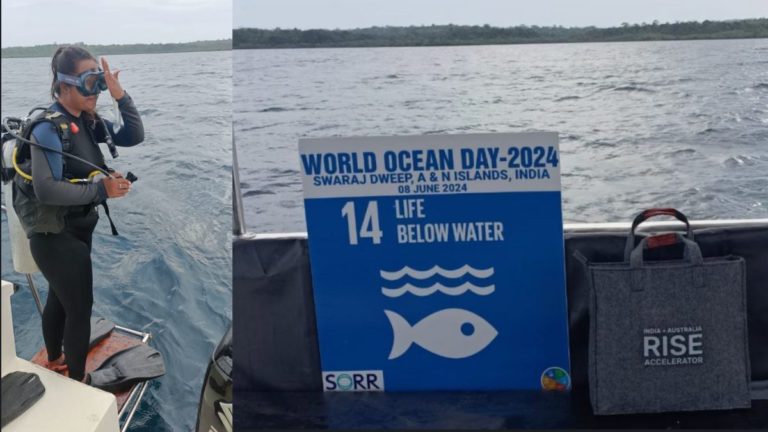
Federal election 2022 candidate fined $1000 for providing false information to AEC

0

A Queensland man has been fined $1000 for submitting false information to the Australian Electoral Commission (AEC) during the 2022 Federal Election period.

The 42-year-old man received his sentence on 30 May 2024, in the Brisbane Magistrates Court.

The sentencing follows charges brought against him by summons on 30 January 2024.

An investigation by the Australian Federal Police (AFP) was initiated after the AEC referred the case, expressing concerns that the man had submitted false or misleading information regarding his residential address and that of his family members.

The man, who was a candidate in the 2022 Federal Election, pleaded guilty on 5 April 2024 to one count of knowingly providing false or misleading information, a violation of section 137.1(1) of the Criminal Code 1995 (Cth).

In addition to the fine, the man was placed on a two-year good behaviour bond.

Support Our Journalism

‘Global Indian Diaspora and Australia’s multicultural communities need fair, non-hyphenated, and questioning journalism, packed with on-ground reporting. The Australia Today – with exceptional reporters, columnists, and editors – is doing just that. Sustaining this needs support from wonderful readers like you.

Whether you live in Australia, the United Kingdom, Canada, the United States of America, or India you can take a paid subscription by clicking Patreon and support honest and fearless journalism.

Spending too much time on social media and doomscrolling?

0

By Kim M. Caudwell

For as long as we have used the internet to communicate and connect with each other, it has influenced how we think, feel and behave.

During the COVID pandemic, many of us were “cut off” from our social worlds through restrictions, lockdowns and mandates. Understandably, many of us tried to find ways to connect online.

Now, as pandemic restrictions have lifted, some of the ways we use the internet have become concerning. Part of what drives problematic internet use may be something most of us are familiar with – the fear of missing out, or FOMO.

In our latest research, my colleagues and I investigated the role FOMO plays in two kinds of internet use: problematic social media use and “doomscrolling”.

What are FOMO, problematic social media use and doomscrolling?

FOMO is the fear some of us experience when we get a sense of “missing out” on things happening in our social scene. Psychology researchers have been studying FOMO for more than a decade, and it has consistently been linked to mental health and wellbeing, alcohol use and problematic social media use.

Social media use becomes a problem for people when they have difficulty controlling urges to use social media, have difficulty cutting back on use, and where the use has a negative impact on their everyday life.

Doomscrolling is characterised by a need to constantly look at and seek out “bad” news. Doomscrollers may constantly refresh their news feeds or stay up late to read bad news.

While problematic social media use has been around for a while, doomscrolling seems to be a more recent phenomenon – attracting research attention during and following the pandemic.

What we tried to find out

In our study, we wanted to test the idea that FOMO leads individuals to engage in problematic use behaviours due to their difficulty in managing the “fear” in FOMO.

The key factor, we thought, was emotion regulation – our ability to deal with our emotions. We know some people tend to be good at this, while others find it difficult. In fact, greater difficulties with emotion regulation was linked to experiencing greater acute stress related to COVID.

However, an idea that has been gaining attention recently is interpersonal emotion regulation. This means looking to others to help us regulate our emotions.

Interpersonal emotion regulation can be helpful (such as “affective engagement”, where someone might listen and talk about your feelings) or unhelpful (such as “co-rumination” or rehashing problems together), depending on the context.

In our analyses, we sought to uncover how both intrapersonal emotion regulation (ability to self-manage our own emotional states) and interpersonal emotion regulation (relying on others to help manage our emotions) accounted for the link between FOMO and problematic social media use, and FOMO and doomscrolling, respectively.

What we found – and what it might mean for the future of internet use

Our findings indicated that people who report stronger FOMO engage in problematic social media use because of difficulty regulating their emotions (intrapersonally), and they look to others for help (interpersonally).

Similarly, people who report stronger FOMO are drawn to doomscrolling because of difficulty regulating their emotions intrapersonally (within themselves). However, we found no link between FOMO and doomscrolling through interpersonal emotion regulation.

We suspect this difference may be due to doomscrolling being more of a solitary activity, occurring outside more social contexts that facilitate interpersonal regulation. For instance, there are probably fewer people with whom to share your emotions while staying up trawling through bad news.

While links between FOMO and doomscrolling have been observed before, our study is among the first to try and account for this theoretically.

We suspect the link between FOMO and doomscrolling may be more about having more of an online presence while things are happening. This would account for intrapersonal emotion regulation failing to help manage our reactions to “bad news” stories as they unfold, leading to doomscrolling.

Problematic social media use, on the other hand, involves a more complex interpersonal context. If someone is feeling the fear of being “left out” and has difficulty managing that feeling, they may be drawn to social media platforms in part to try and elicit help from others in their network.

Getting the balance right

Our findings suggest the current discussions around restricting social media use for young people, while controversial, are important. We need to balance our need for social connection – which is happening increasingly online – with the detrimental consequences associated with problematic internet use behaviours.

It is important to also consider the nature of social media platforms and how they have changed over time. For example, adolescent social media use patterns across various platforms are associated with different mental health and socialisation outcomes.

Public health policy experts and legislators have quite the challenge ahead of them here. Recent work has shown how loneliness is a contributing factor to all-cause mortality (death from any cause).

We have long known, too, that social connectedness is good for our mental health. In fact, last year, the World Health Organization established a Commission on Social Connection to help promote the importance of socialisation to our lives.

The recent controversy in the United States around the ownership of TikTok illustrates how central social media platforms are to our lives and ways of interacting with one another. We need to consider the rights of individuals to use them as they please, but understand that governments carry the responsibility of protecting users from harm and safeguarding their privacy.


If you feel concerned about problematic social media use or doomscrolling, you can speak to a healthcare or mental health professional. You can also call Lifeline on 13 11 14, or 13 YARN (13 92 76) to yarn with Aboriginal or Torres Strait Islander crisis supporters.

Kim M Caudwell, Senior Lecturer – Psychology | Chair, Researchers in Behavioural Addictions, Alcohol and Drugs (BAAD), Charles Darwin University

This article is republished from The Conversation under a Creative Commons license. Read the original article.

"The

Support Our Journalism

‘Global Indian Diaspora and Australia’s multicultural communities need fair, non-hyphenated, and questioning journalism, packed with on-ground reporting. The Australia Today – with exceptional reporters, columnists, and editors – is doing just that. Sustaining this needs support from wonderful readers like you.

Whether you live in Australia, the United Kingdom, Canada, the United States of America, or India you can take a paid subscription by clicking Patreon and support honest and fearless journalism.
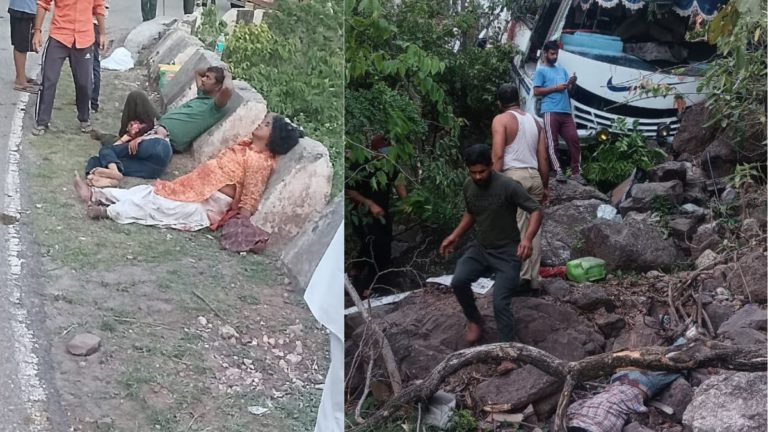
Priyanka Chopra Jonas Arrives in Australia for ‘The Bluff’ Shoot with Daughter Malti Marie

0

Priyanka Chopra Jonas, the globally renowned actress, has touched down in Australia to shoot her upcoming film ‘The Bluff’, and she didn’t travel alone. Accompanying her on this journey is her “best travel partner” – her adorable daughter, Malti Marie.

Taking to Instagram, Priyanka shared a heart-warming glimpse of their travel adventure, much to the delight of her fans. The video starts with a breathtaking aerial view as their plane descends into Australia, followed by scenes of Malti enjoying the airport’s sights. Priyanka, dressed in a chic brown overcoat, cap, and shades, also appears in the video, looking the stylish and doting mother every bit.

“Touchdown…The Bluff. With the best travel partner ever,” she captioned the post.

The Bluff: A Historical Adventure

Directed by Frank E. Flowers, ‘The Bluff’ is set in the 19th century Caribbean. It tells the gripping tale of a former female pirate, played by Priyanka, who must protect her family when the mysterious sins of her past catch up to her. The film promises to be a thrilling blend of adventure and drama, produced by AGBO Studios and Amazon MGM Studios. This project marks Priyanka’s second collaboration with The Russo Brothers, following her role in their Amazon Original series ‘Citadel’.

Priyanka’s Glamorous Rome Appearance

Before jetting off to Australia, Priyanka made headlines with her stunning appearance at a Bvlgari event in Rome. Sporting a striking short hairstyle, she captivated attendees and fans alike. Priyanka wowed in an off-shoulder cream and black dress, complemented by the iconic Serpenti Aeterna necklace, Bvlgari’s most extraordinary jewellery piece.

Screenshot

Social media was abuzz with images and videos from the event, showcasing Priyanka’s impeccable fashion sense and her ability to set trends with ease.

Recent Projects and Future Endeavors

Priyanka recently wrapped up filming for the highly anticipated action comedy ‘Heads Of State’, where she stars alongside Idris Elba, John Cena, and Jack Quaid, under the direction of Ilya Naishuller. Additionally, she has announced a new project as a producer, collaborating on Barry Avrich’s feature documentary ‘Born Hungry’.

In Bollywood, Priyanka was last seen in ‘The Sky is Pink’ opposite Farhan Akhtar in 2019. Fans are eagerly awaiting updates on her next Bollywood venture, ‘Jee Le Zaraa’, directed by Farhan Akhtar. Despite delays caused by scheduling conflicts and the actor’s strike, Farhan remains optimistic about the film’s eventual release, hinting that it will come to fruition when the time is right. The film is set to star Priyanka alongside Alia Bhatt and Katrina Kaif.

As Priyanka Chopra Jonas embarks on this exciting chapter in Australia with her daughter by her side, fans worldwide look forward to seeing her bring another compelling character to life on screen. ‘The Bluff’ is set to add yet another remarkable role to Priyanka’s diverse and impressive portfolio.

Support Our Journalism

‘Global Indian Diaspora and Australia’s multicultural communities need fair, non-hyphenated, and questioning journalism, packed with on-ground reporting. The Australia Today – with exceptional reporters, columnists, and editors – is doing just that. Sustaining this needs support from wonderful readers like you.

Whether you live in Australia, the United Kingdom, Canada, the United States of America, or India you can take a paid subscription by clicking Patreon and support honest and fearless journalism.
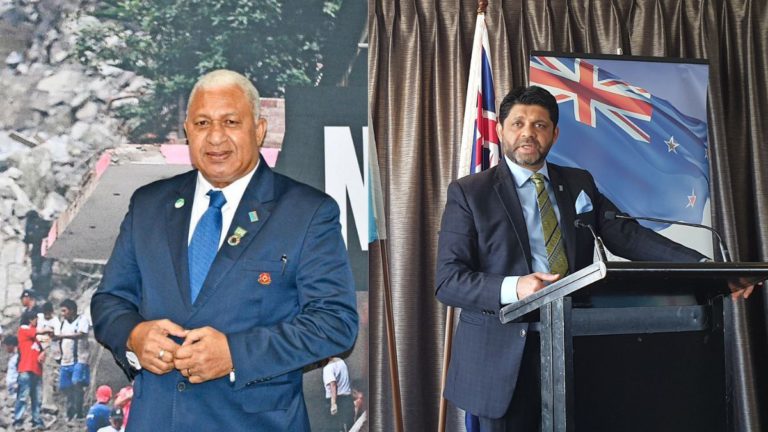
India a key focus country for Australia’s design software startup Canva

0

Sydney-based design software startup Canva is making a significant move into India with the launch of new tools and a subscription product tailored for large companies.

Melanie Perkins, Chief Executive Officer of Canva, in an interview with ET said:

“India is a key focus country for us. There is a big visual and creative culture (there). There is a natural home for Canva in Indians’ hands.”

The $26-billion startup, founded in 2013, boasts 180 million monthly active users worldwide and generates an annual recurring revenue of $2.3 billion.

Canva, founded by Australian entrepreneurs Melanie Perkins, Cliff Obrecht, and Cameron Adams, positions itself as a formidable competitor to American tech giant Adobe with its user-friendly, ‘freemium’ design software.

Although a significant portion of its revenue comes from individual content creators and small businesses who upgrade to paid accounts, Canva now aims to establish itself as an enterprise software provider, assisting large companies with their comprehensive design needs.

By targeting large accounts with stable, long-term financial commitments, Canva seeks to ensure steady revenue generation.

India, Canva’s fifth largest market, exemplifies the company’s growth potential, particularly within the burgeoning creator economy.

Between 2022 and 2023, Canva doubled its growth in India, where 240,000 freelancers currently use the platform.

Perkins added:

“A lot of people are already using Canva in these organisations at an individual level, but now we are trying to integrate it all and sell to enterprises directly. They might not be in one large account now; this will help them bring everything under one brand IP.”

Canva’s latest offering enables businesses to create company-wide design templates, safeguard their intellectual property (IP), and maintain greater control over their visual assets.

The new suite is designed to meet the needs of teams across various departments, including human resources, creative design, marketing, and administration.

As smartphones proliferate and content creation continues to surge in India, the demand for specialized design tools grows. No wonder, Canva is poised to capitalise on this opportunity, broadening its reach and enhancing its impact on the global design landscape.

Support Our Journalism

‘Global Indian Diaspora and Australia’s multicultural communities need fair, non-hyphenated, and questioning journalism, packed with on-ground reporting. The Australia Today – with exceptional reporters, columnists, and editors – is doing just that. Sustaining this needs support from wonderful readers like you.

Whether you live in Australia, the United Kingdom, Canada, the United States of America, or India you can take a paid subscription by clicking Patreon and support honest and fearless journalism.

Indian Diaspora appreciates Remitly for removing controversial advt displaying flag on station floor

0

An advertisement by the global money transfer service, Remitly, had sparked public outcry in the Indian diaspora community.

The advt, prominently displayed on the floor of Parramatta station in New South Wales (NSW), features the national flags including India.

After The Australia Today story, Paramatta station staff put a barricade on the controversial advt requesting people not to walk near the area.

Further, Remitly’s Ryan Riley, Ryan Riley, VP and E&A Marketing, assured the Indian-Australian community that the concerned advt placement at Paramatta station has been removed:

“I wanted to share that the creative was removed today and can confirm there are no other placements like this on the floor. I’m very sorry again for the offense and distress caused. Thanks so much for letting us know about this.”

Additionally, after public outcry, Andrew Charlton, Federal Member for Paramatta, wrote a letter to Matt Oppenheimer, Chief Executive Officer at Remitly, highlighting the “problematic placement” and the sensitivities surrounding national symbols in public advertising.

The use and display of the Indian flag in advert are governed by strict regulations under the Prevention of Insults to National Honour Act, 1971, and the Flag Code of India, 2002. According to these guidelines, India’s flag must be treated with the utmost respect and dignity, prohibiting its placement on the floor or any location where it could be walked upon or subjected to disrespect.

This controversy came to light when a concerned commuter, whose brother travels by this train station, noticed the Indian flag and shared his shock on social media.

The commuter stated in a now-viral post:

“My brother travels by train and informed me that Parramatta station got an advertisement from Remitly that shows our flag and he couldn’t digest the thousands of people walking over it.”

Indian-origin commuters and residents expressed outrage over the perceived disrespect as thousands of people unknowingly walk over the flag daily.

“This is more than just an advertisement; it’s a matter of national pride and respect,” said one Parramatta local to The Australia Today.

“Seeing our flag being walked on daily is deeply hurtful and unacceptable.”

Community members, social media users, and local advocacy groups who have have rallied together, calling for immediate action to remove the advt are happy and hopeful that businesses would be a bit more careful in the use of national symbols and not clash with cultural norms and values that hold the national emblem in high regard.

Support Our Journalism

‘Global Indian Diaspora and Australia’s multicultural communities need fair, non-hyphenated, and questioning journalism, packed with on-ground reporting. The Australia Today – with exceptional reporters, columnists, and editors – is doing just that. Sustaining this needs support from wonderful readers like you.

Whether you live in Australia, the United Kingdom, Canada, the United States of America, or India you can take a paid subscripti

Victoria appoints first of-its-kind Parliamentary Secretary for ‘Men’s Behaviour Change’

0

Victorian Premier Jacinta Allan has announced the creation of a new state Permanent Secretary focused on “Men’s Behaviour Change.”

This role will examine the impact of social media and the internet on the behaviour of men and boys.

Premier Allan said in a statement that the Men’s Behaviour Change parliamentary secretary role – the “first position of its kind” to exist in Australia – is part of her government’s commitment to “make Victoria a safer place for women and children” and to put a stop to “the tragedy of deaths of Victorian women at the hands of men”.

“This is the first position of its kind in Australia – and will focus largely on the influence the internet and social media have on boys’ and men’s attitudes towards women and building respectful relationships.”

Tim Richardson MP, the state member for Mordialloc, posted on social media announcing the news of him being appointed the “national first” Permanent Secretary for “Men’s Behaviour Change.”

“We know that the time to act on men’s violence against women is now and it starts with us men and boys. This is not easy work, but it is important, and we can’t afford not to address it and waste a moment.”

The position entitled “parliamentary secretary” represents a promotion from a regular member of parliament, positioned just below cabinet ministers.

Richardson’s responsibility in the new role of Parliamentary Secretary starts effective May 28, 2024 where he will be working alongside Vicki Ward MP, the Minister for the Prevention of Family Violence.

Support Our Journalism

‘Global Indian Diaspora and Australia’s multicultural communities need fair, non-hyphenated, and questioning journalism, packed with on-ground reporting. The Australia Today – with exceptional reporters, columnists, and editors – is doing just that. Sustaining this needs support from wonderful readers like you.

Whether you live in Australia, the United Kingdom, Canada, the United States of America, or India you can take a paid subscription by clicking Patreon and support honest and fearless journalism.
Police investigating theft of industrial air conditioners valued $14,000

0

Victoria Police is investigating a series of thefts involving electrical items in Scoresby and Clayton that occurred last month.

On April 27, around 6:45 am, a man reportedly visited a business on Dalmore Drive in Scoresby and stole four industrial air conditioners valued at approximately $7,000. The suspect fled the scene in a white Toyota Hilux.

Shortly thereafter, another theft occurred at a business on Garden Road in Clayton, where a man stole four more industrial air conditioners, also valued at approximately $7,000.

Police have released images of a man they believe may be able to assist with their inquiries. He is described as being of medium build with short black hair, and was seen wearing an orange hi-vis shirt, blue shorts, and dark glasses.

Authorities are urging anyone with information regarding the thefts or the identity of the man to come forward and assist with the investigation.

Anyone with information is urged to contact Crime Stoppers on 1800 333 000 or submit an online confidential report at www.crimestoppersvic.com.au

Panthoi becomes first Indian woman to play professional football in Australia

0

Panthoi Chanu Elangbam, a 28-year-old Indian goalkeeper, has scripted history by joining Metro United WFC, a prominent team in the South Australian League.

She is the second Indian goalkeeper and the first female to play for an Australian club.

Image: Panthoi Chanu Elangbam with her club (Source: Instagram)

In 2016, Pranav Kotra, ace goalkeeper from Delhi-based Hindustan FC has became the first Indian footballer to sign a contract with Cove FC in Adelaide.

Image: Pranav Kotra 9Source: Facebook)

Pranav originally from Noida and came to Australia in 2015 to study Diploma in Marketing. Before joining the esteemed Cove FC, Pranav has played with Hindustan FC, Mohun Bagan Sail Academy (Durgapur) and PIFA Sports FC (Mumbai). 

Panthoi’s recruitment came through head coach Paul Morris during the Women in Sports Elite Football Trials held in October 2023. Upon her arrival in Australia, Panthoi quickly made her debut for Metro United, though the match ended in a 1-2 loss to FFSA NTC on April 6.

Panthoi told Scroll:

“I am feeling very good [about being here in Australia]. Although it’s not the first time I’ve been outside the country, the coach and club have been very helpful to me. They’ve explained the situation to me and told me what to do.”

Panthoi’s passion for football ignited when she was just 12, growing up in the village of Keirak, in Manipur’s Thoubal district. Her dedication saw her making daily journeys to an academy in Imphal, about 50 kilometers away, waking as early as 4:30 AM to catch the 5:15 AM bus. Her skills flourished once she began training in Imphal, leading to her selection for various national age-group tournaments.

Between 2012 and 2018, she played for Eastern Sporting Union, later joining Manipur Police in the state league, and rejoining Eastern Sporting Union in 2019.

Eastern Sporting Union’s victory in the inaugural Indian Women’s League title in the 2016-17 season marked a significant milestone, with Panthoi being named Goalkeeper of the Year in the 2017-18 season.

In 2021, Panthoi faced a career-threatening setback when she fractured her right shin, an injury that left her bedridden for two months and cast doubt on her future in football. However, she made a remarkable recovery, reclaiming her spot on the national team. Her resilience and determination saw her participate in the Hangzhou Asian Games and the recently concluded Turkish Women’s Cup, where India finished as runners-up.

Reflecting on her debut in Australia, where her team conceded two goals, Panthoi expressed the emotional roller-coaster goalkeepers often face.

“You can get a little angry because it may help you play better. The anger motivates you. But I also don’t think or have negative thoughts. I just listen to whatever the coach tells me to do and then play accordingly.”

Additionally, Panthoi will be training with the A-League club Adelaide United FC. She has joined the growing ranks of Indian women footballers making their mark internationally.

Support Our Journalism

‘Global Indian Diaspora and Australia’s multicultural communities need fair, non-hyphenated, and questioning journalism, packed with on-ground reporting. The Australia Today – with exceptional reporters, columnists, and editors – is doing just that. Sustaining this needs support from wonderful readers like you.

Whether you live in Australia, the United Kingdom, Canada, the United States of America, or India you can take a paid subscription by clicking Patreon and support honest and fearless journalism.
Australia supports PNG in training next generation of police leaders

0

The AFP, Royal Papua New Guinea Constabulary (RPNGC) and Queensland Police Service (QPS) today in Cairns launched a groundbreaking training program for RPNGC Police Officer Cadets.

AFP Assistant Commissioner Justine Gough said the AFP was proud to work with RPNGC and QPS to deliver the program.

“These cadets will be the future leaders of the Royal Papua New Guinea Constabulary and it is fantastic to be able to give them the opportunity to come to Australia and experience our diverse operational environment.”

Assistant Commissioner Gough added:

“This program will allow the cadets to improve their knowledge, skills and perspectives, which can be applied to help keep their communities safe when they return to PNG. Programs like this one further enhance the AFP’s strong relationships across the Pacific and will allow us to continue to work together to combat regional transnational crime.” 

More than 60 RPNGC cadets are scheduled to undertake the training over the next four months with training being delivered in north Queensland and Sydney to enhance their policing and leadership skills.

This is the first time the three policing agencies have worked together to deliver a training program for RPNGC officer cadets in Australia. For many of the cadets, the trip to Australia will be the first time they have travelled outside of PNG.

Image: AFP and QPS helping develop future PNG (Source: AFP)

RPNGC Deputy Commissioner Operations Regional Command Philip Mitna said the program was a wonderful opportunity for the cadets. 

“The intent for the program is to enhance cadet trainee officers to lead effectively, uphold public safety, and contribute to a resilient and responsive policing system. We thank the AFP and Queensland Police Service for their time and efforts in ensuring our future leaders are given this great opportunity to further develop their skills.”

The training is designed to develop their skills, decision-making abilities and adaptability in a variety of settings.

Between May and August 2024, four contingents of RPNGC cadets will undertake a two-week placement with QPS, where they will have the opportunity to develop their leadership capabilities in an operational policing context. 

The cadets will deploy to QPS stations in Cairns and Townsville where they will shadow senior officers and experience diverse operational environments to enhance their professional development.

The program will also foster a cultural exchange that deepens the relationship between Australian and PNG police officers and lead to improved collaboration in policing transnational crime.

The cadets will also undertake a Policing Leadership Program at the Australian Institute of Police Management (AIPM) in Sydney.

Image: AFP and QPS helping develop future PNG (Source: AFP)

Queensland Police Service Acting Deputy Commissioner Christopher Jory said the QPS is looking forward to welcoming the RPNGC cadets to Cairns and Townsville.

“This is a fantastic opportunity to further strengthen our strong relationship with the RPNGC and provide an insight into our policing environment. The cadets will leave with a good understanding of our day-to-day operations, as well as our leadership and organisational values.”

The program is part of a three-year training course RPNGC cadets must graduate from to be sworn in as Inspectors. These cadets started their training in Port Moresby in September 2023.

The AFP provides ongoing support to the training and development of the RPNGC through the Papua New Guinea-Australia Policing Partnership (PNG-APP).

The PNG-APP was established in 2008 with an initial deployment of 17 AFP members. There are now 43 AFP members working to mentor and build capability within the RPNGC.

Support Our Journalism

‘Global Indian Diaspora and Australia’s multicultural communities need fair, non-hyphenated, and questioning journalism, packed with on-ground reporting. The Australia Today – with exceptional reporters, columnists, and editors – is doing just that. Sustaining this needs support from wonderful readers like you.

Whether you live in Australia, the United Kingdom, Canada, the United States of America, or India you can take a paid subscription by clicking Patreon and support honest and fearless journalism.
Are canned veggies or frozen fruit just as good as fresh produce?

0

By Evangeline Mantzioris

The cost of living crisis is affecting how we spend our money. For many people, this means tightening the budget on the weekly supermarket shop.

One victim may be fresh fruit and vegetables. Data from the Australian Bureau of Statistics (ABS) suggests Australians were consuming fewer fruit and vegetables in 2022–23 than the year before.

The cost of living is likely compounding a problem that exists already – on the whole, Australians don’t eat enough fruit and vegetables. Australian dietary guidelines recommend people aged nine and older should consume two serves of fruit and five serves of vegetables each day for optimal health. But in 2022 the ABS reported only 4% of Australians met the recommendations for both fruit and vegetable consumption.

Fruit and vegetables are crucial for a healthy, balanced diet, providing a range of vitamins and minerals as well as fibre.

If you can’t afford as much fresh produce at the moment, there are other ways to ensure you still get the benefits of these food groups. You might even be able to increase your intake of fruit and vegetables.

Frozen

Fresh produce is often touted as being the most nutritious (think of the old adage “fresh is best”). But this is not necessarily true.

Nutrients can decline in transit from the paddock to your kitchen, and while the produce is stored in your fridge. Frozen vegetables may actually be higher in some nutrients such as vitamin C and E as they are snap frozen very close to the time of harvest. Variations in transport and storage can affect this slightly.

Minerals such as calcium, iron and magnesium stay at similar levels in frozen produce compared to fresh.

Another advantage to frozen vegetables and fruit is the potential to reduce food waste, as you can use only what you need at the time.

As well as buying frozen fruit and vegetables from the supermarket, you can freeze produce yourself at home if you have an oversupply from the garden, or when produce may be cheaper.

A quick blanching prior to freezing can improve the safety and quality of the produce. This is when food is briefly submerged in boiling water or steamed for a short time.

Frozen vegetables won’t be suitable for salads but can be eaten roasted or steamed and used for soups, stews, casseroles, curries, pies and quiches. Frozen fruits can be added to breakfast dishes (with cereal or youghurt) or used in cooking for fruit pies and cakes, for example.

Canned

Canned vegetables and fruit similarly often offer a cheaper alternative to fresh produce. They’re also very convenient to have on hand. The canning process is the preservation technique, so there’s no need to add any additional preservatives, including salt.

Due to the cooking process, levels of heat-sensitive nutrients such as vitamin C will decline a little compared to fresh produce. When you’re using canned vegetables in a hot dish, you can add them later in the cooking process to reduce the amount of nutrient loss.

To minimise waste, you can freeze the portion you don’t need.

Fermented

Fermentation has recently come into fashion, but it’s actually one of the oldest food processing and preservation techniques.

Fermentation largely retains the vitamins and minerals in fresh vegetables. But fermentation may also enhance the food’s nutritional profile by creating new nutrients and allowing existing ones to be absorbed more easily.

Further, fermented foods contain probiotics, which are beneficial for our gut microbiome.

5 other tips to get your fresh fix

Although alternatives to fresh such as canned or frozen fruit and vegetables are good substitutes, if you’re looking to get more fresh produce into your diet on a tight budget, here are some things you can do.

1. Buy in season

Based on supply and demand principles, buying local seasonal vegetables and fruit will always be cheaper than those that are imported out of season from other countries.

2. Don’t shun the ugly fruit and vegetables

Most supermarkets now sell “ugly” fruit and vegetables, that are not physically perfect in some way. This does not affect the levels of nutrients in them at all, or their taste.

3. Reduce waste

On average, an Australian household throws out A$2,000–$2,500 worth of food every year. Fruit, vegetables and bagged salad are the three of the top five foods thrown out in our homes. So properly managing fresh produce could help you save money (and benefit the environment).

To minimise waste, plan your meals and shopping ahead of time. And if you don’t think you’re going to get to eat the fruit and vegetables you have before they go off, freeze them.

4. Swap and share

There are many websites and apps which offer the opportunity to swap or even pick up free fresh produce if people have more than they need. Some local councils are also encouraging swaps on their websites, so dig around and see what you can find in your local area.

5. Gardening

Regardless of how small your garden is you can always plant produce in pots. Herbs, rocket, cherry tomatoes, chillies and strawberries all grow well. In the long run, these will offset some of your cost on fresh produce.

Plus, when you have put the effort in to grow your own produce, you are less likely to waste it.

Evangeline Mantzioris, Program Director of Nutrition and Food Sciences, Accredited Practising Dietitian, University of South Australia

This article is republished from The Conversation under a Creative Commons license. Read the original article.

"The

Support Our Journalism

‘Global Indian Diaspora and Australia’s multicultural communities need fair, non-hyphenated, and questioning journalism, packed with on-ground reporting. The Australia Today – with exceptional reporters, columnists, and editors – is doing just that. Sustaining this needs support from wonderful readers like you.

Whether you live in Australia, the United Kingdom, Canada, the United States of America, or India you can take a paid subscription by clicking Patreon and support honest and fearless journalism.
Embracing hope on International Missing Children’s Day 2024

0

This International Missing Children’s Day (IMCD), the AFP is releasing information about eight Australian children who never came home in the hope of unlocking a vital clue that could help reunite a family.

One of those children is Sherrlynn Mitchell who was 16 when she went to meet a friend at a bus stop in Ballarat in 1973. Sherrlynn hasn’t been seen since, leaving her family with questions that have never been answered.

Her brother Gerrard Mitchell, speaking on behalf of himself and his other sister, said their mother died not knowing what happened to her daughter.  

Mr Mitchell said:

“We were close when we were children – she was a loving sister. We would like her to come back as we miss her greatly. It has impacted our lives as we think of her often. I want to know what happened to her.”

The eight children are featured with their picture and details on their disappearance on a poster being released today for IMCD by the AFP-led National Missing Persons Coordination Centre (NMPCC).

AFP Commander Joanne Cameron said the faces and stories of the missing children were a reminder that every missing child is loved, and has left behind a family seeking answers.

“I encourage all of us to take the time today to commemorate the missing children who have found their way home, remember those who have been victims of crime, and continue efforts to find those who are still missing,”

Commander Cameron added:

“We hope the poster can lead to someone coming forward with information that could help us locate the child and end a family’s trauma. Every piece of information is vital in a missing persons investigation, so I urge anyone with information on the whereabouts of a missing child to contact Crime Stoppers on 1800 333 000.”

Nearly 37,000 children were reported missing in Australia in 2023 and IMCD commemorates the more than one million children globally who are reported missing each year.

In Australia, most children are found safely within 24 hours of being reported missing but hundreds of Australian families are still searching for their cherished loved ones.

The NMPCC poster features missing children from across Australia to spread awareness and encourage members of the public to share any information they may have about the children.

Support Our Journalism

‘Global Indian Diaspora and Australia’s multicultural communities need fair, non-hyphenated, and questioning journalism, packed with on-ground reporting. The Australia Today – with exceptional reporters, columnists, and editors – is doing just that. Sustaining this needs support from wonderful readers like you.

Whether you live in Australia, the United Kingdom, Canada, the United States of America, or India you can take a paid subscription by clicking Patreon and support honest and fearless journalism.

Age verification for social media would impact all of us

0

By Justine Humphry, Catherine Page Jeffery, Jonathon Hutchinson, and Olga Boichak

This month the Australian government announced a A$6.5 million commitment to trial an age-verification program that will restrict children’s exposure to inappropriate online content, including pornography and potentially social media. The announcement came out of a National Cabinet meeting geared towards addressing gender-based violence in Australia.

Much has been said about age-checking technologies in the weeks since. Experts point out implementing these tools effectively (so they aren’t easily by-passed) will be complicated – and any such system could come with data security risk. Internet freedom groups have criticised the decision on account of its potential to erode privacy.

There is, however, an important dimension missing from these discussions: the voice of young people and parents. In our research into social media use and online harms affecting Australian teenagers, we asked young people and their parents what they themselves thought about age verification. We found mixed reactions from both groups.

Our findings suggest age verification is generally supported, but participants think it likely would not work. Instead, they said more safety education, face-to-face dialogue, and accountability from social media companies would be better approaches to keeping young people safe online.

Young Australians and social media

Young Australians use social media for a variety of reasons, from keeping in touch with friends and family, to seeking information and entertainment.

Our latest research found almost a quarter of young people 12 to 17 use WhatsApp daily. One in two are daily Snapchat users. Instagram and YouTube are the most frequently used platforms, used daily by 64% and 56% of young people respectively.

These patterns are especially significant for culturally and linguistically diverse Australians, who are more likely to use social media to socialise, maintain familial and cultural ties and learn about the world.

That said, social media and the internet more broadly do present risks to young people. These risks include online bullying, grooming and unsolicited contact, privacy breaches, misinformation and content that is pornographic, racist, sexist, homophobic and/or violent.

Studies have found associations between social media use and poor mental health and self-esteem, although direct causation is difficult to establish. It’s also important to note risk doesn’t equate with harm, and young people themselves commonly demonstrate skills, judgement and agency in negotiating online risks.

In an environment of heightened concern, decisions are now being made that will have significant impacts on both young people and their parents. These decisions are being fuelled by media brands, celebrities and ex-politicians seeking to influence discourse.

Elsewhere in the world, the UK’s Online Safety Bill is attempting to restrict young people’s access to online pornography, through either government-issued documents or biometrics. The UK regulator Ofcom is set to publish guidance on age-assurance compliance in early 2025. France has also been testing a system to verify age based on a user intermediary, after it enacted a law in 2023 to restrict social media use for people under 15.

The details of the trial in Australia haven’t yet been released, but it could use one or a combination of approaches.

The missing perspective

Our research, which focused on Australian teenagers aged 12–17 and their parents, drew from focus groups and a national survey in 2022–23. Overall, the survey showed broad support for age verification. Specifically, 72% of young people and 86% of parents believed more effective age limits would improve online safety for young people.

But we also heard about several drawbacks. For instance, young people saw age verification as something that would benefit adults. One participant said:

I guess it benefits parents who want to be in the right mindset that their kids are safe on social media.

Another young person said:

I feel like in the case of lot of controlling parents it would be bad for the kid because then if the parents are controlling and they don’t have any social media to talk to people, I feel like that could negatively impact the kid. Maybe they’d get lonely, or they wouldn’t be able to use it as an outlet.

Some young people noted they could find ways around age-verification tools:

It would be simple just to get a VPN and change my country if it was going to create this obstacle.

They also pointed out such tools don’t account for evolving maturity levels and differing capabilities among young individuals.

Parents shared concerns about the burden of providing proof of their age and managing consent:

I mean depending on what kind of site it is would you be comfortable providing your passport information or your driver’s licence?

Both groups were worried about the risk of data breaches and leaks of sensitive information. As one parent told us:

Well, it certainly makes you think about it a lot more. What are they using that data for? Is it really just for age verification, or is it for something more nefarious?

Another young person also had privacy concerns:

But if I would say that I was OK with it, I think I’d be lying. Because, I’m a really private person, privacy really matters. And yeah, I do think to be safe, I think we really should be having our own privacy as well.

So what should be done?

Governments, parents, educators and platforms all have an important role to play in ensuring young people’s safety online.

Beyond age verification, there’s a growing consensus social media companies should be doing more to ensure users’ safety. Until that happens, the best approach is for parents and children to talk to each other to determine the appropriate age for a child to be on social media. By working together, families can develop guidelines and expectations for appropriate use.

Schools can also help by developing young people’s digital literacy and online safety skills.

Ultimately, if we want young people to thrive in online environments, we need to involve them in the decisions that will directly affect them.

Justine Humphry, Senior Lecturer in Digital Cultures, University of Sydney; Catherine Page Jeffery, Lecturer in Media and Communications, University of Sydney; Jonathon Hutchinson, Chair of Discipline, Media and Communications, University of Sydney, and Olga Boichak, Lecturer in Digital Cultures, University of Sydney

This article is republished from The Conversation under a Creative Commons license. Read the original article.

"The

Support Our Journalism

‘Global Indian Diaspora and Australia’s multicultural communities need fair, non-hyphenated, and questioning journalism, packed with on-ground reporting. The Australia Today – with exceptional reporters, columnists, and editors – is doing just that. Sustaining this needs support from wonderful readers like you.

Whether you live in Australia, the United Kingdom, Canada, the United States of America, or India you can take a paid subscription by clicking Patreon and support honest and fearless journalism.
“Australia, be aware!”: Limiting international students may spell trouble

0

Recent announcements by the Australian government to curb international student numbers have sparked significant concern among education stakeholders.

These measures, aimed at reducing immigration pressures and ensuring quality education, might inadvertently push the nation’s higher education sector towards a financial precipice reminiscent of the alarming situation currently unfolding in England.

Image: Prof. Amit Chakma, Vice-Chancellor and President at The University of Western Australia (Source: X)

Prof. Amit Chakma, Vice-Chancellor and President at The University of Western Australia, in a LinkedIn post warned: “Australia, be aware!”

“The perils of ill-conceived policy unfold in the United Kingdom in real-time. Let’s not follow this self-destructive path that will weaken our universities and the economy! We can’t say we did not see it coming!”

A recent report by the Times Higher Education (THE) says international student recruitment woes could leave eight in 10 English universities in deficit

According to the Office for Students (OfS), more than 80 per cent of English higher education institutions could face a deficit within three years due to collapsing international student recruitment and stalling domestic demand.

Image: Phil Baty, Chief Global Affairs Officer at Times Higher Education (THE) (Source: LinkedIn)

Phil Baty, Chief Global Affairs Officer at Times Higher Education (THE), said in a LinkedIn post that this dire prediction suggests that some universities may be forced to close, euphemistically described as “exiting the market” by the OfS.

The projected worst-case scenario models a net reduction in annual income of £9.7 billion, leading to deficits in 226 providers (84 per cent) and low liquidity levels for three-quarters of institutions by 2026-27.

Baty says over 50 English universities have initiated redundancy rounds to cut costs, with the OfS warning that even more drastic measures might be necessary.

“The ‘consolidation’ and ‘rationalisation’ of courses – along with providers potentially exiting the market, could ‘reduce the range and diversity of providers and limit student choice’ the report says, with institutions’ research and contribution to local and national economies also at risk.”

Undoubtedly, such actions could profoundly alter the size, shape, and reputation of the English higher education sector, both nationally and internationally.

For the Australian stakeholders, the parallels to English universities are striking: international students represent a substantial portion of university revenues in both countries.

By imposing restrictions on their numbers, the Australian government risks precipitating a similar financial crisis. The loss of international students would not only diminish direct financial inflows but also reduce the cultural diversity and global perspectives that enrich the academic environment.

Moreover, the economic repercussions extend beyond universities. As international education has been valued at $48 billion in 2023, accounting for more than half of Australia’s economic growth and employing more than 200,000 people. International students contribute significantly to the local economy through housing, retail, and other services. Their absence would result in a notable decline in economic activity, affecting communities that rely heavily on the vibrancy and spending of this demographic.

Image: Go8 Chief Executive Vicki Thomson (Source: Go8)

Vicki Thomson, Chief Executive of Group of Eight, says that it is wrong to suggest that international students are somehow responsible for the economic challenges that our community faces. It “shows an unfortunate lack of understanding for just how important this export sector is to our economy.”

“We wouldn’t do this to the iron ore sector, nor to the wine industry or other critical exports. It seems very short-sighted and misguided to target our most successful services export sector.”

To mitigate the risks to higher education, experts suggest that the Australian government should consider a more balanced approach. Instead of populist policies and blanket restrictions, targeted measures to enhance the quality of education and ensure that international students meet high academic standards could achieve the desired outcomes without jeopardising the financial stability of higher education institutions.

In my opinion, the experience of English universities serves as a stark warning for Australia. The Australian government’s current trajectory threatens to replicate these same challenges, undermining the financial health and global standing of its higher education sector. This is a line in the sand moment: Albanese and Dutton must demonstrate foresight and flexibility to protect the future of Australian higher education, ensuring it remains a robust, inclusive, fair, and globally competitive brand.

Support Our Journalism

‘Global Indian Diaspora and Australia’s multicultural communities need fair, non-hyphenated, and questioning journalism, packed with on-ground reporting. The Australia Today – with exceptional reporters, columnists, and editors – is doing just that. Sustaining this needs support from wonderful readers like you.

Whether you live in Australia, the United Kingdom, Canada, the United States of America, or India you can take a paid subscription by clicking Patreon and support honest and fearless journalism.
Public outcry in Sydney over controversial advt displaying Indian flag

0

An advertisement by the global money transfer service, Remitly, has sparked public outcry in the community.

The advt, prominently displayed on the floor of Parramatta station in New South Wales (NSW), features the national flags including India.

Indian-origin commuters and local residents are expressing outrage over the perceived disrespect as thousands of people unknowingly walk over the flag daily.

“This is more than just an advertisement; it’s a matter of national pride and respect,” said one Parramatta local to The Australia Today.

“Seeing our flag being walked on daily is deeply hurtful and unacceptable.”

The use and display of the Indian flag in advert are governed by strict regulations under the Prevention of Insults to National Honour Act, 1971, and the Flag Code of India, 2002. According to these guidelines, India’s flag must be treated with the utmost respect and dignity, prohibiting its placement on the floor or any location where it could be walked upon or subjected to disrespect.

Image source: Prime Minister of India Narendra Modi with Australian Prime Minister Anthony Albanese – Twitter.

This controversy came to light when a concerned commuter, whose brother travels by this train station, noticed the Indian flag and shared his shock on social media.

The commuter stated in a now-viral post:

“My brother travels by train and informed me that Parramatta station got an advertisement from Remitly that shows our flag and he couldn’t digest the thousands of people walking over it.”

Despite multiple attempts to reach out to Parramatta station officials, the concerned individual reported no response, further fueling public frustration. “I have tried contacting Parramatta station but no luck. If someone can PMIT with them,” he pleaded in his post, urging the community and local authorities to take action.

In response to the growing backlash, the commuter also reached out to Remitly directly through LinkedIn.

Encouragingly, Ryan Riley, VP and E&A Marketing at Remitly responded immediately and acknowledged the issue. He apologised for the advt and has promised a resolve the issue soon.

“We are checking to make sure this isn’t happening anywhere else. I’ll share back once I know for sure and once Paramatta one is fixed. Really appreciate you letting us know and sorry for any offense.”

Community members, social media users, and local advocacy groups have rallied together, calling for immediate action to remove the advt. Many see the use of the flag in such a manner as a profound sign of disrespect, clashing with cultural norms and values that hold the national emblem in high regard.

As of now, Remitly has not provided a detailed timeline for the ad’s removal or replacement, but their acknowledgment of the issue has offered some hope to the aggrieved community. Local officials have yet to release an official statement, but the incident has undoubtedly put a spotlight on the sensitivities surrounding national symbols in public advertising.

UPDATE: Paramatta station staff has put barricade on the controversial advt and Remitly’s Ryan Riley has assured the Indian-Australian community that the concerned advt placement at Paramatta station will be removed on June 2: “we are trying to get it fixed ASAP…apologize to the whole community for any offense caused.”

Support Our Journalism

‘Global Indian Diaspora and Australia’s multicultural communities need fair, non-hyphenated, and questioning journalism, packed with on-ground reporting. The Australia Today – with exceptional reporters, columnists, and editors – is doing just that. Sustaining this needs support from wonderful readers like you.

Whether you live in Australia, the United Kingdom, Canada, the United States of America, or India you can take a paid subscription by clicking Patreon and support honest and fearless journalism.

Rising Hate Crimes Against Indians and Hindus Tarnish Canada’s Inclusive Reputation

0

Canada long claimed to be a bastion of multiculturalism and inclusivity, is grappling with an alarming rise in hate crimes and violence against its Indian and Hindu communities. This disturbing trend calls into question the nation’s commitment to being a safe place for immigrants and highlights significant challenges in maintaining its reputation as a welcoming destination.

Alarming Increase in Hate Crimes

According to a new report by the Centre for Integrated and Holistic Studies (CIHS), recent years have witnessed a surge in hate crimes targeting Indians and Hindus in Canada.

These incidents range from physical assaults to threats and vandalism of religious sites, such as the 2017 Calgary attack where an Indian man was assaulted with a baseball bat while enduring racial slurs. Such events starkly contradict Canada’s historical image as a sanctuary for immigrants and undermine the safety and security of these communities.

Unchecked Extremism and Law Enforcement Challenges

The CIHS report underscores the free operation of Khalistani extremists in Canada, who have been involved in intimidating Hindu minorities and desecrating temples. The vandalism of a Hindu temple in British Columbia in January 2023, where pro-Khalistan posters were found, exemplifies this issue. These extremist groups not only threaten physical safety but also erode the perception of Canada as a secure and inclusive country.

Concerns have been raised about the efficacy of Canadian law enforcement in addressing these threats. The response to anti-Hindu and anti-India sentiments has often been criticised as inadequate, further straining diplomatic relations with India. The Canadian government’s handling of protests and rallies by Khalistani radicals has come under scrutiny, particularly in light of their potential to incite violence and terrorism.

Factors Contributing to Decline in Safety

Several factors contribute to the deteriorating safety of Indians and Hindus in Canada:

  1. Hate Speech on Social Media: Platforms have become breeding grounds for hate speech, xenophobic discourse, and extremist ideologies, which fuel hostility against minorities.
  2. Political and Racial Motivations: Incidents like the Calgary attack highlight how racism and political extremism intersect, creating a volatile environment for targeted communities.
  3. Inadequate Law Enforcement Response: Victims often feel marginalised by law enforcement agencies, leading to under-reporting of crimes and a lower standard of accountability for offenders.

The Multifaceted Threat of Extremist Groups

Khalistani and Jihadi extremists pose multi-dimensional dangers, including:

  • Hate Crimes: Physical assaults and vandalism targeting Indian and Hindu communities.
  • Online Harassment: Increased online abuse and threats aimed at individuals based on their ethnicity or religion.
  • Protests and Rallies: Organised demonstrations that disrupt diplomatic visits and cultural events, spreading misinformation and inciting violence.
  • Pressure Tactics: Threats against businesses, local authorities, or politicians who oppose extremism or defend the rights of Indian or Hindu communities.

Criticism of Government Response

The Canadian government’s response to these issues has been criticised for being insufficient and, at times, counterproductive. Prime Minister Justin Trudeau’s administration has permitted rallies by Khalistani radicals, drawing comparisons to the tragic Kanishka bombing. Despite India’s repeated requests to curb such activities, citing the right to free speech has led to questions about Canada’s stance on terrorism and extremism.

Economic and Social Impacts

The rise in hate crimes and extremist activities poses significant economic and social risks. The fear and insecurity felt by Indian and Hindu communities affect their daily lives, including their ability to study, work, and contribute to society. This undermines the economic contributions these communities make to Canada, which has historically benefited from their diversity and talent.

Proactive Measures for Inclusivity

To counter the rise in hate crimes and promote inclusivity, Canada must adopt proactive measures:

  1. Intelligence Sharing: Collaborate with international partners, including India, to share intelligence on extremist activities.
  2. Strengthen Law Enforcement: Enhance the capacity of law enforcement agencies to respond to hate crimes and extremism effectively.
  3. Promote Diversity and Inclusion: Implement policies and programs that foster a more inclusive society, celebrating the contributions of all communities.
  4. Diplomatic Outreach: Engage in diplomatic efforts to address shared concerns and advance global security.

Canada’s reputation as a model of tolerance and multiculturalism is at stake. The rise in hate crimes and violence against Indians and Hindus demands urgent action. By addressing the root causes of racism and intolerance and adopting concrete steps to combat hate crimes, Canada can reaffirm its dedication to diversity and ensure a safe and respected environment for all citizens.

The CIHS report calls for a balanced approach that upholds the right to free speech while prioritising the safety and security of individuals and diplomatic missions. Allowing radical organisations to hold protests is an affront to democratic values and sends a misguided signal to those who engage in violent and extremist acts.

Canada must take a firm stand against terrorism and extremist ideologies, ensuring the safety of all residents and protecting its multicultural heritage.

Prime Minister Justin Trudeau’s administration must choose between supporting international relations and combating terrorism to advance Canada’s interests and uphold its principles. Collaboration with India on countering extremism, sharing best practices, and ensuring a unified response to global threats is essential for maintaining peace and security in both nations.

Support Our Journalism

‘Global Indian Diaspora and Australia’s multicultural communities need fair, non-hyphenated, and questioning journalism, packed with on-ground reporting. The Australia Today – with exceptional reporters, columnists, and editors – is doing just that. Sustaining this needs support from wonderful readers like you.

Whether you live in Australia, the United Kingdom, Canada, the United States of America, or India you can take a paid subscription by clicking Patreon and support honest and fearless journalism.
“Beware of Modi”: How native insiders fuel Western media’s misreading of India

0

The rise of Prime Minister Narendra Modi and his sustained popularity in India and globally have consistently baffled and confounded many Western journalists, particularly those aligned with Leftist ideologies.

Simply put, the failure of these Left-leaning journalists to accurately comprehend and interpret Modi’s India stems from a combination of their own ideological bias, a lack of nuanced understanding of India’s socio-political landscape, a tendency to view global politics through a Western-centric lens, and use of native insiders who further help reinforce their bias.

In 2014, when the newly appointed Indian Prime Minister was on a historical official visit to Australia, I was on a study trip to India with some Australian journalism students. One day, while waiting in the studio lobby, we bumped into a famous journalist. With a mischievous glint in his eyes and an overconfident Gyaanpelwa (knowledge enforcer) tone, he issued a cryptic warning to the wide-eyed Australian students: “Beware of Modi!”

I believe it is these individuals—the pseudo-intellectuals, echo-chamber critics and native insiders, also known as the ‘Khan market gang’—who, through their engagement with Western media, inadvertently bolster their own biases, leading to a skewed misrepresentation and interpretation of India.

For the uninitiated, native insiders as a term refers to those local individuals who are used by colonial or neocolonial powers to gather intelligence, interfere in governance, and often create or implement policies favourable to a particular political ideology or group. In independent India, native insiders, inheritors of the colonial legacy, often found themselves inadvertently reinforcing colonial tropes. This was largely done through bureaucratic structures, educational curricula, or cultural narratives propagated through media. The glorification of Leftist ideals while preserving an elitist hierarchy served to maintain the status quo, allowing colonial tropes to persist.

Even now, these native insiders are either members of the local elite or Western-educated or trained carrying forward the legacy of their ancestors. They act as self-appointed intermediaries between us and them often thinking that they are providing valuable interpretations and insights. Their collaboration is always perpetuated by the colonial or neocolonial agenda, reinforcing the power dynamics and ideological biases.

In a recent interview on Western media reporting about India, External Affairs Minister Dr S Jaishankar accepted that “there is an international Khan market gang as well.”

“These are people who are sort of linked to the entitled people out here. They are socially comfortable with them… So I think when the sales are down in the domestic Khan market, the international Khan market gang feels, I need to pep up these guys and give them support,”

he added.

Aided by such native insiders, socially comfortable whose historical legacy of creating mistrust and division within India is often hidden from inexperienced readers or audiences, Western media often reduce Modi’s political appeal to a binary narrative: a dangerous lurch towards authoritarianism and Hindu nationalism.

For example, many Western mainstream publications have frequently carried out opinion and editorial pieces portraying Modi as a divisive figure and condemning his policies without delving deeply into the complexities that resonate with the Indian voters.

All this is often done citing the usual pseudo-intellectuals who have wielded significant influence over Western media perceptions of India and Modi. No wonder that it emerges as a one-sided narrative that fails to capture the complexities. One key area of contention has been Modi’s handling of religious minorities, particularly Muslims. While critics accuse him of fostering a climate of intolerance, supporters argue that his administration has focused on inclusive development for all.

Additionally, his economic policies, such as demonetisation and the Goods and Services Tax (GST), have been hotly debated. While some see them as bold reforms, others criticise their implementation and impact on the economy. Furthermore, Modi’s foreign policy initiatives, including his approach to Pakistan and China, have been subject to scrutiny, with differing interpretations of their effectiveness. Despite these nuanced discussions within India, the portrayal in Western media often lacks this depth, reflecting the biases of native insiders who shape the narrative.

This ideological bias, one can easily argue, overlooks the broader context of Modi’s governance and the multifaceted reasons behind his ever-growing popularity. Modi’s image as a strong, decisive leader who champions economic development and national pride resonates with many Indians.

His government’s initiatives, such as the Pradhan Mantri Awas Yojana (housing for all), Swachh Bharat Abhiyan (Clean India Mission), and Ujjwala Yojana (providing free LPG connections), have had tangible impacts on the lives of millions, particularly in rural areas. Further, his focus on economic reforms, infrastructural projects, and initiatives like Make in India and Digital India have created a narrative of growth and self-reliance.

Additionally, Modi’s foreign policy, characterised by strong stances on issues like terrorism and border security, has bolstered his image as a protector of India’s sovereignty. However, Western media’s focus on issues like the abrogation of Article 370 in Kashmir often centres on human rights concerns without equally considering the Islamist extremism and national security arguments that find significant support within India. Similarly, in the case of protests against the Citizenship Amendment Act (CAA) coverage highlighted fears of discrimination against Muslims rather than paying attention to the perspectives of actual persecuted minorities from neighbouring countries.

Modi’s brand of nationalism and diplomacy, which blends pride in India’s ancient culture with a vision of a modern, powerful nation, is often misunderstood or dismissed by Western leftist commentators when viewed from the narrow lens of their ideology. This nationalism is not merely about Hindu majoritarianism but is also a response to historical grievances and a quest for Bharat’s international recognition and respect without harming any other nation’s sovereignty or interests. However, all this is not reflected in Western media’s coverage which is frequently selective and not sufficiently grounded in the realities of rural and small-town India, where a significant portion of Modi’s support base resides.

One must wonder, why India’s native insiders often seek validation from Western media through their anti-India views. They are mostly driven by a combination of perceived prestige, or loss of prestige under Modi, and the influence that Western-stamped narratives about India hold in global discourse. This desire for external affirmation often stems from a belief that Western endorsement can lend credibility and amplify their critiques on an international stage. However, the growing penetration of social media across India’s urban and rural centres has democratised information access, enabling the masses to scrutinise and challenge these views in real time. This increasingly questions the motives and legitimacy of these insiders’ perspectives, often exposing biases and prompting broader debates.

Yet, India’s native insiders, ever so over-confidently enlightened, sit comfortably on their dais of bias, dispensing their ‘wisdom’ in refined English, often peppering it with French loanwords, with a condescension upon subaltern natives only they can muster. Many armed with degrees from foreign institutions and an unwavering belief in their superior insight, effortlessly dismiss the nuanced (many) realities of India. With every op-ed, quote and panel discussion in Western media, they reinforce their echo chamber, delightfully indifferent, to the diverse voices and genuine aspirations of millions outside their socio-politically comfortable ivory towers.

Undoubtedly, many Western journalists perceive criticism of native insiders by the Indian masses as a sort of certificate of excellence to further push their own biases. They continue to rely on urban-centric, Western-educated or trained voices, which continuously results in a skewed understanding of the broader public sentiment in India.

In essence, the over-reliance on native insiders who are influenced by a heady mix of colonial legacy and leftist ideology, poses a considerable blind spot for many Western journalists, overshadowing the economic aspirations of India. They often miss the appeal of major policies to the average Indian voter, who prioritises tangible improvements in living standards through modernisation and actual social justice over abstract armchair ideological debates such as ‘the idea of India’ or ‘two Indias’.

In conclusion, to truly understand Modi’s India, Western media, particularly those with both open and closeted leftist inclinations, need to move beyond their ideological predispositions. These journalists must reflect on the complex and multifaceted nature of India’s socio-political landscape by first becoming informed commentators. Only by doing so can they truly engage with the socio-economic realities and aspirations of India, which stands as one of the world’s most vast, dynamic, and complex democracies.

Support Our Journalism

‘Global Indian Diaspora and Australia’s multicultural communities need fair, non-hyphenated, and questioning journalism, packed with on-ground reporting. The Australia Today – with exceptional reporters, columnists, and editors – is doing just that. Sustaining this needs support from wonderful readers like you.

Whether you live in Australia, the United Kingdom, Canada, the United States of America, or India you can take a paid subscription by clicking Patreon and support honest and fearless journalism.
Volunteering Awards 2024: Here’s your chance to be community hero across Victoria

0

The Volunteering Awards 2024 are set to honour the extraordinary contributions of volunteers who play a pivotal role in building resilient communities, enhancing services, and fostering connections across Victoria.

This prestigious event, promoted by Volunteering Victoria in partnership with the State of Victoria and the Department of Families, Fairness and Housing, invites nominations for both individual volunteers and community organisations with a volunteer workforce.

Nominations for the awards open on Tuesday, 21 May 2024, at 12:00 pm and will close on Monday, 22 July 2024, at 5:00 pm.

Victorians are encouraged to nominate deserving candidates in eight distinct categories, each designed to recognise different aspects of volunteerism and community impact.

Categories and Criteria

  1. Grassroots Volunteering
    • Eligibility: Organisations entirely volunteer-led with an annual turnover of less than $50,000.
    • Description: Celebrates the dedication and impact of small community-led organisations that provide essential local services, drive positive change, or support social and community life in Victoria.
  2. Inclusive Volunteering
    • Eligibility: Not-for-profit organisations of any size.
    • Description: Recognises efforts to enhance diversity and inclusion in volunteer programs, improving participation and support for a broader range of community members.
  3. Volunteer Commitment
    • Eligibility: Individuals of all ages, locations, and work types.
    • Description: Pays tribute to dedicated individuals with a significant and sustained record of commitment, whose enthusiasm and contributions are an inspiration to others.
  4. Volunteer Impact
    • Eligibility: Individuals of all ages, locations, and work types.
    • Description: Celebrates volunteers whose efforts have made a remarkable difference, leading to improved outcomes or significant changes for their community or cause.
  5. Volunteering Innovation
    • Eligibility: Not-for-profit organisations of any size.
    • Description: Recognises the role of innovation in improving volunteer experiences or supporting communities through unique programs, practices, or operating models.
  6. Volunteering Partnerships
    • Eligibility: Not-for-profit organisations of any size.
    • Description: Highlights the importance of collaboration and partnerships in achieving greater community outcomes through effective and enduring collaborations.
  7. Volunteer Leadership
    • Eligibility: Individuals of all ages, locations, and work types.
    • Description: Recognises exceptional volunteer leaders who have empowered others, built effective networks and strengthened their communities through their influence and leadership.
  8. Young Volunteer
    • Eligibility: Individuals 25 years and under.
    • Description: Celebrates the enthusiasm, initiative, and leadership of young volunteers who have made a significant impact on their community or cause.

Encouraging Participation and Celebrating Contributions

The Volunteering Awards 2024 aims to shine a spotlight on the unsung heroes who tirelessly contribute their time and energy to support and uplift their communities. These awards not only recognise individual and organisational excellence but also promote a culture of giving and community involvement.

The State of Victoria and Volunteering Victoria encourage the public to participate in the nomination process to ensure that the efforts of outstanding volunteers are acknowledged and celebrated. By doing so, they hope to inspire more people to get involved in volunteering and contribute to building a more inclusive and resilient society.

For more information on how to nominate and the detailed criteria for each category, visit the official Volunteering Victoria website. Let’s come together to celebrate the incredible contributions of volunteers and ensure their stories are told and their efforts are recognised.


Note: Join us in celebrating the spirit of volunteerism that makes Victoria a vibrant and supportive community for all. Contact us at admin@theaustraliatoday.com.au to be featured at The Australia Today about your volunteering story.

Support Our Journalism

‘Global Indian Diaspora and Australia’s multicultural communities need fair, non-hyphenated, and questioning journalism, packed with on-ground reporting. The Australia Today – with exceptional reporters, columnists, and editors – is doing just that. Sustaining this needs support from wonderful readers like you.

Whether you live in Australia, the United Kingdom, Canada, the United States of America, or India you can take a paid subscription by clicking Patreon and support honest and fearless journalism.

Fiji’s capital named best for environment in Global Cities ranking

0

In an impressive achievement, Suva, the capital city of Fiji, has been named the best city for the environment among the world’s 1,000 largest cities, according to the latest Oxford Economics Global Cities report.

This annual index evaluates urban economies using a consistent framework, highlighting both their strengths and weaknesses.

Fiji is renowned for its stunning natural beauty, characterized by pristine beaches, crystal-clear waters, and lush tropical landscapes.

For this year, Fiji has welcomed 271,683 visitors and generated $970 million, showcasing tourism sector’s resilience and growth.

With climate change becoming a central issue in policymaking at all levels, the significance of the environment category has never been more pronounced.

The Environment category in the Global Cities Index assesses each city’s commitment to environmental sustainability and its resilience to climate change risks. The evaluation criteria include air quality, emissions intensity, natural disasters, temperature anomalies, and rainfall anomalies. These indicators provide a comprehensive overview of the natural environment and climate-related challenges each city faces.

Suva’s top ranking highlights its exceptional commitment to environmental sustainability, setting a global example in the face of climate change. This accolade not only brings recognition to Suva but also emphasizes the critical importance of sustainable urban development in ensuring long-term resilience for cities worldwide.

In the past year, the 1,000 largest cities collectively accounted for 60% of global GDP and housed over 30% of the world’s population, underscoring the growing importance of urban areas.

The 2024 Global Cities Index underscores the diversity of leading cities, with the top 10 cities spanning four continents. This variety illustrates that there is no singular blueprint for urban success. Generally, cities in North America, Western Europe, and Oceania excel, scoring high across all categories.

Support Our Journalism

Global Indian Diaspora needs fair, non-hyphenated, and questioning journalism, packed with on-ground reporting. The Australia Today – with exceptional reporters, columnists, and editors – is doing just that. Sustaining this needs support from wonderful readers like you.

Whether you live in Australia, the United Kingdom, Canada, the United States of America, or India you can take a paid subscription by clicking Patreon. Buy an annual ‘The Australia Today Membership’ to support independent journalism and get special benefits.

Australia Launches First National Battery Strategy to Drive Economic Growth and Clean Energy Transition

0

To move Australia to the forefront of the global clean energy revolution, the Federal Government has unveiled the nation’s first National Battery Strategy. This strategic initiative aims to harness Australia’s natural resources and technological expertise to build a robust battery industry, vital for supporting a Future Made in Australia and enhancing economic resilience and security.

Global demand for batteries is expected to quadruple by 2030 due to the worldwide shift towards net-zero emissions, the National Battery Strategy outlines a comprehensive plan for Australia to capitalise on this surge.

The strategy identifies four high-value strategic opportunities to drive growth and innovation in the battery sector:

  1. Stationary Storage: Developing Energy Storage Systems (ESS) to support renewable power generation in the national grid and for use by communities, businesses, and homes.
  2. Battery Active Materials: Upgrading raw minerals into processed battery components to fortify global battery supply chains.
  3. Advanced Battery Technology: Utilizing Australia’s world-leading expertise to manufacture safer and more secure batteries integrated with the grid.
  4. Battery Manufacturing for Transport: Producing batteries for the transport industry, including heavy vehicle manufacturing.

Prime Minister Anthony Albanese emphasised the strategic importance of developing a domestic battery industry, stating,

“We want to make more things here, and with global demand for batteries set to quadruple by 2030, Australia must be a player in this field.”

He highlighted batteries as a critical component of Australia’s clean energy mix, alongside renewable energy, green hydrogen, and critical minerals, which are essential to meeting the nation’s emission reduction targets and fostering a robust clean energy manufacturing industry.

The federal budget has allocated substantial funding to support the National Battery Strategy:

  • Battery Breakthrough Initiative: $523.2 million administered by the Australian Renewable Energy Agency (ARENA) to enhance battery manufacturing capabilities through targeted production incentives.
  • Building Future Battery Capabilities: $20.3 million to promote cutting-edge battery research, including support for the Future Battery Industries Cooperative Research Centre and the Powering Australia Industry Growth Centre.

Additionally, the budget includes a $1.7 billion Future Made in Australia Innovation Fund, also administered by ARENA, aimed at accelerating the deployment of innovative technologies and facilities in priority sectors such as clean energy manufacturing.

Strategic Collaboration and Economic Diversification

Minister for Industry and Science Ed Husic underscored the potential economic benefits, noting, “Australia is a pioneer of battery tech, yet for too long we’ve sent our ideas offshore and lost the good jobs they create. The global clean energy transition is happening – and we’ve got a once-in-a-lifetime opportunity for Australia to create more well-paid, secure jobs.”

“A strong battery industry can supercharge our path to net zero and create a Future Made in Australia.

It’s inexcusable that we supply half the global supply of lithium but produce less than one per cent of the world’s processed battery components,”

Minister Husic added.

The National Battery Strategy outlines a collaborative framework for industry and government to work together to enhance battery manufacturing capabilities and transform Australia into a renewable energy superpower. This initiative builds on several existing government programs designed to support Australian businesses, including the Industry Growth Program, Solar Sunshot, the National Reconstruction Fund, and the Critical Minerals Facility.

The strategy leverages Australia’s natural advantages, such as abundant critical mineral resources and world-class battery technology expertise, to diversify global battery supply chains and strengthen economic resilience. By working closely with key trading partners, Australia aims to play a pivotal role in the global clean energy transition, ensuring the creation of well-paid, secure jobs and a sustainable economic future.

Support Our Journalism

‘Global Indian Diaspora and Australia’s multicultural communities need fair, non-hyphenated, and questioning journalism, packed with on-ground reporting. The Australia Today – with exceptional reporters, columnists, and editors – is doing just that. Sustaining this needs support from wonderful readers like you.

Whether you live in Australia, the United Kingdom, Canada, the United States of America, or India you can take a paid subscription by clicking Patreon and support honest and fearless journalism.