Australia’s political leaders delivered heartfelt messages this Christmas, blending seasonal cheer with solemn reflections on resilience and community spirit.
Prime Minister Anthony Albanese extended warm Christmas wishes, emphasising the season as a time for “generosity and kindness.”
In his address, he thanked the nation’s medical workers, emergency personnel, charity staff, hospitality workers, and Australian Defence Force members who “give up their Christmas to help others.”
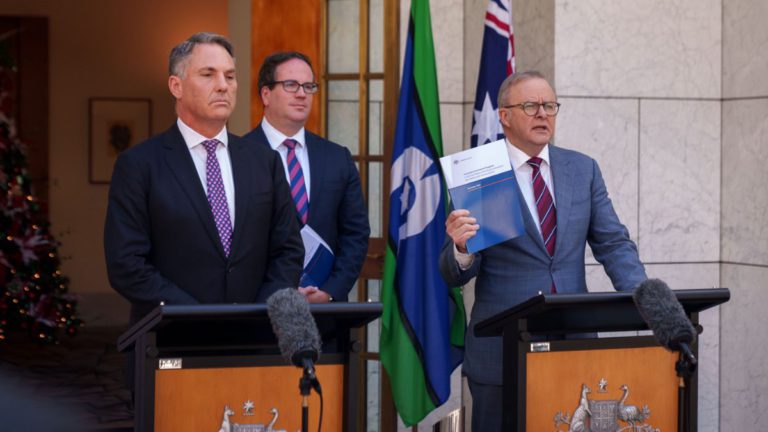
Albanese’s message was poignant as he commemorated the 50th anniversary of Cyclone Tracy, which devastated Darwin on Christmas Eve in 1974. Speaking from the city, he described visiting the Museum and Art Gallery of the Northern Territory, home to the Cyclone Tracy story.
“Walking amongst the exhibition today on Christmas Eve was a solemn reminder of the destruction wreaked on Darwin 50 years ago and a demonstration of the resilience and strength of this community.”
Walking amongst the exhibition today on Christmas Eve was a solemn reminder of the destruction wreaked on Darwin 50 years ago.
And a demonstration of the resilience and strength of this community in the face of unimaginable loss. pic.twitter.com/a5QCi3RLbo
The Prime Minister also shared a personal story of a survivor, Antony, who as a 12-year-old endured the cyclone’s wrath, huddled under his house as winds exceeding 217 km/h tore through Darwin.
“Antony’s story of bravery and resilience is a reminder of the strength that so many in the Darwin community showed that night.”
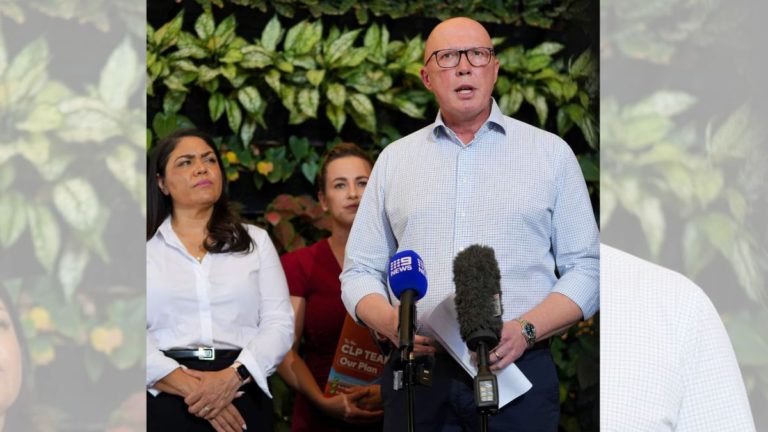
Image: Opposition Leader Peter Dutton at the Kmart Wishing Tree (Source: Facebook)
Opposition Leader Peter Dutton echoed Albanese’s sentiments, calling the story of Cyclone Tracy one of “ruin and resurrection.” He reflected on the devastation and the incredible resolve shown by the people of Darwin in rebuilding their city and lives.
“From the tragedy of Cyclone Tracy, many lessons were learnt, and improvements to building standards and disaster planning emerged.”
Dutton also paid tribute to the Australians who responded to the crisis with courage and compassion, describing the post-cyclone rescue and recovery efforts as “an operation rivalling Dunkirk.”
Wishing you and your loved ones a joyful and safe Christmas. May it be a time of rest, celebration and cherishing those closest to you. pic.twitter.com/4dgsyghGry
In his Christmas message, Dutton highlighted the financial struggles many Australians face, praising charity workers and food banks for their efforts.
“Even with hardships at home, we should reflect this Christmas on how lucky we are to live in the best country in the world.”
Both leaders concluded with messages of hope and unity, urging Australians to celebrate the spirit of the season while remembering those less fortunate.
Support Our Journalism
The global Indian Diaspora and Australia’s multicultural communities need fair, non-hyphenated, and questioning journalism, packed with on-ground reporting. The Australia Today—with exceptional reporters, columnists, and editors—is doing just that. Sustaining this requires support from wonderful readers like you.
Whether you live in Australia, the United Kingdom, Canada, the United States of America, or India you can take a paid subscription by clicking Patreon
As the festive season brings cheer to the streets of Canberra, it also highlights the challenges faced by those without a permanent home.
Scott, who some days lives in a backpacker hostel in Dickson, spends his days near Westfield Belconnen, relying on the generosity of strangers to meet his basic needs.
Dressed in a red torn T-shirt, loose blue trousers, and a black cap, Scott often sits near a rubbish bin outside the shopping center, hoping to collect at least $2 — the amount he needs to secure a bed for the night at the hostel.
Vikram Kulkarni, an Independent ACT candidate, observes that homelessness remains a critical challenge in the ACT, with demand for housing and support outpacing supply.
“More investment and faster delivery are essential to meet growing demand. Addressing homelessness requires both immediate relief and long-term solutions to ensure every Canberran has access to safe and stable housing.”
Remembering the old days, Scott says, “I really enjoyed Christmas in the past.”
“I came from a broken home… drank too much…now don’t have much to do with Christmas anymore.”
One of Scott’s fondest childhood memories is receiving a soccer ball as a Christmas gift from his grandmother. He recalls playing soccer with her during the holidays and said a recent kickabout in the park reminded him of those moments.
This Christmas, Scott expects to spend the day on the streets but plans to attend a church dinner in the evening.
“We need as much money as we can get so we can buy food to keep this going over Christmas. I haven’t eaten anything since last two days.”
Scott’s reliance on charities highlights the critical role of churches and community sector organisations in addressing immediate food insecurity. Vikram adds,
“However, addressing food insecurity and homelessness requires a more systemic response, including permanent, government-supported meal programs, expanded affordable housing options, and accelerated public housing delivery.
Scott’s story mirrors a growing homelessness crisis in the Australian Capital Territory. Data from the Australian Bureau of Statistics shows an 11.3% rise in homelessness across the ACT, increasing from 1,596 people in 2016 to 1,777 in 2021. While the rate of homelessness per 10,000 people has seen a slight decrease — from 40.2 in 2016 to 39.1 in 2021 — significant challenges remain.
Further insights from Community Services ACT reveal that over 40% of individuals seeking homelessness support in the territory are long-term homeless, enduring housing instability for at least seven months over a two-year period.
As Canberra celebrates the festive season, stories like Scott’s stand as stark reminders of those still fighting for shelter and security.
“By strengthening partnerships, scaling programs, ensuring sustained funding, and recognising housing as a human right, we can create an inclusive and supportive community that truly leaves no one behind,” said Vikram.
Support Our Journalism
The global Indian Diaspora and Australia’s multicultural communities need fair, non-hyphenated, and questioning journalism, packed with on-ground reporting. The Australia Today—with exceptional reporters, columnists, and editors—is doing just that. Sustaining this requires support from wonderful readers like you.
Whether you live in Australia, the United Kingdom, Canada, the United States of America, or India you can take a paid subscription by clicking Patreon
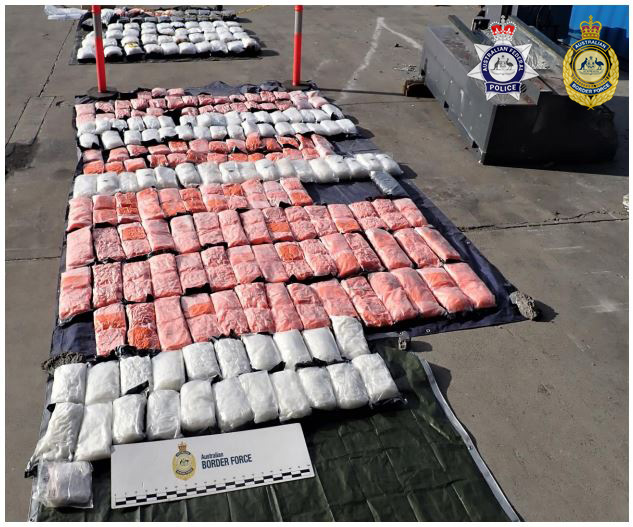
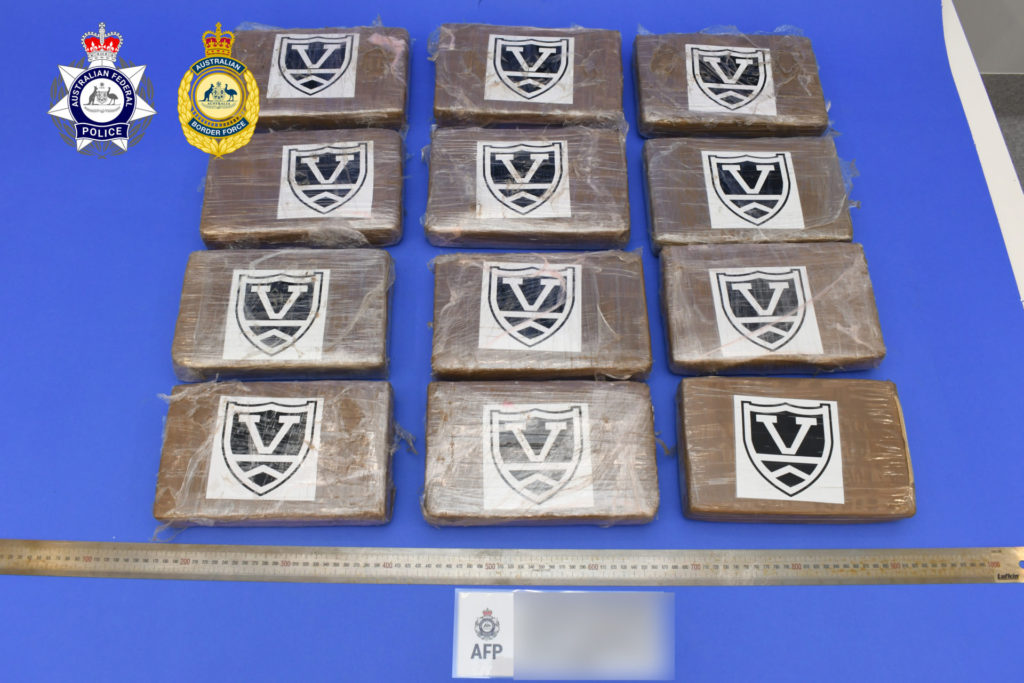
Between 1 January and 1 December 2024, these consignments, smuggled via air and sea cargo, resulted in the seizure of more than 45 tonnes of methamphetamine, cocaine, and heroin.
Image: Most creative drug import attempt (Source: AFP)
The festive season brought a unique twist, with some illicit drugs hidden inside Christmas gifts and others creatively concealed in everyday items like paint brushes, sandals, bath products, herbal tea, wine, and even underpants.
AFP Commander Paula Hudson expressed astonishment at the lengths criminal syndicates would go to. “Australia is one of the most attractive markets for transnational serious organised criminal syndicates because of the high prices their drugs can command,” she said.
“The AFP remains alert to the fact that syndicates are relentless in their attempts to flood our shores, with the sole motivation of profit and greed. Our message is clear: your efforts will fail – we are and remain a step ahead.
“The AFP and our state and Commonwealth law enforcement partners are well aware of the lengths criminals will go to as they evolve their concealment methods. The AFP doesn’t take a holiday and will be keeping watch, ready to act.”
Image: Most creative drug import attempt (Source: AFP)
In one case, ABF officers at the Melbourne Cargo Examination Facility detected nearly 9kg of heroin hidden in paint brushes sent from Vietnam. The subsequent investigation led to the arrest of a 26-year-old Nigerian man. Another attempt in March saw a Taiwanese national stopped at Sydney Airport with more than 20kg of methamphetamine disguised as wine, herbal tea, and bath salts.
Criminal groups also used industrial machinery and commercial-grade equipment to conceal drugs. A major bust in July uncovered almost 900kg of methamphetamine, worth $828 million, hidden inside industrial machinery shipped from the United States. A Winston Hills man was arrested for his alleged involvement.
Some traffickers took extreme measures, carrying drugs within their bodies. In February, a WA couple returning from an overseas holiday were found with internally concealed heroin worth $127,500. After excreting 13 pellets, they were sentenced to a combined 11 years in prison.
Image: Most creative drug import attempt (Source: AFP)
New legislation introduced in May prohibiting the import of 1,4 Butanediol – a substance linked to overdoses and sexual assaults – helped law enforcement seize over 4200 litres within weeks. The dangerous liquid, labelled as essential oils, led to the arrest of two individuals in NSW.
An Italian national who attempted to smuggle high-purity ketamine hidden in Christmas gifts in 2023 had his own holiday spirit dampened after being sentenced to three years’ imprisonment.
ABF Commander Ranjeev Maharaj echoed these sentiments. “Criminals think they are being clever by coming up with new ways of concealing harmful drugs, but our well-trained officers use not only modern technology and intelligence to detect these consignments, but also good old-fashioned officer intuition.
“Make no mistake, regardless of the creative way illicit drugs are hidden, we will work with the AFP to investigate and prosecute those responsible, and this occurs 365 days of the year – including over the festive season.”
Support Our Journalism
The global Indian Diaspora and Australia’s multicultural communities need fair, non-hyphenated, and questioning journalism, packed with on-ground reporting. The Australia Today—with exceptional reporters, columnists, and editors—is doing just that. Sustaining this requires support from wonderful readers like you.
Whether you live in Australia, the United Kingdom, Canada, the United States of America, or India you can take a paid subscription by clicking Patreon
Christmas is coming, and with it many challenges for parents of young children.
You likely have one festive event after another, late nights, party food, way too much stimulation, tired kids and tired parents. All of which can culminate in what seems like an endless meltdown.
Yes, it’s the “Christmas crankies” – a far cry from the “festive friendlies” we are all conditioned to expect.
So, what can parents do to manage, or indeed prevent, the cranky times?
Routines are your friend
Routines are very important for children. They help them to know what to expect and what is expected of them while also helping them to feel safe.
Keeping to all your routines is almost impossible over the festive season (and it’s OK to be flexible to accommodate friends, family and celebrations).
But try and hold on to as many as you can. Try and stick to your bedtimes, or make sure you have the same breakfast and lunch if you are going out for a different dinner.
Even at a party, balance the festive food with healthier options. For example, have some carrot sticks next to the chip bowl and make sure the kids have some water (and not constant lemonade).
Prepare kids for what will happen
Given there are so many changes to the routine, it can also be helpful to prepare children for what is coming up.
You could have a schedule somewhere for the whole family to see. This can let children see what is happening, which can help to minimise any anxiety associated with uncertainty. The schedule can include activities such as social events, the date relatives are arriving, and what is happening on Christmas Day (aside from opening presents).
Some children might also feel anxious when meeting new people or relatives, or going to unfamiliar places during the festive season. Having a clear explanation and time limit for these events can also be helpful. For example, saying something such as,
tonight we are going to your aunty’s house, you haven’t seen this aunty for a year but her name is Mary. We will be there for an hour [demonstrate on the clock] and have some dessert. Then we’re coming home, and you’ll get to read your book and then off to bed.
It can also be helpful to space out some of the activities so there is some rest time in between.
Ok, but we still have a meltdown here
Despite your best efforts, it might be genuinely hard to avoid a meltdown. When a child is overwhelmed, stressed, and/or fatigued, the brain’s panic button (the amygdala) can be set off. This is what US clinical professor of psychiatry Dan Siegel refers to as “flipping the lid”.
As Siegel explains, the frontal lobe (responsible for self-control), loses control over the limbic system (which contains the amygdala, and is involved in the emotional control of behaviour).
The brain’s ability to control emotions is relatively immature in younger children, and can take at least until the early 20s to fully mature.
This means in times of fatigue, stress, new and/or over stimulating environments, “self-control” can be challenged or even lost.
What to do in a meltdown
Parents can act as the proxy frontal lobe, helping their child to restore balance between their thoughts, feelings, and the demands of a sometimes chaotic Christmas setting.
In these circumstances, the child needs their parent(s) to stay connected, and to use a calm voice to bring them to a more balanced (or regulated) state. Parents could say something such as,
I can see you are feeling upset right now. It’s OK – there is a lot going on at Christmas time. I am here. Do you need a cuddle?
Remember, a child’s behaviour is not random – it is a vehicle to communicate a need. Maybe they need sleep, a drink, comfort, and/or some downtime.
So be on the lookout for those cranky cues so that the festivities can be enjoyed by all.
The global Indian Diaspora and Australia’s multicultural communities need fair, non-hyphenated, and questioning journalism, packed with on-ground reporting. The Australia Today—with exceptional reporters, columnists, and editors—is doing just that. Sustaining this requires support from wonderful readers like you.
Whether you live in Australia, the United Kingdom, Canada, the United States of America, or India you can take a paid subscription by clicking Patreon
Sweta*, a 20-year-old international student, recently opened up about her housing crisis in an exclusive interview, shedding light on the horrible conditions her has endured in the past months.
Pursuing an undergraduate degree in Melbourne, Sweta has faced challenges with her housing due to mold growth and water damage in her apartment which she shares with her flatmate.
After contacting her agent about the situation when she and her flatmate returned from their home country, the solution provided was extremely slow.
Cleaning the noxious puddle of water was just a temporary solution to the issue of mold that was spreading on multiple areas around the apartment.
“We pay a hefty amount of rent to have a decent living; even then, if the minimal maintenance is not taken care of and we have to spend so much of our time and energy on these issues rather than studies and our goals, … then what’s the use?”
Being a hardworking and dedicated student, she further talks about how frequently and rapidly the living conditions within these months affected her physical health and the mental turmoil it caused, which in turn disrupted her rigorous study routine.
“Imagine, it took them one day to fix an issue that they kept on delaying for four months.”
However, the mold problem is still not completely resolved. Concerns by her friends and acquaintances who have witnessed this situation and urge her to move out. Pointing to the fact that the smell, which she has got used to is unbearable; she adds
“Even now, when my friends come over to hang out, the first thing that they mention is the horrendous smell as soon as the walk in the apartment.”
A significant amount of money goes towards the rent, yet basic utilities such as water, gas, laundry and Wi-Fi are not included – which is causes the whole living costs to soar. The question that arises here is, whether the owners or the agents would have stayed in the same conditions as Sweta and her flatmate do. Lack of solutions, delays and postponing something that should have been fixed immediately was not just inadequate but negligent.
“I’ve seen people who pay less than I do, but they are living in worse conditions – overcrowded rooms or dealing with bad flatmates.”
This housing crisis affecting Sweta is a part of a broader issue facing students in Melbourne, where many are struggling to find safe, affordable, and well maintained housing. Sweta’s housing problems highlight growing concerns about the responsibility of property owners and agents and Melbourne’s rental market.
The unfairness of this situation expands even more with issues regarding breaking the lease to find a better place and not getting the bond back, despite the obvious nature of this current circumstance.
Waiting for the lease to end and finding another place that does not burn the pocket, justifies the rent, has more responsive owners and agents is truly a hassle, all while managing the load of her bachelor’s degree. Now, as Sweta faces the dilemma of choosing between substandard living conditions or moving towards cheaper place that may bring it’s own set of problems; she claims “the whole process is frustrating and exhausting”.
*Name changed to protect identity.
Contributing Author: Aarushi Sharma, a Master’s student in Communications at Deakin University, specialises in Digital Media, Journalism, and Public Relations. She is currently a trainee journalist with The Australia Today.
Support Our Journalism
The global Indian Diaspora and Australia’s multicultural communities need fair, non-hyphenated, and questioning journalism, packed with on-ground reporting. The Australia Today—with exceptional reporters, columnists, and editors—is doing just that. Sustaining this requires support from wonderful readers like you.
Whether you live in Australia, the United Kingdom, Canada, the United States of America, or India you can take a paid subscription by clicking Patreon
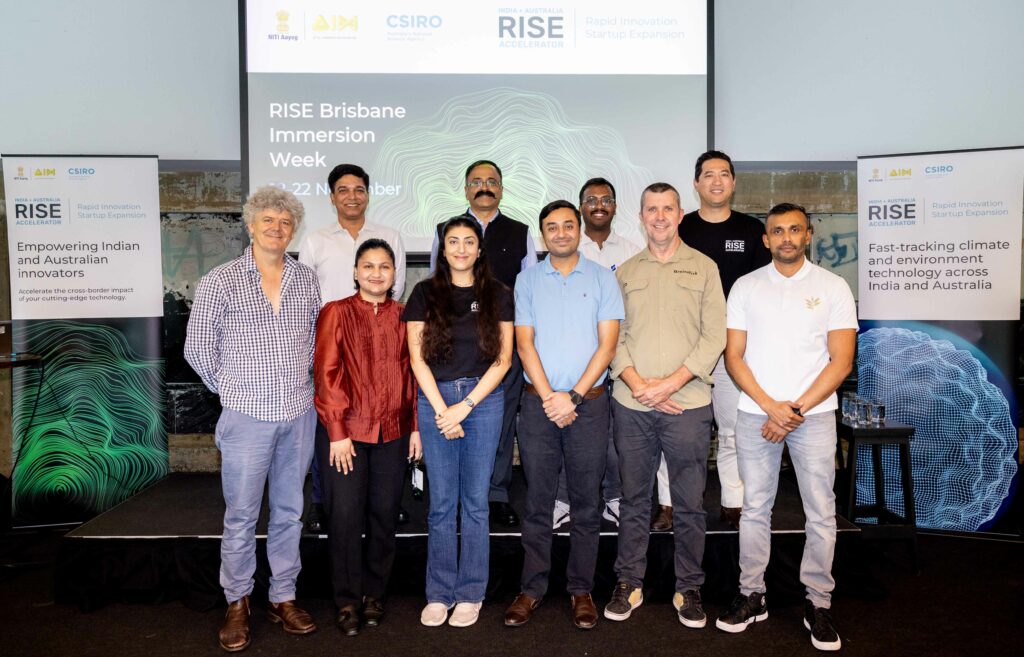
This year’s Climate Smart Agritech round highlights the shared agricultural resilience challenges faced by India and Australia, bringing together cutting-edge technology and cross-border collaboration to pave the way for a more sustainable farming future.
The following Australian startups in the cohort bring diverse innovations to the table:
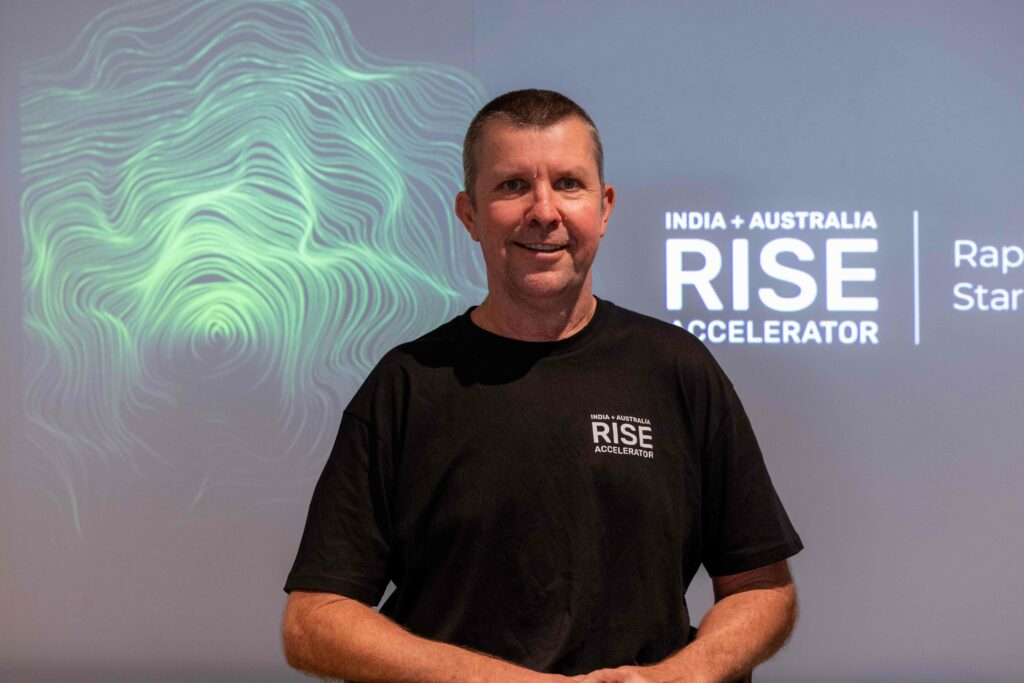
Rainstick, one of the standout Australian participants, combines ancient Indigenous knowledge with advanced Variable Electrical Field (VEF) technology to optimise crop yields and boost sustainability.
Farmo focuses on IoT devices that monitor water levels and usage, simplifying farm management and improving productivity through affordable and reliable solutions.
Gaia Project Australia is revolutionising indoor farming with its patented grow system, which doubles crop density, meeting the rising demand for pesticide-free, sustainable food.
Novolo addresses the issue of coffee bean shelf life, extending freshness from 10 days to over six months and reducing waste through advanced processing technology.
The Virtual Irrigation Academy (VIA) empowers farmers with simple soil and water management tools, including sensors that improve irrigation practices and foster sustainable farming.
The Indian cohort brings equally transformative ideas to the program:
Intello Labs uses AI and imaging technology to digitise fresh produce quality, enhancing transparency and efficiency in agricultural supply chains.
NatureDots combines Nature Intelligence and AI to monitor and secure water resources, helping farmers manage risks with 95% accuracy.
SUIND employs drones and smart sensing for precise crop management, reducing chemical use while increasing productivity.
Upaj integrates digital and physical services to optimise soil health and fertiliser use, while empowering rural women through entrepreneurship initiatives.
Urdhvam Environmental Technologies tackles water scarcity with its patented BoreCharger rainwater harvesting tool, reviving depleted borewells and improving groundwater sustainability.
Image: Darryl Lyons, Co-founder and Chief Rainmaker (Source: RISE)
Australian startup Rainstick harnesses Variable Electrical Field (VEF) technology inspired by the Maiawali people’s 40,000-year-old rainstick practices to enhance crop yields and sustainability. The system mimics natural phenomena like lightning to stimulate biological switches in plants, accelerating growth.
“Our goal in India is to partner with not-for-profits and corporates to pilot clean and green seed treatments, boosting productivity for smallholder farmers,” said Darryl Lyons, Co-founder.
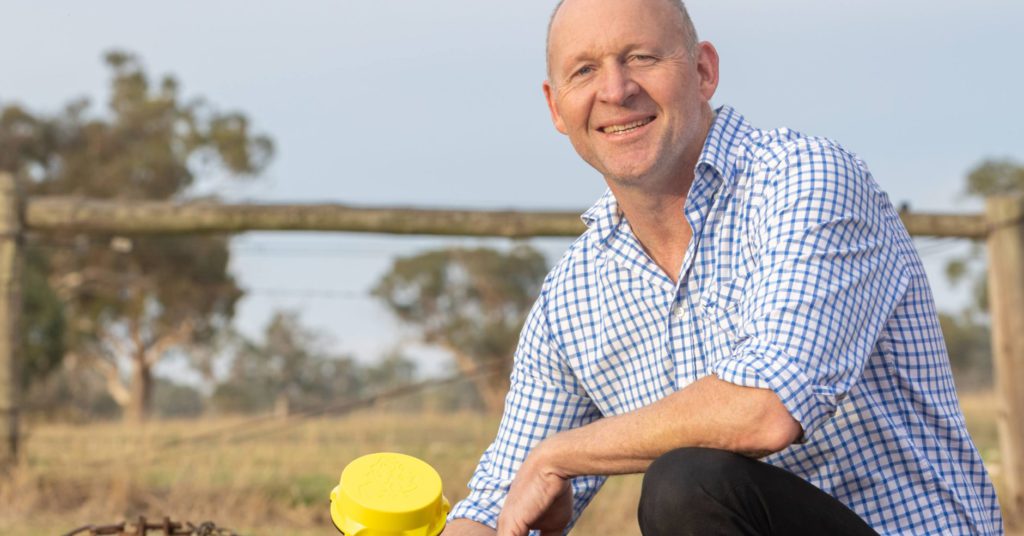
Image: Nick Seymour, Founder 9Source: LinkedIn)
Farmo offers IoT devices that monitor water usage and other critical farm data, enabling farmers to optimise operations with reliable and affordable solutions. Founder Nick Seymour stated,
“By expanding our reach, we can help more farmers access affordable, reliable solutions that boost productivity and sustainability, no matter where they are.”
Image: Nadun Hennayaka, Founder and CEO (Source: RISE)
With its patented grow system, Gaia ProjectAustralia doubles crop density, making it a game-changer for vertical and greenhouse farming.
“With RISE, we aim to fast-track the deployment of our sustainable solutions and build strong partnerships that will drive our international success,” said Nadun Hennayaka, Founder and CEO.
Image: Chirag Desai and Hugh Nguyen, Co-founders of Novolo (Source: RISE)
Novolo addresses roasted coffee’s stability problem, extending its shelf life from 10 days to over six months, benefitting coffee farmers and reducing waste.
“The RISE Accelerator is the ideal platform for Novolo to introduce our Australian-developed coffee technology to India, the world’s fourth-largest coffee producer,” said Hugh Nguyen, Co-founder.
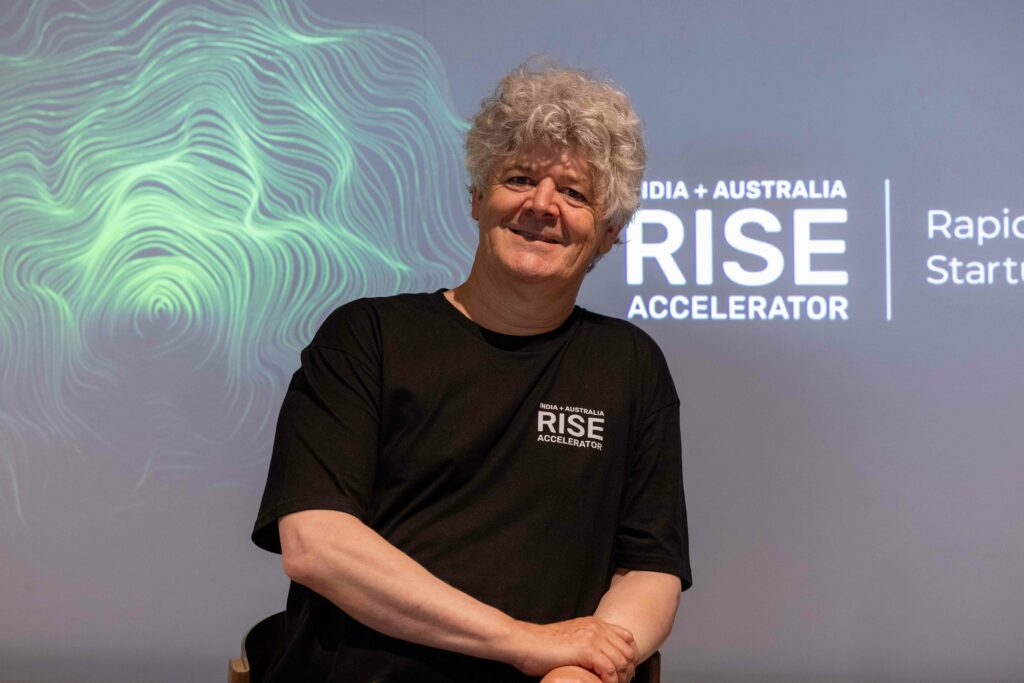
Image: Richard Stirzaker, Founder VIA (Source: RISE)
Virtual Irrigation Academy empowers farmers with Chameleon soil moisture sensors, helping them manage water resources effectively. CEO Simon Dyer highlighted,
“India has over 21 million hectares of irrigated land and faces ongoing water scarcity issues, with smallholder farmers playing a vital role in food security and income for a significant portion of the population. Expanding into this market has the potential to greatly enhance the impact and benefits of VIA’s innovations.”
Image: Milan Sharma, Co-founder and CEO (Source: Intello)
Indian startup Intello Labs uses AI and imaging to assess fresh produce quality in real time, improving transparency and efficiency.
“We applied to the RISE Accelerator to expand our global reach and amplify our impact as we believe our technology can revolutionise quality standardisation in fresh produce across borders, ensuring transparency and efficiency for farmers and businesses worldwide,” said Milan Sharma, Co-founder and CEO.
Image: Snehal Verma, CEO & Co-founder 9Source: RISE)
NatureDots’ AquaNurch Digital Twin® technology provides real-time ecological data, ensuring water quality and quantity with 95% accuracy.
“Australia presents a significant market for us, not just in terms of freshwater ecosystems but also coastal and marine applications, making it a strategic hub to serve multiple markets in the region,” said Snehal Verma, Co-founder and CEO.
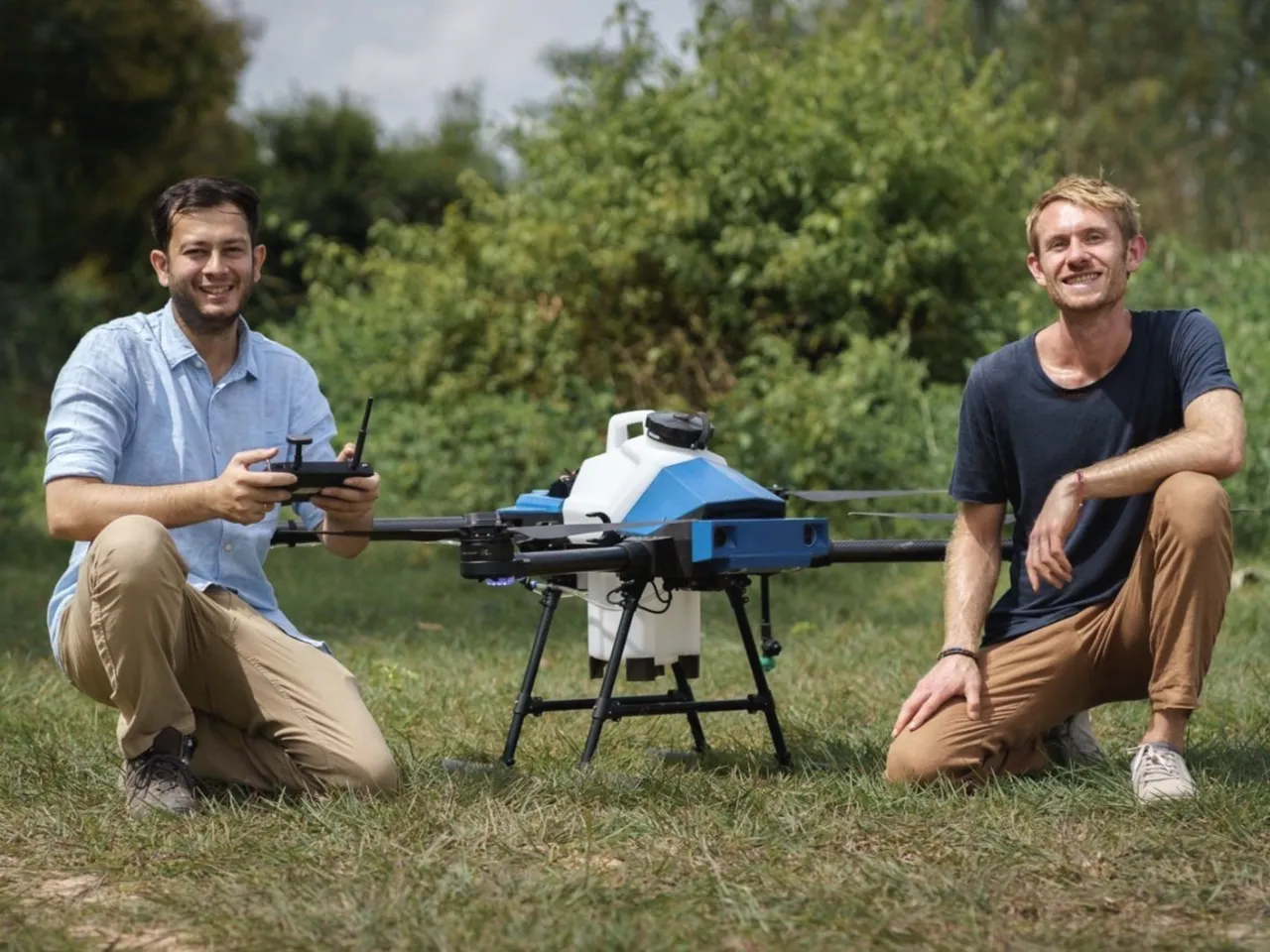
Image: Suind co-founders Kunal Shrivastava and Kevin Kleber (Source: LinkedIn)
SUIND employs AI-driven drones for efficient spraying and crop analysis, reducing chemical use and improving yields.
“Agriculture today faces global challenges due to climate change and global warming. We need to address these challenges together, and SUIND is excited to participate in the RISE Accelerator program to bring our solutions to Australia,” said Kunal Shrivastava, Co-founder and CEO.
Image: Sourabh Bagla, Senior Vice President (Source: RISE)
Upaj’s Insoil device provides rapid, precise soil nutrient recommendations, while its Mitti Didi initiative empowers rural women entrepreneurs.
“Expanding our impact together with CSIRO and AIM, across borders, will allow us to empower farmers worldwide with cutting-edge solutions, driving sustainable practices that safeguard our planet’s future and ensure food security for generations to come,” said Sourabh Bagla, Senior Vice President.
Image: Rahul Bakare, Founder & CEO (Source: RISE)
Urdhvam’s BoreCharger rainwater harvesting tool rejuvenates borewells, addressing water scarcity. “Collaboration and shared expertise are essential for achieving a sustainable future,” said Rahul Bakare, Founder and CEO.
The RISE Accelerator is more than a platform for innovation—it is a bridge connecting the brightest minds in agritech across borders. By fostering collaboration between Indian and Australian startups, the program enables transformative solutions to address critical challenges in agriculture, ensuring a sustainable future for generations to come.
Support Our Journalism
The global Indian Diaspora and Australia’s multicultural communities need fair, non-hyphenated, and questioning journalism, packed with on-ground reporting. The Australia Today—with exceptional reporters, columnists, and editors—is doing just that. Sustaining this requires support from wonderful readers like you.
Whether you live in Australia, the United Kingdom, Canada, the United States of America, or India you can take a paid subscription by clicking Patreon
When tragedy struck the close-knit community of Homebush West Public School, the ripple effects were profound. Last Christmas Eve, the father of a student tragically drowned while rescuing his niece and nephew from a rip on the NSW south coast.
“It shook us to our core,” recalled principal Estelle Southall.
“I was on a beach myself when I found out. My heart broke for the family involved, but I also thought, ‘We have to do everything we can so nothing like this happens again to our families.’”
Determined to turn grief into action, the school launched a surf safety program for parents, aiming to prevent such a loss from happening again. With 95% of its students coming from culturally and linguistically diverse backgrounds—groups overrepresented in Australia’s drowning statistics—the initiative has already started making waves.
Southall added:
“In Australia, we grow up on the beaches. Beach culture is common, but our families at Homebush West generally don’t grow up around the water and many have a great fear of it.”
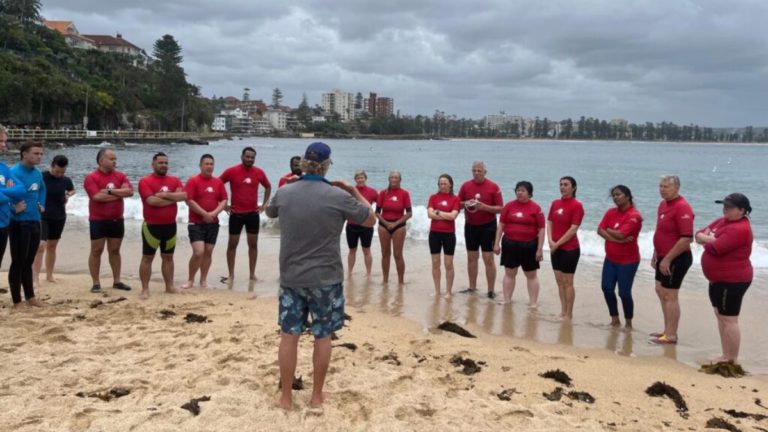
The program’s first practical session was held at Manly Beach, where parents swapped trepidation for newfound confidence in the surf.
Homebush West Public School facilitate a surf safety program for parents, with practical lessons on Manly Beach. Parents learn how to look for rips, how to be safe in the water, & how to float. Thank you Homebush West for helping keep families safe! https://t.co/5CvNWgrRFCpic.twitter.com/zUbujqiKec
Manash Sudhea, whose son is in Year 3, was among the participants. “In my country, Nepal, we have lots of rivers but no beaches, so I have no idea what to do. This will help me survive in the surf,” he said.
“I learned many things today. I’ve got ideas I can now share with my children to keep them safe. My sons love going to the beach, so this is a great thing to do.”
Joyce Kong, whose daughter just finished Year 6, echoed the sentiment. “I never went in the surf before coming to Australia, so I have a lot to learn,” she said.
“We learned how to look for rips, how to be safe in the water, how to stay on the board, how to float. With some more practice, I will feel much more confident going in the water this summer.”
For Southall, the smiles on the parents’ faces said it all. “They’re having the loveliest time, but they’re also doing something brave,” she said.
“We call them our change-makers, these parents, because next year we expect to have double the number of parents out here on the water.”
As the summer holidays approach, the surf safety program at Homebush West Public School is more than a response to a tragedy—it’s a lifesaving lesson in courage and community resilience.
Support Our Journalism
The global Indian Diaspora and Australia’s multicultural communities need fair, non-hyphenated, and questioning journalism, packed with on-ground reporting. The Australia Today—with exceptional reporters, columnists, and editors—is doing just that. Sustaining this requires support from wonderful readers like you.
Whether you live in Australia, the United Kingdom, Canada, the United States of America, or India you can take a paid subscription by clicking Patreon
China has officially notified Australia that the full resumption of live rock lobster exports can commence immediately, marking a significant milestone in the bilateral trade relationship.
The announcement follows an October 2024 agreement between Prime Minister Anthony Albanese and Chinese Premier Li Qiang to restore live lobster trade by the end of the year. The decision comes as a major win for Australia’s hard-hit lobster industry, which has weathered years of trade challenges.
Prime Minister Anthony Albanese welcomed the Premier of the People’s Republic of China, Li Qiang, to Australia from 15-18 June. Premier Li attended political, business and cultural activities in Adelaide, Canberra and Perth. pic.twitter.com/nOdbf58lsg
— Department of the Prime Minister and Cabinet (@pmc_gov_au) June 21, 2024
The Australian Government has praised the lobster industry for its patience and resilience during the prolonged period of restricted market access.
Prime Minister Albanese said in a statement:
“This outcome reflects the value of our patient, calibrated, and deliberate approach to stabilising Australia’s relationship with China.”
The return of Australian live rock lobsters to Chinese markets is expected to bring substantial economic benefits and deliver job security for regional fishing communities.
Trade and Tourism Minister Don Farrell welcomed the move, emphasising its significance ahead of Lunar New Year celebrations.
“Chinese consumers can now once again enjoy our world-class lobsters.”
The resumption of lobster exports also symbolises the removal of the last of the trade impediments that impacted approximately $20 billion worth of Australian exports, including wine, barley, coal, and red meat.
Great news – today China has notified Australia that full resumption of live rock lobster trade can recommence.
When we came to Government, we faced trade impediments on around $20 billion worth of Australian products.
Foreign Minister Penny Wong highlighted that the Albanese Government’s approach to the China relationship was paying dividends.
“We committed to stabilising the relationship without compromising Australian values, and today’s outcome proves our strategy is delivering.”
Minister for Agriculture, Fisheries and Forestry Julie Collins stressed the importance of the development for the fishing sector, adding,
“This outcome ensures greater returns for our hardworking fishers and primary producers.”
With bilateral trade back on track, the Albanese Government affirmed its commitment to maintaining a constructive relationship with China, balancing cooperation with Australia’s national interests.
Support Our Journalism
The global Indian Diaspora and Australia’s multicultural communities need fair, non-hyphenated, and questioning journalism, packed with on-ground reporting. The Australia Today—with exceptional reporters, columnists, and editors—is doing just that. Sustaining this requires support from wonderful readers like you.
Whether you live in Australia, the United Kingdom, Canada, the United States of America, or India you can take a paid subscription by clicking Patreon
AFP Detective Acting Inspector Tom Blakeley highlighted the determination of law enforcement to combat drug trafficking.
“Despite all the risks involved, we are still regularly arresting people who have attempted to bring illicit drugs into our country through our airports.”
Australian Border Force (ABF) officers reportedly detected the drugs on Saturday, 21 December, after selecting the man for a baggage examination upon his arrival at Perth Airport from New Zealand.
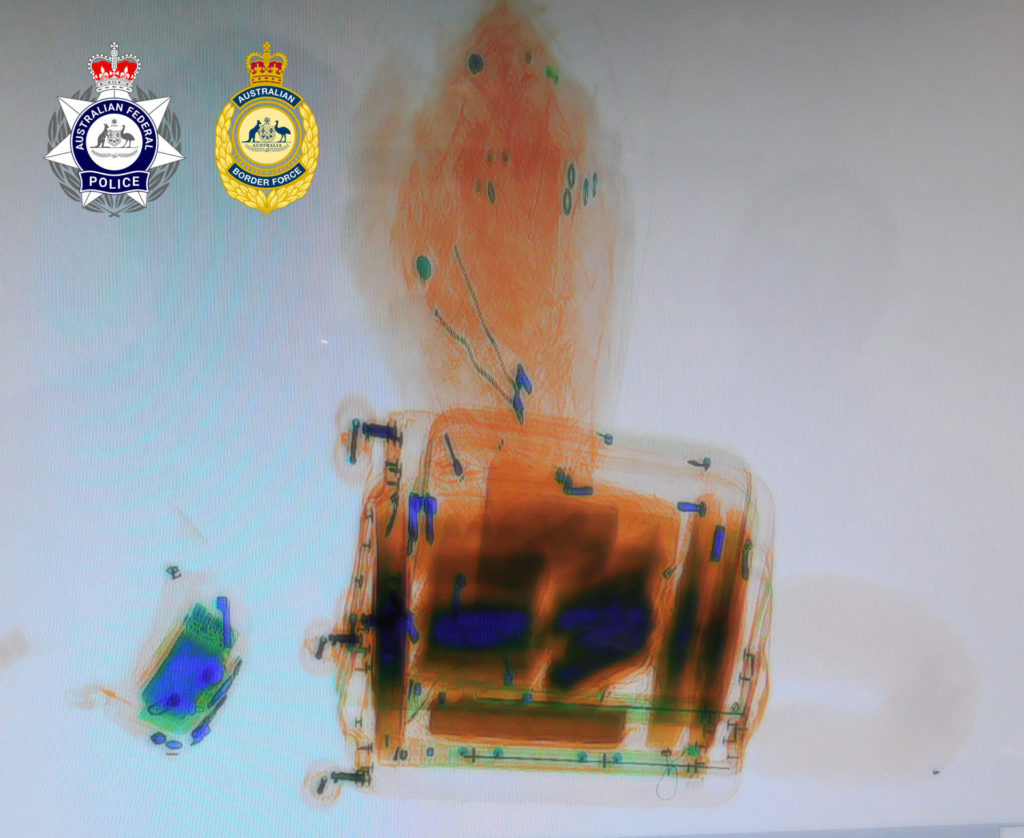
An x-ray of his suitcases revealed anomalies, and an ABF detector dog gave a positive reaction to the luggage. Further inspection allegedly uncovered white powder concealed within packages of powdered food products. Preliminary testing confirmed the substance was methamphetamine.
ABF Acting Superintendent John Sweet emphasised the relentless efforts of officers, especially during the holiday season.
“Our officers are working 24/7, including across the Christmas and New Year period, to detect and seize dangerous illegal imports,” Sweet said.
“We will use all available intelligence, skills, and technology to disrupt the efforts of greedy criminals whose only thought is lining their pockets.”
The Australian Federal Police (AFP) arrested and charged the man with importing a commercial quantity of a border-controlled drug, a crime under section 307.1 of the Criminal Code Act 1995 (Cth), which carries a maximum penalty of life imprisonment.
The methamphetamine could have been sold as nearly 90,000 street deals, according to authorities.
Refused bail, the accused is scheduled to reappear at Perth Magistrates Court on 13 January, 2025.
Support Our Journalism
The global Indian Diaspora and Australia’s multicultural communities need fair, non-hyphenated, and questioning journalism, packed with on-ground reporting. The Australia Today—with exceptional reporters, columnists, and editors—is doing just that. Sustaining this requires support from wonderful readers like you.
Whether you live in Australia, the United Kingdom, Canada, the United States of America, or India you can take a paid subscription by clicking Patreon
Getting casual work over summer, or a part-time job that you might continue once your tertiary course starts, can be a great way to get workplace experience and earn some extra money.
But it’s important to be cautious and to ensure you don’t get caught up with an unscrupulous employer who might take advantage of a young, inexperienced job-seeker.
The most common red flags to be aware of are unpaid or underpaid wages, unsafe working conditions or unfair treatment. But, before we get into that, where do you start?
How to find a casual or summer job
Recruitment agencies
Register with recruitment agencies that specialise in temporary or seasonal work – they can match you with employers looking for short-term staff, ideal for summer jobs.
It’s free to join, and all you need to do is submit your resume and contact details. A quick tip: a recruitment agent makes their income from matching prospective job seekers to roles, so make sure your resume is tailored to the industry you’re interested in.
Local papers and community boards
Despite the rise of social media, many summer jobs can be found in local newspapers or newsletters, or your community bulletin boards, especially for smaller companies and in regional areas.
Check your local libraries, supermarkets and shopping centres. Some businesses will also place a notice in their front window.
Social media
Follow your favourite organisations and brands on social media, as many will use their sites to advertise vacancies. Studies have shown more than 90% of employers have used, or are planning to use, social media to find candidates.
Online job portals
Employment websites such as SEEK, Indeed, GradConnection and Prosple allow you to filter roles by location, industry and job type. If you want to work for a particular company, go directly to its website and check the careers page.
Personal networks
Use your personal and professional networks. Let your friends, family and acquaintances know you are looking. People will often help or recommend you. Most job vacancies are filled via the hidden job market, without being advertised.
Now you’ve found a job…
Getting a job is the first step. Ensuring your wages, hours and other conditions are legal under the Fair Work Act is the next.
Carefully read job descriptions
If an advertisement is vague and offers a promise of earning a lot of money for very little effort, as in the case of some work-from-home or remote jobs, it’s probably too good to be true.
Legitimate job ads provide detailed information about the role, responsibilities, required qualifications and experience, working hours and application process. Most importantly, an advertisement should include an email or phone number you can contact to get further information.
Do your research
Before you apply for a job, take the time to research the organisation. Look for reviews on websites such as Glassdoor – where former employees share their experiences.
Take a look at the company’s website, if it has one, to get an idea of the culture and values. If you find negative information, be wary. Sometimes a simple Google search will produce articles on a businesses questionable behaviour.
Ask for an employment contract
A written contract is necessary to protect your rights. A contract must outline your pay, working hours, working conditions, work health and safety issues. Before starting a job, the contract should be signed by both parties.
Once you start working, keep written records of your hours and tasks. Keep a notebook or spreadsheet and track your hours and tasks daily. Also, keep records of all your payslips in case there’s an issue with your pay.
Safety and wellbeing
Safety is very important, especially if you are doing physical labour. Look for signs that your workplace follows local regulations and provides a safe work environment.
As well as physical safety, it is also important to protect your mental health. Watch for signs of bullying, intimidation or other inappropriate behaviour by bosses or colleagues.
Trust your gut
If something doesn’t feel right throughout the process, it probably isn’t. If a potential employer can’t answer simple questions, or is reluctant to give you written documentation, those are red flags.
It’s better to walk away than risk being put in an uncomfortable situation. If in doubt, talk to someone you trust, such as family, friends or mentors.
If you don’t have anyone you can talk to, you can always contact the office of the Fair Work Ombudsman.
The global Indian Diaspora and Australia’s multicultural communities need fair, non-hyphenated, and questioning journalism, packed with on-ground reporting. The Australia Today—with exceptional reporters, columnists, and editors—is doing just that. Sustaining this requires support from wonderful readers like you.
Whether you live in Australia, the United Kingdom, Canada, the United States of America, or India you can take a paid subscription by clicking Patreon
The ACT elections saw a notable shift in the political landscape, with Indian-origin candidates stepping forward to represent their communities and champion a more inclusive and diverse future.
Four candidates, Sandi Mitra, Mallika Raj, Pradeep Sornaraj, and Amardeep Singh, stood out for their fresh approaches to politics, prioritising social change, inclusivity, and community engagement. Their campaigns, filled with energy and determination, brought new conversations about representation and equality to the forefront, offering voters a chance to consider alternative perspectives in shaping Canberra’s future.
Image: Sandi Mitra (Source: YouTube screenshot)
Sandi Mitra’s candidacy for Brindabella with the Liberal Party was a story of resilience and passion for making a real difference in the community. As one of the few Indian-origin candidates in the ACT elections, he faced not only the typical challenges of campaigning but also racial discrimination and online abuse. Despite the adversities, Mitra’s resolve never wavered, and he remained focused on his goals.
“I’ve always believed that Canberra should be a city that empowers its residents, especially small businesses. The public transport system needs to be more reliable, and we need to create public spaces where everyone, no matter where they come from, feels like they belong,” Mitra shared.
“I’ve faced personal challenges, but I refuse to be distracted by negativity. I’m here for a better future, one where people of all backgrounds can thrive together.”
Mitra’s campaign was centred around fostering economic growth, supporting small businesses, and expanding opportunities for all residents. His message was particularly resonant with those who felt overlooked in the current political system. However, the journey was not without its difficulties. Despite his unwavering focus on positive change, Mitra encountered online hostility and racial slurs. He remained steadfast, though, believing that the challenges of his campaign were not just personal but reflective of the larger issues he sought to address.
“I don’t want the obstacles I face to discourage anyone else. We need to keep pushing for a more inclusive city where people’s contributions are valued regardless of their background,” he added.
Image: Mallika Raj (Source: ACT Labor)
Mallika Raj’s candidacy for the Labor Party in Yerrabi brought a fresh perspective on policy-making, as she campaigned with a focus on representing young people and underrepresented communities. With a deep passion for social justice, Raj emphasised the importance of creating spaces where everyone’s voice can be heard and acted upon.
“It’s not enough to talk about equity in theory. We need to make it a reality through policy,” Raj stated.
“For me, it’s about ensuring that our youth and marginalised groups have the resources, opportunities, and voice to thrive. I’m here to fight for those who are too often overlooked.”
Raj’s campaign was driven by her belief in systemic change. She highlighted the need for comprehensive education reforms, support for mental health initiatives, and better employment opportunities for young people in the ACT.
The issues she raised resonated particularly with younger voters who were seeking representation that reflected their priorities. Raj made it clear that her focus wasn’t just about policy but about meaningful change for individuals who face barriers to success.
“Real change comes from within communities,” Raj explained.
“We can only move forward if we tackle the issues at their root and create systems that allow people to succeed, no matter their background.”
Image: Pradeep Sornaraj (Source: ACT Labor)
Pradeep Sornaraj’s campaign, also in Yerrabi, was deeply rooted in his belief in social justice and equal opportunities for all. Running with the Labor Party, Sornaraj focused on his personal experience and commitment to breaking down barriers for disadvantaged communities.
“I’ve seen firsthand how access to education and employment can change lives,” Sornaraj shared.
“It’s something I’m passionate about. I’ve been fortunate to have had opportunities, but not everyone gets that chance. My job is to advocate for those who need a fair chance.”
Sornaraj, a strong proponent of expanding access to quality education, particularly for those in low-income and marginalised communities, centred his campaign on equal opportunities. He worked hard to build relationships with local organisations, speaking at community events and making sure his voice was heard among those who often feel disconnected from political processes.
Sornaraj’s approach was one that prioritised listening to people, understanding their concerns, and pushing for policies that reflected their needs. “My goal is simple,” he continued:
“I want every person in our community to have access to the tools that will help them succeed – whether it’s education, healthcare, or jobs. The playing field needs to be level for everyone.”
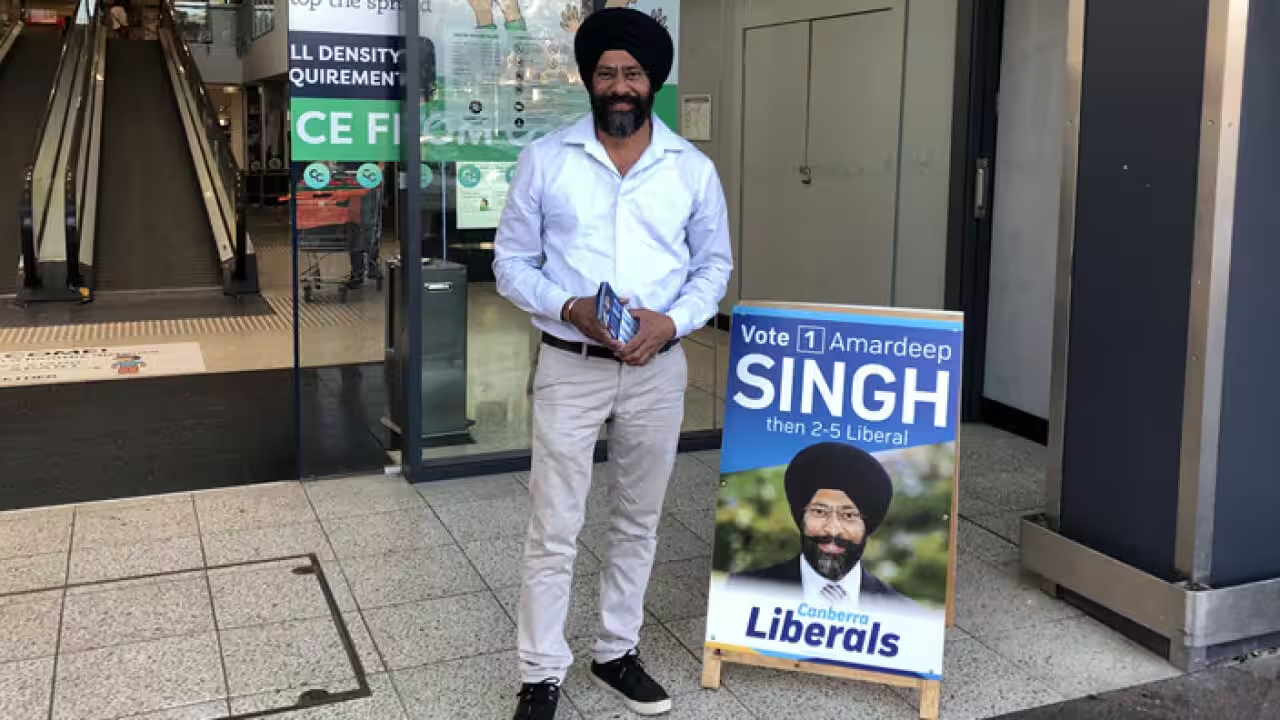
Image: Amardeep Singh (Source: Facebook)
Amardeep Singh, a Liberal candidate for Murrumbidgee, offered a unique perspective as a first-generation immigrant, bringing an emphasis on community building and creating spaces where people from all backgrounds can succeed.
Singh’s campaign was driven by his own experiences as an immigrant, and he brought to the table a profound understanding of what it means to navigate the complexities of settling into a new environment.
“Moving to Canberra was a transformative experience for me,” Singh reflected.
“I’ve seen how a supportive community can help people thrive, and I want to make sure every person, no matter where they come from, has that chance.”
Singh’s focus on education, employment, and equal representation resonated with many voters who saw him as someone who truly understood the challenges faced by those who are often overlooked. He advocated for policies that would improve access to resources for immigrants, as well as for greater recognition of cultural diversity in the workplace.
“Community is key to success,” Singh added. “I’ve always believed that when we work together, when we break down the barriers that separate us, we all benefit.”
“My mission is to make sure that every individual has the chance to thrive in this city, no matter where they are from.”
The campaigns of Mitra, Raj, Sornaraj, and Singh demonstrate a significant shift in the political landscape, reflecting a growing trend towards diversity and inclusivity in the ACT. These candidates have shown that Indian-origin Australians are not only making their voices heard but are becoming an integral part of the conversation on policy, social issues, and community engagement.
As the dust settles following the elections, it’s clear that the presence of Indian-origin candidates in Canberra’s political sphere is no longer just a novelty but an essential part of the future of ACT politics. They represent the changing face of the city and show that the political voice of the Indian diaspora is stronger than ever. Whether through advocating for better public services, pushing for systemic change in education, or ensuring equal opportunities for all, their campaigns have laid the groundwork for more inclusive and representative governance.
Support Our Journalism
The global Indian Diaspora and Australia’s multicultural communities need fair, non-hyphenated, and questioning journalism, packed with on-ground reporting. The Australia Today—with exceptional reporters, columnists, and editors—is doing just that. Sustaining this requires support from wonderful readers like you.
Whether you live in Australia, the United Kingdom, Canada, the United States of America, or India you can take a paid subscription by clicking Patreon
Indian basketball took a monumental step forward as the Basketball Federation of India (BFI) unveiled the Pro International Basketball League (INBL Pro), with its inaugural season set to commence on January 15. Featuring six franchises, the league will span venues across Punjab, Gujarat, Mumbai, Hyderabad, and Chennai, with the final rounds slated for Abu Dhabi in March.
Further, in an exciting partnership, the league announced the formation of the Indian Panthers, a team set to compete in New Zealand’s professional basketball leagues. Based in Auckland, the Panthers will train and play against top teams, representing a collaborative effort to elevate Indian basketball on the global stage.
A big day launching the Indian Panthers in Delhi – great media coverage and so much interest – it’s an innovative and groundbreaking move and one that will build strong links between India and New Zealand – on and off the court.@nznbl@TauihiNZ@skysportnzpic.twitter.com/wWdMp8cgRh
Key figures present at the launch included Aadhav Arjuna (President, BFI), Kulvinder Singh Gill (Secretary General, BFI), T. Chengalraya Naidu (Treasurer, BFI), Rupinder Brar (Founder & Chairman, INBL Pro), Abhishek Yash Tyagi (Founder & Co-Chairman, INBL Pro), Dushyant Khanna (Founder & Director, INBL Pro), and Praveen Barish (CEO, INBL Pro).
The wait is finally over! 🏀 The Basketball Federation of India (BFI) and CPBL proudly announce the launch of the “Pro International Basketball League” (INBL PRO U-25) at a press conference in Delhi on 18.12.2024.
A groundbreaking move, the INBL Pro is designed to showcase under-25 players from India and abroad, with each team including two experienced international players as mentors. Player selection will culminate in an auction on January 9, following the National Basketball Championship in Gujarat.
Image: [Left] Parveen Batish is CEO of the Indian Panthers and INBL Pro with New Zealand Basketball League Commissioner Justin Nelson(Source: X)
Parveen Batish, CEO of INBL Pro, emphasised the league’s transformative potential, stating, “Basketball is already part of the culture so we must give people something to watch out for.” Highlighting the infrastructure challenge, he added,
“The challenge is that basketball internationally is played on wood or indoors. Here, because of the lack of infrastructure, Indians play outside on concrete and so on.”
Image: New Zealand Basketball League Commissioner Justin Nelson(Source: X)
New Zealand Basketball League Commissioner Justin Nelson expressed his enthusiasm, tweeting, “it’s an innovative and groundbreaking move and one that will build strong links between India and New Zealand – on and off the court.” He added:
“New Zealand is a nation of five million people, yet we’re very good at basketball. To work with a country that has 1.4 billion people, half of which are under the age of 25, for us is very exciting.”
The collaboration opens new avenues for New Zealand’s businesses and sports initiatives in India. While India has seen limited NBA representation, the INBL Pro aims to change that narrative. By integrating global expertise and local talent, the league aspires to improve players’ skills, foster professional opportunities, and boost India’s international ranking.
The league’s format will feature daily matches, and to ensure active participation, a Rapid League with shorter quarters will be introduced. Depending on the men’s league’s success, plans for a women’s INBL league may follow.
Beyond India, the Indian Panthers will serve as a cultural and athletic bridge in New Zealand, home to the largest Indian migrant community in the Pacific. The team will operate out of Pulman Arena in South Auckland, integrating Indian players with local and international talents.
Support Our Journalism
The global Indian Diaspora and Australia’s multicultural communities need fair, non-hyphenated, and questioning journalism, packed with on-ground reporting. The Australia Today—with exceptional reporters, columnists, and editors—is doing just that. Sustaining this requires support from wonderful readers like you.
Whether you live in Australia, the United Kingdom, Canada, the United States of America, or India you can take a paid subscription by clicking Patreon
An interim report by the Australian Human Rights Commission reveals widespread racism faced by international students at Australian universities. The Respect At Uni study, commissioned by the government, uncovers patterns of exclusion, discrimination, and insufficient social support, with many students reluctant to report racism due to fears of visa repercussions. The report criticises institutions for treating international students as “cash cows” and failing to create inclusive campus environments.
For years, Australia has been a top destination for international students seeking quality education and better opportunities. Students from across the globe come to Australia, investing their hard-earned savings, dreams, and time in pursuit of a brighter future. However, in recent years, many international students have found themselves facing shifting immigration policies, which have left them uncertain and struggling to navigate their future in the country.
One of the most concerning aspects of this situation is the Australian government’s tendency to frequently change the rules governing international students, often with little or no regard for the personal and financial investments these students have made. These ongoing policy shifts not only disrupt students’ futures but also create an atmosphere of instability and frustration for those who have already invested years of their lives and substantial amounts of money in their education and stay in Australia.
Many students enrol in long-term programs, believing they’ll have ample time to complete their studies and gain work experience after graduation. However, the government has continually shifted the rules, changing eligibility for post-study work rights or pathways to permanent residency, leaving students vulnerable to sudden shifts in their plans. As these students work hard towards completing a course that could take two years or more, they are often forced to reassess their futures as new policies are introduced. One of the most painful rule changes in recent times has been the government’s decision to reduce the eligibility age for the Temporary Resident (TR) visa to 35 years. This decision has been a significant blow to many students older than 35, rendering them ineligible for post-study work rights, regardless of how much they’ve invested in their education.
The emotional toll on international students cannot be understated. Many have invested their life savings and borrowed money to fund their studies. Some have even sold property or taken loans to finance their education, believing that the post-graduation work rights would allow them to recover their investment, support their families, and build a future in Australia. For these students, studying in Australia was not just about education, but about securing a better future for themselves and their families. With the sudden changes in immigration rules, many students now face the painful reality of having to abandon these dreams. They are being forced to return home, empty-handed, after investing countless hours and substantial sums into their education and future.
What makes these policy shifts even more distressing is the lack of support for students who are already in Australia. There has been little to no clear transition or guidance for those who arrived under previous rules, only to be told midway through their studies that the goalposts have been moved again. The unpredictability of these changes has left international students vulnerable, without adequate time to adjust or seek alternative options. Many are in the middle of their courses, having committed years of their lives to studying and living in Australia.
The decision to tighten the TR visa eligibility requirements for students already in Australia means they have almost no opportunity to transition into a post-graduation work visa, significantly hindering their ability to secure employment. This not only impacts students but also their families, especially those with children who may have been hoping for a life in Australia after graduation. The tightening of the TR visa rules has left some students in a position where they are no longer eligible to stay in Australia, even though their children are part of the education system in the country. This uncertainty places an additional burden on students and their families, who now have no clear answers about their future in Australia.
The Australian government must take responsibility for the significant impact its policy changes have had on international students and their families. These students are not just numbers on a ledger; they are individuals with dreams, families, and futures that have been heavily invested in an Australian education. They have contributed significantly to the Australian economy, both financially through tuition fees and by adding to the cultural richness of the country. The constant shifting of immigration policies has not only created confusion but has also placed an unnecessary strain on the lives of those who have already made substantial investments.
It is time for the government to adopt a more fair and transparent approach, ensuring that students who have already invested in their education and life in Australia are not left stranded by sudden changes in rules. A fairer system would implement proper transition periods for those already in the country, giving students time to adjust and plan for their future. Policies should be designed with careful consideration of the human impact they will have on individuals who have trusted the system and made sacrifices to study in Australia.
If Australia truly wants to maintain its reputation as a top destination for international students, it must show more consistency, fairness, and respect for those who come to its shores in good faith. The current approach, with frequent rule changes and little regard for the sacrifices students make, not only harms individual students but risks damaging Australia’s standing as a global leader in education. A fair, consistent, and transparent policy framework is essential, not only for the future of international education in Australia but also for the moral obligation the nation owes to those who choose to invest their lives in this land of opportunity.
Contributing Author: Vertika, an MBA student, is currently pursuing her studies in Melbourne.
Support Our Journalism
The global Indian Diaspora and Australia’s multicultural communities need fair, non-hyphenated, and questioning journalism, packed with on-ground reporting. The Australia Today—with exceptional reporters, columnists, and editors—is doing just that. Sustaining this requires support from wonderful readers like you.
Whether you live in Australia, the United Kingdom, Canada, the United States of America, or India you can take a paid subscription by clicking Patreon
300 families in the Fiji Muslim League squatter settlement in Nabua, Suva, have been served eviction notices with the demand that they vacate their homes by 28 December 2024.
Prime Minister Sitiveni Rabuka has assured affected residents that plans for their relocation are being expedited.
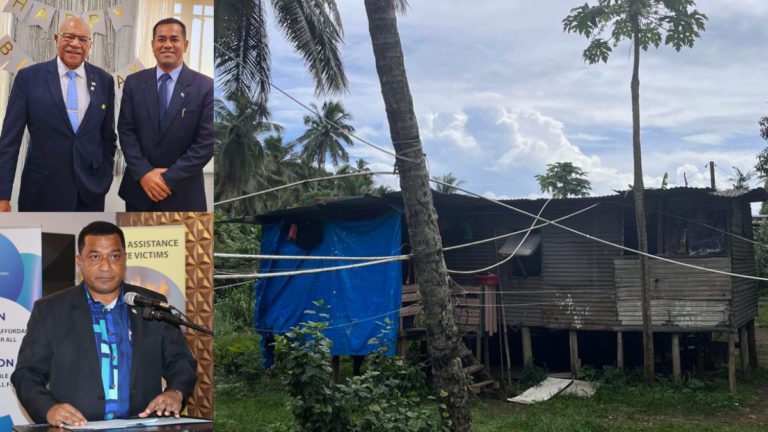
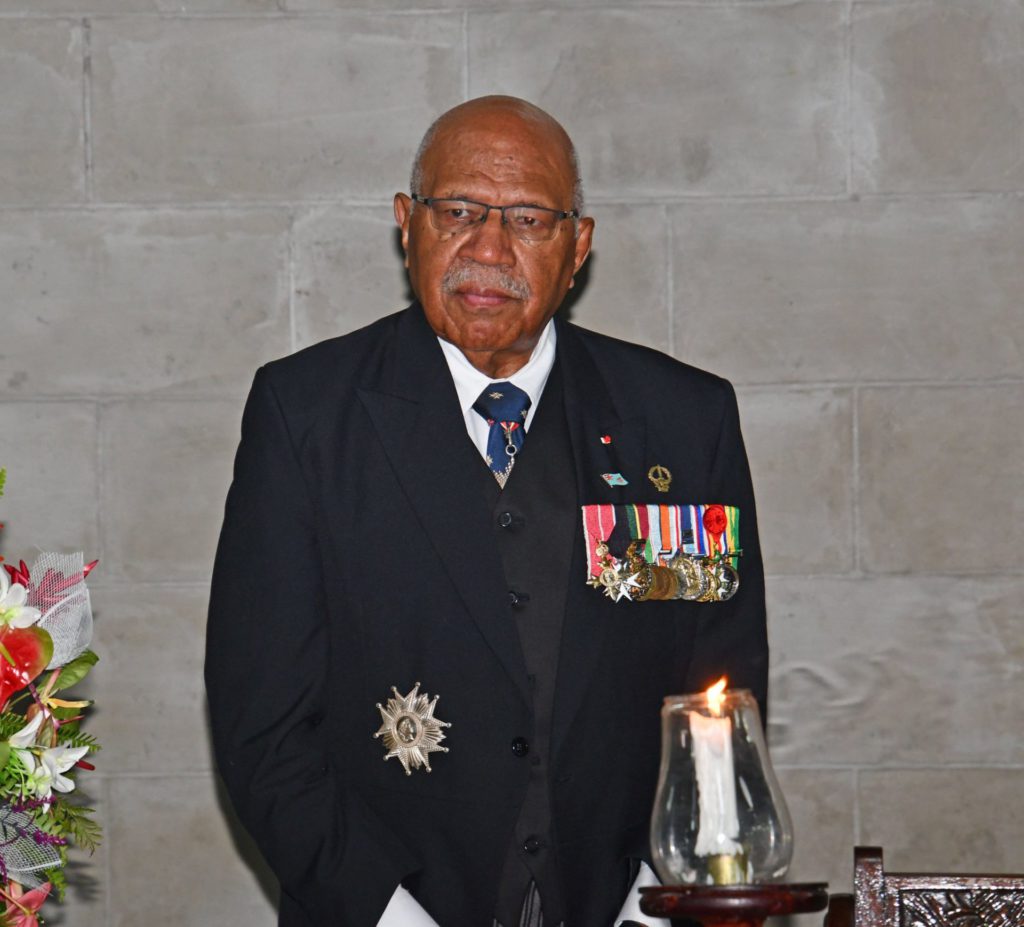
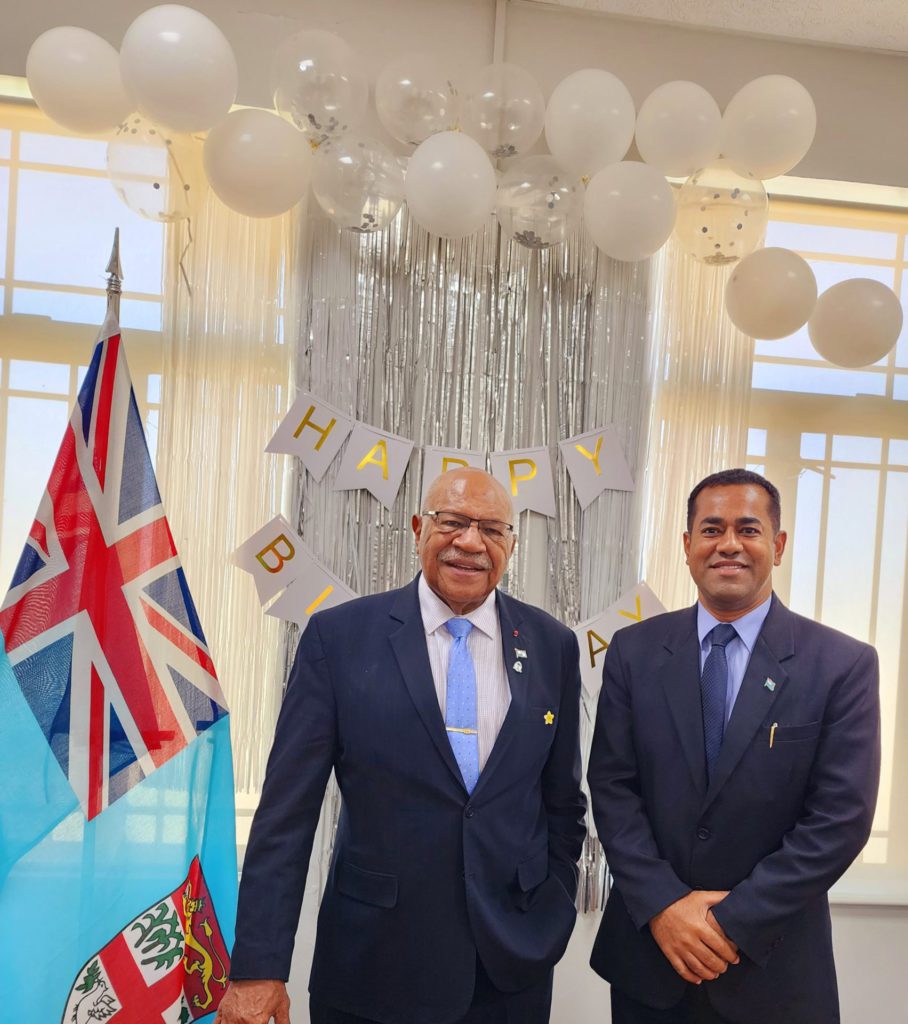
Image: Prime Minister Sitiveni Rabuka (Source: X)
Rabuka confirmed that the eviction notices, issued by the Fiji Muslim League, are in accordance with the law, as the land rightfully belongs to the League. “Government will just have to be ready to relocate them,” Mr Rabuka stated.
“I hope not too many people will be dislocated from native land, where the law will be applied.”
Image: Minister Maciu Nalumisa (Source: Facebook)
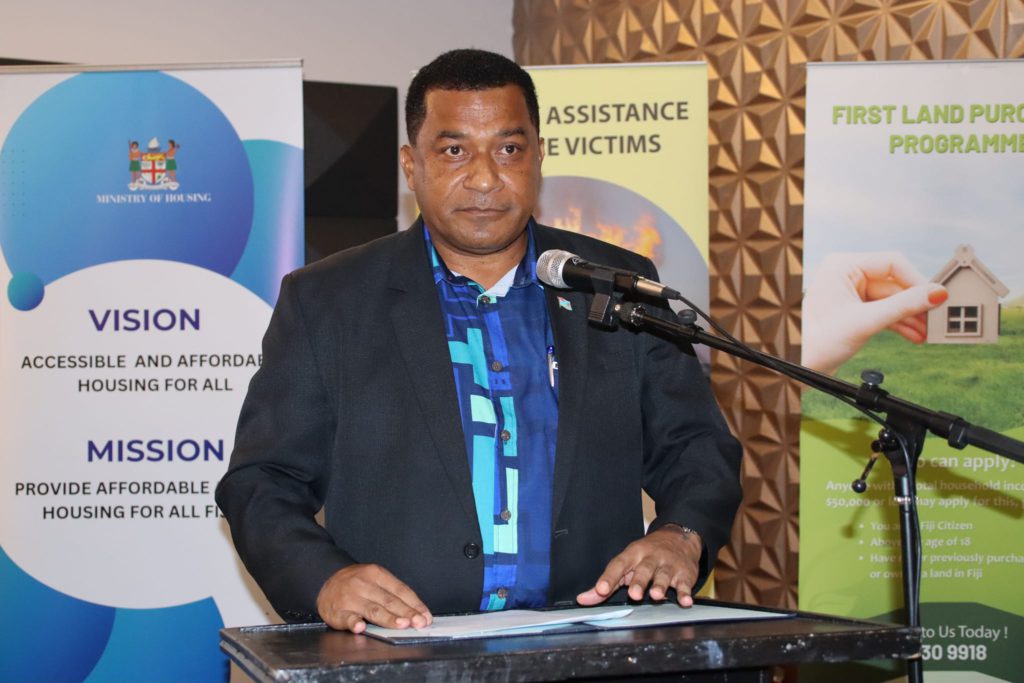
The Ministry of Housing and Community Development, led by Minister Maciu Nalumisa, is tasked with crafting a relocation plan. However, no definitive timeline for implementation has been provided.
For many residents, the short notice is overwhelming. Turaga ni koro (village headman) Karalo Naituki, who has lived in the settlement for 34 years, described the impending holiday season as tearful. He told The Fiji Times, “We have no place to move to. We’ll just stay here and see what happens.”
“We are worried because we don’t have money to dismantle and rebuild our homes.”
Asha, a resident of over 30 years, expressed frustration over the short notice of eviction, stating to told the Fiji Sun that more time should have been given for preparation. Anita Kumar, a 40-year resident, shared that the eviction notice has taken away their Christmas joy and appealed to the government through The Fiji Times for assistance in relocating to a safe place.
“I humbly request the Government to help us relocate to a safe place.”
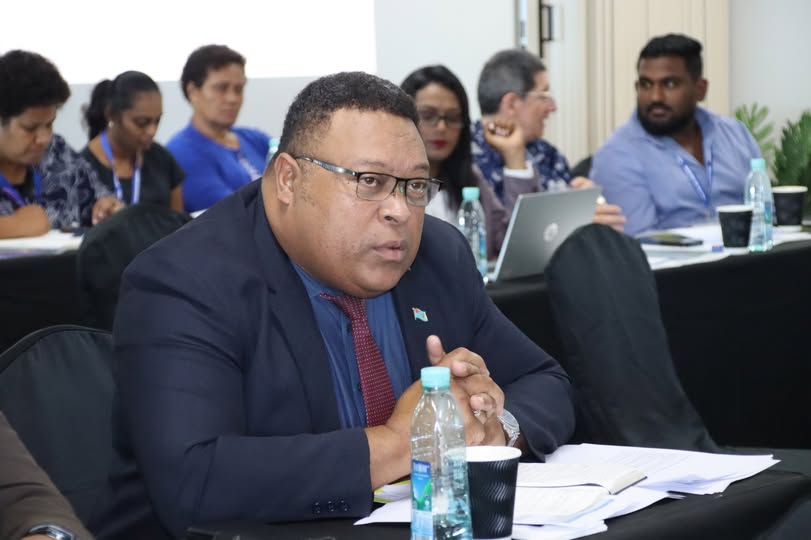
Image: Minister Filimoni Vosarogo with Prime Minister Sitiveni Rabuka (Source: X)
As the families await a government decision on their relocation site, Minister for Lands, Filimoni Vosarogo, who is collaborating with the Housing Minister told fijivillage that this is not the first instance of eviction notices from the Muslim League.
Minister Nalumisa announced ongoing discussions with the Fiji Muslim League (FML) regarding relocation plans for Nabua squatter settlement residents. FML has reaffirmed its commitment to collaborating with the Ministry of Housing and Local Government to identify relocation options and sites for the affected families.
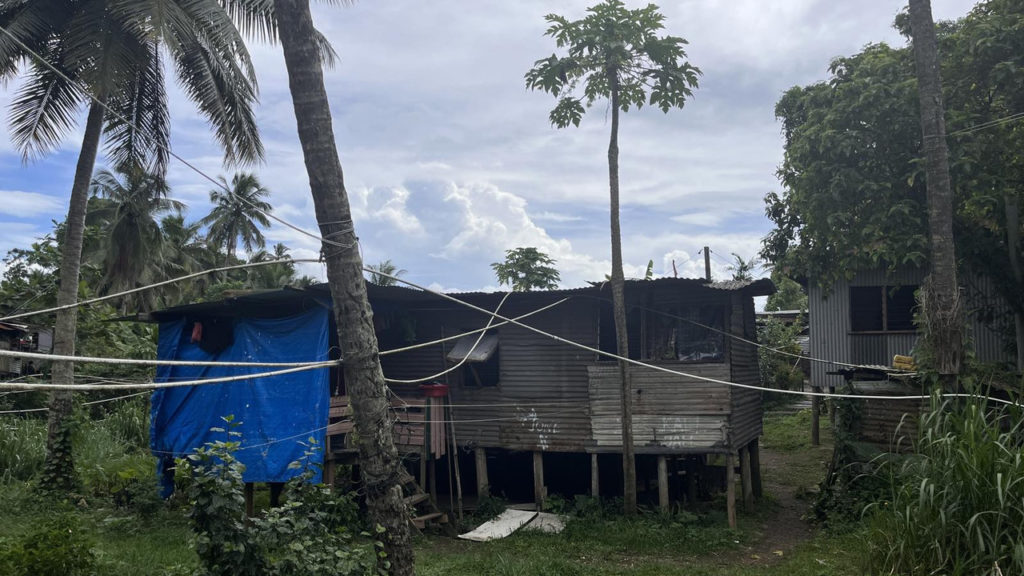
Image: Nabua Muslim League settlement (Source: Facebook)
In 2020, the Ministry of Housing warned homebuyers to be cautious about purchasing homes in squatter settlements, as illegal sales continue to occur.
According to the Fiji Sun, sellers were misleading buyers, claiming they will receive land titles once settlements are developed, but this is not guaranteed. Most homes in informal settlements are being sold for $5,000 to $20,000, often through social media. In some cases, transactions are made with no formal documentation, such as receipts.
The Ministry has stressed that only those who meet specific criteria, determined through socio-economic surveys, will receive titles when settlements are developed.
Recently, a social survey by the Housing Ministry revealed that while some residents of informal settlements genuinely face financial constraints, many are well-off and capable of affording proper housing but choose to remain in these areas.
Permanent Secretary Manasa Lesuma highlighted ongoing government initiatives, including a pilot project to relocate Veidogo settlement residents and a partnership with Habitat for Humanity for broader relocation efforts.
“We got four of those informal settlement’s in construction phase, while there is another 19 that are currently in planning phase.”
The survey also identified some residents manipulating the system, such as those owning properties elsewhere but living in informal settlements. The ministry plans to relocate deserving families while addressing legal constraints for others.
Rural-to-urban migration continues to contribute to congestion, with nearly 300 informal settlements across Fiji. Formalisation remains a core focus for Rabuka government, involving upgraded roads and utilities for subdivided lots.
Support Our Journalism
The global Indian Diaspora and Australia’s multicultural communities need fair, non-hyphenated, and questioning journalism, packed with on-ground reporting. The Australia Today—with exceptional reporters, columnists, and editors—is doing just that. Sustaining this requires support from wonderful readers like you.
Whether you live in Australia, the United Kingdom, Canada, the United States of America, or India you can take a paid subscription by clicking Patreon
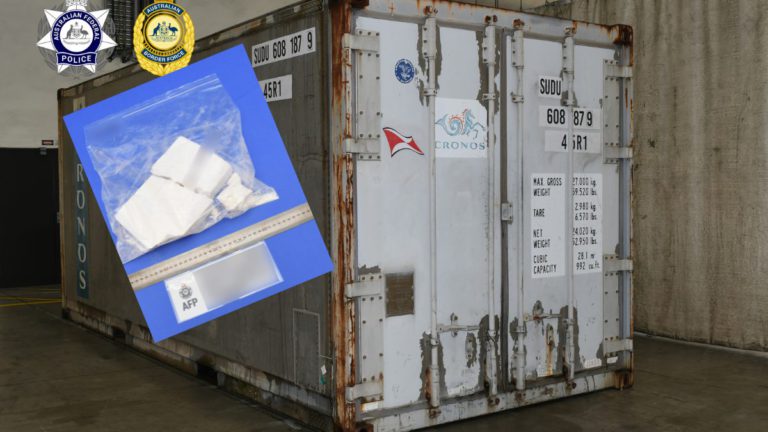
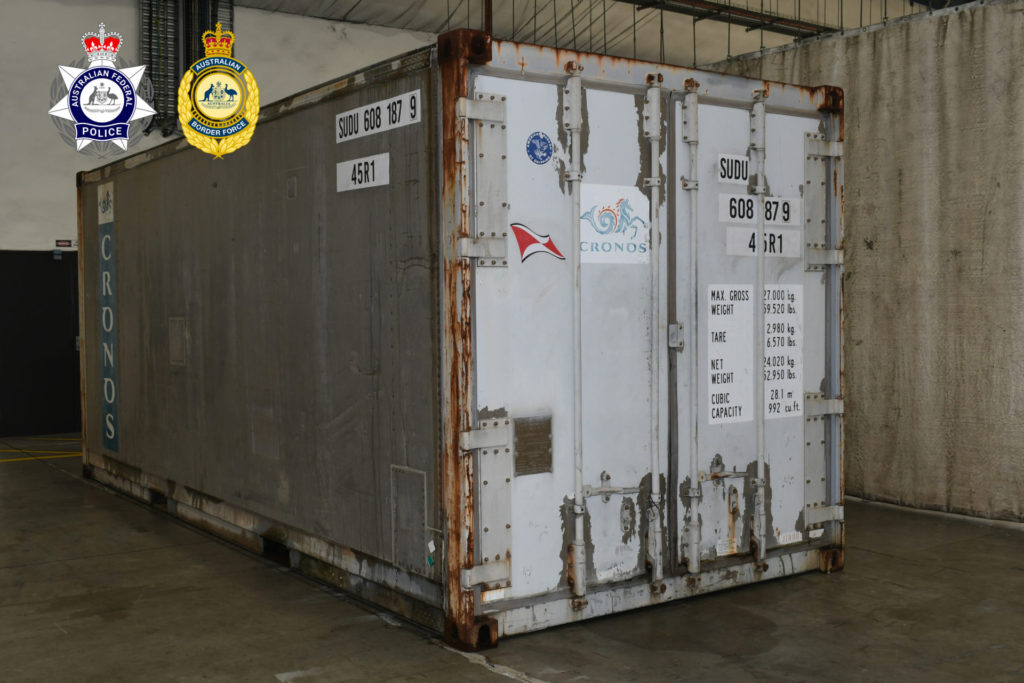
The Australian Federal Police (AFP) and the Australian Border Force (ABF) have uncovered a disturbing trend involving cocaine smuggling, resulting in the seizure of over one tonne of the illicit drug concealed within refrigerated shipping containers over the past two years.
The joint investigation has revealed criminal syndicates are using legitimate businesses importing goods via Sydney from or through Panama to smuggle cocaine. These syndicates then attempt to break into docks, container facilities, or storage areas to retrieve the drugs once the containers arrive in Australia.
Image: Cocaine in refrigerated shipping containers (Source: AFP)
Since April 2023, authorities have noted a sharp increase in cocaine-related smuggling using refrigerated containers. This method poses significant risks to public safety and to workers at facilities targeted by these criminal organisations.
Image: Cocaine in refrigerated shipping containers (Source: AFP)
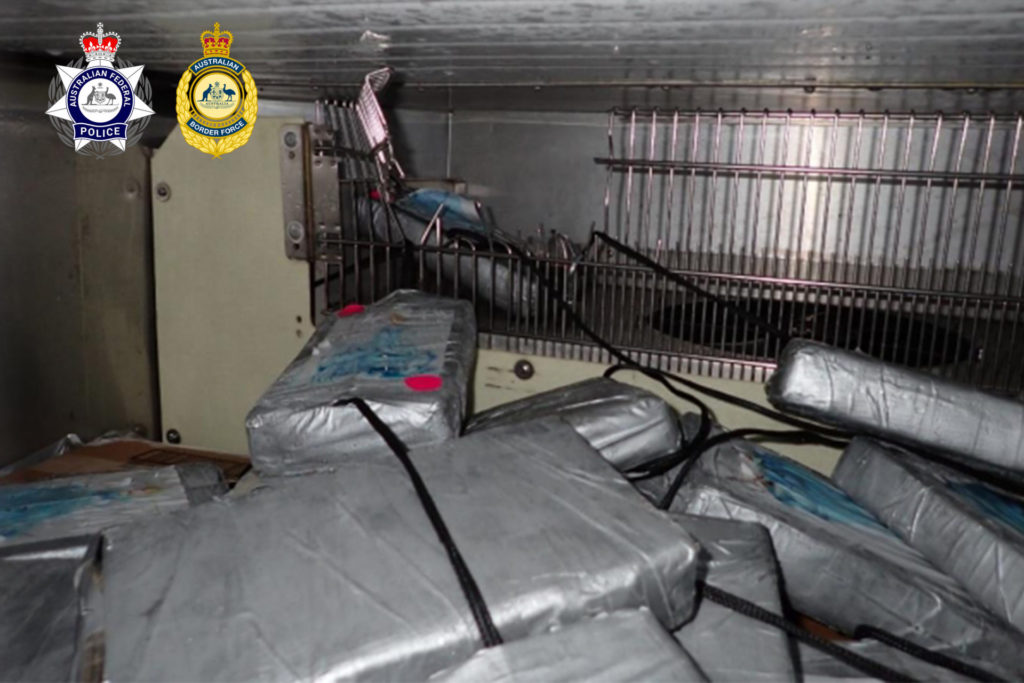
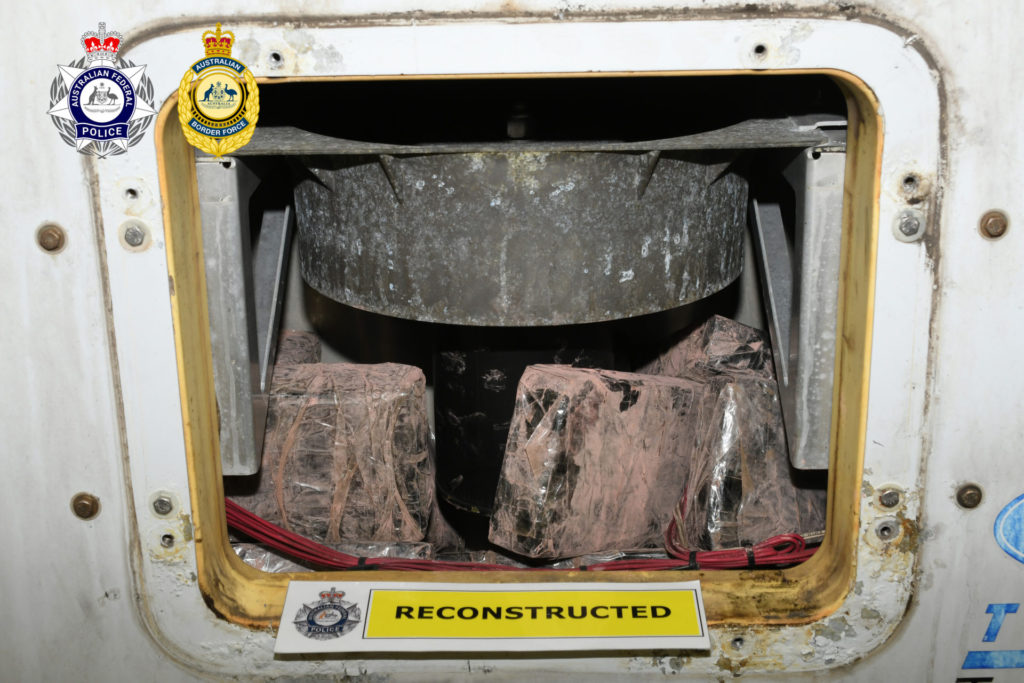
AFP Detective Superintendent Kristie-Lee Cressy said cocaine is often hidden in the engine compartments of refrigerated containers carrying goods like berries, with tracking devices used by syndicates to locate them in Australia.
“This practice is dangerous and puts lives at risk. Our message to these criminals is clear: we are actively targeting these containers and working to disrupt their operations.”
Image: Cocaine in refrigerated shipping containers (Source: AFP)
In a recent breakthrough, four men pleaded guilty to accessing refrigerated containers concealing cocaine. They await sentencing in February 2025. The cocaine seized so far has a street value of $286 million, equivalent to 4.4 million individual street deals.
ABF Commander Trade Kari Ellis highlighted the importance of examining shipping containers as a whole, including panels, vents, and false floors.
“Criminals will exploit any vulnerability in border controls. We’re working with commercial partners to enhance security and tackle the trusted insider market.”
Image: Cocaine in refrigerated shipping containers (Source: AFP)
Commander Ellis added that combating organised crime syndicates requires a global effort.
“Illicit drugs fund dangerous criminals, jeopardising public safety and undermining national security. Together with our partners, we are committed to disrupting their operations and protecting Australia’s borders.”
Image: Cocaine in refrigerated shipping containers (Source: AFP)
The AFP and ABF are urging anyone with information about refrigerated containers used for drug smuggling to come forward as investigations into the origins of these shipments continue.
Support Our Journalism
The global Indian Diaspora and Australia’s multicultural communities need fair, non-hyphenated, and questioning journalism, packed with on-ground reporting. The Australia Today—with exceptional reporters, columnists, and editors—is doing just that. Sustaining this requires support from wonderful readers like you.
Whether you live in Australia, the United Kingdom, Canada, the United States of America, or India you can take a paid subscription by clicking Patreon
I’m a computer scientist and a bad Christmas shopper. Over the weekend, I wondered whether AI systems might be able to help me out.
Could I just prompt ChatGPT to pick a personalised gift for my cousin Johnny and have it shipped in time to reach him? Alas, the cheerful chatbot couldn’t help, telling me it “can’t make purchases or handle shipping directly”.
In the two years since ChatGPT launched, we have seen wave after wave of AI products and features promising to save us from mundane tasks. Yet so far, gift shopping is beyond them – apart from the odd built-in chatbot on a shopping site or app.
However, things may be different by next Christmas. One thing many experts expect in 2025 is the rise of AI agents: bots that can take actions on your behalf in the real world.
Agents are already here
An AI agent can do more than just suggest where you can get a Santa suit. It can buy it for you and have it delivered to your door.
And the vision for “agentic AI” is that teams of AI agents will work together. You would give your team of agents a prompt:
I’m cooking Christmas dinner this year. Find my closest Facebook friends, send them invites, make sure one of them is a chef and tell them to bring the turkey.
The agents would sort it all, without you ever having to lift a finger. Crucially, AI agents should have the ability to coordinate across multiple websites.
In fact, limited AI agents are already here. A report by AI developer Langchain claims 51% of respondents to its survey already use AI agents in production.
In 2024, venture funds invested an estimated US$1.8 billion in AI agent projects. Deloitte’s latest Global Predictions Report argues 25% of companies that use generative AI will launch agentic AI projects in 2025.
Research firm Gartner predicts that by 2028, 15% of day-to-day work decisions will be made by AI agents.
Agents for everybody?
We are also seeing agents for consumers beginning to emerge. These are systems that could potentially automate many browser-based tasks (including shopping).
In October, Anthropic – the company behind the popular Claude generative AI bot – released a “computer use” feature that allows the AI to take over a user’s mouse and keyboard to browse and take actions on any website.
Education expert Leon Furze created a demo using computer use to automatically browse to a learning management system, open the page for an assignment, create text for the assignment, and click the submit button. All done automatically from a single text prompt.
More recently, Google Deepmind released its own version, Project Mariner, which similarly allows an AI to autonomously navigate and carry out actions in the Chrome browser.
Both these systems are still early versions, with Project Mariner only available to a trusted set of testers. But they hint at what’s to come.
You can’t use either of these tools today to automate your Christmas shopping – at least, not easily. So what would be needed to make a truly useful Christmas shopping AI agent?
The technology exists
The technology side of a shopping agent is relatively straightforward. As a user, I might want to give a prompt such as
Send photo gifts to my family in England. Select some fun family photos from my phone, search for a website that does photo gifts, order appropriate gifts for each family member, and send using my address book.
Executing this would require multiple AI agents: one to find the photos, one to find the shopping sites, one to personalise the gifts, a credit card agent to buy them, and an address-finding agent.
Whether through computer use, Project Mariner, or some other AI agent platform, there is no technological reason why this can’t be done today.
The trust problem
However, there are two significant barriers to making AI agents useful.
First, and most obvious, is trust. Would you trust an AI agent with your credit card details?
Despite two years of advances in AI since ChatGPT, hallucinations – where the AI doesn’t know an answer and so simply makes something up – are still a problem.
A recent study showed that even in AI programming – one of the most popular and valuable uses of AI – 52% of AI-generated answers to coding questions contained errors.
It only takes one error from the AI to send Aunty Molly’s gift to Uncle Joe. And let’s just hope it’s a harmless error such as poor gift matching, not leaking your bank account details.
What agents need to know
The second and less obvious barrier is that for AI agents to be useful, they need to understand context. Even with something relatively simple like buying gifts, context is everything.
I have years of knowledge about what my mother likes. I won’t always get it right, but I’ll do a lot better than a generic AI response. This knowledge is usually tacit and there’s simply no way ChatGPT can have access to the rich history of human interactions that lead to that perfect gift.
Having said that, AI bots are already recording information about their users. To prove this, just ask ChatGPT, “What do you know about me?” Depending on your settings, you might be surprised by the answer.
Perhaps at some point the AI systems we use regularly will know enough about us and our family that Christmas shopping can be fully automated.
But this year, I will still have to attend to it myself. Bah humbug!
The global Indian Diaspora and Australia’s multicultural communities need fair, non-hyphenated, and questioning journalism, packed with on-ground reporting. The Australia Today—with exceptional reporters, columnists, and editors—is doing just that. Sustaining this requires support from wonderful readers like you.
Whether you live in Australia, the United Kingdom, Canada, the United States of America, or India you can take a paid subscription by clicking Patreon
France’s anti-terrorism court has convicted eight individuals for their roles in the 2020 beheading of teacher Samuel Paty, a case that shook the entire world.
The sentences, ranging from three to 16 years, were handed down in a tense courtroom in Paris, packed with onlookers and heavily secured by over 50 police officers.
Paty, 47, was killed outside his school in Conflans-Saint-Honorine on 16 October 2020 by Abdoullakh Anzorov, an 18-year-old radicalised Chechen, after showing caricatures of the Prophet Muhammad during a lesson on free expression. Anzorov, armed with a knife, was shot dead by police shortly after the attack.
The trial revealed how a web of lies, social media posts, and radical propaganda escalated into the brutal murder.
Brahim Chnina, father of a student who falsely claimed to have been excluded from the class, led an online campaign against Paty. Chnina shared misinformation about the teacher and enlisted the help of Abdelhakim Sefrioui, a radical extremist, to amplify the calls for action.
The court also convicted two friends of Anzorov, who assisted him in purchasing weapons, and several others linked to online hate campaigns. Prosecutors argued that their actions incited the attack, even if they did not have direct knowledge of Anzorov’s intentions.
The verdict has left Paty’s family deeply unsatisfied. “It feels like we are fighting for nothing,” his sister Mickaëlle lamented, criticising the downgrading of some charges during the trial.
Defence lawyers claimed their clients were unaware of Anzorov’s plan, but the court ruled their actions contributed to the climate that enabled the crime.
We will not give in, ever. We respect all differences in a spirit of peace. We do not accept hate speech and defend reasonable debate. We will always be on the side of human dignity and universal values.
In 2020, French President Emmanuel Macron announced the dissolution of the Cheikh Yassine Collective, a pro-Hamas group, following its alleged role in the murder of teacher Samuel Paty. The group, which supports the Palestinian cause and is named after the founder of Hamas, was linked to Abdelhakim Sefrioui, a radical Islamist activist.
According to France24, Sefrioui had posted videos accusing Paty of insulting Islam, which contributed to the incitement of the teacher’s killing. Macron vowed to intensify actions against Islamist extremism, stating that further measures would be taken to ensure public safety and security.
Paty’s death continues to resonate in France, symbolising the nation’s commitment to secularism and freedom of expression.
Support Our Journalism
The global Indian Diaspora and Australia’s multicultural communities need fair, non-hyphenated, and questioning journalism, packed with on-ground reporting. The Australia Today—with exceptional reporters, columnists, and editors—is doing just that. Sustaining this requires support from wonderful readers like you.
Whether you live in Australia, the United Kingdom, Canada, the United States of America, or India you can take a paid subscription by clicking Patreon
Ahead of the Boxing Day Test, the Indian team management was seen allegedly at odds with Australian reporters following a media conference on Saturday.
India’s Ravindra Jadeja, the star all-rounder, answered all questions in Hindi, making Australian journalists feel being denied of the opportunity to ask him a single question.
This came just two days after Virat Kohli had an misunderstanding with a female reporter of Channel Nine at Melbourne Airport. Kohli alleged accused her of invading his privacy, despite the public nature of the setting and no footage of his children being taken.
At the MCG on Saturday, Jadeja faced the media after a nearly 30-minute delay but only responded to questions posed in Hindi by select Indian reporters.
The conference lasted just nine minutes before being abruptly cut short by Indian media manager Moulin Parikh, who stated the team needed to catch their bus.
Jadeja, who speaks fluent English, has previously conducted press conferences in the language, but no English-language questions were entertained on this occasion.
There is no substitute for hard work.
The relentless effort behind the scenes translates into success on the field. The Indian bowlers are ticking every box as we get ready for the Boxing Day Test 🔥🔥#AUSvIND#TeamIndiapic.twitter.com/ikNQjJz77b
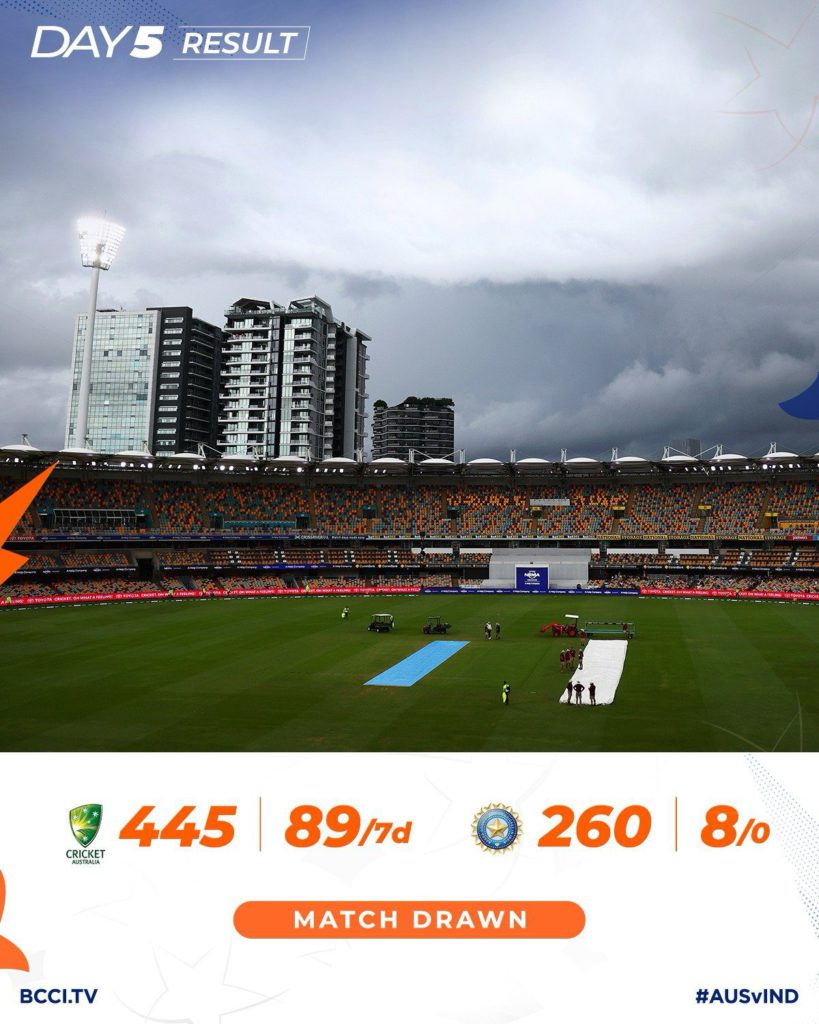
Despite these alleged off-field dramas, India remains in contention to retain the Border-Gavaskar Trophy with a win in Melbourne, following a drawn third Test in Brisbane that left the series level at 1-1.
Support Our Journalism
The global Indian Diaspora and Australia’s multicultural communities need fair, non-hyphenated, and questioning journalism, packed with on-ground reporting. The Australia Today—with exceptional reporters, columnists, and editors—is doing just that. Sustaining this requires support from wonderful readers like you.
Whether you live in Australia, the United Kingdom, Canada, the United States of America, or India you can take a paid subscription by clicking Patreon
The United Nations marked the inaugural World Meditation Day on Saturday, 21 December, with a special session at its New York headquarters.
The event, themed “Meditation for Global Peace & Harmony,” was organised by the Permanent Mission of India and featured Gurudev Sri Sri Ravi Shankar as the keynote speaker.
Gave the keynote address at the launch of the 1st World Meditation Day at @UN Headquarters, facilitated by Permanent Representative of India @AmbHarishP in the presence of @UN_PGA H.E. Philemon Yang, USG Atul Khare @UN_OpSupport, senior UN officials, PRs, members of the… pic.twitter.com/brwyMBzWXd
Philemon Yang, President of the 79th session of the United Nations General Assembly, praised the initiative, stating, “World Meditation Day highlighted the benefits of this ancient practice and its value in our daily lives.”
World Meditation Day brings to light the benefits of this ancient practice and its inherent value in our daily lives.
On this first World Meditation Day, I recognize the core group of countries – Andorra, India, Liechtenstein, Mexico, Nepal, and Sri Lanka – for their able… pic.twitter.com/ygJv9GWTTD
Addressing a distinguished audience of diplomats, UN officials, and dignitaries, Gurudev emphasised the transformative power of meditation.
“This recognition by the UN was a welcome step, as meditation transcends religion and offered solutions to modern challenges. It fostered health, harmony, and positivity, helping humanity overcome depression, aggression, and stress.”
Meditation, an ancient practice rooted in diverse traditions, has evolved into a universal tool for mental and physical well-being. Research has underscored its benefits, from reducing stress and improving focus to enhancing emotional balance and sleep quality. As Gurudev noted,
“Mindfulness is a byproduct of meditation. Focus comes to you naturally. You will feel good from inside. There will be a lot of enthusiasm and positivity that will come up. The mental challenges we face can all be handled through meditation.”
The day reflected the UN’s commitment to promoting health and well-being, aligning with the Sustainable Development Goals (SDGs), particularly Goal 3: “Good Health and Well-Being.” Meditation’s ability to cultivate peace and unity was highlighted as a powerful tool in addressing global challenges, from conflict to climate crises.
World Meditation Day served as a reminder of the role individuals could play in fostering collective harmony. As Gurudev urged,
“Let us meditate together for at least 20 minutes and create more positivity, productivity, and happiness worldwide.”
India, along with Liechtenstein, Sri Lanka, Nepal, Mexico, and Andorra, played a key role in the unanimous adoption of the United Nations General Assembly resolution declaring 21 December as World Meditation Day.
Privileged to host and participate in the “Meditation for Global Peace and Harmony” organised at @UN Trusteeship Council to mark the first World Meditation Day.
This initiative highlights the transformative power of meditation in addressing contemporary challenges like mental health issues, stress, and global tensions. Rooted in ancient practices, meditation is celebrated for its ability to foster inner peace, emotional balance, and holistic well-being, offering a vital refuge in today’s high-stress, conflict-ridden world.
Support Our Journalism
The global Indian Diaspora and Australia’s multicultural communities need fair, non-hyphenated, and questioning journalism, packed with on-ground reporting. The Australia Today—with exceptional reporters, columnists, and editors—is doing just that. Sustaining this requires support from wonderful readers like you.
Whether you live in Australia, the United Kingdom, Canada, the United States of America, or India you can take a paid subscription by clicking Patreon
The Bengali Association of Western Australia (BAWA) marked an exciting milestone at its ongoing Spring Festival on November 9th with the “BAWA Cikka Bijoya Mela.”
This free event was held to celebrate Bijoya Dashami, a significant occasion in the Bengali calendar, and welcomed members, their families, and friends from the broader Western Australia community.
Image: Members of BAWA celebrates cultural heritage with “Cikka Bijoya Mela” at Spring Festival (Source: Facebook)
The event showcased a wide range of cultural activities and featured a vibrant mix of ethnic trade kiosks.
Image: Members of BAWA celebrates cultural heritage with “Cikka Bijoya Mela” at Spring Festival (Source: Facebook)
The event featured a range of exciting activities for attendees of all ages. A Bengali food workshop allowed participants to watch the preparation of traditional snacks like phuchka, egg rolls, rosogolla, and vegetable chop, with free tastings available.
Image: Members of BAWA celebrates cultural heritage with “Cikka Bijoya Mela” at Spring Festival (Source: Facebook)
For younger visitors, a dedicated Children’s Zone provided an opportunity to explore Bengali art and cultural activities. Kids were also entertained with face painting, magic shows, and other fun-filled activities throughout the day.
Image: Members of BAWA celebrates cultural heritage with “Cikka Bijoya Mela” at Spring Festival (Source: Facebook)
Food stalls offered a picnic atmosphere where families and friends could enjoy delicious Bengali cuisine, while the Cultural Showcase presented a captivating 3-hour program at the open amphitheatre, featuring a vibrant mix of Bengali and multicultural music, dance, singing, skits, and more.
Image: Members of BAWA celebrates cultural heritage with “Cikka Bijoya Mela” at Spring Festival (Source: Facebook)
The event was graced by distinguished guests, including Yaz Mubarakai MLA, Jags Krishna MLA, Consul General of India in Perth Amarjeet Singh Takhi, Councillor Keyur Kamdar from the City of Armadale, and representatives from the Office of Multicultural Interests, Said Pasha and Rita Afsar.
Image: Members of BAWA celebrates cultural heritage with “Cikka Bijoya Mela” at Spring Festival (Source: Facebook)
Since its humble beginnings with just a few migrant families four decades ago, BAWA has grown into a dynamic and welcoming community. It has become a vital socio-cultural organization, dedicated to preserving Bengali heritage while contributing to Western Australia’s rich multicultural fabric.
Support Our Journalism
The global Indian Diaspora and Australia’s multicultural communities need fair, non-hyphenated, and questioning journalism, packed with on-ground reporting. The Australia Today—with exceptional reporters, columnists, and editors—is doing just that. Sustaining this requires support from wonderful readers like you.
Whether you live in Australia, the United Kingdom, Canada, the United States of America, or India you can take a paid subscription by clicking Patreon
One of the challenges associated with tackling the slowly evolving and interlinked crises associated with climate change is that there are few visible milestones to mark their dismal progress and attract the necessary attention of the development community, let alone the broader public.
In October 2024, the Food and Agriculture Organization’s Pacific Office provided, without the fanfare it surely deserved, one such milestone in the form of a report entitledAn overview of food security and nutrition in the Pacific 2022. Behind the humdrum title lies a remarkable effort to pull together the perspectives of agencies that work across the spectrum of sustainable development – in agriculture but also in food and nutrition, health and education. The title sets this baseline assessment in 2022 but the two-year delay in bringing this evaluation to light underlines the challenge of achieving consensus in this complex field.
A corresponding challenge of marking slow-but-positive progress faces those trying to build solutions to these “wicked problems” – in the form of more climate-resilient agrifood systems. At December 2024, another small but important milestone on the solution-building side also seems to be passing under the radar. The Pacific Agricultural Scholarship, Support and Climate Resilience program (PASS-CR) is winding up, bringing to a close 16 years of targeted research capacity building, with some 140 postgraduate scholars having passed through or currently completing the program.
At the 2024 Australasian AID Conference, three of us who have been involved in the program for most of its lifetime presented a paper seeking to capture the key lessons learned. Based on our own experience and the gathered testimony of alumni of the program, we propose that this program offered a uniquely effective way to address the crisis in Pacific agri-food systems, and that this model deserves to be built on and expanded, not buried in the archives of development history.
PASS-CR was a program of the Australian Centre for International Agricultural Research (ACIAR). ACIAR’s research-for-development agenda is based on a partnership model that links researchers in Australia with fellow researchers and development practitioners in developing countries, to tackle problems – in agriculture, forestry, and fisheries – that are identified as priorities in dialogue with national governments and organisations.
ACIAR’s GM Global Programs @wood_mellissa and RPM Hort. Dr Richard Markham visiting Nadruloulou Research Station on the outskirt of Nausori, Fiji. This station specialises in maintaining 84 different clones of Cacao. @ACIARAustralia had several projects here. pic.twitter.com/j2JnEO84ML
Like many other agencies, ACIAR has offered, for much of its 40-year history, postgraduate scholarships to help build the capacity of the national research organisations it partners with. In 2008-2009, ACIAR and the University of the South Pacific (USP) launched a scholarship program with various novel characteristics that explicitly extended ACIAR’s project partnership model to capacity building. It focused on a Master of Science (MSc) by research (though with some postgraduate diploma and PhD scholarships); rather than travelling to Australia for their studies, students were registered at USP (or, from 2019 onwards, with Fiji National University (FNU)); and the students carried out their thesis research linked to an ACIAR project, with an external co-supervisor provided by the project.
Results from these early years showed that the model was remarkably successful in generating capacity and enthusiasm for applied, problem-solving research, and that many alumni were then successful in building their careers within their national agricultural research systems. However, it also became apparent that students needed a lot more than just a grant if the program was to achieve lasting positive outcomes. Hence, a much more sophisticated level of support and a more strategic approach to capacity building in the region was provided from 2019-2020 onwards, during the third phase of the scholarship program. At this point, ACIAR co-invested in a contract with the University of the Sunshine Coast, to partner with USP and FNU to provide a range of support for students, supervisors and management.
The program’s Theory of Change shows how co-building individual capacity, institutional capacity and networks enables the functional elements of an agricultural innovation system for the Pacific, closely networked with the highly effective innovation system of Australia.
A key proposition here is that Pacific island states individually do not have the “critical mass” of research disciplines and other resources to generate the kind of cross-sectoral innovation needed to generate transformative change and tackle the challenges of improving the climate resilience of food systems; but working together, and effectively networked with partners in Australia and internationally, it becomes feasible to generate this quality of innovation in the Pacific.
Our preliminary evaluation of outcomes, based on individual interviews and a small survey of alumni, suggests that the program has been remarkably successful in strengthening capacity and supporting innovation in key areas.
To take just one example, there is a growing body of evidence suggesting that collapsing soil fertility on a degrading natural resource base is at the root of falling productivity across cropping systems and countries in the Pacific. Two Fiji Ministry of Agriculture staff, an analytical chemist and an extension officer, started their journey working on an ACIAR project designed to tackle a crisis related to collapsing soil fertility in Fiji’s multi-million dollar taro export industry. Both started with an ACIAR MSc scholarship at USP and went on to PhD studies under other programs. Both returned to higher-level leadership positions. Through their growing network of research projects and partners, they introduced innovations: for instance, “soil health report cards” now support the soil management decisions of individual farmers in Fiji; and the adoption of Near Infra-Red Spectroscopy as a rapid, cost-effective approach to soil analysis at the government’s soils laboratory has not only enhanced the value of this facility to Fiji but promises to make it a valuable hub for neighbouring Pacific countries as well. Meanwhile, the former extension officer has become the head of the soils program at the regional research organisation, The Pacific Community, helping to make the Pacific Soils Portal and other resources available to the entire Pacific.
Finally, in a modest but innovative and ambitious experiment, the “CR” (climate resilience) component of the PASS-CR program sought to mainstream an understanding of climate science and its implications into the existing research (in agriculture, forestry and fisheries) of the ACIAR-supported scholars, via a competitive small grants scheme dubbed the Future Thinkers initiative. The initiative was terminated (through an administrative decision on the part of the donor), after only two years and before it had had a chance to properly prove its value, but the initial outcomes appear very promising – such as the opportunity for a young Rotuman islander to take the results of his taro research to COP27 in Egypt. We believe this initiative deserves to be extended, with more resources, and its outcomes properly evaluated before a decision is made on whether or not to invest further.
This brief and relatively informal study, conducted by participant-observers currently or previously involved in the program, has generated evidence of the effectiveness of the ACIAR model in enabling and promoting innovation for more climate-resilient agri-food systems in the Pacific. A larger and more rigorous independent evaluation of outcomes is now needed, in line with ACIAR’s normal external review process for research programs, to provide a sound base for good decision making on investments going forward in Pacific agricultural research capacity for greater resilience.
Contributing Author(s): Richard Markham is a cocoa farmer in Fiji, and an Adjunct Associate Professor (Sustainable Development) at the Australian Centre for Pacific Islands Research, University of the Sunshine Coast. He is a former Research Program Manager at the Australian Centre for International Agricultural Research.
Support Our Journalism
The global Indian Diaspora and Australia’s multicultural communities need fair, non-hyphenated, and questioning journalism, packed with on-ground reporting. The Australia Today—with exceptional reporters, columnists, and editors—is doing just that. Sustaining this requires support from wonderful readers like you.
Whether you live in Australia, the United Kingdom, Canada, the United States of America, or India you can take a paid subscription by clicking Patreon
From January 2020 to December 18, 2024, the AFP, in collaboration with Joint Counter Terrorism Teams (JCTTs), has investigated 37 minors aged 17 and under, including a 12-year-old. More than half of these individuals have been charged with offences under Commonwealth or state law.
The JCTTs, which include the AFP, ASIO, state and territory police, and the NSW Crime Commission, are observing a concerning trend of extremist propaganda being shared across platforms like Discord, Telegram, and TikTok. Investigators have noted a rise in disturbing content, including hate speech, misinformation, and violent imagery intended to incite emotional reactions, group action, and even terrorism.
Assistant Commissioner Stephen Nutt from the AFP’s Counter Terrorism and Special Investigations unit said the increasing volume of extremist material being accessed by children could have dire consequences.
“We’re seeing more children accessing extremist material, and this increases the risk of them being radicalised or drawn into terrorist organisations.”
He emphasised the importance of a coordinated approach to combatting youth radicalisation, calling on families, educators, health professionals, and the wider community to help protect vulnerable young people.
“Extremist groups are targeting vulnerable individuals online, preying on them in ways similar to child sex offenders.”
Since January 2024, accessing or sharing violent extremist material online has been a criminal offence, punishable by up to five years in prison. Possessing materials linked to terrorism can result in up to 25 years’ imprisonment. The AFP is prioritising efforts to limit access to such content and educate those in protective roles—particularly parents—on recognising signs of radicalisation.
Warning signs include a child distancing themselves from family, displaying extremist views, or becoming fixated on conspiracy theories. Increased time spent in fringe forums and extreme reactions to news or politics are also red flags.
The AFP is calling on parents to be proactive, encouraging conversations about online safety and watching for any indications of radicalisation. In cases of immediate danger, families are urged to contact Triple Zero (000), while suspicions of online radicalisation can be reported to the National Security Hotline at 1800 123 400.
Support Our Journalism
The global Indian Diaspora and Australia’s multicultural communities need fair, non-hyphenated, and questioning journalism, packed with on-ground reporting. The Australia Today—with exceptional reporters, columnists, and editors—is doing just that. Sustaining this requires support from wonderful readers like you.
Whether you live in Australia, the United Kingdom, Canada, the United States of America, or India you can take a paid subscription by clicking Patreon
Picture this: you’re working from home and it’s sweltering outside. You venture out for a coffee and move between patches of shade as you go. Good thing you wore your sunglasses, because the glare of the new footpath almost blinds you. You order your coffee – make it iced – before hurrying back to your air-conditioned paradise.
If you live in an urban area in Australia, chances are this scenario resonates. Our cities are becoming ever hotter – due to both the way they’re built, as well as climate change and the extreme heat events it brings.
But the design and management of our cities is changing. In particular, reflective materials – such as light-coloured footpaths and roofs – are increasingly used to bounce solar radiation (and heat) back into the atmosphere, to reduce temperatures on the ground.
Efforts to cool our cities are welcome. Heatwaves are Australia’s most deadly type of natural disaster, and severely affect our quality of life. However, these measures may have unintended consequences. Light-coloured materials reflect not only heat, but ultraviolet (UV) radiation. This type of radiation is the dominant cause of skin cancers.
Our new research shows UV exposure is rarely considered in urban planning policies. Unless the problem is addressed, efforts to cool our cities may exacerbate a serious public health problem.
Some local governments are resurfacing roads to make them more reflective.
Understanding UV radiation
Darker surfaces reflect very little solar radiation – instead, they mostly absorb it. That’s why bitumen roads, for example, can get so hot in summer. Surfaces such as glass or metal facades, however, are far more reflective and bounce the sun’s rays – including both heat and UV radiation – back into the urban environment.
So to what extent does urban planning policy in Australia take account of the risk of UV radiation when trying to cool our cities? Our latest research examined this question.
What we found
The research involved RMIT experts and Sun Smart, a Victorian skin cancer prevention program jointly funded by Cancer Council Victoria and the Victorian government.
The first step was to audit relevant health-policy documents for all 79 local government areas in Victoria, looking for mentions of skin cancer, skin cancer prevention, and UV and sun protection. We found where sun protection was mentioned, it was mostly in relation to reducing urban heat rather than UV exposure.
Second, researchers analysed a sample of seven relevant planning policies across both local and state government. Collectively, they included 102 specific policy items that required or recommended shade or surface material changes to improve health and comfort in urban outdoor environments.
Of these, 21 related to surface materials – mostly changing paving colour to reduce urban heat. The City of Melbourne also considered roof and façade materials.
For example, one requirement found in several planning schemes required new apartment developments to:
shade outdoor areas exposed to summer sun […] and use paving and surface materials that lower surface temperatures and reduce heat absorption.
However, there was no mention in these policies of UV radiation, skin cancer or related terms. That means decision-making in local government is unlikely to consider UV radiation and the public health risk.
We also conducted a workshop with 14 urban planners from government and industry. It highlighted a need to support planners in their decision-making, by providing guidance on matters such as:
how to encourage people to be active while not increasing their exposure to health risks such as UV radiation
which populations are most vulnerable to UV exposure
which locations present the greatest UV risk
the best policy and design responses.
Where to now?
Clearly, urban cooling policies should aim to reduce both UV radiation and heat.
Planners and designers should consider the location and type of reflective materials being proposed. For example, highly reflective materials may be best located away from the street level – such as on roofs – so they can reflect heat without exacerbating UV exposure.
Local governments are increasingly planting trees to provide shade. This both cools urban areas and provides UV protection. Establishing more trees in cities – particularly trees with large canopies – should become a planning priority.
Evidence-based guidance should be provided to local planners to ensure people are not unnecessarily exposed to UV radiation. And more research is needed to understand, for example, how urban design can best reduce UV exposure.
Climate change is set to worsen, and city planners will be looking for more ways to keep people cool. These measures must better balance the need to cool the city while addressing the risk of UV radiation, to keep people both comfortable and safe.
The global Indian Diaspora and Australia’s multicultural communities need fair, non-hyphenated, and questioning journalism, packed with on-ground reporting. The Australia Today—with exceptional reporters, columnists, and editors—is doing just that. Sustaining this requires support from wonderful readers like you.
Whether you live in Australia, the United Kingdom, Canada, the United States of America, or India you can take a paid subscription by clicking Patreon
A devastating attack at a Christmas market in the eastern German city of Magdeburg on Friday evening has left at least two people dead, including a small child, and injured at least 68 others.
Prime Minister Anthony Albanese has offered condolences to victims:
“Horrific news from the Magdeburg Christmas market in Germany. My thoughts, and those of all Australians, are with the victims and their loved ones.”
Horrific news from the Magdeburg Christmas market in Germany.
My thoughts and those of all Australians are with the victims and their loved ones.
According to media reports, the incident occurred around 7pm local time when a black BMW, driven at high speed, ploughed through a crowded market, travelling for 400 metres towards the town hall, witnesses reported.
Emergency services rushed to the scene, treating victims in the chaos, with videos on social media showing people fleeing in panic and some knocked to the ground.
The suspect, as per SBS, a 50-year-old Saudi doctor, was arrested shortly after the attack. Authorities confirmed that the man, who has lived in Germany since 2006 and was granted refugee status in 2016, acted alone.
German authorities are treating the deadly attack at a Christmas market in Magdeburg, Germany as terrorism…at least 2 dead & around 70 injured. Man from Saudi Arabia who has been in Germany since 2006 is under arrest.
Many victims were families, with reports stating that the attacker deliberately targeted an area decorated with fairytale scenes where children were gathered.
Die Meldungen aus Magdeburg lassen Schlimmes erahnen.
Meine Gedanken sind bei den Opfern und ihren Angehörigen. Wir stehen an ihrer Seite und an der Seite der Magdeburgerinnen und Magdeburger. Mein Dank gilt den engagierten Rettungskräften in diesen bangen Stunden.
Leaders across Europe expressed their horror at the attack, with German Chancellor Olaf Scholz and French President Emmanuel Macron offering condolences.
Ich bin zutiefst erschüttert über den Horrors, der heute Abend den Weihnachtsmarkt in Magdeburg in Deutschland heimgesucht hat.
Meine Gedanken sind bei den Opfern, den Verletzten und Ihren Angehörigen. Frankreich teilt den Schmerz mit dem deutschen Volk, dem es seine tiefe…
Authorities are continuing their investigation, but they have stated that there is no further threat to the city. Security experts have raised concerns over how the car was able to breach security barriers designed to protect crowded markets.
Support Our Journalism
The global Indian Diaspora and Australia’s multicultural communities need fair, non-hyphenated, and questioning journalism, packed with on-ground reporting. The Australia Today—with exceptional reporters, columnists, and editors—is doing just that. Sustaining this requires support from wonderful readers like you.
Whether you live in Australia, the United Kingdom, Canada, the United States of America, or India you can take a paid subscription by clicking Patreon
In a visit that celebrated both community spirit and cultural heritage, Victoria’s Minister for Multicultural Affairs Ingrid Stitt and Minister for Tourism, Sport and Major Events Steve Dimopoulos marked a significant moment in the journey of Sri Venkata Krishna Brundavana, a temple that has become a beacon of support and service for Indian community.
Image: Ingrid Stitt and Steve Dimopoulos’ visit to Sri Venkata Krishna Brundavana (Source: Facebook – Steve Dimopoulos)
Located in Murrumbeena, the Hindu temple’s impact extends far beyond its walls, touching the lives of many in the local community and around the world.
The visit of the two ministers underscored the shared values of support and perseverance, which are central to both the Indian and Greek communities, and a cornerstone of Australian philosophy.
These values, passed down through generations, continue to shape the temple’s mission. Sri Venkata Krishna Brundavana, under the guidance of HH Sri Sugunendra Theertha Swamiji, has grown from a modest priest house in Hampton Park in 2015 to a global institution with 14 international branches.
Image: Ingrid Stitt and Steve Dimopoulos’ visit to Sri Venkata Krishna Brundavana (Source: Supplied)
The temple’s journey is a testament to unity and dedication, with its milestone achievements including the acquisition of its own premises in 2019 and an ongoing expansion of its services.
The core principles of Anna Dana (offering food) and Vidya Dhana (offering education) have been central to its work, with the temple providing free meals to all visitors as a demonstration of its commitment to service.
Image: Ingrid Stitt and Steve Dimopoulos’ visit to Sri Venkata Krishna Brundavana (Source: Facebook – Steve Dimopoulos)
During times of crisis, including the bushfires and the COVID-19 pandemic, the temple’s role in supporting the community was pivotal. It delivered free meals to public housing residents, supported temporary residents and overseas students, and even developed an online portal to coordinate food deliveries. These efforts extended to areas such as Warrandyte, ensuring that aid reached those most in need. The temple’s work aligns with government programs and welfare initiatives, underscoring its unwavering commitment to community welfare.
Image: Ingrid Stitt and Steve Dimopoulos’ visit to Sri Venkata Krishna Brundavana (Source: Supplied)
The strength of the temple lies in its diverse and growing community, which continues to thrive despite challenges. The transformation of its facilities, including the conversion of a small kitchen into a commercial one and ongoing security upgrades, reflects the temple’s commitment to expanding its capacity to serve the community.
Image: Ingrid Stitt and Steve Dimopoulos’ visit to Sri Venkata Krishna Brundavana (Source: Supplied)
Sri Venkata Krishna Brundavana is planning to further enhance its community impact. These include a small party hall for social gatherings, a community centre that will serve as an emergency relief hub, and improved facilities to better serve its growing congregation. The temple’s vision emphasises collaboration over competition, with a focus on uplifting the entire community.
Image: Ingrid Stitt and Steve Dimopoulos’ visit to Sri Venkata Krishna Brundavana (Source: Supplied)Image: Ingrid Stitt and Steve Dimopoulos’ visit to Sri Venkata Krishna Brundavana (Source: Supplied)
The support of the Victorian Government has been instrumental in the temple’s progress, allowing it to continue expanding its services and reach.
In a statement on Facebook, Steve Dimopoulos remarked, “This is such an important part of our community. We’re backing them to make it even better. Just in the last few years, we’ve provided significant funding for upgrades at Sri Venkata Krishna Brundavana Melbourne in Murrumbeena – because it matters to so many.”
“This is not just a place of worship – it’s a meeting place and a place for people to connect. And more, it’s a place where so much work is done for local people – food, advice, support – quietly and without the need for recognition.”
Image: Ingrid Stitt and Steve Dimopoulos’ visit to Sri Venkata Krishna Brundavana (Source: Supplied)
Ingrid Stitt and Steve Dimopoulos’ visit was a celebration of the temple’s remarkable journey, its achievements, and its ongoing commitment to serving the local community and preserving Indian cultural values for future generations.
Support Our Journalism
The global Indian Diaspora and Australia’s multicultural communities need fair, non-hyphenated, and questioning journalism, packed with on-ground reporting. The Australia Today—with exceptional reporters, columnists, and editors—is doing just that. Sustaining this requires support from wonderful readers like you.
Whether you live in Australia, the United Kingdom, Canada, the United States of America, or India you can take a paid subscription by clicking Patreon
Maxime Bernier, Leader of the People’s Party of Canada (PPC), has stirred controversy with his recent post on X, where he criticised Indian international students, especially the northern states of Punjab and Haryana, protesting against new Canadian immigration policies.
“I visited another camp in Brampton last weekend where foreign invaders are protesting to be allowed to stay in Canada. They need to go back!”
At the camp in Brampton where Indian students are protesting to be allowed to stay in Canada:
The protests, led primarily by Indian international students, have erupted across several Canadian provinces, including Ontario, Manitoba, British Columbia, and Prince Edward Island.
The students are challenging the Canadian government’s recent immigration changes, which aim to reduce permanent residency nominations by 25% and limit study permits.
More than 70,000 student graduates now face the threat of deportation as work permits expire and opportunities for permanent residency dwindle.
There are now over one million foreign “students” in Canada, which is THREE TIMES MORE than when the Liberals were elected.
(A good portion of them aren’t actually studying, just like many “temporary” foreign workers end up staying here permanently. It’s a backdoor way to come… pic.twitter.com/z6nNGn42rG
Bernier, a former Conservative MP who founded the PPC in 2018 after resigning from the Conservative Party over ideological differences, is known for his outspoken views on immigration. He has long advocated for stricter immigration controls, arguing that the influx of foreign students and workers has led to increased pressure on Canada’s housing and healthcare systems.
“Their dreams are broken, but for us, they’re a nightmare,” Bernier wrote earlier this year, on Facebook mocking the plight of international students facing deportation. He has also expressed concerns about the growing number of foreign students in Canada, calling it an “immigration scam” that exacerbates the country’s housing crisis.
Not only has the number of international students exploded in recent years.
Those who can’t get permanent residency after their studies simply claim asylum, and can then live in a government-paid hotel for years while their claim is processed.
In January, Trudeau government introduced a two-year cap on international student permit applications to alleviate pressure on housing, healthcare, and other services. The policy aims to reduce student intake by 35% in 2024 compared to 2023, with a further 10% reduction planned for 2025.
The student visa has long been a pathway for international students to settle in Canada, with graduates eligible for open work permits allowing employment across sectors, regardless of their field of study. Spouses could also obtain work visas. This system spurred the growth of numerous educational institutions, including private career colleges partnering with public colleges, offering courses of varying quality.
As Canada faces mounting pressure to reduce the number of temporary foreign workers and students, these protests highlight the growing frustration among those who came to Canada seeking a better life but are now facing the prospect of deportation.
Support Our Journalism
The global Indian Diaspora and Australia’s multicultural communities need fair, non-hyphenated, and questioning journalism, packed with on-ground reporting. The Australia Today—with exceptional reporters, columnists, and editors—is doing just that. Sustaining this requires support from wonderful readers like you.
Whether you live in Australia, the United Kingdom, Canada, the United States of America, or India you can take a paid subscription by clicking Patreon
A 41-year-old Sri Lankan man appeared in Broadmeadows Magistrates Court on 19 December 2024 charged with allegedly committing an act of indecency aboard an international flight.
The Australian Federal Police (AFP) allege the man committed the offence against a female passenger during a flight from Sri Lanka to Melbourne on Wednesday, 18 December 2024. The passenger alerted airline staff, who promptly notified the AFP.
Upon the plane’s arrival at Melbourne Airport, AFP officers conducted interviews with passengers and crew members. The man was subsequently charged with one count of an act of indecency, under section 60 (1) of the Crimes Act 1900 (ACT), as applied through section 15 (1) of the Crimes (Aviation) Act 1991 (Cth). This charge carries a maximum penalty of seven years’ imprisonment.
AFP Detective Superintendent Stephen Cook reaffirmed the organisation’s commitment to ensuring traveller safety, stating,
“All travellers have the right to feel safe, and the AFP has zero tolerance for any form of inappropriate or offensive behaviour, including on board an aircraft.”
“When travelling through the airport and when on a plane, people are bound by Australian law. Where there is evidence that someone has committed a criminal offence, the AFP will take action,” Det-Supt Cook said.
He added that the AFP remains dedicated to supporting airport staff and aviation partners, while upholding zero tolerance for inappropriate conduct in the aviation sector.
The accused was granted bail and is scheduled to appear at Melbourne Magistrates’ Court on 9 January 2025.
Support Our Journalism
The global Indian Diaspora and Australia’s multicultural communities need fair, non-hyphenated, and questioning journalism, packed with on-ground reporting. The Australia Today—with exceptional reporters, columnists, and editors—is doing just that. Sustaining this requires support from wonderful readers like you.
Whether you live in Australia, the United Kingdom, Canada, the United States of America, or India you can take a paid subscription by clicking Patreon
Australia and the Solomon Islands have taken a significant step in their bilateral relationship, announcing a comprehensive support package to enhance the Royal Solomon Islands Police Force (RSIPF).
Prime Minister Albanese stated, “Under my Government, Australia will be the partner for Solomon Islands we always should have been.” He further emphasised,
“My Government has worked tirelessly to rebuild Australia’s relationships in the Pacific.”
My Government has worked tirelessly to rebuild Australia’s relationships in the Pacific.
And today we take our relationship with Solomon Islands to a new level, by providing support to grow the size of the Royal Solomon Islands Police Force.
The package, crafted in response to a request from Solomon Islands, is designed to bolster the RSIPF’s size and capabilities. It will include funding, training, and infrastructure development, with a focus on establishing a sovereign Police Training Centre in Honiara. This initiative aims to support Solomon Islands’ long-term goal of building an independent security capability, reducing reliance on external assistance.
“This partnership is an investment in the Solomon Islands’ future,” the leaders said.
“It’s about unlocking prosperity for more Solomon Islanders and laying the foundation for a deeper, mutually beneficial relationship.”
The move underscores Australia’s role as Solomon Islands’ security partner of choice and builds on decades of cooperation in areas such as policing, defence, and disaster relief. Past collaborations include the Solomons International Assistance Force (2021–2024) and the Regional Assistance Mission to Solomon Islands (2003–2017).
Prime Minister Anthony Albanese welcomed the Prime Minister of Solomon Islands, The Hon Jeremiah Manele, in his first official international visit since taking office in May 2024. The two countries share a history of close cooperation. pic.twitter.com/iJn9ktvIuC
— Department of the Prime Minister and Cabinet (@pmc_gov_au) July 1, 2024
Guided by Solomon Islands’ security framework, the partnership prioritises a strengthened RSIPF, support from Melanesian countries, and contributions from Pacific Islands Forum members. The leaders reaffirmed their shared vision for a partnership rooted in trust, respect, and open dialogue.
“As family with connected futures, we are stronger together,” the Prime Ministers noted.
“This collaboration will not only enhance Solomon Islands’ domestic security but also contribute to stability across the region.”
Implementation of the package is expected to begin soon, reflecting both nations’ commitment to advancing regional security and shared prosperity.
Support Our Journalism
The global Indian Diaspora and Australia’s multicultural communities need fair, non-hyphenated, and questioning journalism, packed with on-ground reporting. The Australia Today—with exceptional reporters, columnists, and editors—is doing just that. Sustaining this requires support from wonderful readers like you.
Whether you live in Australia, the United Kingdom, Canada, the United States of America, or India you can take a paid subscription by clicking Patreon
This week, the value of the Australian dollar fell to 62 US cents, its lowest level since October 2022.
The acute cause? A revelation by the United States Federal Reserve that it expected interest rates to bottom out at higher-than-expected levels in two years time, due to fewer rate cuts in 2025.
Typically, higher interest rates in the US mean a stronger US dollar. The Australian dollar plummeted despite the fact that the Federal Reserve has recently cut rates three times.
Many – not least those Australians about to travel overseas – will be asking an obvious question: where will the dollar go next?
Unfortunately, short run movements in the exchange rate are nearly impossible to predict. For Australia, however, the bigger picture is what’s happening in China’s economy.
Ongoing economic weakness there has weighed on the Australian dollar, as has speculation about a new trade war, with the looming return of US President Donald Trump. All eyes are on what might happen next.
A proxy for the rest of the world
While the current level of the Australian dollar is a little low, historically, it isn’t highly unusual.
It has visited the 60 US cent range several times over the past couple of decades. In the early 2000s, it even dipped below 50 US cents.
In the short term, movements in the Australian dollar tend to be driven by market expectations of how well the global economy – and in particular China’s economy – is travelling.
This is because our economy is heavily dependent on commodity exports, such as iron ore. Road, rail and buildings are all very iron ore intensive.
When there’s strong growth in China or the rest of the world, commodities prices also go up, pushing up the value of the Australian dollar.
Why? because it creates greater demand for our currency. To buy Australian commodities, you typically first have to convert your own currency into Australian dollars.
On the flip side, pessimism about global – and in particular Chinese – economic growth prospects are likely to see commodity prices fall and weaken the Australian dollar.
This link between the Australian dollar and China’s economy was very evident shortly after the global financial crisis in 2008.
A Chinese infrastructure-led stimulus package led to a booming Chinese economy and demand for commodities, which over following years pushed the Aussie dollar up from the 60 US cents range to the US$1 mark.
Knowing this relationship between Chinese growth and the exchange rates helps us to unpack the Australian dollar’s recent weakness.
There’s been serious uncertainty surrounding China’s economy and the extent to which it can continue to grow strongly.
The Chinese government’s plans to stimulate its economy remain tentative. There also seems to be a willingness to allow the commodity-intensive construction sector to remain weak.
The broader outlook for global commodities remains cloudy, and the Australian economy does not have other drivers to support stronger economic growth. Hence, our weak dollar.
What about interest rates?
The other key factor impacting foreign exchange rates is interest rates. Normally, higher interest rates will cause money to flow to an economy and strengthen its exchange rate.
On this basis, the current movements might seem unusual at first glance. The US is already cutting rates, but our own Reserve Bank of Australia is holding steady and not expected to move them for a while yet.
So why did the Australian dollar fall against the US dollar? It’s all about changing expectations.
Markets had already priced in expectations about the pace of US rate cuts over the coming year, which is now expected to be slower.
How markets think interest rates will change in the future matters just as much for cross-border money flows as what they are right now.
However, China’s economic weakness over the past few years has overwhelmed interest rate impacts as far as the Australian dollar is concerned.
Winners and losers
A weaker exchange rate might seem like a bad thing. Australians about to head overseas will be bracing to spend more. On top of this, many of the products we import – such as cars, electronics and fuels – will become more expensive for Australians.
But a weak Australian dollar isn’t a problem for everyone. For some groups, it’s highly beneficial.
Australian exporters may benefit from becoming more internationally competitive because their goods become relatively cheaper. It can also make it cheaper both to visit Australia as a tourist, or pay international student fees to study here.
Overall, the long-term effect of a weak dollar on the Australian economy is often positive, with more jobs and spending in export sectors giving the economy a major boost.
The global Indian Diaspora and Australia’s multicultural communities need fair, non-hyphenated, and questioning journalism, packed with on-ground reporting. The Australia Today—with exceptional reporters, columnists, and editors—is doing just that. Sustaining this requires support from wonderful readers like you.
Whether you live in Australia, the United Kingdom, Canada, the United States of America, or India you can take a paid subscription by clicking Patreon
Indian stand-up comedian and rapper Munawar Faruqui’s proposed Melbourne show has been cancelled following public complaints over alleged disrespect towards religious sentiments.
Image: Munawar Faruqui (Source: Instagram)
The cancellation of this proposed show was confirmed in a Facebook post by a group member who wrote:
“Just for clarification, the event of Munawar Faruqui has been cancelled as discussed with the organiser. They requested me to remove the post, so I have done so.”
The group member added, “We all know we should respect all religions, cultures, and live in harmony and peace. As Hindus and Sanatanis, we accept other ideologies, which is the beauty of Sanatan Dharma. However, if any person spreads hatred by mocking or joking about our religious characters, it is unacceptable.”
“We support organisers bringing artists and performers but expect respect for all religions and a positive message for society.”
The event organisers also addressed the controversy in the group and on telephone with The Australia Today, saying:
“In our defence, we were unaware of the entire situation. Thanks … for bringing this to our attention. We are in talks to cancel the event. If anyone has any issues, please feel free to contact us directly. Apologies if we have unknowingly hurt anyone’s sentiments.”
Faruqui gained fame on social media but has faced controversies for his remarks on religious topics, particularly Hindu gods.
Madhya Pradesh High Court to consider the bail application of comedian #MunawarFaruqui, who was arrested by Indore police on January 1 in a case for alleged hurting of religious sentiments. Last week, the HC had adjourned the bail hearing as police didn't produce the case diary. pic.twitter.com/hEWc3f9P5p
In 2021, he spent over three weeks in jail after being accused of allegedly insulting Hindu gods during a stand-up routine, though there was no evidence he performed the act. The same year, several of his shows were cancelled after protests from right-wing groups, prompting him to briefly announce his retirement from comedy.
In 2022, Faruqui won the reality TV show Lock Upp and the 17th season of Bigg Boss. These victories reignited his career, leading to his latest stand-up tour, Dhando, announced in June 2024.
The event organisers clarified to The Australia Today that while they have decided to not go ahead with the proposed Melbourne show, it is possible that another organiser or Munawar Faruqui himself may arrange the event elsewhere in Australia.
Support Our Journalism
The global Indian Diaspora and Australia’s multicultural communities need fair, non-hyphenated, and questioning journalism, packed with on-ground reporting. The Australia Today—with exceptional reporters, columnists, and editors—is doing just that. Sustaining this requires support from wonderful readers like you.
Whether you live in Australia, the United Kingdom, Canada, the United States of America, or India you can take a paid subscription by clicking Patreon
The Canadian Broadcasting Corporation (CBC) is under fire for what critics are calling an allegedly deliberate narrative targeting dissenters of Prime Minister Justin Trudeau and his policies favouring the pro-Khalistan movement.
Accusations have mounted that the public broadcaster is being allegedly used to silence voices ranging from Indian diplomats and Indo-Canadian social media influencers to local Canadian politicians and journalists.
The latest figure in this alleged media hit-job is Daniel Bordman, a Toronto-based journalist with The National Telegraph.
Omg this is the worst hit job ever. @CBCNews paid 3 “journalists” to comb through every tweet I’ve ever made, harassed all my Hindu friends, and spent an hour trying to trip me up in an interview. And all they have is that a few hundred bots liked some tweets I made in…
Bordman claims CBC conducted a targeted investigation into his tweets, questioned his associations, and confronted him in a contentious interview, all culminating in an article suggesting bot engagement with his content.
Bordman himself denounced the CBC article, tweeting:
“For the @CBCNews Khalistani propaganda hit piece “article” on me they interviewed me and confronted me on two of my tweets for potential misinformation. However, neither of those tweets made into the article. Likely because of the explanations I gave. Anyone want to guess what topics the CBC was too scared to attack me on?”
Earlier, well-known Indo-Canadian journalist Rupa Subramanya too has alleged on X that the Canadian government’s Rapid Response Mechanism (RRM), designed to monitor foreign interference, is being used to target critics of Trudeau.
A couple of my articles for @nationalpost and those by other well-known Canadian columnists were part of a scan for their "high engagement numbers" by the Canadian government's Rapid Response Mechanism which was set up to monitor foreign interference. This brief seems to have… pic.twitter.com/83U3FMqsd2
Subramanya revealed that her articles for National Post and those by other prominent Canadian columnists were flagged by the RRM for their high engagement. She noted that this information was likely included in a brief submitted to the Foreign Interference Commission in Canada, questioning whether high-performing pieces are being labelled as “disinformation.”
Hindu American Foundation (HAF) weighed in, calling the CBC report “disinformation.” In a post on X, HAF criticised the article for:
Ignoring a landmark study by Rutgers University-affiliated Network Contagion Research Institute, which exposed pro-Khalistani online networks amplifying temple vandalism videos in Canada and the US.
Misrepresenting opposition to the Khalistan movement as a “Hindu nationalist” agenda instead of a national security concern.
Mischaracterising accounts posting over 72 times daily as bots, potentially maligning legitimate voices.
Fair journalism, HAF asserted, is critical in navigating the present climate of threats.
The Canadian definition of a foreign agent : Anyone who criticises the current Trudeau government and is not a left winger. Or Someone who loves Canada and dislikes extremism funded by the Chinese Communist Party and the Pakistani ISI.
Kushal Mehra, another prominent social media influencer who had earlier interviewed Bordman, lambasted CBC for labelling dissenters as “foreign agents,” stating on X:
“The Canadian definition of a foreign agent: Anyone who criticises the Trudeau government and is not a left-winger or someone who loves Canada and opposes extremism funded by the CCP or Pakistani ISI.”
The so-called prominent role I had to play in the 4th November protest is this clip. The funny thing is that if I was not reminded by Daniel, I would not have even shared the flyer of the event. I literally mention in the clip that I'm not going there 🤷🏾♂️ I categorically call for… pic.twitter.com/MiK8gvHVkA
Suhag Shukla of the Hindu American Foundation also criticised CBC, stating:
“CBC’s Jon Montpetit wouldn’t define ‘Hindu nationalism’ for Bordman during the interview. Now he equates it with opposition to the Khalistan movement. Forget that Indians of all ideologies oppose the separatist agenda, which led to the worst terror attack in Canadian history.”
This is exactly what I talk about in my @NewsweekOpinion piece—they can’t define “Hindu nationalism” yet they weaponize the word to silence, bully or otherwise Hindus.
Last year, Conservative Leader Pierre Poilievre accused the CBC of engaging in partisan attacks, stating to local media, “The CBC needs to focus on its public-service mandate.” Not much has changed, as the broadcaster recently criticised Poilievre again, accusing him of “veering towards fiction” over claims that Mark Carney was offered Chrystia Freeland’s position. Turned out every word Poilievre said was right!
Canada’s Broadcasting Act mandates that the CBC “should provide radio and television services incorporating a wide range of programming that informs, enlightens, and entertains.” However, while the Conservatives, “the harshest critics of CBC News,” emphasise accountability and unbiased reporting from the national public broadcaster, Justin Trudeau and the Liberals invested $675 million in funding to revitalize the CBC. Unsurprisingly, allegations of the broadcaster aligning with its benefactors to secure its position have sparked growing concerns about attacks on dissenting voices.
Support Our Journalism
The global Indian Diaspora and Australia’s multicultural communities need fair, non-hyphenated, and questioning journalism, packed with on-ground reporting. The Australia Today—with exceptional reporters, columnists, and editors—is doing just that. Sustaining this requires support from wonderful readers like you.
Whether you live in Australia, the United Kingdom, Canada, the United States of America, or India you can take a paid subscription by clicking Patreon
The Indian Tigers delivered a landmark performance at the inaugural AFL Asia Cup in Ho Chi Minh City, Vietnam, securing their first-ever semi-final appearance in an international Australian Rules Football competition.
India’s journey began with a historic win against hosts Vietnam, ending a 13-year drought with an 8-13-61 to 3-4-22 victory. Veteran Asheet Kujur led the charge with three goals, supported by Soyeb Ali and Midlaj A, who scored two each. The momentum carried into their clash with arch-rivals China, where India shattered records with a stunning 17-8-110 to 0-3-3 win — the largest margin of victory at the tournament.
Image: Team India at AFL Asia Cup 2024 (Source: Supplied)
India’s aggressive strategy, crafted by head coach Sudhasil Mitra and former national players Harris Jamal and Jasim Akhtar, proved decisive. Captain Mahesh Tirkey and Midlaj A led the scoring, each contributing four goals in the monumental victory.
On Day 2, the Tigers faced narrow defeats against Hong Kong and Indonesia but displayed resilience and grit. A last-quarter push against Hong Kong ended 6-11-47 to 9-4-58, with Asheet Kujur again shining with three goals. A valiant effort against Indonesia saw India narrowly fall 7-11-53 to 9-7-61, with Soyeb Ali and Sk Rakesh contributing two goals each.
Despite these setbacks, India finished second in Pool A, marking a historic leap in their international performance.
Image: Team India at AFL Asia Cup 2024 (Source: Supplied)
In the semi-finals, the Tigers faced tournament favourites Japan. A strong start saw India leading 4-0-24 in the first quarter, but the experienced Japanese side rallied in the latter stages to secure a 12-10-82 to 7-3-45 victory. Soyeb Ali and Sk Rakesh scored two goals each, while Rohan Hindalekar, Dicosta David, and Oman Manki added to the tally.
India’s stellar run was capped with two players, Soyeb Ali and Prakash Nayak, being named in the prestigious All-Asia Team, a testament to their skill and impact throughout the tournament.
Men’s All-Asia Team:
Japan: No.2 Rinto Kijima, No.8 Yuki Tabuchi, No.27 Hayata Ono
Cambodia: No.1 Veasna Leak, No.4 Chivorn Barn
Indonesia: No.1 Michael Latuperrissa, No.9 Gilang Saputro
India: No.8 Soyeb Ali, No.11 Prakash Nayak
Hong Kong: No.2 Brian Cheung
Pakistan: No.8 Rashid Ali
Thailand: #11 Mani Narairt Saunders
China: #6 Lin Dianyu
Laos: #5 Chaleunesouk Anousith, #22 Chi Bach William Francis
Coach: Brett Qualtrough
Image: Team India at AFL Asia Cup 2024 (Source: Supplied)
The Tigers’ success is the result of AFL India’s ongoing efforts to revive the sport after a three-year hiatus. With nearly 9,000 active players across 11 states and a national championship scheduled for January 2025, the sport is witnessing a resurgence.
AFL India expressed gratitude to their supporters and sponsors, including Centurion University, Thamarrurr Youth Indigenous Corporation, and Richmond Football Club, for helping make the journey possible.
Image: Team India at AFL Asia Cup 2024 (Source: Supplied)
The final standings of the inaugural AFL Asia Cup saw Japan emerge as champions, followed by Cambodia in second place and Indonesia securing third. India achieved a commendable fourth place, ahead of Hong Kong, Pakistan, and Thailand. The remaining spots were filled by China, Laos, and the hosts, Vietnam, rounding out a competitive and historic tournament.
The Indian Tigers’ remarkable performance at the AFL Asia Cup has set the stage for a bright future in international Australian Rules Football.
Support Our Journalism
The global Indian Diaspora and Australia’s multicultural communities need fair, non-hyphenated, and questioning journalism, packed with on-ground reporting. The Australia Today—with exceptional reporters, columnists, and editors—is doing just that. Sustaining this requires support from wonderful readers like you.
Whether you live in Australia, the United Kingdom, Canada, the United States of America, or India you can take a paid subscription by clicking Patreon
Australia has swiftly mobilised to assist Vanuatu following two powerful earthquakes that struck near the capital, Port Vila, causing widespread destruction and loss of life.
The first quake, a 7.3 magnitude tremor, hit on Tuesday afternoon, leaving 14 dead and hundreds injured, though the toll has since been revised to nine. A second, 6.0 magnitude earthquake followed early Wednesday, exacerbating the crisis. The tremors damaged infrastructure, including the airport, and left Port Vila without electricity and water.
Region: Vanuatu Islands Mag: 6.0 UTC: 2024-12-17 18:17:27 Lat: -17.73, Lon: 168.08 Dep: 72km For more info and updates, or if you felt this earthquake, go to https://t.co/9ADIwLJafU
In response to requests from the Vanuatu Government, Australia announced a $2 million humanitarian support package. This includes a 64-person Disaster Assistance Response Team (DART) comprising paramedics, firefighters, engineers, and search dogs. An Australian Medical Assistance Team (AUSMAT) and nine Australian Federal Police officers have also been deployed to assist with search and rescue operations, medical care, and disaster victim identification.
Australia stands with Vanuatu. We will always be there in times of need.
In response to requests from the Vanuatu Government, Australia is providing $2m in practical humanitarian support, including a 64-person Disaster Assistance Response Team to assist in search and rescue. pic.twitter.com/C8WGvLk766
— Department of Foreign Affairs and Trade 🇦🇺 (@dfat) December 19, 2024
Australian Defence Force aircraft, including C-17 Globemaster and C-130J Hercules, have transported personnel and equipment to the region. Meanwhile, commercial flights into Port Vila have been suspended due to damage to the airport. Jetstar and Qantas are monitoring the situation and adjusting schedules accordingly.
Overnight, 148 Australian citizens returned home on the two RAAF aircraft that delivered vital assistance to Vanuatu.
We are helping Vanuatu to restore operations at the commercial airport.
Additional assistance will be provided where possible, ahead of the airport reopening. pic.twitter.com/r6Pzn8f6Pg
“Australia is here to help. This immediate package of support will ensure those in urgent need receive lifesaving assistance.”
She added that Australian search and rescue teams are working with local authorities to recover survivors trapped in collapsed buildings.
Amid ongoing aftershocks, rescuers continue to search for survivors, with landslides and damaged infrastructure posing additional risks.
Australia’s efforts are being coordinated with France and New Zealand under the FRANZ Arrangement, a regional partnership for disaster response.
Australians in need of emergency consular assistance should contact the Australian Government 24-hour Consular Emergency Centre (+61 6 261 3305 from overseas or 1300 555 135 in Australia).
Australia stands ready to provide further assistance to our Pacific family in their time…
Australians caught in the disaster have begun returning home on Royal Australian Air Force flights. So far, 148 evacuees have been safely transported, with additional missions on standby.
Deputy Prime Minister Richard Marles reaffirmed Australia’s commitment, stating,
“Australia stands ready to assist the Vanuatu Government as required in this critical time.”
The Australian Government continues to monitor the situation, prepared to provide further support as needed.
Support Our Journalism
The global Indian Diaspora and Australia’s multicultural communities need fair, non-hyphenated, and questioning journalism, packed with on-ground reporting. The Australia Today—with exceptional reporters, columnists, and editors—is doing just that. Sustaining this requires support from wonderful readers like you.
Whether you live in Australia, the United Kingdom, Canada, the United States of America, or India you can take a paid subscription by clicking Patreo
Dinush Kurera, 47, has been sentenced to 37 years in prison for the “harrowing” murder of his estranged wife, Nelomie Perera, and the attack on their teenage son in December 2022.
ABC reports that Justice Mandy Fox delivered the sentence in Melbourne’s Supreme Court on Thursday, rejecting Kurera’s claim of self-defence as “hopeless.”
Image: Nelomie Perera (Source: Facebook)
The court heard that Ms Perera had taken out an intervention order against Kurera, barring him from their Sandhurst home. ABC reports that furious upon his return from an overseas affair and learning his wife intended to leave him permanently, Kurera plotted a violent ambush. Dressed in black and armed with a hatchet, knife, and fuel, he broke into the property late at night and launched a sustained attack.
In a chilling recording captured by Ms Perera’s personal safety watch, her final moments were heard, including her heartbreaking last words to her daughter:
“I’m dead.”
Justice Fox, as per ABC, described the recording as “harrowing,” emphasising that Ms Perera was “unarmed and utterly defenceless.”
Image: CCTV captured Dinush Kurera at a hardware store in the hours before the murder (Source: Supplied to ABC – Supreme Court of Victoria)
The couple’s teenage son and daughter attempted to intervene during the 14-minute attack but were unable to save their mother. Kurera also struck his son with the hatchet, causing injuries to his head, shoulder, and knee, before fleeing to a bathroom where he later confessed to police:
“I kill my wife. She’s dead over there.”
Prosecutors detailed Ms Perera’s 35 injuries and argued for a life sentence, describing the murder as “sustained, brutal, and vicious.” However, Justice Fox ruled the crime, though severe, did not meet the threshold for life imprisonment.
Image: Dinush Kurera (Source: Facebook)
During the trial, ABC reports, Kurera forced his children to testify, claiming memory loss and insisting he acted in self-defence, a defence Justice Fox dismissed as “ridiculous.” The court was told of a decade-long history of domestic violence, with Justice Fox stating,
“You were motivated by anger and entitlement. Nelomie had every right to leave you.”
Dinush Kurera will be eligible for parole after 30 years.
Support Our Journalism
The global Indian Diaspora and Australia’s multicultural communities need fair, non-hyphenated, and questioning journalism, packed with on-ground reporting. The Australia Today—with exceptional reporters, columnists, and editors—is doing just that. Sustaining this requires support from wonderful readers like you.
Whether you live in Australia, the United Kingdom, Canada, the United States of America, or India you can take a paid subscription by clicking Patreon
By Evangeline Mantzioris, Anthony Villani, and Nina Wilson
Herbs and spices have been used in cooking for centuries.
They add flavour, aroma and colour to foods and have long been used for health and to preserve food, and in the case of garlic, even to ward off vampires.
Both fresh and dried herbs and spices provide us with a wide range of nutrients including vitamins and minerals. But it is the high level of antioxidants which provide the most health benefits.
Herbs and spices have even been shown to provide important health benefits such as managing weight and preventing inflammation.
With all these health benefits, it is not surprising they are promoted as part of a healthy diet.
In Australia, they are recommended as a way of adding flavour to meals instead of people adding salt.
Given this, we were keen to explore which herbs and spices Australians enjoyed most.
Researching Australians’ favourites
We asked Australians to complete a short online survey asking which herbs and spices they ate, how often, and which meals they ate them in.
We were also interested in why people choose to include them in their meals.
Four hundred people responded to our survey. They were mostly female and were aged between 25–64. The majority reported they were born in Australia.
Basil was crowned most popular, but not by much
Basil was the most popular herb, consumed by 97.8% of people during the past year.
Pepper came a very close second (97.5%), followed by garlic (96.8%).
Chilli, oregano and ginger were not far behind while paprika, cinnamon, parsley, and rosemary rounded out the top ten.
The most frequently used herb or spice on a daily basis was pepper, followed by garlic and then chilli.
Most people (93%) reported consuming these herbs and spices as part of their lunch and dinner meals.
Interestingly, only a tiny percentage of people (1.5%) used herbs and spices in sweet foods.
Why did people use them?
Taste, flavour, aroma and adding visual appeal to meals were the main reasons why 97% of people added them to their meals.
Health benefits was noted as the second most frequent reason.
Others simply used herbs and spices when recipes called for them. And of course people’s cultural backgrounds was another reason for using herbs and spices.
How do our favourites compare?
The types of herbs and spices consumed in Australia has changed a little over time.
More than a decade ago, a study reported Australians frequently used pepper, basil, oregano, and chilli. They also found ginger, paprika, and cinnamon were often used, but not as frequently as in our study.
However, the current use of herbs and spices at home is not well known across other parts of the world. In the United States, one study showed pepper, garlic and cinnamon were the most used spices each day.
Chilli, coriander and ginger were next in line but were not used as often.
Is there a difference in nutrient levels between fresh and dried herbs?
There can be a difference in nutrient levels between dried and fresh herbs, and this will depend on which nutrients and which herbs we look at. One study found there were higher iron levels in dried compared to fresh basil and mint, but lower vitamin c levels once dried.
The way the herb is dried can also affect nutrient levels, and although fresh and dried herbs can often taste different, the flavour of dried herbs is still found by many to be acceptable.
At the end of the day, use whatever works for you – in most cases you may only have access to dried ones. But make sure to keep your dried herbs in a cool, dry spot to minimise losses over time.
Here are some ways to include more herbs and spices in meals:
Adding fresh herbs (such as parsley) as a main addition or lettuce replacement to salads and sandwiches
Adding herbs to salads (think parsley, oregano, thyme, marjoram, basil)
Soups, casseroles, stews and pasta are perfect for adding herbs and spices to
Making herb/spice-based condiments to add to meals like pesto, chimichurri (an Argentinian condiment made with fresh parsley, dried oregano, garlic and chilli), raita yoghurt (traditionally an Indian side made with fresh coriander, mint, and cumin), and herbed mayonnaise
Including spices such as cinnamon, cardamon or nutmeg in breakfast meals like your morning cereal or yoghurt
Adding turmeric when preparing your rice
Seasoning meat or vegetables in herb-heavy marinades or dry spice rubs – garlic is also great for this
Including herbs and spices in beverages such as fresh mint or basil in a water jug/bottle or adding them into smoothies
Add spices (turmeric, cinnamon, cardamon) into teas and herbal teas to add extra flavour
Don’t forget to add spices to cakes, biscuits and muffins – cinnamon, nutmeg, cardamon and ginger.
Grow your own
One great way to use herbs more regularly in your cooking is to grow them at home. In our study, 70.8% of Australians grew their own herbs, including parsley, basil, mint and sage.
Growing your own can save you money too, as fresh herbs can be expensive.
Growing your own can also be more sustainable. Like fruit and vegetables, herbs are easily perishable and can contribute to household food waste, which accounts for nearly one-third of total food waste in Australia.
So whether it be to add flavour to your cooking, to save money, or for health reasons, don’t be afraid to scatter a few herbs and spices on your next meal.
The global Indian Diaspora and Australia’s multicultural communities need fair, non-hyphenated, and questioning journalism, packed with on-ground reporting. The Australia Today—with exceptional reporters, columnists, and editors—is doing just that. Sustaining this requires support from wonderful readers like you.
Whether you live in Australia, the United Kingdom, Canada, the United States of America, or India you can take a paid subscription by clicking Patreon
In response to the Liberal Party’s decision to oppose caps on international student numbers, the government is set to introduce a new Ministerial Direction aimed at better managing student visa applications.
Minister for Home Affairs Tony Burke criticised the Liberals’ stance on migration, stating,
“Peter Dutton wants to talk tough on migration but has voted to let it rip when it comes to international students. This is a counterbalance to his recklessness.”
The new approach will replace Ministerial Direction 107, prioritising visa applications for international students in a more balanced way, particularly supporting regional and outer metropolitan universities, as well as TAFEs that were overlooked by the previous government.
This move comes after consultations with the international education sector throughout 2024, with input from the Department of Education and the Department of Employment and Workplace Relations.
Media Release: Improving international student management after Liberals block international student capshttps://t.co/SgchwI3HOs
Minister for Education Jason Clare echoed the sentiment, saying,
“Improving the current approach will strengthen our ability to manage the flow of international students, and better support regional education providers.”
Clare also noted the importance of ensuring that smaller and regional institutions benefit from the international education boom, alongside major inner-city universities.
Minister for Skills and Training Andrew Giles highlighted the need for a balanced system, stating,
“It’s critical that we strike the right balance between the benefits provided by our international education sector, and ensuring that our VET system is sustainable in the long term.”
The new Ministerial Direction, which takes effect today, is designed to ensure that Australia’s international education system remains strong, fair, and sustainable.
Support Our Journalism
The global Indian Diaspora and Australia’s multicultural communities need fair, non-hyphenated, and questioning journalism, packed with on-ground reporting. The Australia Today—with exceptional reporters, columnists, and editors—is doing just that. Sustaining this requires support from wonderful readers like you.
Whether you live in Australia, the United Kingdom, Canada, the United States of America, or India you can take a paid subscription by clicking Patreon
A devastating collision between an Indian Navy speedboat and a passenger ferry near Mumbai, India, on Wednesday claimed 13 lives, including a naval officer and two personnel from the boat’s manufacturer.
The accident occurred at 4 pm off Karanja, Mumbai, during engine trials of the naval craft, which lost control and struck the ferry, Neel Kamal.
Today afternoon, an #IndianNavy craft lost control while undertaking engine trials in Mumbai Harbour due to engine malfunction. As a result, the boat collided with a passenger ferry which subsequently capsized.
13 fatalities have been reported so far. Survivors rescued from the…
The ferry, carrying 110 passengers en route from the Gateway of India to Elephanta Island, capsized shortly after the crash. Among the dead were ten ferry passengers and three individuals aboard the navy craft. The remaining 102 passengers, including two survivors from the speedboat, were rescued by a joint operation involving the Navy, Coast Guard, Marine Police, and local fishermen.
🚨TRAGIC #Mumbai : 13 including 3 Navy officials lost their life when a ferry boat carrying more than 100 passengers to Elephanta Caves capsizes in the water after it was hit by a Indian Navy speed boat near Gateway of India.
Footage of the collision, captured from the ferry, surfaced online, showing the speedboat circling uncontrollably before crashing. Survivors recounted harrowing moments as water poured into the ferry and it tilted dangerously. “The driver told us to wear lifejackets. I swam for 15 minutes before being rescued,” one passenger shared with local media.
India’s Prime Minister Narendra Modi expressed condolences, describing the incident as “saddening,” and announced ₹2 lakh (AUD 3,600) compensation for the families of the deceased and ₹50,000 (AUD 900) for the injured.
The Prime Minister has announced an ex-gratia of Rs. 2 lakh from PMNRF for the next of kin of each deceased in the boat mishap in Mumbai. The injured would be given Rs. 50,000. https://t.co/EPwReaayYk
Defence Minister Rajnath Singh and Maharashtra Chief Minister Devendra Fadnavis also expressed their sorrow, with Fadnavis pledging ₹5 lakh from the Chief Minister’s Relief Fund for victims’ families.
Deeply saddened by the loss of precious lives in the collision between passenger ferry and Indian Navy craft in Mumbai Harbour. Injured personnel, including naval personnel & civilians from both vessels, are receiving urgent medical care.
The rescue operation deployed 11 Navy boats, a Coast Guard vessel, and four helicopters. Police and local authorities are investigating the incident, with an FIR expected soon.
The ferry, Neel Kamal, was headed to the UNESCO World Heritage-listed Elephanta Caves, a popular tourist destination. Despite its tragic end, the accident highlighted the bravery of the rescue teams and passengers, who worked tirelessly to save lives in the aftermath of the collision.
Support Our Journalism
The global Indian Diaspora and Australia’s multicultural communities need fair, non-hyphenated, and questioning journalism, packed with on-ground reporting. The Australia Today—with exceptional reporters, columnists, and editors—is doing just that. Sustaining this requires support from wonderful readers like you.
Whether you live in Australia, the United Kingdom, Canada, the United States of America, or India you can take a paid subscription by clicking Patreon
A damning interim report by the Australian Human Rights Commission (AHRC) has exposed the pervasive racism faced by international students at Australian universities. The findings reveal a troubling pattern of exclusion, discrimination, and a lack of social support, with many international students fearing that speaking out could jeopardise their visas.
The Respect At Uni study, commissioned by the Australian Government in May, aims to examine and address racism in the tertiary education sector.
Race Discrimination Commissioner Giridharan Sivaraman noted that racism remains entrenched across universities, impacting students and staff in both overt and systemic ways.
The report highlights how international students, often viewed as “cash cows” by institutions, struggle to feel welcome on campuses.
Experiences of exclusion and limited access to adequate guidance or support were commonly reported. Many students expressed reluctance to report incidents of racism or discrimination, worried it could lead to visa complications or deportation.
The interim findings also describe how other groups, including Jewish, Muslim, Palestinian, Arab, African, Asian, and First Nations students, face unique and significant challenges. These range from antisemitism and Islamophobia to structural racism that undermines academic and professional achievements.
The AHRC acknowledged the dissatisfaction among students and staff with current university complaints systems and policies, noting a significant gap between institutional commitments to diversity and the lived experiences of those on campus.
The next phase of the study, set to begin in January 2025, will include national surveys and focus groups to expand on these findings. Advocates are calling for universities to address the concerns of international students urgently, ensuring they feel safe, supported, and valued within Australia’s higher education system.
The final report, with recommendations for reform, is expected in June 2025. For now, the interim findings serve as a stark reminder of the need for systemic change to combat racism and foster respect across Australian universities.
Support Our Journalism
The global Indian Diaspora and Australia’s multicultural communities need fair, non-hyphenated, and questioning journalism, packed with on-ground reporting. The Australia Today—with exceptional reporters, columnists, and editors—is doing just that. Sustaining this requires support from wonderful readers like you.
Whether you live in Australia, the United Kingdom, Canada, the United States of America, or India you can take a paid subscription by clicking Patreon
Auckland-based construction company MaxBuild and its director, Munesh Kumar, have made history as the first to face criminal sentencing under New Zealand’s cartel conduct laws.
Kumar was sentenced to six months of community detention and 200 hours of community service, while MaxBuild was fined $500,000 for alleged bid-rigging on publicly funded projects.
Justice Michele Wilkinson-Smith described the actions as “cheating the system,” adding that they undermined public trust in fair competition. While Kumar avoided imprisonment, the court emphasised deterrence in sentencing.
“This was a huge error of judgement on your par … The underlying motivations came from a good place, but the way you chose to deal with it was wrong and I think you now know that.”
The case, NZ Herald reports, brought to light by an errant email attachment, revealed alleged collusion between MaxBuild and another company to manipulate bids for two major projects—the Northern Corridor Improvement and Middlemore Railway Bridge repairs—between January and May 2022. This misconduct secured MaxBuild contracts worth $161,775 in profit.
Kumar expressed remorse, claiming the decision stemmed from intense financial pressure during Covid-19 lockdowns. He admitted his actions were “foolish” and has offered to educate others on avoiding similar mistakes.
In a statement to the media released immediately after court’s sentence was announced, Kumar said:
“I have never even considered anything like this before – it’s just not who I am. It doesn’t reflect the values or conduct of either myself or the business prior to this.”
“This is not a man who has a history of dodgy business practice in fact it is the opposite… this was a one off at a time of vulnerability and not part of the normal business practice here.”
Commerce Commission Chair Dr John Small praised the sentencing as a strong message against anti-competitive behaviour, stressing that cartel conduct harms taxpayers and the economy.
The other company involved, which remains unnamed due to court orders, has pleaded not guilty and awaits trial.
Support Our Journalism
The global Indian Diaspora and Australia’s multicultural communities need fair, non-hyphenated, and questioning journalism, packed with on-ground reporting. The Australia Today—with exceptional reporters, columnists, and editors—is doing just that. Sustaining this requires support from wonderful readers like you.
Whether you live in Australia, the United Kingdom, Canada, the United States of America, or India you can take a paid subscription by clicking Patreon
The Women of Colour in STEM Awards 2024 shone a spotlight on the outstanding achievements of women of colour making waves in the world of science, technology, engineering, and mathematics (STEM).
Image: Women of Colour in STEM Awards 2024 (Source: Supplied)
Dr Ruwangi Fernando, the founder of STEM Sisters and the Women of Colour in STEM Awards, observed:
“It was an evening filled with inspiration, empowerment, and recognition of the incredible contributions women of colour make to the science, technology, engineering, and math (STEM) industries.”
Image: Women of Colour in STEM Awards 2024 (Source: Supplied)
Hosted by StemSisters, the event celebrated the diverse contributions of trailblazers across 11 categories, each honouree exemplifying the power of innovation and the vital role diversity plays in shaping the future of STEM.
Image: Women of Colour in STEM Awards 2024 (Source: Supplied)
Among the winners was Fariba Dehgani, recognised for her leadership as Professor and Director of Bioengineering at The University of Sydney, while Chamindie Punyadeera, Principal Research Group Leader at Griffith University, received the Innovator award for her groundbreaking work in developing novel technologies.
Image: Winners of Women of Colour in STEM Awards 2024 (Source: Supplied)
In the field of scientific research, Vivian Tam, Distinguished Professor at Western Sydney University, was honoured, while emerging stars Harini Hapuarachchi (RMIT University) and Catriona Vi Nguyen-Robertson (The University of Melbourne) were jointly awarded the Rising Star title.
Image: Winners of Women of Colour in STEM Awards 2024 (Source: Supplied)
The Healthcare Innovator award went to Maria Alejandra Pinero de Plaza from Flinders University, while Teresa Cochrane, Lecturer and Researcher at Charles Sturt University, received the Environmental Impact award for her work in sustainability.
Image: Winners of Women of Colour in STEM Awards 2024 (Source: Supplied)
Other notable honourees included Indu Bala, Associate Lecturer at the University of Adelaide, who was named Data Science Pioneer; Shama Islam, Senior Lecturer in Electrical Engineering at Deakin University, who received the Technology Trailblazer award; and Brenda Denbesten, Founder of Brenda Denbesten Coaching, who was recognised for Engineering Excellence.
Image: Winners of Women of Colour in STEM Awards 2024 (Source: Supplied)
The Mathematics Mastery award went to Sevvandi Kandanaarachchi, Senior Research Scientist at CSIRO, while Rashina Hoda, Professor of Software Engineering and Associate Dean (EDI) at Monash University, was acknowledged for her exceptional mentorship in STEM.
Image: Women of Colour in STEM Awards 2024 (Source: Supplied)
The Women of Colour in STEM Awards 2024 not only celebrated these remarkable women but also provided an invaluable platform for networking, collaboration, and the sharing of insights within the STEM community.
Support Our Journalism
The global Indian Diaspora and Australia’s multicultural communities need fair, non-hyphenated, and questioning journalism, packed with on-ground reporting. The Australia Today—with exceptional reporters, columnists, and editors—is doing just that. Sustaining this requires support from wonderful readers like you.
Whether you live in Australia, the United Kingdom, Canada, the United States of America, or India you can take a paid subscription by clicking Patreon
India’s leading global airline, Air India has unveiled a new initiative aimed at students, offering discounted fares and a range of additional benefits across its domestic and international network.
With this move, the airline seeks to provide a more affordable, convenient, and rewarding flying experience for young travellers pursuing their educational and personal aspirations.
Key Benefits of Air India’s Student Fare
Students can now avail themselves of exclusive discounts and privileges, including:
Discounted Fares: Up to 10% off on base fares for all flights.
Extra Baggage Allowance: An additional 10kg baggage allowance across all destinations.
Flexibility: A one-time free date change for bookings made through Air India’s direct channels, including the airline’s website and mobile app.
These special student fares are available for bookings in Economy, Premium Economy, and Business Class, ensuring options to suit a variety of travel preferences and budgets.
Commitment to Students
“With these new student fare benefits, we are making it easier and more affordable for young travellers to explore the world, connect with different cultures, and broaden their horizons,” said Nipun Aggarwal, Chief Commercial Officer of Air India. “At Air India, we are committed to supporting students on their educational journeys and making full-service flying more accessible and rewarding for them.”
Enhanced Global Connectivity
Air India offers non-stop flights between India and 42 international destinations, including key countries like the United States, Canada, the United Kingdom, and Australia. Domestically, the airline serves 49 cities, ensuring comprehensive connectivity. Students travelling between these destinations can now enjoy greater ease and flexibility.
Additional Savings for Students
Air India’s special fares also come with additional cost-saving opportunities:
No Convenience Fee: Mobile app bookings are exempt from convenience fees, saving INR 399 on domestic and up to INR 999 on international flights.
Bank Offers: Students can enjoy further discounts when paying via UPI, net banking, or credit/debit cards issued by Air India’s partner banks.
Combined Discounts: When combined, these savings can offer students up to 25% off on total costs.
In-Flight Entertainment and Connectivity
All Air India flights now feature complimentary inflight entertainment, available in-seat or via personal devices using Vista Stream, the airline’s wireless entertainment streaming service. On select international flights, passengers can also access inflight WiFi connectivity, with plans for a broader rollout underway.
Loyalty Program: Maharaja Club
Students are encouraged to join Air India’s revamped loyalty program, the ‘Maharaja Club.’ Members earn reward points on every trip, which can be redeemed for complimentary tickets, upgrades, and more. Direct bookings on Air India’s website or app yield up to 33% additional reward points, offering even greater value.
Eligibility Criteria
To avail themselves of these special student fares, travellers must:
Be at least 12 years old on the day of travel for domestic flights.
Be aged between 12-30 years on the day of travel for international flights.
Be enrolled in a full-time course for at least one academic year.
Attend an educational institution recognized, aided, or affiliated with a central/state government, educational board, or accredited university/school.
Present a valid student ID card, an acceptance letter from their institution, or a valid student visa.
Booking Details
Student fare bookings are exclusively available through Air India’s direct channels, including:
With this initiative, Air India aims to make air travel more accessible for students. By combining discounted fares, enhanced benefits, and global connectivity, the airline is poised to become a preferred choice for young travellers seeking a seamless and affordable flying experience.
Support Our Journalism
The global Indian Diaspora and Australia’s multicultural communities need fair, non-hyphenated, and questioning journalism, packed with on-ground reporting. The Australia Today—with exceptional reporters, columnists, and editors—is doing just that. Sustaining this requires support from wonderful readers like you.
Whether you live in Australia, the United Kingdom, Canada, the United States of America, or India you can take a paid subscription by clicking Patreon
Rusiate Tudravu, a seasoned veteran with nearly four decades in the Fiji Police Force, has been appointed as the new Commissioner of Police. His return comes three years after his abrupt resignation in 2021, citing personal reasons.
The appointment was confirmed on Wednesday by the Constitutional Offices Commission, chaired by Prime Minister Sitiveni Rabuka. Rabuka described the selection as the result of a “rigorous process,” adding that Tudravu will officially take up his post on 3 February 2025.
Tudravu, who previously served as Deputy Commissioner, held the acting Commissioner role during former Commissioner Brigadier General Sitiveni Qiliho’s study leave in the UK. Qiliho, now imprisoned, resigned earlier this year, paving the way for Tudravu’s reinstatement.
Today, I announced the decision of the Constitution Offices Commission (COC) to appoint Rusiate Tudravu as the new Commissioner of Police. He will officially take up the post on February 3, 2025. pic.twitter.com/Ds7B8w4tAL
Prime Minister Rabuka highlighted Tudravu’s deep familiarity with the force, noting his 39 years of service. “Due process was followed in appointing the new commissioner,” Rabuka said.
“It took time, but constitutional provisions and procedures were upheld.”
Adding international expertise to the mix, former New Zealand Police Commissioner Mike Bush will serve as Tudravu’s mentor, embedded at police headquarters in Suva.
Minister for Home Affairs Pio Tikoduadua also congratulated Tudravu, expressing optimism for the success of the “Police Reset” strategy. “All the best to Mr Tudravu in this critical role,” he said.
I would like to congratulate Mr. Tudravu on his appointment. The next order of business would be to bring the “Police Reset” strategy into life. All the best!
Before assuming office, Tudravu will step down as chairman of the Tailevu Provincial Council. His appointment has been endorsed by Fiji’s President and unanimously supported by the Constitutional Offices Commission Panel.
Support Our Journalism
The global Indian Diaspora and Australia’s multicultural communities need fair, non-hyphenated, and questioning journalism, packed with on-ground reporting. The Australia Today—with exceptional reporters, columnists, and editors—is doing just that. Sustaining this requires support from wonderful readers like you.
Whether you live in Australia, the United Kingdom, Canada, the United States of America, or India you can take a paid subscription by clicking Patreon
A national Essential poll , conducted December 11–15 from a sample of 1,151, gave the Coalition a 48–47 lead including undecided, unchanged from the late November Essential poll. Primary votes were 35% Coalition (steady), 30% Labor (down two), 13% Greens (up two), 6% One Nation (down two), 1% UAP (steady), 11% for all Others (up two) and 5% undecided (steady).
Essential uses respondent preferences. By 2022 election preference flows, Labor would lead by about 52–48 from these primary votes.
Analyst Kevin Bonham’s aggregate of national polls has the Coalition leading by 50.3–49.7 by 2022 preference flows, the worst for Labor this term. Respondent preference polls from Essential and Morgan have been worse for Labor than the 2022 method, and Bonham is adjusting for a likely pro-Coalition shift of One Nation preferences.
By the assumption of greater One Nation preference flows to the Coalition, the Coalition leads by 50.8–49.2. With the next election due by May 2025, Labor’s position is recoverable, but currently poor.
Anthony Albanese’s net approval slumped six points in Essential since November to -11, with 50% disapproving and 39% approving. This is his worst net approval in this poll, beating a -10 net approval in August. Peter Dutton’s net approval improved two points to +3.
A simple average of the four December polls that have asked for leaders’ ratings has Albanese at -17 net approval while Dutton is at -3.5. These polls include last week’s Newspoll and Resolve and this week’s Essential and Freshwater. The Poll Bludger’s BludgerTrack graphs show the continued drop in Albanese’s net approval.
I believe the bad polls for Labor are partly due to the very negative media commentary on the September quarter GDP figures, which were released December 4. Morgan’s consumer confidence index has dropped 4.5 points in the last two weeks to 83.9, the lowest it has been since early October.
More on Essential
By 51–31, voters thought Australia was on the wrong track (48–35 in November). By 40–25, voters said they were worse off than three years ago, rather than better off. This is better than the 59–13 for worse off in Resolve, but Resolve asked for a comparison to the last election, not three years ago.
By 68–32, respondents said who would make them better off in three years was more important to their vote than whether they were better off in the last three years.
2024 was seen as a better year than 2023 on most measures considered, with “you and your family” at net zero on whether 2024 was a good or bad year, up 12 points on 2023. But the Australian economy was at net -36, up five points.
Respondents were optimistic about 2025, with 37% expecting it to be better for Australia than 2024, 21% worse and 25% saying there would be no difference.
Freshwater poll: Coalition retains narrow lead
A national Freshwater poll for The Financial Review, conducted December 13–15 from a sample of 1,051, had the Coalition ahead by 51–49, unchanged from the November Freshwater poll. Primary votes were also unchanged, with the Coalition on 40%, Labor 30%, the Greens 14% and all Others 16%.
After the previous Freshwater poll, I said rounding probably contributed to the Coalition’s lead, and this still holds in the current poll.
Albanese’s net approval was steady at -17 with 51% unfavourable and 34% favourable. Dutton’s net approval was up one point to -3. Albanese led Dutton as preferred PM by 46–43 (43–42 in November).
There was an improvement for Labor in perceptions of which party would be best to handle various issues. The Coalition led Labor by ten points on the cost of living, down from 12 points in November. On managing the economy, the Coalition led by 13 poins, down from 17.
Morgan poll Labor’s worst this term
A national Morgan poll, conducted December 9–15 from a sample of 1,672, gave the Coalition a 52–48 lead, unchanged since the December 2–8 Morgan poll.
Primary votes were 41% Coalition (up three), 27.5% Labor (down 0.5), 12.5% Greens (down 0.5), 5% One Nation (down 1.5), 10.5% independents (steady) and 3.5% others (down 0.5).
The headline figure uses respondent preferences. By 2022 election preference flows, the Coalition led by 51.5–48.5, a 1.5-point gain for the Coalition. By this measure, this poll is Labor’s worst this term. Better preference flows for Labor this week disguised ugly primary vote figures that gave the Coalition their two-party gain by 2022 flows.
The previous Morgan poll gave the Coalition a 52–48 lead, a one-point gain for the Coalition since the late November Morgan poll. This was the Coalition’s largest lead in five months.
Primary votes were 38% Coalition (down 0.5), 28% Labor (down two), 13% Greens (up 0.5), 6.5% One Nation (steady), 10.5% independents (up two) and 4% others (steady). By 2022 election preference flows, there was an unchanged 50–50 tie.
Additional Resolve questions
The national December Resolve poll for Nine newspapers was Labor’s worst from Resolve this term. In additional questions, respondents strongly favoured four immigration law changes, with the weakest support for immigration detainees being sent to a third country if they would be endangered by returning to their source country (44–23 support).
On nuclear power, 34% supported it (up two since June), 28% were opposed (steady), 24% said they didn’t have a strong view but were open to the government investigating its use (down six) and 14% were undecided (up four).
On taxpayer subsidies for power sources, 45% supported subsidising rooftop solar, 33% renewables in general, 21% nuclear-powered electricity, 20% natural gas-powered electricity and 13% coal-fired electricity.
By 58–18, respondents supported the under-16 social media ban, but by 67–25 they were not confident the ban would work. By 45–42, respondents said it was unlikely they would provide their ID to the platforms they use.
Unemployment rate drops to 3.9%
The Australian Bureau of Statistics said last Thursday that the unemployment rate was 3.9% in November, down 0.2% since October and the lowest unemployment rate since March. The employment population ratio (the share of eligible Australians that are employed) was up 0.1% to 64.4%, an equal record high.
The ABC’s report indicated that the strong jobs data decreased the probability of the Reserve Bank cutting interest rates in early 2025.
NSW Resolve poll and upcoming Victorian byelection
A New South Wales state Resolve poll for The Sydney Morning Herald, conducted with the federal November and December Resolve polls from a sample of over 1,000, gave the Coalition 37% of the primary vote (steady since October), Labor 33% (up one), the Greens 11% (steady), independents 13% (down one) and others 7% (up one).
Resolve doesn’t usually give a two-party estimate, but Labor would retain their slight lead from October. Labor incumbent Chris Minns led the Liberals’ Mark Speakman as preferred premier by 35–17 (37–14 in October).
A byelection will be needed in the Victorian Labor-held state seat of Werribee after Treasurer Tim Pallas resigned on Monday. At the 2022 state election, Pallas defeated the Liberals in Werribee by a 60.9–39.1 margin.
The global Indian Diaspora and Australia’s multicultural communities need fair, non-hyphenated, and questioning journalism, packed with on-ground reporting. The Australia Today—with exceptional reporters, columnists, and editors—is doing just that. Sustaining this requires support from wonderful readers like you.
Whether you live in Australia, the United Kingdom, Canada, the United States of America, or India you can take a paid subscription by clicking Patreon
Indian off-spinner Ravichandran Ashwin, one of cricket’s most decorated and revered players, has announced his retirement from international cricket following the dramatic conclusion of the third Test of the Border-Gavaskar Trophy against Australia.
The match, played at The Gabba, ended in a rain-affected draw, leaving the series evenly poised at 1-1. Ashwin’s retirement marks the end of a storied career spanning over two decades, during which he left an indelible mark on Indian cricket.
🗣️ "I've had a lot of fun and created a lot of memories."
Ashwin announced during the post-match press conference alongside India’s captain, Rohit Sharma. The veteran spinner was visibly emotional as he broke the news, saying,
“I don’t want to make it about myself. This is my last day as an international cricketer. I’ve had a lot of fun and made countless memories alongside Rohit [Sharma] and several of my teammates.”
The anticipation of Ashwin’s decision had been building throughout the day. Cameras captured a poignant moment when Virat Kohli embraced him on the field, a gesture that spoke volumes about their camaraderie and shared history. Moments later, Rohit Sharma rose from his seat during the press conference to embrace Ashwin, further underlining the team’s deep respect and affection for him.
Ashwin’s announcement was brief but heartfelt. He expressed gratitude to the Board of Control for Cricket in India (BCCI), his teammates, and the coaches who had supported him throughout his illustrious career.
“I want to name a few of them: Rohit, Virat [Kohli], Ajinkya [Rahane], [Cheteshwar] Pujara, and the others who’ve taken catches around the bat and helped me claim the wickets I’ve managed over the years,”
he said.
A Career of Remarkable Achievements
Ashwin’s cricketing journey is one of unparalleled success and consistency. In 106 Tests, he claimed 537 wickets, including an astounding 37 five-wicket hauls, and scored 3,503 runs. He stands as the seventh-highest wicket-taker in Test cricket and the second-highest for India, behind Anil Kumble’s record of 619 scalps.
Ashwin’s mastery extended beyond the longest format. In ODIs, he took 156 wickets in 116 matches, with best figures of 4/25, and scored 707 runs. In T20Is, he claimed 72 wickets in 65 matches and scored 184 runs. Across all formats, Ashwin is India’s second-highest wicket-taker with 765 dismissals, next only to Kumble’s 953.
His contributions were not limited to the ball. Ashwin’s batting prowess made him a reliable lower-order batsman, capable of crucial runs under pressure. His all-round abilities were pivotal in India’s victories in the 2011 ICC World Cup and the 2013 Champions Trophy.
A Legacy Beyond Numbers
Ashwin’s impact on Indian cricket transcends statistics. Known for his tactical brilliance and innovation, he redefined the art of off-spin by adding his unique variations to established techniques. His ability to adapt and excel across formats made him an invaluable asset to the Indian team.
Between 2014 and 2019, Ashwin spearheaded India’s bowling attack, playing a key role in the team’s rise to the top of the ICC Test rankings. His dominance in home conditions was unparalleled, as he routinely outfoxed opposition batsmen with his guile and precision.
Tributes from Teammates and Fans
Ashwin’s announcement was met with an outpouring of tributes from teammates, fans, and cricketing legends. Virat Kohli, who has shared the field with Ashwin for 14 years, penned an emotional note on social media:
“Your skill and match-winning contributions to Indian cricket are second to none. You will always be remembered as a legend of Indian cricket. Thanks for everything, buddy.”
Rohit Sharma hailed Ashwin as “a true match-winner,” emphasising the spinner’s critical role in India’s success over the years. The team’s head coach, Gautam Gambhir, also praised Ashwin for his leadership and influence on younger players.
Brisbane Test Ends in Draw
The third Test of the Border-Gavaskar Trophy was overshadowed by persistent rain, which disrupted play and ultimately forced a draw. Australia had declared their second innings at 89/7, setting India a target of 275. However, only 24 deliveries were bowled on the final day due to adverse weather conditions.
India’s efforts to save the match were led by Jasprit Bumrah and Akash Deep, whose spirited lower-order partnership in the first innings helped India avoid a follow-on. KL Rahul and Yashasvi Jaiswal looked solid in India’s second innings before rain curtailed proceedings.
The series now heads into its final match, with both teams tied at 1-1. While the focus will shift to the decider, Ashwin’s retirement has left an emotional void in the Indian camp.
The Road Ahead
As Ashwin steps away from international cricket, he leaves behind a legacy of excellence and a towering challenge for future generations to match his achievements. His influence on the game, both in India and globally, will be remembered for years to come. For fans and teammates alike, Ashwin’s retirement marks the end of an era—one defined by skill, resilience, and a relentless pursuit of greatness.
Support Our Journalism
The global Indian Diaspora and Australia’s multicultural communities need fair, non-hyphenated, and questioning journalism, packed with on-ground reporting. The Australia Today—with exceptional reporters, columnists, and editors—is doing just that. Sustaining this requires support from wonderful readers like you.
Whether you live in Australia, the United Kingdom, Canada, the United States of America, or India you can take a paid subscription by clicking Patreon
India face a tense final day in the rain-hit third Test against Australia, with hopes of a draw pinned on both resilient batting and the weather. After an eventful Day 4, Australia remain in control but time and persistent rain delays could deny them a victory.
The day 4 belonged to India’s lower order, as Jasprit Bumrah and Akash Deep staged a gutsy 10th-wicket stand to help the visitors avoid the follow-on. Coming together with India precariously placed at 219/9, trailing by 33 runs, the pair defied the Australian attack for a crucial 39-run partnership. Akash Deep’s unbeaten 27, including a six off Pat Cummins, and Bumrah’s dogged 10* guided India to 252/9 before bad light halted play.
Australia, despite dominating large parts of the game, were left frustrated. Captain Pat Cummins, who bowled a fiery spell to claim 4-80, was relentless throughout the day. Mitchell Starc (3-83) provided strong support, but the absence of Josh Hazlewood due to a calf injury allowed India’s tailenders to claw their way back into the contest.
India began the day at 51/4 and looked in trouble when skipper Rohit Sharma fell early for 10, nicking Cummins after a short-ball setup. Rohit’s struggles continued, with just 19 runs in three innings this series, adding to scrutiny over his form.
KL Rahul (84) offered resistance, benefiting from an early reprieve when Steve Smith dropped him at slip. However, Rahul fell to a stunning catch by Smith later, ending a determined knock. Ravindra Jadeja (77) then stepped up, stitching a valuable 53-run partnership with Nitish Reddy (16) before Cummins broke through again.
Despite losing wickets at regular intervals, India’s tail held firm. The spirited resistance from Bumrah and Deep brought relief to the Indian camp, where celebrations erupted as Akash Deep’s boundary off Cummins ensured they avoided the follow-on. Head coach Gautam Gambhir and Virat Kohli were seen applauding the effort, a rare positive in an otherwise tough Test.
Australia will likely bat for an hour on Day 5 to set an improbable target for India, but with rain in the forecast, time could be their biggest opponent. For India, survival will be key as they aim to salvage a draw from a match dominated by the hosts.
With Australia still 193 runs ahead and conditions uncertain, Day 5 promises a gripping conclusion to this rain-marred Test.
Support Our Journalism
The global Indian Diaspora and Australia’s multicultural communities need fair, non-hyphenated, and questioning journalism, packed with on-ground reporting. The Australia Today—with exceptional reporters, columnists, and editors—is doing just that. Sustaining this requires support from wonderful readers like you.
Whether you live in Australia, the United Kingdom, Canada, the United States of America, or India you can take a paid subscription by clicking Patreon
The Vivekanand Society of Australia is organising Yuwa Diwas 2025, a spectacular celebration of creativity, talent, and achievements by Australia’s multicultural youth.
This event will take place on 12th January 2025, at 6:00 PM, at the Performing Arts Centre, Glenroy College, Melbourne.
This annual youth festival aims to showcase the energy and creativity of young Australians while celebrating their cultural heritage.
2025 event promises an exciting mix of cultural performances, competitions, and awards, making it a must-attend for families and community members.
Image: Yuwa Diwas 2024 (Source: Supplied)
One of the event highlights is the Youth of the Year 2024 Award, which honours young achievers aged 10–25 who have made a remarkable impact in their community, school, or field of interest.
Image: Yuwa Diwas 2024 (Source: Supplied)
For younger participants, there are plenty of opportunities to shine. The Under 15 Competition, with the theme “Balancing traditional values with Aussie lifestyle,” invites creative entries in the form of dance, music, skits, speeches, or other performances. Entries must be submitted by 29th December 2024. Meanwhile, the Under 10 Fancy Dress Competition offers a delightful platform for the youngest talents to bring their favourite characters to life.
Image: Yuwa Diwas 2024 (Source: Supplied)
Older teens and young adults, aged 15+, can take part in the Youth Survey, which seeks innovative ideas for strengthening the multicultural community.
Parents are also encouraged to contribute their perspectives in a parallel survey designed to bridge generational gaps.
Image: Yuwa Diwas 2024 (Source: Supplied)
On the big day, the top three performers from the Under 15 category will present live on stage, and the winners of the Youth of the Year 2024 Award will be announced.
Guests will also enjoy vibrant cultural programs and a festive dinner in the company of dignitaries and community leaders.
Image: Yuwa Diwas 2024 (Source: Supplied)
Don’t miss this incredible opportunity to celebrate the achievements of our youth and inspire the next generation!
For more information, please visit Vivekanand Society of Australia’s Facebook page.
Support Our Journalism
The global Indian Diaspora and Australia’s multicultural communities need fair, non-hyphenated, and questioning journalism, packed with on-ground reporting. The Australia Today—with exceptional reporters, columnists, and editors—is doing just that. Sustaining this requires support from wonderful readers like you.
Whether you live in Australia, the United Kingdom, Canada, the United States of America, or India you can take a paid subscription by clicking Patreon
Anmol, a buffalo in the Indian state of Haryana valued at a staggering ₹23 crore (AUD 4.3 million), has become a sensation at agricultural fairs and on social media.
Weighing an impressive 1,500 kilograms, Anmol has been showcased at renowned events like the Pushkar Mela (Rajasthan) and the All-India Farmers’ Fair in Meerut (Uttar Pradesh).
Celebrated for its size, pedigree, and breeding potential, the Murrah buffalo is redefining the standards of animal husbandry in India.
Gill spares no expense to maintain the buffalo’s health and stature. The daily diet costs approximately ₹1,500 (AUD 28) and includes 250 grams of almonds, 30 bananas, 4 kilograms of pomegranates, 5 kilograms of milk, 20 eggs, along with oil cake, green fodder, ghee, soybeans, and corn. This high-calorie, nutrient-rich regimen ensures Anmol remains fit for exhibitions and breeding.
Beyond its diet, Anmol receives luxurious grooming, including twice-daily baths and massages with almond and mustard oil, which keep its coat shiny and healthy. Maintaining this lavish lifestyle has led Gill to sell Anmol’s mother and sister in the past, though he insists he will never part with Anmol itself.
Anmol’s true value lies in its role in cattle breeding. The buffalo’s semen, collected twice weekly, is highly sought after and valued at ₹250 (AUD 5) per extraction. Each collection can produce hundreds of calves, generating ₹4-5 lakh (AUD 8,300-10,400) in monthly income. These sales help offset the substantial expenses of Anmol’s upkeep.
Anmol’s owner, Gill, has reportedly turned down multiple offers to sell the buffalo, valuing Anmol not only for its financial returns but also as a beloved family member.
Meanwhile, in Australia, elite bulls like NCC Justified are setting records, with some bulls fetching prices as high as $325,000.
These Brahman bulls are prized for their adaptability, genetic traits, and value in improving herd quality. The sale of semen, now enhanced by embryo technology, is also driving revenue, with some straws selling for up to $2,400 each.
These practices highlight the growing global appreciation for livestock with superior genetics, with both India and Australia leading the charge in high-value breeding.
Support Our Journalism
The global Indian Diaspora and Australia’s multicultural communities need fair, non-hyphenated, and questioning journalism, packed with on-ground reporting. The Australia Today—with exceptional reporters, columnists, and editors—is doing just that. Sustaining this requires support from wonderful readers like you.
Whether you live in Australia, the United Kingdom, Canada, the United States of America, or India you can take a paid subscription by clicking Patreon
The Australian Federal Police (AFP) is urging parents to prioritise online safety as they buy internet-enabled devices for their children this Christmas, warning that offenders often prey on kids during holiday periods.
AFP Commander Helen Schneider said the Australian Centre to Counter Child Exploitation (ACCCE) has seen a significant increase in reports of online child abuse during festive breaks.
“The latest gadgets are usually at the top of Santa’s wish list, and, unfortunately, anything popular with children can also attract the attention of people who want to harm or exploit them.”
Commander Schneider encouraged parents to utilise in-built safety features, external apps, and online resources to protect children.
“No amount of technology will ever replace the protection provided by starting an open and honest dialogue with your child about online safety,” she stressed, pointing to the AFP-led ThinkUKnow program for tips and practical advice.
Among the resources offered is Jack Changes the Game, a free e-book about a boy who is groomed online but, with support, learns to protect himself and others. The story serves as a tool to teach kids and parents how to recognise and address online threats.
The ACCCE recorded over 58,000 reports of child abuse and exploitation in the 2023-24 financial year, a staggering 45 per cent increase from the previous year.
The AFP advises parents to check chat and privacy settings on apps and games, regularly monitor who their children interact with, and encourage critical thinking about online interactions. “Not everyone online is who they say they are,” Commander Schneider warned.
If you suspect a child is at risk, contact police immediately on 000. Reports of online abuse can also be made to Crime Stoppers at 1800 333 000 or the ACCCE. Support is available for those impacted by child sexual abuse and online exploitation.
Support Our Journalism
The global Indian Diaspora and Australia’s multicultural communities need fair, non-hyphenated, and questioning journalism, packed with on-ground reporting. The Australia Today—with exceptional reporters, columnists, and editors—is doing just that. Sustaining this requires support from wonderful readers like you.
Whether you live in Australia, the United Kingdom, Canada, the United States of America, or India you can take a paid subscription by clicking Patreon
The Australian government has launched its News Media Assistance Program, throwing a lifeline to public interest journalism and local news.
The latest push for a more diverse and sustainable news landscape also saw community broadcasters receive a modest but much-needed boost to their funding.
The announcement, worth $180 million overall, is a welcome pre-Christmas gift for struggling media outlets.
But it largely overlooks the importance of community broadcasting in providing accessible, community-engaged news. The program falls short of meaningfully helping the chronically underfunded part of the media landscape.
On paper (or in government media releases at least), the plan looks promising.
It includes $99.1 million in grants, $33 million for the Australian Associated Press and a commitment of $3 million per year for government advertising in regional newspapers. There’s also $10.5 million for the Australian Communications and Media Authority to implement its Media Diversity Measurement Framework.
This builds on the recently launched News Media Relief Program, which offers $15 million in grants to media outlets to offset journalists’ salaries.
Alongside these announcements was an extra $27 million for the community broadcasting sector. Of this, $15 million is allocated to the Community Broadcasting Program and $12 million to the Indigenous Broadcasting and Media Program.
All up, a substantial investment: $180.5 million to support local news and community broadcasting. But is it enough of a life raft for Australia’s flailing news industry?
Dire times
Australian journalism has been in trouble for years, with a range of factors contributing to the reduced availability and quality of local news.
Australia remains among the worst countries in the world for concentration of media ownership. https://www.youtube.com/embed/tsbaVvYQ2n8?wmode=transparent&start=0
There has also been a swathe of regional news outlet closures over the past few years, contributing to vast news deserts.
Further, shrinking newsrooms and the relentless demands of producing ever more multi-platform content is placing immense workload pressures on journalists.
That’s not to mention the role of social media and tech companies in directing online traffic away from news websites.
Against this backdrop, it’s unsurprising the government feels the need to step in.
Local news as a lifeline
Yet Australians, especially those who live in regional areas, value accessible local news.
This is something the community broadcasting sector knows well. In fact, the main reason listeners tune in to their favourite community radio station is to hear local news and information.
Community broadcasting is Australia’s third tier of broadcasting. It’s separate from state-run and commercial models. Community radio and television are not-for-profit and run for and by the community.
It’s the quiet achiever of the Australian media. Our largest independent media sector, one in four Australians tune in every week to the more than 500 services across the country.
Community broadcasters provide diverse and accessible news and current affairs. In doing so, they enhance Australia’s news media landscape.
Community broadcasters serve audiences that are overlooked, ignored and silenced in the mainstream media.
Take Water Watch, for example. This program on Broken Hill’s 2DRY FM explores issues affecting local waterways every week. It won a Community Broadcasting Association of Australia award for their reporting on the Menindee fish kills.
Did you know freshwater eels journey from ocean depths to rivers, lakes, and backwaters—then back again? Dr. Malcolm Johnson, a passionate eel advocate from Lutrawita/Tasmania, shares their epic story on this week’s pod. 🎧 Dive in wherever you get your podcasts! pic.twitter.com/HXLKIi5fnE
The Multilingual News Service broadcasts on multicultural community radio stations across New South Wales and Victoria. The service was set up to address health information gaps during the pandemic and still provides an essential news service to communities in their own languages.
Then there’s the work of Ngaarda Media in the Pilbara. Through in-depth reporting in the community, it broke the story of the First Nations man wrongfully accused by the mainstream media of kidnapping Cleo Smith.
While much of this work flies under the radar of the mainstream news media, it gives voice to a range of Australians. This is especially true for marginalised people, like those with disability, LGBTQIA+ Australians and First Nations communities.
If the government’s plan is to support diverse and accessible public interest journalism, the community broadcasting sector must be meaningfully included.
The next journalistic generation
As well as providing diverse and accessible community news in its own right, community broadcasting is an important training ground for journalists and media workers.
Our research uncovered a range of stories from those who got their foot in the door of the media industry at their local community radio station. The practical and soft skills that these volunteers learn, alongside the extensive professional networks, were instrumental in their career trajectories.
Supporting community radio to further develop this training will safeguard the largely voluntary workforce of the sector. It will also help to future-proof the next generation of media workers.
Community broadcasting adds enormous yet underappreciated value to the broader news media landscape. And it does so on a shoestring budget.
The Community Broadcasting Foundation is the independent administrator of government funding for the sector. It faces annual funding shortfalls averaging $9.5 million, rising to $11 million this financial year.
Hence the prospect of $15 million over an unspecified time period is little cause for celebration.
So despite the nominal funding announcement, there remains a missed opportunity for the government to make a meaningful investment in community broadcasting.
While the news plan may offer a general sense of direction, charting the course towards a more diverse and sustainable media landscape means recognising and adequately funding community broadcasting.
The global Indian Diaspora and Australia’s multicultural communities need fair, non-hyphenated, and questioning journalism, packed with on-ground reporting. The Australia Today—with exceptional reporters, columnists, and editors—is doing just that. Sustaining this requires support from wonderful readers like you.
Whether you live in Australia, the United Kingdom, Canada, the United States of America, or India you can take a paid subscription by clicking Patreon
Vanuatu has been rocked by a second earthquake this morning as rescuers raced against time to reach survivors trapped under rubble, following a devastating magnitude 7.3 quake yesterday that caused widespread destruction.
Australia has pledged immediate aid, including urban search and rescue teams and emergency medical support. “Australians are thinking of our friends and neighbours in Vanuatu,” Prime Minister Anthony Albanese said.
Australians are thinking of our friends and neighbours in Vanuatu after the devastating earthquake that struck their home this afternoon. We are closely monitoring the situation and stand ready to assist the people of Vanuatu in any way we can.
Foreign Minister Penny Wong confirmed DFAT is assisting Australians in the region and urged those in need to contact consular services.
The Australian Government is preparing to deploy immediate assistance to Vanuatu from tomorrow, including urban search and rescue and emergency medical teams.
We’re closely monitoring the situation and stand ready to provide further assistance to the people of Vanuatu.
Geosciences Australia confirmed a 6.0-magnitude aftershock struck at 5.17am AEDT today at a depth of 72km, compounding the crisis for the Pacific island nation. The Red Cross, citing government sources, reported early this morning that the death toll had risen to 14, with hundreds injured.
Region: Vanuatu Islands Mag: 6.0 UTC: 2024-12-17 18:17:27 Lat: -17.73, Lon: 168.08 Dep: 72km For more info and updates, or if you felt this earthquake, go to https://t.co/9ADIwLJafU
The first quake, which struck off Efate Island at 12.47pm on Tuesday, was felt violently for up to 30 seconds. It caused severe damage, including to the La Casa D’Andrea E Luciano building that houses multiple embassies, where part of the structure collapsed.
Our thoughts are with everyone affected by this earthquake, and the U.S. government will work closely with our partners in Vanuatu.
Drone footage revealed significant landslides near Vanuatu’s international shipping terminal, with eyewitnesses predicting further casualties. “There are buildings down here so I’m expecting the casualty figure to rise,” Vanuatu-based journalist Dan McGarry told AAP.
Massive landslides near our international shipping terminal. A lot of digging out ahead. This is going to impact our ability to respond. pic.twitter.com/dpgyK8tcpf
Port Vila hospital has been overwhelmed by casualties, with tents erected outside to accommodate the influx of wounded patients. “We understand that Port Vila hospital is quite full … they are struggling to cope,” said World Vision Vanuatu’s Clement Chipokolo.
The UN Office for the Coordination of Humanitarian Affairs confirmed that immediate response efforts are underway despite widespread communication outages. Images shared by public broadcaster VBTC showed injured residents being transported in flatbed trucks and treated on makeshift stretchers.
The clock stikes a new day in Vanuatu with a sombre atmosphere of solidarity across the Pacific. Rescue ops continue to free those trapped after the quake, and attention turns to urgent needs like first aid, shelter, and water. @vanuaturedcross is there and we are with them.
A seven-day state of emergency, including a nightly curfew, has been declared by caretaker Prime Minister Charlot Salwai, who described the situation as “a sad and devastating time” for Vanuatu.
The people of Vanuatu now face a long road to recovery, with urgent needs including clean water, medical aid, and shelter.
Support Our Journalism
The global Indian Diaspora and Australia’s multicultural communities need fair, non-hyphenated, and questioning journalism, packed with on-ground reporting. The Australia Today—with exceptional reporters, columnists, and editors—is doing just that. Sustaining this requires support from wonderful readers like you.
Whether you live in Australia, the United Kingdom, Canada, the United States of America, or India you can take a paid subscription by clicking Patreon
Premier Jacinta Allan has announced a sweeping crackdown on protest activity in Victoria, unveiling new laws aimed at combating extremist and divisive demonstrations.
“Because it doesn’t matter if you’re Christian, Jewish, Muslim, Sikh, Hindu – every Victorian deserves the right to simply be who they are. Victoria’s multicultural communities have asked for this. Victoria Police have asked for this. And now, we’re making it the law.”
This isn't about the Middle East. This is about Victoria.
This is about our values and the right of anyone in this state to live, work and pray freely without fear or intimidation, antisemitism, racism or hate. pic.twitter.com/CDIyaCoOU7
The proposed legislation will ban protests outside places of worship and outlaw the public display of flags and symbols linked to listed terrorist organisations, such as Hezbollah and Hamas. Masks and balaclavas, commonly used by protesters to conceal their identities, will also be prohibited.
“Face masks aren’t a free pass to break the law. There should be no place to hide in this state if you’re a racist stirring up hate on the streets.”
Premier Jacinta Allan has announced a crackdown on protest activity, including a Bill to be introduced to parliament that would ban protests outside religious buildings.
The changes would ban flags and symbols of listed terrorist organisations along with masks and balaclavas at… pic.twitter.com/eE2XXMdaco
The measures come in response to increasing community concern following a firebombing at the Adass Israel Synagogue in Ripponlea earlier this month. Ms Allan criticised recent protests that targeted religious sites, calling such actions “menacing behaviour” that must be stopped.
“Protests that harm others cannot be tolerated. We will legislate to ensure Victorians can gather and pray without fear, harassment, or intimidation,” she said.
The crackdown also includes a ban on dangerous protest tools such as glue, ropes, and chains, which are often used to disrupt public order. The government aims to give police stronger powers to tackle “extreme, dangerous, and radical” conduct at demonstrations.
Premier Allan affirmed that the measures reflect Victoria’s commitment to protecting its multicultural communities from hate and intimidation, promising strong action to “fight hate and help Victorians heal.”
Support Our Journalism
The global Indian Diaspora and Australia’s multicultural communities need fair, non-hyphenated, and questioning journalism, packed with on-ground reporting. The Australia Today—with exceptional reporters, columnists, and editors—is doing just that. Sustaining this requires support from wonderful readers like you.
Whether you live in Australia, the United Kingdom, Canada, the United States of America, or India you can take a paid subscription by clicking Patreon
A political storm has erupted in Canada as Deputy Prime Minister and Finance Minister Chrystia Freeland’s sudden resignation sent shockwaves through Ottawa on Monday, igniting calls for Prime Minister Justin Trudeau to step down.
Freeland announced her resignation in a letter addressed to Trudeau, which she posted on social media. She revealed the Prime Minister had informed her of plans to reassign her to a different cabinet role, a move she could not support.
“Upon reflection, I have concluded that the only honest and viable path is for me to resign from the Cabinet.”
See my letter to the Prime Minister below // Veuillez trouver ma lettre au Premier ministre ci-dessous pic.twitter.com/NMMMcXUh7A
The resignation caught many off guard, including Housing Minister Sean Fraser, who appeared visibly stunned during a press conference. “This is news to me,” said Fraser, who previously served as Freeland’s parliamentary secretary.
Transport Minister Anita Anand expressed her dismay, calling Freeland “a good friend” and a valued colleague. “This news has hit me really hard,” she said before heading into a cabinet meeting.
Freeland’s departure comes at a precarious moment for Trudeau’s minority government, which faces mounting challenges, including rising inflation, an anticipated economic crisis, and threats of punitive tariffs from Donald Trump if he regains the U.S. presidency.
Conservative Leader Pierre Poilievre seized on the turmoil, holding a press conference to call for Trudeau’s resignation and urging the NDP to support a vote of no-confidence. “Justin Trudeau has lost control,” Poilievre declared.
“The finance minister has resigned in the middle of an economic crisis, and one-fifth of his caucus no longer supports him. Everything is spiralling out of control.”
Former cabinet minister Jody Wilson-Raybould echoed the sentiment in a scathing social media post:
“Justin Trudeau—#itstime, long past time to go.”
When the general is losing his most loyal soldiers on the eve of a (tariff) war, the country desperately needs a new general. @JustinTrudeau—#itstime, long past time to go. https://t.co/2Rqhl2ei0P
NDP Leader Jagmeet Singh also criticised the government, though he stopped short of calling for an election or withdrawing his party’s support for the Liberals. “The withering resignation of Trudeau’s right-hand minister shows just how deeply this Liberal government’s members are obsessed with infighting,” Singh said.
“While the Liberals fight among themselves, Canadians are struggling with the cost of living and job losses.”
Freeland’s resignation has also disrupted the release of the government’s long-awaited fall economic statement, which was delayed by several hours on Monday. The statement, expected to address Canada’s fiscal health and propose measures for economic recovery, has been overshadowed by the political drama.
Freeland’s exit is the latest in a string of resignations and internal dissent within Trudeau’s government, raising questions about the Prime Minister’s ability to lead amid growing discontent and economic uncertainty.
Meanwhile, Liberal MP Chad Collins has reiterated his call for Prime Minister Justin Trudeau to step down, referencing an October letter signed by 23 MPs urging a leadership change to guide Canada in a new direction.
In Oct, I signed a letter with 23 MPs from across 🇨🇦, asking the PM to step down and begin a formal process to replace him. Today, I publicly reiterate my request that the Prime Minister step down and initiate a leadership process to take our country in a new direction. ⬇️ pic.twitter.com/TbP95mhVNP
As calls for his resignation grow louder, Trudeau’s political future hangs in the balance, with Canada’s opposition parties eyeing an opportunity to force change in leadership.
Support Our Journalism
The global Indian Diaspora and Australia’s multicultural communities need fair, non-hyphenated, and questioning journalism, packed with on-ground reporting. The Australia Today—with exceptional reporters, columnists, and editors—is doing just that. Sustaining this requires support from wonderful readers like you.
Whether you live in Australia, the United Kingdom, Canada, the United States of America, or India you can take a paid subscription by clicking Patreon
The Australian Securities and Investments Commission (ASIC) has launched a groundbreaking legal case against banking giant HSBC, accusing its Australian arm of failing to protect 950 customers from a sophisticated “spoofing” scam that siphoned $23 million over nearly five years.
ASIC filed the lawsuit in the Federal Court, claiming HSBC’s “widespread and systemic” failings enabled scammers to target customers between January 2020 and August 2024. The scam escalated sharply, netting almost $16 million between October 2023 and March 2024, with some victims losing more than $90,000 each.
The “spoofing” scam involved fraudsters using software to mimic HSBC phone numbers and embed fake texts into legitimate message chains. Customers, believing they were responding to the bank, were tricked into calling fake fraud teams. Scammers used this ruse to extract personal details and seize control of accounts.
ASIC Deputy Chair Sarah Court labelled the bank’s fraud prevention measures inadequate.
“We allege HSBC Australia was aware of significant risks from at least January 2023 but failed to close gaps in their fraud controls.”
Court also highlighted HSBC’s slow response times, alleging the bank took an average of 145 days to investigate unauthorised transaction reports — far exceeding the required 21-day timeframe. One customer waited 542 days to regain access to their account.
“This is the first case of its kind globally where a financial institution is being held accountable for widespread failures to protect customers from scams.”
ASIC’s case is set to test the banking sector’s responsibility in combating scams. While there are no specific laws dictating banks’ actions in scam-related incidents, they are legally required to safeguard customers’ personal information and adhere to industry codes.
HSBC responded, stating it has made “significant investments” in fraud prevention, including blocking payments to high-risk platforms like cryptocurrency exchanges, enhancing SMS warnings, and using telecom measures to curb phone number spoofing.
The corporate regulator has indicated it will seek significant penalties if the court finds HSBC liable. “This case isn’t just about penalties,” Court said.
“It’s about sending a clear message to the banking sector to take their obligations seriously.”
The case will be closely watched, marking a pivotal moment in how Australian financial institutions address the growing threat of scams.
Support Our Journalism
The global Indian Diaspora and Australia’s multicultural communities need fair, non-hyphenated, and questioning journalism, packed with on-ground reporting. The Australia Today—with exceptional reporters, columnists, and editors—is doing just that. Sustaining this requires support from wonderful readers like you.
Whether you live in Australia, the United Kingdom, Canada, the United States of America, or India you can take a paid subscription by clicking Patreon
Image: Satendra Prasad, Fiji’s former ambassador to the United Nations (Source: X)
Satendra Prasad, Fiji’s former ambassador to the United Nations, called the case a landmark moment for global climate justice. In a post on LinkedIn he observed:
“The outcome will shape the future of global climate action.”
The case originated in 2021 when Vanuatu, supported by the youth group Pacific Island Students Fighting Climate Change, launched an initiative to seek an ICJ advisory opinion.
🇻🇺 On Friday 13 Dec., the ICJ concluded 2 weeks of #ClimateICJAO hearings.
— Pacific Islands Students Fighting Climate Change (@pisfcc) December 14, 2024
The Pacific island nation, along with a coalition of small island developing States, pushed for the opinion to address the urgent climate crisis threatening their existence. The United Nations General Assembly referred the matter to the ICJ in March 2023, with backing from 132 countries.
PRESS RELEASE: the public hearings on the request for an advisory opinion on the Obligations of States in respect of Climate Change concluded today before the #ICJ .https://t.co/F5a6sJfWwe
The hearings represented the largest proceedings in the ICJ’s history, with 97 countries and 11 international organisations participating. A record 91 written submissions and 62 comments had been filed with the court before the hearings.
Today, COSIS presented its pleadings in the ICJ advisory proceedings on climate change⚖️🌏
— COSIS on Climate Change and International Law (@cosis_ccil) December 13, 2024
Nations and organisations used the hearings to expand on their written arguments, with small island States emphasising their unique vulnerability to rising sea levels and extreme weather events.
Image: United Nations Secretary-General António Guterres 9Source: X)
United Nations Secretary-General António Guterres also underlined the significance of the case, stating that the ICJ’s advisory opinion could “help the General Assembly, the United Nations and Member States take the bolder and stronger climate action that our world so desperately needs.”
Guterres emphasised that the opinion could guide not only the actions of States in their relations with one another but also their responsibilities to their own citizens.
“It could also guide the actions and conduct of States in their relations with each other, as well as towards their own citizens. This is essential.”
Although the ICJ’s advisory opinions are not legally binding, they carry considerable moral and legal authority. Such opinions have the potential to clarify international law, influence future judicial proceedings, and shape global climate negotiations. The court’s decision is expected to be referenced in climate lawsuits worldwide, potentially holding nations accountable for failing to address the climate crisis.
Support Our Journalism
The global Indian Diaspora and Australia’s multicultural communities need fair, non-hyphenated, and questioning journalism, packed with on-ground reporting. The Australia Today—with exceptional reporters, columnists, and editors—is doing just that. Sustaining this requires support from wonderful readers like you.
Whether you live in Australia, the United Kingdom, Canada, the United States of America, or India you can take a paid subscription by clicking Patreon
New laws aimed at curbing knife crime and enhancing community safety come into effect in New South Wales today.
The legislation, modelled on Queensland’s Jack’s Law, gives police the power to use handheld scanners or electronic metal-detecting ‘wands’ to stop and scan individuals without a warrant in designated areas.
Premier Chris Minns said in a statement that the new laws, though inconvenient, were necessary for public safety. “These laws are about ensuring the public feels safe and changing the culture,” he said.
“We want to send a clear message to young people: if you’re going out at night, don’t take a knife with you.”
Senior police officers, including those at the rank of Assistant Commissioner or higher, can activate wanding powers in areas such as public transport stations, shopping precincts, certain sporting venues, and places linked to the night-time economy. These powers can be applied for up to 12 hours, with an option to extend if specific criteria are met.
Minister for Police and Counter-Terrorism, Yasmin Catley, highlighted the importance of the reforms in tackling knife crime. “These new powers give police the ability to detect concealed knives quickly, preventing potential harm,” she said.
“The government is committed to providing NSW Police with the tools they need to combat violent crime.”
Wanding powers can be used in areas where knife crime or possession offences have occurred within the last year. This includes incidents involving a weapon or serious violence, or multiple knife possession offences.
The new laws are part of a wider package of reforms aimed at reducing knife-related crime across NSW. These include:
Doubling the maximum fine for selling a knife to a child under 16 to $11,000, with up to 12 months in prison.
Introducing a new offence for selling knives to children aged 16 or 17 without a legitimate reason.
Increasing penalties for various knife-related crimes.
Supporting high-impact police operations, such as Operation Foil, which focuses on knife crime and anti-social behaviour. In its latest phase, police seized 51 knives and weapons and charged 145 individuals with weapon-related offences. Nearly 4,000 knives were confiscated over the past year.
Support Our Journalism
The global Indian Diaspora and Australia’s multicultural communities need fair, non-hyphenated, and questioning journalism, packed with on-ground reporting. The Australia Today—with exceptional reporters, columnists, and editors—is doing just that. Sustaining this requires support from wonderful readers like you.
Whether you live in Australia, the United Kingdom, Canada, the United States of America, or India you can take a paid subscription by clicking Patreon
Joint operations between the AFP and its international law enforcement partners have led to the seizure of cocaine, heroin, methamphetamine, and other drugs worth billions of dollars. More than 24 tonnes of these substances were directly linked to Australian crime groups or destined for Australian shores.
Acting Commander of International Engagement Kel Mansfield stressed the significance of disrupting drug syndicates before they could inflict harm. He highlighted the devastating impact of drugs on Australian communities, citing over 12,200 hospitalisations in 2021-22 related to amphetamines, cocaine, and other stimulants, equivalent to more than 30 hospitalisations daily.
“These tonnes of drugs seized by the AFP’s international partners had the potential to cause untold harm to the Australian community,” Acting Commander Mansfield said. “The AFP and our partners are relentless and will continue to dismantle these enterprises and put offenders before the courts.”
One of the year’s standout operations involved a massive drug bust in Fiji. In December 2023, the AFP and Fiji Police Force launched Operation Nautilus, targeting trans-Pacific drug trafficking. By January 2024, authorities seized 4.27 tonnes of methamphetamine in Fiji, valued between $640 million and $1.2 billion on the Australian market. Thirteen individuals, including key Fijian organisers and facilitators of the drug landings, were arrested. Investigations into proceeds of crime from this operation are ongoing.
The AFP’s international network, comprising more than 189 personnel across 35 countries, played a crucial role in intercepting shipments before they reached Australia. In Colombia, a joint operation in July 2023 disrupted a transnational syndicate, leading to multiple arrests and over $1 million in asset seizures. In Mexico, 787kg of methamphetamine destined for Australia was seized from cargo at the Port of Manzanillo in August 2023.
In October 2023, five men were arrested in Sydney for importing 100kg of cocaine via a passenger plane from South Africa. Follow-up intelligence led to additional arrests in Johannesburg, marking the first such operation in South Africa.
The top contributors to drug seizures bound for Australia in the past financial year were Myanmar with 20,561kg, Fiji with 4,270kg, Colombia with 4,071kg, and Mexico with 3,957kg.
These efforts highlight the AFP’s commitment to international collaboration, preventing drugs from causing further harm to Australian communities.
Support Our Journalism
The global Indian Diaspora and Australia’s multicultural communities need fair, non-hyphenated, and questioning journalism, packed with on-ground reporting. The Australia Today—with exceptional reporters, columnists, and editors—is doing just that. Sustaining this requires support from wonderful readers like you.
Whether you live in Australia, the United Kingdom, Canada, the United States of America, or India you can take a paid subscription by clicking Patreon
As the holiday season approaches, COVID cases are rising again in Australia, particularly in Victoria and Tasmania.
This is now the fourth year running with a summer rise of COVID, and the second year with a roughly six-month gap between waves.
Will we see a wave every six months from now on?
And what can we expect from COVID this Christmas?
Cases are rising
Nationally, we’re seeing more indicators of increasing COVID infection, such as rises in the number of reported cases and the percentage of PCR tests that come back positive. We’re also seeing more outbreaks in aged care.
But the extent to which this is a wave varies markedly around the nation.
For instance, in Victoria notified cases are almost as high now as during the winter peak.
It’s a similar story in Tasmania, where notified cases in late November were as high as its winter peak.
However in Western Australia, notified cases, hospitalisations and detection of SARS-CoV-2 (the virus that causes COVID) in wastewater only show small rises so far.
So in summary, all jurisdictions for which we have data have seen a rise in COVID activity but only Tasmania and Victoria have seen a clear surge or wave.
Which variants are circulating?
Spread of the COVID variant XEC seems to be causing the recent rise in cases. Estimates suggest XEC has risen from 10% to 60% of circulating SARS-CoV-2 in the past two months.
XEC is a recombinant variant, meaning it’s a hybrid of two existing variants. In this case it’s derived from two distinct descendants (KP.3.3 and KS.1.1) of the JN.1 variant that spread worldwide last Christmas.
Recent preliminary laboratory evidence suggests XEC is better at evading our antibody responses than the KP.3 variants that predominated until recently.
XEC is better at spreading than other current variants, but it’s not so fast spreading as JN.1 last summer.
So can XEC cause a wave? Yes, but that depends on a number of factors other than just out-competing other variants. This includes the scale of previous COVID waves and resulting short-term increases in population immunity.
For example, the United Kingdom saw a significant COVID wave this northern hemisphere autumn. Despite the growing proportion of XEC infections, cases have continued to decline.
XEC is a recombinant variant, meaning it’s a hybrid of two previously existing variants. Genomic data suggests it’s making up around 5% of cases in Australia – but it may grow. @Griffith_Unihttps://t.co/4hKyEIDM2S
— The Conversation – Australia + New Zealand (@ConversationEDU) October 4, 2024
Will we get waves every 6 months from now on?
This leads us to back to how often we should expect COVID waves in the future.
Australia entered its Omicron period from 2022, and Omicron variants of SARS-CoV-2 continue to circulate to this day. In 2022 we had four waves (except for WA, which avoided the first one), in 2023 we had two waves and in 2024 at least in jurisdictions such as Victoria, there have been two clear waves.
Epidemic theory predicts that the spacing of waves depends on the inherent transmissibility of SARS-CoV-2, how quickly immunity is lost, as well as seasonal changes in transmission.
Respiratory viruses usually spread more easily in winter in temperate climates, perhaps because we spend more time indoors. This seasonality in transmission usually leads to a single winter peak for viruses like influenza and respiratory syncytial virus (or RSV).
However, we haven’t seen that yet for COVID. Instead, we see influential viral mutations crop up every few months. These can lead to sudden increases in transmission, enough to start new waves in summer and winter.
This suggests the potential for two waves a year continues. However, as seasonal factors tend to increase transmission of respiratory viruses in winter, we can generally expect winter waves to be larger than summer ones.
Australia-wide we can expect a moderate level of COVID circulation over the holiday period. Activity is currently highest in Victoria and Tasmania but recent Victorian surveillance data indicates the wave may have peaked.
In other jurisdictions, activity is lower but appears to be slowly increasing. For instance Queensland has seen a slow steady rise since the beginning of October.
Overall, though, there probably won’t be as much COVID around at Christmas as either of the past two years.
How do I protect myself and others?
Although cases are expected to be lower this Christmas than in recent years, you can still protect yourself and others.
For instance, if you’re catching up with elderly relatives or people with weak immune systems, be cautious if you have respiratory symptoms. Good quality masks and using RAT tests are still an option. And regardless of your symptoms, gathering in a well ventilated room (or outside) will reduce your chance of infection and infecting others.
The global Indian Diaspora and Australia’s multicultural communities need fair, non-hyphenated, and questioning journalism, packed with on-ground reporting. The Australia Today—with exceptional reporters, columnists, and editors—is doing just that. Sustaining this requires support from wonderful readers like you.
Whether you live in Australia, the United Kingdom, Canada, the United States of America, or India you can take a paid subscription by clicking Patreon
Swati Dave has become the first Indian-Australian to be appointed to the board of the Reserve Bank of Australia (RBA), marking a historic milestone in the institution’s 64-year history.
Treasurer Jim Chalmers praised her wealth of experience and strategic leadership, saying,
“Swati Dave’s expertise in banking, governance, and international finance will be invaluable as we modernise the RBA to meet Australia’s economic challenges.”
Dave, a trailblazer in finance and governance, will join the RBA’s newly established Governance Board in March 2025.
The board is part of a significant restructure aimed at modernising the RBA, with the Governance Board overseeing administrative and operational functions, while a separate Monetary Policy Board focuses on setting interest rates.
Currently the Chair of the Centre for Australia-India Relations, Dave brings over three decades of leadership experience across the public and private sectors.
She was most recently Managing Director and CEO of Export Finance Australia, where she spearheaded a transformation to make the organisation more impactful and inclusive. Her career spans senior roles at major financial institutions, including NAB, Deutsche Bank, and Westpac.
“I’m deeply honoured to contribute to the Reserve Bank during this transformative time,” Dave said, reflecting on her historic appointment.
Dave’s appointment also highlights Australia’s growing recognition of multicultural leadership. Her leadership at the Centre for Australia-India Relations has been instrumental in strengthening bilateral ties, and her unique perspective will bring fresh insights to the RBA’s governance.
As part of the board’s inaugural team, Dave will serve alongside esteemed figures including Jennifer Westacott AO and David Thodey AO. Her term extends until August 2029, a tenure expected to shape the RBA’s future direction.
Dave’s historic achievement not only elevates representation at Australia’s central bank but also underscores her role as a key figure in shaping the country’s economic landscape.
Support Our Journalism
The global Indian Diaspora and Australia’s multicultural communities need fair, non-hyphenated, and questioning journalism, packed with on-ground reporting. The Australia Today—with exceptional reporters, columnists, and editors—is doing just that. Sustaining this requires support from wonderful readers like you.
Whether you live in Australia, the United Kingdom, Canada, the United States of America, or India you can take a paid subscription by clicking Patreon
Tim Pallas, Victoria’s longest-serving standalone Treasurer, has announced his resignation from politics, marking the end of a 40-year career dedicated to public service.
The 14-year minister and 18-year Member for Werribee confirmed his decision to step down, citing a need for “new perspectives” in government.
We stand with workers, always have, always will. Proud to walk alongside so many to #changetherules & advocate for a living wage for all Australians pic.twitter.com/zGUtEYOjdC
Premier Jacinta Allan, a close friend and colleague of Pallas for 25 years, praised his contributions, calling him a driving force behind Victoria’s economic transformation.
“Tim and I first met in 1999 when I was a fresh-faced, newly-elected MP, and he was Chief of Staff to the Premier. Over the years, we worked together as MPs, collaborators, and mates, bonded by our shared passion for building infrastructure and steadfast belief that Labor Governments change lives.”.
Pallas has been pivotal in shaping Victoria’s economy, overseeing record business investment and jobs growth.
Under his tenure, the state achieved milestones such as removing 50 dangerous level crossings, implementing nation-leading wage theft laws, and driving pandemic economic recovery. He also played a key role in securing Moderna and BioNTech facilities in Victoria, making it a global hub for mRNA technology.
Victoria has led the way on mRNA in Australia – from research to building a manufacturing sector from the ground up. It was great to mark the start of construction at Moderna’s mRNA plant in Clayton with Moderna’s Michael Azrak and @Mark_Butler_MPhttps://t.co/ZY37aAJUsFpic.twitter.com/9FLgTmg5R1
“It has been a great honour and privilege to serve. After 10 years as Treasurer, the time has come for renewal. The economy is solid, the fiscal position is improving, and we’ve laid the groundwork for a prosperous future.”
The Allan Labor Government has just passed the More Homes Bill – immediately slashing stamp duty on eligible off-the-plan apartments, units and townhouses.
This tax concession will deliver more homes sooner and make it more affordable to buy for young people and families. pic.twitter.com/0IuxA9b29A
Premier Allan highlighted Pallas’ steady leadership during the pandemic, saying,
“He ensured our economy weathered an unprecedented challenge, keeping businesses afloat and Victorians employed.”
Pallas, who handed down his 10th and final budget earlier this year, acknowledged some missteps during his tenure but expressed pride in the lasting impact of his work. His resignation will trigger a by-election for the seat of Werribee, a highly contested electorate in recent elections.
The Budget Update today confirms the economy is strong.
Our sensible and disciplined approach is working, and our Economic Growth Statement sets out our plan for an even stronger economy.https://t.co/tJffN6XrY3
As Victoria awaits the announcement of a new Treasurer, Pallas leaves behind a legacy of resilience, innovation, and an unwavering commitment to working people. “Tim has given far more than he’s received,” Allan concluded.
“I wish him, Karen, Jack and Grace all the best for the next chapter in their lives – including plenty of Werribee Tiger wins, and even more karaoke.”
Support Our Journalism
The global Indian Diaspora and Australia’s multicultural communities need fair, non-hyphenated, and questioning journalism, packed with on-ground reporting. The Australia Today—with exceptional reporters, columnists, and editors—is doing just that. Sustaining this requires support from wonderful readers like you.
Whether you live in Australia, the United Kingdom, Canada, the United States of America, or India you can take a paid subscription by clicking Patreon
Hussain, whose career spanned over five decades, was instrumental in transforming the tabla into a globally celebrated solo instrument.
Born in Mumbai in 1951, he was introduced to the world of music by his father, Ustad Alla Rakha, himself a tabla legend. By the age of seven, Hussain was already performing concerts, showcasing the dexterity and innovation that would later define his legacy.
The musician’s groundbreaking collaborations bridged cultures and genres, from forming the Indian jazz fusion band Shakti with guitarist John McLaughlin to working with artists like George Harrison, Mickey Hart of The Grateful Dead, and jazz saxophonist Charles Lloyd.
Hussain’s accolades include four Grammy Awards, including a historic trio of wins in 2024, and India’s Padma Vibhushan, the nation’s second-highest civilian honour. He was also celebrated for his teaching and mentoring, leaving an indelible mark on generations of musicians.
Zakir Hussain is survived by his wife, Antonia Minnecola, and daughters, Anisa and Isabella Qureshi. His passing is an immeasurable loss to the world of music, but his pioneering spirit and enduring rhythms will continue to inspire.
Support Our Journalism
The global Indian Diaspora and Australia’s multicultural communities need fair, non-hyphenated, and questioning journalism, packed with on-ground reporting. The Australia Today—with exceptional reporters, columnists, and editors—is doing just that. Sustaining this requires support from wonderful readers like you.
Whether you live in Australia, the United Kingdom, Canada, the United States of America, or India you can take a paid subscription by clicking Patreon
December 15, 2024, marks the tenth anniversary of the tragic siege at Sydney’s Lindt Café, where two hostages lost their lives and the scars of that harrowing day still affect survivors and first responders.
Prime Minister Anthony Albanese reflected on the anniversary in a statement, saying,
“We particularly hold on to the memory of Katrina Dawson and Tori Johnson, who never went home again. This morning in Martin Place, we laid down hydrangeas and sunflowers – their favourite flowers.”
The siege in Sydney’s Lindt Cafe shook a city and shocked a nation.
Ten years on, we stop to think of those who lost their lives, and those whose lives were changed forever.
We particularly hold on to the memory of Katrina Dawson and Tori Johnson, who never went home again.… pic.twitter.com/Be6zs5dVmY
“Our thoughts are with their families, some of whom joined us today, and with all those whose lives were touched by this horrendous ordeal. We ache for all who loved them and, as we mark this saddest of anniversaries, we hold them all in our hearts.”
The attack, carried out by self-styled Islamic State supporter Man Haron Monis, saw 18 people taken hostage at the café.
After a tense 16-and-a-half-hour standoff, Monis killed café manager Tori Johnson, 34, and barrister Katrina Dawson, 38, who was struck by fragments of police bullets. Their deaths remain a painful reminder of the event.
Ben Besant, a Tactical Operations Unit officer who stormed the café and killed Monis, has since been advocating for a national trauma inquiry for first responders. He believes the inquiry would provide better support for those dealing with Post-Traumatic Stress Disorder (PTSD), a challenge he knows all too well.
“It has been very important to me to get my name back,” Besant said in a recent interview.
“I want to share my story, not only what happened on the day, and the brave actions of every TAU officer, but also to share my journey with PTSD and my method of going about fighting it. I want to get out there to help as many other PTSD sufferers as I can.”
Reflecting on the impact of the siege, former NSW deputy premier Troy Grant, who was on the ground during the event, told ABC:
“The siege profoundly changed the city’s innocence in a way, but the outpouring of love and grief and the sea of flowers that appeared in Martin Place in the days after proved that people would not be intimidated by would-be terrorists.”
The 2014 siege, which was broadcast live to the world, marked a turning point for Australian counterterrorism strategy. NSW Police adopted a more aggressive “shoot-now” approach following the siege, replacing the previous “contain and negotiate” strategy.
Support Our Journalism
The global Indian Diaspora and Australia’s multicultural communities need fair, non-hyphenated, and questioning journalism, packed with on-ground reporting. The Australia Today—with exceptional reporters, columnists, and editors—is doing just that. Sustaining this requires support from wonderful readers like you.
Whether you live in Australia, the United Kingdom, Canada, the United States of America, or India you can take a paid subscription by clicking Patreon
The last five members of the Bali Nine – Matthew Norman, Scott Rush, Martin Stephens, Si Yi Chen, and Michael Czugaj – have returned to Australia after serving more than 19 years in an Indonesian prison for their roles in a 2005 heroin smuggling operation.
I am pleased to confirm that Australian citizens, Si Yi Chen, Michael Czugaj, Matthew Norman, Scott Rush and Martin Stephens have returned to Australia this afternoon.
I thank President Prabowo Subianto for his compassion.
Prime Minister Anthony Albanese announced their arrival on Sunday, thanking Indonesian President Prabowo Subianto for his “compassion” in facilitating their repatriation.
“These Australians committed serious offences, but it was time for them to come home,” Albanese said in a statement. He expressed gratitude to the Indonesian government, highlighting the strong bilateral relationship that made the release possible.
The five men, who were sentenced to life imprisonment, arrived on a commercial flight and have been provided temporary accommodation as they begin reintegration into Australian society. Despite initial suggestions they might serve further prison time in Australia, no legal framework allows for such an arrangement.
The Bali Nine case drew international attention after the group was caught attempting to smuggle 8.3kg of heroin out of Bali following a tip-off from Australian Federal Police.
Two ringleaders, Andrew Chan and Myuran Sukumaran, were executed by firing squad in 2015, sparking diplomatic tensions between Australia and Indonesia.
The remaining members were handed life sentences, except for Renae Lawrence, whose 20-year term was commuted in 2018, and Tan Duc Thanh Nguyen, who died of cancer the same year.
Albanese, alongside Foreign Minister Penny Wong and Home Affairs Minister Tony Burke, reiterated Australia’s commitment to combatting transnational crime and narcotics trafficking. They also called for media and public respect for the privacy of the men and their families.
While the men have returned to freedom, their release underscores the challenges and complexities of drug law enforcement and international relations. “This outcome reflects the very strong relationship that exists between Indonesia and Australia,” albanese stated, urging ongoing collaboration between the nations on humanitarian and security issues.
Support Our Journalism
The global Indian Diaspora and Australia’s multicultural communities need fair, non-hyphenated, and questioning journalism, packed with on-ground reporting. The Australia Today—with exceptional reporters, columnists, and editors—is doing just that. Sustaining this requires support from wonderful readers like you.
Whether you live in Australia, the United Kingdom, Canada, the United States of America, or India you can take a paid subscription by clicking Patreon
Australia seized control on day two of the third Test at the Gabba, with centuries from Steve Smith and Travis Head propelling the hosts to a formidable 7-405 at stumps.
Smith (101) marked a triumphant return to form, securing his first Test century since the Ashes last year, while Head dazzled with a blistering 152 off 157 balls, lifting his series tally to a remarkable 392 runs in just four innings.
"I've been feeling good the last few games, I just haven't managed to get in."
The pair rescued Australia from a shaky 3-75, building a partnership that turned the tide. A late cameo from Alex Carey (45 off 47) further solidified Australia’s dominance, leaving India with an uphill battle.
Travis Head's ninth Test century was arguably his best as turned the match in Australia's favour 🤯
His back-to-back centuries sees Head extend his lead atop the series run scorers…
The day began with promise for India, as Jasprit Bumrah struck twice in quick succession, dismissing openers Usman Khawaja and Nathan McSweeney. Nitish Kumar Reddy then removed Marnus Labuschagne to leave Australia in trouble at 3-75.
However, Smith and Head had other plans. While Smith started cautiously, Head raced to his half-century off just 71 balls. Smith eventually found his rhythm, grinding to his fifty off 128 deliveries before reaching his century after tea. Head, meanwhile, continued to attack, smashing boundaries with ease.
Their partnership ended after tea, with Smith falling shortly after reaching his hundred and Head departing as Bumrah’s fifth victim. Carey’s aggressive knock ensured Australia maintained momentum heading into day three.
A 🖐️ wicket-haul again for Bumrah, this time dismissing Travis Head.
With day one almost entirely washed out by rain, Australia’s strong position on day two leave India with limited chances to turn the match around.
Support Our Journalism
The global Indian Diaspora and Australia’s multicultural communities need fair, non-hyphenated, and questioning journalism, packed with on-ground reporting. The Australia Today—with exceptional reporters, columnists, and editors—is doing just that. Sustaining this requires support from wonderful readers like you.
Whether you live in Australia, the United Kingdom, Canada, the United States of America, or India you can take a paid subscription by clicking Patreon
Several Australians are in a critical condition in hospital after a suspected alcohol poisoning incident at a resort on Fiji’s Coral Coast.
According to ABC, seven guests fell seriously ill on Saturday night after consuming alcoholic drinks at the Warwick Resort.
The victims, aged between 18 and 56, were rushed to Sigatoka Hospital with symptoms including nausea, vomiting, and neurological complications.
Due to the severity of their conditions, two were later transferred to Lautoka Hospital for specialised treatment. Four of the seven affected individuals are believed to be Australians.
The Department of Foreign Affairs and Trade (DFAT) confirmed on Sunday evening that it is providing consular assistance to two Australian families involved in the incident but declined to offer further details, citing privacy obligations.
Be alert to the potential risks around drink spiking and methanol poisoning through consuming alcoholic drinks in #Fiji. Get urgent medical help if you suspect drink spiking. Read more: https://t.co/9j211nyfUK and https://t.co/8flCXMangZ
In response to the event, DFAT updated its travel advice for Fiji, warning travellers of the risks associated with drink spiking and methanol poisoning. “Be alert to the potential risks around drink spiking and methanol poisoning through consuming alcoholic drinks,” the Smart Traveller advisory now states.
“Get urgent medical help if you suspect drink spiking.”
Local media reports that Fijian authorities, including police and health inspectors, are investigating the source of the suspected poisoning, which has raised concerns about the safety of alcoholic beverages served in resorts.
The incident comes just weeks after a similar tragedy in Laos, where two Australian teenagers, Bianca Jones and Holly Bowles, were among six people who died from methanol poisoning after consuming tainted alcohol.
Support Our Journalism
The global Indian Diaspora and Australia’s multicultural communities need fair, non-hyphenated, and questioning journalism, packed with on-ground reporting. The Australia Today—with exceptional reporters, columnists, and editors—is doing just that. Sustaining this requires support from wonderful readers like you.
Whether you live in Australia, the United Kingdom, Canada, the United States of America, or India you can take a paid subscription by clicking Patreon
AFP Detective Acting Superintendent Dom Stephenson said the seizure demonstrated the commitment of law enforcement agencies to stop illicit drugs from harming Australian communities.
“This was a brazen attempt to smuggle a substantial quantity of cocaine into Australia, which could have resulted in untold damage had it reached our community.”
Australian Border Force (ABF) officers discovered the drugs on Thursday, 12 December 2024, during a routine baggage examination after the 38-year-old arrived on a flight from the United States.
Image: Canadian national charged after more than 10kg of cocaine found in luggage (Source: AFP)
Officers found 10 vacuum-sealed packages of a white substance in his luggage, which initial testing confirmed to be cocaine with an estimated weight of 11.6kg.
ABF Superintendent Elke West highlighted the ongoing vigilance of officers, particularly as passenger numbers rise during the festive season.
“Our message is that we see you, and we will work to stamp out the scourge of illicit drugs coming into our country.”
The man appeared before Sutherland Local Court on Friday, 13 December, and was charged by the Australian Federal Police (AFP) with importing a commercial quantity of a border-controlled drug under section 307.1 of the Criminal Code Act 1995.
The charge carries a maximum penalty of life imprisonment. He has been remanded in custody and will reappear at Downing Centre Local Court on 12 February 2025.
Image: Canadian national charged after more than 10kg of cocaine found in luggage (Source: AFP)
Both agencies warned that criminal syndicates often exploit vulnerable travellers to bypass border controls but stressed that stringent measures are in place to detect and prosecute such attempts.
Support Our Journalism
The global Indian Diaspora and Australia’s multicultural communities need fair, non-hyphenated, and questioning journalism, packed with on-ground reporting. The Australia Today—with exceptional reporters, columnists, and editors—is doing just that. Sustaining this requires support from wonderful readers like you.
Whether you live in Australia, the United Kingdom, Canada, the United States of America, or India you can take a paid subscription by clicking Patreon
As school wraps up, families around Australia will be receiving their children’s school reports for the second half of 2024.
This is the key way schools communicate with parents about how students are going. But parents can find them difficult to understand.
Why is this? And what are some questions you could ask your child’s teacher before the end of the year to understand how they are really going?
Why are reports important?
School reports are important because they help parents stay engaged in their child’s schooling.
They help parents to set and maintain high expectations, talk to their child about school and support and encourage their learning. All of these strategies have been shown to help students do better academically.
So the quality and accessibility of information in reports is very important for students’ education.
School reports in Australia
In Australia, education experts have argued school reports are difficult for parents to understand. In 2019 research, colleagues and I also found parents are confused by grades and rating scales in reports that do not clearly explain the “standard” or reference that underpins them.
So parents can be left with an inaccurate or unreliable account of how their child is performing, and inadequate information with which to take action if their child is struggling.
We can do better
The Australian Council for Educational Research has designed a prototype “digital student report” to communicate students’ learning in more satisfying ways for parents (without adding to teacher’s workloads).
It assumes a lot of content could be auto-populated from assessment data already collected and stored on a school’s learning management system. This would enable parents to access information at varying levels of detail (according to their need or interest) and monitor learning growth over time.
We have run focus-groups on the prototype with 47 parents, students, teachers and school leaders across three schools. The results of this small-scale research project will be published early next year.
How can you follow up with school?
In the meantime, if parents have read the explanatory detail in their child’s report and still have questions, they should feel confident to talk to their child’s teacher before the end of the year.
Here are some questions you could ask, based on what kind of report you school might use.
If grades are used
how are grades arrived at? Are they an average of performance across a set of tasks? If so, which tasks are used in this calculation, and how were they weighted?
are grades based on how well children meet curriculum outcomes (these are also called “criterion-referenced”) or how they compare to their peers (“norm-referenced”)
should grades be interpreted as indicating whether your child is working at, above or below the curriculum-expected standard? In most states, grades reflect overall performance on learning tasks aligned with the curriculum standard for the child’s age group. This assumes – perhaps incorrectly – all children are working at the year-level standard to varying levels of proficiency, represented by letter grades A to E.
If performance labels are used
ask what constitutes “developing” or “above expectations” or “satisfactory” or whichever terms are used, (if the school has not defined these terms already in the report)
can worded performance descriptors be “translated back” into the A to E scale, and if not, why not? While legislation requires schools use a five-point scale such as the A to E scale “or equivalent” to report student achievement up to Year 10, not all performance labels used in reports are intended to meet this purpose.
If descriptive comments are used
what does it mean if your child “has” done this or “can” demonstrate that – does this mean they are operating at, above or below the curriculum-expected level?
how well have they done these things? What haven’t they demonstrated, and is this because they were unable to, or was it because those skills and knowledge were not assessed during the reporting period?
do the comments that indicate areas for improvement constitute general advice, or are they specifically targeted to reflect your child’s next steps for learning?
Ask about progress
Regardless of how well your child is performing, ask the teacher if – in their view – your child is making an expected or acceptable level of progress, and what evidence tells them this.
Progress is different to performance – it indicates the growth your child is making in their learning over time, regardless of their starting point and regardless of their grades. It is the difference in knowledge, skill, sophistication or proficiency a child could previously demonstrate versus what they can demonstrate now.
While performance has traditionally been the focus of student reports, it is important to understand if your child is making progress in their learning. This ensures they are developing in their skills and knowledge and being appropriately challenged to meet their potential.
The global Indian Diaspora and Australia’s multicultural communities need fair, non-hyphenated, and questioning journalism, packed with on-ground reporting. The Australia Today—with exceptional reporters, columnists, and editors—is doing just that. Sustaining this requires support from wonderful readers like you.
Whether you live in Australia, the United Kingdom, Canada, the United States of America, or India you can take a paid subscription by clicking Patreon
Victoria is on high alert as a severe heatwave grips the state, with temperatures forecast to soar to their highest levels in years, prompting fire crews and authorities to prepare for a challenging day ahead.
Melbourne is set to sizzle with a predicted top of 41°C, marking its hottest day of the year and the hottest December day since 2019. In the state’s north-west, Mildura is expected to reach a blistering 46°C, while Shepparton and Swan Hill brace for highs of 45°C.
🌩️ FORECAST: POSSIBLE storms over much of Vic on Monday, with storms LIKELY over far southwest afternoon, evening
SEVERE STORMS POSSIBLE over parts of the west, Gippsland, east, about the divide. Storms are more likely to be high based and dry increasing risk of damaging winds. pic.twitter.com/3roN1TkTIR
On Sunday, the Bureau of Meteorology (BoM) and the Country Fire Authority (CFA) issued extreme fire danger warnings for multiple regions, including the Mallee, Wimmera, Northern Country, Central, North Central, and South West. A total fire ban has been declared for these areas.
A Total Fire Ban has been declared for the Mallee, Wimmera, South West, Northern Country, North Central, Central (includes Melbourne and Geelong) and West and South Gippsland fire districts – Monday 16 December 2024. Stay informed: https://t.co/D9u6UDx9VHpic.twitter.com/XXo48Eeeic
The BoM has also issued a severe heatwave warning, with temperatures forecast to peak in the low- to mid-40s across Victoria on Monday. The heat is expected to ease later in the evening with a cool change.
Health Minister Mary-Anne Thomas urged residents to stay indoors and check on vulnerable community members.
“This is a dangerous heatwave. Please take precautions to protect yourselves and those at risk.”
The extreme weather has also disrupted transport. V/Line trains will operate on reduced speed limits for safety, as steel tracks expand under the heat. Some services will be replaced by air-conditioned coaches, with commuters warned to expect delays.
“Journey times may be extended by a few minutes. Passenger comfort and safety remain our top priority.”
Fire authorities and emergency services remain on high alert as Victorians prepare for a sweltering start to the week.
Support Our Journalism
The global Indian Diaspora and Australia’s multicultural communities need fair, non-hyphenated, and questioning journalism, packed with on-ground reporting. The Australia Today—with exceptional reporters, columnists, and editors—is doing just that. Sustaining this requires support from wonderful readers like you.
Whether you live in Australia, the United Kingdom, Canada, the United States of America, or India you can take a paid subscription by clicking Patreon
India-born Hasrat Gill has been revealed as one of the key players in Australia’s 15-player squad for the 2025 ICC Under-19 Women’s T20 World Cup, set to take place in Malaysia from January 18 to February 2.
The squad, which includes a mix of seasoned domestic players and exciting up-and-comers, will aim to go one step further than last year’s semi-final finish.
Victoria’s Hasrat Gill, a talented leg-spinner with T20 Spring Challenge experience, was born in Amritsar, Punjab, and moved to Australia at the age of three.
Earlier, Gill, who plays for Melbourne Cricket Club, was selected as one of the 15 players for the Australian women’s U19 squad. The team toured Sri Lanka for a tri-nation tournament, following the Lanning versus Perry Series and the Under-19 National Championships the previous year.
Image: Hasrat Gill (Source: Facebook)
Sonya Thompson, Cricket Australia’s Head of National Development, expressed her enthusiasm about the squad’s depth and potential, highlighting the valuable experience the players bring from senior competitions.
“We’re thrilled with the talent in this squad, and the Under-19 World Cup provides a fantastic opportunity for these players to showcase their skills on the global stage.”
Among the key selections is 15-year-old Caoimhe Bray, whose outstanding performances in the tri-series against New Zealand and Sri Lanka earlier this year earned her a spot in the squad. Bray, the youngest player in the group, dazzled with both bat and ball, scoring 84 runs and taking 4-20 in a memorable victory over New Zealand.
Veteran players returning for their second ICC U19 World Cup include Chloe Ainsworth, Maggie Clark, Lucy Hamilton, Eleanor Larosa, and Kate Pelle. Clark, who claimed the most wickets in the inaugural edition, will be aiming to make an even bigger impact this time around.
The squad is brimming with senior domestic experience, with 14 of the players having competed in top-tier competitions like the Weber WBBL, Women’s National Cricket League (WNCL), and T20 Spring Challenge. Notable names include fast bowlers Chloe Ainsworth and Lucy Hamilton, who have both had stellar campaigns in the WBBL.
The Australian side will compete in Group D alongside Bangladesh, Scotland, and Nepal, with all group stage matches taking place at UKM YSD Oval, located on the outskirts of Kuala Lumpur.
Group Stage Matches:
January 18: Australia vs. Scotland
January 20: Australia vs. Bangladesh
January 22: Australia vs. Nepal
Kristen Beams, former Australia leg-spinner and current National Development Lead, will coach the squad, with the captain to be announced shortly.
Support Our Journalism
The global Indian Diaspora and Australia’s multicultural communities need fair, non-hyphenated, and questioning journalism, packed with on-ground reporting. The Australia Today—with exceptional reporters, columnists, and editors—is doing just that. Sustaining this requires support from wonderful readers like you.
Whether you live in Australia, the United Kingdom, Canada, the United States of America, or India you can take a paid subscription by clicking Patreon
India’s Prime Minister Narendra Modi on Friday inaugurated projects worth ₹5,500 crore ($1 Billion) in Prayagraj, declaring that the upcoming Maha Kumbh Mela 2025 would elevate India’s spiritual and cultural heritage to global prominence.
In the coming days, Prayagraj will draw pilgrims and tourists from all over, for the Maha Kumbh. This iconic gathering is of great importance in our culture.
In Prayagraj today, various works were inaugurated which will boost infrastructure and preparedness for the Kumbh. pic.twitter.com/LUQ1oR4m7j
PM Modi described the event as a “maha yagya of unity,” uniting people across languages, castes, and beliefs.
“In the coming days, Prayagraj will draw pilgrims and tourists from all over, for the Maha Kumbh. This iconic gathering is of great importance in our culture. In Prayagraj today, various works were inaugurated which will boost infrastructure and preparedness for the Kumbh.”
The Maha Kumbh, the world’s largest Hindu gathering, will take place in Prayagraj from 13 January to 26 February 2025.
Maha Kumbh attracts millions of Hindu pilgrims, saints, and spiritual seekers, offering a confluence of faith, devotion, and cultural practices.
Prayagraj welcomes you all for the Maha Kumbh! Here are highlights from today… pic.twitter.com/m2K01HzyqH
Unveiling cutting-edge initiatives, PM Modi launched a multilingual AI-based chatbot, ‘Kumbh Sahayak,’ to assist devotees with real-time updates. Infrastructure projects, including flyovers, riverfront roads, permanent ghats, and temple corridors, were also inaugurated to enhance accessibility and spiritual tourism.
PM Modi highlighted the event’s economic significance, noting its boost to local livelihoods through expanded trade and tourism. He praised the efforts of sanitation workers and reaffirmed his government’s commitment to maintaining cleanliness under the Namami Gange initiative.
Feeling blessed to be in the sacred city of Prayagraj, a place steeped in spirituality and history. This city holds a unique place in our hearts and minds.
Praying at the Sangam was a deeply enriching experience. Sangam continues to inspire devotion and reverence across… pic.twitter.com/bLoNzcW59w
Reflecting on the Maha Kumbh’s historical significance, PM Modi called it a platform for unity and collective introspection, blending tradition with modernity.
“This gathering exemplifies Ek Bharat, Shreshtha Bharat, where every distinction dissolves in the divine confluence.”
दिव्य, भव्य, डिजिटल महाकुम्भ-2025
विश्व के सर्वाधिक लोकप्रिय राजनेता, आदरणीय प्रधानमंत्री श्री @narendramodi जी के कर-कमलों से आज संगम क्षेत्र, महाकुम्भनगर, प्रयागराज में अक्षय वट कॉरिडोर, हनुमान मंदिर कॉरिडोर, सरस्वती कूप कॉरिडोर, भारद्वाज आश्रम कॉरिडोर व शृंगवेरपुर कॉरिडोर… pic.twitter.com/67dDxoapoP
The Centre and Uttar Pradesh governments are jointly working to ensure seamless arrangements for the grand event, which PM Modi and CM Yogi Adityanath anticipate will set new benchmarks in cultural and spiritual celebrations.
Support Our Journalism
The global Indian Diaspora and Australia’s multicultural communities need fair, non-hyphenated, and questioning journalism, packed with on-ground reporting. The Australia Today—with exceptional reporters, columnists, and editors—is doing just that. Sustaining this requires support from wonderful readers like you.
Whether you live in Australia, the United Kingdom, Canada, the United States of America, or India you can take a paid subscription by clicking Patreon
A 36-year-old Ferntree Gully man has been charged by Australian Federal Police (AFP) for allegedly displaying a Hizballah (Hezbollah) flag during protests in Melbourne’s CBD on 29 September 2024.
The man is set to appear in Melbourne Magistrate’s Court on 6 March 2025. The charge, under section 80.2HA of the Criminal Code 1995 (Cth), relates to the public display of a prohibited terrorist organisation symbol and carries a maximum penalty of 12 months in prison.
Image: Hizballah flag (Source: YouTube screenshot)
Hizballah was designated a terrorist organisation by the Commonwealth in December 2021. The Australian Government previously listed Hizballah’s External Security Organisation as a proscribed terrorist organisation under the Criminal Code in June 2003.
Legislation introduced in January 2024 prohibits the display of symbols linked to terrorist organisations, including the Hizballah flag.
Tens of thousands marched with yellow flags in Melbourne in defiance of the Australian Government's ban on Hezbollah flags. pic.twitter.com/jEWztGRvu1
The charge follows an extensive investigation by AFP-led Operation Advarna, launched after protesters in September were reported to have displayed prohibited symbols. The operation, which involves over 1100 hours of investigative work, reviewed CCTV and police body camera footage, leading to multiple searches and seizures.
AFP Counter Terrorism Commander Nick Read emphasised the importance of combating activities that incite violence or hatred. “The AFP has been relentlessly pursuing evidence to ensure offenders are brought to justice,” he said.
Currently, 13 individuals remain under investigation, with further charges expected as the AFP continues its crackdown on the illegal display of terrorist organisation symbols.
Support Our Journalism
The global Indian Diaspora and Australia’s multicultural communities need fair, non-hyphenated, and questioning journalism, packed with on-ground reporting. The Australia Today—with exceptional reporters, columnists, and editors—is doing just that. Sustaining this requires support from wonderful readers like you.
Whether you live in Australia, the United Kingdom, Canada, the United States of America, or India you can take a paid subscription by clicking Patreon
By Caitlyn Forster, Euan Ritchie, and Laura Nicole Driessen
While we’re busy preparing for Christmas, many Australian native plants and animals are also busy – growing, flowering and raising their young. What better time to celebrate this explosion of life?
Let’s set aside the holly, snowmen and reindeer this Christmas and decorate our homes with some of Australia’s most remarkable species instead.
Drawing on themes from our research on wildlife, ecology and astronomy, we’ve prepared this handy guide to an Aussie festive season.
It’s not too late to get crafty and deck the halls with Christmas beetle baubles and paper parrots for a Christmas with a difference.
Laura Driessen
Christmas beetle baubles
As their name suggests, Christmas beetles would have to be our most notable Christmassy insect. These little beauties give our eucalyptus trees their own little baubles. The trees provide food for the beetles, which become most abundant at this time of year.
Have you heard about the Christmas Beetle Count? This project is tracking Christmas beetle populations across Australia through the power of citizen science. People have recorded nearly 15,000 observations of beetles, including some not seen in decades.
By gaining more knowledge of which species of beetles are around, we can learn how they are doing in the face of a changing climate and urbanisation. It can also help us understand what needs to be preserved in order for Christmas beetles to thrive in future ecosystems.
Put some spines among pines (or gum leaves)
The echidna is one of only two egg-laying mammals in Australia. The other is the egg-laying and venomous playtpus.
Fun fact: relative to body size, the short-beaked echidna is the mammal with the world’s largest prefrontal cortex. This area of the brain is crucial for decision-making. Perhaps these humble, bumbling balls of spikes make better choices than we humans do?
Clay models of this marvellous monotreme make wonderful additions to any table or tree. Make your own with some clay for the body, some sticks for the spines and a couple of small gumnuts for eyes.
Making a Christmas echidna will be a delightful way to introduce a bit of sensory play into your home. Shannon Drayton-Taylor
Swap the reindeer for tree kangaroos
For a local substitution for flying reindeer, why not consider kangaroos in the treetops?
In the far north, two species of tree kangaroos bound and crash through the treetops of our tropical rainforests.
The powerful Lumholtz and Bennett’s tree kangaroos are built for climbing. They can also jump up to 15 metres from the treetops to the ground, unharmed.
Create your own by cutting little kangaroo-shaped silhouettes out of cardboard, and draw on a face and put it on your Christmas tree.
A female tree kangaroo is best, because then you can tuck special treats like chocolates into their pouch. It’s the ultimate wildlife advent calendar.
Just don’t despair if these guys leap off the tree, as this is quite normal behaviour.
Elegant Yuletide Eclectus parrots
Better than matching knitted jumpers, Eclectus parrots make the ultimate Christmas couples. These parrots from Cape York come in vivid green (male) and stunning two-tone blue and red (female).
Males seek to impress females with their plumage and vocal repertoire. If successful, they’ll engage in acrobatic aerial displays by showing off their colourful feathers, prior to mating. Several males will bring food to a single female while she incubates eggs in a deep tree hollow. https://www.youtube.com/embed/WZA0hxo0os0?wmode=transparent&start=0 The colours of eclectus parrots are festive. Males are green, females blue and red.
Make your own origami bird decorations using coloured paper. Once the bird is folded, add some ribbon so they can be placed on your tree. Consider creating a whole family of adults and chicks, just as they would in the wild.
You can even use recycled paper and colour it to suit other Christmas-coloured birds such as king parrots, rosellas or lorikeets.
If you’re into backyard or street cricket, you could even take advantage of time spent waiting around when you’re fielding to do a bird count using the citizen science app eBird. Download the app, count the birds you see and contribute to citizen science.
Making origami eclectus parrots can be a simple way to add some native birds to your Christmas tree. Shannon Drayton-Taylor
Look up to the sky for inspiration
The “Great Celestial Emu” is a beautiful feature of the night sky in the southern hemisphere.
Indigenous Australian stories about the Emu in the Sky come from all over the country.
Compared to constellations named by Babylonian and Ancient Greek astronomers, the emu is unique. In this case the name is not given to a group of stars forming a recognisable pattern. Instead, the emu shape is a silhouette made up of dark patches of gas and dust blocking light from the Milky Way. This is the Dark Emu in the title of Bruce Pascoe’s bestselling book.
The head is the dark Coalsack Nebula next to the Southern Cross and the neck extends through the middle of the “pointer stars” (Alpha and Beta Centauri). In December, the head of the emu is visible in the early morning before dawn.
We added the Great Celestial Emu to our Christmas tree by sprucing up a silver bauble with glitter.
The ‘Great Celestial Emu’ or ‘Emu in the Sky’. Left: an image of the night sky captured at the Elvina engraving site in Ku-ring-gai Chase National Park, near Sydney, annotated with an outline of the emu shape. Right: an the Emu in the Sky bauble made out of an old silver bauble, some glue, and some glitter. Barnaby Norris & Ray Norris (Emu in the Sky, left), Dr Laura Driessen (bauble, right)
Finish with some gardening and foraging
We can bring the outside in, or we can head out to enjoy nature in all its glory.
Many Australian plants will be flowering over summer, and they can be collected, dried, and placed in clear baubles to create simple, beautiful decorations for your tree.
Or you can get planting and grow your own Christmas tree, such as a cypress pine local to your area or even a Christmas bush.
To make a festive Australian bauble, you need some clear fillable baubles, and then collect whatever pieces of nature you like. Caitlyn ForsterA foraged Christmas bauble is the ultimate way to sustainably change the look of your Christmas tree every year. Caitlyn Forster
The global Indian Diaspora and Australia’s multicultural communities need fair, non-hyphenated, and questioning journalism, packed with on-ground reporting. The Australia Today—with exceptional reporters, columnists, and editors—is doing just that. Sustaining this requires support from wonderful readers like you.
Whether you live in Australia, the United Kingdom, Canada, the United States of America, or India you can take a paid subscription by clicking Patreon
Kevin Andrews, a long-serving Liberal MP and former defence minister, has died aged 69 following a year-long battle with cancer.
Andrews passed away on Saturday, surrounded by his wife Margie and family, according to a statement shared by former prime minister Tony Abbott.
“We are deeply proud of his service to our country, our local community, and his party, although shattered by his death.”
Kevin Andrews was a fine Australian, a highly effective minister, a loyal colleague, and a great friend.
As social services minister in the Abbott government, he brought-under-control exploding numbers on the disability support pension and implemented a private sector-work…
Abbott lauded Andrews as a “fine Australian” and highlighted his ongoing projects, including memoirs planned for posthumous publication.
Andrews represented Melbourne’s Menzies electorate for 31 years, serving in the cabinets of John Howard and Tony Abbott. A senior figure in the Liberal Party’s right wing, he held key portfolios including defence, social services, immigration, and workplace relations.
Known for his staunch conservative values, Andrews made headlines in 1996 with the Andrews Bill, which restricted the ACT and Northern Territory from legislating on euthanasia—a law that stood for 25 years. He also championed WorkChoices, a controversial industrial relations policy, and introduced Australia’s citizenship test.
Kevin Andrews dedicated his life to the things he cared for most: family, faith, community and nation. He served all four with integrity and devotion.
Kevin's Liberal colleagues and his Labor opponents would agree, he was a man of conviction. He was respected as someone who…
Prime Minister Anthony Albanese described him as a man of “integrity and devotion,” adding,
“Kevin’s Liberal colleagues and his Labor opponents would agree he was a man of conviction.”
Opposition leader Peter Dutton paid tribute to Andrews’ faith and intellect, calling him “a stalwart of the Liberal Party and adornment to the Parliament.”
Kevin Andrews was a man of faith, intellect, and service—a true stalwart of the Liberal Party and adornment to the Parliament.
On behalf of the Federal Coalition, I offer my heartfelt condolences to Kevin’s colleagues, his friends, and his family – especially to his dear wife,… pic.twitter.com/1ooq3aUec4
Colleagues from across the political spectrum honoured his dedication to public service, his faith, and his commitment to family. Victorian Liberal leader John Pesutto acknowledged his advocacy for defence, social services, and his local community.
Former prime minister Kevin Rudd paid tribute to Kevin Andrews, describing him as “a formidable but principled adversary” and “a committed man of faith.”
Kevin Andrews, a minister in successive conservative governments, was taken from this life far too early.
In the tough world of Australian politics, I came to know him well. Kevin was a formidable but principled adversary. He was also a committed man of faith.
— Office of Kevin Rudd, 26th PM of Australia (@MrKRudd) December 14, 2024
The Archbishop of Melbourne, Peter Comensoli, remembered Andrews as a man of “faith, family, and service.” Former Labor leader Bill Shorten also acknowledged Andrews’ conviction, stating,
“While we were opposed on many political fronts, I respected that he always fought for his values.”
During his parliamentary career, Andrews also chaired significant committees on the family law system and the National Disability Insurance Scheme. Outside politics, he authored books on topics such as marriage and Australian history.
Andrews retired in 2022 after losing a preselection battle for Menzies, ending a record tenure as the longest-serving federal MP at the time.
Funeral details are yet to be announced. Andrews is survived by his wife Margie and their five children.
Support Our Journalism
The global Indian Diaspora and Australia’s multicultural communities need fair, non-hyphenated, and questioning journalism, packed with on-ground reporting. The Australia Today—with exceptional reporters, columnists, and editors—is doing just that. Sustaining this requires support from wonderful readers like you.
Whether you live in Australia, the United Kingdom, Canada, the United States of America, or India you can take a paid subscription by clicking Patreon
In a landmark decision, India’s Union Cabinet approved two Bills aimed at implementing simultaneous elections for the Lok Sabha and state assemblies.
The proposal, long championed by Prime Minister Narendra Modi, seeks to align India’s electoral cycles, potentially reshaping the nation’s political and governance landscape.
Modi 3.0 approves 𝐎𝐍𝐄 𝐍𝐀𝐓𝐈𝐎𝐍, 𝐎𝐍𝐄 𝐄𝐋𝐄𝐂𝐓𝐈𝐎𝐍!
Bharat, under PM Modi's visionary leadership, is all set to experience a democratic revolution… 🇮🇳 pic.twitter.com/F5zO0bWOuy
The two Bills—a Constitutional amendment and an ordinary Bill—are expected to be introduced in the ongoing Winter Session of Parliament.
The Indian Express reports that the introduction will be followed swiftly by the formation of a Joint Parliamentary Committee to deliberate further.
The move is based on recommendations from a high-level committee chaired by former President Ram Nath Kovind. The committee proposed a phased implementation: first, aligning Lok Sabha and state assembly elections, and later synchronising local body polls. Thursday’s Cabinet meeting, however, focused exclusively on national and state elections, leaving municipal and panchayat polls for future deliberations.
The government has highlighted several benefits of simultaneous polls, including reduced administrative disruptions, policy continuity, and cost efficiency. According to economists consulted, ONOE could boost GDP by up to 1.5%. The BJP argues that the initiative will minimise voter fatigue and streamline governance, echoing India’s electoral system in its early years before 1971.
Under the leadership of PM Shri @narendramodi Ji, Bharat has been witnessing transformative reforms. Today, in this direction, Bharat takes a giant stride towards landmark electoral reforms with the Union Cabinet accepting the recommendations of the High-Level Committee on One…
The Congress, AAP, and other major parties have also opposed the move, calling it an authoritarian imposition.
Regional parties worry that simultaneous elections might overshadow local issues, with resources and attention diverted to larger national campaigns. The proposal has drawn sharp criticism from several Opposition leaders, including West Bengal Chief Minister Mamata Banerjee and Tamil Nadu’s MK Stalin, who have labelled it “anti-democratic” and “anti-federal.”
BJP’s Chief Whip Sanjay Jaiswal defended the initiative, stating that it would restore a system envisioned by India’s constitutional framers.
Modi Govt wants Democratic India to slowly turn it into a Dictatorship.
This gimmick of forming a committee on 'One Nation, One Election' is a subterfuge for dismantling the Federal Structure of India.
There will be at least five Amendments required in the Constitution of…
As India stands on the brink of a historic electoral shift, the success of the ONOE initiative will hinge on achieving political consensus and addressing logistical challenges. The government plans an extensive awareness campaign to build consensus for ONOE. The initiative will face rigorous scrutiny in Parliament, where it must navigate diverse political opinions to secure approval.
Support Our Journalism
The global Indian Diaspora and Australia’s multicultural communities need fair, non-hyphenated, and questioning journalism, packed with on-ground reporting. The Australia Today—with exceptional reporters, columnists, and editors—is doing just that. Sustaining this requires support from wonderful readers like you.
Whether you live in Australia, the United Kingdom, Canada, the United States of America, or India you can take a paid subscription by clicking Patreon
This year’s Pacific Labour Mobility Annual Meeting (PLMAM), held under the banner “Collectively Building Resilience”, took place in Brisbane from 11 to 14 November 2024. Organised by the PACER Plus Implementation Unit (PPIU), the event, which has become the pre-eminent regional meeting on labour mobility, attracted more than 350 delegates from around the region, including government, employer, worker and union representatives, among others.
As in previous years, the conference adhered to a well-structured and tightly organised agenda. The first day featured closed-door meetings for the Pacific Islands Forum Island Country Caucus and the PLMAM Employer Forum. The Caucus — for Pacific PACER Plus signatories only (so excluding Fiji, PNG and Timor-Leste) — enables sending countries to deliberate on key issues ahead of the wider PLMAM meeting. The Employer Forum, now in its second year, was attended by around 100 Pacific Australia Labour Mobility (PALM) and New Zealand Recognised Seasonal Employer (RSE) scheme employers to discuss how best to strengthen partnerships with sending countries and support their development priorities.
Days 2 and Day 3 were devoted to presentations and discussions on sending-country priority areas, namely enhancing support for Pacific worker wellbeing, strengthening skills development in the labour mobility cycle, and improving access to social protection and superannuation.
Day 2 was dedicated to consultation on a set of Guiding Principles and Guidelines for Pacific Labour Mobility Worker Wellbeing, drafted by the PPIU. The principles, which are designed to build on existing PALM and RSE policy settings, seek to provide a holistic definition of Pacific worker wellbeing, and identify how best to support the wellbeing of Pacific workers throughout the labour mobility “journey”. Ten labour mobility-specific principles were presented at the conference, with examples of how each principle can be implemented in practice.
Image: Pacific Labour Mobility Annual Meeting, Brisbane, November 2024 (Source: Facebook/PACERPlus)
The principles were well received by worker, union and government representatives. PALM and RSE employer representatives expressed some reservations about potential tensions between the new guidelines and existing PALM and RSE obligations, and the risk of added regulatory burden. Employers requested opportunities for further review of and consultation on the guidelines ahead of implementation.
PALM participants shared examples of recent initiatives to strengthen worker wellbeing. New Zealand is implementing the RSE Ola Manuia Framework — a holistic health and wellbeing framework on which the PPIU’s draft guidelines are based. Vanuatu’s Labour Mobility Policy and Action Plan 2024 has two policy pillars on wellbeing measures for migrant workers and their families. Australia’s Family Accompaniment pilot facilitates family reunification for long-term PALM workers. Additionally, Australia has launched an $8 million partnership with the International Organization for Migration to provide family-centred assistance. This three-year regional pilot will offer various support measures to migrants and their families.
Feedback from the day of consultations is to be incorporated into the next iteration of the draft guidelines which are to align with the Pacific Islands Forum Secretariats’ Pacific Regional Labour Mobility Principles (in development). The guidelines will be put forward for endorsement by PACER Plus signatories in 2025.
Day 3 focused on the potential development impacts of labour mobility participation with special emphasis on two topics: skills development and transfer, and access to social protection and superannuation.
Image: Pacific Labour Mobility Annual Meeting, Brisbane, November 2024 (Source: Facebook/PACERPlus)
Pacific countries have repeatedly identified skill shortages as a development constraint. At a regional skills development workshop in July 2024, Pacific countries highlighted several challenges: misalignment between skills training and skill needs in the Pacific, difficulties with Pacific qualifications and skills recognition and transferability to Australia and New Zealand, and brain drain concerns as skilled people from Pacific nations migrate temporarily and permanently offshore.
On day 3 the PPIU introduced a Pacific Skills Partnership Pilot designed to help address some of these challenges. The proposed pilot will focus on the tourism and hospitality industry — identified as a priority growth sector for the Pacific — and will be designed as a rotational arrangement under which existing tourism and hospitality workers in the Pacific can gain additional skills and experience through PALM employment, before returning home and transferring those skills back to their domestic tourism sectors.
The proposed pilot was welcomed by PLMAM participants. However, some concerns were raised about potential overlap with skills development efforts led by the Pacific Community (SPC) and the New Zealand Qualifications Authority through the Pacific Qualifications Recognition Project. Participants requested that more work be done by PPIU to map existing initiatives and ensure there is minimal duplication of effort.
Image: Pacific Labour Mobility Annual Meeting, Brisbane, November 2024 (Source: Facebook/PACERPlus)
Day 3 concluded with presentations on superannuation in Australia and New Zealand. Access for PALM scheme workers to their employers’ mandated superannuation contributions remains a fraught issue. Many stakeholders, including PALM employers, voiced significant frustration about the complexities of the process and the high tax rate (35%) facing PALM workers when their contributions are released from the Australia superannuation system.
The Australian Government has committed $3.37 million to increase support for PALM workers to access their superannuation accounts, with activities to assist workers to prepare claims before they leave Australia and make it easier to lodge a claim once they return home. However, the tightly regulated nature of Australia’s superannuation system means these new “worker-facing improvements” must fall within existing legislative settings; any significant changes to superannuation settings for PALM workers are unlikely in the short-term.
New Zealand takes a different approach. RSE workers are not eligible for New Zealand superannuation which means they do not benefit from mandated employer contributions. A voluntary superannuation scheme — the Seasonal Worker Superannuation Administration System (SWSAS) — was established in 2020 to enable RSE workers to make voluntary contributions to their home country National Provident Fund (NPF). More than 4,430 RSE workers are registered with the SWSAS and contributed over NZD$7 million in superannuation payments over the 12 months to 30 October 2024. The SWSAS platform is now also available for use in Australia. At the request of the NPFs in Fiji, Samoa, and Vanuatu, PALM workers from these three countries can now make voluntary contributions to it, with other countries to follow in future. However, PALM scheme workers who use the SWSAS still face the same barriers in accessing their Australian employer-mandated contributions.
Image: Pacific Labour Mobility Annual Meeting, Brisbane, November 2024 (Source: Facebook/PACERPlus)
The final day of PLMAM concludes with an official plenary meeting in which all participating countries deliberate, and reach consensus on, strategic labour mobility priorities as required under the PACER Plus Arrangement on Labour Mobility (ALM). A PLMAM Outcome Statement is produced which sets the PPIU’s work programme for the next financial year.
As argued in earlier years, the need for all countries to reach consensus is one of the barriers to the utility of PLMAM as a mechanism through which country-specific problems can be addressed. Bilateral or trilateral consultations, with Australia and/or New Zealand on the one hand and the sending country on the other, would be a more effective tool for problem solving. RSE employer representatives reiterated this idea at PLMAM, suggesting that smaller, employer-led, country-specific forums could be held annually to deal with the specific priorities of individual governments.
As a mechanism for promoting regional cooperation on labour mobility, PLMAM’s value lies in the fact that it brings all key stakeholders together in one place to engage in dialogue and share experiences. The meeting runs the risk, however, of becoming a PALM-centric conference, due in part to the large scale of the PALM scheme (with almost 31,000 workers in Australia in October 2024) and the inherent complexities of a labour mobility scheme that offers short and long-term employment pathways and operates across multiple sectors, states and territories.
It would be prudent for Australia to consider an annual PALM conference, similar to the annual RSE conference, for PALM stakeholders to address domestic-facing issues. This would enable all sending countries to formally participate. It would also reduce the breadth of the agenda relative to the PLMAM agenda and focus it on core cross-cutting issues relating to regional labour mobility.
Disclosure:This research was supported by the Pacific Research Program, with funding from the Department of Foreign Affairs and Trade. The views are of the authors only.
Contributing Author(s): Charlotte Bedford is a research fellow with the Development Policy Centre and is based in New Zealand. Huiyuan (Sharon) Liu is a research officer at the Development Policy Centre, working in the area of economic development.
Support Our Journalism
The global Indian Diaspora and Australia’s multicultural communities need fair, non-hyphenated, and questioning journalism, packed with on-ground reporting. The Australia Today—with exceptional reporters, columnists, and editors—is doing just that. Sustaining this requires support from wonderful readers like you.
Whether you live in Australia, the United Kingdom, Canada, the United States of America, or India you can take a paid subscription by clicking Patreon
A 24-year-old Melbourne man has been sentenced for laundering more than $208,000 stolen from Australian and overseas businesses targeted by cybercriminals.
The Melbourne County Court handed down the sentence today (13 December 2024) after the man pleaded guilty to three offences last month. He received an 18-month prison term but was immediately released on a Recognizance Release Order to serve in the community, provided he maintains good behaviour.
The case, investigated by the AFP Joint Policing Cybercrime Coordination Centre (JPC3), began in August 2022 when an Australian bank flagged suspicious financial transactions. Investigators found that between June 2021 and May 2022, $208,822 in criminal proceeds from business email compromise (BEC) frauds had been deposited into the man’s bank accounts. The funds were then moved to several accounts before being transferred to another individual.
Among the frauds, more than $17,000 was traced to a BEC scam targeting an Australian construction company. The company was deceived into paying funds into the man’s account after receiving a fake email claiming the supplier’s bank details had changed.
The AFP charged the man in July 2023. He pleaded guilty on 28 November 2024 to:
Dealing with the proceeds of crime worth $100,000 or more.
Possessing cocaine.
Possessing cannabis.
AFP Detective Acting Superintendent Nuckhley Succar said the man’s actions actively facilitated the cybercriminals’ access to stolen funds.
“Deceitful activities that support cybercrime will not be tolerated by the AFP,” Det. A/Supt. Succar stated.
He urged businesses and individuals to double-check emails and banking details to avoid falling victim to BEC scams, noting these frauds were among the most reported cybercrimes in Australia during the 2023-2024 financial year.
The AFP continues to work closely with financial institutions and other agencies to target those enabling cybercriminal activities.
Support Our Journalism
The global Indian Diaspora and Australia’s multicultural communities need fair, non-hyphenated, and questioning journalism, packed with on-ground reporting. The Australia Today—with exceptional reporters, columnists, and editors—is doing just that. Sustaining this requires support from wonderful readers like you.
Whether you live in Australia, the United Kingdom, Canada, the United States of America, or India you can take a paid subscription by clicking Patreon
But unlike Packer’s breakaway competition, this latest revolution began overseas, with the emergence of T20 cricket in England and the Indian Premier League (IPL) – competitions that shook up world cricket both in terms of the sport itself and the economics.
The BBL’s early years
The BBL began in 2011–12, partly in response to developments beyond our shores.
But it was also a response to local conditions in Australian cricket.
Before the BBL, fans’ focus was the Australian team and the Sheffield Shield – high quality cricket that often didn’t draw huge crowds. They didn’t have the legions of fans following them like in the mega domestic Australian winter sports, the Australian Football League (AFL) and the National Rugby League (NRL).
The BBL started with states, like the Sheffield Shield and 50-over competitions. But domestic cricket needed professional clubs and rivalries, so the Melbourne Stars, Melbourne Renegades, Sydney Sixers, Sydney Thunder, Adelaide 36ers, Perth Scorchers, Hobart Hurricanes and Brisbane Heat were born.
The BBL started with a bang.
It was fresh, it was exciting and attracted huge stars like the late great Shane Warne and imports like West Indian big hitter Chris Gayle and South African-born Englishman Kevin Pietersen.
Shane Warne tells TV Viewers how he’s going to bowl Brendon McCullum – and then does it. pic.twitter.com/9Z9vicUM9i
— I found this on Youtube… (@doule_tom) March 4, 2022
The early matches steered away from the genteel nature of longer-format cricket, featuring match-day entertainment, music, eye-catching uniforms and other gimmicks. Importantly, the cricket was attacking, entertaining and high quality – the formula applied successfully by Packer a generation before.
There were initial fears that its popularity could wipe out Test cricket, but these concerns were exaggerated.
TV broadcasters, unsure at first, jumped on board. In 2013, Network 10 paid $A100 million for BBL rights over five years, marking the channel’s first foray in elite cricket coverage.
Network 10’s BBL coverage became a regular feature of Australian summers, attracting an average audience of more than 943,000 people nationally in 2014–15, including a peak of 1.9 million viewers for the final between the Perth Scorchers and Sydney Sixers.
Ten was pretty happy the following season when the BBL attracted an average audience of 1.13 million for each match in Australia, an 18% increase. The final peaked at 2.24 million viewers – the first time ratings for a BBL match crossed the two million mark.
In 2018, BBL coverage was taken over by the Seven Network on free to air in conjunction with Fox Cricket.
The six-year deal was extended in 2024, with Foxtel and Seven West Media paying $1.5 billion, as part of a package that included Test cricket, women’s international matches as well as BBL and Women’s BBL (WBBL).
Crowd-wise, the average attendance started at 17,749 spectators per game in 2011–12, peaked at 30,122 in the amazing season of 2016–17, slumped to a COVID-affected 7,371 in 2021–22 before bouncing back to a healthy 21,505 in 2023–24.
The biggest crowd for a BBL game was 80,883 at the MCG on January 2, 2016 for the Melbourne derby between the Stars and Renegades.
A mid-inning slump
After a strong first decade, the BBL hit a slump.
It was partly COVID-related, which affected all professional sports, but there were signs even before then.
The Big Bash has become a staple of the Australian summer, but it’s not without issues.
The timing of the schedule meant star players were not available for finals, often due to international duties. There was a lack of marquee international stars (partly due to travel-related COVID restrictions) and also a view that players were just transactional rather than loyal to a club or state.
This was partly due to cricketers’ ability to play in T20 tournaments globally – in India, England, the Caribbean, South Africa and the UAE.
But it was also a domestic matter, as players switched teams regularly. For instance, Dan Christian played for four BBL teams: the Sydney Sixers, Brisbane Heat, Hobart Hurricanes and Melbourne Renegades, as well as playing overseas.
Accordingly, Cricket Australia looked to revive and recharge the BBL, by reducing the number of games which allowed more flexibility for Australian Test players to be available for finals.
Ahead of BBL 13, the season was shortened from 61 games to 43 at the time Foxtel and Seven extended the TV rights deal to 2031 (worth around $1.5 billion).
They also started playing WBBL matches before men’s games to maximise exposure for the women’s game. And they took the game to regional venues like Geelong and Coffs Harbour.
What might the future hold?
What’s next? As with the AFL and NRL, expansion may be on the horizon.
There’s talk of possible expansion to Canberra, the Gold Coast and even New Zealand to make the BBL a Trans-Tasman competition.
There’s also likely to be further tweaks with new rules to keep the game fresh and exciting and continued efforts to attract star overseas players while still nurturing local talent.
The changes to the BBL are likely to be more evolutionary than revolutionary though.
Its biggest challenge may be trying to preserve its place in an increasingly hectic international cricket calendar.
The global Indian Diaspora and Australia’s multicultural communities need fair, non-hyphenated, and questioning journalism, packed with on-ground reporting. The Australia Today—with exceptional reporters, columnists, and editors—is doing just that. Sustaining this requires support from wonderful readers like you.
Whether you live in Australia, the United Kingdom, Canada, the United States of America, or India you can take a paid subscription by clicking Patreon
Gukesh Dommaraju, an 18-year-old grandmaster from Chennai, has made history as the youngest-ever classical chess world champion after defeating defending champion Ding Liren in a dramatic Game 14 of the 2024 FIDE World Championship.
CONGRATULATIONS TO GUKESH, THE NEW WORLD CHAMPION 🏆
The 18-year-old Indian star has defeated the reigning champion, Ding Liren, to become the youngest-ever undisputed classical chess world champion. Wow! 🇮🇳 pic.twitter.com/j0BaraUK4j
Indian Prime Minister Narendra Modi was among the first to congratulate the teenager, calling his victory “historic and exemplary” and a testament to Gukesh’s “unparalleled talent, hard work, and determination.”
“This is the result of his unparalleled talent, hard work and unwavering determination. His triumph has not only etched his name in the annals of chess history but has also inspired millions of young minds to dream big and pursue excellence.”
Historic and exemplary!
Congratulations to Gukesh D on his remarkable accomplishment. This is the result of his unparalleled talent, hard work and unwavering determination.
The final match, held at Resorts World Sentosa in Singapore, lasted 58 moves and over four hours. The best-of-14 series was tied 6.5-6.5 heading into the final game, but Gukesh capitalised on a catastrophic blunder by Ding, clinching a 7.5-6.5 victory. The decisive moment came on move 55, when Ding’s rook move (Rf2) led to an inescapable trap, prompting the 32-year-old Chinese grandmaster to resign moments later.
🇮🇳 Gukesh D: It’s an honour and privilege for me to play for India in any kind of event, especially an event like the Olympiad or World Championship. It's such a huge event to represent my country and carry the hopes of Indians; it’s an honour for me. I take it very seriously." pic.twitter.com/BYdwcIXS3t
Gukesh, visibly emotional, described the triumph as “probably the best moment of my life,” realising a childhood dream. His victory shattered Garry Kasparov’s long-standing record as the youngest world champion. Kasparov was 22 when he claimed the title in 1985. Gukesh also becomes only the second Indian world champion after Viswanathan Anand, who held the title from 2007 to 2013.
My congratulations to @DGukesh on his victory today. He has summitted the highest peak of all: making his mother happy!
Mentored by Viswanathan Anand, Gukesh’s victory is a watershed moment for Indian chess. “It’s a proud moment for chess, a proud moment for India,” Anand said. Gukesh’s win also cements his place as a global ambassador for the sport, inspiring a new generation of players.
Congratulations! It's a proud moment for chess, a proud moment for India, a proud moment for WACA, and for me, a very personal moment of pride. Ding played a very exciting match and showed the champion he is.@FIDE_chess@WacaChesspic.twitter.com/o3hq26JFPf
Born to a doctor father and microbiologist mother, Gukesh began playing chess at age seven. He became India’s youngest grandmaster at 12 years and seven months and rose to prominence after winning the Candidates Tournament in April, earning his place in the championship.
Support Our Journalism
The global Indian Diaspora and Australia’s multicultural communities need fair, non-hyphenated, and questioning journalism, packed with on-ground reporting. The Australia Today—with exceptional reporters, columnists, and editors—is doing just that. Sustaining this requires support from wonderful readers like you.
Whether you live in Australia, the United Kingdom, Canada, the United States of America, or India you can take a paid subscription by clicking Patreon
The Commonwealth Bank of Australia (CBA) has announced a groundbreaking Memorandum of Understanding (MoU) with India’s leading private sector bank, ICICI Bank, aiming to strengthen trade, investment, and banking ties along the Australia-India corridor.
Signed by Mike Vacy-Lyle, Group Executive of Business Banking at CBA, and Rakesh Jha, Executive Director of ICICI Bank, the MoU focuses on initiatives to:
Facilitate connections for businesses expanding across the two countries.
Support cross-border trade and investment with banking services and expert guidance.
Assist migrants with seamless banking solutions in both nations.
Enhance cross-border payments with innovative, customer-centric solutions.
Image: Mike Vacy-Lyle, Group Executive of Business Banking at CBA (Source: CBA website)
Vacy-Lyle remarked,
“We are excited to partner with ICICI Bank to facilitate trade and prosperity across both countries. This partnership ensures businesses have access to a reliable banking partner to navigate opportunities and challenges in cross-border trade.”
This collaboration supports businesses navigating the dynamic trade corridor between the two nations by offering tailored financial solutions, industry insights, and collaborative initiatives across key sectors such as education, health, and technology.
The partnership aligns with the Australia-India Economic Cooperation and Trade Agreement (ECTA), which has already eliminated tariffs on 85% of Australian goods exported to India and 96% of imports from India. Negotiations for a Comprehensive Economic Cooperation Agreement (CECA) are also underway, promising to deepen economic ties further.
Image: Rakesh Jha, Executive Director of ICICI Bank (Source: ICICI Foundation)
Echoing this sentiment, Jha added,
“India has become a prime destination for foreign investments, and our collaboration with CBA harnesses opportunities in our shared ecosystems to serve businesses holistically.”
To promote understanding and growth, CBA is hosting workshops in Sydney and Brisbane this week, with ICICI Bank participating to provide further insights for customers exploring opportunities in the Australia-India corridor.
This MoU marks another milestone in the flourishing economic relationship between Australia and India, with both nations continuing to unlock potential for businesses, trade, and investment.
Support Our Journalism
The global Indian Diaspora and Australia’s multicultural communities need fair, non-hyphenated, and questioning journalism, packed with on-ground reporting. The Australia Today—with exceptional reporters, columnists, and editors—is doing just that. Sustaining this requires support from wonderful readers like you.
Whether you live in Australia, the United Kingdom, Canada, the United States of America, or India you can take a paid subscription by clicking Patreon
Manish Raj, winner of the 2024 Volunteering Leadership Award, embodies the power of service and cultural connection. For over 18 years, he has dedicated himself to strengthening multicultural communities through his work with Canberra Multicultural Services (CMS) and Radio Manpasand.
Image: 2024 Volunteer Leadership Award Winner MANISH RAJ with Governor–General of the Commonwealth of Australia, H.E. Samantha Mostyn AC (Source: Facebook)
Radio Manpasand, under Manish’s leadership, has become a beacon of inclusivity, showcasing the vibrant culture of the Indian subcontinent while fostering harmony among Canberra’s diverse communities. “Radio has this amazing power to inform, inspire, and unite people,” Manish shared during our interview.
“We’ve worked hard to make it a bridge between cultures, a platform for personal stories, and a resource for local and national events.”
Manish’s journey to Australia in 1994 was inspired by cricket, the allure of a laid-back lifestyle, and a desire to embrace new challenges.
Image: 2024 Volunteer Leadership Award Winner: MANISH RAJ (Source: Facebook)
Growing up in India, he was deeply influenced by the values of ‘Seva’ (service), instilled through school programs and community activities. His commitment to volunteerism only grew stronger after moving to Australia.
“Volunteering not only connects you to people but also helps you understand cultures and traditions,” Manish said. This ethos laid the foundation for his transformative community projects, including the establishment of a Hindi School and Radio Manpasand in 2004.
Image: 2024 Volunteer Leadership Award Winner: MANISH RAJ (Source: Facebook)
Radio Manpasand began as a modest venture, overcoming hurdles like sourcing content and building an audience. Today, it serves as a lifeline for Canberra’s Indian and multicultural communities. The station’s live shows, music, and interviews not only entertain but also uplift and connect people.
“Our aim is to keep the community informed and united,” Manish explained. From promoting local events to elevating personal stories, Radio Manpasand has become a trusted voice and a vibrant platform for cultural exchange.
Image: 2024 Volunteer Leadership Award Winner: MANISH RAJ (Source: Facebook)
Winning the Volunteering Leadership Award this year and the ACT Multicultural Award last year reflects Manish’s unwavering commitment. “It’s truly humbling,” he said.
“These recognitions motivate me to continue making a difference.”
Manish’s advice to young volunteers is simple:
“Start small, stay committed, and don’t get discouraged. Even minor acts of kindness can lead to significant change. Volunteering enriches your character and strengthens your community.”
Image: 2024 Volunteer Leadership Award Winner MANISH RAJ with Jean Giese Chief Executive Officer at VolunteeringACT,(Source: Facebook)
Looking ahead, Manish plans to expand Radio Manpasand’s reach, introducing more languages and interactive programming.
“We want to engage more with grassroots organisations and create meaningful discussions that matter to our listeners.”
The 2024 Volunteering Awards, held at the Belconnen Arts Centre, recognised over 70 nominees across sectors such as health, education, and the environment.
Organised by Volunteering ACT, the event celebrated the contributions of individuals like Manish Raj, whose spirit of service continues to inspire Canberra’s community. As Manish puts it,
“Volunteering is about bringing people together, one story, one effort, one connection at a time.”
Support Our Journalism
The global Indian Diaspora and Australia’s multicultural communities need fair, non-hyphenated, and questioning journalism, packed with on-ground reporting. The Australia Today—with exceptional reporters, columnists, and editors—is doing just that. Sustaining this requires support from wonderful readers like you.
Whether you live in Australia, the United Kingdom, Canada, the United States of America, or India you can take a paid subscription by clicking Patreon
Speaking on X, Albanese highlighted the shared passion for rugby league between Australia and PNG, describing the new team as a symbol of unity and a deepening of the nations’ strategic and cultural partnership.
“The new team will belong to the people of Papua New Guinea. It will call Port Moresby home and have millions of proud fans barracking for it from day one.”
The announcement marks a significant milestone as PNG approaches its 50th anniversary of independence in 2025. It reflects the growing people-to-people links, economic opportunities, and shared strategic trust between the two neighbours.
Australia and Papua New Guinea are united by our love of Rugby League.
This is why I am delighted to announce the Australian Government is supporting a PNG team to join the National Rugby League competition from 2028.
The partnership between the Australian and PNG Governments, alongside the Australian Rugby League Commission (ARLC), goes beyond establishing an NRL team. It also includes a Pacific Rugby League Partnership aimed at strengthening grassroots and elite rugby league across the region, including PNG, Fiji, Samoa, and Tonga.
This initiative will foster pathways for boys and girls, and women and men, to play rugby league while promoting gender equality, youth leadership, health, and education outcomes. It also aims to develop opportunities for women’s rugby league, including plans for a PNG Women’s team to compete in one of Australia’s premier state competitions.
Prime Minister James Marape of PNG called the announcement a “national unifier,” emphasising the sport’s role in uniting PNG’s diverse cultures while strengthening ties with Australia.
“This one team will be for one people, one country, one nation. Rugby league is more than a game – it is a symbol of unity and mutual respect.”
The establishment of a PNG NRL team is expected to bring significant economic benefits to both nations through infrastructure investment and boosts to the sports and tourism sectors. The broader Pacific Rugby League Partnership will also complement Australia’s existing sports development programs in the region, which include netball, rugby union, Aussie rules, and cricket.
As Albanese remarked,
“A Papua New Guinea NRL team is a game-changer for Australia’s relationship with PNG and a unifying force – no two countries have a greater passion for rugby league.”
With the NRL expansion set to make history, this partnership is poised to further solidify the enduring bonds between Australia and PNG, symbolising their commitment to regional peace, prosperity, and shared opportunity.
Support Our Journalism
The global Indian Diaspora and Australia’s multicultural communities need fair, non-hyphenated, and questioning journalism, packed with on-ground reporting. The Australia Today—with exceptional reporters, columnists, and editors—is doing just that. Sustaining this requires support from wonderful readers like you.
Whether you live in Australia, the United Kingdom, Canada, the United States of America, or India you can take a paid subscription by clicking Patreon
Launched in July 2023, the Dandelion Program is a groundbreaking initiative designed to provide neurodivergent individuals, particularly those with autism, a tailored pathway into the AFP. The program not only addresses skill shortages in policing but also creates inclusive workplaces that harness the specialised talents of neurodivergent employees.
AFP Commander Rob Nelson highlighted the program’s success in reflecting the diversity of the communities it serves.
“This award acknowledges the positive impact the program has had in creating inclusive career opportunities and promoting autism acceptance within our organisation.”
Currently, six participants are in their second year of the program, working across key AFP areas such as Covert and Technical Operations, data analytics, software development, and hardware engineering. These trainees operate from a neurodivergent-friendly workspace in Canberra, equipped with sensory rooms, focus tools, and support from an embedded neurodiversity consultant.
The National Disability Awards, hosted by National Disability Services, celebrate efforts to build a more inclusive Australia. The AFP’s Dandelion Program was recognised for its transformative impact on creating career opportunities and fostering autism acceptance in law enforcement.
The Dandelion Program has already delivered tangible results, with trainees contributing to active investigations. Their work includes developing dashboards and software tools that expedite data analysis, aiding in swift case resolutions.
“This initiative isn’t just about diversity – it’s about harnessing unique talents to strengthen our ability to keep Australia safe.”
The program is managed in partnership with DXC Technology and Untapped Talent, who oversee the selection, recruitment, and ongoing support of trainees.
With the program gaining momentum, the AFP is looking to expand the initiative, offering more neurodivergent individuals the opportunity to contribute their skills to law enforcement.
Support Our Journalism
The global Indian Diaspora and Australia’s multicultural communities need fair, non-hyphenated, and questioning journalism, packed with on-ground reporting. The Australia Today—with exceptional reporters, columnists, and editors—is doing just that. Sustaining this requires support from wonderful readers like you.
Whether you live in Australia, the United Kingdom, Canada, the United States of America, or India you can take a paid subscription by clicking Patreon
Wen Li, a graduate student living in Brisbane, ran for the seat of Mansfield as a Greens candidate in the recent Queensland election. Li promoted his policies on Xiaohongshu, one of the most popular Chinese social media platforms. When he lost, he posted a message on the platform announcing his desire to run in the next federal election.
Responses were mixed. Some were supportive, others downright hostile.
Someone said, “Greens are monsters”, to which Li replied, “I disagree but I respect your opinion”. Another user said, “You represent Greens? Well, I’m out of here”, to which Li replied, “No worries, 3,000 people voted for me”. All of the conversations were in Chinese.
Politicians across the political spectrum are now using Xiaohongshu to connect with Chinese-Australian voters. In fact, it’s replacing WeChat as the preferred Chinese platform for some. So, what exactly is it?
Red’s Chinese business model
Xiaohongshu means “little red book” in Mandarin (it’s often referred to as Red for short). Some users also call it “small sweet potato”, which is pronounced the same in Mandarin but with different tones.
Red was started in 2013 by two young entrepreneurs in Shanghai who wanted to create a shopping guide platform catering mainly to young women. The platform quickly gained a phenomenal user base – it currently has 218 million monthly active users, including around 700,000 in Australia. It mostly features posts about cooking, fashion, shopping, travelling, health and everyday daily life.
There are now even some suggestions that Red is replacing Baidu, the Chinese equivalent of Google.
Like WeChat, the other popular Chinese messaging app, Red is wholly Chinese-owned. Tech giants Tencent (WeChat’s owner) and Alibaba (AliPay’s owner) are both shareholders.
WeChat has adopted a “one app, two systems” policy, which means it directs its censorship efforts only to domestically registered users on Weixin (the China-focused version of WeChat).
Unlike WeChat, Red is subject to one overarching censorship mechanism. Acutely aware of this, political candidates in Australia mostly focus on issues that are of interest to Chinese-Australian communities and avoid posting material that would be deemed “undesirable information” by the platform.
Who’s on it?
Keen to win back Chinese-Australian voters, Liberal MPs are taking to Red with enthusiasm. Keith Wolahan, the incumbent MP for Menzies in Victoria, has a huge following on Red. Around 27% of his electorate are people of Chinese origin. Jess Wilson (Kew) and Michael Sukkar (Deakin) are also on the platform.
Interestingly, Liberal MP Jason Wood (La Trobe, Victoria), who was accused of fear-mongering with his comments about Asian food during the COVID-19 pandemic, makes a point of saying in his Red bio that he’s married to a woman from Hong Kong.
Labor MPs such as Sam Lim (Tangney, WA), Sally Sitou (Reid, NSW), Carina Garland (Chisholm, Victoria), Jerome Laxale (Bennelong, NSW) were also early adopters of Red. All four displaced Liberals at the last election, in part due to the Liberals’ more hawkish stand on China.
Scott Yung, a Chinese-Australian Liberal candidate for Bennelong, has been vying for voters’ attention on Red in an attempt to wrestle the seat back from Labor at the next election.
Teal MPs such as Monique Ryan (Kooyong, Victoria) are also actively posting videos on Red. As the federal election draws closer, we can expect to see more candidates doing likewise.
How Red works
Red functions similarly to Instagram – users can post photos or videos and comment on other people’s posts. Politicians regularly upload short videos of themselves speaking directly to Chinese voters on issues that might concern them. When asked why he chooses Red instead of WeChat as a platform for campaigning, Wen Li’s answer is simple: “More open discussion. More influence.”
Non-Chinese-speaking politicians seem to find it much easier to navigate than WeChat. While any Australian candidate can create a WeChat account, their capacity to directly target Chinese voters is somewhat limited. To attract followers, you need to send a request and be accepted as someone’s “friend”.
And to become a member of a WeChat group, you need to be invited. How diverse and vigorous the discussions are depends on the membership of the group. The semi-private nature of WeChat groups means they often become echo chambers.
This is not to say Red is as easy to navigate as Instagram, though. Growing a support base on Red can take time and require language proficiency, cultural knowledge and technical know-how. Most English-speaking politicians employ Chinese-speaking assistants who are familiar with the platform functions and user practices and can translate English content into Chinese.
These obstacles are less of an issue for Chinese-speaking candidates who already have substantial followers.
Engagement outweighs any downsides
There is evidence of misinformation and disinformation on both WeChat and Red.
Commentators have also pointed out the risk of politicians “narrow-casting” to Chinese-Australian voters when they speak to Chinese voters on Chinese platforms in order to avoid the attention of the broader electorate, who may see them as too pro-China.
Despite these concerns, both platforms are useful spaces for Chinese-speaking voters to engage with politics. They can use the platforms to find out where to register as voters, when to vote, and how to ensure their vote is valid – an important question for non-English-speaking voters.
Wen Li gained quite a lot of new followers by posting a message on Red explaining how preferential voting works.
Encouraging political participation is not just about informing voters. It’s also about dialogue and persuasion, exchanging ideas and opinions. Red offers a more open space than WeChat for competing ideas to be heard. This means voters are more likely to be exposed to different opinions, which is healthy for democracy.
The global Indian Diaspora and Australia’s multicultural communities need fair, non-hyphenated, and questioning journalism, packed with on-ground reporting. The Australia Today—with exceptional reporters, columnists, and editors—is doing just that. Sustaining this requires support from wonderful readers like you.
Whether you live in Australia, the United Kingdom, Canada, the United States of America, or India you can take a paid subscription by clicking Patreon
A report from Beijing’s overseas influence arm, published shortly after Canada’s 2021 federal election has highlighted the political influence wielded by pro-Khalistan leaders in Canada as a blueprint for its diaspora-driven mobilisation.
The analysis shared by the All-China Federation of Returned Overseas Chinese (ACFROC) via WeChat and published by Canada’sThe Bureau underscores Beijing’s interest in boosting Chinese political influence in Canada.
Image: Canada’s Prime Minsiter Justin Trudeau (Source: X)
According to The Bureau ACFROC report particularly focuses on pro-Khalistan leaders ability to influence Prime Minister Justin Trudeau’s government, citing their push to amend a 2018 terrorism report linked to the 1985 Air India bombing.
The original terrorism report named “Sikh extremism” (related to Khalistan movement) as a key threat, a designation that pro-Khalistan leaders reportedly opposed, warning the Liberal Party of political and financial repercussions. This pressure from pro-Khalistani leaders led to rephrased terminology that excluded the terrorist label.
Image: Indian Prime Minister Narendra Modi at Air India Flight 182 Bombing commemorating event (Source: news screenshots)
ACFROC praises the organisational strength of pro-Khalistani leaders in mobilising fundraising and votes across places of worship, contrasting this with challenges faced by Chinese communities in achieving similar political cohesion.
The study advises Chinese Canadian leaders to emulate this success by unifying efforts and crafting messages that resonate with broader Canadian values while subtly aligning with Beijing’s objectives.
The Bureau‘s recent revelation aligns with their prior reporting on China’s alleged interference in Canadian politics, including claims of PRC-linked proxies attempting to influence the Conservative Party’s 2022 leadership race.
This highlights parallels in the strategies employed by pro-Khalistan leaders, such as the recent exposure by Meta of coordinated inauthentic behaviour originating from China to amplify pro-Khalistan propaganda in Australia and beyond.
Meta’s “Adversarial Threat Report” report states they found that the Khalistani “network used compromised and fake accounts to pose as Sikhs, post content, and manage Pages and Groups.” The report adds:
“They appeared to have created a fictitious activist movement called Operation K, calling for pro-Sikh protests in countries such as New Zealand and Australia.”
Meta removed dozens of such accounts and pages that promoted pro-Khalistan movements through fabricated posts and AI-generated content. These networks, appearing as grassroots activism, were found to be linked to an earlier Chinese operation targeting India and the Tibetan region.
Image: General Secretary of the Communist Party of China Central Committee Xi Jinping, also Chinese president and chairman of the Central Military Commission, attends the opening ceremony of the 11th national congress of returned overseas Chinese and their relatives at the Great Hall of the People in Beijing, capital of China, Aug. 31, 2023. (Photo: Xinhua / Source: https://english.www.gov.cn/news/202309/01/content_WS64f11833c6d0868f4e8defa9.html)
The All-China Federation of Returned Overseas Chinese (ACFROC), established in 1956 under the Chinese Communist Party (CCP), is a civic organisation integral to the Party’s work. Guided by CCP directives, ACFROC’s core functions include promoting economic development, protecting overseas Chinese interests, fostering international friendships, engaging in political affairs, promoting Chinese culture, and contributing to social development.
Support Our Journalism
The global Indian Diaspora and Australia’s multicultural communities need fair, non-hyphenated, and questioning journalism, packed with on-ground reporting. The Australia Today—with exceptional reporters, columnists, and editors—is doing just that. Sustaining this requires support from wonderful readers like you.
Whether you live in Australia, the United Kingdom, Canada, the United States of America, or India you can take a paid subscription by clicking Patreon
Three outstanding Indian-origin scientists are among the 60 new Superstars of STEM unveiled today by Minister for Industry and Science, Ed Husic MP, showcasing the diversity and talent driving Australia’s science and technology sectors.
These trailblazers include Dr Sonu Yadav, a molecular biosecurity expert from the Northern Territory, Dr Hema Wadhwa, a renewable energy leader at Worley, and Dr Angeline Achariya, an AgriFood innovator, who are set to inspire the next generation of scientists across the country.
Image: Dr Hema Wadhwa (Source: LinkedIn)
Dr Hema Wadhwa, born and brought up in India, is a distinguished leader in the power and energy sector, with over 17 years of experience in product development, remote operations, and digital innovation. As Digital Enablement Manager and Product Owner, she leads the creation of cutting-edge products, applying her expertise in engineering, cybersecurity, and advanced analytics to drive operational efficiency and sustainability.
Recognised for her contributions, Dr Wadhwa has received prestigious awards, including WiTWA Tech [+] 2020 and Chief Executive Women in STEM 2020, and was inducted into the WA Women’s Hall of Fame in 2023. A passionate advocate for women in STEM, she is committed to mentoring future generations and advancing women’s roles in the industry.
Image: Dr Sonu Yadav (Source: Science & Technology Australia website)
Dr Sonu Yadav is a molecular biosecurity scientist who uses DNA-based techniques to identify species and study the genetic diversity and invasion biology of species to prevent their spread into Australia. Her scientific journey began with studying mammals like tigers and leopards in India, where she collected tiger scat to estimate populations, even in challenging conditions.
After earning a PhD in Biological Sciences, Dr Yadav studied insect adaptation to climate change before exploring the evolutionary history of dingoes. Now, her focus is on biosecurity, working with bacteria, fungi, and viruses. She collaborates with industry, researchers, and policymakers to strengthen Australia’s biosecurity system and is dedicated to advancing STEM education, particularly in remote areas and among First Nations students.
Image: Dr Angeline Achariya (Source: Science & Technology Australia website)
Dr Angeline Achariya is a recognised Indo-Fijian leader in AgriFood innovation, with over 20 years of experience in global corporations and academia. She has commercialised more than 1,200 innovations worldwide, promoting a sustainable, nature-positive food system. As the co-founder of Monash Food Innovation, she created a pioneering collaborative hub that connects industry, research, and government to drive sustainable growth.
Currently, Dr Achariya is the CEO of Innovation GameChangers and serves as the Asia Pacific Chair of Food Systems Innovation & Resilience. She is also a board director for Australia’s Economic Accelerator, NACi, and AIFST, and an advisor at Beanstalk Agtech. Holding a PhD in Food Systems and Technologies, she is a recognised Fellow of AIFST and a LinkedIn Global Top 100 leader.
The 2024 cohort of Superstars also highlights the strong representation of women, non-binary people, and Indigenous Australians within Australian science and technology. Among them are three Aboriginal and Torres Strait Islander scientists, 14 Superstars from regional areas, and individuals from diverse economic, social, and cultural backgrounds, spanning every state and territory.
These Superstars come from various scientific fields, including AI, climate science, mathematics, and engineering. Their work is already making waves: from researching AI applications to protect biodiversity, to developing innovative solutions to combat gender-based violence, and using high-frequency technology to detect concealed threats.
Over the next two years, the Superstars will undergo media training and skills development, preparing them to become prominent science communicators. They will also participate in school visits, aiming to inspire young people, especially girls and non-binary students, to pursue careers in STEM.
Image: Dr Sandra Gardam, Deputy CEO of Science & Technology Australia (Source: Science & Technology Australia website)
Dr Sandra Gardam, Deputy CEO of Science & Technology Australia and Manager of the Superstars of STEM program, said the initiative was reshaping how the public perceives scientists.
“This world-leading program is smashing stereotypes and showing that STEM is for everyone, no matter their background or where they live.”
With careers in STEM expected to grow by at least 14% in the coming years—double the rate of non-STEM jobs—the need for a diverse and skilled workforce has never been more pressing. The Superstars of STEM will play a vital role in encouraging the next generation to meet this demand.
Image: Ryan Winn, CEO of Science & Technology Australia (Source: Science & Technology Australia website)
Ryan Winn, CEO of Science & Technology Australia, emphasized the program’s importance in building the future workforce.
“Superstars of STEM is a game-changer, helping secure the country’s future by bolstering diversity and talent in the sector.”
The program, funded by the Australian Government’s Department of Industry, Science and Resources, will select another 60 Superstars in early 2025, continuing to inspire diverse young minds to pursue careers in science, technology, engineering, and mathematics, and shaping Australia’s future innovation.
Support Our Journalism
The global Indian Diaspora and Australia’s multicultural communities need fair, non-hyphenated, and questioning journalism, packed with on-ground reporting. The Australia Today—with exceptional reporters, columnists, and editors—is doing just that. Sustaining this requires support from wonderful readers like you.
Whether you live in Australia, the United Kingdom, Canada, the United States of America, or India you can take a paid subscription by clicking Patreon
Melbourne is set to host the highly anticipated 4th Annual SportNXT Summit from March 12-14, 2025, bringing together leaders from around the globe to discuss the future of sports. Supported by the Victorian Government, this premier event will take place at the iconic CENTERPIECE at Melbourne & Olympic Park.
Steve Dimopoulos, Minister for Tourism, Sport and Major Events, highlighted the importance of the summit, noting,
“SportNXT has quickly become a must-do event for sporting heavyweights from around the world.”
SportNXT 2025 promises to be a dynamic three-day summit, featuring global keynote speakers, interactive workshops, and discussions on the latest trends in the sports industry.
Eddie McGuire AM, Co-Founder of SportNXT, added,
“SportNXT has become the most significant sport industry gathering in the Southern Hemisphere, with speakers and delegates converging from around the world to connect and innovate.”
Notable speakers include Cathy Engelbert, Commissioner of the WNBA, Rob Manfred, Commissioner of MLB, and Liz Ellis AO, Chair of Netball Australia, among more than 60 others. Topics will cover everything from the evolution of women’s sports to emerging technologies and fan experience.
As one of the Asia-Pacific region’s leading sport conferences, SportNXT 2025 will also offer numerous business networking opportunities, with a spotlight on Victoria’s sport innovation and infrastructure. With Melbourne’s packed calendar of major sporting events and its growing prominence in the global sports business, the summit is expected to attract delegates from top organisations like the NBA, NFL, and Walt Disney Company.
Tickets for the event are now on sale, with the chance to win a corporate sports experience valued at $900. Don’t miss the opportunity to be part of this transformative event, where leaders in sport and business will come together to shape the industry’s future. For more information, visit SportNXT.
The summit will also coincide with the Formula 1 Australian Grand Prix, ensuring an exciting week for Melbourne as it continues to establish itself as the global hub for major sporting events.
Support Our Journalism
The global Indian Diaspora and Australia’s multicultural communities need fair, non-hyphenated, and questioning journalism, packed with on-ground reporting. The Australia Today—with exceptional reporters, columnists, and editors—is doing just that. Sustaining this requires support from wonderful readers like you.
Whether you live in Australia, the United Kingdom, Canada, the United States of America, or India you can take a paid subscription by clicking Patreon
The man, who was performing his duties on an international flight from South Africa, arrived at Sydney Airport on 7 December 2024. Upon examination by Australian Border Force (ABF) officers, three shampoo bottles and a water bottle were found wrapped in clothing within a clip-seal bag.
AFP Detective Acting Superintendent Dom Stephenson emphasized the AFP’s commitment to preventing drug trafficking and targeting insiders who abuse their positions to facilitate criminal activities.
Image: Commercial quantity of drugs (Source: AFP)
Initial testing of the liquid confirmed it contained GBL, a border-controlled substance. The AFP was notified, and the man was arrested and charged with importing a commercial quantity of GBL, which carries a maximum sentence of life imprisonment.
ABF Superintendent Elke West highlighted the importance of domestic and international cooperation in countering the growing threat posed by trusted insiders attempting to bypass border controls.
The man appeared at Downing Centre Local Court on 9 December 2024 and was remanded in custody, with a further hearing scheduled for 4 February 2025.
Support Our Journalism
The global Indian Diaspora and Australia’s multicultural communities need fair, non-hyphenated, and questioning journalism, packed with on-ground reporting. The Australia Today—with exceptional reporters, columnists, and editors—is doing just that. Sustaining this requires support from wonderful readers like you.
Whether you live in Australia, the United Kingdom, Canada, the United States of America, or India you can take a paid subscription by clicking Patreon
About 36% of homeowners still have a mortgage when they retire, up from 23% a decade ago.
This increase in mortgage debt is due to soaring property prices, changes in retirement ages and easy access to drawdown equity loans (where you use your home as security to get a loan, which can be used to fund travel, medical costs and other expenses).
So, what are the options for homeowners who carry debt into retirement?
Option 1: keeping the home and the debt
If you keep the family home in retirement, you get to own a property and can still receive the age pension.
For example: Jackie has a home worth A$2 million with a $200,000 mortgage. She also has $800,000 in superannuation. She is 67 but is not eligible for the age pension because her assessable assets – her super – is above the $695,500 cut off.
If Jackie takes $200,000 from her super and repays the outstanding mortgage debt, she will save on interest and principal repayments for the next ten years. She will also reduce her assessable assets by $200,000. This makes her eligible for a part pension.
So while Jackie has less super, she gets to receive a pension and gets all the subsidies associated with being a pensioner.
Option 2: downsizing to clear the debt
Downsizing can extinguish any remaining debt, and can free up money for holidays, restaurants and the good life in retirement. It also enables a move to a more age-friendly home or apartment.
This allows homeowners over 55 who have lived in their home for more than ten years to make a one-off contribution of $300,000 (singles) and $600,000 (couples) to their super, using money from the sale of their home.
But when a person reaches pension age, currently 67, any money in super will be included in the government’s assessment of your financial assets and income. It could mean you don’t qualify for a pension or pensioner subsidies.
Of the approximately 2.6 million who receive a part or full the age pension, only 78,000 people have taken up this initiative. That begs the question if this option really does create a true financial downsizing incentive.
Think again of Jackie, the woman with the $2 million home and the $200,000 in mortgage debt. Say she decides to sell her home and move to a smaller house close to family and friends. This will incur about $40,000 in selling and marketing fees, and stamp duty of around $62,000 on her new $1.4 million apartment.
Downsizing leaves her with $1.1 million in financial assets (after transaction costs), which means that Jackie is not eligible for the pension.
While she’ll be able to fund a comfortable lifestyle, this decision to downsize may not be as attractive as keeping the house.
The decision to sell and move has cost her an extra $100,000 in transaction costs and her pension.
So, people need to think carefully about downsizing. It can allow people to move closer to children, grandchildren, and the services they need – but these must be balanced against the financial implications.
What about renters?
Paying market rent while on a fixed income can be very hard, so renting is a challenge for retirees.
According to the 2021 census, women aged 55-64 and those over 65 are among the fastest-growing groups experiencing homelessness.
The good news is many profit and not-for-profit retirement communities provide rental models and discounted entry contributions to residents with limited means (but there are often waiting lists).
Retirement village residents may also be eligible for rent assistance depending on their circumstances.
Rent assistance is an extra $5,751 per year in social security benefits and provides extra financial support to eligible age pension recipients.
Retirement communities provide vulnerable older Australians a unique opportunity to move into a community under a leasehold or licence agreement. More than 260,000 senior Australians live in about 2,500 retirement communities across the country.
While a retirement village may not be the first option for many retirees, they can provide affordable accommodation.
Making the best choice
Navigating housing decisions as you approach retirement means balancing financial, emotional, and lifestyle considerations.
Homeowners retiring with a mortgage face a choice: keep their home or downsize to alleviate debt.
Keeping the home and accessing super to pay the outstanding debt improves cash flow and allows you to keep your biggest asset.
Downsizing helps eliminate debt and boosts the super balance, but comes with extra transaction costs (and you may end up with less pension, or none at all).
This article is part of The Conversation’s “Retirement” series where experts examine issues including how much money we need to retire, retiring with debt, the psychological impact of retiring and the benefits of getting financial advice.This article is republished from The Conversation under a Creative Commons license. Read the original article.
Support Our Journalism
The global Indian Diaspora and Australia’s multicultural communities need fair, non-hyphenated, and questioning journalism, packed with on-ground reporting. The Australia Today—with exceptional reporters, columnists, and editors—is doing just that. Sustaining this requires support from wonderful readers like you.
Whether you live in Australia, the United Kingdom, Canada, the United States of America, or India you can take a paid subscription by clicking Patreon
A Melbourne taxi driver has been sentenced to 10 months in prison after sexually assaulting a barely conscious passenger and stealing her engagement ring during a 45-minute ride.
Satinder Satinder, 29, pleaded guilty to non-consensual sexual touching and theft in the Melbourne Magistrates’ Court on Monday.
The incident occurred in the early hours of June 27, when Satinder picked up the 30-year-old victim from Collins Street. The victim, clearly intoxicated, was assisted into the cab by Satinder.
According to The Age, court documents revealed that the assault was captured on the taxi’s CCTV system. Satinder repeatedly groped the victim both on top of and under her clothing while she occasionally regained consciousness and attempted to push his hands away.
The assault culminated in Satinder stealing the victim’s engagement ring, which he twisted off her finger before making lewd advances. He dropped the victim at her home and fled without taking payment for the fare.
Satinder was arrested two days later at Melbourne International Airport, just before attempting to board a flight to India.
Magistrate Kay Robertson condemned Satinder’s actions, calling them “repulsive” and stressing the breach of trust by a taxi driver, who is in a position to ensure the safety of vulnerable passengers. Robertson added that the case serves as a warning to taxi and ride-share drivers that such offences will not be tolerated.
Satinder was charged with 15 counts of sexual assault and one count of theft. His victim, who remains traumatised, has described herself as a fearful shadow of her former self since the incident.
Support Our Journalism
The global Indian Diaspora and Australia’s multicultural communities need fair, non-hyphenated, and questioning journalism, packed with on-ground reporting. The Australia Today—with exceptional reporters, columnists, and editors—is doing just that. Sustaining this requires support from wonderful readers like you.
Whether you live in Australia, the United Kingdom, Canada, the United States of America, or India you can take a paid subscription by clicking Patreon
The Albanese Labor Government has announced ambitious reforms to build a universal early education and care system, starting with a $1 billion Building Early Education Fund set to roll out in July 2025.
This initiative aims to expand access to quality early education across Australia, with a focus on building and expanding centres in areas of need, such as outer suburbs and regional communities. The Fund will deliver grants to providers and explore options for the Commonwealth to invest in owning and leasing services.
“Every child should have the right to quality, affordable early education. That’s why we want to build a universal child care system that is simple, affordable and accessible for every family.”
A key component of the plan is co-locating early education services on school sites and supporting high-quality not-for-profit providers to grow. The ultimate goal is to ensure every Australian child has access to at least three days of high-quality early education, making care simple, affordable, and accessible for all families.
As part of these reforms, the Government will introduce the 3 Day Guarantee. From January 2026, the current Activity Test will be replaced, guaranteeing three days a week of subsidised early education for children who need it.
The reforms represent a $1.47 billion investment over five years, including $426.7 million for the 3 Day Guarantee, $1.03 billion for the Building Early Education Fund, and $10.4 million to develop an Early Education Service Delivery Price.
✅ We’ve cut the cost of child care
✅ We are delivering a 15% pay rise for early educators
✅ And now this – A 3 day guarantee and $1 Billion to build more child care centres in the outer suburbs, in the regions and in primary schools pic.twitter.com/hE2ByK2ZDv
Education Minister Jason Clare emphasised the significance of expanding access to early education:
“We are delivering a 15 per cent pay rise to build the early education workforce. And now we will build more centres to expand access to this essential service in the outer suburbs and the regions to help more Aussie kids benefit from quality early education.”
Minister for Early Childhood Education Anne Aly underscored the broader societal benefits, particularly for women balancing work and family responsibilities:
“Accessible and affordable early learning is critical for supporting more people, especially women, to have a choice when it comes to undertaking study, re-entering the workforce or increasing their hours of work.”
The Albanese Government’s reforms build on the success of its Cheaper Child Care initiative, which has already reduced costs for more than 1 million Australian families. The average family receiving a Child Care Subsidy has saved around $4,400 annually.
Support Our Journalism
The global Indian Diaspora and Australia’s multicultural communities need fair, non-hyphenated, and questioning journalism, packed with on-ground reporting. The Australia Today—with exceptional reporters, columnists, and editors—is doing just that. Sustaining this requires support from wonderful readers like you.
Whether you live in Australia, the United Kingdom, Canada, the United States of America, or India you can take a paid subscription by clicking Patreon
The researchers, Alice James, Avishkar Seth, Alexandre Marcireau, Subhas Mukhopadhyay, and Ramon Atayde, have used black soldier fly larvae to devour organic waste from mixed solid rubbish, transforming it into valuable products such as synthetic coal, nutrient-rich insect meal, and organic fertiliser.
Image: Alice James (Source: Macquarie University)Image: Prof. Subhas Mukhopadhyay (Source: Macquarie University)Image: Avishkar Seth (Source: Macquarie University)
Alice James is a PhD candidate and Robotics Research Engineer at Macquarie University, specialising in robotics, computer vision, IoT, and sensor technology. Her research focuses on developing swarm aerial robots for various environments to enhance autonomous systems. She holds a M.Res in Robotics (2021), M.Engg in Electronics (2020), and a B.Engg in IT (2018). Her research projects include the Autonomous Drone Landing Project, High-Speed Neuromorphic Vision Counting of Black Soldier Flies, Warehouse Aerial Robots (Chief Investigator), and the Smart City Project.
Avishkar Seth is a PhD candidate and Robotics Research Engineer at Macquarie University. He specializes in robotics, computer vision, mechatronics, and IoT. His research focuses on developing autonomous mid-air handoff for aerial robots.
Prof. Mukhopadhyay’s expertise spans sensors, sensing technology, IoT, mechatronics, robotics, drones, and wireless sensor networks. He is a prominent figure in the IEEE community, he has chaired the IEEE Instrumentation and Measurement Society and Sensors Council NSW Chapters, and was a Distinguished Lecturer for the IEEE Sensors Council (2017–2022).
Image: High-speed counting of black soldier flies for optimised waste recovery (Source: WSU)
“The IoT-enabled FlyCount system demonstrates how neuromorphic sensing can drastically improve operational efficiency in fly breeding,” Prof. Mukhopadhyay explained.
“This collaboration between researchers and ARC Ento Tech highlights the potential of such technologies to support sustainable agriculture and waste reduction.”
Black soldier fly larvae are voracious eaters capable of consuming almost any organic waste, from food scraps to manure. However, a significant challenge has been accurately measuring the reproductive behaviour of the adult flies in breeding facilities.
Image: Dr Tom Hu (Source: Supplied)Image: Dr Alexandre Marcireau (Source: Supplied)
“Until now, there was no reliable way to count these fast-moving flies or measure the larvae production rate,” said Dr Alexandre Marcireau from Western Sydney University’s International Centre for Neuromorphic Systems.
“Our neuromorphic system allows precise tracking of fly movements, enabling us to optimise breeding conditions like temperature, lighting, and food supply.”
The FlyCount system leverages neuromorphic vision sensors paired with a cutting-edge spike detection algorithm to deliver real-time, 95% accurate fly counting, even in dynamic lighting conditions. Inspired by biological systems, the sensors collect only relevant data, making them ideal for observing high-speed movements.
The recycling process using black soldier flies plays a vital role in achieving a circular economy by reducing landfill waste. The larvae not only process organic waste but are also converted into commercial products, including feed for poultry and fertilisers, while inorganic waste is transformed into industrial reductants that replace coking coal.
Image: High-speed counting of black soldier flies for optimised waste recovery (Source: WSU)
This breakthrough comes at a crucial time as Greater Sydney faces a looming waste crisis due to diminishing landfill space. With nearly 70% of Australia’s mixed solid waste ending up in landfills in 2018, the scalable FlyCount system could pave the way for sustainable waste management solutions, potentially expanding into other fields like beehive monitoring.
The neuromorphic system, funded by the NSW Smart Sensing Network, enables efficient tracking of black soldier flies to optimise their waste processing capabilities. Dr Tom Hu, Environment & Agriculture Theme Lead at the NSW Smart Sensing Network, said:
“This collaboration demonstrates how advanced science can drive practical solutions to environmental challenges.”
This state-of-the-art technology, published in IEEE Sensors, has become a critical tool for Central Coast-based biotech company ARC Ento Tech.
Support Our Journalism
The global Indian Diaspora and Australia’s multicultural communities need fair, non-hyphenated, and questioning journalism, packed with on-ground reporting. The Australia Today—with exceptional reporters, columnists, and editors—is doing just that. Sustaining this requires support from wonderful readers like you.
Whether you live in Australia, the United Kingdom, Canada, the United States of America, or India you can take a paid subscription by clicking Patreon
Canada is grappling with a significant challenge in its immigration enforcement, with nearly 30,000 individuals wanted for deportation currently unaccounted for, according to a report by Toronto Sun.
The figures, sourced from newly released documents in response to a query by Fort McMurray-Cold Lake MP Laila Goodridge, reveal that of the 457,646 individuals in Canada’s deportation pipeline, 29,730 have failed to appear for removal proceedings and cannot be located. These individuals are classified as “wanted” by the Canada Border Services Agency (CBSA), which includes those with immigration warrants against them.
Ontario leads the country with 21,325 individuals missing, followed by Quebec with 6,109 and British Columbia with 1,390. Smaller numbers are reported in Alberta and other provinces.
Mexicans lead deportation numbers with 7,622 cases, followed by 3,955 Indians, 1,785 Americans, 1,516 Chinese nationals, 864 Pakistanis, 858 Nigerians, and 794 Colombians. Smaller groups include 26 with unknown citizenship, 83 stateless individuals, 13 Palestinians, 24 North Koreans, and 56 Russians.
The Toronto Sun report comes amid a broader conversation about Canada’s immigration policies, as the federal government explores strategies to manage record population growth and improve border enforcement. Current plans involve encouraging the voluntary departure of nearly 2.4 million people over the next two years.
The CBSA faces an uphill battle with its deportation caseload. As of October 21, 27,675 individuals were in the final stages of the removal process, while 378,320 cases are under monitoring for refugee status decisions or unenforceable removal orders. Meanwhile, 20,921 have been granted a stay on their deportation.
While voluntary departure remains the primary approach, the CBSA may issue exclusion orders against those who overstay or breach visa conditions. However, detention is described as a “measure of last resort.”
The Toronto Sun noted that while the CBSA has not yet responded to their request for comment, the scale of absconders underscores ongoing challenges in enforcing Canada’s immigration policies.
Support Our Journalism
The global Indian Diaspora and Australia’s multicultural communities need fair, non-hyphenated, and questioning journalism, packed with on-ground reporting. The Australia Today—with exceptional reporters, columnists, and editors—is doing just that. Sustaining this requires support from wonderful readers like you.
Whether you live in Australia, the United Kingdom, Canada, the United States of America, or India you can take a paid subscription by clicking Patreon
AFP Commissioner Kershaw praised the Hub as a cornerstone for Pacific law enforcement cooperation, stating,
“This facility embodies our shared commitment to enhancing security and countering evolving threats across the region.”
Image: Pinkenba Hub launch (Source: AFP)
The Pacific Policing Initiative’s (PPI) Pinkenba Hub and Pinkenba Training Centre were inaugurated by AFP Commissioner Reece Kershaw and Attorney-General Mark Dreyfus KC MP, with representatives from 14 Pacific Island nations attending the ceremony, including Fiji, Samoa, Papua New Guinea, and Tonga.
The event featured a symbolic flag-raising ceremony representing all 22 members of the Pacific Islands Chiefs of Police (PICP).
The Pinkenba Hub, now headquarters for the Pacific Police Support Group (PPSG), will drive police training and operations, offering secondments, leadership programmes, and strategic coordination. It has already hosted over 200 Pacific police officers for courses in operational safety, investigations, and public order management since its activation in July 2024.
Image: Pinkenba Hub launch (Source: AFP)
RPNGC Commissioner David Manning echoed these sentiments, highlighting the PPI’s role in fostering unity:
“The PPI allows us to pool expertise and resources, strengthening our collective response to Pacific policing challenges.”
The adjacent Pinkenba Training Centre is a cutting-edge facility tailored to prepare officers for real-world scenarios. It features a simulated house, a multi-level training environment, and a dark scenario space, all reconfigurable for diverse operational needs. Virtual training rooms further enhance its capabilities.
Members of the PPSG, a multinational deployment group, will undergo rigorous training at the centre to prepare for events like Samoa’s 2024 Commonwealth Heads of Government Meeting, where they were previously deployed.
Image: Pinkenba Hub launch (Source: AFP)
Endorsed by Pacific Islands Forum leaders in August 2024, the PPI represents a united front to address shared challenges. Its three pillars—Regional Centres of Excellence, the PPSG, and the Pinkenba Hub—form a comprehensive strategy to transform policing capabilities.
“The PPI is by the Pacific, for the Pacific,” Manning said.
“It ensures that together, we can secure our communities and overcome complex, evolving challenges.”
The Pinkenba Hub and Training Centre stand as powerful symbols of regional solidarity, ushering in a new era of enhanced law enforcement for Pacific nations.
Support Our Journalism
The global Indian Diaspora and Australia’s multicultural communities need fair, non-hyphenated, and questioning journalism, packed with on-ground reporting. The Australia Today—with exceptional reporters, columnists, and editors—is doing just that. Sustaining this requires support from wonderful readers like you.
Whether you live in Australia, the United Kingdom, Canada, the United States of America, or India you can take a paid subscription by clicking Patreon
It’s almost the end of the school year. And that means it’s “awards season” for school students.
Before the holidays, students, teachers and families will gather for speech days where awards will be handed out for academic performance, citizenship, leadership and extracurricular achievements in sport, art and music.
Schools bill these awards as a way to recognise and celebrate students’ achievements. But are they a good idea?
Why give awards?
The philosophy behind giving students awards is to reward them for success.
This highlights how external rewards can influence behaviour. But while these rewards might motivate kids in the short term, once the desire for that reward fades, the behaviour often doesn’t stick.
Different kinds of motivation
Research has also shown giving awards or rewards to children can be more harmful than helpful.
When kids are offered awards, they can shift their focus from enjoying the activity to trying to earn the award. This means they might participate only for the sake of the award, rather than for the joy of learning or personal growth. This means they are motivated by extrinsic (outside) factors rather than intrinsic (internal) ones.
A 2014 US study of children in years 3 to 5 showed students who were intrinsically motivated performed better academically than their peers who were extrinsically motivated. The study used a scale to assess children’s motivation. An example of intrinsic motivation was, “I ask questions in class because I want to learn new”, while extrinsic motivation included, “I like school subjects where it’s pretty easy to just learn the answers”.
Awards can also lead children to depend on external validation. When kids get used to seeking approval through awards, they may struggle to find self-worth and motivation in their own efforts.
This situation can also create a “fixed mindset”, where kids think their abilities can’t change or improve (“I never get an award, I’m not good at school”).
This is opposed to a “growth mindset”, in which students believe their abilities can improve through hard work, good strategies and help from others.
What can we do instead?
This is not to say schools should never give students awards. But it’s important to think carefully about why we are doing this and what the impact might be.
For parents – whether your child receives an award or not – there are other ways to talk about their achievement at the end of the school year.
It can help to focus no the process, rather than the product.
You can encourage your child by praising their effort and progress. This means focusing on the hard work and improvements they made, rather than just the final results.
For example, you could say something like, “I noticed how hard you worked on your reading this year”. Or, “I could see how much you cared about your final history project”. This helps kids feel valued for their efforts. This is something within their control and does not invite comparison with others.
Another effective strategy is to encourage self-reflection. Asking questions such as, “I know you found long division tricky this year. How did you overcome that challenge?”
This helps kids think about and recognise how they can grow and improve, even when things don’t go to plan.
The global Indian Diaspora and Australia’s multicultural communities need fair, non-hyphenated, and questioning journalism, packed with on-ground reporting. The Australia Today—with exceptional reporters, columnists, and editors—is doing just that. Sustaining this requires support from wonderful readers like you.
Whether you live in Australia, the United Kingdom, Canada, the United States of America, or India you can take a paid subscription by clicking Patreon
Australian sprint sensation Gout Gout has rewritten history, breaking Peter Norman’s iconic 200m national record from 1968 with a scorching 20.04-second performance at the All-Schools Championships in Brisbane.
The 16-year-old’s feat has the athletics world buzzing, including legendary sprinter Usain Bolt, who lauded Gout with a bold five-word declaration: “He looks like young me.” Bolt’s endorsement comes as Gout surpassed the Jamaican’s own 16-year-old 200m record of 20.13 seconds.
GOUT OF THIS WORLD 🌏🌏
In 20.04-seconds, 16-year-old Gout Gout has sprinted into athletics history as Australia's fastest ever man over 200m, taking down Peter Norman’s Australian record of 20.06 from the 1968 Olympic Games.
Norman’s family joined the accolades, with daughter Sandy celebrating Gout’s achievement on social media: “Dad would absolutely have loved this!” Norman’s nephew Matt echoed the sentiment, calling it a “proud moment” for their family.
Gout’s record-breaking run edged out Norman’s 20.06 seconds, a time that earned him silver at the 1968 Mexico City Olympics and immortalised him as a symbol of solidarity during the Black Power salute.
Commentators are heralding Gout as the brightest Australian sprint prospect in decades. Mitch Dyer exclaimed during the live call: “He is Gout of this world!”
The Ipswich Grammar student remains humble, saying he never expected to break the record this year. “It’s pretty crazy,” Gout admitted.
“Right now, I can’t process it, but it’s a great achievement.”
Meanwhile, Gout Gout’s parents have revealed that his real name is Guot, pronounced “Gwot,” and the current spelling is the result of a paperwork error during their escape from South Sudan.
Speaking to 7NEWS, his father Bona explained that the mistake occurred when the Sudanese government used an Arabic spelling on official documents as the family fled to Egypt.
Originally bound for Canada, the family ultimately settled in Brisbane, where Gout was born, due to Australia processing their paperwork first. Now, with the world buzzing about Gout’s record-breaking 200m run, his parents are keen to restore his original name, citing the unfortunate association with the medical condition gout.
Gout’s meteoric rise also includes a stunning 10.04-second 100m heat, which, though disqualified due to wind assistance, signals his extraordinary potential. Next month, Gout will train in the United States with Olympic 100m champion Noah Lyles as he eyes the Tokyo World Championships in 2025, the 2028 Los Angeles Olympics, and a home Olympics in Brisbane 2032.
For now, the world watches as Gout Gout’s name becomes synonymous with Australia’s sprinting future, and perhaps, a challenger to Bolt’s immortal 200m record of 19.19 seconds.
Support Our Journalism
The global Indian Diaspora and Australia’s multicultural communities need fair, non-hyphenated, and questioning journalism, packed with on-ground reporting. The Australia Today—with exceptional reporters, columnists, and editors—is doing just that. Sustaining this requires support from wonderful readers like you.
Whether you live in Australia, the United Kingdom, Canada, the United States of America, or India you can take a paid subscription by clicking Patreon
Anthony Albanese has announced an Australian Federal Police Special Operation Taskforce to combat antisemitism, after criticism from within and outside the Jewish community that the government has not done enough to deal with the escalating issue.
Following a meeting of cabinet’s national security committee, the prime minister faced the media on Monday afternoon flanked by Australian Federal Police Commissioner Reece Kershaw, the head of ASIO, Mike Burgess, the Attorney- General, Mark Dreyfus, and the Immigration Minister, Tony Burke.
Ending antisemitism requires work across governments, across police forces, and across communities.
This new police Special Operation will focus on threats, violence, and hatred towards Australia’s Jewish community.
Earlier in the day, Friday’s attack on Melbourne’s Adass Israel synagogue was formally declared a “likely terrorist incident”. This upgrades the investigation to come under the Joint Counter-terrorism Team, which includes the Australian Federal Police, Victoria Police and ASIO.
Victoria Police Chief Commissioner Shane Patton told a Melbourne news conference that while there had not been sufficient evidence on Friday to label the firebombing a terrorist incident, the investigation since had made “significant progress” and had reached the threshold.
The declaration of a terrorist attack was advised by a joint management committee meeting of federal and state police, and ASIO, on Monday morning. The upgrade means the tougher anti-terrorism laws apply, rather than the law covering arson. The anti-terrorism law includes the power of preventative detention.
Today we've announced new funding to boost security at Jewish community sites, including synagogues and schools.
Everyone has the right to be proud of who they are and to feel welcome, safe and supported in Australia.
Albanese, who will visit the Melbourne synagogue this week, said Special Operation Avalite was in response to the Friday attack, that followed the attack on Jewish Labor MP Josh Burns’ office in Melbourne and an incident in Sydney in which a car was set set on fire and other cars were vandalised with anti-Israeli graffiti.
Kershaw said: “Special Operation Avalite will be an agile and experienced squad of counter-terrorism investigators who will focus on threats, violence, and hatred towards the Australian Jewish community and parliamentarians.
“In essence, they will be a flying squad to deploy nationally to incidents.
“The Commonwealth offences Special Operation Avalite will investigate will include emerging violence, urging violence against members or groups, advocating terrorism, advocating genocide, using a carriage service to make a threat, and using a carriage service to menace or harass.”
While Patton refused to give details of the synagogue investigation, so as not to compromise it, he indicated the police were looking at three suspects.
Albanese and other politicians had already labelled the incident a terrorist attack, but to be officially declared one, it had to meet certain criteria.
AFP Deputy Commissioner for National Security Krissy Barrett told the Melbourne joint news conference the transition of the attack to come under the Victorian Joint Counter-terrorism team was a “crucial turning point in the investigation”.
“Joint counter-terrorism teams include the best terrorism investigators in the country, and a JCTT investigation unlocks more power, more capability, and more intelligence,” she said.
She said since the attack, the AFP, ASIO, and Victoria Police had been in regular contact, and this meant “that now it has been allocated to the Joint Counter-terrorism Team, we are already well-prepared, well-briefed, and well-progressed”.
Victorian Premier Jacinta Allan told the news conference her government would immediately seek advice on strengthening the state’s laws to protect people going to their place of worship.
Albanese seemed to brush off a question about whether there should be a national cabinet meeting on antisemitism. “What we want to do is to act. If people want to have a phone hook up, I’m very welcome for that to occur.”
The global Indian Diaspora and Australia’s multicultural communities need fair, non-hyphenated, and questioning journalism, packed with on-ground reporting. The Australia Today—with exceptional reporters, columnists, and editors—is doing just that. Sustaining this requires support from wonderful readers like you.
Whether you live in Australia, the United Kingdom, Canada, the United States of America, or India you can take a paid subscription by clicking Patreon
The AFP-led National Missing Persons Coordination Centre (NMPCC) has unveiled a revamped website, missingpersons.gov.au, to raise awareness about the 2,500 Australians who remain missing long-term.
Launched today, Monday, 9 December 2024, the upgraded platform features a user-friendly design, an improved search function, and clear language to enhance accessibility. It also provides vital information on support services, investigative processes, and prevention tools, alongside a public register to search profiles of missing persons.
Joanne Cameron, AFP Commander Forensics, emphasised the importance of public involvement in finding missing persons.
“Missing persons is a complex and serious issue, and we rely on the public to report information that could be crucial in locating someone,” she said. “The impact of a missing person is felt far and wide, affecting families, schools, workplaces, and entire communities.”
Every year, around 50,000 missing persons reports are lodged with police in Australia. While most individuals are located within a week, some cases remain unresolved. A person is classified as long-term missing if they have been unaccounted for over three months, with young people aged 13 to 17 making up more than half of reported cases.
The reasons people go missing vary widely, from family violence and disputes to health issues, misadventure, or being victims of crime.
The NMPCC, which leads national coordination on missing persons cases, will continue to enhance the website’s functionality. Commander Cameron encouraged Australians to explore the site and view the profiles of those still missing, both domestically and offshore.
“If you have concerns for someone’s safety and welfare, you can report them missing to your local police immediately. There’s no need to wait 24 hours,” she added.
The global Indian Diaspora and Australia’s multicultural communities need fair, non-hyphenated, and questioning journalism, packed with on-ground reporting. The Australia Today—with exceptional reporters, columnists, and editors—is doing just that. Sustaining this requires support from wonderful readers like you.
Whether you live in Australia, the United Kingdom, Canada, the United States of America, or India you can take a paid subscription by clicking Patreon
Fiji’s Prime Minister Sitiveni Rabuka has called for tougher measures to address the nation’s illegal immigration crisis, as the number of undocumented migrants has doubled in a year, reaching over 8,000.
Speaking in Parliament, Rabuka questioned whether Fiji had been “too passive” in its enforcement approach. He suggested a more proactive role for authorities, including street-level ID checks by police and investigators to identify those in breach of immigration laws. “We need to tighten up,” he said.
“Ask people on the street—do you have an ID? Are you where you’re supposed to be? These are questions we must start asking.”
The Prime Minister confirmed plans to review immigration laws to improve enforcement. He also highlighted serious concerns about the lack of detention facilities, revealing that illegal immigrants are currently held alongside convicted criminals due to inadequate infrastructure.
The number of illegal immigrants in Fiji rose from 4,709 in January 2023 to over 8,000, according to data shared by former Home Affairs Minister Pio Tikoduadua in November 2024.
Many have overstayed work, student, or tourist visas, with key groups including Pacific Islanders, Sri Lankans, and Bangladeshi.
“They came here, and then they jumped from their old employer to the next one”
Tikoduadua attributed the rise partly to kinship ties and limited enforcement capabilities within the Department of Immigration.
“We don’t have an enforcement agency within Immigration, so we rely on the police for removals,” Tikoduadua said, noting that overstayers often exploit slow legal processes to extend their stay.
Rabuka emphasised the government’s efforts to bolster border management and intelligence to monitor irregular migration. He outlined plans for an “intelligence and assessment structure” to detect trends and enhance compliance resources, while ensuring human rights are upheld during enforcement operations.
“An intelligence and assessment structure that coordinates information collectively in drawing out the trend of illegal migrants who may intend to reside illegally in Fiji.“
The Prime Minister also addressed the need for voluntary departure initiatives for those seeking to leave Fiji and reaffirmed his commitment to reducing the number of illegal immigrants.
In Parliament, Rabuka marked 6 December as a significant personal milestone, recalling moments from his political and legal journey, including his 1987 decision to cede power and a 2006 court verdict declaring him not guilty.
As the government moves to tackle this growing issue, Rabuka underscored the importance of collaboration between stakeholders and the need for effective immigration infrastructure to manage the rising numbers.
Support Our Journalism
The global Indian Diaspora and Australia’s multicultural communities need fair, non-hyphenated, and questioning journalism, packed with on-ground reporting. The Australia Today—with exceptional reporters, columnists, and editors—is doing just that. Sustaining this requires support from wonderful readers like you.
Whether you live in Australia, the United Kingdom, Canada, the United States of America, or India you can take a paid subscription by clicking Patreon
Opposition Leader Peter Dutton has pledged strong action to combat anti-Semitism and extremism, criticising the Albanese Government for inaction on rising threats to public safety and unity in Australia.
Speaking after the firebombing of the Adass Israel Synagogue in Melbourne, Dutton outlined a range of policies a Coalition Government would introduce to address hate crimes and bolster community security.
The arson attack on a synagogue in Melbourne is an abhorrent act that has no place in Australia. pic.twitter.com/pqooaPhJBx
“The firebombing of the Adass Israel Synagogue is a sadly predictable outcome of Labor’s failure to heed warnings from the Australian Jewish community and the Coalition,” Dutton said.
“A Dutton Coalition Government will take decisive action to tackle these threats and unite our country.”
Key measures as per Dutton’s statement include establishing a dedicated Anti-Semitism Taskforce led by the Australian Federal Police, prioritising the investigation of outstanding crimes against the Jewish community, and ensuring visa cancellations for offenders involved in anti-Semitic acts. Dutton also promised to deliver $32.5 million in security funding requested by the Executive Council of Australian Jewry, which would cover armed guards at schools and synagogues.
We’ll ensure actions have consequences, tackle anti-Semitism head-on, and make Australia safe again for people of all faiths.
Only a Coalition Government will deliver the strong and decisive leadership needed to stand against hate and extremism.
The Opposition Leader emphasised that stronger leadership was necessary to confront hate and extremism:
“For too long, the rise of vile anti-Semitism in our country has been allowed to fester. We must send a message that actions have consequences.”
Meanwhile, Dutton has adjusted his stance on net migration, stepping back from a May pledge to nearly halve the intake.
In a Sky News interview, he said the Coalition would reassess migration targets if it forms government, focusing on “the economic settings we inherit.”
Although the Coalition intends to reduce the permanent migration intake from 185,000 to 140,000 per year for two years, Dutton has not committed to a net migration cap. This has raised questions about the opposition’s plans, particularly as Labor’s own migration policies remain in flux.
The Albanese Government anticipates net migration will stabilise at 260,000 this financial year, down from over 500,000 last year, as temporary migrants who extended their stays under Morrison-era policies depart.
Support Our Journalism
The global Indian Diaspora and Australia’s multicultural communities need fair, non-hyphenated, and questioning journalism, packed with on-ground reporting. The Australia Today—with exceptional reporters, columnists, and editors—is doing just that. Sustaining this requires support from wonderful readers like you.
Whether you live in Australia, the United Kingdom, Canada, the United States of America, or India you can take a paid subscription by clicking Patreon
Australian agricultural exports to India surged by 50% in the first year of the Australia-India Economic Cooperation and Trade Agreement (ECTA), showcasing the transformative impact of the bilateral trade deal.
Highlighting opportunities in the growing India market, Peter Breguet, Senior Manager of Trade and Market Access at Grains Australia, shared insights during the India Market Update Roadshow.
Image: Agrifood series of Austrade’s India Market Update Roadshow 2024 (Source: Austrade – LinkedIn)
Austrade’s John Southwell and Munish Sharma provided expert guidance on exporting diverse products, from grains, wool, and cotton to wine, seafood, and sheep meat, while offering a snapshot of India’s commercial landscape.
The roadshow also included updates on market access challenges from the Department of Agriculture, Fisheries and Forestry and insights into the Comprehensive Economic Cooperation Agreement (CECA) negotiations from the Department of Foreign Affairs and Trade.
Industry leaders representing the Australian Cotton Shippers Association, Grains Australia, Wine Australia, and Meat & Livestock Australia, among others, outlined strategies to help exporters navigate tariff and non-tariff barriers in India.
Image: Agrifood series of Austrade’s India Market Update Roadshow 2024 (Source: Austrade – LinkedIn)
Despite the challenges, participants noted that the Indian market holds vast potential. “The pay-off is worthwhile,” said one industry representative, underscoring the opportunities for Australian exporters in one of the world’s fastest-growing economies.
The event, organised by Austrade, brought together over 100 Australian agrifood exporters and industry leaders for eight sector-specific sessions across three weeks. The roadshow marked a milestone in strengthening Australia-India agrifood trade ties, with the ECTA paving the way for even deeper collaboration.
Support Our Journalism
The global Indian Diaspora and Australia’s multicultural communities need fair, non-hyphenated, and questioning journalism, packed with on-ground reporting. The Australia Today—with exceptional reporters, columnists, and editors—is doing just that. Sustaining this requires support from wonderful readers like you.
Whether you live in Australia, the United Kingdom, Canada, the United States of America, or India you can take a paid subscription by clicking Patreon
Australia roared back into the Border-Gavaskar series with a commanding 10-wicket victory over India in the second Test in Adelaide.
South Australian Premier Peter Malinauskas celebrated the win on social media, tweeting: “What a treat for fans after Australia’s pink-ball victory over India.”
Pat Cummins delivered a masterclass with the ball, taking 5/48 in India’s second innings, as the visitors were bundled out for 175, leaving Australia with a target of just 19 runs.
The run chase was a formality, as openers Usman Khawaja and Nathan McSweeney sealed the win in just 3.2 overs, levelling the five-match series at 1-1.
Travis Head was named Player of the Match for his scintillating 140 on day two, his third consecutive Test century at Adelaide Oval. Head’s innings set up the platform for a dominant performance, bolstered by Mitchell Starc’s fiery eight-wicket haul across both innings.
Australia win the second Test and level the series.#TeamIndia aim to bounce back in the third Test.
India’s hopes for a miraculous comeback were dashed in the opening over of day three when Mitchell Starc dismissed Rishabh Pant, caught by Steve Smith at slip.
The Australians then unleashed a barrage of short-pitched deliveries, with Cummins and Starc dismantling the Indian lower order. Ravichandran Ashwin’s attempt to counterattack ended when he gloved a Cummins bouncer to Alex Carey. Harshit Rana, after being struck on the helmet by a Starc delivery, succumbed shortly after to another bouncer from Cummins.
Nitish Kumar Reddy was the lone bright spot for India, top-scoring with 42 in both innings. However, the visitors’ efforts were insufficient to avoid a heavy defeat.
The victory was a morale boost for Australia, who were under pressure after losing the series opener in Perth. The series now moves to Brisbane for the third Test at the Gabba, where India famously secured a historic win on their previous tour.
The stakes are high as both teams prepare for the crucial third Test, with the series poised at 1-1.
Support Our Journalism
The global Indian Diaspora and Australia’s multicultural communities need fair, non-hyphenated, and questioning journalism, packed with on-ground reporting. The Australia Today—with exceptional reporters, columnists, and editors—is doing just that. Sustaining this requires support from wonderful readers like you.
Whether you live in Australia, the United Kingdom, Canada, the United States of America, or India you can take a paid subscription by clicking Patreon