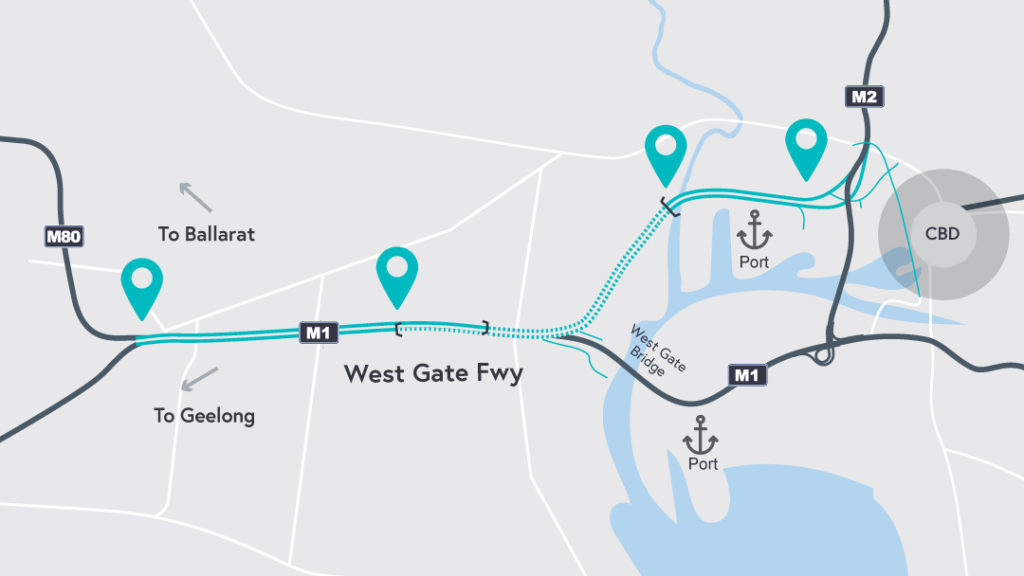
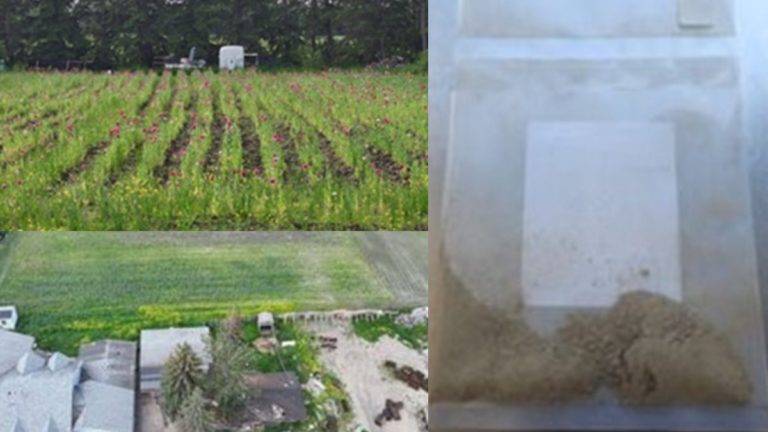
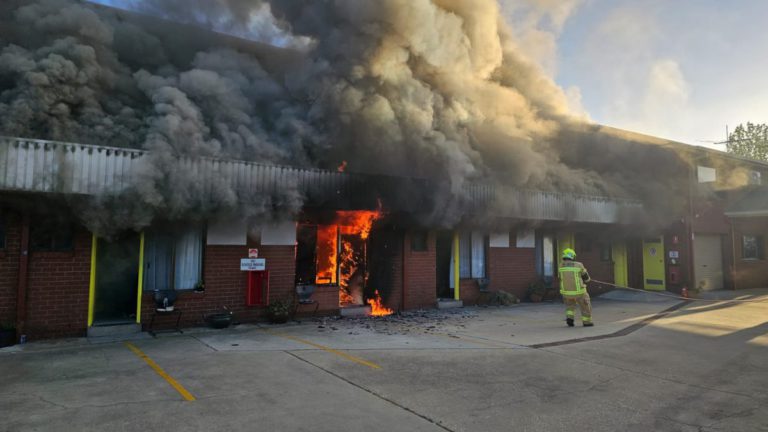
A new engineering report has reignited community concerns over Melbourne’s $10.2 billion West Gate Tunnel project, warning that its towering ventilation stacks could blast toxic truck fumes into nearby suburbs like “bathroom exhaust fans.”
Commissioned by the Maribyrnong Truck Action Group, the independent report claims the 50-metre ventilation shafts in Yarraville and Altona North fall short of global best-practice standards, potentially exposing thousands of residents to unsafe levels of air pollution once the tunnel opens in December.
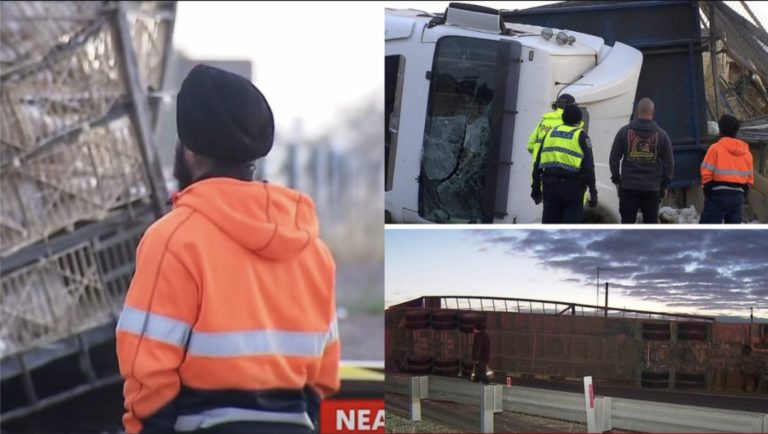
Image: West Gate Tunnel project (Source: Facebook)
It is reported that the local residents are demanding the installation of filtration systems before the toll road becomes operational, arguing that sleek design and cost-cutting have come at the expense of public health.
It is further reported that the Environmental Protection Authority (EPA) is now reviewing Transurban’s licence to operate the tunnel, amid threats of legal action from community groups if filters are not added.
But the Victorian Government has dismissed the concerns, accusing some media outlet of spreading “disinformation.” In a strongly worded statement, Minister for Roads and Road Safety Melissa Horne said the report cited by the newspaper had not been shared with the Government for review.
“Independent assessments have confirmed that the West Gate Tunnel will actually improve air quality in Melbourne’s inner west,” Minister Horne said.
“Advice from the Department of Health found potential health impacts from tunnel emissions to be below health-based guidelines and a low risk to human health.”
She also noted that no road tunnels in Australia use filtration systems, saying the West Gate Tunnel’s design will safely disperse exhaust high above surrounding suburbs.
“Powerful engines will push air through the stacks, ensuring pollutants are diluted and dispersed safely.”
According to the Minister, the project underwent a transparent environmental approval process and includes extensive ongoing monitoring. Once operational, air quality data from the tunnel will be publicly reported each month.
Image: West Gate Tunnel project (Source: Facebook)
The Government also highlighted a series of initiatives to improve air quality across Melbourne’s west — including $8 million to help truck operators transition to low-emission vehicles, $5 million for sealing local roads to reduce dust, and a trial of 50 electric and two hydrogen buses. Minister Horne added:
“When it opens later this year, the West Gate Tunnel will take 9,000 trucks a day off local roads and introduce 24-hour no-truck zones on key routes like Francis Street and Buckley Street, vastly improving liveability across Melbourne’s west.”
Support our Journalism
No-nonsense journalism. No paywalls. Whether you’re in Australia, the UK, Canada, the USA, or India, you can support The Australia Today by taking a paid subscription via Patreon or donating via PayPal — and help keep honest, fearless journalism alive.
By examining decades of research, we found that for most people who think they react to gluten, gluten itself is rarely the cause.
Symptoms but not coeliac
Coeliac disease is when the body’s immune system attacks itself when someone eats gluten, leading to inflammation and damage to the gut.
But people with gut or other symptoms after eating foods containing gluten can test negative for coeliac disease or wheat allergy. They are said to have non-coeliac gluten sensitivity.
We wanted to understand whether gluten itself, or other factors, truly cause their symptoms.
What we did and what we found
Our study combined more than 58 studies covering symptom changes and possible ways they could arise. These included studying the immune system, gut barrier, microbes in the gut, and psychological explanations.
Across studies, gluten-specific reactions were uncommon and, when they occurred, changes in symptoms were usually small. Many participants who believed they were “gluten sensitive” reacted equally – or more strongly – to a placebo.
One landmark trial looked at the role of fermentable carbohydrates (known as FODMAPs) in people who said they were sensitive to gluten (but didn’t have coeliac disease). When people ate a low-FODMAP diet – avoiding foods such as certain fruits, vegetables, legumes and cereals – their symptoms improved, even when gluten was reintroduced.
Another showed fructans – a type of FODMAP in wheat, onion, garlic and other foods – caused more bloating and discomfort than gluten itself.
This suggests most people who feel unwell after eating gluten are sensitive to something else. This could be FODMAPs such as fructans, or other wheat proteins. Another explanation could be that symptoms reflect a disorder in how the gut interacts with the brain, similar to irritable bowel syndrome.
Some people may be truly sensitive to gluten. However, current evidence suggests this is uncommon.
People expected symptoms
A consistent finding is how expecting to have symptoms profoundly shapes people’s symptoms.
Some who expected gluten to make them unwell developed identical discomfort when exposed to a placebo.
This nocebo effect – the negative counterpart of placebo – shows that belief and prior experience influence how the brain processes signals from the gut.
Brain-imaging research supports this, showing that expectation and emotion activate brain regions involved in pain and how we perceive threats. This can heighten sensitivity to normal gut sensations.
These are real physiological responses. What the evidence is telling us is that focusing attention on the gut, coupled with anxiety about symptoms or repeated negative experiences with food, has real effects. This can sensitise how the gut interacts with the brain (known as the gut–brain axis) so normal digestive sensations are felt as pain or urgency.
Recognising this psychological contribution doesn’t mean symptoms are imagined. When the brain predicts a meal may cause harm, gut sensory pathways amplify every cramp or sensation of discomfort, creating genuine distress.
This helps explain why people remain convinced gluten is to blame even when blinded studies show otherwise. Symptoms are real, but the mechanism is often driven by expectation rather than gluten.
So what else could explain why some people feel better after going gluten-free? Such a change in the diet also reduces high-FODMAP foods and ultra-processed products, encourages mindful eating and offers a sense of control. All these can improve our wellbeing.
People also tend to eat more naturally gluten-free, nutrient-dense foods such as fruits, vegetables, legumes and nuts, which may further support gut health.
But for most who feel better gluten-free, gluten is unlikely to be the true problem.
There’s also a cost to going gluten-free unnecessarily. Gluten-free foods are, on average, 139% more expensive than standard ones. They are also often lower in fibre and key nutrients.
Unlike coeliac disease or a wheat allergy, non-coeliac gluten sensitivity has no biomarker – there’s no blood test or tissue marker that can confirm it.
Diagnosis instead relies on excluding other conditions and structured dietary testing.
Based on our review, we recommend clinicians:
rule out coeliac disease and wheat allergy first
optimise the quality of someone’s overall diet
trial a low-FODMAP diet if symptoms persist
only then, consider a four to six-week dietitian-supervised gluten-free trial, followed by a structured re-introduction of gluten-containing foods to see whether gluten truly causes symptoms.
This approach keeps restriction targeted and temporary, avoiding unnecessary long-term exclusion of gluten.
If gluten doesn’t explain someone’s symptoms, combining dietary guidance with psychological support often works best. That’s because expectation, stress and emotion influence our symptoms. Cognitive-behavioural or exposure-based therapies can reduce food-related fear and help people safely reintroduce foods they once avoided.
This integrated model moves beyond the simplistic “gluten is bad” narrative toward personalised, evidence-based gut–brain care.
No-nonsense journalism. No paywalls. Whether you’re in Australia, the UK, Canada, the USA, or India, you can support The Australia Today by taking a paid subscription via Patreon or donating via PayPal — and help keep honest, fearless journalism alive.
Managing Editor of The Australia Today, Jai Bharadwaj, has been elected Vice-President of the Melbourne Press Club.
Mr Bharadwaj has become the first person of Indian origin to hold this position. His election marks a historic milestone in the Club’s leadership and signifies a significant step toward greater diversity and inclusion within the Club’s governance.
It also underscores the evolving landscape of Australian journalism, reflecting the contributions of individuals from diverse backgrounds in shaping the media industry.
The new leadership team for the term also includes Michael Bachelard as President, Heidi Murphy as Vice-President, Veronica Scott as Treasurer, and Jay Mueller as Secretary.
Vice-President Veronica Scott, President – Michael Bachelard, Vice-President – Jai Bharadwaj, Melbourne Press Club
The Melbourne Press Club announced a refreshed board and new office bearers following its Annual General Meeting held on October 22. The Club has welcomed five new members to its governing board, strengthening its capabilities across finance, events, partnerships and industry engagement.
Mr Bachelard said the new directors bring valuable experience at a crucial time for journalism in Victoria.
“I’m delighted to welcome five new board members, who will expand the Club’s skills and experience as we support and advocate for journalism in Victoria … The fact that these excellent people are keen to join our board is gratifying, and a vote of confidence in the Club’s future,” he said.
New members joining the board are: Sarah Coghlan (GRACosway), Mary Gearin (journalist & communications specialist), Leona Goh (Grant Thornton), Chloe Jeffers (Thrive PR), and Dean Levitan (MinterEllison).
The Club also thanked outgoing board members Patrick Considine, Richard Leder, and Matilda Marozzi for their contributions.
Support our Journalism
No-nonsense journalism. No paywalls. Whether you’re in Australia, the UK, Canada, the USA, or India, you can support The Australia Today by taking a paid subscription via Patreon or donating via PayPal — and help keep honest, fearless journalism alive.
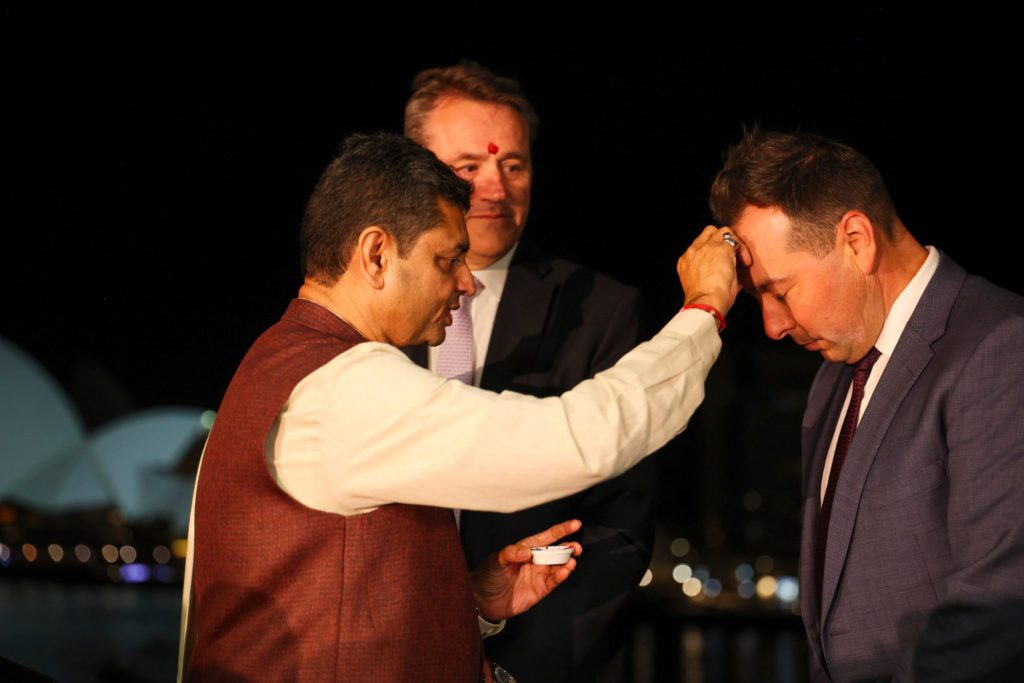
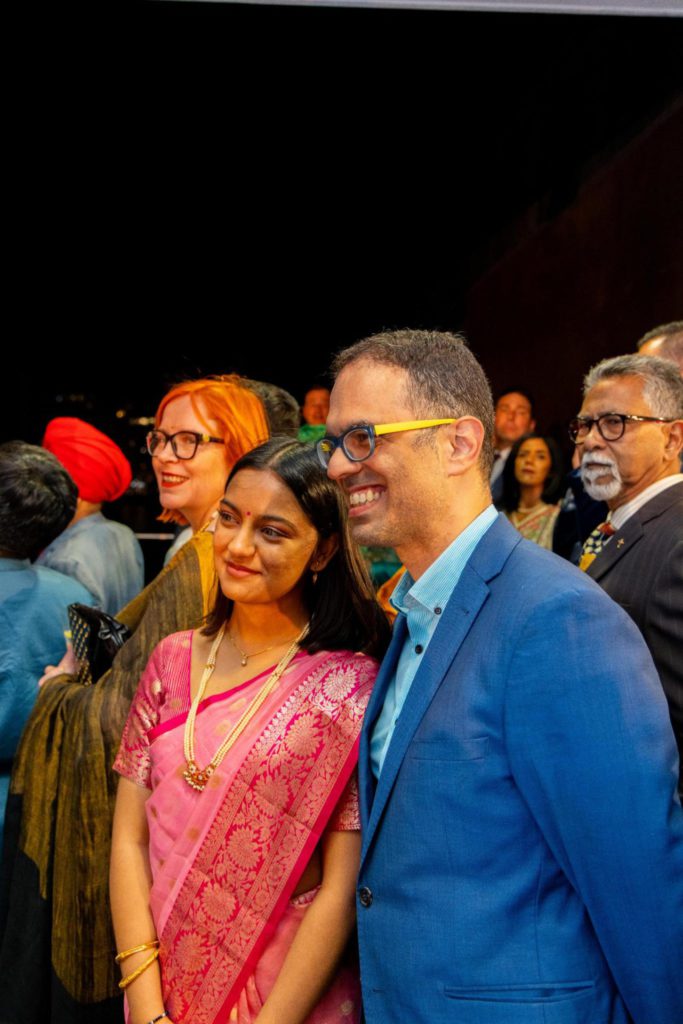
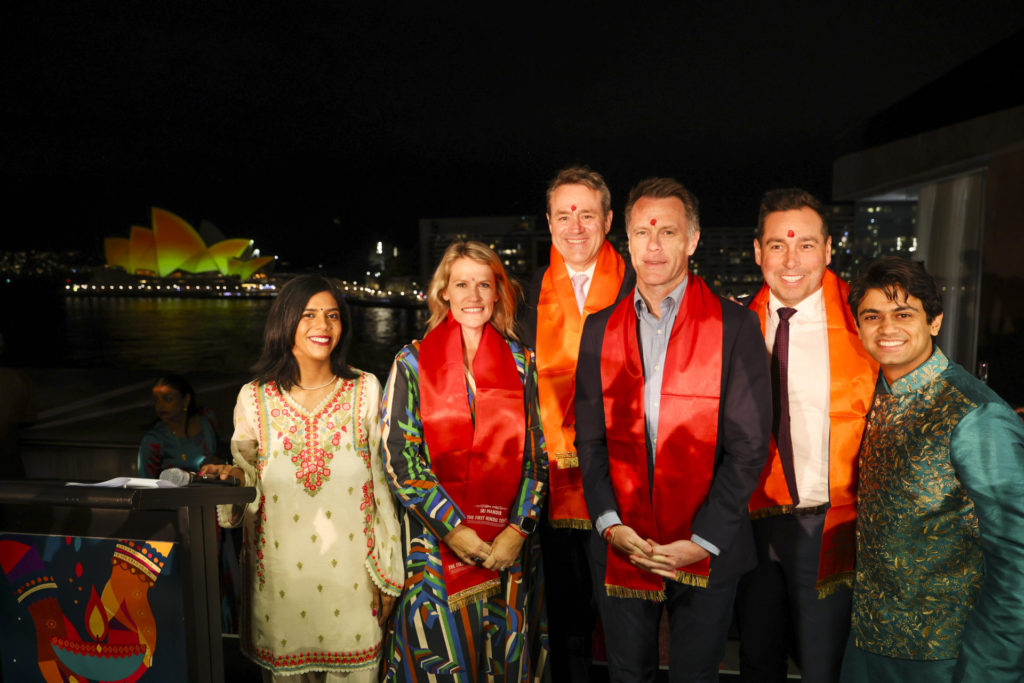
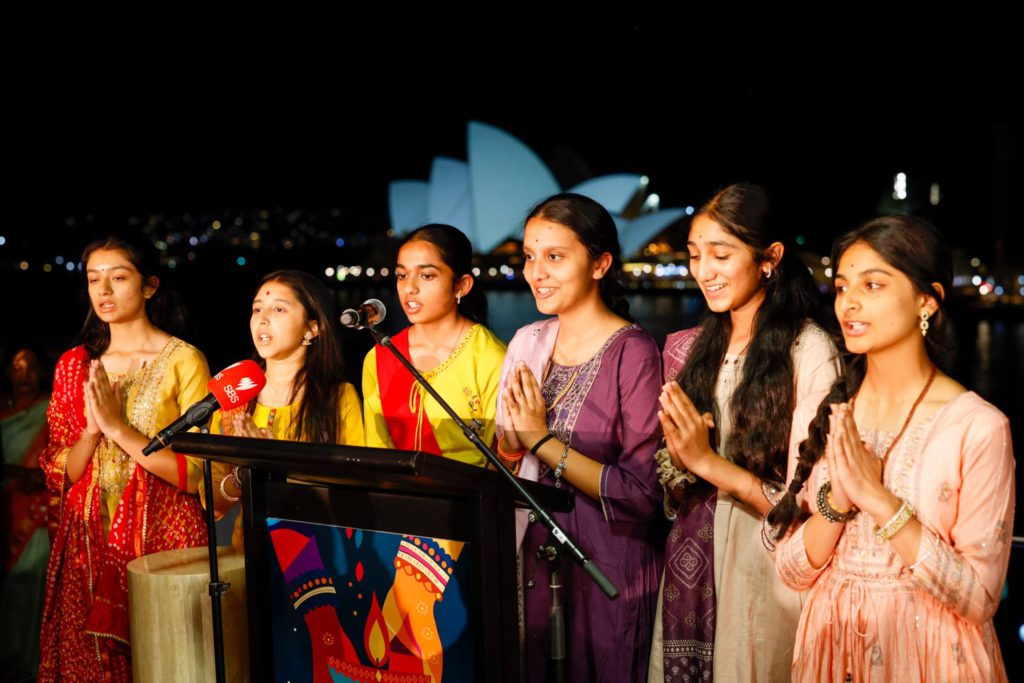
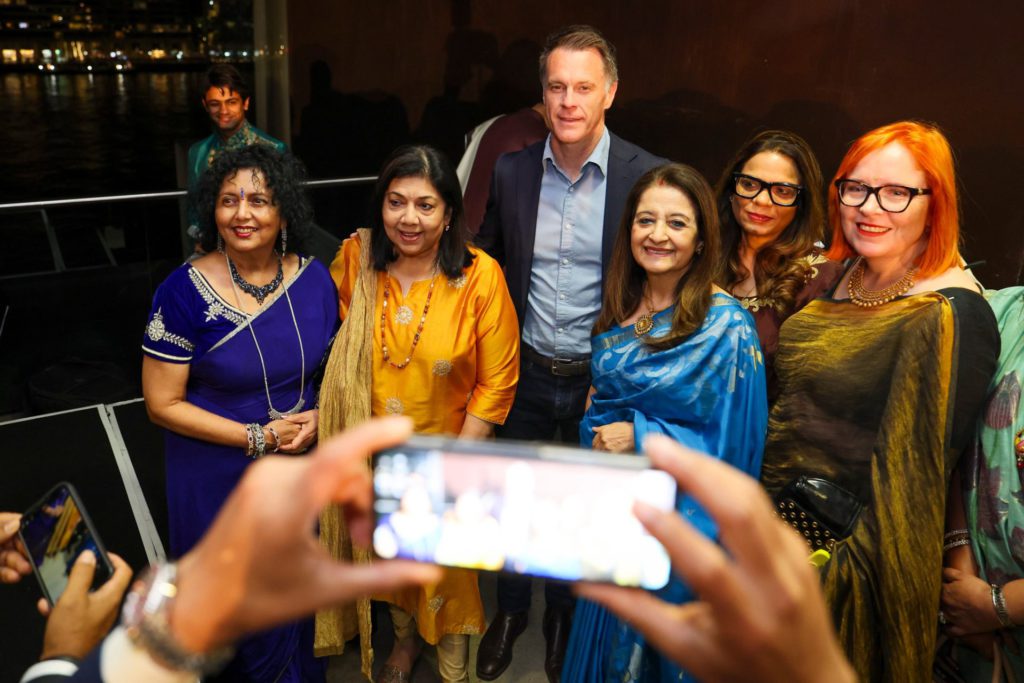
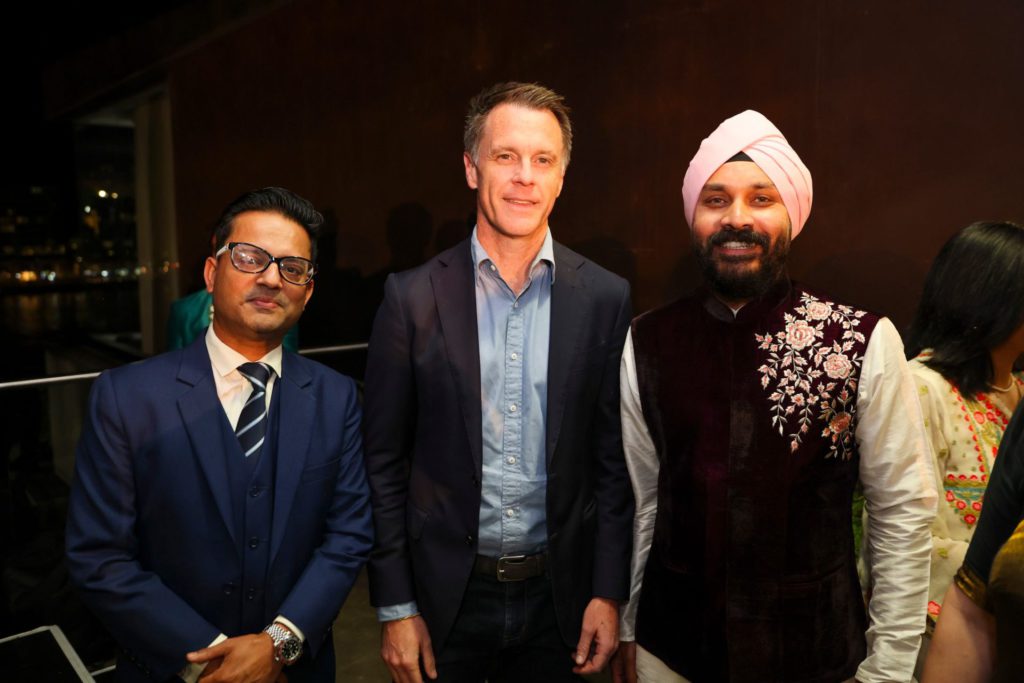
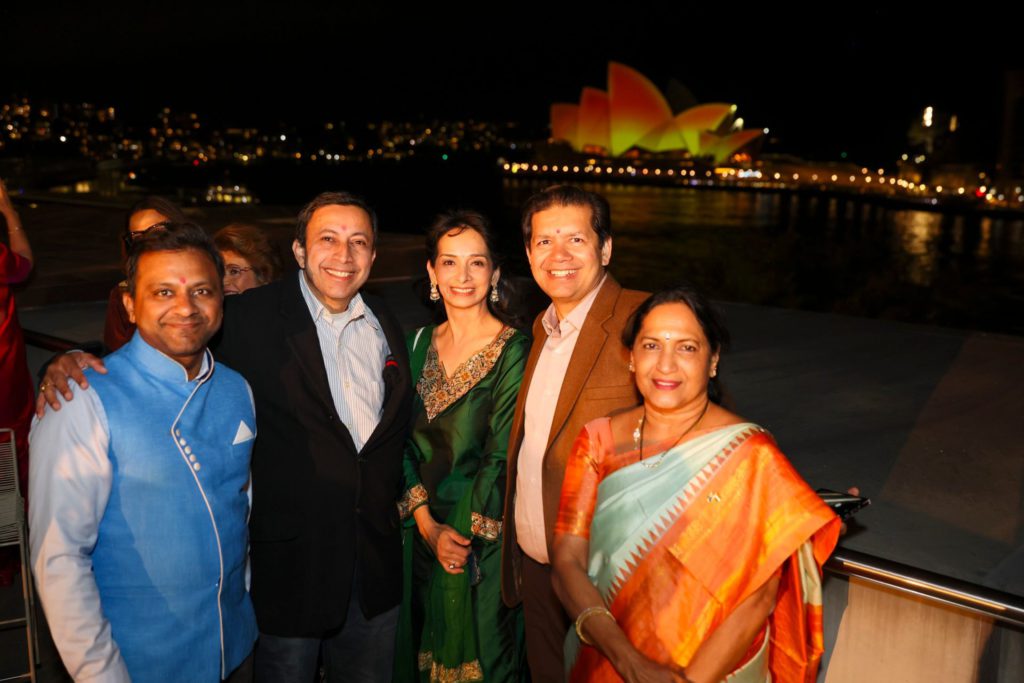
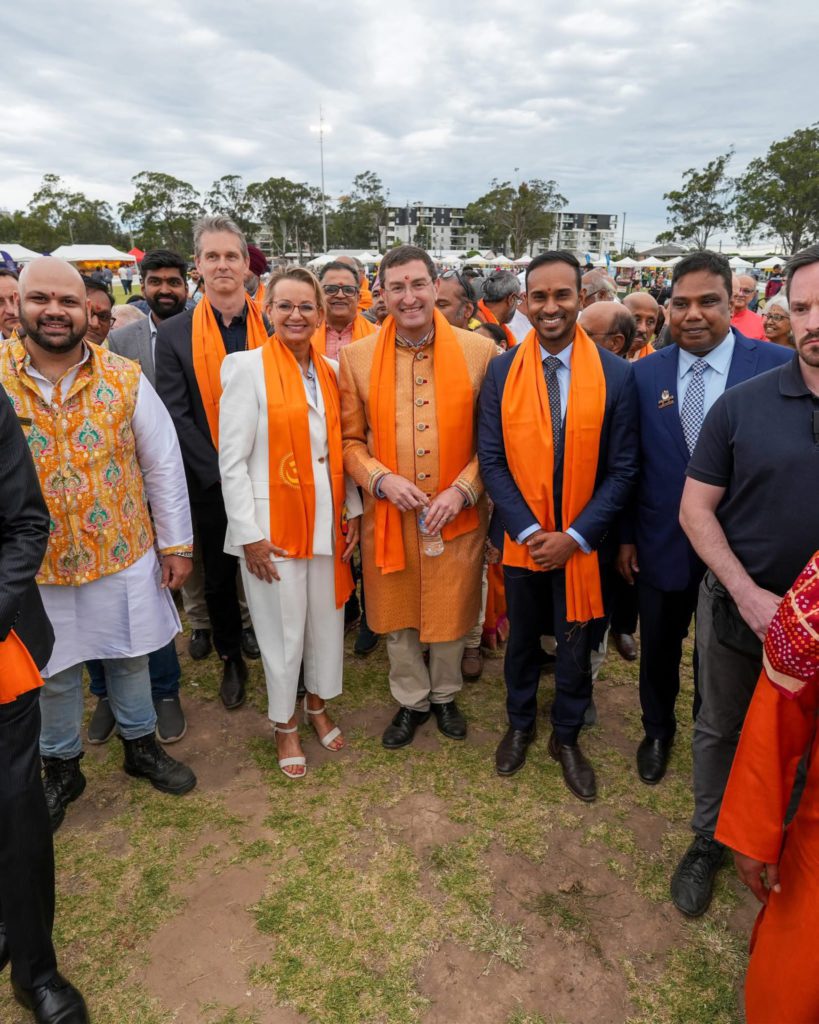
The New South Wales Parliament has passed a historic motion recognising and celebrating Diwali — the festival of lights — marking one of the most visible acknowledgements of the festival in the state’s legislature. The motion was passed with bipartisan support.
The motion notes Diwali’s cultural, social and spiritual significance for the Hindu, Sikh, Jain and Buddhist communities across NSW, and acknowledges its message of light over darkness and good over evil.
Motion presented by Parliamentary Secretary for Industrial Relations, Work Health andSafety, and Multiculturalism Mark Buttigieg and passed in NSW Parliament
The motion is a reflection of the growing contribution of Australia’s Indian diaspora to New South Wales — in business, academia, medicine, public service, the arts and community life.
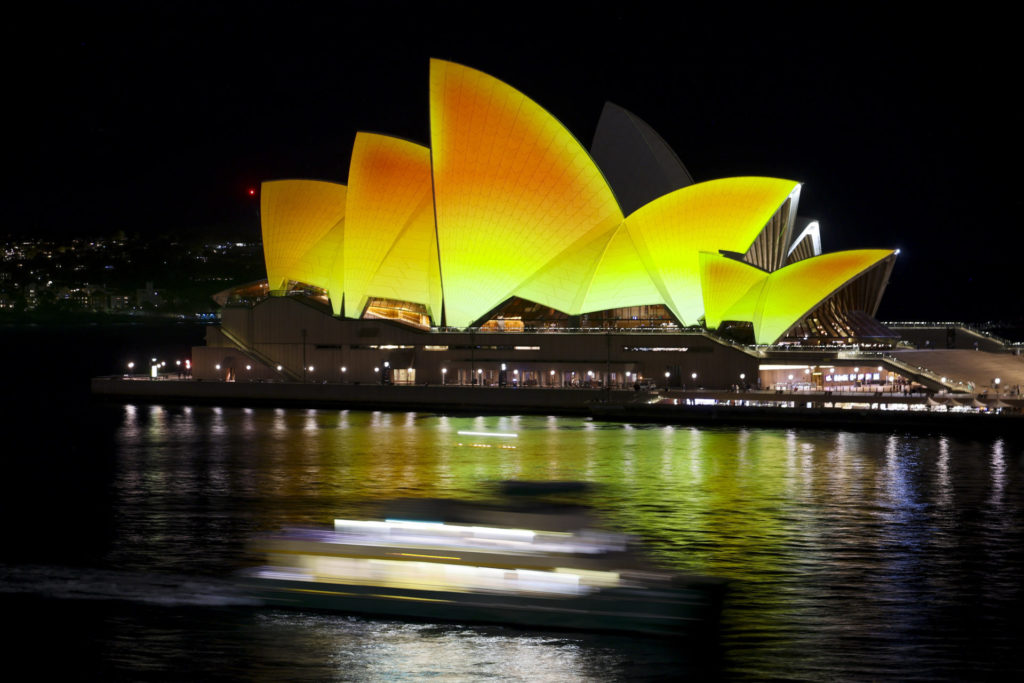
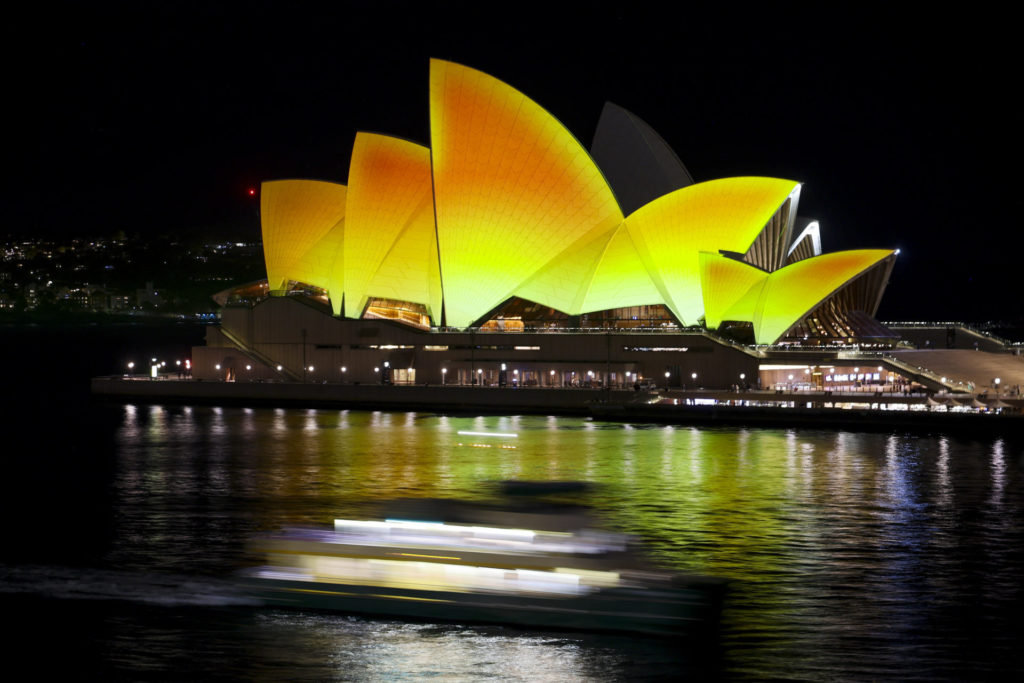
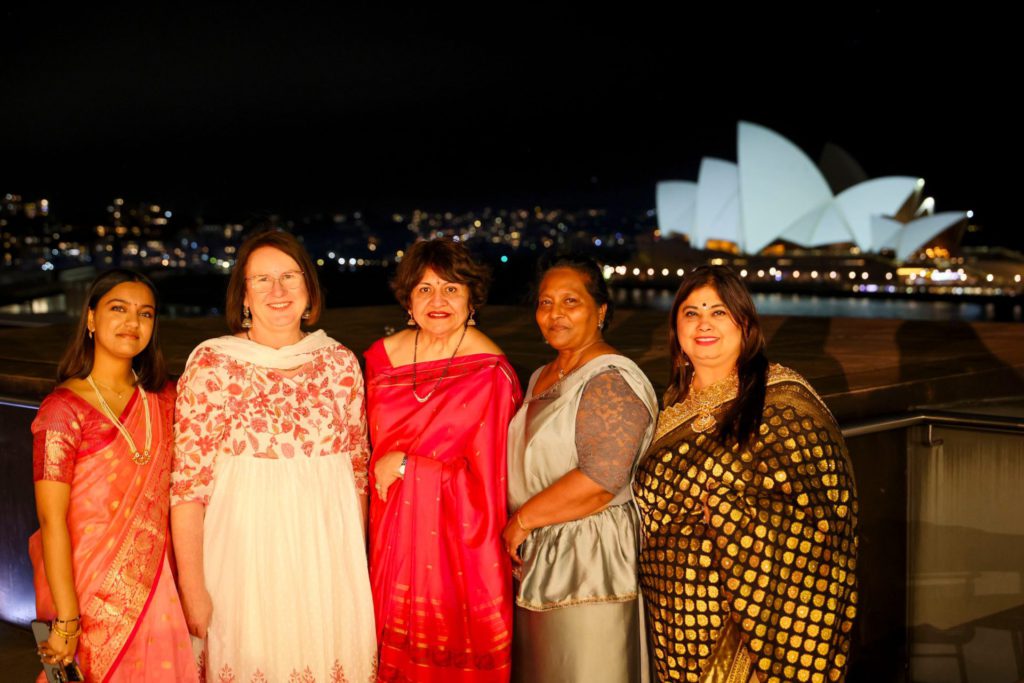
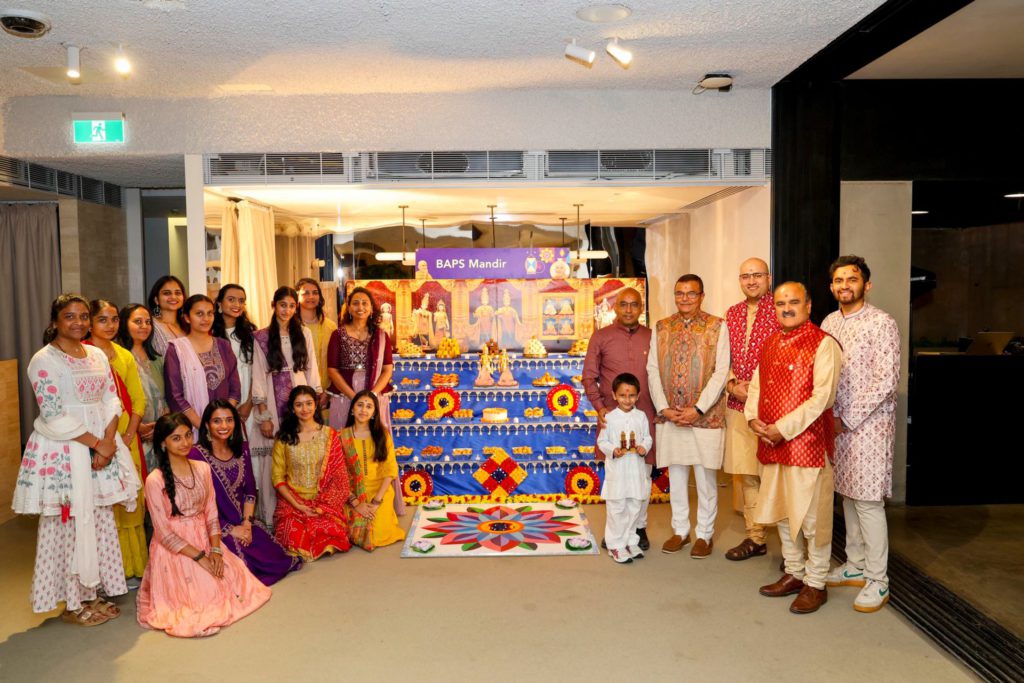
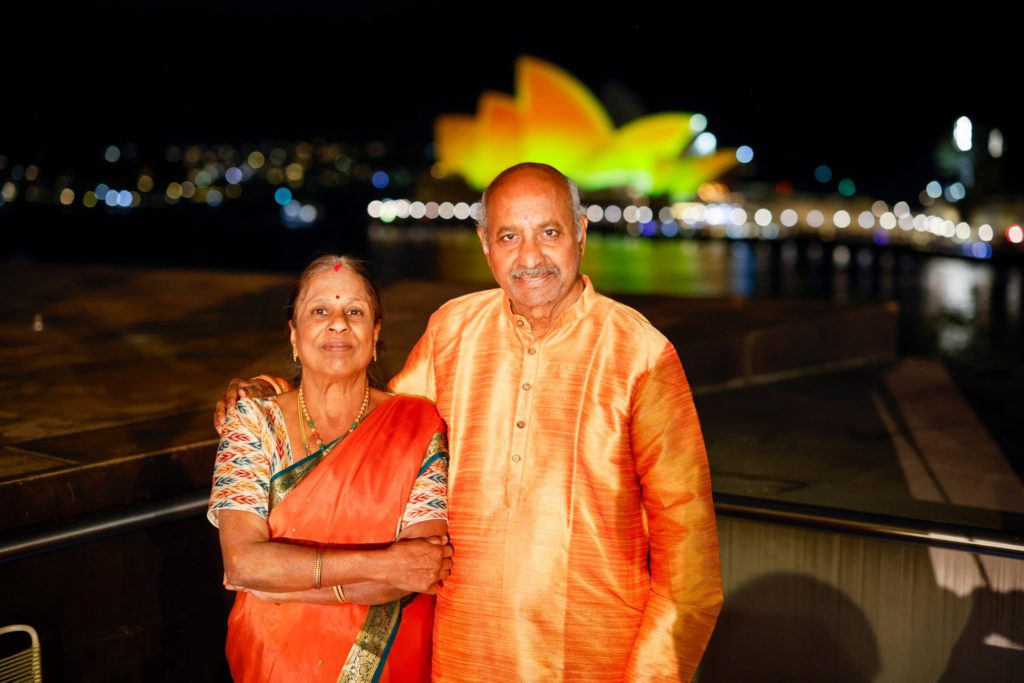
Diwali is celebrated by over a billion people worldwide and is now observed widely across Australia in homes, Temples, community centres and civic institutions. In recent years, landmark buildings — including the Sydney Opera House and state landmarks — have been illuminated during the festival.
The Hindu festival of lights (also known as Deepavali) is celebrated each year on the 15th Day of the ‘Kartik’ month (eight month according to the Hindu calendar) on ‘Amavasya’ (new moon).
The acknowledgement in the NSW Parliament reflects the increasing mainstream recognition of Indian festivals in Australia’s civic and public life, and reinforces the state’s commitment to multicultural inclusion.
Support our Journalism
No-nonsense journalism. No paywalls. Whether you’re in Australia, the UK, Canada, the USA, or India, you can support The Australia Today by taking a paid subscription via Patreon or donating via PayPal — and help keep honest, fearless journalism alive.
An Auckland couple have avoided prison after pleading guilty to a series of violent assaults against two children over six years.
As per Stuff, Ongoaere Tuakeu, 50, and Ngatamaroa Rakauroaiti, 52, appeared in Manukau District Court on Wednesday, facing nine charges of assault between them.
The pair were sentenced to nine months’ home detention by Judge Richard McIlraith after admitting multiple child abuse-related offences.
The children, aged between 5 and 11 and 9 and 15 at the time of the abuse, were described as inherently vulnerable.
It is reported that the victims had been placed in the care of Tuakeu and Rakauroaiti for about five years before being removed. During this period, the children were repeatedly assaulted with metal poles, wooden spoons, broomsticks, and other objects. Tuakeu reportedly threatened to withhold food and verbally abused the children, calling the older girl “evil” and questioning why she had to care for them.
The abuse extended to punishments for minor mistakes, such as errors while helping with Tuakeu’s online bingo games. On one occasion, Tuakeu forced a lit cigarette into a boy’s mouth for five minutes, while Rakauroaiti also struck the children with a metal pole and baseball bat.
The children eventually disclosed the abuse to friends and an adult, leading to the investigation.
Tuakeu’s lawyer, Jack Liu, said the sentence marked a significant fall from grace for his client, who has no prior convictions.
Judge McIlraith noted that both defendants were entitled to sentence reductions for pleading guilty early, showing genuine remorse, and agreeing to rehabilitation. While the Crown suggested prison was typical for such cases, the judge deemed home detention appropriate.
As part of their sentence, the couple must complete anger management and non-violence programmes, alcohol and drug rehabilitation, and comply with post-detention conditions.
Support our Journalism
No-nonsense journalism. No paywalls. Whether you’re in Australia, the UK, Canada, the USA, or India, you can support The Australia Today by taking a paid subscription via Patreon or donating via PayPal — and help keep honest, fearless journalism alive.
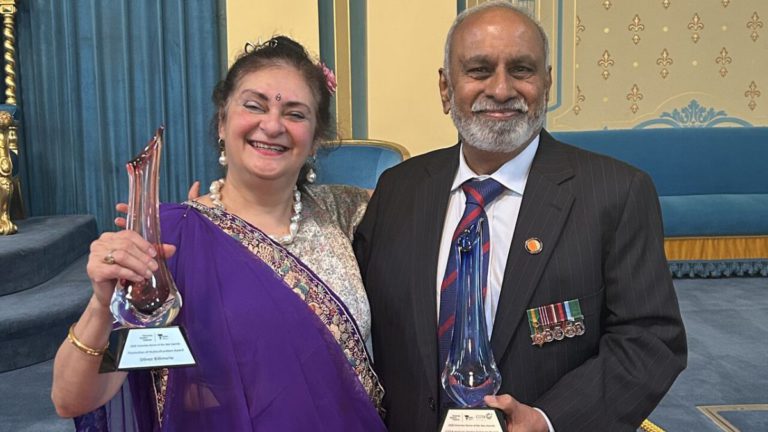
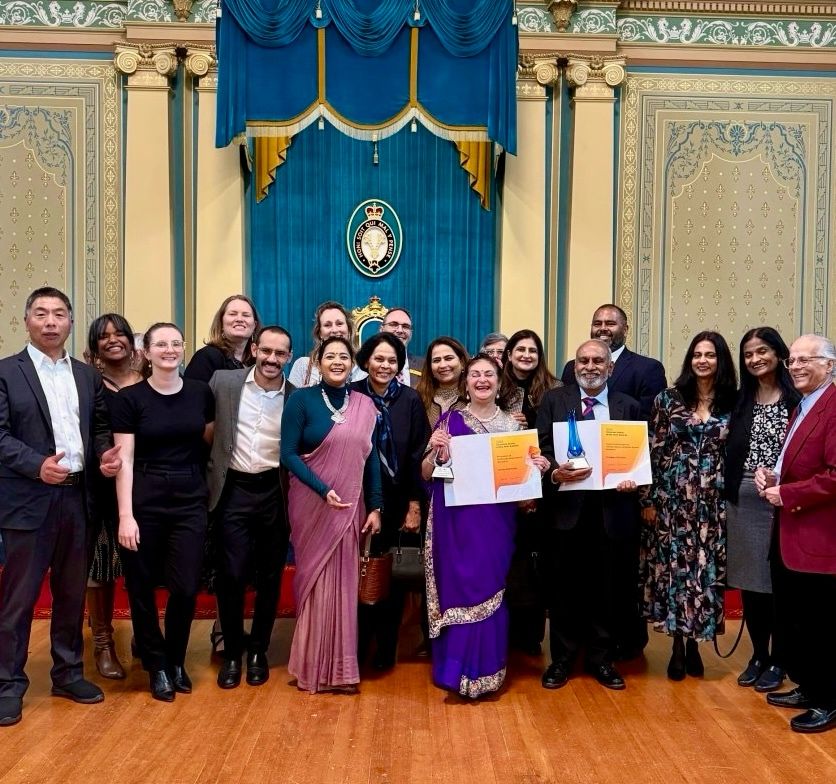
The Victorian Senior of the Year Awards honoured outstanding contributions to community life at Government House on Wednesday, 22 October 2025.
Senior Achiever Award – Pradeep Kanthan Pradeep Kanthan has shown how older adults can be powerful advocates for social change. Since 2003, he has served as Secretary of the Communities Council on Ethnic Issues (CCOEI), Eastern Region, contributing across governance, communications and community fundraising. He also organises the monthly Migrant Settlement Committee meetings, supporting multicultural communities across Victoria.
Pradeep’s dedication extends to digital inclusion, mentoring older Australians at Computer Pals for three years and supporting people with hearing loss through Hearing Matters Australia for six years. A veteran himself, he highlights the contributions of south-east Asian veterans through ANZAC Day presentations and writing.
“Pradeep’s tireless work uplifts communities and strengthens cohesion across all his volunteering roles,” COTA Victoria said.
Image: Victorian seniors Pradeep Kanthan and Dilnaz Billimoria recognised for community leadership and advocacy (Source: LinkedIn – Daniele Noel)
Promotion of Multiculturalism Award – Dilnaz Billimoria Dilnaz Billimoria has spent over 20 years empowering older Victorians from diverse backgrounds to feel heard, welcomed and celebrated. A proud Indian Australian of Persian background and Zoroastrian faith, Dilnaz uses her insights to break down barriers for culturally and linguistically diverse seniors.
A founding member of the Whitehorse Interfaith Network (WIN) and a former board member of CCOEI and Women’s Health East, Dilnaz brings together multifaith and multilingual leaders with grassroots communities for dialogue, inclusive events and culturally sensitive support. She mentors older women through leadership programs and assists seniors clubs with grant writing, report drafting and interpreter services.
“Dilnaz’s boundless energy and dedication have created lasting, practical change and strengthened community resilience,” COTA Victoria said.
Minister for Ageing Ingrid Stitt MP, Robert Caulfield, President of the Council on the Ageing (COTA) Victoria and Seniors Rights Victoria, joined Governor of Victoria Prof. Margaret Gardner AC to present the awards. The 2025 recipients were recognised for their generosity, advocacy and commitment, demonstrating how older Victorians can lead change, foster inclusion and live with purpose at every age.
Support our Journalism
No-nonsense journalism. No paywalls. Whether you’re in Australia, the UK, Canada, the USA, or India, you can support The Australia Today by taking a paid subscription via Patreon or donating via PayPal — and help keep honest, fearless journalism alive.
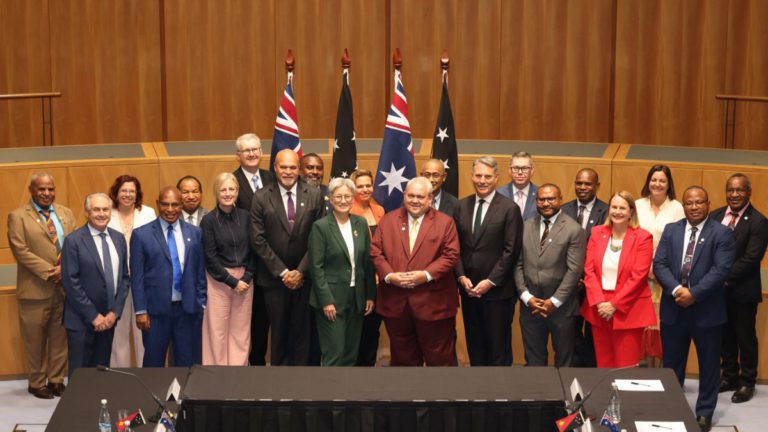
Canberra hosted Ministers from Papua New Guinea for the 31st Australia-Papua New Guinea Ministerial Forum, marking a fresh chapter in the nations’ long-standing partnership.
Co-hosted by Australia’s Foreign Minister Penny Wong and PNG’s Foreign Minister Justin Tkatchenko, the Forum follows the historic signing of the Papua New Guinea-Australia Mutual Defence Treaty – known as the Pukpuk Treaty – by Prime Ministers Anthony Albanese and James Marape.
“The new Alliance is a natural evolution of our close defence ties, supporting sovereignty and safeguarding regional peace,” said Acting Prime Minister and Defence Minister Richard Marles.
“We are moving from defence partners to allies, building on decades of collaboration.”
The treaty formally elevates the relationship to an alliance, reflecting a shared commitment to regional peace, stability and prosperity.
Defence collaboration: Establishing a recruitment pathway for PNG citizens to join the Australian Defence Force and supporting training initiatives for the Papua New Guinea Defence Force.
Education and skills investment: A $150 million package to improve early and secondary education, increase retention – particularly for girls – and boost Technical and Vocational Education and Training (TVET) across PNG.
Humanitarian and disaster relief: A $25 million package to construct warehouses, enhance emergency management capacity, and explore a new command and control centre in Port Moresby.
Foreign Minister Penny Wong described the moment as historic:
“Australia and Papua New Guinea are the oldest of friends, closest of neighbours, and soon-to-be, newest of allies. Today, we take our first steps in shaping a peaceful, stable and prosperous Blue Pacific.”
Australia and PNG are the closest of neighbours, truest of friends, and the newest of allies.
Today I co-Chaired the 31st Australia-PNG Ministerial Forum with Foreign Minister Tkatchenko.
Together we discussed bringing strategic trust into every aspect of our relationship. pic.twitter.com/XXJBcE6y8l
Minister for Pacific Island Affairs and Defence Industry Pat Conroy added:
“We have always stood shoulder-to-shoulder with PNG. This Forum builds on momentum from the historic Defence Treaty, our NRL deal, and the Bilateral Security Agreement that have elevated our relationship.”
The Ministerial Forum also includes engagement with private sector representatives through the Annual Australia-Papua New Guinea Business Dialogue, co-hosted by Australia’s Trade Minister Don Farrell and PNG’s Minister for International Trade Richard Maru.
Support our Journalism
No-nonsense journalism. No paywalls. Whether you’re in Australia, the UK, Canada, the USA, or India, you can support The Australia Today by taking a paid subscription via Patreon or donating via PayPal — and help keep honest, fearless journalism alive.
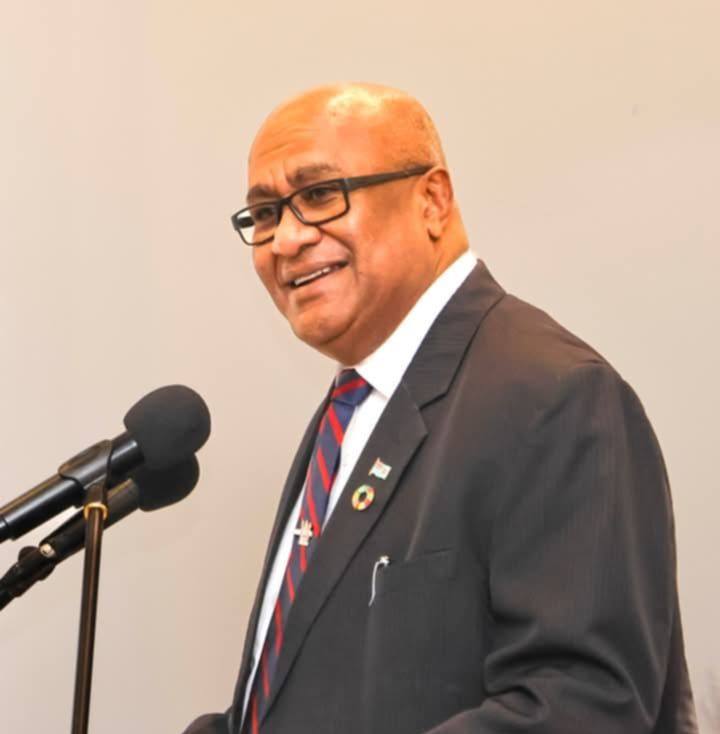
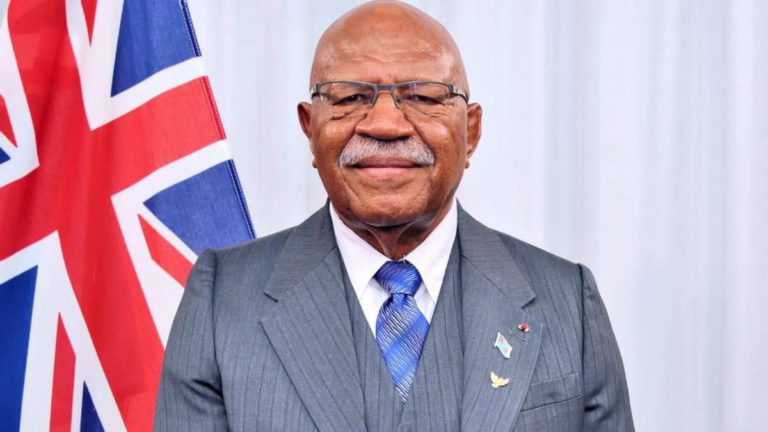
Fiji’s Deputy Prime Minister Manoa Kamikamica has stepped down from Cabinet and his role as Deputy Prime Minister amid ongoing legal proceedings, Prime Minister Sitiveni Rabuka confirmed on social media.
“Today, I received a communication from Hon. Manoa Kamikamica informing me of his decision to step down from Cabinet and from his position as Deputy Prime Minister,” Rabuka said in a statement.
“He will be returning to the country tomorrow, and his final day serving as Deputy Prime Minister and Minister will be 22 October 2025.”
Rabuka said Kamikamica will remain a Member of Parliament and focus on clearing his name in relation to charges laid against him by the Fiji Independent Commission Against Corruption (FICAC). “He has assured me of his unwavering commitment to the Government and the people of Fiji,” the Prime Minister added. Rabuka confirmed he will oversee Kamikamica’s ministerial responsibilities “for the foreseeable future.”
Image: Fiji’s Deputy Prime Minister Manoa Kamikamica (Source: Facebook)
Kamikamica’s lawyer, Wylie Clarke of Howards Lawyers, described the charges as “defective and unsupported by any credible evidence.”
As per local media reports, Clarke told the Suva Magistrates Court that his client’s case lacked factual basis and that he had written to FICAC outlining his concerns.
Kamikamica had been overseas on official travel at the time the charges were laid, which his lawyer said had been approved before the allegations came to light. He appeared in court via notice and the matter has been adjourned to Friday for mention.
Support our Journalism
No-nonsense journalism. No paywalls. Whether you’re in Australia, the UK, Canada, the USA, or India, you can support The Australia Today by taking a paid subscription via Patreon or donating via PayPal — and help keep honest, fearless journalism alive.
Pandemic preparedness must be at the forefront of political attention globally. Every country — low-, middle- and high-income — must be actively preparing for the risk of another pandemic. But preparedness cannot happen in isolation. A key element of preparedness is global cooperation, ensuring no country is left behind when the next pandemic strikes.
The risk is immediate and undeniable. In 2024 alone, we witnessed the threat of H5N1 bird flu, mpox, Ebola and Marburg. The Lancet Commission on the Future of Health by 2050 estimates a close to 30% risk that an infectious threat causing over one million deaths will occur within five years.
A main recommendation was to negotiate a Pandemic Agreement through the World Health Organization. This was adopted by 194 countries at the World Health Assembly in May 2025 — a major victory, though ratification is still required in each individual country, and is subject to finalisation of a pathogen access and benefit sharing annex.
The second recommendation — and where the urgency becomes most apparent — is financing preparedness. This includes the need to ensure surge funding is available when a pandemic strikes, especially crucial for low- and middle-income countries. Our Panel has suggested a dedicated fund to which all countries contribute based on their ability to pay, capable of disbursing money quickly to stop an emerging threat from becoming an epidemic, or an epidemic from becoming a pandemic.
The third recommendation directly addresses the tragic inequities we witnessed during COVID-19: ensuring equitable access to essential supplies including vaccines, diagnostics and, crucially, antiviral therapeutics. This is where the importance of antiviral therapeutics becomes most evident.
Antiviral therapeutics were largely absent from the COVID-19 pandemic response. Had they been widely available, they would have served as a frontline defence when people became ill, reducing symptoms and potentially keeping patients out of overwhelmed hospitals. In the under-resourced health systems characteristic of low- and middle-income countries, the importance of this cannot be overstated.
The logic is straightforward: vaccines prevent infection, but if someone is infected, treatment is essential. If the pandemic involves a respiratory pathogen, antiviral therapeutics become critical. We also cannot assume the next pandemic pathogen will be one for which vaccines can be easily developed. HIV and Hepatitis C remind us that some pandemics are managed primarily through therapeutics, not vaccines.
During COVID-19, health system disruptions affected 90% of countries worldwide, including high-income nations. In low- and middle-income countries, the impact was particularly severe on HIV and tuberculosis programs. The WHO estimated that 20-40% of countries reported 10-50% disruptions in testing, diagnosis and care access. Tuberculosis notification cases dropped by nearly 30%, with treatment coverage falling by 15% — impacts from which we have still not fully recovered.
The current market-based model for pandemic goods — both vaccines and therapeutics — is fundamentally flawed for pandemic preparedness. Markets respond to existing demand but, early in a pandemic outbreak, demand appears small and localised despite the global threat. Clinical trials must occur during outbreaks, creating enormous logistical challenges.
Our panel has therefore proposed decentralising both research and development and manufacturing capabilities, including for therapeutics.
The inequities in vaccine access during COVID-19 left low- and middle-income countries justifiably frustrated, with leaders across the UN, G20, and other forums declaring “never again”. We have the opportunity now, while the memory of pandemic vulnerability remains fresh, to build the systems that will ensure equitable access to lifesaving therapeutics when the next pandemic strikes.
The Pandemic Agreement, despite some notable absences, demonstrates that multilateral cooperation on pandemic threats remains possible.
The question is not whether another pandemic threat will come, but when. The fourth, fifth, sixth and seventh recommendations from our panel address sustaining political momentum, ensuring WHO’s independence and creating ongoing preparedness monitoring. The time to build these capabilities, including the funding mechanisms, the manufacturing capacity, the research networks and the international cooperation frameworks — is now, while we have the luxury of preparation rather than the urgency of crisis.
Global health challenges require global solutions. No country, regardless of its power or resources, can address pandemic threats alone. Antiviral therapeutics represent a critical tool in our pandemic preparedness arsenal, but only if we commit to developing and distributing them equitably. The world must come together now to make this vision reality.
Contributing Author: Michel Kazatchkine is a member of the Independent Panel for Pandemic Preparedness and Response and former Executive Director of the Global Fund to Fight AIDS, Tuberculosis and Malaria.
Support our Journalism
No-nonsense journalism. No paywalls. Whether you’re in Australia, the UK, Canada, the USA, or India, you can support The Australia Today by taking a paid subscription via Patreon or donating via PayPal — and help keep honest, fearless journalism alive.
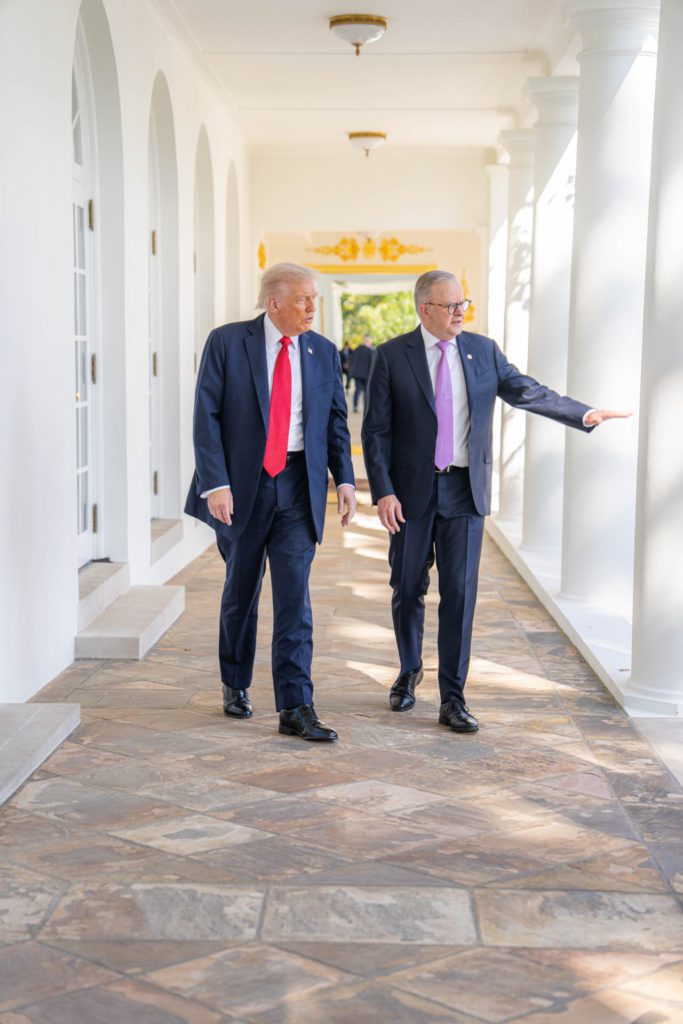
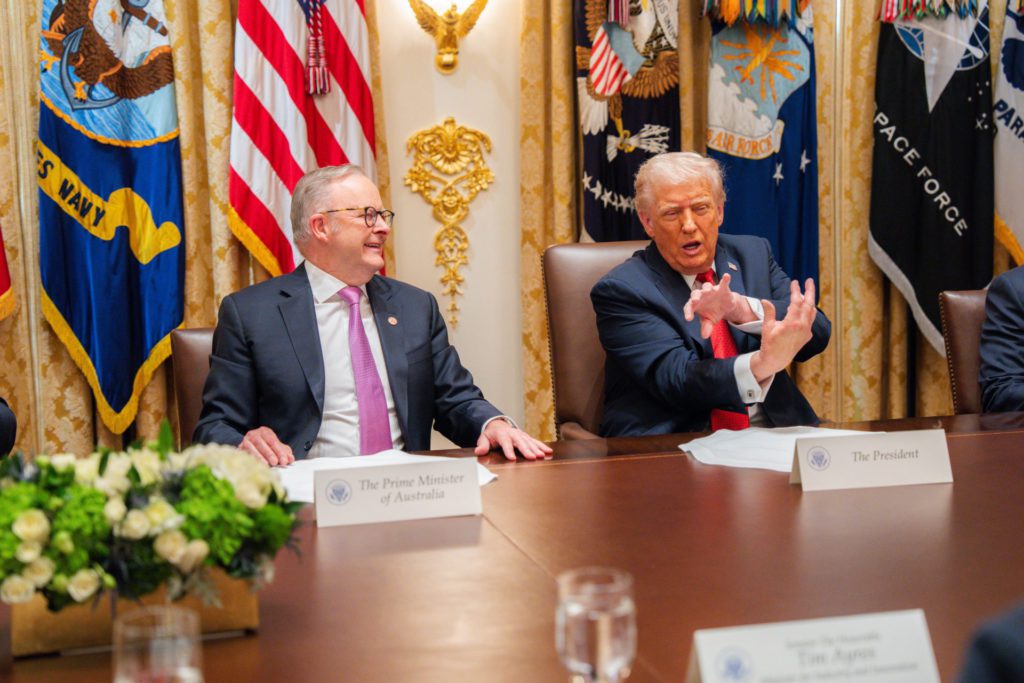
Australia’s Prime Minister Anthony Albanese has declared his high-profile first meeting with US President Donald Trump a major success, securing an $8.5 billion deal to boost investment in critical minerals and reaffirming support for AUKUS.
Speaking from Washington, Albanese told ABC News Breakfast that he and President Trump “got on very well” during their nearly three-hour meeting. “It was a terrific meeting and we got on very well,” the Prime Minister said.
“We signed an agreement that’ll result in $8.5 billion of investment — that means jobs in Australia, it means economic growth, it means more resilience.”
Albanese said the deal would see co-investment from Australian, Japanese, and American companies in projects such as Iluka and Alcoa.
“We’ll have investment within the next six months. This isn’t starting from scratch — we’ve built the framework and things are ready to go.”
President Trump’s optimism about the scale of future production, Albanese said, reflected “a sense of urgency” shared by both nations to strengthen supply chains and economic ties.
The Prime Minister also confirmed that AUKUS remains on track, with both sides discussing options to “fast-track” aspects of the trilateral defence partnership.
When asked about ongoing tariff tensions, Albanese said he raised the issue directly with the President. “Of course I did,” he said.
“I’ll always put the case for free and fair trade and for Australia’s interests to be advanced — but we do it respectfully and diplomatically. That’s how you get outcomes.”
The meeting was not without its lighter moments. When President Trump jokingly asked about Ambassador Kevin Rudd — who had previously criticised him — Albanese said it was “all in good humour”. “The President said to Kevin Rudd, ‘all is forgiven’,” the Prime Minister told Today.
“It was pretty light-hearted… Kevin’s doing a fantastic job and is well regarded here.”
Albanese brushed off opposition criticism over Rudd’s diplomatic role, accusing his opponents of “talking themselves into a story”. “They had a choice — back the national interest or play politics. They chose politics,” he told ABC News Breakfast.
“I’m focused on outcomes that deliver for Australians.”
On domestic matters, Albanese welcomed the news that regional airline Rex had secured a buyer, crediting his government’s intervention for keeping the carrier afloat. “Rex wouldn’t exist today were it not for the action of Minister Catherine King and my government,” he said.
“These are vital services for regional communities.”
The Prime Minister also extended an open invitation to President Trump to visit Australia — an idea the President reportedly responded to “very positively”. “He’s positive about Australians, he likes us, he engages with us, he knows how important the relationship is,” Albanese told Today. “We’ve been side by side for a long time, and the relationship is in great shape.”
Ending his whirlwind US visit, the Prime Minister reflected on the strength of personal diplomacy. “One of the things about Australians is we don’t talk down to people or talk up to people — we just treat people like people,” he said. “And President Trump enjoyed that conversation.”
Support our Journalism
No-nonsense journalism. No paywalls. Whether you’re in Australia, the UK, Canada, the USA, or India, you can support The Australia Today by taking a paid subscription via Patreon or donating via PayPal — and help keep honest, fearless journalism alive.
Australians are being urged to “slow their scroll” and think before clicking on suspicious links, as unsafe online habits continue to give cybercriminals the upper hand.
In a national response to the growing threat, the AFP-led Joint Policing Cybercrime Coordination Centre (JPC3) has launched ClickFit, a new awareness campaign designed to help Australians recognise the warning signs of cybercrime and build safer digital habits.
The initiative follows alarming findings from the Australian Institute of Criminology’s Cybercrime in Australia 2024 report, which revealed that only 8 to 22 per cent of cyber incidents—ranging from malware to fraud and scams—were reported to police. Many victims did not report offences because they believed nothing could be done or that their experience was too minor.
AFP Acting Commander of Cybercrime Operations, Marie Andersson, said every report, no matter how small, helps police track offenders, shut down criminal networks, and protect others.
“Research shows our online habits directly impact our risk profile, and many Australians overlook simple steps that can prevent their victimisation,” Acting Commander Andersson said.
“Just like drivers learn to spot hazards on the road, we want online users to recognise the warning signs of cybercrime.”
ClickFit is supported by every state and territory police force and encourages Australians to check for “digital blind spots” — suspicious text messages, fake investment ads, or shady email attachments — before clicking.
In one case investigated by Tasmania Police, a man lost over $400,000 to a cryptocurrency investment scam, despite repeated warnings. In another, a South Australian mother discovered her “dream holiday” booking was fake only after arriving at a non-existent hotel.
Despite Australians rating their tech knowledge highly, the Cybercrime in Australia 2024 report found many still fail to use basic protections like strong passphrases, multi-factor authentication, and regular software updates — a gap ClickFit aims to close.
“Changing our online habits is as important as locking your car door,” Andersson said.
“ClickFit isn’t about fear — it’s about empowerment. By taking small, consistent steps, we can make it much harder for cybercriminals to succeed.”
Running until December 2026, the ClickFit campaign will focus on four major types of cybercrime: business email compromise, romance scams, investment scams, and impersonation scams. It features two digital heroes — NetCop Gary and Agent Index — who help Australians become “ClickFit” by taking six simple steps:
Create strong passphrases
Enable multi-factor authentication
Install software updates
Stay alert to scams
Stop and think before clicking
Verify the source before paying or sharing details
Australians are encouraged to test their cyber fitness at the Are You ClickFit? page and report cybercrime incidents through ReportCyber.
As Andersson put it, “The online world is incredible — but it’s time to drive it safely.”
Support our Journalism
No-nonsense journalism. No paywalls. Whether you’re in Australia, the UK, Canada, the USA, or India, you can support The Australia Today by taking a paid subscription via Patreon or donating via PayPal — and help keep honest, fearless journalism alive.
Victorians will soon have even more reasons to explore the state’s forests, with the government committing $30 million to improve access, tracks and visitor amenities across Gippsland and North East Victoria.
Following the end of native timber harvesting, the government is backing community access to state forests, keeping them open, healthy and ready for recreational use. Premier Jacinta Allan said:
“My focus is to bring more families to the bush and more jobs to the regions – and that’s exactly what our plan for Victoria’s great outdoors will do.”
The investment will unlock 1.8 million hectares of forest, improve trails and campgrounds, and enhance key sites including Heyfield’s Cheynes Bridge Recreation Area, Buckland Valley Visitor Experience Area, and the next stage of the Yackandandah Creek Masterplan.
Tom McIntosh, Member for Eastern Victoria, said:
“You can’t appreciate our brilliant bush unless you get out amongst it, and that’s exactly what this package supports.”
Locals will also have a say in how money is spent in their communities, with $4 million allocated to pilot Healthy Forest Plans in Orbost and Noojee. Additional funding of $7.2 million will bolster ranger numbers to guide visitors, manage pests and protect native wildlife.
“By ending large-scale native timber harvesting, we’ve given our forests a future. Now we’re making sure every Victorian can share in it,” Minister for Environment Steve Dimopoulos said. Harriet Shing, Member for Eastern Victoria, added:
“We’re making it easier for people to get outdoors with upgraded trails, better facilities and more opportunities to explore the natural beauty of Gippsland.”
The government’s full response to the Great Outdoors Taskforce and Eminent Panel for Community Engagement is available at deeca.vic.gov.au/futureforests.
Support our Journalism
No-nonsense journalism. No paywalls. Whether you’re in Australia, the UK, Canada, the USA, or India, you can support The Australia Today by taking a paid subscription via Patreon or donating via PayPal — and help keep honest, fearless journalism alive.
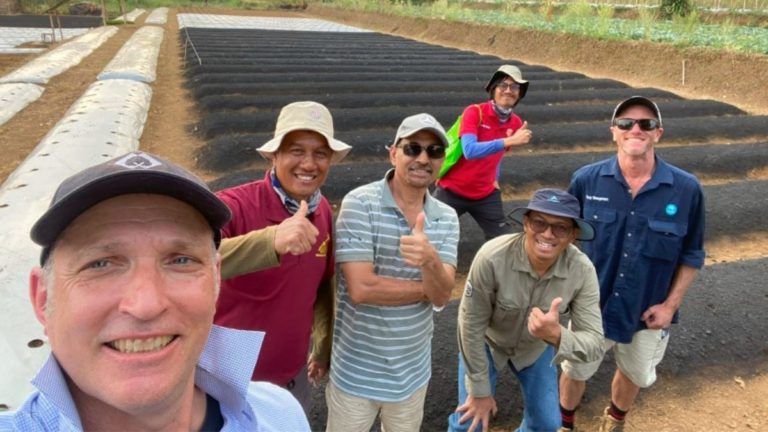
Entrepreneurs across the Indo-Pacific are leading a wave of innovation this October, showcasing breakthrough solutions to tackle plastic waste at a series of multi-city Demo Days supported by Australia’s national science agency CSIRO and the Department of Foreign Affairs and Trade (DFAT) under the Mekong–Australia Partnership.
The events, held in Indonesia, Vietnam and Thailand, highlight the transformative work of the Indo-Pacific Plastics Innovation Network (IPPIN), where cutting-edge science meets entrepreneurship to create a circular economy for plastics.
Image: Sikarin Tamiyakul, CIRAC (Source: IPPIN)
From turning ghost nets into recycled pellets to developing sprayable biodegradable mulch for sustainable farming, IPPIN projects are giving waste a second life.
“Even a single piece of plastic can fatally harm marine life — this urgency fuelled my passion to innovate recycled plastics,” said Sikarin Tamiyakul from CIRACAI, whose team uses machine learning and advanced materials science to recover aluminium from multi-layered packaging.
Other standout innovations include NO-PLASTIC, a marine pollution tracker co-developed by OceanKita and Global MeteOcean, and Sprayable Biodegradable Mulch (SBM), which can be directly applied around crops without the need for removal or disposal. “Unlike conventional plastic films, SBM can be applied directly using standard farm equipment and does not require removal or disposal,” the SBM Project Team explained.
IPPIN also embeds Gender Equality, Disability and Social Inclusion (GEDSI) principles to ensure solutions are equitable and locally owned. “Embedding GEDSI principles into the refill project further increases uptake of this new system, integral to the success of lasting circularity initiatives,” said the UTS & Refill UK Team.
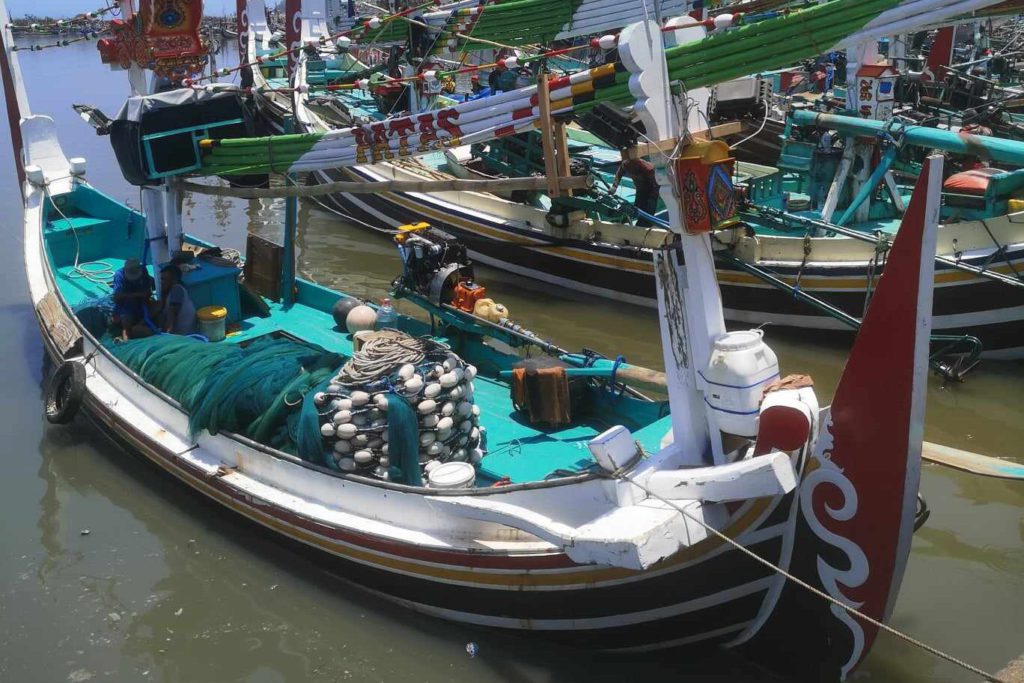
Projects such as CARP and Nuplas are helping restore ecosystems by removing harmful waste from rivers and oceans. “Ghost nets are one of the deadliest forms of plastic pollution due to their ability to entangle and kill marine life,” the Nuplas Team noted.
Image: CARP and Nuplas project (Source: IPPIN)
According to Andrea Sosa Pintos, IPPIN Program Director, the Demo Days are a testament to the power of collaboration. “The IPPIN Program drives real-world solutions. These Demo Days are about showcasing what’s possible when science, entrepreneurship and international partnerships come together across countries,” she said.
Since its launch in 2022, the IPPIN Program has supported more than 165 entrepreneurial teams and connected over 4,000 innovators, researchers, and policymakers across 15 countries, helping ideas evolve into impactful solutions.
“From small community-led ideas to scalable technologies, we are seeing breakthroughs that can change the trajectory of plastic waste in the Indo-Pacific,” Sosa Pintos added.
As the region faces mounting plastic challenges—with global production exceeding 400 million tonnes annually and expected to double by 2040—initiatives like IPPIN’s Accelerator+ Program demonstrate that innovation and collaboration remain key to building a sustainable future for people, industries and the planet.
Support our Journalism
No-nonsense journalism. No paywalls. Whether you’re in Australia, the UK, Canada, the USA, or India, you can support The Australia Today by taking a paid subscription via Patreon or donating via PayPal — and help keep honest, fearless journalism alive.
On November 5 the US Supreme Court will begin hearing arguments about the legality of President Donald Trump’s tariffs. As important as the tariff issue is, the stakes are much higher than that.
Trump imposed sweeping global tariffs under the auspices of the International Emergency Economic Powers Act (IEEPA) of 1977. Most legalexperts agree, and so far three lower courts have ruled, that this act gives him no such power.
This case now presents an important test of the Supreme Court’s willingness to impose limits on Trump’s emergency powers.
The powers Trump is claiming
The US Constitution gives Congress, not the president, the power to set tariffs. Since the 1930s, Congress has passed a series of laws granting presidents the authority to adjust existing tariffs and deploy them to protect industries that are crucial to US national security.
The tariffs Trump has imposed this year go beyond the powers any previous president has had.
Some of Trump’s tariffs on goods in specific sectors such as steel and aluminium are authorised under Section 232 of the Trade Expansion Act because of their importance to military industries.
This allows the president to block economic transactions and freeze assets after declaring an emergency. These actions usually target hostile powers or individuals. An emergency is an “unusual and extraordinary threat” to the US, originating “in whole or substantial part outside the United States”.
Trump originally claimed tariffs against Canada, Mexico and China were necessary to force those countries stop the traffic in fentanyl, which causes more than 70,000 overdose deaths in the US every year. Yet less than 1% of the fentanyl that enters the US comes from Canada.
For the “liberation day” tariffs affecting every other country in the world, Trump declared the annual US trade deficit in goods constituted “an unusual and extraordinary threat to the national security and economy of the United States”.
This trade deficit has been running since 1976, and it widened during Trump’s first administration.
The court case
The Trump administration is being sued by a group of small businesses that have been hurt by the 2025 tariffs, and which claim Trump had no right to impose them. They are supported by a bipartisan group of legal scholars. https://www.youtube.com/embed/p3gW28ntF5A?wmode=transparent&start=0 A small business owner suing Trump over tariffs explains his decision.
The IEEPA was an amendment to the 1917 Trading with the Enemy Act, which the then president Richard Nixon used to impose 10% import tariffs during a trade crisis in 1971. The Trump administration has argued that because those tariffs were upheld by courts, Trump’s are also valid.
In the words of a report from the House Committee on International Relations that underpinned the reforms, “emergencies are by their nature rare and brief, and are not to be equated with normal ongoing problems”.
What will the Supreme Court do?
The weakness of the administration’s legal arguments is reflected in Trump’s public statements about why the Supreme Court must uphold his tariffs. These statements increasingly read like blackmail notes. He has said striking down the tariffs would “literally destroy the United States of America”.
As well as bringing in billions of dollars in revenue, Trump claims five of the eight wars he has supposedly ended were thanks to tariff leverage, and “if they took away tariffs, then they’ve taken away our national security”.
However, the one area where Supreme Court conservatives might be willing to limit Trump’s powers is where they interfere with economic orthodoxy.
In a ruling allowing Trump to fire commissioners of some small, independent agencies, the court also appeared to protect members of the US central bank, the Federal Reserve, because of its “distinct historical tradition”.
The Supreme Court has since temporarily blocked Trump’s attempt to fire one of the Federal Reserve governors, Lisa Cook. The judges may also decide that allowing a president to impose unlimited new taxes is a step too far.
Even if the Supreme Court does strike down the IEEPA tariffs, Trump is unlikely to abandon tariffs as a policy tool. They are a core part of his identity.
The administration has already vowed that if it loses in the Supreme Court, it will find other ways to impose tariffs under different laws that “have the same effect”.
The significance of the Supreme Court’s decision may not be about the tariffs themselves, but about whether it recognises any limit to presidential power.
No-nonsense journalism. No paywalls. Whether you’re in Australia, the UK, Canada, the USA, or India, you can support The Australia Today by taking a paid subscription via Patreon or donating via PayPal — and help keep honest, fearless journalism alive.
The Allan Labor Government has announced a Parliamentary Inquiry to give students and staff a greater voice in how Victorian universities are run.
Minister Gayle Tierney (Image: Facebook)
Minister for Skills and TAFE Gayle Tierney said the inquiry will review university governance structures, with a focus on boosting staff and student representation on university councils to ensure they reflect the communities they serve.
“Victoria’s universities are one of our state’s greatest assets – and it’s time they better reflect the people who make them what they are,” Minister Tierney said.
“This is about giving students and staff a seat at the table – making sure our world-class institutions stay focused on education, not profit.”
The move follows the release of a national Expert Panel report on 17 October, which called for stronger accountability and transparency across the higher education sector.
Victoria has endorsed the national plan to reform governance, which includes introducing limits on Vice-Chancellor pay, requiring councils to publish key decisions, and adopting governance standards similar to those used in the private sector.
Similar to steps taken in New South Wales, Victoria’s inquiry will explore how best to implement these reforms—ensuring university councils include members with higher education expertise, and that student and staff voices are heard at the highest levels.
Melbourne remains Australia’s leading student city and ranks fifth globally. The government says the reforms will strengthen Victoria’s reputation for quality education while giving staff and students more influence in shaping their universities’ futures.
Support our Journalism
No-nonsense journalism. No paywalls. Whether you’re in Australia, the UK, Canada, the USA, or India, you can support The Australia Today by taking a paid subscription via Patreon or donating via PayPal — and help keep honest, fearless journalism alive.
As per 7News, Ivana Lai contacted multiple government departments on October 3 after her sister, 36-year-old sushi chef Wan Lai, was allegedly attacked while walking to work on Little Bourke Street the previous morning.
CCTV footage shows the accused, 32-year-old Lauren Darul, running up behind Lai and stabbing her in the chest, causing serious internal injuries that required emergency treatment.
“My sister … had walked less than 100 metres from her front door when she was randomly attacked with a switchblade,” Ivana wrote in one of several emails seeking help, compensation and accountability. She told 7News that Wan Lai continues to suffer severe pain, struggles with basic tasks and relies on constant medication.
Despite repeated attempts to seek support, Ivana said the family initially received only a visit from two city councillors. It wasn’t until October 13, after following up again, that the Department of Premier and Cabinet referred her emails to multiple ministers, and only after the media coverage did the Department of Justice and Community Safety offer “immediate and longer-term support.”
Ivana criticised the slow and complex bureaucratic process, describing it as a “second trauma” for victims. She also questioned the role of Make Room, the supportive housing project where the accused had been living while on bail and under mental health supervision.
Darul has been charged with two counts of intentionally causing injury and committing an indictable offence while on bail. She is due to face court, where she will apply for bail.
Police confirmed to 7News that she will not return to Make Room, but said there is currently no legal mechanism to prevent her from being rehoused near Lai’s new home.
“The government’s slow response leaves our family trapped in a perfect ‘bureaucratic loop of accountability’,” Ivana said.
Victorian Housing Minister Harriet Shing and the Make Room project said they are reviewing safety measures and working with authorities, but the family remains frustrated by what they see as ongoing gaps in public safety and victim support.
Support our Journalism
No-nonsense journalism. No paywalls. Whether you’re in Australia, the UK, Canada, the USA, or India, you can support The Australia Today by taking a paid subscription via Patreon or donating via PayPal — and help keep honest, fearless journalism alive.
Prime Minister Sitiveni Rabuka has extended warm Diwali greetings to Fiji’s Hindu community and all Fijians celebrating the Festival of Lights, urging them to embrace the spirit of unity, peace, and compassion.
In his Diwali message, Rabuka reflected on the story of Lord Rama’s return to Ayodhya, describing it as a timeless reminder of righteousness, endurance, and the triumph of light over darkness.
“As we celebrated Fiji Day just days ago, we reaffirmed our shared purpose — to build a united, peaceful, and prosperous nation,” he said.
Prime Minister of Fiji, Sitiveni Rabuka (Image: Facebook)
“Diwali now calls us to continue that journey by nurturing the light within us — the light of truth, compassion, and justice.”
Addressing the nation’s current challenges, including the drug crisis, the spread of HIV infections, and lingering social divisions, the Prime Minister said that “even a flicker of light can break through darkness” and encouraged Fijians to be agents of positive change.
He added that the principles of the Ocean of Peace — peace, unity, forgiveness, and inclusive progress — find true expression in the meaning of Diwali.
“This is not just a festival of lights, but a call to action: to bring healing where there is pain, dialogue where there is stubbornness, and unity where there is division.”
Support our Journalism
No-nonsense journalism. No paywalls. Whether you’re in Australia, the UK, Canada, the USA, or India, you can support The Australia Today by taking a paid subscription via Patreon or donating via PayPal — and help keep honest, fearless journalism alive.
Punjab Police in India have busted an international weapon smuggling network with alleged links to Canada and Pakistan, arresting one man and seizing a cache of illegal firearms and ammunition.
The accused, Amarbir Singh, a resident of Dairiwal village in Amritsar district, was apprehended by the Amritsar Rural Police. Officers recovered six pistols, 11 magazines, and 111 live cartridges during the raid.
Punjab’s Director General of Police (DGP) Gaurav Yadav said preliminary investigations revealed that Singh had recently returned from Canada and was in contact with Pakistan-based smugglers.
An FIR has been registered, and further inquiries are underway to identify other operatives and dismantle the entire cross-border supply chain.
Cross-Border Smuggling Module Busted Linked to Canada & Pakistan
In a major breakthrough, Amritsar Rural Police busts an illegal weapon smuggling module and apprehends Amarbir Singh @ Amar, resident of Dairiwal, PS Tarsikka, Amritsar and recover 6 pistols, 11 magazine, 91 live… pic.twitter.com/cHciT8lKgH
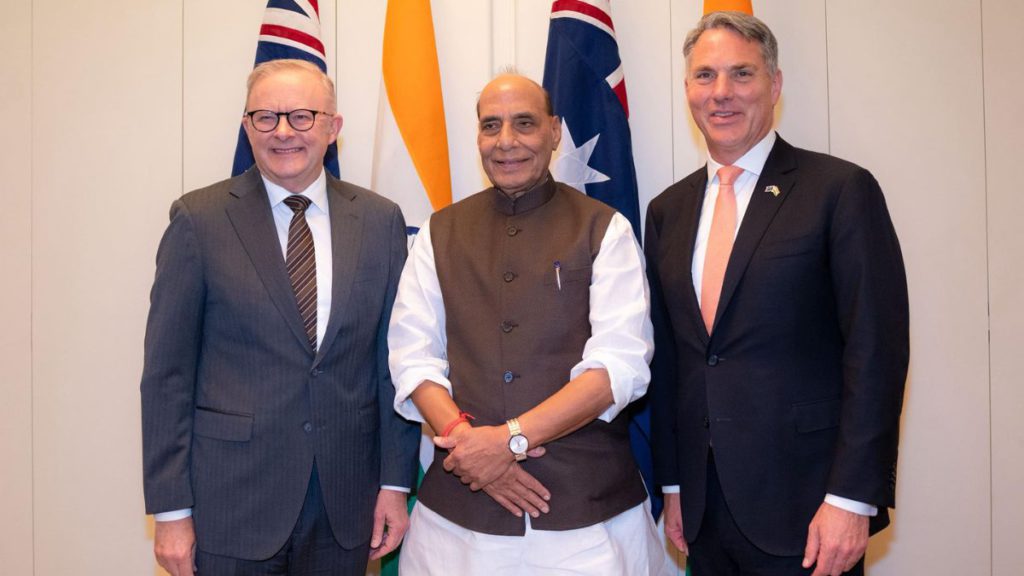
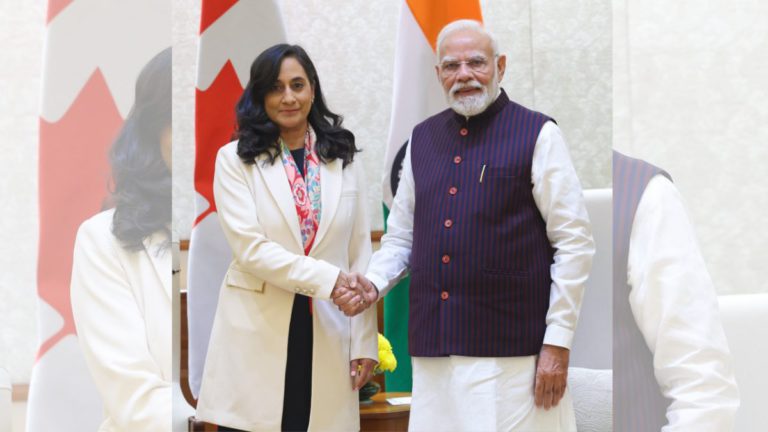
Both countries agreed to uphold commitments to non-interference and enhance cooperation in counter-terrorism, organised crime, and intelligence sharing. The renewed dialogue followed earlier discussions between Prime Minister Narendra Modi and Canadian Prime Minister Mark Carney during the G7 Leaders’ Summit in Kananaskis.
For Australia, which shares close security ties with both India and Canada through the Five Eyes network and the Quad alliance, the development underscores growing regional efforts to counter transnational crime and strengthen intelligence collaboration across borders.
Support our Journalism
No-nonsense journalism. No paywalls. Whether you’re in Australia, the UK, Canada, the USA, or India, you can support The Australia Today by taking a paid subscription via Patreon or donating via PayPal — and help keep honest, fearless journalism alive.
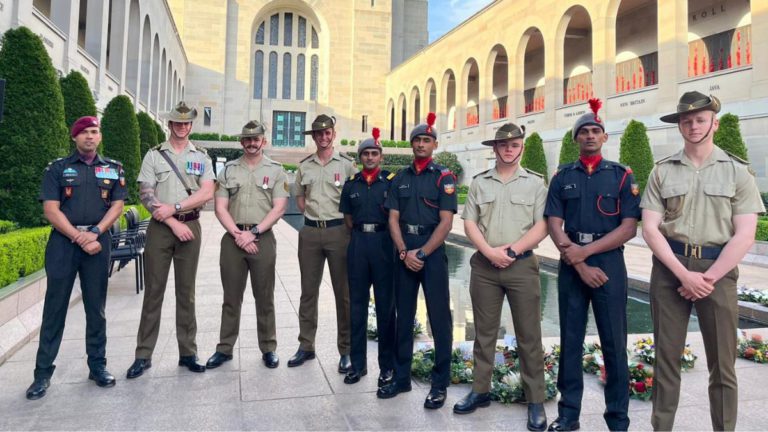
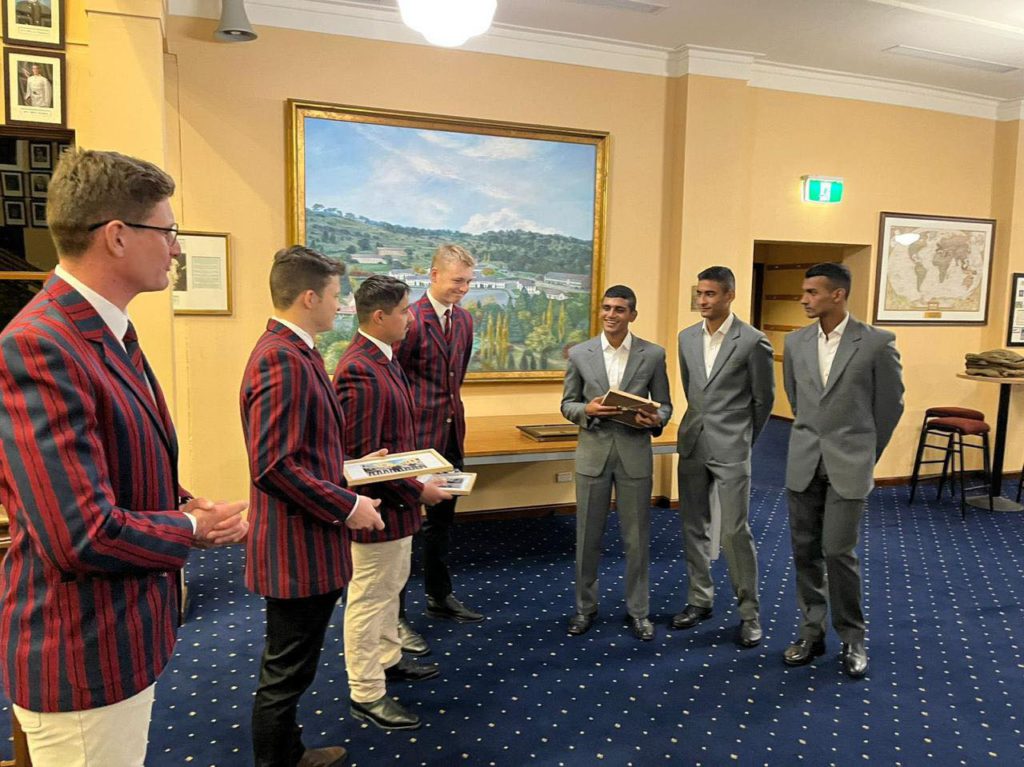
Cooperation between Australia and Sri Lanka has taken flight under the Indo-Pacific Endeavour (IPE), Australia’s flagship regional engagement program designed to strengthen defence partnerships, build trust, and enhance regional stability.
The versatile aircraft, equipped with advanced electro-optical/infrared (EO/IR) systems, has since become a vital asset for Sri Lanka’s maritime surveillance and search and rescue operations.
“The Sri Lanka Air Force has flown over 400 hours and conducted more than 100 missions in the King Air 350, proving its value as a versatile platform,” said Squadron Leader Glenn Canfield, Training Flight Commander at 32 Squadron, who ferried the aircraft to Sri Lanka.
“I delivered the Royal Australian Air Force King Air 350 to the Sri Lanka Air Force in October 2024, routing through Indonesia and Malaysia,” he recalled.
“The King Air 350 brings a powerful EO/IR capability, making it a proven platform for monitoring vast stretches of ocean and responding rapidly to search and rescue requirements.”
As part of IPE25, Squadron Leader Canfield returned to Sri Lanka to continue familiarisation training with SLAF personnel and to lead a subject matter expert (SME) exchange at SLAF China Bay. “It’s a privilege to be back in Sri Lanka, working alongside our Sri Lanka Air Force colleagues and sharing how the King Air can support maritime surveillance and search and rescue operations,” he said.
“Conducting the SME exchange at SLAF China Bay was incredibly rewarding – both professionally and personally – as it helped us build stronger ties and learn from each other’s approaches.”
Beyond the technical collaboration, Canfield reflected on the personal connections that underpin such initiatives.
“Flying brings us together, but it’s the shared meals, the conversations, and the laughter that build real partnerships.”
Both nations share a commitment to an open, stable and prosperous Indian Ocean region, focusing on maritime security, education, and training. The King Air 350 now stands as a symbol of that cooperation – an aircraft that not only enhances Sri Lanka’s operational capacity but also reflects the spirit of partnership at the heart of Indo-Pacific Endeavour.
While platforms like the King Air 350 deliver capability, it is the collaboration between people that sustains long-term effectiveness and mutual understanding – ensuring both Australia and Sri Lanka are better prepared to meet the evolving challenges of the maritime domain.
Support our Journalism
No-nonsense journalism. No paywalls. Whether you’re in Australia, the UK, Canada, the USA, or India, you can support The Australia Today by taking a paid subscription via Patreon or donating via PayPal — and help keep honest, fearless journalism alive.
Australia’s chief statistician, David Gruen, has defended the Australian Bureau of Statistics’ (ABS) rare public intervention to debunk claims of “mass migration”, saying the independent agency “stands ready to respond” when its data is misrepresented.
Gruen told The Guardian that reliable statistics are crucial for informed debate and sound policymaking.
“It degrades the democracy if the stats agency is not independent.”
While cautious about compromising the bureau’s independence, Gruen said the ABS would step in when statements using its data are “flat-out contradicted by the statistical evidence”.
On 21 August, the ABS issued a public statement clarifying that overseas arrivals figures had been misused to suggest inflated migration numbers. The figures track people coming in and out of the country, not those permanently settling.
It us reported that The Institute of Public Affairs accused the Albanese government of “weaponising” the ABS to “censor” its views.
Gruen rejected the charge. “To claim that we were censoring anyone is an odd claim, because nothing’s being censored”
“We went on publishing all the same data. We simply were making a statement about its appropriate use.”
Gruen acknowledged the “trade-offs” of the bureau entering contested policy debates.
“You don’t want to be seen to be taking sides; I mean, you are taking sides in the sense that you’re trying to take the side of truth, and you’re trying to take the side of explaining what the statistics say and what they don’t say.”
The ABS explained that Overseas Arrivals and Departures (OAD) data counts border crossings rather than actual migration, and should not be used to measure population change. “For example, a person living in Australia on a temporary visa who travels overseas multiple times can count as a long-term visitor arrival many times, even though they only migrated once,” the bureau said.
Accurate insights on migration come from official publications on Overseas Migration and National, State and Territory populations, with data available to the 2023–24 financial year. Preliminary figures for 2025 will be released in September.
Historically, net overseas migration (NOM) has ranged between 206,000 and 263,000 annually before COVID-19, when border closures saw it turn negative. After restrictions eased, NOM surged, hitting 342,000 in the year to September 2022, and 433,000 by December 2022.
Support our Journalism
No-nonsense journalism. No paywalls. Whether you’re in Australia, the UK, Canada, the USA, or India, you can support The Australia Today by taking a paid subscription via Patreon or donating via PayPal — and help keep honest, fearless journalism alive.
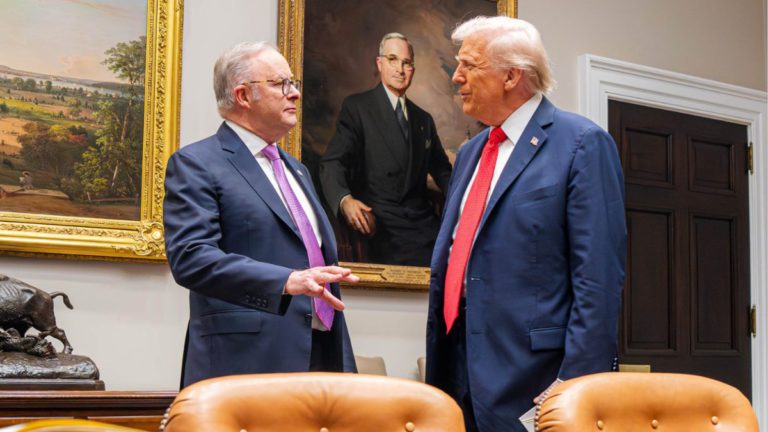
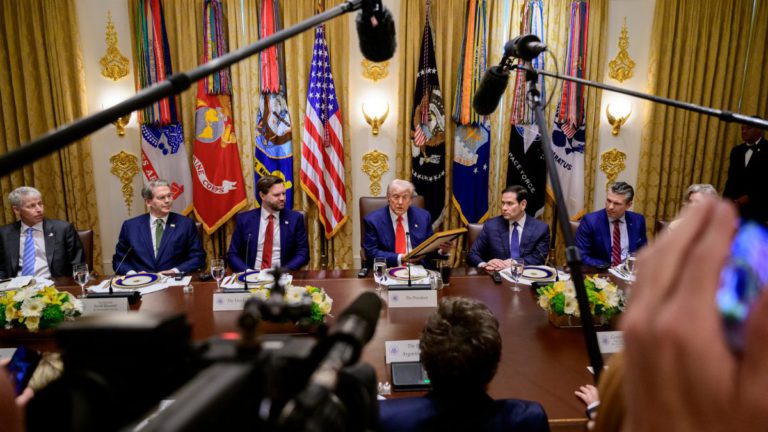
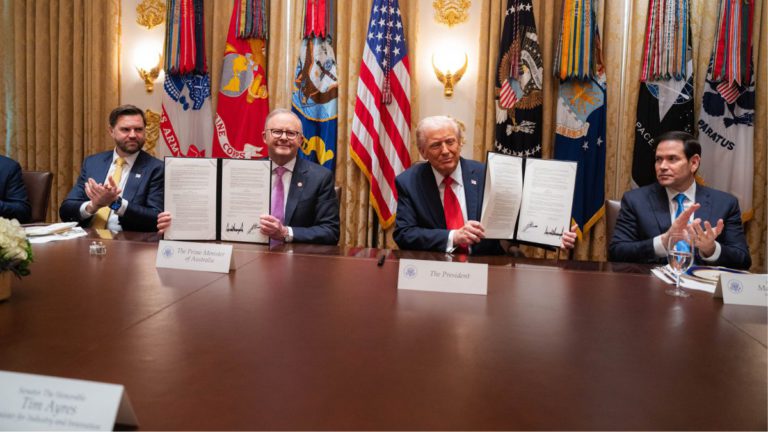
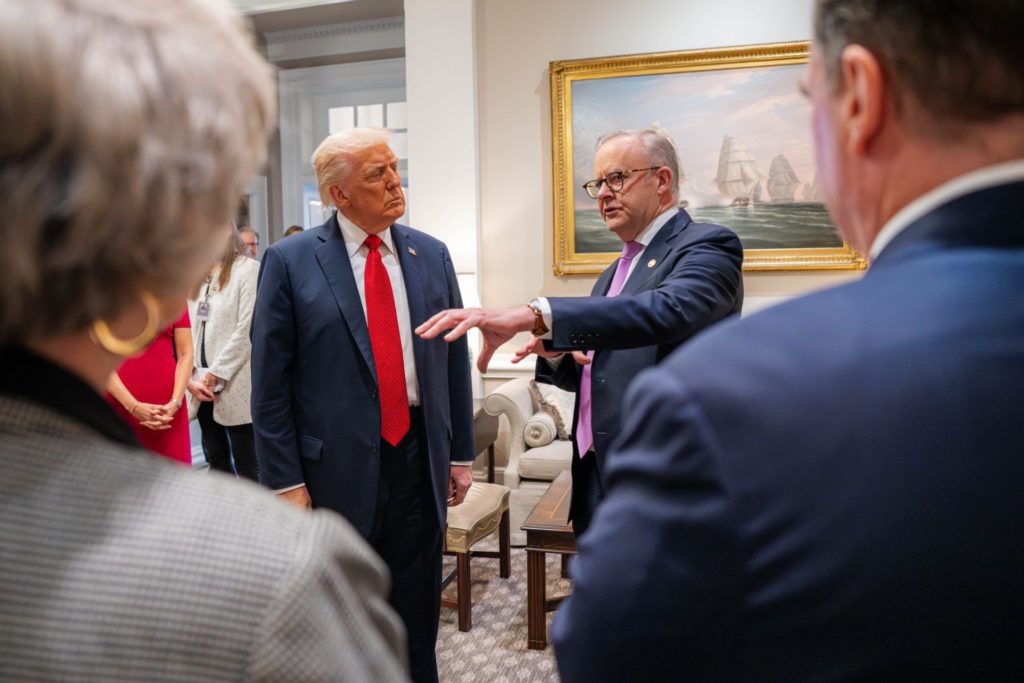
Prime Minister Anthony Albanese met U.S. President Donald Trump at the White House, where the two leaders signed a major critical-minerals agreement aimed at countering China’s dominance in strategic resource supply chains.
According to official announcements and media reporting, the deal is valued at approximately US$8.5 billion (around A$13 billion) and involves both nations committing at least US$1 billion each within the next six months to mining, processing and value-added projects for rare earths, critical minerals and allied technologies.
Image Source: PM&C
A key impetus for the agreement is the growing concern over China’s near-monopoly on the processing of rare earths and other strategic inputs used in defence systems, electric vehicles, and high-tech manufacturing. Australian and U.S. officials have repeatedly noted the need for diversified, resilient supply chains beyond China.
For Australia, this deal presents both economic and strategic opportunity. With vast reserves of lithium, rare earths, nickel and other critical elements, Australia has long positioned itself as a key partner for allied nations seeking secure supply. The agreement will accelerate Australia’s move up the value chain—from raw materials exporter to processor and manufacturer.
Image Source: PM&C
From the U.S. perspective, the deal helps reduce reliance on adversarial supply sources and links American industrial competitiveness and national security more directly to trusted partners. For Washington, locking in Australian feedstock and processing capacity is part of a broader strategy to shore up supply-chain resilience and defence readiness.
Importantly, the agreement complements the broader defence partnership between the two nations. During the summit, Trump reaffirmed support for the AUKUS nuclear-powered submarine deal, placing the critical minerals pact within the broader Indo-Pacific security architecture.
Image Source: PM&C
However, the agreement also faces clear challenges. The details of binding commitments versus memoranda are still emerging; environmental, permitting and infrastructure hurdles in Australia remain; and investment risk still needs to be managed for large-scale processing facilities to be built. Analysts caution that the gap from announcement to delivery is where many previous initiatives have stalled.
Image Source: PM&C
In the final analysis, the pact signals a strategic shift: Australia and the U.S. are treating critical minerals not just as economic commodities but as key national-security assets. And in the face of China’s export-control pressure, the agreement positions their alliance as more than a diplomatic handshake—it becomes a tangible axis of supply-chain security.
Support our Journalism
No-nonsense journalism. No paywalls. Whether you’re in Australia, the UK, Canada, the USA, or India, you can support The Australia Today by taking a paid subscription via Patreon or donating via PayPal — and help keep honest, fearless journalism alive.
Australia ended India’s unbeaten ODI run in 2025 with a commanding seven-wicket win in a rain-curtailed contest at the Optus Stadium in Perth on Sunday. The home side, led by stand-in captain Mitchell Marsh, took a 1-0 lead in the three-match series after comfortably chasing down a revised target under the DLS method.
Persistent rain halted play four times during the match, disrupting momentum for both sides, but Australia managed the interruptions far better to seal their first ODI win of the year.
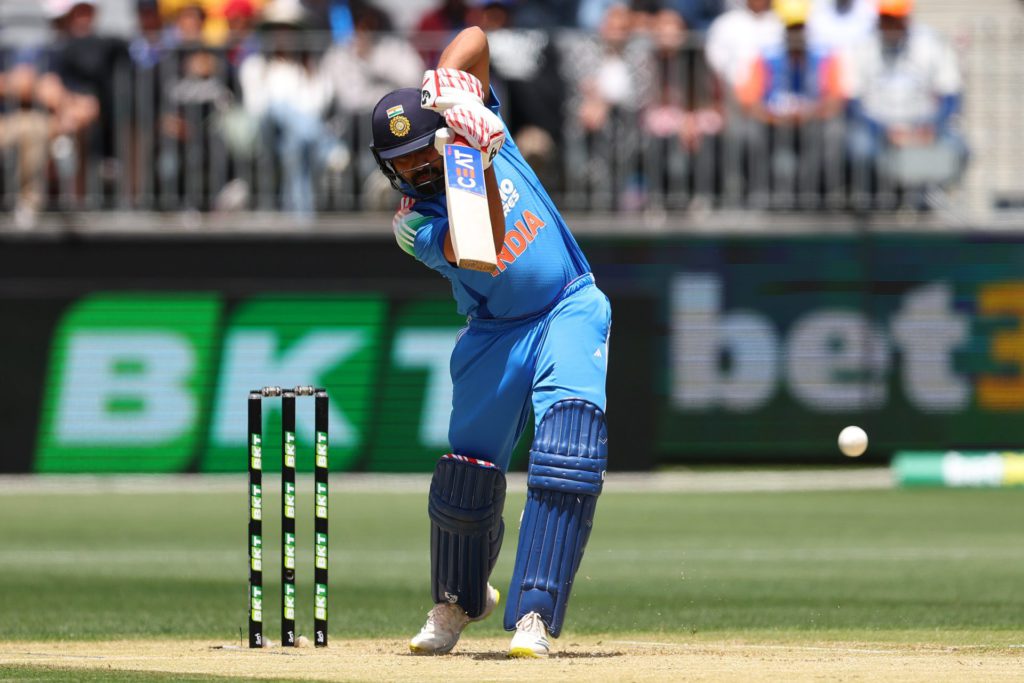
After winning the toss and opting to bowl, Australia’s pace attack made early inroads into the Indian batting order. Josh Hazlewood struck first, removing Rohit Sharma for eight, before Mitchell Starc and debutant Mitchell Owen dismantled the top order.
India’s struggles deepened when Virat Kohli was dismissed for a rare duck — his first in an ODI in Australia after 30 innings — and captain Shubman Gill was caught behind for 10. By the time the first rain delay arrived, India were tottering at 25 for three. Shreyas Iyer and Axar Patel attempted to rebuild, but regular rain interruptions and disciplined Australian bowling kept the visitors in check.
KL Rahul provided some resistance with a brisk 38 from 31 balls, while Axar Patel added a patient 31 off 38 deliveries. Their 39-run partnership offered temporary stability before both fell to spin and pace in quick succession. Nitish Kumar Reddy’s late cameo of 19 not out, featuring two sixes in the final over, pushed India to 136 for nine in 26 overs. Hazlewood finished with excellent figures of two for 20, while Owen and Matthew Kuhnemann also picked up two wickets each, ensuring India never recovered from their slow start.
Australia’s chase began nervously when Arshdeep Singh removed Travis Head early for eight, but from there, the hosts took complete control. Mitchell Marsh led from the front with an unbeaten 46, striking three towering sixes to keep the scoreboard ticking.
Josh Philippe, returning to the ODI side after four years, supported him well with a fluent 37 before falling to Washington Sundar. The pair’s 55-run stand all but sealed the contest, and Matt Renshaw’s quick 21 not out saw Australia reach 131 for three in just 21.1 overs, winning by the DLS method.
The defeat marked India’s first loss in ODIs this year, ending their impressive streak of eight consecutive wins. The top-order failure highlighted the team’s ongoing challenge of adapting quickly to Australian conditions, where extra bounce and pace expose technical flaws. Frequent weather interruptions further unsettled the visiting side, making their batting effort appear disjointed. For Australia, the result showcased depth and composure, with both senior players and returning faces performing seamlessly despite the disruptions.
With the victory, Australia gained early momentum in the three-match series, while India will need to regroup quickly ahead of the next ODI in Adelaide on October 23. The visitors will be hoping for a stronger showing from their top order and more adaptability under changing conditions.
Meanwhile, Mitchell Marsh’s confident leadership and Australia’s disciplined execution with both bat and ball have set the tone for what promises to be an intriguing series between two of the world’s top cricketing sides.
India: 136/9 in 26 overs (KL Rahul 38, Axar Patel 31, Josh Hazlewood 2/20) vs Australia 131/3 (Mitchell Marsh 46*, Josh Philippe 37; Axar Patel 1-19).
Support our Journalism
No-nonsense journalism. No paywalls. Whether you’re in Australia, the UK, Canada, the USA, or India, you can support The Australia Today by taking a paid subscription via Patreon or donating via PayPal — and help keep honest, fearless journalism alive.
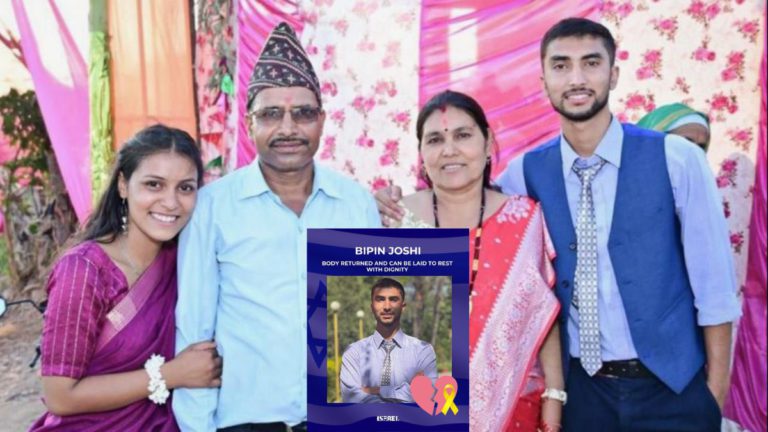
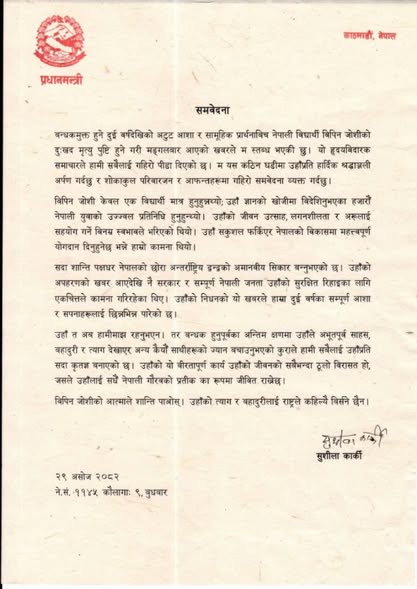
Israel’s Foreign Ministry on Sunday held a solemn farewell ceremony at Ben Gurion Airport for slain Nepali hostage Bipin Joshi, whose body will be repatriated to Nepal after being recovered from Hamas captivity last week.
Image: Slain Nepali hostage Bipin Joshi (Source: X)
The farewell ceremony was attended by residents of Kibbutz Alumim, representatives of the Sdot Hanegev Regional Council, Nepali diplomats, and senior Israeli Foreign Ministry officials, including Eynat Shlein, deputy director-general of the ministry and head of Mashav. Gal Hirsch, Israel’s special envoy for hostages, lit a memorial candle in Joshi’s honour, praising his courage and sacrifice.
In a statement, the ministry said: “Bipin Joshi was only 23. A student from Nepal who came to Israel to learn agriculture and build a better future. Bipin was taken hostage by Hamas and killed in captivity in Gaza. His body now flies home to Nepal.
“An innocent life, full of promise, stolen too soon.”
Bipin Joshi was only 23. A student from 🇳🇵Nepal who came to 🇮🇱Israel to learn agriculture and build a better future.
Bipin was taken hostage by Hamas from Kibbutz Alumim on October 7 and killed in captivity in Gaza.
Joshi, 23, an agricultural student from Nepal, was hailed as a hero for deflecting a live grenade during the Hamas attack on 7 October 2023, saving several lives before being abducted from Kibbutz Alumim and later killed in captivity in Gaza.
Bipin Joshi's family struggled so hard to get their son back.
He arrived in Israel 25 days before the massacre. The 23-year-old Hindu student from Nepal just wanted to study agriculture.
He wasn't Israeli. He wasn't Jewish. So the media won't talk about him because that will… pic.twitter.com/2QrwLfLG8Q
He had arrived in Israel under Mashav, Israel’s Agency for International Development Cooperation, as part of an international agricultural training programme.
Image: Family mourns Nepali Hindu student Bipin Joshi killed in Hamas captivity (Source: X)
Joshi’s family earlier confirmed his death, describing it as “the most devastating news” after months of clinging to hope following the release of a proof-of-life video filmed in Hamas tunnels. The family said in a statement.
“Bipin, you are a hero! The grenade you deflected before being brutally abducted saved the lives of your friends.”
The Israel Defense Forces escorted the remains to the National Centre of Forensic Medicine in Abu Kabir for identification. Nepal’s Ambassador to Israel, Dhan Prasad Pandit, said the body would be handed over to the family in Kathmandu once DNA verification was completed.
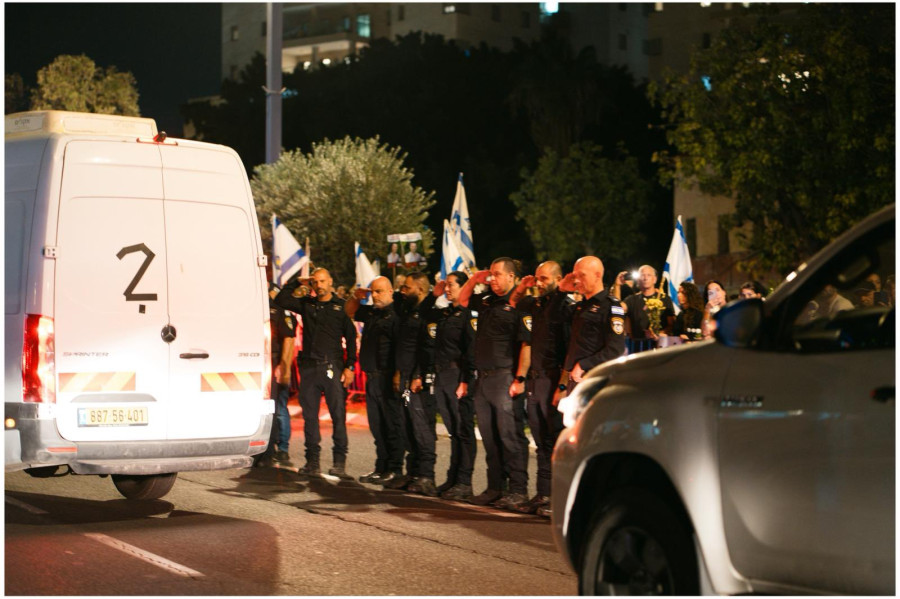
Image: IDF troops salute over the caskets containing the bodies of slain hostages Guy Illouz, Bipin Joshi, Yossi Sharabi and Cpt. Daniel Perez in the Gaza Strip, late October 13, 2025 (Source: Israel Defense Forces)
Nepal’s Foreign Ministry said it had worked through diplomatic channels — including Qatar, Jordan, Egypt, and the United States — to seek Joshi’s release. The family expressed gratitude to the governments of Israel, Nepal, and the United States, including former President Donald Trump, for supporting efforts to bring Bipin home.
Support our Journalism
No-nonsense journalism. No paywalls. Whether you’re in Australia, the UK, Canada, the USA, or India, you can support The Australia Today by taking a paid subscription via Patreon or donating via PayPal — and help keep honest, fearless journalism alive.
Prime Minister Anthony Albanese is in the United States for an official trip hosted by President Donald Trump in Washington DC.
Albanese said the visit underscored the enduring friendship between the two nations. “Australia and the United States have stood shoulder-to-shoulder in every major conflict for over a century,” he said.
“I look forward to a positive and constructive meeting with President Trump at the White House. Our meeting is an important opportunity to consolidate and strengthen the Australia–United States relationship.”
The visit aims to deepen Australia’s longstanding alliance with the United States — a partnership built on shared values of peace, security, and prosperity.
Discussions will focus on enhancing trade and investment, bolstering defence cooperation through AUKUS, and maintaining stability in the Indo-Pacific region.
Joining the Prime Minister’s program will be Minister for Resources and Northern Australia Madeleine King and Minister for Industry, Innovation and Science Tim Ayres. This marks Mr Albanese’s seventh visit to the United States since becoming Prime Minister.
During his absence, Deputy Prime Minister Richard Marles will serve as Acting Prime Minister until 7pm (AEST) on 21 October, after which Foreign Minister Penny Wong will assume the role until Albanese’s return.
Support our Journalism
No-nonsense journalism. No paywalls. Whether you’re in Australia, the UK, Canada, the USA, or India, you can support The Australia Today by taking a paid subscription via Patreon or donating via PayPal — and help keep honest, fearless journalism alive.
Over the weekend, the federal government released its rapid review into school bullying.
Authored by clinical psychologist Charlotte Keating and suicide prevention expert Jo Robinson, the review received more than 1,700 submissions from parents, students, teachers and school staff. The majority were from parents.
Amid ongoing community concerns about the devastating impacts of bullying, what does the review get right? Where are the weak spots?
And is a call for schools to respond to a complaint of bullying in two days reasonable?
What did the review find?
The review acknowledges bullying is not a single issue with a single fix. Bullying sits on a continuum of harmful behaviours that cuts across wellbeing, behaviour, attendance, engagement and family functioning.
It also notes students are not the only ones who bully. Sometimes staff and parents are the perpetrators.
The review calls for school cultures that prioritise empathy and kindness – two of the key priorities in our current national education declaration.
The review recommends clear policies and procedures around bullying, simple reporting pathways, and more training for teachers to help them manage their classrooms and deal with bullying.
Is it reasonable for schools to act within 2 days?
Many caregivers during the review said they felt nothing happened after reporting concerns to their child’s school. The first casualty of many bullying incidents is the relationship and trust between families and the school.
One of the most prominent recommendations is schools should respond within two school days to a complaint or incidence of bullying.
This requires schools to show they have provided immediate safety measures and started an unbiased investigation. It recognises more complex cases may take longer to resolve, but this initial action is essential.
Setting a predictable two-day clock signals harmful behaviour will be taken seriously and the school will keep people informed as the process unfolds. This is realistic for schools – noting complex cases will take longer to properly resolve.
As the review noted, schools that already do this well have a simple reporting pathway and communication templates. Time is provided for staff to see students outside of class and there are clear escalation routes if concerns are not resolved. There is visible early action so students feel protected and families know what will happen next.
What does the review get right?
The review is grounded in research evidence. It acknowledges the multifaceted nature of bullying, puts respectful relationships at the centre, and treats bullying as a whole school community issue. This is what current research suggests is the best way to approach this damaging issue.
It also calls for visible leadership and early action from the school, so trust does not erode while families wait for updates. It backs practical approaches to enable students to support peers and report concerns if they see something wrong.
Importantly, it allows schools to tailor how they work. This is especially important in rural and remote areas where staffing, services and community relationships differ.
The review notes how data collection could help research and further responses to bullying. But more work is needed here. Tracking and reporting only work if there are shared definitions, data collection infrastructures and clear privacy rules.
Meanwhile, the digital landscape is moving at a rapid pace. Schools also need more guidance on image-based abuse and deepfakes.
What’s missing?
We did not hear much about how bullying prevention interacts with existing approaches to students’ wellbeing, behaviour and attendance.
The review could have said more about the tensions between keeping students safe and making sure all students have access to education. Restorative justice approaches within schools, if done well, can help young people understand the impact of their actions.
Families of bullying victims may want to see a perpetrator “expelled” or “suspended”. But research shows this is a damaging approach.
More is needed to spell out what should happen when a matter moves beyond the classroom to school leadership and when it involves external agencies, such as police.
$10 million isn’t much
The government has announced A$10 million for a national awareness campaign and new resources for teachers, students and parents.
But awareness alone is not enough. Schools need time, coaching and systems that support teachers and professional staff to do the work. So the $10 million is a limited beginning.
More commitment is needed to encourage states and other school sectors to increase funding for dedicated wellbeing roles within schools, data capability, coaching and time for teachers, so any new expectations become routine.
Ultimately, the states and territories are responsible for schools, so let’s hope the joint commitment to address bullying – expressed by all education ministers on Friday – remains central to their planning and funding decisions.
No-nonsense journalism. No paywalls. Whether you’re in Australia, the UK, Canada, the USA, or India, you can support The Australia Today by taking a paid subscription via Patreon or donating via PayPal — and help keep honest, fearless journalism alive.
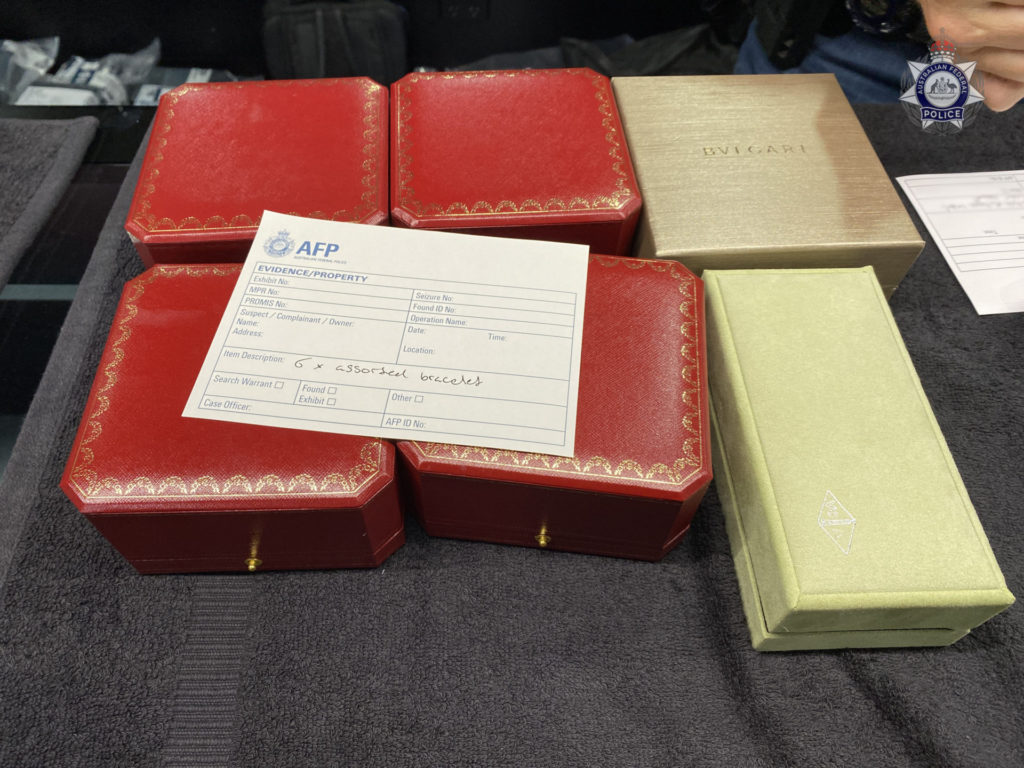
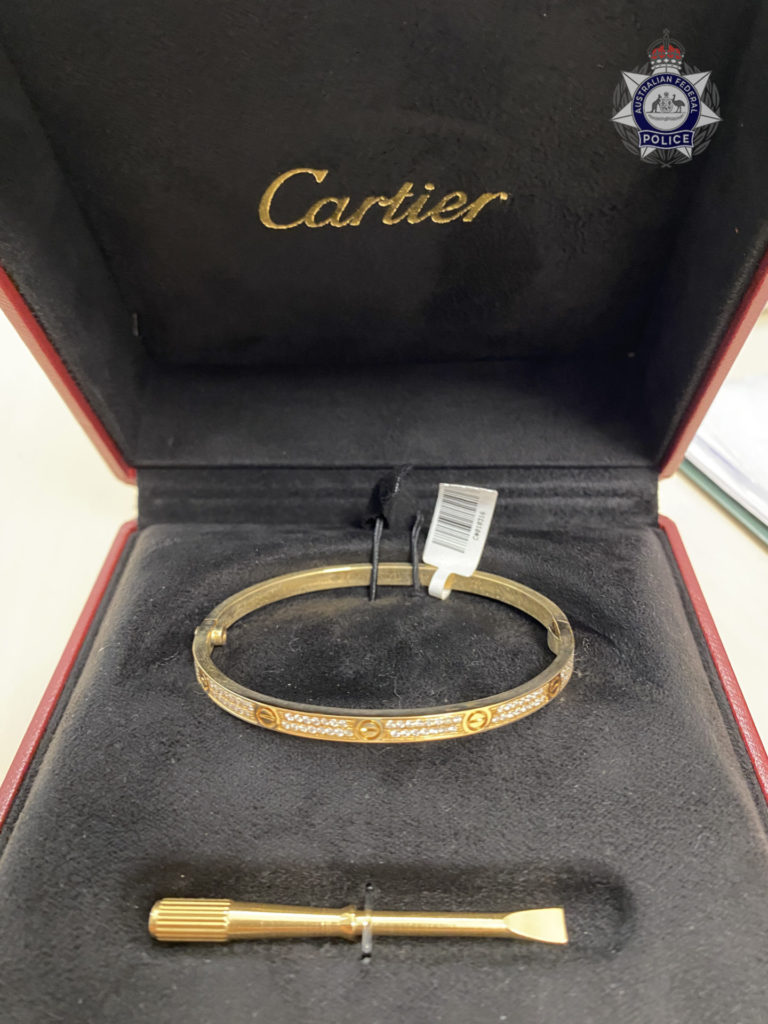
The Australian Federal Police (AFP) allege the man passed off fake high-end pieces as genuine items from brands including Cartier and Van Cleef & Arpels.
Image: Gold Coast man charged with 22 counts of selling fake replicas of Cartier and Van Cleef & Arpels jewellery (Source: AFP)
AFP Detective Superintendent Adrian Telfer said selling counterfeit goods exploits unsuspecting buyers.
“Selling counterfeit items and products is a deception and fraud that preys upon the goodwill and the back pocket of the customers involved,” Det Supt Telfer said.
“The AFP has a zero-tolerance approach to anyone allegedly committing an offence that seeks to gain an unfair financial advantage via illegal means.”
In December 2023, members of the Gold Coast Joint Organised Crime Task Force (JOCTF) — comprising AFP and Queensland Police — executed a search warrant at a Burleigh Heads jewellery store. The man reportedly granted officers access to a safe containing jewellery, gold bullion and cash.
Image: Gold Coast man charged with 22 counts of selling fake replicas of Cartier and Van Cleef & Arpels jewellery (Source: AFP)
Police seized the items after a search of the store, safe and business records failed to verify the origin or authenticity of the jewellery. Subsequent AFP investigations revealed that the counterfeit pieces were allegedly presented for sale as genuine luxury items, with a total listed value exceeding $100,000.
However, an AFP valuation later found the true worth of the seized jewellery to be about $28,000.
The man has been charged with 22 counts of possessing or exposing for sale goods with false trademarks, contrary to section 148(1) of the Trade Marks Act 1995 (Cth). The offence carries a maximum penalty of five years’ imprisonment and/or a fine of $181,500.
Support our Journalism
No-nonsense journalism. No paywalls. Whether you’re in Australia, the UK, Canada, the USA, or India, you can support The Australia Today by taking a paid subscription via Patreon or donating via PayPal — and help keep honest, fearless journalism alive.
Three Afghan cricketers—Kabeer, Sibghatullah, and Haroon have been killed in a Pakistani airstrike in Afghanistan’s Paktika province. The players had travelled from Urgun to Sharana for a friendly match and were targeted during a gathering upon their return. The Afghanistan Cricket Board (ACB) condemned the strike as a “cowardly act” by Pakistan and announced Afghanistan’s withdrawal from the upcoming tri-nation T20 series involving Pakistan and Sri Lanka.
Rashid Khan, captain of Afghanistan’s men’s cricket team called the strike “immoral and barbaric,” stressing that it violated human rights and had extinguished innocent lives and sporting talent. Other senior cricketers, including Mohammad Nabi and Fazalhaq Farooqi, issued similar condemnations. The strike has further escalated tensions, with Kabul accusing Islamabad of breaching a fragile ceasefire.
(Image – X – @ACBofficials)
On October 9, 2025, following a TTP (Tehreek-e-Taliban Pakistan) attack on Pakistani soldiers in Khyber Pakhtunkhwa, Pakistan carried out an airstrike in Kabul targeting TTP leader Noor Wali Mehsud. In retaliation, Afghan forces launched operations that reportedly killed at least 23 Pakistani soldiers, while at least 9 Afghan soldiers also died. Sporadic ground fighting continued in the following days before a fragile ceasefire was established. The flare-up has reopened longstanding hostilities linked to the Durand Line (the defacto border) dispute and mutual accusations of harbouring militants.
The crisis comes as Pakistan, currently on its 23rd IMF bailout, grapples with severe economic, political, and institutional breakdown. Analysts often attribute Pakistan’s long-term decline to decades of state-sponsored jihadist terrorism with global footprints (from 9/11 to 26/11 terror attacks), entrenched religious radicalisation—including distortions in textbooks—and failure to build an inclusive, plural, secular order like India from which it was cut away in 1947.
Pakistan also faces deep internal fragmentation: in occupied Balochistan, a full-blown insurgency led by groups such as the BLA and BLF targets Pakistani forces and Chinese CPEC assets amid allegations of resource plunder and enforced disappearances; in Pakistan-Occupied Jammu & Kashmir (POJK), residents routinely protest disenfranchisement, economic neglect, and military repression; and in Sindh, nationalist anger and urban unrest persist over demographic engineering, economic exploitation, and federal overreach. Together, these fault lines expose a state battling cascading crises of legitimacy and control.
9/11 mastermind and Al-Qaeda leader Osama Bin Laden was found living next door to an Army cantonement in a sprawling house (Image Source- Baloch American Congress and Mir Baloch)
More recently, Pakistan also suffered a major military setback after India struck Pakistan-based terror sites in response to the Pahalgam terror attack and then targeted several Pakistani military airbases amid the ensuing escalation. Defence commentators writing in open sources estimated that India destroyed roughly 19 Pakistani military aircraft — including some in the air — and may have hit near a nuclear-sensitive asset. Pakistan attempted retaliation but failed to inflict meaningful damage due to India’s air-defence advantage. The confrontation included what analysts described as the longest recorded surface-to-air kill in history by India’s air defence system. It ended with Pakistan seeking a ceasefire.
#WATCH | Austria: On IAF chief confirming 5 Pakistani Jets shot down by S-400 during Operation Sindoor, Tom Cooper, Military aviation analyst, says, "…We have seen evidence of not only fire, but even more Pakistani aircraft being shot down. We have seen evidence for even more… pic.twitter.com/aijHjlIXCl
Pakistan was artificially carved out as an explicitly Islamic state in 1947, following the partition of India, the world’s oldest surviving civilization, on the premise that Muslims could not co-exist with Hindus, a communal and bigoted logic recently echoed by its Army Chief, Gen. Asim Munir. That founding mindset continues domestically: even Muslim minorities such as Ahmadis face legal persecution, and anti-Hindu and anti-Jewish rhetoric remains common in parts of academia and media.
Pakistan’s official and school narratives have long been known to distort history — including downplaying or denying the 1971 defeat that led to the creation of Bangladesh, and misrepresenting the 1999 Kargil conflict. In Kargil, Pakistan initially disowned its soldiers killed on Indian soil and refused to accept their bodies. The Indian Army, which is widely regarded as among the most powerful and professional in the world, then conducted respectful burials for them— a fact documented by Indian sources and acknowledged later by Pakistani military veterans.
Even during the latest conflict, several wild Pakistani claims collapsed under scrutiny — including a viral claim, amplified by Al Jazeera, that an Indian female pilot had been captured, and a Bloomberg report suggesting Indian soldiers had been taken prisoner; both were shown to be false. Meanwhile, a Pakistan Air Force spokesperson made a widely-ridiculed statement about an alleged strike on India’s S-400 air-defence system — saying it was “easier to attack than to show its picture” and invoking “centre of gravity” in a manner commentators called incoherent — without producing any evidence.
Pakistan Air Force Air Vice Marshal Aurangzeb Ahmed: "Attacking the S-400 is easier than identifying it because it's centre of gravity."
Hard to say which is worse – the PAF's inability to defend Pakistan or their PR skills. Thankfully Ahmed didn't say, "Good man the lalten." pic.twitter.com/ujssDjeyOb
— Rakesh Krishnan Simha (@ByRakeshSimha) May 14, 2025
Against this backdrop of ideological militancy, official-level disinformation campaigns, economic implosion, rising insurgencies, and external military humiliation, Pakistan appears perilously close to collapse.
Support our Journalism
No-nonsense journalism. No paywalls. Whether you’re in Australia, the UK, Canada, the USA, or India, you can support The Australia Today by taking a paid subscription via Patreon or donating via PayPal — and help keep honest, fearless journalism alive.
The Albanese Government will introduce a new set of University Governance Principlesaimed at strengthening accountability, transparency, and public trust across Australia’s higher education sector.
Announcing the reforms, Education Minister Jason Clare said the new Principles respond to serious concerns about governance standards in universities and will be embedded into Commonwealth regulation through the Threshold Standards.
Minister Clare said the measures were vital to restoring public trust. “If you don’t think there are challenges in university governance, you’ve been living under a rock,” he said.
“These reforms will help ensure universities meet the standards their students, staff and communities expect.”
Under the new rules, universities must report annually to the Tertiary Education Quality and Standards Agency (TEQSA) on their compliance with the Principles, using an “if not, why not” approach similar to corporate governance frameworks used by listed companies.
The Principles were developed by the Expert Council on University Governance, chaired by Melinda Cilento, alongside Sharan Burrow AC and Bruce Cowley.
A new Vice-Chancellor remuneration framework will also be established in collaboration with the Commonwealth Remuneration Tribunal, states and territories, and key stakeholders such as the Universities Chancellors Council.
Universities will be required to publish the outcomes of governing body meetings, consultancy spending details, Vice-Chancellors’ external roles, annual remuneration reports, and the composition of their governing bodies. Skills matrices will be reviewed to ensure representation of staff, students, and higher education experts.
The eight key themes of the Principles focus on accountability, diversity, independence, transparency, trust, inclusiveness, sustainability, and responsibility.
TEQSA will have the power to take compliance action against institutions that repeatedly fail to meet these standards.
Cilento said the Principles provide a practical framework for consistent improvement across the sector.
“Greater transparency, reporting, and stakeholder engagement should help rebuild trust in universities and their leadership.”
Australian universities receive more than $22 billion in public funding each year. The new framework seeks to ensure this significant public investment is matched by stronger governance, integrity, and openness in how universities operate.
Support our Journalism
No-nonsense journalism. No paywalls. Whether you’re in Australia, the UK, Canada, the USA, or India, you can support The Australia Today by taking a paid subscription via Patreon or donating via PayPal — and help keep honest, fearless journalism alive.
A Brisbane man who cut power to his uncle’s home before fatally stabbing him in what prosecutors called a “planned, vicious ambush” has been found guilty of murder and sentenced to life in prison.
Za’id Abdus Samad, 28, was convicted in the Supreme Court of Queensland over the 2017 killing of his uncle, Abdul Basith Mohammed, outside his Kuraby home as per ABC report.
The 35-year-old victim was stabbed multiple times after stepping outside late at night to investigate a power outage.
ABC reports that in her victim impact statement, Noelia Abdus Samad said her “world completely fell apart” after her husband’s death.
“At that time, our daughter was only two-years-old, she was just starting to get to know her dad. He also had two other children with his first wife, who was pregnant with their third child. In one terrible act, four children lost their father.”
ABC reports the jury took one day to return a guilty verdict after hearing evidence of a long-running family feud linked to a secret marriage between Abdus Samad’s half-sister, Noelia, and the victim.
The court was told the relationship — which produced a child — had caused deep tension within the family.
Crown Prosecutor Toby Corsbie told the court Abdus Samad was “fuelled by family hatred” and killed his uncle “in cold blood” over a “tragic misunderstanding of family history.”
During the trial, witnesses recounted that Abdus Samad had described the relationship as “haram” and “zina”, believing it to be incestuous, and had told fellow mosque members he would kill Mr Mohammed if his father did not stop him.
DNA evidence linked Abdus Samad to the crime scene, and a prison inmate testified that he had confessed to the murder while on remand.
Justice Glenn Martin, as per ABC report, described the murder as “a vicious ambush” carried out without reason.
“…you tricked the deceased into coming outside at night and it must have been the result of a plan you had put in place.”
Abdus Samad, who has already served seven years in custody, will be eligible for parole in 2038.
Support our Journalism
No-nonsense journalism. No paywalls. Whether you’re in Australia, the UK, Canada, the USA, or India, you can support The Australia Today by taking a paid subscription via Patreon or donating via PayPal — and help keep honest, fearless journalism alive.
It’s exam season in Australia. Year 12 students are sitting final exams, while university and younger school students also face end-of-year assessments.
No doubt, students will be spending time memorising notes and revising past lessons.
But memory during exams isn’t just related to how much you study, it’s also about how your brain functions under pressure.
So it’s important students spend this revision time effectively. Neuroscience offers practical strategies to build memory resilience and improve performance under pressure.
We now understand more than ever how stress, sleep, emotion and attention shape the way students learn and remember.
the prefrontal cortex, for working memory or the temporary storage used to solve problems and make decisions
the amygdala, which processes emotion.
During exams, students rely heavily on working memory to hold and manipulate information, and on long-term memory to retrieve facts and concepts.
But stress activates the “hypothalamic-pituitary-adrenal axis”, flooding the brain with the stress hormone cortisol.
While short bursts of stress can sharpen focus, chronic or acute stress impairs the hippocampus and prefrontal cortex. This makes it harder to recall information and think clearly.
This is why students can “blank” during high-pressure moments such as exams.
What not to do (the ‘memory killers’)
Several common habits during exam season can sabotage memory. So try to avoid:
cramming: while it may feel productive, cramming relies on short-term memory and undermines long-term retention.
sleep deprivation: sleep is essential for memory consolidation. Without it, the brain struggles to transfer new learning into long-term storage.
multitasking and distraction: the brain’s working memory can only hold a small amount of information at any given time. Trying to juggle too many tasks – especially with phones or social media – is a recipe for forgetting. So keep your phone away from you when you’re studying.
high anxiety: emotional stress consumes brain resources, reducing working memory capacity. This can lead to poor recall and decision-making during exams.
What to do (the ‘memory boosters’)
Neuroscience-backed strategies can help students protect and enhance their memory during exam season. Try to include:
spaced repetition: this involves reviewing the same material repeatedly over time. This strengthens memory networks and is far more effective than last-minute cramming. If you can, aim for learning sessions at least one day apart, across at least a week. But more time is always better.
retrieval: test yourself – can you remember what you’ve been learning? This boosts recall and builds durable memory.
mindfulness and physical activity: both of these can reduce stress hormones and improve your brain function. Researchers have shown mindfulness exercises can reduce stress and mental wellbeing in university students. Research also suggests you should aim for 30 minutes of exercise about four hours after you do your learning. Exercise is thought to release brain chemicals that promote “plasticity”, the process by which neurons change and strengthen their connections to create memories.
sleep: aim for 7–9 hours of sleep per night to help your brain consolidate your learning.
eat well: your diet can also support brain health and overall mental and physical wellbeing. Omega-3s, antioxidants and hydration all play a role in memory performance. So drink lots of water and ensure a healthy balanced diet.
No-nonsense journalism. No paywalls. Whether you’re in Australia, the UK, Canada, the USA, or India, you can support The Australia Today by taking a paid subscription via Patreon or donating via PayPal — and help keep honest, fearless journalism alive.
An eight-month investigation into a cross-border cocaine trafficking network has led to the seizure of 72 illegal U.S.-made handguns and 66 prohibited devices in northern Ontario.
Two Brampton residents — Balraj Singh, 31, and Kawalbir Singh, 21 — have been arrested and charged with 72 counts of weapons trafficking. Balraj Singh also faces an additional charge of cocaine trafficking.
(Screenshot X – @CrimewatchTO)
The Ontario Provincial Police (OPP) said the weapons were discovered on 11 September when officers intercepted a tractor-trailer at a Ministry of Transportation inspection station near Temiskaming Shores. The truck had departed from Toronto and was identified as part of an ongoing investigation launched in February 2025.
The search, conducted under a warrant with support from multiple specialised OPP units — including the Guns and Gangs Enforcement Team, the Canine Unit and the North East Region Community Street Crime Units — uncovered dozens of firearms that police say were smuggled from the United States.
(Screenshot X – @CrimewatchTO)
“Preliminary tracing results indicate all the handguns originated in the U.S.,” said the OPP, citing the Firearms Analysis and Tracing Enforcement (FATE) Program managed by the Criminal Intelligence Service Ontario.
OPP Chief Superintendent Mike Stoddart said the operation demonstrated the strength of intelligence-led policing and cross-border cooperation.
“This seizure of 72 illegal handguns and dozens of prohibited devices is a powerful example of what can be achieved through coordinated investigations,” he said.
“These firearms originated in the United States, highlighting the importance of partnerships with law enforcement agencies across borders.”
The investigation was led by the Border Drug Interdiction Task Force (BDIT) — a joint operation involving the OPP, the Royal Canadian Mounted Police, the Canada Border Services Agency, and the U.S. Department of Homeland Security — tasked with tackling criminal activity across the Canada–U.S. border.
Both men remain in custody and are scheduled to appear before the Ontario Court of Justice in Toronto on 22 October.
Support our Journalism
No-nonsense journalism. No paywalls. Whether you’re in Australia, the UK, Canada, the USA, or India, you can support The Australia Today by taking a paid subscription via Patreon or donating via PayPal — and help keep honest, fearless journalism alive.
Sydney recently hosted a significant moment for the city’s Hindu community when more than one hundred young Australian Hindus under the age of 30 gathered for the first Hindu Youth Conference of 2025.
The event brought together students, professionals and community volunteers for a day of reflection and dialogue on what it means to live as a confident Hindu in Australia.
The program included keynote talks on Hindu identity, a practical workshop on ways to live a Dharmic life in contemporary society, a networking lunch to build collaboration among grassroots organisations, and an interactive Q&A that encouraged open discussion.
The conference drew strong participation from a wide range of organisations including Hindu Council of Australia, HSS Australia, Yuva Sydney, VHP Australia, Hindu Youth Australia, UNSW Hindu Society, Sewa Australia, Chinmaya Mission Youth, Sydney Sanskrit School, BAPS Swaminarayan, YST Legal, Karma Kitchen and Saath Youth — reflecting the scale of engagement and the shared intent to strengthen youth leadership in the community.
Speakers and participants emphasised that one can be fully Australian while being confidently Hindu, that openly owning one’s Dharmic identity matters, and that Sanatan Dharma provides many meaningful paths of living and service beyond rituals and temples.
The discussion also reinforced that Dharma is dynamic and adaptable without losing clarity or substance, and that young Hindus are not navigating this journey in isolation but as part of a growing, supportive network.
Support our Journalism
No-nonsense journalism. No paywalls. Whether you’re in Australia, the UK, Canada, the USA, or India, you can support The Australia Today by taking a paid subscription via Patreon or donating via PayPal — and help keep honest, fearless journalism alive.
Neena Badhwar, the founder and long-time editor of The Indian Down Under and a well-known figure in the Indian-Australian community passed away on October 16, 2025.
The Indian Down Under, was the first major Indian community newspaper in Australia, which she established in 1987.
She was a respected figure within the Indian-Australian community, dedicating decades to serving, connecting, and empowering its members. Through her work, she supported and celebrated Indian culture, highlighting community achievements, festivals, arts, and initiatives.
Image: Neena Badhwar, Facebook
Under her leadership, the newspaper became a trusted voice for the community, bridging cultural gaps and fostering a sense of belonging across generations. Her contributions left a lasting impact on preserving and promoting cultural heritage while giving the Indian diaspora a platform to be heard in wider Australian society.
Rekha Rajvanshi an acclaimed author, poet and educator told The Australia Today that she was deeply heartbroken to hear about the passing of Neena Badhwar, who was a gentle soul and a true pillar of the Indian community in Australia.
“I had the privilege of knowing Neena ji since I first arrived in Australia in 2001, when I began writing a column for her. From that moment on, she became so much more than an editor to me — she was like an elder sister, guiding me with kindness, supporting me at every step, and always encouraging my journey.”
Image: Neena Badhwar, Pic by Rekha Rajvanshi
“Neena ji was the visionary founder and editor of The Indian Down Under, the very first major Indian newspaper in Australia, which she established in 1987. Through it, she gave our community a voice and a platform to connect, celebrate, and grow.”
“She embodied intelligence, humility, selflessness, and grace. Her tireless dedication helped build a bridge between India and Australia, nurturing cultural understanding and unity with quiet strength and unwavering passion.”
“Her loss leaves an irreplaceable void, but her legacy will continue to inspire generations. May her beautiful soul rest in eternal peace,” added Ms Rajvanshi.
Support our Journalism
No-nonsense journalism. No paywalls. Whether you’re in Australia, the UK, Canada, the USA, or India, you can support The Australia Today by taking a paid subscription via Patreon or donating via PayPal — and help keep honest, fearless journalism alive.
The Fiji Police Force Headquarters marked Diwali, celebrating the festival as a symbol of righteousness over injustice.
Diwali, also known as the Festival of Lights, is celebrated across the world by Hindus, Sikhs, Jains, and Buddhists to mark the victory of light over darkness and good over evil.
Assistant Commissioner for Police Administration (ACP/A) Meli Sateki said,
“Diwali reminds us that legitimacy is not granted, it is earned through transparency, fairness and the courage to challenge what no longer serves our people.”
He urged officers at Headquarters to use the occasion as a turning point to renew their dedication to justice.
The celebration also highlighted the important role of the Indo-Fijian and Indian community, which forms a significant part of Fiji’s population and diaspora.
ACP Sateki thanked Indo-Fijian officers who organised the event, saying, “Thank you for sharing this sacred tradition with us.”
“Your faith, resilience and cultural wisdom enrich our institution. May your homes be filled with joy, and may your light continue to guide us.”
The Fiji Police Force Headquarters extended warm wishes to everyone for a Happy Diwali, celebrating both the festival and the enduring contributions of the Indo-Fijian community.
Support our Journalism
No-nonsense journalism. No paywalls. Whether you’re in Australia, the UK, Canada, the USA, or India, you can support The Australia Today by taking a paid subscription via Patreon or donating via PayPal — and help keep honest, fearless journalism alive.
Former Prime Minister Tony Abbott has said the 21st century belongs to India, predicting that the country’s Prime Minister — whoever that might be four or five decades from now — could one day take over the mantle of “leader of the free world” from the President of the United States.
Speaking at the NDTV World Summit 2025, Abbott described India as a rising democratic superpower and urged New Delhi to embrace its role as a “democratic counterweight” to China in the Asia-Pacific region.
“The 21st century belongs to India just as it belongs to China,” Abbott said.
“India has three great advantages — democracy, the rule of law, and the English language. The Prime Minister of India, whoever that might be in four or five decades, could well be the leader of the free world.”
Abbott, who served as Prime Minister from 2013 to 2015, said India’s rapid economic growth, technological innovation, and infrastructure boom make it a credible alternative to China in global trade and manufacturing.
“You go to any Indian city — there is a massive infrastructure push, new airports, highways, metros. India is rising fast and can be a substitute to China in global supply chains.”
He pointed to India’s trade deals with Australia in 2022 and with the United Kingdom last month as clear indicators that “the democratic world is realigning itself and shifting away from dependency on China.”
Abbott warned that Beijing’s ambition to “dominate the world” poses a strategic challenge to every democracy. He argued that India, as a stable and powerful democracy, “holds the key to checking Beijing’s hegemonic designs.”
“China wants to be the hegemonic power — and this spells trouble for all of China’s neighbours, as well as the world.”
He pointed to Taiwan as the first potential flashpoint, urging democracies to remain vigilant and united.
“The best way to ensure nothing untoward happens is not to pretend that China has peaceful intentions but to be prepared. Weakness is provocative.”
Abbott also stressed that cooperation among democracies is critical to maintaining a rules-based world order. He suggested that the war in Ukraine might have been avoided had the country been a member of NATO and under the protection of Western military alliances.
“The Ukrainians have been absolutely heroic. If Ukraine was part of NATO, there would have been no Russian incursion.”
He urged India, Australia, and other democracies to deepen partnerships across trade, technology, and defence, arguing that shared values must underpin global alliances in the 21st century.
“America tilted towards Pakistan — a military dictatorship — instead of India, a liberal democracy,” he said.
“Pakistan even gave Osama bin Laden a home for the best part of a decade. India is completely different. I’m not saying the US shouldn’t work with Pakistan where possible, but it should know where its true friends are.”
He also took aim at sections of the Western press for their critical portrayal of Indian Prime Minister Narendra Modi, saying such narratives ignore India’s strong democratic institutions.
“Sometimes the Western liberal press compares PM Modi to a ‘subcontinental Trump’. But anyone who knows India understands it has a riotously free media, a robustly independent judiciary, and free and fair elections. That’s democracy in action.”
“I’m a supporter of Trump, but he misplayed his hand with India. He imposed punitive tariffs while letting others, like China, get away with far worse. That was a mistake.”
He argued that India’s pragmatic foreign policy — maintaining relations with both the West and Russia — reflects its growing maturity as a global power.
Abbott concluded his address by reaffirming the importance of the Australia–India relationship, especially in a world undergoing geopolitical realignment. “India is not just a partner for Australia — it is a friend with shared values and strategic interests,” he said.
“Together, our democracies can ensure peace, stability, and prosperity in the Indo-Pacific.”
His remarks come amid ongoing debate in Australia about immigration and multiculturalism. Recent March for Australia rallies in major cities have distributed flyers targeting Indian migrants — a trend many have criticised as divisive.
Abbott, however, struck an optimistic tone, noting that India’s growing influence on the global stage reflects the strength of its diaspora and the shared democratic ethos between the two nations. “India’s rise is not a threat,” he said.
“It is a promise — a promise that democracy, diversity, and hard work can indeed shape the world’s future.”
Support our Journalism
No-nonsense journalism. No paywalls. Whether you’re in Australia, the UK, Canada, the USA, or India, you can support The Australia Today by taking a paid subscription via Patreon or donating via PayPal — and help keep honest, fearless journalism alive.
Australia’s rising futsal star, Siddak Brar, has earned a coveted spot in the U13 Boys Futsal Team following his outstanding performance at the National School Futsal Championships.
Rochedale State High School in Queensland shared on Facebook that Siddak and his teammates will travel to Barcelona, Spain, in May 2026 to compete against some of the best young futsal players from around the world.
This is a dream opportunity for the young athlete to showcase his skills on the international stage.
Spain, known as a futsal powerhouse, boasts six UEFA Futsal Championships and two consecutive Futsal World Championship titles. The country’s deep futsal culture, with multiple professional divisions, offers an inspiring backdrop for the Australian team’s tour.
The Australian Futsal Association (AFA) has been sending teams to Barcelona for over a decade, where players not only compete against Catalonian representative teams but also receive training from both Spanish and Australian coaches. These experiences help enhance their technical skills, teamwork, and understanding of the game.
Support our Journalism
No-nonsense journalism. No paywalls. Whether you’re in Australia, the UK, Canada, the USA, or India, you can support The Australia Today by taking a paid subscription via Patreon or donating via PayPal — and help keep honest, fearless journalism alive.
The Australian Border Force (ABF) hosted the 21st Heads of Asian Coast Guard Agencies Meeting (HACGAM), from 13 October to 16 October 2025 at the Four Seasons Hotel in Sydney, bringing together senior officials from 22 Indo-Pacific nations to strengthen cooperation on regional maritime security.
File image: HACGAM Working Level Meeting held in Sydney from 16–20 June 2025 (Source: Facebook – ABF)
HACGAM serves as a key platform for major coast guards and civil maritime security agencies to discuss shared challenges, including law enforcement, search and rescue, environmental protection, disaster response, and efforts to combat piracy, people smuggling, and maritime terrorism.
ABF Deputy Commissioner Tim Fitzgerald said the meeting highlights Australia’s long-term commitment to collaboration with regional maritime counterparts. “As maritime threats evolve, collaboration between coast guards has never been more important,” Deputy Commissioner Fitzgerald said.
“This meeting reaffirms Australia’s shared responsibility to uphold maritime security, safety, and environmental protection across the Indo-Pacific. Through cooperation and coordination, we can meet the complex maritime challenges of our region together.”
The 22 member nations of HACGAM include Australia, India, Japan, Indonesia, Malaysia, Singapore, Sri Lanka, and Vietnam, among others. Hong Kong is participating as a region, while the ReCAAP Information Sharing Centre and the UN Office on Drugs and Crime are attending as associate members.
Representing India with pride, a two member @IndiaCoastGuard delegation is participating in 21st Heads of Asian Coast Guard Agencies Meeting #HACGAM, Working Level Meeting in #Sydney, #Australia (16–20 June 2025). #ICG is honoured to chair the Maritime Search & Rescue pillar… pic.twitter.com/SAd0Uppv2D
— Indian Coast Guard (@IndiaCoastGuard) June 18, 2025
Earlier in June, a two-member India Coast Guard (ICG) delegation participated in the HACGAM Working Level Meeting held in Sydney from 16–20 June 2025. The ICG chaired the Maritime Search and Rescue pillar, underscoring India’s leadership in regional maritime safety.
The delegation also contributed actively to Working Groups on Environmental Protection, Prevention of Crimes at Sea, and Information Sharing and Joint Exercises. Through such engagements, the ICG continues to foster cooperation, build capacity, and enhance coordinated responses to maritime emergencies across the Indo-Pacific.
Observer nations at HACGAM 2025 include the United Kingdom, New Zealand, Papua New Guinea, Timor-Leste, and Italy.
Support our Journalism
No-nonsense journalism. No paywalls. Whether you’re in Australia, the UK, Canada, the USA, or India, you can support The Australia Today by taking a paid subscription via Patreon or donating via PayPal — and help keep honest, fearless journalism alive.
At the 2025 federal election in May, Pauline Hanson’s One Nation recorded a primary vote of 6.4%, about half that of the Greens at 12.2%.
But since then, support for the right-wing populist party has surged, with polls showing it now sits between 11% and 14%. The latest Resolve poll for the Nine papers, for example, has One Nation at 12% on first preferences, edging out the Greens at 11%.
This is politically significant, for several reasons. Not only is this performance well above One Nation’s recent election results, but it is high enough to challenge the Greens as Australia’s third-largest party in polling terms.
If this result was replicated at an election, it would put One Nation in a position to win House of Representative seats.
Signs of major improvements in One Nation’s vote appeared in the final weeks of the federal election campaign. Despite this, it did not realise its best polling results on election day, with 6.4%. And even when combined with the Trumpet of the Patriots vote of 1.9%, these two political forces on Australia’s populist right did not manage to maintain their combined vote share of 9.1% achieved at the 2022 election.
Nonetheless, by the later stages of the campaign, pollsters were picking up frustration with the Coalition’s performance, as the prospects of a loss drew nearer. The RedBridge Group/Accent Research tracking poll in late April, for example, put Hanson’s net favourability score slightly higher than Liberal leader Peter Dutton’s in key marginal seats, though both remained in clear negative territory. Since then, and the election of Sussan Ley as the leader of the Liberal Party, One Nation’s fortunes have risen.
So what’s going on?
Liberals losing their right wing
After major election defeats, it is normal for opposition parties to decline further in the polls, as the re-elected government claims ascendancy and its opponents try to reposition themselves. In choosing Ley as leader, the Liberals chose to address their declining vote among women and centrist voters, substantial numbers of whom have switched their votes to Teals and Independents.
The scale of Labor’s victory and the Coalition’s shift to the centre appears to have opened opportunities for Australia’s populist right. Perhaps emboldened by the surge in right-wing populism globally, particularly in the United States, these disillusioned voters are looking to park their votes with smaller, right-wing populist parties.
General pessimism about the state of the world is playing a key role. In September and October 2025, the RedBridge Group and Accent Research asked 1,997 voters whether the “next generation will have a better life than their parents’ generation”. An overwhelming share of One Nation voters (78%) opted for “a worse life”. This result is dramatically more pessimistic than that recorded for other voters.
This alienation no doubt reflects frustration at the election result and fears about future living standards. But it also likely captures more than the material. It reflects a deeper resistance to the direction of modernisation in Australia, one resonant with right-wing electorates in other parts of the world.
With the possibility of a centre-left majority until the end of the decade, these currents of right-wing grievance are expressing themselves beyond parliament. A well-coordinated protest movement may not have fully met organisers’ expectations when it rallied across the country in late August, but it has captured national attention and may build further yet.
Core to right-wing mobilisation are voter anxieties about the pace of immigration following the disruption of COVID lockdowns. High inflation and low wages growth combined to unsettle the consensus about immigration: sky-high rents and housing shortages have become easy reference points for anti-immigration populism.
The Australian Cooperative Election Survey for 2025 led by Shaun Ratcliff and I surveyed over 4,000 voters. We found a clear majority (60%) thought the number of migrants had gone “too far” or “much too far”.
For the combined sample of populist right voters – One Nation and Trumpet of Patriot voters – that share was an overwhelmingly 90%, with some 70% in this group choosing “much too far”.
Despite overall high numbers, anti-immigration sentiment remains concentrated on the political right. Some 77% of Coalition voters chose “too far” options. However, only 14% of Greens and 16% of Labor chose the “much too far” option. Instead, these voters more likely to state that migrant numbers are “about right” – 40% and 45% respectively.
So will One Nation’s numbers continue to climb?
The MAGA movement in the US and Reform in the United Kingdom have both built electoral support on far-right immigration populism. One Nation’s capacity to gather similar levels of voter support in Australia may be limited by the party’s political baggage and a questionable ability to win substantial support in diverse, mobile and relatively prosperous metropolitan areas. Australia’s compulsory voting means that success has, at least so far, been found in the middle ground, which remains far more responsive to the politics of opportunity than that of grievance.
Moreover, conservatives in the Coalition, alarmed by recent polling, are already positioning themselves to raise the profile of immigration politics as they attempt to limit One Nation’s gains and rebuild their primary vote.
This is a political challenge the Coalition has had to address before. In the late 1990s, when One Nation first emerged, and made its presence felt in the 1998 Queensland election with a destabilising 23% of the popular vote.
The growth of right-wing populism in the United Kingdom and elsewhere has been boosted by failures of the other side of politics to respond to voter needs. Keir Starmer’s Labour government has disappointed its voter base by pushing fiscal constraint onto an electorate already exhausted by a decade or more of austerity.
Australian Labor has not followed the path of austerity, spending more on key welfare state measures. It has also responded to the union movement in rebuilding the industrial relations system. This means pay growth and revitalised collective bargaining have both improved the situation for wage-earners.
However, younger voters in particular are now looking an even larger response from Labor: a new social contract on housing. A consolidation of One Nation’s position will therefore depend as much on whether Labor can deliver on such a contract as it does on the Coalition’s search for a so-far elusive formula for rebuilding a majority electorate on the right.
No-nonsense journalism. No paywalls. Whether you’re in Australia, the UK, Canada, the USA, or India, you can support The Australia Today by taking a paid subscription via Patreon or donating via PayPal — and help keep honest, fearless journalism alive.
Parramatta City Council, one of Sydney’s largest and most multicultural councils, has formally supported a motion expressing solidarity with the local Indian community following Senator Jacinta Price’s controversial comments on immigration.
The motion was put forward by Labor Councillor Michael Ng as a matter of urgency after Senator Price suggested the Labor Party was allowing “large numbers” of Indian migrants into Australia because they “ultimately vote for Labor.”
Ng’s original motion included five elements: recognising the contribution of Indian Australians to the Parramatta community, expressing strong support for them in the wake of Price’s comments, condemning the senator’s remarks as divisive and harmful, calling for a public apology, and affirming the council’s commitment to multiculturalism and social cohesion.
As per The Epoch Times, the motion was debated at the council’s ordinary meeting on Monday, 13 October 2025, and passed with two elements removed—the condemnation of Price’s comments as harmful and the call for a public apology.
Speaking to The Epoch Times on 16 October, Councillor Ng said the situation required immediate action. “Although the Lord Mayor [Martin Zaiter] suggested Council cannot do much on this issue, I believe that as civic leaders it is our duty to show support for the communities we represent,” he said.
“Words matter, and silence in the face of harmful rhetoric is not an option.”
In a joint statement with fellow Labor Councillor Patricia Prociv, Ng said he was proud of the Indian community in Parramatta.
“Since Senator Price’s remarks, we have received many messages from concerned members of the community. Irresponsible comments by political leaders not only hurt the communities we represent but also undermine the multicultural success story of Australia.”
Parramatta is home to Harris Park, also known as “Little India,” where the Indian diaspora has made a significant cultural and economic contribution.
As per report, this motion faced opposition from some councillors. Liberal Councillor Sreeni Pillamarri acknowledged the gesture but argued the issue was federal and outside the council’s remit, adding:
“I feel you are trying to divide the community … time has elapsed and everything had been sorted in relation to the comments made by Price.”
Liberal Councillor Steven Issa moved an amendment to remove the conditions condemning Price’s remarks and calling for a public apology.
It is reported that the council ultimately passed the motion retaining the three elements of acknowledging the Indian community, expressing support for it, and affirming the council’s commitment to multiculturalism.
Senator Price’s comments had previously led to her removal from the shadow defence portfolio, sparking debate on national and local levels about immigration, multiculturalism, and political accountability.
Support our Journalism
No-nonsense journalism. No paywalls. Whether you’re in Australia, the UK, Canada, the USA, or India, you can support The Australia Today by taking a paid subscription via Patreon or donating via PayPal — and help keep honest, fearless journalism alive.
Award-winning international singer Mary Millben has publicly rebuked Congress leader Rahul Gandhi after he accused Prime Minister Narendra Modi of being “frightened of Trump.”
Responding on X, Millben defended PM Modi’s diplomatic approach, calling it strategic and rooted in national interest.
“You are wrong, @RahulGandhi. PM @narendramodi is not afraid of President Trump. PM Modi understands the long game and his diplomacy with the U.S. is strategic. Just as @POTUS will always put America’s interests first, so will PM Modi do what is best for India. And I applaud that,” she wrote.
You are wrong, @RahulGandhi. PM @narendramodi is not afraid of President Trump. PM Modi understands the long game and his diplomacy with the U.S. is strategic. Just as @POTUS will always put America’s interests first, so will PM Modi do what is best for India. And I applaud that.… https://t.co/4p0HNRCAv2
Millben, who has performed at major global events including those attended by Indian and American leaders, added a sharp personal remark:
“I don’t expect you to understand this type of leadership because you don’t possess the acumen to be PM of India. Best to return to your ‘I hate India’ tour that has an audience of one — you.”
Her comments came after Gandhi posted a list of reasons he believes Modi is “frightened” of Trump, citing India’s decision on Russian oil, cancelled diplomatic visits, and Modi’s silence on the U.S. president’s statements about Operation Sindoor.
In 2023, Mary Millben performed at the concluding event of PM Modi’s three-day US visit where she sang Jana Gana Mana.
Earlier this year, Millben also shared photos of yoga with PM Modi on the International Yoga Day.
Happy International Yoga Day!! Fond memories with my friends Prime Minister @narendramodi, Richard Gere, and so many beautiful souls at the @UN in New York.
No-nonsense journalism. No paywalls. Whether you’re in Australia, the UK, Canada, the USA, or India, you can support The Australia Today by taking a paid subscription via Patreon or donating via PayPal — and help keep honest, fearless journalism alive.
Eighteen-year-old Navjot Singh has lived his entire life in New Zealand without legal status after his parents overstayed their work visas. His request for residency through ministerial intervention was denied last week by Associate Immigration Minister Chris Penk, RNZ reports.
He has never attended school because he is an overstayer and now faces deportation to India — a country he has never visited — after his bid for residency was rejected.
According to RNZ, Singh was born in Auckland in 2007, a year after changes to the Citizenship Amendment Act 2006 ended automatic citizenship for children born to non-resident parents. As a result, he grew up stateless — denied access to education, healthcare, and basic rights.
Singh told RNZ that he first learned about his situation when he was eight years old.
“I asked my mum why I wasn’t at school, and then she had to tell me. … Ever since, I’ve been living in fear. I couldn’t even be honest with my friends.”
Singh’s father was deported when he was just five days old, and his mother lost her legal status in 2012. With no connection to India, he fears he will struggle to survive there.
“I don’t speak Hindi. I’ve heard that people with higher qualifications can’t find jobs there, so what would I do?”
Immigration lawyer Alastair McClymont, representing Singh, called the decision “inhumane” and urged the government to adopt a fairer approach. He told RNZ, “It makes no sense to deport children who have grown up here to a foreign country,” he said. McClymont said the government should align its laws with those of countries such as Australia and the United Kingdom, which grant citizenship to children who have lived there for 10 years.
“That would resolve the problem for children born to parents without a valid visa or on temporary visas. Once a child has lived here for 10 years from birth, they should be eligible for citizenship.”
Community leaders, including Daljit Singh, president of the Supreme Sikh Society, have rallied behind Navjot. “He was born here and is part of our community,” Daljit Singh told RNZ.
“What harm will children like Navjot bring to New Zealand? We shouldn’t punish these children because it wasn’t their fault.”
Both Green Party and Labour MPs have called for a policy review, saying deporting such children is unjust.
A spokesperson for Immigration Minister Erica Stanford told RNZ that there was no policy work underway on people born in New Zealand after 2006 to parents without legal status, but that individual cases could be considered through the Immigration Protection Tribunal or ministerial intervention.
“The minister has confidence in these avenues to consider such cases on their individual circumstances as they arise.”
Support our Journalism
No-nonsense journalism. No paywalls. Whether you’re in Australia, the UK, Canada, the USA, or India, you can support The Australia Today by taking a paid subscription via Patreon or donating via PayPal — and help keep honest, fearless journalism alive.
In a surprise announcement, Natalie Hutchins, the Member for Sydenham and veteran minister in the Allan Labor Government, has advised Premier Jacinta Allan she will not recontest her seat in the 2026 Victorian election.
Hutchins will remain in Cabinet until 22 December 2025, at which point her ministerial responsibilities will be shifted to colleagues, and she will continue to represent Sydenham until the next election.
Hutchins’ decision marks the end of a distinguished political career spanning more than a decade. First elected in 2010, she held the seat of Keilor before representing Sydenham from 2014 onwards. As a minister, she served in key portfolios including Government Services, Treaty and First Peoples, Prevention of Family Violence, and Women.
Women in Victorian Parliament; Image Source; @NatalieHutchins
A champion of equality, multicultural women, and social justice
Hutchins’ journey was rooted in lived experience: born into public housing and raised in Melbourne’s western suburbs, she rose through union activism to become the first female Assistant Secretary of the Victorian Trades Hall Council before entering Parliament. From those beginnings, she emerged as a fierce advocate for women, multicultural communities, and workers’ rights.
Her legislative record is notable. Under her leadership, Victoria introduced Australia’s first paid family violence leave for the public sector, advanced regulation of labour hire, and championed free access to pads and tampons in public spaces — on the principle that menstrual products are a necessity, not a luxury. At the heart of her political philosophy lies a commitment to equity in representation — whether pushing for gender parity on boards, supporting multicultural women’s leadership, or advancing the Gender Equality Act.
Victoria’s Minister for Women, Natalie Hutchins, officially opened the SisterWorks Crafted Culture Cafe; Image Source: Supplied
Among her signature achievements is Victoria’s progress toward a First Peoples Treaty. Hutchins had long conducted listening tours across the state, and in 2023 negotiated the government’s first treaty legislation, fulfilling a promise she had carried in her ministerial brief since 2014.
In her electorate, she bridged statewide policy with local needs — delivering new and upgraded schools, removing level crossings, funding a new ambulance station in Taylors Lakes, and supporting public transport infrastructure, including the upcoming benefits of the Metro Tunnel.
Reflections from a journalist: “You will be deeply missed”
Having interacted with Natalie Hutchins over years of reporting, I can say her dedication to elevating the voices of multicultural women was more than political rhetoric — it was genuine.
She listened, she worked behind the scenes to find solutions, and she was never performative in her advocacy. As a journalist, I saw firsthand how she responded not as a career politician, but with empathy and tenacity. Natalie, you will be deeply missed in Victorian politics — by the communities you served, by your colleagues, and by those who believed in your vision for equality.
And yes, we can’t forget her dance moves in a Bollywood number she performed at Australia Today’s International Women’s Day Award function last March.
Premier’s tribute and next steps
Premier Jacinta Allan released a heartfelt tribute, describing Hutchins as a “profound contributor” whose work will leave a lasting legacy. She praised Hutchins’ commitment to equality and noted how her background — from public housing to union leadership — shaped a minister determined to create opportunity for all Victorians.
Allan confirmed that Hutchins’ ministerial portfolios will be reallocated after her departure on 22 December, but that she would continue to serve as Sydenham MP until the next election. She thanked Hutchins for her service and extended well-wishes to her and her son, Xavier.
Support our Journalism
No-nonsense journalism. No paywalls. Whether you’re in Australia, the UK, Canada, the USA, or India, you can support The Australia Today by taking a paid subscription via Patreon or donating via PayPal — and help keep honest, fearless journalism alive.
At the National Stock Exchange (NSE) listing ceremony of LG India, Managing Director Hong Ju Jeong captured national attention when he addressed the audience in Hindi. In a moment that resonated deeply with investors, employees, and the public, the South Korean executive chose to speak in India’s most widely spoken language — a gesture that symbolised respect, connection, and cultural understanding.
Starting his speech with “Namaskar, Bharat,” Jeong instantly struck a chord with the audience, earning warm applause. Speaking in clear and heartfelt Hindi, he thanked Indian consumers, employees, and investors for their trust and contribution to LG’s success in the country. His emotions and effort to communicate in Hindi were widely appreciated.
LG Electronics lists 50% above issue price, but the real premium was the emotion in that “Namaste”🙏 and his address to investors in Hindi. Well done LG India MD, Hong Ju Jeon! pic.twitter.com/Qh5NryfZyM
His speech wasn’t merely symbolic — it reflected LG’s growing localisation strategy and its deep commitment to India. The moment was seen as a masterclass in corporate communication, bridging emotional and cultural connections with the Indian audience.
The event marked a major milestone for LG India, whose market capitalisation after listing on the NSE surpassed that of its South Korean parent company. LG India’s market capitalization is approximately ₹1.16 lakh crore (US$13.07 billion), while its South Korean parent company LG Electronics Inc., is valued at around US$8.9 billion. Analysts described the development as a powerful statement about the strength of India’s consumer market and the success of LG’s India-first approach.
Jeong’s Hindi speech became one of the highlights of the day, widely shared on social media and praised across business circles. Many described it as an example of how global corporate leadership can connect authentically with local audiences. In doing so, he not only celebrated a financial milestone but also reaffirmed LG’s long-term commitment to India.
(Image: X – @NSEIndia)
Support our Journalism
No-nonsense journalism. No paywalls. Whether you’re in Australia, the UK, Canada, the USA, or India, you can support The Australia Today by taking a paid subscription via Patreon or donating via PayPal — and help keep honest, fearless journalism alive.
Kho Kho Australia spotlights the fast-paced Indian sport Kho Kho from a new angle through the Australian Masters Games. This partnership seeks to promote a version of Kho Kho that is simplified and modified to suit competitors of all ages and abilities, especially seniors. It also aims to capture the inclusive ethos of the Masters Games, motivating participants to play sport.
As the reputation of traditional Kho Kho suggests, the sport is played at high speeds and involves tactical chasing and agility, all of which could pose challenges for older or less fit competitors. This concern was the motivation for Kho Kho Australia to develop a new modified version for the Masters Games that is still exciting without the sport losing its thrill.
Image: Kho Kho Australia partners with Australian Masters Games to showcase inclusive sport (Source: Supplied)
“Our inspiration came from a desire to make Kho Kho more accessible and enjoyable for all fitness levels,” said a spokesperson for Kho Kho Australia.
“The Masters Games celebrates lifelong participation in sport, so introducing a simplified version aligns perfectly with that philosophy, allowing seniors to be part of the action in a safe, fun, and inclusive environment.”
The Australian Masters Games will present two exhibition formats of Kho Kho: one played under the official rules of the Kho Kho Federation, demonstrating the sport’s agility and speed, and the other a modified, slower-paced version suited to masters-level players.
The two presentation formats are designed to show that Kho Kho can be played by people of every age and ability. “The exhibition will highlight the sport’s versatility,” the spokesperson explained.
“More agile and fit players will demonstrate the speed and agility Kho Kho is famous for, while the masters’ format will show how the same sport can be enjoyed at a different pace without losing its strategic depth.”
Retaining the essential elements of Kho Kho, which are the chase, tagging, and tactics, the modified version has shorter playing time, longer rests, less physical contact, and more flexibility in substitutions. This makes it a safer, more comfortable game for older players while retaining the energy and excitement of the sport.
Image: Kho Kho Australia partners with Australian Masters Games to showcase inclusive sport (Source: Supplied)
“We’ve shortened play durations and introduced longer rest intervals to suit varying endurance levels,” the representative said.
“Contact intensity and attacker stance are adapted to make the game more comfortable for masters’ participants.”
The Australian Masters Games is an important forum for Kho Kho Australia to reach a wider audience in Australia, where players, spectators, and sports administrators can observe the potential of Kho Kho. Kho Kho Australia hopes the exposure it gets from the Games will stimulate interest and curiosity in local communities and schools and generate broader interest in the sport, fostering its growth throughout the nation. “This showcase introduces Kho Kho to a wider Australian audience,” said the Kho Kho Australia team.
“It’s a powerful platform to spark curiosity, foster participation, and build partnerships with local sporting communities.”
With interest from the International Kho Kho Federation showing enthusiasm for this format, there’s a chance it may become a regular event in the future and be included in future Masters Games.
Image: Kho Kho Australia partners with Australian Masters Games to showcase inclusive sport (Source: Supplied)
The difficulties in introducing a new sport like Kho Kho to a major Australian event like the Masters Games were, however, limited. These included acceptance into the program, suitable venues, financial assistance, and more.
“Introducing Kho Kho to the Masters Games was one of our biggest challenges,” the spokesperson admitted. “As a traditional Indian sport, it was new to many organizers and participants, so gaining acceptance and understanding took considerable effort. We faced three main practical hurdles: securing a place in the Games program, finding a proper Kho Kho playing ground with regulation poles, and obtaining financial support, as sponsorships were difficult to secure. We arranged to use an existing field with temporary markings and poles and sought financial and in-kind support from community partners and sponsors.”
Image: Kho Kho Australia partners with Australian Masters Games to showcase inclusive sport (Source: Supplied)
Kho Kho is a traditional Indian tag sport in which two sides contend against each other in the art of chasing and tagging opponents within a given area. The sport requires speed and agility, skill in teamwork and tactics, and mental sharpness. Kho Kho enjoys significant popularity in India and is gaining increasing recognition worldwide due to its unique combination of physical and tactical skill.
Kho Kho Australia partnering with the Masters Games shows how the tradition can be presented to modern multicultural Australian communities in a way that is healthy, provides equal opportunity, and encourages intergenerational participation.
Kho Kho Australia will present an exhibition match at the Australian Masters Games on 23 October in Australia’s capital, Canberra.
Support our Journalism
No-nonsense journalism. No paywalls. Whether you’re in Australia, the UK, Canada, the USA, or India, you can support The Australia Today by taking a paid subscription via Patreon or donating via PayPal — and help keep honest, fearless journalism alive.
Australian Minister for Climate Change and Energy Chris Bowen has delivered the 2025 Australia India Institute Annual Oration at The Imperial Hotel in New Delhi, highlighting the deepening collaboration between the two nations in clean energy, climate action, and technology.
Image: Australian Minister for Climate Change and Energy Chris Bowen has delivered the 2025 Australia India Institute Annual Oration at The Imperial Hotel in New Delhi (Source: Fcaebook – AII)
Minister Bowen’s address comes at a defining moment in the global shift towards renewable energy, following the launch of the elevated India–Australia Renewable Energy Partnership by Prime Ministers Anthony Albanese and Narendra Modi in November 2024.
“The India–Australia Renewable Energy Partnership provides more opportunities to unlock new supply chains to support our transitions and create new prosperity for our peoples,” Minister Bowen said.
“Both Australia and India understand the need to work together on tackling the climate challenge and are ready to seize the energy transformation opportunity before us.”
He described the partnership as being in the “top rank” of Australia’s international energy agreements, noting both countries’ shared ambitions to achieve net zero emissions and drive global climate action.
Image: Australian Minister for Climate Change and Energy Chris Bowen has delivered the 2025 Australia India Institute Annual Oration at The Imperial Hotel in New Delhi (Source: Fcaebook – AII)
Bowen’s speech underscored the complementary strengths of Australia and India — Australia’s expertise in clean energy innovation, education and research, and India’s prowess in technology and digital industries. He highlighted joint initiatives in solar and green hydrogen, including the establishment of the Australia–India Rooftop Solar Training Academy at Pandit Deendayal Energy University in Gujarat, aimed at training India’s next generation of solar technicians.
On hydrogen, Bowen said both countries were developing critical capabilities to decarbonise heavy industries such as steel and aluminium, with Australia investing billions of dollars to build a green hydrogen export industry that could support India’s National Green Hydrogen Mission.
He also reaffirmed Australia’s commitment to host COP31 in partnership with Pacific Island nations, expressing hope to collaborate closely with India should it succeed in its bid to host COP33.
Image: Australian Minister for Climate Change and Energy Chris Bowen has delivered the 2025 Australia India Institute Annual Oration at The Imperial Hotel in New Delhi (Source: Fcaebook – AII)
Australia India Institute CEO Lisa Singh said Bowen’s oration reflected the growing significance of the bilateral climate partnership.
“Minister Bowen’s commitment to strengthening the relationship between our nations highlights the vast opportunities for Australia and India to collaborate on our shared journey towards net zero.”
Now in its ninth year, the Annual Oration brings together policymakers, diplomats, academics, and business leaders to advance strategic dialogue and people-to-people ties. Previous speakers have included Education Minister Jason Clare, Victorian Premier Jacinta Allan, and Indian MP Dr Shashi Tharoor.
Support our Journalism
No-nonsense journalism. No paywalls. Whether you’re in Australia, the UK, Canada, the USA, or India, you can support The Australia Today by taking a paid subscription via Patreon or donating via PayPal — and help keep honest, fearless journalism alive.
Image:Assistant Minister for Defence, Peter Khalil, in the Kingdom of Tonga to represent the Australian Government at the commissioning ceremony for His Majesty’s Armed Forces’ new landing craft, VOEA Late, at the Masefield Naval Base (Source: Fcaebook – Peter Khalil)
Delivered under the Albanese Government’s Pacific Maritime Security Program, the VOEA Late will enhance Tonga’s capacity to provide humanitarian and disaster relief and strengthen its ability to deter and combat illegal maritime activities across the Pacific.
His Majesty King Tupou VI formally commissioned the vessel, joined by His Royal Highness Crown Prince Tupouto’a ‘Ulukalala, Minister for Foreign Affairs and Minister for His Majesty’s Armed Forces.
Image:Assistant Minister for Defence, Peter Khalil, in the Kingdom of Tonga to represent the Australian Government at the commissioning ceremony for His Majesty’s Armed Forces’ new landing craft, VOEA Late, at the Masefield Naval Base (Source: Fcaebook – Peter Khalil)
Australia will continue to support the Tongan Royal Navy through maintenance, sustainment and training packages to ensure the vessel’s readiness and operational capacity.
Assistant Minister Khalil said it was an honour to represent Australia at the commissioning ceremony, calling the VOEA Late “a fitting symbol of Australia’s commitment as Tonga’s leading maritime partner.”
“Australia is proud to partner with Tonga on maritime security and disaster preparedness so we can further the close relationship between our defence forces,” Khalil said.
“Our Pacific Maritime Security Program is a 30-year commitment to invest in partnerships across the region and reinforce Australia’s role as the security partner of choice for our Pacific neighbours.”
In his address, Khalil highlighted the long-standing friendship between the two nations, celebrating 55 years of diplomatic relations and more than 200 years of shared history. He noted Tonga’s significant contribution to regional peace, recalling the Kingdom’s unique status as the only nation outside Australia and New Zealand to commemorate ANZAC Day as a public holiday.
Image:Assistant Minister for Defence, Peter Khalil, in the Kingdom of Tonga to represent the Australian Government at the commissioning ceremony for His Majesty’s Armed Forces’ new landing craft, VOEA Late, at the Masefield Naval Base (Source: Fcaebook – Peter Khalil)
He also praised Tonga’s leadership on climate resilience, disaster preparedness and regional security, emphasising the importance of “Pacific-led solutions” through initiatives such as the Pacific Resilience Facility and the Pacific Response Group.
The commissioning of VOEA Late, the largest vessel in the Tongan Royal Navy, marks a new chapter in the growing partnership between Australia and Tonga. It follows the recent signing of a Statement of Intent to elevate bilateral ties under the proposed Kaume’a ‘Ofi (“close trusted friendship”) Partnership Agreement.
Image:Assistant Minister for Defence, Peter Khalil, in the Kingdom of Tonga to represent the Australian Government at the commissioning ceremony for His Majesty’s Armed Forces’ new landing craft, VOEA Late, at the Masefield Naval Base (Source: Fcaebook – Peter Khalil)
As the ceremony concluded, Khalil expressed gratitude to His Majesty’s Armed Forces for their hospitality and dedication, extending his best wishes to the crew of Late:
“Fair winds and following seas as you serve your people with distinction.”
Support our Journalism
No-nonsense journalism. No paywalls. Whether you’re in Australia, the UK, Canada, the USA, or India, you can support The Australia Today by taking a paid subscription via Patreon or donating via PayPal — and help keep honest, fearless journalism alive.
US Transportation Secretary Sean Duffy has defended the Trump administration’s tough new crackdown on English proficiency standards for commercial truck drivers, saying the move is essential to keeping American roads safe.
Duffy’s comments came after a California news outlet featured an Indian citizen who has been banned from driving trucks under the updated rules restricting who can obtain non-domiciled commercial learner’s permits (CLPs) and commercial driver’s licences (CDLs).
Crocodile tears for a man who has spent a decade in our country but couldn’t be bothered to learn our language.
Our new rules will keep you and your family SAFE on America’s roads! https://t.co/alMR2VhmnA
The Department of Transportation (DOT) criticised California for what it called “gross negligence,” alleging that over 25% of CDLs issued to noncitizens or non-permanent residents were improperly granted.
The truck driver in question spoke to reporters in Punjabi and Hindi, which drew Duffy’s ire. “Crocodile tears for a man who has spent a decade in our country but couldn’t be bothered to learn our language,” Duffy posted on X.
“Our new rules will keep you and your family SAFE on America’s roads!”
Non US citizens are suddenly not able to renew their CDLs after the Trump administration closed loopholes that Gavin Newsom’s California was exploiting.
The DOT is singling out California for what it calls "gross negligence." It says more than 25% of CDLs given to noncitizens or… pic.twitter.com/lf4z0u6bSH
“This driver has been in the U.S. for TEN YEARS and does not know enough English to qualify for a trucking licence. This is exactly why @SecDuffy ordered @FMCSA to crack down on English proficiency standards.”
Promises made, promises kept. ⁰ I am putting a stop to the DEI & CLIMATE CRAZY POLICIES under Joe Biden and saving taxpayers $1.3 BILLION.⁰⁰And we are going to save billions more for the AMERICAN PEOPLE by getting rid of the fuel economy standards … coming soon!🚗💨 pic.twitter.com/p194s4CDka
A Senate bill introduced by Republican Senator Cynthia Lummis of Wyoming seeks to cement these rules into law. It would require all prospective truck drivers to demonstrate basic English proficiency before being issued a CDL.
The proposed legislation codifies President Donald Trump’s executive order and sets benchmarks ensuring drivers can converse in English, read traffic signs, respond to official inquiries, and make written entries in reports and records.
🚨🚨MUST WATCH
Today we announced action to:
✅ Dramatically restrict which non-citizens are eligible for CDLs.
✅ Push states to pause the issuance of these licenses until they comply.
The renewed focus on English standards follows an August tragedy in Florida, where an illegal immigrant truck driver with limited English allegedly caused a fatal crash that killed three people. The DOT later said the driver failed an English language proficiency assessment, answering only two of 12 verbal questions correctly and recognising just one of four highway traffic signs.
UPDATE: Harjinder Singh, an illegal alien from India who killed three innocent people, FAILED an English Language Proficiency assessment. Singh provided correct responses to just 2 of 12 verbal questions and only accurately identifying 1 of 4 highway traffic signs.
In August, Immigration and Customs Enforcement (ICE) lodged a detainer against Harjinder Singh in Florida after his arrest for three counts of vehicular homicide. Earlier, Duffy had announced sweeping emergency measures to restrict the issuing of non-domiciled CDLs following a string of deadly crashes involving foreign drivers.
Reports indicate Singh and his brother Harneet escaped unharmed and fled Florida, flying to California on 13 August. A nationwide manhunt ensued, with the U.S. Marshals Service capturing Harjinder Singh in Stockton on 16 August. He now faces three counts of vehicular homicide and is being held on an ICE detainer.
Support our Journalism
No-nonsense journalism. No paywalls. Whether you’re in Australia, the UK, Canada, the USA, or India, you can support The Australia Today by taking a paid subscription via Patreon or donating via PayPal — and help keep honest, fearless journalism alive.
Victorians renting a new home will no longer have to juggle paying a second rental bond before their existing bond is returned, thanks to a new law introduced by the Allan Labor Government.
Premier Jacinta Allan said, “We’re giving renters one less thing to worry about – and keeping money in their pocket.”
“Most renters don’t just have a spare few thousand dollars lying around to cover the unnecessary cost of the dreaded double bond.”
Minister for Consumer Affairs Nick Staikos today introduced the Consumer Legislation Amendment Bill 2025, which establishes a Portable Rental Bond Scheme allowing renters to transfer their existing bond directly to their new property.
Staikos added,
“The Portable Rental Bond Scheme will mean renters won’t be stuck paying two bonds at once — it’s a practical change that will make a real difference.”
The change is expected to benefit more than 736,000 households, easing the financial strain of moving by removing the need to pay a double bond. Renters will be able to apply online to port their bond across to their new home.
The Government will guarantee the bond amount in advance to the original rental provider until the first tenancy is finalised. If a bond claim is successful, the renter will repay the Government rather than the rental provider, either upfront or in stages.
The Bill also delivers additional protections aimed at making renting fairer and properties safer. Rental providers will be required to provide documentary evidence supporting a bond claim three days before lodging it.
Extra fees charged when renters pay via “rent tech” apps will be banned, and records must be kept to show rental properties meet minimum standards. Gas and electrical safety checks will apply to all residential rental agreements, and gas checks must be conducted before draughtproofing activities to ensure appliances operate safely.
Victoria’s portable bond initiative marks the 150th rental fairness reform delivered under the Labor Government, further cementing the state’s position as a national leader on renters’ rights.
Support our Journalism
No-nonsense journalism. No paywalls. Whether you’re in Australia, the UK, Canada, the USA, or India, you can support The Australia Today by taking a paid subscription via Patreon or donating via PayPal — and help keep honest, fearless journalism alive.
Peel Regional Police’s Hate Crime Unit has arrested and charged a 29-year-old woman in connection with hate-related graffiti discovered in Mississauga last month.
Arrest Made in Hate-Related Graffiti Investigation
On 22 September 2025, at around 9:26 a.m., police received reports of vandalism to a telecommunications utility box and several items in a nearby playground in the Webb Drive and Grand Park Drive area.
The graffiti contained derogatory remarks directed at the Indian communities.
Following an investigation, police arrested Freda Looker-Rilloraza, of Mississauga, and charged her with mischief over $5,000. She was released on conditions and is scheduled to appear before the Ontario Court of Justice at a later date.
🚨 We are deeply disturbed by the hateful graffiti discovered next to a children’s Park in Mississauga with the words “Indian Rats.”
Earlier,The Australia Today reported that local residents and community groups had raised alarm after hateful graffiti reading “Indian Rats” was discovered near a children’s park, sparking outrage and concerns about rising racism and Hinduphobia in Canada.
The Council of Hindus of North America (CoHNA) Canada called the incident “deeply disturbing” and said it reflected a broader pattern of intimidation faced by Indo-Canadians. “The hate is growing more visible, but the actions from law enforcement and lawmakers have not kept pace,” CoHNA said, urging Peel Police to treat the case as a hate-motivated crime and calling for stronger anti-hate measures at all levels of government.
An Indian immigrant who photographed the graffiti said the act shattered their faith in Canada’s reputation for inclusivity. “In just three years here, I’ve faced so many incidents of racism that I’ve lost count,” they said.
“Now this—right next to a children’s park. What did I even do to not deserve a respectful life here?”
The witness said they have contributed to Canada’s economy through taxes, rent, and local spending, adding:
“I’m still committed to contributing, but can Canada do its part? At the very least, can we adhere to basic social decency?”
CoHNA has reiterated the urgent need to recognise Hinduphobia as a distinct form of hate and called for immediate, coordinated action to prevent such incidents from becoming commonplace.
Support our Journalism
No-nonsense journalism. No paywalls. Whether you’re in Australia, the UK, Canada, the USA, or India, you can support The Australia Today by taking a paid subscription via Patreon or donating via PayPal — and help keep honest, fearless journalism alive.
The US Department of Homeland Security (DHS) has warned that Mexican drug cartels are offering tiered bounties against Immigration and Customs Enforcement (ICE) and Customs and Border Protection (CBP) officers, marking an unprecedented threat to federal personnel.
According to DHS, cartels are reportedly paying $2,000 for intelligence gathering and doxing of agents, $5,000–$10,000 for kidnapping or non-lethal assaults, and up to $50,000 for the assassination of high-ranking officials.
Gangs such as the Chicago-based Latin Kings have also deployed armed “spotters” with radios to track the real-time movements of ICE and CBP officers.
Two weeks ago, the Justice Department charged a Latin Kings member with putting a bounty on Greg Bovino, the CBP commander overseeing surge operations in Los Angeles, Chicago, and Portland.
DHS law enforcement under @POTUS Trump has been so effective in dismantling cartel operations in America that these criminal networks are now placing bounties on the heads of our agents.
Up to $50,000 for murder.
Their campaign of terror against the brave men and women who…
“These criminal networks are not just resisting the rule of law, they are waging an organised campaign of terror against the brave men and women who protect our borders and communities,” DHS Secretary Kristi Noem said.
“Our agents are facing ambushes, drone surveillance, and death threats, all because they dare to enforce the laws passed by Congress. We will not back down from these threats, and every criminal, terrorist, and illegal alien will face American justice.”
The warning comes amid a legal dispute over the deployment of National Guard troops to Chicago, partly intended to protect immigration enforcement officers.
Last week, District Judge April Perry temporarily blocked the deployment of troops from any US state into Illinois for 14 days, arguing there is no credible evidence of rebellion in the state and that the deployment could trigger civil unrest.
The Department of Justice appealed, but the federal appeals court upheld the block while allowing the government to maintain control over Illinois’ National Guard.
Support our Journalism
No-nonsense journalism. No paywalls. Whether you’re in Australia, the UK, Canada, the USA, or India, you can support The Australia Today by taking a paid subscription via Patreon or donating via PayPal — and help keep honest, fearless journalism alive.
A 23-year-old Sydney woman faced Blacktown Local Court on 16 October 2025 after being charged with allegedly possessing and sharing violent extremist material online.
The woman came to the attention of the Australian Federal Police (AFP) in July after information was received about a Sydney-based individual promoting extremist content and glorifying martyrdom on social media.
AFP investigators allegedly identified the woman and executed a search warrant at a Quakers Hill property, seizing a mobile phone for forensic analysis.
Police say the device contained 43 files classified as violent extremist material, along with evidence of a second social media account used to publish the same content.
According to the AFP, the files allegedly encouraged serious acts of violence, promoted allegiance to known terrorist organisations, and sought to inspire others to commit violent acts.
It will be further alleged that the woman operated two social media accounts used to share this extremist material with the wider community.
AFP Assistant Commissioner Stephen Nutt said the availability of violent extremist content online poses serious risks to the community, especially to young and vulnerable people. “Preventing the possession, consumption and promotion of this material will reduce instances of radicalisation,” Assistant Commissioner Nutt said.
“The AFP will not allow Australia to become a hotbed for violent extremism and will not hesitate to lay charges.”
He urged parents, schools, social services, and technology companies to remain vigilant and help detect early signs of online radicalisation.
“Extremist groups are targeting vulnerable and young individuals online in similar ways to how child sex offenders attempt to groom children.”
She has been charged with:
Using a carriage service for violent extremist material, contrary to section 474.45B of the Criminal Code (Cth); and
Possessing or controlling violent extremist material obtained or accessed using a carriage service, contrary to section 474.45C of the Criminal Code (Cth).
Both offences carry a maximum penalty of five years’ imprisonment.
Support our Journalism
No-nonsense journalism. No paywalls. Whether you’re in Australia, the UK, Canada, the USA, or India, you can support The Australia Today by taking a paid subscription via Patreon or donating via PayPal — and help keep honest, fearless journalism alive.
The rate of unemployment in Australia is on the rise again. Official labour force data released on Thursday shows that in the month to September, Australia’s seasonally adjusted unemployment rate jumped from 4.3% to 4.5%.
That’s the highest rate since November 2021. The surprise jump strengthens the case for the Reserve Bank of Australia to cut the official cash rate in November.
Back in November last year, the seasonally adjusted rate of unemployment was 3.9%. It has now been above 4% for ten consecutive months, and has only been going in one direction: up.
What could this mean for interest rates?
In its recent decisions, the Reserve Bank’s monetary policy board has jumped at any signs of higher price inflation. But it has retained a favourable outlook on labour market conditions.
In its most recent September decision, the board stated:
labour market conditions have been broadly steady in recent months and remain a little tight.
Such an outlook does not seem an option in light of today’s unemployment numbers.
The Reserve Bank has a full employment mandate to achieve “the maximum level of employment consistent with low and stable inflation”.
The mandate doesn’t put a specific numerical rate on this full employment goal. However, the rate of unemployment is now well above any credible estimate of full employment.
Employment growth is slowing
The reason why the rate of unemployment is rising is not hard to spot. Employment growth is slowing.
In 2024, my calculations based on the official labour force data show an average of 32,600 extra people became employed each month, compared with an extra 33,900 looking for work.
With growth in employment and the labour force relatively balanced, the rate of unemployment remained stable.
So far in 2025, each month only an average of 12,900 extra people have moved into employment.
The number of people looking for work has responded to the weaker labour market conditions, also growing less each month than in 2024, by 22,100 on average.
But unemployment is rising because the increase in the number of people looking for work in 2025 has been much bigger than the increase in employment.
A cooling jobs market
No matter which statistic you look at, my analysis of the official labour force data reveals the signs of a weakening labour market are clear to see.
Monthly hours worked grew on average by 0.27% each month in 2024, but only 0.04% so far in 2025.
In 2024, the total stock of jobs rose by 351,600. In the first six months of 2025, it grew by just 44,100.
And the proportion of people who have jobs, but want to work more hours, has increased from 9.9% to 10.4% since the end of 2024.
Government spending
The reason employment growth is slowing is not what might have been expected – but is even more worrying.
Since about mid-2021, employment growth in Australia has been propped up by a fast pace of job creation in what is known as the non-market sector, which consists of:
health care and social assistance
education and training
public administration and safety.
That growth has come about as the federal government has pushed for improvements in the quality of government services, and expanded the National Disability Insurance Scheme (NDIS) and childcare services.
It has been expected for some time that eventually, the rate of increase in government spending on services would slow. That would in turn cause growth in non-market employment and total employment to slacken.
What’s really driving the trend?
However, that is not what has caused the slower employment growth in 2025.
In fact, today’s data release shows that growth in total hours worked in the non-market sector has continued at pretty much the same pace as in previous years.
Instead, the drop-off in total hours worked has been due to employment in the market sector declining.
Private employers are responding to what they see as weaker economic conditions, by reducing the rate at which they are adding new jobs.
This is a further undeniable sign of a weakening labour market.
No-nonsense journalism. No paywalls. Whether you’re in Australia, the UK, Canada, the USA, or India, you can support The Australia Today by taking a paid subscription via Patreon or donating via PayPal — and help keep honest, fearless journalism alive.
The family of Nepali Hindu student Bipin Joshi, who was abducted by Hamas during the October 7 attacks, has confirmed that he was murdered while in captivity.
In a deeply emotional statement, the Joshi family said they received “the most devastating news” after months of clinging to hope that their son was alive. “A week ago, we shared proof of life of our beloved son, Bipin. It was filmed in Hamas tunnels about a month after October 7, showing our son healthy and strong,” the family said.
“With immense pain, we received today the most devastating news.”
The family of Bipin Joshi has asked to share the following message:
"A week ago, we shared proof of life of our beloved son, Bipin. It was filmed in Hamas tunnels about a month after October 7th, showing our son speaking to the camera, healthy and strong. We held on to that… pic.twitter.com/PuKCRjZBsr
Bipin, 23, had travelled to Israel for a year-long agricultural “learn and earn” programme just weeks before the Hamas assault. He was working on a citrus and lemon farm when terrorists stormed his kibbutz.
According to reports, Bipin heroically grabbed a live grenade thrown into a shelter and hurled it away, saving the lives of his friends before being taken hostage. “Today we can say out loud: Bipin, you are a hero! The grenade you deflected before being brutally abducted saved the lives of your friends,” his family said.
“We were so afraid they would discover you were a hero and hurt you; we only prayed you would survive.”
Hamas this week released the names of four hostages confirmed dead—Bipin Joshi, Guy Illouz, Yossi Sharabi, and Daniel Perez—whose bodies were handed over to the Red Cross.
Heartbroken at the news that Bipin Joshi is dead💔. Relieved his body was brought back to Israel yesterday – after 738 days in Hamas captivity.
Bipin, a 25-year-old student from Nepal, was abducted from Kibbutz Alumim on October 7.
Israeli police escorted the coffins to the National Centre of Forensic Medicine in Abu Kabir for identification. Nepal’s Ambassador to Israel, Dhan Prasad Pandit, confirmed that DNA tests are underway and that Bipin’s body will be returned to his family in Kathmandu once identification is complete. Ambassador Pandit told the Kathmandu Post:
“It will take around 24 to 48 hours for the results. Once confirmed, the body will be handed over to his family in Kathmandu.”
The Israel Defense Forces (IDF) reportedly broke the news to Bipin’s mother and sister via video link, ending months of agonising uncertainty for the Joshi family.
For 727 days, a Nepali mother has walked the streets holding her son’s photo. Bipin Joshi, a student in Israel, was kidnapped by Hamas to Gaza on Oct 7. Nearly 2 years later, he remains captive. His heartbroken mother has crossed Nepal, Israel & the US pleading: Bring Bipin Home. pic.twitter.com/wLXtfumxSH
Earlier this year, the family had released a short video—obtained through Israeli intelligence—showing Bipin alive in captivity. In the 33-second clip, he introduces himself calmly to the camera:
“My name is Bipin Joshi. I am from Nepal. I am 23 years old. I came here for the ‘Learn and Earn’ programme. I work on a citrus and lemon farm.”
The video, believed to have been filmed in November 2023, was a rare “proof of life” and became a symbol of hope for the family and Nepalese community.
Bipin Joshi's family struggled so hard to get their son back.
He arrived in Israel 25 days before the massacre. The 23-year-old Hindu student from Nepal just wanted to study agriculture.
He wasn't Israeli. He wasn't Jewish. So the media won't talk about him because that will… pic.twitter.com/2QrwLfLG8Q
Nepal’s Ministry of Foreign Affairs said it had used all available diplomatic channels—including with Qatar, Jordan, Egypt, and the United States—to seek Joshi’s release.
Nepal’s Interim Prime Minister Sushila Karki also expressed deep shock and grief over the brutal killing of Bipin Joshi, the Nepali Hindu national abducted by Hamas from Israel on 7 October 2023. Joshi’s mortal remains were being returned to Nepal, bringing closure to his family after months of anguish. PM Karki extended heartfelt condolences to his loved ones, condemning the act of terrorism and reaffirming Nepal’s solidarity with peace and humanity.
“We stand with the family of Bipin Joshi and with all innocent victims of violence.”
The Joshi family expressed their gratitude to the governments of Israel, Nepal, and the United States, including President Donald Trump, for their support in bringing Bipin’s remains home. “Bipin, our hearts ache knowing you will never know how hard we fought for you,” the family said.
“Soon, you will return home to your eternal rest, and we will continue to fight—for sanity, for strength, for the future, just as you asked.”
Across Israel, the October 7 Hamas attack claimed 1,200 lives, mostly civilians, including foreign workers like Bipin. Reports have since revealed hostages were tortured, denied food and medicine, and used as human shields in tunnels beneath Gaza.
The UN Secretary-General’s Special Representative on Sexual Violence in Conflict, Pramila Patten, briefed the Security Council in New York a few hours ago on her recent report relating to the 7 October attacks in Israel.
— Zionist Federation of Australia (@ZionistFedAus) March 11, 2024
Bipin Joshi’s story stands as a poignant reminder of the global reach of Hamas’ brutality — a young Hindu student who left Nepal seeking opportunity, and whose courage and sacrifice now unite two grieving nations.
Support our Journalism
No-nonsense journalism. No paywalls. Whether you’re in Australia, the UK, Canada, the USA, or India, you can support The Australia Today by taking a paid subscription via Patreon or donating via PayPal — and help keep honest, fearless journalism alive.
Edmonton police have charged four men after discovering a massive opium poppy cultivation site in the city’s northwest, described by officers as one of the largest ever found in Canada.
Sukhdeep Dhanoa, 42, Sandeep Dandiwal, 33, Gurpreet Singh, 30, and Kulwinder Singh, 40, have each been charged with production of a controlled substance under Section 7(1) of the Act.
On 4 July, members of the Edmonton Drug and Gang Enforcement (EDGE) Section executed a search warrant at a property near 34 Street and 195 Avenue NW. Behind the residence, officers uncovered an estimated 60,000 opium poppy plants, with a potential street value between $160,000 and $500,000.
During the two-day investigation, police also found additional poppy seeds and doda powder — a substance made by grinding dried poppy pods, often brewed into a tea with strong analgesic effects that can be highly addictive.
“An opium grow of this size is rarely encountered in Canada,” said Staff Sergeant Marco Antonio of the EDGE Section. “Even without signs of further processing, the volume of plants suggests they were likely being cultivated for the illicit market. Any opioid consumed outside medical supervision poses serious health risks, including addiction and broader community harm.”
Opium poppies contain morphine, a powerful painkiller that can be processed into heroin and other opioids. Under Canada’s Controlled Drugs and Substances Act, opium is classified as a Schedule 1 drug, reserved for substances considered to pose the highest risk.
Police have released aerial images of the poppy field and photographs of the seized material as part of the ongoing investigation.
Support our Journalism
No-nonsense journalism. No paywalls. Whether you’re in Australia, the UK, Canada, the USA, or India, you can support The Australia Today by taking a paid subscription via Patreon or donating via PayPal — and help keep honest, fearless journalism alive.
Virat Kohli and his Indian teammates have arrived in Western Australia after a three-hour flight delay, with the star batter preparing for what is expected to be his final tour of Australia.
The Indian squad touched down in Perth in the early hours of Thursday morning and checked into Crown Towers at Burswood, where waiting media captured Kohli and fellow veteran Rohit Sharma stepping off the team bus.
Kohli, who turns 37 next month, has already retired from Test and T20 international cricket. The limited-overs legend is now widely expected to make his final on-field appearance Down Under. His long-time teammate and former captain Rohit Sharma, 38, is also nearing the end of an illustrious 18-year international career.
India are due to hold a light training session at Optus Stadium on Thursday evening, although the late arrival could see plans adjusted ahead of Sunday’s opening ODI against Australia. The Australian team, led by Mitch Marsh, hit the Optus turf for an optional morning session on Thursday.
Support our Journalism
No-nonsense journalism. No paywalls. Whether you’re in Australia, the UK, Canada, the USA, or India, you can support The Australia Today by taking a paid subscription via Patreon or donating via PayPal — and help keep honest, fearless journalism alive.
India and Australia have agreed to expand defence cooperation, including welcoming additional Indian students at the Australian Defence College in 2026 and introducing a position for Indian cadets at the Australian Defence Force Academy in 2027 for the first time.
Image: IMA Indian Army cadets wrapped up their Cadet Exchange Program at the Royal Military College – Duntroon (Source: AHC – Facebook)
The announcement came as Defence Minister Rajnath Singh concluded talks with his Australian counterpart Richard Marles in Canberra last week.
Singh, who was on a two-day visit to Australia, described the meeting as “productive” and said,
“We reviewed the full spectrum of India-Australia defence cooperation, including defence industry, cyber defence, maritime security and regional challenges.”
Image: Prime Minister Anthony Albanese, Deputy Prime Minister Richard Marles, and India’s Defence Minister Rajnath Singh (Source: X)
Singh added that both sides reaffirmed the importance of the India-Australia Comprehensive Strategic Partnership. The new openings for Indian cadets at Australia’s premier defence institutions are seen as a step to further strengthen strategic and training ties between the two nations.
Image: IMA Indian Army cadets wrapped up their Cadet Exchange Program at the Royal Military College – Duntroon (Source: AHC – Facebook)
The expansion follows the successful Cadet Exchange Program between India’s Military Academy (IMA) in Dehradun and Australia’s Royal Military College, Duntroon.
Friendship, leadership & military skills between our armies continue to grow! 🇮🇳🤝🇦🇺@IMA_IndianArmy cadets wrapped up their #CadetExchangeProgram at the Royal Military College, Duntroon, tackling a tough training regime while honouring our shared military history. pic.twitter.com/oF9UdDsTsh
IMA cadets recently completed an intensive training schedule at Duntroon, taking on obstacle courses, field exercises, tactical simulations, leadership workshops, and ceremonial drills. The program fostered resilience, adaptability, and leadership while reflecting on the shared history and sacrifices of Indian and Australian soldiers during the World Wars.
Image: RMC Duntroon cadets and staff training at the IMA (Source: AHC – Facebook)
Earlier in September, the exchange continued in India, with RMC Duntroon cadets and staff training at the IMA. The programme emphasised physical training, weapons handling, tactical drills, and teamwork, reinforcing trust and camaraderie between the two armed forces.
Image: RMC Duntroon cadets and staff training at the IMA (Source: AHC – Facebook)
The education and training initiatives build on years of bilateral military collaboration, including joint naval exercises such as AUSINDEX and Exercise Malabar, and coordinated patrols in the Indian Ocean. Defence analysts say these programs enhance soft-power ties, strengthen institutional linkages, and prepare future military leaders from both nations for the challenges of a secure and resilient Indo-Pacific.
Support our Journalism
No-nonsense journalism. No paywalls. Whether you’re in Australia, the UK, Canada, the USA, or India, you can support The Australia Today by taking a paid subscription via Patreon or donating via PayPal — and help keep honest, fearless journalism alive.
Australian wines have made a big splash at the India Wines & Spirits Awards (IWSA) 2025, claiming multiple Best in Show, Gold, and Silver medals across key regions including Barossa Valley, Langhorne Creek, and Riverina.
Image: Bush Ballad Merlot – India Wines & Spirits Awards (IWSA) 2025 winner (Source: LinkedIn – Austrade)
The IWSA, India’s leading blind-tasting competition in the alcohol and beverages industry, brought together 17 expert judges from across the wine trade, hospitality, retail, and distribution sectors in Mumbai to taste over 400 wines and spirits.
Founded by Sonal C Holland, MW, India’s first Master of Wine, the awards aim to set global benchmarks for excellence in the sector.
Image: Merlot for Merlot 2024 – India Wines & Spirits Awards (IWSA) 2025 winner (Source: LinkedIn – Austrade)
Australian producers celebrated major wins across several categories. Berton Vineyards scooped Best White Wine Indigenous for Metal Label The Vermentino 2022, Bush Ballad won Best International Red Wine – Merlot for Merlot 2024, while Metala Wines claimed both Best International Red Wine – Cabernet Sauvignon for William Formby Langhorne Creek Cabernet Sauvignon 2018 and Best International Red Wine – Blend for Langhorne Creek White Label Shiraz Cabernet 2021. Killibinbin also earned recognition across multiple categories, highlighting the growing popularity of Australian wines in India.
The seventh edition of the awards, held on 3 October at the Taj Lands End, Mumbai, featured 50+ categories spanning wine, sake, mead, and spirits including whisky, vodka, rum, gin, agave spirits, soju, and liqueurs.
Out of 211 winners, 68 were Best in Show, 86 Gold, and 57 Silver awardees, with 41 wines, 24 spirits, two sakes, and one mead taking home the top honours.
Image: Sonal C Holland, MW, India’s first Master of Wine (Source: IWSA)
Speaking at the Winners’ Night, IWSA Founder and Chairperson Sonal C Holland said, “The Awards have become one of the most anticipated nights in the alcobev industry. It is a rare moment when leaders, visionaries, and changemakers come together to recognise and celebrate excellence.”
“Each year, we are encouraged by bold new labels submitted by producers and importers, infusing the Awards with freshness, ambition, and energy.”
Image: Sonal C Holland, Grace Ghazale, Sanjeev Kapoor, and Atul Kasbekar (Source: IWSA)
Grace Ghazale, Overseas Events Director at Vinexposium, added, “This evening is about more than an award; it’s about celebrating a vibrant industry and the extraordinary people who drive it forward. Sonal Holland’s vision has elevated these awards into a true benchmark of excellence.”
Renowned Indian Chef Sanjeev Kapoor noted, “These awards shine a spotlight on outstanding wines and spirits. The winners don’t just complement a great meal; they elevate the dining experience. I look forward to seeing them on menus across the country, enhancing the way India eats and celebrates.”
Australian wines’ strong performance at IWSA 2025 underscores the consistent quality and diversity of the nation’s winemaking, marking another milestone in their growing international reputation.
Support our Journalism
No-nonsense journalism. No paywalls. Whether you’re in Australia, the UK, Canada, the USA, or India, you can support The Australia Today by taking a paid subscription via Patreon or donating via PayPal — and help keep honest, fearless journalism alive.
Jordana Johnson, 36, and her 12-year-old son Jordan Norris perished when flames tore through their Whiting Street home in the suburb of Toolooa at around 5.56am on Wednesday. Jordan’s friend, 12-year-old Chazz Mather, who was visiting for a sleepover, also died in the blaze.
Neighbours alerted emergency services after hearing what sounded like thunder crackling through the street. Queensland Fire and Emergency sent six crews to tackle the two-storey house fire, which partially collapsed before being brought under control at 7.20am.
“We had the first floor collapse to ground floor within about 10 to 15 minutes of our arrival due to the intensity of the fire,” Gladstone station officer Mark Erridge said. Firefighters later discovered the three victims’ bodies.
Neighbour Scott Graves described the fire as “extremely hot and intense” and said he attempted to fight the flames with a garden hose.
“You could see the flames fully inside the house coming out, and flames underneath.”
“These people have been in our community for generations, and we certainly want to make sure that they know they are in our thoughts and prayers right now.”
Queensland Premier David Crisafulli expressed his condolences, saying,
“My heart really goes out to the family, neighbours and first responders, and any support needed I’m sure it’ll be given.”
Police have established a second crime scene on Trevally Street, though its connection to the fire is not yet clear. Capricornia Detective Acting Superintendent Luke Peachey said investigations would take several days. “The fire scene is very horrific … and it will take some time to go through,” he said.
Community tributes have poured in online, with residents expressing shock and grief over the deaths. Police are appealing for anyone with CCTV or dashcam footage from the area to assist with the investigation.
Support our Journalism
No-nonsense journalism. No paywalls. Whether you’re in Australia, the UK, Canada, the USA, or India, you can support The Australia Today by taking a paid subscription via Patreon or donating via PayPal — and help keep honest, fearless journalism alive.
The data also shows parents are having children later in life, with the median age of mothers at 32.1 and fathers at 33.9.
Over the past decade, the median age of mothers has risen by 1.2 years, and fathers by 0.9 years.
Beidar Cho, head of demography at the ABS, said the trend towards older parenthood reflects broader social and economic shifts, including greater access to education and higher workforce participation by women.
“It also shows evolving patterns in how and when people choose to start families compared to previous generations.”
Despite 292,318 registered births in 2024 – a 1.9 per cent increase on 2023 – fertility rates have fallen sharply across every state and territory since 2019.
The Australian Capital Territory recorded the lowest rate at 1.27, placing it among the world’s lowest, while New South Wales saw its lowest number of registered births in 20 years.
Australia’s replacement rate – the number of children needed per woman to maintain the population without immigration – is 2.1. With fertility declining, the country relies increasingly on migration to grow its population, though net overseas migration fell to 341,000 in 2024, down 37 per cent from a 2022-23 peak.
Economic pressures are also influencing family decisions. Georgie Dent, CEO of advocacy group The Parenthood, said in a statement the high cost of living is forcing many Australians to have fewer children than they would ideally like.
“Starting or expanding a family has become an economic risk for many people.”
Dent urged more government support, including expanded paid parental leave, universal early childhood education, and workplace flexibility.
“These are the kind of supports that would actually give people genuine choice and financial breathing room.”
Births fell across most states in 2024, with Western Australia seeing the largest drop of 4.7 per cent. Victoria recorded the largest increase at 12.9 per cent, largely due to improvements in birth registration processing. The median age of mothers was highest in the ACT at 32.8 years, while fathers were oldest in Victoria at 34.4 years.
Support our Journalism
No-nonsense journalism. No paywalls. Whether you’re in Australia, the UK, Canada, the USA, or India, you can support The Australia Today by taking a paid subscription via Patreon or donating via PayPal — and help keep honest, fearless journalism alive.
Subramanyam “Subu” Vedam, 64, was exonerated earlier this month after the Centre County District Attorney dismissed the murder charges against him.
Vedam, Pennsylvania’s longest-incarcerated person to be cleared of a crime, had been convicted in 1983 for the murder of 19-year-old college student Tom Kinser, whose body was found nine months after he disappeared in 1980.
It is reported by USA Today that Kinser and Vedam were former classmates and briefly lived together as roommates. Vedam asked Kinser for a ride on the day the student vanished. Despite the absence of evidence linking him to the crime, Vedam was convicted and sentenced to life in prison. He also received an additional sentence for a drug offence, served concurrently. Throughout his imprisonment, Vedam maintained his innocence and pursued appeals.
New evidence in the case emerged in 2022, leading to his exoneration. The district attorney confirmed there would be no new trial.
However, just days after his release, Vedam was taken into custody by U.S. Immigration and Customs Enforcement (ICE). The agency cited a 1988 deportation order linked to his prior murder conviction and drug offence. ICE described him as “a career criminal with a rap sheet dating back to 1980,” despite his recent exoneration.
Vedam’s family and legal team are fighting to keep him in the United States, the only home he has ever known. “All we want is for him to be home with us and to be able to move forward in life,” his niece Zoë Miller-Vedam told USA Today.
Miller-Vedam also noted that Vedam has little connection to India. “He doesn’t speak Hindi,” she said.
“We tease him that he has more of a Philadelphia accent than anything else, because that’s the only way he’s ever spoken. Any memories he has of India are in a distant past and an India that doesn’t exist anymore.”
His lawyer, Ava Benach, emphasised to USA Today that Vedam arrived in the U.S. as an infant and was a lawful permanent resident at the time of his arrest. “He forfeited four decades of his life to a prison sentence for a murder he didn’t commit,” Benach said.
“He should have the opportunity to rebuild his life here.”
Vedam is currently being held at the Moshannon Valley Processing Center in Philipsburg, Pennsylvania, as a motion to reopen his immigration case is reviewed by the Board of Immigration Appeals. His family hopes his decades of wrongful imprisonment and contributions to prison education and rehabilitation will persuade authorities to allow him to remain in the U.S.
Support our Journalism
No-nonsense journalism. No paywalls. Whether you’re in Australia, the UK, Canada, the USA, or India, you can support The Australia Today by taking a paid subscription via Patreon or donating via PayPal — and help keep honest, fearless journalism alive.
Powerhouse Castle Hill will host its annual Diwali celebration on Saturday, October 25. The free public event, organised in partnership with the Consulate General of India, Sydney and the Swami Vivekananda Cultural Centre, will offer a day filled with music, dance, art, storytelling, and food.
The Hindu festival of lights (also known as Deepavali) is celebrated each year on the 15th Day of the ‘Kartik’ month (eight month according to the Hindu calendar) on ‘Amavasya’ (new moon). This year it will be celebrated on October 20 around the world.
Diwali 2025_image by Powerhouse Studio
Deepavali, meaning “row of lights” in Sanskrit, is one of the most significant cultural festivals globally with over a billion people celebrating it worldwide. Observed by Hindus, Jains and Sikhs, the festival symbolises the victory of light over darkness and good over evil.
The celebration at Powerhouse Castle Hill will feature an array of performances showcasing India’s diverse dance traditions. The Ruchi Sanghi Dance Company will open the festivities with a Kathak performance inspired by ancient Hindu epics.
Diwali at Powerhouse Castle Hill. Photo by Hamish McIntosh
The Nisha Mannath & Team dance group will bring the energy of Indian folk traditions to the stage, followed by Kalankan Dance Academy and Thrayee presenting classical styles such as Mohiniyattam, Kathak and Bharatnatyam. Later in the afternoon, Bollywood rhythms by Groove Dance Academy and lively Bhangra numbers by Raunakaan Bhangra Group will keep the crowd entertained.
For the first time, Powerhouse Collection staff will conduct guided tours exploring the theme of light through objects from the museum’s collection. Visitors will be able to see items ranging from an oil lamp from Ancient Pompeii to a detailed anatomical model explaining how the human eye perceives light, offering a blend of science, art and culture.
Diwali at Powerhouse Castle Hill. Photo by Hamish McIntosh
Children’s author Sheena Garg will read from her latest book on Diwali and rangoli, followed by an interactive workshop where children can create their own rangoli art and paper diyas, the small oil lamps that symbolise the festival.
Diwali at Powerhouse Castle Hill. Photo by Hamish McIntosh
Adding to the festive spirit, popular Indian street food restaurant Chatkazz will serve traditional sweets and savoury dishes throughout the day.
Chatkazz. Photographer Nikki To
Powerhouse Chief Executive Lisa Havilah said the institution was delighted to once again collaborate with the Consulate General of India and the Swami Vivekananda Cultural Centre.
“Powerhouse Castle Hill will transform for the festival of lights, with a vibrant lineup of Indian talent and objects from the Powerhouse Collection,” she said.
Swami Vivekananda Cultural Centre Director Niyati Mehta added,
“We are delighted to partner with Powerhouse again this year for Diwali at Castle Hill. We invite everyone to join us with their family and friends for a wonderful day of Indian culture.”
Diwali at Powerhouse Castle Hill. Photo by Hamish McIntosh
Diwali at Powerhouse Castle Hill will take place from 11 a.m. to 3 p.m., and registrations are required to attend. The full program is available at http://bit.ly/4mcdyFE
Support our Journalism
No-nonsense journalism. No paywalls. Whether you’re in Australia, the UK, Canada, the USA, or India, you can support The Australia Today by taking a paid subscription via Patreon or donating via PayPal — and help keep honest, fearless journalism alive.
The Victorian Parliament witnessed fiery exchanges late on Thursday evening as Liberal Upper House MP Ann-Marie Hermans introduced a petition calling for the reversal of the renaming of Berwick Springs Lake to Guru Nanak Lake — a motion that exposed deep divisions within her own party and drew condemnation from Premier Jacinta Allan.
Hermans co-lodged the petition, urging Parliament to “take into consideration” community objections to the lake’s renaming. She argued the government had failed to properly consult residents before naming the site in honour of Guru Nanak Dev Ji, the founder of Sikhism.
“This is not about religion. This is not about race,” Hermans said.
“This is about a government that has failed its community and completely disregarded who they are by lacking consultation.”
However, all other Liberal MPs refused to back Hermans’s motion and instead acknowledged the Sikh community’s contribution to Victoria. The split revealed ongoing tensions between those concerned about the consultation process and those unwilling to appear opposed to cultural recognition.
Labor MPs and ministers strongly defended the renaming, which formed part of the government’s Name a Place initiative to reflect Victoria’s multicultural diversity.
Minister for Multicultural Affairs Ingrid Stitt described the petition as “deeply hurtful” to the Sikh community.
“Our state is built on migration and inclusion,” she said.
“The naming of Guru Nanak Lake was done in good faith to recognise a community that embodies compassion, service and unity.”
Premier Jacinta Allan late in the night issued a statement accusing the Liberals of “flip-flopping” on the issue and inflaming community divisions.
“The Victorian Liberals have split on the floor of Parliament today over the name of a lake,” Allan said.
“Last year, we honoured Sikh communities by naming a lake in Melbourne’s southeast after Guru Nanak.
Brad Battin personally campaigned against it — hosting a notorious rally and circulating a hurtful petition that divided the community and hurt Sikh Victorians.
Premier Jacinta Allan at Melbourne Press Club event; Image Source:
Emily Kulich/MPC
Today, under huge pressure from the community, the flip-flopping Liberals have voted against their own petition that called for Guru Nanak Lake to be cancelled. It just goes to show — if division is what you’re about, then division is what you’ll get.”
Labor MPs John Lister and Dylan Wight also spoke in support of the Sikh community, praising its contribution to public service, volunteerism, and multicultural harmony.
“The Sikh community embodies the best of Victoria — compassion, kindness and generosity,” Lister said.
“Their contributions deserve to be reflected in our shared spaces.”
Despite Hermans’s insistence that her motion was about due process, the debate has reopened wounds within the Sikh community, which Premier Allan said is “still healing from the pain” caused by last year’s protests over the naming.
The lake, previously informally known as Berwick Springs Lake, had no official gazetted name before being designated Guru Nanak Lake in 2023.
Ann-Marie Hermans MP defends her stand
Following the heated debate, Hermans released a statement titled “Standing with the Berwick Springs Community”, reaffirming her decision to cross the floor and sponsor the petition.
“On Wednesday, I crossed the floor to vote in favour of a motion to take note of a petition which I sponsored calling for the reversal of the Berwick Springs Lake renaming and an investigation into the processes that led to it being unilaterally changed,” she said.
Hermans emphasised that her actions reflected her commitment to “freedom of thought and speech” and to representing her community’s concerns, not opposition to any faith.
“This issue is not about division. As the daughter of migrants from Sri Lanka and New Zealand, I champion multiculturalism. I have supported Sikh candidates and organisations, and I regularly attend events at mosques, gurdwaras, churches and temples,” she said.
“All the community has asked for is transparency, fairness and representation. Victorians deserve better. Our community will not bow to Labor’s pressure campaigns or its divide-and-rule tactics.”
Hermans said over 15,000 Victorians had signed petitions calling for the original name to be restored, including two petitions she sponsored, which collectively received around 4,300 signatures.
“Documents obtained by FOI show that several government bodies raised serious concerns about the lack of community consultation and the precedent this would set for the future,” she said.
“Despite these warnings, the government proceeded to rename Berwick Springs Lake without engaging those most affected — the local people.”
Liberal party’s Deputy leader in Upper House and Shadow Minister for Multicultural and Multifaith Affairs Evan Mulholland reaffirmed that the Liberal and National parties support the naming of Guru Nanak Lake and stand with the Sikh community.
Mr Mulholland told The Australia Today, “The Victorian Liberals and Nationals support the renaming of Berwick Springs Lake to Guru Nanak Lake and stand with the Sikh community on this important issue,” Mulholland said.
“The party’s position was to support the Sikh community and oppose the petition debate to overturn the name change.”
Mulholland accused the government of mishandling the process and using the issue for political gain.
“Minister Stitt claimed this issue has caused great distress — and we hear that. However, Labor added to that distress by sharing pre-prepared social media images throughout that community, using the name of the revered Guru Nanak Dev Ji to gain political mileage,” he said.
He warned that “politicising” multicultural issues risks eroding trust and unity.
“By wielding multicultural communities for political gain, Labor is causing more distress while spreading division on social media.”
Mulholland also highlighted the party’s history of defending multicultural communities, including standing with the Indian community against anti-Indian sentiment at the ‘March for Australia’ rally earlier this year.
“The party has consistently stated there is no place for division and hate in Victoria and stands with all multicultural and multifaith Victorians.”
A debate that cuts deeper
The Guru Nanak Lake debate has now evolved beyond a naming dispute — becoming a test of Victoria’s multicultural values, community consultation standards, and political integrity.
For some, it is about recognition and inclusion. For others, it is about transparency and accountability. But for all sides, it has reopened a conversation about what multiculturalism truly means in modern Victoria — and how political leaders choose to uphold it.
Support our Journalism
No-nonsense journalism. No paywalls. Whether you’re in Australia, the UK, Canada, the USA, or India, you can support The Australia Today by taking a paid subscription via Patreon or donating via PayPal — and help keep honest, fearless journalism alive.
Australia and the United States have taken a major step in strengthening their defence partnership with the signing of a Joint Statement of Intent and the launch of a new joint office to enhance co-production of guided weapons.
The initiatives are backed by the Albanese Government’s plan to invest up to $21 billion over the next decade to establish a sovereign Guided Weapons and Explosive Ordnance (GWEO) Enterprise, boosting domestic industrial capacity and supporting thousands of Australian defence jobs.
The agreement, signed today in Washington DC with the US Department of War and Lockheed Martin, marks a milestone in Australia’s efforts to develop a sovereign GWEO capability. It also signals a deepening strategic partnership with the United States, centred on building a resilient, interoperable, and sovereign defence industrial base.
The statement paves the way for co-development and production of critical long-range munitions, beginning with the Guided Multiple Launch Rocket System (GMLRS) family and Precision Strike Missiles (PrSM). To ensure sustainability, the agreement notes that production in Australia will exceed domestic defence needs and aims to integrate Australian-made guided weapons into the US-led global supply chain.
Australia is on track to produce GMLRS munitions before the end of 2025, with plans to manufacture more advanced weapons in the future.
The partnership is further cemented with the opening of a joint office in Huntsville, Alabama, which will serve as the central hub for coordination on PrSM acquisition, development, production, and sustainment. PrSM, a long-range missile with a maximum range beyond 500 kilometres, is crucial to strengthening Australia’s land and maritime strike capability.
Defence Industry Minister Pat Conroy said the deal “reaffirms the strength of our longstanding alliance with the United States and our mutual interest in contributing to regional and international security. This milestone demonstrates our shared commitment to building a resilient and interoperable industrial capacity, while accelerating the delivery of advanced capabilities that help keep Australians safe.”
This agreement positions Australia as a key player in the future of guided weapons manufacturing, boosting both national defence and the broader defence industry.
Support our Journalism
No-nonsense journalism. No paywalls. Whether you’re in Australia, the UK, Canada, the USA, or India, you can support The Australia Today by taking a paid subscription via Patreon or donating via PayPal — and help keep honest, fearless journalism alive.
The Victorian government is easing cost-of-living pressures for families by removing the requirement for parents to buy digital devices for their children in government primary schools.
Deputy Premier and Minister for Education Ben Carroll announced that schools will now provide tablets and laptops for students to use at school — a move expected to save parents more than $500 per student.
Deputy Premier and Minister for Education Ben Carroll; Image Source: The Australia Today
To ensure balanced technology use, new screen time limits will also be introduced across all primary schools. From 2027, students in Years 3–6 will be restricted to a maximum of 90 minutes of device use per day, while those in Prep to Year 2 will have minimal screen time.
“These new limits will promote purposeful technology use, reduce overexposure to screens and help students stay focused and engaged,” Mr Carroll said.
Guidance and support materials will be rolled out to schools in Term 1 next year to help teachers plan lessons using digital devices effectively. The new approach aims to strengthen students’ digital literacy while minimising classroom distractions.
The reforms build on Victoria’s 2020 mobile phone ban, which principals and teachers say has improved student concentration, social interaction, and physical activity during breaks.
“Digital skills are essential for kids growing up in the 2020s, but we know that these devices can also be distracting,” Mr Carroll said. “Victoria led the nation by banning mobile phones from schools in 2020, and now we’re leading the way again by ensuring that primary school kids can use a school laptop or tablet instead of needing their own.”
Member for Footscray Katie Hall said the decision will bring financial relief to parents while supporting student learning.
“Parents will be saving money while their kids can focus on learning — it’s a win-win,” Ms Hall said.
Support our Journalism
No-nonsense journalism. No paywalls. Whether you’re in Australia, the UK, Canada, the USA, or India, you can support The Australia Today by taking a paid subscription via Patreon or donating via PayPal — and help keep honest, fearless journalism alive.
The Australian Signals Directorate’s (ASD) Annual Cyber Threat Report 2024–25 has revealed a surge in cybercrime targeting Australian individuals, businesses, and critical infrastructure — warning that malicious cyber activity remains one of the nation’s most persistent security threats.
The report urges all Australians and organisations to take stronger steps to boost their cyber defences, as cybercriminals increasingly exploit emerging technologies to expand their reach and cause significant financial harm.
According to the report, ASD answered more than 42,500 calls to the Australian Cyber Security Hotline — an average of 116 calls each day — and responded to over 1,200 cyber security incidents, marking an 11 per cent increase from last year. More than 84,700 cybercrime reports were lodged, averaging one report every six minutes. The average self-reported cost of cybercrime for small businesses rose 14 per cent to $56,600, while individuals lost an average of $33,000, up 8 per cent.
The report also highlights the continued targeting of Australian governments, businesses, and critical infrastructure by state-sponsored cyber actors seeking to steal data, conduct espionage, or prepare for disruptive attacks.
Deputy Prime Minister and Minister for Defence Richard Marles said the report “sharply illustrates that the nation faces an increasingly challenging threat landscape where cyber-enabled espionage and crime are not a hypothetical risk, but a real and increasing danger to the essential services we all rely on.”
He emphasised the need for close cooperation between government and industry to safeguard Australia’s “digital arteries” from malicious actors.
Minister for Home Affairs and Cyber Security Tony Burke echoed the call for vigilance, reminding Australians that “most cyber incidents are preventable” through simple steps such as installing software updates, using unique passphrases, enabling multifactor authentication, and avoiding unsolicited calls.
ASD’s Cyber Security Partnership Program has now grown to more than 133,000 partners, with its Cyber Threat Intelligence Sharing network distributing millions of indicators of compromise to hundreds of Australian organisations.
The government’s Project REDSPICE has also doubled ASD’s capacity to help private entities strengthen their defences and counter cyberattacks.
Support our Journalism
No-nonsense journalism. No paywalls. Whether you’re in Australia, the UK, Canada, the USA, or India, you can support The Australia Today by taking a paid subscription via Patreon or donating via PayPal — and help keep honest, fearless journalism alive.
Fiji’s Deputy Prime Minister and Minister for Finance, Prof. Biman Prasad, has reaffirmed the nation’s commitment to sustainable development and regional cooperation during high-level meetings at the 2025 IMF and World Bank Annual Meetings in Washington D.C.
On the sidelines of the global finance summit, Prof. Prasad met with the IMF’s Director for Asia-Pacific Development and the IMF Executive Director for Asia-Pacific, where discussions focused on Fiji’s economic performance, fiscal strategy, and long-term growth vision.
He underscored the government’s focus on fiscal discipline and sustainable growth, outlining reforms aimed at enhancing the ease of doing business and improving the regulatory environment.
“Our government remains committed to a robust medium-term fiscal framework to guide long-term growth and stability,” he said, noting that political stability would play a key role in shaping a predictable economic landscape.
Fiji’s ambition, Prof. Prasad emphasised, is to achieve high-income status by 2050 through policies that prioritise sustainability, institutional strength, and regional partnerships.
In related discussions, Fiji participated in an IMF roundtable on small developing states, with emphasis on providing tailored policy advice and technical assistance to nations like Fiji and Tonga. Participants stressed the importance of capacity-building, coordinated policymaking, and balancing economic reform with social stability. The IMF reaffirmed its commitment to supporting small island economies through sustainable economic policies and regional engagement.
Prof. Prasad also represented Fiji at the Commonwealth Finance Ministers’ Meeting (CFMM), held alongside the IMF and World Bank meetings, under the theme “Strengthening Economic Resilience amidst Economic Policy Shift.”
He commended Commonwealth Secretary-General Shirley Botchwey for the organisation’s forward-looking Strategic Plan 2025–2030 and urged stronger collective engagement, particularly at a time when democratic systems face increasing pressure.
Highlighting the Pacific’s proactive role, Prof. Prasad called for deeper collaboration through mechanisms such as the Pacific Economic Ministers’ Meetings and alignment with the Pacific 2050 Strategy. He also reiterated that climate change must remain at the heart of the Commonwealth’s agenda.
“The Commonwealth can become a powerful free trading bloc if member countries strengthen cooperation, improve access to development finance, and leverage shared advantages such as language and legal systems.”
With Fiji positioning itself as a regional voice for resilience and inclusivity, the meetings in Washington underscored the country’s growing influence in shaping sustainable and cooperative economic policies across the Pacific and beyond.
Support our Journalism
No-nonsense journalism. No paywalls. Whether you’re in Australia, the UK, Canada, the USA, or India, you can support The Australia Today by taking a paid subscription via Patreon or donating via PayPal — and help keep honest, fearless journalism alive.
A 21-year-old Salisbury East truck driver has been reported for driving without due care after his vehicle, loaded with live chickens, rolled onto a railway line at Korunye near Mallala early Tuesday morning.
As per South Australia Police, the young man escaped injury, but authorities believe dozens of chickens perished in the incident.
Police and emergency crews responded to the crash at around 5 am, temporarily closing Mallala Road and the railway line while the scene was cleared.
Traffic and speed restrictions were in place for several hours, but the road and railway have since reopened.
It is reported that the driver will be summonsed to appear in court at a later date.
Local police are investigating, and anyone who witnessed the crash is urged to contact Crime Stoppers on 1800 333 000.
Support our Journalism
No-nonsense journalism. No paywalls. Whether you’re in Australia, the UK, Canada, the USA, or India, you can support The Australia Today by taking a paid subscription via Patreon or donating via PayPal — and help keep honest, fearless journalism alive.
The price of gold surged above US$4,100 (A$6,300) an ounce on Wednesday for the first time, taking this year’s extraordinary rally to more than 50%.
The speed of the upswing has been much faster than analysts had predicted and brings the total gains to nearly 100% since the current run started in early 2024.
The soaring price of gold has captured investors’ hearts and wallets and resulted in long lines of people forming outside gold dealers in Sydney to get their hands on the precious metal.
What explains the soaring price of gold?
A number of reasons have been suggested to explain the current record run for gold. These include greater economic uncertainties from ballooning government debt levels and the current US government shutdown.
There are also growing worries about the independence of the US Federal Reserve. If political interference pushes down US interest rates, that could see a resurgence in inflation. Gold is traditionally seen as a hedge against inflation.
But these factors are unlikely to be the main reasons behind the meteoric rise in gold prices.
For starters, the price of gold has been on a sustained upward trajectory for the past few years. That’s well before any of those factors emerged as an issue.
The more likely explanation for the current gold price rally is growing demand from gold exchange-traded funds (ETFs).
These funds track the movements of gold, or other assets such as stocks or bonds, and are traded on the stock exchange. This makes assets such as commodities much more accessible to investors.
Now gold ETFs are widely available, gold can be traded like any other financial asset. This appears to be changing investors’ view of gold’s traditional role as a safe-haven asset in times of political or financial turmoil, when other assets such as stocks are more
In addition to retail investor demand, some emerging market economies – notably China and Russia – are switching their official reserve assets out of currencies such as the US dollar and into gold.
According to the International Monetary Fund, central bank holdings of physical gold in emerging markets have risen 161% since 2006 to be around 10,300 tonnes.
To put this into perspective, emerging market gold holdings grew by only 50% over the 50 years to 2005.
Research suggests the reason for the switch into gold by emerging market economies is the increasing use of financial sanctions by the US and other governments that represent the major reserve currencies (the US dollar, euro, Japanese yen, and British pound).
Indeed, Russia became a net buyer of gold in 2006 and accelerated its gold purchases following its annexation of Crimea in 2014. It now has one of the largest stockpiles in the world.
Meanwhile, China has been selling down its holdings of US government bonds and switching to buying gold in a process referred to as “de-dollarisation”. It wants to reduce its dependency on the US currency.
Further de-dollarisation efforts by emerging market economies are expected to continue. Many of these economies now view the major Western currencies as carrying unwanted risk of financial sanctions. This is not the case with gold. This could mean financial sanctions become a less effective policy tool in the future.
Could gold have further to run?
Ongoing demand from Russia and China, and investor demand for gold ETFs, means the gold price could rally further. Both factors represent sustained increases in demand, in addition to existing demand for jewellery and electronics.
Further price rises will likely fuel increased ETF inflows via the “fear of missing out” effect.
The World Gold Council last week reported record monthly inflows in September. For the September quarter as a whole, ETF inflows topped US$26 billion and for the nine months to September, fund inflows totalled US$64 billion.
In contrast, emerging market central bank demand for gold is less affected by price and more driven by geopolitical factors, which supports increasing demand for gold.
No-nonsense journalism. No paywalls. Whether you’re in Australia, the UK, Canada, the USA, or India, you can support The Australia Today by taking a paid subscription via Patreon or donating via PayPal — and help keep honest, fearless journalism alive.
Minister for Transport and Active Transport Gabrielle Williams announced today that the Transport Legislation Amendment Bill 2025 will make it easier for passengers to report driver misconduct and deliver tougher penalties for rule-breakers.
“These new laws will help make the community safer,” Minister Williams said.
“The vast majority of drivers are doing the right thing, but these reforms give passengers extra protections so they can always book services with confidence.”
The reforms will give Safe Transport Victoria greater powers to remove dodgy drivers while boosting passenger confidence when booking services. Security cameras in unbooked commercial CPVs will now be permitted to record audio from approved devices, with footage and audio accessible to regulators and Victoria Police for investigations, under strict safeguards to prevent misuse.
A new ‘two strikes and out’ law will allow driver accreditation to be cancelled if a driver is found guilty of a specified offence twice within 10 years. Offences include overcharging, refusing to use the meter, and denying service to passengers with assistance animals. Safe Transport Victoria will also publish disciplinary actions on its public register to signal that illegal behaviour will not be tolerated.
The legislation continues the Government’s efforts to enhance passenger rights and safety. In 2023, regulations were updated to prevent drivers from negotiating fares above the maximum and require meter use for trips from ranks or street hails.
Support our Journalism
No-nonsense journalism. No paywalls. Whether you’re in Australia, the UK, Canada, the USA, or India, you can support The Australia Today by taking a paid subscription via Patreon or donating via PayPal — and help keep honest, fearless journalism alive.
Brisbane’s Rocklea Showgrounds came alive as the Hindu Council of Australia hosted vibrant Dussehra and Diwali celebrations, attended by India’s Consul General (Brisbane) Neetu Bhagotia.
Image: Dussehra and Diwali Celebrations organized by the Hindu Council of Australia at Rocklea Showgrounds (Source: Facebook – CGI Brisbane)
The festivities were graced by Senator Paul Scarr, MPs Margie Nightingale and Julie-Ann Campbell, representing the Prime Minister’s Office, as well as local area councillors and a large gathering of the Indian community and friends of India.
Image: Dussehra and Diwali Celebrations organized by the Hindu Council of Australia at Rocklea Showgrounds (Source: Facebook – CGI Brisbane)
The dignitaries conveyed warm festive greetings, emphasising the importance of multiculturalism in Australia and recognising the significant contributions of the Indian diaspora to Queensland’s growth and development.
Image: Dussehra and Diwali Celebrations organized by the Hindu Council of Australia at Rocklea Showgrounds (Source: Facebook – CGI Brisbane)
The event showcased a colourful array of cultural performances by local artists, featuring traditional dance and music from across India.
Image: Dussehra and Diwali Celebrations organized by the Hindu Council of Australia at Rocklea Showgrounds (Source: Facebook – CGI Brisbane)
Celebrations concluded with the symbolic burning of a large effigy, representing the triumph of good over evil, leaving attendees inspired and joyful.
Support our Journalism
No-nonsense journalism. No paywalls. Whether you’re in Australia, the UK, Canada, the USA, or India, you can support The Australia Today by taking a paid subscription via Patreon or donating via PayPal — and help keep honest, fearless journalism alive.
The civil proceedings, launched this week by the Commissioner of Police, target five individuals and one company connected to the Honey Bear methamphetamine-laced beer manslaughter and drug importation case, also known as Operation Lavender.
The investigation’s second phase, focusing on civil asset recovery, began after the death of 21-year-old Aiden Sagala in March 2023. Sagala died after consuming liquid methamphetamine disguised as a can of Honey House Beer, part of a wider methamphetamine shipment imported from Canada.
Operation Lavender ultimately led to the seizure of more than 700 kilograms of methamphetamine — the largest single seizure of the drug in New Zealand history. Two people were subsequently charged.
Detective Inspector Chris Allan, of the Financial Crime Group, said the investigation uncovered a clandestine laboratory and hundreds of kilograms of stockpiled methamphetamine.
“Through extensive financial investigation, our team has now restrained an estimated $36 million in residential and commercial rural properties across Whitford, Totora Heights, Karaka and Bombay.”
Allan described transnational organised crime groups as sophisticated business entities, adept not only in criminal activity but also in laundering their funds.
“This restraint represents significant capital that otherwise would have been at the disposal of the group to carry out further drug imports and create harm in the community.”
Police praised the combined efforts of the Financial Crime Group, Auckland City District Police, the National Clan Lab Response Team, NZ Customs, and the financial sector in piecing together the investigation.
“Police will continue to strip criminals of their assets and profits through organised crime investigations.”
Himatjit Singh Kahlon, 42, was sentenced to 21 years’ imprisonment for manslaughter and possession for supply of methamphetamine. Another man, who has permanent name suppression, received a 22-year sentence for multiple drug offences, including importing and supplying methamphetamine.
Support our Journalism
No-nonsense journalism. No paywalls. Whether you’re in Australia, the UK, Canada, the USA, or India, you can support The Australia Today by taking a paid subscription via Patreon or donating via PayPal — and help keep honest, fearless journalism alive.
The man, a director of a remittance company registered in Auburn, allegedly processed 543 international transfers totalling $649,308 to sanctioned Iranian banks over a 12-month period.
While registered money remitters are legitimate businesses that facilitate international transfers, it is a criminal offence to deal with people or entities subject to targeted financial sanctions, as designated by the Minister for Foreign Affairs. Several Iranian banks fall under these Australian sanctions.
Following a report from the Australian Sanctions Office (ASO) within the Department of Foreign Affairs, the AFP launched an investigation into potential breaches by currency remittance companies. On 30 July 2025, investigators executed search warrants at a Wentworthville home and the Auburn business, seizing electronic devices that allegedly contained evidence of transfers to sanctioned banks.
The man received a court attendance notice on 17 September 2025 and appeared before Downing Centre Local Court on 15 October 2025, charged with conduct contravening section 16(1) of the Autonomous Sanctions Act 2011 (Cth). The offence carries a maximum penalty of 10 years’ imprisonment or a fine of $825,000 or three times the value of the contravening transactions.
As a result, AUSTRAC suspended the Auburn company’s remittance registration for one year. AFP Detective Superintendent Peter Fogarty warned registered remitters to familiarise themselves with Australian sanctions laws.
“The AFP works closely with the Australian Government and partners to ensure Australians aren’t breaching sanctions and dealing with foreign entities engaged in concerning conduct,” Det-Supt Fogarty said.
AUSTRAC National Manager Anthony Helmond said the case demonstrates the regulator’s dual role in protecting Australia’s financial system.
“AUSTRAC intelligence contributed significantly to this investigation. Remitters must report every international transfer, and non-compliance can result in suspension of operations.”
The ASO emphasises that sanctions contraventions are serious criminal offences and continues to monitor remittance companies and the broader financial sector. Changes to the Anti-Money Laundering and Counter-Terrorism Financing Act 2006, effective next year, will require additional compliance measures to enforce targeted financial sanctions.
Individuals and businesses are urged to seek legal advice if they interact with persons or entities on the Consolidated List, which includes all those subject to Australian sanctions.
Support our Journalism
No-nonsense journalism. No paywalls. Whether you’re in Australia, the UK, Canada, the USA, or India, you can support The Australia Today by taking a paid subscription via Patreon or donating via PayPal — and help keep honest, fearless journalism alive.
In 2014, the Islamic State (IS) terrorist group declared a caliphate, a form of Islamic government headed by a caliph, considered to be a successor to the prophet Muhammad. This correlated with a global campaign of terror and 53,000 foreigners from 80 countries travelling to support IS (sometimes also referred to as ISIS).
Although only about 17% of emigres were women, their actions at the time were typically assumed to have been motivated by ignorance, coercion or innocently following their husbands’ orders. Many of them ended up in Syria’s internally displaced person’s (IDP) camps.
Image Source: Video Screenshot
Now, some of these so-called “ISIS brides” have made their way back to Australia.
On September 26, two women and four children arrived in Victoria after smuggling themselves out of one of Syria’s IDP camps. The group was detained in Lebanon before passing security checks and being issued Australian passports.
The Albanese government has said it did not formally assist in repatriating this cohort. Controversy, government scrutiny and a Senate Estimates hearing have ensued. In the process, it has reignited political debate over the nature of the women’s return, the security threat posed by “jihadi brides”, and how they will be reintegrated back into Australian society.
This precarity could have been avoided. As I and others have consistentlyargued, it is the legal, humanitarian, national and international security obligation of Western states to repatriate, rehabilitate, and prosecute or reintegrate their citizens.
Without formal repatriation, we risk the unregulated movement of IS emigres and exacerbate the inhumane conditions of the IDP camps. We also fail to bring those who have committed crimes to justice.
Australian citizens have the right to return to Australia. Calling them 'Isis brides' does not change the law. They are Australian.
Despite the current furore, these are not the first IS-linked Australian women and children to return from overseas.
In March 2019, when IS lost the Syrian town of Baghouz, its last pocket of territory, thousands of individuals were detained in northeast Syria. While men and boys were transferred to detention camps, women and children were placed into the al-Hol and al-Roj IDP camps.
Like other Western nations, Australia has been hesitant to repatriate. There are various reasons for this, including security concerns around the threat these women pose, anxieties within communities facing the prospect of living together, and of course, the practical logistical hurdles of actually bringing them back and gathering the intelligence needed to determine their motivations and actions.
This is despite nongovernmental organisations such as Human Rights Watch and Save the Children maintaining that these detainees are being held arbitrarily, unlawfully and indefinitely.
According to Home Affairs, approximately 60 Australian men, women and children remain offshore, with roughly 30 women and children still in IDP camps.
The Albanese Labor government is refusing to answer basic questions about ISIS brides returning to Australia.
Government officials won't even confirm how many have come back or whether the Prime Minister knows.
In 2019, the Morrison government repatriated eight Australian children from Syria, including five children and grandchildren of the infamous Australian couple Khaled Sharrouf and Tara Nettleton.
In 2022, the Albanese government repatriated four women and 13 children. Subsequently, in 2024, one of the repatriated, Mariam Raad, was sentenced for willingly entering an area controlled by a terrorist organisation (Syria).
These regulated and transparent repatriations received considerably less scrutiny relative to the current situation, which has been shrouded in uncertainty and secrecy.
Image Source: Video Screenshot
Women in the Islamic State
There’s been much speculation about why Western women emigrated to join the Islamic State. Some claim they were victims, trafficked, tricked or coerced into joining the group. Others claim they willingly travelled, but “only” as a mother or wife.
A look at IS’s official English-language propaganda offers insight into the gendered appeals used to mobilise Western women. My analysis indicates that IS needs women to advance its strategic objectives. This means the security threat once or currently posed by women should not be dismissed by benevolent sexism.
IS appealed to Western women in its propaganda through five female representations of how “good” women should and should not behave. Of the five, “supporters”,“mothers/sisters/wives” and “fighters” represent standards to be emulated.
“Supporters” are Western women who must perform hijrah (emigration). “Mothers/sisters/wives” play on a militarised motherhood that presents child-rearing as a mechanism to support IS. And when necessary, “fighters” must join men on the front lines.
Taken together, these representations project an alternative gender order that advances IS’ objectives. As those objectives on the ground change, so, too, does the nature of these appeals. When IS was relatively strong, governing territory and populations, it emphasised women’s roles as “supporters” and “mothers/sisters/wives”. When it reverted back to an insurgency as its territorial Caliphate crumbled, women were portrayed fighting alongside men.
Not to say that all Australian women connected to IS engaged in crimes. Some may have been victims themselves and will require rehabilitation after years in appalling conditions. Nevertheless, benevolent sexism should not form the basis of policy responses to a complex security, legal and humanitarian matter.
Even if women were “only” mothers and wives, if they chose to travel in support of IS (which is a crime under Australian law), then being a “mother” and “wife” is exactly what IS asked them to do.
Does the public have cause for concern?
State and federal government departments have effectively managed previous repatriations. They will again have similar measures in place.
Indeed, in the recent Senate Estimates hearing, Home Affairs confirmed they knew of the women’s plans since June, and the Australian Federal Police ensure the appropriate criminal and counter-terrorism investigations are underway.
Nevertheless, scrutiny of the fact that the six Australians were able to smuggle themselves out of Syria is warranted. To avoid situations like this, the Australian and other Western governments should formally and transparently repatriate their remaining women and children as a matter of urgency.
No-nonsense journalism. No paywalls. Whether you’re in Australia, the UK, Canada, the USA, or India, you can support The Australia Today by taking a paid subscription via Patreon or donating via PayPal — and help keep honest, fearless journalism alive.
Sydney’s skyline shimmered in gold on Monday night as the sails of the Opera House lit up in celebration of Diwali, marking one of New South Wales’ most anticipated multicultural events of the year.
The lighting ceremony, part of the NSW Government’s annual Diwali celebration first introduced in 2011, was hosted at the Museum of Contemporary Art and brought together more than 200 community members, faith leaders, and dignitaries from across the state.
The Hindu festival of lights (also known as Deepavali) is celebrated each year on the 15th Day of the ‘Kartik’ month (eight month according to the Hindu calendar) on ‘Amavasya’ (new moon). It signifies the power of light over darkness and good over evil.
Premier Chris Minns described the event as a reflection of the state’s multicultural strength and harmony.
“The symbolism of Diwali couldn’t be more relevant in our multicultural society than right now,” Minns said.
“One of Diwali’s messages is that good triumphs over evil — that we must come together in joy and unity, working together to overcome darkness and division.”
The Premier said illuminating the Opera House sails was a tribute not just to the festival but also to the enduring contribution of communities who celebrate it.
“The evening served as a reminder of NSW’s vibrant multiculturalism and how celebrations like Diwali bring all different people and communities together, in a spirit of joy and unity.”
Diwali which is celebrated by Australia’s Hindu, Sikh, Jain, and Buddhist communities and the larger Indian subcontinental and Southeast Asian diasporas showcases the vibrancy and diversity of Australia’s multicultural tapestry.
Minister for Multiculturalism Steve Kamper echoed the sentiment, saying Diwali represents light, joy, and connection — values that resonate deeply across New South Wales.
“Diwali brings light, joy, and togetherness. It’s a time to honour tradition, celebrate community, and share in the warmth of connection,” Kamper said.
“New South Wales is proud to celebrate alongside our communities and sends its warm wishes to all who mark this beautiful occasion.”
Kamper added that Diwali celebrations will continue throughout the state, with major events in Harris Park, Parramatta, Blacktown, Queanbeyan, and Newcastle, inviting all residents to take part.
For the thousands of families celebrating across New South Wales, the glowing sails of the Opera House served as a powerful reminder of how cultural diversity and unity continue to light the path forward for the state.
No-nonsense journalism. No paywalls. Whether you’re in Australia, the UK, Canada, the USA, or India, you can support The Australia Today by taking a paid subscription via Patreon or donating via PayPal — and help keep honest, fearless journalism alive.
Image: Israeli police officers escort the coffins of four deceased hostages to the National Centre of Forensic Medicine in Abu Kabir for identification (Source: Kathmandu Post / Photo: Courtesy of Israel Police)
“It will take around 24 to 48 hours for the results. Once confirmed, the body will be handed over to his family in Kathmandu.”
It is reported that the Israel Defense Forces relayed the grim news to Bipin’s distraught mother and sister via video link, ending months of agonising uncertainty for the Joshi family.
It is reported that Bipin arrived in Israel just weeks before the Hamas assault, as part of an agricultural “learn and earn” initiative. When Hamas terrorists attacked his kibbutz, he reportedly bravely grabbed a live grenade thrown into a shelter and hurled it away, likely saving lives before he was taken captive.
For months, the Joshi family clung to hope. They later released a video obtained from Israeli intelligence showing Bipin speaking in captivity, likely filmed in November 2023. In the 33-second clip, he introduces himself in English at the apparent request of his captors:
“My name is Bipin Joshi. I am from Nepal. I am 23 years old. I came here for the ‘Learn and Earn’ program. I work on a citrus and lemon farm.”
The video ends with him looking at something off-camera, silent and still. The family described the footage as “an anchor of firm faith” that he was still alive at that time.
Bipin Joshi's family struggled so hard to get their son back.
He arrived in Israel 25 days before the massacre. The 23-year-old Hindu student from Nepal just wanted to study agriculture.
He wasn't Israeli. He wasn't Jewish. So the media won't talk about him because that will… pic.twitter.com/2QrwLfLG8Q
But the moment of reckoning came when the IDF informed the Joshi family via video conference that Bipin is no more. It is reported that Bipin’s mother, sister and the Nepali ambassador were present when the news was delivered.
The family had previously shared the video publicly to advocate for his safe release and to highlight the plight of all hostages held by Hamas.
For 727 days, a Nepali mother has walked the streets holding her son’s photo. Bipin Joshi, a student in Israel, was kidnapped by Hamas to Gaza on Oct 7. Nearly 2 years later, he remains captive. His heartbroken mother has crossed Nepal, Israel & the US pleading: Bring Bipin Home. pic.twitter.com/wLXtfumxSH
Across Israel, the October 7 assault claimed 1,200 lives, most of them civilians, including women, children and the elderly. Entire families vanished in minutes, and reports emerged of women being raped, mutilated, and filmed by Hamas.
Secretary-General’s Special Representative on Sexual Violence in Conflict, Pramila Patten, has reported that some hostages were tortured, denied food and medicine, and used as human shields in tunnels beneath Gaza. Dozens have since been found dead, their bodies returned through swaps or recovered in Israeli operations.
The UN Secretary-General’s Special Representative on Sexual Violence in Conflict, Pramila Patten, briefed the Security Council in New York a few hours ago on her recent report relating to the 7 October attacks in Israel.
— Zionist Federation of Australia (@ZionistFedAus) March 11, 2024
Nepal’s Ministry of Foreign Affairs added that the government had pursued all possible diplomatic channels to secure Joshi’s release, engaging with officials from Qatar, Jordan, Egypt, and the US.
Bipin was a Hindu — a minority religious identity in this context — and his story is a stark reminder of the human cost of Hamas’ terrorism. His memory lives in the corridors of diplomatic briefings and the grieving of a broken family.
Support our Journalism
No-nonsense journalism. No paywalls. Whether you’re in Australia, the UK, Canada, the USA, or India, you can support The Australia Today by taking a paid subscription via Patreon or donating via PayPal — and help keep honest, fearless journalism alive.
California Governor Gavin Newsom has vetoed Senate Bill 509, a controversial proposal that would have required mandatory law enforcement training on “transnational repression” — a move widely criticised by Hindu, Indian-American, Jewish, and police organisations for its vague language and potential misuse by supporters of extremist ideologies.
Introduced by Senator Anna Caballero and Assemblymembers Jasmeet Bains and Esmeralda Soria, SB 509 aimed to train officers to recognise and respond to so-called transnational repression — defined as harassment, intimidation, or violence directed by foreign governments against individuals abroad. However, critics argued that the bill’s loose definitions could have branded community advocacy against Khalistani extremism as acting on behalf of a foreign government.
In his veto message, Governor Newsom said that while he appreciated the bill’s intent, such issues were “best addressed through administrative action in coordination with federal agencies.” He noted that the California Office of Emergency Services (Cal OES) had already developed training modules on this topic in partnership with federal partners, ensuring national consistency and flexibility. Newsom wrote:
“By codifying definitions related to this training, this bill would remove the state’s flexibility and ability to avoid future inconsistencies related to this work.”
🚨BREAKING | @CAgovernor Gavin Newsom vetoes the highly controversial SB 509, the “transnational repression training” bill.
The Hindu American Foundation (HAF), which led opposition to the bill, welcomed the decision as “a victory for civil rights.” “This veto is a victory for the civil rights of all Californians,” said HAF Managing Director Samir Kalra.
“We are grateful that Governor Newsom saw the lack of necessity for SB 509 and listened to the civil rights concerns this bill posed to millions of Californians. Its vague language threatened to institutionalise bias against Hindus, Indian Americans, and other ethnic minorities — while costing taxpayers millions.”
HAF said it had engaged extensively with lawmakers, provided testimony, and built coalitions to oppose the bill, arguing that it could silence criticism of Khalistani separatism and expose Indian-origin Californians to false accusations of foreign allegiance.
The organisation also stated it would continue working with California’s Commission on Peace Officer Standards and Training (POST) to ensure that current law enforcement training remains unbiased and inclusive.
Thank you @GavinNewsom for vetoing #SB509. This is a victory for equality before law and a strike against those who misuse their institutional positions and access to bias state institutions into furthering their own personal ideological preferences. We are relieved and delighted… pic.twitter.com/GJc6cZtI40
— CoHNA (Coalition of Hindus of North America) (@CoHNAOfficial) October 13, 2025
The Coalition of Hindus of North America (CoHNA) alos praised California Governor Gavin Newsom for vetoing the controversial SB 509, calling it “a victory for equality before law” and a rejection of ideological bias in state institutions. In a statement, CoHNA thanked the governor, community leaders, and allies such as District Attorney Jeff Rosen for opposing the bill, which it said could have unfairly labelled people as “agents of foreign governments” for expressing dissenting views.
The group criticised lawmakers for focusing on “ghosts of transnational repression crimes” instead of tackling real issues such as hate crimes and public safety, noting that four Hindu temples were vandalised between December 2023 and March 2025 and that anti-Hindu hate remains the second highest in California after antisemitism.
Ajay Jain Bhutoria, the former advisor to President Biden on the Asian-American Pacific Islander (AAPI) National Leadership Council, expressed his “heartfelt thanks” to California Governor Gavin Newsom for vetoing a bill, which many claimed was ‘directed at Hindus and Indians’ in the US.
Heartfelt thanks to Governor Gavin newsom @GavinNewsom for vetoing SB 509, preserving diaspora unity & aligning with federal frameworks. Grateful for your leadership, listening to my request to veto this Bill , and recognizing Diwali as a CA state holiday uplifting our community pic.twitter.com/yM3ZeEP4SZ
Governor Newsom’s veto means that California’s existing voluntary training program — developed in coordination with federal agencies — will remain in place without new legislative mandates.
Support our Journalism
No-nonsense journalism. No paywalls. Whether you’re in Australia, the UK, Canada, the USA, or India, you can support The Australia Today by taking a paid subscription via Patreon or donating via PayPal — and help keep honest, fearless journalism alive.
In a major step toward repairing strained relations, Canada’s Foreign Affairs Minister Anita Anand met Indian Prime Minister Narendra Modi during her three-day official visit to India, signalling renewed diplomatic engagement between the two countries after two years of tensions causes by the Trudeau regime.
Anand described the meeting with Modi as focused on “building on the momentum” from their leaders’ encounter earlier this year at the G7 Summit in Canada.
Welcomed Canada’s Foreign Minister, Ms. Anita Anand. Discussed ways to strengthen cooperation in trade, technology, energy, agriculture and people-to-people exchanges for mutual growth and prosperity.@AnitaAnandMPpic.twitter.com/GCQfbJvBh4
Soon after, Anand and India’s External Affairs Minister Dr S. Jaishankar issued a joint statement announcing a New Roadmap for Canada–India Relations, aimed at restoring trust and stability through a series of calibrated measures across trade, technology, energy, and climate cooperation.
“The Ministers recognised that in the context of ongoing global economic uncertainty and rising geopolitical tensions, a strong and resilient Canada–India bilateral relationship is essential,” the statement said.
“Reviving this partnership will create opportunities for enhanced economic cooperation and reinforce strategic stability in an increasingly complex international environment.”
Delighted to welcome FM @AnitaAnandMP of Canada today in New Delhi.
Had constructive discussions to restore and reinvigorate the mechanisms necessary to advance our partnership. Also exchanged views on global developments and our responses to shared challenges.
The roadmap builds upon several recent milestones, including the reinstatement of High Commissioners in August, meetings between the countries’ National Security Advisers in September, and a bilateral discussion between Anand and Jaishankar on the sidelines of the UN General Assembly in New York.
Early initiatives outlined in the joint plan include resuming the Canada–India CEO Forum in early 2026 to foster business investment with a focus on clean technology, infrastructure, agri-food and digital innovation.
Both sides also agreed to re-establish the Ministerial Energy Dialogue to promote collaboration in clean energy, critical minerals and green hydrogen, and to launch the Critical Minerals Annual Dialogue in Toronto in March 2026.
The plan also emphasises strengthening cooperation on climate and environmental protection, including renewable energy, sustainable consumption and emission reduction.
In addition, both countries have pledged to expand research and academic partnerships in artificial intelligence, cybersecurity and digital public infrastructure.
The Ministers further agreed to deepen collaboration in agriculture to improve food security, boost farmers’ incomes and promote climate-resilient practices.
During her visit, Anand also held talks with Indian Trade Minister Piyush Goyal, who earlier met Canadian Trade Minister Maninder Sidhu. Both sides described their conversations as productive, highlighting opportunities for cooperation in clean technology, agriculture and critical minerals.
Today, I met with @PiyushGoyal to discuss efforts to foster a balanced and forward-looking economic relationship as part of the renewed Canada–India partnership.
Canada remains committed to creating new opportunities for businesses and workers in both our countries. pic.twitter.com/WfrKsCFREh
The meeting, alongside Modi’s brief interaction with Canadian Prime Minister Mark Carney at the G7, marks a significant diplomatic thaw — and the strongest indication yet that India and Canada are ready to move past a period of political chill toward a renewed era of cooperation grounded in mutual respect, trust and balance.
Support our Journalism
No-nonsense journalism. No paywalls. Whether you’re in Australia, the UK, Canada, the USA, or India, you can support The Australia Today by taking a paid subscription via Patreon or donating via PayPal — and help keep honest, fearless journalism alive.
The U.S. Department of Homeland Security (DHS) has announced the arrest of an illegal immigrant from India, identified as Anmol Anmol, who was found to be holding a commercial driver’s licence (CDL) issued by the state of New York under the name “No Name Given Anmol.”
According to DHS, Anmol entered the United States illegally in 2023 and was later released into the country under the Biden administration.
Anmol was apprehended on 23 September 2025 during a routine inspection by the Oklahoma Highway Patrol at a truck scale on Interstate 40.
Record checks conducted by U.S. Immigration and Customs Enforcement (ICE) confirmed that Anmol was in the country unlawfully. He was subsequently taken into custody and placed in removal proceedings.
The arrest was part of a three-day joint enforcement operation between ICE and the Oklahoma Highway Patrol targeting threats to public safety along I-40, made possible through Oklahoma’s 287(g) partnership with federal authorities.
“Allowing illegal aliens to obtain commercial driver’s licences to operate 18-wheelers and transport hazardous materials on America’s roads is reckless and incredibly dangerous to public safety,” said Assistant Secretary Tricia McLaughlin.
“Thanks to the successful partnership between ICE and the Oklahoma Highway Patrol, Anmol Anmol is no longer posing a threat to drivers.”
McLaughlin also criticised New York’s licensing process, claiming the state had failed to verify applicants’ citizenship status or even obtain their full legal names before issuing CDLs.
The DHS statement follows several recent cases involving illegal immigrants accused of causing major road accidents while driving heavy vehicles.
In August, ICE lodged a detainer against Harjinder Singh in Florida after his arrest for three counts of vehicular homicide, while in September, officials highlighted a California case in which an illegal immigrant truck driver caused a multi-vehicle crash that left a five-year-old girl critically injured.
Support our Journalism
No-nonsense journalism. No paywalls. Whether you’re in Australia, the UK, Canada, the USA, or India, you can support The Australia Today by taking a paid subscription via Patreon or donating via PayPal — and help keep honest, fearless journalism alive.
Pradeep Tiwari was fined $450 after admitting to not properly restraining his child while driving, after more serious charges, including dangerous driving and not wearing a seatbelt, were dropped.
The case stems from a traffic incident in June 2024 on CityLink in Melbourne, where a witness claimed to have observed a small child sitting in the driver’s lap while the vehicle travelled at approximately 80 km/h. Victoria Police prosecutor originally made Tiwari face three charges: dangerous driving, using a portable device while driving, and failing to ensure a passenger was not in the same seat as the driver.
However, in court prosecutors accepted a negotiated plea to a single charge: failing to ensure the child was appropriately seated. The magistrate laughed at the prosecutor’s claim that the Victoria Police was unable to locate Pradeep Tiwari, the Maribyrnong Mayor, to serve the notice for the court proceedings.
The Magistrate also noted that for any other member of the community, this would have been a straightforward fine without the need to come to court. Mayor Tiwari told The Australia Today that this case was result of him being targeted by a section of Victoria Police officers for his crusade against crime in his council area.
The decision did more than settle a court case, it reopened deeper tensions in Maribyrnong’s Indian-Australian community, revived questions about race and policing, and sparked conversations about accountability in public life.
Voices from the neighbourhood
Across Dulwich Hill, Footscray, and the suburbs of Melbourne’s west, many Indian-Australians have watched Tiwari’s ordeal unfold with pain, frustration and a sense of déjà vu.
One longtime resident, speaking on condition of anonymity, said:
“He’s always stood up for our area — for safety, for crime prevention. Seeing him dragged into court for this … it just feels like something deeper is playing out.”
A community elder, Surjan Prasad Singh, at a temple gathering, described how social media messages targeting Tiwari had quickly escalated beyond criticism of driving errors:
“They were mocking his name, his accent, his skin. We’ve seen this before — it’s emotional warfare disguised as news.”
Another councillor in one of the western city councils (She doesn’t want to be named) noted that many small ethnic organisations in Maribyrnong had quietly expressed solidarity with Tiwari, seeing his struggle as emblematic of a broader feeling: that minority representatives are judged more harshly — both legally and in public opinion.
Political undercurrents and council responses
Tiwari’s decision to temporarily step aside from his mayoral and councillor duties in August followed procedural rules under the Local Government Act 2020. The council released a brief statement acknowledging the personal nature of the matter and confirming that Deputy Mayor Bernadette Thomas would serve as acting mayor in the interim
When stepping aside, Tiwari also addressed the online vitriol directed at him. He condemned the racist remarks targeting his Indian heritage and questioned why the “entire Indian community” was being mocked in response to a personal legal matter.
These remarks reignited a long-standing debate in local politics about whether cultural and racial biases can influence how minority politicians are portrayed and treated by the media and authorities. He accused sections of Victoria Police of launching a “witch hunt” against him due to his outspoken campaign against crime in his council area.
While the legal outcome has now largely concluded with the fine, other consequences remain unsettled:
Trust in public institutions: For many, this case will test whether courts, police and local government treat all at the same standard — or whether public figures from minority backgrounds face added pressures.
Electoral and symbolic representation: Tiwari was the first mayor of Indian heritage in Victoria. His tenure has been watched symbolically by many in the Indian diaspora. Any diminished public standing or controversy has ripple effects in how minority communities perceive civic engagement.
Media accountability: Tiwari’s accusations against sections of the media for inaccuracies have reignited how journalists and outlets cover minority public officials — whether with fair scrutiny or sensational framing.
Future civic voices: If minority representatives believe their efforts may lead to disproportionate scrutiny or racial backlash, some may be discouraged from public service. This case could discourage future candidates from stepping into the public arena.
Going forward
Tiwari has returned to his mayoral duties as of October 2025, having served the fine and with other charges dropped.
The public and media will now watch closely:
How Tiwari navigates public relations and community reconciliation, especially in Indian-Australian circles.
Whether he uses his platform to advocate for stronger protections against racially charged commentary in public discourse.
How the council, state police, and media reflect on this case in future dealings with minority community leaders.
In the end, while a $450 fine may seem small in the legal ledger, the social ledger is far more complex. The trial that matters most is not just in the courtroom — it’s in the court of community trust, media balance, and the lived experience of minority leadership in Australian civic life.
Support our Journalism
No-nonsense journalism. No paywalls. Whether you’re in Australia, the UK, Canada, the USA, or India, you can support The Australia Today by taking a paid subscription via Patreon or donating via PayPal — and help keep honest, fearless journalism alive.
The Dawoodi Bohra community of Adelaide and the Morialta Uniting Church came together on 5 October to celebrate the International Day of Older Persons, recognising the invaluable contributions of older Australians and fostering intergenerational connection.
Image: The Dawoodi Bohra community of Adelaide partnered with the Morialta Uniting Church to mark the International Day of Older Persons (Source: Supplied)
The event, attended by elders from both communities and guests including Claire Clutterham MP, was an afternoon of reflection, gratitude, and civic engagement. It celebrated the achievements of senior members while encouraging inclusion and active participation in community life.
Inspired by the teachings of His Holiness Syedna Mufaddal Saifuddin, the global leader of the Dawoodi Bohras, the gathering reaffirmed the community’s ongoing commitment to respecting and caring for the elderly as integral members of society.
Image: The Dawoodi Bohra community of Adelaide partnered with the Morialta Uniting Church to mark the International Day of Older Persons (Source: Supplied)
Nishrin Adenwala, representing the Dawoodi Bohra community, welcomed guests and affectionately referred to older generations as the “Silver Members” of society, emphasising the importance of cherishing their wisdom and life experiences.
In her remarks, Claire Clutterham MP praised the initiative and later highlighted it in Parliament House, Canberra. “Our older citizens are the backbone of our communities,” she said.
“Their stories, resilience, and wisdom are not just valuable—they are essential to shaping a more inclusive and compassionate society.”
Image: The Dawoodi Bohra community of Adelaide partnered with the Morialta Uniting Church to mark the International Day of Older Persons (Source: Supplied)
Reverend Anne Butler of the Morialta Uniting Church reflected on the day’s spirit of unity, saying,
“It was heartwarming to see our communities come together. The laughter, the stories, and the shared respect for our elders made this day truly special.”
The program also featured talks by community professionals, including Mustufa Kagdi, Clinical Educator at PhysioWest and Affiliate Lecturer at the University of Adelaide, who spoke on the benefits of physical activity for healthy ageing. Sakina Kagdi, Quality Officer with the National Aged Care Advocacy Program, discussed aged care rights and the importance of ageing with dignity.
The celebration concluded with interactive games and activities designed to bring joy and connection across generations.
Through such initiatives, the Dawoodi Bohra community of Adelaide continues to promote compassion, inclusion, and service — strengthening social bonds and enhancing the well-being of all.
Support our Journalism
No-nonsense journalism. No paywalls. Whether you’re in Australia, the UK, Canada, the USA, or India, you can support The Australia Today by taking a paid subscription via Patreon or donating via PayPal — and help keep honest, fearless journalism alive.
Fiji’s Prime Minister Sitiveni Rabuka joined members of the Fijian community in Sydney for two milestone events — commemorating 190 years since the arrival of Christianity in Fiji and celebrating the nation’s 55th Independence Day.
Image: Fiji’s Prime Minister Sitiveni Rabuka joined members of the Fijian community in Sydney to commemorate 190 years since the arrival of Christianity in Fiji (Source: Fiji Government – Facebook)
At a special church service in Granville, Rabuka reflected on the arrival of the first Wesleyan Methodist missionaries, William Cross and David Cargill, in Tubou, Lakeba, on 12 October 1835 — an event he described as a “defining moment” in Fiji’s history.
He paid tribute to Fiji’s forefathers for embracing Christianity, which he said “brought about a new way of life” built on faith, peace, compassion, and unity.
“Christianity did not just introduce a new religion; it transformed our nation and continues to strengthen our families and communities.”
Emphasising Fiji’s enduring commitment to peace, the Prime Minister urged the congregation to let “the same spirit that transformed our ancestors” guide the nation’s actions and relationships today.
Image: Fiji’s Prime Minister Sitiveni Rabuka joined members of the Fijian community in Sydney to commemorate 190 years since the arrival of Christianity in Fiji (Source: Fiji Government – Facebook)
Rabuka also highlighted the Ocean of Peace Declaration — a vision for Pacific unity based on compassion and shared humanity — stressing that “our ocean must connect us, not divide us.”
The Prime Minister later joined thousands of Fijians and well-wishers at Liverpool’s Woodward Park, which turned into a sea of blue and white for the Fiji Day celebrations.
Image: Fiji’s Prime Minister Sitiveni Rabuka joined members of the Fijian community in Sydney to celebrate Fiji Day 2025 (Source: Fiji Government – Facebook)
Addressing the crowd, Rabuka thanked the Fijian diaspora for their continued support and contributions to the nation, revealing that remittances reached $448.5 million in the first four months of this year. “Even though you are far from Fiji, your hearts remain close,” he said.
“Through your remittances, your families, and your prayers, you continue to strengthen our nation. Vinaka vakalevu for your contributions — you have lifted the lives of so many people back home.”
Image: Fiji’s Prime Minister Sitiveni Rabuka joined members of the Fijian community in Sydney to celebrate Fiji Day 2025 (Source: Fiji Government – Facebook)
He also urged Fijians living in Australia to uphold values of respect, humility, and compassion:
“Be proud of who you are. Wherever you are, live in a way that makes others see the best of Fiji in you.”
Rabuka expressed Fiji’s gratitude to the Australian Government for its friendship and support through the Vuvale Partnership, describing Australia as “a true friend to Fiji.”
Image: Fiji’s Prime Minister Sitiveni Rabuka joined members of the Fijian community in Sydney to celebrate Fiji Day 2025 (Source: Fiji Government – Facebook)
“Fiji Day is a time to celebrate how far we’ve come — and to remind ourselves of the unity and faith that carried us through,” he said.
“Let’s continue to build a future filled with hope, peace, and love for one another.”
The celebrations featured traditional dances, cultural performances, food stalls, amusement rides, and a rugby tournament. Attendees also accessed services from the Fiji Government roadshow team, including representatives from the Ministry of iTaukei Affairs, Immigration, Employment, and the Fiji National Provident Fund.
Support our Journalism
No-nonsense journalism. No paywalls. Whether you’re in Australia, the UK, Canada, the USA, or India, you can support The Australia Today by taking a paid subscription via Patreon or donating via PayPal — and help keep honest, fearless journalism alive.
Australia’s international education sector is more than a collection of universities and classrooms—it is a cornerstone of the nation’s economic, cultural, and social vitality.
According to the JSA 2025 report, international students contributed over $50 billion to the economy in 2023-24, with tuition fees alone funding $5.6 billion in university research.
The report adds that beyond dollars, these students enrich campuses and communities, sharing ideas, fostering cultural diversity, and building connections that link Australia to its region and the wider world.
Many students also carry skills and experience back home, benefiting their countries, while those who remain help address workforce needs and contribute to Australia’s permanent migration program.
The report notes that international students who eventually gain permanent residency could deliver a fiscal dividend of up to $12 billion over their lifetimes (Coates et al., 2023). Yet, despite their promise, the report observes that many graduates find themselves working below their skill level and outside their field, which limits their potential contribution and risks Australia’s reputation for high-quality education.
The report highlights that Australia’s rise as a top destination for global students is no accident. For three decades, policy and reputation have combined to create a thriving sector. Australia is celebrated for its high-quality offerings, while visa settings have historically supported pathways from study to work and eventual permanent residency.
Stakeholders consulted for the report—including government, higher education, vocational training, and industry representatives—affirmed strong support for the sector but acknowledged tensions between its different purposes.
The report adds that since the 1980s, policy shifts have moved international education from being considered “aid” to a trade-driven model, linking student enrolment with potential migration opportunities.
Reforms over the years, including the Knight Review and the Simplified Student Visa Framework, boosted enrolments again after periods of decline, particularly in postgraduate programs like accounting, IT, and engineering. By 2023, enrolments had largely recovered from the COVID-19-related dips.
Migration aspirations are a central factor shaping the choices of many students.
The report observes that in 2022,
Nearly 70% of higher education students cited the possibility of migration as a reason for studying in Australia, rising to 77% of Indian students and 79% of Nepali students (Social Research Centre, 2023).
The report adds that migration goals influence not just the choice of study destination, but also course and occupation selection. Many VET students enrol in Commercial Cookery courses, while higher education students pursue nursing, accounting, IT, and engineering—all pathways historically linked to permanent residency. According to the report, this often means students prioritise visa outcomes over industry experience.
Yet, the journey is not without challenges. The report observes that international students are often vulnerable in the labour market. Temporary visa status, youth, and sometimes limited English proficiency can push students into lower-skilled work, including the shadow economy, exposing them to wage exploitation and precarious employment.
The report adds that studies show many students do not report underpayment due to limited knowledge of workplace rights or fear of repercussions, while widespread peer experiences of poor treatment amplify feelings of powerlessness.
The 2023 Nixon Review, cited in the report, found that
Disreputable providers and agents could criminally exploit temporary migrants, prompting government integrity measures in 2023 and 2024 (Department of Education, 2023; Department of Home Affairs, 2024).
Financial pressures further shape students’ experience. The report observes that many rely on part-time work to meet living expenses and send remittances home, sometimes at the expense of gaining relevant work experience.
The report adds that while some students align part-time jobs with study schedules, opportunities to work in their field are often limited, leaving graduates underprepared for the workforce.
Visa pathways play a critical role in how students navigate Australia’s system. Most begin on a Student visa (subclass 500) and may transition to a Temporary Graduate visa (subclass 485) to live and work after graduation.
The report observes that in 2022-23, 53% of graduates obtained a further visa after their Student visa, with 45% taking up a Temporary Graduate visa and 17% the now-closed Pandemic Event visa (subclass 408). The report adds that Temporary Graduate visas are the most common post-study option for higher education graduates, providing up to four years of work in any job, while VET graduates face shorter post-study periods linked to skills shortage occupations.
Visa settings, the report notes, can “funnel” students into courses and occupations outside their genuine interests. Structural visa requirements, such as employer or state sponsorship, are linked to better labour market outcomes and higher rates of permanent residency.
Despite constraints, the report observes that international students remain a critical pipeline for Australia’s skilled migration program. While permanent visa places are limited, successive temporary visas allow graduates to remain, gain work experience, and compete for permanent residency in future years. The report adds that median times to permanent residence are around 4.7 years for higher education graduates and six years for VET graduates, often requiring multiple consecutive visas.
The JSA 2025 report concludes that international students provide enormous economic, social, and cultural benefits, yet employment mismatches, financial pressures, and labour market vulnerability constrain their potential. Migration aspirations heavily shape course and career choices, and visa pathways continue to influence outcomes.
The report adds that reforms are needed to ensure international graduates can fully contribute, including strengthening visa integrity, supporting relevant work experience, and aligning education pathways with labour market needs.
By addressing these challenges, Australia can maximise the value of its international students—for the economy, for communities, and for the students themselves.
Support our Journalism
No-nonsense journalism. No paywalls. Whether you’re in Australia, the UK, Canada, the USA, or India, you can support The Australia Today by taking a paid subscription via Patreon or donating via PayPal — and help keep honest, fearless journalism alive.
The Victorian Government has announced a new $5 million initiative to help Victorians from diverse cultural and faith backgrounds upgrade and secure the spaces where they gather, worship and celebrate their traditions.
Minister for Multicultural Affairs Ingrid Stitt on Monday launched the first round of the Multicultural Infrastructure and Security Program, offering grants of up to $400,000 to multicultural and multifaith organisations across Victoria.
The funding will support maintenance works, renovations, and critical security upgrades for community facilities, ensuring they remain safe, inclusive and accessible for all Victorians.
Minister Stitt said the program reflects the government’s commitment to protecting and celebrating the state’s multicultural identity.
“These grants are all about helping to create safe, welcoming places in Victoria where people from all backgrounds can come together, celebrate culture and share traditions,” she said.
“We’re proud to support the communities that make Victoria such a diverse and inclusive place – and we’ll always stand against racism and discrimination in every form.”
The announcement builds on a series of recent state government investments in multicultural infrastructure, including the 2024–25 Chinese Community Infrastructure Fund, the 2023–24 Multicultural Community Infrastructure Fund, and the Jewish Community Security Infrastructure Program.
It follows another $5 million fund unveiled earlier this year to strengthen the capacity and sustainability of multicultural organisations through training, governance, and community leadership initiatives.
Since 2014, the Victorian Labor Government says it has invested more than $100 million to deliver over 600 multicultural infrastructure projects, benefitting thousands of Victorians and supporting social cohesion across the state.
Applications for the new Multicultural Infrastructure and Security Program open on 13 October 2025 and close on 5 January 2026. More information, including eligibility criteria and application details, is available at www.vic.gov.au/2025-26-multicultural-infrastructure-and-security-program.
Support our Journalism
No-nonsense journalism. No paywalls. Whether you’re in Australia, the UK, Canada, the USA, or India, you can support The Australia Today by taking a paid subscription via Patreon or donating via PayPal — and help keep honest, fearless journalism alive.
Sheikh Hasina’s trophy cabinet? It’s not just full — it’s a monument to decades of grit, resilience, and unshakable leadership. From the UNESCO Peace Prize to the UN’s Champions of the Earth Award, to the prestigious Indira Gandhi Peace Prize — she’s collected global honours like milestones on a road paved with sacrifice and resolve.
These aren’t just medals; they are recognition of a leader who stood tall when others faltered — sheltering the stateless, defending democracy, and putting women’s rights at the heart of a rising nation. But for all the standing ovations, here’s the paradox: while the world’s institutions applaud her, sections of the Western mainstream media have painted her with a different brush — choosing to sensationalise over substance, and drama over development. Yet, through every headline and storm, Hasina stands firm — not for applause, but for the future of a nation she’s spent a lifetime rebuilding.
Autocrat or Architect of Stability?
Sheikh Hasina is often branded as autocratic—but such a label barely scratches the surface. It misses the fire she walked through, the storms she calmed, and the impossible choices she made to hold a fractured nation together. She didn’t rise to power in peace. She stepped into a Bangladesh bleeding from decades of political unrest, violence, extremism, and the scars of military coups. Where many faltered or fled, she stood her ground.
And she didn’t just endure—she transformed. Under her stewardship, Bangladesh did more than survive; it began to dream. The country’s per capita income tripled, poverty rates plummeted, and the military—once a shadow power—was kept firmly out of civil governance. She didn’t just hold the line against extremism during the rise of global terror—she broke it. Even at the peak of ISIS influence, when fear gripped the world, she led with unshakable resolve, ensuring Bangladesh didn’t fall to the flames.
But progress like this doesn’t come from polite debates or endless diplomacy. It comes from conviction, clarity, and courage. The Padma Bridge, a symbol of national pride and self-reliance, wasn’t built in boardrooms—it was built in defiance, when the world doubted us. It was built because one woman refused to bow. Food security, once a distant dream, became a living reality. That kind of transformation doesn’t come with gentle hands—it takes someone who can command the chaos and turn it into a symphony.
Sheikh Hasina has done what few leaders in the world have dared—she led with both tenderness and tenacity. She championed women’s empowerment not just in words but in lives changed, doors opened, and voices finally heard. She responded to the Rohingya refugee crisis not as a politician, but as a human being—with compassion that crossed borders and politics. She made peace where there was once only pain.
Call it what you want—strong-handed, uncompromising, even autocratic. But in truth, it is transformational leadership of the rarest kind. In a nation as complex and volatile as Bangladesh, real change demands not just vision but the nerve to act, the heart to feel, and the will to sacrifice. She has done all three.
This isn’t the story of authoritarianism. This is the story of a woman who became the steel spine of a rising nation. Sheikh Hasina didn’t just lead Bangladesh—she carried it.
Strategic Statesmanship: Hasina’s Foreign Policy
In an era where the world grapples with division, distrust, and disarray, Sheikh Hasina has emerged as a stateswoman of rare courage, clarity, and conviction. Her approach to foreign policy is not merely strategic—it is visionary, anchored in a profound understanding of history, geography, and humanity.
Where others may have seen Bangladesh’s location as a limitation, she saw a gift. Where others feared the weight of global powers pressing in from all sides, she dared to dream of building bridges. And she did—firm, resilient, and purpose-driven bridges that connect not only nations, but hearts and futures.
Guided by the timeless principle, “Friendship to all, malice toward none,” Sheikh Hasina has elevated this ideal from mere diplomatic nicety to a living doctrine—one that pulses through every handshake, every agreement, every moment Bangladesh steps onto the global stage. It is not a slogan. It is her north star.
Balancing relationships with regional giants like India and China, while simultaneously nurturing ties with the United States, Russia, and others, she has walked a geopolitical tightrope with unmatched grace. Her foreign policy is not about allegiance—it is about Bangladesh. It is about sovereignty. It is about dignity. And it is about opportunity.
From championing Bangladesh’s economic interests to opening doors in regional alliances such as BIMSTEC and SAARC, she has made diplomacy a driver of prosperity. Her leadership has turned Bangladesh into a credible, respected partner—one that can no longer be overlooked or underestimated.
In the face of one of the greatest humanitarian crises of our time, the Rohingya exodus, it was her voice—and Bangladesh’s compassion—that echoed across the world. In those darkest hours, when many looked away, Sheikh Hasina looked into the eyes of the displaced and said, “You are not alone.” That moral courage etched Bangladesh’s name into the conscience of the world.
Her advocacy in climate diplomacy, too, is not only admired but impactful. She has transformed Bangladesh from a frontline victim of climate change into a frontline leader for climate justice—bringing home both global recognition and vital resources for a more resilient future.
The invitation to the G20 Summit in New Delhi in September 2023 was more than symbolic. It was historic. It was a moment when the world acknowledged the emergence of a new voice—a voice of reason, balance, and unshakable principle. Sheikh Hasina did not just attend the summit; she elevated it with her presence, representing not only Bangladesh but the dreams of a rising Global South.
With quiet resolve and unwavering pragmatism, she has shielded Bangladesh from the tempests of global uncertainty while steering it towards sustainable growth. She has rewritten the story of what a small nation can achieve when led by a leader of immense will and boundless love for her people. Under her stewardship, Bangladesh did not merely participate in global affairs—it helped shape them.
One-Sided Allegation in The Name of Fact-Finding: Sensationalism Vs. Context
The student protests that erupted in Bangladesh in July 2024 were a flashpoint moment in the country’s evolving democratic journey. What began as peaceful demonstrations against the reintroduction of a controversial job quota system quickly escalated into a national crisis—one that revealed not only the deep tensions within the country but also the troubling tendency of international media to flatten complex realities into sensational narratives.
The protests were triggered by the High Court’s decision to reinstate a longstanding quota in government jobs favouring descendants of freedom fighters. In response, thousands of students took to the streets, organising road blockades across Dhaka and other major cities. Unlike many leaders in comparable situations, Prime Minister Sheikh Hasina did not rush to criminalise the dissent. Instead, she took the unusual step of publicly supporting the students’ right to protest and even instructed her legal team to represent their case in court.
However, a wave of misinformation soon clouded the atmosphere. A particularly damaging rumour claimed that Hasina had labelled the students “rajakaar”—a term historically associated with collaborators during the 1971 Liberation War. Though there was no credible evidence to support this allegation, the accusation spread like wildfire, inflaming public anger and fueling further unrest.
As protests intensified, so did acts of violence—vandalism, arson, and attacks on key infrastructure projects, including the Dhaka metro rail and the Data Station. Faced with mounting disorder, the government authorised security forces to act under limited magistracy authority to restore calm. It was a difficult, controversial decision—but one not unfamiliar to any government navigating civil unrest.
Following the casualties that occurred during the crackdown, Prime Minister Hasina established a judicial inquiry committee to investigate the incidents. Yet this important step received scant attention in Western media coverage. Instead, major outlets zeroed in on unverified claims, particularly the so-called “leaked audio recordings” in which Hasina was allegedly heard ordering force against students. These recordings lacked authentication, chain of custody, or any credible forensic analysis. Nonetheless, prominent international networks such as CNN and Al Jazeera broadcast the claims without due diligence—raising serious questions about journalistic standards in high-stakes international reporting.
To be clear, the issue of enforced disappearances in Bangladesh is serious, and any democratic society must confront such concerns with transparency and accountability. But criticism must be fair and consistent. It is telling that the interim government, which came into power after Hasina’s term, took over seven months merely to begin investigations into alleged detention centres—an inaction that was met with near silence from those same international watchdogs and newsrooms.
The result is a lopsided narrative that reduces Bangladesh’s political landscape to caricature—authoritarian versus oppressed, without room for complexity or nuance. It’s a dangerous oversimplification, one that not only distorts the reality on the ground but undermines the legitimacy of democratic institutions struggling to evolve in a post-colonial context.
And in that, Sheikh Hasina has given her nation not just a stronger voice, but a legacy of hope, courage, and global belonging.
Sheikh Hasina’s leadership is far from uncontroversial. But leadership, especially in the Global South, should not be judged solely through the lens of Western expectations. It should be understood within its own historical, political, and socio-economic realities. And when those realities are selectively reported or distorted, it is not just a disservice to one leader—but to an entire nation and its people.
In a time when global discourse increasingly relies on hashtags, headlines, and hearsay, Bangladesh deserves a more honest, nuanced, and responsible engagement from the world.
Trial and Banning of Political Party: Due Process or Double Standards?
David Bergman, a journalist long recognised for his scrutiny of war crimes trials in Bangladesh, has raised serious questions about the fairness of the ongoing proceedings against Sheikh Hasina. At the heart of his concerns lies a disturbing procedural flaw: the state has reportedly appointed the same defence attorney to represent both Hasina and her co-accused—a blatant conflict of interest that strikes at the very foundation of due process.
This kind of legal arrangement is not only ethically questionable; it undermines the legitimacy of the entire trial. How can justice be served when the defence is effectively hamstrung from the outset? Yet this glaring contradiction has largely escaped international attention.
Even before a verdict has been reached, much of the global narrative has cast Sheikh Hasina as guilty by assumption. It’s a reckless dismissal of the principle of presumed innocence—a cornerstone of any fair judicial system. The damage to her public image has been swift and calculated, driven not by evidence but by optics and opportunism.
The situation took a darker turn with the abrupt and controversial departure of Chief Justice Obaidul Hasan, who was reportedly pressured into early retirement following courtroom unrest and direct interference from Law Minister Asif Nazrul. Such developments cannot be brushed aside as routine. They raise serious red flags about the erosion of judicial independence in Bangladesh—an issue that, shockingly, remains underreported by major Western media outlets.
Where is the outrage from the same global press that so quickly cries foul in other parts of the world? Where are the editorial condemnations that would surely flood in if these events unfolded in another country? The selective silence is deafening.
Western media’s gaze has largely fixated on the banning of the Awami League, portraying it as a textbook case of authoritarian suppression. But far less attention has been paid to what is happening behind prison walls: reports of overcrowded detention centres, deaths in custody, and a growing body of credible evidence pointing to torture and extrajudicial killings under the Yunus-backed administration.
What is unfolding in Bangladesh bears uncomfortable echoes of the Gulag era—yet the international response has been tepid at best. The global community cannot claim ignorance; it can only claim indifference.
It’s time to move beyond the reductive comparisons that some Western observers have made—lazily equating Sheikh Hasina with autocrats like Gaddafi or Saddam Hussein. This is not just inaccurate; it’s insulting to the intelligence of Bangladeshis, both at home and abroad.
Despite the current political restrictions on the Awami League within Bangladesh, support for Hasina continues to grow across the diaspora—including among dual citizens and naturalised citizens of Western countries. This surge of solidarity suggests a major disconnect between Western media portrayals of Hasina’s leadership and the lived experiences of many in the Bangladeshi community.
Sheikh Hasina is not a despot. She is a democratically elected leader with a complex legacy—one that includes major strides in economic development, infrastructure, women’s empowerment, and climate diplomacy. That legacy deserves critical scrutiny, yes—but it also demands fair and balanced reporting, not trial by innuendo.
Justice must be universal—or it is not justice at all. The West’s current double standard not only weakens its moral authority but risks enabling a dangerous distortion of reality in Bangladesh.
It’s time to ask harder questions, expose deeper truths, and resist the temptation of easy narratives. Because what’s at stake isn’t just one leader’s fate—it’s the credibility of democracy, due process, and international accountability itself.
Beyond the “Strongman” Stereotype
Sheikh Hasina is not Gaddafi. She is not Saddam Hussein. To lump her into the “strongman” trope is to ignore the democratic scaffolding that still underpins Bangladeshi politics—however imperfectly. Elections continue. Protests continue. The judiciary, though under strain, has not been fully dismantled. And notably, support for Hasina remains robust across the Bangladeshi diaspora, including among citizens with foreign passports who are under no compulsion to show allegiance.
Her administration’s decisions—though often unilateral—are arguably driven not by a thirst for power alone, but by an urgent need to protect national interests in a volatile region. It is this context that Western media outlets often neglect, opting instead for digestible, dramatic headlines that ignore historical nuance and domestic complexity.
The Real Question
Is Sheikh Hasina above criticism? Certainly not. No leader should be. But is the criticism from Western governments and media always grounded in full understanding, proportionality, or consistency? Equally, no.
Sheikh Hasina’s Bangladesh was navigating the rough seas of post-colonial development, religious extremism, climate vulnerability, and great power rivalries. In such waters, perfection was a fantasy—but resilience, results, and relevance were very real achievements.
If the West wishes to critique her leadership, it should do so fairly—with deeper context, a broader lens, and an appreciation for the very different political terrain she had to walk through. Until then, much of the criticism risks being more ideological than insightful.
Contributing Authors: Dr Aunjuman A. Islam, PhD, is an engineer and researcher by training; currently working in a leadership role in the water and environment sector in the USA. She is also a political analyst with a sharp lens on unfolding events, known for connecting the dots and revealing the deeper dynamics behind the headlines.
S M Faiyaz Hossain is a Bengali Political Columnist and Commentator. He is currently living in Australia and tweets at @FaiyazBengali
Disclaimer: The opinions expressed within this article are the author’s personal opinions. The Australia Today is not responsible for the accuracy, completeness, suitability, or validity of any information in this article. The information, facts, or opinions appearing in the article do not reflect the views of The Australia Today, and The Australia Today News does not assume any responsibility or liability for the same.
Support our Journalism
No-nonsense journalism. No paywalls. Whether you’re in Australia, the UK, Canada, the USA, or India, you can support The Australia Today by taking a paid subscription via Patreon or donating via PayPal — and help keep honest, fearless journalism alive.
The Albanese government has finally announced a major retreat on its proposed controversial superannuation changes.
The plan to tax unrealised capital gains has been dumped altogether, and the proposed new $3 million threshold will be indexed, as well as a $10 million threshold that is being added.
Prime Minister Anthony Albanese (currently on a week’s holiday) drove the retreat, which was announced by Treasurer Jim Chalmers. Earlier on Monday the cabinet ticked off on the revamp of the original plan.
Chalmers said he had been working on alterations to his earlier plan for some time. He denied he had been “rolled” by the prime minister. “Of course not,” he said.
“The prime minister and I have had discussions over recent months about finding another way to satisfy the same objectives, and that’s what’s happened here,”
he said.
Albanese’s caution on the original superannuation changes is being interpreted as a warning Chalmers will have difficulty getting the prime minister to agree to any ambitious tax reform he might hope to make.
The government took the original plan to tax at 30% the earnings on balances of more than $3 million to the election. That plan also included a move to tax unrealised capital gains. Critics pointed out that taxing unrealised gains would hit those with non-liquid assets such as farms in their superannuation. The failure to index the threshold would draw an increasing proportion of people into the new tax net.
The proposals have been under attack for months, including from former treasurer and prime minister Paul Keating who directly lobbied Albanese.
Keating said in a statement after the announcement, “these decisions solidify superannuation tax arrangements in a manner the community can now rely upon for the long-term security of their retirement savings and with it, their peace of mind”.
Keating went out of his way to give credit to Chalmers for the work.
Under the rejigged plan the government has added another threshold, of $10 million, to its original plan. On earnings on balances between $3 million and $10 million, the tax rate will be 30%. On earning on balances over $10 million the rate will be 40%.
At present the tax on superannuation earnings is 15%.
Chalmers said the changes were practical and pragmatic and satisfied the same objective and the original proposal.
He said there would be commensurate treatment of defined benefit interests.
The changes would extend the existing exemptions for some judges to improve consistency across jurisdictions.
The government is also increasing the low-income superannuation tax offset (the LISTO) by $310 to $810 and raising the eligibility threshold from from $37,000 to $45,000 from July 2027. This will cost $435 million over the forward estimates. The LISTO is a boost provided by the government for the superannuation of low income earners.
The start of the new plan, which had been due to begin from July 1 this year, has been delayed until July 1 next year.
The net impact on the budget of the rework is about $4.2 billion over the forward estimates, much of which is due to the one year delay in implementation.
In the first full year of operation, 2028-29, the package will bring a budget saving of about $1.6 billion in net terms, including the cost of increasing the LISTO.
Chalmers said the legislation would be introduced as soon as possible in 2026.
The treasurer spoke with the Greens – whose support the government expects to need to pass the legislation – on Monday. Later the Greens said in a statement they would look at the detail of the changes but were concerned that “the government has further weakened what should be a tax to ensure the super wealthy top 0.5% pay their fair share of tax”.
Shadow treasurer Ted O’Brien said the opposition had fought the original unfair plan all the way and this was “a victory for a coalition of common sense”.
“The treasurer has been chewed up and his tax plan has been chucked out.”
No-nonsense journalism. No paywalls. Whether you’re in Australia, the UK, Canada, the USA, or India, you can support The Australia Today by taking a paid subscription via Patreon or donating via PayPal — and help keep honest, fearless journalism alive.
A woman has been arrested and charged after a suspicious fire tore through the Albury Central Motel on Young Street, leaving the Indian-Australian owners devastated and several long-term residents temporarily homeless.
Emergency services were called to the property in the early hours of Saturday, 12 October 2025, following reports of smoke and flames. Fire and Rescue NSW crews battled the blaze for several hours before bringing it under control. Several rooms were destroyed, with others suffering severe smoke and water damage.
No fatalities were reported, but one person was treated for smoke inhalation at the scene.
Exclusive Video provided to The Australia Today
According to The Border Mail, police arrested a woman later the same day and charged her with intentionally causing a fire and damaging property. The incident has been deemed “suspicious,” and investigations by the Murray River Police District continue.
The motel’s owner — an Indian-Australian who had operated the business for years — described the fire as a “racist attack,” claiming the accused woman had hurled racial slurs at staff before the fire broke out.
“She wasn’t homeless or part of a housing program — she was a regular paying customer. If this was about mental illness, why did she pack up her bags and leave after the fire? Why target us? Why not her own home?” the owner said, alleging that the accused “displayed racist behaviour” before the incident.
The owner, who asked not to be named for safety reasons, said the fire had displaced several vulnerable tenants, including families and pensioners living in the motel long-term.
“This has left people with nowhere to go. They’ve lost everything — their clothes, belongings, even their ID documents. We came to this country believing in fairness and safety, but this feels like targeted hate.”
Exclusive Video provided to The Australia Today
Locals described seeing heavy smoke blanketing the area as emergency crews arrived. One witness told reporters that residents were evacuated just minutes before the fire spread through the lower floor.
While police have not confirmed any racial motive, the comments have reignited debate about rising racism and safety concerns for Indian-Australian business owners in regional areas.
The woman accused of starting the fire is reportedly receiving treatment in a mental health facility. Community advocates say that while mental health is an important factor, accountability should not be ignored.
“Mental health should never be used to erase racist intent or harm,” one supporter posted online. “Justice must be seen for the victims who lost their livelihoods.”
The Murray River Police District has confirmed that detectives are liaising with Fire and Rescue NSW and forensic specialists to determine the exact cause of the blaze.
The Albury Central Motel remains closed while safety assessments and repairs are underway.
Support our Journalism
No-nonsense journalism. No paywalls. Whether you’re in Australia, the UK, Canada, the USA, or India, you can support The Australia Today by taking a paid subscription via Patreon or donating via PayPal — and help keep honest, fearless journalism alive.
The Australian Federal Police (AFP) has confirmed to media it is investigating independent senator Lidia Thorpe after she told a pro-Palestine rally in Melbourne that she would “burn down Parliament House to make a point”.
The AFP’s National Security Investigations (NSI) team in Victoria began examining the comments “almost immediately” to determine whether any legislation was breached.
“Noting the public commentary and concern, the AFP is seeking to reassure the community that this issue is being appropriately considered and undertaken in a timely manner.”
As per reports the agency said it was breaking from its usual practice of not commenting on ongoing matters to provide reassurance amid widespread public concern.
If I was to call for the Australian Public to burn down the Parliament House of Australia, I’m fairly confident Victoria Police or the Australian Federal Police would be at my door already.
Senator Thorpe made the alleged controversial remarks during a rally on Sunday, declaring:
“We stand with you every day, and we will fight every day, and we will turn up every day, and if I have to burn down Parliament House to make a point … I am not there to make friends.”
The statement drew immediate condemnation from both government and opposition MPs, with several describing her words as “disgraceful” and “irresponsible”.
One Nation leader Pauline Hanson unleashed a scathing attack on Senator Thorpe, calling her actions at the Melbourne pro-Palestine rally “shameful” and demanding the Australian Federal Police take immediate action. “The shameful actions of former Greens senator Lidia Thorpe at yesterday’s pro-Palestine protests should be immediately investigated by the Federal Police,” Hanson said.
Hanson also revealed she had written directly to the AFP Commissioner, criticising what she described as the “weak response” from other politicians. “I am sick to death of no one taking action against Senator Thorpe for her vile behaviour,” Hanson said.
“Incitement is very clear: intentionally urging a person or group to use force or violence against another group, based on race, religion, nationality, or political opinion. If it were you or I who threatened to burn down Parliament House, we would have already received a knock on the door from authorities who would have taken us in for questioning. Enough is enough.”
The shameful actions of former Greens senator Lidia Thorpe at yesterday's pro-Palestine protests should be immediately investigated by the Federal Police.
Unlike the weak response from other politicians, I have written to the Federal Police Commissioner seeking her assistance.… pic.twitter.com/fdsNQusBA9
On Monday, Senator Thorpe defended her remarks, insisting they were metaphorical and not meant literally. “My rally remarks were clearly a figure of speech – a metaphor for the pain in our communities and the urgent need to end genocide in Palestine and everywhere,” she said.
“They were obviously not a literal threat. This mock outrage is ridiculous.”
She accused politicians and the media of “chasing a scandal” instead of focusing on the humanitarian crisis in Gaza, adding:
“I have always rejected violence. Any suggestion otherwise misrepresents my long-standing commitment to justice and self-determination for First Peoples and all oppressed peoples through peaceful, democratic means.”
Government frontbencher Tanya Plibersek told 7News the comments “absolutely irresponsible”, while Home Affairs Minister Tony Burke urged restraint. Burke told ABC Radio:
“The concept of wanting to inflame, push the temperature up, is not what anyone should be doing, least of all a member of parliament.”
Liberal senator Maria Kovacic said Senator Thorpe “should consider whether she is right to be sitting in our parliament”, while Shadow Foreign Affairs Minister Michaelia Cash labelled the remarks “disgraceful and shocking” in an interview with ABC.
The AFP’s NSI team, created under new commissioner Krissy Barrett, investigates matters involving extremism, political violence and threats to public safety that do not necessarily meet the threshold for terrorism.
Support our Journalism
No-nonsense journalism. No paywalls. Whether you’re in Australia, the UK, Canada, the USA, or India, you can support The Australia Today by taking a paid subscription via Patreon or donating via PayPal — and help keep honest, fearless journalism alive.
Foreign Minister Senator Penny Wong has firmly rejected calls from the Opposition to sanction Indian oil refineries allegedly processing Russian crude, stressing that Australia values its “very important bilateral relationship” with India.
The debate at Senate estimates on Friday, 10 October 2025, followed concerns raised by Shadow Minister for Foreign Affairs Senator Michaelia Cash over Australia’s reliance on India’s Jamnagar refinery, which supplies roughly 10 per cent of the nation’s imported refined oil products.
“My understanding is they supply about 10 per cent of our imports, but have, as recently as this month, signalled little intention to change course,” Senator Cash said.
“Secretary, can I ask what the government is doing to reduce its reliance on sourcing refined oil products from Jamnagar?”
First Assistant Secretary Sarah Storey noted that Australia imports refined petroleum from two Indian refineries and that discussions with partners and industry suggest “early trends would indicate a diversification away from Russian oil from some of the refineries, and certainly from the two that we import from.”
Senator Wong responded that the government is handling the matter carefully and diplomatically. “Senator, Ms Storey is saying that we have had engagement. The Indian government is aware of our views. These are matters primarily for the resources department,” she said.
“We regard that as a very important bilateral relationship, and we will work through these issues, including our desire that there be diversification in the supply chain with them bilaterally and respectfully.”
Senator Cash pressed further, “So, just in terms of then maybe the question should have been better put to you then, Minister.”
“What is the government doing to reduce our reliance on sourcing refined oil products from Jamnagar, given they have little intention, as the Indian Minister has said, of changing course?”
Senator Wong reiterated that this was primarily a matter for Resources Minister Madeleine King but underlined Australia’s broader sanctions strategy against Russia. “We have increased sanctions, we have lowered the price cap. We are part of the movement of many countries to try and starve the Russian oil regime of revenue,” she said.
“We have increased, we’ve imposed sanctions, I think for the first time on the shadow fleet, which was one of the primary mechanisms for the avoidance of sanctions and is also an indication the fact that the shadow fleet has been such a big part of Mr Putin’s response shows that the sanctions are biting in relation to secondary products, you know, oil products.”
Sentaor Wong acknowledged the limitations of Australia’s reach when it comes to third-country imports. “We are limited in what we can do because the mechanisms don’t exist internationally for those, for that to be traced and therefore to be dealt with. The EU has flagged this, but they do not have any guidelines about this,”Wong said.
“I think we’re all in the same boat about how is it that we can reduce the revenue from Russian oil internationally and that we’ll work with other countries to do that.”
Earlier, The Australia Today reported that Shadow Assistant Minister for Foreign Affairs and Trade Dean Smith had urged the Albanese Government to follow Europe’s lead and sanction Indian oil refineries allegedly processing Russian crude, saying Australia’s current measures were “missing the point.” Speaking on ABC Radio’s Drive program on 8 October 2025, Smith criticised Australia for failing to address the indirect flow of Russian oil revenue.
Speaking on ABC Radio’s Drive program on 8 October 2025, Senator Smith said that while the government had strengthened sanctions against Russia — including targeting 95 “Russian shadow fleet” vessels in September — Australia was not doing enough to address the indirect flow of Russian oil revenue. “I think the government’s approach misses the point,” Senator Smith said.
“Why is it that Australia is not actually doing what the Europeans are doing — an that is sanctioning the refinery itself? There could be a good or interesting reason for this, but it’s not immediately obvious to me.”
When radio host Gary Adshead pressed the issue further, he asked whether the Australian Government had ever considered sanctioning refineries directly — similar to the approach taken by the United States, which has introduced tariffs and other measures to curb the flow of Russian oil through third countries.
“Has that been considered within government at all — the sanctioning of the refineries, like the U.S. has now done, through tariffs and other methods to try and stop this flow of Russian oil?”
Resources Minister Madeleine King, who was also part of the discussion, appeared momentarily uncertain about the target of Smith’s proposed sanctions.
“Well, I’m not sure if Dean’s suggesting we sanction BP’s refinery — or do you mean the ones in India?” she asked.
Senator Smith quickly clarified his position:
“No, no, no — the refineries in India.”
Responding to the broader criticism, a DFAT spokesperson has also noted that Australia had already imposed over 1,500 sanctions in response to Russia’s invasion of Ukraine, including restrictions on oil imports and the “shadow fleet,” designed to cut off Moscow’s revenue. Direct imports of Russian energy products have fallen from $80 million to zero since 2021, though tracking refined oil through third countries remains a challenge.
While the US has imposed tariffs on Indian goods to pressure New Delhi to curb Russian oil purchases, Senator Wong emphasised that Australia will continue to engage with India respectfully, recognising the strategic importance of the bilateral relationship.
Support our Journalism
No-nonsense journalism. No paywalls. Whether you’re in Australia, the UK, Canada, the USA, or India, you can support The Australia Today by taking a paid subscription via Patreon or donating via PayPal — and help keep honest, fearless journalism alive.
It is reported by NZ Herald that Aakash Aakash was convicted of unlawful sexual connection, indecent assault, and three counts of committing an indecent act.
The charges stemmed from a violent sexual assault and subsequent lewd behaviour committed while he was on bail.
As per NZ Herald, the Wellington District Court heard that Aakash first came to police attention late last year after biting a woman’s nipples so hard they bled. While awaiting trial for that offence, he was caught masturbating in front of members of the public while waiting for, and travelling on, a bus.
It is further reported that a clinical psychologist’s report presented at sentencing suggested Aakash’s PTSD, caused by childhood abuse, might have contributed to his behaviour. However, as per NZ Herald, Judge Noel Sainsbury rejected that argument, saying it was “a bit of a jump” to suggest PTSD was directly responsible for the second round of offending.
The judge acknowledged PTSD may have affected Aakash’s mental health and made him more vulnerable but said it could not excuse his actions.
According to court documents reported by NZ Herald, Aakash had been drinking with friends when one woman became heavily intoxicated and was put to bed. She later awoke in severe pain to find Aakash biting her nipples. Despite her attempts to stop him, Aakash continued by groping her and sexually violating her.
It is reported that the victim told the court she now suffers from flashbacks, sleepless nights, and a loss of trust in others. Another woman, who witnessed Aakash’s behaviour on the bus, expressed concern that children could have seen his actions.
Judge Sainsbury said the victim impact statements made for “sad and traumatic reading,” describing the offences as “a terrible violation of a person’s privacy” with long-lasting effects.
Crown prosecutor Claire Hislop said while some leniency could be given for Aakash’s remorse and efforts toward rehabilitation, a custodial sentence was essential to protect the public.
It is reported that Aakash’s lawyer urged the court to consider community-based sentencing, highlighting his client’s guilty plea, lack of prior convictions, and attempts to seek treatment for alcohol addiction.
As per NZ Herald, the judge found imprisonment unavoidable, citing Aakash’s limited family support, unstable living situation, and the need for structured rehabilitation. He also ordered that sentencing reports be provided to the Parole Board to ensure Aakash receives alcohol treatment during his sentence and upon release.
Support our Journalism
No-nonsense journalism. No paywalls. Whether you’re in Australia, the UK, Canada, the USA, or India, you can support The Australia Today by taking a paid subscription via Patreon or donating via PayPal — and help keep honest, fearless journalism alive.
Reports of human trafficking and modern slavery have reached an all-time high in Australia, with exit trafficking cases more than doubling in the past year.
According to new figures released by the Australian Federal Police (AFP) for the 2024–25 financial year, there were 420 reports of human trafficking, up 10 per cent from 382 the previous year — averaging one report per day. The sharpest increase was in exit trafficking, which jumped from 35 to 75 reports — a 114 per cent rise.
Forced marriage also surged to 118 reports, up from 91 last year, while reports of sexual servitude rose to 84 from 59.
AFP Commander Helen Schneider said the rise in reports reflects growing public awareness rather than a sudden surge in offending. “What we see from these figures is a trending increase in forced marriage and exit trafficking reports.”
“The increase in forced marriage reports may indicate our engagement with at-risk community groups is working,”
Other forms of exploitation included 42 reports of forced labour (down from 69), 36 of child trafficking (up from 35), 22 of domestic servitude (up from 21), 15 of trafficking in persons (down from 39), 12 of slavery (up from fewer than five), nine of debt bondage (down from 10), five of deceptive recruiting (down from 16), and two reports of domestic trafficking in persons (up from none).
There were no reports of organ trafficking or harbouring, which had both been recorded in small numbers the previous year.
Commander Schneider noted that more than 90 per cent of exit trafficking victims are women, often coerced, deceived, or threatened into leaving or attempting to leave Australia against their will.
“The AFP takes a victim-centric approach. If prosecution is not suitable, we look for ways to prevent, disrupt, and educate the community.”
In 2023, the AFP launched the Human Exploitation Community Officer (HECO) program to strengthen outreach and prevention. During the past financial year, HECO officers delivered more than 220 presentations and conducted over 700 community engagements, focusing on identifying human trafficking and child sexual exploitation.
Commander Schneider urged the public to stay alert to signs of trafficking, which can affect people of any age, gender, culture, or background. “Indicators can include people showing fear or anxiety, being unable to communicate freely, lacking access to earnings or identity documents, or being subjected to threats or violence.”
“This is a societal issue — and even the smallest piece of information could help protect someone from exploitation.”
Support our Journalism
No-nonsense journalism. No paywalls. Whether you’re in Australia, the UK, Canada, the USA, or India, you can support The Australia Today by taking a paid subscription via Patreon or donating via PayPal — and help keep honest, fearless journalism alive.
In what will be remembered as one of the greatest matches in women’s ODI history, Alyssa Healy engineered an astonishing run chase to lead Australia past India in Vizag, chasing 331 — the highest target ever achieved in women’s ODI cricket.
Healy’s knock of 142 off 107 balls, studded with 21 fours and three sixes, was the cornerstone of Australia’s 3-wicket victory, sealed with six balls to spare. This was her first century as captain and elevated Australia to the top of the tournament standings with three wins and a draw in four games.
Records, milestones & greater significance
This is the highest successful chase ever in women’s ODI cricket.
Healy’s 142 is now the highest score in an ODI run chase against India.
Sutherland’s 5/40 adds to her growing reputation as a genuine all-round threat in this tournament.
For India, Mandhana reached 5,000 WODI runs during this innings, becoming the fastest and youngest Indian to achieve this milestone.
India’s strong start undone by late-innings collapse
India had built a commanding total, powered by solid contributions from Smriti Mandhana (80) and Pratika Rawal (75), whose opening stand of 155 laid the foundation. The middle order attempted to maintain momentum, with Rodrigues (33) and Richa Ghosh (32) pushing aggressively, along with others.
However, in the final overs, the innings cracked. India lost five wickets in short order, and were bowled out for 330 in 48.5 overs. Indian skipper Harmanpreet Kaur later acknowledged that the team faltered in execution in those death overs, despite a strong first 40 overs. She singled out spinner Shree Charani (3/41) as a bright spot for India.
Kaur admitted that India’s lower order carried some of the weight in recent matches, but in this game, the failure to convert the big total at the tail cost them dearly. With two losses now, India finds itself third in the table — a precarious position for the remainder of the tournament.
Australia’s chase: grit, composure, and clutch partnerships
Australia’s chase began in explosive fashion. Phoebe Litchfield provided brisk support at the top (40 off 39), helping to relieve some pressure from Healy. When Litchfield fell to Charani, Healy was joined by Ashleigh Gardner, and their 95-run stand steadied the cha
Midway, there was a wobble: India struck back with wickets, and at one point Australia was 265/4. But Healy held firm, and Ellyse Perry, who had retired hurt earlier, returned to play a crucial finishing role, remaining unbeaten on 47*.
She closed out the chase with a six in the final over. Australia’s bowlers had earlier applied pressure, with Annabel Sutherland taking 5/40, a career-best, and Sophie Molineux fetching 3 wickets. Their combined effort turned the tide in India’s final overs, stalling further acceleration.
Healy later described the win as “new territory” — chasing a 330+ total is no small feat. She credited Litchfield for freeing her at the non-striker’s end and hailed Perry’s calm return to bat.
What this means for both teams
Australia
This win underlines Australia’s depth, resilience, and championship temperament. To chase 330+ in global conditions demands execution under pressure — and they delivered. They sit atop the table now, with momentum firmly in their favour. The ability to win in high-stakes conditions will make them even tougher to beat as the tournament progresses.
India
While India’s batting sparkled early, the failure to close is a warning sign. If they want to vie for the title, they must tighten their death over planning, execution, and perhaps deepen their bowling bench. The next matches are critical — losses could end their title aspirations prematurely.
Support our Journalism
No-nonsense journalism. No paywalls. Whether you’re in Australia, the UK, Canada, the USA, or India, you can support The Australia Today by taking a paid subscription via Patreon or donating via PayPal — and help keep honest, fearless journalism alive.
By Anne-Marie Laslett, Cassandra Hopkins, and Ingrid Wilson
Globally, up to one in three women who live with a male partner report he is a heavy drinker. Evidence shows that men’s drinking increases the severity and frequency of violence towards women and harms to children.
Yet in Australia and worldwide, most policies to address gender violence still fail to consider the significant role alcohol plays.
Our new research, published last week, reviewed and analysed the evidence in three major international reviews about men’s drinking.
We wanted to understand the range of impacts that men’s heavy drinking has on women and children worldwide. We also examined whether alcohol policies and interventions specifically address these harms.
Our study shows the impact on women and children is profound – but the harms are often understudied and overlooked. Here’s what we found.
Women carry the burden
We already knew that men’s heavy drinking exacerbates physical violence, leads to more intimate partner violence experienced by women, and to more severe injuries.
The psychological impact on women can be profound. We found men’s heavy drinking can contribute to controlling behaviour and irrational sexual jealousy towards partners, sexual aggression and coercion, and emotional abuse that includes humiliating or insulting the partner.
Women also reported alcohol-related harms that are not widely studied or understood. These included women experiencing social isolation and economic abuse, where household resources are diverted to the man’s drinking.
Financial problems for the family can have serious flow-on effects. For example, buying alcohol may not leave enough money for essentials such as food and clothing. Money issues can trigger conflicts which then escalate into violence towards women.
Men’s alcohol use can also lead to missed work or unemployment. This can reduce the family income and put more pressure on women to work extra hours, often alongside existing caregiving duties. They may then be at risk of other harmful situations or exploitation, such as being forced into sex work – reported by some women in lower income countries.
Yet our research shows when men drink heavily, their children are more likely to experience neglect, poor mental health, disrupted schooling and family instability – all of which negatively affects their development.
Men who drink heavily often prioritise alcohol over their children’s needs and this can create dysfunctional family environments. Their children are also more likely to become the targets of violence and witness violence against others.
As a consequence of these sometimes unstable and unsafe family environments, children may often feel less emotionally close to fathers who drink heavily. Evidence shows fathers who drink heavily are less involved in parenting.
A gap in policy
Alcohol research and policy, and general policies, seldom target the diverse impacts of men’s drinking on women and children.
Our study highlights an uncomfortable reality: to prevent violence against women and children, we also need to focus on men’s drinking – and the wider social and economic inequalities that contribute to harms to women and children.
But we also need to address other societal factors that can amplify problematic aspects of men’s heavy drinking – including men’s histories of trauma, mental health and social disadvantage – without diminishing their individual accountability.
Addressing the link between alcohol and gender violence
However, in 2024, the federal government led a rapid review into preventing gender violence. It drew specific attention to the role of alcohol and called on states and territories to change their liquor regulations. For instance, by restricting alcohol sales, delivery timeframes and advertising.
Our research supports these recommendations. And suggests we need more nuanced alcohol strategies that are tailored to specifically address harms from men’s drinking and consider when, why and how men drink.
Strategies to reduce harmful alcohol use should be integrated with broader gender-based violence prevention. For instance, by combining interventions for men who are in treatment for alcohol problems and use violence, and reducing alcohol consumption at home, for example, by limiting home delivery.
Men’s heavy drinking can be seriously harmful for women and children. This means we can’t address the epidemic of men’s violence in our community without tackling alcohol use head on.
For information and advice about family and intimate partner violence contact 1800 RESPECT (1800 737 732). If you or someone you know is in immediate danger, contact 000. Men’s Referral Service (call 1300 766 491) offers advice and counselling to men looking to change their behaviour.
For free and confidential advice about alcohol and other drugs call the National Alcohol and Other Drug Hotline on 1800 250 015.
No-nonsense journalism. No paywalls. Whether you’re in Australia, the UK, Canada, the USA, or India, you can support The Australia Today by taking a paid subscription via Patreon or donating via PayPal — and help keep honest, fearless journalism alive.
By Coral Gartner, Cheneal Puljević, and Michaela Estelle Okninski
Reports of illegal tobacco crimes have sharply increased in Australia in recent years. Organised crime syndicates believed to be behind tobacco smuggling operations have also infiltrated the retail sector.
Some arson attacks are between rival syndicates vying for control of the illegal market. There have also been murders – including an innocent bystander killed in Melbourne in an arson attack – associated with these “turf wars”.
While all states and territories are grappling with how to respond to this growing problem, some are much further ahead than others.
Since June, landlords in South Australia have been able to terminate the leases of tenants using their premises to sell illegal tobacco or vape products.
The state’s landlords are also being held to account. Those who turn a blind eye to illegal tobacco sales in their premises can now be fined up to A$10,000 for a first offence, with corporations facing a $25,000 fine.
But Queensland looks set to introduce even tougher penalties for landlords than South Australia. Under proposed new laws, Queensland landlords who don’t evict tenants who use their premises to sell illegal tobacco and vapes would face a maximum fine of more than $160,000, one year in jail – or both.
Landlords trading as a corporation would also risk a maximum fine of more than $800,000 under new civil penalties that would be easier to enforce than chasing a criminal prosecution.
The new Queensland laws are being reviewed by a parliamentary committee, with public submissions closing this Friday. Its final report is due on November 7.
The Shopping Centre Council of Australia supports Queensland’s proposal, saying it’s a model for other states because they “give landlords the backing and protections they need”.
Meanwhile, New South Wales has already introduced lease termination powers for landlords. It’s also reviewing whether to introduce penalties for landlords who knowingly lease their premises to illegal tobacco and vape suppliers.
Which states are lagging on action?
All states and territories now have tobacco retailer licensing schemes. But there are big differences in the offences and penalties for retailers found selling or possessing illegal tobacco and vapes.
At the higher end, maximum penalties include large fines (such as $2.1 million for individuals committing a first offence in South Australia involving a large quantity of illicit tobacco or vapes) and substantial jail time (such as 15 years’ imprisonment for illicit tobacco sales in Victoria).
Like South Australia, New South Wales can close tobacco retailers for up to 12 months.
Queensland’s proposed reforms would also extend the duration of on-the-spot closure orders to three months (up from 72 hours), or up to 12 months through the courts (up from a maximum of six months).
But Western Australia, Tasmania, the Australian Capital Territory and the Northern Territory are lagging. They all impose much weaker penalties for retailers caught selling illegal tobacco products.
They also haven’t acted to make it easier for landlords to end leases of illegal tobacco sellers.
What else do we need to do nationally?
All states and territories need adequately resourced enforcement officers and laws that support swift action against retailers involved in illegal sales.
A key feature of Queensland’s planned approach is the focus on rapid enforcement measures, such as large on-the-spot fines and immediate closure orders, rather than relying on lengthy court processes.
When Queensland authorities find illegal tobacco or vaping products in retail outlets, the proposed reforms would also allow them to seize all smoking products onsite. This measure would speed up enforcement action by avoiding the time-consuming process of determining the legal status of every product in the shop.
In September 2025, police seized about 70 pallets of alleged illegal tobacco products across Melbourne, including tonnes of looseleaf tobacco, tens of millions of cigarettes and tens of thousands of vapes. Australian Federal Police, Victoria Police and Australian Border Force
There are many more policy changes that could further help control illegal tobacco and vape sales. Priorities include:
Reducing legal sales licences: we recommend all states and territories cap and reduce the number of tobacco retailer licences that are issued.
The market has too many tobacco retailers for a declining consumer base. So at a minimum, no retailer licences should be issued to new applicants.
This would also prevent crime syndicates from simply obtaining a new licence under a different name when a licence is cancelled or a closure order is imposed.
Minimum prices: setting a minimum retail price for tobacco products would help authorities rapidly identify retailers involved in illegal tobacco sales.
Making cash sales harder: ATMs are commonly found in retail outlets selling tobacco illegally, because the machines enable cash transactions. We suggest that – like the new penalties for landlords – ATM providers should face large penalties if they don’t immediately remove their machines from premises found selling tobacco illegally.
Australia now has an Illicit Tobacco and E-cigarette Commissioner, Amber Shuhyta. As Shuhyta has said, simply reducing the federal tobacco tax would not reduce this illegal market.
Improving the ability of state and territory authorities to take faster, more meaningful action against retailers supplying tobacco illegally offers a far more promising approach.
No-nonsense journalism. No paywalls. Whether you’re in Australia, the UK, Canada, the USA, or India, you can support The Australia Today by taking a paid subscription via Patreon or donating via PayPal — and help keep honest, fearless journalism alive.
The 20-year-old was picked for next week’s four-day clash against South Australia at Adelaide’s Karen Rolton Oval, which begins Monday.
Singh made global headlines last week when he smashed a 141-ball 314 in a one-day match for Western Suburbs against Sydney Cricket Club at Ashfield’s Pratten Park.
Singh’s innings, the third-highest individual score in NSW Premier first-grade history, included 35 sixes and propelled his team to a record-breaking total of 5-483.
Speaking to Fox Cricket after the match, Singh said he had two goals for the season: play a second XI game for NSW and make his Big Bash League debut.
The left-hander has a strong pedigree, having top-scored with 55 from 64 balls in Australia’s Under-19 World Cup final win over India last year in South Africa.
Three years ago, he became the eighth-youngest centurion in Sydney first-grade cricket, achieving the milestone before his 17th birthday. Singh also represented the Sydney Thunder in a T10 competition earlier this year.
Support our Journalism
No-nonsense journalism. No paywalls. Whether you’re in Australia, the UK, Canada, the USA, or India, you can support The Australia Today by taking a paid subscription via Patreon or donating via PayPal — and help keep honest, fearless journalism alive.
Opposition leader Sussan Ley MP joined the Hindu Council of Australia to celebrate the Deepavali (Diwali) festival, sending warm wishes to families across the nation.
Speaking at the event, Ley highlighted the Hindu festival’s universal message: the triumph of good over evil, light over darkness, and knowledge over ignorance.
Leader of Opposition Sussan Ley at the Hindu Council of Australia Diwali festival; Image Source: Supplied
“It’s also about the power of community – values that unite us all.”
Ley praised the Indian-Australian community for enriching Australian society through contributions in medicine, education, science, business, the arts, and public service.
She also emphasised that their values of family, enterprise, and ‘seva’ – selfless service – resonate deeply with Australian ideals.
Leader of Opposition Sussan Ley at the Hindu Council of Australia Diwali festival; Image Source: Supplied
Acknowledging the Hindu Council’s leadership, Ley commended their efforts in celebrating culture, guiding young people, fostering interfaith understanding, and supporting families.
“You live the true spirit of Deepavali – service, compassion and light.”
Leader of Opposition Sussan Ley at the Hindu Council of Australia Diwali festival; Image Source: Supplied
As families light diyas, share meals, and honour longstanding traditions, Ley encouraged all Australians to celebrate the diversity that strengthens the nation. She concluded:
“May the lights of Deepavali fill your homes with joy, your hearts with hope, and your lives with peace and prosperity. Shubh Diwali.”
Leader of Opposition Sussan Ley at Hindu Council of Australia Diwali festival;Image Source: SuppliedLeader of Opposition Sussan Ley at Hindu Council of Australia Diwali festival;Image Source: SuppliedLeader of Opposition Sussan Ley at Hindu Council of Australia Diwali festival;Image Source: SuppliedLeader of Opposition Sussan Ley at Hindu Council of Australia Diwali festival;Image Source: Supplied
Support our Journalism
No-nonsense journalism. No paywalls. Whether you’re in Australia, the UK, Canada, the USA, or India, you can support The Australia Today by taking a paid subscription via Patreon or donating via PayPal — and help keep honest, fearless journalism alive.
Victoria has a new Fijian representative, with Sylvia Coombe officially named the Honorary Consul of Fiji.
Congratulating on the appointment during Fiji Day celebrations in Melbourne, Assistant Minister for Citizenship, Customs and Multicultural Affairs, Jullian Hill said,
“Bula! Happy Fiji Day! And congratulations to Sylvia Coombe, Fiji’s new Honorary Consul to Victoria.”
Speaking to The Australia Today, Coombe said, “I’m truly blessed and honoured to be named the new Honorary Consul of Fiji in Victoria, Australia yesterday at our Fiji Day Melbourne event in Dandenong, a role authorised by both the Fijian and Australian Governments.”
“I thank God for the appointment and the work ahead. My primary function is to represent Fiji in Victoria and to provide support in pursuit of the objectives of the Fijian Ministry of Foreign Affairs.”
Coombe is well known in Melbourne’s Pacific Islander community as President of the Fijian Community Association Victoria Inc. (FCAV) and a board member of the United Pasifika Council of Victoria Inc. (UPCOV).
She also brings over 16 years of experience in Quality Management and Rail Safety within the Victorian public rail transport industry, contributing significantly to passenger and employee safety standards.
Beyond her professional career, Coombe is a dedicated volunteer. She serves on multiple state, federal, and local boards and advisory committees, including those for the PALM Scheme in Victoria, which strengthens Australia–Pacific Island relations.
Coombehas also worked as a volunteer CFA firefighter, grant panel assessor, and is currently a multicultural safety ambassador with the Migrant Worker Centre, championing public safety and migrant workers’ rights.
Prior to Coombe’s appointment, the position of Honorary Consul of Fiji in Victoria was held by Reginald Hodgson, who has been serving in this capacity for several years. His consulate is located in Wonga Park, Victoria.
Support our Journalism
No-nonsense journalism. No paywalls. Whether you’re in Australia, the UK, Canada, the USA, or India, you can support The Australia Today by taking a paid subscription via Patreon or donating via PayPal — and help keep honest, fearless journalism alive.
A 44-year-old Indian-origin mother, Rajwinder Kaur, who had recently moved to Australia, was allegedly murdered by her landlord at her Epping home in Melbourne’s north.
Police allege Jaswinder Gill, 50, from Rockbank, fatally attacked Kaur inside her rented home on Gottloh Street on Thursday afternoon.
Image: Rajwinder Kaur’s teenage son made the horrific discovery (Source: 9News screenshot)
Kaur’s teenage son made the horrific discovery when he returned from work and found his mother lying in a pool of blood before running to a neighbour’s house for help.
It is reported by 9News that Gill appeared via videolink in the Melbourne Magistrates’ Court on Saturday, charged with one count of murder.
Image: Alleged murderer caught on CCTV (Source: 7News screenshot)
CCTV footage obtained by 7 News allegedly shows Gill arriving at the property in a maroon Toyota Camry with the number plates removed.
Police allege he changed into a white hazmat suit inside the home before attacking Kaur with an unknown weapon, believed to be an axe, and then leaving 27 minutes later dressed in a hi-vis outfit.
Image: Maroon Toyota Camry with the number plates removed (Source: 7News screenshot)
It is reported by 9News that the investigators told the court that DNA samples, police bodycam footage, and CCTV evidence will be crucial to the prosecution’s case.
Gill appeared calm during his brief court appearance. He did not apply for bail and has been remanded in custody until February. Prosecutors have requested three months to compile evidence before the next hearing in February.
Support our Journalism
No-nonsense journalism. No paywalls. Whether you’re in Australia, the UK, Canada, the USA, or India, you can support The Australia Today by taking a paid subscription via Patreon or donating via PayPal — and help keep honest, fearless journalism alive.
The Indian Army contingent has departed for Australia to participate in the fourth edition of the bilateral military exercise AUSTRAHIND, scheduled from 13 to 26 October 2025 at Irwin Barracks, Perth.
In a post on X, the Army wrote, “The fourth edition of the Joint Bilateral Military Exercise #AUSTRAHIND between #India and #Australia will be conducted from 13–26 October 2025 at Irwin Barracks, Perth, #Australia.”
The #IndianArmy contingent has departed today to participate in the fourth edition of the Joint Bilateral Military Exercise #AUSTRAHIND between #India and #Australia. Exercise will be conducted from 13 – 26 October 2025 at the Irwin Barracks, Perth,… pic.twitter.com/lKfXPMMeNe
The exercise aims to strengthen operational capabilities for joint company-level operations in urban and semi-urban terrain, reflecting the shared commitment of both nations to global peace and security.
Image: Soldiers from the Australian Army and the Indian Army pause to commemorate Remembrance Day during Exercise Austrahind 2024 in Pune, India (Source: 2nd Division – Australian Army – Facebook)
Announcing the exercise, a joint statement issued during the 2025 Australia–India Defence Ministers’ Dialogue highlighted the growing engagement between the two armies.
Image: Prime Minister Anthony Albanese, Deputy Prime Minister Richard Marles, and India’s Defence Minister Rajnath Singh (Source: X)
Image: Australian Army soldiers and Indian Army soldiers during Exercise Austrahind 2024 in Pune, India. (Source: 2nd Division – Australian Army – Facebook)
Exercise Austrahind 2025 also seeks to foster camaraderie between Indian and Australian troops, promoting mutual understanding, tactical-level information sharing, and exposure to each other’s military culture.
Image: Australian Army officer Lieutenant Andrew Whitehead competes in a friendly game of cricket during Exercise Austrahind 2024 in Pune, India (Source: 2nd Division – Australian Army – Facebook)
Notably, the exercise carries forward traditions of friendly competition, recalling the popular cricket match between the forces in 2024.
Support our Journalism
No-nonsense journalism. No paywalls. Whether you’re in Australia, the UK, Canada, the USA, or India, you can support The Australia Today by taking a paid subscription via Patreon or donating via PayPal — and help keep honest, fearless journalism alive.
Prime Minister Anthony Albanese has welcomed news of a ceasefire between Israel and Palestine, calling it a long-awaited step towards peace and coexistence after months of violence and tragedy in the region.
Speaking on Weekend Sunrise, the Prime Minister said his first reaction to the peace deal was one of relief. “Oh, thank goodness,” Albanese said.
“I think people who’ve watched the horror that’s unfolded after, firstly, Hamas’s terrorist actions on 7 October that saw the worst loss of Jewish life since the Holocaust and were horrified that that could occur, and then watching the unfolding tragedy and devastation of Gaza with the enormous loss of innocent life, just wanted to see ceasefire, just wanted to see it end.”
He reiterated Australia’s long-standing support for a two-state solution, with Israel and Palestine living “side by side in peace and security.”
“We have called for a long time for the ceasefire to occur. Hostages to be released, aid to get to the people who really need it there in Gaza, Hamas to disarm and play no role. And of course, the long term solution, which is two states, Israel and Palestine, side by side, people living in peace and security.”
While acknowledging that Australia is “not a big player in the Middle East,” the Prime Minister said the country would continue to support diplomatic efforts and work with international partners to ensure the peace process holds.
Together with our partners, Australia will continue doing what we can to contribute to a just and enduring two-state solution. pic.twitter.com/YwGILoKAYo
Albanese credited the United States and President Donald Trump for playing a decisive role in brokering the ceasefire.
“But what it has needed, and we’ve said this for some time, is of course US leadership. President Trump has provided that. And that’s provided the breakthrough. I think his comments where he said to Prime Minister Netanyahu, ‘you can’t fight the world, Bibi.’ People were saying throughout the world, countries including Australia, enough is enough.”
The Prime Minister also spoke about the impact of the conflict on Australia’s multicultural communities, urging respect and restraint amid heightened tensions.
“We live in the best country on earth and one of the things that makes this the best country in my view, and I’m so proud of the fact that people can live in local communities like my local hood in Marrickville, people of Christian, Jewish, Muslim, Hindu, Buddhist, Greek Orthodox, whatever faith, or no faith, and just respect each other. And that is what we need to do, come together, see a healing.”
Looking ahead, Albanese said there was cause for cautious optimism, pointing to growing global consensus.
“People know what the solution is and they’ve known for some time what it looks like. It is Israel’s right to exist as a Jewish state being recognised by all of the Arab states around it. The statement by the Arab League in June was I think a critical point in time here.”
The Prime Minister confirmed he would take a week’s leave before travelling to Washington, D.C., next Sunday for his first official visit to the White House since President Trump’s return to office.
“I’ve had a very warm invitation to the White House. I am very much looking forward to it. The United States is our most important relationship. And when we sit down together, we can resume the face-to-face discussion that we had in New York and the warm discussions that we’ve had since President Trump returned to the presidency.”
Albanese signed off sayin Australia and the United States share strong defence, security, and economic ties, with opportunities to expand cooperation on critical minerals — but he also plans to take a short break before his US visit.
Support our Journalism
No-nonsense journalism. No paywalls. Whether you’re in Australia, the UK, Canada, the USA, or India, you can support The Australia Today by taking a paid subscription via Patreon or donating via PayPal — and help keep honest, fearless journalism alive.
The idea of the ‘Centre’ in our political imagination needs to be remade, rethought, and, with all convincing efforts, reimagined, rewritten, and institutionalised. In the pursuit of this urgent requirement, Dr Shashi Tharoor’s conceptualisation of ‘radical centrism’ is profoundly apt and eclectic in nature.
In his latest column in The Indian Express, published on 9 October 2025, Tharoor offers a broadside against the ideological rigidities that underpin our nation, compellingly advocating for “a reimagined politics that can draw on the strengths of Left and Right without succumbing to their excesses.” He adopts the usage of “Radical Centrism” that “embraces pluralism without erasing identity, pursues growth without abandoning equity, honours our civilisation without resisting openness, and seeks unity without enforcing uniformity.” This evocative application of the term is not only enabling but also teems with a democratic ethos that seems lost in our deeply polarised world, invariably marked by the dichotomy of us/them.
My #TharoorThink column in the @IndianExpress today argues the case for a bold centrism that avoids the extremes of both Left and Right — the stance from which I have attempted to conduct my politics : pic.twitter.com/UZEnQBWzZM
Given the unplumbed depth of such entrenched binaries and prejudices, it has become commonplace to dismiss, vilify, and scandalise anyone who does not tread the ideological path of the centre in power. As such, organised remembrance and selective amnesia have become the order of the day. As we well understand, centrism in our political imaginary is often linked to dominance, coercion, control, authoritarianism, and a fanatical disavowal of the public good. The centrism that we encounter in our quotidian affairs is inundated with spiralling waves of unchecked villainy of power, brutality, violence, and the condemnation of citizens’ rights. This implies that the refusal of centrism ought not to be questioned and its acceptance must be valorised, institutionalised, and adopted as the consummate truth.
Such infectious views not only obfuscate but also erode the popular Rig Veda hymn: “Ekam sat vipra bahudha vadanti,” which translates to “Truth is one, but the learned describe it in many ways.” A similar iteration can also be found in the Chandogya Upanishad: “Tat Tvam Asi” — “Thou art That.”
It is clear that what has been forgotten or deliberately erased from our memories is the postulation of social relations and collective futures. This is what Tharoor’s notion of radical centrism reminds us — that there is a journey to be made between human beings as human beings, which cannot be obtained within the usual positioning of I and You. One needs to remember that there cannot be any ‘I’ in the absence of ‘You’. We are thrust into a bond of deep mutual dependence and therefore must anticipate and recognise the needs of others as well.
It is not the tyranny of a few selective individuals but the pleasantry of collective futures that needs to be reimagined for materialising Tharoor’s formulation of the ‘radical centre’. Arguably, this is the kind of eye that the I of centrism needs to recognise and promote. How can one forget that at the heart of any centrism are — and will continue to be — human beings and the public good? Yet, what our demagogues continue to serve us is a version of reality underpinned by the brutal mutilation and degradation of the public and our social assets. By “social assets”, I mean those institutions that remain central to our social provenance and public good — such as the education system, hospitals, welfare systems, and generative social networks in our everyday lives. As Tharoor emphasises, “economic dignity is as vital as economic opportunity,” thus arguing that the binaries of progress can no longer find a place in the developmental model of India that imagines itself as a superpower by 2047.
The ingenuity of ‘radical centrism’ stems from the fact that this kind of politics demands an uncompromised recognition of ‘weak bodies’. I assign this weakness not to their physical existence, but to the phenomenological ways of their coming into existence — the daily shame, proximity to risk, muted voice, mental trauma, denial of human rights, and vulnerable citizenship. Seen this way, ‘radical centrism’ can also be imagined as a reparative task that our political institutions must consider and practise.
The limit of our authoritarian centrism is not the limit of its imagination, but rather the fear of its realisation — and hence the creation and persistence of its resolute blindness to see anything outside the colour of its ideological lens. The moot point is that if centrism is beholden to any ideological underpinnings, then we are already doomed. That is why Tharoor’s postulation of radical centrism can be seen as a metaphor for life itself.
It is not rocket science to accept that at the centre of this universe, what needs to be protected and celebrated is life. There cannot be any life in the absence of the network of dependency. Life itself is an act of inhalation and exhalation and, therefore, also a matter of balance. It is this balance that ‘radical centrism’ identifies and promotes. Radical centrism can be seen as the eradication of the vulgarity of inhumanity and the language of corporatisation that are so deeply prevalent in our worldly affairs.
Radical centrism is driven by the idea that if the Centre is the branch, then how can one ignore the vitality of its roots — which, in our socio-political parlance, can be seen as the peripheries? Roots need to be protected and nourished if the branch is to survive. To acknowledge, respect, and integrate opinions of seemingly incompatible views is at the forefront of radical centrism. Creativity, after all, is based on the assemblage of different ideas, imaginations, and parts. To think of creativity as a homogeneous exercise is tantamount to a juvenile act — and yet, it is this juvenilism that centrism, as an authoritative category, venerates and legitimises.
To stretch this argument further, it can be said that narratives of authoritarian centrism blur the distinction between ‘smart’ and ‘stupid’ in our everyday socio-political transactions. Even a cursory glance around us is enough to drive home this point, as one can witness stupidity being rewarded at warp speed. This is the very nature of authoritarian centrism — it prioritises and embraces stupidity with open arms. The recent turn of events in the United States can serve as an example. No wonder the famous British neurologist rightly asserted, “I envy those who are able to find meanings — above all, ultimate meanings — from cultural and religious structures, and, in this sense, to ‘believe’ and ‘belong’.”
To push the case for ‘radical centrism’, Tharoor argues in his article that “the idea of India is not static — it is a living, evolving conversation.” It is this conversation that should mark the imperative of the now, because it is in this dialogic continuum that both struggle and freedom can be narrated, scripted, and (re)cognised. Indian civilisation has a long affiliation with this version of democratic samvad-suktas (dialogue hymns), which can be found in abundance in the Rig Veda. Etymologically, samvad is derived from the Sanskrit sam (together, common) and vad (to speak), which literally means ‘speaking together’ or a ‘dialogue’. This essentially points to the fact that social determinism, not self-determinism, needs to be the signatory performance of our radical centrism.
It is not surprising, therefore, to see a lack of critical engagement with the Indian Knowledge Systems (IKS). What started as a movement to revive our glorious past has eventually been hijacked by opportunists focused on self-serving interests.
We must understand the need to see our shared differences as an exercise in democracy — which is where the notion of ‘radical centrism’ must be promoted and institutionalised as a protean category, always welcoming and expanding its ambit for those on the margins. Yet, this is exactly what it continues to deny and abandon. Of late, there has been a global resurgence — even a heightening — of robust national identity and highly centralised power structures, more focused on serving the needs of mercantile and industrial capitalism. It can be convincingly argued that, in the global scenario, the Centre and Capital have been synchronised and citizenries are being coerced to demonstrate a sacrosanct allegiance to this extractive combination — one that is hell-bent on producing and legitimising a perilous lie for humanity, which at times assumes the shape of a national covenant in which all must believe.
In such narratives, there is an implicit rule that fans must turn into fanatics — and no wonder, one sees entire machinery devoted to the creation and rhapsodising of such meticulously scripted narratives. Radical centrism is averse to this everyday practice of converting fans into fanatics.
Just as a genuine writer must not exercise allegiance to any ideology except the ideology of humanity, Tharoor’s notion of radical centrism underscores the need to celebrate and promote the idea of shared humanity and collective futures. After all, what will remain of the Centre in the absence of the margins or peripheries? Will the Centre be able to hold itself? This is a question that must resonate in our political parlance.
Everything that makes the world intelligible, our politics sociable, and our policies equitable forms the blueprint of what Tharoor identifies as radical centrism. It is neither the calculation of profits nor the computational logic of power, but the amplification of humanness that remains central to the notion of radical centrism. It can be seen as akin to Mahatma Gandhi’s blueprint of a constructive programme, which is what Tharoor identifies as “participatory governance.” As we embark on the 2047 mission — should we choose sides or solutions?
Support our Journalism
No-nonsense journalism. No paywalls. Whether you’re in Australia, the UK, Canada, the USA, or India, you can support The Australia Today by taking a paid subscription via Patreon or donating via PayPal — and help keep honest, fearless journalism alive.