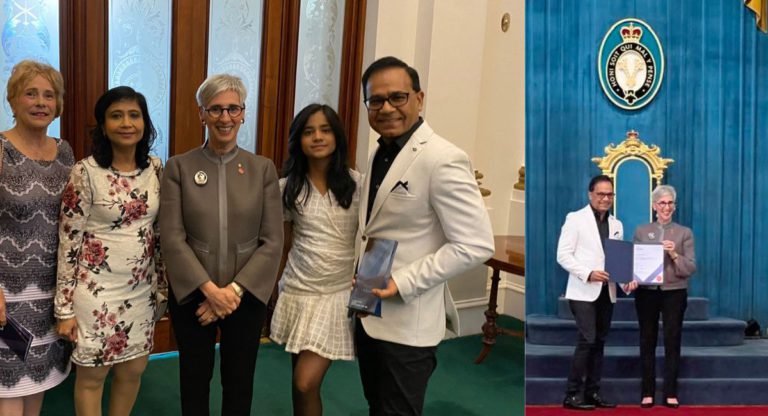
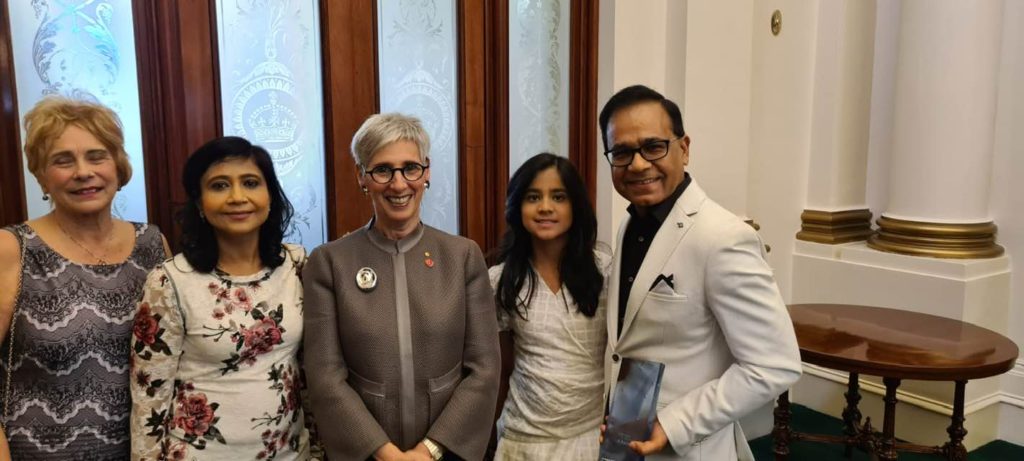
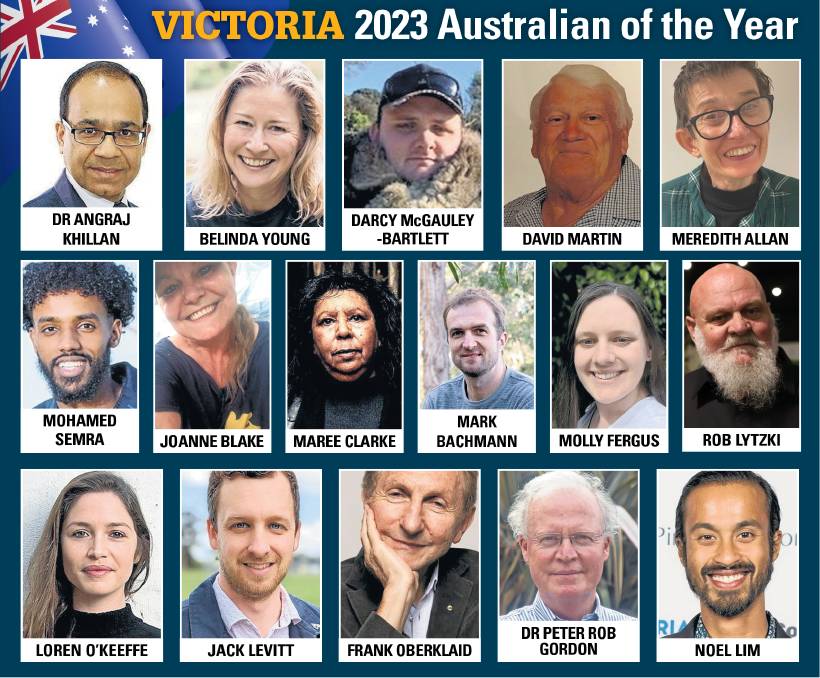
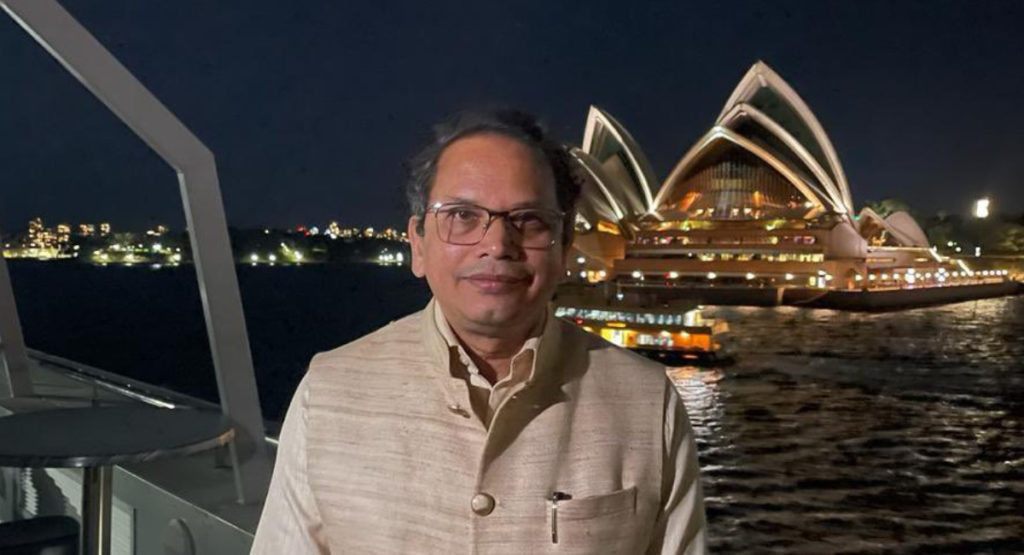
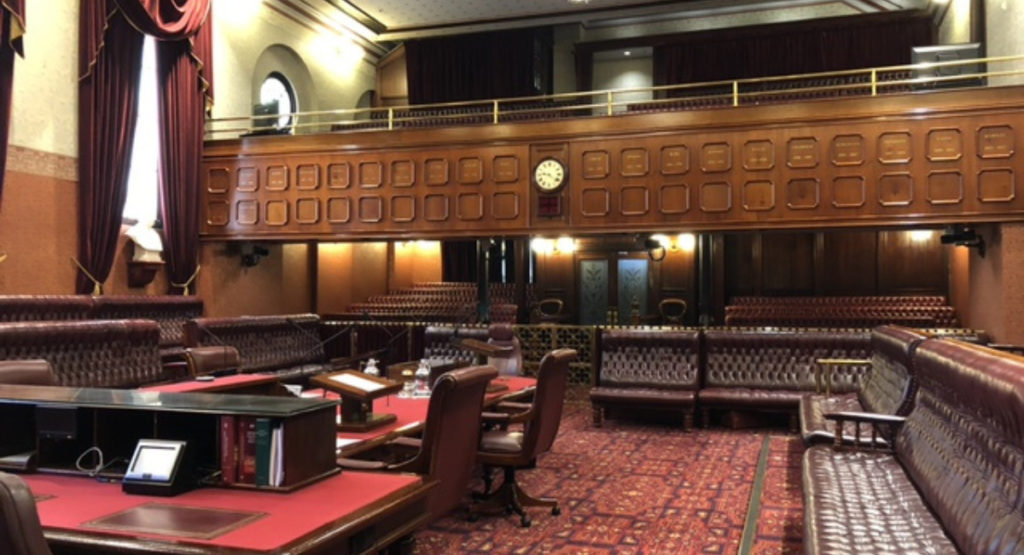
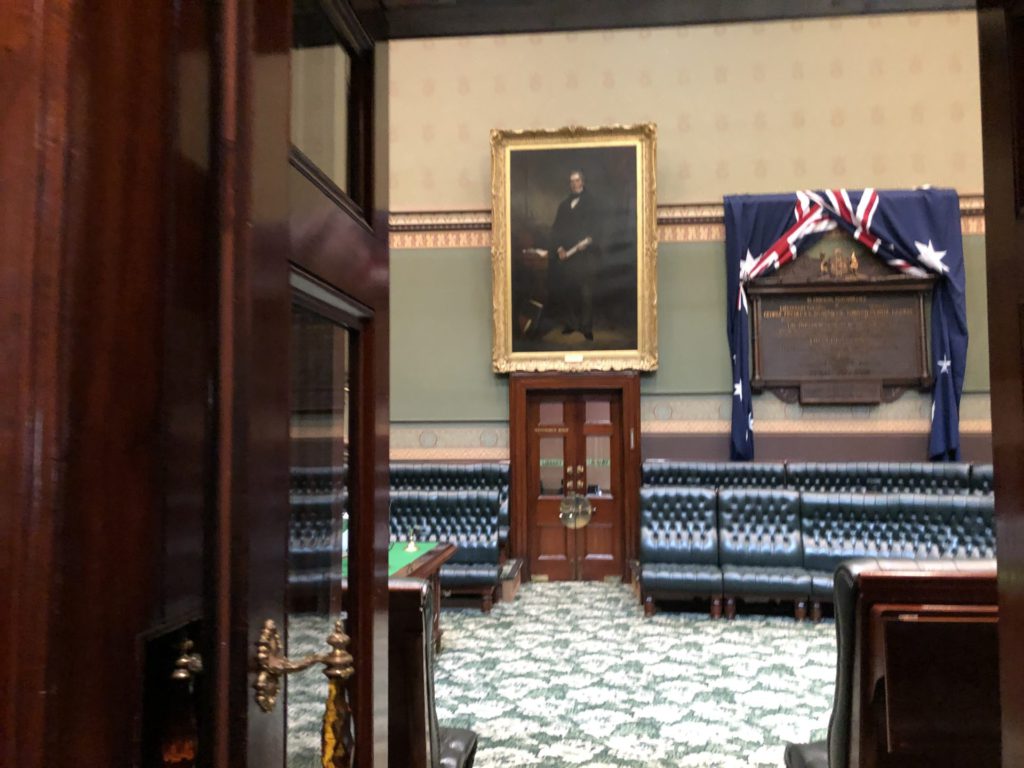
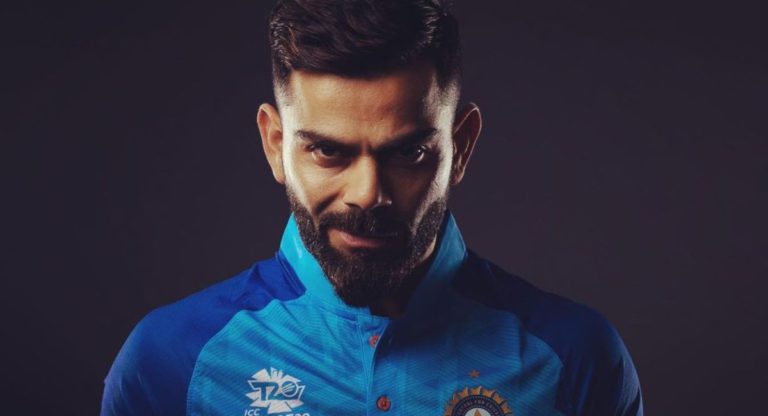
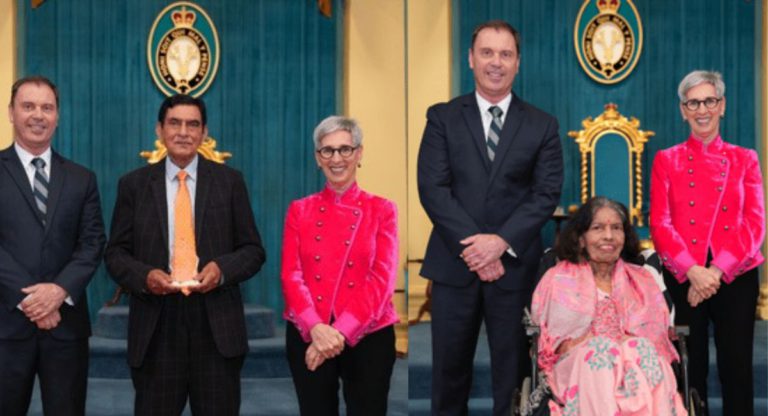
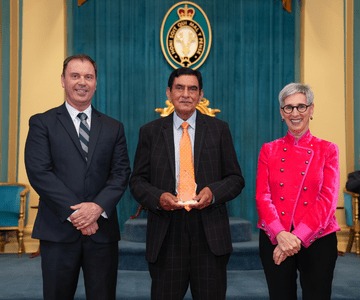
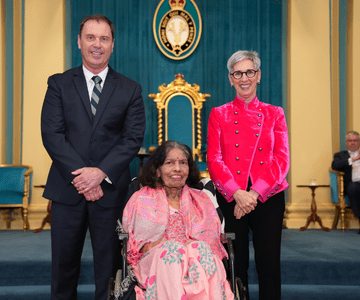
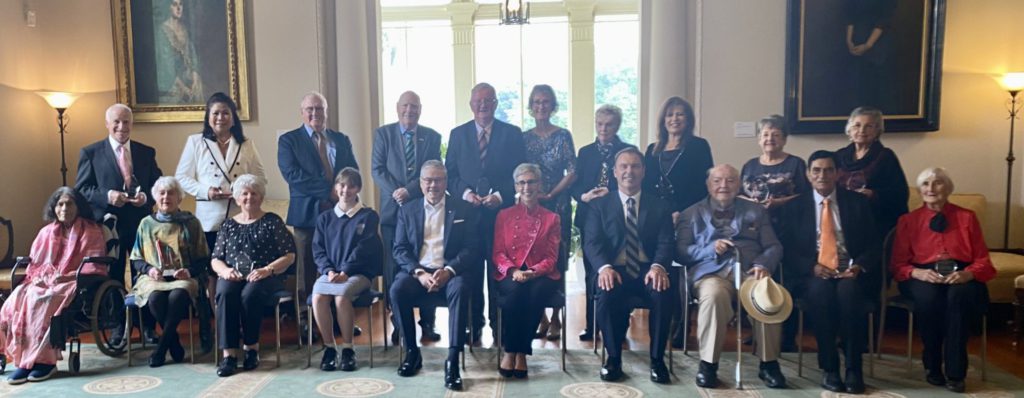
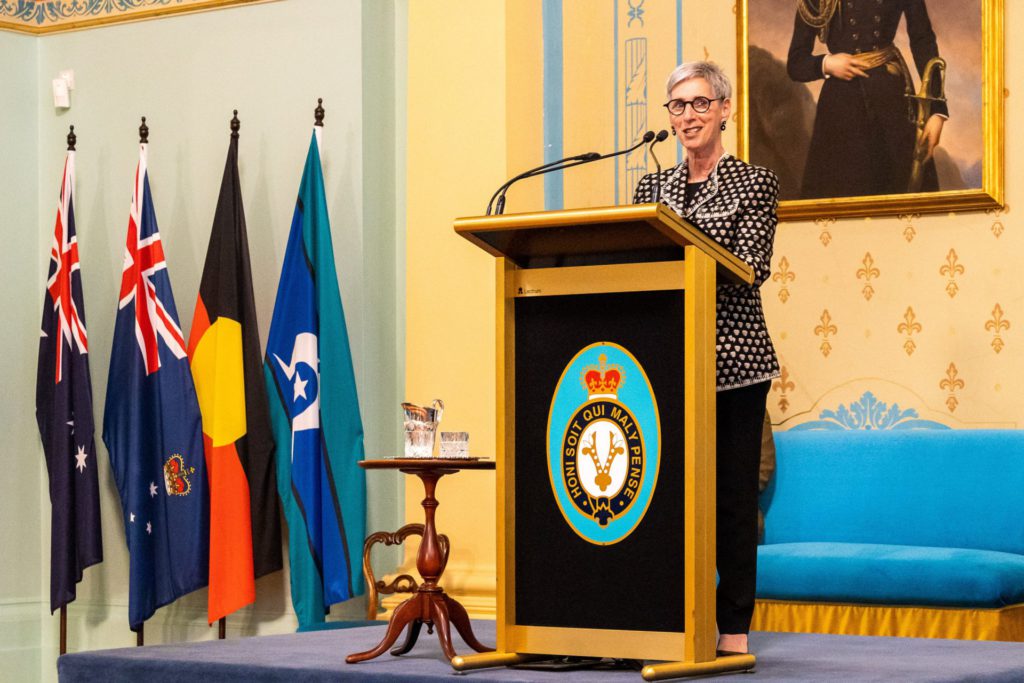
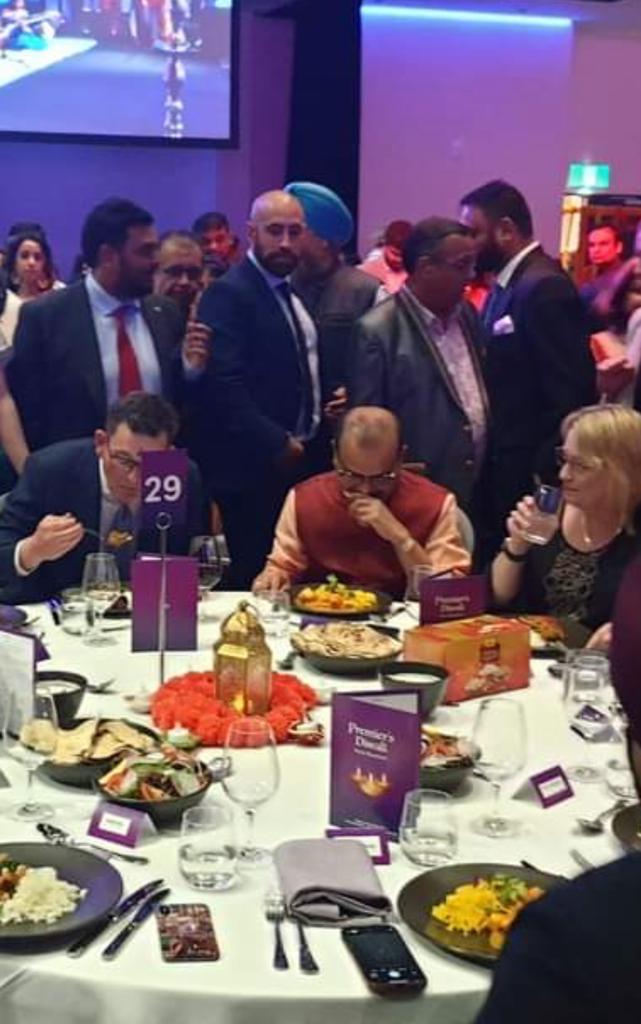
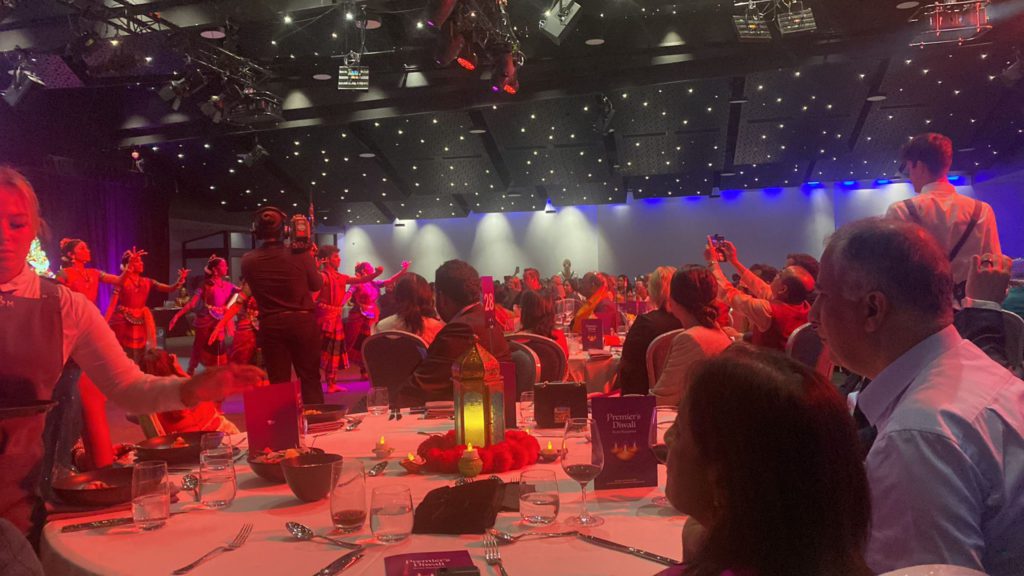
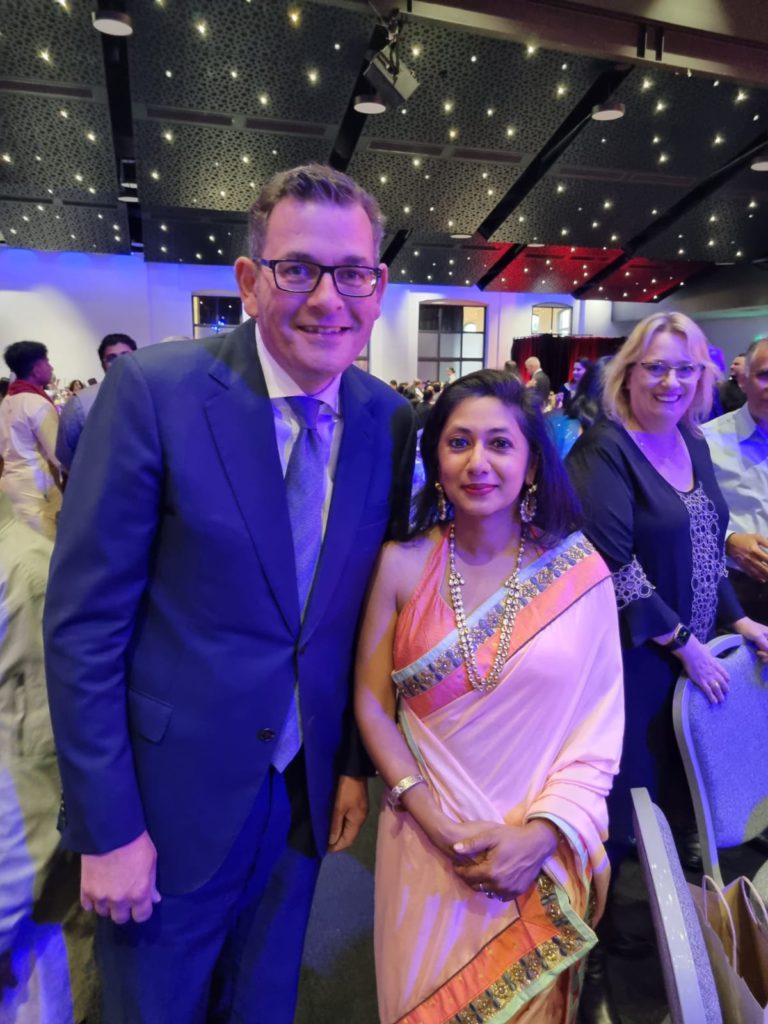
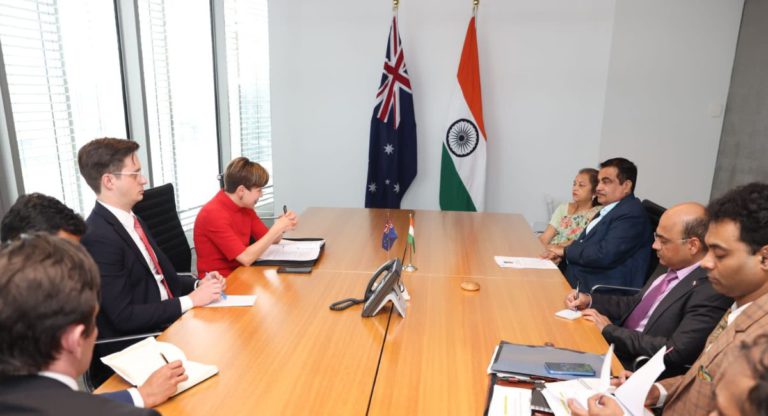
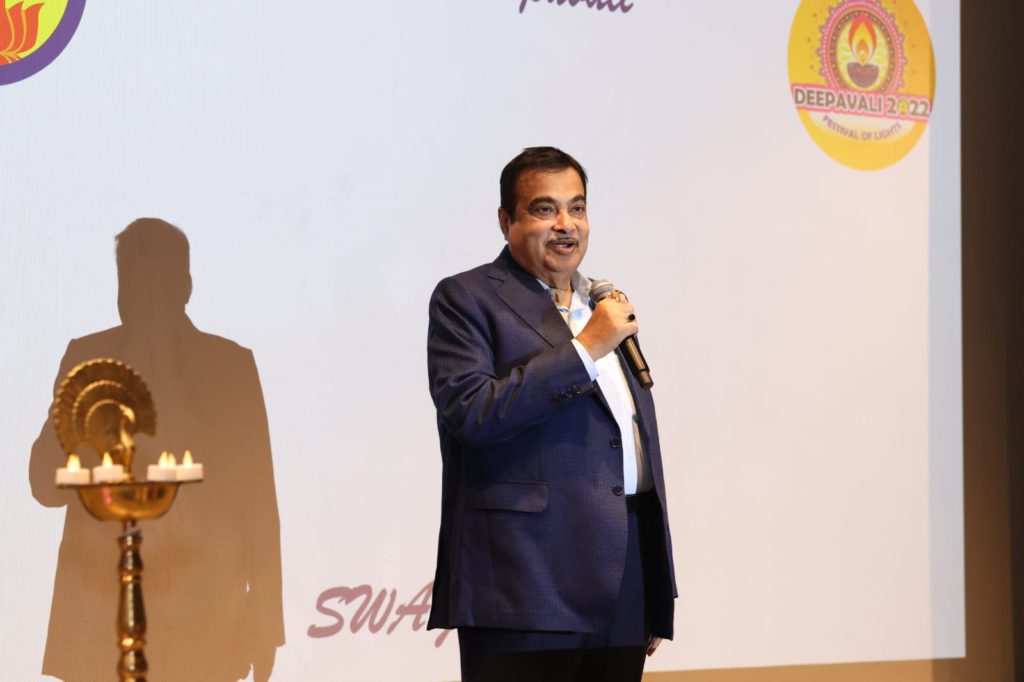
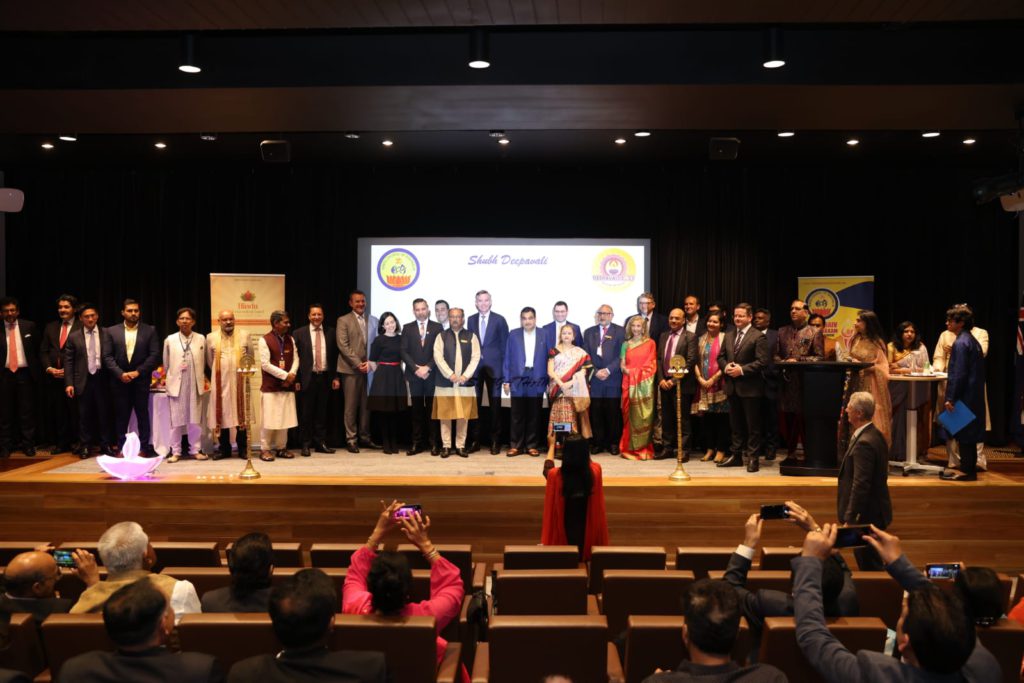
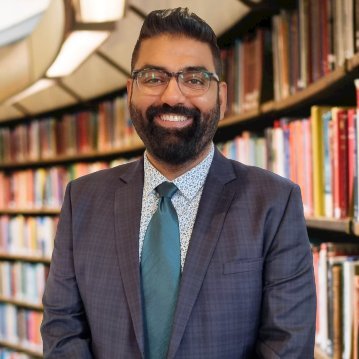
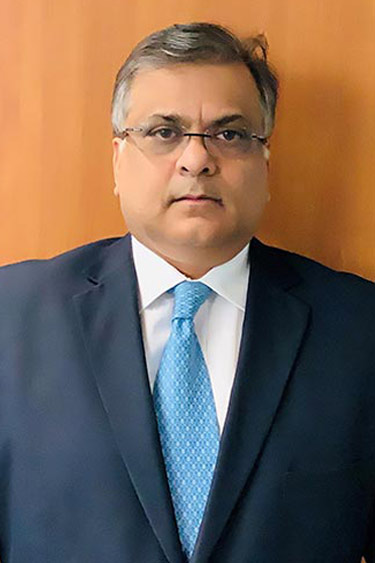
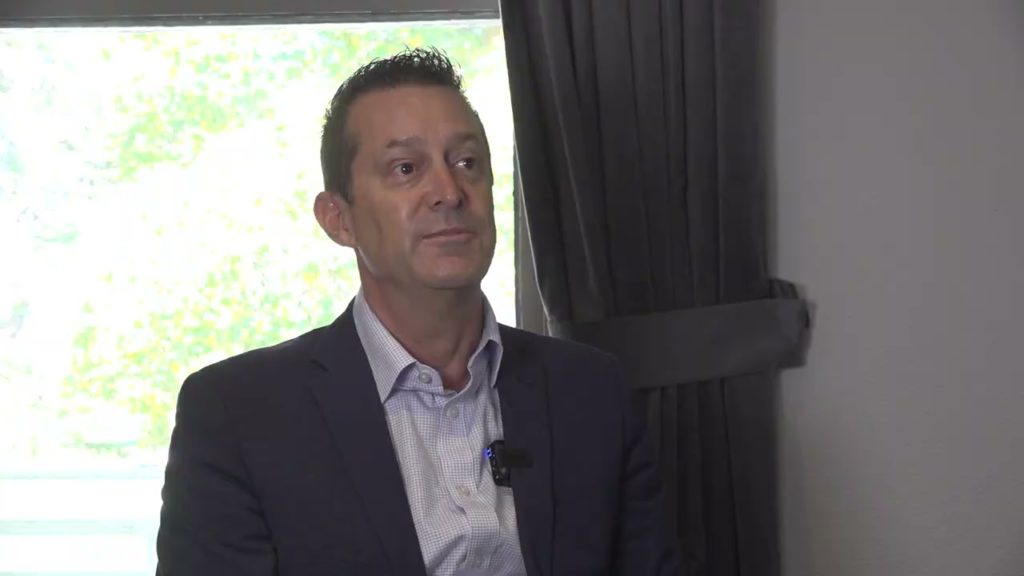
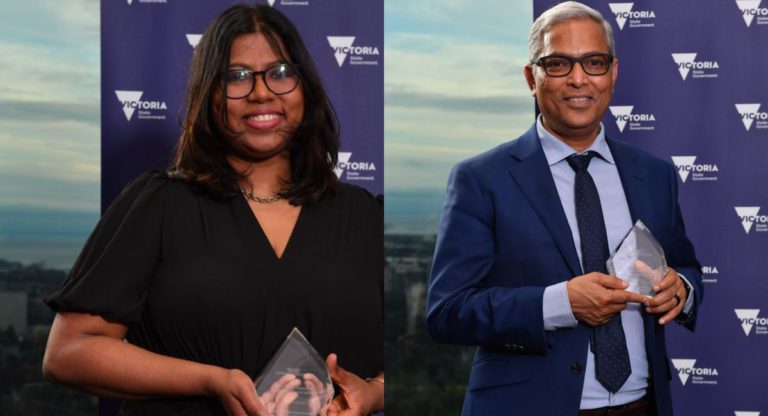
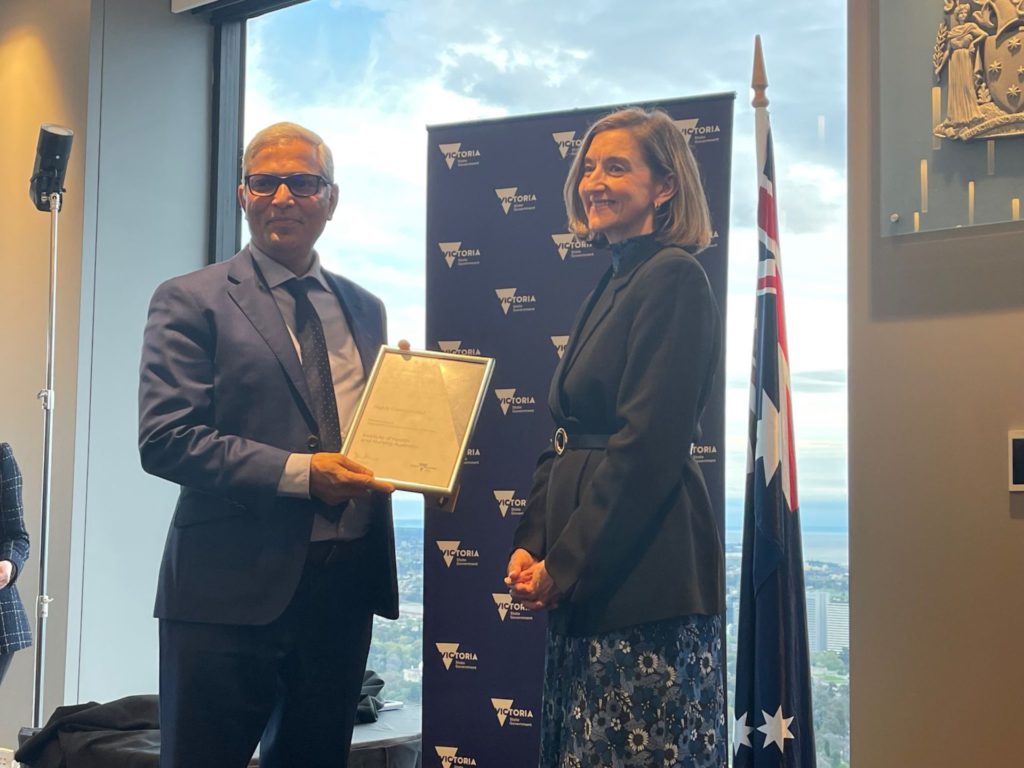
Dr Angraj Khillan (Raj Khillan), a 56-year-old Melbourne-based Paediatrician, has been recognized with the 2023 Victorian Australian of the Year Award by the Hon. Governor of Victoria Linda Marion Dessau AC at Government House on 8 November 2022.
Congratulations to paediatrician Dr Angraj Khillan, 2023 Victorian Australian of the Year. Dr Khillan has changed lives by delivering healthcare and health education to culturally diverse communities across Australia. @AustraliaDayVic@ausoftheyearpic.twitter.com/QvvLyEOUPb
Dr Khillan told The Australia Today, “It is an honour, and privilege at the same time it brings a lot of responsibility to me to work harder to cater for the needs of Australian multicultural communities.”
“One key can not open all locks similarly old-fashioned healthcare system can not cater for multicultural needs,”
added Dr Khillan
Standing humbled with the 2023 Victorian Australian of the Year award, Dr Khillam requests and calls all other healthcare professionals to work for specific multicultural needs.
“Our society needs healthcare professionals who can work voluntarily to understand and serve CALD communities.”
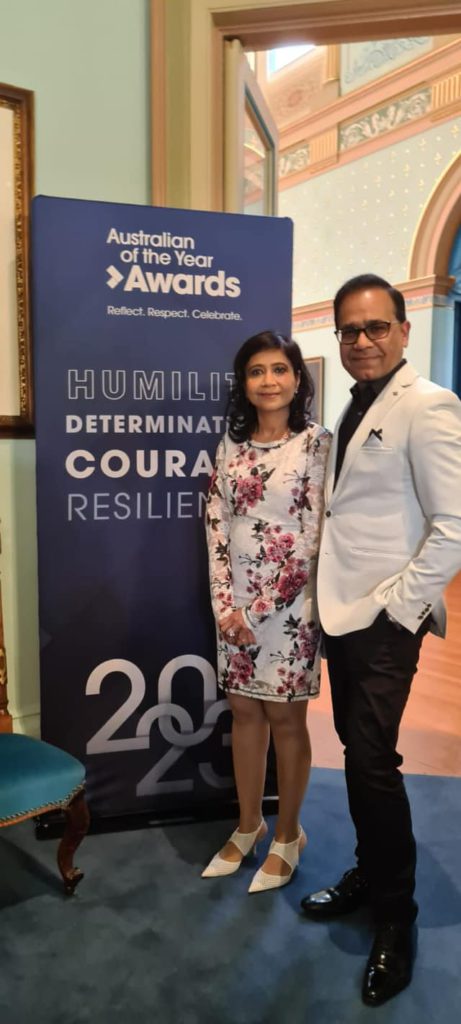
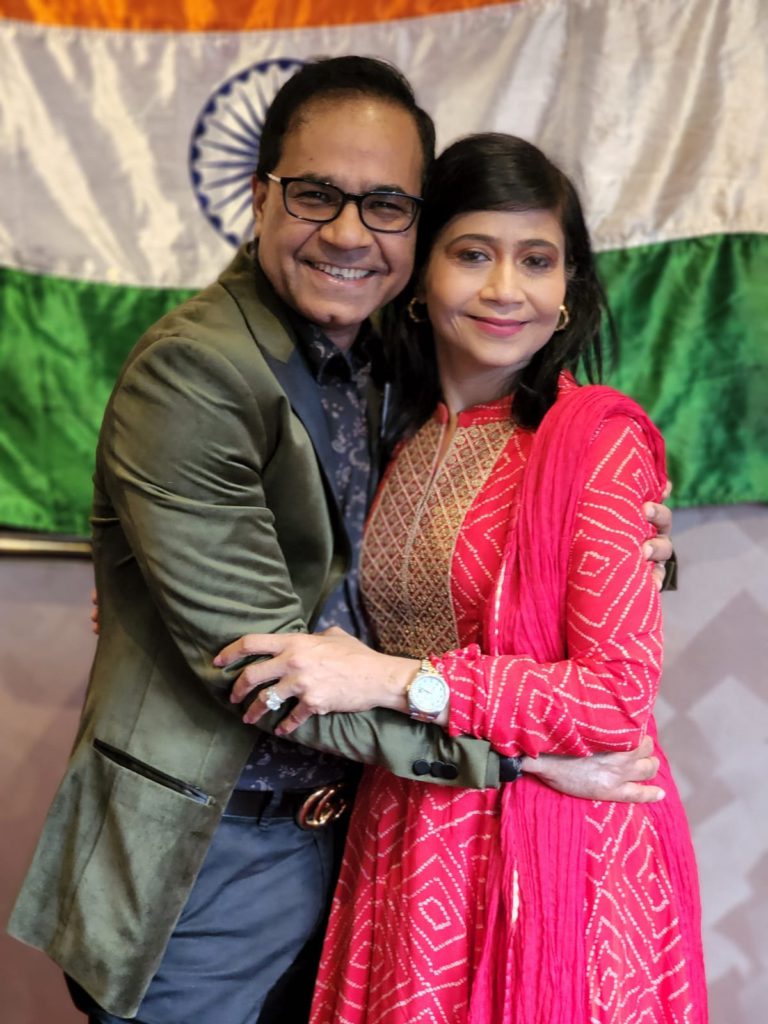
Dr Khillan’s wife Preeti Khillan said in a Facebook post that “it’s an honour and proud moment to reveal the news that Raj Khillan has been declared Victorian Australian of the year 2023 for his work for Multicultural community’s healthcare issues as a founder of Healthcare Awareness Society of Australia.”
Dr Raj Khillan and Preeti Khillan at Government House (image source: Facebook)
As a student in India, Dr Khillan sold offerings outside a temple to fund his medical books. Since moving to Melbourne in 2010, he has worked to raise awareness of domestic violence and dowry abuse. he has been instrumental in delivering key healthcare and health education to culturally diverse communities in Victoria.
Dr Khillan co-founded and co-founder of Health Awareness Society of Australia (HASA) in 2018 to dispel taboos, myths and misinformation about health. Its volunteers deliver forums and virtual sessions in English, Hindi, Punjabi, Urdu and Arabic on topics from mental health to COVID-19 vaccinations.
He says at the Health Awareness Society of Australia, “We are trying to remove the social stigma and taboo attached within multicultural communities when they are diagnosed with mental health issues.
He is popularly known as ‘Dr Raj’, the fly-in fly-out paediatrician, in the remote Aboriginal communities where he worked in 2004 after becoming the Royal Darwin Hospital’s paediatrician.
Dr Raj Khillan with the Hon. Governor of Victoria Linda Marion Dessau AC (Image source: Facebook).
The nominations for Victorian Australian of the Year were announced on 25 October 2022 by the National Australia Day Council.
National Australia Day Council chief executive officer Karlie Brand congratulated the nominees on their recognition.
“The 2023 Victorian nominees are a diverse group of achievers and community contributors. Their endeavours remind us of the power we all have to make a difference.”
Sixteen Victorian nominees were named across four categories – Australian of the Year, Senior Australian of the Year, Young Australian of the Year, and Local Hero of the Year.
The Victoria nominees were among 130 people being recognised across all states and territories of Australia. The finalists will come together for the announcement of the national award on 25 January 2023 in Canberra.
WATCH VIDEO: 2023 Victoria Australian of the Year Awards
A child has died after being bitten by a dog in Cowra according to NSW Police.
At about 10.20am today (Tuesday 8 November 2022), emergency services were called to a motel on Grenfell Road after reports a two-year-old boy had suffered serious injuries.
Officers from Chifley Police District attended; however, a member of the public had already taken the child to Cowra Hospital. Cowra is a small town in NSW around 310 kilometres from Sydney.
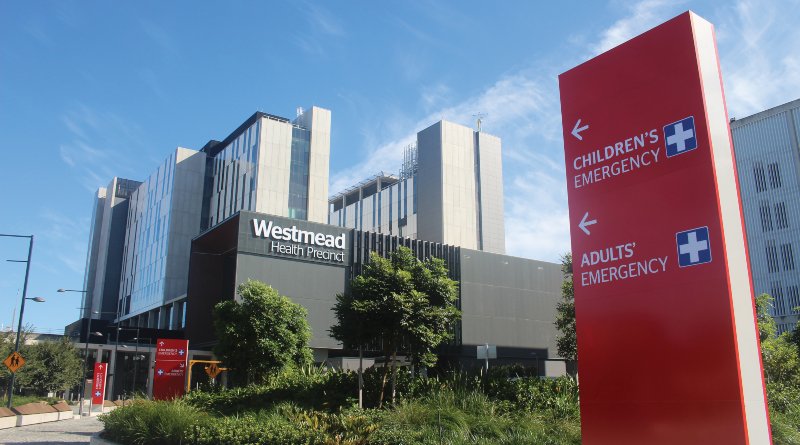
The boy was airlifted to Westmead Hospital where he died a short time ago.
India’s main opposition party Indian National Congress’s former National President Rahul Gandhi is on a Bharat Jodo Yatra to supposedly unite India.
Rahul Gandhi’s Yatra began on 7th September from Kanyakumari and it will pass through 12 states, culminating in Jammu and Kashmir – spanning a distance of nearly 3,500 Km over the course of about 150 days as posted on a webpage created for Bharat Jodo Yatra.
However, interestingly this yatra has created a controversy in ICC T20 World Cup being organised in Australia.
Enthusiastic Indian Overseas Congress members attended the Melbourne Cricket Ground T20 World Cup match between India and Zimbabwe on 6th November like almost 80,000 other cricket lovers.
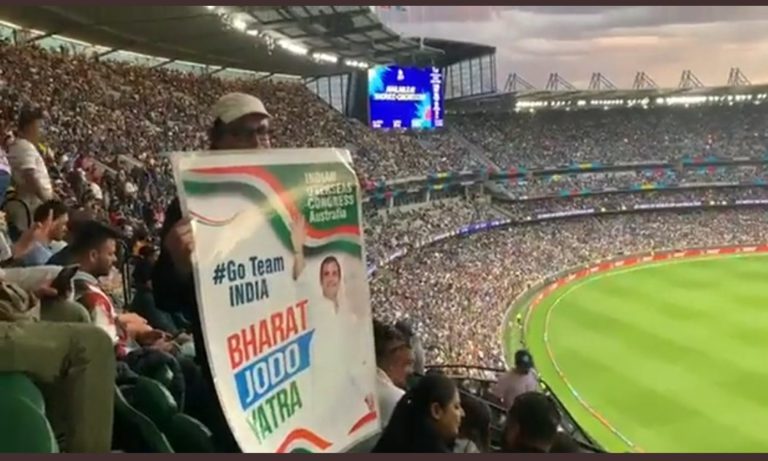
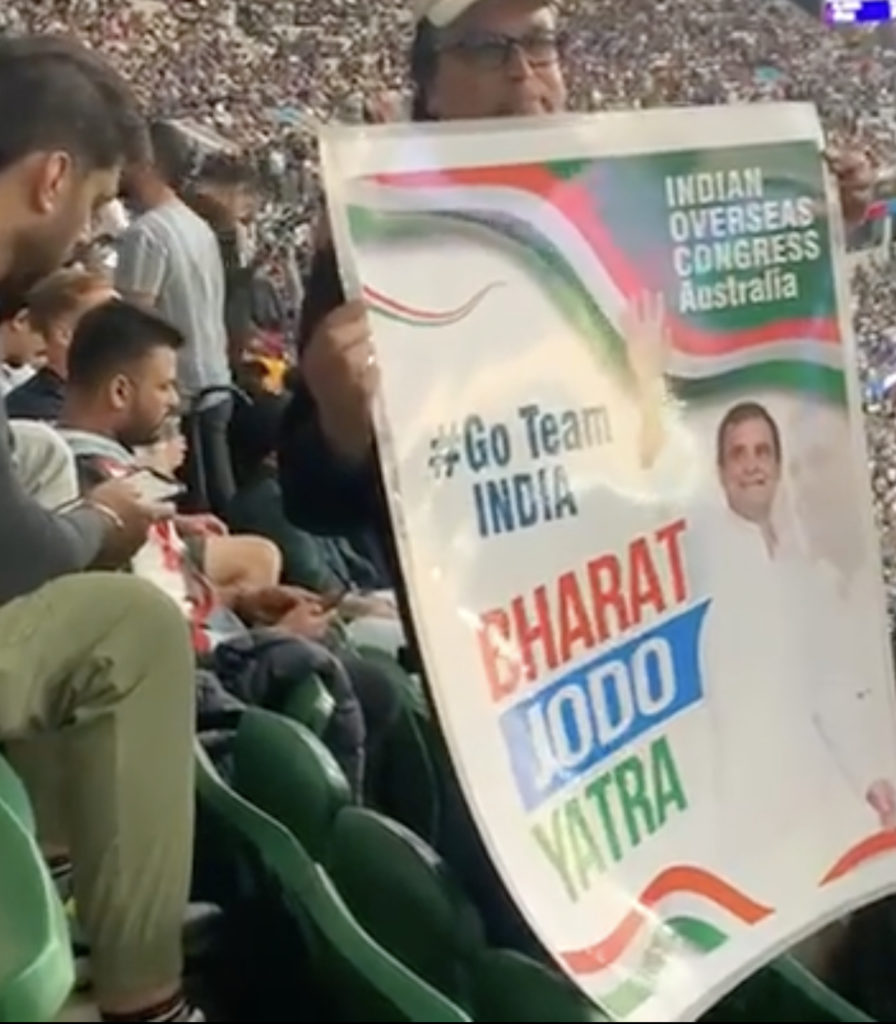
However, Indian Overseas Congress members took a ‘political banner’ to support Rahul Gandhi’s Bharat Jodo Yatra.
Screen Shot of video posted by Indian Overseas Congress members.
They took a short video with the poster which had #Go Team India, Bharat Jodo Yatra and Indian Overseas Congress Australia with Rahul Gandhi’s picture on it.
A lot of people attending the match take posters and banners to the ground however according to ICC T20 world Cup and Melbourne Cricket Ground rules banners and posters with political messages can not be displayed during the match.
A video posted by Indian Overseas Congress members on Facebook.
There are a number of Marshalls at all the gates of the match venue to check and make sure any offensive, political or commercial poster or banner is not displayed during the match.
However, Indian Overseas Congress members managed to take their poster inside the venue.
The whole poster saga came to light when office bearers of the Indian National Congress posted this video on their social media accounts to boost that #BharatJodoYatra was having a global impact.
What do the ICC T20 World Cup Ticket Terms & Conditions say?
IBC, the LOC and/or any Authorised Person may refuse admission to, or eject from, the Venue at any time without refund to any Ticket Holder who, in the reasonable opinion of IBC, the LOC and/or any Authorised Person.
“Is behaving in any way that is or could reasonably be construed as provocative, discriminatory, offensive, indecent or threatening (whether to the life or safety of himself/herself or any other person(s)), including but not limited to: the wearing or other display of commercial, political or offensive signage or logos;“
As India is seeing a politically charged environment due to Gujarat and Himachal Pradesh state elections, Australian local BJP supporters also swung into action after seeing these social media posts.
Jay Shah is President of Overseas Friends of BJP an organisation that supports India’s Bharatiya Janata Party.
Mr Shah took a dig at Congress leader Rahul Gandhi in his Twitter post.
“This is the difference, Rahul Gandhi’s popularity needs a houseful venue whereas Narendra Modi Ji’s popularity makes the venue houseful. By the way, I have filed an official complaint as the display of political material at MCG violates conditions of entry.”
Mr Shah told The Australia Today, “There are all the other places to do politics and debate, but using a sporting event for promoting a failed politician is just as low as congress can go.”
“I would like to request MCG and T20 World Cup authorities to take strict action against the persons responsible,”
added Mr Shah
The Australia Today reached out to Sydney-based Manoj Sheoran, President of the Indian Overseas Congress Australia.
Mr Sheoran said, “The Poster must have been screened by Police at the venue MCG then only they would have allowed it inside the stadium.”
“As everyone can see, there is no political message on the poster, but only best wishes for Indian Cricket team,”
explained Mr Sheron.
“What I can say is, people who are doing complaints are doing politics as I don’t know what they are afraid of.”
Maxx Abbott is Media & Communications Manager with ICC Men’s T20 World Cup 2022 Local Organising Committee.
Mr Abbott told The Australia Today, “Action against offenders is at the discretion of venue security on the day, in consultation with ICC Men’s T20 World Cup Local Organising Committee Head of Security.”
“Security checks bags and screens all patrons who attend ICC Men’s T20 World Cup matches. Under our Ticket Terms and conditions (available here), banners or clothing displaying political messages are not permitted. “
The survey, conducted between June to July 2022 in collaboration with Impetus Research, covered 5,000 respondents in 19 cities, and invited young people between 18 and 35 to share their views of India’s world.
The questionnaire was administered in 10 languages—i.e., Assamese, Bangla, Gujarati, Kannada, Marathi, Odia, Punjabi, Tamil, Telugu, and English. The sample was drawn using a stratified multi-stage cluster sampling approach.
The report notes:
“India at 75 is keen to show the world that it has the capacity for global leadership. … The findings presented in this report can have profound implications for India’s conduct on the global stage.”
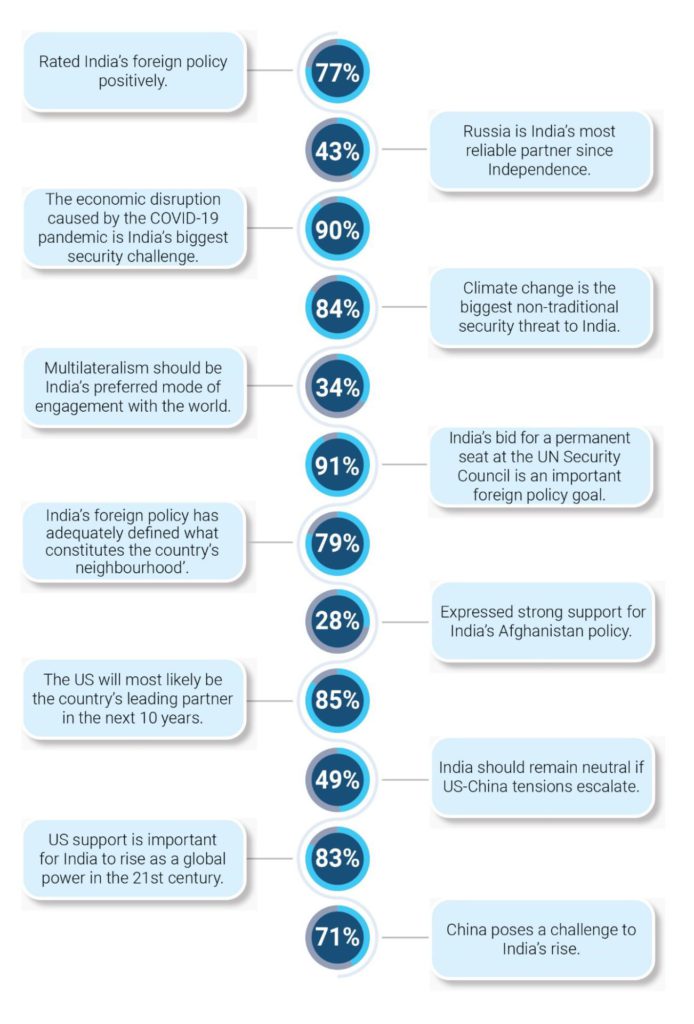
In the current survey, 25 percent graded it very good and 52 percent good. This is an increase from the 2021 survey report where 32 percent said it was very good, and 40 percent rated it good under Prime Minister Narendra Modi and External Affairs Minister Dr S. Jaishankar.
Source: The ORF Foreign Policy Survey 2022.
On India’s most pressing security challenges, 86 percent felt terrorism and 82 percent highlighted territorial disputes with Pakistan. The respondents also expressed trust for the country’s immediate neighbours, except for Pakistan and Afghanistan.
Interestingly, 43 percent of respondents named Russia and 27 percent voted for the United States as India’s most reliable partner since Independence. However, more than 85 percent of the respondents were of the view that the United States will most likely be India’s leading partner in the next decade.
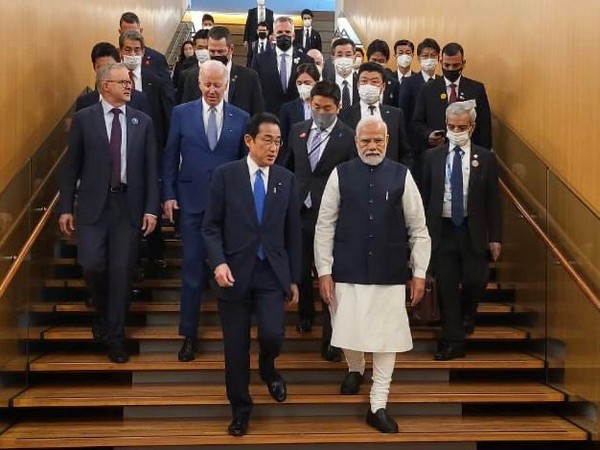
PM Modi’s ‘leading’ from front photo at Quad Summit (Source: Twitter- Amit Malviya)
Further, 34 percent of respondents chose multilateralism as their preferred mode for India’s engagement with other countries, such as Australia and Canada, over minilateralism and bilateralism.
In addition, of all the forums listed in the survey i.e., Quad, BIMSTEC, G20, and SCO, the SCO got the lowest rank at 6 percent.
The annual ORF Foreign Policy Survey gathers the views of India’s urban youth demographic about the world and the various facets of India’s engagement with it.
The ORF Foreign Policy Survey 2022 has been authored by Prof. Harsh V. Panth, Premesha Saha, Aaditya Gowdara Shivamurthy, Antara Ghosal Singh, Shashank Mattoo, and Renita D’Souza.
Indian Prime Minister Narendra Modi’s political outfit Bharatiya Janata Party (BJP) has stepped up its overseas activities to energise the Indian diaspora as part of its overall preparations for facing the 2024 parliamentary elections.
And a new addition to BJP’s strategy is the Australian diaspora.
Reaching out to the massive diaspora of almost 30 million strong “Overseas Friends of BJP’ is playing a role as the organisation has registered itself in various countries adhering to local rules and regulations including Australia.
The forum in its declaration in different countries has made full disclosures that its activities are political in nature and aimed at promoting its parent Bharatiya Janata Party.
Dr Vijay Chauthaiwale in Sydney (OFBJP Twitter)
The man behind the BJP’s Department of Foreign Affairs playing a key role in propagating outreach programmes overseas is Dr Vijay Chauthaiwale.
He coordinates between Prime Minister Modi, Indian government ministers including Foreign Minister, S Jaishankar and party big-wigs on issues important to the diaspora. As a member of the BJP’s National Executive, he gets regular feedback. The idea is to integrate the Indian diaspora with Indian culture.
In continuation of "Know BJP" initiative launched by its National President Shri @JPNadda ji, @BJP4India has invited diplomats from Australia, Nepal and New Zealand to visit Shimla today. They will visit campaign HQ, media centre n ground campaign in Shimla.
The Overseas Friends of BJP (OFBJP) has chapters in more than 40 nations. The forum gets a boost whenever Prime Minister, Narendra Modi, visits these countries and addresses various programmes organised by the forum. OFBJP has managed to create a cadre of supporters in 25 to 30 politically significant countries where there is a strong presence of the Indian diaspora.
Pleased to meet members of OFBJP and community leaders in Sydney this evening.
They work to promote better understanding and cooperation between our two countries. pic.twitter.com/oAPchgwAXc
Diaspora in the past has been used by various prime ministers to project India’s soft power. India’s first prime minister Jawahar Lal Nehru used it to project India’s image as a non-aligned nation that was trying to make a mark in geopolitics.
His daughter Indira Gandhi the then Prime Minister used it to organise, the “India Festival” abroad with the help of “cultural Zarina” Pupul Jaykar. The “festivals” held abroad propagated India’s cultural might. Her son PM Rajiv Gandhi, aided by Sam Pitroda used it to improve India’s image abroad as an IT and technology destination.
Now, Prime Minister Narendra Modi has, however, used the diaspora to a different effect. He not only projected India’s image as a growing power abroad and instilled a sense of pride amongst the Indian community and its culture, but also held politically laced programmes to build his constituency back home.
Described by party insiders as a “force multiplier” Modi and his party members have recognised the importance and influence of the diaspora.
Our Indian community is richly contributing to the progress and development of Australia.
I encouraged our brand ambassadors to also be a part of India’s growth story, especially on the education front for establishing India as a knowledge superpower by the centenary year. pic.twitter.com/WJLEADb0sQ
For instance, during the 2019 elections, several members of the diaspora would call back home to explain to their family and friends the place of pride India enjoys in the eyes of foreigners since the arrival of Modi as their leader in India.
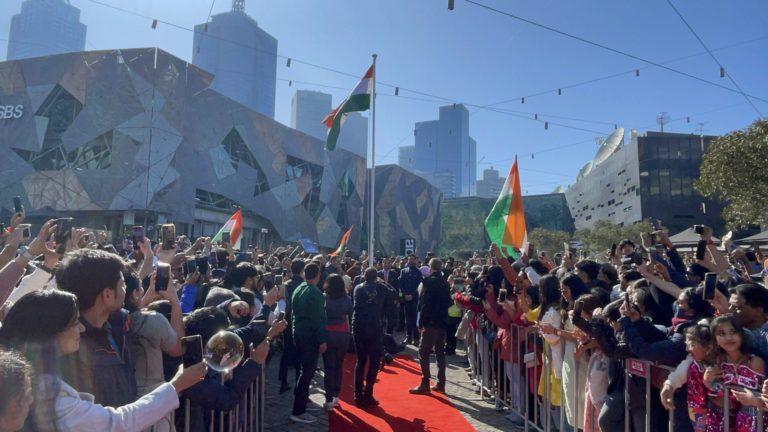
PM Modi is scheduled to visit Melbourne and Canberra in February 2023 to participate in the QUAD meet— which is a regional combination of the USA, Japan, Australia and India. As a continuation of his initiative to engage with the diaspora, PM Modi is slated to address a large gathering of the Indian diaspora even during that visit. The preparations have already begun and the diaspora is excited. This correspondent during his current Australia visit is witness to the preparations.
India’s Comprehensive Strategic Partnership with Australia is robust and benefits not only the people of our nations but also the world.
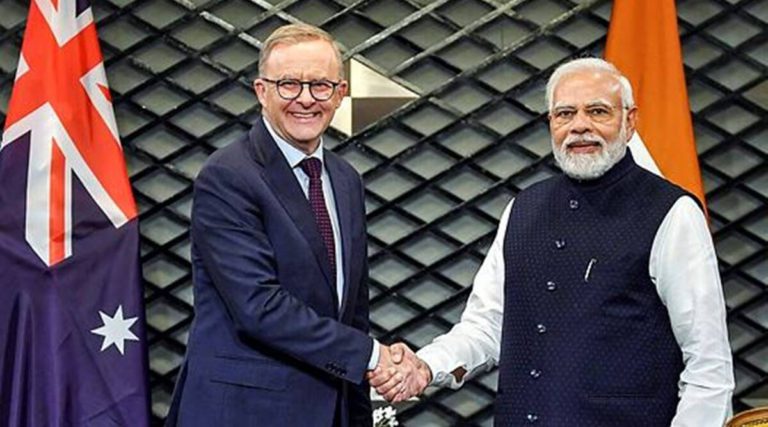
Was delighted to meet PM @AlboMP and take stock of bilateral ties. We discussed ways to add even greater momentum across key sectors. pic.twitter.com/8J9tqqAdu9
While psephologists crunch numbers collected by enumerators back him what they miss is the unquantifiable benefits that the party receives from such initiatives. BJP thinks that these initiatives would give the party a leg up in the 2024 elections too.
The idea of taking the help of the diaspora for campaigning back home stuck with Modi during one of his overseas trips. During the erstwhile Congress regime Presidents, Prime Ministers and Cabinet Ministers interacted with sections of the diaspora in limited forums. Only select invitees were called into closely held meetings which were hardly publicised.
Modi opened it up and began to hold mass programmes in conference halls and sports stadiums. These large-scale interactions, powered by OFBJP gave a new heft to Indians living abroad. They could instantly connect with visiting prime minister who was interested in their well-being even though he was only on a short visit.
The programme at Madison Square Garden was overwhelming. It was very special to interact with members of the diaspora. A big thank you.
In the last few years, Rahul Gandhi too has travelled to many countries and held his personal ‘vipassana’, but initiated no political meetings. Regional parties such as DMK, TMC, TRS, YSR Congress etc too have their admirers abroad. They too regularly organise meetings but those are no match to BJP’s meets in their scale and size.
For instance, during Modi’s 2014 visit to Australia more than 50,000 entry passes were issued to members of the diaspora from five prominent states of that country.
PM Modi has continued to engage with the diaspora around the world. He met with the Indian diaspora in Japan in 2021. He engaged with the diaspora in Germany and Denmark earlier this year. Before Covid, Modi had addressed several meetings in the USA, UK and UAE amongst other countries.
The BJP thinks that this will help shore up an additional two to three percentage votes for the party. With well-oiled party machinery working overtime with the aim of winning elections— with Modi as its face and home minister Amit Shah as its strategist— it is no surprise that the party is hopeful of another decisive victory in 2024.
Contributing author:R Rajagopalan is an eminent and veteran Indian journalist and a distinguished political analyst in India. He is the holder of the ‘Long and Distinguished Journalist’ category of the Parliament of India, a rare decoration provided to journalists who have reported on Parliament for more than 40 years. He is a well-known face on TV news channels’ political debates and is contracted to TIMES NOW for election poll analysis. He is also a Tamil and Telugu journalist having worked for Dinamani for more than fifteen years based in New Delhi.
Disclaimer: The opinions expressed within this article are the personal opinions of the author. The Australia Today is not responsible for the accuracy, completeness, suitability, or validity of any information in this article. All information is provided on an as-is basis. The information, facts, or opinions in the article do not necessarily reflect the views of The Australia Today and The Australia Today News does not assume any responsibility or liability for the same.
Today evening people across Australia and New Zealand will be treated to a total lunar eclipse, weather permitting. It’s an opportunity not to be missed, as the next one won’t be visible from our region until 2025.
A lunar eclipse happens when the Moon travels through Earth’s shadow. If the Moon only partly makes it into the shadow, that’s a partial eclipse. In a total eclipse, the Moon becomes fully immersed and takes on a reddish/orange glow.
In tomorrow’s eclipse the period of totality – when the Moon is fully immersed in shadow – will last a leisurely 85 minutes.
Total lunar eclipse (Image source: NASA)
The only light reaching the Moon’s surface will first pass through Earth’s atmosphere, which is why the Moon will take on a red hue. Just how red it appears will depend on how dusty Earth’s atmosphere is at the time.
It will be a wonderful experience to share with family and friends, especially as you won’t need any equipment to see it. It’s also safe to look at – unlike solar eclipses, where special care must be taken when viewing the Sun.
A twilight moon or a midnight moon?
Everyone on the night side of the Earth will experience the lunar eclipse simultaneously. But what time that is for you will depend on your timezone.
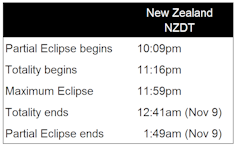
In New Zealand the eclipse will happen late in the evening, and the eclipse maximum will be just before midnight. The Moon will be high in the northern sky.
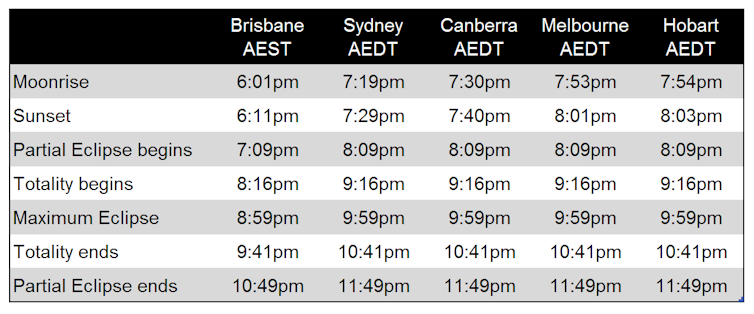
Across Australia, the eclipse will happen around moonrise. So the Moon will be much lower in the sky and battling against the twilight glow during the eclipse’s early stages.
Eastern Australia will see the eclipse shortly after the full Moon rises. The further north you are, the longer you’ll need to wait before the eclipse begins. For Brisbane it will start more than an hour after moonrise, so the Moon will be higher in the sky. In Hobart the eclipse begins just 15 minutes after moonrise.
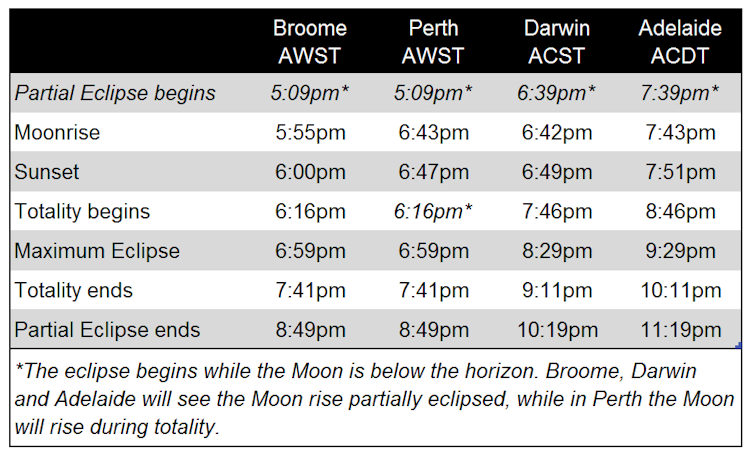
For the rest of Australia, the eclipse will begin before the Moon rises. Throughout central Australia it will start only a few minutes before moonrise, while in Western Australia it will be well and truly under way by moonrise.
Those up north will see some of the partial eclipse before totality sets in, but Perth can expect to see a fully eclipsed Moon deep in shadow at moonrise.
Big Moon rising
If you see the eclipse soon after Moon rises, expect it to look amazing. That’s because something called the “Moon illusion” will come into play. This is where your brain is tricked and the Moon looks much bigger when it’s low on the horizon, compared to when it’s high up in the sky. https://www.youtube.com/embed/49RztN4Bqu0?wmode=transparent&start=0
The Moon will rise in the east-northeast for all of Australia, so a high location or a clear view of the horizon will help with seeing the early parts of the eclipse. As the Moon gets higher, and the sky darker, the later part of the eclipse should be easy to see for everyone.
Joined in opposition
But it’s not just the Moon you should be looking out for. On the night of the eclipse, the ice giant Uranus will appear near the Moon as seen from Earth. So if you have a pair of binoculars, you can try spotting Uranus during totality, when the Moon’s light won’t interfere.
Binoculars will provide enough magnification and a wide field of view so the Moon can be used to locate planet Uranus. Museums Victoria/Stellarium
Uranus will reach opposition the day after the eclipse, on November 9, which means it will be – like the full Moon – in the opposite part of the sky to the Sun. This is when the planet is at its closest and brightest.
However, at a distance of 2.8 billion kilometres, Uranus is so far away that even through binoculars it will appear star-like. Only a large telescope will reveal it as a small blue-green dot.
One among the planets
But even without binoculars there are some lovely stars and planets to see. Bright Jupiter and Saturn will be easy to spot high overhead, above the eclipsed Moon.
Later in the evening, all viewers will be able to spot the constellation of Taurus rising in the north-east – with the lovely star cluster Pleiades and the red giant star Aldebaran – along with Orion and its red supergiant Betelgeuse.
The eclipse occurs in a rich part of the sky, with the constellations of Taurus and Orion visible. Museums Victoria/Stellarium
The red planet Mars will also make an appearance. People in New Zealand and Queensland will be well-placed to see four red objects in the sky together: the eclipsed Moon, Aldebaran, Betelgeuse and Mars low to the horizon.
Lunar eclipses are reminder that we live on a planet that’s moving through space. When I stare up at the Moon in shadow, I like to imagine what it would be like to stand on it, and see the Sun blocked out by the Earth.
Perhaps you’ll have your own moment of wonder and awe – of how astronomy can sometimes leave us feeling a little small, yet also connected to something much grander.
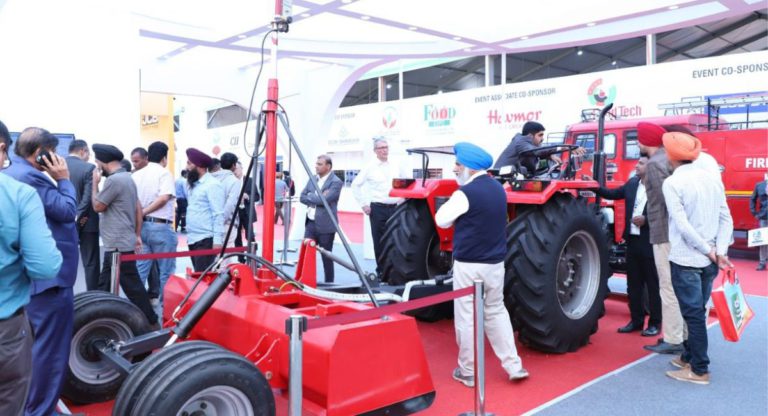
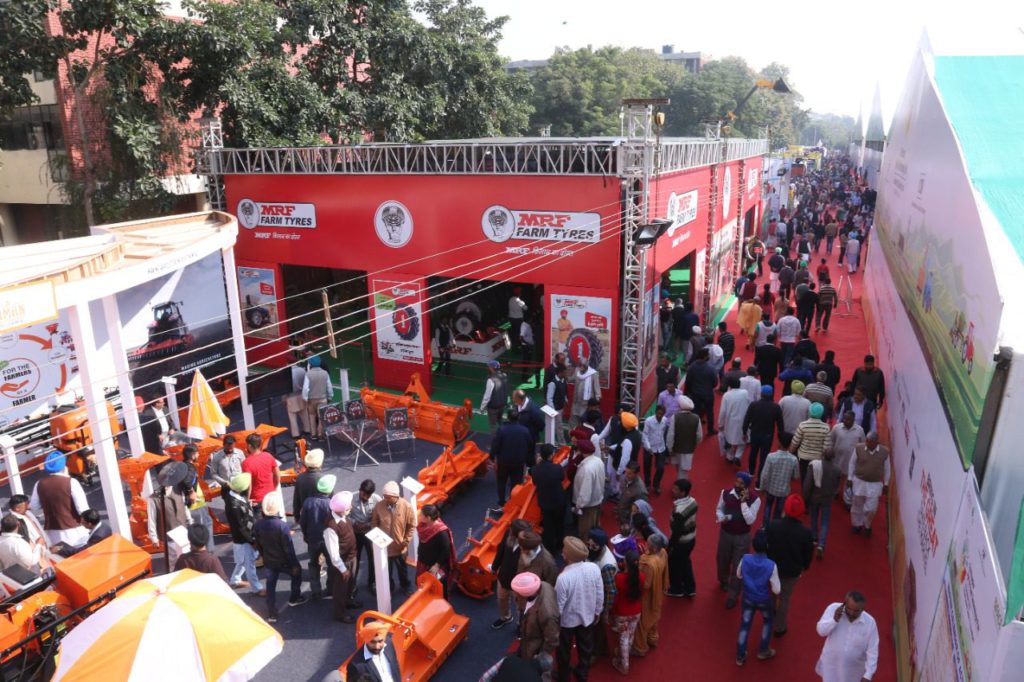
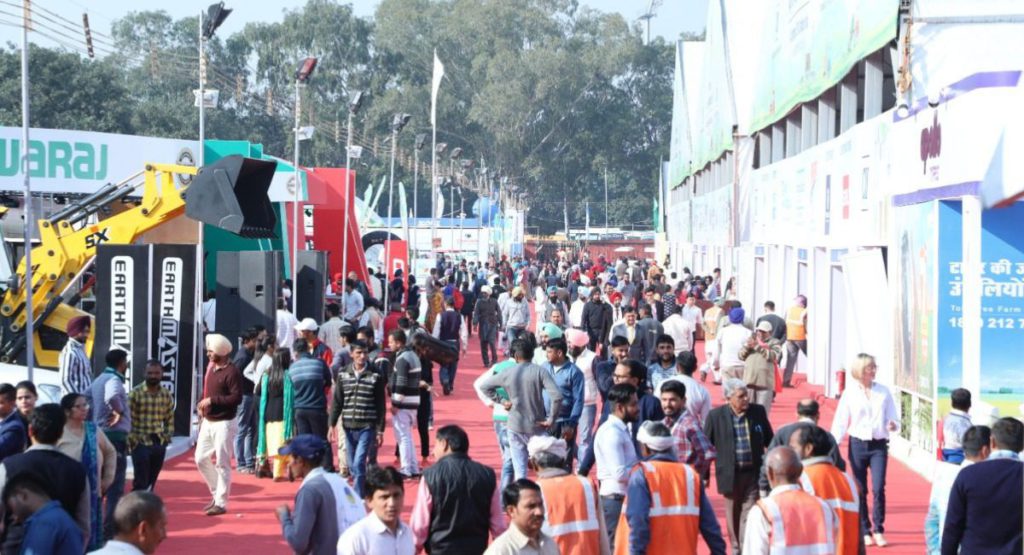
Four Australian agriculture input, services and technology companies are exhibiting their products at the Confederation of Indian Industry’s (CII) 15th edition of AgroTech India 2022 in Chandigarh, India, from 4-7 November 2022.
— Confederation of Indian Industry (@FollowCII) November 5, 2022
This is India’s premier international initiative that exclusively focuses on strengthening Indian Agriculture and Food Processing sector through technology interventions, discussions, and nurturing partnerships.
Agrotech India
The Australian participants include AgNova Technologies, Agripower Australia Limited, Aussan Laboratories, and The Product Makers.
AgNova Technologies develops and distributes specialty crop protection and production solutions for agricultural and horticultural producers, and for selected non-crop users. The company has demonstrated success in the launch of niche and specialty technologies in Australia which has resulted in AgNova being appointed development partner for a range of international entities from the USA, Europe and Japan. In India, it is showcasing its innovative FRUITION® NOVA® Fruit Fly Trap which is a revolutionary Lure and Trap for egg-laying female fruit fly.
Agripower Australia Limited is the world’s leading silicon fertilizer company. Agrisilica® is contaminate-free, 100% safe for ecosystems (land, water, air), and emissions-free. It increases carbon sequestration and soil carbon and is the leading co-blend choice for fertiliser producers looking to deliver on significantly improved productivity and environmental stewardship for their customers. At present, it operates in eight Indian states – Madhya Pradesh, Maharashtra, Karnataka, Rajasthan, Gujarat, West Bengal, Chattisgarh, and Uttar Pradesh. Through a network of well-established warehouses, field Agronomists and an experienced team it is providing services to Indian farmers.
Image source: technician researcher working with petri plate and microscope / scientist hand cultivating petri dish whit inoculation loops in the laboratory (AUSSAN)
Aussan Laboratories (name from AUStralian SANitiser) United Nations Finalists for Innovative Solutions in cleantech and sustainable land management. It services industries such as dairy livestock, sugarcane, horticulture for the management of animal disease, increased yield, and shelf-life.
Polygain product
The Product Makers, part of the TPM group of companies, creates a natural extract that mitigates methane emissions, improves animal welfare, and grow farm profitability in dairy farm. It is the largest Australian-owned flavour house with the ability to produce our animal nutrition products with confidence at scale. Their flagship animal nutrition product is Polygain – a synergistic blend of polyphenols, flavonoids, and organic acids.
AgroTech India
This year’s theme is ‘Digital Transformation for Sustainable Agriculture and Food Security’ and aims at integrating digital technologies, environmental and ecological stewardship; technical knowledge for the farming community and other consumers’ under one roof.
The 4-day event was inaugurated by the Vice President of India Jagdeep Dhankhar. it is seen as a great opportunity to conduct business with all stakeholders of Agriculture and Food Processing Industry.
It is expected that the top 100 CEOs from the industry, 40,000 farmers, and more than 100 eminent speakers from esteemed institutions will participate in this fair.
Participation of these four Australian companies has been facilitated by the Australian Trade and Investment Commission (Austrade).
The Fair Work Ombudsman has recovered $404,721 in wages for 623 underpaid workers after investigating employers in Brisbane’s food precincts.
Fair Work Inspectors investigated 77 businesses across a range of suburbs, including Brisbane CBD, South Brisbane, Fortitude Valley and Sunnybank. They found 75 per cent of businesses had breached workplace laws.
Businesses were selected for surprise inspections based on their risk of breaching workplace laws. At-risk businesses had a history of non-compliance with the FWO, had been the subject of anonymous tip-offs, or employed vulnerable visa holders.
Of the 58 businesses found to be in breach, 53 had underpaid their workers and 26 had failed to meet pay slip and record-keeping requirements.
The most common breaches found were the failure to pay penalty rates or casual loading (40 businesses), followed by underpayment of the minimum hourly rate of pay (37 businesses) and breaches of pay slip laws (19 businesses).
“Uncovering high levels of non-compliance in Brisbane’s fast food, restaurant and café sector, as the FWO has nationwide, is disappointing. Employers can’t pick and choose which wage laws they follow and those doing the wrong thing are being found out,” Ms Parker said.
“The Fair Work Ombudsman will continue to prioritise improving compliance in this sector, which we know employs many young workers and visa holders who can each be vulnerable.”
“Employers can use our free tools and resources if they need assistance meeting their obligations. Workers with concerns about their pay or entitlement should come forward for help,” Ms Parker said.
The largest recovery from one business was $80,258 for 68 full-time and part-time employees.
In response to the breaches, the FWO issued 49 Compliance Notices to 49 businesses, recovering $383,983 for 609 workers. There were 29 Infringement Notices issued for pay slip and record-keeping breaches, resulting in $78,932 paid in fines. Matters are ongoing in relation to two businesses.
Non-compliant businesses were told that any future breaches may lead to higher-level enforcement action by the Fair Work Ombudsman.
With winnability as the sole criteria, all major stakeholders’ have resorted to opportunism, not ideology, the bane of politics in the Himalayan nation for quite some time. It has become pronounced on election eve though.
Political activity is gaining momentum in Nepal as November 20 elections to Federal Parliament and all the seven provincial legislatures draw closer, reported Policy Research Group, POREG. Filing of nominations for the 165 First Past the Post (FPTP) seats in the 275- member House of Representatives, the Lower House of the bi-cameral Parliament is over.
The remaining 110 seats will be decided on a proportional representation basis, for which political parties have already presented the list of their candidates to the poll body. The state assemblies account for 330 seats in all, reported POREG.
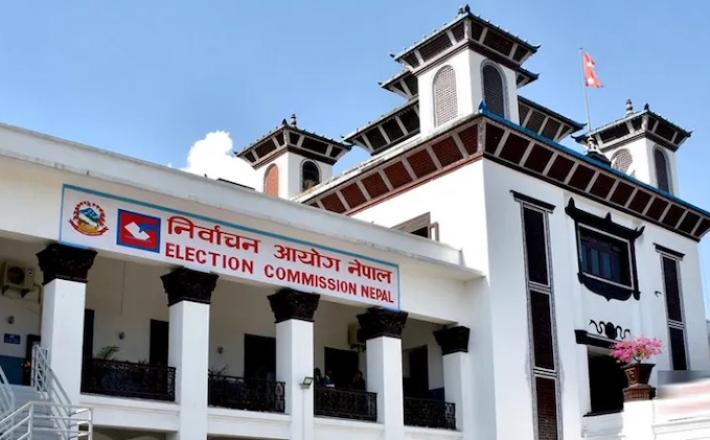
Prominent leaders of all political parties from the ruling as well as opposition alliances had rushed to enter the fray on October 9, the last day for nominations as the Election Commission did not accept their demand for extending the date because of the Dashain festival.
Significant changes have taken place in the political theatre when compared to the first general election held five years ago in 2017.
Firstly, the ruling, as well as the Opposition mainstream parties, have formed two distinct alliances, unlike the last time when every party went solo. Hardly any seat-sharing arrangement was there then. In fact, whatever little tie-ups existed did not work at the hustings. The scene is different now, reported POREG.
The nationalist rhetoric, which is usually mounted in every election is missing this time. Instead, there is much mudslinging and the two alliances accusing each other of nepotism, corruption, misgovernance and erosion of democratic values.
After much haggling, brinkmanship politics and public display of frayed tempers for over a month, the ruling alliance reached an understanding on seat sharing but not before one of its constituents, Janta Samajwadi Party, JSP, walked out piqued over its seat share, reported POREG.
The JSP has since joined hands with its ideological opponent CPN (UML) -led alliance. Another party, Loktantrik Samajwadi Party, LSP, hobnobbed for an electoral alliance with the Communists, giving a go-by to its ideology, but when chips were down, closed ranks with the ruling alliance. JSP and LSP are Terai-based Madhesi parties. Like most other Terai parties, both have lost much of their raison d’etre and will have to struggle hard at the hustings. JSP has 17 seats while LSP has 14 in the outgoing Parliament, reported POREG.
The Five-party ruling alliance- led by the Nepali Congress of Prime Minister Deuba includes CPN-Maoist Centre, CPN (Unified Socialist), Rastriya Jana Morcha and Loktantrik Samajbadi Party.
The main opposition, CPN (UML) has forged an electoral alliance with the Janata Samajbadi Party that has switched sides just before nominations closed. The Rashtriya Prajatantra Party and some fringe parties will try to restrain Nepali Congress from garnering a majority vote in the Terai region which is a pollster’s delight.
The region accounts for nearly 54 per cent of the country’s population but consists of only 23 per cent of the total land area providing a concentration of voters in booming cities and large hamlets alike and thus making campaigning and mass contacts easy, reported POREG.
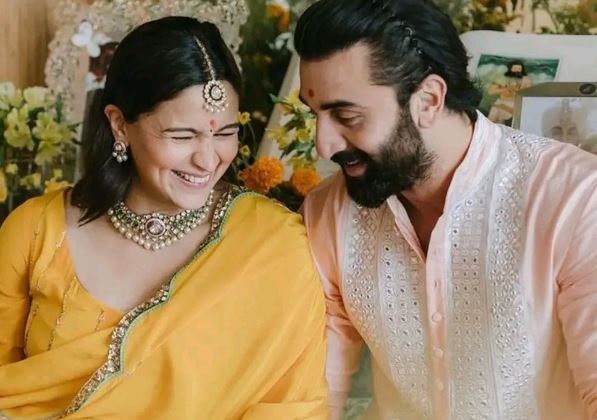
It’s all joys and cheers for Bollywood actors Ranbir Kapoor and Alia Bhatt, as the couple welcomed their first child on Sunday.
The Brahmastra couple welcomed a baby girl in the afternoon hours today. The duo on Sunday morning reached Sir HN Reliance Hospital in Mumbai which raised its brows on the baby’s arrival. Although the couple and the family members have still not confirmed the news on their social media platforms.
After Ranbir and Alia, their mothers Soni Razdan and Neetu Kapoor were also spotted arriving at the Hospital.
Alia has frequently been showering her fans with cute pictures from her preggers diary throughout her pregnancy.
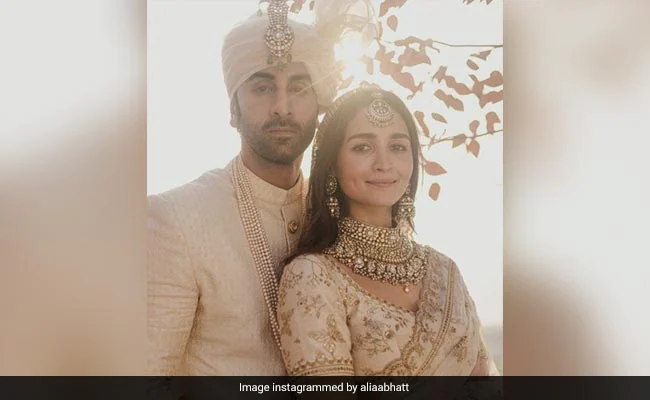
Alia Bhatt and Ranbir Kapoor; Image Source: Alia Bhatt Instagram
The power couple announced their pregnancy in June this year. The ‘Brahmastra’ couple tied their knot on April 14, 2022, after dating for years at Ranbir’s Mumbai residence in an intimate ceremony.
Two months after their marriage, the couple treated their fans with such a big surprise. Ever since the couple announced their pregnancy, fans have been waiting for the good news from the Kapoor family.
Meanwhile, on the work front, Alia and Ranbir were recently seen together in the sci-fi action film ‘Brahmastra: Part 1- Shiva’ which gathered massive responses from the audience.
Alia Bhatt and Ranbir Kapoor; Image Source: Alia Bhatt Instagram
Helmed by Ayan Mukerji, the film also starred Amitabh Bachchan and Mouni Roy in the lead roles. ‘Brahmastra’ is now streaming on the OTT platform Disney+ Hotstar.
Meanwhile, Ranbir will be next seen in director Luv Ranjan’s next untitled romantic comedy film alongside Shraddha Kapoor and in director Sandeep Reddy Vanga’s gangster drama film ‘Animal’ opposite Rashmika Mandanna, Anil Kapoor and Bobby Deol.
Alia Bhatt and Ranbir Kapoor; Image Source: Alia Bhatt Instagram
On the other hand, Alia will be next seen in director Karan Johar’s ‘Rocky aur Rani Ki Prem Kahani’ alongside Ranveer Singh, Dharmendra and Jaya Bachchan.
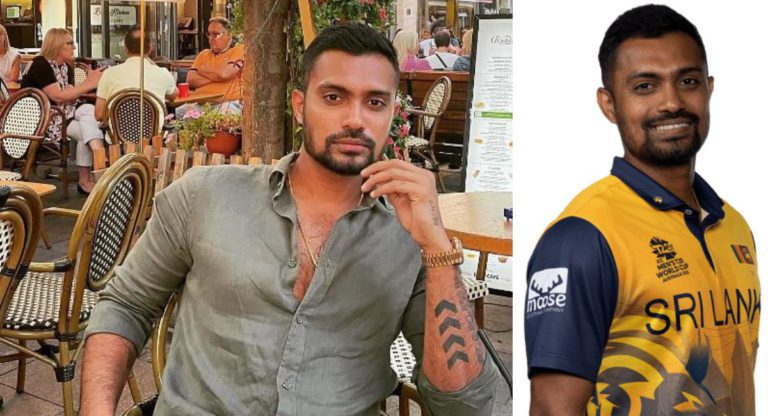
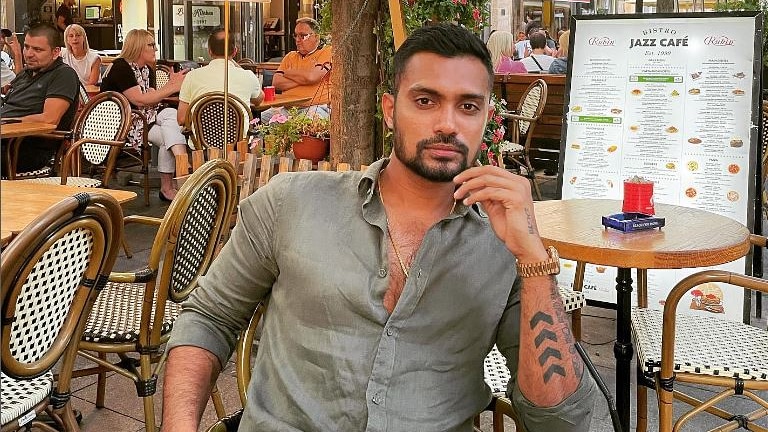
Police detectives from the Sex Crimes Squad and Eastern Suburbs police formed Strike Force Veteran to investigate the allegations against Gunathilaka.
The cricketer was arrested at a hotel on Sussex Street in Sydney CBD and then taken to Sydney City Police Station where he was charged with four counts of sexual intercourse without consent.
Gunathilaka, who is a Sri Lankan national, was refused bail by NSW Police and is expected to appear before Downing Centre Local Court on Monday.
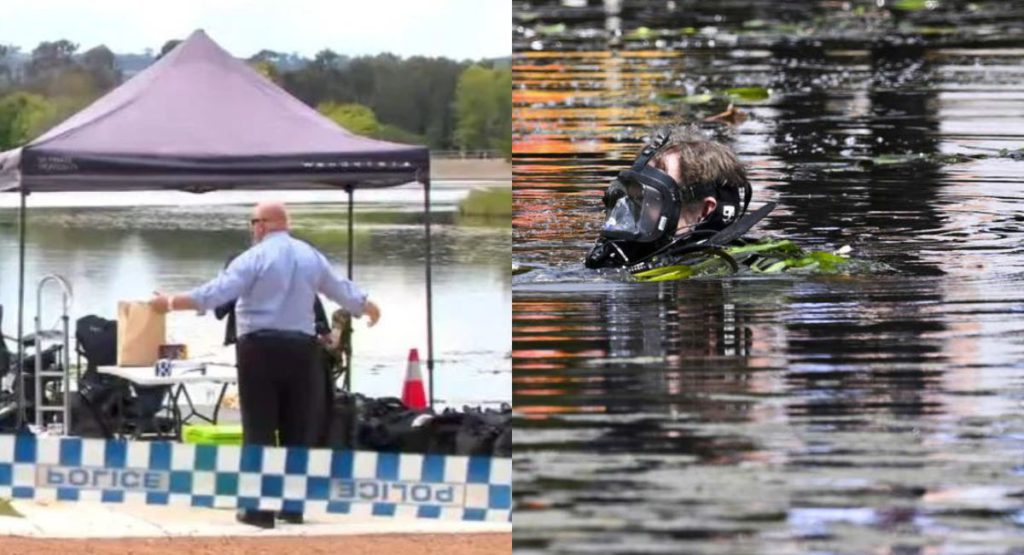
“Sadly, the 8-year-old boy we posted about as missing yesterday, has been located deceased in Yerrabi Pond. The investigations into his death, and those of his mother and brother who were also discovered deceased in Yerrabi Pond yesterday, are continuing. At this stage, police do not believe any other party was involved. A report is being prepared for the Coroner.”
The bodies of Pranav’s mother and brother were found after a passer-by spotted them floating in the pond.
ACT police said the circumstances surrounding the three deaths are being investigated, and a report will be prepared for the coroner.
In response to the horror stories of abuse and neglect from the Royal Commission into Aged Care, the new federal Labor government has made legislative changes. Prior to this, Australia’s most recent aged-care reforms were enacted a decade ago. The focus, however, is still largely on residential care homes, so what about older Australians in the broader community?
More older Australians are still living in their own homes. How do our policies and cities support them? We have published an analysis comparing 85 policy documents across all three levels of Australian governments against World Health Organization (WHO) guidelines on age-friendly cities.
We found these policies reflect outdated views of old age. They neglect many important aspects that contribute to happy and fulfilling lives in older age.
The policy focus is overwhelmingly on care and support services. There are decreasing levels of attention to housing, transport, walkability and, least of all, cultural diversity.
Landscapes, both public and private, can support older people and those living with dementia to live active lives. Designwell director Tara Graham-Cochrane makes the case for an age-friendly approach to transforming our cities.https://t.co/K9Zrcnjwp7#IOTAGardenAU#Communitiespic.twitter.com/LH3micQDHk
The WHO first published its Global Age-Friendly Cities: A Guide in 2007 to support the active ageing policy framework it proposed back in 2002. Described as “the centrepiece of WHO’s age-friendly cities approach”, the guide became a major point-of-reference for age-friendly policymaking around the world.
In 2010, the WHO launched the Global Network of Age-Friendly Cities and Communities. The network aims to help governments and other organisations build age-friendly cities through evidence-based guidance and knowledge exchanges. Australia’s members include two states, 34 local councils and one regional organisation.
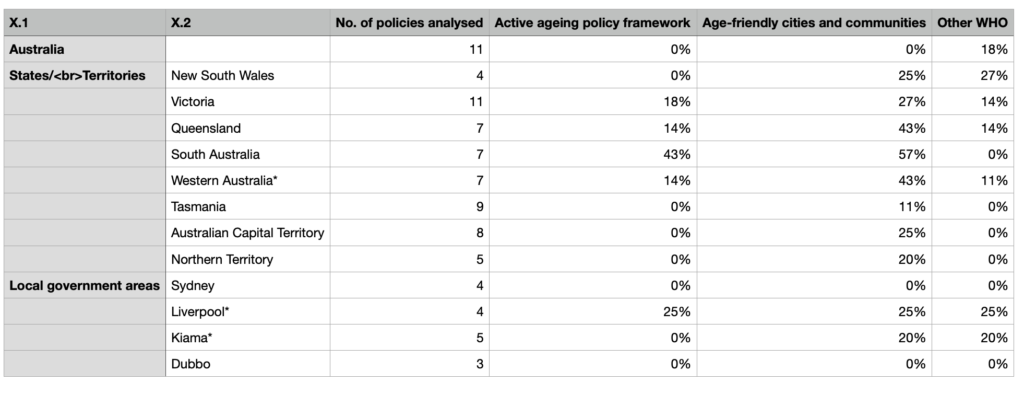
Our research, however, found little to no difference between Australian members and non-members in making direct policy references to these guides. For example, more of South Australia’s (a non-member) policy documents referred to the guidelines than Western Australia’s (a member), as the table below show.
More of South Australia’s (a non-member) policy documents referred to the guidelines than Western Australia’s (a member) Policies’ reference to WHO framework, guides, or reports / *Members of the Global Network of Age-Friendly Cities and Communities at the time of research (Image Source: Author provided)
There were also discrepancies between the tiers of government. State and territory governments were more likely to take on such guidance than federal and local governments. Yet local governments are the intended audience of the framework and the guide.
Previous research in Canada blamed this on “the minimal state powers of municipal governments”. In Australia, too, our federated system has left local councils with limited authority and resources.
An outdated view of old age
In analysing the 85 policy documents, we adopted a “traffic light” system to highlight whether they acknowledged ageing-related challenges and proposed corresponding actions.
Our analysis focused on five policy areas:
care and support services
cultural diversity
housing
transport
walkability.
These areas broadly align with the WHO’s age-friendly domains.
The skewed policy focus is on care and support services. This reflects decades of aged-care reforms in Australia and their take-up at all levels of government. It also potentially reveals a stereotypical view of old age as being a time of frailty, decline and disengagement.
Our analysis also reveals a failure to recognise how diverse circumstances impact the ageing processes. The result is a neglect of the broader spectrum of older Australians’ support needs.
— UN Decade of Healthy Ageing (2021-2030) (@UNDecadeAgeing) October 1, 2022
A mismatch between resources and services
In Australia’s three-tiered government system, each level has its own authority and resourcing ability. Previous Australian research shows local governments have limited ability to raise the resources they need to design and implement policies and programs for their ageing residents as the WHO guidance intended.
Our analysis shows a reliance on national programs instead. These may not be as nuanced in responding to local needs and conditions.
In related work, our fine-level spatial analysis also highlights a mismatch between the growth of ageing populations across Australia and where aged care services are being offered. This is due largely to inequitable eligibility criteria. These effectively favour home owners living in standalone suburban houses over others such as renters.
The latest proposal to revamp a residential aged-care sector that is no longer fit-for-purpose must be applauded. Policy should aim to provide these residents with all the attention and dignity they deserve. But as the population ages, there’s an ever greater need to provide support across all the domains that enable older people to live healthy, fulfilling lives.
Local authorities would know local residents and their needs most intimately. But our analyses show they are hamstrung in supporting the needs of older people in the community.
Continued reform must aim to ensure local councils have the powers and resources required to serve these needs. This will go some way towards responding better to Australians’ changing needs. Importantly, it will also help to reframe the dialogue of ageing away from frailty and debilitation.
Deakin University has launched a new online portal, Australia and India SDG Internships, that will facilitate and promote student internships across Australia and India.
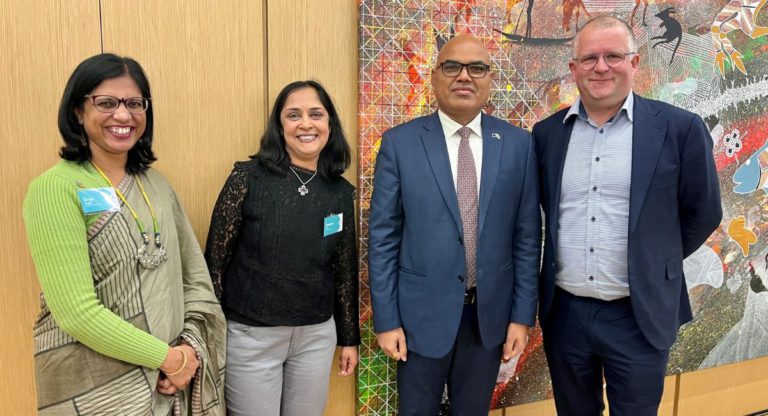
Deakin’s Vice-Chancellor Professor Iain Martin and Melbourne’s Consul General of India Dr Sushil Kumar presided over the formal launch of a new portal that will further increase ties in education, research, trade, and sustainable development between the two countries.
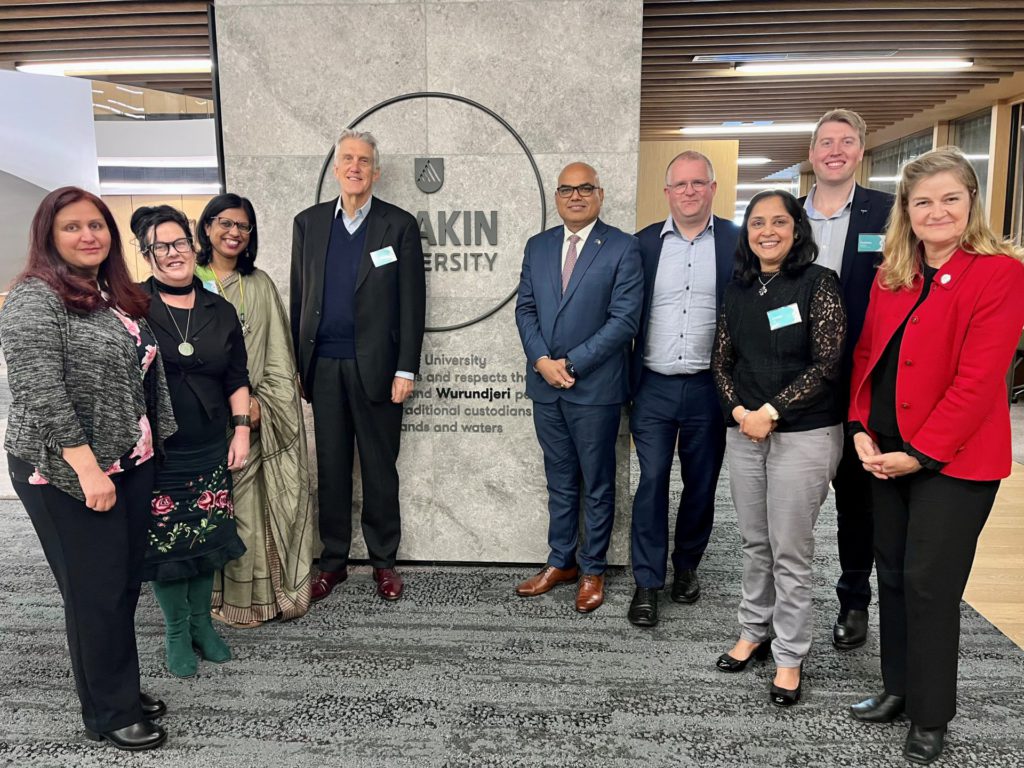
Honorary Associate Professor Harsh Suri; Dr Sally Northfield, United Nations Association Australia; Professor Divya Singhal, Goa Institute of Management; Professor Ian Howie, United Nations Association Australia; Dr Sushil Kumar, Consul General of India; Professor Iain Martin, Deakin Vice-Chancellor; Dr Ameeta Jain, FoBL; Matt Cameron, WIL manager FoBL; and Susan Coles, Department of Foreign Affairs and Trade (Image source: supplied)
Dr Ameeta Jain, Senior Lecturer at Deakin Business School, is the force behind the internship portal. She told The Australia Today that internships in general demonstrate an effective way of creating “work-ready” students with the necessary skill sets and training valued by potential employers.
“The COVID pandemic resulted in a dearth of face-to-face student opportunities compromising our students’ job prospects. At the same time, the COVID pandemic highlighted the increasing importance of the SDGs (Sustainable Development Goals) which is my area of research interest. The DFAT grant provided a unique opportunity to explore the possibility of using virtual internships for our students to provide them with experience in tackling real-world problems using SDGs in India and Australia – the two countries close to me. This project has strengthened the ties between India and Australia and built new networks and connections which are of value to education, industry, and the society at large in both the countries.”
Dr Jain further observed:
“Host organisations can post internships on the portal and universities can access these to find opportunities that are relevant for their students. The portal website also includes resources for organisations that are interested in offering internships, so they can better understand the options available and the benefits that hosting interns can bring.”
Internships hosted through the portal are primarily aimed at helping non-government organisations (NGOs) with work focussed on the United Nation’s Sustainable Development Goals (SDGs), developing skills in the growing area of corporate social responsibility.
Dr Jain adds that smaller NGOs needed help but didn’t often have the resources to support internship opportunities.
“The capacity for virtual internships is especially important in enabling us to connect with a wide range of collaborators across both countries. We saw how virtual internships worked well, in part out of necessity, during the pandemic. But they can also offer a low-cost option for students who want to build international experience and connections.”
With funding from Australia’s Department of Foreign Affairs and Trade (DFAT), Dr Jain worked alongside Dr Harsh Suri and Prof. Alex Newman to create this portal that would offer both virtual and face-to-face internship opportunities for Australian and Indian students across both countries.
Pleased to help launch a new online portal at @Deakin to drive 🇮🇳-🇦🇺 internship opportunities, the culmination of a project funded by the @AusIndiaCouncil.
Also celebrating were CG India Dr. Kumar, Vice-Chancellor lan Martin, Professor Ameeta Jain, and Dr Divya Singhal. pic.twitter.com/8AuBa3Lklk
Further, this internship program aims to bridge that gap, bringing together Australian and Indian students to work on projects and build positive cross-cultural relationships.
Kelly Vijaykumar Soni from Gujarat is pursuing a business analytics degree at Deakin University. In her final year, she is interning with the Goa Institute of Management and feels that this initiative as a great opportunity to practice teamwork.
“I helped my host organisation look at data to analyse progress around the Sustainable Development Goals, and I built new analytics dashboards. It was my first time working with data that wasn’t numbers, so it was a great practical experience to solve that problem.”
Kelly’s internship supervisor Dr Divya Singhal is Chair of the Centre for Social Sensitivity (CSSA), at the Goa Institute of Management. She said the new internship program was a fantastic way to collaborate and learn from each other.
“This program is beneficial at many levels. It provides participating organisations opportunity to network with each other, it can result in sharing best practices beyond the agreed project, and students also learn about other countries’ perspectives and situations.”
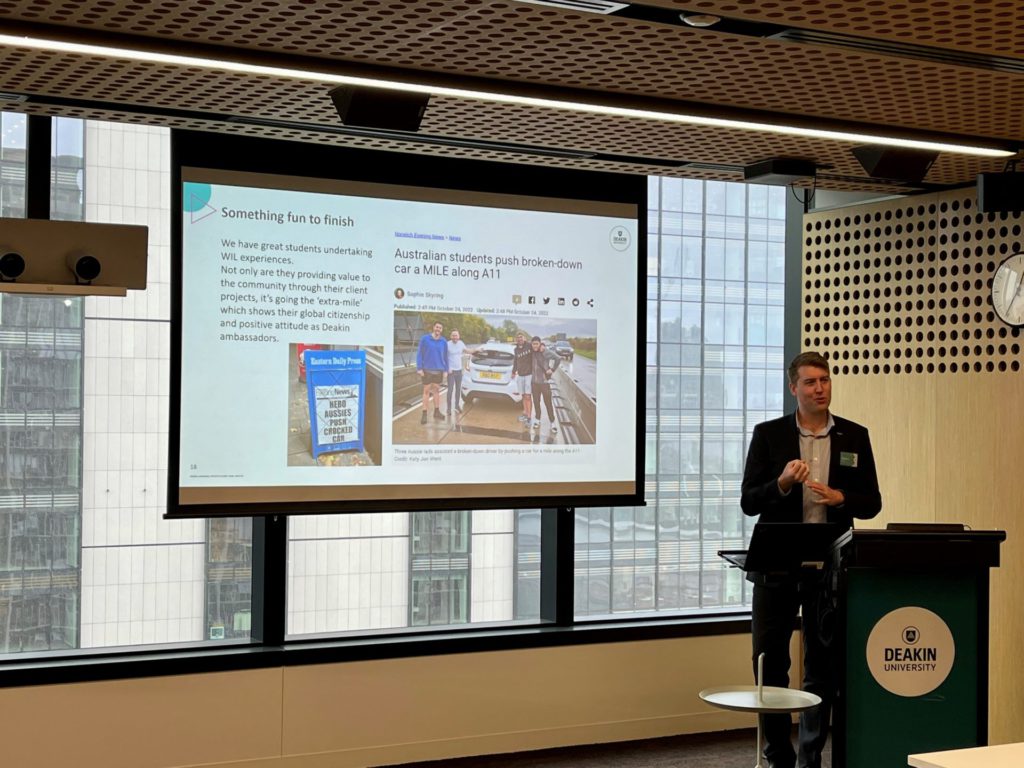
Launch of internships portal (image source: supplied)
This is a positive step as many Indian international students suffered when Australia’s borders were closed during COVID. The stranded students felt a sudden disruption in their studies as they were spending time with family during the semester break.
Indian students typically study a two or four years course and move on to gain work experience in their field that helped in gaining permanent residency. Many students lost this valuable opportunity to use post-study work visas in Australia during the pandemic.
The latest figures show that Indian international student numbers in Australia had grown back but it will take some more time for student enrolments to return to pre-pandemic levels.
By Dr Nadine Normand-Marconnet, Dr Jeremy Breaden and Thu Do
The pandemic has accelerated the blurring of frontiers between “in-person” and “online” learning and teaching, and educators are increasingly using virtual spaces to provide students with intercultural experiences that were formerly attainable only through physical mobility.
This shift brings huge potential to accommodate a wider variety of student needs, and foster greater inclusivity in intercultural exchange.
But to capitalise on this potential, we need to ensure students are fully on board. Research suggests students’ perceptions and experiences of online learning are highly variable.
When it comes to intercultural exchange in particular, as UNESCO has noted, we need to strike a careful balance between accessibility and inclusivity, and avoid replicating hierarchies of language and culture that keep students apart, rather than bringing them together.
The good news is that we don’t need to reinvent the wheel – there are many well-established concepts and practices to draw on.
Her, we introduce strategies developed in an ongoing action research project that mobilises the idea of “students as partners” for success in online intercultural exchange.
Engaging students as partners
Students as Partners (SaP) practices are gaining prominence internationally as a means to achieve a more inclusive approach to higher education.
Offering a counter to the rhetoric of students as customers, SaP emphasises collaborative, reciprocal processes through which all participants have the opportunity to contribute equally, although not necessarily in the same ways, to designing and implementing the curriculum.
Ideally, partnerships should affirm the different talents, perspectives and experiences that all parties bring, with no structural or cultural barriers to participation, and benefits accruing to all those involved in the partnership. Embracing this SaP approach has the potential to transform institutional cultures, and to foster genuinely transformative learning.
Recent SaP research highlights the values that underpin partnership, which include authenticity, inclusivity, reciprocity, empowerment, trust, challenge, community, and self-authorship.
These align closely with the values fostered through intercultural exchange activities, which students increasingly experience through online platforms.
Online intercultural exchange
Since the pivot to online learning in early 2020, internationalisation through technology has become a major trend in universities. Health security issues and travel restrictions have provided institutions and individuals to push the boundaries in terms of students’ global mobility.
Educators in Australian institutions have been designing and implementing a variety of online activities to provide students with opportunities to interact with peers located in different countries.
What has long been recognised as beneficial in language teaching and learning under the label of “telecollaboration” is now widely valued across disciplines. Staff and students are experiencing the new potentials of online interaction encompassing a wide range of modalities.
According to different contexts, this component of global learning and teaching can be called virtual exchange (VE), as in the European Erasmus program, or collaborative online international learning (COIL), as it was coined in the State University of New York. In our project, we’ve adopted the blanket term “online intercultural exchange” (OIE) to encompass all such activities.
Current research shows that OIE is bringing intertwined benefits to students in their personal, academic and professional life.
One of the first outcomes is the development of intercultural competence. Collaborating with peers who have a different cultural, linguistic and disciplinary background requires participants to enhance their cultural self-awareness, and to develop understanding and respect for differences.
This learning experience is also enhancing their academic performance in terms of digital literacy, critical thinking, problem-solving, and intercultural communication. Ultimately, these interrelated and transferable skills will be invaluable for graduates entering the global workplace.
Partnerships in practice: Student perspectives
Our project aims to prepare students for online collaborative experiences with students located elsewhere in the world, and situate them within a wider learning journey.
One component of the project is the design and production of learning resources in partnership with a small group of students with diverse backgrounds and prior experience of intercultural collaboration.
We present the students with common OIE scenarios and encourage them to reinterpret the scenarios based on their own authentic experiences of OIE, in order to create resources such as podcasts and quizzes, which will in turn be accessed by other students in preparation for their own OIE experiences, as well as informing our approaches to OIE as educators. This is the SaP approach in action.
Feedback gained from our student-partners thus far resonates strongly with the SaP values mentioned earlier. For example, they recognised that the collaborative approach reflects a wider student-centred ethos underpinning learning and teaching at their institution, but also felt empowered more specifically by relationships in which they were able to take the creative lead.
“I think it was great that we had the power to do what we want to do, but [also] that we had guidance and support. They [teaching staff] were really good at giving us really cool suggestions to help us create something.”
The ownership that student-partners gained was complemented by an awareness of real-life impact.
“We’re going to make the intercultural learning experience at Monash a bit more intimate, because it also comes from students at Monash.”
Opportunities for student-partners to deploy transferable skills gained through their prior studies also enhanced the authenticity of the activity.
“Using what I had learned, and trying to bring that to this task, was a learning experience in itself. And then working with different people, it was like turning the stuff that I had learned into practice.”
Student-partners also underlined the conception of partnerships as a reciprocal, inclusive, process of dialogue. They explicitly affirmed that differences among participants, which are sometimes viewed as barriers to effective collaboration, were central to the co-creative process, hard-wiring diversity and inclusion into the project as a whole.
Advancing the OIE partnership approach
Both SaP and OIE are appealing catchphrases in today’s higher education context, especially when used in combination. But to make them both effective and sustainable in practice, we need to design projects with cyclical impact, engaging students as co-creators as well as learners, and staff as learners, as well as leaders and facilitators.
Our experience suggests we can learn just as much from students as they can from us. The mutually beneficial outcomes are clear, as one of our student-partners concluded:
“I think it’s a win-win solution for Monash and for the students. Monash got the enrichment content for learning and the students got new skills, new friends, new connections, networking and additional skills.’”
The authors acknowledge the contributions of the following OIE project team members: Louis Bravos, Iori Hamada, Shimako Iwasaki, Howard Manns, and Lola Sundin.
Contributing authors: Dr Nadine Normand-Marconnet, Senior Lecturer, Monash Intercultural Lab, School of Languages, Literatures, Cultures, and Linguistics; Dr Jeremy Breaden, Associate Professor, Japanese Studies, School of Languages, Literatures, Cultures and Linguistics; and Thu Do, Learning Adviser, Student Academic Success, Portfolio of the Deputy Vice-Chancellor and President (Education).
This article was first published on Monash Lens and is republished here under the Creative Commons Licence. Read the original article.
Former Pakistani Prime Minister Imran Khan has been reportedly injured in a firing incident near his container during a long march he was carrying out to protest against the ruling government and Pakistan Army.
The incident took place when the ‘Haqeeqi March’ convoy entered Wazirabad.
Following the firing, there was a stampede and everyone including the PTI leaders on the container convoy panicked.
At the time of the firing, the convoy had reached Zafarali Khan Chowk, as per local media.
Imran Khan was reportedly injured as shots were fired near his long march container convoy.
There are reports of seven PTI leaders getting injured in the firing incident. Those injured in the firing were immediately shifted to the hospital in ambulances.
Faisal Javed Khan, a Senator of Pakistan Tehreek-e-Insaf (PTI), who was covered in blood because of the injuries sustained during the firing incident, said he was injured in the “assassination attempt” on Imran Khan.
PTI secretary general Asad Umar said Imran Khan was shifted to Lahore after the firing incident.
“Imran Khan is being shifted to Lahore for medical treatment,”
said Asad Umar.
The Videos and pictures viral on social media show no sign of a bullet injury to Imran Khan. However, PTI leader Fawad Chaudhry has confirmed that Imran Khan was shot in the leg in a targeted attack during the long march in Wazirabad today.
PTI leader Fawad Chaudhry has confirmed that Imran Khan was shot in the leg in a targeted attack during the long march in Wazirabad today.#ImranKhan#firingpic.twitter.com/0f7ul76j1i
Pakistan-based Senior Journalist Hafeez Chachar told The Australia Today, “It is just a claim by PTI leaders that Imran Khan was shot in the leg.”
“We have not seen any concrete proof of him being shot, doctors should have issued a statement by now but that is also not being released.”
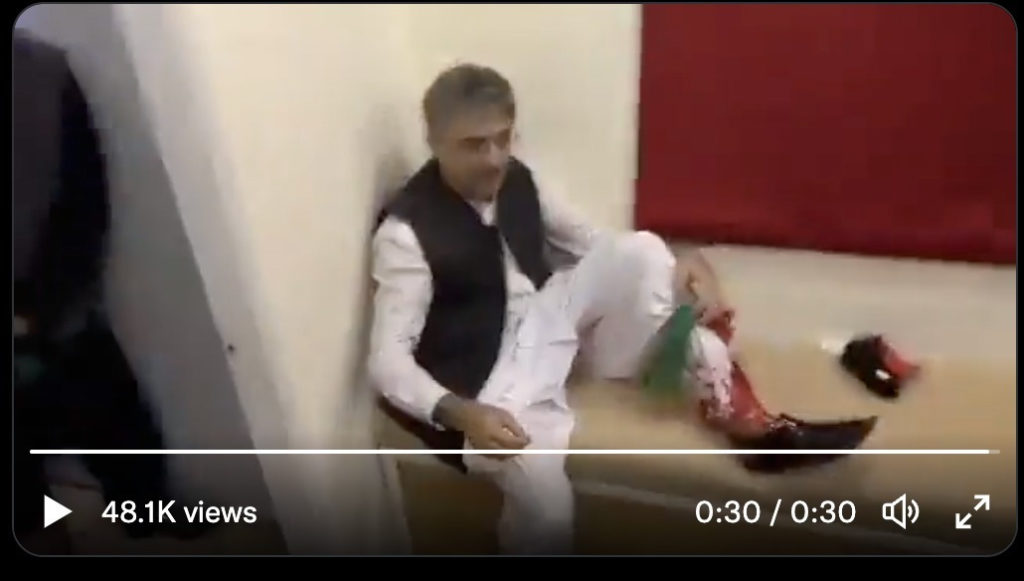
At least two people who were at the container at the time of the attack have privately said that Imran Khan was not shot but twisted his ankle/knee while ducking from bullets.
Pakistan’s Prime Minister Shehbaz Sharif has sought a report from Interior Minister Rana Sanaullah about the incident. He also directed the Interior Minister to get a report from the Punjab Chief Secretary and IGP Punjab.
After the shooting incident, India on Thursday said it is keeping a close eye on the ongoing developments.
“It’s a development that just took place. We’re closely keeping an eye on it and we’ll continue to monitor ongoing developments,”
said MEA spokesperson Arindam Bagchi.
The suspect caught by police for carrying out gunfire during PTI long march has said he wanted to kill PTI chairman Imran Khan because “he was misleading the public,” media reports said.
When the police asked why he committed the crime, the shooter said,
“Imran Khan was misleading people and I could not tolerate it so I tried to kill him. I tried my best to kill him. I tried killing only Imran Khan and no one else.”
“I thought of this as there was Azaan going on and on the other side, Imran Khan is taking out his container and making noise. My conscience did not approve of this. I decided this suddenly… I conspired against Imran Khan from the day he kicked off his long march from Lahore. I made up my mind that I will not leave him alive,” as per a video of the shooter shared on social media.
Responding to whether there was someone else in the conspiracy, the shooter said, “I have conspired this alone and no one else is involved in this. I came on a bike and I parked it at my uncle’s shop. He has a motorcycle showroom.”
The Punjab police have confirmed that seven people were injured and a person was killed in the firing incident.
As per the police, the deceased has been identified as Muazzam Nawaz.
The person who intercepted the shooter is now hailed as a hero in Pakistan.
Here is a talk with Pakistan’s Senior Journalist Hafeez Chachar and The Australia Today’s Editor Amit Sarwal, Pallavi Jain and Jai Bharadwaj
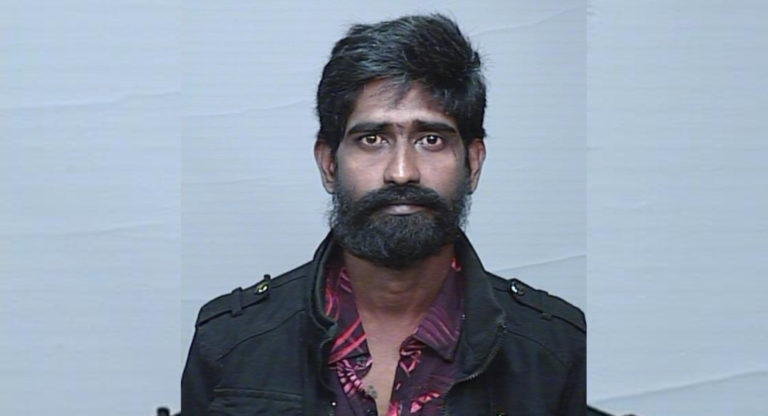
Police are appealing for public assistance to locate a man missing from Westmead.
Sathyaraj Darmalingam, aged 32, was last seen at Westmead at about 4 pm today (Thursday 3 November 2022).
When he could not be located, officers attached to Parramatta Police Area Command were notified and commenced inquiries into his whereabouts.
He is described as being of Indian/sub-continental appearance, about 175cm tall, of thin build, with black curly hair.
It’s unknown what he was wearing.
Police hold serious concerns for his welfare.
Sathyaraj is known to frequent western Sydney, especially Parramatta, and ride the train lines.
Anyone with information into his whereabouts is urged to contact Parramatta police, or Crime Stoppers on 1800 333 000.
Anyone with information about this incident is urged to contact Crime Stoppers: 1800 333 000 or https://nsw.crimestoppers.com.au. Information is treated in strict confidence. The public is reminded not to report information via NSW Police social media pages.
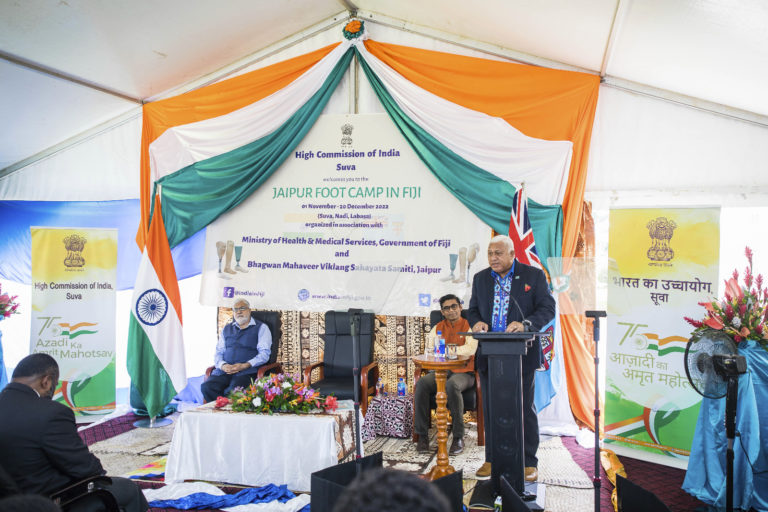
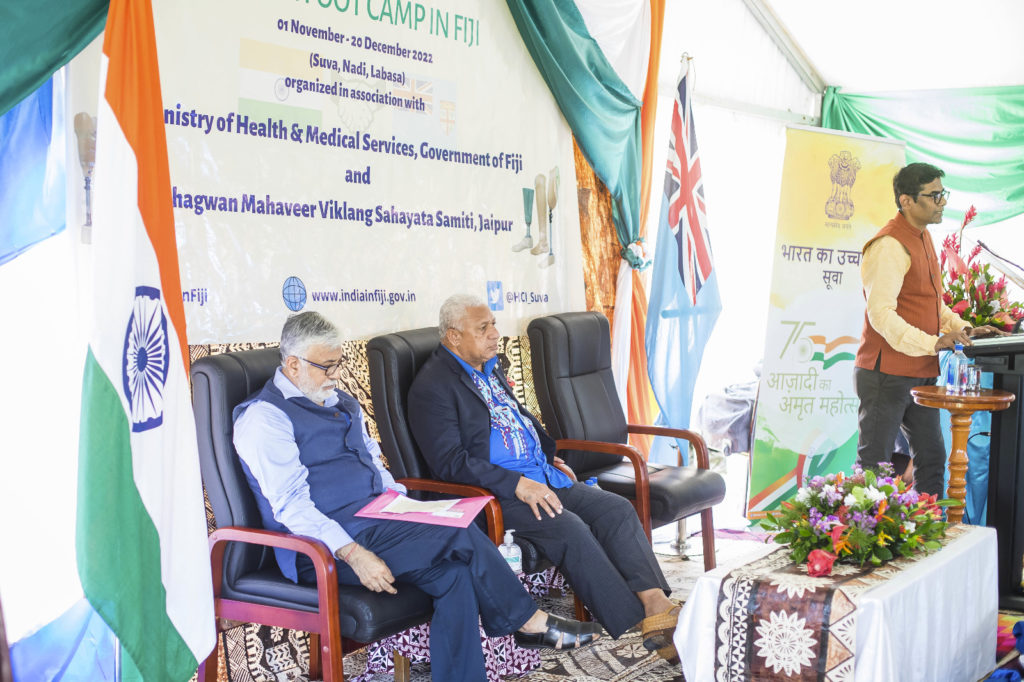
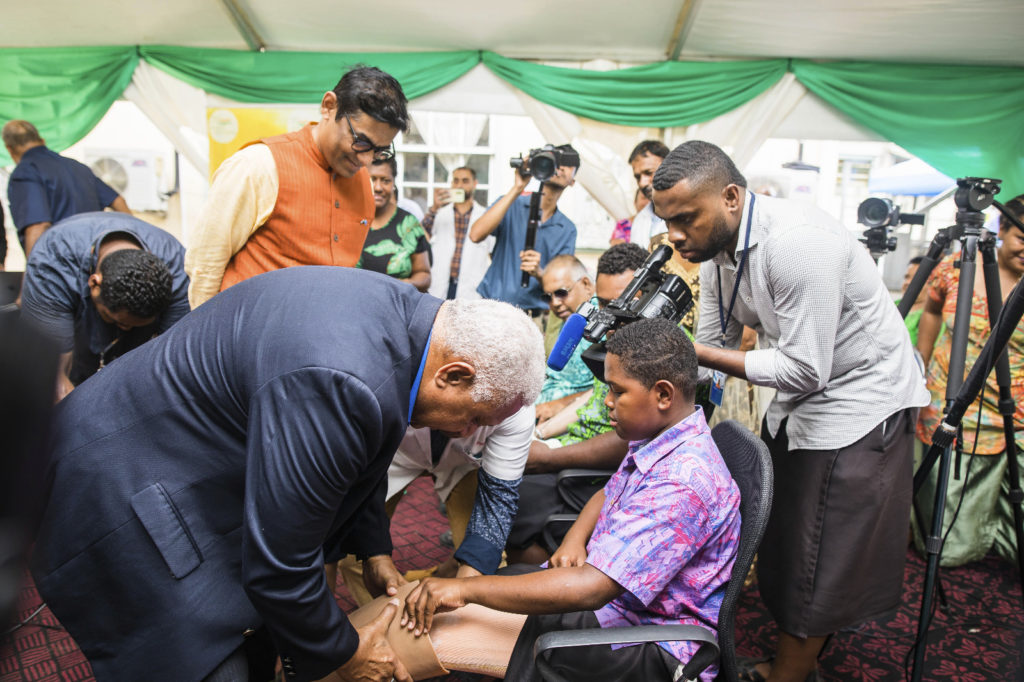
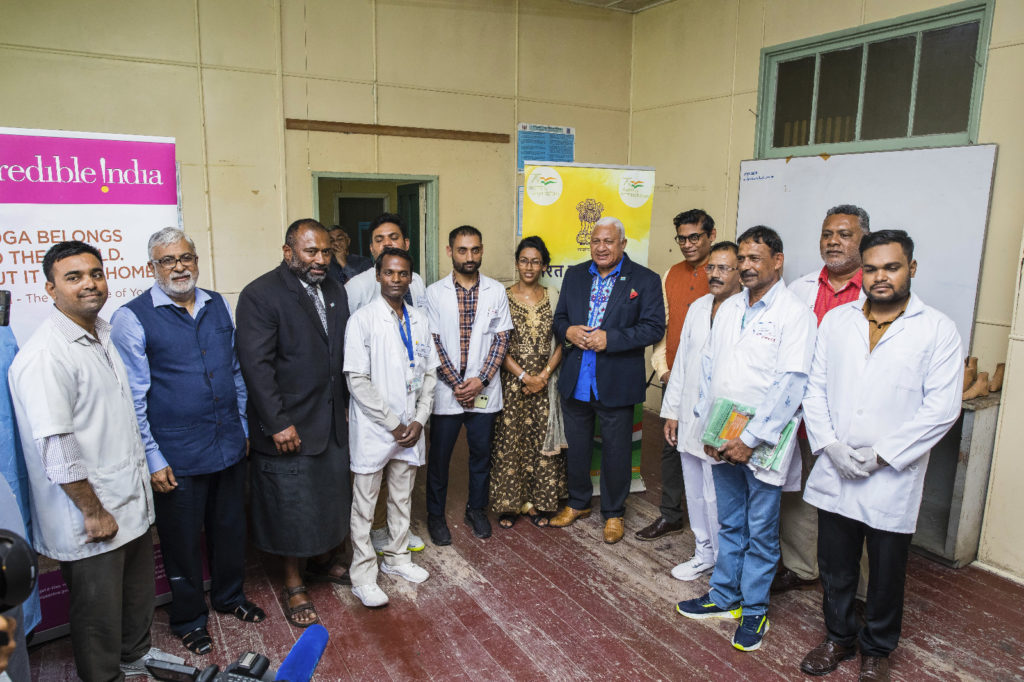
In collaboration with the Fijian Ministry of Health and Medical Services and Bhagwan Mahaveer Viklang Sahayata Samiti (BMVSS), Jaipur (Rajasthan), the High Commission of India in Suva has organised Jaipur Foot Camp for fitment of artificial limbs from November 1-December 17.
Taking to Twitter, the High Commission of India in Fiji tweeted, “Gifting Mobility & Transforming Lives. Hon. @FijiPM inaugurated #JaipurFootCamp in Fiji organized by @HCI_Suva with @MOHFiji & @jaipurfoot2. The Govt of India-funded camp will provide world-renowned Jaipur prosthetic limbs to 600+ amputees in Fiji from 01 Nov – 20 Dec 2022.”
The Govt of India-funded camp will provide world-renowned Jaipur prosthetic limbs to 600+ amputees in Fiji from 01 Nov – 20 Dec 2022.
The artificial limbs will be fitted to over 600 amputees in Fiji at three locations, namely Suva, Nadi and Labasa, according to an official statement of the High Commission of India in Suva.
The camp is being organised at the request of the Government of the Republic of Fiji and the grant-in-aid project involving an expenditure of FJD670,000 /- has been fully funded by the Government of India as part of the “India for Humanity” programme, the release said.
Jaipur Foot Camp in Fiji; Image Source: India In Fiji
Notably, the programme was launched to commemorate the 150th birthday of Mahatma Gandhi 2018 by late External Affairs Minister Sushma Swaraj. Under this programme over 8,000 beneficiaries in 18 countries in Asia and Africa have already been rehabilitated, exemplifying India’s belief in ‘VasudhaivaKutumbakam’ – the world is a family.
The camps aim to provide physical, economic and social rehabilitation of the differently-abled by helping them regain their mobility and dignity to become self-respecting and productive members of society, the official statement read.
The Jaipur Foot Camp was formally inaugurated on November 3 by the Prime Minister of Fiji, Josaia Voreqe Bainimarama.
The event also marked the presence of the Minister for Health and Medical Services (MHMS), Dr Ifereimi Waqainabete, Permanent Secretary, MHMS, Dr James Fong, other Government officials, members of the Diplomatic Corps, Heads of Indian Public Service Undertakings, beneficiaries and their family members.
Jaipur Foot Camp in Fiji; Image Source: India In Fiji
Prime Minister Bainimarama highlighted during his speech that the collaborative initiative aligns with the efforts of the Government of the Republic of Fiji for achieving the principles of Universal Health Coverage by proving rehabilitation services to vulnerable and marginalised members of society.
For these patients, life is about to change dramatically, he added thanking the Government of India and the Jaipur team for the professionally fitted prosthetics that will boost feelings of self-esteem, self-worth, and dignity; provide hope for a brighter future; counter feelings of depression and raise the standard of living for people living with a disability in Fiji.
India shares long-standing ties with Fiji built on mutual respect, trust, cooperation and very strong people-to-people relations.
The High Commissioner stated India’s cooperation in the health sector remains a core part of the development partnership with Fiji.
Even during the worst period of the pandemic, the level of cooperation in the health sector continued to grow whether in the form of the supply of 100,000 Covid vaccines, under the Vaccine Maitri Initiative, which played an effective role in the very successful launch of the National vaccination programme in Fiji or the supply of life-saving anti-retroviral drugs and the personal protective equipment despite huge domestic requirements in India, the press release said.
In his welcome remarks, Executive President, BMVSS, Jaipur, Ambassador Satish Mehta explained the advantages of Jaipur Foot technology, offered to train more Fijian technicians in Jaipur Foot technology and suggested that Fiji become a regional hub for Jaipur Foot limbs.
Jaipur Foot Camp in Fiji; Image Source: India In Fiji
According to concerned health authorities in Fiji, the artificial limbs provided by Jaipur Foot/BMVSS are best suited to the needs of the amputees in Fiji and the Fijian Ministry of Health and Medical Services have ongoing cooperation with Jaipur Foot/BMVSS to meet the mobility requirements of amputees in Fiji.
Around 300 such amputees have been registered for fitment of limbs from the Central Division. The services for these amputees will be provided at Tamavua Towmey Hospital, Suva in the first phase of the camp from November 1-16. The next phase will be held at Nadi Hospital from November 18-30 attending to around 200 registered amputees from Western Division.
The third phase of the Camp will be held at National Council for Disabilities, Labasa from November 2-9 providing artificial limbs to around 100 needy people of the Northern Division in Fiji. For the last phase, the BMVSS team will return to Suva to attend to around 50 amputees from the Eastern Division.
Since its inception, BMVSS has rehabilitated more than 2 million amputees and polio patients by fitting / providing artificial limbs (Jaipur Foot variety), callipers, and other aids and appliances, in India as well as in 27 countries across the world conducting over 60 camps overseas.
The last Jaipur Foot Camp was held at Tamavua Twomey Hospital, Suva in the year 2011 and around 300 amputees were provided with artificial limbs.
Leading Senior Constable Christopher Spillane said the AFP and its state and territory law enforcement partners remained committed to protecting children.
“Anyone who views this material is committing a crime. This is not a victimless crime. Children are not commodities to be used for the abhorrent gratification of sexual predators.”
The man was arrested and charged with;
Cause child abuse material to be transmitted to self, contrary to section 474.22(1)(a)(ii) of the Criminal Code Act 1995 (Cth);
Transmit child abuse material through a carriage service, contrary to section 474.22(1)(a)(i)(iii) of the Criminal Code Act 1995 (Cth);
Solicit child abuse material through a carriage service, contrary to section 474.22(1)(a)(i)(iv) of the Criminal Code Act 1995 (Cth);
Using a carriage service to access child abuse material, contrary to section 474.22(1)(a)(i) of the Criminal Code Act 1995 (Cth) and;
Possessing or controlling child abuse material obtained or accessed using a carriage service, contrary to section 474.22A of the Criminal Code 1995 (Cth).
The man pleaded guilty last week (20 October 2022) to five offences, following a Victorian Joint Anti-Child Exploitation Team (JACET) investigation into an online user uploading child abuse material to social media platforms.
Investigators from the Victorian JACET – comprising members from the AFP and Victoria Police – executed a search warrant at the man’s home on 21 October 2020 before seizing several electronic items, including two mobile phones and a desktop computer.
The Ballarat County Court described this act as “depraved”.
Countries across the world are drifting towards a debt crisis. Economic slowdowns and rising inflation have increased demands on spending, making it almost impossible for many governments to pay back the money they owe.
In normal times, those countries could simply take on new debt to replace the old debt. But international conditions have made it much more difficult to do this.
As a result, some of those approaching repayment deadlines will simply not be able to meet them. Sri Lanka and Zambia have already missed payments, throwing both countries into an economic tailspin, and offering perhaps a preview of impending global problems.
One of the main reasons for this worrying scenario is that countries across the world are essentially compelled to borrow money in US dollars or Euros, and keep foreign currency reserves for future debt payments.
But those reserves face other vital demands. They are needed to purchase oil and other imports, and well as maintaining the credible value of their domestic currency.
Unfortunately for many emerging economies, the reserves they hold are simply not enough to cover all of these demands – especially after energy prices soared when Russia invaded Ukraine.
At the same time, foreign currencies have become more expensive to buy because the US Federal Reserve and the European Central Bank are raising interest rates. Sri Lanka reportedly has no reserves left, while Pakistan is said to be operating on a month-to-month basis.
Countries usually issue new bonds (think of them as tradeable IOUs) to roll over old debt, a process that works just fine – until it doesn’t. In July 2022, no emerging countries issued any new bonds, indicating that investors are alarmed by the risk of low currency reserves, and are no longer interested in lending to them.
China too has scaled back its lending since the beginning of the pandemic to limit its exposure to global risk. So without bond markets or China, countries are turning to alternative sources of credit.
Kenya and Ghana for example, recently took out bank loans to alleviate budget shortfalls. And while the precise terms of these loans are not known, banks usually demand higher interest rates and shorter repayment periods, which may only add to a country’s financial stress levels.
Other countries are turning to some of the oil-rich gulf states currently profiting from high energy prices. Egypt and Pakistan have received loans from Saudi Arabia, the United Arab Emirates (UAE) and Qatar, while Turkey has also borrowed from the UAE. These loans may be welcome lifelines, but they also create opportunities for richer countries to effectively buy influence and generate dependency.
Overall then, a multitude of factors are working against some of the world’s poorest and indebted countries. If a global debt crisis does ensue, expect political turmoil to follow.
Sri Lanka’s default prompted wide spread protests, forcing the president to resign. And research shows that extremist parties perform better after a financial crisis.
Liquidity and transparency
But it is not too late for the international community to help avoid such a scenario.
First off, the US and the EU should slow down their interest rate hikes. These US and EU rate hikes slow economic growth around the world, as the United Nations warned, and they are draining countries’ foreign currency reserves.
It is also not clear that these interest rate hikes are addressing domestic inflation problems. If wealthier countries wish to lower inflation without igniting a global debt crisis, they should lower the trade barriers that artificially raise prices. For example, both the US and EU levy tariffs on imported agricultural products, which increase the price of food for their consumers.
Second, the International Monetary Fund (IMF) should drop or at least soften the austerity requirements linked to its emergency lending. For example, Zambia’s new IMF deal requires lower government subsidies on fuel and food at a time when prices are increasing. These policies are politically unpopular and encourage countries to seek help from China and oil-rich states instead.
Those countries that are compelled to borrow from the IMF face the risk of emboldening extremist political elements. Now is not the time to push orthodox fiscal requirements that are questionable in their effectiveness. Instead, the IMF should prioritise global liquidity during these difficult economic conditions.
Finally, China should take a leading, transparent role in debt negotiations. Many of the countries facing debt problems owe money to China, a process often shrouded in secrecy.
We know, for instance, that China has agreed to participate in restructuring negotiations in Zambia but has not done the same in Sri Lanka. China has provided emergency loans and debt relief to Pakistan and Argentina, though the effectiveness or extent of this aid is unknown.
A more transparent approach would reduce uncertainty in global markets and allow other creditors to coordinate with China. While China’s lending has not been transparent up until this point, more clarity would benefit China’s overseas investments as well as the global debt market.
Time is running out before many debt distressed countries face repayment day. Debt problems are contagious, as was seen with the Latin American debt crises of the 1980s, the Asian financial crises of the 1990s, and the Eurozone debt crises of the 2010s. The global community should work together to avert another global economic spiral, and help millions of people avoid needless suffering.
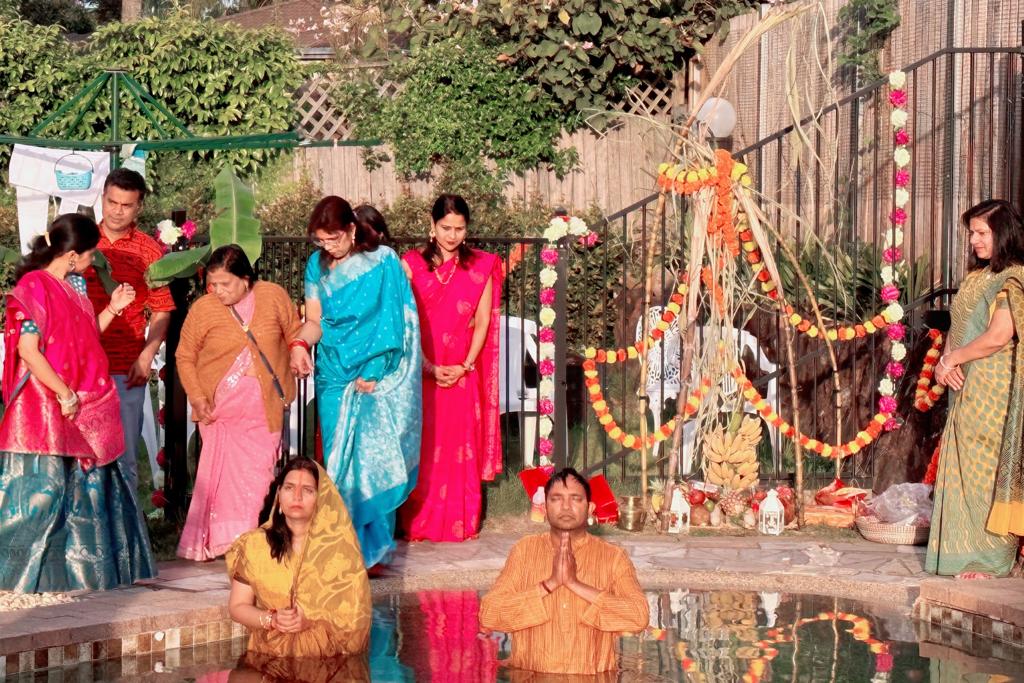
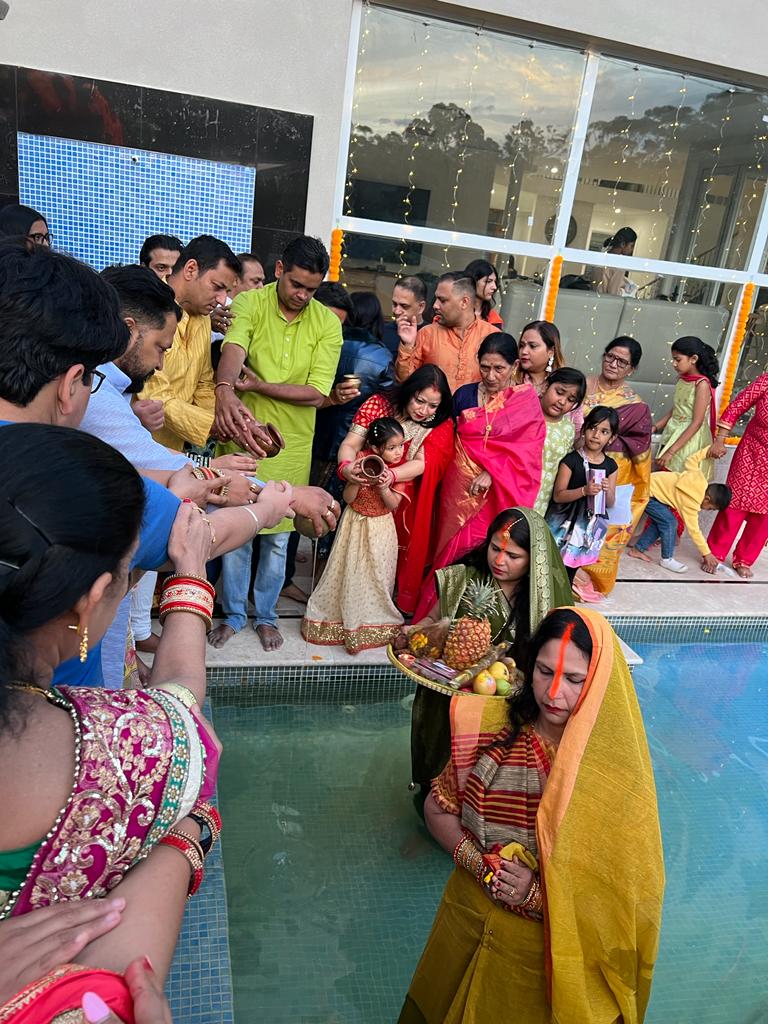
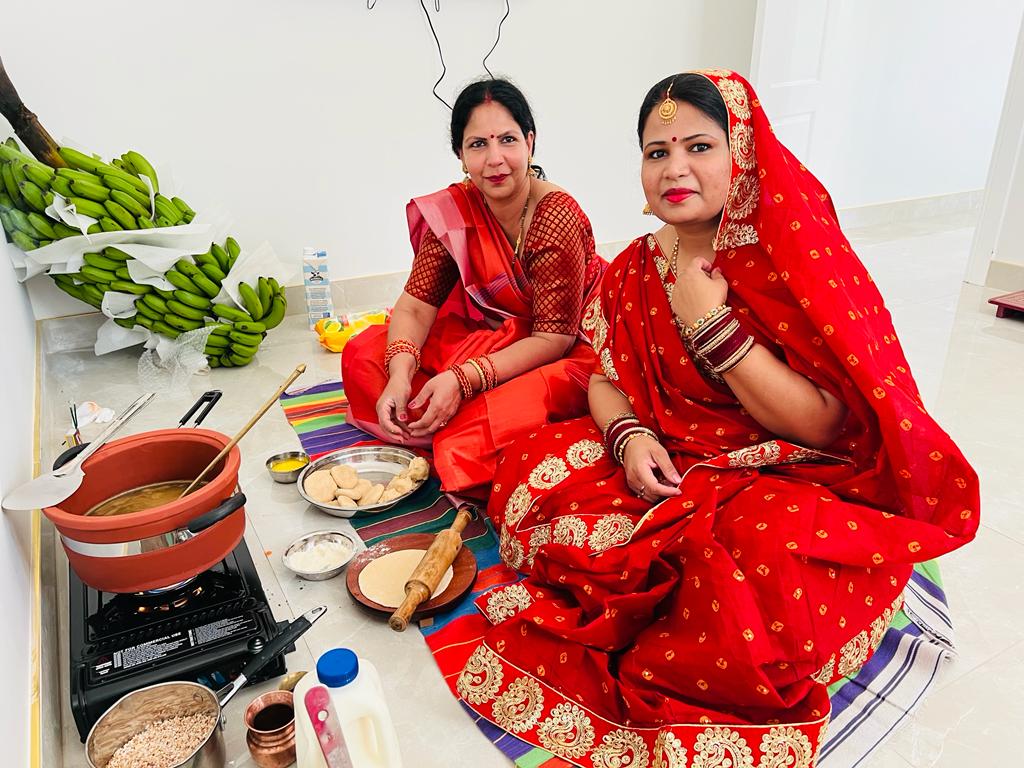
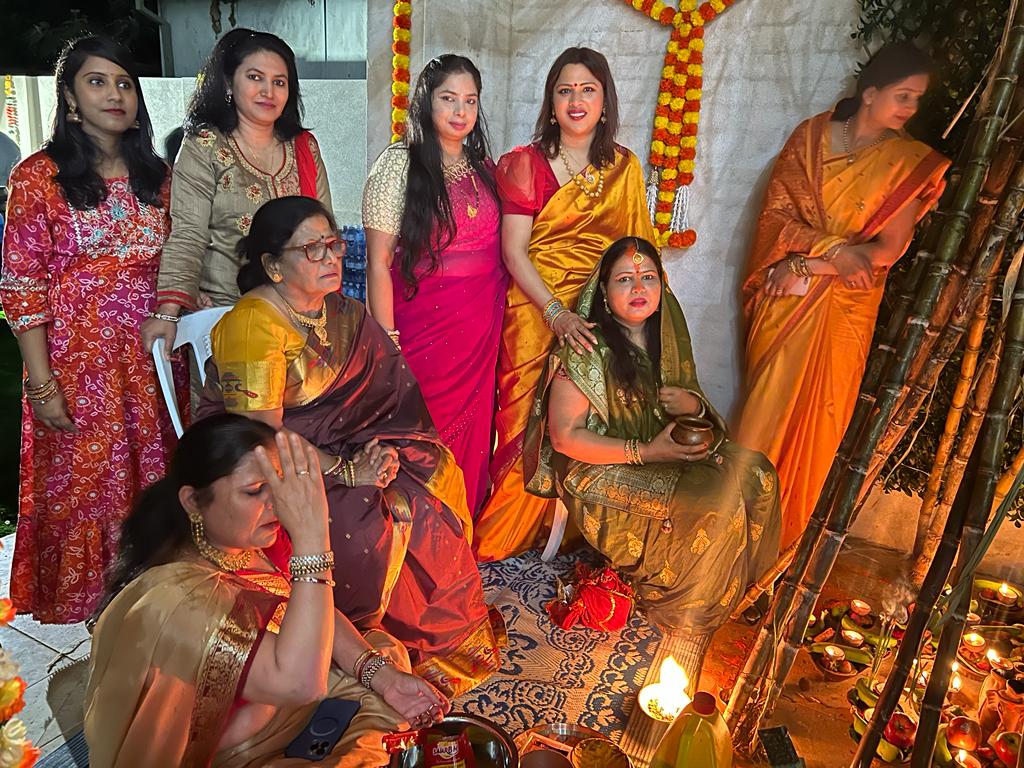
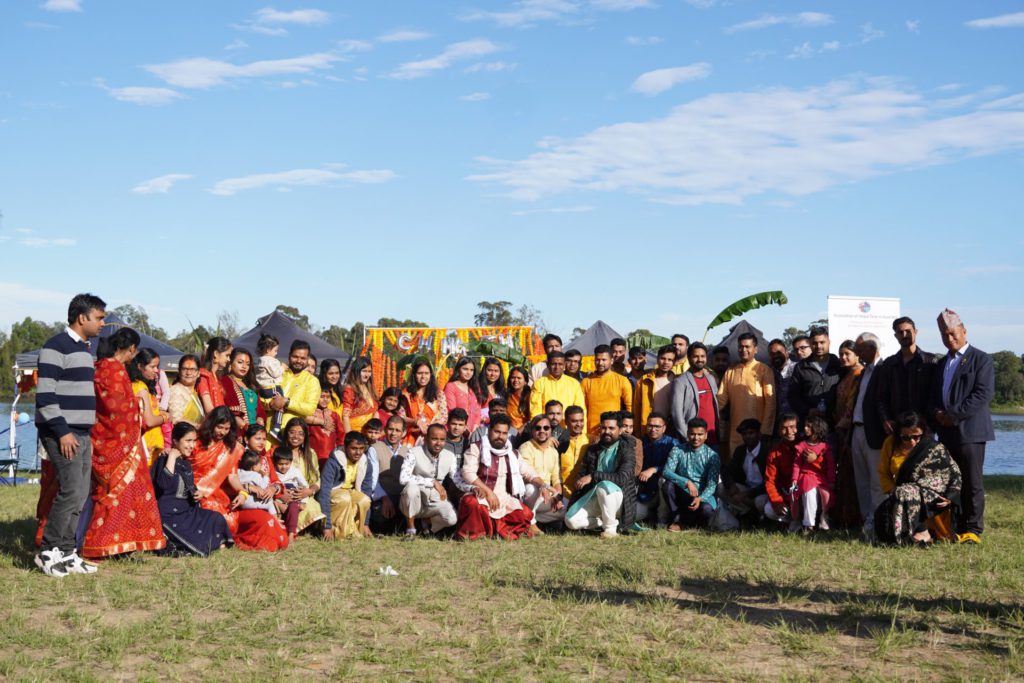
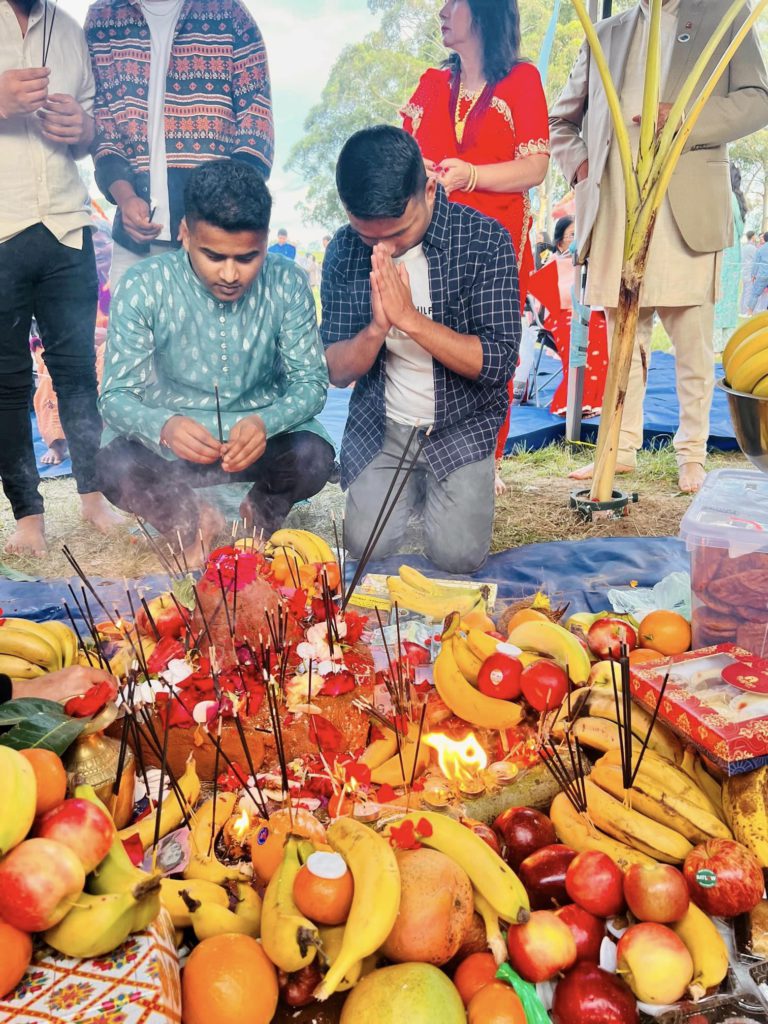
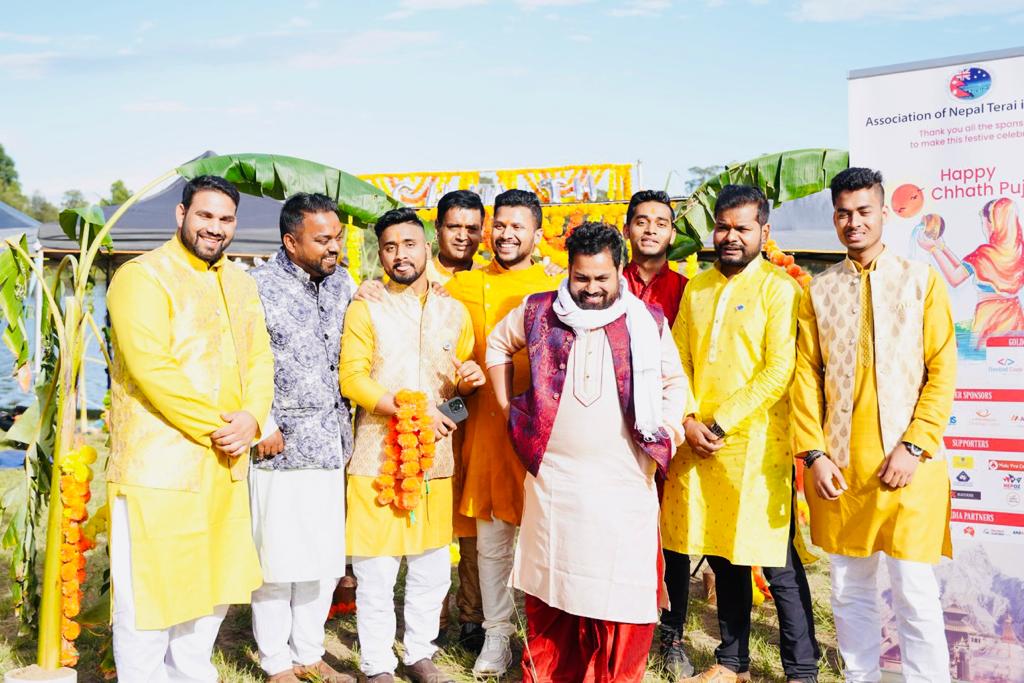
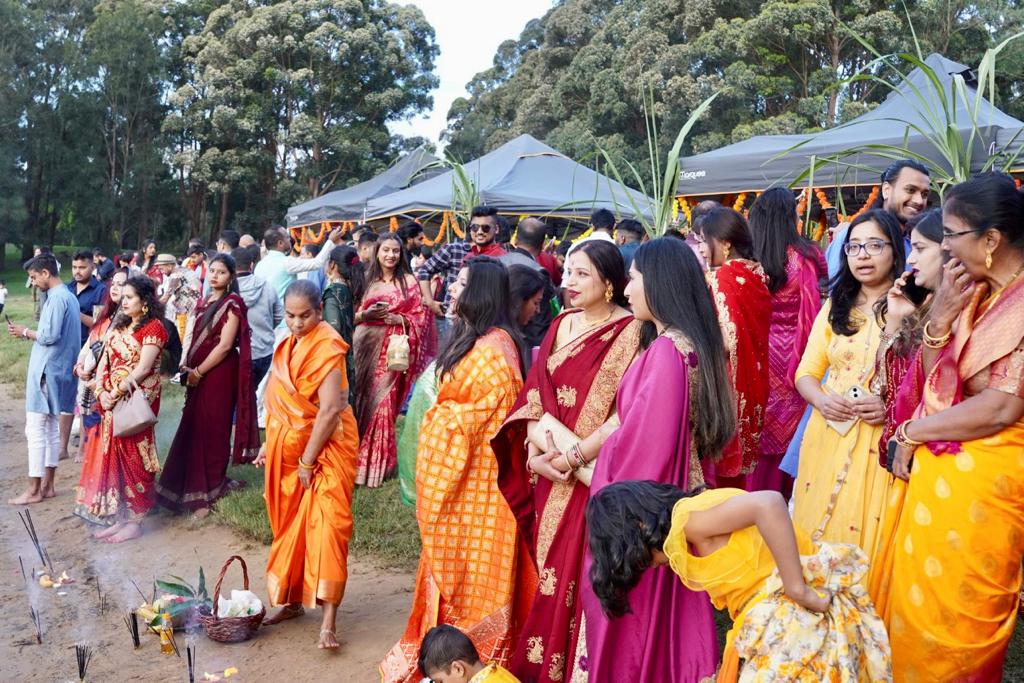
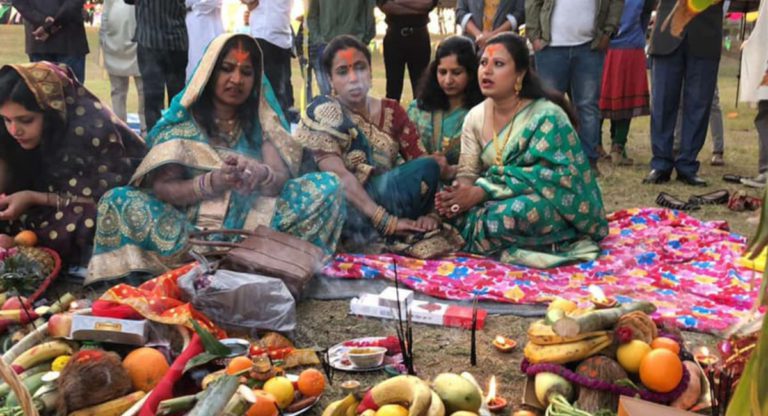
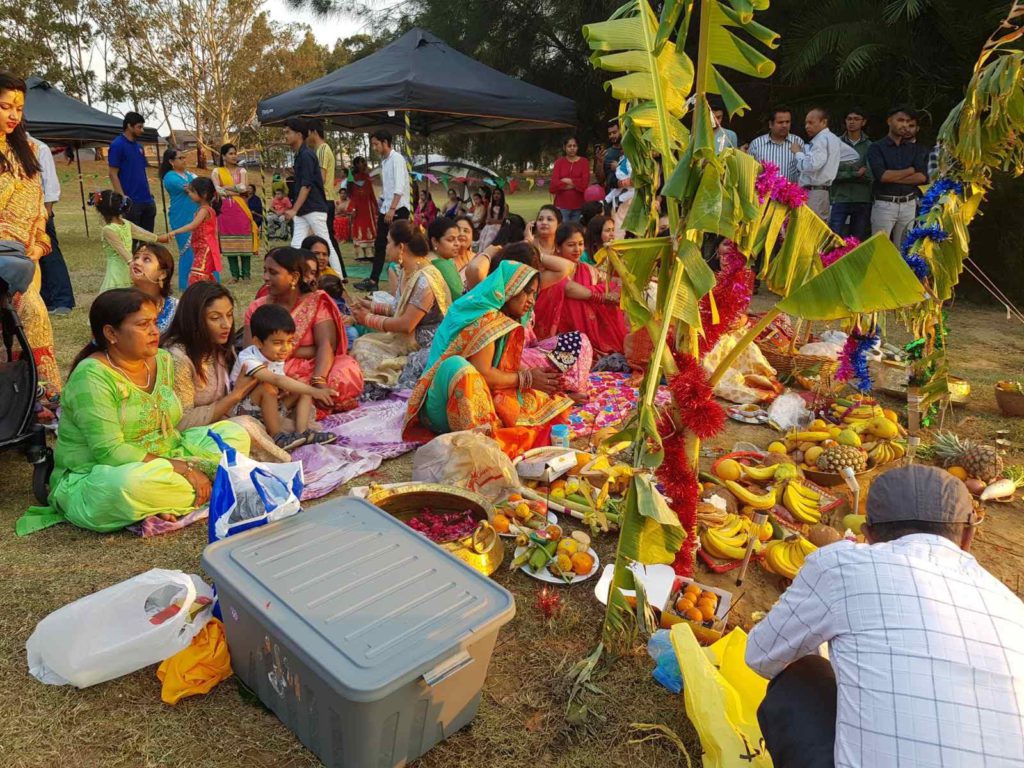
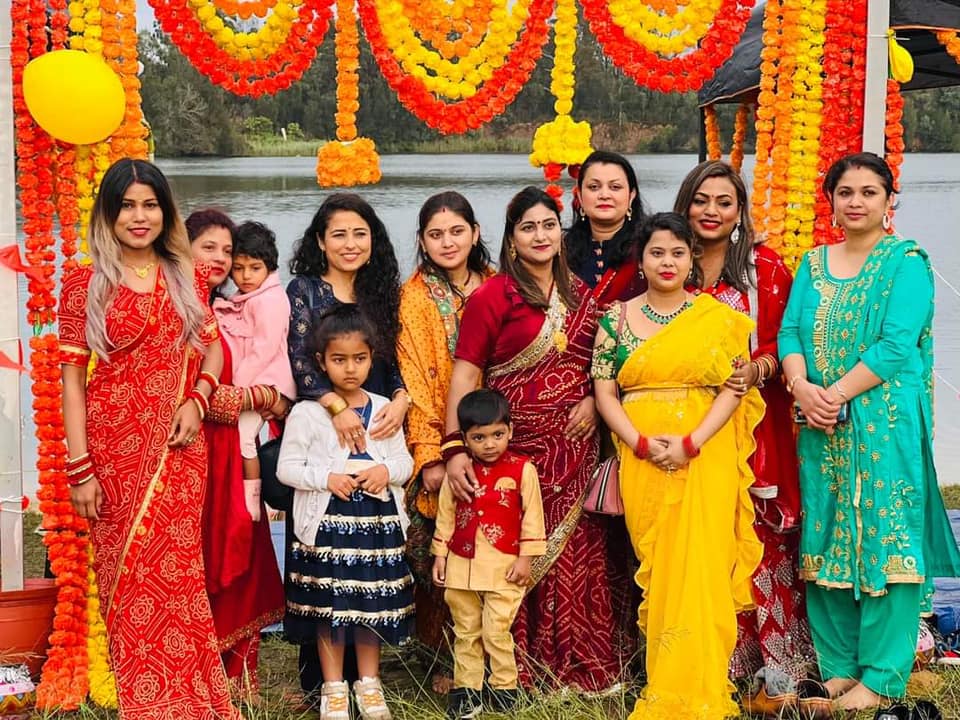
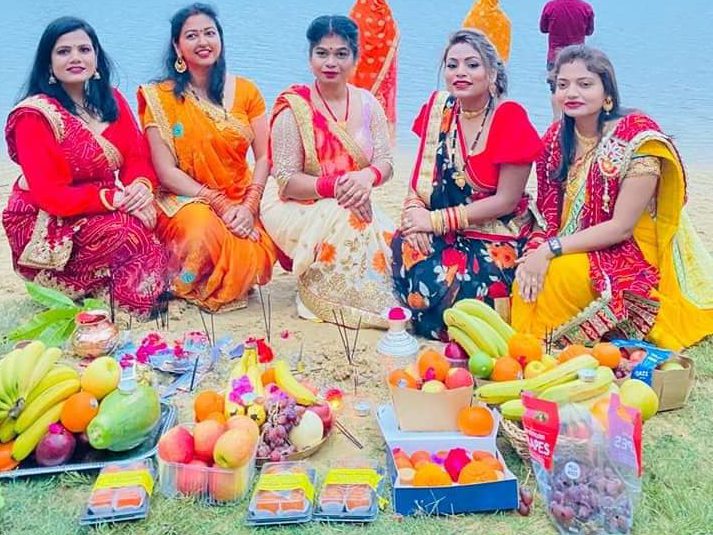
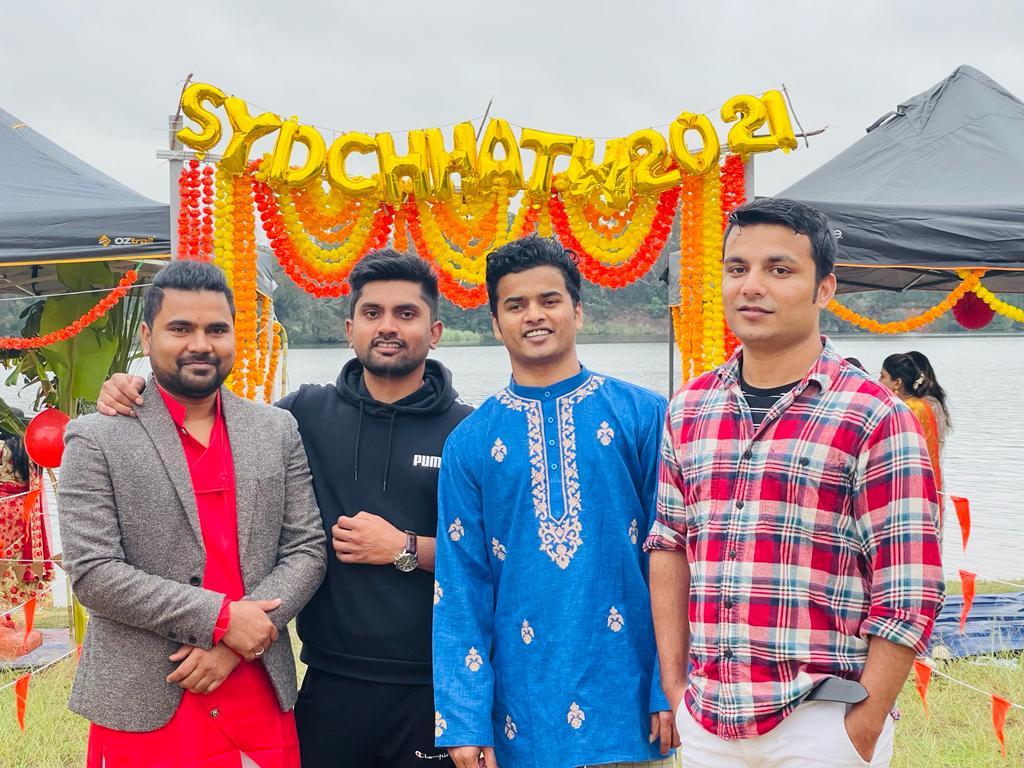
The Bihar Jharkhand Sabha of Australia & New Zealand (BJSM) recently celebrated the ancient Hindu festival of India, Chhath, in Sydney.
Chhath is celebrated more specifically in the Indian states of Bihar, Uttar Pradesh, West Bengal, Jharkhand, and Madhesh and Lumbini provinces in Nepal.
Prayers during Chhath puja are dedicated to the Sun God. Chhath is celebrated six days after Diwali as per the Hindu calendar.
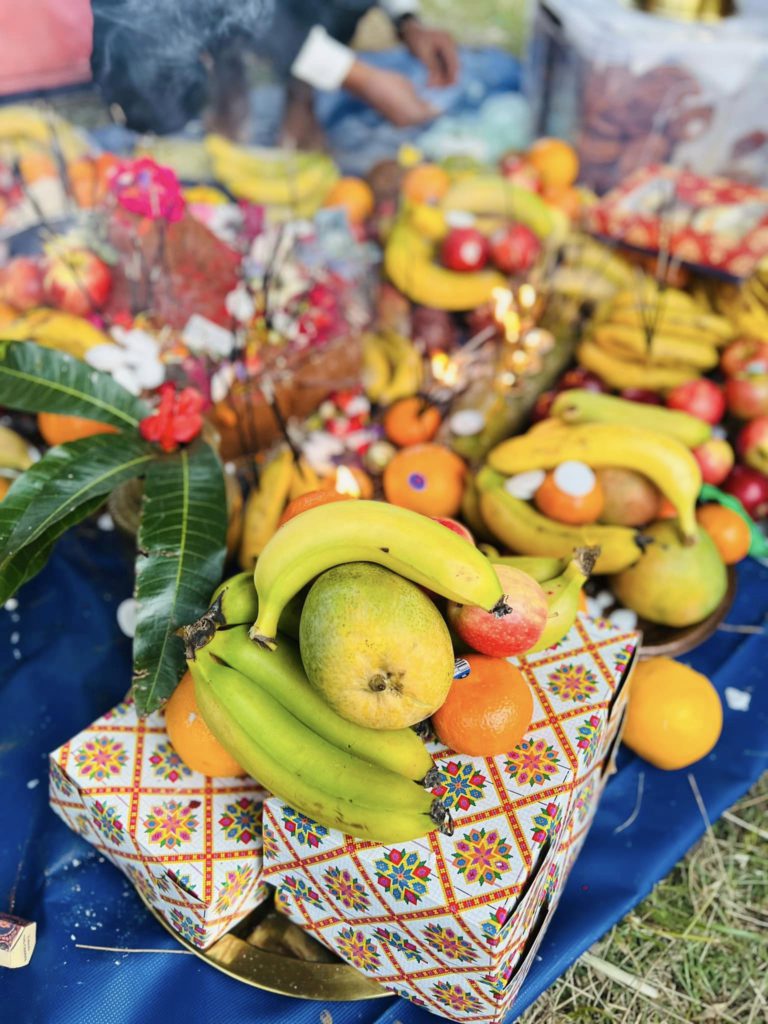
The rituals are observed over four days. They include holy bathing, fasting and abstaining from drinking water, standing in water, and offering prayers to the setting and rising sun.
BJSM is a not-for-profit organization that aims to connect and bring together people of the Indian diaspora from Bihar and Jharkhand.
Many members of the BJSM community celebrated Chhath and their culture this year.
WATCH VIDEO: Chhath Puja in Sydney organised by BJSM
Chhath was also celebrated by the Nepalese Hindu community.
This famous traditional Hindu festival is dedicated to Surya Devta (Sun God) and Chhathi Maiyya (Goddess Shashthi).
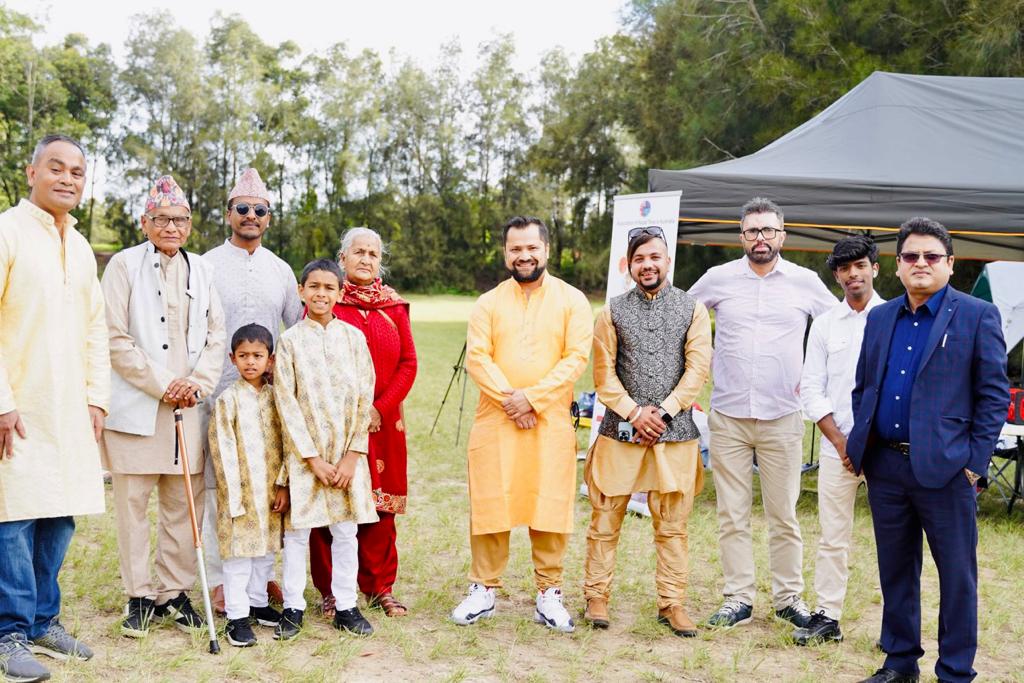
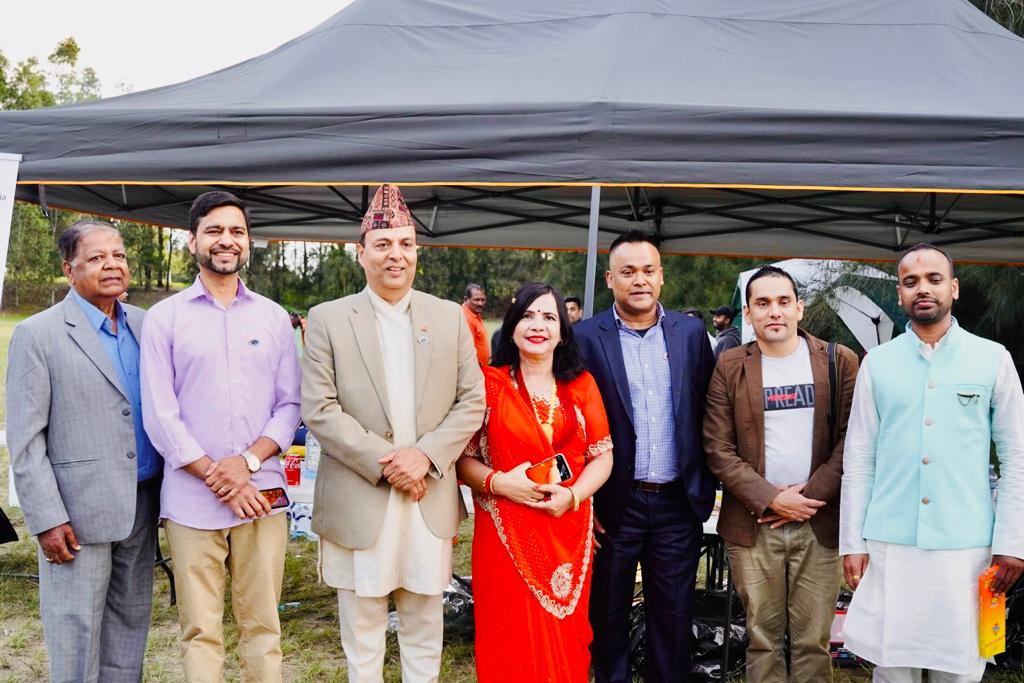
Subansh Shah, the President of the Association of Nepal Terai in Australia (ANT-Aus), told The Australia Today that the Nepali community in Australia participates in Chhath to observe cultural bonding and promote social harmony amongst the diaspora.
Mr Shah observed:
“Our Association has continued re-enacting the rich ethnic culture of the indigenous community of Terai since it was founded and we feel respected that many Nepalese coming from different parts of Nepal irrespective of their caste, religion, language, cultural background joyously participates in Chhath celebration.”
He added that Nepalese who do not belong to Terai region also participate in the annual Chhath puja in large numbers.
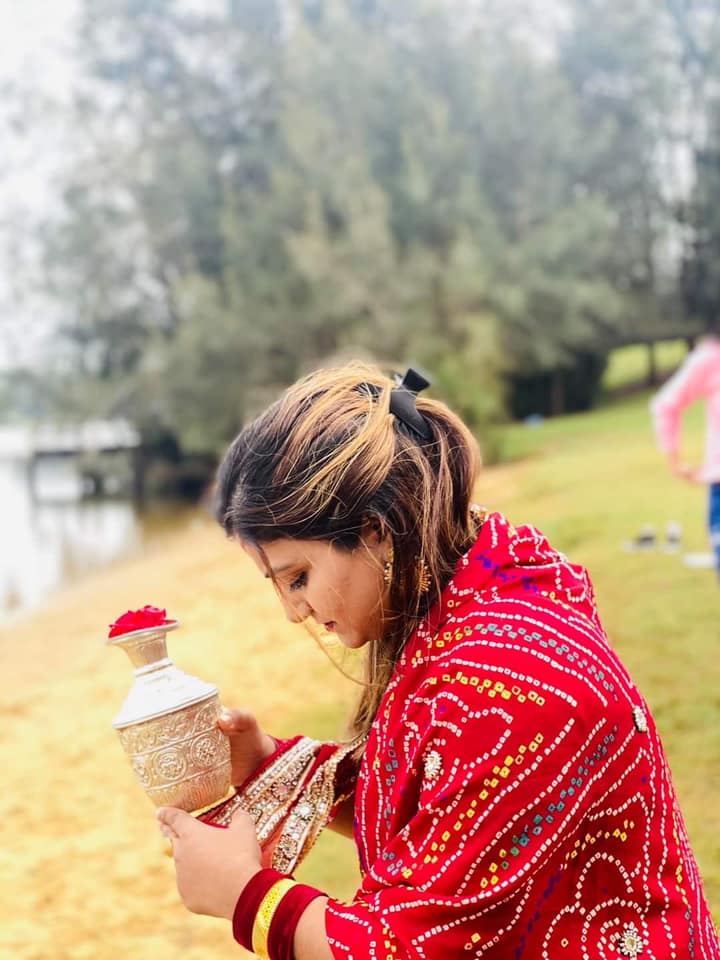
(Images: Nepalese community in Australia celebrates Chhath)
In the middle of skill-shortage of IT professionals in Australia, Home Affairs Minister Clare O’Neil has decided to remove 27 occupations from the Priority Migration Skilled Occupation List (PMSOL) in a major shake-up of skilled migration rules.
The list of removed professions includes cyber experts, software engineers and technology developers, all in high demand globally.
This decision was made while Minister O’Neil was handling an unprecedented cyber security crisis first at Optus and then at Medibank.
Experts in the migration industry have told The Australia Today that this ministerial direction will change how migration agents prioritise skilled visa applications.
Yatharth Bharadwaj is an Adelaide-based registered migration agent.
Mr Bharadwaj told The Australia Today, “The new changes will make it so difficult for tech companies to hire an IT resource from overseas markets that defiantly projects will be delayed.”
“The Processing time in the skilled migration system for Information Technology workers will shoot up from currently a couple of months to up to a year or more.”
For a long, the major applicants for the skilled migration systems tech stream have been Indian technology experts.
“Home Affairs Minister O’Neil’s decision to de-prioritise these skills in migration system will affect a large number of my Indian clients and Australian tech startups,”
added Mr Bharadwaj.
Let’s understand what are new directions
Till now these 27 job titles from the PMSOL related to tech and cyber skills including ICT security specialists, analyst programmers, developer programmers, software engineers and software and applications programmers were processed with high priority.
However, after Minister’s new directions their visa application will join the queue with everyone else with some exemptions for big tech companies.
A few other job titles removed from the PMSOL include chief executives, accountants, engineers, veterinarians and chefs.
Post-pandemic federal government has put healthcare and teaching professionals at the highest priority for employer-sponsored visas.
The new ministerial directions have also given priority to applications for a role in a regional area.
Who can be approved Sponsor
The basic requirement for becoming an approved sponsor is that the organisation must have an annual turnover of at least $4 million in the past two years.
But Mr Bharadwaj says these criteria will exclude almost all Australian tech start-ups and small businesses.
Indian IT Firms; Image Source: @CANAVA
Melbourne-based Manish Bansal is CTO of a mid-range IT consultancy. Mr Bansal says, “While we are trying to bring current projects up to speed with recruiting more skilled workers government’s new direction is not very helpful.”
“This will make all projects more expensive and is almost opposite to what industry was promised by the federal government at the time of the jobs summit.”
On the other side, Home Minister Clare O’Neil claims that the 2022-23 Migration Program will increase to 195,000 places from 160,000 last year to ease workforce skill shortages that many industries are experiencing as a result of the pandemic.
“An extra $36.1 million over two years announced at the Jobs and Skills Summit will help the Department of Home Affairs to recruit an additional 500 staff to boost processing capacity.”
Home Affairs Minister Clare O’Neil; Image Source: Twitter
Student visa holders will continue to be able to work more than 40 hours per fortnight until 30 June 2023.
New cyber security measures
The October 2022-23 Budget will provide $31.3 million in additional funding in 2022-23, providing cyber security services to agencies with fewer resources as part of its whole-of-Government Cyber Hub program uplift package.
The Government will provide additional funding of $2 million in 2022-23 to assist scam victims to recover their identity.
The funding allocation is part of fulfilling the Government’s election commitment to combat scams and online fraud.
A $1 million reward for information from the public has been announced as part of ongoing investigations into the 2018 murder of 24-year-old Toyah Cordingley in Far North Queensland.
Police Minister Mark Ryan approved the major reward for information leading to the location and arrest of 38-year-old Rajwinder Singh, believed to be overseas, in relation to Toyah’s murder.
Toyah was reported missing on Sunday, October 21, 2018, before her body was tragically discovered the following morning at Wangetti Beach, just north of Cairns.
Detective Acting Superintendent Sonia Smith said investigations into Toyah’s death, including bringing the person responsible to justice, remain a priority for the Queensland Police Service with the establishment of Operation Quebec Clarify.
“We strongly believe there are people in Australia and overseas who could share information about the whereabouts of Rajwinder Singh.”
Rajwinder Singh; Image Source: QLD Police
“This is most definitely the time to come forward and tell us what you know.”
“A dedicated team of detectives from Cairns, Far North and the Homicide Investigation Unit has continued to work tirelessly towards ensuring justice for Toyah Cordingley and her family,” Detective Acting Superintendent Smith said.
Rajwinder Singh lived in Innisfail but is originally from Buttar Kalan, Punjab India.
Deputy Commissioner Tracy Linford said this was the first time an initial reward of $1 million had been offered in Queensland.
“We are very grateful for the Government’s support in approving this significant reward which we believe will assist us in tracking down Rajwinder Singh,”
Deputy Commissioner Linford said.
It is critical that Police capture the attention of an international audience to reach this individual.
“Police will not give up – we remain incredibly determined to find answers for Toyah’s family and will do whatever we can to bring them closure.”
Rajwinder Singh; Image Source: QLD Police
Minister Ryan said in addition, an appropriate indemnity from prosecution would be considered for any accomplice, not being the person who actually committed the crime, who first gives such information which leads to Rajwinder Singh’s arrest.“
“Like many other Queenslanders, I am sickened by this heinous crime and I commend the Queensland Police Service for their tireless efforts in the pursuit of justice for Toyah and her family,”
Minister Ryan said.
Anyone with information regarding the case or the whereabouts of Rajwinder Singh is urged to contact Queensland Police through the online portal (www.police.qld.gov.au/reporting). In addition, anyone in Australia with information can call Crime Stoppers on 1800 333 000.
When Australia’s borders slammed shut during COVID, international students were among those who were stranded. This disrupted lives and studies, and put a major revenue stream for Australian universities in doubt.
The latest data shows international students are returning to Australia. Since international borders reopened in December 2021, the number of overseas students in Australia has risen by more than 120,000.
Applications for student visas – an indicator of future student numbers – are also at record levels.
But this growth is not shared equally around the university sector. It is the larger, more prestigious universities that are likely to benefit the most from students coming back.
Last week’s 2022-23 budget included Labor’s election policies to increase university places by 20,000 and provide 180,000 fee-free TAFE spots.
But away from the budget headlines, we need to look at Australia’s international education policy (which determines where international students study and what they pay). This will have the biggest impact on funding for universities and TAFEs.
When Australia began to close its international borders in January 2020, many international students were in their home countries during the semester break. Because of this, thousands were left stranded outside Australia.
Despite repeated attempts by universities and governments to bring them back, current and new international students were largely unable to enter the country. By December 2021, the number of international students in Australia had more than halved to about 250,000.
The lifting of travel restrictions and quarantine requirements for fully vaccinated non-citizens in mid-December 2021 halted the decline.
By October 2022, international student numbers in Australia had grown back to about 370,000. There are still more than 72,000 international student visa holders outside Australia. About half these are Chinese international students, who are still subject to travel restrictions in their home country.
Visa numbers are a good sign
It will take some time for international student enrolments to return to pre-pandemic levels.
This is because the pandemic disrupted the pipeline of students. Students typically study for two to four years. Without new students to replace those finishing their courses, international student numbers fell.
This also means the losses experienced during the pandemic will be felt for several years. But there are encouraging signs.
One way to measure future demand of international students is through the number of student visas granted. Student visas are a leading indicator because students require a visa before they can enrol.
Student visas granted for July and August 2022 are the highest they have been compared to previous years.
Visas for students from China and India, two of Australia’s biggest markets, have returned almost to previous levels. Applications from other countries are growing, too.
Part of this may be due to policies that make Australia a more desirable study destination. Australia, like the United Kingdom, has increased access to post-study work rights. This means students in some courses can stay for longer in Australia after they have finished their course.
International students are a vital resource for Australia’s higher education sector. No university could function as they currently do without the revenue from international student fees.
But this resource is concentrated in certain institutions. And it is the larger and more prestigious universities that benefit the most.
The most prestigious (the so-called “Group of Eight” universities) account for more than half of the revenue universities receive from international students.
This is because these universities, which include the universities of Sydney, Melbourne and Queensland, can charge more due to their prestige, higher rankings, greater resources and favourable location.
For a business degree – the most common course for international students – Group of Eight universities charge around $50,000 annually. This more than double what some other universities charge for the same course. For the same local student, universities receive $15,600.
The revenue international students bring is enormous. For example, in the recent budget, the Albanese government announced $485 million over four years for 20,000 extra places for local students. In the four years before the pandemic, universities increased their international student revenue by $4.6 billion. Group of Eight universities accounted for half this increase.
Increasing gaps between universities
The disparity risks encouraging a form of what researchers call “residualisation”.
This occurs when students from more economically and educationally advantaged backgrounds are able to enrol in more prestigious, well-resourced universities.
Revenue from high-paying international students is used to subsidise other activities across these universities, such as research. The extra revenue enables greater investment in infrastructure, which also increases a university’s attractiveness as a study destination for local and international students.
The smaller universities, which often cater for more disadvantaged cohorts, miss out. Lower enrolments and less resources also mean these smaller universities face additional challenges such as limited subject offerings and less student support services.
It is a similar problem in the vocational sector, where only 5% of international students study at TAFE colleges. This means TAFEs don’t receive much needed revenue.
What happens now?
The reasons for the lopsided benefits are complex. International education policy is intertwined with migration policy – all international students are temporary migrants. Access to the labour market and the relative status of certain institutions all play a role in driving student choice.
But the value of international students to Australia’s education sector and the resources they bring are vital.
Finding ways to ensure the benefits are spread more evenly would go a long way to making the sector more equitable.
The Kashmiri Pandits Association of NSW (KPA NSW) recently organised Diwali celebrations in Sydney. The celebrations were filled with ancient Kashmiri traditions from the land of Sage Kashyap (Kashmir gets its name from the Hindu Sage Kashyap).
In Kashmiri Hindu culture, auspicious occasions and events are celebrated with pious chants or hymns known as Wanwun. Wanwun is couplets or pairs of lines traditionally sung in a very slow tempo by the ladies of the household/community. Based on Samveda, Wanwun is a prayer to the Almighty for the smooth and joyful completion of an auspicious event.
Singing Wanwun is believed to induce positive vibrations that help overcome obstacles and appease deities. Thus, it has more than social and cultural significance as it serves as a way to attract peace into our lives and surroundings. The guests at the celebrations got a chance to hear the soothing sounds of the Wanwun sung by a group of talented Kashmiri ladies. Subsequently Sonia Khosa spoke about the significance of Wanwun during the event.
Wanwun singing at Diwali celebrations
The event included a poem recital by Anjali Bangroo Srivastava written by her in Kashmiri. The poem meant – we all keep postponing things to tomorrow especially when it comes to expressing love, to our own family and friends. We have to remember what we have is Now and who knows what tomorrow will bring. Life is unpredictable and the only moment we have is now. So whatever we need to do, express love, gratitude or forgiveness we must do it now and not wait for tomorrow. We need to wake up to this reality as everything is lost if we lose our loved ones and then we regret and spend our life in “what if’s”.
The guests were also left mesmerised by Ekta Dhar’s beautiful rendition of a Kashmiri song.
Sudhir Raina, President, Kashmiri Pandit Association, NSW said “After the Covid years spent largely in isolation, we deeply felt that the human need for culture and festivities that involve large physical gatherings, will bring the community together. The first opportunity came in the form of Diwali this year”.
Ashwani Trackroo, Vice President, Kashmiri Pandit Association, NSW, told The Australia Today that the Kashmiri Hindu community within Sydney is pretty small but very cohesive and vibrant. “KPA NSW organizes at least 3-4 functions every year to bring the community together under one roof. These functions comprise religious events like Havan as well as cultural functions on the occasion of Shivratri and Diwali. We want to ensure that our kids imbibe the rich Kashmiri cultural values and ethos that need to be passed on to the next generations. Getting uprooted from Kashmir shouldn’t be an excuse to erode our culture, We need to preserve it and pass it on to the next generation”.
“After the release of the historically accurate movie “The Kashmir Files” earlier in the year, there has been an urge in the Indian, Kashmiri Hindu community to connect, and to be given the chance to do so by celebrating a joyous festival such as Diwali, as one, was met with much enthusiasm. With both older and younger generations participating in the traditional Rouf, a retelling of Ramayan and Bollywood dance, it can surely be said that no matter which corner of the world we may end up in, India will remain an integral part of us for generations to come”, said Youth Wing Leader of KPA NSW Sheen Khar.
Women at the event were seen wearing Athoor around their ear which is made up of silver or other colourful thread. It is a tradition within Kashmiri Community and is considered to be auspicious to wear this during important events like marriage, festivals, birthdays, housewarming functions etc.
The celebrations included the traditional Kashmiri dance Rouf. It is performed by Kashmiri women and is one of the most famous dance forms practised in Kashmir Valley. This dance has been a part of Kashmiri life since ancient times.
Indian origin Councillor Reena Jethi with Diaspora women wearing Fehran (Fehran is a traditional Indian dress worn by women in the region of Kashmir)
Indian-origin Shubshri Kandiah is all set to play the lead role of Belle in the Australian premiere of Disney Theatrical’s blockbuster ‘Beauty and the Beast’ at Sydney’s Capitol Theatre in June 2023.
Disney has today announced that Shubshri Kandiah and Brendan Xavier will bring the iconic roles of Belle and Beast to life in their brand new production of Beauty and the Beast. https://t.co/yKfBLuXvDz
Shubhshri’s parents, mother Raj and father Kumar, migrated to Australia from Malaysia when they were young. They met in Adelaide, got married, and decided to settle in Perth, Western Australia.
Growing up in Perth, Shubhshri studied Bharatnatyam, Kathak, and Bollywood dance at Saraswati Maha Vidyalaya on Beaufort Street where her mother was also one of the teachers.
Shubshri Kandiah with her mother Raj (Image source: Facebook)
Given the lack of opportunities for brown actors and the overwhelming feeling to look like the majority in Australia, at times, Shubshri hated being Indian.
However, she soon realised that being different is okay. She observed in an interview:
“I don’t want any other Indian girl to feel like that. I really wish I didn’t feel that way, now I’m so proud to be Indian and I love that part of myself.”
Shubshri graduated with a Bachelor of Musical Theatre degree from Queensland Conservatorium at Griffith University in Brisbane.
Image source: Shubshri Kandiah in Aladdin.
In 2018, Shubshri played the lead role of Princess Jasmine in the Australian musical production of Disney’s ‘Aladdin’ and in 2021 she landed the title role in Rodgers + Hammerstein’s stage production of ‘Cinderella.’
On her latest achievement, the 26-year-old actor observed:
“I think that there’s definitely been a call out for more diversity. I think it reflects the time that we’re in now, the world we live in. Especially in Australia, it’s such a diverse country. So it’s nice to see that finally reflected in sectors and screens, and not feel limited because of our skin colour.”
Shubshri Kandiah in Rodgers + Hammerstein’s ‘Cinderella’
No doubt that today Shubshri is an inspiration to many young boys and girls of Indian-origin who wish to play leading roles in mainstream Australian media, films, TV and stage to proudly represent their community and heritage.
Shah Rukh Khan’s birthday is no less than any festival. Every year, several fans gather outside his home to catch a glimpse of King Khan of Bollywood. Fans continued their ritual this year as well.
On the occasion of SRK’s 57th birthday on Wednesday, the superstar came outside his bungalow to greet his fans. In the video, SRK was seen waving to his fans, who were standing below, cheering at the sight of the superstar. He was also accompanied by his 9-year-old son AbRam, who stood on the balcony waving at the crowd below.
While the ‘Kuch Kuch Hota Hai’ actor wore a simple black t-shirt with a pair of blue jeans, AbRam sported a white t-shirt and shorts.
‘King of Romance’ also did his signature pose by spreading his arms.
— Shah Rukh Khan Universe Fan Club (@SRKUniverse) November 1, 2022
He also took a selfie with his fans from the balcony.
Starstruck fans from various cities queued up since early morning to wish the star in their own special ways. Many even carried sweets, t-shirts, huge posters of SRK along with them.
SRK’s charismatic personality radiates in the massive fan following. The superstar has given the audience memorable films like ‘Baazigar’, ‘Kabhi Haan Kabhi Na’, ‘Dilwale Dulhania Le Jayenge’, ‘Kuch Kuch Hota Hai’, ‘Kal Ho Naa Ho’, ‘Veer Zara’, and many more.
Shah Rukh Khan will be next seen in director Siddharth Anand’s upcoming action thriller film ‘Pathaan’ alongside Deepika Padukone and John Abraham. The film is all set to hit the theatres on January 25, 2023, in Hindi, Tamil and Telugu.
Apart from that, he also has Rajkumar Hirani’s upcoming film ‘Dunki’ alongside Taapsee Pannu and south director Atlee’s upcoming action thriller film ‘Jawan’ opposite south actor Nayanthara, which is all set to hit the theatres on June 2, 2023, in his kitty.
The Woolloongabba man, 25-year-old, was arrested by the AFP at his home on 27 October and appeared before Brisbane Magistrates Court on 28 October to face eight charges.
AFP Cybercrime Operations launched an investigation in March 2021 into the Brisbane man’s use of an online platform selling stolen identification information.
The man was charged with:
Seven counts of unauthorised access to restricted data, contrary to section 478.1(1) of the Criminal Code Act 1995 (Cth); and
One count of possessing data with the intent to commit a computer offence, contrary to section 478.3(1) of the Criminal Code Act 1995 (Cth)
AFP Commander Cybercrime Operations Chris Goldsmid said it would be alleged the man was linked to an account which he had allegedly used to buy stolen identification information.
He allegedly used the stolen identification information to make online purchases, create fraudulent bank accounts and gain unauthorised access to victims’ bank accounts, Commander Goldsmid said.
During the search warrant, several electronic devices, including two mobile phones and several electronic storage devices, were seized. The seized items are subject to ongoing forensic examination and further charges may be laid.
Image source: AFP.
Commander Goldsmid urged consumers to update personal details if any platforms or websites they visited had been compromised. He said:
“Your personal information is becoming more valuable to criminals online. Previously, Cybercrime was the domain only highly-skilled offenders, however cybercriminals can now operate at all levels of technical ability, and the tools they employ are easily accessible online.”
Commander Goldsmid added:
“While in the past criminals had to break into your home to steal your possessions or money. Now, cybercriminals can be thousands of miles away but still able to reach into your wallet. Australians work hard for their money. We must not make it easy for criminals to take it away.”
Two-factor authentication is an extra layer of security some platforms support requiring a code or text message in addition to your username and password to access a service.
The stolen information does not relate to current AFP investigations into breaches of data against Optus, Medibank Private or MyDeal.
News reporting on sexual and domestic violence ignores the multiple inequities faced by victims from culturally diverse backgrounds, and First Nations peoples.
A content analysis of stories published in three prominent Australian media found only a handful of stories mentioned “intersectional” factors such as race, class, caste, sexuality, age and ability. These factors often make it harder for women from culturally and linguistically diverse backgrounds to seek support.
The analysis of 191 stories about people from culturally diverse backgrounds, published by The Age, the Herald Sun, and the ABC during the second COVID lockdown in September-December 2020, did not contextualise their reporting on domestic and sexual violence.
Except for a handful of stories, most media reported the crimes as isolated incidents of violence rather than a social problem.
The reporting often ignored important information such as victims’ status as new immigrants, their visa status restricting them to work in Australia, financial and social isolation, and cultural backgrounds.
One of the exceptions was an article by the ABC’s Herlyn Kaur, which noted many migrant women wanted to leave their violent marriages but were unaware of their rights. A growing number of migrant women are seeking help from women’s refuges, on average staying there for 46 nights, which is 14 nights more than non-culturally diverse women.
First Nations leaders and organisations working to prevent violence against women and children have noted the use of stereotypes, framing stories in a sensational way, and ignoring violence committed against Indigenous women.
First Nations women are five times more likely to experience physical violence and three times more likely to experience sexual violence than other Australian women, according to Our Watch.
Women from diverse backgrounds make up a significant proportion of the Australian population. Almost 28% of residents are born overseas, while 22% use a language other than English at home.
The recently launched National Plan to End Violence against Women and Children (2022-2032), emphasises a need for using an intersectional lens when supporting victim-survivors of domestic and sexual violence.
Greater diversity in media is also needed
Australian newsrooms lag behind. This research found that less than a third (32.82%) of the stories about domestic and sexual violence against culturally and linguistically diverse Australians were reported by a journalist from a non-Anglo-Celtic background. A little over 69% of the news stories were reported by a journalist from an Anglo-Celtic background, while more than 41% were written by a male reporter. Some stories were written by more than one journalist, while about 5% had no byline.
In Victoria, family violence–related crimes increased by 7.5% between October 2019 and September 2020, with more than 90,000 offenses recorded. But, the number of news reports on violence against women remained miniscule. In the study period, about 500 articles on domestic violence, sexual harassment and sexual violence were published by the three media outlets. Of these, 191 referred to a person or the issue of culturally and linguistically diverse background.
The context of domestic and sexual violence is important, because nearly a third of Australians believe women who do not leave their abusive partners are partly responsible for the continuation of domestic violence. Moreover, 42% agree it is common for sexual assault accusations to be used as a way of getting back at men.
Nuanced reporting of violence against women from culturally diverse backgrounds will sensitise the population to the complexity of the issue. It will also encourage governments to offer information, support and services that match the multitude of inequities they endure.
This research finds an overwhelming number of news reports do not mention any factors that may affect victims and victim-survivors of domestic and sexual violence. The research raises a question: would a better understanding of the culturally diverse backgrounds of the victims help a journalist to report the nuances of these factors that multiply the suffering of victims?
The findings argue that diversity among journalists employed by Australian newsrooms is yet another area that needs attention. Increasing diversity would mean news stories about violence against women from culturally and linguistically diverse backgrounds and First Nations are reported with an intersectional lens.
It is worth noting that overwhelmingly, Australian television news and current affairs programs are curated, framed and presented by journalists and commentators from an Anglo-Celtic background.
Some signs of progress
On a positive note, this research found that news reports came from a variety of sources. They include:
violence against women experts, advocates, and representatives of organisations supporting victims (21.75%)
the courts (20.85%)
interviews with a significant number of neighbours, relatives, and eyewitnesses (19.03%).
This is a positive change from the past, when research found the dominant source of stories about violence against women was law enforcement personnel.
Additionally, about a quarter of the stories raised some of the legal constraints that stopped journalists from providing important details. These included victims and their families being able to speak about the crimes without the risk of prosecution.
News articles in each of the three media touched on the campaign #LetHerSpeak, which was launched in November 2018 to abolish gag laws in some states in Australia that apply to sexual assault victims.
VicRoads will issue almost one million new driving licences to Victorians who had their privacy breached as part of October’s Optus hack.
Melbourne-based Rani Mukherjee (name changed to protect identity) who was affected by the Optus data breach told The Australia Today that she had recently received an email from VicRoads regarding her new driving licence.
She observed:
“While VicRoads and Optus have collaborated to reach out quickly and make amends, there is no guarantee that this will not happen again.”
The Victorian Government’s redesigned licences will include an additional security number on the back, similar to card verification value (CVV) codes. This security measure will become standard from November 2022 for all 5 million Victorian licence holders.
Ms Mukherjee added that the additional layer of protection offered by VicRoads doesn’t appear to be too safe:
“I WAS A BIT DISAPPOINTED TO KNOW THAT THEY WILL NOT BE ISSUING NEW LICENSE NUMBER BUT ONLY ADDING A SECOND NUMBER AT THE BACK-AS IN A CVV ON A CREDIT CARD – ALL THE REASONS TO BELIEVE, STOLEN IDENTITIES CAN BE USED ANYWHERE.”
The Optus breach affected 9.8 million current and former customers. Personal details such as passport, phone numbers, and driving licence numbers were stolen in this data breach.
Kelly Bayer Rosmarin CEO Optus (L) (Image source: Kelly Bayer Rosmarin Twitter)
VicRoads said on its website that the data obtained from the Department of Home Affairs confirmed that 942,000 Victorian licence holders had their details compromised as a result of the Optus data breach.
We are upgrading and strengthening our licencing system to help protect the identity of all Victorians impacted by the Optus data breach. To find out what it means for you go to: https://t.co/u5se21k93R
“The Optus data breach is significant and Victorian licence holders have been impacted more than any other state.”
VicRoads added:
“By the end of the year, these customers will use both their licence number and card number to prove their identity for services like opening bank accounts, loan applications, phone contracts and real estate transactions.”
About 342,000 Victorians will receive their new licences by the end of 2022, while the remaining 600,000 can expect their cards to arrive by the first quarter of 2023.
Sample licence (Image source: Business Victoria)
Further, VicRoads says:
“The Victorian government will work to progressively implement this additional protection for all 5 million Victorian licence holders once the rollout for those impacted in the Optus data breach is completed.”
The government would also seek reimbursement of costs from Optus for the replacement of the licences.
An Iraqi man has been jailed for seven years for his role in organising a people smuggling venture.
This smuggling operation resulted in the deaths of more than 350 people in 2001.
The man, 46-year-old, was sentenced on 26 October 2022 in the Brisbane Supreme Court.
He played a key role in a syndicate responsible for organising the transportation of people on a fishing boat, known as Suspected Illegal Entry Vessel (SIEV) X.
AFP Leading Senior Constable Mike Sloan said the AFP remains committed to bringing people smugglers to justice no matter how long it may take to see that justice.
“We can’t forget that more than 350 people died in this tragedy. Those victims and their families are owed justice and the AFP will pursue anyone who tries to exploit vulnerable people, attempting to profit from desperation.”
The vessel sank in international waters on 19 October 2001, resulting in the deaths of over 350 people. Only 45 people survived the sinking.
Image source: AFP.
The AFP investigation to identify those responsible for the SIEV X tragedy commenced in October 2001. Following an extensive investigation the man was arrested in New Zealand and extradited to Australia by AFP officers in 2019.
Police alleged the man, who at the time was aged 24, took payments from the passengers and helped facilitate the transportation and accommodation of people in Indonesia in preparation for their journey to Australia.
He was charged with organising groups of non-citizens into Australia, contrary to section 232A of the Migration Act 1958 (Cth).
Rear Admiral, Justin Jones, Commander Joint Agency Task Force Operation Sovereign Borders, welcomed the sentencing result, despite the time elapsed.
“This tragic event resulted in the deaths of so many individuals, and sadly highlights the very real danger that people smugglers place their victims in time and time again. People smugglers are criminals and will use any means to earn a profit at the expense of others.”
Two other men have also faced court and been convicted for their role in the 2001 venture.
Indo-Pacific Endeavour (IPE), one of Australia’s key regional engagement activities, returns to Southeast Asia and the Northeast Indian Ocean from September to November this year, visiting a record 14 countries in this iteration, read Australian Defence Ministry press release.
HMA Ships Adelaide and ANZAC as part of the largest Indo-Pacific Endeavour; Image Source: ADF
IPE 2022 will see engagements with the Maldives, Timor-Leste, Vietnam, the Philippines, Bangladesh, Sri Lanka, Laos, Cambodia, India, Thailand, Malaysia, Singapore, Brunei and Indonesia.
These engagements are supported by an Australian Defence Force Maritime Task Unit of Royal Australian Navy ships and embarked Army members as well as Royal Australian Air Force air mobility aircraft for fly-in-fly-out engagements, marking a total composition of 1800 personnel, five ships and 11 helicopters, added the release.
IPE began in 2017 as an annual activity coordinated by the Australian Defence Force to deliver on the promise of the 2016 Defence White Paper to strengthen Australia’s engagement and partnerships with regional security forces.
HMA Ships Adelaide and ANZAC as part of the largest Indo-Pacific Endeavour; Image Source: ADF
Aiming to promote security and stability in Australia’s near region through bilateral and multilateral engagement, training and capacity building. Australia is committed to making effective contributions to humanitarian and security efforts in the region, said the release.
Commodore Mal Wise AM, Commander IPE22 said, “I look forward to leading Indo-Pacific Endeavour 2022 to make new relationships and strengthen our ties in the region. We plan to learn from our partners all the way from India to Indonesia.”
“Regional security is more than a military task. I am pleased that a range of government agencies are contributing to Indo-Pacific Endeavour as we work together to support a peaceful and prosperous neighbourhood,”
Commodore Wise added.
HMA Ships Adelaide and ANZAC as part of the largest Indo-Pacific Endeavour; Image Source: ADF
Australia’s vision for the Indo-Pacific is a region that is secure, open, prosperous and resilient. Coordinated by the Australian Defence Force, the activity will include military exercises, workshops, training, sporting events, and cultural activities with Indian armed forces partners.
It will deepen cooperation on issues ranging from amphibious operations to humanitarian assistance and disaster relief, to gender, peace and security.
The Australian Navy was also part of the ‘Malabar Naval Exercise’ hosted by India in 2020 and 2021.
After a 3-year hiatus due to the pandemic, Exercise Pitch Black is back! #PitchBlack22 will take place 19 Aug – 8 Sep with around 2500 ppl & 100 aircraft from up to 15 nations from around the globe participating. 🌏✈️👥
— Royal Australian Air Force (@AusAirForce) June 29, 2022
In September 2022, the Indian Air Force contingent participated in the multinational Exercise Pitch Black 2022 at Darwin Air Base in Australia. About 100 aircraft and 2,500 military personnel from 17 nations will take part in this two-week-long exercise in the Northern Territory. The IAF contingent included four Su-30 MKI & two C-17 aircraft. Exercise Pitch Black provided an opportunity for the air forces to share best practices and experiences.
Employee burnout and well-being may be at the heart of several of these issues.
Two new studies highlight the importance of social connection in the workplace and illustrate why working from home may not be the optimal workplace arrangement. Hybrid work-from-home schedules may help prevent burnout and improve mental health.
So, what is burnout?
The International Classification of Diseases describes burnout as “a syndrome conceptualized as resulting from chronic workplace stress that has not been successfully managed.”
For many who have experienced burnout, it can feel just like the metaphor that describes it: something akin to a burnt-up shriveled match stick, cold to the touch.
What causes burnout and how can it be stopped?
According to global research, approximately 50 per cent of employees and 53 per cent of managers are burnt out in the wake of the COVID-19 pandemic. Workplaces are clearly not thriving.
As a social epidemiologist studying contemporary emotional distress within the context of public health crises, I’ve been keen to understand what factors contribute to burnout and how it can be successfully managed — particularly given the ongoing challenges created by COVID-19.
You might think researchers would know everything there is to know about burnout at this point. After all, burnout has been studied since at least the late 1970s. Many of the studies conducted since then have focused on workplace conditions, such as pay, hours, management styles and the nebulous “workplace culture.”
As such, management of burnout has often focused on reshaping work environments and reforming bad managers. While these are of course necessary, it’s not immediately clear that they’re enough.
With the emergence of the pandemic, many people have new levels of awareness of the impossibility of severing work from life. For some, that awareness comes from how tired they are when they get home from a shift. For others working from home, it may come from the disappearing divide between home and office.
In any case, our emotional and psychological well-being is with us whether we’re at work or at home. As such, it makes sense that we take a holistic view of burnout. Social connection is a key driver of burnout.
The social costs and benefits of working from home
In a recent study by my lab at Simon Fraser University, we sought to identify the most important risk factors for burnout. We looked at a range of variables, including the classic factors of workload, satisfaction with pay, dignity in the workplace, control over one’s work, and pay adequacy, as well as more novel variables such as home ownership, an array of demographic factors, social support and loneliness.
In conducting this study, we found that loneliness and lack of social support come out as leading contributors to burnout, perhaps just as important — if not moreso — than physical health and financial security. In summary, the study contributes to a growing understanding of burnout as a social problem driven by isolation.
The importance of social connection to health and happiness
To understand the impacts of working from home on mental health, my team conducted a second study to look at differences in self-rated mental health across individuals who work only from home, only in person, or who worked partially in-person and partially at home. We controlled for potentially important factors such as income, hours of work, occupation, age, gender, and ethnicity.
However, there’s a catch: a whopping 87 per cent of those who reported a hybrid work arrangement — meaning they worked partially in-person and partially at home — had good or excellent mental health.
While the type of work done at home and in-person certainly shapes these trends, our findings nevertheless point to the possibility that hybrid work might give employees the best of both worlds — especially within the context of our first study, which highlighted the importance of social connection to workplace well-being. Indeed, hybrid work arrangements may allow employees to maintain those positive connections with colleagues while also providing a better balance between work and life. It really may be the best of both worlds — at least for those who can work this way.
As employees and employers continue to adapt to the new normal in the midst of the COVID-19 pandemic, our research provides a strong reminder for us to all remember the importance of social connection. It’s all too easy to forget that strong social relationships and communities are the foundation of health and happiness within and outside the workplace.
The Australia India Business Council (AIBC) recently hosted a delegation of Indian YPO (Young Presidents’ Organisation) Entrepreneurs and Business Leaders from India who arrived in Australia for the T-20 World Cup.
The AIBC’s Business Leadership Roundtable took place at the NSW Parliament where the Speaker of the NSW Legislative Assembly, Jonathan O’Dea, met with the delegation and gave them a ‘tour’ of the oldest Parliament in Australia with some interesting facts and anecdotes.
Mr O’Dea also congratulated UK’s new Prime Minister Rishi Sunak for becoming the first person of Indian origin to become the PM of the United Kingdom. Click on…
WATCH VIDEO: Indian Business Leaders getting a tour of the NSW Parliament
The delegation consisted of many eminent Business leaders and entrepreneurs from India including Vivek Jain, Ravi Shroff, Raju Venkatraman Sunil Alagh, Kishore Tanna, Aditya Vuchi, Ashok Atluri, Nandkumar Dhekne, Naveen Gupta and Monish Shah.
DGP of Kerala, Tomin J Thachankary, Chairperson Emeritus, Advisory Board, Multicultural NSW Dr GK Harinath OAM, Executive Manager at Commonwealth Bank, Dhruv Sabharwal and Venture Partner at Loyal VC James Stewart also attended the meeting.
Indian Business delegation with AIBC NSW President Irfan Malik at Jubilee Room in NSW Parliament
Brief overview of the delegation that attended the AIBC Roundtable:
Vivek Jain is Managing Director of DCW limited. He is also YPO Gold and YPO South Asia board member, and former Chairman, Royal Western India Turf Club.
Ravi Shroff is Managing Director at Excel Industries Limited. He is an active investor in the stock market and in start-up companies.
Sunil Alagh is Managing Director of SKA Advisors Pvt. Ltd and Former Managing Director & CEO of Britannia Industries Ltd.
Kishore Tanna is Managing Director Jamnadas Madhavji International Ltd which is engaged in the export of various agricultural commodities (Peanuts, peanut oil, Sesame seeds, Sesame seed oil, Rice and other commodities).
NSW Parliament Upper House
Raju Venkatraman is a Serial Entrepreneur. He is the Founder, ex-Chairman and ex-Managing Director of Medall Health Care Pvt. Ltd. He also served as President, COO and Joint Managing Director at First Source Solutions Limited
Aditya Vuchi is the Co-Founder and CEO of MediaMint, CEO of Doosra and Co-founder of QI-Cap. His first company, MediaMint,is a global marketing operations firm.He is also an angel investorin over 15 companies.
Ashok Atluri is Chairman and managing Director at Zen Technologies which operates in the defence sector. It has the largest footprint of simulators and widest installations across the Indian security forces. In addition, Zen also offers Counter Drone Systems.
NSW Parliament Lower House
Nandkumar Dhekne is Independent Director at John Cockerill India Ltd . He is also Asia leader for Solenis since its formation in 2014.
Naveen Gupta is Director of Godavari Roller Flour Mills Pvt. Ltd. He is also the President of AP Roller Flour Mills Association.
Monish Shah is the Founder and of DreamSetGo. It is India’s first premium bespoke sports travel and experiences platform and offers a range of premium, end-to-end, authentic experiences across football, cricket, tennis, F1, rugby, and golf among others.
The Roundtable was hosted by AIBC National Chair Jodi McKay and NSW President Irfan Malik. The discussions included potential business opportunities between the two countries and some personal experiences as well.
Jodi McKay AIBC National Chair
Ms Mckay started the meeting by Acknowledgement of Country and paying her respect to Indigenous Elders past, present and emerging.
She explained the significance of doing so to the delegation. Members of the delegation shared their warm experiences in Australia, discussed potential business opportunities and made interesting observations about Australia India relations. Click on the video to know more…
WATCH VIDEO: Indian Business Leaders hosted by AIBC at NSW Parliament
Shadow Treasurer in the NSW Parliament, Daniel Mookhey, also made a special appearance at the roundtable.
Daniel Mookhey is an Indian-origin member of the Upper House in the NSW Parliament and was the first Australian politician in any Parliament of Australia to take oath on the Bhagavad Gita when he first became an MP in 2015.
Indian cricket superstar Virat Kohli has shared some disturbing footage of his hotel room.
In the footage, labeled ‘King Kohli’s Hotel Room’, it can be seen that a stranger in a dark suit is recording a video covering every inch of the room showcasing Kohli’s belongings.
Virat Kohli has shared disturbing footage of what appears to be strangers recording a video in his hotel room.
On the table one can see small statues of God kept on a cloth along with his glasses, cap, and watch. The camera shows his footwear neatly kept in the corner, followed by his suitcase with Indian jerseys and medicines.
There is a second person present too when the video was shot, but the vision doesn’t show the faces of both men.
In a statement on Instagram, 33-year-old Kohli said:
“I understand that fans get very happy and excited seeing their favourite players and get excited to meet them and I’ve always appreciated that. But this video here is appalling and it’s made me feel very paranoid about my privacy. If I cannot have privacy in my own hotel room, then where can I really expect any personal space at all? I’m NOT okay with this kind of fanaticism and absolute invasion of privacy. Please respect people’s privacy and not treat them as a commodity for entertainment.”
Virat Kohli and Anushka Sharma (image source: Twitter)
Virat Kohli’s wife and Bollywood actor Anushka Sharma strongly reacted to the post in a story and wrote:
“Have experienced a few incidents where some fans have shown no compassion or grace in the past but this really is the worst thing. An absolute disgrace and violation of a human being and anyone who sees this and thinks celebrity ho toh deal Karna padega should know that you are also part of the problem. Exercising some self control helps everyone. Also, if this is happening in your bedroom then where is the line?”
David Warner 9Image source: Twitter)
Australian cricketer David Warner called this invasion of Kohli’s privacy “ridiculous, totally unacceptable.”
Crown Perth (image source: Visit Perth)
Crown Perth said in a statement that this particular incident occurred outside the T20 World Cup competition.
“We unreservedly apologise to the guest involved and will continue to take the necessary steps to ensure this remains an isolated incident. We have zero tolerance for this behaviour, and it falls well below the standards we set for our team members and contractors. Crown has taken immediate steps to rectify the issue. The individuals involved have been stood down and removed from the Crown account, and the original video was swiftly removed from the social media platform. Crown is conducting an investigation with the third-party contractor and will take any further steps necessary to ensure an incident of this nature does not happen again.”
Earlier, team India had complained about the quality of food offered to them at the hotel in Sydney. Vimal Kumar, an independent journalist travelling with Team India, told The Australia Today, “Number of players were not happy about the hotel arrangements in Melbourne. However, team management brushed it aside as one of the hiccups in such a busy schedule.”
Then a highly placed source within T20 organising administration told The Australia Today that there has been no issue with any hotels team India has used or will be using in the next few weeks.
Both BCCI and ICC are yet to issue an official statement regarding the invasion of Virat Kohli’s privacy.
We can all agree humans need to reduce their impact on the environment. And while most of us think of this in terms of daily activities – such as eating less meat, or being water-wise – this responsibility actually extends beyond life and into death.
The global population is closing on eight billion, and the amount of land available for human burial is running out, especially in small and densely populated countries.
To minimise environmental impact, human bodies should return to nature as quickly as possible. But the rate of decay in some of the most common traditional disposal methods is very slow. It can take several decades for a body to decompose.
In a one-of-its-kind study, our team analysed 408 human bodies exhumed from grave pits and stone tombs in the north of Italy to find out what conditions help speed up decay.
The environmental cost of traditional burials
Funeral rituals should respect the dead, bring closure to families and promote the reaching of the afterlife in accordance with people’s beliefs. This looks different for different people. Although the Catholic church has allowed cremation since 1963, it still prefers burials. Muslims are always supposed to be buried, while most Hindus are cremated.
In Australia, however, the latest census revealed almost 40% of the population identifies as “not religious”. This opens up more avenues for how people’s bodies may be handled after death.
Most traditional burial practices in industrialised countries have several long-lasting harmful effects on the environment. Wood and metal fragments in coffins and caskets remain in the ground, leaching harmful chemicals through paint, preservatives and alloys. Chemicals used for embalming also remain in the ground and can contaminate soil and waterways.
Cremation also has a large carbon footprint. It requires lots of trees for fuel and produces millions of tons of carbon dioxide each year, as well as toxic volatile compounds.
There are several alternatives to traditional burials. These include “water cremation” or “resomation” (where the body is rapidly dissolved), human composting, mummification, cryonics (freezing and storage), space burials, and even turning the body into trees or the ashes into diamonds or record vinyls.
However, many of these alternatives are either illegal, unavailable, costly or not aligned with people’s beliefs. The vast majority choose coffin burials, and all countries accept this method. So the question of sustainable burials comes down to choosing between the many types of coffins available.
What leads to faster decomposition?
Coffins range from traditional wooden caskets, to cardboard coffins, to natural coffins made from willow, banana leaf or bamboo, which decompose faster.
The most environmentally sustainable choice is one that allows the body to decompose and reduce to a skeleton (or “skeletonise”) quickly – possibly in just a few years.
Our research has presented three key findings on conditions that promote the skeletonisation of human bodies.
First, it has confirmed that bodies disposed in traditionally sealed tombs (where a coffin is placed inside a stone space) can take more than 40 years to skeletonise.
In these sealed tombs, bacteria rapidly consume the oxygen in the stone space where the coffin is placed. This creates a micro-environment that promotes an almost indefinite preservation of the body.
We also found burial grounds with a high percentage of sand and gravel in the soil promote the decomposition and skeletonisation of bodies in less than ten years – even if they are in a coffin.
That’s because this soil composition allows more circulation of air and microfauna, and ample water drainage – all of which are helpful for degrading organic matter.
Finally, our research confirmed previous suspicions about the slow decomposition of entombed bodies. We discovered placing bodies inside stone tombs, or covering them with a stone slab on the ground, helps with the formation of corpse wax (or “adipocere”).
This substance is the final result of several chemical reactions through which the body’s adipose (fat) tissues turn to a “soapy” substance that’s very resistant to further degradation. Having corpse wax slows down (if not completely arrests) the decomposition process.
A new, greener option
In looking for innovative burial solutions, we had the opportunity to experiment with a new type of body disposal in a tomb called an “aerated tomb”.
Over the past 20 years aerated tombs have been developed in some European countries including France, Spain and Italy (where they havebeencommercialised). They allow plenty of ventilation, which in turn enables a more hygienic and faster decomposition of bodies compared to traditional tombs.
They have a few notable features:
an activated carbon filter purifies gases
fluids are absorbed by two distinct biodegrading biological powders, one placed at the bottom of the coffin and the other in a collecting tray beneath it
once the body has decomposed, the skeletal remains can be moved to an ossuary (a site where skeletal remains are stored), while the tomb can be dismantled and most of its components potentially recycled.
Aerated tombs are also cheaper than ordinary tombs and can be built from existing tombs. They would be simple to use in Australia and would comply with public health and hygiene standards.
Most of us don’t spend much time thinking about what will happen to our bodies after we die. Perhaps we should. In the end this may be one of our most important last decisions – the implications of which extend to our precious planet.
Brilliant half-centuries from Aiden Markram and David Miller helped South Africa overcome early hiccups and defeat India by five wickets in their Group 2, Super 12 match of the ongoing ICC T20 World Cup on Sunday.
With this win, South Africa is at top of the table with five points and two wins in three matches. India is in the second position with four points and two wins in three.
However, social media was abuzz with the trend of “Bye Bye Pakistan’ as they are feeling the heat of India’s loss more than India itself.
As Pakistan is at the number five position in the point table of the T20 world cup group 2, its chances of reaching to knockout round are mostly considered zero.
Cricket fans dug out the one-year-old tweets of the Pakistan Cricket Board and supporters when they teased Indian supporters with the ‘Bye Bye India’ tag.
Two defeats, both coming on the final ball of matches against India and Zimbabwe, have left Pakistan needing something special to make it to the semi-finals.
And their hopes have taken another blow thanks to India’s defeat against South Africa – a result that complicates the qualification permutations for Babar Azam’s side.
If Pakistan beat South Africa on 3 November and Bangladesh on 6 November, they will have amassed six points.
But it is completely out of Pakistan’s own hands and looking increasingly unlikely that six points will be enough, although not mathematically impossible.
Sunday’s win for South Africa means that even if Pakistan beat the Proteas in their next match, it will not be enough to see them leapfrog Temba Bavuma’s side.
The net run rate could yet be a factor, so a big margin of victory in at least one of the remaining games wouldn’t hurt.
On a little rough Sunday evening in Perth Suryakumar Yadav (68) was India’s only star in batting. Though India had SA down at 24/3, Miller (59*) and Markram (52) powered them to victory with two balls to spare. Chasing 134, South Africa was off to a bad start as they lost in-form batters Quinton de Kock (1) and Rilee Rossouw (0) to pacer Arshdeep Singh.
The bowler was breathing fire in his first over and dismissed them both within the first three balls. Proteas were reduced to 3/2.
After this, Arshdeep joined forces with Bhuvneshwar Kumar. The youngster and veteran continued building immense pressure on out-of-form skipper Temba Bavuma and Aiden Markram, not really letting them open their arms loose.
Building up pressure paid off for Men in Blue as Bavuma was dismissed by Mohammad Shami, after being caught behind by wicketkeeper-batter Dinesh Karthik for 10 off 15 balls. Proteas were 24/3 in 5.4 overs.
At the end of the powerplay in six overs, South Africa was at 24/3, with David Miller (0*) joining Markram (12*). By the end of 10 overs, South Africa was at 40/3, with Markram (23*) and Miller (5*) at the crease. They needed 94 in the last 10 overs.
The second half started on a good note for Proteas as both batters hit Hardik Pandya for 16 runs in the 11th over, including three fours. SA crossed the 50-run mark in 11.4 overs.
In the next over bowled by Ravichandran Ashwin, India missed a chance to break the partnership between Markram and Miller as Kohli dropped Markram at deep midwicket. Markram and Miller brought up their 50-run stand in 45 balls. The 14th over by Ashwin was expensive as 17 runs came off it, bringing Proteas into a strong position.
Arshdeep was brought back into the attack in the 15th over. But by then, Markram was unstoppable. He brought up his ninth T20I half-century in 38 balls. At the end of 15 overs, SA was at 95/3, with Markram (50*) and Miller (28*) at the crease. 55 runs were scored in five overs and Proteas needed 39 in the last five overs.
Dinesh Karthik sustained an injury and Rishabh Pant was brought in as his substitute keeper. SA brought up their 100 in 15.3 overs. Hardik broke the 76-run stand between Markram-Miller after Markram was caught by Suryakumar Yadav for 52 off 41 balls at deep-midwicket. Proteas were 100/4. Tristan Stubbs was the next one on the crease.
India took a gamble by bringing Ashwin for the 18th over, who had struggled to get going all this while. Miller welcomed him with two consecutive sixes, reducing the equation to 13 off 16 balls. However, it was Ashwin who had the last laugh as Stubbs was trapped lbw for six. Half of Proteas batting line up was back in the hut for 122 runs and Ashwin finally had a wicket.
Wayne Parnell joined Miller. The deficit was cut down to 12 off 12 balls, with Ashwin making a solid comeback after being hit for two sixes.
Shami was brought to bowl the 19th over. He was brilliant so far but it was a major test for him. He was hit for a four on his first ball and Miller brought up his sixth fifty in 41 balls. With six runs in his over, India needed to defend six in the final over, with danger man Miller still at the crease.
Bhuvneshwar was brought to bowl the last over. South Africa levelled the scores on the third ball of the innings. It finished the innings at 137/5 in 19.4 overs, with Miller (59*) and Parnell (2*). Arshdeep Singh finished as the top bowler for India, taking 2/29. Pandya, Shami and Ashwin got a wicket each.
The equation was now down to 32 runs in the final four overs. Arshdeep ended his four-over spell with 2/29 and Proteas needed 25 off 18 balls.
Earlier, South African pacers spitfire with the ball to restrict India to a score of 133/9, despite Suryakumar Yadav’s brilliance with the bat on Sunday at Perth in the ongoing T20 World Cup. The Proteas pacers danced to the beats of Suryakumar Yadav’s drum as he put on a show with the bat to help India reach a sub-par total at the pacy Perth pitch, after India’s horrendous start to their batting inning.
Opting to bat first, India started watchfully with KL Rahul playing a maiden to Wayne Parnell in the first over. The Indian captain opened India’s and his account with a massive six of Kagiso Rababda in the second over. KL Rahul also took a leaf out of Rohit Sharma’s book and smashed a six in the third over to open his account.
Rohit continued to attack as he smashed a four in the square leg region of Lungi Ngidi but the pacer had the last laugh after he dismissed the Indian captain with a short delivery for 15(14).
The Indian team suffered a mini batting collapse after this with the Protea pacers firing on all cylinders. Ngidi got rid of Rahul in the same over, dismissing him for 9(14). Rahul’s stint of low scores continued as he was dismissed for the third time inside the powerplay at the T20 World Cup 2022. India recorded another low score in the powerplay at the World Cup, as they ended with 33/2, having previously scored 32/1 against Netherlands and 31/3 with Pakistan.
Virat Kohli seemed set for a big score once again as he played two picturesque shots of Ngidi to get things going for him. However, the lanky pacer got the better of him. He bowled a pacy bouncer to dismiss the man in form for 12(11).
Axar Patel’s replacement, Deepak Hooda failed to make use of his opportunity and got out to Anrich Nortje for a duck in the eight over.
Hardik Pandya failed to repeat his Pakistan match heroics as he became the fourth wicket for Ngidi. Rabada grabbed a superb catch at fine leg to get rid of Pandya for 2(3). Suryakumar Yadav was unfazed by the wickets falling around him and lofted Nortje for a beautiful six in the 10th over, refusing to pull his foot off the pedal. India was 60/5 at the end of the 10 overs, with Suryakumar and Dinesh Karthik at the crease.
The batting duo batted sensibly and resurrected India’s inning with an important sixth-wicket batting partnership. Karthik took on the role of playing the second fiddle while Suryakumar kept playing his shots, helping India gain some much-needed momentum in the game.
Keshav Maharaj was taken to the cleaners by Suryakumar as he smashed a boundary and a six in his two-over spell. The explosive batter struck a beautiful on-drive to bring up his fifty in the 15th over off just 30 balls.
Just when India looked set to attack the South African pacers in the last five overs, Parnell came back to get rid of Karthik to end the 52-run sixth-wicket partnership. The wicketkeeper-batsman scored just 6 off 15 balls.
Ravichandran Ashwin walked to the crease to join the batter in pursuit to take India to a challenging total but the spinner scored just 7(11).
Suryakumar played attacking shots despite the wickets falling around him and took India beyond the 120-run mark however, the batter could not carry his bat through the innings and was dismissed by Parnell in the 19th over for a brilliant 68 off 40 balls.
India could not add much to their tally after the batter’s dismissal and ended with 133/9 after 20 overs.
Lungi Ngidi was the pick of the bowlers dismissing four Indian batters while Parnell bagged three wickets.
Brief Score: India: 133/9 (Suryakumar Yadav 68, Rohit Sharma 15; Lungi Ngidi 4/29) lost to South Africa: 137/5 in 19.4 overs (David Miller 59*, Aiden Markram 52, Arshdeep Singh 2/29).
Coinciding with Diwali, a mesmerising and colourful celebration of the colours and textures of India took place recently in Sydney. Powerhouse Late: Charkha and Kargha was a celebration of Indian textiles including fashion, cultural and dance workshops, weaving demonstrations and conversations.
The event hosted by the Powerhouse Museum in Sydney and curated in collaboration with Gandhi Creations was to celebrate Diwali (the Hindu festival of lights symbolising the victory of good over evil, light over darkness, knowledge over ignorance) and engage with the burgeoning Indian diaspora communities.
Along with four spectacular fashion runways in collaboration with ‘Meera’ by Poornima Sharma, the evening was filled with exciting activations such as Saree Demonstration by Five Pleats. Over 18 nationalities were represented across the runway, showcasing the diversity of Australia and India.
‘‘Meera’ by Poornima SharmaPoornima Menon (Five Pleats)
The event also included Live Indian Instrumental Musical Workshop by Ustad Sarsha on Sitar, Yoga Demonstration with Yogi Chauhan, Bollywood Beats by DJ Kareena and DJ Andy, Tarot Card Reading by Mystic Party and Bollywood Dance Workshops by Bollywood Dance School Australia.
The highlight was also the screening in the museum’s King Cinema of a short video, The Majestic Azadi Ka Amrit Mahotsav celebrations, presented by Consulate General of India Sydney.
Mrs Nimeesha Gupta, wife of Mr. Manish Gupta, the Consul General, Consulate General of India Sydney and Mr Joseph La Posta – CEO, Multicultural NSW opened two of the fashion runway showcases and provided their insights in to the diversity, depth and colour that comes with the creative industries of India.
Mr Joseph La Posta – CEO, Multicultural NSW (Image source: Supplied)
“It was a pleasure to be at one of Sydney’s iconic cultural institutions and see the fabrics, weave and colour of one of our emerging Australian artists, proudly of Indian decent. A terrific fusion of elegance, enjoyment and colour”, said Mr La Posta
Mrs Nimeesha Gupta, wife of Mr. Manish Gupta, the Consul General, Consulate General of India Sydney (Image source: Supplied)
Speaking at the event, Mrs Nimeesha Gupta said that this was a spectacular event and a wonderful initiative.
“A spectacular event to showcase the diverse regional strength of Indian handwoven fabrics and appreciate the generational legacy of the rich textile heritage of India that has been kept alive by the workmanship of skilled weavers. A wonderful initiative led by Powerhouse Late in collaboration with Sonia Gandhi and the team of Power House Musuem”
Sonia Gandhi – Director Gandhi Creations, Joseph La Posta – CEO, Multicultural NSWPBY Catalina at the Powerhouse Museum (Image source: Supplied)
The plane Catalina flying boat ‘Frigate Bird II’ which served as the backdrop of the event also has a history of its own. According to the details provided by Powerhouse Museum, the PBY Catalina was the most successful flying boat ever produced and the Museum’s Catalina is one of 168 ordered by the RAAF for service during World War II.
This month’s call by China’s ambassador to Australia, Xiao Qian, for a reset in Beijing and Canberra’s frosty relations has raised hopes in the island countries of the Pacific, where both Australia and China are highly influential.
The ambassador’s comments represent an ongoing thaw in China’s position on Australia after relations hit rock-bottom in 2019–20. Qian even expressed frustration that the process was taking too long, catching many by surprise, considering that at the peak of tensions, a Chinese compromise looked highly unlikely, if not impossible.
This developing situation is of utmost interest in the Pacific, where China is locked in an intense geostrategic contest with Australia and the United States. It has seen some Pacific countries put a fresh emphasis on foreign policies described as “friend to all, enemy to none” in order to get the best deals out of the situation.
Image source: Senator Penny Wong with China’s Foreign Minister Wang, Sept. 2022 (Twitter)
Since Australia and China are major development partners in the Pacific, any improvement in their relationship is regarded as a positive outcome for the region as a whole. Just how important the two countries are to the Pacific is reflected in the Lowy Institute’s Pacific Aid Map. The map indicates that Australia disbursed more than $10 billion in official development assistance in the Pacific between 2009–19, more than any other country. For its part, China has become the largest lender in the Pacific since 2009, with $7 billion in loans.
Just days after ambassador Qian’s call, Chinese President Xi Jinping addressed the Communist Party Congress in Beijing, where he called for a united stand in what he depicted as an increasingly turbulent and hostile world, pledging to build a world-class military. Xi’s comments reflect China’s complex relationship not only with the West, but the Pacific as well, often leaving the region in a conflicted state of mind. On the one hand, some Pacific leaders credit China for the renewed attention from the West, which is accused of neglecting the region until China showed up. On the other hand, there are deep concerns about China’s impact on fragile Pacific states, societies and ecosystems, and the region being caught in the crossfire of any superpower conflict.
It was Australia’s call for an independent inquiry into the origins of Covid-19 that incurred Beijing’s wrath and invoked a series of coercive trade measures that some analysts estimate disrupted more than $23 billion worth of Australian merchandise exports and $28 billion worth of services exports. Australia was expected to cave under the weight of the punitive measures by its major trading partner, but it stood firm, even defying immense pressure from the powerful business lobbyists at home.
Besides Australia weathering the trade blockages better than expected, the punitive measures created some self-inflicted damage on China, with skyrocketing coal prices having an adverse impact on its steel-making industry. Australia went on to sign an agreement with the United States and United Kingdom – AUKUS – that will eventually help it acquire nuclear-powered submarines. But for the critics in the Pacific, AUKUS confirmed fears about increased militarisation in the region, and the helplessness of island countries, especially when no Pacific leaders were consulted.
Consequently, it is hoped that ambassador Qian’s comments on warmer relations with Canberra will lead to an overall cooling of tensions. Some see it as a clear sign of Beijing moderating its aggressive, “wolf-warrior” diplomacy in favour of a more constructive approach, and link it to not only the Australian controversy, but also the adverse impacts on China of other international events. These include a series of setbacks and backfires in the Pacific region, the war in Ukraine and what this experience might foretell for Taiwan, and ongoing international pressure over the treatment of Uyghur Muslims in Xinjiang province. Russia’s bloodied nose in Ukraine is not just a reminder of how easily military conflicts can become protracted, but also how the world will turn against the aggressor and confront it.
China shipping containers (Image source: CANVA)
In the Pacific, China was embarrassed when Foreign Minister Wang Yi’s attempts to secure an ambitious trade and security pact with the region’s leaders fell apart, with only one out of ten countries, Solomon Islands, inking the deal. It was a clear indication that Beijing’s high-intensity style was not bearing the kind of fruits that were hoped for. China would have felt this failure deeply given the involvement of a high-ranking official such as Yi in a bid to get the deal done.
The irony is how this ill-fated effort boomeranged on China: the United States produced one of its most ambitious Pacific projects to date – the “Declaration on US-Pacific Partnership” – pledging assistance in areas ranging from strengthening regionalism and disaster risk reduction to economic growth and youth development. Fourteen Pacific Island countries signed the 11-point declaration, which promises an additional $810 million in expanded aid programs to the region, with climate change accorded “the highest priority”. The section in the declaration opposing “all efforts to undermine the territorial integrity and sovereignty of any country, large or small”, is a clear reference to China’s apparent territorial ambitions.
China’s softening attitude towards Australia reflects the reality that it has much to lose and little to gain with a hostile approach towards trading partners and war-like stance against Taiwan. An assertive approach has not only damaged its international status, but also threatens its economy, the backbone of its superpower status.
Image source: Prime Minister of Fiji Frank Bainimarama with President of the United States of America Joe Biden (Twitter)
The question for Western and Pacific Island democracies is how to engage with what seems to be a changing China. Is the new approach to diplomacy here to stay or is it a temporary measure to weather multiple setbacks internationally and cope with economic and social headwinds at home?
What is clear is that the China the world had wanted and opened to initially was a China focused on business and economic development, rather than one on a collision course with the West. The Pacific, and indeed the world, is more likely to welcome the old China than the new one.
Contributing Author: Dr Shailendra B. Singh is an associate professor in Pacific journalism, the head of the University of the South Pacific (USP) journalism program and the 2022 Pacific Research Fellow with the Department of Pacific Affairs.
Disclaimer: The opinions expressed within this article are the personal opinions of the author. The Australia Today is not responsible for the accuracy, completeness, suitability, or validity of any information in this article. All information is provided on an as-is basis. The information, facts, or opinions appearing in the article do not reflect the views of The Australia Today and The Australia Today News does not assume any responsibility or liability for the same.
They say that everyone has a book in them. But how about a Booker prize? That’s probably what the six shortlisted authors of the Booker prize 2022 will be wondering as they count down the days to the live-streamed awards ceremony.
On Monday 17 October, amid the opulent surrounds of a packed Guildhall in London, one of them will have their novel selected as the 54th winner of a literary award widely considered the UK’s most prestigious, most lucrative – and most controversial.
First awarded in 1969, the Booker prize annually selected a fine work of long-form fiction published in English within Britain over the preceding calendar year. In a move towards inclusiveness, an international prize was introduced for writers of books translated into English in 2005, and in 2014 its main English–language prize was changed to include books written by authors from anywhere in the world.
Yet just as regularly, the Booker causes controversy. In past years it has proven so unpredictable that even one of its winners likened the literary award to “a chicken raffle”. Referring to an Australian custom of raffling poultry as a fundraising activity, the phrase suggests luck, rather than talent, is key to scooping the prize.
The unpredictability of the prize comes in large part from some slightly vague criteria. According to its rulebook, the Booker prize aims to spotlight “the finest in fiction”. What, though, does this actually mean? Using the power of the mean average (and with a little help from Excel), I’ve turned this soundbite into some cold, hard stats. Based upon each winner since the turn of the millennium, here is a snapshot of the average Booker winner. Nominees, take note…
A 408-page hardback of 581 grams (that’s equivalent to a large sweet potato), published by Bloomsbury in the May before the awards ceremony. It is a work of historical fiction, set in and around London (the capital features four times more frequently than any other city in the roster of recent Booker winners) some time during the 1980s.
It explores the themes of time and memory, love and loss, and family dynamics. It features an introspective protagonist, one with a career in the creative industries who is something of a social outcast, and is narrated in the past tense from either a first- or third-person perspective. The novel incorporates multiple viewpoints, many of them unexpected: think the recently deceased, or a herd of grazing cattle. It is sparse on punctuation, and heavy on political satire. Colonialism and its after effects are major topics of interest. Oh, and it’s got a nice mid-blue front cover, too.
White, British, male, and aged 51 years and 6 months. Yes, despite recent efforts towards greater inclusivity, the average Booker-winning author still fits the writerly stereotype of male, pale and stale. (Historically, males have been more than twice as likely to win as females, though this year’s shortlist strikes an even gender balance.)
The author has an established career behind them, with a writing output of six books and one previous Booker shortlisting. They like to dabble in other mediums too, particularly poetry and screenwriting. They’re also a Gemini – since 2000, those born under the sign of the twins have won twice as often as chance would predict. Must be written in the stars.
Working out the winner
So, just what do all these stats suggest about this year’s shortlist? Bookies’ odds currently reckon Alan Garner’s Treacle Walker as 3/1 favourite, and the novel certainly ticks several boxes, from its exploration of time and memory – its epigraph is “Time is ignorance” – to its fetching blue cover art.
Despite Glory’s orange-and-pink cover art, things are also looking rosy for NoViolet Bulawayo – she’s the only author of the six to have been previously shortlisted.
Likewise with Elizabeth Strout’s Oh William!: a “trequel” has never won (nor has a novel with an exclamation mark in its title).
Claire Keegan’s Small Things Like These, set Christmas 1985, fulfils the brief time-wise, but at a scant 116 pages (238g) its lack of heft is likely to count against it.
Shehan Karunatilaka, author of The Seven Moons of Maali Almeida. The Booker/Flickr.
Personally, my money would be on Shehan Karunatilaka’s The Seven Moons of Maali Almeida. Historical fiction? Check. Past-tense deep-dive into recent postcolonial trauma? Check. Narrator as creative (a photographer), outcast, ghost? Check, check, check. It even features the lucky number seven, the only number ever included in the title of a Booker-winning work.
As a serial gambler, the titular Maali knows that “the odds of winning the lottery are one in eight million”. With the Booker prize “chicken raffle”, these odds narrow significantly to one in six, or possibly even more, judging from past patterns.
Will the Booker-winning book on the shelf be repeating itself in 2022? Only time – less than seven moons – will tell.
In a historic move by the Board of Control for Cricket in India (BCCI), India’s cricket governing body on Thursday night announced an equal match fee for both men’s and women’s cricketers of India.
BCCI secretary Jay Shah took to his official Twitter handle to announce the historical development.
“I’m pleased to announce BCCI’s first step towards tackling discrimination. We are implementing a pay equity policy for our contracted women cricketers. The match fee for both Men and Women Cricketers will be the same as we move into a new era of gender equality in Indian Cricket,” Shah tweeted.
Test (INR 15 lakhs),
ODI (INR 6 lakhs),
T20I (INR 3 lakhs).
BCCI secretary Shah also highlighted the new fees for the contracted players and stressed that the Indian Women’s cricket team will earn the same match fees as their male counterparts.
The @BCCIWomen cricketers will be paid the same match fee as their male counterparts. Test (INR 15 lakhs), ODI (INR 6 lakhs), T20I (INR 3 lakhs). pic.twitter.com/Y99YJzMz0I
“The @BCCIWomen cricketers will be paid the same match fee as their male counterparts. Pay equity was my commitment to our women cricketers and I thank the Apex Council for their support. Jai Hind,” he added in another tweet.
Global cricket fraternity lauds BCCI for the introduction of equal match fees for men and women players
Indian women cricketers took to social media to laud the Board of Control for Cricket in India (BCCI) for introducing equal match fee for both men’s and women’s cricketers in a huge step to introduce pay equity in the sport.
Truly a red letter day for Women’s Cricket in India with pay parity announced for women and men. Thank you @BCCI and @JayShah
Indian skipper Harmanpreet Kaur took to social media to express happiness at the move, calling it a “red letter day for women’s cricket in India.
“Truly a red-letter day for Women’s Cricket in India with pay parity announced for women and men. Thank you @BCCI and @JayShah,”
tweeted Harmanpreet Kaur.
Legendary Indian batter and former batter Mithali Raj also lauded BCCI for the move, saying that with this move and the Women’s IPL next year, the country is stepping into a new era of women’s cricket.
This is a historic decision for women’s cricket in India! The pay equity policy along with the WIPL next year, we are ushering into a new era for women's cricket in India. Thank you @JayShah Sir & the @BCCI for making this happen. Really happy today. https://t.co/xOwWAwsxfz
“This is a historic decision for women’s cricket in India! The pay equity policy along with the WIPL next year, we are ushering into a new era for women’s cricket in India. Thank you @JayShah Sir & the @BCCI for making this happen. Really happy today,” tweeted Mithali.
Former Indian pace great Jhulan Goswami also lauded the move by tweeting, “Great initiative from @BCCI and @JayShah sir for the upliftment of women’s cricket. This will motivate young girls in taking cricket as a career. It’s also an imp. step in creating gender equality in society & hopefully other sports will follow BCCI’s footsteps. @BCCIWomen.”
Former Indian skipper Anjum Chopra also appreciated the initiative by BCCI. “Massive news this! well done @BCCI @JayShah,” tweeted Anjum. Star Indian opener Smriti Mandhana also expressed her happiness at the move. “What amazing news for Women’s cricket in India,” she tweeted.
A big announcement was made by @BCCI right before the India vs Netherlands match. The match fee for both Men and Women Cricketers will be same!
Former Indian spin great Harbhajan Singh extended his congratulations to BCCI by tweeting, “Happy to know that @BCCI has taken the decision of pay equity policy for sportspersons in cricket. BCCI has set a standard for other sports bodies. It will encourage greater participation of women in the game. A historic milestone indeed! @iRogerBinny @JayShah.”
Happy to know that @BCCI has taken the decision of pay equity policy for sportspersons in cricket. BCCI has set a standard for other sports bodies. It will encourage greater participation of women in the game. A historic milestone indeed ! @iRogerBinny@JayShah
Former Indian spinner Amit Mishra also tweeted, “A welcome decision indeed. Proud that our country did it first. This should be followed by every sports organisation across the globe. Great work @bcci @jayshah ji.”
Last year in October Cricket Australia CEO Nick Hockley a $1.2m cash injection, which increased the average base salary for a woman cricketer who holds a contract in both the WBBL and WNCL to jump to $65,000, an increase of more than $10,000.
Cricket Australia CEO Nick Hockley concedes there’s still “a really big gap” in the salaries of male and female cricketers despite women’s players being thousands of dollars better off this season.
This is compared to an average retainer of $198,000 a year for a male player who plays all formats at the domestic level.
On 26th October, Victoria’s Governor Dessau along with Colin Brooks MP, the Minister for Disability, Ageing & Carers and Child Protection & Family Services, presented the 2022 Victorian Senior of the Year Awards.
Today the Governor & Howard hosted the 2021 & 2022 Victorian Senior of the Year Awards, recognising senior Victorians who generously share their skills and time, to help our State flourish. Thank you, and congratulations to all the award recipients @COTAVictoriapic.twitter.com/AwWB5j5LGr
These prestigious awards celebrate Victorians whose kindness and generosity make the state stronger and fairer.
Image source: Jagdish Chander Chugh with Victoria’s Governor Dessau along with Colin Brooks MP, the Minister for Disability, Ageing & Carers and Child Protection & Family Services (Facebook)
77-year-old Jagdish Chander Chugh received the COTA Senior Achiever’s Award 2022.
Mr Chugh moved to Australia over 15 years ago and has been an eager volunteer with Indian seniors groups in the Wyndham area. He generously shares his time and knowledge to help others in the local community.
As the Chairman of Club 60 Tarneit, a seniors group, Mr Chugh coordinates and participates in a range of activities from Indian festivals to sports and social events. He has also initiated many bi-lingual information sessions for seniors groups on important topics including citizenship, pensions and concessions, Medicare and public transport.
In a Facebook post, Mr Chugh said:
“I dedicate this award to all the senior migrants clubs in Wyndham who always assisted and encouraged me. Thank you to Sunil Abbott, Kapil Thakkar and all the members of Club 60 Tarneit for always supporting me. I am thankful to my family for their support in performing my volunteering work.”
Image source: Jagdish Chander Chugh (Facebook)
On the Victorian Government’s recognition of the work of his father, Dr Ritesh Chugh said:
“I don’t think he had any challenges settling into life here, as he lived overseas extensively before coming to Australia. However, as with any migrant, he had endless lived experiences to share. So, he started sharing his experiences and knowledge, assisting with social inclusion via a diverse range of socially relevant information sessions with the many Indian Senior Clubs in Wyndham. People reached out to him for guidance and advice on visa processes, availing of different government services, and settlement challenges. He gave his time and knowledge patiently and voluntarily, and continues to do so.”
Image source: Santhana Ledchumy Selvendra with Victoria’s Governor Dessau along with Colin Brooks MP, the Minister for Disability, Ageing & Carers and Child Protection & Family Services (2022 Victorian Senior of the Year Awards)
83-year-old Santhana Ledchumy Selvendra also received the prestigious COTA Senior Achiever’s Award 2022.
Santhana migrated to Australia from Sri Lanka in the 1970s and since then she has supported new migrants from South Asian communities to feel at home in Australia through a range of education and cultural endeavours.
Santhana has been instrumental in the establishment of three major religious temples in Carrum Downs, The Basin and Sunshine, each providing a space for worship, cultural connection and community engagement for Victoria’s growing Sri Lankan and Indian community.
Santhana also has a long teaching career in Victoria and was instrumental in introducing Tamil as a VCE subject. She supported advanced students to undertake research and present their work at competitions in Canberra and wrote many books for language schools.
Image source: Governor of Victoria with recipients of the Seniors Awards (Twitter)
The Victorian Senior of the Year Awards are presented annually each year in October as part of the Victorian Seniors Festival. These Awards are a partnership between the Department of Families, Fairness and Housing and COTA Victoria.
Coastal cities and settlements are at the forefront of climate disruption. Rising sea levels, warmer seas and changes in rainfall patterns are together creating conditions that mean misery for coastal dwellers.
Disasters triggered by extreme weather often make headlines, but many problems linked to the climate are harder to see. These include the effects of warmer sea temperatures on marine ecosystems, the encroachment of seawater into once-fertile land, and coastal erosion.
Climate risks vary for coastal cities around the world. But according to the Intergovernmental Panel on Climate Change, people living in coastal settlements with high social inequality are particularly at risk. This includes cities with a high proportion of informal settlements and those built near river deltas.
The Koli people are one such community. As the original inhabitants of Mumbai, they are spread across a number of historic fishing villages on the city’s coast. But they have steadily been marginalised. Mumbai’s official development plan ignores the role of the Koli, and the ecosystems they depend on, in reducing the climate risks facing the city.
This has forced the community to take risk mitigation into their own hands. Through our work with the Koli community, we have seen how their response to human threats has the potential to create a city more resilient to environmental change.
Mumbai’s environmental problem
In Mumbai, enormous wealth co-exists with poverty. Largely built on reclaimed land, the city has undergone rapid development.
Poor waste management, property development and increasingly frequent extreme weather have reduced mangrove cover and polluted the city’s coastal waters. Mangroves are important breeding grounds for a diverse range of aquatic species. Many of these species, such as the Bombay Duck and Pomfret, are vital sources of income for Koli fishers and are key to mangrove biodiversity.
But fish stocks are disappearing fast. Environmental degradation combined with intensive trawling has led to declining catches for traditional fishers. This has affected livelihoods, with Koli women feeling the impact particularly strongly due to their prominent role in processing and selling fish.
Studies have also shown that mangrove forests protect coastal areas from storm surges and coastal erosion. Reduced mangrove cover means extreme weather events now inflict severe damage to fishing infrastructure. Cyclone Tauktae in 2021 inflicted losses of 10 billion rupees (£109,000) to coastal fishers – damage to fishing boats alone was worth 250,000 rupees (£2,700).
Taking the initiative
Following Cyclone Tauktae, the Koli produced reports documenting the changing frequency and intensity of cyclones affecting the region. These reports, supplemented by media coverage, have raised awareness of the community’s vulnerability towards climate change.
This has allowed the Koli to collaborate with various groups to reduce their vulnerability. We have been working with the Koli community through our own research project, Tapestry. Our research has involved creating photographs and maps with the community to build a more comprehensive understanding of the consequences of climate change and environmental degradation for the region. This has highlighted the importance of mangroves for marine biodiversity and flooding protection.
The efforts of the Conservation Action Trust, a Mumbai-based non-profit organisation that aims to protect forests and wildlife, have also been key in protecting mangroves. They found that mangroves were being cleared to make way for golf courses, residential buildings, rubbish dumps and transport infrastructure. They were instrumental in the development of the Mangrove Cell, a government agency that monitors efforts to conserve and enhance mangrove cover in India’s western Maharashtra state.
Addressing water pollution also emerged as a priority through discussions with the Koli community. Our project partner Bombay61 has since implemented measures to improve water quality. Over three days, a pilot trial of net filters collected around 500kg of waste from a single creek. This initiative also challenges the perception of creeks as “drains” or “sewers”.
Engagement between the Koli community, environmental organisations, government officials and local public events and exhibitions has allowed more equitable solutions to human threats to be explored. These highlight the importance of local communities to resource governance and urban planning, and could help dissuade the government from destructive future development plans.
The lessons from the Koli experience extend beyond just Mumbai. While each coast and city will face different threats, the seeds of responses can be found in the people who know and understand the environments in which they live. Working with grassroots methods and groups can reveal how action can respond to local needs and address more than just physical climate risks.
If local strategies can be scaled up, they could transform urban planning and climate change mitigation. These strategies must address the need to adapt to climate change and minimise human disturbance. Paying attention to local people’s struggles and harnessing their ideas can be an essential part of creating cities that are more resilient to future threats.
MAEs are coordinated by the Victorian Multicultural Commission (VMC) which acts as the main link between communities and the government.
Last night, the 2022 Victorian Multicultural Awards for Excellence ceremony was held at Government House, hosted by the Hon. Linda Dessau AC Governor of Victoria. Thank you to all our recipients – we are so grateful for your contributions to our state!https://t.co/k7311IHaUkpic.twitter.com/S8Il9mUrHk
— Victorian Multicultural Commission (@multiculturevic) October 26, 2022
These awards, now in their 21st year, formally recognise people and organisations who have fostered cross-cultural understanding and supported those with migrant, refugee and asylum seeker backgrounds to fully participate in all aspects of Victorian life.
Image Source: STEM Sisters (Website)
STEM Sisters won the award in the Media category for its quarterly digital magazine, MAGNIFY.
STEM Sisters, founded in 2017, is home to a diverse group who are deeply committed to an intersectional approach to empowering women of colour in Science, Technology, Engineering, and Mathematics fields (STEM).
Dr Ruwangi Fernando, the Founder and Director of STEM Sisters, has won many awards for her academic and professional contributions to the field of IT technologies. With over 16 years of experience, she aims to help culturally and linguistically diverse women in STEM through a range of initiatives.
MAGNIFY highlights the importance of diversity and inclusion in Science, Technology, Engineering and Mathematics (STEM) in Australia. Further, it increases representation and recognition by portraying women scientists with diverse cultural identities.
Image source: Roshan Silva (linkedIn)
Chandramarakkalage Anton Roshan Sampath Silva, popularly known as Roshan, won in the Sports category.
Roshan is the founder of the All Saints Basketball and Netball Club, with 665 members representing 13 faith groups and 41 nationalities. He has developed more than 500 teams and coached more than 500 games.
Under Roshan’s leadership, the club has promoted cultural diversity and intercultural understanding within sports.
Image source: Narthanalaya Academy of Indian Music and Dance (Facebook)
Sivarubhini Kanagasabai, popularly known as Rubi, founder of Narthanalaya Academy of Indian Music and Dance was Highly Commended for her work in the field of Arts.
Rubi began her training in Bharatha Natyam at the tender age of six, under the guidance of Guru Smt Pamini Sithamparapillai and passed the fourth grade Bharatha Natyam examination, which was conducted by the North Ceylon Oriental Music Society. After migrating to Australia, Rubi continued the art of Bharatha Natyam under the tutelage of Smt Shanthi Rajendran and Prof. C. V. Chandrasekhar.
Rubi has taught Indian music, song, and dance to over 500 students for the last 20 years. She and her school have also been part of multicultural festivals, concerts, workshops and fundraising events.
Image source: Hashwina Vimalarajan (Website)
Hashwina Vimalarajan was Highly Commended for her work in the field of Youth Leadership.
Born in Sri Lanka, raised in the Middle East and now living in Australia, Hashwina is passionate about environmental sustainability. She is also an advocate for environmental refugees, mental health, women’s rights and improving access for marginalised groups through various social justice initiatives.
Hashwina calls herself, ”a proud Tamil woman working in the field of research in sustainability.”
Her work spans stakeholder engagement, internal advisory work, project design, public speaking, facilitating leadership workshops and development work. She has been awarded for her work in the areas of policy and program development across various non-governmental and non-profit organizations.
Image source: Linda Dessau AC Governor of Victoria (VMC – Twitter)
The 2022 awards, sponsored by Commonwealth Bank, Jobs Victoria, and SBS, were presented by Linda Dessau AC Governor of Victoria to the recipients at a ceremony at Government House on Tuesday 25 October 2022.
Australia’s Nepali community is once again ready to celebrate the ancient Hindu festival of Chhath.
This famous traditional two-day-long Hindu festival is dedicated to Surya Devta (Sun God) and Chhathi Maiyya (Goddess Shashthi).
The festival is prominently celebrated in the Indian states of Bihar, Jharkhand, Uttar Pradesh and Madhya Pradesh, and some regions of Nepal.
Image source: ANT-Aus
Subansh Shah, the President of the Association of Nepal Terai in Australia (ANT-Aus), told The Australia Today that the Nepali community in Australia participates in Chhath to observe cultural bonding and promote social harmony amongst the diaspora.
Mr Shah observed:
“Our Association has continued re-enacting the rich ethnic culture of the indigenous community of Terai since it was founded and we feel respected that many Nepalese coming from different parts of Nepal irrespective of their caste, religion, language, cultural background joyously participates in Chhath celebration.”
He adds that Nepalese who do not belong to Terai region also participate in the annual Chhath puja in large numbers.
Image source: ANT-Aus.
Chhath is celebrated six days after Diwali and on this religious occasion, the devotees worship the Hindu deities in the hope that their wishes would soon be granted.
Image source: ANT-Aus.
Hindu women sing devotional songs and showcase their love for Chhathi Maiyya through a lot of colour fasting and simple but delectable food.
Image source: ANT-Aus.
Kanchan Thakur, the General Secretary of ANT-Aus, says that they have been celebrating the Chhath puja every year with traditional fervour.
Ms Thakur adds:
“Our team celebrates both the sunset and sunrise puja with a large presence of community members and other distinguished guests. Team members prepare and plan puja meticulously. No doubt Chhath is a key celebration for our community and we are able to celebrate it together far from home makes us feels like being in touch with our cultural roots.”
Image source: ANT-Aus.
Mr Shah adds that the Association feels both proud and excited to continue to organise every year one of the key festivals of Nepal in Australia.
He says:
“Community members associated with different organisations also help and cooperate with us to hold this beloved festival. As our community in Australia is growing day by day it has been very important to keep our traditional values and essence alive.”
A decade ago, the Nepalese diaspora only comprised less than 5000 people. According to the Australian Bureau of Statistics (ABS) 2022 data, it is the fastest-growing community in Australia.
There are now 122,515 Nepalese-born people living in Australia which is a 124 per cent increase in five years.
Image source: ANT-Aus.
The growth of the Nepali community in Australia is positively driven by international students.
Dharbendra Prasad Yadav came to Australia in 2019 as an International student. He says that celebrating Hindu festivals in Sydney makes him realise how much he misses his family back home.
Mr Yadav observes:
“I am happy to see my community celebrating festivals and at times I do feel like I am close to my family. Due to my study and exams, I could not visit my home and celebrate Chhath with my parents and family. However, I am very happy attending ANT-Aus Chhath. I can’t wait to celebrate Chhath with my parents and family back home next year!”
Members of ANT-Aus feel that their community is earning a higher level of goodwill and celebrating a variety of unique and beautiful Nepalese cultural traditions would also help celebrate Australia’s multicultural diversity.
This year, the ANT-Aus family will celebrate Chhath puja on the 30th and 31st of October in Angel Park, Chipping Norton (NSW).
The Optus data breach, which has affected close to 10 million Australians, has sparked calls for changes to Australia’s privacy laws, placing limits on what and for how long organisations can hold our personal data.
Equally important is to strengthen obligations for organisations to publicly disclose data breaches. Optus made a public announcement about its breach, but was not legally required to do so.
In fact, beyond the aggregated data produced by the Office of the Australian Information Commissioner, the public is not made aware of the vast majority of data breaches that occur in Australia every year.
Australia has had a “Notifiable Data Breaches” scheme since February 2018 that requires all organisation to notify affected individuals as well as the Office of the Australian Information Commissioner in the case a breach of personal information likely to result in serious harm.
However, no notification is required if the organisation takes remedial action to prevent harm. Most importantly, public disclosure is never required.
This gives a lot of discretion to organisations. They can make their own assessment about the risks and decide not to disclose a breach at all.
Companies listed on the Australian Securities Exchange (ASX) are also obliged to disclose any data breach expected to have a “material economic impact” on a company’s share price. But it is notoriously difficult to measure material economic impact. So these announcements are not a reliable source of information for the public.
Notified data breaches
While the Notifiable Data Breaches scheme is a step in the right direction, it’s impossible to know if the disclosures made reflect the scale and scope of data breaches.
The most recent Notifiable Data Breaches Report, covering the six months from July to December 2021, lists 464 notifications (up 6% from the previous period).
Of these, 256 (55%) were attributed to malicious or criminal attacks, and 190 (41%) to human error, such as emailing personal information to the wrong recipient, publishing information by accident, or losing data storage devices or paperwork. Another 18 (4%) were attributed to system errors.
The sectors that reported the most breaches were the health care service (83 notifications); finance (56); and legal, accounting and management services (51).
About 70% of all incidents reportedly affected fewer than 100 people. But one event affected at least a million people. Despite the scale, the public has not been provided details of these events, or the identities of the organisations responsible.
Regardless of the scale or reason, all data breaches have an impact on people and organisations. Despite this, we rarely learn about anything other than the most spectacular and most criminal of these events.
Without mandatory disclosure, there is insufficient public accountability.
How should minimum disclosure work?
A minimum disclosure framework should include information about the type of data breached, the sensitivity of the data, the cause and size of the breach, and the risk-mitigation strategies the organisation has adopted.
The framework should require both a standardised public announcement when any significant data breach occurs, as well as a mandatory annual public report of data breaches. Reports and announcement should be published on the company’s website (just like an annual report) and filed with the Office of the Australian Information Commissioner.
This would ensure public access to a coherent historical record of breach-related events and organisational responses. The disclosures would allow community groups, regulators and interested parties to analyse breaches of our data and act accordingly.
At its simplest, a mandatory disclosure framework encourages annual disclosures that are comparable and publicly available. At the very least it creates opportunities for scrutiny and discussion.
Indian-origin Ruchika Rawat recently represented and won for her state Victoria the National finals of the Miss Royalty International Pageant 2022.
The 38-year-old mother of two young children is a physiotherapist by background and a specialist in public health policy and service delivery.
Ruchika told The Australia today: “I wear a lot of hats- mum, daughter, wife, sister, friend, physiotherapist, public policy & healthcare service delivery specialist, advocate, community leader, author, founder and board member. I believe in sanctity of all life and believe that each of us is unique in our own ways, that beauty is skin deep… It’s the heart, passion and inner beauty… This year I was named amongst the Australia’s Top 20 Stellar South Asian Women 2022… When I came across this amazing platform of MRI Australia – Beauty and Compassion to change the world, how diverse and inclusive it is, I felt like giving it a go. My maiden pageant at 38 years with two children, such an incredible journey with my sash sisters and the MRI team.”
Ruchika is a well-known digital health mentor and also has a passion for multicultural communities where she strives to volunteer her time to advocate for the empowerment of migrant women and young families in Australia.
Ruchika Rawat with other contestants at the Miss Royalty International (Image source: Supplied)
The MRI pageant system has the motto of ‘Beauty and Compassion to Influence the World’.
“At Miss Royalty International Australia, We are fighting to Empower everyday Australians by Competing in our Beauty Pageants to Advocate for those who do not have a Voice. We are Committed to advocating Self Love, Body Acceptance & Promoting Tourism and Cultural Activities by reaching a Diverse Group of People from across Australia & the World.”
Melbourne was the Official Host City for all events of Miss Royalty International Australia and the Nationals were held over three days in September 2022 at The Village Green, Mulgrave.
Ruchika Rawat with other contestants at the Miss Royalty International (Image source: Supplied)
Ruchika is co-author of the book ‘More than a Mum’ and is planning to release another book entitled ‘Undefeated’.
Ruchika observes: “‘Undefeated’ is a compilation by migrant women who call Australia their home now. It also includes a haiku composed by myself ‘In the arena’ on women empowerment and women changing the world.”
She is a proud member of various public sector steering committees and alliances, a co-founder of the non-profit organization Community Aid Australia and a member of the United Nations Women National Committee.
Ruchika Rawat (Image source: Miss Royalty International – Facebook)
Ruchika is one of the core advocates who signed and launched the Multicultural Women’s Alliance against Family Violence at the Parliament of Victoria earlier this year.
She adds: “It’s been such a remarkable day that same day, the Australian, state and territory governments also released the National Plan to End Violence against Women and Children 2022–2032.”
Ruchika Rawat (Image source: Facebook)
Earlier, Ruchika also started a sustainable nappy and clothing business which led her to being a finalist in the AusMumprenuer Awards.
She observes: “I always believe in being the change I want to see in the world! No wonder, I was called ‘The Nappy Lady of the West’ by Hobsons Bay Councillor due to my passion for sustainable nappies. I pitched for the Sustainable nappies cash-back grants for young families in 2018 at Hobsons Bay Council. And finally in 2021, can see my mission achieved with Hobsons Bay Council starting a trial ‘REUSEABLE NAPPIES REBATE TRIAL’ by offering households a one-off rebate (up to $75) on the purchase price of reusable nappies as part of this trial.”
Ruchika Rawat with other contestants at the Miss Royalty International (Image source: Supplied)
Ruchika will now represent Australia on the international stage and compete with contestants from across the globe at the World Royalty International Pageant to be held in the US in 2024.
She says: “World Royalty International is a very unique pageant with the motto of ‘Beauty and Compassion to change the world.’ I have always believed in being the change I want to see in the world and that’s why I’m continuing my advocacy for the empowerment of migrant women and young families and diversity and inclusion.”
ANI, citing BCCI sources, has revealed that team India “did not do practice sessions” in Sydney.
India has been offered a practice venue in Blacktown, a suburb that is 42 km away from the team’s hotel.
Australia | Team India did not do practice sessions as it was offered a practice venue in Blacktown (suburbs of Sydney). They refused because it is 42 kms away from the hotel where they are staying: BCCI sources
Further, team India has also complained about the quality of food offered to them at the hotel. ANI tweeted, “They were just given sandwiches and they have also told ICC that food provided after the practice session in Sydney was cold and not good.”
Australia | The food that was offered to Team India was not good. They were just given sandwiches and they have also told ICC that food provided after the practice session in Sydney was cold and not good: BCCI sources
Vimal Kumar, an independent journalist travelling with Team India, told The Australia Today, “Number of players were not happy about the hotel arrangements in Melbourne. However, team management brushed it aside as one of the hiccups in such a busy schedule.”
Mr Kumar addeds, “I booked my Uber cab to get to Blacktown ground but I was surprised to know that the Indian team was not going to practice today.”
When Mr Kumar inquired, his sources in team management briefed him about the “cold sandwiches” and Indian players’ unwillingness to attend practice sessions 42 km away from their hotel.
As per rough estimates, this distance takes almost one hour to travel in Sydney traffic.
Mr Kumar told The Australia Today that a senior staff member said:
“Sub-standard hotel accommodation, cold food and far away practice ground are among the odds team India is facing in ICC T20 world Cup.”
A highly placed source within T20 organising administration has told The Australia Today that there has been no issue with any hotels team India has used or will be using in the next few weeks.
“All hotels arranged for team India are five-star and among the best in the town.”
He also claimed that these media reports originated in India about accommodation issues had no basis.
However, he stressed that the organising committee is more than ready to resolve any issue raised by any team 24/7.
The Australia Today understands that the ICC T20 world cup organising committee has already engaged an external supplier to support “above and beyond” food needs that were not on the “normal” menu.
Fresh off their thrilling last-ball win over rivals Pakistan, India will play the Netherlands on October 27 at the iconic Sydney Cricket Ground (SCG).
After losing to Bangladesh in their opening Super 12 fixture, the Netherlands will be aiming to fight tooth and nail against India just to keep their T20 tournament hopes alive.
As part of the same Super 12, both India and the Netherlands will play three more matches with the top two teams in the group progressing to the semi-finals.
Both BCCI and ICC are yet to issue an official statement regarding team India’s complaint.
Treasure Jim Chalmers announced $44 million in funding towards establishing a Centre for Australia-India Relations (CAIR) in last night’s budget.
Earlier this year while signing the India-Australia Economic Cooperation and Trade Agreement-“IndAus ECTA’with the aim of significantly enhancing the bilateral trade in goods and services, creating new employment opportunities, raising living standards and improving the general welfare of the people of the two countries a unique centre was envisioned.
Jodi McKay, National Chair of Australia India Bussiness Council welcomed the Albanese Government’s commitment to establishing the Centre.
Ms Mckay said in a statement that the Centre would become a key institution in deepening the dialogue between the two countries and working closely with business and industry to explore and capture the emerging opportunities in India-Australia trade.
“India is the fifth largest and fastest growing economy in the world and is recognised as a key strategic partner for Australia. Two-way trade between the two countries is currently $25 billion and is forecast to grow to $45 billion within the next five years,”
Ms McKay said.
Jodi McKay, AIBC President; Image Source: The Australia Today
Engaging Australia’s Indian diaspora communities to support the Australia-India bilateral relationship, and
Deepening cultural connections and understanding.
The Centre will also administer the $20.8 million Maitri (friendship) scholars, fellowship program and cultural partnership.
According to Ms McKay, the Centre’s focus on promoting policy dialogue and strengthening the industry and business links is essential, but so too is engaging Australia’s rapidly growing Indian diaspora.
“AIBC has long championed business-to-business links, but also believes there must be greater emphasis on the growing India diaspora and its connection to India.”
“The Centre will provide a focus on Australia’s Indian diaspora as a “living bridge” between the two countries, which until now has been missing from Australia’s strategic approach to India,” said Ms McKay.
She stresses that Australia’s connection to India must be more than a transactional relationship. There is an opportunity for the Centre to play a critical role in developing genuine relationships by growing cultural understanding and business literacy to ensure long-term, sustainable success.
The Federal Budget; Treasurer Jim Chalmers; Image Source: The Australia Today
Where the CAIR will be situated is still undecided. However, after funding is secured now, AIBC is advocating for the Centre to be established in Western Sydney, which is home to a large Indian diaspora.
Irfan Malik, NSW President of AIBC says there was great support for the Centre to be established in Parramatta, which is NSW’s second city and a thriving commercial hub.
“As well as making sense from a business perspective, establishing the Centre in Western Sydney would also send a message to the Indian Australian community that the Federal Government understands their importance in advancing the business and cultural ties between India and Australia.”
Irfan Malik, NSW President of AIBC; Image Source: supplied
This argument has a lot of support from the Sydney and Canberra-based government and opposition politicians. They point out that Melbourne already has an Australia India Institute which is doing a great job in enhancing academic and cultural relationships, however, CAIR will be driving business relationships with an outcome focus.
The national plan is an important policy that sets the priorities for continued action and investment to address gender-based violence. It represents a shared commitment across all levels of government to issues such as prevention, early intervention, responses to victim-survivors and perpetrators, as well as recovery and healing.
Important strengths
There are several important areas of improvement in this second ten-year national plan.
Among its key principles are “advancing gender equality” and “closing the gap”. There is a welcome acknowledgement of the role that deeply embedded problems – such as women’s inequality and the ongoing impacts of colonisation – have in shaping violence in our society. There is also a commitment to a specific set of actions addressing Aboriginal and Torres Strait Islander women’s experiences of violence under a separate action plan.
A further key principle is “centring victim-survivors”, and ensuring responses are “trauma informed”. This is a significant development for national policy addressing gender-based violence. Listening to the experiences of victim-survivors is vital – as is ensuring our laws, institutions and support services do not add to the harm already done.
Both prevention, and the important role of working with men and boys, receive a much needed greater emphasis in the new plan. It takes clear direction from our national framework for preventing violence against women, and highlights the role we all have – including men – in addressing gender inequality and gender-based violence.
This plan also includes much greater emphasis on intersectionality. This refers to recognising and addressing the multiple inequalities that individuals face such as by gender, race, Aboriginality, sexuality, gender diversity, and ability. There is an important and welcome inclusion of trans women in the national plan, and an acknowledgement that both cisgenderism and heteronormativity are related to sexism, and reinforce violence against people of all genders and sexualities.
There is a vital emphasis on multi-sector approaches and workforce development to support the work of the national plan. These include engaging across government and the community with business, sporting organisations, educational institutions media and others over the next ten years. Building capacity across the community to better respond to, and prevent, violence against women is key to the success of the plan.
Key weaknesses
While the national plan aims for an Australia free of “gender-based violence” – much of the plan actually focuses on domestic, family and sexual violence. Other forms of violence that are disproportionately directed at women and girls receive little attention – such as online forms of harassment and abuse, labour exploitation, sexual exploitation, and abuse of children.
The plan makes little mention of the challenges faced in the Federal Court and family law in responding to domestic, family and sexual violence in the context of deciding on parenting matters. There are well documented injustices occurring in this setting – and it would be a lost opportunity if the national plan did not seek to correct these.
There are commitments made under the new plan to evaluate and measure its outcomes. But the details are vague, including the scope given to the incoming family, domestic and sexual violence commissioner to report on these measures.
There is a lot of work for governments to do under this plan – it will be important to ensure a rigorous, transparent and independent approach to monitoring progress.
Funding is always a key issue in policy – it remains unclear whether funding commitments made during the election campaign and under the previous government will be confirmed in the forthcoming federal budget. The plan will also need to be backed by proper funding if it is to end violence against women “in one generation”.
The plan commits to three more specific “action” plans. Two of these are separate five-year action plans that will outline specific activities under the national plan. The first of these is due to be released in 2023. A third is a dedicated Aboriginal and Torres Strait Islander Action Plan. It is in the implementation of these action plans that there will be opportunity to ensure some of the potential gaps are filled in.
1 in 2 Australian women have experienced sexual harassment
1 in 4 women have experienced emotional abuse from a partner
1 in 6 have experienced physical partner abuse
1 in 5 have experienced sexual violence.
The next National Plan to End Violence Against Women and Children is vital for setting the stage. But its real impact will be seen through its implementation across the three action plans that are yet to lay out the details of activity under the plan.
Addressing and ultimately preventing violence against women and children must continue to be a national policy priority. We have to ensure all Australian governments are held to account for funding and delivery of actions under the national plan if we are truly to see this violence end in one generation.
If this article has raised issues for you, or if you’re concerned about someone you know, call 1800RESPECT on 1800 737 732. In immediate danger, call 000.
Correction: this article originally said the national plan was 2022-2023. It has been corrected to 2022-2032.
Following his uncontested run at the top job, Rishi Sunak acquires the less-than-coveted title of second successive un-elected British prime minister to take office in 2022. However, coming from Punjabi heritage, he also takes on the more esteemed title of the nation’s first British Asian leader.
Sunak was born in the southern English port city of Southampton in 1980. His father, Yashvir, was a family doctor and his mother, Usha, a pharmacist. They were born and brought up in present-day Kenya and Tanzania, respectively, before moving to the UK. Sunak’s grandparents on both sides were from India and had migrated to East Africa.
Indians share a long history with African traders in the Indian Ocean region – links that were strengthened in the 19th century. During the time of the British empire, and especially following the creation of the East African Protectorate (also known as British East Africa) in 1885, many Indians migrated to the region, which was then under British control. The Indian population grew rapidly and prospered economically.
Many Indian immigrants and their descendants remain in East Africa today, but significant numbers left in the second half of the 20th century. In the 1960s, the region became a less hospitable place for Indians, most infamously evidenced by the expulsion of the Indian minority from Uganda under the orders of then-president Idi Amin. It was at this time that a significant proportion of the Indian diaspora left Kenya and Tanzania. Instead of returning to India, many settled in the US, Canada and the UK.
Sunak’s parents may have been born in East Africa, but his cultural affinity lies with his Indian roots. He is a practising Hindu and does not, for example, eat beef. As he said in a 2015 interview:
British Indian is what I tick on the census, we have a category for it. I am thoroughly British, this is my home and my country, but my religious and cultural heritage is Indian, my wife is Indian.
A dream – for some
The Sunaks’ personal family history could be read as a testament to the British dream: the idea that the UK is a land of opportunity where, no matter where you come from, if you work hard, you can make it right to the top. The formula for success is simple hard work and determination.
Both his parents studied in the UK – his father, medicine at the University of Liverpool, his mother, pharmacy at my own institution, Aston University. Sunak has spoken about the sacrifices his parents made to give him “opportunities they could only dream of. But it was Britain, our country that gave them, and millions like them, the chance of a better future.”
Not all immigrants, of course, get to afford for their children the best education that money can buy – no matter how strong their work ethic. Privately educated at Winchester, one of England’s oldest and most expensive public boarding schools, Sunak’s upbringing was undoubtedly privileged. He followed the well-worn path of many in the British political elite, studying politics, philosophy and economics at Oxford. After graduating he entered the world of investment banking, landing a job with Goldman Sachs before going to Stanford University in the US to complete an MBA.
He married into wealth. His wife, Akshata Murty, is the daughter of an Indian billionaire, NR Narayana Murthy, co-founder of Infosys. Her shares in her father’s company make her one of the richest women in the UK. The couple have a combined wealth of £730 million. Sunak can thereby allegedly lay claim to another title – the richest man to ever sit in the House of Commons.
A scandal over his wife’s non-domiciled tax status threatened to end Sunak’s career less than a year ago but he somehow managed to recover.
Acutely aware of the potential for his fortune to jar with the experiences of the public, Sunak ensures that his image is carefully curated (with the help of a PR company). Choreographed snaps and videos more akin to a social media influencer than a politician have characterised his every move since becoming a cabinet minister in Boris Johnson’s government in 2020.
This is nevertheless a big moment. Whatever the mixed feelings are around his personal fortune, becoming the first non-white leader of the country is important. In some ways, the Conservative party has a lot to be proud of when it comes to promoting ethnic minority colleagues. In Liz Truss’s administration, ethnic minority politicians held three of the key posts: chancellor of the exchequer, home secretary and foreign secretary – albeit only for a short while.
However, they were all also, like Rishi Sunak, privately educated. There is certainly room for a specific kind of diversity in the Conservative Party.
Interestingly, Sunak was not popular with the party’s membership when he first ran for the leadership in the summer of 2022. A possible explanation – and one which certainly warrants further research – is that the membership is less comfortable with an ethnic minority leader than it lets on. In a now infamous radio show, a caller professing to be a Tory Party member stated that he, “along with most people”, didn’t think that Sunak was British. While this was the view of one caller on a radio show, such views are a reminder that some people still don’t accept British Asian identity to be truly British.
The prime minister of India, Narendra Modi, was quick to congratulate Sunak, referring to him as “the ‘living bridge’ of UK Indians”. In the difficult waters of British and indeed international politics, all eyes will be watching to see how well the bridge stands.
First time in eight years Victorian Premier Daniel Andrews has hosted a Diwali state reception for Hindu, Sikh and Jain communities.
The evening was full of colour, curry and controversy.
Premier Dan Andrews Diwali State Reception; Image Source: Supplied.
Premier Andrews made it a point to showcase he is not behind other Australian politicians in celebrating Diwali with Goddess Lakshmi and God Ganesha’s pooja with Hindu Priests reciting the shlokas.
He did ‘aarti’ at a carefully designed stage while Hindu, Sikh and Jain religious and community leaders watched curiously.
However, the Victorian Premier’s Diwali state reception has run into controversies for a variety of reasons as people are saying Premier Andrews has no understanding of cultural sensitivities.
What happened:
As Victoria is about to go for election in almost four weeks’ time Premier Dan Andrews decided to charm Victorian Hindu, Sikh and Jain communities by organising a state reception for them on the occasion of Diwali.
In his two tenures as Premier, this is the first time a Diwali state reception is hosted.
Victorians really welcomed the move, however, scheduling it on the actual Diwali day when people have their religious and family duties to perform had put a large number of people to decline the invite.
Premier Dan Andrews Diwali State Reception; Image Source: Supplied.
Jai Krishna is a well-known leader of the Hindu community and communication officer of Victorian Hindu Mahasabha.
Mr Krishna says it’s an important social event for the Victorian Hindu community, I want to be there as we were waiting for it for years.
However, a visibly upset Mr Krishna told The Australia Today:
“Nothing can be more culturally insensitive of Premier Dan Andrews than hosting the Diwali state reception on the same day as on the actual festival night.”
“I have two young kids who need to learn that Premier’s state reception is not as important as following religious rituals and doing pooja with family.”
“I wish Diwali dinner would have been hosted on some other day so that everyone could have participated.”
Premier Dan Andrews Diwali State Reception; Image Source: Supplied.
Monika Sharma Raizada is the founding director of Vedic Global a Hindu charitable organisation based in Melbourne.
She told The Australia Today, Premier Andrews should take advice from the Hindu community’s stakeholders on religiously sensitive issues.
Ms Raizada observed:
“When the Premier of the state invites you for the Diwali state reception, I want to be there. However given the choice between attending Premiers’ Diwali dinner and my Diwali pooja (rituals), I will always choose my Diwali pooja.”
The Australia Today understands almost 650 people were invited for the Diwali state reception across the party line from Victorian Labor, Liberal and Greens beside Hindu, Sikh, Jain and Buddhist community members.
Premier Dan Andrews Diwali State Reception; Image Source: Supplied.
While Greens leader Samanta Ratnam attended the Diwali dinner, the Leader of the opposition from the liberal party Matthew Guy declined the invite by saying, “a significant religious festival day like Diwali should be left for family and friends.”
When The Australia Today contacted Premier Dan Andrews’ office inquiring about the upsetting choice of Diwali state reception’s day and time. Premier’s office replied that they have consulted a number of community stakeholders before setting up the day and time.
The statement read:
“The government consulted with peak Hindu organisations and community on an appropriate date for the Premier’s Diwali Dinner.The Diwali, the Festival of Lights, is one of the most important occasions for Hindu people here, and throughout the world.”
The Premier’s office also supplied written statements from two Hindu organisations saying they were happy to attend the Premier’s Diwali state reception.
Premier Dan Andrews Diwali State Reception; Image Source: Supplied.
However, The Australia Today can reveal that the Premier’s office “tricked” at least one of the organisations into writing the statement in support of the date and time of the Diwali reception that too after we raised the question with the Premier’s office.
The Australia Today is not revealing the name of the Hindu organisations as requested by them.
Premier Dan Andrews Diwali State Reception; Image Source: Supplied.
Murali Rashmi* (name changed) does not want to give her identity as she works as a cultural competency advisor.
She told The Australia Today, “I am dismayed at the cultural insensitivity of Premier Dan Andrews and his office.”
“Imagine if he was to organise a Christmas state reception on actual Christmas day or an Eid-ul-Fitr state reception on actual Eid day. Social commentators would have critised/called out and made him to change the date for the state reception.”
Ms Rashmi says Hindu, Sikh and Jain Victorians are not as politically empowered as Christian, Jews and Islamic communities. Which leaves them in a vulnerable position to be dictated even around their own religious festivities.
Molina Swaroop Asthana with Premier Dan Andrews
Molina Swaroop Asthana is the National President of the Asian Australian Lawyers Association based in Melbourne.
Ms Asthana told The Australia Today, “It was great to attend the Premier’s inaugural Diwali dinner and to see the Victorian government embrace this important Hindu festival and celebrate it with the community.”
“I hope that the tradition continues in the future and that Diwali is recognised as at least an optional public holiday as has been declared in Newyork state in the USA.”
But not everyone who attended the Diwali state reception was happy as ‘Wine and Beer’ were served while religious activities were in progress.
Premier Dan Andrews Diwali State Reception; Image Source: Supplied.
Bhakta Das is the chairperson of the Victorian Multifaith Council and has attended the Diwali reception.
Mr Das told The Australia Today, “I was very impressed by Premier’s speech, it was wonderful.”
But his smile was short-lived as he saw while the religious rituals were in progress at the stage, alcohol was served at the tables.
Premier Dan Andrews Diwali State Reception; Image Source: Supplied.
Bhakta Das told The Australia Today, “I was upset with ‘Wine and Beer’ flowing at a religious/spiritual occasion, it should have certainly not happened.”
“I certainly think that it would have been appropriate if alcohol was avoided. There is no reason we should have alcohol at every function.”
Premier Dan Andrews Diwali State Reception; Image Source: Supplied.
The Australia Today can reveal that one of the prominent Hindu organisations wrote to the Premier’s office prior to the Diwali state reception explaining why no meat and alcohol should be served at the event which is religious in nature with Hindu deities Maa Lakshmi and Prabhu Ganesh present and prayed by the priest.
Premier Dan Andrews Diwali State Reception; Image Source: Supplied.
Talking to The Australia Today Hindu organisation still gave the benefit of doubt to the Premier’s office and said, “Somehow we presume by an oversight they served alcohol however they did listen and not serve meat.”
“Premier’s office was informed of this oversight after the event. Being the first of such Hindu event they have assured us that they will note it for any subsequent Diwali events in years to come.”
Premier Dan Andrews Diwali State Reception; Image Source: Supplied.
Federal Shadow Minister for Multicultural Affairs Jason Wood has also weighed in via a social media post saying, “I have been receiving calls from the Hindu community with regards to the Diwali event organised by Dan Andrews named Premier’s Diwali.”
Shadow Minister Wood said,
“It’s sad to see the utter disrespect towards the Hindu community.”
Shadow Minister Jason Wood on Victorian Premier’s Diwali dinner; Image Source: The Australia Today
“I have been informed that alcohol was served during the prayer ceremony which is highly offensive according to the Hindu religion. Victorian Labor Premier’s Diwali was more of a political rally than a Deepavali celebration, there were apparently Labor MPs and Labor candidates at almost every table,” he added.
The Australia Today asked six specific questions of the Premier’s office however we have only been provided with a generic reply.
“The Hindu community is predominately vegetarian – all food provided was vegetarian and alcohol was only available on request and not placed on tables,” said government spokesperson.
Here are our questions to Premier Daniel Andrews in case you want to seek answers to them.
Q1 – Was wine and beer served when religious activities were happening at the Diwali dinner hosted by Premier Andrews?
Q2 – Do you know alcohol is not permitted where Hindu God Deities are established even temporarily?a- If yes, why was the alcohol served? b- If not, why Hindu stakeholders were not consulted?
Q3- Did Premier Dan Andrews consume wine at last night’s Diwali dinner as some photographs were received by The Australia Today?
Q4- Did any community member personally request Premier Andrews not to consume wine at the function? If yes, what did Premier say to him/her?
Q5- Were Labor party candidates from seats that have significant Hindu, Sikh and Jain populations invited and attended the Diwali dinner? If yes, please name and why were they invited even though most are not from Hindu, Sikh or Jain backgrounds.
Q6- Will Premier Andrews apologise to Hindu, Sikh and Jain communities for this disrespect to their religious practice?
By Katherine Kent, Denis Visentin and Sandra Murray
We know university students regularly go without food and other necessities because they cannot afford them. This has negative impacts on their learning and physical and mental health.
But what about the food security of those who teach and support students – university academics and professional staff?
In an Australian-first study, we surveyed staff at the University of Tasmania and found nearly one in six are running out of food and unable to buy more.
Our study
Food insecurity is when people or households struggle to put enough healthy food on the table every day because of limited money or other resources.
In April 2022, we surveyed 560 staff and more than 1,200 students about their access to food. The survey was open to all students (undergraduate, postgraduate, and higher degree research) and staff (academic and professional).
The survey was online and asked six questions, looking at whether respondents had run out of food, ate less or lower-quality food, or had gone hungry at any time over the past year.
Some uni staff are going hungry
In total, 16% of staff surveyed reported experiencing food insecurity at some point over the past 12 months.
Of those surveyed 4% also reported being anxious about not having enough food in the house. In other results, 5% of staff were eating cheaper, less healthy foods to cope and 7% were regularly skipping meals and going hungry.
Some staff were at higher risk than others. They included:
professional staff who provide administrative and support services: one in five (19%) professional staff were food-insecure, which is likely related to their lower incomes relative to other staff.
casual staff: one-third of surveyed casual staff experienced some degree of food insecurity and were at nearly three times increased risk of food insecurity compared with tenured or permanent staff. This is likely due to the sporadic nature of casual employment.
length of employment: 31% of recently employed staff were food-insecure, compared with 9% of staff employed for a decade or more.
What about students?
We found high and worrying levels of food insecurity among students.
Of the 1,257 university students surveyed, nearly one in two (42%) reported some degree of food insecurity, which matches research from other universities across Australia.
Some groups of students were at higher risk of food insecurity. These include first-year students (46%), those who attend classes on campus (48%), international students (61%) and students who identify as non-binary (69%).
We need better food available on campus
While this study was conducted at one university, the issue is not restricted to Tasmania. We know there are increasing levels of food insecurity in the broader Australian community.
Staff and students cannot do their jobs or complete their studies properly if they are hungry.
Currently, there is not enough healthy, affordable food and self-catering facilities on university campuses.
To date, universities have tended to focus their food security efforts on directing vulnerable students to emergency food relief organisations off campus. But this carries stigma and is not a long-term solution. Staff are also being overlooked.
Most Australian universities don’t have policies to address food insecurity or to create sustainable food environments on campus. This would mean all students and staff having equitable access to pre-made food (like a sandwich for lunch or curry for dinner). But also being able to access fresh, healthy and sustainable produce.
Creating a new approach to food on campus will take effort, money and leadership. But the situation will not improve unless universities have a strategy to increase reliable access to nutritious and affordable food.
Any food programs on campus and universities need to consult staff and students about how they should work. A not-for-profit campus shop could increase food access by involving campus members in growing, cooking and sharing affordable and sustainable food.
Universities should also conduct regular audits of available food. Does it address people’s dietary and cultural needs, and can everyone access it?
Looking at the bigger picture, as university staff around Australia continue to strike over pay and conditions, universities should also prioritise secure employment to reduce staff food insecurity.
In an exclusive interview with The Australia Today Federal Minister for Communications, Michelle Rowalnd spoke about the Indian-Australian community and Australia India relations.
Speaking about the contribution of the community Ms Rowland said,
“The entrepreneurial spirit that Indian Australians have brought to this country really has shaped who we are today. On behalf of the Government of Australia and I think all of the Australian people I thank you so much”.
Ms Rowland told The Australia Today’s Editor Pallavi Jain that Australia and India share many great values and that Australia India relationship is funadmental.
WATCH VIDEO: Diwali Exclusive with Federal Minister for Communications, Michelle Rowland…her favourite Indian dish may not be what you think! Tune in to find out…
Ms Rowland added that Prime Minister Anthony Albanese has made it very clear the importance that he sees of the Australia and India relationship as a whole.
“I am very certain that under the leadership of Prime Minister Anthony Albanese and his government we will seek closer ties in every aspect from Communications in my portfolio to foreign affairs to trade, right across the spectrum”.
“I doubt that we would have such strong ties with India if it were not for the diaspora here in Australia and the mutual respect we show to one another and that is reflected in the policies of this Government and will continue to be so”, said Ms Rolwnad highlighting the role of the Indian-Australian community in fostering the relationship between the two countries.
At the end of 2021, the cost of a litre of home-brand milk in an Australian supermarket was about $1.30. It’s now about $1.60.
What will it cost at the end of 2022? That depends on the continued effect of flooding on prime dairy-production regions in New South Wales, Victoria and Tasmania, as well as on global economic conditions.
The Australian Bureau of Agricultural and Resource Economics and Science has projected a 28% increase in the farm-gate milk price in 2022-23 – to 72.5 cents per litre, a record high. With less milk being produced, it could be even more.
It’s a case of higher demand and lower supply. Production has been declining since 2014. In the first half of 2022, ABARES says milk production was about 7% lower than the same period in 2021:
This was driven by extreme weather events: a drier than average start of the year in southern Victoria and northwest Tasmania, flooding in regions of Queensland and northern New South Wales. Also, with export prices for Australian dairy products increasing substantially at the start of 2022, less milk was available to the domestic market.
Obviously, things aren’t all rosy. Some dairy farmers face the devastation of natural disasters. All face the same post-COVID challenges as other primary producers. Russia’s war on Ukraine has help drive up costs of inputs, from fertilisers to feed. Labour is hard to find.
But for all that, the record high farm-gate price is good news for an industry where the number of farmers has declined by a quarter in the past decade (from about 7,500 in 2011 to about 5,700 now).
Deregulation stirs the pot
Until 2000, farm-gate milk prices were regulated. State and territory governments set minimum farm-gate prices that maintained farmer income.
This was abandoned in July 2000. With deregulation, farmers, processors and supermarkets were set free to negotiate prices.
In economic theory, free trade works fine when you have a large number of buyers and sellers, all with the same amount of information about what is happening in the market.
But in the milk industry, thousands of producers sell to a handful of milk processors, who then sell to even fewer retailers. The major supermarkets control almost 60% of total milk sales.
This is not always such a problem. It is not often you hear fresh producers screaming at supermarkets, in what is a very similar arrangement. But with the dairy industry, as noted in a 2021 report from the Department of Agriculture, Waters and the Environment, there is a “perceived market failure”.
Why? It has to do with how supermarkets have used their power.
Waging the milk price war
To give time for the market to find an equilibrium, the Howard government introduced a “Dairy Adjustment Levy” of 11 cents per litre to support farmers through deregulation. This levy remained in place until 2008, when it was abolished by the Rudd government.
Then, in 2011, the “milk war” broke out. Coles had the idea of luring shoppers from Woolworths by selling milk at $1 a litre. Woolworths responded. Aldi joined the move. And the war kept prices artificially low for almost a decade.
Supermarkets put the squeeze on processors, who had little option but to accept what was offered for crucial supermarket contracts. Processors then put the squeeze on farmers.
Many decided the effort was not worth it, and quit farming. Milk production peaked in 2014 then declined.
Supermarkets finally abandoned $1/litre milk in 2019, under considerable public and political pressure to acknowledge that, after eight years with no increase, some rebalancing was needed.
During this time, overseas demand for dairy products has also been increasing, especially in Asia. Now about 32% of Australian dairy production is exported – not as fresh milk, but as cheese, butter and other dairy products. (It takes about 10 litres of milk to make 1 kilogram of cheese, and 20 litres to make 1kg of butter.)
On top of that, lately US and European dairy farmers have had a hard time with drought, increasing international prices. The United Nations’ Food and Agriculture Organization’s Dairy Price Index increased by more than 17% from 2020 to 2021, and is expected to rise another 15% by the end of this year.
The projected 28% rise in farm-gate milk prices in 2022-23 will bring the value of the Australian dairy production to a record $6.2 billion.
Which is good news for the long term sustainability of dairy farming in Australia. You might not appreciate it, but to keep dairy farmers in business, a fair price must be payed for your fresh milk.
Cricket is a great bond between Australia and India – sort of a ‘national game’ (as opposed to the official Hockey and Aussie Rules) in both nations tied by the bond of the British Commonwealth.
The Foreign Minister of Australia, Mr. Alexander Downer with the Prime Minister of India Dr Manmohan Singh, New Delhi, 9 June 2005 (Wikimedia Commons)
In fact, speaking to the press in New Delhi on 8 June 2005, then Australian Foreign Minister Alexander Downer stated:
“I think Australia and India, which have a long historic relationship, can build on some of the history of our relationship. … We think that what we should do between us, between Australia and India, is to have a touring exhibition of Sir Donald Bradman’s memorabilia here in India. … this exhibition of Bradman memorabilia would go to major centres in India- New Delhi, Calcutta, Bombay, Chennai and so on.”
It is no wonder that any form of the match (Test, one Day, or T-20) between Australia and India is fraught with excitement and garners huge interest.
The Beginning: Maharaja of Patiala
It was in 1935-1936 when at the invitation of Maharaja of Patiala Sir Bhupinder Singh, a team of Australian cricket players first headed to India to play a four-match series.
The wealthy Maharaja of Patiala undertook sole financial responsibility for this tour by providing £10,000 – each team member receiving £300 and £3 spending money per week.
Image source: Maharaja of Patiala Bhupinder Singh (Wikimedia Commons)
The then Australian Board of Cricket for International Cricket agreed to allow players to join the cricket matches on two conditions. The first condition was that the words ‘Australia’ and ‘Test Match’ will not be used as this was not an official Australian XI. And the second condition was that all the players who will be playing in this tour must be retired.
Image source: Photograph of the Australian cricket team in India, 1935-36. Standing, left to right: umpire, Harry “Bull” Alexander, Hunter “Stork” Hendry, Jack Ellis, Louis Tarrant, Lisle Nagel, Frank Tarrant, Ron Morrisby, Frank Warne, umpire. Seated: Frank Bryant, Ron Oxenham, Tom Leather, Charlie McCartney, Maharajah of Patiala, Jack Ryder, Hammy Love, Fred Mair, Wendell Bill. Absent: Bert Ironmonger, Arthur Allsopp (Originally scanned from A History of Tasmanian Cricket by Roger Page, Government Printer, Hobart, 1958 / Available through Wikimedia commons)
The Australian cricket team, captained by veteran Jack Ryder, was described in the Sporting Globe as “veterans and colts as happy as schoolboys.”
Bernard Whimpress, who is an Adelaide-based Australian sports historian, recalls that in the 1935-36 series most of the players were in their late 40s. He observed:
“The team comprised of senior and retired players who faced a young Indian squad in India. They played 20 odd matches and 4 so-called unofficial test matches. India levelled that series and Australians were very impressed. So that was the first official contact where India and Australia came to play together.”
An article in the Sydney Morning Herald quoted Ryder’s impressions of this successful tour of India. Ryder said:
“The Australians had left a wonderful impression behind them of skill, sportsmanship and good companionship. Cricket in India was booming. It was played everywhere. The smallest crowd at the team’s matches was 5000 and at the big centers there were daily attendances of more than 20,000.”
Impressed with the performance and contest put up by the Indians, Ryder observed:
“India will one day emerge an international team of great repute.”
Indian team’s outstanding performance meant they levelled the series 2-2 with Australia. The key purpose of this Australian tour was in fact to help prepare the Indian Test team for its England tour.
The Official Beginning: The Don
In 1947, when Australians were celebrating the 159th anniversary of ‘white settlement’, Britain’s Indian Empire came to an end. India gained independence from British colonial rule and Sir Raghunath Purushottam Paranjpye, the first High Commissioner of India to Australia, organised the hoisting of independent India’s flag in Canberra just seven hours after India was officially recognised as a nation.
Indian flag hoisting in Australia and Sir Paranjpye (Wikimedia Commons)
The Australian settler colonies – the white man’s club – and British India had a very different relationship with the British Empire. Given the maritime and trade links between Australia and India, this celebration to mark India’s independence in Canberra, Australia was a momentous occasion as it was for the first time that independent India’s tricolour was officially hoisted in a foreign land.
To mark this occasion, Sir Ragunath Paranjpye was joined by 350 guests which included members of the Indian community in traditional dresses along with Australian federal ministers and official representatives of other countries. After the flag hoisting ceremony, Sir Paranjype, Dr Evatt, and the High Commissioner of the United Kingdom (Mr Williams) drank a toast to “The New India.”
After gaining independence, the Indian cricket team led by Amarnath landed in Australia for a cricket series. Before this, no cricket team has ever toured in the shadow of such turbulent (partition) and momentous (independence) events at home.
Image source: First Indian Team in Australia 1947/48 – Published in The Yorker – Journal of the Melbourne Cricket Club Library, Issue 37, Summer 2007/08.
The Indian cricket team was in complete awe when they came to know that they will be playing against Sir Donald Bradman who was considered the greatest batsman ever to grace the game. Alf Batchelder in his book Only Yesterday: Don Bradman at the Melbourne Cricket Groundobserved:
“For the Indian cricketers, the opportunity to play in Australia was “another dream come true. For long they had been eagerly looking forward to matching their skill against the great Don Bradman.”
Image source: Sir Donald Bradman (Wikimedia commons)
Indians considered Sir Bradman “the god of cricket” and some Indian cricketers even went to the extent of saying:
“It will be a matter of privilege to see Bradman score a century.”
On the other hand, Sir Bradman thought little about the Indian cricket team. In fact, all his life Sir Bradman had “declined” opportunities to undertake any extensive tour of India.
Whimpress believes this was because Sir Bradman was so far away from India. He observed:
“Don Bradman had never toured India. And some cricketers from the Indian team had said that they did like to see Bradman score centuries. Bradman scored six centuries during that tour. 4 in test matches and 2 in first-class matches. He was happy to shoot all the full toss balls for a six. It was a sight.”
Australia won the five-match series 4–0, with one match drawn. Overall, Sir Bradman scored 156 for South Australia, 172 for an Australian XI, 185 in the first Test, 132 and 127 not out in the third, 201 in the fourth, and 57 retired hurt in the fifth test match – scoring 715 runs at an average of 178.75. Sir Bradman scored his hundredth first-class century while leading an Australian Eleven in Sydney.
Image source: Australian Sid Barnes LBWs India’s Amarnath at the Melbourne Cricket Ground in 1948 (Wikimedia Commons)
After mesmerising cricket lovers against India, Sir Bradman at the age of 39 told local media in Melbourne:
“I have today advised my co-selectors that I am available for the Australian tour of England. At the same time I wish to say that the game against India will be my last first-class match in Australia, as I shall retire from cricket at the conclusion of the English tour.”
This was the only occasion that the Indian cricketers had the opportunity of playing against Sir Bradman. In his career, Sir Bradman in 52 tests managed to make 29 centuries and score just below 6,000 runs at an average of 99.94. In 1949, Sir Bradman was knighted and in 1970 was made a Companion of the Order of Australia.
The Beginning of Frenemy Rivalry: The Little Master
India’s search for a legend like Sir Bradman finally ended when Sachin Tendulkar, popularly known as ‘Little Master,’ arrived on the scene in 1989. Tendulkar scored 34357 runs from 664 international games and has scored a record 100 centuries across two formats (Tests and ODIs).
It’s been 20 years since I met the inspirational Sir #DonBradman but that special memory is so vivid. I still recall his amazing wit, warmth, and wisdom. Remembering him fondly today, on what would have been his 110th birthday. pic.twitter.com/JXsKxKwZJm
Sir Bradman once noted that Tendulkar played more like him than any other batsman. He told Indian media:
“I saw him playing on television and was struck by his technique, so I asked my wife to come look at him. Now I never saw myself play, but I felt that this player is playing with a style similar to mine, and she looked at the TV and said yes, there is a similarity between the two…his compactness, technique, stroke production – it all seemed to gel.”
Sachin Tendulkar met Sir Don Bradman during India’s tour of Australia in 1998 (Instagram Photo)
In 1998, Tendulkar met Sir Bradman to celebrate The Don’s 90th birthday in Adelaide. John Bradman, son of Sir Bradman, told Fairfax Media that he remembered the momentous occasion. He added:
“I remember Sachin asked my dad what he did to mentally prepare himself before he went to a Test match and went out to bat. And my dad said, ‘Well, I used to go into the office and work and when it was time to play I’d go down to the match, put my pants on and carry on’. Sachin couldn’t believe it. You could see the reverence in Sachin’s eyes when he spoke to him. It was a lovely occasion.”
Tendulkar too recalled the meeting with Sir Bradman. He told Indian media how tense he was before going to meet The Don for the first time ever. He observed:
“It was a big moment because I still remember from the hotel, Warnie was with me. Warnie was driving and he said ‘I am tensed, I am worried, what to talk to him about batting? You’re a batter, so you need to talk to him.’ “I said, ‘no, Aussie first’. I told him to start the conversation and I would follow up. So Shane Warne went inside and started talking a little bit.”
In 2012, Australian Prime Minister Julia Gillard conferred the membership of the Order of Australia (AO) on Tendulkar, an award rarely given to non-Australian. And it is no surprise that in 2014, Little Master was inducted as a Bradman Foundation honouree at Sydney Cricket Ground (SCG).
Indian Union Minister for Road Transport and Highways, Nitin Gadkari, who was recently on a tour to Australia once again underscored the importance of the Australia-India relationship. Calling the collaboration between the two countries a win-win situation he highlighted why Australian investor’s should invest in India’s infrastructure projects.
Indian Union Minister Nitin Gadkari with NSW Multicultural Minister Mark Coure at AIBC Business Round Table and Diwali Dinner (Supplied)
Speaking at the Australia India Business Council (AIBC) Business Round Table and Diwali Dinner, Mr Gadkari said that he is offering investors who will invest in the road sector in India an 8% return per year. He added that India is the fastest-growing economy and Prime Minister Modi has given the highest priority to infrastructure development in India.
Indian Union Minister Nitin Gadkari at AIBC Business Round Table and Diwali Dinner (Supplied)
The event hosted by AIBC National Chair Jodi McKay and NSW President Irfan Malik was attended by NSW Multicultural Minister Mark Coure, NSW MP and Shadow Minister for Sports and Youth Julia Finn, Consul General of India in Sydney, Manish Gupta, Deputy Mayor of Parramatta Sameer Pandey, Former NSW Minister for Housing and CEO of Western Sydney Business Chamber David Borger, Former NSW Minister for Roads Carl Scully and several eminent businesspersons and entrepreneurs.
AIBC National Chair Jodi McKay AIBC Business Round Table and Diwali Dinner (Supplied)AIBC NSW President Irfan Malik with Indian Union Minister Nitin Gadkari at AIBC Business Round Table and Diwali Dinner (Supplied)
Emphasising the importance of roads, Mr Gadkari said, ” I always remember the statement of American President John Kennedy that American roads are not good because American is rich but America is rich because American roads are good”.
Mr Gadkari mentioned that India is constructing 40kms of roads every day and that several highways are being constructed across the country that will cut travelling time for commuters. He spoke about the 1300km Delhi to Mumbai Highway, which will cut travelling time by road to 12 hours between the two cities and is likely to be ready by the end of the year.
WATCH VIDEO: Indian Union Minister Nitin Gadkari at AIBC Business Round Table and Diwali Dinner in Sydney
The Minister on a sombre note however said that road safety was a dark area and remains a crucial challenge. He mentioned that India has 500,000 accidents and 150,000 deaths every year causing a loss of 3% to the GDP due to road accidents.
He also spoke about the development of ports in India as a sector with huge opportunities and about the use of bio-ethanol as bio-fuel, the use of hydrogen to run vehicles and the manufacturing of electric cars indicating the Indian Government’s environmental considerations.
“We want to make mass traffic transport on electric, there is a huge potential in India for new technology, innovation, new research and investment”, said Mr Gadkari
Indian Union Minister Nitin Gadkari at AIBC Business Round Table and Diwali Dinner (Supplied)
AIBC National Chair Jodi McKay who had just flown back from India that morning said that India Australia relationship has never been stronger. Emphasising the need for cultural understanding, Ms McKay said,
“One of the things that I think here in Australia we need to understand more about is Indian culture because true friendship, real friendship comes with understanding”.
AIBC Chair Jodi McKay, Deputy Mayor Sameer Pandey, Former NSW Minister David Borger and Carl Scully at AIBC Business Round Table and Diwali Dinner (Supplied)
Speaking about Diwali Ms Mckay said that Diwali is a Hindu festival, a festival of lights that celebrates the victory of light over darkness, good over evil, and knowledge over ignorance, is celebrated with family and friends and that it is a very very special festival in Australia as well.
Consul General of India in Sydney, Manish Gupta, said at the event that the ECTA (Australia-India Economic Cooperation and Trade Agreement) agreement has been a major milestone that had provided a new fillip to the trade and economic partnership between the two countries.
Consul General of India in Sydney Manish Gupta at AIBC Business Round Table and Diwali Dinner (Supplied)
The evening concluded with an interactive session with Mr Gadkari hosted by AIBC NSW President Irfan Malik where it was discussed how the ‘dosti’ between India and Australia can be accelerated and how to get outcomes.
Interactive session with Indian Union Minister Nitin Gadkari hosted by AIBC NSW President Irfan Malik at AIBC Business Round Table and Diwali Dinner (Supplied)
After a two year break Diwali celebrations returned to the NSW Parliament in Sydney. The Hindu Council of Australia recently organised Diwali celebrations at the Parliament of New South Wales, hosted by NSW Multicultural Minister Mark Coure.
Indian Union Minister for Road Transport and Highways, Nitin Gadkari, who was recently on a tour of Australia, also attended the event.
Indian Union Minister Nitin Gadkari at NSW Parliament Diwali celebration (Nitin Gadkari Twitter)
NSW Premier Dominic Perrottet, NSW MP Prue Carr who represented the Leader of the Opposition in NSW Parliament Chris Minns, NSW Multicultural Minister Mark Coure, Council General of India in Sydney, Manish Gupta, Indian-origin Deputy Mayors Sameer Pandey and Barbara Ward and Co-Chair Liberal Party Friends of India Pallavi Sinha were among those who were present at Diwali celebrations at the NSW Parliament.
Surinder Jain ( Vice President, Hindu Council of Australia)
Hindu Council of Australia Vice President Surinder Jain and National Secretary and Director for communities Sai Paravastu also spoke about the importance of Diwali at the celebrations.
Sai Paravastu (National Secretary Hindi Council of Australia)
WATCH VIDEO: Diwali celebrations at NSW Parliament
The Hindu Council of Australia also organised a Deepavali Fair at Parramatta Sydney which was attended by eminent guests including NSW Premier Dominic Perrotett, Leader of the Opposition in NSW Chris Minns and NSW Multicultural Minister Mark Coure.
WATCH VIDEO: Dominic Perrottet, Premier of NSW wishes #HappyDiwali to the #Hindu community
Those in attendance also included NSW MP and Shadow Minister for Sport and Youth, Julia Finn, Lord Mayor Donna Davis and Deputy Mayor Sameer Pandey from the City of Parramatta Council, Deputy Mayor of the Ku-ring-gai Council Barbara Ward, Councillor from Strathfield Raj Dutta and Councillor from The Hills Shire Council Reena Jethi. Donning colurful Indian attires they all wished The Australia Today viewers a very Happy Diwali.
WATCH VIDEO: The Australia Today reporting from Deepavali Fair organised by the Hindu Council of Australia at Parramatta, Sydney
The festivities at the fair concluded with Ravan dahan which was attended by thousands of people.
WATCH VIDEO: Stunning fireworks at Ravan dahan in Sydney
Diwali is a special time for many in the Australian community. Though celebrated by Hindus and Sikhs across the world, it is not simply a festival for particular religions or groups of people. Not just an occasion of ritual; mothers wheel out delicious trays of snacks and sweets.
The Diwali message of light, goodness, healing and renewal is truly universal.
It’s in this same spirit that I choose to light Diyas this year for Shubham Garg, who survived a brutal assault and robbery in Sydney on October 9. Shubham is a talented student from Agra. He is completing a PhD in mechanical engineering at the University of NSW and is fresh off a Master’s degree from the top-ranked Indian Institute of Technology in Chennai.
Thankfully, the alleged culprit has been apprehended. Most miraculously, Shubham is now recovering in the hospital, no doubt comforted by fervent community prayers and well wishes. And grateful to interlocutors who helped his family obtain an emergency travel visa from the Australian Government, enabling his brother Rohit to keep devoted vigil by his bedside.
Diwali; Image Source: @CANVA
For me, the lights of Diwali beam not only on Shubham but what he represents.
Namely, the aspiration of 600,000 international students, currently in Australia from nations such as India, Nepal, Pakistan, Sri Lanka, Singapore and Bangladesh, to pursue betterment through education.
This month’s assault barely made a ripple in the mainstream media. However, what appears to have been a standard case of crime has been reported widely and often breathlessly in India. It’s crucial our leaders get on the front foot to condemn the rare acts of violence against international students.
However, let us emphasise the harmonious nature of Australian society, the good hearts of our people and the fact that visitors here are safe and welcome.
More fundamentally, Australia should truly acknowledge the light in our international student community.
“They are more than just a source of fleeting income propping up universities. People whom we allow to live in the shadows, then return home.”
Diwali; Image Source: @CANVA
International students are vital to our economy. Prior to pandemic border closures, they contributed an annual $11.4 billion to NSW, supporting more than 95,000 full-time jobs.
Today, as Australia and India look to a post-pandemic future, international students can be something even more – a true bridge and source of long-term connection between societies.
We should be harnessing their skills. We should be encouraging more of them to build families, become entrepreneurs, collaborate over innovations and deepen their research.
By staying in Australia, this highly educated group has the potential to become ambassadors between Australia and India.
Equipped with professional networks and knowledge of both markets, the diaspora can drive greater economic opportunities, trade and investment that benefit everyone.
This is a moment that demands imagination and reform. So I want to congratulate the think tank Committee for Sydney which released a report last week calling for all international graduates – not just those in areas of the skills shortage – to enjoy the right to four years of paid employment and a path to permanent residency.
Broadening the 485 post-study work visas, and educating employers on the true value of the international student talent pool, would help solve a terrible catch-22. Many graduates find they need permanent residency to get a job. Yet having a job in a relevant occupation is a key criteria for getting permanent residency.
Diwali; Image Source: @CANVA
It’s one reason why so many highly qualified Indians are underemployed or working outside their field in Australia, potentially moonlighting as security guards or delivery drivers.
The failure to harness their knowledge is a tragedy for these people. At a time of widespread skills shortages, it is also a missed opportunity for our entire society.
As the son of Indian migrants, the educational opportunities that I enjoyed in Australia from an early age have allowed me to give back. Why shouldn’t it be the same for the Indian engineers, technicians, software programmers and medical professionals currently training right here?
Nations such as the United States, United Kingdom and Canada experienced waves of skilled arrivals from India decades ago. The children of these migrants are now scaling the heights of politics, academia and business – including as heads of Microsoft, Starbucks, CitiGroup, Twitter and IBM. Here in Australia, where the influx from India only really accelerated since the mid-2000s, we can do a much better job of leveraging the Diaspora’s talents.
I think back to Shubham Garg and the hopes he had when he first decided to study in Australia. Thousands more young men and women are sitting at home in India contemplating the same decision right now.
They would be wondering if Australia will truly embrace them. Their path and destiny in our nation are yet to be written.
This Diwali, we have the chance to make it a future that shines bright.
Contributing Author: Alan Mascarenhas is a Parramatta-based journalist and communications specialist, MPP graduate of the University of Chicago and former NSW Labor advisor
Disclaimer: The opinions expressed within this article are the personal opinions of the author. The Australia Today is not responsible for the accuracy, completeness, suitability, or validity of any information in this article. All information is provided on an as-is basis. The information, facts, or opinions appearing in the article do not reflect the views of The Australia Today and The Australia Today News does not assume any responsibility or liability for the same.
The appointment of chief heat officers in Melbourne is a vital acknowledgement of how serious urban heat is for Australia. It’s a first for the country and part of an international movement to improve how cities handle heat in a warming world.
Urban heat does more than cause discomfort for city residents. It’s a threat to their lives. The City of Melbourne’s new chief heat officers, Tiffany Crawford and Krista Milne, will oversee the work of managing the risks of extreme heat in the city.
There is growing recognition urban heat problems are not simply an external environmental impact. They are tied to the ways we live in and use urban areas.
While rising temperatures and heat waves are hazardous for cities, Australia has a cultural expectation of living in a harsh environment. As Melbourne’s first climate adaptation strategy from back in 2009 explains, Australians have a “propensity to participate in events in very hot conditions”.
Even with increasing public recognition of the threat of climate change, these kinds of background social assumptions (and of course economic agendas) set up the public and political debates about how we should respond to our warming environment.
Melbourne is a particularly challenging city to plan for heat in a changing climate. It’s known for its variable weather – “four seasons in one day” – and temperatures can flip from hot to cold in the space of ten minutes.
Alongside overall warming, Melbourne suffers from dangerous heatwaves. As the 2019 Living Melbourne Strategy summarises:
“In Melbourne, deaths begin to rise when the mean daily temperature reaches 28℃, with hospital admissions for heart attack increasing by 10.8 per cent when the mean daily temperature reaches 30℃. When the average temperature is higher than 27℃ for three consecutive days, hospital admissions increase by 37.7 per cent. This suggests that even a small reduction in temperature during a heatwave will reduce the numbers of deaths.”
So what can heat officers do?
The appointments of heat officers are a recent response to projections of a hotter climate alongside more frequent and intense heat waves. The first chief heat officer was installed in Miami-Dade County in the United States in 2021. Appointments followed in Athens, Greece; Freetown, Sierra Leone; Santiago, Chile; and Monterrey, Mexico.
In less than two years, these officers have overseen projects such as developing new ways to monitor urban heat, trialling cool pavement materials and creating refuges from the heat.
In Freetown, the chief heat officer, Eugenia Kargbo, has focused on the informal settlements and markets most exposed to increasing heat. New shading and tree plantings will help protect these economically important spaces.
In Santiago, Cristina Huidobro is sponsoring the roll-out of green roofs across state-owned buildings such as schools and hospitals. The Hospital de Maipú is being retrofitted with more than 1,000 square metres of vegetated rooftop to help keep the building cooler.
As these examples show, responses to heat must draw on both climate knowledge and local social understanding. Problems of heat in Melbourne are different to those of Sydney’s western suburbs or Darwin’s tropical intensity. Developing resilience to heat requires actions that work with the form of each city, the rules governing its spaces and how locals behave.
For Melbourne, practical actions might include trials of urban forms that allow for mixed plantings across buildings, infrastructure and streets.
Another option is to manage traffic to take account of local climate patterns. Melbourne’s heat waves often peak in the very late afternoon as people travel home. Reducing car traffic and adding cooled trams and buses at these times will help move more people safely.
We do know what to do
We already have a huge body of science, local research and tools to help keep cool in our cities.
For example, the Cool Routes project allows you to plot a path through Melbourne based on live temperature data. There are also heat health alerts, cool places mapping and heat-specific support for people who are homeless.
The Cool Routes online tool lets users find the path to their destination that best protects them from the heat. Cool Routes/City of Melbourne
Despite this, Melbourne is still vulnerable to heat. Extreme heat increases the risk of power failure and buildings then overheat. And most of our outdoor spaces were never designed for heat in the first place.
Even with the knowledge and tools at our disposal, it is voluntary for designers and developers to use them.
There is no single solution to manage increasing heat. While trees are fantastic for natural cooling, they aren’t a cure-all.
Keeping cities cool is a complex task
Resilience to urban heat requires work across multiple physical scales. It involves negotiating the political and economic contests about how the city should grow.
The biggest task Melbourne’s heat officers face will be co-ordinating between partners – both within government and with the developers and private agencies that shape so much of the city. The officers have to create ties between policy, strategy, planners, designers, developers, research and tools.
They will also need to be on the ground and talk to the communities who experience heat stress. Much of our existing work on urban heat has been done from desktops and satellites. It’s time to hit the streets and start negotiating the technical, social and political worlds that determine how Australian cities respond to heat.
So your child has just announced they’ve gone vegetarian, on top of already being a picky eater. What now?
Generally, a well balanced vegetarian diet is low in saturated fat and rich in the vitamins, minerals, anti-oxidants and fibre.
Here are some evidence-based tips to ensure your growing child gets the nutrients they need, and how to help broaden their tastes.
What kind of vegetarian are they?
A vegetarian diet usually excludes all animal products except for dairy (milk, cheese, yoghurt) and eggs. However, there can be variations.
You might start by asking your child what’s in and what’s out according to their new diet. Will they still eat eggs, dairy, seafood or chicken? Don’t assume – your child’s interpretation of “vegetarian” may be slightly different to yours.
Careful planning required
Meat provides some critical nutrients, so some careful planning will be required. Children are still growing and need more nutrients (relative to their bodyweight) than adults, even though they may consume less food overall.
Let’s start with protein. In children aged 4-8yrs, the estimated average requirement (sometimes shortened to EAR) is 0.73 grams of protein per kilogram of body weight per day.
Boys aged between 9 and 13 years need about 0.78g of protein per kilogram of bodyweight, while boys aged between 14 and 18 years need about 0.76g of protein per kilogram of bodyweight per day.
Girls need about 0.61g of protein per kilogram of bodyweight between the age of 9 and 13 years and 0.62g of protein per kilogram of bodyweight between the ages of 14 and 18 years.
By contrast, men need about 0.68g of protein per kilogram of bodyweight and women need about 0.60g of protein per kilogram of bodyweight.
There are still many good sources of protein for vegetarians. Each of these contain about 10g of protein:
two small eggs
30g cheese
250ml dairy milk
three-quarters of a cup of lentils
120g tofu
60g nuts
300ml soy milk.
Meat is a good source of iron and zinc, so careful planning is needed to ensure vegetarians don’t miss out on these. Iron is of particular concern for menstruating girls, while zinc is of particular concern for boys for sexual maturation.
To maximise the intake of iron and zinc, try to ensure your child is eating wholegrain foods over refined grains. For example 100g of a multigrain bread roll contains 4.7mg of iron and 1.7mg of zinc. By contrast, 100g of a white bread roll contains 1.26mg of iron and 0.82mg of zinc.
Lentils, beans, nuts and fortified cereals like Weet-Bix are good sources of iron and zinc.
Ask your child why they’ve gone vegetarian
It is important to explore your child’s reason for going vegetarian; it may allow for some compromises.
For example, if animal welfare is the top concern, see if your child might agree to a compromise whereby only one (large) animal is butchered and frozen, to be consumed as required. The rationale here is that only one animal has been killed rather than many if you buy meat from smaller animals weekly at the butcher or supermarket.
If your child is concerned about environmental impact and emissions, see if the whole family could cut back on meat so more emissions are saved and your child still consumes some meat occasionally.
Beef and lamb in particular are big contributors to greenhouse gas emissions, so swapping to fish and chicken may be another strategy. You can replace meat with beans, lentils and nuts. As well as containing protein, these are also high in fibre and anti-oxidants.
Or, you might consider getting backyard chickens so food scraps are used rather than going to land fill, which will further reduce emissions and provide the family with eggs (a good source of protein).
Reducing consumption of some processed and ultra-processed foods is another way to reduce environmental impact; the production, processing and transport of these foods requires a lot of energy. Cutting back on processed foods is also a healthier choice for the whole family.
If the reason is taste preferences, keep trialling various meats and different cuts. Your child’s tastes will fluctuate with time. You might try new cooking techniques, different flavours, or new herbs and spices.
Get the kids involved
Involving your child in grocery purchasing, recipe selection and cooking may help broaden their tastes and ensure they’re hitting the right food groups.
Depending on their age, you may also encourage your child to research evidence-backed and reliable websites to find ideal replacement foods.
The Australian Guide to Healthy Eating has good information on food groups and non-meat protein sources such as beans, lentils, nuts and tofu.
There are some good, research based strategies to help with picky eating.
You might need to offer your child new and unfamiliar foods many times before they try it. Don’t pressure them to eat it, but do make sure it appears on the plate again in future.
Model eating new or unfamiliar foods yourself and make sure your family’s diet is balanced.
India’s Union Road Transport and Highway Minister Nitin Gadkari interacted with Australian industry delegates and invited them to invest in India’s growing infrastructure sector.
Mr Gadkari also had an interaction with Australian senator Jenny McAllister who is the assistant minister for climate change and energy.
Shri Gadkari Ji & Ms. McAllister Ji discussed about the opportunities to deepen the bilateral investment ties between India & Australia especially in the field of net zero emission, transportation and related infrastructure development. pic.twitter.com/1KhbSIERoN
Mr Gadkari and Ms McAllister discussed the opportunities to deepen the bilateral investment ties between India and Australia, especially in the field of net zero emission, transportation, and related infrastructure development.
Mr Gadkari had an interactive discussion with Frank Kwok, Asia Pacific Head, Macquarie Asset Management, and his team.
Union Minister Shri @nitin_gadkari Ji had an interactive discussion with Mr. Frank Kwok, Asia Pacific Head, Macquarie Asset Management & his team in Australia today.
Shri Gadkari Ji discussed about the investment landscape & potential collaboration between the two countries. pic.twitter.com/jR8kojpJTr
The Indian Minister who is on a three-day official visit to Australia also conveyed his best wishes to the Indian Diaspora on the occasion of Diwali celebrations at New South Wales Parliament (NSW) organised by the Hindu Council of Australia.
Indian Union Minister Nitin Gadkari at NSW Parliament (Image source: Nitin Gadkari Twitter)
Indian Union Minister Nitin Gadkari at NSW Parliament (Image source: Nitin Gadkari Twitter)
The event was attended by the Premier of New South Wales, Dominic Perrottet, NSW Multicultural Minister, Mark Coure, and Council General of India in Sydney, Manish Gupta among others.
WATCH VIDEO: The Australia Today reporting Live from NSW Parliament
Minister Gadkari also attend a business round table and Diwali dinner organised by the Australia India Business Council (AIBC) in Sydney where he highlighted Australia – India ties and why Australian companies should invest in India’s infrastructure projects.
WATCH VIDEO: Indian Union Minister Nitin Gadkari at AIBC business round table hosted by National Chair Jodi McKay and NSW President Irfan Malik
8% return per year on investment in the road sector
Speaking at the AIBC business round table, Mr Gadkari said that he is offering investors who will invest in the road sector in India an 8% return per year. He added that India is the fastest-growing economy and Prime Minister Modi has given the highest priority to infrastructure development in India.
Mr Gadkari mentioned that India is constructing 40kms of roads every day and that several highways are being constructed across the country that will cut travelling time for commuters, including the 1300km Delhi to Mumbai Highway, which will cut travelling time by road to 12 hours between the two cities.
The Minister on a sombre note however said that road safety was a dark area and remains a crucial challenge. He mentioned that India has 500,000 accidents and 150,000 deaths every year causing a loss of 3% to the GDP due to road accidents.
He also spoke about the development of ports in India as a sector with huge opportunities and about the use of bio-ethanol as bio-fuel, the use of hydrogen to run vehicles and the manufacturing of electric cars indicating the Indian Government’s environmental considerations.
Pakistan International Airlines has filed a complaint with the Canada Border Services Agency that one of their flight attendants has gone missing.
A flight that flew from Pakistan’s capital Islamabad to Toronto last Friday, October 14th had Ijaz Shah among the crew members.
Ijaz was aboard flight PK 781 which landed at Toronto Pearson International Airport at 4 p.m. local time. However, he disappeared shortly after appearing at the immigration counter at the Toronto airport.
Dawn newspaper has reported that this is the third incident of a flight crew disappearing after landing in Toronto.
He was declared ‘missing’ after he failed to report for the flight on Sunday.
Abdullah H. Khan, PIA general manager of corporate communications told the media, “One of our crew Mr Ijaz Shah who operated as operating crew on PK781 of 14Oct went missing after the flight.”
“Both the flight purser and our station manager [in] Toronto kept on calling his given numbers for two days but no response.”
The PIA flight from Islamabad landed at Toronto Pearson International Airport on Friday at 4 p.m. He was officially declared missing after he didn’t show up to the return flight he was scheduled to board on Sunday, Khan said.
However local Police officer says, “Shah had not been reported missing.”
As per local media reports, this is not the first time a PIA crew member has disappeared in Canada. Earlier in January, a flight steward on another PIA flight from Islamabad went missing soon after landing in Toronto.
On another occasion, an air hostess of Pakistan’s national carrier also disappeared after reaching Canada this year.
Khan said PIA has developed a procedure to control these incidences, including surety bonds obtained from the crew sent to Toronto.
“Additionally thorough investigations are also conducted to ascertain the facts and if found guilty, they are terminated from the service,” he said.
According to Canada’s Immigration and Refugee Protection Regulations, foreign national is exempt from the requirement to obtain a temporary resident visa if they are seeking to enter and remain in Canada solely as a member of a flight crew.
We often hear about the negative impacts of social media on our well-being, but we don’t usually think of it the other way around – whereby how we feel may impact how we use social media.
In a recent study, my colleagues and I investigated the relationship between social media use and well-being in more than 7,000 adults across four years, using survey responses from the longitudinal New Zealand Attitudes and Values Study.
We found social media use and well-being impact each other. Poorer well-being – specifically higher psychological distress and lower life satisfaction – predicted higher social media use one year later, and higher social media use predicted poorer well-being one year later.
A vicious cycle
Interestingly, well-being is impacted by social media use more than the other way around.
Going from having “no distress” to being distressed “some of the time”, or “some of the time” to “most of the time”, was associated with an extra 27 minutes of daily social media use one year later. These findings were the same for men and women across all age groups.
This suggests people who have poor well-being might be turning to social media more, perhaps as a coping mechanism – but this doesn’t seem to be helping. Unfortunately, and paradoxically, turning to social media may worsen the very feelings and symptoms someone is hoping to escape.
Our study found higher social media use results in poorer well-being, which in turn increases social media use, exacerbating the existing negative feelings, and so on. This creates a vicious cycle in which people seem to get trapped.
If you think this might describe your relationship with social media, there are some strategies you can use to try to get out of this vicious cycle.
Social media; Image Source: @CANVA
Reflect on how and why you use social media
Social media aren’t inherently bad, but how and why we use them is really important – even more than how much time we spend on social media. For example, using social media to interact with others or for entertainment has been linked to improved well-being, whereas engaging in comparisons on social media can be detrimental to well-being.
So chat with your friends and watch funny dog videos to your heart’s content, but just watch out for those comparisons.
What we look at online is important too. One experimental study found just ten minutes of exposure to “fitspiration” images (such as slim/toned people posing in exercise clothing or engaging in fitness) led to significantly poorer mood and body image in women than exposure to travel images.
And mindless scrolling can also be harmful. Research suggests this passive use of social media is more damaging to well-being than active use (such as talking or interacting with friends).
So be mindful of how and why you use social media, and how it makes you feel! If most of your use falls under the “harmful” category, that’s a sign to change or cut down your use, or even take a break. One 2015 experiment with more than 1,000 participants found taking a break from Facebook for just one week increased life satisfaction.
Social media; Image Source: @CANVA
Don’t let social media displace other activities
Life is all about balance, so make sure you’re still doing important activities away from your phone that supports your well-being. Research suggests time spent outdoors, on hobbies or crafts, and engaging in physical activity can help improve your well-being.
So put your phone down and organise a picnic with friends, join a new class, or find an enjoyable way to move your body.
Address your poor wellbeing
According to our findings, it may be useful to think of your own habitual social media use as a symptom of how you’re feeling. If your use suggests you aren’t in a good place, perhaps you need to identify and address what’s getting you down.
The first, very crucial step is getting help. A great place to start is talking to a health professional such as your general practitioner or a therapist. You can also reach out to organisations like Beyond Blue and Headspace for evidence-based support.
A team of Central Queensland University (CQU) academics has won the Award for Best Practice in International Education, in the Australian peak body’s annual Excellence Awards.
The award-winning research project, “Cross-Cultural Engagement with Students from the Subcontinent”, was named at the International Education Association of Australia awards event on Wednesday 19 October 2022.
Led by Melbourne-based Accounting academic Dr Monika Kansal, the innovative project highlighted gaps in academics’ cross-cultural understanding of the growing cohort of international students from the Indian subcontinent (including Bangladesh, Bhutan, Sri Lanka, Maldives, Nepal, Pakistan, and India).
Importantly, the project also delivered an electronic resource kit, a professional development workshop, and good practice strategies to improve educator engagement with students from subcontinent backgrounds.
The multi-disciplinary project team also included CQUniversity academics Associate Professor Ritesh Chugh, Dr Stephanie Macht, Associate Professor Anthony Weber, and Dr Robert Grose, and Professor Mahsood Shah from Swinburne University.
Image: Dr Monika Kansal, Dr Ritesh Chugh, Dr Stephanie Macht, Dr Anthony Weber, Professor Mahsood Shah, and Dr Anthony Weber (Supplied)
Dr Kansal explained the project had ongoing impacts for improving academic experiences for international students, at CQ University and across the sector.
“Our research identified that challenges to the academic success of subcontinent students included a lack of engagement with staff, inadequate critical thinking, poor communication skills, academic integrity issues and unrealistic expectations,” she explained.
“Armed with a better understanding of the subcontinent student cohort, we encouraged teaching and professional staff to find ways to develop a more inclusive educational environment that builds students up for success.”
Through assessing and improving the effectiveness of these methods, the team has embedded improved practices at CQ University.
“The PD program aims to raise awareness and educate academic and professional staff about strategies for connecting and collaborating with subcontinent students,” Dr Kansal said.
“At CQUniversity, our workshop is run in conjunction with the Schools in both face-to-face and online mode, and it’s also readily available to external stakeholders.”
Image: CQUniversity Vice-Chancellor and President Professor Nick Klomp (CQU)
CQ University Vice-Chancellor and President Professor Nick Klomp paid tribute to the CQ University team, and said the honour reflected hard work across the institution to ensure international student success.
“It’s thrilling to see this project get the recognition it deserves because it is truly making a difference to how our academics and professionals are supporting students from the subcontinent,” Professor Klomp said.
“CQ University is committed to research with real-world and life-changing impact, and this project, and the passionate academic team behind it, is also helping ensure continual improvement in our inclusive, empowering and life-changing education.”
Dr Ritesh Chugh (Image source: Supplied)
Associate Professor Chugh highlighted that approximately 150,000 international students from the subcontinent study in Australia. Hence, the educational experience must be culturally responsive and enriching.
He said the project team also “formulated the EQUIP acronym to outline simple strategies to enhance cross-cultural understanding and, more importantly, support staff in adapting their interactions with students from diverse cultural backgrounds.”
The groundbreaking work has also been featured in two peer-reviewed journals and a conference presentation.
Held as part of the Australian International Education Conference on the Gold Coast, the Excellence Awards featured six categories recognising outstanding achievements by Australian educators and institutions.
Dr Kansal and her team said they were honoured to have their work recognised, and excited about leading the sector in better student engagement practices.
“We believe this is the first study that’s explored academic and professional staff perceptions on the cross-cultural issues faced by students from subcontinent countries, and the first professional development program specific to that need,” Dr Kansal said.
CQ University has been delivering the training since 2019, and saw improvements in international education practices noted in its 2020 Quality Indicators for Learning and Teaching (QILT) data.
One and a half million Australian households will be connected with full-fibre access by 2025 thanks to a $2.4 billion equity investment over four years in the 2022-23 Federal Budget.
The Albanese government claims this will deliver a faster and more reliable NBN to more families, communities, and businesses and allow more Australians to take advantage of an increasingly digital global economy.
The new plan will replace the old and slower copper connections with full-fibre connections to 1.5 million premises if they want a faster NBN service.
Prime Minister, Anthony Albanese says, “This is the NBN Australians voted for and it is the NBN my Government is delivering.
“Australians deserve the same access to affordable, reliable, high-speed internet access regardless of whether they’re logging in from the bush or the ‘burbs.”
This investment will benefit over 660,000 premises in regional Australia, and mean around 10 million homes and businesses across Australia will have access to speeds of up to one gigabit per second by late 2025.
“I want to bring Australians together and we’re doing that by better connecting neighbourhoods and communities,”
added PM Albanese
An economic analysis commissioned by NBN Co estimates the additional Fibre to the Premises connections will deliver an additional $20 billion uplift in GDP by 2030 through connecting communities and businesses to faster and more reliable broadband services.
Minister Communications, Michelle Rowland points out the post-pandemic reality of working from home for a large number of Australians.
“So much of what we do at home depends on reliable, high-speed internet – things like study, entertainment, working from home or running a small family business.”
The Albanese Government will deliver a better NBN which will improve speeds and reliability, including for regional communities, and enhance equity of access to quality broadband infrastructure.
“Our commitment will help to ensure no one is left behind, including in regional, rural and remote communities, and many vulnerable Australians,”
added Minister Rowland.
The construction and installation phase of the expanded fibre roll-outs will support an additional $2.6 billion in economic activity through 2026.
In addition to powering the digital economy, this project is projected to create jobs for construction workers, engineers and project managers in regions and in suburbs.
One key change to universities under the Morrison government was the Job-ready Graduates program. Starting in 2021, this significantly increased student fees for humanities degrees, slashed them for nursing and teaching and moved many other courses up and down.
University enrolment figures suggest it has not achieved its goal: to steer students into certain fields of study and away from others.
So, a new system of student fees is likely to be part of Labor’s promised Universities Accord, which aims to reset the relationship between the federal government and the university sector.
Australia has had several student fee systems before. In a new paper, I look at the five different rationales used for setting HECS, later called student contributions, since 1989. These include: public benefits, increasing resources per student place, incentivising course choices, private benefits and course costs.
In the past month, two new reports have also looked at possible student contribution systems, adding to or varying those used previously.
At first, courses with greater expected private financial benefits (or future income) would get lower public subsidies and require higher student contributions. Courses with the potential to earn low, medium and high incomes would have correspondingly low, medium and high student contributions.
In a second option, government subsidies would be a flat dollar amount or percentage of course teaching costs. Either way, students in courses with high teaching costs would pay the most, as student contributions make up the difference between the public subsidy and the course cost.
A new report from the Innovative Research Universities lobby group also suggests different options. Under one, most students would pay a flat student contribution rate, with public subsidies making up the difference between the flat rate and course costs.
For a budget-neutral transition from Job-ready Graduates, the flat rate would be about A$10,000 a year. The report says that this would offer “simplicity and predictability”.
These ideas have a history
It is important to remember these ideas have histories, with lessons today’s policymakers should not forget.
In 1997 the Howard government replaced the original flat HECS rate (where all students paid the same fee, regardless of their course) with three different HECS rates. Cabinet documents from the time show support for a “course costs” approach, so students in more expensive courses paid more.
However, the Howard government also recognised what my paper calls the “nurses and lawyers problem”. Nursing costs more to teach than law, so under a course costs student contribution policy, nursing students would pay more than law students. That is a hard idea to sell.
Introducing a “private benefits” rationale solved this problem. On average lawyers earn more than nurses, and since 1997 law students have always paid higher student contributions than nursing students.
Despite the nurse’s and lawyers’ problem, the idea that course costs could be used to set student contributions has persisted. It led to two detailed government-commissioned reports in the 2010s and is being suggested again now by the Productivity Commission.
Politics, income and policy
The education ministers who received those 2010s reports – Chris Evans from Labor and Simon Birmingham from the Liberals – did not implement their cost-sharing ideas. Student contribution levels are political as well as policy decisions, which need to be explained to the parliament, voters and students.
Any rigid course cost model that ignores the politics of student contributions for areas like nursing and teaching isn’t politically viable. Public opinion will not support students training for these careers paying more for their education than law and business students.
The private financial benefits approach fits with Australia’s tax and social support system, under which we increase charges and reduce benefits with income. But we also have to be careful about just relying on potential earnings to set course fees. On average, law graduates earn a lot, but a top commercial law barrister and a legal aid lawyer have very different incomes.
A flat-price student contribution would avoid some anomalies in the course cost and private benefit systems. But the transition back would be politically difficult – nursing and teaching student contributions would increase significantly unless overall public funding increased.
Real-life consequences
Although student contributions have little effect on course choices, my paper argues they do have practical consequences policymakers should take into account.
The doubling of humanities student contributions under the Job-ready Graduates scheme, combined with the relatively low incomes of humanities graduates, means their HELP student loan repayment times will be longer, with an increased proportion never fully repaying their debt.
While the HELP repayment system lets graduates repay over decades if necessary, this is to assist people with low or irregular incomes, not to penalise people for their course choices. Under the current student contribution system, two graduates on the same income could have significantly different repayment times.
To combat these issues, we need to consider how much graduates can potentially earn when setting university fees.
What does this mean for universities?
Student contributions affect universities as well as students. As the Productivity Commission points out, universities need to pay their bills now and must pay attention to revenue per student.
For universities, the key financial figure is the total funding rate. This is the public subsidy plus the student contribution. But each university has a cap on public funding. Once they reach it, additional students are funded on student contributions only.
For classroom-based courses such as arts or business, adding more students to subjects already being taught usually does not cost much. A low student contribution could cover it. But for courses with clinical components such as nursing, which requires expensive equipment and close supervision, the costs of more students are higher.
We know clinical training costs, combined with very low student contributions for nursing, are an obstacle to increasing enrolments despite high demand.
So, for universities’ purposes, we cannot forget what courses actually cost to run when setting student contributions.
Pragmatic student fees
Some student contribution systems, such as incentives to steer students into particular courses, should be ruled out. But when looking at university fees, the new federal government can adopt more than one rationale, pragmatically reflecting a mix of policy and political goals.
An enduring student contribution system will ensure that most graduates can repay their HELP debt in a reasonable amount of time, that students in nursing and teaching courses don’t pay more than other students, and that universities have the right incentives to meet student demand.
Arch rivals India and Pakistan cricket teams are preparing for a most awaited face-off for the T20 world cup match at Melbourne Cricket Ground on October 23.
Hotels are booked out, and bars and cafes are planning special evenings to entertain travellers as both team’s supporters come from different parts of the world to shout their lungs out in the anticipation of their team’s victory.
But Melbourne also has some plans.
As per the Bureau of Meteorology (BOM), there is a 90% chance of rain and thunderstorms in Melbourne on 23rd October.
Melbourne is a big city so let’s talk about specific Melbourne Cricket ground areas on the given day and time.
The T20 World Cup Ind vs Pak match is planned to start at 7 pm on Sunday. However, there is a 60% chance of rain at that time.
Most disheartening is that experts say there is a very high chance that the match will be cut short or maybe even cancelled due to rain and wet ground conditions.
As per T20 World Cup rules, a result can be achieved only if both teams have had the opportunity of batting for at least 5 overs unless one team has been all out in less than 5 overs or unless the team batting second scores enough runs to win in less than 5 overs (10 overs in the semi-finals and final).
T20 World Cup 2022 Local Organising Committee’s Media & Communications Manager Max Abbott told The Australia Today, “Our venues have world-class ground staff and equipment to mitigate the impact of the weather, which is out of our control.”
“Both semi-finals and finals have reserve days and it’s impractical to have reserve days across the group stages.”
So it is clear there is no reserved day for this match.
Severe Weather Update: Severe thunderstorms for eastern Australia. Video current: 3:00pm AEDT 19 October 2022.
What happens if India and Pakistan teams do not bat 5 overs each or it rains the whole time?
The match will be abandoned if some overs have been bowled and both teams will share the points.
For fans who have purchased tickets here are some points of their ticketing terms and conditions in regard to the refund policy
“You will be eligible for a refund of 100% of the Ticket Value if, less than 9.5 overs are completed in the match, and no result is recorded.”
Melbourne-based businessman Tapan Desai Told The Australia Today, nine of his family members are coming from three different continents to watch India vs Pakistan match.
“My uncle and cousins are coming from England South Africa and India to watch the match but I think we have to pray to weather gods to let us have fun.”
If it rains we will have a think about a plan B to entertain the whole family added Mr Desai.
Prof. Pedram Khosronejad with the Cadry family (Image source: LinkedIn)
The exhibition showcases an antique carpet that connects Surat in India to Dorokhsh in Iran and is over a century old.
Prof. Pedram Khosronejad, who is the curator of Persian arts at the Museum spoke exclusively to The Australia Today’s Editor Pallavi Jain about this antique Persian Dorokhsh carpet believed to have been created for a royal palace.
Prof. Pedram Khosronejad, says this carpet provides a rare glimpse into Indo-Persian history.
He says:
“Loaned by Cadrys, it is one of only a handful of examples known to feature an architectural scene as the central design and provides a rare glimpse into a period of Indo-Persian history during the late 19th Century.”
Sydney’s first Persian-owned carpet business was founded in 1952 by Jacques Cadry (1910–2003), who had been born into a Jewish family in the trade and came to Australia from Tehran, Iran. For 70 years, Cadrys Rugs has been at the forefront of introducing Australian designers and artists, including Florence Broadhurst, to the unique craftsmanship of Persian rugs.
L5684/6 Family photograph, Sydney, Australia, 1990s (Image source: Supplied)
Prof. Khosronejad adds:
“Persian Dorokhsh carpets revived ancient textile-making traditions in Khorassan, a region renowned for woven art, and transformed the nomadic craft of carpet-weaving into a specialised artisan industry.”
Exceptional Persian artefacts from the Cadry family’s expansive collection and a selection of objects they have donated to the Powerhouse are also being displayed at the exhibition.
This enables a whole new generation of enthusiastic and curious audiences to experience stories and folk traditions through eye-catching textile and craft pieces.
Exhibition highlights include four tempera illustrations by Paul Ratzer and an Asfar carpet previously owned by Ratzer and acquired by Jacques Cadry in 1983.
Afsar Carpet at the exhibition
The exhibition (8 September 2022 – 29 January 2023) recognises the Cadry family’s decades of generosity as Powerhouse donors.
Jacques Cadry (Image source: Cadrys – https://www.cadrys.com.au)
The Bureau of Statistics has just released a new set of data from the 2021 census. The first set – released in June 2022 – covered topics including age, sex, religion, unpaid work and country of birth.
The second set, released on Wednesday, provides insights into the kinds of jobs Australians have (and if they have a job), how Australians travel to work (and if they still do), and their educational qualifications.
There is plenty to digest. I’ll focus on a couple of interesting outcomes:
differences in the types of jobs held by men and women,
differences in the educational qualifications of men and women.
The most male and female jobs
Men accounted for around 99% of Australia’s bricklayers and stonemasons, plumbers, sheetmetal trades workers, carpenters and joiners, roof tilers and concreters in 2021.
Women accounted for 97% or more of Australia’s midwives, early childhood teachers, dental assistants, personal assistants and beauty therapists.
But the segregation is becoming weaker over time.
One common measure is the Duncan index of dissimilarity. It records the proportion of female workers who would have to change their occupations in order for female representation to be even across all occupations.
I have calculated this measure using census data from 1966 up to 2021, updating work I completed with Jeff Borland up to 2011.
The encouraging news is that segregation is declining, and declined further in the past two censuses. Having said that, the occupational differences are still large.
Back in 1966, nearly two-thirds of women would have had to change occupations in order to be spread across occupations as men are. By 2021, the proportion had fallen to close to half.
As women joined the workforce in greater numbers from 1966 to 2021, the proportion of women in most broad occupational groups grew.
But the growth has differed by the type of job. The proportion of women in managerial occupations grew from around 18% in 1966 to nearly 40% in 2021.
The proportion in professional occupations grew from 35 to 56%. In technical and trades occupations, it only grew from 8 to 17%.
Some recent increases (from 2006 to 2021) in the proportion of women in specific manager and professional occupations stand out. These include vets (from 46% to 66%), dentists (31% to 47%), barristers (22% to 38%), school principals (50% to 65%) and internal medical specialists (32% to 47%).
But some professional occupations have gone the other way. The proportion of women working as financial dealers fell from 41% to 31%. The proportion of women working as physiotherapists fell from 71% to 64%.
Highly educated young women
The increasing shares of women in professional occupations is matched by increasing education attainment.
The proportion of females aged in their 30s with a bachelor’s degree or higher qualification was one half in 2021. This is strikingly higher than both the proportion of males in that age group with a bachelor’s degree or higher (about 38%) and the proportion of older females with degrees, which was 11% for females over 75.
This difference indicates how rapidly female university education has grown.
Female university graduates now outnumber male university graduates in every age group below 70.
But the proportion of males with certificates and diplomas is higher than the proportion of females across all age groups from 20 up.
This is reflected in the still-low proportion of females in technical and trades occupations.
More to explore
Gender differences in jobs and education are just two of the many ways the census can help us understand Australia.
Every five years it presents researchers and the curious with a lot to explore, including changes over time.
A few years back the five-yearly census was facing the axe. It would be great if it continued to provide these insights for decades to come.
85 per cent of Year 9 Australian school students are constructing sentences at or below the expected level thus showing a continuing slide in writing ability over the past seven years.
Based on NAPLAN writing results from 2011 to 2018, Australian Education Research Organisation (AERO) report notes that most Australian Year 9 students use punctuation at a Year 3 level.
The AERO report observes:
“Most students’ writing skills are not meeting what is expected of them as indicated in curriculum documents.”
AERO chief executive Jenny Donovan said in a statementthat the reductions were particularly acute in high schools.
“She analysis shows a troubling decline. Student writing scores are consistently lower than expected of their year level. They are not writing as well as students once could in the same year level, nor as well as our curriculum says they should, and older students are experiencing the sharpest decline.”
Further, the research showed about 18 per cent of Year 9 students were achieving a top score of six out of six in 2011, down to just eight per cent in 2018. It also includes diminishing higher marks in vocabulary, paragraphing, text structure, ideas, persuasive devices, and cohesion.
— Australian Education Research Organisation (AERO) (@EdResearchAU) October 17, 2022
AERO has also released several resources to help support Australian teachers in improving student writing ability and will be releasing more material in the coming months.
Ms Donovan adds:
“IWe are lucky in Australia to have dedicated teachers who want their students to gain the best outcomes possible. If teachers have time, access to good resources and the opportunity to build confidence, then evidence-based practices that lead to student success will be widely adopted.”
National Assessment Program – Literacy and Numeracy (NAPLAN) is an annual assessment for all Australian students in Years 3, 5, 7 and 9. The tests cover skills in reading, writing, spelling, grammar and punctuation, and numeracy. From 2023, the NAPLAN test window will move to mid-March.
Developmental language disorder or DLD is a lifelong disorder that affects language comprehension and expression. People with DLD find it more difficult to say what they mean and to understand others.
About two students in every classroom of 30 will have DLD, so it is about as common as attention-deficit hyperactivity disorder (ADHD) and much more common than autism.
In fact, DLD has been described as the most common disorder that most people “have never heard of”.
We are researchers in inclusive education, who specialise in how schools can best support students who experience language difficulties. We work with a lot of these students and know how easily these difficulties are either missed or misinterpreted.
Developmental language disorder; Image Source: @CANVA
How does this happen?
In a new study, our team at QUT’s Centre for Inclusive Education surveyed more than 260 Australian teachers in both primary and secondary schools.
We asked them to rate how good they were at identifying students with DLD, from 1 = “poor” to 5 =“excellent”. The average response was 2.77 (or just below “reasonable”).
Participants were then provided with a list of ten characteristics and asked to identify those reflecting difficulties with speech (how we say sounds and words), those reflecting difficulties with language (how we share ideas), and those reflecting difficulties with both. It is important teachers can distinguish between the two to provide the right support.
Their overall accuracy was 48%, suggesting teachers need to know more about DLD than they think they do. Worryingly, discrepancies between teachers’ perceived and actual knowledge could work to prevent them from seeking the professional learning they need.
Under the radar
DLD flies under the radar because its characteristics are subtle and easily misinterpreted. But the implications are serious if teachers don’t know about DLD or how to support these students.
Students with DLD struggle academically and socially because language is how friendships are made and the school curriculum is taught. Students with DLD often perform well below their classmates.
Without support, students with DLD can begin to feel ashamed, frustrated, and misunderstood, which can lead to behavioural problems, suspension, leaving school early and unemployment.
Developmental language disorder; Image Source: @CANVA
What should parents and teachers look for?
DLD has been described as “hiding in plain sight” because it is mistaken for other things, such as poor behaviour or lack of interest in school.
But there are some indicators which should prompt further investigation by a qualified speech pathologist. These include:
difficulties learning to read, followed by avoidance of reading
difficulties with writing, often characterised by mistakes when it comes to sequencing in a story (explaining what happened and when)
difficulty following instructions or directions. Problems in this area are particularly noticeable when the child is provided with multiple instructions but misses key steps or becomes muddled without seeking help from peers
appearing chatty, but having a relatively limited vocabulary for their age. A child may use a lot of “filler” words like, “things” or “stuff” in place of words that they either don’t know or can’t recall
using substitutes that sound similar but do not have the same meaning. For example, “sufficient” instead of “efficient”, or “pacific” rather than “specific”
using made-up words or incorrect word combinations, such as “tooken” or “racehorsing”, beyond the early years of school when errors like this are not uncommon.
These indicators are often not noticed by teachers and parents/carers who act as interpreters and guess what the child really means without even being aware that they are doing it.
Although well-intentioned, this can mean that the child’s difficulties with language remain undetected.
What helps students with DLD?
Because DLD is not as well-known as ADHD or autism, some misperceptions exist. One is it can be “cured” through speech-language therapy. As many as four in five (81.7%) Australian teachers in the QUT study believed this to be the case.
While speech pathology support is important, particularly in the early years, it will not address ongoing comprehension challenges faced by children with DLD, especially in the classroom.
Developmental language disorder; Image Source: @CANVA
Here, teachers can make a difference. In another study published this year, we asked 50 students in years 7 to 10 with language and behavioural difficulties, “what makes an excellent teacher?”. They said excellent teachers made themselves easy to understand by:
reducing the number of instructions and the “wordiness” of explanations, as well as the speed and complexity of what they say
building in pauses to allow students’ time to process instructions
providing written instructions as well as simple visual supports
emphasising and reiterating key points
introducing and explaining new or tricky words
making sure they have students’ full attention before teaching
regularly maintaining that attention through cues, gestures and routines.
These simple practices are critical for students with DLD, but they also benefit all students. This is because we all learn and process language in the same way. If teachers are very clear with students, it reduces the likelihood a student will get overwhelmed or misunderstand a lesson.
Where to go next
Parents who are worried about language development should talk to their child’s teacher, who can follow up with the school’s learning support team.
Parents and teachers can also access more information about DLD from the Raising Awareness of DLD website, listen to this federal government-supported podcast or this QUT presentation on supporting students with DLD in the classroom.
Most importantly, they need to know and remember that with the right support, students with DLD can succeed socially and academically.
Jaedene Glasby was the lead author of the first study described in this article.
A Melbourne couple, 37-year-old Jatinder Singh and 40-year-old Thevamanogari Manivel, appeared in the Magistrates’ Court for allegedly pocketing $10.4 million that was mistakenly transferred instead of $100 to an account in a banking error.
A Crypto.com manager told the Melbourne Court that an employee working out of Bulgaria accidentally copied and pasted the account number of her previous job into the refund amount headed back to Thevamanogari’s account. This money was immediately moved out of Thevamanogari’s account into a joint account with Jatinder Singh.
Kalash Mohan, Crypto.com’s general manager, said they first became aware of the mistaken payment in December 2021 after a financial audit in Hong Kong uncovered the error. It is reported that this bungle allegedly led to a multi-million dollar spending spree by the couple.
Daily Mail Australia reports that Jatinder Singh claimed to police that he believed they had ‘won’ the money in a ‘Crypto.com contest’.
Thevamanogari told the court that she was duped by Jatinder Singh into believing that she can use all the money. Her barrister, Jessica Willard, told the court her client did not know the money might have been stolen. Ms Willard added:
“The whole issue in relation to Ms Manivel is the dishonesty element – whether she knew that the money was stolen or not.”
Representatives from the Commonwealth Bank informed the couple that the money had been transferred by mistake into their account.
Detective Senior Constable Conor Healy told Daily Mail Australia that Thevamanogari was “picked up at Melbourne Airport loaded with luggage, wads of cash and a one-way ticket to Malaysia.”
Thevamanogari is a Malaysian international living on a student visa and also working in disability support.
Detective Senior Constable Healy added that Thevamanogari had transferred $4m to an HSBC bank account in Malaysia, $2m of which was later returned, but the other $2m was quickly transferred to unknown accounts.
Senior Constable Healy alleged that $8m had been transferred from Thevamanogari’s account between 24 December 2021 and February 2022. Of this, $1.2m was used to buy a luxury home in Craigieburn and a $56,000 deposit went on a home in Mickleham.
Further, police allege Thevamanogari lavished gifts on her daughters, giving $500,000 to one, $430,000 to another, and $200,000 to a third daughter. Another $70,000 was used to buy her daughter in Melbourne a car and $1.2million gifted to one of Singh’s mates to pay off his mortgage on a Mickleham property.
Police allege that this money was also used to buy furniture, art, and other luxury items.
Justice James Dudley Elliott in his judgment said:
“It is established that the Craigieburn property was acquired with funds traceable to the wrongful payment and would never have been in Gangadory’s hands if the wrongful payment had not been made.”
Crypto.com’s lawyers, Cornwalls Law, told Daily Mail Australia that as the matter is before the courts, it was unable to comment.
Barristers acting for Crypto.com have served paperwork with the Supreme Court of Victoria in an effort to get their money back from Thevamanogari. Crypto.com made freezing orders against Manivel’s bank account, but $10.1m had already been moved to a different joint account. All of the purchased houses had been frozen by the Supreme Court as part of ongoing civil action launched there by Crypto.com.
Jatinder Singh did not apply for bail and remains in custody, while Thevamanogari was given bail by Magistrate Peter Reardon after her brother handed over a $10,000 surety. The police objected to her bail fearing that she might disappear. Thevamanogari will live with her daughter in Dandenong and avoid international points of departure.
Jatinder Singh and Thevamanogari Manivel both have pleaded not guilty to the charges and will be brought to the County Court of Victoria next month.
The ICC in a major announcement has confirmed that players who test positive for COVID-19 will be permitted to play T20 World Cup matches.
The ICC stated that if player contracts COVID-19, there won’t be any required testing during the competition or isolation time instead, team doctors would evaluate if it is appropriate for the athlete to compete as quoted by cricket.com.au. Australia, which previously used some of the tightest COVID-19 regulations in the world, will take a much more liberal approach to host the World Cup this year as quoted by cricket.com.au.
The Commonwealth Games in Birmingham earlier this year adopted a similar stance, wherein people who tested positive for the virus were handled on a case-by-case basis and not necessarily barred from participation.
T20 World Cup Captains; Image Source: Twitter @ICC
But given the strict guidelines used for other marquee events held since the pandemic began, it represents a significant turnaround in how the ICC handles COVID-19.
Just in time for the beginning of the preliminary stage of the competition beginning on Sunday, the Australian Federal Government’s required isolation rules for those who contract COVID-19 were terminated earlier this week.
If a player’s PCR test results are positive, teams may still modify their starting lineup; if the test is negative, the infected player may rejoin the team.
During a tense morning of the CWG gold medal game in August, Australian Tahlia McGrath tested positive but was eventually allowed to play. She sat aside from teammates when they batted and wore a mask while off the field, although she was eventually welcomed into the celebrations after Australia defeated India.
The men’s T20 World Cup bubble last year was strict, but the virus still forced teams into significant player changes because Covid positive individuals had to isolate for 10 days whether or not they were symptomatic and close connections had to wait six days.
Think Victoria and disasters and you’ll think bushfires. But floods can hit – just not as often.
Today is one of those days, with much of the state under a flood watch. Premier Dan Andrews says the floods are likely to be the most significant in years. Evacuations are likely.
Floodwaters are pushing down the Goulburn to the Murray. Major flooding in the Maribyrnong, which runs through towns and Melbourne’s west. Emergency services say evacuations may be necessary. Towns are sandbagging flood-prone areas. Some have been cut off by rising waters.
The state’s largest dam, Dartmouth, is spilling over. So is Lake Eildon’s dam. And the Thomson dam may well spill this weekend, for the first time in decades. This isn’t the last of it – Victoria’s emergency management commissioner Andrew Crisp has warned intense rains and floods could last up to six to eight weeks.
Even as the rest of the eastern seaboard has faced the brunt of three consecutive La Niña years, Victoria has had little flooding until now. Tasmania, too, is facing rare flooding, while flood-weary New South Wales is bracing for more.
These heavy rains are unusual. Dense cloud bands have crossed the desert, carrying moisture evaporating from seas off north-west Australia. Rain has fallen across almost the entire continent in the last two weeks. Our rain events are usually regional – not national.
Why doesn’t Victoria have as many floods?
Victoria’s claim to fame in disasters is that it’s the most bushfire-prone region in the world (followed by California and Greece).
Fire risk also comes from climate. Victoria’s temperate climate means dry summers and less rain than its northern counterparts – around 520 millimetres of rain a year falls on average in Melbourne, compared to 1175mm a year in Sydney and 1149mm in Brisbane. Up north, rain tends to fall intensely, whereas Victoria’s rain tends to fall more as drizzle.
What’s different this time? September was wetter and colder than usual in Victoria, which meant the ground was already saturated in many areas. Colder weather means less water evaporates. Together, that made the state primed for floods.
For a flood to happen, you need a high rate of run-off, where rain hits saturated soils and flows overland rather than sinking in, as well as intense rains in a short period.
Victoria is more familiar with flash floods. That’s because the stormwater drains in cities and towns can be overwhelmed by sudden dumps of rain, flooding streets. The good news is this flooding is usually over quickly, in contrast to the flooded rivers we see up north.
This situation may be different. With the state’s major dams beyond capacity or very close to it, water is already spilling over. Dams in Australia are often dual-purpose, storing drinking water and allowing us some control over floods. While Brisbane’s dams are designed with gates to permit floodwater release, Victoria’s dams tend to just have dam walls.
When dams overflow, they can add to floods in low-lying areas downstream. There’s also usually a lag time in riverine floods, as it takes hours or sometimes days for rain falling in the headwaters to end up as floodwater downstream.
What floods has Victoria seen before?
The largest was in 1934. More than 140mm of rain fell over two days in Melbourne, and more than double that in Gippsland. The enormous flood that followed was most devastating in Melbourne, where the Yarra broke its banks and formed a lake from the city out to the outer suburbs. Thirty-six people died, and thousands of people were left homeless.
Floods in the capital and in the regions are rare but not unknown. In 1891, floods forced more than 3,000 people from their homes in Richmond, Collingwood and Prahran. In 1909, western Victorian rivers broke their banks, flooding many towns and causing four deaths.
A man rows across Toorak Road in the 1891 floods in Melbourne. State Library Victoria, CC BY
The most recent big floods took place during the previous La Niña cycle from 2010-2012, with western Victoria taking the brunt of the damage.
Flooding in Victoria has also reduced because people have shifted the course of rivers – particularly the Yarra.
In 1879, 2,000 workers began a monster task: removing an entire loop of the Yarra west of the Docklands. One reason? Straight rivers flow faster, meaning floodwaters can discharge more quickly.
Engineer John Coode was responsible for designing the new course for the Yarra, which also had the benefit of a wide new channel to improve access for ships. In the process, his workers created what’s now known as Coode Island.
In 1896, Victoria’s Parliament passed the Yarra Improvement Act in a bid to reduce the damage caused by floods. Workers widened and deepened the river, and removed billabongs near the Botanic Gardens in the process.
In the 1930s, engineers built another channel through an old quarry leading to the creation of Herring Island. These changes were mainly about improving navigation for ships – but they had the double benefit of reducing flooding in the lower reaches. In part, it was about British ideals of what rivers should look like, using highly modified rivers like London’s Thames as a guide.
What’s next?
Changing the course of rivers, raising dams and building levees can make us feel like we’re in control. Unfortunately, it’s not that simple, as Lismore’s residents found.
Flood control measures can actually make the impact of large floods worse by giving us a false sense of security about living on floodplains.
This is unlikely to be the last flood before La Niña finally relents. It’s worth knowing your state’s history of disasters – so you can be better prepared. After all, we can’t control nature.
An all-round Namibia pulled off an upset for ages after defeating Asia Cup 2022 champions Sri Lanka by 55 runs in their Group A, round one match of ICC T20 World Cup 2022 at Geelong on Sunday.
This day will be one to remember for Namibia as the win was not a close one by any means, but rather a highly comprehensive one. Be it late death over a 68-run stand between Frylinck (44) and Smit (31*) or electric fielding and bowling performances, Namibia outplayed Lankans in every department.
Bowlers like David Wiese (2/16), Ben Shikongo (2/22) and Bernard Scholtz (2/18) led the team from the front with the ball. Chasing 164, a surprise awaited Sri Lanka. Opener Kusal Mendis was dismissed for just 6 by medium-pacer David Wiese in the 2nd over. Ben Shikongo, another medium pacer dismissed Pathum Nissanka (9) and Danushka Gunathilaka (0) on two consecutive deliveries, sending the opposition camp into a panic, Sri Lanka was 21/3 in 3.3 overs.
Dhananjaya de Silva was joined by hard-hitting Bhanuka Rajapaksa and they took Sri Lanka through the remainder of their powerplay safely. SL was at 38/3 in six overs, with Silva (11*) and Rajapaksa (9*) at the crease.
Namibia Vs Sri Lanka, T20 World Cup; Image Source: Twitter @ICC
Medium-pace continued its domination in Lanka’s innings as Jan Frylinck joined the party, dismissing Silva for 12 off 11 balls after being caught by Shikongo at deep backward square leg. Sri Lanka was 40/4.
Dasun Shanaka, the skipper joined Rajapaksa and they had to do some heavy repair works. The duo kept the scoreboard ticking and took Sri Lanka halfway through the innings safely. After 10 overs, Sri Lanka was at 72/4, with Rajapaksa (19*) and Shanaka (22*). It seemed Sri Lanka could bounce back in the match.
Just when things looked safe for SL, spinner Bernard Scholtz gave twin jolts to the Asia Cup champions, sending back Rajapaksa (20) and Wanindu Hasaranga (4). Frylinck also got his second wicket of the match, sending back skipper Shanaka for 29 off 23 balls.
The Asia Cup champs looked in a huge trouble, 7 down for just 88 runs in 14 overs. They needed to swing big, but with caution as 76 off 36 balls were needed, with only three wickets in hand. Pramod Madushan was run out for a duck by Michael van Lingen and wicketkeeper Zane Green. SL sunk to 88/8 and Namibia was just two wickets away from pulling off a huge upset.
Chamika Karunaratne (5) and Dushmantha Chameera (8) gave away their wickets owing to poor shot selection and Namibia pulled off a memorable victory against the recently-crowned Asia Cup champions. SL was bundled out for 108 in 19 overs and lost the game by 55 runs. Scholtz (2/18) and David Wiese (2/16) were the standout bowlers for Namibia. Shikongo and Frylinck took two wickets. Smit took a wicket too.
2 wickets in 2 balls!
We can reveal that this wicket from Ben Shikongo is one of the moments that could be featured in your @0xFanCraze Crictos of the Game packs from Namibia vs Sri Lanka!
Earlier, a late flourish from Jan Frylinck and JJ Smit helped Namibia reach a solid 163/7 against Sri Lanka in their Group A, round one match in ICC T20 World Cup 2022 at Simonds Stadium on Sunday. Namibia displayed some solid intent throughout their innings but it came at cost of their wickets. Sri Lanka had their opponents restricted at 95/6 in 15 overs but Frylinck (44 off 28) and Smit (31* off 16) stitched a 69-run stand to help their side reach a competitive total.
Put to bat first by Sri Lanka, Namibia was off to a shaky start. Openers Michael van Lingen (3) and Divan la Cock (9) were sent back to the pavilion by pacers Dushmantha Chameera and Pramod Madushan. It reduced Namibia to 16/2 in 3 overs.
Jan Nicol Loftie-Eaton and Stephan Baard were the fresh pair and they started to rebuild the innings. Eaton had the honour of hitting the first-ever six of the tournament, smashing Chameera over the fine leg boundary in the fourth over.
Eaton continued to bat with attacking intent, smashing Chamika Karunaratne for a four and a six. Karunaratne however had the last laugh, dismissing Eaton for short, but entertaining 20 off 12 balls. A promising partnership was cut short at just 19 runs.
Skipper Gerhard Erasmus was the next batter on the crease, with a responsibility to take his side to the second half of the innings without any further damage. At the end of the powerplay in six overs, Namibia was at 43/3, with Erasmus (3*) and Baard (7*) at the crease. The intent was shown in the powerplay, but it cost wickets. Sri Lanka on the other hand set a standard with their athletic fielding and tight bowling.
Namibia reached the 50-run mark in 7.2 overs. Halfway through their innings, Namibia was at 59/3, with Erasmus (11*) and Baard (15*).
Namibia Vs Sri Lanka, T20 World Cup; Image Source: Twitter @ICC
The duo had built quite a solid partnership for their side and found a way to score runs with consistent strike rotation and converting singles into doubles. Just when it seemed that they would switch gears, Erasmus was dismissed for a 24-ball 20, without any boundary or six. Spinner Wanindu Hasaranga got his first wicket as a top edge went into the hands of Gunathilaka at deep midwicket. With this, ended a 41-run stand between the duo and Namibia was at 76/4.
Jan Frylinck joined Baard. An incredible diving catch from Dhananjaya de Silva at deep backward square leg ended Baard’s knock of 26 off 24 balls. Half of Namibia’s batting lineup was in the pavilion at 91 runs.
An experienced David Wiese was next up on the crease and was expected to give some solid finishing touches, but he edged a delivery from spinner Maheesh Theekshana that went straight into the hands of wicketkeeper Kusal Mendis. Wiese was gone for a duck.
In 15 overs, Namibia was at 95/6, with Frylinck (14*) and JJ Smit (1*) at the crease. A hard strike from Frylinck through the midwicket region brought Namibia to the 100-run mark in 15.4 overs. Smit and Frylink started to attack Sri Lankan bowlers and 37 runs came in the next three overs. Karunaratne seemed to be the worst sufferer, smashed for 16 runs in the 18th over. The duo found ways to put runs on the board despite Wiese’s dismissal, putting on 50 runs in just 27 balls.
Namibia Vs Sri Lanka, T20 World Cup; Image Source: Twitter @ICC
They also helped their side reach the 150-run mark in 19 overs, something which looked doubtful a few balls back. Namibia finished their innings at 163/7, fetching 68 runs in the last five overs. Frylinck was out for 44 off 28 on the final ball while Smit stayed unbeaten at 31.
Pramod Madushan (2/37) was the leading bowler for Sri Lanka. Theekshana, Karunaratne, Hasaranga and Chameera also got a wicket each.
Brief Scores: Namibia: 163/7 in 20 overs (Jan Frylinck 44, JJ Smit 31*, Pramod Madushan 2/37) defeated Sri Lanka: 108 in 19 overs (Dasun Shanaka 29, Bhanuka Rajapaksa 20, David Wiese 2/16).
The Global Hunger Index (GHI) 2022 has ranked India 107 out of 121 countries with a score of 29.1 on a scale of 0 to 100.
The Indian government has rejected this index and called it “an erroneous measure of huger” and labelled this as an attempt to “taint” India’s image.
Global Hunger Report 2022- Index is an erroneous measure of hunger and suffers from serious methodological issues. Misinformation seems to be hallmark of the annually released Global Hunger Index Series of measures taken by Govt. to ensure food security.https://t.co/2tT7e0etnN
Astonishingly to many, India’s rank was below its neighbouring countries Sri Lanka (rank 64), Nepal (rank 81), Bangladesh (rank 84) and Pakistan (rank 99).
Pakistan is going through a severe economic crisis and according to US President Joe Biden it is “one of the most dangerous nations in the world.”
Afghanistan, ruled by the Islamist terrorist organisation Taliban and presently supported in its food and medical needs by India, has been placed at rank 109 just behind India.
Prof. Salvatore Babones (Image source: supplied)
Dr Salvatore Babones, Associate Professor of Sociology, University of Sydney, told The Australia Today that India’s “poor performance” on GHI 2022 “has been driven almost entirely by an incorrectly recorded rise in the number of children who have low body weight for their height, a phenomenon called ‘wasting’.”
He adds:
“The wasting data cited by GHI in their 2022 report are consistent with official GoI data from the National Family Health Survey. The problem seems to be that the GHI’s prior report (2014) used incorrect, artificially low wasting estimates for India. The result is that the GHI is reporting a rise in wasting since 2014, when in fact the actual data show a modest decline in wasting.”
Netizens were not surprised to see India’s opposition party leaders from Congress, TMC and Left celebrating GHI 2022 instead of questioning the obvious bias and lack of transparency in data collection.
Indian Children; Image Source: @CANVA
Congress leader P Chidambaram tweeted “When will the honourable PM address real issues like malnutrition, hunger, and stunting and wasting among children? 22.4 crore people in India are considered undernourished.”
When will the Hon'ble PM address real issues like malnutrition, hunger, and stunting and wasting among children?
22.4 crore people in India are considered undernourished
India's rank in the Global Hunger Index is near the bottom — 107 out of 121 countries
Sitaram Yechury, Secretary-General of the Communist Party of India (Marxist) tweeted that the government must take responsibility for this era of darkness India has been brought to in 8.5 years.
Dangerous, sharp slide of India on global hunger index since 2014. Modi govt is disastrous for India. Low food stocks barely over minimum buffer + 🔺prices. Govt must take responsibility for this era of darkness India has been brought to in 8.5 years. Enough of PR, spin & lies. pic.twitter.com/xAl3BvMhik
Mahua Moitra, All India Trinamool Congress Member of Parliament Lok Sabha (Krishnanagar), tweeted “Messrs Modi & Shah – all our neighbours who you so lovingly call termites & “ghoospetias” are doing better than us!”
India at 107/122 countries in 2022 global hunger index. Messrs Modi & Shah – all our neighbours who you so lovingly call termites & “ghoospetias” are doing better than us ! Well done!
The GHI 2022 report said stunting disparities between districts were particularly pronounced in India.
“The example of India shows the importance of considering the subnational context when designing programs and policies to target child stunting. Researchers investigated the factors that contributed to a decline in stunting in four Indian states between 2006 and 2016: Chhattisgarh, Gujarat, Odisha, and Tamil Nadu.”
Indian Children; Image Source: @CANVA
In a press statement the Ministry of Women and Child Development observed that the GHI data is not indicative of the Indian population:
“Three out of the four indicators used for calculation of the index are related to health of Children and cannot be representative of the entire population.”
In 2021, India ranked 101 out of 116 countries while in 2020 the country was placed at rank 94.
After a critical review of the appropriateness of the indicators used in GHI, the Expert Committee of the Indian Council of Medical Research (ICMR) concluded that it doesn’t “measure hunger per se” as undernourishment, stunting, wasting and child mortality are not the manifestations of hunger alone.
“Referring to this index as a Hunger Index, and thereby ranking countries is not appropriate, since many of the measures that are used to evolve an index that measures hunger are probably contextual. Countries should therefore evolve their own measures that are suitable for their own context.”
Dr Babones is also of the view that “the thresholds on which the Indian and GFI hunger data are based do not necessarily represent actual hunger.”
Indian Children; Image Source: @CANVA
He adds:
“They represent the weight of Indian children compared to a reference survey of children around the world. The fact that many Indian children are lighter than other children of the same height does not necessarily mean that they are less well-nourished. It may even simply reflect the higher prevalence of vegetarianism in India than in other countries.”
GHI 2022 also goes against the findings of a working paper of the International Monetary Fund (IMF) that noted Pradhan Mantri Garib Kalyan Yojana (PMGKAY), which provides free foodgrains to poor people, played a key role in keeping extreme poverty in India at the lowest level of 0.8 per cent during the COVID-19 pandemic.
This is the second year in a row that the Indian government has rejected the GHI rankings.
King Charles III’s coronation will take place at Westminster Abbey on May 6 2023. But what is a coronation, and what can we expect?
A coronation is a ritual act bestowing a crown (or similar decorative head-piece) symbolising royal or imperial power.
It is usually associated with other important political and religious acts, such as oaths, anointing, enthronement, homage, parades, gift-giving or presentation to the people.
These acts will be on display in the coronation of Charles III.
The Coronation of His Majesty The King will take place on Saturday 6 May 2023 at Westminster Abbey.
The Ceremony will see His Majesty King Charles III crowned alongside The Queen Consort.
Coronations are not necessarily legally required for the exercise of a monarchical office – Charles is already king. Instead, coronations are fundamentally symbolic and ritual.
They affirm a social and political structure within the larger political theology of a polity.
In Europe, they have played a pivotal function in formalising the acceptance by clergy, nobles and general populace of a monarch’s accession to office.
A short history
Crowns and coronations have ancient origins and were popularised in Europe during the early Middle Ages.
In the Roman empire, Constantine the Great began the practice of wearing a diadem (an ornamental headband), and the emperor Julian was raised up by soldiers on a shield.
Christian coronation rites developed later in the Byzantine empire, and the Carolingian Franks in western Europe added the anointing.
This 13th century artwork shows a Byzantine coronation. Wikimedia Commons
Coronation services were usually performed by a political leader or member of the clergy, such as a prominent local bishop or even the Pope.
Coronations underwent standardisation, development and change across the Middle Ages and gradually declined in the modern period.
The British crown is the only surviving European monarchy that retains a coronation, though there are Asian and African countries that still practice it.
Coronation of Emperor Napoleon I, as painted by Jacques-Louis David and Georges Rouget. Wikimedia Commons
Other surviving monarchies have enthronement (such as Japan and Luxembourg) or inauguration (such as Spain and Sweden) ceremonies which are secular or religious in form.
Coronations like those still held in England are associated with a biblical theology of kingship. The monarch is given a divine and priestly commissioning like Israelite kings Saul, David and Solomon in the Old Testament.
Over time, European coronations shifted from primarily emphasising divine commissioning to responsibilities before the law and to the people. The British coronation retains all these elements.
British coronations
The coronation of the British monarch is a religious event. It presents the political-theological vision of the British state as a union of nations and peoples under God.
This union is celebrated in the coronation ritual, which occurs in the context of a Eucharistic liturgy.
Eucharist is about communion. In this case, God bringing together the monarch and people in commemoration of Jesus’ last supper, self-giving death and salvific resurrection.
The liturgy comprises six key elements, defined by the Anglican rite as “the recognition, the oath, the anointing, the investiture (which includes the crowning), the enthronement and the homage.”
Special instruments are used to symbolise the monarch’s sacred office.
Saint Edward’s crown and chair (symbolising the monarch’s significance and connection to British and Christian tradition), the sceptre (an ancient biblical symbol of rule), the orb with cross (symbolising the whole world under Christ) and a ring (symbolising the monarch’s “marriage” to his or her people, in a way like Christ is said by St Paul to be married to the Church).
While all these symbols are important, the anointing of the monarch with holy oil (chrism) is perhaps the most significant moment of the liturgy. This was the one moment not televised during Elizabeth II’s coronation service.
Like the Eucharist, anointing is an ancient sacramental practice of Christians used in baptism and confirmation. The anointing by the Archbishop fundamentally marks the body of the monarch as a special sign and for a special purpose.
Under the traditions of the coronation, the anointing is said to bestow God’s grace on the monarch to become a living sign of God’s mercy, justice and love in the world.
In this, the monarch is not divine or absolute in power, but rather relies on the sovereignty and power of God. As such, God enables the monarch to exercise his or her office in selfless service, duty and love in the manner of Jesus Christ and in relationship with him.
Here, the monarch becomes an anointed symbolon (sacrament) who expresses the meaning of life, community and faith in his or her person as a special mediator of Christ.
This symbolic power is deep and primal, as was shown in the reverence for Queen Elizabeth II’s body at her death.
The coronation ritual highlights the Christian-state nexus that remains at the heart of the British polity.
An established church seems anachronistic in a secular age and arguably compromises both the church and politics.
Nevertheless, despite declining in numbers, Anglicanism provides a common, transcendent frame-of-reference for fundamental values and virtues, in an age struggling with individualism, division and fragmentation.
Charles III’s coronation
Given the importance of tradition for British society, the establishment position of the Church of England and Charles’ own personal faith, the rite of coronation will remain broadly the same.
As with Elizabeth, the ritual will be Anglican in format, though likely streamlined from what we saw in 1953.
We can also expect it will include ecumenical (reflecting other Christian churches) and inter-religious elements, to which Charles and recent British monarchs have become more sensitive.
In essence, the coronation will present the vision of a British monarchy representing loving service, loyalty and duty before God, tradition and a diverse people and nation.
Twenty-seven-year-old Rashmi Patel* is a student of nursing at Latrobe university. She comes across as a self-assured, confident young woman pursuing her childhood dream of becoming a registered nurse.
The course schedule for the three-year degree is intense. It requires tens of hours of rigorous study and clinical work each month. Balancing it with family commitments, which include raising a two-year-old, Rashmi is required to consistently plan, prioritise, and manage her time.
Four years ago, it would have been almost impossible for Rashmi to imagine herself pursuing a course requiring such concentrated and prolonged effort. She had struggled with poor concentration and focus ever since childhood. While considered herself to be a ‘bright’ child, her schoolteachers had always complained about her lack of motivation and attention. Her inability to focus on schoolwork often led to delayed or missed assignment submissions and below-average grades.
During her teenage years, she struggled with forming friendships at school and suffered from debilitating anxiety and low self-esteem. She dropped out of school in Year 10 and found work as an office administrator but was fired for poor performance.
Rashmi eventually saw a GP for worsening depression and anxiety following the breakdown of a long-term relationship.
Listening to Rashmi describe her life-long struggle with poor time management, procrastination, impulsiveness and disorganisation, the GP raised the possibility of a common mental condition causing all of Rashmi’s varied symptoms.
Representative picture ADHD; Image Source: @canva
Suspecting that Rashmi was dealing with ADHD or “attention deficit hyperactivity disorder,” she made a referral to a psychiatrist who ultimately confirmed the diagnosis and prescribed stimulant medication to treat the condition. Rashmi noticed a significant difference almost immediately.
“I believe the diagnosis saved my life in more than one way. For the first time in my life, I felt in control. My mind which was constantly racing before began to calm down. I began to feel like a completely different person. I could never have imagined going back to finish school and then starting a nursing degree but here I am! “
Rashmi’s story is hardly unique. Attention deficit hyperactivity disorder (ADHD) is a neurodevelopmental disorder that affects almost a million people in Australia today.
The condition which typically starts in childhood is associated with impulsive and hyperactive behaviours, lack of attention and focus, an inability to concentrate and emotional outbursts.
It is estimated that one in twenty Australians have one of the three variants of the condition- “impulsive and hyperactive”, “inattentive” or a mix of both. There is a strong genetic component to the condition, and it is quite common for multiple members of the same family to have ADHD.
The impact of ADHD on an individual’s personal and professional life is enormous. People with ADHD are more likely to suffer from other mental health conditions like depression and anxiety, low self-esteem, eating disorders and substance abuse.
Representative picture ADHD; Image Source: @canva
Sufferers have significant difficulty in managing priorities, keeping up with appointments, following instructions, meeting deadlines, and following routines. Heightened impulsivity, risk-taking behaviours, and substance abuse lead to disruptive behaviours at home and in the workplace.
People with ADHD often turn to substance abuse to try and manage their symptoms, often with distressing results.
It is a devastating condition, but the good news is that it can be managed and treated very effectively through appropriate medication.
Yet hundreds of thousands of Australians continue to suffer in the absence of treating clinicians and lack of support within the public health system.
Rashmi says, ” When my GP referred me to a psychiatrist for an ADHD evaluation, I did not expect that I would have to wait six months to be seen. I also did not imagine having to travel to the other side of town as no doctors in my area were taking on patients with ADHD.”
Rashmi’s struggle is shared by most patients in Australia, where ADHD remains an underfunded and under-researched area of mental health.
Given the enormous scale of the problem, it is almost incomprehensible that the public health system in Australia does not deal with ADHD at all. It is next to impossible for a patient to receive a diagnosis or treatment of this debilitating condition through any publicly funded mental health services.
Representative picture ADHD; Image Source: @canva
There is growing awareness about the condition in the community and more and more people with symptoms or a family history of ADHD have begun to request their GPs for ADHD assessments.
The GP then has the task of referring the patient to the appropriate specialist in the private sector where fiscal costs become a barrier for many.
Children under the age of 18 are referred to paediatricians who can diagnose and treat the condition until the child transitions to adulthood.
Adults are referred to psychologists or psychiatrists. While psychologists can diagnose the condition, medication can only be prescribed by clinical psychiatrists.
Psychiatrists treat ADHD with stimulant medication that regulates impulsive behaviour and improves attention span and focuses by changing the levels of certain chemicals in the brain
The condition is extremely responsive to treatment and with adequate medication, patients find that their quality of life improves dramatically in a short period of time.
However, in Australia, the process of obtaining a diagnosis and medication is long, tedious, and extremely expensive.
In the private sector, there are only a handful of psychiatrists that treat ADHD. This area is hugely under-serviced and there is an extremely large gap between need and availability.
Many of the specialists who treat ADHD have their books full and are refusing new patients.
For those psychiatrists that are still accepting new patients, the waiting time can be as long as 12 months.
Representative picture ADHD; Image Source: @canva
For adults who have never been previously diagnosed, this can be a time of gnawing anxiety. Untreated ADHD continues to wreak havoc in their lives as they helplessly wait for help.
The situation is even worse for children who turn 18 and can no longer be managed by their paediatricians. The long wait time to transition to a psychiatrist can mean that they are without medication at the most crucial juncture of their lives.
The situation is so dire that a psychiatrist commented, “On average, our clinic receives 8-10 referrals for ADHD every single day. We simply cannot accommodate the sheer volume of patients and have to strictly triage the referrals. It is devastating to tell desperate parents that they would need to wait 6-8 months to have their child seen”
The reason why more psychiatrists are not treating ADHD, despite the obvious and urgent need, are complex.
Up until a decade or so ago, adult ADHD was not considered to be a ‘ real condition’. It was classified as a childhood disorder, affecting mostly boys. It was assumed that children outgrew the disorder as they transitioned into adulthood.
This theory has now been soundly discredited and it is estimated that more than half of children with ADHD will continue to experience symptoms all through their lives.
The Diagnostic and Statistical Manual of Mental Disorders, Fifth Edition, has also expanded the diagnostic criteria for ADHD removing previously limiting criteria such as the age of onset being before seven years.
However, many psychiatrists continue to remain sceptical about its existence in the adult population.
The hesitancy to treat is further compounded by the fact that ADHD is treated with medication that is often viewed as highly addictive and habit-forming.
The medication is strictly regulated under the Schedule 8 category of drugs and psychiatrists must apply for permits to prescribe. The seemingly complex management of stimulant medication prescription can be a deterrent for psychiatrists. Fearing adverse implications from medication abuse, many psychiatrists choose not to treat ADHD at all.
Even when a patient manages to get an appointment with a psychiatrist, the cost of undergoing an ADHD evaluation can be prohibitive for many. The ADHD diagnostic process is lengthy and numerous meetings between the patient and psychiatrist are required. Each appointment comes with a hefty out-of-pocket fee for the patient. The cost can easily run into thousands of dollars, despite Medicare rebates.
Representative picture ADHD; Image Source: @canva
Medication can also be expensive to obtain. While PBS does subsidise most of the stimulant medication required to treat ADHD, there is a threshold to the subsidy, after which all medication must be purchased at full price.
There are many patients who are faster metabolites of the drugs and require more medication than that subsidised by PBS. Without the subsidy, the medication is extremely expensive. This leads to patients being under-medicated and sub-optimally managed.
These multiple factors have led to the ADHD scenario becoming a crisis of major proportions. Sweeping changes in the mental health sector are the need of the hour.
Untreated ADHD is not just devastating for the patient, it comes with a cost to society as a whole. Economic research estimates the cost of lost productivity, health system expenses, and educational, crime and justice costs to be in excess of $ 20 billion a year.
New Zealand recently announced that its top healthcare agencies have begun work to identify changes that will improve access to medicine and treatment for people with ADHD. Similar discussions are urgently required in Australia. The public system needs to step in and take the pressure off private psychiatrists. In the private sector, more psychiatrists need to be encouraged to start treating ADHD.
Primary care physicians need to be trained in the diagnosis of ADHD and more flexibility in allowing them to prescribe stimulant medication needs to be considered.
There is a demand from ADHD consumers and support groups for more funding for the establishment of ADHD Specialist Clinics within an integrated Public and Private Mental Health System and better flexibility within the PBS system.
In the words of Rashmi,
“All my life, I have felt like an outsider. At school, I could never focus on the lesson – my mind was in a thousand places at once. I was always getting into trouble without even realising why. Things are so much better now. I finally know what it feels like to be part of the conversation. I am sad for all the years I lost to ADHD but so grateful that I am now able to pursue my dreams.
Souvenirs are an almost unavoidable feature of holidays. Tourist thoroughfares are lined with shops and stalls selling postcards, clothing and knick-knacks of all kinds.
Shopping while on vacation – including for souvenirs – is a multi-million dollar pastime. Tourists spend around one-third of their travel budget on retail purchases.
Souvenirs use recognisable images to remind us of the location they represent. The particular images promoted can also reveal a great deal about the cultures that produce and sell them, as well as the tourists who buy them.
But questions have begun to be raised about the viability of souvenirs. They are often made from cheap, unsustainable materials. It can be difficult to find items made by locals. And, perhaps most acutely, younger generations of travellers seem to be replacing physical souvenirs with digital ones shared on social media.
When we think of souvenirs we think of teaspoons, keychains, t-shirts and hats, but these are only the most recent types of items brought home by travellers.
The word “souvenir” is French in origin, and loosely translates as “recollection” or “memory”. It entered English around the end of the 18th century, and for the past few centuries the word has been used to refer to objects that remind us of a certain place or time.
But people have been collecting items far longer than this. The ancient Egyptians, Greeks and Romans brought home rare artefacts and products from their expeditions in foreign lands.
Following the crucifixion of Jesus, it was common for pilgrims to collect dirt and pebbles from Holy Land sites, believing these physical remnants held miracle-giving powers.
By the medieval period, Christian pilgrimages throughout Europe and the Middle East sparked an early souvenir industry. Pilgrims could purchase small bottles filled with sacred water or oil, or metal badges commonly decorated with the images of local saints.
As recently as the 18th century, well-known tourist attractions were falling victim to souvenir-seeking. Visitors would chip away pieces of important buildings and objects, hoping to capture a little bit of the “magic” for themselves.
While visiting Stratford-upon-Avon in 1786, American presidents John Adams and Thomas Jefferson allegedly carved off pieces of a wooden chair believed to have belonged to William Shakespeare.
Industrialisation and the rapid development of mass manufacturing drastically altered the souvenir industry. By the late 19th century, tourists were able to purchase teaspoons, plates, postcards and even snow globes commemorating locations and historic events.
Travel for leisure remained a luxury until after the second world war. In the second half of the 20th century, long-haul flights and increasing car ownership made tourism a pastime of the masses.
With this change came a hunger for cheap, easily portable objects that could be gifted to family and friends back home, or placed on mantelpieces and sideboards as reminders of journeys taken and spectacles witnessed.
Uncertain futures
Despite being a common aspect of travelling for more than two millennia, souvenirs are facing an uncertain future in the 21st century.
As awareness grows of the potential environmental harm caused by cheap, mass-produced and non-biodegradable items, travellers are starting to turn towards more sustainable options.
Following numerous reports of damage to reefs, beaches and other natural environments, many governments have begun imposing harsh penalties on tourists caught in possession of coral, shells and botanical samples taken as souvenirs.
Image source: KYD.
Increased attention is also being paid to the authenticity of handcrafted items. A recent study found two-thirds of “Aboriginal” souvenirs are not made by Aboriginal and Torres Strait Islander people. This means First Nations Australians are not gaining the full benefit of tourist interest in such objects.
Then there is perhaps the greatest challenge to the future of souvenirs: social media.
Before the digital era, people purchased souvenirs to remind themselves of where they had been and what they had seen, and to serve as evidence of these travels to those who stayed home.
These desires can now be satisfied instantly with a post to Instagram or TikTok, and perhaps more effectively, too. More people are likely to see your posts about holidaying in Greece than will have the opportunity to examine the miniature model of the Acropolis gathering dust on your bookshelf.
While posts, reels, stories and videos shared online may replace the purchasing of physical souvenirs for many people, it seems unlikely knick-knacks and mementos will disappear altogether.
The roaring trade in souvenirs commemorating Queen Elizabeth II shows people still feel the need to mark momentous occasions by purchasing t-shirts, mugs, postcards and other memorabilia.
While such items may have a practical use in the kitchen or as everyday clothing, there are many who value these objects as modern day relics, and who treat them as priceless artefacts to be seen but not touched.
By Jitarth Jai Bharadwaj, Pallavi Jain and Amit Sarwal
The family of Shubham Garg, the 28-year-old Indian international student who was stabbed multiple times in Sydney, has been granted Visa to come to Australia.
The Indian High Commission in Australia, the Australian High Commission in India, the Consulate General of India in Sydney, and the University of New South Wales (UNSW) worked together to ensure that Shubham’s family can travel to Australia.
Seema Chauhan (Image Source: Supplied)
Gold Coast-based Registered Migration Agent Seema Chauhan helped Shubham’s family in the Australian Visa application process. Shubham’s brother Rohit Garg has been granted Visa to come to Australia to be with his brother.
Sydney-based Indian Australian community leader Dr Yadu Singh has also been actively involved in this process. He had also urged Australia’s High Commissioner in India Barry O’Farrell and Indian High Commissioner in Australia Manpreet Vohra to help the family.
India’s Ministry of External Affairs in a statement said they are aware of the attack on an Indian national in Australia: “The Indian national is in hospital, our High commission & consulate is in close touch with local authorities & family here. Our officials have met the national. Our expectations is that action must be taken on perpetrators.”
MEA on attack on Indian national in Australia: The Indian national is in hospital, our High commission & consulate is in close touch with local authorities & family here. Our officials have met the national. Our expectations is that action must be taken on perpetrators. https://t.co/JzQ2RpmGi0
Shubham still remains in the hospital and has undergone multiple surgeries. His condition remains serious but stable.
Once in Australia, Shubham’s family will need additional support such as housing, travel, and familiarising themselves with local conditions.
WATCH VIDEO: Shubham Garg Stabbing Update
Shubham Garg stabbing
Shubham Garg was stabbed multiple times at the corner of Pacific Highway and Gatacre avenue, Lane Cove while he was returning to his residence at around 10.30pm on 6th October.
After the incident, he sought assistance from a nearby house before being taken to Royal North Shore Hospital. Shubham underwent surgery and remains in a serious but stable condition.
North Shore Police Area Command detectives formed Strike Force Prosy to investigate the incident. A 27-year-old man Daniel Norwood was arrested at the scene and was taken to Chatswood Police Station where he was charged with one count of attempted murder.
Shubham Garg, the 28-year-old Indian international student who was stabbed multiple times in Sydney; Image Source; The Australia Today, Jacqueline Barker/ In The Cove
NSW police notified that after extensive inquiries, a search warrant was executed on a home on the Pacific Highway at Greenwich at about 3.40 pm Sunday 9 October 2022.
A number of items were seized from this home and have been taken for forensic examination.
The alleged attacker Daniel Norwood was refused bail when he appeared in Hornsby Local Court. He will remain in custody with the next court appearance on 14 December 2022.
What Happened
As per the local media report, on 6 October 2022 Thursday night at 10:30 pm, Shubham Garg was allegedly approached by Daniel Norwood at the top of Gatacre Avenue near the Pacific Highway Lane Cove.
Shubham Garg, the 28-year-old Indian international student who was stabbed multiple times in Sydney; Image Source; The Australia Today, Jacqueline Barker/ In The Cove
Daniel Norwood allegedly threatened Shubham while demanding cash and his phone. Shubham refused and was allegedly stabbed a number of times in the abdomen before the assailant fled.
Just after 10.30 pm, emergency services were called. The North Shore Police Area Command attended and located Shubham and established a crime scene.
Shubham Garg came to Australia (Sydney) just last month in September to do his PhD in Mechanical engineering from the University of NSW. Before coming to Australia he finished his master’s degree at IIT Chennai.
Shubham comes from a middle-class family in the Indian state of Uttar Pradesh’s Agra. After receiving the information about the stabbing of Shubham his family is trying to get a visa to come to Australia. However, it has not been granted till the time of publishing this news.
His family had also appealed via social media to the Indian External Affairs Minister and Prime Minister of India to help secure an Australian visa for the distressed family.
WATCH VIDEO: Indian international student Shubham Garg in critical condition, family pleading for visa
Hindu Council of Australia is organising the 24th Grand Deepavali Festival in Parramatta, Sydney, to celebrate the Hindu festival of lights. This Deepavali fair will take place on 15th and 16th October at Prince Alfred Square Parramatta. The fair will have many cultural activities, food, and dance. It will also have Ravan dahan (burning of Ravan effigy) on the 16th and this year Ravan’s effigy is 35 feet high.
Deepavali or Diwali is celebrated every year on the 15th day of Kartik month as per the Hindu lunisolar calender. Kartik is the 8th month of the Hindu calender. This year the festival of light will be celebrated on 24th October. Diwali is celebrated by Hindus, Buddhists, Sikhs and Jains around the world.
The cultural activities and dances at the Deepavali festival at Parramatta will include Ramayan being presented by Holiya Dance Academy and performances by the Margam Dance Academy who have come all the way from India to enthrall audiences here.
Screenshot – Hindu Council of Australia FacebookScreenshot – Hindu Council of Australia Facebook
The Hindu Council of Australia is also organising Deepavali Festivals in Rousehill Town Centre on 22nd October, Cherrybrook Village on 23rd October and Bradford Park, Milson’s Point on 29th October.
This book presents in detail the geotechnical details of geomaterials found in all 36 states and union territories of India and is edited by world-renowned expert in Civil (Geotechnical) Engineering Dr Sanjay Kumar Shukla.
Dr Sanjay Kumar Shukla (Image source: supplied)
Dr Shukla told The Australia Today that this book took more than three years as there were more than 100 contributors from different parts of India. He adds:
“Since my early days, it was my dream to have something first for India that can show the path to other countries to focus on understanding geotechnical engineering aspects of soils and rocks and presenting them in a single volume.”
Dr Shukla has a first-class degree with distinction in Civil Engineering from BIT Sindri (Ranchi University), MTech in Civil Engineering (Engineering Geology), and PhD in Civil Engineering (Geotechnical Engineering) from the IIT-Kanpur. He is presently the Founding Research Group Leader of Geotechnical and Geoenvironmental Engineering Research Group at the School of Engineering at Edith Cowan University in Perth and also the Founding Editor-in-Chief of the International Journal of Geosynthetics and Ground Engineering (Springer Nature, Switzerland).
Dr Sanjay Kumar Shukla with CGI Perth (Image source: Supplied)
The in-depth knowledge of geotechnical details of soils and rocks of any given country can help create stable and high-performance infrastructure and facilities. Dr Shukla adds:
“For analysis and design of ground/geotechnical facilities and foundations, especially during planning and preliminary design stages, the project engineers and other professionals need basic geotechnical and geological details of the project ground sites with subsurface characteristics of soils and rocks, and groundwater table location without a detailed site investigation.”
“These books will include values of specific properties of geomaterials obtained from the project site investigations and laboratory/field tests as available.”
This book is especially useful for professionals working in mining, oil and gas projects, and agricultural and aquacultural engineering projects in India. Dr Shukla adds that although the information provided in this book is India-related but it “can be helpful in some suitable forms to the professionals of other countries having similar ground conditions and applications.”
Dr Shukla, with over 25 years of experience in teaching, research, and consultancy, for his contribution to the field of engineering has also received the 2021 Edith Cowan University Aspire Award.
WATCH VIDEO: Edith Cowan University Aspire Award Winner, Dr Sanjay Kumar Shukla
Fake photography is nothing new. In the 1910s, British author Arthur Conan Doyle was famously deceived by two school-aged sisters who had produced photographs of elegant fairies cavorting in their garden.
The first of the five ‘Cottingley Fairies’ photographs, taken by Elsie Wright in 1917. WikipediaBrendan Murphy, Author provided
Today it is hard to believe these photos could have fooled anybody, but it was not until the 1980s an expert named Geoffrey Crawley had the nerve to directly apply his knowledge of film photography and deduce the obvious.
In 1982 Geoffrey Crawley deduced the fairy photographs were fake. So is this one. Brendan Murphy, Author provided
The photographs were fake, as later admitted by one of the sisters themselves.
Hunting for artefacts and common sense
Digital photography has opened up a wealth of techniques for fakers and detectives alike.
Forensic examination of suspect images nowadays involves hunting for qualities inherent to digital photography, such as examining metadata embedded in the photos, using software such as Adobe Photoshop to correct distortions in images, and searching for telltale signs of manipulation, such as regions being duplicated to obscure original features.
Sometimes digital edits are too subtle to detect, but leap into view when we adjust the way light and dark pixels are distributed. For example, in 2010 NASA released a photo of Saturn’s moons Dione and Titan. It was in no way fake, but had been cleaned up to remove stray artefacts – which got the attention of conspiracy theorists.
Curious, I put the image into Photoshop. The illustration below recreates roughly how this looked.
A simulation showing how editing can be detected when levels of light and dark are adjusted. Brendan Murphy, Author provided
Most digital photographs are in compressed formats such as JPEG, slimmed down by removing much of the information captured by the camera. Standardised algorithms ensure the information removed has minimal visible impact – but it does leave traces.
The compression of any region of an image will depend on what is going on in the image and current camera settings; when a fake image combines multiple sources, it is often possible to detect this by careful analysis of the compression artefacts.
Some forensic methodology has little to do with the format of an image, but is essentially visual detective work. Is everyone in the photograph lit in the same way? Are shadows and reflections making sense? Are ears and hands showing light and shadow in the right places? What is reflected in people’s eyes? Would all the lines and angles of the room add up if we modelled the scene in 3D?
Arthur Conan Doyle may have been fooled by fairy photos, but I think his creation Sherlock Holmes would be right at home in the world of forensic photo analysis.
A new era of artificial intelligence
The current explosion of images created by text-to-image artificial intelligence (AI) tools is in many ways more radical than the shift from film to digital photography.
We can now conjure any image we want, just by typing. These images are not frankenphotos made by cobbling together pre-existing clumps of pixels. They are entirely new images with the content, quality and style specified.
Until recently the complex neural networks used to generate these images have had limited availability to the public. This changed on August 23 2022, with the release to the public of the open-source Stable Diffusion. Now anyone with a gaming-level Nvidia graphics card in their computer can create AI image content without any research lab or business gatekeeping their activities.
Text-to-image AI gets its smarts from training – the analysis of a large number of image/caption pairs. The strengths and weaknesses of each system are in part derived from just what images it has been trained on. Here is an example: this is how Stable Diffusion sees George Clooney doing his ironing.
This is George Clooney doing his ironing… or is it? Brendan Murphy, Author provided
This is far from realistic. All Stable Diffusion has to go on is the information it has learned, and while it is clear it has seen George Clooney and can link that string of letters to the actor’s features, it is not a Clooney expert.
However, it would have seen and digested many more photos of middle-aged men in general, so let’s see what happens when we ask for a generic middle-aged man in the same scenario.
Not-George-Clooney doing his ironing. Brendan Murphy, Author provided
This is a clear improvement, but still not quite realistic. As has always been the case, the tricky geometry of hands and ears are good places to look for signs of fakery – although in this medium we are looking at the spatial geometry rather than the tells of impossible lighting.
There may be other clues. If we carefully reconstructed the room, would the corners be square? Would the shelves make sense? A forensic expert used to examining digital photographs could probably make a call on that.
We can no longer believe our eyes
If we extend a text-to-image system’s knowledge, it can do even better. You can add your own described photographs to supplement existing training. This process is known as textual inversion.
Recently, Google has released Dream Booth, an alternative, more sophisticated method for injecting specific people, objects or even art styles into text-to-image AI systems.
This process requires heavy-duty hardware, but the results are staggering. Some great work has begun to be shared on Reddit. Look at the photos in the post below that show images put into DreamBooth and realistic fake images from Stable Diffusion.
We can no longer believe our eyes, but we may still be able to trust those of forensics experts, at least for now. It is entirely possible that future systems could be deliberately trained to fool them too.
We are rapidly moving into an era where perfect photographic and even video will be common. Time will tell how significant this will be, but in the meantime it is worth remembering the lesson of the Cottingley Fairy photos – sometimes people just want to believe, even in obvious fakes.
Shubham Garg 28-year-old Indian international student was stabbed multiple times to his face, chest and abdomen at the corner of Pacific Highway and Gatacre Avenue Lane Cove in Sydney’s Artamon.
After the incident, he sought assistance from a nearby house before being taken to Royal North Shore Hospital. Shubham underwent surgery and remains in a serious but stable condition.
As per the reports about 10.30 pm on Thursday 6 October 2022 night Shubham Garg was walking along the Pacific Highway while returning to his place of residence.
North Shore Police Area Command detectives formed Strike Force Prosy to investigate the incident. A 27-year-old man Daniel Norwood was arrested at the scene and was taken to Chatswood Police Station where he was charged with one count of attempted murder.
Indian International Student Shubham Garg stabbed in Sydney; Image Source: Jacqueline Barker/ In The Cove
NSW police notified that after extensive inquiries, a search warrant was executed on a home on the Pacific Highway at Greenwich at about 3.40 pm Sunday 9 October 2022.
A number of items were seized from this home and have been taken for forensic examination.
The alleged attacker Daniel Norwood was refused bail when he appeared in Hornsby Local Court. He will remain in custody with the next court appearance on 14 December 2022.
On 6 October 2022 Thursday night at 10:30 pm, Shubham Garg was allegedly approached by Daniel Norwood at the top of Gatacre Avenue near the Pacific Highway Lane Cove.
Indian International Student Shubham Garg stabbed in Sydney; Image Source: Jacqueline Barker/ In The Cove
Daniel Norwood allegedly threatened Shubham while demanding cash and his phone. Shubham refused and was allegedly stabbed a number of times in the abdomen before the assailant fled.
Just after 10.30 pm, emergency services were called. The North Shore Police Area Command attended and located Shubham and established a crime scene.
Shubham Garg came to Australia (Sydney) just last month in September to do his PhD in Mechanical engineering from the University of NSW. Before coming to Australia he finished his master’s degree at IIT Chennai.
Shubham comes from a middle-class family in the Indian state of Uttar Pradesh’s Agra. After receiving the information about the stabbing of Shubham his family is trying to get a visa to come to Australia. However, it has not been granted till the time of publishing this news.
His family has also appealed via social media to the Indian External Affairs Minister and Prime Minister of India to help secure an Australian visa for the distorted family.
My brother Shubham Garg, 28,from UP, was brutually attacked in Sydney, Australia 11 times with knife and he is in critical condition.We seek your immediate help in this matter and emergency visa to family member to look after him.@PMOIndia@myogiadityanath@DrSJaishankar
Sydney-based Indian Australian community leader Yadu Singh has also urged Australia’s High Commissioner in India Barry O’Farrell and Indian High Commissioner in Australia Manpreet Vohra to help the family.
The Australia Today has written to the High Commission of Australia in India for updates on Shubham’s family’s visa applications, As soon as we receive a reply this news will be updated.
Australia’s Monash University has jumped 13 places in just one year and ranked the 44th-best university in the world.
With this feat, Monash is just 10 spots behind the University of Melbourne (Uni Melb) which has been named Australia’s No. 1 for 13 consecutive years.
Image source: Top 10 universities in Australia (Times Higher Education 2023)
Monash overtook the University of Queensland (UQ), which rose one spot to 53, and the Australian National University (ANU), which fell eight spots in the global rankings.
Phil Baty, chief knowledge officer for Times Higher Education, told AFR that at present there are seven Australian world top-100 universities, compared to six in 2021.
Baty added:
“We’ve seen more Australian universities gaining ground than slipping and more Australian institutions at the very top of the rankings.”
Astonishingly, ANU moved from second to fifth place in the latest rankings of local universities.
Meanwhile, Sydney University moved four places up and ranked at No. 54, the University of Technology Sydney ranked No. 133, and Macquarie University ranked at No. 175.
While the University of New South Wales (UNSW) fell one place to rank at No. 71, both the Queensland University of Technology (QUT) and the University of Canberra dropped out of the top 200 list.
University rankings are important for Australian universities as it helps attract international students. Australia has the third-highest number of international students in the world, behind only the UK and the US. Further, international education is the biggest export industry for Australian states such as Victoria which generated $6.9 billion in revenue last year.
This week, year 12 students in New South Wales will begin their final exams, with students in other states soon to follow.
This can be one of the most stressful times in a students’ life. It can also be very stressful for parents trying to support their children.
But there is a superpower in the arsenal of every year 12 student that can be harnessed to manage this stress. This superpower fuels resilience, not only for exams, but for any difficult situation they may be faced with across their lifespan. It’s called self-compassion.
I am a clinical psychologist who specialises in self-compassion. This is how you can use it, both for yourself and for your kids.
What is is self-compassion?
The most enduring relationship we have is the the one we have with ourselves.
This relationship shapes how we think, feel and behave to such an extent that often we are not even aware of it. We may think being hard or critical on ourselves pushes us to achieve results. But research shows this can lead to self-doubt, avoidance of hard tasks, higher risk of psychological illness and poor resilience.
In contrast, self-compassion encourages us to feel comfortable in our own skin. It allows us to generate our own feelings of warmth, reassurance, soothing and liking who we are.
What does it look like?
Difficult moments, like an unexpected exam question, are a ripe breeding ground for self-criticism. You may be familiar with thoughts like, “I’m not good enough, I can’t do this, I should have worked harder, I’m going to fail, I am a failure.” These self-critical thoughts are almost addictive – when they pop up it is easy to fixate on them and spiral into panic or avoidance.
In contrast, picture a friend sitting the same exam and getting the same unexpected question. This is a good friend who you really care about. If you could say something to them in that moment, it’s probably easy to think of supportive words. Such as,
I know this is hard, but you can do this. Your best is good enough. This one exam will not define your life, even if you get this wrong. I still think you’re a wonderful person.
Self-compassionate responses are more likely to make us feel confident, safer and therefore resilient. If we’re feeling this way, it will likely be easier to at least attempt the question rather than give up. It it is easy to draw on compassionate wisdom for our friends. But why don’t we say these things to ourselves?
We like to think of ourselves as sensible and rational, but the brain is actually a faulty piece of machinery. The brain is hardwired, through evolution, to focus on threat.
Noticing threat, and triggering the flight or fight response, is what kept our ancestors alive when they were faced with an aggressive cave man or attack from a sabre tooth tiger.
Today, threats tend to be less extreme: like not getting the score we want in a test or not having the career pathway we might like. But our mind and body still react in the same way as if we are facing a sabre tooth tiger, flooding our body with adrenaline and the stress hormone cortisol.
The (many) advantages of self-compassion
Treating ourselves with the same kindness and support as we would a good friend comes with a plethora of mental health benefits.
It leads to better stress-management and boosts motivation to study for exams, often contributing to better grades. Self-compassion gives us the bravery to try things we may fail at, because we can take bigger chances if we know we won’t beat ourselves up if we fall short. And sometimes, as with more study, these chances and extra effort pay off.
Self-compassion can also weaken the link between perfectionism and depression. Perfectionism involves high standards and high levels of self-criticism and which can lead to depressive symptoms, especially when we fall short of our goals. But self-compassion may enable perfectionists to have high standards and be motivated to do well, without experiencing the mental health cost.
For example, in the lead up to an exam, having high standards and wanting to achieve can motivate us to study. But during and after the exam, this perfectionism can turn into self-criticsm which places us at risk of feeling low and unmotivated.
If we are compassionate with ourselves, we can normalise how tough exams are, and show unconditional positive regard for ourselves no matter the outcome. These compassionate ways of thinking can help protect us from depression symptoms.
How can we learn and teach self-compassion?
Some of us tend to be more self-compassionate than others. But if you’re not naturally a very self-compassionate person, there is good news. Research suggests you can learn to do it.
Here are some ways to approach it, both for yourselves and your kids:
Check yourself: before talking with your child about self-compassion, consider how you treat yourself when under stress. Do you notice when your self-critic is triggered? It is hard to be genuine when encouraging someone else to be self-compassionate if you are not.
Model self-compassion: when you make an error, try replacing “I’m so stupid I let this happen” with “I’m upset about this and that’s okay – anyone would feel this way in this situation”. Talk to yourself in a soft, calm tone. Whether you say it aloud or even just think it, your behaviour in that moment will change, and your kids will see this
Talk about it: start a conversation with your child about their relationship with themselves. You could start with: “what do you tend to say to yourself or feel about yourself during exams?” or “what effect does this have on you?”
Help them spot self-criticism: encourage your child to notice when self-criticism pops up. Give the self-criticsm a name such as “Voldemort” or the “angry voice”. Say, “When you notice Voldemort is hanging around, gently ask yourself, what would you say to a good friend or a ten-year-old version of yourself in this situation?” This simple question is a powerful way to tap into the compassionate wisdom we all carry
Give yourself a hug: to help calm yourself, give yourself a hug. Either wrap your arms around yourself or hold your hand on your heart or chest and notice the warmth. Research tells us we get a flood of oxytocin – the body’s “love drug” – and relax when we are hugged by someone we trust. Our brain and body has an almost identical reaction when we hug ourselves. Use as a this short-cut to trigger some feelings of self-compassion.
And don’t forget this
Self-compassion is not something you master once, and then move on from. It is a lifelong journey of practising and learning. Sometimes, especially when we are busy or stressed, it will drop off and we may need reminding of it’s superpower.
As a self-compassion researcher, I talk, write, think, debate and practice self-compassion daily. Yet I still find myself listening to Voldemort at times. This is part of living with a “tricky brain”. But there is a more self-compassionate option. And if we take it, the science says we will be more resilient and more likely to accomplish our goals.
— North Melbourne Women's (@NorthMelbourneW) October 2, 2022
Zoe said in a statement that everyone was really happy and also surprised about the selection. She added:
“Surprised too, because I haven’t been playing AFLW for that long, but no-one was more surprised than me! I never thought I’d have the chance to pursue a career as a professional athlete.”
Zoe is a former NPL soccer star with the Bulleen Lions and was selected as a rookie for North Melbourne Tasmanian Kangaroos from Wesley College.
It's Zo time.
We've made one change for Sunday's game against @SydneySwansAFLW at Punt Road 🚦
— North Melbourne Women's (@NorthMelbourneW) October 1, 2022
Zoe is Grade 12th student pursuing the International Baccalaureate at Wesley and has made the transition to AFL for her school sport team in Terms 2 and 3.
"We're so proud of you … go out and have fun, and bring your weapons."
“Zoe has always been a talented athlete, playing soccer for the Bulleen Lions in the National Premier League and Wesley Firsts in both Volleyball and Soccer. “
Zoe Savarirayan (Image source: North Melbourne Women – Twitter)
North Melbourne AFLW notes that Zoe has shown massive potential in playing for her school this season.
“A slick mover in traffic with the natural ability to hit the scoreboard, a future as a skilful small forward beckons. She’s also blessed with pace and cleanliness at ground level.”
“After only five games of football as a mid-forward and over a week before the official 2022 AFLW draft, Zoe has been signed as an AFLW player! This is an incredible achievement and a real tribute to the coaches, her teammates and the parents who support this program. We are so proud of Zoe and wish her every success for the future.”
— North Melbourne Women's (@NorthMelbourneW) October 4, 2022
In her team’s matches against Sydeny Swans and Brisbane Lions, Zoe played well as as Shinboner No.51 in the line-up. She added a lot of fresh energy on the ground and appeared as a constant looming threat given her amazing ability to find opportunities to score goals.
Zoe has become the seventh debutant for her club, following in the footsteps of Taylah Gatt, Erika O’Shea, Vikki Wall, Charli Granville, Sophia McCarthy and Ella Maurer.
This program celebrates the outstanding contributions made by Victorian women. it also acknowledges the many ways in which these women have made a lasting contribution to the state of Victoria.
“Victoria is full of remarkable women who are leading the nation in their chosen fields and in their communities –these honours are about celebrating their achievements.”
This year’s inductees include emerging leaders on climate action, women leading through disaster and those working to support vulnerable communities.
Anjali Sharma (Image source: Twitter)
18-year-old Indian-origin Anjali Sharma, a high school student from Melbourne, is the youngest-ever inductee. She has been recognised for her work and passion for climate change, as well as her support for equality.
At the age of 16, Anjali was the lead litigant in a climate change class action against the federal government in the Australian Federal Court. She was also a finalist in the 2021 Children’s Climate Prize, an International prize for climate activism, based in Sweden.
Aishwarya Kansakar (image source: the University of Melbourne)
Aishwarya Kansakar, originally from Nepal, Aishwarya is a technology futurist and the Co-founder of Krillin Robotics Australia which uses smart robotics to enhance human wellbeing and efficiency. At the age of 20, Aishwarya launched her first startup and is a champion for inclusion and equal opportunity in technology. She also supports various initiatives related to young women and girls globally to enter and thrive in the technology industry. In 2021, Aishwarya was also awarded the Women in Digital National Rising Star Award.
Congratulating all the inductees, Vivienne Nguyen, the Chairperson of the Victorian Multicultural Commission, said in a statement on Linkedin:
“The changes they made, the impact they’ve created and the legacy they leave behind, is stunningly stunning, at 18 with Anjali Sharma championing climate change, 70+ with Hatiz Yilmaz leading the 9 towers advocacy, being the voice for Iranian women and girls in Sahar Gholizadeh or bridging the connections between First Nations and multicultural communities with auntie Merle.”
2022 Women’s Honour Roll inductees are Aunty Merle Miller, Elizabeth Adnams, Linda Thompson, Anjali Sharma, Dr Debra Parkinson, Shorna Moore, Dr Ngaire Elwood, Michal Morris, Kristine Pierce, Karen Milward, Hnin Yee Htun Win, Dr Sherene Loi, Commander Debra Robertson APM, Dr Anna Lavelle, Aishwarya Kansakar, Christine Welsh, Ann Smith, Dr Marilyn Fleer, Sahar Gholizadeh, Janice Valma Davey OAM – posthumous, Michelle Telfer, Hatice Yilmaz, and Joy Sawiche Juma.
These inductees to the Honour Roll are recognised for their achievements in various fields, including science, arts, environment, law, social justice, family violence prevention, research, health, media, and education.
More than 700 women from diverse backgrounds across the state have been named to the Honour Roll since it began in 2001.
In appointing Justice Jayne Jagot to the High Court, the Albanese government has made history: for the first time, the court will have a majority of women on its bench.
This morning the Governor-General accepted the advice of the Government to appoint Justice Jayne Jagot as a Justice of the High Court.
Justice Jagot will commence on 17 October 2022 upon the retirement of Justice Patrick Keane.
We have come a long way. At the turn of the 20th century, women were not permitted to practise law in any Australian jurisdiction. And even when those formal barriers to admission were eventually removed, informal barriers meant the law remained a man’s world.
For more than 80 years after its establishment in 1903, the High Court of Australia remained the exclusive preserve of men. It was not until 1987 that Mary Gaudron, became the first woman to serve on the court.
Women have been appointed to the High Court with some regularity over the past decade. Yet only seven women have been appointed of a total of 56 justices. The first woman to serve as Chief Justice of the High Court, Susan Kiefel, was sworn-in in 2017.
Justice Jayne Jagot will replace Justice Patrick Keane on the High Court, which means four of the seven justices will be women. In announcing the appointment, Attorney-General Mark Dreyfus explicitly acknowledged the historical significance of the appointment, noting “this is the first time since Federation that a majority of Justices on the High Court will be women”. He described the new judge as an “outstanding lawyer and an eminent judge”.
The government is largely unrestrained in making their appointments beyond a requirement they consult with state attorneys-general and the appointee meets the minimum qualifications of admission as a legal practitioner. Certainly, there is nothing that compels the government to consider the value of diversity in making its appointments. Moreover, there is little transparency and accountability in the process – the government is not required to shortlist against publicly available selection criteria or to account for its decision-making.
Australia needs greater transparency in appointing judges
Calls to reform High Court appointment practice to improve diversity, transparency and accountability are not new. Importantly, these criticisms have very rarely been personal (about the suitability of individual appointees). However, these calls were renewed in 2020 in response to allegations that Dyson Heydon had sexually harassed legal associates during his time as a Justice on the High Court of Australia.
In an open letter to then Attorney-General Christian Porter, more than 500 legal women called for reforms to how Australia appoints and disciplines its judges. It called for shortlisting against publicly available criteria, including legal knowledge, skill and expertise, as well as essential personal qualities (such as integrity and good character). It was further proposed that the value of diversity in judicial appointments should also be respected in formulating criteria.
More recently, the Australian Law Reform Commission’s new report on judicial impartiality outlined a series of recommendations. One of those recommendations was for a more transparent process for the appointment of federal judicial officers.
Historically, there has been little appetite for formal reforms to High Court appointment practices. Successive governments have often avoided explicitly commenting on the value of a more diverse judiciary.
It remains to be seen whether the government will seek to implement formal reforms. However, Dreyfus is understood to be sympathetic to a more open and transparent appointment process. In announcing the most recent appointment, he explained the extensive consultation undertaken by the government, which was certainly more far-reaching than we have seen in recent years. It consulted with all state and territory attorneys-general, the heads of the federal courts, and state and territory supreme courts. It also spoke with state and territory bar associations and law societies, National Legal Aid, Australian Women Lawyers, the National Association of Community Legal Centres and deans of law schools.
Justice Jagot’s appointment has been widely praised within the legal profession. Although legal commentators emphasised that it was a welcome milestone for women, it was nonetheless framed as something of a happy (if politically expedient) coincidence given her eminence as a jurist.
Why do women judges matter?
In answering this, it is worth remembering the classic quote from Ruth Bader Ginsburg in response to questions about when there will be “enough” women judges on the United States Supreme Court. Ginsburg replied there would enough when there were nine (that is, all of them). Acknowledging that people were shocked by this response, Ginsburg famously countered
there’s been nine men, and nobody’s ever raised a question about that.
This exchange demonstrates how accustomed we are to the idea that judging is the domain of men.
This very notion is reminiscent of the question posed by American lawyer Carrie Menkel-Meadow: “what would our legal system look like if women had not been excluded from its creation?”
We can never know the answer to this question. Nor can these institutions necessarily be remade in a way that escapes their masculinist origins.
And yet, a majority of women judges sitting on an apex court is still significant, both nationally and internationally. The process of “letting women in” has chipped away at these foundations and opened up possibilities for transformation.
This is not because there is a distinctive women’s judicial voice (there isn’t). It is because a majority of women judges sitting on the High Court makes an important symbolic statement about women’s admission to legal authority in Australia.
When an institution once occupied only by men admits women into its space, the existing gender relations and gender norms cannot remain unaffected.
We saw this in 2020 with the revelations about sexual harassment on the High Court and Chief Justice Susan Kiefel’s decisive response, which was widely praised. The admission of women to historically masculine domains does have the potential to disrupt institutional norms.
Australia is certainly not the first apex court to have a majority of women justices. For example, the Federal Court of Malaysia has a majority(8/14) of women. But compared with other Western democracies, Australia has been progressive on this issue. In the UK, there is currently one woman on a bench of 12; in the US 4/9, New Zealand 3/6 and Canada 4/9.
Of course, there will always be those who say gender shouldn’t matter. But gender has always mattered. It mattered for the first 80 years when only men were permitted to exercise legal authority at the peak of our legal system. And it still matters in 2022, when the High Court has a majority women justices for the first time.
India’s Tata Steel has signed a Memorandum of Understanding (MoU) with Western Australia-based advanced vanadium developer Technology Metals Australia Limited.
Tata Steel has a consolidated turnover of US$33 billion and ranks as the 10th largest steel producer in the world with an annual crude steel production capacity of 34Mtpa.
This non-binding MoU establishes a framework for discussions regarding the offtake of vanadium pentoxide and other downstream vanadium products. Vanadium is used in the steel industry where it is primarily used in metal alloys such as rebar and structural steel, aircraft, and automotive.
Image source: Tata Steel’s Vice President of Group Strategic Procurement Rajiv Mukerji
Tata Steel’s Vice President Group Strategic Procurement, Rajiv Mukerji, said in a statement:
“Vanadium is a key component in Tata Steel’s steelmaking process to increase strength and reduce weight, and as our customers increasingly look to reduce their carbon emissions, we anticipate demand for these products to grow.”
At present, TMT is progressing with the development of the Murchison Technology Metals Project (MTMP) in Western Australia to produce high-purity vanadium pentoxide (V2O5).
Located 50 km south of Meekatharra, TMT’s MTMP includes the Gabanintha and Yarrabubba vanadium deposits and is one of the highest-grade vanadium projects in the world.
Image source: TMT’s Managing Director Ian Prentice
“TMT is very excited to be partnering with Tata Steel, one of the world’s largest steelmakers, as well as furthering Australia’s important trade relationship with India. High purity vanadium pentoxide from the MTMP is important in producing lower emission ferrovanadium and vanadium nitride, which Tata Steel utilises in its steelmaking process.”
The execution of the present MoU was accelerated by July’s Invest and Trade WA mission to India.
Deputy Premier and Minister for Tourism Roger Cook MLA with trade and investment delegation (LinkedIn)
This mission was led by State Development, Jobs and Trade Minister Roger Cook and International Education Minister David Templeman.
Western Australia’s Premier and State Development, Jobs and Trade Minister Hon. Roger Cook said in a statement congratulated both companies for entering into this MOU. He observed that this has the potential to deliver benefits both Western Australia and India.
Hon. Roger Cook (LinkedIn)
Hon. Cook said:
“It is a prime example of how our recent mission to India has opened doors, leading to greater investment and collaboration between WA and India. This successful mission was the biggest ever to leave WA shores with an extensive program of government and corporate meetings, industry briefings, roundtables and one-to-one business matching.”
Under the latest MoU, both Tata Steel and TMT will investigate downstream technical collaboration with the scope for joint development of ferrovanadium production facilities in Western Australia and India. Further discussions will also include potential investment by Tata Steel into Technology Metals Australia and/or the Murchison Technology Metals Project.
Tata Steel is also ramping up purchases of Australian coal after halting imports from Russia in the wake of the Ukraine war. The company is planning to increase its Indian capacity to 40 million tonnes a year by 2030 by investing US$1.2 billion to $1.5 billion annually. The company also aims to be able to produce a global total of 55 million tonnes of steel annually by 2030.
As data storage has become more accessible than ever, the amount of digital “stuff” we all have stashed away is on the rise, too – for many of us, it’s becoming more unwieldy by the day.
In a recent paper published in the journal Information & Management, we investigated a rising phenomenon called “digital hoarding” – the need to acquire and hold onto digital content without an intended purpose.
The way we interact with digital content through easily available smartphones, social media and messaging apps only exacerbate the behaviour. Social media platforms especially encourage us to hoard, as our emotions get entangled with the digital content we share with others, such as photos with lots of shares or likes.
If it can take up to 25 or more selfies before seeing a “winner”, the sheer volume of content creation raises an important question: how do we plan to manage this morass of data?
Digital Data; Image Source: @CANVA
Taking clutter into the digital era
Hoarding is defined as a persistent difficulty in discarding one’s possessions and can be either a disorder on its own or a symptom of another mental health issue such as obsessive-compulsive disorder.
A person with hoarding disorder experiences distresses at the thought of getting rid of the items. They end up with an excessive accumulation of stuff in their home, regardless of actual value.
We propose that digital hoarding happens when an individual constantly acquires digital content, feels difficulty in discarding it, and accumulates digital content without an intended purpose.
Digital hoarding can quickly spiral out of control, too – perhaps even more quickly than in the physical world, due to several reasons.
First, the digital hoarder is less likely to notice the space limitations in the digital world. While the boundaries of physical space are clear, such boundaries are less prominent in digital spaces. Second, hoarding of physical objects happens in fixed boundaries, while digital spaces are “expandable” – you can get additional digital storage with minimum effort at very little or zero cost.
Third, to hoard physical items, a person needs to expend some effort, such as purchasing them. By contrast, most digital contents are either self-created, free, or available on a subscription basis. Fourth, compared with physical stuff, digital content can be multiplied (for example, by making copies) with very minimal effort.
Overall, having various formats of digital content, an endless capacity to expand storage, increasing emotional attachment, and the lack of a sophisticated retrieval system may all make an individual nervous to delete this digital content – showing the potential signs of digital hoarding.
Defining digital hoarding
We define digital hoarding based on these three criteria: constant acquisition of digital content, discarding difficulty, and a propensity for digital content clutter.
Constant acquisition refers to the constant gathering of digital content, without much consideration of its value, purpose or utility. With most communications taking place electronically, we tend to keep any and all digital content without discrimination – just in case! This includes emails, images, videos, bills and receipts.
In our research sample, some people had gathered more than 40 terabytes (TB) of digital content over time. Acquisition refers not just to photos you have in storage devices, for instance, but also to ones uploaded to social media.
The difficulty of discarding digital content is the second characteristic of digital hoarding. Think about the last time you meticulously deleted old emails, for example. Theoretically, an individual with compulsive hoarding disorder tends to place a high value on the contents they have, and as a result, they feel great difficulty discarding them.
Digital Data; Image Source: @CANVA
Clutter propensity is the third characteristic of digital hoarding. It refers to how abundant digital contents, often unrelated, are stored in a disordered fashion.
As most digital content can be stored in any digital device, individuals tend to save such content without much organisation and think they can sort it out later. This often leads to a feeling of being disorganised and cluttered in digital spaces.
What can you do to curb digital hoarding?
In our survey of 846 respondents representing the general population, we found that digital hoarding can lead to higher levels of anxiety. Statistically, 37% of one’s total level of anxiety, measured using an established depression, anxiety, and stress scale, was explained by digital hoarding.
Our research also showed females are 27% more likely to feel the negative impacts of digital hoarding, compared with their male counterparts.
Not surprisingly, the number of data storage devices someone owned worsened the impact of digital hoarding. For example, if someone owns multiple hard drives or cloud storage, digital hoarding impacts can increase.
In the modern world, it is inevitable that digital content plays an important role in our lives. Therefore, the potential of serious mental health impacts from digital hoarding is a real possibility.
If you think you’re holding onto too much digital content, here are some tips:
consider doing a “spring clean” every year, and schedule a time to spring clean your digital footprint
reduce unnecessary digital content
come up with simple mechanisms to organise your files, emails, pictures and videos
reassess the importance of many social networks, including groups in many communication apps, and retain only those essential to you.
However, if you find these issues particularly difficult or confronting, consider speaking to your doctor or a mental health specialist.
Foreign Minister Penny Wong and Indian External Minister S Jaishankar participated in the 13th Foreign Ministers’ Framework Dialogue in Canberra.
They took stock of the steady progress of the Comprehensive Strategic Partnership, including important Ministerial visits in recent months.
However, high on the agenda were counter-terrorism, defence issues, mobility of talent & skills with education collaboration.
Some other topics discussed during almost four hours long meetings were double taxation avoidance, critical minerals, cyber, clean energy and SDGs.
Foreign Minister Penny Wong and Indian External Minister S Jaishankar; Image Source: @PIB
In a media interaction, Foreign Minister Penny Wong said, “the relationship with India is a critical part of Australia’s efforts to shape the region.”
“We have a shared interest and a shared ambition in a stable and prosperous region where sovereignty is respected,”
Minister Wong said.
This is Minister Jaishankar’s second visit to Australia this year, demonstrating the importance both Australia and India place on their partnership.
Indian External Minister Jaishankar did not hide the fact that India’s territorial integrity is of utmost importance to it. (Joint presser of Senator Penny Wong and Dr S. Jaishankar covered by The Australia Today’s News Editor, Pallavi Jain).
Australian and Indian Foreign Ministers' Joint presser – The Australia Today Live from Federal Parliament https://t.co/r6JvYck3t2
In reply to a question on the Khalistani propaganda opening run through Canada, Minister Jaishankar said,
“Every democracy has this responsibility that democratic values are protected without impacting on other democracies.”
Minister Jaishankar also said that he was pleased to see that the economic cooperation and trade agreement that was finalized earlier this year is moving towards its ratification and entry into force. Both countries are also taking steps to amend the Double Taxation Avoidance Agreement because that was also a bit of a challenge to growing businesses.
Foreign Minister Penny Wong and Indian External Minister S Jaishankar; Image Source: @PIB
Since June this year, six Indian Cabinet Ministers have visited Australia, among them the Minister for coal and mines, renewable energy, education, and water resources. And we’ve also seen that the Australian Deputy PM and Defence Minister as well as the Deputy Premier of Western Australia and the Premier of New South Wales have been to India with business delegations.
Ukraine conflict and its repercussions were also discussed by both Ministers.
Minister Jaishankar didn’t reveal if India will back a planned UNGA resolution condemning Russia’s invasion of Ukraine. However, he mentioned that India is “clearly against the conflict in Ukraine” and is increasingly concerned about the impact on food/fuel prices, particularly in Global South.
Adding to his remarks Minister Wong simply pointed to what Indian Prime Minister Modi has put on public record.
“We welcomed Prime Minister Modi raising his concerns with Mr Putin in September … and as Prime Minister Modi has told Mr Putin, this is not the time for war.”
Foreign Minister Penny Wong and Indian External Minister S Jaishankar; Image Source: @PIB
Minister Jaishankar concluded by saying that as liberal democracies, we both believe in a rules-based international order, in freedom of navigation in international waters, in promoting connectivity, growth and security for all, and as Minister Wong said, in ensuring that countries make sovereign choices on matters that are important to them.
Australia agreed to expand its diplomatic footprints in India, by recommitting to open a Consulate-General in Bengaluru, and India planning an additional consulate in Australia.
I look forward to our continued engagement as we build and sustain our partnership and region, said Minister Wong.
Australia and India have launched a new fellowship program to enhance research collaboration and student mobility between the two countries.
Australia India Institute will lead the Australia India Research Students Fellowship (AIRS Fellowship) program, which is funded by the Australian Government Department of Education and supports emerging researchers from India and Australia to undertake short-term research exchanges.
Seventyfellowships of up to AUD $10,000 are available, with 35 awards available to applicants from higher education institutions in each country.
Under the program, students will undertake a research project during an exchange of 4 to 8 weeks, to be completed by mid-October 2023.
Lisa Singh is the CEO of Australia India Institute. She says the AIRS Fellowships will boost research and innovation partnerships between the two countries in the wake of the COVID-19 pandemic.
“Australia is one of the world’s leading providers of education for international students and India is our second largest source of international students. In 2019, prior to the pandemic, Indian international students contributed more than $6.4 billion to our economy,”
The application process is now open to eligible research students and post-doctoral scholars (early-career researchers) across all disciplines.
Who is eligible?
1- Masters by research students (includes Master of Science and Master of Philosophy) 2- Masters by coursework students undertaking a research subject or research component 3- Doctoral research students (including Doctor of Philosophy) 4- Post-doctoral scholars (early career researchers) up to 5-years post-doctorate
The AIRS Fellowship program was launched in August at the sixth Australia India Education Council meeting, co-chaired by Australian Education Minister The Hon Jason Clare and Indian Minister of Education and Minister of Skill Development and Entrepreneurship The Hon Dharmendra Pradhan.
HE @JasonClareMP and I agreed to expand our cooperation in learning, skilling and research and to take forward our engagements with a view to make education an important pillar under the India-Australia Comprehensive Strategic Partnership. pic.twitter.com/EZjEF5LaJI
A few which can be named as such are water, clean energy, agriculture and health-promoting solutions to shared challenges.
“Research collaborations across national boundaries can promote strong bilateral ties, and in Australia, the Indian diaspora has been a driving force in bilateral research collaboration,”
Ms Singh said.
“The AIRS Fellowship program will provide opportunities for emerging Australian researchers to develop their India-capability and for young Indian researchers to build their Australia-capability, helping to create long-lasting connections between both countries.”
Applications can be made via the Australian Researcher Cooperation Hub-India – a digital platform promoting researcher engagement between India and Australia. Applications close Sunday, 13 November.
AII CEO Lisa Singh speaking about the AIRS Fellowships
In response to Australia’s biggest ever data breach, the federal government will temporarily suspend regulations that stop telcos sharing customer information with third parties.
It’s a necessary step to deal with the threat of identify theft faced by 10 million current and former Optus customers. It will allow Optus to work with banks and government agencies to detect and prevent the fraudulent use of their data.
But it’s still only a remedial measure, intended to be in place for 12 months. More substantive reform is needed to tighten Australia’s loose approach to data privacy and protection.
This is a piece of “subordinate” or “delegated law” to the Telecommunications Act 1997. Amending the act itself would require a vote of parliament. Regulations can be amended at the government’s discretion.
Treasurer Jim Chalmers (Image source: Twitter)
Under the Telecommunications Act it is a criminal offence for telcos to share information about “the affairs or personal particulars of another person”.
The only exceptions are sharing information with the National Relay Service (which enables those with hearing or speech disabilities to communicate by phone), to “authorised research entities” such as universities, public health agencies or electoral commissions, or to police and intelligence agencies with a warrant.
That means Optus can’t tell banks or even government agencies set up to prevent identity fraud, such as the little-known Australian Financial Crime Exchange, who the affected customers are.
This information can only be shared with government agencies or financial institutions regulated by the Australian Prudential Regulatory Authority. This means Optus (or any other telco) won’t be able to share information with the Australian branches of foreign banks.
Financial institutions will also have to meet strict requirements about secure methods for transferring and storing personal information shared with them, and make undertakings to the Australian Competition and Consumer Commission (which can be enforced in court).
The information can be shared only “for the sole purposes of preventing or responding to cybersecurity incidents, fraud, scam activity or identify theft”. Any entity receiving information must destroy it after using it for this purpose.
These are incredibly important safeguards given the current lack of limits on how long companies can keep identity data.
What is needed now
Although temporary, these changes could be a game changer. For the next 12 months, at least, Optus (and possibly other telcos) will be able to proactively share customer information with banks to prevent cybersecurity, fraud, scams and identity theft.
But this does not nullify the need for a larger legislative reform agenda.
Australia’s data privacy laws and regulations should put limits on how much data companies can collect, or for how long they can keep that information. Australia’s data privacy laws and regulations should put limits on how much data companies can collect, or for how long they can keep that information. Without limits, companies will continue to collect and store much more personal information than they need.
This will require amending the federal Privacy Act – subject to a government review now nearing three years in length. There should be limits on what data companies can retain, and how long, as well as bigger penalties for non-compliance.
In my award-winning article entitled “’Behind the white curtain’: Indian students and researchers in Australia, 1901–1950,” published in the journal History of Education Review with Prof. David Lowe, Deakin university, I looked at the experiences of Indian students in Australia during the first 50 years of the White Australia Policy (WAP). Our key purpose in this article was to highlight the reasons behind the involvement of the Australian government in the provision of scholarships and fellowships to Indian students and researchers during the period of WAP.
Using contemporary Australian newspaper reports and exploring popular representations of sponsored Indian university-level students and researchers in Australian media, from 1901 to 1950, this article provided a historical account of their experiences in Australia in the first half of the 20th century.
Post-1901, some Australian intellectuals and diplomats made compelling arguments for productive collaborations between Australia and India, especially in education and training. With the prevailing ethos of equal rights among citizens of the British Empire, the rising wave of Indian nationalism, and the subsequent decline of the British Raj, educated and rich Indians wanted to engage with Australia within similar positions of privilege and power.
In 1904, the Australian government relaxed the administration of the Immigration Restriction Act (IRA) to allow “Indian merchants, students, and tourists” to enter the Commonwealth temporarily. People in these categories were often allowed to remain in Australia for up to 12 months (in rare cases seven years) with the condition that they must hold a valid passport issued by the government of India. Under this Act, only the Minister was empowered to grant a “certificate of exemption” from the dictation test. These were usually given to someone who would work in a local business of “community value”. However, the effect of the 1904 reforms was minimal in encouraging Indian students, as the maximum 12-month stay was hardly a good match with university study.
Representative image: Documentation for William Perera in 1915 (Source: National Archives of Australia)
In 1912, an Anglo-Indian student was denied a passage from Calcutta to Australia by the shipping company on the grounds that the Australian government won’t allow him to land anyway – as it had already done the same last year with another Anglo-Indian student. This unnamed student wished to attend an agriculture college in Queensland for a year. While the university had no problems in accepting him as a student, the Australian government’s permission never materialised.
With such conditions in front of them, most Indian parents and students preferred universities in the United Kingdom (UK), the United States of America (USA), and European countries. The entry of non-whites, especially students, into Australia was further made difficult by asking them to take prior written permission from the local and Australian governments before booking their passage.
Throughout 1900–1920, there was recurring anxiety and debate that the educated “Asiatics” would easily pass the dictation test (in English, French or German) and settle in Australia. However, educated Indians who visited Australia believed that Australian fears of the mass immigration of Indians were unfounded.
Reverend Charles Freer Andrews, an Anglican educational Christian missionary and social reformer in India, was among those who supported the admission of Indian students to Australia.
Image Source: Reverend Charles Freer Andrews (Wikimedia Commons)
In 1917, Rev. Andrews came on a goodwill mission with a proposal for an educational scheme sponsored by the Australian government. Under Andrews’ scheme, Indian students pursuing sciences and medicine would have benefited by studying at Australian universities. Andrews observed that such a scheme would “break down the extreme bitterness which exists in India against Australia on account of the exclusion policy the Commonwealth has adopted” (Chronicle, 22 December 1917). Some Australian university senates welcomed the idea in principle but this scheme was not even considered by the Australian government.
In 1921, the University of Western Australia (UWA) became the first Australian university to pass a resolution inviting applications from Indian students, provided they pay fees (£40 per annum) comparable to other Australian university students. It is not clear how much of UWA’s scheme was influenced by Rev. Andrews’ original proposal.
In 1936, a scheme very similar to Rev. Andrews’s proposal regarding the intake of Indian students was discussed at the University of Melbourne. It is pertinent to note here that the views of the university’s governing councils or senates may not be the views of professors or other employees.
Prof. Bailey, then acting Vice-Chancellor of the University of Melbourne, suggested that through such a plan it would be able: (1) to attract Indian students who usually prefer to go to England; (2) to “strengthen the position of India within the Empire”; and (3) also “correct the effects of the isolation and antipathy which the White Australia policy might create in the minds of educated Indians” (Examiner, 14 September 1936).
Image source: Joseph Lyons, the tenth Prime Minister of Australia (National Archives of Australia)
In 1937, because of many more such efforts by Rev. Andrews, the University Senate committees and the Australian government, which was then under Joseph Lyons, the tenth Prime Minister of Australia, finally approved the entry of Indian students to Australia on a quota basis and for a 12-month study period.
The Australian government suggested some more criteria, such as the minimum age (19 years and above), educational qualification for enrolment (same standard as Australian universities), accommodation (definite arrangements for stay), employment (not undertaking any remunerative employment), etc.
Image source: Indian students at Geelong Textile College [photographic image] / photographer, K Dicker. 1 photographic negative: b&w, acetate, 1945 (National Archives of Australia, Series: A1200, L1569, Item id: 11656621)
The first Indian student to arrive in Australia under this quota system was A.L. Channarajurs of Mysore. Channarajurs came to undertake a sheep and wool course at East Sydney Technical College in 1937.
Channarajurs was followed, in 1939, by S.M. Thacore (Thakur), a 28-year-old post-graduate of Lucknow University. Before coming to Australia, Thacore taught for eight years at Lucknow Christian College. Thacore, son of a late Methodist minister, was given a free place to study agricultural economics out of 60 other Indian applicants. He not only studied but also visited the eastern states during the long vacations of his two-year course and attended the annual conference of the Australian Student Christian Movement (ASCM). This was done with the support of the ASCM at St George’s College of the University of Western Australia.
Post-World War II, in addition to the number of applications by Indian students to study in Australia, the requests from the Australian Student Christian Movement allowing for the intake of a large number of Indian students increased. This was also a result of authorities in the UK, USA, and Europe who were finding it extremely difficult to allow the entry of Asian students in their already overcrowded universities.
In 1945, the Australian government invited, under its Commonwealth Technical Assistance Scheme (CTAS), 18 Indian students to study nursing, and the following year eight students to study advance geological techniques along with three others to study agriculture and wool technology. These sponsored students were also expected to study the Australian way of life and various business methods.
In 1947, Arvind Gore, son of Dr V. V. Gore, private secretary to the Indian High Commissioner to Australia, Sir Raghunath Paranjpye, was admitted by the Australian government as a cadet at the Royal Military College, Duntroon. It was of significance as the Australian government looked keen to offer Indian students places and training in a variety of fields, especially those who would return and contribute towards the growing relationship between the two countries.
In 1948, as part of a global plan of the government of India to make itself better known among the nations, a goodwill mission and sponsorship program was initiated with the help of partner countries, where 600 Indian scholars and researchers were awarded a one-year scholarship of £400 to study in Australia, USA, UK, Russia, and South Africa.
Image source: Indian students meet Australian animals. [Indian students gather around a kangaroo] [photographic image] / photographer, R W Nicol. 1 photographic negative: b&w, acetate, 1966 (National Archives of Australia, Series: A1501, A6610/7, Item id: 7572784)
From 1948 to 1949, Dr K. Kirpal Singh (professor of horticulture), S.N. Gupta (exchange staff at Ogilvie High School, Hobart), Dr S. K. Krishna (Director, Forest Products Research and the Forest Research Institute), V. P. Sondhi (Deputy Director, Geological Survey of India), Lt. Col. M. L. Ahuja (Director, Central Research Institute) and Dr B. P. Pal (Joint Director, Indian Agricultural Research Institute) were some influential Indian researchers who were sponsored to visit Australia.
The purpose of their visits was to exchange ideas with their Australian counterparts in the fields of horticulture, education, scientific, agricultural, medical, and geological research. These visitors studied Australian industry practices and ways to introduce structured cooperative organisation in India. Some of these researchers also gave public addresses on India’s social life, religions, industry practices, the need for more exchanges between India and Australia, and other related subjects to local social bodies and schools.
By 1950, around 18 Indian students were studying and researching in various Australian universities and institutes under the United Nations Educational, Scientific and Cultural Organization (UNESCO) scheme financed by the Australian government.
With the enactment of the Universal Declaration of Human Rights in 1948, de-colonisation gaining momentum in Africa and Asia, and questioning of race relations, policymakers in India looked at Australia and other parts of the white world for equality and collaboration.
Image source: An international play night was held in Canberra under the Colombo Plan and in aid of the building fund for International House, which is to be a residence for international (mostly Asian) and Australian students. It was staged by Mr and Mrs K. Ratnam, Official Secretary of the Indian High Commission with assistance from the Embasssies of China, Japan, and Indonesia and Burmees and Thai Legations and was opened by the wife of Australian Prime Minister, Dame Pattie Menzies – a scene form ” The Great Renunciation”. Channa (Mr S.N. Goel) explains the meaning of old age to Gotama Buddha (Dr E. Kondiah). The old man is played by Mr S.D.Mathur [photographic image]. Photograph / W. Pedersen. 1 photographic negative: b&w, acetate, 1954 (National Archives of Australia, Series: A1501, A41/1, Item id: 8865445)
The small but growing number of Indian students proved active members of friendship associations between Australia and India. The positive acceptance of Asian and Indian students by the Australian public made the Australian government cautiously but steadily commit to non-white overseas students intake.
In our article, we note that the shift from humanitarian aid to international student scholarships and exchange under the Colombo Plan logic of regional development and decolonisation occurred in the wake of racially framed, often criticised, but learning experiences with Indian students. The shift was an investment in cultural understanding for Australia. Although not entirely based on a broader commitment to race equality, Australia’s international education program was largely premised on the notion of foreign aid, realising the potential of education, helping its newly independent neighbours, and its power to change perceptions. These scholarships and fellowships opened-up avenues not just for more Indian students but also for internationalisation of Australia’s universities and its education programs.
A new type of COVID test is set to be available from November for Australians to use at home.
It promises an alternative to rapid antigen tests (RATs), which we’re familiar with. It also promises a faster and more convenient option than PCR (polymerase chain reaction) tests performed in a lab.
It’s a type of nucleic acid test. That makes it similar in some way to lab-based PCR tests, which also detect the genetic material of SARS-CoV-2, the virus that causes COVID.
But lab-based PCR tests amplify the genetic material in a different way to this home-based test. So, strictly speaking, this new test is not a PCR test.
The new test isn’t a RAT either. RATs work by testing for viral antigens (parts of viral proteins that generate an antibody response).
But the test does use a collection technique you will be familiar with – a nasal swab.
How does it work?
What’s new (to the general public) is the technology behind the test and its use to detect COVID at home.
It called isothermal cross priming amplification to copy tiny amounts of viral RNA extracted from your nasal swab. It does this many, many times so there’s enough viral RNA for the test to detect.
It does this without the multiple cycles of high and lower temperatures used to copy and amplify viral RNA in lab-based PCR testing.
Health workers are already using the technology (and the better known PCR) to detect COVID in hospitals and other health-care facilities. Here, they are known as “point of care tests” because they can provide rapid results at the bedside, rather than the swab needing to be processed in a lab.
The EasyNAT takes this further because it can be done at home. The test is said to detect all current variants of SARS-CoV-2.
Unlike RATs, this test needs to be stored in the fridge before use.
You take a nasal swab, insert it into a solution in a tube, then add one drop to a special battery operated cassette.
The test uses a battery powered cassette. Elamaan Health
Then you add a buffer solution to the cassette, put the cap on, switch the cassette on to process the sample and wait 55 minutes. After switching the cassette off, you add a second lot of buffer solution, close the cap, and wait another 5 minutes before reading the result. The result must be read within 30 minutes of completing the test.
Results therefore take an hour – considerably quicker than waiting for the results from a PCR test processed in a lab, but much longer than a RAT where you get your results in about 15 minutes.
Does it work?
The Therapeutic Goods Administration (TGA) describes the test as having “very high sensitivity”. This means more than 95% positive agreement with a lab-based PCR test. This is comparable to the most sensitive RATs. But it is more sensitive than some RATs on the market (those labelled “acceptable sensitivity”, which agree with lab-based PCR tests more than 80% of the time).
The manufacturer reports a percent positive agreement with PCR of 95.4%.
Both European Union and Australian regulators have approved the test for COVID.
The manufacturer also reports a figure of 99% accuracy compared to lab PCR tests. This is a reflection of the sensitivity (correctly detecting a positive case) and specificity (not giving a false positive result). The sensitivity of the EasyNAT is 95.4% and the specificity is 99.8%.
Testing errors (such as incorrect swabbing technique, incorrect storage) mean the possible errors of doing a home RAT are just as likely with the EasyNAT.
A company spokesperson says the test is expected to retail for about A$55, which is considerably more expensive than a RAT (single RATs retail from $9-10, or are free for some people).
It’s unclear if a positive COVID result using this test is enough for eligible people to access oral COVID antiviral medicines, such as Paxlovid or Lagevrio, under the Pharmaceutical Benefits Scheme.
Current requirements are for someone’s COVID status be confirmed by a PCR test or a “medically verified” RAT (one supervised by a health professional).
In a nutshell
The EasyNAT costs more than a RAT and takes longer to complete. It doesn’t appear to be more sensitive or specific overall compared to the best “very high sensitivity” RATs. But it is more sensitive than some RATs on the market.
I’d like to know if the test allows you to detect COVID sooner after infection compared with a RAT (it generally takes at least a couple of days after infection before enough viral proteins accumulate to be detected on a RAT). Those data are not publicly available.
Two Indian restaurants have made the cut as finalists in the Time Out Food & Drinks Awards Sydney 2022. Foreign Return based in Surry Hills is a finalist in the ‘Best Casual Dining Venue’ category while Indian Home Diner in Darlinghurst is a finalist in the ‘Best Cheap Eat’ category.
The Awards have 9 categories – Best Fine Dining Venue, Best Casual Dining Venue, Best Cheap Eat, Best Regional Restaurant, Best Cocktail Bar, Best Wine Bar, Best Casual Drinking Venue, Restaurant of the Year and Bar of the Year.
There are also four People’s Choice Awards – Favourite Restaurant, Favourite Bar, Favourite Café and Favourite Pub.
Besides the two Indian restaurants, Sri Lankan restaurant Lankan Filling Station is also a finalist in the Best Casual Dining Venue.
‘Foreign Return’ is the brainchild of Gaurang Gahoi (ex-Four Seasons Hotel), Javed Khan (Delhi O’Delhi) and Kunal Patel.
While describing its finalist ‘Foreign Return’, Time Out quotes,
“Foreign Return – named affectionately for expats who leave India and come back home – is nixing the idea that Indian food is all creamy sauces, soft breads, and two-note spice blends, and putting ‘lost’ recipes back onto leather-bound menus.”
Foreign Return Facebook
“A meal at Foreign Return doesn’t have to be a three-course affair: come lunchtime, tiffin boxes are rolled out, stainless-steel tins twinkling in the midday sun. Follow in the tradition of urban city workers dating back to the 18th century and order a stacked lunch of eggplant, lamb or chicken to go. Just borrow a box and return when you’re done (or come back for a refill tomorrow)”.
Foreign Return Facebook
Talking about the sole Indian restaurant to make the cut in the ‘Best Cheap Eat’ category, Time Out says that anyone who’s tried an Indian kebab from the Indian Home Diner knows that this Oxford Street late-night haunt is a very special place.
“Pick your naan (go on, live a little and get the cheese naan), then with metal tongs they’ll smash together pieces of grilled chicken tikka with either aloo chop (fried potato) or an onion bhaji. Finally, pick your curry sauce (butter chicken, vindaloo, Rogan Josh or korma) and watch them fold it up into one of the tastiest wraps you’ve ever had”.
Time Out says the following about O Tama Carey’s Lankan Filling Station which is also a finalist in the ‘Best Casual Dining Venue’ category,
“Like a really excellent capsule wardrobe, you can remix everything on the menu into countless combinations – there is no such thing as dining fatigue here. If your visit to Lankan Filling Station lands on a regular evening’s service, you will receive your white paper menu for selecting your curry, from the mildest coconut base to the power of a dry spice mix that’s been roasted almost to the point of burning”.
Lankan Filling Station Facebook
You choose your sambols, your hoppers (yes, you want the egg), and your drinks, which includes a whole bunch of local beers and fun, natural wines that disprove all naysayers who think spice and vino don’t mix.”
The awards will be announced on 14th October 2022.
STEM Sisters, founded in 2017, is home to a diverse group who are deeply committed to an intersectional approach to empowering women of colour in Science, Technology, Engineering, and Mathematics fields (STEM). Their website observes:
“Gender Bias is a massive contributor to the issues women face in trying to secure a STEM job. Additionally, racial bias plays an equally trying role for people of colour in Australia. The difficulty is elevated with the combination of the two, therefore Women of Colour in STEM need more support.”
Dr Ruwangi Fernando, the Founder and Director of STEM Sisters, has won many awards for her academic and professional contributions to the field of IT technologies. With over 16 years of experience, she aims to help culturally and linguistically diverse women in STEM through a range of initiatives.
In a statement on LinkedIn, Dr Fernando said:
“The most profound recognition goes to the volunteers, ambassadors, advisory panel members and many other allies and supporters who have supported STEM Sisters in achieving phenomenal success since its inception in 2017.”
Under Dr Fernando’s leadership and guidance, STEM Sisters which has around 100 volunteers and a network of over 700 women runs nine structured programs addressing key challenges for women of colour in the field of STEM.
The Institute of Health and Nursing Australia (IHNA) won the Private Education and Training award.
Bijo Kunnumpurath who is the Founder and Acting Chief Executive Officer of IHNA received the award. In a statement on LinkedIn, he said:
“We at IHNA are humbled by the Victorian Premiers’ high commendation of the Institute of Health and Nursing Australia as International Education Provider for 2021 and 2022. Thank you everyone for the support and trust in IHNA to be awarded as the International Education Provider of 2021 and 2022.”
Bijo has a Master’s in Business Administration and is a qualified Mechanical Engineer. He oversees and manages the operational activities, systems, and policy implementation of the organisation.
Image source: Bijo Kunnumpurath (LinkedIn)
Under his leadership, IHNA provides career-focused and innovative learning through its industry and workforce-focused training programs. These include using virtual reality and reflecting hands-on needs of the healthcare industry.
In early 2022, IHNA also started an international campus in Cochin, India, as part of a strategy to improve international students’ experiences and open new pathways to study in Australia.
Image source: Gonul Serbest (LinkedIn)
Victorian Premier’s international student awards recognise and showcase exceptional Victorian international students and alumni who champion international education in Victoria and across the globe.
Gonul Serbest, Chief Executive Officer of Global Victoria, congratulated all the finalists and winners in her LinkedIn post:
“So wonderful to come back together for the Victorian International Education Awards and recognise and celebrate excellence amongst Victoria’s international students and sector. A great opportunity to shine light on their inspiring contributions to our community and academic performance and leadership. A huge congrats to all our finalists and winners.”
These awards are an initiative of the Victorian Government to celebrate outstanding international students and education providers in Victoria. Further, these awards recognise the Victorian Government’s commitment to the education sector and leadership in our community.