Australia’s top university in court for alleged underpayments and false records

0

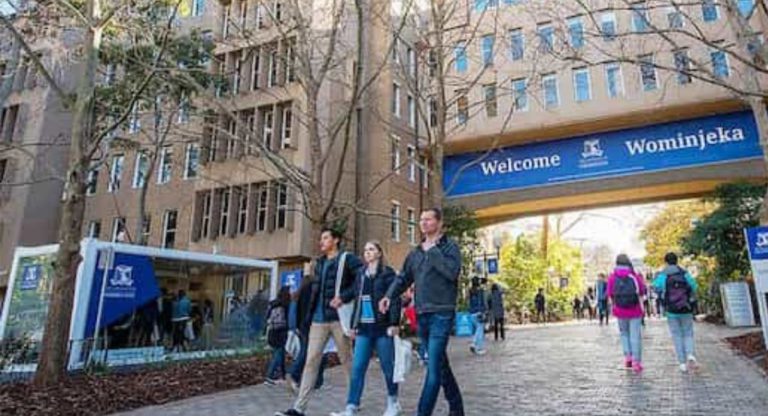
The Fair Work Ombudsman has commenced legal action against The University of Melbourne, alleging it underpaid casual staff in the Faculty of Arts and made false or misleading records.

The regulator alleges in the Federal Court that between February 2017 and December 2019, the University breached the Fair Work Act when it failed to pay 14 casual academics for all hours of marking work at the hourly rates required under its enterprise agreements.

Instead, the University allegedly paid the staff based on “benchmarks”, which varied depending on the school in the Faculty, and in some cases described payment for marking at a rate based on “4,000 words per hour” and at one school on “one hour per student”.

It is alleged that total underpayments of the 14 staff were $154,424, and ranged from $927 to $30,140 for individuals.

Staff allegedly had to enter their hours worked into the University’s human resources information system according to the benchmarks, rather than according to the actual hours worked. The Fair Work Ombudsman therefore alleges The University of Melbourne failed to record all hours worked by the casual academics, and further that the University made and kept records known to some managers within the Faculty to be false or misleading.

The Fair Work Ombudsman alleges that the University’s breaches of its enterprise agreements were ‘serious contraventions’ under the Fair Work Act from 15 September 2017 (when the serious contraventions provisions commenced).

The FWO alleges that the University expressly, tacitly or impliedly authorised the contraventions because of a corporate culture involving the use of marking benchmarks. It is also alleged that a number of specific senior leaders in the Faculty knew of the benchmarking practices and that they resulted in employees not being paid for all time spent marking.

The maximum penalties for serious contraventions are 10-times higher than the penalties that would otherwise apply.

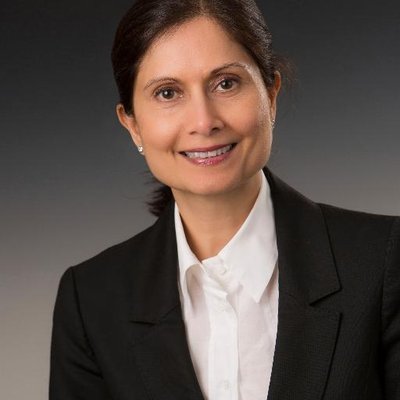
Fair Work Ombudsman Sandra Parker said the court action highlighted why the university sector was one of the regulator’s top priorities.

“Allegations of universities underpaying their employees by systematically failing to follow their own enterprise agreements are of great concern. It is important that where we find alleged serious contraventions we take employers to court and seek penalties to deter non-compliance,” Ms Parker said.

“Universities, like all employers, should have proactive measures in place to ensure they are meeting workplace laws and paying employees correctly for all hours worked. If employers become aware of concerns their employees may be being underpaid, they must promptly seek advice and rectify any compliance issues discovered.”

The Fair Work Ombudsman alleges that the benchmarking practices continued despite the inadequacy of the benchmarks being raised with certain managers within the Faculty in April 2016, February 2017 and on multiple occasions during 2018 and 2019.

The academics worked at the Parkville campus. Three of the academics held a PhD for at least part of their employment, which entitled them to higher hourly rates under the enterprise agreements. At least 12 of the employees have been fully backpaid.

In addition to penalties for the alleged serious contraventions of up to $630,000 per breach, The University of Melbourne faces up to $63,000 per breach for the other allegations.

A date for a directions hearing in the Federal Court in Melbourne has yet to be scheduled.

The regulator’s separate litigation against The University of Melbourne, commenced in August 2022, involves two casual academics in a different faculty. The litigation is ongoing.

Employers and employees can visit or call the Fair Work Infoline on 13 13 94 for free advice and assistance about their rights and obligations in the workplace. An interpreter service is available on 13 14 50.
Abducted New Zealand pilot appears in photos with armed West Papua rebels

0

Separatist fighters in Indonesia’s restive Papua region have released a series of photos showing a pilot from New Zealand who was taken hostage more than a week ago, reported CNN.

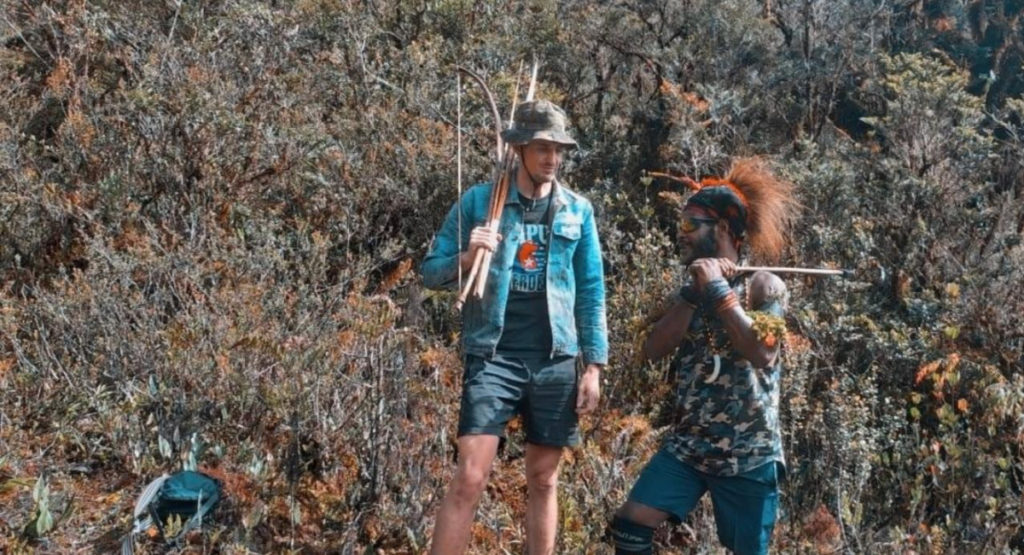
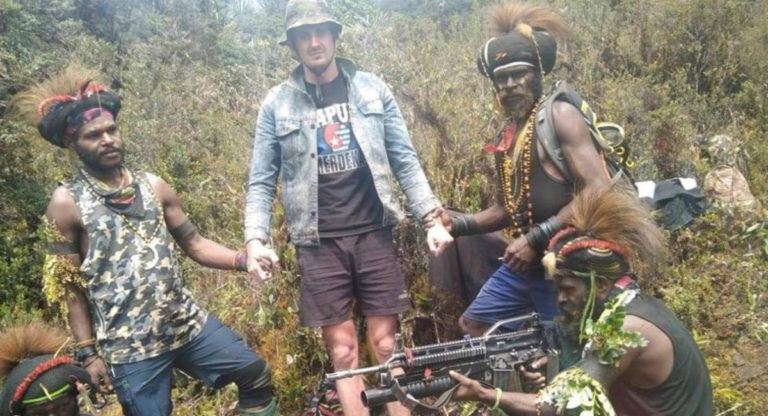
The photos released on Tuesday show the pilot, identified by local police as Philip Mehrtens, standing fully clothed and apparently uninjured among a group of fighters who are holding guns, bows and arrows and other weapons.

Last week, Mehrtens was captured after landing a commercial Susi Air charter flight at Paro Airport in the remote highlands of the Nduga regency, with the West Papua National Liberation Army (TPNPB) claiming responsibility and saying it had burned his plane.

Mehrtens of Christchurch, a pilot for Indonesian aviation company Susi Air, was abducted by independence fighters from the West Papua Liberation Army, the armed wing of the Free Papua Movement, who stormed his single-engine plane shortly after it landed on a small runway in Paro in remote Nduga district.

Papuan separatist rebels with their hostage at an undisclosed location in Papua province. Picture: West Papua Liberation Army

The plane, carrying five passengers, was scheduled to pick up 15 construction workers who had been building a health centre in Paro after a group of separatist rebels led by Egianus Kogoya threatened to kill them, said Nduga district chief Namia Gwijangge, reported NBC News.

The rebels released all five passengers because they are indigenous Papuans, rebel spokesperson Sebby Sambom said earlier.

Meanwhile, as per reports, separatists said he would not be released until the region is granted independence.

The group previously demanded that all incoming flights to Paro Airport be stopped and said the pilot would not be released until the Indonesian government acknowledged Papuan independence, reported CNN.

Image

The TPNPB released the photos of Mehrtens on its Facebook page along with a statement reiterating its position.

“TPNPB has admitted the responsibility for the burning of the plane and taking hostage of a Susi Air pilot who is a citizen of New Zealand, and we keep our promise and are politically responsible,” it said in the statement.

New Zealand’s Ministry of Foreign Affairs and Trade told CNN it was “aware of the photos and video circulating but won’t be commenting further at this stage.”

Separatist fighters in Indonesia’s easternmost region of Papua – a former Dutch colony – have been demanding independence since the region was brought under Indonesian control following a controversial 1969 vote overseen by the United Nations.

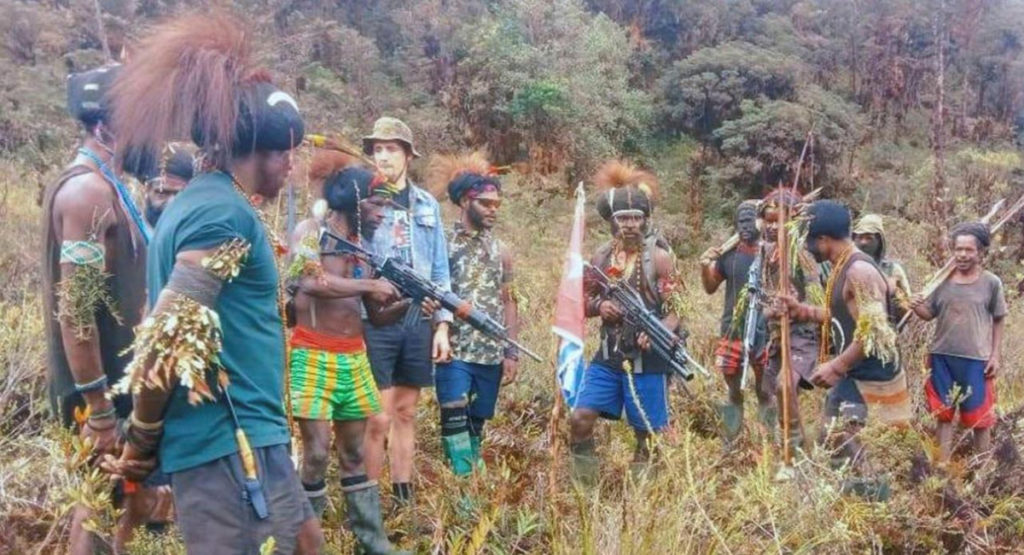
Papuan separatist rebels with their hostage at an undisclosed location in Papua province. Picture: West Papua Liberation Army

However, fighting in the impoverished but resource-rich region, where the Indonesian military maintains a heavy presence, has escalated in recent years.

The Indonesian government designates the TPNPB as a terrorist group. 

Don’t use the term ‘Bollywood’, says Smriti Mundhra of ‘The Romantics’

0

Smriti Mundhra is an Indian-American filmmaker based in Los Angeles. She has previously been nominated by Oscar & Emmy-nominated and will be returning to Netflix after the phenomenal success of Indian Matchmaking and the Never Have I Ever franchise.

The Romantics, released on Feb 14, is a tribute to the father of romance – Yash Chopra – in Hindi cinema.

This docu-series is Smriti’s vision to dive into the history of Hindi cinema through the lens of YRF – India’s biggest and mightiest production house which is home to the country’s biggest IP’s like DDLJ, Tiger, Pathaan, War, Dhoom, etc.

Interview Courtesy: MindBlowingFilms (@mindblowingfilms)

This global docu-series that is a tribute to Yash Chopra, who is regarded as the ‘Father of Romance’ in India because of his iconic romantic films like Silsila, Lamhe, Kabhi Kabhie, Veer-Zaara, Dil Toh Pagal Hai, Chandni, Jab Tak Hai Jaan, etc.

The docu-series showcases the impact of YRF films in shaping India’s pop culture for the past 50 years and Aditya Chopra’s vision of building the first and only studio in India – YRF.

Smriti Mundhra spent a great deal of time before she started filming this documentary. She was in India and she researched on the history of Yash Raj Films before shooting the documentary.

Smriti interviewed 35 leading personalities from the Hindi film industry, including mega-stars like Aamir Khan to Salman Khan, from Shah Rukh Khan to Ranbir Kapoor, from Amitabh Bachchan to Ranveer Singh, from Rani Mukerji to Hrithik Roshan, from Katrina Kaif to Anushka Sharma, who have worked with the production house over the past 50 years.

Smriti also managed to convince Aditya Chopra for his first-ever video interview which sure must have been a mammoth task. (The docu-series traces back on how Aditya Chopra always wanted to be a filmmaker, how he assisted Yash Chopra on many films before he made his debut as a director with DDLJ and how he had a sharp acumen for film-making). Aditya Chopra’s last interview was in 1995 for a film magazine (print).

The Romantics showcases the last interview of the iconic star, Rishi Kapoor who can be seen candidly talking about his deep relationship with Yash Chopra and what made their combination one of the most cherished director-actor duo of India.

The docu-series brings to the forefront how all the stars do not like the term ‘Bollywood’ and how they expressed their displeasure over it.

Shah Rukh Khan, Aamir Khan, and Salman Khan to share screen space in a project for the first-time ever and it’s for The Romantics to talk about YRF’s legacy in shaping Indian cinema and culture.

The global docu-series is available for people to watch in 192 countries!

Is my medicine making me feel hotter this summer? 5 reasons why

0

By Nial Wheate and Jessica Pace

If you’re really feeling the heat this summer, it might be down to more than the temperature outside.

Some types of medicines can increase your core body temperature or make you feel hotter than you really are. Some can affect your body’s ability to cool down.

Here’s what you need to know about heat intolerance and medicines.

What is heat intolerance?

Some people simply dislike the feeling of feeling hot, while others feel hot at temperatures most people find comfortable. Both are examples of heat intolerance.

Typical symptoms during warm weather include excessive sweating (or not sweating enough), exhaustion and fatigue, nausea, vomiting or dizziness, and changes in mood.

A number of factors can cause heat intolerance.

This includes the disorder dysautonomia, which affects people’s autonomic nervous system – the part of the body that regulates the automatic functions of the body, including our response to heat.

Conditions such as diabetes, alcohol misuse, Parkinson’s disease, the autoimmune disease Guillain-Barré syndrome and mitochondrial disease can cause dysautonomia. People in old age, those with some neurological conditions, or people less physically fit may also have it.

But importantly, medications can also contribute to heat intolerance.

1. Your body temperature rises

Some medicines directly increase your body temperature, which then increases the risk of heat intolerance.

These include stimulant medications to treat ADHD (attention deficit hyperactivity disorder), such as methylphenidate, dexamfetamine and lisdexamfetamine.

Antipsychotic medications (such as clozapine, olanzapine and quetiapine) used to treat mental health conditions, such as schizophrenia and bipolar disorder, are other examples.

These ADHD and antipsychotic medicines raise your temperature by acting on the hypothalamus, the region of the brain essential for cooling.

The drug levothyroxine, used to treat an under-active thyroid, also increases your body temperature, this time by increasing your metabolism.

2. Your blood flow is affected

Other medicines constrict (tighten) blood vessels, decreasing blood flow to the skin, and so prevent heat from escaping this way. This means your body can’t regulate its temperature as well in the heat.

Examples include beta-blockers (such as metoprolol, atenolol and propranolol). These medications are used to treat conditions such as high blood pressure, angina (a type of chest pain), tachycardia (fast heart rate), heart failure, and to prevent migraines.

Decongestants for blocked noses (for example, pseudoephedrine and phenylephrine), triptans for migraines (such as sumatriptan and zolmitriptan) and the ADHD medications mentioned earlier can also act to decrease blood flow to the skin.

3. You can get dehydrated

Other medicines can cause dehydration, which then makes you more susceptible to heat intolerance. The best examples are diuretics such as furosemide, hydrochlorothiazide, acetazolamide and aldosterone.

These are used to control high blood pressure and heart failure by forcing your kidneys to remove more fluid from your body.

Laxatives, such as senna extract and bisacodyl, also remove water from your body and so have a similar effect.

4. You can sweat less

Other medicines have a drying effect. This can be needed for medicines to do their job (for instance, to dry up a runny nose). For others, it is an unwanted side effect.

This drying reduces the amount you sweat, making it harder to lose heat and regulate your core temperature. A number of medicines have these effects, including:

  • some antihistamines (such as promethazine, doxylamine and diphenhydramine)
  • certain antidepressants (such as amitriptyline, clomipramine and dothiepin)
  • medicines used to treat urinary incontinence (for example, oxybutynin and solifenacin)
  • nausea medicine (prochlorperazine)
  • medicines for stomach cramps and spasms (for instance, hyoscine)
  • the antipsychoptics chlorpromazine, olanzapine, quetiapine and clozapine.

5. You don’t feel thirsty

Finally, some medicines, such as the antipsychotics haloperidol and droperidol, can aggravate heat intolerance by reducing your ability to feel thirsty.

If you don’t feel thirsty, you drink less and are therefore at risk of dehydration and feeling hot.

What can you do about it?

If you are feeling hot this summer and think your medicine may be contributing, it’s very important you keep taking your medicine.

Speak to your pharmacist or doctor about your symptoms. They will offer advice and discuss alternatives.

Nial Wheate, Associate Professor of the Sydney Pharmacy School, University of Sydney and Jessica Pace, Associate Lecturer, University of Sydney

This article is republished from The Conversation under a Creative Commons license. Read the original article.

Police-women keeping Australians safe through science

0

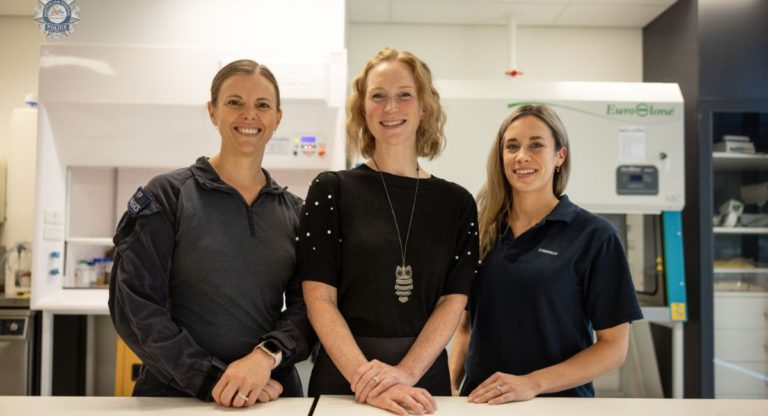
The AFP is celebrating International Day of Women and Girls in Science by highlighting the diverse work of three female AFP Forensics members using science in the fight against crime.

From collecting evidence from crime scenes and analysing fingerprints, to searching for the truth for the pursuit of justice, Stacey Wensing, Jessica Halliwell and Jessica Bruce all have an important role to play in keeping Australians safe from serious crime.

Image: Stacey Wensing (Source: AFP)

Ms Wensing is a crime scene investigator who collects and examines evidence including fingerprints, trace DNA, shoe marks, blood, glass and hairs.

She has worked in forensics for the past 12 years, but said she is continually challenged by things she has not come across before.

“I like that I don’t know what to expect from each day and that there is always something else to learn,” Ms Wensing said.

“Science always evolves; techniques change and working with different people encourages adapting and letting in different perspectives. I am lucky that I am surrounded by so many wonderful women, those to learn from and those to mentor.” 

Image: Jessica Halliwell (Source: AFP)

Fingerprint expert and specialist in the Forensic Anthropology and Archaeology cohort Ms Halliwell spends her days comparing fingerprints from crime scenes and the morgue, maintaining the national fingerprint database and presenting evidence in court.

“The work I do is very dynamic. I am exposed to a diverse range of case work where I get to apply my skills and knowledge to contribute to an investigation,” she said.

“Over 60 per cent of my team are women, and there are a lot of women throughout the different disciplines and teams in AFP Forensics, which is fantastic to see. For me, seeing women in leadership roles is inspiring and helps me overcome my own self-doubts.”

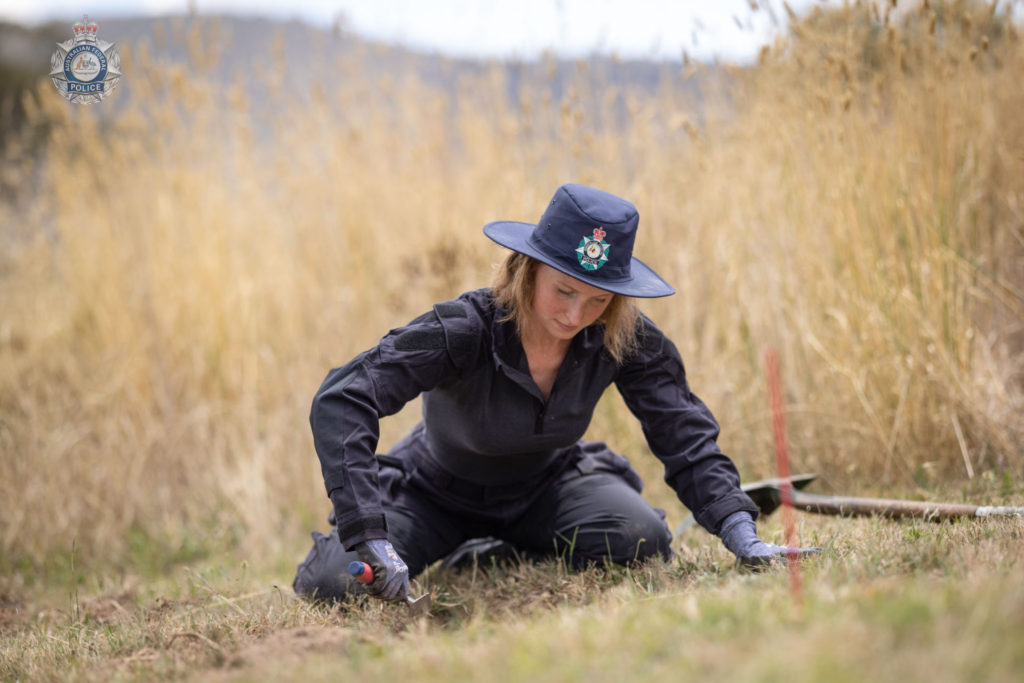
Image: Jessica Bruce (Source: AFP)

Ms Bruce is also a specialist in the Forensic Anthropology and Archaeology cohort as well as a forensic officer with the Forensics Operations Centre where she manages forensic cases with investigators.

The search for knowledge and truth for the pursuit of justice, together with practising science, is what led her to pursue a career in forensics.

“That constant pursuit of the truth to help people that have had something horrible happen to them just feels like such a worthy career,” Ms Bruce said.

“It is part of my job to accrue knowledge, from how the world works and knowledge about an investigation, to knowledge about other forensic disciplines and their capabilities. I get to spend my whole day being curious and searching for answers.”

Ms Bruce encouraged women and girls interested in a career in forensics to take the leap.

“Determine which discipline interests you, but by no means think that this is who you will be or what area you will have to work in forever,” she said.

“I started as a biomedical scientist, but I have been a technical officer, an archaeologist and physical anthropologist and a crime scene investigator. I now do none of these roles, and on top of that, I am now a mother and work flexibly.

“The idea you have to fit a specific mould to be a forensic scientist is outdated. You can be yourself and your career will mould around you. You just need to take the leap and make career decisions that suit your life at that specific time.” 

Will Fiji’s revised Media Act help end ‘censorship’ and bring freedom of expression?

0

By GERALDINE PANAPASA

While steps are being taken behind the scenes by the Coalition Government to review the existing media legislation in Fiji, civil society organisation Dialogue Fiji says coming up with a legislation that protects media freedom and safeguards against reporting that can have negative implications is difficult.

Speaking at the launch of the Fiji Media Industry Development Act 2010 – An Analysis report in Lami, Dialogue Fiji executive director Nilesh Lal said Fiji’s punitive Media Industry Development Act was promulgated in 2010 and remained in place, although the new Fijian Government had expressed its intentions to replace the controversial legislation.

The report was produced by Dialogue Fiji and contained important lessons and insights on the challenging issue of media freedom and regulation in a multiethnic society with conflict dynamics like Fiji.

“We will need to consider elements such as capacity of the Fijian market to sustain a multiplicity of media players. Media ownership has been a key element of the regulatory regime under previous administration and this will need to be looked at,” Mr Lal said.

“The challenges to traditional media posed by social media in a small market context will need to be considered to ensure that media organisations remain financially viable and a robust and diverse media sector is maintained.”

Mr Lal said many lessons had been learnt from the experience of the past 12 years, operating under a highly restrictive and punitive media regulation.

He said it was important that stakeholders be consulted at every stage of the review process of the media legislation, including pre-drafting.

“If the draft does not meet expectations, it is going to unduly create friction between the government, media and other interest groups such as CSOs,” Mr Lal said.

The launch programme also included a panel discussion on the issue of media regulation and features of the media legislation desirable in Fiji.

Mr Lal said as an organisation that championed democratic freedoms, dialogue and deliberations, Dialogue Fiji believed it was important to create opportunities for Fijians to deliberate on issues that affected their lives.

“Media freedom is an important element of freedom of expression. We need the media to be able to exercise this right, which is afforded to them in Fiji’s Constitution,” he said.

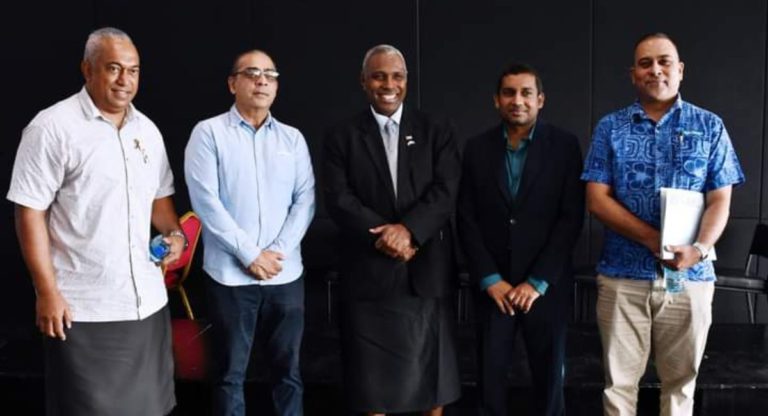
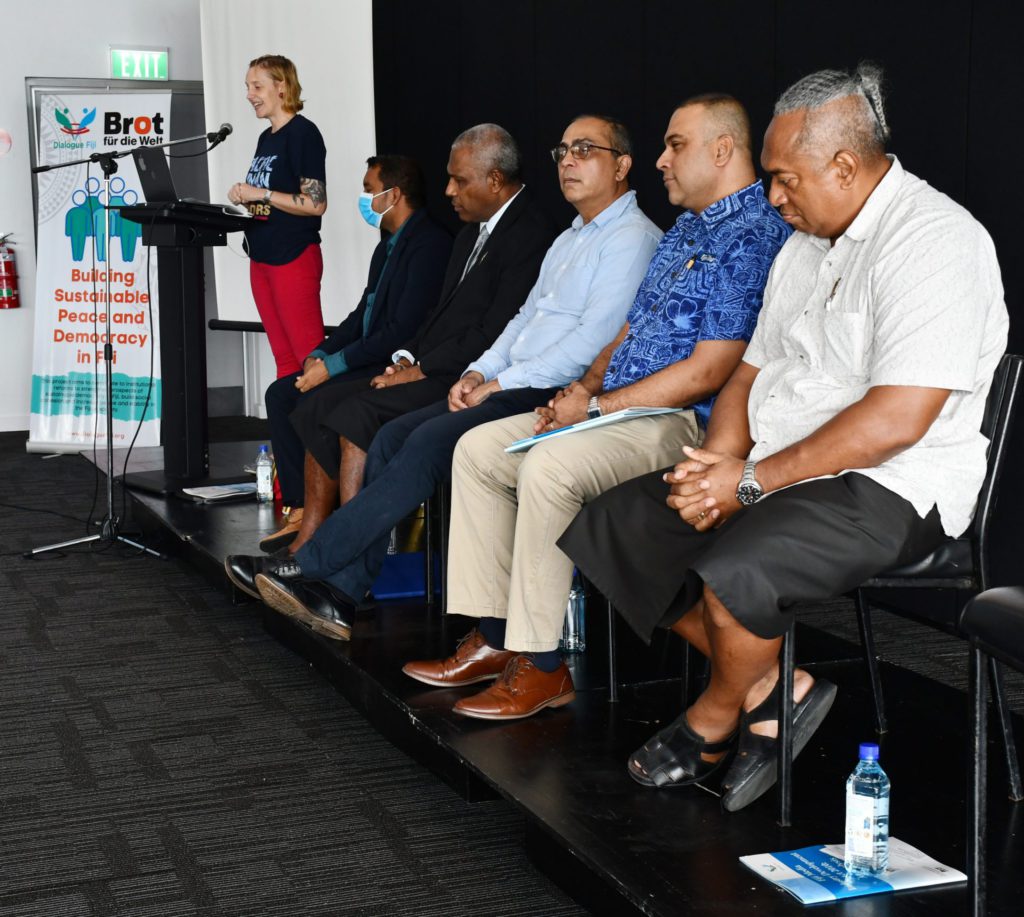
Panelists during the launch of an analysis report on the Fiji Media Industry Development Act 2010 by Dialogue Fiji. Picture: FIJIAN GOVERNMENT FB PAGE

Analysis

The comprehensive analysis on the Act was authored by USP Journalism Programme coordinator Associate Professor Dr. Shailendra Singh, Mr Lal and the chief deputy Attorney-General of Arizona, USA, Daniel Barr.

Dr Singh said a major complaint against the Act from the media sector and observers was the ambiguities in some of the provisions.

“Section 22 is a good example of this. Section 22 states no content must include materials against the public interest, order, national interest or anything that might create disharmony in society,” he said.

“The national interest/order can be subjective matters. The question is, who decides what is national interest or public interest, especially when these terms are so ill-defined in the Act.

“The reality is that the media, government and the public all have different viewpoints about what constitutes the national interest in any particular time or year. Vagueness in some of the provisions in the Act is another shortfall when it comes to international benchmarks.”

Assoc. Prof. Shailendra B. Singh speaking at the launch of an analysis report on the Fiji Media Industry Development Act 2010 by Dialogue Fiji. Picture: FIJIAN GOVERNMENT FB PAGE

For issues like hate speech, he said it was important to ensure key terms were first defined.

“The broader the definition, the more it opens the door for arbitrary application of these laws. Some people might say, in all its years of existence, no one has been charged or prosecuted under the Media Act. Sometimes this is touted as a positive development but the problem is, it can be invoked at any time,” Dr Singh said.

“Even though no one might have been charged or cited, it is still like an axe hanging over the news media’s heads. This is why Media Act is accused of instilling a chilling effect on journalism in Fiji.”

Dr Singh noted that penalties in the Act were also in breach of some international benchmarks, adding that excessive sanctions should be reserved for exceptional cases. In Fiji’s Media Act, penalties applied across the board regardless of the seriousness of the offence.

He noted that there was little evidence of the separation of powers in the Act and that all powers were invested in the Communications Minister and Attorney-General, breaching international benchmarks on independence of regulatory bodies of government.

“Any national media regulatory body should be independent from the government in a democracy. The A-G and Communications Minister, who have so much power in the Act, are part of government and are expected or required to work in the interest of government first and foremost. So two ministers had so much powers and are expected to work in unison, rather than in the interest of media organization,” Dr Singh said.

“What we found peculiar is that, with the previous government, the Communications Minister and A-G positions were held by the same person, one person with two different portfolios controlling everything. When we talk about separation of powers, it was almost non-existent in the Media Act.”

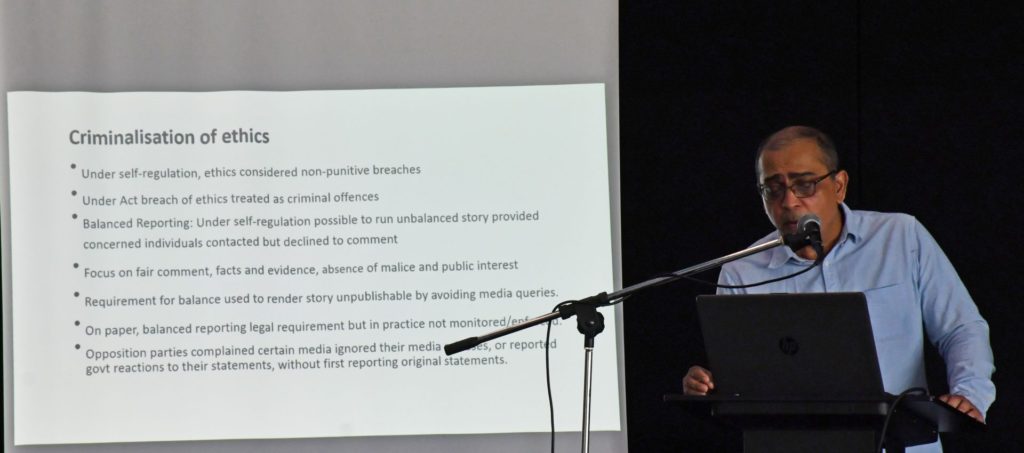
Dr Singh also noted that a core grievance with the Act was the criminalisation of ethics, adding that Fiji was one of the few countries in which journalism ethics had been criminalised.

Under self-regulation, ethics are considered non-punitive breaches but under the Media Act, a breach of ethics is treated as criminal offences.

“Ethics are not set in stone; you cannot have the same response for every ethical dilemma out in the field,” he said.

“Another key analysis in the Act is the lopsided hearing and appeal procedures where the appeal provisions for the media are restricted. It raises some really serious questions, for example, why are complainants against news media given full appeal whereas media can only appeal decisions for penalties more than $50,000?

“There is non-compliance of universal human rights, all should be equal before the law, provided equal protection of the law.”

Dr Singh said the Act was well protected legally that no court of any kind could entertain any challenges by any person or body in relation to the validity or legality of the Act, and any decision of the Tribunal except for appeals.

“The immunity clause shows how the Act and its entities are bestowed all the powers without being bound by some of the core accountabilities of the justice system,” he said.

Panelists during the launch of an analysis report on the Fiji Media Industry Development Act 2010 by Dialogue Fiji. Picture: FIJIAN GOVERNMENT FB PAGE

Government’s commitment

Attorney-General Siromi Turaga, who joined the panel discussion alongside newsroom editors from Fiji’s mainstream news media, said the Coalition Government recognised the pivotal role that the media played in Fiji, in terms of ensuring the circulation and responsible reporting of information.

He reaffirmed Government’s support of a free, independent and responsible media and reiterated that the Media Industry Development Act 2010 would be reviewed with the assistance of a committee, that would be established for the task.

While there is no set timeframe on the completion of the review, Mr Turaga said this was a priority for Government as they continued to encourage robust journalism, urging journalists to also “practise fair and balanced reporting, and most importantly, allow for the right of reply at all times”.

Mr Turaga said the analysis by Dialogue Fiji provided an insightful commentary on the Act and was a helpful resource for the review process.

This article was first published in Wansolwara News and is republished here with their kind permission.

Will multicultural Australians support the Voice? The success of the referendum may hinge on it

0

By Andrew Jakubowicz

When Warren Mundine, one of the lead “no” campaigners of the Voice to parliament, suggested that migrants be recognised in the Constitution along with Indigenous Australians, it was criticised as a diversionary and potentially destabilising intervention.

It did, however, focus momentary attention on how Australia’s culturally diverse communities were being engaged on the Voice referendum – and whether they would support it.

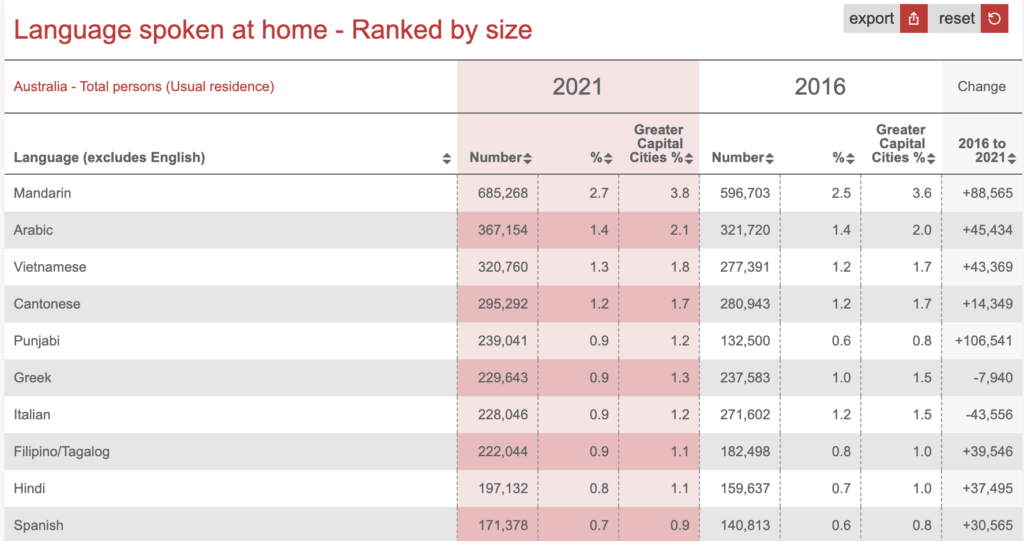
These communities could be crucial to the success of a referendum, given their size and breadth. Just over half of Australians were either born overseas or have at least one migrant parent. And nearly a quarter of Australians speak a language other than English at home.

Mobilising support in culturally and religiously diverse communities

The Voice campaign must capture the support of a majority of electors in a majority of states. In the referendum, there will be three possible voting choices – yes, no or an informal vote. The yes vote effectively requires an absolute majority to succeed, while the no vote can depend on unconvinced or confused voters to boost its impact.

Although the informal vote was less than 1% in the 1999 republic referendum, it can be high in multicultural communities. For example, the electorate of Fowler in western Sydney, which has large Vietnamese and Chinese populations, had an informal vote of 10.5% in last year’s federal election.

Recognising how important the multicultural vote is, the “yes” campaign has already identified several broad coalitions whose support is critical.

First is the Federation of Ethnic Communities Councils of Australia (FECCA), which announced its full support of the Voice at its annual conference in late 2022.

Its chair, former Victorian state MP Carlo Carli, has been using the media to push back at Mundine’s comments, saying there is no interest in ethnic community organisations for a multicultural Voice to parliament.

FECCA is a federation of state and regional councils, each of which comprises many individual ethnic organisations. As such, it neither controls nor completely reflects the opinions of the broad masses of unaffiliated ethnic voters.

However, in the case of the Voice, these bodies may well influence how voters think – this will be tested in coming months.

While FECCA is an important body, individual ethnic community organisations have much closer relationships with the electors who will vote in the referendum. And within these smaller groups, trust in government is sometimes lacking and support for progressive causes less assured. Many of the important conversations about the Voice will also need to be in people’s native languages.

The various Chinese communities offer a good example here. They are increasingly dominated by university-educated mainland China or Hong Kong migrants. And they’ve been badly hurt by the upsurge in anti-Chinese rhetoric and harassment over the past few years of the pandemic.

Many who supported the Coalition in the 2019 federal election deserted them last year, seeing the Morrison government as the epicentre of anti-Chinese hostility. Yet, Chinese voters have not always trusted the ALP, either.

This very diverse community does not have a necessary attachment to the Voice. On the one hand, many Chinese migrants may have a shared experience of racism that helps shape their attitudes. But on the other hand, some may retain a suspicion and anxiety about Indigenous people, as well.

Another coalition that matters is religious-based. The heads of various religious congregations gathered last year to decide whether a consensus on the Voice would be possible. They soon reached agreement on supporting the referendum, finding in all faiths a moral, if not religious, imperative to endorse Indigenous aspirations for recognition.

However, some of these religious leaders also actively opposed the same-sex marriage plebiscite, while some religious groups were fervently against the government’s COVID vaccine drives.

How migrants’ views of racism have changed

Mundine argued that migrants rejected the idea Australia was deeply racist – a notion the “no” campaign will try to seize on.

However, my research into the political mobilisation of ethnic communities over many years has shown that immigrant communities have a more complex relationship with the politics of race.

Some communities, for example, have questioned the ideology of integration that was reintroduced by conservative governments in recent years in response to earlier multicultural movements of the 1970s to 1990s.

COVID also disproportionately affected migrant communities. In early 2022, it was revealed that deaths from COVID were three times higher among migrants than those born in Australia. For those born in the Middle East, death rates were 13 times higher.

Immigrant communities also suffered from high incidents of racism and serious economic stress.

This caused trust in government to erode among the most badly affected groups – largely working class, non-English-speaking people, often born overseas.

And in 2020, the Black Lives Matter movement ignited similar action in Australia. Although driven by Aboriginal activism, BLM rallies also attracted many Australians with backgrounds from Africa, the Middle East, the Americas and the Pacific, in particular.

These events may have heightened the awareness in immigrant communities of the prevalence of racism in Australia. They may also have enhanced empathy for Indigenous people’s struggles, and potentially, support for the Voice.

Building trust in the Voice matters for everyone

So far, the Albanese government has called for citizens to support the concept of the Voice and trust parliament to get the details sorted. Yet, research shows trust in government has declined significantly over the past year or so after being very high early in the pandemic.

So, how best to engage with multicultural communities?

The central challenge is to detach support for the Voice from the broader idea of trust in government. To do this, the “yes” campaign has to galvanise grassroots engagement by demonstrating how the Voice is important not only to Indigenous Australians, but also to every citizen from every background.

To this end, some local government initiatives, such as that in Sydney’s inner west, have been running training courses that both educate people about the Voice and enable them to become advocates in their communities.

Some service delivery groups have also committed to the Voice, such as the large Settlement Services International network.

This approach recognises that group dynamics supporting individuals to do the “right thing” can have far more impact than endorsements from distant elites. This was successfully used in Independent MP Dai Le’s campaign for parliament in the Fowler electorate in last year’s election.

Moreover, teams of advocates from diverse communities will also need to be mobilised to create narratives convincing voters of the need for a Voice. Otherwise, the trust deficit that has been so apparent in these communities may contribute to their turning away from the idea.

The “no” campaign is already aware that confusion and mistrust are useful weapons in their armoury. The “yes” campaign needs to recognise this danger and ensure multicultural communities understand how the Voice can combat wider issues of racism and discrimination to their common benefit.

Andrew Jakubowicz, Emeritus Professor of Sociology, University of Technology Sydney

This article is republished from The Conversation under a Creative Commons license. Read the original article.

Australian Aboriginal Woman cricketer Ashleigh Gardner hits jackpot at India’s inaugural WPL auction

0

The auction for the first-ever Women’s Premier League (WPL), a landmark moment in the history of women’s cricket, concluded on Monday.

The affair was full of surprises, wholesome moments, unpredictability and thrill that can change the sport and thousands of lives associated with it for the better. The auction started off with a bang, with Indian star opener Smriti Mandhana becoming the first-ever player to be picked.

Royal Challengers Bangalore splurged a massive sum of $593K, making her the most expensive player in WPL. Just moments later, her skipper and batting star Harmanpreet Kaur was picked up by Mumbai Indians for $314K.

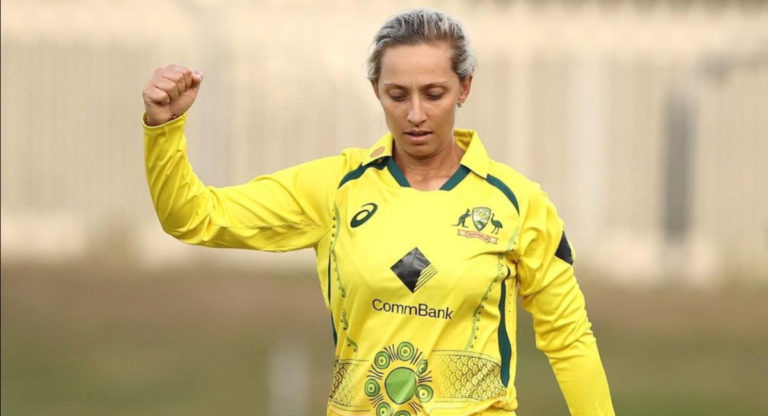
International talent from Australia got a lot of attention in the auction. Ashleigh Gardner, the No.1 allrounder in women’s T20Is, has attracted the joint second-highest bid of $558,000 at the inaugural Women’s Premier League (WPL) auction.

Image

The subject of a fierce three-team bidding war, Gardner was bought by the Adani Group-owned Gujarat Giants, the last of the three franchises to express their interest in the 25-year-old during the auction on Monday afternoon. 

The new tournament will last 23 days, from March 4-26.

With Rachael Haynes, who was recently recruited as the Giants head coach, present at the auction table at the Jio World Convention Centre in Mumbai, the imprint of the former Australia captain on the side picking Gardner was unmistakable.

Gardner, for her part, watched the auction live on her phone, alongside Australia team-mates Megan Schutt and Kim Garth, from the sidelines of her team’s afternoon training at St George’s Park in Gqeberha ahead of their T20 World Cup fixture against Bangladesh on Tuesday.

“Ashleigh’s such a great allrounder,” Australia head coach Shelley Nietschke said after the team’s practice session. “She delivers in three skills. She’s been really important to

us over the last 12 months to two years, and even beyond that.

“But I think what we’re finding in recent times is she’s really coming into her game and maturing as a cricketer. So she plays a key role for us.

“It was fantastic to see her perform with the ball and her career-best figures against New Zealand. I’m looking forward to seeing what the tournament (WPL) brings for her.”

Gardner, who returned her career-best figures in T20Is – 5 for 12 – in Australia’s opening fixture at the T20 World Cup against New Zealand, had a reserve price of $87,000.

She was the fifth player from the seven-member Set 1 to go under the hammer after India’s Smriti Mandhana, the first and most expensive player to be sold on the day at $593,000, and Harmanpreet Kaur, New Zealand’s Sophie Devine and the unsold Hayley Matthews.

Image

England’s Natalie Sciver-Brunt was snapped up at the same price as Gardner by Mumbai.

They also bought Heather Graham, who had picked a hat-trick in Mumbai two months ago, for $52,000 towards the close of the auction that lasted almost six hours.

Ellyse Perry was the second Australian to be bought. Royal Challengers Bangalore shelled out $297,000 on the star allrounder, with Beth Mooney ($350,000/Gujarat) later surpassing her as the second-most expensive Australian buy.

No.1-ranked T20I batter Tahlia McGrath ($245,000/UP), Australia captain Meg Lanning ($192,000/Delhi Capitals), vice-captain Alyssa Healy ($122,000/UP), allrounder Annabel Sutherland ($122,000/Gujarat) also picked up impressive bids.

Medium-pacer Megan Schutt and wrist-spinner Alana King were the first two Australians to go unsold. However, when Schutt went under the hammer for a second time, Bangalore, who hired Sydney Sixers head coach Ben Sawyer in the same role, picked her up at her base price of $70,000.

They also made the winning bid for Erin Burns, who isn’t part of Australia’s T20 World Cup squad, for $52,000.

Left-arm spinner Jess Jonassen was snapped up by Delhi for $87,000 for the second time asking. King’s name also came up twice, but she found no takers.

Garth and Tess Flintoff were the other Australians to feature on the final list at the auction who went unsold.

Gujarat outbid Bangalore to secure the services of legspinner Georgia Wareham for $131,000.

The coveted Harris sisters — Grace ($131,000) and Laura ($78,300) – were bought by UP and Delhi, respectively, after closely contested bidding wars.

A total of 87 players were bought at the auction, 30 of those being overseas recruits.

Australia accounted for the highest representation from a single country.

Only one Associate player – USA’s Tara Norris – found any takers

Here are the squads of WPL teams:

Delhi Capitals: Jemimah Rodrigues, Meg Lanning, Shafali Verma, Radha Yadav, Shikha Pandey, Marizanne Kapp, Titas Sadhu, Alice Capsey, Tara Norris, Laura Harris, Jasia Akhtar, Minnu Mani, Poonam Yadav, Taniya Bhatia. Jess Jonassen, Sneha Deepthi, Arundhati Reddy, Aparna Mondal.

Gujarat Giants: Ashleigh Gardner, Beth Mooney, Sophia Dunkley, Annabel Sutherland, Harleen Deol, Deandra Dottin, Sneh Rana, S Meghana, Georgia Wareham, Mansi Joshi, Dayalan Hemalatha, Monica Patel, Tanuja Kanwer, Sushma Verma, Hurley Gala, Ashwani Kumari, Parunika Sisodia, Shabman Shakil.

Mumbai Indians: Harmanpreet Kaur, Nat Sciver-Brunt, Amelia Kerr, Pooja Vastrakar, Yastika Bhatia, Heather Graham, Issy Wong, Amanjot Kaur, Dhara Gujjar, Saika Ishaque, Hayley Matthews, Chloe Tryon, Priyanka Bala, Humairaa Kaazi, Neelam Bisht, Jintamani Kalita, Sonam Yadav.

Royal Challengers Bangalore: Smriti Mandhana, Sophie Devine, Ellyse Perry, Renuka Singh, Richa Ghosh, Indrani Roy, Disha Kasat, Shreyanka Patil, Kanika Ahuja, Asha Shobhana, Erin Burns, Heather Knight, Dane van Niekerk, Preeti Bose, Poonam Khemnar, Komal Zanzad, Megan Schutt, Sahana Pawar.

UP Warriorz: Sophie Ecclestone, Deepti Sharma, Tahlia McGrath, Shabnim Ismail, Alyssa Healy, Anjali Sarvani, Rajeshwari Gayakwad, Parshavi Chopra, Shweta Sehrawat, S Yashasri, Kiran Navgire, Grace Harris, Devika Vaidya, Lauren Bell, Laxmi Yadav, Simran Shaikh.

Bravus’ Rugby Run solar farm named top performing facility in Queensland

0

For the second consecutive year, Rystad Energy has crowned Bravus’ Rugby Run solar farm Queensland’s top-performing utility-scale PV facility.

Bravus is at the forefront of the global energy transition. Its energy products, and the businesses that transport and export them, are fuelling positive growth for the future.

They are deeply committed to creating Australian jobs and opportunities in regional communities and operating responsibly. The safety and well-being of our people and the community, responsible environmental management and governance are at the heart of all they do.  

Bravus’ Business Manager – Renewables, Derek Chapman, said the performance was a testament to the quality of the facility and the broader Adani Group’s expertise in delivering exceptional renewable energy projects.

Mr Chapman said, “Since the facility was officially switched on in 2019, Rugby Run has consistently ranked as one of the top-performing solar assets in Australia and the best in Queensland.”

“Adani’s expertise as India’s leading generator of solar power and manufacturer of solar panels was leveraged throughout the construction of the facility and this continues to pay dividends today.”

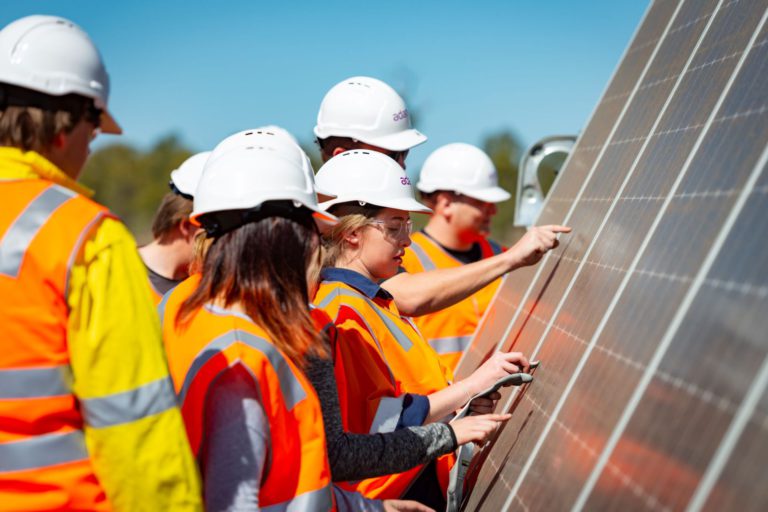
Rugby Run staff member checks solar panel; Image Source: Supplied

Rugby Run is a 65MW solar farm facility

  • 1.3 million galvanized zip ties to be used in the stringing of electrical cables
  • More than 247,000 solar panels installed
  • 175 jobs at peak construction 
  • 18km of fence line installed 
  • 7.2km of road built to access the site 
  • 6,500 holes pre-drilled 
  • The solar panels rotate to track the sun and maximise efficiency
  • The solar panels are programmed to rest at an angle that withstands inclement wind and weather conditions.

Located near Moranbah in central Queensland, Rugby Run is Bravus’ first renewables project in Australia. The 65 MW solar farm provides power for the equivalent of around 23,000 regional Queensland homes and businesses and comprises 247,000 solar panels.

“We built this facility for Queensland’s conditions, with the panels programmed to rotate to track the sun most efficiently and also to move to the most effective angles to withstand inclement wind and weather,” Mr Chapman said.

“This included a selection of panels from the Adani Group’s solar panel manufacturing plant in India which have delivered consistently high performance.”

The Adani Group is the world’s largest multinational solar energy company with 4803 MW of solar power in operation and a further 10080 MW under construction, producing power for the equivalent of 5.2m households.

Rugby Run at sunset; Image Source: Supplied

Adani Solar, the photovoltaic manufacturing and research arm of the Group is building the world’s first fully integrated and comprehensive solar ecosystem manufacturing facility. The facility will include the entire solar manufacturing ecosystem from metallurgical grade silicon to PV modules, ancillaries and supporting utilities.

They have recently introduced India’s first large-sized monocrystalline silicon ingot which will drive indigenisation to produce renewable energy from silicon-based PV modules exclusively for Adani’s solar wafers, cells and modules production.

The Bravus

Bravus claims to walk the talk on the energy transition. Their diversified group of Australian businesses produce high-quality thermal coal at the Carmichael Mine and renewable energy from the Rugby Run solar farm, both in central Queensland. Bowen Rail Company, Abbot Point Operations and North Queensland Export Terminal businesses proudly transport high-quality coal from Bravus Mining and Resources Carmichael mine, and from their other mining customers to the world.

These operations provide reliable and affordable energy solutions that help reduce poverty in the Asia Pacific region and power growth.

They are part of the global Adani Group, which is headquartered in India and is leading the way in progressing the transition to a lower emissions future. The Adani Group is the world’s largest multinational solar energy company, and India’s leader in the emerging hydrogen energy industry. The Group also has businesses in the energy, transport, infrastructure, agribusiness, ports, airports, data centres, cement, and utility sectors.

Adani Solar and Adani Green Energy Limited (AGEL)

Adani Solar is the Solar PV manufacturing arm of the Adani Group. It is India’s first and largest vertically integrated Solar PV cell and modules manufacturer that offers services across the spectrum of photovoltaics manufacturing. The company offers and produces high-efficiency monofacial and bifacial modules (in PERC Technology) with superior efficiency, higher performance and enhanced reliability. Adani Solar is currently building the world’s first-ever fully integrated and comprehensive ecosystem of 10 GW solar PV manufacturing in India.

AGEL is one of the largest renewable energy companies in India with a current project portfolio of 20,434 MW. The company develops, builds, owns, operates and maintains utility-scale grid-connected solar and wind farm projects. 

Note: Above article is published as per The Australia Today’s global content partnership initiative.

Australia, India, USA and Japan launch ‘Quad Cyber Challenge’ to improve online security

0

The Quadrilateral Security Dialogue or Quad comprising India, United States, Japan and Australia on Wednesday launched a public campaign ‘Quad Cyber Challenge’ to improve cyber security across their nations.

Governments, corporations, nonprofits, universities, and schools around the world are invited to take the Cyber Challenge. It’s a call to action for every Internet user to learn more about cybersecurity and protect themselves, their devices, or their customers from the growing threats of online attacks. 

Australia’s Minister for Cyber Security Clare O’Neil said, “Together with our Quad partners, we are launching the Quad Cyber Challenge to help everyone become more cyber secure.”

“With malicious cyber threats becoming more and more frequent, Quad countries including Australia are focusing on ensuring everyone has the knowledge and tools they need to best guard themselves against cyber-attacks.”

Minister O’Neil also urged the community to take the challenge and test their knowledge of safe and responsible cyber habits.

Home Affairs Minister Clare O’Neil; Image Source: Twitter

Everybody knows the risks of being hacked, but few know all the simple steps they can take to prevent being hacked. That’s why we want millions of people around the world to learn more by taking the challenge and committing to safe and secure online practices.

The Quad has invited Internet users across the Indo-Pacific and beyond to become part of the challenge and practice “safe and responsible cyber habits,” India’s National Security Council Secretariat said in the press release.

The ‘Quad Cyber Challenge’ shows the continuous efforts of Quad nations to bolster cyber security awareness and action and to foster a more secure and resilient cyber ecosystem to benefit economies and users.

In an official release, India’s National Security Council Secretariat said, “The Internet users are being invited across the Indo-Pacific and beyond to join the Challenge and pledge to practice safe and responsible cyber habits.”

It further added,

“The Challenge reflects the continuing Quad efforts to strengthen individuals’ and communities’ cyber security awareness and action, as well as to foster a more secure and resilient cyber ecosystem to benefit economies and users everywhere.”

Cybersecurity (Image source: CANVA)

India’s National Security Council Secretariat noted, “Internet users worldwide are targets of cybercrime and other malicious cyber threats that can cost trillions of dollars each year and compromise sensitive personal data.”

“Many successful cyber-attacks can be guarded against by simple preventative measures. Together, Internet users and providers can take small steps to significantly improve cybersecurity and cyber safety.”

The steps include routinely installing security updates, enabling enhanced identity checks through multi-factor authentication, using stronger and regularly changing passphrases, and knowing how to identify common online scams, like phishing.

The Quad Cyber Challenge provides resources, including basic cybersecurity information and training for all users, from corporations to educational institutions, small businesses and individuals and will culminate in events during the week of April 10.

The action in India is being coordinated by the office of the National Cyber Coordinator with the National Security Council Secretariat.

The Quad nations are working to ensure everyone has access to the resources needed to make informed decisions while online and using smart devices, the National Security Council Secretariat said in the press release.

It further said that people and organizations can learn what they can do to foster a “safe, more secure, and resilient cyberspace so that the nations collectively be better protected from cyber threats.

Construction and home maintenance company faces court for failing to pay outstanding entitlements

0

The Fair Work Ombudsman has commenced legal action against a construction and home maintenance company in Brisbane and one of its directors.

Facing court are Design Wolf Solutions Pty Ltd, which trades as Designwolf Building Solutions, and company director Brenton John Bound.

The regulator investigated after receiving a request for assistance from a worker Design Wolf Solutions Pty Ltd had employed on a full-time basis as an adult apprentice builder between August 2020 and May 2021.

A Fair Work Inspector issued a Compliance Notice to Design Wolf Solutions Pty Ltd in September 2021 after forming a belief that the worker, who was aged 23 when he commenced his employment, had been underpaid annual leave entitlements under the Fair Work Act’s National Employment Standards.

The Fair Work Ombudsman alleges Design Wolf Solutions Pty Ltd, without reasonable excuse, failed to comply with the Compliance Notice, which required the company to calculate and back-pay the worker’s outstanding entitlements. It is alleged Mr Bound was involved in the contravention.

Fair Work Ombudsman Sandra Parker said the regulator would continue to enforce workplace laws and take business operators to court when they fail to act on Compliance Notices.

“Where employers do not comply, we are prepared to take appropriate legal action to ensure employees receive their lawful entitlements. A court can order a business to pay penalties on top of having to back-pay workers,” Ms Parker said.

“Any employees with concerns about their pay or entitlements should contact the Fair Work Ombudsman for free advice and assistance.”

The Fair Work Ombudsman is seeking penalties against Design Wolf Solutions Pty Ltd and Mr Bound for allegedly failing to comply with the Compliance Notice. The company faces a penalty of up to $33,300 and Mr Bound faces a penalty of up to $6,660.

The regulator is also seeking an order for Design Wolf Solutions Pty Ltd to rectify the alleged underpayment in full, plus interest and superannuation.

A directions hearing is listed in the Federal Circuit and Family Court in Brisbane on 13 February 2023.

Employers and employees can visit www.fairwork.gov.au or call the Fair Work Infoline on 13 13 94 for free advice and assistance. An interpreter service is available on 13 14 50.
RBA’s latest forecasts are grim for you, Here are 5 reasons why

0

By Isaac Gross

After lifting interest rates for a record nine times in a row, and flagging more raises still to come, the Reserve Bank of Australia’s latest set of forecasts make for grim reading.

The forecasts are part of the central bank’s quarterly Statement on Monetary Policy, its main communication (aside from interest rates) on how it sees the economy faring over coming few years.

The bad news is the bank tips economic growth to slow, inflation to remain high, spending to stagnate, unemployment to increase, and real wages to fall further.

The good news is that it could be wrong.

1. Growth is expected to slow

The central bank expects Australia’s economy to slow this year due to rising interest rates, higher cost of living, and declining house prices.

It tips GDP growth for 2022 will be 2.75% (the Australian Bureau of Statistics won’t publish this data until March), and 1.5% over 2023 and 2024.

This compares to the RBA’s expectation three months ago of 3% growth in 2022, but is the same as the previous prediction for this year and the next.


RBA GDP growth forecasts

Confidence intervals reflect RBA forecasting errors since 1993. Year-end forecasts. RBA

2. Inflation will remain high

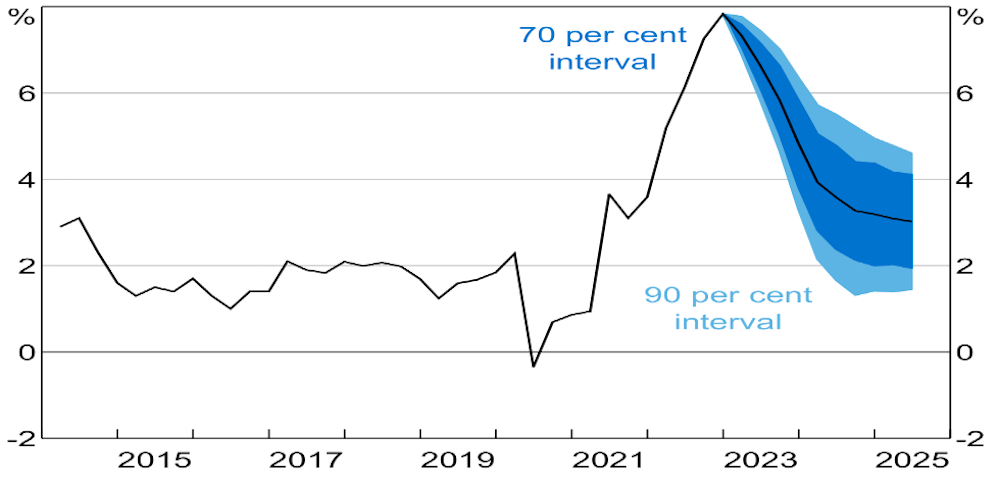
The bank says inflation, which hit 7.8% in 2022, is likely to have peaked and will stay high for several months, but should decline to 4.5% by the end of 2023.

By mid-2025 the bank expects inflation to have fallen to back to 3% – the top end of its inflation target range of 2-3%.

However, the pace of this fall depends on wages and prices. The bank acknowledges inflation could fall more quickly or more slowly.


RBA headline inflation forecasts

Confidence intervals reflect RBA forecasting errors since 1993. Year-end forecasts. RBA

Australian consumer price inflation has been high due to factors including global supply-chain disruptions caused by the pandemic, Russia’s invasion of Ukraine, strong domestic demand, a tight labour market, and capacity constraints.

The bank expects rising energy prices to continue to drive inflation but expects this to be offset by the government’s Energy Price Relief Plan, which caps gas and coal prices, will subsidise household and business bills.

Price increases for goods such as food and furniture are expected to moderate. But the cost of services will continue to rise, due to wage growth.

This is the main reason the RBA has flagged more interest rate hikes this year. It is determined to get inflation back to its target band, and will keep increasing borrowing rates until it is sure this goal will be achieved.

3. Consumer spending will stagnate

The bank’s statement says higher consumer prices, higher interest payments and lower household net wealth are expected to curb consumer spending in 2023.

But it says spending should improve once interest rate rises stop, household wealth recovers and disposable incomes are boosted by tax cuts.

The household saving ratio (which doubled during the pandemic) is expected to fall below the pre-pandemic norm of 5% before clibing back to pre-pandemic levels in 2024.

4. Unemployment will climb

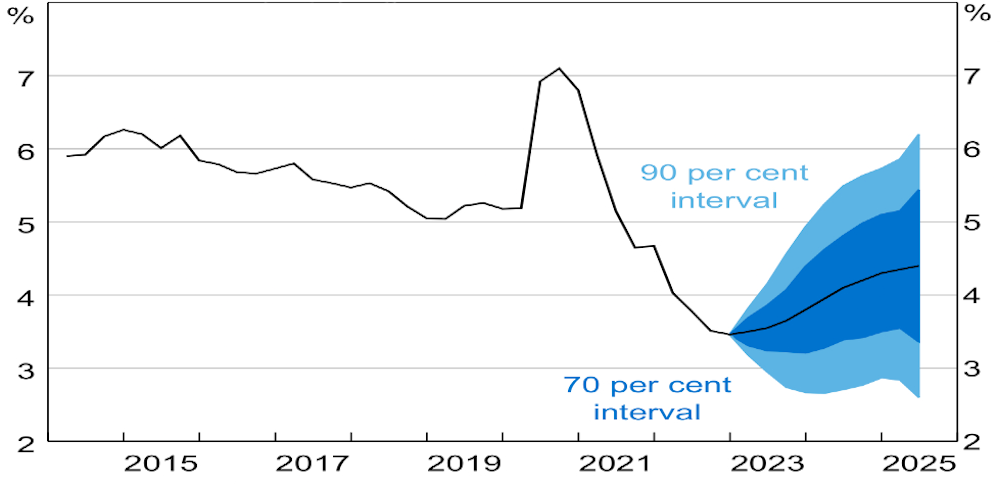
The bank expects the unemployment rate to remain at about 3.5% until mid-2023, and then to climb to 4.5% as demand for labour moderates.

4.5% remains well below where it has been for most of the past half century.


RBA unemployment rate forecasts

Confidence intervals reflect RBA forecasting errors since 1993. RBA

Jobs growth is forecast to slow from 4.8% in 2022 to about 1% by mid-2024.

Despite this, the participation rate in the labour force is not expected to fall, due to structural trends such as higher female and older worker participation.

5. Real wages will fall

The RBA’s forecast for wages growth is now higher than three months ago, due to a tight labour market, higher staff turnover, higher inflation outcomes and Fair Work Commission wage decisions.

It tips the Wage Price Index, which hasn’t been above 4% in a decade, to hit 4.25%.

Given the inflation rate, however, this won’t be enough wages growth to stop real wages from continuing to fall.

The wage price index is tipped to fall back to 3.75% in mid-2025 as the demand for labour subsides and unemployment climbs.

Uncertainty remains high

These forecasts make for grim reading. But they could all be quite wrong. As the saying goes, it’s tough to make predictions, especially about the future.

Huge uncertainties hang over the global economy, including the war in Ukraine, the emergence of new COVID variants, and the unique challenges of recovering from the pandemic.

That means all these forecasts could be – and likely will be – wrong in one dimension or another.

Even the governor’s very clear message that there will be more interest rate rises this year could change if the prevailing circumstances do too. Time will tell.

Isaac Gross, Lecturer in Economics, Monash University

This article is republished from The Conversation under a Creative Commons license. Read the original article.

Indian-Australian man pleads guilty to smuggling drugs into Adelaide medi-hotel

0

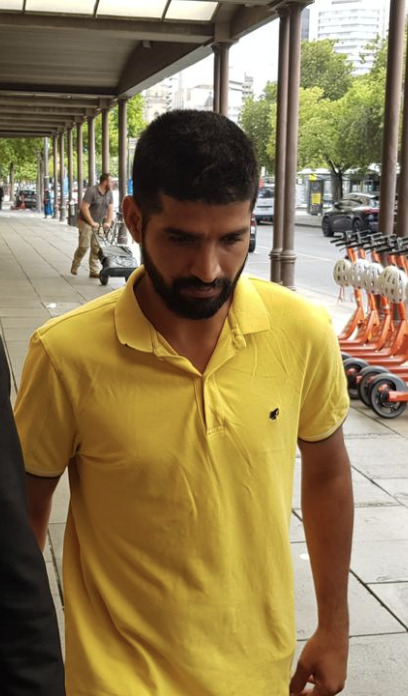
Raman Sharma, a 29-year-old Adelaide man, has pleaded guilty to possession with intent to supply and appealed in the Adelaide Magistrates Court to spare him from jail.

In 2021, Mr Sharma posed as an Uber Eats food delivery driver and tried to smuggle illegal opioids wrapped inside a burrito into Adelaide’s Tom’s Court Hotel at the height of the COVID-19 pandemic.

These drugs included heroin and Kamini, popularly known as “Indian Viagra”, banned for sale by the the Therapeutic Goods Administration (TGA).

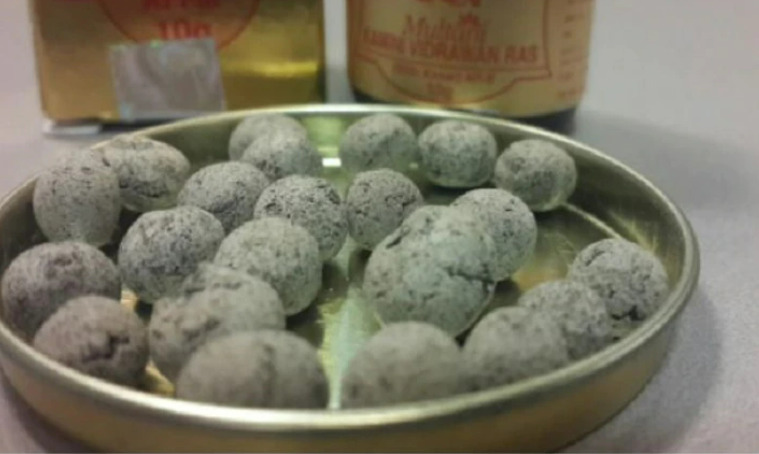
Kamini”, a herbal drug which contains highly addictive opioids, Papaver somniferum, is again in news. These bottles are produced in India and sold as “Indian viagra” to improve mens’ virility in India.

A bottle of Kamini contains 40 balls, each tablet varies in size and weight: between 0.2 and 0.4 containing up to five per cent opium. These bottles are covertly shipped across Australia’s borders to be distributed via Indian grocery stores.

People, mostly South Asian-origin taxi and truck drivers, are known to be using 30 each day which was the equivalent of taking a strong 60mg tablet of OxyContin. Experts believe that taking merely two tablets of this opioid ball can give the user a “hit”.

Suspicions were raised at the medi-hotel when the Uber Eats bag did not have any receipts or details attached. According to the SA Police when the bags were searched, small amounts of heroin and other drugs were found.

The court was told that Mr Sharma made the deliveries to strangers under the direction of an associate in Melbourne.

He will be sentenced in April.

NSW government to hire 400 interpreters in more than 50 different languages

0

New South Wales’ (NSW) pool of language professionals has grown substantially over the past four years.

The state government is going to fill 400 positions through the Multicultural NSW Interpreting Scholarship Program. 

Facilitated by a number of educational institutions, including TAFE NSW, University of NSW and RMIT, the program has enabled people speaking more than 50 different languages and dialects to join the NSW Government’s interpreting ranks. 

Minister for Multiculturalism Mark Coure said the Interpreting Scholarship Program empowers people to use their language skills as a career and help their communities access government information and services.

“We have seen through the latest Census data that more and more people are speaking a language other than English at home, including new and emerging languages that weren’t prominent in communities five, ten or even fifteen years ago.”

“We have worked with various universities and TAFE NSW so the program could evolve to train those who speak these languages and have them become qualified interpreters. By doing this, we have been able to bolster our interpreting ranks with a greater breadth of language capabilities and ensure we have the people available to support our state’s diverse communities,” Mr Coure adds.

AmharicFilipinoKurdish- KurmanjiThai
ArabicGreekMacedonianTibetan
Arabic/SudaneseHakha ChinMalayalamTigrinya
AssyrianHazaragiMongolianTongan
BurmeseHmongNepaliTurkish
ChaldeanHungarianPersianTwi
Chinese HakkaIgboPortugueseUkrainian
Chinese-Chiu ChowIndonesianSamoanUrdu
Cook Islands MaoriItalianSerbianUyghur
CreoleKannadaSomaliVietnamese
DariKarenSpanishZomi Chin
DinkaKhmerSwahili 
EweKinyarwandaTamil 
Fiji HindiKirundiTelugu 
FijianKrioTemne 
Languages Spoken by Scholarship Students

The program’s most recent graduates include TAFE and university-trained interpreters speaking Amharic, Dari, Hazaragi, Kannada, Karen, Mongolian, Swahili and Tamil.

NSW Federation of Community Language Schools president Lucia Johns said the program was further evidence of the value of multi-lingual study.

“Language is one of NSW’s greatest cultural, social and business assets. So it cannot be ignored and must be fostered and developed. By teaching children languages at community language schools throughout the state we are protecting and guaranteeing our future linguistic skills.”

“Children who learn a second language at community languages schools will have the option of developing a career in interpreting and translation which benefits all aspects of our society,” Mrs Johns adds.

Mr Coure added that the program had attracted a great mix of people of various ages across the state interested in using their language skills as a career, including from regional NSW. 

“More than 20 per cent of students participating in the program are from regional NSW, which shows our multicultural state isn’t in one city or suburb.

“We have also had many people from refugee backgrounds use their language skills to gain employment and support their community. This year alone, 30 per cent of scholarship participants were on refugee or special humanitarian visas.

“Everyone who completes the program and attains their certification can join our expert panel of language professionals.”

Through the 2022-23 NSW Budget, $16 million was secured over two years to improve the state’s whole-of-government language service. 

“The NSW Government understands that a strong and robust language service is key to a future without barriers for diverse communities, and ensure no one is restricted in accessing information or services because of the language they speak,” Mr Coure said. 

For more information about the Multicultural NSW Interpreting Scholarship Program, visit multicultural.nsw.gov.au.  

Who is perpetrating domestic, sexual and family violence?

0

By Michael Flood, Chay Brown, Kirsti Mills, and Lula Dembele

Some 1.6 million women (17%) and 548,000 men (6.1%) in Australia aged 15 or older have experienced physical or sexual violence from a current or previous cohabiting partner. This means significant proportions of the population in Australia have perpetrated domestic or sexual violence.

There are no national Australian data on people’s perpetration of domestic or sexual violence. While we have good data on violence victimisation, we know far less about violence perpetration.

The State of Knowledge Report on Violence Perpetration, released today, reviews the current data and research on who perpetrates domestic, family, and sexual violence, how, and why, in order to enhance national efforts to end this violence. Here’s what it found.

Data from victims and police

One of the consistent findings from victimisation data, legal system data, and survey self-reports is that most violence is perpetrated by men.

Among all people in Australia who have suffered violence, nearly all have experienced violence from a male perpetrator (95% of male victims and 94% of female victims). Around one-quarter of all victims have experienced violence from a female perpetrator (28% of male victims and 24% of female victims).

The vast majority of perpetrators of homicide in Australia – 87% – are male. Three-quarters (75%) of all victims of domestic violence reported the perpetrator as male and 25% reported the perpetrator as female. Among all victims of sexual violence aged 15 or older, six times as many people reported violence by a male perpetrator as by a female perpetrator.

As most victims do not formally report to authorities, police and legal data are limited sources of information on perpetration. Police data tend to capture only the most severe cases, legal definitions vary across Australia, and existing data are shaped by the over-policing of First Nations and ethnic minority communities.

Representative Image Domestic Violence; Image Source: @CANVA

Self-report data

Another stream of data comes from surveys in which people report on their own use of violent behaviours. A key issue here is that most self-reported data on domestic violence relies only on asking individuals if they or their partners have ever committed any violent acts from a specified list (slapping, kicking, punching, and so on).

Popular measures such as the Conflict Tactics Scale do not also ask about severity, frequency, impact (injury or fear), intent, whether the acts were in self-defence, or their history and context. They omit sexual violence, stalking, other violent acts, and violence after separation.

Much self-reported data on domestic violence do not measure the pattern of power and control exerted by an individual over their intimate partner or former partner, although many researchers and advocates see this as defining domestic violence.

Studies of domestic violence that use the Conflict Tactics Scales or other similar, acts-based measures tend to find males and females perpetrate aggression against intimate partners at similar rates, or in some instances that women report higher rates of perpetration than men.

Such studies also often find substantial proportions of people have used at least one type of aggression or abuse against a partner. For example, in a US study among university students, 18% of men and 34% of women reported perpetrating physical aggression towards their partners and 98% of both men and women reported perpetrating psychological aggression.

Apparent findings that men and women are using domestic violence at similar rates must be interpreted with caution, for four reasons.

First, most studies are just “counting the blows”, measuring any use of a set list of violent acts. They may lead to false positives or over-reporting, including of harmless and innocuous behaviours.

Second, there is evidence men are less likely than women to report their own use of violence.

Third, women’s violence is more often in self-defence than men’s.

And fourth, even where overall rates of the use of various violent acts are similar among males and females, males’ use of violence typically is more frequent, severe, fear-inducing, injurious, and harmful than females’ use of violence.

Gender contrasts in rates of perpetration are far stronger for sexual violence. Boys and young men have significantly higher rates of sexual violence perpetration than girls and young women, as documented in reviews of studies among teenagers and young people.

Significant numbers of males have perpetrated sexual violence. For example, close to one-third (29%) of men at universities in the USA and Canada reported having perpetrated sexual violence. In a multi-country self-report study in the Asia-Pacific, the proportions of men reporting they had perpetrated some form of rape against a woman or girl ranged from 10% to 62%.

Domestic violence and women of colour; Image source: @CANVA

Perpetrators in society

People’s use of violence often starts young. Substantial proportions of adolescents perpetrate dating violence against their intimate partners and ex-partners. US studies find the average age of first perpetration of sexual violence by males is 16.

Few perpetrators are held to account for their crimes. The vast majority of perpetrators of domestic and sexual violence do not ever come to the attention of police or legal systems.

Perpetration is driven by risk factors at the individual, relationship, and community levels. Prevention efforts must address childhood exposure to domestic and family violence, violent and sexist norms, peers’ condoning of violence, community disadvantage, and other factors.

We need to know far more about perpetrators and perpetration. We need national data on the extent and character of people’s use of domestic and sexual violence. We need well-designed methods that capture the character, breadth, severity, impact, and contexts of violence perpetration. We need research on female and LGBT perpetrators and on diverse forms of violence. We need to know more about the risk and protective factors that either feed into perpetration or protect against it.

Without this information, we do not know where best to target interventions against perpetration effectively, when to intervene early, and whether Australia’s efforts to reduce the use of violence are making progress.

Michael Flood, Professor of Sociology, Queensland University of Technology; Chay Brown, Research and Partnerships Manager, The Equality Institute, & Postdoctoral fellow, Australian National University; Kirsti Mills, Research Assistant, Queensland University of Technology, and Lula Dembele, Lived experience research assistant, The University of Melbourne

This article is republished from The Conversation under a Creative Commons license. Read the original article.

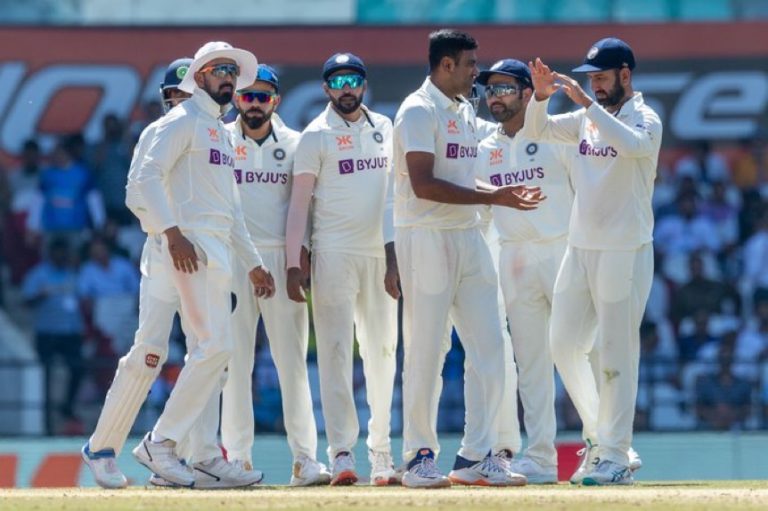
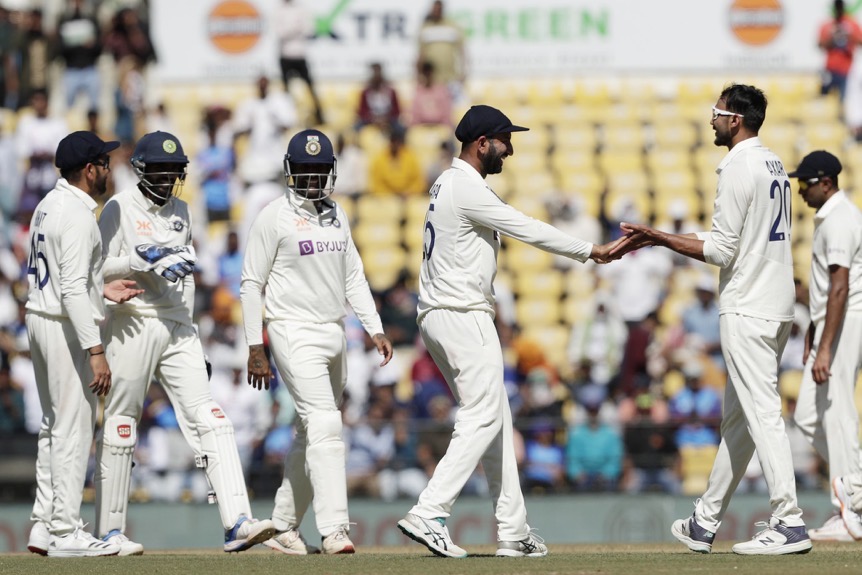
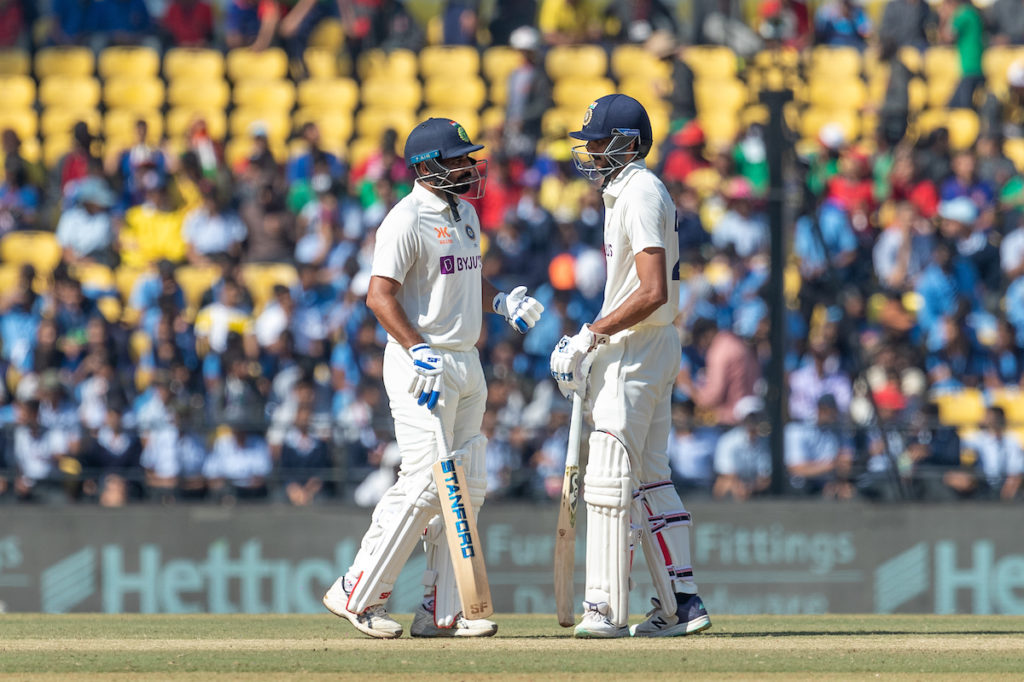
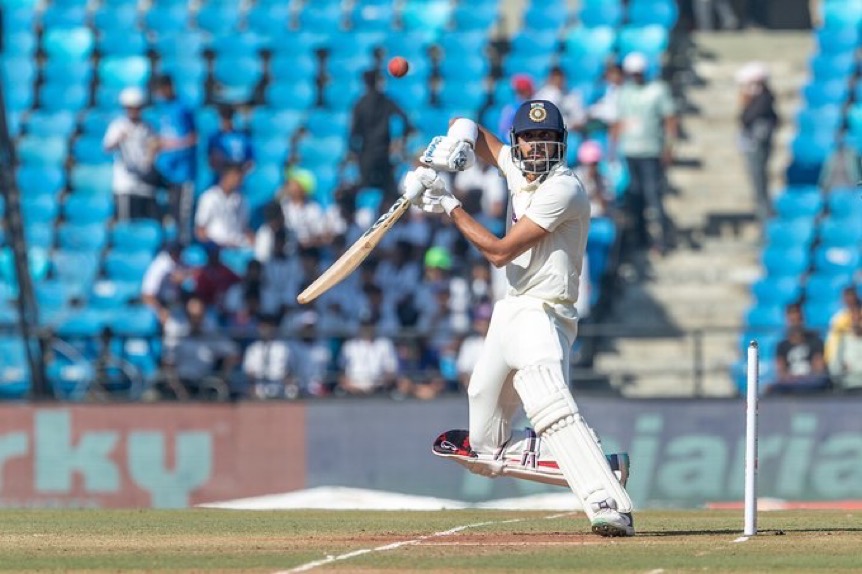
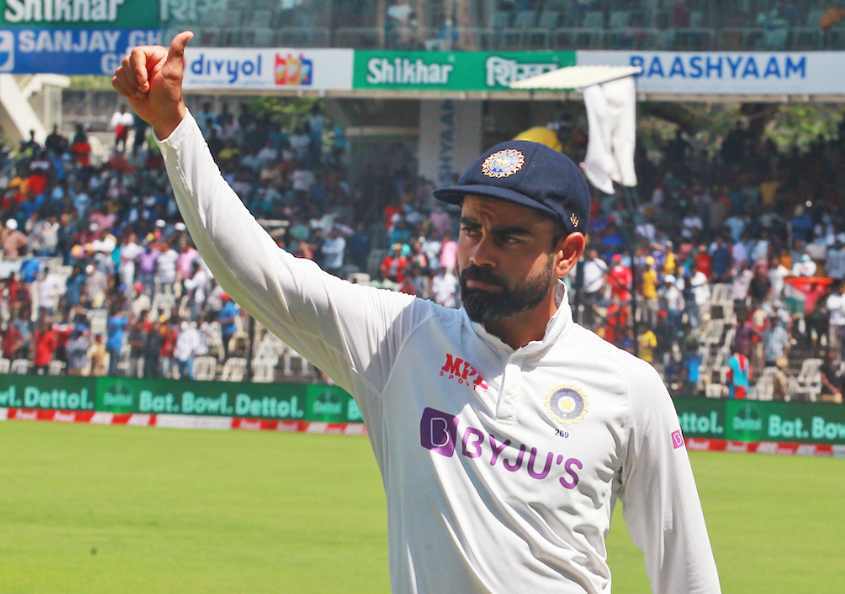
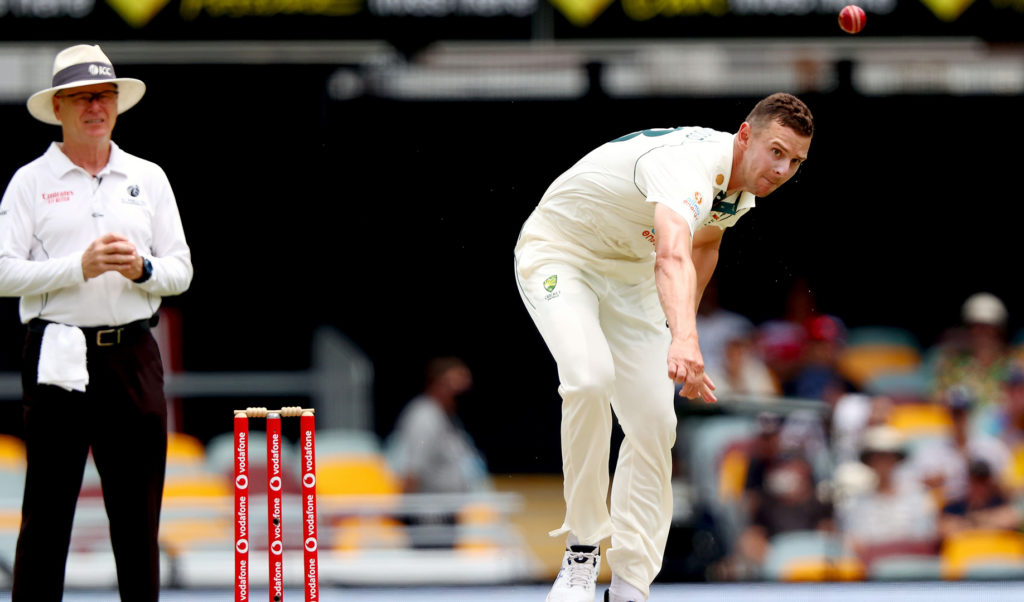
India defeats Australia courtesy Ashwin’s fiery fifer, all-round show by Jadeja-Axar

0

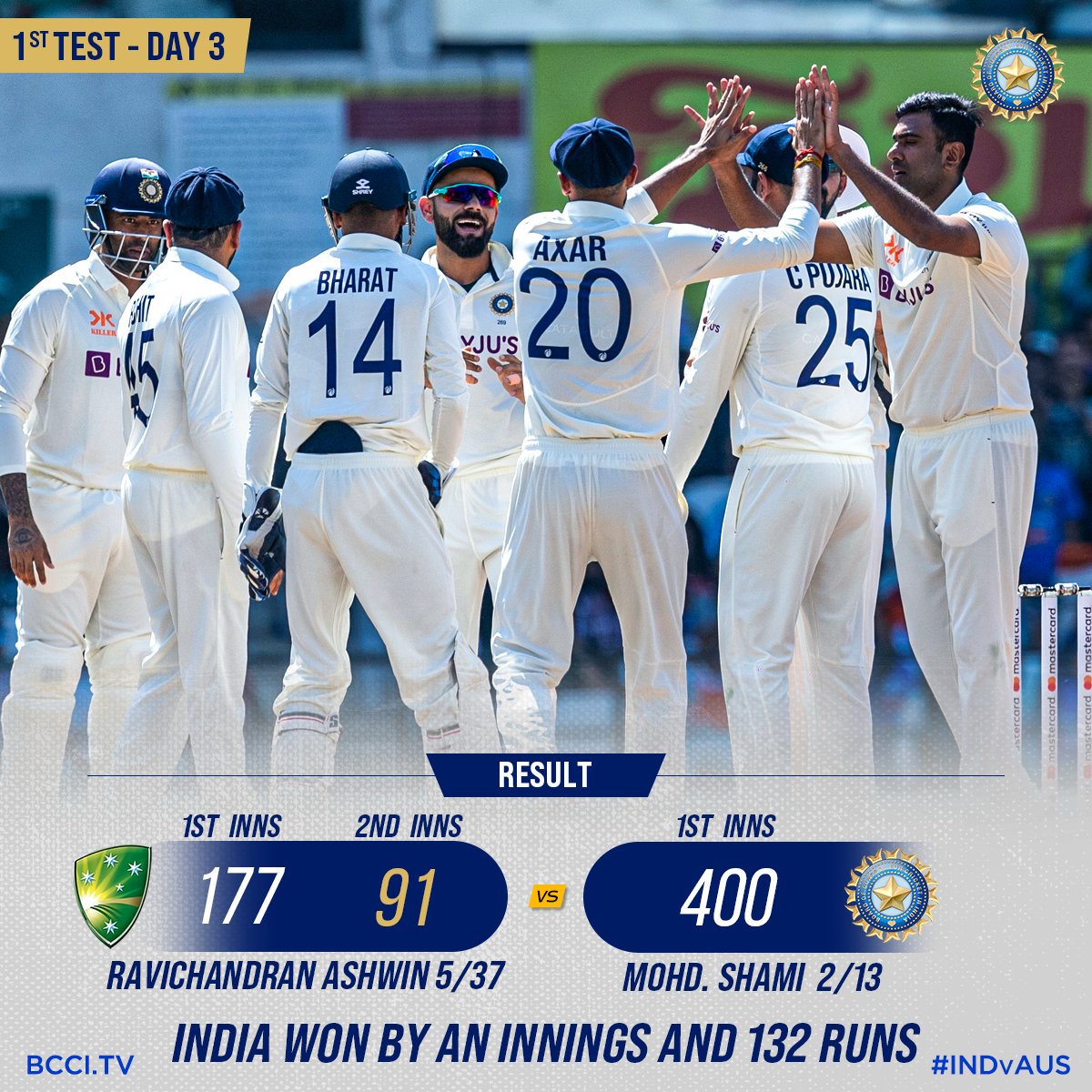
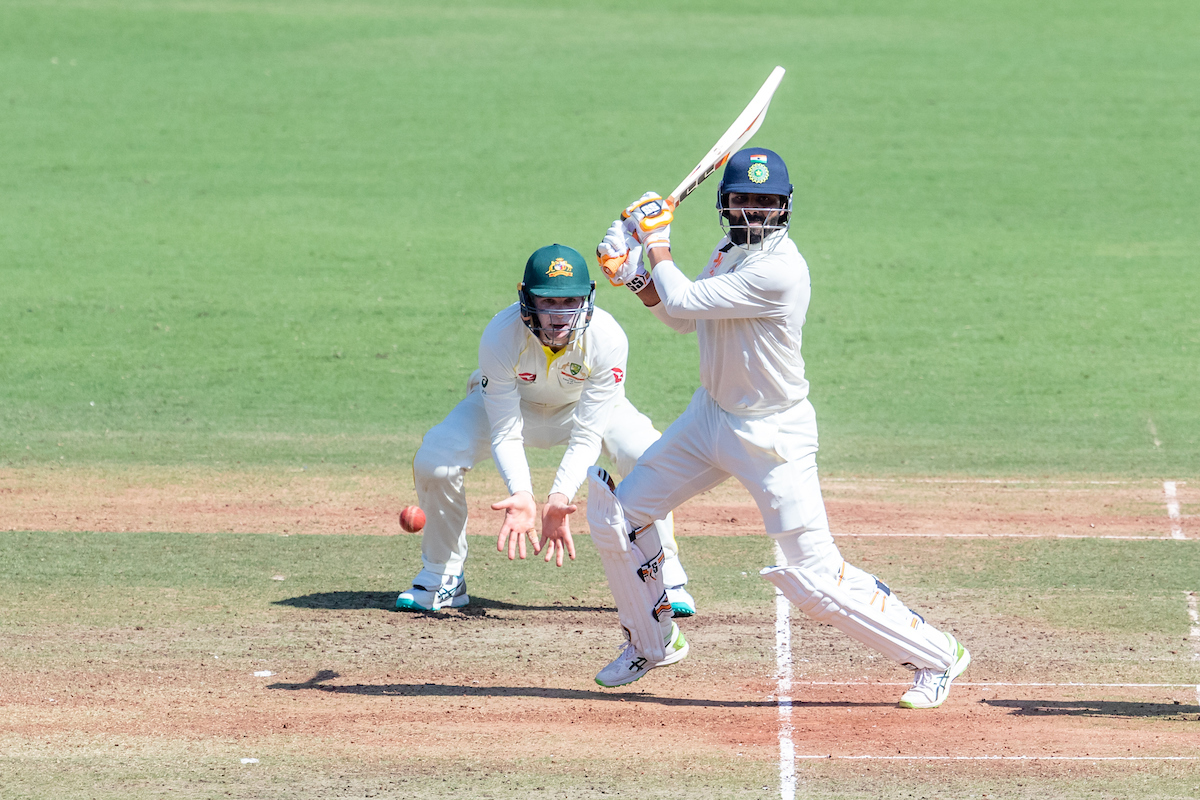
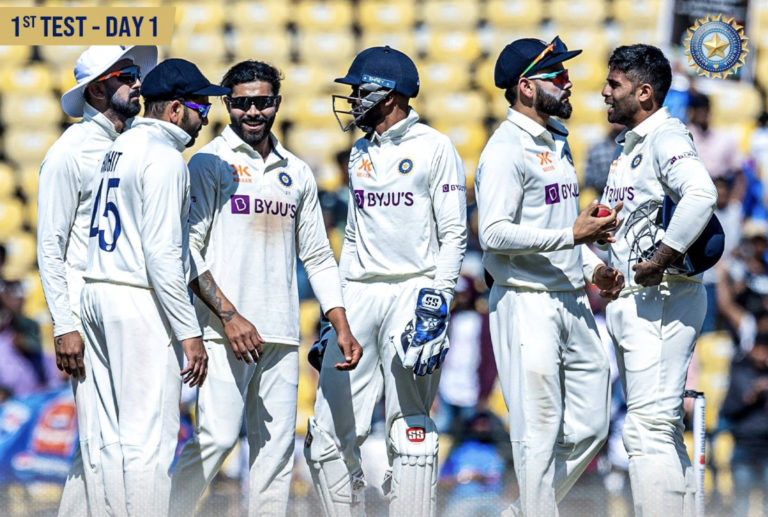
A fiery five-wicket haul by Ravichandran Ashwin combined with the all-round brilliance of Ravindra Jadeja and Axar Patel helped India clinch a massive win by innings and 132 runs within the first three days of the first Test of Border-Gavaskar Trophy against Australia at Nagpur after the visitors were bundled out for just 91 runs before the end of the second session on Saturday.

With this, India has a 1-0 lead in the four-match series. In the second innings, Australia was once again off to a tricky start in their bid to overcome a lead of 223 runs by India. Ravichandran Ashwin started Aussie’s downfall by dismissing Usman Khawaja for just five runs off nine balls.

Australia was 7/1.

Marnus Labuschagne was the next man on the crease and he continued his good form, slamming three great boundaries. However, Ravindra Jadeja’s golden arm did the trick again and he trapped the world’s number one Test batter lbw for 17 off 28 balls. Australia was 26/2.

India clinch massive innings win in first BGT Test against Australia; Image: BCCI Twitter

Ashwin was breathing fire with the ball. He went on to dismiss David Warner (10) and Matt Renshaw (2) in quick succession. Australia was slowly choking under the pressure built by spinners and sunk to 42/4, with a mountain of runs still left to climb.

A boundary by Smith helped Australia cross the 50-run mark in 16.2 overs.
Ashwin got his fourth wicket of the match and he sent back Handscomb in the fourth lbw dismissal of the inning. Australia was in a huge spot of bother at 52/5, trailing by 167 runs.

Despite trying, there was no stopping Ashwin. Australia’s downward spiral seemed endless and went one step further after Ashwin trapped Alex Carey for 10. Aussies were reduced to 64/6.


India clinch massive innings win in first BGT Test against Australia; Image: BCCI Twitter

Jadeja and Axar joined Ashwin and the trio was running riot on Aussies. Jadeja picked up Cummins (1) while Axar dismissed Todd Murphy (2). Australia was 75/8 and trailed by 148 runs and just two wickets away from an embarrassing third-day defeat.

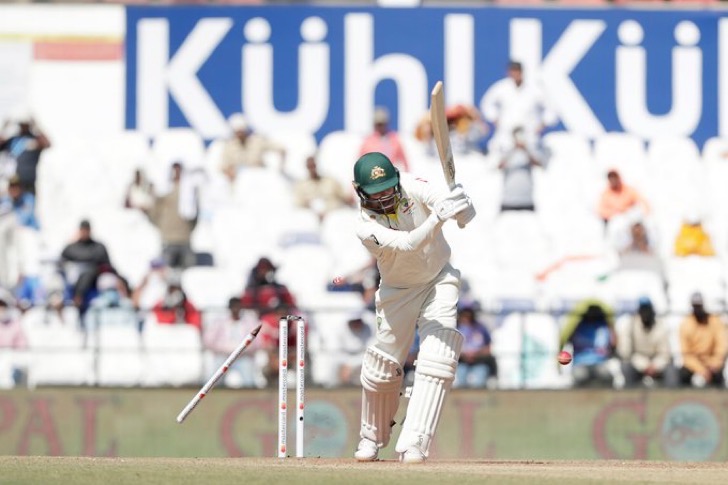
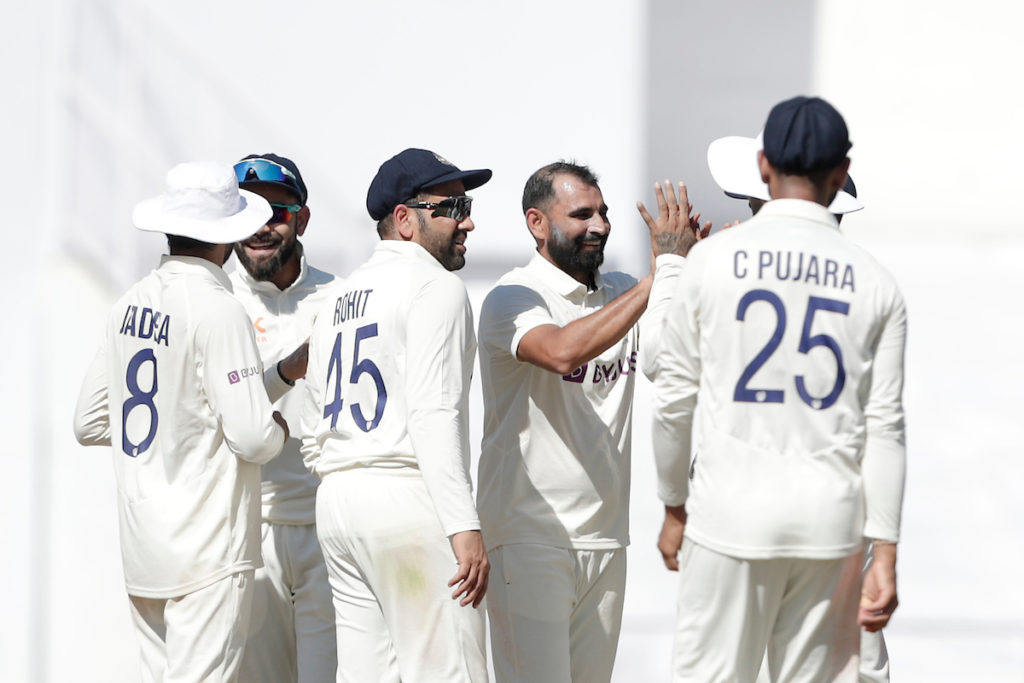
Pacer Mohammed Shami’s made pace bowling’s first entry in the wicket-taking charts for the inning. He dismantled Nathan Lyon’s stumps for 8 runs. Australia was left struggling at 88/9, trailing by 135 runs. The Aussies were just one wicket away from a loss.

Shami hit Australia with one final blow, dismissing Scott Boland for a duck. Australia was all out for just 91 runs in 32.3 overs. They lost the match by an inning and 132 runs. Smith was left stranded at 25 runs.

India clinch massive innings win in first BGT Test against Australia; Image: BCCI Twitter

Ashwin was the pick of the bowlers for hosts, taking 5/37 in 12 overs. Jadeja also took 2/34 while Shami got figures of 2/13. Axar also took a wicket for six runs in three overs.

A brilliant 84-run knock by all-rounder Axar Patel and an entertaining cameo by Mohammed Shami put India in a commanding position, with a lead of 223 runs at lunch on the day three of the first Test against Australia at Nagpur on Saturday.

India started the day at 321/7, with Ravindra Jadeja (66*) and Axar Patel (52*) at the crease.
The hosts had added barely seven runs to their previous day’s total when debutant Todd Murphy struck gold for Aussies, rattling Jadeja’s off stump. The all-rounder was gone for a well-made 70 off 185 balls. India was 328/8.

Mohammed Shami was next up at the crease.
Shami put a price on his wicket and played some fine strokes, including a four and a six. Axar continued to guard his wicket as well. India crossed the 350-run mark in the 128th over of their innings.

India clinch massive innings win in first BGT Test against Australia; Image: BCCI Twitter

The duo took India’s lead beyond 180 runs.
Shami continued entertaining fans, smashing Murphy for two sixes in the 131st over, which also brought up the fifty-run stand for the ninth wicket. However, the debutant had the last laugh in his next over as he dismissed him for a well-made 37 off 47 balls with two fours and three six. With this, Murphy bagged his seventh wicket in the inning.

India was 380/9 in 132.4 overs and led by 203 runs.

Mohammed Siraj was the last man to arrive at the crease for India.
Cummins dismissed Axar Patel for a well-made 84 off 174 balls, consisting of 10 fours and a six. India was out for 400 runs and had a lead of 223 runs heading into lunch.

Murphy had a dream spell on his debut, taking 7 wickets for 124 runs in 47 overs. Cummins got two for 78 runs in 20.3 overs. Spinner Nathan Lyon could only get one scalp for 126 runs in 49 overs.
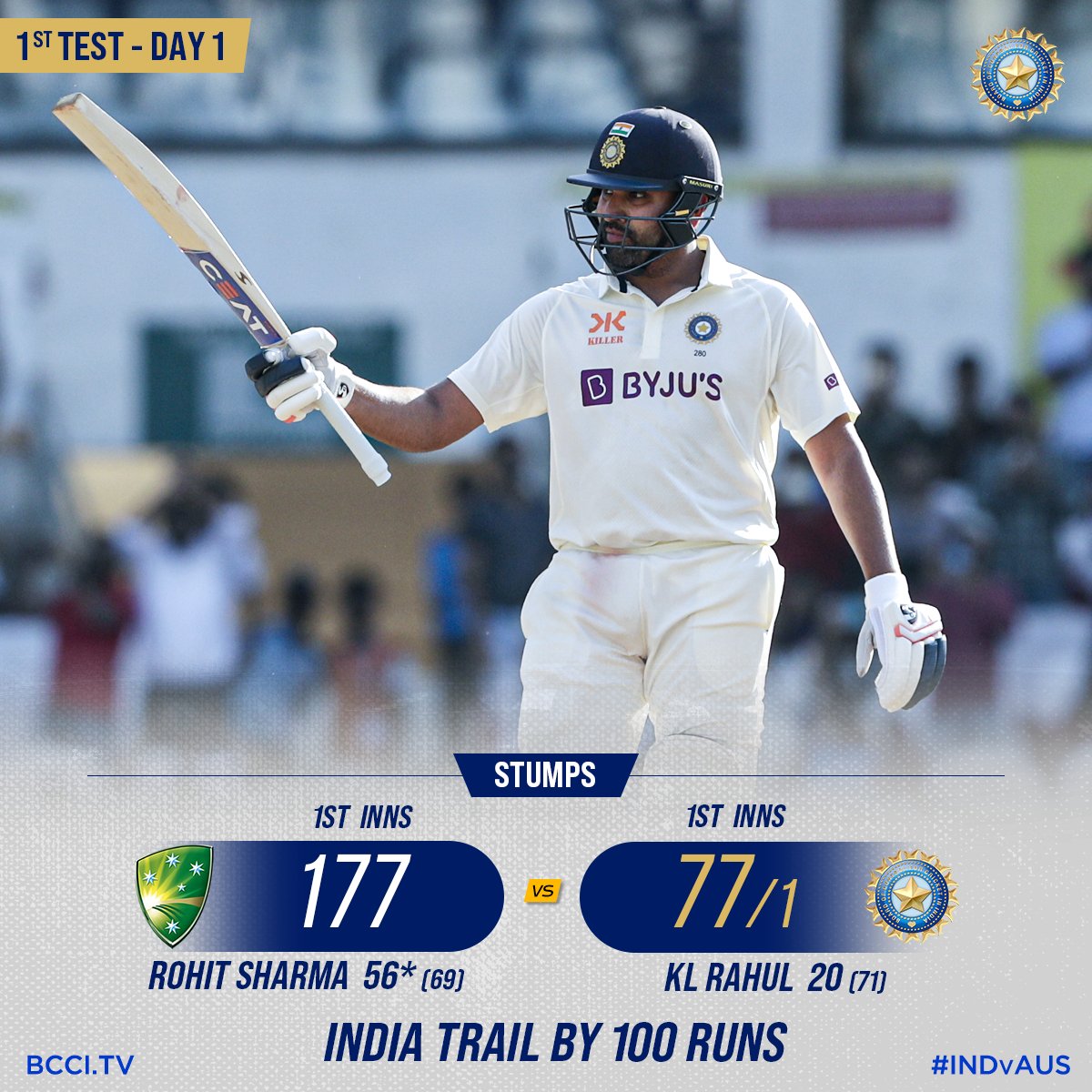
Earlier electing to bat first, Australia was bundled out for 177 runs in their first innings. Aussies were no match for Indian spinners as Labuschagne (49), Smith (37), Carey (36) and Handscomb (31) were the only ones who could score something decent and resist the Indian spin web. Jadeja took a five-wicket haul, ending with figures of 5/47. Ashwin got three scalps while Siraj and Shami took one wicket each.

India clinch massive innings win in first BGT Test against Australia; Image: BCCI Twitter

India came out to bat and top-order, except skipper Rohit Sharma failed again. KL (20) continued his frustrating show with the bat and was dismissed by debutant Murphy. Nightwatchman Ashwin scored a handy knock of 23. Pujara fell for just seven while attempting a sweep. Virat also continued his worrisome string of low scores in Tests, falling victim to spin once again. Murphy got the crucial wicket of Virat.

Debutants Suryakumar Yadav (8) and KS Bharat (8) could not touch double digits.
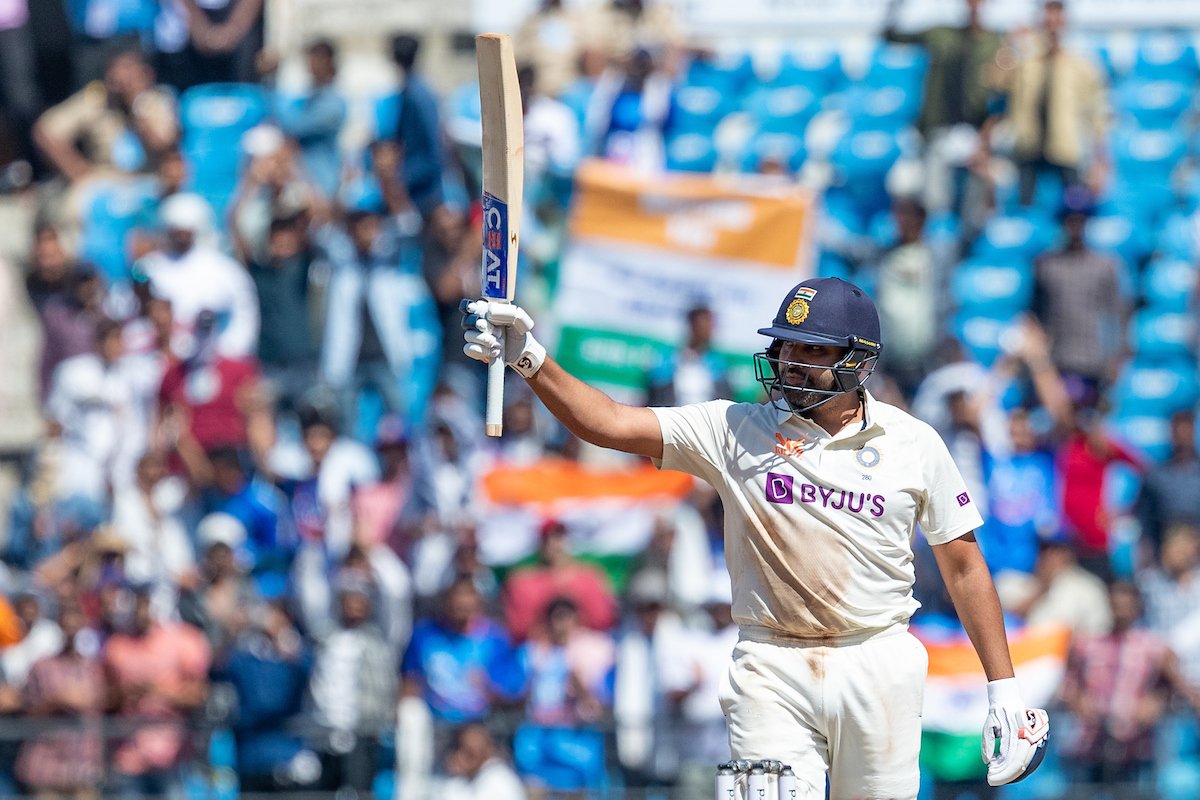
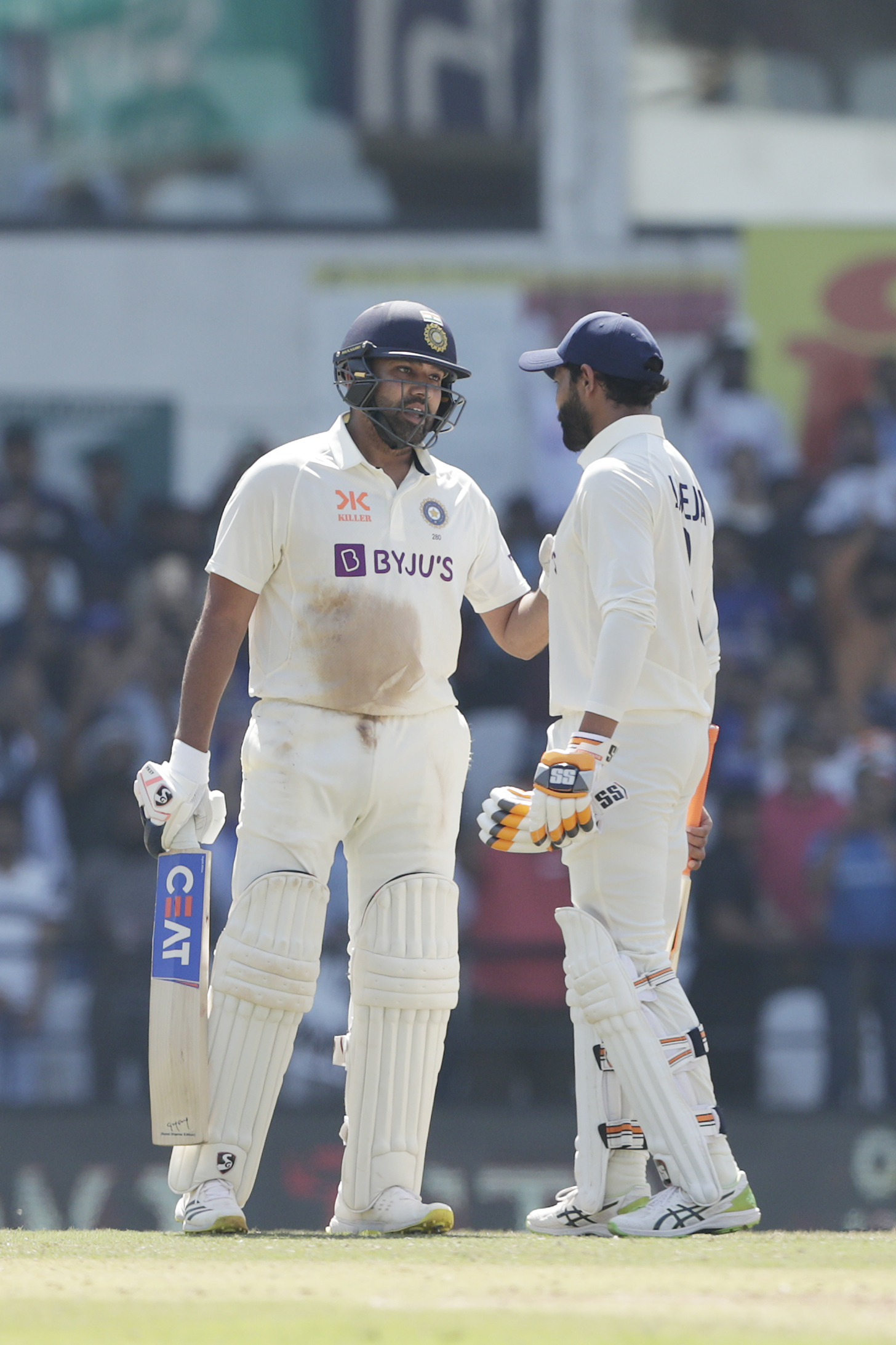
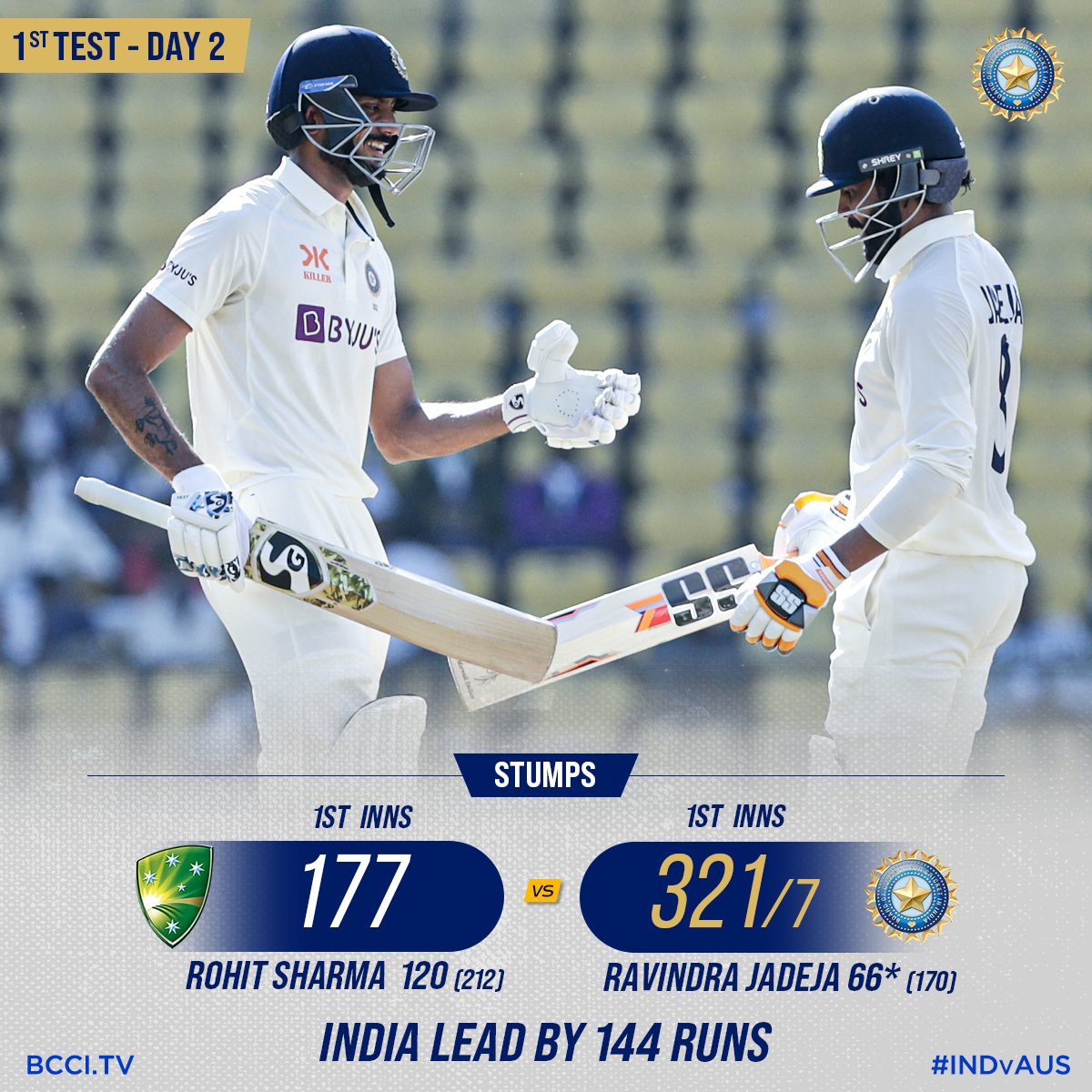
Rohit however, kept the other end steady and scored 120 off 212 balls with 15 fours and two sixes. On a tough surface that was nightmarish for the batters, the Indian skipper put on a batting masterclass. India was reduced to 240/7 after Rohit and Bharat’s dismissals.

Jadeja and Axar then took the baton and guided India to a dominant position at the end of day two, ending at 321/7 on the second day. It gave India a 144-run lead. They kept Australia toiling hard for a wicket, made them chase the cherry all over the park and reached their respective fifties.

Ravindra Jadeja fined 25 pc of the match fee for breaching ICC Code of Conduct

Jadeja was found to have breached Article 2.20 of the ICC Code of Conduct for Players and Player Support Personnel, which relates to displaying conduct that is contrary to the spirit of the game. In addition to this, one demerit point has been added to Jadeja’s disciplinary record. This was his first offence in a 24-month period.

The incident occurred during the 46th over of Australia’s first innings on Thursday, 9 February, when Jadeja was seen applying a soothing cream to his index finger. In the video footage, the left-arm spinner took a substance from Mohammed Siraj’s palm and appeared to rub this onto the index finger of his left hand.

Image

The India team management had explained that the finger spinner was applying the cream to a swelling on the index finger of his bowling hand. This was done without asking for permission from the on-field umpires.

Jadeja admitted the offence and accepted the sanction proposed by Andy Pycroft of the Emirates ICC Elite Panel of Match Referees, so there was no need for a formal hearing.

In reaching his decision to sanction the player along with the Level 1 sanction he imposed, the Match Referee was satisfied that the cream was applied to the finger purely for medical purposes. The cream was not applied as an artificial substance to the ball and consequently, it did not change the condition of the ball, which would have been in breach of clause 41.3 of the ICC playing conditions – Unfair Play – The Match Ball – Changing its Condition.

Image

Brief Scores: India: 400 in 139.3 overs (Rohit Sharma 120, Axar Patel 84*, Todd Murphy 7/124) defeated Australia: 177 and 91 (Steve Smith 25, Marnus Labuschagne 17, Ravichandran Ashwin 5/37) by an inning and 132 runs.

Western Australian man charged for ‘marrying’ third time while allegedly having undisclosed two wives

0

The AFP has charged a West Australian resident with bigamy and making false declarations over allegations he already had a wife when he married a second woman.

The man, 48, faced Perth Magistrates Court (10 February, 2023) charged over allegations he was separated but not divorced from his first wife when he married a second woman in July 2020.

He has also been charged for allegedly making false declarations on legal documents for that second marriage and on application forms for a third marriage, which took place in late 2022.

The man allegedly declared on his application for a marriage certificate in both matters that he had ‘never validly married’ and signed a formal ‘declaration of no legal impediment to marriage’.

The AFP began investigating the bigamy allegations in late 2022 after the man’s first wife, who is based in the eastern states, contacted the second wife via social media and exposed his alleged duplicity.

Police will allege the man married his second wife in WA in July 2020 but had not told her of his previous marriage, declaring on a marriage application form that he had never been validly married. 

He allegedly did not finalise his divorce from his first wife until more than one year later in September 2021.

The man allegedly separated from his second wife in September 2022 and married a third woman in November (2022).

Investigations have found the second marriage was not considered valid in Australia because the man was allegedly still legally married to his first wife.

As he had divorced his first wife before his third wedding and the second marriage was invalid, there are no allegations of bigamy in relation to the third marriage.

However the man allegedly submitted an application for a marriage certificate to the Department of Justice’s Births, Deaths and Marriages ahead of his third marriage, describing his conjugal status as ‘never validly married’ including signing a formal ‘declaration of no legal impediment to marriage’. 

AFP Leading Senior Constable Kevin Loermans said allegations of deception and bigamy were serious matters. He said:

“This type of deception and offending has long-lasting and negative real life impacts on the victims and families involved and the AFP will ensure allegations like this are investigated fully.”

The man, from South Guildford, was arrested yesterday (9 February, 2023) and refused bail to face court charged with:

  • One count of bigamy, contrary to section 94(1) of the Marriage Act 1961 (Cth). The maximum penalty for this offence is five years’ imprisonment.
  • ​​ Two counts of giving a defective notice, contrary to section 104 of the Marriage Act 1961 (Cth).  The maximum penalty for this offence is six months’ imprisonment.

Back-to-school blues are normal, so how can you tell if it’s something more serious?

0

By Vanessa Cobham

Many children come down with a case of the back-to-school blues as summer slips away. Having spent the holidays staying up late and having fun with friends and family, it can be a struggle to get back into a routine.

For some children, going back to school can also be daunting if they are worried about keeping up with schoolwork, friendship problems or how they might go with a new teacher and class. Nerves about returning to school can manifest in a number of ways, from irritability to tears at the school gates.

How can you cope with this routine challenge? And how do you tell if is it something more serious?

How to tackle black-to-school blues

There are a few ways you can support your child and the family as you all head back the daily routine of school.

Plan ahead together

There are lots of ways you can gently work in a new routine – from encouraging kids to pack their bag the night before, to thinking of lunchbox ideas together.

Giving your child choices and the chance to be part of the decision-making process around routines will give them a sense of ownership and independence. For example, you could negotiate bedtime for the school term.

There are other fun, simple ways you can support them through this time. For example, you could could create a music playlist for the school run, set aside a regular time after school to do something you both enjoy (like a play at the park, seeing friends or buying an ice-cream) or set up a reward system for getting homework done on time.

Chat about school

Check in regularly with your child about how they are feeling, particularly in the early weeks.

Try to do this in a way that shows that you’re interested rather than concerned. For example, keep the questions open-ended: “what happened in your day?”. And keep a positive focus: “what was the best bit of your day?”

Look after yourself

With a hundred different things to think about, many parents and carers often forget about their own needs. But it is crucial to give yourself time to recharge, and reach out for support from friends, family or a health professional if needed.

If you are calm and positive, your kids will find it easier to remain calm and positive, too.

When is it more than the blues?

Nervousness about returning to school is normal. But some children will experience a level of anxiety about going to school that causes them significant problems.

Because everybody feels worried or anxious from time to time, it can be really tough to know how to distinguish between “normal” nervousness and problematic (or clinically significant) anxiety.

There are two key ideas to keep in mind: are the feelings causing high and persistent levels of distress? Are they stopping your child from doing what they want or should be able to do?

What should I look for?

When it comes to school-related anxiety, here are some specific signs to look for:

  • frequently feeling physically sick (such as a tummy or headache) and unable to go to school. Anxiety causes real physical changes in our bodies, so when kids say they’re feeling sick, they’re telling the truth. It’s just they might be describing “worry sick” as opposed to “doctor sick”
  • becoming teary, angry or aggressive when thinking or talking about school
  • being uncharacteristically slow to get moving on school mornings
  • avoiding activities that relate to school, such as joining a sporting team, putting on their uniform or going on a play date.

Is this school refusal?

School refusal or avoidance (when a child regularly fails to attend class for some or all of the day) has anecdotally been on the increase since COVID. The Senate is currently conducting an inquiry into the issue, with a report due in March.

If you’re starting to think your child’s anxiety may be falling into the problematic zone, you are not the only one. Anxiety is the second most common mental health problem experienced by all children in Australia (among girls, it takes first place).

Without treatment, children with clinically significant anxiety don’t tend to “just grow out of it”. Anxiety (often together with ADHD), tends to be the cause of school reluctance or refusal.

Next steps

If you notice your child is struggling to get to school, it’s important to act quickly. The more time kids miss in school, the harder it becomes for them to return.

The first thing to do is work with school staff. Your child’s classroom teacher will be able to tell you if they or someone else in the school is the best person to be talking to.

If necessary, seek further support from a health professional. You can start with your GP, who may suggest a referral to a psychologist. There are also free, evidence-based programs been developed by clinical psychologists for parents of children who are experiencing anxiety.

Although it can be daunting, it is important to know you are not alone and there are interventions that can help.


If this article has raised issues for you or someone you know, you can call Lifeline on 13 11 14 or Kids Helpline on 1800 55 1800.

Vanessa Cobham, Professor of Clinical Psychology, The University of Queensland

This article is republished from The Conversation under a Creative Commons license. Read the original article.

Who is afraid of questions? Democracy and literature as unfinished exercise

0

By Dr Om Prakash Dwivedi

What happens when democracy is wedded to a select few? And, what happens when literature becomes a cultural gatekeeping exercise?

At a time, when democratic ethos is eroding and literature is controlled by marketing rules, it is time we renew our relationship with these two highly vital catalysts for life. One might oppose the idea of establishing a relationship between democracy and literature, but it is useful to think of them together since the literariness of a country is also a reflection of the healthy pulse rate of any democracy.

Both democracy and literature require a commitment to freedom, responsibility, and inclusivity. Whereas democracy provides citizens an opportunity to select their leaders with an aim to strengthen the social infrastructures, literature is a platform to engage with the world-making exercise in an unprejudiced and secular manner. Both in democracy and literature, we are accountable to each other, to society, and to the world.

This accountability, therefore, demands interpretative skills, empathy, and collective well-being. Unfortunately, the constant supply of populist narratives and our imaginative failure has brought us to a situation where thinking, engaging with others, and concern for social assets are being drawn away from us.

A good reader is expected to engage with the text carefully, in an unconditioned way; he reads between the gaps and silences, digs out the hidden meanings, and is inclined to live with the unliveable, recognizing himself in the sufferings of others, and formulating ways of emancipation.

Listening, seeing, and performing social responsibility are basic tenets of literature and democracy. However, these are exactly what democracy stoked by neoliberal ideologies dislike. It is afraid of dissent, of questions, of the common good, and of responsibility.

In literature, readers are in conversation with the text, the author, and the world, and the same is expected of our leaders in a democratic set up, engaging with citizens and listening to their woes. A text’s wrong interpretation or its bad review can often lead to the death of the author, as is the case in a democracy, where non-interpretative citizens can blur and obfuscate the democratic ethos.

As citizens, we seem to have forgotten that no democratic life is feasible without indulging in interpretation, careful reading, and interpretation. Yet, it is exactly what one witness in the present moment. Pitted against the rampant rise of social media platforms, and our inability to think, democracy and literature are losing their meanings lest we slow down and engage with the rhetorics of our leaders analytically.

A case can be made that ours is a time that suffers from symptoms of jargon and narcissism. No wonder then, that literature is always in need of good readers, and democracy of thinking citizens. As Pramod K. Nayar argues,

“if democracy is built on the negotiations of difference and plurality in order to plot a common narrative for the nation, then Literature is the domain in which both difference and plurality find their strongest articulation.”

Any democracy that evades questions can be compared to medical doctors who do not know how to check the pulse of their patients, thus proving suicidal to patients and society. For, both the doctors and leaders have a greater responsibility to save lives, protect them, heal them, and nourish them. Apparently, we seem to be living in times where such leaders can be abundantly found, even celebrated and eulogized by many colour-blinded citizens Nations cannot be so weak as to ignore other colours and voices. The idea of any nation is also an idea of the celebration of differences and pluralities.

To counter the present situation, literature and democracy must always provide contingencies to engineer our collective freedom and the subsequent cultures of rights and responsibilities. Literature needs to be freed from the clutches of market rules and maintain its democratic outlook to envision a better future. It must continue asking questions to our leaders, to elites, to marketing gimmicks, exposing their self-accumulative interests and narrow-mindedness. Neither literature nor democracy can maintain its health and purpose in the absence of questions. After all, questions are seeds of life, creativity, empowerment, and building blocks of societies as well as democracy.

That said, democracy loses its meaning if it mutes its citizens, denying their voices as well as existence. Democracies must stop putting Socratic figures and enquiries to death if they wish to escape the same fate. It is another matter that most of our leaders have shown a perennial fear of questions.

Contributing Author: Dr Om Prakash Dwivedi is Head, School of Liberal Arts, Bennett University, India. He tweets @opdwivedi82

Disclaimer: The author is solely responsible for the views expressed in this article. The opinions and facts are presented solely by him, and neither The Australia Today News nor its partners assume any responsibility for them.

Which seat on a plane is the safest?

0

By Doug Drury

When booking a flight, do you ever think about which seat will protect you the most in an emergency? Probably not.

Most people book seats for comfort, such as legroom, or convenience, such as easy access to toilets. Frequent flyers (this author included) might book their seat as close as possible to the front so they can disembark more quickly.

We rarely book a flight with hopes of getting one of the middle seats in the last row. Well, guess what? These seats are statistically the safest ones on an airplane.

Air travel is safe

Before we get into it, I should reiterate that air travel is the safest mode of transport. In 2019, there were just under 70 million flights globally, with only 287 fatalities.

According to the US National Safety Council’s analysis of census data, the odds of dying in a plane are about 1 in 205,552, compared with 1 in 102 in a car. Even so, we pay little attention to fatal road accidents, but when we hear about an ATR72 crashing in Nepal it’s the lead story on every news page.

Our interest in plane crashes might lie in wanting to understand why they happen, or what the odds are of them happening again. And perhaps it’s not a bad thing; our concern ensures these tragic incidents are thoroughly investigated, which helps keep air travel safe.

Frankly speaking, there is no real need to worry about safety when you board a commercial flight. But if you’ve still got that nagging question in your head, driven by sheer curiosity, read on.

In the middle, at the back

It’s worth remembering accidents by their very nature do not conform to standards. In the 1989 United Flight 232 crash in Sioux City, Iowa, 184 of the 269 people onboard survived the accident. Most of the survivors were sitting behind first class, towards the front of the plane.

Nonetheless, a TIME investigation that looked at 35 years of aircraft accident data found the middle rear seats of an aircraft had the lowest fatality rate: 28%, compared with 44% for the middle aisle seats.

This logically makes sense too. Sitting next to an exit row will always provide you with the fastest exit in the case of an emergency, granted there’s no fire on that side. But the wings of a plane store fuel, so this disqualifies the middle exit rows as the safest row option.

At the same time, being closer to the front means you’ll be impacted before those in the back, which leaves us with the last exit row. As for why the middle seats are safer than the window or aisle seats, that is, as you might expect, because of the buffer provided by having people on either side.

Some emergencies are worse than others

The type of emergency will also dictate survivability. Running into a mountain will decrease chances of survival exponentially, as was the case in a tragic 1979 disaster in New Zealand. Air New Zealand Flight TE901 crashed into the slopes of Mt Erebus in Antarctica, killing 257 passengers and crew.

Landing in the ocean nose-first also decreases chances of survival, as witnessed with the 2009 Air France Flight 447, in which 228 passengers and crew perished.

Pilots are trained to minimise potential risk in an emergency event as best as they can. They will try to avoid hitting mountains and look for a level place, such as an open field, to land as normally as possible. The technique for landing in water requires assessing the surface conditions and attempting to land between waves at a normal landing angle.

Aircraft are designed to be very robust in emergency situations. In fact, the main reason the cabin crew remind us to keep our seat belts fastened is not because of crash risk, but because of “clear air turbulence” that can be experienced at any time at high altitudes. It is this weather phenomenon that can cause the most damage to passengers and aircraft.

Manufacturers are designing new planes with more composite materials capable of handing in-flight stress. In these designs, the wings are not rigid and can flex to absorb extreme loading to prevent structural failure.

Does the type of plane make a difference?

Granted, there are certain variables, such as impact from airspeed, that can vary slightly between different airplane types. However, the physics of flight is more or less the same in all planes.

Generally, larger planes will have more structural material and therefore more strength to withstand pressurisation at altitude. This means they may provide some additional protection in an emergency – but this, again, is highly dependent on the severity of the emergency.

That’s not to say you should book your next flight on the largest plane you can find. As I’ve mentioned, air travel remains very safe. So I’d suggest thinking about what movie you’ll watch instead, and hoping they don’t run out of chicken and only have the shrimp left!

Doug Drury, Professor/Head of Aviation, CQUniversity Australia

This article is republished from The Conversation under a Creative Commons license. Read the original article.

Rohit, Jadeja, Axar put India in driving seat against Australia in first Test

0

Rohit Sharma’s ton and unbeaten half-centuries from Ravindra Jadeja and Axar Patel helped India notch up 321 runs at the loss of seven wickets at stumps on the second day of the first Test against Australia in Border-Gavaskar Trophy at Vidarbha Cricket Association Stadium here on Friday.

Resuming post Tea session at 226/5 India lost the prized wicket of captain Rohit Sharma as he was cleaned up by Aussie captain Pat Cummins for 120. India lost their sixth wicket with 229 runs on the board. Debutant KS Bharat joined Ravindra Jadeja at the crease but he was dismissed by another debutant Todd Murphy for eight and the hosts lost their seventh wicket for 240 runs. Debutant Murphy notched up his five-wicket haul.

Axar Patel then joined Jadeja at the crease and the duo took the team’s total beyond 250-run mark. Comeback man Jadeja also notched up his half-century.

The Jadeja-Patel pair helped India extend their lead beyond the 100-run mark as India took their score to 277. The duo also took their partnership beyond the 50-run mark.

India got to 300-run mark adding more pressure on Australia. Axar went on to score a half-century and India ended the day with 321 runs for 7 wickets taking a 144 run lead.

Earlier in the day, in the 32nd over of the innings, Rohit slammed Australia skipper Pat Cummins for a six on the last delivery taking India’s total beyond the 100-run mark.
Scott Boland started building the pressure from his end as he conceded no run in the 38th over of the innings.

Image

Todd Murphy then gave India a big blow as he dismissed Ashwin for 23 of 62 deliveries. The right-handed batter Cheteshwar Pujara came out to bat and slammed Murphy for an excellent four.
Rohit started the 43rd over of the innings with a beautiful six through midwicket on Murphy’s delivery. Murphy continued his brilliant form as he gave another blow to India, removing Pujara for 7 in the 45th over of the game. At this point India trailed by 42 runs.

Virat Kohli came out to bat at the crease. At lunch, the duo of Virat and Rohit took the team’s total to 151 with a three-wicket loss.

At the time of Tea, India’s score read 226/5 in 80 overs with Rohit Sharma leading Team India from the front with a magnificent century while Ravindra Jadeja (34) was unbeaten at the crease.
Resuming the post-lunch session at a score of 151/3, India got off to a bad start. Todd Murphy hit the deck hard and provided his team with a massive breakthrough on the first ball after the lunch break as he removed Virat Kohli for 12. Debutant Murphy bagged his fourth wicket.

Image

The right-handed batter and debutant Suryakumar Yadav then came out to bat at the crease. Suryakumar brought out the sweep shot against Murphy to send the ball to the backward square leg region for a four. Rohit Sharma kept holding one end tight and scored boundaries regularly.
Nathan Lyon then joined the wicket-taking party as he bowled a stunner to dismiss debutant

Suryakumar for 8 runs, leaving India in a vulnerable position of 168/5 in the 60th over of the game. With this wicket, Lyon brought Australia back into the game.

India’s star all-rounder Ravindra Jadeja then walked out to bat. With a solid four over the in-field, Rohit brought up his much-needed century in testing conditions in 171 deliveries. This was the 9th Test hundred for the India skipper.

Image

The duo of Jadeja and Rohit slammed Australian bowlers all around the ground while bagging singles at regular intervals to keep India in command. The star all-rounder and India skipper stitched up the much-needed partnership of 55 off 107 deliveries in the 77th over of the game.

India’s lead started to grow gradually as Rohit and Jadeja guided India to 49 runs lead over the visitors at the time of tea.

Image

Brief Scores: Australia: 177/10 (Marnus Labuschagne 49, Steve Smith 37; Ravindra Jadeja 5-47) vs India 321/7 (Rohit Sharma 120, Ravindra Jadeja 66*, Axar Patel 52*; Todd Murphy 5-82).

With change in government, deported Vice-chancellor Prof. Pal Ahluwalia returns to Fiji

0

By GERALDINE PANAPASA

The University of the South Pacific’s vice-chancellor and president, Professor Pal Ahluwalia, received a warm welcome at the Nadi International Airport this morning, returning to Fiji two years after he and wife Sandra Price were detained and deported by the previous government for allegedly breaching certain provisions of the Immigration Act.

“We have arrived in Nadi. What a fabulous reception. USP staff, students and so many well wishers to meet us fills out hearts with joy. Beautiful singing and prayer. Thank you Fiji,” he wrote on Twitter, as the couple were received by USP deputy vice-chancellors and vice-presidents, Professor Jito Vanualailai and Dr Giulio Paunga.

USP Council Secretariat representative, Totivi Bokini-Ratu, Lautoka Campus director Pramila Devi, and representatives from the USP Students Association, USP Staff Association and Association of the USP Staff were also at the airport to greet Prof Ahluwalia.

“I’m so humbled to see everyone. It is an absolute joy to be back and an opportunity for us to continue serving USP,” he said in a statement.

“The support from staff, students and regional governments has just been incredible.

“It was so beautiful to see how much our staff fought. The fight wasn’t just for me; it was for a bigger cause and I’m just a catalyst for the bigger change they wanted to see.”

USP Vice-Chancellor and President Professor Pal Ahluwalia is greeted by USP staff and student representatives at the Nadi International Airport this morning. Picture: SUPPLIED/USP MARKETING AND COMMUNICATIONS

Prof Ahluwalia said the next step was to work with his senior management team to ensure they got the best out of their students and the region.

He is expected to visit the USP Pacific TAFE Centre in Namaka and Lautoka Campus today with other events and meetings scheduled for the coming week including the launch of the Alumni Relationship Management Service, and the welcoming of international students.

Prof Ahluwalia and his wife’s controversial exile from Fiji followed months of increased tensions between USP and the previous government over allegations of financial mismanagement and corruption.

With the new Coalition Government in power after ousting the FijiFirst administration in the 2022 General Election, Prime Minister Sitiveni Rabuka has vowed to right the wrongs of the past administration, indicating in December last year that Prof Ahluwalia and Dr Padma Lal, widow of another exiled academic, the late Professor Brij Lal, were free to enter the country.

“I am ready to meet Dr Lal and Professor Ahluwalia personally. I will apologise on behalf of the people of Fiji for the way they were treated,” Mr Rabuka had said.

He said prohibition orders against Prof Ahluwalia, Dr Lal and the late Prof Lal, were unreasonable and inhumane, and ‘should never have been made’.

Prof Ahluwalia has been working out of USP’s Samoa campus since 2021, and said he looked forward to working with the new Coalition Government to strengthen the relationship between USP and Fiji.

“As a regional institution, USP will continue to serve its island countries, particularly Fiji and work hard to shape Pacific futures,” Prof Ahluwalia had said.

Meanwhile, USP and the Fijian Government are expected to conduct a joint traditional welcome ceremony for Prof Ahluwalia, followed by a thanksgiving service at the Japan-Pacific ICT Multipurpose Theatre, Laucala campus next Tuesday.

This article was first published as “‘I’m just a catalyst for the bigger change’, says USP vice-chancellor as he returns to Fiji” in Wansolwara News. Republished here with their kind permission.

Experience the spellbinding celestial wedding of Hindu deities in Sydney

0

The Hindu Council of Australia (HCA) is organising religious prayers and performing a celestial wedding of a deity which has come from the state of Telengana in India to Sydney.

A similar event was organised by the HCA in 2018 as part of Deepavali celebrations and marking the 20th year of the Hindu Council. Now, the HCA is celebrating its 25th year and they are kicking off the celebrations with a Celestial Wedding.

Yadagirigutta Sri Lakshmi Narasimha Swamy utsava deities have arrived in Sydney, Australia along with the temple priests for the very first time.

The Yadagirigutta Temple, from where the deities have arrived, is situated on a hillock in Telangana’s Nalgonda district . It witnesses a heavy rush of devotees (estimated 5000-8000 pilgrims on an average each day) offering their vows, performing pujas, kalyanam, abhishekam etc. while the crowd grows substantially during weekends, holidays and festivals.

There are several legends associated with this temple. It is believed that in Treta Yuga, there was a sage called Yadarishi, who performed penance inside a cave with Anjaneya’s blessings. Pleased with his devotion Lord Narasimha reportedly appeared before him in five different forms namely Sri Jwala Narasimha , Sri Gandabherunda, Sri Yogananda, Sri Ugra and Sri Lakshminarasimha which later manifested into finely sculpted forms and hence it is worshipped as Pancha Narasimha Kshetram.

The temple also has a ‘Sudarshan Chakra’ on its gopuram which can be seen from a distance.

Yadagirigutta Temple (Image – Yadadri Bhuvanagiri , Developed and hosted by National Informatics Centre,
Ministry of Electronics & Information Technology, Government of India

Australian Telangana Forum along with collaboration and support with HCA and organisations like JET Sydney chapter and many others based in Sydney is organising “Kalyana Mahotsavam” i.e. Celestial Wedding of Sri Lakshmi Narasimha Swamy. 

For those who want to take part in these divine celebrations and get blessed by Sri Lakshmi Narasimha Swamy, the event is happening on Saturday, 11th February 2023 at the Whitlam Leisure Centre, 90 Memorial Avenue Liverpool, NSW 2170.


Sheer grit and dedication: Meet gymnast Vedant Sawant representing Australia in Artistic World Cup

0

Gymnastics Australia has just announced that Indian-Australian athlete Vedant Sawant from Queensland has been selected for the Artistic World Cups – Cottbus, Doha and Baku.

In 2021, Vedant was in a position to be an all-around national champion at the coming Australian Gymnastics Championships. However, on 10th March 2021, Vedant’s feet hit the Horizontal bar while he was individually performing a double layout dismount. Soon, his right foot swelled up and there was concern it could have been broken.

The specialist said that Vedant would have to undergo surgery where bone from his pelvis will be taken and placed into the navicular and held by a screw.

Vedant was still persistent to compete at the upcoming National Championships and convinced the specialist to allow for just 1 singular landing on the day of comp on the Pommel Horse.

At nationals, Vedant won the Pommel Horse scoring 13.850 on Day 1. And winning by 1.950 and scoring 13.8 on Day 2. Winning by 1 full mark. He also placed third on Rings scoring 11.8 without a dismount.

Vedant then had surgery on the 27th of May 2021. He told The Australia Today:

“The hardest thing was the first 47 days after my second surgery on my foot. Because of the bone infection, I had to have a bottle of antibiotics going into my arm for that period of time for which I was made to just stay in bed.”

Vedant Sawant (Image: Supplied)

Vedant says his long-term goal is to achieve the highest level in gymnastics. He adds:

“I want to produce the highest level of gymnastics I can possibly produce. That goal is never ending and that is the beauty of it … because no matter how good I get I can always be better. Which means I always get to keep working. And I enjoy that work.”

Listen to Vedant Sawant’s exclusive conversation with Dr Amit Sarwal about his inspiring journey in Australian gymnastics.

Seven subsidiaries of WIS to back-pay more than $4.8 million to 3,400 underpaid employees

0

Seven subsidiaries of Wesfarmers Industrial and Safety Pty Ltd (WIS) will back-pay more than $4.8 million to more than 3,400 underpaid employees nationally and have signed an Enforceable Undertaking (EU) with the Fair Work Ombudsman.

J. Blackwood & Son Pty Ltd, Protector Alsafe Pty Ltd, Bullivants Pty Limited, The Workwear Group Pty Ltd, Coregas Pty Ltd, Blacksmith Jacks Pty Ltd and Lawvale Pty Ltd are the seven WIS entities which form a group of three main businesses engaging workers nationwide.

Between them, the main businesses supply industrial and safety products and services, work clothing and uniforms, industrial gases and installations, and environmental and consulting services.

WIS reported underpayment issues by the WIS entities and two now former subsidiaries of WIS, Greencap Pty Ltd and Trimevac Pty Ltd, to the Fair Work Ombudsman in October 2019 after finding anomalies while implementing a new payroll system across the corporate group.

A broader review found that because of payroll system errors adopted by WIS in the course of its acquisition of various employing entities in 2013 and 2014 which it failed to correct, more than 3,400 current and former full-time, part-time and casual employees had been underpaid by the WIS entities and former WIS entities between January 2010 and June 2020.

Entitlements underpaid included base and overtime penalty rates; annual leave and casual loadings; laundry, first aid and vehicle allowance or kilometre reimbursements; and termination payments. These entitlements were owed under 59 industrial instruments applying to various WIS entities and former WIS entities.

The seven WIS entities and two former WIS entities underpaid the employees $4,836,036, plus $246,779 in superannuation, in that period of more than a decade. The EU requires the WIS entities to back-pay all known underpayments and superannuation, plus total interest of $1,476,827, by February 2023.

Individual underpayments were up to $38,362 and the average underpayment was $1,392.

Fair Work Ombudsman Sandra Parker said an EU was appropriate as the WIS entities had demonstrated a firm commitment to rectifying all underpayments and changing their practices.

“Under the Enforceable Undertaking, the WIS entities have committed to implementing stringent measures to improve compliance and protect the rights of its workforce. These measures include commissioning, at the companies’ own cost, independent annual audits to check their compliance with workplace laws during the next two years,” Ms Parker said.

“This matter demonstrates how important it is for employers to identify and fix non-compliance in their processes, including the continued use of out-of-date and unsupported software systems and the incorrect interpretation and creation of pay rules.”

“Businesses who fail to invest the time and resources to ensure they are meeting all lawful entitlements risk facing large-scale back-payment bills.”

Underpaid employees worked in locations including Melbourne, Sydney, Newcastle, Wollongong, Mackay, Canberra, Perth and Darwin. They worked in a range of roles including retail and customer service; manufacturing; clothing and textiles; engineering; management; laboratory technology; transport and logistics.

Under the EU, the WIS entities must make a $100,000 contrition payment to the Commonwealth’s Consolidated Revenue Fund. Factors involved in determining the contrition payment include the companies’ payment of remediation entitlements outside the statutory limitation periods as well as their co-operation to rectify the breaches and ensure future compliance.

The companies must also display notices that apologise for the contraventions across their Facebook pages, public websites and intranets. Additionally, the companies must ensure all relevant staff have the right training regarding workplace entitlements; run a hotline for employees; and give free taxation and financial advisory services to affected workers.

Employers and employees can visit www.fairwork.gov.au or call the Fair Work Infoline on 13 13 94.

IND vs AUS: Did Jadeja cheat or Australia is just rattled by their poor performance?

0

After Ravindra Jadeja’s five-wicket haul helped India bundled out Australia for 177, captain Rohit Sharma’s unbeaten 56 put the hosts in a dominant position against visitors at the end of Day 1 in the first Test match of Border-Gavaskar Trophy at Vidarbha Cricket Association Stadium here on Thursday.

India’s score read 77/1 at stumps on Day 1, with Rohit Sharma (56) and Ravichandran Ashwin (0) unbeaten at the crease. The hosts still trail by 100 runs. Resuming the day after the tea break, Indian bowlers wreaked havoc on the Australian batters as Jadeja bagged five wickets haul while Ravichandran Ashwin scalped three wickets to bundle out visitors for 177.

Image

Indian skipper Rohit Sharma made a statement to begin his side’s innings with a boundary on the bowling of Australia captain Pat Cummins, before hitting another two fours in the over and giving the strike to KL Rahul. 13 runs came off the first over.

The duo of Rohit and Rahul gave India a solid start as the India captain slammed Australian bowlers for quick boundaries at regular intervals.

Rohit looked in ominous touch as he ended Nathan Lyon’s over with a four. On the final ball of the 14th over, Sharma charged Lyon and smacked him for six.

India kept picking up the loose balls to keep Australian bowlers under pressure. After having trouble scoring earlier on, Rahul also picked up the pace to gather runs at regular intervals. The Indian duo also brought up their 50-run partnership in the 16th over of the game.

Image

After a sublime four off Lyon’s delivery, Rohit brought up his half-century in 66 balls. Rohit was on the front foot from the start and followed his 50 with another boundary.

In the 23rd over, Todd Murphy provided Australia with a breakthrough as he broke the partnership of 76 runs in 138 balls between Rohit and Rahul. Murphy managed to make a ball grip and turn with Rahul only able to paddle it back to him for an easy catch. Rahul went back to the pavilion after scoring 20 runs from 71 balls.

Ashwin was promoted to bat at number three and walked out as the nightwatchman with 7 balls left in the day.

Earlier in the day, Opting to bat first, Australia was off to a terrible start as the Indian pace duo of Mohammed Siraj, and Mohammed Shami dismissed openers Usman Khawaja and David Warner for one run each. Khawaja was trapped lbw, while Shami sent Warner’s off-stump cartwheeling to reduce Australia to 2/2 in 2.1 overs.

Following this, Steve Smith and world number one ranked Test batter Marnus Labuschagne staged a fightback, braving raging Indian bowlers one ball at a time. Labuschagne looked extremely confident from ball one while Smith took some time to settle in.

Resuming the second session at 76/2, Ravindra Jadeja’s back-to-back strikes after lunch dented Australia’s progress.

Jadeja did not waste any time as he struck soon after lunch, and KS Bharat got his first stumping in Test cricket. Ravindra Jadeja bagged back-to-back wickets as he removed Marnus Labuschagne, the Australia batter fell one run short of his 15th Test fifty. Matt Renshaw then fell prey to Jadeja as he was trapped by a duck.

However, Steve Smith kept on scoring runs at a brisk pace. Smith slammed Axar Patel for 12 runs featuring three beautiful fours.

Image

Jadeja then delivered a stunner straight ball and rattled through Smith’s stumps, claiming his third wicket of the match. Smith went back to the pavilion after scoring 37 runs in 107 deliveries, leaving Australia tottering at 109/5.

The left-handed batter Alex Carey then came out to bat. Carey opened his account with two fours off Ravichandran Ashwin’s deliveries.

The duo of Peter Handscomb and Alex Carey then held the fort and charged at Indian bowlers at regular intervals for boundaries.

Carey slammed Mohammed Siraj for two fours in the 50th over, both of them with cover drives from outside the off-stump. Carey also brought up the 50-run partnership with Peter Handscomb in the 50th over. Carey continued to play drives and reverse sweeps as he worked up to 36 runs, and Handscomb remained stoic at the other end.

Image

The veteran spinner Ravichandran Ashwin provided the answer India needed when he broke through Carey’s line of defence to strike the stumps for his 450th Test wicket.

The right-handed batter and Australia captain Pat Cummins then came out to bat at the crease. Jadeja nearly stumped Handscomb with a ripping spin delivery that went past the bat in one over, but Handscomb was able to escape both times.

Ashwin once again demonstrated his ability to win games by tricking Cummins into edging the ball to Kohli at slip. Kohli missed a couple at slip but made no mistake this time and caught Cummins’ edge at the slip. Indian bowlers’ dominating performance left Australia stuttering at 172/7 in the 58th over of the game.

Jadeja bagged his fourth wicket of the match and India’s 8th as he dismisses batter Todd Murphy for a duck.

At the tea break, Australia’s score read 174/8, with Peter Handscomb (29) and Nathan Lyon (0) unbeaten at the crease.

Jadeja celebrated his comeback to Test cricket after a five-month layoff with five wickets against Australia.

Vaughan, Australian media accuse Jadeja of ball tampering

But the left-arm spinner’s comeback was marred by controversy after allegations of ball tampering against him.

In the 46th over Australia were 120/5 with Alex Carey and Peter Handscomb batting at the crease when Jadeja took the ball in his hand.

It was seen that he had a small interaction with pacer Mohammed Siraj and also took some ointment or vaseline kind of thing from him. The all-rounder was seen rubbing that thing on his finger.

The Australian media sensed that Jadeja was rubbing the ball with it whereas Tim Paine and Michael Vaughan alleged the Indian Cricket Team of wrong-doing.

“What is it he is putting on his spinning finger ? Never ever seen this … #INDvsAUS,”

tweeted former England captain Michael Vaughan.

Former Australia Test captain Tim Paine was among those to take note of what Jadeja was doing ahead of one of his overs.

“Interesting.” A debate has erupted after a vision of a questionable moment was spotted during the first innings of the first Test between Australia and India. #INDvAUS,”

tweeted Fox Cricket.

Jadeja’s superlative performance of 5/47 helped India bowl out Australia for a paltry 177. Ravichandran Ashwin too scalped three wickets while Mohammed Siraj and Mohammed Shami took one wicket each. In reply, Indian batters scored 77/1 going into stumps on Day-1, trailing Australia by 100 runs with nine wickets in hand.

Brief Scores: Australia: 174/8 (Marnus Labuschagne 47, Alex Carey 36; Ravindra Jadeja 4-45) vs India 77/1 (Rohit Sharma 56*, KL Rahul 20; Todd Murphy 1-13). 

Why social media makes you feel bad – and what to do about it

0

By Divna Haslam and Sabine Baker

Have you ever found yourself scrolling through social media and noticed you felt a bit down? Maybe a little envious? Why aren’t you on a yacht? Running a startup? Looking amazing 24/7?

The good news is you are not alone. Although social media has some benefits, it can also make us feel a little depressed.

Why does social media make us feel bad?

As humans we inherently compare ourselves to others to determine our self-worth. Psychologists call this social comparison theory.

We primarily make two types of comparisons: upward and downward comparisons.

Upward comparisons occur when we compare ourselves to someone else (in real life or on social media) and feel they are better than us (an unfavourable comparison for us) in whatever domain we are assessing (such as status, beauty, abilities, success, and so on).

For example, comparing your day at work to your friend’s post from the ski fields (we’re looking at you Dave!) is likely to be an upward comparison. Another example is making appearance comparisons which can make you feel worse about yourself or your looks .

Although upward comparison can sometimes motivate you to do better, this depends on the change being achievable and on your esteem. Research suggests upward comparisons may be particularly damaging if you have low self-esteem.

In contrast, downward comparisons occur when we view ourselves more favourably than the other person – for example, by comparing yourself to someone less fortunate. Downward comparisons make us feel better about ourselves but are rare in social media because people don’t tend to post about the mundane realities of life.

Comparisons in social media

Social media showcases the best of people’s lives. It presents a carefully curated version of reality and presents it as fact. Sometimes, as with influencers, this is intentional but often it is unconscious bias. We are just naturally more likely to post when we are happy, on holiday or to share successes – and even then we choose the best version to share.

When we compare ourselves to what we see on social media, we typically make upward comparisons which make us feel worse. We compare ourselves on an average day to others on their best day. In fact, it’s not even their best day. It’s often a perfectly curated, photoshopped, produced, filter-applied moment. It’s not a fair comparison.

That’s not to say social media is all bad. It can help people feel supported, connected, and get information. So don’t throw the baby out with the bathwater. Instead, keep your social media use in check with these tips.

Concrete ways you can make yourself feel better about social media

Monitor your reactions. If social media is enjoyable, you may not need to change anything – but if it’s making you exhausted, depressed or anxious, or you are losing time to mindless scrolling, it’s time for change.

Avoid comparisons. Remind yourself that comparing your reality with a selected moment on social media is an unrealistic benchmark. This is especially the case with high-profile accounts who are paid to create perfect content.

Be selective. If you must compare, search for downward comparisons (with those who are worse off) or more equal comparisons to help you feel better. This might include unfollowing celebrities, focusing on real posts by friends, or using reality focused platforms like BeReal.

Redefine success. Influencers and celebrities make luxury seem like the norm. Most people don’t live in pristine homes and sip barista-made coffee in white sheets looking perfect. Consider what real success means to you and measure yourself against that instead.

Practise gratitude. Remind yourself of things that are great in your life, and celebrate your accomplishments (big and small!). Create a “happy me” folder of your favourite life moments, pics with friends, and great pictures of yourself, and look at this if you find yourself falling into the comparison trap.

Unplug. If needed, take a break, or cut down. Avoid mindless scrolling by moving tempting apps to the last page of your phone or use in-built focus features on your device. Alternatively, use an app to temporarily block yourself from social media.

Engage in real life. Sometimes social media makes people notice what is missing in their own lives, which can encourage growth. Get out with friends, start a new hobby, embrace life away from the screen.

Get amongst nature. Nature has health and mood benefits that combat screen time.

Be the change. Avoid only sharing the picture-perfect version of your life and share (in a safe setting) your real life. You’d be surprised how this will resonate with others. This will help you and them feel better.

Seek help. If you are feeling depressed or anxious over a period of time, get support. Talk to your friends, family or a GP about how you are feeling. Alternatively contact one of the support lines like Lifeline, Kids Helpline, or 13Yarn.

Divna Haslam, Senior Research Fellow, Queensland University of Technology and Sabine Baker, Research Fellow, Queensland University of Technology

This article is republished from The Conversation under a Creative Commons license. Read the original article.

Sydney’s Dr Asha Chand conferred ‘Nav Rattan of India’ award

0

Dr Asha Chand has been awarded the Nav Rattan (Nine Jewels) of India award on the eve of the country’s Republic Day (January 26, 2023) celebrations.

Every year, this award is given to nine Non-Resident Indians (NRIs) to honour their work in making a difference to the world.

Dr Chand is presently Associate Dean International in the School of Humanities and Communication Arts at the University of Western Sydney (UWS).

She told The Australia Today:

“My recognition was for journalism, education, service to community and the diaspora.”

Dr Asha Chand (Image: Supplied)

She adds:

“I pay tribute to the hundreds of students whom I have had the opportunity to share my wisdom with as a teacher, and who are now working in local communities, for the NGOs, governments, corporate world, and as journalists and influencers in Australia and across the globe, carrying the baton of change for a better world.”

Dr Chand, originally from Fiji, began her career as a journalist for Fiji Sun and The Fiji Times. She migrated to Australia in 1998 and joined Western Sydney University’s journalism program in 2003. 

She has more than 35 years of combined industry experience in academia, journalism and newsroom management, and international relationship management in the higher education sector.

She says:

“Western Sydney University gave me a chance when I arrived in Sydney, Australia, with a Permanent Residency (status) 25 years ago. I took that opportunity to prove my capabilities as a journalist, and later worked towards developing my skills as an educator. The abundance of UNLIMITED at WSU has kept me growing and learning.”

In 2018, she was recognised for her journalism and research at the House of Commons in London with the Mahatma Gandhi Pravasi Samman award. This was followed in 2019 by Hind Rattan (Jewel of India) award on the eve of India’s Republic Day in Delhi.

Listen to Dr Asha Chand’s exclusive conversation with Dr Amit Sarwal.

‘Hire Her’: Campaign to give chance to migrant and refugee women through recruitment

0

To celebrate the organisation’s 10th anniversary, the SisterWorks ‘Hire Her: Migrant and Refugee Women’ campaign kicks off on 31 January 2022 with the launch of its 2023 Yarra Trams Community Partnerships Program sponsored tram.

SisterWorks CEO Ifrin Fittock said:

‘Our vision is that migrant, refugee and asylum-seeking women, our Sisters, are economically empowered and can fully participate in the Australian workforce’.

‘We seek partners and pathways to employ our Sisters and support our training programs and are excited that our Yarra Trams campaign can help advocate for and help remove barriers in hiring migrants and refugees.’

SisterWorks provides training and coaching, on-the-job experience, and professional support to ensure that vulnerable women have the best advantages to become gainfully employed.  To that end, SistersWorks campaign artwork was licensed from one of our Entrepreneur Sisters, Camila Paz, and features products made by five other Sisters in its Entrepreneurship and Business Mentor Program.

'Hire Her': Campaign to give chance to migrant and refugee women: Image Source: Supplied
‘Hire Her’: Campaign to give chance to migrant and refugee women: Image Source: Supplied

The Hire Her campaign seeks to broaden awareness of SisterWorks as a not-for-profit social enterprise and highlight its mission to enable migrant, refugee and asylum-seeking to have the opportunity to be confident, independent and learn new social and vocational skills to improve their economic outlook.

This four-month, public campaign is made possible through the Yarra Trams Community Partnership Program which provides in-kind advertising annually to community organisations committed to creating a more sustainable and equitable Melbourne.

Yarra Trams’ Acting CEO Adele McCarthy also celebrated the partnership, saying, ‘I’m incredibly proud to have SisterWorks as one of Yarra Trams’ community partners for 2023.

Keolis Downer is proud to have been operating Melbourne’s iconic tram network since 2009, and from the outset has been committed to contributing to our community, including supporting organisations that make Melbourne a more inclusive and welcoming city. SisterWorks is a stand-out organisation achieving this, and I can’t wait to work with them on their Hire Her campaign.’

In 2023, SisterWorks is celebrating its 10th anniversary and over those ten years has assisted more than 2,000 migrant, refugee and asylum seeker women from 102 countries. The women have worked with SisterWorks programs to build their confidence, well-being and economic independence. To learn more about SisterWorks vocational programs and its social enterprise Crafted Culture, visit sisterworks.org.au.

Legal action against a cafe franchisor for underpayment to workers

0

The Fair Work Ombudsman has for the first time commenced a legal action against a franchisor alleging that as a “responsible franchisor entity” it is legally liable for alleged contraventions by its franchisees, including underpayments of workers.

Facing the Federal Court is 85 Degrees Coffee Australia Pty Ltd (‘85 Degrees’), the head franchisor of the ‘85°C Daily Café’ brand that operates outlets across NSW and the ACT.

The Fair Work Ombudsman alleges that 85 Degrees was liable as a “responsible franchisor entity” under the Fair Work Act for alleged non-compliance by eight 85°C Daily Café franchisee-operated outlets in Sydney in 2019.

The FWO alleges that while 85 Degrees did not directly underpay nine workers a total of $32,321, it is legally liable for the alleged underpayment contraventions because it should reasonably have known its franchisees would underpay the workers or commit similar contraventions.

It is alleged that 85 Degrees is also legally liable for record-keeping and pay slip contraventions that allegedly occurred across the relevant franchisee outlets and affected 20 workers (including the nine allegedly underpaid).

The need for 85 Degrees to take action to address underpayment and record-keeping contraventions in its network was the subject of an Enforceable Undertaking between the company and FWO in 2015.

The FWO now alleges that 85 Degrees’ knowledge of compliance issues as a result of the Enforceable Undertaking and subsequent audits, its knowledge of its franchisees’ financial circumstances, and its knowledge that the franchisees had limited English and limited awareness of workplace laws, is also relevant to its liability.

The 20 affected workers in Sydney – who were engaged in cashier, baker and kitchenhand positions – included a number of young workers and visa holders.

Fair Work Ombudsman Sandra Parker said the litigation highlighted that franchisors could be held accountable if they did not take action to prevent breaches in their networks.

“Under federal law, where franchisors operating in Australia do not take reasonable steps to prevent contraventions by their franchise outlets, we will act,” Ms Parker said.

“In this case we allege 85 Degrees – who had been on notice for many years about compliance issues – should reasonably have known some of its franchisees would underpay their workers and breach record-keeping and pay slip requirements.”

“We also prioritise protection of vulnerable workers. Any workers with concerns about their pay or entitlements should contact us,” Ms Parker said.

This legal action follows 85 Degrees being penalised $475,200 in court last year for exploiting young Taiwanese students in Sydney under the guise of a purported internship arrangement in 2016 and 2017. That case related to 85 Degrees’ direct employees who worked at factories and cafes operated by 85 Degrees in Sydney.

The Fair Work Ombudsman discovered the latest alleged underpayments and pay slip and record-keeping breaches when it conducted proactive audits.

It is alleged the nine of the affected workers were underpaid minimum rates; overtime entitlements; penalty rates for weekend, public holiday and evening work; casual loadings; and a laundry allowance under the General Retail Award 2010; and annual leave entitlements under the National Employment Standards, between 1 January and 31 December 2019.

The FWO also alleges that pay frequency laws were breached and that one worker was not paid a penalty rate payable when workers do not receive an adequate break between shifts.

Alleged individual underpayments range from $239 to $15,198.

The alleged record-keeping contraventions include an allegation that time records were falsified.

The alleged contraventions occurred in relation to workers at the 85°C Daily Café franchisee outlets in Parramatta, Castle Hill, Hurstville, Campsie, Chatswood, Burwood, Eastwood and Chippendale.

The Fair Work Ombudsman alleges that 85 Degrees is liable for each of the alleged franchisee contraventions.

The individual franchisees back-paid the workers in full as a result of the FWO’s proactive audit and the Fair Work Ombudsman has not taken court action against the franchisees.

The Fair Work Ombudsman is seeking penalties against 85 Degrees Coffee Australia Pty Ltd in relation to multiple contraventions of the Fair Work Act. The company faces penalties of up to $63,000 per contravention.

The first directions hearing in the Federal Court in Sydney is still to be scheduled.

A glimmer of hope amid climate crisis

0

By Anusha Ojha

Knee-deep in seawater a few metres away from the shore, Tuvalu’s foreign minister Simon Kofe, gave an emotional and gripping speech in his address to COP26, with the hopes of drawing the world’s attention to the suffering of his people and other Pacific Island nations. 

It felt like a scene straight out of a futuristic, post-apocalyptic movie, yet it is the cold reality that island nations such as Tuvalu are currently grappling with.

Mr Kofe emphasised:

“We must take bold, alternative action today to secure tomorrow.”

Of course, this is not the first time Pacific Island nations have voiced their concerns about climate change. Leaders of these vulnerable islands have been advocating for and making bold progress for years, in hopes of giving their nations a better chance of survival in the face of rising temperatures and sea levels.

Tuvalu’s foreign minister giving his speech to COP26 while half-submerged in water (Photograph: Tuvalu Foreign Ministry)

The story of Tuvalu is a bleak one.

With a population of just 12,000 people, this island nation is predicted to be uninhabitable by the end of this century – that is less than 80 years from now. Faced with such a devastating outlook, Tuvalu has made dramatic efforts to ensure the preservation of its culture, natural beauty, and way of living by becoming the first nation in the world to exist in the metaverse.

But if the rest of the world continues to watch and make minimal progress in reducing global warming, we can expect more countries to follow Tuvalu into the metaverse, a space to keep culture and tradition alive in the worst-case scenario.

For Vanuatu, another island state in the Paicifc, it is a similar story.

With over 80 small islands to its name and with a GDP per capita of roughly 3000 USD, it was given the title of “Most at risk of natural disasters” by the UN in 2020, a fate that seemed to lock Vanuatu in a tragic and hopeless future.

But despite having limited resources and constantly being battered by extreme weather events, it may be surprising to learn that Pacific Island countries are making substantial progress toward a future where they can save their homes.

Tuvalu has made a breakthrough discovery in mitigating extreme weather events; using state-of-the-art technology, it can survey its numerous smaller islands to collect data on land height, which is hoped to bring clarity to the issue of sea-level rise.

In the case of Vanuatu, not only has the nation converted to being carbon-negative, but it has also pledged to phase out all fossil fuels to operate the economy using 100% renewable energy by 2030. What’s more, it is one of the first developing nations to produce a comprehensive plan to address the issue of “loss and damage” and provide thorough detail on how the costs are calculated. Vanuatu is also taking the lead in a global engagement with UN seeking International Court of Justice advice on the legal obligations to tackle the climate crisis.

Vanuatu’s ambitious goals and bold steps demonstrate the resilience and proactiveness of the country’s institutions and leadership, a trait shared by many other island nations in the region.

Fiji, for example, has turned towards innovative, nature-based solutions to tackle climate change.

From restoring mangrove swamps to building natural seawalls, nature-based solutions will not only help communities but also the environment. This is all part of Fiji’s ambitious Climate Change Act that came into action in 2021, which highlighted the importance of harnessing the power of nature to create climate solutions, rather than constructing artificial infrastructure.

Pacific Island countries have proven time and time again that they are willing to fight for their homeland. But tackling climate change is a global effort, and any actions these individual nations take, no matter how ambitious and progressive, will not be enough if the rest of the world is not ready to back them up.

In fact, for the rest of world, particularly the developed world, it is not just backing up such smaller island states, but taking moral responsibility for the losses and damages through climate change.

A simple question puzzles me as I wrap up this Letter: if small countries on the brink of disappearing are able to achieve such substantial positive progress with limited resources, why are we still accepting lackluster and subpar climate policies from wealthy nations, especially when they are the most responsible for global warming?

We can keep debating who should do what, but what is worrying is that we are crossing the tipping point to reverse the effects of climate change. It is time that developed nations take moral responsibility and take urgent action to help those who are most vulnerable to climate change.

This blog is part of the CliDev Letter series. Republished here with permission from IFSD.

Wondering about ADHD, autism and your child’s development

0

By Adam Guastella, Kelsie Boulton, and Natalie Silove

With childcare and schools starting the new year, parents might be anxiously wondering how their child will adapt in a new learning environment. Some parents may be concerned about their child’s development or that they need specialised support.

One in five children have a developmental vulnerability when they start school. And one in ten will meet criteria for a neurodevelopmental condition, such as autism or attention deficit hyperactivity disorder (ADHD).

Getting the right assessment can be surprisingly difficult. But there are ways you can get the most out of the process.

Reasons for concern

Research shows a lack of support and poor educational environments can contribute to long term disadvantage for children.

Yet it can take many years to get an assessment. We recently found that, for more than 900 children attending a public developmental assessment service in Sydney, the average wait time from when parents first noticed concerns to receiving an assessment was 3.5 years.

There are some common things caregivers notice that prompt them to consider assessment:

  • slowness to talk, missing communication milestones or odd ways of talking, such as repetitive phrases
  • a preference for solitary or repetitive play (like lining objects up repeatedly). Difficulties with reciprocal and imaginative play, eye contact and use of gestures
  • slowness to walk, uncoordinated movements, repetitive hand gestures or body movements, excessive tip toe walking
  • trouble maintaining attention (other than for special interests), excessive irritability or hyperactivity
  • difficulties with learning or taking on new information
  • persistent challenging behaviours and distress
  • extreme picky eating and severe sleep problems.

If you are concerned, the first step is to speak to an early childhood nurse or general practitioner about your concerns. They may refer your child for a hearing and vision test first. A developmental specialist is usually next, such as a paediatrician, psychologist, occupational therapist, speech therapist, or social worker.

What assessment is not

Assessment is not about identifying something that is wrong with your child, but determining what supports might be needed to help them reach their potential.

Children might have a specific delay that will respond to a specific intervention. A smaller proportion of children may have a more complex developmental condition requiring comprehensive assessment and management. Some common neurodevelopmental needs are addressed by national guidelines for assessment and support for ADHD and autism. They can be helpful for caregivers, educators and clinicians to understand evidence-based practices.

Up to 80% of children who have one neurodevelopmental condition will have multiple conditions requiring support. These children are also at a higher risk of other medical conditions, such as genetic conditions, epilepsy, skin conditions, allergies and asthma.

That’s why multidisciplinary assessment teams, consisting of professionals with different expertise, are often recommended. In the private sector, families may need to navigate several costly specialist appointments. Multidisciplinary assessment teams in the public sector can coordinate assessment in a matter of days, but waiting lists are long.

How to prepare for assessment

Caregivers know their children best and your input during the assessment is crucial. Bring school reports or doctor referrals to help the service understand your child better.

In the days before assessment, complete any questionnaires and explain what’s happening so your child knows what to expect. Some services have resources for this, including pictures and videos.

On the day, let the service know if your child is behaving very differently to usual or is stressed about any recent social or family changes.

Let the service know if there is a favourite activity for your child to play or whether there are any triggers that may cause them distress or to run away. Bring a favourite toy, snacks or activity with you if that helps make your child feel comfortable.

Once the assessment is complete, you will be given a clinical report of outcomes. In our recent study we evaluated 85 reports from one developmental assessment service. We found the report could not easily address all of the child’s needs. We also found reports were often too complex for many caregivers to understand and they would likely need further explanation and guidance.

While reports focused on developmental needs (speech, diagnosis, motor and cognitive development), they were less likely to investigate challenging behaviours, mental health concerns or broader family needs. So it is very important you understand what further assessment might be needed after this process.

How to get the most out of assessment

  • discuss your child’s support needs with the service and make notes about these conversations
  • don’t be afraid to ask questions and check how to ask follow up questions of the service. Better understanding will increase the likelihood your child will benefit
  • ask if a repeat assessment is required and when
  • communicate reports to any key professionals involved in your child’s care. Discussions between assessors and learning support teams in schools are particularly encouraged and should focus on practical supports for your child as they grow
  • follow up with your health professional or service to ensure recommendations are being implemented.

The disconnect between assessment and support

A frequent frustration for parents is the disjointed relationship between assessment and support. After waiting years to receive a developmental assessment, families are often left waiting years longer for services to support child needs.

Access must be improved, particularly for families from disadvantaged backgrounds who are more reliant on public services. Our research shows that these families who need the support, with lowest education and financial resources, are waiting the longest to get what their child needs.

Two years ago, the Mental Health Commission recommended the establishment of regional and urban hubs where families could get developmental, medical and mental health assessments completed in one place. A small number of hubs will be announced soon. Unless these are linked to immediate support and interventions, however, we will continue to see longer wait lists and frustration for families.


The authors wish to acknowledge the contributions to this article by Angela Papanicolaou, who is a researcher and senior social worker within the Child Development Unit, Sydney Children’s Hospital Network.

Adam Guastella, Professor and Clinical Psychologist, Michael Crouch Chair in Child and Youth Mental Health, University of Sydney; Kelsie Boulton, Postdoctoral Research Fellow, University of Sydney, and Natalie Silove, Associate professor, University of Sydney

This article is republished from The Conversation under a Creative Commons license. Read the original article.

McDonald’s Australia launches special Valentine’s Day box with message in Hindi and Punjabi

0

McDonald’s Australia (Macca’s) has launched a new Valentine’s Day McNugget box with a message in Hindi (मुझे तुमसे प्यार है) and Punjabi (ਮੈਂ ਤੁਹਾਨੂੰ ਪਿਆਰ ਕਰਦਾ ਹਾਂ).

As per reports, this limited-edition Chicken McNugget box will feature the word “I love you” written around the outside of the box in the top 10 languages spoken in Australia based on ABS Census Data 2021.

(Source: https://profile.id.com.au/australia/language)

The box will have a message in English, Hindi, Punjabi, Chinese, Arabic, Vietnamese, Italian, Filipino/Tagalog, Spanish, and Greek.

It will also feature heart-shaped pop-up handles to celebrate the day of love.

 (Picture: McDonald’s)

McDonald’s Australia senior brand manager Maxine Netrayana said in a statement:

“We’re all about sharing the love with our 10-piece Chicken McNuggets box this Valentine’s Day. Because everyone has their own way of saying ‘I love you,’ we’ve said it in 10 different languages on the box to reflect the many different backgrounds of our customers and crew. It’s the perfect way to treat yourself or spread a little love this Valentine’s Day, whether it’s with your mates, family or someone special.”

This special 10-piece McNugget box and will be available for only a limited time until February 14.

Victorian government invests $1 million in leadership programs for women of colour

0

The Andrews Labor Government is helping more women of colour to reach their leadership aspirations, thanks to a new program.

Minister for Education Natalie Hutchins today encouraged culturally diverse women across the state to apply for the Women of Colour Executive Leadership Program.

Minister Hutchins said in a statement:

“Our record on gender equality leads the nation, and I encourage all culturally diverse women from across the stateto apply for this Women of Colour Executive Leadership program.”

The program will support 20 diverse women – including Aboriginal and Torres Strait Islander women –  to upskill and navigate the distinct barriers that women of colour face in advancing their careers through workshops, mentoring and coaching over seven months.

It will also help women to complete an individual strategic challenge project and improve their board capabilities.

The Labor Government is investing $1 million in leadership programs for women – with the Women of Colour Executive Leadership Program one of four initiatives announced in 2022 to help women gain leadership roles and build-more inclusive workplaces.

The program is the first leadership program of its kind in Australia – designed by Women of Colour Australia, with an advisory group of Women of Colour leaders including First Nations leaders from Women’s Business.

Under the program, workplaces of the participants will also contribute a one-off $10,000 co-payment to help identify ways they can strengthen diversity in the workplace and be more inclusive.

Barriers to women’s leadership are not about lack of ability but the systemic issues – including workplace racial discrimination –  that limit women’s leadership progression. 

Minister Hutchins added:

“Diverse women are ready to lead, they are capable and ambitious. This program presents a real opportunity for businesses to do more than just talk about supporting diversity and inclusion, it’s an opportunity to show it.”

In June 2021, Women of Colour Australia released the findings of its ‘Women of Colour in the Australian Workplace’ survey, which looked at what was needed to improve women’s experiences in workplaces and boardrooms.

The survey respondents included 543 women –  of which seven per cent identified as Aboriginal and Torres Strait Islander women and named having access to executive leadership programs as a key priority to advancing their career.

Applications to join the program are now open until 28 February 2023. The program will run from May.  

AFP working with global task force to warn about sextortion

0

The AFP is working with a global taskforce that will take rapid and coordinated action against criminals financially sextorting youth. 

On Safer Internet Day, the AFP is warning parents and teenagers to be aware of the growing threat of sextortion, which has led to some young people in Australia and other countries self-harming.

The Virtual Global Taskforce (VGT) is an alliance of 15 international law enforcement agencies, including the Federal Bureau of Investigation (FBI), the Royal Canadian Mounted Police, the UK’s National Crime Agency (NCA) and New Zealand Police.

Victims believe they are sending explicit images or videos of themselves to a person their own age. However, often they are being tricked by adult offenders, who demand money in return for the images not being released to friends, family or online.

The AFP-led Australian Centre to Counter Child Exploitation (ACCCE) recently reported a 100-fold increase in reports of financial sextortion followed by a further 60 per cent surge during the summer school holidays.

Police fear the true number of victims in Australia is much higher with conservative estimates indicating that fewer than a quarter of minors report to police.

Law enforcement agencies globally have reported a similar surge in cases, leading to the joint warning and effort to counter the new online child exploitation threat.

AFP Acting Commander of the ACCCE Detective Jayne Crossling said organised offshore criminal syndicates were continuing to monetise the sexual exploitation of Australian teenagers.

“Our intelligence suggests this threat will be ongoing, which goes to the importance of the international partnerships to disrupt, deter and take action against these offenders,” acting Commander Crossling said.

“The online sexual exploitation of anyone aged under 18 is a criminal offence and in Australia this crime should be reported to the ACCCE at accce.gov.au.”

Acting Commander Crossling said current reporting indicated offenders were predominantly targeting teenage boys aged 13-17 years old and often there were multiple victims within the same online friends group.

“Offenders are becoming more aggressive in their approaches and they are manipulative in making victims feel isolated, with no way out of the situation,” she said.

“Fear, coercion and manipulation keep the crime going.

“Victims often report feeling like they have done something wrong and will be punished by parents or carers, or prosecuted by police if their actions are discovered.

“The ACCCE is here to protect children from online child sexual exploitation. Please know that if you have been targeted, you are a victim and won’t be criticised or blamed. Our specialist investigators will make sure you get the help you need.

“If this has happened to you, it’s likely happening to your friends. By speaking up, we can help you, and we can help to prevent further harm to people you know.”

VGT Chair, Director General NCA, Robert Jones said the taskforce enabled global law enforcement to share expertise, boosting their ability to take rapid coordinated action against emerging global trends such as the rising threat of financial sextortion.

“As Chair, I am determined to maximise every opportunity afforded by the VGT to help us to continue to bear down on the threat, protect children and target offenders,” Mr Jones said.

“The most important reminder for Safer Internet Day is to continue having open conversations about online safety within our communities and especially with the young people in our lives.  

“Thankfully there is an arsenal of preventative tools available globally to support caregivers, professionals and young people.”

The AFP-led ACCCE and its partners are committed to stopping child exploitation and abuse and driving a collaborative national approach to combatting child abuse.

In response to financial sextortion, the ACCCE recommends

  • Stop the chat
  • Take screenshots of the text and profile
  • Block the account and report it to the platform
  • Report it to the ACCCE
  • Get support

The AFP’s ThinkUKnow program has developed the Online blackmail and sexual extortion response kit to help young people to recognise and manage incidents of online blackmail and sexual extortion.

The AFP is working closely with the financial sector to impede the flow of money from victims to offshore syndicates.

The AFP is aware that criminals are attempting to financially sextort adults and anyone who has been targeted should seek advice from the eSafety Commissioner and state and territory police.

Victims can also contact eSafety for help to quickly remove naked or sexual images shared without consent through www.esafety.gov.au/report.

For free and confidential support at any time call Kids Helpline 1800551800 or www.kidshelpline.com.au.

Members of the public who have information about people involved in child abuse and exploitation are urged to call Crime Stoppers on 1800 333 000 or www.accce.gov.au/report. If you know abuse is happening right now or a child is at risk, call police immediately on 000.

Research conducted by the ACCCE in 2020 revealed only about half of parents talked to their children about online safety.

An award-winning podcast launched last year by the ACCCE ‘Closing The Net’ is working to change that, showcasing that knowledge is power and that our only chance to help prevent this issue is if we bring a ‘whole-of-community’ response.

The podcast series offers valuable tips and advice on how to keep kids safe online. Listen to the Closing The Net podcast on your favourite streaming platform.

If you or someone you know are impacted by child sexual abuse and online exploitation there are support services available at www.accce.gov.au/support.

Advice and support for parents and carers about how they can help protect children online can be found at www.thinkuknow.org.au, an AFP-led education program designed to prevent online child sexual exploitation.

Tarikjot Singh pleads guilty to the murder of Adelaide nursing student Jasmeen Kaur

0

21-year-old Tarikjot Singh has pleaded guilty to the murder of Adelaide nursing student Jasmeen Kaur.

Jasmeen’s body was found in South Australia’s Flinders Ranges.

In March 2021, Tarikjot was accused of abducting Jasmine, killing her, and then dumping her body in a shallow grave.

Jasmeen’s remains were found more than 400 kilometres away from where she was last seen by the SA Police. Her ID and shoes were found stuffed in an outback bin.

Jasmeen Kaur

Jasmeen had been living with her aunt and uncle in Adelaide. She was also working as an aged care worker while studying to become a nurse.

Rashpal Gathwal, Jasmeen’s mother who resides in India, then said in a media statement to 7NEWS:

“I regret the day I said yes to sending my daughter to Australia. I didn’t know dropping her at the airport would be the last time I gave her a hug. I miss my daughter everyday.”

Police claimed that Jasmeen was “taken by force” by Tarikjot after finishing her shift at Southern Cross Homes in North Plympton just before 10 pm on March 5.

Tarikjot Singh

Earlier, Tarikjot pleaded not guilty and was due to stand trial. However, in in the Supreme Court Tarikjot changed his plea to guilty.

Outside court, Jasmeen’s aunt told media that the family was “pleased and satisfied” with the guilty plea.

“Nothing will bring Jasmeen back, but we are pleased she will get some justice.”

In 2021, Jasmeen’s family and friends visited the shallow grave where she was buried and planted native plants, laid teddies and flowers, and prayed.

Murder carries a mandatory minimum 20-year non-parole period in South Australia and now this matter returns to court in April 2023.

The Voice referendum: how did we get here and where are we going?

0

By Gabrielle Appleby

Prime Minister Anthony Albanese has confirmed that sometime between August and November this year, the Australian people will go to a referendum for the first time since 1999.

We’ll be asked whether we support changing the Constitution to recognise Aboriginal and Torres Strait Islander people through the establishment of a representative Voice to inform government and parliamentary decisions.

For many people, following the process leading up to the referendum so far has been confusing.

So where are we, and what’s ahead?

Unorthodox and historic

This week, following a meeting of the government’s Referendum Working Group, the Shadow Minister for Indigenous Australians Julian Leeser claimed the process leading up to this referendum had been “unorthodox”, in that it hadn’t included a constitutional convention, a parliamentary inquiry or further public consultation.

This statement is both right and wrong.

It’s right in that the process leading up to this referendum has been unorthodox. But that’s because this referendum is historic. It’s about recognising the place of First Nations in the Australian Constitution.

This isn’t the first time we’ve attempted this: some may remember the failed attempt made by Prime Minister John Howard in 1999, when Aboriginal and Torres Strait Islander people were referred to passingly in a preamble. That was a proposal that involved no consultation with the Australian public or First Nations people.

Leeser is wrong in that, while there is a custom to have a constitutional reform mechanism of some kind prior to a referendum, that hasn’t always been the case. A constitutional convention has only been held three times since 1901. So the type of mechanism isn’t set. And in contrast to the 1999 attempt, behind the current attempt at recognition sits a world-leading deliberative process that was conducted by Aboriginal and Torres Strait Islander people.

An extraordinary, unorthodox and historic process unfolded across 2016 and 2017. Funded by the government with bipartisan support, 12 regional dialogues with Aboriginal and Torres Strait Islander people were held, which culminated in the First Nations Constitutional Convention and the delivery of the Uluru Statement from the Heart in May 2017.

That statement was issued directly to the Australian people, asking for constitutional recognition in the form of a First Nations Voice to speak to Parliament on decisions, policies and laws that affect Aboriginal and Torres Strait Islander people.

This constitutional reform process may be unorthodox, but it’s entirely appropriate. This referendum isn’t about what form of recognition Australian people want to give Aboriginal and Torres Strait Islander people, but whether they will accept the form of recognition being sought by First Nations. Australia is engaging in an exercise of mutual recognition that offers a respectful relationship forward for all Australians.

But that’s not to say there hasn’t been formal public consultation, or a parliamentary inquiry. That’s where Leeser is also wrong. This is one of the most scrutinised and critiqued proposals ever developed. Since 2010, there have been ten reports on constitutional recognition, many of which engaged in extensive public consultation.

Let’s take a look at just a few.

The Referendum Council, which oversaw the regional dialogues, also conducted an extensive public inquiry, including digital and public submissions. This revealed the strongest support (more than 90%) for Aboriginal and Torres Strait Islander people having a say when parliament makes laws and policies relating to Indigenous affairs.

In 2018, a joint parliamentary inquiry, chaired by Leeser and Labor Senator Patrick Dodson, looked at the question of constitutional recognition. It received almost 500 public submissions, and undertook hearings. While its terms of reference were wide, the committee concluded, based on its public consultations and inquiries, that the Uluru Statement from the Heart “was a major turning point in the debate”, and focused all of its attention on the Voice proposal.

In 2021, the Morrison government’s co-design process in relation to the design of a Voice delivered a report on the design of a non-constitutional Voice. Despite the question of constitutional enshrinement being outside the terms of reference of that body, the final report noted high levels of support for it. Indeed, the Indigenous Law Centre reported that more than 90% of the thousands of public submissions made to that process expressed support for a constitutional First Nations Voice.

What we know already

There has been a lot of political debate about whether we know enough “detail” about the Voice. There is, unfortunately, a fair amount of confusion about what detail we need to make an informed vote on the constitutional amendment, and what detail should – appropriately – be left for future legislation to determine.

But we do know a lot about what we’re going to be voting on. Here’s a brief run-down:

  • the referendum is about recognising Aboriginal and Torres Strait Islander people as the First Nations of Australia, and providing a structural change to our Constitution that gives them a body to speak to Parliament and government in order to improve decisions, policies and laws that affect them. It’s about making a practical difference in the lives of Aboriginal and Torres Strait Islander people
  • we have seen a draft version of the words that the Australian people are going to be asked to vote on, which was released by the prime minister at Garma in July 2022. The Referendum Working Group and the Constitutional Expert Group has been working on this drafting for a number of months, with publicly available summaries of their advice
  • it’s not about giving Aboriginal and Torres Strait Islander people special rights, but providing them input in the decision-making processes of government and Parliament. This is the type of participation right that articles 18 and 19 the UN Declaration of Rights of Indigenous Peoples (to which Australia is a signatory) guarantees
  • it won’t have a veto power
  • as it doesn’t have a veto power, constitutional enshrinement of the Voice is vital to its success. The extensive submissions to the 2020-2021 co-design process explained constitutional enshrinement was the only way the Voice would be set up for success with the stability, independence and authority it needed to shift the political dynamic in Indigenous law and policy. We know legislated and non-legislated bodies have been tried in the past – and failed. So it’s not a case where we could legislate the Voice first, because that would be a different beast
  • it won’t cede the sovereignty of Aboriginal and Torres Strait Islander people.

There are a lot of other questions out there about the eligibility of individuals to serve on the Voice, the selection of members, the number of members, the cost of the body, and more detail about its operations and accountability. We don’t yet have specific answers to these questions – although there are agreed principles that provide a general guide to some of them.

But these aren’t details that will be included in the constitutional amendment. They won’t be set into the Constitution, unable to be changed. These are details that will need closer consultation with Aboriginal and Torres Strait Islander people, and within government and parliament, to determine. They’re likely to be subject to change as circumstances change. We are not being asked to vote on these details.

There’s nothing sinister about this, and nothing is being “hidden” from us. The detail will be included in legislation to follow the referendum. Just like legislation establishing the High Court, the number and qualifications of judges, and the scope of its jurisdictions was introduced after the Constitution was passed, and has been amended occasionally subsequently.

The legislation that establishes the detail of the Voice will be subject to the ordinary, public and transparent parliamentary processes, to which the government and Parliament are ultimately accountable to the Australian people.

The next steps

While we know a lot, there’s more to come. Here are three key moments in the referendum timeline which will unfold in the next couple of months:

1. This month, the Yes and No campaigns will launch (these aren’t government-funded or affiliated). On February 18, the Yes campaign will launch a national week of action on the referendum proposal. There will be lots of information and opportunities to learn more about the proposal, and the key arguments for and against it.

2. On February 10, the Joint Standing Committee on Electoral Matters will report on the government’s proposed changes to how the referendum will be conducted, including removing the partisan Yes/No pamphlet and replacing it with a government-funded information campaign. More information will follow about the government’s planned information campaign, and of course, the campaign itself will roll out soon.

3. In March, the referendum working group will finalise its recommendations to the government, with the constitutional amendment bill introduced into parliament. The bill needs to pass with an absolute majority in both houses, before being put to a referendum within two to six months. The government is saying the referendum will likely be held between August and November, depending on the passage of the bill. The bill will contain the government’s final proposed wording for the constitutional amendment, and it will be subject to robust parliamentary inquiry, including in the Senate’s scrutiny committees, and a public submission and hearing process.

Gabrielle Appleby, Professor, UNSW Law School, UNSW Sydney

This article is republished from The Conversation under a Creative Commons license. Read the original article.

Reserve Bank of Australia lifted cash rate to a 10-year high of 3.35%

0

Reserve Bank of Australia has raised interest rates by a quarter-percentage point and said further tightening will be needed, sending the currency and government bond yields higher.

At its first meeting of the year 2023, the Reserve Bank lifted the cash rate by 25 basis points to 3.35 per cent. It also increased the interest rate on Exchange Settlement balances by 25 basis points to 3.25 per cent.

This is the highest interest rate level since September 2012, in a widely-anticipated decision. It was the ninth consecutive hike since policymakers embarked on their tightening cycle in May.

“The board expects that further increases in interest rates will be needed over the months ahead to ensure that inflation returns to target,” RBA Governor Philip Lowe said in a statement.

The Australian dollar jumped to trade at 69.40 US cents, while three-year bond yields climbed 15 basis points to 3.25% and stocks erased gains to drop 0.5%.

Reserve Bank Of Australia; Picture Source: @CANVA

It is, however, moderating in response to lower energy prices, the resolution of supply-chain problems and the tightening of monetary policy. It will be some time, though, before inflation is back to target rates. The outlook for the global economy remains subdued, with below-average growth expected this year and next.

In Australia, CPI inflation over the year to the December quarter was 7.8 per cent, the highest since 1990. In underlying terms, inflation was 6.9 per cent, which was higher than expected. Global factors explain much of this high inflation, but strong domestic demand is adding to the inflationary pressures in a number of areas of the economy.

Inflation is expected to decline this year due to both global factors and slower growth in domestic demand. The central forecast is for CPI inflation to decline to 4¾ per cent this year and to around 3 per cent by mid-2025. Medium-term inflation expectations remain well anchored, and it is important that this remains the case.

The Australian economy grew strongly over 2022. The central forecast is little changed from three months ago, with GDP growth expected to slow to around 1½ per cent between 2023 and 2024. The recovery in spending on services following the lifting of COVID restrictions has largely run its course and the tighter financial conditions will constrain spending more broadly.

RBA to raise cash rate within week; Image Source: @CANVA
RBA to raise cash rate within a week; Image Source: @CANVA

The labour market remains very tight. The unemployment rate has been steady at around 3½ per cent over recent months, the lowest rate since 1974. Job vacancies and job ads are both at very high levels but have declined a little recently. Many firms continue to experience difficulty hiring workers, although some report a recent easing in labour shortages.

As economic growth slows, unemployment is expected to increase.

The central forecast is for the unemployment rate to increase to 3¾ per cent by the end of this year and 4½ per cent by mid-2025.

Wages growth is continuing to pick up from the low rates of recent years and a further pick-up is expected due to the tight labour market and higher inflation. Given the importance of avoiding a price-wages spiral, the Board will continue to pay close attention to both the evolution of labour costs and the price-setting behaviour of firms in the period ahead.

“The Board recognises that monetary policy operates with a lag and that the full effect of the cumulative increase in interest rates is yet to be felt in mortgage payments. “

There is uncertainty around the timing and extent of the expected slowdown in household spending.

Some households have substantial savings buffers, but others are experiencing a painful squeeze on their budgets due to higher interest rates and the increase in the cost of living.

RBA to raise cash rate within week; Image Source: @CANVA

Household balance sheets are also being affected by the decline in housing prices. Another source of uncertainty is how the global economy responds to the large and rapid increase in interest rates around the world. These uncertainties mean that there is a range of potential scenarios for the Australian economy.

The Board is seeking to return inflation to the 2–3 per cent range while keeping the economy on an even keel, but the path to achieving a soft landing remains a narrow one.

“The Board expects that further increases in interest rates will be needed over the months ahead to ensure that inflation returns to target and that this period of high inflation is only temporary.”

In assessing how much further interest rates need to increase, the Board will be paying close attention to developments in the global economy, trends in household spending and the outlook for inflation and the labour market. The Board remains resolute in its determination to return inflation to target and will do what is necessary to achieve that.

Aaron Finch Australia’s longest-serving T20 captain retired from international cricket

0

Aaron Finch – Australia’s longest-serving and most successful men’s T20I captain and batter – has called time on his international career, conceding his body can no longer withstand the rigours of the short-format game at the highest level. 

Finch will continue to play in the KFC BBL and is expected to confirm he’s signed a further one-year contract with Melbourne Renegades – where he earned Team of the Year selection as a middle-order batter this summer – and will also consider options to play in overseas T20 competitions. 

But having retired as captain of Australia’s ODI outfit last year after a much-publicised struggle for form in the 50-over arena, he now walks away from international cricket having played almost 250 white-ball matches and five Tests for his country across a 12-year career.

Finch is the only Australia men’s player to date to play more than 100 T20 Internationals (103), and in addition to being its most-capped skipper (76 matches) led his team to the nation’s first T20 World Cup triumph in the UAE in 2021.

The 36-year-old also holds the record for the highest T20I score among all nations – an extraordinary 172 from 76 balls faced against Zimbabwe at Harare in 2018 – and has scored more runs (3120) than any other Australia batter, ahead of his long-time opening partner David Warner (2894).

But when he injured a hamstring in Australia’s penultimate group game of their home T20 World Cup campaign against Ireland at Brisbane last November, speculation grew as to whether the hard-hitting right-hander had made his final international appearance.

While men’s team coach and Finch’s long-time confidante, Andrew McDonald, encouraged the veteran opener not to make any rushed calls about his T20 future with Australia not scheduled to play again in the format until next August, the decision became painfully clear during the recently concluded BBL|12 season.

“I always wanted to get through the Big Bash and re-assess after that, and I found my body was sore after a BBL game and took a couple of days to recover,” Finch told cricket.com.au prior to making today’s retirement announcement.

“He (McDonald) said give yourself time to make a decision that’s not an emotional call, but one that’s right for you and your family.

“I feel as though that’s what I’ve done.

“I thought long and hard about it, but with a big break between games it gives everyone involved time to plan and prepare for the next T20 World Cup in 2024 (in the West Indies and USA) because I can’t see myself getting there at all.

“It would be doing the position and the team a disservice to play on for purely selfish reasons.

What the Aussie players love about Aaron Finch

“Whoever takes over the leadership of that team, and as new opening batter, you’ve got to give them enough time and space to work into those roles and give them a great opportunity to make the team their own over the next 18 months.

“I’ve been bloody fortunate to play for 12 years, and I think the team’s in a really good spot now for me to move on.”

When he announced his decision to quit the ODI leadership and game last September, Finch indicated he planned to continue playing T20 cricket at international level beyond the most recent T20 World Cup.

But his aching body coupled with Australia’s disappointing showing at that event – the host nation failed to qualify for the play-off rounds – meant those plans have been shelved.

Instead, he’s eyeing another season in red for the Renegades, where he admits he became “a reluctant captain” after regular skipper Nic Maddinson went down with a season-ending knee injury this summer.

“I loved the new role in the middle-order with the Renegades, and being around the youngsters keeps you young for a little while,” Finch said.

“Obviously Nic (Maddinson) does the leadership job, but I think helping out the youngsters is almost more important than captaining yourself.

“I’d like to see someone develop into that role and help mentor them while I’m still playing.

“It’s important they can learn with a bit of experience around them so when it’s my time to finish up totally from all cricket, the team is in a better place.”

There are also other playing options he’s interested in taking up, provided they fit with plans to spend more time with wife Amy and the couple’s 18-month-old daughter, Esther.

But while Finch is looking to keep his hand in by resuming his roles in overseas domestic competitions, having previously represented nine IPL franchises and a couple of English counties, he acknowledges he won’t be playing sufficient cricket to consider an international return.

“I’m hopeful to play in The Hundred (in the UK) because that’s a competition I was really excited about for a couple of years, but then didn’t get the opportunity with COVID and then some tours that came up,” he said.

“And if anything else pops up and it’s at the right time, I’d definitely be interested.

“It’s really only international cricket that I’m walking away from at the moment.

“Plus I’ve been lucky enough to sign with Star India for some commentary stuff through the IPL and the 50-over World Cup (in India later this year), so that will be good fun.

“I’ve loved the broadcast side of it since I’ve done a bit more of it this year and last year.

“You get to sit there and watch cricket and talk about it – it’s the best job in the world, besides playing.”

Finch earned plaudits during BBL|12 for providing television viewers with remarkable insights into his on-field leadership style and tactical nous when wearing a microphone.

He’s also interested in exploring coaching roles when he finally draws stumps on his decorated playing career, revealing he prefers the planning and research that comes with devising T20 blueprints to training sessions and on-field leadership responsibilities.

“I love diving through all the numbers, trying to find weaknesses or matching-up strengths of teams,” Finch said.

“That’s definitely an attraction, and if a coaching opportunity comes in the near future I’ll consider that as well.

“It’s an exciting time but anything I do, my family situation will be the first box that has to be ticked.

“And if everything falls into place there, I’d love to be involved wherever I can, whether it be playing, coaching or commentating.”

Reflecting on his now-concluded international career, Finch confirmed the 2021 World Cup triumph – where Australia overcame pre-tournament form woes to secure the trophy against odds and expectations – as a stand-out highlight.

Image

He also gleans great satisfaction from being the first – and to date, the only – Australia men’s player to reach 100 T20I appearances, although Warner (99) and Finch’s former housemate Glenn Maxwell (98) are expected to join him in that club later this year.

“I’m really proud of being able to achieve that, it proves I’ve been a decent player over a long period of time and not just a flash in the pan,” he said.

“I tend to not think about myself in that way a lot of the time because I’ve spent a lot of my career being envious of Davey (Warner) and Smudge (Steve Smith), and what they can do.

“And then guys like Maxy (Maxwell) come along with all their innovations, so you spend most of your time being envious of your teammates rather than appreciating what you actually do quite well.

“It’s a bit silly I guess when I should feel like I’ve been a decent player for quite a period.”

Despite setting the benchmark for the highest T20I score, Finch claims his most cherished 20-over innings is the 156 he bludgeoned from 63 balls against England at Southampton in 2013.

At the time, he was just seven matches into his T20I career and – having posted just one half-century in his preceding appearances, and single-figure scores in each of his three previous innings for Australia –  felt his tenure hung in the balance going into that game.

“It was the first time I actually believed I could play and be successful in international cricket,” Finch recalled of the knock that stood as the highest individual T20I score for almost five years, until he bettered it at Harare. 

“That was my break-out game, I guess, so it was really important for a number of reasons.

“It was a pretty special day, and nice to hold a world record for a while.” 

Disclaimer: This article was first published at Cricket.com.au

Safer Internet Day 2023: Connect, Reflect and Protect

0

Safer Internet Day is a global event that brings together communities, families, schools and organisations from more than 200 countries to help create safer online spaces.

This worldwide initiative is celebrating 20 years in 2023, making it a great time to reflect as well as look forward. 

Technology has evolved dramatically in the past two decades and the benefits have been huge. These developments have also exposed us to many risks with real-world impacts, making online safety awareness even more important.  
 
That’s why we are calling on Australians to Connect. Reflect. Protect. 
 
Connect safely and with purpose – by keeping apps and devices secure and using social media in positive ways. 

Reflect before we act – by taking a moment to consider how what we do and say online may affect others. 

Protect ourselves and others by taking action – by telling family, friends or colleagues about eSafety and how we can help.  
 
By doing these simple things, we can work towards making every day a Safer Internet Day.

Nearly one in four Australians speak a language other than English at home and Australians identify with more than three hundred different ancestries.

People from culturally and linguistically diverse communities have a broad range of digital literacy skills. Young people are often highly digitally connected, but older people and those with lower levels of English often face a ‘digital divide’. This means they can miss out on the features and benefits that others access online.

eSafety undertakes research, consultation and community engagement to understand the online risks and identify the needs of people from different cultural and linguistic backgrounds.

Serious online abuse

Our research shows that some individuals and communities are more at-risk of being targeted online, and at-risk of serious harm, due to a range of intersectional factors. These factors include race, religion, cultural background, gender, sexual orientation, disability, and mental health conditions. The risk can also increase because of situational vulnerabilities, such as being impacted by domestic and family violence. 

eSafety has legal powers to help protect people who live in Australia from the most serious online abuse and harmful content. This includes cyberbullying of children, adult cyber abuse and image-based abuse (sharing intimate images without the consent of the person shown). The harmful content can posted publicly or communicated through an online or electronic service or platform, including social media, games, chat apps, emails, messages (including SMS), forums and websites. 

Cyberbullying of children: If seriously harmful content is sent to a child or young person under 18, or shared about them, it is called ‘cyberbullying’. The content can be seriously threatening, seriously intimidating, seriously harassing and/or seriously humiliating. If the online service or platform used to send or share the harmful content does not help, eSafety can investigate and have the content removed. Read our advice about how to deal with cyberbullying.

Adult cyber abuse: If content sent to an adult or shared about them is menacing, harassing or offensive and also intended to seriously harm their physical or mental health, it is called ‘adult cyber abuse’. If the online service or platform used to send or share harmful content does not help, eSafety can investigate and have the content removed. Read our advice about how to deal with adult cyber abuse

Image-based abuse: If someone shares, or threatens to share, an intimate image or video without the consent of the person shown, it is called ‘image-based abuse’. This includes images and videos that show someone without attire of religious or cultural significance that they would normally wear in public (such as a niqab or turban). Image-based abuse should be reported to eSafety immediately, so we can have the harmful content removed. Read our advice about how to deal with image-based abuse.

Illegal and restricted online content

Illegal and restricted online content is the worst type of harmful online material. It shows or encourages violent crimes including child sexual abuse, terrorist acts, murder, attempted murder, rape, torture, violent kidnapping and suicide. Illegal and restricted online content should be reported to eSafety immediately, so we can have it removed. Read our advice about how to deal with illegal and restricted content.

Six lessons to heed from Black Summer bushfires

0

By Libby Rumpff, Brendan Wintle, John Woinarski, Sarah Legge, and Stephen van Leeuwen

The Black Summer bushfires of 2019-20 were cataclysmic: a landmark in Australia’s environmental history. They burnt more than 10 million hectares, mostly forests in southeast Australia. Many of our most distinctive, ancient and vulnerable species were worst affected.

A new book released today, titled Australia’s Megafires, synthesises the extent of the losses. The work involved contributions from more than 200 scientists and experts. It provides the most comprehensive assessment yet of how the fires affected biodiversity and Indigenous cultural values, and how nature has recovered.

The work reveals a picture of almost unfathomable destruction. More than 1,600 native species had at least half their range burnt. And hundreds of species and ecosystems became nationally threatened for the first time, or were pushed closer to extinction.

We must use Black Summer as an opportunity to learn – and make fundamental changes. Here, we outline six lessons to heed.

1. Natural systems are already stressed

Problem: Even before Black Summer, most Australian ecosystems were already struggling due to multiple threats.

The threatened alpine bog communities in the Australian Capital Territory, for example, were already being damaged by climate change, weeds and feral animals. Then the Black Summer fires came through and burnt 86% of known sites.

Put all these threats together, and recovery for these ecosystems – which are slow to develop – will not be easy. They may be lost altogether, along with threatened animals that call the bogs home, such as the broad-toothed rat.

Solution: Managing crises such as fires is not enough on its own. Our natural systems must be made more resilient. More effective legislation and management is needed to control all threats that degrade nature. And in some cases, threatened species may need to be relocated to put them out of harm’s way.

2. We don’t know what, or where, all species are

Problem: Thousands of Australian species are not (or barely) known to science. It’s very hard to protect a species if we don’t know it exists, where it lives or how it responds to fire.

For example, it’s likely that the Black Summer fires sent many invertebrate species – such as insects and spiders – to extinction. But we’ll never know because they were never described by Western science, and their distributions were never traced.

Only about 30% of Australia’s estimated 320,000 invertebrate species have been described by taxonomists. Of those that are described, most are known from only one or two records, which provides only limited insight. Information is similarly poor for fungi.

Solution: We need to gather more information about how species and environments respond to fires, and to what extent conservation efforts after fires are working. This is especially true for poorly known species groups. And the data should be made accessible to all who seek it.

3. Emergency responders don’t have enough information

Problem: Emergency responders told us that during the fires, they didn’t have the information to prioritise the most important areas for conservation.

We found across 13 agencies, just two threatened species were covered by a specific and accessible emergency plan: the Wollemi pine and the eastern bristlebird. These plans told emergency responders what rescue action was needed.

For example, a plan was in place to protect the only known natural stand of Wollemi pines, in New South Wales. This prompted an extraordinary firefighting effort during the Black Summer fires. The effort was successful.

Solution: More than 1,800 of Australia’s plant and animal species are at risk of extinction. We must identify which are a priority, where they are, and how to protect them from bushfires. This information must be communicated to emergency responders and incorporated into regional fire management plans.

4. Biodiversity usually comes last

Problem: Traditionally, the hierarchy of what to protect in disasters goes like this: first human life, then infrastructure, and finally biodiversity. If this hierarchy continues, some of our most significant species and natural environments will be lost.

In one example recounted to the book’s researchers, fire authorities decided to prioritise saving a few farm sheds over 5,000 hectares of national park.

Solution: There are cases, such as avoiding extinctions, where protecting nature is more important than saving infrastructure. Community priorities should be surveyed, and the information used to inform planning and policy.

Legal obligations to protect biodiversity in fires are few. The current re-working of federal environment laws provides an opportunity to change this.

5. Conservation funding is grossly insufficient

Problem: Decades of sustained management effort is needed to recover many species and environments affected by fire. Unfortunately, funding for the task is short-term and inadequate.

For example, both state and federal governments invested heavily in controlling feral herbivores, such as deer, in the months after the fires. This was done to protect unburnt and regenerating vegetation. Yet, eventually the funding dries up and feral populations rebound.

Extra funding for some short-term recovery projects flowed in the wake of the Black Summer fires – from governments, the private sector and the community. But for many species, recovery will be a long-term proposition – if it happens at all.

Solution: Governments must stop seeing spending on the environment as optional. It’s as fundamental to our society and well-being as health and education – and funding levels should reflect this.

6. First Nations knowledge has been sidelined

Problem: First Nations people have used fire to manage forested landscapes for millenia. Yet their knowledge and perspectives have not been incorporated into forest fire management and recovery.

So how has this come about? Barriers identified in the book include inadequate employment and training opportunities for First Nations people to undertake cultural burning activities. Also, First Nations people are frequently denied access to Country to rekindle and develop their land management skills, and lack the legal authority to undertake cultural burning.

And as the book shows, cross-cultural challenges mean non-Indigenous fire officers can have limited appreciation or knowledge of Indigenous cultural burning protocols.

Solution: Indigenous people should be supported to rekindle cultural fire practices in forests. And non-Indigenous fire managers should, with consent from First Nations people, incorporate these practices into policies governing fire management and recovery.

What’s more, species and sites that are culturally important to First Nations people should be prioritised for protection and recovery.

Harnessing our grief

The Black Summer fires showed people care. The disaster triggered an outpouring of grief from Australia and around the world. We understood one thing clearly: we were losing what enriches our lives.

But protecting our precious natural assets requires a fundamental reset of Australia’s fire management.

More broadly, the Black Summer fires kickstarted a huge collaborative recovery effort from governments, conservation and research organisations, and First Nations groups. If we’re to be better prepared for future megafires, this impetus must continue.

Libby Rumpff, Senior Research Fellow, The University of Melbourne; Brendan Wintle, Professor in Conservation Science, School of Ecosystem and Forest Science, The University of Melbourne; John Woinarski, Professor (conservation biology), Charles Darwin University; Sarah Legge, Professor, Australian National University, and Stephen van Leeuwen, Indigenous Chair of Biodiversity & Environmental Science, Curtin University

This article is republished from The Conversation under a Creative Commons license. Read the original article.

Swati Dave will be inaugural Chair of the Centre for Australia-India Relations

0

Australia’s Minister for Foreign Affairs Senator Penny Wong has announced Ms Swati Dave as the inaugural Chair of the Advisory Board to the Centre for Australia-India Relations (CAIR).

CAIR will open this year and serve as a national platform to further strengthen our relationship with India.

Ms Dave has more than 30 years’ of experience in finance and banking across a range of sectors in both domestic and international markets.

Ms Swati Dave (Image source: Twitter)

Ms Dave said in a statement:

“I feel deeply honoured to be appointed as the inaugural Chair of the Advisory Board to the new Centre. We are at a pivotal moment in our engagement and relationship with India and it’s time to pursue the opportunities before us. I’m excited about positioning the Centre to drive a broader and deeper level of co-operation between the two countries.”

Ms Dave is currently serves as Deputy Chair of Asia Society Australia and as a member of the National Foundation for Australia-China Relations’ Advisory Board. She is also an Investment Committee member for QIC Global Infrastructure.

Australia’s Minister for Foreign Affairs Senator Penny Wong (Image source: Twitter)

Senator Wong said in a statement:

“I am very pleased to announce the appoint of Ms Swati Dave as inaugural Chair of the Advisory Board to the Centre for Australia-India Relations. Ms Dave brings valuable strategic, leadership and business experience to the role from her extensive senior executive and non-executive director roles across the public and private sector.”

Experts believe that CAIR will further promote stronger business ties and cultural understanding between Australia and India.

Senator Wong added:

“Australia’s partnership with India is a critical part of shaping the region want:  prosperous, stable, secure and respectful of sovereignty.”

Ms Dave was most recently Managing Director and CEO of Export Finance Australia, and has held senior positions at National Australia Bank, Deutsche Bank, AMP Henderson Global Investors, Bankers Trust and Westpac.

Ms Dave added:

“The creation of this national platform will enable us to build upon the significant work being done across government, business, and communities to lift Australia-India business literacy and links, promote greater policy and business dialogue, engage our valuable Indian diaspora, and deepen cultural understanding. I look forward to working with the Advisory Board, the Centre and the Foreign and Trade Ministers on this important new initiative.”

Last year, the Morrison government announced the establishment of a new Centre for Australia-India Relations to help foster new ties and support our expanding exchange and cooperation with India, including by engaging Australia’s rich Indian diaspora community.

PM Anthony Albanese and Indian PM Narendra Modi; Image Source- @PIB

With then-estimated funding of $28.1 million dollars, the Centre will focus on four key areas of work:

  • promoting policy dialogue
  • building Australian business literacy and links
  • engaging Australia’s Indian diaspora communities to support the Australia-India bilateral relationship, and
  • deepening cultural connections and understanding.

The Centre will also administer the $20.8 million Maitri (friendship) scholars, fellowship programs and cultural partnership, which I announced on 14 February.

The Centre will complement existing institutions such as the Australia India Council (AIC) and the Australia India Institute (AII) to function as a centre of gravity for the bilateral relationship.

Austrade signs MoUs to improve India’s skill and vocational training standards

0

The Australian Trade and Investment Commission (Austrade) has signed an MoU with the Confederation of Indian Industry (CII) to collaborate on Technical Vocational Education and Training (TVET) programmes.

This MoU will focus on Australian training standards and delivery in sectors ranging across automotive, allied health, mining, IT, cyber security, renewable energy, logistics, supply chain and water management.

Austrade’s Australia-India Future Skills Initiative team in India will execute these actions with CII. This initiative is to support India’s workforce and skills development through partnerships with Australian vocational education, training and skills providers.

Leo Bremanis, Trade and Investment Commissioner for the Australian Trade and Investment Commission (Austrade) said in a statement, “I am delighted to sign this MoU between Austrade and CII today, to collaborate on the Australia-India Future Skills Initiative.”

Austrade signs MoUs to improve India’s skill and vocational training standards: Image Source: Twitter @bijoyghosh70

“Australia’s education and vocational training system are world-class, and Australian skills provision in India is a wonderful opportunity for our bilateral relationship and India’s workforce development. “

“CII’s strong industry interface will see our skills collaboration go from strength to strength,” added Mr Bremanis

Sougata Roy Choudhury, Executive Director of Skill Development & Livelihood with CII, said, “CII is happy to collaborate with Austrade under their Future skills initiative.”

“This collaboration will help to bring the latest Australia based Vocational programs to India which will enable youth to get World-class training and certification.”

“It is our endeavour to bring such International certifications in India helping youth to find good job opportunities within India and abroad,” said Mr Choudhary.

Further, Austrade also signed a Memorandum of Understanding (MoU) with India’s Leather Sector Skill Council.

Image

Leo Bremanis, Trade Commissioner, Austrade, and Rajesh Ratnam, CEO, of Leather Sector Skill Council, exchanged copies of the MoU. Sarah Kirlew, Consul-General, Australian Consulate, Chennai; and Sanjay Leekha, Chairman, Council for Leather Exports, were present.

The MoU will be implemented through the Future Skills Initiative team in Austrade India and focus on job roles relating to the following fields: 3D printing, product design, automation engineering, 3D scanning, computerised stitching machine operations, computerised cutting machine operations, automatic machine programming, AI-driven quality inspection and many other innovative areas.

This MoU will help in building collaboration in Technical Vocational Education and Training (TVET) programmes. It will also introduce Australian training standards in the Indian leather sector. There will be a specific focus on sustainability, net zero, industry 4.0, virtual and augmented reality and other applications.

Image

Leo Bremanis, Australian Trade and Investment Commissioner to South Asia, said:

“Through the Australia-India Future Skills Initiatve we will work together to introduce Australian technical and vocational education programs and standards in India across sectors, ranging from #IT and #cyber to #automotive and allied #health. We’ll focus on developing India’s #workforce capability and opportunity for its #youth.”

Such initiatives also encourage bilateral collaboration on delivering Australian skills training to India through trade missions, G2G agreements, webinars, seminars and business matching in the education and training sector.

Global Minority Report: India tops as most inclusive country for religious minorities

0

By Ashif Shamim 

In its inaugural assessment on global minorities, the Centre for Policy Analysis (CPA) ranked India #1 amongst nations for how it treated religious minorities. On measures of inclusivity towards religious minorities, India has come out on top.

According to the Global Minority Report’s analysis of 110 nations, India has the highest level of religious minorities acceptance, followed by South Korea, Japan, Panama, and the US. Maldives, Afghanistan, and Somalia are at the bottom of the list, with the UK and the UAE coming in at positions 54 and 61, respectively.

According to the research, India’s minority policy is based on an approach that emphasises diversity enhancement.

The Constitution of India contains specific and exclusive provisions for the advancement of religious minorities in culture and education. According to the report, there are no explicit provisions for the promotion of linguistic and religious minorities in any other Constitution.

It highlights how, unlike many other nations, there is no restriction on any religious sects in India.

Due to its inclusiveness and lack of discrimination against many religions and their sects, the UN may utilise India’s minority policy as a model for other nations, according to the report. However, it frequently does not provide the expected outcomes because there are numerous reports of conflicts between the majority and minority communities, notably with the Muslim community, over a variety of concerns.

In light of this, the report extensively highlights India’s minority policy to be reviewed and re-examined from time to time. It further states that, if India wishes to keep the country free of conflicts, it must rationalise its approach towards minorities.

Indian Muslim; Image source: Twitter

The Significance

The purpose of the CPA-created Global Minority Report is also to educate the world community on the prevalence of discrimination against minorities based on their faith in different nations.

This research also considers the issues that various religious groups and sects deal with internationally.

The significance of this study as claimed by its proponents resides in the fact that it is the first international assessment to assign a grade to nations based on how they treat their respective religious minorities. In addition, it is the first report by a group of non-Western and Afro-Asian nations to index different nations according to specific standards.

Since there is no religionist majority in every country, this research takes a therapeutic general strategy that is in the best interests of all religionists. If a religion’s adherents are the majority in some nations, they are the minority in other nations.

The Methodology

In this research, countries have been graded according to how they treat minority religions and religionists, how inclusive they are of religious minorities, and how they treat religious minorities with discrimination through their laws and policies. The paper claims that it was astonishing to see that several nations that are regarded as developing slowly and having weak economies had more progressive religious laws than many developed and wealthy nations.

There are 3 components to The Global Minority Report. The first examines theoretical concerns with regard to human rights, the rights of minorities, the idea of religious freedom and its flaws, and how to balance them. Additionally, it covers cultural difficulties, the predicament faced by religious minorities, and the root of religious diversity. There are several important reasons behind any atheist or secular nation’s discriminatory policies against religious minorities. Furthermore, it covers a wide range of topics concerning religion, conversion, and culture.

The differences in the underlying orientations of religions are categorised into large categories and explained in this report.

The policies towards minorities in various nations are covered in the second part. While case studies of numerous other nations are also constructed, the minority model in India is explained as a specific case study. According to a set of criteria, the survey ranks India as the most inclusive nation out of 110.

The third component contains statistical information, which includes four separate indices: the State Religion Neutrality Index, the State Inclusive Index, the State Discrimination Index, and the Global Minority Index. A group of indicators for the condition of religious minorities in a nation are made up of all the indices.

Additionally, other G20 nations are also included. Final recommendations are made for the United Nations and other nations based on the findings of the study.

Indian PM Narendra Modi with Muslim Community: Image Source: supplied

Minorities’ Obligation

The study discusses religious minorities’ responsibilities to protect the sovereignty and general welfare of the nation in which they dwell. According to the report, the United Nations shouldn’t disregard minorities’ commitments to the country when the state is susceptible to being contested.

According to the report, certain rights must be granted with the understanding that they must fulfil certain minimum requirements. Minority rights shouldn’t be used as a threat against any nation. In order to make the relationship between the State and its minorities cordial and to eliminate the “trust deficit” between them, this study firmly believes that some obligations must be decided for the beneficiary of the rights, even though it endorses all of the privileges suggested for minorities by the UN.

The report states that the protection of minority rights becomes challenging if minority groups question a nation’s territorial integrity, the report said. There are other nations that are struggling with this issue. When a nation’s sovereignty is questioned by religious minorities, there is a “trust gap” in the relationship between the minorities and the State. According to the report, under these situations, the State punishes minorities, which leads to their persecution. The report also notes that a significant problem is the under-recognition of minorities.

Certain sects in both Abrahamic religions go unrecognised as minorities and frequently experience hostile treatment. For instance, Jehovah’s Witnesses and Scientology are treated unfavourably in nations with a dominant Christian population, whereas Ahmadis and Baha’is are treated poorly in Islamic nations.

The issue of acknowledgements for sectarian minorities exists in many nations. For instance, a sizeable portion of the Alevi community wants to be recognised as a minority, but Turkey, which is dominated by Sunni Muslims, is hesitant to do so. Therefore, it is crucial that a standard be established on a global scale in order to be eligible for minority status in a nation.

Author: Ashif Shamim is a communicator by Profession, A Blogger by Choice, A Layman’s Photographer, Politically updated and sees life in terms of music.

Disclaimer: The opinions expressed within this article are the personal opinions of the author. The Australia Today is not responsible for the accuracy, completeness, suitability, or validity of any information in this article. All information is provided on an as-is basis. The information, facts, or opinions appearing in the article do not reflect the views of The Australia Today and The Australia Today News does not assume any responsibility or liability for the same. 

This article was first published in The Critical Script and we have republished it with kind permission.

Could feral animals in Australia become distinct species?

0

By Bill Bateman

You might think evolution is glacially slow. At a species level, that’s true. But evolution happens every time organisms produce offspring. The everyday mixing of genes – combined with mutations – throws up new generations upon which “selection pressure” will act.

This pressure is popularly known as survival of the fittest, where fittest means “best adapted” individuals. Tiger snakes with a mutation for a larger head can eat larger prey. Evolution is the zoomed-out version, where species change – or evolve into new ones, better adapted to the environment they find themselves in.

Evolution acts over millennia. But given the right conditions, it can also work surprisingly rapidly. Australia’s isolation produced our distinctive animals. But until recently in a geological sense, it had no camels, cats, toads and dogs. Now it does. Millions of feral animals, birds and amphibians now call Australia home. And their new home is beginning to change them in turn.

Can evolution run fast?

We’ve long thought evolution grinds slowly. But given the right conditions, pressure can bring change much faster. A recent study found evolution acting up to four times faster than previous estimates. On average, species in the study saw an 18.5% increase per generation in their ability to survive and reproduce. This remarkably rapid change suggests many species (not all) may be well able to adapt to rapid environmental changes.

Australia’s feral animal species all arrived through human efforts. Dogs came first through by contact between First Nations peoples and traders from what is now Indonesia. Cats came next, accompanying European colonists in the 1700s (and maybe earlier). Camels in the 1840s. Cane toads came in the 1930s. That’s to say nothing of deer, horses, goats, pigs, water buffalo, mynahs, foxes and rabbits.

Once here, dogs, camels and cats rapidly gave up domestication, becoming dingoes, feral camels and feral cats. With each generation, these animals have become better adapted to their new environments. They are now evolving in Australia.

Dog or dingo?

The status of the dingo has been heavily contested and we even argue about what to call it. Given it can interbreed with domestic dogs, it’s not a separate species. Recent research suggests it’s an intermediary between wolves and domestic dogs. Dingoes have been implicated in the thylacine’s extinction on the mainland.

Given the dingo’s closest relative is the New Guinea singing dog, which howls like a wolf with overtones of whalesong, the dingo may have already evolved away from its ancestors. There’s certainly evidence of unique selection pressures but nowhere near enough to be considered a separate species. Similarly, dingoes tend to have broader heads than domestic dogs and more flexible joints. They don’t woof but howl.

An Australian camel?

It’s a similar story for camels. Australia’s one-humped dromedaries were imported from Afghanistan and Pakistan because of their ability to live in arid environments. It’s no surprise they have thrived. Hundreds of thousands now roam the Red Centre. We may now have the largest wild population of dromedaries in the world. Given their numbers, in time, we may have a uniquely Australian camel.

Though we have a huge population of camels, they have low genetic diversity as they came from a small original population. Low diversity usually means a species is less able to adapt to changes in the environment.

Cats are getting larger

Domestication sits lightly on cats, with the difference between a pet cat and a feral just a couple of missed meals.

Cats are one of the most invasive species globally. In Australia, they have done the worst damage, killing everything from native mice to wallabies with abandon and pushing many to the brink of extinction.

Ferals are getting bigger, with reports of 7 kilogram cats now common, well up from their domestic range of 4–5kg. Tales of panther-like felines may well be huge feral cats. Some have been estimated at 12–15kg. Take the estimated 1.5 metre feral killed in 2005 – double the nose-to-tail length of a domestic cat.

What’s going on? One reason is feral cats aren’t desexed, meaning toms can grow as large as a small dingo. But it also seems selection pressures are favouring larger cats. We don’t know if it’s due to genetic changes or the rich diet of endangered animals. Normally, gigantism – where species grow to larger than usual sizes – is associated with islands. Think of the giant Komodo dragon, or of the extinct dodo – in reality, a giant pigeon.

Cane toads: phase shifters with longer legs

In 1935, the infamous cane toad was brought in to eat the cane beetles plaguing sugar plantations. As we know, cane toads soon figured out there was a lot more to eat. Protected by poisonous glands on their back, they have spread across the tropical north to the Kimberley and down the east coast approaching Sydney.

Toads at the front of the invasion have developed longer legs, making faster travel possible. Remarkably, in some shady gorges in the Kimberley, some have switched from being nocturnal to diurnal.

Adaptation is under way – but will we actually see new species?

Consider too Darwin’s famous Galápagos finches. On these isolated islands, finches calved off into separate species. Seed-eaters evolved thicker beaks, while the vampire finch evolved to drink blood from larger birds.

So could it happen here? Yes – if conditions are right. Let’s speculate that natural selection keeps pushing feral cats to get larger and larger.

Eventually, these giant cats would see any domestic cats fleeing from farms or homes not as mates – but as prey. Once the gene flow from smaller cats was cut off, the gene pool would be limited – and we would be on track for a new species. Perhaps one day, we will have a uniquely Australian cat alongside our uniquely Australian dog.

Bill Bateman, Associate professor, Curtin University

This article is republished from The Conversation under a Creative Commons license. Read the original article.

Top five India-Australia player contests in Border-Gavaskar Trophy

0

From the epic face-off between Sachin Tendulkar and Shane Warne to Harbhajan Singh’s web over Ricky Ponting, Tests between India and Australia have witnessed several legendary rivalries.

Here’s a look at some of the ongoing battles which will be reignited during the upcoming Test series that will be key in deciding the ICC World Test Championship finalists, as per ICC.

1- Virat Kohli-Nathan Lyon

Virat Kohli’s dream-like start as India’s Test skipper at Adelaide was ruined by Nathan Lyon’s 7-152, which handed Australia a 48-run win in the opening Test of the series in 2014/15. Among his wickets was Kohli, who fell to a miscued pull after a masterly 141.

Virat Kohli, Indian Cricket Captain; Picture Source: Twitter @BCCI

Since then, Kohli-Lyon battles have become even more engaging. While Kohli has succeeded in scoring runs against the bowler, Lyon has gotten the better of Kohli on seven occasions.

Adding further flavour to the contest is the fact that Kohli has struggled a bit against spinners of late. Lyon will look to take advantage of the turning tracks in India but Kohli, going great guns in the white-ball game, can never be counted out.

2- Cheteshwar Pujara-Josh Hazlewood

Cheteshwar Pujara’s defiance has tested and tormented Australia’s bowling attack in recent years. Few other bowlers have been more frustrated by Pujara’s stone-walling than Josh Hazlewood.

Hazlewood identified Pujara’s resilience as one of the reasons why Australian pacers could not make regular breakthroughs in the Test series in 2018/19. The batter faced 1258 balls over the series and managed to tire the Australia bowlers with his obdurate batting. He repeated the feat in 2020/21, wherein he faced 928 balls, keeping the Australia bowlers on the field for a long time. India won both series 2-1.

Australia’s Josh Hazlewood bowls during a fourth test match between India and Australia, in Gabba on Sunday. (Photo Courtesy: ICC Twitter)

Australia’s premier fast bowler Hazlewood has dismissed Pujara six times in the past and would love to see his back as soon as possible in India. Pujara’s early departure can provide a big boost to Australia’s quest for regaining the Border-Gavaskar Trophy.

3- Ravichandran Ashwin-David Warner

David Warner has been Australia’s mainstay at the top for almost a decade. He has scored more than 5000 runs in Australia at an average of 58.39. This includes 19 centuries and 14 half-centuries.
However, his record visibly changes in India. He averages 24.25 from eight Tests, with no century to his name.

This is mainly due to the presence of Indian off-spinner Ravichandran Ashwin. He has dismissed Warner on 10 occasions in Tests, with five of these dismissals coming in India. Ashwin appears to have an overall advantage over the left-hander. Warner has scored 388 runs in India for Australia and has made three fifties in eight matches and 16 innings.

India’s Ravichandran Ashwin appeals during the 2nd test match against England at MA Chidambaram Stadium, in Chennai on Sunday. (BCCI Twitter)

An aggressive batter like Warner will probably take the attacking route against the wily off-spin of Ashwin, making this battle a mouthwatering prospect.

4- Rohit Sharma-Pat Cummins

Though the two skippers have not faced each other on many occasions in Tests, the match-up between them will be interesting.

Both Rohit Sharman and Pat Cummins have had great success with their leadership so far. While Cummins has dismissed Rohit twice in Tests, they have never faced each other in India.

Picture Source: Twitter @Pat Cummins,

India’s captain, who will also open the India batting, will look to provide solid starts at the top while Cummins will try to get rid of Rohit early on to establish Australian dominance.

5- Ravindra Jadeja-Steve Smith

With a Test batting average of 60.89, Steve Smith is one of the modern-day greats. His record is exemplary across nations, and the same holds true against India. He has an overall Test average of 72.58 against India, and also averages 60.0 in India in Test cricket.

Image source: Ravindra Jadeja – Instagram.

At the same time, India all-rounder Ravindra Jadeja has managed to get the better of Smith on a few occasions. He has picked Smith’s wicket four times in Tests. Apart from this, Jadeja’s sharp fielding has also proved deadly for his opponent, as Smith realized after being caught short of the crease during the Sydney 2021 Test between the two nations.

Jadeja will be an even bigger challenge for Australia’s finest batter on pitches suited to his style of bowling. 

Are your cats fighting or playing?

0

By Susan Hazel and Julia Henning

Have you ever worried if the play between your cats was getting too rough? A new study published in Scientific Reports has investigated play and fighting in cats.

Their aim was to use simple behaviours anyone could observe to work out what was play and what might lead to fights. This is important because the consequences of fights include injuries to animals and humans. At worst, you may even have to rehome one of your cats if they’re not getting along.

Categorising cat ‘fights’

The study, led by Noema Gajdoš-Kmecová from University of Veterinary Medicine and Pharmacy in Slovakia and from the University of Lincoln, UK, analysed 105 videos of interactions between 210 cats.

The research team then developed an ethogram – a list of specific behaviours used in the study of animal behaviour. These were put into six groups:

  1. Inactive: head and body motionless and in specific position, for example crouching
  2. Wrestling: cats in physical contact with wrestling movements
  3. Chasing: one cat runs in pursuit or another cat runs away
  4. Other interactive activities: for example grooming, approaching, raised fur on back
  5. Non-interactive: activity directed towards themselves or an inanimate object, for example drinking, self-licking
  6. Vocalisation: for example growl, hiss, meow

The researchers used terms such as “cats play fighting” to find relevant videos on YouTube.

Each video was analysed to identify which of these behaviours were shown by each cat. Each interaction was then analysed statistically to work out which behaviours appeared together in clusters.

From this, the researchers separated the videos into three categories of interactions.

Playful: included 40% of cats from the videos and included wrestling and a lack of vocalising.

Agonistic: agonistic behaviours are any social behaviours that include threatening, aggression and submission. Cats in this group vocalised and had recurring bouts of inactivity; 32% of cats from the sample landed in this group.

Intermediate: this group included 28% of cats and was more closely associated with the playful group than the agonistic group. Cats in this group interacted for prolonged periods with pauses in between.

As a crosscheck, these behavioural categories observed from the videos agreed fairly well with how the four authors, experts in cat behaviour, described each interaction.

What does this tell you about your cats’ play?

If your cats are wrestling, they are most likely playing. When there is friction between cats in a multi-cat household, they tend to avoid physical contact. Instead, they’ll use offensive or defensive manoeuvres that don’t involve extended direct contact, such as slapping.

If your cats are vocalising, and chasing between periods of inactivity (such as crouching) they are most likely fighting. Vocalisation is an especially important clue here to an aggressive, rather than playful interaction. Chasing is OK if it’s mutual, but if one cat is chasing or one cat is running away, that’s not so positive.

The intermediate group is the tricky one. It contains elements of both playful and agonistic behaviours, though was more closely related to the playful than the agonistic group. This suggests play could become agonistic, depending on what happens during the interaction.

In particular, the authors observed frequent breaks within the interaction, which may allow cats to reassess their partner’s interest in playing, and avoid escalation from play to aggression.

The big fights are easy to spot

This study is the first to apply a scientific approach to cat behaviours anybody can identify, describing three types of interactions to help identify between play and fighting in cats.

We all know when cats are really fighting, but the main strength is in working out intermediate examples – where it could be OK, but could also escalate.

The study focused on obvious behaviours anybody can observe, but cats can be quite subtle, too. They also use facial expression, ear and tail placement, and pheromones to communicate. These subtle signals may be just as important in differentiating between what is playing and what is fighting.

If your cats really are besties (sleep in close contact and share food and toys) the occasional bit of agonistic play is okay.

But if your cats don’t get on as well, you might need to watch for signs of agonistic behaviours. Tension between cats is not always obvious, but can affect their physical and mental health.

If you are unsure if your cats are really getting along, seeking help early from an expert in cat behaviour can prevent a cat-astrophe.

Susan Hazel, Associate Professor, School of Animal and Veterinary Science, University of Adelaide and Julia Henning, PhD Candidate, University of Adelaide

This article is republished from The Conversation under a Creative Commons license. Read the original article.

Dr Sadhana Mahajani awarded AM for dedicated service to aged care and community health

0

By Amit Sarwal and Jitarth Jai Bharadwaj

Dr Sadhana MAHAJANI has been awarded AM in General Divison of the Order of Australia for significant service to aged care, and to community health.

Dr Sadhana Mahajani, popularly known to many as Dr M, retired in 2011 after 38 years of working as a doctor in the Northern Territory, most recently as a geriatrician. In 2013, Dr Mahajani was awarded the Senior Australian of the Year, Northern Territory.

Dr Sadhana Mahajani (Source: cotant.org.au)

She worked out of Royal Darwin Hospital, in the jail as a medical officer, and in community health centres right around the Territory.

Dr Mahajani has devoted considerable energy and time to the care of the elderly, particularly in the diagnosis and treatment of dementia.

On 26 January, Governor-General David John Hurley, AC, DSC, FTSE, announced 2023 Australia Day Honours and Awards for 1047 Australians. This includes awards in the Order of Australia (General and Military Divisions), meritorious awards and recognition for distinguished and conspicuous service.

Image: Governor-General David John Hurley, AC, DSC, FTSE (Source: Wikipedia)

On this occasion, Governor-General Hurley awarded 736 recipients of awards in the General Division of the Order of Australia (6 AC, 47 AO, 177 AM and 506 OAM). He said:

“Congratulations to the outstanding Australians recognised in today’s Honours List. The recipients have had a significant impact at the local, national and international level and are, quite simply, inspiring.”

The Governor-General has prioritised ensuring the Order reflects the diversity of our community. There are 736 awards in the General Division of the Order of Australia, with 48 per cent for women and 45 per cent for service to local communities. With 354 awards, this is the highest percentage of female Order of Australia recipients in an honours list since the introduction of the Australian honours system in 1975.

Union penalised more than $300k for defying right of entry breaches

0

The Federal Court has imposed $328,000 in penalties against the Construction, Forestry, Maritime, Mining and Energy Union (CFMMEU) and six current and former officials for defying right of entry laws.

The Australian Building and Construction Commission (ABCC) commenced the court action against the CFMMEU and several of its officials in 2020.

The penalty was imposed against the CFMMEU and Beau Seiffert, Te Aranui Albert, Blake Hynes, Shaun Desmond, Craig Davidson and Anthony Harding.

The court found these employees of the CFMMEU breached section 500 of the Fair Work Act when they entered the Logan and Gateway motorways extension construction site in Brisbane in 2018 and neither left when asked nor produced any entry permit.

The CFMMEU officials variously entered the site on four dates in May and June 2018, walked around the premises, failed to display entry permits when requested and did not leave when asked. Mr Seiffert entered the site on each of the four dates.

The court found the CFMMEU to have accessorial liability for the actions of its officials, and ordered the union to pay penalties totalling $275,000 for 11 contraventions.

Mr Seiffert was ordered to pay a total of $24,000 for his four contraventions. Mr Hynes was ordered to pay a total of $12,000 for his two contraventions. Mr Albert was ordered to pay a total of $10,000 for his two contraventions. Mr Desmond was ordered to pay a penalty of $3,000 for a single contravention, and Mr Davidson and Mr Harding were each ordered to pay $2,000 for their respective single contravention.  

Under federal legislation, responsibility for the case transferred from the ABCC to the Fair Work Ombudsman in December 2022.

Fair Work Ombudsman Sandra Parker said court penalties are important to affirm the seriousness of breaching right of entry laws in the building and construction sector.

“Consistent with other industries, in commercial building and construction the Fair Work Ombudsman will investigate reports of non-compliance and hold to account those who are acting outside the law.”

In imposing the penalties, Federal Court Justice Berna Joan Collier referred to the previous breaches of the union and some of the officials.

“I am satisfied that the [union] has a substantial record of contravening the Fair Work Act,” Justice Collier said.

Four of the officials, Mr Seiffert, Mr Hynes, Mr Albert and Mr Desmond, had also previously breached the Fair Work Act on multiple occasions.

The court made personal penalty orders in relation to Mr Seiffert and Mr Hynes “given the[ir] record of previous contraventions”. These orders require them to pay their penalties without financial support from the CFMMEU.

Only Mr Seiffert and Mr Albert continue to act as CFMMEU officials.

Five Takeaways on the Adani-Hindenburg Saga

0

By Chetan Shah

Several trading sessions before the $100 billion crash in Adani group valuation, and soon after the release of the Hindenburg report, a friend had said, “Market shoots first and asks questions later.”

There is nothing here to malign or defend Adani. Just an objective subjective statement observing the wealth creators and the mercenaries, and India as their playground.

1. Transparency about Market Trades

There is no transparency on the volume of short-selling done by Hindenburg and associated parties before publishing their report on the eve of Adani flagship’s now-recalled US$2.5 billion equity offering.

They claim to have traded in derivatives listed outside India in regimes that do not require disclosures of their trades.

In Indian markets, institutional investors must disclose their short-sold positions, and no big names appear there in the case of Adani.

2. The Spark and the Throttle

Now, most Adani companies are majority owned by the family, leaving relatively little float compared to their peers. Neither the public shareholding is large enough to generate wide cash against delivery sell-off nor the lenders to who the founder shares are pledged have sold out.

Therefore, it seems that while Hindenburg triggered the derivatives sell-off, it is the Indian retail speculators who have gone severely bearish on the listed Adani stocks, which have continued to fall every trading session since the report, wiping out US$ 100 billion in market capitalisation.

3. You Could Either be a Company Predominantly for Investors or One for Mercenaries

With initially very high leverage (not very high right now), extreme speed of organic and inorganic growth, extreme diversification from ports to energy to cement to food using an incubator Holdco model, rumours of political favours and no credible analyst coverage, Adani had poised itself to become the darling of mercenaries (traders, speculators, potentially insiders and investment bankers) riding on its scale and ambition. 

It was always tough for sensible investors to see Adani valuations not as a multiple of income, but as a multiple of peer valuations!

These companies were enjoying stratospheric valuations for the group’s resources, infrastructure, food and other brick-and-mortar businesses at EV to Sales ratios that would put tech giants to shame.

The same mercenaries who may have gained by bidding up the stocks are probably gaining by beating them down, with onlookers joining in egged on by the Hindenburg assault. They were not Adani’s supportive investors as described in the recent corporate communication.

4. Lessons

A couple of lessons for Adani and everyone interested.

(a) Even while you hold a large majority shareholding in your listed companies, traders can wreck your fortunes if you operate in the grey zone.

(b) For market mercenaries, which include not only mom-n-pop punters but also the so-called “research firms”, activist investors, hedge funds and other capital market players, a wealth creation opportunity is supreme and it is not to be lost to the notions of factual research, conflicted position of the researcher, nationalism issues and so on.

5. My Advice if Adani Cares

As someone invested in the growth and prosperity of India, I hope that regulators and lenders will continue to stiffen the margin requirements for short sellers to avoid a market-wide panic and a temporary but expensive stalling of the fast-moving Indian economic juggernaut.

I hope Adani sobers up and works to save the large and high-quality ports, airports, energy assets, food businesses, etc. he has built. 

From Sydney, my best wishes to wealth builders and mercenaries everywhere, and to the success of India!

Author: Chetan Shah is Principal Consultant with Active Directions Sydney-based consulting firm. He specialises in cross-border partnerships, M&A, strategic investment, funding of capital-intensive projects, debt restructuring, disposal of businesses and managing private equity investors and capital market / IPO bankers. 

Is Fiji ending China’s game in Pacific by terminating security deal with Beijing

0

Fiji’s remarks over the termination of police training deal with Beijing had signalled that China has virtually lost the chance to be an ally of Suva and also to extend its influence in the Pacific region, The Singapore Post reported.

Recently, Fiji’s Prime Minister Sitiveni Rabuka said there is no need for Chinese state security personnel to continue working with the country’s Police Force as the systems are different.

Referring to the memorandum of understanding that Fiji and China signed in 2011, Fiji’s PM said, “There’s no need for us to continue, our systems are different”, according to The Fiji Times.

The MoU, linked in 2011, resulted in Fijian police officers undergoing training in China and Chinese officers being deployed to Fiji on attachment programs for three to six months.

Officers from other countries like Australia and New Zealand could stay because their systems were similar to Fiji.

This statement was not in favour of China, which is seeking to extend its influence in the Pacific region.

Rabuka, who is known for speaking his mind, has categorically said that he did not believe Beijing would have “too much influence” in the Pacific region, citing the new Labour government’s swift focus on the region since coming to power, according to The Singapore Post.

His remarks are in sharp contrast to Fiji’s earlier stand according to which China was more of a friend than a foe and a crucial partner in development. Rabuka had made his views known about China much before the elections. He had said that Fiji would pivot away from Beijing under his leadership. He had stated in August last year that he would rule out a security pact with China if he wins the government. He had also said that it was time his country returned to its ‘comfortable niche’ with Australia.

He wanted greater freedom for Fijians working in Australia now by becoming close to Australia. But his intentions hurt the sentiments of China. Under Fiji’s previous leader Frank Bainimarama, the pacific island had come closer to China. He introduced the ‘look north’ policy which allowed greater Chinese involvement in the country.

In recent years, China had also committed more and more money in the region, particularly in the form of loans, giving a signal for the debt trap, reported The Singapore Post.

China’s 10 Pacific allies, including Fiji, had signed on to the One trillion US dollars belt and road initiative. According to news reports, there are around 10,000 Chinese living there, a Confucius Centre located at the regional University of the South Pacific, as well as the presence of Chinese state media in the capital city.

Fiji attempted to increase its presence in the Pacific island and so hosted US Secretary of State Anthony Blinken last year in February. Blinken’s visit was aimed to curtail China’s influence in the Pacific region. Blinken’s visit 37 years to the tiny island, reflected how much also had changed geopolitically and the role of Fiji in this part of the world.

However, Blinken’s team used the visit to reassure Pacific Island leaders of the Biden administration’s commitment to regional concerns, chief of which is climate change, following America’s return to the Paris Agreement. Maritime security and illegal fishing.

Blinken had raised the spectre speaking about China’s ambitions to become the “leading military, economic, diplomatic and political power, not just in the region, but in the world” and the need for a united front against Chinese expansionism, as per the report in The Singapore Post.

NSW police unveil online Sexual Assault Reporting Option in Hindi

0

The NSW Police Force has unveiled an enhanced online reporting option to allow victims of sexual assault to provide information without having to take part in a formal police interview.

While police always encourage victims of any crime to make a formal report, it is acknowledged that for a number of reasons, victims of sexual assault often do not wish to speak about their experiences nor speak with police and go through the legal process.

The NSW Police Force’s Sexual Assault Reporting Option (SARO) has been in existence since 2012, allowing victims to report a sexual assault without any obligation to participate in further lines of inquiry.

From 13 January 2023, the SARO is accessed through the online Community Portal and is available in 12 languages, making the reporting option more accessible to victims.

This replaces the old process of printing and completing a 14-page document and emailing the State Crime Command’s Sex Crimes Squad.

NSW Deputy Premier and Minister for Police Paul Toole said the advancement in the online reporting system puts victims of sexual assault first when reporting and investigating these serious crimes.

“While we want to stop would-be perpetrators before it’s too late, it’s absolutely critical we take a victim-focussed approach to supporting those involved through the reporting option,” Mr Toole said.

“Through the hard work of those involved in the Sexual Violence Project, NSW Police have been able to identify ways to better support victims through their journey and to also ensure we take all opportunities to reduce offending.

“While the online portal does not commence a police investigation, it empowers victims of sexual assault to take the first step and record their sexual assault, whether or not they wish at a later date to have the matter investigated.

“The NSW Government is committed to providing the best services and support for victims of crime, and I am passionate about this project and what it can do to help those in vulnerable positions come forward on their own terms.”

NSW Police Commissioner Karen Webb said this is an important step forward to help victim-survivors of sexual violence retain control over their level of contact with police and what happens next.

“For many victim-survivors, a police investigation and court process are the farthest thing from their mind and often they feel further traumatised through the process,” Commissioner Webb said.

“We understand and recognise that a successful prosecution is not always the desired outcome or the only measure of success

“Victims can report via SARO anonymously without further contact from police, or they can elect to be identified and request that police follow up in certain circumstances.

“We know that sexual violence continues to be under-reported, and we hope that by providing victims with alternative reporting options we will be better placed to understand sexual violence in the community, assist victims, and hold offenders accountable.”

State Crime Command’s Sex Crimes Squad Commander, Superintendent Jayne Doherty, said the NSW Police Force is continuing to review and improve its practices and procedures around sexual violence.

“Our ongoing focus is to create a trauma-informed, victim-centric response to sexual violence – the enhanced SARO is another important resource for both survivors and investigators,” Det Supt Doherty said.

“While trauma affects individuals in different ways, reporting can be therapeutic for those victims who wish to share their experience and do so online from their own home or a safe location. For some victims, this may be their first disclosure of the sexual assault.

“The number of SARO reports continues to steadily increase each year, with the monthly average increasing from 64 reports in 2021 to 70 in 2022.

“This allows us to continue to gather information which can be used to develop future strategies that target repeat offenders and can determine modus operandi or links between cases.”

Full Stop Australia’s Director of Clinical and Client Services Tara Hunter said this is a great step forward in addressing the barriers experienced by victim-survivors when engaging with the justice system.

“The enhanced SARO will provide choice and greater accessibility for victim-survivors of sexual violence.

“We know sexual violence in our community continues to be under-reported and we see the SARO as a tool for victim-survivors to make initial contact with police following an incident of sexual violence, where they are able record the details and return to making a more formal statement if and when they are ready.”

“Full Stop Australia supports these improvements to increase the reporting of sexual violence incidents in our community and look forward to continue working to better our justice and support systems for survivors of sexual, domestic and family violence.”

The Community Portal sexual assault page will include an online reporting form (SARO) that allows victims to:

•             report their sexual assault in English or 11 other languages,

•             report their sexual assault anonymously,

•             upload images such as screen shots of social media or dating app profiles,

•             respond to SARO questions that are tailored to their experience,

•             request follow-up contact from a police officer,

•             download their SARO report from the site and via email or text,

•             receive a SARO reference number on the site and via email or text, and

•             access the community portal via desktop and mobile devices.

The SARO questionnaire can be located on the NSW Police Force website: https://portal.police.nsw.gov.au/adultsexualassault/s/sexualassaultreportingoption

Let’s dance! How dance classes can lift your mood and help boost your social life

0

By Tamara Borovica and Renata Kokanovic

If your new year’s resolutions include getting healthier, exercising more and lifting your mood, dance might be for you.

By dance, we don’t mean watching other people dance on TikTok, as much fun as this can be. We mean taking a dance class, or even better, a few.

A growing body of research shows the benefits of dance, regardless of the type (for example, classes or social dancing) or the style (hip hop, ballroom, ballet). Dance boosts our wellbeing as it improves our emotional and physical health, makes us feel less stressed and more socially connected.

Here’s what to consider if you think dance might be for you.

The benefits of dance

Dance is an engaging and fun way of exercising, learning and meeting people. A review of the evidence shows taking part in dance classes or dancing socially improves your health and wellbeing regardless of your age, gender or fitness.

Another review focuses more specifically on benefits of dance across the lifespan. It shows dance classes and dancing socially at any age improves participants’ sense of self, confidence and creativity.

Researchers have also looked at specific dance programs.

One UK-based dance program for young people aged 14 shows one class a week for three months increased students’ fitness level and self-esteem. This was due to a combination of factors including physical exercise, a stimulating learning environment, positive engagement with peers, and creativity.

Another community-based program for adults in hospital shows weekly dance sessions led to positive feelings, enriches social engagement and reduced stress related to being in hospital.

If you want to know how much dance is needed to develop some of these positive effects, we have good news for you.

A useful hint comes from a study that looked exactly at how much creative or arts engagement is needed for good mental health – 100 or more hours a year, or two or more hours a week, in most cases.

Dance is social

But dance is more than physical activity. It is also a community ritual. Humans have always danced. We still do so to mark and celebrate transitory periods in life. Think of how weddings prompt non-dancers to move rhythmically to music. Some cultures dance to celebrate childbirth. Many dance to celebrate religious and cultural holidays.

This is what inspired French sociologist Emile Durkheim (1858-1917) to explore how dance affects societies and cultures.

Durkheim described how dancing with others cultivated ‘collective effervescence’ – dynamism, vitality and community. (Aeon Video)

Durkheim saw collective dance as a societal glue – a social practice that cultivates what he called “collective effervescence”, a feeling of dynamism, vitality and community.

He observed how dance held cultures together by creating communal feelings that were difficult to cultivate otherwise, for example a feeling of uplifting togetherness or powerful unity.

It’s that uplifting feeling you might experience when dancing at a concert and even for a brief moment forgetting yourself while moving in synchrony with the rest of the crowd.

Synchronous collective activities, such as dance, provide a pleasurable way to foster social bonding. This is due to feelings Durkheim noticed that we now know as transcendental emotions – such as joy, awe and temporary dissolution of a sense of self (“losing yourself”). These can lead to feeling a part of something bigger than ourselves and help us experience social connectedness.

For those of us still experiencing social anxiety or feelings of loneliness due to the COVID pandemic, dance can be a way of (re)building social connections and belonging.

Whether you join an online dance program and invite a few friends, go to an in-person dance class, or go to a concert or dance club, dance can give temporary respite from the everyday and help lift your mood.

Keen to try out dance?

Here’s what to consider:

  • if you have not exercised for a while, start with a program tailored to beginners or the specific fitness level that suits you
  • if you have physical injuries, check in with your GP first
  • if public dance classes are unappealing, consider joining an online dance program, or going to a dance-friendly venue or concert
  • to make the most of social aspect of dance, invite your friends and family to join you
  • social dance classes are a better choice for meeting new people
  • beginner performance dance classes will improve your physical health, dance skills and self-esteem
  • most importantly, remember, it is not so much about how good your dancing is, dance is more about joy, fun and social connectedness.

In the words of one participant in our (yet-to-be published) research on dance and wellbeing, dance for adults is a rare gateway into fun:

There’s so much joy, there’s so much play in dancing. And play isn’t always that easy to access as an adult; and yet, it’s just such a joyful experience. I feel so happy to be able to dance.

Tamara Borovica, Research assistant and early career researcher, Critical Mental Health research group, RMIT University and Renata Kokanovic, Professor and Lead of Critical Mental Health, Social and Global Studies Centre, RMIT University

This article is republished from The Conversation under a Creative Commons license. Read the original article.

Want to master Indian dance & music, try Lata Mangeshkar Scholarship for Australia

0

The Indian Council for Cultural Relations and the Indian High Commission have announced a new call for applications for the Lata Mangeshkar Dance & Music Scholarship Scheme (previously known as Scholarship scheme for Indian Culture), for the academic year 2023-24.

Interested international students can apply for these prestigious to apply through the ICCR A2A Portal

The scholarship is named after India’s beloved singer Lata Mangeshkar, Affectionately known as “Didi” (sister), whose career spanned more than half a century. She recorded thousands of songs in 36 languages that are still popular.

She passed away last year at the age of 92 and was cremated in Mumbai with full state honours.

In his condolence message, the Prime Minister of India Narendra Modi tweeted: “The coming generations will remember her as a stalwart of Indian culture, whose melodious voice had an unparalleled ability to mesmerise people.”

Students must ensure that they fulfil the eligibility criteria of the University they are applying for and submit applications by 30 April 2023.

Australia won’t put King Charles on its next $5 note

0

King Charles III won’t replace Queen Elizabeth II on Australia’s next $5 note, as per a statement by the Reserve Bank of Australia.

Instead, the portrait of the Queen will make way for a “design that honours the culture and history of the First Australians”.

“The Reserve Bank has decided to update the $5 banknote to feature a new design that honours the culture and history of the First Australians. This new design will replace the portrait of Her Majesty Queen Elizabeth II. The other side of the $5 banknote will continue to feature the Australian Parliament.”

RBA further added that the new design was still some years away from coming into circulation.

“The bank will consult with First Australians in designing the $5 banknote. The new banknote will take a number of years to be designed and printed.” 

The first $1 banknote, issued in 1966, included imagery of Aboriginal rock paintings and carvings and designs based on a bark painting by David Malangi Daymirringu.

Australia’s first polymer banknote, a $10 issued as a one-off in 1988, included examples of ancient and contemporary Aboriginal art, echoing the appreciation of the art’s significance, both nationally and internationally.

The current $50 banknote features author, activist, inventor, musician and preacher, David Uniapon, a Ngarrindjeri man from South Australia.

The $5 banknote showcases the Forecourt Mosaic, which is based on a Central Desert dot-style painting by Michael Nelson Jagamara titled ‘Possum and Wallaby Dreaming’.

Auckland city needs stormwater systems fit for climate change

0

By James Renwick

The extraordinary flood event Auckland experienced on the night of January 27, the eve of the city’s anniversary weekend, was caused by rainfall that was literally off the chart.

Over 24 hours, 249mm of rain fell – well above the previous record of 161.8mm. A state of emergency was declared late in the evening.

It has taken a terrible toll on Aucklanders, with two people reported dead and two more missing. Damage to houses, cars, roads and infrastructure will run into many millions of dollars.

Watching the images roll into social media on Friday evening, I thought to myself that I’ve seen these kinds of pictures before. But usually they’re from North America or Asia, or maybe Europe. But this was New Zealand’s largest city. Nowhere is safe from extreme weather these days.

How it happened

The torrential rain came from a storm in the north Tasman Sea linked to a source of moisture from the tropics. This is what meteorologists call an “atmospheric river”.

The storm was quite slow-moving because it was cradled to the south by a huge anticyclone (a high) that stopped it moving quickly across the country.

Embedded in the main band of rain, severe thunderstorms developed in the unstable air over the Auckland region. These delivered the heaviest rain falls, with MetService figures showing Auckland Airport received its average monthly rain for January in less than hour.

The type of storm which brought the mayhem was not especially remarkable, however. Plenty of similar storms have passed through Auckland. But, as the climate continues to warm, the amount of water vapour in the air increases.

I am confident climate change contributed significantly to the incredible volume of rain that fell so quickly in Auckland this time.

Warmer air means more water

There will be careful analysis of historical records and many simulations with climate models to nail down the return period of this flood (surely in the hundreds of years at least, in terms of our past climate).

How much climate change contributed to the rainfall total will be part of those calculations. But it is obvious to me this event is exactly what we expect as a result of climate change.

One degree of warming in the air translates, on average, to about 7% more water vapour in that air. The globe and New Zealand have experienced a bit over a degree of warming in the past century, and we have measured the increasing water vapour content.

But when a storm comes along, it can translate to much more than a 7% increase in rainfall. Air “converges” (is drawn in) near the Earth’s surface into a storm system. So all that moister air is brought together, then “wrung out” to deliver the rain.

A severe thunderstorm is the same thing on a smaller scale. Air is sucked in at ground level, lofted up and cooled quickly, losing much of its moisture in the process.

While the atmosphere now holds 7% more water vapour, this convergence of air masses means the rain bursts can be 10% or even 20% heavier.

Beyond the capacity of stormwater systems

The National Institute of Water and Atmosphere (NIWA) estimates that over Auckland, one degree of warming translates to abount a 20% increase in the one-hour rainfall, for a one-in-50-year event.

The longer we continue to warm the climate, the heavier the storm rainfalls will get.

Given what we have already seen, how do we adapt? Flooding happens when stormwater can’t drain away fast enough. So what we need are bigger drains, larger stormwater pipes and stormwater systems that can deal with such extremes.

The country’s stormwater drain system was designed for the climate we used to have – 50 or more years ago. What we need is a stormwater system designed for the climate we have now, and the one we’ll have in 50 years from now.

Another part of the response can be a “softening” of the urban environment. Tar-seal and concrete surfaces force water to stay at the surface, to pool and flow.

If we can re-expose some of the streams that have been diverted into culverts, re-establish a few wetlands among the built areas, we can create a more spongy surface environment more naturally able to cope with heavy rainfall. These are the responses we need to be thinking about and taking action on now.

We also need to stop burning fossil fuels and get global emissions of carbon dioxide and other greenhouse gases down as fast as we can. New Zealand has an emissions reduction plan – we need to see it having an effect from this year. And every country must follow suit.

As I said at the start, no community is immune from these extremes and we must all work together.

James Renwick, Professor, Physical Geography (climate science), Te Herenga Waka — Victoria University of Wellington

This article is republished from The Conversation under a Creative Commons license. Read the original article.

Is India hinting something to Australia by not issuing visa to cricketer Usman Khawaja

0

Australia opening batter Usman Khawaja who claimed the inaugural Shane Warne Award as the men’s Test player of the year is still waiting for the Indian government to issue a visa for the upcoming Border-Gavaskar test series.

Pakistan-born Khawaja has taken it to social media to show his frustration with the process.

He posted this with a picture

“Me waiting for my Indian Visa like…🤣 #stranded #dontleaveme #standard #anytimenow


The rest of the Australian team had no issues regarding their visas and The Australia Today understands most have reached India.

Just two days back he was named Test player of the year in honour of the legendary leg-spinner Shane Warne, who passed away last March.

Khawaja polled 22 votes to win ahead of Marnus Labuschagne (20) and Steve Smith (16).

“Khawaja was a heavy favourite for the award after a prolific 12 months that saw him score 1,020 runs in the voting period, at an average of 78.46. The Allan Border Medal’s overall winner is decided primarily by test votes, however, Khawaja hasn’t represented Australia in either limited-overs format in the previous 12 months,” Australia Cricket said in an official statement.

Social media had multiple reactions to this news.

The Australia Today understands that Cricket Australia has told Usman Khawaja that he should get his Indian visa within the next 24 hours.

“We expected him to fly for India tomorrow sometime,”

Said a highly placed source in Cricket Australia.

Seema Chauhan is a Gold Coast-based registered migration agent.

Ms Chauhan told The Australia Today, “One can never know about the reasons why certain visa applications take more time than others.”

“India is sensitive towards applications from people of Pakistan origin,”

added Ms Chauhan

However, She does think it could be a genuine delay in Usman Khawaja’s visa case.

The Australia Today has contacted the Indian High Commission for comment, the article will be updated as we receive it.

Here is why migrant women work in low-pay jobs despite being highly skilled

0

A new report by the Committee for Economic Development of Australia (CEDA) says that Australia’s workforce is still highly segregated by gender.

This means that the Australian workforce has an unequal distribution of male and female workers across and within various jobs.

CEDA says the skilled migration system is adding to the problem of growing gender segregation.

It notes that female migrants are usually secondary applicants on their partner’s visa. These migrant women end up working in lower-paid occupations.

CEDA chief executive Melinda Cilento said in a statement:

“In the current tight labour market, gendered workforces contribute to labour shortages in critical occupations such as construction and aged and health care.”

Further, CEDA has highlighted the worsening gender segregation in critical industries such as construction, technology, health and education.

Ms Cilento adds:

“There is still a low proportion of women in traditionally male-dominated industries such as: construction; mining; science, technology, engineering, and mathematics (STEM); and manufacturing.”

The report notes that since the 1960s, occupational segregation has declined gradually, although the differences remain large.

Source: CEDA.

In its submission to the Albanese Government’s employment white paper, CEDA has made several recommendations to address Australia’s high level of occupational gender segregation.

It has recommended that Australia’s Federal Government continue to enforce corporate disclosure on gender outcomes, strengthen family-friendly policies, and evaluate data for women-in-STEM programs.

CEDA particularly pointed to the Department of Industry, Science and Resources data in STEM jobs and mentoring. It notes that the proportion of women studying and working in STEM has barely changed since 2015.

Further, it showed Australian men were still 1.8 times more likely than women to be working in a STEM-qualified field five years after completing their qualification.

CEDA says that tackling this issue requires action at all levels of business and policy-making through a persistent tight labour market.

“High gender segregation limits job mobility, stifling labour-market flexibility and productivity. It is a complex issue, driven by many economic, social and historical factors.”

In 2018, Workplace Gender Equality Agency figures showed that ONLY 12 per cent of construction workers were women, which was a significant decrease from 14 per cent in 1998. Meanwhile, the proportion of female workers in healthcare and social assistance increased to 79 per cent in 2018, which was arise from 77 per cent in 1998.

To improve gender segregation, CEDA suggests:

“Employers have a major role to play, including through blind hiring and flexible-work practices.”

Jewellery worth more than $2 million stolen in armed robbery

0

Greater Dandenong Crime Investigation Unit detectives are appealing for information after jewellery and cash valued at more than two million dollars was stolen during an armed robbery in Dandenong in late December.

Detectives have been told two men, dressed in what appeared to be tradie vests and clothes, entered a jewellery story in Dandenong’s CBD on Thursday 29 December about 6pm.

The pair assaulted and threatened the victim with a knife before he was forced at knifepoint to open the safe.

The victim was then tied up with his hands bound and his mouth gagged as the offenders set about robbing the store.

The offenders fled the scene in the victim’s vehicle before its believed they changed cars and were also seen driving a silver Toyota Camry.

It is believed the stolen jewellery, which can be described as 21 carat gold necklaces, bracelets, pendants and rings, and cash could be valued anywhere between $2-2.5M dollars

Investigators have released CCTV of the Toyota in the hope it will assist the investigation.

Image: Suspects (Source: Victoria police)

Detectives have also released computer generated images of two men believed to have been involved in the hope someone will come forward with information.

The first man is perceived to be Caucasian in appearance, about 165cm tall, with a skinny build. He was wearing gloves, a green fluoro top, brown work pants, sunglasses and a balaclava or similar.

The second man is described as about 175-180cm tall, with white and black hair, is believed aged in his late 50’s. He was wearing gloves, a dark coloured cap, black sunglasses, a blue face mask, orange top and pants.

Both men have been described as being very strong.

Anyone with information is urged to call Crime Stoppers on 1800 333 000 or log onto www.crimestoppersvic.com.au

3 in 4 people experience abuse on dating apps. How do we balance prevention with policing?

0

By Kath Albury and Daniel Reeders

A 2022 survey by the Australian Institute of Criminology found three in four app users surveyed had experienced online abuse or harassment when using dating apps. This included image-based abuse and abusive and threatening messages. A further third experienced in-person or off-app abuse from people they met on apps.

These figures set the scene for a national roundtable convened on Wednesday by Communications Minister Michelle Rowland and Social Services Minister Amanda Rishworth.

Experiences of abuse on apps are strongly gendered and reflect preexisting patterns of marginalisation. Those targeted are typically women and members of LGBTIQA+ communities, while perpetrators are commonly men. People with disabilities, Aboriginal and Torres Strait Islander people, and people from migrant backgrounds report being directly targeted based on their perceived differences.

What do these patterns tell us? That abuse on apps isn’t new or specific to digital technologies. It reflects longstanding trends in offline behaviour. Perpetrators simply exploit the possibilities dating apps offer. With this in mind, how might we begin to solve the problem of abuse on dating apps?

Trying to find solutions

Survivors of app-related abuse and violence say apps have been slow to respond, and have failed to offer meaningful responses. In the past, users have reported abusive behaviours, only to be met with a chatbot. Also, blocking or reporting an abusive user doesn’t automatically reduce in-app violence. It just leaves the abuser free to abuse another person.

Wednesday’s roundtable considered how app-makers can work better with law enforcement agencies to respond to serious and persistent offenders. Although no formal outcomes have been announced, it has been suggested that app users should provide 100 points of identification to verify their profiles.

But this proposal raises privacy concerns. It would create a database of the real-world identities of people in marginalised groups, including LGBTIQA+ communities. If these data were leaked, it could cause untold harm.

Prevention is key

Moreover, even if the profile verification process was bolstered, regulators could still only respond to the most serious cases of harm, and after abuse has already occurred. That’s why prevention is vital when it comes to abuse on dating apps. And this is where research into everyday patterns and understanding of app use adds value.

Often, abuse and harassment are fuelled by stereotypical beliefs about men having a “right” to sexual attention. They also play on widely held assumptions that women, queer people and other marginalised groups do not deserve equal levels of respect and care in all their sexual encounters and relationships – from lifelong partnerships to casual hookups.

In response, app-makers have engaged in PSA-style campaigns seeking to change the culture among their users. For example, Grindr has a long-running “Kindr” campaign that targets sexual racism and fatphobic abuse amongst the gay, bisexual and trans folk who use the platform.

Other apps have sought to build safety for women into the app itself. For instance, on Bumble only women are allowed to initiate a chat in a bid to prevent unwanted contact by men. Tinder also recently made its “Report” button more visible, and provided users safety advice in collaboration with WESNET.

Similarly, the Alannah & Madeline Foundation’s eSafety-funded “Crushed But Okay” intervention offers young men advice about responding to online rejection without becoming abusive. This content has been viewed and shared more than one million times on TikTok and Instagram.

In our research, app users told us they want education and guidance for antisocial users – not just policing. This could be achieved by apps collaborating with community support services and advocating for a culture that challenges prevailing gender stereotypes.

Policy levers for change

Apps are widely used because they promote opportunities for conversation, personal connection and intimacy. But they are a for-profit enterprise, produced by multinational corporations that generate income by serving the advertising and monetising users’ data.

Taking swift and effective action against app-based abuse is part of their social license to operate. We should consider stiff penalties for app-makers who violate that license.

The United Kingdom is just about to pass legislation that contemplates time in prison for social media executives who knowingly expose children to harmful content. Similar penalties that make a dent in app-makers’ bottom line may present more of an incentive to act.

In the age of widespread data breaches, app users already have good reason to mistrust demands to supply their personal identifying information. They will not necessarily feel safer if they are required to provide more data.

Our research indicates users want transparent, accountable and timely responses from app-makers when they report conduct that makes them feel unsafe or unwelcome. They want more than chatbot-style responses to reports of abusive conduct. At a platform policy level, this could be addressed by hiring more local staff who offer transparent, timely responses to complaints and concerns.

And while prevention is key, policing can still be an important part of the picture, particularly when abusive behaviour occurs after users have taken their conversation off the app itself. App-makers need to be responsive to police requests for access to data when this occurs. Many apps, including Tinder, already have clear policies regarding cooperation with law enforcement agencies.

Kath Albury, Professor of Media and Communication and Associate Investigator, ARC Centre of Excellence for Automated Decision-Making + Society, Swinburne University of Technology and Daniel Reeders, PhD Candidate, ANU School of Regulation and Global Governance (RegNet), Australian National University

This article is republished from The Conversation under a Creative Commons license. Read the original article.

Dr Shailja Chaturvedi awarded OAM for dedicated service to medicine and community

0

By Amit Sarwal and Jitarth Jai Bharadwaj

Dr Shailja CHATURVEDI has been awarded OAM of the Order of Australia in the General Division for service to medicine, and to the community.

Dr Shailja Chaturvedi founded the first private psychiatric practice in Penrith in 1982 and at present is the Founder of ChildCan Cancer Foundation (India). She is a past President of the Australian Indian Medical Graduate Association (AIMGA) and has also served as a part-time member of the New South Wales (NSW) Mental Health Review Tribunal for well over 25 years, until 2016.

Dr Shailja CHATURVEDI (Source: Supplied)

As an Executive Committee Member of the Global Association of Physicians of Indian Origin (GAPIO), and through her involvement in the educational activities of undergraduates and local general practitioners, Dr Chaturvedi continues to contribute to her profession. She is also the author of Reflections of a Psychiatrist (2021) and Raising a Child (2019).

On 26 January, Governor-General David John Hurley, AC, DSC, FTSE, announced 2023 Australia Day Honours and Awards for 1047 Australians. This includes awards in the Order of Australia (General and Military Divisions), meritorious awards and recognition for distinguished and conspicuous service.

Governor-General David John Hurley (Source: Wikipedia)

On this occasion, Governor-General Hurley awarded 736 recipients of awards in the General Division of the Order of Australia (6 AC, 47 AO, 177 AM and 506 OAM). He said:

“Congratulations to the outstanding Australians recognised in today’s Honours List. The recipients have had a significant impact at the local, national and international level and are, quite simply, inspiring.”

There are 736 awards in the General Division of the Order of Australia, with 48 per cent for women and 45 per cent for service to local communities. With 354 awards, this is the highest percentage of female Order of Australia recipients in an honours list since the introduction of the Australian honours system in 1975. 

Advice for parents on sharing back-to-school images online

0

The AFP has released a new video to help parents and carers manage the type of information they might be sharing about their children online.

The video comes as school returns around the country, with many families celebrating the milestone by sharing images of their children’s first day of school on social media. 

(Source: AFP)

Acting Assistant Commissioner Hilda Sirec says there are simple ways parents can better protect their children online.

“If you are sharing images of your children online, review your privacy settings on social media to limit the personal information being shared with others. Without strong privacy settings, images shared online of their child’s first day at school or other everyday images may end up being seen by unintended audiences.”

Acting Assistant Commissioner Sirec added:

“We also suggest setting accounts to ‘private’ or ‘friends only’, review your friends or followers and only share images of children with people you know and trust.”

Parents and carers should also consider using images that do not include anything that gives away identifying factors, such as their children’s names, locations or school logos.

TO HELP MAKE THIS EASIER TO NAVIGATE, WE HAVE CREATED A SOCIAL MEDIA VIDEO RESOURCE TO ASSIST PARENTS AND CARERS EDIT THOSE HAPPY SNAPS AND POST THEM SAFELY.”

The video shows how to use simple tools to blur out personal information from photos; like school logos, school names, name tags, street numbers and other identifying factors.

Acting Assistant Commissioner Sirec said:

“Any information, however seemingly innocent, can make it the easier for offenders to build a profile of a child with the intention of grooming them, or even to groom the parents or carers in a bid for access or leverage.”

Community or school social media pages featuring children are also being encouraged to consider how they manage their social media accounts, the types of images being shared on their accounts, and who can view them. Police are aware of instances of profiles with no known connection to a school or community group following the social media page.

Top tips for parents and carers

  • Choose strong privacy settings if you are posting photos or videos of your child that contain identifying factors, including school uniforms
  • Ensure the background of photos or videos doesn’t give away your address or location (avoid posting your location or ‘checking in’)
  • Only share images of your children with people you know in-person and trust
  • For community or school accounts, keep an eye out for suspicious accounts and consider and what permissions you have in place for other profiles to access your page.

How to report online child abuse

  • If you believe a child is in imminent danger, call police Triple Zero (000) or visit your local police station.
  • If your child is experiencing issues online, it is essential to collect evidence – taking screenshots or photos of the content. Once you have collected your evidence, block and report on the app, site or platform where the issue occurred.

Online child sexual exploitation can be reported to the ACCCE at https://www.accce.gov.au/report or to call Crime stoppers on 1800 333 000.

If you or someone you know are impacted by child sexual abuse and online exploitation there are support services available, visit to learn more www.accce.gov.au/support

Advice and support for parents and carers about how they can help protection children online can be found at ThinkUKnow, an AFP-led education program designed to prevent online child sexual exploitation: www.thinkuknow.org.au

Research conducted by the ACCCE in 2020 revealed only about half of parents talked to their children about online safety.

Just over half of parents and carers don’t know what to do to keep their kids safe online. Just 3 per cent of parents are concerned about online grooming. And, almost a quarter believe online child sexual exploitation is too repulsive to even think about. 

A message to anxious parents as 320,000 Australian children start school

0

By Kate Highfield

Around Australia, about 320,000 children are starting school for the first time. As an early childhood researcher, former kindergarten teacher, and parent of a child beginning school on Monday, this transition fascinates me.

Culturally we place so much importance on this time. Everyone from the lovely cashier at the supermarket, to family, friends and neighbours have been eagerly asking my child, “are you excited about starting school?”

While people have good intentions, the question comes with the clear expectation that “starting big school” is a really big deal. And this puts a lot of pressure on the transition.

For parents, it also raises the question of how best we can prepare our children (and ourselves) for this time. The following tips may help.

Learning is ongoing, not a one-off

Research consistently shows a positive start to school is linked to long-term benefits in education and wellbeing and helps avoid issues such as school avoidance and refusal.

Parents (me included) need to recognise children’s learning as a lifelong trajectory. What happens in the first weeks of school will not determine your child’s success in life. Your. child will continue to build skills over the year and over their whole school experience.

It is easy to compare your child with others, but often this is unhelpful.

There will be some children starting school who can read, some who will know letters and sounds, and others who are just beginning in this area. Schools will be aware of this (and realistically, children do not need to be fluent readers at five or six).

Traditional thinking has been that all children should be able to do certain things before starting school, with a focus on “school readiness”. But this has been replaced with a new focus on schools being ready for all students, regardless of their diverse skills.

Communication matters

Ongoing, clear communication with our children about what to expect and how to manage is important.

This could include reminding our children of the pickup routine, or helping them talk about how (and who) to ask for help if they need it.

Communication also matters with teachers. As parents, this is one key way we can support our children. Research shows family engagement with teachers helps children learn and build confidence.

This means talking to the teacher about your child’s strengths and interests, but also outlining areas where they may need help. In suggesting this, launching into this discussion at drop-off on the first day might not be ideal. Instead, email the front office to set up a time or schedule an early parent-teacher meeting to talk.

Worry isn’t helpful, but instincts can be powerful

As parents, we have much we could worry about. Have we read enough books to our kids? Have they watched too much television? Does my child remember where the bathroom is at school? Will they behave? Should I have made them learn all the sounds of the alphabet? Will they drink enough water? The list is endless.

Sometimes our worries can be transmitted to our children. We need to take care to speak positively about school around our kids, to help to reduce anxiety in our children.

But while worry can be unhelpful, parental instincts are important. In my time as a teacher I learned to listen to parents’ concerns, particularly around eyesight and hearing.

For example, if you are concerned that your child might not be seeing things as you share a book, or they don’t hear you unless looking at you, talk to your teacher. Early support is important for all areas of children’s health and development.

Transitions take time

Finally, transitions (especially once-in-a-lifetime ones like this) take time, so give yourself and your child time to settle in.

Your child will have good days, bad days and OK days. So don’t worry if they don’t come home from school on the first day or week absolutely loving it, or having learned obvious new skills.

Helping our children acknowledge the challenge and seeing their growth is helpful (“wow, you’ve done a whole week at your new school!”).

This is not just about academic achievement. It can be about making friends, learning how to buy their lunch at the canteen or mastering the monkey bars.

Kate Highfield, Senior Lecturer, Deputy Head of School (ACT and regional NSW), Australian Catholic University

This article is republished from The Conversation under a Creative Commons license. Read the original article.

Guru Narmatha Ravichandhira awarded OAM for promoting Indian classical arts in Australia

0

By Amit Sarwal and Jitarth Jai Bharadwaj

Mrs Narmatha RAVICHANDHIRA has been awarded OAM of the Order of Australia in the General Divison for service to the arts in music and dance.

Guru Srimathi Narmatha Ravichandhira is the Founder and Artistic Director of Bharatha Choodamani Australia, School of Indian Classical Dance and Sruthi-Laya Kendra (Australia), School of Indian Classical Music; Co-Artistic Director, Academy of Indian Music and Cultural Studies Australia; and Victorian Co-Coordinator, Melbourne Chapter, Society for the Promotion of Indian Classical Music and Culture Amongst Youth (Spic Macay).

Mrs Narmatha RAVICHANDHIRA (Image: Supplied)

For Mrs Ravichandhira it is the achievements and success stories of cross-cultural communities and alumni who have benefited from her teaching and mentoring that motivate her. She says:

“It gives me immense pride and happiness to undertake more compositional and choreographic work. On each occasion, it is indeed a very proud and humbling experience not only for me but also to see audiences appreciate my work.”

Coming from a humble background in India to Australia in 1992, Narmatha Ravichandhira’s story is an inspiration to everyone across the country and globally. She has successfully reached beyond the Indian community to coach several students from their inception to presenting a full-length debut recital. 

Mrs Narmatha RAVICHANDHIRA (Image: Supplied)

Mrs Ravichandhira says that she takes it as a challenge to coach, develop and raise the profiles globally of second and third-generation Australians who are predominantly new to music and dance. 

She was the first to raise the profile of Indian classical dance (Bharatanatyam) at the Victorian State School Spectacular in 2013, where she provided training for her students. They were selected to perform at this highly competitive event held at the Hisense Arena for over 10,000 audiences.

Mrs Narmatha RAVICHANDHIRA (Image: Supplied)

She is excited and extremely delighted to be recognised by an Order of Australia honour. 

“It is a great honour and privilege. I would especially like to thank my parents, my family members, my esteemed gurus (teachers) and associates who have helped and guided me. And to those who thought my contribution is worthy – thank you too!”

Mrs Ravichandhira is particularly proud of developing and promoting new music and dance repertoire in Australia and NZ─both in performing arts and in research, through her expertise in carnatic vocal, carnatic violin and bharatanatyam (South Indian classical dance).

Mrs Narmatha RAVICHANDHIRA (Image: Supplied)

She has performed at prominent venues in Srilanka, India, UK, France, NZ and Australia, including the Victorian Arts Centre, Melbourne Concert Hall and music departments of Monash University and the University of Tasmania.

Mrs Narmatha RAVICHANDHIRA (Image: Supplied)

Mrs Ravichandhira’s contributions include performances at major fundraisers for World Vision, Oxfam Australia, the Lions Club and the JET Australia Foundation (2009), Mental Health Foundation Victoria (2018), PNSS Charitable Trust projects for social causes during pandemic times (2021) and a new Dance Musical work for Vakrathunda Vinayagar Temple Fundraiser (2022).

More than 500 of her students have benefited directly from Mrs Ravichandhira’s leadership, coaching and mentoring over the past 30 years. Since graduating from her institutions, many Australians have continued on to teach their own students.

On 26 January, Governor-General David John Hurley, AC, DSC, FTSE, announced 2023 Australia Day Honours and Awards for 1047 Australians. This includes awards in the Order of Australia (General and Military Divisions), meritorious awards and recognition for distinguished and conspicuous service.

Image: Governor-General David John Hurley, AC, DSC, FTSE (Source: Wikipedia)

On this occasion, Governor-General Hurley awarded 736 recipients of awards in the General Division of the Order of Australia (6 AC, 47 AO, 177 AM and 506 OAM). He said:

“Congratulations to the outstanding Australians recognised in today’s Honours List. The recipients have had a significant impact at the local, national and international level and are, quite simply, inspiring.”

The Governor-General has prioritised ensuring the Order reflects the diversity of our community.  There are 736 awards in the General Division of the Order of Australia, with 48 per cent for women and 45 per cent for service to local communities. With 354 awards, this is the highest percentage of female Order of Australia recipients in an honours list since the introduction of the Australian honours system in 1975. 

IT services company faces court for allegedly underpaying worker’s minimum wages

0

The Fair Work Ombudsman has commenced legal action against a Gold Coast-based IT services company and its director.

Facing court are Vertebral Pty Ltd and company director Yasien Adams.

The regulator investigated after receiving a request for assistance from a worker the company employed as a network engineer between January and August 2020.

The worker, from the United Arab Emirates, was a visa holder at the time.

A Fair Work Inspector issued a Compliance Notice to Vertebral Pty Ltd in December 2021 after forming a belief the company had underpaid the worker’s minimum wages, payment-in-lieu-of-notice-of-termination entitlements and annual leave entitlements under the Professional Employees Award 2010, the Professional Employees Award 2020 and the Fair Work Act’s National Employment Standards.

The Fair Work Ombudsman alleges Vertebral Pty Ltd, without reasonable excuse, failed to comply with the Compliance Notice, which required it to calculate and back-pay the worker’s entitlements. It is alleged Mr Adams was involved in the contravention.

Fair Work Ombudsman Sandra Parker said the regulator would continue to enforce workplace laws and take businesses to court where lawful requests are not complied with.

“Where employers do not comply, we will take appropriate action to protect employees. A court can order a business to pay penalties in addition to back-paying workers.”

“Any employees with concerns about their pay or entitlements should contact the Fair Work Ombudsman for free assistance,” Ms Parker said.

The FWO is seeking penalties in court for the alleged failure to comply with the Compliance Notice. Vertebral Pty Ltd faces a penalty of up to $33,300 and Mr Adams faces a penalty of up to $6,660.

The regulator is also seeking an order for Vertebral Pty Ltd to rectify the alleged underpayment amount in full, plus interest and superannuation. A directions hearing is listed in the Federal Circuit and Family Court in Brisbane on 13 February 2023.

The RBA will almost certainly lift interest rates in February

0

By Isaac Gross

Interest rates are almost certain to rise again in February, after the latest Consumer Price Index figures showing inflation hit 7.8% in 2022 – its highest rate in 33 years.

The data from the Australian Bureau of Statistics shows a 1.9% increase in the CPI in the December quarter. Combined with the strong increases in the first nine months of the year, inflation in 2022 was at the highest rate since March 1990.

This reflects a post-pandemic spend-a-thon. Domestic holiday travel and accommodation rose 13.3% over 2022, while international holiday travel and accommodation rose 7.6%. Rents increased by 4%. Power bills increased by 8.6%.


While these price rises were particularly large, the rise in inflation has been quite broadly based. The ABS survey shows the price of 87% of all goods and services increased by more than 2.5% – which is where the central bank generally likes to keep price increases.

The annual change is a touch lower than the Reserve Bank of Australia’s upper forecast of 8% issued in November last year. But it still remains well above the central bank’s target band of 2-3%.

Measures of underlying inflation, which strip out the impact of unusually volatile sectors, also came in at record highs. The trimmed-mean inflation rate (which excludes the 15% of fastest growing and the 15% growing slowest growing prices) was 6.9%, higher than forecast in November. The weighted median price, another measure of underlying inflation, rose by 5.8%.

All of these statistics paint a clear picture: prices are increasing apace in every part of the Australian economy.

What this means for the RBA

This all but guarantees the RBA board will increase interest rates by 0.25 percentage points at its next meeting, on February 7, and likely several more times in 2023.

To fulfil its mandate to keep inflation between 2% and 3%, the bank must further reduce aggregate spending in the economy – principally through lifting the interest rates.

The rationale is that higher rates will encourage households to spend less and save more. A higher cash rate will also make the dollar more valuable as it encourages people to hold Australian dollars. This will help make imports cheaper than they otherwise would be.

It will also, of course, feed into higher loan repayments for households with a mortgage. This will take more spending power out of economy and suppress house prices as the amount of money borrowers can afford falls. Higher mortgage repayments will also cut into household spending, which should help to bring down inflation over 2023.

More than 25 basis points?

There remains an outside chance the RBA will go harder than a 25-basis-point increase and return to the 50-basis-point increases delivered in June, July, August and September of 2022.

This is unlikely but cannot be ruled out, given the rate of inflation and the current strong state of the labour market. The official unemployment rate of 3.5% is a record low and a sign of the economy’s strength – one able to handle higher interest rates without plunging into recession.

While economists still expect inflation to have peaked, the pace at which it will then fall is still an open question.

If rents continue to rise or wage growth picks up, it’s possible CPI will continue to rise. This would almost certainly result in the RBA lifting rates.

The more optimistic scenario involves inflation falling more quickly, as is already happening in the US.

If the rate of inflation starts to fall more quickly towards the 2-3% target band then the RBA will not need to increase interest rates by quite as much.

Fortunately inflation expectations remain largely in check. This means Australia should avoid a costly recession as the RBA lowers the inflation rate back towards the target band.

One clear takeaway from 2022 is that there remains a large degree of uncertainty in the outlook of the economy. That means policy makers will have to remain flexible when setting macroeconomic policy, ready to hike or cut interest rates as Australia’s economy changes.

Isaac Gross, Lecturer in Economics, Monash University

This article is republished from The Conversation under a Creative Commons license. Read the original article.

Why is my leaking tap keeping me awake at night?

0

By Leon Lack

People describe the sound of a dripping tap in the middle of the night as anything from annoying to torture. Others sleep through, seemingly oblivious.

But if this common sound is keeping you awake, you can do something about it.

Here are some tips of how to rethink the sound of your leaking tap, which should help bring you a decent night’s sleep.

Taps, snoring, roosters, traffic

Dripping taps, a partner snoring, the neighbour’s roosters, traffic noise. All can be the nemeses of the land of nod.

Unwanted light can also interrupt our sleep but we can close our eyes to block it out. We cannot close our ears to silence these disruptive noises.

So unless we wear ear plugs or very expensive noise-cancelling headphones, sounds at night will vibrate our ear drums, be converted to nerve impulses and wend their way up to the brain.

So we can hear these sounds if we are awake. If we’re asleep already, they may wake us.

Why are some sounds more likely to wake us?

Sounds that are loud, variable, unpredictable and meaningful are most likely to wake us.

We analyse meaning in the top or “smart” part of the brain, the cerebral cortex. This receives the information from the ears, even when we are asleep, and assesses the importance of the sound.

We are much more likely to awaken to the sound of our own name than another name. A baby’s cry at night can wake us to feed it. Unusual sounds, possibly indicating danger, are more likely to wake us. Loud sounds, usually indicating something is getting very close, will wake us.

It is perhaps a good thing we cannot close our ears when we fall asleep. Having our ears “open” to potential danger while asleep may have been helpful for our ancestors, improving their chances of survival and our own subsequent existence.

How deeply we’re sleeping also affects if sounds wake us. Our sleep pattern is like a roller coaster. We first descend into deep sleep then ascend into light sleep about every 90 minutes. During phases of light sleep, we are much more likely to be awoken by noises, even if they are soft and regular.

These light phases of sleep have probably served as brief “sentry” points across the sleep period. They may have helped our ancestors survive any night-time threats.

Sounds that are soft, regular, familiar, predictable and unimportant are not likely to awaken us.

We can also become used to regular or predictable sounds, such as a dripping tap, refrigerator or fan. That’s because over time our brain predicts the regular pattern, gets used to it, and doesn’t perceive it as a threat.

But a change in the pattern of the sound, such as when it suddenly stops, can wake us.

We have completed a large sleep study of the effects of wind farm noise. We found no objective disturbance to sleep of typical intensity wind farm noise, which is a soft noise and regular.

To our surprise, even people who reported they found the wind farm noise annoying at home and felt it disturbed their sleep were not, in fact, woken by it. Nor was there any disruption of the objectively measured quality of their sleep.

OK, so how about taps?

Sounds that represent a possible threat or challenge are much more likely to wake us. They are also more likely to stop us from falling asleep even when they are at low intensity and regular, such as a dripping tap.

The tap might be a challenge because it represents a job needing to be done, or a waste of water. But the strongest threat of the dripping tap on our sleep may be the belief that it will keep us awake and therefore affect how we function the next day.

The nightly association of the sound of the dripping tap with worry about our sleep and its “downstream” effects can trigger an anxious “fight or flight” response. This further delays us falling asleep. It can also develop into an “alert” habit, contributing to developing insomnia.

What can I do about it?

Cognitive/behaviour therapy for insomnia is a very effective treatment.

This cognitive approach may involve re-interpreting the meaning or threat the dripping tap poses.

Depending on its rate, you could interpret the dripping noises positively as someone’s heart beating regularly. If it drips at a slower rate, you could synchronise your breathing in a meditative-type practice to relax.

Alternatively, it may be quicker to wear earplugs, or fix the tap.

If you have insomnia, the dripping tap is unlikely to be the only trigger. So behavioural therapies can be used to increase your drive for sleep and ensure sleep, regardless of annoying noises.

A GP is a good place to start discussions about the option of referring you to a sleep psychologist to treat severe, chronic insomnia.

Leon Lack, Professor of Psychology, Flinders University

This article is republished from The Conversation under a Creative Commons license. Read the original article.

Australian security agencies to crack down on illegal migrants at Federation Square Khalistan propaganda meet

0

29 January 2023 is going to be a very tense day for Indian Australians in Melbourne.

Lovepreet Kaur* (name changed on request) works at one of the shops around Federation Square in Melbourne’s heart.

Ms Kaur told The Australia Today, “I work on weekends just to earn extra money but this weekend I am not working because I am concerned about my safety.”

“Khalistan supporters came to my shop to put their Khalistan poster and flag when I refused they got angry.”

“I am going to Geelong at my cousin’s place to keep away from whatever menace will happen on Sunday.”

“One of the elderly men amongst them pointed at my co-worker and said I should be ashamed of being a stooge of Hindus,”

said Ms Kaur.

“My parents who live in Jalandhar city of Indian state Punjab have told me these Khalistanis are very dangerous and will not hesitate from attacking,” added a terrified Lovepreet Kaur.

She is not alone to be opting not working this weekend at Federation square.

Ravi Prakash* an international student who works with a cleaning contractor has also notified his supervisor that he will not be able to do his shift.

Mr Prakash told The Australia Today,

“This money is very important for me as university starts next month and it will not be possible to work full-time, but you know safety is most important.”

The question really is, why are these young Indian Australians so scared of Khalistani supporters?

Sikhs for Justice which has been declared a terrorist organisation by the Indian government is trying to lure the Australian Sikh community to support its Khalistan propaganda. In the last 20 days, Khalistan supporters have attacked three important Hindu Temples in Melbourne with Hindu hate graffiti.

A section of Hindu Victorians feels that Victoria Police and the Victorian government are soft-peddling these Khalistan supporters.

Mr Prakash says, “These Khalsitanis were playing open swords in front of the Indian Consulate on 26th January Indian Republic day, amusingly Victoria Police didn’t take any action against them.”

Khalistan supporters are now so emboldened because of no action against them that they have posted a video on social media of their vandalism of the ISKCON Temple.

Sarah L Gates, Director of Hindu Human Rights Australasia told The Australia Today, “Victoria Police require a broad-spectrum understanding of south Asian extremist actors.”

“This is increasingly important as south Asian migration flows increase due to indo-pacific partnership. A good starting point can be global terror data base for Victorian authorities,”

said Ms Gates.

“South Asian Diaspora communities must come forward and forge a relationship with Australian Authorities to better inform them of risk to social cohesion,” She added.

The Australia Today is given to understand that Sikh for Justice (SFJ) operators who have come from the USA, Canada and the UK have failed to draw wider support from the Victorian Sikh community despite running their propaganda via some charity organisations.

“SFJ operators have now sought support from regional NSW, Queensland and South Australian towns.”

A source very close to Khalistan propaganda organisers Mr Mann*(Name changed), told The Australia Today, “At least twenty buses are hired to ferry people from regional interstate towns to Federation Square Melbourne.”

“A number of illegal migrants whose visas have expired are coming to support Khalistan propaganda from regional Australian towns.”

These illegal paperless migrants work on farms and other regional businesses on cash-in-hand arrangements.

Mr Mann says, “SFJ organisers are promising them that they will be supported to get their legal resident status in Australia or Canada.”

The Australia Today can reveal that a ‘zoom session’ was organised at the request of SFJ organisers by two Australia-based migration agents, where promises of support towards residency were made if they agree to work for Khalistan propaganda.

“Imagine what happens when a $60,000 four-wheel drive is handed over to a man for free just to drive around with Khalistan flags and propaganda material.”

Mr Mann claims more than three dozen such vehicles have been purchased in the last 6 months to give away to the Khalistan workforce.

Department of Foreign Affairs and Trade spokesperson told The Australia Today, “

“Australia respects the right of individuals to freedom of expression and freedom of assembly, including engaging in peaceful protest. However, these rights do not extend to hate speech or incitement of violence. “

The Australia Today understands that after a strong statement by the Indian government about the secessionist activities of Khalistan supporters which led to attacks on Hindu Temples, Australian security authorities have had a detailed meeting where Home Affairs, AFP, DFAT, and Border force representatives were present.

A highly placed source who does not want to be named told The Australia Today, “We will crack down on anyone who tries to show disregard Australian laws.”

“Yes, any illegal/undocumented person will be dealt with by our standard protocol and will be subject to legal scrutiny whether they should be allowed to stay in the country or not.”

The Australia Today understand a group of Indian Australians have also notified the Victoria police that they will do a protest against ongoing Khalistan propaganda at Federation Square on Sunday 29 January.

Mitu Bhowmick Lange awarded AM for significant service to performing arts through film

0

By Amit Sarwal and Jitarth Jai Bharadwaj

Ms Mitu BHOWMICK LANGE has been awarded AM in General Divison of the Order of Australia for significant service to the performing arts through film.

Ms Mitu Bhowmick Lange is the Founder and Director of Mind Blowing Films and Director of the Indian Film Festival of Melbourne. Since 2018, she is also a board member of Film Victoria.

Mitu BHOWMICK LANGE (Image: Supplied)

Ms Bhowmick Lange has produced and introduced several Indian film productions to Australia such as Salaam Namaste, Chak De India, Bachna Aye Haseeno, Main Aurr Mrs Khanna, Thoda Pyar Thoda Magic, and Love Aaj kal to name just a few. She is the only film distributor in Australia to have won the “Highest Grossing Foreign Film Award” four times in the last 13 years at the Australian International Movie Convention.

In 2023, Ms Bhowmick Lange was among the three speakers in Australia invited to speak at the 17th Pravasi Bharatiya Divas which is the flagship event by the Government of India celebrating the contribution of the overseas Indian community. She was invited to speak on: Harnessing the potential of diaspora entrepreneurs particularly women towards an inclusive approach to nation building, chaired by the Indian Minister of Finance, Nirmala Sitharaman.

Listen to Jitarth Jai Bharadwaj’s exclusive conversation with Ms Mitu Bhowmick Lange:

On 26 January, Governor-General David John Hurley, AC, DSC, FTSE, announced the 2023 Australia Day Honours and Awards for 1047 Australians. This includes awards in the Order of Australia (General and Military Divisions), meritorious awards and recognition for distinguished and conspicuous service.

Image: Governor-General David John Hurley, AC, DSC, FTSE (Source: Wikipedia)

On this occasion, Governor-General Hurley awarded 736 recipients of awards in the General Division of the Order of Australia (6 AC, 47 AO, 177 AM and 506 OAM). He said:

“Congratulations to the outstanding Australians recognised in today’s Honours List. The recipients have had a significant impact at the local, national and international level and are, quite simply, inspiring.”

The Governor-General has prioritised ensuring the Order reflects the diversity of our community. There are 736 awards in the General Division of the Order of Australia, with 48 per cent for women and 45 per cent for service to local communities. With 354 awards, this is the highest percentage of female Order of Australia recipients in an honours list since the introduction of the Australian honours system in 1975. 

Can a plane normally fly on just one engine?

0

By Doug Drury

You may have seen the news Qantas flight 144 from Auckland landed safely in Sydney yesterday after the pilot was forced to shut down an engine and issue a mayday call while flying over the Pacific Ocean.

The plane was reportedly a ten-year-old, twin-jet Boeing 737 and was carrying 145 passengers, all of whom disembarked normally after landing yesterday afternoon.

These events do, unfortunately, happen occasionally in aviation – I myself have lost an engine while flying – but the good news is it’s extremely rare. That makes aviation the safest form of transport in the world.

These are highly trained pilots who spend a lot of time in full-motion simulators going over events exactly like this.

When you’re down an engine and you have lot of water under you, you have a process to follow.

It becomes rote; you don’t panic, you don’t go off the rails, you remember your training, and that’s what happened here.

Can planes fly on just one engine?

Absolutely. That is what they are designed to do.

By law, planes have to be able to fly from point A to point B, over water, on just one engine. The guidance set by safety regulators in Australia mandates that any plane that takes off with the intention of getting to a certain destination has to be able to get there on one engine – based on the departure loads determined before takeoff.

That rule ensures that even if one engine goes down – as appears to have happened here – the plane can still arrive safely. It can fly until it runs out of fuel. Basically, these planes are built to fly as well on one engine as they can on two.

Having just one engine operating means you won’t have the maximum thrust power for take off, but you’d be able to fly and land just fine.

But while a plane can fly on one engine, it is very rare for an engine to go down in the middle of a flight.

Airline maintenance procedures are meticulous and technicians are licensed at the same level and quality as pilots. Typically you have someone do the maintenance on a plane on the ground, but they have someone come after them and inspect it and test it to make sure it is operating at 100% performance.

There are ground tests and flight tests and certification processes that need to be followed before a plane can take passengers. That’s why these events are so unusual.

A bang and air-con shutdown

Passengers said they heard a bang during the Qantas flight yesterday.

Details on what exactly happened are yet to emerge, but it’s certainly possible for engine failure to make a sound. It depends on the type of failure. If it was a section within the engine breaking, that could make a noise loud enough for passengers to hear it.

But normally if the pilot needed to isolate the engine and could see pressure fluctuation or engine temperature exceeding normal levels, then the pilot could choose to shut it down even before they heard a bang.

Reports the plane’s air conditioning subsequently stopped working suggests to me the crew probably had to turn off some systems to achieve their goal of landing successfully back in Sydney.

Anatomy of a crisis

When an event like this happens, pilots have a process for scanning their instrumentation to isolate and figure out what’s happening.

Once they do, we have what’s known as a Quick Reference Handbook to consult. It lists all the potential emergency situations that might happen on a plane. The pilots then follow that handbook to analyse each step and each possibility, which helps isolate and solve the problem.

In this case, it appears the solution was to shut that engine down.

For the sake of precaution, aviators announce a mayday call when we have a situation we think means we need priority help. The mayday call clears out the airspace to permit this plane to be number one in the queue for priority; all other aircraft have to get out of the way.

The air traffic controllers put everyone else in the air in a holding pattern or give them a big turn to keep them out of the area.

However, sometime after the pilot on QF144 issued a mayday call, it was downgraded to what’s known as a PAN – that stands for Possible Assistance Needed.

A PAN is a less extreme event; it still signals it is an emergency, and meant yesterday there were emergency vehicles on the runway and the plane retained its priority status in the queue. But it is not quite as serious as a mayday.

From here, a very thorough review will help shed light on what happened. The pilots typically go through drug and alcohol testing and there will be a full investigation to ensure nothing was missed and help Qantas return to normal operations.

Remembering your training

I wasn’t there on the flight deck yesterday and can only infer from what I have heard and read that the pilots on this plane did exactly what they are trained to do.

Airlines spend a lot of money on training so pilots and crew can handle events like this.

As we begin the conversation toward single pilot planes and autonomous aircraft, it’s worth asking how AI and autonomous systems might respond to circumstances that are not normal events.

Doug Drury, Professor/Head of Aviation, CQUniversity Australia

This article is republished from The Conversation under a Creative Commons license. Read the original article.

G20 Summit: India-Australia partnership and the planet as One Family

0

By Om Prakash Dwivedi

Can the notion of ‘One Earth’ and ‘One Family’ be incorporated into practice by the G20 members while thinking about the future of the planet in times of environmental crisis? Can the G20 as a family work toward the utopian vision of the preservation and promotion of life on this planet? And still, when the world leaders meet at the upcoming summit in Delhi in September 2023, will they be able to recognize and historicize the problems that have enveloped the developing economies for a long time?

The Group of Twenty (G20) is the premier forum for international economic cooperation. Established in the year, 1999, the G20 is essentially vital for the global economy. As mentioned by the Australian government’s department of Foreign Affairs and Trade, “it brings together the world’s major and systemically important economies. Its members account for around 85 percent of global GDP, 75 percent of global trade and 65 percent of the world’s population.”

This year, the G20 Leaders’ summit will be organized in India, energized by the theme of “Vasudhaiva Kutumbakam”, which means “One Earth, One Family, One Future.” Drawn from the ancient Sanskrit text, the Maha Upanishad, the Indian government theme for G20 advances and celebrates “the value of all life – human, animal, plant, and microorganisms – and their interconnectedness on the planet Earth and in the wider universe.

It would be of acute interest to see how the G20’s theme is translated into action in Delhi, even to elicit firm calls on the much-pressing concern of environmental justice. Will the powerful economies be willing to discuss this challenge during the summit? Will they accept their responsibility of recognizing the increased vulnerability of many developing nations? And yet still, will they contribute to reviving and strengthening the severely damaged and compromised social infrastructures in these countries?

Apparently, the extraction of all forms of natural resources in developing nations has been aserious challenge within the global environmental discourse. Despite this alarming scenario, powerful economies continue to flex their muscles to curb and silence the environmental discourse as far as the rights, life, and sustainability of the Global South countries are concerned. By evading, even blurring the fundamental questions on climate injustice, the major economies carry on building their empire and health while sacrificing and pushing other regions into everyday existential crises, gasping for breath.   

Seen from the context of planetary crisis, the theme of ‘One Earth, One Family, One Future’ laid down by the G20 2023 Presidency gains more pertinence. The planet’s health ostensibly depends on our ability to visualize, recognize and accept our collective role in healing its already compromised base, which happen to be natural resources.

The heightened excitement, of course, hinges on the theme of the G20 2023, and it would only render the ailing planet some ray of hope to see some decisive policies emanating from this summit. No wonder then, that the G20 Sherpa, Amitabh Kant maintains that:

“The challenges that we face today can be solved only by working together through hope, harmony and healing and our first concern should be towards those whose need is greatest. Therefore, we need to focus on the Global South as well.”

The world looks up to this summit and the commitments of world leaders with a hope that they would exercise their imagination and collective thinking to perpetuate and legitimize the practice of the planet as a family. It is here that the role of Australia becomes very crucial.

Recently, we have seen several rounds of discussions between the two countries, including the India-Australia Joint Ministerial Commission meet in 2021 that relaunched the Comprehensive Economic Cooperation Agreement and ‘Virtual Leader’s summit’ in June 2020, culminating in the formulation of a “Comprehensive Strategic Partnership” The challenges that pervade both countries include climate change, energy security, disaster management, and stability of the Indo-Pacific region.

In the last few years, both India and Australia have shown an intensified degree of warmth, and the Australian PM’s tweet on the occasion of India’s Republic Day (2023) only demonstrates that PM Modi enjoys a great rapport with the Australian leaders: “As we share national days, we celebrate the warm spirit of affection our people have long held for each other and the depth of our friendship.”

The Australian PM’s visit to India in March 2023 is also anticipated to channelize concrete plans for cementing the bilateral relationship. Likewise, Australian High Commissioner to India, Barry O’ Farrell avers:

“From a country that has one world, one family initiative, a country that’s determined to address sustainability, and a country that understands as I said, the importance of economic growth to the future of every citizen, not just within India, but across the world, we are happy with that.”

Let’s hope that the two countries can push for a necessity of a strong intervention in the policymaking on environmental issues and existential challenges that face humanity at large, while also restructuring the world as kutumbakam, for when we talk of the future of the earth, we need to hear to the unheard stories of developing nations, or as Amitabh Kant underlines the urgent need to listen to the “Global South.”

Contributing Author: Dr Om Prakash Dwivedi is Head, School of Liberal Arts, Bennett University, Greater Noida, India. He tweets @opdwivedi82

Disclaimer: The author is solely responsible for the views expressed in this article. The opinions and facts are presented solely by him, and neither The Australia Today News nor its partners assume any responsibility for them.

Cultural ignorance undermines Australia’s recruitment of Pacific Island workers

0

By Kaya Barry

Alice and Scott* have been running their two-storey pub-turned-backpacker hostel in Queensland’s Wide Bay region, north of Brisbane, for more a decade. Over the years they’ve provided accommodation for thousands of backpackers and itinerant workers who come to the region for fruit-picking jobs.

Before the pandemic, the hostel bustled with backpackers – “mostly from Europe, some Asian backpackers” too, Alice explains. Now they cater exclusively for Pacific Islanders on temporary visas.

We’re sitting in the hostel’s backyard watching a group of men still in their high-vis work gear, barbecuing their dinner. They’re from Vanuatu, Scott says. They’ve been at the hostel for many months. The yard is enclosed by a high wooden fence now. “We had to put that up to stop people looking in, abusing our workers,” Alice says. “People still think these foreigners are taking Aussie jobs.”

They’re not. Australia has had a huge shortage of farm workers since borders were closed in March 2020 and backpacker numbers dried up. Backpacker numbers have not rebounded since the border reopened. In 2019, more than 140,000 young people on the Working Holiday Maker visa flocked to Australia. In 2022, less than half that number had arrived.

In response, the federal government has been offering more and more work visas under the Pacific Australia Labour Mobility scheme (PALM), a federal government program that allows farmers (and other eligible employers – in July 2022 the federal government expanded the scheme to the services sector) to recruit workers from nine Pacific Island nations as well as Timor Leste.

In 2019, under the PALM scheme’s predecessor policies, there were 6,753 temporary migrants from Pacific Island nations in Australia. By the end of 2022 it was almost 24,000. By the end of this is year it is expected to be 40,000.


But the switch from dependence on backpackers to Pacific Islanders has been bumpy.

Cultural differences fuel misunderstandings

For a new report published by Griffith University on the state of seasonal farm work in Australia, I interviewed more than 40 stakeholders in business, government and the community sectors about the challenges of farms shifting from backpackers to Pacific Island workers.

It’s a familiar story of the problems that arise with the arrival of a new group of migrants into a community.

Assumptions about “cultural differences” fuel misunderstandings in regional communities. Several pubs in farming towns have imposed blanket bans on Pacific Islanders (on the grounds of excessive drinking and unruly behaviour), whereas backpackers and other workers are still allowed.


Shifting cohorts of migrant workers also change the role of accommodation providers like Alice and Scott. Backpackers would stay for no more than a few months, and could move on when they liked, being free to chose who they worked for. PALM workers can stay for up to nine months on “seasonal” visas and up to four years on long-term visas, and they are bound to their sponsoring employer. This means they need long-term accommodation.

With this change, hostels like Alice and Scott’s are also providing more than just housing. They often facilitate the daily transport, supermarket runs, airport pick-ups, as well as providing social activities, general care, and what Alice called “lending an ear”.

“When they first arrive we have to show them everything,” Alice said. “Settle them in, show them how things are done here in Australia. It’s totally different to where they’re from.”

Another hostel manager told me: “We take them to church – there’s three different churches we drop them to at the weekend. Then they go to the local rugby team.”

Informal responses

These informal support services filling a void in formal services.

The PALM scheme does require sponsoring employers to provide “cultural support” – vaguely defined as cultural, social and religious activities – but there are no formal provisions to ensure those employing Pacific Islanders understand the type of cultural support their workers need.

My research indicates those signing up to the scheme are unsure about their obligations and are fumbling through the process.

“There’s no induction, you just get a bunch of Islanders arrive at your doorstep, fresh off the plane,” one hostel operator said. “I had no idea what church they go to, or even how I should refer to them. Can I say ‘Islander’? Is that appropriate?”

With Pacific Islanders becoming an increasingly crucial component of Australia’s rural workforce, building cultural awareness shouldn’t be an afterthought. My report argues that making cultural education part of the PALM scheme can help mitigate tensions and misunderstandings.

Training, awareness and information should be implemented by Pacific people here in regional communities. They know their cultural and social responsibilities, and can ease local Australian businesses and newly arrived Pacific Island workers into meaningful, long-term relationships. As one support service representative said:

Leadership must come from Pacific people themselves, not Australians.

If we are serious about nurturing our “Pacific Family” we can’t expect local businesses to erect high walls around their backyards, sealing off these workers from divided communities.


* Names have been changed.

Kaya Barry, Senior Lecturer & ARC DECRA Research Fellow, Griffith University

This article is republished from The Conversation under a Creative Commons license. Read the original article.

Indian Republic day celebrated in Melbourne, Sydney, Perth and Canberra with fanfare

0

Indian Australian community participated in the 74th Republic Day celebrations at the High Commission of India, Canberra, and Indian Consulates in Melbourne, Sydney and Perth.

Republic Day Celebrations in Melbourne were very special as Melbournians were the first to see the Indian Consul General Dr Sushil Kumar unfurl the Indian National Flag.

The enthusiastic participants of the diaspora and friends representing India’s sociocultural diversity and multiculturalism in Victoria were mesmerised by Consul General Dr Kumar’s traditional ‘pagdi’ (Headgear) representing the cultural significance.

Indian High Commissioner to Australia Manpreet Vohra unfurled Indian National Tricolour and read Indian President’s message in Canberra.

High Commissioner Vohra thanked the esteemed Indian diaspora members, Friends of India and other community members for joining them on the auspicious occasion. Celebrating #IYoM2023 and promoting awareness, millet-based refreshments were served.

In Sydney, Consul General Manish Gupta unfurled the Indian national flag. Here too the Indian-Australian community and friends of India joined #RepublicDay2023 celebrations.

Traditional cultural programs were performed by enthusiastic diaspora members to mark a special day in the democratic journey of India.

Meanwhile, Australian Prime Minister Anthony Albanese also sent his best wishes to the Indian Australian community on the occasion of the 74th Republic day of India.

PM Albanese wrote on Twitter,

“Sending best wishes to @narendramodi and the people of India on Indian Republic Day. As we share national days, we celebrate the warm spirit of affection our people have long held for each other and the depth of our friendship. Australia and India have never been closer.”

Indian Minister for External Affairs Dr S Jaishankar returned the favours with warmest greetings to Foreign Minister Penny Wong and the Government and people of Australia on #AustraliaDay.

“Our Comprehensive Strategic Partnership deepens to the benefit of our peoples and for the Indo-Pacific,”

said Minister Jaishankar

Australian Open: India’s Sania Mirza-Rohan Bopanna march into mixed doubles final

0

The mixed doubles pair of Sania Mirza and Rohan Bopanna stormed into the finals of the mixed doubles competition at the ongoing Australian Open in Melbourne, after defeating the British-American pairing of Neal Skupski and Desirae Krawczyk in their semifinal match on Wednesday.

The Indian pair eliminated the third seeds from the competition by a margin of 7-6(5), 6-7(5), 10-6 in a semifinal that lasted for one hour and 52 minutes. They rolled into the semi-finals of the ongoing Australian Open 2023 mixed doubles event after the duo was handed a walkover in their quarters clash at Melbourne Park on Tuesday.

Sania Mirza-Rohan Bopanna march into mixed doubles final; Image Source: Twitter @AO

Mirza and Bopanna were slated to face Latvia’s Jelena Ostapenko and David Vega Hernandez of Spain in their final-eight clash but advanced after their opponents decided to withdraw.

Last year’s Wimbledon was Sania Mirza’s most recent participation in a Grand Slam semifinal. The Croatian mixed doubles team of Mate Pavic and the Indian tennis player fell short against eventual champions Desirae Krawczyk and Neal Skupski.

She will play in her final Grand Slam event at the 2023 Australian Open because the Indian tennis pro will retire after the WTA tournament in Dubai later this month.

Sania Mirza and Rohan Bopanna, who advanced to the semi-finals of the Rio 2016 Olympics together, is India’s last remaining challenger at the Australian Open in 2023.

Sania Mirza-Rohan Bopanna march into mixed doubles final; Image Source: Twitter @AO

Sania Mirza’s women’s doubles campaign came to an end on Sunday, while Rohan Bopanna and his men’s doubles partner Matthew Ebden tumbled out of the men’s doubles competition on Friday.

The 36-year-old veteran has won three mixed doubles titles in her career, including Australian Open (2009), French Open (2012) and US Open (2014). She has also won three women’s doubles titles.

Four Sri Lankan-origin experts honoured in Australia Day 2023 awards List

0

By Amit Sarwal and Jitarth Jai Bharadwaj

Governor-General David John Hurley, AC, DSC, FTSE, today announced 2023 Australia Day Honours and Awards for 1047 Australians.

This includes awards in the Order of Australia (General and Military Divisions), meritorious awards and recognition for distinguished and conspicuous service.

In addition to the 736 recipients of awards in the General Division of the Order of Australia (6 AC, 47 AO, 177 AM and 506 OAM), today’s Honours list includes:

  • 30 recipients of awards in the Military Division of the Order of Australia (2 AO, 17 AM and 11 OAM)
  • 217 Meritorious awards
  • 64 Distinguished and Conspicuous awards
Governor-General Hurley (Source: Wikipedia)

On this occasion, the Governor-General Hurley said:

“Congratulations to the outstanding Australians recognised in today’s Honours List. The recipients have had a significant impact at the local, national and international level and are, quite simply, inspiring.”

He added:

“They go above and beyond, are from all over the country, and contribute every day in every way imaginable. These are the people who see us through good times and bad. They’re the first to show up and the last to leave. They’re almost always humble to a fault but I urge recipients, for today, to put aside that humility – it’s important they know how much they are valued.”

The Governor-General has prioritised ensuring the Order reflects the diversity of our community. He observed:

“It is encouraging to see an increase in diversity in the Order of Australia. Each recipient has something in common – someone nominated them. The Order belongs to each of us and we each have a part to play. The only way a person can be recognised is for someone to nominate them.”

Mr Selvarajah MURALEDARAN has been awarded OAM of the Order of Australia in the General Divison for service to the Tamil community of Victoria.

Mr Selvarajah MURALEDARAN is President of E-Kalvi Charity Fund (2017-) and Founding President of Tamil Consortium of Victoria (2019-2020). With a focus on improving access to quality education for Sri Lankan Tamils in Australia, Mr Muraledaran says his recognition with an honour within the Order of Australia is not his honour alone.   

“It is a testament to the work of many important volunteers who have worked to establish community focused schools. Education has the greatest potential to improve the future of children in the Australian Sri Lankan Tamil Community.”  

He adds:

“Many Sri Lankan Tamils continue to face significant challenges. My focus has been improving access to quality education. This has the greatest potential to improve our children’s futures. I am proud of the fact that there are now children who can get to school, be properly fed, and resourced to focus on their studies. They were not previously able to do so. To have played a part in the establishment of these schools has been one of the great honours of my life.” 

 Mr Muraledaran says that all migrants have a special bond to their birth nation.  

“I want to celebrate this. I believe multiculturalism adds to and does not remove from my Australian identity.” 

As well as thanking colleagues and supporters in his work, Mr Muraledaran is also grateful to his wife and children who support him in the enormous time commitment involved in his community work.

Mr Giles GUNESEKERA has been awarded OAM of the Order of Australia in the General Divison for service to social welfare, and to the community.

Mr Giles GUNESEKERA (Image source: LinkedIn)

Mr Giles Gunesekra is the Founder and CEO of Global Impact initiative. He has over 25 years’ experience of building and developing teams, businesses and distribution strategies for global enterprises. He holds numerous Volunteer Not-for-Profit Directorships ranging from Human Rights, Disabilities, Arts and Sports.

He is also an Advisory Board Member of the Securities and Investments Institute of Asia Pacific and a Director of the Financial Planning Association (FPA) Foundation. He is also a Senior Fellow of the Financial Services Institute of Australia, Fellow of the School of Social Entrepreneurs, Fellow of the Australian Institute of Management and Member of the Australian Institute of Training and Development.

Mr Selvamanickam SINNATHAMBY has been awarded OAM of the Order of Australia in the General Divison for service to the community, particularly through the church.

Mr Selvamanickam SINNATHAMBY is the Vice-President since 1990 of the Gnaesha Temple Brisbane.

Prof. Tissa WIJERATNE has been awarded OAM of the Order of Australia in the General Divison for service to medicine as a neurologist.

Prof. Tissa WIJERATNE (image source: Twitter)

Prof. Tissa WIJERATNE is a senior Neurologist, Visiting Professor of Neurology and Chair of the Department of Neurology and Stroke at Western Health (Victoria, Australia). He holds chair positions on the International Working Group for Young Neurologists and Trainees; Chair, Special Interest Group for Headaches and Migraines, World Federation of NeuroRehabilitation and the Global Policy and Advocacy committee with the World Federation of Neurology.

Prof. Wijeratne was the first Australian neurologist to be elected as a member of the International Committee with the American Academy of Neurology and was awarded the prestigious Donald M Palatucci Advocacy Leadership in 2008. For his contribution to global neurological education and leadership, he became one of the first neurologist in the world to be bestowed the Ted Munsat Award (World Federation of Neurology, 2017).

As a firm believer in the power of education and equity in healthcare. Prof. Wijeratne is committed to bridging the divide between “rural and urban” and the “developing and developed world”. He founded the David Marsden Memorial Annual Movement Disorders Symposium and successfully advocated for free membership of Movement Disorders Society for neurologists from low to middle income countries. He also launched the world’s first Global Migraine Bill of Rights at Genova, WFNR in March 2019 .

Recipients announced in the list will be invested with their awards in the coming months, either by the Governor-General at Government House in Canberra, or by the State Governors or Administrator of the Northern Territory, where COVID–19 restrictions allow.

Australian Federal Police helping Tonga recover from 2022 Tsunami

0

A year after a massive volcanic eruption and tsunami devastated Tonga, the AFP remains committed to working with local communities and partners, including Tonga Police on recovery and reconstruction efforts.

The South Pacific island nation was rocked on 15 January, 2022, by a massive volcanic eruption that triggered a tsunami with waves up to 20m high. The twin impacts of the eruption and tsunami caused widespread damage across the archipelago, with homes destroyed and many communities covered in a thick layer of ash and mud.

The official death toll from the disaster is four while many more were injured and about 1500 people were displaced.

AFP officers from the Mission were on the ground when the waves from the tsunami washed across the capital. They assisted Tonga Police with the immediate rescue effort, patrolling the streets, searching for stranded people and providing first aid to the injured.

The nation’s capital and main port city Nuku’alofa was devastated with major damage to its infrastructure and communication network.

Nearly every official Government building in the city and the AFP residences were extensively damaged.

Tonga’s internet cable was cut in several places, limiting internet access and hampering the rescue and rebuilding efforts, which are ongoing.

The AFP has been working closely with the Royal Australian Navy, the Australian Defence Force and DFAT to deliver valuable supplies and materials for this effort over the past year.

AFP Commander Pacific Mel Phelan said the AFP was committed to helping the Tonga Police and local communities rebuild and recover from the disaster.

“Our hearts go out to the Tongan community as they mark the first anniversary of this devastating natural disaster,” Commander Phelan said.

“AFP officers were living and working in Tonga when waves hit and witnessed the power of the ocean and the devastation left in its wake.

“The AFP will provide support to Tonga Police and the wider community wherever it is required.”

Four Indian-origin women shine in Australia Day 2023 Honours List

0

By Amit Sarwal and Jitarth Jai Bharadwaj

Governor-General David John Hurley, AC, DSC, FTSE, today announced 2023 Australia Day Honours and Awards for 1047 Australians. This includes awards in the Order of Australia (General and Military Divisions), meritorious awards and recognition for distinguished and conspicuous service.

In addition to the 736 recipients of awards in the General Division of the Order of Australia (6 AC, 47 AO, 177 AM and 506 OAM), today’s Honours list includes:

  • 30 recipients of awards in the Military Division of the Order of Australia (2 AO, 17 AM and 11 OAM)
  • 217 Meritorious awards
  • 64 Distinguished and Conspicuous awards
Image: Governor-General David John Hurley (Source: Wikipedia)

On this occasion, the Governor-General Hurley said:

“Congratulations to the outstanding Australians recognised in today’s Honours List. The recipients have had a significant impact at the local, national and international level and are, quite simply, inspiring.”

He added:

“They go above and beyond, are from all over the country, and contribute every day in every way imaginable. These are the people who see us through good times and bad. They’re the first to show up and the last to leave. They’re almost always humble to a fault but I urge recipients, for today, to put aside that humility – it’s important they know how much they are valued.”

There are 736 awards in the General Division of the Order of Australia, with 48 per cent for women and 45 per cent for service to local communities. With 354 awards, this is the highest percentage of female Order of Australia recipients in an honours list since the introduction of the Australian honours system in 1975. 

The Governor-General has prioritised ensuring the Order reflects the diversity of our community. He observed:

“It is encouraging to see an increase in diversity in the Order of Australia. Each recipient has something in common – someone nominated them. The Order belongs to each of us and we each have a part to play. The only way a person can be recognised is for someone to nominate them.”

Mrs Narmatha RAVICHANDHIRA has been awarded OAM of the Order of Australia in the General Divison for service to the arts in music and dance.

Mrs Narmatha RAVICHANDHIRA (Image: Supplied)

Guru Srimathi Narmatha Ravichandhira is the Founder and Artistic Director of Bharatha Choodamani Australia, School of Indian Classical Dance and Sruthi-Laya Kendra (Australia), School of Indian Classical Music; Co-Artistic Director, Academy of Indian Music and Cultural Studies Australia; and Victorian Co-Coordinator, Melbourne Chapter, Society for the Promotion of Indian Classical Music and Culture Amongst Youth (Spic Macay).

For Mrs Ravichandhira it is the achievements and success stories of cross-cultural communities and alumni who have benefited from her teaching and mentoring that motivate her. She says:

“It gives me immense pride and happiness to undertake more compositional and choreographic work. On each occasion, it is indeed a very proud and humbling experience not only for me but also to see audiences appreciate my work.”

After migrating to Australia in 1992, she has successfully reached beyond the Indian community to coach several students from their inception to presenting a full-length debut recital. Mrs Ravichandhira says that she takes it as a challenge to coach, develop and raise the profiles globally of second and third-generation Australians who are predominantly new to music and dance.   

She is excited and extremely delighted to be recognised by an Order of Australia honour. 

“It is a great honour and privilege. I would especially like to thank my parents, my family members, my esteemed gurus (teachers) and associates who have helped and guided me. And to those who thought my contribution is worthy – thank you too!”

Mrs Ravichandhira is particularly proud of developing and promoting new music and dance repertoire in Australia and NZ─both in performing arts and in research, through her expertise in carnatic vocal, carnatic violin and bharatanatyam (South Indian classical dance). She has performed at prominent venues in Srilanka, India, UK, France, NZ and Australia, including the Victorian Arts Centre, Melbourne Concert Hall and music departments of Monash University and the University of Tasmania.

Ms Mitu BHOWMICK LANGE has been awarded AM in General Divison of the Order of Australia for significant service to the performing arts through film.

Mitu BHOWMICK LANGE (Image: Supplied)

Ms Mitu Bhowmick Lange is the Founder and Director of Mind Blowing Films and Director of the Indian Film Festival of Melbourne. Since 2018, she is also a board member of Film Victoria. She has produced and introduced several Indian film productions to Australia such as Salaam Namaste, Chak De India, Bachna Aye Haseeno, Main Aurr Mrs Khanna, Thoda Pyar Thoda Magic, and Love Aaj kal to name just a few. She is the only film distributor in Australia to have won the “Highest Grossing Foreign Film Award” four times in the last 13 years at the Australian International Movie Convention.

In 2023, Ms Bhowmick Lange was among the three speakers in Australia invited to speak at the 17th Pravasi Bharatiya Divas which is the flagship event by the Government of India celebrating the contribution of the overseas Indian community. She was invited to speak on: Harnessing the potential of diaspora entrepreneurs particularly women towards an inclusive approach to nation building, chaired by the Indian Minister of Finance, Nirmala Sitharaman.

Dr Sadhana MAHAJANI has been awarded AM in General Divison of the Order of Australia for significant service to aged care, and to community health.

Dr Sadhana Mahajani (Source: cotant.org.au)

Dr Sadhana Mahajani, popularly known to many as Dr M, retired in 2011 after 38 years of working as a doctor in the Northern Territory, most recently as a geriatrician. She worked out of Royal Darwin Hospital, in the jail as a medical officer, and in community health centres right around the Territory. She has devoted considerable energy and time to the care of the elderly, particularly in the diagnosis and treatment of dementia. In 2013, Dr Mahajani was awarded the Senior Australian of the Year, Northern Territory.

Dr Shailja CHATURVEDI has been awarded OAM of the Order of Australia in the General Division for service to medicine, and to the community.

Dr Shailja CHATURVEDI (Source: Supplied)

Dr Shailja Chaturvedi founded the first private psychiatric practice in Penrith in 1982 and at present is the Founder of ChildCan Cancer Foundation (India). She is a past President of the Australian Indian Medical Graduate Association (AIMGA) and has also served as a part-time member of the New South Wales (NSW) Mental Health Review Tribunal for well over 25 years, until 2016.

As an Executive Committee Member of the Global Association of Physicians of Indian Origin (GAPIO), and through her involvement in the educational activities of undergraduates and local general practitioners, Dr Chaturvedi continues to contribute to her profession. She is also the author of Reflections of a Psychiatrist (2021) and Raising a Child (2019).

This list also includes 77 Australians recognised for their contribution in support of Australia’s response to the COVID-19 pandemic. These individuals will also be included in an ongoing and permanent COVID-19 Honour roll.

Recipients announced in the list will be invested with their awards in the coming months, either by the Governor-General at Government House in Canberra, or by the State Governors or Administrator of the Northern Territory, where COVID–19 restrictions allow.

Traditions, Heritage and diverse culinary styles of India

0

By Sanjeev Kapoor

Flavourful and aromatic with a host of health benefits – Indian spices are one of a kind. While some seasonings are popular, there are a few indigenous ones that are rarely used.

India is popular for myriad aspects, including its traditions, rich heritage and diverse culinary styles. People from outside the country are extremely curious about the “secret” ingredients used in Indian dishes that make them so uniquely flavourful. But what they often tend to overlook is that it is the indigenous spices, which make Indian food so irresistible.

When we talk about spices, the one thing that is common in every Indian household is a masala dabba (spice box). A quintessential part of every desi Indian kitchen, masala dabbas are fascinating.

And even though these spices are added in chutkis (pinches), they play a very big part in turning a dish from just palatable to simply delectable. Apart from the wonderful aroma and flavour, Indian spices also have medicinal and immunity-boosting properties.

For generations, Indians have traditionally used commonly-available kitchen ingredients to prepare healthy concoctions like kadha (a healing Ayurvedic drink made with herbs and spices) and haldi doodh (turmeric milk) to cure the common cold.

Such popular spices as jeera (cumin), saunf (fennel), sarson (mustard) and methi (fenugreek)

Bhut jolokia, one of the spiciest chillies in the world, is popularly pickled with oil, salt and vinegar

According to an article published in news18.com, bhut jolokia is also known to improve mood by releasing endorphins

facebook.com/afoodiesdiary

As per Ayurveda, khus, called the ‘wonder grass’, cools the body, especially during summer, and ensures good blood circulation .

feature in masala dabbas across the country and much has been said and written about their exceptional culinary properties. Therefore, here we explore some of the lesser-known indigenous spices from various parts of the nation, which will prove once again that India, truly is, the ultimate land of spices!

Of the many new-age recipes that incorporate the use of turmeric, vegan ice creams spiced with cinnamon are one of the most popular

RAJA MIRCHA

Since we’re talking about spices, let’s begin with the ultra-spicy pepper or raja mircha, quite popular in the Northeastern part of India. Also known as ghost pepper, Naga chilli and bhut (or bhoot) jolokia, it was recorded in the Guinness Book of Records as the hottest chilli in the world in 2007.

It is best when freshly-plucked as it tends to lose its intensity with time. Another popular way of savouring this spice is by pickling it with oil, salt and vinegar. Nowadays, people are experimenting with it, which has led to the making of the bhut jolokia tea by a Guwahati- based tea company.

When consumed in limited quantities, it is said to help in improving blood circulation and digestion, lowering blood pressure and boosting metabolism.

KALPASI

Also known as daagar ka phool, patthar ka phool or black stone flower, kalpasi is the Tamil word for litchen.

This special yet rare spice, which aids digestion, reduces inflammation and acts as a pain reliever, is primarily used in Maharashtrian and Chettinad cuisine (of Tamil Nadu). The upper surface of this spice is dark green or black in colour.

It has a strong earthy aroma and a dry texture and is incorporated in the preparation of such popular indigenous spice mixes as Maharashtra’s kala masala and goda masala, and Hyderabad’s potli masala.

LAKADONG and SALEM Turmeric
Turmeric or haldi is probably the most common Indian spice. It enjoys a pride of place in every desi household and deserves more appreciation than otherwise given. It is rich in curcumin, which has antioxidant, anti-inflammatory and immunity-boosting properties, and also imparts a beautiful yellow hue to every dish that it is added to!

The two varieties of turmeric that are said to be the best in India are Lakadong from Meghalaya and Salem from Tamil Nadu.

This humble superfood has travelled from traditional Indian kitchens to global food hotspots and has found a place in several international recipes like Morocco’s pastilla (spiced meat and apricots wrapped in filo pastry), Sri Lanka’s kiri hodi (dried Maldive fish cooked in coconut milk gravy) and the extremely popular turmeric latte.

Kalpasi is one of the spices in the mixture used in the preparation of the delicious Chettinad meen kuzhambu (fish curry)

Lichens, called kalpasi in Tamil, are important indicators of atmospheric purity and will not grow when the air is polluted. They require a slight elevation above sea level, which is why Ooty and Kodaikanal in Tamil Nadu are important catchment areas for the spice

(Source: marryamhreshii.com/ the-mystery-spice- kalpasi/)

Cinnamon turmeric ice tea is a refreshing and nutritious summer drink. Not only does it cool the body but also boosts immunity

According to a study published by the Directorate of Horticulture, Department of Agriculture, Government of Meghalaya, titled Mission Lakadong, Lakadong turmeric promotes brain function and reduces inflammation

Radhuni, a spice indigenous to West Bengal, has an aroma similar to parsley, tastes like celery and has a striking resemblance to carom seeds. It is used in the preparation of several dishes including daal (lentil soup)

The brilliant red colour in north India’s popular meat-based dish rogan josh is imparted by the root of the alkanet herb, also called ratan jot pastilla (spiced meat and apricots wrapped in filo pastry), Sri Lanka’s kiri hodi (dried Maldive fish cooked in coconut milk gravy) and the extremely popular turmeric latte.

RADHUNI

A spice that finds a special place in Bengali cuisine yet continues to remain obscure to the rest of the country, radhuni is often confused with ajwain (carom seeds) because of their similar appearance. Radhuni, seeds of wild celery, forms an integral part of the quintessential Bengali paanch phoron – a traditional five-spice mix comprising kalo jeere (nigella), rai (mustard), mouri (fennel), methi and radhuni. This indigenous spice aids digestion, and helps reduce pain and inflammation.

RATAN JOT

Alkanet root or ratan jot is a unique spice from north India, especially Jammu & Kashmir and Himachal Pradesh. It is a herb that comes from the borage plant family and its roots produce a unique red colour, which has made this spice so popular.

The flavour is more earthy than spicy. Rogan josh, the classic Kashmiri meat dish, gets its rich red colour from this spice! It has also been used as a medicine since ancient times for treating infections, skin wounds, rashes, burns and several other health problems. Perhaps, it is a precious ‘ratan’ or jewel after all!

KUDAM PULI

Kudam puli or Malabar tamarind is a popular souring agent in South India and is often used as a substitute for the regular imli or tamarind. Its appearance is similar to kokum but it has a strong smoky flavour and is added to a variety of fish curries, which is why it’s also called ‘fish tamarind’. This spice is known to not only aid weight loss but also promote cardiovascular health and boost energy.

One of the main ingredients of the Malayali fish curry is the kudam puli or Malabar tamarind

KHUS

Another indigenous gem from Indian spices is khus or vetiver, which is also considered a must in Indian homes during summer. Khus sharbat (drink) is very popular during summer for its refreshing quality.

In several households, this sharbat is a must- serve during Holi! As per Ayurveda, khus, called the ‘wonder grass’, cools the body and ensures good blood circulation.

Khus also boosts immunity, helps control thyroid-related issues and can also be used to keep diabetes in check.

Indian spices pack in more than just flavour and aroma. They are treasure chests of wellness too. And although they vary in taste, pungency and usage from one part of the country to another, it is certain that no Indian cuisine is complete without them.

AUTHOR: Sanjeev Kapoor is a celebrity chef, author and TV show host.

Celebrating Renée Geyer, Australia’s queen of soul

0

By Liz Giuffre

Renée Geyer’s name is often in histories of Australian music. A pioneering artist, her iconic soul sound opened up the local conversation about what “sounding Australian” meant. Go-Betweens icon and industry legend Lindy Morrison simply said: “Renée Geyer was an exception to the rule”.

Born Renée Rebecca Geyer in Melbourne in 1953, to migrant parents from Slovakia and Hungary, her mother was a Holocaust survivor. She began in bands Dry Red and Sun, and released her debut self-titled album at 20 years old. She appeared regularly on local television, radio and in print. Her confidence then, and for the rest of her life, was captivating, although she explained that it didn’t come easily and without sacrifice.

Geyer’s work as a collaborator and interpreter of other people’s words was a fundamental part of her own artistry. For many, her interpretation of James Brown’s It’s a Man’s World will remain just as, if not more moving, than the songwriter’s own. Other hits from the time included Heading in the Right Direction, Stares and Whispers and later Say I Love You.

Over her career she released 24 albums, including collections of original songs, live albums and the odd tribute record or two. Into the 1970s, 80s, 90s and 2000s she worked in Australia and the US, singing with international greats like Sting and Joe Cocker, as well as the best of local rock, pop and soul royalty.

She was also fond of popping up in unusual places, such as standing in for PJ Harvey in a version of Henry Lee for TV show Rockwiz.

In 2005 she worked with Magoo (producer for Regurgitator, Powderfinger and Silverchair) on Tonight. Magoo said “She put everything into every vocal performance (all of them in the control room right next to my head) [and] also had a great production mind”, pointing to track You Matter as an example of her keenness to continue to explore.

Cigarettes rolled in honey

Geyer’s vocal style was a mixture of precision and raw grit – critic Andrew P Street described it as “like cigarettes rolled in honey”. There was the rawness of Janis Joplin with the lift of her beloved Aretha Franklin – leading the way for Australian artists to explore beyond the bounds of pop, rock, folk and country.

Her approach was direct and earnest even if her persona between songs was not – Street continued to say:

If there is a music journalist in Australia not currently reflecting on the time Renée Geyer told them something gloriously unprintable in an interview, can they really call themselves a music journalist? An incredible artist. An unbelievable voice. And goddamn was she a magnificent interviewee.

Swing is the fifteenth and final studio album by Australian soul and R&B singer Renée Geyer. The album was released on 19 April 2013 and peaked at number 22. AAP

I interviewed her in 2003 for the release of her 20th album, Tenderland, which was one of the most successful of her career. Her directness was refreshing – and yes, there was lots I couldn’t print – but she treated me no more ruthlessly than she did herself. Did she feel like 20 albums was a lot? Was she done?

I’m just half way, Slim Dusty had 100 albums… I would challenge anyone to go through that catalogue and find no shit in there. Sorry, rest in peace and all that, but 100 albums, give me a break! I mean I’ve done 20 and there’s maybe four gems. I’m not going to tell you which ones, I mean they’re honest compared to other stuff that was around, but for my standards there’s a few beauties there, too.

Geyer told me she was “good at conducting and bossing” when it came to music, saying, “I’ve got it all in my head, the chords in my head, but I don’t actually play.”

A ‘difficult’ woman

Geyer’s self-deprecating humour was delightfully disarming. It also was part of the contradiction that Paul Kelly summed up in the song he wrote for her, A Difficult Woman (1994). She used the song’s title for her album that year, and later for biography, Confessions of a Difficult Woman (2000), which candidly told stories of a very rock and roll life.

The song and the concept followed her since then, but she was also clear that it wasn’t necessary a neutral term. “They never say ‘difficult man’. But the song was beautiful”, was her summation of it. Later Kelly would record it himself, but her versions, throughout the years, continued to soar.

Her influence on Australian music was acknowledged by the ARIA Hall of Fame in 2005, the Music Victoria Hall of Fame in 2013, and the inaugural Lifetime Achievement Award at the Australian Women in Music Awards in 2018.

Kate Ceberano called her “The diva, the brutal, the shapeshifter, the irreplaceable Renée”, and Deborah Conway said “Australia’s Queen of Soul has made her final exit stage left […] She made me laugh, she pissed me off but she was never, ever boring, and she made my life the richer for knowing her.”

Liz Giuffre, Senior Lecturer in Communication, University of Technology Sydney

This article is republished from The Conversation under a Creative Commons license. Read the original article.

Rajwinder Singh to be extradited to Australia for alleged murder of Toyah Cordingley

0

Delhi District Court has ordered that 38-year-old Rajwinder Singh should be extradited from India to Australia to stand trial.

Rajwinder Singh is accused of allegedly murdering Queensland woman Toyah Cordingley.

Image: Rajwinder Singh (Source: Queensland Police)

Rajwinder Singh has been wanted since 2018 when 24-year-old Toyah was found dead on Wangetti Beach north of Cairns.

Queensland Police offered a $1 million reward for information on the case which led to his subsequent arrest in India.

Rajwinder Singh told Delhi court that he wishes to return to Australia to face trial.

He said:

“I want to go back. It is the [Indian] judicial system that has been holding things up. I did not kill the woman.”

The public prosecutor Ajay Digpaul told the court that Cordingley’s killing was a “heinous offence” and Rajwinder Singh’s decision to go back and face trial was “the best possible outcome”. 

Rajwinder Singh, who is an Australian citizen, has a wife and three children in Australia.

Australia-India $6 million strategic research grants open for 2023

0

The next round of the Australia-India Strategic Research Fund (AISRF) is open for applications, with $6 million in grants available to support collaborative, cutting-edge research projects.

AISRF supports scientists and innovators in India and Australia to collaborate on cutting-edge research in strategically focused areas.

Australian researchers can apply for these prestigious grants to support research collaborations with their counterparts in India. 

Image: Australia’s Minister for Industry and Science Ed Husic MP (Source: NSW Labor)

Opening the 2023 grant round, Australia’s Minister for Industry and Science Ed Husic MP said in a statement:

“International collaboration is a cornerstone of scientific excellence. Up to $6 million in grant funding is available to support Australian researchers from public and private sectors to work alongside Indian scientists on leading-edge scientific research and technology projects.”

Under the AISRF, Australian researchers can apply for grants of up to $1 million for projects in the following priority areas:

  • artificial intelligence and machine learning
  • new and renewable energy technologies (particularly ultra-low-cost solar and clean hydrogen)
  • urban mining and electronic waste recycling
  • antimicrobial resistance
  • RNA vaccines and therapies.

Previous AISRF projects have made important progress in agriculture, biomedical devices and implants, renewable energy, nanotechnology and vaccines.

Australian and Indian governments agree on priority areas, creating stronger links between the 2 countries.

Minister Husic added:

“The AISRF helps build links between Australia and India’s top universities and research institutions. It continues to enhance Australian-Indian collaboration in mutually significant areas.”

The Australian Government is celebrating 15 years of the AISRF in the same year that India marks 75 years of independence. 

Image: Australian PM Anthony Albanese with his Indian counterpart Narendra Modi (Source: Anthony Albanese – Twitter)

The program was established in 2006 and since then the Australian Government has supported over 360 projects, fellowships and workshops in areas of importance to Australia and India. 

The AISRF (application close on Wednesday 15 March 2023) helps build links between research institutions in both countries and enhances Australian-Indian collaboration in mutual priority areas.

The AISRF is jointly administered by the Australian Department of Industry, Science and Resources, and the Indian Government’s Department of Science and Technology and Department of Biotechnology.

Athiya Shetty-KL Rahul mesmerise with charm in wedding photos

0

Athiya Shetty and KL Rahul dropped their first wedding pictures and they look like a regal couple.

The couple tied the knot in Suniel Shetty’s Khandala farmhouse on Monday. Talking about the new bride and groom’s outfit, Athiya opted for a neutral-toned lehenga with a heavy polki embellished neckpiece and earrings. She kept her hair tied back in a high bun and opted for a neutral, nude shade palate for her makeup. KL Rahul complimented his bride in an off-white sherwani.

In the first photo, the overjoyed bride was seen looking towards KL Rahul as they sat down for the wedding rituals.

In the second and third photos, they were seen taking the ‘Pheras’.

KL Rahul’s gesture in the fourth photo made everyone go ‘aww’! In the photo, he could be seen his stunning bride’s hand as Athiya blushed.

And lastly, the couple shared a photo of them looking into each other’s eyes with love and of course, the sun smiling on them!

Athiya also penned a beautiful caption along with the photos. She wrote, “In your light, I learn how to love…”
She continued,

“Today, with our most loved ones, we got married in the home that’s given us immense joy and serenity. With a heart full of gratitude and love, we seek your blessings on this journey of togetherness.”

Earlier, the elated father of the bride, Suniel Shetty was captured on the paparazzi’s lenses along with Ahan Shetty. They both expressed gratitude and even shared their happiness with everyone present thereby distributing sweets.

Suniel even revealed that a reception would be held after the IPL.

While talking about the wedding function, Suniel Shetty said, “Bahut acha raha…aur abhi phere bhi ho gaye, shaadi officially ho chuki hai, aur officially father-in-law bhi ban chuka hoon!”

He further added, “In-law ka chakkar agar hat jaye aur agar father hi rahu toh bhaut khoobsurat hai, kyunki who part main bhaut ache se nibhaata hoon.”

For the wedding, both Suniel and Ahan looked dapper in traditional outfits. Suniel Shetty donned a traditional solid light pale brown coloured Dhoti layered with a long men’s necklace.

Talking about the newly wedded couple, they started dating a few years ago and made their relationship official on social media the previous year as KL Rahul his ladylove on her birthday with a cute social media post featuring Athiya and himself. 

Fair Work takes court action against Super Retail Group for alleged ‘serious contraventions’

0

The Fair Work Ombudsman has commenced legal action in the Federal Court against Super Retail Group Limited (SRG Limited) and four subsidiaries, relating to alleged underpayments of more than $1 million.

The regulator is taking action against SRG Limited and its subsidiaries Super Cheap Auto Pty Ltd, Rebel Sport Ltd, SRG Leisure Retail Pty Ltd (trading as BCF and Ray’s Outdoors) and Macpac Retail Pty Ltd.

It is alleged some breaches were ‘serious contraventions’ under the Fair Work Act.

The Fair Work Ombudsman investigated after SRG Limited disclosed widespread underpayments of thousands of employees to the FWO and the Australian Securities Exchange.

The FWO’s legal action focuses on a sample of 146 of the allegedly underpaid employees across the group. It is alleged that the employees were underpaid a total of approximately $1.14 million for their work between January 2017 and March 2019.

The regulator alleges that most of the underpayments were the result of SRG Limited’s subsidiaries paying salaried employees annual salaries that failed to cover their minimum lawful entitlements, given they generally performed significant amounts of overtime work.

The FWO also alleges that the methodology used by SRG Limited in its remediation program has resulted in only partial back-payment of the sample employees.

Fair Work Ombudsman Sandra Parker said keeping large corporate sector employers accountable for any underpayments remained a priority.

“The breaches alleged in this case – inadequate annual salaries for employees stretching across multiple years – have become a persistent issue for businesses across many industries,” Ms Parker said.

“Every employer should be clear that if annual salaries do not cover all minimum lawful entitlements for all hours actually worked, the results can be substantial back-payment bills, plus the risk of significant court-ordered penalties. Penalties can also be higher for serious contraventions.”

“This is also the first court action where the Fair Work Ombudsman has alleged breaches by a holding company for contraventions by its subsidiaries. Holding companies who allegedly knew or reasonably should have known of underpayments within their group will be held to account,” Ms Parker said.

“We expect that holding companies have thorough governance measures in place to promote compliance across their subsidiaries, and that they act immediately to rectify any problems found.”

The FWO alleges underpayments of individual sample employees ranged from small amounts to about $34,500 during the timeframe. The sample workers, which included full-time, part-time and casual staff, were based in stores located in all states and territories across Australia.

The workers were responsible variously for store management, setting up stores, retail and administration.

The FWO alleges the four SRG Limited subsidiaries, Super Cheap Auto Pty Ltd, Rebel Sport Ltd, SRG Leisure Retail Pty Ltd (trading as BCF and Ray’s Outdoors) and Macpac Retail Pty Ltd, failed to pay all entitlements owed for hours actually worked, and that overtime entitlements, weekend and public holiday penalty rates, various allowances and other entitlements were underpaid. It is alleged this involved contraventions of the General Retail Industry Award 2010, Super Retail Group Enterprise Agreement 2015 and the National Employment Standards.

The FWO alleges that some of the failures by Super Cheap Auto, SRG Leisure and Rebel between 15 September 2017 and 1 January 2018 to correctly pay overtime entitlements to employees responsible for preparing new stores or refurbishing existing stores (“set up” workers) meet the definition of ‘serious contraventions’ under the Fair Work Act.

It is alleged that SRG Limited, Super Cheap Auto, SRG Leisure and Rebel knew the overtime contraventions were occurring (or likely occurring) from at least April 2017, but failed to take action to address this until January 2018.

The regulator alleges that SRG Limited is liable as a holding company for some of the contraventions between 27 October 2017 and 1 January 2018 because it knew or could reasonably be expected to have known, that Super Cheap Auto, SRG Leisure and Rebel would or were likely to underpay set-up workers and retail managers their entitlements to overtime under the General Retail Industry Award.

Under the Fair Work Act, the serious contraventions provisions apply to conduct occurring on or after 15 September 2017 and the holding company provisions in the Fair Work Act apply from 27 October 2017.

The FWO is seeking penalties against Super Retail Group Limited and each of the four subsidiaries.

The maximum penalties for the alleged serious contraventions are $630,000 per breach, 10-times the penalties which would ordinarily apply. For the other alleged contraventions, SRG Limited and the four subsidiaries face penalties of up to $63,000 per breach. Holding company liability-related penalties are also up to $63,000 per breach.

The FWO is also seeking court orders for the four subsidiaries to rectify outstanding entitlements allegedly owed to the 146 sample employees.

A directions hearing in the Federal Court in Sydney is still to be scheduled.

Have you tried these science-backed anger management tips for parents?

0

By Alina Morawska

You’re running late for work, your eight-year-old can’t find the homework they were supposed to have put in their school bag last night, your four-year-old objects to the blue t-shirt you’d prepared and wants the other shade of blue, and then you step on a Lego piece that didn’t get packed away when you asked.

Even if you haven’t encountered this exact situation, just thinking about it might raise your hackles. Parenting comes with many emotions. Anger and frustration are not uncommon and may have been exacerbated by the stressors of the COVID-19 pandemic.

It’s OK for children to see parents experience and manage different emotions. But when getting angry, yelling and shouting are a default response, this can have negative consequences for children (and parents).

Here’s what you can do instead.

When is anger a problem and what’s at stake?

Anger is a problem when it is too frequent, too intense or when it disrupts your relationships.

Parental hostility has been associated with:

One study found children who received harsh verbal discipline were likely to experience more symptoms of depression and behavioural problems as adolescents.

A parent’s propensity to react emotionally can increase the likelihood parents will react more harshly, punish their child excessively, or smack their child.

Extensive research has shown smacking is harmful for children’s development.

Reducing the risk of conflict

Parenting isn’t easy and doesn’t come with a manual. Many everyday situations can contribute to parents experiencing irritation and anger.

The best way to manage anger is to try to reduce the likelihood these situations will arise.

Parenting programs that focus on positive parenting practices, can improve the lives of children, parents and families, decrease parent anger and reduce the risk of maltreatment. Many evidence-based parenting programs are available.

Important strategies to reduce the likelihood of problems arising in the first place include:

  • focusing on the positive
  • building strong relationships with children
  • communicating effectively
  • praising children
  • teaching children independence skills
  • putting in place effective family routines
  • having clear rules and boundaries and backing them up with appropriate consequences.

Looking after yourself

It is much harder to be calm, patient and persistent when parents’ own needs are not met and when parents are stressed or under pressure.

An important aspect of managing emotional reactivity is to look after your own wellbeing.

Take time out for yourself, balance your work and family responsibilities, and talk to your partner or other carers and support people about how you can get some time to yourself.

Strategies based on cognitive behavioural approaches – such as relaxation and breathing exercises – can also be helpful ways to reduce anger.

OK but I still need help managing my anger in the moment. What now?

So you’ve done the parenting program, you’re looking after yourself and still you find yourself struggling to tame your anger. That Lego piece really hurt and how many times do you have to ask for things to be packed up anyway?

Sometimes even the best preparation and prevention strategies may not avoid a particular problem, so having a plan for what you can do in that moment is important.

When fury rages inside you, start by taking a few deep breaths. Focusing on relaxing muscles or counting to ten – anything to slow down your emotional reaction – can be helpful.

Remind yourself your child hasn’t done this on purpose and that while it’s frustrating, you can stay calm.

What we say to ourselves about a situation and why it happened can also increase our feelings of anger.

Research shows the attributions we make – meaning the explanations or reasons we have for situations or for our child’s behaviour – can play an important role in the way we react emotionally.

For example, if you think your child is deliberately trying to make your life miserable with their t-shirt choices, you are more likely to feel angry.

If, on the other hand, you say to yourself, “This is important to them and they’re only four,” you are much more likely to stay calm.

Try to catch the negative thoughts that come into your head in those situations that make you feel angry. Replace them with more helpful ones.

For examples, rather than saying “This is just not fair” you could say “This is upsetting, but I can deal with it.” It might feel awkward at first, but give it a try.

Anger is a human emotion. It can motivate us to persist in the face of difficulties, can be a way of reducing tension and can act as a signal to deal with a stressor we’re facing.

It can also cause harm to ourselves, our children and our relationships if it is not managed well.

Finding effective ways to positively manage those feelings of annoyance and irritation is important to ensuring positive family relationships.

Alina Morawska, Deputy Director (Research), Parenting and Family Support Centre, The University of Queensland

This article is republished from The Conversation under a Creative Commons license. Read the original article.

Two Indian men die at ‘the most dangerous spot’ on the beach

0

Two Indian men, Saurin Nayankumar Patel and Anshul Shah, have died at Piha Beach, west of Auckland, in New Zealand on Saturday.

The two men lost their lives at one of the most dangerous spots to enter the water.

According to local media, their family said that the two men did not know how to swim.

The Indian High Commission in Wellington is in touch with the two victims’ families.

Second secretary Durga Dass at the Indian High Commission has confirmed that the two men who lost their lives hailed from Ahmedabad, Gujarat and arrived in August and November 2022 respectively.

Dass told the media:

“It is a massive tragedy for the Indian community, the loss of these two men, and our thoughts go out to their families.”

Patel, 28-year-old, was an electrical engineer and Shah, 31-year-old, worked as a cashier at a gas station. They lived as roommates in Auckland and were on work visas.

United North Piha Surf Lifesaving Club president Robert Ferguson told media that a lifeguard in the tower spotted two people in the water near the river mouth around 200 metres from Lion Rock.

“By the time the lifeguards had got to the position where the swimmers had gone in and put their tubes and fins on and swam out, they were gone.”

It was an enormous rescue operation with lifeguards, first responders, police, paramedics, and locals.

Australia’s Qantas partners with IndiGo to offer more flight options across India

0

Qantas is offering customers even more travel options across India as part of an expansion of its codeshare partnership with IndiGo.

The national carrier launched the first phase of its codeshare agreement with India’s largest domestic carrier in August last year, offering customers seamless connections from Qantas flights in Bengaluru and Delhi onto IndiGo services to other major Indian cities, including Mumbai and Chennai,  as well as smaller destinations such as Pune and Goa.

Markus Svensson, Qantas Chief Customer Officer, said in a statement:

“Qantas’ new routes to India have proven to be incredibly popular with our customers.”

He added that Qantas’ codeshare partnership with IndiGo has improved the way our customers travel between Australia and India. This has also provided additional destinations and more options to travellers.

“The new codeshare flights will allow our customers to enjoy more connections across India from our Delhi and Bengaluru gateways and have their luggage checked straight through to their final destination. Our frequent flyers in particular benefit from booking these flights, with more opportunities to earn points and status credits.”

Under the second phase of the agreement, Qantas customers can now travel to an additional eight cities, bringing the total number of Indian destinations available for connection from Delhi and Bengaluru to 21. Qantas customers will also have more choice across IndiGo’s domestic network with more than 250 new flights available for booking.

Qantas Frequent Flyers can earn and redeem points on connecting IndiGo flights (with the QF code) and IndiGo recognises Qantas Frequent Flyer benefits for tiered members (Silver, Gold, Platinum and Platinum One) including priority check-in and priority baggage.

Qantas customers travelling on IndiGo can carry the same baggage allowance as their flight from Australia as well as receiving complimentary food and drinks.

New codeshare destinations:

  • Guwahati
  • Indore
  • Chandigarh
  • Mangalore
  • Jaipur
  • Nagpur
  • Thiruvananthapuram
  • Visakhapatnam

Existing codeshare destinations:

  • Ahmedabad
  • Amritsar
  • Bengaluru
  • Chennai
  • Delhi
  • Goa
  • Mumbai
  • Kochi
  • Kolkata
  • Hyderabad
  • Lucknow
  • Patna
  • Pune

At present, Qantas operates four return flights from Melbourne to Delhi per week and four return flights from Sydney to Bengaluru per week.

New Zealand’s new PM Chris Hipkins faces an uphill battle

0

By Grant Duncan

Following the surprise resignation of Jacinda Ardern on January 19, the New Zealand Labour Party already has a new leader: Chris Hipkins. The handover from Ardern to Hipkins has been achieved with the same efficiency as the handover from Andrew Little to Ardern in 2017. But will it be as successful?

Hipkins entered parliament in 2008 – along with Ardern. Under Ardern’s leadership, he held ministerial portfolios in education, police and public services, and was Leader of the House.

His role as education minister includes a (not altogether successful) centralisation of all the country’s polytechnics under one administrative umbrella – a form of restructuring typical of this Labour government.

He distinguished himself during the COVID pandemic as a hard-working and competent leader who contributed a much-needed clarity and common sense. He’s a dependable and intelligent politician who doesn’t mind being an attack dog when it’s called for.

As leader, however, Hipkins now faces an uphill battle, with his party trailing the opposition National Party in the most recent published polls. But he lacks Ardern’s charisma.

In 2017, there was an instant “Jacindamania” effect when she took the party leadership, and Labour’s polling shot up. One simply can’t imagine a “Chris-mania”, however. But maybe that’s not a bad thing right now.

Game over?

There are two ways this could go now. First, the nightmare scenario for Labour: the government continues to be sniped at over controversial and unpopular policies such as the Three Waters programme and the income insurance scheme, economic problems continue to damage household budgets, the opposition leaders (both National’s Christopher Luxon and ACT’s David Seymour) have a field day.

In head-to-head debates with Luxon once the election campaign begins, Hipkins lacks the fire that Ardern was able to show when she needed it, and becomes political roadkill at the ballot box on October 14. Labour supporters wake up in a cold sweat.

With Labour’s ongoing slump in the polls, trailing National by around five or six percentage points, this scenario can’t be ruled out. Following defeat, Labour could go into the kind of spiral it endured after Helen Clark’s loss in 2008, with one unsuccessful leader after another.

We can recall the defeat of Labour’s Phil Goff in 2011 and David Cunliffe in 2014 when up against National’s John Key. And, to be fair, National suffered a similarly bad run after Bill English stood down in 2018 and until Luxon became leader in November 2021.

A new hope?

So is there a dream scenario for Labour? With Ardern’s charismatic – and now rather polarising – personality heading for the exit, the party could turn things around.

New leadership licences a significant cabinet reshuffle and (more importantly) a refresh of policy. Labour could now neutralise (or even dump) some policy proposals that are presently causing public dissatisfaction.

Rather than Hipkins having somehow to fill Ardern’s shoes, he could follow his own path in his own trusty trainers.

An advantage he has is an apparent unanimity of support from his caucus. This suggests his team is focused on beating National rather than beating one another.

But can Labour win back the support of those middle-ground voters who’ve shifted to the centre-right? It appears many of those who’ve swung away from Labour actually liked Ardern. And Ardern remained on top in preferred prime minister polls right up until days before she resigned.

We could infer from this that a leadership change on its own won’t suffice to woo these voters back. The loss of Ardern could indeed precipitate a further drop in polling for Labour.

A policy reset

Late in 2022, Ardern had stated that the government’s focus this year would be the economy. And National will inevitably use the line that they (National) are the more competent when it comes to “managing the economy”.

If Labour is serious about winning the 2023 election, then, they need to convince enough voters of the following:

  • they are addressing the real economic concerns that are affecting people presently
  • they have taken heed of people’s disquiet over some current policy changes and are prepared to revise them
  • and they are not going any further with controversial matters, especially co-governance with Māori, without first seeking a wider public understanding and consensus.

Hipkins is a competent and reliable person. If he has his party’s backing to revise or backtrack on policy, then he may have some success. With less focus on personalities this time around, his best hope may be to convince people his government is serious about resetting the country’s direction.

Grant Duncan, Associate Professor, School of People, Environment and Planning, Massey University

This article is republished from The Conversation under a Creative Commons license. Read the original article.

Third Temple vandalised in Australia with Hindu hate graffiti by Khalistan supporters

0

By Jitarth Jai Bhardwaj, Amit Sarwal and Pallavi Jain

In a shocking incident, a third Hindu temple has been vandalised within fifteen days with Hindu hate and pro-Khalistan graffiti in Melbourne’s Albert Park.

The International Society for Krishna Consciousness (ISKCON) temple also known as the Hare Krishna Temple is a well-known centre of the Bhakti Yoga Movement in Melbourne.

In the early hours of Monday morning, temple management found the walls of the revered temple vandalised with graffiti “Hindustan Murdabad” which can be translated as “Death to Hindu place”.

ISKCON Temple vandalised in Melbourne; Imsage Source: The Australia Today
ISKCON Temple vandalised in Melbourne; Image Source: The Australia Today

Bhakta Das, Director of Communication for ISKCON Temple told The Australia Today, “We are shocked and outraged with this blatant disregard for respect for the place of worship.

“A complaint has been filed with Victoria Police and CCTV footage is being provided to assist them in their pursuit of culprits.”

Shivesh Pandey an IT consultant and devotee of ISKCON temple told The Australia Today, “In the last two weeks, Victoria Police has failed to take any decisive action against the people who are running their hate-filled agenda against the peaceful Hindu community.”

“Every Hindu around me is so frustrated with authorities, you tell me what are we supposed to do?”

Shall we come out on the streets and then only the Victorian government and Victoria Police will wake up from their slumber,”

added Mr Pandey

Acting Premier of Victoria Jacinta Allan told The Australia Today, “All Victorians deserve to practice their faith free from racism, vilification and hatred.”

Acting Premier of Victoria Jacinta Allan and ISKCON Temple priest Arjun Sakhadas

“It is disgraceful to desecrate religious temples in this way.”

“This behaviour is not reflective of the majority of Victorians. The diversity of Victoria is one of our strongest assets, and we condemn these attacks,” Ms Allan added.

This attack on ISKCON Temple came just two days after Victorian multifaith leaders had an emergency meeting with Victorian Multicultural Commission after which a statement of condemnation was issued against the spread of Hindu hate by Khalistan supporters.

These Khalistan supporters are now so emboldened because of no action against them that they have posted a video on social media of their vandalism of the ISKCON Temple.

The Australia Today has decided not to post it however here is a screenshot of the video.

Victorian Liberal Party MP Brad Battin has told The Australia Today, “This is disgusting. We must not allow this to happen.”

“We have seen it in the past against our local Muslim mosques, and the community condemned it.
Stand together, call it out.”

Federal Member of Parliament Josh Burns issued a statement saying, “I was shocked today to learn of the hateful attack on the Hare Krishna temple in Albert Park.”

“This is the third incident of vandalism against Hindu places of worship in Melbourne in recent weeks.

“Racial and religious hatred, vilification and vandalism have no place in multicultural Australia, and certainly not in Macnamara, where people from all backgrounds live harmoniously together.”

“I have been a regular visitor to the Hare Krishna Temple and have strongly supported the great work they do for our local community. 

Federal Member of Parliament Josh Burns; Image Source: Supplied

“They work to promote peace and harmony and have done nothing to deserve such a hate-filled attack.

“I have spoken to community leaders today and will continue to provide support on behalf of the people of Macnamara,“ added Mr Burns.

Earlier, the Indian-Australian community was dismayed with two of its most iconic Hindu temples outside the Indian subcontinent vandalised with anti-Hindu graffiti.

The vandalism of the historic Shri Shiva Vishnu Temple in Carrum Downs came just within a week of anti-India and anti-Hindu graffiti smeared on the walls of BAPS Swaminarayan Mandir in Mill Park.

This act of vandalism came to notice on Monday 16th January morning when Temple devotees came for ‘darshan’ as three days long “Thai Pongal” festival is being celebrated by the Tamil Hindu community.

The Australia Today has also revealed how Khalistan supporters recorded a video of their despicable and disrespectful act at the BAPS Swaminarayan Mandir. And soon, the social media accounts started sharing the images and videos claiming it to be their brave act against Indian-Australian Hindus.

Khalistan supporters have allegedly written praises of an Indian terrorist Bhindrawale on the walls of all the Hindu temples. Bhindrawale was responsible for killing more than twenty thousand Hindus and Sikhs.

India was rocked by Khalistan terrorism through the 1980s with thousands of innocent Hindus and Sikhs killed in Punjab by Khalistani terrorists who were allegedly supported by Pakistan’s intelligence agency the ISI.

These Khalistani terrorists wanted a separate state for the Sikhs carved out only from Indian Punjab leaving no one in doubt about who was pulling the strings. While Khalistan terrorism was brought to an end by India within its territory almost thirty years ago, some groups of Khalistani separatists and their supporters have remained active in some western countries allegedly with support from Pakistan’s spy agency ISI.

Newspaper clippings related to the bombing of Air India flight 182: Supplied

In one of the deadliest terror attacks in aviation history before 9/11, 329 people were killed by Khalistani terrorists on Air India flight 182 which was flying from Montreal to Mumbai via London and New Delhi on this very day 37 years ago.

The terrorists planted a bomb on the flight which blew up mid-air while flying from Montreal to London killing everyone on board. Among those killed were 268 Canadian citizens, 27 British citizens and 24 Indian citizens.

Countries like the US and Canada have already deemed Khalistani separatist groups like the Babbar Khalsa International and International Sikh Youth Federation (ISYF) as terrorist organisations.

India has condemned the vandalisation of Hindu temples in Australia and said that the matter has been raised with the Australian government in Canberra and asked for expeditious investigation against the perpetrators.

Australian High Commissioner In India Barry O’Farrell issued a statement after Indian intervention.

He said, “We have been shocked at the vandalism of two Hindu temples in Melbourne, & Australian authorities are investigating.”

Victoria Police confirmed to The Australia Today that an investigation into the vandalism of the BAPS Swaminarayan Mandir and Shri Shiva Vishnu Temple incident is ongoing.

“Frankston Crime Investigation Unit detectives are investigating following reports a temple in Carrum Downs has been damaged by graffiti,” a statement reads.

“Police were made aware of the incident, on Wednesday 18 January, with the incident believed to have occurred sometime overnight between 15-16 January. It is believed the damage included graffiti slogans of what appears to be a political nature.”

Police are investigating Albert Park incident and anyone who witnessed the incident or any suspicious behaviour, has dashcam/CCTV footage or information is urged to contact Crime Stoppers on 1800 333 000 or submit a confidential report online at www.crimestoppersvic.com.au.

Note: The Australia Today has connected multiple stakeholders for comments, we will update the story as it happens.

New partnership between University of Technology Sydney and Museum of Applied Arts and Science to elevate Australia’s creative industries

0

University of Technology Sydney (UTS) and the Museum of Applied Arts and Sciences have partnered to create an immersive education and professional hub for the Australian fashion and design industry.

Known as the Creative Industries Academy, the hub is the latest initiative that brings together education and industry in Sydney’s rapidly developing Tech Central precinct. The partnership will expand research and development across the creative sector and give university students the opportunity to plan and deliver major exhibitions alongside creative professionals.

The hub’s location in Tech Central is key to connecting industry professionals with students from nearby universities.

Tech Central is Australia’s newest innovation precinct, bringing together education, creativity and technology across six neighbourhoods at the southern end of Sydney’s central business district, including UTS’s home suburb of Ultimo.

University of Technology Sydney (Image source: UTS)

UTS Deputy Vice Chancellor of Enterprise Professor Glenn Wightwick says, “Tech Central is fast emerging as a world-class research and commercialisation hub.”

“The revitalised UTS Campus sits at the heart of this dynamic neighbourhood, positioning us to lead and collaborate on a vast range of research and entrepreneurship opportunities.”

The partnership with the Museum of Applied Arts and Sciences is one of a number of collaborations that UTS has recently established within the Tech Central precinct. Other initiatives include the Centre of Excellence in Sustainable Fashion and Textiles, a UTS and TAFE NSW partnership focused on the latest advances in sustainable fabrication, cutting and production.

“MAAS, Museum of Applied Arts and Sciences” (Image source: MAAS)

“Our location in Tech Central is core to our commitment to technology-led social, environmental and technological transformation led by students and researchers alike,” added Professor Wightwick.

University of Technology Sydney is one of the leading universities of technology and among the top 150 universities in the world.

The most detailed radio image yet of the Milky Way’s galactic plane revealed

0

By Andrew Hopkins

Two major astronomy research programs, called EMU and PEGASUS, have joined forces to resolve one of the mysteries of our Milky Way: where are all the supernova remnants?

A supernova remnant is an expanding cloud of gas and dust marking the last phase in the life of a star, after it has exploded as a supernova. But the number of supernova remnants we have detected so far with radio telescopes is too low. Models predict five times as many, so where are the missing ones?

We have combined observations from two of Australia’s world-leading radio telescopes, the ASKAP radio telescope and the Parkes radio telescope, Murriyang, to answer this question.

The gas between the stars

The new image reveals thin tendrils and clumpy clouds associated with hydrogen gas filling the space between the stars. We can see sites where new stars are forming, as well as supernova remnants.

In just this small patch, only about 1% of the whole Milky Way, we have discovered more than 20 new possible supernova remnants where only seven were previously known.

These discoveries were led by PhD student Brianna Ball from Canada’s University of Alberta, working with her supervisor, Roland Kothes of the National Research Council of Canada, who prepared the image. These new discoveries suggest we are close to accounting for the missing remnants.

So why can we see them now when we couldn’t before?

The ASKAP radio telescope, showing radio dishes pointed at a blue sky with the sun in the background.
The ASKAP radio telescope at Inyarrimanha Ilgari Bundara, the CSIRO Murchison Radio-astronomy Observatory in Western Australia. CSIRO

The power of joining forces

I lead the Evolutionary Map of the Universe or EMU program, an ambitious project with ASKAP to make the best radio atlas of the Southern Hemisphere.

EMU will measure about 40 million new distant galaxies and supermassive black holes, to help us understand how galaxies have changed over the history of the universe.

Early EMU data have already led to the discovery of odd radio circles (or “ORCs”), and revealed rare oddities like the “Dancing Ghosts”.

For any telescope, the resolution of its images depends on the size of its aperture. Interferometers like ASKAP simulate the aperture of a much larger telescope. With 36 relatively small dishes (each 12m in diameter) but a 6km distance connecting the farthest of these, ASKAP mimics a single telescope with a 6km wide dish.

That gives ASKAP a good resolution, but comes at the expense of missing radio emission on the largest scales. In the comparison above, the ASKAP image alone appears too skeletal.

The Parkes radio telescope, Murriyang, showing the 64 telescope dish.
The Parkes radio telescope, Murriyang. CSIRO

To recover that missing information, we turned to a companion project called PEGASUS, led by Ettore Caretti of Italy’s National Institute of Astrophysics.

PEGASUS uses the 64m diameter Parkes/Murriyang telescope – one of the largest single-dish radio telescopes in the world – to map the sky.

Even with such a large dish, Parkes has rather limited resolution. By combining the information from both Parkes and ASKAP, each fills in the gaps of the other to give us the best fidelity image of this region of our Milky Way galaxy. This combination reveals the radio emission on all scales to help uncover the missing supernova remnants.

Linking the datasets from EMU and PEGASUS will allow us to reveal more hidden gems. In the next few years we will have an unprecedented view of almost the entire Milky Way, about a hundred times larger than this initial image, but with the same level of detail and sensitivity.

We estimate there may be up to 1,500 or more new supernova remnants yet to discover. Solving the puzzle of these missing remnants will open new windows into the history of our Milky Way.


ASKAP and Parkes are owned and operated by CSIRO, Australia’s national science agency, as part of the Australia Telescope National Facility. CSIRO acknowledge the Wajarri Yamatji people as the Traditional Owners and native title holders of Inyarrimanha Ilgari Bundara, the CSIRO Murchison Radio-astronomy Observatory, where ASKAP is located, and the Wiradjuri people as the traditional owners of the Parkes Observatory.

Andrew Hopkins, Professor of Astronomy, Macquarie University

This article is republished from The Conversation under a Creative Commons license. Read the original article.

New politics in a nation renowned for ethnic tension

0

By Shailendra B. Singh

Fiji’s 14 December 2022 election will go down as a momentous occasion in the nation’s history – including for potential impacts on Suva’s diplomatic ties with Pacific partners. 

Immediate tasks identified by new Prime Minister Sitiveni Rabuka’s tripartite coalition include the revival of the pandemic-scarred economy, the re-examination of foreign relations, and the restoration of democratic institutions, which never quite recovered from the battering of the 2006 coup

The election ended the 16-year reign of the FijiFirst Government headed by Frank Bainimarama, the country’s larger-than-life figure after seizing power in 2006, before winning elections in 2014 and 2018. Bainimarama’s military background coupled with Fiji’s “coup culture” had raised concerns about a smooth transfer of power amid fears about the military being called to assist police. For two weeks after the new government was finally sworn-in on Christmas Eve on a slim, three seat majority in the 55-member house, the country was on edge as tensions between the former and successor governments intensified.

Bainimarama’s actions suggested that he would not leave quietly. Not only did Bainimarama fail to concede, he did not bother to congratulate the new prime minister, as per democratic tradition. To the contrary, Bainimarama upped the ante with belligerent media statements claiming the ruling coalition was engaging in “repressive conduct”, attacking the values and principles of the 2013 constitution, and that the country was “reliving the dark ages”.

This was met with a sharp rebuke from Rabuka, who accused Bainimarama of bombarding the country with lies and trying to create racial disharmony alongside former attorney-general Aiyaz Sayed-Khaiyum. Police confirmed receiving a complaint against Bainimarama for “inciteful” statements, with a border alert issued for Sayed-Khaiyum should he return to Fiji for allegedly “inciting communal antagonism”. It was a remarkable turn of events for what had been the two most powerful men in the FijiFirst Government, which had ruled with an iron grip yet could only secure 42.5 per cent of the vote in December.

The government diffused a potentially risky situation, and despite a stand-off over the role of the police chief, seems to be in control so far.

The actions of military commander Major General Jone Kalouniwai have been crucial. In an address at the military’s end-of-year parade just a week before the elections, Kalaouniwai had ordered his troops to honour the democratic process and respect the wishes of voters. Kalaouniwai’s pledge is significant in light of the description of Fiji by longstanding Pacific academic Stewart Firth as a democracy by military permission. This was in reference to Fiji’s 2013 constitution mandating that “It shall be the overall responsibility of the Republic of Fiji Military Forces to ensure at all times the security, defence and well-being of Fiji and all Fijians”. Firth calls this provision a “capacious definition of the military’s role that could easily be invoked to justify another coup”. In 2017, the Economist Intelligence Unit categorised Fiji as a “hybrid regime”, while the 2022 Freedom House report rated Fiji only as “partly free”. 

Should the new government remain cohesive and the present situation prevail, it will mark Fiji’s first smooth transition of power. Rabuka staged the first two pro-indigenous Fijian coups in 1987 against perceived Indo-Fijian dominance. During his prime ministership from 1992–99, the former military commander had a change of heart and adopted a multiracial stance by forging a partnership with the late National Federation Party (NFP) leader Jai Ram Reddy to usher in the more equitable 1997 constitution, only to be rejected at the 1999 polls.

For Rabuka, re-claiming government is a vindication of his partnership with the NFP and its current leader, Deputy Prime Minister Biman Prasad. In his pre-election campaign Rabuka stressed the importance of social harmony in a country with “so many races, so many religions”. Rabuka’s multiracial credentials in this ethnically tense country will be put to the test during his term. 

The new government’s 100-day “first order of business” emphasises not just the economy, but democracy and human rights. A pledge to ensure “separation of powers” in crucial institutions such as the judiciary, “strengthen human rights”, and review the draconian 2010 Media Industry Development Act will be welcomed by international partners such as the United States, which is assembling a “community of democracies” to counter growing authoritarianism.

How the government handles its diplomatic relationships will be the focus of regional attention. Whereas the Bainimarama government enjoyed close relations with China, all three leaders of the coalition government have stated that they preferred to align with countries with democratic traditions. While campaigning, Rabuka indicated that his government would forge closer ties with Fiji’s traditional partners, Australia and New Zealand, while distancing from China. But in a subsequent interview with the ABC in his first week in office, he changed tone, chiding Australia and the United States for their “colonial” mindset while praising China for seeing “us as just development partners”.

While Australia is the largest development partner in the region, China remains an important actor in Fiji and the Pacific – a reliable source of development finance and aid, a market for the Pacific’s resources sector, including fisheries, and a growing source of tourists. Given its unprecedented debt challenges in the wake of the pandemic, Fiji is unlikely to scorn any source of development funds. At a “New Approaches to Economic Progress” panel discussion in Suva last week, Prasad, who also holds the finance portfolio, stated that the “task ahead of us is huge” and announced the forthcoming budget to be released in about six months will target job creation, the high cost of living and investor confidence.

Prasad emphasised that ultimately Fiji’s progress hinges on social cohesion and political stability. Building consensus on major policy issues, equitable sharing of economic benefits, keeping the coalition intact and preventing the collapse of government will be the key challenges.

This article was first published in The Interpreter.

Contributing Author: Dr Shailendra Bahadur Singh is associate professor and head of journalism at the University of the South Pacific (USP) in Suva, Fiji. He was the 2022 Pacific Research Fellow at the Australian National University.

Disclaimer: The opinions expressed within this article are the personal opinions of the author. The Australia Today is not responsible for the accuracy, completeness, suitability, or validity of any information in this article. All information is provided on an as-is basis. The information, facts, or opinions appearing in the article do not reflect the views of The Australia Today and The Australia Today News does not assume any responsibility or liability for the same.

Will ChatGPT take away your job?

0

OpenAI’s free writing tool ChatGPT launched on 30 November 2022 has brought public attention to the possibilities of new advances in AI technology.

ChatGPT is an AI technology primarily designed to create human-like conversations, codes, text prompts, write academic essays, summarise reports, and create illustrations.

As per reports, many students have already started using ChatGPT to create essays and reports.

Many academics have shown concern that such technology can generate reasonably well-written answers to questions and essay reports thus increasing the rate of academic misconduct. 

As a result, ChatGPT has been banned from public schools in New South Wales and Queensland.

However, some Australian universities are ready to work with advanced AI technology and have said that students can use ChatGPT or similar technology if it’s disclosed properly.

To sharpen its competition in commercialising AI market, Microsoft has also announced that it is making a “multiyear, multibillion-dollar investment” in OpenAI.

ChatGPT says it expects “jobs that involve repetitive tasks, data entry and simple decision making are most likely to be replaced … customer service representatives, telemarketers, and data entry clerks”.

A key question is: does ChatGPT or similar AI technology has the potential to take away your job in the near future?

Listen to The Australia Today‘s co-founder and editor Dr Amit Sarwal’s exclusive conversation with Dr Ritesh Chugh (Associate Professor, Central Queensland University) and Dr Paul Watters (Academic Dean, AAPoly).

Is your child not interested in reading chapter books? Here’s what you can do

0

By Helen Harper, Bronwyn Parkin, Pauline Jones, and Susan Feez

Many children start school excited about learning to read. And parents too! After many years of reading and re-reading (seemingly ad nauseam) favourite picture books aloud, it’s thrilling to see your child develop their own reading skills.

But what if they seem to be “stuck” on books that still use lots of illustrations, such as graphic novels, comics or picture books?

Many parents fret about their child still not having fallen in love with chapter books. You might mourn the fact they still aren’t reading the books you loved as a child – the Roald Dahl classics, the Narnia books or more recent releases such as the Harry Potter series.

But the fact is, it’s counterproductive to push your child to read a whole chapter book independently if they are not ready. You might turn them off reading altogether. Here’s what to do instead.

Yes, chapter books are important. But don’t rush

Chapter books are an important step in learning to read. They introduce increasingly complex storylines, themes, characters and settings.

They expand children’s vocabulary (which is essential for developing reading comprehension).

Importantly, when texts have no pictures, children must rely on decoding (recognising sound-letter relationships) to make sense of the words.

This helps with developing reading fluency (reading accurately with expression at a pace that allows for comprehension), and developing reading stamina (maintaining comprehension over longer passages of text).

But the transition to chapter books can be daunting for children. It’s a big leap from picture books, where so much meaning is carried in the illustrations, to books where readers rely solely on the print to make sense of the text.

Your child may not be ready to read entire chapter books independently. They may still not have developed what researchers call “automaticity” in their decoding skills (reading words without having to sound them out).

Automaticity frees up mental space for paying attention to meaning. In other words, if you have to stop and sound words out all the time, it’s hard to follow the plot and can take the fun out of reading.

Here are some ways you can help your child develop the skills they need to read and enjoy chapter books.

Choose books that support the transition

Many books are designed to support young readers, with short chapters featuring plenty of images.

There are picture books for older children, and don’t be frightened of graphic novels. As well as visual richness, they often offer sophisticated storylines and themes.

Visit your local library and ask the children’s librarian for suggestions.

Share the reading, make it fun and keep the conversation going

Share the reading; you read a page or a paragraph, and they read a page or a paragraph, or even just a sentence or two.

This makes reading less overwhelming for kids, but still allows them to practise.

Plan reading time so it doesn’t compete with distractions such as screen time or siblings.

Your child may even like to help read a story to a younger sibling or to grandparents via Zoom.

Read alongside your child so you can share ideas about the story, author or series.

Talk with your child about movies, video games, images, art and comics. All of this talk helps build vocabulary and knowledge, which help them tackle more challenging texts.

Respect their interests and keep it positive

Let your child explore the books they’re interested in.

Some children are not keen on fiction, and prefer to read about science or the world around them. These kinds of texts also help develop vocabulary and complex language.

Remember, reading for pleasure is associated with overall reading attainment and writing ability. It’s a big part of becoming a lifetime reader.

Yes, you can still suggest books to your child. But don’t get upset if they say no, and definitely don’t insult their tastes by putting down their favourite books and authors.

Whatever their response, keep the conversation channels open and help them feel confident about their own choices.

Check your own anxiety levels and accept it takes time

Children can pick up on parental anxiety about academic achievement.

Anxiety takes up mental space and interferes with your child’s work as they practise more challenging reading.

Children may seem to master their sounds and letters quickly, but still need years of schooling to develop the knowledge and language they need for skilled reading comprehension. They also need time to get used to the pages of full print and the smaller font size in chapter books.

Accept that learning to read is a marathon, not a sprint. It’s big work for a young person.

What if I’m still worried?

If you are really worried about your child’s reading, talk to their teacher and consider if a sight or hearing test is warranted (to check they can see the letters and discriminate language sounds).

If your child does have decoding difficulties, a systematic approach to learning about sound-letter relationships, and practice in reading accurately and fluently is important.

In the end, though, your most important role is to give time and encouragement, to maintain an interest and enjoyment in reading together and independently.

Helen Harper, Senior Lecturer in English, Literacy and Language Education, University of New England; Bronwyn Parkin, Adjunct lecturer, Linguistics, University of Adelaide, University of Adelaide; Pauline Jones, Associate Professor in Language in Education, University of Wollongong, and Susan Feez, Senior Lecturer, School of Education, University of New England

This article is republished from The Conversation under a Creative Commons license. Read the original article.

Australia and Papua New Guinea pledge new security pact

0

Australia and Papua New Guinea announced that both governments have finalised a security agreement to deepen defence cooperation between the two countries.

“We reaffirm our commitment to further enhance strategic cooperation between Papua New Guinea and Australia through the development of a Bilateral Security Treaty (BST), pursuant to the 2020 Comprehensive Strategic and Economic Partnership (CSEP),” the joint statement read.

“As near neighbours, close friends and equal partners, Papua New Guinea’s and Australia’s defence and security are deeply connected. We share a mutual strategic interest in a safe, stable, peaceful, and prosperous Indo-Pacific. We have a proud history of working together in the interests of the region,”

the statement added.

It added BST will provide an enabling framework for current and future traditional and non-traditional security cooperation. It would also facilitate the practical broadening and deepening of our security cooperation while sitting above existing arrangements, programs, and activities.

Experts agree that the security agreement between the two countries will be viewed as a significant development and a countermeasure to China’s growing influence in the region.

China signed its own security agreement with Papua New Guinea’s neighbouring Solomon Islands, causing Australia, New Zealand, Japan, and the US to follow suit.

Prime Minister Anthony Albanese said their relationship is essential and their national security is “almost indivisible.”

“A more secure PNG is a more secure Australia and vice versa. We regard ourselves as family, not just as friends. And families need to always look after each other,”

said PM Albanese

In the joint statement, both sides said BST strengthen their position as vital security partners and assist both countries to protect and enhance our sovereignty and resilience.

The agreement also recognises that because their security interests are intertwined, including by virtue of our geography, decisions taken by one country affect the security of the other.

The last 5 kilos really are the hardest to lose. Here’s why, and what you can do about it

0

By Nick Fuller

Anyone who has tried to lose weight will be familiar with these nine frustrating words: the last five kilos are the hardest to lose.

You’re just about to hit your target weight, but suddenly the scales won’t budge – even though you’re still following the same healthy diet, lifestyle habits and exercise plan.

There’s a scientific basis for why losing the last few kilos is hard, called the weight-loss plateau. But before you hit Google for one of those programs promising to help you lose the last five kilos, here’s some important information about why it occurs, and five simple things you can do to break through it.

Understanding the weight-loss plateau

The weight-loss plateau is basic biology.

When your body registers something threatening its survival, it automatically triggers a series of physiological responses to protect against the threat.

So when we adjust our diet and reduce our calorie intake, our body registers we’re losing weight and believes it’s under threat. It makes adjustments for protection, reducing our metabolic rate and burning less energy, slowing the rate at which we lose weight.

It also secretes higher levels of an appetite hormone called ghrelin, which is known to increase hunger and promote the conservation of fat stores.

Research has shown this plateau starts to creep in anywhere between three and six months of weight loss, and then typically weight regain occurs. So for those needing to lose a large amount of weight, the plateau will be evident well before the last five kilos.

A weight-loss plateau can be hard to break. Whatever the time frame, it’s a sign your previously successful approach to losing weight needs modification.

Here’s what you can do.

1. Revisit your weight-loss goal

The first and most important thing you may need to modify when you hit a weight-loss plateau is your definition of healthy body weight.

Ask yourself: what’s so special about the weight I’m trying to achieve?

Many people use the body mass index (BMI) to set their weight-loss goal but the number on the scales – and the score generated when you enter your weight and height into the BMI calculator – is nonsense. It doesn’t tell the whole story of what it means to be a healthy weight.

This is because the BMI calculator misses two more meaningful measures: body fat percentage and body fat distribution.

If you’ve been exercising regularly as part of your weight-loss plan, you’ll have gained muscle, or improved your muscle-to-fat ratio, and muscle is heavier than body fat, impacting the number on the scales.

You’re also likely to have changed where fat is distributed in your body, reducing the amount of unhealthy fat stored around the stomach, close to the organs, thus reducing your risk of disease.

So grab the tape measure, check how your clothes fit, and think about how you feel to confirm whether you really need to lose those final few kilos. Work towards a waist circumference of about 80cm for women and about 90-94cm for men.

2. Focus on meal size throughout the day

The current fad is intermittent fasting. This often means breakfast is the first to be scrapped from the menu in an attempt to cut calories from the diet and shorten the time you’re allowed to eat throughout the day. But when you eat and how much you eat at each meal does matter, and it’s breakfast that’s the most important.

Controlled research studies have shown this is the time when your body best uses the calories you put in – in fact, it burns the calories from a meal two-and-a-half times more efficiently in the morning compared with the evening. Instead of reducing your eating window, load up your breakfast and reduce the size of your evening meal.

3. Consider more strength-building exercises

Relying on diet alone to lose weight can reduce muscle along with body fat. This slows your metabolism, and makes it harder to keep the weight off in the long term.

Any physical activity will go a long way to preserving your muscle mass, but it’s important to incorporate a couple of days of strength-building exercises in your weekly exercise routine. Exercises using body weight – like push-ups, pull-ups, planks and air squats – are just as effective as lifting weights in the gym.

4. Review your food intake

As you lose weight, your body requires less fuel, so reviewing and adjusting your calorie intake is essential when you hit a weight-loss plateau.

Generally speaking, you need to consume 10% fewer calories when you reduce your weight by 10%, just to maintain the new weight. But this shouldn’t mean deprivation or starvation. Instead, you should be focusing on an abundance of nutrient-dense foods and keeping the treats and takeaway to just once per week.

5. Check your stress

Stress will derail your weight-loss success. Stress increases your body’s production of cortisol, promoting fat storage and triggering unhealthy food cravings.

The best type of stress management is exercise. To encourage more exercise, take up something you enjoy, no matter what it is. But make sure to include variety, as doing the same routine every day is a sure-fire way to get bored and avoid activity, and can also make it hard to hit your goals.

The bottom line

A weight-loss plateau is frustrating and can derail your diet attempt.

Understanding why the weight-loss plateau occurs, making sure the weight-loss target you’ve set is realistic, and following the steps above will get you back on track.

Nick Fuller, Charles Perkins Centre Research Program Leader, University of Sydney

This article is republished from The Conversation under a Creative Commons license. Read the original article.

India raised vandalisation of Hindu temples with Australia, asks to expedite probe against perpetrators

0

India condemned the vandalisation of Hindu temples in Australia and said that the matter has been raised with the Australian government in Canberra and asked for expeditious investigation against the perpetrators.

Responding to a media query regarding the vandalisation and graffiti being written on Hindu temples, Ministry of External Affairs Spokesperson Arindam Bagchi said, “We are actually aware of the couples of temples that have been vandalised in Australia. We condemn these incidents.”

“If I remember correctly, both of them are actually near Melbourne in Victoria. We strongly condemn this action. These actions have been publicly condemned by Australian leaders, community leaders, and religious associations there.”

This statement came after the Shri Shiva Vishnu Temple in Australia’s Carrum Downs was vandalised with anti-Hindu graffiti on Monday.

He also said,

“Our Consulate General in Australia has taken the matter with the local police. We have requested expeditious investigation action against the perpetrators and of course measures to prevent such incidents in future. The matter has also been taken up with the Australian Government, both in Canberra and New Delhi. And we are looking forward to the action that we have requested.”

The act came to notice when The Australia Today reported on Monday, January 16 after temple devotees came for ‘darshan’ amid the three-day long “Thai Pongal” festival which is being celebrated by Australia’s Tamil Hindu community.

Usha Senthilnathan a devotee of Shri Shiva Vishnu Temple told The Australia Today, “We are a Tamil minority group in Australia, a lot of us came as refugees to escape the religious persecution.”

Minister for Immigration Andrew Giles is the Federal Member of Scullin, the electorate where BAPS Swaminarayan Temple is situated.

Minister Giles issued a statement condemning the Hindu Temple attack, I am shocked and saddened to hear about the mindless vandalism against the BAPS Shri Swaminarayan Mandir in Mill Park as the community gathers to celebrate the 100th anniversary of the birth of his holiness Pramukh Swami Maharaj.

“BAPS Shri Swaminarayan Mandir has been an integral part of the Scullin community… My office will provide assistance to the members of the BAPS community through these difficult times.”

Member of Federal Parliament Julian Leeser also issued a statement of solidarity with the Victorian Hindu community, “I am very sad to read of the graffiti at the BAPS Swaminarayan Sanstha Australia in Melbourne.”

“Attacks on places of worship strike at the very heart of the freedom of worship which Australians should all be able to enjoy. Regardless of the faith community under attack, we must
have a zero-tolerance approach to such conduct,”

He added.

“I know the BAPS community well and have regularly visited their mandir in Rosehill. This attack is a cruel blow coming as it does during a time of global celebration of the centenary of HH Pramukh Swami Maharaj,” Mr Leeser said.

The Australia Today first reported that on the evening of January 15 2023, Khalistan supporters tried to draw support for their referendum through a car rally in Melbourne. However, they failed miserably as less than two hundred people gathered out of an almost 60,000-strong Melbourne community.

This came a week after the BAPS Swaminarayan Mandir in Australia’s Mill Park was smeared with anti-India and anti-Hindu graffiti.

Patel, an onlooker who did not want to reveal his first name, shared how he witnessed the vandalised walls of the temple when he visited the site.

“When I reached the temple today morning all walls were coloured with graffiti of Khalistani hatred towards Hindus.”

He added, “I am angry, scared and dismayed by the blatant display of religious hatred towards the peaceful Hindu community by Khalistan supporters.” 

Aruna Miller sworn in as first Indian-American to be elected Lieutenant Governor of Maryland

0

Hyderabad-born Aruna Miller made history by becoming the first Indian-American politician to be elected as the lieutenant governor of the US state of Maryland.

Miller was sworn in as the 10th lieutenant governor of the state on Wednesday. Miller, 58, a career transportation engineer in her inauguration speech credited her success to her family who had immigrated to the United States from India.

Her father, a mechanical engineer was the first to arrive in the US in the late 1960s as a student before he brought the rest of his family and she arrived in the country in 1972 as a 7-year-old.

Image

Upstate New York became home to her parents and two siblings, a brother and a sister. Her father was an engineer for IBM, according to a report in the Washington Post.

She was part of a historic Democratic ticket that sailed to victory in November last year. She also gave Maryland its first Black governor, its first Black attorney general and female comptroller, the Post reported.

Image
Aruna Miller becomes first Indian-American to be elected Lieutenant Governor of Maryland; Image Source: Twitter @ArunaMiller

Miller has served two terms in the Maryland House of Delegates from 2010 to 2018. She also ran for congress but lost, according to the daily.

During her oath-taking ceremony, an emotional Miller shared the story of her arrival from India and made a special mention of her unforgettable first day of school.

“None of them looked like me. And I couldn’t speak a word of English, but I wanted to fit in. So when we went to the cafeteria, I had a plan. I was going to do exactly what everyone else was doing,”

Miller recounted.

“So I ate American food for the first time. I drank cold milk for the first time in my life. I was feeling pretty good. I thought okay, I think I went over all these classmates of mine. They’re my friends now.

Image
Aruna Miller becomes first Indian-American to be elected Lieutenant Governor of Maryland; Image Source: Twitter @ArunaMiller

I walked back to the classroom and vomited all over the desk. I was mortified. My teacher called my mom who came to pick me up. And I told her I want to go back to grandma who raised me in India,” Miller recalled.

The newly sworn-in Lt Governor, who took her oath on the Bhagwat Gita, said that as a woman of colour, she spent most of her life trying to fit into a space that didn’t have her in mind as an immigrant or a woman of colour.

“As an Indian American legislator in a legislature that looked nothing like me. It took me a long time to realise that it was never about needing to fit into a space created by others. It was always about having the courage to be my authentic self in every space,” said Miller who had become a US citizen in her 30s.

After taking the oath of office, Miller also thanked her parents and siblings. “To my mom and dad who took a leap of faith to come to this country because they believed in the promise of America, to my siblings, you were the best part of my childhood. And I thank you and I love you for always being there,” she said.

Image
Aruna Miller becomes first Indian-American to be elected Lieutenant Governor of Maryland; Image Source: Twitter @ArunaMiller

Miller’s victory is also due to her popularity among Indian Americans in the state of Maryland where several Republican, pro-Trump supporters came out to extend their support to her.

Miller spent 25 years working at the local Department of Transportation in Montgomery County, Maryland, to improve the safety of the public and create equitable transportation access.

From 2010 to 2018, she represented District 15 in the Maryland House of Delegates, where she worked to create legislation to invest in STEM education, streamline the regulatory process for small businesses and advocate for working families, survivors of domestic abuse and the environment.

After becoming a citizen of the country in 2000, for the first time she voted in the US presidential election. Gradually, she was pulled towards the politics of the state of Maryland and the country.

Australian Olympic champion caught stealing groceries from supermarket

0

Former Australian Olympic champion Chantelle Newbery has been convicted of stealing groceries from Woolworths supermarket in Toowoomba, Queensland.

45-year-old Newbery is a well-known diver who won gold for Australia in the 10-metre platform diving event at the 2004 Olympics in Athens, Greece.

Last year, on July 28 she walked out of the supermarket without paying with a trolley full of shopping worth $383.

The Toowoomba Chronicle reported that Newbery told police that she had no food and no money to pay for it.

Prosecutor Anita Page said Newbery told police “she was staying at her sister’s house and there was no food there … She could not afford all the items that she wanted to purchase”.

Newbery’s solicitor Alysha Jacobsen told the court that her client had turned to drugs after her divorce.

Magistrate Kay Phillipson sentenced Newbery to eight months jail but gave immediate parole saying: “You really need to turn things around.”

Further, the magistrate added that the only reason Newbery got parole is that she is caring for her 18-month-old niece.

She will face court in two weeks on an unlawful use of a motor vehicle charge that her lawyer says may be contested.

Newbery has a history of stealing, driving and drug offences dating back to 2014. In 2021, she was caught with an ice pipe when stopped for shoplifting groceries and bed sheets from Woolworths and Target. She was in tears when she fronted court on theft charges.

Newbery is also the recipient of the Medal of the Order of Australia in 2005.

If you need help in a crisis, call Lifeline on 13 11 14.

For further information about depression, contact beyondblue on 1300 22 4636 or talk to your GP, local health professional or someone you trust.

Do you know what is more potent than cyanide? 

0

By Zoe Doubleday

As an octopus biologist, I get a call from the media every summer because someone has had an encounter with a blue-ringed octopus. Thankfully, everyone has been OK.

Blue-ringed octopus are famed for being one of the most venomous animals on the planet, and the symptoms from a bite are the stuff of nightmares. But how worried do you need to be?

1,000 times more powerful than cyanide

It’s a common myth that blue-ringed octopus are found only in the tropics. These tiny marine animals are, in fact, found all around Australia, including Tasmania.

There are three official species in Australia, with a maximum size ranging from 12 to 22 centimetres, and they are all extremely venomous. There are also many scientifically “undescribed” species, which have yet to be named and officially added to the blue-ringed family.

The venom of blue-ringed octopus contains tetrodotoxin, a potent neurotoxin claimed to be a thousand times more potent to humans than cyanide.

First discovered in pufferfish, tetrodotoxin is actually found in more than 100 species including the Panamanian golden frog and rough-skinned newt. But levels of the toxin varies hugely between species, and levels in blue-ringed octopus are high.

Surprisingly, scientists are debating where blue-ringed octopus and other marine animals source their tetrodotoxin. One theory is that it’s produced by bacteria that live inside the host species, the other is that it’s sourced from the diet.

Most of these animals use tetrodotoxin for defence, but blue-ringed octopus also use it to hunt and kill their prey, such as fish and crabs.

Are blue-ringed octopus proliferating?

The media often report spikes or record numbers in blue-ringed octopus sightings.

While we don’t have the long-term data to confirm this, the populations of some octopus species are increasing. For example, there are reports the common European octopus is proliferating in France right now.

Octopus are short-lived – the blue-ringed octopus only lives for a few months – and are highly responsive to changing environmental conditions.

Hypothetically, some human-made habitats, such as breakwalls and lobster pots, or marine litter, such as bottles and cans, could be providing additional habitat for blue-ringed octopus. Likewise, climate change could confer an advantage to some octopus species that can better adapt to warming waters.

But we simply do not know if this is the case for blue-ringed octopus. Octopus populations may also undergo natural “boom and bust” cycles in response to fluctuations in temperature, food, and other factors in their environment, resulting in rapid increases and decreases in population numbers.

How to keep safe

Blue-ringed octopus deliver venom by biting using their parrot-like beak, which is found at the base of the arms.

Blue-ringed octopus bites are rare – they are docile, shy animals and are not interested in people. But they may bite when they are threatened or provoked, so NEVER, EVER pick them up.

And remember, these octopus only flash their characteristic blue rings when upset, so stay clear of any small octopus, no matter what they look like.

Blue-ringed octopus are found in shallow coastal waters, including the foreshore, so accidental encounters do happen. Their preferred habitats include rocky reefs and coral reefs, seagrass and algal beds, and rubble. Given they’re found throughout the Indo-West Pacific, you may encounter them while on holiday.

Be careful exploring rock pools, cracks or crevices, or picking up empty shells or bottles at the beach, where the octopus may make a home or den, or even when retrieving fishing gear, such as octopus pots or lobster pots.

Curious, young children may also be at risk of an encounter as they explore the beach environment – I know my own toddler would seek out the ideal octopus habitat if given a chance.

This month also, many dead blue-ringed octopus were found on the beach after a mass death event of marine critters in South Australia. It’s best not to pick them up as they could be dying and stressed. Please also keep pets and young children well away as ingestion could lead to poisoning.

What to do if bitten, and symptoms to watch for

All three blue-ringed octopus species in Australia have killed people, but cases are extremely rare. The severity of symptoms depends on how much venom someone receives.

A mild case of envenomation may result in tingling around the mouth and mild weakness. A severe case may lead to flaccid paralysis (weak or limp muscles), including respiratory paralysis and the inability to breathe.

A tricky thing with blue-ringed octopus is that bites may be painless, so people can be unaware they have been bitten. But the onset of symptoms can be rapid (within minutes) and so an equally rapid first-aid response is crucial.

If you believe someone has been bitten by a blue-ringed octopus, remove them from water immediately and seek urgent medical care. You do not need to put anything on the bite, such as vinegar or hot water. Rather, pressure bandaging and immobilisation is recommended, as for snake bites.

If the envenomation is severe, first aid is also focused on providing basic life support, particularly breathing support. Full first aid response details can be found here and here.

Importantly, undertaking a first-aid course may help equip you with some of the skills to support a person who has been bitten before medical help arrives.

While there is no antivenom available for a blue-ringed octopus bite, the venom has short-lived effects (usually hours).

At the end of the day, enjoy the ocean. But if you see any small octopus, whatever you do, do not pick it up.

The author gratefully acknowledges clinical toxinologist, Professor Julian White AM (Women’s & Children’s Hospital, Adelaide), who provided advice on this article.

Zoe Doubleday, Marine Ecologist and ARC Future Fellow, University of South Australia

This article is republished from The Conversation under a Creative Commons license. Read the original article.

Indian state Uttar Pradesh government inks deal with Australia and Singapore worth $4000 million

0

The Uttar Pradesh (UP) Government headed by Chief Minister Yogi Adityanath signed Memorandums of Understanding (MoUs) with six companies from Singapore and Australia for investment worth Rs 24,560 crore (more than $4000 million) in Uttar Pradesh.

The companies signing the MoUs will invest in the data centre, logistic service, EMS for smart devices and IoT products, agro-processing cluster, data centre, and logistic park and food processing. With this, 19500 employment opportunities will be created in the state.

No alternative text description for this image

An official government statement stated that UP’s Chief Minister Yogi Adityanath is working on a comprehensive action plan to make the state’s economy one trillion dollars.

“For this, Global Investors Summit (GIS-23) is being organized in February.

In view of this, Uttar Pradesh state’s Water and Power Minister Swatantra Dev Singh and Energy Minister AK Sharma visited Singapore and Australia. During the tour, the team held 9 Government to Business (G2B) and Government to Government (G2G) meetings and also invited investors to the GIS,” read an official statement.

According to an official statement, this visit led 15 companies from Singapore and Australia to propose an investment of Rs 26,380 crore in the state. There is a possibility of the creation of 22,250 jobs and employment opportunities in the state if these proposals are implemented.

In this context, 6 of these companies have signed MoU with the Government of Uttar Pradesh this month. And the signing of MoUs with the remaining nine companies is likely to take place before GIS.

No alternative text description for this image

Star Consortium Private Limited will invest Rs 1000-1000 crore in data centre and logistic service. Investment in both these areas will create 2 thousand jobs and employment opportunities. Global State Capital Pvt Ltd Data Center will invest Rs 8260 crore. This will provide 500 jobs.

Sain Fuel and Group Companies will invest Rs 2,000 crore in EMS for smart devices and IoT products, creating 5000 jobs in the state.

A global company like Universal Success Pvt Ltd will invest Rs 5100 crore in the Data Center and Logistics Park. This investment will create 8500 employment opportunities.

Marble Rocks VCC will invest Rs 6600 crore in Agro Processing Cluster. This will provide 3000 employment opportunities. On the other hand, Sats Company will invest Rs 600 crore in food processing, creating 500 employment opportunities in the state.