Strengthening communication between Pacific health professionals and the media

0

By Brittany Nawaqatabu and Ivy Mallam

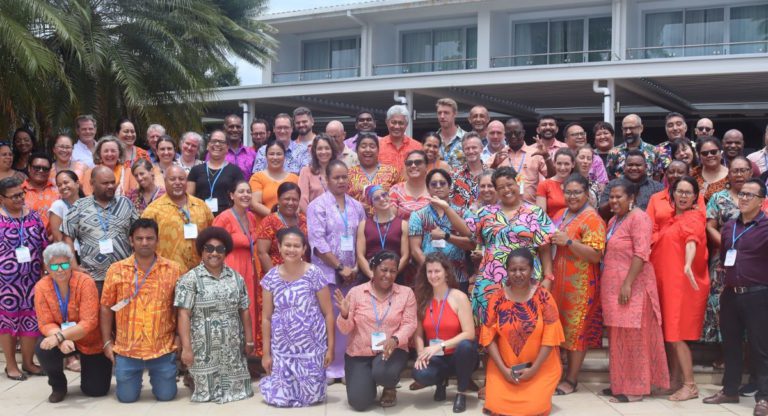
The Pacific Community (SPC) Public Health Division hosted a communications and media training at the Holiday Inn recently

Facilitating a robust exchange between health professionals and the media, the established Communication Department within the Health Division of the Pacific Community (SPC) is set to play a pivotal role in enhancing dialogue, transparency, and knowledge-sharing for improved public health outcomes across the Pacific region.

Communication officer for SPCs Public Health Division, Evelyn Mani said  their main means of communication was through published stories on the SPC website as well as SPC social media platforms.

“We send important information directly to the media through a mailing list that has been set up so media houses receive stories and press releases,” she said

As the media actively promotes public health, it highlights the powerful connection between sharing information and community well-being, showcasing a partnership that transforms society into a healthier and more knowledgeable community.

Ms Mani noted that Public Health was everyone’s responsibility.

“The media houses are a very powerful mouthpiece, eyes and ears for people. They hold not just the community but the government and authorities responsible,” she said.

Ms Mani said being more informed and educated would help if there were media houses that specialized or dedicated a side to health and could work closely with health experts.

As the health department faces challenges in using media for health communication, finding strategic solutions is crucial to overcome obstacles and ensure the widespread sharing of important health information.

“One of the challenges is because we are very diverse and geographically spread out region so I think that is a major challenge because we are unable to report things when it happens,” Ms Mani stated.

The issue of connectivity problems in the region also remains a concern. Ms Mani also brings to light the challenge of translating important health information into local languages.

It is noteworthy that the effectiveness of media campaigns in shaping public health behavior and awareness undergoes assessment, a deeper understanding of their impact emerges, paving the way for informed strategies that can positively influence and transform community health outcomes.

“We work closely with the monitoring and evaluation team within SPC that the communication department works very closely with to ensure that before we run campaigns we do pre-surveys for instance to identify areas that need improvement,” Ms Mani shared.

Social media platforms serve as a vital tool for the dissemination of information in the Public Health Division. She said health information and education especially published on social media had been the go-to for any information, especially for health.

Touching on the importance of the media workshop in the public health sector, Silina Motofaga, clinical services program team leader noted that the workshop was vital for staff as most of the time media attention is something that was usually avoided, so the workshop helped clarify doubts.

“I think it is something that we should do more often so that communication is made easier in terms of the work that we do. Our work is well understood but communicating it forward in terms of media, it takes a while for the messages to go out,” Ms Motofaga said.

She also echoed the important role that the media and communications and media department played in disseminating information.

“Being able to use clear and simple language is vital instead of technical words,” she echoed.

Concluding the media and communications workshop, Ms Mani highlighted that their communication strategy for 2024 centers on healthcare initiatives in the region, aligning closely with the SPC corporate strategy to ensure cohesion between key messages, vision, and missions.

This was first published in Wansolwara and has been republished here with the kind permission of the editor(s).

Contributing Author(s): Brittany Nawaqatabu and Ivy Mallam are final year journalism students and part of the Wansolwara editorial team.

Disclaimer: The opinions expressed within this article are the personal opinions of the author. The Australia Today is not responsible for the accuracy, completeness, suitability, or validity of any information in this article. All information is provided on an as-is basis. The information, facts, or opinions appearing in the article do not reflect the views of The Australia Today and The Australia Today News does not assume any responsibility or liability for the same.

Support Our Journalism

Global Indian Diaspora needs fair, non-hyphenated, and questioning journalism, packed with on-ground reporting. The Australia Today – with exceptional reporters, columnists, and editors – is doing just that. Sustaining this needs support from wonderful readers like you.

Whether you live in Australia, the United Kingdom, Canada, the United States of America, or India you can take a paid subscription by clicking Patreon. Buy an annual ‘The Australia Today Membership’ to support independent journalism and get special benefits.

AFP restrains $1 billion in criminal assets in a major milestone

0

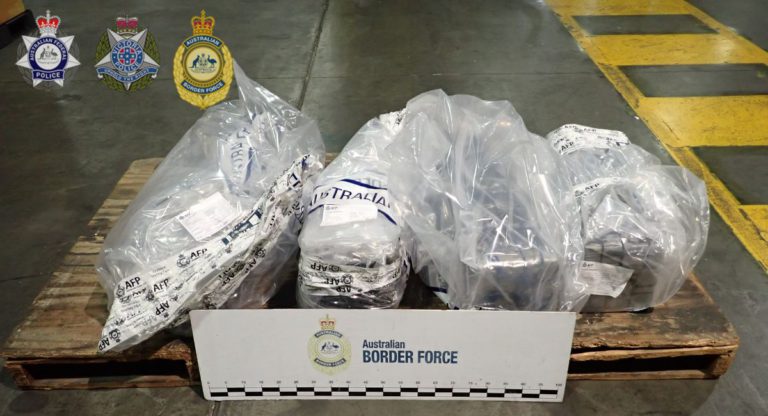
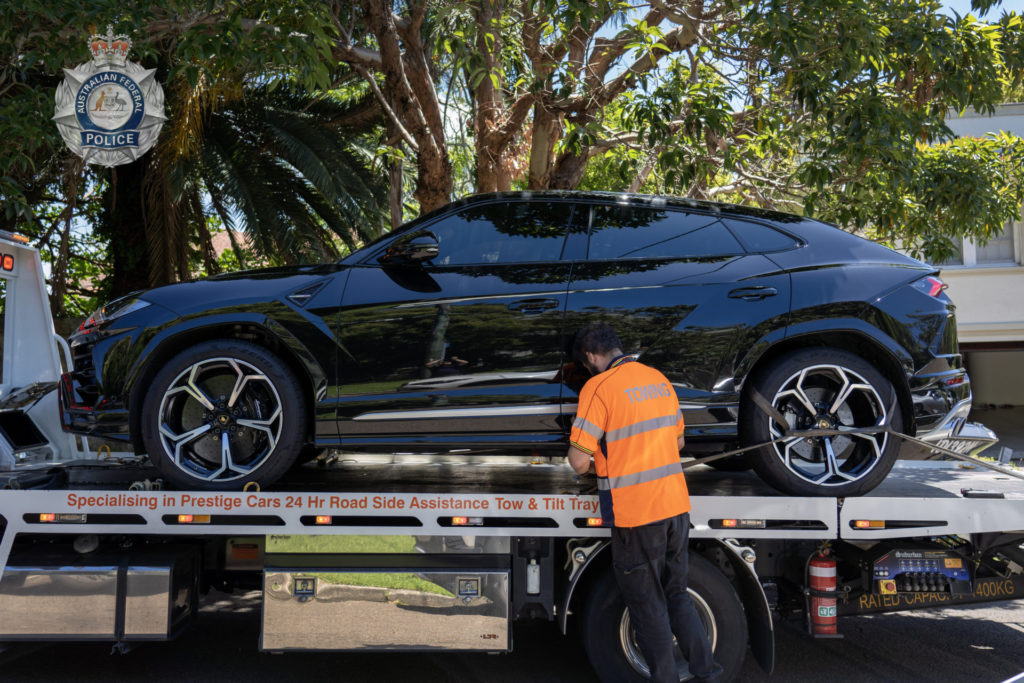
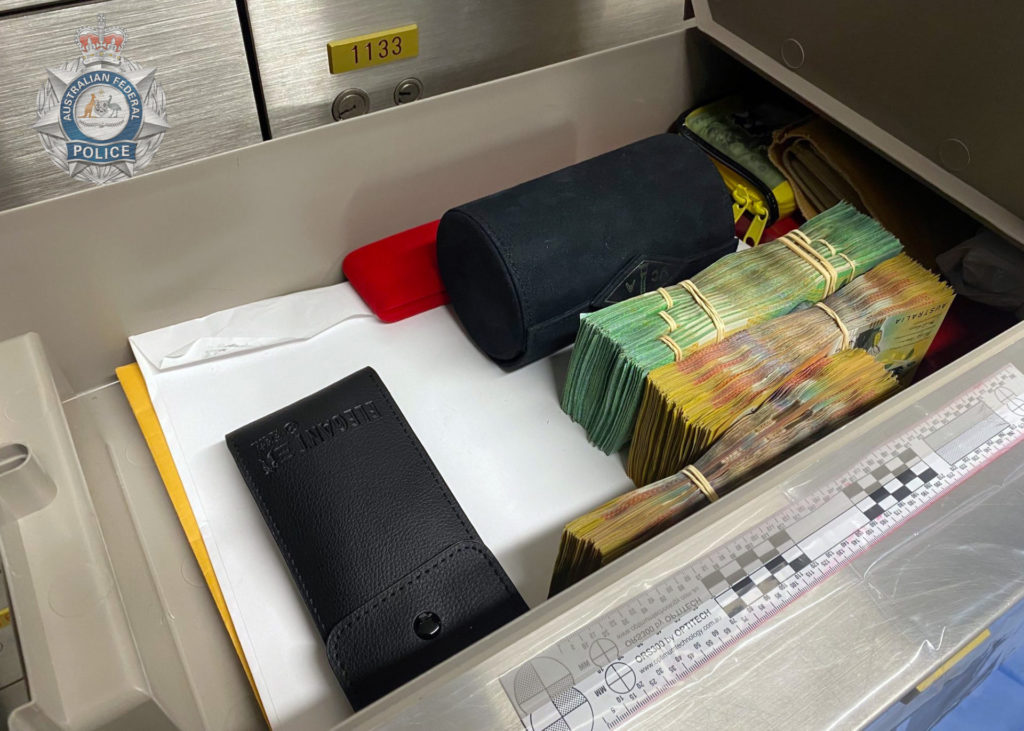
The AFP-led Criminal Assets Confiscation Taskforce (CACT) has restrained $1.1 billion in criminal assets in the past four years, delivering a significant blow to organised criminals living large from the proceeds of crime.

Almost half of the $1 billion-plus milestone has been restrained this calendar year alone.

The two-pronged strategy of investigating and prosecuting crime syndicates and restraining and confiscating assets purchased with tainted funds, continues to land a significant blow to organised crime in Australia.

AFP Commissioner Reece Kershaw set a five-year, $600 million, restraint target in 2019.

It comes as the AFP released updated restraint results under Operation Avarus-Nightwolf, a money laundering investigation that led to seven members of an alleged organised crime syndicate being charged in October this year.

In October, the value of assets first restrained by the CACT was more than $50 million (including 14 residential properties in Victoria, Queensland, and Western Australia; six motor vehicles; 51 bank accounts and shares).

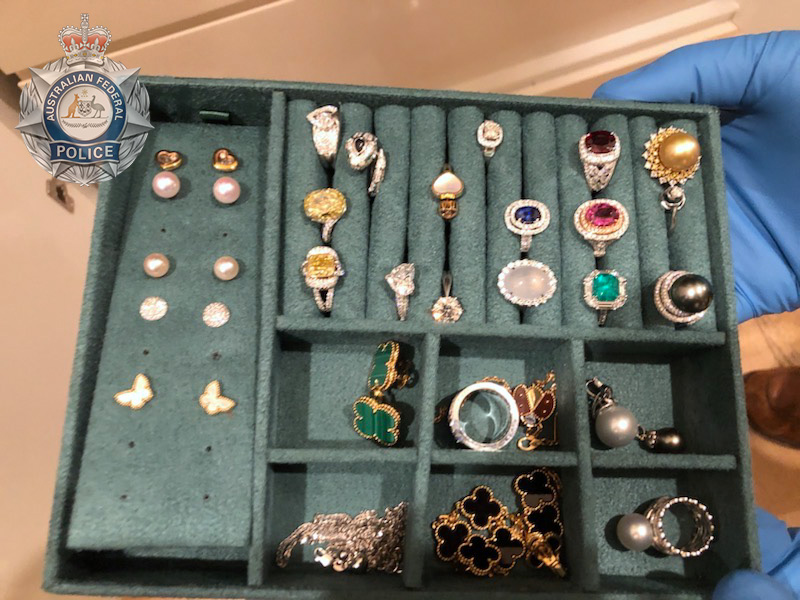
As a result of further action by the CACT, the value of restrained assets in Operation Avarus-Nightwolf is now more than $160 million, including further residential properties in Victoria and Queensland as well as additional bank accounts and luxury items.

AFP Head of the CACT Stefan Jerga said a key strategy of the AFP and its partners to combat organised crime was to deprive criminals of their illegal wealth and to stop them using the proceeds of crime to bankroll further criminal ventures.

While triggers for restraints include wealth from money laundering and illicit drugs, restraint and confiscation of assets also relate to child exploitation, human trafficking, cybercrime, technology-enabled scams, fraud and national security.

Mr Jerga said when Commissioner Kershaw was appointed in late 2019, the Commissioner made asset confiscation a key operational priority for the AFP.

“Though we have exceeded Commissioner Kershaw’s original $600 million target, the CACT’s ambitions continue well beyond this. Our highly-skilled and co-located, Australia-wide teams of police, financial investigators, forensic accountants, litigators, cryptocurrency experts, and partner agency specialists, will continue to be relentless in pursuing the assets and wealth of those who attempt to operate outside of the law,’’ Mr Jerga said.

Since its permanent establishment in 2012, and having restrained almost $2 billion in criminal assets since this time, the CACT has targeted the alleged illicit wealth of some of the most notorious and significant criminals in Australia.

In June 2023, the CACT restrained more than $47 million worth of assets under Operation Fuji – a combined AFP and Victoria Police investigation into one of Victoria’s most significant organised crime syndicates. Items restrained, with a number now already forfeited, include houses, cars, fine art and a luxury yacht.

The Commonwealth’s proceeds of crime laws allow the CACT to restrain both proceeds and instruments of crime based on a civil standard of proof, as well as obtain financial penalty and unexplained wealth orders – regardless of whether there is a related criminal prosecution or investigation.

Commonwealth proceeds of crime laws also provide the CACT with strong information gathering and coercive examination powers, and an ability to restrain the assets of criminal groups without their prior knowledge.

Mr Jerga said the CACT’s operating model of co-located, Australia-wide, multi-disciplinary asset targeting teams is world-leading for asset confiscation.

“In addition to the CACT’s strong public and private partnerships in Australia, the CACT leverages the AFP’s international partners and network of deployed AFP members to also restrain and confiscate assets outside of Australia. The AFP has a presence in 34 countries.

“The success of the CACT should serve as yet another clear warning that the AFP will not allow criminals to cash in on crime. We will continue to target and disrupt their illicit operations, including by restraining and confiscating criminal assets.”

Led by the AFP, the CACT brings together the resources and expertise of the AFP, the Australian Criminal Intelligence Commission (ACIC), Australian Taxation Office (ATO), AUSTRAC and the Australian Border Force (ABF).

ACIC Acting Executive Director Intelligence Operations Dr Katie Willis said the ACIC’s mission of critical intelligence underpinned efforts to tackle serious and organised crime, which cost Australia up to $60 billion per year.

“By working closely with our CACT partners, we will continue to develop intelligence products that better inform the response to financially motivated criminal activity,” Dr Willis said.

AUSTRAC Deputy CEO Intelligence Dr John Moss said AUSTRAC was proud to work hand in hand with its partners to take the proceeds of crime out of criminals’ hands.

“AUSTRAC intelligence is a vital piece of the puzzle in identifying the assets purchased by criminals using the proceeds of crime,” Dr Moss said.

“The common thread with almost all criminal activity is the desire for financial gain, the work of the CACT hits criminals where it hurts and AUSTRAC is proud to be a part of this significant milestone in the fight against organised crime.”

The ABF remains an integral partner agency of the CACT by providing the skills and expertise towards complex investigations on Transnational Serious Organised Crime groups seeking to exploit international trade to mask their illicit cross-border activities.

ABF Commander Penny Spies said the CACT had changed the landscape for all law enforcement agencies in Australia, including the ABF in its role protecting our most critical strategic national asset – the Australian border.

“The ABF is tremendously proud to contribute to the significant achievements of the CACT, and has benefited greatly from its work,” Commander Spies said.

“The impact the CACT has had on criminal syndicates is evident by the success at this $1billion milestone, and the ABF will continue to partner with our law enforcement colleagues to remove the profits of crime from criminal groups.”

ATO Assistant Commissioner Ash Khera said financial crime affected all Australians, robbing them of funding for essential services such as health and education.

“Outcomes from the CACT are a significant blow to those who attempt to profit from serious and organised crime, made possible thanks to the coordinated and integrated approach of all agencies involved,” Assistant Commissioner Khera said.

While the CACT litigates matters in the courts, restrained assets are managed on behalf of the Commonwealth by the Australian Financial Security Authority (AFSA). At the conclusion of successful legal proceedings, confiscated assets are then liquidated by AFSA, with the proceeds placed in the Commonwealth Confiscated Assets Account (CAA).

Funds in the CAA are then redistributed by the Attorney-General into many and varied crime prevention and law enforcement related measures, including those dealing with child protection and online child safety, illicit drugs, community safety programs, and a national DNA program for unidentified and missing persons.

Support Our Journalism

Global Indian Diaspora needs fair, non-hyphenated, and questioning journalism, packed with on-ground reporting. The Australia Today – with exceptional reporters, columnists, and editors – is doing just that. Sustaining this needs support from wonderful readers like you.

Whether you live in Australia, the United Kingdom, Canada, the United States of America, or India you can take a paid subscription by clicking Patreon. Buy an annual ‘The Australia Today Membership’ to support independent journalism and get special benefits.

Senate report recommends shake-up of the way freedom of information is handled

0

By Johan Lidberg

The most significant recommendation in the Senate inquiry report on the functionality of the Commonwealth FOI system is this: move the federal Freedom of Information (FOI) function from the Office of the Australian Information Commissioner’s Office (OAIC) to the Commonwealth Ombudsman’s Office.

The inquiry was triggered by the resignation of the then FOI commissioner, Leo Hardiman, in March 2023, less than a year into a five-year term.

Hardiman cited severe governance and culture issues in the OAIC as the reasons for his resignation. In his detailed submission to the inquiry, he made it clear the FOI section was starved of funds and not able to do its job. Hardiman was also critical of the current Information Commissioner, Angelene Falk, pointing out, among other issues, that Falk prioritised the privacy functions over FOI.

Falk strongly disagrees with Hardiman’s points. However, in the report, the committee members accept Hardiman’s integrity reasons for resigning.

When the OAIC was created in 2010, hopes were high for a better-functioning federal access-to-information system. This was on the back of Kevin Rudd’s 2007 election promise of significant reforms.

Labor elder John Faulkner led the reform process. The reforms were indeed some of the most far-reaching we have seen since Australia’s first FOI Act was passed in 1982. At their core was the idea to co-locate the functions of the privacy commissioner and the FOI commissioner in one office, led by a third information commissioner.

Under inaugural Information Commissioner John McMillan, the OAIC got off to a good start. There were indications the information access culture had started to shift towards more openness and away from the secrecy that had been the norm until 2010.

When Tony Abbott was elected prime minister in 2013, he swiftly attempted to close down the OAIC. When this failed, the office was starved of funds to the point where there was no FOI commissioner appointed between 2014 to 2022. These eight years without an FOI commissioner clearly shifted the balance between privacy and FOI in the OAIC.

When Hardiman became FOI commissioner in March 2022, the damage to information access was apparent. The backlog of FOI reviews was huge. In his submission, Hardiman pointed out that, with the current funding, he saw no way of clearing the backlog.

Overall, the Senate inquiry report is surprisingly frank and far-reaching. In the recommendation section, the report concludes:

It is clear that the Commonwealth Freedom of Information (FOI) system is not working effectively and for some time has not functioned as it was intended.

The report makes 15 recommendations. Of these, in my view, the most important are:

  • there should be an independent external review of the functionality of the OAIC
  • funding to the FOI commissioner should be increased to clear the review backlog and enable the commissioner to function as intended
  • there should be increased focus on access to personal information without having to use FOI requests.

These are all important points. Some of the legal tweaks to the act would, based on my research, have less effect on the overall functionality of the FOI system. My research team has shown time and again that a focus on information access culture is much more effective than legal changes.

In mid-2024 my team will publish a report comparing FOI culture in Victoria, South Australia and Western Australia. The project is large in scope, involving 96 government agencies in the three states, and based on interviews with 257 FOI officers and government agency executives. Our findings show, unequivocally, that lack of funding and resourcing of FOI teams in agencies is the greatest obstacle to functionality.

The Senate report does mention both resourcing and the culture of implementing FOI but does not, based on our research, pay enough attention to these crucial issues.

That said, the report should be commended for pointing to some immediate action that is badly needed, such as the external review of the OAIC. It’s disappointing the three-commissioner model appears to not work as intended. There are merits in co-locating privacy and FOI in the same office, but, for this to work, there needs to be a balance between these functions.

The research is in on how to make access to information work well in Australia. It’s not rocket science, but it requires political will (which can at times be more complex than rocket science).

Based on our research, these are the three overarching areas to address when it comes to FOI:

  • proper funding of FOI teams in government agencies
  • creating proactive information release policies tailored to individual government agencies (that is, information should be released without the need for FOI requests)
  • update records management in government agencies. This sounds boring, but it’s the base for both good governance and information access.

It will be interesting to see if the Albanese government will act on any of the recommendations in the Senate report. History shows that demanding far-reaching FOI in opposition is easy. Implementing it in government can be very hard.

Johan Lidberg, Associate Professor, School of Media, Film and Journalism, Monash University

This article is republished from The Conversation under a Creative Commons license. Read the original article.

"The

Support Our Journalism

Global Indian Diaspora needs fair, non-hyphenated, and questioning journalism, packed with on-ground reporting. The Australia Today – with exceptional reporters, columnists, and editors – is doing just that. Sustaining this needs support from wonderful readers like you.

Whether you live in Australia, the United Kingdom, Canada, the United States of America, or India you can take a paid subscription by clicking Patreon. Buy an annual ‘The Australia Today Membership’ to support independent journalism and get special benefits.

India’s Sarbjeet and Nepal’s Abhishek win International Student and Alumnus of the Year

0

Indian international student Sarbjeet Singh, a stormwater engineer, and Nepali international student Abhishek Kansakar, management consultant and sustainable transport entrepreneur, have won the Victoria’s prestigious International Student of the Year and International Alumnus of the Year awards 2023.

Sarbjeet Singh has won the International Student of the Year – Regional and the prestigious Premier’s Award – International Student of the Year 2023.

Sarbjeet’s journey began in Chandigarh, India, where his passion for civil engineering ignited at age 13 during annual summer projects building houses with a friend. Earning a scholarship led him to Deakin University in Geelong, a town reminiscent of his home in India.

‘Geelong is very similar to Chandigarh – it’s a smaller town and very beautiful. After coming to Geelong I thought, ‘am I back home?’’

Despite this, the transition from living in India to Australia posed challenges.

‘Coming from a small town to a country where the people don’t speak your language and then right after arriving going into lock down, it was quite overwhelming,’ he said.

‘But this was actually a big turning point for me.’

‘It gave me time to reflect, allowed me to think about what I really want to do and helped me realise a few things about myself.’

Sarbjeet is a Bachelor of Civil Engineering (HONOURS) from Deakin University. He is a dedicated advocate for community engagement and leadership and has left a lasting impact on both local and global communities.

This is highlighted by his election to ‘Campus Coordinator’ for Deakin University Student Association. In this role, he organised inclusive events, such as Pride Week Celebrations, Harmony Week, and cultural festivals. His dedication to community service and outstanding efforts have also been recognised by Geelong City Council’s Geelong Youth Award in 2023.

Sarbjeet’s leadership journey began in 2020 during his higher education years when his passion for leadership was ignited. He established study support groups and became a ‘Student Mentor’ and ‘Success Coach’, showcasing his commitment to mentorship. 

Drawing on his own background, he established a study support group for international students to ease the transition to Australian university life.

‘I used my own experiences and mistakes I’ve made along the way to tailor the support groups to suit international students and help them navigate the new period of their lives with tips and tricks,’ he said.

Now employed as a stormwater engineer at the City of Greater Geelong, Sarbjeet is using his education to help build flood-resilient communities and incorporate sustainability into engineering projects.

‘I love working for the community. It’s great to work somewhere that is trying to address the issues of climate change and build a flood resilient city.’

Serving as a Deakin University Ambassador, a Study Geelong ambassador and an Engineers Australia ambassador highlights his dedication to promoting education and professional development in Victoria.

Beyond academia, Sarbjeet wholly embraces Victoria’s diverse cultural tapestry, scenic landscapes, and vibrant city life.

Abhishek Kansakar has been announced as Victoria’s International Alumnus of the Year award for 2023.

Abhishek is a first class honours Master of Finance degree and a Deputy Deans award from Business & Economics at the University of Melbourne.

In 2016, Abhishek moved from Nepal to study in Melbourne, drawn by the city’s global education reputation and inclusive environment. It became not just a destination for learning but a canvas for personal growth and innovation.

‘Meeting individuals from various backgrounds allowed me to broaden my perspective, appreciate different cultures, and form lasting international friendships,’ said Abhishek.

Navigating a new cultural landscape, Abhishek credits this inclusivity that defines Australian society and noticed similarities in his own culture.

‘I’ve always felt that Victoria is my home,’ he said.

‘Everyone I’ve met in Victoria is friendly and approachable, making integration into the community easy.’

After winning the 2018 UniMelb Start-up Pitch Competition, Abhishek founded Electrify Infinite, an application that aims to simplify access to electric vehicle (EV) charger stations.

‘The inspiration behind Electrify Infinite is deeply rooted in my early experiences in Nepal, particularly during a time of civil unrest when essential resources like food and electricity were scarce.’

‘These firsthand experiences have been the driving force behind my unwavering commitment to sustainability.’

His dedication to accelerating the transition to net-zero emissions and his personal interests in tech and all things cars and motorbikes have converged to create ‘a cause larger than myself’.

As a first-generation university attendee and entrepreneur, his advice for future international students is rooted in self-belief.

‘Embrace diversity, perspective, and cultural insights as sources of strength,’ he said.

‘Embrace the courage to try new things, and above all, cultivate a love for learning to fuel your curiosity. Find joy in the entire process, appreciating both triumphs and challenges.’

Abhishek has had an impressive trajectory as an international student and now alumni in Melbourne. He moved to Australia at 17 to study a Bachelor of Commerce degree. He was awarded several scholarships, including the Tritecha Tangmathitham, and became the first Nepalese-born student to receive this award. He continued to pursue a Master of Finance degree, graduating with first class honours before being selected into the graduate program at FTI Consulting.

After winning the 2018 UniMelb Start-up Pitch Competition, Abhishek founded Electrify Infinite, an SaaS-based B2C application that aims to simplify access to electric vehicle (EV) charger stations, promoting EV adoption and contributing to Victoria’s sustainable transportation objectives. Recognized by the Study Melbourne Future Founders Venture Scholarship, Abhishek secured $10,000 in equity-free seed funding for his venture.

As a first-generation university attendee, Abishek never thought of being an international student as a limitation but as a superpower. Abhishek advocates for Victoria’s blend of education, culture, lifestyle, and opportunities and invites aspiring students to experience the magic of the state.

The Victorian International Education Awards recognise and showcase the exceptional Victorian international students and alumni in our community, education providers and industry  who champion international education in Victoria and across the globe.

Award winners in each student category, with the exception of the International Alumnus of the Year, will be awarded $6,000 each to support their studies. All finalists and winners will receive a certificate of recognition. The recipient of the ‘Premier’s Award – International Student of the Year’ will receive an additional $10,000 to support their studies.

Australia helps enhance safety of PNG Water Police; gifts lifejackets and personal locator beacons

0

The AFP has handed over more than $70,000 in essential safety equipment to the Royal Papua New Guinea Constabulary (RPNGC), bolstering the safety of their Water Police officers.

The package includes lifejackets and Safelink personal locator beacons following extensive consultation with RPNGC officers to understand their needs and priorities.

Image: Handover to RPNGC Water Police (Source: AFP)

AFP Superintendent Matt Parsons said the AFP and RPNGC shared a deep friendship and ensured the safety of their officers, both on land and at sea.

“RPNGC Water Police members patrol the coastal and oceanic waters of Papua New Guinea in a range of environmental conditions and this new equipment will help ensure they remain safe while undertaking their patrols.”

Supt Parsons added:

“It will also allow their members to continue to perform their duties with the peace of mind that they are wearing innovative safety gear which will help protect them in the event of an emergency.”

The lifejackets were specifically chosen as their design allows them to be worn comfortably with police uniform and operational equipment.

The lifejackets also automatically inflate when submerged in water and exceed the Australian standards required for off-shore commercial operations, ensuring buoyancy will be maintained even when water police crew are wearing heavy clothes and equipment.

The lifejackets are also designed to right a person, turning them onto their back if they are incapacitated so they can breathe.

Image: Handover to RPNGC Water Police (Source: AFP)

The Safelink personal locator beacons are waterproof, come with a flotation pouch to ensure buoyancy and will broadcast a continuous international distress signal for a minimum of 24 hours once activated.

The RPNGC has five Police Patrol Vessels (PPV), which are skippered and crewed by members of the Water Police Directorate that patrol the waters of Morobe, Alutao, Rabaul and the National Central District, Gulf and Central Province.

Disclaimer: The opinions expressed within this article are the personal opinions of the author. The Australia Today is not responsible for the accuracy, completeness, suitability, or validity of any information in this article. All information is provided on an as-is basis. The information, facts, or opinions appearing in the article do not reflect the views of The Australia Today and The Australia Today News does not assume any responsibility or liability for the same.

Support Our Journalism

Global Indian Diaspora needs fair, non-hyphenated, and questioning journalism, packed with on-ground reporting. The Australia Today – with exceptional reporters, columnists, and editors – is doing just that. Sustaining this needs support from wonderful readers like you.

Whether you live in Australia, the United Kingdom, Canada, the United States of America, or India you can take a paid subscription by clicking Patreon. Buy an annual ‘The Australia Today Membership’ to support independent journalism and get special benefits.
Do you think smacking is necessary to ‘properly raise’ kids?

0

By Divna Haslam

“Do you want a smack?!” This has been a common refrain from many parents across history. Right along with “just wait till your father gets home”. Somehow parents thought this threat of violence would magically improve their child’s behaviour.

The United Nations Convention on the Rights of the Child considers smacking and all types of physical punishment, however mild, a violation of child rights. It’s banned in 65 countries.

Yet it remains legal in Australia for parents to use “reasonable force” for discipline. Children are the only group of people it remains legal to hit.

Our new research found one in four Australians still think physical punishment is necessary to “properly raise” children. And half of parents (across all age groups) reported smacking their children.

But attitudes are slowly changing, with newer generations of parents less likely to smack their kids than previous ones.

What is physical punishment?

Physical or “corporal” punishment is the use of physical force to cause pain, but not injury, to discipline a child for misbehaviour. It’s distinct from physical abuse which is more extreme and not used to correct behaviour.

Physical punishment is the most common type of violence against children. It usually involves smacking, but also includes things like pinching, slapping, or using an implement such as wooden spoon, cane or belt.

Smacking doesn’t actually work and makes behaviour worse over time. And it’s associated with children internalising problems, increased child aggression, poor parent-child relationships, poorer metal heath and more.

In contrast, there are a lot of non-violent parenting strategies that do work.

Assessing the state of smacking in Australia

We conducted the first study to comprehensively assess the state of smacking and physical punishment in Australia. We wanted to determine if smacking was still common and how many Australians believed we need to smack our kids.

We interviewed more than 8,500 Australians aged 16 to 65 years. Our sample was representative of the national population so we can be confident the findings represent the thoughts and experiences of Australians as a nation.

Using such a large age range allowed us to compare people across different age groups to determine if changes are occurring.

What we found

Overall, six in ten (62.5%) Australians between 16–65 years had experienced four or more instances of smacking or physical punishment in childhood. Men were slightly more likely to be physically punished than women (66.3% v 59.1%).

Young people, aged 16–24, reported slightly lower rates (58.4%) than older people suggesting a slight decline over time. But these rates remain unacceptably high.

Overall, one in two (53.7%) Australian parents reported using some type of physical punishment, mostly about once a month.

However, older parents reported on this retrospectively (what they did while raising children) and there were clear age differences:

  • 64.2% of parents aged over 65 years had used physical punishment
  • 32.8% of parents 25–34 years had used it
  • 14.4% of parents under 24 had used it.

So younger generations of parents are substantially less likely to use physical punishment.

Concerningly, one-quarter (26.4%) of all Australians still believe physical punishment is necessary to properly raise children. But the vast majority (73.6%) do not.

And generational change is occurring. Some 37.9% of Australians older than 65 believe physical punishment is necessary compared to 22.9% of those aged 35–44 years, and only 14.8% of people under age 24.

Socioeconomically disadvantaged people are 2.3 times more likely to believe physical punishment is necessary than those with no disadvantage.

Parents who had been physically disciplined when they were children were both more likely to believe it is needed and more likely to use it with their own children. This indicates this form of violence is transmitted across generations.

Time for change

Law reform works best when changes in community attitudes and behaviours are already occurring. So it’s encouraging that younger people are much less likely to believe physical punishment is necessary and are much less likely to use it. This suggests Australians may be open to prohibiting this common form of violence.

All states and territories should immediately enact legal reform to prohibit corporal punishment and protect the rights of Australian children. This should be paired with public health and education campaigns about what parents can do instead.

If you are a parent looking for effective non-violent parenting strategies the government has also made the Triple P Positive Parenting Program available for free. This online program provides practical strategies parents can use to encourage positive behaviour and calm, alternative discipline techniques that can be used to instead of smacking.

A number of other evidence-based programs, such as Tuning Into Kids, Parents Under Pressure and Parent Child Interaction Therapy, are also available.

Australia has an opportunity to capitalise on naturally occurring societal changes. We can interrupt this cycle of violence and give more Australians a childhood free of violence.

Divna Haslam, Senior Research Fellow, Queensland University of Technology

This article is republished from The Conversation under a Creative Commons license. Read the original article.

"The

Support Our Journalism

Global Indian Diaspora needs fair, non-hyphenated, and questioning journalism, packed with on-ground reporting. The Australia Today – with exceptional reporters, columnists, and editors – is doing just that. Sustaining this needs support from wonderful readers like you.

Whether you live in Australia, the United Kingdom, Canada, the United States of America, or India you can take a paid subscription by clicking Patreon. Buy an annual ‘The Australia Today Membership’ to support independent journalism and get special benefits.
Former Pizza Hut franchisee penalised for failing to back-pay entitlements to two workers

0

The Fair Work Ombudsman has secured a $28,021 penalty in court against the former operator of a Pizza Hut outlet in south-east Queensland.

The Federal Circuit and Family Court has imposed the penalty against IFITS Food Co Pty Ltd, which was the franchisee for the outlet located on Albion Street, in Warwick, until the company ceased operating the outlet in late 2021.

Judge Gregory Egan found that there was a need to impose a penalty that would deter the company and others from similar conduct in future.

Judge Egan said:

“There is no evidence that the respondent has taken any action to change its recalcitrant behaviour.”

The penalty was imposed in response to IFITS Food Co failing to comply with Compliance Notices requiring it to calculate and back-pay entitlements to two workers it employed at the Warwick Pizza Hut outlet in part-time roles between March 2020 to October 2021.

One worker was employed as an assistant manager and the other, aged 17 at the time of employment, was in a kitchen hand and customer service role.

In addition to the penalty, the Court has ordered IFITS Food Co to back-pay the workers in full, plus applicable superannuation applying to one worker and interest for both.

Fair Work Ombudsman Anna Booth said business operators that fail to act on Compliance Notices need to be aware they can face penalties in court on top of having to back-pay workers.

“When Compliance Notices are not followed, we are prepared to take legal action to ensure workers receive all their lawful entitlements.”

Ms Booth added:

“Employers also need to be aware that taking action to protect young workers and improve compliance in the fast food, restaurant and café sector are among our top priorities. Any employees with concerns about their pay or entitlements should contact us for free advice and assistance.”

The FWO investigated after receiving requests for assistance from the affected workers.

A Fair Work Inspector issued Compliance Notices to IFITS Food Co in February and April 2022 after forming a belief the company failed to pay the workers’ accrued but untaken annual leave entitlements at the end of their employment, owed under the Fair Work Act’s National Employment Standards.

The Fair Work Inspector also formed a belief the young worker was not paid payment-in-lieu-of-notice-of-termination entitlements, owed under the Fast Food Industry Award 2010.

Disclaimer: The opinions expressed within this article are the personal opinions of the author. The Australia Today is not responsible for the accuracy, completeness, suitability, or validity of any information in this article. All information is provided on an as-is basis. The information, facts, or opinions appearing in the article do not reflect the views of The Australia Today and The Australia Today News does not assume any responsibility or liability for the same.

Support Our Journalism

Global Indian Diaspora needs fair, non-hyphenated, and questioning journalism, packed with on-ground reporting. The Australia Today – with exceptional reporters, columnists, and editors – is doing just that. Sustaining this needs support from wonderful readers like you.

Whether you live in Australia, the United Kingdom, Canada, the United States of America, or India you can take a paid subscription by clicking Patreon. Buy an annual ‘The Australia Today Membership’ to support independent journalism and get special benefits.

Stability is the pathway to our prosperity

0

By Prof. Biman Prasad

Thank you for the invitation to address the 2023 Australasian Aid and International Development Conference.

I join Fiji’s Prime Minister in urging Australia to take further steps to advance reconciliation and self-determination. Australia’s standing in the Pacific will be enhanced as it does so.

I acknowledge that opening speakers in earlier years such as the Australian Foreign Minister and Shadow Foreign Ministers, and I appreciate the invitation to a regional rather than Australian leader this year.

You could have invited any of my fellow Ministers from the Blue Pacific, but you have invited me. I am honoured. I will try to do justice to this vast region and its diverse people.

In reflecting on the future of the partnership between Australia and the Pacific, I want to share a story that is dear to my heart.

About 45 years ago, Fiji was a young, newly independent country. Our leaders were thinking hard about how our people could earn a living and find our way in the world. As part of this soul-searching, Fiji reached out to its friend, the Government of Australia, to support its efforts to enhance rice production and build food security.

A long history

We have a long history of growing rice in Fiji. Nobody really knows when the first crop was planted but it took hold with the arrival of Indian indentured labourers from the late nineteenth century onwards. Through this, we found that some regions of Fiji, including Dreketi on the island of Vanua Levu, had conditions suitable for growing rice.

Despite good soil, water, and high demand, far too many rice farmers in Dreketi were losing their crops to the salination resulting from rising sea levels. If this were not enough, they were also losing harvests to frequent droughts. As a result, Fiji spent millions importing rice – that was income that could have been flowing to our own farmers.

Through well-researched interventions, Australia supported Fiji to build irrigation systems across 100 farms in Dreketi. This allowed gravity-fed water distribution to take place. The newly built waterways protected farms from rising sea levels. Regular and predictable water from dams and canals allowed farmers to harvest multiple crops in a single year for the first time.

For the farming families of Dreketi, this development investment almost doubled their incomes. I know many of you are likely waiting on the finale of Yellowstone, but please, don’t think about farms and incomes on this scale. Farm sizes in Dreketi were small – over 100 of them would have fit on ANU’s campus – so farmers were still poor. But they had more certainty of income. Income security meant that they could access credit. Access to credit meant that they could invest to improve their food security by diversifying into new crops and livestock. Crucially, increased income meant that they could afford to pay bus fares and school fees for their children to go to school.

Two of these farmers in Dreketi were Mrs Bhagwandei and Mr Puran  – my mum and dad.

I am genuinely humbled to give this address. You have given me a platform to express my appreciation to the people of Australia for the support they provided to my family in a deeply personal way. Australia’s aid investment allowed me, a remote -rural student to complete my high school education. On the back of that education, I eventually became an economics professor. On the back of this otherwise impossible proposition of a good high school education, I am today the proud leader of the Pacific’s oldest political party – the National Federation Party – and Fiji’s Deputy Prime Minister.

I am usually a private person. Today I wanted to share this story as it has shaped how I think about the development partnership between Australia and the Pacific. There are five reflections that I want to share.

First, never forget that Australia’s development assistance touches and transforms people and communities. This is my most important message to you. An agriculture program four decades ago changed the course of my life. It did so for the children of the other 100 families. I have no doubt that it has done the same for hundreds of thousands of others across the Blue Pacific and well beyond.

Second, while Australian engineers and experts shaped the program, I remember as a child watching our parents and elders advising these experts. They told us, proudly, that they taught Australians how to plan waterways so water would flow even during droughts; and on how high to build the dams so that seawater would be kept out even during storm surges. My guidance to you is, to work with Pacific Islanders, not for them.

Third, four decades ago, our parents knew that they were dealing with changed rainfall patterns and that the seas were rising in unusual ways. While our village elders knew that the climate was changing, this “term” was still to make its way into development textbooks and policy discussions. My lessons from this is to value and work with traditional knowledge. It will enrich – not dilute your practice.

Fourth, I want to underscore the importance of evaluation and learning. I know that we invest in monitoring and evaluation during the life of development programs. This is important. What matters even more, however, is evaluation and learning five (5) or ten (10) years after a program has ended. This is where you will assess the real impact of your work and learn the real lessons.

Finally, please do not underestimate what Australia gets in return for its development investments. These 100 households in Dreketi alone have sent teachers, health professionals, and engineers who are today working across Australia. These are fine folks enriching your communities.

The future of Australia and Pacific development partnerships

You now have a window into how Australia’s development program has shaped my own journey. I turn to the future of Australia and Pacific development partnerships.

The meeting of the Australian international development community could not have been more timely. In September, Pacific’s leaders participated at the United Nations Strategic Development Goals (SDG) Summit in New York. At this SDG stocktake, it was clear that Pacific was well behind in achieving its development targets. Two weeks ago, Pacific’s leaders met in Rarotonga where they expressed their growing frustration at the pace of delivery of development programs by many of our development partners.

We are also meeting soon after the first official visit to Australia by a Fijian Prime Minister in many years. Fiji and Australia both spoke enthusiastically about an enhanced relationship. And lastly, we are meeting in the shadows of a much larger meeting in Dubai – the United Nations COP28 in Dubai -one of the most consequential of global climate conferences for the Blue Pacific. Allow me to pull these threads together.

The Blue Pacific

The decades ahead will be challenging for both the Blue Pacific and Australia. This century will be like no other. Some of the greatest transformations and some of the fiercest geopolitical contestations will play out in the Blue Pacific over the next decades.

The centre of the global economy has moved into Asia. By 2050, the majority of the 10 largest economies in the world will be in the Indo-Pacific region.  China, India, and Indonesia will be among the 5 largest economies in the world well before 2040.

The Blue Pacific finds itself in the middle of this great shift. Geopolitical contestation will play out across a range of areas, including the digital world, artificial intelligence, outer space, the ocean surface and seabed, and of course across the traditional sectors of the economy.

Australia is deeply concerned about these changes. So are we. Across the Blue Pacific, our leaders have expressed their deep anxiety with the growing intensity of this geopolitical contestation. As a response to this, Fiji’s Prime Minister, the Honourable Sitiveni Rabuka, has called for the Pacific to be an ocean of peace. That is powerful. It signals that we place the Pacific’s interest first and foremost. It conveys to the world that we recognise that regional stability is the bedrock of our development and of our progress.

Let me underscore this connection between stability and development. Inclusive development is the surest path to stability across the Pacific. Stability is the pathway to our prosperity.

If the Blue Pacific is unable to develop resilient health systems; modernise education systems; adapt food systems to withstand the onslaught of climate change; or manage debt burdens – they are likely to enter pathways that lead to instability and state fragility. Fragile Pacific states will be less likely to be able to mediate geopolitical competition in ways that protect their sovereign interests. Unstable and fragile states in our region is not good for Australia. It is worse for our fellow Island States.

So to those who doubt the centrality of getting development right, this is the bluntest way in which I can present it. On our current pathway, where many Island States, risk being unable to secure progress against the sustainable development goals, national and regional instability can no longer be ruled out. The stocktake on SDG’s is a wake-up call for the region. It is a wake-up call for our development partners.

My message to you as a community of development experts and professionals, your work matters to this region like never before.

The Blue Pacific is not a region of gloom. Ours is a region of limitless possibilities. Like Asia, the Blue Pacific is on the move. Our region is buzzing with energy and, creativity. These are felt inside governments, in the private sector, in small and medium enterprises, and across communities.

We have so much to learn from each other; Island States learning from each other; Islands learning from Asia; Asia learning from the Pacific and Australia learning from across this region. The era where knowledge was seated in rich and industrial countries to be shared with poor developing countries has long gone. Let’s keep that era well buried.

It does nevertheless amaze me that we continue to allow colonial concepts to wear out their welcome in international development. When the ADB; the World Bank and aid partners use the term capacity building – I mainly cringe. As a finance minister, I meet development partners throughout the day. I may start my day meeting the EU which may be proposing a program to build our capacity in agriculture. Then I may meet the World Bank which may be saying we lack PFM capacity; then I may meet the US who may tell me that our private sector lacks capacity. This goes on and on. By the end of the day, it does leave me thinking about how we function as a country if we lack capacity across so many areas.

How would you feel if we were to say to the Australian National University that Fiji sent the late Professor Brij Lal to build capacity because Australia did not have the capacity for historical research; and that Fiji had sent Noa Nadruku to build the capacity of Canberra Raiders. It is both patronising and often humiliating when experts turn up day in and out to build capacity. Walk in our shoes for a day. Empathy is an important starting point for good development.

When you do, like many of those in this room have done, you will find that the Blue Pacific is brimming of capacity, skills, and talents. The sooner everyone begins to work with these, the more impactful development investments will be. Decolonising development really matters. Work with our systems and not parallel to them. Be persistent in broadening the spaces for Pacific islanders to shape and lead their development narratives.

I have seen a welcome shift among some development partners to locally led development. If development is not locally led – it most probably is not development. All development must be locally led; all development programs must be locally designed; and as best as is possible – locally implemented.

When the leaders of the Pacific small states met in Rarotonga two weeks ago, they were unequivocal. The Blue Pacific alone will define; it alone will shape, and, it alone will frame its own development. This was aspirational before. This is foundational now.

If programs are being designed for the Blue Pacific in distant capitals in Washington, Beijing, and elsewhere – stop! These programs will fail at the very start. Even if they do succeed in some of their outcomes; they will most likely harm the confidence; and erode the resolve of Pacific peoples to decide their development futures.

When the Fijian Prime Minister returned from his official visit to Australia a few weeks back he expressed his confidence in the potential for an expanded partnership between Australia and Fiji and indeed the wider Pacific.

Allow me to build on that confidence. Given our shared futures; my message to Australia is to purposefully consider becoming a part of a fully integrated Pacific. Australia’s businesses: its entrepreneurs, its students, its holy men and women, its skilled workers, its professionals and Australian families should be able to freely move and work across the vast Blue Pacific. So should Pacific islanders – all Pacific islanders – not some Pacific islanders. As they do so they will create new opportunities across our region.

Taken from the world of trade agreements, this would look like a Pacific Most Favoured Nation partnership or agreement. A most favoured nation partnership would extend – reciprocal privileges including on all visa categories  and confirm a shared commitment by all countries to protect citizens, families and businesses – from Australia and from the Pacific – in Australia and across the region.

Visa-free Pacific

This is pragmatic, this is doable, and its time has come. We have to make a start by lifting visa restrictions on the movement of our people. That is the most basic of starting points.

We have made much progress with programs that support thousands of Pacific Islanders to work for short periods in Australia and New Zealand. We have welcomed recent progress on the Pacific Engagement Visa which will allow unskilled Pacific Islanders a pathway into longer-term residency. These are helpful but stop-gap measures at best.

The next step must surely be a visa-free Pacific. That is the most basic building bloc for integration. This is not about incremental increases to some categories of visas but accepting that Australia and the Blue Pacific are part of a shared region in the world.  The whole region can be a vibrant region of mobility and opportunities for Australians and all Pacific Islanders – not a region of opportunity and mobility only for our elites and the highly skilled.

I have laid out the economic case for this elsewhere and will not bore you with the details this morning. In this room full of development professionals, I will skip to the core: the benefits of a visa-free Pacific region that includes Australia and New Zealand are going to be immeasurably substantial for all our economies; for our societies; and for all our peoples.

This is a consideration for all Australians. Is broader interaction between Pacific islanders and Australians a source of anxiety for Australia? This is a consideration for Aboriginal and Torres Strait Islanders. Do they desire greater interaction with their Pacific families? This is a decision for Australia’s leaders across all its great political parties; here at the federal level and across its states. Do they place a high value in a broad partnership with the Blue Pacific as we in the Pacific do with Australia?

I can assure you that the Pacific Islands’ desire for Australia to be a full and equal member of the Pacific family of nations is universal. An economically integrated Blue Pacific will arise from a foundation of visa-free movement of people. It cannot arise without it. Not a chance.

And I know that economic integration inevitably means far greater security integration. We will all be more secure for it – not less.

I encourage Australia to give due consideration to the call for establishing a fully integrated region. Pacific’s leaders are unanimous that this is an idea whose time has come.

Climate emergency

I turn attention to the climate emergency that has been unleashed on the Blue Pacific.

I am speaking to an audience that is very familiar with the scale of impacts of climate change across the Pacific. I know as well, that many of you have worked on Australia’s humanitarian responses to climate disasters. Many of you may be quietly living with the trauma of working in post-catastrophe settings long after your return. Many of you would have seen first-hand the intense impacts of climate catastrophes impact upon women, people with disabilities, children, and those living in very remote communities and islands. I am deeply grateful for your support in those trying times and I am certain that the region shares its gratitude.

I know I don’t need to convince this audience of the need to act urgently on climate change. A temperature rise beyond 1.5 Celsius will have grave impacts on the Pacific. At a 1.5-degree Celsius temperature rise, Pacific Island economies stand to lose between 40 to 80 percent of their land-based economies by the end of this century. The 1.5-degree Celsius goal may be breached as early as 2030. Breach of 1.5 is effectively a death sentence for the Pacific. That is why COP28 is so crucial to us.

Pacific’s leaders are not travelling to Dubai to bury the 1.5-degree goal in its desert sands. They are there to save the 1.5-degree goal from being buried.

Country after country across the Pacific have said they do not desire to be relocated. They want to stay on their lands; preserve the identities, and pass on their timeless heritage to generations yet to be born. 1.5 Degree Celsius is about lot more than economic losses and damage. A lot lot more!

With humility, I urge Australian businesses and communities to support our efforts to secure the 1.5-degree Celsius target. This will need enhanced climate action by Australia domestically and solidarity with the Blue Pacific inside the halls where the World decides the future of our planet.

We are fighting against much of the world to hold on to this goal. It would be unfortunate if we could not count on the people, communities, and governments of all the states of Australia and as we take on the world in this fight of our life.

To win, we need resources. In our battle against climate change, we find ourselves in the midst of another reality: an international financing system that systematically undermines small states. The global financial architecture was not designed with small states in mind. Small states cannot bring their adaptation programs to the private markets because of scale. Small states cannot borrow to rebuild the same infrastructure over and over again each time they get washed away be ever more gruesome storm surges. The global financial system is broken.

Very few Pacific States are in a position to take new loans for necessary for the scale of infrastructure that is needed. No Pacific State should have to borrow to respond to the humanitarian crisis that results from climate catastrophes. Yet this is precisely what we are forced to do; catastrophe after catastrophe after catastrophe. And when the Pacific States borrow for humanitarian recovery – it means that something else has to give. Inevitably investments in health, education, and social protection suffer.

Pacific’s leaders are calling for all climate finance vehicles to have dedicated small state windows – from the Green Climate Fund to climate funds within the ADB, World Bank, and IMF. And yes, this must include the yet to be operationalised loss and damage fund.

All special purpose small states funds need to have three crucial elements. First, they can be accessed rapidly. Second, that they recognize that small states cannot be subject to the same bureaucratic hurdles that larger countries with large bureaucracies can. Third, they should be largely grants. And if they are loans, they need to be of an ultra-concessional nature with extended repayment periods.

Let me be very clear on this. The international financial system needs fundamental transformation if the small states are to have a fighting chance. It does not need tinkering on its edges.

I hope that Australia will use its influence to secure the fundamental reforms that are so necessary to give the world’s most vulnerable small states a fighting chance.

Is this too much to ask? Does anyone really believe that the smallest states in the world should be required to take out loans to pay for the impact of a climate crisis that we didn’t cause? Surely nobody thinks that borrowing terms should be the same for Kiribati as they are for India, Indonesia, and other large economies.

My last contribution is on the “how” of international development. In Rarotonga, Pacific leaders selected the theme ‘our choices, our voices, our Pacific Way.’

Applied to the world of climate and development, this means that assistance must shift rapidly towards budget support. I am glad that Australia is moving in this direction and encourage it to take deeper steps in this direction. Today, Australia’s direct budget support stands at around 10 percent of its total assistance. There is a long way to travel.

Development support through national budgets is the surest way to ensure that development is nationally owned and locally led.  This will allow Pacific governments and civil society to deepen their relationships as they become implementing partners for national programs, rather than for external development programs. The Pacific is ready for this step up.

The direction of travel must be towards multi-year financing agreements. Few climate adaptation investments can be designed and delivered in short three-year cycles – very few. None can be delivered through an annual financing plan!

The Pacific Islands find themselves on a cliff’s edge facing an interlocking climate-fiscal-development crisis. The time for business as usual and slow incremental change in the Australia-Pacific partnership has passed.

I pray that the suggestions I have advanced are given your consideration in framing a far deeper and broader Australia and Pacific partnership – one that promotes growth and development here in Australia and across the Pacific; one that promotes stability across the whole region; a partnership that ultimately makes our great  Blue Pacific far more secure as a region. That should be the strategic response to the geopolitical uncertainties of our era.

Australia lies at the heart of the new economic and political centre of the World. In an expanded partnership, I envision the potential for Australia working with the countries of the Blue Pacific to rise as the World’s superpower for climate solutions on land and across our seas.

Australia as a fully integrated part of the Blue Pacific will be one of the great political and development shifts this century. I encourage Australians to consider the infinite possibilities that will flow from this. The Governments of all Pacific islands and all its peoples will walk in step with you as you undertake the steps necessary to get us there. This is our time. Yours and ours.

This is Prof. Prasad’s opening address delivered at the Australasian AID and International Development Conference in Canberra, Australia. This was first published in Wansolwara and has been republished here with the kind permission of the editor(s).

Contributing Author: Prof. Biman Prasad is Deputy Prime Minister and Minister for Finance in the Fiji government. He is also the leader of the National Federation Party (NFP).

Disclaimer: The opinions expressed within this article are the personal opinions of the author. The Australia Today is not responsible for the accuracy, completeness, suitability, or validity of any information in this article. All information is provided on an as-is basis. The information, facts, or opinions appearing in the article do not reflect the views of The Australia Today and The Australia Today News does not assume any responsibility or liability for the same.

Support Our Journalism

Global Indian Diaspora needs fair, non-hyphenated, and questioning journalism, packed with on-ground reporting. The Australia Today – with exceptional reporters, columnists, and editors – is doing just that. Sustaining this needs support from wonderful readers like you.

Whether you live in Australia, the United Kingdom, Canada, the United States of America, or India you can take a paid subscription by clicking Patreon. Buy an annual ‘The Australia Today Membership’ to support independent journalism and get special benefits.

Indian Film Festival Melbourne 2024: Australia to Celebrate 15 Years of Indian Cinema with “IFFM Baari”

0

Melbourne is set to sparkle with the vibrancy of Indian cinema as the Indian Film Festival Melbourne (IFFM) prepares for its 15th anniversary in August 2024. Governor of Victoria, Professor Margaret Gardner AC heralded this milestone at a glitzy industry event at the Marriott Hotel in Mumbai.

The IFFM recognised as the Southern Hemisphere’s largest annual celebration of Indian film, will kick off on August 15, coinciding with Indian Independence Day 2024.

IFFM 2024 promises a rich tapestry of cultural and cinematic experiences, featuring all the cherished festival traditions, including the IFFM Awards night, Dance Competition, and a Closing Night to remember.

Governor Gardner praised the festival’s contribution to the cultural landscape of Victoria, noting,

“IFFM brings us the finest of Indian filmmaking and a chance to appreciate the rich tapestry of the Indian diaspora’s experiences.”

In a significant move, IFFM has introduced “IFFM Baari,” meaning “House” in Bengali, a new initiative poised to be a creative sanctuary. IFFM Baari will be an inclusive space where emerging talents, particularly from South Asian communities, can connect with industry leaders to empower and cultivate diverse narratives through discussions, networking events, and more.

Mitu Bhowmick Lange AM, IFFM Festival Director, emphasised the role of IFFM Baari in nurturing the talents of marginalized communities and strengthening the Indo-Australian cultural bond.

“As we celebrate a decade and a half of the festival’s groundbreaking journey, Baari signifies a new era in our legacy,”

Lange remarked.

The festival will also premiere “My Melbourne,” a collection of four short films crafted by acclaimed filmmakers Rima Das, Kabir Khan, Imtiaz Ali, and Onir.

This anthology celebrates Melbourne’s diversity, with stories echoing the voices of the LGBTQAI+ community, and touching upon themes of disability, race, and gender. “My Melbourne” is a testament to IFFM’s motto of showcasing films “with you, about you, and for you,” reflecting the community’s authentic lived experiences.

The project is a collaboration with Vic Screen and Screen Australia, underlining the festival’s commitment to diverse storytelling.

The Mumbai event was also an opportunity to honour the legendary Indian actress Shabana Azmi with the IFFM Excellence Award. Recognized for her profound impact on Indian cinema and her advocacy for various social causes, Azmi’s work continues to inspire. In celebration, IFFM has launched the ‘Shabana Special’ on its streaming platform, offering audiences across Australia access to six of her classic films, with the option to donate to the Royal Children’s Hospital, Melbourne.

Governor of Victoria, Her Excellency Professor Margaret Gardner AC (left) Shabana Azmi (right) at IFFM 2024 dates announcement; Image Source: Supplied

IFFM 2024 is set to showcase over 120 films in more than 20 languages, including Australian premieres that weave together narratives from the South Asian diaspora. Since its inception in 2010 by Mitu Bhowmick Lange AM of Mind Blowing Films, IFFM has been at the forefront of promoting dynamic Indian cinema, challenging perceptions, and bringing celebrities and disruptors under one roof.

With its array of stars and the allure of the Awards night red carpet, IFFM is more than a film festival; it’s a cultural phenomenon that speaks to a wide audience, celebrating the rich and diverse universe of Indian film culture. As IFFM approaches this landmark edition, Melbourne prepares to once again immerse itself in the vibrant stories and traditions of Indian cinema.

Support Our Journalism

Global Indian Diaspora needs fair, non-hyphenated, and questioning journalism, packed with on-ground reporting. The Australia Today – with exceptional reporters, columnists, and editors – is doing just that. Sustaining this needs support from wonderful readers like you.

Whether you live in Australia, the United Kingdom, Canada, the United States of America, or India you can take a paid subscription by clicking Patreon. Buy an annual ‘The Australia Today Membership’ to support independent journalism and get special benefits.
With Annastacia Palaszczuk gone, can Labor achieve the unachievable in Queensland?

0

By Paul Williams

Democracies are, by nature, systems of stability and change.

But, north of the Tweed River, Queensland politics is very much about stability, and only a little about change. Where, for example, New South Wales has seen nine premiers over the past 20 years, Queensland has seen just four.

Yet a changing of the guard is now occurring after Queensland Premier Annastacia Palaszczuk – the daughter of a Labor cabinet minister and the last of the “COVID-19 era” premiers – tearfully announced her resignation as the state’s 39th (and second woman) premier. With the coming of the “silly season”, this is the perfect time for leadership transition: Labor can begin 2024 with a clean page.

When Palaszczuk departs on Friday, she will have served eight years and 305 days, becoming Queensland’s fifth-longest – and Labor’s third-longest – serving premier. She has represented the very safe Labor seat of Inala in Brisbane’s southwest since 2006.

Palaszczuk was elected Labor leader in 2012 to head a Labor rump of just seven MPs after Campbell Newman’s Liberal-National Party routed the Bligh Labor government. With the aid of a trade union campaign against an LNP plan to privatise state assets, Labor fell into minority government just three years later. It was the most remarkable turnaround in political fortunes in modern Australian history.

But Palaszczuk – who became the first woman to lead an opposition into government in an Australian federal or state (but not territory) election, the first woman to attain three successive election victories, and the first to lead a majority-female cabinet in Australia – was no “accidental premier”; she was a popular leader in her own right.

In carving out a new style of leadership – positioned somewhere between the amiable Peter Beattie and the administrative Anna Bligh – Palaszczuk blended a “next door neighbour” folksiness with a Queensland-first populism to forge a new type of “strong” yet accessible leader. That model of leadership was writ large via hard border closures during the early days of COVID-19, which saw Palaszczuk rewarded at the 2020 election with an increased parliamentary majority.

More than a year after that victory, Labor – according to a February YouGov survey – was still polling 39% of the primary vote (compared to 38% for the LNP), leading the LNP after preferences by 52% to 48%.

Moreover, Palaszczuk still enjoyed a net satisfaction rating of plus-14 points.

Fast forward to late 2023, a Resolve-Strategic Poll pegged Labor’s primary vote at a mere at 33% (compared to 37% for the LNP).

With an October YouGov poll previously finding Labor trailing the LNP after preferences, 48% to 52% – a swing of five points from 2020 – Labor was set to lose 10 seats to the LNP (mostly in the regions) and at least two seats in Brisbane to the Greens.

Resolve-Strategic also found 39% preferring LNP leader David Crisafulli as premier, compared to 34% for Palaszczuk. Crisafulli also enjoyed a net approval rating of plus-nine points, while Palaszczuk had a net approval of minus-17. Rarely have we seen a once-widely admired leader become so widely disparaged.

So what went wrong for Palaszczuk?

Palaszczuk’s most serious challenge emerged in early 2022, when questions of integrity were raised, including allegations of a partisan Crime and Corruption Commission, of ministerial staff bullying public servants, of too-cosy relationships with lobbyists, and alleged interference in the work of the integrity commissioner.

The ordering of three inquiries stabilised Labor’s stocks. But, by late 2022, clever attacks by the LNP opposition (led by a moderate Crisafulli, who was by then building a high media profile) on Palaszczuk as a “part-time”, “checked-out” and “red carpet” premier proved stunningly successful. Coupled with crises in the cost of living, youth crime, housing and hospital ramping, Palaszczuk and Labor appeared directionless by 2023.

In August 2023, while the premier enjoyed an overseas holiday, speculation mounted that her decline in the polls meant a departure was imminent. But, on her return, Palaszczuk stood in the parliament, dug in her heels and reminded Queenslanders she was the boss. The fact Palaszczuk has only now succumbed to pressure suggests Labor’s internal power dynamics have changed during the past three months.

Palaszczuk insists her poor approval ratings have nothing to do with the timing of her departure. Instead, she says, she decided to make way for change after seeing “new faces” at last week’s National Cabinet meeting. But it’s more likely party chieftains, especially those leading trade unions affiliated with the now-dominant Left faction, last week gave the premier a gentle “shoulder tap” and suggested her leadership was no longer tenable. https://www.youtube.com/embed/_y3XzUzl45w?wmode=transparent&start=0

Palaszczuk has already endorsed her deputy (and Left faction leader) Steven Miles as the next premier, despite her factional colleague and treasurer, Cameron Dick, often being touted for succession. Given the Left has controlled the Labor parliamentary party since 2015, Miles will inevitably become premier, although there is emerging caucus support for another Left star, Health Minister Shannon Fentiman.

There will, however, be no ballot. Given Queensland Labor rule changes in 2015 – where ballots for leadership contests are shared equally among caucus, rank and file members and trade union representatives – a drawn-out public brawl with a Labor Party in limbo will be avoided at all costs.

If victorious, the more softly-spoken Miles will bring a change of pace to a Queensland premiership where loud voices are the norm. Miles, 46, is a former small businessman who holds a doctorate in political science. The married father of three, who worked for the public sector Together Union, won the leafy Brisbane seat of Mt Coot-tha in 2015, then switched to the outer-Brisbane seat of Murrumba in 2017. He has previously served as minister for the environment and minister for health.

That Miles is poised to take the premiership today is arguably an accident of history. First, it is unusual for Queensland Labor to be dominated by the Left. Second, Miles was promoted to the deputy position in May 2020 only because former deputy premier and Left leader, Jacqui Trad, resigned from cabinet following an investigation by the state’s corruption watchdog. Trad lost her seat to the Greens on LNP preferences in 2020.

Miles was not initially well-received as deputy premier, with voters anecdotally disliking him, and especially his attempts at the “attack dog” role deputies so often assume.

But, serving as acting premier during numerous Palaszczuk absences, other anecdotal evidence suggests Miles has garnered a degree of respect.

So we can expect a business-as-usual approach from a Miles cabinet. There will be heavy investment in infrastructure, especially in the lead-up to the 2032 Brisbane Olympics, and in the regions; major strides toward clean energy (although coal, with recent royalty hikes, will still loom large); and a deep commitment to social justice, especially First Nations peoples, in the wake of the Voice to Parliament referendum’s defeat.

The final question, whether Miles can turn a certain Labor defeat in the 2024 state election into a Labor victory, is as yet unanswerable. A fourth Labor term, even if in minority government with the Greens, is still possible, but far from probable. The LNP requires a 6.1% after-preference swing to snare the 14 seats it needs for majority government.

Until yesterday, Palaszczuk’s increasingly unpopular leadership was the biggest impediment to a Labor victory on October 26, 2024. That hurdle has now been removed. If inflation, as expected, cools next year, and if Miles can demonstrate some traditionally “strong” leadership and law and order populism – and mitigate hospital ramping and social housing shortages with immediate and tangible results – then Labor has a real chance.

Queensland politics just got interesting again.

Paul Williams, Associate Professor, Griffith University, Griffith University

This article is republished from The Conversation under a Creative Commons license. Read the original article.

"The

Support Our Journalism

Global Indian Diaspora needs fair, non-hyphenated, and questioning journalism, packed with on-ground reporting. The Australia Today – with exceptional reporters, columnists, and editors – is doing just that. Sustaining this needs support from wonderful readers like you.

Whether you live in Australia, the United Kingdom, Canada, the United States of America, or India you can take a paid subscription by clicking Patreon. Buy an annual ‘The Australia Today Membership’ to support independent journalism and get special benefits.

India’s BSE Sensex reaches historic high, crosses 70,000 in intra-day trading

0

India’s biggest stock exchange S&P BSE Sensex crossed 70,000 in intra day trading today (11th December) finally closing at a an all time high of 69,928.53.

The Sensex reached 70057.83 at one point before closing just shy of the 70,000 mark.

The Sensex has gained over 14% this year with the index being at 61,167.79 on 2nd January 2023 making it one of the world’s best performing stock exchanges.

The historic milestone was duly noted by netizens.

The National Stock Exchange’s NIFTY 50 Index also closed at a hstoric high of 20,997.10

Image: By Nsewebmaster – Own work, CC BY-SA 4.0, https://commons.wikimedia.org/w/index.php?curid=128908385

Indian Supreme Court upholds abrogation of Article 370 which gave special status to Jammu and Kashmir

0

The Supreme Court of India has upheld the Indian Union Government’s decision to abrogate Article 370 of the Indian constitution which gave special status to Jammu and Kashmir and said that every decision taken by the Centre on behalf of a State can’t be subject to a legal challenge.

A five-judge Constitution bench comprising Chief Justice of India DY Chandrachud, Justices Sanjay Kishan Kaul, Sanjiv Khanna, BR Gavai, and Surya Kant delivered the verdict.

The Constitution Bench was hearing a batch of petitions challenging the abrogation of Article 370 of the Constitution and bifurcating the state into two Union Territories.

CJI Chandrachud reading out the judgement said that every decision taken by the Centre on behalf of a State under proclamation can’t be subject to a legal challenge and it will lead to the administration of the State to a standstill.

Supreme Court said that it has held that Article 370 was a temporary provision.

“The proclamation of Maharaja stated that the Constitution of India will supersede. With this, the para of Instrument of Accession ceases to exist….Article 370 was an interim arrangement due to war conditions in the State. Textual reading also indicates that Article 370 is a temporary provision,”

the Court said.

The Apex court also mentioned that the argument of petitioners that the Union government cannot take actions with irreversible consequences in the State during Presidential rule is not acceptable.

“We have held that the state of Jammu and Kashmir did not retain an element of sovereignty when it joined the Union of India. We have arrived at this conclusion for the following reasons. First paragraph eight of the instrument of accession executed by Maharaja Hari Singh provided that nothing in the instrument would affect the continuance of the sovereignty of the Maharaja in and over the state,”

CJI Chandrachud said.

The CJI further noted that on November 25, 1949, a proclamation was issued for the State of Jammu and Kashmir by “Yuvraj Karan Singh”.

“The declaration on this proclamation, that the Constitution of India would not only supersede all other constitutional provisions in the state, which were inconsistent with it but also abrogate them, achieves what could have been attained by an agreement of merger. With the issuance of the proclamation, the paragraph of the instrument of accession ceases to be of legal consequence. The proclamation reflects the full and final surrender of sovereignty by Jammu and Kashmir through its sovereign ruler to India ” CJI added further.

The Supreme Court said “The declaration issued by the President exercises the power and clause 3 of Article 370 is a culmination of the process of integration. Thus, we do not find that the President’s exercise of power under Clause 3 of Article 370 was malafide. We hold the exercise of Presidential Power to be valid.”

The Court also noted that Article 370 was meant for the constitutional integration of Jammu and Kashmir with the Union and it was not for disintegration and the President can declare that Article 370 ceases to exist.

“Concurrence of the State government was not required to apply all provisions of the Constitution using Article 370(1)(d). So, the President of India taking the concurrence of the Union government was not malafide,”

the Court noted.

The Supreme Court also directed the Election Commission to hold Jammu and Kashmir Assembly elections by September 30, 2024. The Supreme Court said given the Centre’s submission on the restoration of the statehood of Jammu and Kashmir, it directs that statehood shall be restored as soon as possible.

On September 5, the apex court reserved the judgement after hearing the arguments for 16 days.
The central government had defended its decision to abrogate Article 370, saying there was no “constitutional fraud” in repealing the provision that accorded special status to the erstwhile state of Jammu and Kashmir.

India’s Attorney General R Venkataramani and Solicitor General Tushar Mehta appeared for the Centre government.

Senior advocate Kapil Sibal, appearing on behalf of the petitioners, had opened the arguments, saying Article 370 was no longer a “temporary provision” and had assumed permanence post the dissolution of the Constituent Assembly of Jammu and Kashmir.

He had contended that the Parliament could not have declared itself to be the legislature of J-K to facilitate the abrogation of Article 370, as Article 354 of the Constitution does not authorise such an exercise of power.

On August 5, 2019, the Central government announced the revocation of the special status of Jammu and Kashmir granted under Article 370 and split the region into two union territories.

Support Our Journalism

Global Indian Diaspora needs fair, non-hyphenated, and questioning journalism, packed with on-ground reporting. The Australia Today – with exceptional reporters, columnists, and editors – is doing just that. Sustaining this needs support from wonderful readers like you.

Whether you live in Australia, the United Kingdom, Canada, the United States of America, or India you can take a paid subscription by clicking Patreon. Buy an annual ‘The Australia Today Membership’ to support independent journalism and get special benefits.
Daylesford Collision: Driver Charged Following Tragedy that Claimed Lives of Sharma-Chugh and Bhatia families

0

Detectives from the Major Collision Investigation Unit (MCIU) have charged a 66-year-old Mount Macedon man in connection with a catastrophic collision in Daylesford last month. The incident, which resulted in the tragic loss of five lives, occurred on Vincent Street and has deeply affected the community.

The man faces serious charges, including five counts of culpable driving causing death, two counts of negligently causing serious injury, and seven counts of reckless conduct endangering life. He is scheduled to appear before the Melbourne Magistrates’ Court today.

The collision occurred just after 6 pm on November 5, when a BMW SUV reportedly mounted the kerb and struck several patrons outside a licensed establishment on Vincent Street.

This horrific accident claimed the lives of 44-year-old Indian-origin lawyer Pratibha Sharma with her daughter, Anvi (9-year-old), and partner, Jatin Chugh (30-year-old).

The situation worsened when Victoria Police also confirmed that a 38-year-old Tarneit man, Vivek Bhatia, and his 11-year-old son Vihaan died instantly.

Additionally, Vivek’s wife, a 36-year-old woman, and their second six-year-old son were among those injured and taken to the hospital. Thankfully, they have since been released after receiving necessary medical care.

Others affected in the tragic incident included a 43-year-old Kyneton woman, a 38-year-old Cockatoo man, and an 11-month-old baby boy. All of them were hospitalized following the collision but have been discharged after treatment.

The Indian Australian community has been left reeling in the aftermath of this tragic event, raising questions about road safety and driver responsibility. The legal proceedings against the accused will be closely watched by a community seeking justice for the victims and their families.

This incident serves as a stark reminder of the devastating consequences of negligent driving and the importance of adhering to road safety regulations to prevent such heartbreaking incidents. The loss of lives in this collision has not only affected the families and friends of the deceased. Still, it has also impacted the wider community, highlighting the need for continued efforts to enhance road safety and awareness.

Support Our Journalism

Global Indian Diaspora needs fair, non-hyphenated, and questioning journalism, packed with on-ground reporting. The Australia Today – with exceptional reporters, columnists, and editors – is doing just that. Sustaining this needs support from wonderful readers like you.

Whether you live in Australia, the United Kingdom, Canada, the United States of America, or India you can take a paid subscription by clicking Patreon. Buy an annual ‘The Australia Today Membership’ to support independent journalism and get special benefits.

Australia has one of the weakest tax systems for redistribution among industrial nations – the Stage 3 tax cuts will make it worse

0

By Jim Stanford

One of the chief purposes of government payments and taxes is to redistribute income, which is why tax rates are higher on taxpayers with higher incomes and payments tend to get directed to people on lower incomes.

Australia’s tax rates range from a low of zero cents in the dollar to a high of 45 cents, and payments including JobSeeker, the age pension, and child benefits which are limited to recipients whose income is below certain thresholds.

In this way, every nation’s tax and transfer system cuts inequality, some more than others.

Which is why I was surprised when I used the latest Organisation for Economic Cooperation and Development (OECD) data to calculate how much.

The OECD measures inequality using what’s known as a gini coefficient. This is a number on a scale between zero and 1 where zero represents complete equality (everyone receives the same income) and 1 represents complete inequality (one person has all the income).

The higher the number, the higher the higher the inequality.

Australia is far from the most equal of OECD nations – it is 21st out of the 37 countries for which the OECD collects data, but what really interested me is what Australia’s tax and transfer system does to equalise things.

And the answer is: surprisingly little compared to other OECD countries.

Australia’s system does little to temper inequality

The graph below displays the number of points by which each country’s tax and transfer system reduces its gini coefficient. The ranking indicates the extent to which the system equalises incomes.

The OECD country whose system most strongly redistributes incomes is Finland, whose tax and transfer rules cut its gini coefficient by 0.25 points.

The country with the weakest redistribution of incomes is Mexico which only cuts inequality by 0.02 points.

Australia is the 8th weakest, cutting inequality by only 0.12 points.

Apart from Mexico, among OECD members only Chile, Costa Rica, Korea, Switzerland, Türkiye and Iceland do a worse job of redistributing incomes.


What is really odd is that, before redistribution, Australia’s income distribution is pretty good compared to other OECD countries – the tenth best.

It’s not that Australia’s systems don’t reduce inequality, it’s that other country’s systems do it more.

Of the OECD members who do less than Australia, four are emerging economies: Chile, Costa Rica, Mexico, and Türkiye. Like most developing countries, they have low taxes, weak social protections and poor tax-gathering systems.

Indeed, in Chile and Mexico, taxes and transfers do almost nothing to moderate extreme inequality.

The other three countries ranked below Australia – Iceland, Switzerland, and South Korea – boast unusually equal distributions of market incomes. Each is among the four most equal OECD countries by market income, and each is considerably more equal than Australia.

Australia ‘less developed’ when it comes to redistribution

This makes Australia’s weak redistribution system more typical of a low-income emerging economy than an advanced industrial democracy.

Even Canada, the United States, the United Kingdom and New Zealand do a better job of redistributing income than Australia.

This new data enhances concerns about the impact of planned Stage 3 tax cuts. By returning proportionately more to high earners than low earners these will further erode the redistributive impact of Australia’s tax system.

It also highlights the consequences of Australia’s relatively weak payments programs, including JobSeeker which on one measure is the second-weakest in the OECD. It’s an understatement to say we’ve room for improvement.

Jim Stanford, Economist and Director, Centre for Future Work, Australia Institute; Honorary Professor of Political Economy, University of Sydney

This article is republished from The Conversation under a Creative Commons license. Read the original article.

Support Our Journalism

Global Indian Diaspora needs fair, non-hyphenated, and questioning journalism, packed with on-ground reporting. The Australia Today – with exceptional reporters, columnists, and editors – is doing just that. Sustaining this needs support from wonderful readers like you.

Whether you live in Australia, the United Kingdom, Canada, the United States of America, or India you can take a paid subscription by clicking Patreon. Buy an annual ‘The Australia Today Membership’ to support independent journalism and get special benefit

Aussie environmental artist and author travelled 17 states to learn about ‘The Venerated Trees of India’

0

The Swami Vivekananda Cultural Centre in Sydney (part of Indian Council for Cultural Relations) recently hosted ‘Story Telling in India and Australia’ at the Consulate General of India in Sydney.

The eminent authors who read from their works were Dr Sharon Rundle, Susanne Gervay OAM, Louise Fowler-Smith, Ronojoy Ghosh and Dr Roanna Gonsalves. The storytelling was followed by a panel discussion.

Image: ICCR in Australia Facebook

Dr Sharon Rundle read from ‘Relatively True stories of Truth, Deception and Post Truth’ edited by Meenakshi Bharat and herself. Susanne Gervay read from the children’s book Elephant with Wings (by author-illustrator team of Susanne Gervay and Anna Pignataro).

Louise Fowler-Smith gave an overview of her breathtaking work on tree worship in India and its significance from an environmental point of view. She is the author of ‘The Venerated Trees of India’ and travelled 17 states in the country for her research.

Ronojoy Ghosh took us into a world of his award winning illustrations while Dr Roanna Gonsalves read from her yet to be published story about a love triangle but stopped her reading at a tantalising turn making sure that those in the audience will certainly buy her next book to know what happened.

India-Australia Military Ties Strengthened with Unique Rakhi Event by Diaspora

0

In one-of-a-kind cultural exchange and camaraderie, the Indian Australian community organised a significant event, bringing together soldiers from the Indian and Australian Defence Forces in Western Australia.

The event centred around the traditional Hindu practice of Rakhi tying, was held at the Palm Community Centre in Subiaco, WA, during a joint military exercise between the two nations.

The Rakhi ceremony, deeply rooted in Hindu culture, involves women tying a sacred thread, known as a rakhi, around the wrists of soldiers. This act symbolizes prayers for the soldiers’ victory and safety. In turn, the soldiers pledge to protect the community, showcasing their commitment to the ultimate sacrifice if needed. This ancient tradition not only strengthens bonds but also serves as a poignant reminder of the soldiers’ duty to safeguard the community.

This program saw about 35 women from the Indian Australian community tie rakhis on the wrists of approximately 80 Indian and 40 Australian officers and other ranks. The participation of these military personnel highlights the growing ties between India and Australia, particularly in defence cooperation. It also reflects the increasing role of the Indian diaspora in fostering deeper relationships between the two countries.

Prominent attendees at the event included Brigadier Brett Chaloner, Commander of the 13th Brigade of the Australian Defence Force (ADF), Colonel Mayank, the Commanding Officer of the Indian Contingent, and Colonel Mool Bhargava (Retired), a notable leader in the Indian community. The presence of these high-ranking officials underscores the significance of the event in the context of military and diplomatic relations between India and Australia.

The rakhi tying event represents more than just a cultural practice; it’s a bridge connecting two diverse nations through shared values of bravery, honour, and mutual respect. For the Indian soldiers, it was a touch of home away from home, and for their Australian counterparts, a unique insight into Indian culture and traditions.

Such events, spearheaded by the Indian diaspora in Australia, play a crucial role in not only preserving cultural heritage but also in building strong bilateral ties on a foundation of mutual understanding and respect. The Indian community in Australia, through initiatives like these, contributes significantly to the strengthening of India-Australia relations, especially in the realm of defence and strategic cooperation.

The success of the event and the involvement of personnel from both the Indian and Australian Defence Forces signal a positive step towards greater collaboration and understanding between the two countries. As India and Australia continue to expand their strategic partnership, the role of cultural and people-to-people ties becomes increasingly important, with the Indian diaspora in Australia acting as a vital link in this growing relationship.

Support Our Journalism

Global Indian Diaspora needs fair, non-hyphenated, and questioning journalism, packed with on-ground reporting. The Australia Today – with exceptional reporters, columnists, and editors – is doing just that. Sustaining this needs support from wonderful readers like you.

Whether you live in Australia, the United Kingdom, Canada, the United States of America, or India you can take a paid subscription by clicking Patreon. Buy an annual ‘The Australia Today Membership’ to support independent journalism and get special benefits

End-of-year report card on Albanese Ministers: Find out Winners and Losers

0

By Michelle Grattan

It’s not just kids who get report cards (PDFs these days) as school breaks up. So do government ministers, when parliament rises at year’s end.

Judgments about how members of the team have performed, often public but also private, are made by stakeholders, the media, colleagues and ultimately the prime minister.

As Christmas looms, the Minister for the National Disability Insurance Scheme, Bill Shorten, and Workplace Relations Minister, Tony Burke will be reckoning they deserve As.

Shorten this week has not only released his review of the NDIS, but has seen national cabinet agree to a deal to curb the scheme’s cost explosion, shifting (with the way smoothed by generous Commonwealth funding) some of the responsibility for disability services onto the states.

Shorten can claim to be the original “father” of the NDIS in the days of the former Labor government; having to reshape it to make it sustainable is the classic poisoned chalice, but he was the best person in the government for the task.

We won’t know for several years how well the changes to the NDIS itself and the federal-state agreement for more service-sharing are actually working. It will be a long reform process, and much will depend on whether the states meet their obligations. But a direction has been set.

Burke this week will be receiving high marks from the unions. Right at the end of the parliamentary sitting he clinched a deal with Senate crossbenchers, notably David Pocock and Jacqui Lambie, to pass key parts of his industrial relations legislation, dealing with labour hire misuse and wage theft. This followed the crossbench earlier wanting the passage before Christmas of several non-controversial measures in the omnibus bill.

Parts of the legislation, covering protections for gig economy and casual workers, remain held up until next year, but Burke has secured more of it this year than seemed likely only a few days ago.

For some other ministers, their end-of-year assessments say “substantial improvement needed”.

Most recently, Home Affairs Minister Clare O’Neil and Immigration Minister Andrew Giles have struggled with the confronting test thrown at them by the High Court, forcing the release of people from immigration detention.

The government should have been prepared for all eventualities, even if it thought this particular outcome was unlikely. It should have had legislation ready to go. That it did not is as much (or more) the fault of the public servants as of the ministers, but it’s the ministers who have to carry the responsibility.

The sprawling Home Affairs Department appears dysfunctional, with long-term problems and low morale. One of O’Neil’s priorities in the coming months has to be to demand it is put into more effective shape. After the sacking of former departmental head Mike Pezzullo for breaching the Public Service Code, O’Neil will be relying on the new secretary, Stephanie Foster (whose appointment was not without some controversy), to drive the bureaucratic changes.

O’Neil, whose vast empire ranges from cyber security to migration and border security, has plenty of potential but a style that usually defaults to politics. It’s a better look when a minister rations their attacks on their opponents. This government in general and O’Neil in particular too often seem preoccupied with Opposition Leader Peter Dutton.

O’Neil is about to have another late-year test, when the government releases its migration policy. She’ll be glad of a respite from the ex-detainees imbroglio, but migration is an inherently fraught area. The policy, many months in the making, will have to be well-pitched, with answers to whatever criticisms emerge.

Giles, meanwhile, is in charge of administering the preventative detention scheme the parliament approved on Wednesday – making applications to court for the re-detention of people who previously committed major crimes and are considered to pose high risks of doing so again.

That will apply to only a limited number of the former detainees. If others, who are still in the community, are arrested, Giles will have to deal with bouts of bad publicity. (So far, five have been arrested.)

For a couple of other ministers, it’s been a very difficult year. Minister for Indigenous Australians Linda Burney found the referendum campaign a constant battle and the defeat shattering. Burney must put that behind her and turn her efforts to beefing up measures for closing the gap, an enormously hard task.

Infrastructure and Transport Minister Catherine King has been on the back foot on two fronts. Her handling of the bid by Qatar Airways for more flights saw her produce an increasing number of explanations for rejecting it but not any of them convincing.

More seriously, her announcement of the government’s cuts to parts of the infrastructure program (though not the total value of the program) has produced blowback from the states. There will be ongoing arguments about the details that will put further pressure on King.

In contrast, ministers such as Treasurer Jim Chalmers and Foreign Minister Penny Wong have travelled well this year. Chalmers has pushed into other areas (especially energy) and is visibly broadening and grooming himself as heir apparent.

As Deputy Prime Minister and Defence Minister, Richard Marles presents better in government than he did in opposition, although some experts question the adequacy and implementation of his defence policy and his excessive use of VIP planes has brought criticism.

Education Minister Jason Clare performs convincingly but his tests are still to come, especially as Australia grapples with how to improve school outcomes (this week’s PISA results reinforced how imperative this is).

The jury will be out for a long time on the performance of Climate Change and Energy Minister Chris Bowen, who is wrangling the early stages of the transition to a clean energy economy. The government has the targets and framework in place, but delivery is not straightforward and Bowen can be slow to admit when things are not on track.

Some commentators suggest a reshuffle is needed, but that would seem premature. However, more active prime ministerial and cabinet oversight is certainly required to sharpen the performance of the team.

What about the boss? Anthony Albanese is receiving poor marks just now. But things can change quickly.

This week parliamentarians mourned the death of Peta Murphy, a popular and effective Labor MP who lost a long battle with cancer. A byelection will be held early next year in her Victorian seat of Dunkley, which is on a margin of more than 6%. This real-time electoral test for both Albanese and Dutton could set the political mood in the days leading up to the government’s next budget.

Michelle Grattan, Professorial Fellow, University of Canberra

This article is republished from The Conversation under a Creative Commons license. Read the original article.

Support Our Journalism

Global Indian Diaspora needs fair, non-hyphenated, and questioning journalism, packed with on-ground reporting. The Australia Today – with exceptional reporters, columnists, and editors – is doing just that. Sustaining this needs support from wonderful readers like you.

Whether you live in Australia, the United Kingdom, Canada, the United States of America, or India you can take a paid subscription by clicking Patreon. Buy an annual ‘The Australia Today Membership’ to support independent journalism and get special benefits

Garba included in UNESCO’s Representative List of the Intangible Cultural Heritage of Humanity

0

UNESCO has announced the vibrant living tradition of Garba on the Representative List of the Intangible Cultural Heritage of Humanity.

The Intergovernmental Committee for the Safeguarding of the Intangible Cultural Heritage recently inscribed ‘Garba of Gujarat’ on the Representative List of the Intangible Cultural Heritage of Humanity during its 18th session, taking place in Kasane, Botswana from 5 to 9 December 2023.

Garba by Pratik Dance Academy Image: ICCR in Australia Facebook

The inclusion of Garba now makes it India’s 15th inscription on the List. To celebrate the news Indian Council for Cultural Relations (ICCR) in Australia organised Garba at the iconic Sydney Opera house performed by Pratik Dance Academy.

A ritualistic and devotional dance performed throughout the State of Gujarat, and across India, Garba is celebrated for nine days during the festival of Navaratri. The festival is dedicated to the worship of the divine feminine energy – Shakti.

Earlier in the year a group of enthusiastic Indian-Australian dancers had performed Garba in front of the Opera House during Navaratri celebrations.

Garba dance is among the cultural, performative, and visual expressions of ancient Shakti worship in the Indian subcontinent. Today Garba takes place within homes and temple courtyards, public spaces in villages, urban squares, streets, and large open grounds. Garba thus has become an all-encompassing participatory community event.

Garba by Pratik Dance Academy, Image: ICCR in Australia Facebook

Over the decades Garba has been an integral, multivalent component of Gujarati culture in India and among the Indian diaspora across the globe. Garba continues to be a vibrant living tradition.

Apart from ‘Garba of Gujarat,’ some of the new inscriptions include Rickshaws and Rickshaw painting in Dhaka from Bangladesh, Songkran in Thailand, traditional Thai New Year festival from Thailand, Hiragasy, a performing art of the Central Highlands of Madagascar, Junkanoo from the Bahamas, and the Procession and celebrations of Prophet Mohammed’s birthday in Sudan, among others. 

Garba by Pratik Dance Academy, Image: ICCR in Australia Facebook

Prof. Brajesh Singh Wins Prestigious Dorothy Jones Award for Groundbreaking Microbial Ecology Research

0

In a major recognition of his contributions to microbial ecology, Distinguished Professor Brajesh Singh is honoured with the prestigious Dorothy Jones Award at the EMI Lecture 2023. The event, held at BMA House in London on November 16, celebrated Prof. Singh’s significant impact on our understanding of soil microbiomes and his efforts to preserve global ecosystems.

As a global expert in microbial functional ecology at the Hawkesbury Institute for the Environment, Western Sydney University, Prof. Brajesh Singh has dedicated over a decade to refining his expertise in this field.

His journey began with a ten-year stint in Scotland before moving to Australia, where he joined the Institute and became the Director of the Global Centre for Land-based Innovation in 2015.

The research has been pivotal in establishing quantitative relationships between soil microbial diversity and ecosystem functions. His work delves into how these relationships are affected by both natural and human-made pressures. The outcomes of his research are not just academic; they offer practical solutions to pressing global challenges like environmental degradation and food insecurity.

One of the most significant achievements of Prof. Singh’s career is his research that established a causal link between soil microbial and faunal biodiversity and key ecosystem functions and services. This research has advanced critical areas of ecosystem science and has been instrumental in informing regional, national, and global policy decisions. His recommendations have significantly influenced bilateral engagements in agribusiness and trade between Australia, India and the European Union.

Prof. Singh’s innovations have enhanced the efficacy of existing microbial products and provided new tools for manipulating soil and plant microbiomes. These advancements are benefiting industries across Australia and the world.

He is actively involved with multiple government and inter-governmental organisations, including the Food and Agriculture Organisation (FAO) of the United Nations. His work with the FAO involves training farmers, consultants, and policy advisors in sustainable agriculture and aligning agricultural practices with the Sustainable Development Goals (SDGs). He also collaborates with the Global Soil Partnership to improve the resilience of farming systems and implement environmentally sustainable food security measures globally.

In addition to his practical contributions, Prof. Singh advises the European Commission on strategies to enhance productivity in the bio-economy. His expertise and dedication have earned him fellowships in several prestigious societies, including the Australian Academy of Science, the Soil Science Society of Australia, the Soil Science Society of America, and the American Academy of Microbiology, and he is a recipient of the Humboldt Research Award.

The Dorothy Jones Award, named after Dr. Dorothy Jones, a former President of Applied Microbiology International and a pioneering researcher at the University of Leicester, is a testament to Prof. Singh’s revolutionary work in microbiology. Dr. Jones herself was instrumental in transforming the classification of bacteria and the teaching of microbiology, significantly influencing the field.

Prof. Singh’s receipt of this award underscores his influential role in revolutionising the understanding of soil microbiomes and his substantial contributions to global ecosystem preservation. His work continues to inspire and guide crucial policy decisions and innovations in the field of applied microbiology

Support Our Journalism

Global Indian Diaspora needs fair, non-hyphenated, and questioning journalism, packed with on-ground reporting. The Australia Today – with exceptional reporters, columnists, and editors – is doing just that. Sustaining this needs support from wonderful readers like you.

Whether you live in Australia, the United Kingdom, Canada, the United States of America, or India you can take a paid subscription by clicking Patreon. Buy an annual ‘The Australia Today Membership’ to support independent journalism and get special benefits

Recommendations to reboot the NDIS have finally been released, 5 experts react

0

By Mark Brown, Anne Kavanagh, David Trembath, Libby Callaway, and Scott Avery

Findings from an extensive review of the National Disability Insurance Scheme (NDIS) have been released with ideas on how to transform it. Led by co-chairs Bruce Bonyhady and Lisa Paul, the review was heard from around 10,000 people before making 26 recommendations with 139 supporting actions. Presenting their findings, co-chairs wrote:

We must return to the principle that NDIS eligibility is based first and foremost on functional impairment rather than medical diagnosis.

The review identified challenges including greater than expected growth and unclear criteria for reasonable and necessary supports, “which create complexity, stress, inconsistency and mistrust”.

Key recommendations include:

  • National Cabinet to jointly design and fund foundational disability support outside the NDIS
  • navigators to help participants get the services they need
  • NDIS providers to be registered and compliant with new standards
  • needs assessments to gauge the impact of disability rather than lists of diagnoses for access
  • more consistent housing supports for people with disability
  • disability support access for older Australians.
The NDIS’s current system is disconnected and has a support gap.
The NDIS’s current system is disconnected and has a support gap. NDIS Review, CC BY-SA

The recommendations follow yesterday’s National Cabinet cost-sharing deal and take in findings from the disability royal commission. The government says it will announce reforms based on the recommendations in 2024. It hopes to constrain annual NDIS growth to 8% by 2026.

We asked five experts for their initial reaction to the recommendations:

Mark Brown – social researcher

The NDIS review found while the scheme has transformed the lives of thousands of people with disability, it is not efficient or fair. Design flaws in the way the scheme operates mean the NDIS is on its way to being the most expensive disability system in the world.

The idea that disability supports are an ecosystem and that multiple governments, departments, service sectors, and communities must share responsibility reflects the reality that people with disability are diverse and live in the real world, with all its complexities.

There will be some fears the review panel is recommending a more complicated and confusing system. People with the most complex needs may rightly wonder whether they will fall through the cracks in the interfaces between systems. (Unclear responsibilities have been a major cause of young people becoming needlessly stranded in aged care.) But the current approach, which relies almost solely on individualised funding, has proven to be very complicated in practice.

The panel’s recommendations seem like a reasonable framework for change, but they aren’t a precise blueprint. The effect on people with disability, families, and support workers will depend on the detail and implementation. There are still many difficult conversations to have.

Anne Kavanagh – disability and health

The NDIS review offers a new vision on how to move to a sustainable NDIS that will serve Australians into the future. The establishment of a new Disability Intergovernmental Agreement to provide supports within the NDIS and outside it is welcome. Many people with disability not on the NDIS are missing out on essential supports.

The establishment of national councils and committees to enable people with disability to advise government and people with disability and other experts to monitor performance and assess evidence should lead to greater accountability and access to better quality support.

After ten years we would expect an evidence base on what works. The proposed Disability Research and Evaluation fund must be adequately resourced to address this evidence gap and implement innovative practice.

The focus on the regulation of unregistered providers will be of concern to many people with disability. This has been the way many of us have been able to access the supports we want. It needs to be remembered regulation does not equate to safety. We have seen many registered providers who have perpetrated abuse and neglect on people with disability.

I welcome the increased flexibility in relation home and living supports but it will be important to make sure the requirement to share home and living supports with two other people does not continue the segregated living environments we have been fighting to prevent for so long. Instead I hope this flexibility enables people with disability to make real choices around who they live with and where.

Ensuring people with disability are part of community, often facilitated by independent support workers, provides natural safeguarding against abuse and neglect.

Libby Callaway – rehabilitation, ageing and independent living

There is general agreement the NDIS has become the “oasis in the desert” of disability services.

The NDIS review final report recommends a strong focus on strengthening other mainstream systems or “foundational supports” – like the early childhood, education and health systems – for all people with disability. This is encouraging but it will be important to monitor how the funding agreements negotiated via National Cabinet actually deliver enhanced services for people with disability and their families.

Past redirection of disability funding into the NDIS has left large service gaps. People of all ages and abilities lost programs that benefited them, such as state-based aids and equipment libraries or independent living centres. To address this, the NDIS review highlights the need to increase information and capacity building supports across key areas, including assistive technology and housing options.

It will be important to understand more about the vision for “preferred provider” arrangements referred to in the report. The review makes it clear reforms should be implemented in a staged process over five years. Further engagement and co-design with people with disability and their families will be vital to this.

David Trembath – autism and public health

The review has a lot to say about supports for the 20% of Australian children with developmental differences, delay, and disability. It recommends bolstering mainstream services and supports, such as inclusive childcare. That means the majority of these children could have their needs met outside the NDIS in the coming years. This seems like a sensible approach – meeting children and families where they are at and building more inclusive communities. It will require substantial investment, a big shift in thinking, and a strong focus on community-driven solutions.

Funding for individual supports will still be available, but the review recommends access be determined through a more rigorous assessment of children’s functional needs, not simply diagnoses. The focus is on supports for children with the most complex disability needs. Removing the link between diagnosis and access should return attention to what is most important for planning – children’s functional strengths and support needs. It should reduce the challenges many parents face in accessing timely, affordable and appropriate assessment.

Overall, the recommendations are a step in the right direction, provided children and families are at the centre of every decision and change that affects them.

Scott Avery – Indigenous disability research

The barometer for judging the NDIS review is the extent to which it advances a vision for a disability services sector that is anti-ableist and anti-racist, and accommodates a First Nations culture inclusive of people with disability in both word and action.

There is one overarching recommendation that is specific to First Nations people with disability which is for the establishment of an alternative commissioning process to be created in partnership with First Nations representatives, communities, participants and relevant government agencies. This can be read alongside the recommendations of the disability royal commission to make the NDIS more inclusive of First Nations decision-making in its governance and leadership.

What is understated in this report and others is the extent of the organisational change the NDIS and other organisations in the disability sector need to own to give meaningful effect to the dream of an authentically inclusive scheme.

First Nations people with disability have been lending their wisdom and voice to one inquiry or another for what has seemed like a generation. Each inquiry has delved deeply into the trauma stories from our community, but at the same time has placed decision-making on implementation into a holding pattern. Disability community leadership and self-determination seems to be the consensus recommendation both the NDIS review and the disability royal commission have landed on. Can we now just get on with it please?

Mark Brown, Senior Research Fellow, La Trobe University; Anne Kavanagh, Professor of Disability and Health, Melbourne School of Population and Global Health, The University of Melbourne; David Trembath, Associate Professor, Menzies Health Institute Queensland, Griffith University; Libby Callaway, Associate Professor, Rehabilitation, Ageing and Independent Living Research Centre and Occupational Therapy Department, School of Primary and Allied Healthcare, Monash University, and Scott Avery, Professor Indigenous Disability Health and Wellbeing, University of Technology Sydney

This article is republished from The Conversation under a Creative Commons license. Read the original article.

Support Our Journalism

Global Indian Diaspora needs fair, non-hyphenated, and questioning journalism, packed with on-ground reporting. The Australia Today – with exceptional reporters, columnists, and editors – is doing just that. Sustaining this needs support from wonderful readers like you.

Whether you live in Australia, the United Kingdom, Canada, the United States of America, or India you can take a paid subscription by clicking Patreon. Buy an annual ‘The Australia Today Membership’ to support independent journalism and get special benefits

Volvo to make transition to full electric vehicles in Australia by 2026

0

Volvo recently organised a retail experience at Volvo Cars Five Dock in Sydney where company officials confirmed that while globally Volvo is firmly committed to becoming an electric-car only carmaker by 2030, in Australia it will make the transition to full electric vehicles happen by 2026.

While speaking exclusively to The Australia Today Managing Director of Volvo Car Australia Stephen Connor also mentioned that Volvo invented the three point seat belt but gave it away to the entire automotive industry without patenting it as they wanted to save lives.

Stephen Connor, Managing Director of Volvo Car Australia said that Volvo Cars encourages a working culture that welcomes different perspectives as it believes it unlocks every person’s full potential.

“We are human-centric and embrace honesty, transparency, respect, empowerment and authenticity.  We protect what’s important to you and the generations to come, always”.

Volvo has long cherished its mantra as a manufacturer of one of the world’s safest car brands. But is also places sustainability and caring for the environment on that same mantle emphasised Mr Connor.

A number of current product name plates were on show including the XC90, XC40, and XC60 and the audience had the opportunity to take a test drive which included eminent guests from the business community, multicultural media and Indian diaspora.

Volvo Cars’ seven seat Volvo XC90 won yet another award, the 2023 Wheels Best Large Luxury SUV while according to the company its multi award winning Volvo XC40 is outselling its competition and maintaining its position as the number one in its segment.

In June Volvo Car Australia announced the pricing of the EX30, its smallest ever electric SUV which boasts the smallest carbon footprint of any Volvo produced to date. The vehicle already has well over one thousand orders.

“Our EX30 is paired with an attractive price, and this creates an opportunity to reach new consumers groups with our offering of safe, sustainable luxury mobility. All of this places us in good stead toward our accelerated strategy of being an all-electric car company by 2026”, added Mr Connor.

The 7 charts show Australians struggling as savings fall to near zero

0

By Stephen Bartos

The national accounts released by the Australian Bureau of Statistics show economic growth slid to a measly 0.2% in the last quarter.

That’s well down from a low 0.4% in the June quarter.


Of course, economic growth is not everything. The national accounts don’t measure, for example, unpaid work at home or caring work, volunteering work, or the state of Australia’s environment.

That said, other things being equal, it is better to have economic growth than a recession. Economic growth creates jobs and opportunities.

The miserably low rate of economic growth unveiled on Wednesday is cause for concern.

GDP per head is shrinking

Among the many reasons for the collapse, the most obvious is high interest rates.

Treasurer Jim Chalmers said the slump was an “inevitable consequence” of higher interest rates and international uncertainty.

For individual Australians, it was even worse – growth per head went backward, in what some economists call a “per capita recession”.

GDP per capita fell 0.5% in the quarter to be down 0.3% over the year.


Disposable income per head fell for the second consecutive quarter.

In the September quarter it slid 1.4% after sliding 1.7% in the June quarter.

Disposable income is buying power adjusted for inflation, after tax. For households coming off fixed mortgages, the collapse is much greater.


The slide in ready income has forced households in aggregate to as good as stop saving in order to make ends meet.

The household saving ratio has dropped from a peak of 20.4% of income during the COVID lockdowns to just 1.1% – the least in 16 years.

The ultra-low aggregate rate means that while some households are saving, many are using up what they had previously put away.


The real value of household spending grew not at all in the September quarter and climbed only 0.4% over a year in which Australia’s population grew by more than 2.4%.

The Bureau of Statistics said some of the restraint in recorded household spending was a statistical anomaly, caused by the treatment of government measures including electricity rebates and expansion of the childcare subsidies, which saw increased government spending on behalf of households.

The one bright spot identified by the bureau was “large-scale events including the 2023 FIFA Women’s World Cup” (go Matildas!). This helped push up spending on hotels, cafes and restaurants 0.9% and transport 3.9%.

Productivity turning back up

One positive from the depressing national accounts is that they will cause the Reserve Bank to think harder about whether further interest rate rises are needed.

Chalmers said the figures showed consumption was flat before the bank’s November rate rise, and it was open to the bank to explain “what if anything today’s outcome means for their own forecasts”.

Another bright spot is productivity. After falling for five consecutive quarters, GDP per hour worked climbed 0.9% in the September quarter, allowing the bank to feel more relaxed about wage rises above its inflation target.

The drivers of productivity are complex, with skills and training, management quality, investment, competition and innovation all part of the picture. The Australian treasury published a good overview of what is involved late last year.


https://datawrapper.dwcdn.net/BgtWd/2/


In bad news for incomes, Australia’s terms of trade fell 2.6%.

The terms of trade measure the price we get for exports compared to the price we pay for imports. They are down 9% from their peak last year.

Export prices fell by 1.4% in the quarter due to lower prices for coal and gas exports. Import prices climbed 1.2%.


The changed trading environment helped push Australia’s current account back into deficit after five years in which it has been mostly in surplus.

The current account records the value of the flow of goods, services and income between Australian residents and the rest of the world. In the September quarter we sent more money out of Australia than came in.


The current account is volatile. While we have grown used to surpluses, we cannot expect the odds to be ever in our favour.

A more dynamic economy would help. That would mean more creation (and destruction) of companies. More investment in skills and training would help this along.

Greater dynamism is a challenge for everyone – one we have to meet to improve our chances of better news in future national accounts.

Stephen Bartos, Professor of Economics, University of Canberra

This article is republished from The Conversation under a Creative Commons license. Read the original article.

Support Our Journalism

Global Indian Diaspora needs fair, non-hyphenated, and questioning journalism, packed with on-ground reporting. The Australia Today – with exceptional reporters, columnists, and editors – is doing just that. Sustaining this needs support from wonderful readers like you.

Whether you live in Australia, the United Kingdom, Canada, the United States of America, or India you can take a paid subscription by clicking Patreon. Buy an annual ‘The Australia Today Membership’ to support independent journalism and get special benefits

Love going back to India says batting great Mike Hussey at launch of KFC SuperCoach BBL

0

The BBL’s official fantasy sports game, KFC SuperCoach, celebrated its launch recently at Sydney University, with Australian cricket legend and ambassador, Mike Hussey, treating attending media to a
batting masterclass and Q&A.

Speaking with The Australia Today, the batting great told Pallavi Jain that he loves going back to India.

And there was another Indian connection to the launch!

The 2007 ODI World-Cup winner, displayed his full array of strokemaking in the ‘Can you bowl out Mr
Cricket’ challenge for the attending media, who also benefited from batting guidance from Hussey as well as getting his top tips for this year’s KFC SuperCoach BBL competition.

Since retiring from all forms of cricket in 2016, Hussey has embarked on a successful coaching and
punditry career and is returning as the SuperCoach BBL ambassador for a second season.

The free and fun fantasy game provides Aussies with the opportunity to win plenty of awards as well as the chance to gain bragging rights over family, friends and colleagues within mini-league competitions. You can win a grand prize of $25,000 and there are weekly prizes, including $500 for the round winner and vouchers.

With last season’s BBL enjoying a sharp rise in popularity and a number of household names gracing these shores, including Quinton de Kock and Harry Brook, this season’s edition looks set to be the biggest and best yet.

SuperCoach BBL Ambassador, Mike Hussey, said, “I’ve been a keen SuperCoach player for a number of years, so I’m delighted to be back again as this year’s ambassador. It’s a great way of trying to get one over some of those close to you, a few of my old teammates fancy themselves at the game so I’ll be looking to put them back in their place this season!”

Registrations are now open for KFC SuperCoach BBL, with the season opener on Thursday December
07, seeing last year’s losing finalists, Brisbane Heat, take on Melbourne Stars at the Gabba.

Tragic Crash Claims Life of Khusdeep Singh; Wife Appeals for Community Support

0

In a devastating turn of events, a fatal crash claimed the life of a 26-year-old man from Hoppers Crossing on the night of December 4, 2023. Westgate Highway Patrol is currently investigating the incident, which occurred on Palmers Road in Williams Landing.

According to initial reports, the young man, identified as Khusdeep Singh, was driving along Palmers Road at around 11:15 pm when his vehicle crossed the median strip and rolled several times. Despite the prompt arrival of emergency services, Singh tragically passed away at the scene.

The exact cause of the crash is still under investigation, with fatigue suspected as a possible contributing factor. This tragic incident has left the community in shock and mourning.

Amidst this tragedy, Singh’s wife, Japneet Kaur, an Indian international student who moved to Australia last year, is facing a heartbreaking challenge. In an emotional appeal to the community, Kaur has reached out for support in bringing her husband’s body back to their home country for a final farewell. Singh’s parents, residing in their home country, wish to see their son one last time.

Kaur’s appeal for assistance highlights the financial difficulties she faces during this incredibly challenging time.

She has requested any donations, big or small, to help with the transportation of Singh’s body.

“Any donation will make a meaningful difference,”

Kaur stated in her appeal, urging the community to share the fundraiser to reach as many compassionate individuals as possible.

Here is the link to GoFund me page
https://www.gofundme.com/f/hmw8ep-sending-body-to-india?utm_campaign=p_cp+share-sheet&utm_medium=copy_link_all&utm_source=customer

Expressing her gratitude, Kaur thanked everyone for their support and condolences during this devastating time. She has also provided a contact number for any queries regarding the fundraiser.

This tragic incident has not only brought to light the unforeseen dangers on the road but also the plight of international students and immigrants facing crises in a foreign country. The community’s response to this appeal will be a testament to the spirit of solidarity and compassion in times of need.

The investigation by the Westgate Highway Patrol continues as they seek to determine the precise cause of this tragic accident. Meanwhile, the community is rallying to support Kaur in her time of need, reflecting the deep connections and support systems that exist within Melbourne’s diverse population.

Support Our Journalism

Global Indian Diaspora needs fair, non-hyphenated, and questioning journalism, packed with on-ground reporting. The Australia Today – with exceptional reporters, columnists, and editors – is doing just that. Sustaining this needs support from wonderful readers like you.

Whether you live in Australia, the United Kingdom, Canada, the United States of America, or India you can take a paid subscription by clicking Patreon. Buy an annual ‘The Australia Today Membership’ to support independent journalism and get special benefits.
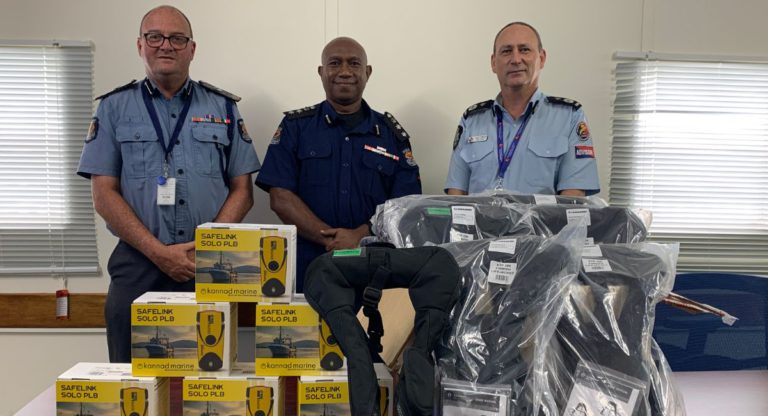
Extremists infiltrating online and gaming platforms to recruit young Australians

0

The AFP is urging parents and guardians to be mindful of who their children are interacting with online this holiday season, as extremists continue their attempts to recruit young people through popular chat and online forums including gaming platforms.

In the last two years, the AFP and our partners have experienced an increase in young people being investigated across several Australian state and territory jurisdictions, with individuals as young as 12 years of age adopting violent extremist ideologies.

The AFP is aware of groups and individuals with Ideologically Motivated Violent Extremism (IMVE) and Religiously Motivated Violent Extremism (RMVE) engaging with children online.

The AFP has observed extremists using popular online chats and other forums to recruit youth, with a recent increase in the use of gaming platforms, with some extremists creating their own platforms to disseminate propaganda, network, recruit and generate funds online.

Some of the games created by extremists feature virtual worlds where players must adhere to the rules and objectives of the simulation fitting a particular extremist ideological narrative.

AFP Assistant Commissioner Krissy Barrett said the warning to parents and guardians was timely as the holiday season approached, with many young people likely to receive technology-based gifts that enable online engagement through chats and gaming in addition to a having a significant amount of free time to engage with these platforms over this period.

“With more than 3.22 billion active gamers online around the world, these extremists are attempting to target a significant part of the global population to spread their views and propaganda with the aim of recruiting young people across popular platforms and games with the aim of encouraging them to adopt an extremist or radicalised view.”

“These extremist groups and individuals are using these gaming and online platforms as a mode to transmit violent material and propaganda, across a range of extremist ideologies,” Assistant Commissioner Barrett said.

Assistant Commissioner Barrett said the AFP have observed IMVE and RMVE individuals and groups were creating their own bespoke digital games and platforms to access potential recruit supporters.

“The AFP is aware that some of these extremists are building and releasing games that really are just a trojan horse to promote their worldview, blurring the reality of young users with the aim to radicalise them,” she said.

“We know that gaming and online chat and other platforms are being infiltrated by extremists so we are urging parents and guardians to keep a close watch on who your children may be engaging with online.”

Assistant Commissioner Barrett said the Joint Counter Terrorism Teams, located in each capital city and comprised of the AFP, state and territory police, ASIO and in NSW, the NSW Crime Commission, are working to prevent harm by extremists in our communities. 

“The AFP, together with our law enforcement partners across Australia and around the world, are collaborating to identify and unmask those extremists hiding behind the keyboard and attempting to solicit support and numbers for their violent and harmful causes,” said she said.

“We are urging anyone with information relating to concerning activity online to please come forward and help us keep our young people safe.”

Globally, AFP is aware of extremists who have sought out new supporters online to coerce them into undertaking violent extremism for their cause.

In recent years, extremists have created violent content within popular gaming platforms, including simulations depicting a recreation of the 2019 Christchurch terrorist attacks, aiming to expose gamers to violent ideologies, normalise violence and blur the reality of users, allowing them to undertake criminal acts within the game.

The AFP is aware of instances where individuals have re-created or depicted historical scenarios, related to their ideology in online gaming platforms. For example, we have seen on the gaming platform Roblox:

  • scenes from Nazi Germany including Nazi concentration camps
  • Chinese Communist re-education camps for Muslims
  • Islamic State style conflict zones and propaganda.

Another example of the infiltration of gaming platforms to push a political or ideological cause, is the recent use of Roblox (that has more than 65 million users on a daily basis with approximately 45% being 12 years of age or under) to host pro-Palestinian and Pro-Israel gatherings and rallies. In some instances, some players have resorted to violent means, attacking users with opposing views through the gaming platform.

When the online extremist community encourages and validates the young person, their interests, and their skills, it can become socially and emotionally reinforcing. Some commonalities that have been identified in recent investigations include diagnosis of a neuro-diverse or mental health condition, being raised in a disruptive, unstable or harmful environment, and experiencing social problems throughout their school life.

What should parents be looking out for (behavioural indicators of radicalisation)

Parents need to consider observing and interpreting their children’s behaviour online, like they do in the physical world. Signs to look out for include:

  • Distancing themselves from their usual friends and family members
  • An increase in the extremist nature of their rhetoric, or propaganda they propagate
  • Your child using hateful or emotionally-charged language
  • Developing a fixation on conspiracy theories or contentious social issues
  • Displaying extreme reactions to certain news or politics
  • Spending increasing amounts of time in fringe forums on the internet.

Steps for parents to take if their children are being exposed to radicalised material

  • Be aware of what they are doing in the online world, and help steer them toward mainstream sources of factual information, rather than forums and chat groups on the fringe of the Internet
  • Talk to your local police or the AFP – a lot of police have community engagement teams, or can direct you to people with experience in dealing with people holding extremist views
  • Speak to your children regularly about their online activities and interactions
  • Supervise your children – know what your child is doing online, who they are interacting with and what platforms, apps or games they are using
  • Be approachable if your child needs help – coming forward isn’t always easy and your child may feel reluctant to tell you about online issues if they believe they will be punished or have their devices taken away. This also makes children more secretive about device use and at greater risk of exploitation
  • Check privacy settings – we recommend you research and understand app settings, including privacy settings. This could include turning off location settings, setting profiles to private, or turning off chat functions
  • Know how to report an incident – if something goes wrong online, it is critical your child is supported. You need to know how to take action and report. If you think a child is in immediate danger call Triple Zero (000) or your local police (131 444). If you prefer to report anonymously, you can visit Crime Stoppers or call their toll free number 1800 333 000.

If anyone has any information or concerns about extremists engaging with their children online we urge them to take action and report. If you think a child is in immediate danger call Triple Zero (000) or your local police (131 444).

If you prefer to report anonymously, you can visit Crime Stoppers or call their toll-free number 1800 333 000.

Anyone with information about extremist activity or possible threats to the community should come forward, no matter how small or insignificant you think the information may be. The National Security Hotline is 1800 123 400.

Support Our Journalism

Global Indian Diaspora needs fair, non-hyphenated, and questioning journalism, packed with on-ground reporting. The Australia Today – with exceptional reporters, columnists, and editors – is doing just that. Sustaining this needs support from wonderful readers like you.

Whether you live in Australia, the United Kingdom, Canada, the United States of America, or India you can take a paid subscription by clicking Patreon. Buy an annual ‘The Australia Today Membership’ to support independent journalism and get special benefits.
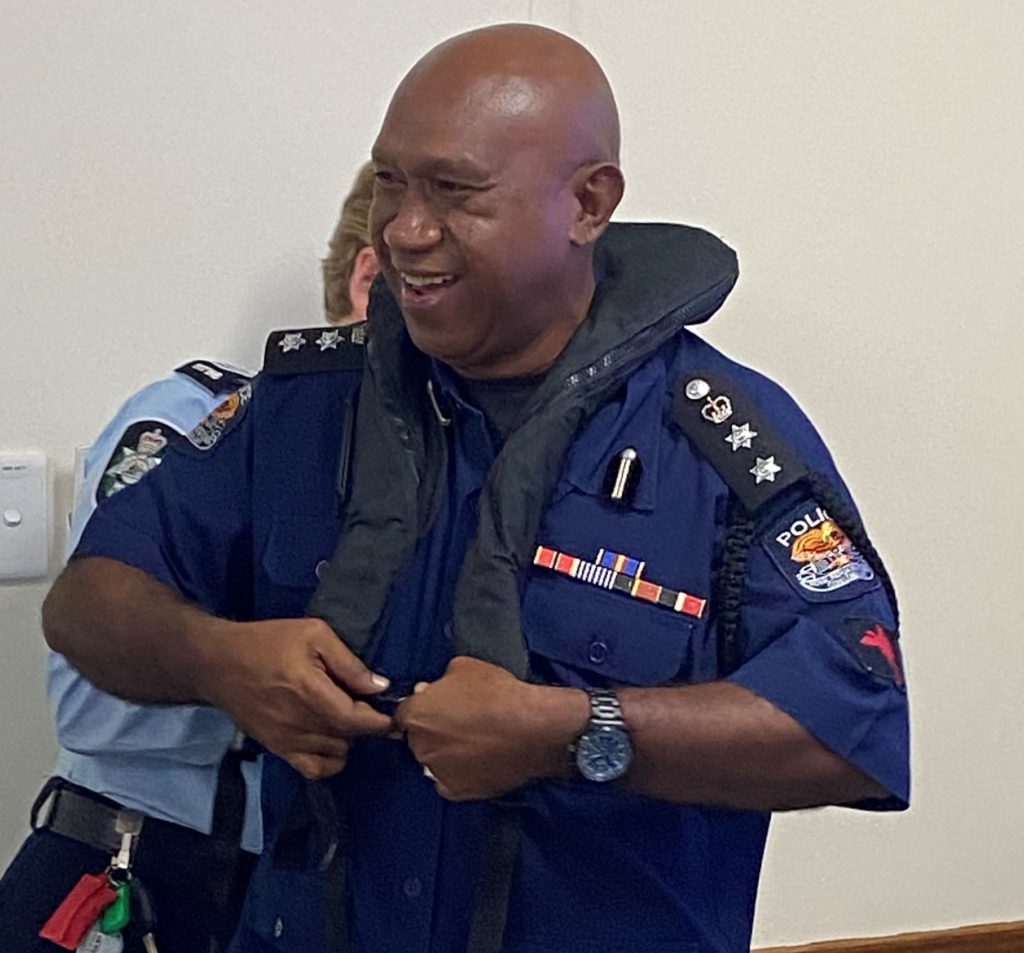
Yukta and Viliame announced ‘Most Outstanding Student of the Year’ in Pacific journalism

0

By MONIKA SINGH

FREEDOM of press is a cornerstone of any vibrant democracy and it’s our collective responsibility to safeguard and protect it, says Papua New Guinea’s Minister for Information and Communication Technology, Timothy Masiu.

Mr Masiu was chief guest at the 2023 University of the South Pacific Journalism Students Awards function in Suva on Friday where he announced a new era of co-operation between USP Journalism and PNG media fraternity in training, development and research.

Image: Papua New Guinea’s Minister for Information and Communication Technology, Timothy Masiu delivers his address. Image: STUDENT PHOTOGRAPHERS

The announcement was hailed by the Head of USP Journalism, Associate Professor Shailendra Singh who stated that it was a milestone event between news media in the two largest countries in Melanesia and the Pacific.

“Earlier this year USP Journalism signed a historic MoU with the PNG National Broadcasting Corporation (NBC) which has the full support of the Honourable Masiu and the general manager of NBC. It was an honour to welcome them to our awards night under the auspicious of the MoU to see how we can advance journalism through training and research in Fiji and PNG.

“We are very much encouraged by the Honourable Minister’s remark this evening,” said Dr Singh.

On his part Mr Masiu said the NBC could play an even more greater role in training and mentoring journalism students in the Pacific. He said in a region as rich and diverse as the Pacific, where cultures, languages, and perspectives converge, the role of journalism became even more crucial.

“The USP Journalism Awards not only recognises excellence in reporting, but also the commitment to ethical journalism, unbiased storytelling, and the pursuit of truth,” said Mr Masiu.

“In an era where information flows abundantly, the responsibility of journalists to uphold these principles has never been more critical.”

While recognising the hard work and dedication put in by the student journalists in their stories, Mr Masiu took the time to acknowledge the challenges that journalists face in the pursuit of truth through their stories.

“Today, we recognize the hard work, dedication, and exemplary storytelling that have emerged from the vibrant and diverse community of journalists who have made their mark within the USP.”

This year 16 students from the USP Journalism Program were recognised for their outstanding achievements in journalism. The awards this year were sponsored by the Fijian Broadcasting Corporation, The Fiji Times, Islands Business, FijiLive and Sports World.

“The journalists we celebrate today have embraced this responsibility with vigour, showcasing the power of words and the impact they can have on shaping our world,” said Mr Masiu.

Being a former journalist himself, Mr Masiu said the role of journalism as the 4th Estate cannot be understated; the role of journalism was pivotal in our society, serving as the watchdog, the voice of the voiceless, and the bridge that connects communities.

To the School of Journalism faculty heads and mentors who guided these aspiring journalists, Mr Masiu thanked them for their dedication to nurturing the next generation of storytellers.

“Your influence goes beyond the classroom; it shapes the future of journalism in the Pacific and beyond.”

Image: PINA president Kora Nou left, PNG’s Minister for Information & Communication Technology, Timothy Masiu and Head of the Journalism Program at USP, Associate Professor Dr Shailendra Singh, during the cheque presentation. Image: STUDENT PHOTOGRAPHERS

$10,000 support for USP Journalism Program

The event also included presentation of a $10,000 cheque by the PNG government to the USP School of Journalism program as part of the Memorandum of Understanding (MoU) singed between the University of the South Pacific (USP) School of Journalism and the PNG National Broadcasting Corporation (NBC) on June 19, 2023.

The minister described the collaboration as a testament to the recognition that the exchange of knowledge, resources, and expertise was essential in nurturing the next generation of journalists who will shape the narrative of our region.

Signifying more than just a formal agreement, he said the MoU represented a shared vision for the future of journalism training and mentoring in the Pacific.

“Through this collaboration, students will have the opportunity to engage with seasoned professionals, gaining insights into the ever-evolving landscape of journalism.

“I request that the USP School of Journalism or wider USP will have appropriate programs to upskill or re-train our deserving NBC staff who are non-journalists.”

Dr Singh acknowledged the support from the PNG government for the USP Journalism Program. He pointed out that the USP Journalism this was the longest running and most consistent journalism awards in the Pacific in any category. He paid tribute to the founder of the awards – Professor David Robie, adding that it would be good for journalism if national media awards were revived in Fiji and other regional countries.

“Journalists carry out a crucial function – sometimes it’s a thankless task. Our best journalists should be recognized and helped in their work,” said Dr Singh.

Image: Winners of the 2023 USP Journalism Awards with the PNG Minister for Information & Communication Technology, Timothy Masiu, seated centre, flanked by PINA president Kora Nou on his left and Head of the Journalism Program at USP, Associate Professor Dr Shailendra Singh, at the function on Friday. Image: Student Photographers

The winners of the 2023 USP Journalism Awards:

  • The Fiji Times Most Promising First-year Student: Riya Bhagwan
  • The Fiji Times Best News Reporting: Aralai Vosayaco and Nikhil Kumar
  • FBC Best Radio Student: Josepheen Tarianga
  • FBC Best Television Students: Nishat Kanti and Maretta Putri
  • Sports World Best Sports Reporting: Sera Navuga
  • Islands Business Best Feature Reporting: Prerna Priyanka and Viliame Tawanakoro
  • Islands Business Best Regional Reporting: Lorima Dalituicama
  • FijiLive Best Online Reporting: Brittany Nawaqatabu
  • FBC Most Outstanding Journalism Student of the Year: Yukta Chand and Viliame Tawanakoro

Awards sponsored by the Journalism Students Association:

  • Wansolwara Outstanding Reporting Award: Ema Ganivatu
  • Best Inclusive Award, Best Editorial Team, and Best Professional Award: Nikhil Kumar
  • Team player Award: Ivy Mallam
  • Students Choice Award – Andrew Naidu
  • Outstanding Social Service to USP Community – Rhea Kumar

This news article was first published in Wansolwara and has been republished here with the kind permission of the editor(s).

Support Our Journalism

Global Indian Diaspora needs fair, non-hyphenated, and questioning journalism, packed with on-ground reporting. The Australia Today – with exceptional reporters, columnists, and editors – is doing just that. Sustaining this needs support from wonderful readers like you.

Whether you live in Australia, the United Kingdom, Canada, the United States of America, or India you can take a paid subscription by clicking Patreon. Buy an annual ‘The Australia Today Membership’ to support independent journalism and get special benefits.
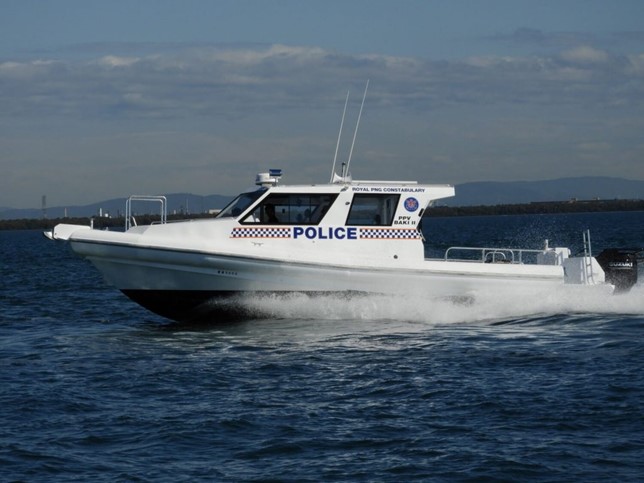
“Davey’s been absolute champion of Australian cricket”: Glenn Maxwell reacts to Johnson’s column on David Warner

0

Australia all-rounder Glenn Maxwell has refused to get drawn into the discussion over Mitchell Johnson’s explosive column on opener David Warner and instead opted to provide a shining endorsement for his fellow World Cup winner.

In his editorial published in the West Australian, the former speedster Johnson questioned why Warner has the authority to choose his retirement date despite his terrible form with the bat in Tests. Warner had stated his intentions to retire from the Test format earlier this year, stating that he would be keen to bring his career in red-ball format to an end at his home ground, the Sydney Cricket Ground (SCG).

As reported by ESPNcricinfo, when Johnson wrote an article in the West Australian questioning why Warner was getting a hero’s send-off in Test cricket despite his poor form and whether the chair of selectors Bailey was too close to the players, he sparked an extraordinary public slanging match among the former Australia teammates.

Despite refusing to comment on Johnson’s criticism of Warner, Maxwell praised the veteran Australia opener as a champion cricketer.

Maxwell said on Australian radio station SEN on Tuesday as quoted by ICC.

“I’m not going to throw my name into some headlines about this. But Davey’s been an absolute champion of Australian cricket for a long period of time and the selectors were pretty clear on what they thought of it (selecting him). I’m looking forward to seeing Davey in that first Test and him making a lot of runs this summer.”

Meanwhile, Maxwell is aware that he is better suited to the limited-overs format of the game, the 35-year-old believes he can still make an impact at Test level and wishes to remain in contention ahead of Australia’s last series of the current World Test Championship cycle.

“I’m quite understanding the circumstances of the current side. They’re playing some really good cricket, they’re World Test champions.

There’s not a lot of spots up for grabs as far as Tests at home, but I know that when it does come to a sub-continent tour I can be a real viable option to hopefully fill a role in that side. I don’t think there’s another sub-continent tour until early 2025. So, I’ll keep trying to plug away and hopefully get an opportunity at that stage,”

Maxwell said.

Australia will face Pakistan in a three-match Test series, with the first game starting on December 14.

Support Our Journalism

Global Indian Diaspora needs fair, non-hyphenated, and questioning journalism, packed with on-ground reporting. The Australia Today – with exceptional reporters, columnists, and editors – is doing just that. Sustaining this needs support from wonderful readers like you.

Whether you live in Australia, the United Kingdom, Canada, the United States of America, or India you can take a paid subscription by clicking Patreon. Buy an annual ‘The Australia Today Membership’ to support independent journalism and get special benefits.

Australia has its first framework for AI use in schools – but we need to proceed with caution

0

By Lucinda McKnight and Leon Furze

Federal and state governments have just released a national framework for generative AI in schools. This paves the way for generative AI – algorithms that can create new content – to be used routinely in classrooms around the country.

This provides much-needed guidance, a full year after the launch of ChatGPT. Over the past 12 months, schools have had a range of responses to the technology from outright banning to trying to incorporate it into learning.

What is in the framework and what is missing?

What is the framework?

The framework was agreed by state and federal education ministers in October and released publicly last week.

It is designed to help schools use generative AI “in a safe and effective way”. It notes it has “great potential to assist teaching and learning and reduce administrative workload in Australian schools”. But at the same time it warns of risk and consequences, including

the potential for errors and algorithmic bias in generative AI content; the misuse of personal or confidential information; and the use of generative AI for inappropriate purposes, such as to discriminate against individuals or groups, or to undermine the integrity of student assessments.

Federal Education Minister Jason Clare also stressed “schools should not use generative AI products that sell student data”.

What is in the framework?

The framework itself is just two pages long, and includes six overarching principles and 25 “guiding statements”. The six principles are:

  • teaching and learning, including schools teaching students about how these tools work, including their potential limitations and biases
  • human and social wellbeing, including using tools in a way that avoids reinforcing biases
  • transparency, including disclosing when tools are used and their impact
  • fairness, including access for people from diverse and disadvantaged backgrounds
  • accountability, including schools testing tools before they use them, and
  • privacy, security and safety, including the use of “robust” cyber-security measures.

The framework will be reviewed every 12 months.

Caution is needed

The framework does important work acknowledging opportunities of this technology, while noting the importance of wellbeing, privacy, security and safety.

However, some of these concepts are much less straightforward than the framework suggests. As experts in generative AI in education, we have moved from optimism to a much more cautious stance about this technology over the past 12 months. As UNESCO has recently warned,

the speed at which generative AI technologies are being integrated into education systems in the absence of checks, rules or regulations, is astonishing.

The framework puts an extraordinary onus on schools and teachers to do high-stakes work for which they may not be qualified or do not have time or funding to complete.

For example, the framework calls for “explainability” – but even the developers of AI models struggle to fully explain how they work.

The framework also calls on schools to do risk assessments of algorithms, design appropriate learning experiences, revise assessments, consult with communities, learn about and apply intellectual property rights and copyright law and generally become expert in the use of generative AI.

It is not clear how this can possibly be achieved within existing workloads, which we know are already stretched. This is particularly so when the nature and ethics of generative AI are complex and contested. We also know the technology is not foolproof – it makes mistakes.

Here are five areas we think need to be included in any further version of this framework.

1. A more honest stance on generative AI

We need to be clear that generative AI is biased. This is because it reflects the biases of its training materials, including what is published on the internet.

Such limited datasets are created largely by those who are white, male and United States or Western-based.

For example, a current version of ChatGPT does not speak in or use Australian First Nations words. There may be valid reasons for this, such as not using cultural knowledges without permission. But this indicates the whiteness of its “voice” and the problems inherent in requiring students to use or rely on it.

2. More evidence

The use of technology does not automatically improve teaching and learning.

So far, there is little research demonstrating the benefits of generative AI use in education. In fact, (a recent UNESCO report confirmed there is little evidence of any improvement to learning from the use of digital technology in classrooms over decades.

But we do have research showing the the harms of algorithms. For example, AI-driven feedback narrows the kinds of writing students produce and privileges white voices.

Schools need support to develop processes and procedures to monitor and evaluate the use of generative AI by both staff and students.

3. Acknowledging dangers around bots

There is long-standing research demonstrating the dangers of chatbots and their capacity to harm human creativity and critical thinking. This happens because humans seem to automatically trust bots and their outputs.

The framework should aim to clarify which (low-stakes) tasks are and are not suitable for generative AI for both students and teachers. High stakes marking, for example, should be completed by humans.

4. Transparency

So far, the framework seems to focus on students and their activities,

All use of generative AI in schools needs to be disclosed. This should include teachers using generative AI to prepare teaching materials and plan lessons.

5. Acknowledging teachers’ expertise

The global education technology (“edtech”) market was estimated to be worth about US$300 billion (A$450 billion) as of 2022. Some companies argue edtech can be used to monitor students’ progress and take over roles traditionally done by teachers.

Australia’s national education policies need to ensure teachers’ roles are not downgraded as AI use becomes more common. Teachers are experts in more than just subject matter. They are experts in how to teach various disciplines and in their students’ and communities’ needs.

Lucinda McKnight, Senior Lecturer in Pedagogy and Curriculum, Deakin University and Leon Furze, PhD Candidate, Deakin University

This article is republished from The Conversation under a Creative Commons license. Read the original article.

Support Our Journalism

Global Indian Diaspora needs fair, non-hyphenated, and questioning journalism, packed with on-ground reporting. The Australia Today – with exceptional reporters, columnists, and editors – is doing just that. Sustaining this needs support from wonderful readers like you.

Whether you live in Australia, the United Kingdom, Canada, the United States of America, or India you can take a paid subscription by clicking Patreon. Buy an annual ‘The Australia Today Membership’ to support independent journalism and get special benefits.

RBA decides to hold interest rates, bringing relief amidst ongoing economic challenges

0

The Reserve Bank of Australia’s (RBA) latest decision to maintain the cash rate at 4.35% has come as a relief, with critics pointing to a potentially cautious approach in the face of significant economic uncertainties. The RBA, citing “limited information” since November’s hike as being “broadly in line with expectations”, opted for a status quo, drawing mixed reactions from various sectors.

Last month, the RBA raised interest rates by 25 basis points, marking a shift in its monetary policy after four months of steady rates. This move was driven by concerns over slower-than-anticipated progress in reining in inflation, which remains outside the 2 to 3 per cent target range.

Despite below-trend growth, the economy had shown unexpected strength in the first half of the year, with a spike in underlying inflation and a still-tight labor market. The decision to increase rates was seen as a precautionary measure against the risk of sustained high inflation.

However, the RBA’s latest decision to hold rates might raise eyebrows. Critics argue that the central bank may be overly cautious, potentially underestimating the resilience of inflation, particularly in the services sector. The October Consumer Price Index (CPI) indicated a moderation in goods inflation, but there was little information on services inflation, which is a crucial component of the economy.

The bank’s stance on wage growth has also been a point of contention. Although wage growth picked up in the September quarter, it is not expected to surge further and is deemed consistent with the inflation target. This assumption hinges on the expectation of increased productivity, which some critics view as overly optimistic given the current economic climate.

Another significant concern is the impact of high inflation on the general populace.
Inflation is straining household budgets, eroding savings, and exacerbating income inequality. The RBA’s decision to hold rates is seen as a balancing act – trying to moderate inflation without unduly stifling economic growth. However, some experts argue that this approach might be too passive in the face of persistent inflationary pressures, potentially leading to more significant economic challenges in the future.

The uncertainties surrounding the global economic environment, especially the situation in China and the effects of international conflicts, add to the complexities of the RBA’s policy-making. Domestically, the tight labor market, uncertain household consumption, and the lagged effects of monetary policy also pose significant challenges.

The RBA’s commitment to returning inflation to the target range remains firm, but its methods and pace are under critical examination. The possibility of further tightening of monetary policy will depend on evolving data and risk assessments. The Board’s future decisions are expected to be influenced by global economic trends, domestic demand, and the outlook for inflation and the labor market.

While the RBA remains determined to control inflation, its decision to hold rates steady has been met with criticism from those who argue for a more proactive approach to address the persistent inflationary pressures and their broader impact on the Australian economy.

Support Our Journalism

Global Indian Diaspora needs fair, non-hyphenated, and questioning journalism, packed with on-ground reporting. The Australia Today – with exceptional reporters, columnists, and editors – is doing just that. Sustaining this needs support from wonderful readers like you.

Whether you live in Australia, the United Kingdom, Canada, the United States of America, or India you can take a paid subscription by clicking Patreon. Buy an annual ‘The Australia Today Membership’ to support independent journalism and get special benefits.
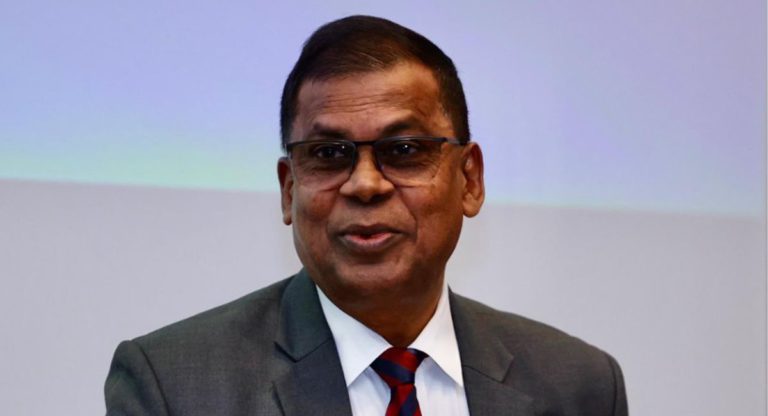
18 Australians arrested, millions in stolen cash returned to victims in international money mule sting

0

Eighteen Australians accused of being money mules have been charged as part of an international law enforcement operation that has seen more than $2.6 million in stolen money returned to victims across the country.

The AFP-led Joint Policing Cybercrime Coordination Centre (JPC3), which includes all state and territory police, coordinated the Australian arrests in partnership with state and territory law enforcement, as part of the annual Europol-led European Money Mule Action 9 (EMMA9).

EMMA9 is a joint international operation committed to identifying and disrupting money laundering operations.

Money mules are people who are knowingly or unknowingly recruited by money laundering syndicates and then used by those syndicates to transfer stolen money in and out of their own accounts in order to make the funds appear legitimate to authorities.

The AFP used intelligence gained from other cybercrime investigations and last year’s EMMA8 investigations to develop targets for the two-month campaign.

The alleged Australian offenders, who were arrested as part of nationally coordinated investigations, were arrested by police in Queensland, New South Wales, Victoria, South Australia, the Northern Territory and Western Australia.

The alleged money mules were all arrested between October and November, 2023. The 18 Australians have been charged with various offences, including proceeds of crime offences, and could face a potential maximum penalty of 20 years’ imprisonment.

Internationally EMMA9 saw 27 law enforcement agencies arrest more than 1000 people, along with 474 alleged money mule recruiters identified. Nearly 32 million euros in losses were prevented, including $2.6 million in stolen cash returned to Australian victims.

AFP Assistant Commissioner Cyber Command Scott Lee said criminal syndicates attempt to attract money mules through a variety of forms, including through romance scams and fake job advertisements.

“Recruiters will lie and tell potential money mule recruits that their actions are totally legitimate – but they are not. We want to warn Australians that if you are transferring potentially stolen money, you are committing an offence and could be looking at serious jail time,” Assistant Commissioner Lee said.

“Money mules could be transferring someone’s stolen life savings or house deposit. Criminals need legitimate bank accounts to transfer their illicit wealth into and they will use any tactic to dupe people into doing their dirty work.”

State and territory law enforcement also served 70 warning letters to people suspected of being money mules.

“Many of these investigations remain active and ongoing and the AFP, along with our law enforcement partners are not ruling out further arrests as a result of EMMA9 and the money mule crackdown we have seen this year,” said Assistant Commissioner Lee.

Police investigations also uncovered evidence of further cybercrime, including business email compromise, business investment scams and sextortion.

“These Australian arrests highlight that the AFP, together with its state, territory and international law enforcement partners has delivered a significant disruption to the organised crime syndicates seeking to use money mules as a way to hide their ill-gotten wealth.”

These alleged criminals are stealing from hardworking Australians and aiding these criminal operations. We are grateful that under joint international operation EMMA9 that millions of dollars belonging to Australian victims of cybercrime has been returned.

Victoria Police Detective Superintendent Tim McKinney, Cybercrime Division said organised criminals seek out unknowing Australians to utilise their legitimate Australian bank accounts to move money from a compromised account out of the country quickly.

“By routing it through a legitimate account held in Australia, it helps to obfuscate the flow of money, making it difficult to track,” Det. Supt. McKinney said.

“Unfortunately, the reality is that people transferring these funds are money mules, and these scams are a cover for criminals’ money laundering efforts. The funds that people are being asked to move are the proceeds of other criminal thefts, such as those facilitated by sextortions, text messaging and email scams, virtual kidnappings, fake job advertisements or even romance scams.

“Money mules, even unsuspecting ones, should understand that they are complicit in serious crimes, and will be targeted accordingly.”

Tasmania Police Crime and Intelligence Commander Ian Whish Wilson said working in partnership with AFP, last month Tasmania Police recovered $150,000 lost from a local business which had been the victim of a business email compromise scam.

“Tasmania Police also served three mule disruption notices to local residents, who had received money through online scams. We will continue to work with our interstate and international partners to disrupt this sort of illegal activity, and protect Tasmanians from harm,” said Commander Whish Wilson.

Queensland Police Service Crime and Intelligence Detective Acting Superintendent Kerry Lofdahl the said is committed to working with our law enforcement and industry partners to prevent, disrupt and respond to people engaged in money laundering.

“Money laundering is an insidious crime where the criminal orchestrators profit from using the personal bank details of Australians to advance other serious criminal activity including drug and human trafficking, and financing terrorist activity globally,” said Det. Acting Supt Lofdahl.

“The community need to proactively protect their personal data to ensure they do not unwittingly participate in money laundering and do not under any circumstances, allow third parties to move money through their accounts.”

NSW Police Force Cybercrime Command’s Detective Superintendent Matthew Craft said results achieved both nationally and internationally highlight the important relationships law enforcement have developed to prevent and disrupt money mules.

“EMMA 9 is one of the largest joint international operations of its type and the results achieved are outstanding,” Det. Supt Craft said. 

“The collaboration between the finance industry and law enforcement to stop money mules has never been better, so the message to anyone wishing to engage in this type of activity is to reconsider or be caught.”

 The AFP-led JPC3 is a partnership between the AFP, Australian State and Territory policing agencies, foreign law enforcement, government and the private sector that was established in March 2022 to effectively combat cybercrime impacting Australians.

If you are a victims of cybercrime you should report using ReportCyber at Cyber.gov.au.

Support Our Journalism

Global Indian Diaspora needs fair, non-hyphenated, and questioning journalism, packed with on-ground reporting. The Australia Today – with exceptional reporters, columnists, and editors – is doing just that. Sustaining this needs support from wonderful readers like you.

Whether you live in Australia, the United Kingdom, Canada, the United States of America, or India you can take a paid subscription by clicking Patreon. Buy an annual ‘The Australia Today Membership’ to support independent journalism and get special benefits.
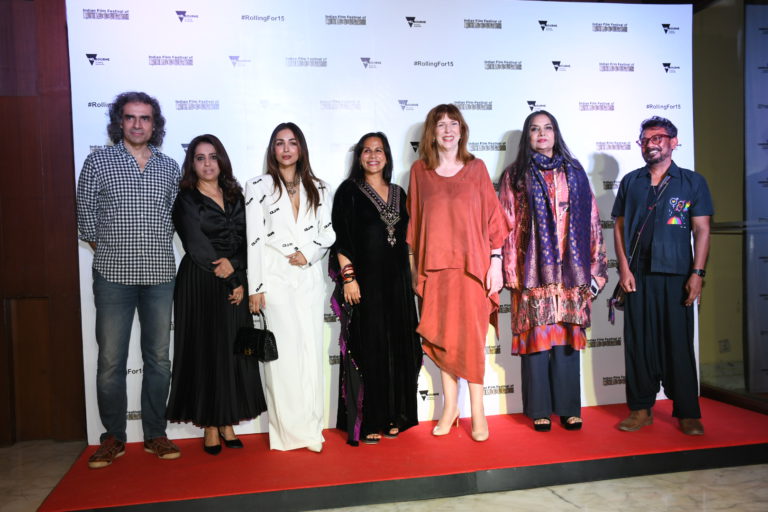
Israel issues travel warning for Australia amidst growing antisemitism fears

0

Israel has warned its citizens to reconsider travelling to Australia over fears of antisemitism.

This warning at Level 2 also includes the UK, France, Germany, Brazil, Argentina, and Russia.

The Israeli National Security Council (NSC) feels that there are increased antisemitic incidents and attempted attacks against Jews due to its action against Hamas in Gaza.

The NSC said in a statement:

“For Israeli citizens traveling abroad, we recommend choosing their destinations wisely, while exercising recommended precautionary measures wherever they are, and examining their conduct in light of the recommendations.”

The Australian Jewish Association (AJA) said in a statement via Twitter that it “is concerned by the news Israel has raised its threat level against travel to Australia & some other countries. … Jews, including Jewish visitors should feel safe in this beautiful country.”

Menachem Vorchheimer, Melbourne-based advocate for human rights, tweeted: “Memo to @AlboMP it’s NOT a badge of honour when Australia is deemed dangerous for Jews!”

In Australia, three men were charged after a 45-year-old man was allegedly spat on and assaulted at a pro-Palestinian rally outside Sydney’s Opera House.

Earlier, pro-Palestinians also allegedly targeted a Melbourne hotel where family members of murder victims and hostages of the Hamas’ terrorist attack had been staying.

Deputy Prime Minister Richard Marles, acknowledging the recent spike in hateful behavior, observed there was “no place” for antisemitism and Islamophobia in Australian society.

“It is really important that for those in the Jewish community and those in the Islamic community, Australians are looking after everyone. That has to be the basis upon which everyone expresses their legitimate right to freedom of expression but to do that in a safe and peaceful way.”

Simon Birmingham, Opposition foreign affairs spokesperson, told Sky News that the increased travel warning from Israel was a terrible stain on Australia.

“The idea that Jewish people or Israeli citizens would somehow have to take extra precautions in visiting Australia because of the rise of anti-Semitism … is something that must be tackled at the highest levels.”

The Australian government has also advised its citizens and permanent residents to reconsider travel to Israel and Gaza due to the “volatile security situation, including the threat of terrorism, armed conflict and civil unrest.”

Israel has also raised the warning for many countries in Africa and central Asia to Level 3. While, countries including New Zealand, Denmark, Switzerland, and the United States remain on Level 1. The higher level indicates that citizens of Israel should take additional precautions while visiting.

Support Our Journalism

Global Indian Diaspora needs fair, non-hyphenated, and questioning journalism, packed with on-ground reporting. The Australia Today – with exceptional reporters, columnists, and editors – is doing just that. Sustaining this needs support from wonderful readers like you.

Whether you live in Australia, the United Kingdom, Canada, the United States of America, or India you can take a paid subscription by clicking Patreon. Buy an annual ‘The Australia Today Membership’ to support independent journalism and get special benefits.
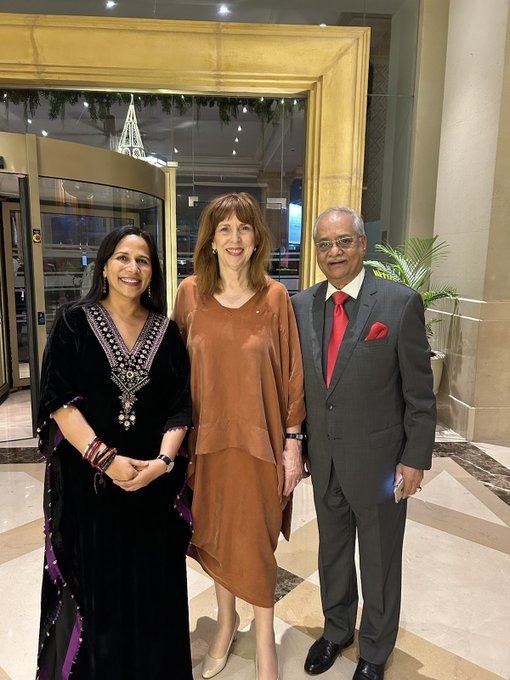
Essential that we don’t lose knowledge of Ayurveda says public health expert Prof Jon Wardle

0

Swami Vivekananda Cultural Centre in Sydney [part of Indian Council for Cultural Relations (ICCR)] recently celebrated Ayurveda Day in Sydney.

The event saw talks by Prof Jon Wardle, Professor of Public Health and Director of National Centre for Naturopathic Medicine, Souther Cross University and Nick Irani Director of Operations and Brand Development, Subtle Energies at the Consulate General of India in Sydney.

Speaking with The Australia Today Prof Wardle said that it was essential that we don’t lose knowledge of Ayurveda as a lot of our new knowledge comes from that.

Prof Jon Wardle speaking with Pallavi Jain

Nick Irani told us about aromatherapy in Ayurveda and mentioned herbs like turmeric, tulsi, mogra and jatamansi.

Nick Irani speaking with Pallavi Jain

Following this there was another celebration around Ayurveda Day organised by Dr. Naveen Shukla, President of the Australasian Association of Ayurveda (AAA).

The event was attended by distinguished guests, including former Lord Mayor and Councillor Sameer Pandey, Deputy Mayor Sandhya Reddy, and former Deputy Mayor and Councillor Barbara Ward at PHIVE Parramatta on 23rd November.

The event, presided over by Dr. Naveen Shukla, featured an array of discussions and presentations by experts in the field of Ayurveda. Keynote Speaker, Prof. Dennis Chang, Director of NICM gave insights into the pivotal role of Ayurveda in modern lives.

Dr. Shukla himself shed light on the importance of Ayurveda Day, emphasizing the deep-rooted significance of this ancient holistic science in today’s world. The history of AAA and Ayurveda was presented by Dr. Vishal Sharma, highlighting the association’s journey.

Among the speakers were Dr. Raj Kumar Sharma, who explored the wonders of turmeric, showcasing its benefits. Dr. Rafeena Kidavintavida elucidated on well-being in Ayurveda, providing a comprehensive understanding of holistic health practices. The global perspective on Ayurveda was presented by Dr. Dilip Gosh, offering insights into its globalization and universal relevance.

The Australasian Association of Ayurveda (AAA) is an organization dedicated to promoting and preserving the ancient science of Ayurveda in the Australasian region. AAA aims to foster a deeper understanding and integration of Ayurvedic principles for holistic health and well-being.

Ayurveda Day is celebrated each year on Dhanawantari Jayanti or Dhanteras (the birth anniversary of the Hindu God of Medicine Dhanawantari). The day falls on the Trayodashi (thirteenth day) of Krishna Paksha (waning moon) in the Kartik month (eight month) of the Hindu Calender, two days before Diwali.

Disclaimer: All content in the article is for general information only. For any information related to Ayurveda please consult your health professionals.

Support Our Journalism

Global Indian Diaspora needs fair, non-hyphenated, and questioning journalism, packed with on-ground reporting. The Australia Today – with exceptional reporters, columnists, and editors – is doing just that. Sustaining this needs support from wonderful readers like you.

Whether you live in Australia, the United Kingdom, Canada, the United States of America, or India you can take a paid subscription by clicking Patreon to support independent journalism.

‘The Labor family is broken-hearted’: Albanese pays tribute to Peta Murphy, dead at 50

0

By Michelle Grattan

The Labor member for the Victorian seat of Dunkley, Peta Murphy, has died aged 50 after a long struggle with cancer.

Murphy was in the House of Representatives as recently as last week, asking a question on Tuesday about housing.

Her bravery throughout her illness has been greatly admired by her parliamentary colleagues. She has been a strong advocate for breast cancer sufferers – her solidarity publicly reinforced by her decision not to wear a wig.

A highly emotional Anthony Albanese paid tribute to Murphy at a Monday news conference, saying “the Labor family is broken-hearted”.

Murphy died at home surrounded by her family including her husband Rod and her parents.

“Peta Murphy was brave, she was courageous, and she was loved,” Albanese said. “Peta Murphy was the strongest of local members, the most inspiring of colleagues. And the very best kind of friend.

“To attend a community event with Peta was to bask in her glow.”

“She helped lead the charge for important reforms like reducing the harm from online gambling, because she understood the greatest privilege of public office is the opportunity to make a difference.

“From the squash court to the law courts, to the House of Representatives, everything that Peta Murphy did she did with her whole heart.”

Albanese said that together with the Breast Cancer Network Australia, Murphy advocated for a national registry for metastatic cancer patients – she’d travelled to Canberra last week to launch the national report.

Murphy was elected in 2019; around the time she was sworn in, she found out her cancer had returned.

Albanese recalled the words of her first speech to parliament when she said, “I’m neither unique nor alone in the fight I’m about to take on.”

The prime minister said it was “the best first speech I have ever heard. And what a fighter she was”.

Before entering parliament Murphy worked as a lawyer and as a political staffer.

Opposition leader Peter Dutton said: “Peta was someone who was highly respected across Parliament. As a solicitor, barrister and senior public defender, Peta saw people at their complete lows. It was those experiences which motivated her to seek political office and play a part in championing holistic approaches to breaking the cycle of disadvantage and dysfunction”.

Nationals leader David Littlepoud said Murphy’s “commitment to public duty was exemplary and admirable”.

Peta Murphy 1; Image Source; The Australia Today

Former Liberal member for Dunkley, Bruce Billson, who retired before the 2016 election, tweeted, “The passing of Peta Murphy is a tragic loss for her family, friends, the Dunkley community and our nation. A generous heart with a sincere commitment to service. My thoughts and condolences go to Peta’s loved ones. Dunkley has lost a warrior for our community”.

Murphy’s death will trigger a byelection in Dunkley, in Melbourne, which is on a margin of 6.27%.  

Michelle Grattan, Professorial Fellow, University of Canberra

This article is republished from The Conversation under a Creative Commons license. Read the original article.

Support Our Journalism

Global Indian Diaspora needs fair, non-hyphenated, and questioning journalism, packed with on-ground reporting. The Australia Today – with exceptional reporters, columnists, and editors – is doing just that. Sustaining this needs support from wonderful readers like you.

Whether you live in Australia, the United Kingdom, Canada, the United States of America, or India you can take a paid subscription by clicking Patreon. Buy an annual ‘The Australia Today Membership’ to support independent journalism and get special benefits.
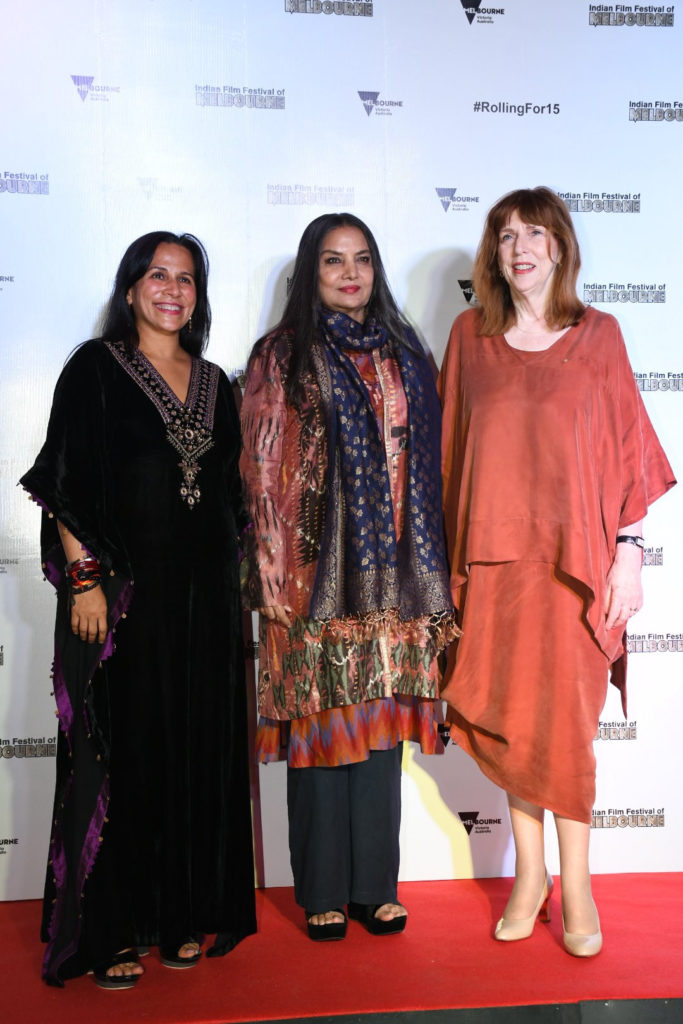
Indian Australian Dave Sharma Sworn in as Senator, Bringing Diverse Experience to Federal Parliament

0

Today marked a significant moment in Australian politics as Dave Sharma was officially sworn in as a senator for New South Wales in the Federal Parliament. Mr Sharma fills the vacancy created by the resignation of former Senator Marise Payne of the Liberal Party, bringing a wealth of experience and a diverse background to his new role.

A distinguished parliamentary and diplomatic career marks Sharma’s journey to the Senate. Elected to the House of Representatives for Wentworth, New South Wales, in 2019, Sharma served until his defeat at the 2022 general elections. His selection by the Parliament of New South Wales on 30 November 2023, under section 15 of the Constitution, is a testament to his expertise and reputation within the Liberal Party and beyond.

Senator Dev Sharma; Image Source: X/Twitter @AuSenate
Senator Dave Sharma; Image Source: X/Twitter @AuSenate

During his tenure in the House of Representatives, Sharma contributed significantly through various committee services. He was a part of the House of Representatives Select Committee on Social Media and Online Safety from December 2021 to March 2022, and the Standing Committee on Industry, Innovation, Science, and Resources from July 2019 to April 2022. Additionally, he served on the Joint Select Committee on the Implementation of the National Redress Scheme and the Joint Standing Committees on Foreign Affairs, Defence and Trade, and Treaties, where he was Chair from July 2019 to April 2022.

Sharma’s extensive experience extends beyond parliamentary roles.
He holds a Master’s degree from the University of Cambridge and a Master’s in International Relations from Deakin University. His career has spanned significant diplomatic and advisory positions, including Senior Civilian Adviser with the Peace Monitoring Group in Bougainville, Papua New Guinea, in 2000, and Third Secretary at the Australian High Commission in Port Moresby from 2001 to 2003.

Senator Dev Sharma; Image Source: X/Twitter @AuSenate
Senator Dave Sharma; Image Source: X/Twitter @AuSenate

He also served as an Adviser to the Minister for Foreign Affairs, Hon. Alexander Downer, from 2004 to 2006, and as a Political Counsellor at the Australian Embassy in Washington, USA, from 2006 to 2009. Sharma’s diplomatic credentials were further solidified during his tenure as Assistant Secretary in the International Division at the Department of Prime Minister and Cabinet from 2010 to 2012 and as Assistant Secretary in the Africa Branch at the Department of Foreign Affairs and Trade from 2012 to 2013. His appointment as the Australian Ambassador to Israel from 2013 to 2017 highlights his extensive experience in international relations.

Before entering the Federal Parliament, Sharma also contributed to the private sector as a Director at Kelly + Partners from 2018 to 2019. His contributions to public service have been recognised with the Australian Service Medal in 2000.

Senator Dev Sharma; Image Source: X/Twitter @AuSenate
Senator Dave Sharma; Image Source: X/Twitter @AuSenate

As a senator, Sharma’s diverse background in foreign affairs, defence, trade, and parliamentary committee work positions him uniquely to contribute to the Australian Senate’s legislative and inquiry processes. His appointment is seen as a positive step towards bringing a more varied and experienced perspective to the Australian Federal Parliament.

Support Our Journalism

Global Indian Diaspora needs fair, non-hyphenated, and questioning journalism, packed with on-ground reporting. The Australia Today – with exceptional reporters, columnists, and editors – is doing just that. Sustaining this needs support from wonderful readers like you.

Whether you live in Australia, the United Kingdom, Canada, the United States of America, or India you can take a paid subscription by clicking Patreon. Buy an annual ‘The Australia Today Membership’ to support independent journalism and get special benefits.
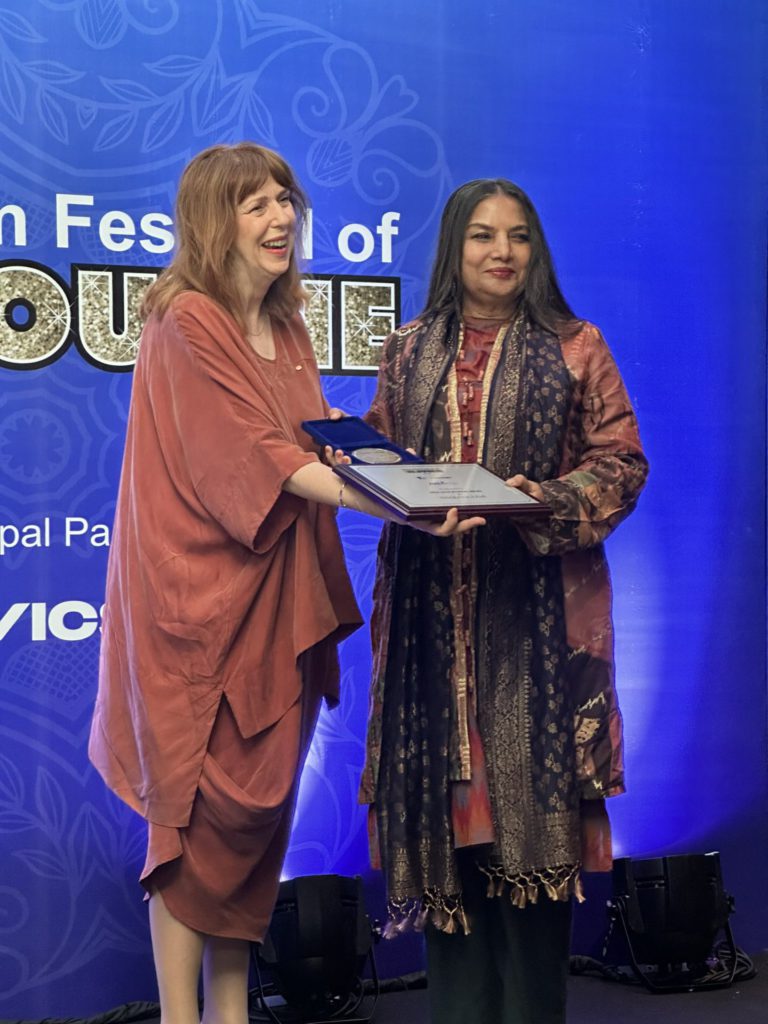
Here’s a chance to join the AFP under its biggest PSO recruitment drive

0

The AFP has launched one of its biggest Protective Service Officer (PSO) recruitment drives, searching for people who want a new rewarding and exciting career.

The AFP is aiming to recruit hundreds of additional officers to be stationed across Australia in both metropolitan cities and regional areas, while also offering opportunities to work overseas as part of the agency’s global operations.

PSOs provide an armed first-response capability at locations across the country, including Parliament House in Canberra, major Australian airports, Defence locations and other places of critical infrastructure. While many stations are in capital cities, there are regional bases at Pine Gap, Geraldton and Exmouth.

The role of a PSO is to prevent, deter and respond to threats against protection interests and national security threats. This includes providing protection and support for national and international deployments, including during major emergencies and events. 

PSOs are among the 100 additional AFP members deployed to Solomon Islands in November to support the Royal Solomon Islands Police Force (RSIPF) with security operations for the 2023 Pacific Games.

Commander Specialist and Protective Strategy Coordination, Stephen Fry said the AFP needed an unprecedented boost to its PSO ranks because of expanding operations, resulting in one of the biggest recruitment drives undertaken by the law enforcement agency.

“Protective Service Officers are on the frontline for the AFP’s national security response as well as a range of other emergency and operational incidents,” Commander Fry said.

“We’re searching for new recruits who want a chance to serve and protect their local and national communities, with roles available across Australia in remote and metropolitan locations. We’re looking for people who want a career that values fitness and good health, people who have a sense of adventure and are open to seeing more of our beautiful country.

“The role offers flexibility between work and time off, plus the advantage of knowing your shifts a year in advance.”

Commander Fry said the AFP was committed to fostering a diverse and inclusive workforce to ensure the AFP was a future-ready police organisation.

“The AFP is looking for a diverse range of applicants – there isn’t just one type of person who is perfect for the PSO role,” Commander Fry said.

“Diversity is a core element of modern policing. Not only does it ensure AFP members reflect the community we serve, but it also allows the AFP to build and maintain community trust, and strengthens our capacity to effectively respond to local, national and international challenges.

“If you have been thinking of a career change – this is your time, the AFP values the experience people bring from a variety of professions and backgrounds.”

Commander Fry said the AFP’s message to potential recruits was that now was the time to join the AFP for an exciting and meaningful new career that would provide a sense of purpose and camaraderie.

“As a PSO there’s no chance of being caught behind a desk – you’re our boots on the ground, working with important people across Australia and the world in an extremely rewarding career, protecting the community,” he said.

New recruits will join the more than 800 AFP PSOs who play a key frontline role in protecting the community and Commonwealth infrastructure.

The AFP has launched a new video showcasing the work of PSOs across Australia.

Bailey has shown how quickly the AFP can take your career to an exciting direction. After graduating earlier in 2023 – he has already been deployed to Solomon Islands, helping Royal Solomon Islands Police Force (RSIPF) deliver a safe and secure Pacific Games.

Bailey said the opportunity to go to the 2023 Pacific Games in the Solomon Islands allowed me the opportunity to work with so many people with different experiences within the AFP.

“Working with PSO’s, Federal Agents and ACT Policing was a great way to get exposure to the opportunities that are presented within the AFP and to network with people all over the country,” he said.

“This experience presented the opportunity to work alongside our partners like the Navy and Australian Army, meeting new people in different organisations and learning more about the Australian Defence Force.

“Engaging with locals in Honiara has been a big highlight, people with a whole different lifestyle and way of living that puts into perspective the diversity of these Pacific Islands.”

Bailey said seeing the culture represented at the opening ceremony through cultural dances and the emotion they showed was really cool to see.

“We assisted the Royal Solomon Islands Police Force in their duties for the Games and it was awesome to engage with them and get to know some of them as well,” he said.

In late November, PSOs stationed at Melbourne Headquarters Dulai Wurrung attended Holy Trinity Primary School in Eltham North with AFP Assistant Commissioner Hilda Sirec as part of a special school engagement opportunity

The school students sent the AFP more than 50 letters, thanking police for their work.  

AFP members visited the school to thank the young children for their letters and speak to them about the work police do and how the AFP helps to protect the community and keep Australians safe. 

PSOs assisted the AFP Community Liaison Team (CLT) to present to the young prep students, while demonstrating the capabilities of the AFP PSO vehicle. The young potential recruits also tried on AFP PSO uniforms and were treated to a puppet show.

PSOs are a crucial element to the AFP’s frontline presence in the community and engagements in public, including special events. 

Image: AFP PSO at Geraldton (Source: AFP)

Kurt is the officer in charge of the AFP PSOs at Geraldton.

Kurt was at university studying aquaculture when his mum showed him a newspaper ad for the former Australian Protective Service, which is now the AFP’s Protective Service.

“The training course was in Canberra, which was somewhere I had never been and the AFP was going to pay me to travel there to study – I thought ‘sweet’,” he said.

He graduated in 1990 and has worked in multiple places around Australia and been deployed overseas during his career.

Kurt, now 51, has been working in Geraldton since 2016.

“The best parts of the job include the opportunity to work with some great people and contribute to important national security outcomes. I’ve also had the opportunity to move around Australia and deploy overseas, so I’ve been paid to see the world.”

Kurt said he wanted to particularly encourage people already living in Geraldton, Exmouth or surrounding towns to apply for the roles.

“It is an asset to have local applicants who already enjoy living in a town and have accommodation and support networks in place,” he said.

“However the AFP provides assistance to people who do relocate.”

He said Geraldton was a great place to work and live.

“It is not that far from Perth but a lot less traffic and there are great sporting and leisure activities. The base has an active social club and we all get along really well.”

He urged other people to consider a career as PSO.

“Give it a crack and make the most of wherever you end up, for however long you are there,” he said.

“There is always opportunity for personal growth and skills enhancement and there are promotional opportunities if you want them and work for them.”

Interested persons can apply to join as a PSO recruit in 2024, with multiple courses scheduled at the AFP College. To learn more visit www.afp.gov.au/jobs.

Support Our Journalism

Global Indian Diaspora needs fair, non-hyphenated, and questioning journalism, packed with on-ground reporting. The Australia Today – with exceptional reporters, columnists, and editors – is doing just that. Sustaining this needs support from wonderful readers like you.

Whether you live in Australia, the United Kingdom, Canada, the United States of America, or India you can take a paid subscription by clicking Patreon. Buy an annual ‘The Australia Today Membership’ to support independent journalism and get special benefits.
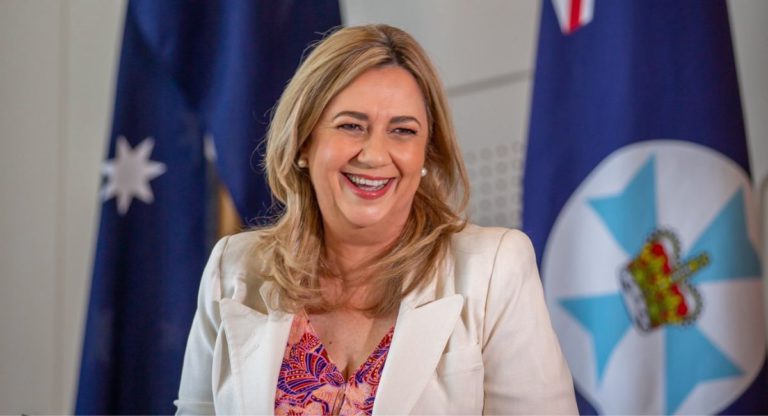
The news is fading from sight on big social media platforms – where does that leave journalism?

0

By Merja Myllylahti

According to a recent survey by the News Media Association, 90% of editors in the United Kingdom “believe that Google and Meta pose an existential threat to journalism”.

Why the pessimism? Because being in the news business but relying on social media platforms and search engines has become very risky. The big tech companies are de-prioritising news content, making it harder for citizens to find verified information produced by journalists.

It is arguable the threat isn’t necessarily existential. News companies are also leaving social media platforms, potentially claiming back some control and building resilience into their revenue models.

Leading New Zealand digital publisher Stuff, for example, recently decided to stop posting its content on X (formerly Twitter), “except stories that are of urgent public interest – such as health and safety emergencies”.

But as I describe in my new book, From Paper to Platform, news organisations that continue to conduct their news business via these platforms will have limited control. As social media companies and search engines change the terms of their services at will, news companies are left to deal with the consequences.

Risks of ‘platformed publishing’

Platforms such as Google and Facebook play various roles in the modern media ecosystem. Consequently, their actions create multiple risk points for news media. The impacts differ, of course, depending on each news company’s own goals and strategies.

As one Scandinavian study of media risk management noted, “platforms pose a competitive threat to news organisations”. But that threat varies, depending on how news organisations respond, and how reliant they are on those platforms for audience reach or funding.

News companies distribute their content on platforms such as Facebook or X because that’s where their audience is – at least a large proportion of it, anyway. But news is poorly promoted by those platforms, and Google and Facebook admit news makes up only a tiny fraction of their overall content.

Furthermore, the visibility of news within these platforms is rapidly declining. The result is described by the authors of The Power of Platforms as “platformed publishing”:

a situation where some news organisations have almost no control over the distribution of their journalism because they publish primarily to platforms defined by coding technologies, business models, and cultural conventions over which they have little influence.

As a recent Wired article observed, “Facebook is done with news”: its parent company Meta is “killing off the News tab in France, Germany and the UK”, having already temporarily blocked access to news content in Australia in 2021 and more recently in Canada where the blackout continues.

Instagram’s new Threads app (also owned by Meta) has no appetite for hard news, Google’s search results offer less news, and X has stopped showing news headlines and links on tweets.

Weakening democracy

The New Zealand news publishers I spoke to generally believe platform algorithms don’t prioritise factual news content. As one observed, the “platforms have the control over algorithms”. Another noted how platforms “can bury or promote you as they like, their tweaks in algorithms determine your fate”.

This has real consequences beyond the impact on media metrics and advertising revenue. Platforms have an influence on democratic processes – including elections.

The same News Media Association survey quoted at the start of this article also reveals 77% of UK editors believe platform antics such as news blackouts will weaken democratic societies.

When people cannot access (or have limited access to) verified and trusted news, other things fill the void. The Israel-Gaza conflict, to take just the most recent example, has seen an increase in disinformation on X – to the extent the European Union’s digital rights chief warned owner Elon Musk he was potentially breaching EU law.

Terms of payment

There has been some cause for optimism recently due to Google and Facebook becoming funders of journalism and news, having been either mandated or coerced to pay publishers for their content.

Australia was the first to introduce a law requiring platforms to compensate news companies, followed by Canada. The previous New Zealand government introduced a similar bill to parliament, but there is no certainty it will become law under the new administration.

In Australia and Canada, the platforms implemented news “blackouts” in their services as a response to these laws, effectively making news invisible to their users.

And while these platform payments have brought additional revenue to many news publishers, the terms of the payments are not public. It’s hard to estimate how much Google and Facebook have actually paid for news content, but it has been estimated in Australia to be A$200 million annually.

If that sounds substantial, consider this: a recent US study suggested Google and Meta should be paying far more than they do, estimating Facebook owes news publishers US$1.9 billion and Google US$10-12 billion annually.

It’s hard to see those platforms agreeing to such figures, or increasing any payments for news. More likely, the payments will gradually dwindle as Google and Meta continue prioritising other services and products over news.

Newsrooms will likely have to say goodbye to platformed publishing and social media news distribution. It’s clear it isn’t working as well as many hoped, and it will almost certainly not work in the long term.

Merja Myllylahti, Senior Lecturer, Co-Director Research Centre for Journalism, Media & Democracy, Auckland University of Technology

This article is republished from The Conversation under a Creative Commons license. Read the original article.

Support Our Journalism

Global Indian Diaspora needs fair, non-hyphenated, and questioning journalism, packed with on-ground reporting. The Australia Today – with exceptional reporters, columnists, and editors – is doing just that. Sustaining this needs support from wonderful readers like you.

Whether you live in Australia, the United Kingdom, Canada, the United States of America, or India you can take a paid subscription by clicking Patreon. Buy an annual ‘The Australia Today Membership’ to support independent journalism and get special benefits.

Links between Albanese and Modi are very very strong says Trade and Tourism Minister Don Farrell

0

The Australia India Business Council (AIBC) recently hosted their annual address and gala dinner. Minister for Trade and Tourism, Don Farrell, was the keynote speaker at the event.

Minister Farrell, Indian High Commissioner to Australia, Manpreet Vohra, Parliamentary Friends of India Chair, Dr Andrew Charlton, AIBC National Chair and Australia-India CEO Forum Director, Jodi McKay, and AIBC National Associate Chair, Irfan Malik, all spoke about the importance of the bilateral relationship between the two countries.

Speaking with The Australia Today, Minister Farrell told Pallavi Jain that the relationship between Australia and India had never been stronger and the links between PM Albanese and Indian PM Modi were very very strong. He also said that the AI-ECTA free trade agreement between Australia and India had already delivered double the amount of trade between Australia and India over just the last ten months.

Parliamentary Friends of India Chair and Member for Parramatta, Dr Charlton told The Australia Today that we need to recognise the qualifications, skills and education of the diaspora so that they can make as big a contribution to Australia and support them to be as successful as we can. He also said that that the Australia India relationship has moved from acquaintances to friendship but now we need to move to partnership.

AIBC National Chair Jodi McKay once again emphasised on the need to further energise the economic-investment ecocystem between the two countries.

The event also saw the launch of the first Indigenous business roadmap for the Australia India relationship led by Indu Balachandran.

Ms McKay said that the ‘First Nations Roadmap’ is our commitment to being part of the education journey, as we recognise and celebrate Australia’s First Nations’ peoples, their history, and their place in trade and economy.

India-born cricketer Nikhil Chaudhary to debut for Hobart Hurricanes

0

Tasmania’s Hobart Hurricanes has announced the signing of India-born Nikhil Chaudhary to their KFC Big Bash League|13 squad.

27-year-old Nikhil is a former U19 National representative for India and now lives in Queensland.

He is thrilled to be a part of the Big Bash League and play for the Hurricanes.

“My first goal when I moved to Australia was to be playing in the Big Bash. I would describe myself as a finisher, I’ll be there at the end in the last couple of overs scoring a couple of big ones and finishing the game for the team that will be my goal for this year.”   

On Nikhil’s selection, Salliann Beams, Cricket Tasmania High-Performance General Manager, observed:

“Hopesy [James Hopes] put Nikhil’s name forward earlier in the year, and ever since then he hasn’t stopped scoring runs, Nikhil has always batted 5, 6, 7 and he knows it so well… hopefully he’ll get his chance.”

Nikhil has dominated the domestic T20 competition for the past few seasons averaging 44.8 with the bat at a strike rate of 164.3. He is an ace batsman dubbed as ‘a run-scoring machine’ with a unique hitting style. He will join Hurricanes in the middle to lower batting order and can help with leg-spin bowling as well.

Image: Nikhil Chaudhary signs with the Hobart Hurricanes poster shirt t-shirt-white (Source: clickone)

To commemorate this momentous occasion, the Hobart Hurricanes have released a special poster shirt featuring Chaudhary’s name and signature.

Chaudhary will Corey Anderson (o/s) Iain Carlisle, Tim David, Paddy Dooley, Nathan Ellis, Sam Hain (o/s) Peter Hatzoglou, Caleb Jewell, Chris Jordan (o/s) Ben McDermott, Riley Meredith, Mitch Owen, Billy Stanlake, Matthew Wade, Sam Heazlett, and Mac Wright as Hurricanes currently contracted for BBL|13.

Support Our Journalism

Global Indian Diaspora needs fair, non-hyphenated, and questioning journalism, packed with on-ground reporting. The Australia Today – with exceptional reporters, columnists, and editors – is doing just that. Sustaining this needs support from wonderful readers like you.

Whether you live in Australia, the United Kingdom, Canada, the United States of America, or India you can take a paid subscription by clicking Patreon. Buy an annual ‘The Australia Today Membership’ to support independent journalism and get special benefits.

Artificial intelligence is already in our hospitals. 5 questions people want answered

0

By Stacy Carter, Emma Frost, Farah Magrabi, and Yves Saint James Aquino

Artificial intelligence (AI) is already being used in health care. AI can look for patterns in medical images to help diagnose disease. It can help predict who in a hospital ward might deteriorate. It can rapidly summarise medical research papers to help doctors stay up-to-date with the latest evidence.

These are examples of AI making or shaping decisions health professionals previously made. More applications are being developed.

But what do consumers think of using AI in health care? And how should their answers shape how it’s used in the future?

What do consumers think?

AI systems are trained to look for patterns in large amounts of data. Based on these patterns, AI systems can make recommendations, suggest diagnoses, or initiate actions. They can potentially continually learn, becoming better at tasks over time.

If we draw together international evidence, including our own and that of others, it seems most consumers accept the potential value of AI in health care.

This value could include, for example, increasing the accuracy of diagnoses or improving access to care. At present, these are largely potential, rather than proven, benefits.

But consumers say their acceptance is conditional. They still have serious concerns.

1. Does the AI work?

A baseline expectation is AI tools should work well. Often, consumers say AI should be at least as good as a human doctor at the tasks it performs. They say we should not use AI if it will lead to more incorrect diagnoses or medical errors.

2. Who’s responsible if AI gets it wrong?

Consumers also worry that if AI systems generate decisions – such as diagnoses or treatment plans – without human input, it may be unclear who is responsible for errors. So people often want clinicians to remain responsible for the final decisions, and for protecting patients from harms.

3. Will AI make health care less fair?

If health services are already discriminatory, AI systems can learn these patterns from data and repeat or worsen the discrimination. So AI used in health care can make health inequities worse. In our studies consumers said this is not OK.

4. Will AI dehumanise health care?

Consumers are concerned AI will take the “human” elements out of health care, consistently saying AI tools should support rather than replace doctors. Often, this is because AI is perceived to lack important human traits, such as empathy. Consumers say the communication skills, care and touch of a health professional are especially important when feeling vulnerable.

5. Will AI de-skill our health workers?

Consumers value human clinicians and their expertise. In our research with women about AI in breast screening, women were concerned about the potential effect on radiologists’ skills and expertise. Women saw this expertise as a precious shared resource: too much dependence on AI tools, and this resource might be lost.

Consumers and communities need a say

The Australian health-care system cannot focus only on the technical elements of AI tools. Social and ethical considerations, including high-quality engagement with consumers and communities, are essential to shape AI use in health care.

Communities need opportunities to develop digital health literacy: digital skills to access reliable, trustworthy health information, services and resources.

Respectful engagement with Aboriginal and Torres Strait Islander communities must be central. This includes upholding Indigenous data sovereignty, which the Australian Institute of Aboriginal and Torres Strait Islander Studies describes as:

the right of Indigenous peoples to govern the collection, ownership and application of data about Indigenous communities, peoples, lands, and resources.

This includes any use of data to create AI.

This critically important consumer and community engagement needs to take place before managers design (more) AI into health systems, before regulators create guidance for how AI should and shouldn’t be used, and before clinicians consider buying a new AI tool for their practice.

We’re making some progress. Earlier this year, we ran a citizens’ jury on AI in health care. We supported 30 diverse Australians, from every state and territory, to spend three weeks learning about AI in health care, and developing recommendations for policymakers.

Their recommendations, which will be published in an upcoming issue of the Medical Journal of Australia, have informed a recently released national roadmap for using AI in health care.

That’s not all

Health professionals also need to be upskilled and supported to use AI in health care. They need to learn to be critical users of digital health tools, including understanding their pros and cons.

Our analysis of safety events reported to the Food and Drug Administration shows the most serious harms reported to the US regulator came not from a faulty device, but from the way consumers and clinicians used the device.

We also need to consider when health professionals should tell patients an AI tool is being used in their care, and when health workers should seek informed consent for that use.

Lastly, people involved in every stage of developing and using AI need to get accustomed to asking themselves: do consumers and communities agree this is a justified use of AI?

Only then will we have the AI-enabled health-care system consumers actually want.

Stacy Carter, Professor and Director, Australian Centre for Health Engagement, Evidence and Values, University of Wollongong; Emma Frost, PhD candidate, Australian Centre for Health Engagement, Evidence and Values, University of Wollongong; Farah Magrabi, Professor of Biomedical and Health Informatics at the Australian Institute of Health Innovation, Macquarie University, and Yves Saint James Aquino, Research Fellow, Australian Centre for Health Engagement, Evidence and Values, University of Wollongong

This article is republished from The Conversation under a Creative Commons license. Read the original article.

"The

Support Our Journalism

Global Indian Diaspora needs fair, non-hyphenated, and questioning journalism, packed with on-ground reporting. The Australia Today – with exceptional reporters, columnists, and editors – is doing just that. Sustaining this needs support from wonderful readers like you.

Whether you live in Australia, the United Kingdom, Canada, the United States of America, or India you can take a paid subscription by clicking Patreon. Buy an annual ‘The Australia Today Membership’ to support independent journalism and get special benefits.
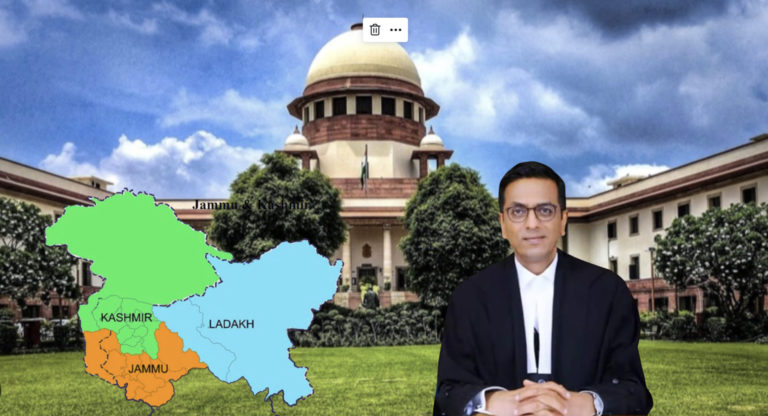
AFP providing meaningful employment opportunities to neurodivergent talent

0

The AFP has received a boost to its workforce thanks to the rollout of a new recruitment initiative for skilled neurodivergent individuals.

The Dandelion Program aims to connect talented neurodivergent people, specifically Autistic individuals, with meaningful employment opportunities while combatting skill shortages and creating more inclusive workplaces.

The AFP launched the program in July this year, welcoming six new starters and a neurodiversity consultant to its Covert and Technical Operations (CTO) branch.

This branch is comprised of specialised areas that provide covert and technical support to AFP investigations, including data and digital surveillance collection.

Image AFP Dandelion Program (Source: AFP)

The AFP’s Dandelion Program participants each demonstrated a strong technical aptitude during the recruitment assessment and successfully entered a two-year traineeship with the AFP Digital Surveillance Collection Team.

AFP Commander Rob Nelson said that the Dandelion Program had provided a welcomed boost to workforce talent at the AFP.

“The rollout of the Dandelion Program has been a game changer for the AFP. It has enabled us to recruit a range of enthusiastic individuals who are passionate about the AFP and law enforcement, and keeping Australians safe.”

The roles will allow the new recruits to further develop their already demonstrated innate abilities in software development and data analytics skills to support the AFP’s world-leading digital surveillance and data analytics programs.

The traineeship program is managed by DXC IT, which oversees the selection, recruitment and support of trainees for AFP roles.

AFP Commander Nelson added:

“It’s a fantastic partnership. We have seen incredible success with the new participants who have joined our ranks. This initiative has also provided specialised recruitment and support services for members of the neurodivergent community find fulfilling careers.”

Throughout the program the trainees gain vocational experience at the AFP while DXC supports participants with life and work skills.

Image AFP Dandelion Program (Source: AFP)

After the traineeship, the AFP then has the opportunity to employ the members full-time.

Participants in the Dandelion Program are fully supported by the AFP to undertake their role.

Participants are provided with a Neurodiversity Consultant who assists them with relevant skills to help them adapt to the work environment. This means individuals who are part of the Dandelion Program at the AFP are supported every step of the way.

Through the Dandelion Program, the AFP ensures trainees are offered confidential and customised one-to-one workplace support, guidance, coaching, counselling, and training to navigate the workplace.

The AFP plans to open the Dandelion Program to more commands across the AFP next year.

Support Our Journalism

Global Indian Diaspora needs fair, non-hyphenated, and questioning journalism, packed with on-ground reporting. The Australia Today – with exceptional reporters, columnists, and editors – is doing just that. Sustaining this needs support from wonderful readers like you.

Whether you live in Australia, the United Kingdom, Canada, the United States of America, or India you can take a paid subscription by clicking Patreon. Buy an annual ‘The Australia Today Membership’ to support independent journalism and get special benefits.

Opium imports into Australia from Pakistan, India and United Kingdom on the rise

0

The AFP is seizing significant amounts of opium amid concerns criminal groups in Australia are using connections in the United Kingdom, India and Pakistan to source the illicit drug.

The AFP seized 155kg from more than 125 attempted imports of opium via air, parcel and sea cargo since January 2023.

Image: Operation WILLOWBANK (Source: AFP)

The 155kg is more than double the amount seized in 2022, and about six times the amount seized in 2021. The AFP, together with its law enforcement partners, has seized more than 300kg of the drug since 2020.

AFP Commander Paula Hudson said opium imports were rare in Australia, but law enforcement had recorded an increase in the number of seizures at the border over the past year.

“Drug addiction has a profound impact on individuals and the wider community. The AFP, together with our state, territory and Commonwealth law enforcement partners, is committed to preventing the significant harm caused to our community as a result of these illicit drug imports.”

Commander Hudson said:

“We’re reminding criminals that we not only seizing the drugs but arresting alleged offenders who are connected to the imports. We will continue to work to target your illicit operations, identify you and bring you to justice.”

Image: Operation WILLOWBANK (Source: AFP)

ABF Commander Maritime and Enforcement South Clinton Sims said illicit drug shipments are being seized at Australia’s border at record levels, and that the ongoing dedication and expertise of ABF officers ensures deadly drugs do not enter the Australian community.

“Organised crime groups who are seeking to import illicit drugs should know that we will protect the integrity of the Australian border.”

Commander Sims said:

“The technical expertise of our officers and the sophisticated technology we use means that we will find the drugs, regardless of the concealment methods criminals’ use. The Australian border is a strategic national asset and is fundamental to our national security, economic prosperity and way of life.”

AFP intelligence has identified transnational serious crime syndicates are stepping up their attempts to conceal illicit substances, including opium, within objects in hopes of evading law enforcement. This includes impregnating opium resin inside items set to be imported into Australia.

Opium resin is a sticky dark-brown gum that can consumed as a liquid or powder and can be smoked, eaten and made into a tincture for drinking. Use of opium carries a high risk of addiction and overdose.

Image: Operation WILLOWBANK (Source: AFP)

In July 2023, an Australian man and Iranian man appeared before the court charged with facilitating the importation of opium into Australia from Iran.

The men, aged 38 and 41, were arrested by AFP officers in Melbourne after they allegedly attempted to collect a container containing 23 opium-impregnated mats from a storage facility in Epping on 27 June 2023.

Both men were charged with importing a border-controlled substance and attempting to possess a border-controlled substance.

The men will face the Melbourne Magistrates’ Court again on 19 December. They are facing a maximum penalty of 10 years’ imprisonment if found guilty.

The following services provide people with access to support and information.

  • For free and confidential advice about alcohol and other drug treatment services call the National Alcohol and Other Drug Hotline on 1800 250 015.
  • Access free 24/7 drug and alcohol counselling online at counsellingonline.org.au.
  • For information about drug and alcohol addiction treatment or support, go to turningpoint.org.au.

Support Our Journalism

Global Indian Diaspora needs fair, non-hyphenated, and questioning journalism, packed with on-ground reporting. The Australia Today – with exceptional reporters, columnists, and editors – is doing just that. Sustaining this needs support from wonderful readers like you.

Whether you live in Australia, the United Kingdom, Canada, the United States of America, or India you can take a paid subscription by clicking Patreon. Buy an annual ‘The Australia Today Membership’ to support independent journalism and get special benefits.

Extra senators for ACT and NT will benefit left but increase malapportionment

0

By Adrian Beaumont

The Poll Bludger has summarised the final report of the Joint Standing Committee on Electoral Matters (JSCEM) that was released Monday. The most contentious recommendation is that the number of senators for both the ACT and the Northern Territory be increased from two to four.

In the current 76-member Senate, every state has 12 senators, with half elected at a normal election for the House of Representatives and half the Senate. In a special double dissolution election, all senators are up for election. The ACT and NT have two senators each, with all their senators up at every House election.

Elections use proportional representation with preferences. At a half-Senate election, the quota for election is one-seventh of the vote or 14.3% in a state. In the ACT and NT, the quota is one-third or 33.3%.

The Australian Constitution requires all states to have the same number of senators, so Tasmania is greatly overrepresented. Analyst Kevin Bonham wrote in July 2022 that Tasmania has 21 senators per million people while New South Wales has only 1.5 senators per million people.

Australia overall has three senators per million people, the NT eight and the ACT 4.4. So both territories are already overrepresented in the Senate. Doubling the number of ACT and NT senators would increase the NT’s senators per million people to 16 and the ACT’s to 8.8.

Proponents of more territory senators compare territory representation to Tasmania. But doubling the number of territory senators will increase Senate “malapportionment” – this term is used to describe situations where unequal numbers of people elect parliamentarians.

JSCEM did not recommend staggered terms, so all four NT and ACT senators would be up for election at every House election. The quota for election would drop from one-third to one-fifth or 20%.

For the left to get a 2–0 split in the ACT, they currently need about a 67–33 winning margin over the right. When David Pocock and Labor’s Katy Gallagher won the two ACT senators in 2022, it was the first time the ACT had not split 1–1 between the major parties.

With four senators, a 60–40 left win would be enough for the left to take three of these four. Bonham said that every federal election since 2007 would have given the left a 3–1 split of ACT senators. So the left would benefit from this increased malapportionment.

The four senators from the NT would be expected to split 2–2 between the left and right.

Essential poll: just a one-point lead for Labor

A federal Essential poll, conducted November 22–26 from a sample of 1,151, gave Labor a 48–47 lead including undecided (49–47 last fortnight). Primary votes were 34% Coalition (steady), 31% Labor (down one), 13% Greens (up one), 7% One Nation (steady), 1% UAP (down one), 8% for all Others (steady) and 6% undecided (up one).

If 2022 election preference flows were used, Labor would be further ahead. But respondent preferences from Essential have been weaker for Labor in the last few months than at the 2022 election.

By 47–42, voters disapproved of Anthony Albanese’s performance, a reversal of a 46–43 approval in October. Peter Dutton’s net approval improved four points to -3. This is the first time in Essential Albanese’s net approval has been negative since he became PM and also the first time he has trailed Dutton on net approval.

The Coalition led Labor by 33–25 on managing the economy and 28–25 on reducing cost of living pressures. Labor led the Coalition by 37–19 on supporting higher wages. Over 65% thought the government’s performance on cost of living and housing affordability was either below average or poor.

Respondents were read a detailed question on the stage three tax cuts that said those earning $200,000 would receive over a $9,000 tax reduction a year, while those earning $60,000 would only receive a $375 reduction.

On these tax changes, 41% said they should be revised so they mostly benefit those on low and middle incomes, 22% said they should go ahead for those earning under $200,000 but be deferred for those earning over $200,000 until conditions improve, 20% said they should go ahead as planned in July 2024 and 16% said they should not go ahead at all.

The problem with this detailed question is that the vast majority of voters would be unfamiliar with the detail of the stage three tax cuts, and could be persuaded by a broken promises campaign from the Coalition if Labor dumped or revised these cuts.

Morgan poll and additional Newspoll question

In the best poll news for Labor since the early November Resolve poll, a federal Morgan poll, conducted November 20–26 from a sample of 1,379, gave Labor a 52.5–47.5 lead, a three-point gain for Labor since last week.

Primary votes were 35% Coalition (down 2.5), 32% Labor (up 2.5), 13.5% Greens (steady), 5% One Nation (down 1.5), 9% independents (up two) and 5.5% others (down 0.5).

In an additional question from this week’s Newspoll that had a 50–50 tie, 50% said they and their family were worse off than two years ago, 16% better off and 34% about the same.

Victorian Mulgrave byelection final results

A Victorian state byelection occurred in Mulgrave on November 18. This seat was previously held by former Labor premier Daniel Andrews. Primary votes were 40.2% Labor (down 10.8% since the 2022 election), 21.7% Liberals (up 4.5%), 18.8% for right-wing independent Ian Cook (up 0.8%), 6.0% Greens (up 0.9%), 3.6% Victorian Socialists (new), 3.1% Family First (up 1.1%) and 2.9% Libertarian (new).

ABC election analyst Antony Green has details of the preference flow. Although Cook was 2.9% behind the Liberals on primary votes, preference flows from the Libertarians and Family First put Cook 0.4% behind the Liberals, and he surpassed the Liberals on preference leakage from the Socialists and Greens to finish 0.4% ahead of them at the point where one was excluded.

Labor then defeated Cook after preferences by 56.5–43.5, a 4.3% swing to Cook since the 2022 election. The electoral commission also provided a two party Labor vs Liberal measure, which showed that if the Liberals had made the final two, Labor would have won by 54.7–45.3, a 5.5% swing to the Liberals.

Adrian Beaumont, Election Analyst (Psephologist) at The Conversation; and Honorary Associate, School of Mathematics and Statistics, The University of Melbourne

This article is republished from The Conversation under a Creative Commons license. Read the original article.

"The

Support Our Journalism

Global Indian Diaspora needs fair, non-hyphenated, and questioning journalism, packed with on-ground reporting. The Australia Today – with exceptional reporters, columnists, and editors – is doing just that. Sustaining this needs support from wonderful readers like you.

Whether you live in Australia, the United Kingdom, Canada, the United States of America, or India you can take a paid subscription by clicking Patreon. Buy an annual ‘The Australia Today Membership’ to support independent journalism and get special benefits.
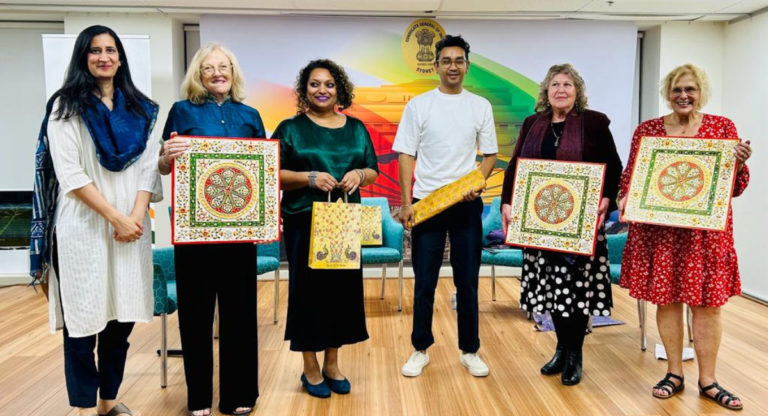
Three men sentenced for attempted murder of Kiwi radio host Harnek Singh who challenged Khalistanis

0

Three religious fundamentalists have been convicted of the attempted murder of an Auckland-based popular radio host Harnek Singh.

Sukhpreet Singh, 44-year-old, was found guilty of being an accessory, and Sarvjeet Sidhu, 27-year-old, pleaded guilty to attempted murder.

One man is an Auckland resident and has been given one of the longest possible prison sentences for the crime, reports NZ Herald.

During the hearing, Judge Mark Woolford observed that community protection and a strong message of deterrence were both necessary for this case.

“It bears all the hallmarks of religious fanaticism. … Sentencing in this context requires a different approach. The emphasis must be placed on protecting the community from further violence and it is essential to send a strong message of deterrence to others.”

Image: Harnek Singh (Source: Instagram)

Radio host Harnek Singh, also known as Nekki, suffered more than 40 stab wounds as he was ambushed by a group of religious fundamentalists in the driveway of his home on December 23, 2020.

Harnek Singh had been followed by three cars full of men and was stabbed “within an inch of his life”.

He locked the door of his ute and began pounding on the horn, attracting the attention of neighbours as the attackers bashed in his window.

The police told the court that Mr Singh would have bled to death from his extensive stab wounds.

As a result of the attack, Harnek Singh required over 350 stitches to his head and upper body and multiple surgeries.

Image: Harnek Singh attacked and stabbed multiple times in his driveway in Wattle Downs in December 2020 (Source: NZ Herald)

Earlier, Avtar Singh, a former bodybuilder, told the court he used to be friends with the man with name suppression. He soon stopped associating with the man whom he labelled a “thug” and “mafia” in 2018: “He has a way around people, especially broken people.”

Avtar’s friend Baljinder told the court he’d been asked to kill Harnek, but declined. He added that on December 23, Jaspal Singh rang him: “Job is done, he’s no longer going to be on the radio.”

It is also reported that there is a 48-year-old defendant (with interim name suppression) who wasn’t present when the attack occurred. This man, the court was told, harboured a years-long resentment against Hranek Singh as the popular Kiwi radio host was vocal against the Khalistan.

Harnek Singh told the courtroom that his opinions regarding Sikhism probably fall more along the liberal end of the spectrum while the majority of his critics were more on the fundamentalist or conservative side.

Harnek Singh’s victim impact statement was read aloud by prosecutors:

“My family faces fear each day when the sun goes down. My wife and child wonder if someone is lurking in the shadows, looking into our home, wanting to attack us again … We went from a carefree, spontaneous and fun-loving family to one that is constantly in fear for my safety.”

Harnek Singh encourages his family not to live in fear and thanked the New Zealand justice system for making sure that “no one is above the law, not even religion.”

Further in his victim statement addressing the defendants directly, Harnek Singh observed:

“You came to kill me. …You tried to silence me. You wanted to send a chilling message to all those who express their disagreement with your unorthodox religious views. But you failed. …I will continue to express my opinions and beliefs as I always have.”

He added:

“The only chilling message you have managed to send is to people with the same views and opinion as yours that actions have consequences and that in a country like New Zealand, the law does not bend for you if your wrongful acts are in the name of God.”

Crown prosecutor Luke Radich argued that the nature of the case and the defendant’s role required the maximum possible starting point of 14 years.

“If this is not amongst the most serious cases of its type, then what is? It could not have been more pre-meditated … and [the defendant] was the architect of it.”

It is reported by NZ Herald that Harnek Singh’s words resonated with the judge and he repeated them as he sentenced the defendant.

Sarvjeet Sidhu was sentenced to nine-and-a-half years’ imprisonment and Sukhpreet Singh was sentenced to six months of home detention. 

Image: Jobanpreet Singh and Sukhpreet Singh (Source: NZ Herald)

Justice Woolford said that the 48-year-old Auckland man planned the “hit” and influenced others to recruit henchmen to do his bidding.

A sentence of 13-and-a-half years was imposed, with a minimum period of imprisonment of nine years before he can begin applying for parole. The maximum sentence for attempted murder in New Zealand is 14 years.

The judge said that as the defendant has served time on electronically monitored bail while awaiting his lengthy trial in September and October, he deserved a six-month credit.

Two men, Jagraj Singh and Gurbinder Singh, were acquitted as there wasn’t enough evidence against them and two others, Jobanpreet Singh and Hardeep Singh Sandhu, still await sentencing early next year for the attempted murder of Harnek Singh. 

Support Our Journalism

Global Indian Diaspora needs fair, non-hyphenated, and questioning journalism, packed with on-ground reporting. The Australia Today – with exceptional reporters, columnists, and editors – is doing just that. Sustaining this needs support from wonderful readers like you.

Whether you live in Australia, the United Kingdom, Canada, the United States of America, or India you can take a paid subscription by clicking Patreon. Buy an annual ‘The Australia Today Membership’ to support independent journalism and get special benefits.
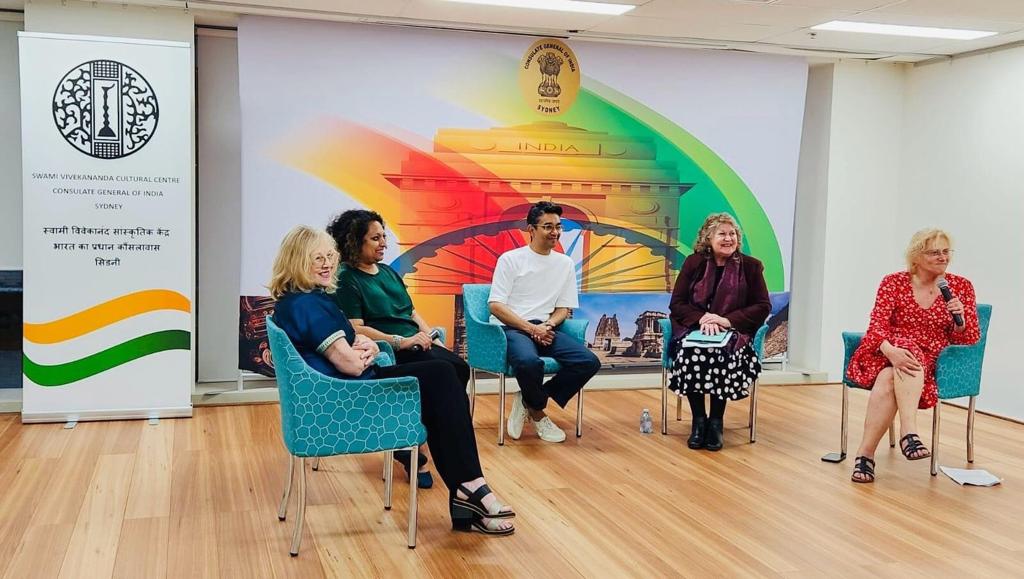
Historic Gender Balance Achieved in Victorian Parliament: A Leap Forward for Women’s Representation

0

In a landmark achievement for gender equality, the Victorian Parliament has, for the first time in history, an equal number of male and female parliamentarians, with 64 women and 64 men. This milestone is particularly significant as the state is currently led by Premier Jacinta Allan, a woman at the helm of Victorian politics.

Minister for Women, Natalie Hutchins, expressed her pride in being part of a government that not only champions women’s leadership but also demonstrates it through action.

“As the Minister for Women in a government led by a woman, I am thrilled to see that 56 per cent of our caucus and 68 per cent of ministries are held by women,”

Minister Hutchins stated.

She emphasised the effectiveness of quotas and affirmative action in achieving such milestones, highlighting that these measures lead to “better policies and better outcomes for the whole of Victoria.”

This parity in representation is a significant stride towards equal opportunities for women in all fields, including politics. The balanced representation in the Victorian Parliament serves as a powerful example of what can be achieved when deliberate and structured efforts are made to level the playing field for women. It demonstrates a commitment to not only acknowledging but actively addressing the historical under-representation of women in political leadership roles.

Premier Jacinta Allan’s leadership exemplifies the increasing influence of women in shaping the political and social landscape of Victoria. Her role as the Premier, along with the significant representation of women in the government, sends a strong message about the importance of diversity in leadership positions.

Minister Hutchins further elaborated on the government’s commitment to gender equality with the introduction of ‘Our Equal State,’ Victoria’s new Gender Equality Strategy and Action Plan. This comprehensive plan includes 110 actions across the government to advance gender equality, showcasing a holistic and ambitious approach to tackling gender disparities.

“Our vision is for a fair and equal Victoria,”

Minister Hutchins stated, underlining the government’s dedication to creating an inclusive and equitable society.

The Allan Government’s commitment to leading the nation in progressing gender equality is evident not only in it’s policies but also in their approach to party governance, with affirmative action playing a key role.

The achievement of gender parity in the Victorian Parliament is a historic moment, not just for Victoria but for Australia as a whole. It sets a precedent for other states and institutions to follow, proving that with the right policies and commitment, gender equality in leadership positions is an attainable goal. This milestone is a testament to the progress being made in the fight for women’s representation and equality in all spheres of life.

Support Our Journalism

Global Indian Diaspora needs fair, non-hyphenated, and questioning journalism, packed with on-ground reporting. The Australia Today – with exceptional reporters, columnists, and editors – is doing just that. Sustaining this needs support from wonderful readers like you.

Whether you live in Australia, the United Kingdom, Canada, the United States of America, or India you can take a paid subscription by clicking Patreon. Buy an annual ‘The Australia Today Membership’ to support independent journalism and get special benefits.
Geelong-Based Care Essentials Crowned Australian Exporter of the Year 2023

0

In a significant recognition of Australian innovation and global impact, Care Essentials, headquartered in North Geelong, Victoria, has been named the 2023 Australian Exporter of the Year. The prestigious award was presented during the 61st Australian Export Awards ceremony at Parliament House, Canberra, organized by the Australian Trade and Investment Commission.

Care Essentials, led by Indian Australian Managing Director Abhay Sinha, has been a pioneer in the medical device industry. The company’s commitment since its establishment in 1996 to producing high-quality Australian-made medical devices has been unwavering for over two decades. Its flagship product, the Cocoon Warming System, is a critical medical device used during surgeries worldwide to maintain normal body temperature and prevent hypothermia.

Alongside its business achievements, Care Essentials is equally committed to environmental sustainability. Its CareGreen team is leading initiatives in biodegradable packaging, recyclable medical products, renewable energy, and waste reduction practices at its Geelong factory.

Abhay Sinha encourages other exporters to participate in the Australian Export Awards, emphasizing the exposure and growth opportunities it provides.

“We need to project our nation as an exporting country,”

says Sinha, advocating for a robust Aussie export ecosystem.

In response to the surge in demand, Care Essentials expanded its product line in 2021 by introducing medical respirators, surgical masks, sterilisation wraps, and pre-warming blankets. This diversification was a part of their strategy to manage the high growth they were experiencing, leading to the setup of a new state-of-the-art manufacturing facility.

Care-essentials-australian-exporter-of-the-year-2023; Image Source: Supplied
Care-essentials-Australian-exporter-of-the-year-2023; Image Source: Supplied

Care Essentials’ global reach is impressive, with its products being used in over 70 countries. Key markets include the US, Japan, the UK, Canada, Taiwan, Italy, Germany, and several other European nations. Managing Director Sinha proudly states, “Care Essentials is dedicated to making a positive impact on the world. Our brand is well known globally.”

Their contributions extend beyond product innovation. In the wake of the COVID-19 pandemic, Care Essentials quickly adapted to manufacture a range of N95/P2 respirators and surgical masks. The company’s specialised product development team focused on maximising protection and comfort while catering to a diverse range of face shapes. This led to the global demand for their Care Fit masks.

Care Essentials has also seen remarkable growth in exports to Italy and France, with a 230% growth in Italian exports over the past two years and strong sales in the French market. This expansion has opened opportunities across Europe and the UK.

Care-essentials-australian-exporter-of-the-year-2023; Image Source: Supplied

The company’s partnership with Premiere Pro Inc in the United States has been instrumental in achieving a 24% year-on-year growth rate in the country. The US market, contributing nearly 20% of its total exports, is expected to rise to 50% by 2027. Moreover, India has emerged as a significant market, with exports tripling in the past two years.

Innovation remains at the core of Care Essentials’ ethos. The company is expanding its patient-warming system product line for veterinary use and has developed a new sterilization wrap, CareGuard, competing with major US brands. Additionally, in 2023, Care Essentials began manufacturing high-quality, TGA-approved skin preparation solutions in Perth, sold under the brand name PharmAust.

The ceremony also celebrated other Regional Exporter finalists, including Asia Pacific Aircraft Storage, CBH Group, Leatherwood Bespoke Rosin (receiving a Judges Commendation), Mort & Co, Tasmanian Quality Meats, and Viterra. These companies represent the diverse and dynamic nature of Australia’s export industry

Support Our Journalism

Global Indian Diaspora needs fair, non-hyphenated, and questioning journalism, packed with on-ground reporting. The Australia Today – with exceptional reporters, columnists, and editors – is doing just that. Sustaining this needs support from wonderful readers like you.

Whether you live in Australia, the United Kingdom, Canada, the United States of America, or India you can take a paid subscription by clicking Patreon. Buy an annual ‘The Australia Today Membership’ to support independent journalism and get special benefits.

University of Sydney appoints Barry O’Farrell, Former Australian High Commissioner to advise on India

0

The University of Sydney has appointed former NSW Premier and Australian High Commissioner to India Barry O’Farrell AO as Special Advisor to the Vice-Chancellor (India).

In this role, Mr O’Farrell will support Vice-Chancellor and President, Prof. Mark Scott, in matters relevant to the University’s education, research and diplomatic endeavours with India, the sub-continent and more broadly.  

On his appointment, Mr O’Farrell said that he is excited to be working with the Vice-Chancellor to help the University expand its offering to students and research partners in India. 

“This is India’s century, and no sector offers greater promise for both Australia and India than education. Australia can play a key role in helping India meet its 2035 target to get 50 percent of young Indians into higher or vocational education by 2035.”

Both he and Professor Scott have met with Indian Prime Minister Narendra Modi this year.

Image: Vice-Chancellor and President, Prof. Mark Scott (Source: USyd)

Prof. Scott. said in a statement:

“In line with the Federal Government’s Education Strategy for India and our own Sydney in 2032 Strategy, the University’s ties with India have gone from strength to strength in 2023.”

In 2023, the university has more students from India than ever before, supported by scholarships such as our Sydney Scholars India Equity Scholarship.

Further, the university’s research ties are also deepening with the launch of Australia-India R&D Priority Roadmap. This will see researchers from both countries work together to find practical ways to decarbonise our respective energy sectors.

Prof. Scott further observed:  

“As Australia’s most recent high commissioner to India, Mr O’Farrell brings a unique perspective to the University. I’ve no doubt the insights and intelligence he can offer us will only strengthen our bilateral ties.” 

Mr O’Farrell was Australia’s High Commissioner to India from early 2020 until June this year. Prior to this he was a member of the New South Wales Parliament for 16 years, serving as the state’s premier from 2011 until 2014.  

Support Our Journalism

Global Indian Diaspora needs fair, non-hyphenated, and questioning journalism, packed with on-ground reporting. The Australia Today – with exceptional reporters, columnists, and editors – is doing just that. Sustaining this needs support from wonderful readers like you.

Whether you live in Australia, the United Kingdom, Canada, the United States of America, or India you can take a paid subscription by clicking Patreon. Buy an annual ‘The Australia Today Membership’ to support independent journalism and get special benefits.
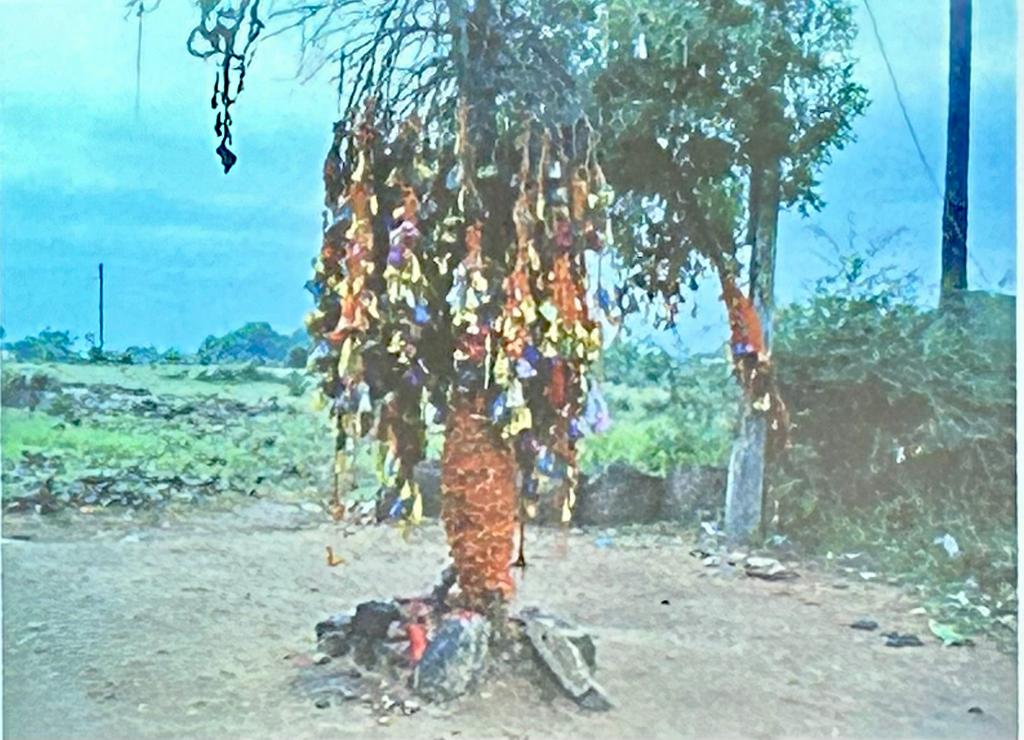
As Albanese’s fortunes slide, people start to wonder what sort of PM Peter Dutton might make

0

By Michelle Grattan

Peter Dutton has his tail up, but he’s being careful to manage expectations. As the opposition celebrates its suddenly improved fortunes, Dutton told the party room this week that inevitably the government would recalibrate over the summer break.

He also said that from the start, the opposition had been determined to chart a course to return to power after a single term.

Even with Labor’s poll slide among its multiple problems, a Dutton government in 2025 looks, as things stand, unlikely – although Labor in minority is being widely canvassed.

Nevertheless, while a few months ago Dutton was considered simply “unelectable”, now that view is more hedged. If the government’s position doesn’t improve substantially, people will take a more serious look at the hard man from Queensland, and speculate about what sort of prime minister he’d make.

As often remarked, Dutton as opposition leader is another Tony Abbott. He is a relentless attacker, a devotee of the politics of negativity. It’s an unattractive style, but it can get the job done. Remember that when Abbott became leader, it seemed a joke. How could he possibly win an election?

Abbott made a success of opposition but failed in government, brought down – in part – by his poor judgement, obsessions and eccentricities (of which the Prince Philip knighthood was just the most bizarre).

Dutton observed, through the Abbott, Turnbull and Morrison eras, how not to run the prime ministership. In those years he also gained ministerial experience. After being assistant treasurer in the Howard government, he was initially health minister under Abbott. He then moved to immigration, home affairs, and finally defence.

As health minister, his performance was ordinary. For him, the ministerial green grass was anything to do with national security.

On security matters, Dutton as prime minister would lean in strongly, at home and abroad. But how would that work out in practice? If he inherited the present improved relationship with China, would he maintain or jeopardise it? Would his very arrival in office prejudice it? He certainly would never give China the benefit of any doubt. How would he deal with a Trump presidency? Or a Biden one?

If Dutton won in 2025 he would inherit a batch of economic problems. As Albanese has found, campaigning on the cost of living is easy but doing much to relieve it is not. On economic matters, Dutton presently doesn’t venture far beyond the politics, and his shadow treasurer Angus Taylor has been an ineffective performer.

That brings us to a potential Dutton cabinet. Though public attention is primarily on the leader, the quality of a government is determined to a significant extent by how good its frontbenchers are.

The Hawke government had an exceptional cabinet. Albanese has a mixed bunch, and some of them have recently set Labor back. Dutton’s team is second rate in opposition, which is not a good sign for government.

One of Dutton’s strengths – and preoccupations – as opposition leader has been holding his party together. Scott Morrison was a control and secrecy freak and a self-confessed “bulldozer”. Dutton is regarded as collegial, even by some Liberals who don’t share his views. He looks to John Howard as a model (one Liberal observer describes him as “a student of Howard”) and would probably run an orderly, conventional cabinet system.

Dutton is also pragmatic. This was evident in government when he facilitated (via the idea of a postal vote) resolving the marriage equality issue, regardless of his personal opinion on it.

But – and this is a major problem – he gives no indication of big picture thinking, let alone an ambitious reform agenda. Policy tidbits he has thrown out in budget reply speeches are small and ad hoc. Leading a Liberal party dominated by conservatives, and with many traditional Liberal voters looking to the teals, Dutton has neither the scope nor the personality to appeal to the country as an inspirational leader.

He does, however, know his prime constituency: the financially-stretched families on the outer rings of the cities. How they will judge him at election time remains to be seen.

Labor is putting maximum effort into discrediting Dutton, all the more important as the memory of Morrison starts to dim. Given he’s long been an unpopular and divisive figure, Dutton’s been a relatively easy target, but this might wear a tad thin.

As the election draws nearer, Dutton and his minders look to his image. He appeared on Annabel Crabb’s Kitchen Cabinet and cooked her a seafood chowder, an upmarket potato soup, presumably a riff on the frequent depiction of him as “potato head”.

Eyewear is now a thing in pursuing the prime ministership. Albanese’s new specs received many media mentions. Dutton’s eyesight may or may not have suddenly deteriorated but his appearance has been improved by donning glasses.

Dutton will remain anathema to parts of the electorate. At the state level: in Victoria. At an electorate level: in the teal territory. But the ex-cop from Queensland is a strong asset in that state, where the Coalition needs to guard against Labor incursions.

At Tuesday’s Coalition parties meeting, Dutton indicated next year would see the rollout of policy. This will be a massive test for him. He’s suggested the Coalition won’t pursue a “small target” strategy, as Albanese did. But Bill Shorten showed the risks of going big-target. Dutton will presumably seek to position himself somewhere in between. “We will have a bold agenda,” he told the NSW Liberals at the weekend. “People need a reason to vote for us, not just to vote against the Labor Party.”

His policies will be tested on two fronts. Are they attractive to middle and lower-middle Australia? And can they stand up to the assaults the government (and experts) will mount on them? Dutton will need to clear both hurdles to be credible at the election. And on the economic front, he will be facing the formidable skills of Treasurer Jim Chalmers who, one imagines, will be charged with much of the demolition task.

Also challenging will be Dutton’s policy on climate and energy. He wants to exploit Labor’s problems with the energy transition, but can’t afford to appear reactionary on climate. He’s attracted to nuclear power but will need to be cautious in how he puts it on the table. His energy policy must be deliverable, even if he never gets to deliver it.

Assuming Dutton’s hope of just one term in opposition is fanciful, what would happen if he took substantial bark off Albanese at the election, resulting in minority government?

The conventional wisdom is Dutton gets only one chance. If Josh Frydenberg had decided to contest the 2025 election, and returned to parliament, he’d have been next in line. Sussan Ley and others carry their batons, although there is no heir apparent.

But a skilled head kicker can be quite effective against a minority government and Dutton might, just possibly, hold his post, at least for a time.

Michelle Grattan, Professorial Fellow, University of Canberra

This article is republished from The Conversation under a Creative Commons license. Read the original article.

Support Our Journalism

Global Indian Diaspora needs fair, non-hyphenated, and questioning journalism, packed with on-ground reporting. The Australia Today – with exceptional reporters, columnists, and editors – is doing just that. Sustaining this needs support from wonderful readers like you.

Whether you live in Australia, the United Kingdom, Canada, the United States of America, or India you can take a paid subscription by clicking Patreon. Buy an annual ‘The Australia Today Membership’ to support independent journalism and get special benefits.
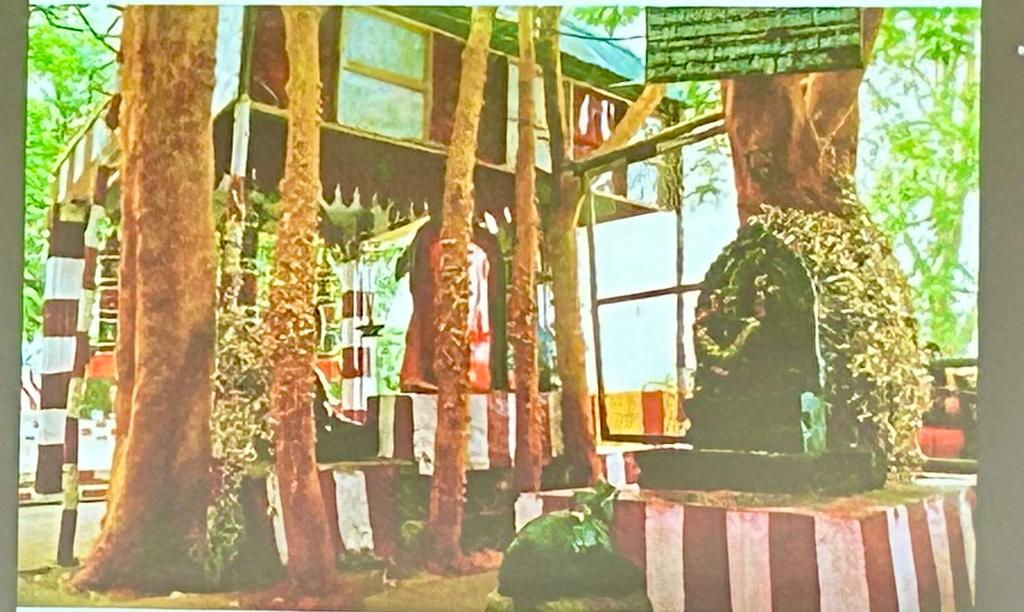
India’s G20 Presidency: A Journey of Inclusivity and Being Voice of Global South

0

By Narendra Modi, Prime Minister of India

Today marks 365 days since India assumed the G20 Presidency. It is a moment to
reflect, recommit, and rejuvenate the spirit of ‘Vasudhaiva Kutumbakam, ‘One Earth,
One Family, One Future.’

As we undertook this responsibility last year, the global landscape grappled with
multifaceted challenges: recovery from the Covid-19 pandemic, looming climate
threats, financial instability, and debt distress in developing nations, all amid declining
multilateralism. In the midst of conflicts and competition, development cooperation
suffered, impeding progress.

Assuming the G20 Chair, India sought to offer the world an alternative to the status quo, a
shift from a GDP-centric to human-centric progress. India aimed to remind the world
of what unites us, rather than what divides us. Finally, the global conversation had to
evolve – the interests of the few had to give way to the aspirations of the many. This
required a fundamental reform of multilateralism as we knew it.

Inclusive, ambitious, action-oriented, and decisiveness- these four words define our
approach as G20 president, and the New Delhi Leaders’ Declaration (NDLD),
unanimously adopted by all G20 members, is testimony to our commitment to deliver
on these principles.

Inclusivity has been at the heart of our presidency. The inclusion of the African Union
(AU) as a permanent member of the G20 integrated 55 African nations into the forum,
expanding it to encompass 80% of the global population. This proactive stance has
fostered a more comprehensive dialogue on global challenges and opportunities.

The first-of-its-kind ‘Voice of the Global South Summit,’ convened by India in two
editions, heralded a new dawn of multilateralism. India mainstreamed the Global
South’s concerns in international discourse and has ushered in an era where
developing countries take their rightful place in shaping the global narrative.

Inclusivity also infused India’s domestic approach to G20, making it a People’s
Presidency that befits the world’s largest democracy. Through “Jan Bhagidari”
(people’s participation) events, G20 reached 1.4 billion citizens, involving all states and Union Territories (UTs) as partners. And on substantive elements, India ensured
that international attention was directed to broader developmental aims, aligning with
G20’s mandate.

At the critical midpoint of the 2030 Agenda, India delivered the G20 2023 Action
Plan to Accelerate Progress on the Sustainable Development Goals (SDGs), taking a
cross-cutting, action-oriented approach to interconnected issues, including health,
education, gender equality and environmental sustainability.

A key area driving this progress is robust Digital Public Infrastructure (DPI). Here,
India was decisive in its recommendations, having witnessed the revolutionary impact
of digital innovations like Aadhaar, UPI, and Digilocker first-hand. Through G20, we
successfully completed the Digital Public Infrastructure Repository, a significant
stride in global technological collaboration. This repository, featuring over 50 DPIs
from 16 countries, will help the Global South build, adopt, and scale DPI to unlock
the power of inclusive growth.

For our One Earth, we introduced ambitious and inclusive aims to create urgent,
lasting, and equitable change. The Declaration’s ‘Green Development Pact’ addresses
the challenges of choosing between combating hunger and protecting the planet, by
outlining a comprehensive roadmap where employment and ecosystems are
complimentary, consumption is climate-conscious, and production is planet-friendly.

In tandem, the G20 Declaration calls for an ambitious tripling of global renewable
energy capacity by 2030. Coupled with the establishment of the Global Biofuels
Alliance and a concerted push for Green Hydrogen, the G20’s ambitions to build a
cleaner, greener world is undeniable. This has always been India’s ethos, and through
Lifestyles for Sustainable Development (LiFE), the world can benefit from our age-
old sustainable traditions.

Further, the Declaration underscores our commitment to climate justice and equity,
urging substantial financial and technological support from the Global North. For the
first time, there was a recognition of the quantum jump needed in the magnitude of
development financing, moving from billions to trillions of dollars. G20
acknowledged that developing countries require $5.9 trillion to fulfil their Nationally
Determined Contributions (NDCs) by 2030.

Given the monumental resources required, G20 emphasised the importance of better,
larger, and more effective Multilateral Development Banks. Concurrently, India is
taking a leading role in UN reforms, especially in the restructuring of principal organs
like the UN Security Council, that will ensure a more equitable global order.

Gender equality took centre stage in the Declaration, culminating in the formation of a
dedicated Working Group on the Empowerment of Women next year. India’s Women’s
Reservation Bill 2023, reserving one-third of India’s Parliament and state legislative
assembly seats for women epitomises our commitment to women-led development.

The New Delhi Declaration embodies a renewed spirit of collaboration across these
key priorities, focusing on policy coherence, reliable trade, and ambitious climate
action. It is a matter of pride that during our Presidency, G20 achieved 87 outcomes
and 118 adopted documents, a marked rise from the past.

During our G20 Presidency, India led deliberations on geopolitical issues and their
impact on economic growth and development. Terrorism and the senseless killing of
civilians are unacceptable, and we must address it with a policy of zero tolerance. We
must embody humanitarianism over hostility and reiterate that this is not an era of
war.

I am delighted that during our Presidency India achieved the extraordinary: it
revitalised multilateralism, amplified the voice of the Global South, championed
development, and fought for the empowerment of women, everywhere.

As we hand over the G20 Presidency to Brazil, we do so with the conviction that our
collective steps for people, the planet, peace, and prosperity, will resonate for years to
come.

Disclaimer: The opinions expressed within this Op-ed are the personal opinions of the author. The Australia Today is not responsible for the accuracy, completeness, suitability, or validity of any information. All information is provided on an as-is basis. The information, facts, or opinions appearing in the op-ed do not reflect the views of The Australia Today and The Australia Today News does not assume any responsibility or liability for the same.

Support Our Journalism

Global Indian Diaspora needs fair, non-hyphenated, and questioning journalism, packed with on-ground reporting. The Australia Today – with exceptional reporters, columnists, and editors – is doing just that. Sustaining this needs support from wonderful readers like you.

Whether you live in Australia, the United Kingdom, Canada, the United States of America, or India you can take a paid subscription by clicking Patreon. Buy an annual ‘The Australia Today Membership’ to support independent journalism and get special benefits.

Casual, distant, aesthetically limited: 5 ways smartphone photography is changing how we see the world

0

By T.J. Thomson and Shehab Uddin

Smartphones are a staple of modern life and are changing how we see the world and show it to others. Almost 90% of Aussies own one, and we spend an average of 5.6 hours using them each day. Smartphones are also responsible for more than 90% of all the photographs made this year.

But compare the camera roll of a 60-year-old with that of a 13-year-old, as we recently did, and you’ll find some surprising differences. In research published in the Journal of Visual Literacy, we looked at how different generations use smartphones for photography as well as broader trends that reveal how these devices change the way we see the world.

Here are five patterns we observed.

1. We make images more casually and with a wider subject matter

Before the first smartphone camera was released in 2007, cameras were used more selectively and for a narrower range of purposes. You might only see them at events like weddings and graduations, or at tourist hotspots on holidays.

Now, they’re ubiquitous in everyday life. We use smartphones to document our meals, our daily gym progress, and our classwork as well as the more “special” moments in our lives.

A triptych of everyday photos showing a meal, a book, and a bottle of medicine.
In the old days cameras only came out for special occasions, but we now tend to use our smartphones to document a wider range of subject matter, including our most recent meal, something we see and want to add to our shopping wish list, or an item at the shops that we want to confirm with a family member. T.J. Thomson

Many middle-aged people use smartphones most for work-related purposes. One of our participants put it this way:

I often take photos of info I want to save, or of clients’ work when I want to then email it to myself to put on the computer. I feel like I’ve gotten a little slack on socially taking photos of friends … but in the day-to-day, I feel like I use it very practically now for basically work, grabbing a photo to upload it online somewhere.

2. We aren’t as selfie-obsessed as some would think

Our participants only used their phone’s front “selfie” camera 14% of the time. They acknowledged the stigma around selfies and didn’t want to be perceived as narcissistic.

3. We’re seeing more vertical compositions

In years past, whether you had a bulky DSLR camera or a lightweight disposable, the “default” grip was to hold it with two hands in a horizontal way. This leads to photos in landscape orientation.

However the vertical design of smartphones and accompanying apps, such as Instagram and Snapchat, are resulting in more photos in portrait orientation. Participants said holding their smartphone cameras this way was more convenient and faster.

Screenshots from Instagram, X, and Snapchat, showing photos with a vertical orientation or portrait aspect ratio.
The vertical design of smartphones and associated popular social media apps, such as Snapchat, Instagram, and X, influences how people use their smartphone cameras. Instagram / X / Snapchat

4. We like to keep our distance

Participants made more images of people from farther away compared to getting close. Intimate “head and face” framing was only present in fewer than 10% of the images.

In one participant’s words:

I feel like my friends and I get frustrated with parents, when they’re zooming in a photo or they walk in really close. My mom would always get one like right in my face, like this is too close! I don’t want to see this. The zoom in, oh, it’s frustrating!

5. We get inspired by what we see online

Teenagers in particular mentioned social media, especially Instagram, as influencing their visual sensibilities. Older adults were more likely to attribute their sense of aesthetics to physical media, such as photography books, magazines and posters.

This aesthetic inspiration impacts what we take photos of, and also how we do it. For example, young people mentioned a centred compositional approach most often. In contrast, older generations invoked the “rule of thirds” approach more often.

One participant contrasted generational differences like this:

There seems to be a real lack of interest [by younger people] in say, composition, or the use of light or that sort of aesthetic side of getting an image. When my partner and I were kids […] our access to different aesthetics and images was actually very limited. You had the four channels on TV, you had magazines, you had the occasional film, you had record covers, and that was it, you know. Whereas, kids these days, they’re saturated with images but the aesthetic aspect doesn’t seem to be that important to them.

Why the way we make images matters

While technology is changing the way people see the world and make photographs, it’s important to reflect on why we do what we do, and with what effects.

For example, the camera angle we use might either give or take away symbolic power from the subject. Photographing an athlete or politician from below makes them look more strong and heroic, while photographing a refugee from above can make them look less powerful.

Sometimes the camera angles we use are harmless or driven by practicality – think photographing a receipt to get reimbursed later – but other times, the angles we use matter and can reinforce existing inequalities.

As the number of images made each year increases and new ways to make images emerge, being thoughtful about how we use our cameras or other image-making technology becomes more important.

T.J. Thomson, Senior Lecturer in Visual Communication & Digital Media, RMIT University and Shehab Uddin, Programme Director, Higher Degree Research, Pathshala South Asian Media Institute

This article is republished from The Conversation under a Creative Commons license. Read the original article.

Support Our Journalism

Global Indian Diaspora needs fair, non-hyphenated, and questioning journalism, packed with on-ground reporting. The Australia Today – with exceptional reporters, columnists, and editors – is doing just that. Sustaining this needs support from wonderful readers like you.

Whether you live in Australia, the United Kingdom, Canada, the United States of America, or India you can take a paid subscription by clicking Patreon. Buy an annual ‘The Australia Today Membership’ to support independent journalism and get special benefits.

Prof. Pal Ahluwalia reappointed as Vice-Chancellor and President of USP for another term

0

By MONIKA SINGH

The two-day University of the South Pacific Council’s 96th meeting session ended today with the reappointment of Professor Pal Ahluwalia as Vice-Chancellor and President.

Chaired by the Acting Pro-Chancellor and Chair of Council and Government of New Zealand representative, Emeritus Professor Pat Walsh, in place of the Pro-Chancellor and Chair of Council, Honourable Dr Hilda Heine, the Council received updates on the finances of the University and noted the ongoing challenges the institute continued to face.

Professor Walsh welcomed the reappointment of the Vice-Chancellor and expressed his and Council’s endorsement of Professor Ahluwalia’s performance. Professor Ahluwalia thanked Council for their continued support and looks forward to serving the University and the region.

The Council also heard from staff representatives and urged the unions and management to work collaboratively in the interest of the University.

During the meeting the Council adopted the Proposed Annual Plan for 2024 while noting the financial strategies for the coming year and approved the Financial Plan for 2024 and adopted the Audited Financial Statements for the half-year ended 30 June 2023.

The impact and risks associated with the financial challenges being faced by the University, largely because of the decline in student numbers, were also noted by the Council with the management outlining its strategies for mitigating the challenges ahead.

Prof Ahluwalia thanked the Council for their continued support and looks forward to serving the University and the region.

Meanwhile reports from the Pro-Chancellor and the Vice-Chancellor and President on activities undertaken since their last report to Council were also noted by the Council.

The Vice-Chancellor and President, Professor Pal Ahluwalia said the University was delivering its priorities successfully against the backdrop of declining enrolment numbers and financial constraints.

Council approved a report by the University Senate and instituted new programs in Pacific TAFE. In addition, Council endorsed a proposed a scoping study to establish a Pacific Centre of Excellence for Deep Ocean Science and a report will be presented at the next Council meeting to be held in Vanuatu in 2024.

This article was first published in Wansolwara and has been republished here with the kind permission of the editor(s).

Disclaimer: The opinions expressed within this article are the personal opinions of the author. The Australia Today is not responsible for the accuracy, completeness, suitability, or validity of any information in this article. All information is provided on an as-is basis. The information, facts, or opinions appearing in the article do not reflect the views of The Australia Today and The Australia Today News does not assume any responsibility or liability for the same.

Support Our Journalism

Global Indian Diaspora needs fair, non-hyphenated, and questioning journalism, packed with on-ground reporting. The Australia Today – with exceptional reporters, columnists, and editors – is doing just that. Sustaining this needs support from wonderful readers like you.

Whether you live in Australia, the United Kingdom, Canada, the United States of America, or India you can take a paid subscription by clicking Patreon. Buy an annual ‘The Australia Today Membership’ to support independent journalism and get special benefits.

Future democracies and the rise of China’s generative AI power

0

By Om Prakash Dwivedi

Welcome to 2030! Generative AI has intruded workspaces, organisations, healthcare and education sectors, even battlefields. What sounded fictitious a few years back has become the quotidian reality of our lives. To put it another way, reality has become a metric that can be constructed and, therefore, manipulated by the politicking of technology. As T.S. Eliot said, “Between the idea and the reality/Between the motion and the act/Falls the Shadow.”

While there is strong logic to the argument that a democracy must involve civilians, the intrusion of AI has somehow changed that perspective as well. Within the ambit of generative AI, what matters more to modern-day democracies is how technology can be used to disrupt, demonise, and destabilise other states and borders. The spontaneity of AI in battlefields has become an automated choice. Underlined with ideological and xenophobic tendencies, the algorithm of AI decides which country will go to war, of course, for obvious reasons, the economy and the balance of global power have been overarching ones.

But this is 2023 now, a moment when generative AI is only the tip of the iceberg. It is also a moment when nation-states are gearing up to redefine the ways future battles will be fought, even designed and orchestrated. Because wars are directly linked to economies, generative AI looms large in a situation where it may trigger a tectonic shift in world economies and politics.  While world leaders moot the pros and cons of using generative in security sectors, it cannot be denied that its shoehorning can pose serious questions on the very notion and practice of sovereignty.

What makes me say this? Well, it has become habitual of the existing superpowers to coerce developing nations and poor countries into wars while deriving profit and inflating both their economies and power. It is for these reasons, that China and US are already investing heavily in the field of AI.

Let us talk about China, a draconian force to reckon with presently. According to a 2023 report by the Australian Strategic Policy Institute (ASPI) “China leads the world in 37 out of 44 critical technologies, with Western democracies falling behind in the race for scientific and research breakthroughs.” This robust push to invest in technological tools sums up why China may become the global power in the field of AI very soon. It has combined its military space with the civil space, therefore the commercial one, thus ensuring that technology becomes the governing spirit of its everyday life. As we understand, AI-enabled tools require a supply of semiconductors, and China already has a blueprint ready to invest more than $100 billion over the next few years.

In 2015, China’s People’s Liberation Army (PLA) envisioned a Strategic Support Force (SSF), assigning them the task of gathering military information and defence needs in cyberspace. The success of SSF can be gauged from the fact that it also takes care of the Chinese Space Systems Department, that is meant to drive and guard all space-related missions. The SSF is also involved with the Chinese Network Systems Department, which stores information related to the PLA’s warfare activities.

China has wedded its future with technology. Precisely the reason why its 13th Five-Year Plan, also known as ‘13th Five Year Plan for Developing National Strategic and Emerging Industries (2016-2020)’ has plans for investment and integration of AI with other areas that cover robotics, industrial-scale mega projects or ‘AI 2.0’. The national plan ranks AI 6th amongst 69 major tasks that China has set in stone for its future growth, not to forget its dream of becoming a global superpower.

Likewise, in 2019, the People’s Republic of China (PRC) declared its 10th Defence White Paper (DWP), China’s National Defence in the New Era. This document remains unprecedented in the history of Chinese military reforms. The document advocated a reduction in the size of Chinese land forces while advancing the creation of five integrated Theatre Commands (TCs). The DWP reinforces Chinese dreams of becoming a global leader and a robust hub across the entire spectrum of AI technologies.

With plans to intensify its “intelligent military”, China is working rigorously to expand the contours of AI, ensuring its presence “on land, at sea and in the air.” This should be a wake-up call for international policymakers given China’s notoriety in dealing with issues of border, hacking, warfare, even biological viruses. The more authoritative the state is, the more threatening AI will become. While the immanent enemy of China is the US right now, it spells existential threat for India as well.

The last nail in the coffin for policymakers would be to see AI only as software. Because it is generative, it can keep manifesting itself depending on the needs and design of its makers and controllers. What matters in the prevailing race to become a superpower, is the investment of both ideas and economy in the field of AI. This is where India lags far behind China. According to the Delhi Policy Group, “the Indian military is allocating approximately US$50 million (€ 47.2 million) for AI spending each year.” Pitted against the Chinese investment, India’s budget allocation is 30 times less, which sums up the reason why India was so late in deliberating the use of Artificial intelligence in the military sector. It was in July 2022 that India organised its first-ever symposium on “AI in Defence.” Having understood the vitality of AI, the Indian Armed Forces has opened up gateways to include Autonomous Weapons Systems (AWS) and Lethal Autonomous Weapons Systems (LAWS) in their domain.

Technology will not only escalate wars but it will also determine its outcome. Future leadership will require not just insights into political science but also ability to harness skills of technological sciences. AI will become the strategic tool for every government very soon.

Contributing Author: Om Prakash Dwivedi teaches at Bennett University, Greater Noida. He tweets @opdwivedi82

Disclaimer: The opinions expressed within this article are the personal opinions of the author. The Australia Today is not responsible for the accuracy, completeness, suitability, or validity of any information in this article. All information is provided on an as-is basis. The information, facts, or opinions appearing in the article do not reflect the views of The Australia Today and The Australia Today News does not assume any responsibility or liability for the same.

Support Our Journalism

Global Indian Diaspora needs fair, non-hyphenated, and questioning journalism, packed with on-ground reporting. The Australia Today – with exceptional reporters, columnists, and editors – is doing just that. Sustaining this needs support from wonderful readers like you.

Whether you live in Australia, the United Kingdom, Canada, the United States of America, or India you can take a paid subscription by clicking Patreon. Buy an annual ‘The Australia Today Membership’ to support independent journalism and get special benefits.
Crackdown on dodgy training providers and international students could shut down two hundred colleges

0

A letter drafted by a group of private Vocational Education Training (VET) providing colleges says that one in five institutions could go bankrupt in 2024.

AFR reports that up to 200 vocational colleges of the 1000 vocational colleges registered to teach international students could be forced to close.

The letter claims that some colleges could “become distressed or in more severe cases collapse altogether” once the government measure comes into force.

“If such harsh measures are implemented with the sector without justifiable clause [sic], there will be a widespread provider collapses [sic] which may impact on thousands of students and the entire TPS (tuition protection scheme) and the potential financial impact on the Australian economy will ripple for quite some time to come.”

The letter adds:

“Providers are facing severe revenue shortfalls and unhealthy competition from the more unscrupulous providers in the market, thus making (the) entire sector unsustainable.”

This is in response to the Australian federal government’s proposed VET reforms to restore integrity to the system.

Image: Skills Minister Brendan O’Connor (Source: X)

Earlier, Skills Minister Brendan O’Connor signaled that he will pursue more measures to rid the vocational education sector of corrupt providers.

Mr O’Connor said in a statement:

“Cracking down on dodgy VET operators and strengthening the integrity of the VET sector requires a national effort. I am working with States and Territories and the VET sector to examine further measures and tools to support the regulator ASQA to stamp out potentially unlawful activity.”

The federal government is planning to shut down a loophole used to bring international students as a back door to secure jobs in Australia that led to “ghost colleges.”

Further, a college will be suspended if visas are refused to at least 50 percent of students they have recruited.

In addition, the federal government’s proposed changes included requiring all prospective students to show they have at least $24,500 in savings.

Image: Home Affairs Minister Clare O’Neil (Source: X)

Home Affairs Minister Clare O’Neil has also said that the measures were part of broader efforts to restore integrity to Australia’s international education and migration systems.

“Dodgy training providers have no place in VET, international education and our migration system. These measures support actions we are looking to take under the ESOS Act to issue suspension certificates to high-risk education providers.”

The reform needs legislative changes and will be in place next March 2024 at the earliest.

Phil Honeywood, chief executive of the International Education Association of Australia (IEAA), told AFR that colleges that offer questionable courses should be put under the most scrutiny.

“Such Mickey Mouse programs make a mockery of providers which are genuinely delivering training in skill shortage areas.”

The Australian Skills Quality Agency (ASQA) has been given some additional powers to increase scrutiny of suspect colleges and ban education agents from receiving commissions for poaching students from high-quality education institutions.

Federal government data shows the number of visa applications to study a vocational course was a record high of 136,000 in 2022-23.

The number of international student visa holders stands at 660,765 at the end of June 2023.

About 90 percent of visa applications refused to study a VET degree are from India, Bangladesh, and Nepal.

Support Our Journalism

Global Indian Diaspora needs fair, non-hyphenated, and questioning journalism, packed with on-ground reporting. The Australia Today – with exceptional reporters, columnists, and editors – is doing just that. Sustaining this needs support from wonderful readers like you.

Whether you live in Australia, the United Kingdom, Canada, the United States of America, or India you can take a paid subscription by clicking Patreon. Buy an annual ‘The Australia Today Membership’ to support independent journalism and get special benefits.
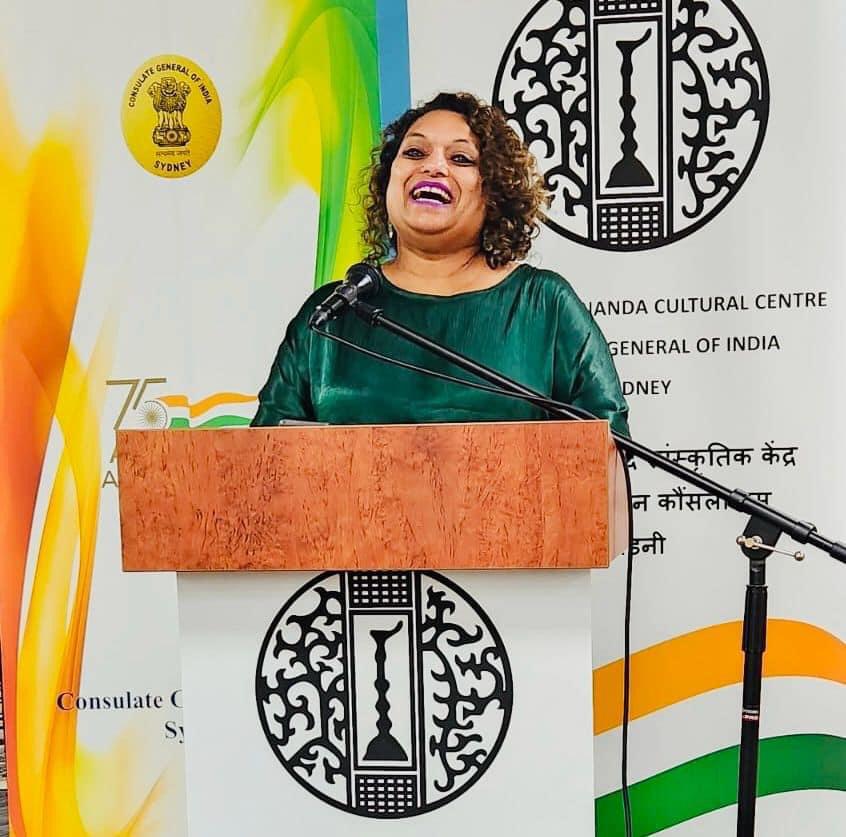
South Australia’s Metala wins Best Wine award and Gold Medal on its debut in India

0

Two South Australian wineries – McLaren Vale-based Wirra Wirra and Langhorne Creek’s Metala’s – have made a debut in the Indian market at the ProWine Mumbai 2023.

Metala’s 2021 White Label Shiraz has taken out the best international red wine – Shiraz award and Our 2018 William Formby Cabernet Sauvignon received a Gold Medal as well.

ProWine Mumbai brings together the finest domestic and international wine and spirit makers along with experts for a conference program and trade fair.

Metala commercial manager Justin McCarthy said in a statement:

“Given Australia is a proud, quality wine-producing country – and India is only just starting to learn about wine – we have a genuine opportunity as an industry to ensure sommeliers, retailers and consumers alike, learn about South Australia’s wine history, our regional differences and our high-quality varietal options in the way we want the story told.”

This event is considered a key milestone for South Australia as the wine sector which is looking to grow its trade footprint in India.

South Australia’s Trade and Investment Minister Nick Champion said:

“We have premium wine – and produce to accompany – and we will be pulling every lever at our disposal to ensure South Australia is front of mind when the Indian market is choosing which Australian state to import their wine from.”

Along with Wirra Wirra and Metala, the trade show is hosting a total of 10 South Australian brands: Lambert Estate, O’Leary Walker Wines, Kingston Estate Wines, 1837 Barossa, Mitolo Wines, Lindsay Estate Wines, Haselgrove Wines and Eight at the Gate Wines.

All of the wineries were supported by a state government program designed to help introduce new local wines to India.

To further support the government’s efforts to boost South Australian wine exports to India, Mr Champion also launched the Indian Chapter of the South Australian Wine Ambassadors Club.

Mr Champion has appointed Aspri Spirits strategy and operations advisor Pritish Matai along with Anggel’s Share sales and marketing director Rajesh Israni as ambassadors.

Experts believe that Wirra Wirra and Metala’s entry into India will help pave the way for more local brands that are hoping to expand exports benefitting from the reduced tariffs under AIECTA.

India is South Australia’s fifth largest merchandise export market, with the state exporting almost $1.1 billion of goods in the 12 months to September this year.

Wine consumption in India is expected to nearly double by 2025 and the South Australian wine exports totalled $9.5 million for the year ending September 2023.

Support Our Journalism

Global Indian Diaspora needs fair, non-hyphenated, and questioning journalism, packed with on-ground reporting. The Australia Today – with exceptional reporters, columnists, and editors – is doing just that. Sustaining this needs support from wonderful readers like you.

Whether you live in Australia, the United Kingdom, Canada, the United States of America, or India you can take a paid subscription by clicking Patreon. Buy an annual ‘The Australia Today Membership’ to support independent journalism and get special benefits.
“Heard by Kali”: Aussie hero helps rescue 41 workers from Indian tunnel collapse

0

All 41 workers trapped since 12 November have been rescued from a tunnel in Uttarakhand, India.

Chardham all-weather road or Silkyara Bend–Barkot tunnel is being built to improve access to four sacred Hindu pilgrimage points.

People gathered around the tunnel erupted in joy and shouted “Bharat Mata ki Jai” (“Long live mother India”).

The workers survived on food and oxygen supplied through two narrow steel pipes.

Rescuers resorted to manual digging after the drilling machine broke down while drilling horizontally from the front.

Then the final rescue followed the laying of a final section of pipe which allowed the men to be pulled out one by one with ambulances gathered at the tunnel’s entrance awaiting casualties.

The tunnel workers had to crawl through 57 metres of steel pipe which was driven through tonnes of earth, concrete and rubble blocking their escape.

In all 22 agencies worked day and night for the rescue mission. These included: NDRF, BRO, Indian Army, Indian Air Force, NHIDCL, SJVNL, THFCL, RVNL, ONGC, Coal India, and many others.

All this was done under the expert supervision of Australian tunneling expert Arnold Dix who provided all the technical support on the ground.

Prof. Dix said in a post:

“It is my honour to serve with my Indian friends and colleagues in our mission to bring 41 men safely home. If you could spare us a kind thought or a prayer to your God it would be much appreciated by our team – and perhaps heard by Kali.”

Prof. Dix heads the Geneva-based International Tunnelling and Underground Space Association (Geneva). He is well-known for taking legal, environmental, political, and ethical risks related to underground construction.

He has a Science and Law Degree from Monash University and regularly provides technical and regulatory solutions to complex and mission-critical challenges in underground spaces.

Australia’s Prime Minister Anthony Albanese has tweeted: “Proud that Australian Professor Arnold Dix played a role on the ground.”

Australian High Commissioner to India Philip Green commended Prof. Dix’s expert inputs which led to the safe extraction of all the trapped workers.

Indian High Commissioner to Australia, Manpreet Vohra, tweeted: “Thank you, Professor Dix. Thank you Australia.”

Social media users have also lauded the hero Australian professor who was earlier seen joining a priest at the rescue site and praying for the safe evacuation of the workers.

While giving an update on the rescue operation, Prof. Dix observed:

“For me, it is like an ancient story…The Mountain is controlling everything. It is protecting those 41 people like a mother and not harming them… They’re not injured, they are completely safe inside the tunnel… It’s the will of the mountain which will decide when and from which door those people come out.”

India’s Prime Minister Narendra Modi said the rescue had made “everyone emotional”.

He said in a statement.

“I want to say to the friends who were trapped in the tunnel that your courage and patience is inspiring everyone. I wish you all well and good health. It is a matter of great satisfaction that after a long wait these friends of ours will now meet their loved ones. The patience and courage that their families have shown in this challenging time cannot be appreciated enough.”

Nitin Gadkari, India’s Minister of Road Transport and Highways, thanked everyone involved in the rescue operations.

In a video message posted on X, he said:

“I am very happy that all the 41 trapped workers have come out and their lives have been saved… this was a well-coordinated effort by multiple agencies, marking one of the most significant rescue operations in recent years”.

The rescued workers underwent initial medical check-ups and were taken in ambulances to a hospital for further examination.

The National Highways Authority of India (NHAI) has been instructed to audit 29 other tunnels being built across the country.

Support Our Journalism

Global Indian Diaspora needs fair, non-hyphenated, and questioning journalism, packed with on-ground reporting. The Australia Today – with exceptional reporters, columnists, and editors – is doing just that. Sustaining this needs support from wonderful readers like you.

Whether you live in Australia, the United Kingdom, Canada, the United States of America, or India you can take a paid subscription by clicking Patreon. Buy an annual ‘The Australia Today Membership’ to support independent journalism and get special benefits.
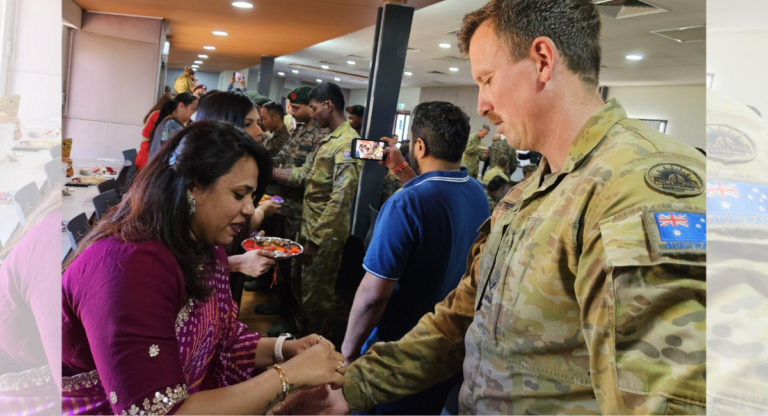
How does Australia’s health system stack up internationally?

0

By Stephen Duckett

When things are going bad in the health system, we are reassured we’ve got one of the best health systems in the world. But we’re rarely told where we actually stand relative to others.

A new report from the Organisation for Economic Cooperation and Development (OECD) shows where Australia is doing relatively well – and not so well. The report is more than 200 pages with dozens of charts and tables.

Here we highlight five charts showing Australia’s relative performance. Overall, Australia’s health system performs well, but can come after long waits. And our use of antibiotics is trending in the wrong direction.

1. We spend less than average but live longer than average

Despite the rhetoric about the unsustainability of the health system, Australia performs well. When mapping health expenditure against life expectancy, Australia (marked by the red dot) sits in the best performing quadrant – and has done so for the past decade.

In contrast, the United States is stuck in the worst-performing quadrant for the whole period – significantly higher spending than other countries with worse life expectancy.

The life expectancy measure is used here but it involves an implicit assumption that the principal impact on life expectancy is from the health system, which is not really the case. Nevertheless, it is a good measure of overall system performance and combined with spending provides a good measure.

2. Most Australians rate their health as good or very good

The vast majority of Australians (about 85%) rate their health as good or very good, with Australia performing better on this metric than most other similar countries. Often good health is conflated with good health care, and the data show that Australia also has more doctors per head than other countries.

https://datawrapper.dwcdn.net/Ygo7Z/1/

The founding charter of the World Health Organization (WHO) recognised that health is not just the absence of disease, but a “state of complete physical, mental and social well-being”. This points to a flaw in the nexus between good health and more health professionals. The WHO focus on well-being helps to explain why it is not surprising that, looking across countries, the number of doctors doesn’t appear to be a key determinant of performance on self-rated health.

3. It’s harder to get a bed in aged care

About 30% of people in OECD countries are over 65, while the Australian proportion is about 20%. The proportion of over-65s is rising everywhere.

A minority of older Australians (14%) use aged care, with most of these using home care. However, monitoring access to residential aged care (represented here by the number of long-term care beds per thousand population over 65) might act as a “canary in the coal mine”, highlighting where access problems exist.

https://datawrapper.dwcdn.net/lBe4O/1/

In Australia, access to aged care beds is falling, by about 27% between 2011 and 2021. We started in the middle of the pack so this is a concern and probably contributes to more Australians being stuck in acute hospitals, rather than being in more appropriate accommodation in residential aged care. This “exit block” in turn leads to problems of ambulance ramping.

4. Australians wait too long for public hospital hip replacements

Most publicly funded health systems are characterised by long waiting times for access to planned procedures such as hip replacements. Some waiting is to be expected as part of efficient management of operating theatre scheduling. But long waits, especially when the person is in pain, reflect poorly on management of the public hospital system.

The data shows that almost two-thirds of people waiting for hip replacement surgery in Australia waited more than three months. This is marginally worse than the OECD average. Unfortunately, our performance is deteriorating.

A number of states, such as Victoria, have developed strategies to improve the performance of the planned procedure system, or have identified opportunities for efficiency improvements in public hospitals which would help address this issue.

Although it’s understandable that planned procedures were affected by the first few years of the COVID pandemic, governments should have adapted their funding and provision systems to bring waiting times back to the pre-pandemic levels.

5. Our use of antibiotics is going in the wrong direction

Antibiotics have saved millions of lives. But public health experts have long recognised the emerging problem of antimicrobial resistance, where inappropriate use of these drugs can lead to their reduced effectiveness over time.

Worldwide campaigns to promote appropriate use of antibiotics are bearing fruit and across the OECD, use of antibiotics is going down.

Unfortunately, Australia’s trend is in the reverse direction.

Stephen Duckett, Honorary Enterprise Professor, School of Population and Global Health, and Department of General Practice, The University of Melbourne

This article is republished from The Conversation under a Creative Commons license. Read the original article.

"The

Support Our Journalism

Global Indian Diaspora needs fair, non-hyphenated, and questioning journalism, packed with on-ground reporting. The Australia Today – with exceptional reporters, columnists, and editors – is doing just that. Sustaining this needs support from wonderful readers like you.

Whether you live in Australia, the United Kingdom, Canada, the United States of America, or India you can take a paid subscription by clicking Patreon. Buy an annual ‘The Australia Today Membership’ to support independent journalism and get special benefits.
South Australia’s exports to India grew 200% under the zero-tariff regime

0

South Australia’s export of almonds, beans, oranges, wines, lentils, pulses, several processed agro foods, sheep meat, etc. to India has grown 200% since the Australia-India Economic Cooperation and Trade Agreement (ECTA) came into effect a year ago.

This was revealed by Nick Champion, Minister for Trade & Investment – South Australia, on his recent six-day visit to India.

Mr Champion told The Hindu that the state was focussing on exporting products such as food and wine.

“South Australia has been witnessing growing import demand for lentils, pulses and certain other food items following the zero-tariff rate India introduced last year, resulting in food, wine and agribusiness sector exports to India growing more than 200% in the 12 months until September 2023.”

The minister added:

“Above all these, India is a fast-growing market for premium agri products, food items and high-value wines with consumers’ disposable incomes on the rise.”

During this tour, Mr Champion met with his counterpart in Karnataka. He also had meetings with BigBasket, TCS, Wipro, Tata Electronics, Infosys, HCLTech, TechMahindra, and various start-ups focused on defence and aerospace sectors.

The minister also facilitated a special partnership between South Australian space-tech start up, HEX20 and Indian space-tech start-up AstroGate Labs.

India is South Australia’s fifth-largest export market, with exports worth AUD 1.1 billion of goods over the last 12 months.

Support Our Journalism

Global Indian Diaspora needs fair, non-hyphenated, and questioning journalism, packed with on-ground reporting. The Australia Today – with exceptional reporters, columnists, and editors – is doing just that. Sustaining this needs support from wonderful readers like you.

Whether you live in Australia, the United Kingdom, Canada, the United States of America, or India you can take a paid subscription by clicking Patreon. Buy an annual ‘The Australia Today Membership’ to support independent journalism and get special benefits.
Mike Pezzullo sacked after scathing findings accusing him of misusing his position

0

By Michelle Grattan

The government has sacked the secretary of the Home Affairs department, Mike Pezzullo, after an inquiry found he had breached the Public Service Code of Conduct.

The inquiry found he used his position for personal advantage, gossiped disrespectfully about ministers, broke confidentiality, failed to act apolitically, and didn’t disclose a conflict of interest.

In September, Nine Entertainment revealed a trove of texts Pezzullo sent to a Liberal insider, Scott Briggs, who was close to Prime Ministers Scott Morrison and Malcolm Turnbull. In the texts Pezzullo inserted himself into the political process, lobbying for his bureaucratic interests and his views.

A long-time public servant who served both sides of politics, Pezzullo also worked in the office of Kim Beazley when he was opposition leader.

A hawk on China policy and hard-line on national security issues, especially border protection, Pezzullo was a divisive figure in the bureaucracy.

While he was known for always being willing to express his views forthrightly, current and former senior colleagues were amazed at the overreach his texts represented, including his criticism of a then minister, Marise Payne, and of Julie Bishop when she put up her hand for leadership in 2018.

As soon as the texts were revealed, it was generally recognised in government and public service circles that Pezzullo would not survive.

The government stood him aside, on full salary, while the inquiry was done by Lynelle Briggs, a former public service commissioner.

Prime Minister Anthony Albanese on Monday said Pezzullo’s termination had been recommended by the Secretary of the Department of the Prime Minister and Cabinet, Glyn Davis, and the Public Service Commissioner, Gordon de Brouwer. This followed a recommendation from Briggs that he be sacked.

Pezzullo had fully co-operated with the Briggs’ inquiry, Albanese said. He said the present acting head of Home Affairs, Stephanie Foster, would continue to act in the position until a permanent appointment was made.

In a statement, the Public Service Commission said Briggs found Pezzullo breached the public service code at least 14 times in relation to five overarching allegations. Pezzullo

  • used his duty, power, status or authority to seek to gain a benefit or advantage for himself
  • engaged in gossip and disrespectful critique of ministers and public servants
  • failed to maintain confidentiality of sensitive government information
  • failed to act apolitically in his employment
  • failed to disclose a conflict of interest.

Author: Michelle Grattan, Professorial Fellow, University of Canberra

Disclaimer: This article is republished from The Conversation under a Creative Commons license. Read the original article.

Support Our Journalism

Global Indian Diaspora needs fair, non-hyphenated, and questioning journalism, packed with on-ground reporting. The Australia Today – with exceptional reporters, columnists, and editors – is doing just that. Sustaining this needs support from wonderful readers like you.

Whether you live in Australia, the United Kingdom, Canada, the United States of America, or India you can take a paid subscription by clicking Patreon. Buy an annual ‘The Australia Today Membership’ to support independent journalism and get special benefits.
Eight arrested over phishing kits targeting Australian Government websites

0

Malaysian authorities have arrested eight people for their alleged role in an international criminal syndicate which developed phishing kits targeting Australian Government websites.

The AFP’s Joint Policing Cybercrime Coordination Centre (JPC3) developed and provided intelligence to the Royal Malaysian Police (RMP), which identified a Malaysian national advertising phishing kits targeting the Australian Government’s myGov website.

The intelligence outlined the operation and architecture of the phishing service, and identified a connection with a ‘bulletproof’ hosting service to facilitate the criminal activity.

It was alleged the kits contained phishing templates and scripts replicating government websites in Malaysia, Australia and the United States, and were being sold to cybercriminals to allow them to send phishing attacks and obtain victims’ credentials.

Image: AFP intelligence leads to eight arrests (Source: AFP)

AFP Acting Detective Superintendent Darryl Parrish said Australians lost over $24.6 million to phishing attacks last year.

“Cybercriminals will use any tools and tricks to exploit people for their own profit – in this case, it is mimicking trusted government websites,” Acting Det-Supt Parrish said.

“The AFP is committed to working with our valued law enforcement partners to track down cybercriminals and bring them to justice, regardless of where they are in the world.

“This case highlights how vital it is for law enforcement agencies to share intelligence and resources globally, as crime is borderless.”

In a separate investigation, the Federal Bureau of Investigations (FBI) linked the ‘bulletproof’ hosting service to an alleged organised criminal syndicate.

Further enquiries by the RMP, FBI and the AFP revealed a Malaysian man, 35 who advertised the kits had used the services of a Malaysian-based technology park to physically host a number of computer servers and hardware responsible for the ‘bulletproof’ hosting service.

RMP officers arrested the man following a search warrant of his home in Borneo on 6 November, 2023, with officers identifying a large number of usernames, passwords and cryptocurrency wallet seed phrases during the search. FBI officers assisted with this activity.

Simultaneously, RMP members executed a search warrant at the technology park, with the RMP seizing four servers, power cables, monitors and a modem. The AFP assisted with this activity.

The man, and seven other individuals who were allegedly mules for the man, were arrested and charged under Malaysian law.

It was alleged officers identified a server which held more than 16 virtual machines that ran a variety of operating systems and services to support the hosting service.

Investigators seized more than 60 terabytes of data across the police activity, including three servers and one network storage device.

Image: AFP intelligence leads to eight arrests (Source: AFP)

Bukit Aman Commercial Crime Investigation Department Director Datuk Seri Ramli Mohamed Yoosuf thanked AFP and FBI members for their collaboration.

“We believe that we should continue to synergise our resources in facing current and future challenges of ICT-driven technologies,” he said.

“The recent operations involving the three agencies to bust an online syndicate was a manifestation of this.”

FBI Legal Attaché Canberra Nitiana Mann said the FBI continues to work alongside our international partners to combat malicious cyber threats.

“We will continue to pursue cybercriminals for their reckless actions wherever they may be located in the world,” she said.

The JPC3 is a partnership between the AFP, Australian state policing agencies, foreign law enforcement, government, and the private sector that was established in March 2022 to effectively combat cybercrime impacting Australians.

Support Our Journalism

Global Indian Diaspora needs fair, non-hyphenated, and questioning journalism, packed with on-ground reporting. The Australia Today – with exceptional reporters, columnists, and editors – is doing just that. Sustaining this needs support from wonderful readers like you.

Whether you live in Australia, the United Kingdom, Canada, the United States of America, or India you can take a paid subscription by clicking Patreon. Buy an annual ‘The Australia Today Membership’ to support independent journalism and get special benefits.
Indian-origin Dave Sharma wins pre-selection for Senate seat vacated by Marise Payne

0

Dave Sharma has won pre-selection for the Senate seat vacated by Australia’s longest-serving female Senator Marise Payne.

With this win Dave will become the first person of Indian-origin from the Liberal party to become a Federal Senator in Australia. He was also the first person of Indian-origin to be elected to Australia’s House of Representatives when he won the seat of Wentworth, NSW, in 2019.

Leader of the Opposition Peter Dutton congratulated Dave on winning the contest which had a fairly large number of candidates put their hats in the ring.

Dave is a former Member of Parliament, Ambassador and company director. He is a law graduate of the University of Cambridge, has chaired and worked with a number of publicly-listed technology companies, and was chair of Parliament’s Joint Standing Committee on Treaties and the Foreign Affairs and Aid Subcommittee.

Dave Sharma (By Department of Foreign Affairs and Trade website – www.dfat.gov.au, CC BY 4.0, https://commons.wikimedia.org/w/index.php?curid=28269891)

Dave was a career diplomat prior to entering Parliament. He was Australia’s Ambassador to Israel from 2013-2017 and also had postings in Washington DC and Papua New Guinea. He was awarded an Australian Service Medal for his peacekeeping duties in Bougainville.

Dave studied at the University of Cambridge, where he graduated with first-class honours in Law. He also has a Master of Arts from Cambridge and a Master of Arts (International Relations) from Deakin University.

Known as a strategic thinker, Dave has high-level experience in national security, trade, international relations, public policy, and technology and innovation.

Former Foreign Minister Marise Payne (2018-2022) resigned from the Senate on 30th September after a long innings in politics.

Image source: Twitter.

She was also the Minister for Women in the Scott Morrison government and Minister for Defence in the Turnbull government. Ms Payne was first appointed to the Senate in 1997 and has been Australia’s longest serving female Senator.

People of Indian origin account for more than 3% of Australia’s population and Indians are among the largest and fastest growing migrant communities in Australia.

Till the time of this pre-selection there was not a single person of Indian origin from the Liberal party in the Federal Parliament. The ruling Labour Government has two Indian-origin MPs.

Gen Z more likely than anyone else to fall victim to cybercrime

0

The AFP is sounding the warning in two different languages – one for Gen Z and one for others – that statistics show younger people are most likely to fall victim to cybercrime even though they are often the most tech-savvy.

The AFP knows it can be harder to reach younger people when issuing education and deterrence messages so different techniques and avenues will be used to help protect all Australians.

The cringe factor will be v high (how do you do fellow kids?). For everyone else, translations are on the bottom of the media release.

In the lead-up to Black Friday and Cyber Monday sales, the AFP is reminding young Australians to be mindful of their cyber security, given some of our most digitally aware are also targets of scams, fraud, malware attacks and identity crime – likely because they spend the most time online.

Don’t be delulu! Not caring about cyber security is more outdated than wearing skinny jeans. The Australian FBI wants you to know that y’all are mad likely to be scammed and you should fr do smth about it.

AFP Cybercrime Acting Commander Grace Calma said while some people believed older generations were more likely to lose money to scams or click on links that led to malware attacks, recent research found younger people were more likely to be victims of cybercrime.

This one fed was chatting about how hackers and that be trying to confuse u with some big politician type words to yoink ur info. Mans was tryna let u know that y’all Gen Z be no cap most likely to fall for the scammers trickery.

The Australian Institute of Criminology’s (AIC) Cybercrime in Australia 2023 report, based from a survey of computer users in early 2023, found younger people were more likely to be cybercrime victims than their older counterparts.

It found almost 31 per cent of respondents aged 18-24 years said they had been a victim of a malware attack in the 12 months prior to the survey. The next highest age group to fall victim were those aged between 25-34 years (24.4 per cent). The age groups least likely to fall victim were those aged 65 years and older (20.3 per cent) and 50-64 years (18.5 per cent).

Malicious software, better known as malware, can be unknowingly stored on computers or mobile phones, potentially allowing cyber criminals to access files or watch individuals.

Those aged 18-24 years who responded to the AIC survey were also more likely to fall victim to fraud and scams, and identity crime and misuse, than any other age group.

Last month, the AFP encouraged grandchildren of all ages to help seniors stay safe online. Many younger people are confident operating in the online world and are very conscious of their cyber security.

The AFP hoped the call to action would also encourage the more tech-savvy to brush up on their cyber security too because cyber criminals target all age groups.

“The AFP has released a number of videos explaining how to help beat cybercriminals and we want to remind all Australians, especially young Australians, to be mindful of their cyber security.”

These videos explain how to protect u from cybercrime bc getting hacked isn’t a canon event sorry, you can intervene. And you can never be too extra about cyber security!!

Are you young? Like, young enough to think these translations are a bit too cheugy? Or that IG stories about how someone “can’t live without my coffee!” and “well, THAT just happened” are cringe? Then you’re likely to fall victim to a fraud or scam, facts!!!

Acting Commander Calma said younger people were high users of social media, streaming services and of technology in general, which could explain why they were statistically more likely to be impacted.

She said cyber criminals tricked people into downloading malware by disguising it in links in emails, through pop-ups offering free music, games or video downloads, through pirated software, or even requesting individuals download software, such as codes to access videos embedded on websites.

So according to stats we’re the most likely to be scammed. That’s so not a slay!!!! Some of these scammers have major rizz fr, you wouldn’t even know they’re scamming.

“We know lots of Australians of all ages are using their devices to buy everything from food, to music to clothing, however, it is important to be aware of scams,’’ Acting Commander Calma said.

“An online shopping scam involves cyber criminals creating realistic but fake online stores selling items at heavily reduced prices or fake ads on legitimate classified websites.

“Once a buyer places an order, items are either not delivered or fake products are received in their place.’

There are a few things to look out for when shopping online to avoid these scams:

  1. Always use a secure payment platform, such as PayPal, or credit cards when shopping online;
  2. When making a payment look for a website address that starts with ‘https’ and features a closed padlock symbol; and,
  3. Never send money or give credit card or online account details to anyone you don’t know or trust.

Acting Commander Calma said people who believed they had fallen victim to cybercrime should report it immediately to ReportCyber.

Being safe online hits different. It’s giving…. Cyber safety! Like imagine getting hacked, that would be so out of pocket, smh. Online safety, it’s a vibe.

dyk this profile will give you the deets on how to stay on top of your Cyber Security, report at cyber.gov.au.

The fam is most at risk from cyber crime, head to cyber.gov.au to find out how to protect yourself today!

gtg ttyl!

The AFP asked a number of young people (18-26 years) to provide guidance for this media release and we thank them for their help.

Translation/explanation

  • v = very
  • The fellow kids reference is a Steve Buscemi meme originating from the TV show 30 Rock. It’s commonly used as a reaction to people or brands pretending to be part of a community that they’re unfamiliar with (for example, police trying to reach a younger audience who typically don’t read media releases)
  • delulu = delusional 
  • fr = for real
  • smth = something
  • fed = Federal Police Officer
  • Politician type words = sophisticated words that normal teenagers would not use in conversation with each other
  • Yoink = steal
  • Mans = male spokesperson
  • No cap = no lie, it’s for real
  • Trickery = method
  • Canon event = something unavoidable that builds character
  • Slay = to do something well, a compliment.
  • Rizz = charisma/charm/seduction
  • smh = shaking my head
  • Vibe = feeling/emotion
  • Fam = close friends/family
  • dyk = did you know
  • Deets = details
  • dm = direct message
  • gtg = go to go
  • ttyl = talk to you later

Support Our Journalism

Global Indian Diaspora needs fair, non-hyphenated, and questioning journalism, packed with on-ground reporting. The Australia Today – with exceptional reporters, columnists, and editors – is doing just that. Sustaining this needs support from wonderful readers like you.

Whether you live in Australia, the United Kingdom, Canada, the United States of America, or India you can take a paid subscription by clicking Patreon. Buy an annual ‘The Australia Today Membership’ to support independent journalism and get special benefits.
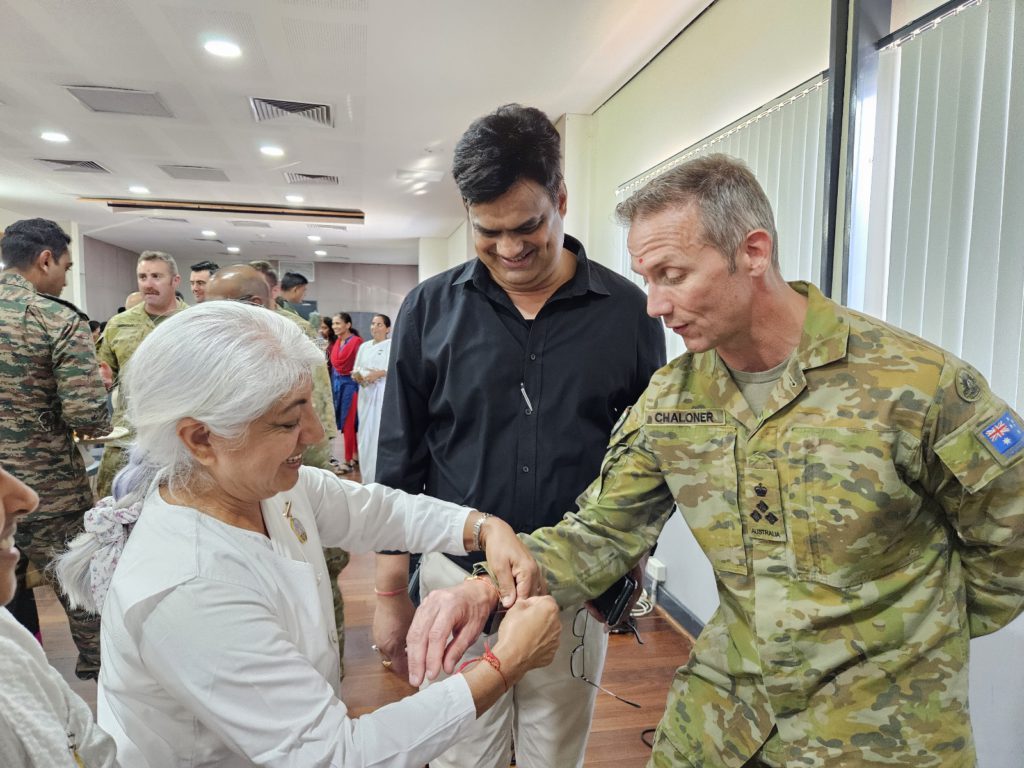
Labor loses four points in two Newspolls to slump to a 50–50 tie

0

By Adrian Beaumont

A federal Newspoll, conducted November 20–24 from a sample of 1,216, had Labor and the Coalition tied at 50–50 after preferences, a two-point gain for the Coalition since the previous Newspoll three weeks ago. Primary votes were 38% Coalition (up one), 31% Labor (down four), 13% Greens (up one), 6% One Nation (steady) and 12% for all Others (up two).

In the final Newspoll taken before the October 14 Voice referendum, Labor led by 54–46. Three weeks ago, Labor’s lead had dropped to 52–48 and now it’s tied. This is the first time Labor has not led in Newspoll since June 2021.

Movements on leaders’ ratings were relatively modest, with Anthony Albanese’s satisfied rating down two to 40% and his dissatisfied rating up one to 53%, for a net approval of -13, down three points. Here is a graph of Albanese’s net approval in Newspoll this term.

Peter Dutton’s net approval was steady at -13, so Albanese and Dutton are now tied on net approval. Albanese slightly extended his better PM lead to 46–35 from 46–36 three weeks ago.

I wrote on November 19 that three polls on average had Labor just ahead, with the Reserve Bank’s decision to raise interest rates at its early November meeting probably causing Labor’s drop. This Newspoll is a continuation of that trend to the Coalition.

Albanese’s net approval has now been in the negative double digits for two Newspolls in a row. The net approval of the PM has been correlated with voting intentions in the past, so Albanese appears to be dragging down Labor’s vote.

Morgan poll has Coalition ahead

Last week’s federal Morgan poll, conducted November 13–19 from a sample of 1,401, gave the Coalition a 50.5–49.5 lead, a 0.5-point gain for the Coalition since the previous week. Primary votes were 37.5% Coalition (up one), 29.5% Labor (down 0.5), 13.5% Greens (up 0.5), 6.5% One Nation (up 0.5), 7% independents (down one) and 6% others (down 0.5).

This is the second Morgan poll that has had the Coalition ahead, after one conducted in the week after the Voice referendum. However, in that earlier poll, 2022 election preference flows would have given Labor above a 53–47 lead, while applying 2022 preference flows to this poll gives Labor just a 50.5–49.5 lead.

Morgan and Essential federal polls, which both use respondent preferences, have generally shown weaker results for Labor in the last few months than if they used 2022 election flows. It’s plausible that One Nation and others’ preferences have become better for the Coalition since the last election.

The July Fadden federal byelection gives some evidence for an improvement for the Coalition on preference flows from One Nation voters.

Wage rises are good economic data for Labor

The Australian Bureau of Statistics reported on November 15 that wages increased 1.3% in the September quarter for an annual growth of 4.0%. This annual growth is the highest since 2009, and has surged from a low of 1.3% in 2020 owing to the COVID lockdowns.

Before COVID, wages had been growing at about 2% annually since 2014. For the September quarter, the wage increase beat inflation by 0.1%, although it’s 1.4% behind inflation for the 12 months to September.

If wage increases at the current levels are sustained, Labor should benefit at the next election. But inflation and interest rates may need to drop before people start feeling more optimistic about the economy.

Far-right Javier Milei wins Argentine presidency

I covered the November 19 Argentine presidential runoff election for The Poll Bludger. The far-right Javier Milei defeated the centre-left Sergio Massa by a 55.7–44.3 margin. But the left still controls the Argentine Senate, though the combined right has a majority in the lower house.

Joe Biden turned 81 on November 20, and I believe US Democrats should consider replacing him as their presidential nominee owing to his age and unpopularity. The Spanish Socialists formed a government four months after the Spanish election.

A new government was formed in New Zealand on Friday after National, ACT and NZ First reached an agreement. I covered a NZ byelection for The Poll Bludger on Saturday that National won easily. In last Wednesday’s Dutch election, the far-right Party of Freedom won the most seats but is well short of a majority.

Adrian Beaumont, Election Analyst (Psephologist) at The Conversation; and Honorary Associate, School of Mathematics and Statistics, The University of Melbourne

This article is republished from The Conversation under a Creative Commons license. Read the original article.

"The

Support Our Journalism

Global Indian Diaspora needs fair, non-hyphenated, and questioning journalism, packed with on-ground reporting. The Australia Today – with exceptional reporters, columnists, and editors – is doing just that. Sustaining this needs support from wonderful readers like you.

Whether you live in Australia, the United Kingdom, Canada, the United States of America, or India you can take a paid subscription by clicking Patreon. Buy an annual ‘The Australia Today Membership’ to support independent journalism and get special benefits.
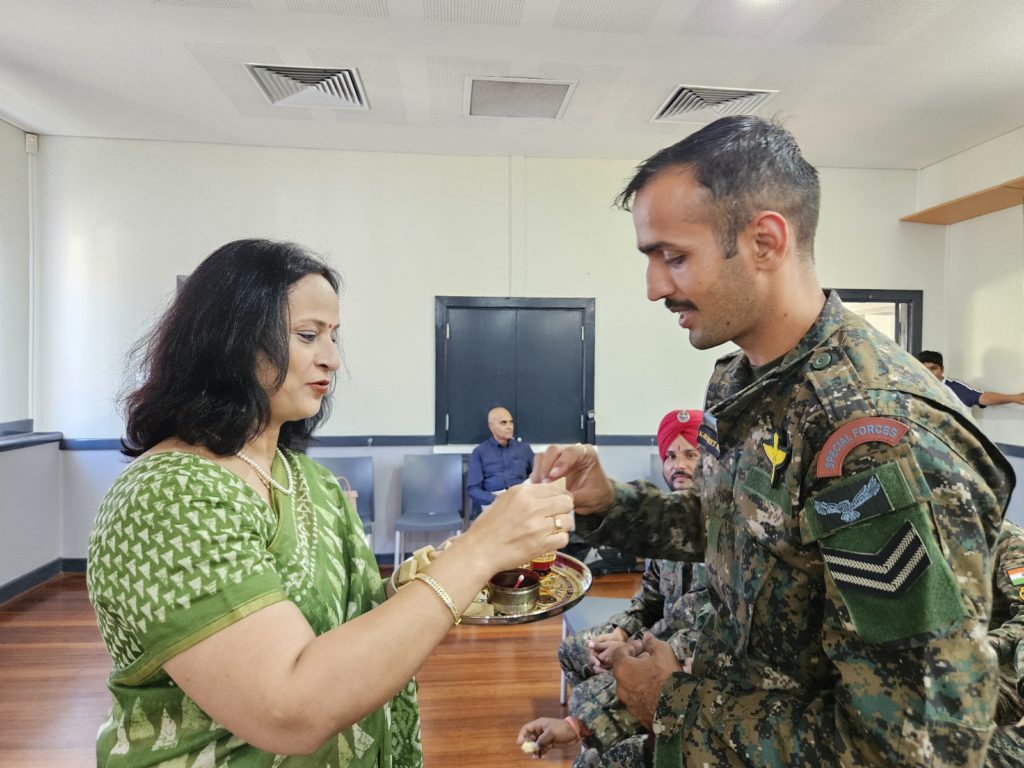
Indian international student in coma after alleged assault in Tasmania

0

An Indian international student is in a medically induced coma following an alleged attack inn Salamanca, Tasmania.

The student from Assam in his 20s is pursuing a master’s degree at the University of Tasmania.

He was rushed to the Royal Hobart Hospital soon after the incident that happened in the Hobart night strip on 5 November 2023.

The brutal attack left the Indian international student with “extra jural bleeding” causing his brain to shift.

The victim was taken to the Royal Hobart Hospital with serious but what are believed to be non-life threatening head injuries

According to reports, his right lung collapsed and he had to undergo brain surgery, a procedure lasting several hours.

Meanwhile, Indian community members and students are using social media to raise awareness on the issue of international student safety and security in Tasmania.

The University of Tasmania’s Media Director, Ben Wild, told SBS that they are aware of the incident.

Further, the university officials are in regular contact with the family and have assigned a case manager along with translators and other support personnel.

Professor Ian Anderson, Deputy Vice-Chancellor (Academic), issued an official statement:

“There is nothing more important than the wellbeing of all of our students. We have a range of programs and services to keep people safe when they are on campus, such as our Safe and Fair Community Unit, and provide advice and support to students about staying safe when they are off campus.”

Tasmania Police has reportedly taken a 25-year-old man from Lenah Valley into custody following the “serious assault” and have ruled out racism as a potential motive.

The man has been charged with assault, providing a false address and name, resisting a police officer, and unrelated driving offences. He was granted a magistrate bail and is scheduled to return to court on 4 December 2023.

Support Our Journalism

Global Indian Diaspora needs fair, non-hyphenated, and questioning journalism, packed with on-ground reporting. The Australia Today – with exceptional reporters, columnists, and editors – is doing just that. Sustaining this needs support from wonderful readers like you.

Whether you live in Australia, the United Kingdom, Canada, the United States of America, or India you can take a paid subscription by clicking Patreon. Buy an annual ‘The Australia Today Membership’ to support independent journalism and get special benefits.
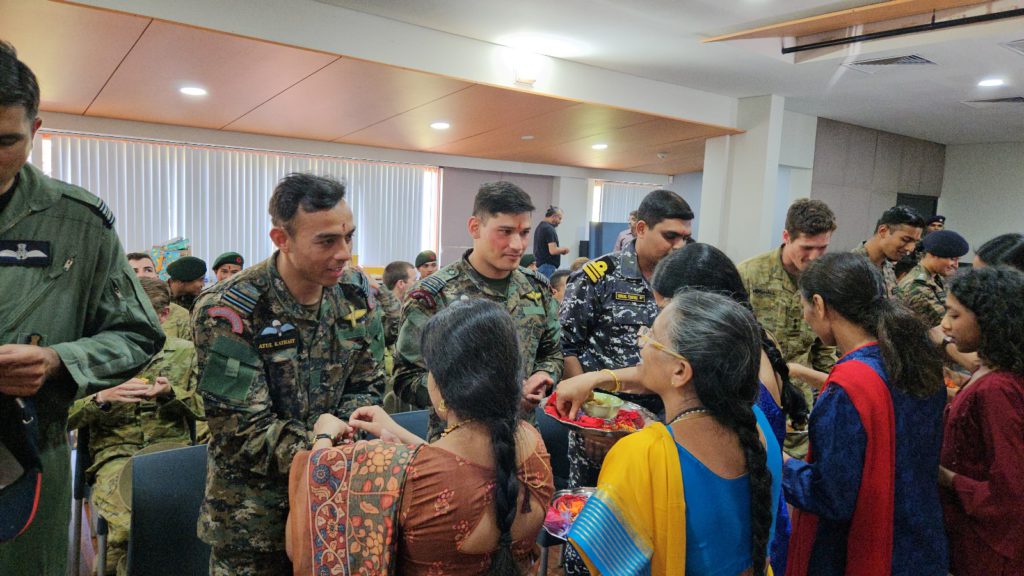
Six years jail for Melbourne man in child sexual assault and exploitation offences

0

A Broadmeadows man has been jailed for six and a half years after a Victorian Joint Anti Child Exploitation Team (VIC-JACET) investigation into the sexual abuse of a child.

The man, 32, was sentenced in the Melbourne County Court yesterday (Wednesday 22 November, 2023) after pleading guilty to four charges relating to the sexual abuse of a child and producing and possessing child abuse material.

Senior Constable (S/C) Catherine KELLY said the AFP is committed to identifying, targeting and prosecuting all offenders who abuse and exploit children.

“The AFP, along with our law enforcement partners, is dedicated to fighting child sexual abuse and bringing those who commit these offences before the court,” S/C Catherine KELLY said.

“This sentencing outcome should serve as yet another serious warning that law enforcement has zero tolerance for child exploitation and child sexual abuse in any form.

“Victorian JACET members regularly have to deal with the most abhorrent aspects of child sexual abuse and I’d like to thank them in their relentless pursuit to protect children and prosecute those who cause them harm.”

The VIC-JACET, comprising of AFP and Victoria Police members, began an investigation in 2022 when police identified the man as an online user uploading child abuse material.

JACET officers executed a search warrant on 13 September 2022, at the man’s residence, where they seized a number of electronic devices, including the man’s phone and a USB, which contained child abuse material.

An examination of the devices revealed the man had produced the child abuse material involving a young female victim. The man was subsequently arrested and charged.

On 18 October 2023 he plead guilty to the following offences:

  • Possessing child abuse material accessed or obtained using a carriage service, contrary to section 474.22A of the Criminal Code Act 1995 (Cth);
  • Production of child abuse material, contrary to section 474.23(1)(a)(ii) of the Criminal Code 1995 (Cth);
  • Sexual assault of a child under 16, contrary to section 49D(1) Crimes Act 1958 (Vic); and
  • Sexual penetration of a child under the age of 12 years, contrary to section 49A(1) Crimes Act 1958 (Vic).

The AFP and its partners are committed to stopping child exploitation and abuse and the Australian Centre to Counter Child Exploitation (ACCCE) is driving a collaborative national approach to combatting child abuse.

The ACCCE brings together specialist expertise and skills in a central hub, supporting investigations into online child sexual exploitation and developing prevention strategies focused on creating a safer online environment.

Support Our Journalism

Global Indian Diaspora needs fair, non-hyphenated, and questioning journalism, packed with on-ground reporting. The Australia Today – with exceptional reporters, columnists, and editors – is doing just that. Sustaining this needs support from wonderful readers like you.

Whether you live in Australia, the United Kingdom, Canada, the United States of America, or India you can take a paid subscription by clicking Patreon. Buy an annual ‘The Australia Today Membership’ to support independent journalism and get special benefits.
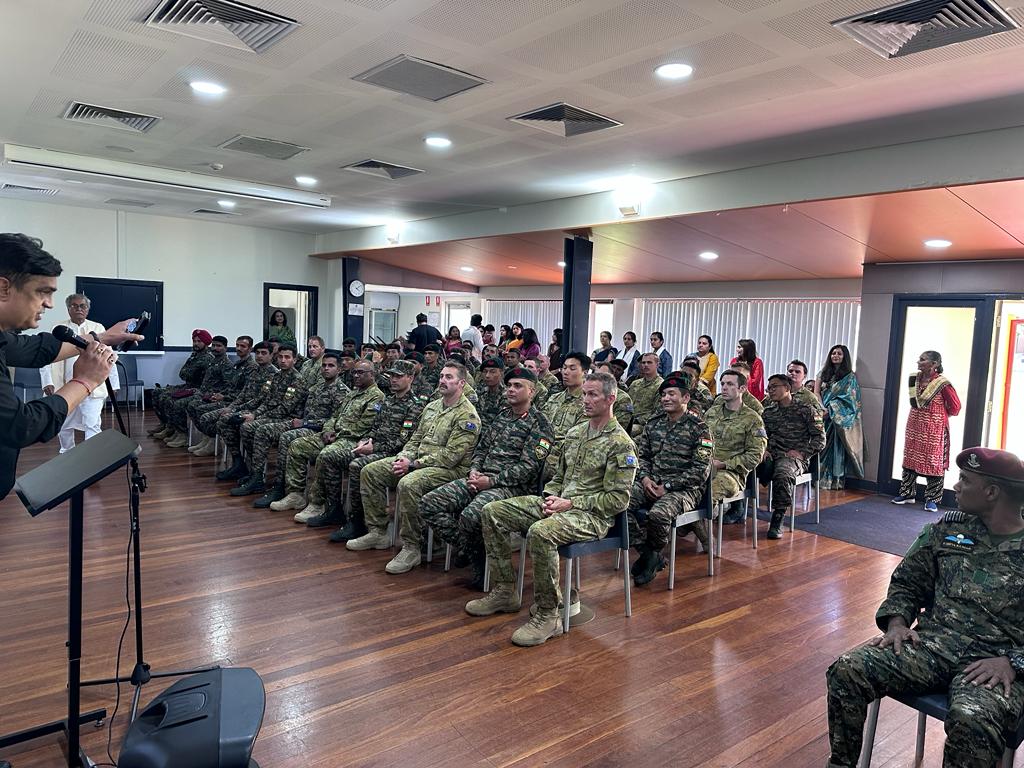
Teachers in films are often portrayed as rule breakers, losers or villains

0

By Hugh Gundlach

The federal and state governments’ new “Be That Teacher” campaign aims to boost enrolments in teaching degrees by raising the status of teachers.

It uses a diverse range of real teachers talking about the real impact they can have on students’ lives. It has been praised for its authenticity, but will it be enough to meaningfully change the way we see teachers?

My new research looks at teachers in popular TV shows and films and finds they are often portrayed as losers or villains.

Why status matters

In previous research, I did a meta-analysis of almost 200 teacher retention studies. This found social approval is strongly correlated with teachers’ intention to stay in the profession.

In other words, the more respect one’s friends and family have for teaching, the more likely that teacher will want to stay in the classroom.

I also surveyed more than 900 Australian teachers (across all school years) about their career decisions. Here I also found the social status of teaching in general society played an important role in how teachers felt about their jobs.

As an English teacher with seven years’ experience explained:

It is very frustrating as a teacher being constantly misrepresented in the media. Much of the conversation is negative and condescending. This is very disheartening for teachers who work incredibly hard and withstand an enormous amount of pressure, stress and exhaustion.

The teachers on screen project

If respect for the teaching profession is lacking, where do these perspectives come from?

We know the news media is one significant component but it is not the only one. Another major source of society’s awareness and perceptions of teachers and teaching is mainstream film and television.

My project analyses the portrayal of teachers in film and television, with a focus on the characteristics of the teachers, the way they teach, and whether they stay in their school and the profession.

I have compiled a database of more than 300 teachers across more than 200 film and television series with a focus on the United States, United Kingdom and Australia over the last 25 years. My analysis so far reveals five trends.

The trailer for Dead Poets Society, the 1989 film starring Robin Williams.

1. Losers and liars

In the 1989 film Dead Poets Society, Robin Williams plays John Keating, a hero-like teacher who inspires students to love poetry and follow their dreams.

This is the exception rather than the rule. In my study, teachers are often characterised as losers or unlikable authoritarians.

The most popular films with teachers as the main character in the last 20 years have been 2003’s School of Rock where Jack Black’s character Dewey Finn shamelessly masquerades as a teacher to try and make money, and 2011’s Bad Teacher. Here, Cameron Diaz’s Elizabeth Halsey despises her job and takes drugs.

On television, the Breaking Bad drama series features chemistry teacher Walter White (played by Brian Cranston) quitting to make more money cooking drugs.

2. Abusive and incompetent

When they are not struggling protagonists, teachers on screen are antagonistic characters. On average, teachers are unflatteringly portrayed as abusive, negligent, incompetent and loners.

For example, in the 2004 film Mean Girls Coach Carr (who is having illegal sexual relations with some of his students himself) gives a totally substandard sex education lesson.

Just don’t do it. Promise?

Another concern is the overwhelming representations of teachers assaulting, grooming or having consensual yet inappropriate relationships with their students. This includes teacher Ezra Fitz in the popular series Pretty Little Liars (2010-2017), who knowingly has sex with an underage student.

Teachers in my study who breach the Australian Teaching Standards outnumber those who do not by three to one. This includes failure to create and maintain supportive and safe learning environments, where teachers bully students or fail to prevent bullying by other students.

For example, Mr Gilbert of The Inbetweeners Movie (2011), is needlessly cruel and belligerent to the young people in his care.

Coach Carr teaches sex education to teenagers in Mean Girls.

3. Not diverse

Screen teachers are also predominantly single, white, middle-class women. White teachers outnumber teachers of other ethnicities by ten to one.

The Australian teaching workforce is predominantly white and does not reflect the country’s diversity. We know representation matters (“if you can’t see it, you can’t be it”) so film and TV portrayals are not helping.

One positive finding is black teachers are almost always portrayed as hero teachers, such as Denzel Washington’s teacher-coach Herman Boone in 2000’s Remember the Titans. However, less than 10% of the black teachers on screen are women. Less than 1% of teachers in the database are of Asian, Indian, Middle Eastern or another ethnicity, combined.

4. The good ones leave

My data shows that if there are good teachers, they don’t stick around. In The Simpsons, Lisa’s favourite teacher Mr Bergstrom (Dustin Hoffman) leaves her bereft with his departure. In Dead Poet’s Society, John Keating is sacked after a year.

LouAnne Johnson (Michelle Pfeiffer) is an arguably transformative teacher to a group of underprivileged kids in the 1995 film Dangerous Minds but ultimately quits by year’s end.

This sends a message that good teachers can’t survive in the system, or are better off somewhere else.

5. And they’re not necessarily that ‘good’

Many “good” teachers on the screen are depicted as “saviours”, yet they are almost always unconventional with their teaching methods.

In the previous examples, Bergstrom, Keating and Johnson exhibit questionable behaviours. This includes not teaching the prescribed curriculum, not knowing the curriculum, focusing attention on just one student, seeing students outside of school and using coercive and inappropriate rewards.

As Bergstrom tells Lisa Simpson:

I’m sorry, Lisa. It’s the life of a substitute teacher. He’s a fraud. Today he might be wearing gym shorts, tomorrow he’s speaking French or pretending to know how to run a band saw or God knows what.

A tearful Lisa Simpson tells Mr Bergstrom she is going to miss him.

A little help from Hollywood

Hollywood of course misrepresents lots of professions. But you can’t ignore the power stories on screen have in influencing behaviour.

We have seen this in Top Gun’s effect on naval recruitment and the winery film Sideways leading people to drink pinot noir at the expense of merlot.

Would more positive screen portrayals of teachers help attract and retain teachers by improving their status in society? With schools struggling to find teachers, it would certainly be another strategy worth trying.

Hugh Gundlach, Lecturer in Education, The University of Melbourne

This article is republished from The Conversation under a Creative Commons license. Read the original article.

"The

Support Our Journalism

Global Indian Diaspora needs fair, non-hyphenated, and questioning journalism, packed with on-ground reporting. The Australia Today – with exceptional reporters, columnists, and editors – is doing just that. Sustaining this needs support from wonderful readers like you.

Whether you live in Australia, the United Kingdom, Canada, the United States of America, or India you can take a paid subscription by clicking Patreon. Buy an annual ‘The Australia Today Membership’ to support independent journalism and get special benefits.
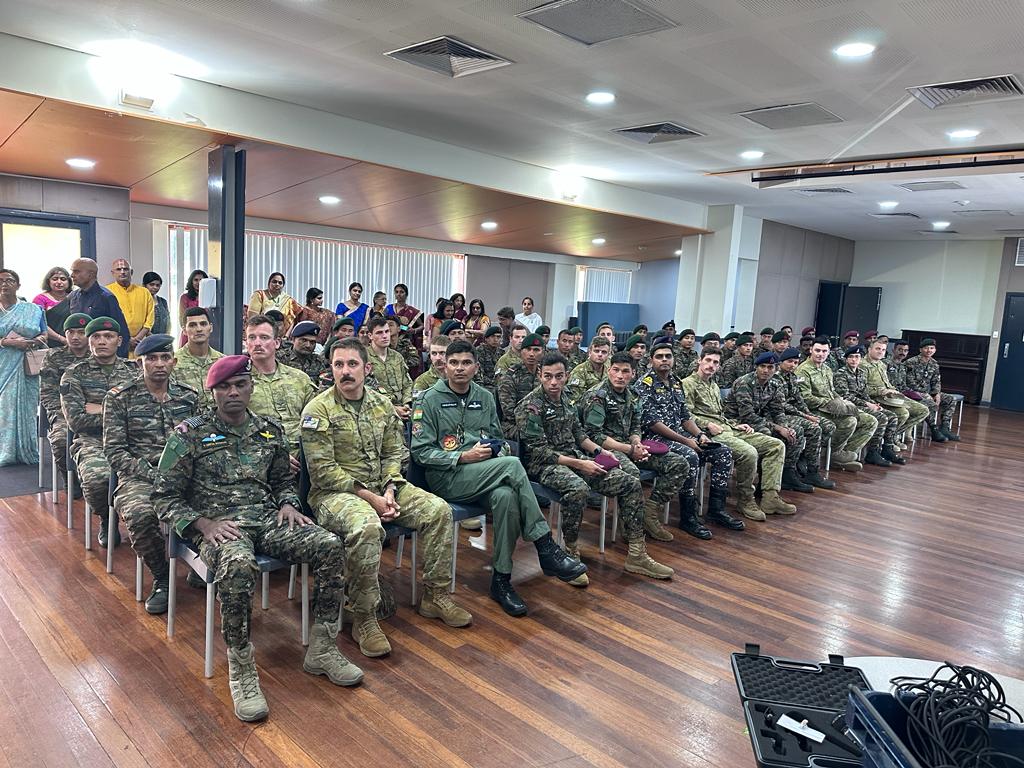
No FIR filed against Australian cricketer for allegedly hurting feelings of 1.4 billion Indian cricket lovers

0

No FIR has been filed against Australian cricketer Mitchell Marsh for keeping his feet on the World Cup trophy.

Earlier, it was reported in the Indian media that an FIR had been registered against Marsh in Aligarh, Uttar Pradesh, alleging that his actions hurt the sentiments of Indians.

The Australian cricket team won the World Cup for the sixth time after defeating India by six wickets on 19th November.

After the event, in a photograph shared on Instagram by Australian skipper Pat Cummins, Marsh could be seen with both his legs resting on top of the trophy as he showed off his gold medal.

Image: Marsh seen sitting on a sofa resting his feet on the World Cup trophy (Source: Instagram – patcummins30)

According to OpIndia, this FIR has been filed by an activist identified as Pandit Keshav.

It was reported that the activist alleged that Marsh’s actions of positioning his legs on the World Cup trophy had deeply offended the sentiments of Indian cricket team fans.

Indian cricket lovers termed it as “disrespectful” and Mitchell Marsh received harsh criticism online.

Even team India pacer Mohammed Shami slammed Marsh and added he was hurt to see the Australian cricketer with his feet on the World Cup.

It was also reported by OpIndia that Pandit Keshav has forwarded a copy of the FIR complaint to Indian Prime Minister Narendra Modi requesting him to ban the Australian player from playing cricket in India.

Several media organisations published this report about an FIR being filed against Marsh. 

However, Aligarh Police said via social media that they had neither filed an FIR nor taken cognisance of any complaint about Australian cricketer Marsh.

The Quint contacted the complainant, who confirmed to them that he had only filed a complaint in Hindi – not an FIR – against Marsh and also sent letters to the Prime Minister and the Sports Ministry.

Image: Copy of Complaint (Source: Accessed by The Quint)

The complainant added that he would “wait for them [the police] to proceed” and would move the court if they did not.

Support Our Journalism

Global Indian Diaspora needs fair, non-hyphenated, and questioning journalism, packed with on-ground reporting. The Australia Today – with exceptional reporters, columnists, and editors – is doing just that. Sustaining this needs support from wonderful readers like you.

Whether you live in Australia, the United Kingdom, Canada, the United States of America, or India you can take a paid subscription by clicking Patreon. Buy an annual ‘The Australia Today Membership’ to support independent journalism and get special benefits.
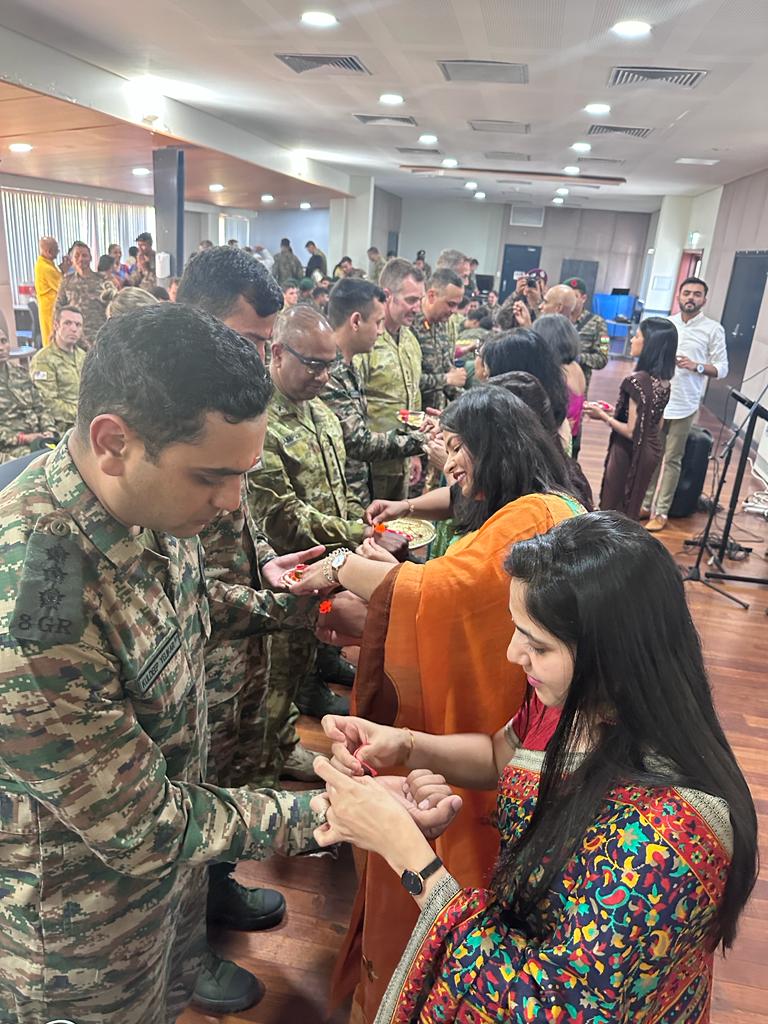
First-ever canine unit skills enhancement program held in Canberra

0

The AFP hosted 30 dogs and more than 60 people in Canberra this week in the first-ever Australia and New Zealand Police Canine Skills Enhancement Program (ANZCSEP). 

The five-day program – including members from Australian state and territory police, and international partners from New Zealand, Türkiye, and the United Kingdom – was an opportunity to improve skills and share information on best practice in the field.

Image: ANZPSCEP Scenario Training (Source: AFP)

AFP Assistant Commissioner Alison Wegg said investing in canines and their handlers was crucial for law enforcement agencies to stay a step ahead of criminals.

“The AFP is proud to have hosted this event and strengthen relationships with our policing partners to develop effective and efficient canine capabilities,” Assistant Commissioner Wegg said.

“Dogs are an invaluable part of a variety of law enforcement activities, and some of our success would not be possible without them.

“They have a smell processing capacity 40 times stronger than humans and when conducting detection work, can sniff between five to 10 times a second.”

Image: ANZPSCEP Scenario Training (Source: AFP)

Senior Sergeant Ryan Johnson, Operations Manager of South Australia’s Police Dog Operations Unit, believed the inaugural program offered an important opportunity for police to develop leading edge capabilities in this space.

“The AFP have done an amazing job in bringing Australian and New Zealand policing jurisdictions together so that we can all display, develop and enhance operational skills in our animals and handlers,” Senior-Sgt Johnson said.

“These types of skills enhancement programs often form the building blocks for better policing practices, spanning multiple countries, so that we can better assist and protect our communities.”

Image: ANZPSCEP Scenario Training (Source: AFP)

A feature of the week was scenario training exercises held at Canberra landmarks.

One scenario involved responding to an armed attacker at Telstra Tower, where general purpose and explosive dogs worked together with AFP tactical response operators and bomb response technicians.

The scenario highlighted the use of various police dogs as an effective tool for locating and apprehending offenders, while also providing an added level of safety for members.

The AFP uses canines to detect drugs, firearms, cash, explosives, corpses and blood, and digital technology such as USBs and SIM cards.

They are deployed all across Australia, and are often called upon to support our state and territory policing partners in their investigations.

Dogs working with the AFP start their training from 10 weeks of age and on average, will have a working life of seven to nine years.

Support Our Journalism

Global Indian Diaspora needs fair, non-hyphenated, and questioning journalism, packed with on-ground reporting. The Australia Today – with exceptional reporters, columnists, and editors – is doing just that. Sustaining this needs support from wonderful readers like you.

Whether you live in Australia, the United Kingdom, Canada, the United States of America, or India you can take a paid subscription by clicking Patreon. Buy an annual ‘The Australia Today Membership’ to support independent journalism and get special benefits.
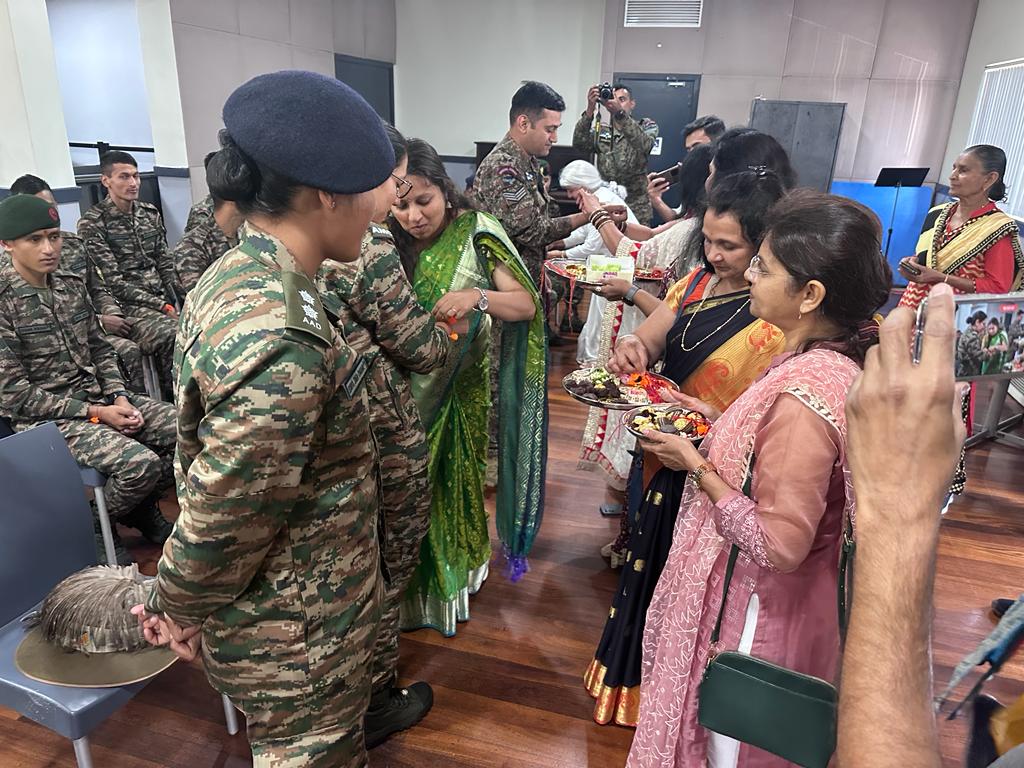
The long, dark history of antisemitism in Australia

0

By Suzanne Rutland

Readers are advised this essay contains historical terms and images which are now considered outdated and offensive.

Antisemitic incidents have spiked in Australia since the October 7 attack by Hamas militants on Israeli communities outside Gaza and the subsequent Israeli war against Hamas inside the coastal strip.

According to the Executive Council of Australian Jewry, there were 368 anti-Jewish incidents reported in Australia between October 8 and November 19. This compares to a total of 478 antisemitic incidents for the entire year from October 2021–22.

As Liberal MP Julian Leeser, who is Jewish, said:

We’re seeing things that I haven’t seen before in my lifetime – Jewish children afraid to wear their uniforms to school, people afraid to wear their Magen David [Star of David], afraid to wear their kippah.

Yet, antisemitism is not a new phenomenon in Australia. In fact, it has a long history, which I have spent a half century researching. And this history is almost as long as European settlement itself.

Emergence of prominent anti-Jewish voices

There have been Jews in Australia from the time of British settlement. As research has shown, they arrived as convicts in chains, yet with the absence of institutional antisemitism in the colonies, they were able to thrive. In fact, a Jew was elected to the Legislative Assembly in Western Australia in 1848, a full decade before the first Jew was elected to Britain’s parliament.

Australia, however, was not immune from what the historian Robert Wistrich has described as “the longest hatred”.

Open antisemitism started to become prevalent in the 1880s with the emergence of Australian nationalism and the campaign for federation. It was further fuelled by fears of an influx of Jews fleeing the pogroms in Russia.

Despite the small numbers of Russian refugees who did arrive, trade unions, politicians and the media decried their presence. The Bulletin (Sydney) and the sensationalist weekly Truth (Sydney) both gave voice to anti-Jewish and other racial prejudices of the day. The Bulletin commented:

Even the Chinaman is cheaper in the end than the Hebrew […] the one with the tail is preferable to the one with the Talmud every time. We owe much to the Jew – in more sense than one – but until he works, until a fair percentage of him produces, he must always be against democracy.

By the late 19th and early 20th centuries, anti-Jewish sentiments could be found across the political spectrum.

The Labor Party figure Frank Anstey, for instance, republished his anti-Jewish newspaper articles as a pamphlet in 1915 entitled The Kingdom of Shylock. John Norton, a nationalist publisher and NSW parliamentarian, expressed similar prejudices in his Truth newspaper. This undercurrent of antisemitism led to the exclusion of Jews from sporting and social clubs and some businesses. Yet, very few eastern European Jews actually settled in Australia during this time.

The largest wave of Jewish refugees occurred from 1938 to 1939, just before the second world war, and again from 1946 to 1954 with Holocaust survivors. They were again met with an antisemitic outcry in Australian newspapers, as well as in statements by members of parliament. Resolutions were also passed against Jewish migration by pressure groups, such as the forerunner of the Returned and Services League of Australia (RSL), the Australian Natives’ Association (a group advocating for federation and later the White Australia policy) and various unions.

In May 1939, Sir Frank Clarke, president of the Victorian Legislative Council, proclaimed:

Hundreds of weedy East Europeans […] slinking, rat-faced men under five feet in height and with a chest development of about 20 inches […] worked in backyard factories in Carlton and other localities in the north of Melbourne for two or three shillings a week pocket money and their keep.

Anti-Zionist agenda influenced by Soviet propaganda

After the war, The Bulletin, in particular, continued its anti-Jewish immigration campaign with cartoons depicting Jewish stereotypes. The sentiments around immigration were summed up by Henry (“Jo”) Gullett, a Liberal member of federal parliament, who said:

We are not compelled to accept the unwanted of the world at the dictate of the United Nations or anyone else. Neither should Australia be a dumping ground for people whom Europe itself, in the course of 2,000 years, has not been able to absorb.

In response to the anti-Jewish hysteria, Arthur Calwell, the newly appointed minister of immigration, introduced administrative policies that ensured the Jewish community remained a tiny minority (0.5%) of the population. These restrictions included a 25% limit on Jewish passengers on ships bound for Australia, which was later extended to planes.

Locally organised antisemitism also emerged in the 1950s and 60s. A young journalist, Eric Butler, promoted the Douglas Social Credit movement, which blamed the banking system for the Great Depression and, by implication, the Jews.

After the war, Butler formed a far-right organisation called the Australian League of Rights, which became a major force in promoting antisemitic libels, including the fraudulent Protocols of the Elders of Zion. By 1960, the league had become a nationwide movement.

Alongside the nativists were supporters of various eastern European fascist movements. They had slipped through the refugee selection process after the war and migrated to Australia as displaced persons. Some established branches of the antisemitic organisations they had belonged to in Europe, such as the Hungarian Arrow Cross and the Ustaša, a Croatian fascist movement.

After the 1967 Arab-Israeli war, some on the far left in Australia began promoting an anti-Israel agenda, particularly on university campuses. This anti-Zionist agenda was deeply influenced by Soviet propaganda. From the late 1950s onwards, the Soviets had tried to infiltrate the Middle East and developed an antisemitic and anti-Zionist propaganda machine to facilitate this.

In 1963, Trofim Kichko, a Ukrainian history professor, published a vitriolic antisemitic booklet titled Judaism Without Embellishment, which included attacks on Zionism. After an international outcry, the booklet was withdrawn. However, following Israel’s victory in the 1967 war, Kichko was rehabilitated and some of his venomous images were republished.

In 1969, the Sovetskaya Rossiya newspaper compared Zionism with fascism, implying Jews were Nazis. It also published an article saying “Zionism is the ideology that justifies war, killing and oppression”. The official Soviet newspaper, Pravda, referred to “the Israeli barbarians” and “a reactionary Zionist doctrine”.

The narrative that Israel was a racist colonial state was also reinforced by the Soviet Union, which the Australian Jewish leader Isi Leibler once described as “the evil empire”.

The impact of this anti-Zionist rhetoric often morphed into antisemitism on Australian campuses. The Australian Union of Students, for example, had come under Trotskyist and Maoist influences in the early 1970s and proposed anti-Israel resolutions. Members of the Jewish Students movement who campaigned against these resolutions were physically attacked.

After the Hamas attacks on October 7, this anti-Israel narrative developed by the Soviets decades ago has again become part of the antisemitic discourse we’ve seen both in Australia and around the world. It coalesces with the theme that Zionism is the new Nazism. These issues have again been magnified on university campuses.

How antisemitism is evolving today

Research into current antisemitism has demonstrated it takes three principal forms. It begins with religious anti-Judaism, then mutates into racial antisemitism, and, most recently, political antisemitism associated with the Israeli-Palestinian conflict, in which ostensible criticisms of Israel can morph into an irrational hatred of Jews.

Often referred to as the “new antisemitism”, this third manifestation constitutes a virulent strain in both high schools and universities.

As in other parts of the world, antisemitism in Australia has been prevalent among those on the radical right and radical left, as well as with extremist Islamic groups, beginning in the 1980s. Spikes in antisemitism are often associated with events in the Middle East and relate to the Palestinian-Israeli conflict.

The resurgence of extreme nationalist and white supremacist movements has been another major factor behind antisemitism in recent years. In Australia, organisations such as Antipodean Resistance and Geelong Chemtrails have emerged recently, propagating Holocaust denial and replacement ideologies, especially on university campuses.

Since 1989, the Executive Council of Australian Jewry has monitored the level of antisemitism in Australia. The number of reported incidents has risen steadily since then, although Australia’s population has also grown. These incidents include abusive emails, mail and phone calls; graffiti; verbal harassment and abuse (including the bullying of Jewish children at schools); and physical violence against individuals and institutions.

Online harassment is the greatest concern today. During the brief Israel-Hamas conflict in May 2021, Australia saw an increase in verbal abuse online, particularly targeting Jewish students at universities.

The medium may be new, but the sentiments are not. Those with antisemitic beliefs continue to propagate traditional anti-Jewish stereotypes, such as the “international Jewish conspiracy” and “Jewish-Nazi analogy”, linked to Holocaust denial. Conspiracy theories emerged again during the COVID pandemic, with some right-wing groups claiming it was a Jewish plot.

I hope a new narrative that is both pro-Israel and pro-Palestine will emerge from the current conflict, which seeks dialogue and compromise between the two sides.


This piece is based partially on a chapter written by the author that was published in The Routledge History of Antisemitism.

Suzanne Rutland, Professor of Hebrew, Biblical and Jewish Studies, University of Sydney

This article is republished from The Conversation under a Creative Commons license. Read the original article.

"The

Support Our Journalism

Global Indian Diaspora needs fair, non-hyphenated, and questioning journalism, packed with on-ground reporting. The Australia Today – with exceptional reporters, columnists, and editors – is doing just that. Sustaining this needs support from wonderful readers like you.

Whether you live in Australia, the United Kingdom, Canada, the United States of America, or India you can take a paid subscription by clicking Patreon. Buy an annual ‘The Australia Today Membership’ to support independent journalism and get special benefits.
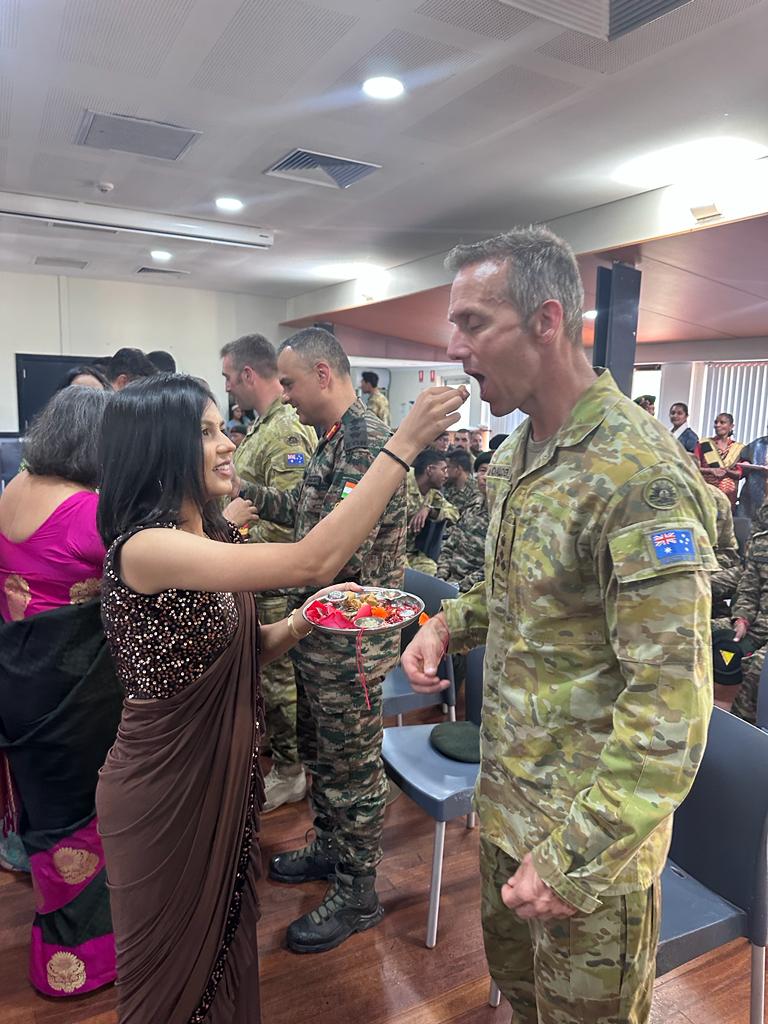
Paramedic Tinesh Tamilkodi who died in a car crash farewelled with a guard of honour

0

38-year-old Tinesh Tamilkodi, a clinical support paramedic, became the first Western Australian paramedic to die while on duty last week.

His specialist vehicle crashed at the intersection of Armadale and Anstey roads in Forrestdale about 1.30 am on 14 November 2023.

Vision from the crash shows the front and driver’s side of the car damaged.

Mr Tamilkodi suffered critical injuries and died at the scene in the city’s southern suburbs.

Image: Tinesh Tamilkodi and car crash (Source: 7News screenshot)

St John WA group chief executive Kevin Brown said last week:

“Tinesh, it’s fair to say, embodied all that is good about St John WA. He has been a loyal server to the community and the service of humanity for over 10 years.”

During a moving service, Mr Tamilkodi has been remembered by his colleagues as a happy man who was always willing to help others.

Image: Paramedics guard of honour to farewell Tinesh Tamilkodi (Source: 7News screenshot)

Paramedics, volunteers and St John WA staff also formed a guard of honour to farewell Mr Tamilkodi.

A colleague described Mr Tamilkodi as the “happiest man on the planet” who loved adventure and travel.

Mr Tamilkodi was remembered as someone who always looked out for others. He would have turned 39 on Wednesday this week.

Support Our Journalism

Global Indian Diaspora needs fair, non-hyphenated, and questioning journalism, packed with on-ground reporting. The Australia Today – with exceptional reporters, columnists, and editors – is doing just that. Sustaining this needs support from wonderful readers like you.

Whether you live in Australia, the United Kingdom, Canada, the United States of America, or India you can take a paid subscription by clicking Patreon. Buy an annual ‘The Australia Today Membership’ to support independent journalism and get special benefits.
Twelve men allegedly from Bangladesh and Pakistan arrive by boat on remote Western Australian shore

0

A boatload of twelve people arrived undetected on remote Western Australian shores on Thursday night.

7News reported that these men from Bangladesh and Pakistan told the local community they were dropped off by an Indonesian boat.

The boat from Indonesia arrived near the Anjo Peninsula in Western Australia’s remote north-east as per ABC report.

The Indonesian boat that is presumed to have dropped these twelve people has disappeared from the Australian coast. 

According to The Australian, it is yet not clear if these people are asylum seekers or fishermen!

It is further reported that these people were “not in good shape” and were rescued by the local Indigenous community, the Wunambal Gaambera people.

Wyndham East Kimberley Shire president David Menzel told WA Today he is not surprised as illegal fishing vessels have been spotted earlier too.

“It’s certainly not a surprise to us. We’ve been advocating for a bit more attention on our coastline.”

Senator James Paterson, Liberal leader and Shadow Home Affairs Minister, said in a statement that these reports of illegal boat arrival were “alarming.”

“Reports of an illegal maritime arrival in northern Western Australia is a further sign that Labor has failed on border security.”

This is the 10th illegal boat to arrive in Australia since the new government was elected in May 2022.

Labor Party has maintained the core elements of Operation Sovereign Borders including: offshore detention, boat turnbacks and take backs where safe to do so, and a ban on refugees or asylum seekers who arrived after 2013 settling in Australia.

The eight people were later arrested by police who flew from the Aboriginal community of Kalumburu to the Truscott air base near where the group was rescued.

Four people were missing in the extremely remote part of the country where the nearest settlement is three hours away.

The Australian Border Force does not comment on operational matters.

Support Our Journalism

Global Indian Diaspora needs fair, non-hyphenated, and questioning journalism, packed with on-ground reporting. The Australia Today – with exceptional reporters, columnists, and editors – is doing just that. Sustaining this needs support from wonderful readers like you.

Whether you live in Australia, the United Kingdom, Canada, the United States of America, or India you can take a paid subscription by clicking Patreon. Buy an annual ‘The Australia Today Membership’ to support independent journalism and get special benefits.
Indian defence personnel in Australia to strengthen and enhance inter-operability

0

The Indian Armed Forces contingent comprising 81 personnel are in Australia to take part in the second edition of Joint Military Exercise AUSTRAHIND-23.

The AUSTRAHIND-23 exercise will be conducted in Perth from 22nd November to 6th December 2023.

Indian Army contingent comprises 60 personnel from a Battalion of the GORKHA Rifles. One officer from the Indian Navy and 20 personnel from the Indian Air Force will also participate from the Indian side.

The Australian Army contingent comprising 60 personnel will be from the 13th Brigade. The Australian contingent will include 20 personnel each from the Royal Australian Navy and Royal Australian Air Force.

Exercise AUSTRAHIND was instituted in 2022 and the first edition was conducted in Mahajan, Rajasthan. It is planned to be an annual training event to be conducted alternatively in India and Australia.

The aim of the exercise is to foster collaborative partnerships and share best practices between the two sides. The exercise will also promote inter-operability while undertaking multi-domain operations in Urban and Semi-Urban terrain under Chapter VII of the United Nations on peacekeeping operations.

The joint exercise will promote the exchange of ideas and jointly rehearse tactics, technique, and procedures for conducting tactical operations.

Training curriculum also includes sniper firing, and jointly operating surveillance and communication equipment to achieve a high degree of situational awareness. Casualty management and evacuation will also be rehearsed besides tactical actions at Company/ Battalion level.

The exercise will also help in promoting understanding between the two militaries and further strengthen the defence cooperation between the two friendly nations.

Support Our Journalism

Global Indian Diaspora needs fair, non-hyphenated, and questioning journalism, packed with on-ground reporting. The Australia Today – with exceptional reporters, columnists, and editors – is doing just that. Sustaining this needs support from wonderful readers like you.

Whether you live in Australia, the United Kingdom, Canada, the United States of America, or India you can take a paid subscription by clicking Patreon. Buy an annual ‘The Australia Today Membership’ to support independent journalism and get special benefits.

Husband-and-wife operators of Hobart restaurant penalised nearly $70,000

0

The Fair Work Ombudsman has secured a total of $69,523.20 in penalties against the husband-and-wife operators of a Vietnamese restaurant in Hobart for breaches including underpaying the wife’s brother-in-law more than $150,000.

The Federal Circuit and Family Court has imposed a $45,532.80 penalty against Ms Xuan A Tran and a $23,990.40 penalty against her husband Mr Quang Manh Dong, who operate ‘Vina Yummy Kitchen’ as a partnership in Sandy Bay, Hobart.

The penalties were imposed after the couple admitted underpaying two employees – Ms Xuan Tran’s sister and her sister’s husband, both Vietnamese nationals – a total of $175,000 between 2015 and 2019.

This included Ms Xuan Tran’s sister being underpaid $18,683.69 and the sister’s husband being underpaid $156,316.31.

They were underpaid minimum rates for ordinary hours, public holiday and overtime rates and leave entitlements, under the Restaurant Industry Award 2010 and the Fair Work Act’s National Employment Standards.

Ms Xuan Tran also provided Fair Work inspectors with false records during their investigation, while both she and Mr Dong also breached record-keeping and pay slip laws.

Fair Work Ombudsman Anna Booth said the case serves to highlight that all workers in Australia have the same rights, regardless of nationality or visa status.

“All employers in Australia need to pay their employees in line with Australia’s workplace laws – or they risk facing significant consequences,” Ms Booth said.

“Employers also need to be aware that taking action to protect vulnerable workers, including visa holders, and improve compliance in the fast food, restaurant and café sector are among our top priorities.

“Any employee with concerns about their pay or entitlements should contact the Fair Work Ombudsman for free advice and assistance.”

Ms Xuan Tran and Mr Dong assisted the two affected workers to move to Australia from Vietnam and acted as visa sponsors for Ms Xuan Tran’s sister.

Fair Work Inspectors investigated after the workers lodged requests for assistance.

Ms Xuan Tran and Mr Dong back-paid the workers in full only after the Fair Work Ombudsman commenced legal action.

Judge Sandra Taglieri found that there was a need to impose penalties to deter other employers from similar conduct, “especially given the high-risk nature of contraventions of the Awards and Act relating to minimum standards in the cafes, restaurants and takeaway foods industry.”

In addition to the penalties, Judge Taglieri ordered Ms Xuan Tran and Mr Dong to complete online learning courses for employers and commission training on workplace relations laws.

Support Our Journalism

Global Indian Diaspora needs fair, non-hyphenated, and questioning journalism, packed with on-ground reporting. The Australia Today – with exceptional reporters, columnists, and editors – is doing just that. Sustaining this needs support from wonderful readers like you.

Whether you live in Australia, the United Kingdom, Canada, the United States of America, or India you can take a paid subscription by clicking Patreon. Buy an annual ‘The Australia Today Membership’ to support independent journalism and get special benefits.
Efficient cooling should be the law for rental homes

0

By Zoe Goodall and Sungkavi Selvakumaran

Summer is coming – and it’s starting earlier, becoming hotter and lasting longer. As the hot weather hits, many renters will be sweltering in their homes.

The World Health Organization recommends a list of actions for people to deal with heat. At the top of the list is “keep your home cool”. But for many renters, this isn’t possible.

In recent years, Australian research reports and news articles have emphasised the physical and mental impacts of extreme heat on people living in private and social rental housing. Tenant advocacy group Better Renting’s “Sweaty and Stressed” report, for example, although based on a fairly small sample, found temperatures in rental properties across Australia last summer were above 25°C for 45% of the time (and much more often in some states).

These reports generally find three potential problems:

  • rental properties lack fans or air conditioners
  • renters who have cooling appliances don’t use them due to the cost
  • some homes can’t be kept at an acceptable temperature even when using cooling appliances.

Poor housing quality, such as lack of insulation, also affects home owners, especially those on low incomes. However, renters are usually less able to modify their homes.

The clear evidence of the harm resulting from living in hot homes points to the need to make effective cooling mandatory in rental housing.

Governments have done little to help

Despite tenant advocates’ work on this issue, governments have done little to protect renters from the heat.

Victoria and Tasmania have minimum rental standards relating to heating, but not cooling. No state or territory makes cooling mandatory in rental properties. The ACT comes closest with minimum standards for energy-efficient ceiling insulation.

The National Cabinet agreement in August, A Better Deal for Renters, did not specifically mention minimum standards on cooling.

The lack of action perpetuates the idea that energy-efficient cooling is simply a matter of comfort. But hot homes have extensive health and wellbeing implications, so it’s a matter of the right to healthy housing.

Excessive heat harms people

The impacts of heat go beyond feeling tired, irritated and sweaty. Hot conditions affect cognitive function.

For example, a study of university students exposed to extreme heat found those living in air-conditioned rooms had better memory, attention and thinking speed than those in non-air-conditioned rooms. This finding highlights how heat can reduce learning ability and productivity.

Excessive heat can also affect mental wellbeing and hormonal mood control. The results include heightened aggression and stress and decreased happiness and motivation.

Heat affects quality of sleep, too. That’s bad for people’s health, with effects such as obesity and poorer quality of life.

The impacts are unequal

Renters’ unequal access to cooling in their homes perpetuates health disparities between both individuals and socioeconomic groups.

The health impacts of heat exposure are particularly bad for susceptible groups. For example, older people and children have less ability to regulate body temperature and cope with heat. And conditions such as diabetes, cardiovascular disease, kidney diseases and respiratory diseases such as asthma can hamper the ability to control body temperature.

Heat also worsens mental illnesses, causing higher rates of anxiety and depressive episodes. Lifestyle behaviours such as substance abuse, particularly of alcohol, increase vulnerability to heat and dehydration.

People on low incomes are more likely to live in poor-quality rental housing that gets too hot. As well as restrictions on the cooling systems they can install, they are least able to afford air conditioning. This puts them at a higher risk of illness or even death.

What are the solutions?

Given there are three main problems – lack of cooling appliances, cost of cooling appliances, and poor home design and ineffective insulation – we need multiple solutions.

In the short term, rental standards should be reformed to include cooling appliances. In Victoria, for example, rental homes must have fixed heaters that meet energy-efficiency standards. Similar standards for cooling are needed (as the Greens have advocated).

In parallel, there are longer-term solutions that minimise the need for cooling devices such as air conditioning. Their use contributes to climate change (if not powered by 100% renewable energy).

One of these is setting passive building design standards. Building design, placement and materials can help control temperature by reducing heat gain (using insulation, shade, windows and so on) and increasing cooling methods such as air flow.

Such design standards would create homes that use less energy to cool. In France, for example, “summer comfort” standards dictate that buildings must be a comfortable temperature even without air conditioning.

While these standards could be applied to new home designs, older properties would have to be retrofitted. Research has found that motivating landlords to undertake retrofitting is difficult. It requires a form of enforceable minimum standards.

The local environment in which houses are built also plays a role. Greenery is a nature-based solution to cool urban areas. Trees around a house can provide direct cooling shade.

In summary, we need to provide renters with access to fans and air conditioners so they don’t keep suffering in the heat. We must also enhance our housing stock so we don’t depend on these appliances to keep cool in a more environmentally sustainable future.

Make it a national priority

The number of renters in Australia is likely to rise as home ownership falls further out of reach. Temperatures are rising too. https://datawrapper.dwcdn.net/JrVGK/1/

At the same time, the home environment is becoming more important. Australians spend a lot of time indoors, including working from home.

Ensuring everyone has housing that can keep them cool should be a national housing policy priority.

Zoe Goodall, Research Associate, Centre for Urban Transitions, Swinburne University of Technology and Sungkavi Selvakumaran, PhD Candidate, Swinburne University, and Lecturer in Public Health, Torrens University Australia

This article is republished from The Conversation under a Creative Commons license. Read the original article.

"The

Support Our Journalism

Global Indian Diaspora needs fair, non-hyphenated, and questioning journalism, packed with on-ground reporting. The Australia Today – with exceptional reporters, columnists, and editors – is doing just that. Sustaining this needs support from wonderful readers like you.

Whether you live in Australia, the United Kingdom, Canada, the United States of America, or India you can take a paid subscription by clicking Patreon. Buy an annual ‘The Australia Today Membership’ to support independent journalism and get special benefits.
Indian international student loses a leg in a truck accident in Sydney

0

21-year-old Indian international student Nirbhay Chauhan who came to Australia 7-8 months ago is admitted at the Westmead Hospital.

It is reported that while Nirbhay was on his bike at a traffic signal a truck ran over him.

Doctors had to amputate one of his legs and Nirbhay is also at risk of losing his second leg.

As an international student, Nirbhay has very little support system available.

Nirbhay is the only child of his parents and has just lost his father to a sudden heart attack thus leaving him with no immediate family to turn to for help.

Image: Nirbhay Chauhan in hospital (Source: Fundraiser page for Nirbhay – GoFundMe)

Indian-Australian community is extending a helping hand both economically and emotionally in Nirbhay’s recovery.

Sahil Kalyan is organising this fundraising appeal on behalf of Nirbhay through GoFundMe:

“We are rallying together to raise $100,000 to support Nirbhay in this crucial time. Your contribution, no matter how small, can make an immense difference in his journey to recovery.”

Yogesh Khattar of the Indo Australia Sanatan Society has also been at the forefront of helping Nirbhay.

Yogesh said in a post that he is impressed by the generosity of the local community in providing support, whether it’s contributing towards medical expenses, providing emotional support, or assisting with food.

“I wanted to express my sincere gratitude for your unwavering support of our community. Your dedication and advocacy make a positive impact, and we are fortunate to have you representing us.”

Councillor Sameer Pandey, former Lord Mayor of the City of Parramatta, too has appealed to “make any donation that would assist enormously in his recovery.”

Support Our Journalism

Global Indian Diaspora needs fair, non-hyphenated, and questioning journalism, packed with on-ground reporting. The Australia Today – with exceptional reporters, columnists, and editors – is doing just that. Sustaining this needs support from wonderful readers like you.

Whether you live in Australia, the United Kingdom, Canada, the United States of America, or India you can take a paid subscription by clicking Patreon. Buy an annual ‘The Australia Today Membership’ to support independent journalism and get special benefits.
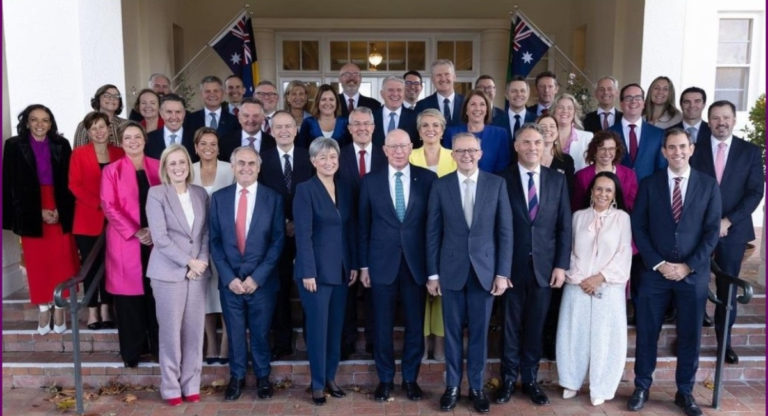
Fiji’s Samabula Sikh Temple celebrates 100 years

0

Members of Samabula Suva Sikh Temple commemorate a century of preservation in Fiji.

Image: Samabula Sikh Gurdwara Sahib (Source: Facebook)

Pio Tikoduadua, Minister for Home Affairs and Immigration, attended the centennial celebration of the Samabula Sikh Gurdwara Sahib as a chief guest.

On this occasion, he said:

“Today, I expressed our nation’s gratitude for their unwavering commitment to making Fiji a better place for all….Let us all draw inspiration from the Samabula Sikh Gurdwara Sahib’s century of service and continue to work together for a harmonious and prosperous Fiji.”

Paramjit Singh, General Secretary of the Sikh Gurudwara Prabandhak Committee, told Fiji Village that this marks a great milestone for the temple.

Head Priest Sandeep Singh told FBC that the Gurudwara Sahib stands as a testament to the enduring spirit of the Sikh community in Fiji.

“Yeah I do have a lot of memories, my dad was originally from India, he passed away last year and he served this Gurudwara for many years and as a child, I have childhood memories of playing in the front area here.”

Image: Samabula Sikh Gurdwara Sahib (Source: Facebook – Swarti Maharaj)

The majority of Indians in Fiji are descendants of Indian indentured labourers who were brought to the islands between 1879 and 1916.

However, most of the Sikhs came to Fiji via the French colony of New Caledonia and the British colony of Hong Kong as free immigrants to mostly work as farmers, policemen, teachers, and preachers.

Permanent Secretary for Home Affairs Mason Smith has applauded Fiji’s Sikh community for its generosity and for sharing their farming expertise.

“In fact, you are the largest dairy farmers in the country, and you have built very close relations with the i-Taukei people in Tailevu and Naitasiri areas.”

Built in year 1923, this is the first Gurdwara Sahib in the South Pacific.

The Samabula Sikh Gurdwara Sahib celebrations reflect the diversity and resilience of the Sikh community.

In 2019, the Gurdwara Sahib was renovated featuring architecture from Amritsar.

This was the first-ever renovation to be carried out since its establishment in 1923.

Support Our Journalism

Global Indian Diaspora needs fair, non-hyphenated, and questioning journalism, packed with on-ground reporting. The Australia Today – with exceptional reporters, columnists, and editors – is doing just that. Sustaining this needs support from wonderful readers like you.

Whether you live in Australia, the United Kingdom, Canada, the United States of America, or India you can take a paid subscription by clicking Patreon. Buy an annual ‘The Australia Today Membership’ to support independent journalism and get special benefits.
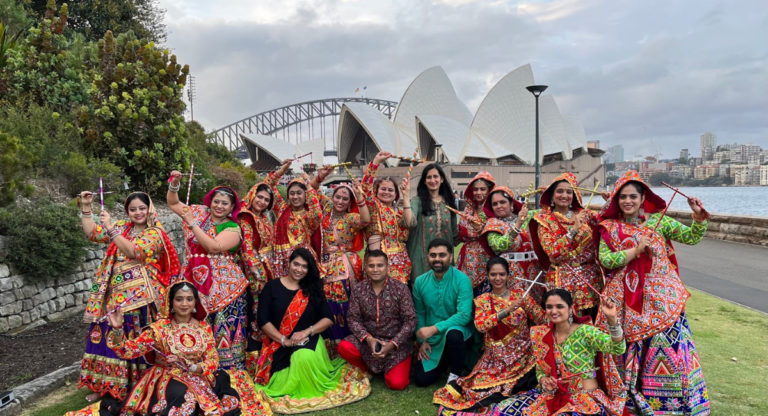
Australian authorities issue warning after 154kg of cocaine seized from hull of cargo ship

0

The AFP is warning criminals their attempts to hide illicit drugs in the hull of cargo ships continues to be disrupted by law enforcement after another import was seized by authorities in Melbourne.

About 150kg of cocaine concealed inside the hull of a cargo ship was seized after the vessel docked in Melbourne, the second attempted import of its kind in two months.

AFP Assistant Commissioner Hilda Sirec said the AFP and its law enforcement partners were closely tracking the rising trend of transnational serious organised crime groups attempting to smuggle illicit drugs into Australia by hiding them underneath the waterline of cargo ships.

“My message to organised crime is that your modus operandi is busted. We know when illicit drugs are coming in and where they are stored,” Assistant Commissioner Sirec said.

“In the past two years alone, a number of high-profile alleged offenders have been deported or extradited to Australia to face serious illicit drug trafficking charges. Some of these offenders are facing sentences of life imprisonment.

“We also want to warn the divers, who are hired by criminal syndicates, to retrieve illicit drugs in the hulls of ships.

“They are also placing themselves in serious danger because retrieval often involves diving through dark, busy shipping channels with limited safety equipment. It’s just not worth risking your life or your future for.”

Image: Cocaine (Source: AFP/ABF/VICPOL Water Police)

Australian Border Force (ABF) used an underwater Remotely Operated Vehicle (ROV) at Melbourne’s Appleton Dock to search a vessel, when it arrived from South America to the Port of Melbourne on 7 October, 2023.

The ROV identified a suspicious attachment on the ship’s hull below the waterline.

In the latest seizure, specialist divers from the Victoria Police Search and Rescue Squad retrieved four packages of cocaine wrapped in plastic from inside the sea chest.

The packages contained about 154kg of cocaine from the ship. This amount of cocaine could have equated to about 77,0000 street deals worth an estimated $61 million.*

AFP officers seized the illicit drugs, along with a suspected tracking device – and began an investigation to identify the source of the cocaine and its intended destination.

This area of the ship is not accessible to general crew on the ship.

Assistant Commissioner Sirec said the AFP, ABF and Victoria Police were working together and would not rule out further arrests.

“The focus of our ongoing investigation is identifying and locating the transnational serious organised crime groups responsible for this attempted import, and the people working for them in Australia to receive and distribute these drugs,” she said.

Cocaine is a highly addictive drug which can cause, among other conditions, psychosis, stroke, heart disease, kidney failure along with significant social and financial problems.

“By stopping cocaine and other illicit drugs from reaching our shores, we are helping to keep our communities safe. Illicit drug use contributes to the road toll, child neglect and family violence,” Assistant Commissioner Sirec said.

“The AFP has more than 200 personnel located in 33 countries as part of its international network. AFP members posted offshore work in partnership with foreign law enforcement agencies to detect, deter, prevent and disrupt crime and harm at its source to ensure a safer Australia.”

Image: Cocaine (Source: AFP/ABF/VICPOL Water Police)

ABF Commander Maritime and Enforcement South, Clint Sims said cocaine shipments were being seized at Australia’s border at record levels, and the ABF worked in close collaboration with partner agencies to combat this criminal behaviour.

“The Australian border is a strategic national asset and remains fundamental to our national security and economic prosperity,” Commander Sims said.

“That is why the ABF works closely with our law enforcement partners to ensure that the border remains a hostile environment for criminals attempting to import illicit drugs.

“With the deployment of advanced technology such as ROVs, the ABF is well-placed to detect, disrupt and deter those who seek to import harmful drugs into Australia.”

Victoria Water Police Inspector James Dalton said working together with the ABF and AFP was vital in detecting and deterring this activity.

“The skills of our members mean we can identify illicit drugs – even if efforts have been made to conceal their origin – and prevent it from reaching the hands of Victorians,” Inspector Dalton said.

“This sends a strong message that if you are attempting to import drugs or illegal goods via ships into Victoria we will detect them.

“Anything we can do to deter this activity we will do and will ensure the people involved are held to account.”

There have been a number of attempts to conceal border controlled drugs in the hull of cargo ships in recent months.

It includes the seizure of about 200kg of cocaine from the sea chest of another vessel docked in the Port of Melbourne in early August, 2023.

Support Our Journalism

Global Indian Diaspora needs fair, non-hyphenated, and questioning journalism, packed with on-ground reporting. The Australia Today – with exceptional reporters, columnists, and editors – is doing just that. Sustaining this needs support from wonderful readers like you.

Whether you live in Australia, the United Kingdom, Canada, the United States of America, or India you can take a paid subscription by clicking Patreon. Buy an annual ‘The Australia Today Membership’ to support independent journalism and get special benefits.
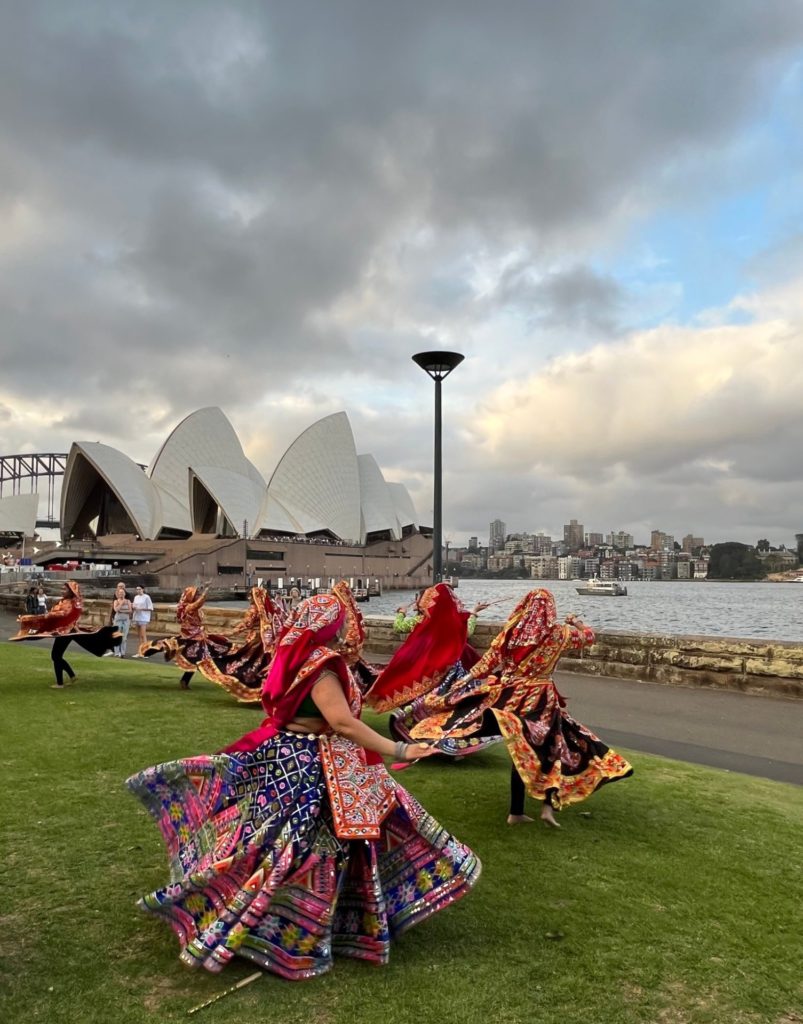
Key takeaways from government’s 7-year plan to boost Australia’s cyber security

0

By David Tuffley

After lengthy deliberation, the Australian government has released its 2023–2030 Cyber Security Strategy, which aims to make Australia one of the most cyber-secure nations in the world by 2030. It’s a worthy goal, considering Australia was ranked as the fifth-most powerful cyber nation in a 2022 report by Harvard University’s Kennedy School.

The strategy outlines a range of ways Australia can protect its people, businesses and organisations into the next decade. Importantly, it has come at a time when the country is reeling from a series of major cyber incidents, including the Medibank and Optus data breaches last year, a nationwide Optus blackout earlier this month, and the more recent closure of ports across the country due to a cyber breach.

Key takeaways

Among other things, the strategy aims to:

  • protect critical infrastructure
  • provide businesses and organisations with tools to bolster their cyber resilience, especially against ransomware attacks
  • ensure businesses secure products and services to protect customers
  • attract skilled migrants to establish a diverse cyber security workforce
  • prioritise critical threats from the most sophisticated actors
  • engage international partners to share threat intelligence and develop new capabilities
  • expand cyber awareness programs to educate the public.

The government has dedicated $586.9 million to achieving these goals, on top of $2.3 billion committed to existing cyber initiatives, including the REDSPICE program aimed at enhancing the intelligence and cyber capabilities of the Australian Signals Directorate.

The most significant investment of $290.8 million will go towards protecting businesses and citizens. A further $143.6 million will be invested in strengthening critical infrastructure, including major telecommunications infrastructure.

By comparison, $9.4 million will be used to build a cyber threat sharing platform for the health sector, and only $4.8 million will go to establishing consumer standards for smart devices and software.

The strategy will also expand the Digital ID program, to “reduce the need for people to share sensitive personal information with the government and businesses to access services online” – but details on this were scant.

Plans to ‘break the ransomware business model’

The strategy notes ransomware is “one of the most disruptive cyber threats” in the world – and costs Australia’s economy up to $3 billion in damages each year. The government will make a “ransomware playbook” to help businesses respond to and bounce back from cyber extortion.

It will also work with industry to co-design a mandatory no-fault ransomware reporting scheme to encouraging reporting on ransom incidents. We know, based on past experiences with the Notifiable Data Breaches scheme, that businesses sometimes won’t report breaches for fear of public backlash. A no-liability reporting scheme could change this, and provide important data that will further bolster our defences against ransom attacks.

The strategy also “strongly discourages” making ransom payments. This makes sense, as these payments inevitably fuel the ransomware economy and fund criminals’ future attacks.

Controversially, however, Minister for Cyber Security Clare O’Neil has considered introducing a blanket ban on such payments at some time in the next few years.

This could have negative impacts. For instance, a business that legally can’t pay a ransom may not be able to recover stolen data, resulting in permanent data and financial loss. Attackers may also release the stolen data online out of spite. We saw this happen after last year’s Optus data breach.

There’s also a risk that announcing an impending ban could make Australia more attractive to criminals in the short term, as they may scramble to carry out as many attacks as possible before payments are made illegal. The impact of this would be lessened if businesses adopt a disciplined approach to regular data backups.

Smart devices and apps

Another strategic initiative will involve working with industry to establish a mandatory cyber security standard (in line with international standards) for consumer-grade smart devices sold in Australia.

The government will also introduce a voluntary cyber security labelling scheme for smart devices. Ideally, such a scheme would keep the public informed about the level of security on the many different devices they own. However, given it’s voluntary, it’s hard to say whether it will have a substantial impact.

Another voluntary code of practice will be introduced for app stores and app developers.

What are the challenges?

If it’s implemented well, the strategy could result in a substantial decrease in cyber crime, greater safety for the public and a thriving cyber sector.

Currently, businesses and individuals struggle with a lack of cyber awareness and skills. They don’t have the resources, nor the incentive, to invest in cyber security. This strategy could change that.

The greatest challenge is the complexity and diversity of cyber threats, which are constantly evolving. Today’s threats may not have crossed anyone’s mind a few year ago. This inherent unpredictability may render some of the assumptions in the strategy redundant in the coming years.

Then there are inevitable trade-offs that come with competing values such as privacy, security, innovation and regulation. For example, a project that strongly maintains the privacy of consumers may end up sacrificing transparency. Similarly, too much transparency can lead to security risks.

We’ll need to innovate in the cyber security domain to stay ahead of criminals. But as we’ve seen in other areas of the tech sector, innovation that outruns regulation is often more harmful than helpful. Striking the balance is difficult.

Moreover, there’s a noticeable lack of detail in many of the initiatives outlined in the strategy. This could make it difficult to measure its progress and impact as a high-level strategic document.

Success will depend on voluntary action and cooperation from stakeholders, which may not be enough to ensure compliance and accountability from some businesses and individuals.

Any shortcomings could be managed by making the strategy inclusive and consultative. If it caters to the needs of all, it may indeed become a successful seven-year plan.

David Tuffley, Senior Lecturer in Applied Ethics & CyberSecurity, Griffith University

This article is republished from The Conversation under a Creative Commons license. Read the original article.

"The

Support Our Journalism

Global Indian Diaspora needs fair, non-hyphenated, and questioning journalism, packed with on-ground reporting. The Australia Today – with exceptional reporters, columnists, and editors – is doing just that. Sustaining this needs support from wonderful readers like you.

Whether you live in Australia, the United Kingdom, Canada, the United States of America, or India you can take a paid subscription by clicking Patreon. Buy an annual ‘The Australia Today Membership’ to support independent journalism and get special benefits.
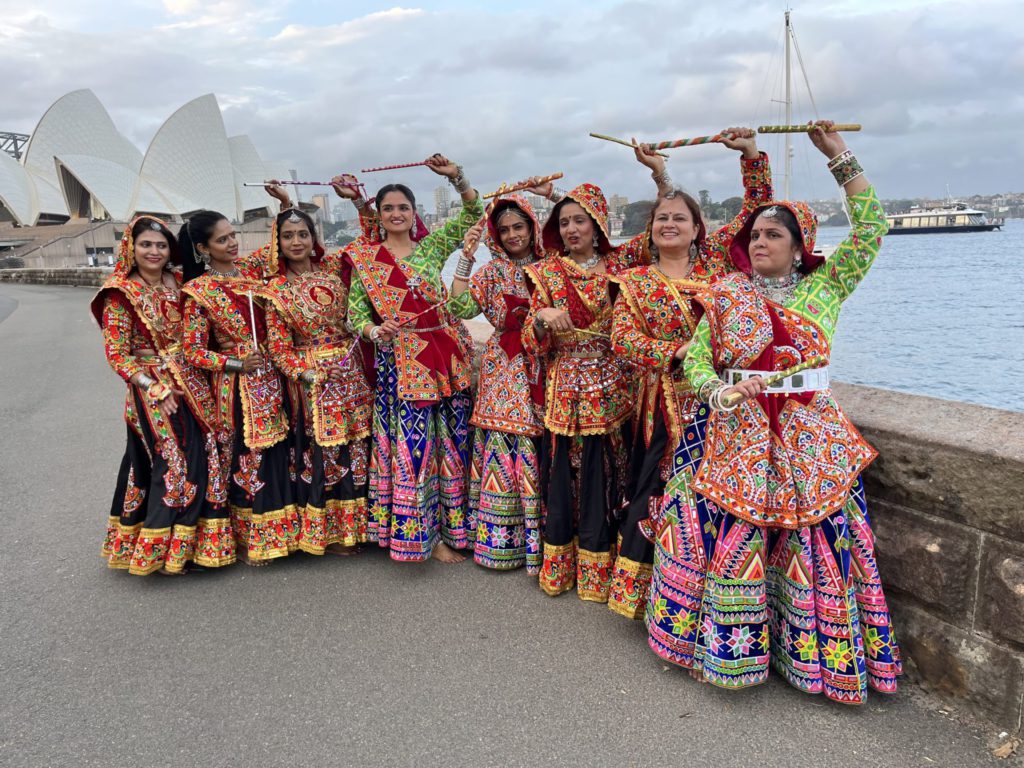
Anil Fred’s ‘Coolamon’ among four finalist names for Australia’s Lunar Rover

0

Anil Fred’s ‘Coolamon’ if selected could end up creating history for Indian-Australian contribution to Australian space history.

‘Coolamon’ which pays homage to the Aboriginal people is one of the four finalists in the competition to name Australia’s Lunar Rover.

More than 8,200 people and schools from across Australia entered the competition to name the Lunar Rover.

Anil said in a Facebook post that he is grateful for being selected: “What a Cool name is this Cool-a-mon!”

“Out of 8000 entries, I won the prize for the top four. The Australian public will decide the final name which will be etched to the Rover. The conditions was to name which reflect creative and Australian sprit.”

Image: Coolamon (Source: CANVA)

According to Anil, Coolamon “captures the essence of our Indigenous heritage and connection to the land.

It is a traditional object, often made from carving out a piece of wood, used by Aboriginal peoples as a multi-purpose vessel, usually a shallow dish.

In Aboriginal culture, Coolamons have a variety of uses, such as carrying water, fruits, and nuts.

Anil adds:

“These items are significant not only for their practical uses but also for their cultural and spiritual importance. They are often decorated with intricate designs, which can have symbolic meanings or tell stories. The crafting and design of coolamons are unique to different Aboriginal groups and regions across Australia, reflecting the rich diversity of Aboriginal cultures.”

Lunar Rover is the Australian Space Agency’s project to venture on a lunar expedition as part of a future Artemis mission by as early as 2026.

NASA is working with Australia’s space industry to design and build an Australian-made rover. It’s part of the Trailblazer program under the Moon to Mars initiative. 

The other shortlisted names include Kakirra, Mateship, and Roo-ver. The voting period is open until 11:59 PM (AEDT), Friday, 1 December 2023. The winner of the competition will be announced on Wednesday, 6 December 2023.

Support Our Journalism

Global Indian Diaspora needs fair, non-hyphenated, and questioning journalism, packed with on-ground reporting. The Australia Today – with exceptional reporters, columnists, and editors – is doing just that. Sustaining this needs support from wonderful readers like you.

Whether you live in Australia, the United Kingdom, Canada, the United States of America, or India you can take a paid subscription by clicking Patreon. Buy an annual ‘The Australia Today Membership’ to support independent journalism and get special benefits.
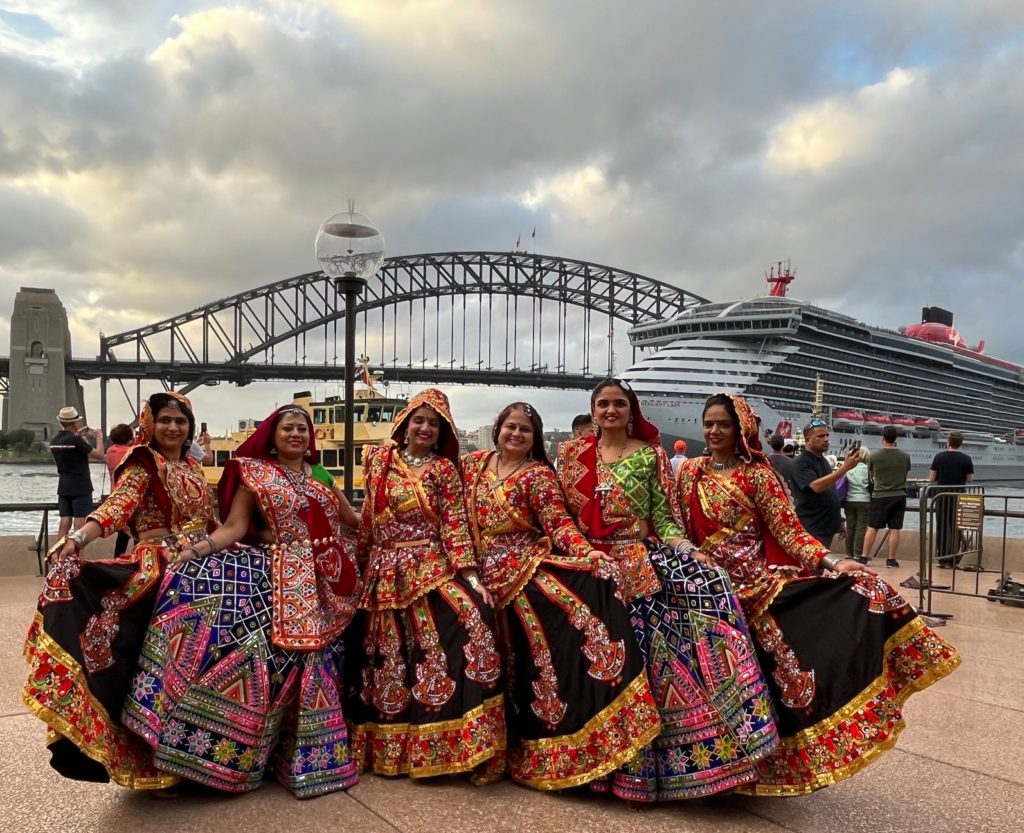
Australia and India to see positive and increased momentum

0

Deputy Prime Minister and Minister for Defence Richard Marles and Minister for Foreign Affairs Penny Wong held the second India-Australia 2+2 Foreign and Defence Ministerial Dialogue on 20 November 2023 in New Delhi with their Indian counterparts Minister of Defence Rajnath Singh and Minister of External Affairs Dr S. Jaishankar.

Both sides welcomed the positive and increased momentum of the India-Australia Comprehensive Strategic Partnership (CSP), which has brought benefits to both countries and helps to support the security and prosperity of our region.

Ministers recalled the important discussions held and cooperation progressed at the first India-Australia Annual Summit held in New Delhi on 10 March 2023 between Prime Minister Narendra Modi and Prime Minister Anthony Albanese, and their engagements in Sydney from 22-24 May 2023, and committed to continuing to work effectively through diplomacy, defence and development activities.

Frequent high-level contacts and Ministerial visits have strengthened and deepened cooperation across a diverse range of areas including defence and security, trade and investment, education and research, agriculture and water, cyber and space, mining and critical minerals, climate change and renewable energy, people-to-people links, and mobility of people.

Prime Minister Anthony Albanese and Indian Prime Minister Narendra Modi; Image Source: PIB

The Indian side appreciated Australia’s strong support for India’s G20 Presidency.

The Ministers welcomed India’s hosting of the Voice of Global South Summit to hear the ideas of the developing world in health, food security, affordable access to energy, climate finance and technologies and economic growth.

Both sides reaffirmed their commitment to continue to work together on global issues and shared priorities in areas such as maritime safety and security, the 2030 Agenda for Sustainable Development and the Sustainable Development Goals, blue economy, critical and emerging technologies, clean energy, reformed multilateralism and global governance, and inclusive development.

The Ministers discussed developments in the Indo-Pacific, Middle East and Ukraine. They expressed deep concern over the war in Ukraine and its tragic humanitarian consequences. Ministers reiterated their support for a comprehensive, just, and durable peace in Ukraine that upholds all the Purposes and Principles of the UN Charter. They underscored the growing impacts of this war on the global economic system and food security, with consequences predominantly affecting developing and least-developed countries.

Noting horrific terrorist attacks against Israel on 7 October 2023, both sides reaffirmed that they stand with Israel against terrorism and called for adherence to international humanitarian law, including the protection of civilians.

The Ministers called for the immediate release of all remaining hostages.
They committed to continue coordinating with partners in the region on humanitarian assistance to meet the urgent needs of Palestinian civilians in Gaza. They expressed support for humanitarian pauses and committed to continue close diplomatic coordination, including with key partners in the region, to prevent the conflict from spreading, preserve stability in the Middle East, and work toward a political solution and durable peace.

The Ministers expressed their deep concern at the deteriorating situation in Myanmar and its impacts on regional security and stability. They called for an immediate cessation of violence, the release of all those arbitrarily detained, safe access to humanitarian assistance, and resolution of the crisis through dialogue and transition towards federal democracy. They reaffirmed their support for ASEAN-led efforts in addressing the crisis in Myanmar and called for the full implementation of ASEAN’s Five-Point Consensus.

Image: India–Australia 2+2 Ministerial meeting (Source: X)

Partnering for the benefit of the region

The Ministers agreed that the CSP was not only beneficial to the bilateral relationship but also to the wider region. They noted that with both countries sharing major Indian Ocean coastlines, and sharing a positive agenda of cooperation with countries across Asia and the Pacific Ocean region, their cooperation served to reinforce an open, inclusive, stable and prosperous Indo-Pacific.

As the India-Australia CSP continues to deepen bilateral cooperation with a shared commitment to democracy and pluralism, rule of law, and a multifaceted bilateral agenda, the Ministers reaffirmed that gender equality is of fundamental importance and investment in the empowerment of all women and girls is critical to full implementation of the 2030 Agenda for Sustainable Development.

The Ministers reaffirmed their support for sovereignty and territorial integrity in the Indo-Pacific, democratic values, the rule of law, freedom of navigation and overflight and the peaceful resolution of disputes.

The Ministers agreed that the path of dialogue and diplomacy is the most suitable for the resolution of disputes and differences and the prevention of conflict.

The Ministers underlined the importance of being able to exercise rights and freedoms in all seas and oceans consistent with international law, particularly the United Nations Convention on the Law of the Sea (UNCLOS), including freedom of navigation and overflight, in addressing challenges to the maritime rules-based order, including those in the East and South China Seas. They expressed the need to have safe and professional behaviour in all domains to ensure peace and stability. They underscored the importance of disputes being resolved peacefully by international law without threat or use of force or any attempt to unilaterally change the status quo, and that countries should exercise self-restraint in the conduct of activities that could complicate or escalate disputes affecting peace and stability.

They expressed serious concern about the militarisation of disputed features, the dangerous use of coast guard and maritime militia vessels and efforts to disrupt other countries’ offshore exploitation activities. They reiterated the importance of adherence to international law, particularly UNCLOS. They again called for any Code of Conduct in the South China Sea to be effective, substantive and fully consistent with international law, without prejudice to the legitimate rights and interests of any state, including those not party to these negotiations, and support existing inclusive regional architecture.

Image: The Hon. Richard Marles MP with Senator Wong (Source: X)

The Ministers recommitted themselves to empowering the Quad as a partnership for regional and global good. They welcomed the progress made at the Leaders’ Summit in Hiroshima in May 2023 to further advance the Quad’s positive and constructive agenda for a free, open, inclusive, stable and prosperous Indo-Pacific. The Quad Leaders’ Summit, to be hosted in India in 2024, will be another opportunity for Leaders to continue the dialogue and consolidate cooperation. India looked forward to welcoming Prime Minister Anthony Albanese at the Quad Leaders’ Summit in 2024.

The Ministers reaffirmed their commitment to ASEAN centrality and ASEAN-led regional architecture including the East Asia Summit, the ASEAN Regional Forum and the ASEAN Defence Ministers’ Meeting Plus. They expressed their ongoing support for the practical implementation of the ASEAN Outlook on the Indo-Pacific.

They reiterated their respect for the Pacific-led regional organisations, foremost the Pacific Islands Forum (PIF) and committed to continue supporting Pacific Island countries in line with the objectives of the 2050 Strategy for the Blue Pacific Continent endorsed by PIF leaders, recognising India’s role in extending development partnership to Pacific Island countries through the Forum for India-Pacific Islands Cooperation (FIPIC) framework.

The Ministers highlighted their commitment to the Indian Ocean Rim Association (IORA) as the premier forum spanning the Indian Ocean region. They recognised IORA’s role in addressing regional challenges and expressed support for the implementation of the IORA Outlook in the Indo-Pacific. Australia congratulated India for taking up the role of IORA Vice-Chair for the next two years before assuming the role of IORA Chair in 2025. Ministers welcomed Australia and India’s co-leading arrangements for the IORA Maritime Safety and Security Working Group and looked forward to working in partnership to build regional collaboration and coordination.

The Ministers looked forward to holding the Australia-India Maritime Dialogue between senior officials, with the next meeting to be convened in 2024. They also committed to continuing cooperation through the Australia-India-France and Australia-India-Indonesia trilateral groupings to address common challenges, share insights and have open discussions on issues including maritime security, the environment and climate change.

The Ministers reaffirmed the commitment to advance the objectives of the Indo-Pacific Oceans Initiative (IPOI), which aims to address common challenges in the region through collaborative actions under its seven pillars. Under Australia’s lead on the Maritime Ecology Pillar, both sides will continue to work together to implement practical projects to drive scientific collaboration and share best practices across the Indo-Pacific on marine ecology.

Both sides looked forward to greater collaboration to take forward the Indo-Pacific Partnership for Maritime Domain Awareness (IPMDA) initiative, announced at the 2022 Quad Leaders’ Summit, as we cooperate to strengthen maritime domain awareness in the region and enhance partners’ ability to tackle the challenges of climate change, natural disasters and maritime safety.

Reflecting our shared interest in the Indian Ocean that is peaceful, stable and prosperous, Australia announced the hosting of the Indian Ocean Conference in Perth on 9-10 February 2024 in collaboration with India. The Conference is an opportunity for leaders, ministers and senior delegates to discuss positive, practical solutions for the key challenges facing our region.

Ministers welcomed closer engagement between Australia and India on Pacific priorities in line with the 2050 Strategy for the Blue Pacific Continent and the 2050 Strategy’s implementation plan, including climate change and economic development. They committed to coordinate closely to share assessments of developments in the Pacific region and to consider opportunities for cooperation, particularly in areas of respective expertise.

They committed to coordinating closely also on development activities in the Indian Ocean region. Ministers welcomed enhanced Indo-Pacific diplomatic presence from both countries, including India’s intention to open a resident mission in Timor-Leste, and Australia’s opening a High Commission in Maldives. The appointment of Australia’s first resident High Commissioner in Malé demonstrated Australia’s increased engagement in the Indian Ocean, including through IORA.

The Ministers underscored the need to strengthen and reform the multilateral system so it may better reflect contemporary realities. In this context, both sides remain committed to a comprehensive UN reform agenda, including through expansion in permanent and non-permanent categories of membership of the UN Security Council. Sharing the view that global governance must be more inclusive and representative, Australia reiterated its support for India’s permanent membership in a reformed UN Security Council (UNSC).

The Ministers acknowledged reciprocal support for each other’s non-permanent candidature in the UNSC – India for the term 2028-2029 and Australia for the term 2029-2030. Both sides reiterated their support for the rules-based multilateral trading system, with WTO at its core, and commitment to work constructively to ensure positive outcomes at the Thirteenth WTO Ministerial Conference, including WTO Reform among others. The Ministers also expressed support for India’s hosting of the 2024 Antarctic Treaty System Meeting.

Enhancing cooperation on defence, security and maritime domain awareness

The Ministers reiterated the importance of the defence relationship, a core pillar of the CSP. The Ministers acknowledged that through joint exercises, 2+2 Ministerial Dialogue, Defence Policy Talks, 1.5 track dialogues and other consultative mechanisms, both sides have made substantial progress in building an advanced and comprehensive defence partnership. The Ministers were pleased with the substantial growth in bilateral defence and security cooperation since their last meeting.

The Ministers reaffirmed their commitment to continue deepening defence and security engagement by enhancing interoperability, cooperating on situational and domain awareness, intensifying maritime cooperation across the region, and exploring opportunities to grow connections on defence industrial cooperation. They also agreed to continue working closely to combat Illegal Unreported and Unregulated (IUU) fishing in the Indo-Pacific region. The Ministers noted the multidimensionality of Services level cooperation with structured staff-level talks and joint exercises consistently expanding in their scope, complexity and frequency.

The Ministers welcomed the hosting of Exercise Malabar by Australia for the first time, and the maiden visit by an Indian Navy Submarine INS Vagir to Australia this year. Ministers looked forward to Australia’s participation in India’s multilateral air Exercise Tarang Shakti in 2024 and noted Australia’s invitation for India to participate in Exercise Talisman Sabre 2025. India extended support to Australia’s conduct of the Indo-Pacific Endeavour 2024. Ministers look forward to India’s participation in Exercise Pitch Black 2024.

Image: The Hon. Richard Marles MP with Senator Wong (Source: X)

The Ministers concurred that reciprocal logistics support and cooperation have resulted in increased interoperability between the forces. They expressed pleasure at the progress of discussions on air-to-air refuelling cooperation between the forces, which will increase the operational endurance and reach of their respective militaries.

The Ministers welcomed the successful conduct of the inaugural edition of the India-Australia General Rawat Young Defence Officers’ Exchange Program this year in India and looked forward to the conduct of the next iteration in Australia in 2024. They further agreed that military-to-military cooperation should now look to expand to niche training areas.

The Ministers acknowledged the progress made in maritime information sharing and maritime domain awareness between the two countries. They noted the close working between India and Australia in the Information Fusion Centre – Indian Ocean Region and looked forward to growing engagements and mechanisms for real-time information sharing.

The Ministers agreed to continue aircraft deployments from each other’s territories to build operational familiarity and enhance maritime domain awareness, and consolidate maritime domain awareness cooperation by enhancing interoperability and information sharing to consolidate mutual access. The Australian side welcomed India’s full membership of the multinational Combined Maritime Forces (CMF), headquartered in Bahrain.

The Ministers welcomed discussions on hydrography cooperation to further synergise bilateral cooperation in regional maritime security and underwater domain awareness. The Ministers also expressed pleasure at the progress towards the inaugural joint research project in underwater technologies between the two countries.

The Ministers underscored the considerable potential for cooperation between India’s Innovation for Defence Excellence and the Australian Strategic Capability Accelerator to explore innovative solutions to joint capability priorities. The Ministers welcomed opportunities for increased defence industry engagement through participation in each other’s major defence trade exhibitions. They expressed satisfaction at the holding of the 2nd and the 3rd meetings of the Joint Working Group on Defence Industry and Research in quick succession. The Ministers also noted the growing potential of defence industries on both sides.

Ministers condemned terrorism in all its forms and manifestations, including the international movement of terrorists, and agreed to work together to take concerted action, specifically about countering radicalisation and violent extremism; proscribing terrorist entities and individuals; combating the financing of terrorism and monitoring and preventing illicit financial flows, money laundering and hawala; sharing intelligence and cooperating in investigative and judicial processes; preventing the use of the internet for terrorist and violent extremist purposes; and acting against internationally designated entities and individuals. Ministers agreed to continue to work closely together to protect the integrity of the international financial system from transnational crime and illegal financial transactions.

Ministers noted the significant role technology plays in the strategic challenges of our time. The Ministers expressed their concern about ransomware and other cyber-related crimes and recognised the need to bolster the protection of critical networks and information infrastructure.

Supporting technology and industry collaboration

The Ministers highlighted technology and industry cooperation as an essential pillar of the bilateral relationship and emphasised the role of secure, resilient and trusted technology and supply chains in enhancing national security and driving economic growth.

Both sides welcomed the launch of the India-Australia Rapid Innovation and Start-up Expansion (RISE) Accelerator, which aims to enable start-ups with mature tech-based innovations to fast-track their cross-border social, economic and environmental impact through a cross-border innovation ecosystem. The powerful partnership between Atal Innovation Mission (AIM), NITI Aayog and CSIRO Australia will provide valuable support to startups, micro, and small-to-medium enterprises that are working on innovative technology in climate-smart agriculture, clean energy, waste and circular economy and climate-smart mobility. India and Australia acknowledged the importance of Prime Minister Modi’s vision of “LiFE” – Lifestyle for the Environment.

India congratulated Australia for the formal commencement of its role as the new chair of the IAEA-RCA. As a founding member of RCA, India has always committed itself to actively contribute to collaborative research and development, training and capacity-building in the areas of human health, including environment and advanced manufacturing in the Indo-Pacific region.

The Ministers committed to fostering collaboration and enhancing cooperation in the realm of critical minerals. They also affirmed their support for strengthening cooperation in diversifying, the value/supply chains of critical minerals. The Ministers acknowledged and appreciated the ongoing collaborative endeavours between researchers from both sides who are working together in geoscientific research, bilateral businesses and investments. Both nations expressed their commitment to ongoing cooperation and reiterated the importance of diversifying supply chains of critical minerals.

The Ministers welcomed continued progress under the India-Australia Energy Dialogue. They noted the existing collaboration on solar energy and green hydrogen, two technologies that are critical to achieving Australia and India’s energy transition, and momentum towards a Renewable Energy Partnership. The Ministers noted the progress of the India-Australia Solar Taskforce and welcomed the appointment of Co-Chairs to the India-Australia Green Hydrogen Taskforce. The Ministers noted India’s G20 Presidency initiative to establish a ‘Global Biofuels Alliance’.

Image: Senator Wong with policy leaders (Source: X)

Building institutional chemistry

The Ministers noted with satisfaction that deepening cooperation between Australia and India in a range of fields was being energised by the Indian community in Australia, which is now Australia’s fastest-growing large diaspora. They committed to building on government, business and community cooperation initiatives by normalising, regularising and deepening contact to build institutional chemistry.

The Ministers welcomed Australia opening a new Consulate-General in Bengaluru in July 2023, Australia’s fifth diplomatic mission in India, to represent Australia in the states of Karnataka and Telangana. The Consulate-General will deepen Australia’s trade, investment and people-to-people ties, and strengthen technology partnerships, with this dynamic part of south India.

To support the growing Indian community in Australia, Ministers welcomed the new Consulate-General of India in Brisbane, Queensland.

To enhance understanding between the two governments on regional issues, the Ministers decided to expand the Senior Officials Consultations beyond the existing talks.

To share perspectives and policy solutions on challenges facing the Indo-Pacific region, the Ministers announced a new 1.5-track India-Australia Strategic Dialogue, which would include representatives from government, academia, think tanks, the strategic community, industry representatives and policymakers.

The Ministers welcomed the establishment of the Centre for Australia-India Relations (CAIR) announced by Prime Minister Albanese during the visit of Prime Minister Modi to Sydney in May 2023. They welcomed the Maitri Fellowships administered by CAIR, which will support experts working on foreign and trade policy issues in Australian and Indian academic and research institutions or think tanks, focusing on geoeconomics trends and issues of geostrategic interest to the bilateral relationship.

The Ministers welcomed the entry into force of the Agreement between the Government of the Republic of India and the Government of Australia on Audiovisual Co-production following the confirmation through diplomatic channels of completion of respective domestic ratification processes in India and Australia. The Ministers concurred the Agreement would further strengthen cultural ties by connecting Australia’s and India’s screen industries and create new opportunities for creative exchange between filmmakers, actors and producers.

Both sides positively assessed the momentum in economic engagement. The Ministers expressed appreciation for the entry into force of the India-Australia Economic Cooperation and Trade Agreement (ECTA) on 29 December 2022. The Ministers also welcomed the progress in negotiations on an India-Australia Comprehensive Economic Cooperation Agreement (CECA) and reiterated the commitment by Prime Ministers for an early conclusion of an ambitious CECA to realise the full potential of the bilateral economic relationship. Ministers noted Australia’s ‘Update to the India Economic Strategy’, which identified significant potential for greater collaboration with India including in critical minerals, renewable energy, and net zero technologies.

Both sides welcomed the signing of the Mechanism for Mutual Recognition of Qualifications between the two countries, which strengthens ongoing cooperation in the field of education and skill development and facilitates balanced mobility, and looked forward to the expeditious implementation as per the agreed terms. The Ministers agreed to further deepen cooperation in the field of internationalisation of education and foster institutional-level linkages between the two countries under various modes like twinning, joint degrees, and dual degrees.

Image: Senator Wong at Lady Shri Ram College (Source: X)

The Indian side welcomed the interest shown by Australian Universities in setting up offshore campuses in India. The Ministers commended the first meeting of the Australia-India Education and Skills Council (AIESC) held recently at Gandhinagar, Gujarat, to take forward the bilateral cooperation in areas of mutual interest, especially in the six prioritised areas of health and care sectors, agriculture, renewable energy, digital, mining and logistics, and strengthening educational partnerships and advancing research through internationalisation.

The Ministers underlined the progress made in the Migration and Mobility Partnership Arrangement (MMPA) and noted the first Joint Working Group Meeting on MMPA held in Canberra on 13 October 2023. They welcomed progress towards the launch of the Mobility Arrangement for Talented Early-professionals Scheme (MATES), which will support the mobility of young Indian professionals in identified sectors to Australia. They also agreed to work within the scope of the MMPA, including on the mobility of visitors, students, graduates, academic researchers, business people and other working professionals. They reiterated their shared intention to cooperate to combat irregular migration.

The third 2+2 Ministerial Dialogue will take place in 2025.

Support Our Journalism

Global Indian Diaspora needs fair, non-hyphenated, and questioning journalism, packed with on-ground reporting. The Australia Today – with exceptional reporters, columnists, and editors – is doing just that. Sustaining this needs support from wonderful readers like you.

Whether you live in Australia, the United Kingdom, Canada, the United States of America, or India you can take a paid subscription by clicking Patreon. Buy an annual ‘The Australia Today Membership’ to support independent journalism and get special benefits.

Daylesford Tragedy: Police investigation under scrutiny as ‘Driver’ not charged as yet

0

Police are still determining whether to charge the driver involved in a tragic incident outside a Victorian pub in Daylesford, which resulted in five Indian Australian fatalities.

Detective Sergeant Peter Romanis told the Coroners Court of Victoria that the investigation into the November 5 crash is still in its early stages and ongoing.

The driver, a 66-year-old man, was operating a white BMW SUV when it struck patrons outside the Royal Daylesford Hotel.

This incident, which took place around 6:05 PM, led to the tragic loss of Jatin Chugh, 30, his partner Pratibha Sharma, 44, and her daughter Anvi, aged nine. Also among the deceased were Vivek Bhatia, 38, and his son Vihaan, 11. Bhatia’s younger son and wife, Ruchi, were hospitalised due to injuries sustained in the crash.

The driver, treated at the hospital and interviewed by police, has been released pending further inquiries.

Sergeant Romanis indicated that the police are currently examining how the driver’s diabetes may have contributed to the incident. The Major Collision Investigations Unit is gathering evidence about the layout of the outdoor seating area and any related public safety concerns.

Coroner Katherine Lorenz, addressing the court, acknowledged the profound loss suffered by the families and the community.

Counsel assisting the court, Andrew Imrie, emphasized that the coronial and criminal investigations are separate, suggesting that the coronial inquiry should commence after the conclusion of any criminal proceedings.

Meanwhile, the police continue to investigate the incident’s circumstances, and the court has indicated that the case might take a long time to finalize.

The driver’s lawyer, Martin Amad, stated after the crash that his client, an insulin-dependent individual, is deeply distressed and empathizes with the victims’ families and the Daylesford community. Amad described his client as a family man with no previous criminal history.

Support Our Journalism

Global Indian Diaspora needs fair, non-hyphenated, and questioning journalism, packed with on-ground reporting. The Australia Today – with exceptional reporters, columnists, and editors – is doing just that. Sustaining this needs support from wonderful readers like you.

Whether you live in Australia, the United Kingdom, Canada, the United States of America, or India you can take a paid subscription by clicking Patreon. Buy an annual ‘The Australia Today Membership’ to support independent journalism and get special benefits.

War is its own revenge and enemy: Balance sheet of death in Israel-Gaza crisis 

0

By Om Prakash Dwivedi

As I write this column, thousands of innocent civilians, including kids, have already been killed, first in Israel, and later in Gaza. This column is in support of all the innocent people who have been sacrificed in the fire of terrorism and war.

One does not live to be killed by terrorists just like one ought not to assign liberation tasks to violent ideologies. Those who only believe in the cult of violence will end up murdering democratic efforts, liberation movements, including innocent civilians.

It has now been announced that Israel has approved a four-day ceasefire with the release of 150 Palestinian prisoners in exchange for 50 hostages – women and children.

All of us have only one life. Therefore, the right to live should be an enduring idea for all of us. Death will come when it must, naturally, in different manifestations though. Our efforts should be focused more on protecting and nourishing life forms. Disregarding the sacrosanctity of life would only spell doom for all of us, for it is the very nature of violence that it percolates slowly, before it is stoked and spread across boundaries and communities. Violence, it may appear to have a communal/racial colour, but if it remains unabated, it blurs all such distinct boundaries.

The right to exist belongs to everyone unless one is entrenched in violence to the extent that one stops believing in the existence of other groups, communities, and races. One needs to recall that “I” exists only in relation to “You”. In other words, my presence can only be validated by the Other. The same stands true in the ongoing cataclysmic violence.

Many of the Palestinians are neither related to Hamas, nor affiliated to it, nor do they support its bloody attack on the innocent Israelis. It is another matter that one finds “educated” and “self-acclaimed liberal” scholars/activists rhapsodizing Hamas’s terror activities while raising disparaging remarks about Israelis, demonising them, and questioning their right to exist. This eruption of pleasure and vilification of Israelis is tantamount to impiety and convincingly demonstrates the disillusioned nature of liberalism. The point is, liberalism is neither foolproof nor failsafe. Ideologies are taken for a ride when one starts using them to breed and promote violence and hatred selectively, only through one’s chosen lens colour, rather than being cognizant of the conjunctions and juxtapositions that underpin any idea/action.  

Those who claim that Hamas had no option left but to perpetuate terrorist acts to liberate Palestinians must also not forget that terrorism is likely to get a retaliatory response since tolerance as a virtue can neither be unlimited nor liberal, particularly when citizens are being kidnapped, tortured, and killed. But this complicates the situation in the region when we examine the tolerance level of the Palestinians who have been living under the shadow of death since long. As a state whose duty is to protect its citizens, the countermeasures adopted by Israelis in opening a war against Hamas cannot be condemned. The government loses moral ground if it fails to protect its citizens’ rights and lives.

What is troublesome in this ongoing war against terrorism is the ease with which it glosses over the tragedy of civilians on both sides.  While there can be arguments on both sides as to what led to this crisis, who is to be blamed, and, of course, whose lives matter more, the nub of the matter is that Israel’s retaliatory measures could have been designed in a way to protect and prevent innocent Palestinians’ life. It is not just death but the fear of it that Gazans breathe presently, not to forget about the dysfunctional hospitals, breaking out of new diseases, the termination of electricity supply, and lack of drinking water, which had rendered the entire land and atmosphere uninhabitable.

That both institutional law and international humanitarian law have neither shown any interest nor exercised any resolution highlights their character. The failure to come to the rescue of ailing and dying civilians evokes the age-old practices of racism, embedded as it is within the white structures and policies.

War is both its own enemy and its own revenge. As obvious, it is stoked with grains of religion, race, and jingoism, but once it spreads the victims lose all identitarian marks because it is humanity that gets deflated and defeated. Both Israelis and Palestinians have the same human rights, and it would be unfair to deprive either of them just on the basis of their racial or communal moorings. Also, the divisive humanity that undergirds Muslims and Jews is ironic given the fact that their genealogical lineage is tethered to the Abrahamic religion (1996 to 1821 BC). The cataclysmic events that a war triggers are a fait accompli since it treats humans as wasted lives. It is also ironic to notice that there are people on both sides trying to defend the wrongdoings citing the balance sheet of death. As if it is a moral compulsion to overweigh the other in the death figures in the game of war.

Reports also claim to witness the sporadic fire exchanges between the Hezbollah terrorist organisation and Israeli soldiers, thus lending credence to the speculation of a luring threat of the rise of radical Islamists. While it is very unlikely that Arab nations would intervene in this war since none of them has shown any generosity towards the ailing Palestinians by opening their borders, this may consolidate and energise the radicals in the region, bringing them together on a common platform to unleash further acts of terrorism against Christian countries. Abdel Fattah el-Sisi rejected the idea of the Gazans’ relocation citing “Palestinian cause [as] the mother of all causes.”

It is for obvious reasons that India, Australia and America are rendering their full support to Israel. There has been no change in America’s position on the Israel-Gaza matter. Particularly, the timing of America’s support fits well with the upcoming elections in 2024. That is also why there is little hope that the two-nation solution pitched by the Indian government will remain unnoticed. Will the two children of Abraham be able to resolve this deep crisis and learn to live peacefully? This hope should be the enduring hope of the peacemaking process. 

Contributing Author: Om Prakash Dwivedi tweets @opdwivedi82. His interests lie in the field of postcolonial theory.

Disclaimer: The opinions expressed within this article are the personal opinions of the author. The Australia Today is not responsible for the accuracy, completeness, suitability, or validity of any information in this article. All information is provided on an as-is basis. The information, facts, or opinions appearing in the article do not reflect the views of The Australia Today and The Australia Today News does not assume any responsibility or liability for the same.

Support Our Journalism

Global Indian Diaspora needs fair, non-hyphenated, and questioning journalism, packed with on-ground reporting. The Australia Today – with exceptional reporters, columnists, and editors – is doing just that. Sustaining this needs support from wonderful readers like you.

Whether you live in Australia, the United Kingdom, Canada, the United States of America, or India you can take a paid subscription by clicking Patreon. Buy an annual ‘The Australia Today Membership’ to support independent journalism and get special benefits.
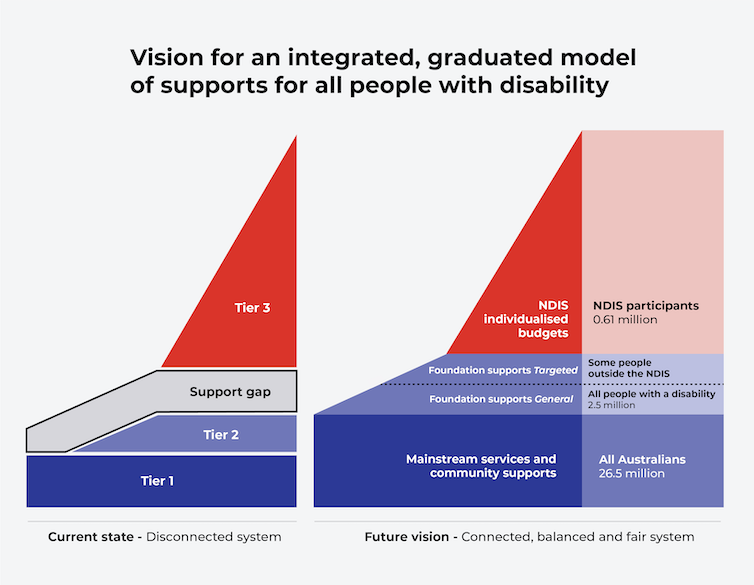
Small town girl from India wins South Australia’s Young Innovator award

0

Ishika Mahajan was announced as the winner of the Women in Innovation SA’s Young Innovator of the Year Award.

21-year-old Ishika is at the forefront of the battle against Glioblastoma which is considered one of the most lethal brain cancers.

Three years ago, Ishika moved to Australia from a small town in India to pursue the Bachelor of Biomedical Research (Honours).

Image: Ishika Mahajan at UniSA lab (Source: UniSA)

In a post, she observed:

“From young age, I used to say myself; it isnt important if you are getting seen or not and if you are falling more times than getting up, but you gotta work hard and be resilient without complaining because you are working to create a change in this world and the dream of making this world a better place is not only a big dream but a long journey.”

In her academic journey so far, Ishika has won numerous scholarships that have helped support her Honours research.

Ishika holds a prestigious diploma in Genomics from Harvard University and boasts an impressive collection of over 35 awards recognizing her leadership and contributions to STEM research.

She was also a finalist in the in the 7News Young Achiever Award for University of Adelaide STEM Award.

Image: Ishika Mahajan at the 7News Young achiever awards (Source: LinkedIn – Ishika Mahajan).

On receiveing the Young Innovator of the Year Award, Ishika thamked her supervisor.

“Dr Guillermo gomez, my supervisor who believed in extremely young kid and gave her a chance to lead this project. Brain cancer is a difficult fight and the work in drug repurposing that me and my lab are working on is a way to improve the survival of patients.”

On chosing research in cancer studies, Ishika observes:

“I am often asked why research, science and cancer and my answer as usual is why not. Being a scientist as a woman is unconventional but thats how you inspire more girls to become cool scientists by leading to become as one. I am no inspiration but if I can lead by an example that if she can do it then I can, my goal will be fulfilled.”

On hearing of Ishika’s success in the STEM world, her mother cried. She notes:

“Hearing that her little girl is trying to save lives and is working to inspire more little girls especially immigrants and woman of colour to pursue STEM.”

With a multidisciplinary background in AI, Machine Learning, and Bioinformatics, Ishika has identified promising and innovative therapeutic targets.

Key to her innovative approach is the utilisation of patient-derived tumour explants organoids (PD-TEO).

This groundbreaking technology allows for the swift assessment of the impact of anti-tumour treatments within physiologically relevant 3D human brain tumour tissue. Significantly, it reduces the reliance on animal experimentation for testing novel therapeutics, underscoring Ishika’s commitment to ethical and effective research practices.

Image: Ishika Mahajan volunteering with UniSA Sport (Source: UniSA).

Ishika is an ardent STEM enthusiast and volunteers to promote science communication. She will start a job at CSIRO and says the next step is PhD.

Women in Innovation SA is a community of professionals passionate about innovation and striving to support and elevate South Australia’s innovative women. The 2023 awards mark Women in Innovation SA’s 10-year anniversary.

Support Our Journalism

Global Indian Diaspora needs fair, non-hyphenated, and questioning journalism, packed with on-ground reporting. The Australia Today – with exceptional reporters, columnists, and editors – is doing just that. Sustaining this needs support from wonderful readers like you.

Whether you live in Australia, the United Kingdom, Canada, the United States of America, or India you can take a paid subscription by clicking Patreon. Buy an annual ‘The Australia Today Membership’ to support independent journalism and get special benefits.

Australia ready to attract Bollywood again with a new coproduction agreement

0

Bollywood film shoots in Australia and Australian film shoot happening in Mumbai is now on the cards for filmmakers of the two nations with a new agreement.

Australia’s film industry will benefit from an exciting new partnership with India – following the ratification of the Australia-India Audio-visual Co-production Agreement.

Minister for Foreign Affairs, Senator the Hon Penny Wong, said in a statement:

“I’m very excited to see yet another great outcome for the Australian film industry, and the Australia-India relationship.”

Senator Wong added:

“Our two countries enjoy deep and enduring cultural ties. We’re proud to have a large and growing Indian community here in Australia and this agreement will only see our links strengthen further and bringing our people even closer together.”

The treaty-level agreement will strengthen collaboration and creative exchange between Australia and India, allowing more films and television series to showcase the best of both cultures, landscapes and people.

The agreement will strengthen the existing ties between the Australian and Indian film industries, assist Australian producers reach new audiences, and Australian audiences to connect with new stories.

Image: Minister for the Arts, Tony Burke MP (Source: Facebook)

Minister for the Arts, Tony Burke MP, observed in a statement:

“India is a global film powerhouse and this agreement is great news for the Australian screen industry.”

He added:

“As a long-time Bollywood fan, I can’t wait to see how this plays out and know this will be a gamechanger for both Australian and Indian filmmakers.”

The agreement – announced by Prime Minister Anthony Albanese and Indian Prime Minister Narendra Modi in March – will also open up new avenues for industry investment and help distribution for Australian producers in one of the world’s largest and growing markets.

Prime Minister Anthony Albanese and Indian Prime Minister Narendra Modi; Image Source: PIB

Projects in both countries will be able to access government funding including grants, loans and tax offsets under the agreement.

Since the inception of the co-production program in Australia almost 40 years ago, formal arrangements have been signed with 14 countries, leading to the creation of 214 official co-production titles with total budgets of more than $2 billion.

For more information about the International Co-production Program visit Screen Australia.

Support Our Journalism

Global Indian Diaspora needs fair, non-hyphenated, and questioning journalism, packed with on-ground reporting. The Australia Today – with exceptional reporters, columnists, and editors – is doing just that. Sustaining this needs support from wonderful readers like you.

Whether you live in Australia, the United Kingdom, Canada, the United States of America, or India you can take a paid subscription by clicking Patreon. Buy an annual ‘The Australia Today Membership’ to support independent journalism and get special benefits.

49 women have been killed in Australia so far as a result of family violence

0

By Anastasia Powell, Jacqui True, Kristin Diemer, and Kyllie Cripps

As of November 17, 49 women have been killed in Australia this year as a result of violence; 28 were allegedly killed at the hands of a male intimate or ex-intimate partner. That’s according to the activist project Counting Dead Women Australia, which collects these figures based on media-reported crimes.

The Commonwealth government’s recent Outcomes Framework identifies key targets that need to be met if we are to end violence against women in “one generation”, as set out in the National Plan to End Violence Against Women and Children 2022–2032.

The targets include:

  • 25% annual reductions in women being killed by intimate partners
  • improved understanding of violence against women and support for gender equality in the community
  • halving the rate of all forms of domestic/family violence and abuse against Aboriginal and Torres Strait Islander women and children by 2031, as progress towards zero.

Yet, Indigenous women in Australia are eight times more likely than non-Indigenous women to be murdered. Overall, one woman is killed by an intimate partner every two weeks in Australia.

There is no doubt violence against women has gained critical public and policy attention. But sometimes it can feel as though the problem is growing and that nothing we are doing is working to stop it.

So how much progress are we actually making?

What the data show: the good news

Any preventable death is one too many, and zero homicides of any person should be our ultimate goal. Yet data from the National Homicide Monitoring Program show a reduction in intimate partner homicide in particular.

For example, in the most recent report, 25 females were killed by an intimate partner (2020-21). That’s a 31% reduction in one year from 2019-20, when 36 females were killed by an intimate partner. In 2016-17, 40 females were killed by an intimate partner, so the reduction over five years to 2020-21 is about 38%.

While the rates vary year-to-year, the good news is that the overall trend over the past decade shows intimate partner homicide is in steady decline.

Another critical measure of violence against women is the Personal Safety Survey (PSS). This is the most accurate measure of self-reported experiences of all forms of personal violence in Australia.

Conducted by the Australian Bureau of Statistics since 2005, the fourth wave was released earlier this year. While we often hear the lifetime prevalence rates of violence against women, it is changes in rates of violence experienced during the past 12 months that are most sensitive to current policies and programs. This means they are most useful for monitoring a decrease over time.

The survey shows rates of total partner violence, including both physical and sexual violence, have reduced. Overall, the 12-month partner violence rate decreased significantly, from 2.3% in the 12 months prior to the last survey (in 2016) to 1.5% during 2021-2022. The rate of cohabiting partner violence over the past two years has either decreased or not changed in all states of Australia (NT and ACT not reported).

Rates of sexual harassment in the most recent survey (2021-22) were also the lowest they’ve ever been in every state and territory. And there was a significant reduction in the national 12-month rate of sexual harassment to 12.6% in 2021-22 compared to 17.3% in 2016.

As a community, we are also hearing more about the truth of violence against women. This does seem to be improving our knowledge and attitudes. The Australian National Research Organisation for Women’s Safety (ANROWS) survey of Australian community attitudes towards violence against women (NCAS) identified that understanding and rejection of violence against women has been increasing over the past 12 years.

Where do we have the most work to do?

As mentioned, Aboriginal and/or Torres Strait Islander women experience violence at higher rates than non-Aboriginal and/or Torres Strait Islander women. Available national data tell us that, despite comprising less than 3% of the population, Indigenous women have consistently experienced higher rates of homicide than non-Indigenous women since 2005–2006. The average rate is eight times higher than for non-Indigenous women.

Professor Kyllie Cripps’ coronial records investigation into 151 Indigenous women killed over the past two decades due to intimate partner violence by Indigenous and non-Indigenous men further found that almost all had sought help from the police but did not receive the support that could have saved their lives.

Alarmingly, national data on unsolved missing persons cases highlight that Indigenous women represent up to 10% of cases. This is significant, as many are presumed dead.

When these data are coupled with statistics highlighting the disproportionate rate at which Indigenous women are hospitalised for assault-related injuries (32 times higher than for non-Indigenous women), there is clearly much work to be done in this area.

Our national datasets do not routinely report on the specific experiences of Indigenous women. This makes it difficult to know if there have been reductions in intimate partner and family violence in recent years.

But statistics alone do not articulate the complexity of these women’s stories and the systemic challenges they have encountered. This requires more in-depth research and engagement with Indigenous communities to appreciate risk, and how that translates into intervention and prevention strategies.

The Senate Inquiry into Missing and Murdered First Nations Women and Children and the dedicated Aboriginal and Torres Strait Islander Action Plan are investments in building evidence to better understand the systemic issues and ultimately end the pervasive family, domestic and sexual violence in communities across the nation.

A further issue raised by the available data is the persistent rate of sexual assault in the Australian community. The 12-month prevalence rate from the last Personal Safety Survey showed no significant change in sexual assault or threatened sexual assault, a trend that has remained steady since 2005.

Further, the most recent national survey of Australian community attitudes towards violence against women (NCAS) identified that overall, four in ten Australians mistrust women’s reports of sexual violence. This suggests we still have a way to go to better educate and inform people about the reality of sexual assault and to support women in reporting it.

There has been a welcome increase in policy and funding to address violence against women across Australia in recent years as well as investments in research.

And while it is difficult to directly attribute reductions in violence against women to specific policy actions, the data to date show there is cause for optimism that our efforts are beginning to have a meaningful impact.

It’s not yet clear if these reductions will continue – we need to analyse the trend over time to make a clear assessment. And we need further investigation on how our prevention and response efforts affect different groups within the Australian population to ensure that all women are safer.

But it is clear that to end violence against women “in one generation” – between 20 and 30 years – we must not lose our focus. It will continue to take a coordinated and evidence-based set of actions across our whole community to address, and ultimately prevent, violence against women in Australia.

If this article has raised issues for you, or if you’re concerned about someone you know, call 1800RESPECT on 1800 737 732. In immediate danger, call 000.

Anastasia Powell, Professor, Family & Sexual Violence, RMIT University; Jacqui True, FASSA FAIIA Director, ARC Centre of Excellence for the Elimination of Violence against Women (CEVAW), Monash University; Kristin Diemer, Associate Professor of Sociology, The University of Melbourne, and Kyllie Cripps, Director Monash Indigenous Studies Centre, CI ARC Centre of Excellence for the Elimination of Violence against Women (CEVAW), School of Philosophical, Historical & International Studies (SOPHIS), School of Social Sciences (SOSS), Faculty of Arts, Monash University

This article is republished from The Conversation under a Creative Commons license. Read the original article.

Support Our Journalism

Global Indian Diaspora needs fair, non-hyphenated, and questioning journalism, packed with on-ground reporting. The Australia Today – with exceptional reporters, columnists, and editors – is doing just that. Sustaining this needs support from wonderful readers like you.

Whether you live in Australia, the United Kingdom, Canada, the United States of America, or India you can take a paid subscription by clicking Patreon. Buy an annual ‘The Australia Today Membership’ to support independent journalism and get special benefits.

Three Indian origin candidates in the race for Senate seat vacated by Marise Payne

0

Who will fill the Senate seat vacated by Australia’s longest serving female senator Marise Payne? The answer to that question will be known on 26th of November as the Liberal party rank and file will vote for preselection in Sydney.

There are several candidates in the fray for this spot including three candidates of Indian origin. They are Dave Sharma, Pallavi Sinha and Ishita Sethi.

Currently there is not a single person of Indian origin from the Liberal party in the Federal Parliament. The ruling Labour Government has two Indian-origin MPs.

Pallavi is a multi-award winning Lawyer and Notary Public and was selected in the prestigious AFR and Westpac 100 Women of Influence. She is Principal of Lawyers with Solutions and is also actively involved in advocacy work in areas such as gender, social cohesion, education and small business.

Pallavi, who has been a long time member of the Liberal party, was given number 12 spot in the NSW Parliament Upper House elections in 2019. She managed to get the second highest personal votes in the Liberal party in the Upper House elections at that spot.

Pallavi Sinha (Image: Supplied)

Pallavi has over 20 years experience in senior executive and leadership positions and is Co-Chair Liberal Party Friends of India. She has previously been Vice-President of AIBC (Australia India Business Council) and has experience in developing relationships with partners in the Indo-Pacific especially India (Australia and India are also members of the QUAD). She also has significant experience in domestic and family violence advocacy.

Pallavi is also a well known speaker and commentator and was the first Indian Australian woman to be invited to join Saxton Speakers Bureau. She was also among those from the Hindu community in NSW who contributed to legislative reform that protected the rights of Hindus to display the sacred Swastika. 

Announcing her candidacy Pallavi said,

“Born in Western Sydney, I have lived in NSW my whole life. I have served the Party in numerous capacities, including as a 2019 endorsed Upper House candidate, on the Executive of the Legal Policy branch, and as Co-Chair Liberal Friends of India.

I bring experience in the legal, business or executive sectors of over 20 years, and am actively involved with community work, including presenting submissions to Senate Committees which contributed to changes in Government policy.

I pay tribute to those who have served as Senators before me. If preselected, I look forward to the honour and privilege of the opportunity to serve the Party, and the people of NSW & Australia in Canberra, and to win back Government.”

Given Pallavi’s track record, many in the Indian diaspora will be looking forward to this race.

Dave is a former Member of Parliament (from Wentworth, NSW), Ambassador and company director. He is a law graduate of the University of Cambridge, has chaired and worked with a number of publicly-listed technology companies, and was chair of Parliament’s Joint Standing Committee on Treaties and the Foreign Affairs and Aid Subcommittee.

Dave Sharma (By Department of Foreign Affairs and Trade website – www.dfat.gov.au, CC BY 4.0, https://commons.wikimedia.org/w/index.php?curid=28269891)

Dave was a career diploamt prior to entering Parliament. He was Australia’s Ambassador to Israel from 2013-2017 and also had postings in Washington DC and Papua New Guinea. He was awarded an Australian Service Medal for his peacekeeping duties in Bougainville.

Dave studied at the University of Cambridge, where he graduated with first-class honours in Law. He also has a Master of Arts from Cambridge and a Master of Arts (International Relations) from Deakin University.

Known as a strategic thinker, Dave has high-level experience in national security, trade, international relations, public policy, and technology and innovation.

Ishita Sethi is a barrister, business owner and an academic. She was born in India but immigrated to Australia with her parents in the early 80’s.

Ishita has been elected to and served on NSW Bar Association Council, NSW Liberal Women’s Council, Executive Board (Treasurer) of 2 Selborne Chambers and Management committee of the Toongabbie Legal Centre.

Ishita Sethi (Image: Facebook)

Her statement regarding her candidacy says,

“This country needs a fresh start, and I have the skills, experience and tenacity to be a strong advocate for the values that make our nation great.

If selected, I will work tirelessly on behalf of all Australians to enact policies that expand opportunity and uphold liberty and justice for all. There are serious challenges facing our country but also incredible potential.

With optimism and dedication, we can build a brighter future.”

The Liberal party’s own review of the 2022 Federal election stated “To successfully win seats, the Party must reflect modern Australia. It is therefore important the Party, as a priority, has a greater gender and ethnic diversity in pre-selection candidates”.

People of Indian origin account for more than 3% of Australia’s population and Indians are among the largest and fastest growing migrant communities in Australia.

It remains to be seen if the Liberal party, after successive election losses, will decide to pick its first ever Indian origin Federal Senator.

Former Foreign Minister Marise Payne (2018-2022) resigned from the Senate on 30th September after a long innings in politics.

Marise Payne (Image source: Twitter)

She was also the Minister for Women in the Scott Morrison government and Minister for Defence in the Turnbull government. Ms Payne was first appointed to the Senate in 1997 and has been Australia’s longest serving female Senator.

Other notable names in the race for the Senate seat are former NSW state transport minister Andrew Constance, former ACT senator Zed Seselja and Monica Tudehope (political staffer and daughter of former NSW finance minister Damien Tudehope). Also in the race are former NSW RSL President James Brown, Lowy Institute research fellow Jess Collins and Barrister Nimalan Rutnam who is of Sri-Lankan origin.

Support Our Journalism

Global Indian Diaspora needs fair, non-hyphenated, and questioning journalism, packed with on-ground reporting. The Australia Today – with exceptional reporters, columnists, and editors – is doing just that. Sustaining this needs support from wonderful readers like you.

Whether you live in Australia, the United Kingdom, Canada, the United States of America, or India you can take a paid subscription by clicking Patreon. Buy an annual ‘The Australia Today Membership’ to support independent journalism and get special benefits.

Dhirren Randhawa who allegedly hit-and-run SA police commissioner’s son given bail

0

Dhirren Randhawa, 18-year-old man from Encounter Bay, has been charged with causing the death of Charlie Stevens.

SA Police told media that the car allegedly involved in the collision failed to stop and was later pulled over by officers nearby on Port Elliot Road at Goolwa.

Image: SA Police Commissioner Grant Stevens with his son Charlie (Source: SA Police)

Grant Stevens, the SA police commissioner, and his wife Emma have also made a public statement regarding the loss of their son:

“101 is Charles Hinchliffe Stevens — Charlie, Charlie Boy, Chas, Links, Steve. You lived life and gave so much to so many. You were a force of nature and we will never forget your beautiful, cheeky, disarming smile.”

The parents remembered their youngest son Charlie as “Cheeky, intense and funny — a lovable ratbag from the moment he could talk.”

The family also raised awareness on the importance of organ donation.

Image: South Australia Police – Facebook

The premier of South Australia, Peter Malinauskas, said the thoughts of all were with the Stevens family.

“Grant Stevens has served South Australia as a member of South Australian police for over 40 years. His whole life he has dedicated himself to protecting others, protecting South Australians from evil, protecting us from disease. He has shown extraordinary leadership in some of the most difficult circumstances this state has ever confronted and it is just so unjust that he and his family have now had to endure this great tragedy themselves.”

Charlie was on Beach Road at Goolwa Beach for an end-of-school celebration when he was allegedly struck by a car at 9pm on Friday.

He was airlifted to Flinders Medical Centre with an irreversible brain injury.

Charlie died at 7.01pm on Saturday night, surrounded by family and friends, SA Police confirmed.

Charlie had just begun work as an apprentice carpenter.

Floral tributes have been laid at the scene of tragedy in Goolwa Beach.

Image: harlie Stevens (left) and (right) Dhirren Randhawa.

Dhirren was granted bail in Christies Beach Magistrates Court via videolink.

As per reports he has been charged with causing death by dangerous driving, aggravated driving without due care, leaving the scene of a crash after causing death and failing to truly answer questions.

Dhirren’s lawyer, Jane Abbey KC, told the court that her client would accept all conditions requested by the prosecution, including that he live at his mother’s home, surrender his passport, not enter the driver’s seat of a vehicle and provide a $15,000 guarantee.

His drivers licence has been disqualified indefinitely and will now face the  Adelaide Magistrates court in March 2024.

Commissioner Stevens and wife Emma have thanked all SAPOL staff, first responders and other emergency services workers who attended the incident.

The Stevens family have also thanked the wider community for their support during this difficult time.

SA Police are investigating the circumstances leading up to the crash, anyone with further information is asked to contact Crime Stoppers on 1800 333 000 or report on line at www.crimestopperssa.com.au – you can remain anonymous.

Support Our Journalism

Global Indian Diaspora needs fair, non-hyphenated, and questioning journalism, packed with on-ground reporting. The Australia Today – with exceptional reporters, columnists, and editors – is doing just that. Sustaining this needs support from wonderful readers like you.

Whether you live in Australia, the United Kingdom, Canada, the United States of America, or India you can take a paid subscription by clicking Patreon. Buy an annual ‘The Australia Today Membership’ to support independent journalism and get special benefits.

Australian primary school children embrace cultural diversity through Diwali celebration

0

Year 5 and 6 students at Orchard Grove Primary School, Blackburn South, had a remarkable experience during a Diwali presentation hosted by the Maroondah Indian Community (MIC).

Image: Diwali celebrations at Orchard Grove Primary School, Blackburn South (Source: Maroondah Indian Community)

Transforming the school into a vibrant hub of cultural festivity, MIC adorned the premises with exquisite garlands, mesmerising rangoli art, and even dressed the teachers in traditional sarees and turbans.

Image: Diwali celebrations at Orchard Grove Primary School, Blackburn South (Source: Maroondah Indian Community)

The event triggered a wave of curiosity among the students!

This stimulated discussions around the intriguing narratives of King Ravan’s betrayal by his brother during his battle with Bhagwan Ram. These discussions provided a profound learning experience, emphasising the pivotal role of choices in life’s journey.

MIC’s secretary and presenter, Gagan Agrawal, conveyed the vital message that choices define their path, with some leading to success and others to adversity.

Image: Diwali celebrations at Orchard Grove Primary School, Blackburn South (Source: Maroondah Indian Community)

Reflecting on the event, Poonam Kumari, a parent from the school community, hailed it as the most cherished Diwali celebration. This highlights the significance of sharing cultural festivities within a broader community, transcending individual boundaries.

Sadhna Kumari, a senior citizen leading the Rangoli decoration, introduced an innovative approach by utilising food-coloured rice instead of chemical dyes, prioritising children’s health, especially during asthma season.

Image: Diwali celebrations at Orchard Grove Primary School, Blackburn South (Source: Maroondah Indian Community)

Expressing gratitude, MIC President Vikas Ahuja commended Tulin Koc for her exemplary coordination, acknowledging her dedication to orchestrating the event seamlessly.

Tulin Koc, in turn, praised the collaborative efforts of MIC volunteers and parent helpers, recognising their commitment despite busy schedules.

Image: Diwali celebrations at Orchard Grove Primary School, Blackburn South (Source: Maroondah Indian Community)

School principal Michelle Ogilvie underscored the school’s core value of embracing diversity. She lauded the educational significance of cultural celebrations in fostering a deeper understanding of peer cultures among students. Ogilvie extended appreciation to MIC and parent volunteers for nurturing these values, benefitting not only the students but also their families and wider society.

The Diwali celebration at Orchard Grove Primary School not only illuminated the significance of life choices but also served as a bridge to embrace cultural diversity. This reinforced essential values among students and their communities.

Support Our Journalism

Global Indian Diaspora needs fair, non-hyphenated, and questioning journalism, packed with on-ground reporting. The Australia Today – with exceptional reporters, columnists, and editors – is doing just that. Sustaining this needs support from wonderful readers like you.

Whether you live in Australia, the United Kingdom, Canada, the United States of America, or India you can take a paid subscription by clicking Patreon. Buy an annual ‘The Australia Today Membership’ to support independent journalism and get special benefits.

How to fight back against ‘Disinformation’ campaigns undermining our democracy?

0

By Stephan Lewandowsky and John Cook

Misinformation is debated everywhere and has justifiably sparked concerns. It can polarise the public, reduce health-protective behaviours such as mask-wearing and vaccination, and erode trust in science. Much of misinformation is spread not by accident but as part of organised political campaigns, in which case we refer to it as disinformation.

But there is a more fundamental, subversive damage arising from misinformation and disinformation that is discussed less often.

It undermines democracy itself. In a recent paper published in Current Opinion in Psychology, we highlight two important aspects of democracy that disinformation works to erode.

The integrity of elections

The first of the two aspects is confidence in how power is distributed – the integrity of elections in particular.

In the United States, recent polls have shown nearly 70% of Republicans question the legitimacy of the 2020 presidential election. This is a direct result of disinformation from Donald Trump, the loser of that election.

Democracy depends on the people knowing that power will be transferred peacefully if an incumbent loses an election. The “big lie” that the 2020 US election was stolen undermines that confidence.

Depending on reliable information

The second important aspect of democracy is this – it depends on reliable information about the evidence for various policy options.

One reason we trust democracy as a system of governance is the idea that it can deliver “better” decisions and outcomes than autocracy, because the “wisdom of crowds” outperforms any one individual. But the benefits of this wisdom vanish if people are pervasively disinformed.

Disinformation about climate change is a well-documented example. The fossil fuel industry understood the environmental consequences of burning fossil fuels at least as early as the 1960s. Yet they spent decades funding organisations that denied the reality of climate change. This disinformation campaign has delayed climate mitigation by several decades – a case of public policy being thwarted by false information.

We’ve seen a similar misinformation trajectory in the COVID-19 pandemic, although it happened in just a few years rather than decades. Misinformation about COVID varied from claims that 5G towers rather than a virus caused the disease, to casting doubt on the effectiveness of lockdowns or the safety of vaccines.

The viral surge of misinformation led to the World Health Organisation introducing a new term – infodemic – to describe the abundance of low-quality information and conspiracy theories.

A common denominator of misinformation

Strikingly, some of the same political operatives involved in denying climate change have also used their rhetorical playbook to promote COVID disinformation. What do these two issues have in common?

One common denominator is suspicion of government solutions to societal problems. Whether it’s setting a price on carbon to mitigate climate change, or social distancing to slow the spread of COVID, contrarians fear the policies they consider to be an attack on personal liberties.

An ecosystem of conservative and free-market think tanks exists to deny any science that, if acted on, has the potential to infringe on “liberty” through regulations.

There is another common attribute that ties together all organised disinformation campaigns – whether about elections, climate change or vaccines. It’s the use of personal attacks to compromise people’s integrity and credibility.

Election workers in the US were falsely accused of committing fraud by those who fraudulently claimed the election had been “stolen” from Trump.

Climate scientists have been subject to harassment campaigns, ranging from hate mail to vexatious complaints and freedom-of-information requests. Public health officials such as Anthony Fauci have been prominent targets of far-right attacks.

The new frontier in attacks on scientists

It is perhaps unsurprising there is now a new frontier in the attacks on scientists and others who seek to uphold the evidence-based integrity of democracy. It involves attacks and allegations of bias against misinformation researchers.

Such attacks are largely driven by Republican politicians, in particular those who have endorsed Trump’s baseless claims about the 2020 election.

The misinformers are seeking to neutralise research focused on their own conduct by borrowing from the climate denial and anti-vaccination playbook. Their campaign has had a chilling effect on research into misinformation.

How do we move on from here?

Psychological research has contributed to legislative efforts by the European Union, such as the Digital Services Act or Code of Practice, which seek to make democracies more resilient against misinformation and disinformation.

Research has also investigated how to boost the public’s resistance to misinformation. One such method is inoculation, which rests on the idea people can be protected against being misled if they learn about the rhetorical techniques used to mislead them.

In a recent inoculation campaign involving brief educational videos shown to 38 million citizens in Eastern Europe, people’s ability to recognise misleading rhetoric about Ukrainian refugees was frequently improved.

It remains to be seen whether these initiatives and research findings will be put to use in places like the US, where one side of politics appears more threatened by research into misinformation than by the risks to democracy arising from misinformation itself.


We’d like to acknowledge our colleagues Ullrich Ecker, Naomi Oreskes, Jon Roozenbeek and Sander van der Linden who coauthored the journal article on which this article is based.

Stephan Lewandowsky, Chair of Cognitive Psychology, University of Bristol and John Cook, Senior Research Fellow, Melbourne School of Psychological Sciences, The University of Melbourne

This article is republished from The Conversation under a Creative Commons license. Read the original article.

Support Our Journalism

Global Indian Diaspora needs fair, non-hyphenated, and questioning journalism, packed with on-ground reporting. The Australia Today – with exceptional reporters, columnists, and editors – is doing just that. Sustaining this needs support from wonderful readers like you.

Whether you live in Australia, the United Kingdom, Canada, the United States of America, or India you can take a paid subscription by clicking Patreon. Buy an annual ‘The Australia Today Membership’ to support independent journalism and get special benefits.

Australia-India CEO Forum deepening higher education ties with India

0

Closer collaboration between Australian and Indian businesses and universities has taken a key step forward with the recent announcement by the Minster for Education Jason Clare of the Australian members of the Australia-India CEO Forum Education, Qualifications and Standards Joint Working Group.

Minister Clare made the announcement during his recent visit to India for the first meeting of the Australia India Education and Skills Council, co-chaired with Indian Minister for Education, Skill Development and Entrepreneurship, Dharmendra Pradhan.

Australian High Commissioner to India Philip Green, Education Minister Jason Clare, Indian Education Minister Dharmendra Pradhan (Image: Jodi McKay LinkedIn)

The CEO Forum’s Education, Qualifications and Standards Joint Working Group will be co-chaired by Professor Duncan Maskell, Vice-Chancellor, University of Melbourne.

The Australia-India CEO Forum was established by the Australian and Indian Prime Ministers to tap into the experience and expertise of leading CEOs in Australia and India to grow bilateral trade and investment.

The Forum was hosted by the Business Council of Australia and partners with its Indian counterpart, the Confederation of Indian Industry (CII).

Australian members of the working group include Professor Bruce Dowton, Vice-Chancellor of Macquarie University; Catriona Jackson, Chief Executive of Universities Australia; David Coltman, Chief Executive Officer of TAFE SA; and Professor Iain Martin, Vice-Chancellor of Deakin University.

The Australia-India CEO Forum, which is supported in Australia by the Business Council of Australia and in India by the Confederation of Indian Industry (CII), was represented on the ground in Ahmedabad, Gujarat by CEO Forum Director, Jodi McKay who had travelled with the Minister to participate in two days of high-level discussions.

Jodi McKay, Australia-India CEO Forum Director and National Chair Australia India Business Council (Image: Jodi McKay LinkedIn)

“Industry collaboration with higher education offers a massive opportunity for Australian and Indian companies, Ms McKay said.

“This week’s discussions offer business leaders from both countries the opportunity to strengthen existing relationships and boost cooperation with universities. It is a critical foundation of the bilateral relationship.

“The Australia India CEO Forum is also establishing joint working groups in renewable energy and resources, the digital economy, infrastructure and finance.”

L to R (Australia-India CEO Forum Director and National Chair AIBC Jodi McKay, Australia India Institute CEO Lisa Singh, Additional Chief Secretary, Gujarat, Dr Anju Sharma)

Prime Minister Anthony Albanese and Prime Minister Narendra Modi launched a revitalised Forum in Mumbai in 2023 to create a contemporary mechanism for CEOs to make recommendations to both governments to meet the ambitions of the Australia-India Comprehensive Strategic Partnership and the Economic Cooperation and Trade Agreement (ECTA).

The Forum’s recommendations to the Indian and Australian Governments are led by the joint working groups that meet between the formal CEO Forum meetings.

Support Our Journalism

Global Indian Diaspora needs fair, non-hyphenated, and questioning journalism, packed with on-ground reporting. The Australia Today – with exceptional reporters, columnists, and editors – is doing just that. Sustaining this needs support from wonderful readers like you.

Whether you live in Australia, the United Kingdom, Canada, the United States of America, or India you can take a paid subscription by clicking Patreon. Buy an annual ‘The Australia Today Membership’ to support independent journalism and get special benefits.

Head’s Heroic Century Crowns Australia as six-time World Cup Champions, breaking billion hearts

0

A scintillating century by Travis Head proved to be the point of difference as Australia beat India by seven wickets to clinch their sixth ICC Cricket World Cup title at Ahmedabad’s Narendra Modi Stadium on Sunday.

Australia has officially won a World Cup title in the decades of 1980s, 1990s, 2000s, 2010s and 2020s. For India, their decade-long wait for a major ICC Trophy continues as after overcoming the semifinal hurdle, they have lost in the final.

Australian skipper Pat Cummins said that he fell in love with the one-day format all over again with this World Cup and described the win as a “pinnacle of international cricket”.

Cummins said,

“That is huge (The World Cup win), I think that’s the pinnacle of international cricket, winning a one-day World Cup. Especially over here in India, in front of a crowd like this. Yeah, that is huge.

Yeah, it has been a big year for everyone, but our cricket team has been here in India, the Ashes, World Test Championship and top it off with this is just huge and these are the moments that you will remember for the rest of your life.”

In the chase of 241, Men in Blue started off with an expensive over by Jasprit Bumrah as he was smashed for 15 runs, including three fours. Also, a catch was missed on the first ball itself.
But Virat Kohli, who had missed the catch in the first over, made up for his error as Mohammed Shami struck in his first over, removing David Warner for just seven.

India was 16/1 in 1.1 overs.
Mitchell Marsh was the next batter up. He displayed some attacking intent with some big shots, but Jasprit Bumrah removed him for 15 after he was caught behind by wicketkeeper-batter KL Rahul.

Australia was 41/2 in 4.3 overs.
Steve Smith, Australia’s premier batter, was trapped leg-before wicket for four. Australia was 47/3 in seven overs.

At the end of the first ten overs of the powerplay, Australia was 60/3.
Australia reached the 100-run mark in 19.1 overs.

Travis reached his half-century in 58 balls, with six fours and a six. Marnus Labuschagne also maintained the strike rotation and supported Head from the other end.

Australia kept marching towards victory and reached the 150-run mark in 27.1 overs.
Travis proved himself as a player for big stages yet again, bringing up his century in 95 balls, with 14 fours and three sixes.

India simply had no answers to Australia’s brilliance as the five-time champions reached the 200-run mark in 36.3 overs.

Labuschagne reached his fifty, his third of the tournament, in 99 balls, with three fours.
Head was about to go for the winning runs, but was caught by Gill for 137 off 120 balls, with 15 fours and four sixes. Australia was 239/4 in 42.5 overs.

Australia clinched their sixth World Cup title, with Glenn Maxwell hitting the winning runs with seven overs and six wickets in hand.

Bumrah took two wickets while Shami took a wicket. Siraj took a wicket as well.
Virat Kohli and KL Rahul’s gritty half-centuries powered India to 240 against Australia in the ICC World Cup 2023 final at Ahmedabad’s Narendra Modi Stadium on Sunday.

Australia put on a stunning display of tight and belligerent bowling to bundle out India for 240 after pacers Mitchell Starc, Josh Hazlewood and Pat Cummins broke the back of the hosts’ batting line-ups early in the innings.

Rahul scored the most for India with 66 runs off 107 deliveries, while Kohli played a fine knock of 54 runs after Rohit Sharma’s 47-run knock set a solid platform for his team.

Put to bat first, Rohit got off to a fast start, hitting a four and a six in the first over and a six and four in the fourth. Even when Josh Hazlewood was under pressure, Mitchell Starc struck in the fifth over as he removed Shubman Gill for four runs. A mistimed front foot pull brought the end of Gill’s stay at the crease.

The flood of runs continued as Virat Kohli set his sights early on Starc and blasted a hat-trick of fours. However, India’s aggressive streak was cut short again near the end of the first powerplay. Travis Head sprinted back from the covers and held on to an incredible stunner off Rohit’s mistimed ball towards the off-side.

Soon after the first Powerplay, the aggressive Shreyas Iyer was dismissed, nicking one behind the wicket. Even as India attempted to re-establish itself following the initial blows, the limits dried up.
Wicketkeeper-batter KL Rahul and Kohli continued to restructure India’s batting order. Pat Cummins kept changing bowlers in an attempt to get a breakthrough, but India made it reach the mid-innings mark without losing another wicket. India appeared to be gaining momentum after Kohli’s sixth consecutive fifty in the ongoing World Cup.

Cummins struck again for Australia, this time with a short ball against the well-set batter Kohli. The 36-year-old ended his ODI World Cup 2023 journey with the most runs by a batter in a single edition of the prestigious tournament with a total of 765 runs.

This loss drove India back into defensive mode. Ravindra Jadeja, who sent in at no. 6 ahead of Suryakumar Yadav to get the left-right combo going, was pleased to whack the ball around the ground along with Rahul. The wicketkeeper-batter Rahul reached his fifty in the 35th over mark.

As the ball started to reverse swing, Australia’s pacers found greater help from the wicket. Josh Hazlewood struck in the 37th over, getting Jadeja to nick one behind the wicket. India reached their 200 in the 41st over.

However, wickets continued to fall, as Jasprit Bumrah was the next to go, caught in front by Adam Zampa, who finished with 1/44 from ten overs.

And the audience fell silent when Hazlewood bowled Suryakumar Yadav in the 47th over.
India lost the wickets of Rahul (66), Mohammed Shami (6), Jasprit Bumrah (1) and Suryakumar Yadav (18) in quick succession and eventually bowled out for 240 in 50 overs.

Brief score: India 240 (KL Rahul 66, Virat Kohli 54, Mitchell Starc 3-55) lost to Australia: 241/4 in 43 overs (Travis Head 137, Marnus Labuschagne 58, Jasprit Bumrah 2/4

Support Our Journalism

Global Indian Diaspora needs fair, non-hyphenated, and questioning journalism, packed with on-ground reporting. The Australia Today – with exceptional reporters, columnists, and editors – is doing just that. Sustaining this needs support from wonderful readers like you.

Whether you live in Australia, the United Kingdom, Canada, the United States of America, or India you can take a paid subscription by clicking Patreon. Buy an annual ‘The Australia Today Membership’ to support independent journalism and get special benefits.

AFP members prepare Solomon Islands athletes for 2023 Pacific Games

0

AFP members who live and work in Solomon Islands have dedicated their time and expertise in various sports to prepare local athletes competing in the 2023 Pacific Games, which officially get underway today.

The head coaches of the Solomon Islands Pacific Games judo and golf teams are both AFP advisors under the Royal Solomon Islands Police Force (RSIPF) and AFP Policing Partnership Program (RAPPP).

For the past several months they have been volunteering their time, working closely with the athletes to hone their skills and knowledge ahead of what will be the first major competition for some of them.

Image: AFP members working with Solomon Island players (Source: AFP)

AFP RAPPP Advisor Kevin Shaw has been practicing judo for 40 years and was approached at a competition in Australia to see if he would be interested in working with the Solomon Islands judo team for the games.

AFP Advisor Shaw has been able to balance the work he does with the AFP with spending time coaching, which has included grading the athletes by Australian standards, introducing them to new skills and getting them mentally prepared for a major competition.

“The team is going very well. They are very keen, willing to learn and are enjoying their training,” he said.

“There has been a huge improvement in their judo skills and is has been so rewarding to be a part of the story and journey of these athletes.

“There are a lot of players who will be competitive at the Pacific Games, but the main thing is that they enjoy themselves. This is the first competition for all the athletes so as long as they enjoy themselves and they learn from it, they will just get better and better.”

Image: AFP members working with Solomon Island players (Source: AFP)

Judo athlete Elizabeth Masae said the team was well prepared heading into the games.

“The Pacific Games are a history-making moment for Solomon Islands, and we are very proud to be a part of it,” Ms Masae said.

“We are so thankful to have Kevin as a coach. He has trained us well in many new skills and techniques and we are ready to go.”

Image: AFP members working with Solomon Island players (Source: AFP)

Before joining the AFP, Senior Constable Nathan Weaver was a professional golfer. He now combines both passions while deployed to Solomon Islands.

As head coach of the Pacific Games Golf Team, Senior Constable Weaver has spent time improving players’ technical and mental ability for tournament play.

In collaboration with the Solomon Islands National Institute of Sport (SINIS), he has been instrumental in ensuring the team received new golf equipment including; clubs, golf balls, shoes and gloves. He was also involved in organising a team trip to Australia where they had the opportunity to play world-class golf courses in preparation for the Pacific Games.

Image: AFP members working with Solomon Island players (Source: AFP)

Senior Constable Weaver said it had been extraordinary to be able to give the players an opportunity to represent their country at a national level.

“Golf has been a big part of my life and it has been so special to be able to give back to a country that means so much to me,” Senior Constable Weaver said.

“The players are very proud to be representing Solomon Islands on their home golf course and showcase what they have been working hard towards.

“If we were to win at least two medals in the Pacific Games, one in the ladies’ comp and one in the men’s comp, it would make me prouder than anything.”

Golf athlete Ravatu Tabe said it was a privilege to have the guidance of Senior Constable Weaver ahead of the games.

“We are so blessed to have had the opportunity to train under Nathan who has taught us new skills and given us a lot of confidence in preparation for the Pacific Games,” Ms Tabe said.

“I am very excited to represent my country in front of a home crowd. I have been playing here for more than 20 years and can’t wait to showcase my skills.”

Another AFP member is the SINIS track sprint coach, having worked with 95 athletes from the National Training Squad and Emerging Talent Squad, including three para-athletes.

He has helped the athletes develop their running technique, speed endurance, strength, and power ahead of the Pacific Games.

Image: AFP members working with Solomon Island players (Source: AFP)

At the Solomon Games held earlier this year, athletes he trained won more than 40 medals.

“The tenacity and determination of these athletes is truly amazing given the challenges they face in their daily lives,” the AFP member said.

“It has been both humbling and extremely gratifying training these young men and women who just want to better themselves, represent their country and be positive role models for Solomon Islands youth.”

The Pacific Games are being held in Solomon Islands for the first time in more than 40 years, with 5000 participants from 24 Oceania countries and territories competing across 24 sports.

The AFP is working side-by-side with the RSIPF in support of the Pacific Games security operation.

Support Our Journalism

Global Indian Diaspora needs fair, non-hyphenated, and questioning journalism, packed with on-ground reporting. The Australia Today – with exceptional reporters, columnists, and editors – is doing just that. Sustaining this needs support from wonderful readers like you.

Whether you live in Australia, the United Kingdom, Canada, the United States of America, or India you can take a paid subscription by clicking Patreon. Buy an annual ‘The Australia Today Membership’ to support independent journalism and get special benefits.

Federal Labor barely ahead in latest polls; Victorian Labor takes a hit but holds Mulgrave at by-election

0

By Adrian Beaumont

There have been three federal polls since my October 13 article on the federal Resolve poll that still had Labor far ahead. These polls show a tie in Morgan and two two-point Labor leads in YouGov and Essential. There has been a clear trend to the Coalition in polls conducted since the October 14 Voice referendum.

YouGov hasn’t conducted Newspoll since mid-July but is publishing its own polls now. The final YouGov Voice poll was accurate, giving “no” an 18-point lead (actual margin: 20.1 points).

The latest federal YouGov poll, conducted November 10–14 from a sample of 1,582, gave Labor a 51–49 lead, a two-point gain for the Coalition since early October. Primary votes were 36% Coalition (steady), 31% Labor (down two), 13% Greens (down one), 7% One Nation (up one) and 13% for all Others (up two).

Anthony Albanese’s net approval dropped four points to -7, while Peter Dutton’s net approval improved five points to -7. Albanese led Dutton by 48–34 as the preferred PM (50–34 previously).

On November 7, the Reserve Bank raised interest rates by 0.25% to 4.35%. This increase appears to have contributed to Labor’s poll slump, with Morgan’s consumer confidence index down 3.5 points to 74.3 last week, its lowest since mid-July and continuing a record run of 41 weeks below 85.

Essential poll: Labor just ahead

A national Essential poll, conducted November 8–12 from a sample of 1,150, gave Labor a 49–47 lead including undecided (48–46 in late October). Primary votes were 34% Coalition (steady), 32% Labor (steady), 12% Greens (up two), 7% One Nation (steady), 2% UAP (down one), 8% for all Others (down one) and 5% undecided (down one).

This is the second Essential poll to be conducted since they changed their methods to include weighting by educational level. The gain for the Greens implies Labor should be further ahead, but received a weak flow of respondent-allocated preferences.

Respondents were asked to rate Albanese and Dutton from zero to ten. Ratings of 0–3 were counted as negative, 4–6 as neutral and 7–10 as positive. Albanese had a 35–33 negative rating, reversing a 37–29 positive rating in August. Dutton was at 35–32 negative (35–27 negative in August).

On bushfires, 44% thought this season would be worse than last summer, 10% better and 46% about the same. Asked to compare to the summer of 2019–20, it was 31% worse, 19% better and 50% about the same. By 53–31, voters thought our bushfires are made worse by climate change over having nothing to do with climate change.

On interest rates, 52% (down 11 since June) thought they would continue to rise, 39% (up nine) thought we have reached the peak but they won’t go down for a while and 9% (up two) thought they would start to fall soon. By 49–15, voters thought rising interest rates had had a negative personal impact over a positive one (51–17 in February).

By 46–34, voters thought immigration to Australia was generally positive (50–35 in April 2019).

On the Israel-Gaza conflict, 21% (up eight since October) thought Australia should provide active assistance to Palestine, 17% (down six) assist Israel and 62% (down two) stay out. On tensions between the US and China, 27% said we should support the US, 6% China and 67% stay as neutral as possible.

Morgan poll: 50–50 tie

In last week’s federal weekly Morgan poll, conducted November 6–12 from a sample of 1,397, there was a 50–50 tie between Labor and the Coalition, a two-point gain for the Coalition since the previous week. Primary votes were 36.5% Coalition, 30% Labor, 13% Greens and 20.5% for all Others.

In a separate national Morgan SMS poll, conducted November 9–12 from a sample of 1,650, 51% said Israel should withdraw their armed forces from Gaza immediately, while 49% said they should not.

By political support, 93% of Greens favoured immediate withdrawal, 64% of Labor voters and 75% of independents. However, 75% of Coalition voters, 78% of One Nation voters and 57% of other parties’ voters opposed immediate withdrawal.

Additional Resolve questions

In additional questions from the Resolve poll for Nine newspapers, by 54–18, voters supported Albanese visiting the US and President Joe Biden. Support for his visit to China and President Xi Jinping was narrower at 38–31.

By 69–14, voters thought Australia should stay out of the Israel-Palestine conflict for now, rather than intervene by calling for a ceasefire. Israel was favoured on questions on which side to provide aid or arms to.

Support for a treaty between the Australian government and Indigenous peoples plunged from 58–27 in October, before the Voice referendum’s heavy defeat, to 37–33 opposed in November.

In another development, after losing preselection for his seat of Monash, Russell Broadbent defected from the Liberals on November 14 and will sit as an independent. Broadbent is 72, and this shows that Australian political parties don’t want very old candidates.

Victorian Labor easily holds Mulgrave at byelection

A Victorian state byelection occurred in Mulgrave on Saturday. This seat was previously held by former Labor Premier Daniel Andrews. Primary votes were 40.1% Labor (down 10.1% since the 2022 election), 21.6% Liberals (up 4.4%), 18.9% for independent Ian Cook (up 0.9%), 5.9% Greens (up 0.8%), 3.8% Victorian Socialists (new), 3.1% Family First (up 1.1%) and 2.9% Libertarian (new).

The electoral commission’s election night preference count was between Labor and Cook, who finished second in 2022. Labor defeated Cook by 56.2–43.8, a 4.7% swing to Cook. I hope the commission will re-do this count between Labor and the Liberals.

ABC election analyst Antony Green expects the Liberals to do slightly better than Cook against Labor after preferences. Given the retirement of a high-profile former member and the poor polling for federal Labor, I think this is a decent result for Labor.

Adrian Beaumont, Election Analyst (Psephologist) at The Conversation; and Honorary Associate, School of Mathematics and Statistics, The University of Melbourne

This article is republished from The Conversation under a Creative Commons license. Read the original article.

Support Our Journalism

Global Indian Diaspora needs fair, non-hyphenated, and questioning journalism, packed with on-ground reporting. The Australia Today – with exceptional reporters, columnists, and editors – is doing just that. Sustaining this needs support from wonderful readers like you.

Whether you live in Australia, the United Kingdom, Canada, the United States of America, or India you can take a paid subscription by clicking Patreon. Buy an annual ‘The Australia Today Membership’ to support independent journalism and get special benefits.
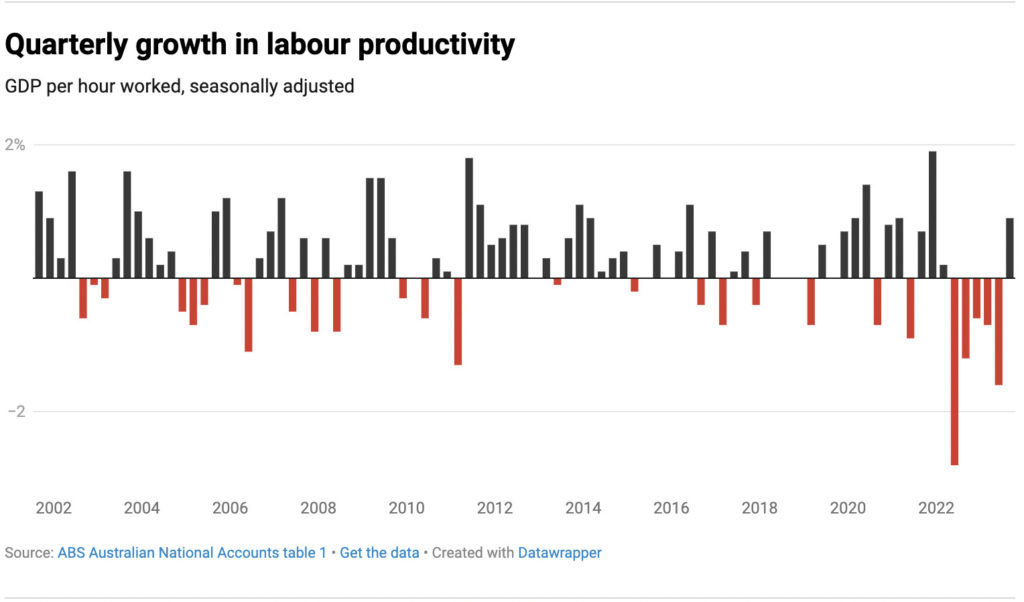
Australian beauty Moraya Wilson comes third in Miss Universe 2023

0

Australia’s Moraya Wilson has come third in the Miss Universe 2023 beauty pageant.

Image: Moraya Wilson (Source: X – Miss Universe)

This year’s event was held in the Central American country of El Salvador.

Sheynnis Palacios of Nicaragua won Miss Universe 2023 with Anntonia Porsild of Thailand coming in second place.

Image: Sheynnis Palacios (Source: X – Miss Universe)

There were 84 contestants in the running who were narrowed down to a top 20 after the first hour of the Miss Universe 2023 event. 

Ms Wilson stepped onto the stage wearing a native wildflower-inspired gown by Perth designer Emma Daley.

The number was further brought down to 10 after the swimsuit round and then made tough in the questions round. 

Earlier, a Change.org petition called for Australia’s Miss Universe Ms Wilson to step down following reports her family owes up to $45 million to creditors.

According to the Australian Securities and Investments Commission (ASIC), companies run by her parents, Anton and Melinda Wilson, owe more than $45 million to creditors following multiple company liquidations, including approximately $21 million to the tax office.

In a statement to news.com.au, Ms Wilson said she was not actively involved in any of the 10 companies despite being listed as the director.

Ms Wilson added that he had “tendered my resignation from all of the companies”.

Despite reaching the semi-finals, Indian beauty Shweta Sharda did not qualify for the top 10 stage in the 72nd edition of Miss Universe.

The top 10 finalists for Miss Universe 2023 were Miss Puerto Rico, Thailand, Peru, Colombia, Nicaragua, Philippines, El Salvador, Venezuela, Australia and Spain.

Ninety countries entered the 72nd Miss Universe pageant to compete for the prestigious title. 

Support Our Journalism

Global Indian Diaspora needs fair, non-hyphenated, and questioning journalism, packed with on-ground reporting. The Australia Today – with exceptional reporters, columnists, and editors – is doing just that. Sustaining this needs support from wonderful readers like you.

Whether you live in Australia, the United Kingdom, Canada, the United States of America, or India you can take a paid subscription by clicking Patreon. Buy an annual ‘The Australia Today Membership’ to support independent journalism and get special benefits.
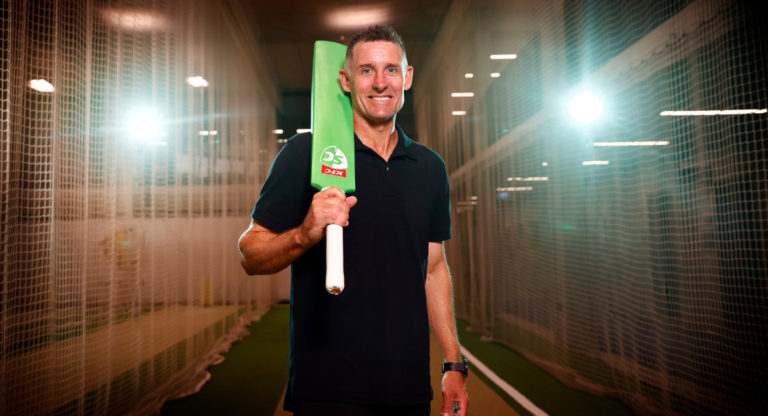
Why do only a third of assaulted nurses report it to the police?

0

By C.J. Cabilan

Violence against nurses is pervasive. They are more likely to experience physical violence than any other health-care professionals. Violence against nurses occurs in the context of violence against women, with 87.5% of Australia’s nursing workforce identifying as women.

Nurses report being punched, hit, struck, having objects or body fluids thrown at them, being kicked, grabbed, spat on, threatened, pushed, slapped, strangled, scratched, bitten, or sexually assaulted by patients. These actions are assault, which is a crime. In recent years Western Australia, Queensland, South Australia and Northern Territory have implemented tougher penalties for those who assault nurses on the job as a deterrent.

But nurses don’t feel empowered or supported to report these crimes and patients are not being held accountable for their actions. Harsher penalties alone aren’t enough to protect nurses.

Unhelpful responses from employers and police

We surveyed 275 nurses as part of our research. About 83% had been assaulted by patients. Around a third of the nurses in our study reported experiencing more than one form of assault.

But only about one in three assaulted nurses report attacks to the police. Nurses say the support they receive from their employers and police is generally poor, and they feel discouraged from proceeding with the reports they do make. Nurses said:

I felt like the decision was taken away from me and my management didn’t do anything in support of me.

I did not pursue charges as [there was] pressure from police to drop charges and no further support from my department in doing so.

Assaults still seen as ‘part of the job’

Nurses in our study spoke about how they see assaults as “part of the job”. As one said:

I was told to return to work as soon as I regained consciousness […] I had to look after the same patient because ‘there aren’t enough staff to replace you, and this is part of nursing […] There is only four hours left of your shift. Then you can go home and sleep it off’.

Another nurse said assaults were common:

[…] this sort of treatment from patients happens often and no one reports it. There’s this sort of culture that you just move on and get over it […] I have been physically and sexually assaulted a few times over the last year but not reported to police as I feel like I’m wasting time and resources and my claim isn’t important enough.

This self-limiting culture appears to be longstanding, and reinforced by substandard responses from their employer and police.

Nurses don’t report based on misconceptions

In our research nurses thought patients who are intoxicated or have a mental illness wouldn’t satisfy the requirement of a guilty mind (mens rea) required for conviction. Or that, they have to be physically hurt for assaults to be seen as an offence.

But patients who are intoxicated or have mental illness can be held accountable.

In legal terms, neither intoxication or mental illness equate to a lack of capacity to know what is right or wrong. And to say someone cannot be held responsible for their actions due to mental illness, can be seen as stigmatising or unjust. It is not up to a nurse, employer or police to decide a person’s mental capacity. Every person is to be presumed of “sound mind” unless proven otherwise during prosecution.

Another misconception is that nurses have to be physically hurt for assaults to be reported. As one nurse said:

I didn’t think that it was worth reporting it to the police as there was no visible harm done to me.

Harms from assault can be physical, emotional or psychosocial (impact on one’s thought and how they interact with others). However, assault is not characterised by its impact, but rather the act itself. A patient can be guilty of assault if they physically attack a nurse or if they threaten to do so.

Benefits of reporting to the police

Laws help set standards of what is right or wrong in society. To enforce the law, nurses must first report and make a statement to the police, so charges can be laid against a patient who commits violence. Police can then present this evidence to a prosecutor, who makes a decision if there is sufficient evidence for conviction.

Reporting to the police could have far-reaching impacts including:

  • enforcing a culture of respect and safety, improved staff retention and wellbeing
  • helping patients learn their rights to seek health care must be balanced with nurses’ rights to a safe workplace
  • setting a consistent standard of acceptable behaviours in society that includes health-care settings.

Many nurses have been assaulted by patients, but only few are reporting to the police. Employers and authorities must work together to empower and support nurses to report assaults. It is through this collective effort that we can hold patients to account, and ultimately keep nurses safe from harm.

C.J. Cabilan, Adjunct Lecturer, The University of Queensland

This article is republished from The Conversation under a Creative Commons license. Read the original article.

Support Our Journalism

Global Indian Diaspora needs fair, non-hyphenated, and questioning journalism, packed with on-ground reporting. The Australia Today – with exceptional reporters, columnists, and editors – is doing just that. Sustaining this needs support from wonderful readers like you.

Whether you live in Australia, the United Kingdom, Canada, the United States of America, or India you can take a paid subscription by clicking Patreon. Buy an annual ‘The Australia Today Membership’ to support independent journalism and get special benefits.

First of its kind compendium on business successes between Australia and India launched by Newland Global Group

0

The Newland Global Group recently launched “Case Studies: Advocating Business Success Between Australia and India.” It is the first comprehensive work of its kind, designed to align with the Australia-India Economic Cooperation and Trade Agreement (AI-ECTA).

The project is being launched in Australia and India as part of a road show. The Australian States where the Compendium has been launched with the support of respective state governments include Victoria, NSW and WA.

The launch organised in Sydney, celebrated the NSW – India relationship, with a gathering of leaders from business and politics. 

The compendium features NSW companies including Global Study Partners, AirPhysio, The George Institute for Global Health, Berton Vineyards, Agripower, ResMed, Polycab, and the University of Sydney with an aim to provide a new reference point of best-in-class peers who have succeeded in the Australia and India markets. 

Australia and India Case Studies Compendium Launch. 1-Nov-2023

Dipen Rughani is Chief Executive Officer of Newland Global Group. He says that these case studies illustrate a breadth of business models, that provides an opportunity to learn from best practices in entering these highly competitive markets.

L to R Dipen Rughani, David Mccredie AM OBE, David Harding Executive Director Business NSW

“The case studies inform companies about real business opportunities and business dilemmas. They educate companies to consider the broader organisational, industry, and societal context, cultivating the capacity for judgment and decision-making. The project aims to shift perceptions and narratives, establishing the long-term economic potential of our bilateral ties.”

Natasha Jha Bhaskar who is the Executive Director of Newland Global Group says that they engaged with 26 companies following discussions with Australian States’ Trade & Investment Commissioners and Austrade.

L to R (Investment NSW, Director-Global Markets, Edan Corkill, Natasha Jha Bhaskar, Dipen Rughani, Ali Asghar Shah Investment NSW)

“To ensure a standardised approach into their market experiences, we provided these companies with a questionnaire template. This template served as a common framework, enhancing consistency and comparability in the information collected from these companies.”

“The submissions were evaluated based on three fundamental aspects: understanding what worked, identifying the challenges faced, and analysing the reasons for their current strategies. These evaluations were structured into five distinct case study segments”, says Natasha

The launch was supported by the Australian Government’s Centre for Australia India Relations, Department of Foreign Affairs and Trade, Investment NSW, Business NSW, HSBC, and Australia India Business Council.

Eminent speakers at the launch included HSBC Australia CEO, Anthony Shaw, Consul General of India in Sydney, Manish Gupta, Centre for Australia India Relations CEO, Tim Thomas, Investment NSW, Director-Global Markets, Edan Corkill, Former Trade Minister Andrew Robb and Business NSW Executive Director, David Harding.

There was also a panel discussion with Nupur Bhushan (Vice President and General Manager ANZ, South Asia and Latin America ResMed), Tim Regan (COO The George Institute of Global Health), Shailendra Sawleshwarkar (Faculty of Medicine and Health, The University of Sydney) Paul O’ Brien (CEO and Co-founder AirPhysio) Kevin Morgan (Director and COO Global Study Partners) and Bruce Cairns (Head Agronomist/Technical Manager Agripower). The discussion was conducted by Natasha.

One of the points that came up several times during the discussion was that in doing business in India local partners are very important in terms of logistics and understanding the culture.

The launch celebrated the transition of the Australia-India bilateral relationship to the next level which is a partnership driven by consistency, commitment, and action.

The compendium’s aim is to inspire positivity and a call to action, to look ahead to a better, brighter future for the NSW – India relationship.

Support Our Journalism:

Global Indian Diaspora needs fair, non-hyphenated, and questioning journalism, packed with on-ground reporting. The Australia Today – with exceptional reporters, columnists, and editors – is doing just that.

Sustaining this needs support from wonderful readers like you. Whether you live in Australia, the United Kingdom, Canada, the United States of America, or India you can take a paid subscription by clicking Patreon. Buy an annual ‘The Australia Today Membership’ to support independent journalism and get special benefits.

Planning a trip to Phillip Island; here’s a detailed plan

0

By Tupur Chakrabarty

“You’ve never been to Phillip Island? How long have you lived in Melbourne?” We lost count of how many times we’d heard that in the past 16 years! So Easter 2022 was phinally the time we went to Phillip Island!

Phillip Island that lies just off Australia’s southern coast is ione of the most popular day trip from Melbourne.

Our three-day itinerary was uncharacteristically laid-back, but that was okay since our main aim was to see some of the attractions (which we pre-purchased our tickets for), eat good food, and relax.

Day 1

It took us about an hour and a half to reach San Remo, the last town on the mainland. We’d planned to have fish and chips at San Remo Fisherman’s Co-op and then watch the pelican feeding. After a quick meal of grilled gummy flake and chips, we went to the foreshore. Four pelicans had already arrived, in anticipation of lunch, I’m sure! In the early days, the pelicans were thrown the fish offcuts no one wanted, but the structured daily feeding at 12 noon started 37 years ago, in 1985.

Since our check-in in Corinella was at 2:00 pm, we had enough time to visit the Antarctic Journey at the Nobbies Centre. It’s amazing how much information about climate change, marine life and conservation is packed into the small space! And the videos of magical and majestic creatures and landscapes playing on the quirky screens downstairs are breathtaking! I thought even the lighting throughout the museum resembled the soft blue glow of the frozen continent.

Next was the Nobbies Walk. The staff at the Nobbies Centre shop said if we were lucky, we’d see some of the fairy penguins that call this part of the coast home. We spotted the wooden boxes dotted around the boardwalk and even saw the residents of some of those homes. We thought they were the young, but the ranger said they were all adults, going through a ‘catastrophic moult’, during which they shed all their worn feathers and are stranded on land until the feathers are replaced and their body is waterproof again. Even though the penguins spend days out at sea eating up in preparation for this land confinement, being trapped in a burrow or box for 18 days has a high risk of starvation and dehydration. Later we saw several moulting penguins under the boardwalk – they looked scruffy and sick – it was heartbreaking to see.

We made our way to the end of the boardwalk, the very tip of the peninsula. By now the sun was out and the waves were a gorgeous turquoise green laced with white as they crashed on the rocks. It was beautiful!

About 20 minutes’ drive from the Nobbies Centre is the Forest Caves. The wooden stairs from the parking area take you to the beach and then the rock formations are only a kilometre away. The sea looked calm between the vast expanses of the beach and sky.

The tide was low, so one could easily go inside the caves. The porous rock, created by consolidated volcanic ash, is known as the ‘tuff’, The rich colours of the ‘tuff’ were mesmerising as they caught the afternoon sun.

Day One was done. We were ready to check into our accommodation in Settlers Court, Corinella.

Day 2

Corinella is a quiet little town on the mainland. There’s a General Store, which we didn’t visit, but from what we gathered from our host’s welcome folder, the General Store was a bit of a one-stop shop for most things one would need during their stay, including hot food! We visited the jetty though, which was about one and a half kilometres from our accommodation. The high trail ran along the shoreline. The beach below was the first of its kind we’d ever seen – there were mangroves, mud flats (, which seemed to be quite popular among ibises), and rocky platforms. We saw a dead fox on the way and were convinced that it didn’t die from natural causes. We arrived at the foreshore reserve. The smell of fish was strong near the boat ramp, but it was left behind as we came around to the jetty, The sun was warm, the wind fresh. We sat on the jetty, watching the boats go out.

After a filling breakfast at BEANd San Remo, we were off to the main attraction of day two: the Koala Conservation Reserve. We spotted ALL the koalas – ALL EIGHT OF THEM – but only four were within photo range, and one even within an arm’s reach! The incredibly accurate descriptions of each of the koalas led us to believe that the rangers spotted the animals every morning and changed the descriptions around. Since the cuddly marsupials probably rarely moved from their spots throughout the day, the details of who they were, what their personalities were like and what they were doing at any given moment remained unchanged all day!

From the Koala Conservation Reserve, we drove to Cowes. The town was bustling! The Saturday market was on – there were food stalls, countless artefacts on display, live music, a happy crowd, and the bay glistening under the autumn sun.

After a long walk through the market, and snacking on swirly potatoes and fairy floss, we stopped at Cohiba Bar for a drink. The cocktails didn’t disappoint! …Google tells me Cohiba Bar has closed permanently.

Day Two bid us goodbye in style. We spent the evening in our accommodation, preparing dinner together and playing charades.

Day 3

Our final day started with a lovely breakfast at the Phillip Island Chocolate Factory cafe. We had hot chocolate, of course, chocolate on chocolate cake and samosas with chips and salad, which were all excellent.

But the most exciting part of our breakfast wasn’t the food – it was the robots that served the food!

The smaller yellow robot brought the drinks and desserts, and the larger white one carried the meals. It was great to share the wonder on every patron’s face, regardless of their age, as the robots brought the orders.

Our next and final destination: Churchill Island Heritage Farm. We were keen to see the cow milking, sheep shearing, working dogs and whip cracking, but as soon as we found out that there was a guided tour at 1:30, we knew we’d join even if that meant missing the cow milking and sheep shearing!

Our guide was Graeme. He knew the Island and all its stories. As he led us on the Northern Loop trail, he told us the story of the Moonah tree.

Two Bunurong children – a boy and a girl – were friends. They would play together for hours on end and skip stones at the beach. But when they became adolescents, they were no longer allowed to play together. The girl could play only with other girls, and the boy with other boys. Then one day, when both girls and boys from the tribe were at the beach, the boy and girl saw each other and started skipping stones together, as they used to do when they were children. The elders saw that and warned them not to see each other or talk to each other ever again. The girl was to be married off to another indigenous tribe, while the boy was to marry a girl from a different community. But they were so much in love that one night, completely ignoring the elders’ warning, they ran away to the forest. They were captured, however, and the elders were furious. They used their magic to turn the girl into a tree and the boy into the whirlwind that swirls on the sea. They still couldn’t be kept apart. The wind came ashore and embraced the tree, twisting its trunk and branches. The Moonah was born.

Churchill Island has been a safe haven for native flora and fauna for years. It gave us goosebumps to hear that the bandicoot, previously extinct in the wild, was brought here so they were safe from foxes and feral cats. As their numbers grew, they were reintroduced to the wild and delisted from extinction.

As soon as the walk ended, we ran back inside to see the working dogs followed by whip cracking. I completely underestimated the power and nimbleness the wrist would need to make an ear-splitting crack. Having a go at it in front of an audience was a little embarrassing but a whole lot more fun!

For the rest of our time there, we walked around the stable, blacksmith’s shop, the barn…

From Churchill Island, we drove to Cowes to pick up dinner. It was all from the Indian takeaway restaurant Cowes Curry Club (they were super quick!), but Rakesh was very pleased when he got the Wagyu Brisket Burger from the Cheeky Goose Cafe as a special treat! Cheeky Goose Cafe has closed temporarily, but I do hope it comes back with a bang.

The rain started soon after we got back to the accommodation and continued all night, We woke up to a very wet and grey Easter Monday.

We left Corinella a little before 10:00 and were home by 11:30. Phillip Island was checked off the long list of places we’d like to visit one day.

This article was first published in the blog Travels That Make Us and has been republished here with the kind permission of the author.

Contributing Author: Tupur Chakrabarty is an education manager. She lives in Melbourne with her husband and daughter and dreams of endless travels in wondrous lands.

Disclaimer: The opinions expressed within this article are the personal opinions of the author. The Australia Today is not responsible for the accuracy, completeness, suitability, or validity of any information in this article. All information is provided on an as-is basis. The information, facts, or opinions appearing in the article do not reflect the views of The Australia Today and The Australia Today News does not assume any responsibility or liability for the same.

Support Our Journalism:

Global Indian Diaspora needs fair, non-hyphenated, and questioning journalism, packed with on-ground reporting. The Australia Today – with exceptional reporters, columnists, and editors – is doing just that.

Sustaining this needs support from wonderful readers like you. Whether you live in Australia, the United Kingdom, Canada, the United States of America, or India you can take a paid subscription by clicking Patreon. Buy an annual ‘The Australia Today Membership’ to support independent journalism and get special benefits.
Overwhelmed by group chat messages? You’re not alone

0

By Kate Mannell

For many of us, group chats are part of the texture of our social lives. These groups, formed on apps like Messenger or Whatsapp, can be as large as a hundred people or as small as three.

We use them for organising one-off tasks or events, managing recurring coordination between groups like sports clubs or work teams, and keeping in touch with family and friends.

In the best cases, group chats can provide important spaces for building and maintaining relationships. They can be places of joy, solidarity and refuge.

But they can also be burdensome, and create feelings of anxiety and worry. I researched group chat dynamics and these are the three biggest issues I encountered.

1. You’re overwhelmed by the volume of messages

The volume of messages and notifications group chats generate can be overwhelming.

In my own research, a participant recalled accidentally leaving her phone at home, and returning to find she’d missed 200 messages in a group chat about buying a birthday gift.

Another explained that their most active group chat kicked off at 8am and didn’t quiet down until 1am.

A recent survey of people in the United States and United Kingdom suggests this is a common problem, with 40% of the respondents indicating they were overwhelmed with group chat messages and notifications. And then there’s notifications from email, social media, calendars, news apps, and so on.

People often manage this by muting group chats. But this can mean missing important information or plans to catch up, or having to dip in and out of the group chat to check for relevant conversations.

People can also find the chaos of group chat conversations overwhelming. In large groups, multiple conversations can be running at once, making it hard to keep track of what is being discussed or planned.

These problems can make group chats ineffective for the tasks they were set up to complete. Especially in large groups of acquaintances, planning can devolve into a mess of opinions, alternatives and side conversations.

One participant in my research described a group chat about a birthday gift getting sidetracked by two people having their own catch up.

Another recounted a disastrous group chat involving 20 people trying to organise a potluck dinner. Rather than reaching a consensus about who would bring what, the conversation devolved into a debate about whether potlucks were a bad idea, with one person insisting professional catering would better account for dietary requirements.

2. You don’t want to be there – but can’t leave

Other, possibly more significant, challenges are the difficult or awkward social dynamics that can arise. The ease of creating groups and adding members means people can be included in groups they wouldn’t have chosen to join.

In one instance of this, a woman was added to a group for organising a shared gift for a colleague. She would have preferred not to contribute to the gift but found it too awkward to leave.

Challenging dynamics can also arise when relationships change after a group chat has been established.

One participant told me about a group chat started by four close friends when they began university. A year later, one person had grown distant and become largely silent in the group chat, although the other three still used it to chat and organise catch ups. My participant found this dynamic incredibly awkward and had become cautious about starting group chats as a result.

Other participants described feeling trapped in group chats they would prefer to leave. The blunt “x has left the group” notification made them reluctant to formally quit but ignoring the group was also uncomfortable.

Many of these challenges stem from the rigid membership of group chats (you’re either in or you’re out) which doesn’t always gel with the complexity of our relationships. These challenges may also be exacerbated by unclear or contested social etiquette around group messaging.

3. You feel excluded

The most difficult issues arise when processes of social exclusion play out in group chats.

Back channel groups can emerge, where some group members create a new group to privately communicate about what’s happening in the main chat.

In the most dramatic cases, participants described people getting kicked out of groups because of disagreements or because someone felt the group chat had become too large.

Research suggests that being removed from a group is rare and mostly occurs when a relationship has ended.

But guessing whether you’ve been excluded from a group chat can be cause for anxiety, especially because you might not just be missing out on gossip and cat videos but also plans to catch up in person.

So what can you do?

Our relationships with each other can be weird, awkward and messy – group chats reflect this social reality but with an added layer of technological complexity thrown in.

Generally, research suggests that the group chats people enjoy most are smaller groups with closer friends.

So, until app design improves and we collectively figure out the etiquette for awkward group chat moments, your best bets are to:

  • use group chats with a handful of people who know each other, or who you’re confident will get along
  • find another way of organising that potluck. Use other forms of organisation for more complex events or with larger groups (invitations, Facebook events or one-on-one texts)
  • mute those crazy chats if you’re struggling with distraction or aren’t that interested. Muting is common and increasingly expected. If the chat is often used for organising things you don’t want to miss, let someone in the group know so they can keep you posted or make a routine of checking in
  • if you’re feeling weird about some group chat social dynamics, raise it with the person in the group you know best. We can make lots of assumptions about what other people’s messaging behaviours mean but the lack of extra social cues mean our assumptions can be off. That person might not be avoiding you – they might just have the chat muted!

Kate Mannell, Research Fellow in Digital Childhoods, Deakin University

This article is republished from The Conversation under a Creative Commons license. Read the original article.

"The

Support Our Journalism

Global Indian Diaspora needs fair, non-hyphenated, and questioning journalism, packed with on-ground reporting. The Australia Today – with exceptional reporters, columnists, and editors – is doing just that. Sustaining this needs support from wonderful readers like you.

Whether you live in Australia, the United Kingdom, Canada, the United States of America, or India you can take a paid subscription by clicking Patreon. Buy an annual ‘The Australia Today Membership’ to support independent journalism and get special benefits.

Indian-Australian Prof. Vipul Bansal appointed Fellow of the Royal Society of Chemistry

0

Indian-origin Prof. Vipul Bansal has been elected as a Fellow of the Royal Society of Chemistry (RSC), UK, the oldest chemistry society in the world.

Prof. Bansal is the Director of Sir Ian Potter NanoBioSensing Facility at RMIT University in Melbourne.

Prof. Bansal said in a statement that he was honoured by the prestigious appointment:

“This recognition reflects the contributions of a multidisciplinary and multisectoral team that I have had the privilege to lead over the past two decades. I am indebted to my students, team members, collaborators, mentors, and family who have enriched my research journey and helped convert my ideas into reality.”

RMIT University said in a statement that admittance to the RSC is a prestigious achievement.

Prof. Bansal was selected after a rigorous application and peer-nomination process. keeping in mind his widely recognised contributions to the field of chemistry.

Image: Prof. Vipul Bansal with colleagues at RMIT University (Source: RMIT University)

The RSC noted in a statement:

“Professor Bansal’s commitment to mentoring the next generation of research leaders and translating nanotechnologies from bench to bedside is truly inspiring.”

Prof. Bansal added:

“I feel honoured that the community considered my contributions to chemical sciences worthy of this recognition.”

In 2007, after completing a PhD in Nano-biotechnology at the National Chemical Laboratory in India, Prof. Bansal migrated to Australia to join the University of Melbourne as a Postdoctoral Fellow.

He has more than 200 highly cited publications and a track record of mentoring successful PhD candidates.

Image: Prof. Vipul Bansal (Source: racgp.org.au)

Prof. Bansal’s expertise across biological and chemical sciences has allowed his team to develop crosscutting technologies for applications across sensor technologies, catalysis, microbial management, and cellular immunotherapies.

He has also secured over $20 million in research funding from the Australian Research Council, the Gates Foundation, the Ian Potter Foundation, the Helmsley Trust USA, the Juvenile Diabetes Research Foundation, and industry.

Prof. Bansal is an advocate for chemistry education and encourages young students to look beyond common perceptions of chemistry while choosing this subject for higher studies.

Support Our Journalism

Global Indian Diaspora needs fair, non-hyphenated, and questioning journalism, packed with on-ground reporting. The Australia Today – with exceptional reporters, columnists, and editors – is doing just that. Sustaining this needs support from wonderful readers like you.

Whether you live in Australia, the United Kingdom, Canada, the United States of America, or India you can take a paid subscription by clicking Patreon. Buy an annual ‘The Australia Today Membership’ to support independent journalism and get special benefits.

Australia or India who will win the Cricket World Cup

0

In an electrifying World Cup semifinal at Kolkata’s iconic Eden Gardens, Australia narrowly edged out South Africa with a three-wicket victory, propelled by Travis Head’s rapid half-century.

Australian Captain Pat Cummins in the post-match presentation said that in the final the Narendra Modi Stadium will be packed with hosts India’s supporters, but his side will embrace it. Cummins, who was a part of the 2015 World Cup-winning Australian team, also stated that he never thought of reaching another World Cup.

This win marks the third time Australia has bested the Proteas in the World Cup semifinals, having done so previously in 1999 and 2007.

Despite a heroic century by David Miller, South Africa lived up to the unfortunate “chokers” tag, falling short of their maiden final appearance yet again. Australia’s chase of 213 was off to a roaring start with Travis Head and David Warner punishing the South African pacers, Marco Jansen and Kagiso Rabada, with a flurry of runs in the opening overs.

The match’s momentum shifted with Aiden Markram’s part-time spin, which dismissed Warner for 29, bringing Australia to 60/1. South Africa continued to fight back, with Rabada taking a spectacular catch to remove Mitchell Marsh. However, Head was undeterred, reaching his fifty in just 40 balls.

The South African spinners struck again, claiming the wickets of Head, Marnus Labuschagne, and Glenn Maxwell. With Australia at 137/5, the match teetered on a knife-edge. Steve Smith and Jos Inglis built a crucial partnership until Gerald Coetzee’s double strike reignited South African hopes.

Mitchell Starc and Inglis nudged Australia closer to the target, but it was Pat Cummins who hit the winning four, concluding the match at 215/7. Shamsi and Coetzee, taking two wickets each, were the standout bowlers for South Africa.

Earlier, the Australian bowling attack, led by Mitchell Starc with three wickets, had dominated the innings after opting to field first. South Africa’s top order crumbled, but Miller’s counter-attacking 101 from 116 balls carried them past the 200-run mark.

As rain briefly interrupted play, South Africa aimed for a comeback, but Travis Head’s off-break bowling claimed crucial middle-order wickets, including that of Heinrich Klaasen, who had supported Miller in their stand.

With this nail-biting victory, Australia sets up a highly anticipated final showdown against India. The stage is set for a clash of titans, as both teams look to etch their names in the annals of cricketing history with a World Cup triumph.

Brief score: South Africa: David Miller 101(116), Heinrich Klaasen 47(48), Gerald Coetzee 19(39) vs Australia: Mitchell Starc 3/34, Josh Hazlewood 2/12, Pat Cummins 3/51. 

Hindu Council’s Surinder Jain appointed member of the NSW Faith Affairs Council

0

The NSW Government today confirmed that Surinder Jain (National Vice President and Director of Hindu Council of Australia) will be part of the 19 members of the NSW Faith Affairs Council.

The Council has been established as a consultative mechanism to provide advice on priorities and emerging trends, the impacts of government policy on faith communities, and enhancing community harmony, security and well-being.

Representatives from Hindu, Buddhist, Sikh, Muslim, and Jewish communities will sit alongside representatives from the main Christian denominations in driving the work of the council.

Image: Surinder Jain (Source: Facebook)

Representatives were selected on their ability to not only represent this respective religious communities but on their commitment to inter-faith cooperation and inclusion, they include:

  • Mr Surinder Jain – Hinduism
  • Mr Darshan Singh Gill – Sikhism
  • Reverend Dr Michael Stead – Anglican
  • Associate Professor Gawaine Powell Davies – Buddhism
  • Mr David Ossip – Judaism
  • Imam Shadi Alsuleiman – Islam
  • Father Christophorous Krikelis – Greek Orthodox
  • Reverend Dr Steve Bartlett – Baptist
  • Reverend Ralph Esthersby – Pentecostal
  • Reverend Dr Manas Gosh – Uniting
  • Reverend Dr Kamal Weerakoon – Presbyterian
  • Ms Monica Doumit – Catholicism
Hindu Council's Surinder Jain appointed member of the NSW Faith Affairs Council; Image Source: Supplied
Hindu Council’s Surinder Jain appointed member of the NSW Faith Affairs Council; Image Source: Supplied

Minister for Multiculturalism Steve Kamper said the NSW Faith Affairs Council aims to improve the Government’s understanding and competency in relation to religious communities and people of faith in New South Wales.

Minister for Multiculturalism Steve Kamper invited 12 of the largest religious affiliations in New South Wales to begin shaping the Council’s scope and forward agenda. The 12 candidates put forward by the largest religious affiliations needed to receive nominations from two other religious groups.

“The Faith Affairs Council provides us with a path forward through the challenging issues facing our multifaith communities. Formalising a way to collaborate and engage on faith-based matters shows the NSW Government’s commitment to listen to and deliver improved outcomes for all our religious communities.”

Hindu Council's Surinder Jain appointed member of the NSW Faith Affairs Council; Image Source: Supplied
Hindu Council’s Surinder Jain appointed member of the NSW Faith Affairs Council; Image Source: Supplied

Minister Kamper added:

“We are a better government when we listen. The NSW Faith Affairs Council will help us to identify opportunities and initiatives for enhanced collaboration and ongoing dialogue between the NSW Government and religious communities in NSW.”

Previously, the Government had committed to four additional representatives being recruited through an open application process, however due to the calibre of the candidacy the Minister has decided to expand this number to seven.

These appointments include:

  • Mr Darren Bark – Better Balanced Futures
  • Rev Bill Crews AM – Ashfield Parish Mission
  • Mr Murray Norman – ICCOREIS
  • Rev Heather Topp – Buddhist Council of NSW & The Temple of New Seminary in New York
  • Ms Katherine Xavier – Catholic Diocese of Parramatta
  • Mrs Monica Chahoud – Melkite Catholic Eparchy of Australia, New Zealand and Oceania
  • Dr Ali Al Samail – Australian Ahl Al Bait Islamic Centre

The first meeting will take place on 1 December. At this meeting a chairperson will be elected by the members of the Faith Affairs Council.

Support Our Journalism

Global Indian Diaspora needs fair, non-hyphenated, and questioning journalism, packed with on-ground reporting. The Australia Today – with exceptional reporters, columnists, and editors – is doing just that. Sustaining this needs support from wonderful readers like you.

Whether you live in Australia, the United Kingdom, Canada, the United States of America, or India you can take a paid subscription by clicking Patreon. Buy an annual ‘The Australia Today Membership’ to support independent journalism and get special benefits.
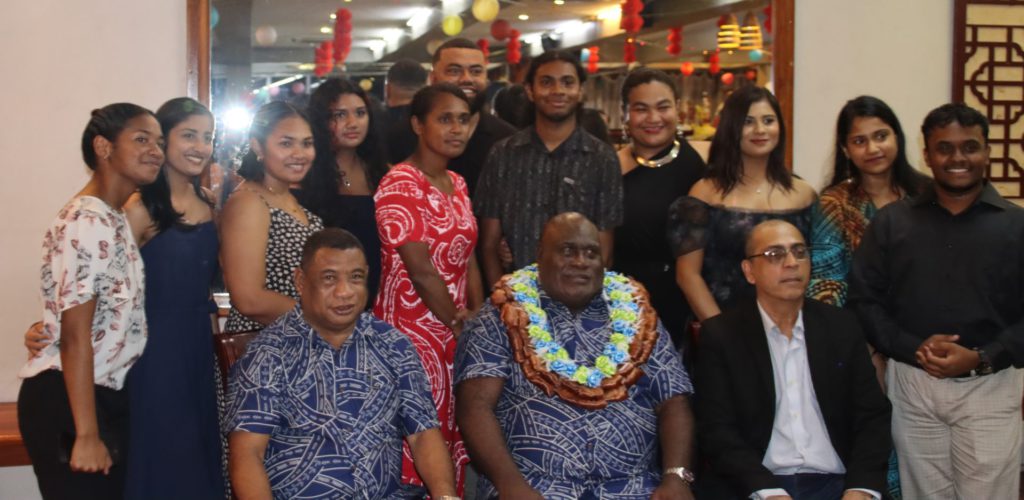
Here is how you can spot the AI impostors

0

By Amy Dawel, Ben Albert Steward, Clare Sutherland, Eva Krumhuber, and Zachary Witkower

Does ChatGPT ever give you the eerie sense you’re interacting with another human being?

Artificial intelligence (AI) has reached an astounding level of realism, to the point that some tools can even fool people into thinking they are interacting with another human.

The eeriness doesn’t stop there. In a study published today in Psychological Science, we’ve discovered images of white faces generated by the popular StyleGAN2 algorithm look more “human” than actual people’s faces.

AI creates hyperrealistic faces

For our research, we showed 124 participants pictures of many different white faces and asked them to decide whether each face was real or generated by AI.

Half the pictures were of real faces, while half were AI-generated. If the participants had guessed randomly, we would expect them to be correct about half the time – akin to flipping a coin and getting tails half the time.

Instead, participants were systematically wrong, and were more likely to say AI-generated faces were real. On average, people labelled about 2 out of 3 of the AI-generated faces as human.

These results suggest AI-generated faces look more real than actual faces; we call this effect “hyperrealism”. They also suggest people, on average, aren’t very good at detecting AI-generated faces. You can compare for yourself the portraits of real people at the top of the page with the ones embedded below.

But perhaps people are aware of their own limitations, and therefore aren’t likely to fall prey to AI-generated faces online?

To find out, we asked participants how confident they felt about their decisions. Paradoxically, the people who were the worst at identifying AI impostors were the most confident in their guesses.

In other words, the people who were most susceptible to being tricked by AI weren’t even aware they were being deceived.

Biased training data deliver biased outputs

The fourth industrial revolution – which includes technologies such as AI, robotics and advanced computing – has profoundly changed the kinds of “faces” we see online.

AI-generated faces are readily available, and their use comes with both risks and benefits. Although they have been used to help find missing children, they have also been used in identity fraud, catfishing and cyber warfare.
People’s misplaced confidence in their ability to detect AI faces could make them more susceptible to deceptive practices. They may, for instance, readily hand over sensitive information to cybercriminals masquerading behind hyperrealistic AI identities.

Another worrying aspect of AI hyperrealism is that it’s racially biased. Using data from another study which also tested Asian and Black faces, we found only white AI-generated faces looked hyperreal.

When asked to decide whether faces of colour were human or AI-generated, participants guessed correctly about half the time – akin to guessing randomly.

This means white AI-generated faces look more real than AI-generated faces of colour, as well as white human faces.

Implications of bias and hyperrealistic AI

This racial bias likely stems from the fact that AI algorithms, including the one we tested, are often trained on images of mostly white faces.

Racial bias in algorithmic training can have serious implications. One recent study found self-driving cars are less likely to detect Black people, placing them at greater risk than white people. Both the companies producing AI, and the governments overseeing them, have a responsibility to ensure diverse representation and mitigate bias in AI.

The realism of AI-generated content also raises questions about our ability to accurately detect it and protect ourselves.

In our research, we identified several features that make white AI faces look hyperreal. For instance, they often have proportionate and familiar features, and they lack distinctive characteristics that make them stand out as “odd” from other faces. Participants misinterpreted these features as signs of “humanness”, leading to the hyperrealism effect.

At the same time, AI technology is advancing so rapidly it will be interesting to see how long these findings apply. There’s also no guarantee AI faces generated by other algorithms will differ from human faces in the same ways as those we tested.

Since our study was published, we have also tested the ability of AI detection technology to identify our AI faces. Although this technology claims to identify the particular type of AI faces we used with a high accuracy, it performed as poorly as our human participants.
Similarly, software for detecting AI writing has also had high rates of falsely accusing people of cheating – especially people whose native language is not English.

Managing the risks of AI

So how can people protect themselves from misidentifying AI-generated content as real?

One way is to simply be aware of how poorly people perform when tasked with separating AI-generated faces from real ones. If we are more wary of our own limitations on this front, we may be less easily influenced by what we see online – and can take additional steps to verify information when it matters.
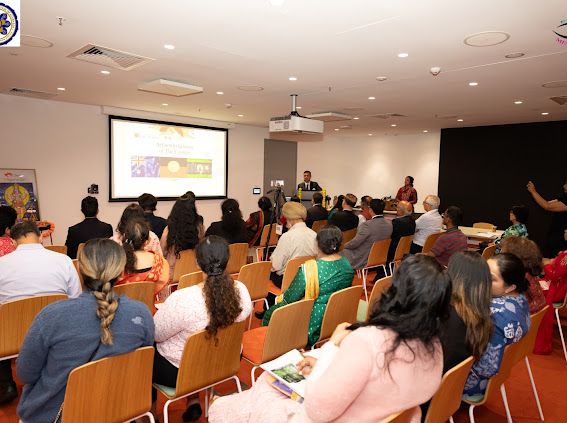
Public policy also plays an important role. One option is to require the use of AI to be declared. However, this might not help, or may inadvertently provide a false sense of security when AI is used for deceptive purposes – in which case it is almost impossible to police.

Another approach is to focus on authenticating trusted sources. Similar to the “Made in Australia” or “European CE tag”, applying a trusted source badge – which can be verified and has to be earned through rigorous checks – could help users select reliable media.

Amy Dawel, Clinical psychologist and Lecturer, Research School of Psychology, Australian National University; Ben Albert Steward, , Australian National University; Clare Sutherland, Senior lecturer, University of Aberdeen; Eva Krumhuber, Associate professor, UCL, and Zachary Witkower, Assistant Professor, University of Amsterdam

This article is republished from The Conversation under a Creative Commons license. Read the original article.

Support Our Journalism

Global Indian Diaspora needs fair, non-hyphenated, and questioning journalism, packed with on-ground reporting. The Australia Today – with exceptional reporters, columnists, and editors – is doing just that. Sustaining this needs support from wonderful readers like you.

Whether you live in Australia, the United Kingdom, Canada, the United States of America, or India you can take a paid subscription by clicking Patreon. Buy an annual ‘The Australia Today Membership’ to support independent journalism and get special benefits.