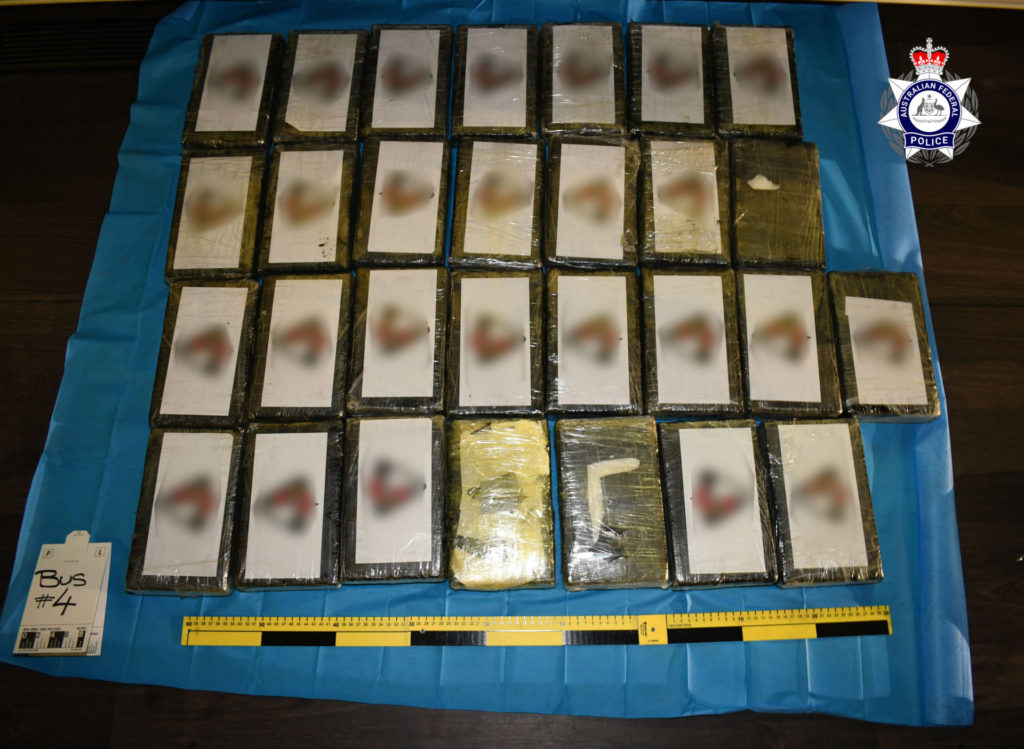
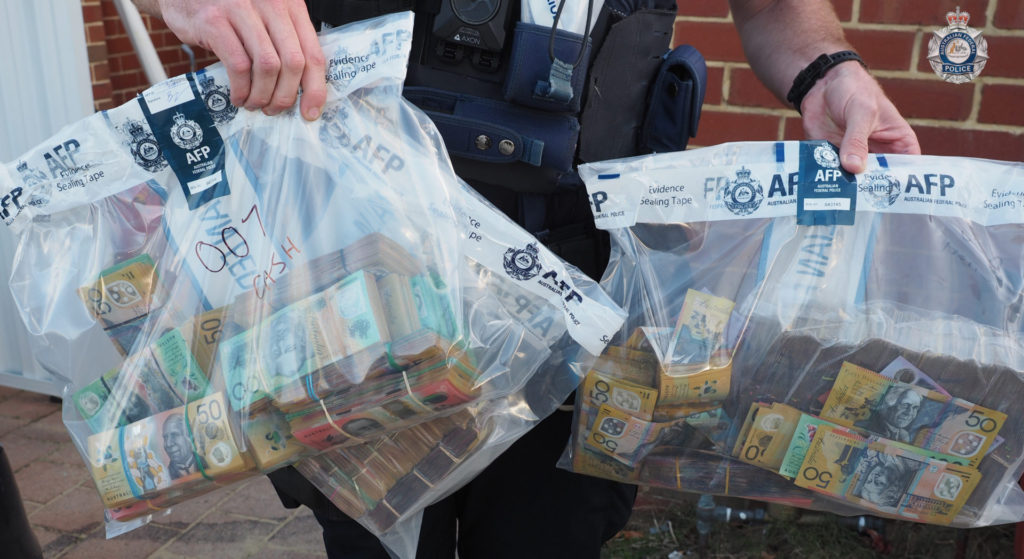
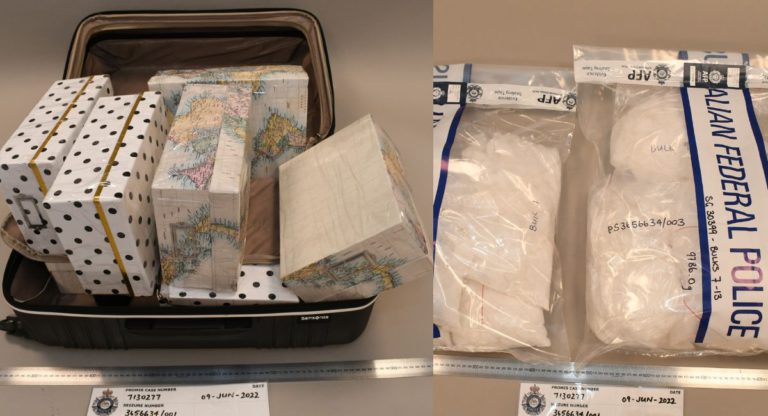
The ransomware group was allegedly responsible for running LockBit, which has caused billions of dollars’ worth of harm across the globe, including millions to Australian individuals and businesses, since it was first identified in 2019.
The Europol-led investigation, known as Operation Cronos, has disrupted LockBit’s critical infrastructure. This included its primary platform and 34 servers across Australia, Netherlands, Germany, Finland, France, Switzerland, the United States and the United Kingdom.
France’s National Gendarmerie arrested two alleged LockBit actors in Poland and Ukraine, and a further three arrest warrants and five indictments have been issued by French and US law enforcement.
Assistant Commissioner Scott Lee said the international investigation was a significant breakthrough in the global fight against cybercrime.
“Cybercrime is not restricted by borders and tackling this crime type requires a united, global response from law enforcement. The AFP continues to work closely with our international law enforcement partners, as demonstrated through the recent disruption of the BlackCat ransomware group.”
Assistant Commissioner Lee added:
“This latest takedown is yet another example of the powerful outcomes that can be achieved through a united law enforcement front. This investigation has not only taken down the world’s most prolific ransomware group, but also damaged the group’s reputation and credibility beyond repair. We have obtained a vast amount of data from investigations so far and will continue to follow all leads and bring those responsible to justice.”
More than 200 cryptocurrency accounts allegedly owned by the ransomware group have been frozen by law enforcement, stripping the group of significant profits.
Authorities have obtained a significant amount of data since the investigation started, after the UK National Crime Agency took over LockBit’s technical infrastructure. Further arrests across the globe are expected.
LockBit was known to criminals as a ‘ransomware-as-a-service’ product, meaning criminals with little to no technological skills could purchase and use a ready-made ransomware program to attack their victims.
Ransomware is a type of malicious software that once installed onto a device or networks, encrypts the data and files, making them unusable. Cybercriminals use ransomware to extort payments from victims in exchange for the recovery of, and ability to regain access to the encrypted data.
Australia continues to experience persistent and pervasive cybercrime threats that target critical infrastructure, governments, industry and the Australian community.
The emergence of ‘ransomware-as-a-service’ has allowed criminals with relatively low technical capability to deploy sophisticated attacks.
In response to this growing threat, the AFP and the Australian Signals Directorate (ASD) established Operation Aquila in November 2022 to investigate, target and disrupt cybercriminal syndicates, with a priority on ransomware threat groups.
Under Operation Aquila, the AFP and ASD investigate the highest priority cyber criminals targeting Australia, including the LockBit and BlackCat ransomware groups.
AFP’s contribution to the operation includes criminal investigations, target development and disruption, and engagement with key international partners. In the 2022-23 financial year, this included analysing 204 ransomware incidents, undertaking 18 proactive preventative engagements and distributing 10 intelligence products.
Support Our Journalism
Global Indian Diaspora needs fair, non-hyphenated, and questioning journalism, packed with on-ground reporting. The Australia Today – with exceptional reporters, columnists, and editors – is doing just that. Sustaining this needs support from wonderful readers like you.
Whether you live in Australia, the United Kingdom, Canada, the United States of America, or India you can take a paid subscription by clicking Patreon. Buy an annual ‘The Australia Today Membership’ to support independent journalism and get special benefits.
Organisers of Australia’s most loved national fun run and walk, the Women in Super Mother’s Day Classic (MDC), called for more to be done to increase funding for research to improve survival rates for breast and ovarian cancer.
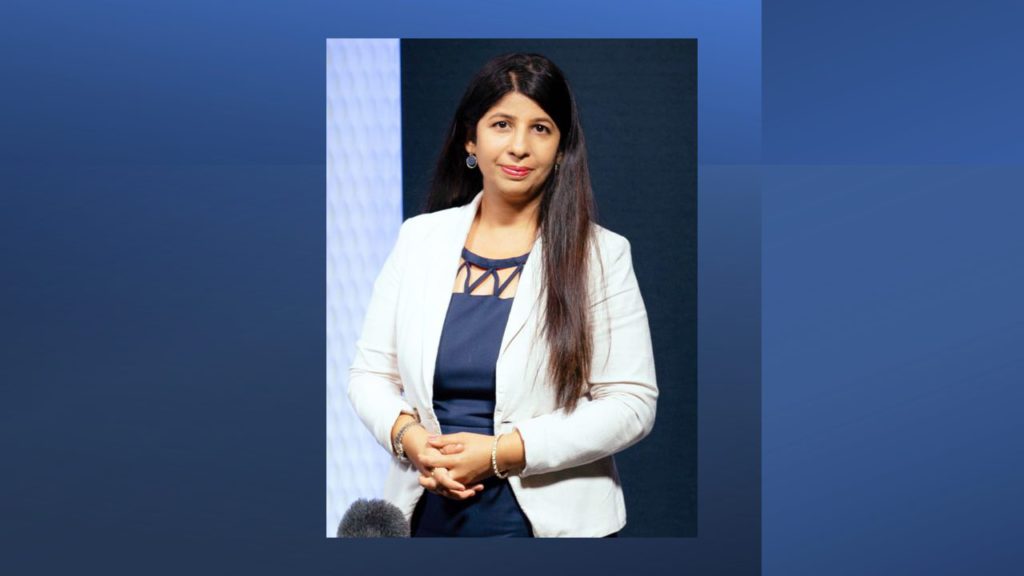
Image: MDC CEO Zara Lawless (Source: LinkedIn)
At the official launch of the 2024 Women in Super Mother’s Day Classic in Melbourne, MDC CEO Zara Lawless made a commitment to increasing money for medical research, to elevate women’s health, prevent deaths from breast cancer, and improve the survival outcomes for ovarian cancer.
Ms Lawless said: “Through events like the Mother’s Day Classic and the public support of medical research, the rates of survival for those diagnosed with breast cancer have improved dramatically.”
“We know that the job isn’t done yet, and we remain committed to achieving the goal of zero deaths from breast cancer. From this day forward we are also determined to make a difference to the outcomes for women with ovarian cancer.”
The MDC is the biggest donor to the National Breast Cancer Foundation, having raised $44 million over the past 26 years. In that time the five-year relative survival rate for breast cancer has increased from 84 per cent to 92 per cent.
Image: Women in Super Mother’s Day Classic (MDC) (Source: Supplied)
For the first time, this year’s annual event, in which more than 70,000 participants will walk or run nationwide on Mother’s Day, Sunday, May 12, will also raise money for ovarian cancer research, partnering with the Ovarian Cancer Research Foundation. Ovarian cancer is the most lethal gynaecological cancer, which claims the life of a woman every eight hours in Australia.
We are thrilled to announce that in 2023, over 65,000 Australians came together to donate $2.55M to breast cancer research!
We’re going further in 2024 and inviting our participants to run or walk in support of ovarian cancer research, in addition to breast cancer research. pic.twitter.com/IvmpuJdcUU
The five-year relative survival rate for ovarian cancer is just 49 per cent, with 1,054 deaths every year.
Ms Lawless adds: “Tragically over the last 30 years, treatment advances for ovarian cancer have been limited, there is no method of early detection, and recurrence rates are very high. Just as the Mother’s Day Classic founders said in 1998, this is not good enough, so we say it’s not good enough today. Only research can change this.”
“This is why the Mother’s Day Classic has decided to go further and expand its reach and impact so participants can run or walk in support of ovarian cancer research, in addition to breast cancer research. “We want to accelerate progress toward the day when every woman diagnosed with either breast or ovarian cancer will be given the assurance that they can survive.”
For the 2024 Mother’s Day Classic, 70,000-plus people will start their day by walking or running at one of more than 70 locations across the country to support and honour those touched by breast cancer or ovarian cancer.
The National Breast Cancer Foundation and the Ovarian Cancer Research Foundation both acknowledge that research is the key to improving outcomes for women and saving lives.
Image: Assoc. Prof. Cleola Anderiesz, National Breast Cancer Foundation CEO (Source: National Breast Cancer Foundation)
Assoc. Prof. Cleola Anderiesz, National Breast Cancer Foundation CEO, said: “we can be very proud of the progress made to reduce deaths from Breast cancer, but the job is not done. Research is central and critical to improving breast cancer outcomes.”
”Receiving a significant contribution every year from the Mother’s Day Classic Foundation, for 26 years, has been instrumental in funding research and helping the National Breast Cancer Foundation make progress towards our vision of Zero Deaths from breast cancer.”
Image: Robin Penty, Ovarian Cancer Research Foundation CEO (Source: LinkedIn)
Robin Penty, Ovarian Cancer Research Foundation CEO, said: “The OCRF celebrates the success of the Mother’s Day Classic and its ongoing commitment to improving women’s cancer survival rates through funding life-changing research.”
“We’re proud of the OCRF’s growing impact in raising awareness and critical funding for ovarian cancer research and we can’t wait to walk shoulder to shoulder in support of women’s health this May.”
Global Indian Diaspora needs fair, non-hyphenated, and questioning journalism, packed with on-ground reporting. The Australia Today – with exceptional reporters, columnists, and editors – is doing just that. Sustaining this needs support from wonderful readers like you.
Whether you live in Australia, the United Kingdom, Canada, the United States of America, or India you can take a paid subscription by clicking Patreon. Buy an annual ‘The Australia Today Membership’ to support independent journalism and get special benefits.
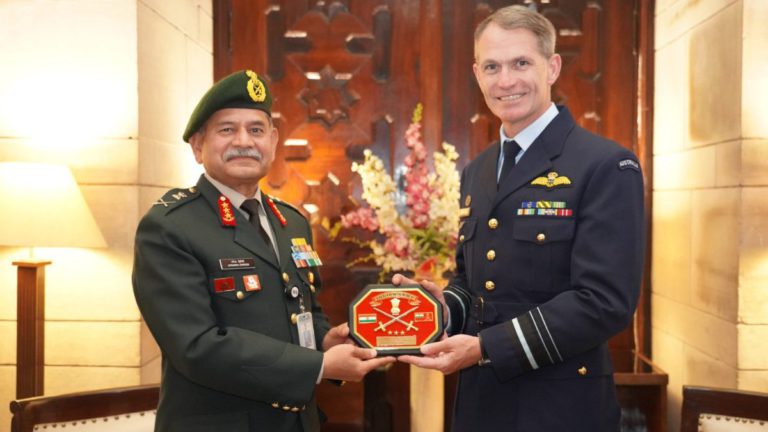
In a significant development for Indian-Australian defence relations, Air Marshal Robert Chipman, the Australian Chief of Air Force, met with Indian Vice Chief of Army Staff Lieutenant General Upendra Dwivedi in New Delhi.
This meeting, held on Wednesday, was aimed at discussing and enhancing bilateral defence cooperation between the two nations.
Air Marshal Chipman, a decorated officer who has been conferred with the Conspicuous Service Cross (CSC) and appointed as a Member of the Order of Australia (AM), engaged in detailed discussions with the recently appointed Vice Chief of Army Staff of India.
Lieutenant General Upendra Dwivedi, who took over his new role on Monday, also paid homage at the National War Memorial in Delhi following his assumption of the new appointment.
The Indian Army acknowledged the meeting on their social media platform, highlighting that issues of mutual interest, including bilateral defence cooperation, were on the agenda.
In a related engagement, Air Marshal Chipman had also met with Air Chief Marshal VR Chaudhari, the Chief of Air Staff (CAS) of the Indian Air Force. The dialogue between the two air force chiefs focused on mutual interests and potential avenues for further cooperation between their respective air forces.
Air Marshal Robert Chipman, Chief of Air Force, Royal Australian Air Force called on the CAS Air Chief Marshal VR Chaudhari today in New Delhi.
As Australia-India military diplomacy continues to strengthen, the Indian Chief of Defence Staff, General Anil Chauhan, is slated to meet with top military leaders from countries of strategic importance, such as the US, France, New Zealand, Australia, and the UK, at the Raisina Dialogue.
The Raisina Dialogue, which commenced on Wednesday 21st February in the Indian national capital, is India’s flagship event on geopolitics and geoeconomics and will feature discussions on a wide array of significant issues facing the global community.
The theme for this year’s dialogue is ‘Chaturanga: Conflict, Contest, Cooperate, Create’, focusing on a multifaceted approach to current geopolitical challenges. The event promises to be a melting pot of ideas with participation from high-level dignitaries, including heads of state, ministers, and officials from various sectors, along with thought leaders from the private sector, media, and academia.
Air Marshal Chipman is expected to partake in discussions on pivotal military matters and share insights on the ongoing initiatives for defence force theaterisation, a key objective set by the Australian government to enhance the country’s military capabilities and self-reliance in defence.
This series of high-profile meetings and discussions underscores the proactive steps Australia and India are taking to fortify their defence strategies and international partnerships amidst an evolving global security landscape.
Support Our Journalism
Global Indian Diaspora needs fair, non-hyphenated, and questioning journalism, packed with on-ground reporting. The Australia Today – with exceptional reporters, columnists, and editors – is doing just that. Sustaining this needs support from wonderful readers like you.
Whether you live in Australia, the United Kingdom, Canada, the United States of America, or India you can take a paid subscription by clicking Patreon. Buy an annual ‘The Australia Today Membership’ to support independent journalism and get special benefits.
25-year-old Aayush Arora, a former Auckland bank employee, embezzled $262,000 from ANZ to allegedly fuel a severe gambling addiction.
Mr Arora has been ordered to serve home detention and pay the money back to the bank at $130 a week.
It is reported by the NZ Herald that Mr Arora approved 15 fraudulent loans over one month while he was working from home.
ANZ bank discovered the missing money in a July 2023 audit and Arora was arrested in October 2023.
The agreed summary of facts submitted in the court noted that Mr Arora immediately returned $47,000 that he had not spent. Still, the remaining $215,000 “was largely gambled away at the SkyCity Casino in Auckland.”
Police prosecutor Sam Papp described the embezzlement scheme as “high-end, sophisticated offending.” She added that Mr Arora was co-operative with police and the bank also supported a non-custodial sentence.
Judge Bell observed in her sentencing:
“His intention was to gamble [the embezzled ANZ money] and pay off his debt to have a normal life, but it didn’t pan out that way. He knew it was wrong and that he was putting his career in jeopardy but “he was in so much debt and pressure, he felt it was his last way to save his life”.
Mr Arora’s lawyer Hyuk Woo argued that community detention would be the best outcome. He noted that his client was still young and was working hard to address the issues.
“It’s accepted Mr Arora has committed really serious offending and has caused a serious amount of damage. He’s willing to repay.”
Judge Bell rejected the community detention request but approved home detention as she described the scheme as a “gross breach of trust.”
“The steps you have started to take are to be commended, Mr Arora, but you’ve got a long way to go.”
Auckland District Court’s Judge Debra Bell was told by Mr Arora’s lawyer that he could pay another $2500 in reparation immediately.
Judge Bell authorised an additional $20,000 to be removed from his KiwiSaver account. But more than $190,000 that remains missing still needs to be paid off in instalments.
Further, the judge ordered that Mr Arora’s weekly payments will be reassessed in a year to see if they can be increased.
Mr Arora’s family moved to New Zealand when he was a child. NZ Herald reports that Mr Arora started gambling in 2019 while unemployed. He ended up taking out multiple loans to pay off his losses and the debt continued to increase significantly.
Mr Arora has now found work as a cashier at a South Auckland restaurant and at the current rate of repayment it may take him more than 25 years to return the money.
Support Our Journalism
Global Indian Diaspora needs fair, non-hyphenated, and questioning journalism, packed with on-ground reporting. The Australia Today – with exceptional reporters, columnists, and editors – is doing just that. Sustaining this needs support from wonderful readers like you.
Whether you live in Australia, the United Kingdom, Canada, the United States of America, or India you can take a paid subscription by clicking Patreon. Buy an annual ‘The Australia Today Membership’ to support independent journalism and get special benefits.
So why are people still getting scammed, and sometimes spectacularly so?
Scammers use sophisticated psychological techniques. They exploit our deepest human vulnerabilities and bypass rational thought to tap into our emotional responses.
This “psychological warfare” coerces victims into making impulsive decisions. Sometimes scammers spread their methods around many potential victims to see who is vulnerable. Other times, criminals focus on a specific person.
Let’s unpack some of these psychological techniques, and how you can defend against them.
1. Random phone calls
Scammers start with small requests to establish a sense of commitment. After agreeing to these minor requests, we are more likely to comply with larger demands, driven by a desire to act consistently.
The call won’t come from a number in your contacts or one you recognise, but the scammer may pretend to be someone you’ve engaged to work on your house, or perhaps one of your children using a friend’s phone to call you.
If it is a scammer, maybe keeping you on the phone for a long time gives them an opportunity to find out things about you or people you know. They can use this info either immediately or at a later date.
2. Creating a sense of urgency
Scammers fabricate scenarios that require immediate action, like claiming a bank account is at risk of closure or an offer is about to expire. This tactic aims to prevent victims from assessing the situation logically or seeking advice, pressuring them into rushed decisions.
The scammer creates an artificial situation in which you are frightened into doing something you wouldn’t ordinarily do. Scam calls alleging to be from the Australian Tax Office (ATO) are a great example. You have a debt to pay (apparently) and things will go badly if you don’t pay right now.
Scammers play on your emotions to provoke reactions that cloud judgement. They may threaten legal trouble to instil fear, promise high investment returns to exploit greed, or share fabricated distressing stories to elicit sympathy and financial assistance.
3. Building rapport with casual talk
Through extended conversation, scammers build a psychological commitment to their scheme. No one gets very far by just demanding your password, but it’s natural to be friendly with people who are friendly towards us.
After staying on the line for long periods of time, the victim also becomes cognitively fatigued. This not only makes the victim more open to suggestions, but also isolates them from friends or family who might recognise and counteract the scam.
4. Help me to help you
In this case, the scammer creates a situation where they help you to solve a real or imaginary problem (that they actually created). They work their “IT magic” and the problem goes away.
Later, they ask you for something you wouldn’t normally do, and you do it because of the “social debt”: they helped you first.
For example, a hacker might attack a corporate network, causing it to slow down. Then they call you, pretending to be from your organisation, perhaps as a recent hire not yet on the company’s contact list. They “help” you by turning off the attack, leaving you suitably grateful.
Perhaps a week later, they call again and ask for sensitive information, such as the CEO’s password. You know company policy is to not divulge it, but the scammer will ask if you remember them (of course you do) and come up with an excuse for why they really need this password.
The balance of the social debt says you will help them.
5. Appealing to authority
By posing as line managers, officials from government agencies, banks, or other authoritative bodies, scammers exploit our natural tendency to obey authority.
Such scams operate at varying levels of sophistication. The simple version: your manager messages you with an urgent request to purchase some gift cards and send through their numbers.
The complex version: your manager calls and asks to urgently transfer a large sum of money to an account you don’t recognise. You do this because it sounds exactly like your manager on the phone – but the scammer is using a voice deepfake. In a recent major case in Hong Kong, such a scam even involved a deepfake video call.
This is deeply challenging because artificial intelligence tools, such as Microsoft’s VALL-E, can create a voice deepfake using just three seconds of sampled audio from a real person.
How can you defend against a scam?
First and foremost, verify identity. Find another way to contact the person to verify who they are. For example, you can call a generic number for the business and ask to be connected.
In the face of rampant voice deepfakes, it can be helpful to agree on a “safe word” with your family members. If they call from an unrecognised number and you don’t hear the safe word just hang up.
Watch out for pressure tactics. If the conversation is moving too fast, remember that someone else’s problem is not yours to solve. Stop and run the problem past a colleague or family member for a sanity check. A legitimate business will have no problem with you doing this.
Lastly, if you are not sure about even the slightest detail, the simplest thing is to hang up or not respond. If you really owe a tax debt, the ATO will write to you.
Global Indian Diaspora needs fair, non-hyphenated, and questioning journalism, packed with on-ground reporting. The Australia Today – with exceptional reporters, columnists, and editors – is doing just that. Sustaining this needs support from wonderful readers like you.
Whether you live in Australia, the United Kingdom, Canada, the United States of America, or India you can take a paid subscription by clicking Patreon. Buy an annual ‘The Australia Today Membership’ to support independent journalism and get special benefits.
Woolworths Managing Director and Group CEO Brad Banducci has announced his retirement as the supermarket giant declared a massive loss.
Mr Banducci said in a sattement:
“It has been a privilege to be a member of the Woolies team and one I have never taken for granted.”
Image: Woolworths Group chair Scott Perkins (Source: Woolworths)
Woolworths Group chair Scott Perkins said in a statement to the Australian share market.
“I would like to thank Brad for his outstanding leadership and contribution. Brad has led a remarkable turnaround and transformation of the Group.”
Following an extensive international search process supported by external consultants, Woolworths has also announced the appointment of the incoming and 13th Managing Director and Group CEO of Woolworths Group.
The supermarket giant said in a statement that it is promoting Amanda Bardwell to the top job, after an “extensive international search process”.
Image: Amanda Bardwell (Source: X)
Ms Bardwell has worked for the Woolworths for 23 years and is currently heading up its online grocery, e-commerce and loyalty sub-division, WooliesX.
Mr Perkins said the incoming CEo is a “proven leader.”
“Amanda is highly respected throughout the organisation and I know, like Brad, will live our purpose and work hard to achieve Woolworths Group’s full potential.”
In her new role Ms Bardwell will get $2.15million a year, slightly less than the base salary of Mr Banducci who was on $2.6million. She will also receive generous bonus incentives, with the former CEO pocketing $8.65million in total remuneration last year.
Image: Woolworths CEO Brad Banducci walking out of ABC’s Four Corners interview (Source: ABC screenshot)
Earlier, ABC’s Four Corners aired footage of the departing CEO Brad Banducci walking out of an interview in which he criticised former competition commission chairman Rod Sims before asking for his comments to be struck from the record. When Mr Banducci’s request was refused, he attempted to end the interview.
Image: Daniel Wild, Deputy Executive Director of the Institute of Public Affairs 9Source: The IPA)
Daniel Wild, Deputy Executive Director of the Institute of Public Affairs (IPA), said in a statement that Mr Banducci’s decision to ban Australia Day in Woolworths stores in January 2024 was woke.
“The resignation of Woolworths CEO Brad Banducci is a warning to woke corporates and the elite director class to stop disrespecting mainstream values and running down Australia.”
Woolworths overall results show a massive loss of $781 million, after the company booked a $NZ1.6 billion ($1.5 billion) writedown in the value of its New Zealand grocery business and a $209 million reduction in the value of a stake in ASX-listed alcohol and hotels spin-off Endeavour.
But excluding those one-offs, Woolworths announced a 2.5 per cent rise in half-year profit to $929 million. That was based on a 4.4 per cent increase in revenue compared to the same period a year earlier.
Further, Woolworths results show its Australian food sales increased 5.4 per cent in the first half, and that pre-tax profits in that same division jumped 9.9 per cent.
While, WooliesX, headed by incoming chief executive Ms Bardwell, first-half total sales jumped 27.5 per cent. The division’s pre-tax profits increased 132.3 per cent to $168 million, with its profit margin climbing 1.86 percentage points to 4.1 per cent.
Mr Banducci will retire in September 2024, after almost nine years in the top job.
Anthony Albanese announces inquiry into supermarket pricing as he spells out reasoning behind stage three tax cuts amid pressure to deliver cost-of-living relief: https://t.co/MaSBlRHxO2pic.twitter.com/MFrGgtGPJd
Woolworths and Coles are facing a Greens-led Senate inquiry with allegations of price gouging and unfair practices with suppliers. Prime Minister Anthony Albanese has suggested that supermarkets conduct could be “an abuse of market power.”
Support Our Journalism
Global Indian Diaspora needs fair, non-hyphenated, and questioning journalism, packed with on-ground reporting. The Australia Today – with exceptional reporters, columnists, and editors – is doing just that. Sustaining this needs support from wonderful readers like you.
Whether you live in Australia, the United Kingdom, Canada, the United States of America, or India you can take a paid subscription by clicking Patreon. Buy an annual ‘The Australia Today Membership’ to support independent journalism and get special benefits.
In the forests of India’s Western Ghats, a new species of tiny lizards that look like a cross between an Australian kangaroo and a diminutive dragon has been discovered.
Agasthyagama edge or the northern kangaroo lizard, which belongs to the Agamidae family, is known to have a maximum snout-vent length of 4.3 cm.
A reduced fifth toe makes these reptiles poor climbers and hence do not climb trees like other lizards. Instead, they are mostly terrestrial and found in areas with dense leaf litter cover.
While they feed on small insects, this variety of kangaroo lizard run fast and hide within dry leaves to evade predators.
Image: A female kangaroo lizard from Mararmalai, Kanyakumari District (Photo: Vertebrate Zoology) and an Australian Kangaroo (Source: CANVA)
This Kangaroo Lizard has been discovered by Indian scientists who are working along an international team in the southern Western Ghats at Kulamavu in Idukki.
This new species is the second one of the Agasthyagama genus after A. beddomii or Indian kangaroo lizard that has been previously reported from Sivagiri hills in Tamil Nadu.
The findings of the new discovery have been reported in the scientific journal Vertebrate Zoology.
Image: Dr Sandeep Das, study’s lead author and a postdoctoral fellow at Calicut University (Source: Facebook)
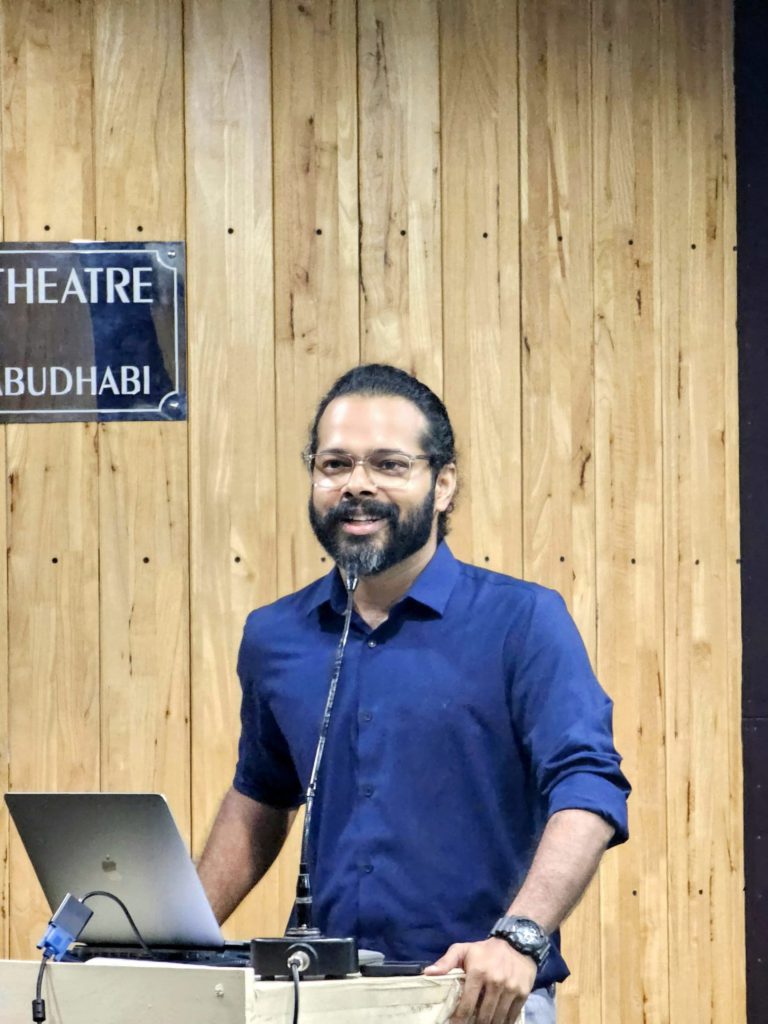
Dr Sandeep Das, study’s lead author and a postdoctoral fellow at Calicut University, says the species was first sighted during an expedition in search of another evasive species, the Mahabali frog or the purple frog.
Image: Agasthyagama edge (Credit: Sandeep Das)
The new species of Kangaroo Lizard has a uniform dull olive-brown body with slightly darker head and a white throat with a broad dark brown stripe on its dewlap with brick yellow scales on the outside.
Dr Das adds:
“In disturbed habitats like roadside vegetation, and plantation areas, the numbers were smaller compared to undisturbed vegetation types. Males had a creamy throat patch during the breeding months of March to May. Young ones were observed during June and July. The discovery of a second species of Agasthyagama adds to the ever-increasing reptile diversity in the Western Ghats.”
Image: Agasthyagama edge in life: (A) an uncollected adult male from Kulamavu, Idukki district, Kerala, India; (B) an uncollected female from the same locality (Credit: Sandeep Das)
The new species has been named after the Evolutionary Distinct and Globally Endangered (EDGE) programme of the Zoological Society of London that has supported several researchers including Dr Das.
The other members of the research team include Dr K. P. Rajkumar of Aranyakam Nature Foundation; Saunak Pal of Bombay Natural History Society; Surya Narayanan of Ashoka Trust for Research in Ecology and the Environment; Dr K. Subin of Kerala Forest Research Institute; Dr Muhamed Jafer Palot, Zoological Survey of India; and Dr V. Deepak the University of Wolverhampton.
Support Our Journalism
Global Indian Diaspora needs fair, non-hyphenated, and questioning journalism, packed with on-ground reporting. The Australia Today – with exceptional reporters, columnists, and editors – is doing just that. Sustaining this needs support from wonderful readers like you.
Whether you live in Australia, the United Kingdom, Canada, the United States of America, or India you can take a paid subscription by clicking Patreon. Buy an annual ‘The Australia Today Membership’ to support independent journalism and get special benefits.
At 30 June 2023 there were 2,589,873 actively trading businesses in the Australian economy. In 2022-23 there was a: 0.8% or 19,973 increase in the number of businesses; 15.8% entry rate, with 406,365 entries; and 15.0% exit rate, with 386,392 exits.
The ABS data shows that in 2023 there were 22,796 more business exits in Victoria when compared to 2021, which was greater than any other state or territory.
New South Wales (+13,342)
Queensland (+7,610)
Western Australia (+4,466)
South Australia (+3,421)
Tasmania (+671)
Australian Capital Territory (+604)
Northern Territory (+297)
Victoria (-13,326)
Image: Lachlan Clark, Research Fellow at the IPA (Source: IPA)
Lachlan Clark, Research Fellow at the the Institute of Public Affairs (IPA), said in a statement that their analysis of “ABS data confirms Victoria is closed for business.”
“Victoria is the biggest loser as the only state in the nation to experience a decline in new business startups over the past three years, no doubt set to get worse due the catastrophic failure of the state government’s energy policies.”
Mr Clark adds:
“You can hardly blame would-be business operators thinking twice about starting a business in Victoria given the monumental economic mismanagement of the Victorian state government.”
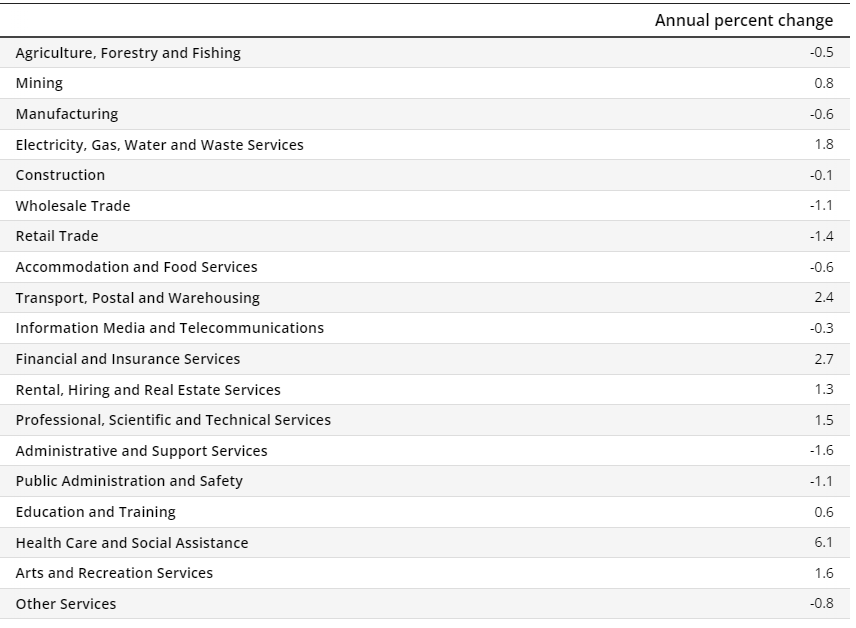
Image: Annual percent change in businesses by industry division, 2022-23 (Source: ABS)
According to the ABS, in 2022-23 the three industries with the largest percentage increase in Australian businesses were:
Health Care and Social Assistance (increase of 6.1% to 185,260 businesses)
Financial and Insurance Services (increase of 2.7% to 123,266 businesses)
Transport, Postal and Warehousing (increase of 2.4% to 218,662 businesses)
Recently, Victoria’s Premier Jacinta Allan announced the state’s “first all-electric bus depot is home to the largest fleet of zero-emissions buses in the state.”
Victoria's first all-electric bus depot is home to the largest fleet of zero-emissions buses in the state.
These buses will transport 10,000 people weekly, cover more than 1.2 million kilometres yearly, and will help us charge towards reaching net zero emissions by 2045. pic.twitter.com/DJEYB1VOxu
Experts at IPA says that this record is set to only get worse as businesses across Victoria brace for further system-wide blackouts on the back of the state government’s failed energy policies, which include a constitutional ban on gas exploration and an unachievable 95% renewables target by 2035.
Image: Victorian Chamber of Commerce and Industry Chief Executive Paul Guerra (Source: LinkedIn)
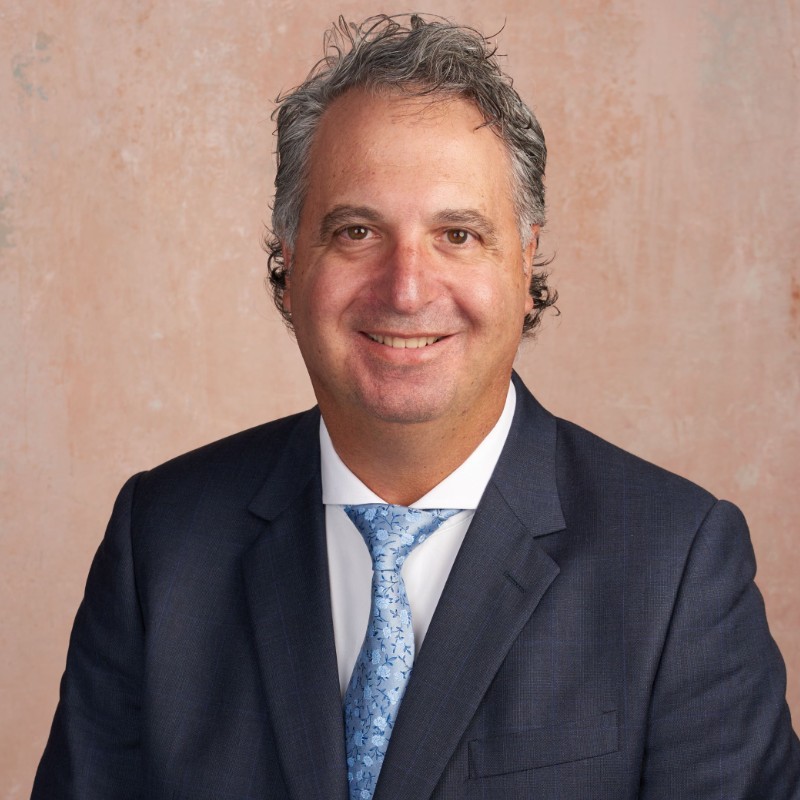
Victorian Chamber of Commerce and Industry Chief Executive Paul Guerra declared:
“If we start to question the availability of energy in a reliable and affordable sense, that will be the nail in the coffin for some businesses. They’ll make the decision to move out of Victoria, and we’ll be poorer for it.”
The industries with the largest percentage decrease in Australian businesses in 2022-23 were:
Administrative and Support Services (decrease of 1.6% to 120,630 businesses)
Retail Trade (decrease of 1.4% to 155,755 businesses)
Global Indian Diaspora needs fair, non-hyphenated, and questioning journalism, packed with on-ground reporting. The Australia Today – with exceptional reporters, columnists, and editors – is doing just that. Sustaining this needs support from wonderful readers like you.
Whether you live in Australia, the United Kingdom, Canada, the United States of America, or India you can take a paid subscription by clicking Patreon. Buy an annual ‘The Australia Today Membership’ to support independent journalism and get special benefits.
The fourth smallest country in the world with a population of just over 11,000 people, Tuvalu is feared to be “wiped off its place on the map”.
A report by ABC Pacific states that the low-lying island is widely considered one of the first places to be significantly impacted by rising sea levels, caused by climate change.
Climate change is the single greatest threat to the livelihoods, security and wellbeing of the people of Tuvalu.
Today I stood with my host, Foreign Minister @Simon_Kofe, where he issued his call for action on climate change, to COP26. pic.twitter.com/Zq01tQgfLA
According to the locals the spring tides this year in Tuvalu have been the worst so far with more flooding is expected with the king tides that usually occur during late February to early March.
In 2021, Tuvalu’s Foreign Minister, Simon Kofe, addressed the world in a COP26 speech whilst standing knee-deep in the sea to show how vulnerable Tuvalu and other low-lying islands in the Pacific are to climate change.
🌏 Excited to share my #CoP28 speech on Tuvalu’s digital innovation in response to climate change. We’re upholding our sovereignty & values – kaitasi, falepili, aava, alofa – against rising seas. It’s a tale of resilience & hope. https://t.co/PFdGmKI5TT
A 27-year-old climate activist from Tuvalu said he loved his home and his culture and did not want to lose them.
Kato Ewekia spoke to Nedia Daily and said seeing the beaches that he used to play rugby on with his friends had disappeared gave him a wake-up call.
“I was worried about my children because I wanted my children to grow up, teach them Tuvaluan music, teach them rugby, teach them fishing. But my island is about to disappear and get wiped off it’s place on the map.”
Mr Ewekia was also at COP26 and made history as the first youth Tuvaluan delegate to participate in the United Nations Climate Change Conference.
Despite only speaking limited English, he took to the global stage to tell the world about his home.
“Since I was the first Tuvaluan activist, people didn’t really know where Tuvalu is, what Tuvalu is. It was culture shocking, overwhelming. But the other youth gave me the confidence to just speak with my heart, and get my message out there.”
Mr Ewekia has been the national leader of the Saving Tuvalu Global Campaign, an environmental organisation that aims to amplify the voices and demands of the people of Tuvalu since 2020.
“Going out there, it’s not easy. We really, really love our home and we want how our elders taught us how to be Tuvaluan, we want our children to experience it – not when it disappears and future generations will be talking about it (Tuvalu) like it’s a story.”
Great to hear youth voices at #COP28 at the Climate Mobility Pavilion who shared their stories on amazing work they are doing to support their communities deal with climate impacts. One such voice is from Bernard Kato Ewekia from Tuvalu 🇹🇻 pic.twitter.com/yC6VCFtauu
He shared that in the four years that he’s been advocating for Tuvalu on the public stage, there have been many moments of frustration that are specifically directed towards world leaders who aren’t paying attention.
“My message to the world is I’ve been sharing this same message over and over again. If Tuvalu was your home and it (was) about to disappear, and you wanted your children to grow up in your home in Tuvalu – what would you have done? If you were in our shoes, what would you have done to save Tuvalu?”
This news report was first published in Wansolwara and has been republished here with the kind permission of the editor(s).
Support Our Journalism
Global Indian Diaspora needs fair, non-hyphenated, and questioning journalism, packed with on-ground reporting. The Australia Today – with exceptional reporters, columnists, and editors – is doing just that. Sustaining this needs support from wonderful readers like you.
Whether you live in Australia, the United Kingdom, Canada, the United States of America, or India you can take a paid subscription by clicking Patreon. Buy an annual ‘The Australia Today Membership’ to support independent journalism and get special benefits.
Two Sydney men have been charged with attempting to possess 800kg of methamphetamine destined for Australia in 2023, following an investigation into a global drug trafficking syndicate resulting in the arrest of eight people.
The men, 26 and 34, appeared in the Downing Centre Local Court on 20 February 2024 after they were arrested at Hinchinbrook and Canley Vale in Sydney’s southwest.
Detective Superintendent Jason McArthur said the alleged transnational drug trafficking syndicate posed a national security threat, considering the sheer size of the attempted importations.
“The AFP is one of the key protectors of the way of life for all Australians. We are committed to stopping serious organised crime groups seeking to profit from the harm they inflict on Australian communities.”
Det-Supt McArthur added:
“These criminals undermine the economy, social security system and financial system in all countries where they operate. The AFP is well-placed to disrupt the criminal elements who wish to traffic border-controlled drugs to our country, with members based in 33 countries and established offshore partnerships with international law enforcement agencies.”
The Victorian Joint Organised Crime Taskforce (JOCTF), launched the investigation – codenamed Operation Parkes – in January 2023 after Canadian authorities alerted the AFP that 2900 litres of liquid methamphetamine, concealed in 180 bottles of canola oil, was destined for Australia.
Victoria Police Organised Crime Division Detective Superintendent David Cowan said the dismantling of the crime syndicate responsible for these attempted importations is a significant win for police globally and for the community.
“There is no doubt that they will take a massive monetary hit as a result of this outcome, which is crucial for us as we work to target these syndicates in any and every way possible.”
Det-Supt Cowan further observed:
“The methamphetamine market is unrivalled in consumption, harm and serious and organised crime involvement compared with other illicit drugs. If that wasn’t enough, the use of methamphetamine contributes to unacceptably high levels of harm in our community through drug driving, drug-fuelled assaults, drug-fuelled family violence and heightened risk-taking.
In total, authorities stopped nearly seven and a half tonnes of liquid methamphetamine, worth about $2 billion, from arriving in Australia in five separate ventures across several months last year.
Police will allege the two men were directed to transport and store what they thought was methamphetamine in locations across western Sydney.
Police replaced the methamphetamine with a harmless substance before it had been released for delivery in Australia.
The investigation by JOCTF, which comprises the AFP, Victoria Police, Australian Border Force (ABF), and the Department of Home Affairs, was supported by NSW Police and Five Eyes Law Enforcement Group partners.
ABF Acting Commander Maritime and Enforcement South Dan Peters said ABF officers continued to work tirelessly at the border to prevent illicit drugs from hitting Australian streets.
“The illicit drug trade continues to impact upon many Australians, causing immense harm to individuals and families, and the ABF remains determined to detect and disrupt criminal groups from importing illicit substances such as methamphetamine into our country.”
Six men – including the two alleged facilitators of the attempted importations – were arrested in July 2023. They remain before the courts.
The NSW men have each been charged with one count of attempting to possess a commercial quantity of a border-controlled drug, relating to 800kg of methamphetamine, contrary to section 307.5, by virtue of section 11.1, of the Criminal Code Act 1995 (Cth).
Both men were formally refused bail. The younger man will appear at the same court on 4 March, 2024 while the other man will return to court on 10 April, 2024.
Support Our Journalism
Global Indian Diaspora needs fair, non-hyphenated, and questioning journalism, packed with on-ground reporting. The Australia Today – with exceptional reporters, columnists, and editors – is doing just that. Sustaining this needs support from wonderful readers like you.
Whether you live in Australia, the United Kingdom, Canada, the United States of America, or India you can take a paid subscription by clicking Patreon. Buy an annual ‘The Australia Today Membership’ to support independent journalism and get special benefits.
The project’s cost has also stunningly risen from A$35 billion in 2018 to $45 billion a couple of years ago to now $65 billion, even before actual ship construction starts.
Under the new plans announced today, the construction of the Hunter class frigates at Osborne will sustain at least 2,000 jobs and create at least 500 new jobs over the next decade. pic.twitter.com/hNW7uB0yFN
Meanwhile, the Navy’s three brand new Hobart Class destroyers surprisingly need major, costly upgrades that will take two to three years each. With luck, all three will be back in service by 2032.
These numbers are important as the Navy needs three ships in service to reliably maintain one ship deployed on distant operations for an extended period. Across most of the next decade, our current naval surface warship fleet will be able to dependably deploy only two, maybe three, warships simultaneously for extended periods. This is high-input cost for low-output usage.
Securing long term continuous naval shipbuilding in Adelaide is about workers and apprentices like Becky 👇 pic.twitter.com/hpOhnODmic
That’s the problem. A review undertaken by highly paid, external consultants, led by a retired US Navy admiral, has now provided the solution.
The review released today recommends keeping the three Hobart Class destroyers and six of the aged ANZAC frigates, building only six Hunter Class frigates and stopping the OPV program immediately at six ships.
The big surprise was the recommendation the Navy acquire at least seven – and “optimally” 11 – new general purpose frigates and six large optionally crewed surface vessels (LOSVs). The government agreed with both recommendations.
The new frigates will be a similar size to the Anzacs and effectively a half-size Hunter. Called “Tier 2” ships, they will be designed for anti-submarine warfare and used to secure seaborne trade routes, Australia’s northern maritime approaches and to escort the Navy’s amphibious ships.
They will have an air and missile defence capability and carry several anti-ship and land-attack missiles. Notably, the first three frigates will be built overseas – this will likely draw criticism.
The LOSVs will increase the Navy’s long-range strike capacity and appear to be similar to the US Navy’s planned large uncrewed surface vessels, which will enter service late this decade.
These vessels will mostly operate without a crew, though they may have a small crew embarked for short periods, such as when entering and leaving port or refuelling at sea. The LOSVs are expected to be lower-cost, long-endurance vessels able to carry anti-ship and land-attack missiles.
The review glosses over the serious inability of crewing the current 11-ship surface warship Navy, let alone a 26-vessel one. The Navy is already about 900 people short, equivalent to more than three Anzac ship crews, as it struggles to meet its recruitment goals.
The Department of Defence, however, considers the problem more one of retention than recruitment and is taking steps to slow the personnel loss rate, but it has much ground to make up before it can grow into a much larger force.
The review merely recognised the challenge and simply hoped for the best.
We are no longer going to be sitting around wondering where the work is coming from. pic.twitter.com/yL2YazveK5
First, the good news. Much of the money for the new ships will be spent in Australia – not just on sheet metal hull construction, but also on electronics.
For example, the future of the world-leading radar technology company recently purchased by the federal government, appears secure.
There are definite benefits in both creating a more skilled Australian workforce and sustaining a sovereign, Australian naval shipbuilding industry. Critics will correctly argue it’s more expensive than buying from overseas, but given tax claw-backs, maybe not that much.
Even so, the cost-benefit analysis will be hard to calculate – the decision over whether it’s good value for money needs to be a judgement call, not an analysis based on mathematics.
Second, the Albanese government came to office calling for much better “impactful projection” – that is, the ability to apply strategically meaningful military power at great distance from Australia’s shores using missiles.
The new frigates, however, will only carry some additional missiles – not many. As such, the government seems to have changed its earlier intentions and will instead focus more on the submarine threat to Australia’s trade routes.
The only nod to “impactful projection” in the review today is the building of six new LOSVs, each of which will be able to carry 32 missiles to sea. (One LOSV working with a Hobart Class frigate, however, will have around 88 missiles.)
Critics will point to the fact this is fewer than a single US Navy Arleigh Burke destroyer, which carries 96 missiles, and its larger Chinese counterpart, which carries 128.
Third, the review does not call for renewing the Navy’s ageing Anzac flotilla quickly enough. Warship shortages will persist well into the next decade. This is bad news for the short term.
And lastly, the Navy will now have three major ship and submarine projects underway. The new plan to acquire an additional flotilla of frigates will take considerable time, soak up the country’s scarce ship-building workforce and be remarkably costly.
This will adversely impact the Navy operationally and the rest of the Department of Defence, Army and Air Force. As a result, we can likely expect cuts to the Army in the forthcoming budget.
Overall, the review is good for jobs in Adelaide and Perth and will make the Navy significantly larger over the long term. It will also partly placate some government critics who want to buy ships overseas, arguing this will mean faster delivery, and those who believe the government needs “new money” added to currently planned defence budgets.
But the true cost impacts of the reform plan must await the budget. The plan will also take a long time to implement and has ignored the Navy’s chronic shortage of skilled personnel, which is surely most unwise.
Global Indian Diaspora needs fair, non-hyphenated, and questioning journalism, packed with on-ground reporting. The Australia Today – with exceptional reporters, columnists, and editors – is doing just that. Sustaining this needs support from wonderful readers like you.
Whether you live in Australia, the United Kingdom, Canada, the United States of America, or India you can take a paid subscription by clicking Patreon. Buy an annual ‘The Australia Today Membership’ to support independent journalism and get special benefits.
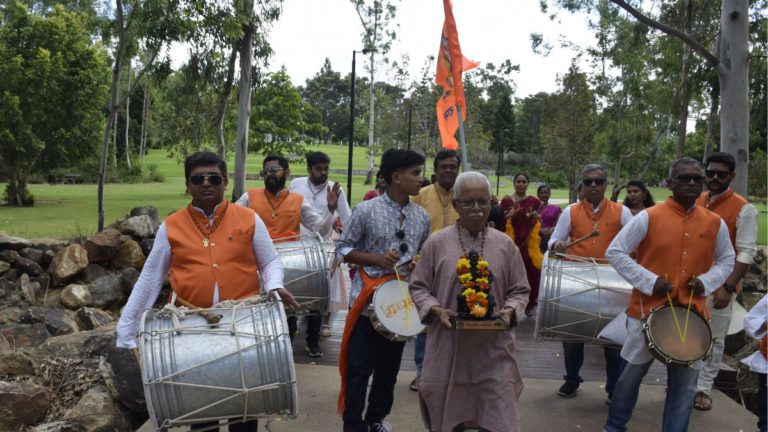
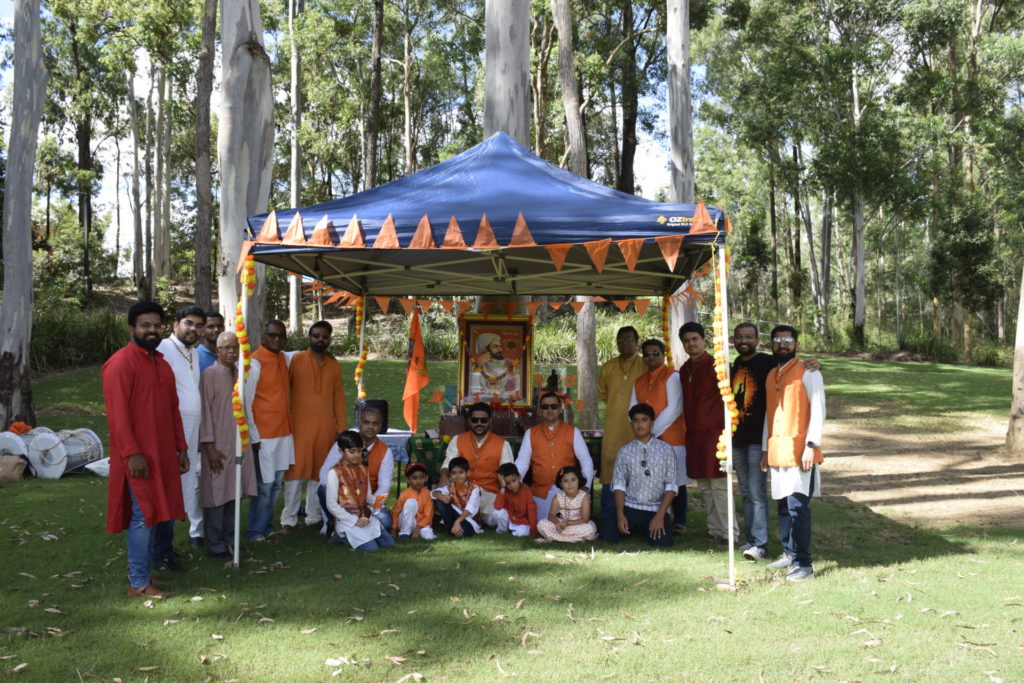
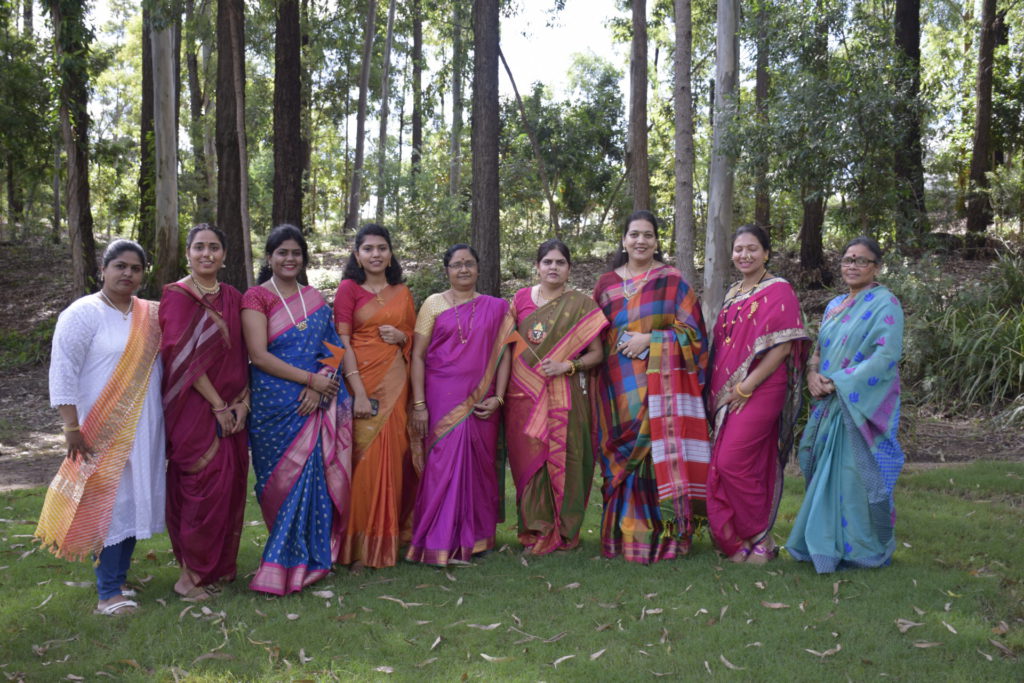
Shiv Jayanti, the birth anniversary of Chhatrapati Shivaji Maharaj, the legendary Maratha warrior king, who is greatly revered by Indian diasporic communities worldwide was celebrated in Brisbane on 18th February.
Image: Members of the Brisbane Dhol Tasha Mandal (Credit: Mayur Divate)
This year, the Brisbane Dhol Tasha Mandal took it upon themselves to mark the occasion grandly, bringing together members of the Indian diaspora and locals to participate in the festivities.
Bhushan Joshi, the President of the Dhol Tasha Group, said:
“Celebrating Shiv Jayanti in Brisbane is not just about commemorating a historical figure; it’s about fostering a sense of unity and pride in our cultural roots. The response from the community has been heartwarming.”
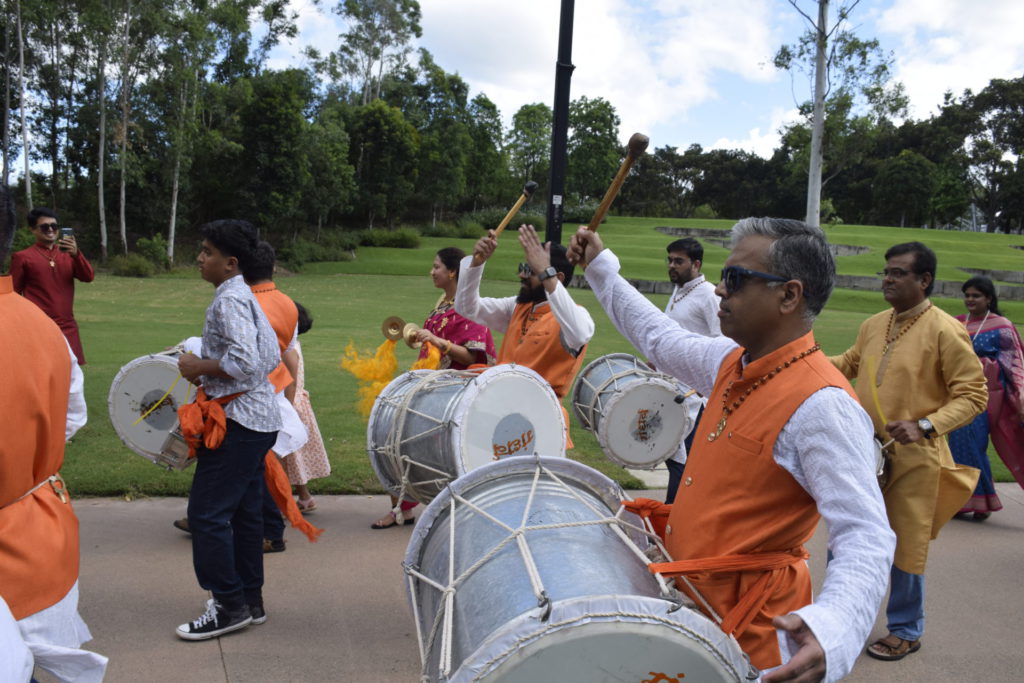
The celebration commenced with a traditional, where the rhythmic beats of the Dhol and Tasha drums echoed, capturing the attention of onlookers.
Image: Members of the Brisbane Dhol Tasha Mandal (Credit: Mayur Divate)
Dressed in colorful traditional attire, members of the Mandal showcased their dedication to preserving and promoting the rich cultural heritage of Maharashtra.
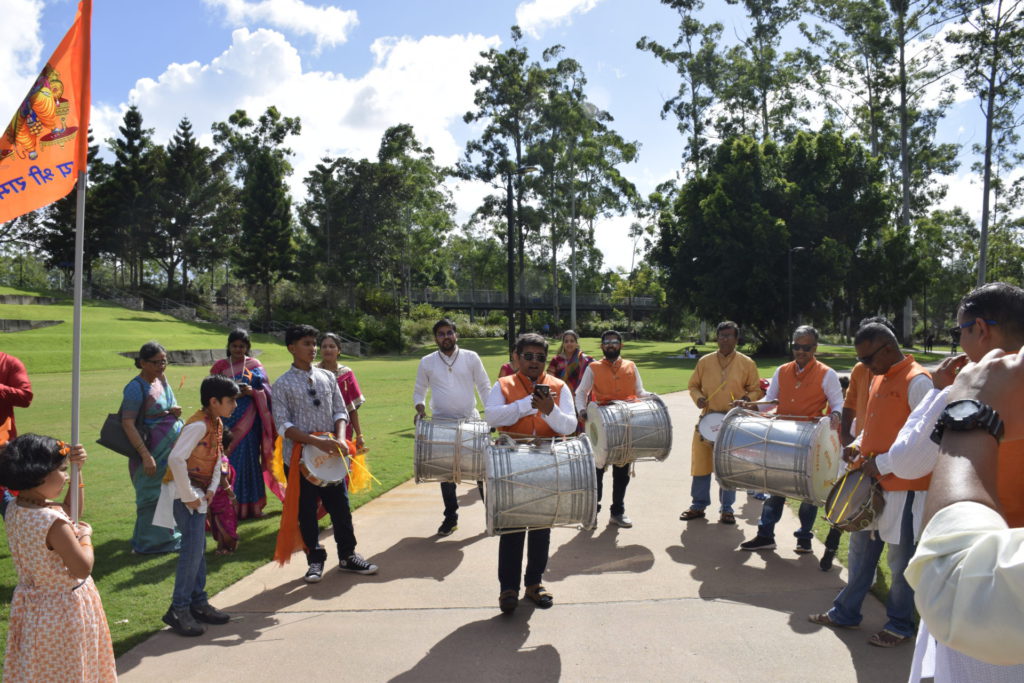
A celebration highlight was the mesmerizing display of the Dhol Tasha performance, where the synchronized beats resonated with the spirit of Shivaji Maharaj. The event not only served as a platform for cultural exchange but also as an educational experience for those unfamiliar with the historical significance of Shiv Jayanti.
Image: Members of the Brisbane Dhol Tasha Mandal (Credit: Mayur Divate)
Members of the Brisbane Dhol Tasha Mandal expressed their gratitude for the overwhelming support received from the community.
The event featured various cultural activities and performances at Robelle Domain Parkland in Springfield. Bhushan Joshi, Vikas Raskar, Atul Panchi, Prajakta Keer, and other members were amongst the key organizers of this fabulous event.
Image: Members of the Brisbane Dhol Tasha Mandal (Credit: Mayur Divate)
As the beats of the dhol and Tasha drums echoed into the sky, the Brisbane Dhol Tasha Mandal successfully brought the spirit of Shiv Jayanti to the heart of Brisbane, leaving an indelible mark on the community and fostering a sense of togetherness that transcends borders.
Support Our Journalism
Global Indian Diaspora needs fair, non-hyphenated, and questioning journalism, packed with on-ground reporting. The Australia Today – with exceptional reporters, columnists, and editors – is doing just that. Sustaining this needs support from wonderful readers like you.
Whether you live in Australia, the United Kingdom, Canada, the United States of America, or India you can take a paid subscription by clicking Patreon. Buy an annual ‘The Australia Today Membership’ to support independent journalism and get special benefits.
Greece Prime Minister Kyriakos Mitsotakis will be on a state visit to India. He will be the Chief Guest and Keynote Speaker at the 9th Raisina Dialogue, 2024 in New Delhi.
During his state visit from February 21-22, Greek PM Mitsotakis will be accompanied by Foreign Minister Giorgos Gerapetritis, senior officials and a high-powered business delegation.
According to the Indian Ministry of External Affairs (MEA), this would be the first bilateral Head of State or Head of Government level visit from Greece to India after 15 years; the last Prime Ministerial visit from Greece to India took place in 2008. The then Greek Prime Minister, Kostas Karamanlis, was accompanied by Foreign Minister Dora Bakoyannis, in his January 2008 visit.
India-Greece relations have been elevated to ‘Strategic Partnership’ during Indian Prime Minister Narendra Modi’s visit to Greece in August 2023.
Indian PM Modi said this Greece tour will add momentum to India-Greece friendship, particularly people-to-people linkages. He also welcomed Greece into the International Solar Alliance (ISA) and looked forward to Greece’s membership of the Coalition for Disaster Resilient Infrastructure (CDRI), the MEA stated.
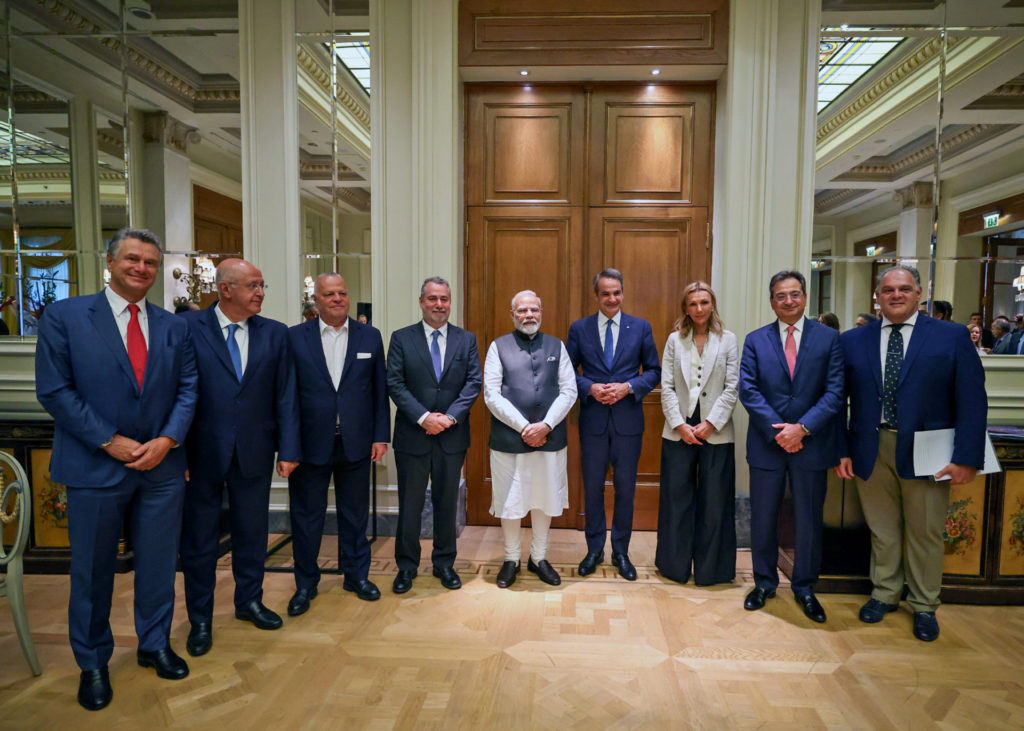
Indian Prime Minister Narendra Modi at a business lunch hosted by Prime Minister of Greece, Kyriakos Mitsotakis, in Athens; Image Source: (Press Information Bureau)
The India-Greece ties are based on shared cultural values, a commitment to foster economic growth, and collaboration in the fields of security and defence, shipping, and maritime, and are marked by convergence on regional and global issues. The two countries have also been cooperating closely in various multilateral forums.
He will also visit Mumbai before returning to Athens.
PM Mitsotakis will be accorded a ceremonial welcome at the forecourt of Rashtrapati Bhawan (President House). Prime Minister Modi and PM Mitsotakis will hold bilateral discussions and PM Modi will also host a lunch banquet in honour of the visiting dignitary.
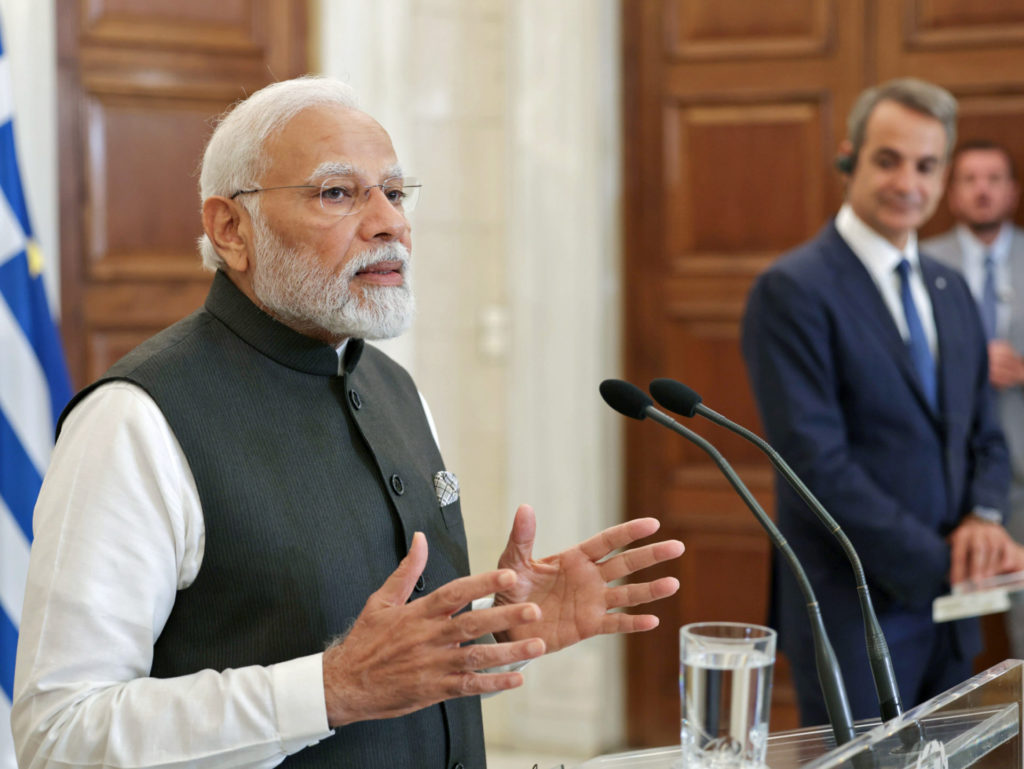
Indian Prime Minister Narendra Modi addresses the Press meet with Prime Minister of Greece, Kyriakos Mitsotakis, in Athens: Image Source: (Press Information Bureau)
India and Greece have witnessed frequent engagements with Indian External Affairs Minister Jaishankar meeting Greek Minister of National Defence Nikos Dendias on Tuesday.
Support Our Journalism
Global Indian Diaspora needs fair, non-hyphenated, and questioning journalism, packed with on-ground reporting. The Australia Today – with exceptional reporters, columnists, and editors – is doing just that. Sustaining this needs support from wonderful readers like you.
Whether you live in Australia, the United Kingdom, Canada, the United States of America, or India you can take a paid subscription by clicking Patreon. Buy an annual ‘The Australia Today Membership’ to support independent journalism and get special benefits.
FIJI received 70,324 visitors in January this year, an increase of 4.2 per cent compared with the same period last year.
Provisional statistics released by the Fiji Bureau of Statistics show that visitor arrival levels in January this year is 7.6 per cent higher than the pre-COVID era in January 2020.
However according to the bureau, the number of arrivals in January is a decrease of 15.1 per cent when compared with the 82,820 visitors from December 2023.
Of the 70,324 visitors, 70,191 came by air while 133 arrivals 74 were mostly seaman on fishing vessels and 59 arrived by yachts.
Figure: Visitor arrivals for the month of January 2020 to 2024 (Source: FIJI BUREAU OF STATISTICS)
A total of 79.1 per cent of the total arrivals were on holiday, 5.6 per cent came to visit friends and relatives, 1.7 per cent for business purposes while 13.6 per cent visited for other reasons.
Statistics also revealed that 60.7 per cent of visitors were in the age range of 25-64 years, which accounts for the vast majority of the working age population.
While children aged 14 and below made up 18.7 per cent of the visitor arrivals in January, 12 per cent were youths aged 15.24.
The remaining 8.6 per cent comprised those in the predominantly retirement age group of 65 and over.
Australia and New Zealand remain the major source markets for Fiji with 34,671 visitors and 14,834 arriving from both countries respectively.
These countries, including the USA, China, Continental Europe, Canada and the Great Britain accounted for 90.5 per cent of the total visitor arrivals for January 2024.
Compared with the number of arrivals, 19,224 Fiji residents departed our shores during January.
The reasons for departure as reported by residents leaving for a short-term absence were as follows;
Holiday – 59.9 per cent
Visiting Friends or Relatives – 30.7 per cent
Business – 6.1 per cent
Employment – 1.3 per cent
Others – 1.0 per cent
Education/Training – 0.9 per cent.
Out of the total 16,659 left the country for a short-term absence of under three months while 781 were for more than three months and within 12 months period.
According to the bureau 1784 of resident departures were for a longer-term absence of 1 year or more.
This news report was first published in Wansolwara and has been republished here with the kind permission of the editor(s).
Support Our Journalism
Global Indian Diaspora needs fair, non-hyphenated, and questioning journalism, packed with on-ground reporting. The Australia Today – with exceptional reporters, columnists, and editors – is doing just that. Sustaining this needs support from wonderful readers like you.
Whether you live in Australia, the United Kingdom, Canada, the United States of America, or India you can take a paid subscription by clicking Patreon. Buy an annual ‘The Australia Today Membership’ to support independent journalism and get special benefits.
Australian law enforcement agencies have come together to deliver a campaign to raise awareness of the growing trend involving criminals recruiting financially vulnerable university students as money mules.
A money mule is a person who receives money from a third party into their bank account, transfers it into another account and obtains a commission for it.
AFP Detective Superintendent Tim Stainton said criminals attracted students through job adverts that required no experience and offered weekly payments and flexible work arrangements.
“Often the only requirements for the job are access to a mobile phone or computer and an Australian bank account to receive and transfer funds at the direction of the criminal group – this is a major red flag.”
Det Supt Stainton added:
“If a job opportunity seems too good to be true, then it probably isn’t legitimate. If you are being offered significant sums of money to just move money through your bank account, then it is likely you are committing a criminal offence.”
Police are concerned about criminals targeting students, including through lucrative job adverts offering quick and easy money in exchange for moving funds through their bank accounts.
While this period is an exciting time for students, it is also an opportunistic time for organised criminals seeking to recruit money mules.
Criminal networks are targeting and attempting to recruit university students as money mules, which may be due to their financial situations and their active search for part-time employment.
International students have added vulnerabilities due to language barriers and their limited knowledge of Australian criminal law.
The month-long campaign will be rolled out nationally across 39 universities by the AFP-led Joint Policing Cybercrime Coordination Centre (JPC3), and will include a digital information pack, marketing material on university campuses and advertising on social media.
The materials seek to educate students on what a money mule is, how to spot this cyber-enabled crime and what people should do if they think they’ve fallen victim to money muling.
To effectively reach a wide group of international students, the campaign will be translated and delivered in seven languages, including Mandarin Chinese, Hindi, Punjabi, Nepali, Spanish, Vietnamese and Thai.
Further, Det Supt Stainton advises:
“You can do your due diligence by researching the business to see if they have an online presence, check if they have legitimate contact details and find out if they’re based in Australia.”
In addition to posting the job ads on platforms such as online classifieds and social media, police are also seeing criminals proactively contact students face-to-face and through community networks to recruit more money mules.
Contact is made through social media platforms, instant messaging apps, email, pop-up ads and in-person, and authorities encourage everyone to be skeptical when approached by someone you don’t know, offering easy money for limited work.
Tips for staying safe from money mule recruitment scams:
Don’t engage with online posts offering large sums of money.
Don’t accept message requests from people you don’t know, and if you receive a message from a friend with a link to click, speak to them in person before you respond.
Don’t share banking and personal details with anyone you don’t know or trust.
If someone asks to use or ‘borrow’ your account, say no.
If you suspect something is not right, reject the offer.
While being a money mule may seem like a low risk, high reward and victimless crime, doing so is a serious crime.
Det. Supt. Stainton says:
“Money mules may try and convince themselves that what they’re doing is a victimless crime which gives them a quick paycheck, but this couldn’t be further from the truth. Moving money for criminals gives these syndicates access to their dirty money and helps fund future criminal ventures, like drug trafficking, child exploitation, cybercrime and cyber-enabled fraud.”
Det. Supt. Stainton adds:
“By being a money mule, unwittingly or not, you are complicit in a money laundering offence for which you can be arrested and charged by the police. Money laundering offences attract significant penalties including jail time. Having a criminal record can impact your ability to obtain employment, travel to certain countries and if you are an international student, it can adversely affect your ability to retain an Australian student visa.”
Under Operation Wickham, six Chinese nationals were arrested for their alleged involvement in laundering money for an organised criminal syndicate. This included the arrest of two 18-year-old Chinese nationals who were studying in Australia.
The JPC3 brings together Australian law enforcement and key industry and international partners to fight cybercrime and prevent harm and financial loss to the Australian community.
Support Our Journalism
Global Indian Diaspora needs fair, non-hyphenated, and questioning journalism, packed with on-ground reporting. The Australia Today – with exceptional reporters, columnists, and editors – is doing just that. Sustaining this needs support from wonderful readers like you.
Whether you live in Australia, the United Kingdom, Canada, the United States of America, or India you can take a paid subscription by clicking Patreon. Buy an annual ‘The Australia Today Membership’ to support independent journalism and get special benefits.
If you get back pain, how long will it take to go away? We scoured the scientific literature to find out. We found data on almost 20,000 people, from 95 different studies and split them into three groups:
acute – those with back pain that started less than six weeks ago
subacute – where it started between six and 12 weeks ago
chronic – where it started between three months and one year ago.
We found 70%–95% of people with acute back pain were likely to recover within six months. This dropped to 40%–70% for subacute back pain and to 12%–16% for chronic back pain.
Clinical guidelines point to graded return to activity and pain education under the guidance of a health professional as the best ways to promote recovery. Yet these effective interventions are underfunded and hard to access.
More pain doesn’t mean a more serious injury
Most acute back pain episodes are not caused by serious injury or disease.
There are rare exceptions, which is why it’s wise to see your doctor or physio, who can check for signs and symptoms that warrant further investigation. But unless you have been in a significant accident or sustained a large blow, you are unlikely to have caused much damage to your spine.
Even very minor back injuries can be brutally painful. This is, in part, because of how we are made. If you think of your spinal cord as a very precious asset (which it is), worthy of great protection (which it is), a bit like the crown jewels, then what would be the best way to keep it safe? Lots of protection and a highly sensitive alarm system.
The spinal cord is protected by strong bones, thick ligaments, powerful muscles and a highly effective alarm system (your nervous system). This alarm system can trigger pain that is so unpleasant that you cannot possibly think of, let alone do, anything other than seek care or avoid movement.
The messy truth is that when pain persists, the pain system becomes more sensitive, so a widening array of things contribute to pain. This pain system hypersensitivity is a result of neuroplasticity – your nervous system is becoming better at making pain.
Reduce your chance of lasting pain
Whether or not your pain resolves is not determined by the extent of injury to your back. We don’t know all the factors involved, but we do know there are things that you can do to reduce chronic back pain:
understand how pain really works. This will involve intentionally learning about modern pain science and care. It will be difficult but rewarding. It will help you work out what you can do to change your pain
reduce your pain system sensitivity. With guidance, patience and persistence, you can learn how to gradually retrain your pain system back towards normal.
How to reduce your pain sensitivity and learn about pain
Learning about “how pain works” provides the most sustainable improvements in chronic back pain. Programs that combine pain education with graded brain and body exercises (gradual increases in movement) can reduce pain system sensitivity and help you return to the life you want.
These programs have been in development for years, but high-quality clinical trials are now emerging and it’s good news: they show most people with chronic back pain improve and many completely recover.
But most clinicians aren’t equipped to deliver these effective programs – good pain education is not taught in most medical and health training degrees. Many patients still receive ineffective and often risky and expensive treatments, or keep seeking temporary pain relief, hoping for a cure.
When health professionals don’t have adequate pain education training, they can deliver bad pain education, which leaves patients feeling like they’ve just been told it’s all in their head.
Community-driven not-for-profit organisations such as Pain Revolution are training health professionals to be good pain educators and raising awareness among the general public about the modern science of pain and the best treatments. Pain Revolution has partnered with dozens of health services and community agencies to train more than 80 local pain educators and supported them to bring greater understanding and improved care to their colleagues and community.
But a broader system-wide approach, with government, industry and philanthropic support, is needed to expand these programs and fund good pain education. To solve the massive problem of chronic back pain, effective interventions need to be part of standard care, not as a last resort after years of increasing pain, suffering and disability.
Global Indian Diaspora needs fair, non-hyphenated, and questioning journalism, packed with on-ground reporting. The Australia Today – with exceptional reporters, columnists, and editors – is doing just that. Sustaining this needs support from wonderful readers like you.
Whether you live in Australia, the United Kingdom, Canada, the United States of America, or India you can take a paid subscription by clicking Patreon. Buy an annual ‘The Australia Today Membership’ to support independent journalism and get special benefits.
Team India registered their biggest winning margin in the history of Test cricket during the third Test against England at Rajkot on Sunday.
A five-wicket haul by spinner Ravindra Jadeja and top-notch knocks from skipper Rohit Sharma, Shubman Gill, double centurion Yashasvi Jaiswal and debutant Sarfaraz Khan made England’s ‘Bazball’ brand of cricket surrender to Team India in their home conditions, losing by 434 runs in the third Test at Rajkot on Sunday.
Image Source: @BCCI X/Twitter
The 434-run margin is now India’s biggest win in Tests in terms of runs, outdoing their margin of 372 runs against New Zealand in Mumbai back in 2021.
This massive loss is a massive jolt to England, riding high on their successful, highly-attacking, positive and result-oriented ‘Bazball’ school of cricket under skipper Ben Stokes and coach Brendon McCullum.
This is England’s second biggest loss in Tests, next to a 562-run loss to Australia back in 1934 at The Oval.
Image Source: @BCCI X/Twitter
Chasing 557, England was bundled out for just 122 runs in 39.4, losing the match by 434 runs. Ravindra Jadeja took 5/41, while Kuldeep Yadav took two wickets. Ravichandran Ashwin and Jasprit Bumrah took a wicket each.
Earlier, India secured a 556-run second innings lead, declaring their second innings at 430/4. Following skipper Rohit’s early fall for just 19 runs, young batters Yashasvi Jaiswal and Shubman Gill steadied the ship for India with a 155-run partnership for the second wicket, which ended after Jaiswal retired hurt for 104. India ended the day three at 196/2, with Gill (65*) and Kuldeep Yadav (3*).
On day four, Gill and Kuldeep continued to stitch yet another partnership, which ended with Gill heartbreakingly missing his fourth Test ton due to a run-out, scoring 91 in 151 balls, with nine fours and two sixes. Kuldeep also scored 27 in 91 balls, leaving India at 258/4. From this point on, Jaiswal resumed his innings with fellow Mumbai star Sarfaraz Khan. Both took the English spinners to cleaners.
The joy and appreciation say it all! ☺️ 👏
Where were you when Yashasvi Jaiswal scored his second Double Ton in Tests 🤔
Jaiswal scored his second double-century in Tests after scoring his first one in the last Test. A key highlight of his knock was smashing veteran pace legend James Anderson for a hat-trick of sixes. Sarfaraz also scored his back-to-back half-century on Test debut. India ended the innings at 430/4, with Jaiswal (214* in 236 balls, 14 fours and 12 sixes) and Sarfaraz (68* in 72 balls, with six fours and three sixes) unbeaten to form a 172-run partnership for the fifth wicket.
Joe Root, Tom Hartley and Rehan Ahmed took a wicket each for England. Earlier, England in their first inning scored 319 runs in reply to India’s 445 runs in their first inning. Though Ben Duckett (153 in 151 balls, with 23 fours and two sixes) scored the fastest century by an English player in India, no other batter could give him much support. Skipper Stokes (41 in 89 balls, with six fours) and Pope (39 in 55 balls, with five fours and a six) played some decent knocks.
Siraj was the pick of the bowlers for India with 4/84, while Kuldeep Yadav and Ravindra Jadeja took two wickets each. Jasprit Bumrah and Ravichandran Ashwin managed a scalp each, reaching his 500th Test wicket as well.
In the first innings, after opting to bat first, India put up 445. The hosts were rocked by England bowlers earlier and were struggling at 33/3. Then skipper Rohit stepped up, forming a 204-run stand with Jadeja. Rohit scored 131 runs in 196 balls, with 14 fours and three sixes. Jadeja scored his third Test ton and crafted a 77-run stand with debutant Sarfaraz (62 in 66 balls, with nine fours and a six).
Useful scores from debutant Dhruv Jurel (46 in 104 balls, with two fours and three sixes) and Ashwin (37 in 89 balls, with six fours) took India to a fine total.
Mark Wood justified his selection with figures of 4/114. Rehan got two wickets while Root, Hartley and Anderson got a wicket each.
Jadeja took home the ‘Player of the Match’ award with a century and seven-wicket
Brief Scores: India: 445 and 430/4 (Yashasvi Jaiswal 214*, Shubman Gill 91, Tom Hartley 1/78) beat England: 319 and 122 (Mark Wood 33, Tom Hartley 16, Ravindra Jadeja 5/41).
Support Our Journalism
Global Indian Diaspora needs fair, non-hyphenated, and questioning journalism, packed with on-ground reporting. The Australia Today – with exceptional reporters, columnists, and editors – is doing just that. Sustaining this needs support from wonderful readers like you.
Whether you live in Australia, the United Kingdom, Canada, the United States of America, or India you can take a paid subscription by clicking Patreon. Buy an annual ‘The Australia Today Membership’ to support independent journalism and get special benefits.
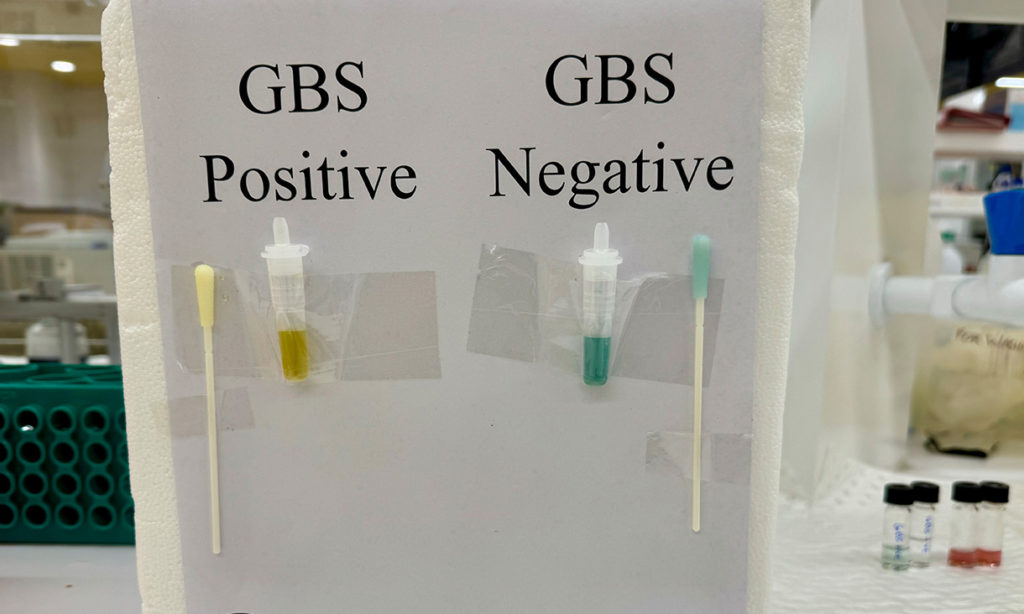
A new test, similar to COVID-19 rapid antigen tests, developed by RMIT University researchers can help detect a common infection in expecting mothers within minutes.
This new test could potentially save the lives of 150,000 newborns around the world every year as early detection helps easily treat the infection using standard antibiotics.
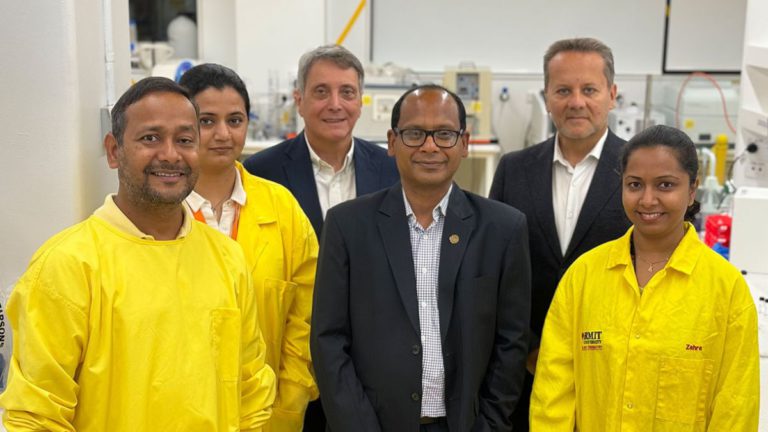
Image: This new sensor technology would cut the testing time down to 15 minutes (Credit: Will Wright, RMIT University)
Indian-origin Prof. Vipul Bansal, Director of the Sir Ian Potter NanoBioSensing Facility at RMIT University, is the lead resaercher on this project.
In 2007, after completing a PhD in Nano-biotechnology at the National Chemical Laboratory in India, Prof. Bansal migrated to Australia to join the University of Melbourne as a Postdoctoral Fellow.
Image: Prof. Bansal (RMIT University)
Prof. Bansal says testing for GBS during weeks 36 to 37 of pregnancy took 5 to 7 days in a pathology lab.
“This new sensor technology would cut the testing time down to 15 minutes. That won’t just save babies’ lives, it will also save millions in medical costs.”
Prof. Bansal’s expertise across biological and chemical sciences has allowed his team to develop crosscutting technologies for applications across sensor technologies, catalysis, microbial management and cellular immunotherapies.
He adds:
“We have developed biomarkers that can detect GBS bacteria with accuracy and high sensitivity.”
Group B Streptococcus (GBS) bacteria is carried by 1 in 5 pregnant women. GBS pathology testing cost the Australian healthcare system about $94 million last financial year. This infection can cause serious complications, leading to preterm births, stillbirths, and neonatal deaths.
Image: Ed Husic (Source: ALP)
Ed Husic, Minister for Industry and Science, said the development of this “Aussie know-how” would give doctors a fighting chance against one of the leading causes of death and disability for newborn babies.
“The fact this technology also offers the potential to free up tens of millions of dollars within our healthcare system to help other Australians in need is just cherry on the cake. Just more proof that Australian science and our know-how matters and can make a difference.”
RMIT University is part of a consortium that has just won $3 million in funding in the latest Cooperative Research Centres Projects (CRC-P) round for StrepSure®, a sensor technology that’s anticipated to be able to identify GBS bacteria within minutes. It is partnering with innovation company NEXSEN Biotech, clinicians at Northern Health and Atomo Diagnostics.
Assoc. Prof. Prahlad Ho, Chair of Northern Health Research Executive Committee and Divisional Director of Diagnostic Services, said this project will help improve clinical outcomes for babies.
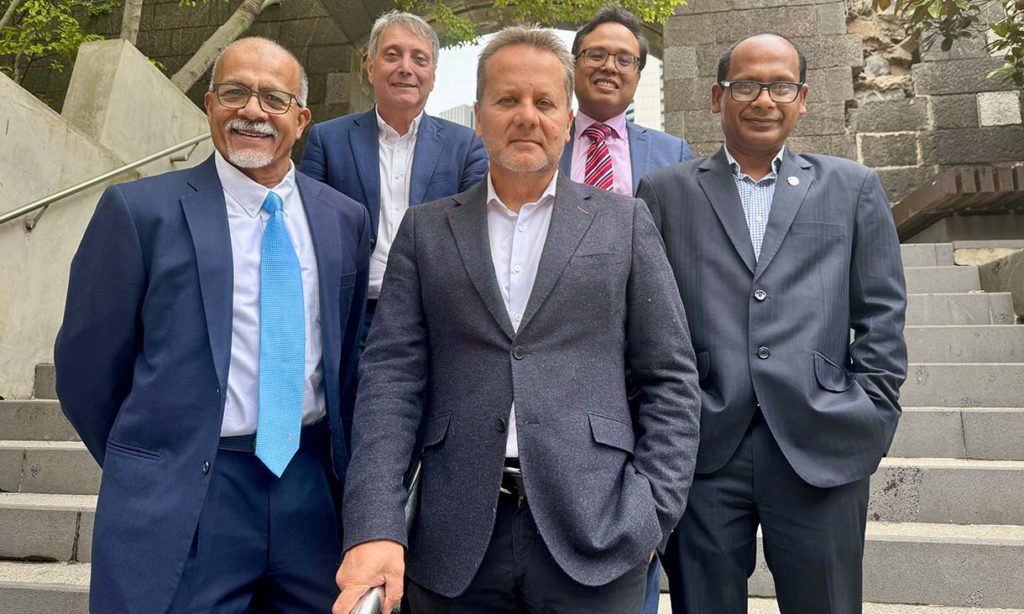
Image: Left to right: Professor Shekhar Kumta (Professor of Surgery, Northern Health), Mr Mark Muzzin (Chairman, NexSen), Mr Thomas Hanly (CEO, NexSen), Associate Professor Prahalad Ho (Chair of Northern Health Research Executive Committee and Divisional Director of Diagnostic Services) and Professor Vipul Bansal (Founding Director, Sir Ian Potter NanoBioSensing Facility, RMIT University) (Credit: Will Wright, RMIT University)
In January 2024, Prof. Bansal, after a rigorous application and peer-nomination process, was elected as a Fellow of the Royal Society of Chemistry (RSC), UK, the oldest chemistry society in the world.
Prof. Bansal says that the research team is now in the process of making a prototype test, to detect the presence of GBS in vaginal swabs.
RMIT is collaborating with industry and clinicians to develop a new rapid test that could detect a common infection in expecting mothers within minutes – potentially saving the lives of 150,000 newborns around the world every year. 👶🏥
Total funding for the GBS sensor project is $7.6 million, with a $3 million grant from the Federal Government for field trials of new low-cost sensor technology in the Northern Health system.
RMIT has filed a provisional patent application to protect the key intellectual property underpinning the GBS sensor technology. It is reported that within the next three years, the RAT-like technology will undergo large-scale clinical trials and be taken to regulators in Australia, the United States, and the United Kingdom.
Support Our Journalism
Global Indian Diaspora needs fair, non-hyphenated, and questioning journalism, packed with on-ground reporting. The Australia Today – with exceptional reporters, columnists, and editors – is doing just that. Sustaining this needs support from wonderful readers like you.
Whether you live in Australia, the United Kingdom, Canada, the United States of America, or India you can take a paid subscription by clicking Patreon. Buy an annual ‘The Australia Today Membership’ to support independent journalism and get special benefits.
The recent two-week training course emphasised regional cooperation with the assistance of the AFP, through the Pacific Law Enforcement Cooperation Program.
Image: Samoa Police training in Tonga (Source: AFP) Image: Samoa Police training in Tonga (Source: AFP)
During the closing of the program, Tonga Police Commissioner Shane McLennan remarked on the impact and importance of local initiatives.
“As the Tongan Commissioner of Police and as Chair of the Pacific Island Chiefs of Police, it is a pleasure to see Samoa Police deliver this program. It is truly a great accomplishment. Developed and delivered ‘in the Pacific, for the Pacific, by the Pacific’.”
Image: Samoa Police training in Tonga (Source: AFP)
AFP Tonga-Australia Policing Partnership Advisor Sean Campbell congratulated the graduating class of 11 and said the Pacific-led initiative had been a significant success.
“This initiative is testament to the ongoing partnership between Pacific nations, working alongside the AFP to further enhance security capability in the region. I’d like to congratulate the cohort and particularly the participation this year from the first three female officers ever, marking a significant step towards gender inclusivity in what has traditionally been a male-dominated field.”
Detective Sergeant Campbell added:
“Central to the success of the initiative was the recognition of the importance of Pacific nations taking the lead and leveraging regional expertise and resources, Samoa’s police leadership underscored the significance of indigenous solutions tailored to the distinct dynamics of the Pacific region.”
Lead by four members of the Samoa Police Tactical Operations team, the training aimed to equip participants with essential skills and knowledge vital for more effective protection and security management for high office holders.
Image: Samoa Police training in Tonga (Source: AFP)
The course curriculum, adapted from the AFP’s CPP foundation program, covered an array of topics including threat assessment, defensive tactics, emergency response, and VIP protection protocols and was overseen by AFP CPP trainer Michael Ronan.
The training culminated in a two-day operational deployment, providing security for the New Zealand Deputy Prime Minister and Minister for Foreign Affairs. This unique opportunity provided invaluable hands-on experience and insights into the complexities of real-world security scenarios.
Support Our Journalism
Global Indian Diaspora needs fair, non-hyphenated, and questioning journalism, packed with on-ground reporting. The Australia Today – with exceptional reporters, columnists, and editors – is doing just that. Sustaining this needs support from wonderful readers like you.
Whether you live in Australia, the United Kingdom, Canada, the United States of America, or India you can take a paid subscription by clicking Patreon. Buy an annual ‘The Australia Today Membership’ to support independent journalism and get special benefits.
The just-released report of the inquiry into price gouging and unfair pricing conducted by Allan Fels for the Australian Council of Trades Unions does more than identify the likely offenders.
It finds the biggest are supermarkets, banks, airlines and electricity companies.
It’s not enough to know their tricks. Fels wants to give the Australian Competition and Consumer Commission more power to investigate and more power to prohibit mergers.
But it helps to know how they try to trick us, and how technology has enabled them to get better at it. After reading the report, I’ve identified eight key maneuvers.
1. Asymmetric price movements
Otherwise known as Rocket and Feather, this is where businesses push up prices quickly when costs rise, but cut them slowly or late after costs fall.
It seems to happen for petrol and mortgage rates, and the Fels inquiry was presented with evidence suggesting it happens in supermarkets.
Brendan O’Keeffe from NSW Farmers told the inquiry wholesale lamb prices had been falling for six months before six Woolworths announced a cut in the prices of lamb it was selling as a “Christmas gift”.
2. Punishment for loyal customers
A loyalty tax is what happens when a business imposes higher charges on customers who have been with it for a long time, on the assumption that they won’t move.
The Australian Securities and Investments Commission has alleged a big insurer does it, setting premiums not only on the basis of risk, but also on the basis of what a computer model tells them about the likelihood of each customer tolerating a price hike. The insurer disputes the claim.
It’s often done by offering discounts or new products to new customers and leaving existing customers on old or discontinued products.
It happens a lot in the electricity industry. The plans look good at first, and then less good as providers bank on customers not making the effort to shop around.
Loyalty taxes appear to be less common among mobile phone providers. Australian laws make it easy to switch and keep your number.
3. Loyalty schemes that provide little value
Fels says loyalty schemes can be a “low-cost means of retaining and exploiting consumers by providing them with low-value rewards of dubious benefit”.
Their purpose is to lock in (or at least bias) customers to choices already made.
Examples include airline frequent flyer points, cafe cards that give you your tenth coffee free, and supermarket points programs. The purpose is to lock in (or at least bias) consumers to products already chosen.
Others allow points to expire or rules to change without notice or offer rewards that are not worth the effort to redeem.
They also enable businesses to collect data on spending habits, preferences, locations, and personal information that can be used to construct customer profiles that allow them to target advertising and offers and high prices to some customers and not others.
4. Drip pricing that hides true costs
The Competition and Consumer Commission describes drip pricing as “when a price is advertised at the beginning of an online purchase, but then extra fees and charges (such as booking and service fees) are gradually added during the purchase process”.
The extras can add up quickly and make final bills much higher than expected.
Airlines are among the best-known users of the strategy. They often offer initially attractive base fares, but then add charges for baggage, seat selection, in-flight meals and other extras.
5. Confusion pricing
Related to drip pricing is confusion pricing where a provider offers a range of plans, discounts and fees so complex they are overwhelming.
Financial products like insurance have convoluted fee structures, as do electricity providers. Supermarkets do it by bombarding shoppers with “specials” and “sales”.
When prices change frequently and without notice, it adds to the confusion.
6. Algorithmic pricing
Algorithmic pricing is the practice of using algorithms to set prices automatically taking into account competitor responses, which is something akin to computers talking to each other.
When computers get together in this way they can act as it they are colluding even if the humans involved in running the businesses never talk to each other.
It can act even more this way when multiple competitors use the same third-party pricing algorithm, effectively allowing a single company to influence prices.
7. Price discrimination
Price discrimination involves charging different customers different prices for the same product, setting each price in accordance with how much each customer is prepared to pay.
Banks do it when they offer better rates to customers likely to leave them, electricity companies do it when they offer better prices for business customers than households, and medical specialists do it when they offer vastly different prices for the same service to consumers with different incomes.
It is made easier by digital technology and data collection. While it can make prices lower for some customers, it can make prices much more expensive to customers in a hurry or in urgent need of something.
8. Excuse-flation
Excuse-flation is where general inflation provides “cover” for businesses to raise prices without justification, blaming nothing other than general inflation.
It means that in times of general high inflation businesses can increase their prices even if their costs haven’t increased by as much.
On Thursday Reserve Bank Governor Michele Bullock seemed to confirm that she though some firms were doing this saying that when inflation had been brought back to the Bank’s target, it would be
much more difficult, I think, for firms to use high inflation as cover for this sort of putting up their prices
A political solution is needed
Ultimately, our own vigilance won’t be enough. We will need political help. The government’s recently announced competition review might be a step in this direction.
The legislative changes should police business practices and prioritise fairness. Only then can we create a marketplace where ethics and competition align, ensuring both business prosperity and consumer wellbeing.
This isn’t just about economics, it’s about building a fairer, more sustainable Australia.
Global Indian Diaspora needs fair, non-hyphenated, and questioning journalism, packed with on-ground reporting. The Australia Today – with exceptional reporters, columnists, and editors – is doing just that. Sustaining this needs support from wonderful readers like you.
Whether you live in Australia, the United Kingdom, Canada, the United States of America, or India you can take a paid subscription by clicking Patreon. Buy an annual ‘The Australia Today Membership’ to support independent journalism and get special benefits.
The ABC has reported that 39 men from Pakistan and Bangladesh have arrived illegally by boat in Beagle Bay, 100 km north of Broome, which is a remote part of Western Australia.
The Australian Border Force (ABF) has warned that any unauthorised arrivals will not be allowed to settle permanently in the country.
Image: 20 illegal men from Pakistan and Bangladesh (Source: Willy Smith / ABC News)
It told the Guardian that it was “undertaking an operation in the north-west of Western Australia.”
“Australia’s tough border protection policies means no one who travels unauthorised by boat will ever be allowed to settle permanently in Australia. The only way to travel to Australia is legally, with an Australian visa.”
The Prime Minister’s weak leadership on national security is clearly incentivising the people smugglers to reopen their operations, risking a return to the human tragedy we saw with 1,200 deaths at sea during the Rudd and Gillard years. pic.twitter.com/vwuvWvv1Cw
Opposition leader, Peter Dutton, claimed that “this government has lost control of our borders”, but the Prime Minister, Anthony Albanese, said Australia’s tough policies had not changed.
Image: 20 illegal men from Pakistan and Bangladesh (Source: ABC News)Image: 20 illegal men from Pakistan and Bangladesh (Source: ABC News / Erin Parke)
The illegal arrivals appeared in good health and were given water at the local store. Later, the men were taken to the local primary school.
One arrival told the ABC he was from Pakistan and had previously lived in Australia. He was deported after having his visa declined. He added that it cost him $8,000 to arrange travel to Australia from Indonesia. The man hoped to claim asylum and bring his wife and children to Australia.
Image: Roger Cook (Source: X)
WA Premier Roger Cook told media that this situation has highlighted a need to ensure the north-west coast was adequately protected.
“This is fundamentally a matter for the federal government to resolve. But, it does emphasise just how exposed our vast north-west coast is.”
The new arrivals follow the landing of 12 people at the remote beach 500km north east of Kununurra in November 2023.
These 39 men as per the ABC have now been transferred to Nauru today, where Australia has an offshore detention centre. The Nauru flight left the base in the early hours of Sunday andarrived in Nauru on Sunday afternoon, having stopped briefly at the Amberley base in Queensland.
Support Our Journalism
Global Indian Diaspora needs fair, non-hyphenated, and questioning journalism, packed with on-ground reporting. The Australia Today – with exceptional reporters, columnists, and editors – is doing just that. Sustaining this needs support from wonderful readers like you.
Whether you live in Australia, the United Kingdom, Canada, the United States of America, or India you can take a paid subscription by clicking Patreon. Buy an annual ‘The Australia Today Membership’ to support independent journalism and get special benefits.
Today, the Institute of Public Affairs (IPA) has released new research analysing the growth of Australia’s migration program, based on new data released by the Australian Bureau of Statistics (ABS).
This afternoon Australia's population is set to hit 27 million!
The IPA is an independent, non-profit public policy think tank, dedicated to preserving and strengthening the foundations of economic and political freedom. This report is authored by Dr Kevin You, Senior Fellow at the IPA, and Morgan Begg, Director of Research at the IPA.
Image: Daniel Wild, Deputy Executive Director of the IPA (Source: IPA)
Daniel Wild, Deputy Executive Director of the IPA, said in a sattement:
“The latest data from the ABS reinforces the unprecedented and unplanned size and growth of Australia’s migration intake.”
He added:
“This is placing immense pressure on housing and our critical infrastructure and has not solved our worker shortage crisis.”
Image: : Net permanent and long-term arrivals vs net overseas migration (Source: IPA)
The IPA’s analysis has established:
2023 was the first year in history where Australia’s permanent and long-term arrivals topped one million, at 1,091,210. By way of context, it took a decade for the 1 millionth post-World War Two migrant to arrive in Australia in 1955.
Net migration arrivals for 2023 were 447,790, by far the highest on record, the second highest occurring in 2008 at 327,680.
The share of new net migration as a proportion of the total population in 2023 is double the post-World War Two average annual rate of 1.67 per cent compared with the long run average of 0.79%.
Did you know 29.5% of our population was born overseas? See how the top 10 countries of birth for the overseas-born population has changed over time. For more see https://t.co/u4NKsLi1r8pic.twitter.com/k6k3JRzbKz
The research also established that the share of the Australian population born overseas is now at a record 31%.
This is more than double the USA and UK at 15% and 14% respectively, and higher than Canda at 21% and NZ at 29%.
Mr Wild further observed:
“Migration has and will continue to play a critical role to our national social fabric and economy, but failure to undertake proper planning has directly driven housing shortages, household cost of living increases and has placed pressure on our education, health, and welfare systems.”
Mr Wild said that the immigration program has failed to address Australia’s worker shortage crisis.
“Australia has and always will be a welcoming country, we have a rich multi-ethnic and multi-racial culture, but unsustainably increasing migration is not in the interest of a majority of Australians, including those who recently migrated here themselves.”
In December 2023, IPA research found the Australian federal government’s migration program is out of step with community expectations. Polling showed 60% of Australians want migration paused until more housing and infrastructure is built. Only 23% did not want a pause, and 17% unsure.
Image: PM Anthony Albanese (Source: X @AlboMP)
Prime Minister Anthony Albanese also announced that the country’s migration intake needed to be wound back to a “sustainable level.”
This is a major step forward in reforming Australia’s broken migration system with the biggest reforms to migration in a generation. pic.twitter.com/4rlXqkoGZ7
Minister for Home Affairs Clare O’Neil announced “It’s time to get migration working for the nation.”
She added:
“The new Migration Strategy will bring migration back to sustainable levels, ensuring we have the skills we need for the future and, ultimately, make sure the system is working in the interests of all Australians.”
The key areas covered in the government’s 100-pages policy document are revising temporary skilled migration, end rorting of the international education system, replacing annual migration plans with longer-term forecasting, and getting the states and territories more involved in decision making. The Albanese government believes these changes are the “biggest reforms in a generation.”
Note: The ABS categories of permanent arrivals, long-term visitors arriving, and long-term residents returning equate to “permanent and long-term arrivals” in this report. The individuals in these categories are the same those included in the net overseas migration figure, with the exception of the 12/16 rule, where new arrivals count as overseas migrants if they stayed in Australia for 12 out of the last 16 months.
Support Our Journalism
Global Indian Diaspora needs fair, non-hyphenated, and questioning journalism, packed with on-ground reporting. The Australia Today – with exceptional reporters, columnists, and editors – is doing just that. Sustaining this needs support from wonderful readers like you.
Whether you live in Australia, the United Kingdom, Canada, the United States of America, or India you can take a paid subscription by clicking Patreon. Buy an annual ‘The Australia Today Membership’ to support independent journalism and get special benefits.
One of the essential skills students need to master in primary school mathematics are “multiplication facts”.
What are they? What are they so important? And how can you help your child master them?
What are multiplication facts?
Multiplication facts typically describe the answers to multiplication sums up to 10×10. Sums up to 10×10 are called “facts” as it is expected they can be easily and quickly recalled. You may recall learning multiplication facts in school from a list of times tables.
The shift from “times tables” to “multiplication facts” is not just about language. It stems from teachers wanting children to see how multiplication facts can be used to solve a variety of problems beyond the finite times table format.
For example, if you learned your times tables in school (which typically went up to 12×12 and no further), you might be stumped by being asked to solve 15×8 off the top of your head. In contrast, we hope today’s students can use their multiplication facts knowledge to quickly see how 15×8 is equivalent to 10×8 plus 5×8.
The shift in terminology also means we are encouraging students to think about the connections between facts. For example, when presented only in separate tables, it is tricky to see how 4×3 and 3×4 are directly connected.
In today’s mathematics classrooms, teachers still focus on developing students’ mathematical accuracy and fast recall of essential facts, including multiplication facts.
But we also focus on developing essential problem-solving skills. This helps students form connections between concepts, and learn how to reason through a variety of real-world mathematical tasks.
Why are multiplication facts so important?
By the end of primary school, it is expected students will know multiplication facts up to 10×10 and can recall the related division fact (for example, 10×9=90, therefore 90÷10=9).
Learning multiplication facts is also essential for developing “multiplicative thinking”. This is an understanding of the relationships between quantities, and is something we need to know how to do on a daily basis.
When we are deciding whether it is better to purchase a 100g product for $3 or a 200g product for $4.50, we use multiplicative thinking to consider that 100g for $3 is equivalent to 200g for $6 – not the best deal!
Multiplicative thinking is needed in nearly all maths topics in high school and beyond. It is used in many topics across algebra, geometry, statistics and probability.
This kind of thinking is profoundly important. Research shows students who are more proficient in multiplicative thinking perform significantly better in mathematics overall.
In 2001, an extensive RMIT study found there can be as much as a seven-year difference in student ability within one mathematics class due to differences in students’ ability to access multiplicative thinking.
These findings have been confirmed in more recent studies, including a 2021 paper.
So, supporting your child to develop their confidence and proficiency with multiplication is key to their success in high school mathematics. How can you help?
Below are three research-based tips to help support children from Year 2 and beyond to learn their multiplication facts.
1. Discuss strategies
One way to help your child’s confidence is to discuss strategies for when they encounter new multiplication facts.
Prompt them to think of facts they already and how they can be used for the new fact.
For example, once your child has mastered the x2 multiplication facts, you can discuss how 3×6 (3 sixes) can be calculated by doubling 6 (2×6) and adding one more 6. We’ve now realised that x3 facts are just x2 facts “and one more”!
Strategies can be individual: students should be using the strategy that makes the most sense to them. So you could ask a questions such as “if you’ve forgotten 6×7, how could you work it out?” (we might personally think of 6×6=36 and add one more 6, but your child might do something different and equally valid).
This is a great activity for any quiet car trip. It can also be a great drawing activity where you both have a go at drawing your strategy and then compare. Identifying multiple strategies develops flexible thinking.
2. Help them practise
Practising recalling facts under a friendly time crunch can be helpful in achieving what teachers call “fluency” (that is, answering quickly and easily).
A great game you could play with your children is “multiplication heads up” . Using a deck of cards, your child places a card to their forehead where you can see but they cannot. You then flip over the top card on the deck and reveal it to your child. Using the revealed card and the card on your child’s head you tell them the result of the multiplication (for example, if you flip a 2 and they have a 3 card, then you tell them “6!”).
Based on knowing the result, your child then guesses what their card was.
If it is challenging to organise time to pull out cards, you can make an easier game by simply quizzing your child. Try to mix it up and ask questions that include a range of things they know well with and ones they are learning.
Repetition and rehearsal will mean things become stored in long-term memory.
3. Find patterns
Another great activity to do at home is print some multiplication grids and explore patterns with your child.
A first start might be to give your child a blank or partially blank multiplication grid which they can practise completing.
Then, using coloured pencils, they can colour in patterns they notice. For example, the x6 column is always double the answer in the x3 column. Another pattern they might see is all the even answers are products of 2, 4, 6, 8, 10. They can also notice half of the grid is repeated along the diagonal.
This also helps your child become a mathematical thinker, not just a calculator.
The importance of multiplication for developing your child’s success and confidence in mathematics cannot be understated. We believe these ideas will give you the tools you need to help your child develop these essential skills.
Global Indian Diaspora needs fair, non-hyphenated, and questioning journalism, packed with on-ground reporting. The Australia Today – with exceptional reporters, columnists, and editors – is doing just that. Sustaining this needs support from wonderful readers like you.
Whether you live in Australia, the United Kingdom, Canada, the United States of America, or India you can take a paid subscription by clicking Patreon. Buy an annual ‘The Australia Today Membership’ to support independent journalism and get special benefits.
Queensland Police have charged truck driver Yadwinder Singh, 44-year-old, over the alleged murder of his wife, Amarjit Kaur Sardar, 41-year-old, at their property in Woodhill, south of Brisbane.
Emergency services were called to a property on Undullah Road at Woodhill about 9:30 am on Thursday on reports of an incident involving machinery.
It is reported that when officers arrived at the property, they found Amarjit Kaur Sardar with “significant injuries” – mutilated after being allegedly run over by a sugar cane slasher.
In court documents obtained by NCA NewsWire, Mr Singh’s birthplace is listed as Khabe Rajputan, a village near Amritsar in Punjab, India.
Detective Inspector Chris Knight told reporters the couple were married with two teenage children. They had owned the 55-hectare farming property, containing cane, animals, and vehicles and buildings.
It is reported that the children were not home at the time of their mother’s death and interstate relatives have travelled to Queensland to watch over them for the time being.
Detective Knight added that a sedan, a farm tractor, and a slasher have been removed from the property by police.
“We’ve seized them to further examine those scenarios. There’s many, many considerations that will go into that.”
Police divers and up to 50 SES volunteers are being used to help search for evidence on the property.
Image: tractor slasher (Source: Nine news screenshot)Image: Mr Singh (Source: Nine news screenshot)
Brisbane Times reported that police detectives were halos reviewing video recordings on the couple’s phones. The recordings, which still need to be translated, are understood to include videos made of each other.
Logan Criminal Investigation Branch has launched an investigation and will also be investigating any history of alleged domestic violence.
Police prosecutor Karine Evans told the court a pathology report was at least three months away.
“There were quite a number of recordings on both the defendant’s and victim’s phones which require translation, so those are probably going to be the lengthiest delays.”
Further, Queensland Police will allege that Mr Singh had allegedly murdered his wife before interfering with her corpse to make the death seem like an accident.
“There were some observations our investigators made on our initial triage with the scene that gave us concerns there may have been some manipulation of the crime scene. He reported that his wife had passed away and there were some limited follow-up questions fed to him by the [ambulance] operators.”
Mr Singh is represented by defence lawyer Corey Cook. He made no application for bail and was remanded in custody. A full brief of evidence will be ordered by May 17.
Mr Singh was not produced before Beenleigh Magistrates Court when his matter was mentioned on Friday. His matter was adjourned until June and he will remain in custody until then.
Support Our Journalism
Global Indian Diaspora needs fair, non-hyphenated, and questioning journalism, packed with on-ground reporting. The Australia Today – with exceptional reporters, columnists, and editors – is doing just that. Sustaining this needs support from wonderful readers like you.
Whether you live in Australia, the United Kingdom, Canada, the United States of America, or India you can take a paid subscription by clicking Patreon. Buy an annual ‘The Australia Today Membership’ to support independent journalism and get special benefits.
A new report recommends new pathways to get more women and people from diverse backgrounds into STEM careers in Australia.
The report entitled ‘Pathway to Diversity in STEM‘ observes that Australia has an urgent need to boost its STEM workforce to take advantage of opportunities in sectors like renewable energy, critical minerals, and quantum.
Image: Ed Husic (Source: ALP)
Minister for Industry and Science Ed Husic said in a statement:
“We need more people skilled-up to make the most of the opportunities in the growing science and technology jobs market. My sincere thanks to the Pathway Diversity in STEM Review Panel for their hard work and to the hundreds of Australians who shared their reflections and ideas about Australia’s STEM landscape.”
Minister Husic thanked Panel chair Sally-Ann Williams and Panel members Mikaela Jade and Parwinder Kaur for their efforts to prepare the report and welcomed the opportunity to engage further on the recommendations.
Image: Prof. Dipti Talaulikar (Source: Supplied)
Dr Dipti Talaulikar, award-winning Professor and Haematologist at the Australian National University says Australia needs more skilled migrants in STEM.
“Skilled migrants bring unique strenths and expertise to our STEM workforce. Our country will be stronger if we can respect diversity instead of being fearful of it.”
Image: Dr Ekta Sharma (Source: Supplied)
Dr Ekta Sharma, VC Fellow for Women in STEMM at the University of Southern Queensland, agrees and adds that Australia possesses great potential to contribute to the global community through our STEM workforce.
“There is an immediate need for a larger pool of well-qualified professionals to capitalise on the numerous opportunities available in the growing science and technology job market. These reports detail innovative approaches that can help increase the participation of women and individuals from diverse backgrounds in STEM careers.”
The independent Diversity in STEM Review Panel has made 11 detailed recommendations, based on 12 months of public consultation, conversations, and research.
Increasing diversity and inclusion is an integral step towards growing a STEM-skilled workforce that will help build a future made in Australia.
It will also help the Albanese Government’s target to 1.2 million tech-related jobs by 2030.
The Review Panel’s recommendations aim to create structural and cultural change within Australia’s STEM system to support greater diversity and inclusion.
The independent Review Panel’s recommendations include:
establishing a dedicated advisory council to guide government and mobilise change.
changing grant and procurement processes for STEM-related programs.
enhancing the current Women in STEM program suite and establishing programs for other cohorts underrepresented in STEM education and jobs.
The Panel heard from around 385 individuals and 94 organisations through conversations, interviews and workshops, and received 300 written submissions.
The Review Panel’s recommendations were also informed by key research reports including the STEM Career Pathways report for the National Science and Technology Council, which is also released today. It was prepared by Science and Technology Australia.
The STEM Career Pathway report identifies barriers to STEM careers and ways which could build the workforce. These include:
Opportunities for better coordination between university and vocational sectors, improved access to work-based placements, and micro-credential training to upskill existing workers.
Better engagement of skilled migrants and international graduates on post-study work visas by increasing employer understanding of overseas qualifications and graduates’ post-study work rights.
The Government will now consider the recommendations presented in the Pathway to Diversity in STEM Review report.
Global Indian Diaspora needs fair, non-hyphenated, and questioning journalism, packed with on-ground reporting. The Australia Today – with exceptional reporters, columnists, and editors – is doing just that. Sustaining this needs support from wonderful readers like you.
Whether you live in Australia, the United Kingdom, Canada, the United States of America, or India you can take a paid subscription by clicking Patreon. Buy an annual ‘The Australia Today Membership’ to support independent journalism and get special benefits.
A Northern Territory man appeared in a Queensland court on 15 February 2024 on new aggravated servitude and deceptive recruiting charges in connection to the alleged illegal treatment of workers on board a fishing vessel.
The AFP extradited the Humpty Doo man, 47, from Darwin on 14 February 2024 to face the Cairns Magistrates’ Court today charged with multiple counts of:
Causing a person to enter or remain in servitude, contrary to section 270.5(1) of the Criminal Code Act 1995 (Cth);
Conducting a business involving the servitude of another person, contrary to section 270.5(2) of the Criminal Code Act 1995 (Cth); and
Deceptive Recruiting for labour or services, contrary to section 270.7 of the Criminal Code Act 1995 (Cth).
Police arrested the man in Darwin on Tuesday and he appeared in court the Darwin Magistrates’ Court yesterday where an extradition order was granted by the court.
The defendant had already been facing multiple charges relating to alleged forced labour and servitude offences. These charges relate to an AFP investigation launched in August 2023, following information from Queensland Police about two alleged victims rescued from a fishing vessel.
The man had allegedly used an online job board to advertise for deckhands and coxswains to work on his fishing boat.
The workers alleged they were forced to work without pay, were provided with little food and water, and held on the man’s fishing vessel against their will.
Detective Inspector Mary Bolton said the AFP urged people with information related to this investigation to contact police.
“Recognising and reporting these offences is an important step to ensure the safety and welfare of victims and prosecute those who have exploited and caused them harm.”
Det-Inspector Bolton added:
“The AFP is urging anyone who has been through this experience, or knows someone who has, to please come forward and contact the AFP on 131 237 or use the AFP’s confidential online form.”
The AFP arrested and charged the man in December 2023.
These offences carry a maximum penalty of 20 years, 15 years, and nine years’ imprisonment respectively.
The man was granted bail with strict conditions during today’s hearing and his next appearance is scheduled for 20 March 2024.
The investigation is ongoing.
Support Our Journalism
Global Indian Diaspora needs fair, non-hyphenated, and questioning journalism, packed with on-ground reporting. The Australia Today – with exceptional reporters, columnists, and editors – is doing just that. Sustaining this needs support from wonderful readers like you.
Whether you live in Australia, the United Kingdom, Canada, the United States of America, or India you can take a paid subscription by clicking Patreon. Buy an annual ‘The Australia Today Membership’ to support independent journalism and get special benefits.
After months of speculation about an early election and a battle to keep minority government alive, Tasmanian Premier Jeremy Rockliff – Australia’s last remaining Liberal Premier – has called an election for March 23, three years into a four-year term.
It was unanimously agreed that in the light of this, it was appropriate for me to request the Governor to call a general election.
In making the announcement, Rockliff said he wanted the stability of majority government.
“I’m not going to allow myself or my government to be held to ransom for the next 12 months. It’s bad for Tasmania, it’s bad for Tasmanians.”
What issues are likely to dominate the campaign? What is the likely outcome, and will it have any implications beyond the shores of Australia’s island state?
What’s been going on?
The Tasmanian Liberals have governed since 2014, but recently Rockliff has had to manage a series of ructions.
There have been seven reshuffles since the 2021 election, sparked in some cases by high profile ministerial resignations.
In mid-May 2023, two government back benchers quit the party to sit on the cross bench, citing a range of grievances.
Lara Alexander and John Tucker’s agreement with Rockliff to guarantee supply and confidence in the House lasted until early February when the premier issued a second ultimatum effectively demanding the rebel MPs support all government legislation.
Given neither of the independents were willing to cede their independence an early election became inevitable. Now, the real question is whether Tasmanian voters will blame the premier or the rebel MPs for taking them to the polls a year early?
Due to Tasmania’s 25-seat Lower House (which has been restored to 35 members for this election), these events have stretched Rockliff’s talent pool and contributed to a feeling among voters that the government is approaching its used by date.
Rubbing salt in the wound, Labor and the Greens have relished pointing out that a party which had promised to deliver stable majority government was now in minority. Indeed, Jeremy Rockliff cited the need restore majority government and avoid “governing with one hand tied behind my back” as a justification for going to the polls a year early.
Given Tasmania’s proportional Hare Clark electoral system, where candidates only need to secure about 15% of the vote after preferences to win a seat, it seems inevitable that forming government will require some form of power sharing or coalition arrangement.
This is reinforced by polling data that suggests Tasmanian voters are turning their backs on both major parties. A YouGov poll conducted in January had both Liberal and Labor polling around 30% (31% Liberal, 27% Labor), with the Jacquie Lambie Network (20%), Greens (15%) and other independents (7%) sharing the remaining 40%.
The key issues
This all suggests that well established campaign strategies will once again be trotted out.
The government will talk up the strong (but slowing) economy and run a scare campaign against minority government. This approach has served the Liberals well in the past, but their current minority status may undermine the pitch.
Labor, the Greens, independents, and the Jacqui Lambie Network will all point to the failure to address persistent housing, hospital, and transport challenges, as well as growing concerns about transparency and accountability.
One wildcard is government support for Hobart’s proposed waterfront AFL stadium. Most Tasmanians want an AFL team, but many have concerns about the mooted funding model in which the government covers most of the cost – and the financial risk.
Finally, the rise and dominance of hyper-local issues is making it hard for parties to develop and deliver a cohesive long-term strategy for the state. History shows that laundry lists of election promises don’t provide the basis for good government.
Federal eyes on the campaign
Mainland pundits will be watching the election closely for two main reasons.
Firstly, the March poll will be an early test of electoral support for a more conservative Liberal party in Tasmania and beyond. While Rockliff is a moderate, the conservative faction of the Tasmanian Liberals is in the ascendancy with former long-serving federal senator Eric Abetz seeking to make a comeback in the state seat of Franklin.
Abetz will likely be elected, but it remains to be seen whether this occurs despite a broader swing against the Liberals.
If the party can retain government in Tasmania, it may provide an early indication that the national political tide is turning.
Secondly, the election may provide further evidence of fragmentation in Australian politics.
If significant numbers of Tasmanians, particularly those from regional and less well-off communities, vote for independents or minor parties, the major parties will have some serious soul searching to do. They’ll need to rethink their strategies for future state and national elections.
What does the crystal ball say?
Tasmanian elections are notoriously hard to predict.
Given the most likely outcome will be some form of coalition or power-sharing arrangement, negotiations after polling day will be just as important and interesting as the vote itself.
Will the Liberals be willing to form a minority government, and would Jeremy Rockliff be prepared to lead it?
After ten years in the wilderness (not such a bad place to be in this part of the world!) Labor is desperate to govern, but will be reluctant to enter into an agreement with the Greens due to past experience. They may, however, be willing to govern with the support of the Jacqui Lambie Network and/or independents.
Tasmanian politics has always had a unique and interesting dynamic, and the March election is unlikely to disappoint. The real test is whether members of the next Tasmanian Parliament are able to put the interests of the community above petty politics to deliver the good government Tasmanians deserve.
Global Indian Diaspora needs fair, non-hyphenated, and questioning journalism, packed with on-ground reporting. The Australia Today – with exceptional reporters, columnists, and editors – is doing just that. Sustaining this needs support from wonderful readers like you.
Whether you live in Australia, the United Kingdom, Canada, the United States of America, or India you can take a paid subscription by clicking Patreon. Buy an annual ‘The Australia Today Membership’ to support independent journalism and get special benefits.
The University of the South Pacific journalism programme is hosting a cohort student journalists from Australia’s Queensland University of Technology this week.
Led by Professor Angela Romano, the 12 students are covering news assignments in Fiji as part of their working trip.
The visitors were given a briefing by USP journalism teaching staff — Associate Professor in Pacific journalism and programme head Dr Shailendra Singh, and student training newspaper supervising editor-in-chief Monika Singh.
The students held lively discussions about the form and state of the media in Fiji and the Pacific, the historic influence of Australian and Western news media and its pros and cons, and the impact of the emergence of China on the Pacific media scene.
Dr Singh said the small and micro-Pacific media systems were “still reeling” from revenue loss due to digital disruption and the covid-19 pandemic.
As elsewhere in the world, the “rivers of gold” (classified advertising revenue) had virtually dried up and media in the Pacific were apparently struggling like never before.
Dr Singh said that this was evident from the reduced size of some newspapers in the Pacific, in both classified and display advertising, which had migrated to social media platforms.
He praised Fiji’s coalition government for repealing the country’s draconian Media Industry Development Act last year, and reviving media self-regulation under the revamped Fiji Media Council.
However, Dr Singh added that there was still some way to go to further improve the media landscape, including focus on training and development and working conditions.
“There are major, longstanding challenges in small and micro-Pacific media systems due to small audiences, and marginal profits,” he said. “This makes capital investment and staff development difficult to achieve.”
The QUT students are in Suva this month on a working trip in which students will engage in meetings, interviews and production of journalism. They will meet non-government organisations that have a strong focus on women/gender in development, democracy or peace work.
The students will also visit different media organisations based in Suva and talk to their female journalists on their experiences and their stories.
The USP journalism programme started in Suva in 1988 and it has produced more than 200 graduates serving the Pacific and beyond in various media and communication roles.
The programme has forged partnerships with leading media players in the Pacific and our graduates are shining examples in the fields of journalism, public relations and government/NGO communication.
This news report is republished with the kind permission of Wansolwara and was first published in Asia Pacific Report that is published in partnership with Wansolwara News.
Support Our Journalism
Global Indian Diaspora needs fair, non-hyphenated, and questioning journalism, packed with on-ground reporting. The Australia Today – with exceptional reporters, columnists, and editors – is doing just that. Sustaining this needs support from wonderful readers like you.
Whether you live in Australia, the United Kingdom, Canada, the United States of America, or India you can take a paid subscription by clicking Patreon. Buy an annual ‘The Australia Today Membership’ to support independent journalism and get special benefits.
One in seven Australians take antidepressants. Psychologists are in high demand. Still, only half of people with depression in high-income countries get treatment.
Our new research shows that exercise should be considered alongside therapy and antidepressants. It can be just as impactful in treating depression as therapy, but it matters what type of exercise you do and how you do it.
Walk, run, lift, or dance away depression
We found 218 randomised trials on exercise for depression, with 14,170 participants. We analysed them using a method called a network meta-analysis. This allowed us to see how different types of exercise compared, instead of lumping all types together.
We found walking, running, strength training, yoga and mixed aerobic exercise were about as effective as cognitive behaviour therapy – one of the gold-standard treatments for depression. The effects of dancing were also powerful. However, this came from analysing just five studies, mostly involving young women. Other exercise types had more evidence to back them.
Walking, running, strength training, yoga and mixed aerobic exercise seemed more effective than antidepressant medication alone, and were about as effective as exercise alongside antidepressants.
But of these exercises, people were most likely to stick with strength training and yoga.
Antidepressants certainly help some people. And of course, anyone getting treatment for depression should talk to their doctor before changing what they are doing.
Still, our evidence shows that if you have depression, you should get a psychologist and an exercise plan, whether or not you’re taking antidepressants.
Join a program and go hard (with support)
Before we analysed the data, we thought people with depression might need to “ease into it” with generic advice, such as “some physical activity is better than doing none.”
But we found it was far better to have a clear program that aimed to push you, at least a little. Programs with clear structure worked better, compared with those that gave people lots of freedom. Exercising by yourself might also make it hard to set the bar at the right level, given low self-esteem is a symptom of depression.
We also found it didn’t matter how much people exercised, in terms of sessions or minutes a week. It also didn’t really matter how long the exercise program lasted. What mattered was the intensity of the exercise: the higher the intensity, the better the results.
Yes, it’s hard to keep motivated
We should exercise caution in interpreting the findings. Unlike drug trials, participants in exercise trials know which “treatment” they’ve been randomised to receive, so this may skew the results.
Many people with depression have physical, psychological or social barriers to participating in formal exercise programs. And getting support to exercise isn’t free.
We also still don’t know the best way to stay motivated to exercise, which can be even harder if you have depression.
Our study tried to find out whether things like setting exercise goals helped, but we couldn’t get a clear result.
Other reviews found it’s important to have a clear action plan (for example, putting exercise in your calendar) and to track your progress (for example, using an app or smartwatch). But predicting which of these interventions work is notoriously difficult.
A 2021 mega-study of more than 60,000 gym-goers found experts struggled to predict which strategies might get people into the gym more often. Even making workouts fun didn’t seem to motivate people. However, listening to audiobooks while exercising helped a lot, which no experts predicted.
Still, we can be confident that people benefit from personalised support and accountability. The support helps overcome the hurdles they’re sure to hit. The accountability keeps people going even when their brains are telling them to avoid it.
So, when starting out, it seems wise to avoid going it alone. Instead:
join a fitness group or yoga studio
get a trainer or an exercise physiologist
ask a friend or family member to go for a walk with you.
Taking a few steps towards getting that support makes it more likely you’ll keep exercising.
Let’s make this official
Some countries see exercise as a backup plan for treating depression. For example, the American Psychological Association only conditionally recommends exercise as a “complementary and alternative treatment” when “psychotherapy or pharmacotherapy is either ineffective or unacceptable”.
Based on our research, this recommendation is withholding a potent treatment from many people who need it.
In contrast, The Royal Australian and New Zealand College of Psychiatrists recommends vigorous aerobic activity at least two to three times a week for all people with depression.
Given how common depression is, and the number failing to receive care, other countries should follow suit and recommend exercise alongside front-line treatments for depression.
I would like to acknowledge my colleagues Taren Sanders, Chris Lonsdale and the rest of the coauthors of the paper on which this article is based.
If this article has raised issues for you, or if you’re concerned about someone you know, call Lifeline on 13 11 14.
Global Indian Diaspora needs fair, non-hyphenated, and questioning journalism, packed with on-ground reporting. The Australia Today – with exceptional reporters, columnists, and editors – is doing just that. Sustaining this needs support from wonderful readers like you.
Whether you live in Australia, the United Kingdom, Canada, the United States of America, or India you can take a paid subscription by clicking Patreon. Buy an annual ‘The Australia Today Membership’ to support independent journalism and get special benefits.
Hundreds of millions of people worldwide use dating apps. However only half of users say that they have had positive experiences. Indeed, a shocking 11% of female users under 50 have received threats of harm. Surely there’s a better way to build these apps.
Dating sites and apps have made it easier to find sexual and romantic partners, expanding the pool of potential mates to include the entire internet. About 10% of heterosexual people and 24% of LGB people have met their long-term partner online. But apps have also introduced (or modernised) many ethical dating-related concerns.
Before dating apps, many people met partners through family, friends or work, which meant that potential partners were often “vetted” by people we trusted. When you meet someone on an app, you often know nothing about them except what they choose to tell you. Making the pursuit of intimacy more private and individual has increased the potential for negative or harmful experiences.
Apps help you control how you present yourself and refine your dating pool using filters. Many see this as a helpful and liberating tool to clarify their identity and meet like-minded people. There are even dating apps exclusive to people with certain political views.
But the more discerning you can be, the more you may contribute – often unwittingly – to unjust discrimination. Many people are swiped away or filtered out on grounds of race, ability, class and appearance. For example, 99.8% of young black male sexual minority users have experienced some form of racialised sexual discrimination. And only 3% of contacts initiated by white people are to black people. Disabled people have reported receiving “insulting, pitying, or aggressive comments”, or doubts about their ability to have sex.
Apps are designed carefully to hold your attention using elements and rewards that make using them feel like playing a game. This can distance your behaviour from your values. You might want a few, caring and nuanced interactions, or committed romantic love, yet find yourself thrilled by notifications, or drawn into numerous sporadic conversations in ways you find alienating. Ghosting – suddenly leaving an interaction without explanation – is arguably disrespectful, but it can seem logical when apps funnel you into conversations that lead nowhere or to harassment.
Using apps even morphs into an activity in its own right, becoming less a way of meeting people and more a source of attention, validation and sexual intrigue in your pocket.
Finally, dating apps encourage users to objectify each other through rapid judgment based on appearance. From rapid swiping with little information beyond a picture on apps like Tinder, to Grindr’s grid of torsos, dating apps make it easy to dismiss with a glance.
Our continuing exploration of these topics has convinced us that the people who design dating apps could do more to improve the experience for users. This is why, at the Centre for Love, Sex, and Relationships at the University of Leeds, we are also launching a new research project on ethical dating online to explore how apps can become a better experience for everyone.
Some apps have already started to do this. Bumble only allows women to make the first move and has added a feature that automatically blurs nude images, giving users a choice over whether they see the photo or not. Tinder has added new safety features, such as an AI that detects if a message may have offensive or sexually explicit language, and prompting users to think twice before sending.
But they could take it further. Enhanced safety features could help people report harassment. Apps could do more to inform users when someone is using AI in their interactions, or make it easier to get feedback from friends, family or other users. These improvements might make it less likely that users will meet up with dangerous people.
Dating apps could give users more information about their preferences and behaviour. Sporadic statistical overviews, or “end of year round-ups” a la Spotify could help users see whether they are as open-minded as they want to be, or just choosing people from a similar racial or class background.
Finally, apps can “nudge” users towards more ethical behaviour, encouraging them not to ghost someone, for example, or enforcing a cooling-off period for serial swipers.
While this might feel intrusive, remember that dating apps are already doing this – for example, sending notifications encouraging you to check the app regularly.
Be a better dating app user
There are also steps you can take to interact more ethically on dating apps. Being more aware of your own biases is a good start. So is trying to be more open to people who don’t conform to what you think you want in a partner (particularly when these preferences might be influenced by biases and stereotypes).
You can also take more care of what you say and do on apps. For example, avoiding ghosting others unless it’s a response to abusive behaviour. In short, remember that online dating is not just a game, even if it feels like one, and that the images on your phone are – usually – of real people.
Global Indian Diaspora needs fair, non-hyphenated, and questioning journalism, packed with on-ground reporting. The Australia Today – with exceptional reporters, columnists, and editors – is doing just that. Sustaining this needs support from wonderful readers like you.
Whether you live in Australia, the United Kingdom, Canada, the United States of America, or India you can take a paid subscription by clicking Patreon. Buy an annual ‘The Australia Today Membership’ to support independent journalism and get special benefits.
What to do about Barnaby? That’s the question facing Nationals leader David Littleproud after the former deputy prime minister was videoed sprawled on a Canberra street following too many drinks at a couple of Parliament House functions last week.
Barnaby Joyce had fallen off a planter box. The footage showed him still talking on his phone. He was speaking to his wife Vikki Campion. In colourful language, as he lay prone, he was berating himself for his situation.
Joyce said later he was “embarrassed”. The explanation being given is that the alcohol didn’t mix with the medication he is on. (Apparently the functions, incidentally, were run by the hoteliers and the wine producers.)
On Sunday Joyce said he didn’t want to say anything more.
Campion and some Coalition colleagues have criticised the fact the person shot a video rather than giving Joyce some help. It’s a fair point, but Littleproud would know it is not the real point. Especially in these times, when there has been a great deal of scrutiny on the conduct of MPs and staffers, this sort of behaviour just reinforces the negative image of politicians.
It is not as though this is a one-off instance of Joyce being in trouble. He has a litany of scandals and scrapes behind him.
Joyce is the opposition spokesman for Veterans Affairs. We don’t hear a lot from him on that subject. But he has high visibility.
Last week we saw him on the ABC’s Nemesis series, launching into Malcolm Turnbull for the former prime minister’s public attack on Joyce’s affair with Campion, who had worked in his office. Turnbull as a result famously announced the so-called “bonk ban”, prohibiting ministers from having sex with their staff. Joyce, also caught up in other controversies at the time, ended up quitting the national leadership and the deputy prime ministership.
Also last week, he was prominent at a demonstration against renewables.
Anthony Albanese is applying some pressure over the videoed incident. “People will certainly make their own judgments on that. People will see that footage, they will look for an explanation that […] has some credibility, and they’ll look for leadership from the leader of the Liberal Party and the leader of the National Party about this.
“I think people will also think to themselves, what would the response be if that was a minister in my government being seen to be behaving in that way?”
Opposition leader Peter Dutton plans to speak with Joyce. But as a National, Joyce is squarely Littleproud’s problem. However, as they say, it’s complicated.
If Littleproud disciplined Joyce – for example by removing him from the frontbench – he potentially could make trouble for himself.
Most obviously, he would lose a frontbench position which he couldn’t hang onto because the Nationals are over their quota within the Coalition. (Some say that could be a positive, because the Nationals are likely to lose a position in the next reshuffle anyway.)
More seriously, Joyce has his tribal supporters, in a divided party. They would defend him to the hilt, claiming this sort of unfortunate thing could happen to anyone (the counter argument is that it always seems to happen to Barnaby).
Among some Nationals, there’s the feeling Joyce is stalking the leader. Not that that is new either.
On the other hand, what will people think in Nationals heartland about the standards the party promotes? Or will they simply dismiss the matter, saying “that’s just Barnaby”?
Global Indian Diaspora needs fair, non-hyphenated, and questioning journalism, packed with on-ground reporting. The Australia Today – with exceptional reporters, columnists, and editors – is doing just that. Sustaining this needs support from wonderful readers like you.
Whether you live in Australia, the United Kingdom, Canada, the United States of America, or India you can take a paid subscription by clicking Patreon. Buy an annual ‘The Australia Today Membership’ to support independent journalism and get special benefits.
The AFP is warning that a manipulative and costly financial scam called pig butchering, also known as romance baiting, is targeting Australians with the promise of friendship and financial windfalls.
The AFP is also cautioning lonely hearts to be wary of organised criminals this Valentine’s Day as statistics show Australians lost up to $4500 every hour to romance scammers in 2022 and up to $3800 in 2023.
Acting Assistant Commissioner Cybercrime Command Chris Goldsmid said the AFP was, for the first time, releasing details from a seized pig butchering how-to manual to further inform the community what tactics conmen and women were using to target multicultural communities and the wider public.
Pig butchering, also known as romance baiting and Sha Zhu Pan is a scam in which offenders often devote long periods to gain the trust of victims before encouraging them to invest in the share market, cryptocurrency or foreign currency exchanges.
Victims think they are trading on legitimate platforms but the money is syphoned into an account owned by offenders who created fake platforms that look identical to well-known sites.
Valentine’s Day; Image Source @CANVA
Acting Assistant Commissioner Goldsmid said traditional romance scams were often initiated on dating apps but pig butchering started with cold texting individuals on messaging apps.
“Pig butchering does not target individuals with the false hope of a relationship but instead initiates a conversation looking for friendship,’’ Assistant Commissioner Goldsmid said.
“Scammers usually say the accidental messages are because of ‘fate’ or ‘divine will’.
“Over months or years, the scammer will flaunt a lavish lifestyle and leave a trail of comments about their wealth, such as bragging about the value in their cryptocurrency wallets.
“Once victims ask how they are making their money, victims are directed to a complete replica of an investment site that shows the growth of an investment.
“When the victim sends money to invest, victims are provided weekly, monthly or yearly investment statements, that show continual growth in their investment. Often the victim provides even more money to invest.
“When the victim wants to cash out or the scammer believes there no more money to scam out of the victim, the offender tries one more time to get money by saying things like, ‘taxes need to be paid but I know a great accountant’, or ‘we are all meeting at a luxurious resort for our AGM, our travel agent can book for you, just provide them the cash for the airfares and accommodation’.
“However, before it gets to that point, a lot of hard work goes into grooming the victim – and these are the signs we want the community to be aware of.”
Acting Assistant Commissioner Goldsmid said the pig butchering manual had four key steps – packaging, raising, killing/investment scam and cash out.
Different manuals are tailored for age, gender, sexual preference and geography.
To package a victim, the manual instructs offenders to connect with the victim using nine topics of conversation so they can form a connection. Offenders should say they are 28-35 years old, show they understand pop culture and are educated or have good-paying jobs.
The offenders are urged not to make up a hobby they don’t understand because it could create doubts in the victims’ minds.
Packaging
Offenders take on a persona, including good-looking, usually Asian man or woman, wealthy, usually a successful business owner or investor, who has investments in cryptocurrency, share market or in gold. They are looking for friendship, but are too busy to meet but will in the future.
Raising
They greet their victims every morning and reach out every night, may confess their love within two weeks and use pet names for the victims, like “baby” or “wife”. They talk a lot about chance and fate, tell their victims they are not dreaming big enough but now they can dream together; and want to exchange “naughty” pictures. Offenders generally move to psychological manipulation, and tell victims they need to face pressure in their lives, tell them not to miss opportunities and tell them to fantasize about their dream life.
Killing/investment scam
Over time, the offender shows off their wealth and talk about the things they buy and where they travel. When the victim asks how they can do the same, the offender directs them to a replica of an investment site, which simulates the growth of investment funds. The victim “invests” and is shown how their investment is growing – when in fact it is fake and the money is in the hands of the offender.
Victims are often informed of a limited-time bonus or an overnight or couples’ package with a high minimum deposit. To help victims make the minimum payment, the offender or the platform will “loan’ victims’ money. After $5000-$10,000 thresholds are reached, victims are told they can no longer withdraw their money because of extra verification fees or taxes are needed. When the victim complains, the offender often guilts the victim. The offender may say they are in the same boat and in their experience, when they pay the extra fees and taxes, they get their money. They may encourage victims to borrow from family and friends, sell assets or get loans to pay the so-called fees. If the victim refuses, the offender may threaten them with exposing the intimate images provided.
Cash-out
When the victim refuses to invest more or wants to cash out, or after some time, the offender will move to cash out of the scam.
Acting Assistant Commissioner Goldsmid said the AFP was concerned that some members of the public were too embarrassed to inform authorities if they had been scammed.
“We know some members of the community are not coming forward if they have been scammed.
“My message is don’t be embarrassed. Alert your authorities, and think about telling your friends, family or community what happened. The more others know about these unscrupulous scammers the harder it will be for them to target others.”
He said some romance scammers may also use Valentine’s Day as a promise of a first official date or meeting, especially if they have asked victims for money.
“There was a reported reduction in losses from romance scams last year compared to 2022, and that in part can be attributed to increased community awareness, and banks, industry and regulators working together to protect the public,’’ Acting Assistant Commissioner Goldsmid said.
“The National Anti-Scam Centre is working closely with the AFP so we can supercharge our efforts in protecting the public but also doing all we can bring offenders to justice.
“And that’s why today we are urging people to be extra conscientious in the lead-up to Valentine’s Day.
“And that includes being mindful if they are being love bombed – where an individual is lavished with excessive attention in a bid to make the recipient feel obligated to their love interest, who then often asks for money.”
He said while financial gain was the motivation for most scammers, some criminals had convinced some Australians to open bank accounts to enable money laundering or traffic illicit drugs.
“Organised crime gangs are manipulating Australians to send money offshore, which could be bankrolling other serious crimes.
“The latest Scamwatch data shows $40 million was lost in romance scams alone in 2022, equating to up to $109,000 a day or an eye-watering $4500 an hour.
“That is $3 million more than in 2021 but the AFP believes the figure is much higher because many victims are too embarrassed to reveal they have lost money in a romance scam.
“If you believe you are a victim of cybercrime, report it to ReportCyber. If there is an imminent threat to your safety, call Triple Zero.”
Support Our Journalism
Global Indian Diaspora needs fair, non-hyphenated, and questioning journalism, packed with on-ground reporting. The Australia Today – with exceptional reporters, columnists, and editors – is doing just that. Sustaining this needs support from wonderful readers like you.
Whether you live in Australia, the United Kingdom, Canada, the United States of America, or India you can take a paid subscription by clicking Patreon. Buy an annual ‘The Australia Today Membership’ to support independent journalism and get special benefits.
Passengers of a Sri Lankan Airlines will board a rescheduled flight to Colombo later today after an emergency return.
A SriLankan Airlines flight UL605 that departed Tullamarine at 6.30 pm was forced to turn back to Melbourne yesterday after smoke started filling the cabin.
“In line with Melbourne Airport procedures, a local standby was declared, with emergency services responding as a precaution. The aircraft landed safely and without incident. Passengers disembarked normally.”
This emergency call meant the flight quickly became the most tracked flight, with nearly 10,000 people across the world tracking it on FlightRadar24.com.
Bunnik ended up dropping his duty free while waiting for more details. He added some things could have been handled better in the Melbourne airport.
It is understood that SriLankan Airlines passengers were provided with hotel accommodation before the flight being rescheduled.
Support Our Journalism
Global Indian Diaspora needs fair, non-hyphenated, and questioning journalism, packed with on-ground reporting. The Australia Today – with exceptional reporters, columnists, and editors – is doing just that. Sustaining this needs support from wonderful readers like you.
Whether you live in Australia, the United Kingdom, Canada, the United States of America, or India you can take a paid subscription by clicking Patreon. Buy an annual ‘The Australia Today Membership’ to support independent journalism and get special benefits.
Hindu Council of Australia has made a passionate in-person submission to the Productivity Commission that tax exemptions for donations made to build faith schools should not be removed. Hindu Council is a member of Better Balanced Futures which fully supported the Hindu Council’s submission.
A Productivity Commission was set up by the federal government to advise it on how to double philanthropic giving by 2030.
The commission has produced a DGR Draft Report. DGR status of a charity permits its donors to claim a tax deduction for the amount of the donation. In its draft report (available at Draft Report – Philanthropy – Productivity Commission (pc.gov.au)) The commission recommends the removal of DGR (tax deductibility of donations) for school building funds.
Better Balanced Futures, CEO, Murray Norman stated in his submission that,
“The Hindu community has seen many other faith groups access DGR status.. for building schools. With DGR slated to be removed from school building funds, .. is not a fair treatment for the Hindu community. To do this will be an embarrassing change to make politically, considering the increased government focus on the relationship with India.”
Josh, Murray and Surinder from Better Balanced Futures making their submission to the Commission.
Surinder Jain, National Vice President Hindu Council of Australia and Co-chair of Better Balanced Futures said,
“Proposed changes to DGR status for SRE and Faith schools Hindus in Australia and Hindu Council of Australia would like to express their disappointment at the recommendation of the Productivity Commission that DGR status of donations made to advance Religious education in the form SRE and building funds for faith schools be discontinued.“
“Unlike most other major faiths, Hindus do not have Hindu schools and therefore have not sought these DGR exemptions. As the Hindu population is growing there are plans in place to start Hindu schools and to raise funds to train and hire teachers for Hindu SRE. The DGR status for donations has been given to every faith in the past and most have (rightly) used it to build their schools.“
“Hindus are shocked that this is proposed to be taken away when it is our turn. We urge you to continue providing the support for Hindu education that has already been provided to other faiths. Faiths should not be penalised for providing education and charity services.”
We are hoping that the gates of DGR support will not be shut when it is the turn of Hindus.
Support Our Journalism
Global Indian Diaspora needs fair, non-hyphenated, and questioning journalism, packed with on-ground reporting. The Australia Today – with exceptional reporters, columnists, and editors – is doing just that. Sustaining this needs support from wonderful readers like you.
Whether you live in Australia, the United Kingdom, Canada, the United States of America, or India you can take a paid subscription by clicking Patreon. Buy an annual ‘The Australia Today Membership’ to support independent journalism and get special benefits.
Embraer Defense & Security and Mahindra Defence Systems have taken a significant step forward in enhancing the Indian Air Force’s capabilities by signing a Memorandum of Understanding (MoU) to jointly pursue the acquisition of the C-390 Millennium aircraft for India’s Medium Transport Aircraft (MTA) procurement project.
The historic agreement was inked at the Brazilian Embassy in New Delhi, marking a pivotal moment in defence cooperation between Brazil and India.
Mr Bosco da Costa Junior, President & CEO of Embraer Defense & Security, expressed his enthusiasm about the partnership, stating,
“India is a key market for Embraer, and we are honoured to collaborate with Mahindra in the MTA program.”
He highlighted the move as a testament to Embraer’s support for India’s ‘Atmanirbhar Bharat’ initiative and a step towards fostering stronger ties between the two nations.
Embraer signs MOU with Mahindra; Image Source- Supplied
The partnership aims to engage with the Indian Air Force to outline the next phases of the MTA program and initiate the development of an industrialisation plan in collaboration with India’s local aerospace industry.
Mr Vinod Sahay, President Aerospace & Defence Sector at Mahindra, emphasised the strategic significance of the partnership, noting,
“The C-390 Millennium is the most advanced military airlifter on the market, and this collaboration aligns with the Make in India objectives, promising to enhance the operational capabilities of the Indian Air Force.”
Embraer’s C-390 Millennium aircraft stands out for its unmatched mobility, high productivity, and operational flexibility, paired with low operating costs. Since its induction into the Brazilian Air Force in 2019 and the Portuguese Air Force in 2023, the aircraft has demonstrated exceptional reliability and performance, with an operational fleet accumulating over 11,500 flight hours.
The C-390 Millennium is capable of performing a wide array of missions, including cargo and troop transport, medical evacuation, search and rescue, aerial firefighting, and humanitarian missions. It can operate on various types of runways and is equipped for air-to-air refuelling, both as a tanker and receiver.
The collaboration between Embraer and Mahindra not only promises to bolster the Indian Air Force’s transport capabilities but also explores turning India into a regional hub for the C-390 aircraft.
This partnership underlines the commitment of both companies to bring cutting-edge aerospace and military transport technology to India, paving the way for a future of enhanced defence readiness and cooperation.
Support Our Journalism
Global Indian Diaspora needs fair, non-hyphenated, and questioning journalism, packed with on-ground reporting. The Australia Today – with exceptional reporters, columnists, and editors – is doing just that. Sustaining this needs support from wonderful readers like you.
Whether you live in Australia, the United Kingdom, Canada, the United States of America, or India you can take a paid subscription by clicking Patreon. Buy an annual ‘The Australia Today Membership’ to support independent journalism and get special benefits.
The Commissioners were joined by Solomon Islands Minister of Police, National Security and Correctional Services the Honourable Anthony Veke and representatives from the AFP’s Pacific Asia Command to set the agenda of the RSIPF-AFP Policing Partnership Program (RAPPP) for the year ahead.
Image: RAPPP Board of Management meeting (Source: AFP)
AFP Commander Heath Davies said the AFP was committed and ready to support the RSIPF through the important operation.
“The AFP has shown it is a trusted and reliable partner to help deliver large-scale operations, as demonstrated through the safe and successful 2023 Pacific Games. We are ready to help equip the RSIPF with the necessary resources and stand alongside our counterparts to help keep their communities safe and secure throughout the National General Elections.”
Commander Davies added:
“The AFP is looking forward to another successful year of delivering the RAPPP, as we continue to help build the capacity and capability of the RSIPF, based on their needs.”
Now in its third year, the RAPPP is designed to help boost RSIPF’s capabilities to keep their communities safe. AFP members work closely with their RSIPF counterparts to support the operational delivery of policing services to identify, target and combat emerging crime and security issues.
Image: RAPPP Board of Management meeting (Source: AFP)
In 2024, the AFP is committed to supporting the RSIPF with the safe and successful delivery of the National General Elections, which are scheduled for the coming months, by providing essential RSIPF capability development in the lead-up.
RAPPP has dedicated specialist advisory support members in the joint RSIPF/AFP National General Elections planning team for the security operation.
Image: RAPPP Board of Management meeting (Source: AFP)
The leaders also took the time to reflect on the successful delivery of the security operation for the 2023 Pacific Games.
RSIPF Commissioner Mostyn Mangau said the RSIPF was thankful for the AFP’s continuous support to develop the capabilities and capacity of the RSIPF through the RAPPP.
“Preparing for milestones like the 2023 Pacific Games and 2024 National General Elections contributes to building a stronger operational partnership between the AFP and RSIPF to combat crime in the region. The AFP has always been with us on this journey every step of the way.”
RAPPP projects were reviewed and re-prioritised last year to focus on boosting RSIPF’s capabilityfor the games.
Image: RAPPP Board of Management meeting (Source: AFP)
Training and development opportunities were also a big focus last year, including in investigations, intelligence, forensics, aviation, public order management and close personal protection.
Support Our Journalism
Global Indian Diaspora needs fair, non-hyphenated, and questioning journalism, packed with on-ground reporting. The Australia Today – with exceptional reporters, columnists, and editors – is doing just that. Sustaining this needs support from wonderful readers like you.
Whether you live in Australia, the United Kingdom, Canada, the United States of America, or India you can take a paid subscription by clicking Patreon. Buy an annual ‘The Australia Today Membership’ to support independent journalism and get special benefits.
By Nick William Smith, Andrew John Fletcher, and Warren McNabb
Have you ever looked down at your breakfast, lunch or dinner and considered where the various ingredients travelled from to reach your plate?
A basic sandwich in New Zealand can easily represent five countries: an Australian wheat and Indian sesame seed roll, Danish salami, local lettuce and cheese, seasoned with Vietnamese pepper.
And because your food travels a long way to reach you, so does your nutrition.
Research on global food trade – particularly trade in cereals – has a long history. More recently, researchers have begun considering the nutrients – energy, protein, vitamins, minerals – that move around the world within traded food.
As we learn more about the global trade in nutrients we can build a better picture of how these key dietary ingredients are distributed, and how they affect global population health.
Mapping global nutrient trade
The Sustainable Nutrition Initiative undertakes modelling research on the links between global food production and the nutrition of the global population.
Working with researchers at the University of São Paulo and State University of Campinas in Brazil, we have now published a broader analysis of global nutrient trade over time and its impact on health.
It shows the variation in nutrient trade between countries with differing wealth, and some positive links between nutrient trade and health.
Our team built a large data set of all flows of food for human consumption between 254 countries from 1986 to 2020. From this, we worked out the flows of 48 essential nutrients over that period.
As this is too much information for a single scientific paper, the team built an interactive app to let anyone explore the data.
The paper itself focused on a few key nutrients: protein, calcium, iron and vitamins A and B12. These are often used in analyses of food security (having reliable access to enough affordable, nutritious food) because of their importance to human health.
Some of these nutrients are under-supplied in many parts of the world, particularly low-income countries. At the same time, nutrient trade over the 35 years we analysed has grown rapidly, as shown in the chart below for vitamin B12.
Vitamin B12 trade by country income classification, 1986-2020: H = high-income countries, UM = upper middle-income , LM = lower middle-income, L = low-income, ODU = origin or destination not recorded. Nick William Smith, CC BY-SA
The wealth and nutrient gap
High-income countries were the biggest importers of vitamin B12, but also the other nutrients analysed, largely from trade with other high-income countries. This is despite those countries having only around 15% of the global population.
In contrast, low-income countries have little involvement in global trade of any nutrients. This limits their ability to improve dietary diversity and quality through food from outside their borders.
Most of New Zealand’s trading partners are in the higher-income brackets. Milk and meat dominate New Zealand protein exports, with China the major partner (see chart below).
The quantity of protein exported would meet the needs of nearly seven times New Zealand’s own population. In a country like China, of course, this is only a small fraction of the population.
In contrast, nearly 60% of New Zealand’s protein imports comes from Australia, largely in wheat and wheat products. And New Zealand imports enough protein to meet around half its population’s need.
New Zealand protein exports by country and food group. Nick William Smith, CC BY-SA
We also analysed the socioeconomic, demographic and health outcome data potentially associated with food consumption patterns and nutrient trade.
The findings suggest higher involvement in nutrient trade networks was significantly associated with improvements in infant mortality rates, lower prevalence of anaemia in women of reproductive age, and greater life expectancy.
Food security and nutrition
It is concerning to see the low involvement of low-income countries in nutrient trade, particularly given the benefits it can bring for population health.
Our research provides context for how important traded nutrients are in meeting national population requirements. This knowledge can be used to identify weaknesses in the global food system, and which shocks (climatic, political or biological) might have the greatest consequences for nutrition.
These data can then be combined with other knowledge and modelling of food production, distribution and consumption at national levels to give a more complete view of food systems.
Food trade plays a key role in fostering food security and good nutrition. The trade has grown rapidly in both quantity and economic value over the past 35 years. Understanding its importance for healthy nutrition is essential.
Global Indian Diaspora needs fair, non-hyphenated, and questioning journalism, packed with on-ground reporting. The Australia Today – with exceptional reporters, columnists, and editors – is doing just that. Sustaining this needs support from wonderful readers like you.
Whether you live in Australia, the United Kingdom, Canada, the United States of America, or India you can take a paid subscription by clicking Patreon. Buy an annual ‘The Australia Today Membership’ to support independent journalism and get special benefits.
Scripting history as the first Indian International jewellery brand to begin operations in Australia, Malabar Gold & Diamonds, the 6th largest jewellery retailer globally, has officially opened their new showroom in Sydney, Australia. The showroom marks Malabar Gold & Diamonds’ expansion into the 13th country, joining over 340 showrooms in Australia, India, North America, Middle East, Asia, and Europe.
The showroom was inaugurated by Australian cricketer Brett Lee in the presence of Mr. Shamlal Ahamed, MD – International Operations, Malabar Gold & Diamonds; Mr. Asher O, MD – India Operations, Malabar Gold & Diamonds; Mr. Ajith M, Regional Head – Far East & Australasia, Malabar Gold & Diamonds; Dr. S Janakiraman, Consul General of India, Sydney; Cr Sameer Pandey, Councillor, Parramatta City Council; Ms. Charishma Kaliyanda, MP, Representing Minister for Trade & Investments, NSW Government; Cr Paul Noack, Councillor, Parramatta City Council; senior management from Malabar Gold & Diamonds, customers and well-wishers.
Located at 109 Wigram Street Harris Park Sydney in Little India, Malabar Gold & Diamonds’ new outlet will be the largest jewellery showroom in Sydney. With an extensive collection of jewellery in 18 and 22K gold and diamonds, the showroom will showcase over 30,000 designs across bridal wear, daily wear, and occasional wear. Malabar Gold & Diamonds has also facilitated a customised jewellery design facility at their showroom, enabling jewellery enthusiasts to bring to life their jewellery design assisted by Malabar expert designers and craftsmen.
Malabar Group Chairman, M.P Ahammed said: “This is a proud moment for us as the first Indian International jewellery retailer to begin operations in Australia. We have been a strong proponent of the Indian Government mandate ‘Make in India; Market to the World’. Showcasing the artistry of Indian jewellery on a global stage and expanding into Australia is testimony to our commitment to this initiative.
This is also a great success story leveraging the strong trade relationship and recent bilateral free trade agreement between Australia and India. Our growth plan in Australia will lead to significant investments into jobs and the local economy in Australia over the next few years. I am grateful to our customers, management team members, shareholders, and other stakeholders for helping us move one step closer towards our goal of being crowned as the world’s number one jewellery retailer.”
Mr. Shamlal Ahamed, MD-International Operations, Malabar Gold & Diamonds said: “We are extremely excited to begin operations in Australia. Australia boasts a large and flourishing diaspora from the Indian sub-continent, yet the jewellery sector in Australia remains a largely untapped one. Marking a significant shift in the country’s jewellery landscape, we aim to leverage our experience of over 30 years to bring an exceptional array of gold, diamond, and precious gem jewellery.
With our time-tested commitment towards providing customers with an exceptional and transparent jewellery shopping experience, I am confident Australia will love our brand.”
With the exclusive usage of 100% traceable raw materials in their jewellery, the brand ensures strict compliance with international standards for transparent gold and diamond sourcing set by globally recognised organisations such as LBMA (London Bullion Market Association) and World Gold Council. The principles of sustainability and responsibility are incorporated into its core business through practices such as zero tolerance on compliance to the rule of law, Anti-money Laundering (AML) & Combating the Financing of Terrorism (CFT), usage of FSC (Forest Stewardship Council) wood for packaging, LEED Gold certified offices and outlets.
Mr. Abdul Salam K.P, Vice-Chairman of Malabar Group said: “Aside from adding another country to our global operational map, our expansion into Australia solidifies Malabar Gold & Diamonds’ status as a truly global enterprise with an expansive outreach across borders. With 100% transparent business practice being a hallmark of our entire operations and our stringent commitment to ensuring ethical and responsible sourcing at all levels of our supply chain, we aspire to be a model organisation in the global jewellery sector that safeguards the auspicious nature of jewellery.”
In pursuit of promoting India’s renowned indigenous craftsmanship on a global scale, Malabar Gold & Diamonds has embarked on an ambitious expansion plan, which involves strengthening their retail presence in existing regions with more showroom launches, as well as charting their expansion into new countries such as New Zealand, South Africa, Egypt, Bangladesh, and Turkey.
ESG (Environmental, Social & Governance) initiatives have been the primary commitment of Malabar Group since its inception in 1993, with 5% of net profits set aside towards such initiatives in each country of operations.
The key focus is in the areas of Health, Hunger Free World, Housing, Education, Women Empowerment & Environment. The ESG goals of the organisation are periodically strengthened to remain a socially conscious and responsible organisation.
About Malabar Gold & Diamonds
Malabar Gold & Diamonds was established in 1993 and is the flagship company of Malabar Group, a leading diversified Indian business conglomerate. With an annual turnover of US$5.2 billion, the company currently ranks as the 6th largest jewellery retailer globally and today has a strong retail network of 340 outlets spread across 13 countries in addition to multiple offices, design centers, wholesale units, and factories spread across India, Middle East, Far East, the USA, the UK, Canada & Australia.
The group, owned by more than 4,000 shareholders, has more than 21,000 professionals from over 26 countries working towards its continued success. Malabar Gold & Diamonds also features an online store www.malabargoldanddiamonds.com providing customers the opportunity to purchase their favorite jewelry at any time and on any day from the comfort of their homes.
The group also operates MGD – Lifestyle Jewellery, a retail concept offering trendy and light weight jewellery that represents the independent and the modern woman through its designs and collections.
Support Our Journalism
Global Indian Diaspora needs fair, non-hyphenated, and questioning journalism, packed with on-ground reporting. The Australia Today – with exceptional reporters, columnists, and editors – is doing just that. Sustaining this needs support from wonderful readers like you.
Whether you live in Australia, the United Kingdom, Canada, the United States of America, or India you can take a paid subscription by clicking Patreon. Buy an annual ‘The Australia Today Membership’ to support independent journalism and get special benefits.
In a major diplomatic triumph for India, eight veterans of the Indian Navy who were sentenced to death in Qatar were released by Doha on Monday.
The capital punishment was commuted to an extended prison term earlier following diplomatic intervention by New Delhi.
Amid desperate pleas by the anxious kin of the Navy veterans to secure their release and safe passage back to their homeland, the Indian Ministry of External Affairs (MEA) had assured that it would mobilise all diplomatic channels and arrange legal assistance to bring them back.
Of the eight former Navy officers, seven have already returned to India, the Indian Ministry of External Affairs (MEA) informed.
An official statement welcoming the decision to free the veteran officers said,
“The Government of India welcomes the release of eight Indian nationals working for the Dahra Global company who were detained in Qatar. Seven out of the eight of them have returned to India.”
“We appreciate the decision by the Amir of the State of Qatar to enable the release and home-coming of these nationals,” the statement concluded.
The eight Indian nationals were imprisoned in Qatar since October 2022 and were accused of allegedly spying on a submarine programme. The retired naval personnel were sentenced to death by a Qatar court on charges that have not yet been made public officially.
"Wouldn't have been possible…": Freed Navy vets chant 'Bharat Mata Ki Jai', praise PM Modi on return from Qatar
Earlier, the Qatari Court commuted the death penalty sentence of eight ex-Indian naval officers it had arrested last year in the Dahra Global case, the Ministry of External Affairs said in a press statement. The sentence has now been reduced to jail terms.
Describing the judgement, the Indian Ministry of External Affairs said, “We have noted the verdict today of the Court of Appeal of Qatar in the Dahra Global case, in which the sentences have been reduced.
“The MEA also said that the detailed judgement in the case is awaited and are in close touch with the legal team in Qatar.
MEA added, “The detailed judgement is awaited. We are in close touch with the legal team and the family members to decide on the next steps. Our Ambassador to Qatar and other officials were present in the Court of Appeal today, along with the family members. We have stood by them since the beginning of the matter and we will continue to extend all consular and legal assistance. We will continue to take up the matter with the Qatari authorities.”
Prime Minister Narendra Modi met Qatar’s Emir Sheikh Tamim bin Hamad Al-Thani on the sidelines of the COP28 summit in Dubai and discussed bilateral partnership and the “well-being of the Indian community” living in Qatar.
Earlier, the newly appointed spokesperson for the Ministry of External Affairs, Jaiswal, emphasised the temporal significance of this period, stating, “As far as the issue is concerned, there is a time of 60 days when this issue can be appealed in the Court of Cassation, which is the highest court in Qatar.”
The MEA’s legal team possesses the confidential court order detailing the commutation of the death sentences to imprisonment terms, a move revealed in a press release following the court of appeal’s judgement on December 28.
“We issued a press release in which we informed you that the death sentence, which was originally a death penalty, has been changed to an imprisonment sentence. Our legal team has that court order, and I can confirm that all of them have received sentences of different durations, and the death penalty has been abolished,” Jaiswal said.
Moreover, according to a statement by the Ministry of External Affairs, the Court of First Instance of Qatar had also passed the judgement against them.
The MEA spokesperson also highlighted the recent meeting that took place between Prime Minister Narendra Modi and the Emir of Qatar, Sheikh Tamim Bin Hamad and said that they have had a good conversation on the overall bilateral relationship.
Support Our Journalism
Global Indian Diaspora needs fair, non-hyphenated, and questioning journalism, packed with on-ground reporting. The Australia Today – with exceptional reporters, columnists, and editors – is doing just that. Sustaining this needs support from wonderful readers like you.
Whether you live in Australia, the United Kingdom, Canada, the United States of America, or India you can take a paid subscription by clicking Patreon. Buy an annual ‘The Australia Today Membership’ to support independent journalism and get special benefits.
Australia replicated another World Cup final heartbreak for defending champions India following their 79-run victory to lift their fourth Under-19 World Cup title at Willowmoore Park on Sunday.
In three months, India twice went unbeaten to the final of the World Cup, to face Australia in the final and on both occasions, they ended up on the losing side.
Australia win Cricket World Cup U19 defeating India; Image Source- @ICC X:Twitter
Australia skipper Hugh Weibgen believes that the defending champions India have a “lot of class” despite ending on the “wrong side” in the final of the Under-19 World Cup.
Even though it wasn’t India’s night, Weibgen hailed the performance of the Uday Saharan-led team and said, “India a class side, they dominated the whole tournament and they were on the wrong side today but they have a lot of class.”
Indian skipper Uday Saharan revealed a crucial factor behind their defeat and said that they played a “few rash shots”.
While speaking at the post-match presentation, Uday said that he was proud of his team’s performance. He added that the ‘Boys in Blues’ displayed a “good fighting spirit” in the final match.
Australia win Cricket World Cup U19 defeating India; Image Source- @ICC X:Twitter
While concluding he said that they would keep “learning and getting better”. “I’m proud of the boys, they played well. Showed good fighting spirit throughout the tournament. We played a few rash shots today and didn’t spend time in the middle.”
“We were prepared but couldn’t execute the plans. Lots of learnings from this tournament, learnt a lot from the support staff and even during the games. We will try to keep learning and getting better,”
Uday said.
When the fate of the game was decided, the jubilant Australian players stormed onto the field, with skipper Hugh Weibgen making an impression of Michael Vaughan in 2005 after winning the Ashes.
Australia win Cricket World Cup U19 defeating India; Image Source- @ICC X:TwitterAustralia win Cricket World Cup U19 defeating India; Image Source- @ICC X:Twitter
For Australia, Harjas Singh made a difference with the bat with his knock of 55 of 64 balls. His knock came at a time when Australia kept losing wickets at regular intervals.
“So proud of the boys and our coaches. Everyone was open to batting first, we planned to get a few runs and back ourselves. (On Harjas Singh) He is a quality player, class is permanent. Full credit to the coaches for sticking with him,”
Hugh said.
While chasing a target of 254, two maiden overs from Australia foreshadowed the chain of events that were about to unfold in the next 43.5 overs.
Arshin Kulkarni and Musheer Khan were the two casualties in the first powerplay, which handed Australia early control in the final.
Callum Vidler was sensational in his spell, while Mahli Beardman soared high with his pace. Beardman dismissed India’s skipper Uday Saharan in single digits for the first time in the tournament, which indicated that the chase wasn’t going to be a walk in the park for the Indian team.
Australia win Cricket World Cup U19 defeating India; Image Source- @ICC X:Twitter
Both pacers did well to induce Indian batters to play false shots and make them lose their wickets. Raf MacMillan’s spin was next to follow and he made the most of what was available to him from the surface.
Adarsh Singh (47) and Murugan Abhishek (42) waged a battle during their time on the crease; however, it wasn’t enough to get India across the finishing line.
Earlier in the innings, after winning the toss, Hugh Weibgen’s Australia skipper decided to bat first and set a target of 253/7 runs in the final match.
Harry Dixon (42 runs from 56 balls) and Sam Konstas (0 runs from 8 balls) opened for the Aussies. Even though Konstas failed to make a mark, Dixon’s knock helped the Kangaroos get off to a good start.
Limbani made the first breakthrough of the game after he dismissed Konstas in the 3rd over.
Australia win Cricket World Cup U19 defeating India; Image Source- @ICC X:Twitter
After the dismissal of Konstas, Weibgen (48 runs from 66 balls) took control of the game and formed a crucial partnership with Dixon.
Naman Tiwari picked up the Aussie skipper’s wicket in the 21st over. Harjas Singh (55 runs from 64 balls) made a crucial half-century and took Australia to a better position in the game.
Naman dismissed Dixon in the 23rd over. Ryan Hicks (20 runs from 25 balls) played an average knock but made an important partnership with Harjas.
Saumy Pandey bagged a crucial wicket and removed the dangerous Harjas from the crease in the 38th over.
Australia win Cricket World Cup U19 defeating India; Image Source- @ICC X:Twitter
Musheer Khan and Limbani dismissed Raf MacMillan (2 runs from 8 balls) and Charlie Anderson (13 runs from 18 balls) respectively.
Oliver Peake’s (46* runs from 43 balls) unbeaten knock helped the young Australian put 253/7 on the target. Peake smashed a four in the last ball of the first inning and powered Australia to cross the 250-run mark.
Tom Straker (8* runs from 13 balls) also stayed on the crease till the last ball and paired up with Peake.
On the other hand, Limbani bagged 3 wickets in his 10-over spell and gave away 38 runs. Naman picked up 2 wickets in his 9-over spell. Meanwhile, Saumy and Musheer took one wicket each.
Australia win Cricket World Cup U19 defeating India; Image Source- @ICC X:Twitter
Brief score: Australia 253/7 (Harjas Singh 55, Hugh Weibgen 48, Oliver Peake 46*; Raj Limbani 3/38) vs India 174 (Adarsh Singh 47, Murugan Abhishek 42, Musheer Khan 22; Mahli Beardman 3/15).
Support Our Journalism
Global Indian Diaspora needs fair, non-hyphenated, and questioning journalism, packed with on-ground reporting. The Australia Today – with exceptional reporters, columnists, and editors – is doing just that. Sustaining this needs support from wonderful readers like you.
Whether you live in Australia, the United Kingdom, Canada, the United States of America, or India you can take a paid subscription by clicking Patreon. Buy an annual ‘The Australia Today Membership’ to support independent journalism and get special benefits.
One of the tourism epicentres of the South Pacific, Fiji is a beacon of exceptional natural beauty, cultural diversity, and genuine friendliness.
“Bula” Smile is always appeasing. This warm and kind gesture establishes a congenial and welcoming ambience.
The slogans associated with the tourism industry in connection with Fiji, certainly attract visitors, for example, ‘Fiji – Where Happiness Finds You’. Or ’Where happiness comes naturally’ “Our Bula Spirit Awaits You”.
Many believe this has been a gateway of heaven of the Pacific to attract tourists worldwide. The people of Fiji have topped the Happiness index and give extreme value to hospitality. Their genuine warmth and friendliness are recognized far and wide.
This archipelago of 333 islands provides a distinctive and modern experience for those wanting more than simply a tropical retreat. Beyond the sun-kissed beaches and crystal-clear seas, Fiji attracts travellers with traditional charm and contemporary elegance, making it a must-visit destination for anyone seeking a genuine and diversified tourist experience.
This op-ed attempts to present a snapshot of some factors that may attract visitors and some issues that can make a progressive difference.
The highest number of visitors arriving in 2023 based on country comes from Australia, New Zealand, USA, Canada, UK and others, and the purpose of the visit is holidays, visiting friends/relatives, business and other factors. Thus, tourists are attracted to Fiji, which is considered to be an attractive tourist holiday destination in the South Pacific.
Fiji’s cultural uniqueness is woven with tradition and modernity. Visitors are greeted with open arms by the Fijian people, who are noted for their warmth and kindness. There is always an opportunity to immerse oneself in a combination of heritage and modern attractiveness. This allows mixing deep-rooted cultural tradition with the vitality of the present, producing a refreshing ambience.
Fiji’s terrain is visually captivating, adorned with beaches lined with palm trees, vibrant blue seas, and abundant tropical woods. Tourists began to view the picturesque landscapes from the flight as in-flight views before they landed at Fiji’s airport, which created a serene and inspiring atmosphere. The natural beauty of Fiji displays a captivating essence among the visitors.
On arrival, many tourists may fully engage with the dynamic and rich Fijian culture by participating in traditional rituals, dance performances, and art exhibitions. Tourists can explore underwater life by visiting flourishing coral reefs and diverse marine life. The islands are surrounded by abundant coral reefs with bright marine life, providing exceptional opportunities for snorkelling and diving.
Relaxation and happiness are at their prime during the visit to Fiji; the host makes every possible effort to give the best hospitality they will never forget forever. Tourism goes with brand value and goodwill. Once the tourists leave the country with happiness, they give a natural marketing by the word of mouth of the visitor. They share pictures of their visited destinations on social media with their friends and family, which creates curiosity among potential visitors. The tourist has various opportunities for excitement and relaxation, including trekking, visiting waterfalls, and discovering the pristine beauty of ecotourism.
Many tourist-based nations are on the top list for young couples for “Wedding or Honeymoon Destinations”. This archipelago can also focus on this aspect to top the chart of nations for wedding/honeymoon destinations; this shall give a huge boost to the economy and create job opportunities for local service providers. Branding of historical and cultural centres can attract tourists, as has been done by many island nations.
There is a huge competition among tropical and beach honeymoon destinations, which include Bali, Indonesia; Bora Bora, French Polynesia; Hamilton Island, Australia; Koh Samui, Thailand; Maldives; Mauritius; Puerto Rico; Seychelles and others. Fiji is included in the list but must strive to top the list under this category by adopting an innovative approach to make the wedding/marriage a lifetime memorable experience.
Fiji appeals to visitors/tourists who want to explore the combination of stunning scenery, cultural abundance, “Bula” friendly reception, and adiverse range of activities. To be the best tourist attraction, one has to develop strategic policies with clear pathways of execution to compete with similar tourist destinations. Fiji can make a lasting impression and entice the tourist to return. Fiji has all the ingredients to become a global tourism powerhouse.
Contributing Author: Dr Sakul Kundra is an Associate Dean (Research) and Associate Professor at the College of Humanities and Education at Fiji National University. The views expressed are his own and not of this newspaper or his employer. Email dr.sakulkundra@gmail.com
Support Our Journalism
Global Indian Diaspora needs fair, non-hyphenated, and questioning journalism, packed with on-ground reporting. The Australia Today – with exceptional reporters, columnists, and editors – is doing just that. Sustaining this needs support from wonderful readers like you.
Whether you live in Australia, the United Kingdom, Canada, the United States of America, or India you can take a paid subscription by clicking Patreon. Buy an annual ‘The Australia Today Membership’ to support independent journalism and get special benefits.
Australia’s plentiful solar and wind resources and proximity to Asia means it can become a renewable energy superpower. But as the renewable energy rollout continues, Aboriginal and Torres Strait Islander people must benefit.
Renewables projects can provide income and jobs to Aboriginal land owners. Access to clean energy can also help First Nations people protect their culture and heritage, and remain on Country.
This is not a new idea. Policies in the United States and Canada, for example, actively seek to ensure the energy transition delivers opportunities to Indigenous people.
The Australian government is developing a First Nations Clean Energy Strategy and is seeking comment on a consultation paper. Submissions close tomorrow, February 9. If you feel strongly about the issue, we urge you to have your say.
We must get this policy right. Investing meaningfully in First Nations-led clean energy projects makes the transition more likely to succeed. What’s more, recognising the rights and interests of First Nations people is vital to ensuring injustices of the past are not repeated.
A video by author Adam Fish exploring the Eastern Kuku Yalanji community of Wujal Wujal in Queensland and their struggle for renewable energy..
Good for business, and people
Indigenous peoples have recognised land interests covering around 26% of Australia’s landmass. Research shows Aboriginal land holders want to be part of the energy transition. But they need support and resources.
This could take the form of federal grants to make communities more energy-efficient or less reliant on expensive, polluting diesel generators. Funding could also be spent on workforce training to ensure First Nations people have the skills to take part in the transition. Federal agencies could be funded to support grants for First Nations feasibility studies of renewable energy industry on their land.
As well as proper investment, governments must also ensure First Nations people are engaged early in the planning of renewable projects and that the practice of free prior and informed consent is followed. And renewable energy operators will also need to ensure they have capability to work with First peoples.
The First Nations Clean Energy Network – of which one author, Heidi Norman, is part – is a network of First Nations people, community organisations, land councils, unions, academics, industry groups and others. It is working to ensure First Nations communities share the benefits of the clean energy boom.
The network is among a group of organisations calling on the federal government to invest an additional A$100 billion into the Australian renewables industry. The investment should be designed to benefit all Australians, including First Nations people.
In Australia, the Albanese government has set an emissions-reduction goal of a 43% by 2030, based on 2005 levels. But Australia’s renewable energy rollout is not happening fast enough to meet this goal. Climate Change Minister Chris Bowen has called for faster planning decisions on renewable energy projects.
To achieve the targets, however, the federal government must bring communities along with them – including First Nations people.
As demonstrated by the US and Canada, investing meaningfully and at scale in First Nations-led clean energy projects is not just equitable, it makes good business sense.
Follow the leaders
The US Inflation Reduction Act of 2022 made A$520 billion in investments to accelerate the transition to net zero. Native Americansstand to receive hundreds of billions of dollars from the laws. This includes funding set aside for Tribal-specific programs.
Canada is even further ahead in this policy space. In fact, analysis shows First Nations, Métis and Inuit entities are partners or beneficiaries of almost 20% of Canada’s electricity-generating infrastructure, almost all of which is producing renewable energy. In one of the most recent investments, the Canadian government in 2022 invested C$300 million to help First Nations, Inuit and Métis Peoples launch clean energy projects.
Policymakers in bothcountries increasingly realise that a just transition from fossil fuels requires addressing the priorities of First Nations communities. These investments are a starting point for building sustainable, globally competitive economies that work for everyone.
As the US and Canada examples demonstrate, the right scale of investment in First Nations-led projects can mean fewer legal delays and a much-needed social licence to operate.
Dealing with the climate risk
First Nations people around the world are on the frontline of climate change. It threatens their homelands, food sources, cultural resources and ways of life.
First Nations have also experienced chronic under-investment in their energy infrastructure by governments over generations, both in Australia and abroad.
Investing in First Nations-led clean energy projects builds climate resilience. This was demonstrated by the federal government’s Bushlight program, which ran from 2002 to 2013. It involved renewable energy systems installed in remote communities in the Northern Territory, Western Australia and Queensland.
Bushlight’s solar power meant that communities were not dependent on the delivery of diesel. So they still had power if roads were closed by flooding or other climate disasters.
Australia must get moving
The Biden government’s Inflation Reduction Act prompted a swiftreaction from governments around the world. But after 15 months, Australia is yet to respond or develop equivalent legislation.
We must urgently develop our response and seize this unique opportunity to become world leaders in the global renewables race. That includes ensuring First Nations participate in and benefit from these developments.
The First Nations Clean Energy Strategy consultation paper can be found here. Feedback can be provided here.
Global Indian Diaspora needs fair, non-hyphenated, and questioning journalism, packed with on-ground reporting. The Australia Today – with exceptional reporters, columnists, and editors – is doing just that. Sustaining this needs support from wonderful readers like you.
Whether you live in Australia, the United Kingdom, Canada, the United States of America, or India you can take a paid subscription by clicking Patreon. Buy an annual ‘The Australia Today Membership’ to support independent journalism and get special benefits.
Ayodhya, Mathura and Varanasi are in the news these days. They are among the seven most sacred ancient cities to Hindus. Part of India’s sacred geography, Varanasi is significant to Hindus, Jains, and Buddhists.
‘The Luminous’ in Sanskrit – Kashi, or Banaras to locals, the city lines the banks of the Ganga. Vividly eulogized in Sanskrit literature, it is an ancient college hub where the Hindu medical classic, the Sushruta Samhita was penned in 600 BC.
Varanasi: In this Dec. 12, 2021 file photo, view of Kashi Vishwanath Temple Dham and Gyanvapi Masjid complex, in Varanasi. The mosque is located close to the iconic Kashi Vishwanath temple and the local court is hearing a plea by a group of women seeking permission for daily prayers before the idols on its outer walls; Image Source: Supplied
Buddha delivered his first sermon, ‘The Wheel of the Dhamma’ at Sarnath, on the outskirts of Varanasi. The 23rd Tirthankara of Jainism was born in Varanasi.
In the 1st millennium, Chinese Buddhist pilgrims visited Varanasi leaving glowing remarks in their memoirs. In 632 AD, Hiuen Tsang – also known as Xuanzang, wrote, “Varanasi is densely populated, the families are rich, people soft and humane, and they earnestly study.” He saw “a colossal Shiva statue, numerous Hindu temples and ascetics who rub their body with ashes.”
Mahmud of Ghazni invaded India in the 11th century from Afghanistan. With him came the polymath Al-Biruni who stayed on and wrote about India. To him, Varanasi was the city of “high sciences”.
In 1033, Ahmad Niyaltigin and his army plundered Varanasi. This was to be the first of many waves of desecration Varanasi faced. From then on, Varanasi emerged as one of the earliest strongholds of Hindu resistance.
In the 11th Century, the Gahadavala dynasty moved their capital to Varanasi, proclaiming themselves protectors of the Indian tirtha (holy pilgrimage places). Their defence lasted till the late 12th century when Muslim troops killed the King of Benares.
Islamic historian Hasan Nizami wrote of those times. The troops of Qutb al-Din Aybak, he wrote, plundered Varanasi and “destroyed nearly one thousand temples” (Bakker,1996). Nizami also mentions that on the foundations of destroyed temples, mosques were raised.
“From the 13th century”, writes Bakker, “the Hindus had to share Varanasi with the Muslims, who selected the Hindus’ most holy spots to build their mosques, and this has been a source of endless conflict until today”.
The Hindus continued their pilgrimages to Varanasi. Several Hindu kings resisted, recaptured the city and rebuilt the temples. The Sena king of Bengal went to Varanasi and installed a victory pillar in 1212 AD. Around 1236, the city was reoccupied and Razia built a mosque.
In 1296, Hindus rebuilt a Visvesvara temple near what is now called the Gyanvapi site. This was torn down in the first half of the 14th century, and the temple parts moved to Jaunpur to build the Lal Darwaza Mosque.
Shortly after that, Hindus rebuilt yet another Kashi Visvesvara temple. That too was destroyed in the first half of the 15th century, some of the ruins moved, and more mosques were built from temple parts by Sharqi sultans in Jaunpur.
In 1585, Hindus rebuilt again, this time their most magnificent Kashi Vishveshvara temple in Varanasi, according to Diana Eck. This was the famed temple destroyed by the Mughals on Aurangzeb’s order in 1669. In its place, the Gyanvapi mosque was built using the temple foundation, pillars, and one of the temple’s walls.
The Gyanvapi mosque used the desecrated temple in ways every Hindu pilgrim and future generations could see. Hindus continued to complete their pilgrimage, circumambulating the ruins and Gyanvapi mosque in a clockwise manner.
Ahalya Bai Holker, the Queen of Indore; Image Source: Supplied
From Marathas to Sikhs, the Mughals under Aurangzeb faced many wars. The Mughal empire collapsed after Aurangzeb’s death. Ahalya Bai Holker, the Queen of Indore, based about 1000 kilometres south-west of Varanasi, reclaimed the sacred site in 1777. She built a new Shiva temple immediately next to the Gyanvapi mosque.
About 60 years later, Maharaja Ranjit Singh of the Sikh Empire, based about 1200 kilometres north-west of Varanasi, gold-plated the spire of this Hindu temple built by Ahalya Bai.
Varanasi and Gyanvapi’s turbulent history attracted the attention of Christian missionaries and colonial-era European scholars. Among them was the polymath James Prinsep who is most remembered for brilliantly deciphering the Brahmi script in 3rd century BC Ashoka inscriptions. Prinsep lived in Varanasi in the 1820s and 1830s for over 10 years. He worked at the Royal Mint. As a hobby, he teamed up with the locals to paint, measure, and sketch what he saw in Varanasi. These he published as “Benares Illustrated”, a three-part series. With each plate, he included some useful details, historical notes, or cultural commentary.
James Prinsep; Image Source: Supplied
James Prinsep was fascinated by the ruins scattered around Gyanvapi mosque and the appropriation of a Hindu temple wall by the mosque. He surveyed it and created floor plan drawings of the entire complex. This he published in Part 2 of his series.
Prinsep also published a lithograph of the temple wall on the west side of the Gyanvapi mosque. This included scattered ruins he saw: a desecrated Nandi, a broken pillar part, the bricked door on the western wall of the mosque, and two tombs near the bricked door.
The Prinsep drawings provide context and leads on sections of the temple that were destroyed and sections that were appropriated. It also offers insight into the recent dispute about the “Wuzu tank” at Gyanvapi mosque. For example, if we rotate and overlay the Prinsep floor plan on a satellite image of the Gyanvapi mosque complex, the mosque appropriated many parts of the temple.
Map Kashi Vishveshvar and Gyanvapi mosque overlaid; Image Source: Supplied
Prinsep drawings show that the mosque did not appropriate the outer wall of the original Hindu temple. Rather, the mosque’s western wall was the western mandapa’s inner section adjacent to the sanctum. The destroyed temple must have been much larger and an architectural masterpiece.
Prinsep notes that the mosque dome was created by cutting and reusing a Hindu-style dome. Further, the overlay suggests that one of the Hindu temple’s mandapa fits exactly where the Wuzu tank now stands. This makes it more likely that the Wuzu tank used the temple mandapa’s sacred structures and sections.
Prinsep writes that the principal Mahadev lingam of the destroyed temple stood inside “an ornamented reservoir. “The temple artisans had included a drain for the ritual Ganges water poured over this lingam by Hindu pilgrims, day and night. Those who built the “mosque and wazukhana tank” for Aurangzeb, may have found the temple’s drain for Shiva Linga convenient.
The Prinsep drawings show a highly symmetric square floor plan temple with four entrances from the cardinal directions. The central garbhagriya, or sanctum, had the largest space.
It was connected to four mandapas or antechambers. 1. Gyan, knowledge; 2. Mukti, liberation; 3. Shringara, celebration-decoration; and 4. Aishwarya, glory.
At the corner were four shrines for Ganesha, Bhairava, Dandapani and Tarakesvara. A grid mandala, this lost Hindu temple complex must have had nine picturesque spires rhythmically rising towards the sky.
The Archaeological Survey of India published a detailed survey of the Gyanvapi mosque recently. It confirms that the mosque reused temple pillars, inscribed slabs, and other temple parts as masonry.
The Gyanvapi site and Varanasi have long been cherished by Hindus. As Reverend Sherring wrote in the 19th century:
Benares is a city of no mean antiquity. Twenty-five centuries ago, at the least, it was famous. When Babylon was struggling with Nineveh for supremacy, when Tyre was planting her colonies, when Athens was growing in strength, before Rome had become known, or Greece had contended with Persia, or Cyrus had added lustre to the Persian monarchy, or Nebuchadnezzar had captured Jerusalem, and the inhabitants of Judaea had been carried into captivity, she had already risen to greatness, if not to glory. […] Not only is Benares remarkable for her venerable age, but also for the vitality and vigour which, so far as we know, she has constantly exhibited. While many cities and nations have fallen into decay and perished, her sun has never gone down; on the contrary, for long ages past it has shone with almost meridian splendour. Her illustrious name has descended from generation to generation and has ever been a household word, venerated and beloved by the vast Hindu family.
The Gyanvapi site is thus more than an exhibit of India’s traumatic history. It is a living site that has never been abandoned by Hindus, despite the repeated destruction. It is a source of sorrow, a reminder of religious persecution and historic injustice. It makes them ask, “What about our human rights, our religious rights?”
The Gyanvapi site raises profound ethical questions. Some politicians say, with understandable passion, “My people must have access to their historic mosque.”
But shouldn’t the same politicians also ask, with the same passion, “My people must have access to their historic temple?”
Some wonder, is Gyanvapi a mere property dispute, and shouldn’t we let bygones be bygones? But what is Gyanvapi, if not a temple violently appropriated and reshaped into a mosque on an ancient Hindu sacred site? Shouldn’t communities have a right to their sacred sites, ancestral heritage, to religious traditions, to freely assemble at their historic landmarks of worship, and lovingly transmit their ancestral heritage to future generations?
If all we want – or need – is a space to pray or spiritually introspect, we should be able to sit together peacefully and in a civil way, cooperate to undo historical injustice, find alternative sites, and together build beautiful buildings.
If Mecca is cherished by Muslims and we should not entertain its desecration, and if the Vatican is cherished by Catholics and we should not entertain its desecration – then Hindus, Buddhists, Jains, and Sikhs too deserve the same protections and same rights at their cherished temples and sacred sites.
Author: Tapesh Yadav born in a small village near Banaras Hindu University in Varanasi is a Hawaii-based serial entrepreneur. He earned a PhD from the Massachusetts Institute of Technology. He runs two charitable foundations: one to support skills schools for the youth, and another for initiatives on Indian Heritage sites.
Support Our Journalism
Global Indian Diaspora needs fair, non-hyphenated, and questioning journalism, packed with on-ground reporting. The Australia Today – with exceptional reporters, columnists, and editors – is doing just that. Sustaining this needs support from wonderful readers like you.
Whether you live in Australia, the United Kingdom, Canada, the United States of America, or India you can take a paid subscription by clicking Patreon. Buy an annual ‘The Australia Today Membership’ to support independent journalism and get special benefits.
The man was arrested by the AFP following his return to Australia overnight.
The man, 32, was arrested upon his arrival into Sydney Airport on board a flight from Türkiye, in the early hours of this morning of 9 February 2024.
He is the third person to be arrested in connection to AFP Operation VISHAL, an AFP investigation into the alleged import of 54kg of methamphetamine into New South Wales in April, 2021.
The Operation VISHAL investigation began after the Australian Border Force (ABF) officers examined a consignment allegedly containing illicit drugs arriving on board a cargo vessel into Australia.
An examination was conducted after the AFP received information about the alleged importation.
AFP Commander Kate Ferry said the AFP worked tirelessly with its partners to tackle criminal groups attempting to smuggle drugs into Australia.
“The AFP’s collaboration alongside its international and domestic partners is critical in combatting transnational serious organised crime. To protect the Australian community, the AFP and its partners will continue to make Australia a hostile environment for transnational serious organised crime syndicates – both onshore and offshore.”
Commander Ferry added:
“Methamphetamine, even in small amounts, causes immense harm to users, their loved ones, and the community around them, through the impact on the health care system and associated crime.”
In 2021 AFP officers seized 63kg of methamphetamine, with further forensic testing later confirming 54kg as being pure methamphetamine. The estimated street value of the illicit drugs is more than $50 million with a potential 544,000 individual street deals.
Two Sydney men were arrested on 8 April, 2021 and charged with attempting to possess a commercial quantity of unlawfully imported border controlled drugs, contrary to section 307.5 of the Criminal Code Act 1995 (Cth).
AFP investigators allegedly linked the 32-year-old Sydney man arrested today as being part of the alleged criminal syndicate responsible for importing the consignment containing the illicit drugs, concealed within wooden planks.
AFP officers charged the man and seized his mobile phone for further examination.
The man was charged with attempting to possess a commercial quantity of a border controlled drug, contrary to section 307.5 of the Criminal Code Act 1995 (Cth).
He appeared in the Sydney Downing Centre Local Court and is facing charges with a maximum penalty of life imprisonment.
Support Our Journalism
Global Indian Diaspora needs fair, non-hyphenated, and questioning journalism, packed with on-ground reporting. The Australia Today – with exceptional reporters, columnists, and editors – is doing just that. Sustaining this needs support from wonderful readers like you.
Whether you live in Australia, the United Kingdom, Canada, the United States of America, or India you can take a paid subscription by clicking Patreon. Buy an annual ‘The Australia Today Membership’ to support independent journalism and get special benefits.
The global superstar Taylor Swift is bringing her Eras tour to Australia later this month, with sold-out shows in Sydney and Melbourne. With Swifties numbering in the thousands, fans who didn’t initially secure tickets are understandably desperate to find some.
Enter the many fraudsters seizing this opportunity. Sadly, the Australian Competition and Consumer Commission (ACCC) has reported over A$135,000 already lost to ticket fraud for the Swift concerts. The actual losses are likely to be much higher.
Hackers are also targeting the accounts of ticket holders in order to steal and resell legitimate tickets.
So how can you protect yourself if you are looking to buy or sell Eras tickets, or just want to keep your Ticketek account safe?
The problem is ticket fraud
In recent years, there has been a shift to electronic ticketing for events. This uses a unique barcode (or QR code) which can be dynamic. In the case of Ticketek, electronic tickets are linked to the purchaser’s phone number to reduce fraud.
Electronic ticketing aims to overcome a range of problems, such as counterfeit tickets, duplicate tickets and ticket scalping. Unsurprisingly, scammers have updated their techniques, too.
When purchasing tickets, it can be difficult to know if it is an authentic website, a genuine ticket and a legitimate transaction.
For example, scammers are selling non-existent tickets across a range of social media platforms. They are also creating fake, legitimate-looking websites that lure in unsuspecting victims to hand over their personal details and money in return for heartache.
Many fraudsters are also tricking people with ticket sales on Facebook. Excited fans send the requested payment (usually a cash transfer), but will not receive their promised tickets and are not likely to recover the money.
Facebook has many groups where Taylor Swift fans are on the lookout for tickets, making them vulnerable to scammers. Facebook
Hacked accounts
The prevalence of hacking drives a lot of the ticket fraud. This is particularly evident through the only official reseller of Eras tickets (and many other events) – Ticketek Marketplace.
Some people have had their Ticketek accounts hacked, and offenders have been able to make transactions without the owner’s consent. By the time they realise, it is too late – the owner may have lost their tickets with nothing in return.
There are also many reports of victims whose known contacts (family or friends) message them on social media offering the chance to buy tickets. This approach reduces red flags or suspicions, as it uses existing trust and relationships to get a payment.
However, victims soon find their family member or friend has had their account hacked. Again, there is no ticket and no chance of recovering funds.
Hacking genuine accounts to perpetrate fraud is common. Recently, hackers gained unauthorised access to hotel provider accounts on the popular accommodation website Booking.com. They then communicated with guests to gain direct payments and financial details.
If I’d only played it safe
There are no foolproof guarantees when trying to buy resold tickets. But you can look out for warning signs and take steps to reduce the risk of fraud or being hacked.
Only buy tickets through the authorised seller website. In the case of Swift, that’s Ticketek Marketplace. While customers are reporting long wait times and less than satisfactory user experiences right now, it is still the most likely place to have genuine tickets.
Do not, under any circumstances, buy tickets on social media such as Facebook. This includes from known contacts. There is no guarantee that the ticket exists or the person is genuine. There is also no recourse for lost payment.
Never provide or confirm your payment details outside of Ticketek. Do not transfer any cash via a bank transfer to a seller. There are no seller fees on Ticketek Marketplace, and no reason to pay outside of the regulated system.
Ensure you have strong passwords on all your accounts. Do not use the same password on several accounts. This is vitally important to protect yourself against many types of harm, not just ticket fraud.
Enable two-factor authentication on any accounts you can. This provides an additional layer of protection should your password be compromised.
Use a credit card where possible rather than debit card or cash transfers. You may be able to dispute a transaction or charge if you have used your credit card and may be able to recover any lost funds.
Take screenshots of any communications and transactions when purchasing tickets online. While this will not prevent fraud, it does make it easier to report an incident or figure out what happened.
Always confirm in person or over the phone with any known contacts who have messaged an offer or requested funds. With the prevalence of hacking into accounts, you may not be communicating with the person you think you are.
No one teaches you what to do
If you think you have been a victim of ticket fraud, contact your bank or financial institution immediately. The quicker you can do this, the better.
You should also contact the platform through which you made the transaction (such as Ticketek Marketplace).
You can report any financial losses to ReportCyber, which is an online police reporting portal for cyber incidents, as well as Scamwatch, to assist with education and awareness activities.
If you need support or assistance for any compromise of your identity, contact iDcare.
Global Indian Diaspora needs fair, non-hyphenated, and questioning journalism, packed with on-ground reporting. The Australia Today – with exceptional reporters, columnists, and editors – is doing just that. Sustaining this needs support from wonderful readers like you.
Whether you live in Australia, the United Kingdom, Canada, the United States of America, or India you can take a paid subscription by clicking Patreon. Buy an annual ‘The Australia Today Membership’ to support independent journalism and get special benefits.
The Australian Domestic, Family and Sexual Violence Recovery Alliance says that the Federal Parliament launch of a documentary highlighting the journey of victim-survivors of domestic, family and sexual abuse is an important step in showcasing the urgent need for a cohesive national approach to long-term support programs.
The Recovery Alliance says national investment in recovery and healing services and opportunities, beyond initial crisis management support, is a key factor in securing a future free from violence.
Image: Stephen Jones MP, Assistant Treasurer and Minister for Financial Services launching the national premiere of the film on Recovery and Healing by the Australian Domestic, Family and Sexual Violence Recovery Alliance (Source: Dr Lata Satyen / LinkedIn)
Illawarra Women’s Health Centre Executive Director, Sally Stevenson AM said in a statement the documentary, which shares personal stories and professional understanding of victim survivor recovery and the ongoing perpetration of violence within the community, has the power to challenge community understanding of the victim-survivor journey.
“As the women in our documentary share, there are many obstacles to be faced as they take back control of their lives, heal from the trauma they have experienced and live a life free from violence.”
She observed:
“We filmed this documentary during the inaugural Domestic, Family and Sexual Violence Recovery and Healing Conference in 2023 and what it shows is the importance of a life-span approach to survivor recovery and healing.”
Beyond DV CEO and Alliance Founding Board member Carolyn Robinson says it is important to seek long-term solutions to alleviating victim-survivor trauma.
“For too long, we’ve limited our focus on crisis support for victim-survivors of domestic, family and sexual violence but we know that much more support and systems change is needed over the longer term.”
She added:
“Supporting victim-survivors in their recovery and healing from domestic, family and sexual violence is also a key tool for the prevention of violence and abuse.”
Image: Dr Lata Satyen speaking at the launch of the national premiere of the film on Recovery and Healing (Source: Dr Lata Satyen / LinkedIn)
Deakin University School of Psychology Associate Professor and Alliance Founding Board member Lata Satyen said, “We need the evidence on holistic, trauma and violence-informed care for recovery and healing.”
She further observed:
“To achieve this, we need to develop support systems and evaluate their effectiveness on an ongoing basis. We need to ensure that victim-survivors from all communities are supported in their recovery and healing using an evidence-based, culturally-relevant framework. Support should be available in different languages.”
Talie Star, Consultant in the Family and Domestic Violence sector and Alliance Director says that “the film is a wonderful example of the collaborative passion that is available to end domestic family and sexual violence.”
“We cannot say that we are committed to ending DFSV if we do not fund the sector properly. Too many women and victims are being turned away. We need to broaden the scope of specialist counselling, ensure trauma informed training is wide reaching and work with people’s diverse experiences, situations and needs.”
Talie also reiterates “when there is a genuine will and commitment, it will happen! Violence affects everyone so when we help the victim survivor, we are actually helping society to learn, heal and grow and not tolerate abuse. Healing and recovery is absolutely possible with the right funding, supports and trauma informed training.”
Founder of the Centre for Women’s Economic Safety and Alliance core member, Rebecca Glenn says recovery and healing also requires financial safety.
“It is incredibly costly to be a victim-survivor of domestic, family and sexual violence. To be able to move forward requires many things but includes stable and appropriate housing and economic opportunity.”
To gain a better understanding of the different components of recovery and healing and to understand the journeys of victim-survivors and the work of those in the sector, please watch the film and share it as a resource within the sector.
If you or someone you know is impacted by sexual or family violence, call 1800RESPECT on 1800 737 732, 24 hours a day, 7 days a week or visit www.1800RESPECT.org.au
Support Our Journalism
Global Indian Diaspora needs fair, non-hyphenated, and questioning journalism, packed with on-ground reporting. The Australia Today – with exceptional reporters, columnists, and editors – is doing just that. Sustaining this needs support from wonderful readers like you.
Whether you live in Australia, the United Kingdom, Canada, the United States of America, or India you can take a paid subscription by clicking Patreon. Buy an annual ‘The Australia Today Membership’ to support independent journalism and get special benefits.
Tim Watts, the Assistant Minister for Foreign Affairs, and Narayan Prakash Saud, Foreign Minister of Nepal, have signed the Nepal-Australia Trade and Investment Framework Agreement in Perth.
Minister Watts tweeted:
“The signing of this TIFA is just another demonstration of our strong ties. I’m looking forward to watching our economic relationship grow.”
Australia and Nepal are close friends and our relationship is underpinned by deep people to people links – Nepali Australians are our fastest growing migrant community. pic.twitter.com/fBkI51AvNJ
On this occasion, Minister Watts reaffirmed the close friendship between Australia and Nepal.
“Australia and Nepal are close friends and our relationship is underpinned by deep people to people links – Nepali Australians are our fastest growing migrant community.”
He also noted that Nepali Australians represent the fastest-growing migrant community in Australia.
Reflecting on his visit to Nepal in 2023, Minister Watts emphasized his commitment to further enhancing the strong bilateral ties between the two nations.
As Australia’s 63-year friendship with Nepal deepens, I was honoured to meet with the Rt Hon Prime Minister Dahal to discuss Australia’s commitment to support human resource development & capacity building in Nepal’s education sector.@dfat@cmprachanda@AusAmbNPpic.twitter.com/XESulsQnEh
During his Nepal trip, Minister Watts engaged with government officials and leaders from various sectors to explore opportunities for collaboration.
Minister Watts has expressed optimism about the future growth of the economic relationship between Australia and Nepal.
Support Our Journalism
Global Indian Diaspora needs fair, non-hyphenated, and questioning journalism, packed with on-ground reporting. The Australia Today – with exceptional reporters, columnists, and editors – is doing just that. Sustaining this needs support from wonderful readers like you.
Whether you live in Australia, the United Kingdom, Canada, the United States of America, or India you can take a paid subscription by clicking Patreon. Buy an annual ‘The Australia Today Membership’ to support independent journalism and get special benefits.
The Council is the preeminent forum for providing scientific and technological advice for government policy and priorities.
We congratulate nuclear physicist and Academy Fellow Professor Mahananda Dasgupta FAA, as well as Professors Reuben Bolt and Mark Hutchinson on their appointments to the National Science and Technology Council (NSTC). The Council is the preeminent forum for providing scientific… pic.twitter.com/vA9d3TeuMO
— Australian Academy of Science (@Science_Academy) February 7, 2024
Prof. Dasgupta’s is an international leader with expertise in nuclear physics, and is the first woman to be tenured in the Research School of Physics at ANU.
She is the Director of the NCRIS-supported Heavy Ion Accelerator Facility (HIAF) at the ANU, the largest and highest voltage ion accelerator in Australia (and one of three in the world).
Image: Prof. Dasgupta as a young PhD student in India (Source: M. Dasgupta/A.K. Rajarajan/ABC)
Prof. Dasgupta was born in India. While at school, Prof. Dasgupta wanted to join the Indian Administrative Service “to change the country, make a difference.” She said:
“Then I got a scholarship to the Tata Institute of Fundamental Research in India to do a PhD in fusion, using its particle accelerator, and that drew me in.”
In 1992, upon completion of her PhD, Prof. Dasgupta migrated to work at ANU for two years. This was 30 years ago!
“I’ve worked alongside my colleagues at the HIAF as part of every improvement so that it can continually drive cutting-edge, world-leading research.”
She went on the become the first woman to get a tenured position in physics at the ANU. She is also a Fellow of both the Australian Academy of Science and the American Physical Society.
Image: Prof. Dasgupta at HIAF (Source: ANU)
Prof. Dasgupta described the depth of her understanding of and connection to nuclear physics and ion accelerators almost like a relationship.
Thanks to Prof. Dasgupta and her teams efforts, scientists from around the world come to Australia to use HIAF.
In 2006, Prof Dasgupta won the Australian Academy of Science’s Pawsey Medal for her world-leading research in nuclear fusion physics.
Prof. Dasgupta feels that there are still some biases regarding women in STEM. She noted:
“I feel ‘women in physics’ shouldn’t be a question nowadays but it is. Men are never asked about being a ‘man in physics’. It seems to me these systemic things are hard to overcome, and I feel it very passionately.”
“As a nation, we need to make sure women can be part of that opportunity.”
Image: Ed Husic, Minister for Industry and Science (Source: ALP)
Announcing the new appointments, Minister for Industry and Science Ed Husic observed:
“These appointments will increase the diversity of experience and perspectives on the NSTC – supporting its mission to provide timely and tangible expert advice to government on key policy objectives. I’m looking forward to seeing their exceptional contributions.”
Prof. Dasgupta’s expertise will help the NSTC advise the Government on growing Australia’s capabilities in critical tech areas.
Prof. Dasgupta is looking to the future of nuclear science and industry engagement with excitement and positivity – as well as with a view to improving diversity in the field.
Along with Prof. Dasgupta, Prof. Reuben Bolt from Charles Darwin University (CDU) and Prof. Mark Hutchinson from the University of Adelaide have alos been appointed to the NTSC.
The Council is chaired by Prime Minister Anthony Albanese, with Minister Ed Husic as deputy chair and Australia’s chief scientist Dr Cathy Foley as its executive officer.
Support Our Journalism
Global Indian Diaspora needs fair, non-hyphenated, and questioning journalism, packed with on-ground reporting. The Australia Today – with exceptional reporters, columnists, and editors – is doing just that. Sustaining this needs support from wonderful readers like you.
Whether you live in Australia, the United Kingdom, Canada, the United States of America, or India you can take a paid subscription by clicking Patreon. Buy an annual ‘The Australia Today Membership’ to support independent journalism and get special benefits.
Abhishek Ghosalkar, 41-year-old, the son of an Indian politician belonging to Shiv Sena UBT, was shot by a man while doing a Facebook live with him.
NDTV reports that the alleged attacker, Mauris Noronha, 49-year-old, then turned the gun on himself. This dreadful incident was caught on camera during the Facebook Live.
Mr Ghosalkar was the son of Vinod Ghosalkar, a former councillor of the Uddhav Thackeray faction of the Shiv Sena.
Image: Abhishek Ghosalkar with Aaditya Thackeray (Source: X)
Aaditya Thackeray, former state minister and the son of Uddhav Thackeray, observed:
“Now I have received information that bullets have been fired on Abhishek Ghosalkar….”
The attack apparently took place at the office of Mr Noronha, popularly known as Mauris Bhai, where Mr Ghosalkar had gone.
The two had patched up recently after some disagreement and Mr Ghosalkar was invited to his office for an event which was being webcast.
The Facebook Live video of the incident went viral and a total five bullets were heard to have been fired at Mr Ghosalkar.
Abhishek Ghosalkar, former Shiv Sena corporator and the son of an ex-MLA was shot while he doing a Facebook livestream in Mumbai's Dahisar area on Thursday and he later died from gunshot wounds.
According to preliminary information, Ghosalkar was doing a Facebook livestream with… pic.twitter.com/JOe1cVkPxt
In the four-minute 26-second video of the live video session, the two were seen talking comfortably and telling their audience that they have resolved all their past disputes and were in good terms.
Mr Noronha said during the session:
“Today we have decided to come together and unite. We have decided to distribute sari and ration together.”
Mr Ghosalkar added:
“It is a good decision to work together for the betterment of the public… we are distributing sari to 300 working and needy women. We will work together and serve the people of Kandarpada. We have taken this resolution on this new year, which is a new time beginning of our friendship and collaboration.”
The moment the Facebook Live session got over and Mr Ghosalkar got up, Mr Noronha allegedly fired five bullet shots that was heard in the video.
Soon after he was shot, Mr Ghosalkar was rushed to nearby Karuna Hospital, where he died during the treatment.
Image: Mauris Bhai who allegedly shot Abhishek Ghosalkar (Source: FB Live Screenshot)
A senior IPS officer on condition of anonymity told Indian Express:
“Both Abhishek and Mauris succumbed to their injuries. Abhishek’s body will be taken to Sir JJ Hospital for postmortem, while Mauris’ body will be taken to Cooper Hospital. We will share more details later.”
Mr Noronha who describes himself as a “philanthropist” and “social worker” was also keen on contesting the Brihanmumbai Municipal Corporation elections.
The motive of the shooting of Mr Ghosalkar is not clear yet.
Shiv Sena (UBT) MP Sanjay Raut has demanded Maharashtra Deputy CM and Home Minister Devendra Fadnavis’ resignation over the incident.
Support Our Journalism
Global Indian Diaspora needs fair, non-hyphenated, and questioning journalism, packed with on-ground reporting. The Australia Today – with exceptional reporters, columnists, and editors – is doing just that. Sustaining this needs support from wonderful readers like you.
Whether you live in Australia, the United Kingdom, Canada, the United States of America, or India you can take a paid subscription by clicking Patreon. Buy an annual ‘The Australia Today Membership’ to support independent journalism and get special benefits.
Two Victorian men have been arrested in Adelaide following the seizure of 139kg of cocaine hidden inside a shipment of luxury buses.
The men, aged 22 and 19, are expected to face Port Adelaide Magistrates court today (5 February, 2024) charged with attempting to possess a commercial quantity of cocaine, contrary to section 307.5(1) of the Criminal Code Act 1995 (Cth).
The investigation, codenamed Operation Silkwood, began in January after intelligence identified an alleged importation of cocaine concealed within a consignment of 13 luxury buses on board an international cargo ship destined for Adelaide, via Perth.
Image: Operation Silkwood (Source: AFP)
AFP Detective Superintendent Melinda Adam said the AFP worked tirelessly with its partners to tackle criminal groups attempting to smuggle drugs into Australia.
“The AFP’s collaboration alongside its international and domestic partners is critical in combatting transnational serious organised crime. Simply put, the AFP can achieve maximum impact by working hand in glove with our law enforcement colleagues,” D/Supt Adam said.
“To protect the Australian community, the AFP and its partners will continue to make Australia a hostile environment for transnational serious organised crime syndicates – both onshore and offshore.
“Unfortunately, Australia is viewed as a lucrative market for organised crime groups due to the comparatively higher prices for illicit substances – but the risks are high for transitional serious organised crime syndicates as Australian law enforcement cooperation has never been stronger.
“This seizure of the 139kg of cocaine has stopped a potential 695,000 individual street deals from hitting our streets and causing significant harm to our communities and economy, with an estimated street value of $45 million,” D/Supt Adam said.
“We urge anyone who noticed any activity or movement that appeared to be out of the ordinary in the Port Adelaide or Mansfield Park areas on Friday, 2 February or over the past few days, to please come forward and contact Crime Stoppers on 1800 333 000.
“All information to Crime Stoppers can be reported anonymously,” D/Supt Adam said.
Image: Operation Silkwood (Source: AFP)
Australian Border Force (ABF) officers conducted a search of the buses on 28 January, 2024, after the ship arrived into Fremantle Harbour.
During the search, ABF officers located a number of packages in four of the buses. A presumptive test of the packages returned a positive result for cocaine. The matter was subsequently referred to the AFP.
The buses were offloaded upon their arrival into Adelaide, with the ABF and South Australia Police providing assistance during the operation.
On 3 February, 2024, the men allegedly forced entry into the buses and retrieved the consignment.
The men were subsequently arrested in a hotel in Port Adelaide and charged. They were refused bail and remanded in custody.
Image: Operation Silkwood (Source: AFP)
ABF Superintendent Andrew Dawson said these arrests demonstrate how effectively the ABF and AFP’s close collaboration protects our Australian communities.
“Cocaine shipments are being seized at the nation’s borders at unprecedented levels as Australia confronts a global surge in trafficking,” Superintendent Dawson said.
“Organised crime syndicates are relentless in their efforts to flood our shores with cocaine and their sole motivation is greed and profit, pure and simple.
“The ABF will continue to work closely with our law enforcement partners to defend Australia’s border, a critical national asset in the battle against criminal attempts to bring our communities harm.”
They face a maximum penalty of life imprisonment if convicted.
Support Our Journalism
Global Indian Diaspora needs fair, non-hyphenated, and questioning journalism, packed with on-ground reporting. The Australia Today – with exceptional reporters, columnists, and editors – is doing just that. Sustaining this needs support from wonderful readers like you.
Whether you live in Australia, the United Kingdom, Canada, the United States of America, or India you can take a paid subscription by clicking Patreon. Buy an annual ‘The Australia Today Membership’ to support independent journalism and get special benefits.
“Fair go” is an expression we hear a lot in Australia. Activists use it to demand social justice, companies use it to promise customers a good deal, and politicians invoke it to persuade us that they understand the plight of ordinary people.
Most political commentators and academics who write about the fair go associate the phrase with Australia’s famed egalitarian traditions, including equality of economic opportunity, universal political rights and the provision of a safety net via minimum wages and welfare programs.
Yet the fair go expression is sometimes used in ways that are distinctly inegalitarian. Former prime minister Scott Morrison repeatedly declared his belief in “a fair go for those who have a go”, suggesting the concept only applies to hardworking, “deserving” Australians. Morrison’s comments drew the ire of critics who argued he was subverting the original egalitarian meaning of the fair go phrase, along with the Australian culture of benevolence to the needy.
So who is right about what a fair go means to Australians? Are some uses more faithful to our “fair go traditions” than others?
In our research project, we went back to the earliest recorded mentions of the fair go phrase in colonial-era newspapers to understand the original uses and meanings of this phrase, focusing on the period between 1860 and 1901.
We found the most common uses of the fair go expression did not refer to equality, benevolence and social justice. Instead, the phrase was mainly used to describe spirited efforts in competitive sports such as horse racing, boxing and sprinting. We found this in an article published in New South Wales in 1889:
They were stripped of shoes and everything and had a fair go with the hurdles out about 18 yards.
In sport, a fair go could also mean trying your hardest, as opposed to “pulling” a race or “throwing” a match, such as in this piece from 1892:
With a dishonest jockey aboard […] an owner never knows whether he is to get ‘a fair go’ or not.
A fair go could also refer to a thrilling, close match that entertained spectators, or a lucky win for gamblers, as in the expression “having a fair go for their money”. The fair go phrase was also used in politics in the context of closely fought elections, such as in Western Australia in 1900:
[…] he can depend on a fair go for it, for it’s a dead certainty he won’t gain the seat unopposed.
“Fair go” could also refer to violent power struggles. In an 1891 telegram sent during the Shearers Strike in Queensland, a union leader advocated achieving a fair go by force:
[…] if a little more devil was put into our actions the better it would be for us in the end. We have tried passive resistance and it appears to have failed. Let us try the other now, and have a fair go.
The expression was sometimes used to refer to fistfights in politics and beyond, such as this piece in 1897:
Fights between members of Parliament or city or municipal councillors are not of rare occurrence in Australia, but a fair “go” between lawyers with the “bare bones” is not often chronicled.
It was even used to describe violence in wartime, such as when an Australian soldier in the Boer war expressed a hope to a reporter that the enemy would “let him have a fair go […] with the bayonet”.
Different contexts, different meanings
While the dominant meanings of the fair go in the 19th century referred to competition and power struggles, we also found uses that resonate more with egalitarianism, social justice and procedural rights. In an 1891 article about politics, a fair go could mean the right to speak:
You are a liar and the father of a liar. Why don’t you let me speak? This is my maiden speech and you might let me have a fair go.
The fair go phrase was also used to advocate for the principle of one person, one vote, as well as ranked voting.
In sport, a fair go was said to require impartial umpires who didn’t favour one side over the other. In the legal system, a fair go required the right to due process, such as the provision of warrants for arrests and adequate defence in the courtroom.
While these ideas resonate with contemporary concerns about equal rights, non-discrimination, and proper process in government, they represented the minority of uses of the fair go phrase in the 19th century. Uses of “fair go” to refer to benevolence to the poor and the need for a safety net were virtually absent in the period we studied.
These findings highlight that the fair go originally meant different things to different people, and in different contexts. In our recent research, we show that 19th-century uses of the fair go can be organised into six distinct meanings. These reflect the fact that the words “fair” and “go” have multiple meanings associated with both “justice” and “strength”.
These different interpretations are alive and well today, and can be used to critically assess public policies on contentious issues such as housing affordability and immigration.
Who is right about the true historical and contemporary meaning of the fair go? Our research shows no political ideology or party has a monopoly on the fair go. How we talk about the fair go reveals the ideas that shaped us as a nation, and the values that influence our political debates.
Global Indian Diaspora needs fair, non-hyphenated, and questioning journalism, packed with on-ground reporting. The Australia Today – with exceptional reporters, columnists, and editors – is doing just that. Sustaining this needs support from wonderful readers like you.
Whether you live in Australia, the United Kingdom, Canada, the United States of America, or India you can take a paid subscription by clicking Patreon. Buy an annual ‘The Australia Today Membership’ to support independent journalism and get special benefits.
The Deputy Prime Minister of Fiji Prof. Biman Prasad Deputy Prime is visiting the Ram Mandir in Ayodhyay today.
Prof. Prasad is on a week-long visit to India and is the first foreign leader to visit Ayodhya after the ‘Pran Pratishtha’ ceremony at Shri Ram Janambhoomi Mandir on 22 January 2024.
In an interview with DD India, Prof. Prasad said Ayodhya invokes a lot of yearning and devotion and the feeling of connectivity and identity with India.
He added that the Ram Mandir also invokes a lot of emotional ties amongst Fijian Hindus with India.
𝗘𝘅𝗰𝗹𝘂𝘀𝗶𝘃𝗲 interview of Fiji Deputy Prime Minister Prof. @bimanprasad 𝘖𝘯 𝘔𝘰𝘥𝘪: ‘He raises India's global leadership’ 𝘖𝘯 𝘐𝘯𝘥𝘪𝘢: ‘India's rise is good for Indian diaspora’ 𝘖𝘯 𝘙𝘢𝘮: ‘Ramayana is a part of our identity' 8:30 p.m./1500 G.M.T. Thursday 8 Feb. pic.twitter.com/8KMcVZ2lLD
Prof. Prasad observed that Lord Ram and Ramayan have been integral part of Hindus who left India many years ago as part of indentured labourer system.
During his visit, on February 5, he met with the Indian Minister of State (MoS) for External Affairs and Education, Rajkumar Ranjan Singh, along with a meeting with External Affairs Minister S Jaishankar.
Glad to welcome Deputy PM of Fiji Prof @bimanprasad today.
Discussed our expanding bilateral partnership, people to people ties, development cooperation and multilateral collaboration. pic.twitter.com/3Y3Cz3Ojyx
On Febryary 7, Prof. Prasad had a held a fruitful and engaging discussion with Dr Hardeep Singh Puri, India’s Union Minister for Housing & Urban Affairs & Minister for Petroleum and Natural Gas.
During this meeting, Minister Puri has offered the Indian energy sector’s assistance to Fiji in their Green Energy Transition.
Delighted to meet HE Prof Biman Chand Prasad, Deputy PM & Minister of Finance, Strategic Planning, National Development & Statistics, Republic of Fiji at #IndiaEnergyWeek2024 in Goa today.
We held a fruitful & engaging discussion during which I offered the Indian energy sector’s… pic.twitter.com/9nFoNQvsCu
On February 9, Prof. Prasad will depart for Ahmedabad, followed by a visit to Gandhinagar.
Prof. Prasad had previously visited India in February 2023 which was his first official trip to India as the Deputy Prime Minister of Fiji.
Support Our Journalism
Global Indian Diaspora needs fair, non-hyphenated, and questioning journalism, packed with on-ground reporting. The Australia Today – with exceptional reporters, columnists, and editors – is doing just that. Sustaining this needs support from wonderful readers like you.
Whether you live in Australia, the United Kingdom, Canada, the United States of America, or India you can take a paid subscription by clicking Patreon. Buy an annual ‘The Australia Today Membership’ to support independent journalism and get special benefits.
In a remarkable recognition of exceptional service and dedication, Captain Rajendra Pandey, an Indian-Australian member of the Australian Army, has been awarded the prestigious Bronze Commendation.
This commendation is a testament to Captain Pandey’s outstanding contribution and unwavering commitment to his duties and fellow soldiers.
Bronze Commendation to Captain Rajendra Pandey; Image Source; Supplied
The Bronze Commendation, also known as the Commander’s Commendation, is awarded to personnel who have demonstrated an exceptional level of commitment and contribution. It is a distinction that marks the recipient as someone who has gone above and beyond the call of duty, awarded by formation-level commanders within the Australian Army.
Captain Pandey’s reaction to receiving this honour was one of humility and gratitude.
“I am very grateful to the Australian Army for the privilege to serve alongside passionate, committed, and dedicated soldiers.”
Bronze Commendation to Captain Rajendra Pandey; Image Source; Supplied
His words reflect a deep appreciation for the opportunity to contribute to the Army’s mission and the unexpected honour of being recognised for his efforts.
“It makes it even sweeter when they offer a surprise recognition for just looking after my mates,”
Captain Pandey added, underscoring the importance of camaraderie and teamwork in his service.
Bronze Commendation to Captain Rajendra Pandey; Image Source; Supplied
He also thanked his supervisors for their recognition, highlighting the supportive environment within the Australian Army.
Captain Pandey’s philosophy towards service and challenges is encapsulated in his advice:
“When you reach your limits, push harder.”
This mindset has guided him through his career in the Army and has been instrumental in earning him this commendation.
Bronze Commendation to Captain Rajendra Pandey; Image Source; Supplied
The Bronze Commendation is not just a medal or a decoration; it is a recognition of the positive impact one can have through dedication, hard work, and a commitment to excellence.
Captain Rajendra Pandey’s story is a shining example of these values and inspires his peers in the Australian Army and the wider community. His achievement is a proud moment for the Indian-Australian community, showcasing the significant contributions of its members to their adopted country.
As Captain Pandey continues his service, his story will undoubtedly encourage others to strive for excellence and to make a positive impact in their respective fields. His recognition serves as a reminder of the value of service, commitment, and the difference one individual can make.
Support Our Journalism
Global Indian Diaspora needs fair, non-hyphenated, and questioning journalism, packed with on-ground reporting. The Australia Today – with exceptional reporters, columnists, and editors – is doing just that. Sustaining this needs support from wonderful readers like you.
Whether you live in Australia, the United Kingdom, Canada, the United States of America, or India you can take a paid subscription by clicking Patreon. Buy an annual ‘The Australia Today Membership’ to support independent journalism and get special benefits.
Australian workers are set to have the right to disconnect from their workplaces once they clock off for the day.
This will “empower workers to ignore work calls and emails after hours [from their employers], where those demands are unreasonable”, according to Greens Senator Barbara Pocock who has been driving the change.
Last week, the Senate committee reviewing the “Closing Loopholes” amendments to the Fair Work Act recommended introducing a right to disconnect to support “the development of clear expectations about contact and availability in workplaces”. On Wednesday, the Albanese government indicated it supported the amendment.
Why a right to disconnect is needed
Last year, the Senate Select Committee on Work and Care drew attention to “availability creep” where employees are increasingly expected to complete work outside of work hours.
Smartphones have made it easier for managers to contact workers any time. The shift to remote working during the COVID pandemic caused the boundaries between work and personal life to disintegrate further.
According to a 2022 report by the Centre for Future Work, 71% of workers surveyed had worked outside their scheduled work hours often due to overwork or pressure from managers.
This led to increased tiredness, stress or anxiety for about one-third of workers surveyed, disrupted relationships and personal lives for more than one-quarter, and lower job motivation and satisfaction for around one-fifth.
Parliamentary inquiries have highlighted the negative consequences of working outside scheduled hours for mental and physical health, productivity and turnover.
Availability creep has led to significant unpaid overtime which “takes workers away from a fair day’s work for a fair day’s pay”.
The impacts are especially acute for certain groups of workers. Those on insecure contracts lack the power to resist availability creep. Those with unpaid care responsibilities are likely to experience intensified work/life balance.
“Roster justice”
The right to disconnect provides a solution to these challenges. The Senate select committee on work and care found such a right can provide workers with “roster justice” by giving more certainty over their working hours.
Many countries in Europe, Asia, North America and South America have already established laws or regulations limiting employers contacting workers outside work hours.
At least 56 enterprise agreements currently operating in Australia provide a right to disconnect. This includes agreements covering teachers, police officers and various banks and financial institutions.
Industrial Relations Minister Tony Burke has indicated the right to disconnect legislation will provide employers with “reasonable grounds” to contact their employees outside work hours. This might include calling employees to see if they can fill a shift.
If enterprise agreements with existing right to disconnect clauses are an indication, the Fair Work Commission will probably be asked to determine what contact outside of work hours is deemed “reasonable”. This approach seems sensible given the long tradition of the commission being asked to rule on what’s “reasonable” in other areas of employment law.
If an employer “unreasonably” expects employees to perform unpaid work outside of normal hours the commission may be empowered to impose a “stop order” — and potentially fines — to prevent the employer from contacting employees outside hours according to Tony Burke.
Not only do the police see that trauma, deal with the families’ trauma, deal with their colleagues’ trauma, have to investigate, have to go to court, and get media attention but they also have to go home and deal with their families […] The right to disconnect gives those officers that little bit of breathing space.
Employer associations are less supportive. The Australian Chamber of Commerce and Industry (ACCI) told a recent a Senate inquiry a right to disconnect would be “a blunt instrument which will do more harm than good, including for employees”. They claim employers will be less accommodating of employee requests for flexible work arrangements during normal work hours if contact outside these hours is no longer allowed.
But it must be remembered that workers effectively had the right to disconnect before the smartphone. Such a protection needs to be explicit now technology has eroded the once-firm boundaries between work and home.
As the nature of work and employer practices change, it’s essential for employment regulations to respond accordingly. Having a right to disconnect to protect workers from employers encroaching upon their free-time is a necessary response.
Global Indian Diaspora needs fair, non-hyphenated, and questioning journalism, packed with on-ground reporting. The Australia Today – with exceptional reporters, columnists, and editors – is doing just that. Sustaining this needs support from wonderful readers like you.
Whether you live in Australia, the United Kingdom, Canada, the United States of America, or India you can take a paid subscription by clicking Patreon. Buy an annual ‘The Australia Today Membership’ to support independent journalism and get special benefits.
Police in Peel Region of Canada are have arrested four persons of Punjabi-origin and are investigating 29 separate cases of attempted extortion targeting South Asian business owners.
Four of the suspects include Gagan Ajit Singh, 23-year-old, Anmoldeep Singh, 23-year-old, Hashmeet Kaur, 25-year-old, and Lymanjot Kaur, 21-year-old, all of Brampton and Mississauga.
Brampton’s Mayor Patrick Brown told media that this rash of crime was “terrorizing” the community and arrests are “a big relief for our community.”
“Business owners that were terrified, expressing a complete level of desperation and dismay at describing what it’s like to have your family residence or business shot at or to be the victim of arson…This was terrorizing the south Asian community.”
Police investigators announced the probes as part of their newly-minted Extortion Investigative Task Force (EITF) at a news conference on Wednesday.
Watch Live at 9 am today. Peel Regional Police will provide an update on the Extortion Investigative Task Force(EITF) that was created in response to extortion attempts involving the South Asian community. https://t.co/LjrPIaBwbe
Police chief Nishan Duraiappah told reporters that suspects were using social media and messaging platforms such as Whatsapp to contact victims and make demands for money with the threats of violence towards them, their families or their business.
Police chief Duraiappah said:
“Anyone targeting this community will not be tolerated at all. We will continue to devote the necessary resources to keep this community safe and prevent this trend from continuing.”
The force — whose area of jurisdiction covers Mississauga, Brampton and Caledon — said they recently arrested and charged five people in alleged extortion cases and were investigating at least 29 others.
Task force lead Supt. Shelley Thompson told media that of the 29 cases under investigation, nine incidents have involved shootings at local businesses, with multiple bullets being fired.
Supt. Thompson said that South Asian business that were targeted include restaurants, bakeries, trucking and transport companies, independent used car dealerships and jewelry stores.
Image: A firearm and cache of ammunition was allegedly seized by Peel Regional Police on Jan. 24, 2024 (Source: Peel police)
Police said 50 cellphones, 11 laptops, a large sum of cash, and a firearm with several rounds of ammunitions were seized from the arrested persons.
Peel police added that they are coordinating with police officials in India and have “open lines” of communication.
Support Our Journalism
Global Indian Diaspora needs fair, non-hyphenated, and questioning journalism, packed with on-ground reporting. The Australia Today – with exceptional reporters, columnists, and editors – is doing just that. Sustaining this needs support from wonderful readers like you.
Whether you live in Australia, the United Kingdom, Canada, the United States of America, or India you can take a paid subscription by clicking Patreon. Buy an annual ‘The Australia Today Membership’ to support independent journalism and get special benefits.
In a historic move, the newly appointed Indian-origin Senator from Western Australia Varun Ghosh has become the first ever Australian Senator sworn in on the Bhagavad Gita.
Senator Penny Wong tweeted: “I have often said, when you’re the first at something, you’ve got to make sure you’re not the last.”
Welcome to Varun Ghosh, our newest Senator from Western Australia.
Senator Ghosh is the first ever Australian Senator sworn in on the Bhagavad Gita.
I have often said, when you're the first at something, you've got to make sure you're not the last. pic.twitter.com/kTLUZsx0iX
Ghosh said his preselection was an honour he won’t take for granted.
“I have had the privilege of a good education and believe strongly that high-quality education and training should be available to everyone.”
Mr Ghosh was born in Canberra on 30 August 1985 and moved to Perth with his doctor parents in 1997, where he attended Christ Church Grammar School. He went on to study arts and law at the University of Western Australia and later studied at Darwin College, Cambridge on the Frank Downing Law Scholarship.
His legal career has been marked by significant achievements and diverse experience. Currently serving at Francis Burt Chambers, Ghosh has an impressive legal background, focusing on commercial and administrative law, as well as industrial relations and employment law.
In his new role, Mr Ghosh is expected to bring new perspectives and insights, particularly concerning the issues faced by multicultural communities in Australia.
In March 2023, Daniel Mookhey has become the first person of Indian origin and the first Hindu to become Treasurer in any Australian Parliament. Mr Mookhey took his oath on the Hindu Holy book the Bhagavad Gita becoming the first senior Minister in Australia to do so.
Support Our Journalism
Global Indian Diaspora needs fair, non-hyphenated, and questioning journalism, packed with on-ground reporting. The Australia Today – with exceptional reporters, columnists, and editors – is doing just that. Sustaining this needs support from wonderful readers like you.
Whether you live in Australia, the United Kingdom, Canada, the United States of America, or India you can take a paid subscription by clicking Patreon. Buy an annual ‘The Australia Today Membership’ to support independent journalism and get special benefits.
Indian actor-singer-drag queen Sushant Divgikr (aka Rani KoHEnur) has confirmed on Instagram that they are in love with a Bengali who lives and works in Australia.
The ‘Bigg Boss 8’ contestanttook to Instagram to share pictures with the mystery man while writing ‘Jeeju’ in the caption without revealing his identity.
“Alexa , what do you call JIJU in Bengali ? Asking for #ranifam !!! reveal when ? Also in Marathi / konkani – we call Jiju – BHAUJI / BHAAIYA ! What do you call Jiju in YOUR language?”
Sushant met her boyfriend a year back in Los Angeles and added that he is a wonderful man.
“He works and lives in Australia, but he’s an Indian. Main kahin par bhi jaake Indian hi pakadti hoon, damaad toh Indian hi hoga! Mujhe proper Indian wedding chahiye.”
In the Instagram snapshot, Sushant can be seen wearing a white patterned shirt, smiling with the eyes closed and blushing, while the mystery man is seen in a black shirt looking towards Divgikr. Though, the Indian-Australian mystery boyfriend’s face is not fully revealed yet!
Sushant Divgikr who is also known as Rani KoHEnur identifies as gender-fluid trans person and was crowned Mr Gay India 2014 and also represented India at Mr Gay World 2014.
In 2023, Sushant became the first Drag Queen to represent India in an international drag singing competition and getting 3rd runner up at Queen of Universe competition.
NamaSLAY. I’m very happy to announce that I placed 3rd runner up at @queenofuniverse@paramountplus becoming the first Drag Queen to represent India in an international drag singing competition. Congratulations to the winner , my sister from Brazil @gragqueen ♥️♥️ pic.twitter.com/AilN2bhahQ
Sushant has been a part of Forbes Asia 30 under 30 in 2020 and has also been a part of Forbes India’s top 100 digital stars list.
They were recently seen in the film Thank You For Coming along with Bhumi Pednekar, Shehnaaz Gill and Dolly Singh.
Support Our Journalism
Global Indian Diaspora needs fair, non-hyphenated, and questioning journalism, packed with on-ground reporting. The Australia Today – with exceptional reporters, columnists, and editors – is doing just that. Sustaining this needs support from wonderful readers like you.
Whether you live in Australia, the United Kingdom, Canada, the United States of America, or India you can take a paid subscription by clicking Patreon. Buy an annual ‘The Australia Today Membership’ to support independent journalism and get special benefits.
Well-known Indian-Australian lawyer Molina Swarup Asthana and RMIT University academic Dr Raju Adhikari have been announced as finalists along with 26 other outstanding Victorian volunteers who have generously given their time and skills to make this state an even better place to live.
Image: Molina Swarup Asthana (Source: Facebook)
Molina is a finalist in the Volunteer Impact Award category and is associated with Multicultural Women in Sport & Gymnastics Victoria.
This award celebrates people whose volunteering has made a remarkable difference for people, a community, group, organisation, or cause in Victoria.
She told The Australia Today that it is an honour to be recognised as a finalist in the 2023 Volunteer Awards.
“As responsible citizens, we must give back to the community and contribute towards social causes that we are passionate about.”
She added that volunteers play a significant role in the community and I am particularly passionate about volunteering in the sporting sector.
“I encourage everyone to consider volunteering in sport as it is not only fulfilling but helps you make friends, find peer support and adjust to the new way of life in a different country. I would like to congratulate all the other finalists and thank them for their work.”
Minister for Carers and Volunteers Ros Spence announced the nominees for the 2023 Volunteering Awards which recognise community organisations and volunteers for the enormous contribution they make to Victorian communities and the economy.
Image: Minister for Carers and Volunteers Ros Spence (Facebook)
“Volunteers plays a vital role in our community and these awards celebrate the incredible achievements of our hard-working volunteers. It’s been through the resilience and innovation of our wonderful volunteers that many of our community organisations have been able to continue to provide great service.”
Raju Adhikari who is associated with Federation of Nepalese Communities Association of Australia is a finalist in the Volunteer Commitment Award category.
This award pays tribute to dedicated and passionate individuals with a sustained and substantial record of commitment to people, a community, group, organisation, or cause in Victoria.
This year there are 28 individuals and 24 organisations nominated as finalists across eight categories:
Volunteer Commitment
Volunteer Impact
Volunteer Leadership
Young Volunteer
Grassroots Volunteering
Inclusive Volunteering
Volunteering Innovation
Volunteering Partnerships.
image: Volunteering Victoria Chief Executive Geoff Sharp (Source: LinkedIn)
The 2023 Volunteering Awards are managed by Volunteering Victoria with the support of the Labor Government.
Volunteering Victoria Chief Executive Geoff Sharp added:
“These awards celebrate the outstanding contributions of Victoria’s volunteers, acknowledging their selfless care and immense impact on building stronger, more connected communities.”
One individual and one organisation will be named the Premier’s Volunteer Champions of the Year at a function to be held at Government House on 27 February.
Support Our Journalism
Global Indian Diaspora needs fair, non-hyphenated, and questioning journalism, packed with on-ground reporting. The Australia Today – with exceptional reporters, columnists, and editors – is doing just that. Sustaining this needs support from wonderful readers like you.
Whether you live in Australia, the United Kingdom, Canada, the United States of America, or India you can take a paid subscription by clicking Patreon. Buy an annual ‘The Australia Today Membership’ to support independent journalism and get special benefits.
The Australian Senate has passed new laws making it a criminal offence to exploit workers based on their visa status.
Minister for Immigration, Citizenship and Multicultural Affairs Andrew Giles tweeted that Migration Amendment (Strengthening Employer Compliance) Bill 2023 Bill passed the Parliament with unanimous support: “Thanks to all of the senators who spoke in support of legislation that will benefit all workers – both citizens and visa holders.”
The Senate has just passed new laws making it a criminal offence to exploit workers based on their visa status. Thanks to all of the senators who spoke in support of legislation that will benefit all workers – both citizens and visa holders. #auspolpic.twitter.com/VxtqBKkpRf
“Just like our plan to give every Australian taxpayer a tax cut, the Government’s legislation will benefit all workers across the economy – visa holders and Australians alike. Under our new laws, it doesn’t matter if that company is a multinational giant or a hundred years old – if exploitation is happening, they’ll get a knock at the door. This reform is a win for all workers – and could not have been achieved without the bravery of those who spoke up and told their story.”
Earlier, migrant workers, the Migrant Justice Institute and the Human Rights Law Centre called on Mr Giles for strong, reliable and enforceable visa protections for workers.
These protections included a guarantee against visa cancellation for temporary migrant workers who take action against their employers.
iMAGE: Sanmati Verma, Managing Lawyer at the Human Rights Law Centre (Source: Website)
Sanmati Verma, Managing Lawyer at the Human Rights Law Centre, has observed:
“Since the 7-Eleven scandal a decade ago, we’ve known that the threat of visa cancellation keeps migrant workers locked into unsafe, underpaid work. …Migrant workers deserve a guarantee against visa cancellation if they take action against exploitation and abuse.”
The present changes in the Migration Amendment (Strengthening Employer Compliance) Bill 2023 coincides with recent changes to the Fair Work Act 2009 (FW Act) aimed at protecting migrant workers.
The FW Act now provides that migrant workers will be entitled to the same wages and entitlements as other employees, even if they do not have the right to work in Australia, including where they breach a visa condition.
Image: Labor Senator for Victoria Jess Walsh (CENTRE) (Source: X)
“No matter where they come from or where they work, workers just deserve protection in this country.”
She added:
“It makes it a crime to exploit someone at work based on their migration status. Employers doing the wrong thing will face tougher penalties, and employers in breach of these laws will be restricted from being able to hire more temporary migrant workers. “
The coalition has supported both the bill and the amendments moved by the Albanese government.
Image: Deputy Opposition Whip in the Senate Senator Paul Scarr (Source: Website)
Deputy Opposition Whip in the Senate Senator Paul Scarr from Queensland agreed with most of the contributions made n relation to the Migration Amendment (Strengthening Employer Compliance) Bill 2023.
“I think there is broad support across this chamber generally in relation to the need to protect our migrant workers against exploitation and against, effectively, blackmail, where unscrupulous employers seek to use someone’s immigration status against them in terms of coercing more work out of them, in terms of wage theft and in terms of engaging in a whole raft of practices.”
In 2015 the Senate Education and Employment Committee conducted an inquiry into the treatment of temporary work visa holders, and the report titled A national disgrace: the exploitation of temporary work visa holders was published.
Work on this bill first began under the former coalition government, which established the Migrant Workers Taskforce in 2016 to identify proposals for improvements in law, law enforcement and investigation, and other practical measures to identify and rectify cases of migrant worker exploitation.
In June 2023 the Migration Amendment (Strengthening Employer Compliance) Bill 2023 (Bill) was introduced into the Australian Parliament.
On 22 June 2023, the Australian Government passed the Fair Work Legislation Amendment (Protecting Worker Entitlements) Act 2023, amending the FW Act.
And employers who mistreat workers will be banned from hiring any worker on a temporary visa.
Under our new laws, it doesn’t matter if that company is a multinational giant or a hundred years old – if exploitation is happening, they’ll get a knock at the door. (3/4)
This Bill was to strengthen employer compliance measures by amending the Migration Act 1958 (Migration Act) to protect temporary migrant workers, where previously they may have been coerced into breaching their visa conditions and exploited in the workplace.
From 1 July, any employer – “doesn’t matter if that company is a multinational giant or a hundred years old” – who will exploit visa workers will face up to two years in prison, penalties and fines will triple, and will be banned from hiring any worker on a temporary visa.
Support Our Journalism
Global Indian Diaspora needs fair, non-hyphenated, and questioning journalism, packed with on-ground reporting. The Australia Today – with exceptional reporters, columnists, and editors – is doing just that. Sustaining this needs support from wonderful readers like you.
Whether you live in Australia, the United Kingdom, Canada, the United States of America, or India you can take a paid subscription by clicking Patreon. Buy an annual ‘The Australia Today Membership’ to support independent journalism and get special benefits.
A jailed Perth drug trafficker, 37, has consented to the forfeiture of $407,780 and an Audi S3 to the Commonwealth as proceeds of crime, as a result of an AFP-led Criminal Assets Confiscation Taskforce investigation.
The AFP Organised Crime team found the money in May 2022 after executing a search warrant at the man’s Mirrabooka home during a drug investigation.
Image: WA drug trafficker (Source: AFP)
Investigators seized the cash, which was in vacuum sealed bundles hidden in portable air conditioning units and underneath the man’s bed. They also seized almost 1.2kg of methamphetamine, more than 1.8kg of cocaine, a dedicated encrypted communication device (DECD) and drug paraphernalia, including a currency counting machine and drug cutting agents.
At the time, the man was already on bail for charges laid by the AFP in 2020 relating to drug trafficking and unlicensed possession of a semi-automatic handgun.
The AFP had also seized the 2016 Audi S3 sedan during the 2020 warrants.
Image: WA drug trafficker (Source: AFP)
The CACT investigated the source of the assets and successfully applied to the District Court of WA under the Proceeds of Crime Act 2002 (Cth) to have them forfeited to the Commonwealth.
Inquiries established the cash was the proceeds of drug trafficking, while the man had purchased the vehicle with criminal profits and had used it to distribute drugs around Perth.
The District Court of WA has now ordered the cash and car to be confiscated and the man consented to the forfeiture orders.
Image: WA drug trafficker (Source: AFP)
The money and funds from the sale of the car will be deposited into the Confiscated Assets Account, which is managed by the Australian Financial Securities Authority (AFSA) on behalf of the Commonwealth and administered by the Attorney General. The Confiscated Assets Account is a special purpose account under the POC Act and contains unique provisions to fund initiatives to support the community including crime prevention and diversion, law enforcement, and treatment of drug addiction.
AFP Criminal Assets Confiscation Commander Allison Buck said confiscating criminal assets and removing the profit from crime was a key strategy to ensure offenders did not enjoy lavish lifestyles at the expense of the community or invest the funds in other illegal ventures.
“Even after this offender serves his sentence, he will not come home to enjoy the illegal wealth that he amassed from trafficking harmful drugs in the WA community,” Commander Buck said.
“The forfeiture was a result of the close collaboration between the criminal investigators, the criminal asset investigators and the lawyers in CACT.
“It is satisfying for our members to not only maximise their impact on the criminal environment but also to know these funds will now be redistributed into measures supporting the community, through crime prevention or other law enforcement initiatives.”
Image: WA drug trafficker (Source: AFP)
The man was sentenced in September 2023 to 14 years’ imprisonment for drug, firearm and proceeds of crime offences.
Support Our Journalism
Global Indian Diaspora needs fair, non-hyphenated, and questioning journalism, packed with on-ground reporting. The Australia Today – with exceptional reporters, columnists, and editors – is doing just that. Sustaining this needs support from wonderful readers like you.
Whether you live in Australia, the United Kingdom, Canada, the United States of America, or India you can take a paid subscription by clicking Patreon. Buy an annual ‘The Australia Today Membership’ to support independent journalism and get special benefits.
Mars has been a source of myth, lore and inspiration since antiquity. It is also an interesting place to research – a legitimate candidate for us to find some form of alien life.
Since the 1960s, Mars has been a popular destination for space missions. Now, for the first time, NASA has invited the private sector to submit proposals on commercial Mars missions.
These missions would range from carrying various payloads to the red planet, to providing communications relay services. No talk of a Mars astronaut just yet.
But do people still want to go to Mars? Absolutely. One question is, what is the best way to get people there? Another question – should we?
Modern exploration of Mars
Since 1960, there have been 50 missions with scientific and technical objectives related to Mars. Thirty-one of these have been deemed successful, which is not a bad strike rate.
Satellite image of the Schiaparelli impact area taken on October 25, 2016. Insets show areas where the lander crashed (centre left), impact from the front heat shield (upper right), and the parachute and rear heat shield (lower left). NASA/JPL-Caltech/Univ. of Arizona
These missions have returned a wealth of information about Mars – its atmosphere, orbit, geology and more. According to some parts of the internet, they have also returned amazing images of “faces” on its surface, “doors” in rocky cliffs and “fossilised bones”.
In all cases, geologists had more mundane explanations (rocks). But such public interest shows that Mars truly occupies our imaginations.
A typical interplanetary space mission costs at least a billion US dollars, so the world’s major space agencies have spent no less than US$50 billion on Mars over the years. And this is just to send cameras, rovers and landers. To send people to Mars would be next level.
The original image of a ‘face on Mars’, taken by the Viking 1 spacecraft in 1976. NASA/JPL
A better way to do business?
NASA is starting to explore different ways to undertake space missions. For decades, NASA and other space agencies around the world have spent large sums on in-house planning, development, prototyping and production for space missions.
In the 2020s, the technologies that enable and support space exploration are increasingly being developed in the commercial world. An example most people will be familiar with is Elon Musk’s SpaceX. Many of the SpaceX objectives have Mars and beyond as the ultimate goal – “making humanity interplanetary”.
The development of the Falcon rockets by SpaceX, Starlink satellites, and the Starship rocket could not be further from NASA’s historical model. Where the NASA approach has been conservative, SpaceX makes lots of changes fast, iterates quickly, and learns quickly from failure.
NASA’s current roadmap involves going “back to the Moon” to re-establish a human presence with the Artemis program, then on to a human presence on Mars. In this roadmap, the concept of leveraging commercial providers has taken hold.
Instead of in-house development, NASA is moving in favour of specifying requirements and then assessing the solutions commercial providers might supply in a competitive process.
Pros and cons
It appears that now, even compared to 20 years ago, such an approach has become much more viable, as demonstrated by SpaceX. In theory, it could be cheaper and more efficient.
Likely the bigger positive effect will be the substantial stimulus to the commercial sector. With companies innovating to meet the requirements of space missions, the technology spin-offs will potentially have more economic and social impact than getting to Mars itself.
There is a good history of this from the development of technologies for space and from mega-science projects more generally.
However, it is very early days and the commercial approach has to prove itself. There is always an argument that once you start to cease in-house development at a place like NASA, capabilities start to gradually decay. Time will tell. The first steps – reaching the Moon – will go a long way in testing the approach.
NASA’s Curiosity Mars rover spotted a tiny flower-shaped rock while exploring the planet’s surface – one of many features geologists are learning about. NASA/JPL-Caltech/MSSS
But should humans go to Mars?
Mars entered the modern psyche as a place of mystery, promise and danger. This was illustrated vividly more than 100 years ago by H.G. Wells in the novel The War of the Worlds. The number of books, songs, TV shows and movies about Mars is enormous, containing some great (and not so great) art.
Should humans go to Mars? Musk wants to do it, sure. In the 2010s, the Dutch Mars One startup selected 100 volunteers to travel to Mars on a one-way ticket and raised millions of dollars before going bankrupt in 2019. There will always be some cross-section of society wanting to live on Mars.
Some will argue that before humans become interplanetary and start to “mess up” another planet, we should make sure Earth is looked after. Others point out that space exploration should do more to include sustainability.
Despite this debate, if the history of human exploration is anything to go by, you only need a tiny fraction of the population to be motivated enough to do it. If they also have the capital, it will happen.
Global Indian Diaspora needs fair, non-hyphenated, and questioning journalism, packed with on-ground reporting. The Australia Today – with exceptional reporters, columnists, and editors – is doing just that. Sustaining this needs support from wonderful readers like you.
Whether you live in Australia, the United Kingdom, Canada, the United States of America, or India you can take a paid subscription by clicking Patreon. Buy an annual ‘The Australia Today Membership’ to support independent journalism and get special benefits.
In its latest monetary policy meeting held on February 6, 2024, the Reserve Bank of Australia (RBA) made the strategic decision to keep the interest rates on hold, with the cash rate target remaining unchanged at 4.35 per cent and the interest rate on Exchange Settlement balances steady at 4.25 per cent.
This move comes as a response to the current economic climate, where inflation, although moderating, continues to pose a challenge.
Inflation Trends and Economic Considerations
The RBA’s decision is set against a backdrop of easing inflation, which continued its downward trajectory in the December quarter, albeit remaining on the higher side. This moderation in inflation reflects the complex economic environment Australia navigates, balancing between sustaining growth and curbing price rises.
By holding interest rates steady, the RBA aims to achieve a delicate equilibrium, ensuring that inflationary pressures are contained without stifling economic momentum.
Implications of the Decision
The RBA’s choice to maintain the current interest rate underscores its cautious optimism and readiness to adapt to changing economic indicators. For businesses and consumers, this decision provides a degree of predictability and stability, essential for planning and investment in uncertain times.
It also reflects the central bank’s confidence in the Australian economy’s resilience and its ability to weather global uncertainties and domestic challenges.
Future Outlook and Policy Flexibility
Looking ahead, the RBA’s stance indicates a readiness to adjust monetary policy as necessary to support the economy and achieve its inflation targets. The bank’s approach will likely continue to be data-driven, with a close watch on domestic and international economic developments, labor market dynamics, and the trajectory of inflation.
The decision to keep interest rates on hold is a significant indicator of the RBA’s current assessment of the Australian economy and its future direction.
It highlights the bank’s commitment to fostering stable and sustainable growth, while also being prepared to act decisively in response to new economic data and trends. As Australia continues on its path of economic recovery and adaptation, the RBA’s policies will remain pivotal in steering the country towards long-term prosperity and stability.
Support Our Journalism
Global Indian Diaspora needs fair, non-hyphenated, and questioning journalism, packed with on-ground reporting. The Australia Today – with exceptional reporters, columnists, and editors – is doing just that. Sustaining this needs support from wonderful readers like you.
Whether you live in Australia, the United Kingdom, Canada, the United States of America, or India you can take a paid subscription by clicking Patreon. Buy an annual ‘The Australia Today Membership’ to support independent journalism and get special benefits.
A 30-year-old mother of two has tragically died after having a minor surgical abortion at a women’s health clinic in Melbourne.
Daily Mail Australia reports that Ms Harjit Kaur, an IT worker, had accidentally fallen pregnant in early January 2024.
The couple made the tough decision to have an abortion and after consulting with a doctor, they scheduled a ‘routine minor gynaecological procedure under anaesthetic’ for 12 January 2024 in Melbourne’s south-east.
Mr Sukjinder Singh, the husband, told Daily Mail Australia that at 12.57 pm, Ms Kaur messaged that she was heading into the operation room. An hour later, the doctor called to inform him that the procedure was successful but, while transferring Ms Kaur into the general ward, her heartbeat stopped. An ambulance was called and the paramedics tried CPR to revive Ms Kaur.
Mr Singh reached the hospital and five minutes later the doctor told him:
“Sorry your wife is dead.”
Image: Ms Harjit Kaur and Mr Sukjinder Singh (Source: GoFundMe)
Mr Singh and Ms Kaur married in 2018 and they were now preparing to buy a family home to raise their four-year-old daughter and two-year-old son.
“I’m in dark and unable to work with this grief and two kids. My life is destroyed in a minute. I cannot explain my situation now. The hard work and too much struggle she done just for her and kids better future and everything is just destroyed.”
Mr Singh has started a GoFundMe for funeral and support costs as he takes time off to be with his children. Members of the community so far have raised more than $54,000 of the $70,000 target.
In a statement to Daily Mail Australia, the medical director of the clinic said:
“Despite our best efforts we could not save Ms Kaur. My staff have all received and been offered counselling.”
Suresh Rajan Community Advocate acting for Sukhjinder highlighted some concerns “We are seeing too many of these issues in our health systems arising. Many of them are from our wider Indian community. We need to see a proper and thorough investigation of exactly what went wrong here to ensure no repeat occurrence.”
“One death is one too many. If this was preventable what caused it? Let us then address the underlying cause so as not to have another tragedy such as this.”
“We owe it to our young people that they survive and thrive in safety. Our systems need to ensure this,” explained Mr Ranjan.
Daily Mail Australia reports that the doctor has stood down voluntarily pending clearance of any surgical cause of death. Daily Mail Australia and The Australia Today do not suggest any wrongdoing by either the doctor or the anaesthetist.
An investigation is now underway to determine the cause of Ms Kaur’s death, with police and the coroner involved in the case.
Support Our Journalism
Global Indian Diaspora needs fair, non-hyphenated, and questioning journalism, packed with on-ground reporting. The Australia Today – with exceptional reporters, columnists, and editors – is doing just that. Sustaining this needs support from wonderful readers like you.
Whether you live in Australia, the United Kingdom, Canada, the United States of America, or India you can take a paid subscription by clicking Patreon. Buy an annual ‘The Australia Today Membership’ to support independent journalism and get special benefits.
The Australian Human Rights Commission (AHRC) has appointed Indian-origin Giridharan Sivaraman as the new Race Discrimination Commissioner.
Mr Sivaraman is currently the Chair of Multicultural Australia, and a Principal Lawyer at Maurice Blackburn where he is head of the firm’s Queensland Employment Law department.
He tweeted: “I’m honoured to be appointed Commonwealth Race Discrimination Commissioner. And excited, and slightly terrified!”
I'm honoured to be appointed Commonwealth Race Discrimination Commissioner. And excited, and slightly terrified! But there is so much work to be done and I can't wait to work with the team at the @AusHumanRights! https://t.co/2rJQnim28m
Commission President, Emeritus Professor Rosalind Croucher AM, said in a statement:
“For decades, the fight for systemic equality and speaking truth to power have been at the heart of Mr Sivaraman’s work. His distinguished legal career has seen him lead significant cases in workplace and discrimination law, which, coupled with his public advocacy for the rights for racially marginalised communities, has led to tangible results that have improved and empowered people’s lives.”
Mr Sivaraman has run numerous state and national race discrimination cases and led the pro bono compensation scheme for underpaid 7-Eleven workers, many of whom came from migrant backgrounds.
The Commission welcomes the appointment of Giridharan Sivaraman as the next Race Discrimination Commissioner, announced this morning by Attorney-General Mark Dreyfus KC.
Mr Sivaraman commences his role on Monday March 4.
— Australian Human Rights Commission (@AusHumanRights) February 4, 2024
Professor Croucher added that Mr Sivaraman is a widely respected champion of racial equity.
“His lived experience, passion for diversity and inclusion, and deep understanding of human rights and Australian discrimination law means he will be a powerful asset for the Commission during what is very much a delicate time in the country.”
Earlier, as a member of the Queensland Multicultural Advisory Council, Mr Sivaraman appeared at a state parliamentary inquiry to demand legal reform to better protect the rights of victims of racial vilification.
Image: Mr Sivaraman with Minister Murray Watt (Source: X)
Mr Sivaraman’s work with Multicultural Australia oversees the continued and extensive support provided to new arrivals in Queensland.
In his advocacy, Mr Sivaraman is also committed to the protection and promotion of the rights of First Nations peoples.
The Australian Human Rights Commission is an independent statutory organisation, established by an act of Federal Parliament. Commissioner Sivaraman will commence his role on Monday, 4 March 2024.
Support Our Journalism
Global Indian Diaspora needs fair, non-hyphenated, and questioning journalism, packed with on-ground reporting. The Australia Today – with exceptional reporters, columnists, and editors – is doing just that. Sustaining this needs support from wonderful readers like you.
Whether you live in Australia, the United Kingdom, Canada, the United States of America, or India you can take a paid subscription by clicking Patreon. Buy an annual ‘The Australia Today Membership’ to support independent journalism and get special benefits.
If you’re one of the one in three Australians whose New Year’s resolution involved losing weight, it’s likely you’re now contemplating what weight-loss goal you should actually be working towards..
But type “setting a weight loss goal” into any online search engine and you’ll likely be left with more questions than answers.
Sure, the many weight-loss apps and calculators available will make setting this goal seem easy. They’ll typically use a body mass index (BMI) calculator to confirm a “healthy” weight and provide a goal weight based on this range.
Your screen will fill with trim-looking influencers touting diets that will help you drop ten kilos in a month, or ads for diets, pills and exercise regimens promising to help you effortlessly and rapidly lose weight.
Most sales pitches will suggest you need to lose substantial amounts of weight to be healthy – making weight loss seem an impossible task. But the research shows you don’t need to lose a lot of weight to achieve health benefits.
Using BMI to define our target weight is flawed
We’re a society fixated on numbers. So it’s no surprise we use measurements and equations to score our weight. The most popular is BMI, a measure of our body weight-to-height ratio.
BMI classifies bodies as underweight, normal (healthy) weight, overweight or obese and can be a useful tool for weight and health screening.
But it shouldn’t be used as the single measure of what it means to be a healthy weight when we set our weight-loss goals. This is because it:
fails to consider two critical factors related to body weight and health – body fat percentage and distribution
does not account for significant differences in body composition based on gender, ethnicity and age.
How does losing weight benefit our health?
Losing just 5–10% of our body weight – between 6 and 12kg for someone weighing 120kg – can significantly improve our health in four key ways.
1. Reducing cholesterol
Obesity increases the chances of having too much low-density lipoprotein (LDL) cholesterol – also known as bad cholesterol – because carrying excess weight changes how our bodies produce and manage lipoproteins and triglycerides, another fat molecule we use for energy.
Having too much bad cholesterol and high triglyceride levels is not good, narrowing our arteries and limiting blood flow, which increases the risk of heart disease, heart attack and stroke.
But research shows improvements in total cholesterol, LDL cholesterol and triglyceride levels are evident with just 5% weight loss.
2. Lowering blood pressure
Our blood pressure is considered high if it reads more than 140/90 on at least two occasions.
Excess weight is linked to high blood pressure in several ways, including changing how our sympathetic nervous system, blood vessels and hormones regulate our blood pressure.
Essentially, high blood pressure makes our heart and blood vessels work harder and less efficiently, damaging our arteries over time and increasing our risk of heart disease, heart attack and stroke.
Like the improvements in cholesterol, a 5% weight loss improves both systolic blood pressure (the first number in the reading) and diastolic blood pressure (the second number).
A meta-analysis of 25 trials on the influence of weight reduction on blood pressure also found every kilo of weight loss improved blood pressure by one point.
3. Reducing risk for type 2 diabetes
Excess body weight is the primary manageable risk factor for type 2 diabetes, particularly for people carrying a lot of visceral fat around the abdomen (belly fat).
Carrying this excess weight can cause fat cells to release pro-inflammatory chemicals that disrupt how our bodies regulate and use the insulin produced by our pancreas, leading to high blood sugar levels.
Type 2 diabetes can lead to serious medical conditions if it’s not carefully managed, including damaging our heart, blood vessels, major organs, eyes and nervous system.
Research shows just 7% weight loss reduces risk of developing type 2 diabetes by 58%.
4. Reducing joint pain and the risk of osteoarthritis
Carrying excess weight can cause our joints to become inflamed and damaged, making us more prone to osteoarthritis.
Observational studies show being overweight doubles a person’s risk of developing osteoarthritis, while obesity increases the risk fourfold.
Small amounts of weight loss alleviate this stress on our joints. In one study each kilogram of weight loss resulted in a fourfold decrease in the load exerted on the knee in each step taken during daily activities.
Focus on long-term habits
If you’ve ever tried to lose weight but found the kilos return almost as quickly as they left, you’re not alone.
An analysis of 29 long-term weight-loss studies found participants regained more than half of the weight lost within two years. Within five years, they regained more than 80%.
When we lose weight, we take our body out of its comfort zone and trigger its survival response. It then counteracts weight loss, triggering several physiological responses to defend our body weight and “survive” starvation.
Just as the problem is evolutionary, the solution is evolutionary too. Successfully losing weight long-term comes down to:
losing weight in small manageable chunks you can sustain, specifically periods of weight loss, followed by periods of weight maintenance, and so on, until you achieve your goal weight
making gradual changes to your lifestyle to ensure you form habits that last a lifetime.
Setting a goal to reach a healthy weight can feel daunting. But it doesn’t have to be a pre-defined weight according to a “healthy” BMI range. Losing 5–10% of our body weight will result in immediate health benefits.
At the Boden Group, Charles Perkins Centre, we are studying the science of obesity and running clinical trials for weight loss. You can register here to express your interest.
Global Indian Diaspora needs fair, non-hyphenated, and questioning journalism, packed with on-ground reporting. The Australia Today – with exceptional reporters, columnists, and editors – is doing just that. Sustaining this needs support from wonderful readers like you.
Whether you live in Australia, the United Kingdom, Canada, the United States of America, or India you can take a paid subscription by clicking Patreon. Buy an annual ‘The Australia Today Membership’ to support independent journalism and get special benefits.
Achieve your weight loss goals with Provitalize probiotics, designed to support gut and digestive health. Enhance your journey with Provitalize Australia. Start your transformation today!
In an unprecedented celebration of Indian talent on the global stage, the 2024 Grammy Awards turned into a remarkable showcase of India’s musical brilliance, with five Indian musicians winning a collective six awards.
This historic win underlines the richness of Indian music and its growing resonance on the world music scene.
The artists—Rakesh Chaurasia, Shankar Mahadevan, Ganesh Rajagopalan, Selvaganesh Vinayakram, and Ustad Zakir Hussain—have not only elevated India’s musical heritage but have also set a new benchmark for excellence in the global music industry.
SHAKTI wins a #GRAMMYs#GRAMMYs2024 !!! Through this album 4 brilliant Indian musicians win Grammys!! Just amazing. India is shining in every direction. Shankar Mahadevan, Selvaganesh Vinayakram, Ganesh Rajagopalan, Ustad Zakhir Hussain. Ustad Zakhir Hussain won a second Grammy… pic.twitter.com/dJDUT6vRso
Shakti: The Album That Brought India to the Global Limelight
The highlight of the night was the album “Shakti,” which saw four of these talented musicians—Shankar Mahadevan, Selvaganesh Vinayakram, Ganesh Rajagopalan, and Ustad Zakir Hussain—winning Grammy Awards. “Shakti” is more than just an album; it’s a monumental collaboration that blends the rich, diverse sounds of Indian classical music with elements of jazz and world music, creating a fusion that is both innovative and deeply rooted in tradition. The album’s success at the Grammys signifies a global acknowledgment of India’s musical diversity and its artists’ ability to create universally resonant works.
Ustad Zakir Hussain and Rakesh Chaurasia: A Duo of Excellence
Ustad Zakir Hussain, a maestro of the tabla, further cemented his legendary status by winning a second Grammy, this time in collaboration with virtuoso flute player Rakesh Chaurasia. This win highlights the duo’s exceptional talent and their ability to transcend musical boundaries, creating a soul-stirring fusion that appeals to audiences worldwide. Hussain’s mastery over the tabla and Chaurasia’s ethereal flute play have together produced a sound that is both innovative and deeply evocative of India’s musical heritage.
The Triumphs and What They Signify
This year’s Grammy success is not just about the individual awards but what they represent for Indian music on the world stage. It marks a moment of recognition for the depth, versatility, and global appeal of Indian classical and fusion music. The achievements of these artists underscore the boundless potential of Indian music to innovate, inspire, and unite across cultures.
Innovation in Fusion: The album “Shakti” represents a pinnacle of musical fusion, blending Indian classical instruments and rhythms with global music styles. Its success at the Grammys highlights the growing appetite for fusion music that respects traditional roots while exploring new soundscapes.
Mastery Over Instruments: The individual talents of Rakesh Chaurasia, Shankar Mahadevan, Ganesh Rajagopalan, and Selvaganesh Vinayakram, each a master of their instrument, have brought Indian music’s intricate beauty and technical prowess to a global audience. Their Grammy wins celebrate the sophistication and depth of Indian musical traditions.
Cultural Ambassadorship: Ustad Zakir Hussain’s dual win, particularly in collaboration with Rakesh Chaurasia, serves as a testament to the role of Indian musicians as cultural ambassadors. Through their art, they have bridged cultures, bringing the essence of Indian music to the world, and in return, bringing global recognition to Indian artistry.
Looking Forward: The Future of Indian Music on the Global Stage
The 2024 Grammys have not only celebrated Indian music but have also set the stage for a future where Indian sounds, rhythms, and compositions become an integral part of the global music vocabulary. As these artists continue to explore, innovate, and collaborate, the world can expect more boundary-pushing music that transcends geographical and cultural divides.
India’s year at the Grammys is a resounding affirmation of the country’s musical legacy and its dynamic future. As we revel in the triumphs of Rakesh Chaurasia, Shankar Mahadevan, Ganesh Rajagopalan, Selvaganesh Vinayakram, and Ustad Zakir Hussain, we also look ahead with anticipation to the melodies, rhythms, and innovations that will continue to elevate Indian music on the world stage.
This historic win is not just a celebration of Indian talent but a beacon of inspiration for future generations of Indian musicians to dream big and aim for global recognition in their musical journeys. #IndiaWinsGrammys #GRAMMYs2024
Support Our Journalism
Global Indian Diaspora needs fair, non-hyphenated, and questioning journalism, packed with on-ground reporting. The Australia Today – with exceptional reporters, columnists, and editors – is doing just that. Sustaining this needs support from wonderful readers like you.
Whether you live in Australia, the United Kingdom, Canada, the United States of America, or India you can take a paid subscription by clicking Patreon. Buy an annual ‘The Australia Today Membership’ to support independent journalism and get special benefits.
By Amanda Gutierrez, Kathy Mills, Laura Scholes, and Luke Rowe
Are you worried about how much time your child spends playing video games? Do they “hibernate” for hours in their room, talking what seems like gibberish to their friends?
Fresh air and life away from gaming are undeniably important. But it may help to know our research shows many English teachers are thinking seriously about how gaming applies in their classrooms – even if there are divided opinions about how to approach it.
While many gamers are over 18, we know video games are very important to young people’s culture and identity. In 2023, Bond University surveyed 1,219 Australian households on behalf of the Interactive Games and Entertainment Association. It found 93% of 5-14 year-olds and 91% of 15-24 year-olds surveyed in Australia play video games.
More than fifteen years of research has also shown video games can also have educational benefits. This includes developing problem solving and literacy skills, creativity, team work and developing a critical understanding of their place in the world.
From an English teachers’ perspective, many video games have complex narrative scripts and plots and clear character development. They also typically require players to interpret cultural contexts and apply them. For example, games like The Legend of Zelda (first released in 1986 with multiple spin-offs) contain back-stories and plot-lines that are ripe for analysis.
However, these sorts of games (or texts) are still not valued in English curricula. Greater value is placed on studying favourite classics such as Shakespeare, John Steinbeck, Ernest Hemingway and other print-based literature.
Our research
To better understand how teachers value digital games in their classrooms and how they use them, we surveyed 201 high school English teachers around Australia. They came from all school sectors. More than 60% of those surveyed had been teaching for at least ten years.
Our research found:
58.6% of teachers surveyed believed digital games are a “legitimate text type”. This means they thought they can be taught in English programs alongside other texts such as plays, books and poetry. A further 27.4% were unsure and 14% of respondents said digital games were not legitimate texts
85% had not used digital games as a main or “focus” text for classroom study, with 74% having no plans to do so in the future
teachers with less experience were more likely to think they could use video games as a text for classroom study. For example, teachers who had used digital games with their students were 260% more likely to have 15 years or less experience
of those not using digital games as a focus or supplementary text, 23% reported limited knowledge of, and time to explore, how to use them in the classroom
80% of teachers had not received professional development on how to use digital games but 60% had independently read articles, books, or chapters about them.
What does the curriculum say?
The term “multimodal” appears more than 300 times in the Australian English curriculum. Multimodal means a text contains two or more modes, such as written or spoken text, video images and audio.
While digital games are indeed multimodal texts, the curriculum does not overtly name digital games (or video games) as an example of a multimodal text.
Perhaps unsurprisingly, only 30% of our respondents felt digital games were mentioned in the curriculum.
Teachers in their own words
In open-ended questions, teachers revealed strong and in some cases, polarised views about video games in their classrooms. Those who were positive, emphasised their ability to engage students. As one teacher told us:
I think digital games are the future of education […] a medium all students are familiar with, engage in, and enjoy. Students do not read books ‘en masse’ anymore, yet we as English teachers insist on dragging them kicking and screaming through texts they detest, whilst penalising them for playing the digital games they love.
Teachers also spoke of the rich, complex nature of some games. For example, they valued the way digital games have “multiple plot lines”, “connectivity between segments”, and “immerse students in worlds” as “active rather than passive” users of a text.
But some teachers also said video games hampered students’ creativity:
I am so over this stupid fixation. Digital games stymie imaginative writing and actually ‘flatten’ affect in the student’s ‘voice’. It comes to define their idea of writing and they regurgitate silly game stories that lack any emotional or creative flair.
They also expressed strong concerns they were were not good for students (echoing similar, ongoing concerns in news media), with one stating:
I really hate video games and I do not think they are healthy for kids […].
What does this mean?
Our research shows digital games remain a contentious issue among English teachers. This suggests there needs to be clearer curriculum guidelines about their use in the classroom (rather than general references to “multimodal” texts).
It also suggests teachers need more professional development around video games, including their potential benefits as well as how to use them effectively and for critical understanding in their English programs. This will require practical resources and research-based examples.
We need students to be able to think critically when engaging with all types of texts. Especially those that feature so prominently in their lives.
Global Indian Diaspora needs fair, non-hyphenated, and questioning journalism, packed with on-ground reporting. The Australia Today – with exceptional reporters, columnists, and editors – is doing just that. Sustaining this needs support from wonderful readers like you.
Whether you live in Australia, the United Kingdom, Canada, the United States of America, or India you can take a paid subscription by clicking Patreon. Buy an annual ‘The Australia Today Membership’ to support independent journalism and get special benefits.
A Canadian national, 78, has been sentenced to 12 years’ imprisonment by the County Court of Victoria yesterday (2 February 2024), after importing 18kg of methamphetamine through Melbourne Airport in 2022.
The man was arrested in June 2022, after his luggage was selected for an examination by a quarantine official at Melbourne International Airport.
The luggage was then referred to Australian Border Force (ABF) officers who located a white crystalline substance inside seven shoeboxes concealed within his suitcase.
Testing of the substance returned a positive result for methamphetamine and the matter was referred to the AFP.
The AFP established there was 18.55kg of crystal methamphetamine in the shoeboxes, which had an estimated street value of more than $17 million.
AFP Detective Superintendent Simone Butcher said she hoped the case sent a strong warning to people about the consequences of attempting to smuggle illicit drugs into Australia.
“The risk of spending significant time in jail – particularly for a foreign national who may be a long way from their family and friends – far outweighs the potential financial gains of importing illicit drugs into Australia,” Det-Supt Butcher said.
“The AFP works tirelessly with ABF and other partners at the border to ensure these dangerous substances don’t reach our communities. In this instance, ABF prevented about 185,500 street deals of methamphetamine from being distributed.
“We know the devastating impact methamphetamine and other drugs have on individuals and our communities – that’s why we’re committed to stopping the flow at our border.”
The man was charged with importing a commercial quantity of a border controlled drug, contrary to section 307.1 of the Criminal Code 1995 (Cth).
He pleaded guilty in April 2023 at a plea hearing and was sentenced today to 12 years’ imprisonment with a non-parole period of eight years.
ABF Acting Superintendent Ian Beasant said it was likely the passenger thought concealing methamphetamine in shoeboxes would go undetected.
“Our officers have seen every trick in the book with passengers thinking they can outsmart our officers, and this man is now paying a very heavy price for that misconception,” Acting Supt Beasant said.
Support Our Journalism
Global Indian Diaspora needs fair, non-hyphenated, and questioning journalism, packed with on-ground reporting. The Australia Today – with exceptional reporters, columnists, and editors – is doing just that. Sustaining this needs support from wonderful readers like you.
Whether you live in Australia, the United Kingdom, Canada, the United States of America, or India you can take a paid subscription by clicking Patreon. Buy an annual ‘The Australia Today Membership’ to support independent journalism and get special benefits.
Men account for more than 90 per cent of perpetrators of violence against women, and targeting men becomes critical when developing solutions, particularly when attempting to change ingrained attitudes that promote and perpetuate gender inequality. What about the men, one might ask? has afflicted the feminist movement.
Seeking help may be perceived as a “weakness”, making men reluctant to seek counselling. Men may find it difficult to verbalise or share their feelings with others due to difficulty expressing emotions, as well as the ingrained belief that they should “man up” and deal with it themselves. Some people object to the idea of being reliant on medications or therapy to function or feel happy. Though most men would not hesitate to seek medical attention for a broken ankle or to take blood pressure medication, some men may be concerned that they will be perceived as weak or broken if they require therapy or medication to treat depression or anxiety.
Fijian political activist as well as Fiji Women’s Crisis Centres co-ordinator for over 36 years, Shamima Ali, 70, stated that the patriarchal society in the Pacific has created an idea that men are always supposed to be in control and are not supposed to seek help as it is seen as a weakness.
Majority of the times it is very much involuntary. The Fiji Women’s Crisis Centre noted that during the pandemic many men accessed their helplines as a result of job losses, mortgage, stress and suicidal thoughts. Since then there has been a steady increase in men seeking help. About 3 per cent client based were males when COVID-19 hit Fiji.
Bottling up feelings may lead to suicide in extreme cases. The anger and frustration of not being understood may also lead to unwanted violence against women and children. Bad habits like excess alcohol intake and drug abuse may also occur. In the long run causes trouble for the nation as a whole through high crime rates.
The Fiji Women’s Crisis Centre established a male advocacy program in 2002. The main aim was to get men as allies for women’s human rights. Mrs Ali explained that through the program the exploration of masculinities was put forth.
“Here, men learn and try to change their behaviour and thinking which will later help in influencing other men,” she said.
The male advocacy program is based entirely on human rights, accountability, exploring masculinity and accepting basic principles. A pertinent challenge that is faced is the unboxing of the religious and cultural context surrounding counselling.
“The aim is to reel in traditional leaders, religious leaders, police officers, policy makers, health workers and anyone who is willing to understand that this change needs to be made,” said Ms Ali.
Given that the program has been running for more than 20 years, the notable obstacle of constantly keeping in touch with male advocates that are located around the Pacific is a struggle. The worry of clients or advocates falling by the wayside and the irregularity of meetings is also something that the program deals with. Mrs. Ali urges the male population to recognize when help is needed and to not be worried about stereotypes around counselling.
“Everyone needs to talk to someone. Take that step and seek out good counsellors,” she said.
The University of the South Pacific counselling centre at its Laucala campus provides free counselling, coaching and holistic health advice, runs workshops on resilience building for success and facilitates mental health awareness and first aid programs. On campus counsellor Carlos Perera, 45, is a psychotherapist by trade and has been doing counselling for a long time.
Mr Perera similarly states that a main reason why men in the Pacific shy away from counselling is because of the stigma surrounding masculinity and counselling. “It’s a whole paradox where men are taught to not get in touch with their emotions,” Mr Perera said.
He explained that when males are born they have the same emotions as women but they are conditioned to block these emotions and not get in touch with their emotions. As men develop into teenagers this is then reinforced by their peers, elders and church leaders. This is then continued into their lives in university and the work field.
“They can’t help but absorb this behaviour and become someone who doesn’t let emotions affect them.” Mr Perera is happy with the slow but steady increase in the amount of males seeking help post Covid. “We are destigmatizing the fact around counselling being a feminised thing.”
Men are slowly starting to be more comfortable now because they understand that it is for everyone and not necessarily just females. “Since we are making the environment more enabling for them, more friendly, they don’t see it as a threat walking through these doors”.
One of the biggest challenges for Mr Pereras and the male clients he encounters is cracking open a hard shell of emotions and getting them to talk about it.
“It is tough the conditioning stage for men during therapy.” Culture in the Pacific is very male dominated and is another reason why Pacific men steer clear from seeking help. Mr Perera is adamant on setting up a counselling centre specially for men in the near future. “Men need to acknowledge that they need support and reach for it. Don’t be afraid to come in for counselling.”
Empower Pacific collaborates with government departments in a variety of settings to provide a network of professional counselling services when and where people need them the most. They provide relevant psychological, social, and economic services to the people of Fiji and the Pacific by collaborating with the government, NGOs, and community groups. Empower Pacific’s holistic service delivery approach ensures that social work interventions, income-generating initiatives, and adherence to the MDGS ensure that our clients receive the most appropriate service for their needs. Empower Pacific seeks to enhance the full potential of communities by working in partnership with government and other community agencies to ensure a holistic model of professional health service.
Ana Petueli, 57, a senior counsellor with Empower Pacific has worked in the organization for more than 14 years. Ms Petueli agrees that a major reason that males here in the Pacific do not seek help is because of conditioning. “They are mostly afraid that people will look down on them,” said Ms Petueli.
She also noted that working with the hospitals here in Fiji that have referrals for counselling, men are normally told to see counsellors and this is basically involuntarily so they ‘have to’. With the help of awareness Ms Petuelis’ heart is lifted to see more men come in for help. “Trust is built and this is encouraging for men to seek therapy.” She encourages men to take the first step and realize that everyone needs support.
Today’s young men are struggling to find their place in the world. The current cultural climate surrounding masculinity, as well as the lack of positive role models for younger generations, is causing a decline in mental health quality. Men must be taught how to integrate their masculine dispositions into their lives, including how to lead, care for, and love with purpose and commitment. There is an urgent need for discussion about what masculinity is and how we can promote healthy expressions of it; it is my hope that this insight has inspired us all to start having this conversation.
This article was first published in Wansolwara and has been republished here with the kind permission of the editor(s).
Contributing Author: Brittany Nawaqatabu is a final year journalism student at the University of the South Pacific (USP).
Disclaimer: The opinions expressed within this article are the personal opinions of the author. The Australia Today is not responsible for the accuracy, completeness, suitability, or validity of any information in this article. All information is provided on an as-is basis. The information, facts, or opinions appearing in the article do not reflect the views of The Australia Today and The Australia Today News does not assume any responsibility or liability for the same.
Support Our Journalism
Global Indian Diaspora needs fair, non-hyphenated, and questioning journalism, packed with on-ground reporting. The Australia Today – with exceptional reporters, columnists, and editors – is doing just that. Sustaining this needs support from wonderful readers like you.
Whether you live in Australia, the United Kingdom, Canada, the United States of America, or India you can take a paid subscription by clicking Patreon. Buy an annual ‘The Australia Today Membership’ to support independent journalism and get special benefits.
The Deputy Prime Minister of Fiji, Biman Prasad, is set to embark on a week-long visit to India starting Sunday, according to India’s Ministry of External Affairs.
Deputy PM Prasad, who also serves as the Minister of Finance, Strategic Planning, National Development and Statistics for his country, is also the first foreign leader to visit Ayodhya after the ‘Pran Pratishtha’ ceremony at Shri Ram Janambhoomi Mandir on January 22.
The Deputy PM of Fiji is scheduled to arrive in Delhi on Sunday around 21:35 hours, as per the MEA. His visit will span from February 4 to 10, departing on February 11.
Official engagements will commence on Monday, a day after he arrives in the national capital.
On February 5, he will meet the Indian Minister of State (MoS) for External Affairs and Education, Rajkumar Ranjan Singh, along with a meeting with External Affairs Minister S Jaishankar.
Deputy PM Prasad will participate in a programme in the Indian National Capital New Delhi on February 6 and head to Goa on February 7 for another event.
On February 8, he is scheduled to visit Ayodhya, as stated by the MEA.
On February 9, Deputy PM Prasad will depart for Ahmedabad, followed by a visit to Gandhinagar.
Biman Prasad had previously visited India in February 2023. It was his first official trip to India. During that visit, he participated in a high-level Ministerial Session on ‘Strategies for a Sustainable and Decarbonised Future.’
During the discussions, he highlighted the urgent need for global action on decarbonisation if the world is to genuinely fight issues like climate change, which has devastating impacts on people’s lives and livelihoods in small developing island countries like Fiji.
Prasad also called upon the developed world to support affordable technology transfer to facilitate a smooth and economically feasible energy transition.
Support Our Journalism
Global Indian Diaspora needs fair, non-hyphenated, and questioning journalism, packed with on-ground reporting. The Australia Today – with exceptional reporters, columnists, and editors – is doing just that. Sustaining this needs support from wonderful readers like you.
Whether you live in Australia, the United Kingdom, Canada, the United States of America, or India you can take a paid subscription by clicking Patreon. Buy an annual ‘The Australia Today Membership’ to support independent journalism and get special benefits.
The Kardinya woman, 43, was stopped by Australian Border Force (ABF) officers at Brisbane International Airport on Monday 8 January, 2024, after arriving on a flight from Singapore.
ABF officers discovered anomalies in the woman’s suitcase and on further examination allegedly located about 1.5kg of a substance hidden in the lining.
A presumptive test of the substance by ABF officers returned a positive result for heroin.
Further forensic testing will be undertaken by the AFP to determine the exact weight and purity of the substance.
The AFP were contacted and the woman was arrested.
Image: WA woman heroin 2024 (Source: AFP)
AFP Superintendent Adrian Telfer said the AFP worked closely with the ABF to protect the community and prevent any amount of illicit drugs from being brought into Australia.
“This amount of heroin has an estimated potential street value of $525,000 and could have accounted for about 7,500 individual hits of heroin, had it reached the Australian community.”
He added:
“This arrest should serve as yet another clear warning to anyone attempting to bring illicit drugs into Australia – you will be caught and you will be brought before the court.”
The woman was charged with importing a commercial quantity of a border controlled substance, namely heroin, contrary to section 307.1 of the Criminal Code 1995 (Cth) and remanded in custody to face court today.
ABF Acting Commander Jim Ley praised officers at the border for their detection, and for the role they play in protecting the Australian community from the scourge of illegal drugs.
“Our message is very simple – do not attempt to do this or we will catch you and you will face the full legal consequences.”
The maximum penalty for this offence is up to 25 years’ imprisonment.
Support Our Journalism
Global Indian Diaspora needs fair, non-hyphenated, and questioning journalism, packed with on-ground reporting. The Australia Today – with exceptional reporters, columnists, and editors – is doing just that. Sustaining this needs support from wonderful readers like you.
Whether you live in Australia, the United Kingdom, Canada, the United States of America, or India you can take a paid subscription by clicking Patreon. Buy an annual ‘The Australia Today Membership’ to support independent journalism and get special benefits.
A home buyer usually does not pay goods and services tax (GST) on a home except if they buy a new home that has not been sold before as residential property. However, when a home that has been “substantially renovated” is sold, the buyer may have to pay GST. This can add 10% to the price of the home for the buyer.
The problem home buyers face is that what qualifies as a “substantial renovation” is uncertain. The Australian Taxation Office does provide some guidance on this in a ruling. However, the definition is subject to interpretation.
My research has looked at the approaches to answering this question in Australia, Europe and Canada. Whether a renovation has transformed an existing home into a “new home” for GST purposes has been the subject of litigation in almost all countries where such a distinction is made. The experience of other countries may provide a guide to reforms that could be made in Australia to provide home buyers and sellers with more certainty.
If tax law applied a test based on the renovation cost as a percentage of the post-renovation resale value of the home to determine if there is a substantial renovation, that would give buyers greater certainty.
Housing is becoming less affordable, the latest ANZ CoreLogic Housing Affordability Report shows. Housing prices and rents have increased, along with the cost of debt. It is taking longer to save for a home deposit. There is a housing supply shortage.
Fewer home owners can afford to move. Many are renovating instead. Landlords, too, are often renovating to take advantage of higher rents.
Not all renovations are publicly reported, but Australian Bureau of Statistics data show both owner-occupiers and investors have been taking out more loans for alterations, additions and repairs since the start of COVID-19.
Why renovations can make buyers liable for GST
Most existing home purchases are not subject to GST. GST is payable when buying a newly built home and potentially when buying a “substantially renovated” home.
GST taxes the value of consumption of many goods and services. The value of consumption is assumed to be the market value.
GST is charged when a “new home” is first bought. For the sake of simplicity, it is assumed the purchase price of a new home when it is first bought is equal to the present value of all future consumption of the home. This means future buyers of the home generally don’t have to pay GST.
However, where a home is substantially renovated it is assumed most of the original value of the home that was subject to GST the first time it was sold has been consumed. The value added by a substantial renovation means the home is regarded as new. A buyer of a substantially renovated home may be required to pay 10% GST.
But what is a ‘substantial renovation’?
A minor repair will clearly not lead to substantial value being added to a home. On the other hand, if a home is demolished and replaced by a new one, the buyer of the new home may have to pay GST. It’s less clear what the GST treatment should be when a renovation falls somewhere in between these two extremes.
Canadian cases provide helpful examples of renovations falling along the spectrum. This issue is often litigated in Canada partly because home owners may be eligible for GST rebates where they live in a substantially renovated home. The outcomes of these legal cases have been inconsistent.
In one case, a basement was added, one floor of the house was gutted and renovated, the electrical system, plumbing, flooring, roof and windows were replaced, and a kitchen was extended. The court decided this was a substantial renovation.
In another case, a new hallway was added, part of the roof and the ceilings were raised, the house was re-insulated, and a porch was added. A garage was demolished and replaced with a two-storey addition and basement. The addition included living space, a bedroom and bathroom. The court decided this was not a substantial renovation, despite significant value being added.
So how can we settle the issue?
A test could be adopted in law to provide certainty about what is a substantial renovation.
A logical test could deem a home renovation to be substantial if its cost is 50% or more of the post-renovation resale value of the home. The cost of the renovation could be verified with receipts.
This means minor changes that do not add significant value to a home would not lead to a future buyer having to pay GST. GST would be potentially payable only when most of the value of the home being bought has been added by a renovation.
Global Indian Diaspora needs fair, non-hyphenated, and questioning journalism, packed with on-ground reporting. The Australia Today – with exceptional reporters, columnists, and editors – is doing just that. Sustaining this needs support from wonderful readers like you.
Whether you live in Australia, the United Kingdom, Canada, the United States of America, or India you can take a paid subscription by clicking Patreon. Buy an annual ‘The Australia Today Membership’ to support independent journalism and get special benefits.
Catherina van der Linden believed to be Australia’s oldest person has died aged 111.
According to her funeral notice, Ms van der Linden died on Australia Day at Southern Cross Care’s West Beach Residential Care home in South Australia.
Image: Catherina van der Linden (Source: Southern Cross Care)Image: Catherina van der Linden with her family members (Source: Southern Cross Care)
Southern Cross Care released a statement saying Ms van der Linden died “gently” at night surrounded by her family. The funeral notice read:
“[Catherina] passed away peacefully on Australia Day January 26, 2024 at West Beach Residential. Beloved wife of John (deceased). Cherished mother of Mariella and Bob, Jerome and Robyn, Garrath and Thawanrat (Nop), Margherita and Carl.”
Ms van der Linden was born in the Netherlands on 26 August 1912 and migrated to Australia with her husband and young family in 1955.
She went on to hold a variety of jobs, including nursing assistant, clerical assistant and a season of grape picking.
Image: Catherina van der Linden with her husband John and their four children in Glenelg.(Supplied: Southern Cross Care)
South Australia’s Premier Peter Malinauskas who met Mrs van der Linden last year on her 111th birthday said on X that his thoughts were with the family.
My thoughts are with the van der Linden family, following the passing of Mrs Catherina van der Linden, aged 111.
I met Mrs van der Linden last year on her 111st birthday, who was Australia’s longest living person. pic.twitter.com/cFVcjF0iYB
Ms van der Linden moved into Southern Cross Care’s West Beach Residential Care home in 2019 and was a healthy ageing role model for fellow residents.
On her 111th birthday, she told AAP she continued her exercise “to see that you still have that energy that you did before”.
Ms van der Linden also formerly held the distinction of being the oldest Dutch person in the world.
The notice said Ms van der Linden’s body would be donated to the University of Adelaide’s Body Donation Program to “advance medical science through research”.
She is survived by her four children, 10 grandchildren and 16 great-grandchildren.
Support Our Journalism
Global Indian Diaspora needs fair, non-hyphenated, and questioning journalism, packed with on-ground reporting. The Australia Today – with exceptional reporters, columnists, and editors – is doing just that. Sustaining this needs support from wonderful readers like you.
Whether you live in Australia, the United Kingdom, Canada, the United States of America, or India you can take a paid subscription by clicking Patreon. Buy an annual ‘The Australia Today Membership’ to support independent journalism and get special benefits.
Recently, Australia’s High Commissioner in India Philip Green OAM met with young Australian trainee doctors learning on the job at Apollo Hospitals in the southern city of Hyderabad, Telangana, in India.
He called this education exchange “a picture of the modern India-Australia relationship.”
In 2017, Macquarie University and Apollo Hospitals signed a collaboration to facilitate long-term, mutually beneficial academic exchanges between the two organisations.
As part of the tie-up, students from Macquarie’s four- year graduate-entry Doctor of Medicine program – the Macquarie MD – complete five months of clinical learning at the Apollo Hospital.
The clinical training helps Australian students spend half the year at India’s at a 550-bed hospital run by largest private health company.
Image: THe launch of Macquarie University’s strategic collaboration with Apollo Hospitals
The first cohort of 60 Macquarie medical students did their clinical year in 2020.
These exchange students live away from the hospital in an apartment block in the local community and are exposed to medical cases rarely seen in Australia.
During their placement, as the 30 students cycle through different learning areas, they are in contact with students in Sydney to compare notes on the similarities and differences in treatment provided in the two countries.
Apollo Hospitals chairman and founder Dr Prathap C Reddy is confident that they have the infrastructure and people to help deliver and create global doctors.
Support Our Journalism
Global Indian Diaspora needs fair, non-hyphenated, and questioning journalism, packed with on-ground reporting. The Australia Today – with exceptional reporters, columnists, and editors – is doing just that. Sustaining this needs support from wonderful readers like you.
Whether you live in Australia, the United Kingdom, Canada, the United States of America, or India you can take a paid subscription by clicking Patreon. Buy an annual ‘The Australia Today Membership’ to support independent journalism and get special benefits.
The eSafety Commission recently revealed a 40% jump in cyberbullying reports. In 2023, it received 2,383 reports of cyberbullying compared with 1,700 in 2022. Two-thirds (67%) of reports concerned children aged 12–15 years.
A 2019 headspace survey found 53% of young Australians aged 12–25 have experienced cyberbullying.
A 2016 survey of 12- and 13-year-olds found seven in ten children had experienced at least one bullying-like behaviour within the past year.
Schools have a responsibility to provide a safe learning environment. As part of our work on bullying, we have identified five key ways schools can prevent and respond to bullying.
What is bullying?
In-person bullying is unwanted, negative and aggressive behaviour. It is done on purpose and done repeatedly, and can cause physical, emotional or social harm.
As the eSafety Commission explains, cyberbullying occurs
when someone uses the internet to be mean to a child or young person so they feel bad or upset.
It can happen on a social media site, game or app. It can include comments, messages, images, videos and emails.
There is a lot of overlap between the two types of bullying. Those who bully or are bullied in person also tend to bully or be bullied online, and vice versa.
In any kind of bullying, the person doing the bullying has – or is perceived to have – more power than the person being bullied.
What do schools need to do?
As the Australian Human Rights Commission notes, bullying is an abuse of individuals’ human rights. It says schools have a responsibility to provide a safe learning environment free from violence, harassment and bullying. This protects the right to education.
Approaches vary between jurisdictions and school systems. In Victoria, for example, government schools need to have bullying prevention policies. In New South Wales, government schools need to have an “anti-bullying plan”.
But while schools often have bullying policies, they need comprehensive systems to be adequately prepared.
Our research
Our work has examined what schools should do to be prepared to prevent and respond to bullying. As part of this, we spoke to five principals and teachers at five Victorian schools in 2022.
This highlighted the ongoing and complex nature of the challenges schools face. For example, they told us how COVID set back responses to cyberbullying. As one high school principal told us:
We had a lot of online bullying going on […] a lot of nasty stuff happening online, a lot of sexting and a lot of horrible comments […] We nearly got it wiped out and then COVID hit and we then went back to having kids on computers all day, every day, so I think that’s back in a big way.
Technological change also means new challenges keep emerging. As a primary school teacher said:
[students are now] getting Apple Watches and so we’re having to rewrite policy to deal with that.
What should schools do to be prepared?
We have also reviewed Australian and international evidence on bullying. Here we distil this work into five key questions to ask your child’s school.
1. Do they have good data? The school should regularly collect, review and act on data about social relationships in the school community. These should include levels of trust, support, empathy and kindness between students and between students and teachers/staff. This tells the school whether students feel safe and supported to raise social problems if they arise.
2. Do they seek students’ ideas? The school should ask students how the school can better prevent and respond to bullying. It should also consider and act on these suggestions. Actively involving children and young people in issues that concern them is a basic human right. It also results in policies and practices that are more likely to be appropriate for them.
3. Do people know about “gateway behaviours”? All school staff and students should be trained to identify and immediately report “gateway behaviours”. Examples include posting embarrassing photos online, ignoring particular students, name-calling, whispering about people in front of them, and eye-rolling. Gateway behaviours are not in and of themselves considered bullying, but when left unchecked, can escalate into bullying.
4. Do students think bullying is being reported? The school should also ask students whether they believe students and staff report all or almost all bullying they observe. It is also important to know whether students think reporting will remain anonymous and be acted on and positively resolved. This indicates whether students believe the school takes bullying seriously and feel empowered to come forward if they need to.
5. Does the school have “safety and comfort plans”? These are created for specific students immediately after they are identified as having been a victim of bullying. They should be designed by the student and a staff member together. This is to ensure they feel comforted and safe at school.
We know bullying can have devastating physical and psychological impacts on children. It can lead to issues including school refusal, poor self-esteem and poor mental health. This is why it is so important schools are properly equipped to not just handle incidents of bullying when they arise, but try and prevent them in the first place.
If this article has raised issues for you, or if you’re concerned about someone you know, call Lifeline on 13 11 14, Kids Helpline on 1800 55 1800 or contact headspace.
Global Indian Diaspora needs fair, non-hyphenated, and questioning journalism, packed with on-ground reporting. The Australia Today – with exceptional reporters, columnists, and editors – is doing just that. Sustaining this needs support from wonderful readers like you.
Whether you live in Australia, the United Kingdom, Canada, the United States of America, or India you can take a paid subscription by clicking Patreon. Buy an annual ‘The Australia Today Membership’ to support independent journalism and get special benefits.
In a historic move, Varun Ghosh, an Indian Australian barrister, will soon join the ranks of the Australian Senate, marking a significant step in the representation of multicultural communities in the nation’s political landscape.
Ghosh will be succeeding the respected Senator Patrick Dodson, who is set to retire due to health reasons. This transition was confirmed in a rare joint sitting of the Western Australian Parliament.
Ghosh said his preselection was an honour he won’t take for granted.
“I have had the privilege of a good education and believe strongly that high-quality education and training should be available to everyone,”
he said in a statement.
Varun Ghosh was born in Canberra on 30 August 1985. He is the son of Indian immigrants who moved to Australia in the 1980s and both his parents worked as doctors. He moved to Perth with his parents in 1997, where he attended Christ Church Grammar School.
He went on to study arts and law at the University of Western Australia and later studied at Darwin College, Cambridge on the Frank Downing Law Scholarship.
His legal career has been marked by significant achievements and diverse experience. Currently serving at Francis Burt Chambers, Ghosh has an impressive legal background, focusing on commercial and administrative law, as well as industrial relations and employment law.
His academic credentials include an honours degree in law and arts from the University of Western Australia (UWA) and a Master of Law from Cambridge University, UK. During his time at UWA, he was also actively involved in the university’s Guild Council as chair and secretary.
Congratulations to my old friend and newest parliamentary colleague, Varun Ghosh.
Endorsed by the WA Parliament today to join the Senate.
Ghosh’s dedication to high-quality education and training is evident in his commitment to public service. His appointment to the Senate reflects not only his achievements but also the increasing diversity in Australian politics.
His role is expected to bring new perspectives and insights, particularly concerning the issues faced by multicultural communities in Australia. Ghosh’s preselection for the Senate seat has been endorsed by Western Australia’s parliament, paving the way for him to officially take on the federal role.
Support Our Journalism
Global Indian Diaspora needs fair, non-hyphenated, and questioning journalism, packed with on-ground reporting. The Australia Today – with exceptional reporters, columnists, and editors – is doing just that. Sustaining this needs support from wonderful readers like you.
Whether you live in Australia, the United Kingdom, Canada, the United States of America, or India you can take a paid subscription by clicking Patreon. Buy an annual ‘The Australia Today Membership’ to support independent journalism and get special benefits.
E-scooters are a popular new feature of urban mobility, offering an eco-friendly solution with zero exhaust emissions and agility in city spaces. They make an attractive option for “last-mile” commuting — bridging the gap between public transport and final destinations.
Launched in Singapore in 2016, the global electric scooter market is valued at more than US$33.18 billion (A$49 billion) and is growing each year by around 10%.
More than 600 cities globally have embraced e-scooter sharing programs, yet reactions to these micro-mobility vehicles vary, making them a contentious urban planning issue.
Cities such as San Francisco and Madrid initially banned e-scooters, citing safety and public space concerns, but later introduced regulations for their use. Paris conducted a referendum, resulting in an e-scooter ban.
In Australia, the response has been more welcoming, though regulations differ across states and territories. What do we know about how safe e-scooters are? And what can we learn from other cities?
More e-scooters means more injuries
The growing popularity of e-scooters worldwide, including in Australian cities, has been mirrored by a significant rise in related injuries and hospital admissions.
Most of these incidents involve males in their late 20s or early 30s, commonly sustaining head, face and limb injuries. There is consistently low helmet use in those injured. Also, about 30% of people who go to hospital with e-scooter injuries have elevated blood alcohol levels. Crashes involving riders under the influence of alcohol are associated with more severe head and face injuries.
A study examining data from the Royal Melbourne Hospital reported 256 e-scooter-related injuries in the year to January 2023 – including nine pedestrians – with a total hospitalisation cost of A$1.9 million.
In Queensland, e-scooter-related presentations to hospitals rose from 279 in 2019 to 877 in 2022. By September of 2023, this figure had already reached 801 (full-year figures weren’t available yet). Similar trends are seen in almost every city that has introduced e-scooters.
Data source: Royal Automobile Club of Queensland. CC BY-SA
But are e-scooters riskier than other transport?
All modes of transport come with inherent safety risks. While trauma patient records in Western Australia show an almost 200% annual increase between 2017 and 2022 in e-scooter related admissions, these figures still remain well below those for cyclist injuries.
We need to understand the relative risk of e-scooters – a newcomer to the mobility market – and compare it to other established forms of transport. A proper assessment also considers exposure – the total number of trips and the distance covered.
A study in the United Kingdom, incorporating exposure factors using data from an e-scooter rideshare operator and hospital admissions combined, indicates that although hospital presentations increased during the e-scooter trial period, the injury rate was comparable to that of bicycles.
But it might be a different story when it comes to the severity of injuries. Some studies suggest a higher incidence of severe trauma among e-scooter users compared to cyclists. One study of more than 5,000 patients treated at a major trauma centre in Paris found that, while the mortality rate from e-scooter crashes wasn’t higher than that of bicycles or motorbikes, the risk of severe traumatic brain injuries was slightly higher than bicycles (26% compared to 22%).
There is evidence e-scooter riders tend to engage in significantly more risky behaviour than cyclists. Compared to injured bicyclists, those injured while riding e-scooters:
tend to be younger
are more frequently found to be intoxicated
exhibit a lower rate of helmet use
and are more commonly involved in accidents at night or on weekends.
We can make them safer
Mitigating safety risks of e-scooters requires consistent regulation, stricter enforcement of rules, and user education about safe scootering. This includes restrictions on usage times, rider age restrictions, mobile phone and headphone use, riding under the influence of drugs or alcohol, speed limits, helmet use and carrying passengers.
The cooperation of e-scooter companies is crucial in enhancing safety. They could curb risky behaviours and enforce the rules. This could be done with simple devices to make scooters automatically stick within speed limits, sobriety tests before operation or detecting and preventing tandem riding. More advanced options could include technology to require helmet use for scooter activation.
Safety in numbers
Data on the total number of rides and coverage, as well as recording of accidents, is needed. Access to this detailed information would offer a clearer understanding of the actual accident and injury risks associated with e-scooters than the news headlines.
And let’s not overlook the “safety in numbers” effect. In the world of urban mobility, e-scooters are currently “the small fish in a big pond”. As the demand for e-scooters grows, they may find their place in our city planning and infrastructure design.
Across Europe cities with limited cycling infrastructure have seen the largest increase in e-scooter accidents. Cities with lots of bike lanes showed no significant effect.
The path to safer e-scootering might lie in the development of more friendly infrastructure. As the ridership grows, safety investments should follow, and that can make the future of e-scootering less risky for everyone.
Global Indian Diaspora needs fair, non-hyphenated, and questioning journalism, packed with on-ground reporting. The Australia Today – with exceptional reporters, columnists, and editors – is doing just that. Sustaining this needs support from wonderful readers like you.
Whether you live in Australia, the United Kingdom, Canada, the United States of America, or India you can take a paid subscription by clicking Patreon. Buy an annual ‘The Australia Today Membership’ to support independent journalism and get special benefits.
Holding tight to her interest in arts and crafts, Krystal Manish, a 12-year-old Indian Australian entrepreneur from Cairns and the owner of ‘Turtle Looms’ has expanded her business and is now sewing and selling high-fashion tote bags.
Krystal began her sewing journey in 2022 with colourful scrunchies after her parents gifted her with a small sewing machine for her birthday. She then explored the machine and started sewing scrunchies to pass her free time.
The young entrepreneur is so thrilled that she could keep her word and sew tote bags which she believes are liked by many.
“I am so excited to introduce the new product from Turtle Looms to you all. I learned it by watching videos and then tried a few for myself before launching it in the market,”
said Krystal.
Her deep interest in sewing prompted her parents to ignite the spark in her and suggested the idea of a startup. It was then that ‘Turtle Looms’ took its shape in September 2023.
Image Source: Supplied
Now it is four months since the launch of Turtle Looms and Krystal has invested in a professional sewing machine to ensure the high quality of her products.
At the beginning of her start-up, Krystal promised her customers to add more fancy items to her list.
“I make them sturdy and attractive, with box stitches on handles to make them strong. It can be used as a shopping bag, a library bag and also for carrying things around replacing plastic bags.”
“The product is aimed at people of all ages. Tote bags have become a fashion nowadays. Many people use them as an accessory to their outfit as well,” she explained
The 12-year-old adds that she can make tote bags of any colour as per her customers’ wishes. The price ranges from $8 -$10. Krystal is also introducing the same pattern of scrunchies and tote bags as a gift pack for special occasions.
Image Source: Supplied
Like her products, Krystal has also ensured to make the package eco-friendly and markets them mainly through Instagram and Facebook.
This Cairns-based Year 7 girl says she is pleased about the response she received with her scrunchies and thanks everyone who stepped forward to support her.
The success of scrunchie-making motivated her to launch tote bags. Started with normal scrunchies, she now makes cotton, satin and bow scrunchies for a price of $3-$3.50.
Image Source: Supplied
Krystal expects her second product to become trendy and get inspired to work on another new product in the coming days.
“I am also planning to make something for boys soon. So, Turtle Looms can turn into a one-stop shop for trendy items not alone for girls,” Krystal added.
Image Source: Supplied
With the success of her scrunchies, Krystal is excited to continue innovating and is aspiring to make Turtle Looms a one-stop shop for trendy items.
Support Our Journalism
Global Indian Diaspora needs fair, non-hyphenated, and questioning journalism, packed with on-ground reporting. The Australia Today – with exceptional reporters, columnists, and editors – is doing just that. Sustaining this needs support from wonderful readers like you.
Whether you live in Australia, the United Kingdom, Canada, the United States of America, or India you can take a paid subscription by clicking Patreon. Buy an annual ‘The Australia Today Membership’ to support independent journalism and get special benefits.
As the new year gets underway, now is the time to look ahead to what will be significant in the Pacific islands region. Chances are this part of the world will continue to be a focus for the media and commentariat who will view what happens through their own lenses. However, more now than ever, it is imperative to see the events of the Pacific in their context, with the nuance that allows for them to be more fully understood.
The Pacific will play a small part in the year in which more than half of the global population will go to the polls. We have already seen Dr Hilda Heine sworn in as the tenth President of Marshall Islands following elections late last year. Next cab off the rank is Tuvalu, with voting to take place at the end of January. Of particular interest here is how, if at all, a change of government might affect the future of the Falepili Union with Australia that was signed in November 2023.
Perhaps most closely watched will be the elections in Solomon Islands, scheduled to take place in April. The Sogavare government is now in caretaker mode, but a date for the polls is yet to be announced. These are the first general elections since the controversial “switch” in 2019 which saw diplomatic relations between Solomon Islands and Taiwan come to an end and China established as a leading development and security partner for Sogavare’s government. It is hard to know how significant this switch will be for voters more than three years down the track. Sogavare can point to last year’s Pacific Games as a stellar achievement for his government and one in which the support of China was key. But this is unlikely to have much resonance for those Solomon Islanders who live outside Honiara and for whom the games were largely irrelevant.
Image: Marshall Islands President Hilda Heine nominates cabinet ministers, 9 January 2024 (Picture: Office of the President, Marshall Islands/Facebook)
Other Pacific island countries holding elections this year are Palau (November) and Kiribati (date to be confirmed).
In addition, Vanuatu is expected to hold its first-ever referendum on proposed constitutional changes intended to address chronic political instability.
The issue of security will continue to be vexed in 2024 in the Pacific islands region. As we have seen in recent years, narratives around climate change and those centred on “traditional” security concerns will become increasingly enmeshed. The apparent acceptance of the significance of climate change as a security threat by partners such as the US is no doubt welcome. However, it is not enough to assuage concern among those who warn against the increased militarisation of the region. Preliminary findings from the Rules of Engagement project led by Associate Professor Anna Powles and I show that “defence diplomacy” has become an important aspect of international engagement with Pacific island countries. We can expect this to continue throughout this year. We need to understand better the extent to which these engagements add to feelings of security and safety in Pacific communities and how, if at all, they influence how Pacific people feel about the relationships between their countries and their international partners.
As we have seen already this year, internal security threats will be front of mind in Papua New Guinea, and likely elsewhere in the region. Given the mix of cost-of-living pressures, political instability, and a febrile (social) media environment fuelled by rumour and counter-rumour, maintaining social cohesion will become increasingly challenging.
With globalisation in retreat and geopolitical competition on the rise, there is every reason to expect that the high tempo of international strategic engagement with Pacific policymakers, businesses, civil society leaders, and communities will continue throughout 2024.
While this provides numerous opportunities to secure resources for development and other initiatives, it can also create a serious burden in terms of transaction costs, particularly for small resource-constrained administrations. Last year, the government of Solomon Islands announced that it would have a “block out” period during which senior officials are unavailable to meet with visiting delegations. This is an approach that could be beneficial for other countries to preserve valuable time for budget preparation or key policy work.
At the regional level, the Pacific Islands Forum (PIF) is still in the process of determining how best to manage the increased attention the organisation is receiving from countries that want to become dialogue partners. There are currently six applications awaiting consideration (Denmark, Ecuador, Israel, Portugal, Saudi Arabia and Ukraine). Last year at the PIF Leaders Meeting it was made clear that the ongoing review of regional architecture includes a refreshed framework for engagement with dialogue partners – one that is led and driven by Pacific priorities.
In conclusion, 2024 holds both challenges and opportunities for the Pacific islands region. With elections, security concerns, and regionalism on the agenda, policymakers, businesses, civil society leaders, and communities must work together to tackle these issues.
This news piece was first published in Wansolwara and has been republished here with the kind permission of the editor(s).
Contributing Author: Tess Newton Cain is the Project Lead for the Pacific Hub at the Griffith Asia Institute and is an associate of the Development Policy Centre. This article was published in the DEVPOLICY BLOG on January 23, 2024. HerPacific Predictions have been produced annually since 2012.
Disclaimer: The opinions expressed within this article are the personal opinions of the author. The Australia Today is not responsible for the accuracy, completeness, suitability, or validity of any information in this article. All information is provided on an as-is basis. The information, facts, or opinions appearing in the article do not reflect the views of The Australia Today and The Australia Today News does not assume any responsibility or liability for the same.
Support Our Journalism
Global Indian Diaspora needs fair, non-hyphenated, and questioning journalism, packed with on-ground reporting. The Australia Today – with exceptional reporters, columnists, and editors – is doing just that. Sustaining this needs support from wonderful readers like you.
Whether you live in Australia, the United Kingdom, Canada, the United States of America, or India you can take a paid subscription by clicking Patreon. Buy an annual ‘The Australia Today Membership’ to support independent journalism and get special benefits.
Love them or loathe them, you’d be hard-pressed to find an Aussie who hasn’t seen or heard about the famous upside-down chins that have personified Australia’s most iconic fundraising campaign – the World’s Greatest Shave.
The glorious and sometimes wacky chins, have graced our TV screens, billboards, and newspapers, embodying well-known local and global celebrities and cult figures.
From Arnold Schwarzenegger’s ‘I’ll be back,’ Bruce McAvaney’s commentating, and ‘Brangelina’s Instachin’, to Chef Manu Feidel lending his ‘magnifique’ chin to the cause in 2016, there has been a large cast of other aspiring and lovable characters.
One of Australia’s favourites was no doubt 5x gold Chinnie award-winning CHNN anchor ‘Bon Rurgundy,’ who, in 2017 helped the Leukaemia Foundation broadcast important updates about the World’s Greatest Shave.
But while we enjoy that trip down ‘chinny lane’…that’s all about to change today with the launch of a new era of the World’s Greatest Shave.
“The World’s Greatest Shave, as Australians have known it for the past 15 years, is officially bidding farewell to the upside-down chins,” said Chris Tanti, CEO, Leukaemia Foundation.
“This moment in time, marks the end of an era as we sadly say goodbye to the lovable chins, whilst welcoming the dawn of a new, vibrant, bold, contemporary, and more personal campaign to support the growing number of Australians impacted by blood cancer.”
Mr Tanti added that the World’s Greatest Shave is going back to its roots and bringing the Australian community along for the ride with its new slogan, ‘That’s Bloody Beautiful,’ and by featuring real human participants in its advertising and creative direction.
“The new look World’s Greatest Shave celebrates the everyday heroes in our community doing ‘bloody beautiful’ acts of shaving, cutting, colouring, or donating while helping to make the world less lonely, scary, and difficult for blood cancer patients.
“Every single strand of hair that Australians change this World’s Greatest Shave, whether they chose to shave, cut, or colour, is going to help champion change for the 140,000 Australians living with blood cancer today.”
The World’s Greatest Shave was sadly not immune to the devastating impact of Covid which created the most formidable challenge the campaign has ever faced in its 26-year history.
“When Covid hit, the World’s Greatest Shave which united people in homes, schools, pubs, and clubs across the country suddenly transformed to participants shaving, cutting, and colouring their hair behind closed doors and on digital platforms.
“As a result, our beloved community events were cancelled, and our fundraising took a significant hit impacting the work and support the Leukaemia Foundation provides for the growing number of people in Australia living with blood cancer.
“But we have an ambitious vision – a future where no life is lost to blood cancer – and to achieve this, the new era of World’s Greatest Shave will bring communities back together, and further reflect the deeply personal nature of the campaign,” said Mr Tanti.
According to the Leukaemia Foundation, there are more people diagnosed with blood cancer now than ever before, underscoring the urgent need for increased support, additional resources, and ultimately more funds needed to assist the growing number of Australians impacted.
Mr Tanti added: “With the incidence of blood cancer soaring 47% in the past decade, funds raised through World’s Greatest Shave go towards providing vital support for the 53 Australians diagnosed with the disease each day[i], as well as funding life-changing blood cancer research.”
Since 2000, the Leukaemia Foundation has funded over 360 blood cancer research grants, representing over $86.5 million in blood cancer research funding in today’s current dollar value.
The funding is helping to make significant strides into finding better and more targeted treatment options for Australians living with blood cancer, with the hope of one day finding a cure.
Around 20,000 people sign up to participate in World’s Greatest Shave each year, and more than two million Australians have sacrificed their hair, or donated to someone who has over the past 25 years.
To be counted in the fight against blood cancer you can register to participate in the World’s Greatest Shave at worldsgreatestshave.com or call 1800 500 088.
Support Our Journalism
Global Indian Diaspora needs fair, non-hyphenated, and questioning journalism, packed with on-ground reporting. The Australia Today – with exceptional reporters, columnists, and editors – is doing just that. Sustaining this needs support from wonderful readers like you.
Whether you live in Australia, the United Kingdom, Canada, the United States of America, or India you can take a paid subscription by clicking Patreon. Buy an annual ‘The Australia Today Membership’ to support independent journalism and get special benefits.
The Fijian government remains steadfast in its commitment to addressing climate change with a distinct emphasis on gender inclusivity.
Deputy Prime Minister and Minister for Tourism Viliame Gavoka said the government’s proactive pursuit of policies aligned with this commitment, propelling them towards meaningful and impactful change.
Mr Gavoka made the comments at the Regional Conference on Gender Responsive Climate Policy and Environmental Governance at the Grand Pacific Hotel.
“A study from the International Union for Conservation of Nature revealed that nearly a quarter of 89 nationally determined contributions have no references to gender.
“Therefore, the urgency to confront gender-specific challenges within Pacific climate policies stands as an imperative. This conference, I am sure, will serve as a pivotal platform, fostering collaboration and devising pragmatic strategies for positive change,” he said.
According to Mr Gavoka Fiji’s National Climate Change Policy 2018 – 2030 targets reducing climate risks and addressing climate vulnerabilities.
He noted that despite being heavily impacted, women are often underrepresented in local, national, and global policymaking forums where responses to climate change are decided.
“This can lead to policies and programs that do not address or even recognize the different experiences and needs of women in the context of climate change.”
Climate and gender
Mr Gavoka said the study conducted by a group of researchers, along with scientific evidence, supported the conclusion that women were more vulnerable to the negative effects of climate change, which put them at a higher risk.
“When there is a cyclone in Fiji, we often empathise with the people where the impact was most felt. And this is often geographically. But we often overlook the additional dimensions that come with it.
“Women, our mothers, wives, and daughters, are primarily responsible for household water supply, food security, and energy to feed and keep us clean. So, when there is a disaster, women work harder, increasing their workload and exposure to greater safety risks. We know this because we have seen this in our own communities.”
He said we should also take into account the fact that women frequently worked in industries such as farming, which were directly impacted by climate change.
“Their access to resources is likewise restricted, as they have less rights to land and less access to finance and education.
“In the aftermath of disasters, women tend to be more vulnerable to violence, exploitation, and other forms of abuse.”
Gender responsive policies translated into action
With a recognition of the practical aspect of implementing gender-responsive policies, Mr Gavoka said our commitment should extend beyond rhetoric where we should pledge to translate these policies into tangible actions that directly benefit our communities.
He said there was a need to systematically integrate gender considerations into all stages of policymaking.
“We need greater representation of women in climate-related decision-making at all levels, ensuring that women can influence climate strategies. And it’s heartening to see many women here today,” he said.
Women’s input in decision-making
Marie Damour, the ambassador of the United States (U.S) to the Republic of Fiji, said including women’s input in policy discussions made the policies more effective and discussions on climate change were no different.
“We must empower women and include their needs and perspectives in the discussion to ensure more equitable and sustainable solutions to the many threats posed to us by climate change.”
In her keynote address at the conference yesterday, Ms Damour said the government level, research showed that when more women were in positions of leadership, environmental agreements were more likely to be ratified, the land use policies were more likely to be reformed, and the environment was more likely to be protected.
“At the community level, women and girls are leaders of environment and environmentally sound practices such as reducing waste, adopting sustainable agricultural practices, planting trees, preparing their communities for disaster, and so much more,” she said.
Image: Deputy Prime Minister and Minister for Tourism Viliame Gavoka, right, the US Ambassador to Fiji Marie Damour, and the regional director of International Republican Institute Monika LeRo at the conference. Picture: MONIKA SINGH
Impacts of climate change on women and girls
According to Ms Damour women and girls experience the greatest impacts of climate change which amplifies existing gender inequalities and poses unique threats to their livelihoods, health, and safety.
Even without climate change, she said women around the world depended on natural resources but had less access to them, adding that in many regions, women bear a disproportionate responsibility for securing food, water and fuel for their households.
“When you add the effects of climate change to those pressures, the situation for women and girls becomes even more dire. For example, when disasters strike – something that happens often in this part of the world, women are less likely to survive and more likely to be injured due to disparities in information, mobility, decision making capability and access to resources and training.
“In the aftermath of a disaster, women and girls are less able to access relief and assistance. This further threatens their livelihoods and creates a vicious cycle of vulnerability to future disasters. Extreme heat increases the incidence of stillbirth and increases the spread of vector borne diseases that are linked to negative maternal and neonatal outcomes. The effects of climate change increased risks of displacement and conflict, adding to the burden placed on women to maintain their homes and their families.”
Need to amplify women’s voices
She said she was honored to work with amazing women such as those in the Ministry of Women, Children and Social Protection who uplift their communities while improving climate resilience.
“We need to see more women driving the conversation of how to create climate resilience and adaptation in their communities. We need to see more women running for local office and winning those elections. And we need to amplify the voices of the women in our circles, who are advocating for change and protecting the future of our communities and our families with locally relevant solutions,” she said.
The ambassador said these included indigenous women and girls whose traditional knowledge and understanding of community needs was indispensable in designing and implementing culturally appropriate solutions.
Mentorship and training
Ms Damour said mentorship, encouragement and leadership training were some of the critical areas that could change the trajectory of a woman’s career.
“To put it more bluntly, the absence of mentorship, encouragement, and leadership training can crush ambition.”
She said the US Embassy now funded several activities which provide paths to political leadership, including workshops for those interested in being political candidates.
Through the embassy’s female leaders and energy project, we’re also working to advance the professional development of women in the clean energy workforce.
“These are some of the concrete ways the United States is working to help amplify the voices of women in the region. We encourage all countries, businesses, and civil society organizations to do the same. Both men and women in leadership positions across all sectors should look for ways to promote and elevate women’s, we need to instill those values starting at a young age by teaching youth that they are equal partners with equal value, regardless of gender.”
The two-day conference is organised by Dialogue Fiji and funded by the International Republican Institute and the US government.
This news piece was first published in Wansolwara and has been republished here with the kind permission of the editor(s).
Disclaimer: The opinions expressed within this article are the personal opinions of the author. The Australia Today is not responsible for the accuracy, completeness, suitability, or validity of any information in this article. All information is provided on an as-is basis. The information, facts, or opinions appearing in the article do not reflect the views of The Australia Today and The Australia Today News does not assume any responsibility or liability for the same.
Support Our Journalism
Global Indian Diaspora needs fair, non-hyphenated, and questioning journalism, packed with on-ground reporting. The Australia Today – with exceptional reporters, columnists, and editors – is doing just that. Sustaining this needs support from wonderful readers like you.
Whether you live in Australia, the United Kingdom, Canada, the United States of America, or India you can take a paid subscription by clicking Patreon. Buy an annual ‘The Australia Today Membership’ to support independent journalism and get special benefits.
Australia is looking forward to even more prospects for engagement in IT, agriculture, and education with various Indian states. With this goal in mind it is funding a 13-week pre-incubation programme to support women entrepreneurs offered by the Indian state of Telangana’s government.
The partnership was announced during the visit of Australia’s High Commissioner to India Philip Green to WE Hub along with the state’s Minister for IT and Industries Duddilla Sridhar Babu.
Launching the WE Hub that will help the marginalised and the LGBTIQ+ community in entrepreneurship, Mr Green said:
“Australia was WE Hub’s first international partner, and we look forward to working with WE Hub and the Government of Telangana to deliver Start-X – a new initiative focused on instilling entrepreneurial skills in women, marginalized communities and the LGBTIQ+ community in the state.”
The Australian High Commissioner to India also met with the Chief Minister Anumula Revanth Reddy, on 29th January 2024 as part of his first visit to Telangana.
StartX follows an exclusive pre-incubation programme ‘Upsurge’ that was organised earlier for 180 women entrepreneurs with the support of the Australian High Commission.
Mr Duddilla Sridhar Babu added:
“With StartX, WE Hub is poised to become a single platform for more women across the State to set up viable startups in the social space and eventually tap the global market, he said, adding that women empowerment would be the foundation of Telangana’s growth.”
Launched the StartX programme in entrepreneurship for women, marginalized sections and LGBTIQ + community which will be offered by WE Hub in partnership with the Australian government , yesterday.
With StartX, WE Hub is poised to become a single platform for more women across… pic.twitter.com/Tw37DYwmAy
Australian Consul General in Bengaluru, Hilary McGeachy; Principal Secretary of the Industries & Commerce (I&C) and Information Technology (IT) Departments, Jayesh Ranjan; and CEO WE-Hub, Deepthi Ravula were also present at this occasion.
Support Our Journalism
Global Indian Diaspora needs fair, non-hyphenated, and questioning journalism, packed with on-ground reporting. The Australia Today – with exceptional reporters, columnists, and editors – is doing just that. Sustaining this needs support from wonderful readers like you.
Whether you live in Australia, the United Kingdom, Canada, the United States of America, or India you can take a paid subscription by clicking Patreon. Buy an annual ‘The Australia Today Membership’ to support independent journalism and get special benefits.
Australia has an acute shortage of housing. Renters across the country face steep rents rises and record-low vacancy rates.
At the same time, net overseas migration has surged to a record high of 518,100 in the past financial year as international students, working holiday-makers, and sponsored workers returned to Australia after our international borders reopened and fewer migrants departed.
The trouble is, very few migrants arriving in Australia come with the skills to build the extra homes we need.
Migrants are back but lack home building expertise
Migrants are less likely to work in construction than in most other industries. About 32% of Australian workers were foreign born, but only about 24% of workers in building and construction were born overseas.
And very few recent migrants work in construction. Migrants who arrived in Australia less than five years ago account for just 2.8% of the construction workforce, but account for 4.4% of all workers in Australia.
Most migrants who work in construction in Australia have been here for a long time. The largest migrant groups in construction are permanent skilled migrants (including their spouses and children), followed by New Zealand citizens (who can remain in Australia indefinitely on a temporary visa) and permanent family visa-holders (many of whom arrived in Australia long ago as the spouses of Australian citizens).
But among those migrant groups where we’re now seeing the biggest rebound in numbers – international students, international graduates and working holiday makers – relatively few work in construction. And just 0.5% of all construction workers are on a temporary skilled visa.
Changing this situation won’t be easy. After all, Australia rightly wants to attract highly skilled migrants who will make the biggest long-term contribution to the country.
That means selecting highly skilled migrants – mostly tertiary-trained professionals. However, the construction workforce is one of Australia’s least educated. Just 22% of Australia’s construction workforce hold a diploma-level qualification or higher – the least of any industry.
What the government should do
But there are steps the federal government can take to make Australia more attractive to skilled trades workers who can help build the homes we desperately need.
First, the government should make it easier for employers to sponsor skilled trades workers to get a visa.
It should abolish labour-market testing and reduce sponsorship fees for the new “Core Skills” temporary sponsored visa stream – for skilled workers earning between A$70,000 and A$135,000 a year – to encourage more skilled trades workers to migrate to Australia.
The introduction of labour-market testing and extra fees like the Skilling Australians Fund Levy are big reasons why the number of visas granted to temporary sponsored workers in construction has fallen from more than 9,000 in 2011-12 to just 4,021 in 2022-23.
The government should also extend its new streamlined, high-wage “Specialist Skills Pathway” sponsored visa stream to skilled trades workers.
That pathway will be offered to workers who earn at least $135,000 a year. Visas will be approved in a median time of just seven days. Yet skilled trades workers earning more than $135,000 won’t qualify for the new streamlined pathway.
Second, the government should streamline the skills and occupational licensing process for skilled trades workers.
Currently, overseas qualified tradespeople must have their skills assessed separately to qualify for a skilled visa and to be granted a licence by a state or territory to practise their trade once in Australia.
The recent Parkinson Migration Review showed how that process can cost more than $9,000 for some skilled trades and take up to 18 months.
The Albanese government should work with states and territories to better align these processes. And it should pursue greater mutual recognition of qualifications and licences with other countries for skilled trades, as recommended recently by the Productivity Commission.
Migration offers big benefits to Australia. But we’d benefit even more if it provided more of the skilled workers we need to help fix the housing shortage.
Global Indian Diaspora needs fair, non-hyphenated, and questioning journalism, packed with on-ground reporting. The Australia Today – with exceptional reporters, columnists, and editors – is doing just that. Sustaining this needs support from wonderful readers like you.
Whether you live in Australia, the United Kingdom, Canada, the United States of America, or India you can take a paid subscription by clicking Patreon. Buy an annual ‘The Australia Today Membership’ to support independent journalism and get special benefits.
Dr Kaur was raised in her family’s vineyard in Hillston, New South Wales (NSW), which is nearly 700 kilometres from Sydney.
After undertaking her medical studies in India, she trained as a junior doctor at Wagga Wagga Base Hospital before moving to St Vincent’s Hospital in Sydney in 2021 to commence Basic Physician Training.
“I’m really grateful to the RDAA for this award – I feel so honoured! I love Rural Medicine because of the breadth of clinical medicine you practice and the difference you can make while becoming a part of the community. Growing up in Hillston, I’ve always been aware of the challenges that rural patients can face, but value the opportunity to help those who often don’t have the same access to care as those in the city.”
Dr Kaur has helped develop a remote Rheumatology telehealth service for the Riverina region – making it much easier for patients to be able to access the additional specialist care they need without having to travel long distances.
She hopes that remote Rheumatology telehealth service will ultimately be rolled out more widely across rural and remote Australia.
Dr RT Lewandowski, RDAA President, said in a statement:
“Mandeep is the perfect example of someone who grew up rurally, and plans to return to rural Australia to work as a doctor in the future. Throughout her junior doctor years, Mandeep has been a tireless advocate for improving access to healthcare for rural Australians.”
Dr Kaur organised numerous initiatives to boost rural health research capacity including the Murrumbidgee Regional Research Symposium at Wagga.
In addition, she was also a key contributor to various initiatives to support the well-being of junior doctors particularly required during the peak years of the COVID pandemic. For her efforts, she was also named Resident of the Year at Wagga Wagga Base Hospital in 2020.
Dr Kaur is passionate about cardiology and is committed to a career in Rural Generalism.
Support Our Journalism
Global Indian Diaspora needs fair, non-hyphenated, and questioning journalism, packed with on-ground reporting. The Australia Today – with exceptional reporters, columnists, and editors – is doing just that. Sustaining this needs support from wonderful readers like you.
Whether you live in Australia, the United Kingdom, Canada, the United States of America, or India you can take a paid subscription by clicking Patreon. Buy an annual ‘The Australia Today Membership’ to support independent journalism and get special benefits.
Following a devastating volcanic eruption of Mt Ulawun, India has sent emergency relief assistance worth US$ 1 million to Papua New Guinea (PNG).
This relief assistance was airlifted to Kimbe from Port Moresby by the Royal Australian Air Force (RAAF) for onward distribution within the West New Britain province.
Tweeting about this amazing international humanitarian assistance collaboration, Indian High Commission in PNG said: “A friend in need is a friend indeed!”
Responding to immediate requirements of PNG, emergency 🇮🇳 relief assistance worth US$ 1 million gifted by India, was airlifted to Kimbe (from Port Moresby) by @AusAirForce@AusHCPNG , for onward distribution within West New Britain province. A friend in need is a friend indeed ! pic.twitter.com/wiQtzFetcO
PNG’s Prime Minister James Marape expressed gratitude to India’s Prime Minister Narendra Modi for his country’s rapid and substantial response to the crisis.
The volcanic eruption prompted an urgent plea for assistance, to which India swiftly responded with a generous relief package.
India’s relief assistance comprises crucial supplies such as tents, sleeping mats, hygiene kits, meals ready to eat, and water storage tanks, catering to the immediate needs of the affected population.
Support Our Journalism
Global Indian Diaspora needs fair, non-hyphenated, and questioning journalism, packed with on-ground reporting. The Australia Today – with exceptional reporters, columnists, and editors – is doing just that. Sustaining this needs support from wonderful readers like you.
Whether you live in Australia, the United Kingdom, Canada, the United States of America, or India you can take a paid subscription by clicking Patreon. Buy an annual ‘The Australia Today Membership’ to support independent journalism and get special benefits.
Australian Border Force (ABF) officers detected the illicit drugs on 26 January 2024, during a routine examination of a shipping container, which had arrived in Sydney from Mexico.
Image: Syd – Meth concealed in window frames (Source: AFP)
AFP Detective Superintendent Kristie Cressy said the AFP worked closely with the ABF and other partner agencies to ensure Australia remained a hostile environment for criminal syndicates.
“Criminals may work hard to plan and execute elaborate schemes, but the AFP and its partner agencies work harder to detect and seize these concealments.”
Det-Supt Cressy added:
“This amount of methamphetamine could have been distributed in the Australian community as about 1,000,000 street deals worth an estimated $90 million. Methamphetamine, even in small amounts, causes immense harm to users, their loved ones, and the community around them, through the impact on the health care system and associated crime.”
Officers identified abnormalities when they x-rayed the contents of the consignment and further examination of the frames revealed a white powder concealed below the surface.
Tests of the powder returned a positive result to methamphetamine and ABF alerted the AFP.
Further forensic testing will be done to determine the purity of the methamphetamine.
Image: Syd – Meth concealed in window frames (Source: AFP)
ABF Superintendent Jared Leighton said the detection capabilities of the Australian Border Force ensured officers were able to act swiftly to stop these narcotics from entering the country.
“Criminal syndicates are constantly attempting new concealment methods, however our Border Force officers, along with our federal counterparts, have slammed the window shut on this import.”
Supt Leighton further observed:
“Ice’ is an extremely destructive illicit substance, and we are working 24/7 to ensure we stop this insidious drug from harming Australian families.”
No charges have been laid at this stage and the investigation continues.
AFP is urging anyone who has any knowledge or information to contact Crime Stoppers on 1800 333 000 or via crimestoppers.com.au.
*Source: ACIC Illicit Drug Calculator.
Support Our Journalism
Global Indian Diaspora needs fair, non-hyphenated, and questioning journalism, packed with on-ground reporting. The Australia Today – with exceptional reporters, columnists, and editors – is doing just that. Sustaining this needs support from wonderful readers like you.
Whether you live in Australia, the United Kingdom, Canada, the United States of America, or India you can take a paid subscription by clicking Patreon. Buy an annual ‘The Australia Today Membership’ to support independent journalism and get special benefits.
When Joe Biden took the oath of office in January 2021, many expected him to be the “placeholder president”. His mandate: heal the country’s wounds after four turbulent years of Donald Trump. Don’t try to be a transformative figure. Then hand the reins to a capable successor.
Fast forward to 2024 and there’s room for debate about the merits (and demerits) of Biden’s first-term legacy. But it’s Biden’s decision to run for re-election that’s become the major flashpoint for Democrats.
Polling collated by US political website FiveThirtyEight shows Biden with a dismal sub-40% approval rating. Former president Trump, the “inevitable” Republican nominee who has all punched his ticket to the general election with primary victories in Iowa and New Hampshire, has jumped into the lead in a head-to-head match against Biden in almost every swing state.
Many allies privately, and publicly, worry that Biden is at risk not only of overstaying his welcome, but of passing the baton to his twice-impeached rival that Biden himself pillories as an existential threat to democracy.
Is it too late for Biden to bow out in 2024? Technically, no. Biden could, for any reason, declare that he’s no longer seeking a second term.
If he did it before March, there would still be (some) time for other Democrats to get their name on many primary ballots, although deadlines for more than 30 states (amounting to roughly two-thirds of delegates) have already passed.
If it didn’t happen by then, his successor would be determined in a high-stakes fracas at the party’s convention scheduled for late August. Unless the Democrat party changed the rules, delegates pledged to Biden would enter the convention “uncommitted,” and so would lobby, and ultimately vote, on a replacement.
Practically, however, the odds of Biden changing course now look small. The two main reasons for pressing ahead haven’t changed since Biden announced his reelection bid last April. First, Biden is the only candidate who’s proven that he can beat Trump. Second, there’s no obvious heir apparent.
The only one who can beat Trump?
Biden has said explicitly said that “[Trump] is running so I have to run”. Although he says he’s not the only one who could topple Trump, Biden clearly feels that he has a significant upper hand. For one thing, he’s already proven he can do it.
There’s a reason why Biden earned the Democrat nomination in 2020. Biden’s blue-collar roots, resonance with moderate voters, and an ability to sell himself as the most “electable” Democrat ultimately gave him a come-from-behind win in those primaries.
In that general election, Democrats’ faith in him paid off. Biden tipped key swing states, including Michigan, Wisconsin, Arizona, and Pennsylvania — all of which had gone for Trump over Hillary Clinton in 2016.
Unlike in a typical election, 2024 is likely to be more a referendum on Trump than about the incumbent in the Oval Office. Biden is betting voters will prefer the devil they know. “Don’t compare me to the Almighty,” he says. “Compare me to the alternative”.
No heir apparent
The Democrats also don’t have a deep-bench of obvious successors. Biden sees himself as sparing the party from what would otherwise be a brutal nomination fight.
Whereas Trump has cruised to a commanding lead in the Republican primaries and squashed challenger and former governor of South Carolina, Nikki Haley, a contested Democrat primary would be punishing. The candidate who emerged would be battle-tested, but potentially too busy nursing wounds to pivot into the general election.
Four years ago, many envisioned the current vice president, Kamala Harris, as Biden’s natural heir. Few say that now. If Biden’s poll numbers have disappointed, Harris’s have been a catastrophe. Her recent approvals, at 37%, are the lowest of any first-term VP since Dan Quayle in the early 1990s.
Other familiar names who ran in 2020 — like US transportation secretary Pete Buttigieg or Minnesota senator Amy Klobuchar — could step in for Biden. But it’s not happenstance they lost to Biden in 2020. No one was able to unite Democrat moderates and progressives, much less win over Republicans and swing voters.
Some think California governor Gavin Newsom is already running a “shadow campaign” for the White House, while Michigan governor Gretchen Whitmer is also “happy to be interrogated” about a presidential bid. Yet many see Newsom as “too Hollywood,” while Whitmer hasn’t been vetted on a national stage.
New York representative Alexandria Ocasio-Cortez, too, has been rumoured as a potential fill-in for Biden. But a hard, populist leftist, without the cross-over appeal of left-wing Vermont senator Bernie Sanders, would almost certainly guarantee a Trump victory.
Experts have also speculated about the possibility of a “saviour” parachuting into the Democrat Convention, such as former first lady Michelle Obama or even legendary TV personality Oprah Winfrey. This seems more like the stuff of liberal fantasies.
No turning back
Biden had plenty of opportunities to gracefully ride into the sunset. He could have said that he’d accomplished everything he set out to accomplish. He could have cited his desire for a rising generation to be represented in politics.
Now, it seems, there’s no turning back. Eleven months from now, we’ll know if Biden made the strategically right decision. But if he misfires, it likely will be several years until we know the full effects of that choice.
A Trump sequel promises, at best, volatility and serious tests to US democratic norms and institutions. At worst, it promises a “revenge term” — the full-blown manifestation of the ugly underbelly that manifested itself on January 6 in the attack on the US Capitol.
With no back-up plan for exiting, Biden’s legacy, win or lose, will invariably be tied to whether he refused to be the “placeholder president”.
Thomas Gift, Associate Professor and Director of the Centre on US Politics, UCL
Global Indian Diaspora needs fair, non-hyphenated, and questioning journalism, packed with on-ground reporting. The Australia Today – with exceptional reporters, columnists, and editors – is doing just that. Sustaining this needs support from wonderful readers like you.
Whether you live in Australia, the United Kingdom, Canada, the United States of America, or India you can take a paid subscription by clicking Patreon. Buy an annual ‘The Australia Today Membership’ to support independent journalism and get special benefits.
Fiji is looking forward to more investment opportunities from it’s long-term friend and well-wisher India.
The island nation is seeking investments particularly in tourism, healthcare infrastructure, and film-making.
Image: Deputy Prime Minister and Minister for Tourism and Civil Aviation Viliame Gavoka with Union Minister For Culture, Tourism and DoNER G Kishan Reddy (Source: X/Picture: KRG Media)
Viliame Gavoka, Fiji’s Deputy Prime Minister and Minister for Tourism, and Civil Aviation, told FBC News after completing his official visit to India.
“The signs are very positive and I’ve linked them up to investors so that we can see some big brands here in Fiji. But as an indication of how they hold Fiji, people of India very high. Fiji is held in high esteem in India because they say our diaspora live in Fiji.”
🇮🇳🤝🇫🇯
Glad to have met His Excellency, Honourable Deputy Prime Minister and Minister for Tourism and Civil Aviation, Mr. @ViliameGavoka, from the Government of the Republic of Fiji, today in Hyderabad.
During his trip, Mr Gavoka met G. Kishan Reddy, India’s Union Minister for Culture, Tourism, and DoNER and highlighted that an increased investment highlights the growing partnership between the two nations.
Mr Gavoka also engaged with various Indian entrepreneurs and is hopeful that there would be significant contributions from big brands such as Taj Hotels and Oberoi Groups to further bolster Fiji’s tourism and economy.
Visited the Fiji Museum and inaugurated the Girmit gallery there supported by India.
The exposition of the story of the Fiji-Indian experience captures the striving of our people who created their own way of life far away from home. pic.twitter.com/IcHBOnOhOe
India’s links with Fiji commenced in 1879 when Indian labourers were brought here under indenture system to work on sugar-cane plantations. In 2023, 144th Girmit Day celebration was organized by the Fijian Government with Dr Rajkumar Ranjan Singh, India’s Minister of State for External Minister, as guest of honor.
In 2014, Prime Minister Narendra Modi visited Fiji and signed three MoUs and in 2023, Dr S. Jaishankar, External Affairs Minister, visited Fiji to attend the 12th World Hindi Conference held in Nadi.
Prior to Fiji’s independence in 1970, India had a post of Commissioner since 1948 to look after the interests of people of Indian origin. It was later upgraded to High Commissioner after Fiji’s independence in 1970.
P. S. Karthigeyan, the present High Commissioner of India to Fiji, told The Australia Today that he sees tremendous potential in the India-Fiji Commercial space, including in the tourism and hospitality segments.
“With regards to the discussions of the Hon’ble Deputy Prime Minister with major hospitality groups, during his recent visit to India, we are hopeful that the two sides would be able to quickly progress their discussions.”
India is considered a natural development partner of Fiji with Indian assistance extended to sectors such as regional solarisation, human resource development, higher education, and skills training. In fact, during the last five years, 123 Indo-Fijians have visited India under the Know India Programmes.
Dr Sakul Kundra, Associate Professor and Dean (Research) at the Fiji National University (FNU), says tourism is one of the major industry for Fiji.
“Visitors are always welcome and given one of the best hospitality to make the visitor experience an memorable one. If the Tourists come from India, they can have the experience of paradise of the Pacific with pristine tourist destinations. The tourist stakeholders would be happy to welcome tourists beyond Australia and New Zealand.”
The University of the South Pacific (USP) associate professor in journalism Shailendra Bahadur Singh stated that the focus on India makes business sense as according to S&P Global India is expected to be the fastest growing major economy in the next three years and forecast to become the third largest economy in the world by 2030.
Dr Singh, the former editor of The Review and the Pacific Business magazines in Fiji, pointed out that India’s nominal GDP was USD 3.7 trillion in 2023 while Fiji was USD 4.8bn. So the impact that a vast economy like India can have on a small country like Fiji is immense.
He added that the trick is how to tap into the burgeoning Indian economy and identified tourism as an obvious area that had potential for Fiji.
“With India’s growing prosperity comes a growing appetite for international travel. In our neighborhood, Australia is riding the Indian tourism wave. India was Australia’s fourth largest source market in 2023, up from seventh. Fiji is just a hop away from Australia and the question for us is what are the ways and means to attract more Indian tourists.”
Indian citizens do not need a tourist visa when travelling to Fiji and a passport holder can stay in Fiji for a short period of time for 120 days.
Dr Singh further observed that already there is growing Indian interest in Fiji, thanks to social media.
“Fiji has received fairly extensive free coverage by a succession of famous Indian YouTube vloggers with huge following in their home country. The vloggers have been captivated by the welcoming nature of Fijians, the natural beauty and uniqueness of Fiji and Fiji Indians’ ties to India. The vloggers are fascinated by a diaspora that has maintained its language, culture, religion and rituals despite 123 years and 11,600kms removed from India. What is perhaps needed is a focused approach by Fiji tourism to captiliase on the increasing Indian wanderlust and and the bonds and goodwill between two friendly countries, Fiji and India.”
Global Indian Diaspora needs fair, non-hyphenated, and questioning journalism, packed with on-ground reporting. The Australia Today – with exceptional reporters, columnists, and editors – is doing just that. Sustaining this needs support from wonderful readers like you.
Whether you live in Australia, the United Kingdom, Canada, the United States of America, or India you can take a paid subscription by clicking Patreon. Buy an annual ‘The Australia Today Membership’ to support independent journalism and get special benefits.
Dr Ashok Luhar who works at CSIRO’s Climate Science Centre has been studying the impact of greenhouse gases and pollutants in our atmosphere for more than three decades.
He started working at CSIRO as a post-doctoral fellow in 1994 following another post-doctoral fellowship at NOAA, Oak Ridge (USA), and a Ph.D. from the University of Cambridge (UK) in Environmental Fluid Dynamics.
Dr Luhar’s pioneering work has helped improve climate models in Australia and around the world. He was a key contributor to the development of CSIRO’s TAPM air pollution model, widely used in Australia and New Zealand.
He also oversaw the early implementation of climate-chemistry capability in Australia’s ACCESS climate model.
Over the last 30 years, he has addressed topics that include ozone dry deposition, global climate-chemistry, regulatory air pollution dispersion modelling, air-sea exchange, urban landscape influences, biomass burning and smoke plume transport, and industrial air quality.
In 2019, Dr Luhar’s team developed a new way to account for ozone in computer simulations of the climate. He observed:
“Ozone is an air pollutant that is harmful to human health. And it has implications for plant ecosystems and the economy, as ozone damages plant stomata, damaging the leaves, and hence reduces productivity. Understanding how much ozone the ocean and land remove is important because it tells us how much is left in the atmosphere.”
Dr Luhar has published more than 65 refereed papers in scientific journals, and written several book chapters, conference papers, and client reports.
Support Our Journalism
Global Indian Diaspora needs fair, non-hyphenated, and questioning journalism, packed with on-ground reporting. The Australia Today – with exceptional reporters, columnists, and editors – is doing just that. Sustaining this needs support from wonderful readers like you.
Whether you live in Australia, the United Kingdom, Canada, the United States of America, or India you can take a paid subscription by clicking Patreon. Buy an annual ‘The Australia Today Membership’ to support independent journalism and get special benefits.
AFP Commander Human Exploitation Helen Schneider said with many students receiving their own tablets and mobile phones for the first time ahead of their return to school, now was the perfect time for parents to have a conversation with their children about their online communication.
Commander Schneider said the AFP was today releasing a list of emojis and acronyms to help parents understand the language often used by online predators, who use language to connect with youth.
“Emojis and acronyms are commonly used in online communication and are usually harmless fun, but some have double meanings that are well known and some that are not.”
Commander Schneider adds:
“Our recent experience has shown that in some situations emojis like the angry face emoji could be a sign that your child is the victim of online grooming. It is important to stress that in most cases it is probably nothing to worry about but having a healthy relationship with your children about their safety online can help you decide if there’s an issue.@
ThinkUKnow is an AFP-led resource that helps parents, carers, educators and children develop good online habits that protect children and deter offenders.
It provides factsheets, videos, presentations, guides, children’s picture book Jack Changes the Game, home learning and family activities to help with foster open discussions between children and their guardians.
Further, Commander Schneider observed:
“While we know parents often want to respect the privacy of their children, having honest and open conversations about what they communicate, and what is being communicated to them, could help prevent them falling victims to predators, many who pretend to be children or teens.”
She advcises:
“Electronic communication is constantly changing and it can be difficult for parents and carers to keep up. That’s why having a healthy dialogue with your children is the best defence you can have.@
Recent examples of emoji use
Emoji/slang
Context
Most commonly seen by ACCCE in chats between offenders and victims of financial sextortion. Usually used multiple times within chats. Example:“I am sending your images now and they will go viral”
Seen by ACCCE in reports of online grooming. Example:“You will like this”
Seen by the ACCCE in a range of reports, usually used in the intended context.
Seen by ACCCE in reports of online grooming. Example:“Want to know what I’m doing?”
Glossary of emojis, emoticons and acronyms
Catch a case
Willingness to being arrested and charged for something, often used in relation to sexual desire for someone who is much younger/under age
CD9 or Code 9
Parents are around
DNI
Do not interact, especially as a warning of explicit/sexual content for under 18s
DM;HS
Doesn’t matter; had sex
DPW
D*** pictures welcome
Down in the DM
Using private messages (DM=Direct Message) on social media to ask for nude photos and/or to filter through people to find a sexual encounter
GNRN
Get Naked Right Now
GNOC
Get Naked On Camera
LMIRL
Let’s meet in real life
LMP
Like my pic
NIFOC
Naked in front of computer
NP4NP
Naked Pic For Naked Pic
P911
Parent Alert
PIR
Parent in room
POS
Parent Over Shoulder
POV
Point of view, and often indicates that a video is supposed to be filmed as if you’re seeing through someone else’s eyes
Rule 34
Any topic can be made into pornographic content
Snacc/Snack
A person you find attractive
Sneaky Link
Seeing someone for sex but you want to keep the relationship quiet
Smash
To have casual sex
TDTM
Talk dirty to me
1174
Nude club
143
I love you
9
Parent watching
Emojis and their potential meanings
Porn (rhymes with corn), can be used to get around word restrictions on social media
Bottom
Feeling frisky or naughty
Desiring someone sexually (often used in response to nudes)
Nudes, which are often called “noods”
Used when sending or receiving nudes
Sexual activity
Spiciness eg. inappropriate or risqué content
Cuddles
Drunkenness, sexual arousal, or a grimace
Top tips for parents and carers
Keep your child’s personal information including full name and age private
Ensure the background of photos or videos doesn’t give away your address or location, (and don’t post your location or ‘check in’)
Avoid posting photos in school uniform
Only share images of your children with people you know and trust
For community accounts, consider having a closed group with approved members and ensure you have strong privacy settings in place.
This guide is meant to provide a broad overview because slang, acronyms, emojis and emoticons can have multiple meanings and be used in many different ways.
If you or someone you know is impacted by child sexual abuse and online exploitation, support services are available at www.accce.gov.au/support.
Support Our Journalism
Global Indian Diaspora needs fair, non-hyphenated, and questioning journalism, packed with on-ground reporting. The Australia Today – with exceptional reporters, columnists, and editors – is doing just that. Sustaining this needs support from wonderful readers like you.
Whether you live in Australia, the United Kingdom, Canada, the United States of America, or India you can take a paid subscription by clicking Patreon. Buy an annual ‘The Australia Today Membership’ to support independent journalism and get special benefits.
Amassing the wealth needed to support retirement by regular saving is a monumental test of personal planning and discipline. Fortunately for most Australian workers, the superannuation system can help.
Superannuation uses the carrot of tax incentives, and the sticks of compulsion and limited access, to make us save for retirement.
There are benefits to paying timely attention to your super early in your working life to get the most from this publicly mandated form of financial self-discipline.
I’ve been researching and thinking about superannuation for most of my career. Here’s what I wish I knew at the beginning of my working life.
1. Check you’re actually getting paid super
First, make sure you are getting your dues.
If you are working, your employer must contribute 11% of your earnings into your superannuation account. By July 2025 the rate will increase to 12%.
This mandatory payment (the “superannuation guarantee”) may look like yet another tax but it is an important part of your earnings (would you take an 11% pay cut?).
It is worth checking on, and worth reporting if it is not being paid.
The Australian Tax Office estimates there is a gap between the superannuation employers should pay and what they do pay of around 5% (or $A3.3 billion) every year.
Failing to pay is more common among the accommodation, food service and construction industries, as well as small businesses.
Don’t take your payslip at face value; cross-check your super account balance and the annual statement from your fund.
2. Have just one super account
Don’t make personal donations to the finance sector by having more than one superannuation account.
Two super accounts mean you are donating unnecessary administration fees, possibly redundant insurance premiums and suffering two times the confusion to manage your accounts.
The superannuation sector does not need your charity. If you have more than one super account, please consolidate them into just one today. You can do that relatively easily.
3. Be patient, and appreciate the power of compound interest
If you’re young now, retirement may feel a very distant problem not worth worrying about until later. But in a few decades you’re probably going to appreciate the way superannuation works.
As a person closing in on retirement, I admit I had no idea in my 20s how much my future, and the futures of those close to me, would depend on my superannuation savings.
Now I get it! Researchshows the strict rules preventing us from withdrawing superannuation earlier are definitely costly to some people in preventing them from spending on things they really need. For many, however, it stops them spending on things that, in retrospect, they would rate as less important.
But each dollar we contribute in our 30s is worth around three times the dollars we contribute in our 50s. This is because of the advantages of time and compound interest (which is where you earn interest not just on the money initially invested, but on the interest as well; it’s where you earn “interest on your interest”).
For some, adding extra “voluntary” savings can build up retirement savings as a buffer against the periods of unemployment, disability or carer’s leave that most of us experience at some stage.
4. Count your blessings
If you are building superannuation savings, try to remember you’re among the lucky ones.
The benefits of super aren’t available to those who can’t work much (or at all). They face a more precarious reliance on public safety nets, like the Age Pension.
So aim to maintain your earning capacity, and pay particular attention to staying employable if you take breaks from work.
What’s more, superannuation savings are invested by (usually) skilled professionals at rates of return hard for individual investors to achieve outside the system.
Many larger superannuation funds offer members types of investments – such as infrastructure projects and commodities – that retail investors can’t access.
The Australian Prudential Regulation Authority (APRA) also checks on large funds’ investment strategies and performance.
5. Tough decisions lie ahead
The really hard work is ahead of you. The saving or “accumulation” phase of superannuation is mainly automatic for most workers. Even a series of non-decisions (defaults) will usually achieve a satisfactory outcome. A little intelligent activity will do even better.
However, at retirement we face the challenge of making that accumulated wealth cover our needs and wants over an uncertain number of remaining years. We also face variable returns on investments, a likely need for aged care and, in many cases, declining cognitive capacity.
It’s helpful to frame your early thinking about superannuation as a means to support these critical decades of consumption in later life.
At any age, when we review our financial management and think about what we wish we had known in the past, we should be realistic. Careful and conscientious people still make mistakes, procrastinate and suffer from bad luck. So if your super isn’t where you had hoped it would be by now, don’t beat yourself up about it.
Global Indian Diaspora needs fair, non-hyphenated, and questioning journalism, packed with on-ground reporting. The Australia Today – with exceptional reporters, columnists, and editors – is doing just that. Sustaining this needs support from wonderful readers like you.
Whether you live in Australia, the United Kingdom, Canada, the United States of America, or India you can take a paid subscription by clicking Patreon. Buy an annual ‘The Australia Today Membership’ to support independent journalism and get special benefits.
India has emerged at number 5 in Australia’s top international markets for the year ending September 2023 with 365,000 trips i.e. a total spend in Australia was $1.4 billion, 11% up on September 2019 levels.
According to Australia’s leading provider of quality tourism intelligence across both international and domestic markets, Tourism Research Australia, New South Wales (NSW) has become Australia’s top destination for visitors from India.
NSW has been able to get back to its share of Indian visitors to Australia reaching the pre-COVID-19 levels.
Image: (centre) Steve Cox, CEO of Destination NSW (Source: X)
Steve Cox, CEO of Destination NSW, said in a post that “Half of all Indian visitors to Australia chose to visit NSW”:
“This is great news for the rebounding NSW visitor economy. India is one of our fastest growing inbound visitor markets with enormous potential for growth as we continue on our path to make NSW the premier visitor economy of the Asia Pacific by 2030.”
In the year ending September 2023, NSW welcomed 183,400 visitors from India who stayed more than seven million nights and injected over $488 million into the state’s visitor economy.
Mr Cox added:
“We look forward to welcoming many more Indian guests to NSW and to working collaboratively with industry to ensure that the experience they have here, keeps them coming back for more.”
Image: Sydney (Source: CANVA)
The top 4 main reasons for travel to Australia in the year ending September 2023:
Visiting friends and relatives with 2.3 million trips.
Business travel with 681,000 trips.
Holiday travel with 2.3 million trips.
Education with 406,000 trips.
Overall, the proportion of trips to Australia for holiday purposes continued to increase from 35% in the year ending June 2023 to 37% in the year ending September 2023. This is the highest proportion since falling to 3% in the year ending March 2021 as a result of international border closures.
In 2014, Destination NSW launched Jhappi Time (‘Hug Time’) tourism campaign specifically targeting the visiting friends and relatives market in India.
Jhappi Time campaign videos telling the stories of Indian families enjoying time with family and friends on holiday in NSW were released in Indian cinemas to create more interest.
Mr Cox is hopeful that “There is so much more to come, this is just the beginning.”
Support Our Journalism
Global Indian Diaspora needs fair, non-hyphenated, and questioning journalism, packed with on-ground reporting. The Australia Today – with exceptional reporters, columnists, and editors – is doing just that. Sustaining this needs support from wonderful readers like you.
Whether you live in Australia, the United Kingdom, Canada, the United States of America, or India you can take a paid subscription by clicking Patreon. Buy an annual ‘The Australia Today Membership’ to support independent journalism and get special benefits.
Forty years ago, Medicare as we know it today was born. It was the reincarnation of the Whitlam government’s Medibank, introduced in 1975 but dismantled in stages by the Fraser Liberal government.
Medibank was developed in the 1960s by health economists Dick Scotton and John Deeble, when disease prevalence was different and the politics of reform were diabolical.
But the nation has changed since 1984, and so have our health needs. Medicare is now struggling to ensure the access to health care for millions of Australians we were once promised.
Let’s look at how we got here – and three radical changes we need to keep the Medicare promise into the future: making it cheaper to see a GP; paying less for blood and imaging tests; and covering dental care.
Free hospital care, but you might pay to see a GP
One of my first jobs in the health system, in the days before Medicare and Medibank, was acting in charge of revenue collection for three public hospitals. A small subset of people could get free, albeit stigmatised, care.
We had bad debts, because some people couldn’t afford to pay their hospital bills and I was allowed by policy to recommend that some be written off. But for others I had to seek court authorisation to seize their wages to pay off their hospital debt.
Medibank changed that. Now all Australians can get public hospital care without any financial barrier.
But the financial barriers to seeing a GP or a private specialist (out of hospital) have remained. Doctors continue to charge what they like, with Medicare often only covering a portion of their fees. This has left many patients facing significant out-of-pocket payments.
When Medicare was designed, medical care was provided mostly by solo medical practitioners working in practices they owned. It was a one-to-one professional relationship, with the patient paying the practitioner for each service.
Over time, general practice evolved into group practices organised as partnerships. Next, they consolidated and corporatised. A handful of corporates now provide all private pathology (which tests blood and other tissues) and radiology (which provides imaging services) and a large proportion of GP care.
Corporates have not made the same inroads into most other specialties. But since the 1980s, states have reduced public hospital outpatient services. So patients are now more reliant on private medical specialists for care referred by their GP.
Much has changed, but cost of living pressures remain
Health-care needs have changed. As we live longer, we live with more diseases, many of which are chronic. The care required increasingly involves many different health providers and includes non-medical specialties such as podiatry, physiotherapy and psychology.
When Medicare was introduced, university education was offered for only a few of these professions. But their training has evolved and so too what they can do. This is particularly the case for nursing. It has evolved from an apprenticeship model to a profession with its own specialties. A subset – nurse practitioners – have the authority to diagnose and prescribe medication.
Broader technology trends have also had an impact on health care, as with all other sectors. Virtual care and telehealth proved their worth during the early years of the COVID pandemic, just as generative AI is beginning to show its promise now.
Medicare was first and foremost about efficiently removing financial barriers to access. It was introduced as part of an agreement with the Labor movement about reducing costs of living and, in particular, ensuring people could attend a doctor without having to worry about how they would pay for the visit.
However, about 1.2 million Australians deferred or missed out on seeing a GP because of cost in the 2022-23 financial year. Lower-income Australians have higher rates of missing out on care.
Medical fees aren’t regulated and so consumers face a lottery – not knowing whether a fee will be charged and having no control over that decision. Only about 52% of all Australians were always bulk-billed in 2022-23, down from 66% a year earlier.
So how can we get Medicare back on track towards its goal of universal health care for all Australians? Here are three radical reforms we should prioritise.
1. Make GP care affordable for all
Rebates are currently subject to political whim. The Liberal government (in office from 2013 to 2022) froze rebates, leading to increases in average out-of-pocket payments and reduced bulk-billing.
The first step in reducing costs as a barrier to GP care should be introduction of independent fee-setting.
With independent fee-setting in place, a new scheme of “participating providers” should be introduced. Under such a scheme, practices would bulk-bill everyone, and participate in agreed quality-improvement programs.
If fees are set independently and fairly, extra billing over and above the fee is unjustifiable. Non-participating practices would not be eligible for Medicare benefits.
It’s anticipated the vast majority of practices would agree to participate. In Canada, the participation rate is roughly 100%, and bulk billing in Australia is still over 75%.
Participating practices should also be eligible for additional grants to employ other health professionals to provide a more comprehensive range of services – such as physiotherapists and psychologists – to meet the contemporary needs of a population with increasing chronic illness.
If successful, these changes would mean all Australians can access a GP and other primary care services without any out-of-pocket costs.
2. Deal with diagnostics
Despite the evolution of ownership and market structures, pathology and radiology services are still reimbursed by fees for each service (with complex rules about rebates when multiple tests are performed simultaneously).
But while both industries are expensive to set up and buy or lease equipment, the cost of processing an additional test or image is low and sometimes close to zero. This means Medicare pays pathology and radiology providers much more than the tests or images cost.
Both industries are also ripe for further technological change, with the quality of generative AI rapidly improving, and costs likely to further reduce.
The uncapped fee-for-service model for pathology and radiology needs to be replaced by one in which the benefits of technological change are shared between shareholders and taxpayers, rather than all accruing to the former.
This could be done by replacing fee-for-service payments with a payment model used in the corporate world. Private and public providers could be invited to tender to provide these services in certain areas, with conditions around geographic access, quality and no out-of-pocket payments for consumers.
The same model could also apply to other technology-intensive types of health care, such as radiotherapy for cancer.
These changes might be cost-neutral for government, and save consumers the $24 they currently pay out of pocket on every pathology test that is not currently bulk-billed and $122 on each non-bulk-billed diagnostic imaging test.
3. Cover dental care too
A major omission from Medicare from the start, and a source of continuing inequity, is oral health care. More than two million Australians missed out on oral health care because of cost in 2022-23.
A new scheme to slowly expand universal protection against the costs of oral health care should be phased in over the next decade. This would eventually mean all preventive and basic dental care would be available for everyone, with no out-of-pocket payments.
This would require a parallel expansion of the oral health workforce (dentists and oral health therapists) and development of new payment models based on a participating practice model rather than simply introducing another unregulated schedule of oral health fees paid via Medicare.
Innovation needs to be built into the Australian health system. However, the foundations for innovation must be based on Medicare’s founding principles of addressing financial barriers to provide universal and equitable health care to all Australians.
Global Indian Diaspora needs fair, non-hyphenated, and questioning journalism, packed with on-ground reporting. The Australia Today – with exceptional reporters, columnists, and editors – is doing just that. Sustaining this needs support from wonderful readers like you.
Whether you live in Australia, the United Kingdom, Canada, the United States of America, or India you can take a paid subscription by clicking Patreon. Buy an annual ‘The Australia Today Membership’ to support independent journalism and get special benefits.
The body of a 23-year-old man has been found after search for the missing swimmer in Warrandyte, Melbourne’s northeast.
Victoria Police were called to Osbourne Rd, Warrandyte North, about 7.20am on Sunday after receiving reports that a man, who had been swimming in the Yarra River with three friends, had gone missing.
Police beleive that the Wantirna South man had been swept away by fast-moving rapids.
His friends raised the alarm when they noticed that the young man was no longer with them.
Local Police along with Air Wing, Search and Rescue Squad and State Emergency Service searched the surrounding area.
The drowning of the 23-year-old man brings the state drowning toll to 20, since the start of the summer period on December 1, 2023.
Support Our Journalism
Global Indian Diaspora needs fair, non-hyphenated, and questioning journalism, packed with on-ground reporting. The Australia Today – with exceptional reporters, columnists, and editors – is doing just that. Sustaining this needs support from wonderful readers like you.
Whether you live in Australia, the United Kingdom, Canada, the United States of America, or India you can take a paid subscription by clicking Patreon. Buy an annual ‘The Australia Today Membership’ to support independent journalism and get special benefits.
The voices and concerns of developing countries in the UN, collectively referred to as the “Global South”, prioritize peace, security, and development. These objectives require an integrated framework for international cooperation, with the Global South participating on an equal basis in its decision-making.
At some point, there needs to be a revision of the UN bodies.
Problem is that those with excess power don’t want to give it up.
India not having a permanent seat on the Security Council, despite being the most populous country on Earth, is absurd.
The collective identity of the Global South began to emerge at the UN General Assembly (UNGA) in December 1963, when developing countries initiated two significant amendments to the UN Charter of June 1945 for greater representation in the organs of the UN. These amendments expanded the number of elected members of the UN Security Council (UNSC) from 6 to 10, and the number of elected members of the UN Economic and Social Council (ECOSOC) from 18 to 27. In 1971, the Charter was amended again to increase the ECOSOC membership to 54, representing all geographical regions of the world.
In June 1964, the Global South created its platform in the UN, called the group of 77 developing countries (G-77). The G-77 sought structural reforms in the UN to support its priorities for socio-economic development. The UNGA responded by establishing the UN Development Programme (UNDP) in 1965. Today, the UNDP is active in 170 countries, most of which are in the Global South. It is the “face of the UN” on the ground, supporting a range of national socio-economic activities carried out in coordination with specialized agencies of the UN, impacting on all aspects of human endeavour.
In October 1967, the Charter of Algiers was adopted by the first ministerial meeting of the G-77. It advocated the creation of a New International Economic Order to accelerate the development of the Global South. In response, several developed countries expressed concern at the impact of rapid development on the environment. At the First UN Conference on the Human Environment in June 1972, Global South countries like India rejected these attempts to restrict development because of environmental protection, saying that “poverty is the biggest polluter”.
The UNGA recognized the “right to development” as an “inalienable human right” in 1986 through a voted resolution, opposed by some developed countries. In 1987, the UN’s Brundtland Commission tabled its report on “Sustainable Development”, converging the Global South’s demand for accelerated socio-economic development with the globally accepted goal of protecting the environment. Almost three decades later, in September 2015, the UNGA unanimously adopted Agenda 2030 on Sustainable Development, with its 17 Sustainable Development Goals (SDGs).
Agenda 2030 represents the consolidation of the Global South’s priorities. Two important “means of implementation” commitments to achieve the SDGs are an integral part of Agenda 2030. These are for the flow of financial resources from multilateral financial institutions, and transfers of appropriate technologies, to the Global South.
The concerns of the Global South today are reflected in the assessment by world leaders meeting at the UN’s SDG Summit in September 2023 that “the achievement of the SDGs in in peril” due to “numerous crises” facing the world. At the top of the list of crises is the impact of the unprecedented Covid-19 pandemic and a sharp escalation in violent conflicts, both of which have impacted adversely on huge numbers of people, particularly in the Global South.
When Agenda 2030 was adopted in 2015, 60 million people worldwide were affected by violent conflicts on the UNSC’s agenda. That figure ballooned to 314 million people in 2022, mainly in the Global South. In October 2022, the World Bank reported that the Covid pandemic had pushed an additional 90 million people, mainly in Global South countries, into the ranks of the 670 million people worldwide living below the poverty line of $2.15 a day.
Ongoing conflicts across Africa, Asia, and Europe, of which images of the wars in Ukraine and Gaza are visible on international media, have jeopardized Agenda 2030. These conflicts are attributable to an increasingly ineffective UNSC. Its five permanent members (P5) seek to maintain their dominant status given by their veto power, despite the fact that the P5 were party to the UNGA’s unanimous mandate of September 2005 for early reforms of the UNSC including on the question of the veto.
An ineffective UNSC has created space for the emergence of aggressive protectionism and militarism in developed countries, as unilateralism seeks to replace multilateralism. Despite strong opposition from entrenched protectionist interests in developed countries, over 100 Global South countries supported a Vaccine Waiver Initiative at the World Trade Organization in June 2022 to mitigate the Covid pandemic. In December 2023, 131 Global South countries voted to adopt a UNGA resolution condemning “the continued unilateral application and enforcement by certain Powers of unilateral coercive measures”, and rejected those measures, “with all their extraterritorial effects”.
India has coordinated the Global South’s response to these ongoing challenges by convening two virtual Voice of the Global South Summits in January and November 2023 during its Presidency of the G-20. 125 countries, including 47 from Africa, 31 from Asia, 29 from Latin America, 11 from Oceania, and 7 from Europe participated to express their concerns and seek solutions through reforming multilateral structures. At the New Delhi G-20 Summit on 9 September 2023, India announced the inclusion of the 55-nation African Union in the G-20 as its 21st member, dramatically expanding the composition and focus of the grouping in favour of the Global South.
The leaders of the Global South have sought to reform multilateral institutions to respond effectively to the challenges facing the world today. Their current focus is on the UN Summit of the Future in September 2024 in New York. The Global South’s objective will befor this Summit to mandate the convening of a UN General Conference in 2025. The outcomes of such a Conference, based on dialogue and diplomacy, can revitalize the United Nations, restoring the integrity of an integrated international framework for achieving the priorities of the Global South.
Contributing Author: Ambassador (Retd.) Asoke Mukerji, former Permanent Representative of India to the United Nations in New York.
Support Our Journalism
Global Indian Diaspora needs fair, non-hyphenated, and questioning journalism, packed with on-ground reporting. The Australia Today – with exceptional reporters, columnists, and editors – is doing just that. Sustaining this needs support from wonderful readers like you.
Whether you live in Australia, the United Kingdom, Canada, the United States of America, or India you can take a paid subscription by clicking Patreon. Buy an annual ‘The Australia Today Membership’ to support independent journalism and get special benefits.
Watching dance is watching an extraordinary and fleeting artistic creation that uses an instrument we all have: the human body. The dancing body communicates a unique sense of being human as it speaks to us through its bones, its muscles, its skin, its cells.
But have you ever been to a dance performance and wondered what it was all about? Or wanted to go see some dance, but been unsure of where to start?
For the uninitiated, dance can be difficult because, like music, it uses a non-verbal language. These basics can open the door to enjoying the beauty and complexity of this physical art.
1. Know the code
There are so many kinds of dance, and all have different ways of communicating – different codes.
For example, in ballet the body is vertical and straight and the legs and arms move around that erect centre. The emphasis is on lightness.
In contrast, in contemporary dance, the body contracts and bends and the movement is grounded and close to the floor.
And these are only two of the Western forms of dance. Every culture has their own dance form, and these all have their own codes.
Some performances are a blend of codes. For example, Bangarra Dance Theatre has created a style which blends traditional Indigenous Australian dance with Western contemporary dance and ballet.
Knowing the code means you know the building blocks, the rules, the frame for the performance. You have a benchmark for what to expect.
2. Do your research
If you’re going to see a ballet, there might be a story and you’ll be expected to know the story before you see the ballet – unlike plays where the excitement is the story being revealed on stage. Ballet companies will often publish this story on their website, or you can look up the work on Wikipedia.
But much like conceptual art (imagine a painting with a small red splodge in the corner of a green background – what does it mean?), the ideas behind a lot of dance performances are not immediately obvious. They may be quite abstract.
In this case, reading what the choreographer says about the work before you see it, and knowing a bit about their other works, gives you a context and a way to make meaning of what you see. You can find interviews with choreographers in various online publications, on company websites, or look them up on YouTube.
3. It’s all about the movement
Story or no story, dance is ultimately about a body moving through space. The pleasure in watching dance comes in engaging with the patterns, the movement vocabulary and phrasing, and the energetic quality of the dancers.
You can appreciate the pattern a body makes moving high or low, traversing the whole stage or staying in one place. With more than one body on stage, you notice the patterns the group make much like noticing the changing configurations of a flock of birds.
Movement vocabulary is the collection of “body words”, or steps, that are repeated and form dance phrases. These can be unique to a performance or a choreographer. The way the vocabulary is arranged in terms of structure, space and timing creates the dance.
The energetic quality of the dancers – think soft, light and flowing versus powerful, attacking and weighty – can change the emotion of the dance and your interpretation.
4. There are no right and wrong answers
A dance performance is not a murder mystery. In watching dance, you are not trying to unlock a singular meaning.
Instead, you are engaging with and appreciating all the factors listed here as well as the other arts on display including the sound, the designs, the lighting and the costumes. You may find a different meaning or different elements to appreciate to other people.
The performance in this video from Chunky Move clearly has characters suggesting a narrative, but it is left up to the audience to interpret the action for themselves. The main meaning comes through the concept being explored which is depth of field.
Like most shows and exhibitions these days, what you wear is up to you. Even in state theatres and opera houses, some will wear ball gowns, others jeans.
In a traditional theatre setting, once seated, you are expected to watch the whole performance. Some dance performances might be in galleries and for these you can wander around and leave when you’re ready.
Applause is a bit tricky. Sometimes you can applaud during the performance, and sometimes not. Even seasoned dance watchers sometimes get it wrong. So, until you get the hang of it, just follow along. At the end of the performance, there may be multiple curtain calls or bows, especially if there is a large cast, and the audience is expected to continue applauding as long as the bowing continues. You can leave once the lights come up.
If you feel very enthusiastic about the performance, you may stand and applaud. If most of the audience does this, it’s called a standing ovation. But it also doesn’t matter if you are the only one standing.
Global Indian Diaspora needs fair, non-hyphenated, and questioning journalism, packed with on-ground reporting. The Australia Today – with exceptional reporters, columnists, and editors – is doing just that. Sustaining this needs support from wonderful readers like you.
Whether you live in Australia, the United Kingdom, Canada, the United States of America, or India you can take a paid subscription by clicking Patreon. Buy an annual ‘The Australia Today Membership’ to support independent journalism and get special benefits.
In the realm of digital payments, India has witnessed a monumental shift, spearheaded by the Unified Payments Interface (UPI). As of December 2023, UPI recorded a staggering 857 million transactions in the current financial year, a testament to its dominant role in India’s digital payment landscape, commanding an impressive 62% market share in FY 2022-23. This surge in UPI transactions is a clear indicator of the country’s move towards a digitalized economy.
The growth trajectory of UPI is nothing short of remarkable. Starting with a modest base in the financial year (FY) 2017-18, UPI transactions stood at 9.2 million. This initial figure, though significant for its time, was just a glimpse of the potential of UPI. Over the next five years, these transactions witnessed an extraordinary increase, culminating in 837.5 million transactions by FY 2022-23.
This rapid growth represents a Compound Annual Growth Rate (CAGR) of 147%, a rate that signifies not just growth but a seismic shift in consumer behavior and technology adoption.
The remarkable aspect of this growth is not just in the number of transactions but also in their monetary value. In FY 2017-18, the total value of UPI transactions was USD 12 billion, a noteworthy figure for a nascent technology at that time. However, by FY 2022-23, this value had escalated to an astonishing USD 1671 billion. The CAGR of 168% in value terms is even more impressive than the transaction count, indicating that UPI is not only being used more frequently but also for higher-value transactions.
Behind this digital revolution are concerted efforts by the Indian government and the Reserve Bank of India (RBI). Government initiatives have been crucial, including incentive schemes for RuPay Debit cards and BHIM UPI transactions, advisories for improving payment infrastructure, the Pradhan Mantri Gramin Digital Saksharta Abhiyaan (PMGDISHA) for enhancing digital literacy in rural areas, and setting targets for digital transactions and merchant acquisitions for banks.
The RBI has complemented these efforts with awareness programs like Electronic Banking Awareness and Training (e-BAAT), Digital Payments Awareness Week. The RBI’s multimedia campaigns, particularly ‘RBI Says’ or ‘RBI Kehta Hai’, take a more broad-based approach to awareness. These campaigns, spread across various media channels, serve as a continuous source of information and reassurance to the public.
RBI’s multifaceted approach to promoting digital payments is to increase the volume of transactions and equally empower every stratum of society with the knowledge and confidence to participate in India’s burgeoning digital economy. A significant innovation in this domain is the RBI’s approval for linking RuPay credit cards to UPI. This move enhances customer convenience by enabling cardless transactions and widening credit card acceptance, even at small merchant outlets equipped with QR codes.
Prime Minister Narendra Modi’s dedication to propelling India’s Digital Revolution vividly mirrors the country’s substantial progress in adopting and evolving its digital technological capabilities. His statements and initiatives work toward transforming India into a digitally empowered society and knowledge economy.
Addressing the B20 Summit in 2023, Modi emphasized that India has become a pivotal player in the digital revolution, particularly in the era of Industry 4.0. He highlighted India’s crucial role in constructing an efficient and trustworthy global supply chain, underlining the nation’s emerging prominence in the global digital landscape. The rapid increase in UPI transactions from 9.2 million to 837.5 million in just five years is not just a statistical achievement but a symbol of India’s evolving financial landscape.
The decrease in the year-on-year growth of banknotes in circulation, from 9.9% in FY 2021-22 to 7.8% in FY 2022-23 as per RBI data, further signifies the reducing reliance on cash and a growing inclination towards digital transactions.
The phenomenal growth of UPI transactions underlines the successful integration of technology in India’s financial sector. With the government and RBI’s continued focus on digital literacy and infrastructure, India is swiftly transitioning to a cashless, digital economy, embracing the digital future of finance with open arms.
Support Our Journalism
Global Indian Diaspora needs fair, non-hyphenated, and questioning journalism, packed with on-ground reporting. The Australia Today – with exceptional reporters, columnists, and editors – is doing just that. Sustaining this needs support from wonderful readers like you.
Whether you live in Australia, the United Kingdom, Canada, the United States of America, or India you can take a paid subscription by clicking Patreon. Buy an annual ‘The Australia Today Membership’ to support independent journalism and get special benefits.
Heading back to school is a time of great anticipation for many families, but it is not without challenges. One of the big challenges is preparing healthy, easy, affordable and appealing lunchboxes.
Lunchboxes are vital for supporting children’s energy levels throughout the school day, which in turn helps maintain their concentration.
What does a healthy lunchbox contain? How can you keep it fresh, while also keeping costs down?
Making a healthy lunchbox
A healthy well-balanced lunchbox should have four things:
1. food for energy: these foods have carbohydrates for energy to learn and play. This could be sandwiches, wraps, pasta or rice dishes
2. food for growth: these foods have protein to support growing bodies and minds. This could be lean meats, eggs, beans or dairy
3. food for health: these foods have vitamins and minerals to support healthy immune systems and include fruits and vegetables in a variety of colours
4. something to drink: water, milk or milk alternatives are the best choices. Do not give your children sugary drinks, including juice, cordial or energy drinks as they can lead to dental issues. If your child has trouble drinking plain water, try different bottles or cups. Some kids are more likely to drink from a strawed or spouted bottle. You can also try adding in a few drops of colourful fresh vegetable juice such as beetroot to make the water pink.
Choose snacks wisely
Most kids will eat a treat food over the core foods listed above (just like most adults!). These foods are fun and yummy but not the best choice for sustained energy and focus at school everyday.
So try and avoid snacks like fruit bars and straps, which are low in fibre, fluids, vitamins and minerals, and high in sugar. Also avoid dairy desserts such as custard pouches, biscuits, chocolate bars and muesli bars that are often high in fat and sugar and don’t need to be included in the lunchbox.
While homemade snacks like pikelets, scrolls or homemade dip are ideal and more cost effective, pre-packaged options can be a lifesaver for time-pressed parents.
When choosing packaged snacks, look for items under 600 kilojules per serving, low in saturated fat (less than 2 grams per serving) and containing fibre (more than 1 gram per serving).
Also look for nutrient-dense ingredients like low-fat dairy, wholegrains, fruits, vegetables, or beans to provide a more balanced snack selection. Good options include popcorn, dried fruit boxes, wholegrain crackers and cheese, mini rice cakes, tinned fruit cups and yoghurts without added sugars.
Keep lunch boxes easy
Try to make school food easy to handle and eat.
For younger children, cut up large pieces of fruit and vegetables, quarter sandwiches and choose things with easy-to-open packaging.
Involve your children in preparing and packing the lunchbox or show them the final product so they know its contents. This means the child is not surprised by the contents. They are also more likely to eat a meal they helped make.
Keep things fresh
Food can sit in lunchboxes for hours, so it’s important to keep it fresh. To help keep it as cool you can:
use an insulated lunchbox and ice pack. Pack the ice pack next to items prone to spoilage
if you are preparing the lunchbox the day before, store it in the fridge overnight
ask your kids to keep lunchboxes in their school bags, away from direct sunlight and heat
also consider freezing water bottles overnight to provide a cool and refreshing drink for hot days
if you know it’s going to be a particularly hot day or your child is going to be out and about with their lunch box, choose foods that don’t have to be kept cool. For example, baked beans, tetra pack milk, wholegrain crackers and diced fruit cups. Also consider uncut and whole raw fruit and vegetables such as an apple or orange, baby carrots, baby cucumbers or cherry tomatoes.
Keep costs down
There are several ways you can try to keep costs down when buying school lunch supplies:
follow the Australian Dietary Guidelines. A 2023 study suggests maintaining a healthy diet – along the lines of the guidelines – could save A$160 off a family of four’s fortnightly shopping bill
choose seasonal fruits and vegetables for the freshest items at lowest cost
take advantage of special deals or bulk purchases, especially for your child’s favourite snacks or things with a long shelf-life like canned or frozen foods
bake items such as scrolls or muesli bars and freeze in bulk when time allows. The One Handed Cooks have healthy recipes for all ages that are wallet and freezer friendly
use dinner leftovers as next-day lunches
keep an eye on your child’s lunchbox to see what they eat. They may eat less during lunchtime but need a snack later. Adjust the lunchbox contents based on their hunger level and have a post-school snack prepared to avoid unnecessary food waste.
For more ideas on managing lunchboxes, check out the Grow&Go Toolbox. Nutrition Australia also has some great suggestions for balancing your child’s lunchbox.
Global Indian Diaspora needs fair, non-hyphenated, and questioning journalism, packed with on-ground reporting. The Australia Today – with exceptional reporters, columnists, and editors – is doing just that. Sustaining this needs support from wonderful readers like you.
Whether you live in Australia, the United Kingdom, Canada, the United States of America, or India you can take a paid subscription by clicking Patreon. Buy an annual ‘The Australia Today Membership’ to support independent journalism and get special benefits.
These include well-known academic Prof. Kuntatal Lahiri-Dutt (AO), former Australian High Commissioner to India Harinder Kaur Sidhu (AM), specialist surgeon and professor of surgery late Dr Sachint Kumar Lal (OAM), and paediatric gastroenterologist Dr Ramananda Kamath (OAM).
She has been recognised for distinguished service to natural resource management research and innovation, to gender equality, and to tertiary education.
Prof. Lahiri-Dutt works at the Australian National University (ANU) in Cnaberra. Her research is dedicated to the study of livelihoods and natural resource management, with focus on resource-dependent people, the conflicts arising out of contested rights, and community struggles to reclaim these rights.
Through her research, she has contributed to reframing the debates around informal, artisanal and small-scale (ASM) extractive practices of mineral-dependent communities of the Global South by bringing the moral economy of resource extractive livelihoods to the forefront.
Dr Sachint Lal has been awarded the Medal of the Order of Australia (OAM).
He has been recognised for his service to tertiary education and the community.
Dr Lal was born and raised in Patna, Bihar, and was ranked 22nd in the state in matriculation examination. He completed his MBBS in 1959 and went on to obtain a Master of Surgery in 1965. After graduating, Dr Lal moved to the United Kingdom in 1968 to achieve the prestigious Fellowship of the Royal College of Surgeons in 1973.
In 1977, Dr Lal and his family relocated to Australia. He was the founder of Hawkesbury Clinical School at the University of Notre Dame and also the head of the school between 2008 and 2022.
Dr Lal was also an active Rotarian for many years, serving as the President of the Penrith Valley Rotary Club between 1989 to 1990. In 1993, he was admitted as a Fellow of the Royal Australasian College of Surgeons (FRACS).
Dr Lal passed away on 7 October 2023 from complications of leukaemia. He was 88 years old.
Dr Ramananda Kamathhas been awarded the Medal of the Order of Australia (OAM).
He has been recognised for services to paediatric gastroenterology.
87-year-old Dr Kamath set-up the first department of paediatric gastroenterology in Australia at the Children’s Hospital Camperdown (now known as Westmead Children’s Hospital). In the 1970s, he also performed the earliest liver transplants in children in Australia.
Dr Kamath, a Konkani speaker, finished his MBBS at Madras University, and did an MD and DCH (Diploma in Child Health) at the prestigious CMC Vellore. After working in London and Malaysia, he moved to Australia with his Malaysian-born Indian-origin wife. He retired in 2003.
Harinder Kaur Sidhu has been appointed a Member of the Order of Australia (AM).
She has been recognised for her contributions to public administration and foreign affairs.
Ms Sidhu, who was born in Singapore to parents of Indian heritage, came to Australia when she was 10. She later studied economics and law at the University of Sydney.
Ms Sidhu was appointed as Australian High Commissioner to India in 2016 and later for New Zealand on 31 March 2022. She joined the Department of Foreign Affairs and Trade (DFAT) directly after graduating and is a well-known senior career officer. She was a senior public servant at the heart of two big public policy challenges: the first involved establishing Australia’s counter-terrorism frameworks in the aftermath of 9/11; the second was designing and delivering a policy solution to climate change.
Support Our Journalism
Global Indian Diaspora needs fair, non-hyphenated, and questioning journalism, packed with on-ground reporting. The Australia Today – with exceptional reporters, columnists, and editors – is doing just that. Sustaining this needs support from wonderful readers like you.
Whether you live in Australia, the United Kingdom, Canada, the United States of America, or India you can take a paid subscription by clicking Patreon. Buy an annual ‘The Australia Today Membership’ to support independent journalism and get special benefits.
A 25-year-old man has been arrested and charged for allegedly stabbing a taxi and a food delivery driver in Redfern, Sydney, New South Wales.
According to NSW Police, on Friday night, a a 38-year-old taxi driver was found with injuries to the chest and his hand.
The taxi driver was treated at the crime scene by paramedics before being taken to St Vincent Hospital.
Image source: Nine news screenshot
Police were told that a young man opened the front passenger door of the taxi and then allegedly stabbed the taxi driver.
Detective acting Superintendent Dean Johnstone told media:
“He’s then got out of the taxi and ran from the area. The taxi driver has indicated to us that it was a rather horrific ordeal that he had to go through”
Later, in a separate incident at about 12.20 am, NSW Police were called to Morehead Street in Redfern with reports of assault on a food delivery driver.
Police found the delivery driver suffering from two puncture wounds to his back.
Paramedics were called to Redfern Police Station and they treated the delivery driver before being taken to St Vincent’s Hospital.
Detective acting Superintendent Johnstone added:
“These two gentlemen were actually performing work-related functions at the time of these attacks. These are two members of our community who have gone out there and are doing their job.”
Following inquiries, a 25-year-old man was arrested on Walker Street, Redfern, just before 2 pm on Saturday.
It was also revealed that CCTV images have captured this alleged attacker had earlier entered an apartment building.
Image source: Nine news screenshot
NSW Police has charged this man for the alleged “terrifying” assault on the taxi and food delivery driver.
He was charged with five counts of wounding a person with intent to cause grievous bodily harm, two counts of custody of a knife in a public place, assault occasioning actual bodily harm, affray, possessing a prohibited drug.
Police are yet to identify the motive as there had been no information to suggest any demands were made for property.
Support Our Journalism
Global Indian Diaspora needs fair, non-hyphenated, and questioning journalism, packed with on-ground reporting. The Australia Today – with exceptional reporters, columnists, and editors – is doing just that. Sustaining this needs support from wonderful readers like you.
Whether you live in Australia, the United Kingdom, Canada, the United States of America, or India you can take a paid subscription by clicking Patreon. Buy an annual ‘The Australia Today Membership’ to support independent journalism and get special benefits.