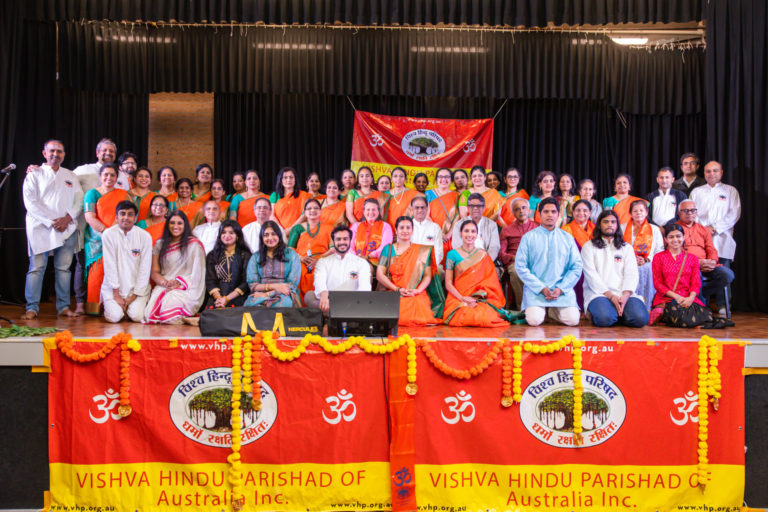
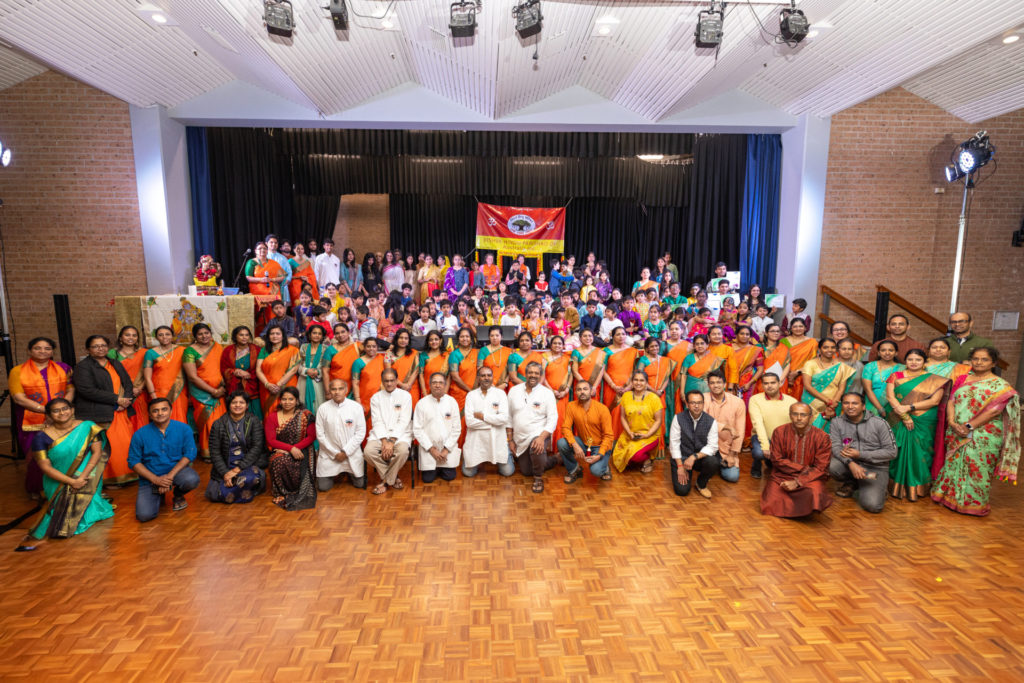
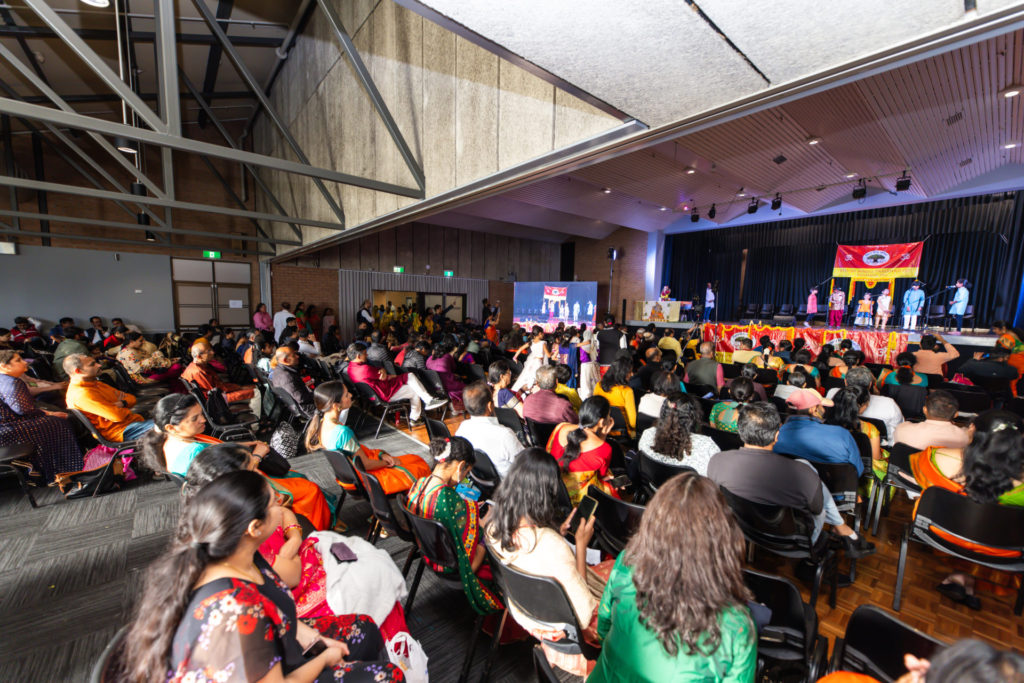
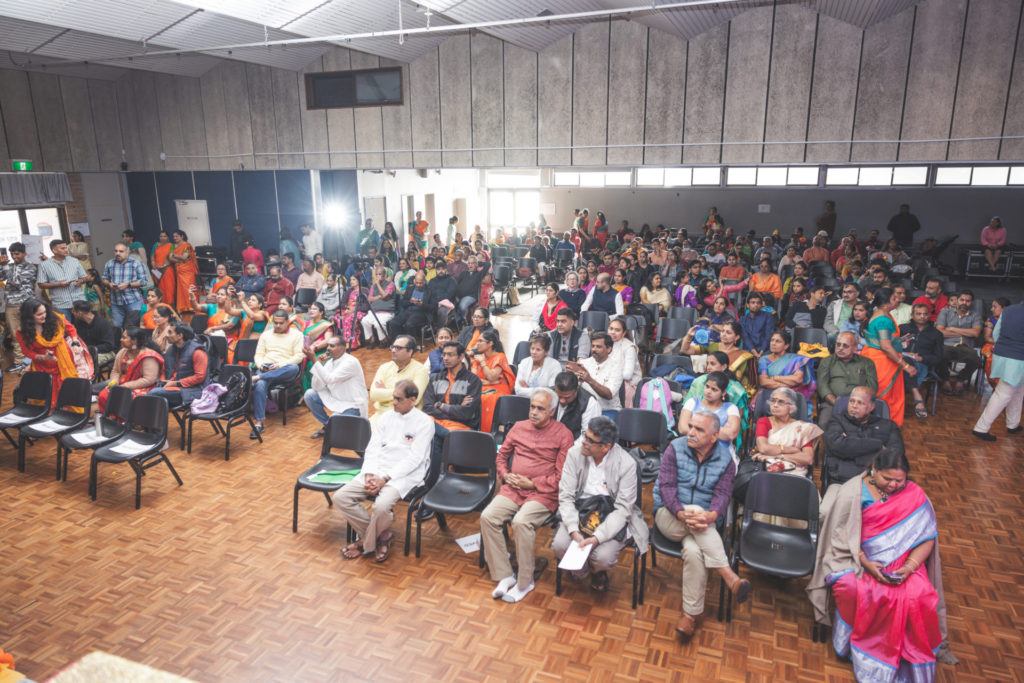
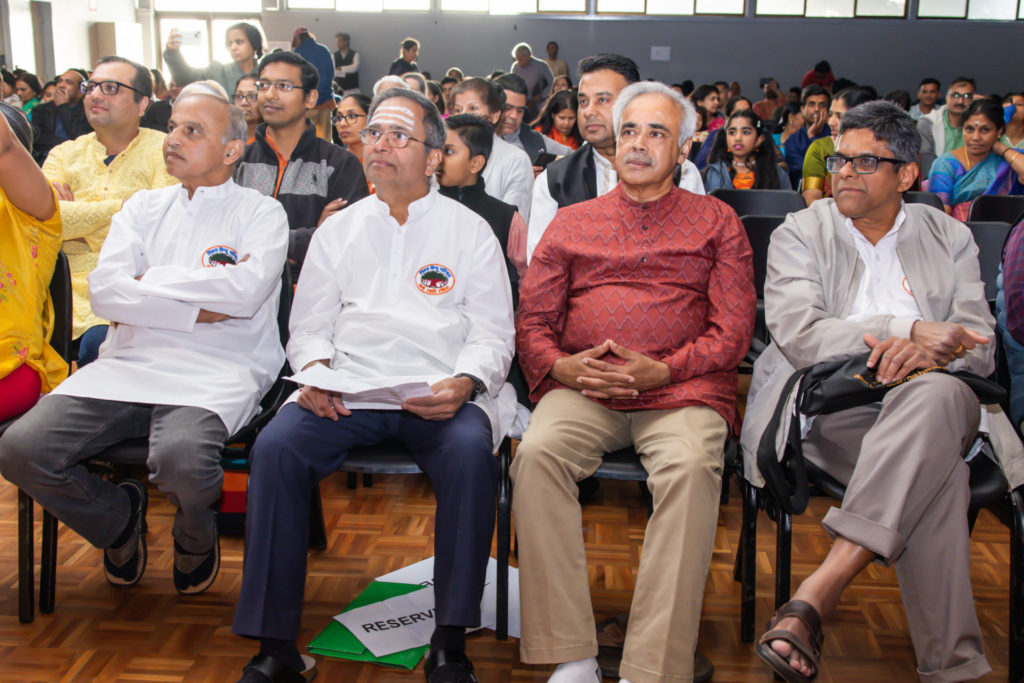
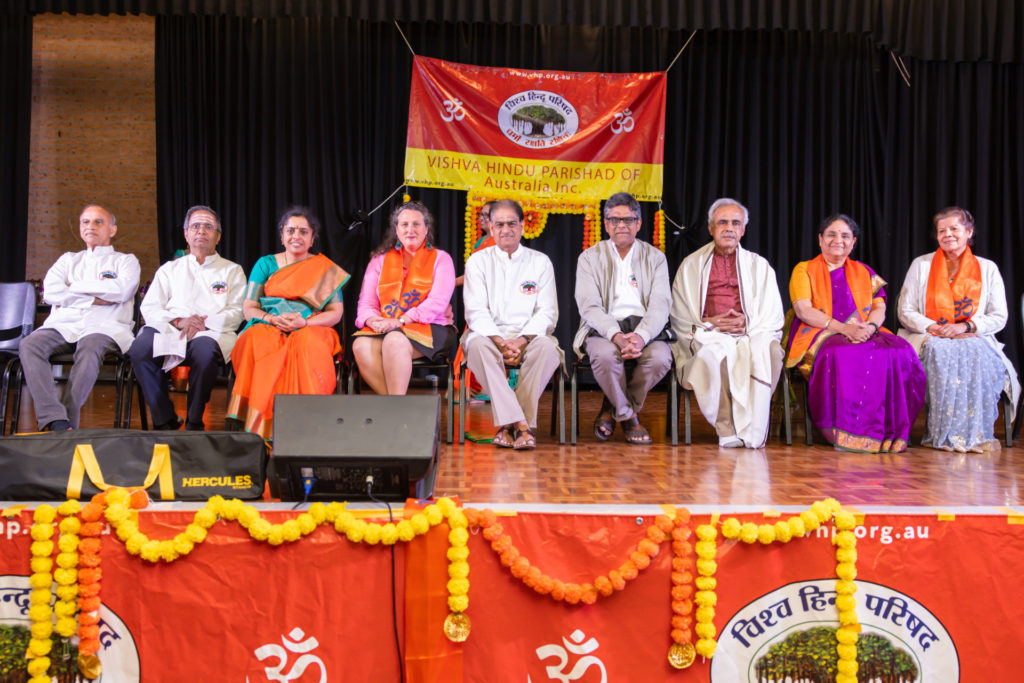
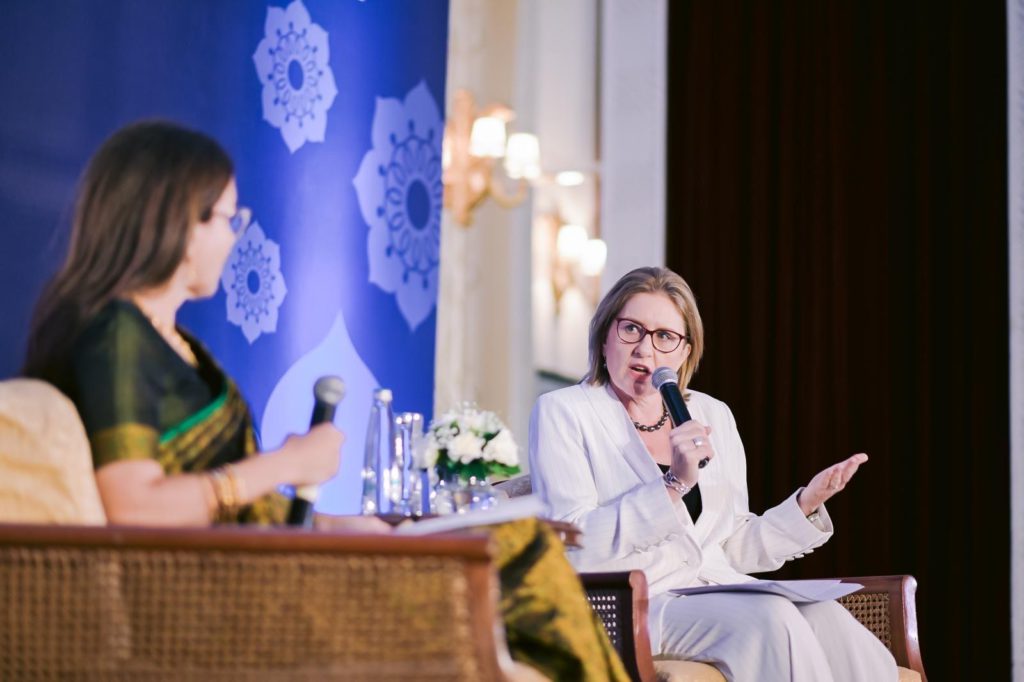
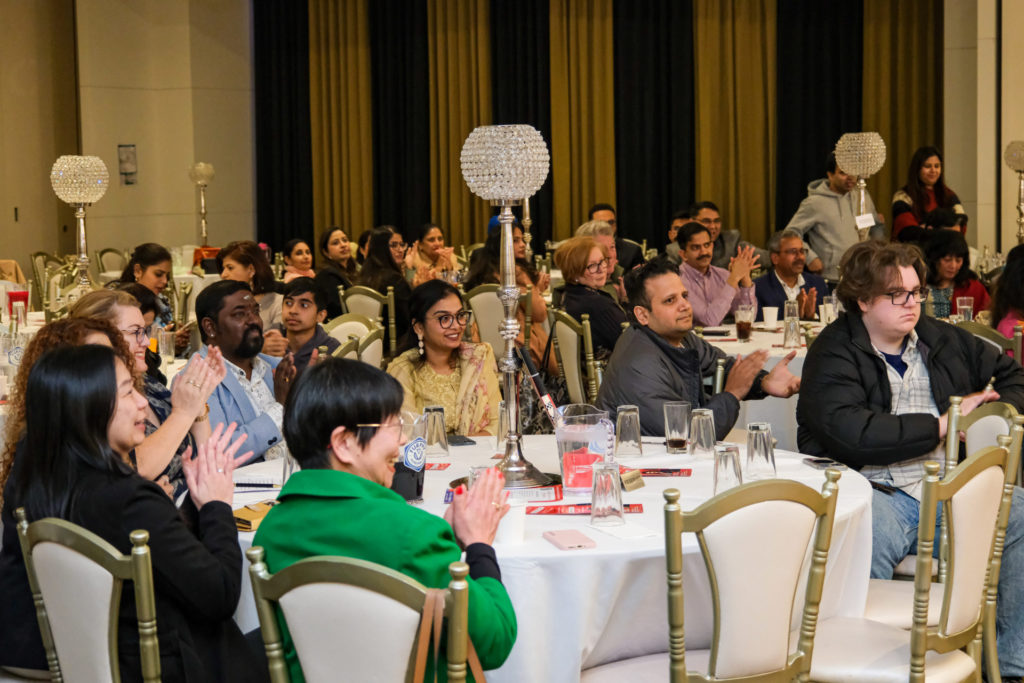
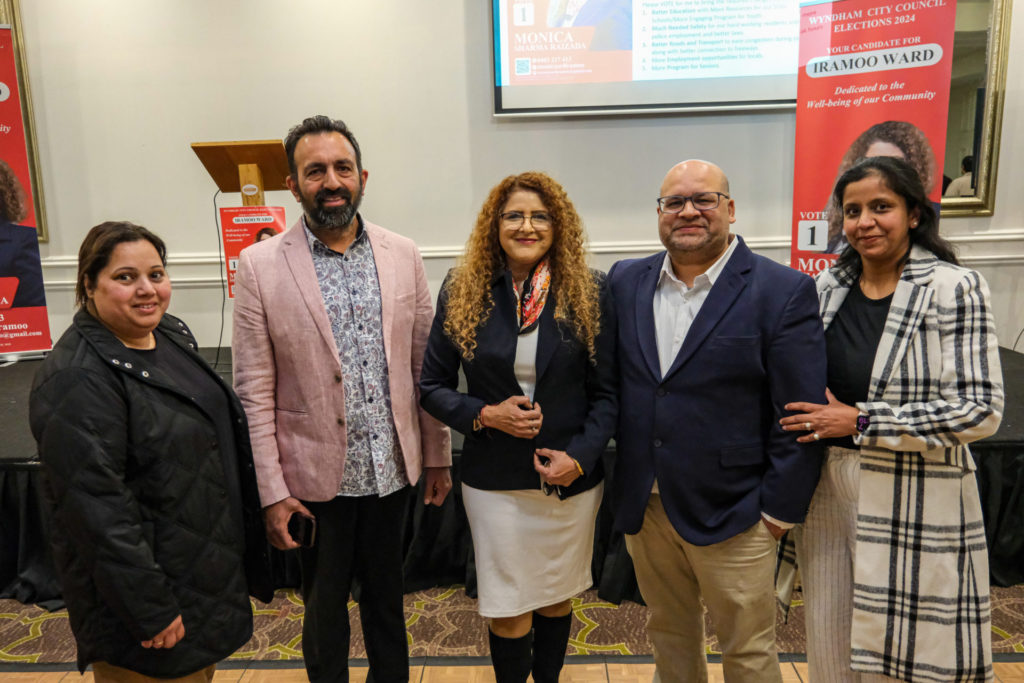
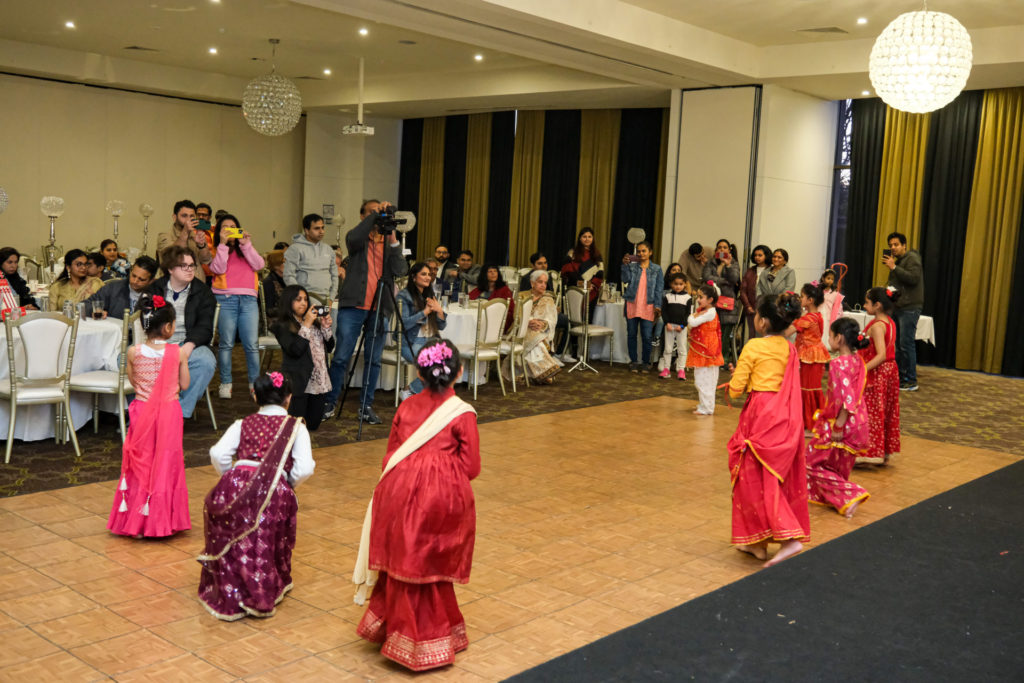
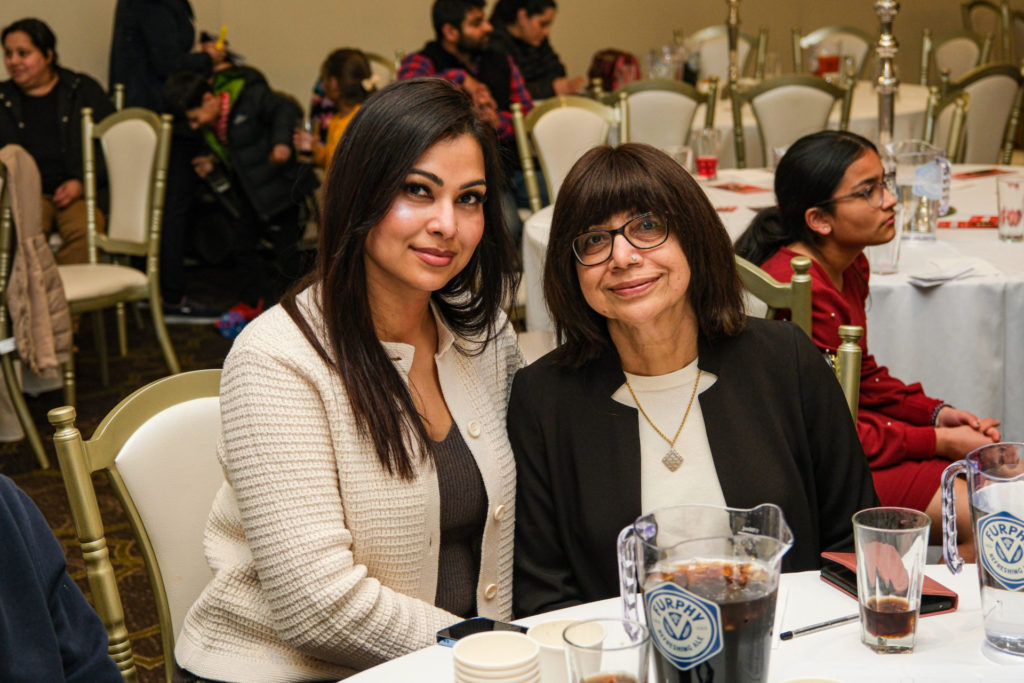
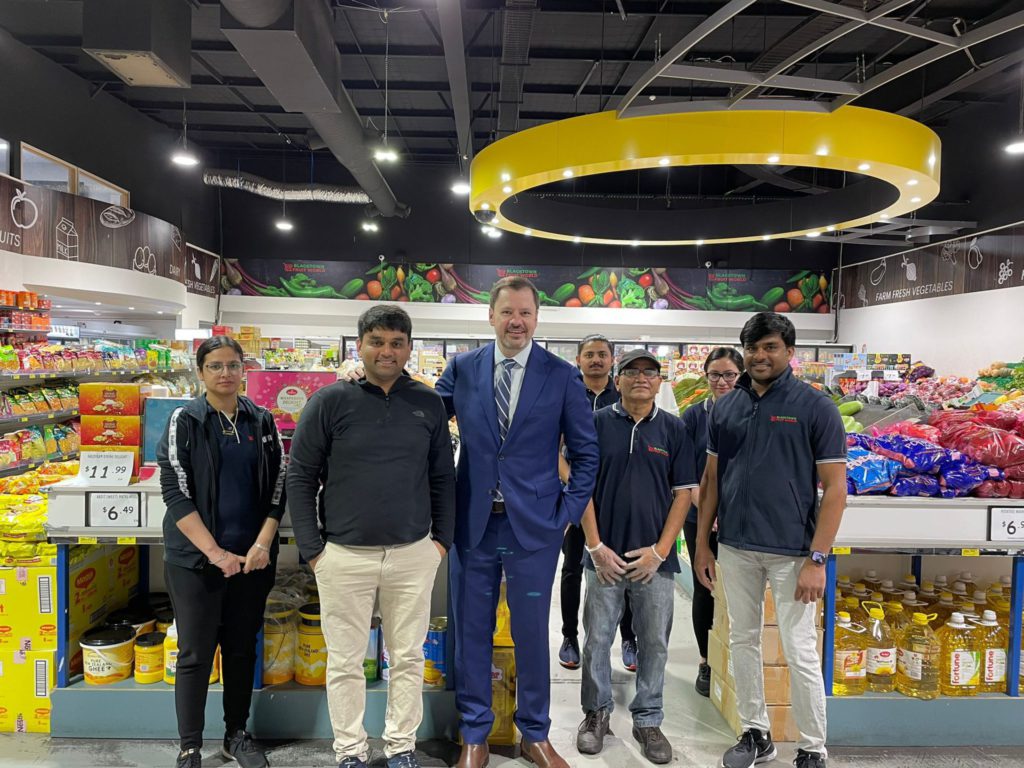
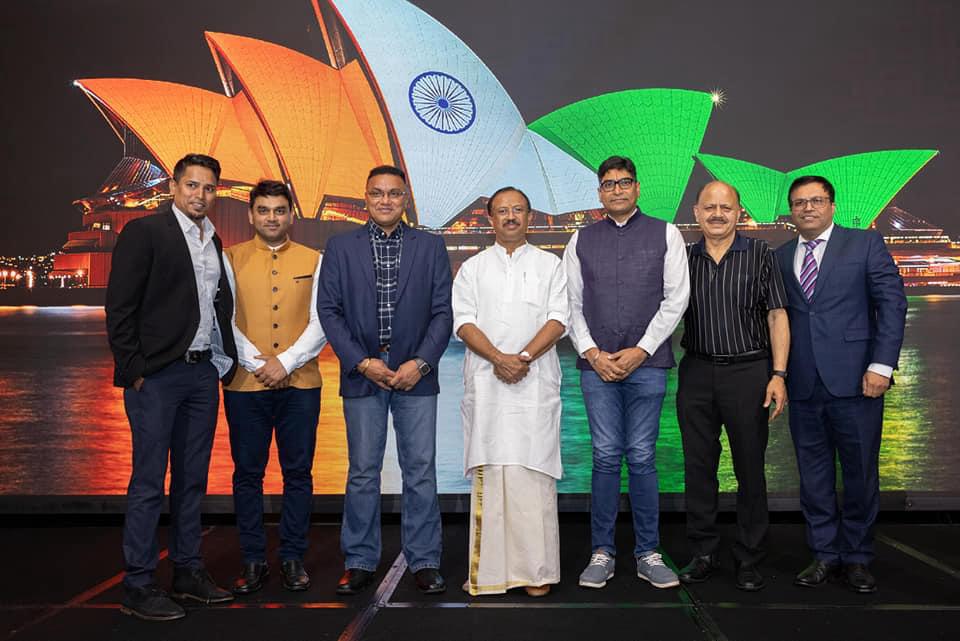
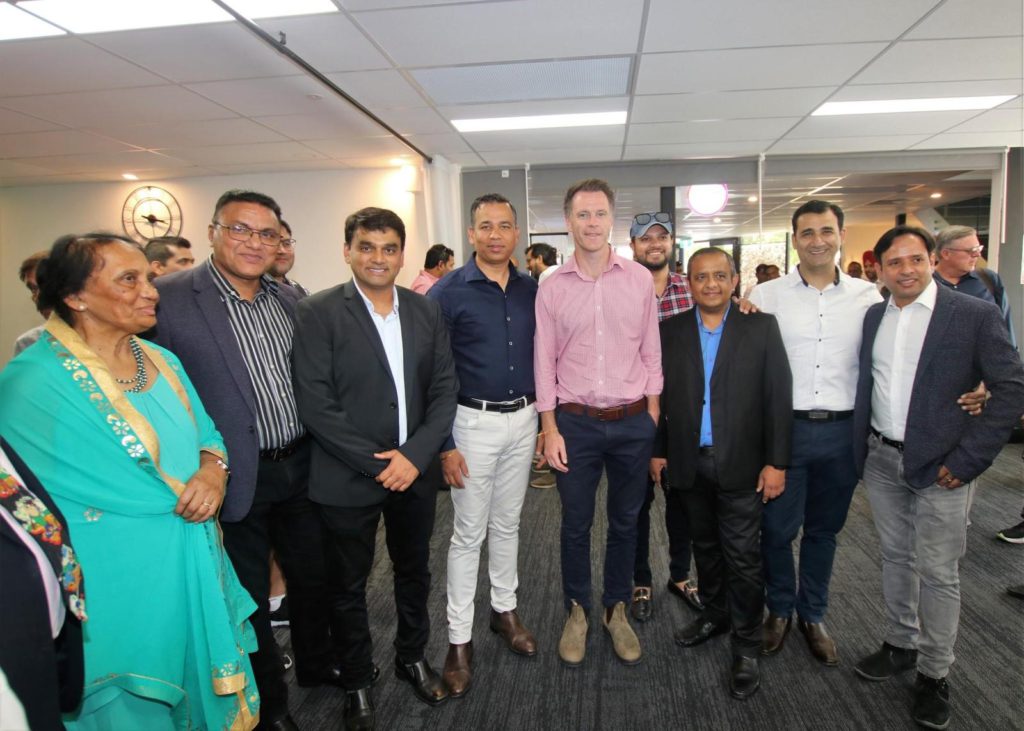
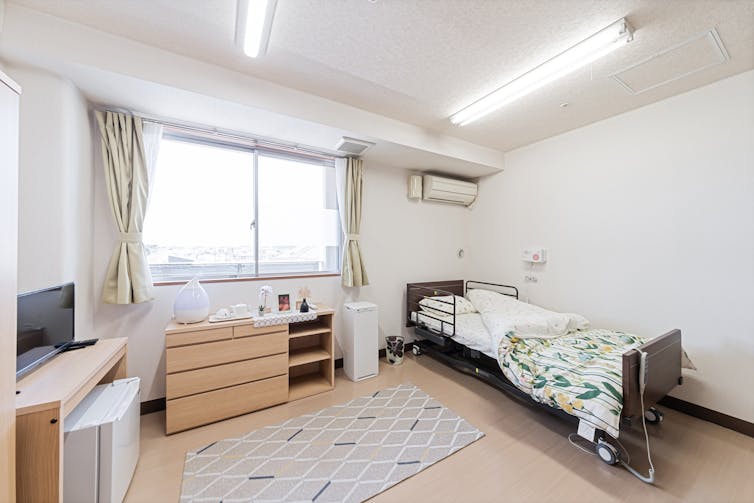
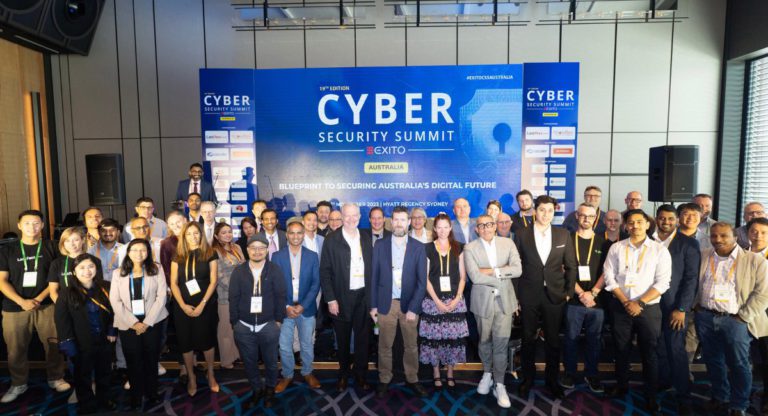
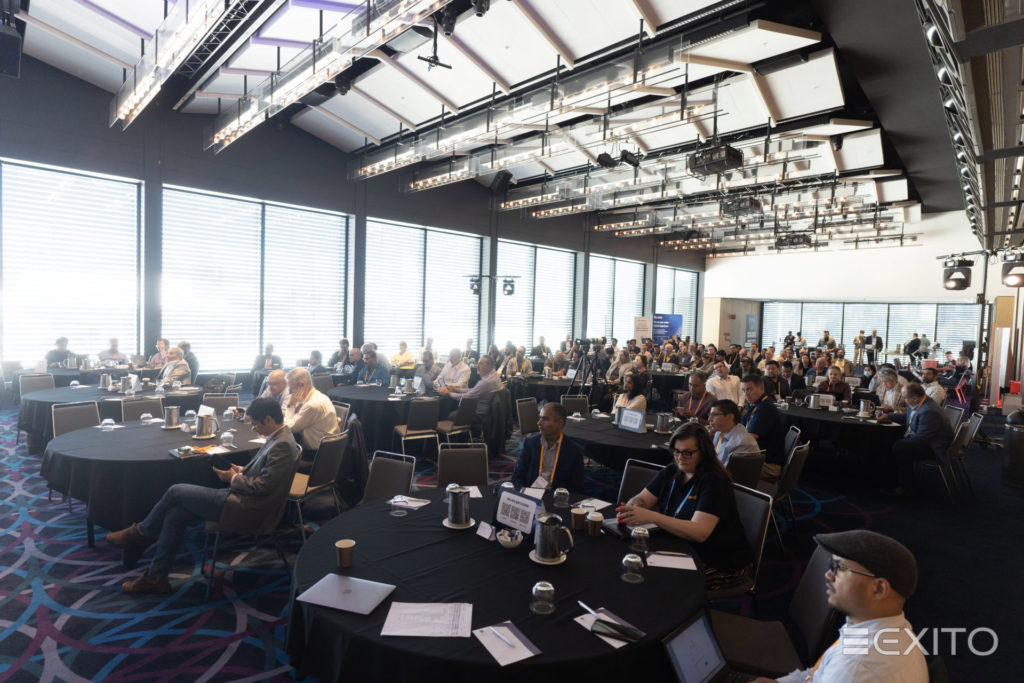
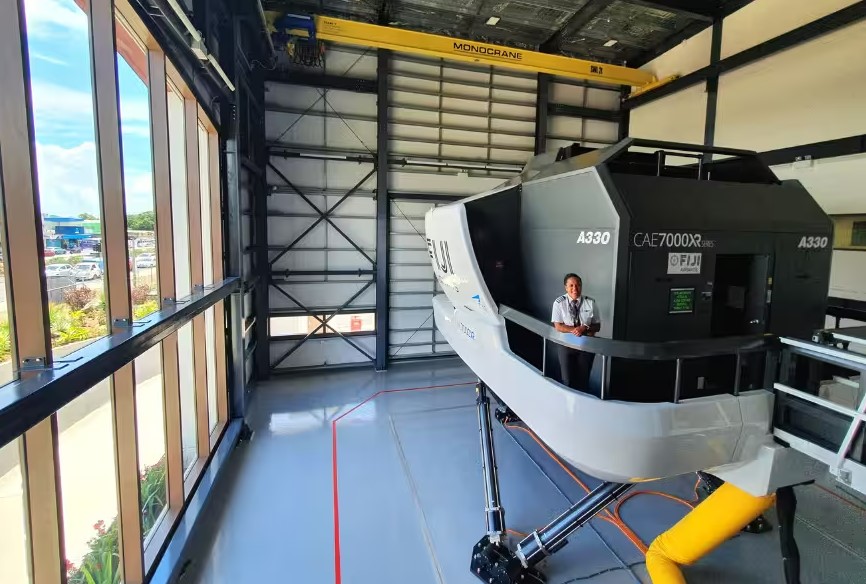
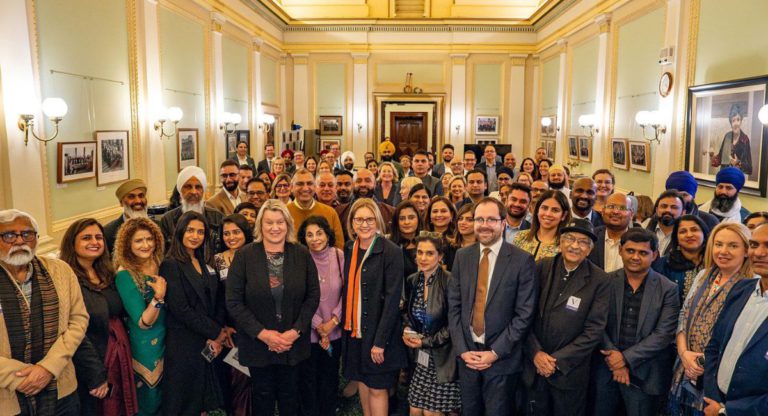
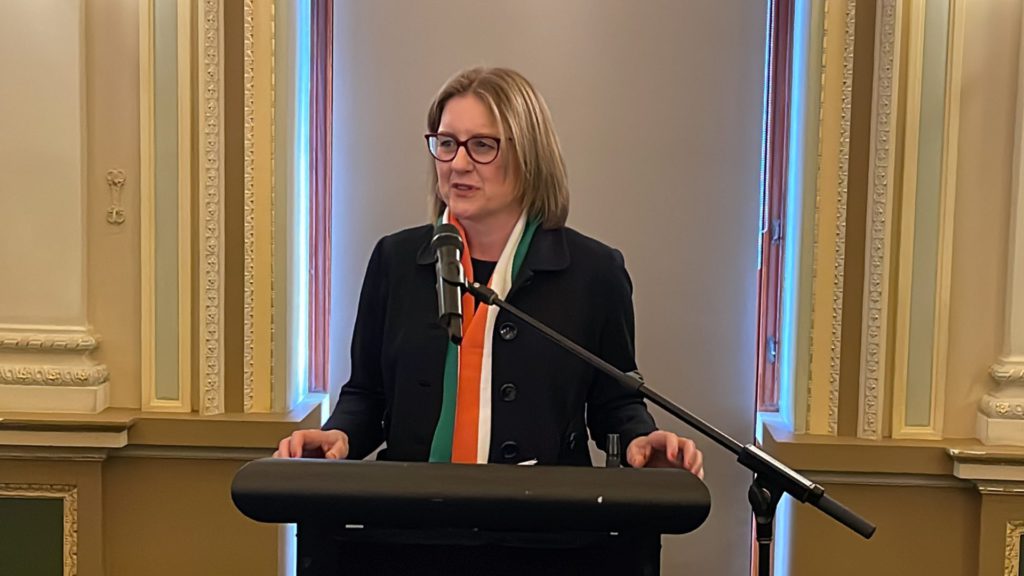
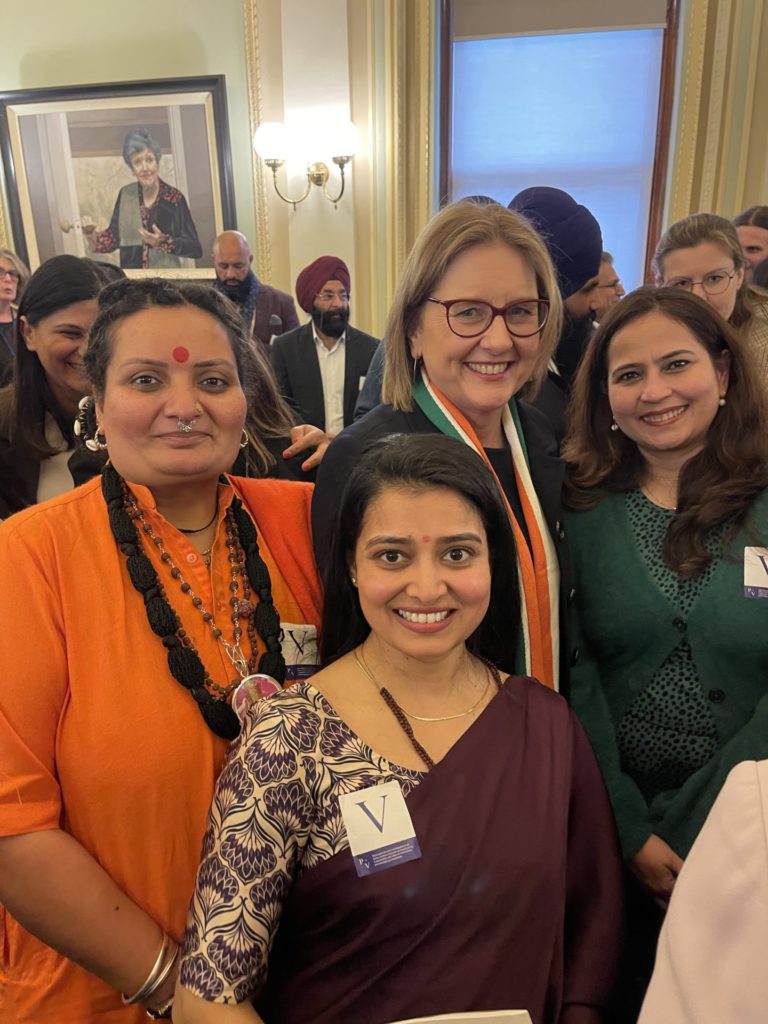
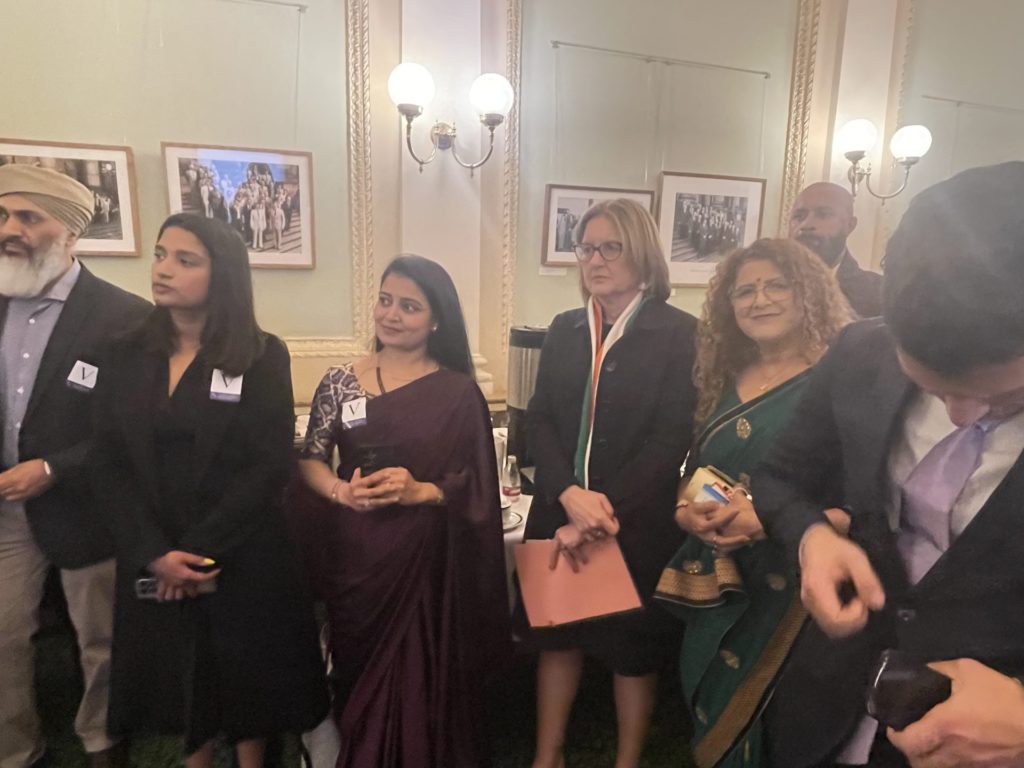
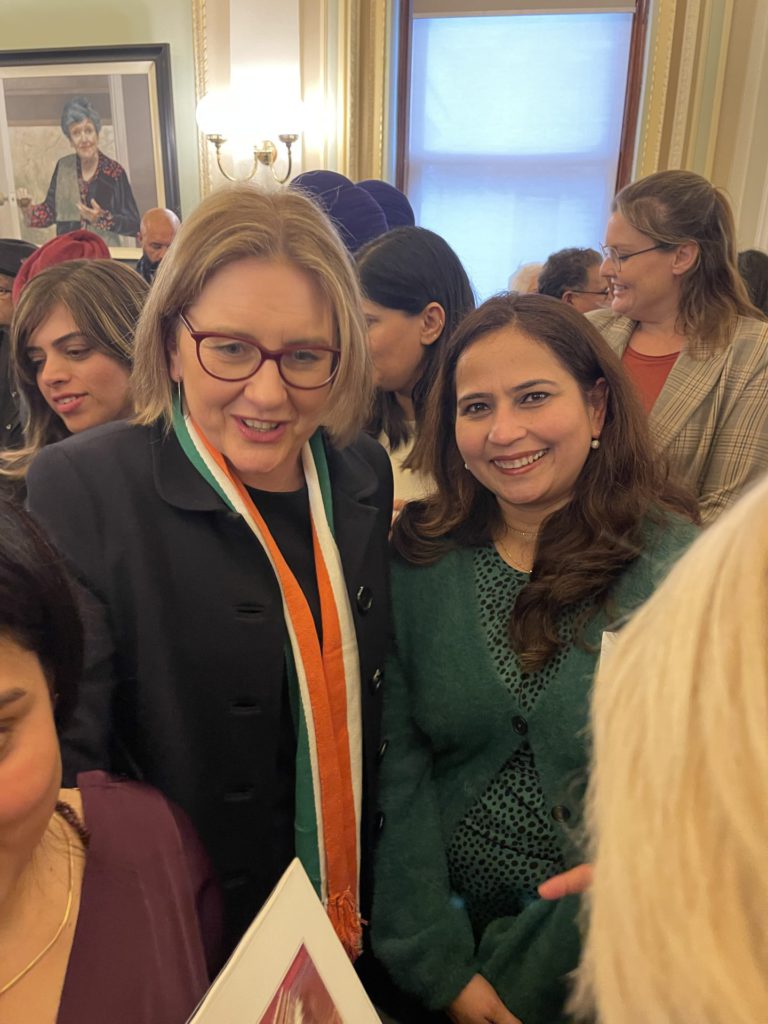
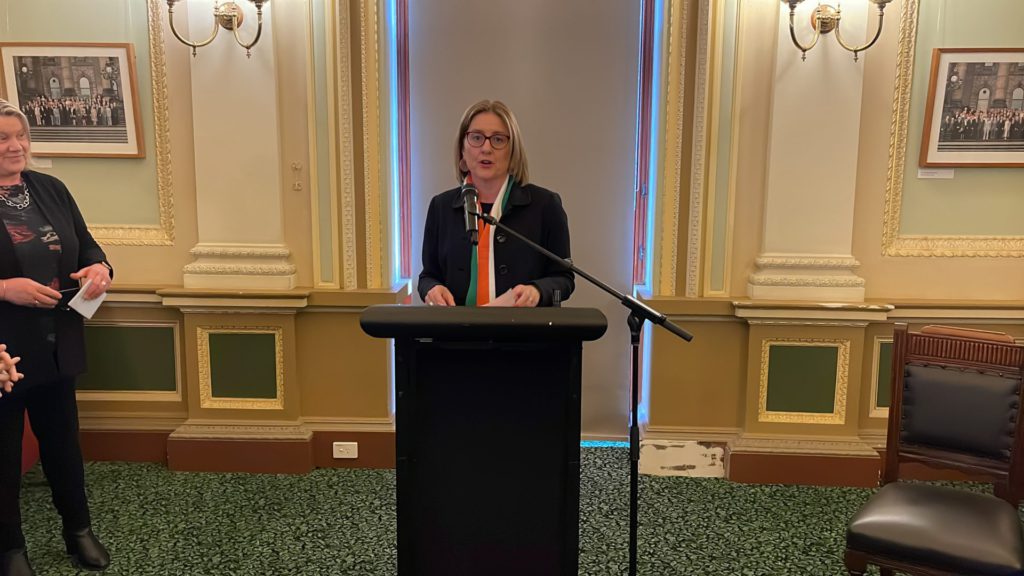
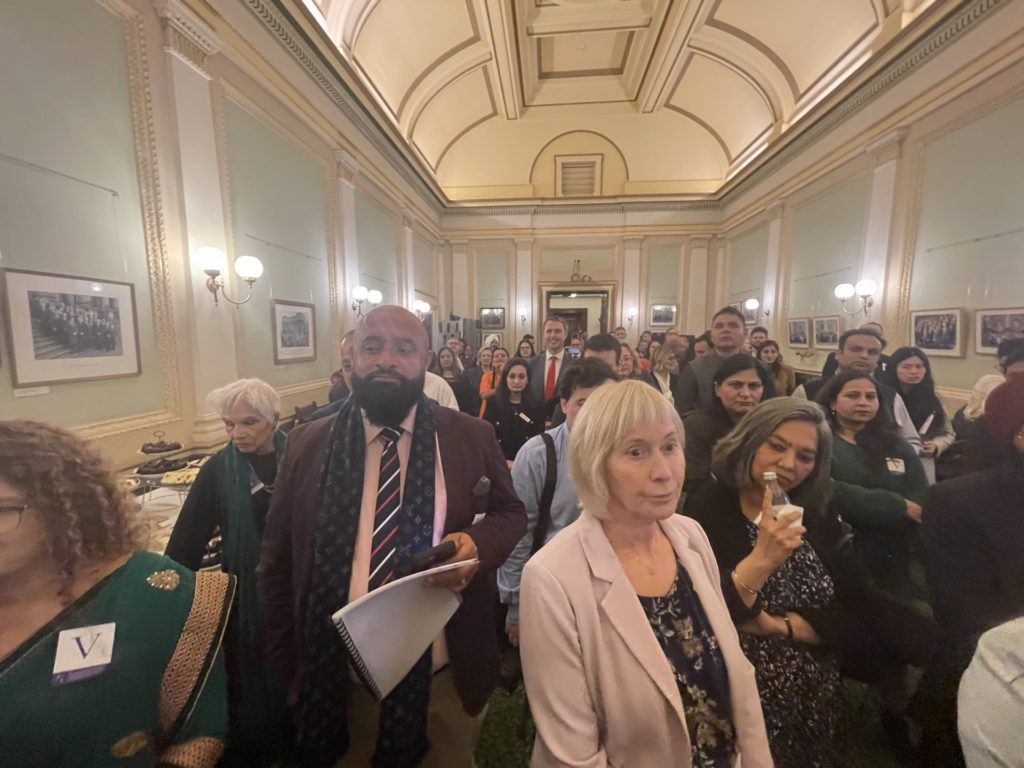
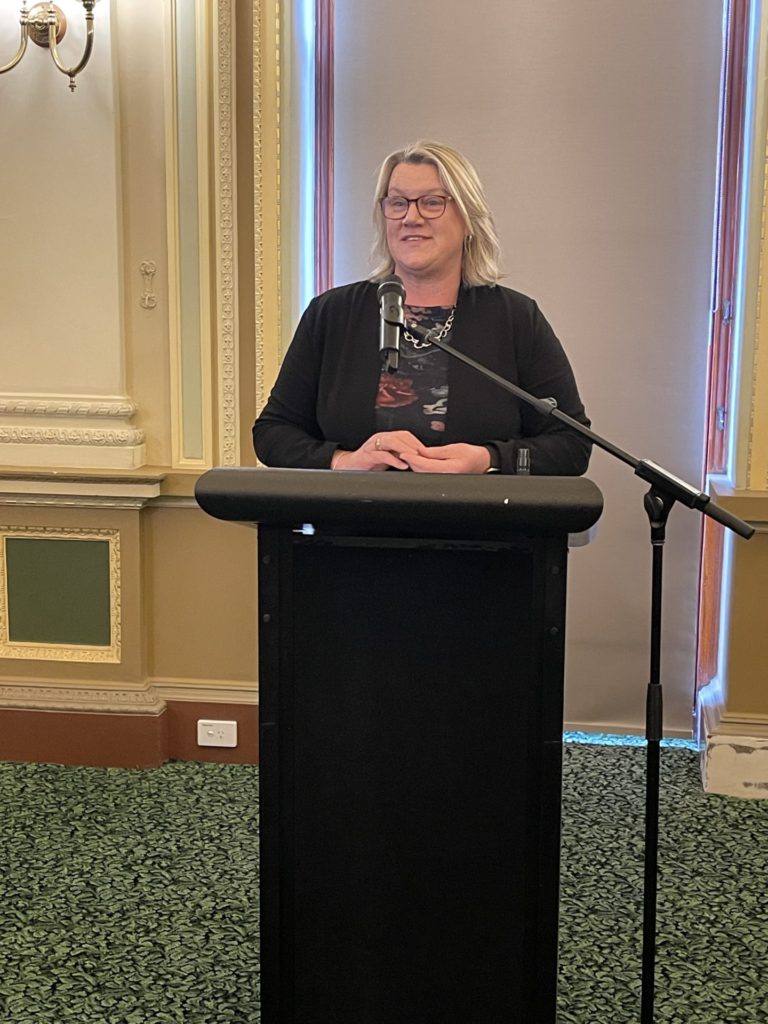
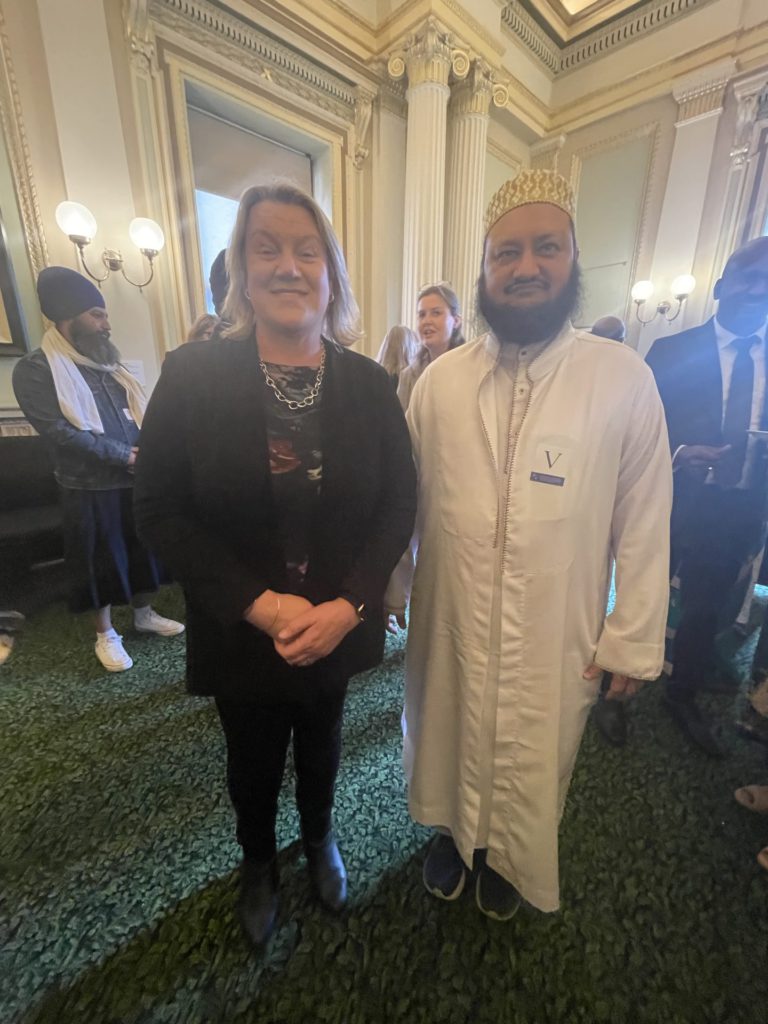
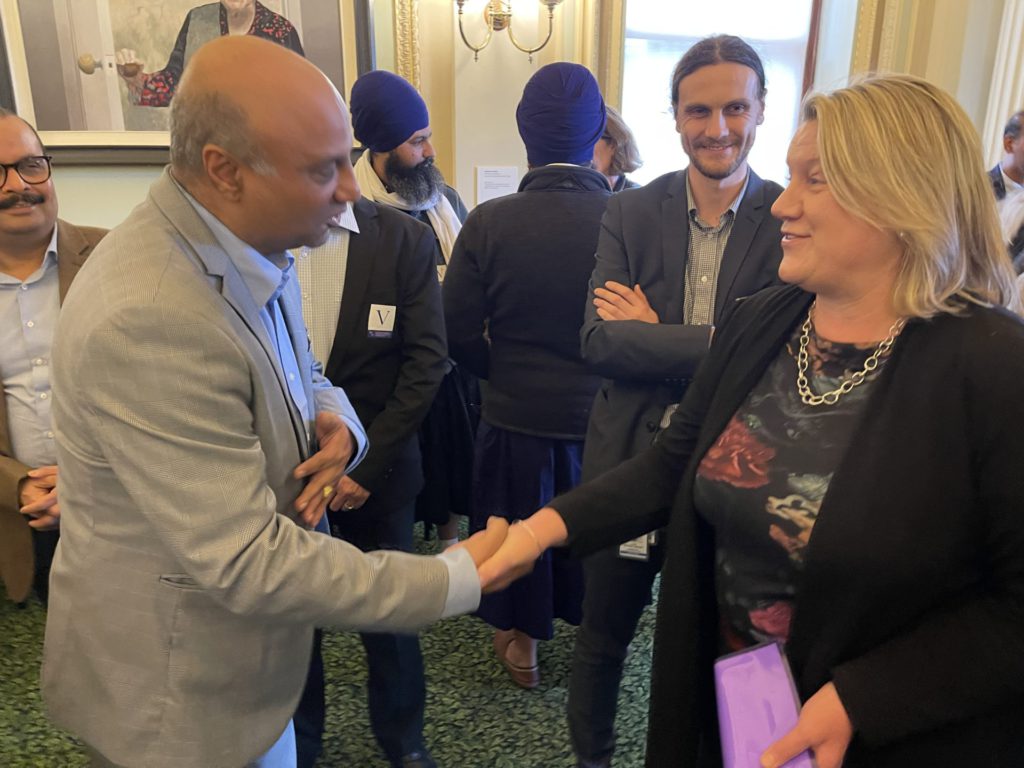
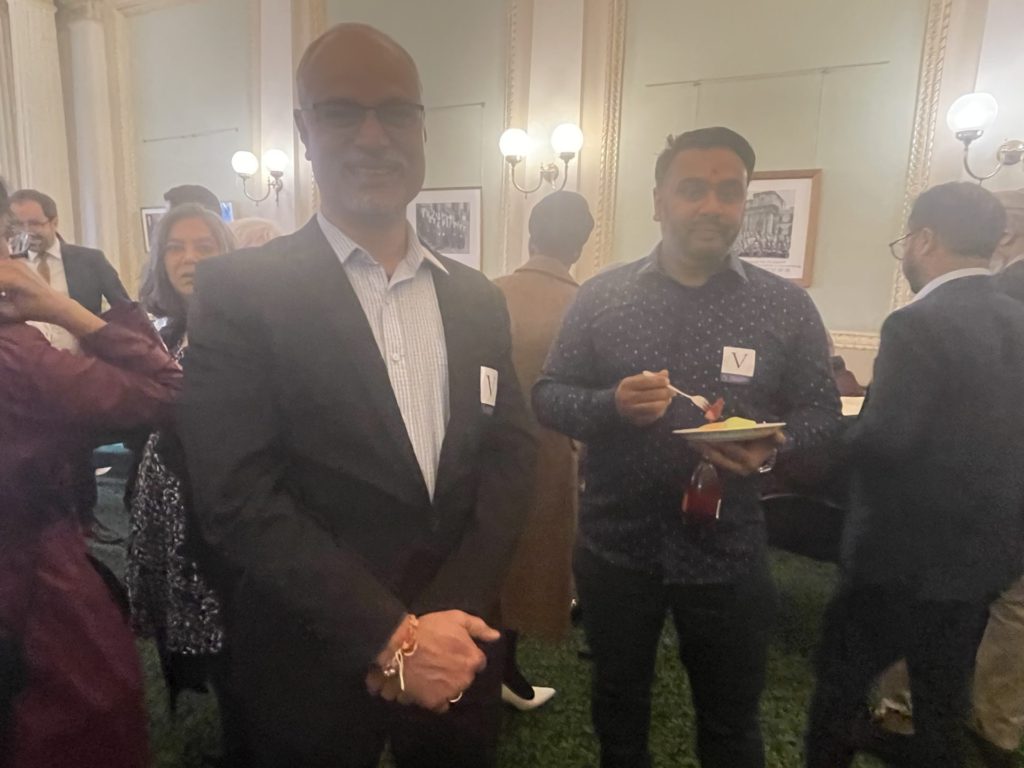
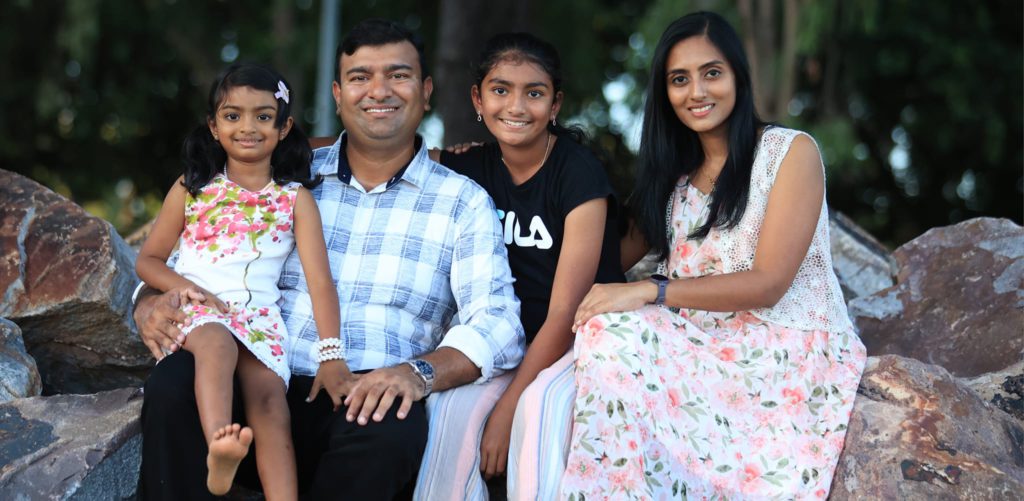
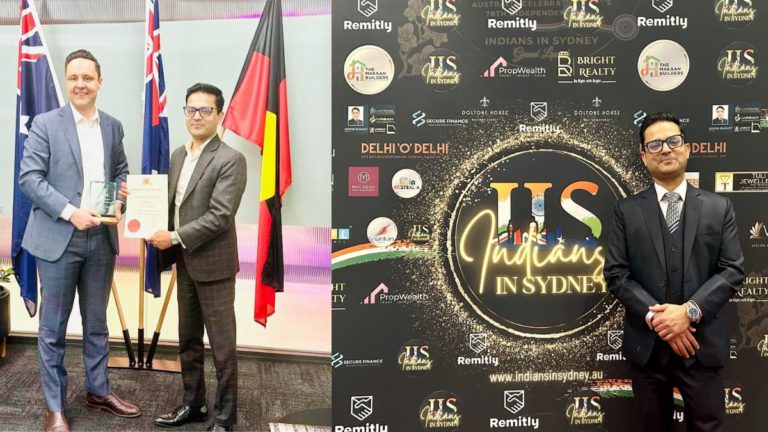
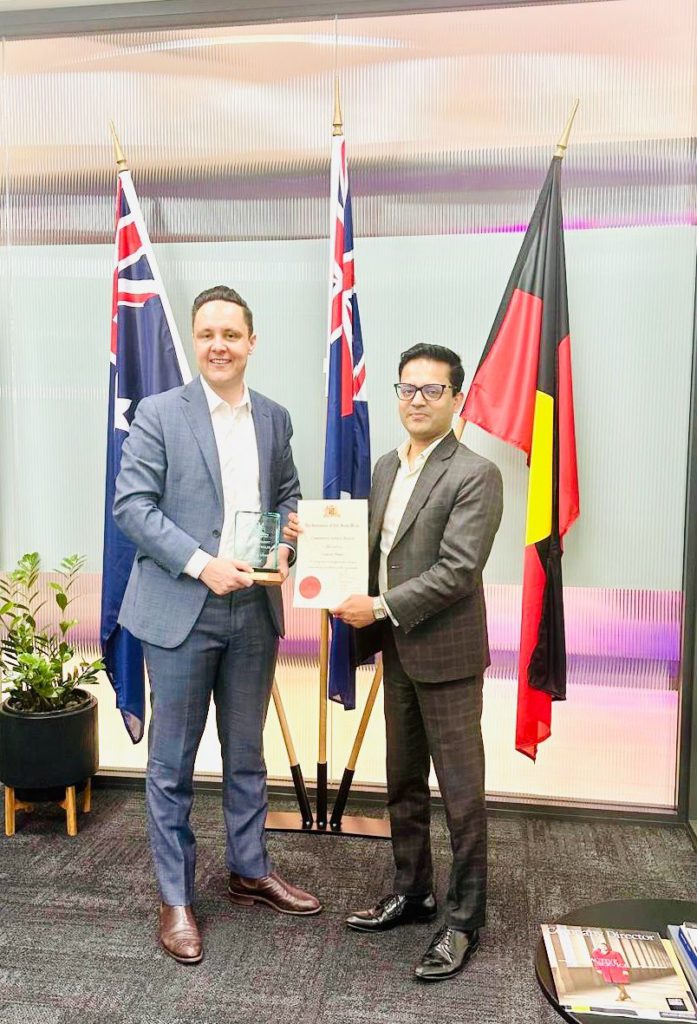
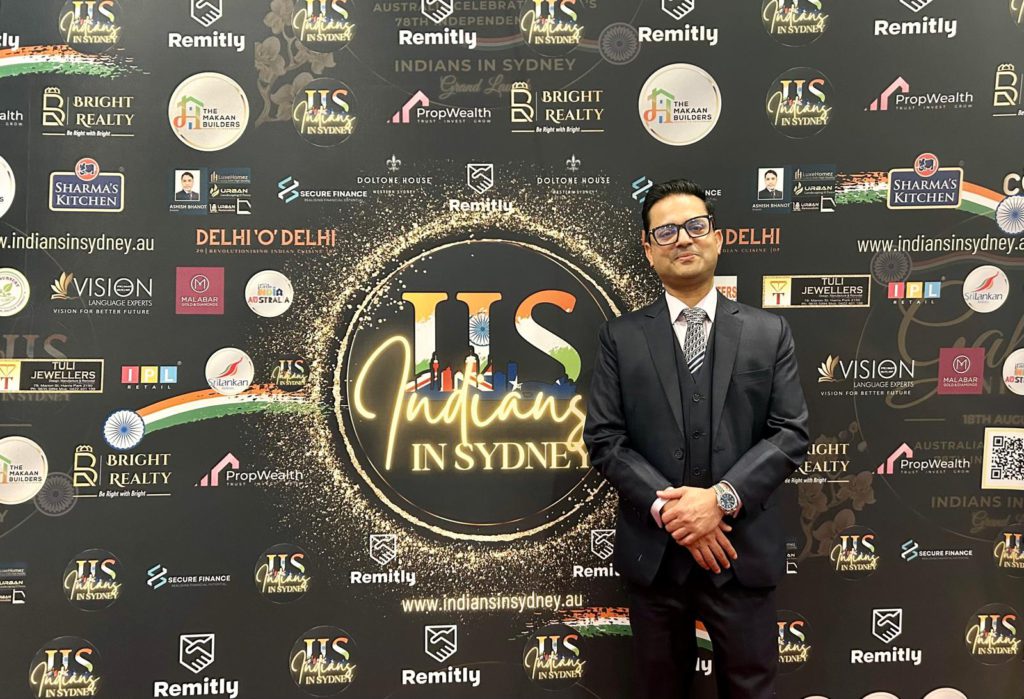
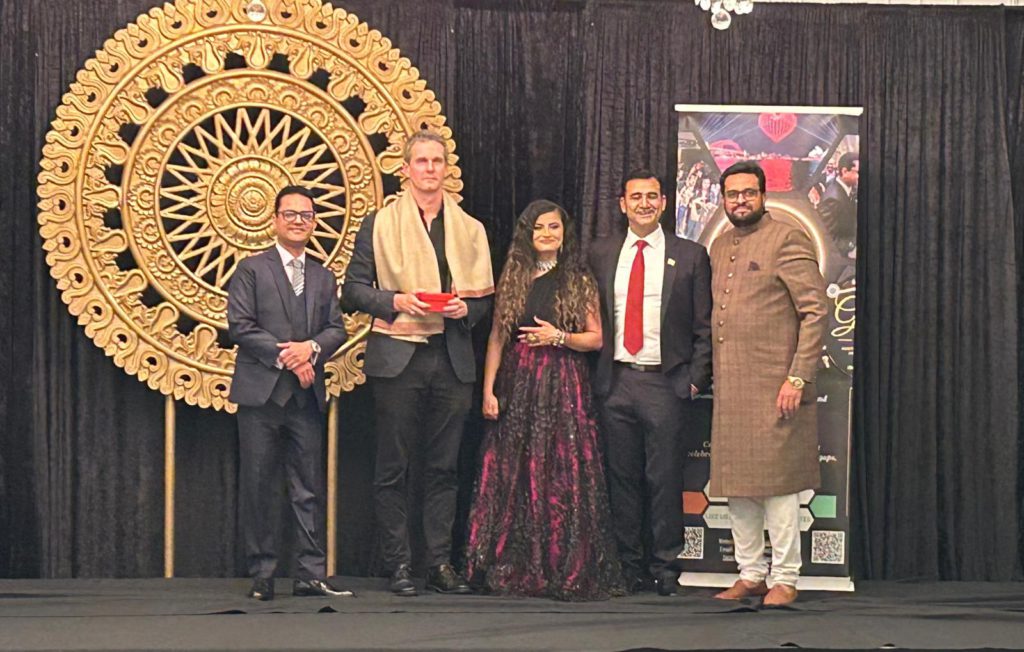
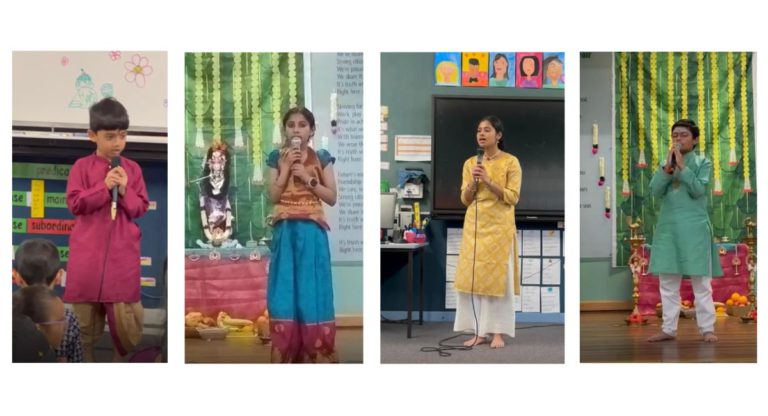
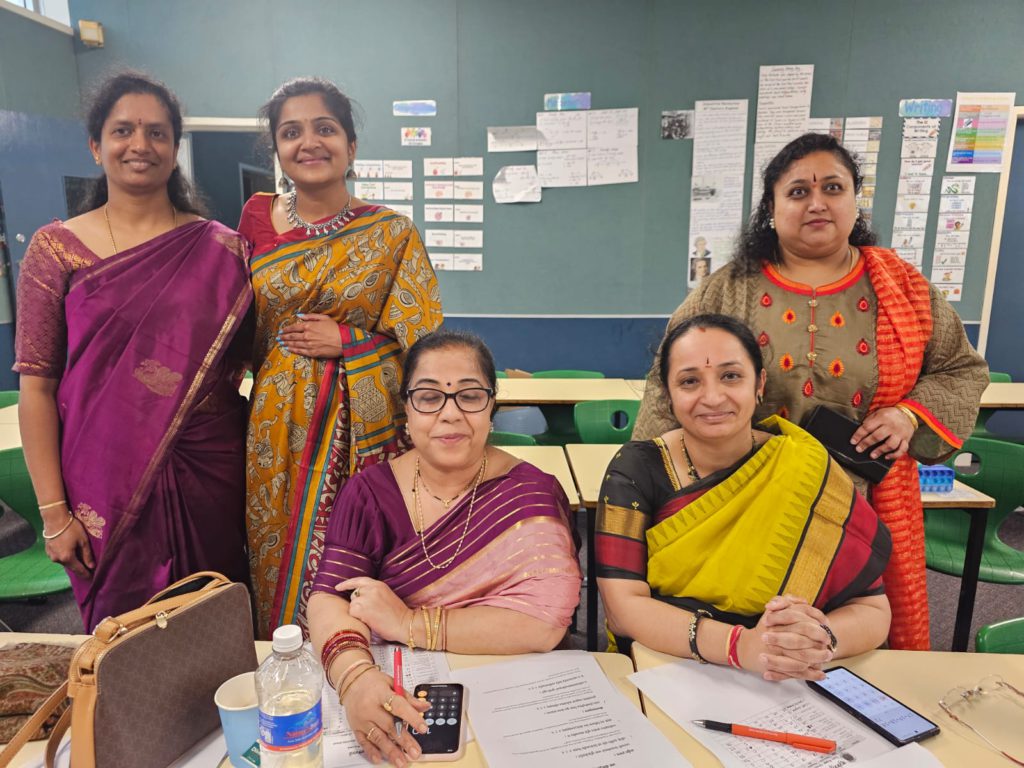
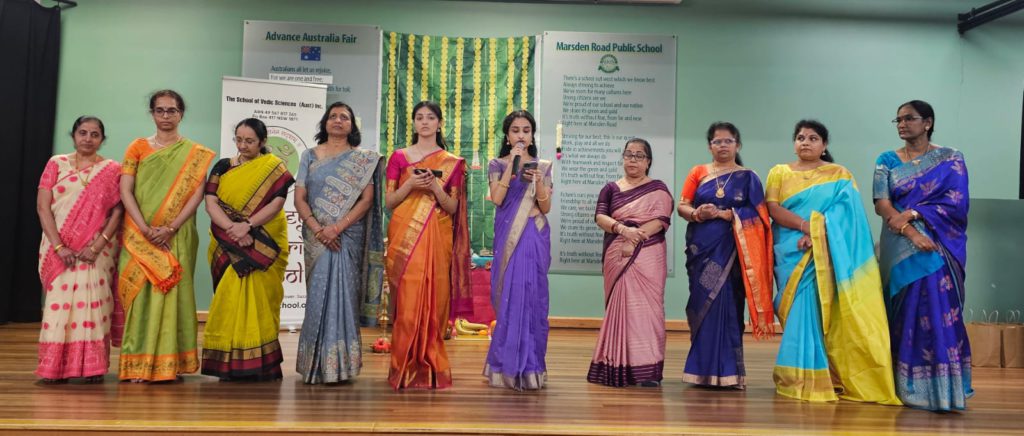
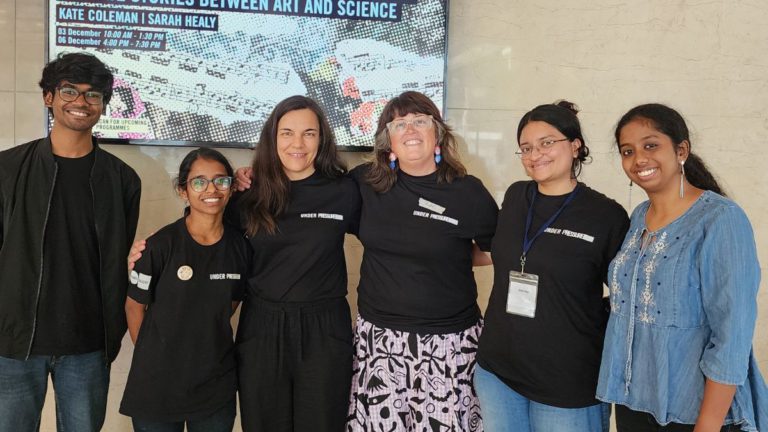
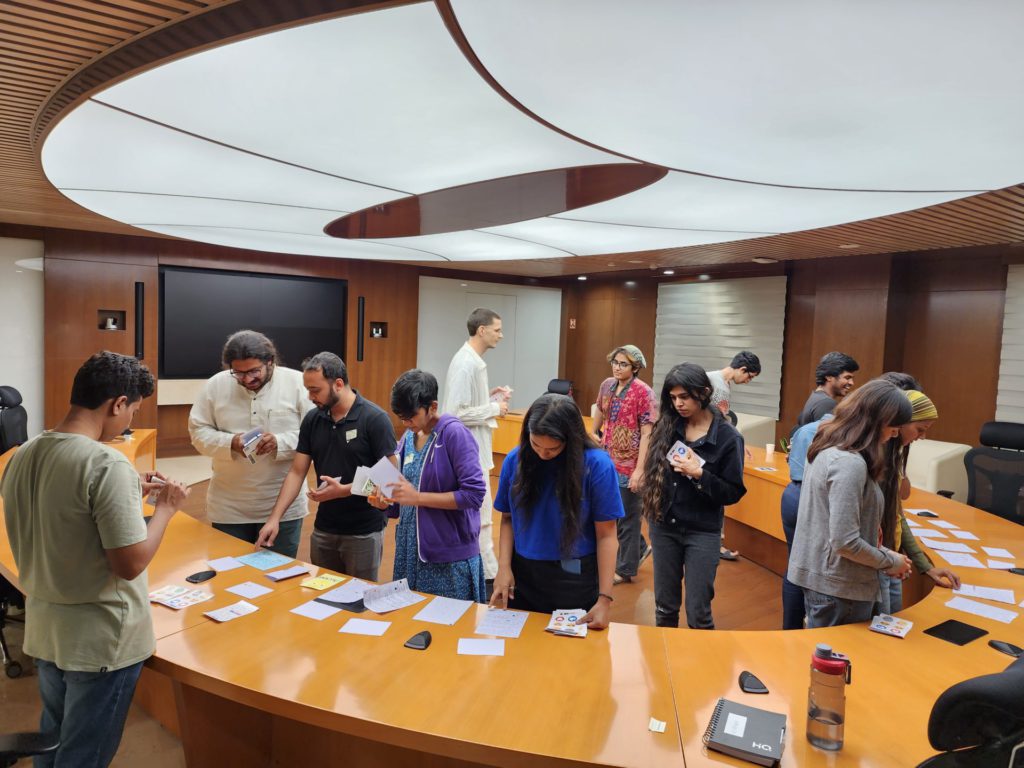
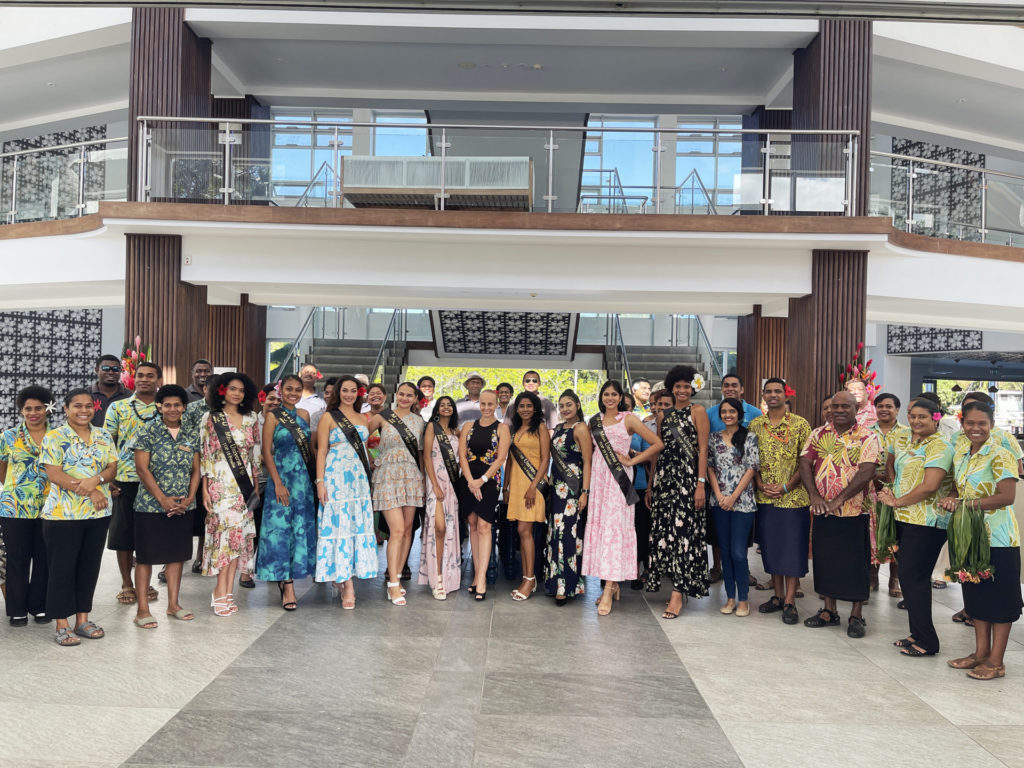
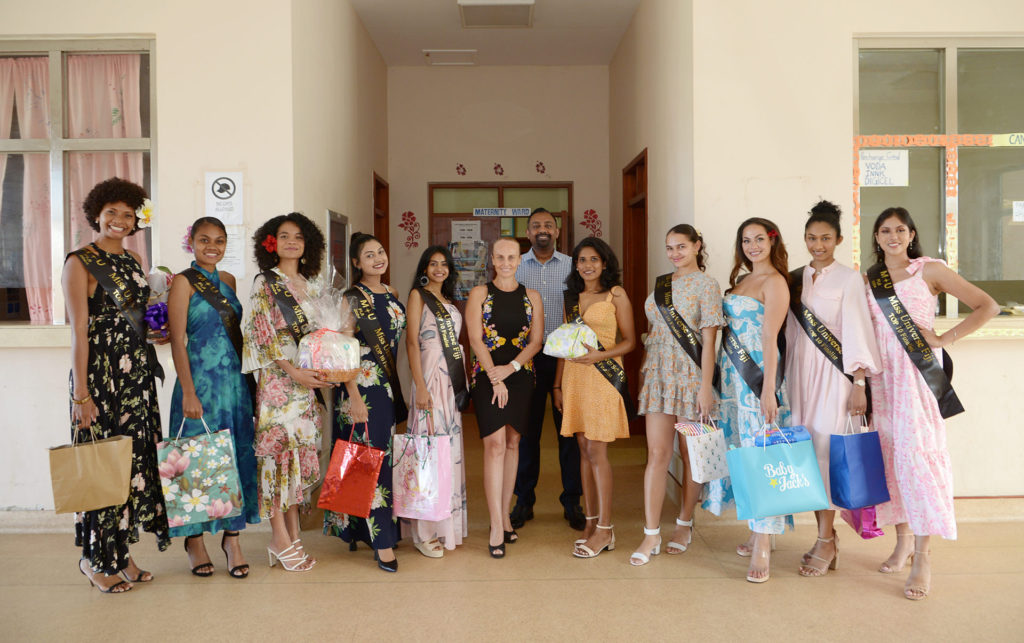
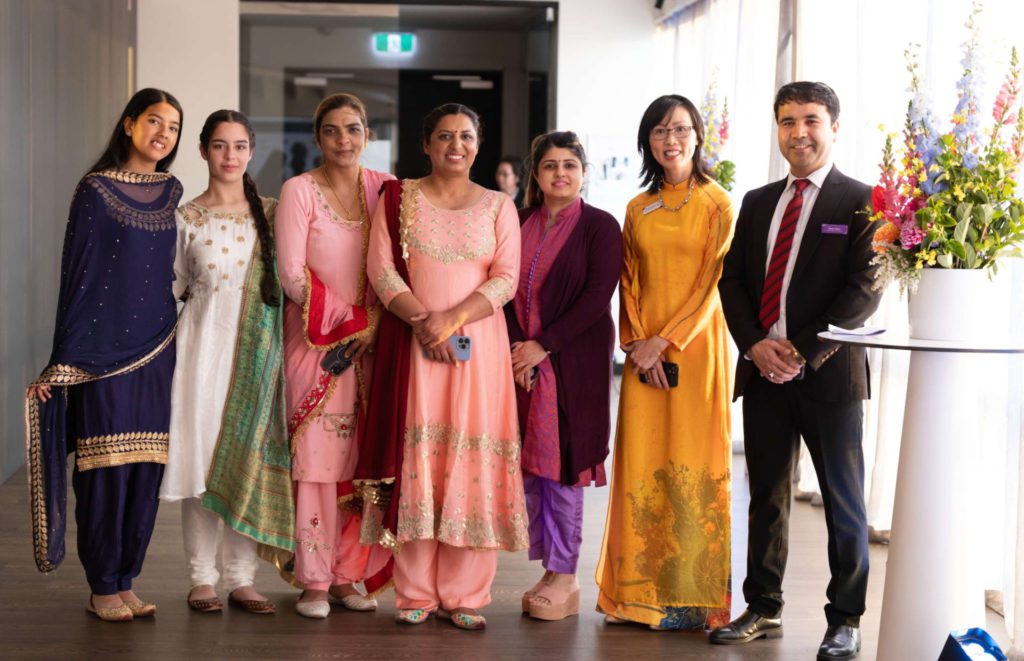
The Vishwa Hindu Parishad (VHP) Sanskrit School, a registered NSW Community Language School, celebrated its 16th Annual Day on September 15, 2024, with great enthusiasm and participation from children, teachers, and community members.
The highlight of the event was the recognition of students’ achievements in both academic and cultural spheres. A total of 40 students were awarded prizes for their performance in the school’s annual Shloka and Bhagavad Gita competitions, categorised by age groups.
The Vishwa Hindu Parishad (VHP) Sanskrit School, a registered NSW Community Language School, celebrated its 16th Annual Day: Image Source: Supplied
Additionally, 20 students received certificates from Samskrita Bharati, Bengaluru, in recognition of their successful completion of Sanskrit language examinations, a milestone in their language-learning journey.
Outstanding Achievements in Sanskrit Education
Adding to the pride of the school and the community, four students were honoured by the NSW Department of Education’s Community Languages Division for their outstanding performance in Sanskrit learning. The prestigious awards highlighted the students’ academic excellence and dedication to mastering the language.
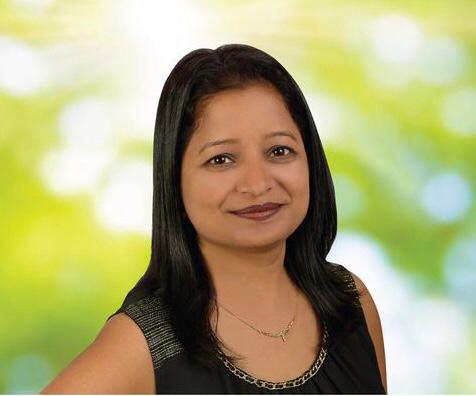
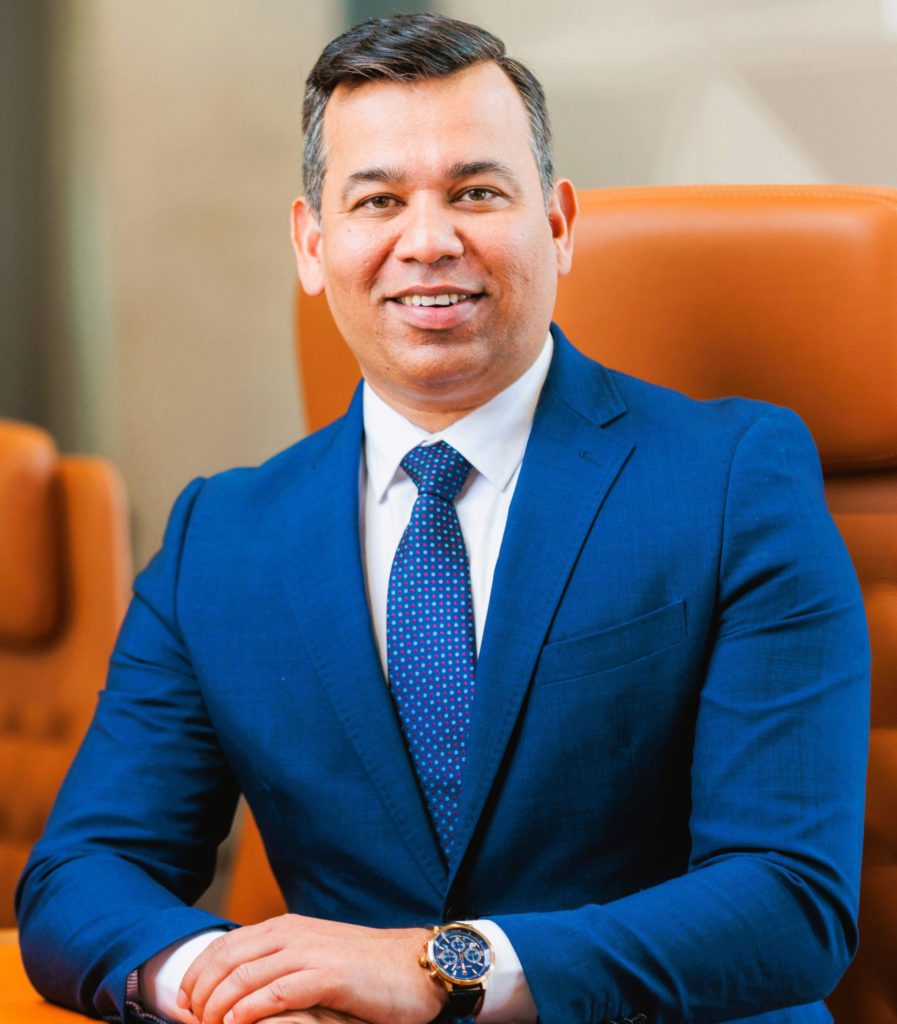
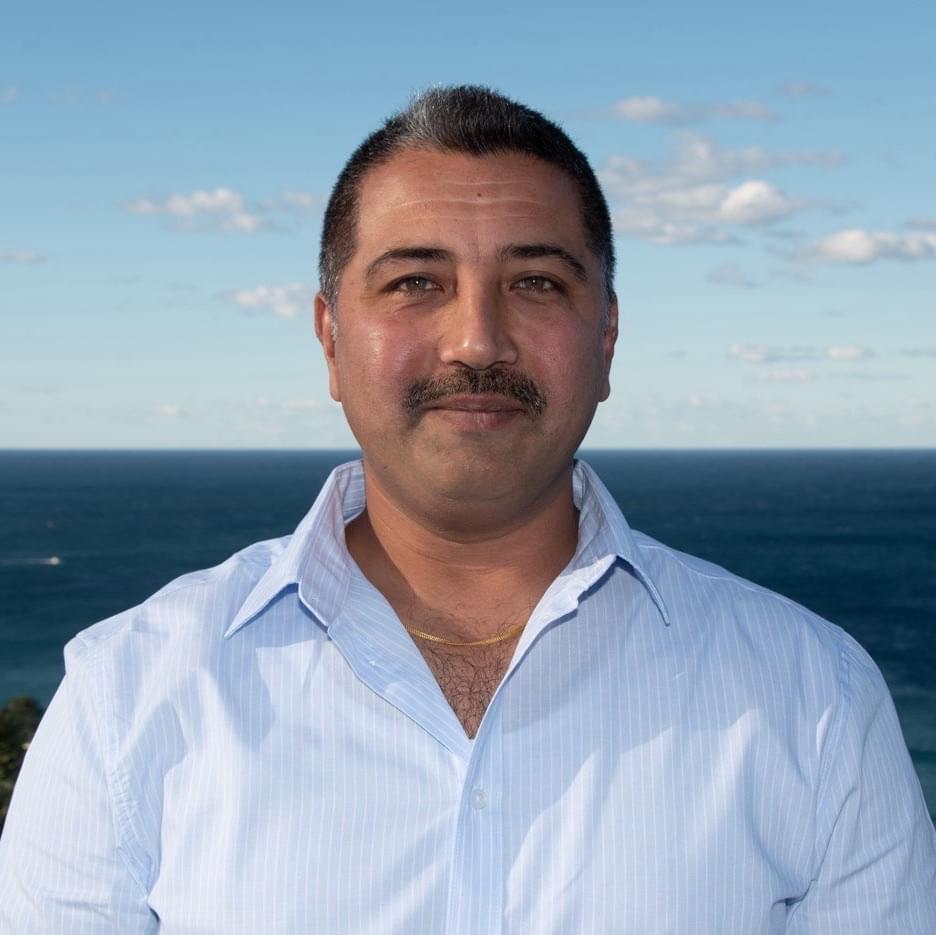
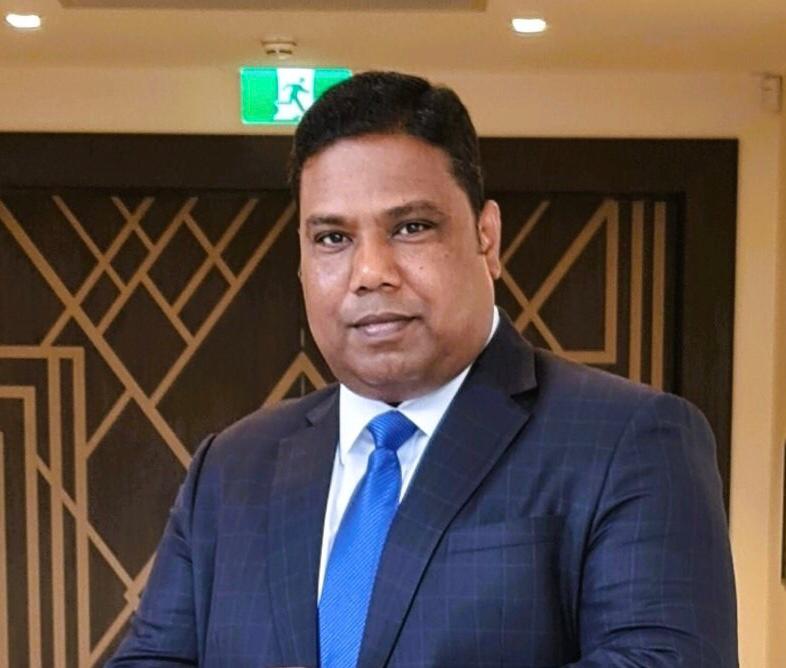
Samanvita Ramanathan (Grade Yr 5) – Merit Award
Vishnu Swaroop Venkatesh (Grade Yr 9) – Merit Award
Avni Padki (Grade Yr 4) – Merit Award
Yatin Angadi Kiran (Grade Yr 10) – Commendation Award
These awards not only reflect the personal dedication of the students but also the commitment of the VHP Sanskrit School to nurturing linguistic and cultural excellence.
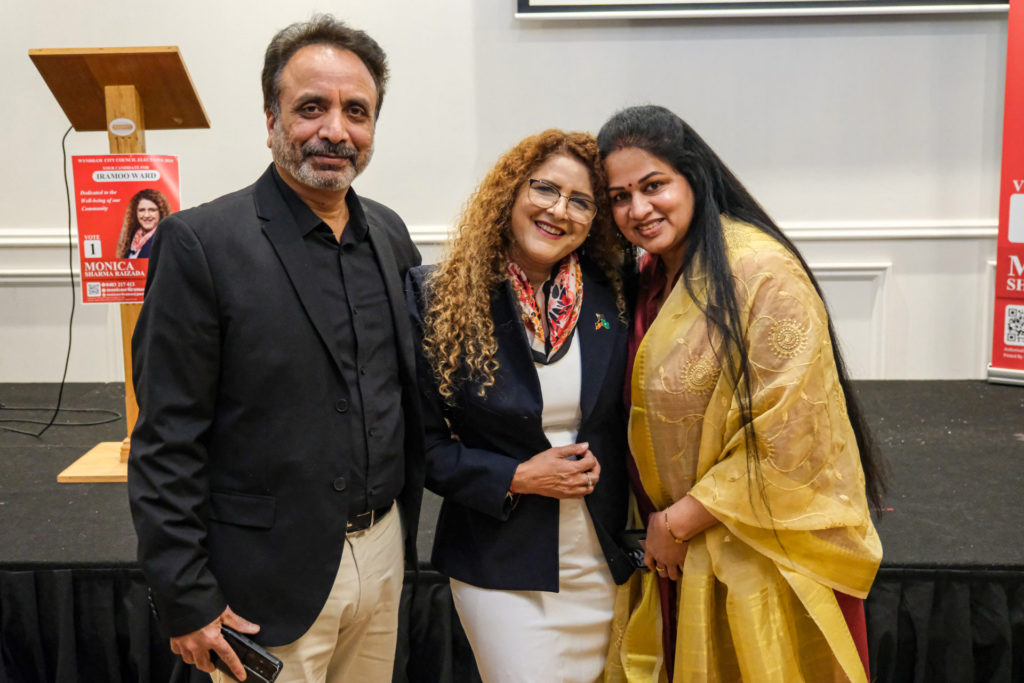
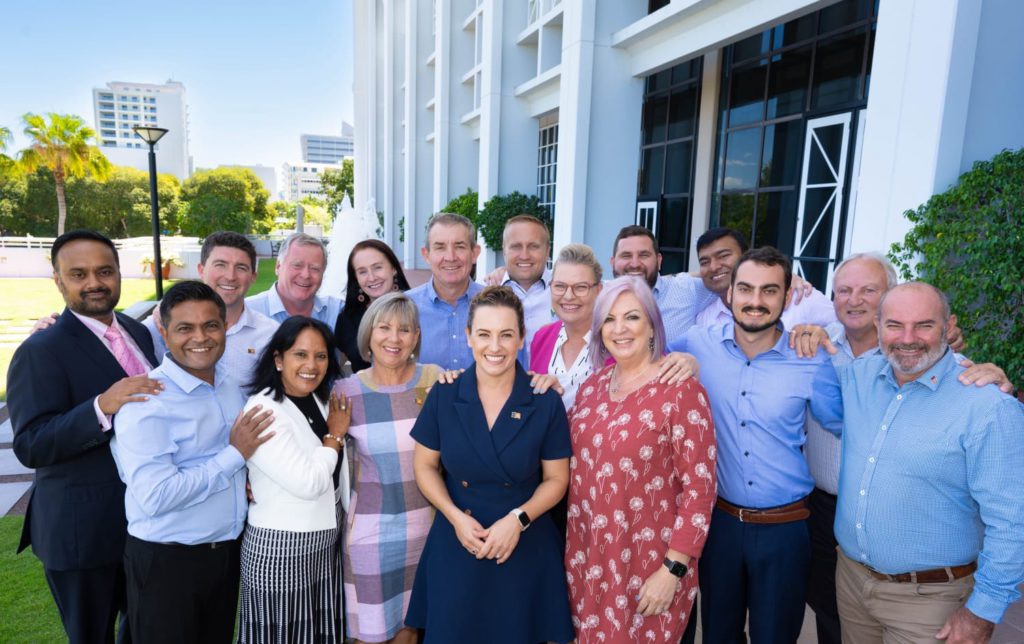
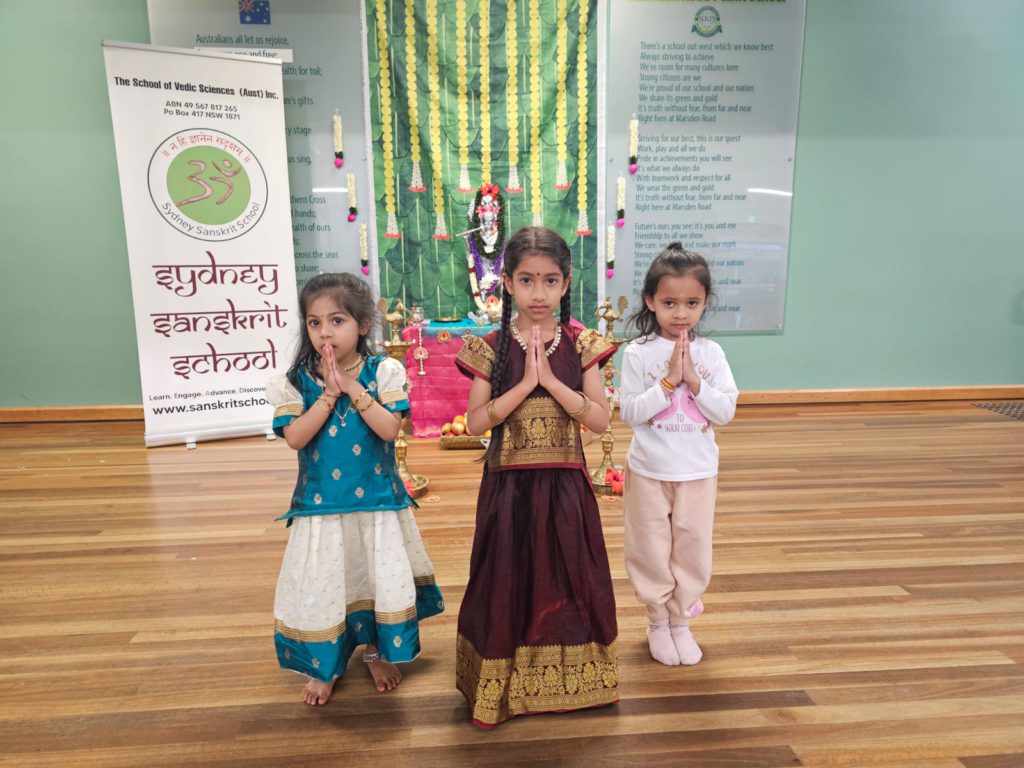
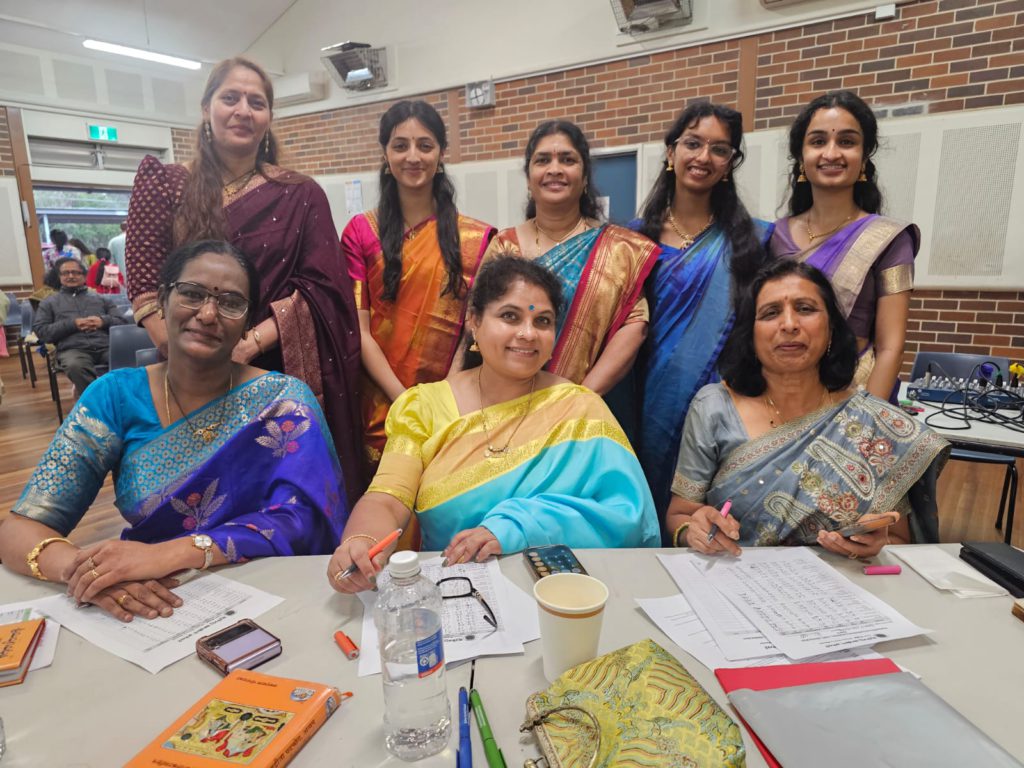
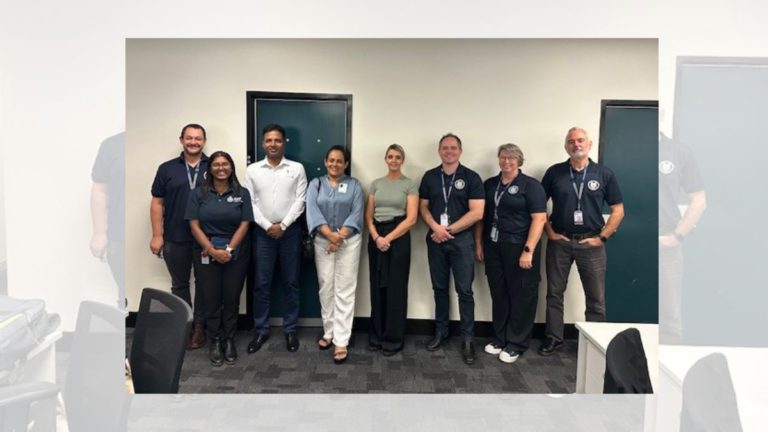
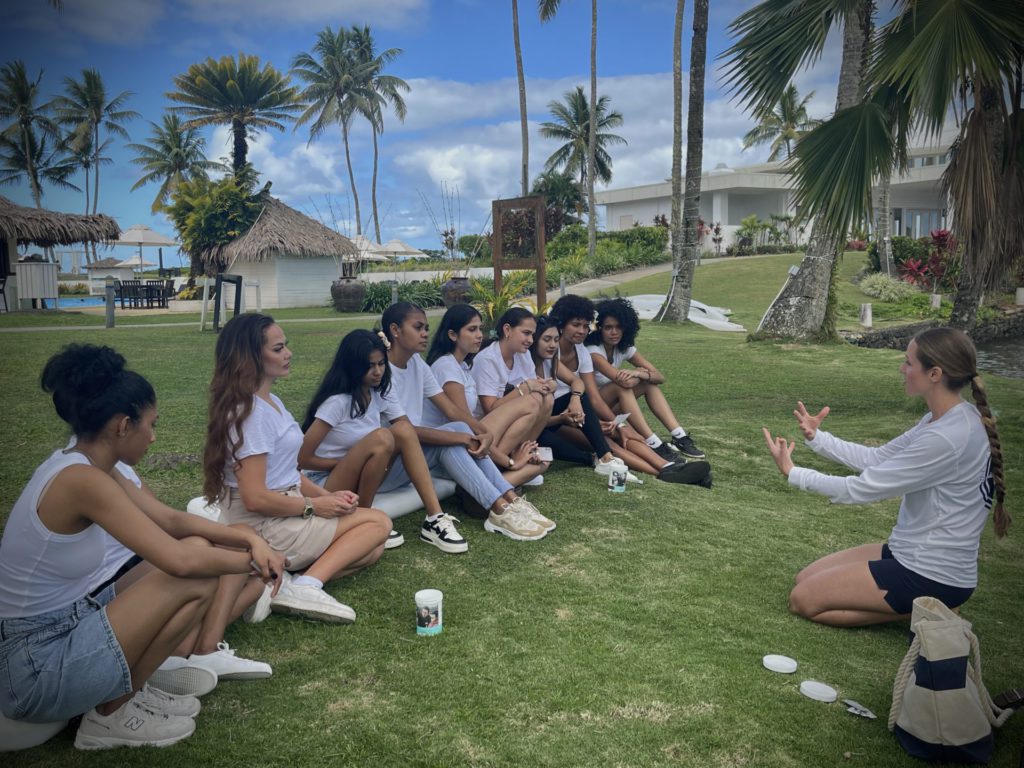
The Vishwa Hindu Parishad (VHP) Sanskrit School, a registered NSW Community Language School, celebrated its 16th Annual Day: Image Source: Supplied
A Legacy of Sanskrit Learning
The school, which offers Sanskrit language teaching for children aged 5 to 15, has been a pillar in promoting the ancient language in New South Wales (NSW) since its establishment in 2008. It now operates six branches across Sydney, with over 200 students enrolled.
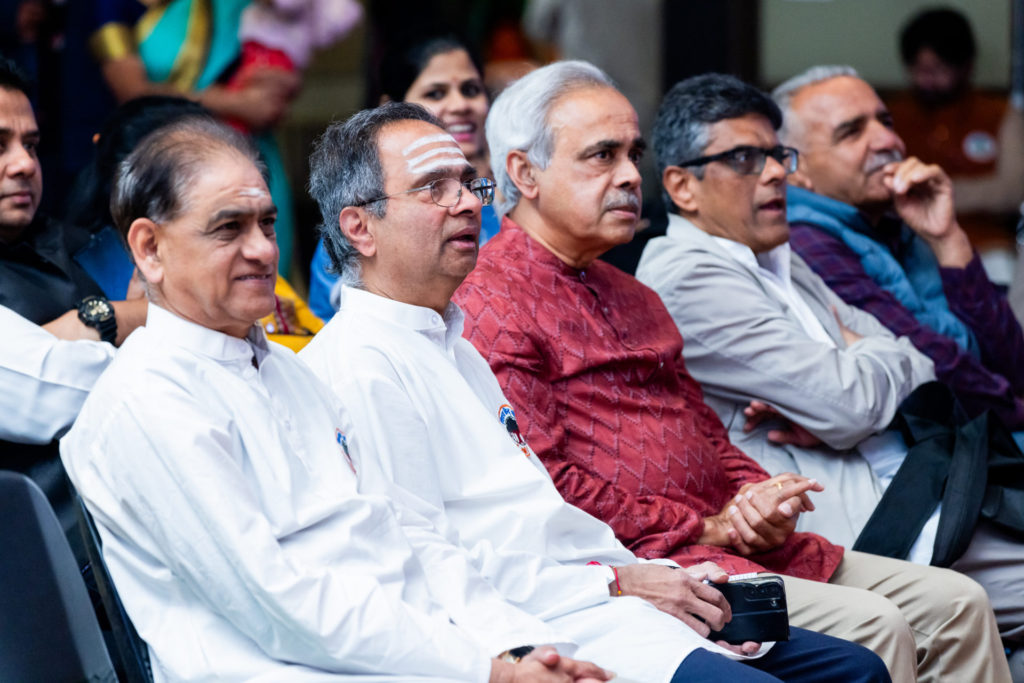
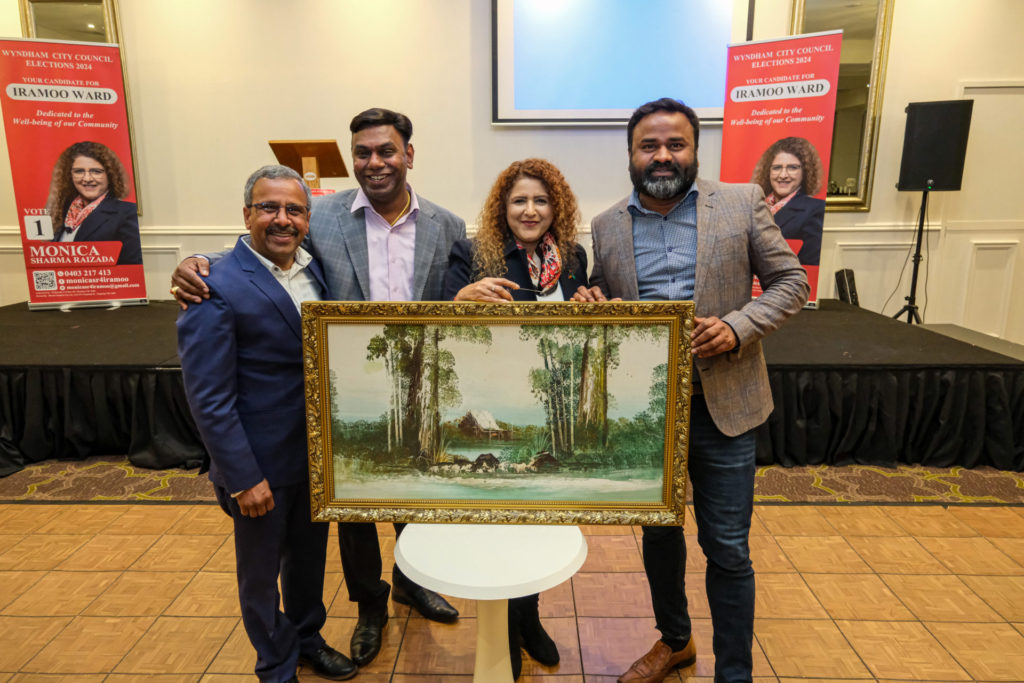
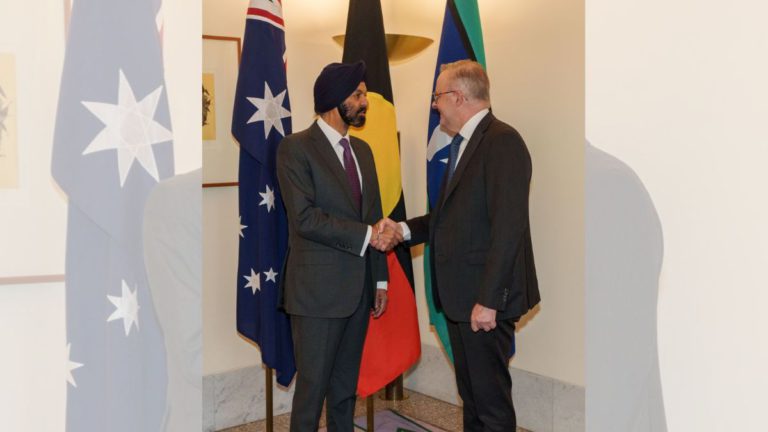
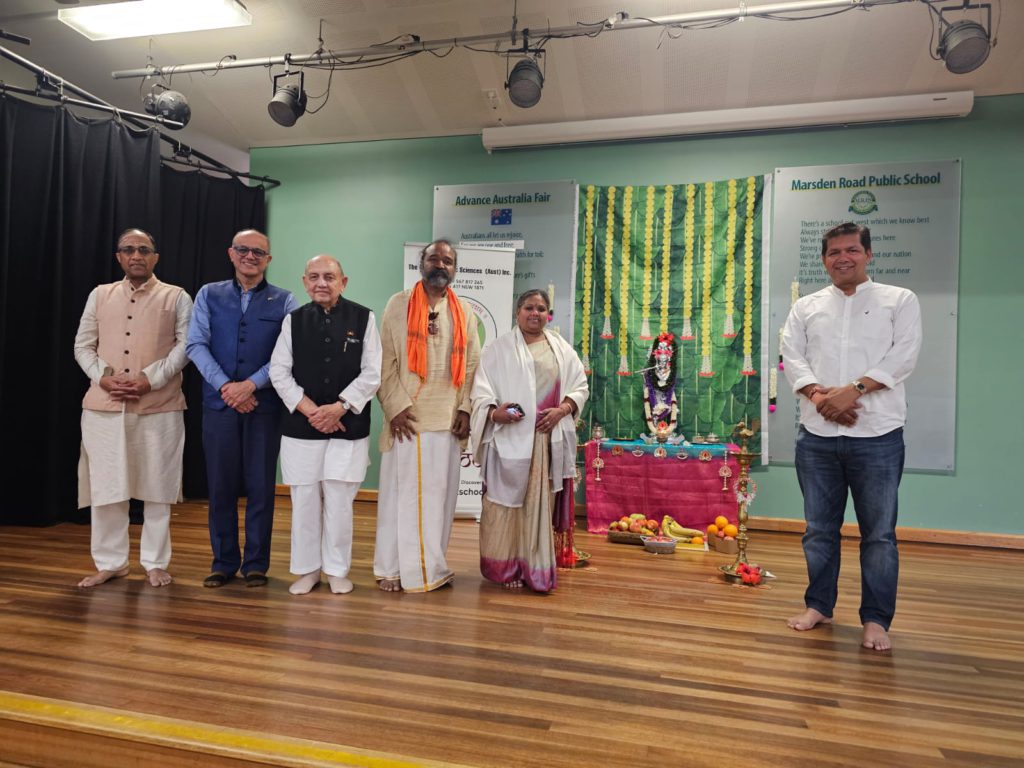
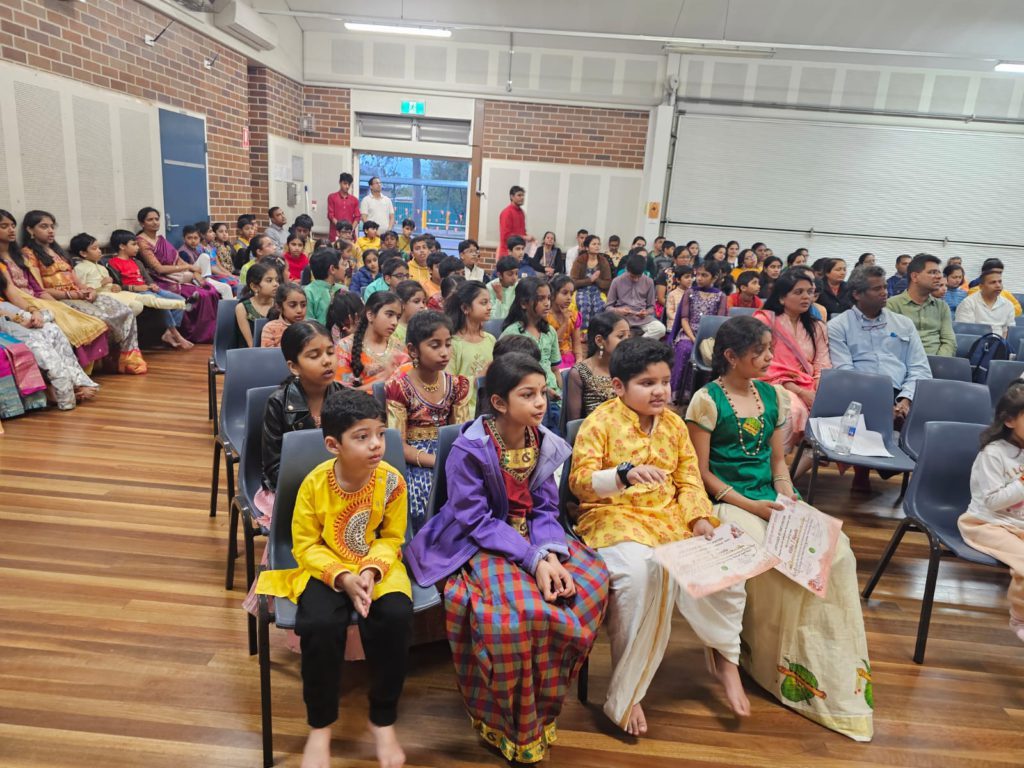
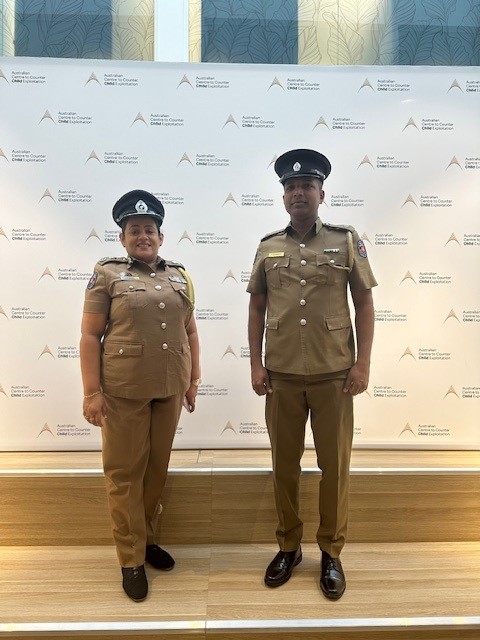
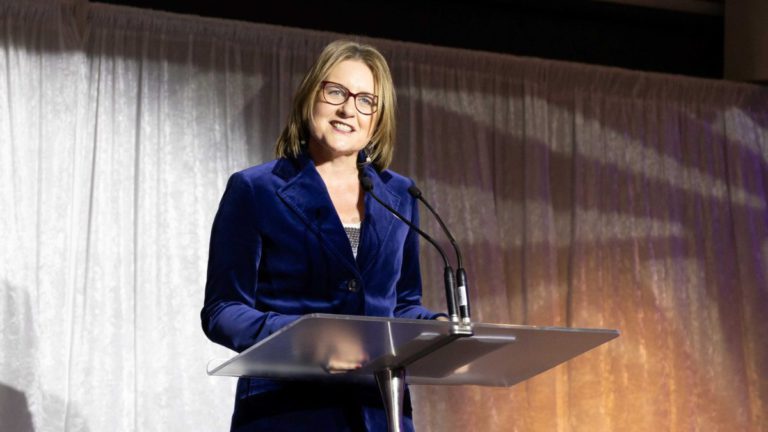
The Vishwa Hindu Parishad (VHP) Sanskrit School, a registered NSW Community Language School, celebrated its 16th Annual Day: Image Source: Supplied
Since its humble beginnings, the VHP Sanskrit School has grown into a vital cultural institution in Sydney, with a strong focus on preserving and promoting the Sanskrit language.
The school has garnered a reputation for its rigorous and holistic approach to language education, and it now employs 35 qualified teachers who impart Sanskrit knowledge across its six branches. These teachers not only focus on language proficiency but also on teaching students to recite ancient Sanskrit Shlokas and verses from sacred texts like the Shrimad Bhagavad Gita.
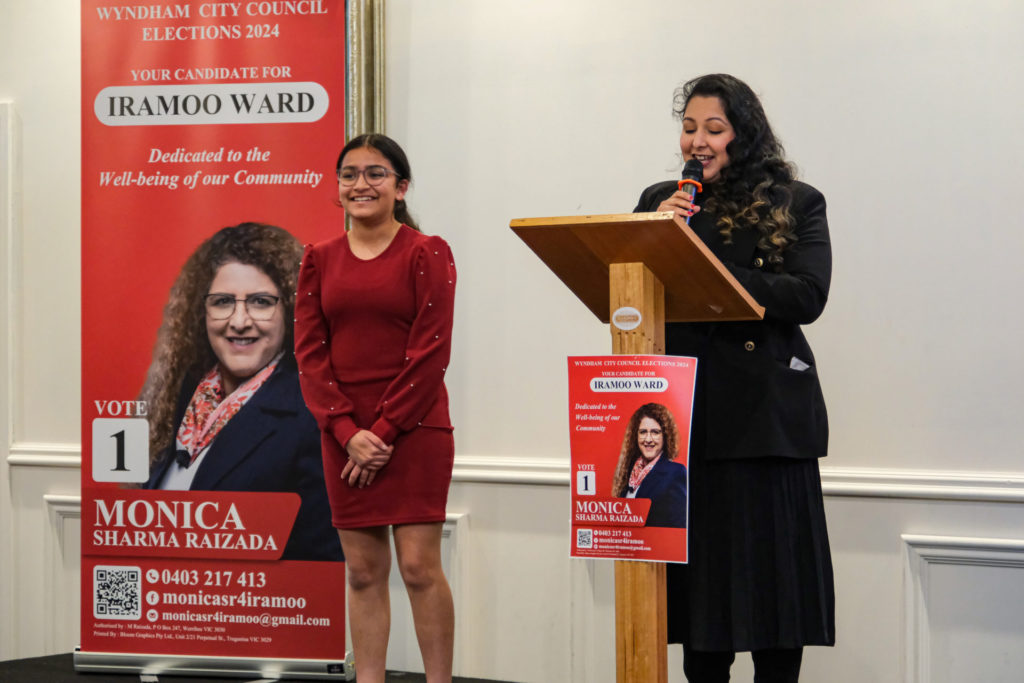
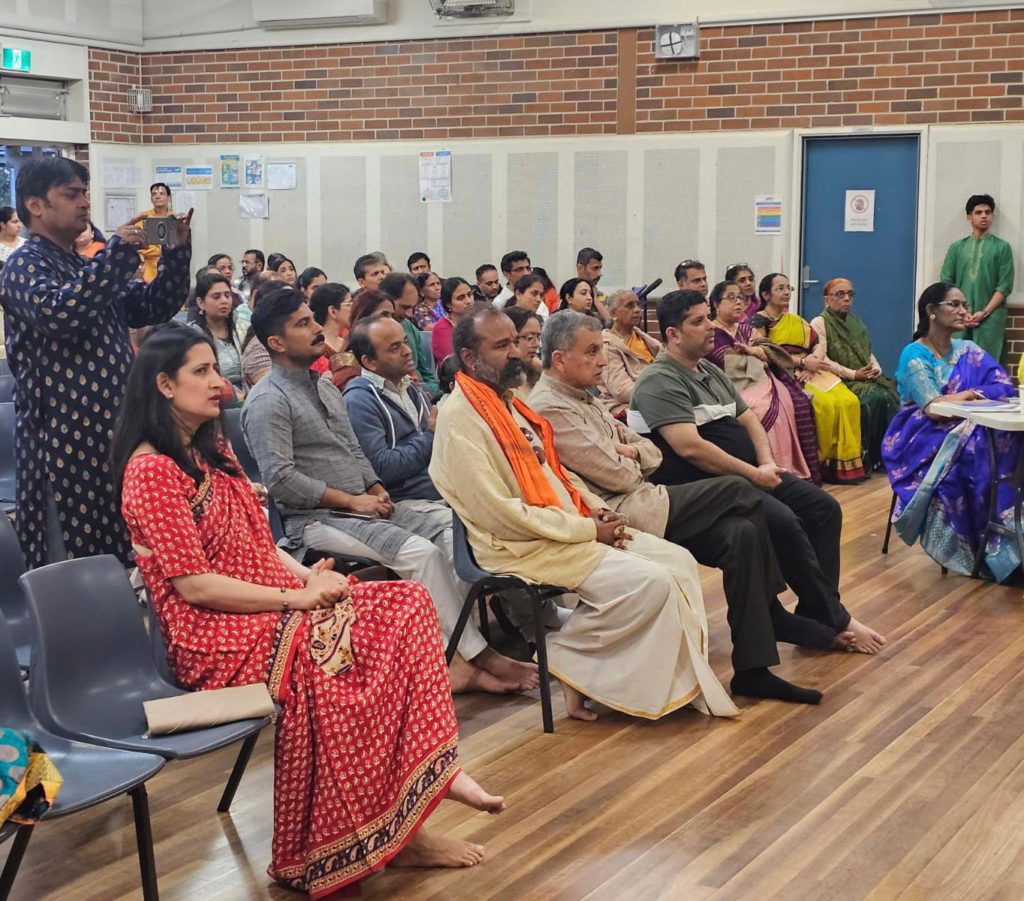
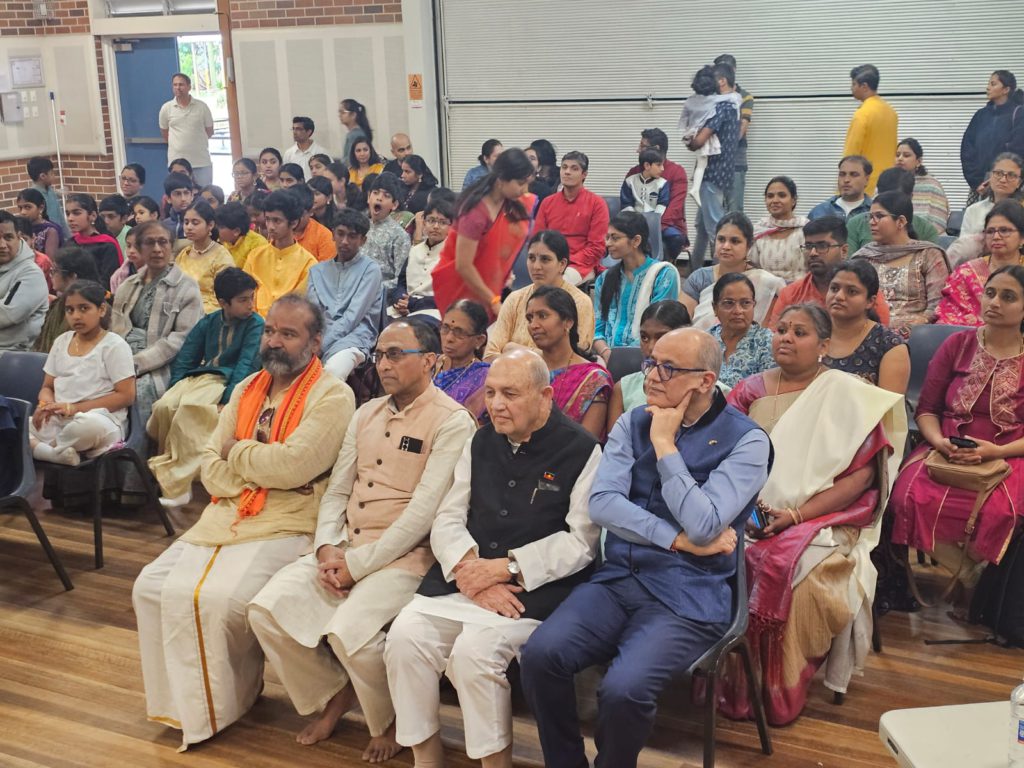
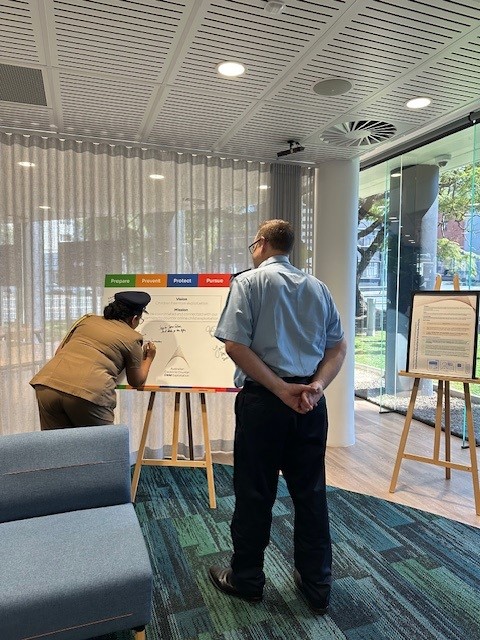
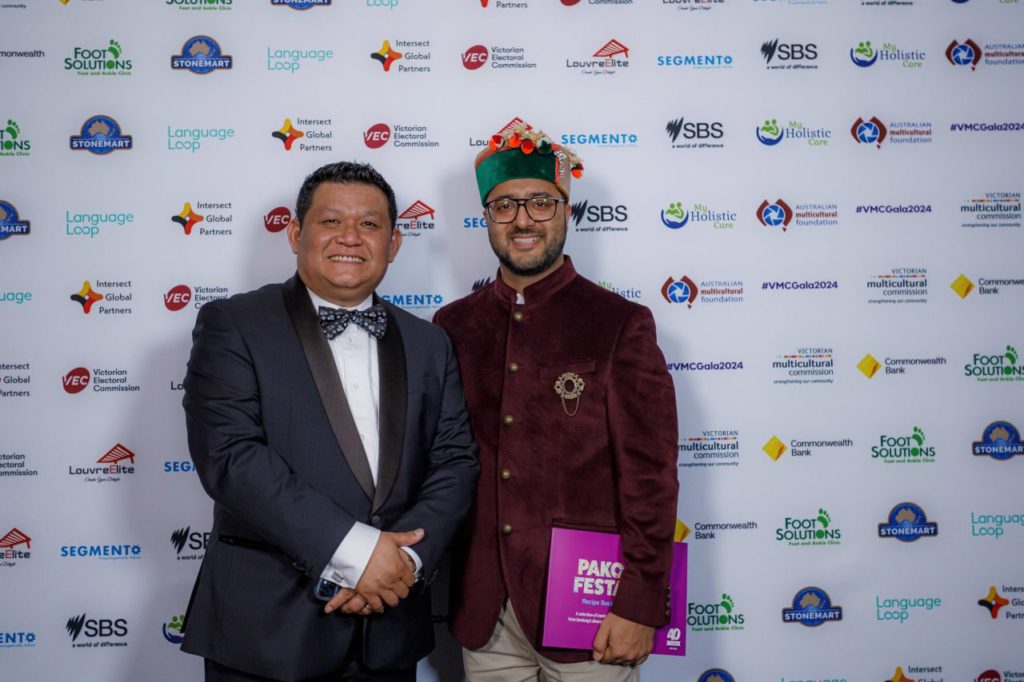
The Vishwa Hindu Parishad (VHP) Sanskrit School, a registered NSW Community Language School, celebrated its 16th Annual Day: Image Source: Supplied
Each year, around 20 students appear for the Sanskrit exams organised by Samskrita Bharati, Bengaluru, adding a structured academic element to their language education. These exams play a crucial role in benchmarking the students’ progress and ensuring they achieve a certain standard of fluency and comprehension in the language.
The Vishwa Hindu Parishad (VHP) Sanskrit School, a registered NSW Community Language School, celebrated its 16th Annual Day: Image Source: Supplied
16th Annual Day: A Celebration of Cultural Excellence
The school’s 16th Annual Day served as an important platform to recognise student achievements and celebrate the school’s contributions to the community. The annual Shloka and Gita competitions were a major feature of the event, allowing students to showcase their memorisation, pronunciation, and understanding of Sanskrit verses.
The success of the VHP Sanskrit School is deeply rooted in its community-oriented approach. In addition to teaching Sanskrit, the school fosters an appreciation for Indian culture, heritage, and spiritual traditions among younger generations of Indian-Australians. Through initiatives like the annual competitions and cultural events, the school provides students with the opportunity to engage with their heritage in meaningful ways.
The Vishwa Hindu Parishad (VHP) Sanskrit School, a registered NSW Community Language School, celebrated its 16th Annual Day: Image Source: Supplied
In her address at the Annual Day, the school’s director Akila Ramarathinam stated, “The VHP Sanskrit School is not just a place for learning a language but a hub for fostering cultural pride and values in our younger generation. Our students are learning not only the words of ancient scriptures but also the wisdom they impart.”
Looking Forward: Continuing the Legacy
With six branches and growing interest from the community, the VHP Sanskrit School continues to make significant strides in promoting Sanskrit education in Australia. As the school looks to the future, its focus remains on expanding its reach and deepening its impact through more advanced language courses, teacher training programs, and cultural events that further embed Sanskrit learning in the community.
The Vishwa Hindu Parishad (VHP) Sanskrit School, a registered NSW Community Language School, celebrated its 16th Annual Day: Image Source: Supplied
The school’s achievements over the years serve as a testament to its role as a cornerstone of language and cultural preservation in Sydney. The enthusiasm surrounding the 16th Annual Day event indicates a bright future ahead for the VHP Sanskrit School, its students, and the broader community committed to celebrating and nurturing Indian heritage in Australia.
Support Our Journalism
Global Indian Diaspora and Australia’s multicultural communities need fair, non-hyphenated, and questioning journalism, packed with on-ground reporting. The Australia Today – with exceptional reporters, columnists, and editors – is doing just that. Sustaining this needs support from wonderful readers like you.
Whether you live in Australia, the United Kingdom, Canada, the United States of America, or India you can take a paid subscription by clicking Patreon and support honest and fearless journalism. LINK: https://tinyurl.com/TheAusToday
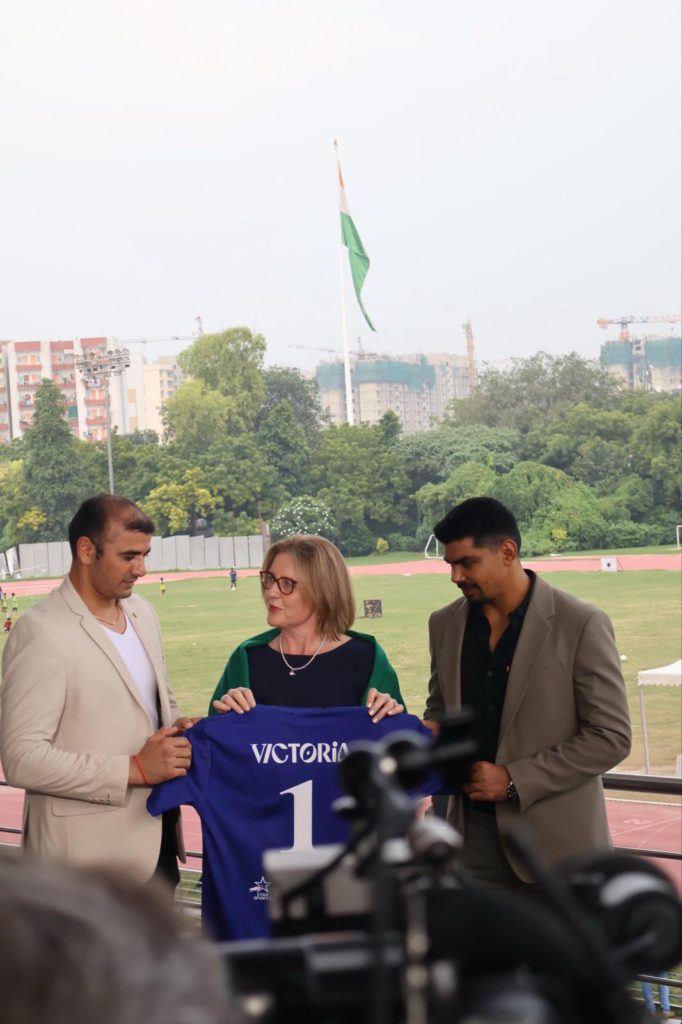
In an Australian first, Premier Jacinta Allan has announced a historic collaboration between the Victorian Government and the Pro Kabaddi League (PKL) to explore bringing a PKL showcase event to Melbourne within the next 18 months.
This partnership marks an exciting addition to Victoria’s growing list of major events and is poised to strengthen cultural ties between India and Australia.
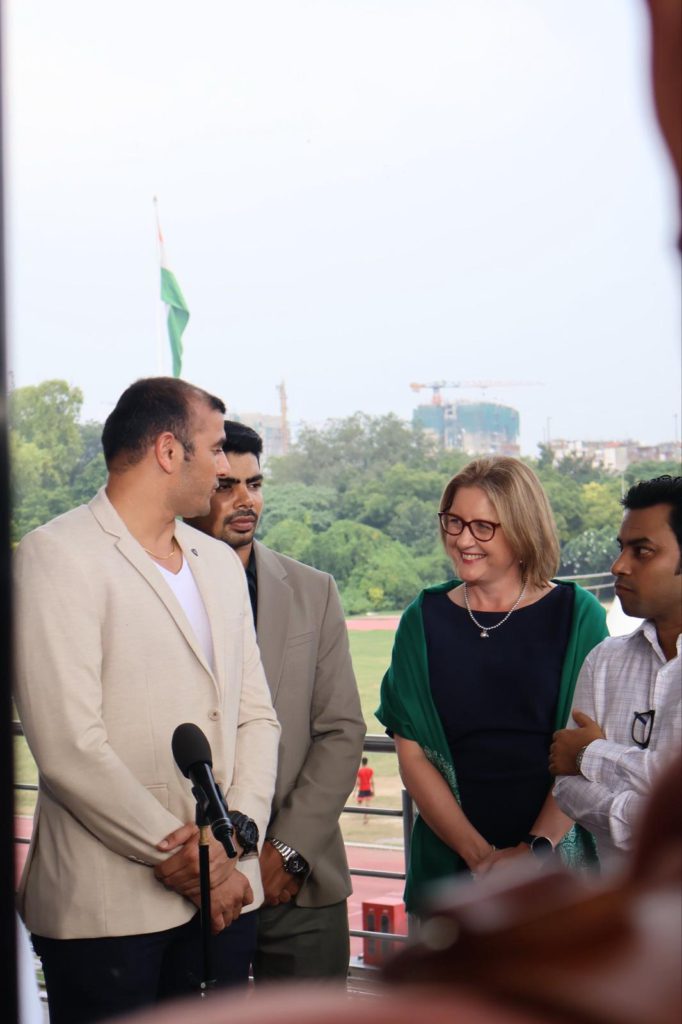
The announcement was made in New Delhi, where Premier Allan met with key figures from the PKL, including Sanjog Gupta, Head of Sports at Disney Star, and Anupam Goswami, League Commissioner of PKL.
The move will give Melbourne the opportunity to host a sport that has captivated millions in India, being second only to cricket in popularity.
The Premier stated,
“As the sporting capital of Australia, we’re proud to be partnering with the Pro Kabaddi League to explore bringing a PKL Showcase in Melbourne, with the sport attracting one of the fastest growing fan bases around the globe.”
Kabaddi is a high-octane, contact sport that requires strategy, agility, and teamwork. The PKL, since its inception in 2014, has seen immense growth, drawing nearly 300 million viewers annually in India. Bringing this sport to Melbourne is expected to excite the city’s large Indian population and promote deeper cultural exchange.
Victoria is home to the largest Indian population in Australia, making it a natural destination for such an event.
Steve Dimopoulos, Victoria’s Minister for Tourism, Sport, and Major Events, emphasised the significance of this partnership in celebrating diversity, stating,
“Working with the PKL is part of the state’s commitment to celebrate and support multicultural communities.”
Visit Victoria CEO Brendan McClements expressed excitement, saying the partnership with PKL will strengthen the state’s growing relationship with the Indian visitor economy, which generated $452 million in revenue from nearly 180,000 Indian visitors in the year ending March 2024.
This collaboration is part of the broader “India Strategy” by the Victorian Government, aimed at enhancing cultural and economic ties with India, a key overseas market for the state.
With Victoria’s reputation as a global sports hub, the potential Kabaddi showcase is expected to attract both local and international fans, further solidifying Melbourne’s position on the world stage for major sporting events.
Support Our Journalism
Global Indian Diaspora and Australia’s multicultural communities need fair, non-hyphenated, and questioning journalism, packed with on-ground reporting. The Australia Today – with exceptional reporters, columnists, and editors – is doing just that. Sustaining this needs support from wonderful readers like you.
Whether you live in Australia, the United Kingdom, Canada, the United States of America, or India you can take a paid subscription by clicking Patreon and support honest and fearless journalism. LINK: https://tinyurl.com/TheAusToday
This will be disappointing to some, particularly those who were looking for stronger protections against racism – including antisemitism and Islamophobia – in the wake of the ructions caused in Australia by the events in Israel and Palestine.
But when this latest development is placed in the longer history of the development of hate speech laws in Australia, we see it continues a consistent pattern of preferring civil remedies over criminal penalties to address most forms of group vilification.
A long-standing battle
Since at least the 1970s, Australian governments have been trying to work out what laws, and in what form, are required to address racism.
Something close to consensus was reached on the idea that racial discrimination should be unlawful. It now is under the Racial Discrimination Act 1975, as well as anti-discrimination statutes in every state and territory.
Consensus on the legal regulation of racial vilification (sometimes referred to as racist “hate speech”) has been more elusive.
The states and territories also have their own versions of vilification laws (addressing race and a range of other grounds).
A bold approach, initially
When the Albanese government announced this year it was planning to legislate further on hate speech, the suggestion it would include new criminal offences caught the attention of lots of people. This included academics like me who have researched vilification laws since the 1990s.
We raised our eyebrows because a defining feature of Australia’s attempts to legislate in this area has been a preference for civil laws – where an aggrieved person can take private action against those responsible – over criminal laws.
Even though it receives only patchy and relatively weak legal protection in Australia, free speech “sensitivity” has been a powerful force in political debates in this country.
Some politicians have also not been shy about weaponising it, such as when the Coalition government established an inquiry in 2018 into whether free speech was being adequately protected on university campuses.
Given this history, the Albanese government’s announcement in May set the stage for another fiery debate about what laws were best suited to addressing hate speech. As it happens, this also came ten years on from a succession of (unsuccessful) efforts by Coalition governments to curtail section 18C or effectively repeal it altogether.
But the Albanese government has now stepped back from its initial plan. Instead, the modified and new criminal offences will only apply to conduct that not only vilifies, but also involves threats of violence or force against a group (or a member of a group).
This is a much less controversial form of criminalisation. And most Australian states and territories already have offences of this sort – for example, the offence of publicly threatening or inciting violence in the NSW Crimes Act.
What will the impact be?
We should be cautious about expecting too much from the proposed new federal criminal offences.
Prosecutions and convictions for these “aggravated” forms of vilification are extremely rare in Australia. The tally in NSW is zero, some 35 years after that state pioneered the criminalisation of vilification involving threat of physical harm or property damage.
The NSW Law Reform Commission is currently conducting an inquiry into why this is and whether further reforms are warranted.
It seems unlikely things will be different with new Commonwealth offences. They have complex definitions and will be challenging to prove beyond reasonable doubt.
Of course, just because a criminal offence is not regularly prosecuted doesn’t mean it has served no purpose. Sometimes, governments turn to criminalisation for its symbolic and “message-sending” powers.
And yes, sometimes this is a cynical exercise in being seen to be doing something without changing much at all. Whether this is a fair characterisation remains to be seen.
In the meantime, perhaps the great disappointment will be felt by members of Australia’s Muslim communities.
The new criminal laws on threats of violence will apply to a wide variety of identifying characteristics. They include religion, race, sex, sexual orientation, gender identity, intersex status, disability, nationality, national or ethnic origin or political opinion.
However, the bill will not amend the more useful civil laws in the Racial Discrimination Act to extend to religious vilification.
Whether Islamophobia is correctly characterised as “religious” or “racial” vilification, it is clear that, at the federal level, Australian Muslims are not protected by the section 18C of the Racial Discrimination Act in its current form.
In my previous research with Professor Katharine Gelber, we identified this as the biggest gap in Australia’s hate speech laws.
By contrast, antisemitism is legally regarded as a form of racism, and section 18C of the Racial Discrimination Act has been effectively engaged by Jewish organisations and individuals against forms of antisemitism, including Holocaust denial.
Since the Hamas attack on Israel on October 7 2023, the Australian government has attempted to hold the public position that it is equally concerned about all forms of discrimination and hate speech, including both antisemitism and Islamophobia.
And yet, while a special envoy to combat antisemitism has been appointed, the promise of a special envoy on Islamophobia has yet to materialise.
The new hate speech bill introduced by the government does little to deliver on a true commitment to multiculturalism and anti-racism. We await the Albanese government’s more active steps in that direction.
Global Indian Diaspora and Australia’s multicultural communities need fair, non-hyphenated, and questioning journalism, packed with on-ground reporting. The Australia Today – with exceptional reporters, columnists, and editors – is doing just that. Sustaining this needs support from wonderful readers like you.
Whether you live in Australia, the United Kingdom, Canada, the United States of America, or India you can take a paid subscription by clicking Patreon and support honest and fearless journalism. LINK: https://tinyurl.com/TheAusToday
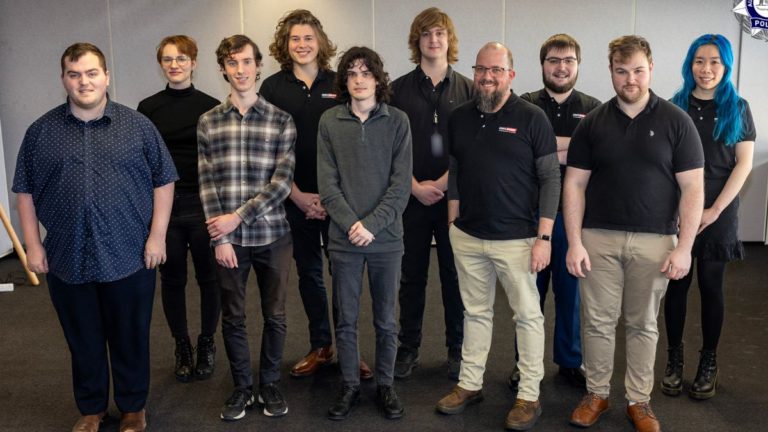
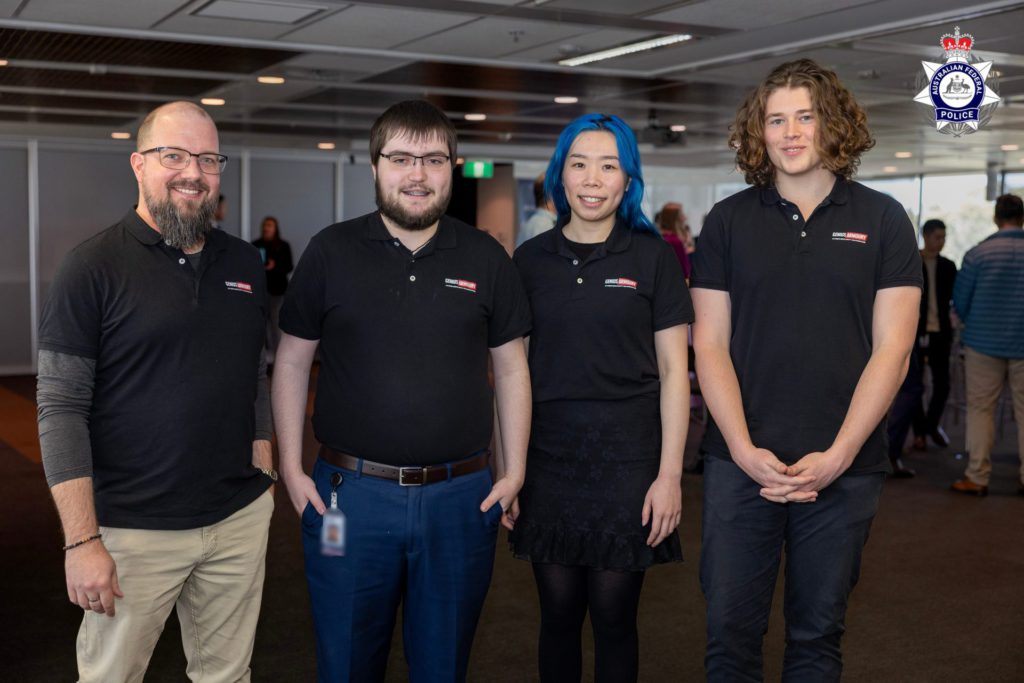
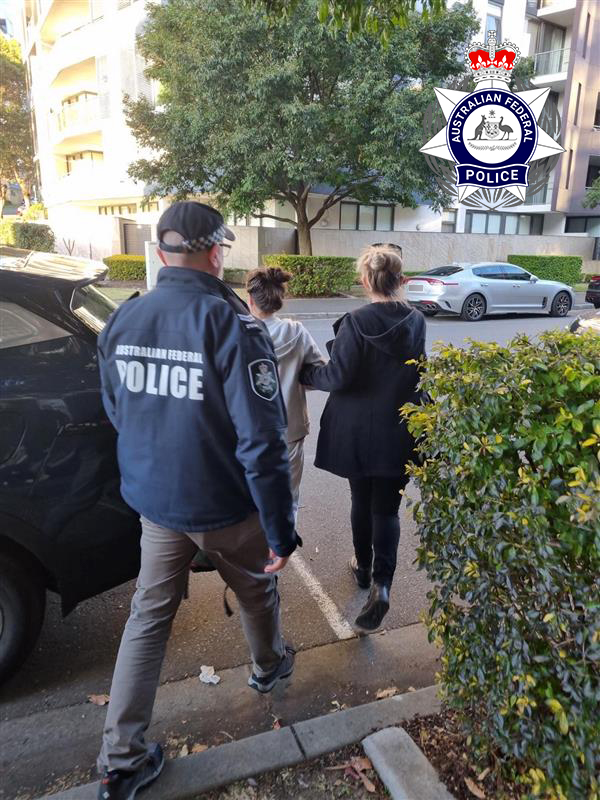
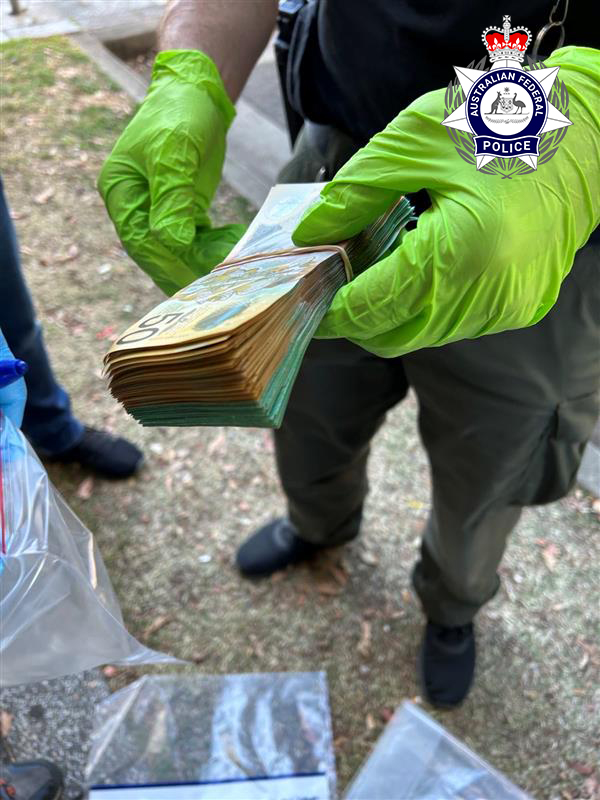
The men, aged 30, 35, and 43, were arrested by AFP officers last week (Wednesday, 11 September 2024) at a rural property in Jimboomba and at a shopping centre in Browns Plains, on the southern outskirts of Brisbane. They appeared in the Brisbane Magistrates Court on 12 September 2024.
The 43-year-old man from Jimboomba was remanded in custody and reappeared in court on 17 September 2024.
The other two men—a 35-year-old from Jimboomba and a 30-year-old from Buccan—will reappear in court on Friday, 20 September 2024.
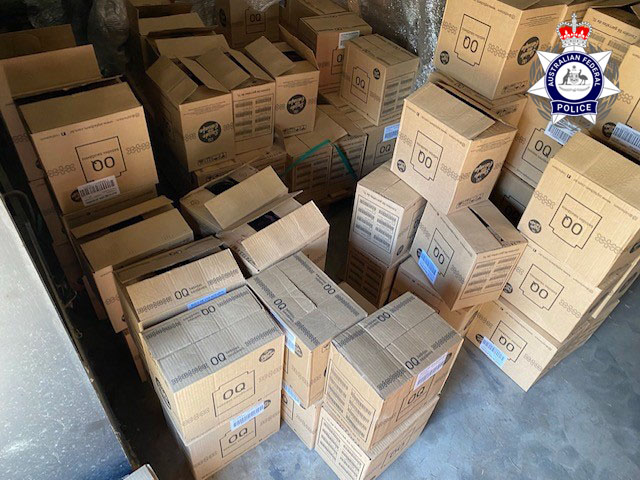
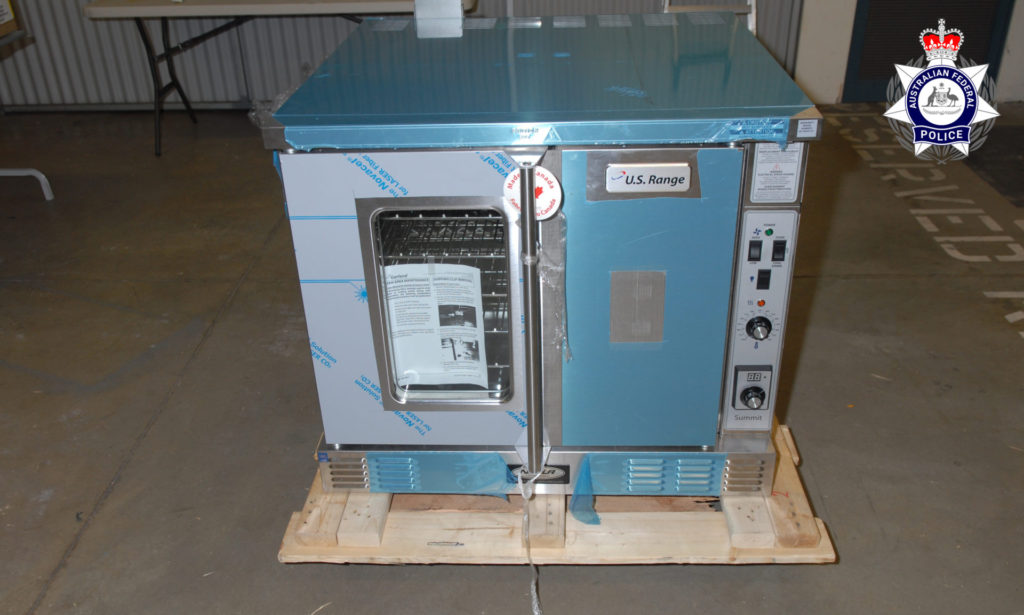
The AFP’s investigation targeted a transnational organised crime syndicate allegedly responsible for arranging the attempted importation of 1,280 litres of liquid methamphetamine, concealed in juice bottles.
The liquid methamphetamine, estimated to be worth $400 million on the street after conversion to crystal methamphetamine, could have been distributed in four million individual street deals.
The investigation began after the Canada Border Services Agency (CBSA) allegedly identified the drugs in May 2024, when the shipment arrived in Vancouver from Brazil.
The Royal Canadian Mounted Police (RCMP) alerted the AFP, and the liquid methamphetamine was removed and replaced with an inert substance. The consignment then continued its journey to Brisbane, arriving on 3 September 2024.
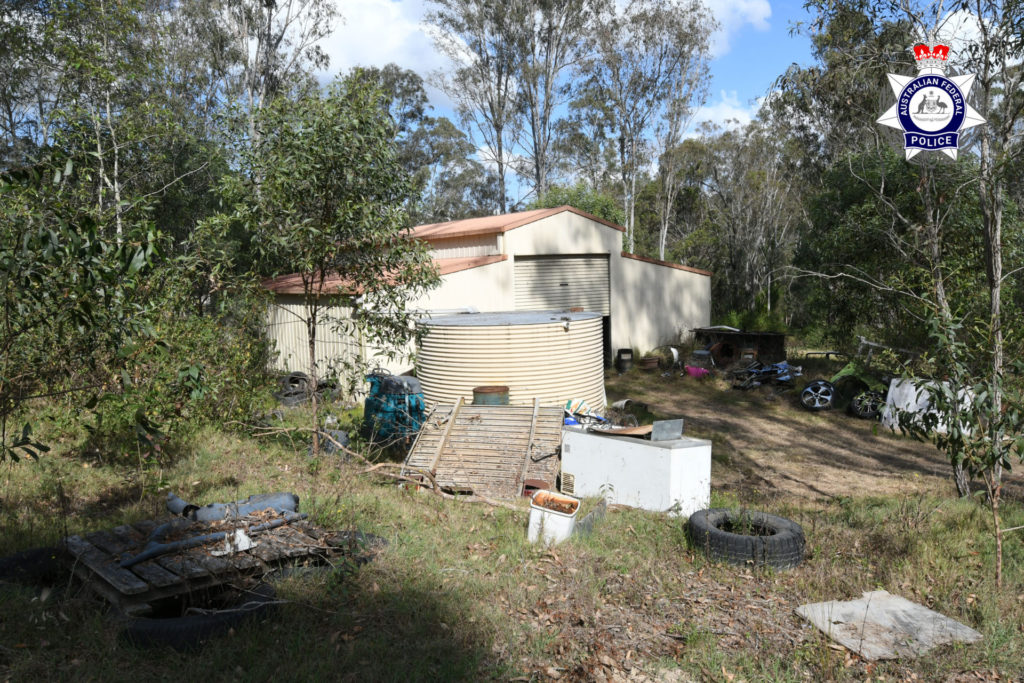
The AFP apprehended the three men after the shipment was delivered to a semi-rural property in Jimboomba and stored in a large shed.
All three men have been charged with attempting to possess a commercial quantity of an unlawfully imported border-controlled drug, methamphetamine, under sections 307.5 and 11.1 of the Criminal Code Act 1995 (Cth). The maximum penalty for this offence is life imprisonment.
Canadian authorities tested the liquid methamphetamine and found it to be up to 89 per cent pure. The AFP will conduct further forensic testing to confirm the purity of the shipment.
AFP Acting Commander Adrian Telfer highlighted the serious impact methamphetamine has on Australian communities.
“The social costs from 4 million hits of crystal methamphetamine are immeasurable,” he said. “This amount of liquid meth could have fuelled domestic violence, assaults, and contributed to the road toll, while enriching organised crime.”
Acting Commander Telfer praised the international cooperation involved in the operation, which prevented the drugs from reaching Australian communities.
“Our international network is essential in fighting transnational organised crime. Through this operation, working with our Canadian partners, we’ve kept a significant amount of meth off our streets and hit organised crime where it hurts.”
He expressed gratitude to the CBSA and the RCMP for their help with the investigation.
Nina Patel, Regional Director General, Pacific Region, Canada Border Services Agency, emphasised the importance of cross-border collaboration.
“This seizure and the subsequent investigation demonstrate the strong cooperation between international law enforcement agencies in combatting the illegal drug trade.”
RCMP Chief Superintendent Stephen Lee, Deputy Regional Commander, Pacific Region, reiterated that global partnerships are key to tackling transnational crime.
“Crime has no borders, and our close collaboration with international partners, like the AFP, is crucial in disrupting drug trafficking networks around the world.”
Support Our Journalism
Global Indian Diaspora and Australia’s multicultural communities need fair, non-hyphenated, and questioning journalism, packed with on-ground reporting. The Australia Today – with exceptional reporters, columnists, and editors – is doing just that. Sustaining this needs support from wonderful readers like you.
Whether you live in Australia, the United Kingdom, Canada, the United States of America, or India you can take a paid subscription by clicking Patreon and support honest and fearless journalism. LINK: https://tinyurl.com/TheAusToday
Victoria’s Premier Jacinta Allan began her five-day visit to India with a series of significant announcements aimed at enhancing the state’s educational ties with India.
On her first day in New Delhi, Premier Allan unveiled the new $5 million Yes to International Students Fund, designed to help Victorian universities and TAFEs expand their transnational education (TNE) offerings. This initiative will facilitate partnerships with Indian institutions, such as the newly expanded collaboration between RMIT University and India’s BITS Pilani, announced during her visit.
The Yes to International Students Fundwill provide seed funding to Victorian universities and TAFEs, enabling them to establish offshore campuses or co-deliver dual degree programs in partnership with international universities. This effort aligns with Victoria’s goal of expanding its global education footprint while helping local institutions tap into the growing demand for Australian education overseas.
Premier Allan highlighted the importance of international students to Victoria’s economy and cultural diversity.
“We say yes to international students because they boost our economy and our global reputation, support our small businesses, and keep our multicultural state connected with the world,”
Allan said at the event in Delhi.
The Premier also took a strong stance against the Australian Federal Government’s cap on international students, adding,
“We say no to the Federal Government’s caps. Our new fund is going to help our unis and TAFEs find innovative ways to challenge them.”
Strengthening Victoria-India Educational Ties
The RMIT-BITS Pilani partnership was spotlighted as one of the success stories of transnational education. The dual degree program allows students to complete half of their undergraduate degree in India and the other half in Victoria, a model Allan believes is essential for the future of international education.
“Victoria will continue to be Australia’s number one destination for students, and partnerships like this one will only help strengthen our educational ties with India,”
she noted.
TAFEs in Victoria have also demonstrated success in offshore education. Premier Allan cited Holmesglen TAFE’s achievements, including its operations in Mongolia and Qatar, as examples of how Victorian institutions are expanding globally.
Economic and Cultural Engagements on Day One
The Premier’s visit is not only focused on education but also aims to deepen trade, investment, and cultural ties between Victoria and India.
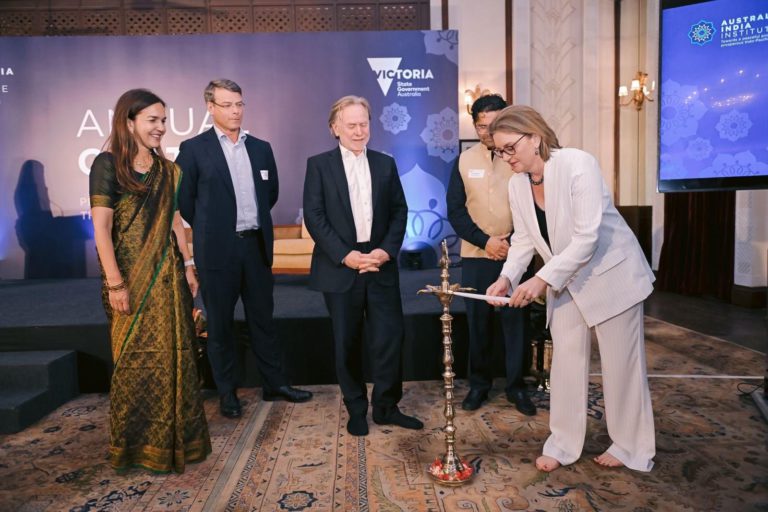
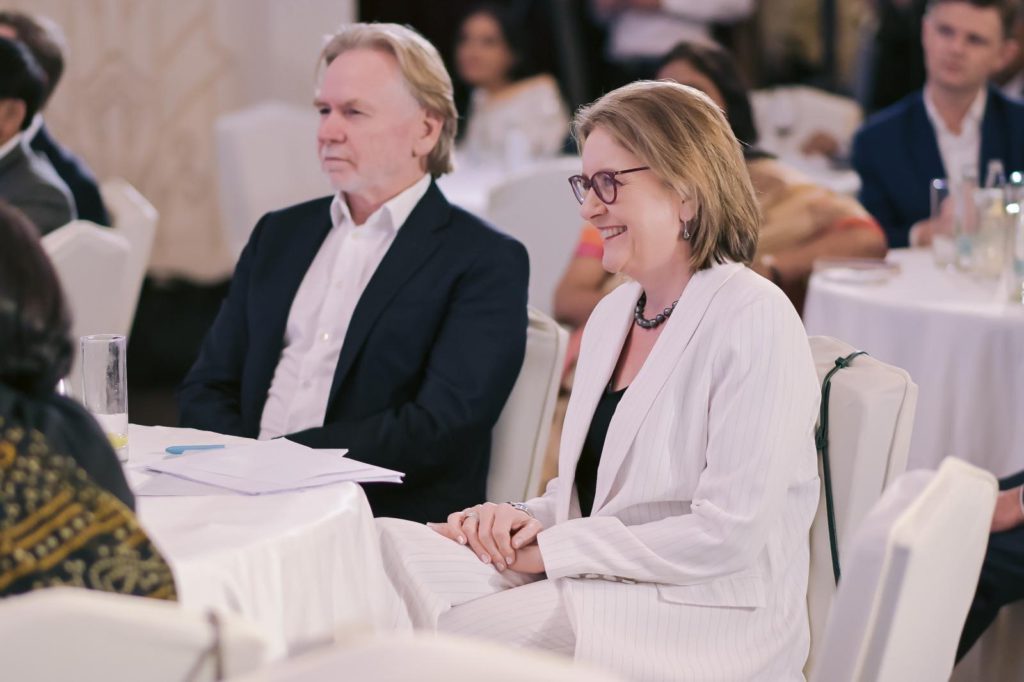
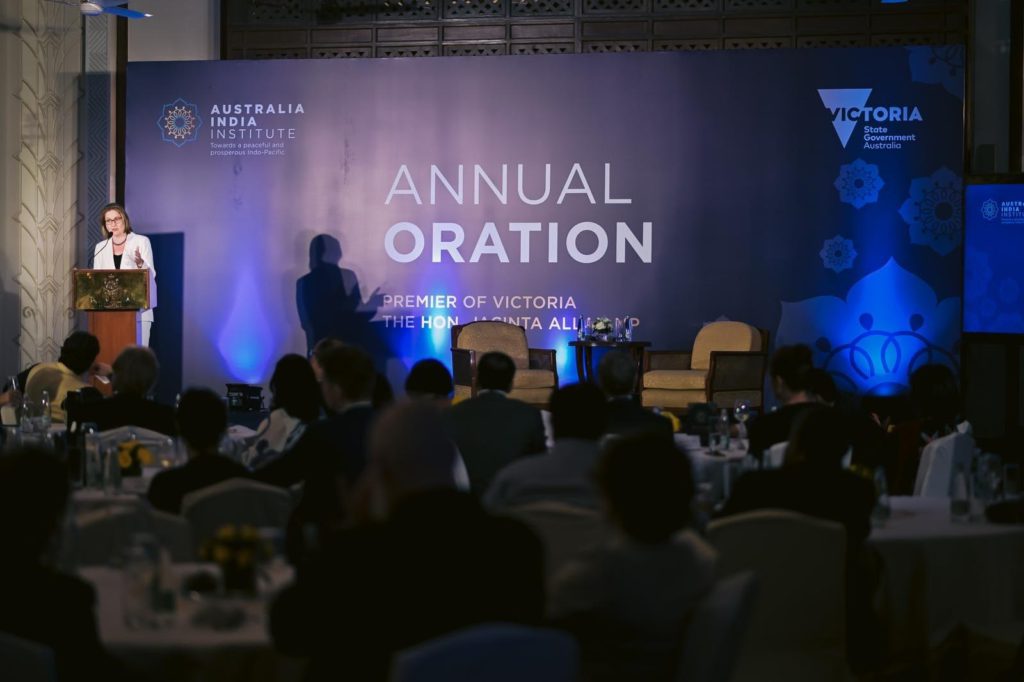
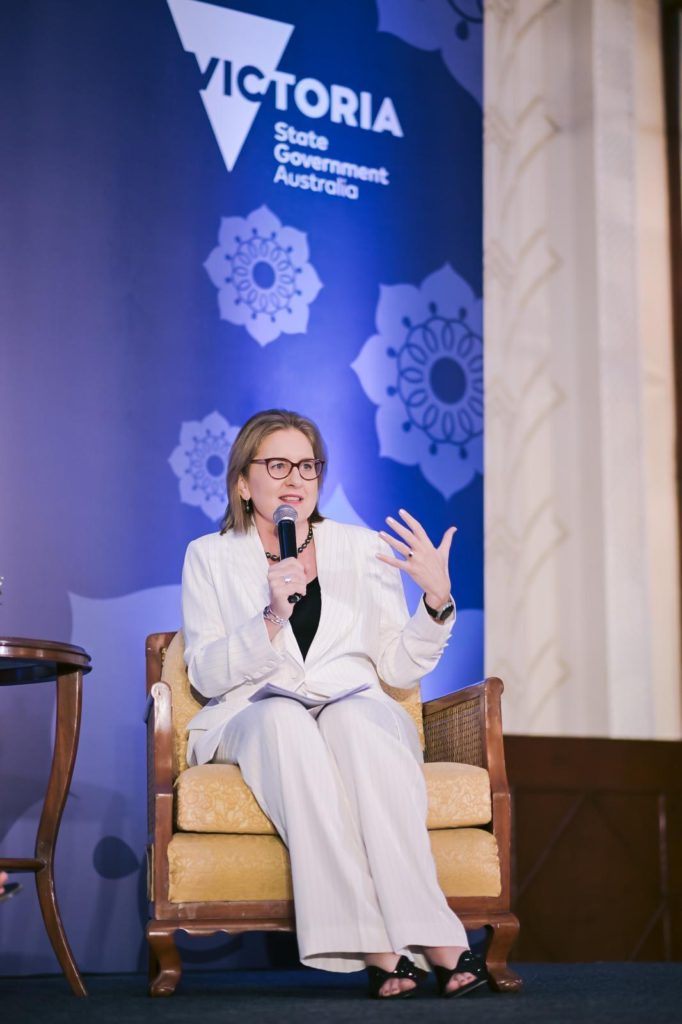
During her visit to New Delhi, Allan addressed the Australia India Institute’s Annual Oration, emphasising the importance of the Victoria-India relationship.
“We are here to celebrate our connection between India and Victoria, a connection that we know is deep and profound… I am proud that Indians are choosing Melbourne and Victoria as their home,”
Premier Allan said.
She also highlighted the contributions of Indian-born Australians, stating,
“Today, Victoria’s trade relationship with India is worth $3.6 billion – it’s a big and important part of our economy.”
During her address, Allan praised India as “the future of the world,” underscoring Victoria’s commitment to furthering partnerships across sectors like education, technology, and culture.
“India is a developing economy that can only be described as an exciting one… and Victoria will continue to partner because Victoria is the future of Australia,”
she added.
Exploring Delhi’s Rich History
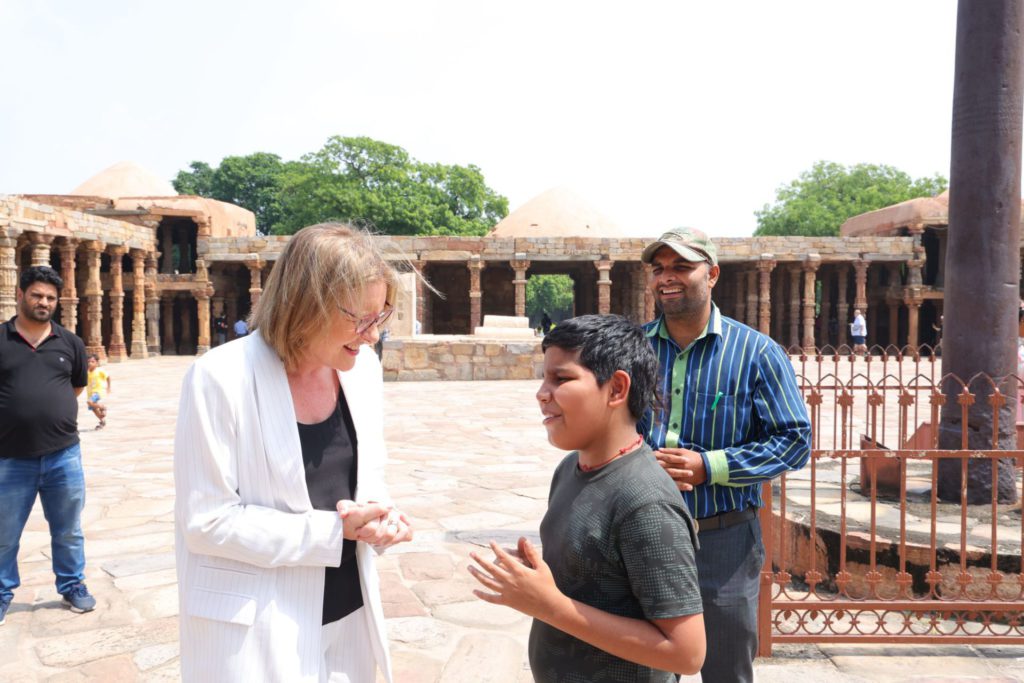
In addition to the formal engagements, Premier Allan toured Delhi’s historic Qutb Minar and Quwwat-ul-Islam mosque, guided by cultural heritage expert Dr. Navina Jafa.
This visit highlighted the rich history of India’s Islamic and Hindu heritage and marked a cultural milestone in the Premier’s itinerary. During her tour, Allan was also approached by a young boy, Sunny Sharma, who expressed his desire to improve his English skills.
Premier Allan praised him and encouraged his ambition, even inviting him to visit Melbourne someday.
Looking Ahead: A Week of Strategic Engagements
Premier Jacinta Allan’s first day in India has set a strong tone for the rest of her visit, which is expected to focus on expanding Victoria’s partnerships in education, technology, and trade.
The trip includes meetings with Indian business leaders, educational institutions, and government officials to further develop the Victoria-India relationship. Allan will also continue to emphasise Victoria as a prime destination for international students and highlight the state’s multicultural vibrancy.
#WATCH | Delhi: On India-Australia ties, Premier of Victoria Jacinta Allan MP says, "Relationship between India and Australia is an incredibly strong one and as the premiere of the State of Victoria in Australia, we are proud to call the largest number of Indian-born Australian… pic.twitter.com/eAprwy4Shj
As part of her agenda, Allan will visit several holy and cultural sites across India, further strengthening cultural ties and enhancing people-to-people connections between Victoria and India. This trip marks an important step in reinforcing Victoria’s global partnerships, with education serving as the cornerstone of Allan’s mission to bring new opportunities and mutual growth to both Victoria and India.
Support Our Journalism
Global Indian Diaspora and Australia’s multicultural communities need fair, non-hyphenated, and questioning journalism, packed with on-ground reporting. The Australia Today – with exceptional reporters, columnists, and editors – is doing just that. Sustaining this needs support from wonderful readers like you.
Whether you live in Australia, the United Kingdom, Canada, the United States of America, or India you can take a paid subscription by clicking Patreon and support honest and fearless journalism. LINK: https://tinyurl.com/TheAusToday
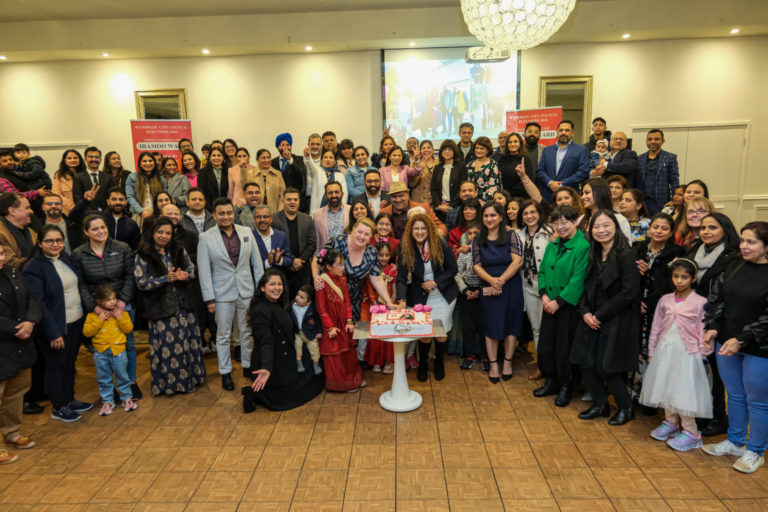
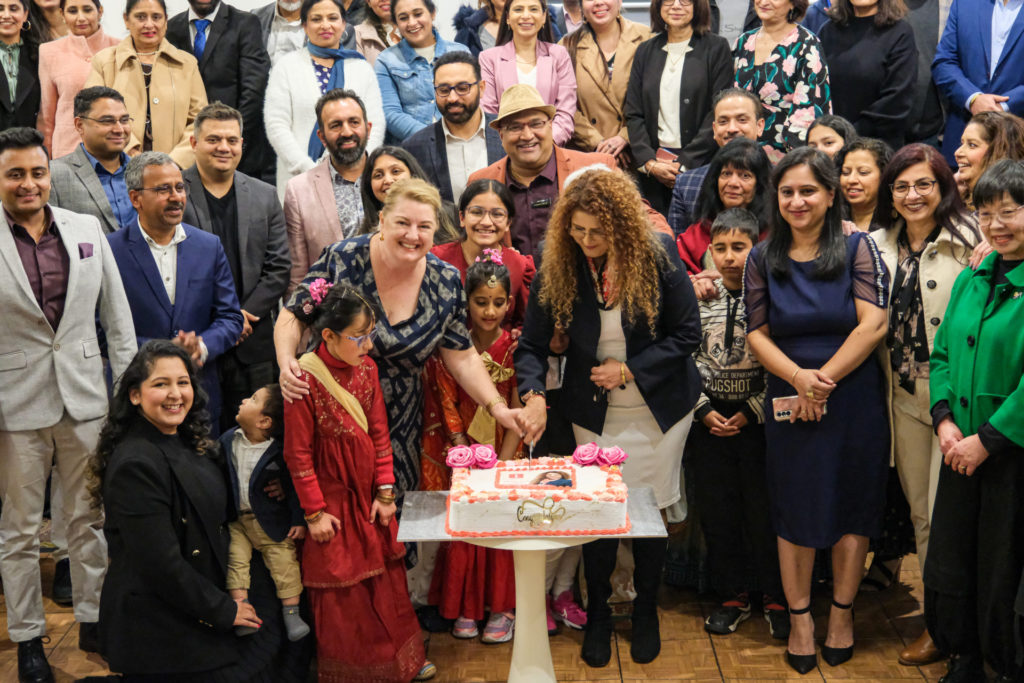
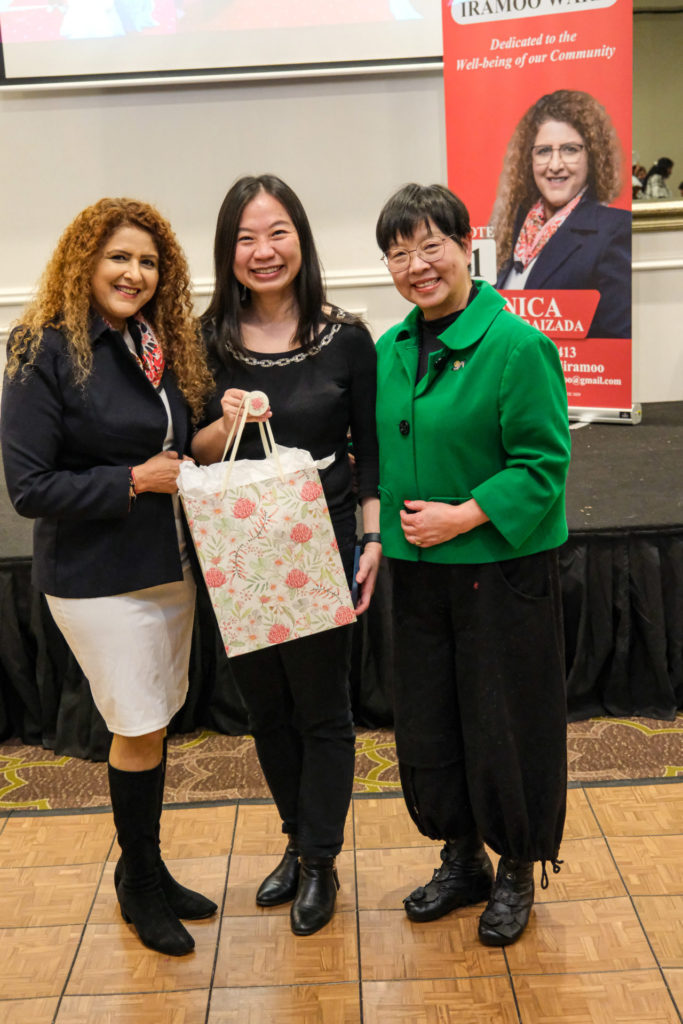
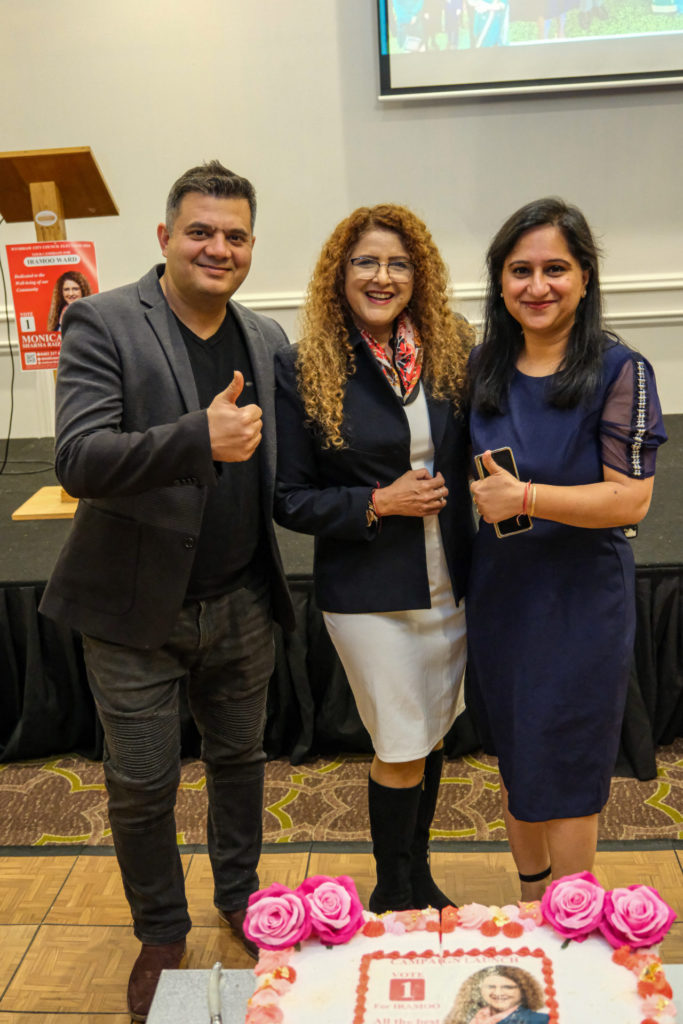
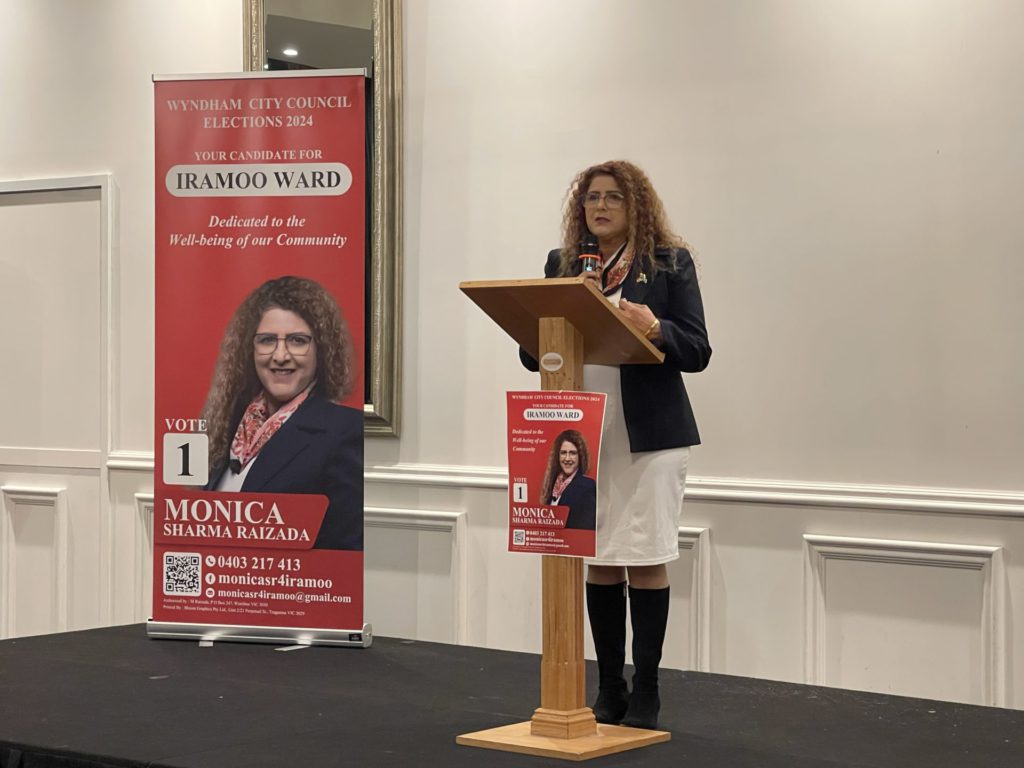
Monica Sharma Raizada, a dedicated teacher, community volunteer, and women’s advocate, officially launched her campaign for Wyndham City Council’s Iramoo Ward.
The launch event, held in the presence of prominent community members, had Victoria’s Minister for Women, Jobs, and Industry, Natalie Hutchins, as the guest of honour. Raizada’s campaign highlights her decade-long commitment to serving the Wyndham community and her vision for a safer, more inclusive, and resource-equipped region.
Why Monica Sharma Raizada is Running
At the event, Monica shared her journey to candidacy, emphasising how Minister Hutchins personally encouraged her to step forward and stand for election.
“Minister Hutchins called me into her office and explained why it’s important for people like me, who have been working tirelessly as a teacher, domestic violence (DV) support adviser, and women’s advocate, to represent the community in a more official capacity,”
Raizada said.
Minister Hutchins praised Raizada for her invaluable contributions, saying, “My mission is to see 50 per cent of council positions filled by women this year.
“Monica is a great fit for that mission—her dedication to the community, her leadership, and her experience working with people in need make her an ideal candidate.”
Raizada echoed this sentiment, urging the community to support her in the upcoming election. “I have spent more than a decade helping over 700 families facing hardship, conflicts, and family violence.
“Now, I’m asking for your support to continue this work and bring real, meaningful change to the people of Wyndham.”
A Background in Service and Advocacy
Monica Sharma Raizada’s background in both education and community service speaks volumes about her qualifications for the role. A state school teacher and counsellor by profession, Raizada has also worked as a lecturer in Economics and Business Development Manager (BDM) in banking.
She holds multiple qualifications, including a Master’s in Economics, a Diploma in Education, a Diploma in Counselling, and certifications in Finance, Assessment, and Training.
In addition to her professional roles, Raizada has been a community volunteer for over ten years. She is the President of the Women of Wyndham (WOW) and Chair of the Wyndham Interfaith Network. She also serves as the director of several organisations, including Multicultural Women of the World and Vedic Global.
Her exceptional contributions to the community were recognised when she was awarded the Victorian Multicultural Commission’s Meritorious Service to the Community award. Raizada also served on the Victorian Multicultural Commission’s Advisory Board for seven years, contributing to policies that impact multicultural communities across the state.
Monica’s Campaign Priorities
Raizada’s campaign is rooted in addressing the real issues faced by the people of Wyndham. In her speech, she outlined the key areas she plans to focus on:
Better Education and Resources for State Schools: “Our schools need more engaging programs for our youth and additional resources to meet the growing needs of the community,” she said.
Enhanced Safety for Residents: Raizada pledged to advocate for increased police presence and better laws to improve the safety of Wyndham’s hard-working residents.
Improved Roads and Transport: “Congested roads during peak hours are a daily challenge for our community. We need better connections to free-ways and more efficient transport solutions,” she explained.
Increased Employment Opportunities for Locals: With a strong background in business development, Raizada emphasised the importance of creating more jobs for locals.
More Programs for Seniors: Raizada also highlighted the need for greater attention to seniors in the community, promising to advocate for programs that cater to their needs.
Community Support and Endorsements
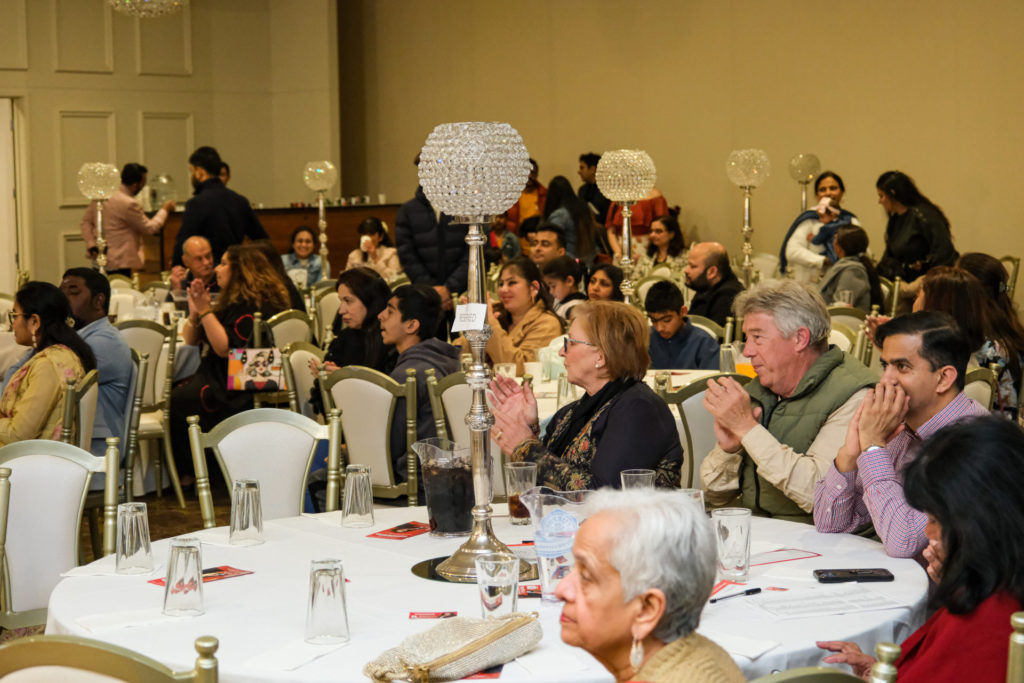
Many attendees at the campaign launch spoke passionately about the impact Raizada has had on the Wyndham community. Key themes among the speakers were her unwavering dedication to helping women and families in distress, her leadership in community organisations, and her advocacy for multiculturalism.
One supporter said,
“Monica is more than just a community leader—she is a true champion for the people of Wyndham. She has supported families in their darkest times and has always worked for the betterment of our community.”
Another supporter added, “Her work with domestic violence survivors and her efforts to ensure women are represented in business and leadership roles show her commitment to empowerment. She has my full support.”
Looking Ahead
Monica Sharma Raizada’s candidacy for the Iramoo Ward in the Wyndham City Council elections represents a step forward for inclusive, community-driven leadership. Her commitment to serving the people of Wyndham and her vision for a safer, more prosperous region resonate deeply with the local community.
Raizada remains focused on bringing much-needed resources and services to Wyndham as her campaign gathers momentum. She concluded her campaign launch with a call to action:
“Together, we can bring the change Wyndham needs. I’m ready to work hard for our community—now I’m asking for your support to make it happen.”
With her impressive educational background, community service, and business background, Monica Sharma Raizada is poised to be a strong contender in the upcoming Wyndham City Council elections. Her campaign promises a future of better education, safer communities, and a more vibrant and connected Wyndham.
Support Our Journalism
Global Indian Diaspora and Australia’s multicultural communities need fair, non-hyphenated, and questioning journalism, packed with on-ground reporting. The Australia Today – with exceptional reporters, columnists, and editors – is doing just that. Sustaining this needs support from wonderful readers like you.
Whether you live in Australia, the United Kingdom, Canada, the United States of America, or India you can take a paid subscription by clicking Patreon and support honest and fearless journalism. LINK: https://tinyurl.com/TheAusToday
Music legend George “Fiji” Veikoso’s long-awaited return to Fiji has been hailed as a momentous celebration of Pacific music and culture, as his ‘Homecoming’ Concert at Nadi’s Prince Charles Park captivated thousands.
It is reported that the two-day event, 14-15 September, headlined by the world-renowned artist after four decades of sharing Pacific sounds globally, drew an enthusiastic crowd of locals and international visitors alike.
Veikoso was joined on stage by chart-topping artists such as J Boog, Maoli, Josh Tatofi, and Justin Wellington, marking a historic occasion for Fiji’s music scene.
The concert, which attracted fans from as far as Australia, New Zealand, the US, and the Pacific Islands, delivered an unforgettable experience as fans sang along to timeless hits.
For those of us in the Pacific who want to learn more about George Veikoso aka FIJI, his musical influences, and how his career started, I recommend this deep dive 👇🏽 https://t.co/XGb6OqSYF7
Deputy Prime Minister Manoa Kamikamica, who attended the concert, described the event as “emotional, inspirational, and uplifting.”
Veikoso’s 90-minute performance was a highlight, showcasing his enduring talent and Pacific pride. Kamikamica expressed admiration for Veikoso’s contributions to Pacific music and hoped his legacy would inspire future generations.
Minister for Tourism Viliame Gavoka observed that the broader impact of high-profile events like Veikoso’s homecoming on Fiji’s tourism.
“This is more than just a musical event; it’s a testament to our ability to provide world-class entertainment while showcasing our rich cultural heritage,” he said.
Veikoso is a veteran musician with over four decades of influence in the Fiji and Pacific music scene. Known for his distinctive vocals and genre-blending of reggae, hip hop, RnB, and jazz, his work as a songwriter, composer, and producer has earned him international recognition.
Image: George “Fiji” Veikoso’ (Source: Screenshot – The Coconet TV – YouTube)
Beyond his musical contributions, Veikoso has been a mentor to emerging artists, promoting Polynesian unity through the TokoUso movement and advocating against gang violence. His achievements include winning the inaugural Best Pacific International Artist Award at the 2014 Pacific Music Awards.
With Veikoso’s ‘Homecoming’ Concert a spectacular success, fans of Fijian music are now expecting many more such evenings that celebrate Pacific culture.
Support Our Journalism
Global Indian Diaspora and Australia’s multicultural communities need fair, non-hyphenated, and questioning journalism, packed with on-ground reporting. The Australia Today – with exceptional reporters, columnists, and editors – is doing just that. Sustaining this needs support from wonderful readers like you.
Whether you live in Australia, the United Kingdom, Canada, the United States of America, or India you can take a paid subscription by clicking Patreon and support honest and fearless journalism. LINK: https://tinyurl.com/TheAusToday
Australia, renowned for its rich cultural diversity, marks Australian Citizenship Day each year on 17 September. The day is dedicated to celebrating the significance of Australian citizenship and the privileges and responsibilities that come with it.
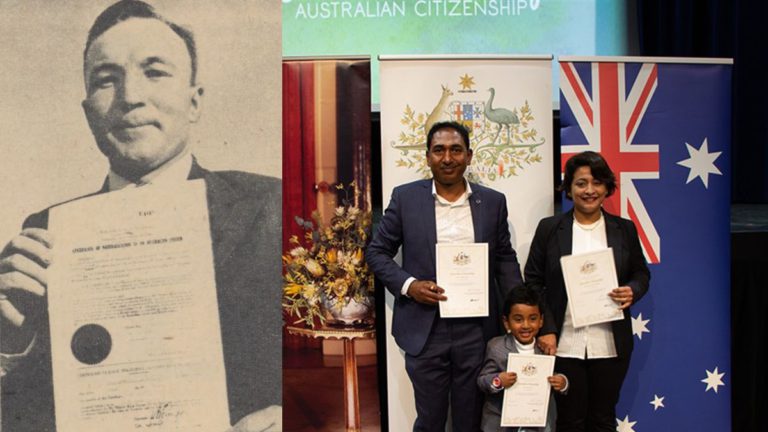
This year’s celebration holds special importance as it coincides with the 75th anniversary of the first Australian citizenship ceremony, conducted at Canberra’s Albert Hall on 3 February 1949.
Seven people (representing each Australian state and the ACT) became the first Australian citizens. They were from Czechoslovakia, Denmark, France, Greece, Norway, Spain, and Yugoslavia.
Jan Jandura Pucek had the honour of becoming the first naturalised Australian citizen during the ceremony. Originally from Czechoslovakia, Jan worked as a eucalyptus distiller in the Tidbinbilla region of the ACT.
In February this year, Minister for Immigration, Citizenship, and Multicultural Affairs of Australia, Andrew Giles MP observed in a statemennt, “Modern Australia is a nation built through citizenship – reflecting the contributions and experiences of more than 6 million people from around the world who chose to commit to us.”
“Our Government understands how important permanency and citizenship are to those who have lived, worked and contributed to their local communities for so long. That’s why we’ve brought down the backlog in citizenship applications, ended the limbo of temporary protection visas and provided a pathway to citizenship to thousands of New Zealanders previously denied this opportunity,” he added.
Image: Cricket Victoria hosts Australian Citizenship Ceremony (Source: Cricket Victoria News)
Each year, Australian Citizenship Day offers a moment for all Australians, whether citizens by birth or choice, to reflect on the meaning of citizenship, take pride in the nation’s democratic values, and consider what unites them as Australians.
Since its inception in 2001, Australian Citizenship Day has seen thousands of new citizens welcomed in local communities across the country.
The day was established following a recommendation by the Australian Citizenship Council in 2000, which suggested a national day for all Australians to celebrate their citizenship.
The date, 17 September, was chosen as it marks the anniversary of the 1973 renaming of the Nationality and Citizenship Act 1948 to the Australian Citizenship Act 1948.
Each year, the Department of Home Affairs, alongside local councils, hosts special citizenship and affirmation ceremonies to promote this day, encouraging schools, organisations, and community groups to also participate with their own events.
Since 1949, over six million new citizens have been welcomed to Australia. Citizenship, a common bond uniting Australians, brings with it a commitment to uphold key national values such as respect for individual freedom and dignity, freedom of speech and religion, equality of opportunity, and adherence to the rule of law. These values underpin the Australian identity and foster a society where mutual respect, tolerance, and compassion are embraced.
For 75 years, new citizens have played a vital role in shaping a strong, united, and prosperous Australia. As the nation celebrates this anniversary, it continues to reflect on the shared values and diverse experiences that strengthen its communities.
Support Our Journalism
Global Indian Diaspora and Australia’s multicultural communities need fair, non-hyphenated, and questioning journalism, packed with on-ground reporting. The Australia Today – with exceptional reporters, columnists, and editors – is doing just that. Sustaining this needs support from wonderful readers like you.
Whether you live in Australia, the United Kingdom, Canada, the United States of America, or India you can take a paid subscription by clicking Patreon and support honest and fearless journalism. LINK: https://tinyurl.com/TheAusToday
Australia has debated and studied high-speed rail for four decades. The High Speed Rail Authority has begun work on a project that could finally deliver some high-speed rail in the 2030s.
The Albanese government set up the authority in 2022. It also committed A$500 million to plan and protect a high-speed rail corridor between Sydney and Newcastle. This corridor was prioritised due to significant capacity constraints on the existing line, among other reasons.
The ultimate plan is for a high-speed rail network to connect Brisbane, Sydney, Canberra, Melbourne and regional communities across the east coast. The network would help Australia in its urgent task to reduce greenhouse gas emissions from transport. These continue to increase even as emissions from other sectors fall.
The authority has now publicly outlined plans for the first stage of this east coast network. After a history of failed proposals dating back to 1984, the new plans provide some cause for optimism that Australia could have some high-speed rail by 2037.
"We compared land transport options for getting to net zero. Hands down, electric rail is the best." https://t.co/95L5NUYvLH
— Public Transport Users Association (@ptua) July 30, 2024
What is high-speed rail and why do we need it?
The International Rail Union of Railways defines high-speed rail as new lines designed for speeds of 250km/h or more and upgraded lines for speeds of at least 200km/h.
High-speed city-to-city rail services will be needed to become an attractive alternative to air travel.
What is the authority working on?
Early this year the High Speed Rail Authority gained a new CEO, Tim Parker, with extensive experience in delivering mega-projects. In late August, the authority outlined its plans at an industry briefing in Newcastle.
The authority has commissioned eight studies, including a business case for a Sydney–Newcastle line. Significantly, it will include the cost of future highway upgrades if high-speed rail does not proceed. This study, along with a report on how high-speed rail will proceed along Australia’s east coast, is due by the end of this year.
Also under way is a geotechnical study that includes drilling 27 boreholes. It will help determine the proposed depths of two long rail tunnels and guide decisions on crossing the Hawkesbury River and the route to the Central Coast and on to Newcastle.
All going well, including land acquisition and agreements with the New South Wales government (which could include funding), work could start in 2027 and be completed by 2037.
The Newcastle Herald reports on the industry briefing to deliver a high-speed rail line by 2037. Philip Laird
Many questions remain
Given the time and money required to deliver a Sydney–Newcastle line, bipartisan support will be needed. However, the federal opposition is yet to make a clear commitment to high-speed rail.
There are other uncertainties too. Will the trains be operated by the public or private sector? The latter was the intention for projects that were scrapped decades ago, such as the CSIRO-proposed Very Fast Train (VFT) linking Sydney, Canberra and Melbourne, and the Sydney–Canberra Speedrail.
And how will the engineering projects be delivered? The new authority must learn from the project management problems in delivering the Inland Rail freight line. The project is running late and costs have blown out.
Some major federally funded government projects have worked well. These include upgrades of the national highway system (by state road authorities and contractors) and the new Western Sydney International Airport, which is nearing completion.
China had zero kilometers of high speed rail at the beginning of 2007.
By the end of 2022, it had 42,000; or enough for a full loop around the Earth with 2000 kilometers to spare.
All built within the time it takes for a kid to go from pre-school to college. And they are even… pic.twitter.com/2BOpHUIxTA
The big question is when work will start on a Sydney–Melbourne high-speed rail service. In 2019, International High-Speed Rail Association chairman Masafumi Shukuri estimated building this line could take 20 years.
The present line is 60km longer than it should be as the route dates back to the steam age. It also has far too many tight curves. This means train travel on this line is slower than cars and trucks.
As former NSW State Rail chief Len Harper said in 1995, this railway was already “inadequate for current and future needs” even back then.
When the VFT was proposed in 1984, questions were raised as to whether our population was big enough for such a project. Now, more than 15.5 million people live in NSW, Victoria and the Australian Capital Territory. Melbourne–Sydney is the world’s fifth-busiest flight route.
Advocacy group Fastrack Australia has called for a Sydney–Melbourne track built to high-speed standards and able to carry freight. The estimated travel time is four hours.
This group and the Rail Futures Institute propose the line be built in stages, with priority given to the section from near Macarthur to Mittagong in NSW. This would reduce the current line’s length by about 18km and allow for better Sydney–Canberra train services.
Urgent action is needed to protect the rail corridor from encroaching urban development.
Australia needs to catch up
In June 2023, when the new authority started work, I observed that Australia must surely hold the world record for studies into high-speed rail with no construction.
In stark contrast, this October marks the 60th anniversary of the world’s first dedicated high-speed rail line, the Tokaido Shinkansen in Japan linking Tokyo to Shin-Osaka. The network has since grown in stages to about 3,000km of lines.
Today, high-speed rail operates in 21 countries over about 60,000km of lines – China has about 40,000km. Indonesia’s high-speed rail service between Jakarta and Bandung started running last year. India and Thailand are in the advanced stages of delivering high-speed rail. It’s also under construction in another 11 countries.
Australia could finally join them in the next few years if it starts building the Sydney–Newcastle line.
Global Indian Diaspora and Australia’s multicultural communities need fair, non-hyphenated, and questioning journalism, packed with on-ground reporting. The Australia Today – with exceptional reporters, columnists, and editors – is doing just that. Sustaining this needs support from wonderful readers like you.
Whether you live in Australia, the United Kingdom, Canada, the United States of America, or India you can take a paid subscription by clicking Patreon and support honest and fearless journalism. LINK: https://tinyurl.com/TheAusToday
Ankur Patel’s journey from an international student in Australia to a successful entrepreneur is a testament to perseverance, adaptability, and community spirit. Originally from India, Patel arrived in Australia in 2004 to pursue a Master’s degree in IT from Central Queensland University (CQU).
What began as an academic venture quickly turned into a pathway to becoming the owner of a thriving fruit, vegetable, and grocery business chain, Fruit World Group.
From IT to Business Ventures
After completing his degree, Patel initially worked for a logistics company, where he honed his understanding of supply chains and operations. Around the same time, he and some friends launched a small cleaning business. This entrepreneurial spark led him to meet future business partners who would collaborate with him on a new venture.
His big break came when Sunrise Fresh, a small business in Wentworthville owned by close friends Samir Naik and Brijesh Patel needed help computerising its inventory and finances. With his IT background and logistics expertise, Ankur Patel stepped in and transformed the business operations.
Recognising his efficiency in managing logistics, Ankur, Samir and Brijesh decided to take the plunge into the fruit and vegetable business, establishing Fruit World Group.
Building the Fruit World Group
The timing of Patel’s entry into the grocery business coincided with the rapid growth of Sydney’s western suburbs, as many multicultural communities, particularly Indian Australians, began settling in the area.
Understanding the market dynamics and the cultural preferences of the growing population, Patel and his partners opened or acquired one store every two years, expanding their footprint steadily.
In 2016, Hills Fruit Worldopened in Sovernhill Plaza, followed by the acquisition of David’s Freshin Homebush in 2018. Despite facing challenges, including the COVID-19 pandemic, Patel and his team managed to launch the highly popular Blacktown Fruit Worldin 2021, catering to the Indian subcontinent’s grocery needs.
The business continued to flourish, and by 2023, they opened Box Hill Fruit World, a high-end store addressing the needs of European, Middle Eastern, and continental grocery.
Overcoming Challenges in the Sydney Market
Patel’s journey in the fruit and vegetable business was not without its hurdles. In the early days, when he and his partners went to Sydney Market to establish their business account and purchase produce, the market cooperative was initially hesitant to work with them.
Patel recalls how they refused to provide goods despite him offering to pay upfront in cash, citing concerns over unfamiliarity with Indian-Australian business practices.
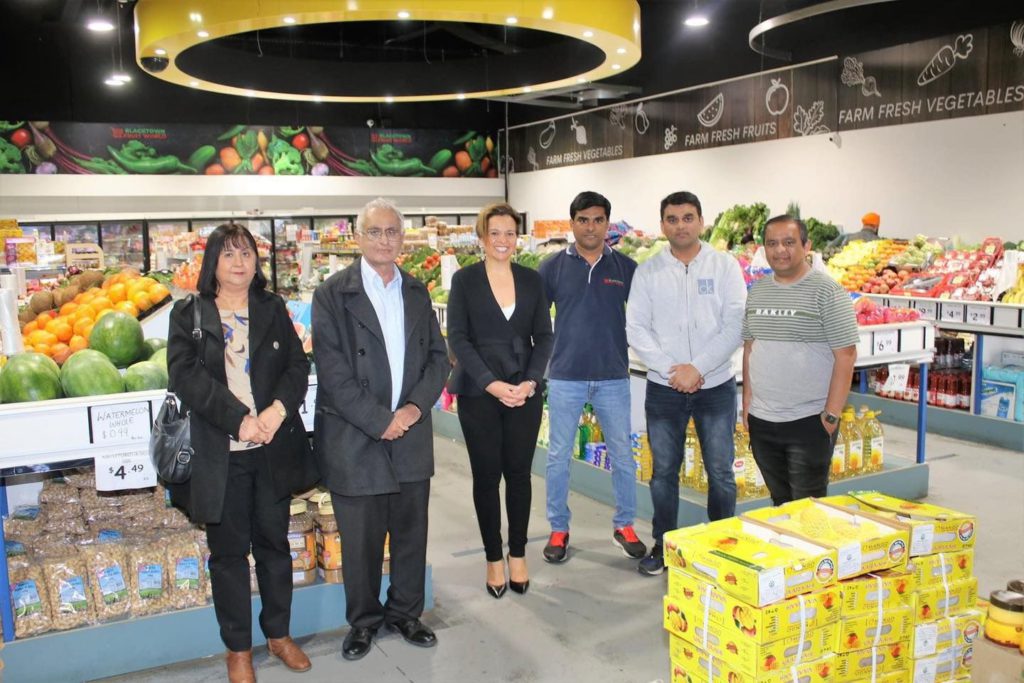
Ankur Patel at Blacktown Fruit World; Image Source; The Australia Today
“They were hesitant as they had never done business with Indian Australians and didn’t know our business practices,”
Patel shared.
However, the tides have turned since then. “We have changed perceptions now. The same vendors in the market now make special coffee for me when I am there for early morning meetings,” Patel says proudly.
Working in the fruit and vegetable industry demands long hours and early starts.
Patel explains, “Our typical day starts at 3 am. By 4:30 am, orders are sorted, and by 5:30 am, everything is loaded into our trucks to be delivered to the stores. By 7:30 am, fresh products are on the shelves, ready for customers when the shops open at 9 am.”
Community Service at the Core
Beyond expanding his business empire, Patel is deeply committed to serving the community. During the COVID-19 lockdowns of 2020 and 2021, when many businesses hiked prices, Patel’s Fruit World Groupcontinued to sell fresh products at minimal margins to ensure that the community had access to affordable groceries.
“I take pride in serving the community by selling fresh products at the lowest minimum margins,”
Patel says.
His business also provided significant support to local charities. “Every week, we supplied fruits, vegetables, and groceries to multiple charity organisations that made support baskets for people and families struggling during the pandemic.”
In addition, Fruit World Groupregularly supports community events, senior citizen clubs, and religious organisations, including local Gurdwaras and Hindu temples. Whether it’s a Ram Navami celebration or a Ganesh Chaturthi festival, Patel’s business has been known to offer groceries, fruits, and vegetables at heavily discounted prices or even free of charge.
Looking to the Future
When asked if he plans to enter politics, Patel laughs and says,
“People like us love to discuss politics and shape public opinion about politicians, but I am more focused on supporting those who work for the well-being of multicultural communities.”
However, Patel is far from done expanding his business empire. He shares his excitement about launching a wholesale business model, aimed at supplying fresh produce to restaurants, aged care homes, childcare centres, and cafes.
“We’ve already done a soft start with an online platform for deliveries, and it’s doing very well,”
he explains.
Looking ahead, Patel remains committed to strengthening India-Australia relations, particularly in business and trade.
“Growing India and Australia’s relationship to prosper and grow together is a core philosophy for us,” Patel says, confident that his business ventures will continue to contribute to the broader success of both nations.
Ankur Patel’s rise from an international student to a successful business owner exemplifies the entrepreneurial spirit and hard work that can drive success in Australia’s competitive market. His leadership in the Fruit World Groupis not only a business success story but also a reflection of his dedication to community service and multicultural integration in Australia.
As he continues to expand his business and build bridges between India and Australia, Patel’s journey remains an inspiring example for aspiring entrepreneurs in the global diaspora.
Support Our Journalism
Global Indian Diaspora and Australia’s multicultural communities need fair, non-hyphenated, and questioning journalism, packed with on-ground reporting. The Australia Today – with exceptional reporters, columnists, and editors – is doing just that. Sustaining this needs support from wonderful readers like you.
Whether you live in Australia, the United Kingdom, Canada, the United States of America, or India you can take a paid subscription by clicking Patreon and support honest and fearless journalism. LINK: https://tinyurl.com/TheAusToday
Study Melbourne has revealed the finalists for this year’s Victorian International Education Awards, honouring the state’s most outstanding international students and recent graduates.
Among the nominees, five Indian students have been recognised for their contributions in higher education, entrepreneurship, and leadership.
In 2024, there are eight student award categories, with finalists contending for prestigious titles such as International Student of the Year – Higher Education, International Student/Graduate Entrepreneur of the Year, and Emerging Leader – International Alumni Award.
The Indian students who have emerged as finalists are:
Image: Angela Sojan – Bachelor of Science (Computing and Software Systems), University of Melbourne (Source: Study Melbourne)
Angela Sojan,finalist in the International Student of the Year – Higher Education, is a passionate advocate for diversity in STEM education. As an educator at the Victorian Space Science Education Centre, she has inspired thousands of students in subjects like physics and astronomy.
Angela also coordinates the Girls Programming Network, championing gender diversity in computer science. Additionally, she serves as the diversity and inclusion officer of the Mathematics and Statistics Society at the University of Melbourne, promoting inclusive initiatives. Her leadership and dedication have had a profound impact on both local and global communities.
Image: Ayushi Daga – Master of Public Health, Monash University (Source: Study Melbourne)
Ayushi Daga, finalist in the International Student of the Year – Higher Education, has made significant contributions through her volunteer work in Victoria. She provided critical support during emergencies like the February 2024 Grampians wildfires, using her multilingual skills to assist diverse communities. Her leadership roles with the Australian Kookaburra Kids Foundation and the Iceberg Foundation highlight her dedication to mental health and inclusivity.
As a Student Ambassador for Study Melbourne and Monash University, Ayushi has enhanced support for international students and promoted Victoria as a premier study destination. Her passion for health equity underscores her exceptional leadership.
Image: Muhsin Kizhisseri – Doctor of Philosophy (Engineering), Deakin University (Source: Study Melbourne)
Muhsin Kizhisseri, finalist in the International Student/Graduate Entrepreneur of the Year, leads the innovative startup Healovate, which focuses on stroke prediction. His research has brought significant advancements in understanding stroke mechanisms and holds potential to revolutionise patient care.
Healovate was a recipient of the Study Melbourne Future Founders Venture Scholarship in 2024. With a background in Professional Engineering from Deakin University and an entrepreneurial spirit, Muhsin is a rising star in the MedTech industry.
Image: Preetham Akula – Bachelor of Aerospace Engineering, RMIT University (Source: Study Melbourne)
Preetham Akula, finalist in the International Student/Graduate Entrepreneur of the Year, is known for Dropout Chaiwala, a popular food and beverage startup. Leveraging his engineering skills, Preetham founded Akula Tech, a pioneering space technology company. The startup, which secured $1 million in pre-seed funding, is preparing for its first satellite launch.
Akula Tech has also partnered with Australian telecom giant VOCUS, aiming to expand into government and enterprise markets. Preetham is committed to fostering talent development and industry collaboration within Victoria’s startup ecosystem.
Image: Fazil Mohammed – Bachelor of Information and Communication Technology, Swinburne University of Technology (Source: Study Melbourne)
Fazil Mohammed, finalist in the Emerging Leader – International Alumni Award, is a distinguished leader and advocate for international students. Having received the Emerging Leader Award from Swinburne University, Fazil now works as a Cloud Operations Engineer at PwC Australia. His YouTube channel, which promotes the international student experience in Melbourne, has amassed over one million views. Fazil’s commitment to community engagement and industry collaboration makes him a recognised figure in Victoria’s international student community.
Winners of each category, including the coveted Premier’s Award for International Student of the Year, will be announced at the official awards ceremony in October.
Support Our Journalism
Global Indian Diaspora and Australia’s multicultural communities need fair, non-hyphenated, and questioning journalism, packed with on-ground reporting. The Australia Today – with exceptional reporters, columnists, and editors – is doing just that. Sustaining this needs support from wonderful readers like you.
Whether you live in Australia, the United Kingdom, Canada, the United States of America, or India you can take a paid subscription by clicking Patreon and support honest and fearless journalism. LINK: https://tinyurl.com/TheAusToday
Air India’s CEO Campbell Wilson revealed the airline’s ambitious plans for global expansion and fleet transformation during his speech at the CAPA Airline Leader Summit Australia Pacific, held in Brisbane.
Wilson, addressing aviation leaders at the Star Event Centre at Queen’s Wharf, discussed Air India’s five-year overhaul, promising that the carrier’s fleet and customer experience would soon meet world-class standards.
“When we finish our five-year transformation, the whole fleet will have been upgraded, and customer experience will be up to world-class standards,” Wilson said.
“Thereafter, it’s a matter of execution and scale. India’s growth offers no reason an Indian airline couldn’t be on par with major US or European carriers.”
Queensland too is positioning itself as a key part of Air India’s growth, aiming to introduce direct routes between Brisbane and India.
Queensland’s government is making a strong pitch for the Sunshine State to become Air India’s next Australian destination, which would mark a significant milestone as India – now the world’s most populous nation – currently lacks direct flight routes to Brisbane.
Wilson hinted at the possibility, acknowledging the untapped potential in the region. “We’ve already doubled our frequency to Australia over the last two years,” he said, referring to current routes to Sydney and Melbourne.
The expansion, however, depends on Air India’s aircraft deliveries. Since its privatisation in 2022, Air India has ordered a record-breaking 470 new aircraft, outstripping the entire fleet of Qantas.
In the two years since privatisation, Air India has undergone a comprehensive transformation, including the acquisition of new aircraft, a $200 million investment in IT systems, and plans to retrofit its widebody fleet by 2025.
Queensland Tourism Minister Michael Healy noted that India is currently the state’s eighth-largest international tourism market, and with the country’s growing middle class, the number of Indian travellers is set to increase. Gert-Jan de Graaff, CEO of Brisbane Airport Corporation, echoed these sentiments, citing the rapid growth of Indian travellers to Brisbane.
Qantas International CEO Cam Wallace too confirmed Brisbane’s increasing importance as a hub. With India now accounting for 68 per cent of Australia’s trade with the region, a direct route to Brisbane would significantly strengthen family and business connections.
Air India’s CEO, Campbell Wilson, today discussed our strategic direction at the @CAPA_Aviation Airline Leader Summit Australia Pacific, in Brisbane.
"When we (Air India) finish our five-year transformation, the whole fleet will have been upgraded, and customer experience will… pic.twitter.com/ri9JIbTUDX
Wilson also highlighted the airline’s goal to expand its market beyond the Indian diaspora, targeting corporate travellers and those seeking premium services. With a fleet that now includes six new A350s and an industry-first AI chatbot, Air India is redefining itself for the future.
Air India CEO confirmed that while several global markets are vying for these aircraft, Australia is high on the list. “As soon as we get the aircraft, we’d like to put more into Australia. The Indian diaspora ranks Australia as one of the top three destinations to travel to,” he said.
Support Our Journalism
Global Indian Diaspora and Australia’s multicultural communities need fair, non-hyphenated, and questioning journalism, packed with on-ground reporting. The Australia Today – with exceptional reporters, columnists, and editors – is doing just that. Sustaining this needs support from wonderful readers like you.
Whether you live in Australia, the United Kingdom, Canada, the United States of America, or India you can take a paid subscription by clicking Patreon and support honest and fearless journalism. LINK: https://tinyurl.com/TheAusToday
The Centre for Australia India Relations (CAIR) has announced that Arts Centre Melbourne will host a striking installation by renowned Indian artistic duo Thukral & Tagra at Federation Square.
Thukral & Tagra, known for their work across various media, including painting, sculpture, installations, video, and performance, have made waves with their exploration of migration, consumer culture, and Indian identity.
Image: Indian atistic duo Thukral & Tagra set to showcase immersive work in Melbourne (Source: CAIR – LinkedIn)
Their recent projects focus on interpreting Indian mythological narratives through dynamic and abstract visual forms. Both artists have built a reputation for creating immersive environments that challenge the boundaries of traditional art forms, making them a fitting choice for this groundbreaking cultural exchange.
The upcoming Federation Square showcase by Thukral & Tagra will transform the iconic Melbourne venue into an immersive, living canvas that celebrates Punjabi heritage through contemporary art.
This exciting collaboration between Melbourne’s Asia TOPA festival and India’s prestigious Serendipity Arts Festival in Goa comes under the Maitri Cultural Partnerships grants.
Melanie Smith, Executive Director of Performing Arts at Arts Centre Melbourne, emphasised the grant’s importance in enabling such an impactful partnership, “This timely support from the Maitri Cultural Partnerships program will allow us to embark on a rich, multifaceted collaboration with Serendipity Arts Festival.”
“It will bring together artists from both countries to engage with communities, develop new skills, and present bold, contemporary work to audiences across India and Australia,” she added.
The Maitri Cultural Partnerships aim to enhance collaboration between Australia’s and India’s vibrant creative industries, renowned globally for their contributions to film, theatre, literature, and visual arts. This initiative will not only enrich the cultural landscapes of both nations but also create platforms for artistic dialogue and innovation.
Support Our Journalism
Global Indian Diaspora and Australia’s multicultural communities need fair, non-hyphenated, and questioning journalism, packed with on-ground reporting. The Australia Today – with exceptional reporters, columnists, and editors – is doing just that. Sustaining this needs support from wonderful readers like you.
Whether you live in Australia, the United Kingdom, Canada, the United States of America, or India you can take a paid subscription by clicking Patreon and support honest and fearless journalism. LINK: https://tinyurl.com/TheAusToday
The AFP-hosted INTERPOL National Central Bureau in Canberra actively shared information with foreign law enforcement partners about convicted and suspected child sex offenders on over 700 matters last financial year. This included intelligence and investigative enquiries and warnings on registered or suspected child sex offenders travelling between countries.
About 300 of these information exchanges were notifications from the AFP and INTERPOL Canberra warning of convicted Australian child sex offenders travelling overseas.
Travel details of Australians listed on the National Child Offenders System are assessed by the AFP as they pass through Australian international airports.
If they are travelling to a country identified as a potential target for predators seeking to abuse children, or to a country which has requested to be informed of the travel of convicted offenders, the AFP provides relevant details to INTERPOL for dissemination to law enforcement in the destination country.
INTERPOL Green Notices are a key mechanism used to warn global partners about serious offenders who are likely to travel, and they assist international law enforcement in protecting their communities. Green Notices cover a variety of serious criminal offences, but 94 per cent of them from Australia are related to child sex offenders.
The head of INTERPOL, Secretary General Jürgen Stock, praised Australia’s work through INTERPOL to protect children on a global scale.
“A leading player in international police cooperation, Australia has consistently demonstrated a strong and unwavering commitment to child protection, both online and in the real world,” he said.
“In addition to its confidence in INTERPOL’s International Child Sexual Exploitation database, Australia is the third highest user of Green Notices, warning other countries about known serious child sex offenders.”
Australia currently has over 900 active Green Notices listed with INTERPOL, which is the third-most of any country in the world.
AFP Assistant Commissioner David McLean said preventing known Australian offenders from travelling to areas favoured by predators was part of a region-wide commitment to breaking the insidious cycle of child sexual abuse.
“Law enforcement and other organisations in the region are doing a lot of good work to address reasons why children end up in these horrible situations, but this work can be undone by relatively-wealthy Australian predators seeking to pay for the opportunity to abuse a child,” he said.
Australians registered on the National Child Offenders System with reporting obligations must obtain permission to travel overseas. However, the AFP may still inform INTERPOL partners of their destination, travel details and applicable details of previous offending.
Those travelling to locations historically targeted by child sex tourism offenders will face closer law enforcement scrutiny. Often they will be stopped at immigration in their destination country, refused entry and returned to Australia on the next available flight.
“This is an insidious crime type where prevention is much more important than any ‘cure’. The AFP is committed to working with our regional partners through INTERPOL to combat the abuse of children anywhere in the world, through every means at our disposal,” Assistant Commissioner McLean said.
Support Our Journalism
Global Indian Diaspora and Australia’s multicultural communities need fair, non-hyphenated, and questioning journalism, packed with on-ground reporting. The Australia Today – with exceptional reporters, columnists, and editors – is doing just that. Sustaining this needs support from wonderful readers like you.
Whether you live in Australia, the United Kingdom, Canada, the United States of America, or India you can take a paid subscription by clicking Patreon and support honest and fearless journalism. LINK: https://tinyurl.com/TheAusToday
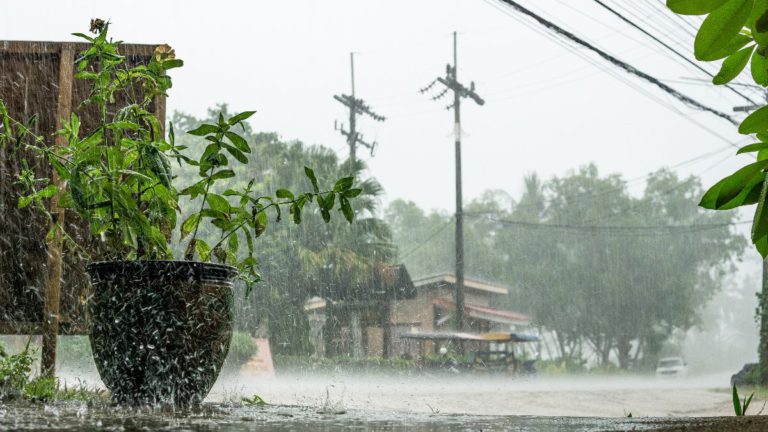
Australia is no stranger to extreme weather. From heatwaves and droughts to flooding rains, hailstorms or fire weather, our continent experiences it all.
To help Australians prepare for these hazards, the Bureau of Meteorology regularly briefs emergency services and governments, along with providing forecasts and advanced warnings for the public when severe weather approaches.
The latest spring and summer briefing shows the rest of this year is likely to be warmer than normal, with more extreme heat events possible.
We need to prepare for fire risks and severe storms. There’s also every chance the nation could experience multiple extreme events at any one time – concurrently or in rapid succession – in different parts of the country. Here’s what we expect to see.
Our most severe weather usually starts in October
Australia’s severe weather season is really from October to April.
With those unusually extreme events already happening across much of Australia, many people will be worried about the next few months.
The Bureau of Meteorology monitors current conditions and the drivers of Australian climate, then forecasts weather for the coming days and climate conditions for the coming months.
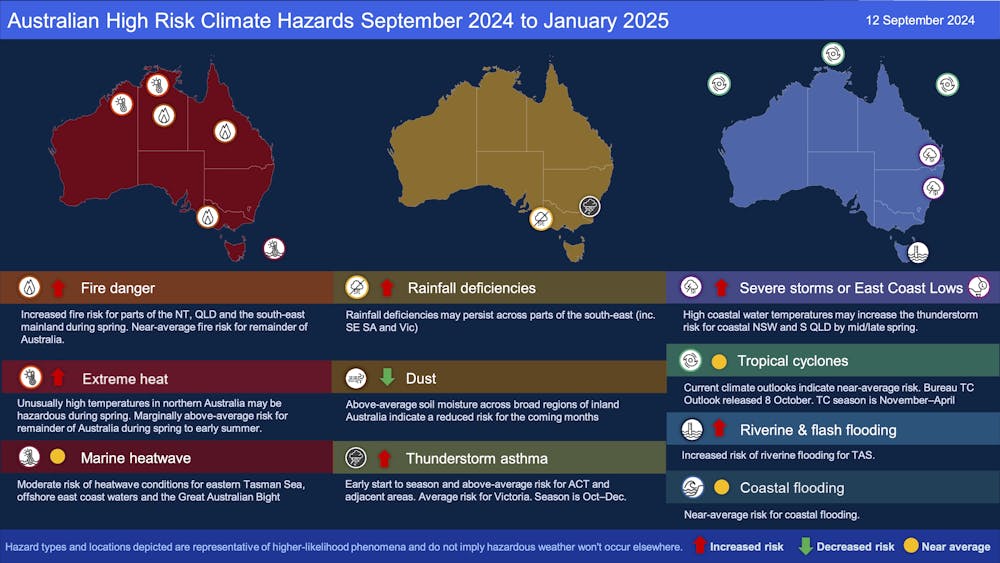
On Friday, the bureau’s general manager for environmental prediction, Matt Collopy, presented this outlook below at the National Situation Room in Canberra.
The Bureau of Meteorology’s spring and summer climate hazards outlook. 2024-25 Higher Risk Weather Season National Preparedness Briefing.
What will the rest of 2024 look like?
Australia’s climate and the likelihood of severe weather varies depending on the behaviour of climate drivers, such as the El Niño-Southern Oscillation and Indian Ocean Dipole. This is particularly true at this time of year, when the connections between these drivers and Australian weather and climate are strongest.
At the moment, we have neutral conditions in both the Pacific and Indian Oceans, but a higher-than-normal likelihood of a La Niña developing. Without strong climate drivers, the seasonal outlook for Australia is less certain than if we had established El Niño/La Niña or positive/negative Indian Ocean Dipole events in place.
Nevertheless, with a higher chance of La Niña, a slightly wetter-than-normal outlook, and above-average rates of runoff already flowing into some eastern Australian rivers, the chance of river flooding is higher than normal for the next few months, particularly in Tasmania. On the plus side, wetter than average soils across much of eastern Australia reduces the risk of dust storms in coming months.
Western and Central Victoria, on the other hand, have had a dry few months and river flows are below average. Drought is continuing and there’s not a strong signal for either wet or dry conditions in the seasonal outlook for this region.
The risks of a very warm spring
Having just experienced the warmest August on record, it is perhaps no surprise that Australia is likely to have another very warm spring. This is accompanied by a heightened chance of extreme heat events.
Continued high temperatures in the seas around Australia raise the chance of marine heatwaves, particularly in the Tasman Sea this spring.
With the warmer conditions and a lack of a strong rainfall signal in the forecast, there is a raised risk of bushfires this spring across much of northeastern Australia, as well as in the drought-affected areas of Victoria and southeastern South Australia. A summer bushfire outlook will come in November.
The bureau is also warning people in and around Canberra to beware of thunderstorm asthma, in which storms induce breathing difficulties. But these events are hard to forecast this far out from October-December, when such events are most frequent.
Similarly, while tropical cyclones are a major weather hazard across northern Australia, it is hard to make useful forecasts for the summer and early autumn season at this stage. The bureau will publish its tropical cyclone outlook next month. https://www.youtube.com/embed/K1PKb5_jnro?wmode=transparent&start=0 Climate and water long-range forecast, issued 12 September 2024.
Preparing for more extremes
With so much potential for extreme weather and significant risks to lives and livelihoods, it’s useful to know what lies ahead.
The outlook helps Australians prepare for the severe weather on the horizon. As the climate varies from one year to the next, the likelihood of different types of severe weather changes. This is happening on top of background trends related to the warming of the planet.
In the future, with continued global warming, Australians will experience more extreme heat and there will more often be a heightened risk of bushfires.
In Australia’s southwest and southeast, we expect droughts to worsen too, while increases in short-duration extreme rainfall are on the cards for most of us.
Forecasting of extreme weather will continue to improve, helping us prepare for some hazards. But reducing greenhouse gas emissions will also help to limit rises in the frequency and intensity of these extreme weather events.
Global Indian Diaspora and Australia’s multicultural communities need fair, non-hyphenated, and questioning journalism, packed with on-ground reporting. The Australia Today – with exceptional reporters, columnists, and editors – is doing just that. Sustaining this needs support from wonderful readers like you.
Whether you live in Australia, the United Kingdom, Canada, the United States of America, or India you can take a paid subscription by clicking Patreon and support honest and fearless journalism. LINK: https://tinyurl.com/TheAusToday
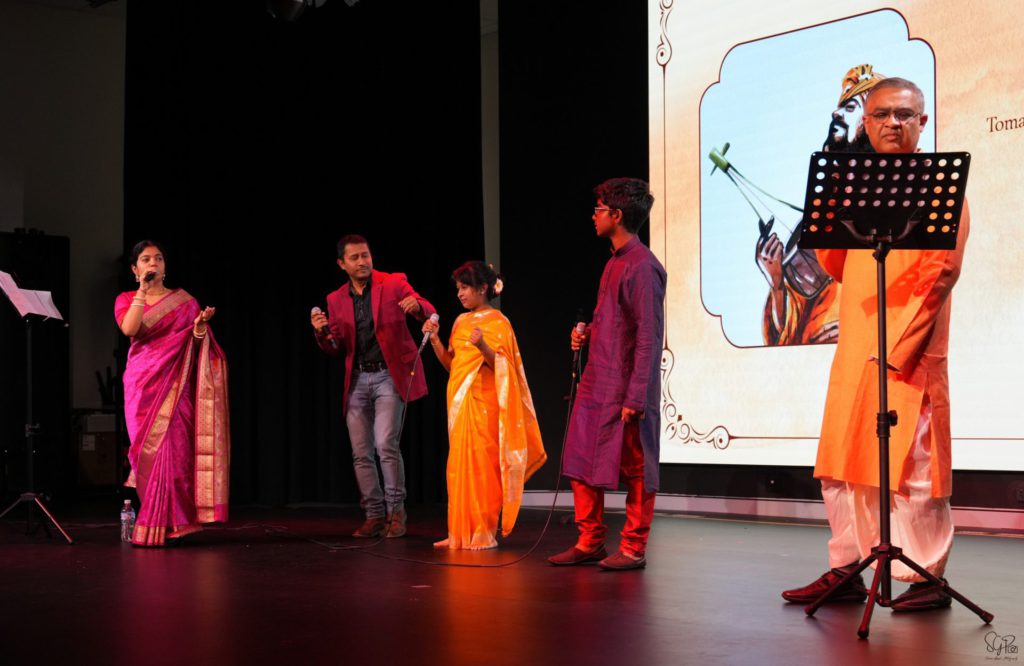
On 18th August 2024, the Bengali Association of Western Australia (BAWA) hosted its annual cultural gala, the “BAWA Annual Cultural Night 2024,” celebrating India’s vibrant cultural journey through the ages.
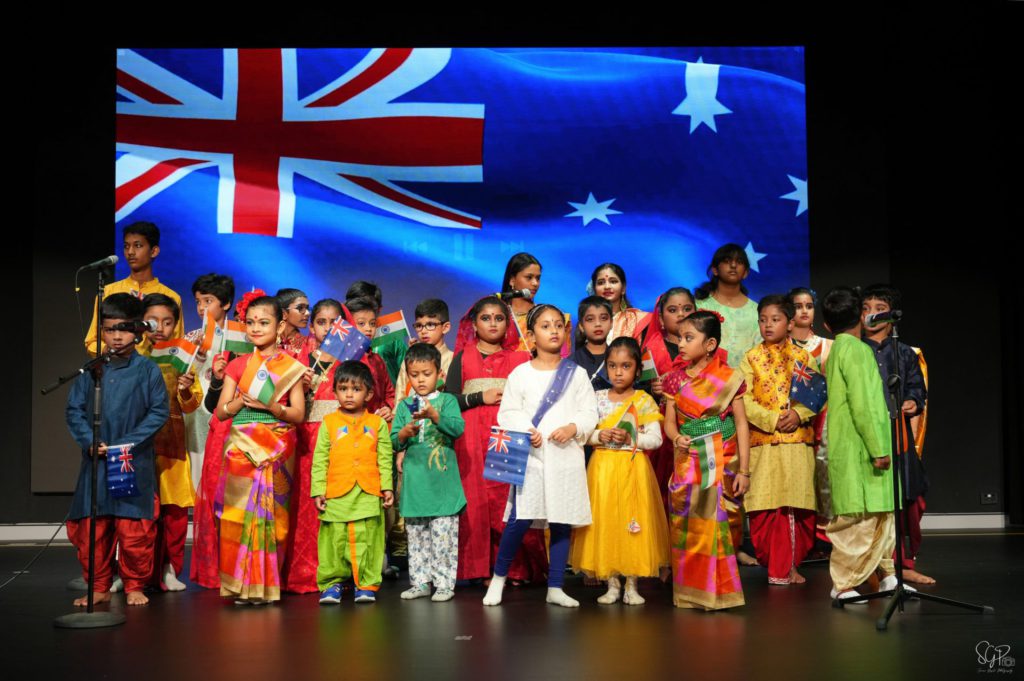
Image: BAWA Annual Cultural Night 2024 -national anthems (Photo: Saurav Gupta / Source: BAWA – Facebook)
The event, which has become a staple in the community calendar, serves as a platform to showcase the remarkable talents of performers from the local Indian community.
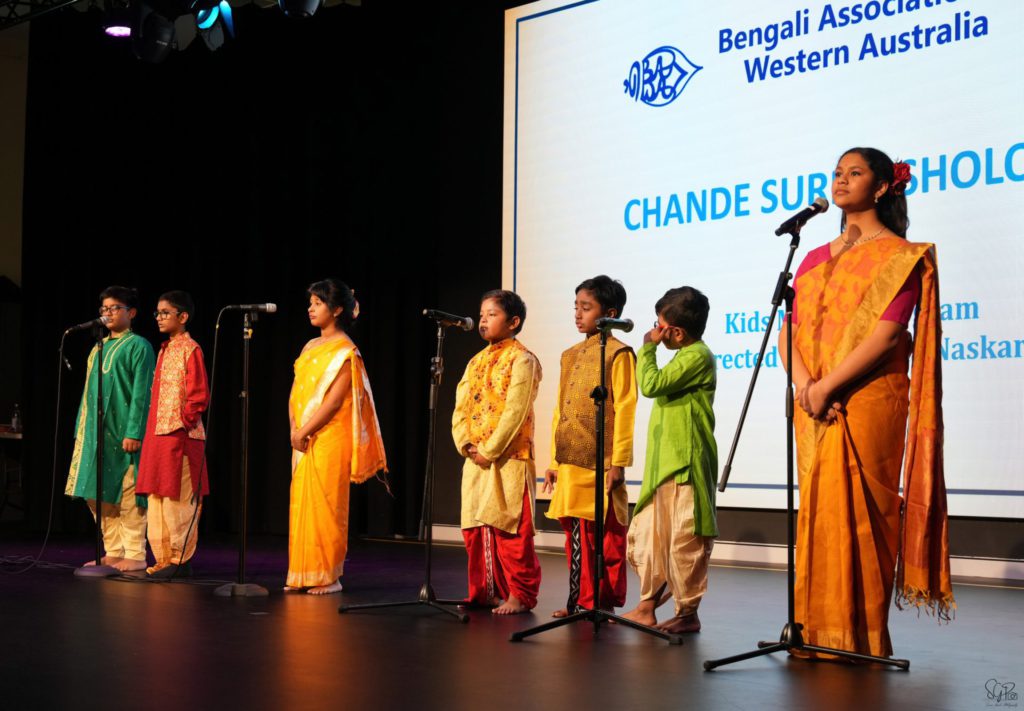
Image: BAWA Annual Cultural Night 2024 -Chonde Sure Kisholoye (Photo: Saurav Gupta / Source: BAWA – Facebook)
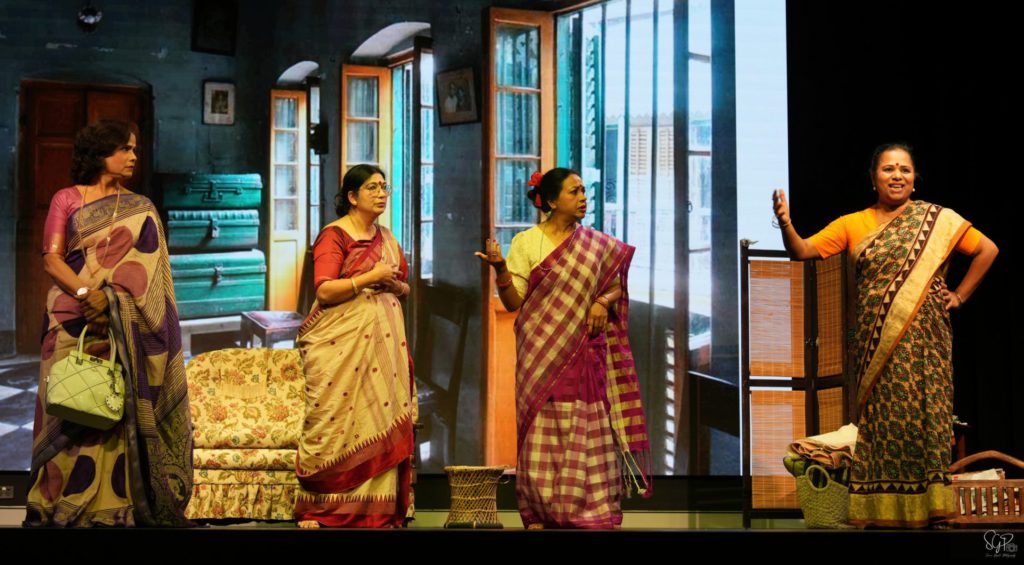
Held in Perth, the event brought together 100 performers who mesmerised the 300-strong audience with their diverse acts, ranging from traditional dance to music and theatrical performances.
Image: BAWA Annual Cultural Night 2024 -Ganga (Photo: Saurav Gupta / Source: BAWA – Facebook)
The evening was a vivid display of Indian art forms and cultural practices, fostering a deeper understanding and appreciation of India’s rich heritage, transcending language and ethnic boundaries.
Image: BAWA Annual Cultural Night 2024 – Bollywood dance (Photo: Saurav Gupta / Source: BAWA – Facebook)
The gala night is not only a showcase of talent but also a celebration of shared heritage, allowing the community to come together and strengthen their cultural bonds. It is a key event in the Bengali Association’s efforts to promote cultural diversity and build a sense of unity within the Indian-Australian community.
Image: BAWA Annual Cultural Night 2024 – a selection of Bengali Romantic Songs through the Ages (Photo: Saurav Gupta / Source: BAWA – Facebook)
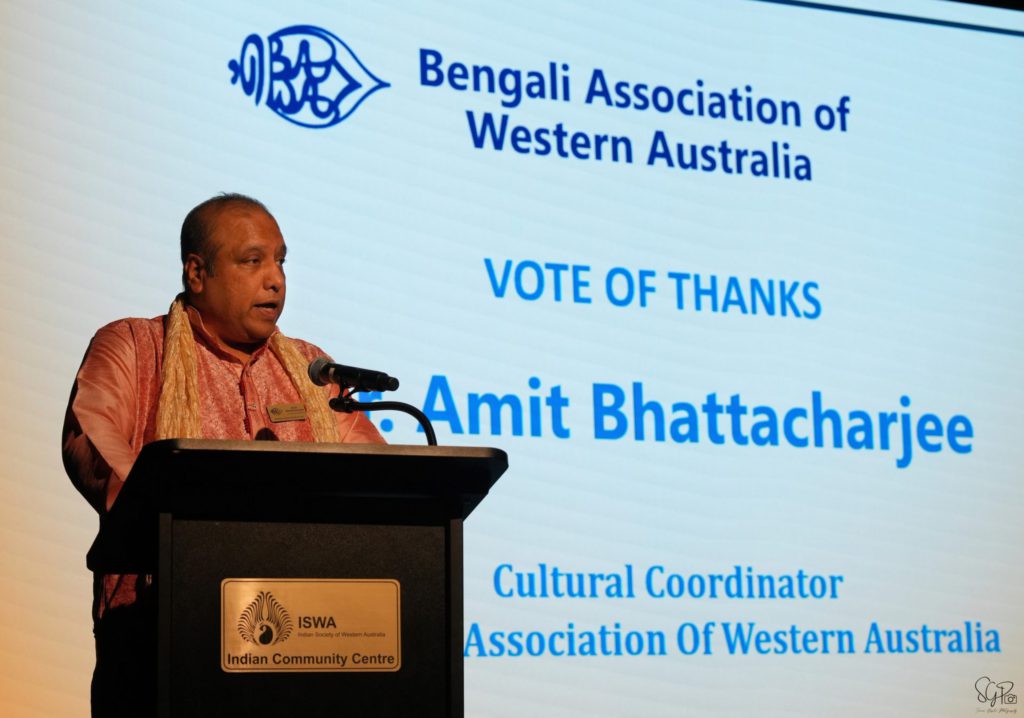
The evening was graced by several esteemed guests, including Dr Jags Krishnan, MLA and WA Labor Member for Riverton; Mr Deepak Sharma, President of the Indian Association of Western Australia; Mr Keyur Kamdar, Councillor for Ranford Ward, City of Armadale; Mr Tarun Dewan, Councillor for East Ward, City of Cockburn; Dr Anisur Rahmaan, President of the Bangladesh Australia Association of Western Australia; and Dr Parvinder Kaur. Their presence highlighted the importance of community gatherings that celebrate multiculturalism and unity.
Image: BAWA Annual Cultural Night 2024 – Bharate Chai: A Bengali Drama (Photo: Saurav Gupta / Source: BAWA – Facebook)
Warm applause echoed through the auditorium after each performance, leaving attendees with fond memories of an evening filled with cultural pride and artistic brilliance.
BAWA’s Annual Cultural Night 2024 was not only a showcase of talent but a testament to the power of community and the celebration of shared heritage.
Image: BAWA Annual Cultural Night 2024 (Photo: Saurav Gupta / Source: BAWA – Facebook)Image: BAWA Annual Cultural Night 2024 (Photo: Saurav Gupta / Source: BAWA – Facebook)
BAWA, a well-established nonprofit organisation that has represented the Bengali community in Western Australia for 32 years, continues to be a beacon of Indian culture in Perth. Through events like this, the association keeps the essence of Bengali culture alive, thousands of miles away from its roots in India.
Support Our Journalism
Global Indian Diaspora and Australia’s multicultural communities need fair, non-hyphenated, and questioning journalism, packed with on-ground reporting. The Australia Today – with exceptional reporters, columnists, and editors – is doing just that. Sustaining this needs support from wonderful readers like you.
Whether you live in Australia, the United Kingdom, Canada, the United States of America, or India you can take a paid subscription by clicking Patreon and support honest and fearless journalism. LINK: https://tinyurl.com/TheAusToday
The University of Melbourne has appointed Patrick Suckling as the new Chair of the Australia India Institute (AII), the university’s centre focused on strengthening and enhancing the Australia-India relationship.
With over twenty years of experience working with India, Suckling’s notable positions include serving as Australian High Commissioner to India from 2013 to 2016 and Australian Ambassador for the Environment in 2016.
In 2016, upon concluding his term as Australian High Commissioner to India, Suckling expressed satisfaction with having left Australia-India relations at a high point.
“I have a deep affinity with India. I’ve been visiting the country for 30 years—starting as a student, then serving as a junior diplomat in the 1990s. My first child was born in India, and I’ve been involved in most major strategies related to India throughout my government career.”
Suckling emphasised that the strength of the relationship between the people of India and Australia is central to its depth and significance.
NEW CHAIR ANNOUNCED
The Institute is pleased to announce Mr. Patrick Suckling as the new Chair of the Advisory Board. With over two decades of experience in Australian-Indian relations and a track record as a diplomat and entrepreneur, Patrick is perfectly poised to lead the… pic.twitter.com/udTO5oL15e
Suckling currently serves as Managing Director and Head of EMEA & Asia at Pollination, a specialist climate change investment and advisory firm. On his new role as Chair of AII, he observed in a statement:
“As India rises, it has never been more important for Australia to get its relationship right. We have a rich history of association, now becoming an integral and strategic relationship across our two economies, security and defence and people-to-people links.”
Prof. Michael Wesley, Deputy Vice-Chancellor (Global, Culture and Engagement) at the University of Melbourne, expressed enthusiasm for Mr Suckling’s appointment.
“The Australian India Institute is supported by a seasoned Advisory Board dedicated to forging essential partnerships across industry, government, and community sectors. This is part of the University’s broader effort to foster cross-border collaboration for mutual learning and impact.”
Reflecting on his new role, Suckling added, “The Institute plays a pivotal role in advancing this relationship during a transformative period for both nations.”
NEW PODCAST 🎙️ with @HCICanberra His Excellency Gopal Baglay on the Indian election results. We unpack the election, it’s scale and complexity, and 🇮🇳’s future under a 3rd term @narendramodi government on development and foreign policy.
Lisa Singh, CEO of the Australia India Institute, praised Suckling’s credentials and experience.
“His leadership will be key in driving the Institute’s growth and in achieving our 2022-2026 Strategy.”
In addition to Suckling’s appointment, AII has five new Advisory Board members: Shinjini Kumar, Founder of Five Salts Pvt Limited; Srimathi Shivashankar, Vice President and Business Head at HCL; Vicki Thomson, Chief Executive & Director at the Group of Eight (Go8); Rajiv Dube, Independent Director at Tata International Limited; and Rufus Pinto, ANZ Country Head for India.
These new members will join current Advisory Board members, including Suhasini Haidar, Diplomatic Editor at The Hindu; John McCarthy, Senior Adviser at Asialink, University of Melbourne; Sonia Gandhi, Director at Gandhi Creations Pty Ltd; and Prof. Michael Wesley.
Support Our Journalism
Global Indian Diaspora and Australia’s multicultural communities need fair, non-hyphenated, and questioning journalism, packed with on-ground reporting. The Australia Today – with exceptional reporters, columnists, and editors – is doing just that. Sustaining this needs support from wonderful readers like you.
Whether you live in Australia, the United Kingdom, Canada, the United States of America, or India you can take a paid subscription by clicking Patreon and support honest and fearless journalism. LINK: https://tinyurl.com/TheAusToday
This move is part of the broader Action Plan to tackle sexual violence in higher education, agreed upon by Education Ministers earlier this year.
The legislation responds to the concerning findings of the 2021 National Student Survey, which revealed that one in 20 students have experienced sexual assault, and one in six have faced sexual harassment since commencing university.
Alarmingly, half of the students surveyed felt their complaints went unheard.
Not enough has been done to address sexual violence in our universities and for too long students haven’t been heard.
With the establishment of an independent National Student Ombudsman that begins to change. pic.twitter.com/W5e2tbdnpk
Minister for Education, Jason Clare, stressed the urgency of action:
“Not enough has been done to address sexual violence in our universities and for too long students haven’t been heard. That begins to change with this legislation.”
The newly formed National Student Ombudsman will offer a direct pathway for higher education students to escalate complaints, including those related to sexual assault and harassment.
The Ombudsman will assess whether university decisions are unreasonable or discriminatory, intervene in cases where delays or inaction occur, and, where necessary, recommend further steps for resolution. Crucially, the office will possess strong investigative powers, allowing it to compel universities to provide information.
Attorney-General Mark Dreyfus emphasised the Ombudsman’s role in ensuring student safety:
“All students should feel safe and supported on university campuses. The National Student Ombudsman will give students a stronger voice when the worst happens.”
In addition to investigating gender-based violence, the Ombudsman will address complaints related to homophobia, antisemitism, Islamophobia, and other forms of racism on campus. However, it will not handle complaints about academic judgement or legal employment matters.
The Action Plan has been shaped through extensive consultation with students, victim-survivor advocates, and key stakeholders from the higher education sector, including victim support organisations such as Our Watch. It also contributes to the broader National Plan to End Violence against Women and Children 2022–2032, led by Minister for Social Services Amanda Rishworth.
Alongside the Ombudsman, the government will introduce a National Higher Education Code to Prevent and Respond to Gender-based Violence. This code was identified as a key priority in the Australian Universities Accord Interim Report.
Pending the passage of the legislation, the National Student Ombudsman will begin accepting complaints from 1 February 2025.
Support Our Journalism
Global Indian Diaspora and Australia’s multicultural communities need fair, non-hyphenated, and questioning journalism, packed with on-ground reporting. The Australia Today – with exceptional reporters, columnists, and editors – is doing just that. Sustaining this needs support from wonderful readers like you.
Whether you live in Australia, the United Kingdom, Canada, the United States of America, or India you can take a paid subscription by clicking Patreon and support honest and fearless journalism. LINK: https://tinyurl.com/TheAusToday
Many of us try to eat more fruits and vegetables and less ultra-processed food. But why is sticking to your goals so hard?
High-fat, sugar-rich and salty foods are simply so enjoyable to eat. And it’s not just you – we’ve evolved that way. These foods activate the brain’s reward system because in the past they were rare.
Now, they’re all around us. In wealthy modern societies we are bombarded by advertising which intentionally reminds us about the sight, smell and taste of calorie-dense foods. And in response to these powerful cues, our brains respond just as they’re designed to, triggering an intense urge to eat them.
Here’s how food cravings work and what you can do if you find yourself hunting for sweet or salty foods.
We are programmed to learn how good a food tastes and smells and where we can find it again, especially if it’s high in fat, sugar or salt.
Something that reminds us of enjoying a certain food, such as an eye-catching ad or delicious smell, can cause us to crave it.
The cue triggers a physical response, increasing saliva production and gastric activity. These responses are relatively automatic and difficult to control.
What else influences our choices?
While the effect of cues on our physical response is relatively automatic, what we do next is influenced by complex factors. Whether or not you eat the food might depend on things like cost, whether it’s easily available, and if eating it would align with your health goals.
But it’s usually hard to keep healthy eating in mind. This is because we tend to prioritise a more immediate reward, like the pleasure of eating, over one that’s delayed or abstract – including health goals that will make us feel good in the long term.
So what if a cue prompts us to look for a certain food, but it’s not available?
Previous research suggested you would then look for anything that makes you feel good. So if you saw someone eating a doughnut but there were none around, you might eat chips or even drink alcohol.
But our new research has confirmed something you probably knew: it’s more specific than that.
If an ad for chips makes you look for food, it’s likely a slice of cake won’t cut it – you’ll be looking for something salty. Cues in our environment don’t just make us crave food generally, they prompt us to look for certain food “categories”, such as salty, sweet or creamy.
Food cues and mindless eating
Your eating history and genetics can also make it harder to suppress food cravings. But don’t beat yourself up – relying on willpower alone is hard for almost everyone.
Food cues are so powerful they can prompt us to seek out a certain food, even if we’re not overcome by a particularly strong urge to eat it. The effect is more intense if the food is easily available.
This helps explain why we can eat an entire large bag of chips that’s in front of us, even though our pleasure decreases as we eat. Sometimes we use finishing the packet as the signal to stop eating rather than hunger or desire.
Is there anything I can do to resist cravings?
We largely don’t have control over cues in our environment and the cravings they trigger. But there are some ways you can try and control the situations you make food choices in.
Acknowledge your craving and think about a healthier way to satisfy it. For example, if you’re craving chips, could you have lightly-salted nuts instead? If you want something sweet, you could try fruit.
Avoid shopping when you’re hungry, and make a list beforehand. Making the most of supermarket “click and collect” or delivery options can also help avoid ads and impulse buys in the aisle.
At home, have fruit and vegetables easily available – and easy to see. Also have other nutrient dense, fibre-rich and unprocessed foods on hand such as nuts or plain yoghurt. If you can, remove high-fat, sugar-rich and salty foods from your environment.
Make sure your goals for eating are SMART. This means they are specific, measurable, achievable, relevant and time-bound.
Be kind to yourself. Don’t beat yourself up if you eat something that doesn’t meet your health goals. Just keep on trying.
Global Indian Diaspora and Australia’s multicultural communities need fair, non-hyphenated, and questioning journalism, packed with on-ground reporting. The Australia Today – with exceptional reporters, columnists, and editors – is doing just that. Sustaining this needs support from wonderful readers like you.
Whether you live in Australia, the United Kingdom, Canada, the United States of America, or India you can take a paid subscription by clicking Patreon and support honest and fearless journalism. LINK: https://tinyurl.com/TheAusToday
Following the forced removal of Bangladesh’s democratically elected Prime Minister Sheikh Hasina, mobs rampaged across the country, targeting minorities, particularly Hindus, until a new interim government was installed.
Many supporters of the regime change, including Prof. Muhammad Yunus, Nobel Peace Prize laureate and chief adviser to the interim government, said that “the reports of attacks on the minorities have been exaggerated.” He even invited “Indian journalists to visit Bangladesh and report from the ground on the issues of the minority protection.”
Professor Muhammad Yunus said that the reports of attacks on the minorities have been exaggerated and he is inviting Indian journalists to visit Bangladesh and report from the ground on the issues of the minority protection.
— Chief Adviser of the Government of Bangladesh (@ChiefAdviserGoB) August 16, 2024
Prothom Alo which is among the most-read newspapers in Bangladesh has now given clear numbers that between August 5 and August 20, Bangladesh saw 1,068 houses and businesses belonging to minorities looted and vandalised.
The paper reports that in numerous areas, homes, businesses, and places of worship have been attacked, severely damaged, and in some cases, even set on fire. The majority of attacks occurred in the southwestern division of Khulna (Utsav Mandal’s area), where 295 homes and businesses of the minority community were destroyed. Other divisions also suffered significant damage, including 219 in Rangpur, 183 in Mymensingh, 155 in Rajshahi, 79 in Dhaka, 68 in Barishal, 45 in Chattogram, and 25 in Sylhet.
Bangladesh's most-read Bengali newspaper Prothom Alo (the name is from a Sunil Gangopadhyay historical novel) has given clear numbers – between the 5th and the 20th of August Bangladesh saw attacks on 1,068 Hindu establishments (homes and work places). pic.twitter.com/OkdQ1Kz4JN
While, a public relations office of the Ahmadiyya Muslim Congregation Ahmad Tabsir Chowdhury told Prothom Alo, “We are not in politics, we are not involved with any party. I feel the attack was made upon us this time, taking advantage of the fact that the law enforcement was not active.”
Despite a global outcry against violence towards Bangladeshi Hindus and other minorities, the reports of attacks are still coming in from a nation with a serious law and order situation.
Global outcry against Islamist violence towards Bangladeshi Hindus
On Monday, September 9, a tragic incident occurred in the Samity neighbourhood of Cox’s Bazar, where a young boy (around 15 years) named Sukanta Dhar lost his life following a confrontation between two groups stemming from a football match. Eyewitnesses reported that teenager Sukanta Dhar was assaulted by his rival during a football match along with a woman who attempted to rescue him.
According to another local sources, Sukanta Dhar’s death was allegedly primarily attributed to his religious identity (Hindu), even though the initial conflict arose from a football match. It is important to highlight that following the collapse of former Prime Minister Sheikh Hasina and her administration on August 5, the Hindu community, supporters of the Awami League, and secular-progressive individuals in Bangladesh are facing oppression with the alleged backing of the current interim government.
Another Hindu teenager Utsav Mondal in Sonadanga, Khulna, found himself at the police station facing allegations of blasphemy. There was speculation on social media about his death as neither he nor his family could be located. However, on September 9, it was confirmed that Utsav Mandal is indeed alive but he may have lost his eyes.
In the current situation, there are many such reports of Awami League leaders and activists facing violence, allegedly with the complicity of the administration.
Currently, it has been reported that numerous individuals of the Hindu and Buddhist faiths, people with the spirit of the 1971 Liberation War and who hold a strong sense of Bangla culture, are also being allegedly forcefully evicted from their jobs and services.
Keeping in mind all the cases, it is imperative that Prof. Yunus takes swift and decisive action to ensure that law and order are maintained across the nation. Political analysts warn that the continued suppression of opposition voices risks destabilising the country, potentially allowing Islamic fundamentalists to gain influence during his leadership. As a global symbol of peace and progress, Dr Yunus must uphold democratic principles to safeguard the future of Bangladesh.
Disclaimer: The opinions expressed within this article are the personal opinions of the author. The Australia Today is not responsible for the accuracy, completeness, suitability, or validity of any information in this article. All information is provided on an as-is basis. The information, facts, or opinions in the article do not reflect the views of The Australia Today and The Australia Today News does not assume any responsibility or liability for the same.
Contributing Author: The contributing author who is a Bangladeshi-Australian has written this article under a *pen name to protect her identity.
Support Our Journalism
Global Indian Diaspora and Australia’s multicultural communities need fair, non-hyphenated, and questioning journalism, packed with on-ground reporting. The Australia Today – with exceptional reporters, columnists, and editors – is doing just that. Sustaining this needs support from wonderful readers like you.
Whether you live in Australia, the United Kingdom, Canada, the United States of America, or India you can take a paid subscription by clicking Patreon and support honest and fearless journalism. LINK: https://tinyurl.com/TheAusToday
Prime Minister Anthony Albanese is set to travel to the United States to participate in the 2024 Quad Leaders’ Summit, scheduled for 21 September in Wilmington, Delaware.
Albanese will join host President Joe Biden of the United States, Prime Minister Narendra Modi of India, and Prime Minister Kishida Fumio of Japan.
Prime Minister Albanese’s said in a statement, “I look forward to meeting with my Quad partners to discuss important challenges facing the Indo-Pacific and strengthening the Quad’s cooperation.”
“Australia is deeply invested in the future prosperity and stability of the Indo-Pacific. Australia, the United States, India, and Japan share a vision for a region governed by accepted rules and norms, where all countries can cooperate, trade, and thrive,” he added.
The Quadrilateral Security Dialogue, or Quad, is a diplomatic alliance of four nations dedicated to promoting a stable, open, and prosperous Indo-Pacific region. The partnership aims to ensure regional sovereignty and manage competition responsibly while addressing key challenges.
Albanese further observed, “We will work together to shape the kind of region in which we want to live. We are always better off when we act together with our close friends and partners.”
The Quad’s initiatives focus on practical outcomes that align with regional priorities. Key areas of collaboration include strengthening clean energy supply chains, bolstering maritime security, training infrastructure professionals, enhancing health security, and improving resilience and connectivity through undersea cable cooperation.
During the summit, Prime Minister Albanese will engage in discussions on regional issues and explore opportunities to further advance the Quad’s agenda. This meeting marks the fourth in-person Quad Leaders’ Summit, with India set to host the next summit in 2025.
Support Our Journalism
Global Indian Diaspora and Australia’s multicultural communities need fair, non-hyphenated, and questioning journalism, packed with on-ground reporting. The Australia Today – with exceptional reporters, columnists, and editors – is doing just that. Sustaining this needs support from wonderful readers like you.
Whether you live in Australia, the United Kingdom, Canada, the United States of America, or India you can take a paid subscription by clicking Patreon and support honest and fearless journalism. LINK: https://tinyurl.com/TheAusToday
Austrade has celebrated the signing of three Memorandums of Understanding (MOUs) as the Australia-India Business Exchange (AIBX) Fintech and Cyber Trade Mission to India comes to a successful close.
These agreements mark significant milestones in fostering deeper collaboration between Australian and Indian companies, paving the way for expansion and innovation across borders.
Key highlights include:
ViCyber x Cache Technologies Ltd: Appointed as a distributor for India.
NextXR Singapore x AjnaLens: A partnership focusing on content sharing and market exploration.
PayU x FootprintLab: An agreement aimed at bringing climate finance directly to Indian consumers.
These partnerships reflect the growing interest of Australian fintech and cyber security companies in the Indian market, which offers immense potential for expansion.
Paul Murphy, Consul General in Mumbai, congratulated the companies, saying, “My hearty congratulations to the companies on their new partnerships! It was a pleasure to witness them take the next step in their collaboration on the eve of the Global Fintech Fest in Mumbai.”
“The deepening ties between our countries’ innovators are a testament to the strength of the Australia-India relationship.”
Murphy also emphasised India’s booming tech sector, massive digital infrastructure, and increasing security challenges, which present unparalleled opportunities for Australian industries. He acknowledged the vital role of Investment NSW in supporting the entry of innovative Australian technologies into the Indian market.
India presents one of the largest long-term growth opportunities for Australian businesses. The AIBX is Australian Government’s flagship program to enhance trade and investment ties with India.
Support Our Journalism
Global Indian Diaspora and Australia’s multicultural communities need fair, non-hyphenated, and questioning journalism, packed with on-ground reporting. The Australia Today – with exceptional reporters, columnists, and editors – is doing just that. Sustaining this needs support from wonderful readers like you.
Whether you live in Australia, the United Kingdom, Canada, the United States of America, or India you can take a paid subscription by clicking Patreon and support honest and fearless journalism. LINK: https://tinyurl.com/TheAusToday
The AFP alleged that the man, 39 yo, committed an act of indecency on a female passenger during a flight from Brisbane to Darwin on Monday 9 September, 2024.
The passenger alerted airline staff to the incident, who then notified the AFP.
AFP officers interviewed passengers and airline staff when the aircraft arrived at Darwin International Airport.
AFP Superintendent Greg Davis said all travellers had a right to feel safe and the AFP had zero tolerance for any form inappropriate and offensive behaviour, including on board an aircraft.
“When travelling through the airport and when on a plane, people are bound by Australian law and where there is evidence that someone has committed a criminal offence, the AFP will take action,” Det. Supt Davis said.
The man was then arrested and charged with two counts of an act of indecency, contrary to section 59(1) of the Crimes Act 1900 (ACT), by virtue of section 15 (1) of the Crimes (Aviation) Act 1991 (Cth).
This offence carries a maximum penalty of 10 years’ imprisonment.
Support Our Journalism
Global Indian Diaspora and Australia’s multicultural communities need fair, non-hyphenated, and questioning journalism, packed with on-ground reporting. The Australia Today – with exceptional reporters, columnists, and editors – is doing just that. Sustaining this needs support from wonderful readers like you.
Whether you live in Australia, the United Kingdom, Canada, the United States of America, or India you can take a paid subscription by clicking Patreon and support honest and fearless journalism. LINK: https://tinyurl.com/TheAusToday
After months of negotiations between the major parties, the government has announced it will implement the Aged Care Taskforce recommendations.
The government already signalled back in March that it wouldn’t impose a new tax or aged care levy.
Today’s announcement focuses on how wealthier people will contribute in future to the overall cost of their residential aged care and home care services.
While some people won’t be happy about paying for more, these changes are critical to ensuring the aged care system’s long-term sustainability.
Our new Support At Home program will benefit up to 1.4 million older Australians.
Giving people more choices about the kind of care they can receive and helping them maintain their independence for longer.
These historic reforms will improve the funding, viability and quality…
In December, the Taskforce made 23 recommendations to support:
an aged care system that is sustainable, fair and facilitates greater innovation in the sector.
In accepting these recommendations, the government committed to maintaining its funding support for the clinical care needs of all residents and providing safety-net funding for residents with low financial means.
The three key proposals relating to residential care are:
1. Means-testing the ‘hotelling supplement’.
Currently, taxpayers subsidise the cost of everyday living for all residents, regardless of their means. Everyday services include catering, cleaning and laundry.
Going forward, people with significant financial means (with more than A$238,000 in assets, more than $95,400 in income or a combination of the two) will no longer receive this subsidy and will need to pay an additional amount to cover these costs.
This is a rental payment for people who pay for their accommodation using a refundable lump-sum deposit. That payment would be taken from their refund, rather than become an additional charge.
This would help overcome a longstanding problem where many providers have been making a loss on the cost of accommodation.
What impact will these changes have on older people?
Many people will be unaffected by the changes. Under the “no worse off” principle, people who already live in aged care homes will continue to pay as they do under their current arrangements.
Likewise, people with low financial means, typically full pensioners without major assets, will be unaffected. The government will continue to fully cover the costs of their clinical care, non-clinical care and accommodation, and continue to top up their everyday living costs via the hotelling supplement.
Pensioners will continue using their age pension to pay for their everyday living expenses, capped at 85% of the age pension (equivalent to $445 per week).
At the other end of the scale, those with significant means, such as self-funded retirees, will pay an additional means-tested hotelling fee to meet the full cost of their food, laundry, cleaning and utilities. This fee (up to $88 per week, or an extra $4,581 per year), would bring their total contribution to their everyday living services to $533 per week.
Also, while the government will cover self-funded retirees’ clinical care costs, they would be expected to contribute towards the costs of non-care services via a means-tested non-clinical care contribution. This contribution is capped at $101.16 per day (or $708 per week), which a resident would stop paying when either they reach a lifetime limit of $130,000 or four years (whichever is sooner).
Within the new means-testing arrangements there will be no change to the treatment of the family home. The value of the family home included in the means test would remain capped at $206,039 (indexed), even though this arrangement ignores the wealth of people with homes above this limit.
Finally, part-pensioners and self-funded retirees who pay for their accommodation via a refundable lump-sum deposit will pay a new annual deferred rental charge equal to 2% of their deposit per year.
A room priced at $550,000 would attract a rental charge of $212 per week ($11,000 per year), which would be deducted from the $550,000 deposit when it is returned to the resident or their estate at the end of their stay.
For context, if someone wanted to pay for the same room using the daily payment method, it currently costs them $882 per week.
Currently, each resident’s daily payments are fixed at the price when they enter residential care. However, going forward residents’ payments will be indexed twice a year.
The focus is on improving the equity and sustainability
It will take some time to analyse the full implications of today’s announcement, which also included important changes to the Support at Home program and the new Aged Care Act.
Nonetheless, the proposed changes are likely to improve the sustainability and equity of Australia’s residential aged care system.
More than half of all aged care homes are operating at a loss and in the last four years the homes have accumulated losses of $5.6 billion. This is not sustainable, and every home that closes means less chance older people have of getting the residential care and support they need.
The proposed changes, particularly around accommodation, will help ensure providers have sufficient revenue to cover the costs of the services they deliver.
Introducing more means-testing arrangements for everyday living and non-clinical care costs will allow taxpayer funding to better target support to residents with few financial means.
Perhaps most importantly, the increase in contributions from older people who can afford to do so will improve intergenerational equity by taking some of the pressure off income taxpayers who are meeting the rising cost of providing subsidised aged care.
Global Indian Diaspora and Australia’s multicultural communities need fair, non-hyphenated, and questioning journalism, packed with on-ground reporting. The Australia Today – with exceptional reporters, columnists, and editors – is doing just that. Sustaining this needs support from wonderful readers like you.
Whether you live in Australia, the United Kingdom, Canada, the United States of America, or India you can take a paid subscription by clicking Patreon and support honest and fearless journalism. LINK: https://tinyurl.com/TheAusToday
In December 2022, a significant data breach led to personal details being exposed for 9.7 million customers located in Australia. The hackers, an alleged notorious ransomware group, leaked data that included names, birthdates, passport numbers, medical claims data, and medical records.
Despite the ransom demand amounting to $10 million, the organisation still refused to yield, really standing as a testament to its resilience and adherence to principles in the relatively cold world of cyberspace. The data was later leaked on the Dark Web; however, so far, with proactivity and huge investments in cybersecurity, there have been no reported cases of either identity or financial fraud.
With a focus on the imperative for better national-level security, after one of the largest data breaches in history, this year’s Cyber Security Summit convenes over 350 Cyber security leaders of Australia’s most significant companies and institutions, including government agencies.
What is evident from this incident is that recent events have sharply focused the need for comprehensive cybersecurity strategies; despite the breach affecting data important to millions of individuals, the collective is urged to dig in with an appreciation of cybersecurity investment in the context of searching for protection rather than as an avenue of revenue.
Overview of the 23rd Edition of the Cyber Security Summit, Australia:
The Cyber Security Summit, an exclusive, invitation-only event for top cybersecurity leaders in Australia, highlights the nation’s position as the world’s fifth most powerful cybernation. It will take place at Hilton Sydney on 19th September 2024.
With a cybersecurity market valued at USD 7.09 billion in 2024, projected to reach USD 16.52 billion by 2029, and a government- backed 2023-2030 Cybersecurity Strategy, the summit focusses on “From Vision to Strategy: Australia’s Cybersecurity Blueprint.” It aims to unite over 350+ leaders to enhance collaboration and security measures.
Simona Dimovski, Head of Security and Technology at Helia, will explore the synergy between digital transformation and the zero trust model, highlighting practical strategies to enhance cybersecurity through innovative technologies and a zero trust mindset.
Monica Schlesinger, Director and CEO of the Australian Health and Science Institute, will discuss the dual role of AI in cybersecurity, exploring the rise of AI-driven threats and how AI can be leveraged both as a weapon and a shield in defence strategies.
Daminda Kumara, Chief Information Security Officer at the Commonwealth Superannuation Corporation, will provide insights into strategic cloud migration, focusing on data security, cloud optimization, and overcoming challenges in hybrid work environments.
Note: Above article is published as per The Australia Today’s media partnership initiative.
Support Our Journalism
Global Indian Diaspora and Australia’s multicultural communities need fair, non-hyphenated, and questioning journalism, packed with on-ground reporting. The Australia Today – with exceptional reporters, columnists, and editors – is doing just that. Sustaining this needs support from wonderful readers like you.
You can support us with a paid subscription at Patreon for the price of just one coffee a month.
Culture starts at home, and for many Indian families, home is where Carnatic music thrives. In a saying that resonates deeply, “It takes a village to raise a child,” families of Indian heritage in Melbourne, Australia, often find that Carnatic music plays an essential part in shaping that village. For many Indian-origin people in the diaspora, it’s not just a tradition but a way of life, one that cultivates gratitude, discipline, and a deep sense of cultural identity from a young age.
For the uninitiated, Carnatic music is a classical music tradition from India, known for its intricate compositions, melodic ragas, and rhythmic talas. It emphasises both vocal and instrumental forms, with the mridangam, violin, and veena being some of the key instruments. As this music tradition is rooted deeply in devotion and spirituality, it often features lyrical compositions dedicated to Hindu deities, with themes of love, devotion, and philosophy.
From the earliest years, children who are fortunate enough to engage in Carnatic music lessons develop a profound sense of appreciation for their Indian roots. The intricate patterns of this ancient musical tradition are not dissimilar to the design frameworks engineers study – meticulously crafted, with each raga tied to a specific mood or state of mind.
In many ways, Carnatic music can serve as a balm for the emotional and psychological challenges faced in today’s world. Whether it’s through vocal lessons or learning to play an instrument, this art form can be a lifelong companion, a precious gift parents can pass on to their children.
For families living abroad, the role of Carnatic music becomes even more significant. Encouraging young adults and teenagers to engage with this rich tradition helps them unlock not only the intellectual and emotional benefits of music but also the deep sense of devotion, or bhakti, that it fosters.
In Melbourne, music teachers like Mrs Vandana and Guru Murali Kumar stand as pillars of the community, dedicating their lives to preserving this centuries-old tradition.
For over two decades, the couple has been serving the city’s Indian diaspora through their RaagaSudha Academy of Music. They teach not just the technical aspects of Carnatic music but also the discipline, cultural values, and devotion that come with it. Their work goes beyond music lessons – it is a form of mentorship, a continuation of the guru-shishya (teacher-student) relationship, which is especially vital for families living far from their extended support systems.
Performing on stage is more than just a showcase of musical talent; it instils a sense of accomplishment in children from a young age. Carnatic music’s cultural gatherings, where families come together, also help children develop interpersonal skills and learn social etiquette – qualities that will serve them well in life.
Melbourne’s vibrant Carnatic music scene owes its strength to passionate teachers and schools that nurture this tradition with unwavering dedication. Thousands of families across the city reap the benefits of this musical heritage, building a home away from home through the sounds of ragas and keerthanas.
Our own family was fortunate enough to be introduced to violin maestro Guru Murali Kumar and the RaagaSudha Academy through one of Melbourne’s most anticipated annual events, FIMDV. Both of my boys now study violin and vocals under Guru Murali Kumar and his wife, Mrs Vandana. In fact, my husband and I have also rekindled our childhood passion for learning keerthanas – devotional songs set to popular ragas. For over six years, this musical journey has become an ongoing bond, enriching our lives and connecting us more deeply with our cultural roots.
Contributing Author: Jyothi, an IT consultant based in Melbourne, specialises in providing technological solutions and is actively involved in promoting Indian traditions among young children, fostering a deep sense of cultural identity from an early age.
Support Our Journalism
Global Indian Diaspora and Australia’s multicultural communities need fair, non-hyphenated, and questioning journalism, packed with on-ground reporting. The Australia Today – with exceptional reporters, columnists, and editors – is doing just that. Sustaining this needs support from wonderful readers like you.
Whether you live in Australia, the United Kingdom, Canada, the United States of America, or India you can take a paid subscription by clicking Patreon and support honest and fearless journalism. LINK: https://tinyurl.com/TheAusToday
Under this visa arrangement, Indian nationals must meet several eligibility criteria:
Hold a valid Indian passport.
Be aged between 18 and 30 at the time of application.
Have successfully completed at least two years of post-secondary education.
Have a level of functional English proficiency.
Have sufficient funds to support their stay in Australia and meet the health and character requirements set by the Australian government.
This latest development allows Indian passport holders to apply for the Subclass 462 (Work and Holiday) visa under revised conditions aimed at promoting greater youth mobility between the two countries.
Key aspects of this amendment include the removal of the requirement for Indian applicants to provide evidence of support from the Indian government, a mandate that applicants must have completed at least two years of post-secondary education, and the introduction of a pre-application ballot system for high-demand countries, including India.
Starting from 2024-2025, applicants from countries such as India, China, and Vietnam will be required to enter a pre-application ballot system. Only those selected from the ballot will be able to submit a formal Work and Holiday (Subclass 462) visa application.
This new system aims to regulate the high demand and ensure a fairer process for all applicants. A $25 fee will be charged for entering the ballot, but it does not guarantee a visa application.
Visa holders will be allowed to stay in Australia for up to 12 months, undertake employment, and engage in study or training for up to four months during their stay.
The changes reflect ongoing efforts to strengthen people-to-people connections between Australia and India, in line with the broader objectives of the AI-ECTA. By facilitating youth mobility and work opportunities, the visa program is expected to foster deeper cultural and professional exchanges.
Further details on the implementation of the ballot system and specific timelines for its opening will be provided by the Department of Home Affairs in due course.
Support Our Journalism
Global Indian Diaspora and Australia’s multicultural communities need fair, non-hyphenated, and questioning journalism, packed with on-ground reporting. The Australia Today – with exceptional reporters, columnists, and editors – is doing just that. Sustaining this needs support from wonderful readers like you.
Whether you live in Australia, the United Kingdom, Canada, the United States of America, or India you can take a paid subscription by clicking Patreon and support honest and fearless journalism. LINK: https://tinyurl.com/TheAusToday
Fiji Airways has announced a significant enhancement to its Airways Aviation Academy, with the installation of state-of-the-art full-flight simulators for Airbus and Boeing aircraft.
Fiji’s Prime Minister Sitiveni Rabuka said: “This investment provides world-class aviation training locally, empowering more Fijians, especially women, to build careers in aviation.”
As per report the new CAE 7000XR Series full-flight simulators (FFS), approved by the European Union Aviation Safety Agency (EASA) and the Civil Aviation Authority of Fiji (CAAF), surpass Level D regulatory requirements, ensuring high training standards.
Image: CAE 7000XR Series full-flight simulator (Source: Fiji Airways website)
The simulators are part of a major investment of approximately FJ$160 million, which includes two new CAE 7000XR full-flight simulators for Airbus A350 and ATR-72 planes, as well as two CAE 500XR Fixed Training Devices for Airbus A330 and Boeing 737-Max 8 aircraft.
Image: Inside view of CAE 7000XR Series full-flight simulator (Source: X)
These advanced training devices, which have already been installed, commissioned, and certified, mark a pivotal milestone for the Academy in providing world-class training for pilots and engineers.
Speaking at the commissioning, Fiji Airways CEO and Managing Director, Andre Viljoen, emphasised the importance of this investment.
“The addition of these full-flight simulators is a significant step forward for the Fiji Airways Aviation Academy. It reflects our commitment to delivering the highest standards of training and safety for our pilots while establishing Fiji as a leader in regional aviation excellence,” Viljoen said.
Viljoen further highlighted that the Academy, since its inception in December 2019, has been dedicated to developing local talent and providing comprehensive training solutions for a wide range of aviation needs, including pilot, cabin crew, engineering, and safety training. With these new simulators, the Academy can offer even more advanced, realistic training, simulating real-world flying conditions.
Image: Leaders at the commissioning of CAE 7000XR Series full-flight simulator (Source: X)
The Fiji Airways Aviation Academy has achieved numerous milestones since its launch, including supporting the training and progression of local pilots, foreign license conversions, and reintegration of Fijian pilots returning from overseas.
It is expected that the new simulators will not only cater to Fiji Airways’ internal needs but also offer additional capacity for third-party airlines, generating new revenue streams for the airline.
Image: Fiji’s DPM Prof. Biman Prasad inside the CAE 7000XR Series full-flight simulator (Source: X)
“The arrival of these simulators will enable our pilots and engineers to receive cutting-edge training without the need for international travel, allowing them to stay closer to their families while advancing their careers,” Viljoen added.
He also outlined the Academy’s future goals, including further expansion to become the Pacific’s preferred aviation training destination, aiming to compete globally in the commercial airline training market.
Earlier this year, Fiji Airways was named Best Airline in Australia & Pacific for the 2nd year running at the Skytrax World Airline Awards, alongside its crew winning Best Airline Staff for the 4th time.
With this new development, Fiji Airways cements its position as a leader in aviation training in the Pacific, offering top-tier facilities and training programmes that benefit not only local professionals but also the wider aviation industry.
Support Our Journalism
Global Indian Diaspora and Australia’s multicultural communities need fair, non-hyphenated, and questioning journalism, packed with on-ground reporting. The Australia Today – with exceptional reporters, columnists, and editors – is doing just that. Sustaining this needs support from wonderful readers like you.
Whether you live in Australia, the United Kingdom, Canada, the United States of America, or India you can take a paid subscription by clicking Patreon and support honest and fearless journalism. LINK: https://tinyurl.com/TheAusToday
AFP Acting Superintendent Shona Davis said individuals who cause disturbances on flights could expect to be held to account for their illegal actions.
“This incident should serve as a warning that criminal behaviour on board can come at a heavy cost to the offender.”
The AFP responded to a request for assistance from airline staff on board a flight from Perth to Sydney on 25 September, 2023.
It is reported that the man’s behaviour caused the flight to return to Perth, which required the pilot to dump fuel before landing, as well as the cancellation of the flight.
The man was arrested and charged with:
One count of disorderly behaviour on an aircraft, contrary to section 91.525 of the Civil Aviation Safety Regulations 1998 (Cth)); and
One count of failure to comply with safety instruction, contrary to section 91.580 of the Civil Aviation Safety Regulations 1998 (Cth).
On 5 September, 2024, the man, 33, pleaded guilty to both offences. He was fined $9000 and was ordered to pay more than $8630 in reparation costs to the airline to cover the cost of fuel from the flight.
Acting Superintendent Davis add: “It’s far simpler to obey the directions of airline staff than cause unnecessary issues, which can end up hitting you in the hip pocket.”
Support Our Journalism
Global Indian Diaspora and Australia’s multicultural communities need fair, non-hyphenated, and questioning journalism, packed with on-ground reporting. The Australia Today – with exceptional reporters, columnists, and editors – is doing just that. Sustaining this needs support from wonderful readers like you.
Whether you live in Australia, the United Kingdom, Canada, the United States of America, or India you can take a paid subscription by clicking Patreon and support honest and fearless journalism. LINK: https://tinyurl.com/TheAusToday
We are part-way through the work of the Joint Select Committee on Social Media and Australian Society. The committee’s interim report was due on August 15, but has been delayed by the previous chair’s promotion to cabinet.
So how well is the federal government regulating social media companies? This report card focuses on news and dangerous or inappropriate content.
A mixed report card
There are two critical issues here. The first is whether the social media companies are assisting in their own regulation. The second is the extent to which they are meeting their (implied) social obligations.
An example is Meta (owner of Facebook) and the eSafety commissioner. The commissioner has asked social media businesses to find out just how many Australian children are on their platforms and what measures they have in place to enforce their own age limits. For most platforms, the age limit is 13.
Meta takes the view that parents should manage their children’s Meta accounts. From a regulatory perspective, the regulated business Meta has decided that other people (parents) should enforce the self-regulatory framework designed by Meta.
In the context of age verification, the government has signalled that Meta is unable to enforce its own rules and proposes to set a new minimum age. The details of this are still unclear.
At the same time, Meta is still giving evidence that it may block news content, as it has done in Canada, if it is forced to negotiate deals with news media businesses.
In the end, the News Media Bargaining Code has worked for three years by leveraging the risk of “designation”. The minister (usually the treasurer, but currently the assistant treasurer) may designate a digital platform business if that business has a bargaining power advantage over news media businesses, but is not making a significant contribution to the sustainability of the Australian news industry. Having survived withdrawing services in Canada, Meta now takes the view that the risk is substantially mitigated.
X: could do better
Although Meta pushes back against age-verification regulation, it is generally responsive to take-down notices. This is partly because it has a team in Australia to deal with those.
X Corp (formerly Twitter) does not. The primary reason that X was shut down in Brazil is that it did not have a lawyer on whom to serve notices.
X has little in the way of presence in Australia. Regulatory enforcement requires someone to be regulated. This is the primary blot on the report card for X. It’s really difficult to assess the effectiveness of regulation without the regulated business being present.
At the heart of the problem with regulating X Corp, regardless of the country in which the regulations are applied, is the unwillingness by the owner of that business to be regulated. Conflating the removal of inappropriate content with US-centric free-speech arguments is always going to be problematic outside of the US.
Good regulation relies on at least the tolerance of being regulated.
News: alternatives available
So, if the News Media Bargaining Code is not going to be a significant mechanism for funding public-interest journalism, there needs to be another solution. One approach is to impose a digital services tax.
However, this becomes risky if it looks like a tax that is selectively applied to specific international businesses. Australia has made commitments at the OECD on ways in which it will deal with profits diverted to low-taxing countries.
The University of Sydney has proposed an alternative approach to the joint select committee: to have an industry levy on a class of businesses that provide digital content services. This could ensure Australia’s international obligations in both tax and trade are not compromised by funding public-interest journalism.
Advertising issues
Meta has strong self-regulatory policies on advertising crypto products and services. However, the Australian Competition and Consumer Commission (ACCC) has alleged that more than half of crypto ads on Facebook are scams. Given that scams are a significant problem in Australia, it’s not surprising all of the relevant regulators are concerned about this issue.
Perhaps this is one of the most important aspects of the regulatory report card. There are four relevant regulators in Australia. These are the ACCC, the Australian Communications and Media Authority (ACMA), the Office of the Australian Information Commissioner (OAIC) and the eSafety Commissioner. Together, they form an important, but unfunded, group called DP-REG.
This group focuses on getting regulatory coherence and clarity. It also assesses and responds to the benefits, risks and harms of technology. That is, it forms the basis for the development of stronger and multilateral regulatory responses to social media issues.
The group has the potential to look at how money flows as well as content. However, co-ordination is much easier with appropriate funding.
A coherent approach from these regulators offers the best possible potential for an improved regulatory report card.
Global Indian Diaspora and Australia’s multicultural communities need fair, non-hyphenated, and questioning journalism, packed with on-ground reporting. The Australia Today – with exceptional reporters, columnists, and editors – is doing just that. Sustaining this needs support from wonderful readers like you.
Whether you live in Australia, the United Kingdom, Canada, the United States of America, or India you can take a paid subscription by clicking Patreon and support honest and fearless journalism. LINK: https://tinyurl.com/TheAusToday
The 2024 NSW Local Government elections are just around the corner and this time there are record number of Indian-origin candidates in the fray especially in Sydney and its suburbs. Almost a hundred candidates (96 in total) including Independents of Indian-origin are contesting from various councils across NSW.
Several Indian-origin Councillors across party lines are re-contesting their seats. Sameer Pandey (Parramatta), Raj Datta (Strathfield), Moninder Singh (Blacktown) and Khushpinder Kaur (Blacktown) from Labor, Reena Jethi (The Hills Shire), Sreeni Pillamarri (Epping) from Liberals and Sandhya (Sandy) Reddy (Strathfield) from Liberals are all in the contest to keep their seats. Ms Reddy had contested and won as an Independent in the previous elections.
There are also several new entrants on the block including Manjula Viswanath (The Hills Shire), Satvik Sharma (Strathfield), Mandeep Sunny Singh (Pittwater), Vijay Sharma (Rosehill) and Samyuta Pillamarri (Hornsby) from Liberal and Dr Neeraj Duggal (Blacktown), Vivek Goyal (Canada Bay), Mithun Chakraborty (Rosehill) and Ahalya Rentala (Blacktown) from Labor. We also have Dr Saba Nabi OAM standing as an Independent from Wagga Wagga. Others who are contesting include Mohit Kumar, (Blacktown) and Pradeep Pathi (Blacktown) from the Liberals.
The NSW Local Government Elections will be held on 14th September 2024. You can get all the information about the elections and candidates from the NSW Local Elections website. Do exercise your fundamental duty and vote for your local council elections and good luck to all the candidates.
Premier of Victoria Jacinta Allan is set to embark on a significant four-day visit to India starting on September 15, 2024. This trip will be her first official international visit since taking office and is poised to strengthen ties between Victoria and India across key sectors including tourism, technology, film, and education.
The visit underscores the growing relationship between the two regions and Victoria’s commitment to fostering deeper collaboration with one of its most important partners.
Pre-Visit Discussions with Indian-Australian Leaders
Ahead of the visit, Premier Allan and Multicultural Minister Ingrid Stitt hosted an important discussion with prominent Indian-Australian community leaders at the Parliament of Victoria.
It was an opportunity for Indian Australians to raise concerns and discuss pressing issues within their community.
During the meeting, participants addressed a range of topics that reflect the challenges faced by Indian Australians.
Key issues included the need for more support for domestic violence awareness within Indian families, improved healthcare solutions for multicultural communities, and the significant impact of cuts to international student numbers.
Additionally, attendees lightened the conversation by inquiring about Premier Allan’s preferences for Indian cuisine ahead of her visit to the Indian capital, New Delhi.
Premier Allan listened attentively to the concerns raised and reassured the community leaders that their voices would be heard and considered in future policy discussions.
“It’s important that we continue to consult and work closely with all communities in Victoria to ensure that we’re addressing the real issues they face, from healthcare to education,” Premier Allan said during the meeting.
“The Indian community is a vibrant and integral part of Victoria, and I am committed to ensuring that their needs are met with practical solutions.”
Focus on Key Sectors: Tourism, Technology, Film, and Education
In an exclusive interview with The Australia Today, Premier Allan provided a sneak peek into the agenda of her India visit. She emphasised that the focus will be on sectors critical to both Victoria and India, including tourism, technology, films, and education.
“India and Victoria share a strong and evolving relationship, particularly in sectors like tech and education where both regions are innovators,”
Premier Allan said.
“My visit will highlight these areas, and we are excited to build on the progress we’ve already made. From film collaborations to expanding tourism opportunities, we will be engaging with leaders in these industries to further strengthen our ties.”
Additionally, the Premier is expected to participate in the release of a comprehensive India Strategy report, which will lay out Victoria’s plans for enhancing trade and collaboration with India. The report will focus on key areas such as education, agriculture, advanced manufacturing, med-tech, and biotech.
Premier Allan remarked, “This strategy is more than just trade; it’s about building people-to-people relationships and enhancing the lives of those in both Victoria and India.
“We’re looking forward to creating new opportunities and opening up dialogues that will benefit both economies.”
Key Highlights of the India Visit
The visit will include several high-level meetings with Indian government officials, business leaders, and educational institutions, aiming to facilitate stronger economic and cultural exchanges between Victoria and India.
A highlight of the visit will be Premier Allan’s attendance at the Australia India Institute’s Annual Oration, where she is expected to deliver a keynote speech in New Delhi, underscoring the importance of Victoria’s relationship with India and outlining future opportunities for collaboration.
Premier Allan will also participate in the opening of the University of Melbourne’s Global Centre in Delhi, further cementing the educational ties between the two regions. The Centre is expected to serve as a key hub for academic and research exchanges between Indian and Australian students and faculty.
In addition to these formal engagements, the Premier is also expected to visit several cultural and historical sites in India, meeting with key stakeholders in the Indian film industry as part of her efforts to foster deeper collaboration in media and entertainment.
There will be a screening of the “My Melbourne’ movie produced by the Indian Film Festival of Melbourne with three renowned film directors of Bollywood.
Support for International Students and Community Engagement
One of the critical issues raised by Indian Australians in the pre-visit discussions was the challenges faced by international students, who have been significantly impacted by rising living costs and cuts to student services. Premier Allan addressed these concerns, assuring the community that her government remains committed to supporting international students, particularly those from India who make up a large portion of Victoria’s student population.
“Victoria is home to thousands of international students, and we recognise the contributions they make to our state both economically and culturally,” Allan said.
“We will continue to work towards ensuring that international students are supported during their time here, with access to essential services and resources.”
Her trip to India is expected to provide a platform for discussing these concerns with Indian leaders and exploring ways to enhance support for students studying abroad in Victoria.
A Promising Future for Victoria-India Relations
Premier Jacinta Allan’s upcoming visit to India represents a significant step in deepening the economic and cultural ties between the two regions. With a focus on sectors such as education, technology, tourism, and films, the visit promises to open new doors for collaboration and mutual growth.
As the Premier engages with Indian leaders and industry professionals, the foundations will be laid for a future where Victoria and India work closely to tackle shared challenges and build prosperous, interconnected communities.
“We are excited about the future of our relationship with India,” Premier Allan stated.
“This visit is just the beginning of what we hope will be many fruitful collaborations in the years to come.”
With a packed agenda and high expectations from both sides, Premier Jacinta Allan’s visit is poised to be a pivotal moment in the ever-strengthening ties between Victoria and India.
Support Our Journalism
Global Indian Diaspora and Australia’s multicultural communities need fair, non-hyphenated, and questioning journalism, packed with on-ground reporting. The Australia Today – with exceptional reporters, columnists, and editors – is doing just that. Sustaining this needs support from wonderful readers like you.
Whether you live in Australia, the United Kingdom, Canada, the United States of America, or India you can take a paid subscription by clicking Patreon and support honest and fearless journalism. LINK: https://tinyurl.com/TheAusToday
An Indian-origin family in New Zealand has expressed heartfelt gratitude for the “support and love” shown by the local community following the tragic death of their 18-month-old son in a driveway accident.
The toddler, Dyey Vimalbhai Patel, died on Saturday in a tragic incident on Te Putu St, Taupiri, about 20km north of Hamilton. The family, who had moved to New Zealand from India just 10 months ago, have been left devastated by the accident.
A local community member shared the family’s message on social media, noting that they were “overwhelmed” by the kindness extended to them. “The family wanted me to extend a huge thank you for all the support and love from the community and the Marae,” the post read.
Neighbours have described the family as being in shock, with one resident, who asked to remain anonymous, saying, “The family came here with their children a few months ago. It’s such a tragic incident. We are all with them.”
A family member, speaking to the media, remembered the toddler as “very active” and expressed disbelief over the sudden loss. “It’s a very tragic time for us. We couldn’t imagine this in our worst nightmare.”
Floral tributes have been placed outside the Taupiri Dairy, near where the accident occurred. Dyey was the second child of a couple who lived at the residence with extended family members.
Police have confirmed that the child died after a crash in the driveway involving a vehicle. Emergency services were called to the scene just before midday on Saturday, with paramedics from Hato Hone St John arriving to find the child in critical condition. CPR was administered, but tragically, the boy could not be revived. A police spokesperson said, “Sadly the child was unable to be revived and died at the scene.”
The Serious Crash Unit conducted an investigation at the site, with police confirming that inquiries into the incident are ongoing. It is believed the child had been playing in the driveway at the time of the accident.
Fire and Emergency New Zealand also attended the scene, responding to what they described as a medical incident. Emergency services arrived shortly after midday, but despite their efforts, the child’s life could not be saved.
Support Our Journalism
Global Indian Diaspora and Australia’s multicultural communities need fair, non-hyphenated, and questioning journalism, packed with on-ground reporting. The Australia Today – with exceptional reporters, columnists, and editors – is doing just that. Sustaining this needs support from wonderful readers like you.
Whether you live in Australia, the United Kingdom, Canada, the United States of America, or India you can take a paid subscription by clicking Patreon and support honest and fearless journalism. LINK: https://tinyurl.com/TheAusToday
Australia’s 2024 Paralympic Games athletes have arrived home to a rapturous welcome at Sydney Airport on Wednesday morning, greeted by their families, friends, and a proud nation.
Prime Minister Anthony Albanese, along with Governor-General Sam Mostyn, was on hand to congratulate the athletes.
“On behalf of all Australians, it is my great honour to welcome you home,” Albanese said in a statement, lauding the athletes’ achievements and the immense pride they instilled in the nation.
In his statement, Albanese noted the stories of resilience and determination displayed throughout the Games, from the pool to the track, cycling, and field events, highlighting the inspiration they provide to the next generation of Australians.
“You have given the next generation new Australian heroes to follow, and you have done your country proud.”
Among the standout performers was swimmer Timothy Hodge, who claimed his first individual gold medal in the men’s 200m individual medley SM9.
Image: Australia’s 2024 Paralympic Games athletes (Source: X)
Australian team’s achievements spanned nine sports, including boccia, athletics, canoe, cycling, rowing, swimming, table tennis, triathlon, and wheelchair rugby.
Australia’s Paralympic team ranked ninth overall in the medal tally, outperforming larger nations such as Japan, Germany, and Canada.
Six Australian athletes earned dual gold medals, and 17 won multiple medals. The country’s impressive medal haul solidifies its reputation as a powerhouse in Paralympic sport, despite the team securing fewer medals than in previous Games.
Thanks for the letter, Raf. So happy to hear you've been inspired by our Paralympians.
Can't wait to see you playing for Australia in wheelchair basketball at Brisbane 2032.
The federal government doubled its investment in Paralympic sport this year, committing an additional $54.9 million to ensure ongoing success. As Australia now looks forward to Brisbane 2032, the legacy of this Paralympic team will serve as a powerful motivation for future athletes.
“You have done your country proud,” Albanese concluded. “Congratulations and thank you.”
Support Our Journalism
Global Indian Diaspora and Australia’s multicultural communities need fair, non-hyphenated, and questioning journalism, packed with on-ground reporting. The Australia Today – with exceptional reporters, columnists, and editors – is doing just that. Sustaining this needs support from wonderful readers like you.
Whether you live in Australia, the United Kingdom, Canada, the United States of America, or India you can take a paid subscription by clicking Patreon and support honest and fearless journalism. LINK: https://tinyurl.com/TheAusToday
AFP Commissioner Reece Kershaw joined Pacific Police Chiefs and Commissioners in Tonga last week, further strengthening partnerships with law enforcement agencies across the region.
Commissioner Kershaw said the PPI was responding to the needs of Pacific Police Chiefs and their communities.
“The AFP is very proud to be part of the PICP and is honoured to have been endorsed by Pacific Leaders, Police Chiefs and Commissioners to deliver such an important initiative for the Pacific.”
The law enforcement leaders came together for the 51st Pacific Islands Chiefs of Police (PICP) conference, where they shared information relating to policing, new initiatives and strategic planning for the future along with committing to continue to work together to build safer and more resilient communities across the Pacific.
Image: PICP Tonga 2024 (Source: AFP)
The theme of this year’s conference was ‘Our Blue Pacific on the Global Stage’, providing the opportunity for Pacific law enforcement agencies to discuss and showcase the diversity and resilience they can bring to the global stage.
The PICP is the Pacific region’s primary organisation that connects the Pacific’s diverse police services at a strategic leadership level.
PICP comprises of Chiefs, Commissioners and Directors from 22 Pacific policing jurisdictions and is a forum that enables them to build Pacific policing leadership and collectively navigate regional policing challenges through knowledge, influence and partnerships.
Image: PICP Tonga 2024 (Source: AFP)
Chair of the Pacific Policing Initiative (PPI) Design Steering Group, Royal Papua New Guinea Constabulary (RPNGC) Commissioner David Manning updated the Chiefs on the development of the PPI.
Following Pacific leaders’ endorsement of the PPI at the Pacific Islands Forum last month, Australia will commit approximately $400 million over five years to ensure the PPI delivers on the aspirations of Pacific countries.
Pacific Police Chiefs and Commissioners are continuing a long history of Pacific police forces working together to strengthen regional peace and security, and to support each other in times of need.
Image: PICP Tonga 2024 (Source: AFP)
Commissioner Kershaw said, “The AFP continues to work closely with our Pacific partners to boost capability to overcome the current and future challenges that threaten to arise across the Pacific.
“Sharing resources and building joint capabilities among Pacific law enforcement agencies is vital for improving the security of communities across the region and for collectively countering evolving regional security threats.”
Support Our Journalism
Global Indian Diaspora and Australia’s multicultural communities need fair, non-hyphenated, and questioning journalism, packed with on-ground reporting. The Australia Today – with exceptional reporters, columnists, and editors – is doing just that. Sustaining this needs support from wonderful readers like you.
Whether you live in Australia, the United Kingdom, Canada, the United States of America, or India you can take a paid subscription by clicking Patreon and support honest and fearless journalism. LINK: https://tinyurl.com/TheAusToday
It’s the big question that has loomed over Kamala Harris’ presidential campaign from the start: is the United States ready for a Black woman president?
I get asked this almost every time I speak about American politics. And it’s a question that pundits, observers and experts keep asking, without ever landing on an answer.
That’s because the question is, in the end, unanswerable. It’s so heavily loaded that answering it requires too much history, cultural knowledge, judgment and speculation.
While the question hints at the deeply ingrained racism and sexism that is built into the structures of American politics and culture, it doesn’t directly address these things, leaving assumptions about just how sexist and racist the country might be unresolved.
Asking if America is “ready” also assumes that history is progress – that things move forward in a relatively straight line. It assumes that in the past America was not ready for a Black woman president, but at some point in the future it might be. It assumes, as Martin Luther King junior once said so beautifully, that “the arc of the moral universe is long, but it bends towards justice”.
Like much of King’s teachings, this idea has been flattened into an assumption that “progress” is inevitable – that women and people of colour will eventually get equal representation and treatment as society learns, gradually, to become more just, tolerant and accepting.
It assumes that, one day, the United States will live up to its own foundational ideal that “all men are created equal”.
But as Harris has herself said, the United States has not always lived up to its own ideals. Progress on equality – especially in extending it beyond the original, exclusively white men identified in the Constitution – has been patchy and frustratingly slow. It has also been marred by violence and even war.
History is not a forward march. It does not “progress” to some end point of idealism. It is, more often than not, a fight.
Are you ready for it?
Many other countries have shown it is possible to be “ready” for a woman leader at various points in their histories, only to return to being not ready again.
India, the largest democracy in the world, elected Indira Gandhi to the prime ministership in 1966. Gandhi served for over a decade, and then again from 1980 to 1984, when she was assassinated. Every leader since then has been a man.
Similarly, the United Kingdom elected its first woman prime minister, Margaret Thatcher, in 1979. After Thatcher resigned in 1990, the UK didn’t have another woman leader until Theresa May from 2016–19 and then Liz Truss in 2022 (and that didn’t exactly go well).
In Australia, Julia Gillard won a very close election to become prime minister in 2010, only to lose to a man four years later. There has been no real suggestion that a woman, let alone a woman of colour, might ascend to the leadership of either major party in the decade since. And could Australia even be definitively considered “ready” for a woman leader in that period, given how Gillard was treated during her prime ministership? https://www.youtube.com/embed/fCNuPcf8L00?wmode=transparent&start=0 Julia Gillard’s famous misogyny speech in 2012.
New Zealand has a stronger record. Jenny Shipley became the first woman prime minister in 1997 by bumping off the leader of the coalition government. Helen Clark was then the first woman to be elected prime minister in 1999, followed by Jacinda Ardern nearly two decades later, in 2017.
Vigdis Finnbogadottir in 1985. Wikimedia Commons
While Britain, New Zealand and Australia have some political and cultural similarities with the United States, they have different political structures. Unlike in the US, their leaders are not directly elected, making the specific identity of the leader less explicitly the focus of elections.
Other countries with direct elections, though, have also been “ready” for women leaders at one point or another. In 1980, Iceland became the first country in the world to directly elect a woman to the presidency. Vigdís Finnbogadóttir served for 16 years. Deeply conservative Ireland was also ready 30 years ago, directly electing its first woman president, Mary Robinson, in 1990.
Structural inequality
For the most part, though, these women are exceptions to ingrained, structural gender inequality in politics across the world – albeit a reality reflected more starkly in the American experience.
The fact the question of “readiness” remains so prominent reflects the fundamental reality of the unequal representation of women, especially Black women and women of colour, not just in America but in most democracies.
In June this year, UN Women noted only 27 countries currently have women leaders. It said:
At the current rate, gender equality in the highest positions of power will not be reached for another 130 years.
The idea of a “rate” of progress once again assumes the world will be ready for women leaders one day (even if that day might be more than a century away).
Unsurprisingly, the same structural inequality is reflected below the highest levels of leadership. UN Women found only 15 countries where women hold at least 50% of Cabinet minister positions. And when women do get leadership positions, it’s often in areas traditionally understood as “women’s” or “minority” issues, such as social services or Indigenous affairs.
This general trend is reflected in the US, too. After the most recent US election, the Congress has a “record number” of women. Yet it is still just 28%.
Similarly, in Australia, research by The Australia Institute found women are underrepresented in seven of Australia’s nine parliaments.
That should not, however, undermine the significant achievements of women and people of colour, who have long fought for a seat at the table of power – often at great personal risk.
According to the Pew Research Center, the current Congress in the US is also the most racially and ethnically diverse in history, with 133 representatives and senators identifying their ethnicity as something other than non-Hispanic white.
And in 2021, Harris became the first woman, the first person of South Asian descent and the first Black woman to be vice president of the United States. In another historic milestone, President Joe Biden appointed the first Native American woman to a Cabinet position – Interior Secretary Deb Haaland.
A milestone was achieved in Australia, too, when Linda Burney became the first Aboriginal woman to serve as minister for Indigenous affairs in 2022.
Weaponising gender and race
None of this, though, can confirm or deny the “readiness” of the United States – or any other country – to elect a Black woman leader.
There are signs a sizeable portion of the American electorate is decidedly not ready to elevate a woman, let alone a Black woman, to the highest position of power.
A great deal of attention has, rightly, been focused on the current Republican candidates’ attitudes towards gender and race. Vice-presidential nominee JD Vance, for instance, has made numerous comments about women, such as his insistence that “childless cat ladies” have too much power. Donald Trump has also repeatedly attacked women with sexist remarks, made obscene comments about women’s bodies, and been found liable in a civil court for sexual assault.
In August, Fox News anchor Jesse Watters suggested generals would “have their way” with Harris if she were to be elected.
Trump, Vance and their surrogates use race and gender to delegitimise their opponents, suggesting they are not fit for positions of power.
Such misogynistic attacks are a common experience for women in politics. Decades before Vance’s insistence that only people with biological children have a proper “stake” in the future, an Australian Liberal senator suggested Gillard was unfit for leadership because she was “deliberately barren”.
As a Black woman, Harris faces attacks on both her race and her gender. Right-wing figures have repeatedly dismissed her as a “DEI” (Diversity, Equity and Inclusion) candidate, suggesting she has only made it as far as she has because of special treatment based not on her merit, but on her identity.
Once again adopting a tactic he honed during Barack Obama’s presidency, Trump has also repeatedly questioned Harris’ legitimacy as vice president and a candidate based on her race.
Context matters
Not so long ago, many people assumed Hillary Clinton would win the race to be “first”. When she accepted the presidential nomination at the Democratic National Convention in 2016, she stood, symbolically, underneath a shattering glass ceiling.
A few months later, that ceiling quickly re-formed itself.
But even Clinton’s loss in 2016 cannot definitely prove that America was “not ready” for a woman president. Context is crucial.
Even those voters who might be “ready” for a woman president won’t vote for just any woman. They will make decisions based on complicated, interrelated factors, including a candidate’s policy positions.
It’s arguable the role both Bill and Hillary Clinton played in the adoption of free-trade agreements – from Bill Clinton’s overseeing of the North American Free Trade Agreement (NAFTA) to Hillary Clinton’s support of the Trans-Pacific Partnership (TPP) – alongside economic stagnation in the US, had a much bigger role in Clinton’s loss than her gender. And her characterisation of alienated voters as “a basket of deplorables” certainly didn’t help.
Clinton had significant political baggage after decades in the spotlight. The political, economic and historic circumstances of the 2016 presidential race – alongside Trump’s political ascendancy – are impossible to pull apart.
Similarly, while some Britons might have voted for Thatcher because she was a woman, many also voted for her because of her conservative policy positions, or perhaps because they disapproved of her opponents more.
Decades later and worlds apart politically, Harris is under pressure from a critical section of her own party’s base to modify her position on Israel. This is a serious and pressing policy issue that has nothing to do with her race or gender and everything to do with competing visions for the United States’ role in the world. And this will have an impact on many voters’ decisions in November.
Put simply, it cannot be definitively argued that Clinton lost in 2016 because America was “not ready” for a woman. Or that circumstances have changed enough that the country can be considered ready now.
In a different context, with a different candidate and a different policy platform, America may well have been “ready” in 2016. A different woman – like, say, the unwaveringly popular Michelle Obama – might well have been able to beat Trump. Or not. We simply have no way of knowing.
And even if we did, we still could not know if America was definitively “ready” for a Black woman to lead.
Kamala Harris’ ‘firsts’
Nevertheless, at this year’s Democratic National Convention in Chicago, Hillary Clinton reflected on the possibility of “firsts” and the progress of American history. She proclaimed that “a future where there are no ceilings on our dreams” had finally arrived.
Harris, too, is focused on the future – but not on her “firsts”.
In her first media interview since becoming the Democratic candidate, for example, she dismissed a question about Trump’s focus on her race. Her campaign has successfully framed any specific focus on gender or race – and particularly on women’s bodies – as “weird”.
In this way, Harris’ campaign has firmly flipped the focus of identity politics back onto Trump and Vance. Her campaign is showcasing a very different kind of masculinity – one that is entirely comfortable with Black women occupying positions of leadership.
The Harris campaign is reinforcing this framing by focusing not on individual “firsts”, but on structural gender and racial inequality and women’s basic rights of bodily autonomy. In this way, the campaign is embracing a collective feminism, rather than the more 1990s-style, individualistic, “white women” feminism more redolent of Clinton. Kamala is, after all, brat.
The Harris campaign is explicitly avoiding the tempting shallowness of identity politics, learning the lessons of an often fraught Clinton campaign that appeared to assume Americans would vote for her precisely because she was a woman, or because it was time America did, finally, elect a woman president.
All of this is, implicitly at least, a recognition that “readiness” is not a simple question with a straightforward answer. The Harris campaign recognises it is not necessarily a question of collective “readiness”, but of getting enough Americans who are already ready inspired and mobilised.
As Biden has said repeatedly, “women are not without […] electoral or political power”. According to one analysis, in the four years since 2020, Black women’s voter registration has increased by 98.4%. Among young Black women, it has increased by 175.8%.
Black American women are clearly ready for this moment.
The question has no answer
If Harris is elected this November, many will take this as proof that a threshold has been crossed, that America was indeed collectively “ready” to be led by a Black woman. And that might be true. Up to a point.
The United States once demonstrated itself “ready” to elect its first Catholic president. In 2008, it proved itself “ready” to elect the first Black president. But eight years later, in an historic, world-shaping backlash, it went back to being very much not ready.
The divides of American politics are deep and structural. They have remained unresolved since the country’s foundation. The election of the first Black woman would be hugely significant, a remarkable historical development in what has already been an extraordinary campaign.
But the question of whether America is “ready” for this moment cannot be answered by a single individual.
There are two versions of America: one that is ready for this moment (and has always been), and one that will likely never be. These two versions co‑exist. And they are, for the moment, irreconcilable.
Both sides know that victory in November is only an indication of where power lies in this moment. It will not be some clear resolution to a centuries-long question about what the United States is and what it wants to be.
That’s not how history works.
Correction: This story has been amended to add Theresa May’s prime ministership in the United Kingdom.
Global Indian Diaspora and Australia’s multicultural communities need fair, non-hyphenated, and questioning journalism, packed with on-ground reporting. The Australia Today – with exceptional reporters, columnists, and editors – is doing just that. Sustaining this needs support from wonderful readers like you.
Whether you live in Australia, the United Kingdom, Canada, the United States of America, or India you can take a paid subscription by clicking Patreon and support honest and fearless journalism. LINK: https://tinyurl.com/TheAusToday
India’s Defence Research and Development Organisation (DRDO) is making a significant mark at the Land Forces 2024 International Defence Exposition, which started today from 11 to 13 September 2024 at the Melbourne Convention and Exhibition Centre.
This biennial event, supported by the Australian Department of Defence, the Australian Defence Forces, and various state and federal government bodies, has become one of the largest global platforms for defence technology and security advancements.
Image Source- The Australia Today
The inauguration of its pavilion by the Indian Defence Minister of State Sanjay Seth highlighted India’s growing stature as a global defence manufacturing hub.
Speaking at the event, Minister Seth emphasised India’s achievements under the “Make in India” and “Make for the World” initiatives, showcasing the country’s cutting-edge innovations developed by the Defence Research and Development Organisation (DRDO).
“The systems showcased at the India Pavilion reflect the technological advancements India has made in defence R&D.
We are proud to present these indigenously developed solutions, which are already being utilised by our armed forces and exported to friendly nations, as part of our commitment to contributing to global security,”
added MInister Seth
Image Source- The Australia Today
The Land Forces exposition brings together over 800 defence and security companies from around the world, showcasing cutting-edge military technologies, equipment, and systems across land, sea, and air domains.
India’s Defence R&D Hub on Display
DRDO, the R&D wing of India’s Ministry of Defence, has long been recognised for its innovations in defence technology. From the development of missiles and air defence systems to cutting-edge tanks, UAVs, and sonar systems, DRDO has become synonymous with advanced military technologies that are now being exported to several nations. Many of these systems have been successfully inducted into the Indian Armed Forces, meeting rigorous international benchmarks.
Image Source- The Australia Today
Dr Samir V. Kamat, Secretary of the Department of Defence R&D and Chairman of DRDO, expressed his optimism about India’s participation in this prestigious global event.
He remarked, “Land Forces 2024 is an opportunity for the country to showcase ‘Made in India’ products, technologies, and systems to the world.”
He further extended his good wishes for the success of the expo, adding,
“We hope that this event continues the legacy of the India-Australia defence partnership, opening new arenas for future collaborations and finding new markets for DRDO products.”
Image Source- The Australia Today
Showcasing India’s Advanced Defence Systems
At Land Forces 2024, DRDO is exhibiting several flagship defence systems, cutting-edge technologies, and innovations designed to strengthen both homeland security and international defence partnerships. Here’s an overview of the notable systems being showcased:
Quick Reaction Surface-to-Air Missile (QRSAM): The QRSAM is a highly mobile air-defence system designed to provide comprehensive protection to mechanised assets of the army within the tactical battle area. It is an all-weather system capable of delivering rapid responses against aerial threats.
Akash Weapon System: Akash is a short-range surface-to-air missile system designed to protect vulnerable areas and points from air attacks. The system boasts the ability to engage multiple targets simultaneously, whether in group mode or autonomous mode. The inclusion of advanced Electronic Counter-Counter Measures (ECCM) further enhances its operational capabilities.
Torpedo Advanced Light (TAL): TAL is an anti-submarine weapon system capable of striking submarines in both shallow and deep waters. This self-homing, electrically propelled torpedo can be launched from both ships and rotary-wing aircraft, making it a versatile tool for naval operations.
Low-Frequency Dunking Sonar (LFDS-X): The LFDS-X is an integrated airborne sonar system designed for anti-submarine warfare. Capable of active and passive sonar operations, it can be deployed from rotary-wing platforms, enabling the detection of deep-diving submarines and enhancing naval capabilities in underwater warfare.
Identification of Friend or Foe (IFF): IFF is a state-of-the-art, compact, and lightweight system designed to be used across ground, surface, and airborne applications. It is integral in ensuring operational clarity during high-stakes missions by identifying allies and preventing friendly fire incidents.
Combat Free Fall System (CFF): The CFF parachute system is designed for high-altitude paratrooper operations. It allows jumps from heights of up to 30,000 feet, with a gliding range of 30 kilometres. The system is highly versatile, enabling use in both High Altitude High Opening (HAHO) and High Altitude Low Opening (HALO) modes.
Arjun MBT Mk 1A: The Arjun Main Battle Tank Mk-1A embodies the latest in battle tank technology. With superior firepower, excellent protection, and high mobility, the Arjun MBT Mk-1A is a dependable war machine built for modern 21st-century battlefields. It is equipped with cutting-edge systems that make it a competitive asset in the global market for military tanks.
Advanced Towed Artillery Gun System (ATAGS): The ATAGS is a large-calibre artillery system designed to deliver precision strikes at long ranges. With a firing range of 48 kilometres, the ATAGS offers advanced mobility, communication, and night-firing capabilities. Its reliability, ease of deployment, and automated command and control systems make it a formidable asset for land forces.
Image Source- The Australia Today
India-Australia Defence Partnership: Growing Ties
India’s participation in Land Forces 2024 continues the deepening defence ties between India and Australia. The India-Australia defence partnership has grown stronger in recent years, with multiple high-level exchanges and joint exercises.
India has previously hosted Australian troops for bilateral military exercises, and Australian forces have participated in various Indian naval and land defence drills. Both countries are keen on leveraging each other’s strengths to build greater cooperation in the Indo-Pacific region, where security challenges are becoming increasingly complex.
India’s indigenous defence systems, developed by DRDO, have consistently garnered international attention for their quality and operational effectiveness. By showcasing these systems at events like Land Forces 2024, India seeks to strengthen its position as a reliable defence partner for countries across the globe, particularly in the Indo-Pacific region.
Image Source- The Australia Today
Future Collaborations and Opportunities
DRDO’s participation at Land Forces 2024 is not only about showcasing technologies but also about forging new partnerships and collaborations. With Australia’s increasing focus on building its defence capabilities, this expo offers an ideal platform for India to collaborate on cutting-edge defence research and development projects. The growing India-Australia defence relationship holds immense potential for co-development and co-production of advanced military technologies, benefiting both nations in maintaining a stable and secure Indo-Pacific.
As Land Forces 2024 progresses, India’s presence, led by DRDO, highlights the country’s growing role in the global defence industry. With its vast array of advanced military technologies, India is well-positioned to contribute to global security efforts while strengthening its defence partnerships with nations like Australia. Through such exhibitions, India aims to solidify its role as a major player in the international defence market, ensuring that its ‘Made in India’ systems continue to protect and serve nations around the world.
Support Our Journalism
Global Indian Diaspora and Australia’s multicultural communities need fair, non-hyphenated, and questioning journalism, packed with on-ground reporting. The Australia Today – with exceptional reporters, columnists, and editors – is doing just that. Sustaining this needs support from wonderful readers like you.
Whether you live in Australia, the United Kingdom, Canada, the United States of America, or India you can take a paid subscription by clicking Patreon and support honest and fearless journalism. LINK: https://tinyurl.com/TheAusToday
Bhavneet Kaur, an international student from India, earns a couple of thousand dollars a month working as an administrative assistant to support herself and her younger brother.
The escalating cost of living in Australia has Kaur and many more international students struggling to make ends meet, leading to mounting calls for reductions in tuition fees and travel expenses.
An exclusive look into the lives of these students reveals their financial challenges and their demands for more equitable treatment compared to domestic students.
Bhavneet Kaur; Image Source; Aarushi Sharma
Reflecting on her experience, Kaur says, “When I first arrived, I was filled with excitement and optimism about studying in Australia. However, the reality has been challenging. Accommodation is expensive and highly competitive.”
“I remember waiting all day just to view a single room, only to find dozens of others vying for the same space. The cost of living—rent, groceries, and public transport—has put a significant strain on my finances. I feel that there should be some financial relief, like travel subsidies or discounts, for international students.”
Kaur highlights the rise in public transport costs from around $3 to $5.50, noting that her travel expenses consume a considerable portion of her budget. She believes there should be greater concessions for international students to help mitigate these financial pressures.
Her brother, Agam, also voices concerns about the burden of travel expenses.
“It’s unfair that we have to bear these costs when we’re already paying high fees to study here,” he argues.
Agam Singh; Image Source; Aarushi Sharma
Agam’s frustration extends to the job market; despite applying for over 200 positions, he has only received responses from 70, with just three leading to interviews.
“Employers often require experience, but how can we gain it without initial opportunities? There needs to be more equality in the job market for international students.”
Rabina Shrestha, a student from Nepal, works 20 hours a week and lives with supportive family members. She shares, “I’m grateful for my brother and sister-in-law’s support, but the cost of living remains a challenge.”
“Public transport expenses and inadequate service, such as unreliable replacement buses, exacerbate the difficulties. The lack of timely transport has affected my health and academic performance. I believe that tuition fees should be reduced and that health insurance should cover all medical expenses, including dental care.”
Another Indian International student, Kashish Bansal has had to cut back on groceries and food due to rising prices. She laments, “International students face significant hurdles in securing employment and gaining recognition for their qualifications.”
“Many jobs require local experience, which places us at a disadvantage. Additionally, high taxes and the cost of living are burdensome. There should be more substantial student discounts and financial support.”
Indian International student, Kashish Bansal; Image Source; Aarushi Sharma
All three students, and many more, despite their differing circumstances, share a common plea: a reduction in tuition fees to match those of domestic students and financial assistance for travel expenses.
As the cost of living in Australia continues to rise, international students find themselves caught between maintaining their education and managing their financial well-being. Policymakers must address these concerns and support the students who contribute significantly to Australia’s economic and cultural diversity.
Author: Aarushi Sharma is a Master’s student in Communications at Deakin University, specialising in Digital Media, Journalism, and Public Relations. She is currently gaining experience as a trainee journalist with The Australia Today.
Support Our Journalism
Global Indian Diaspora and Australia’s multicultural communities need fair, non-hyphenated, and questioning journalism, packed with on-ground reporting. The Australia Today – with exceptional reporters, columnists, and editors – is doing just that. Sustaining this needs support from wonderful readers like you.
Whether you live in Australia, the United Kingdom, Canada, the United States of America, or India you can take a paid subscription by clicking Patreon and support honest and fearless journalism. LINK: https://tinyurl.com/TheAusToday
The AFP has charged a Melbourne man, 42, with sexual assault following an alleged incident at Melbourne Airport on the weekend.
Airport staff notified AFP officers that a woman had allegedly been touched inappropriately by a man unknown to her on Sunday (8 September, 2024).
While searching for the man, police were made aware of four similar alleged assaults.
The man was quickly located and charged with sexual assault, contrary to section 40(1) of the Crimes Act 1958 (Vic). The maximum penalty for the offence is 10 years’ imprisonment.
A review of CCTV footage showed another three women may have also been assaulted by the man.
The AFP is urging any other victims who may have been touched inappropriately to come forward.
AFP Detective Acting Superintendent Emily Nicholson said the AFP took a zero tolerance approach to anti-social and illegal behaviour at our airports.
“It is quite troubling that these alleged sexual assaults took place in a public place in full view of a number of witnesses. We believe there may be other potential victims who subsequently boarded flights that we are yet to get in contact with.”
The man is scheduled to appear before Broadmeadows Magistrates Court on 5 December, 2024. He is described as being of Asian appearance, 170cm tall with a slightly grey ‘goatee beard’. He was wearing a green beanie, a black hooded jumper and carried a large black bag over his shoulder.
Investigations are ongoing and anyone with information may call the Police Assistance Line on 131 444 or Airport Watch on 131 237.
Support Our Journalism
Global Indian Diaspora and Australia’s multicultural communities need fair, non-hyphenated, and questioning journalism, packed with on-ground reporting. The Australia Today – with exceptional reporters, columnists, and editors – is doing just that. Sustaining this needs support from wonderful readers like you.
Whether you live in Australia, the United Kingdom, Canada, the United States of America, or India you can take a paid subscription by clicking Patreon and support honest and fearless journalism. LINK: https://tinyurl.com/TheAusToday
Victoria has officially launched its 2024-25 Skilled Visa Nomination program, opening pathways for skilled professionals both within the state and overseas to secure visas under two key categories: the Skilled Nominated visa (subclass 190) and the Skilled Work Regional (Provisional) visa (subclass 491). The program offers permanent and provisional residency opportunities for those who meet the necessary criteria.
The Skilled Nominated visa (subclass 190) provides a route to permanent residency, allowing successful applicants to live and work anywhere in Victoria. The Skilled Work Regional (Provisional) visa (subclass 491) offers a five-year provisional stay, with the potential to apply for permanent residency after living and working in regional Victoria for a minimum of three years.
For the 2024-25 program year, the Australian Government has allocated 5,000 skilled visa nomination places to Victoria, with 3,000 places available under the Skilled Nominated visa (subclass 190) and 2,000 places under the Skilled Work Regional (Provisional) visa (subclass 491).
These places are designed to attract highly skilled individuals who can contribute to the state’s economy, address skill shortages, and support Victoria’s recovery and future growth.
Applicants must follow a multi-step process to be considered for Victorian visa nomination. The first step is to ensure eligibility by meeting specific requirements, including age, English proficiency, relevant skills assessments, and occupation relevance. Eligible candidates must then submit an Expression of Interest (EOI) through the Australian Government’s SkillSelect system, outlining their skills and experience. After lodging an EOI, candidates are required to submit a Registration of Interest (ROI) for Victorian visa nomination through the Live in Melbourne portal.
If invited, applicants will proceed by submitting a detailed nomination application via the Live in Melbourne portal. The Victorian Government will review this application, which will assess the candidate’s suitability for nomination. Once nominated, candidates can apply for the visa through the Australian Government’s Department of Home Affairs, completing all necessary documentation and legal requirements.
Victoria offers a compelling environment for skilled professionals, with a strong economy, excellent education and healthcare systems, and a high standard of living. Melbourne, consistently ranked among the world’s most livable cities, offers numerous opportunities, while Victoria’s regional areas provide unique prospects for career growth and lifestyle benefits. Skilled professionals in sectors such as digital technology, healthcare, and infrastructure are encouraged to consider the opportunities available in Victoria.
The 2024-25 Skilled Visa Nomination program is now open, and with competition for places expected to be high, interested applicants are urged to apply quickly and ensure their applications are complete. Applicants can visit the Live in Melbourne website for more information about the application process, eligibility requirements, and assessment criteria.
Support Our Journalism
Global Indian Diaspora and Australia’s multicultural communities need fair, non-hyphenated, and questioning journalism, packed with on-ground reporting. The Australia Today – with exceptional reporters, columnists, and editors – is doing just that. Sustaining this needs support from wonderful readers like you.
Whether you live in Australia, the United Kingdom, Canada, the United States of America, or India you can take a paid subscription by clicking Patreon and support honest and fearless journalism. LINK: https://tinyurl.com/TheAusToday
Details are still scarce. Prime Minister Anthony Albanese has acknowledged that “no government is going to be able to protect every child from every threat, but we have to do all we can”.
But banning children from social media isn’t going to fix the problem of online harms faced by young people – it’s only going to put the problem on pause. That’s because when children reach an age when they can use social media, they are still going to face many of the same issues.
The best way to help young people safely navigate social media is by improving their social media literacy.
What is social media literacy?
Social media literacy is about understanding and critically thinking about the content you see on social media – and why it’s there.
It’s about understanding that the images and videos which appear in your social media feed are not there by chance. They are there because of algorithms which use your personal data to better understand your interests and what kind of content you are more likely to engage with.
This is why everyone’s social media feeds are different.
We don’t know exactly how these algorithms work, because social media platforms such as Facebook, Instagram and TikTok keep them secret. However, some researchers are working to change this.
I have witnessed this lack of knowledge at first hand. I recently gave a talk about social media to around 300 university students in Australia. Most of them had never heard about the algorithms that decide what they see on social media.
A message of empowerment
The lack of social media literacy reflects the broad lack of education in this space.
The minimal social media literacy education that is offered now is also quite negative and defensive. When I talk to young people, they say adults tell them all of the things they’re not supposed to do. For example, “don’t spend too long on social media, turn off your phone”.
This is reminiscent of how young people were once taught about sex. But that has started to change, and now there is more of a focus on teaching young people how to have sex safely and with consent.
A similar, more positive approach is needed to help young people use social media safely, manage the risks it entails and experience the benefits it offers.
This approach must be free of any judgement. It must treat technology in a much more multifaceted way which acknowledges both its pros and cons. And it must be grounded in a commitment to empower young people with the skills they need to participate safely in a digital world and better understand what’s happening behind their social media feeds.
Dedicated classes for children – and parents
There are some key steps schools can take to improve social media literacy among young people.
The complexity and size of the topic means specific classes should be dedicated to it. If it is integrated into the content of other subjects such as English or maths, it can easily get lost or be forgotten.
These classes should begin around the later primary school years, when most children are just about to get a phone. Their use of technology really changes around this period, and we need to train them up in social media literacy before they establish behaviours that will follow them into adulthood.
Alongside these classes for children, schools can also run social media literacy classes for parents, who often feel completely overwhelmed and disempowered when it comes to helping their children navigate social media.
Many schools already offer cyber safety talks for parents once a year. However, the content is quite repetitive and focused on the dangers of the internet. This is unhelpful for parents as well. When I speak to them, they tell me they often walk away from these classes feeling like the problem is too hard to fix.
Better educating parents about social media literacy and the positive uses of social media will help them help their children. Social media and the way we use it has many layers and therefore this education for parents needs to be informed by specialists from these many layers – such as data scientists, sociologists, marketers, videographers and human behaviour researchers.
But schools cannot do this important work alone. If the government really wants to do everything it can to keep kids safe online, it needs to do more than just ban them from social media.
It needs to help develop and fund better social media literacy programs.
Global Indian Diaspora and Australia’s multicultural communities need fair, non-hyphenated, and questioning journalism, packed with on-ground reporting. The Australia Today – with exceptional reporters, columnists, and editors – is doing just that. Sustaining this needs support from wonderful readers like you.
Whether you live in Australia, the United Kingdom, Canada, the United States of America, or India you can take a paid subscription by clicking Patreon and support honest and fearless journalism. LINK: https://tinyurl.com/TheAusToday
Jinson Anto Charls, a native of Moonnilavu in the Indian state of Kerala, is set to make history as one of the eight ministers in the Northern Territory (NT) regional assembly in Australia.
Image: Jinson Anto Charls with Lia Finocchiaro MLA at the announcement of the CLP Government’s new ministry (Source: Facebook – Jinson Anto Charls)
Jinson, who migrated to Australia in 2011, will be sworn in following his election as a member of the Country Liberal Party (CLP). He is a vocal supporter of CLP policies, particularly in healthcare and community safety, aiming to ensure a secure future for families in the Territory.
Born and raised in Kerala, Jinson completed a Bachelor of Science in Nursing and Midwifery before moving to Darwin in 2015. He initially worked as a Registered Nurse in the Alcohol Mandatory Treatment Program, a health initiative aimed at tackling alcohol-related harm, before it was scrapped by Labor in 2017 despite its positive outcomes.
Over the years, Jinson has ascended to senior leadership roles in health, with a focus on mental health services. His work includes serving as Director of Acute Services for the Top End Mental Health Alcohol and Other Drug Services (NT Health).
In addition to his professional achievements, Jinson has been a strong community advocate, currently serving as President of the Darwin Malayalee Association (DMA).
Image: Jinson Anto Charls with family (Source: Facebook – Jinson Anto Charls)
Jinson, along with his wife Anu and their two daughters, Aimie and Anna, is deeply embedded in the multicultural fabric of the Northern Territory.
“We need experienced leaders to deliver the health and rehabilitation services we need. Territorians deserve better healthcare and stronger support for our communities,” Jinson said in his campaign.
Jinson is also the nephew of Indian MP Anto Antony, and his family in Kerala is celebrating his upcoming oath-taking ceremony. The newly appointed minister is also expected to visit his family in Kerala later this year.
Image: 17-members of CLP Government (Source: Khoda Patel – Facebook)
Jinson’s portfolios will include Disability, Multicultural Affairs, and Sport and Culture, further underscoring his commitment to serving the diverse needs of the NT’s population. His victory comes alongside Khoda Patel, another Indian-origin politician, both part of the CLP’s landslide win in the NT elections, which saw the party secure 17 of the 25 seats.
Support Our Journalism
Global Indian Diaspora and Australia’s multicultural communities need fair, non-hyphenated, and questioning journalism, packed with on-ground reporting. The Australia Today – with exceptional reporters, columnists, and editors – is doing just that. Sustaining this needs support from wonderful readers like you.
Whether you live in Australia, the United Kingdom, Canada, the United States of America, or India you can take a paid subscription by clicking Patreon and support honest and fearless journalism. LINK: https://tinyurl.com/TheAusToday
Ajay Banga, President of the World Bank, is in Australia to discuss sustainable economic development and critical infrastructure in the Pacific region.
This marks the first visit by a World Bank leader to Australia in seven years, and Banga aims to position the bank as a force-multiplier for positive change in the Pacific Island nations.
Preventing the loss of banking services in the Pacific is vital for regional safety, security and economic development.
Today I welcomed @WorldBank President Ajay Banga to Canberra. Together with the World Bank, we are committed to this critical effort. pic.twitter.com/aGFNTJWsQU
Banga met with Prime Minister Anthony Albanese and key ministers to present his vision and request a renewed Australian contribution to the bank’s development funds.
As the world’s largest and oldest multilateral development bank, the World Bank distributed $US91 billion in loans and grants last year to 75 countries, with a growing focus on the Pacific.
Speaking on Australia’s role in the region, Banga told SMH the potential for synergy:
“Australia already plays a significant role in its neighbourhood, but by working together, we can multiply that impact. Every dollar Australia invests in the IDA becomes four dollars due to our ability to leverage from bond markets.”
Banga’s visit to Australia is part of a broader tour that alos took him to Fiji and Tuvalu, making it the first visit to Fiji by a World Bank president in 50 years and the first-ever visit to Tuvalu.
Banga’s visit is also tied to a push for contributions to the International Development Association (IDA), the World Bank’s facility for the world’s poorest nations.
Australia’s last contribution, in December 2021, amounted to $US369 million as part of a $US93 billion replenishment from wealthy countries. For the new round, targeting $US120 billion over three years, Australia’s contribution is expected to increase to around $US424 million ($650 million AUD).
Since taking office, Banga, appointed by the Biden administration, has made climate action central to the World Bank’s mission, a departure from his predecessor’s stance. In the past year alone, the World Bank allocated $US29.4 billion to climate-related projects, with plans to increase that to over $US40 billion this financial year.
The World Bank has already committed $US2.8 billion to 87 projects in the Pacific, but Banga noted that more work is needed, especially in creating jobs and providing hope for younger generations. Without opportunities, he warned, many would migrate, leaving these nations without the critical mass needed for sustainable development.
Support Our Journalism
Global Indian Diaspora and Australia’s multicultural communities need fair, non-hyphenated, and questioning journalism, packed with on-ground reporting. The Australia Today – with exceptional reporters, columnists, and editors – is doing just that. Sustaining this needs support from wonderful readers like you.
Whether you live in Australia, the United Kingdom, Canada, the United States of America, or India you can take a paid subscription by clicking Patreon and support honest and fearless journalism. LINK: https://tinyurl.com/TheAusToday
Two members of a Perth-based crime syndicate who used a fake hospitality equipment business as a front for drug trafficking have been sentenced to prison.
The syndicate’s leader, 53, and his accomplice, 50, were sentenced in the Perth District Court on 5 September 2024, receiving 17 and 15 years, respectively, for their roles in a 2018 attempt to smuggle 21kg of methamphetamine into Australia.
Image: AFP with man, now aged 53yo (Source: AFP)
The drugs, concealed in a commercial oven imported from Canada, were intercepted by Australian Border Force (ABF) officers in December 2018. The methamphetamine, worth an estimated $19 million, could have been sold as 210,000 street deals. The seizure followed a joint investigation between the Australian Federal Police (AFP) and the Royal Canadian Mounted Police (RCMP), which led to the capture of an additional 278kg of drugs destined for Australia between 2019 and 2021.
The two men were found guilty in May 2024 after a 12-week trial. A third accomplice, a 52-year-old from Girrawheen, pleaded guilty in 2020 and was sentenced to over nine years in prison in 2021 for his role in the conspiracy.
Image: Commercial oven (Source: AFP)
The AFP investigation, which began in 2018, revealed that the syndicate leader travelled to Vietnam multiple times to meet with a “big boss” linked to a larger drug network.
The group later established a fake hospitality equipment business in Maddington, using the company as a cover for drug importation. Despite their efforts to conceal their operation through coded language and encrypted communications, the authorities tracked their activities.
Image: Seized 21kg meth (Source: AFP)
On 15 January 2019, search warrants were executed at multiple properties, uncovering encrypted phones, cash, and other drug-related equipment. The business property had no legitimate operations, reinforcing suspicions it was a front.
Image: $10,000 found at Perth property linked to 53yo (Source: AFP)
AFP Assistant Commissioner David McLean praised the collaborative efforts of international law enforcement agencies, noting that the investigation’s success prevented significant quantities of drugs from reaching Australian streets. He emphasised the detrimental social and economic impact of methamphetamine, Australia’s second most consumed illicit drug.
The Koondoola man was sentenced to a minimum of 10 years in prison, while the 50-year-old from Shelley will serve at least nine years. The Girrawheen man is already serving a nine-year sentence, with a non-parole period of almost seven years.
Support Our Journalism
Global Indian Diaspora and Australia’s multicultural communities need fair, non-hyphenated, and questioning journalism, packed with on-ground reporting. The Australia Today – with exceptional reporters, columnists, and editors – is doing just that. Sustaining this needs support from wonderful readers like you.
Whether you live in Australia, the United Kingdom, Canada, the United States of America, or India you can take a paid subscription by clicking Patreon and support honest and fearless journalism. LINK: https://tinyurl.com/TheAusToday
The South Australian government is moving ahead with plans to ban children under 14 from social media. Under the proposal, teens aged 14 and 15 would also need parental consent to have social media accounts.
South Australian Premier Peter Malinauskas has flagged the consequences for social media companies that don’t comply with the new rules would be “severe and harsh”.
He discussed the proposal with other state premiers and Prime Minister Anthony Albanese at a cabinet meeting last week, and is encouraging national adoption of the proposed strategy.
Malinauskas has attributed the decision to “mounting evidence” of the “adverse impact” of social media on young people. This comes despite a lack of consensus among experts, with some researchers explaining there is “not a strong evidence base” of the harms social media pose to young people.
Parents throughout the state are looking for governments to provide guidance, support and regulation to tackle this challenge. pic.twitter.com/srD8mjyvea
South Australia’s move follows similar laws introduced elsewhere. In the United States, both Florida and Texas have passed similar legislation.
Like South Australia’s proposal, Florida banned children under 14 from social media, requiring parental consent for 14- and 15-year-olds.
In Texas, all teens under 18 now need parental consent to create social media accounts. This is not without controversy, with one commentator describing this as a “misguided attempt to make the internet ‘safe’”, while introducing a law that “infringes on the rights of all Texans”.
In Spain, the minimum age for setting up a social media account increased earlier this year from 14 to 16. Technology companies were also required to install age verification and parental controls on social media and video-sharing platforms.
When South Australia first proposed its ban in May, comments from the community were swift and polarised. At the time, I examined the limitations and potential problems with the technical solutions being proposed for such a ban, including privacy concerns for managing account holders’ data.
— Prof/Dr Lisa M Given, FASSA 🇨🇦🇦🇺 (@lisagiven) June 11, 2024
So how will this proposed ban work?
The legislation will impose a “duty of care” on social media companies, requiring them to ban children under 14 from social media platforms.
This means Instagram, TikTok, Facebook, Snapchat and other platforms would need to take “all reasonable steps” to prevent access by any South Australian child under the age of 14. They’d also have to ensure teens aged 14–15 could only access platforms with parental content.
Bans and limited access would be overseen by a state regulator. They would monitor compliance and impose sanctions, such as:
warnings, infringement notices and fines
court proceedings that impose corrective orders or civil penalties.
Legal action could also be taken against providers by either a regulator or parents on behalf of a child who has suffered significant mental or physical harm.
The proposed ban would also provide “exemptions” for beneficial or low-risk social media services (such as educational platforms), which are not yet identified.
What are the challenges of getting this to work?
While exemptions may relieve concerns for those opposed to an outright ban, it’s unclear how specific exemptions would be agreed upon, or how “low-risk” content would be defined.
Another significant challenge is the process by which children’s ages and parental consent mechanisms would be identified and tracked.
Age assurance and verification processes are not foolproof. They require strategies like self-reporting (which is easily circumvented), age verification by an adult (which raises privacy concerns for young people), or steps like uploading government ID (which raise data security concerns).
The practical challenges of a state-based social media ban for under 14s: https://t.co/MaPXGrGg9K
What is also unclear is how social media companies will respond to this latest move to force them to control platform access.
In other jurisdictions with similar bans – like Florida or Spain – these companies are notably silent. It may well be that to test the long-term viability of these bans, individuals and governments will need to take social media companies to court to prove the platforms have harmed children.
Global Indian Diaspora and Australia’s multicultural communities need fair, non-hyphenated, and questioning journalism, packed with on-ground reporting. The Australia Today – with exceptional reporters, columnists, and editors – is doing just that. Sustaining this needs support from wonderful readers like you.
Whether you live in Australia, the United Kingdom, Canada, the United States of America, or India you can take a paid subscription by clicking Patreon and support honest and fearless journalism. LINK: https://tinyurl.com/TheAusToday
Warning: The following story contains details of a fatal incident involving dangerous animal handling that some readers may find disturbing. ——————————————————————————————————
A 20-year-old man from the Indian state of Telangana tragically lost his life after placing a highly venomous King Cobra in his mouth in a reckless attempt to gain social media fame.
Mochi Sivaraj, a resident of Deshaipet village in Warangal district, was the son of a local snake rescuer and had basic snake-handling training from his father, Ganga Ram.
Sivaraj, no stranger to dangerous stunts, had previously shared photos holding large snakes. However, in a bid to shoot a viral video, he pushed the boundaries further by placing the cobra’s head inside his mouth.
The stunt turned fatal when the cobra bit him, injecting venom directly into his system.
Telangana Youth Dies After Cobra Bite While Filming Video Stunt in Kamareddy
In a video reel stunt gone wrong in Desaipet, Banswada mandal of Kamareddy district in Telangana , a young man died after being bitten by a cobra while filming a video stunt. The victim, Shiva, had been… pic.twitter.com/NzWd5sNmMV
The chilling video, which has since gone viral, shows Sivaraj confidently standing in the middle of a road. Facing the camera with folded hands, he is seen running his hands through his hair and giving a thumbs up as the snake writhes in his grasp, trying to escape. Moments later, the venomous bite sealed his fate.
The video sparked a wave of reactions online, with many condemning the dangerous pursuit of instant fame. “People are so reckless with their lives,” wrote one user.
Another commented, “This shows how addicted to social media today’s youth are. They are risking everything for fleeting popularity.”
This tragic incident echoes a similar case in Andhra Pradesh in July, where a heavily intoxicated man, Madhubabu Nagaraju, was hospitalised after provoking a cobra for over an hour. Despite warnings from bystanders, Nagaraju persisted in tormenting the snake until it bit him, landing him in critical condition.
Support Our Journalism
Global Indian Diaspora and Australia’s multicultural communities need fair, non-hyphenated, and questioning journalism, packed with on-ground reporting. The Australia Today – with exceptional reporters, columnists, and editors – is doing just that. Sustaining this needs support from wonderful readers like you.
Whether you live in Australia, the United Kingdom, Canada, the United States of America, or India you can take a paid subscription by clicking Patreon and support honest and fearless journalism. LINK: https://tinyurl.com/TheAusToday
Melania Tora, proudly representing Miss Tents and Awnings, has been crowned Miss Hibiscus 2024 during the 68th anniversary of the South Pacific’s Premier Festival.
Image: Miss Tents and Awnings Melania Tora being crowned Miss Hibiscus 2024 by the Prime Minister Sitiveni Rabuka (Source: Facebook – Fiji Government)
Grateful for the unwavering support of her family and the people of Sabeto, Tora credited the Vanua’s backing for playing a significant role in her personal growth. The newly crowned queen also expressed her gratitude to the Lord and revealed she would spend the day with her family in church.
Miss Tents and Awnings Melania Tora crowned Miss Hibiscus 2024🌺
Tora, who hails from Natalau Village in Sabeto, Nadi, and has maternal ties to Daliconi, Vanuabalavu, has set her sights on advocating for mental health in Fiji.
Following her crowning, the 24-year-old shared her desire to create safe spaces where people can openly discuss their struggles. “I want to be the voice for the voiceless,” Tora declared.
She also highlighted the importance of family time, emphasising that it’s not just about being together in the same room but being emotionally and mentally present while sharing meals and connecting deeply.
Image: The Queen Contestants. (Source: Fiji Government – Facebook)
Martina Sigrah, Miss Island Accommodation, and Pepe Malani, Miss Fiji Fashion Week, were named first and second runners-up, respectively.
Image: Miss Hibiscus 2024 Melania Tora with mum Liliana Pareti (Source: Facebook – Fiji Government)
Melania’s mother, Liliana Pareti Warid, expressed her pride, calling her daughter’s crowning a “dream come true.” She praised Melania’s dedication throughout the pageant preparations and acknowledged the support from sponsors and the Vanua of Nadi, particularly the people of Natalau, Sabeto.
As Miss Hibiscus 2024, Tora is eager to use her platform to raise awareness for mental health and inspire positive change across the nation.
Support Our Journalism
Global Indian Diaspora and Australia’s multicultural communities need fair, non-hyphenated, and questioning journalism, packed with on-ground reporting. The Australia Today – with exceptional reporters, columnists, and editors – is doing just that. Sustaining this needs support from wonderful readers like you.
Whether you live in Australia, the United Kingdom, Canada, the United States of America, or India you can take a paid subscription by clicking Patreon and support honest and fearless journalism. LINK: https://tinyurl.com/TheAusToday
Australian Federal Police (AFP) victim identification specialists have uncovered 229 Australian victims of online child sexual abuse in the 2023-24 financial year. These victims were found in every state and territory, except the Australian Capital Territory (ACT), highlighting the pervasive nature of online child abuse across the nation.
Commander Helen Schneider of the AFP highlighted the complexity of their work, noting that each case is unique. “There is no set formula for identifying victims or their abusers, and each investigation is different,” she said.
“The smallest clue in a single image or frame of a video can lead to a breakthrough and help find a victim.”
In recognition of National Child Protection Week, the AFP is highlighting the crucial work of its Australian Centre to Counter Child Exploitation (ACCCE) victim identification specialists. These teams tirelessly analyse millions of files containing child abuse material, searching for clues to identify both victims and offenders.
The AFP’s victim identification unit plays a critical role in numerous child protection operations, assisting not only the AFP but also state and territory police, as well as international law enforcement. Their efforts help identify, assess, and analyse evidence that leads to the rescue of hundreds of child abuse victims each year.
With specialists based in Adelaide, Brisbane, Canberra, Melbourne, Perth, and Sydney, the AFP has developed the largest victim identification capability in the southern hemisphere and one of the largest worldwide. These experts provide investigators with vital information that leads to the rescue of victims from harm and the identification and prosecution of offenders.
Since the ACCCE’s inception, the AFP has coordinated six international victim identification taskforces, uniting global specialists to combat the growing threat of online child abuse. Their expertise has been instrumental in major operations such as Operation Molto, which resulted in 100 Australians being charged with child abuse offences, and Operation Bakis, where international partners dismantled a sophisticated child abuse network.
These investigators examine seized images, videos, and audio files, analysing details such as clothing, furniture, and other geographical clues to help pinpoint the location of victims and offenders. Sworn and unsworn officers work together, combining a range of law enforcement methods and techniques to track down perpetrators.
Support Our Journalism
Global Indian Diaspora and Australia’s multicultural communities need fair, non-hyphenated, and questioning journalism, packed with on-ground reporting. The Australia Today – with exceptional reporters, columnists, and editors – is doing just that. Sustaining this needs support from wonderful readers like you.
Whether you live in Australia, the United Kingdom, Canada, the United States of America, or India you can take a paid subscription by clicking Patreon and support honest and fearless journalism. LINK: https://tinyurl.com/TheAusToday
It’s become a ritual in our family – after a long day at his rowing regatta, my 17-year-old son and I get fast food on the way home. I am sure there are far more nutritious ways to replace the calories he’s burned. But I make no apologies for the pit stop.
The food is a treat for trying hard all day – rather than whatever place he might have come. I am also sure my son would still compete if there were no hot chips to follow, as he loves the sport.
But parents are often offering their children rewards for to encourage or discourage all sorts of behaviours. They do this from a very young age.
Think of the star chart on the fridge for the 18-month-old to use a potty. Or the ice cream for dessert if homework is done, or a goal is scored at football. For older kids, there might be financial rewards for As in exams.
Is this the best thing to do?
It seems natural to offer a reward
Parents offer rewards because they think it will help a child reach a desired goal.
Kids often need encouragement to do the right thing, even when they absolutely do not feel like doing it. One of our main jobs as parents is to help children learn how to behave, find coping mechanisms when times are tough and reach their potential.
The rewards approach is also used in school classrooms. Kids are offered inducements such as stickers, stamps, early marks and free time if they finish early or do what they are told.
The problem with this (even though kids tend to love it) is it may change the behaviour in the moment, but it’s unlikely to change anything long term.
It means children are working for a reward, rather than engaging with learning or taking their own initiative.
A narrow view of success
By using reward in this way, we paint “success” as a specific outcome, rather than the effort a child or student puts in.
It’s also arguable managing failure is just as important as achieving success. Offering stickers is not going to build psychological resilience or teach kids how to hold space for big feelings or self compassion.
We also know socioemotional and academic development varies wildly for children and teenagers. So definitions of “success” should be flexible enough to accommodate this.
How to frame success for your child
If we want to set young people up as lifelong learners – who will be self-motivated and able to manage their emotions – education and psychology research tells us there are healthier ways to approach success.
Talk about effort not success
This means you are focusing on the process, not the end result. This is more within a child’s control. For instance, if the child is competing in sport, keep the conversation on the number of times they have trained, rather than whether they got a particular time or place.
If they are doing an important exam, focus on how much they have progressed during the year to get to this point, rather than a certain grade.
Focus on what intrinsically drives a kid
By supporting our children in their passions, we also take a strengths-based approach. This means honing in on existing passions, rather than hassling them about problems or things they are less enthused about.
It remains a mystery to me why you would want to climb out of bed at 4.45am to row on icy water. But my son loves to keep fit and be with this friends. It is also a good outlet for any teenage tendencies towards risk-taking. So this means supporting his need to connect, belong and push himself physically (even if it does mean some very early car trips to training).
But another child might be fascinated by playing chess, cheerleading or cooking. These can all involve communication, negotiation, skill development, patience and detailed processes. So success – if and when it comes – is just a bonus.
Keep your love and care unconditional
You may be proud of your kids for achieving something big (such as a certificate at school assembly, or a good grade in a music exam). But your love and care for them should not change.
By the same token, if they get sent out of assembly for talking or never practise the violin, your love and care also does not change.
Don’t say harsh and hurtful things
We all get frustrated with our kids. We all wish they would just do what they need to so we can all get through our day.
But unfortunately, you are the grown up. So, phrases like, “and THIS is why you won’t make the team” or “why you can’t you be more organised like sibling A or B?” are also profoundly unhelpful. They can undermine your child’s self-esteem and confidence. Even if you think it, do not say it.
So, by all means, give your child a treat. And celebrate special occasions. But try to avoid consistently offering rewards as incentives to do or achieve certain things.
Global Indian Diaspora and Australia’s multicultural communities need fair, non-hyphenated, and questioning journalism, packed with on-ground reporting. The Australia Today – with exceptional reporters, columnists, and editors – is doing just that. Sustaining this needs support from wonderful readers like you.
Whether you live in Australia, the United Kingdom, Canada, the United States of America, or India you can take a paid subscription by clicking Patreon and support honest and fearless journalism. LINK: https://tinyurl.com/TheAusToday
The 20-year-old was apprehended on 4 September following a complaint filed in the Southern District of New York. Khan faces charges of attempting to allegedly provide material support to the Islamic State of Iraq and al-Sham (ISIS), a designated foreign terrorist organisation.
According to the U.S. Department of Justice, Khan had allegedly planned an attack for early October 2024, coinciding with the anniversary of the 7 October 2023 Hamas attacks on Israel. His stated aim was to “slaughter as many Jewish people as possible” in support of ISIS.
Attorney General Merrick Garland praised the swift response of the FBI and Canadian law enforcement, noting that the plot was disrupted before any harm could be done.
Khan allegedly began discussing his support for ISIS in November 2023 via encrypted messaging apps and social media, where he shared propaganda materials. He later allegedly conspired with two undercover law enforcement officers, believing them to be ISIS supporters, to coordinate the planned attack.
The target location, a Jewish centre in Brooklyn, was chosen due to the city’s significant Jewish population. Khan reportedly intended to use AR-style rifles and knives to maximise casualties during the attack.
“The defendant was allegedly determined to kill Jewish people here in the United States, nearly one year after Hamas’ horrific attack on Israel. This investigation was led by the FBI, and I am proud of the terrific work by the FBI team and our partners to disrupt Khan’s plan.” said FBI Director Christopher Wray.
In August, Khan shifted his plans from another unnamed U.S. city to New York, identifying specific Jewish institutions to target. He expressed confidence that his attack would be the largest on U.S. soil since 9/11, and even detailed how he would cross the U.S.-Canada border. Canadian authorities arrested him while attempting to reach the border near Ormstown, 12 miles from the U.S.
If convicted, Khan faces up to 20 years in prison. U.S. authorities are now seeking his extradition from Canada to face trial in New York.
The case is being investigated by FBI field offices in New York, Chicago, and Los Angeles, with support from Canadian law enforcement. The prosecution is being led by Assistant U.S. Attorneys Kaylan Lasky and David Robles, along with Kevin Nunnally from the Department of Justice’s National Security Division.
Support Our Journalism
Global Indian Diaspora and Australia’s multicultural communities need fair, non-hyphenated, and questioning journalism, packed with on-ground reporting. The Australia Today – with exceptional reporters, columnists, and editors – is doing just that. Sustaining this needs support from wonderful readers like you.
Whether you live in Australia, the United Kingdom, Canada, the United States of America, or India you can take a paid subscription by clicking Patreon and support honest and fearless journalism. LINK: https://tinyurl.com/TheAusToday
Nadeem Ahmed, founder of the vibrant Facebook community group Indians in Sydney, has been awarded the prestigious NSW Government Community Service Award in recognition of his tireless efforts to uplift and unify the Indian-Australian diaspora in the city.
Nadeem, who is an experienced IT professional, expressed his deep gratitude, stating, “I am truly humbled and deeply grateful to receive this award. This recognition is not just mine, but belongs to every single person who has been part of this incredible journey with Indians in Sydney.”
Image: Nadeem Ahmed receiving the NSW Government Community Service Award (Source: LinkedIn)
Since its inception in 2007, Indians in Sydney Facebook page has grown from a small network to a thriving community of over 135,000 members.
“As the Founder of Indians in Sydney, I am dedicated to creating a vibrant, inclusive, and supportive community for the Indian diaspora in Sydney. My role involves spearheading initiatives that foster cultural exchange, provide networking opportunities, and offer essential resources for newcomers and residents alike,” says Nadeem.
With a passion for connecting people and promoting Indian culture, Nadeem started organising events and activities that celebrate heritage and address the unique needs of the diaspora community. Nadeem says his vision was to create a space where people could support one another, share their stories, and find a sense of belonging in a new land. “Little did I know it would grow into something so much bigger than myself,” he reflected.
Image: Nadeem Ahmed at Indians in Sydney Gala Event (Source: The Australia Today)
The group has spearheaded numerous impactful initiatives, including the Winter Drive, Meal for Everyone, Samvaad, and Journey, all of which have been possible due to the generosity and support of the community.
Nadeem highlighted the collaborative spirit that fuels these efforts, saying, “The success of the recent Indians in Sydney Gala Event was a collective effort, and I am so thankful to my team and all the support we continue to receive from our well-wishers.”
In receiving the award, Nadeem was endorsed by Nathan Hagarty MP, whose ongoing support has been instrumental in recognising the community’s efforts.
Reflecting on the journey ahead, Nadeem shared, “This award reminds me that the work is far from over. There are still so many lives to touch, and I feel blessed to be a small part of this journey.”
Image: Nadeem Ahmed with Andrew Charlton MP at Indians in Sydney Gala Event (Source: The Australia Today)
For Nadeem, it has never been about seeking recognition. He told The Australia Today, “It isn’t about the award, it’s about the quiet moments where we uplift others, one act of kindness at a time. Together, we create the change we wish to see.”
“Indians in Sydney has never been just about me or just about Indians living in Sydney. It’s about all of us coming together to build a stronger, more inclusive community,” added Nadeem.
As Indians in Sydney continues to thrive, Nadeem remains focused on fostering compassion and unity in the city’s multicultural landscape, reminding the community that every small act of kindness brings the world closer to a more connected and caring future.
Support Our Journalism
Global Indian Diaspora and Australia’s multicultural communities need fair, non-hyphenated, and questioning journalism, packed with on-ground reporting. The Australia Today – with exceptional reporters, columnists, and editors – is doing just that. Sustaining this needs support from wonderful readers like you.
Whether you live in Australia, the United Kingdom, Canada, the United States of America, or India you can take a paid subscription by clicking Patreon and support honest and fearless journalism. LINK: https://tinyurl.com/TheAusToday
The take-home message from federal Minister for Industry and Science, Ed Husic, was:
We need more people to use AI and to do that we need to build trust.
But why exactly do people need to trust this technology? And why exactly do more people need to use it?
AI systems are trained on incomprehensibly large data sets using advanced mathematics most people don’t understand. They produce results we have no way of verifying. Even flagship, state-of-the-art systems produce output riddled with errors.
Technology adoption still falls into this familiar trope. AI is not always the best tool for the job. But when faced with an exciting new technology, we often use it without considering if we should.
Instead of encouraging more people to use AI, we should all learn what is a good, and not good, use of AI.
Is it the technology we need to trust – or the government?
Just what does the Australian government get from more people using AI?
One of the largest risks is the leaking of private data. These tools are collecting our private information, our intellectual property and our thoughts on a scale we have never before seen.
Much of this data, in the case of ChatGPT, Google Gemini, Otter.ai and other AI models, is not processed onshore in Australia.
These companies preach transparency, privacy and security. But it is often hard to uncover if your data is used for training their newer models, how they secure it, or what other organisations or governments have access to that data. https://www.youtube.com/embed/1Cp2gvciomU?wmode=transparent&start=0
Recently, federal Minister for Government Services, Bill Shorten, presented the government’s proposed Trust Exchange program, which raised concerns about the collection of even more data about Australian citizens. In his speech to the National Press Club, Shorten openly noted the support from large technology companies, including Google.
If data about Australians was to be collated across different technology platforms, including AI, we could see widespread mass surveillance.
But even more worryingly, we have observed the power of technology to influence politics and behaviour.
Automation bias is the terminology we use for the tendency for users to believe the technology is “smarter” then they are. Too much trust in AI poses even more risk to Australians – by encouraging more use of technology without adequate education, we could be subjecting our population to a comprehensive system of automated surveillance and control.
And although you might be able to escape this system, it would undermine social trust and cohesion and influence people without them knowing.
These factors are even more reason to regulate the use of AI, as the Australian government is now looking to do. But doing so does not have to be accompanied by a forceful encouragement to also use it.
Let’s dial down the blind hype
The topic of AI regulation is important.
The International Organisation for Standardisation has established a standard on the use and management of AI systems. Its implementation in Australia would lead to better, more well-reasoned and regulated use of AI.
This standard and others are the foundation of the government’s proposed Voluntary AI Safety standard.
What was problematic in this week’s announcement from the federal government was not the call for greater regulation, but the blind hyping of AI use.
Let’s focus on protecting Australians – not on mandating their need to use, and trust, AI.
Global Indian Diaspora and Australia’s multicultural communities need fair, non-hyphenated, and questioning journalism, packed with on-ground reporting. The Australia Today – with exceptional reporters, columnists, and editors – is doing just that. Sustaining this needs support from wonderful readers like you.
Whether you live in Australia, the United Kingdom, Canada, the United States of America, or India you can take a paid subscription by clicking Patreon and support honest and fearless journalism. LINK: https://tinyurl.com/TheAusToday
Among the finalists was Restify, a Melbourne-based startup founded by Indian-origin couple Devipriya Selvaraj and Karthikeyan Viswanathan, with the mission of destigmatising death and supporting families during challenging times through a grief management platform.
Image: Restify co-founders Devipriya Selvaraj and Karthikeyan Viswanathan (Source: LinkedIn)
Restify was born from Selvaraj’s personal experience following the sudden loss of her father-in-law. “We faced immense difficulties during that time,” Selvaraj explained.
This experience inspired the creation of Restify, which aims to provide a comprehensive human centric end-of-life management platform for first-generation immigrants.
Restify was one of five startups competing in front of a panel of esteemed judges, including Maxine Lee, COO of Skalata VC; Mark Newman, startup programs manager at LaunchVic; Sarah Green, co-founder of Protagonist Capital; and William Hasko, director of small business marketing at Dell Technologies for Australia, India, and Japan.
Selvaraj and Viswanathan’s platform offers resources for will planning, funeral arrangements, family communication, and emotional support, all designed to reduce stress and save time and money for grieving families.
Image: Devipriya Selvaraj and Karthikeyan Viswanathan after winning the WYNnovation 2024 Pitch Grand Finale (Source: LinkedIn)
With over 250 families already on the waiting list for Restify’s beta version, expected to launch in November 2024, the startup is gaining significant traction.
Selvaraj says that the potential market, noting that “more than 50% of Australia’s population consists of immigrants, representing a market of about 3.5 million families.”
Restify, which is backed by a research team at the University of Melbourne, has already secured accolades, winning the WYNnovation 2024 Pitch Grand Finale, taking home $10,000, and building momentum towards its launch.
Support Our Journalism
Global Indian Diaspora and Australia’s multicultural communities need fair, non-hyphenated, and questioning journalism, packed with on-ground reporting. The Australia Today – with exceptional reporters, columnists, and editors – is doing just that. Sustaining this needs support from wonderful readers like you.
Whether you live in Australia, the United Kingdom, Canada, the United States of America, or India you can take a paid subscription by clicking Patreon and support honest and fearless journalism. LINK: https://tinyurl.com/TheAusToday
Sadistic sextortion is a rising online crime type that involves extreme online groups targeting children as young as twelve years old on social media and messaging platforms to coerce them to self-produce explicit material to gain acceptance into extreme online communities.
AFP Commander of Human Exploitation and the AFP-led Australian Centre to Counter Child Exploitation (ACCCE) Helen Schneider said intelligence received by the ACCCE suggested most offenders in extreme online groups were not motivated by money, but were instead focused on obtaining status or notoriety within the group.
“Unlike sextortion, these offenders are not motivated by financial gain. Instead, they are driven by exploiting vulnerable victims into producing abhorrent content for their deranged amusement,” Commander Schneider said.
“Unfortunately, some victims in these groups, do not see themselves as victims. They do not believe they are being coerced into performing these extremely horrific acts and therefore are unlikely to report it to the authorities. Without information or assistance from victims and members of the public, it can be extremely difficult for police to identify offenders and shutdown these dangerous groups.”
These online communities use different names and monikers to operate on social media or messaging platforms, and consist of members from all around the world. To gain access to a majority of these groups, prospective members are coerced by group members to produce or live-stream explicit content online.
In some cases, the offenders are the same age as the victims being targeted.
AFP intelligence has identified that sadistic sextortion offenders will initiate an online relationship with a victim on social media or messaging platform before encouraging them to produce an image or video performing an explicit sexual or violent act.
The offender will then share the content with other members in the online group, who will attempt to extort the victim by threatening to share the material with their family or friends, unless the victim produces more videos and extreme content.
The offender will relentlessly demand more content from victims that often continues to escalate in its seriousness including specific live sex acts, animal cruelty, serious self-harm, and live online suicide.
Commander Schneider said the AFP urged parents and guardians to be aware of the warning signs of young people being groomed by coercive groups online.
‘If parents believe their child is engaging in harmful activity online, it’s important to have a conversation with them to understand the situation and provide appropriate support,” Commander Schneider said.
“Warning signs children may be engaging in harmful activity online may include increased screen-time on computers or phones, isolating themselves from friends and family or being secretive about who they are interacting with online. Whether a child is or has been a victim of sextortion online, please reassure them it’s not their fault and report it to the ACCCE.”
The Western Australia Joint Anti-Child Exploitation Team (WA JACET) commenced an investigation into reports of an alleged serious sadistic sextortion offender in WA, 14, accused of targeting victims around the world in 2022.
Police seized the offender’s phone and later identified child abuse material (CAM) and videos of animal cruelty.
The offender was charged and received a juvenile caution in relation to the matter.
If you think you are a victim or know of someone who is a victim of sadistic extortion:
DO stop the chat
DO take screen shots of the text and profile
DO block the account and report it to the platform
DO get support from a trusted friend or family member, or professional support services and seek mental health support if required. Kids Helpline offers free and confidential sessions with counsellors.
DON’T send more images or pay as this will lead to more demands
DON’T respond to demands
DON’T enter into further communication
DON’T think you are alone
Support Our Journalism
Global Indian Diaspora and Australia’s multicultural communities need fair, non-hyphenated, and questioning journalism, packed with on-ground reporting. The Australia Today – with exceptional reporters, columnists, and editors – is doing just that. Sustaining this needs support from wonderful readers like you.
Whether you live in Australia, the United Kingdom, Canada, the United States of America, or India you can take a paid subscription by clicking Patreon and support honest and fearless journalism. LINK: https://tinyurl.com/TheAusToday
A national Newspoll, conducted August 26–30 from a sample of 1,263, had a 50–50 two-party tie between Labor and the Coalition, unchanged from the previous Newspoll three weeks ago. This is the first time this term there have been two successive ties in Newspoll.
Primary votes were 38% Coalition (down one), 32% Labor (steady), 12% Greens (steady), 7% One Nation (up one) and 11% for all Others (steady).
Anthony Albanese’s net approval slumped five points to -13, with 54% dissatisfied (up three) and 41% satisfied (down two). This is Albanese’s worst net approval in Newspoll since November 2023, after the failure of the Voice referendum.
The graph below shows Albanese’s net approval in Newspoll this term. The plus signs are Newspoll results and a smoothed line has been fitted.
Peter Dutton’s net approval was down three points to -13, and this is the first time Albanese and Dutton have been equal on net approval in Newspoll since November 2023. Albanese led Dutton by 45–37 as better PM (46–39 previously).
When asked about inflation if Dutton and the Coalition were in government, 24% said inflation would be lower than it is now, 18% higher, 41% about the same and 17% were undecided.
While the government has had other problems in the past few weeks, I believe inflation is still its main problem with voters. Last week’s Morgan consumer confidence reading of 82.6 was the highest six-week average since February, but consumer confidence has been below 85 for a record 82 successive weeks.
YouGov poll tied at 50–50
A national YouGov poll, conducted August 23–28 from a sample of 1,543, had a 50–50 tie, a one-point gain for the Coalition since the mid-July YouGov poll. Primary votes were 37% Coalition (down one), 32% Labor (up one), 13% Greens (steady), 8% One Nation (up one) and 10% for all Others (down one).
It’s strange that the two-party vote improved for the Coalition despite the drop in the Coalition’s primary vote and gain for Labor. Rounding probably explains this.
Albanese’s net approval was down one point to -11, with 52% dissatisfied and 41% satisfied. Dutton’s net approval was also down one to -5. Albanese led Dutton by 43–38 as preferred PM (45–37 in July).
In a forced choice question, 67% of Australian voters would vote for Democrat Kamala Harris for US president, while 33% would vote for Republican Donald Trump. The only group voting for Trump was One Nation voters (80–20 for Trump).
Essential poll: Labor gains to lead by 48–46
A national Essential poll, conducted August 21–25 from a sample of 1,129, gave Labor a 48–46 lead including undecided, after a 47–47 tie in the early August Essential poll. Primary votes were 33% Coalition (down one), 29% Labor (up one), 13% Greens (down one), 7% One Nation (steady), 1% UAP (steady), 11% for all Others (up two) and 6% undecided (steady).
Despite Labor’s improvement on voting intentions, Albanese’s net approval dropped seven points since late July to -10, with 50% disapproving and 40% approving. This is Albanese’s worst rating in Essential this term. Dutton’s net approval was steady at +1.
By 44–30, voters supported Dutton’s call to pause arrivals of Palestinian refugees. There was a 42–42 tie on whether immigration to Australia is generally positive or negative (46–34 positive in November 2023).
While voters were narrowly positive on immigration’s impact on the economy (42–41), they were negative on its impact on jobs (51–35), the environment (43–24) and strongly negative on house prices (69–15).
On the government’s response to the Israel-Gaza war, 32% said it was too supportive of Israel, 16% too harsh on Israel and 52% were satisfied. These figures are unchanged from June. On Israel’s military action in Gaza, 39% (up one since June) said Israel should permanently withdraw, 21% (steady) agree to a temporary ceasefire and 17% (up two) said Israel’s military action was justified.
Redbridge and Morgan polls
A national Redbridge poll, conducted from a sample of 2,000, gave Labor a 50.5–49.5 lead, a two-point gain for Labor since the mid-July Redbridge poll. Primary votes were 38% Coalition (down three) and 33% Labor (up one). No other primary votes or fieldwork dates have been released yet.
A national Morgan poll, conducted August 19–25 from a sample of 1,701, gave the Coalition a 50.5–49.5 lead, a one-point gain for the Coalition since the August 12–18 Morgan poll.
Primary votes were 39.5% Coalition (up one), 29.5% Labor (down one), 13% Greens (down 0.5), 4% One Nation (steady), 9% independents (up 0.5) and 5% others (steady).
The headline figure is based on respondent preferences. By 2022 election preferences flows, there was a 50–50 tie, a one-point gain for the Coalition.
EMRS Tasmanian poll: little change since May
An EMRS Tasmanian state poll, conducted August 14–21 from a sample of 1,000, gave the Liberals 36% of the vote (up one since May), Labor 27% (down one), the Greens 14% (down one), the Jacqui Lambie Network (JLN) 8% (up one), independents 14% (steady) and others 3% (steady).
Liberal incumbent Jeremy Rockliff held a 45–30 lead over Labor’s Dean Winter as preferred premier (40–32 in May).
So the current standings of the Tasmanian lower house are 14 Liberals out of 35, ten Labor, five Greens, five independents and one JLN. The Liberals need four of the six crossbenchers to pass legislation opposed by Labor and the Greens. The EMRS poll was done before the JLN blew up.
NT likely election result
For the August 24 Northern Territory election, the ABC is giving the Country Liberal Party (CLP) 17 of the 25 seats, Labor four, independents three and one seat (Nightcliff) is undecided, but Labor is expected to beat the Greens after distribution of preferences.
The Greens were initially seen as likely to beat the CLP in Fannie Bay on Labor preferences, but the flow of Labor preferences to the Greens was weaker than expected, and the CLP will gain Fannie Bay from Labor.
Contributing Author:Adrian Beaumont, Election Analyst (Psephologist) at The Conversation; and Honorary Associate, School of Mathematics and Statistics, The University of Melbourne
Global Indian Diaspora and Australia’s multicultural communities need fair, non-hyphenated, and questioning journalism, packed with on-ground reporting. The Australia Today – with exceptional reporters, columnists, and editors – is doing just that. Sustaining this needs support from wonderful readers like you.
Whether you live in Australia, the United Kingdom, Canada, the United States of America, or India you can take a paid subscription by clicking Patreon and support honest and fearless journalism. LINK: https://tinyurl.com/TheAusToday
The Australian government’s decision to impose an age restriction on post-study work visas has raised significant concerns, particularly for individuals like myself who fall outside the 35-year limit. This policy, while perhaps well-intentioned, has the unintended consequence of shutting out a diverse group of highly skilled and experienced professionals from contributing to Australia’s economy. It’s time to reconsider this blanket restriction.
The government’s rationale for this age limit seems to centre on creating job opportunities for younger graduates. While the employment of younger professionals is crucial for Australia’s future, the exclusion of older graduates fails to recognise the wealth of skills and experience that mature individuals bring to the workforce.
I am a 42-year-old MBA student, and coming to Australia was not an easy decision. I invested my entire life savings into this journey, believing in the opportunities and international exposure this course would provide. Now, as we near the completion of our studies and stand on the brink of gaining that invaluable global experience, I am being told to pack my bags and leave.
I came to Australia with my family, and my son is currently attending school here. Uprooting everything at this stage feels unfair, especially after the significant personal and financial investment we’ve made to be part of this educational experience.
In fact, many of us came to Australia with the promise of pursuing higher education and filling skill shortages in areas critical to the nation’s growth. At the time of our enrolment, the pathway to a temporary graduate visa was not restricted by age.
The sudden imposition of a 35-year cut-off has upended those plans. It leaves individuals and families who invested in education, moved their lives, and committed to contributing to Australia’s workforce feeling abandoned by the system. For those of us already here, a grandfather clause should be considered to provide relief for those caught in this policy shift.
It is worth reflecting on why many pursue higher education later in life. Life circumstances—whether personal, financial, or professional—often delay the opportunity for further study. Yet these individuals, with years of experience behind them, are often well-placed to provide immediate value to their adopted country. Denying them the chance to stay and work solely based on age is counterproductive to Australia’s goals of nurturing talent and fostering economic growth.
Australia has long prided itself on being a welcoming, diverse, and inclusive nation. But this new age-based restriction undermines that principle. Age should not be the sole determinant of one’s ability to contribute meaningfully to the workforce. Countries such as the United Kingdom, Canada, and New Zealand do not impose age limits on post-study work visas, allowing them to tap into a larger pool of skilled talent. By maintaining this restriction, Australia risks losing its competitive edge in attracting international students.
The decision to study abroad is not taken lightly. It often involves considerable personal and financial sacrifice, not just for the individual but for their families as well. Many older graduates come to Australia with their spouses and children, further integrating themselves into the community and economy. The contribution they make—through tuition fees, living expenses, and eventually their professional work—is substantial. To now close the door on their future prospects seems unjust and dismissive of their commitment to the country.
While I understand that policy changes can be difficult to reverse, there needs to be a more nuanced approach to the age limit on post-study work visas. The current policy has left many, like myself, feeling not only betrayed but also disillusioned by the abrupt shift. We came to Australia with the best of intentions, eager to contribute to its workforce, yet now find ourselves excluded because of an arbitrary age cut-off.
Australia’s commitment to diversity and opportunity should extend to all international students, regardless of age. At the very least, those who have already arrived and invested their time and resources should be granted the opportunity to stay and contribute. By doing so, Australia will reaffirm its standing as a global leader in inclusiveness, opportunity, and fair treatment for all.
Contributing Author: Vertika is a 42-year-old MBA candidate currently pursuing her studies in Melbourne.
Support Our Journalism
Global Indian Diaspora and Australia’s multicultural communities need fair, non-hyphenated, and questioning journalism, packed with on-ground reporting. The Australia Today – with exceptional reporters, columnists, and editors – is doing just that. Sustaining this needs support from wonderful readers like you.
Whether you live in Australia, the United Kingdom, Canada, the United States of America, or India you can take a paid subscription by clicking Patreon and support honest and fearless journalism. LINK: https://tinyurl.com/TheAusToday
This commitment aims to bridge a looming “funding cliff” that would leave many services without financial backing as early as July next year.
“We’ve agreed on the need to continue this funding, and even extend it beyond five years,” Mr Albanese stated. “Legal services will now have the certainty of knowing what’s ahead.”
Working together, we can make the change that is so desperately needed. We must. pic.twitter.com/PPeDIGeNag
Approximately $800 million of the funding will be directed towards legal aid services, particularly those addressing gender-based violence, with the goal of improving pay and boosting resources.
In addition, the package will fund innovative methods to identify and respond to high-risk perpetrators, focusing on preventing violence escalation and tackling the harmful influence of industries like alcohol and gambling, which contribute to the problem.
Mr Albanese highlighted the need for cultural change to stop the cycle of violence, stating, “Often, these tragedies involve perpetrators who were exposed to violence in their own families. We must intervene to change that culture and make it unacceptable.”
However, tensions arose during the press conference when Social Services Minister Amanda Rishworth expressed frustration with state delays in increasing family violence support staff. Queensland Premier Steven Miles responded by calling her comments “unhelpful,” emphasising that finding workers isn’t easy, saying states “can’t magic these workers up.”
This funding announcement follows the release of a rapid review by the Domestic and Sexual Violence Commissioner, which identified industries such as alcohol, gambling, and pornography as significant contributors to family violence. The federal government is continuing discussions on banning gambling advertising, while states and territories are reviewing existing alcohol laws.
Social media’s role in exacerbating violence was also discussed, with Mr Albanese hinting at imminent actions coordinated between states and territories.
The new deal builds upon the nearly $1 billion allocated in the federal budget for the Leaving Violence Program, which offers support packages up to $5,000 to assist victim-survivors in leaving dangerous situations.
This meeting in Canberra marked the second special session of National Cabinet focused on family violence, driven by several high-profile incidents that have shocked the nation. First Ministers reaffirmed that tackling the national crisis of gender-based violence will remain a priority for all governments.
First Ministers also signed a new Heads of Agreement for a National Access to Justice Partnership, ensuring a crucial $800 million increase in legal aid over five years, with ongoing funding from 1 July 2025.
A renewed five-year National Partnership Agreement on Family, Domestic, and Sexual Violence Responses, totalling over $700 million, will begin on 1 July 2025. This agreement will allow states and territories greater flexibility to allocate funding according to local needs and will be accompanied by stronger transparency and accountability measures.
The package will fund:
Specialist services for women and children exposed to family, domestic, and sexual violence.
Men’s behaviour change programs aimed at preventing gendered violence.
Innovative strategies to better identify high-risk perpetrators, share information across systems, and intervene early to stop violence from escalating.
First Ministers also agreed to develop best practice family and domestic violence risk assessment principles and strengthen information sharing between family law courts, child protection agencies, police, and other entities to better track high-risk perpetrators.
State and territory leaders committed to reviewing alcohol laws to mitigate their impact on family violence, building on earlier federal commitments to address violent online pornography.
The Commonwealth will provide an additional $80 million to expand trauma-informed support for children and young people who have witnessed or experienced family violence, with a specific focus on First Nations children through culturally safe consultation.
Additionally, the government will commence an audit of key Commonwealth systems to ensure they are not being exploited by perpetrators of family violence.
This $4.7 billion package marks a significant step in the government’s effort to end gender-based violence in a generation, with a coordinated national approach required to address the complex factors contributing to the crisis.
Support Our Journalism
Global Indian Diaspora and Australia’s multicultural communities need fair, non-hyphenated, and questioning journalism, packed with on-ground reporting. The Australia Today – with exceptional reporters, columnists, and editors – is doing just that. Sustaining this needs support from wonderful readers like you.
Whether you live in Australia, the United Kingdom, Canada, the United States of America, or India you can take a paid subscription by clicking Patreon and support honest and fearless journalism. LINK: https://tinyurl.com/TheAusToday
Dussehra is just around the corner and shoppers are busy buying a variety of items for their families and loved ones. Although the festival is in October, the sale of festive products has already begun. The Dussehra Exhibition in Granville, Sydney, on 28th September 2024, offers a unique experience where you can visit multiple stores, select your outfits and do your Puja shopping for the family. The exhibition will have clothes (from sarees to lehengas), shoes and jewellery all under one roof.
There will also be a collection of designer blouses. With a diverse and colourful collection of jewellery and ethnic wear, jutties and traditional footwear, souvenirs, wall hangings, and traditional arts, shoppers will find colourful options for adults as well as kids. According to the organiser of the exhibition, Urmi Talukdar, pocket-friendly prices make it a must-visit with friends.
“The shoes available here are both affordable and of good quality. So, don’t forget to visit the Dussehra Exhibition before Puja. Additionally, colourful and comfortable outfits for children and traditional Punjabi and dhoti for men are available. You can also enjoy delicious Puja foods like fuchka, chaat, sweets, traditional foods, fish chop, kachori alur dom, tea, Aam panna, and many more. Everything is available under one roof at the Dussehra Exhibition,” said Urmi.
The exhibition will also have a fashion show and live music by Ashutosh Jain and Tamal Chakraborty. The festival-themed fashion show will have local talented artists do a ramp walk to showcase the vendors’ products. Shoppers can see the products and buy them on the spot if they like them. Special attractions include face painting, outdoor play area, and a toy shop for kids. The entry is free for the event.
Ethnic Bazaar Australia is also launching its digital platform “e-Bazaar”. This online platform aims not only to sell ethnic products but also engage with consumers directly, build relationships and enable vendors’ businesses to reach more people 24/7 through online marketplaces.
If you are attending, you can register as a visitor to win a surprise gift.
For more information visit their website www.Ebazaar.au
Partnering with Untapped Talent, the AFP’s Genius Armory Program will provide hands-on experience and mentorship to four neurodivergent individuals over a six-month period. From a pool of 16 highly capable applicants, four were selected to join the program, including two who relocated from interstate to Canberra for this unique opportunity.
Participants, aged between 19 and 41, have diverse educational backgrounds ranging from high school graduates to those pursuing tertiary education. Having begun their pre-training in June 2024, they are now set to commence their work experience on 2 September 2024, embedded within the AFP’s Cyber Security and Risk Branch.
The Genius Armory trainees will gain vital exposure to the AFP’s cybersecurity efforts, including monitoring critical systems, responding to incidents, conducting threat intelligence, and assessing risks for both new and existing systems.
Image: AFP Genius Armory Program trainees (Source: AFP)
Mentorship is a cornerstone of the program. The trainees have been supported by members of the AFP’s Dandelion Program Team, a recruitment initiative tailored to neurodivergent individuals. Marcus Gellel, a Dandelion Program mentor, expressed gratitude for the chance to guide others through the same process he once experienced.
“It’s rewarding to help others navigate this journey, knowing that having a mentor can make the experience much smoother,” Gellel said.
Maggie O’Connell, another Dandelion Program mentor, reflected on the importance of support when she first started at the AFP. “Having someone guide me made a huge impact on my life. I’m honoured to now be able to offer that same support to others,” she shared.
Fellow mentor Ryan Gasnier echoed the sentiment, highlighting the significance of helping trainees acclimate to their new teams. “They are eager to begin formal training, and as their mentor, I’ll ensure they understand the AFP culture, giving them the confidence to thrive in the workforce,” Gasnier said.
AFP Chief Information Security Officer Jamie King emphasised the organisation’s commitment to diversifying its cyber talent pool and nurturing future cybersecurity professionals.
“The Genius Armory program provides neurodivergent individuals with the support and resources they need to explore careers with the AFP,” King said. “Many in the neurodivergent community have an excellent memory, attention to detail, and a natural curiosity – all attributes that are highly valued in the cybersecurity industry.”
King added that the AFP aims to help trainees enhance their cyber skills and knowledge, setting them up for future success in the field.
The Genius Armoury Training Platform is a collaborative project led by Untapped Talent, with support from AustCyber and the Department of Industry. The program is funded through the Australian Government’s Cyber Security Skills Partnership Innovation Fund, underscoring a national effort to address the growing demand for skilled professionals in cybersecurity.
This initiative offers a unique pathway for neurodivergent individuals to develop their technical expertise and consider long-term careers in both cybersecurity and law enforcement.
Support Our Journalism
Global Indian Diaspora and Australia’s multicultural communities need fair, non-hyphenated, and questioning journalism, packed with on-ground reporting. The Australia Today – with exceptional reporters, columnists, and editors – is doing just that. Sustaining this needs support from wonderful readers like you.
Whether you live in Australia, the United Kingdom, Canada, the United States of America, or India you can take a paid subscription by clicking Patreon and support honest and fearless journalism. LINK: https://tinyurl.com/TheAusToday
Each of these documents offer ten mutually reinforcing guardrails that set clear expectations for organisations across the AI supply chain. They are relevant for all organisations using AI, including internal systems aimed at boosting employee efficiency and externally-facing systems such as chatbots.
Most of the guardrails relate to things like accountability, transparency, record-keeping and making sure humans are overseeing AI systems in a meaningful way. They are aligned with emerging international standards such as the ISO standard for AI management and the European Union’s AI Act.
The proposals for mandatory requirements for high-risk AI – which are open to public submissions for the next month – recognise that AI systems are special in ways that limit the ability of existing laws to effectively prevent or mitigate a wide range of harms to Australians. While defining precisely what constitutes a high-risk setting is a core part of the consultation, the proposed principle-based approach would likely capture any systems that have a legal effect. Examples might include AI recruitment systems, systems that may limit human rights (including some facial recognition systems), and any systems that can cause physical harm, such as autonomous vehicles.
Well-designed guardrails will improve technology and make us all better off. On this front, the government should accelerate law reform efforts to clarify existing rules and improve both transparency and accountability in the market. At the same time, we don’t need to – nor should we – wait for the government to act.
The AI market is a mess
As it stands, the market for AI products and services is a mess. The central problem is that people don’t know how AI systems work, when they’re using them, and whether the output helps or hurts them.
Take, for example, a company that recently asked my advice on a generative AI service projected to cost hundreds of thousands of dollars each year. It was worried about falling behind competitors and having difficulty choosing between vendors.
Yet, in the first 15 minutes of discussion, the company revealed it had no reliable information around the potential benefit for the business, and no knowledge of existing generative AI use by its teams.
It’s important we get this right. If you believe even a fraction of the hype, AI represents a huge opportunity for Australia. Estimates referenced by the federal government suggest the economic boost from AI and automation could be up to A$600 billion every year by 2030. This would lift our GDP to 25% above 2023 levels.
But all of this is at risk. The evidence is in the alarmingly high failure rates of AI projects (above 80% by some estimates), an array of reckless rollouts, low levels of citizen trust and the prospect of thousands of Robodebt-esque crises across both industry and government.
The information asymmetry problem
A lack of skills and experience among decision-makers is undoubtedly part of the problem. But the rapid pace of innovation in AI is supercharging another challenge: information asymmetry.
Information asymmetry is a simple, Nobel prize-winning economic concept with serious implications for everyone. And it’s a particularly pernicious challenge when it comes to AI.
When buyers and sellers have uneven knowledge about a product or service, it doesn’t just mean one party gains at the other’s expense. It can lead to poor-quality goods dominating the market, and even the market failing entirely.
AI creates information asymmetries in spades. AI models are technical and complex, they are often embedded and hidden inside other systems, and they are increasingly being used to make important choices.
Balancing out these asymmetries should deeply concern all of us. Boards, executives and shareholders want AI investments to pay off. Consumers want systems that work in their interests. And we all want to enjoy the benefits of economic expansion while avoiding the very real harms AI systems can inflict if they fail, or if they are used maliciously or deployed inappropriately.
In the short term, at least, companies selling AI gain a real benefit from restricting information so they can do deals with naïve counterparties. Solving this problem will require more than upskilling. It means using a range of tools and incentives to gather and share accurate, timely and important information about AI systems.
This will help in two ways. First, it will help businesses to take a structured approach to understanding and governing their own use of AI systems, to ask useful questions to (and demand answers from) their technology partners, and to signal to the market that their AI use is trustworthy.
Second, as more and more businesses adopt the standard, Australian and international vendors and deployers will feel market pressure to ensure their products and services are fit for purpose. In turn, it will become cheaper and easier for all of us to know whether the AI system we’re buying, relying on or being judged by actually serves our needs.
Clearing a path
Australian consumers and businesses both want AI to be safe and responsible. But we urgently need to close the huge gap that exists between aspiration and practice.
The National AI Centre’s Responsible AI index shows that while 78% of organisations believed they were developing and deploying AI systems responsibly, only 29% of organisations were applying actual practices towards this end.
Safe and responsible AI is where good governance meets good business practice and human-centred technology. In the bigger picture, it’s also about ensuring that innovation thrives in a well-functioning market. On both these fronts, standards can help us clear a path through the clutter.
Global Indian Diaspora and Australia’s multicultural communities need fair, non-hyphenated, and questioning journalism, packed with on-ground reporting. The Australia Today – with exceptional reporters, columnists, and editors – is doing just that. Sustaining this needs support from wonderful readers like you.
Whether you live in Australia, the United Kingdom, Canada, the United States of America, or India you can take a paid subscription by clicking Patreon and support honest and fearless journalism. LINK: https://tinyurl.com/TheAusToday
In both individual and collective life, there come moments that demand reflection, reassessment, and the re-evaluation of past actions, traditions, and philosophies, opening new avenues for civilisational progress. This moment of ‘natality’ or ‘newness’ requires a visionary blueprint that is inclusive and progressive, benefiting society and the nation.
Unlike the Western notion of modernity, the Indian tradition of ‘newness’ embraces the idea of renewal and rejuvenation. This tradition values continuity rather than rupture, advocating for the reinvention of civilisational ethos and cultural practices. This ongoing re-visioning of values, laws, philosophies, and other aspects of life is essential to ensure that societal structures align with the material development and progress of the times. This alignment paves the way for the seamless progress of both individuals and communities, minimising friction and attrition.
The role of philosophers becomes particularly significant in this context. The etymological root of the word ‘philosophy’ means ‘love of wisdom.’ Wisdom, rather than mere knowledge acquisition, has been the cornerstone of our great Indian civilisation. Where knowledge may falter, wisdom prevails. This article explores one such philosopher of our times, Dr Sarvepalli Radhakrishnan, who connected education with the cultivation of wisdom. For Dr Radhakrishnan, the purpose of education was to teach that life has meaning and to awaken the innate ability to live a soulful life through the development of wisdom.
Image: Dr Sarvepalli Radhakrishnan
Born on 5 September 1888 in Tiruttani (now Tirupati, Andhra Pradesh), Madras Presidency, during British colonial rule, Dr Radhakrishnan passed away on 17 April 1975 in Madras (now Chennai), leaving behind a rich legacy. He etched his profound wisdom into the hearts and minds of countless Indians.
It is no surprise that Dr Radhakrishnan’s academic rise is closely linked to his philosophical roots. He was deeply inspired by the teachings of ancient Indian philosophers and drew inspiration from great thinkers like Swami Vivekananda and Ramakrishna Paramahamsa. He was also well-versed in Western traditions and thoughts, which enabled him to build a bridge between these seemingly opposing traditions.
Dr Radhakrishnan’s philosophical convictions aligned well with his administrative abilities, helping him expand the reach of Indian culture abroad. As Vice-Chancellor of Andhra University and later as Ambassador to the Soviet Union, Dr Radhakrishnan demonstrated deep allegiance to India’s cultural ethos, using these opportunities to promote its values and civilisational frameworks.
During the height of the Cold War, Dr Radhakrishnan served as India’s ambassador to the Soviet Union, yet he maintained friendships with American statesmen. Widely popular in the West, Dr Radhakrishnan was viewed as an authority on Indian ideas and a persuasive interpreter of the role of Eastern institutions in contemporary society. He was arguably the first to bring India closer to both the Soviets and Americans simultaneously.
In terms of religion, Dr Radhakrishnan highlighted how Hinduism reformed itself in response to the religions introduced by foreign rulers. He advocated that Hinduism should abandon imperfect conceptions and democratise its institutions to eliminate prejudice and inequality. Dr Radhakrishnan played a key role in transforming Indian education, with subsequent education models and policies built on the foundation he laid.
Dr Radhakrishnan believed that education should be both ‘men-making’ and ‘society-making.’ He argued that education should not be limited to acquiring facts and knowledge but should aim to achieve wisdom and truth. Critics who label him a traditionalist must recognise that Dr Radhakrishnan was ahead of his time.
In his report to the University Education Commission (1948-1949), Dr Radhakrishnan recommended teaching through discussion and learning by doing as complements to textbook education. He also noted in the same report,
“No society can progress satisfactorily with the backwardness of women. If women are uneducated, the society will remain uneducated.”
For Dr Radhakrishnan, education was a tool to strengthen the cultural structures of society and to introduce new ideas and pathways for the material and spiritual progress of all its members. His writings, when revisited today, align closely with the current National Education Policy (2020).
Image: Madapati with Dr S. Radhakrishnan 9Source: Wikipedia)
In 1962, when Dr Radhakrishnan was elected President of India, a group of students requested to celebrate his birthday. He advised them to observe it as Teachers’ Day instead. Thus, 5 September began to be observed as Teachers’ Day, recognising the invaluable contributions of teachers to society.
Moreover, Dr Radhakrishnan’s idea of blending Western and Eastern methods, particularly his advancement of the Socratic method in education, was based on the belief that such an approach would foster a vast pool of critical thinkers. He insisted on strengthening national philosophy by empowering students to grasp the spirit of the country, thereby enabling them to empower society.
Dr Radhakrishnan’s ideas on education are arguably what the country needs today, and the fact that they resonate with key aspects of the National Education Policy underscores the vitality of his philosophical thought. It is fitting that he was awarded the Bharat Ratna for his invaluable and immeasurable contribution to Indian culture and education.
While there has been criticism against Dr Radhakrishnan—regarding his views on social institutions, his educational philosophy, and his interpretations of India’s spiritual canons—no one can deny that he was a unifier, not a divider. Dr Radhakrishnan’s writings champion unity, peace, democracy, and learning for all. It is heartening to see that India continues to commemorate his birthday as Teachers’ Day every year.
Contributing Author: K. Sreenivasarao is Secretary of Sahitya Akademi, National Academy of Letters, India.
Support Our Journalism
Global Indian Diaspora and Australia’s multicultural communities need fair, non-hyphenated, and questioning journalism, packed with on-ground reporting. The Australia Today – with exceptional reporters, columnists, and editors – is doing just that. Sustaining this needs support from wonderful readers like you.
Whether you live in Australia, the United Kingdom, Canada, the United States of America, or India you can take a paid subscription by clicking Patreon and support honest and fearless journalism. LINK: https://tinyurl.com/TheAusToday
Attitudes towards the Australian government’s foreign aid spending have always fluctuated. Yet most Australians support the idea of aid, especially within the Asia-Pacific region, and this support is fortified by a genuine commitment to Australia’s being a good humanitarian neighbour, not just to aid that serves Australia’s national interests. At the same time, the cost-effectiveness of aid spending relative to other priorities remains important to both taxpayers and policymakers.
Given this, it seems important to be able to recognise the full gamut of contributions that our aid funding makes, including in situations where benefits may fall outside the narrow window of pre-defined program goals or might manifest in unexpected ways.
This might be the case for the Australian Volunteers Program, funded from Australia’s Official Development Assistance (ODA) budget. The program supports highly skilled Australian volunteers to work in development-focused positions in partner organisations in 25 countries in the Asia-Pacific and beyond.
Over the past five years, I’ve led a longitudinal research project, funded by the Australian Volunteers Program, tracking a cohort of 50 Australian volunteers. While the study’s main focus is the personal and professional impacts on the volunteers themselves (one of the three objectives of the volunteers program), our regular interviews with volunteers about their experiences during and after volunteering have unearthed surprising evidence of hidden development contributions that volunteers make. I say “hidden” because these contributions accrue outside volunteers’ formal roles and assignment objectives, and so are not fully captured by the regular monitoring and evaluation (M&E) activities that programs like this typically undertake.
Image: Australian Volunteers Program (Source: AusAid website)
The study identified three common types of contribution.
First, there is evidence of discretionary in-country volunteering during the volunteer assignment.
Although all the volunteers have position descriptions defining their volunteering roles, our study unveiled the vast, informal “discretionary” contributions that volunteers make during their assignments that go well beyond their formal volunteer roles. These include:
through their networks and other sources, helping partner organisations to access equipment, broadband or mobile data access, reference materials, subscriptions and other resources (including funding and supplies during crises)
connecting partner organisations with professionals, associations and organisations in Australia and elsewhere that provide access to information, projects, funding or knowledge exchanges
applying their expertise to “after hours” voluntary activities for the partner organisation or for other community groups, such as schools, libraries and local NGOs, or for individuals and families they meet (examples include conducting evening lessons, coaching weekend sports teams, mentoring managers and board members, offering pro-bono counselling or consulting, developing business plans, and creating or managing websites)
facilitating opportunities for their accompanying partners to volunteer with local community groups that can take advantage of the partners’ interests and skills (examples include helping to run a stray dog shelter, instigating and leading a women’s community sewing group, and overseeing the installation and operation of an upgraded IT system for a local school).
Second, volunteers provide ongoing informal support for partner organisations after the assignment.
Image: Australian Volunteers Program (Source: AusAid website)
For the 50 participants in the longitudinal study, this amounted to a total of approximately 70 months of additional, continuous informal support and advice in the first 12 months following their assignments – equivalent to about six weeks for each partner organisation. The type and extent of support varied greatly. Some was relatively minor, like ad-hoc assistance writing grant applications, while other support was much more comprehensive – for instance, regular online mentoring for managers and specialists involving several hours per week. With a few notable exceptions, this support has dissipated in intensity over time as partner organisations shift to new projects and volunteers continue their careers elsewhere. Nonetheless, even several years after the assignment ends, most partner organisations that reach out to former volunteers for support continue to receive assistance, and so continue to benefit from the volunteer’s expertise beyond the assignment’s duration.
Third, volunteers make the transition to subsequent “prosocial” jobs. This hidden impact comes from the professional decisions volunteers make after their assignment – decisions that build on the contacts, experiences and inspirations that grew out of their time as volunteers.
Within three years of finishing their assignments, one in four of the volunteers in our study had changed their careers to work in roles, organisations or sectors that were tangibly more prosocial – that is, providing better opportunities to use their expertise to help people, society or the environment. These included some volunteers who entered the program hoping their assignment would be a stepping-stone to a career change, as well as others whose assignments inspired these changes quite unexpectedly. One volunteer, for instance, made the shift from corporate consulting (pre-volunteering) to advising large-scale government projects on sustainability issues. A former business owner and engineer now sits on the board of an international NGO. Another volunteer who was dissatisfied with their previous job as a project coordinator now conducts field work in disease control with an intergovernmental agency. A former government program administrator now manages international human rights programs.
Not all these career changes are international or development-focused. Not all have been smooth (or well remunerated) transitions. Importantly, however, the positive social and environmental impacts of these new roles – like the ongoing support given to partner organisations – continue well after volunteers leave the host country. Common to all these activities is that, even though they may be largely invisible to policy makers, their impacts are indirect manifestations of Australia’s ODA. Being nurtured, as most of these activities are, through genuine goodwill between volunteers and colleagues and friends in host countries, they might represent some of the strongest “long-tail” impacts that Australia’s ODA funding makes and that are not often accounted for. Collectively, they point to more wide-ranging and residual benefits than might currently be recognised, and that might only be picked up through exploratory research processes like our study, which focuses on a variety of volunteer experiences and on unplanned, not just planned, outcomes.
While some might argue that such hidden benefits are likely to confined to volunteer programs, it seems feasible that similar hidden contributions exist throughout a range of ODA programs connecting Australians with host communities in the region. Pertinently, these findings highlight the incomplete picture presented when aid impact evaluations are confined to predetermined objectives and fixed project lifespans. They suggest that efforts to identify, monitor, and nurture these largely below-the-radar contributions can broaden how programs conceptualise the range of contributions they make within a wider development ecosystem.
Contributing Author: Dr Anthony Fee is a Senior Lecturer in the Business School at University of Technology Sydney.
Support Our Journalism
Global Indian Diaspora and Australia’s multicultural communities need fair, non-hyphenated, and questioning journalism, packed with on-ground reporting. The Australia Today – with exceptional reporters, columnists, and editors – is doing just that. Sustaining this needs support from wonderful readers like you.
Whether you live in Australia, the United Kingdom, Canada, the United States of America, or India you can take a paid subscription by clicking Patreon and support honest and fearless journalism. LINK: https://tinyurl.com/TheAusToday
A Bhagavad Gita – Subhashitam chanting competition was organised recently by the Sydney Sanskrit School.
Organised a day before Janmashtami (Hindu festival celebrating the birth of Bhagwan Krishna), Sydney Sanskrit school students welcomed Sri Krishna with verses from His own Divine Song, the Bhagavad Gita.
Shlokas 1-15 from Chapter 3 as well as a few subhashitams were chosen for this year’s competition. A total of 148 children registered to participate and they were divided into groups based on their age.
The programme received Janmashtami blessings from Sri Srinivasan Varanasi from the Australian Chapter of Kanchi Kamakoti Peetha Seva Samiti. The event began with prayers by the teachers and lighting of the lamp followed by a welcome to several eminent guests including Founder President, Association of Haryanvis in Australia, Sewa Singh, Director, Swami Vivekananda Cultural Centre Sydney, Niyati Mehta, President, Hindu Council of Australia, Sai Paravastu and Vijay Singhal from Hindu Council of Australia.
The participants were divided into separate groups and the competition was held in 0- 4 stages. Stage 0 and 1 had the youngest ones paricipating with Sudha Prasad and Mangala Kumsi as the judges.
Stage 2 had the maximum number of participants with Bhanu Chotera, Gayatri Madali and Nikhila Kiran as judges. Stages 3 and 4 included children aged 11 and over and had to chant as well as explain the Gita shlokas. The judges for these stages were Amita Bhatt, Lakshmi Alavandi and Shobhanjali. As always, the children performed beautifully, making the judges’ job all the more gruelling.
Congregating back for the valedictory function, the crowd witnessed a melodious Ganesha Vandana and sang along a bhajan as the Krishna pooja was being performed.
The visit, which took place from 18 to 29 August, was timed to coincide with National Child Protection Week 2024. The AFP highlighted the visit to underscore the importance of its international partnerships in tackling online child predators.
Image: NCPW 2024 – Sri Lankan visit (Source: AFP)
SLP Women and Children’s Bureau Deputy Inspector General Renuka Jayasundara and Officer-in-Charge Kandeepan Sirivaraj, both key figures in Sri Lanka’s newly-formed child exploitation team, participated in the program. Their visit was funded by the Department of Foreign Affairs and Trade under the Australia Awards in South Asia and Mongolia program.
During their time at the AFP-led ACCCE, the SLP officers met with investigators, intelligence specialists from the Intelligence Fusion Cell, victim identification experts, and members of the Operations Development and Disruption Unit. These interactions provided valuable insights into how Australia combats online child exploitation and highlighted the importance of international cooperation in these efforts.
The delegation also engaged with members of QLD JACET to understand the critical role of peer-to-peer databases in tracking and disrupting the spread of child abuse material in the region.
Image: NCPW 2024 – Sri Lankan visit (Source: AFP)
AFP Commander Helen Schneider emphasised the significance of global partnerships in addressing online child abuse. “Online child abuse is a borderless crime with offenders and victims in countries around the world. It is vital for the AFP to collaborate with international partners to tackle this issue,” she said.
“The AFP-led ACCCE is a centre of excellence, bringing together specialist expertise from across the globe. Any assistance or knowledge we can share with partners like the SLP enhances the safety of children not just in Sri Lanka but also in Australia and globally.”
SLP Deputy Inspector General Renuka Jayasundara described the visit as invaluable, offering a broad exposure to global strategies for combatting child exploitation. “The experience has underscored the importance of collaboration among key stakeholders. As police, we cannot do it alone. Observing the work of JACET in an operational setting has provided us with critical insights to further develop our capabilities in protecting children,” she said.
AFP Senior Officer for Sri Lanka and Maldives, Matthew Innes, highlighted the visit as a testament to the strong relationship between the AFP and the SLP. “Our involvement with the development of the Women and Children’s Command is a reflection of the ongoing and productive partnership we have with the SLP,” he said.
Support Our Journalism
Global Indian Diaspora and Australia’s multicultural communities need fair, non-hyphenated, and questioning journalism, packed with on-ground reporting. The Australia Today – with exceptional reporters, columnists, and editors – is doing just that. Sustaining this needs support from wonderful readers like you.
Whether you live in Australia, the United Kingdom, Canada, the United States of America, or India you can take a paid subscription by clicking Patreon and support honest and fearless journalism. LINK: https://tinyurl.com/TheAusToday
The latest national accounts show the Australian economy is struggling. It’s what you would expect after the sharpest series of interest rate rises on record, and is more or less what the Reserve Bank was trying to achieve to bring down inflation.
Australia’s gross domestic product grew just 0.2% in the three months to June, after growing 0.2% in the previous three months (upgraded from an earlier estimate of 0.1%) and 0.2% the three months before that.
So low is the run of low growth that the economy grew just 1% over the year to June. That’s the lowest annual growth outside of a recession since the mid-1980s.
We are not in recession as commonly defined: two consecutive quarters of negative growth. Nor are we in the broader definition of a recession favoured by the Reserve Bank, one accompanied by a significant increase in unemployment.
That is actually one of the positives at present – unemployment remains low. Nevertheless, it feels like a recession for many Australians.
GDP per capita has been falling for six consecutive quarters. This means this measure of living standards has been falling for 18 months – a record since the Bureau of Statistics began publishing GDP per capita in the early 1970s.
Were it not for population growth, GDP would be going backwards. Population growth has been keeping the economy afloat.
Australians who oppose immigration might want to reflect on whether they would prefer a recession.
Public sector spending has also been shoring up the economy. It contributed 0.4 percentage points to the quarterly economic growth figure of 0.2%, meaning that without it the economy would have also gone backwards.
In the words of Treasurer Jim Chalmers at the national accounts press conference:
Without growth in government spending, there would have been no growth in the economy at all.
Chalmers said the weak growth figure
vindicates the approach we took in the budget and frankly torpedoes a lot of the free advice we got at budget time to cut harder and harsher.
Chalmers conceded that cutting government spending rather than expanding spending in the May budget would have brought inflation down faster, but said he wanted to do it in a way that didn’t “smash people or weaken an economy which is already very soft and subdued”.
Inflation is coming down, although the Reserve Bank says it is not yet confident it is moving sustainably towards its target range.
My assessment is that to make much of a difference to that trajectory the government would need to cut spending by billions of dollars, enough to bring on a recession. For obvious reasons, the government does not want that.
Consumer spending is very weak. Household spending per capita has declined for five out of the past six quarters.
In part, this is because of mortgage rate increases and also because wage growth has been unusually weak relative to price growth, cutting the amount households have to spend.
Australia is hostage to overseas events. Weakness in the Chinese building industry is reducing demand for Australian iron ore and other exports, which has a flow-on effect on how our economy performs.
These are things about which we can do precisely nothing.
China’s population has been shrinking for two years now. It’s a good thing for the global environment, but means we are less likely to see the sustained and very high rates of Chinese housing construction that buoyed demand for Australian iron ore and other commodities in previous decades.
The terms-of-trade figures in the national accounts show the price Australia receives for what it sells overseas has been shrinking relative to the price it pays for what it buys from overseas for the past two quarters.
Global Indian Diaspora and Australia’s multicultural communities need fair, non-hyphenated, and questioning journalism, packed with on-ground reporting. The Australia Today – with exceptional reporters, columnists, and editors – is doing just that. Sustaining this needs support from wonderful readers like you.
Whether you live in Australia, the United Kingdom, Canada, the United States of America, or India you can take a paid subscription by clicking Pa
You head to the register at the cafe to pay for your lunch, swipe your card and suddenly realise you’ve been hit with an extra small but unexpected charge.
It might be listed on your receipt as a service or merchant fee, but either way it’s because you’ve used a credit or debit card.
With the pandemic accelerating the use of cards instead of cash – only 13% of Australians use cash, dropping from 27% in the last five years – these extra charges have become mainstream.
However, as was highlighted by National Australia Bank chief executive Andrew Irvine during a parliamentary inquiry into bank charges last week, they are often applied, in varying amounts, by businesses for reasons not always in line with their original purpose.
Irvine slammed as “outrageous” a 10% surcharge he was forced to pay when he recently bought a cup of coffee at a Sydney cafe. “I don’t like the lack of transparency and lack of consistency,” he said.
But most Australians are making these extra payments every day, without question. So how did this end up happening – and what can you do about it?
Card surcharges in Australia
At the start of this century, payments for goods and services were mainly made by cash, paper cheques, credit and debit cards.
The first two of these options would eventually be deposited into a bank account by the merchant who ran the business. The latter two would be processed by the bank or financial institution which would charge the business a merchant service fee.
For debit cards this might be a fixed fee. But for credit cards it would be proportionate with the value of the goods or services.
The Reserve Bank of Australia became concerned the use of credit cards was greater than that of debit cards and introduced surcharging in January 2003. The intention was to lower the cost to the merchant of accepting debit cards and change customer behaviour.
This has been achieved, as both the volume and value of paying by debit cards now exceed the volume and value of paying by credit cards.
However, the reality in 2024 is that card surcharges have become commonplace and in a wide variety of payment situations.
MARCHANT FEE OR SURCHARGE; Image Source- CANVA
It’s estimated to cost us billions
It is difficult to calculate the total cost of surcharging to Australian consumers since they became legal more than 20 years ago because the rates charged vary widely.
But at last week’s inquiry, Labor MP Jeremy Laxale suggested it added up to A$4 billion in the last year.
Surcharges can be imposed by small to medium enterprises such as your local cafe, doctor’s surgery, your energy supplier, or when you use a card to pay your council rates.
As an example, my rates are payable by card, with a surcharge of 1.10% for Mastercard and Visa credit, and 0.55% for eftpos and Mastercard and Visa debit cards.
When surcharges can be applied
Many merchants charge the same rate for all their card payments and some fail to alert customers to the extra fee before accepting the payment at their terminal, which they are required to do.
Indeed, even on a receipt for payment, the surcharge can be described by the merchant as a “handling” or “merchant” fee.
The Australian Competition and Consumer Commission (ACCC) regulates surcharging and demands the merchant prove a surcharge is justified.
Furthermore, the ACCC says if there is no way for a consumer to pay without paying a surcharge – that is, they can’t pay by cash or cheque – then the business must include the surcharge in the displayed price.
Penalties for misuse
The ACCC can take merchants to court to enforce these regulations and there have been some examples of this in recent history.
The ACCC specifies that the surcharge must not be more than it costs the merchant to use that payment type.
As guidance to the merchants, it also offers the average costs for different payment types: eftpos less than 0.5%, Mastercard and Visa Debit 0.5%–1% and Mastercard and Visa credit 1%–1.5%.
However, despite the ACCC setting guidelines for the amounts that can be charged, many surcharges are above this guidance and in some cases more than 2.0% for all cards.
Some merchants do charge different surcharging rates, depending on the cards they accept, be it eftpos, Mastercard or Visa. In theory, the surcharge rate is meant to be determined by the merchant service fee, which is negotiated between the merchant and their bank.
Larger merchants, such as the supermarkets, department stores and energy companies, can negotiate low rates (reportedly as low as one cent a transaction). But smaller merchants with less negotiating clout will have higher service fees.
The arrival of new payment players, such as Square and Stripe, has offered businesses an alternative banker of card payments, which can then use surcharging as part of their merchant service fees.
Surcharging overseas
The European Union already has a long-standing ban on surcharging, while in the United States, surcharging is illegal in some states.
Other countries, including the United Kingdom, have tried surcharging on card payments, only to abandon them as it was rorted by some merchants and became an unnecessary expense for consumers.
A statement released by the UK Treasury when it banned the practice in 2018 described surcharges as
Hidden charges for paying with a debit or credit card, which will help millions of UK consumers to avoid rip-off fees when spending their hard earned money.
What can you do about it?
Before surcharging was allowed by the Reserve Bank in January 2003, acceptance by merchants of payments was just another cost of doing business. And it seems many consumers have just accepted surcharges as part of their transactions.
There are ways to avoid them, the most obvious being to use cash. Using eftpos involves charges, but they are less than those imposed on credit and debit cards.
The Reserve Bank is working on implementing a so-called “least-cost routing” system that defaults to the lowest cost network when processing payments. Unfortunately, this is yet to be widely adopted by businesses.
Global Indian Diaspora and Australia’s multicultural communities need fair, non-hyphenated, and questioning journalism, packed with on-ground reporting. The Australia Today – with exceptional reporters, columnists, and editors – is doing just that. Sustaining this needs support from wonderful readers like you.
Whether you live in Australia, the United Kingdom, Canada, the United States of America, or India you can take a paid subscription by clicking Patreon and support honest and fearless journalism. LINK: https://tinyurl.com/TheAusToday
It is reported that Ranjit, along with his nephew Baljinder Singh alias Gulli, allegedly killed the 78-year-old man in the Dakha area of Ludhiana district in India’s Punjab state, and then dumped his body in roadside bushes.
The woman, Ms Kaur (name withheld to protect her identity), who lives in Melbourne, revealed that she met Ranjit through TikTok earlier this year, and they became friends.
Ranjit came to Australia in March 2024 to meet Ms Kaur and they started to catch up frequently, claimed Punjab Police. However soon he began pressuring her to divorce her husband and marry him. According to Ms Kaur, Ranjit allegedly threatened to kill her and her family in Punjab if she did not do so, reported Indian media.
After causing a scene outside her home in a Western suburb of Melbourne while intoxicated, Ms Kaur filed a complaint with the Victoria Police, leading to Ranjit’s deportation in June 2024.
He allegedly flew back to Australia in August 2024 but was deported from the Melbourne airport itself.
The incident came to light after Ms Kaur’s brother, Vikram Saggar, lodged a missing person report at the Dugri police station when his father, Ravinder Singh Paul, did not return home.
Image: Ravinder Singh Paul, the deceased (Source: IE)
The victim’s body was later found on the morning of August 29 and identified at Civil Hospital. The FIR was registered at Mullanpur Dakha police station based on Vikram’s statement.
According to the FIR, on the night of August 25, Ranjit and Gulli went to the victim’s home in Dugri, where they strangled him and inflicted other injuries before disposing of his body in the bushes along GT Road at Pandori village.
Ranjit then allegedly sent a WhatsApp message to Ms Kaur, confessing to the crime and providing the location of the body.
Inspector Kulwinder Singh, SHO at Mullanpur Dakha police station, confirmed to the local media that Gulli has been arrested and has confessed to the murder. However, Ranjit remains at large, and a manhunt is underway to apprehend him.
The police have registered an FIR under sections 103 (1) (murder) and 3(5) (conspiracy to commit murder) of the BNS Act.
Support Our Journalism
Global Indian Diaspora and Australia’s multicultural communities need fair, non-hyphenated, and questioning journalism, packed with on-ground reporting. The Australia Today – with exceptional reporters, columnists, and editors – is doing just that. Sustaining this needs support from wonderful readers like you.
Whether you live in Australia, the United Kingdom, Canada, the United States of America, or India you can take a paid subscription by clicking Patreon and support honest and fearless journalism. LINK: https://tinyurl.com/TheAusToday
The script of human life is written in time. Each passing moment is the crude telling of our loss or gain. It is also the story of our speed of progress, in which only transactions matter. The starting point of this inquiry is the way we seem to have forgotten that what matters, in this thing called life, are interactions and engagements; to see life only through the lens of growth and pleasure may jeopardize others’ life stories, even one’s own self.
For if life may teach us anything, it is the profound understanding that life is a cycle of probation; that we strive for permanence in it is another matter. The irony is that this now is hardly lived, because the future haunts and tempts us, while the past is mostly buried.
One may add that the past shapes the present and the future borrows from it, and in this continuum, the liveability of the present is lost or erased. So, where is this lost moment of our present? How one lives this moment, this now, this life defines our entire life of probation!
Just like a puddle of water that flows onto the ground only to be absorbed by it, in the same way, the moments of our probationary life are absorbed by that unlived certainty or permanence we aspire to, just for ourselves. That unarrived moment remains a myth; in our pedantic search for it, we also lose the sense of our present moment and, in so doing, imperil others’ lives as well.
Permanence is a hoax, an impending moment that never arrives, yet we all crave it, try to rationalize it, and be optimistic about it. In fact, our degree of optimism can reach that level where one can rationalize numbers and data about growth by making everything and anything disposable. The rhetoric of optimism knows well how to maintain the balance sheet of life and disposability; it calculates every single moment in terms of loss and profit, oblivious of the fact that this life is like an aperture that may close at any time.
If our experiences keep changing our forms, even our appearances, then how can the aperture remain a single point of absorption and endless growth? After all, even the way we appear, think, and behave may never have any converging point, so much to expose the prolonged condescending voices of optimism. Macbeth realized this long back when he said,
“Out, out, brief candle!
Life’s but a walking shadow, a poor player.”
Isn’t it true that the illusion of a bright tomorrow has and continues to fool many of us, so that, as Macbeth would put it,
“Tomorrow, and tomorrow, and tomorrow, Creeps in this petty pace from day to day?”
Tomorrow is a scale, and its acme tip keeps moving upwards, leaving the past and present in a feeble state.
In other words, the strength of the present keeps nourishing the prospects of that unsecular future. It is unsecular because it is always already foreclosed, safeguarded as it is by institutional mechanisms. Also, it is unsecular because the present moment of many is borrowed to build a future castle for a select few.
Proponents may argue that no loss is permanent, but then one may also counter-argue that nothing is permanent in this life, and, therefore, one needs the present moment to be nourished and cherished for as many as possible. As Gabrielle Zevin’s character Alabaster avers,
“And what is love, in the end? [. . .] Except the irrational desire to put evolutionary competitiveness aside in order to ease someone else’s journey through life?”
In the tapestry of this probationary life, the only pervasive thing to be desired and encouraged is love. While growth is based on scarcity and betterment and hence future-oriented, in this present moment love is the only available thing that one can have. In this limited time that we have, love is the singular source of fulfilment of that sublime joy, which cannot be experienced in economic transactions and iterations.
For many of us, there may not be enough future, but certainly, there is this present moment that can be invested with love and care to make our lives more secular. The purpose of our life can hardly be found in that celebrated future because there is no future; it keeps evading and shifting like a mirage, or, like that momentary ripple in water when someone throws a stone at it. There is only this now, this present moment, which we can live and feel. This fact is convincingly demonstrated by the intellectual fortitude of the great Sanskrit poet, Kalidas, who summed up human agony thus:
Look to this day: For it is life the very life of life…
… And today well-lived, makes Yesterday a dream of happiness And every tomorrow a vision of hope. Look well therefore to this day.
It is in this moment, therefore, that one has to live, because it is in this very moment that one breathes. The question of growth is equally a question of how one breathes. Just as growth without any pattern or rhythm is detrimental, in the same way, breathing also requires a rhythmic pattern.
Contributing Author: OM PRAKASH DWIVEDI is Dean, School of Liberal Arts, Bennett University, India.
Support Our Journalism
Global Indian Diaspora and Australia’s multicultural communities need fair, non-hyphenated, and questioning journalism, packed with on-ground reporting. The Australia Today – with exceptional reporters, columnists, and editors – is doing just that. Sustaining this needs support from wonderful readers like you.
Whether you live in Australia, the United Kingdom, Canada, the United States of America, or India you can take a paid subscription by clicking Patreon and support honest and fearless journalism. LINK: https://tinyurl.com/TheAusToday
Mr Gupta says in an X post, I was in the (Indian) Prime Minister’s Office as OSD to PM AB Vajpayee and member of the National Security Advisory Board (working closely with NSA Brajesh Mishra) when the hijacking of IC814 happened. I had a front-row view of the events linked to the hijacking and its resolution. Here is what happened. Anything else is fiction. Certain details that impact national security have not been mentioned.”
——————————————————————————————————
There have been innumerable communal riots in India, nearly all of them in States ruled by the Congress at the time of the violence, yet everybody loves to pretend that blood was shed in the name of religion for the first time in Gujarat in 2002 and that the BJP Government headed by Mr Narendra Modi must bear the burden of the cross.
Similarly, nobody remembers the various incidents of Indian Airlines aircraft being hijacked when the Congress was in power at the Centre, the deals that were struck to rescue the hostages, and the compromises that were made at the expense of India’s dignity and honour. But everybody remembers the hijacking of IC 814 and nearly a decade after the incident, many people still hold the BJP-led NDA Government responsible for the ‘shameful’ denouement.
The Indian Airlines flight from Kathmandu to New Delhi, designated IC 814, with 178 passengers and 11 crew members on board, was hijacked on Christmas Eve, 1999, a short while after it took off from Tribhuvan International Airport; by then, the aircraft had entered Indian airspace. Nine years later to the day, with an entire generation coming of age, it would be in order to recall some facts and place others on record.
In 1999 I was serving as an aide to Prime Minister Atal Bihari Vajpayee in the PMO, and I still have vivid memories of the tumultuous week between Christmas Eve and New Year’s Eve. Mr Vajpayee had gone out of Delhi on an official tour; I had accompanied him along with other officials of the PMO. The hijacking of IC 814 occurred while we were returning to Delhi in one of the two Indian Air Force Boeings which, in those days, were used by the Prime Minister for travel within the country.
Curiously, the initial information about IC 814 being hijacked, of which the IAF was believed to have been aware, was not communicated to the pilot of the Prime Minister’s aircraft. As a result, Mr Vajpayee and his aides remained unaware of the hijacking till reaching Delhi. This caused some amount of controversy later.
It was not possible for anybody else to have contacted us while we were in midair. It’s strange but true that the Prime Minister of India would be incommunicado while on a flight because neither the ageing IAF Boeings nor the Air India Jumbos, used for official travel abroad (in those days), had satellite phone facilities.
By the time our aircraft landed in Delhi, it was around 7:00 pm, a full hour and 40 minutes since the hijacking of IC 814. After disembarking from the aircraft in the VIP bay of Palam Technical Area, we were surprised to find National Security Adviser Brajesh Mishra waiting at the foot of the ladder. He led Mr Vajpayee aside and gave him the news. They got into the Prime Minister’s car and it sped out of the Technical Area. Some of us followed Mr. Vajpayee to Race Course Road, as was the normal routine.
On our way to the Prime Minister’s residence, colleagues in the PMO provided us with the basic details. The Kathmandu-Delhi flight had been commandeered by five hijackers (later identified as Ibrahim Athar, resident of Bahawalpur, Shahid Akhtar Sayed, Gulshan Iqbal, resident of Karachi, Sunny Ahmed Qazi, resident of Defence Area, Karachi, Mistri Zahoor Ibrahim, resident of Akhtar Colony, Karachi, and Shakir, resident of Sukkur City) at 5:20 pm; there were 189 passengers and crew members on board; and that the aircraft was heading towards Lahore.
At the Prime Minister’s residence, senior Ministers and Secretaries had already been summoned for an emergency meeting. Mr Mishra left for the crisis control room that had been set up at Rajiv Bhavan. In between meetings, Mr Vajpayee instructed his personal staff to cancel all celebrations planned for December 25, his birthday. The Cabinet Committee on Security met late into the night as our long vigil began.
Meanwhile, we were informed that the pilot of IC 814 had been denied permission to land at Lahore airport. With fuel running low, he was heading for Amritsar. Officials at Raja Sansi Airport were immediately alerted and told to prevent the plane from taking off after it had landed there.
The hijacked plane landed at Amritsar and remained parked on the tarmac for nearly 45 minutes. The hijackers demanded that the aircraft be refuelled. The airport officials ran around like so many headless chickens, totally clueless about what was to be done in a crisis situation.
Desperate calls were made to the officials at Raja Sansi Airport to somehow stall the refuelling and prevent the plane from taking off. The officials just failed to respond with alacrity. At one point, an exasperated Jaswant Singh, if memory serves me right, grabbed the phone and pleaded with an official, “Just drive a heavy vehicle, a fuel truck or a road roller or whatever you have, onto the runway and park it there.” But all this was to no avail.
The National Security Guards, whose job it is to deal with hostage situations, were alerted immediately after news first came in of IC 814 being hijacked; they were reportedly asked to stand by for any emergency. The Home Ministry was again alerted when it became obvious that after being denied permission to land at Lahore, the pilot was heading towards Amritsar.
Yet, despite IC 814 remaining parked at Amritsar for three-quarters of an hour, the NSG commandos failed to reach the aircraft. There are two versions as to why the NSG didn’t show up: First, they were waiting for an aircraft to ferry them from Delhi to Amritsar; second, they were caught in a traffic jam between Manesar and Delhi airport. The real story was never known!
The hijackers, anticipating commando action, first stabbed a passenger, Rupin Katyal (he had gone to Kathmandu with his newly wedded wife for their honeymoon; had they not extended their stay by a couple of days, they wouldn’t have been on the ill-fated flight) to show that they meant business, and then forced the pilot to take off from Amritsar. With almost empty fuel tanks, the pilot had no other option but to make another attempt to land at Lahore airport. Once again he was denied permission and all the lights, including those on the runway, were switched off. He nonetheless went ahead and landed at Lahore airport, showing remarkable skill and courage.
Mr Jaswant Singh spoke to the Pakistani Foreign Minister and pleaded with him to prevent the aircraft from taking off again. But the Pakistanis would have nothing of it (they wanted to distance themselves from the hijacking so that they could claim later that there was no Pakistan connection) and wanted IC 814 off their soil and out of their airspace as soon as possible. So, they refuelled the aircraft after which the hijackers forced the pilot to head for Dubai.
At Dubai, too, officials were reluctant to allow the aircraft to land. It required all the persuasive skills of Mr Jaswant Singh and our then Ambassador to UAE, Mr KC Singh, to secure landing permission. There was some negotiation with the hijackers through UAE officials and they allowed 13 women and 11 children to disembark. Rupin Katyal had by then bled to death. His body was offloaded. His widow remained a hostage till the end.
On the morning of December 25, the aircraft left Dubai and headed towards Afghanistan. It landed at Kandahar Airport, which had one serviceable runway, a sort of ATC and a couple of shanties. The rest of the airport was in a shambles, without power and water supply, a trophy commemorating the Taliban’s rule.
On Christmas Eve, after news of the hijacking broke, there was stunned all-round silence. But by noon on December 25, orchestrated protests outside the Prime Minister’s residence began, with women beating their chests and tearing their clothes. The crowd swelled by the hour as the day progressed.
Ms Brinda Karat came to commiserate with the relatives of the hostages who were camping outside the main gate of 7, Race Course Road. In fact, she became a regular visitor over the next few days. There was a steady clamour that the Government should pay any price to bring the hostages back home, safe and sound. This continued till December 30.
One evening, the Prime Minister asked his staff to let the families come in so that they could be told about the Government’s efforts to secure the hostages’ release. By then negotiations had begun and Mullah Omar had got into the act through his ‘Foreign Minister’, Muttavakil. The hijackers wanted 36 terrorists, held in various Indian jails, to be freed or else they would blow up the aircraft with the hostages.
No senior Minister in the CCS was willing to meet the families. Mr Jaswant Singh volunteered to do so. He asked me to accompany him to the canopy under which the families had gathered. Once there, we were literally mobbed. He tried to explain the situation but was shouted down.
“We want our relatives back. What difference does it make to us what you have to give the hijackers?” a man shouted. “We don’t care if you have to give away Kashmir,” a woman screamed and others took up the refrain, chanting: “Kashmir de do, kuchh bhi de do, hamare logon ko ghar wapas lao.” Another woman sobbed, “Mera beta… hai mera beta…” and made a great show of fainting of grief.
To his credit, Mr Jaswant Singh made bold to suggest that the Government had to keep the nation’s interest in mind, that we could not be seen to be giving in to the hijackers, or words to that effect, in chaste Hindi. That fetched him abuse and rebuke. “Bhaand me jaaye desh aur bhaand me jaaye desh ka hit. (To hell with the country and national interest),” many in the crowd shouted back. Stumped by the response, Mr Jaswant Singh could merely promise that the Government would do everything possible.
I do not remember the exact date, but sometime during the crisis, Mr Jaswant Singh was asked to hold a Press conference to brief the media. While the briefing was on at the Press Information Bureau hall in Shastri Bhavan, some families of the hostages barged in and started shouting slogans. They were led by one Sanjiv Chibber, who, I was later told, was a ‘noted surgeon’: He claimed six of his relatives were among the hostages.
Dr Chibber wanted all 36 terrorists named by the hijackers to be released immediately. He reminded everybody in the hall that in the past terrorists had been released from prison to secure the freedom of Ms Rubayya Sayeed, daughter of Mufti Mohammed Sayeed, while he was Home Minister in VP Singh’s Government.
“Why can’t you release the terrorists now when our relatives are being held hostage?” he demanded.
And then we heard the familiar refrain: “Give away Kashmir, give them anything they want, we don’t give a damn.”
On another evening, there was a surprise visitor at the PMO: The widow of Squadron Leader Ajay Ahuja, whose plane was shot down during the Kargil war. She insisted that she should be taken to meet the relatives of the hostages. At Race Course Road, she spoke to media persons and the hostages’ relatives, explaining why India must not be seen giving in to the hijackers, that it was a question of national honour, and gave her own example of fortitude in the face of adversity.
“She has become a widow, now she wants others to become widows. Who is she to lecture us? Yeh kahan se aayi?” someone shouted from the crowd. Others heckled her. The young widow stood her ground, displaying great dignity and courage. As the mood turned increasingly ugly, she had to be led away. Similar appeals were made by others who had lost their sons, husbands and fathers in the Kargil war that summer. Col Virendra Thapar, whose son Lt Vijayant Thapar was martyred in the war, made a fervent appeal for people to stand united against the hijackers. It fell on deaf ears.
The media made out that the overwhelming majority of Indians were with the relatives of the hostages and shared their view that no price was too big to secure the hostages’ freedom. The Congress kept on slyly insisting, “We are with the Government and will support whatever it does for a resolution of the crisis and to ensure the safety of the hostages. But the Government must explain its failure.” Harkishen Singh Surjeet and other Opposition politicians issued similar ambiguous statements.
By December 28, the Government’s negotiators had struck a deal with the hijackers: They would free the hostages in exchange of three dreaded terrorists — Maulana Masood Azhar, Mushtaq Ahmed Zargar and Ahmed Omar Sheikh — facing various charges of terrorism.
The CCS met frequently, several times a day, and discussed the entire process threadbare. The Home Minister, the Defence Minister and the Foreign Minister, apart from the National Security Adviser and the Prime Minister, were present at every meeting. The deal was further fine-tuned, the Home Ministry completed the necessary paperwork, and two Indian Airlines aircraft were placed on standby to ferry the terrorists to Kandahar and fetch the hostages.
On December 31, the two aircraft left Delhi airport early in the morning. Mr Jaswant Singh was on board one of them. Did his ministerial colleagues know that he would travel to Kandahar? More important, was the Prime Minister aware of it? The answer is both yes and no.
Mr Jaswant Singh had mentioned his decision to go to Kandahar to personally oversee the release of hostages and to ensure there was no last-minute problem. He was honour-bound to do so, he is believed to have said, since he had promised the relatives of the hostages that no harm would come their way. It is possible that nobody thought he was serious about his plan. It is equally possible that others turned on him when the ‘popular mood’ and the Congress turned against the Government for its ‘abject surrender’.
On New Year’s eve, the hostages were flown back to Delhi. By New Year’s day, the Government was under attack for giving in to the hijackers’ demand! Since then, this ‘shameful surrender’ is held against the NDA and Mr Jaswant Singh is painted as the villain of the piece.
Could the Kandahar episode have ended any other way? Were an Indian aircraft to be hijacked again, would we respond any differently? Not really. As a nation, we do not have the guts to stand up to terrorism. We cannot take hits and suffer casualties. We start counting our dead even before a battle has been won or lost. We make a great show of honouring those who die on the battlefield and lionise brave hearts of history, but we do not want our children to follow in their footsteps.
We are if truth be told, a nation of cowards who don’t have the courage to admit their weakness but are happy to blame a well-meaning politician who, perhaps, takes his regimental motto of ‘Izzat aur Iqbal’ rather too seriously.
Author:Kanchan Gupta, Senior Advisor, Ministry of Information & Broadcasting, Government of India. (This article was originally published in the Indian daily The Pioneer on December 24, 2008. We have republished it under Creative Commons. It can also be accessed at the blog post by Mr Kanchan Gupta)
Support Our Journalism
Global Indian Diaspora and Australia’s multicultural communities need fair, non-hyphenated, and questioning journalism, packed with on-ground reporting. The Australia Today – with exceptional reporters, columnists, and editors – is doing just that. Sustaining this needs support from wonderful readers like you.
Whether you live in Australia, the United Kingdom, Canada, the United States of America, or India you can take a paid subscription by clicking Patreon and support honest and fearless journalism. LINK: https://tinyurl.com/TheAusToday
These grants are awarded in anticipation of the upcoming launch of the Melbourne Global Centre in Delhi, slated for September 2024.
This new Centre marks a major milestone for the University, serving as a hub for academic, community, and industry collaborations in India.
These grants will fund a range of initiatives at the Centre, with a strong focus on education. Planned activities include seminars, roundtables, research symposia, and community engagement events, all designed to strengthen ties between the University and its Indian partners.
Image source: the University of Melbourne
Assoc. Prof. Kate Coleman and Dr Sarah Healy will spearhead the “Hacking the Anthropocene” initiative, engaging young people and educators in New Delhi through hackathons at the Global Centre.
In collaboration with partners such as the Science Gallery Network, Socratus, and the Council on Energy, Environment and Water (CEEW), their Speculative Wanderings in Space and Place (SWISP) Lab will conduct hackathons for over 60 youth aged 14-25 from northern communities, along with a full-day event for 30+ teachers and alumni.
Prof. Jan van Driel’s project will tackle global challenges in STEM education for primary and secondary schools, emphasising real-world problems and 21st-century skills like critical thinking and problem-solving. The initiative includes a roundtable with 20-25 participants from government, industry, schools, and universities, focusing on opportunities for collaboration in curriculum design, pedagogy, and teacher training.
Dr Donnie Adams will lead the Australia-India Leadership Roundtable (AILEAD 2024), bringing together 25 top academics from Australia and India to discuss “Leadership for Sustainable Educational Development.” This event will feature representatives from prestigious Indian institutions such as NCERT and Mahindra University. It aims to address key challenges in educational leadership through research sharing, skill development, and networking among scholars dedicated to sustainable education.
In a statement the University of Melbourne said that the academics involved are eager to lead innovative and collaborative teaching and learning programs, fostering mutual learning and cultural exchange.
Deputy Dean, Prof. Lindsay Oades, highlighted the importance of expanding research and teaching efforts in India, calling it “exciting” and “hugely important to anyone who cares about education equity.” He noted that India, with its rich intellectual history and large diaspora in Australia, presents a “huge opportunity to contribute to education,” particularly with the recent addition of three years of formal education under India’s National Education Policy.
Prof. Oades emphasised that the Melbourne Global Centre Delhi would be a crucial gateway for the Faculty, enabling staff and students to consolidate existing partnerships and maintain a continuous presence in India.
Image source: the University of Melbourne
While the University of Melbourne, part of Australia’s Group of Eight leading research-intensive universities, will not be establishing a campus in India, Vice-Chancellor Duncan Maskell has last year confirmed that the University will maintain a physical presence through this Delhi-based global hub.
Support Our Journalism
Global Indian Diaspora and Australia’s multicultural communities need fair, non-hyphenated, and questioning journalism, packed with on-ground reporting. The Australia Today – with exceptional reporters, columnists, and editors – is doing just that. Sustaining this needs support from wonderful readers like you.
Whether you live in Australia, the United Kingdom, Canada, the United States of America, or India you can take a paid subscription by clicking Patreon and support honest and fearless journalism. LINK: https://tinyurl.com/TheAusToday
For the first time, the Royal Australian Air Force (RAAF) has deployed combat aircraft to India as part of a multinational military exercise, highlighting the growing strategic partnership between the two Indo-Pacific nations.
Exercise Tarang Shakti 24, held at Air Force Station Jodhpur from August 30 to September 13, 2024, marks a significant milestone in Australia-India defence cooperation.
The RAAF has sent three EA-18G Growler aircraft from No. 6 Squadron, along with a contingent of up to 120 personnel, to participate in the exercise. This deployment reflects Australia’s commitment to enhancing regional security and fostering international collaboration in response to shared security challenges.
Coimbatore, Aug 09 (ANI): Indian Air Force fighter jets in action on Day 2 of India’s multilateral ‘Tarang Shakti’, at Sulur in Coimbatore on Thursday. (ANI Photo)
A First for India and Australia
Exercise Tarang Shakti 24 is the inaugural edition of this multinational exercise hosted by India, bringing together 11 participating nations and 18 observer nations. The exercise aims to enhance tactical interoperability, mutual understanding of military operations, and international defence relations among the participating forces.
Chief of Air Force Air Marshal Stephen Chappell emphasised the importance of Australia’s participation in the exercise, stating that it
“demonstrated a commitment to supporting regional partners and fostering international cooperation to address shared security challenges.”
Image Source: Still from @IAF Video
Building Interoperability and International Relations
The deployment of the EA-18G Growler aircraft, which specialises in electronic warfare and suppressing enemy air defences, showcases Australia’s advanced military capabilities.
Air Marshal Chappell noted that
“participation in international exercises such as Tarang Shakti 24 showcases our advanced capabilities that ensure rapid response and adaptability to emerging threats and security challenges in the Indo-Pacific region.”
He further highlighted the exercise’s role in enhancing international relations: “Exercise Tarang Shakti 24 will provide our aviators with the opportunity to develop interoperability with foreign militaries, develop a mutual understanding of tactical operations, and foster international relations.”
Image Source: Still from @IAF Video
Strengthening the Australia-India Partnership
The Australia-India defence relationship has seen significant growth in recent years, with both nations recognising the importance of cooperation in maintaining peace and stability in the Indo-Pacific.
Air Marshal Chappell remarked,
“India is a top-tier security partner for Australia, and through the Comprehensive Strategic Partnership between Australia and India, the Government is continuing to prioritise practical and tangible cooperation that directly contributes to Indo-Pacific stability.”
The RAAF has previously hosted Indian Air Force (IAF) Su-30MKI Flankers at Exercise Pitch Black in 2018, 2022, and 2024, demonstrating a continued commitment to joint training and operations. These exercises have allowed both air forces to engage in complex air combat scenarios, share best practices, and enhance their ability to operate together in various mission environments.
Image Source: Still from @IAF Video
Looking Ahead
As the Indo-Pacific region continues to evolve, the Australia-India defence partnership is expected to play a crucial role in addressing security challenges and promoting regional stability. Air Marshal Chappell indicated that Australia will continue to support India’s key role in the region by “increasing the depth and complexity of our defence cooperation.”
Exercise Tarang Shakti 24 not only serves as a demonstration of military prowess but also as a testament to the enduring partnership between Australia and India, built on mutual respect, shared values, and a common vision for a secure and prosperous Indo-Pacific.
Support Our Journalism
Global Indian Diaspora and Australia’s multicultural communities need fair, non-hyphenated, and questioning journalism, packed with on-ground reporting. The Australia Today – with exceptional reporters, columnists, and editors – is doing just that. Sustaining this needs support from wonderful readers like you.
Whether you live in Australia, the United Kingdom, Canada, the United States of America, or India you can take a paid subscription by clicking Patreon and support honest and fearless journalism. LINK: https://tinyurl.com/TheAusToday
Reports of sextortion to the Australian Federal Police (AFP)-led Australian Centre to Counter Child Exploitation (ACCCE) have seen a significant decrease for the first time since the crime emerged in 2022. However, there are ongoing concerns that too many victims are still being blackmailed.
In the first half of 2024, the ACCCE received 560 reports of sextortion, averaging 93 reports per month, a sharp decline from the 300 monthly reports seen throughout 2023.
The AFP is releasing these new figures during National Child Protection Week to underscore the effectiveness of combined efforts by law enforcement and the community in raising awareness about sextortion and combating online predators.
Since 2022, the AFP and AUSTRAC, in collaboration with the financial sector, have been instrumental in closing down Australian bank accounts linked to international organised crime syndicates involved in sextortion. Operation Huntsman has successfully shut down over 1,800 Australian bank, financial services, and digital currency accounts connected to offshore criminals exploiting Australian teenagers.
AFP Commander of Human Exploitation, Helen Schneider, noted that the decrease in reports is likely due to a combination of increased public awareness, particularly among parents and young people, and the AFP’s close work with partners like AUSTRAC.
“Increased public awareness, especially among parents and young people, combined with our work with partners like AUSTRAC, is likely making it harder for criminals to exploit children online,” Commander Schneider said.
“Our collaboration with AUSTRAC and financial institutions has made Australia a hostile environment for organised criminals attempting to profit from the sextortion of our young people. Our intelligence suggests we have been effective, as organised criminals are frequently complaining to each other online about the difficulty of extracting money from young Australians.”
Sextortion is a form of online blackmail where offenders trick or coerce individuals into sending sexual images, then threaten to share the images unless their demands are met. These demands often involve money, gift cards, or more explicit content.
Despite the positive trend, Commander Schneider stressed that the AFP-led ACCCE remains committed to fighting this crime.
“Although reports have dropped, sextortion is still an underreported crime, and the sad reality is that we continue to receive almost 100 reports of children in Australia being targeted by criminals every month,” she said. “The AFP will continue to make Australia a hostile environment for those who seek to exploit our children, not just during National Child Protection Week, but every week.”
AUSTRAC Acting National Manager, Law Enforcement & Industry, Anthony Helmond, echoed these concerns, highlighting the disturbing nature of the crime.
“Access to the internet and the ease of online financial transactions have made vulnerable groups worldwide easy targets for criminals,” Mr. Helmond said. “As Australia’s financial intelligence unit, AUSTRAC is uniquely positioned to identify suspicious financial transactions and share that critical data with our law enforcement partners.”
“By pooling our intelligence and capabilities, we can identify and combat criminals targeting young Australians through sextortion. Our collaboration with industry has resulted in the closure of numerous accounts linked to offshore criminals seeking to sexually extort Australians. Government and industry are working closely together to keep the community safe from this insidious crime.”
Parents and carers are urged to watch for warning signs that a child might be a victim of sextortion. These signs include unsolicited friend requests, sudden sexualised conversations, and requests to continue chatting on different apps.
For those who suspect they are victims or know someone who is, the AFP advises stopping communication, taking screenshots, blocking the account, and reporting the crime to the ACCCE. Victims are also encouraged to seek support from trusted individuals or professional services.
If there are immediate safety concerns, individuals are urged to dial 000 or contact their local police station.
The AFP-led ThinkUKnow program has developed resources to help the community identify and respond to sextortion. The online blackmail and sexual extortion response kit, aimed at young people aged 13-17, is available on the ThinkUKnow and ACCCE websites.
Support Our Journalism
Global Indian Diaspora and Australia’s multicultural communities need fair, non-hyphenated, and questioning journalism, packed with on-ground reporting. The Australia Today – with exceptional reporters, columnists, and editors – is doing just that. Sustaining this needs support from wonderful readers like you.
Whether you live in Australia, the United Kingdom, Canada, the United States of America, or India you can take a paid subscription by clicking Patreon and support honest and fearless journalism. LINK: https://tinyurl.com/TheAusToday
The National Disability Insurance Scheme (NDIS) is transforming the lives of hundreds of thousands of Australians with disability. For the first time, many can get the help they need to live more independently and be part of society.
And yet, the NDIS is failing people with the most severe disability: people who need housing and intensive living support.
Overwhelmingly, people in this part of the scheme live in group homes, with little choice over where they live, who they live with and who provides their support. Worse still, they face high rates of violence, abuse, neglect and exploitation.
Intensive housing and living support is one of the most costly parts of the NDIS, coming in at around A$15 billion in 2023–24. Although this is a small group – about 7% of all NDIS participants – total support packages for these participants make up about 37% of the total scheme spend.
For this price tag, Australians with disability deserve, and taxpayers expect quality services.
New analysis in the Grattan Institute’s latest report shows how the government can create innovative alternatives to group homes that cost the same or less money.
Create alternatives for housing and living support
There are better alternatives to group homes: these are known as individualised living arrangements. The United Kingdom, Canada, and, closer to home, Western Australia, have reformed disability housing and introduced new living arrangements which offer people greater choice and a more individualised approach.
Disabled Child and Carer- Image Source; CANVA
Individualised living arrangements are integrated into the community as much as possible. They draw on a mix of supports, from formal (paid-by-the-hour support workers), to semi-formal (hosts or flatmates who receive a subsidy for their expenses), to informal (family and friends).
A host arrangement is where an adult with disability on the NDIS lives with a “host family” or “host flatmate”, who is not related to them, in the host’s home, becoming part of the household. A host might be a couple or an individual, and they provide semi-formal support while going about their everyday activities.
A home-share arrangement is similar: an adult with a disability on the NDIS lives in their own home (owned or rented) with a flatmate who provides support. Hosts and flatmates might help with emotional support, companionship, cooking, cleaning, overnight help and other household tasks, and they receive a subsidy for their expenses.
Based on our estimates, individualised living arrangements can be cheaper than group homes set at a one-to-three benchmark (one support worker for every three disabled residents), as recommended by last year’s Independent Review of the NDIS.
Individualised living arrangements cost the same or less than group homes than the review’s proposed 1:3 benchmark
NDIS Review (2023); Grattan analysis of unpublished provider data (2024)
Individualised living arrangements are not only cost effective, they give people with disability a choice about where they live, who they live with, and who provides their support.
Share houses, not group homes
Rather than group homes, which are run more like service facilities than people’s homes, we recommend reforms to establish shared houses. So when people with disability decide to live with other people with disability and share support, they can choose the rhythms of their daily life and who looks after them.
Moving to a system where paid support workers’ time can be shared can dramatically reduce the cost of support, as this chart shows. This is critical in a scheme facing enormous cost pressures.
We recommend system changes too, including:
separating housing and living supports in shared accommodation settings, as the Independent Review of the NDIS recommended
enforceable service agreements (similar to contracts) between people with disability and providers
support from housing and living “navigators” to establish individualised living arrangements.
mandatory registration for providers of housing and living support, and unannounced inspections.
To give people with disability options about where they live, the government should introduce a rental payment to help people move out of their group homes and into the private rental market.
A growing feature of share houses could be sharing both formal and semi-formal support. Combining the economy of scale from sharing support workers, with semi-formal support from a housemate, would be a cost-effective way to run share houses in the future.
Time for the NDIS to get on board
Right now, people with disability have to provide copious evidence about the support they need and are then told what they can have and how much – often without having met the decision-maker.
So people are locked into options before they’ve had a chance to try out alternatives that might be better, safer and cheaper.
Our proposal is for people with disability to get a flexible budget upfront. Then planning can start.
People should have access to independent advice to plan their best life within their budget. The National Disability Insurance Agency should commission housing and living navigators to give people with disability this vital help.
All of us try out different living arrangements and gradually work out what is best for us. We need information and options to choose from to get the best result – this is the same for people with disability.
Getting services right for people with the most severe disability, who need 24/7 living support should be the litmus test for any government seeking to get the NDIS back on track. Our research shows genuine choice and higher-quality services are within reach for Australians with disability – and governments don’t have to spend buckets more to get it done.
Global Indian Diaspora and Australia’s multicultural communities need fair, non-hyphenated, and questioning journalism, packed with on-ground reporting. The Australia Today – with exceptional reporters, columnists, and editors – is doing just that. Sustaining this needs support from wonderful readers like you.
Whether you live in Australia, the United Kingdom, Canada, the United States of America, or India you can take a paid subscription by clicking Patreon and support honest and fearless journalism. LINK: https://tinyurl.com/TheAusToday
The NSW Government is investing in community harmony and social cohesion through the Stronger Together program, which aims to empower cross-cultural collaboration. Community organisations are encouraged to apply for the $400,000 Stronger Together Project Grant program.
Non-profit groups right across NSW are encouraged to apply for a share in the funding pool to help deliver projects that break down language barriers, boost skills across diverse communities, support cross-cultural collaboration, help new arrivals thrive and build community resilience.
The project grants funding ranges from $20,000 to $50,000 for delivery during 2025. The Stronger Together Project Grant program opened on 27 August 2024 and supports projects that can make a lasting positive impact on social cohesion and meet community needs. Multicultural NSW will hold an online information session about the program on Wednesday 4 September and the grant program closes on Friday 20 September 2024.
NSW Minister for Multiculturalism Steve Kamper said,
“Grassroots organisations are best placed to deliver projects in their communities that help strengthen community resilience and social cohesion.”
“From Bourke to Albury, the Tweed and right across Sydney, there are organisations that have projects that impact their local communities and I’m proud to be able to support them as they work together to embrace the ideals of multiculturalism.”
For further information on the Project Grants or to register for the information session, please visit: multicultural.nsw.gov.au/project-grants/
“Where I live if someone gives you a hug, it’s from the heart,” said famous wildlife lover Steve Irwin. This sentiment resonates deeply with Indian Prime Minister Narendra Modi’s approach to international diplomacy.
In the meticulous world of global politics, where every gesture is analysed, Modi has introduced a distinctive element: the hug. This seemingly straightforward act has become a hallmark of his diplomatic style, stirring both admiration and debate across the global arena. To truly grasp the significance of Modi’s “hug diplomacy,” it is essential to explore the cultural, historical, and diplomatic contexts that frame this gesture.
On July 9, 2024, when Modi embraced Russian President Vladimir Putin, it provoked concern from Ukrainian President Volodymyr Zelenskyy. Indian Foreign Minister Dr Subrahmanyam Jaishankar, in response, defended his Prime Minister by stating,
“In our part of the world, when people meet, they embrace. It may not be a part of your culture, but I assure you, it is part of ours.”
BBC Reporter to Dr. S. Jaishankar: Lot of people were very upset to see that embrace🤗 between Modi🇮🇳 and Putin in Russia🇷🇺?
This statement encapsulates the cultural bridge that Modi’s hugs aim to build, while also highlighting the occasional misunderstandings they provoke.
In India, the act of embracing, known as ‘Aalingan’, is deeply ingrained in cultural and spiritual traditions. It is not merely a form of greeting but a profound expression of trust, respect, and connection that transcends verbal communication. This practice is rooted in ancient Indian epics and spiritual texts.
In the Ramayana, one of India’s most revered epics, the embrace between Lord Rama and Hanuman signifies not just friendship but a deep spiritual bond. Similarly, in the Mahabharata, the god Krishna’s embraces with his friends and devotees are depicted as acts of divine love, emphasising the spiritual depth of physical connection.
‘Aalingan’ extends beyond religious texts into daily Indian life, where it is a common form of greeting among family members and close friends, symbolising affection, comfort, and the strengthening of bonds.
While Modi’s hugs are rooted in Indian tradition, the act of embracing as a form of greeting or expressing kindness is not unique to India. Throughout history and across various cultures, this action has played significant roles in social and diplomatic interactions.
In ancient Greece, the concept of aspasmós referred to a greeting that often included an embrace. The Greeks, known for their emphasis on personal relationships and philosophical discourse, understood the power of physical connection in fostering mutual understanding. In Greek literature, this contact often signifies an emotional reunion or reconciliation between former enemies, such as the embrace between Odysseus and Penelope in the *Odyssey*.
The Romans also recognised the importance of physical gestures in both personal and diplomatic contexts. The Latin terms amplexus (embrace) and complexus (entwining) were used to describe close physical contact that conveyed sincerity and built trust. The celebrated “Portrait of the Four Tetrarchs,” depicting the four Roman co-emperors in a mutual embrace, is a testament to this custom.
In the Middle Ages, the “kiss of peace” or Pax was a common greeting among European nobility and clergy, often accompanied by an embrace. Rooted in early Christian traditions, this practice expressed unity and reconciliation within the community.
Even in cultures where physical contact is generally more reserved, there are historical instances of embraces being used in diplomatic contexts. A notable example is the “socialist fraternal kiss” between Soviet leader Leonid Brezhnev and East German leader Erich Honecker in 1979, an iconic image of Cold War diplomacy.
US president Joe Biden walks to greet & hug Indian PM Narendra Modi at G7 Summit in Hiroshima, Japan.pic.twitter.com/S2hFm55u6A
Against this rich historical backdrop, Modi’s embraces take on a deeper significance. They are not merely spontaneous displays of affection but calculated diplomatic moves that merge ancient traditions with modern international relations.
In the often cold and formal world of geopolitics, where interactions are guided by strict protocols, touch serves as a disruptive force. It humanises interactions, breaks down barriers, and creates a sense of intimacy that few other diplomatic gestures can achieve.
When Modi embraces a world leader, he sends a clear message: India values personal connections, and relationships are built on more than just agreements and treaties. This approach aligns with India’s broader diplomatic strategy, which emphasises soft power and cultural diplomacy as key tools in its international relations.
To dismiss these hugs as mere quirks or cultural misunderstandings would be to underestimate their strategic significance. In a world where geopolitical tensions often dominate headlines, these embraces symbolise unity and shared humanity.
Modi’s embraces have become a unique form of non-verbal communication in his diplomatic toolkit. They convey warmth where words might fail, break the ice in tense situations, and reinforce the strength of existing relationships. In some instances, they have even become newsworthy events, drawing attention to India’s diplomatic engagements and the Prime Minister’s brand of leadership.
Moreover, these hugs reflect India’s aspirations on the global stage. As India seeks to position itself as a bridge between East and West, North and South, Modi’s hugs symbolise the country’s ability to connect diverse cultures and political systems.
Despite the criticisms, the enduring popularity and discussion surrounding Modi’s hugs underscore a fundamental truth about human interaction: physical connection matters. A simple embrace can carry profound meaning in a world increasingly dominated by digital communication and remote interactions.
As the ancient Greeks and Romans understood, and as Indian tradition has long emphasised, physical gestures can convey what words often cannot. They can build trust, foster goodwill, and create lasting impressions in ways that formal speeches or written agreements cannot.
After all, as Charles Caleb Colton once said, “A hug is worth a thousand words.”
——————————————————————————————————
ContributingAuthor:Anurag Punetha is a senior journalist and Media Head of the Indira Gandhi National Centre for Arts, Based in New Delhi, India.
——————————————————————————————————
Disclaimer: The opinions expressed within this article are the personal opinions of the author. The Australia Today is not responsible for the accuracy, completeness, suitability, or validity of any information in this article. All information is provided on an as-is basis. The information, facts, or opinions appearing in the article do not reflect the views of The Australia Today and The Australia Today News does not assume any responsibility or liability for the same.
Support Our Journalism
Global Indian Diaspora and Australia’s multicultural communities need fair, non-hyphenated, and questioning journalism, packed with on-ground reporting. The Australia Today – with exceptional reporters, columnists, and editors – is doing just that. Sustaining this needs support from wonderful readers like you.
Whether you live in Australia, the United Kingdom, Canada, the United States of America, or India you can take a paid subscription by clicking Patreon and support honest and fearless journalism. LINK: https://tinyurl.com/TheAusToday
Nadine Roberts, a professional singer, commercial dancer, and property manager, was incorrectly announced as the runner-up.
Miss Universe Fiji said in a media release that the alleged error, which resulted from a rushed announcement and procedural oversight, caused significant confusion and heartbreak for both contestants.
Interestingly, this marks the second time Roberts has faced such a situation, having previously been wrongly announced as a runner-up.
Image: Miss Universe finalists at Navua Hospital (Source: Supplied)
Roberts, who is passionate about empowering young girls and women in Fiji, will now represent the country at the Miss Universe competition later this year in Mexico.
Image: Miss Universe Fiji’s seven judges with finalists (Source: Supplied)
According to Miss Universe Fiji, the alleged error occurred due to a tie in the votes, with the seven judges and the licensee holder’s vote resulting in four votes each for Prasad and Roberts.
Further, according to the Miss Universe Fiji organisation, the contracted organiser failed to count the licensee vote and did not consult with the licensee holder, who should have had the final say in the event of a tie.
The Miss Universe Fiji licensee representative expressed disappointment over the alleged error, stating that it tainted an otherwise successful event. However, they noted that the close competition and calibre of the contestants would only strengthen the pageant in the coming years.
However, in another media statement on Monday, Grant Dwyer, who is the contracted organiser of the event, doubled down that Prasad is the “official winner”. Dwyer said Prasad “was judged fairly, amongst the 9 finalists, at the live crowing event on Friday”.
“The 7 x official winners voted Manshika Prasad winner of the title. One of the 7 judges was a Lux Property Bali (Miss Universe Fiji licence holder) representative while the other 6 judges were all independent, confirmed and presented on the official website originally,” Dwyer noted.
Image: Miss Universe Fiji finalists at the luxurious Pearl Resort & Spa (Source: Supplied)
The Miss Universe Fiji event, held at the luxurious Pearl Resort & Spa, brought together Fiji’s elite from the hospitality, business, and fashion sectors. This year’s pageant marked Fiji’s long-awaited return to the Miss Universe global stage, 43 years after its last participation.
The story will be updated once we have received a statement from the judges.
Support Our Journalism
Global Indian Diaspora and Australia’s multicultural communities need fair, non-hyphenated, and questioning journalism, packed with on-ground reporting. The Australia Today – with exceptional reporters, columnists, and editors – is doing just that. Sustaining this needs support from wonderful readers like you.
Whether you live in Australia, the United Kingdom, Canada, the United States of America, or India you can take a paid subscription by clicking Patreon and support honest and fearless journalism. LINK: https://tinyurl.com/TheAusToday
The AFP is shining a spotlight on its International Posts, with officers based offshore collaborating and sharing intelligence with foreign law enforcement partners to tackle global threats and safeguard the Australian community from afar.
AFP Assistant Commissioner David McLean said criminals were not constrained by international borders and a global police network was required to deter and disrupt their activity.
“To target borderless crimes such as child exploitation, drug trafficking and people smuggling, we need to work together – no one agency can do it alone,” he said.
“Criminals cause harm to our national security, financial systems, our busy hospitals in our suburbs. They have a negative impact in every community in which they operate, which is why it is so important for law enforcement agencies to work together to combat them.”
Assistant Commissioner McLean added:
“The AFP’s first international post was Kuala Lumpur, opened in 1973 by the then-Federal Bureau of Narcotics, and since then we have built strong relationships with foreign partners across the world. Criminals who prey on Australians from overseas should know they are not out of arm’s length from the AFP.”
More than 200 members are deployed across the world, at Posts in every continent except Antarctica, to combat crimes such as drug trafficking, human exploitation, people smuggling, money laundering and terrorism.
Assistant Commissioner McLean praised the efforts of investigators who worked offshore to protect the Australian community.
“We send some of our best investigators overseas to work alongside and assist law enforcement partners. Many of these AFP members are deployed without their families and spend long periods away from loved ones to undertake this vital work.”
In total, the AFP has a presence in 35 countries, through 36 separate bases from Bogota to Beijing, as well as eight police development partnerships in the Pacific region.
Support Our Journalism
Global Indian Diaspora and Australia’s multicultural communities need fair, non-hyphenated, and questioning journalism, packed with on-ground reporting. The Australia Today – with exceptional reporters, columnists, and editors – is doing just that. Sustaining this needs support from wonderful readers like you.
Whether you live in Australia, the United Kingdom, Canada, the United States of America, or India you can take a paid subscription by clicking Patreon and support honest and fearless journalism. LINK: https://tinyurl.com/TheAusToday
The Albanese government faces a likely High Court challenge to its installation of an administrator into the construction division of the CFMEU.
As thousands of the union’s members held rallies in cities across the country, its former Queensland secretary Michael Ravbar – who’s been dismissed together with almost all other officials – said he would launch a challenge against the legislation passed last week to put the union into administration. An administrator was immediately installed.
Ravbar told the Brisbane rally:
“This is going to be the biggest challenge and the biggest fight that we’ve ever had, but we’re all up for it. You’ve got to get control of our union back.”
Ravbar urged members to vote against Labor at the October state election and next year’s federal election, and attacked Prime Minister Anthony Albanese, who he said had “always been anti-union”.
The High Court action is likely to argue the Commonwealth lacked the authority to take over a democratically organised union and sack nearly 300 officials, who had not been convicted of any offence. No court was involved in the action. Earlier court proceedings that were underway, brought by the Fair Work Commission’s general manager, are set to be discontinued after the government’s action.
The government said late Tuesday it was not aware of any CFMEU challenge.
On Tuesday Prime Minister Anthony Albanese denied the claim by the union’s former Victorian secretary John Setka that the government had made “a deal” with the union that there would be no move for an administrator if he resigned his position.
Setka claimed on Channel 7 at the weekend that after Nine sent allegations of malfeasance to the union, he had offered to “pull the pin today” so the union would avoid administrators being sent into the Victorian branch. He had conveyed this to the union’s national secretary Zach Smith.
He claimed there had been talks between Smith, then Workplace Relations minister Tony Burke and ACTU national secretary Sally McManus.
“At twenty to six the call came through, [saying] yes, there’s a deal. Now when you do a deal with the government you expect them to honour it,”
Setka said.
“I think Tony Burke has betrayed construction workers in Australia.”
Nine published a series of devastating allegations of criminal infiltration of the union, bullying and bribery. The government immediately made it clear publicly that Setka’s resignation and other actions by the union to try to ward off intervention were not enough.
Albanese told a news conference: “Obviously we didn’t make a deal. The evidence is in what’s happened”. The PM said he was “not quite sure why people gave [Setka] some more oxygen. But John Setka is someone who will always look for publicity.”
Greens MP Max Chandler-Mather, addressing the Brisbane rally, said: “Labor has used these untested allegations to attack an entire union”.
Global Indian Diaspora and Australia’s multicultural communities need fair, non-hyphenated, and questioning journalism, packed with on-ground reporting. The Australia Today – with exceptional reporters, columnists, and editors – is doing just that. Sustaining this needs support from wonderful readers like you.
Whether you live in Australia, the United Kingdom, Canada, the United States of America, or India you can take a paid subscription by clicking Patreon and support honest and fearless journalism. LINK: https://tinyurl.com/TheAusToday
The Miss Universe Fiji 2024 crown was proudly claimed by 24-year-old Manshika Prasad, a native of Lakena Nausori currently pursuing an MBA in Australia.
Image: Manshika Prasad wins Miss Universe Fiji 2024 (Source: Supplied)
On being crowned Miss Universe Fiji 2024, Manshika Prasad said:
“My passion is advocating against domestic violence, a cause deeply personal to me. I aim to use the Miss Universe platform to amplify the voices of those silenced by fear and violence, raising awareness and inspiring change.”
Sharing the spotlight as co-runners up were 23-year-old Susana Ranadi, from the island of Ekubu and raised in Lautoka, and 30-year-old Nadine Roberts.
Image: Nadine Roberts, Co-Runner Up Miss Universe Fiji 2024 (Source: Supplied)
Nadine Roberts, Co-Runner Up Miss Universe Fiji 2024, said:
“I am a professional singer, dancer, and property manager, dedicated to empowering young girls and women in Fiji. My mission is to inspire the future generation to shine and reach their full potential.”
Image: Susana Ranadi, Co-Runner Up Miss Universe Fiji 2024 (Source: Supplied)
Susana Ranadi, Co-Runner Up Miss Universe Fiji 2024, added:
“With six years of experience as a fashion model, I’m now focusing on becoming a model agent in Fiji, using my industry knowledge to mentor aspiring models. Empowering women means lifting each other up and breaking barriers.”
Hosted at the opulent Pearl Resort & Spa, the Miss Universe Fiji 2024 Gala Crowning Event marked a spectacular return to the global stage for Fiji, ending a 43-year hiatus.
The evening brought together the nation’s elite from the hospitality, business, and fashion sectors, making it a night to remember.
The evening began with a red carpet event, where the Top 9 finalists dazzled in evening and cocktail dresses by designer Tracey Ann Farrington. The pre-event cocktail reception, hosted by Natalie Marletta, General Manager of The Pearl Resort, set the tone for the night, as VIPs and guests mingled and enjoyed drinks.
Big Congratulations to Natalie Marletta the General Manager The Pearl Resort, Spa & Golf Course. For hosting and executing Miss Universe 2024 . The crowning of Miss Universe Fiji 2024 event marks a significant moment in our nation's history as we witness the crowning of Fiji's… pic.twitter.com/QyMkxpeqe6
The gala itself was a feast for the senses, with a lavish buffet dinner followed by electrifying performances from the award-winning Vou Dance Group and Bitz n Pieces Band.
The finalists showcased their beauty and poise in three fashion parades, featuring swimwear, resort wear designed by Tracey Ann Farrington, and formal gowns of their own creation.
Throughout the evening, Raj Suri, a host and judge, guided the event with his voice-over and presentations, while Tracey Ann Farrington served as the official MC. The pinnacle of the night was the crowning ceremony, with Grant Dwyer, Miss Universe Fiji’s Marketing, Events & Sponsorship Director, bestowing the coveted crown upon the winner.
Image: Raj Suri, a host and judge interacting with contestants (Source: Supplied)
The contestants were recognised in various categories for their outstanding performances. Susana Ranadi was awarded Best Catwalk, while Nadine Roberts and Manshika Prasad were honoured as Fashion Ambassadors. Nadine also took home the Best Evening Gown award for her stunning Minh Tuan Couture creation.
The gala concluded with a breathtaking fireworks display, a fitting end to a night that celebrated Fiji’s triumphant return to the Miss Universe platform.
Category Awards included:
Miss Swimwear – Manshika Prasad
Miss Congeniality – Kathleen Mason
Best Smile – Salanieta Galo
Best Catwalk – Susana Ranadi
Miss Fitness – Nicole Matavesi
Best Evening Gown – Nadine Roberts
Miss Social Media – Nadine Roberts
Miss Rising Star – Narishma Sharma
Miss Photogenic – Prashantika Prasad
Fashion Ambassador – Nadine Roberts and Manshika Prasad
Cultural Ambassador – Salanieta Galo and Susana Ranadi
Ocean Ambassador – Nicole Matavesi
Miss Environment – Ashlin Alveena Prasad (received by Judge Jennifer Chan due to Ashlin’s health-related withdrawal)
Miss Charity – Prashantika Prasad and Mumta Nandani
Image: Panel of judges with contestants 9Source: Supplied)
The panel of judges included:
Paris Jade, Miss Universe Fiji National Director
Grant Dwyer, Miss Universe Fiji Marketing, Events & Sponsorship Director
Natalie Marletta, General Manager of The Pearl Resort & Spa, Fiji
Riri Febriani, Lux Projects Fiji
Raj Suri, Photographer, Bollywood Co-Producer, Actor, and Talent Mentor
Jennifer Chan, USA On-Air TV Host, Style, and Beauty Expert
Melissa White, Seakeepers.org South Pacific Director
Over the past three days, the Miss Universe Fiji 2024 finalists experienced an unforgettable journey at The Pearl Resort. Fashion photo shoots with renowned photographer Raj Suri, exclusive dinners, and vibrant Fijian performances, including the thrilling Walking on Fire shows, created lasting memories for the contestants.
Image: Tracey Farrington and Raj Suri with finalists (Source: Supplied)
Miss Universe Fiji 2024 is officially licensed by LUX Projects Fiji, a prominent international property development company. The event was graciously hosted by The Pearl Resort & Spa, with Natalie Marletta providing exceptional support.
Manshika Prasad, as the newly crowned Miss Universe Fiji 2024, will now represent Fiji at the Miss Universe International Final in Mexico City this November.
Support Our Journalism
Global Indian Diaspora and Australia’s multicultural communities need fair, non-hyphenated, and questioning journalism, packed with on-ground reporting. The Australia Today – with exceptional reporters, columnists, and editors – is doing just that. Sustaining this needs support from wonderful readers like you.
Whether you live in Australia, the United Kingdom, Canada, the United States of America, or India you can take a paid subscription by clicking Patreon and support honest and fearless journalism. LINK: https://tinyurl.com/TheAusToday
AFP Detective Acting Superintendent Peter Brindal said there was zero tolerance for violent or abusive behaviour, especially towards staff at our airports.
“Airline staff and other travellers should not be subjected to violence or other bad behaviour when at the airport,” Detective Acting Superintendent Brindal said.
“The AFP is committed to working closely with the airline industry to intervene if anyone’s behaviour interferes with the safety of the public in or around an airport.
“Everyone has the right to travel safely, and airline staff do not need to deal with abusive or violent behaviour. The AFP will not hesitate to charge those who commit criminal offences through their poor behaviour at airports.”
The man, 45, was arrested at Perth domestic airport last night (30 August, 2024) after airline staff notified the AFP of the alleged actions of a passenger. Staff alleged the man become aggressive after a decision was made to remove him from a flight bound for Brisbane because he was intoxicated.
The man allegedly lunged toward an airline staff member when being removed from the flight, contacting him in the groin area with his hand.
AFP officers spoke to the man, and it will be allegedly he was swearing near other passengers, including families with children. The man was warned about his behaviour, but allegedly continued acting in a disorderly manner.
The man was later charged with:
One count of common assault, contrary to section 313(1)(b) of the Western Australian Criminal Code (WA); and
One count of disorderly behaviour in a public place, contrary to section 74A(2)(a) of the Western Australian Criminal Code (WA).
The maximum penalty for each of these offences is 18 months imprisonment and an $18,000 fine.
Support Our Journalism
Global Indian Diaspora and Australia’s multicultural communities need fair, non-hyphenated, and questioning journalism, packed with on-ground reporting. The Australia Today – with exceptional reporters, columnists, and editors – is doing just that. Sustaining this needs support from wonderful readers like you.
Whether you live in Australia, the United Kingdom, Canada, the United States of America, or India you can take a paid subscription by clicking Patreon and support honest and fearless journalism. LINK: https://tinyurl.com/TheAusToday
Modifying work after becoming a parent is positioned as being for women with children – rather than for dads.
When men do adopt flexibility for caring, some experience a backlash in the form of stigmatisation or discrimination, especially in relation to parental leave and returning to work – even when they take short periods of leave.
In fact, the Australian Human Rights Commission found men were twice as likely to have their leave requests rejected than women.
This issue is driven by deep-seated gender norms and stereotypes about work and care and it results in men often being left out of the flexibility conversation.
2. There is an expectation for men to focus on their career
Men’s caring responsibilities are largely invisible in the workplace and dads often get the message to prioritise career development and financial provision over being actively involved in their children’s daily care.
In relation to this, men report a lack of workplace acceptance for flexible working arrangements and a concern regarding the career penalties that could follow.
While the benefits of dads being more hands-on as a parent are clear – including positive outcomes for child development, for father-child bonding, and for men’s wellbeing – negative career implications are often cited as a prominent downside associated with some forms of flexibility.
Underpinning the expectation for men to be dedicated to their careers are masculine norms and the work devotion schema (a moral obligation to dedicate oneself to work).
However, Australian research shows men want more flexibility and some are even willing to change their job to achieve this. https://www.youtube.com/embed/9ms_BozKKzs?wmode=transparent&start=0 Many fathers are trying to work more flexibly to benefit their family lives.
3. Men don’t know what they are entitled to
There is sometimes a lack of awareness from men and a lack of resources from employers surrounding what men are entitled to.
Many dads aren’t fully aware of the work-family policies available to them or where to look. They are sometimes reluctant to ask employers directly due to a perceived lack of entitlement or fears around negative judgement.
As a result, when it comes to finding out about flexibility, men often have to dig around on their own to figure out what they are actually able to use.
The lack of readily available information for men reinforces the message that flexibility for parenting is not really designed for dads.
To help overcome this issue, organisations should ensure they have conversations with fathers, and not just with mothers, about adjusting their work schedules when they have children.
4. Occupational barriers
Men in different positions within organisations face distinct challenges when attempting to adopt flexible caregiving arrangements.
Those in high-status roles such as senior workers or managers have a lot of control over their work hours but they are often reluctant to adopt formal flexibility for caring due to concerns it may signify a lack of commitment to work.
In contrast, men working in lower-status roles report a lack of power to request flexibility and some report having requests denied or being pressured to not access flexibility options.
5. A lack of male role models
There is a lack of role-modelling from other men and a lack of spaces for men to learn from each other about working flexibly.
Men also report being hesitant about using flexible work arrangements because they don’t see their leaders embracing or setting an example themselves. This leads to concerns it could result in negative outcomes, leading to missed promotions or career opportunities.
Having more male leaders working flexibly for family reasons would set an example for other men but barriers exist due to expectations from some leaders to be present at work.
Where to from here?
In order for things to change, men’s caregiving roles must become more visible at work and organisations must better support dads in adopting flexibility for caring purposes.
Some effective ways to improve the situation include having male leaders model flexibility, organisations promoting the idea that flexibility is for dads too and telling men about their work-family entitlements when they become, or are about to become, a father.
Global Indian Diaspora and Australia’s multicultural communities need fair, non-hyphenated, and questioning journalism, packed with on-ground reporting. The Australia Today – with exceptional reporters, columnists, and editors – is doing just that. Sustaining this needs support from wonderful readers like you.
Whether you live in Australia, the United Kingdom, Canada, the United States of America, or India you can take a paid subscription by clicking Patreon and support honest and fearless journalism. LINK: https://tinyurl.com/TheAusToday
In a significant move towards equality, India’s Finance Ministry has confirmed that there are no restrictions for individuals belonging to the LGBTQ community to open joint bank accounts or nominate a person in a queer relationship as a beneficiary.
The ministry issued an advisory on 28 August, clarifying that queer individuals can now open joint accounts and nominate their partners to receive the account balance in the event of the account holder’s death.
This clarification follows the Supreme Court’s October 2023 ruling in the case of Supriyo Chakraborty and another vs Union of India, which directed the government to consider equal entitlements for queer partners.
The Reserve Bank of India (RBI) also issued a similar clarification to all commercial banks on 21 August, reinforcing the message. The RBI has been proactive in this regard since 2015 when it mandated banks to include a ‘third gender’ option in forms and applications, enabling transgender individuals to access banking services.
This initiative has spurred many banks to introduce products tailored to the LGBTQ community, such as ESAF Small Finance Bank Ltd’s ‘Rainbow Savings Account’ scheme, launched in 2022, which offered enhanced savings rates and other benefits to the transgender community.
Before Obergefell, even banks that did have provisions for American gay couples could still encounter snags – like family members contesting the gay partners beneficiary status in a state with a gay marriage ban.
Following the Supreme Court’s ruling, India’s Union government led by Prime Minister Narendra Modi formed a six-member committee in April 2024, chaired by the Cabinet Secretary, to explore ways to ensure the LGBTQ+ community is not discriminated against and has equal access to services. The committee’s mandate includes identifying measures to protect the community from violence and harassment.
This latest clarification from the Finance Ministry is seen as a step forward in ensuring equal rights and access to financial services for the LGBTQ community.
Support Our Journalism
Global Indian Diaspora and Australia’s multicultural communities need fair, non-hyphenated, and questioning journalism, packed with on-ground reporting. The Australia Today – with exceptional reporters, columnists, and editors – is doing just that. Sustaining this needs support from wonderful readers like you.
Whether you live in Australia, the United Kingdom, Canada, the United States of America, or India you can take a paid subscription by clicking Patreon and support honest and fearless journalism. LINK: https://tinyurl.com/TheAusToday
It is reported that Rasheed, who operated from his bedroom in his family home, targeted 286 young girls across 20 countries, using deception and blackmail to force them into performing sexual acts on camera.
Over the course of two days, the District Court of Western Australia heard how Rasheed posed as a 15-year-old YouTube star to lure his victims, who were mostly teenagers, some as young as 10 years old.
Rasheed’s crimes, spanned an 11-month period from late 2018, were described by Judge Amanda Burrows as “abhorrent,” “cruel,” “humiliating,” and “no comparable case … I can find in Australia.”
“The victims will forever live with the fear that the recordings you made of them will be [further] disseminated,” Judge Burrows said.
Rasheed’s modus operandi involved gaining the trust of his victims before escalating to sexually explicit demands. If they resisted, he would blackmail them by threatening to share doctored images and videos with their friends and family.
It was reported that in some cases, Rasheed broadcasted the abuse to other paedophiles, amplifying the trauma inflicted on his victims. The scale of his crimes required almost three days for sentencing, a reflection of the unprecedented nature of his offences in Australia.
Assistant Commissioner David McLean of the Australian Federal Police (AFP) labelled the case as “one of the worst sextortion cases in history,” emphasising the global reach of Rasheed’s predatory behaviour.
The AFP, in coordination with the United States’ Homeland Security Investigations, Interpol, and law enforcement agencies from several other countries, uncovered the full extent of Rasheed’s crimes.
Rasheed is already serving a five-year jail term for a separate crime in which he sexually abused a 14-year-old child in his car on two separate occasions at a Perth park, which the judge noted was during the same period he was committing the online offences.
Support Our Journalism
Global Indian Diaspora and Australia’s multicultural communities need fair, non-hyphenated, and questioning journalism, packed with on-ground reporting. The Australia Today – with exceptional reporters, columnists, and editors – is doing just that. Sustaining this needs support from wonderful readers like you.
Whether you live in Australia, the United Kingdom, Canada, the United States of America, or India you can take a paid subscription by clicking Patreon and support honest and fearless journalism. LINK: https://tinyurl.com/TheAusToday
Two Romanian nationals living in Sydney have been sentenced for their roles in a $36,000 ATM card ‘shimming’ scam as a result of an investigation by the AFP-led Joint Policing Cybercrime Coordination Centre (JPC3).
The man, 34, and the woman, 33, were sentenced to four years and two years respectively by the Campbelltown District Court today (30 August, 2024).
The offenders stole funds by installing ATM shimmers on ATMs across Sydney and Melbourne to clone victims’ financial data, which was later used to obtain a financial benefit.
Image: JPC3 card shimming (Source: AFP)
ATM shimmers are thin, card-sized metal devices that act like a spacer when inserted into the card slot of an ATM.
The devices are designed to record the data on the card magnetic stripe and chip, which can then be accessed later by the offender when the shimmer is retrieved.
AFP Detective Superintendent Tim Stainton said this investigation demonstrated the value of ongoing collaboration between the AFP and its domestic and international partners in cybercrime matters.
“This investigation is a great example of the work the JPC3 does. The intelligence sharing and joint investigation between the USSS, banks and state and territory police partners has helped us identify and prosecute cyber criminals scamming, stealing and defrauding innocent Australians,” D/Supt Stainton said.
“Criminals will unashamedly use any tools they have available to exploit people for their own greedy profit, at the expense of Australians who are already doing it tough.
“This should serve as a reminder that no matter where you are, your criminal actions can always be traced, and the AFP will not hesitate to bring you before the courts.”
The JPC3 began an investigation in June 2023 after receiving a report from the United States Secret Service (USSS) about a consignment of ATM shimmers sent to Australia.
Image: JPC3 card shimming (Source: AFP)
Investigators identified individuals in Australia which had allegedly received a number of suspicious packages believed to contain ATM shimmers sent from the United Kingdom, China and the United States.
As part of the investigation, the AFP witnessed the Romanian nationals install shimming devices in ATMs in Melbourne and Sydney and attend banks to withdraw or transfer money to bank accounts using stolen card data.
Image: JPC3 card shimming (Source: AFP)
The AFP executed a search warrant on a residence in the Sydney suburb of Rhodes and a vehicle rented by the pair in August 2023, seizing $12,935 in cash, multiple shimming devices, false identity documents, electronic devices, card readers, and SIM cards. The pair were arrested shortly after.
The man pleaded guilty on 1 May 2024 to the following offences:
One count of possessing identification information with intent to commit fraud, contrary to section 372.2(1) of the Criminal Code Act 1995 (Cth);
One count of dealing with money, $10,000 or more, believed to be proceeds of crime, contrary to section 400.6(1) of the Criminal Code Act 1995 (Cth);
One count of possessing a thing used to obtain/deal in financial information, contrary to section 480.5(1) of the Criminal Code Act 1995 (Cth);
One count of dishonestly dealing in personal financial information, contrary to section 480.4 of the Criminal Code Act 1995 (Cth);
One count of attempting to dishonestly obtain personal financial information, contrary to sections 11.1(1) and 480.4 of the Criminal Code Act 1995 (Cth);
One count of providing a false foreign travel documents to another person with intent to be used or acted upon, contrary to section 22(1) of the Foreign Passports Act 2005 (Cth); and
One count of giving false or misleading information to specified persons or entities, contrary to section 136(1) of the Anti-Money Laundering and Counter Terrorism Financing Act 2006 (Cth).
He was sentenced to four years and two months’ imprisonment, with a non-parole period of two years and six months’.
Image: JPC3 card shimming (Source: AFP)
The woman pleaded guilty on 1 May 2024 to:
One count of possessing a thing used to obtain/deal in financial information, contrary to section 480.5(1) of the Criminal Code Act 1995 (Cth);
One count of dealing with money, $10,000 or more, believed to be proceeds of crime, contrary to section 400.6(1) of the Criminal Code Act 1995 (Cth);
One count of dishonestly dealing in personal financial information, contrary to section 480.4 of the Criminal Code Act 1995 (Cth); and
One count of attempting to dishonestly obtain personal financial information, contrary to sections 11.1(1) and 480.4 of the Criminal Code Act 1995 (Cth).
The woman was sentenced to two years and six months’ imprisonment, with a non-parole period of one year and six months’. She will be eligible for parole from 3 February 2025.
The $12,935 in cash, multiple shimming devices, false identity documents, electronic devices, card readers and SIM cards have been forfeited to the Crown. Both the man and the woman are expected to be deported once released from jail.
Support Our Journalism
Global Indian Diaspora and Australia’s multicultural communities need fair, non-hyphenated, and questioning journalism, packed with on-ground reporting. The Australia Today – with exceptional reporters, columnists, and editors – is doing just that. Sustaining this needs support from wonderful readers like you.
Whether you live in Australia, the United Kingdom, Canada, the United States of America, or India you can take a paid subscription by clicking Patreon and support honest and fearless journalism. LINK: https://tinyurl.com/TheAusToday
Since 1971, this forum has been the top diplomatic meeting for Pacific nations, including Australia and New Zealand. Security was on the agenda this year, against a backdrop of geopolitical manoeuvring and unrest in New Caledonia. But one issue made its presence felt above all else: climate change.
At the forum’s opening, United Nations Secretary-General António Guterres made that clear:
There is an enormous injustice in relation to the Pacific and it’s the reason I am here […] The small islands don’t contribute to climate change but everything that happens because of climate change is multiplied here.
Australia is walking a difficult line at the summit. Pointing to our domestic green energy progress isn’t enough. Our neighbours are focused on Australia’s emergence as the world’s second largest exporter of fossil fuel emissions and steady opening of more gas and coal fields. Even as Australia’s climate and migration pact with Tuvalu came into effect, Tuvalu’s climate change minister, Maina Talia, called for an end to the “immoral and unacceptable” acts of opening new mines, continuing fossil fuel subsidies and exporting fossil fuels.
Australian leaders hope to co-host the world’s top climate talks in 2026 in partnership with Pacific Island nations. While some Pacific leaders are opposed to co-hosting without an Australian pledge to end new goal and gas projects, others see it as a way Australia can show it is truly part of the “Pacific family”.
Here at the Pacific Islands Forum in Tonga I’ve had the opportunity to meet face to face with Pacific leaders to work on our shared challenges. pic.twitter.com/w90VM4Ilhe
A big-ticket item at this year’s forum was the Falepili Union, a pact between Australia and Tuvalu signed last year and coming into effect at the forum. Minister for International Development and the Pacific, Pat Conroy, claimed it was the
most significant agreement between Australia and one of its Pacific partners since the agreements for Papua New Guinea’s independence in 1975.
The pact allows 280 Tuvaluans a year to move to Australia, whilst committing Australia to funding climate adaptation work and disaster response efforts on the islands. Significantly, the treaty also states Australia will recognise the statehood of Tuvalu — even if it were to be submerged due to climate change.
In return, Tuvalu and Australia will agree “together” on any arrangements involving Tuvalu’s security or defence. Effectively, this gives Australia the extraordinary ability to block any actions of Tuvalu it feels do not serve its regional interests. This is significant, as China seeks to expand its influence in the Pacific.
At the leaders forum on Thursday, the joint bid to host the 31st United Nations climate conference is expected to be discussed. It’s not guaranteed, as Türkiye has also put in a bid. Pacific leaders have made it clear they will push hard for Australia to go beyond efforts to cut local emissions.
What else might we see?
Analysts have been closely watching how New Zealand leaders approach the forum. While New Zealand has very strong connections to the Pacific and has been actively supporting climate adaptation work in many Pacific nations, the new right wing government is showing signs of backing away from domestic climate efforts.
At the forum, New Zealand’s Deputy Prime Minister and Foreign Minister, Winston Peters, drew attention for downplaying the human role in changing the climate and claiming some Pacific islands are actually growing.
Are island nations united? Not on everything. But on climate, they have learned the power of speaking with a united voice. In recent years, Pacific nations have become the new face of climate diplomacy. At the 2022 Sharm el-Sheikh climate talks in Egypt, Pacific nations were visible and effective in their push to secure better promises of funding to cover loss and damage done by climate change.
Pacific expert George Carter this week described the effective Pacific approach: inviting Australia to be more active as a member of the Pacific family while at the same time pressing us to cut reliance on fossil fuels.
Pacific leaders have consistently said they are willing to take their allegiances elsewhere if high-level rhetoric does not turn into action. In 2019, former Fijian Prime Minister Frank Bainimarama claimed climate reluctance by Australia’s Morrison government would push Pacific nations closer to China.
This is because adapting to sea level rise is expensive, and Pacific nations are small.
Vanuatu, for instance, was the first nation to figure out how much climate adaption would cost them. The answer: A$260 million by 2030 just to respond to loss and damage. To phase out fossil fuels and decarbonise the nation in addition to adaptation projects would cost $1.75 billion — a staggering amount for a small country.
Vanuatu is already the world’s most disaster-prone nation. Rising to the challenge of protecting shorelines and relocating villages comes on top of that.
Fiji has completed six climate-related community relocations to date. According to the government, 42 more need immediate help and another 800 will need assistance soon. Without external funding, the need will soon dwarf what the government can offer.
It’s unlikely Australia can keep the Pacific onside with bilateral pacts, regional policing initiatives or by pointing to domestic efforts to go green and achieve net-zero later. For the Pacific, the future is now. Climate change is lapping at their shores, and future promises are worth very little.
Global Indian Diaspora and Australia’s multicultural communities need fair, non-hyphenated, and questioning journalism, packed with on-ground reporting. The Australia Today – with exceptional reporters, columnists, and editors – is doing just that. Sustaining this needs support from wonderful readers like you.
Whether you live in Australia, the United Kingdom, Canada, the United States of America, or India you can take a paid subscription by clicking Patreon and support honest and fearless journalism. LINK: https://tinyurl.com/TheAusToday
The anticipation is building as Fijians edge closer to the crowning of Miss Universe Fiji 2024. This year Miss Universe Fiji has partnered with The Pearl Resort & Spa as the official host for the finals set to take place on Friday, August 30, 2024.
Image: [Left to right] Susana Ranadi, Nicole Matavesi, Prashantika Prasad, Ashlin Prasad, Narishma Sharma, Mumta Nandani, Manshika Prasad, Kathleen Mason, Salanieta Galo, Nadine Roberts at The Pearl Resort, Fiji (Photo credit: Raj Suri / Source: Supplied)
The top 10 national finalists arrived at The Pearl Resort & Spa, Pacific Harbour, where they were warmly welcomed in a ceremony hosted by General Manager Natalie Marletta.
The finalists posed for photos and videos with the resort staff, setting the tone for an exciting journey ahead.
Image: Miss Universe Fiji contestants with staff at The Pearl Resort & Spa (Photo: Raj Suri / Source: Supplied)
In a touching gesture, the finalists also visited the maternity ward at Navua Hospital, bringing gifts for new mothers and their babies.
Image: Miss Universe Fiji contestants with staff of Navua Hospital (Photo: Raj Suri / Source: Supplied)
The gifts were received with great warmth, and the visit provided an opportunity for the contestants to engage with healthcare professionals, including Dr Kapil Swamy, SDMO Serua/Namosi, midwife Samantha Banner of the Navua Maternity Unit, and Salote Matanayawa, Commander of the Navua Command Centre.
Image: Miss Universe Fiji contestants at Navua Maternity Unit of Navua Hospital (Photo: Raj Suri / Source: Supplied)
The discussions focused on the current challenges facing young mothers in Fiji, allowing the finalists to gain a deeper understanding of the community they represent.
Image: ‘Swim Wear’ shoot wrap – the MU Fiji Finalists 2024, Tracey Farrington, crew and MU Fiji Official photographer/judge Raj Suri (Source: Supplied)
After their hospital visit, the finalists returned to The Pearl Resort for lunch, followed by an educational session led by Melissa White, Director of the South Pacific chapter of the International Seakeepers Society.
Image: Miss Universe Fiji contestants with Melissa White, Director of the South Pacific chapter of the International Seakeepers Society (Photo: Raj Suri / Source: Supplied)
This session highlighted the society’s mission to promote oceanographic research, conservation, and education, particularly through the yachting community.
The finalists also engaged in discussions, seeking to enhance their awareness of global ocean issues and the role they can play in environmental conservation.
Image: ‘Swim Wear’ shoot – MU Fiji Official photographer/judge Raj Suri (Source: Supplied)
The excitement continues to build as Fiji eagerly awaits the crowning of its representative who will fly to Mexico City via Los Angeles to compete in the Miss Universe International Final in mid-November 2024.
Support Our Journalism
Global Indian Diaspora and Australia’s multicultural communities need fair, non-hyphenated, and questioning journalism, packed with on-ground reporting. The Australia Today – with exceptional reporters, columnists, and editors – is doing just that. Sustaining this needs support from wonderful readers like you.
Whether you live in Australia, the United Kingdom, Canada, the United States of America, or India you can take a paid subscription by clicking Patreon and support honest and fearless journalism. LINK: https://tinyurl.com/TheAusToday
Victoria’s Premier Jacinta Allan has announced an ambitious initiative to celebrate the state’s rich multicultural heritage by renaming over 6,000 roads, parks, and buildings after multicultural leaders.
A new state-wide campaign and website will give multicultural communities the chance to nominate their local heroes.
And it will send a strong message to every young Victorian:
That the history of our state is their history – it’s diverse and it’s multicultural.
Premier Allan emphasised that less than 1% of Victoria’s roads, parks, and buildings currently bear the names of multicultural leaders, a statistic the government aims to change through a new state-wide campaign.
This new campaign will invite communities across Victoria to nominate local multicultural heroes, ensuring that the state’s diverse history is visibly honoured in the places Victorians use every day.
During the Gala, Premier Allan highlighted the importance of recognising the contributions of migrants, from the Chinese miners of the Gold Rush era to more recent arrivals from Africa, India, Southeast Asia, and Afghanistan.
“Whether you were born here or travelled here, you are just as much a part of our story as any other Victorian.”
Premier Allan said on X:
“And it will send a strong message to every young Victorian: That the history of our state is their history – it’s diverse and it’s multicultural. Whether you were born here or whether you travelled here… You are just as much a part of our story as any other Victorian.”
The renaming initiative is part of Victoria’s broader efforts to acknowledge and celebrate its multicultural heritage. This move, coupled with the launch of Victoria’s first anti-racism strategy, sends a powerful message to all Victorians, particularly the younger generation, that the state’s history is diverse, multicultural, and belongs to everyone.
Support Our Journalism
Global Indian Diaspora and Australia’s multicultural communities need fair, non-hyphenated, and questioning journalism, packed with on-ground reporting. The Australia Today – with exceptional reporters, columnists, and editors – is doing just that. Sustaining this needs support from wonderful readers like you.
Whether you live in Australia, the United Kingdom, Canada, the United States of America, or India you can take a paid subscription by clicking Patreon and support honest and fearless journalism. LINK: https://tinyurl.com/TheAusToday
Five-year-old Teghbir Singh from Ropar, Punjab, has made history by becoming the youngest Asian to scale Mount Kilimanjaro, Africa’s highest peak.
Standing at an elevation of 5,895 metres, the Tanzanian mountain poses significant challenges, but Teghbir’s determination saw him reach Uhuru Peak, the summit, on August 23, 2024.
“Whenever the climb got tough, I chanted ‘Wahe Guru,’ which gave me strength to keep going.”
Image: Teghbir Singh becomes the youngest Asian to scale Mount Kilimanjaro (Source: X)Image: Teghbir Singh becomes the youngest Asian to scale Mount Kilimanjaro (Source: X)
Teghbir, a first standard student of Shiwalik Public School, began his trek on August 18, embarking on a journey that would test his physical and mental endurance. He successfully reached the top on August 23, equalling the world record set by Serbia’s Ognjen Živković, who also conquered Kilimanjaro at the age of five on August 6, 2023.
Proud of Teghbir Singh, 5-yr-old from #Ropar, #Punjab for becoming the youngest #Asian to conquer Mount #Kilimanjaro! His determination & resilience are an inspiration to us all. May his achievements motivate others to push beyond their limits & strive for greatness! #Inspirationpic.twitter.com/dxB4Gj8OKu
Teghbir’s mother, Dr Manpreet Kaur, a gynaecologist, highlighted the role of diet in her son’s achievement.
“He followed a strict diet plan as advised by his coach, which was essential for maintaining his energy and endurance during the climb.”
The young climber credits his success to his coach, retired handball coach Bikramjit Singh Ghuman, and the unwavering support of his family. His father, Sukhinderdeep Singh, who accompanied him on the climb, shared insights into the rigorous preparation that preceded the expedition.
“Teghbir started training nearly a year ago. Coach Ghuman focused on improving his cardiovascular health and lung capacity, crucial for coping with the challenges of high-altitude trekking. We also went on weekly treks to various hilly locations to build his stamina.”
The young adventurer and his family will return to India on August 30, carrying with them the pride of an extraordinary accomplishment.
Kudos to Teghbir Singh (5 years) from Ropar in Punjab on becoming the youngest ever from Asia to scale the 5,895-metre Mount Kilimanjaro, the highest peak in Africa located in Tanzania.
With this, he equals the world record of conquering Mt Kilimanjaro at the age of five.… pic.twitter.com/RvQwRNcg2l
The legal minimum age to climb Mount Kilimanjaro is generally 10 years old. However, younger children can obtain special permits to climb if they have the support of their parents or legal guardians. These permits must be applied for in advance from the Kilimanjaro National Park Authorities.
Support Our Journalism
Global Indian Diaspora and Australia’s multicultural communities need fair, non-hyphenated, and questioning journalism, packed with on-ground reporting. The Australia Today – with exceptional reporters, columnists, and editors – is doing just that. Sustaining this needs support from wonderful readers like you.
Whether you live in Australia, the United Kingdom, Canada, the United States of America, or India you can take a paid subscription by clicking Patreon and support honest and fearless journalism. LINK: https://tinyurl.com/TheAusToday
Prime Minister Anthony Albanese joined other Pacific leaders to endorse the Pacific Policing Initiative (PPI), a major regional initiative to strengthen collective peace and security throughout the Pacific.
Pacific leaders endorsed the Pacific Policing Initiative today in Tonga.
Australia will provide substantial, long-term support to ensure this initiative succeeds.
Prime Minister Albanese pointed that the policing initiative continues a long history of Pacific police forces working together to strengthen regional peace and security, and to support each other in times of need.
“This is a Pacific-led, Australia-backed initiative, harnessing our collective strengths. We are stronger together. The security of the Pacific is the shared responsibility of the Pacific region and this initiative benefits each of our nations.”
The PPI will boost the capability of Pacific nations to meet law and order and internal security requirements, and to support each other in times of need.
The PPI has three pillars:
Up to four regional police training Centres of Excellence, located in the Pacific, to enhance policing capabilities through specialist training and operational support for Pacific police personnel.
The Pacific Police Support Group (PPSG) – a multi-country police capability, with a ready pool of trained Pacific police to deploy in response to Pacific country requirements, such as for major event management or additional capacity in times of crisis.
A PPI Policing Development and Coordination Hub to be hosted in Brisbane – including access to state of the art AFP facilities for training and to prepare for any PPSG deployments.
Australia will commit approximately $400 million over five years to ensure the PPI delivers on the aspirations of Pacific countries. Australia’s contribution will include infrastructure costs associated with new policing Centres of Excellence in the region.
Prime Minister Albanese was caught out in an unfiltered hot mic incident when during a private conversation with the US Deputy Secretary of State Kurt Campbell he was filmed without consent by New Zealand journalist Lydia Lewis.
In the exchange, SkyNews reports, Campbell appeared to suggest that Washington had held off on a major announcement in order to give Australia the spotlight at the forum. To which, Albanese responded: “We had a cracker today getting the Pacific policing Initiative through; it’s so important”.
The US Deputy Secretary of State then revealed he had agreed with Australian Ambassador to the US Kevin Rudd to hold off on announcing “something”: “I talked with Kevin about it and we were going to do something and he asked us not to, so we did not – we’ve given you the lane, so take the lane.”
The video then captured Albanese jokingly suggest the US might consider sharing the cost of the $400 million Pacific Policing Initiative: “You can go us halvies on the cost if you like.”
Malo e lelei!!! Mornings in Tonga this week look like this.
We are into Day 3 for the 53rd Pacific Islands Forum Leaders Meeting here in the Kingdom of Tonga.
Today, we head into the PIF Leaders plenary before the Leaders head into retreat session tomorrow!
The PPI is a practical contribution to the Pacific Islands Forum’s peace and security vision outlined in the 2050 Strategy for the Blue Pacific Continent and it builds on the recent experience of the Solomons International Assistance Force.
Discussions on an integrated regional policing capability were first held at the Pacific Islands Chiefs of Police meeting in 2023. Pacific police are finalising a PPI design process that ensures this initiative will be by the Pacific and for the Pacific.
Support Our Journalism
Global Indian Diaspora and Australia’s multicultural communities need fair, non-hyphenated, and questioning journalism, packed with on-ground reporting. The Australia Today – with exceptional reporters, columnists, and editors – is doing just that. Sustaining this needs support from wonderful readers like you.
Whether you live in Australia, the United Kingdom, Canada, the United States of America, or India you can take a paid subscription by clicking Patreon and support honest and fearless journalism. LINK: https://tinyurl.com/TheAusToday
A former Australian bank employee has been sentenced for illegally accessing bank customers’ accounts and personal information to allegedly swindle more than $53,000 from another financial organisation.
The man, 26, was sentenced by the Downing Centre District Court on 27 August 2024 to an intensive correction order for two years and eight months and 500 hours of community service after pleading guilty in September 2023 to four offences relating to identity theft and fraud.
The man pleaded guilty to one count each of:
Dishonestly obtain/deal in personal financial information, contrary to section 480.4 of the Criminal Code 1995 (Cth);
Access data by carriage service with intent to commit a serious offence, contrary to section 477.1(1)(a)(i) of the Criminal Code 1995 (Cth);
Possession of identification information, contrary to section 372.2(1) of the Criminal Code (Cth); and
Dishonestly obtain financial advantage or cause disadvantage by deception, contrary to section 192E(1)(b) of the Crimes Act 1900 (NSW).
The man used the personal identification information of bank customers to facilitate fraudulent activities, resulting in obtaining more than $53,000 in criminal proceeds from the financial organisation. The man utilised bank customer details to open falsely registered accounts and obtain numerous debit cards.
Eastern Command Cybercrime launched an investigation in June 2022 after an Australian financial institution reported that the employee suspected he had unlawfully accessed several customers’ accounts in June 2022.
Police executed a search warrant at the man’s Balmain East home on 10 August 2022, where they located and seized six phones, four laptops, between 50-60 debit cards in his name, six debit cards in the names of multiple victims, a large amount of SIM cards and bank documents.
AFP Commander Kate Ferry said the AFP would continue to work with domestic law enforcement and other partners to identify and disrupt the criminal activities of people who attempt to defraud Australians.
“The consequences of identity theft can have devastating impacts on victims, and we encourage any Australian who notices anomalies in their banking accounts to contact their bank immediately and report the matter to Report Cyber at cyber.gov.au,” Cmdr Ferry said.
Support Our Journalism
Global Indian Diaspora and Australia’s multicultural communities need fair, non-hyphenated, and questioning journalism, packed with on-ground reporting. The Australia Today – with exceptional reporters, columnists, and editors – is doing just that. Sustaining this needs support from wonderful readers like you.
Whether you live in Australia, the United Kingdom, Canada, the United States of America, or India you can take a paid subscription by clicking Patreon and support honest and fearless journalism. LINK: https://tinyurl.com/TheAusToday
The advocacy group Muslim Votes Matter has put together a high-profile speakers list to launch its national campaign in Melbourne on Sunday, which is aimed at leveraging its influence for the federal election.
The group, formed earlier this year, is committed “to promoting political engagement and amplifying the voice of Australian Muslims”.
It does not intend to run candidates itself but will support those that align with its values and priorities.
Group spokesman Naser Alziyadat, a former lecturer and research fellow at Murdoch University, claimed that across Australia, there were more than 20 seats where Muslims could have the deciding vote.
“In the last 25 years, no federal government has been elected by more than a 15-seat margin. This positions us strategically to support candidates who prioritise our issues and challenge those who neglect our community,”
he said.
At the Broadmeadows Town Hall launch, speakers will cover subjects ranging from conditions in Gaza to the recent wins by Muslim candidates in the United Kingdom election, and the prospects of a hung parliament.
Wajid Akhter, a medical doctor working in the UK and a former assistant secretary general of the Muslim Council of Britain, representing The Muslim Vote UK, will “share the British election learnings with the Australian Muslim community to inform strategy and success”.
Bushra Othman, a surgeon from the Palestinian Australian New Zealand Medical Association (PANZMA) who did a three-week medical mission in Gaza, will give her first-hand account of the situation there.
Nail Aykan, a former head of the Islamic Council of Victoria, from Muslim Voices of Calwell, will talk on the topic “Towards a Hung Parliament – there are no more safe seats”.
Among other speakers are Maha Abdo, CEO of Muslim Women Australia, Muhammad Jalal, host of The Thinking Muslim podcast, and Umber Rind, a community health and anti-racism advocate who is a Yamatji Badimaya woman of Balouch cameleer ancestry.
Alziyadat said Muslim Votes Matter was “a beacon of cultural, linguistic, and professional diversity”. Its volunteers represented more than 20 different ethnic and cultural groups.
“Many of our volunteers are not Muslim, showcasing the inclusive and broad vision of our movement,” he said.
“As an independent, grass-roots organisation, unaffiliated with any political party, our movement is dedicated to empowering the Australian Muslim and minority community to amplify our political voice.”
The Muslim community was the largest and one of the fastest-growing minority groups in Australia.
Muhammad Wajid Akhter is a medical doctor working in the UK and a former Assistant Secretary General of the Muslim Council of Britain and will be representing The Muslim Vote UK at the MVM launch. Muslim Votes Matter Press Release
“Our collective voting bloc holds significant potential,” he said.
“MVM’s primary objective is to build strong partnerships with diverse community stakeholders to enhance political engagement and share resources.
“This effort will involve engaging the community through forums, workshops, campaigns, and digital platforms to encourage greater political participation and ensure representation at all levels of government.”
MVM national representative Ghaith Krayem said what had happened in Palestine in the last 10 months was “beyond reprehensible and we will not stop until the victims and all Palestinians receive the justice they so truly deserve.
“Part of that justice means holding our leaders accountable for their role in the plausible genocide unfolding in Gaza.”
Scott Morrison questions ASIO chief’s Hamas comment
Former prime minister Scott Morrison has questioned the comment by ASIO chief Mike Burgess that “rhetorical” support for Hamas would not be a problem for the security organisation.
Asked recently on ABC if it was a problem for ASIO if a person had expressed any support or sympathy for Hamas, Burgess said: “If it’s just rhetorical support, and they don’t have an ideology or support for a violent extremism ideology, then that’s not a problem. If they have support for that ideology, that will be a problem.”
In a Sky interview on Monday Morrison, who praised Burgess as an “outstanding” public servant, said he found the comment inexplicable.
He had worked with Burgess over a long period and many in different roles. He found the comment “completely inconsistent with what I would hear regularly from him over a long period of time.”
“The idea that any sympathy with Hamas, rhetorical or otherwise, somehow could be overlooked and you could get a leave pass to live long term in Australia – I can’t imagine that,” Morrison said, drawing a comparison with support for Stalinist purges or sympathy with Nazism.
Global Indian Diaspora and Australia’s multicultural communities need fair, non-hyphenated, and questioning journalism, packed with on-ground reporting. The Australia Today – with exceptional reporters, columnists, and editors – is doing just that. Sustaining this needs support from wonderful readers like you.
Whether you live in Australia, the United Kingdom, Canada, the United States of America, or India you can take a paid subscription by clicking Patreon and support honest and fearless journalism. LINK: https://tinyurl.com/TheAusToday
India’s Prime Minister Narendra Modi has praised the country’s continued strong performance in economic growth as it is expected to top the ranking of the ten fastest-growing major economies in 2024.
According to the International Monetary Fund’s (IMF) July 2024 World Economic Outlook update, India’s real GDP growth is projected to reach 7 per cent this year, ensuring it remains the fastest-growing major economy worldwide.
The IMF report, a key indicator of global economic trends, indicates that India will outpace both the United States and China in real GDP growth this year. The U.S. is projected to grow at 2.6 per cent, while China is expected to expand by 5 per cent. This marks the third consecutive year that India has outperformed these two major economies, having achieved similar success in 2022 and 2023.
Despite a projected slowdown in growth, India is expected to maintain its position as the world’s fastest-growing large economy.
Top 10 Fastest Growing Major Economies In The World 2024: India Beats US, China In This Ranking!https://t.co/8rlV7oXAA2
The World Bank’s latest Global Economic Prospects report predicts that India’s economy will expand by 6.6 per cent in 2024, down from 8.2 per cent in 2023, driven by robust domestic demand and increased investment. This growth is also propelling South Asia to become the fastest-growing region globally.
The World Bank report also suggests that global economic growth will stabilise at 2.6 per cent in 2024 after three years of decline, though risks to the global economy remain predominantly negative.
The East Asia and Pacific region, which includes China, South Korea, ASEAN nations, and Pacific island countries, is forecasted to slow to 4 per cent growth this year, down from 4.2 per cent. China’s economic growth is expected to decrease to 4.8 per cent from 5.2 per cent, affected by ongoing challenges in the property sector, weak retail sales, and declining business sentiment.
Indonesia and Vietnam are predicted to be standout performers in the region, with growth projections of 5 per cent and 5.5 per cent, respectively.
India once again beats U.S. & China to become the fastest growing major economy in the World (2024) pic.twitter.com/NBrlCqo8Wg
Among advanced economies, Japan’s growth is projected to slow to 0.7 per cent in 2024, down from 1.9 per cent the previous year, as consumption growth weakens, exports decline, and tourism stabilises. The U.S., however, is expected to maintain steady growth at 2.5 per cent for the second consecutive year in 2024, with potential for even stronger performance.
The World Bank notes that global inflation is expected to average 3.5 per cent this year, with interest rates likely to remain high worldwide, posing challenges for developing economies.
Support Our Journalism
Global Indian Diaspora and Australia’s multicultural communities need fair, non-hyphenated, and questioning journalism, packed with on-ground reporting. The Australia Today – with exceptional reporters, columnists, and editors – is doing just that. Sustaining this needs support from wonderful readers like you.
Whether you live in Australia, the United Kingdom, Canada, the United States of America, or India you can take a paid subscription by clicking Patreon and support honest and fearless journalism. LINK: https://tinyurl.com/TheAusToday
Victoria Police are appealing for public assistance to locate 55-year-old Sarabjit, who has been reported missing. Sarabjit was last seen at 2:45 pm on Tuesday, 27 August, leaving an address on Legrange Crescent in Fraser Rise.
She was wearing a black and white Puma hoodie, dark-coloured jeans, and black Puma slides at the time of her disappearance. Sarabjit, who is Indian in appearance, is approximately 160cm tall, of medium build, with shoulder-length black hair.
It is believed that Sarabjit may be travelling in a white 2018 Range Rover, registration SKU. She is known to frequent the Caroline Springs, Taylors Lakes, and Fraser Rise areas.
Both the police and her family are deeply concerned for Sarabjit’s welfare, as her disappearance is highly out of character.
Anyone with information is urgently requested to contact Melton Police Station at 9747 7999 or Crime Stoppers at 1800 333 000.
Support Our Journalism
Global Indian Diaspora and Australia’s multicultural communities need fair, non-hyphenated, and questioning journalism, packed with on-ground reporting. The Australia Today – with exceptional reporters, columnists, and editors – is doing just that. Sustaining this needs support from wonderful readers like you.
Whether you live in Australia, the United Kingdom, Canada, the United States of America, or India you can take a paid subscription by clicking Patreon and support honest and fearless journalism. LINK: https://tinyurl.com/TheAusToday
The selection of Abigail Bradshaw as the new head of Australia’s cyber spy agency, the Australian Signals Directorate (ASD), sends a strong message.
It confirms the government’s increasing intelligence focus on domestic cybersecurity, both to disrupt foreign influence operations and to promote better protection of our national cyber systems.
The ASD is so far succeeding in its monitoring of foreign influence operations, but struggling when it comes to domestic cybersecurity.
ASD’s evolving mission
The initial remit of the ASD’s predecessor agencies was to operate as an arm of the Department of Defence by collecting intelligence through the interception of international communications (or “signals” in traditional military parlance).
The aim was to collect information relevant to the national defence of Australia, its diplomacy and foreign military activities.
As early as 2010, however, the distinction between the agency’s foreign and domestic operations started to blur.
Today, foreign intelligence collection and support of the armed forces are only two of ASD’s five missions. Domestic cybersecurity is now a chief priority – and a starkly ambitious one at that. As the agency frames it in its strategic objectives:
Make Australia the safest place to connect to the online world. Foster national cybersecurity resilience.
This is a substantial mission for the ASD, and in large part justifies the massive new spending for the agency announced by the Coalition government in March 2022 under Project Redspice – an additional A$10 billion over ten years. The government described it as the biggest investment plan for the agency in its history.
The agency also has two other domestic missions oriented towards threats inside Australia – countering cyber-enabled crime (including terrorist use of the internet) and supporting law enforcement.
Then Home Affairs Minister Clare O’Neil made clear this new focus on domestic threats during a speech in parliament in June 2023:
About a year before our election, our national security agencies informed the Australian people that, for the first time, the biggest national security challenges that we face as a country are espionage and foreign interference.
It is largely for this reason that when Labor came into power in 2022, O’Neil, the new home affairs minister, was given a secondary role as a sworn minister for defence. This practice has continued with the ministerial reshuffle last month when Tony Burke was named the new minister for home affairs and cybersecurity – and sworn in as a minister for defence.
“Ransomware is malicious software that makes data or computer systems unusable until the victim makes a payment, often in the form of cryptocurrencies.” In case you are ever impacted by #ransomware, listen to Abigail Bradshaw, Head ACSC explain the resources we have available. pic.twitter.com/YSSwI2J1ND
— Australian Signals Directorate (@ASDGovAu) August 16, 2022
Bradshaw’s domestic security background
Like her predecessors, Rachel Noble and Mike Burgess, Bradshaw brings a more diverse range of domestic security experience outside the defence world than would have been the case for a leader of the ASD a decade or two ago.
She previously served as the deputy commander of the Maritime Border Command, deputy coordinator of the National Bushfire Recovery Agency, and head of the ASD’s domestically focused Australian Cyber Security Centre (ACSC). She held the role as deputy director of the ASD itself beginning in 2020.
Bradshaw’s fellow deputy director appointed to ASD at the time was the government’s former counter-terrorism coordinator, Linda Geddes. These two appointments confirmed the direction the agency was moving, with a very strong emphasis on domestic security.
Challenges ahead
Recent speeches by Burgess, now director-general of ASIO, confirm that both ASIO and ASD have largely succeeded in their domestic and international monitoring of foreign influence operations in recent years.
However, improving our domestic cybersecurity presents a much bigger challenge.
Australia is arguably one of the ten safest countries when it comes to cybersecurity. And as a cyber power, the International Institute for Strategic Studies assessed that Australia sits in the same tier as the United Kingdom, France, Canada, Israel, China and Russia – behind the United States, and ahead of Japan and India.
Australia is only gradually expanding its cybersecurity workforce and bringing private sector firms and even its own government departments into conformity with modest, mid-level indicators of security readiness. The new investments under Project Redspice will improve this.
But Bradshaw will have to be even more enterprising than her predecessors to bring Australia close to being the most cyber-secure country in the world – and the most resilient.
Global Indian Diaspora and Australia’s multicultural communities need fair, non-hyphenated, and questioning journalism, packed with on-ground reporting. The Australia Today – with exceptional reporters, columnists, and editors – is doing just that. Sustaining this needs support from wonderful readers like you.
Whether you live in Australia, the United Kingdom, Canada, the United States of America, or India you can take a paid subscription by clicking Patreon and support honest and fearless journalism. LINK: https://tinyurl.com/TheAusToday
Hundreds of Uber drivers across Australia’s capital cities went offline and took to the streets on Monday in protest against recent fare reductions by the rideshare giant.
The strike, which has seen large gatherings of drivers at key locations such as Brisbane and Adelaide airports, is in response to Uber’s decision to reduce fares by an average of 3% nationwide.
However, some drivers claim that the changes to the fare calculation method have resulted in a fare reduction of up to 30% in certain areas. This has led to significant disruptions, with passengers at Adelaide and Brisbane airports being warned of potential delays when ordering cars through Uber.
As a result of the strike, passengers have reported a sharp increase in Uber fares due to the reduced availability of cars.
Rideshare Network Secretary and Uber driver, Shane Millsom, told 7NEWS that Uber is making it nearly impossible for drivers to earn a living wage.
“They haven’t just reduced passenger fares; they’ve reduced driver pay as well. Uber is fully aware that many drivers have no other choice. Rideshare drivers are not faceless businesses; they are human beings who deserve to be treated with dignity and respect.”
The protest comes ahead of the implementation of the Closing Loopholes Bill in November, which is expected to grant Uber drivers a pay rise of up to $5.39 per hour, or up to $95 a week. The bill, supported by the Australian Council of Trade Unions, sets minimum standards for workers on digital labour platforms. However, with Uber reducing fares, the anticipated benefits for drivers may be significantly diminished.
The fare changes, which came into effect on August 21, impact multiple locations across Australia, including Sydney, Melbourne, Brisbane, Perth, Adelaide, Canberra, Newcastle, Geelong, Hobart, Darwin, Toowoomba, Wollongong, and Wagga Wagga. According to an email sent to drivers, the new price calculation will take into account the trip’s origin and time of day. Uber assured that there would be no change to minimum fare rates or how surge pricing is calculated.
In response, Uber stated that the decision was made to “match riders with the best ride at the best price.” A spokesperson for the company added, “This new approach will enable Uber to best balance both sides of our marketplace – making sure there are enough drivers in the right places to provide a seamless experience for riders.”
Meanwhile, the Transport Workers Union (TWU) announced that, starting Monday, gig workers have access to the Fair Work Commission as part of the Closing Loopholes Bill, allowing the union and workers to apply for minimum wages. The TWU is encouraging Uber drivers to join consultation groups to discuss proposed changes to the bill.
Support Our Journalism
Global Indian Diaspora and Australia’s multicultural communities need fair, non-hyphenated, and questioning journalism, packed with on-ground reporting. The Australia Today – with exceptional reporters, columnists, and editors – is doing just that. Sustaining this needs support from wonderful readers like you. Whether you live in Australia, the United Kingdom, Canada, the United States of America, or India you can take a paid subscription by clicking Patreon and support honest and fearless journalism. LINK: https://tinyurl.com/TheAusToday
To further bolster ties between Australia and India, Prime Minister Anthony Albanese held a conversation with Indian Prime Minister Narendra Modi on Monday. The discussion focused on taking stock of the ongoing progress in bilateral relations and enhancing cooperation in various multilateral forums, including the Quadrilateral Security Dialogue (Quad).
Deepening Bilateral Relations
The conversation between the two leaders highlights the growing partnership between India and Australia, which has seen considerable advancement in recent years. Both nations have been working closely on various fronts, including trade, security, education, and regional stability.
In a post on X (formerly Twitter), PM Modi expressed his satisfaction with the discussion, stating, “Delighted to speak to my friend Anthony Albanese. We took stock of progress in our bilateral relations and cooperation in the multilateral fora, including the Quad.”
Delighted to speak to my friend @AlboMP. We took stock of progress in our bilateral relations and cooperation in the multilateral fora, including the Quad.
This statement underscores the mutual respect and shared vision that both leaders have for the future of India-Australia relations.
Australia and India have been steadily strengthening their ties, with an emphasis on enhancing economic cooperation and addressing shared security concerns. The relationship has been particularly important given the strategic significance of the Indo-Pacific region, where both nations play crucial roles.
PM Albanese has responded on X (formerly Twitter) saying,
“Great to speak to you yesterday @narendramodi, to wish you Happy Krishna Janmashtami, and to talk about all the work Australia and India are doing as partners bilaterally and regionally, including through the Quad.”
Great to speak to you yesterday @narendramodi, to wish you Happy Krishna Janmashtami, and to talk about all the work Australia and India are doing as partners bilaterally and regionally, including through the Quad. https://t.co/6UdPoKt6hd
The Quad, comprising India, Australia, the United States, and Japan, has been a focal point of the discussions between PM Modi and PM Albanese. The dialogue underlines the commitment of both nations to work together with their Quad partners to ensure a free, open, and inclusive Indo-Pacific region.
The Quad has gained prominence as a key platform for addressing regional security challenges, particularly in light of increasing tensions in the Indo-Pacific. The member countries have been collaborating on various initiatives, including maritime security, cyber security, and infrastructure development, all of which are critical to maintaining stability in the region.
Engagement on Multiple Fronts
The conversation between the two prime ministers comes on the heels of a meeting between India’s External Affairs Minister S. Jaishankar and Australian Foreign Minister Penny Wong, which took place on July 29 in Tokyo.
During their meeting, Jaishankar and Wong discussed further intensifying bilateral ties, with a particular focus on security, trade, and education.
Jaishankar, in a post on X, mentioned, “A great start this morning meeting Australian FM Penny Wong in Tokyo. Spoke about further steps to intensify our bilateral ties including in security, trade, and education. Also discussed deepening our practical cooperation across the Indo-Pacific.”
The reference to the Indo-Pacific highlights the shared interest of both nations in ensuring a stable and secure region.
Minster Wong echoed these sentiments, emphasising Australia’s commitment to deepening ties with India and enhancing cooperation across the Indo-Pacific. She also announced Australia’s launch of a new Cable Connectivity and Resilience Centre aimed at strengthening undersea cable networks in the Indo-Pacific, a crucial infrastructure for global communication and economic growth.
Australia’s Investment in Indo-Pacific Resilience
The new Cable Connectivity and Resilience Centre, announced by Foreign Minister Penny Wong, is set to play a pivotal role in ensuring that undersea cable networks in the Indo-Pacific remain resilient and secure. These cables carry over 95% of international data traffic, making them essential to the functioning of the global economy.
In a statement from her office, Wong noted the strategic importance of these networks, saying,
“We rely on a vast network of undersea cables, which carry over 95 per cent of international data traffic from emails to e-commerce, accessing news, social media, and streaming content.”
Australia’s investment of more than USD 18 million over the next four years in this Centre underscores the nation’s commitment to the security and prosperity of the Indo-Pacific region. The Centre will draw on the region’s extensive expertise in undersea telecommunications cables to ensure reliable connectivity, which is integral to the growth of the digital economy.
The ongoing engagement between India and Australia is a testament to the strong and evolving partnership between the two countries. The discussions between PM Modi and PM Albanese, along with the initiatives announced by Foreign Minister Wong, reflect the shared vision of both nations to collaborate on key regional and global issues.
As the world navigates complex geopolitical challenges, the partnership between India and Australia is likely to play an increasingly significant role in shaping the future of the Indo-Pacific region. The continued dialogue and cooperation between the two nations signal a robust commitment to a stable, secure, and prosperous region.
With both countries committed to furthering their bilateral relations and enhancing cooperation in multilateral forums, the future of India-Australia ties looks promising.
Support Our Journalism
Global Indian Diaspora and Australia’s multicultural communities need fair, non-hyphenated, and questioning journalism, packed with on-ground reporting. The Australia Today – with exceptional reporters, columnists, and editors – is doing just that. Sustaining this needs support from wonderful readers like you.
Whether you live in Australia, the United Kingdom, Canada, the United States of America, or India you can take a paid subscription by clicking Patreon and support honest and fearless journalism. LINK: https://tinyurl.com/TheAusToday
An “aviation industry ombuds scheme” and improved assistance for passengers with a disability will be among the measures the federal government will announce on Monday to force airlines to address the extensive public discontent with their services.
A new aviation customer rights charter will set out “fair and reasonable” conduct by airlines and airports, including when flights are delayed or cancelled.
It will cover customers’ entitlements to refunds, and when these must be provided in cash rather than with travel vouchers.
This follows class actions against both Qantas and Jetstar that allege they have failed to provide timely cash refunds for cancelled flights, despite being legally obliged to do so.
Both airlines issued vouchers instead of cash refunds, initially with expiry dates.
The class action against Qantas has entered mediation. That against Jetstar was launched last week.
The customer rights charter will also address “unreasonable” lengths of delays and timely communication with passengers.
Transport Minister Catherine King will release the government’s white paper on aviation, with legislation planned for next year, after further consultations. In the meantime, an interim ombudsperson will be appointed from her department.
King said too many people had been “left out to dry when flights are cancelled or disrupted and it’s impossibly complex to get a refund or even contact a company representative.
“Customers deserve to get their money back if they are owed. Full stop,” she said.
The ombuds scheme will have an external dispute resolution service, and direct airlines and airports to provide remedies to consumers. It will provide reports on conduct, and refer instances of misconduct for investigation.
Barriers presently faced by people with a disability include unreasonable wait times for checking in, refusals to carry assistance animals, and limits on wheelchairs and other access.
The government will create specific disability standards for the industry and review compliance with them.
It will improve remedies for damage to wheelchairs and other equipment, and require airport development plans to set out how they will enable access for people with a disability.
“Through our consultations, we have heard clearly that the treatment of people with disability by the airlines and airports is not good enough,” King said.
“People have been left stranded on planes, forced to return to their departure port or had to put up with poor treatment due to a lack of access to appropriate facilities at their destination.”
Global Indian Diaspora and Australia’s multicultural communities need fair, non-hyphenated, and questioning journalism, packed with on-ground reporting. The Australia Today – with exceptional reporters, columnists, and editors – is doing just that. Sustaining this needs support from wonderful readers like you.
Whether you live in Australia, the United Kingdom, Canada, the United States of America, or India you can take a paid subscription by clicking Patreon and support honest and fearless journalism. LINK: https://tinyurl.com/TheAusToday
India’s Narendra Modi, during his visit to Ukraine, described the country as a valued friend of India, marking a significant moment as he became the first Indian Prime Minister to visit Ukraine after it became an independent nation on 24th August 1991. Both Modi and Ukrainian President Volodymyr Zelensky termed the visit historic, underscoring the importance of the occasion and Washington described it ‘helpful’.
Modi’s arrival in war-torn Kyiv, followed by a rewarding two-day visit to Poland, added a strategic layer to the trip. The visit was being closely watched, particularly by Western capitals, given its timing and geopolitical implications. The meeting between the leaders of New Delhi and Kyiv came just a month after Modi’s widely discussed meeting with Russian President Vladimir Putin in Moscow which was criticised by some quarters of Western establishment including Zelensky himself.
The trip coincided with Ukraine’s National Day, further amplifying its significance. Notably, it also occurred shortly after Ukraine made a bold advance by capturing approximately 1,150 km of Russian territory in the Kursk region which at the backdrop added layers of complexity.
The Indian leader said India was ‘never neutral’ and has always taken a side—the side of peace in this conflict. This visit can be seen as opening the doors for a long-overdue enhancement of India-Ukraine bilateral relations. Modi made the visit at President Zelensky’s invitation, and in reciprocation, Zelensky’s visit to India is expected soon.
Image: @narendramodi / X
Zelensky, in response to media questions, expressed that there should be no delay in meeting again and urged the Indian side to host a second peace summit in Delhi later this year — though this seems unlikely. This visit can largely be seen as productive and constructive in terms of affirming bilateral relations with Ukraine against the backdrop of the ongoing war.
Although, India has been providing humanitarian assistance to Ukraine since the early days of the conflict, sending 17 consignments so far, but has never condemned Russia, nor has it signed the Switzerland peace communiqué. India has also maintained a balanced stance in UN resolutions, with a tilt towards Russia, consistently advocating for dialogue and diplomacy.
Unlike China, India has not presented a formal peace plan to Ukraine. Instead, India has shown full support and willingness to facilitate peace talks if both parties agree. India has vehemently expressed that solutions cannot be found on the battlefield; for peace to be achieved, both parties must sit and work towards a peace plan.
The Indian leader emphasised his respect for sovereignty and territorial integrity in accordance with the international charter. India’s Foreign Minister Dr S Jaishankar hinted at exploring alternatives, and referred to trilateral beyond the Global Peace Summit, indicating two key points: first, back-channel diplomacy with Russia is already underway; second, India might limit its role in formal peace talks, opting instead to focus on providing humanitarian aid to Ukraine. Modi’s visit to Kyiv, with high fleet top officials including National Security Advisor Ajit Doval, corroborates the former.
Zelensky stated that he freely expressed his views with the Indian delegation, and it is believed that messages from Moscow’s perspective would have also been shared with him. President Zelensky also viewed India’s presence in Kyiv as representative of Global South countries, where Ukraine’s influence is limited.
India surpassed China in July to become Russia’s top oil importer, largely due to strict operational sanctions on big suppliers like Iran and Venezuela, which make the oil market tight for India, said Dr Jaishankar in interaction with Western media. Despite a reduced yet critical defence partnership, India and Russia share a longstanding and time-tested historical friendship. The personal rapport between the leaders of both countries makes the bilateral relationship more significant and mature.
Russian President Vladimir Putin and Indian Prime Minister Narendra Modi; Image Source: PIB
Unlike Zelensky’s criticism of Modi’s bear hug to Putin, maturity has been observed from the Russian counterpart during Modi’s Ukraine visit, with a respectful silence being maintained in acknowledgement of India’s ‘strategic autonomy’ — something Putin has praised India for earlier as well. The Russian media described Modi’s visit as a message bearer, sharing perspectives on the peaceful resolution of the Ukraine conflict.
However, after Ukraine’s U.S.-supported invasion in Kursk, Putin has, for now, refused to engage in any peace talks with Ukraine, and it is expected that the situation may escalate further in the near future, contrary to Zelensky’s expectation that the invaded territory could be a negotiation point for setting a peace deal in return for Russian-occupied Ukrainian land.
There have been many speculations about this visit, including it being seen as a calculated move by India given US pressure and Ukrainian criticism over Modi’s recent Moscow visit coincided with an attack on a Ukrainian children’s hospital, allegedly hit by a Russian rocket, which Russia denies.
However, Indian diplomats have rejected this, stating that both capitals are independent of each other and that the trip is in adherence to President Zelensky’s invitation to his Indian counterpart and to enhance Delhi-Kyiv’s engagement in various sectors.
During this visit, significant MOUs have been signed between the two nations on agriculture, community cooperation, defence, medicine, education and science. The war in Ukraine has impacted all three services of the Indian military that have sizeable inventories both from Russia and Ukraine. The delay has halted the modernisation of the IAF’s AN-32 transport fleet, particularly the role of Ukrainian engines in over 30 frontline warships.
Image: @narendramodi / X
Sources suggest that Indian companies are of the view of the joint venture in defence manufacturing with Kyiv considering its cutting-edge battle-tested system and technologies – which may raise a concern in Moscow. Moreover, India, with its proactive interest in Europe, aims to diversify and strengthen relations with Western allies beyond France, Germany, the UK and Italy securing the ultimate fruition of IMEC (India-Middle-East-Europe Economic Corridor) for India alongside its growing interest in Central Europe. Additionally, India seeks to secure its interests amid China’s increasing influence in Europe.
India is among the very few countries with the unique ability to engage diplomatically with both Putin and the West, which can potentially facilitate dialogue and bridge the gap between Russia and the West. However, the outcome of the U.S. elections will significantly impact the war’s trajectory.
If Trump wins, Ukraine may receive limited support, and NATO might not be a priority. In this case, Russia could choose to extend the conflict to further its aims of redrawing borders. Alternatively, the conflict could come to an end with a potentially less hostile US administration willing to engage with Putin to secure a peace deal with Ukraine.
PM Modi on Ukraine’s visit strongly condemned the killings, mourned and paid homage to the children’s memorials with Kyiv’s counterpart. During his Moscow visit, he expressed deep sorrow over the children’s hospital attack, calling it deeply painful in his meeting with President Putin.
Whether India will play a proactive role in pursuing peace remains to be seen. If it does, it is likely to be through back-channel diplomacy. On the other hand, Zelensky is securing strategic interests through Modi’s visit, demonstrating this visit as a diplomatic win against Russia, with one of its closest allies.
However, India’s relations with Russia will remain largely unaffected, driven by both political and energy strategies as well as defence ties. The longstanding friendship between the two nations is now further reinforced by the emerging China factor, which plays a crucial role in India’s approach to maintaining strong ties with Russia. Despite the imposition of new sanctions on Russia, India has refused to honour any sanctions that are not UN-imposed, asserting its independent stance on the matter.
Interestingly, Chinese commentators have shown a surprising alignment with India’s position, particularly in the context of global economic stability with its oil strategy. This alignment may suggest a strategic convergence between Beijing and New Delhi on supporting Russia or possibly in response to India’s recent easing of restrictions on Chinese investments and business visa policies.
Amid significant speculation and diplomatic balancing, Prime Minister Modi successfully underscored India’s strong positioning in global affairs. He demonstrated how India has become a key player in global geopolitics, capable of engaging opposing sides while affirming its national interest.
Contributing Author: Sagina Walyat is an International Relations analyst, an AsiaGlobal Fellow at The University of Hongkong and a delegate of Australia-India Youth Dialogue (AIYD). She is also a lawyer and policymaker and is known for her work in social justice and human rights.
Disclaimer: The opinions expressed within this article are the personal opinions of the author. The Australia Today is not responsible for the accuracy, completeness, suitability, or validity of any information in this article. All information is provided on an as-is basis. The information, facts, or opinions appearing in the article do not reflect the views of The Australia Today and The Australia Today News does not assume any responsibility or liability for the same.
A Hamilton-based dairy company, Milkio Foods Limited, has been fined $420,000 after admitting to making false claims about the origin of its products, which were marketed as “100% Pure New Zealand” despite ingredients being imported from India.
The Commerce Commission, which brought the case against Milkio Foods, revealed that the company used deceptive practices to retain approval for the use of the prestigious FernMark logo and licence number. The FernMark, an internationally recognised symbol, is used to identify products genuinely made in New Zealand. However, Milkio Foods allegedly misrepresented the origin of the butter used in its ghee products, misleading consumers and damaging the integrity of the New Zealand brand.
In court, Milkio Foods admitted to making false representations about the country of origin of its products. The company had promoted its ghee as being “from the clean green pasture-based dairy farms in New Zealand” and “produced and manufactured in pristine New Zealand.” Despite these claims, it was revealed that the butter used in some of their products was sourced from India.
Vanessa Horne, the Commerce Commission’s general manager for fair trading, emphasised the seriousness of the breach, highlighting New Zealand’s global reputation for producing high-quality dairy products. She stated that Milkio Foods had taken unfair advantage of this reputation to promote its products.
“New Zealand has built a strong reputation for high-quality dairy products, which helps underpin the value of the dairy industry and exports,” Ms Horne said.
“Milkio took advantage of this reputation to promote their own products through the use of descriptions like ‘from the clean green pasture-based dairy farms in New Zealand’ and ‘produced and manufactured in pristine New Zealand,’ despite some of their products using imported butter from India.”
Ms Horne added that the conviction should serve as a stark warning to other companies that might consider falsely claiming the New Zealand brand to boost their products.
“This conviction should serve as a warning to others who may be looking to falsely claim the New Zealand brand. Such actions not only deceive consumers but also harm the trust that has been built around the integrity of New Zealand-made products,”
She said.
The case was brought to the attention of the Commerce Commission by the Ministry for Primary Industries (MPI), which had initially raised concerns about Milkio Foods’ use of the FernMark logo and the accuracy of its product labelling.
In response to the ruling, industry observers have noted that the case underscores the importance of maintaining transparency and honesty in product labelling, particularly for products associated with New Zealand’s strong reputation in the global dairy market.
The FernMark logo, a symbol of New Zealand’s quality and authenticity, is only granted to products that meet strict criteria set by the New Zealand government. The misuse of this logo by Milkio Foods not only misled consumers but also posed a risk to the credibility of other genuine New Zealand products.
The $420,000 fine is one of the largest penalties imposed for breaches of the Fair Trading Act in recent years and reflects the seriousness with which the courts and regulatory bodies treat such violations. The ruling is expected to have a significant impact on other businesses in the industry, serving as a deterrent to those who might consider similar practices.
Milkio Foods has yet to comment on the ruling, and it remains unclear how the company plans to address the damage to its reputation following the court’s decision.
The Commerce Commission has urged consumers to remain vigilant and report any concerns about potentially misleading product claims to ensure that the high standards associated with New Zealand-made products are upheld.
Support Our Journalism
Global Indian Diaspora and Australia’s multicultural communities need fair, non-hyphenated, and questioning journalism, packed with on-ground reporting. The Australia Today – with exceptional reporters, columnists, and editors – is doing just that. Sustaining this needs support from wonderful readers like you.
Whether you live in Australia, the United Kingdom, Canada, the United States of America, or India you can take a paid subscription by clicking Patreon and support honest and fearless journalism. LINK: https://tinyurl.com/TheAusToday
A consortium led by India’s Eraaya Lifespaces has successfully acquired US-based Ebix Inc., including all its worldwide subsidiaries, in a deal worth $US145 million ($216 million). The acquisition follows Ebix Inc.’s filing for protection under Chapter 11 of the US Bankruptcy Code last December.
The consortium, which includes Vikras Lifecare and Vitasta Software India alongside Eraaya Lifespaces, is set to complete the transaction by August 31. The law firm Sidley Austin acted as counsel for Ebix during the proceedings.
Ebix Australia Managing Director Leon d’Apice has welcomed the acquisition, emphasising that the move signifies a positive step forward for the company’s operations Down Under.
“The Australian operation remains profitable and strong,”Mr. d’Apice told insuranceNEWS.com.au,
“We have a very successful business model here. Management remains the same, and there will be no change to the local business, which has continued as usual throughout this process.”
Acquisition Details and Process
Ebix Inc. initially filed for Chapter 11 protection on December 17, aiming to restructure its debts and operations. Earlier this year, the company sold its North American life and annuity assets to Zinnia Corporate Holdings in a deal that closed on April 1.
The Eraaya-led consortium’s bid for the remaining Ebix assets was accepted at the end of June following an auction overseen by the US Bankruptcy Court for the Northern District of Texas. The acquisition terms received support from Ebix’s senior management team, led by the CEO, signalling confidence in the consortium’s ability to steer the company toward renewed growth.
On August 2, the Texas bankruptcy court confirmed the finalized acquisition plan. Following the court’s approval, Eraaya Lifespaces announced the successful agreement in a release to India’s BSE stock exchange.
“Eraaya Lifespaces Limited is thrilled to announce that the agreement to acquire Ebix Inc. has successfully gone through the process of final approval at the bankruptcy courts,” the company stated, highlighting the strategic significance of the acquisition.
Last week, Delhi-based Eraaya completed a qualified institutional placement to fund the final payments for Ebix, which has an ascribed enterprise value of $US361 million ($538 million). The move underscores Eraaya’s commitment to expanding its portfolio beyond lifestyle and hospitality into sectors that promise “growth, diversification, and sustained relevance in an ever-evolving market.”
Impact on Ebix’s Global Operations
Ebix Inc. is renowned for providing software and e-commerce services to the insurance, financial, and healthcare industries. With over 50 offices across Australia, Brazil, Canada, India, New Zealand, Singapore, the US, and the UK, the company has established a significant global footprint. Its principal US executive offices are located in Johns Creek, Georgia.
Despite the Chapter 11 filing, Ebix’s global subsidiaries were not initially included in the bankruptcy proceedings but are now part of the equity transaction with the Eraaya consortium. The acquisition aims to stabilize and strengthen Ebix’s operations worldwide, leveraging Eraaya’s resources and strategic direction.
Continued Strength in Australian Market
Ebix Australia, which celebrated three decades of operation last year, has maintained a strong focus on its core businesses throughout the restructuring process. Recognised as “one of the original insurtechs,”the company has been at the forefront of technology solutions for the insurance industry since its establishment. Its product suite includes Ebix Evolution, OneOffice, Sunrise Exchange, and WinBEAT, all of which continue to serve a robust client base.
Mr. d’Apice reaffirmed the company’s stability and ongoing commitment to innovation in the Australian market.
“Our focus has always been on delivering exceptional value and cutting-edge solutions to our clients,” he said. “This acquisition provides us with additional support and resources to continue our growth trajectory and enhance our service offerings.”
Future Outlook
The successful acquisition by the Eraaya-led consortium is expected to provide Ebix Inc. with the necessary support to emerge stronger from its financial restructuring. With the backing of new ownership committed to diversification and growth, Ebix is poised to reinforce its position as a leading provider of technology solutions across various industries globally.
The deal’s completion on August 31 will mark a new chapter for Ebix, as it leverages Eraaya’s strategic vision to navigate the competitive landscape and explore new opportunities for expansion and innovation.
Support Our Journalism
Global Indian Diaspora and Australia’s multicultural communities need fair, non-hyphenated, and questioning journalism, packed with on-ground reporting. The Australia Today – with exceptional reporters, columnists, and editors – is doing just that. Sustaining this needs support from wonderful readers like you.
Whether you live in Australia, the United Kingdom, Canada, the United States of America, or India you can take a paid subscription by clicking Patreon and support honest and fearless journalism. LINK: https://tinyurl.com/TheAusToday