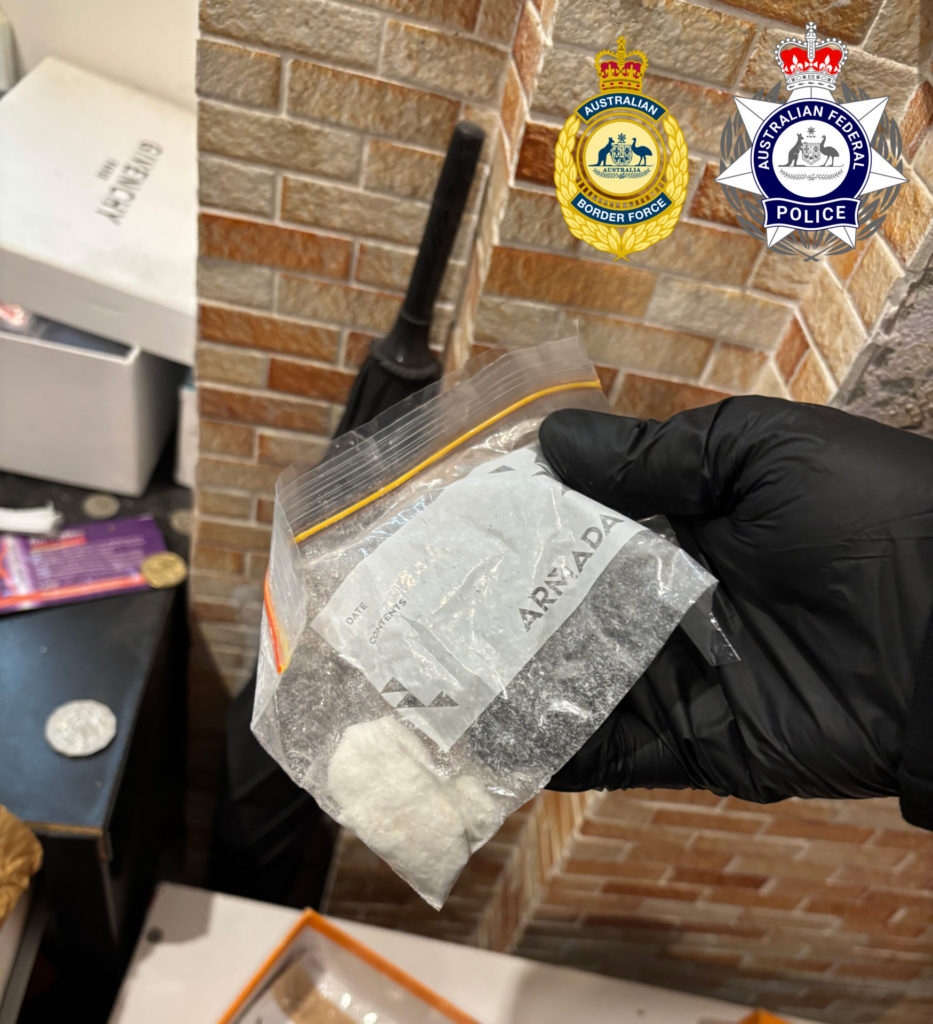
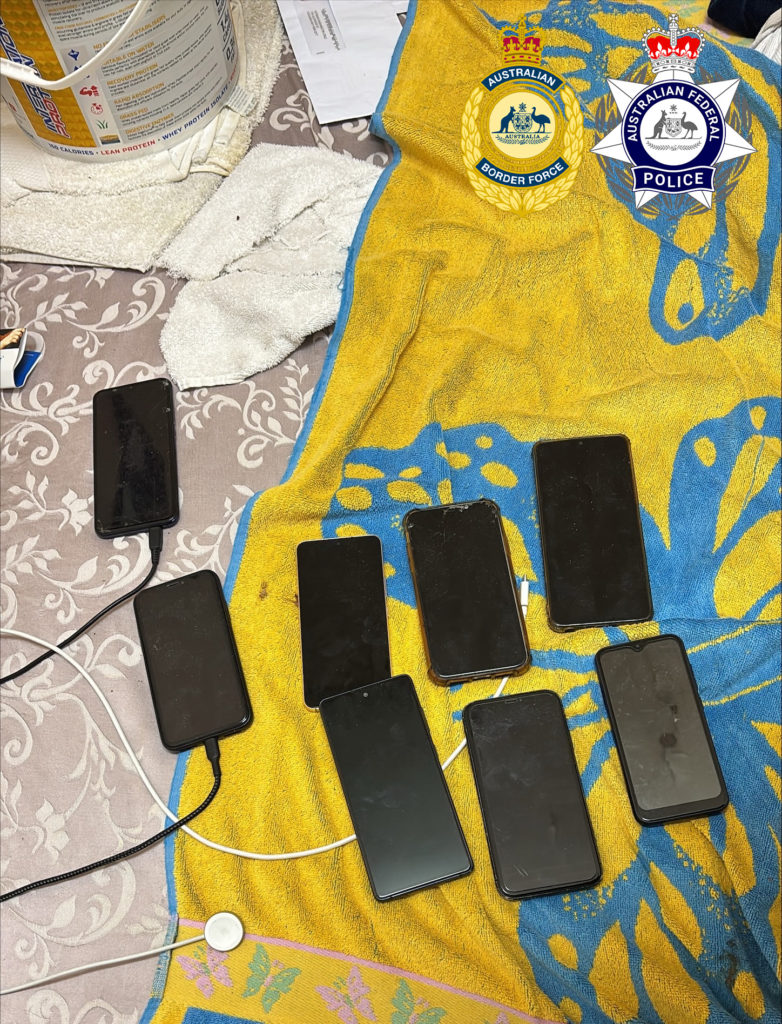
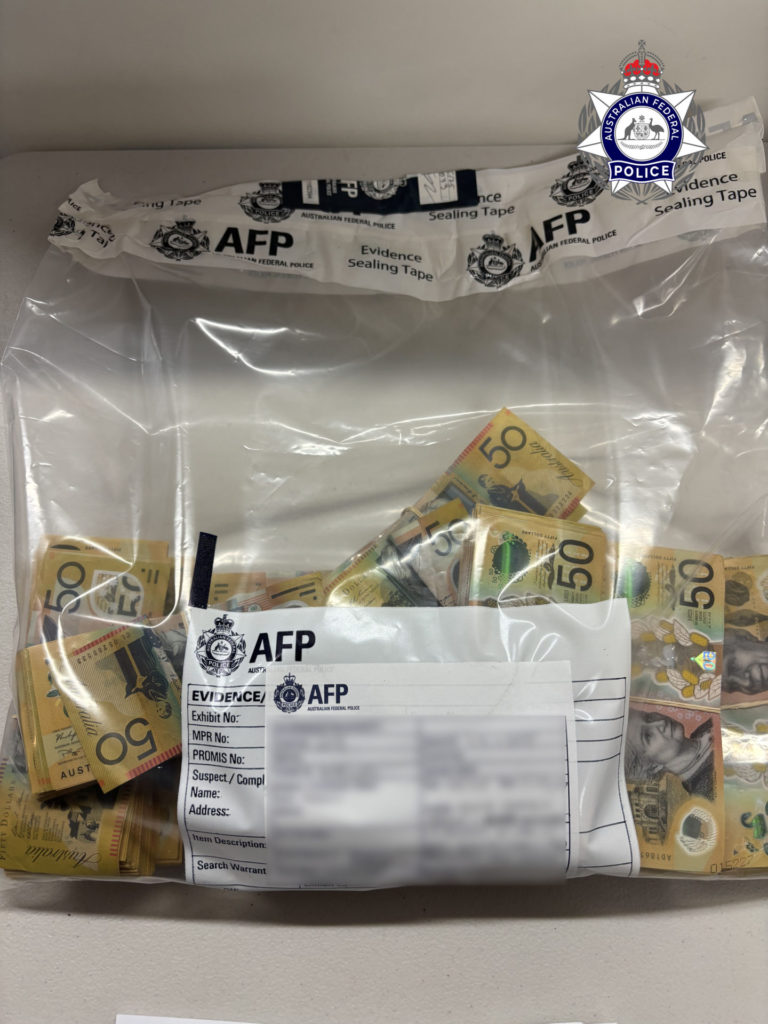
An audacious attempt to smuggle 30 kilograms of cocaine into Australia — disguised in towels soaked with vinegar and chilli — has been foiled by authorities, with four women now facing serious criminal charges.
Authorities described the alleged smuggling attempt as both brazen and inventive.
“Criminals will go to great, and sometimes novel, lengths to import drugs into the country,” said AFP Detective Acting Superintendent Natalie Scott. She praised the swift actions of investigators, adding that “the AFP and ABF work closely every day to disrupt criminal efforts to bring harmful drugs into our country.”
“Anyone who attempts to import drugs will be stopped and met with the full force of the law,” she said.
“We thank all officers involved for their swift and exemplary work in stopping this brazen importation.”
The elaborate plot unravelled on 3 July 2025, when two 18-year-old Australian nationals arrived at Brisbane Airport from Hong Kong. Australian Border Force (ABF) officers stopped the pair and examined four suitcases in their possession. Inside, officers allegedly discovered 20 tightly wrapped bricks concealed in towels doused with vinegar and chilli — a tactic believed to be aimed at masking the scent of the drugs.
Presumptive testing of the bricks allegedly confirmed the presence of cocaine.
The discovery triggered a wider investigation by the Australian Federal Police (AFP), which led to the arrest of two more women, aged 21 and 23. Police allege the older women provided logistical support — including assistance with passports, airline tickets, and accommodation — and were preparing to take possession of the drugs in Australia.
All four women were charged and appeared before Brisbane Magistrates Court on 4 July. The younger pair were each charged with importing a commercial quantity of a border-controlled substance, while the older two were charged with attempting to possess a commercial quantity. Both offences carry a maximum penalty of life imprisonment.
ABF Acting Commander Troy Sokoloff said the unusual concealment method was no match for the expertise of Australia’s border protection officers.
“There is no clever way of importing drugs into Australia, given the expert skills and experience of ABF officers,” he said, highlighting the role of “world-leading technology, intelligence-led targeting, and the sharp instincts of our well-trained frontline officers.”
“These detections are critical to protecting our communities from the devastating harm caused by drug trafficking,” he added.
“Whether it’s a few grams of cocaine in an envelope, or 30 kilograms in a suitcase, the ABF’s expertise prevents these harmful substances from making their way into the Australian community, where they can and do cause significant harm.”
One of the 18-year-olds was refused bail and will return to court on 17 July. The remaining three were granted conditional bail and are due to reappear on 18 July.
Support our Journalism
No-nonsense journalism. No paywalls. Whether you’re in Australia, the UK, Canada, the USA, or India, you can support The Australia Today by taking a paid subscription via Patreon or donating via PayPal — and help keep honest, fearless journalism alive.
At Milan Fashion Week, Prada unveiled a pair of open-toe leather sandals that quickly turned heads — not just on the runway, but thousands of kilometres away in India.
Social media users were quick to draw comparisons between the luxury design and India’s traditional Kolhapuri chappals — handcrafted leather sandals native to the western state of Maharashtra.
The backlash intensified as hundreds of Indians pointed out the striking resemblance to the Kolhapuri, a centuries-old design that was officially recognised by the Indian government in 2019 as native to the city of Kolhapur.
While Prada’s sandals reportedly carry a $1,200 price tag, authentic Kolhapuris can be found in Indian markets for as little as $10.
Image: Kolhapuri sandals (Source: Amazon)
In response, Bharatiya Janata Party (BJP) leader Dhananjay Mahadik led a delegation of local artisans to meet with Maharashtra Chief Minister Devendra Fadnavis, urging government action.
“We want Prada to give the Kolhapuri identity to their product, and local artisans should get the revenue,” Mahadik told media.
“If Prada gives us orders, we can manufacture for them. The Kolhapuri brand will reach globally.”
The Maharashtra Chamber of Commerce also wrote to Prada chairperson Patrizio Bertelli, voicing the concerns of traditional sandal makers.
The Italian fashion house responded in a statement, acknowledging that the sandals were “inspired by the centuries-old Indian sandals” and expressed respect for the cultural heritage of Indian craftsmanship.
“Prada acknowledges that sandals inspired by traditional Indian footwear made in specific districts in Maharashtra and Karnataka, India, were featured in its Men’s 2026 Spring Summer show in Milan.”
The company added, “We are committed to responsible design practices, fostering cultural engagement, and opening a dialogue for a meaningful exchange with local Indian artisan communities as we have done in the past in other collections to ensure the rightful recognition of their craft.”
It is reported that Indian footwear sellers and artisans are capitalising on the nationalist sentiment fuelled by Prada’s sandal controversy, using the spotlight to boost sales of Kolhapuri slippers. The global attention has sparked a surge in demand over the past week, offering a potential lifeline to the struggling handmade footwear industry.
Support our Journalism
No-nonsense journalism. No paywalls. Whether you’re in Australia, the UK, Canada, the USA, or India, you can support The Australia Today by taking a paid subscription via Patreon or donating via PayPal — and help keep honest, fearless journalism alive.
At the 2024 launch of the Pacific Academy of Sciences, Samoan Prime Minister Fiame Mata’afa highlighted the critical role of education partnerships:
Today’s challenges transcend borders. They require international collaborations among scientists and experts of all disciplines to curate knowledge and scientific evidence that can inform public policy …
But education outcomes are falling short. Now is the time to deliver on Australia’s commitment to facilitate greater linkages between education systems and invest in partner-led initiatives to improve education outcomes.
People are, and always will be, the most important resource of the Pacific. And yet, education performance and spending is declining, leading Pacific leaders to call for more action. Goal Two of the 2050 Strategy for the Blue Pacific highlights the need for improved education achievement and the 2024 Pacific Islands Forum Communique put a strong emphasis on the need for collective solutions. More strategic education investments will be critical for building national prosperity, resilience and local solutions in the face of rapidly growing populations, intensifying climate impacts and mounting social and economic challenges.
With limited resources to meet the growing need for higher education and technical training, greater regional cooperation can help increase the capacity and offerings of education systems, for example through collaborative course delivery, joint supervision and student/professional exchanges that create learning networks. Australia supports Pacific education delivery and critical institutions such as the multi-campus University of the South Pacific (USP), but bigger investments in institutional and professional education partnerships are needed to address education challenges and expand the reach of agencies providing regional support.
There are at least 15 universities serving the region, including new or enhanced national institutions. Duplication and funding shortfalls are already emerging. In Fiji, courses overlap at USP and Fiji National University where complementarities and resource sharing could exist, such as within undergraduate science degrees. At the same time, information technology, digital connectivity and management systems are mostly inadequate to meet tertiary education and research objectives across the Pacific. The need for action has been recognised at the recent Pacific Education Minister conference, which convened under the theme of “Transforming Edukesen for a Better Pacific” and focused on how regional cooperation could help support much needed teacher training, ICT development and the protection of indigenous knowledge and culture.
We are not starting from scratch. Pacific institutional agencies and research collaborations exist to advance regional education cooperation, agencies such as the Pacific Regional Education Framework (PacREF), the Pacific Islands University Research Network (PIURN), and the newly-established Pacific Academy of Sciences link diverse educational institutions. To be effective they require greater support over sustained timeframes. Already we are seeing high returns from sustained research partnerships in terms of professional pathways, policy-relevant analysis and data, and greater Pacific-led and designed research. Australian and Pacific universities have conducted joint research on labour mobility, election monitoring and inclusive development over many years, even decades. The result of this long-term investment in training, facilities and data-set creation has yielded insights into changing trends affecting prosperity, regionalism and democracy.
While there are strong foundations for collaboration, connectivity and regional cohesiveness, they could be further strengthened. For example, PIURN provides seed funding for Pacific universities to work together on regionally important topics, such as climate resilience and migration. It also supports critical regional institutions like the Pacific Community Data Hub. It is an example of a Pacific-initiated and led agency with development partner backing. However, administrative capacity is wafer-thin with just over one full-time-equivalent staff member and only funding for about 10 small research collaborations each year. Any complementary research by Australian, New Zealand or other academic partners is ad hoc, not systemically supported. With additional resources, PIURN and other regional research efforts could achieve much more.
Education, of course, goes beyond classroom walls. There are examples where Pacific-designed learning and action programs create bridges between communities and classrooms. When adequately funded over time, they can generate unique and significant findings. The award-winning USP Locally Managed Marine Areas program, commenced in 2000, inspired partnerships between communities and scientists to collect and analyse data through collaborative learning networks, and then implement findings through local governance systems supported by national, and even global, policy. This transformative approach attracted global attention and spread around the world, inspiring indigenous science, sustainable livelihoods and biodiversity protection in coastal communities.
Ultimately, education is about nurturing the leaders of tomorrow and ensuring that community and cultural ties remain strong. In practice, this means ensuring the next generation is well prepared to succeed in a world demanding new skills, complex analyses and global engagement. One consistent national priority across the Pacific is to lay stronger early education foundations. Partnerships to arrest slipping childhood literacy and numeracy need more attention. Getting better results in education at the primary level is key to higher education success, and must be linked to measures that improve teacher education, localise learning materials and improve institutional and professional support. Better education outcomes for the Pacific’s children depend on getting the basics right but also require place-based approaches that better link learning to people, place and culture, and regional networks that support national efforts.
While the concept of the “Pacific family”, collaboration and cooperation are sprinkled generously across speeches and policies, in our experience the people in the family would benefit from strengthening national education systems, benchmarking progress so that we can learn from each other, and ensuring that regional resources and expertise can be efficiently accessed. Australia as a member of the Pacific family has a critical role to play to help bolster the “transformation of Pacific education”.
Disclosure: The Pacific Research Program is an independent Pacific-focused research program that supports evidence-based policy-making in the Pacific and collaborative research relationships across the region. The PRP is co-funded by the Australian Department of Foreign Affairs and Trade and the consortium partners’ parent bodies. The views are those of the author only.
Contributing Author(s):Professor Meg Keen is the head of the Pacific Research Program at the Department of the Pacific Affairs, Australian National University. Dr Manumatavai Tupou-Roosen is Acting Deputy Vice Chancellor (Global Engagement and Regional Campuses) at The University of the South Pacific.
Support our Journalism
No-nonsense journalism. No paywalls. Whether you’re in Australia, the UK, Canada, the USA, or India, you can support The Australia Today by taking a paid subscription via Patreon or donating via PayPal — and help keep honest, fearless journalism alive.
Images of flashy sports cars. Lavish lifestyle shots. These are just some of the red flags consumers should watch out for when they turn to social media for financial advice.
Consumers should not believe everything they see on Instagram, TikTok or YouTube from the growing numbers of “finfluencers” – content creators who build their audience by giving out financial advice.
The regulator responsible for financial products and advice, the Australian Securities and Investments Commission (ASIC), has issued warning notices to 18 social media finfluencers. ASIC said it suspects they have broken the law by promoting high-risk financial products or providing unlicensed financial advice. ASIC did not name them.
So, why is regulated financial advice important and what are some of the common practices finfluencers use to attract followers and customers?
Financial advice rules explained
Australian Financial Services laws are designed to protect consumers and investors, while promoting the integrity of financial markets. It is both unethical and illegal to promote financial products without proper authorisation.
In Australia, it is an offence under the Corporations Act to provide financial advice without an Australian Financial Services licence. Penalties include up to five years’ imprisonment or fines of A$1 million or more.
ASIC issued a similar warning to online finfluencers in 2022. Since then, the number of social media posts by unauthorised finfluencers have substantially reduced.
Many finfluencers became licensed or authorised representatives of a licensee, along with being more diligent about what they were posting online. Natasha Etschmann, with 300,000 Instagram and TikTok followers at @TashInvests, became licensed immediately after the 2022 warning.
Some other finfluencers were arrested, issued fines or ordered to take down their websites.
High-risk products
However, some finfluencers who style themselves as “trading experts” continue to provide unauthorised financial advice, usually for a fee or commission. They promote high-risk, complex investment products that can cause consumers substantial harm.
These products include contracts-for-difference and over-the-counter derivative products that do not trade on an exchange. ASIC says its current concerns lie with these content creators:
Their social media content is often accompanied by misleading or deceptive representations about the prospects of success from the products or trading strategies they promote, sharing images of lavish lifestyles, sports cars and other luxury goods.
While budgeting tips can be helpful, it’s important to be extra careful with online financial advice. Consumers should not believe everything they see on social media.
Conducting due diligence and checking finfluencers’ credentials on ASIC’s Professional Registers search tool is crucial. Choose expert and licensed finfluencers rather than accounts with large followings and exaggerated or misleading claims. Popularity does not always mean credibility.
There are certain red flags to watch out for. Some finfluencers use pseudonyms. They promote “exclusive” financial advice content and access to “invitation-only” online communities for a fee. In many cases, they lack credible experience or certified financial planning training to provide financial advice.
Your finfluencer vetting toolkit
When choosing to follow or acquire the services of a finfluencer, ask:
is this finfluencer licensed or authorised?
how realistic are the promised financial outcomes? Are they too good to be true?
does the finfluencer disclose their personal financial position or investments when discussing financial products or strategies?
are they transparent about their track record of accuracy or accountability?
do they address publicly a case when their audience lost money from a strategy they recommended?
does the finfluencer tailor content to different investment risk profiles or financial maturity levels in their audiences?
Are you being sold a dream?
Social media finfluencer content can often come with misleading or deceptive representations (such as the sports cars and luxury goods that ASIC has warned about). Content may overstate the prospects of success and potential profits.
Some – usually unlicensed – finfluencers use social media content as “proof” of their financial expertise. One common practice is to try to lure consumers by creating a hyped world around their own personal lifestyle. Many finfluencers often extend invitations to consumers to join closed forums to “learn” their hidden secrets to success or copy their “famous” trading practices.
These finfluencers usually try to convince consumers they can achieve a similar lifestyle by following their advice.
Finfluencers are global
ASIC issued the warnings as part of a recent global week of action. ASIC and eight regulators from the United Kingdom, United Arab Emirates, Italy, Hong Kong and Canada took coordinated action to disrupt unlawful finfluencer activity. The global campaign aims to raise awareness about unlawful finfluencer activity, protect consumers, and prevent them from investing after encountering misleading content.
Consumers need to distinguish between credible financial advice and self-serving or misleading content before trusting their money to anyone.
Spotted unlicensed influencer activity? Report this misconduct to ASIC.
No-nonsense journalism. No paywalls. Whether you’re in Australia, the UK, Canada, the USA, or India, you can support The Australia Today by taking a paid subscription via Patreon or donating via PayPal — and help keep honest, fearless journalism alive.
Melbourne was rocked by a series of antisemitic attacks on Friday night, including arson at a synagogue and an aggressive protest at an Israeli restaurant, prompting strong condemnation from officials and Jewish community leaders.
Around 8 p.m., a man poured flammable liquid on the front door of a synagogue on Albert Street in East Melbourne and set it alight while about 20 people were inside observing Shabbat, Victoria Police said. The fire was quickly extinguished, and no injuries were reported.
Screenshot Nine News
Prime Minister Anthony Albanese condemned the attack and reiterated that antisemitism has no place in Australian society.
Antisemitism has no place in Australia. Those responsible for the shocking acts in Melbourne last night must face the full force of the law and my Government will provide all necessary support toward this effort. pic.twitter.com/jyFO2odHgK
Minister for Home Affairs Tony Burke and Minister for Multicultural Affairs Anne Aly also issued a joint statement condemning the attack.
The police have released the photo of a suspect in relation to this arson attack.
Screenshot Nine News
Nearby, on Hardware Lane, about 20 protesters stormed the Israeli restaurant Miznon, chanting slogans including “Death to the IDF,” according to reports.
Screenshot Nine News
Two major antisemitic attacks in Melbourne, Australia:
A synagogue was set on fire with 20 people inside the synagogue at the time, however, everyone was able to evacuate from the back.
In a separate incident, a group of 20 Palestinian protestors stormed and trashed an Israeli… pic.twitter.com/dDJALZ9LID
Speaking to media on Saturday, Acting Commander Victoria Police, Zorka Dunstan, said police were also investigating a third incident early Saturday morning in Greensborough, where three cars were set on fire and spray-painted near a business previously targeted by pro-Palestinian protesters.
Victoria Police’s Security Investigation Unit, part of its counter-terrorism command, is probing all three incidents. Authorities have yet to declare whether the events meet the threshold for a terrorism classification.
The attacks come amid rising concerns over antisemitism in Australia, with Sydney and Melbourne witnessing a sharp increase in hate crimes targeting Jewish communities since late last year. These include synagogue arsons, vandalism, and Nazi hate symbol Hakenkreuz defacing buildings and vehicles.
Victoria’s Premier Jacinta Allan condemned the synagogue attack as “abhorrent,” especially given it occurred on Shabbat with families and children present. “Any attack on a place of worship is an act of hate. Any attack on a Jewish place of worship is an act of antisemitism,” she said on X.
Every Victorian deserves to live in peace and dignity, but the acts we saw last night at the East Melbourne Synagogue – and elsewhere in the city – are designed to shatter that peace and traumatise Jewish families.
Any attack on a place of worship is an act of hate, and any…
Alex Ryvchin, co-CEO of the Executive Council of Australian Jewry, also condemned the incidents. “Those responsible cannot be reasoned with or appeased. They must be confronted with the full force of the law,” he wrote.
Last night we saw a return to the antisemitic terror of the summer months. At 8pm, a man entered the grounds of the East Melbourne Synagogue, poured a flammable liquid on the front door and attempted to burn the place of worship as 20 Jewish Australians sat down to Shabbat dinner…
No-nonsense journalism. No paywalls. Whether you’re in Australia, the UK, Canada, the USA, or India, you can support The Australia Today by taking a paid subscription via Patreon or donating via PayPal — and help keep honest, fearless journalism alive.
Sydney witnessed a large and passionate protest on Friday, 4 July 2025, as members of the Bangladeshi community and supporters gathered at Martin Place to condemn the ongoing persecution of religious and ethnic minorities in Bangladesh.
Image: Sydney protests Bangladesh’s persecution of minorities (Source: AFERMB – Supplied)
Organised by the Australian Forum for Ethnic and Religious Minorities in Bangladesh (AFERMB), representing 24 community organisations across Australia, the rally ran from noon to 2 pm.
Image: Sydney protests Bangladesh’s persecution of minorities (Source: AFERMB – Supplied)
Demonstrators carried banners, placards, and the Bangladeshi national flag, chanting slogans against the brutal attacks, unlawful detentions, rapes, and destruction targeting minorities in Bangladesh.
Image: Sydney protests Bangladesh’s persecution of minorities (Source: AFERMB – Supplied)
AFERMB director Amal Dutta opened the event by outlining the protest’s aims and detailing recent incidents of violence against Hindus and other minority groups.
Speakers condemned the interim government led by Prof. Mohammad Yunus for exacerbating violence through mob instigation and militant forces, contributing to a significant decline in the Hindu population since Bangladesh’s independence.
Image: Sydney protests Bangladesh’s persecution of minorities (Source: AFERMB – Supplied)
Among the atrocities highlighted were the ongoing detention of Shri Chinmoy Krishna Das Brahmachari on false charges, the demolition of a Durga temple along with its sacred idols, the torture and imprisonment of an elderly Hindu barber and his son over blasphemy allegations, and the rape of a Hindu woman in Muradnagar, followed by the circulation of the video online.
Image: Sydney protests Bangladesh’s persecution of minorities (Source: AFERMB – Supplied)
Speakers expressed shock that such violations could occur in today’s civilised world and warned of the broader impact these events could have globally, including in Australia. They called on the Australian government and international bodies to take urgent action to pressure Bangladesh’s government to protect minority rights.
Image: Sydney protests Bangladesh’s persecution of minorities (Source: AFERMB – Supplied)
At the rally’s conclusion, AFERMB Executive President Surajit Roy presented an 11-point demand list. Key demands included the immediate release of Shri Chinmoy Krishna Das Brahmachari, prosecution of those responsible for recent attacks and abuses, protection for human rights activists, and the establishment of a special independent tribunal to investigate the crimes against minorities and publish its findings.
Support our Journalism
No-nonsense journalism. No paywalls. Whether you’re in Australia, the UK, Canada, the USA, or India, you can support The Australia Today by taking a paid subscription via Patreon or donating via PayPal — and help keep honest, fearless journalism alive.
Back in 2006, when young chef Nikhil Mittal launched the first outlet in Punjab’s Chandigarh Sector 9, the city was introduced to an exciting world of authentic Australian and European flavours and bakery delights previously unfamiliar to many.
For a generation whose occasional sweet treat meant a pineapple pastry or a Swiss roll, Nikhil brought a whole new menu — bruschetta, quiche, crepes, waffles — dishes many had only heard about but rarely tasted. His live baking demonstrations behind glass counters became an instant crowd-puller and set Nik Baker’s apart.
Image: Nikhil Mittal
Nikhil’s passion for food was nurtured early on, inspired by his father’s vision. After completing Class 12, he enrolled in a one-year bakery course at Dr Ambedkar Institute of Hotel Management in Chandigarh and trained briefly at a five-star hotel in Delhi.
Determined to master his craft, Nikhil travelled to Australia, where he earned diplomas in Food Technology and Patisserie from Regency TAFE, South Australia. Known for its high standards and practical training, Regency TAFE helped polish his skills and gave him exposure to global culinary trends. Initially, Nikhil had no plans to return to India, but his father’s encouragement brought him back to build something special in his hometown.
Image: Nikhil Mittal, Vinod Mittal and Nitin Mittal
Together with his father Vinod Mittal and brother Nitin Mittal, who now handles packaging and marketing, Nikhil established Nik Baker’s, growing it from a single outlet into a celebrated brand.
Today, Nik Baker’s operates 31 outlets across Chandigarh, Punjab, Haryana, Delhi, Jaipur, and Uttarakhand. Their sprawling, state-of-the-art production facility in Mohali supplies raw materials and finished products to all outlets, ensuring consistency in quality and taste.
Despite leading a team of 1,500 employees, Nikhil remains the sole head chef, personally training young talent he handpicks to maintain the brand’s high standards.
Image: Nik Baker’s
Beyond the kitchen, Nik Baker’s fosters a warm, family-like work environment. Just like Australian cafes, Nikhil’s facility includes a crèche where toddlers are cared for by nannies, recreational spaces for staff, and regular get-togethers to strengthen community spirit. This Aussie approach has resulted in a notably low attrition rate, with employees proud to be part of the growing Nik Baker’s family.
Nikhil’s wife, a Canadian with deep knowledge of bakery products, also contributes ideas and advice, helping keep the menu fresh and innovative. Together, the Mittal family continues to expand the brand’s offerings, which now include over 200 products spanning lavish desserts, cookies, cakes, and savoury delights.
The success of Australia-educated Nikhil’s bakery underscores how international education and local passion can combine to create something extraordinary. Nikhil’s experience in Australia gave him the technical expertise and global perspective needed to revolutionise bakery culture in India. Today, Nik Baker’s stands as a shining example of entrepreneurship, innovation, and family commitment — a crisp, golden dream baked to perfection, ready to conquer the world.
Support our Journalism
No-nonsense journalism. No paywalls. Whether you’re in Australia, the UK, Canada, the USA, or India, you can support The Australia Today by taking a paid subscription via Patreon or donating via PayPal — and help keep honest, fearless journalism alive.
Anne McCann, who worked at Home Affairs between 2016 and 2021, was convicted of abuse of public office and unauthorised access to restricted data. She accessed confidential files of 17 individuals—including friends and associates—on 1,164 occasions without authorisation.
The offences were uncovered as part of Operation Carbunup, a joint investigation by the former Australian Commission for Law Enforcement Integrity and the Home Affairs, later taken over by the National Anti-Corruption Commission (NACC) in July 2023.
In one striking breach, McCann fast-tracked a visa for her brother-in-law whose visitor application had been refused in November 2019. Just 16 minutes after he reapplied on 6 December, McCann self-assigned the case to herself and approved the visa within three days.
Following a guilty plea, McCann was sentenced to eight months’ imprisonment, but was released immediately on the condition she enter into a $10,000 recognisance to be of good behaviour for 12 months.
The Commonwealth Director of Public Prosecutions (CDPP) handled the prosecution. McCann’s case marks the ninth conviction linked to NACC investigations since it took over legacy matters in July 2023.
Support our Journalism
No-nonsense journalism. No paywalls. Whether you’re in Australia, the UK, Canada, the USA, or India, you can support The Australia Today by taking a paid subscription via Patreon or donating via PayPal — and help keep honest, fearless journalism alive.
The newly appointed Indian Consul General to Western Australia, Kajari Biswas, has been warmly welcomed by business and community leaders as she begins her posting in Perth.
Image: Kajari Biswas, Indian Consul General to Western Australia, with Michael Carter, Head of International Trade and Investment Services at the Chamber of Commerce and Industry of Western Australia, and Paritosh Mishra, President, Australia India Business Council WA (Source: LinkedIn)
Michael Carter, Head of International Trade and Investment Services at the Chamber of Commerce and Industry of Western Australia (CCIWA), shared on LinkedIn: “Wonderful to meet the recently arrived Indian Consul General to Western Australia, Ms Kajari Biswas.”
“It was a pleasure to brief her on CCIWA’s past and future engagement with the Consulate and key stakeholders such as the Australia India Business Council, as part of our shared commitment to strengthening the WA–India bilateral trade and investment relationship.”
He noted the rapid growth of WA–India trade across sectors and expressed confidence in deepening these “vital partnerships” with Biswas and her team.
Image: Kajari Biswas, Indian Consul General to Western Australia, with Vinod Daniel, CEO of the India Vision Institute (Source: LinkedIn)
Echoing the sentiment, Vinod Daniel, CEO of the India Vision Institute, also welcomed Biswas to Australia: “India is very well represented in Australia with excellent diplomats based out of Sydney, Melbourne, Brisbane, Perth and Canberra.”
“Speaks well for the strong partnership between Australia and India with Australian diplomats present in Chennai, Mumbai, Bengaluru, Kolkata and Delhi.”
Daniel was joined at the dinner by Nashid Chowdhury, who previously led Western Australia’s presence in India, and Petula Thomas, former CEO of the India Australia Chamber of Commerce.
Image: Kajari Biswas, Consul General of India to Perth, with Naresh Kumar, Acting Consul General India – Perth, Shammi Kumar, and CGI office team members (Source: Facebook – Indusage)
Biswas, an Indian Foreign Service officer from the 2008 batch, previously served as Director of the Policy, Planning & Research Division at the Ministry of External Affairs in New Delhi.
Support our Journalism
No-nonsense journalism. No paywalls. Whether you’re in Australia, the UK, Canada, the USA, or India, you can support The Australia Today by taking a paid subscription via Patreon or donating via PayPal — and help keep honest, fearless journalism alive.
Fijian Prime Minister Sitiveni Rabuka met with members of the Fijian diaspora in Canberra earlier this week, sharing updates on his government’s national development plans and calling for greater engagement from overseas Fijians in shaping the country’s future.
Image: Prime Minister Sitiveni Rabuka meets members of the Fijian diaspora in Canberra. (Source: Fiji Government / Facebook)
Addressing a gathering of Fijians and supporters, Prime Minister Rabuka praised the diaspora’s significant contribution to Fiji’s economy, particularly through remittances, which he described as a “lifeline” for families and a key driver of national growth.
Image: Prime Minister Sitiveni Rabuka meets members of the Fijian diaspora in Canberra. (Source: Fiji Government / Facebook)
“We value the role you play not just in economic terms, but also in sharing knowledge, advocating for Fiji, and investing in its progress,” Rabuka said, reaffirming the Coalition Government’s commitment to strengthening ties with Fijians abroad.
Image: Prime Minister Sitiveni Rabuka meets members of the Fijian diaspora in Canberra. (Source: Fiji Government / Facebook)
He invited ideas and investment from the community, encouraging them to remain connected and involved in the nation’s development. He also urged attendees to be responsible and active residents of Australia, highlighting the importance of maintaining strong, respectful relationships in their adopted homeland.
Image: Prime Minister Sitiveni Rabuka meets members of the Fijian diaspora in Canberra. (Source: Fiji Government / Facebook)
The gathering also allowed three Fijian Ministers and Permanent Secretaries to engage with the diaspora on key national issues, including the fight against drugs, economic development, trade and investment, immigration and border security, and Fiji–Australia defence cooperation.
Support our Journalism
No-nonsense journalism. No paywalls. Whether you’re in Australia, the UK, Canada, the USA, or India, you can support The Australia Today by taking a paid subscription via Patreon or donating via PayPal — and help keep honest, fearless journalism alive.
Three men have been arrested following the seizure of about 360 kilograms of methamphetamine hidden inside imported mosaic tiles – a drug haul with an estimated street value of $333 million.
Two Sydney men, aged 39 and 56, were taken into custody on Thursday morning (3 July 2025) at Holroyd and Liverpool. They were charged with importing a commercial quantity of a border-controlled drug, an offence that carries a maximum penalty of life imprisonment. Both appeared in Parramatta Local Court on 4 July 2025.
A third man, 39, from Melbourne, was charged earlier on 12 May. He was refused bail at Melbourne Magistrates Court on 14 May and will return to court on 29 October.
Image: Operation TOBA (Source: AFP)
The arrests follow a joint investigation by the Australian Federal Police (AFP) and Australian Border Force (ABF) that began in April, after ABF officers intercepted a suspicious consignment of 360 boxes of mosaic tiles believed to have originated from the Middle East.
AFP Acting Commander Peter Fogarty said the arrests reflect the agency’s resolve to dismantle transnational drug trafficking networks.
“We regularly see elaborate or outside-the-box attempts to import harmful illicit drugs into Australia, but the AFP and our partners are ready and waiting to stop organised crime syndicates in their tracks,” he said.
“Methamphetamine causes immense harm to users and their families. On average, 38 people were hospitalised each day in Australia due to meth-related incidents in 2022–23.”
Forensic analysis revealed the tiles were impregnated with approximately 360kg of methamphetamine. Authorities then conducted a controlled delivery of the consignment to a storage facility in Chullora, southwest Sydney, on 15 April.
Police allege the 56-year-old Sydney man used an alias to coordinate the delivery, while the younger man assisted with logistics and storage. The two were allegedly aware the tiles contained meth and stood to receive up to $50,000 for their role.
The consignment was later moved to a facility in Clayton South, Victoria, on 22 April, where further investigation identified the Melbourne man as the alleged intended recipient. A search of his Donnybrook home on 12 May uncovered electronic devices linking him to the drug plot.
He now faces three charges:
Attempting to possess a commercial quantity of a border-controlled drug (maximum penalty: life imprisonment)
Failing to comply with a 3LA order under the Criminal Code (maximum penalty: 10 years)
Committing an indictable offence while on bail (maximum penalty: three months)
Image: Operation TOBA (Source: AFP)
ABF Commander Kari Ellis praised officers for their detection skills and highlighted the importance of inter-agency cooperation.
“The ABF’s detection capabilities, along with x-ray technology and officer intuition, are world-leading,” she said.
“Criminal syndicates look to exploit any vulnerability they can find, but our layered border security will continue to protect Australians.”
The investigation remains ongoing.
Support our Journalism
No-nonsense journalism. No paywalls. Whether you’re in Australia, the UK, Canada, the USA, or India, you can support The Australia Today by taking a paid subscription via Patreon or donating via PayPal — and help keep honest, fearless journalism alive.
This week, a Melbourne childcare worker was charged over alleged sexual abuse of young children in his care. Families are justifiably appalled and furious – with 1,200 children urged to be tested for a sexually transmitted infection.
This is the latest in a string of serious safety concerns this year alone, exposing systemic issues in our early childhood sector.
Unfortunately, there are too many incidents to be seen as “one-offs”.
But how widespread are unsafe or abusive practices in Australian childcare centres? The short answer is, we don’t actually know.
The number of ‘serious incidents’ in childcare
The national childcare quality authority reports on the number of “serious incidents” in childcare services.
This includes the death of a child, and serious injury, illness, or trauma requiring urgent medical attention. It also includes a child going missing or unknowingly being locked in or out of the service. But it doesn’t technically include child abuse. Unless, for example, the abuse resulted in a situation where the child required urgent medical attention.
For example, the rate of reported serious incidents in 2023–24 was 148 per 100 approved services. This is higher than the 139 reported in 2022–23, and 124 in 2021–22.
Higher-quality services have been found to have higher rates of reporting for serious incidents. This may be because they have clearer processes, more experienced or qualified educators, or higher ratios of educators to children. We also know larger services tend to report more serious incidents than smaller ones.
For-profit services have been found to have higher breach rates than not-for-profits. A breach is any instance where a regulation or law was not followed.
What about under-reporting?
Some incidents may not even be reported in the first place. Under-reporting could occur unintentionally. For example, the service is unaware of an incident, or educators do not recognise what constitutes a reportable incident, or they are not sure how to report the different kinds of reportable incidents.
But unfortunately, under-reporting may happen intentionally. When a service reports an incident to their state or territory regulatory authority, they may be subject to an investigation and/or heightened scrutiny in future. This could be a deterrent for some services to report incidents.
What about child abuse?
At the moment, if physical or sexual abuse of a child is suspected at a service, incidents and allegations should be reported through a national online portal within seven days.
But childcare services are also subject to state and territory child protection legislation. The definitions and reporting requirements for different child abuse situations vary across states and territories.
This makes the data messy and difficult to track.
There are other reporting requirements
Services also need to lodge other kinds of notifications relating to children’s health and safety. Examples might include incidents of broken glass in a centre, a severe infection outbreak, a damaged fence, or the presence of someone who was not authorised to be there.
Again, some of these incidents go through a national online portal, whereas others might go to state or territory child protection authorities, departments of education, or departments of health.
As the national quality authority noted in its 2023 report into childcare safety, this means different organisations are collecting information and may not always use the same terminology or reporting timeframes. They don’t necessarily share the information they have.
This lack of coordination also means we do not have consistent national data collection on child abuse and other aspects of child welfare in daycare centres.
What now?
We need a national, consistent approach to collecting and sharing data about safety in all childcare services. This would require a committed collaboration between state and federal agencies.
At the moment, crucial information about what is happening in services is not shared between jurisdictions. Just as we do not have good information about high-risk potential employees (in part, due to issues with the working with children checks system).
But on top of fixing how data is collected and shared, we also need to look at how it is reported in the first place.
All early childhood educators should have child protection training, to increase understanding across the sector. We also need simpler and nationally consistent procedures for services, so it is easier for educators to recognise and report child safety incidents.
If this article has raised issues for you, or if you’re concerned about someone you know, you can call 1800 Respect on 1800 737 732, Lifeline on 131 114, Kids Helpline on 1800 55 1800, or Bravehearts (counselling and support for survivors of child sexual abuse) on 1800 272 831.
Swaminarayan Akshardham in New Delhi welcomed a distinguished delegation of state Members of Parliament from the Parliament of Victoria during their visit to India, reinforcing the cultural bonds between Australia and India.
The delegation included Lee Tarlamis MP, Government Whip in the Legislative Council; Pauline Richards MP, Government Whip in the Legislative Assembly; Belinda Wilson MP, Deputy Whip in the Legislative Assembly; Sheena Watt MP, Parliamentary Secretary for Emergency Services and Climate Action; and Juliana Addison MP, Chair of the Legislative Assembly Environment and Planning Committee.
Image: Lee Tarlamis MP, Pauline Richards MP, Belinda Wilson MP, Sheena Watt MP, and Juliana Addison MP (Source: Swaminarayan Akshardham, New Delhi – Facebook)
The MPs were warmly received and taken on an immersive tour of the spiritual complex. They paid their respects at the mandir, admired the temple’s intricate architecture, performed the abhishek ritual of Shri Neelkanth Varni, and engaged with the inspiring messages of Indian culture showcased in the Hall of Values and on the cultural boat ride.
The visiting parliamentarians expressed heartfelt appreciation for Akshardham’s message of peace, harmony, and selfless service, describing the experience as deeply moving. Their visit highlighted the enduring friendship and shared democratic values between India and Australia.
Support our Journalism
No-nonsense journalism. No paywalls. Whether you’re in Australia, the UK, Canada, the USA, or India, you can support The Australia Today by taking a paid subscription via Patreon or donating via PayPal — and help keep honest, fearless journalism alive.
A Home Affairs spokesperson told The PIE that the move aligns with the government’s election commitment and aims to manage the international education sector sustainably while safeguarding its equity, quality, and integrity.
Existing reduced fees for Pacific Island and Timor-Leste applicants will remain unchanged. The government says the hike will strengthen visa program integrity by ensuring visas are granted to genuine students who contribute to Australia’s sustainable economic growth.
However, the increase has drawn strong criticism, particularly from the ELICOS sector, where providers have reported a 50% drop in English language enrolments following the 2024 fee hike. Many students pursuing shorter courses are reluctant to pay the higher costs, prompting concerns about the sector’s competitiveness.
Australian Visa- Image Source- CANVA
The fee rise forms part of the Albanese government’s broader immigration and budget strategy to manage record-high net migration and raise an estimated AUD 760 million over four years. Officials claim the additional revenue will support domestic education programs, improve visa processing, and ease pressure on housing and infrastructure.
With this latest increase, Australia now charges the highest student visa fees globally, surpassing those of the US, UK, and Canada.
Analysis by The Australian Financial Review reveals that the government’s expected revenue assumes around 475,000 student visa applications annually—close to the near-record 498,500 applications received in 2023-24. This figure contrasts sharply with the government’s goal of reducing annual international student enrolments to 270,000. While the record number of applications was 514,600 in 2022-23 as students returned post-pandemic, Labor’s reforms to reduce student numbers have since taken effect, with visa applications dropping 32% in the first eight months of the current financial year compared to the previous year.
Critics argue that revenue forecasts rely on outdated application volumes. One college owner, speaking anonymously to the AFR, said:
“The maths doesn’t add up. Even if Labor assumes the same level of visa applications for 2023-24, even when the evidence proves they are declining, it would require a 42 per cent rejection rate to get to 270,000 visa approvals. If they are budgeting on that basis our immigration system is approaching scam status.”
Education Minister Jason Clare maintains that higher fees will improve visa integrity and attract higher-quality students, but many in the sector disagree.
The visa fee hike coincides with proposed student intake caps—270,000 under Labor and 240,000 under the Opposition—as Australia attempts to manage migration amid a housing crisis. While the government defends the measure as fiscally responsible and necessary for reform funding, education leaders urge a balanced policy to maintain Australia’s global education appeal and affordability for international students.
Support our Journalism
No-nonsense journalism. No paywalls. Whether you’re in Australia, the UK, Canada, the USA, or India, you can support The Australia Today by taking a paid subscription via Patreon or donating via PayPal — and help keep honest, fearless journalism alive.
Australia’s Department of Defence has launched its first science and technology collaboration with India to bolster undersea surveillance capabilities.
The three-year joint research project will develop advanced methods for the early detection and tracking of submarines and autonomous underwater vehicles. Under the agreement, Australia’s Defence Science and Technology Group (DSTG) Information Sciences Division will work side by side with India’s Defence Research and Development Organisation (DRDO) Naval Physical and Oceanographic Laboratory to deliver cutting-edge maritime domain awareness technologies.
Indian Defence Minister Rajnath Singh with Deputy PM Richard Marles and Defence Minister Richard Marles (Image: X – @AusHCIndia)
Central to the collaboration is the application of Towed Array Target Motion Analysis, a technique designed to enhance the accuracy, speed and seamless integration of existing undersea monitoring systems.
As Amanda Bessell, Discipline Leader in DSTG’s Information Sciences Division, explains, “Target Motion Analysis refers to a suite of tracking algorithms that process sensor data to infer the position, course and speed of a moving object.”
By refining these algorithms for towed-array sensors, the teams hope to deliver more robust and interoperable surveillance solutions.
‘we need to harness the best minds in innovation, science and technology to build new capabilities, to innovate at greater pace, and to strengthen our strategic partnerships.’
“The hydrophones work together to listen to the undersea environment from various directions,” Dr Arulampalam said.
“The sound signal is passed through a signal processor, which analyses, filters and detects underwater acoustic signals emitted from maritime targets.”
The combination of the Target Motion Analysis with the towed array system is intended to manage noise corruption and explore possible performance improvements.
🚨Big step forward for 🇦🇺-🇮🇳 defence ties! Our first-ever #defence science & tech project with India will supercharge undersea surveillance & sharpen our shared maritime domain awareness. A game-changer for regional security. 🌊🔬🔗 https://t.co/zuNISSG8pN#dosti#defence 🇦🇺🤝🇮🇳 pic.twitter.com/jpx8uiZodu
The joint project will put novel algorithms to the test, using the strengths and shared knowledge of the two countries.
“The project arrangement will involve the sharing of ideas, investigation trials, algorithm demonstrations and performance analysis,”
Dr Arulampalam said.
With the scope of the underwater battlespace changing, including the increased use of autonomous vehicles, improving surveillance capabilities is a priority.
Deputy Prime Minister and Minister for Defence Richard Marles lays a wreath on a visit to the National War Memorial in New Delhi, India. Pic: Kym Smith, Screenshot defence.gov.au
“The output of this research program has the potential to guide the development of future algorithmic directions for our undersea combat system surveillance technologies,” Chief Information Sciences Division, Suneel Randhawa, said.
Harnessing international partnerships enables Defence to access a greater range of expertise, infrastructure and technical data to help address mutual problems and deliver innovative technologies.
“We need to harness the best minds in innovation, science and technology to build new capabilities, to innovate at a greater pace, and to strengthen our strategic partnerships,”
Mr Randhawa said.
Indian Defence Minister Rajnath Singh with Deputy PM Richard Marles and Defence Minister Richard Marles (Image: X – @AusHCIndia)
This project is the latest milestone in increasing maritime domain awareness cooperation between Australia and India.
Support our Journalism
No-nonsense journalism. No paywalls. Whether you’re in Australia, the UK, Canada, the USA, or India, you can support The Australia Today by taking a paid subscription via Patreon or donating via PayPal — and help keep honest, fearless journalism alive.
True mateship and regional solidarity were on full display today as 129 Republic of Fiji Military Forces (RFMF) personnel joined their Australian counterparts for joint training under the Vuvale Partnership at the Shoalwater Bay Training Area in Central Queensland.
Image: RFMF and ADF committed to strengthening regional bonds through training and true mateship (Source: Fiji Government – Facebook)
Fiji’s Prime Minister Sitiveni Rabuka and a high-level delegation witnessed the training, which forms part of Talisman Sabre 2025 — the largest combined military exercise led by the Australian Defence Force.
Image: RFMF and ADF committed to strengthening regional bonds through training and true mateship (Source: Fiji Government – Facebook)
The exercise involves more than 30,000 military personnel from 19 partner nations, including the United States, France, Germany, India, Indonesia, Japan, New Zealand, and Tonga.
Image: RFMF and ADF committed to strengthening regional bonds through training and true mateship (Source: Fiji Government – Facebook)
“By training, exercising and deploying together, Fiji and Australia are improving our combined capability, capacity and interoperability,” Prime Minister Rabuka said.
“Our shared commitment to this rotational company pilot demonstrates our close ties built on mutual interests and purpose.”
The RFMF’s participation marks a significant milestone in defence cooperation between Fiji and Australia, as part of an innovative rotational company pilot, the first of its kind involving a Pacific defence force. The pilot is designed to deepen tactical interoperability, enhance regional security collaboration, and test new models for future cooperation.
Image: RFMF and ADF committed to strengthening regional bonds through training and true mateship (Source: Fiji Government – Facebook)
The Fijian contingent will spend five months in Australia working closely with the ADF across a range of combined exercises, learning from one another through mutual respect and shared values.
Image: RFMF and ADF committed to strengthening regional bonds through training and true mateship (Source: Fiji Government – Facebook)
Prime Minister Rabuka, accompanied by key ministers and senior military officials, also observed a live offensive training phase and addressed the troops, commending their service, professionalism, and dedication.
“Our ability to stand together and rely on each other in the face of mounting challenges is at the heart of the Vuvale Partnership.”
Image: RFMF and ADF committed to strengthening regional bonds through training and true mateship (Source: Fiji Government – Facebook)
The visit underscores Fiji’s growing strategic role in the Indo-Pacific and the strength of its bilateral ties with Australia, grounded in shared democratic values, regional security objectives, and people-to-people connections.
Support our Journalism
No-nonsense journalism. No paywalls. Whether you’re in Australia, the UK, Canada, the USA, or India, you can support The Australia Today by taking a paid subscription via Patreon or donating via PayPal — and help keep honest, fearless journalism alive.
Just three weeks into the snow season, officers have already carried out 50 rescues on Mt Hotham, many involving stranded motorists caught out by sudden weather changes and icy roads.
Eastern Region Commander Karen Nyholm said the numbers were alarming.
“Up to 80 vehicles are being turned back every weekend at Mt Buller, which is concerning. It shows some travellers are still underestimating just how serious alpine conditions can be,” she said.
“These aren’t small mistakes – we’re seeing people needing to be rescued because they weren’t prepared. Carrying snow chains isn’t optional – it’s the law, and for good reason.”
Despite clear laws, road signage and repeated public safety messages, police and alpine resort staff continue to stop vehicles without snow chains – vital safety equipment that can mean the difference between a safe drive and a dangerous crash.
As the school holidays ramp up and crowds head to the snowfields, authorities are warning that too many motorists are ignoring safety advice and putting lives at risk.
Recent incidents include:
A probationary driver and his girlfriend became stranded on the Dargo High Plains Road while attempting to drive from Gippsland to Sydney via Mt Hotham without snow chains. The local CFA had to winch their 4WD to safety.
A car carrying two adults and two children slid off Mt Buffalo Road and landed on a small embankment. Thankfully, no one was injured.
Thirteen people had to be rescued from Blue Rag Range Track near Mt Hotham after 50cm of snow fell in a short time, leaving their vehicles stuck late at night.
Two young men drove an unregistered Mercedes sports car up to Mt Hotham in treacherous conditions. The car, unsuitable for snow chains due to low-profile tyres, was intercepted by police and the driver fined.
Image: A zero-tolerance approach will apply to drivers not properly equipped for the conditions (Source: Victoria Police – Facebok)
A strong police presence is in place across the alpine region, with Highway Patrol, alpine-trained members, Liquor Control Victoria and the Heavy Vehicle Unit conducting compliance checks.
Police are particularly concerned about the spike in day-trippers who fail to check conditions or carry chains, wrongly assuming the rules don’t apply to short visits.
A zero-tolerance approach will apply to drivers not properly equipped for the conditions. Commander Nyholm urged snow-goers to take the basics seriously.
“Before you head off, pack your chains, check the weather, and make sure your car can handle the conditions. It could save your life.”
“Alpine conditions can change fast – roads that look fine can become icy or dangerous without warning.”
Authorities are reminding all visitors that snow chains must be carried and fitted when required – no matter how long they plan to stay in the mountains.
Support our Journalism
No-nonsense journalism. No paywalls. Whether you’re in Australia, the UK, Canada, the USA, or India, you can support The Australia Today by taking a paid subscription via Patreon or donating via PayPal — and help keep honest, fearless journalism alive.
The Australian Prudential Regulation Authority is not just concerned with the type of expenses, but with the corporate governance around their approval, evaluation and reporting.
The letter refers to a “lack of robust governance and oversight of fund expenditure” and funds making “decisions not supported by an expenditure management framework”.
Concern about funds’ spending and governance has grown since the construction industry super fund, CBUS, last year admitted it spent A$387,000 of members’ retirement savings on a 40th birthday bash attended by 750 guests.
At the same time, the fund was being criticised for its links with the Construction, Forestry, Maritime Employees Union, as three of its board members were members. The union was alleged to have been infiltrated by criminal elements.
Protecting members
Since July 1 2021, legislation requires regulated superannuation funds – industry and retail funds, but not self-managed funds – to act in the best financial interests of their members. This is referred to as their “best financial interest duty”.
In the superannuation industry, what economists call the principal-agent problem – in this case, ensuring super fund trustees (agents) protect the financial interests of members (principals) whose retirement savings they manage – is particularly acute.
Compared to public company shareholders, for example, super fund members have little opportunity to monitor and challenge management decisions. This includes spending decisions that affect their super balance. There is no annual general meeting at which members can vote or question their fund’s trustees.
Fund members also cannot rely to the same extent as shareholders on the market to optimise the performance of management. The threat of takeover and replacement of executives tends to be lower than for publicly listed companies. Apart from switching funds, the regulator’s oversight and enforcement are the main protection for members against trustee maladministration or malfeasance.
There is also a significant public interest in ensuring each super fund meets its financial duty obligations. The squandering of a member’s retirement savings increases the likelihood they will need to rely on the public pension, a cost for all taxpayers.
Whether or not such expenses are compatible with members’ best financial interests is often difficult to judge. That is why funds are being asked to report and justify expenses more transparently.
For example, a fund’s spending on marketing and travel might be consistent with best financial interest duty if there is scope associated with increased membership and funds under management.
There are significant fixed administration and regulatory costs associated with running a super fund.
Large super funds are increasingly investing in alternative assets such as private equity and taking direct stakes in bespoke projects (such as airport ownership and apartment construction). While such investments can enhance returns, they usually require access to significant financial firepower.
Bigger may not always be better
In short, if size matters, and if, for example, sports sponsorship allows super funds to grow cost-effectively, then marketing and travel expenses may be compatible with best financial interest requirements. That might even include an executive’s travel to the AFL Grand Final to network with potential co-investors.
Nevertheless, there may also be disadvantages associated with increased fund size. Larger funds are likely to find it harder to outperform the market and their peers, at least when investing in listed equities. So spending to grow membership may not always be in the members’ interests.
Whether super fund payments to affiliated unions or employer groups are justifiable is complicated by legislative requirements. While a fund cannot give benefits to an employer or union, it can give benefits to a firm’s employees or a union’s members. This might include preferential death benefits or financial literacy seminars.
Super Funds- Image Source- CANVA
Questionable expenses
Some fund expenses might reflect the pursuit of “private benefits” by super fund executives or trustees. They might, for example, approve questionable investments that burnish their CVs for their next corporate gig. Or they might approve sponsorship of a football team so they can network with potential future employers or business partners at a game.
More innocently, but no less perniciously, the executive remuneration consultants super funds hire may define key performance indicators that are inappropriate for super fund executives (for example, membership growth at all costs).
What can the regulator do?
The superannuation regulator has broad powers to license and supervise superannuation funds to ensure they “keep the financial promises” made to their members.
Ultimately, a fund’s trustees are responsible for ensuring the fund is meeting its financial interests obligations.
One tool at the regulator’s disposal is to seek a court-enforceable undertaking from an offending fund. This is a legal promise to address governance and legislative breaches. Failure to deliver can jeopardise a fund’s licence to operate.
No-nonsense journalism. No paywalls. Whether you’re in Australia, the UK, Canada, the USA, or India, you can support The Australia Today by taking a paid subscription via Patreon or donating via PayPal — and help keep honest, fearless journalism alive.
An Indian-origin woman consumed by jealousy over a family photo has been jailed for four years after her high-speed road rage pursuit ended in the death of an innocent man in New Zealand.
It is reported in local media that the fatal crash unfolded after Kaur saw a recent photograph of her partner—referred to in court as “Mr R”—with his wife and family at an Indian restaurant. Enraged by the image, which showed Mrs R’s hand on her husband’s shoulder and her wedding ring clearly visible, Kaur confronted her partner and later lay in wait for his wife outside a school assembly.
Court documents revealed that Kaur followed Mrs R at high speed, tailgating, brake-checking, and attempting to intimidate her. She drove recklessly on the wrong side of Boyd Road at speeds between 125–136 km/h before cresting a hill and smashing into Baker’s oncoming vehicle. He died instantly from a ruptured aorta. Kaur sustained minor injuries.
Baker, 49, had been on his way to drop off his car for a service after visiting a colleague. His wife Andrea, who delivered an emotional victim impact statement, recalled their final exchange that morning; how he’d made her a coffee, said “I love you”, before giving her a cheeky smile and leaving for the day.
“I cried… I yelled,” she told the court.
“My heart is almost constantly consumed by [his] loss and trying to work out my new normal.”
Though Baker’s widow later said her Christian faith compelled her to forgive Kaur, other family members expressed deep anger and disbelief. Colleen White, Baker’s mother-in-law, said: “Her vicious, self-centred actions shattered our daughter’s life,” she said.
“The mistress chasing the wife… is beyond comprehension, it’s like a bad novel.”
Crown prosecutor Kasey Dillon described Kaur’s driving as “persistent and dangerous,” triggered entirely by rage. She noted Kaur’s history of speeding, including accumulating 65 demerit points.
Kaur’s lawyer, Anjeet Singh, argued for home detention, citing years of mental health decline and emotional distress from a tumultuous eight-year affair. A clinical psychologist diagnosed her with a chronic psychological deterioration, worsened by the photo incident, which triggered what was described as a “psychological collapse.”
Judge Arthur Tompkins rejected the plea for leniency, citing the gravity of the offence and the loss of an innocent life. Starting from a five-year sentence, he granted a 20% discount for Kaur’s guilty plea and imposed a four-year prison term and a five-year driving disqualification.
Support our Journalism
No-nonsense journalism. No paywalls. Whether you’re in Australia, the UK, Canada, the USA, or India, you can support The Australia Today by taking a paid subscription via Patreon or donating via PayPal — and help keep honest, fearless journalism alive.
There are just 4,247 surgeons across Australia, making their elite earnings even more striking. Medical professionals dominated the rankings, with anaesthetists taking second place on $447,193 annually, followed by internal medicine specialists on $342,457.
Financial dealers were the highest-paid non-medical professionals, taking home an average of $355,233 – though their earnings dipped by $18,500 compared to the previous year. These roles include stockbrokers and others conducting financial market transactions.
The ATO said its findings are based on tax return data from the 2022–23 financial year and show notable income increases across most top professions.
Chief executive officers and managing directors were the most populous of the high earners, with a massive 231,103 people in the role, earning an average of $194,987 per year.
Here’s the full list of Australia’s top 10 highest-paid jobs:
Surgeon – $472,475 (↑ $12,119)
Anaesthetist – $447,193 (↑ $16,000)
Financial dealer – $355,233 (↓ $18,500)
Internal medicine specialist – $342,457 (↑ $1,728)
The average income of Australians rose to $74,240 (up from $72,327), while the median income climbed to $55,868.
Interestingly, updated data from the Australian Bureau of Statistics shows that average weekly ordinary time earnings for full-time adults rose to $1,975.80 in November 2024 – an annualised figure of $102,741.60.
ATO figures also revealed that nearly half of Australians (44.9%) fall within the $45,001 to $120,000 tax bracket, while only 5.3% earn over $180,000 – yet this small group contributes a whopping 37% of net tax.
Meanwhile, the average superannuation balance increased to $172,834, while the median reached $60,037.
Support our Journalism
No-nonsense journalism. No paywalls. Whether you’re in Australia, the UK, Canada, the USA, or India, you can support The Australia Today by taking a paid subscription via Patreon or donating via PayPal — and help keep honest, fearless journalism alive.
Victoria’s Premier Jacinta Allan has announced sweeping changes to the state’s childcare sector, including a ban on personal devices and an urgent safety review, following revelations of a horrifying child abuse case involving more than 70 charges against a former childcare worker.
Joshua Dale Brown, 26, has been charged with multiple counts of sexually abusing babies and toddlers while working at a childcare centre in Point Cook in Melbourne’s west. The charges include sexual penetration of a child under 12, attempted penetration, and the production of child abuse material. The alleged offences relate to eight children, aged between five months and two years, and are believed to have occurred between April 2022 and January 2023.
Brown is reported to have worked at approximately 20 childcare facilities since 2017, prompting health authorities to urge the parents of around 1200 children to have their children tested for infectious diseases as a precaution.
Premier Allan described the allegations as “sickening” and said the state government would move swiftly to protect children and restore public trust.
“Every Victorian was horrified by the sickening allegations that were made public yesterday,” she said.
“Families must be able to trust that their children are safe in childcare. And I will do everything in my power to make sure they can.”
All Victorian childcare centres have been ordered to ban the use of personal devices by staff by Friday 26 September. Centres that fail to comply will face penalties, including potential fines of up to $50,000 and licence conditions.
The Allan Government will also begin building a Victorian register of childcare workers to strengthen checks and balances within the sector, moving ahead of national efforts to establish a similar register.
The news out of Victoria today is sickening.
This is extremely serious.
It’s one of the reasons why child safety was top of the agenda when Education Ministers met on Friday.
The Australian Government strongly supports the reform work announced by Victoria today.
An urgent independent review into childcare safety in Victoria will be commissioned, with a focus on immediate measures. This includes examining the potential installation of CCTV cameras in centres and evaluating the effectiveness of the current national childcare regulatory framework. The review will report to the government by 15 August, and Allan pledged to adopt every recommendation.
“I want this Victorian review to examine options for installing CCTV in childcare centres… and act faster on any of the measures currently being considered at a national level.”
In recognition of the distress facing affected families, the government will provide a $5,000 Immediate Needs Payment to those referred for precautionary testing. The payment is intended to support families with time off work, alternative childcare arrangements, and mental and physical health appointments.
“This is some practical help at an impossibly difficult time,” the premier said.
Allan also thanked the police, public health teams, and early childhood educators who have been working under immense pressure in the wake of the revelations.
“I know that Victorian parents are feeling angry and deeply distressed by these allegations. I feel that, too,” she said.
“That’s why my government will take every action possible – as soon as possible – to strengthen safety standards in early childhood education and care.”
Support our Journalism
No-nonsense journalism. No paywalls. Whether you’re in Australia, the UK, Canada, the USA, or India, you can support The Australia Today by taking a paid subscription via Patreon or donating via PayPal — and help keep honest, fearless journalism alive.
Fiji’s Prime Minister Sitiveni Rabuka has delivered a strong rebuke to growing Chinese influence in the Pacific, declaring “Not Fiji” in response to speculation over Beijing’s desire to establish military bases in the region.
Speaking at the National Press Club in Canberra on Wednesday, Rabuka said he does not believe China needs any such outposts, citing the country’s maritime capabilities. “There is really no need for them to set up any other bases in the Pacific,” he said.
“If they want to come, who would welcome them? Not Fiji.”
Amid growing geopolitical competition, Rabuka floated the idea of a formal treaty between Fiji and Australia—beyond the current Vuvale Partnership—to cement bilateral ties beyond the “political whims” of changing governments.
“A treaty would probably break political changes brought in after elections,” he explained.
“It will not be subject to the political whims of the winning parties in the various elections because there will be national treaties between sovereign states.”
The Vuvale Partnership, meaning “family” in Fijian, was signed in 2019 and renewed in 2023. Rabuka, a former coup leader turned democratic statesman, now positions himself as a regional peacemaker. His comments come at a time when Pacific nations are under increasing pressure from global powers jostling for strategic footholds in the region.
As Australia grapples with a shortage of 5,000 Australian Defence Force (ADF) personnel, Rabuka openly supported the recruitment of Fijians to fill the gap. “I would like to see it happen,” he said.
“Whether Australia does it or not depends on your own policies. We will not push it. How many do you think you could offer? The whole lot—5000.”
Highlighting Fiji’s long history of contributing to Australia’s workforce—including through the Pacific Labour Scheme—Rabuka said such a partnership would offer opportunities for Fijians and also help curb social issues back home.
“I’m sure that they will gravitate back towards Fiji where their pension from the years of service in Australia would serve them very well in Fiji,” he added.
Rabuka praised Australia’s ongoing support, including funding for the CWM Hospital redevelopment and repairs to more than 50 schools affected by cyclones.
Rabuka also backed Australia’s bid to host the United Nations climate talks in 2026, positioning Fiji in opposition to Turkiye in what has become a two-nation race.
However, he offered a mixed review of Canberra’s $600 million investment to establish a National Rugby League team in Papua New Guinea—an initiative linked to countering Chinese influence.
While concerned the move could draw away talent from Fiji’s thriving rugby scene, Rabuka saw an economic upside:
“We’ve always contributed to Australia, and we continue to do so.”
Rabuka’s Canberra address also unveiled Fiji’s evolving regional philosophy through the ‘Ocean of Peace’ initiative—a vision for Pacific security that prioritises unity, dialogue, and regional cooperation over competition.
“It offers this generation of Pacific Leaders the opportunity to live up to the goal codified in the Treaty of Rarotonga—to ensure, so far as lies within their power, that the bounty and beauty of the land and sea in their region shall remain the heritage of their peoples and their descendants in perpetuity to be enjoyed by all in peace,” he said.
“The Ocean of Peace concept draws on foundational tenets of Pacific regionalism. It is our opportunity to weave the threads of our Pacific past with our vision for our Pacific future.”
Work is already underway to present the Ocean of Peace Declaration at the upcoming Pacific Islands Forum Leaders Meeting in Honiara, Solomon Islands this September.
Rabuka urged regional leaders and international partners alike to embrace the Pacific’s peaceful heritage and values in global diplomacy.
“The Ocean of Peace can also offer a platform to expand for a global audience, concepts central to the Pacific Way, including to articulate how those within and beyond the Blue Pacific can embrace opportunities to work together and resolve differences respectfully and with understanding,” he said.
“By the Ocean of Peace, we’re putting a face to that adjective—pacific—we’re the Pacific.”
Concluding his address, Rabuka invoked the spirit of dialogue and consensus as a model for global peace-building, “There is no greater acknowledgment of the pivotal role that Pacific ways of life and values play in fostering peace than that articulated in Chapter 6 of the UN Charter, which mandates parties to disputes to pursue a ‘pacific settlement of disputes’.”
“This principle aligns with the region’s long-standing traditions of peace-building through dialogue, consensus, and communal restoration.”
As the Pacific navigates the turbulence of 21st-century geopolitics, Rabuka’s message is clear: regional unity, respectful partnerships, and enduring values are the best defence against division and coercion.
Support our Journalism
No-nonsense journalism. No paywalls. Whether you’re in Australia, the UK, Canada, the USA, or India, you can support The Australia Today by taking a paid subscription via Patreon or donating via PayPal — and help keep honest, fearless journalism alive.
Melbourne is set to roll out the red carpet this August when Bollywood icon Aamir Khan attends the 16th Indian Film Festival of Melbourne (IFFM) as Chief Guest.
Celebrating over forty years of trailblazing cinema, Khan will be feted with a specially curated retrospective that underscores his reputation for bold, socially conscious storytelling.
A Retrospective of Impactful Cinema IFFM 2025 will trace Khan’s remarkable journey from his breakthrough role in Qayamat Se Qayamat Tak (1988) to blockbuster hits like Lagaan, Taare Zameen Par, Dangal and PK.
Festival Director Mitu Bhowmick Lange explained the choice: “Aamir Khan is not just a cinematic legend but also someone whose work has always reflected sensitivity, depth, and a fearless commitment to storytelling.
“His films have sparked national conversations on education, gender equality and disability—values that resonate strongly with our audiences here in Victoria.”
The retrospective culminates in a spotlight on Khan’s latest film, Sitaare Zameen Par, which tells the story of a sports coach serving community service hours at a centre for neurodivergent adults. Acclaimed for its heartfelt portrayal of inclusion and empowerment, the film has already won praise across India for its compassionate approach.
In Conversation with the Creators Following the screening of Sitaare Zameen Par on 18 August, Khan will join director R. S. Prasanna and Aparna Purohit, CEO of Aamir Khan Films, for a live Q&A. Audiences will gain rare insight into the film’s development, from conception to casting and the challenges of representing neurodivergence on screen.
“With Sitaare Zameen Par, we’ve tried to tell a story that embraces inclusivity and neuro-divergence with sensitivity and heart,” Khan said ahead of his trip.
“I’m excited to share this journey with Melbourne and shine a light on the stories that matter.”
A Festival Embracing Diversity Premier Jacinta Allan lauded Khan’s appointment as Chief Guest, noting it underscored Victoria’s commitment to cultural diversity.
“We’re proud to welcome one of India’s most loved and respected actors—and celebrate his body of work,” Allan said.
“Aamir Khan is an icon for millions and a strong voice for the values of equality and inclusivity that we treasure here in Victoria.”
Minister for Creative Industries Colin Brooks emphasised IFFM’s place on the state’s cultural calendar, pointing to its role in bringing global talent to Melbourne and showcasing the depth of contemporary Indian cinema.
More Than a Film Festival Beyond the retrospective, IFFM 2025 (running 14–24 August) offers a dynamic program: new feature and short films, panel discussions on pan-Asian collaborations, masterclasses with industry veterans, and cultural events across the CBD. Highlights include a screening of Dangal at the open-air Princess Theatre lawn and a symposium on “Cinema and Social Change” featuring Australian and Indian filmmakers.
For first-time attendees and seasoned cinephiles alike, Khan’s presence promises to be a festival high point. Whether you’re drawn by his performance in Taare Zameen Par—a film that transformed public debate on special needs education—or intrigued by the uplifting narrative of Sitaare Zameen Par, IFFM 2025 is poised to be an unmissable celebration of Indian cinema’s past, present and future.
Tickets and Information All festival passes and event tickets are available at iffm.com.au. Early-bird packages sell out quickly—Melburnians are encouraged to secure their seats soon.
With Aamir Khan at its helm, the 16th Indian Film Festival of Melbourne promises not just a showcase of cinematic excellence, but a platform for dialogue, inspiration and cross-cultural connection. Mark your calendars for August’s biggest screen event!
Support our Journalism
No-nonsense journalism. No paywalls. Whether you’re in Australia, the UK, Canada, the USA, or India, you can support The Australia Today by taking a paid subscription via Patreon or donating via PayPal — and help keep honest, fearless journalism alive.
A team of researchers from Murdoch University’s Centre for Crop and Food Innovation (CCFI) has unveiled Australia’s first chickpea pan-genome, marking a major leap forward in efforts to future-proof one of the country’s most important pulse crops.
This landmark genetic resource, published in the Plant Biotechnology Journal, compiles high-quality genome assemblies of the 15 most popular chickpea varieties grown by Australian farmers.
The analysis has revealed previously untapped genetic diversity that is vital for improving yield, flowering time, drought and acid soil tolerance, and disease resistance.
Image: Prof. Rajeev Varshney, Director of CCFI (Source: Murdoch University)
Led by Prof. Rajeev Varshney, Director of CCFI and corresponding author of the study, the project brought together experts from Chickpea Breeding Australia, Agriculture Victoria Research, the WA Department of Primary Industries and Regional Development, UWA’s Institute of Agriculture, and BGI Research.
“The Australian chickpea pan-genome marks a significant step in safeguarding future production,” said Prof. Varshney.
“It enables us to accelerate the development of varieties tailored to each region—especially those more drought-resilient and acid soil-tolerant in Western Australia, and those with stronger resistance to diseases like Ascochyta Blight. We’re now working with breeders to get these improved varieties into the hands of Australian growers.”
Among the discoveries was the identification of 34,345 gene families, including nearly 14,000 that are “dispensable” but enriched for genes associated with critical traits. Importantly, the study pinpointed structural variations influencing flowering time, seed weight, and resilience to stress—laying the groundwork for more targeted breeding.
Researchers also identified the potential of incorporating a known “QTL-hotspot” region—previously proven to boost yields by 15–22% in India, Ethiopia, Kenya and Tanzania—into Australian chickpea lines. Work is already underway to introgress this trait into local varieties.
Image: Dr Francis Ogbonnaya, GRDC’s Senior Manager for Oilseeds and Pulses (Source: GRDC)
The research was supported by the Grains Research and Development Corporation (GRDC), which described the project as a milestone for Australian agriculture.
“GRDC is proud to have invested in this ground-breaking work on behalf of grain growers,” said Dr Francis Ogbonnaya, GRDC’s Senior Manager for Oilseeds and Pulses.
“Unlocking the genetic diversity of the crop provides a powerful foundation for breeding varieties better suited to Australia’s increasingly challenging growing conditions.”
NSW Department of Primary Industries chickpea breeder Kristy Hobson in chickpea trials at Wagga Wagga. Photo: Nicole Baxter
Dr Kristy Hobson, Chickpea Breeder at Chickpea Breeding Australia, noted the importance of this genetic map for the future of an industry that produced over 2 million tonnes of chickpeas last season.
“Since the 1970s, Australian chickpea farming has grown into a billion-dollar sector,” she said.
“This pan-genome helps fill key knowledge gaps and will be essential in tackling ongoing challenges such as changing farming practices, market shifts, soil constraints and major disease pressures.”
With this new genomic toolkit in hand, Australian researchers and breeders are better equipped than ever to deliver the next generation of chickpeas that are robust, high-yielding, and resilient—ensuring the crop’s continued success at home and on the global stage.
Support our Journalism
No-nonsense journalism. No paywalls. Whether you’re in Australia, the UK, Canada, the USA, or India, you can support The Australia Today by taking a paid subscription via Patreon or donating via PayPal — and help keep honest, fearless journalism alive.
Atunaisa Tabuyadrena of the Republic of Fiji Navy has been selected to attend the Marine Engineering Specialization course in India under the Indian Technical and Economic Cooperation (ITEC) Defence Training Programme.
Ahead of his departure, Tabuyadrena was briefed by Bibhash Lahiri, Second Secretary (Political & Projects) at the High Commission of India in Suva.
Established in 1964 by the Government of India, the ITEC programme is a key pillar of India’s development partnership with over 160 countries across Asia, Africa, the Pacific, and the Caribbean. Training and capacity building are central to ITEC, which offers fully-funded professional training courses designed to upskill individuals from developing countries and prepare them for the demands of a globalised world.
On the defence side, the programme provides specialised training for military personnel from the army, air force, and navy. Courses are conducted at prestigious Indian defence institutions, including the National Defence College and the Defence Services Staff College. They cover areas such as security and strategic studies, defence management, logistics, marine and aeronautical engineering. Many of these programmes are customised based on requests from partner nations, and an increasing number of senior-level officers are participating—highlighting the credibility and value of ITEC’s defence training component.
Fiji remains an active and valued ITEC partner, with Fijian professionals and defence personnel regularly benefitting from India’s expertise, educational institutions, and people-to-people links—further deepening the longstanding relationship between the two nations.
Support our Journalism
No-nonsense journalism. No paywalls. Whether you’re in Australia, the UK, Canada, the USA, or India, you can support The Australia Today by taking a paid subscription via Patreon or donating via PayPal — and help keep honest, fearless journalism alive.
Parents have been left reeling by the news that a male Melbourne childcare worker has been charged with 70 counts related to the alleged sexual abuse of young children in his care.
The charges include sexual penetration and producing child abuse material for use through a carriage service. The man has tested positive for a sexually transmitted disease, with more than 1,200 children now needing to be tested.
Detectives raided the home of 26-year-old Joshua Dale Brown
If you’ve got a child in daycare, or are planning to enrol them in one soon, you might be wondering: what can I do to reduce the risk of this happening to my child at care?
I’ve researched the prevention of child sexual abuse for decades. Here are my main recommendations for parents.
Scrutinise the childcare centre
You need to make sure you know who is looking after your kids. Ask yourself:
Who is playing with them during the day?
Who are their main carers?
Who helps them with naptime and toileting or nappy change?
High staff turnover at the centre should be a warning sign for employers and parents alike. You want to go to a place where the employees have been there for decades. Obviously, that is not always possible, but it is something to look for.
Don’t be distracted by shiny play equipment; look for places where the staff are actually interacting with the children.
Ask the childcare centre the uncomfortable questions. Both the director and regular staff should be able to answer questions such as:
What is your recruitment policy and process?
What would you do if you saw a colleague kiss a child or touch a child inappropriately?
What is your child protection plan?
What do you do if a parent or child alleges there’s been an incident? What exact steps will you follow?
How do you ensure no worker is ever left alone with a child?
Any resistance to answering questions about policies and protocol should be a red flag. Trust your gut.
Point Cook childcare worker Joshua Brown charged with over 70 child-sex offences; check here which centres he worked at Read details here: https://t.co/zCnnzkNzvZ
The alleged abuse took place at a west-Melbourne centre between April 2022 and January 2023.
Go to the childcare centre for a spot visit at an unexpected time.
That means going when it’s not drop-off or pick-up time. Everyone can put on a show at 8 am and 5 pm, but go at 2 pm or 3 pm when the staff are starting to flag and the children are grumpy.
Any resistance is a problem. A good centre will let you visit at any time.
You want glass walls for nappy change areas, or a really clear line of sight so nobody is able to be in there unseen.
Kids are most likely to be abused during nappy change, toileting and nap time. Look closely at these places and understand the workflow in those areas.
Look for nooks and crannies – any secret spaces that have been created.
At naptime, everyone should be sleeping out in the open; there should be no closed areas.
No worker should be alone with a child, ever. This should be made very clear to you when you ask the childcare centre about their safety policies.
Childcare workers should not have their personal phones with them on the floor. The centre should have one phone for the whole place but the staff should not have their personal phones on them at any time. There is no need for it and it creates risk.
What should I say to my kids?
It’s really important to talk to your children, even if they are very young. Give them the language to talk about this and understand what’s appropriate and what’s not.
Use proper anatomical terms for body parts so they have the language to disclose if something happens.
Let them know they can speak up and make sure they understand the steps to disclose.
For example, when you do a nappy change, narrate what you are doing so they understand what a “normal” nappy change is and can learn the words for these steps.
Ask: what’s it like when Mister James wipes your bottom? What did he do? Tell them: if you don’t like the way he wipes your bottom you can tell Miss Tracy or me.
It is never too early to start talking about this stuff and they’ll pick it up faster than you realise. If you’re not talking with your children about this stuff, you’re not preventing child sexual abuse.
Talk about “safe touching” and “unsafe touching”. Make sure they know they don’t have to hug someone if they don’t want to. They can always say no and they can give a high five instead. They need to learn: my body, my rules.
Talk with your child about what it’s like at naptime and at nappy change time at daycare.
And if your child seems like they really don’t want to talk to a particular instructor, that can be a warning sign.
Systemic change is needed
Obviously, childcare workers are poorly paid and we need to overhaul the system. Higher pay would mean people could stay longer in one job and would reduce staff turnover.
The working with children check is just one piece in a large and complicated puzzle. It just means that on the day that person applied for the job they hadn’t been convicted of an offence.
But the fact is a lot of people don’t have a choice but to send their child to daycare when they are pre-verbal.
So parents need to have uncomfortable conversations with childcare staff (and with their kids); lean into the discomfort and ask the questions anyway.
No-nonsense journalism. No paywalls. Whether you’re in Australia, the UK, Canada, the USA, or India, you can support The Australia Today by taking a paid subscription via Patreon or donating via PayPal — and help keep honest, fearless journalism alive.
The ISKCON Sri Sri Radha Krishna Temple in Spanish Fork, Utah—a renowned pilgrimage site famous for its annual Festivals—was the target of a suspected hate crime this week after assailants fired more than two dozen rounds into the sacred complex during several nighttime attacks.
Multiple Rounds, Major Damage Between late June 29 and July 1, local police report that 20–30 bullets shattered windows, pockmarked exterior walls, and damaged the temple’s hand-carved stone arches and surrounding grounds.
According to temple authorities, the gunfire rang out while worshippers were inside, forcing panicked devotees to take cover and interrupting evening prayers. Preliminary estimates put repair costs in the tens of thousands of dollars, and investigators say the pattern of repeated, deliberate shots strongly suggests a targeted, anti-religious motive.
India’s Consulate Condemns Attack The Indian Consulate General in San Francisco immediately denounced the violence and called on U.S. authorities to bring the perpetrators to account.
In a statement posted on X, the Consulate declared, “We strongly condemn the recent firing incident at the ISKCON Sri Sri Radha Krishna temple in Spanish Fork, Utah.”
“The Consulate extends full support to all the devotees and the community and urges the local authorities to take prompt action to bring the perpetrators to justice.”
A Pattern of Anti-Hindu Incidents This assault follows a troubling string of attacks on Hindu places of worship across the United States. In March, vandals desecrated the Bochasanwasi Akshar Purushottam Swaminarayan Sanstha (BAPS) temple in Chino Hills, California—just days before a planned “Khalistani referendum” event in nearby Los Angeles.
Temple officials and the Coalition of Hindus of North America (CoHNA) linked that defacement—including spray-painted slogans and broken windows—to rising anti-Hindu sentiment around organised Khalistani lobbying efforts.
In late 2024, similar vandalism targeted the BAPS Shri Swaminarayan Mandir in Sacramento, and an earlier incident struck a BAPS temple in New York. Graffiti reading “Hindus go back” was discovered at multiple sites, leaving congregations shaken but determined to persevere.
CoHNA has repeatedly called for comprehensive investigations, warning that such attacks “underscore a dangerous escalation of hate toward America’s Hindu community.”
Community Resilience and Calls for Protection Despite these provocations, local Hindu leaders have emphasised unity and resolve. At a morning gathering today, temple president Sunita Desai urged congregants to remain peaceful but vigilant:
“Our faith has endured centuries of hardship. We will repair our temple, we will continue our prayers, and we will not be cowed by hate.”
Spanish Fork police have increased patrols around all religious institutions and urged anyone with information to contact the Utah Bureau of Investigation tip line.
As the global ISKCON network rallies financial and moral support for the damaged temple, the Indian government’s public solidarity and the swift outreach of U.S. law enforcement highlight the urgent need to protect religious minorities. With the Festivals just weeks away, temple authorities are fast-tracking repairs to ensure that celebrations of colour, music and communal harmony can proceed uninterrupted.
This latest attack serves as a stark reminder that religious tolerance cannot be taken for granted—even in communities long celebrated for their diversity—and that law enforcement and political leaders on both sides of the Pacific must work in concert to safeguard places of worship from hate-fueled violence.
Support our Journalism
No-nonsense journalism. No paywalls. Whether you’re in Australia, the UK, Canada, the USA, or India, you can support The Australia Today by taking a paid subscription via Patreon or donating via PayPal — and help keep honest, fearless journalism alive.
The initiative is kicking off with a highly specialised pre-accelerator programme designed to support very early-stage startups with breakthrough business ideas in clean energy.
Image: Trevor Townsend, CEO of Startupbootcamp Australia (Source: Website)
Trevor Townsend, CEO of Startupbootcamp Australia, said: “We’re excited to partner with BRK Ventures to launch Startupbootcamp India and support the next wave of climate tech innovation.
“India has the talent, urgency, and scale to drive impactful climate solutions that resonate both locally and globally.”
The three-month programme, set to begin in August, will focus on six high-impact climate innovation domains: AI-driven energy systems, smart grids, renewable integration, next-gen energy storage, green hydrogen, net-zero solutions, and blockchain-enabled energy markets.
SBC India expects to receive more than 300 applications by the 31 July deadline. Selected startups will gain access to mentoring, funding opportunities, industry networks, and a platform to showcase their ventures to marquee venture capitalists and early-stage investors during a special showcase day in November 2025.
Image: Kamal Bansal, Managing Partner at BRK Ventures (Source: Website)
Kamal Bansal, Managing Partner at BRK Ventures, adde: “India’s energy transition needs a 360 degrees approach to battle several problems like increasing pollution in large cities, flooding, climate change affecting agricultural produce and much more.
“We are keen to be a partner in finding solutions that can help India emerge as a powerful $35 trillion economy by 2047.”
Startupbootcamp Australia brings global experience working with major corporations including Shell, BP, GE, and Schneider Electric, and tech partners like Google, Microsoft, and AWS. Through this India expansion, it aims to connect local clean tech entrepreneurs with global resources, mentors, and market pathways.
The SBC India pre-accelerator is designed specifically for idea and seed-stage founders, providing not just technical and strategic guidance but also critical early-stage funding support, especially in the climate tech space where commercialisation often takes time.
The initiative is poised to become a key catalyst in India’s clean energy future, offering a launchpad for startups addressing the most urgent energy and climate challenges of our time.
Support our Journalism
No-nonsense journalism. No paywalls. Whether you’re in Australia, the UK, Canada, the USA, or India, you can support The Australia Today by taking a paid subscription via Patreon or donating via PayPal — and help keep honest, fearless journalism alive.
Indian-origin father and son have been sentenced for their roles in an illicit operation involving the importation and distribution of opium and tobacco uncovered by authorities earlier this year.
Image: South Australian father and son have been sentenced for importing opium and tobacco (Source: ABF)
The South Australian pair faced court on 26 June 2025, after an Australian Border Force (ABF) investigation led to the discovery of drugs and illicit tobacco stashed across multiple sites in Adelaide, including their Indian grocery and takeaway store in Plympton.
Image: South Australian father and son have been sentenced for importing opium and tobacco (Source: ABF)
The investigation began in January 2024, when ABF investigators executed a search warrant at the shop and discovered opium and illegal tobacco products hidden on the premises. CCTV footage showed the son selling the items to customers. The ABF seized: 2.2kg of opium (in paste and pellet form), 29kg of illicit tobacco, and 2,080 illicit cigarettes.
A follow-up search at their Trott Park residence uncovered another 432g of opium. Later that month, officers discovered a storage locker in Reynella rented by the father, where they seized an additional: 3.5kg of opium and 20kg of illicit tobacco.
Image: South Australian father and son have been sentenced for importing opium and tobacco (Source: ABF)
ABF Acting Superintendent Steve Garden said the operation showcased the value of intelligence-led policing in tackling complex criminal networks.
“As Australia’s border security agency, we use all available intelligence to end the impact of border crimes in our community, no matter the amount of illicit goods or complexity of the criminal activity,” he said.
“Every seizure is a step towards safer streets and stronger communities.”
Health authorities have previously warned that the particular opium product involved in this case poses significant health risks, including addiction, overdose, and contamination with toxic substances like mercury and lead.
Image: South Australian father and son have been sentenced for importing opium and tobacco (Source: ABF)
The son received a six-month prison sentence but was released immediately on a Commonwealth Recognisance Release Order (RRO) with a $500 bond and a one-year good behaviour order. He was also fined $6,000 and ordered to forfeit $23,450 under proceeds of crime legislation.
The father received a three-month sentence, also to be served on immediate release under an RRO, along with a $3,000 fine.
Image: South Australian father and son have been sentenced for importing opium and tobacco (Source: ABF)
The charges against both men included possession of a border-controlled drug suspected of being unlawfully imported under the Criminal Code (Cth), and possession of tobacco suspected to have evaded customs duty under the Taxation Administration Act 1953 (Cth).
Authorities are urging anyone with information about suspicious activity that could compromise Australia’s border security to report it anonymously via Border Watch online.
Support our Journalism
No-nonsense journalism. No paywalls. Whether you’re in Australia, the UK, Canada, the USA, or India, you can support The Australia Today by taking a paid subscription via Patreon or donating via PayPal — and help keep honest, fearless journalism alive.
At the Quad Foreign Ministers’ Meeting in Washington, Foreign Minister Penny Wong and India’s External Affairs Minister S. Jaishankar underscored the vital role their nations—and the broader Quad grouping—play in shaping the 21st-century Indo-Pacific region.
“Future of the 21st century being made in this region” Opening the press conference on July 1, Minister Wong emphasised that Australia, India, Japan, and the United States must collaborate to address the escalating strategic challenges. She recalled U.S. Secretary of State Marco Rubio’s declaration during his Senate confirmation hearings that “the future of the 21st century [is] being made in this region,” and affirmed, “Australia agrees.”
Wong noted that the four Quad countries represent nearly a quarter of the world’s population and more than one-third of global GDP, and that their partnership extends beyond diplomacy into practical cooperation on technology, supply-chain resilience and maritime security.
“Whether it’s responding to emergencies—like our coordinated relief after Myanmar’s earthquakes—or strengthening regional defences, we are stronger when we work together,”
Wong said, calling the Washington meeting “pivotal” amid rising competition in Europe and the Middle East.
India’s zero tolerance on terrorism Shifting the focus to security threats, Minister Jaishankar condemned terrorism in light of India’s recent Operation Sindoor response to the Pahalgam attack.
“The world must display zero tolerance. Victims and perpetrators must never be equated, and India has every right to defend its people,”
he declared, urging Quad partners to appreciate New Delhi’s counterterrorism measures.
Jaishankar reiterated the Quad’s broader strategic objectives—promoting a free, open and rules-based order in the Indo-Pacific—and praised recent progress in maritime domain awareness, logistics coordination and educational exchanges. He also announced that India will host the next Quad leaders’ summit, inviting partners to help make it “productive and forward-looking.”
Deepening India–Australia cooperation Beyond the multilateral stage, the meeting highlighted the growing bilateral ties between Australia and India. Both ministers pointed to close collaboration in defence, trade and people-to-people links.
Wong noted that Australia’s commitments to technology sharing and diversified supply chains would benefit from deeper engagement with India’s booming technology sector. Jaishankar, in turn, spoke of expanding industrial co-production under the AUKUS framework and other bilateral defence initiatives, calling the India–Australia partnership “essential to regional stability.”
India–Japan: Strengthening the “Special, Strategic and Global Partnership” On the sidelines of the Quad meeting, External Affairs Minister S. Jaishankar held a one-on-one with Japanese Foreign Minister Takeshi Iwaya to prepare for the annual India–Japan Prime Ministerial Summit later this year.
Jaishankar noted that following Prime Ministers Modi and Kishida’s informal discussions at the G7 in Canada, the upcoming summit in Tokyo will build momentum across political, security and economic fronts. He highlighted deepening defence ties—such as joint exercises and technology transfers—and expanding state-to-prefecture linkages in infrastructure, investment and green energy.
Iwaya offered condolences for the recent Ahmedabad air tragedy and reaffirmed Japan’s commitment to supporting India’s development agenda, including through co-development of critical minerals processing and advanced manufacturing.
India–US: One of the Most Consequential Defence Partnerships Immediately after the Quad gathering, Jaishankar met U.S. Secretary of Defence Pete Hegseth at the Pentagon, where both leaders celebrated the integration of U.S. platforms—C-130Js, P-8Is, Apache helicopters, and MQ-9 drones—into the Indian armed forces. Hegseth spoke of finalising the ten-year Major Defence Partnership Framework, co-producing systems like Javelin anti-tank missiles and Stryker combat vehicles in India, and expanding joint R&D on hypersonics and unmanned systems.
Jaishankar described the U.S.-India defence relationship as “truly one of the most consequential pillars” of bilateral ties, noting that enhanced interoperability and defence industrial co-operation underpin both nations’ strategic objectives in the Indo-Pacific. Further agreements on logistics support and reciprocal access were also discussed as part of a growing axis of maritime security cooperation.
These bilateral tracks—India’s deepening strategic convergence with Tokyo and Washington—complement the Quad’s multilateral agenda, underscoring New Delhi’s pivotal role in shaping both regional security architectures and global supply-chain resilience.
Australia–Japan: Converging on Security & Supply Chains Australia’s ties with Japan mirror its Quad agenda, with both nations pursuing close collaboration on maritime security and diversified supply chains.
In May, the two governments held their first Joint Working Group on Critical Minerals, aiming to co-develop processing facilities in Australia that feed Japanese high-tech manufacturing. Militarily, the 2025 Talisman Sabre exercises featured the Japan Maritime Self-Defence Force for the first time alongside Australian and U.S. troops, reflecting growing interoperability in the Indo-Pacific.
Both countries have also aligned on the trilateral Digital Supply Chain Initiative with India, locking in standards for secure data flows and semiconductor resilience. These bilateral and trilateral efforts underscore Australia’s commitment to a rules-based order and its role as both India’s and Japan’s trusted partner in the region.
Looking ahead As the Quad meeting concluded, all four ministers reaffirmed their dedication to turning high-level dialogue into tangible outcomes. Plans were set in motion for joint exercises, new critical minerals supply arrangements and enhanced maritime patrols. With both Australia and India poised to host upcoming Quad summits—India next, followed by Australia in 2026—the partnership charts a clear path toward a more secure, prosperous and resilient Indo-Pacific.
Support our Journalism
No-nonsense journalism. No paywalls. Whether you’re in Australia, the UK, Canada, the USA, or India, you can support The Australia Today by taking a paid subscription via Patreon or donating via PayPal — and help keep honest, fearless journalism alive.
Fijian Prime Minister Sitiveni Rabuka’s high-level visit to Australia has highlighted the deepening of the Vuvale Partnership, with a series of diplomatic, cultural and strategic engagements reinforcing shared values, mutual respect, and regional cooperation.
Image: Fijian Prime Minister Sitiveni Rabuka honoured with a traditional “Welcome to Country” ceremony led by Ngunnawal Senior Elder Violet Sheridan (Source: Fiji Government – Facebook)
Upon his arrival in Canberra, Prime Minister Rabuka was honoured with a traditional “Welcome to Country” ceremony led by Ngunnawal Senior Elder Violet Sheridan. The ceremony, an expression of cultural inclusion and recognition, took place on the ancestral lands of the Ngunnawal people, where Australia’s Parliament and Government institutions are based.
“This welcome is a powerful reminder of the deep cultural heritage and connection to land that our peoples share across the Pacific,” Rabuka said.
“I offer my respect to the Elders, past, present and emerging, and I pray for blessings and unity among our people.”
The ACT Attorney-General, Tara Cheyne MLA, who attended the ceremony, said Rabuka’s visit was “a testament to the enduring bonds between Australia and Fiji,” and applauded the strengthening of collaboration across shared priorities—from regional security to climate resilience.
Image: Fijian Prime Minister Sitiveni Rabuka meeting with Governor-General, Her Excellency Sam Mostyn, at Government House (Source: Fiji Government – Facebook)
In a key diplomatic moment, Prime Minister Rabuka met with Governor-General, Her Excellency Sam Mostyn, at Government House. During the meeting, Rabuka congratulated her on her appointment and reaffirmed the strength of the elevated Vuvale Partnership. He praised Australia’s contributions to Fiji’s development through budget support, infrastructure investment, private sector growth, and economic reforms.
The two also discussed sports diplomacy, with Rabuka highlighting the Vuvale Bowl rugby initiative and Fiji Airways’ sponsorships of major Australian sporting teams including the ACT Brumbies and Melbourne Storm. He also welcomed growing engagement with the AFL following his February meeting with the St Kilda Football Club in Suva.
On tourism, Rabuka noted that Australia remains Fiji’s largest visitor market, contributing to Fiji surpassing one million tourist arrivals in 2024—45% of whom came from Australia. He acknowledged the vital role of the Fijian diaspora in Australia, which numbers over 70,000 and supports Fiji through remittances and investments.
On the regional front, Rabuka reaffirmed Fiji’s support for Australia’s bid to host COP31 and highlighted the importance of the upcoming Pacific Islands Forum Leaders Meeting in Honiara, where he hopes to gain support for the landmark “Ocean of Peace” Declaration.
Her Excellency Mostyn expressed her gratitude for the discussions and stressed the importance of continuing to build the partnership through mutual trust and shared commitment to the Blue Pacific Continent.
Image: Fijian Prime Minister Sitiveni Rabuka meeting with Tony Burke MP, Minister for Home Affairs (Source: Fiji Government – Facebook)
Security and defence were also major themes of the visit. In a bilateral meeting with Tony Burke MP, Minister for Home Affairs, Rabuka discussed enhancing cooperation between key security agencies including the Fiji Police Force, Australian Federal Police, Fiji Immigration, Australian Border Force, RFMF and ADF.
The leaders agreed to strengthen joint efforts to combat transnational organised crime, cybercrime, people and drug smuggling, and to roll out joint training programs and digital border systems.
“There is a clear understanding that cooperation must scale up to meet current and emerging challenges,” Rabuka said. Minister Burke reaffirmed Australia’s commitment to working with Fiji to build regional resilience, noting that “our partnership is grounded in trust and mutual respect.”
The bilateral meetings were attended by senior Fijian ministers and officials, including Pio Tikoduadua (Defence and Veterans Affairs), Viliame Naupoto (Immigration), Ioane Naivalurua (Policing), Dr Lesi Korovavala, Amena Yauvoli and Commodore Humphrey Tawake.
Rabuka is also set to meet members of the Fijian diaspora in Canberra and Brisbane, reflecting the Coalition Government’s priority to engage with Fijians abroad.
Australia will always be a reliable partner to the Pacific, and that starts with listening and working together.
I met with Prime Minister Rabuka in Fiji ahead of the G7 to reaffirm that commitment.
At the G7, I’ll work with world leaders on issues that matter to our region -… pic.twitter.com/59EC8TSrX1
This visit builds on the momentum from Australian Prime Minister Anthony Albanese’s trip to Fiji in June 2025. In Nadi, Albanese met with Rabuka and stated:
“Visiting Fiji so soon after the election is a deliberate decision to reinforce my Government’s Pacific priorities and to exchange views with my dear friend Prime Minister Rabuka, a respected Pacific statesman.”
Image: Deputy Prime Minister Viliame Gavoka (Source: Fiji Government – Facebook)
While Prime Minister Rabuka continues his official program in Australia, Deputy Prime Minister Viliame Gavoka is serving as Acting Prime Minister in Suva.
Support our Journalism
No-nonsense journalism. No paywalls. Whether you’re in Australia, the UK, Canada, the USA, or India, you can support The Australia Today by taking a paid subscription via Patreon or donating via PayPal — and help keep honest, fearless journalism alive.
Australian farms are at the forefront of a wave of technological change coming to agriculture. Over the past decade, more than US$200 billion (A$305 billion) has been invested globally into the likes of pollination robots, smart soil sensors and artificial intelligence (AI) systems to help make decisions.
What do the people working the land make of it all? We interviewed dozens of Australian farmers about AI and digital technology, and found they had a sophisticated understanding of their own needs and how technology might help – as well as a wariness of tech companies’ utopian promises.
These names all gesture towards a future in which the relationships between humans, computing and nature have been significantly reconfigured. Perhaps remote sensing technology will monitor ever more of a farm system, autonomous vehicles will patrol it, and AI will predict crop growth or cattle weight gain.
But there’s another story to tell about the way technological change happens. It involves people and communities creating their own future, their own sense of important change from the past.
AI, country style
Our research team conducted more than 35 interviews with farmers, specifically livestock producers, from across Australia.
The dominant themes of their responses were captured in two pithy quotes: “shit in, shit out” and “more automation, less features”.
“Shit in, shit out” is an earthier version of the “garbage in, garbage out” adage in computer science. If the data going into a model is unreliable or overly abstract, then the outputs will be shaped by those errors.
This captured a real concern for many farmers. They didn’t feel they could trust new technologies if they didn’t understand what knowledge and information they had been built with.
A different kind of automation
On the other hand, “more automation, less features” is what farmers want: technologies that may not have a lot of bells and whistles, but can reliably take a task off their hands.
Australian farmers have a ready appetite for labour-saving technologies. When human bodies are scarce, as they often are in rural Australia, machines are created to fill the void.
Windmills, wire fences, and even the iconic Australian sheepdog have been a crucial part of the technological narrative of settler colonial farming. These things are not “autonomous” in the same way as computer-powered vehicles and drones, but they offer similar advantages to farmers.
What these classic farm technologies have in common is a simplicity that derives from a clarity of purpose. They are the opposite of the “everything apps” that fuel the dreams of many Silicon Valley entrepreneurs.
“More automation, less features” is in this sense a farmer envisaging a digital product that fits with their image of a useful technology: transparent in its operations, and a reliable replacement for or an addition to human labour.
The lesson of the Suzuki Sierra Stockman
When speaking with one farmer about favoured technologies of her lifetime, she mentioned the Suzuki Sierra Stockman. These small, no-frills, four-wheel-drive vehicles became something of an icon on Australian sheep and cattle farms through the 1970s, ‘80s and ’90s.
Reflecting on her memories of first using the vehicle, the farmer said:
Once I learnt that I could actually draft cattle out with the Suzuki, that changed everything. You could do exactly what you did on a horse with a vehicle.
It seems unlikely that Suzuki’s engineers in Japan envisaged their little jeep chasing cattle in the paddocks of Central West of NSW. The Suzuki was in a sense remade by farmers who found innovative uses for it.
Future technology must be simple, adaptable and reliable
The combustion engine was a key technological change on farms in the 20th century. Computers may play a similar role in the 21st.
We are perhaps yet to see a digital product as iconic as wire fences, windmills, sheepdogs and the Suzuki Stockman. Computers are still largely technologies of the office, not the paddock.
However, this is changing as computers get smaller and are wired into water tanks, soil monitors and in-paddock scales. More data input from these sensors means AI systems have more scope to help farmers make decisions.
AI may well become a much-loved tool for farmers. But that journey to iconic status will depend as much on how farmers adapt the technology as on how the developers build it. And we can guess at what it will look like: simple, adaptable and reliable.
No-nonsense journalism. No paywalls. Whether you’re in Australia, the UK, Canada, the USA, or India, you can support The Australia Today by taking a paid subscription via Patreon or donating via PayPal — and help keep honest, fearless journalism alive.
Marsh, an Officer of the New Zealand Order of Merit (ONZM) and Fellow of the Royal Society of New Zealand (FRSNZ), is celebrated for her evocative verse and accessible style that bridges cultures, histories, and generations.
Image: Poet and academic Selina Tusitala Marsh is the world’s first Commonwealth Poet Laureate (Photo: Mark Chilvers/ Source: commonwealthfoundation.com)
Marsh, a professor at Waipapa Taumata Rau, University of Auckland, was New Zealand Poet Laureate from 2017 to 2019, and is widely known for her poetry collections Fast Talking PI, Dark Sparring, and Tightrope, as well as her award-winning children’s graphic memoir series Mophead.
Her deeply personal and political poetry reflects her Pacific roots and global outlook. She is “deeply honoured” to take on the role.
“In Samoan, we say, O le tele o sulu e maua ai figota. ‘The more torches we have, the more fish we can catch.’ Poetry is our torch, illuminating paths between our diverse cultures and histories.”
For Marsh, the appointment marks a return to a role she first glimpsed in 2016, when she performed a specially written poem at Westminster Abbey in front of the late Queen Elizabeth II during the Commonwealth Day service, “Her Majesty charged me with fostering unity through verse, and I felt the weight and wonder of words that bridge worlds.”
“Today, I accept this torch with alofa (love) and renewed commitment to amplify the voices that heal, challenge, and unite our Commonwealth family. Together, we will kindle more torches, casting light on the stories that connect us all, celebrating the artistic excellence that affirms our collective human dignity.”
Of Sāmoan, Tuvaluan, English, Scottish and French heritage, Marsh was the first Pacific person to earn a PhD in English from the University of Auckland. She teaches Pacific poetry and creative writing, and co-directs the Centre for Arts and Social Transformation (CAST), where she champions arts-led approaches to justice and wellbeing.
Image: Director-General of the Commonwealth Foundation Dr Anne T. Gallagher (Source: X)
Director-General of the Commonwealth Foundation Dr Anne T. Gallagher, who made the appointment, praised Marsh as a transformative figure, “It is through poetry that we can learn best about ourselves and each other.”
“Selina Tusitala Marsh embodies that truth. Her poetry travels effortlessly from the smallest community to the global stage… There could be no finer inaugural Commonwealth Poet Laureate.”
Image: University of Auckland Vice-Chancellor Professor Dawn Freshwater (Source: website)
University of Auckland Vice-Chancellor Prof. Dawn Freshwater echoed this sentiment.
“Selina is an absolute treasure in the University of Auckland community. She gives so generously of her creativity and time, both on campus and in the wider community. We are deeply proud she has been honoured in this way.”
Image: Selina Tusitala Marsh (left) is appointed to the position by Commonwealth Secretary-General Shirley Botchwey and Commonwealth Foundation Director-General Dr Anne Gallagher (right) (Source: https://pmn.co.nz/)
Marsh plans to use the platform to bring poetry into classrooms and communities, and is currently working on a long-anticipated book highlighting the first 21 Pacific women to publish poetry in English.
“For me, poetry is in the weave of a fala because it talks in the language of symbols, that’s how poetry behaves, poetry is in the stitching of a tivaevae.”
One of Marsh’s most imaginative ideas is to create a “poetry quilt” — 56 squares representing each Commonwealth nation, each with lines from their poets. Her appointment, which runs until 31 May 2027, will see her craft original poems for major Commonwealth events, including Commonwealth Day, the Commonwealth People’s Forum, and the Heads of Government Meeting (CHOGM) in Antigua & Barbuda in 2026.
Support our Journalism
No-nonsense journalism. No paywalls. Whether you’re in Australia, the UK, Canada, the USA, or India, you can support The Australia Today by taking a paid subscription via Patreon or donating via PayPal — and help keep honest, fearless journalism alive.
A heartbroken family is pleading for public assistance after 18-year-old university student Aanisha Sathik vanished from her Auburn home in Western Sydney a week ago.
The UNSW Computer Science student was last seen leaving her home on Park Road about 1pm on Monday, 23 June 2025. She never returned, sparking a major police investigation and emotional appeals from her devastated parents.
Image: Aanisha Sathik was seen on June 23 (Source: NSW Police)
CCTV footage has tracked Aanisha’s movements throughout the afternoon. Superintendent Robert Toynton said she was seen walking south on Harrow Road, spending nearly two hours in Norman Park from 3pm, then heading down Mount Auburn Road before being spotted again on Woodburn Road near Stone Street around 5.50pm.
“Seven days is a long time to be missing. This is a densely populated area – someone must have seen something.”
Police hold serious concerns for Aanisha’s welfare, particularly as she had been struggling with anxiety and depression for several months and had declined to take medication.
Image: Aanisha’s father made a heart-wrenching public appeal on Monday, urging the community to help find his daughter (Source: NSW Police)
“We don’t know what happened to our daughter. We just want her home safe. Seven days, no money, no food. We are worrying a lot. Please help.”
Describing Aanisha as “brilliant” and “brave,” her father said she dreams of becoming a doctor to serve the community.
“She doesn’t have many friends – she always goes out with us. Our child knows only school and home. We’re scared now.”
Aanisha is of Indian/Sub-Continental appearance, about 180cm tall, slim build, with long black hair in a bun and brown eyes. She was last seen wearing a black hooded jumper, black pants with cream pinstripes, white shoes, and gold earrings.
She is believed to be familiar with public transport and may be using the rail network.
Anyone in the Auburn or Berala area who has seen Aanisha or has any information that may help is urged to contact Auburn Police or Crime Stoppers on 1800 333 000.
Support our Journalism
No-nonsense journalism. No paywalls. Whether you’re in Australia, the UK, Canada, the USA, or India, you can support The Australia Today by taking a paid subscription via Patreon or donating via PayPal — and help keep honest, fearless journalism alive.
The expectation from a publicly funded broadcaster like SBS, which ‘prides’ itself on its multicultural ethos and language services such as SBS Hindi, is that it will accurately represent the language, culture, and heritage of the diverse communities that make up modern Australia.
The very claim in the headline that yoga is “South Asian” is not a simple iteration — it is a subtle dilution that distances the practice from its original Indian Hindu roots, misleading the public that may already be unfamiliar with yoga’s true spiritual and cultural origins.
Let us be clear: Yoga is not “South Asian”. It is Indian. It is Hindu. To lump yoga into the vague and often politically expedient umbrella of “South Asia” is not only historically inaccurate but intellectually dishonest.
Yoga is born out of the Vedas, nurtured by the Upanishads, codified by Patanjali, and practised for time immemorial by sages and seekers of Bharat. Its spiritual, philosophical, and physical dimensions are intricately woven into the fabric of Sanatan Dharma (Hinduism is also known as Sanatan Dharma).
Image: Patanjali (Source: Wikipedia)
Imagine calling Kung Fu “East Asian” instead of Chinese, or Flamenco “Southern European” instead of Spanish. It robs the tradition of its cultural soul.
“South Asia” as a term has become the convenient refuge of post-colonial academics and left commentators who are either uncomfortable acknowledging Hindu contributions to global culture or are actively trying to dilute them. Worse still, today the term “South Asia” is often code for erasing Indian and particularly Hindu civilisational agency by merging it with the cultural void in Pakistan and Bangladesh left by partition.
“South Asia” is often also a geopolitical connotation to replace the historical ‘Indian Subcontinent’ in an attempt to undermine the region’s Hindu heritage and distort its Indic history. For example, a country like Pakistan, which was amputated out of India during partition (1947) to specifically create an Islamic State rejecting the plural and liberal ideas enshrined in India’s culture, not only disavows its shared Indic heritage but has no interest, cultural investment, or spiritual connection to yoga.
In fact, Pakistan’s religious orthodoxy often views yoga as un-Islamic. Hence, using the term “South Asia” instead of India or Bharat in this context is, to be honest, distressing.
Australian public, especially multicultural broadcaster, should know better. Its mandate is to serve Hindi-speaking Australians — largely the Indian origin — by preserving, promoting, and celebrating their linguistic and cultural identity. So why is it parroting the same reductive academic jargon that flattens Indian/Hindu traditions and replaces clarity with ambiguity?
Journalists working for multicultural broadcasters have a responsibility to distinguish between ‘South Asian’ and ‘Indian.’ When those terms are conflated, a journalist must question that framing, not to amplify it uncritically!
Image: India’s first Prime Minister Jawaharlal Nehru and current Prime Minister Narendra Modi (Source: X)
Let us also not forget that India, from Prime Minister Jawaharlal Nehru to Narendra Modi, has consistently promoted yoga as a national treasure and a gift to humanity. It was under Modi’s leadership that 21st June was declared International Day of Yoga by the United Nations, supported by 177 nations, the highest number ever for any UN resolution.
That celebration is not about South Asia; it is about India — Bharat — asserting its civilisational wisdom in a modern world.
Yoga unites the world!
Glad to see immense enthusiasm all across the planet for International Day of Yoga.
I took part in a Yoga Day programme in Visakhapatnam, Andhra Pradesh. People from all walks of life also joined. Here are some glimpses… pic.twitter.com/OcZq0QFrRj
India has produced some of the most revered Yogacharyas, whose teachings have shaped both the spiritual and physical practice of yoga. Ancient masters like Patanjali, who authored the foundational Yoga Sutras, and Gorakhnath, a key figure in the Hatha Yoga tradition, established the philosophical and practical frameworks of yoga rooted in Hindu dharma.
Image: Most Inspiring Yoga Gurus of India (Source: Indian Yoga Association – website)
In the modern era, visionaries such as Swami Vivekananda introduced Raja Yoga to the West, while Sri Aurobindo developed Integral Yoga to unite the physical, mental, and spiritual. Swami Sivananda inspired global interest in holistic yogic living, and T. Krishnamacharya, regarded as the father of modern yoga, trained luminaries like B.K.S. Iyengar, Pattabhi Jois, and Indra Devi, who further carried India’s ancient tradition to the world.
These masters upheld yoga as an inherently Indian and Hindu discipline, not a vague “South Asian” export.
When public broadcasters begin to reflect the uncritical assumptions of Western academia or the cautious compromises of multicultural policy-making, they risk not only disappointing their audience but also compromising their commitment to truth.
Cultural representation is not about vague inclusivity; it is about accurate, unapologetic recognition of roots. And the roots of yoga go deep, not into a vague South Asian loam, but into the sacred soil of Hinduism and India.
It’s high time that public broadcasters, such as SBS Hindi, remember their core purpose: to reflect the voice of Hindi-speaking Australians, not the sanitised narratives of cultural dilution. Anything less is a disservice to its audience — and a disgrace to the legacy of yoga itself.
Support our Journalism
No-nonsense journalism. No paywalls. Whether you’re in Australia, the UK, Canada, the USA, or India, you can support The Australia Today by taking a paid subscription via Patreon or donating via PayPal — and help keep honest, fearless journalism alive.
Joshua Brown, a 26-year-old former childcare worker, has been charged with a raft of child-sex offences linked to his time at a Point Cook centre, and detectives are now investigating his roles at up to 20 Victorian childcare services.
Allegations at Point Cook Centre On 12 May, officers from Victoria Police’s Sexual Crimes Squad arrested Joshua Brown after an intensive inquiry into allegations he sexually abused eight children at a west-Melbourne early-learning centre between April 2022 and January 2023. Brown faces more than 70 charges, including:
Sexual penetration of a child under 12
Attempted sexual penetration of a child under 12
Sexual assault of a child under 16
Engaging in sexual activity in the presence of a child under 16
Producing, possessing and transmitting child-abuse material via electronic carriage services
Recklessly contaminating goods to cause alarm or anxiety
Brown was remanded in custody and is due to appear at Melbourne Magistrates’ Court on 15 September.
Wider Investigation into Multiple Centres Since his arrest, detectives have uncovered evidence suggesting the alleged offending may not be confined to Point Cook. Brown’s employment history shows he worked across 20 childcare centres in Melbourne between January 2017 and May 2025.
A second centre in Essendon is now the subject of a priority investigation. The Victorian Government has published an up-to-date list of all impacted centres and the periods during which Brown was employed, available at vic.gov.au/childcare-centres-investigation.
Please note: This is an ongoing investigation. The childcare sites and dates listed below are subject to change, and it’s recommended you check the site periodically for updates.
Service and suburb
Known employment dates
Nino Early Learning Adventures – Point Cook
15 Jan 2017 to 9 Jun 2019
Explorers Early Learning – Point Cook
18 Aug 2019 to 27 Oct 2019Casual work: 10 Nov 2019 & 22 Dec 2019
Adventurers Education – Wyndham Vale
25 Nov 2019 to 24 Jul 2020
Only About Children – Williamstown
28 Oct 2020 to 30 Mar 2021
Wallaby Childcare Centre – Sanctuary Lakes
13 Apr 2021 to 25 May 2021
Nido Early Learning School – Werribee
21 Jun 2021 to 16 Jul 2021
Creative Gardens – Point Cook
28 Oct 2021 to 2 Feb 2024
Leopold World of Learning – Leopold
9 Feb 2023 to 13 Feb 2023
Greenwood – Point Cook
14 Feb 2023 to 10 Mar 2023
Little Blossoms Child Care Centre – Werribee
14 Aug 2023 to 17 Aug 2023
D.O.T.S Occupational Therapy for Children – Footscray
1 Mar 2024 to 30 Apr 2024
Aussie Kindies Early Learning – Sunbury
13 Aug 2024 to 21 Aug 2024
Milestones Early Learning – Werribee
14 Aug 2024 to 16 Aug 2024
Milestones Early Learning – Hoppers Crossing
19 Aug 2024 to 19 Aug 2024
Papilio Early Learning – Hoppers Crossing
22 Aug 2024 to 12 Mar 2025
Kids Academy – Melton
12 Sep 2024 to 12 Sep 2024
Kids Academy – Kensington
7 Oct 2024 to 9 Oct 2024
Aussie Kindies Early Learning – Keilor
11 Feb 2025 to 11 Feb 2025
Papilio Early Learning – Essendon
17 Feb 2025 to 9 May 2025
Milestones Early Learning – Bundoora
8 May 2025 to 8 May 2025
Multi-Agency Support for Affected Families Acting Commander Janet Stevenson stressed the investigation’s focus on victim support and community reassurance. “These are some of the most vulnerable members of our community,” she said.
“Our immediate priority has been alerting families and linking them to counselling, medical care and welfare services.”
To coordinate a holistic response, police are working with:
Department of Health
Commission for Children and Young People
Family Safety Victoria
Department of Families, Fairness and Housing
Gatehouse (school-based support)
Department of Education
Royal Children’s Hospital
Affected families have been contacted directly by authorities and offered specialist trauma support.
Community Urged to Come Forward Commander Stevenson also appealed to parents, former colleagues and childcare staff for any additional information.
“If you noticed concerning behaviour or have any detail—no matter how small—that could assist our inquiry, please contact Crime Stoppers,”
she said.
Tips can be submitted anonymously at crimestoppersvic.com.au or by calling 1800 333 000.
No Indication of Broader Staff Involvement Police emphasise there is currently no evidence implicating other staff members. “We understand this news is deeply distressing,” Commander Stevenson added.
“We are committed to maintaining the safety and trust of families across all childcare services.”
As detectives continue to piece together the full extent of the alleged offending, authorities remain focused on ensuring justice for the young victims and restoring confidence in Victoria’s early-learning sector.
Key Facts
Arrest Date: 12 May 2025
Offences Period: April 2022 – January 2023 (Point Cook centre)
Victims: Eight children, all under 12 at the time
Employments: 20 childcare centres statewide (Jan 2017 – May 2025)
Next Court Date: 15 September 2025 (Melbourne Magistrates’ Court)
Support & Information: vic.gov.au/childcare-centres-investigation | Crime Stoppers 1800 333 000
Support our Journalism
No-nonsense journalism. No paywalls. Whether you’re in Australia, the UK, Canada, the USA, or India, you can support The Australia Today by taking a paid subscription via Patreon or donating via PayPal — and help keep honest, fearless journalism alive.
From today, 1 July, eligible nursing, midwifery, teaching and social work students will receive a weekly Commonwealth Prac Payment of $331.65 while undertaking mandatory practical placements, the same rate as a single Austudy payment.
The initiative, recommended by the Universities Accord, is designed to ease cost-of-living pressures for around 68,000 higher education students and more than 5,000 vocational students each year.
Under newly published grant guidelines, the payment will be fair and accessible to those who face additional challenges—such as disability, health issues or acute family circumstances—ensuring that practical training does not become a barrier to completing their degrees.
University students can apply for the payment through their higher education providers, while TAFE students enrolled in a Diploma of Nursing will have payments administered directly by the Department of Employment and Workplace Relations.
Education Minister Jason Clare said the support targets some of the country’s most vital workforces. “This will give people who have signed up to do some of the most important jobs in this country a bit of extra help to get the qualifications they need,” he said.
“These are people who are going to teach our kids, who are going to look after us when we’re sick or when we’re old, going to help women during childbirth and help support women in domestic violence refuges.”
Clare added that “placement poverty is a real thing,” recalling students who could afford tuition but not unpaid placements.
“Some students say prac means they have to give up their part-time job, and that they don’t have the money to pay the bills,”
he noted.
The Prac Payment responds directly to concerns that financial hardship during placements could deter graduates from high-need professions. By benchmarking the weekly rate to Austudy, the government aims to remove disincentives to practical training and encourage more Australians into these fields.
Full details of eligibility and application processes are available on the Department of Education’s website, and the Federal Register of Legislation publishes the Higher Education Support (Other Grants) Amendment (Commonwealth Prac Payment) Guidelines 2025.
This targeted relief marks a significant step toward addressing workforce shortages in key services, while ensuring that students can complete the essential hands-on experience their degrees require without undue financial strain.
Support our Journalism
No-nonsense journalism. No paywalls. Whether you’re in Australia, the UK, Canada, the USA, or India, you can support The Australia Today by taking a paid subscription via Patreon or donating via PayPal — and help keep honest, fearless journalism alive.
Community, business, and media leaders from more than 30 linguistic and cultural backgrounds gathered today for the national multicultural launch of The Salvation Army’s 2025 Red Shield Appeal.
Officiated by Katrina Rathie and hosted by MultiConnexions Group, the event in Sydney marked the start of this year’s “Be Hope” campaign, which calls on all Australians to “be the hope someone needs today.”
Image Source: MultiConnexions
For over 140 years, The Salvation Army has delivered practical support to people facing hardship. Colonel Rodney Walters, Secretary for Communications at The Salvation Army, reflected on that legacy:
“This year’s theme ‘Be Hope’ reflects our mission and the everyday reality we witness in our work.
This multicultural event is a meaningful opportunity to join with leaders deeply committed to building a more compassionate society.”
Image Source: MultiConnexions
“We are grateful to MultiConnexions for their long-standing support, which allows us to reach multicultural audiences,” Walters added.
“Australia’s strength lies in its diversity, and multicultural communities are at the heart of that story. Many of us have benefited from the opportunities this country offers, and now it’s time to give back. When we give generously, we help build a more inclusive, compassionate Australia for everyone.”
Image Source: MultiConnexions
Sheba Nandkeolyar, CEO of MultiConnexions Group and recipient of the Eva Burrows Award, highlighted the everyday generosity that underpins the “Be Hope” theme:
As Chair of the Year Award recipient from the Australian Financial Review and a prominent figure in multicultural business leadership, Katrina Rathie—also Bubs Australia Chair and SBS Non-Executive Director—emphasised the vital role of Australia’s diverse communities:
“Multicultural Australians proudly embrace their cultural heritage and contribute to modern Australia. That is how hope becomes real—through action.”
Image Source: MultiConnexions
“MultiConnexions is proud to have supported The Salvation Army’s multicultural launch for more than 20 years,”
Nandkeolyar added.
The Red Shield Appeal is The Salvation Army’s largest annual fundraising campaign, with a national goal of $38 million by 30 June. Funds raised will sustain more than 2,000 programs and services across Australia, including crisis accommodation, emergency relief, financial counselling, and community engagement initiatives.
Impact by the Numbers (2023–24):
1.1 million nights of accommodation provided
1.76 million sessions of care delivered
250,000+ people assisted nationwide
$24.3 million in direct financial assistance (cash, vouchers, and bill support)
The Salvation Army is calling on individuals, families, and community groups to contribute to the Red Shield Appeal through donations, volunteering, or in-kind support. To give or receive help, visit salvationarmy.org.au or call 13 SALVOS. Donations can also be made at any Salvos Store nationwide.
About The Salvation Army Red Shield Appeal: Since 1891, The Salvation Army in Australia has provided social services to those in need. The annual Red Shield Appeal funds frontline programs including homelessness support, family and domestic violence services, youth development, and emergency disaster relief.
Support our Journalism
No-nonsense journalism. No paywalls. Whether you’re in Australia, the UK, Canada, the USA, or India, you can support The Australia Today by taking a paid subscription via Patreon or donating via PayPal — and help keep honest, fearless journalism alive.
Health insurance giant Bupa has admitted to misleading thousands of customers about their policy entitlements over more than five years, resulting in some forgoing treatment and others being left out of pocket by thousands of dollars.
“Bupa’s conduct is very serious and fell well short of what is expected of one of the largest health insurers in Australia.”
The insurer has agreed to a proposed $35 million penalty and issued a public apology. In a statement released Monday, Bupa confirmed it had made “false or misleading representations” and admitted to engaging in “unconscionable conduct” in the assessment of 388 mixed coverage claims between May 2018 and August 2023.
“We are deeply sorry for failing to get things right for our customers and are saddened by the impact this has had on them and their families. This should never have happened.”
The affected claims involved hospital treatments where multiple procedures were carried out, some covered and others not. Rather than paying the portion of treatment that was covered, Bupa wrongly rejected the entire claim. The ACCC said the misrepresentations occurred both when customers checked coverage before procedures and during post-treatment claims.
The result: some customers paid out of pocket, upgraded to more expensive policies unnecessarily, or abandoned treatment altogether—leading to further health risks and distress.
Stone acknowledged the broader harm caused by Bupa’s failings.
“We take great pride in being trusted by our 4.4 million health insurance customers and we know that in this instance we did not meet the standards that our customers, providers and people expect of us.”
He added:
“Our priority has been to communicate and compensate our affected health insurance customers and providers, along with putting in place measures to help ensure this does not happen again.”
To date, Bupa has paid $14.3 million in compensation on more than 4,000 affected claims and eligibility checks, including interest and goodwill payments. While the number of affected claims represents less than 0.02% of all hospital and medical claims assessed over the period, Stone said,
“We know this isn’t good enough and we’re committed to doing better. This doesn’t reflect the hard work our people put in every day to support our customers and meet their healthcare needs.”
According to Bupa, the errors stemmed from “inaccurate or unclear instructions, training or guidance” that led to incorrect assessments and delays in correcting them.
“That’s why our team has been focused on fixing these issues including making changes to the way we work and improving our systems and processes to help ensure this doesn’t happen again.”
Remedial actions taken by Bupa include: • Fixing system issues and how claims are processed • Manually reviewing nearly 20,000 historical claims • Introducing manual assessments where automation fails • Improving training for customer-facing teams • Strengthening governance and internal oversight
Cass-Gottlieb said Bupa’s behaviour “affected thousands of members […] and caused harm to consumers, some of whom delayed, cancelled or went without treatment for which they were, at least partially, covered under their health insurance policies.”
“Consumers purchase private health insurance to provide peace of mind, certainty of coverage and the ability to choose where and when to undertake their procedures.”
Bupa is urging customers and providers who believe they may have had a claim incorrectly assessed between 1 May 2018 and 31 August 2023 to contact the company via its website, phone line (134 135), or in-store.
The ACCC and Bupa will jointly propose the penalty to the Federal Court, along with an Enforceable Undertaking to ensure the insurer continues its remediation efforts.
Support our Journalism
No-nonsense journalism. No paywalls. Whether you’re in Australia, the UK, Canada, the USA, or India, you can support The Australia Today by taking a paid subscription via Patreon or donating via PayPal — and help keep honest, fearless journalism alive.
Speaking at the Women’s Leadership Pipeline: Pulse Check panel at Pasifika Communities University, Prof. Prasad reaffirmed that this issue is a key priority for the Coalition government.
— Professor Biman Prasad DPM, Fiji (@bimanprasad) June 30, 2025
“Both globally and here in Fiji, women have continually proven to be essential in shaping our communities, driving economic progress, and strengthening resilient societies,” he said.
“Yet, despite their significant contributions, women’s involvement in leadership and decision-making remains a challenge that requires ongoing and deliberate attention.”
He emphasised that this gap is not just a matter of gender disparity, but a critical issue of governance that calls for “a united and sustained effort from all of us.”
Prof. Prasad drew attention to the under-representation of women in key leadership arenas, including Parliament.
“In 2024, women in Fiji held 25% of board director positions, a commendable increase from 20% in 2021. However, this still falls short of the Pacific regional average of 26%,” he noted.
“In the political arena, women’s representation in Fiji’s Parliament stands at a mere 9.1%. This is a stark contrast to the global average and underscores the urgent need for targeted interventions to empower women in governance.”
He stressed that the Coalition Government is committed to creating a future where women’s leadership is the norm rather than the exception.
“Women’s leadership is not a luxury — it’s a national development imperative. We remain committed to building inclusive systems where women lead from community halls to Parliament.”
Support our Journalism
No-nonsense journalism. No paywalls. Whether you’re in Australia, the UK, Canada, the USA, or India, you can support The Australia Today by taking a paid subscription via Patreon or donating via PayPal — and help keep honest, fearless journalism alive.
When you went to school, did you call your teacher Mrs, Ms or Mr, followed by their surname? Perhaps you even called them Sir or Miss.
The tradition of addressing teachers in a formal manner goes back centuries. For many of us, calling a teacher by their first name would have been unthinkable.
But that’s not automatically the case anymore. Some teachers in mainstream schools now ask students to call them by their first name.
Why is this? And what impact can teachers’ names have in the classroom?
There’s no rule
There’s no official rule in Australia on what students should call teachers. Naming is usually decided by schools or individual teachers. This is no official training on this topic before teachers start in classrooms.
Some primary school teachers now use first names or a less formal name such as “Mr D”. Teachers say this helps break down barriers, especially for young students or those who are learning English as an additional language.
High schools are more likely to stick with tradition, partly to maintain structure and boundaries, especially with teenagers. Using formal titles can also support early-career teachers or those from minority backgrounds assert their authority in a classroom.
But even so, some high school teachers are using their first names to foster a sense of trust and encourage students to see them as a partner in learning, rather than simply an authority figure.
What does the research say?
Research – which is mainly from the United States – suggests names have an impact on how students perceive their teachers and feel about school.
In one study of US high school students, teenagers described teachers they addressed with formal titles as more distant and harder to connect with. Teachers who invited students to use their first name were seen as more supportive, approachable and trustworthy.
A secondary school principal in the state of Maryland reported students felt more included and respected when they could use teachers’ first names. It made classrooms feel less hierarchical and more collaborative.
A 2020 US study on teaching students doing practical placements found those who used their first name observed greater student engagement than those who did not. This came as a surprise to the student teachers who expected students would not respect them if they used their first names.
These findings don’t necessarily mean titles are bad. Rather, they show first names can support stronger teacher-student relationships.
It’s important to note society in general has become less formal in recent decades in terms of how we address and refer to each other.
So, what should students call their teachers?
What works in one school, or even one classroom, may not work in another.
For example, for Indigenous students or students from non-English speaking households, name practices that show cultural respect and mutual choice can be vital. They help create a sense of safety and inclusion.
But for other teachers, being called by their title may be a key part of their professional persona.
That’s why it’s important for naming decisions to be thoughtful and based on the needs of the teacher, students and broader school community.
The key is to treat naming as part of the broader relationship, not just a habit or automatic tradition. Whether students say “Mrs Lee” or “Jess” matters less than whether they feel safe, respected and included. It’s about the tone and relationship behind the name, not simply what someone is called.
No-nonsense journalism. No paywalls. Whether you’re in Australia, the UK, Canada, the USA, or India, you can support The Australia Today by taking a paid subscription via Patreon or donating via PayPal — and help keep honest, fearless journalism alive.
Superintendent Sundip (Sunny) Patel has been appointed District Commander of Auckland City, marking a historic moment for policing in New Zealand. His elevation to one of the most senior operational roles in the country underscores not only a personal achievement but a powerful symbol of the growing diversity and inclusivity within the New Zealand Police.
Image: We are for Safer Communities, together: District Commander Superintendent Sundip (Sunny) Patel speaking at this felicitation ceremony at Mahatma Gandhi Centre on June 18, 2025 (Source: Photo supplied to Indian News Link by National Partnerships Manager Ethnic Superintendent Rakesh Naidoo)
It is reported that Patel is only the second person of Indian origin to reach the rank of Superintendent, alongside Wellington-based National Partnerships Manager Ethnic, Rakesh Naidoo. Now at the helm of policing in New Zealand’s largest and most complex metropolitan area, Patel brings a career defined by frontline dedication, community engagement, and cross-cultural understanding.
At a special event on 18 June 2025 at the Mahatma Gandhi Centre in Auckland, Deputy Commissioner Jill Rogers paid tribute to Patel, describing his promotion as “a tribute to his competence and hard work.”
Local representatives welcomed his appointment, highlighting the strengthening partnerships between Māori communities and the police. Leaders from Pacific Island communities echoed these sentiments, praising Patel’s multicultural insight and experience.
Image: District Commander Sundip (Sunny) Patel and his family with Police Commissioner’s Ethnic Focus Forum Members (from left) Richard Leung, Gregory Fortuin, Anwar Ghani and Venkat Raman. Far Right is Superintendent Rakesh Naidoo (Source: Photo supplied to Indian News Link by National Partnerships Manager Ethnic Superintendent Rakesh Naidoo).
Members of the Indian community expressed immense pride, celebrating his appointment as a milestone moment and a source of inspiration for younger generations. Patel reaffirmed his commitment to “Safer Policing, Safer Communities,” adding,
“I am very proud of my team, and with their high level of professionalism and commitment, I am confident that we will successfully meet the challenges that are ahead.”
Image: District Commander Sundip (Sunny) Patel and his family (Source: Facebook)
Born in Leicester, UK, to parents of East African Indian heritage, Patel began his policing career with London’s Metropolitan Police in 1998, rising to the rank of Sergeant. He migrated to New Zealand in 2007 and has since held key operational and strategic roles in Waitematā, Auckland, and Counties Manukau, as well as acting District Commander in Northland, Bay of Plenty, and Auckland. His past role as Director of Evidence-based Policing in Wellington gave him deep insight into policy, strategy, and reform.
A devoted husband and father, Patel lives on Auckland’s North Shore with his wife Ravina and their daughters Aaliyah and Sia. A lifelong sportsman, he is a qualified New Zealand Cricket Level Two coach and continues to dedicate time to youth development through sport. His passion for community, discipline, and service is reflected not only in his professional journey but in the life he leads beyond the badge.
Support our Journalism
No-nonsense journalism. No paywalls. Whether you’re in Australia, the UK, Canada, the USA, or India, you can support The Australia Today by taking a paid subscription via Patreon or donating via PayPal — and help keep honest, fearless journalism alive.
The Albanese government has effectively abandoned its attempt to use preventative detention powers to re-incarcerate non-deportable former immigration detainees, with Home Affairs Minister Tony Burke conceding that legal thresholds are too high to act against the NZYQ cohort.
The laws, rushed through Parliament in 2023 after a High Court ruling forced the release of a man known as “NZYQ”, were designed to detain individuals deemed a threat to public safety but who could not be deported. These included provisions for ankle bracelets and curfews and applied to around 250 non-citizens with serious criminal records.
But in an interview with Sky News, Burke acknowledged that “no one has come close to reaching the threshold” needed under the current legal framework.
“I’m not giving up, I’m going to keep (trying), but I’ll tell you to be honest, I would much prefer the individuals out of the country altogether.”
Instead, the government is now prioritising deportation efforts and third-country resettlement. In one such move, Australia paid Nauru to accept three members of the cohort — a policy now being tested in the High Court.
Burke said this alternative approach was more promising, with the government “winning” in court so far.
“The reality is the legal thresholds that we are stuck with… are more difficult to be able to reach than I want them to be.”
The shift in strategy follows public outrage after multiple incidents involving members of the NZYQ cohort. One individual, Friday Yokoju, was recently charged over a fatal attack in Footscray, prompting renewed criticism from the Opposition.
Shadow Home Affairs Minister Andrew Hastie accused the government of a “catastrophic failure” to protect Australians. Hastie said.
“The government must act immediately to keep Australians safe,” he said in a statement on Sunday.
“We don’t accept that there is nothing that can be done… The Coalition stands ready to assist if urgent legislation is required.”
According to Senate Estimates, 28 members of the cohort have been charged with federal offences since the release of the group in 2024. The broader cohort reportedly includes 12 individuals convicted of murder or attempted murder, 66 sex offenders, 97 convicted of assault, and 15 with domestic violence offences.
The government has also passed new laws making it an offence to fail to cooperate with deportation efforts, such as applying for passports — potentially punishable with jail time.
Pressed on whether any members of the cohort would ever be placed back into preventative detention, Burke responded, “no one has come close.”
While maintaining that he will continue seeking legal avenues for detention where possible, Burke reiterated that deportation remains the government’s preferred path.
“If your visa is cancelled, you should be leaving the country. That is why visas are cancelled.”
Support our Journalism
No-nonsense journalism. No paywalls. Whether you’re in Australia, the UK, Canada, the USA, or India, you can support The Australia Today by taking a paid subscription via Patreon or donating via PayPal — and help keep honest, fearless journalism alive.
Foreign Minister Penny Wong will travel to Washington on Monday to join her Quad counterparts for talks on regional security and to seek relief from U.S. tariffs on Australian exports. Wong’s visit comes as the United States intensifies pressure on Canberra to boost defence spending amid growing strategic competition in the Indo-Pacific.
Wong is due to meet U.S. Secretary of State Marco Rubio one-on-one ahead of the Quad foreign ministers’ meeting, which also includes India’s S. Jaishankar and Japan’s Iwaya Takeshi. The Quad grouping has become a key forum for coordinating policy on challenges such as China’s rise, the war in Ukraine and global supply-chain resilience.
Since taking office, President Donald Trump has publicly urged Australia to increase its defence spending from roughly 2 per cent of GDP to around 3.5 per cent, arguing that regional allies must shoulder a larger share of security costs. Australia’s current level stands at just over 2 per cent, with forecasts suggesting it will reach 2.33 per cent by 2033–34 under existing budgets.
Defence Minister Richard Marles and Prime Minister Anthony Albanese have resisted setting arbitrary GDP targets, insisting that funding should align with capability needs rather than headline figures.
“We have gone about the business of not chasing a number, but thinking about what is our capability need, and then resourcing it,”
Marles said earlier this month.
On trade, Wong aims to negotiate an exemption from the Trump-era tariffs that have affected Australian wine, steel, and aluminium exports. Canberra has argued that these measures unfairly penalise key industries and has sought carve-outs similar to those granted to other allies.
Meanwhile, Chinese ambassador Xiao Qian cautioned Canberra that higher defence outlays could hinder economic growth in an opinion piece for The Australian.
Finance Minister Katy Gallagher brushed off those concerns in an interview with Nine, emphasising that Australia will “make decisions based on our national interest” across defence, security and other policy areas. Gallagher added she expects defence spending to feature on the agenda at this week’s Quad foreign ministers’ meeting.
Analysts say Wong’s dual mandate highlights Australia’s balancing act: reinforcing security ties with Washington while protecting economic interests. “This trip is a critical test of Australia’s diplomatic agility,” said Dr. Emily Davis, a senior fellow at the Lowy Institute.
“Success would demonstrate Canberra can both meet its alliance obligations and defend its export markets.”
Wong’s Washington visit marks the latest chapter in closer Australia–U.S. collaboration, following the AUKUS defence pact and expanded joint exercises. Observers will watch closely for any commitments on defence budgets and tariff relief, both key priorities as Canberra navigates an increasingly contested region.
Support our Journalism
No-nonsense journalism. No paywalls. Whether you’re in Australia, the UK, Canada, the USA, or India, you can support The Australia Today by taking a paid subscription via Patreon or donating via PayPal — and help keep honest, fearless journalism alive.
Australia’s aid program is over 50 years old. As the Development Policy Centre’s Dr Cameron Hill recently remarked, “regular check-ups are important as you age”.
That health check is currently being undertaken through the OECD Development Assistance Committee (DAC) peer review process, where experts provide an in-depth assessment of a DAC member’s strengths and challenges with respect to the delivery of Official Development Assistance (ODA).
The peer review process holds the 33 members of the DAC accountable for their commitments and to agreed international benchmarks, using an agreed methodology and analytical framework. The process has impacts: according to the OECD, since 2014 83% of recommendations made in peer reviews have been fully or partially implemented by DAC members.
So, each member of the DAC is usually reviewed every five or six years, with mid-term reviews in between.
In mid-June, peer reviewers from Ireland and Finland, accompanied by observers from Thailand and specialists from the DAC Secretariat, were in Canberra. They are now on a visit to Timor-Leste to see Australian aid projects up close. The review team were well versed in the nuances of Australia’s aid program and political landscape – right up to the outcomes of our recent election. And it’s easy to understand why they take their job so seriously. This review comes at a pivotal moment for global development, making its insights particularly important for how Australia shapes its role on the global stage and maximises the value of every dollar spent. As Grace Stanhope’s Lowy Interpreter blog recently highlighted, with “a new term of government, amid global fallout from the demise of partners’ programs, this is a rare opportunity to comprehensively consider the Australian aid and development enterprise”.
2025 has already seen significant, widespread cuts from major donors, with profound consequences. As reported by The Guardian this month, development specialists are expressing serious concerns, not least as a result of USAID cuts directly affecting Australian NGO projects to the total value of $400 million. Abrupt halts to many contracts and programs mean that life-saving support is disappearing from dozens of countries.
For Australia, a robust and predictable aid program is fundamental to its standing and influence in a dynamic Indo-Pacific region.
Each peer review has different areas of focus. This review of Australia’s aid program will focus on some timely and hard-hitting topics:
System Effectiveness: Assessing whether Australia’s aid system is fit-for-purpose in a changing global environment and evaluating how well Australia’s aid system achieves long-term results, offers value for money and prioritises poverty reduction and inclusion.
Global Leadership: Assessing Australia’s role on the international stage, including the coherence of its foreign policy, trade and development efforts, and the effectiveness of its advocacy for Small Island Developing States (SIDS).
Local Partnerships: Scrutinizing Australia’s commitment to genuinely partner-led approaches and how it balances risk management with fostering local leadership.
Responding to Instability: Examining Australia’s innovative approaches to regional stability, with a focus on the challenges faced by SIDS (economic, climate, security and financial), and its contributions to strengthening the international humanitarian system.
Innovative Finance: Reviewing Australia’s increasing use of new financing models, such as blended finance and investments in quality infrastructure through initiatives like the Australian Infrastructure Financing Facility for the Pacific (AIFFP).
This review’s remit also includes a check on progress against recommendations from Australia’s last full review in 2018 and its 2021 mid-term review. That is, did we take on board the expert advice provided last time and to what extent have we progressed those recommendations?
The 2018 review acknowledged Australia’s clear policy vision for development cooperation and its strong advocacy for SIDS and gender equality. However, it also recommended:
Improved alignment with the Sustainable Development Goals (SDGs): To better integrate global development targets into its aid planning.
Strengthening DFAT’s staffing capabilities: To ensure adequate skilled personnel for effective aid program management.
The 2021 mid-term review commended Australia’s responsive approach to COVID-19. Nonetheless, it encouraged:
An increase in ODA volume: Australia’s aid spending, as a share of its national income, remained below many international peers.
Greater integration of environmental measures: To more comprehensively address environmental concerns across the aid program.
Australia will likely be found to have made progress against these past recommendations, certainly in terms of policies announced and on the basis of some climate-finance calculations. The peer review team spoke during their visit to a wide range of stakeholders (from managing contractors to civil society groups to think tanks), with a focus on Australia’s recent policies and how these prioritise development capability and SDG issues like locally-led development, climate action and gender equality. The big questions would have been: are the results showing yet, and can we say these policies are actually working on the ground?
Not surprisingly, discussion touched on whether Australia’s overall ODA volume has increased sufficiently. There’s a clear need to help with Indo-Pacific challenges amidst the dire global aid cuts. The increase Australia has seen since their mid-term review in 2021 (in nominal terms, not real terms) to a dollar-figure high of $5.1 billion still means a new ODA/GNI low of 0.18%. This ODA volume pales in comparison to that of the peer reviewers’ own countries (with Finland at 0.47% and Ireland at 0.57%).
Thailand’s participation as an observer adds a compelling layer to this year’s review. Having one of Asia’s emerging donors involved in the DAC’s work is well timed. There are calls to reform international institutions like the DAC, recognising the significant shift in the global development landscape. We need a future where the DAC is increasingly shaped by, and relevant to, a broader range of international partners – these dynamic economies have a crucial role to play in addressing development needs.
The review’s findings will offer important insights, and one hopes DFAT is poised to listen. It will help clarify whether Australia is indeed back for good in its aid efforts, or if deeper systemic changes are needed. In a world where every aid dollar is more critical than ever, the next step is crucial: will Australia take this health check seriously and act on the advice?
Contributing Author: Jessica Mackenzie is the Chief of Policy and Advocacy at the Australian Council for International Development.
Support our Journalism
No-nonsense journalism. No paywalls. Whether you’re in Australia, the UK, Canada, the USA, or India, you can support The Australia Today by taking a paid subscription via Patreon or donating via PayPal — and help keep honest, fearless journalism alive.
It’s quite unsettling to discover something so central to our cultural rituals – the “slop” in the Aussie mantra of “Slip! Slop! Slap!” – can no longer be trusted.
We’ve never really had to scrutinise sunscreen. We slop it on because Sid the Seagull (in his role as spokesbird for the Cancer Council) told us to. We’ve learned about sun protection factors (SPF) and made choices to protect ourselves. We do it because it works.
Or so we thought.
Consumer group Choice recently tested 20 sunscreen brands and found only four met their labelled SPF claims. The findings have shaken consumers’ trust in the brands that make these products, and perhaps, in the institutions responsible for regulating them.
Trust is the silent architecture of our lives that makes everything from catching a bus to undergoing surgery feel possible. Indeed, we are born into trust. From infancy, we are wired to trust, first in our caregivers, then later in life in the cues and symbols such as endorsements, SPF ratings, brands or rankings that help us navigate a complex world.
The original Sid the Seagull video from the Cancer Council.
The role of power in trust relationships
Trust, and its erosion in public life, has become such a critical issue that the Australian Competition and Consumer Commission has made it a focus of Friday’s Consumer Congress, titled “Who can we trust? Regulating in an environment of declining consumer trust”.
Something that is often missed in discussions around trust is that it is also a social arrangement, shaped by power and vulnerability. Trust is nearly always asymmetric; those with the least power are usually required to place their trust first and most fully.
The powerful rarely have to reciprocate that vulnerability. They hold the information, set the rules and shape the narrative. When things go wrong, the powerful often walk away relatively unscathed, while the vulnerable are left to navigate complex complaints or refund systems.
Increasingly, we are told to be savvy, to read the fine print and to “do the research”. But putting the responsibility on the individual reframes structural failures as personal shortcomings. It places the burden of vigilance and scrutiny on people who lack the time or expertise to meaningfully assess risk.
A breach of faith
The issue is compounded by a wider trend across many businesses that have misread their relationship with consumers. Much of our trust in brands is automatic.
We are more inclined to trust claims from familiar or warm-sounding sources, with research showing warmth comes first. People tend to judge others and institutions by their perceived warmth before considering their competence. So a brand that feels benevolent often earns our trust before we assess its actual performance.
Qantas, a brand that built its entire identity around the idea that it was “us”, trashed our trust when it began acting like a transactional retail business, rather than one built on relationships.
Management and the board failed to grasp they had been given something rare: a kind of cultural endearment underpinned by trust and perceived reciprocity that made Australians feel personally invested in its success.
While Qantas does retain market share, the erosion of this emotional bond means many customers are more willing to try its competitors. It will struggle to rebuild that trust simply with price deals or heartstring-tugging ad campaigns.
One of Qantas’ ad campaigns with an emotional appeal to customers.
The response matters
For organisations such as the Cancer Council, whose trustworthiness is built on moral authority, the response to failure matters deeply. Its decision to acknowledge the findings and commit to retesting was more than public relations. It was an act of relational repair.
In contrast, some of the other corporate brands in the survey responded by disputing Choice’s methodology. That reveals an outdated corporate reflex – one that attacks the messenger rather than engaging with the message. This defensive posture reflects a mindset shaped more by legal risk and brand control than by public accountability or ethical responsibility.
Still, individual responses are not enough. We need systems designed with human limits in mind. Trust cannot be sustained if it is constantly tested by complexity, misinformation and opaque accountability.
Consumer bodies such as Choice provide a public service by filling the gap between what people assume and what they can verify. But more broadly, businesses and regulators must treat trust as a relationship, not a marketing goal.
The system needs to prevent harm, not deal with the fallout
Rebuilding trust means putting people at the centre of consumer regulation. A human-centred system does not treat people as problems to be managed. It treats them as participants in a shared moral project. It requires systems grounded in evidence, designed around real human behaviour and focused on preventing harm rather than managing fallout.
One way to do this is through collaborative regulation. This approach brings together consumer representatives, regulators, behavioural experts and industry to design rules and standards that reflect how people actually behave (as opposed to how we hope they behave). This reduces asymmetries of power, and ensures trust is earned and maintained over time.
This collaborative approach has been successfully adopted in local government and health. But it only works when collaboration is approached in good faith by all parties, not just a “tick-the-box” exercise.
Of course, this approach runs counter to a legal system that tends to prioritise the system over the people it serves, and process over outcomes. But the goal shouldn’t be to force better ideas into outdated frameworks. Instead, we should design systems that lead to better outcomes for everyone.
Paul Harrison, Director, Master of Business Administration Program (MBA); Co-Director, Better Consumption Lab, Deakin University
No-nonsense journalism. No paywalls. Whether you’re in Australia, the UK, Canada, the USA, or India, you can support The Australia Today by taking a paid subscription via Patreon or donating via PayPal — and help keep honest, fearless journalism alive.
It is reported that the accused, identified as Abhishek Shukla, allegedly posed as “Dr Rohit Oberoi”, an Australian citizen of Indian origin, to befriend and deceive the victim—a Delhi-based woman now living in Pune’s Kharadi suburb. She had joined a popular matrimonial website in search of a life partner when she fell into Shukla’s elaborate trap.
Police told local media that the two began communicating in 2023 and eventually entered into a close relationship. They even cohabited at various locations in Pune and other Indian cities.
The woman, who had received ₹5 crore (AUD 909,000) as alimony from a previous marriage, had been running Mindfulness and Spirituality programmes at a local school. Learning of her financial background, Shukla promised to help expand her business globally.
It is alleged that he then introduced her to fictitious associates, “Evon” and “Vincent Kuan”, who claimed to be based in Singapore. Through their fabricated narratives, Shukla manipulated the woman into transferring ₹3.6 crore (AUD 654,545) across multiple transactions to both Singaporean and Indian bank accounts.
Later, he allegedly claimed to be suffering from mouth cancer and gradually withdrew contact. In September 2024, the woman received an email from “Vincent Kuan” stating that Dr Oberoi had passed away. Growing suspicious, she consulted a friend who urged her to investigate further, leading to the discovery that she had been defrauded.
Pune Cyber Police launched an investigation and identified the accused as Abhishek Shukla. “Technical investigation revealed that Dr Rohit Oberoi was, in fact, Abhishek Shukla,” confirmed Additional Commissioner of Police, Pankaj Deshmukh.
A Lookout Circular (LOC) was issued against Shukla. On 25 June 2025, he was intercepted at Mumbai Airport upon arrival from Singapore and taken into custody. He remains in police custody as investigations continue.
Indian authorities have also revealed that Shukla had allegedly contacted more than 3,000 women through fake matrimonial profiles, raising concerns that several other victims may have been similarly targeted under the guise of marriage.
Support our Journalism
No-nonsense journalism. No paywalls. Whether you’re in Australia, the UK, Canada, the USA, or India, you can support The Australia Today by taking a paid subscription via Patreon or donating via PayPal — and help keep honest, fearless journalism alive.
With campuses across regional NSW, CSU says international students once played a key financial role in supporting rural education.
Image: Vice-Chancellor Renée Leon (Source: CSU website)
“In 2019 Charles Sturt had 8,460 international students. In 2024, we had approximately 10 per cent of that number,” Vice-Chancellor Renée Leon said.
“The simple truth of Australian higher education is that international student revenue pays for domestic students and research and, by extension, jobs at universities.”
She called the cuts “distressing but unsurprising,” blaming federal policies that slashed 60,000 student visas in the past year.
Federal MP Michael McCormack has written to Education Minister Jason Clare, warning of wider consequences.
“The ripple effect will be like a tsunami across those regional economies… Now is the time for action.”
Support our Journalism
No-nonsense journalism. No paywalls. Whether you’re in Australia, the UK, Canada, the USA, or India, you can support The Australia Today by taking a paid subscription via Patreon or donating via PayPal — and help keep honest, fearless journalism alive.
Pacific Australia Labour Mobility (PALM) Scheme workers and employers consistently rate healthcare, including access to sexual and reproductive health services, as a primary concern. However, little is known about their specific needs and workers’ knowledge. In 2023, we were alerted to a potential Sexually Transmitted Infection (STI) outbreak in a PALM cohort within the Townsville Hospital and Health Service jurisdiction. In this blog we describe the findings of that outbreak investigation, detailed in our recently published study, “STI and treponemal serology prevalence in a group of predominantly Solomon Islands PALM workers”.
The PALM Scheme is a collaboration between Australia and eligible Pacific nations, as well as Timor-Leste, supporting groups to work temporarily in Australia in fields such as horticulture, meatworks, hospitality and care industries. There are around 30,000 PALM workers in Australia, primarily residing in New South Wales and Queensland. Work completed by Lindy Kanan, previously published on this blog, highlights significant health challenges faced by PALM workers, including limited access to sexual and reproductive health (SRH) services.
Whilst Australian public health units are adept at managing outbreaks and have experience in community STI screening events, addressing an outbreak in a PALM cohort presented unique challenges.
First, literature searches showed a significant lack of information on the prevalence of STIs in the workers’ countries of origin. The available studies were based in antenatal clinics, which do not accurately reflect the predominantly male population in this cohort. To declare an outbreak, it is customary to demonstrate an increase in infection rates beyond what is usually expected at a given time and location; however, without a baseline, it is challenging to establish how concerned health authorities should be.
Second, PALM workers are not eligible for Medicare. Therefore, any public health response needed to be feasible within the financial constraints of the workers. In this case, extensive collaboration occurred with nib, the preferred insurance provider, the approved employer, local general practitioners, pathology providers, True Relationships and Reproductive Health (a nonprofit provider of reproductive and sexual health services in Queensland), country liaison officers and the Department of Employment and Workplace Relations. This extensive process is detailed in the project report, which we have published as a supplement to the study.
Third, the high participation rate and demand for treatment services on the part of workers was unprecedented for community sexual health screening events. In our outbreak response event, 97% of workers volunteered for screening after receiving culturally appropriate education in their language from an independent doctor from their country of origin. This suggests high demand for sexual and reproductive health services by PALM workers, and likely unmet need.
Figure 1: Detection of infection by gender during the screening event
Both the high rates of participation and high rates of test positivity were unexpected and challenging to respond to for several reasons. Firstly, it was difficult to interpret the syphilis blood test, as both Treponema pallidum pallidum (genital, sexually transmitted syphilis) and Treponema pallidum pertenue (skin syphilis, usually transmitted by children, known as yaws) are present in Solomon Islands. Due to the high levels of genetic similarity in the bacteria, it is not possible to distinguish between the two using a blood test. In discussion with Solomon Islands clinicians involved in this project, it was believed these results most likely represented STI syphilis, as previous yaws eradication mass drug administration efforts in the early 2000s make it less likely that this generation of workers would have experienced childhood yaws. Therefore, it is hypothesised, but not proven, that 42% of the cohort have latent (non-infectious) syphilis infections, and 6% possible infectious syphilis (able to transmit to others) at the time of testing, rather than skin yaws. No HIV infections were identified and gonorrhoea was rare in this cohort. Chlamydia rates were elevated compared to the general Australian population, and were more likely in women, but similar to rates reported in previous Pacific studies.
In interviews, participants denied sexual coercion or transactional sex, despite these issues previously being raised as concerns in the PALM program. However, it is acknowledged that workers are less likely to report these occurrences to a government agency. Most participants reported having a regular sexual partner. However, with respect to those reporting exclusively casual intercourse in the community, our results did not demarcate if this was with their colleagues, other PALM workers under different employers, or other community members. Further research into these behaviours would be of interest to understand potential networks of blood-borne virus (BBV) and STI transmission.
These findings have generated several recommendations which the Queensland PALM Workers Health Working Group is considering. The key consideration raised is whether offering preventive health screens to PALM workers upon arrival in Australia is appropriate and cost-effective. The high participation experienced and overwhelmingly positive feedback received during this outbreak response suggest that this activity is well accepted by workers. The authors believe that this approach would reduce future STI presentations and health complications during workers’ stay in Australia, thereby achieving cost-effectiveness, though this latter point would require consideration by a health economist.
Additional considerations include how STI results should be managed and followed up when workers return to their home countries. This screening event specifically excluded Hepatitis B and C due to concerns regarding appropriate follow-up. These conditions usually require extended courses of treatment, especially for Hepatitis B, which might be longer than the workers’ stay in Australia. Representatives of the Australian Society for HIV, Viral Hepatitis and Sexual Health Medicine, who are experts in BBVs and STIs, have been working with various Pacific nations to strengthen testing and treatment programs, which will likely make inclusion of these diseases possible in the future.
Concerns have been raised by stakeholders that workers are likely to become reinfected upon return to their home countries, which could minimise the effectiveness of an arrival screening approach. While this is possible due to future intercourse with untreated partners in home countries, we argue that preventive sexual health screening on entry to Australia could still offer benefits by reducing BBV/STI transmission within PALM worker cohorts during their stay. This includes minimising the impacts of chronic infection, such as infertility and congenital syphilis (infecting unborn babies), and social issues that may arise from returning to their home country with a BBV/STI. Furthermore, it would decrease the risk of STI transmission from the PALM workers’ community to the Australian community, where BBV and STI rates are lower. Such a proactive response also provides an opportunity to include other health promotion activities, for example relating to family planning and immunisation, as well as broader reproductive health education, which can provide ongoing benefits to workers.
Health insurers, employers, NGOs and health providers around Australia are undertaking health promotion and education activities on sexual and reproductive health with PALM workers. While many of these are of high quality, unless they are accompanied by a clinical service that allows for easily accessible and acceptable STI testing and treatment, they are unlikely to be effective. PALM workers face many barriers to sexual and reproductive health care, justifying a tailored approach. While STIs and BBVs continue to spread worldwide, the Pacific carries a disproportionate burden of these infections, and responding to these issues among PALM workers in our communities should be given priority.
Contributing Author(s):Dr Mikaela Seymour is a public health medical officer working in Queensland, Australia. She has experience working in rural and remote medicine in PNG, assisting in the founding of the Aerial Health Program Western Province, and has worked as a research fellow at the PNG Institute of Medical Research. Dr Stefanie Vaccher is an epidemiologist with experience working in the Solomon Islands, Papua New Guinea and Fiji. Her PhD research focused on HIV and STI prevention in Australia.
Support our Journalism
No-nonsense journalism. No paywalls. Whether you’re in Australia, the UK, Canada, the USA, or India, you can support The Australia Today by taking a paid subscription via Patreon or donating via PayPal — and help keep honest, fearless journalism alive.
AFP Detective Superintendent Morgen Blunden said the syndicate showed “complete disregard” for the safety of Australians.
“The people behind importations like this have no regard for the harm and damage that illicit drugs wreak on the Australian community every minute of every day.”
The investigation began in October 2023 after US Customs and Border Protection intercepted 27 kilograms of methamphetamine hidden in blankets shipped from South America to Australia. The drugs, which were saturated into the blankets, had an estimated Australian street value of $25 million. Intelligence from the US authorities was shared with the AFP, sparking an intensive local operation.
Image: AFP seizes drugs and dismantles suburban clan lab in Sydney (Source: AFP)
Police allege that the seized consignment was linked to a phone number previously involved in other attempted imports, which had already been intercepted by Australian Border Force.
In April 2024, AFP officers raided a property in Cabramatta connected to the consignment and recovered two devices allegedly linked to the import. A simultaneous search in Canley Vale uncovered a dedicated encrypted communication device, now under forensic examination.
Further investigations led officers to a third address in Fairfield East. On 19 June 2025, the AFP executed a search warrant at the property, uncovering a fully operational meth lab.
Image: AFP seizes drugs and dismantles suburban clan lab in Sydney (Source: AFP)
The laboratory was dismantled with assistance from the NSW Police Force’s Drug & Firearms Squad Chemical Operations team.
Items seized from the property include:
77kg of drug-impregnated materials
39kg of pre-manufactured methamphetamine
35kg of liquid allegedly containing methamphetamine
Over 600 litres of chemical waste
Multiple electronic devices now under examination
Image: AFP seizes drugs and dismantles suburban clan lab in Sydney (Source: AFP)
Det Supt Blunden praised the efforts of AFP investigators and intelligence teams, and thanked the NSW Police Drug & Firearms Squad for their expert support.
Enquiries into the broader criminal network remain ongoing.
Support our Journalism
No-nonsense journalism. No paywalls. Whether you’re in Australia, the UK, Canada, the USA, or India, you can support The Australia Today by taking a paid subscription via Patreon or donating via PayPal — and help keep honest, fearless journalism alive.
According to new data from the Australian Council of Superannuation Investors, 91% of Australia’s top chief executive officers (CEOs) received some form of performance bonus last year. That elevated their pay well above their base salaries (which were already over A$1 million). Only five CEOs out of 142 eligible for a bonus received zero.
The fact nearly all of Australia’s top CEOs are receiving these performance bonuses shows performance pay is more about rewarding conformity and discipline than risk-taking and entrepreneurship.
Do we really believe 91% of our CEOs made big bets that paid off last year? A more plausible explanation is that we simply reward executives for not stuffing up. Their customer base is growing in line with population growth and their prices are rising faster than their cost of production, which means profits rise without too much effort.
Not keeping up with change
Take the electricity industry for example. It’s hard to imagine an industry in which change is more inevitable than the industry responsible for transitioning away from gas and coal-fired power stations to renewable energy.
But according to the Australian Bureau of Statistics, the electricity, gas and water industry spends a mere 0.24% of sales on research and development each year. That is half the economy-wide average.
Unfortunately, innovation does not appear to be a prerequisite for CEOs being rewarded with large bonuses. According to Energy Australia, its CEO Mark Collette (base salary over $1 million) recently challenged a room full of other well-paid leaders at Australian Energy Week to continuously ask themselves: “Will this make energy cheaper?”
However instead of focusing on keeping costs down for consumers, companies have sometimes resorted to misleading statements. Energy Australia recently admitted to misleading customers by claiming the coal and gas-fired electricity it was selling was “carbon neutral”.
Energy Australia was buying widely used carbon offsets to make the claim the fossil-fuel fired electricity it was selling was carbon neutral. In its apology Energy Australia conceded “offsets do not prevent or undo the harms caused by burning fossil fuels for a customer’s energy use”.
While it is clear Energy Australia’s spending on carbon credits did nothing to make the company’s energy cheaper, it is not yet clear if the board will award a “performance bonus”.
Leading the world – in pay packets
Another example of the lack of relationship between CEO pay and organisational performance is Australia’s university sector. The vice chancellors of Australian universities are among the best paid in the world, with over a dozen Australian earning more than the head of Cambridge University.
But there is no correlation between student satisfaction and vice chancellor pay.
And while Australian vice chancellor pay has been soaring, Australian universities have been slipping steadily down international rankings for university quality.
Inequality is rising
While performance-based bonuses and incentives are common among CEOs and vice chancellors, the same is not true for lower-paid staff.
Instead, these staff are often asked to “do more, with less” even as their real wages have declined. Universities have seen a notable decline in academic staff per student while the gap between the pay of lecturers and vice chancellors has skyrocketed.
Extremely high salaries for CEOs and vice chancellors have done nothing to boost Australian productivity growth, or our performance in global rankings for our universities, research and development or innovation. Paying out large bonuses for average performance has done little to help either.
Inequality in Australia is rising. As long as CEO pay is rising faster than the minimum wages, that gap will continue to widen. The latest data showed CEO salaries are 55 times that of the average worker.
Just doing their job
While it is true it is hard to measure the performance of a CEO, it’s also hard to measure the care and attention provided by a childcare worker, the compassion of an aged care nurse, the helpfulness of a call centre operator or the enthusiasm of a lecturer.
Few CEOs think we need bonuses to motivate the vast majority of Australian workers. But it is heresy to suggest those at the top of a big organisation could simply work diligently without a giant bonus.
So, it’s not just income that is unequal in Australia. We expect a lot more self-motivation from those at the bottom of the income distribution than those at the very top.
No-nonsense journalism. No paywalls. Whether you’re in Australia, the UK, Canada, the USA, or India, you can support The Australia Today by taking a paid subscription via Patreon or donating via PayPal — and help keep honest, fearless journalism alive.
For the first time in Tasmania’s history, a woman of Indian heritage born in Fiji has completed her first year as Deputy Lord Mayor of Hobart.
Dr Zelinda Sherlock, who migrated to Tasmania with her family in the 1980s, was officially elected to the deputy role last year, becoming the first woman of non-European heritage to hold the title since the Hobart City Council was established more than 150 years ago.
Image: Dr Zelinda Sherlock (Source: Sherlock & Dutta Consulting – website)
“It is incredibly special that I come from humble beginnings, immigrating to Tasmania with my family from Fiji,” Dr Sherlock told Tasmania Times last year, reflecting on her journey and the significance of taking the oath of citizenship in Hobart’s Town Hall in 2000 — the same building where she now helps shape the city’s future.
Dr Sherlock, a passionate community advocate and educator, has used her role on the Council to advance social inclusion and equity. Over the past year, she has spearheaded initiatives like Hobart’s first Housing with Dignity Reference Group, created a Social Inclusion Index, and pushed for improved English language services for migrants and refugees.
Image: Michael Dutta (Source: Sherlock & Dutta Consulting – website)
Born in Flagstaff, Suva, Dr Sherlock was deeply inspired by her father, Michael Dutta, a founding member of the Fiji Labour Party and the first Fiji-born Indian to contest a Hobart City Council election.
Dutta is a law graduate from the University of Tasmania and a qualified barrister in both Australia and Fiji. With additional qualifications in education and theology, he taught legal studies, psychology, religion, and philosophy at Hobart College for two decades.
Image: Dr Zelinda Sherlock (Source: Facebook)
With a background in law, linguistics, and education — including nearly 14 years as an English lecturer in Japan — Dr Sherlock brings global experience and academic rigour to local government. She holds a Bachelor of Arts/Law from the University of Tasmania and postgraduate degrees from Deakin University, where she is completing her PhD.
Image: Dr Zelinda Sherlock with her mother (Source: Facebook)
Since first being elected to Hobart City Council in 2018, Dr Sherlock has won support across the political spectrum, with preference flows reflecting her ability to engage people from all walks of life.
As Deputy Lord Mayor, she continues to work on social cohesion, housing, climate action and equitable development.
Support our Journalism
No-nonsense journalism. No paywalls. Whether you’re in Australia, the UK, Canada, the USA, or India, you can support The Australia Today by taking a paid subscription via Patreon or donating via PayPal — and help keep honest, fearless journalism alive.
India has refused to sign a joint statement at the Shanghai Cooperation Organisation (SCO) defence ministers’ meeting in Qingdao, China, after its key concerns on terrorism—particularly the recent Pahalgam terror attack—were left out of the final communique.
— रक्षा मंत्री कार्यालय/ RMO India (@DefenceMinIndia) June 26, 2025
India’s Defence Minister Rajnath Singh took a firm stance, declining to endorse the document, which sources say ignored the April 22 attack that killed 26 mostly Hindu tourists in Indian-administered Kashmir. The omission, Singh argued, diluted the SCO’s core mission to combat terrorism.
“Some countries use cross-border terrorism as an instrument of policy and provide shelter to terrorists. There should be no place for such double standards,” Singh said, without directly naming Pakistan, which India has blamed for the Pahalgam attack. Pakistan has denied involvement.
We reiterate the need to hold the perpetrators, organizers, financiers and sponsors of reprehensible acts of terrorism, including cross border terrorism accountable and bring them to justice. Any acts of terrorism are criminal and unjustifiable regardless of their motivation…
— रक्षा मंत्री कार्यालय/ RMO India (@DefenceMinIndia) June 26, 2025
The draft communique did, however, include reference to the March 11 hijacking of Pakistan’s Jaffar Express train by the Balochistan Liberation Army—leading Indian officials to accuse SCO members of tilting the narrative in Pakistan’s favour.
India perceived this as a clear bias. “When the main purpose of the organisation is to fight terrorism, and you are not allowing a reference to that, we will not sign,” said India’s External Affairs Minister Dr S. Jaishankar, who later backed Singh’s decision.
EAM Dr S Jaishankar says, "The SCO was formed with the objective of fighting terrorism. When Rajnath Singh went to the Defence Ministers' Meeting and there was a discussion on the outcome document, one country said they do not want a reference to that. Rajnath Singh's view… pic.twitter.com/7nTLmFgRHv
The SCO, formed in 2001 by China, Russia, and Central Asian countries, functions on consensus. India and Pakistan joined in 2017. Singh’s refusal to sign means the SCO defence ministers’ meeting ended without a joint declaration—an unusual outcome that reflects growing tensions.
The controversy follows heightened India-Pakistan hostilities after the Pahalgam attack, with India launching airstrikes on what it called terror infrastructure in Pakistan and Pakistan-administered Kashmir. Pakistan retaliated with missile and drone incursions. A US-brokered ceasefire was announced on May 10.
It is imperative that those who sponsor, nurture and utilize terrorism for their narrow and selfish ends must bear the consequences. Some countries use cross-border terrorism as an instrument of policy and provide shelter to terrorists. There should be no place for such double… https://t.co/Y8hmSj431p
— रक्षा मंत्री कार्यालय/ RMO India (@DefenceMinIndia) June 26, 2025
India’s rejection of the SCO document is being viewed as a diplomatic pushback against what it sees as China and Pakistan’s attempt to shape regional narratives. The decision also signals India’s unwillingness to compromise on terrorism-related concerns within multilateral forums.
Support our Journalism
No-nonsense journalism. No paywalls. Whether you’re in Australia, the UK, Canada, the USA, or India, you can support The Australia Today by taking a paid subscription via Patreon or donating via PayPal — and help keep honest, fearless journalism alive.
A new financial year starts on July 1. For Australia’s large companies, that means new rules on climate-related disclosures come into force.
These requirements are the culmination of years of planning to ensure companies disclose climate-related risks and opportunities for their business. The Albanese government passed the legislation in September 2024.
To be clear, the time to prepare is gone. From July 1, large public companies and financial institutions must gather significant amounts of information and data to include in a new year-end sustainability report. Collecting all this information is one challenge; another is finding the specialists across many fields to compile the reports.
This is a huge change for corporate Australia. It is a whole new reporting regime, supported by volumes of technical detail. Directors will need to sign off on the report. Investors must also upskill to make sense of the disclosures. Neither of these outcomes is assured.
And it is not clear the increased disclosures will do anything to reduce actual emissions.
Climate impacts in focus
Though it’s called a sustainability report, in reality it is very much focused on climate-related disclosures. If you go looking for wider sustainability matters such as social impact, environmental performance and ethical choices, you will be disappointed.
Markets and ultimately the millions of Australians who hold shares will be watching to find out if:
Corporate Australia is prepared for the transition to this new regulatory regime
End users of the new reports are equipped to decipher and understand the huge amount of additional data.
The government has wisely adopted a three-year transition for the new reporting regime, with only the big end of town facing the music this year. Think the big four banks, big supermarkets and large miners.
Some large corporations have been publishing sustainability reports for years. National Australia Bank, for example, published its first one in 2017.
Over the next two years, medium and then smaller companies will join the fold. By 2027–28, companies will be required to report if they meet two of three thresholds: consolidated revenue of A$50 million, or consolidated gross assets of $25 million, or more than 100 employees.
The reasoning behind the transition is they have the benefit of watching how the larger companies adapt to the new laws.
What has to be disclosed?
Reporting entities must include:
– climate statements for the year plus any notes, and
The Australian standards are mandatory and based on the international rules. In broad terms, companies will be required to gather and disclose information on many micro-level issues, which are grouped into four categories. These are: governance, strategy, risk management, and metrics and targets.
Some issues will straddle all four categories.
For example, the physical risk of climate change (floods, uninsurable properties, supply chain disruption) can be considered at the board level and in dedicated climate committees (goverance); in planning for alternative supply chains in a climate transition plan (strategy); in risk assessment (risk management) and in data prediction of the costs involved (metrics and targets).
The big challenge for corporate Australia is that the people, expertise and time required to deliver a sustainability report are in short supply.
More than a quarter of ASX 200 companies do not use the international standards. This means they are not positioned to adapt to the new reporting regime. Even for those that have been early adopters, there has been selective use of the four categories.
For the smaller companies that will follow the first reporting year, the stakes are high.
More information is not always better
The amount of new information (much of it technical) to be disclosed will be overwhelming for the producers of the sustainability reports – and for the readers, whether they are institutional or mum-and-dad investors.
The cost of collecting and making sense of the data required to meet detailed reporting requirements will lead to many companies being swamped in data. More data collected does not equal better data.
Deciding what data to collect and then making sense of it so it supports disclosures will be a major headache for most companies.
The new climate disclosure rules will have a profound impact on corporate Australia. There is a significant gap in capacity and capability to meet the requirements of the new reporting regime. And there is a corresponding need to educate the readers of these new reports to make effective use of the disclosed information.
No-nonsense journalism. No paywalls. Whether you’re in Australia, the UK, Canada, the USA, or India, you can support The Australia Today by taking a paid subscription via Patreon or donating via PayPal — and help keep honest, fearless journalism alive.
In Australia’s multicultural landscape, the arts have long played a vital role in bridging cultures and sharing stories. Yet for many years, Hindi theatre—particularly narratives from the Indian diaspora—was largely absent in cities like Canberra and Sydney. This gap was especially felt by Indian-origin communities seeking stories that resonated with their cultural experiences and personal journeys. Enter Vividha Arts: a beacon of innovation and creativity that has transformed Hindi theatre in Australia from a scene of struggle to one of success.
Founded in 2016 by Jyotsna Jyoti in collaboration with RJ Manish from Radio Manpasand, Vividha Arts emerged out of both vision and necessity. Jyotsna identified a glaring absence of Hindi theatre reflective of the Indian diaspora in the ACT. Her mission was clear: to create a vibrant space for entertainment, nurture local talent, and address social issues affecting the community. As Creative Director, Jyotsna envisioned a cohesive South Asian theatre collective that would tell authentic, resonant stories rooted in the Indian-Australian experience.
From humble beginnings, Jyotsna’s initiative has grown into a significant contributor to the performing arts landscape in Canberra and Sydney. Over nine years, Vividha Arts has staged nine full-length plays and produced two short films. Each production weaves together complex, heartfelt narratives that reflect the joys, challenges, and cultural nuances of life in the Indian diaspora. Beyond entertainment, these stories spark conversations around identity, belonging, and cultural duality.
Vividha Arts’ commitment extends beyond the stage. Through acting and stagecraft workshops, the organisation has empowered community members to develop artistic skills, build confidence, and express their creativity. This holistic approach has cultivated not only a loyal audience but also a thriving community of practice supported by Vividha Arts.
Vividha Arts’ greatest strength lies in Jyotsna’s dedication to storytelling that mirrors real life. Set in contemporary Australian contexts, the plays explore themes of identity, success, relationships, and the complex negotiations involved in bicultural living. These narratives are often inspired by real experiences, making them especially powerful for audiences who see their own lives and families reflected on stage.
The authenticity of both the stories and the performers’ lived experiences is central to the theatre’s growing popularity. According to Jyotsna, audience feedback consistently highlights how deeply the performances resonate—affirming a clear demand for Hindi theatre that speaks to the realities of the Indian diaspora.
Leading a multicultural arts organisation in Australia presents unique challenges, particularly for women navigating traditionally patriarchal spaces. Jyotsna is acutely aware of these obstacles, yet she leads with resilience, clarity, and a deep sense of purpose. Drawing strength from the artists she works with and the community she serves, she continues to steer Vividha Arts forward. Her leadership exemplifies the power of diverse storytelling and the importance of representation on Australian stages.
Vividha Arts’ latest production, Tukdey (Picking Up the Pieces), exemplifies the company’s mission to create meaningful and impactful theatre. Inspired by the traumatic experiences of Partition survivors—including members of Jyotsna’s own family—the play explores the transgenerational effects of the 1947 Partition of India. It is a poignant mosaic of voices, pain, and hope born from trauma and displacement.
Audiences in Canberra will have the opportunity to experience Tukdey on Saturday, 28 June 2025, followed by a performance in Sydney on Saturday, 26 July 2025. These are not just theatrical events—they are cultural milestones that honour memory, foster empathy, and build deeper understanding both within and beyond the Indian community.
Support our Journalism
No-nonsense journalism. No paywalls. Whether you’re in Australia, the UK, Canada, the USA, or India, you can support The Australia Today by taking a paid subscription via Patreon or donating via PayPal — and help keep honest, fearless journalism alive.
Australians who join, recruit for, or fund the violent white supremacist network Terrorgram will now face up to 25 years in prison, after the Albanese government officially declared the online group a terrorist organisation.
Home Affairs Minister Tony Burke confirmed the designation under the Criminal Code Act 1995, making Terrorgram the fourth white supremacist group — and the first under this government — to be listed as a terrorist organisation.
Terrorgram, which spreads violent nationalist propaganda primarily through the Russian-founded platform Telegram, has been linked to the incitement of lone-wolf attacks targeting politicians, abortion activists, and minority groups. The group is known for sharing bomb-making manuals and manifestos advocating for a race war and the collapse of democratic institutions in favour of a white ethno-state.
“This group fosters and promotes an ideology that would seek to make some Australians feel unwelcome in their home,” Burke said.
“It is this extremist hatred which is not welcome and has no place in Australia.”
While Telegram has previously shut down several of Terrorgram’s channels, the decentralised network has proven difficult to dismantle. At its peak, it operated more than 50 channels and reached hundreds of followers, some of whom went on to commit or attempt acts of violence.
The group has been referenced in violent manifestos, including that of a 19-year-old gunman who killed two people outside a Slovakian LGBTQ bar in 2022. In the US, two alleged Terrorgram leaders were charged in 2024 with inciting violence against federal officials, prompting the US State Department to designate it as a terrorist entity in January.
Australia’s counter-terror chief Mike Burgess previously warned that children as young as 12 were being exposed to white supremacist ideology online, with some teenagers being encouraged to support a so-called “race war”.
The listing builds on earlier actions by the Albanese government, including February’s counter-terrorism financing sanctions aimed at cutting off resources to white supremacist groups as part of broader efforts to tackle antisemitism and violent extremism.
“Terrorgram is an international network. People all over the world and in Australia use it,” Foreign Minister Penny Wong told ABC News Breakfast.
“We have to take action to prevent this network from continuing to be utilised.”
Australia has previously banned three other white supremacist groups: The Base, Sonnenkrieg Division, and the National Socialist Order. Former home affairs minister Karen Andrews described The Base as “a violent, racist and neo-Nazi organisation”.
Minister Burke added,
“This listing will give the Australian Government significantly more power to restrict the operation of extremists in our country and to keep Australians safe.”
Support our Journalism
No-nonsense journalism. No paywalls. Whether you’re in Australia, the UK, Canada, the USA, or India, you can support The Australia Today by taking a paid subscription via Patreon or donating via PayPal — and help keep honest, fearless journalism alive.
Australia has launched its first-ever lawsuit under the Foreign Acquisitions and Takeovers Act, targeting China-linked investors in a critical rare earths project.
In a case announced on June 26, Treasurer Jim Chalmers revealed that the government is suing Indian Ocean International Shipping and Service Company and a former associate for failing to comply with an order to divest shares in rare earths miner Northern Minerals (NTU.AX)—a Western Australian miner developing the Browns Range heavy rare earths deposit.
The action follows a June 2024 directive from the Treasurer, based on Foreign Investment Review Board advice, requiring five foreign entities with ties to China to offload a combined 10.4 per cent stake in Northern Minerals. That order was issued on national interest grounds, aimed at safeguarding Australia’s supply of critical minerals essential for electric vehicles, renewable energy technologies, and defence applications.
Northern Minerals, listed on the ASX as NTU, operates the Browns Range project in the Kimberley region, one of the world’s few significant sources of dysprosium and terbium outside China. These elements are vital in high-strength magnets used in everything from wind turbines to guided missiles.
The failed divestment by the named investors prompted the government to move from administrative sanction to litigation—the first time Australia has resorted to the courts to enforce foreign investment rules in its resource sector.
The lawsuit, filed in the Federal Court, marks a tougher stance on compliance. Treasurer Chalmers stated that Australia “operates a robust and non-discriminatory foreign investment framework, and will take further action if required to protect our national interest.” Legal experts note that this case could set a precedent for enforcing divestment orders and deter future breaches by foreign stakeholders in strategically important industries.
For Melbourne, where many work in professional services linked to the resources sector, the case underscores rising scrutiny of overseas investment. Industry stakeholders in Victoria, home to several critical minerals consultancies and downstream manufacturers, are watching closely as the government tests its powers to ensure foreign capital aligns with Australia’s long-term security and economic objectives.
Support our Journalism
No-nonsense journalism. No paywalls. Whether you’re in Australia, the UK, Canada, the USA, or India, you can support The Australia Today by taking a paid subscription via Patreon or donating via PayPal — and help keep honest, fearless journalism alive.
Nearly a third of Tuvalu’s entire population has applied for a new Australian visa scheme offering permanent residency under a historic treaty billed as the world’s first climate migration agreement.
The Falepili Union, signed in 2023 between Australia and the tiny Polynesian nation, allows up to 280 Tuvaluan citizens each year to live, work or study in Australia. Since the inaugural ballot opened on June 16, a staggering 3,125 Tuvaluans — almost one in three of the nation’s 10,000 citizens — have registered, official figures reveal.
Australia and Tuvalu are family. And today we are elevating our relationship to a more integrated and comprehensive partnership.
Prime Minister Natano and I signed a treaty that will safeguard Tuvalu’s future while respecting sovereignty, to be known as the ‘Falepili Union’. pic.twitter.com/stYYMBPAc4
The scheme is part of a broader agreement positioning Australia as Tuvalu’s key security and development partner, in return for assistance with climate adaptation, infrastructure, telecommunications and disaster resilience. The treaty is named after the Tuvaluan word falepili, meaning “good neighbour.”
Applications for the visa cost $25 and close on July 18, with successful applicants selected by random ballot rather than skill or merit. Winners will gain permanent residency, access to Medicare, and rights to work or study in Australia.
Tuvalu, a collection of low-lying reef islands halfway between Brisbane and Hawaii, is considered the world’s most vulnerable nation to sea level rise. Its highest point sits less than five metres above sea level, and much of its land is at risk of being submerged in coming decades.
Australian High Commissioner to Tuvalu, David Charlton, said the opening of the Falepili Mobility Pathway “marks a significant moment for our elevated partnership and demonstrates Australia’s ongoing commitment to the government and people of Tuvalu.”
While critics have raised concerns over Australia’s growing influence on Tuvalu’s sovereignty — labelling the treaty “neo-colonialist” — Tuvalu’s Prime Minister Feleti Teo stressed that the pathway is not designed to empty the nation.
“The Falepili Mobility Pathway is not just a one-way traffic,” he said.
“Tuvalu stands to benefit greatly from those that return to Tuvalu after exposure to work, study and life in Australia.”
Australia has committed $47 million in development assistance for Tuvalu in 2025–26, including support for climate adaptation through the Tuvalu Coastal Adaptation Project and investments in health, education and digital infrastructure.
In a statement, Foreign Minister Penny Wong described the pathway as delivering “mobility with dignity,” while Home Affairs Minister Tony Burke said it would bring the two nations closer together. Minister for Pacific Island Affairs Pat Conroy praised the treaty as the most significant agreement with a Pacific nation since PNG’s independence in 1975.
The Falepili Mobility Pathway is being offered alongside existing regional initiatives such as the Pacific Australia Labour Mobility scheme and the Pacific Engagement Visa, as part of Australia’s broader push to support a “peaceful, stable and prosperous” Pacific.
Support our Journalism
No-nonsense journalism. No paywalls. Whether you’re in Australia, the UK, Canada, the USA, or India, you can support The Australia Today by taking a paid subscription via Patreon or donating via PayPal — and help keep honest, fearless journalism alive.
After lobbying by US President Donald Trump, NATO leaders have promised to boost annual defence spending to 5% of their countries’ gross domestic product (GDP) by 2035.
United in the face of profound security threats and challenges, in particular the long-term threat posed by Russia to Euro-Atlantic security and the persistent threat of terrorism, allies commit to invest 5% of GDP annually on core defence requirements as well as defence-and security-related spending by 2035.
This development comes at a tricky time for the Albanese government. It has so far batted away suggestions Australia should increase its defence spending from current levels of around 2% of gross domestic product (GDP), or almost A$59 billion per year (and projected to reach 2.33% of GDP by 2033–34). Trump has called on Australia to increase this to about 3.5%.
🆕 NATO Allies have agreed to invest 5% of their GDP annually in defence.
With this NATO agreement, global security deteriorating and defence capability gaps obvious, pressure is mounting on the Australian government to increase defence spending further.
Pressure from Trump
A long‑time critic of NATO, Trump and his key officials have castigated NATO’s readiness and spending.
Meanwhile, Russia’s war on Ukraine, now in its fourth year, and a spate of suspected Russian sabotage across Europe have sharpened concerns about allied preparedness.
Against this backdrop, the NATO summit saw Trump publicly reaffirms US commitment to the alliance, and European members pledged to lift defence spending.
What exactly did NATO promise and why?
The headlines say NATO members agreed to increase annual defence spending to 5% of GDP by 2035.
In fact, the actual agreement is more nuanced.
The summit communique, notably shorter than in previous years, broke the pledge down into two parts.
The first is 3.5% of GDP on what is considered traditional defence spending: ships, tanks, bullets, people and so on.
The second part – the remaining 1.5% of GDP – is to
Exactly what strategic resilience initiatives this money will be spent on is up to the individual member nation.
It might be tempting to paint NATO’s commitment to increased defence spending as evidence of European NATO partners bowing to US political pressure.
But it’s more than that. It is a direct response to the increased threat posed by Russia to Europe, and perhaps an insurance policy against any doubts European NATO partners may have about the US reliability and enduring commitment to the 76-year-old alliance between the US and Europe.
However, not all countries are keen on the defence spending commitment, with notable reservations from Spain and Belgium.
These two countries are yet to meet NATO’s 2014 commitment to spend 2% of GDP on defence.
What’s all this mean for Australia?
The commitment to hike NATO defence spending will have an indirect impact on Australia’s own beleaguered defence spending debate.
As mentioned, Australia’s main strategic ally – the US – has pressured Australia to hike defence spending to 3.5% of GDP, up from around 2.02% of GDP this financial year (which the government projects will reach 2.33% by 2033–34).
Australia is not the only Indo-Pacific partner being pushed to spend more on defence. Japan is too.
This is consistent with US Defence Secretary Pete Hegseth’s Shangri-La speech in May, when he urged Asian allies to step up on defence spending, pointing to Europe as the model.
The NATO announcement will likely embolden the US to apply greater pressure on the Australia to increase defence spending.
Trump’s strategy towards NATO has clearly been to sow ambiguity in the minds of European countries as to the US’ commitment to NATO, to get them to come to the table on defence spending.
This may well be a future Australia faces, too. It could mean a bumpy road ahead for Australia and its most crucial alliance partner.
Where to from here?
Prime Minister Anthony Albanese has said Australia will determine its own level of defence spending, and that arbitrary GDP limits are unhelpful. Defence spending, he argues, should be based on capability needs, not demands from allies.
That said, allies have a right to have an expectation all parties in the alliance are holding up their end of the bargain.
Australian defence spending should be based on the capabilities it needs to resource its stated defence strategy and defend its core interests. Currently, in my view, Australia’s defence capability does not match its current strategy.
There are clear gaps in Australia’s defence capabilities, including:
its aged naval capability
a lack of mine warfare, replenishment and survey capabilities
a limited ability to protect critical infrastructure against missile attack
space capabilities.
These are key risks, at the moment of possibly most significant strategic circumstances since the second world war.
Image Source: NATO
In the event of a major crisis or conflict in the region, Australia would not presently be able to defend itself for a prolonged period. To address this requires structural reform and defence investment.
In response to this week’s NATO announcement, Defence Minister Richard Marles said:
We have gone about the business of not chasing a number, but thinking about what is our capability need, and then resourcing it.
During the election campaign both the prime minister and defence minister left the door open to increasing defence spending.
The real unknown is how long it will take to make it happen, and how much damage it may do in the meantime to Australia’s relationship with the US and overall defence-preparedness.
No-nonsense journalism. No paywalls. Whether you’re in Australia, the UK, Canada, the USA, or India, you can support The Australia Today by taking a paid subscription via Patreon or donating via PayPal — and help keep honest, fearless journalism alive.
Melbourne’s vibrant Indian-Australian community is set to take centre stage again as celebrated filmmaker Rajkumar Hirani joins Shoojit Sircar, Anjali Menon and returning director Onir for the second instalment of the acclaimed Indian-Australian anthology My Melbourne.
Produced by local outfit Mind Blowing Films and presented by the Indian Film Festival of Melbourne (IFFM), the project celebrates the city’s multicultural character and deepens creative ties between Australia and India.
Following the landmark success of the first edition in March 2025, which united Rima Das, Onir, Imtiaz Ali and Kabir Khan. Screened across both countries, that first edition explored themes of identity, gender, race, sexuality and disability, earning critical praise and securing the best film award at the UK Asian Film Festival.
Now, organisers have officially confirmed a new quartet of directors to craft fresh vignettes that reflect on life in Melbourne through an Indian-Australian lens.
“The success of My Melbourne has been overwhelming and deeply fulfilling,” said Mitu Bhowmick Lange, CEO of Mind Blowing Films.
“It has proven that authentic storytelling can transcend borders.
We are honoured to have some of Indian cinema’s most acclaimed voices collaborate with emerging creatives from under-represented communities here in Melbourne”
she added.
Joining the slate are Rajkumar Hirani, Anjali Menon, Shoojit Sircar and returning director Onir.
Hirani, whose films in India often blend humour with social commentary, said he was drawn to the anthology’s cross-cultural mission.
MUMBAI, INDIA – AUGUST 27 : Rajkumar Hirani attends the DVD launch of the film ‘Idiots’ on August 27, 2010 in Mumbai, India. (Photo by Prodip Guha/Getty Images)
“I am truly excited to be part of a project that uses cinema to explore diverse human experiences while connecting two vibrant cultures,” he said.
“I am truly excited to be part of a project that uses cinema to explore diverse human experiences while connecting two vibrant cultures.
My Melbourne offers a rare opportunity to tell a story that is intimate, universal, and culturally resonant.”
Anjali Menon, known for her sensitive character studies, added that the anthology’s focus on empathy and inclusion aligned with her storytelling ethos.
Menon said, “I’m thrilled to collaborate on this journey of storytelling across continents.”
MUMBAI, INDIA – NOVEMBER 05: Anjali Menon attends the IMDb Portrait Studio at the 2023 Jio MAMI Mumbai Film Festival on November 05, 2023 in Mumbai, India. (Photo by Anurag Kabbur for IMDb/Getty Images)
“The themes and intention behind My Melbourne align deeply with the kind of stories I love to tell — ones that build empathy and bring people closer.”
Shoojit Sircar, whose narrative films frequently address social themes, said, “I’m grateful to be part of this cross-cultural cinematic dialogue.”
“Storytelling knows no boundaries. My Melbourne is a meaningful initiative that reminds us how stories rooted in local contexts can have global significance.
And Onir, whose vignette in the first instalment was widely praised, said: Onir, returning from the first edition, said the sequel offered ‘an opportunity to work with new themes and voices while continuing a journey I deeply believe in”.
Bollywood film director Onir attends an event of Victorian State Government of Australia and the Indian Film Festival of Melbourne (IFFM) to celebrate Indian cinema, in Mumbai on December 8, 2023. (Photo by SUJIT JAISWAL / AFP) (Photo by SUJIT JAISWAL/AFP via Getty Images)
“Coming back for the second chapter of My Melbourne is like returning to a story that’s still unfolding.
The opportunity to work with new themes and voices, while continuing a journey I deeply believe in, is truly rewarding.”
Ms Lange is particularly keen to involve Indian-Australian writers, actors and technicians from Melbourne’s growing creative community. Expressions of interest open on July 15 via the IFFM website, offering a unique chance for local talent to work alongside these high-profile directors.
By foregrounding Melbourne’s diverse stories and strengthening industry partnerships, My Melbourne’s second chapter promises to reinforce the city’s role as a cultural bridge between India and Australia. For more information or to register interest, visit www.iffm.com.au.
Critics believe that it will deepen Melbourne’s role as a creative bridge between India and Australia, showcasing culturally rich narratives that reflect the city’s vibrant diaspora.
Support our Journalism
No-nonsense journalism. No paywalls. Whether you’re in Australia, the UK, Canada, the USA, or India, you can support The Australia Today by taking a paid subscription via Patreon or donating via PayPal — and help keep honest, fearless journalism alive.
The sudden death of a popular Indian chef in Perth’s northern suburbs has devastated his family, friends, and loyal customers.
Manpreet Singh Guddu, affectionately known as Sony, died of a heart attack on 14 June, leaving behind his wife Ramandeep Kaur and their young children. He was the heart and soul of Chullah Indian Restaurant in Hocking — a community favourite for over a decade.
Sony’s passing has left not just an emotional void but also a financial one for his grieving family. A GoFundMe campaign has been launched to help cover living expenses and the costs of repatriating his body to India for final rites. More than $29,000 has already been raised towards the $70,000 target.
“This has been the most painful and challenging time of our lives,” Ramandeep wrote in the fundraiser appeal.
“I’m doing my best to stay strong for my kids, but I can’t do it alone. Any contribution, big or small, will help us cover essential expenses like rent, utilities, food, and school needs as we try to rebuild our lives.”
Tributes have poured in from customers and friends, many of whom remember Sony not just as a chef, but as the “soul of Chullah.”
“If you’ve ever experienced the warmth of his cooking — whether dining in or taking food home — you’ll understand the love and care he poured into every dish,” one supporter wrote online.
“Let’s come together in love, generosity and compassion for Sony, for his legacy, and for the grieving family he leaves behind.”
The family has asked those unable to donate to simply share the campaign and keep them in their thoughts and prayers.
Support our Journalism
No-nonsense journalism. No paywalls. Whether you’re in Australia, the UK, Canada, the USA, or India, you can support The Australia Today by taking a paid subscription via Patreon or donating via PayPal — and help keep honest, fearless journalism alive.
A 27-year-old former student has been charged over a string of cyber attacks on Western Sydney University that compromised sensitive information of hundreds of students and staff.
Since 2021, the university has been targeted by a series of sophisticated cyberattacks involving unauthorised access, data theft, system compromise, and misuse of university infrastructure. In the most serious allegations, confidential student data was reportedly threatened with sale on the dark web.
Following extensive investigations, cybercrime detectives executed a search warrant at a property in Kingswood around 8.20 am yesterday. Officers seized computer equipment and mobile devices during the raid.
The woman was arrested and charged with 20 offences, including alleged unauthorised access to data, fraud, and blackmail-related offences. She was refused bail and is expected to appear in court today.
Police will allege that the accused initially exploited the university’s system to fraudulently obtain discounted parking. Her activities allegedly escalated to manipulating academic results and ultimately attempting to monetise stolen student information through dark web threats.
Investigations into the breach are ongoing.
Support our Journalism
No-nonsense journalism. No paywalls. Whether you’re in Australia, the UK, Canada, the USA, or India, you can support The Australia Today by taking a paid subscription via Patreon or donating via PayPal — and help keep honest, fearless journalism alive.
Speaking at the Discovery Early Learning Centre in Launceston alongside Member for Bass Jess Teesdale, Tasmanian Labor leader Dean Winter, and Shadow Minister for Education and Early Years Sarah Lovell, Albanese highlighted the government’s achievements since 2022, including the establishment of 1,200 new childcare services across Australia, an increase of 95,000 children enrolled in early learning, and the addition of 48,000 educators to the workforce.
Albanese emphasised the 15 per cent pay rise implemented last year for early childhood educators, which has been critical in retaining staff and recognising their essential work, noting that up to 90 per cent of educators have received or are awaiting the pay increase.
👇That's helping families with the cost of living, and opening opportunities for our youngest Australians.
And we’re not stopping there. We’ll build new not-for-profit centres where they’re needed most, and guarantee three days a week of child care subsidy.
Albanese also drew attention to the federal government’s $1 billion Building Early Education Fund, designed to improve early learning access in regional and outer suburban areas. He stated that every child deserves the best start in life regardless of where they grow up or their family’s financial circumstances.
The Prime Minister welcomed the alignment with the Tasmanian Labor Party’s plan to integrate childcare centres into every new school and major school redevelopment across the state, as well as their commitment to expand childcare services in underserved regional communities, starting with Tasmania’s West Coast.
Dean Winter explained that the lack of childcare services affects not only families but also the economy, with many parents unable to work the hours they need due to childcare shortages. He described the new policy as a real step towards giving Tasmanian families a fresh start and better opportunities.
Shadow Minister Sarah Lovell added that many Tasmanian regions currently have no childcare options, which is a significant disadvantage for children who would benefit from early education and for parents wanting to participate fully in the workforce.
The Prime Minister praised the cooperative effort between state and federal Labor, stressing that consistent support for early learning across Australia will open more opportunities for children and families.
During the press conference, Albanese also addressed other issues including the capped federal funding for the Macquarie Point Stadium at $290 million and the ongoing urban development projects in Tasmania. He confirmed that the federal government had not yet received a final housing plan for the Macquarie Point precinct from the state government.
Regarding the Robbins Island wind farm, Albanese said the project remains under environmental assessment in line with the law, and while he supports renewable energy, decisions must be made with proper due diligence.
On foreign policy, he confirmed plans to visit China later in the year but denied that the visit would precede a trip to the United States. Albanese also touched on Indigenous justice reform, acknowledging that while justice systems are primarily managed by state governments, efforts continue to address overrepresentation of First Nations people.
Responding to questions about political opposition, Albanese dismissed Coalition infighting as distractions, reiterating his government’s focus on delivering stable economic growth, lower inflation, rising real wages, and improved services in health, education, and childcare. He concluded by calling for unity and long-term planning, promising certainty and a clear direction for Australia’s future amid global uncertainty.
Support our Journalism
No-nonsense journalism. No paywalls. Whether you’re in Australia, the UK, Canada, the USA, or India, you can support The Australia Today by taking a paid subscription via Patreon or donating via PayPal — and help keep honest, fearless journalism alive.
Australia will need 3.5 million skilled professionals in finance, technology, and business by 2030—an increase of almost 450,000 roles compared to today—but is on track to fall significantly short, according to a new report by the Future Skills Organisation.
The Workforce Plan 2025: Pathways to Impact report reveals that if current trends continue, Australia will be left with a shortfall of nearly 250,000 workers within five years. The biggest gap is expected in technology jobs (131,000), followed by finance (64,000), and business (48,000).
Image: Patrick Kidd OBE OAM, Chief Executive Officer at Future Skills Organisation (Source: LinkedIn)
“Emerging technologies are reshaping the nature of work across Australia’s finance, technology, and business sectors,” said Patrick Kidd OBE OAM, Chief Executive Officer at Future Skills Organisation.
“Digital capability and AI literacy are now fundamental across all industries. Our education and training system must keep pace to ensure more Australians are equipped with the skills they need to thrive.”
The report outlines an urgent need to embed digital skills across the economy and deliver faster, more flexible training pathways. It also highlights four key strategies to close the skills gap: strengthening skills-based learning, embedding digital capability at every level, enabling learner-centred education, and promoting diversity as a deliberate talent strategy.
Kidd emphasised that strong collaboration between employers and education providers will be critical:
“We must deepen partnerships between industry and training providers and invest in skills solutions which can be delivered at scale to benefit learners and employers.”
Currently, about one in four professionals in finance, tech, and business are on a visa, underscoring the role migration continues to play in meeting workforce needs. However, the report suggests that migration alone will not be enough to fill the looming gap.
Declining completion rates in higher education and vocational training, along with high attrition in both training and employment, are additional pressures. The report stresses the need to invest in reskilling and upskilling, especially for mid-career Australians looking to pivot into future-focused industries.
Image: Liam O’Brien, Assistant Secretary at the Australian Council of Trade Unions (Source: website)
Liam O’Brien, Assistant Secretary at the Australian Council of Trade Unions, backed the report’s findings, calling the projected shortfall of nearly 250,000 skilled workers by 2030 “a clear call to action.” He stressed that high staff turnover must be addressed through better retention strategies, improved job quality, and more responsive training pathways.
“Closing the skills gap means investing in people — ensuring every worker has the opportunity to grow, adapt, and thrive in a changing economy.”
With digital transformation accelerating across all sectors, the message from the report is clear: Australia must act now—or risk being left behind.
Support our Journalism
No-nonsense journalism. No paywalls. Whether you’re in Australia, the UK, Canada, the USA, or India, you can support The Australia Today by taking a paid subscription via Patreon or donating via PayPal — and help keep honest, fearless journalism alive.
Warning: This story contains graphic content that some readers may find distressing.
A man who raped a woman in the back room of a Westfield Belconnen arts and crafts store has been found guilty of all charges following a landmark retrial under the ACT’s new affirmative consent laws.
Abhishek Timalsina, now in his early 30s, was convicted of two counts of rape and four counts of committing an act of indecency without consent after a jury in the ACT Supreme Court deliberated for just four hours on Tuesday.
It is reported that the November 2022 assault was the first criminal case to test the territory’s strengthened consent legislation, introduced the same year, which requires ongoing, mutual, and clearly communicated agreement for sexual activity.
Timalsina had pleaded not guilty, claiming he believed the woman had consented after a conversation about art and photography led to him taking pictures of her in the store’s staff area. He testified that they were “flirting” and that he thought they were “vibing.”
It is fuerther reported that the woman told police she felt uncomfortable and froze as the situation escalated. “I felt quite sick and stopped reacting,” she said, later texting a friend that her “brain had checked out.”
During the incident, Timalsina allegedly said, “I’m just going to go for it,” before kissing her and proceeding to rape her twice.
In the first trial in 2023, ABC reported that the jury was unable to reach a verdict. But the retrial concluded decisively, with Justice Verity McWilliam revoking Timalsina’s bail and remanding him in custody. Sentencing is scheduled to begin on 20 August.
Note: Support services are available for anyone affected by sexual assault, including 1800RESPECT (1800 737 732) and Lifeline (13 11 14). In emergencies, call Triple Zero.
Support our Journalism
No-nonsense journalism. No paywalls. Whether you’re in Australia, the UK, Canada, the USA, or India, you can support The Australia Today by taking a paid subscription via Patreon or donating via PayPal — and help keep honest, fearless journalism alive.
Police have contacted more than 90 Australians — including scam victims and suspected offenders — in a sweeping nationwide operation targeting the criminal misuse of cryptocurrency ATMs, which are increasingly being exploited by scammers and organised crime syndicates.
Cryptocurrency ATMs, which allow users to convert cash into digital currencies, have grown from just 23 machines in 2019 to more than 1,800 across Australia. Authorities say this surge has made it easier for overseas criminals to receive illicit funds from scam victims, especially those targeted in romance and investment schemes.
Image: Authorities target criminal use of cryptocurrency ATMs in nationwide action (Source: AFP)
The crackdown, led by the NSW Police Force and supported by AUSTRAC and the Australia-New Zealand Crypto Practitioners Working Group, focused on high-risk ATM users identified in every Australian state and territory except Victoria. The AFP’s Joint Policing Cybercrime Coordination Centre (JPC3) also coordinated a national awareness and prevention campaign.
NSW Police Cybercrime Squad Commander, Detective Superintendent Matthew Craft, stressed that people should never send money through crypto ATMs to strangers or people met online.
“In circumstances where a person you don’t know requests you transfer funds using a cryptocurrency ATM, you are likely being scammed.”
Several suspected scam victims had reportedly deposited hundreds of thousands of dollars via crypto ATMs after being manipulated by cybercriminals. In many cases, victims had already been blocked from transferring money via traditional banking systems but were redirected to crypto ATMs by fraudsters. Police say most victims were unaware they had been scammed until approached by officers.
Among those contacted were 21 individuals in Tasmania, the ACT and NSW, some believed to be unknowingly acting as “money mules” or helping transfer criminal proceeds. One person in Western Australia has been charged with property laundering, and four others across the country received formal cautions for suspected drug-related crypto use or money laundering.
Authorities estimate that $275 million is moved through Australian crypto ATMs annually, with intelligence suggesting a significant portion is tied to scams. In the 12 months prior to January 2025, over 150 crypto ATM-related scams were reported to ReportCyber, resulting in more than $3 million in losses.
Phase two of the operation is now underway, with venues hosting crypto ATMs being urged to educate users and display materials warning of scam tactics. AUSTRAC and JPC3 have distributed leaflets outlining the warning signs of fraud and instructions on how to seek help.
Image: Authorities target criminal use of cryptocurrency ATMs in nationwide action (Source: AFP)
Worryingly, AUSTRAC data shows more than 70 per cent of crypto ATM transaction value comes from users aged over 50 — a demographic particularly vulnerable to romance and investment scams.
AFP Commander Graeme Marshall warned that scammers are exploiting the anonymity of crypto ATMs. “They’ve quickly become tools to conceal the transfer of money,” he said.
“Victims are being manipulated through fake promises of love, jobs or investments. If you’re guaranteed quick profits or pressured to act fast — stop and report it.”
AUSTRAC’s Law Enforcement National Coordinator Markus Erikson said new regulations, including a $5,000 transaction cap, have been introduced to combat misuse. “These machines allow fast, anonymous transactions, making them ideal for scammers and criminals,” Erikson said.
“It’s heartbreaking to see people in their 60s and 70s losing their life savings.”
Queensland Police uncovered one case where a man used crypto ATMs to buy illicit drugs delivered via Australia Post. Following a police tip-off, the ATM provider blocked the user, and Australia Post was alerted to the misuse of its services.
Victoria Police echoed the need for public vigilance. “If something seems too good to be true, it almost always is,” said Crime Command’s Detective Superintendent Tim McKinney.
“Once your money is gone, it’s gone forever.”
Authorities are urging Australians to stay informed, talk to vulnerable loved ones, and report suspicious activity to ReportCyber.
Support our Journalism
No-nonsense journalism. No paywalls. Whether you’re in Australia, the UK, Canada, the USA, or India, you can support The Australia Today by taking a paid subscription via Patreon or donating via PayPal — and help keep honest, fearless journalism alive.
The 2025 graduation ceremony at Fiji National University (FNU) was not only a celebration of academic success but also a powerful reminder of the enduring influence of music and culture in today’s world. The University Choir connected with and inspired everyone present, entertaining graduates, families, and friends alike. Their performance of popular Bollywood songs such as Yeh Dostiand Raatein Lambiyaacaptivated the audience, offering more than just musical enjoyment—it delivered a meaningful message of respect for multiculturalism that made the occasion truly memorable.
Image: Fiji National University Choir (Source: Facebook)
Throughout history, music has transcended borders and crossed oceans to bring together people from diverse cultures. It fosters cooperation and cultivates mutual respect. The FNU Youth Choir exemplifies this spirit. Despite coming from varied backgrounds, its members share a common passion and dedication to music. Their talent and enthusiasm lit up the hall, reflecting their love for music and cultural expression.
The choir’s repertoire featured songs in multiple languages—including Hindi, English, and Indigenous Fijian—underscoring the University’s commitment to embracing and promoting cultural diversity. It provided students a platform to celebrate not just their academic achievements but also their cultural identities. This reflection acknowledges and applauds the dedication of the choir, their mentor, and the university leadership.
Image: FNU Youth Choir (Source: Facebook)
Music played a powerful role in inspiring and uplifting the graduates, delivering a message of unity and joy. The meaningful lyrics explored themes of friendship, loyalty, and mutual support, reinforcing ethical values the graduates will carry into their future careers. The choir’s diverse selection—from Western music to traditional Fijian songs—was thoughtfully curated to resonate with the audience and emphasise respect and accomplishment.
Behind the scenes, many hours of rehearsal, planning, and teamwork led to this unforgettable performance. Under the guidance of Master Lasarusa Deveta, the choir worked tirelessly to highlight each member’s individual strengths. His mentorship ensured the performance was not only technically sound but also emotionally impactful. His evident passion for music surely inspired the choir’s exceptional delivery.
The singers’ dedication is truly commendable. Despite their busy academic schedules, they made time to rehearse and prepare for this special event. Their sincerity, emotional depth, and enthusiasm were evident throughout the performance, lifting the spirits of everyone present. It’s likely the songs remained with the audience long after the ceremony ended.
Image: Fiji National University VC Prof. Unaisi Nabobo Baba (Source: Facebook)
One must also acknowledge the unwavering support of the university’s leadership. Without it, such a performance would not have been possible. Vice-Chancellor Professor Unaisi Nabobo-Baba has consistently encouraged students and the choir to express their talents. Vinaka vakalevu, Madam, for your inspiring leadership in promoting music and the performing arts.
A choir is a treasured asset for any university. It fosters a sense of community, showcases cultural unity, and offers a platform for students to express their creativity. More importantly, it highlights the unifying power of the arts across all boundaries of background and language. The FNU Choir’s performance surely mesmerised the audience. Participation not only allowed students to demonstrate their skills but also to connect with one another, nurturing unity and camaraderie. Such experiences will undoubtedly benefit them in both their personal and professional lives. Who knows—they may one day perform on national or international stages.
As an academic expert in Bollywood and its influence on diasporic and Indigenous communities (with ranked publications), I found the choir’s performance to be a rich subject for further research. For the graduating students, it transformed the ceremony into a lifelong memory rather than a fleeting event—one that will continue to inspire them in the years to come. The university anthem proclaims, “We are one, no matter what colour or creed”—a sentiment beautifully echoed by the choir. They are truly an asset, and their voices will continue to inspire locally, regionally, and beyond. Vinaka to the Choir for your heartfelt performance. Your harmonies, pitch, and delivery showcased not only your excellence but also your deep passion for music.
Contributing Author: Dr Sakul Kundra is an Associate Professor at the College of Humanities, Education and Law, Fiji National University. The views expressed are his own and not those of this newspaper or his employer.
Support our Journalism
No-nonsense journalism. No paywalls. Whether you’re in Australia, the UK, Canada, the USA, or India, you can support The Australia Today by taking a paid subscription via Patreon or donating via PayPal — and help keep honest, fearless journalism alive.
By Trivess Moore, Nicola Willand, and Sarah Robertson
On the question of gas, Victoria’s government faces pressure from many directions.
The Bass Strait wells supplying Australia’s most gas-dependent state are running dry. Gas prices shot up in 2020 and have stayed high. Natural gas is mainly methane, a potent greenhouse gas.
But weaning more than two million gas-using households off the fossil fuel is hard. The gas lobby pushed back against proposed changes, as did the Victorian Chamber of Commerce and Industry, while resistance from some stakeholders led to a backdown on plans to phase out gas cooktops.
That’s why the government’s decision to introduce most of the proposed changes is good news. Early plans to require dead gas heaters to be replaced with electric are gone for private housing. But from 2027, new homes have to be all-electric, while landlords will have to replace defunct gas appliances with electric and have ceiling insulation. The move will cut energy bills and accelerate the shift away from gas.
How did we get here?
This week’s announcement comes after lengthy consultation on changes first proposed in 2021.
Some early responses have been supportive, though the gas industry isn’t happy, claiming the reforms will restrict customer choice and cost households more.
Premier Jacinta Allan pitched the announcement as a way to reserve dwindling and more expensive gas supplies for industry, stating:
by 2029, these reforms will unlock just under 12 petajoules of gas every year […] by 2035, they’ll deliver 44 PJ annually – enough to meet 85% of Victoria’s forecast industrial demand.
What are the main changes?
From January 2027, all newly built homes have to be all-electric. This closes a loophole in existing rules where the all-electric rule only applied to new houses requiring a planning permit.
When a gas hot water system reaches end of life in an existing house, it will have to be replaced with an efficient electric alternative from March 2027.
From March 2027, new energy efficiency rules will apply to rentals and public housing, including:
Gas hot water systems and heaters must be replaced with efficient heat pumps at end of life
At the start of a new lease, the rental must have draught proofing, ceiling insulation installed with a minimum R5.0 rating when there is no insulation already, and an efficient electric cooling system in the main living area.
To help households transition, all upgrades are covered under the Victorian Energy Upgrades program which will help reduce capital costs.
These plans are welcome. They will cut household energy bills and help meet wider sustainability goals.
As any Victorian who has sweltered over summer or frozen through winter knows, many of the state’s houses are not great on thermal performance. Most existing homes were built before the introduction of minimum standards in the early 2000s.
Older homes are also more likely to present health risks such as mould and damp.
Trade-offs proved necessary
During the consultation period, the Victorian government floated even more ambitious plans, such as requiring all households to replace dead gas heaters with efficient electric options.
The government originally explored making electric induction cooktops mandatory in new builds. These plans didn’t get through, potentially because of the attachment some householders feel to their gas heaters and cooktops, as we found in our research.
The state government looks to have decided not to let perfect be the enemy of the good. Better to make significant improvements even with some trade-offs.
Gas Connection- Image Source- CANVA
When the market isn’t enough
Policymakers usually prefer the market to find solutions rather than requiring change through regulations.
This isn’t always possible. Here, Victoria’s gas supply challenges, subpar housing stock and the pressing need to act on climate change means regulatory nudges are needed.
Could the government’s changes trigger a backlash? It’s possible, especially if the changes are framed as an added cost to landlords and their tenants. All-electric households are cheaper to run, but it costs money upfront to replace appliances. Waiting until an appliance’s end of life and providing upgrade subsidies will help reduce the cost impact. High gas-users save more – a Melbourne household quitting gas would save almost A$14,000 over ten years.
18 months until launch
The first of these changes will be in place in just 18 months.
Schemes such as this have to be structured carefully. To ensure they work as well as possible for renters in particular, we suggest measures to avoid unintended consequences, such as means-testing any subsidy schemes to avoid leaving out lower-income households.
We found many householders cannot access reliable information on retrofits and don’t always trust the skills and information given by tradespeople. This is why it’s vital to have accessible, independent, accurate and trustworthy support in understanding how best to replace gas appliances with electric – and how to assess tradie qualifications.
The government’s decision to exempt rentals with existing ceiling insulation means rentals with old or compacted insulation will miss out.
Victoria should instead look to the Australian Capital Territory, which mandates installation of new R5.0 insulation if existing insulation isn’t at least R2.
The government must also ensure renters don’t carry the upfront cost of the upgrades in higher rent. In Sweden, rent increases linked to energy efficiency upgrades were banned.
For the public to take to these changes, the government must ensure communication is clear and early and that any financial support is adequate and targeted to those most in need.
No-nonsense journalism. No paywalls. Whether you’re in Australia, the UK, Canada, the USA, or India, you can support The Australia Today by taking a paid subscription via Patreon or donating via PayPal — and help keep honest, fearless journalism alive.
Indian Air Force Group Captain Shubhanshu Shukla has become the first Indian in over four decades to travel to space, as the Axiom Mission 4 (Ax-4) successfully launched from NASA’s Kennedy Space Center on Wednesday, 25 June.
Piloting the SpaceX Crew Dragon spacecraft, Shukla now carries the hopes of 1.4 billion Indians, marking India’s triumphant return to crewed spaceflight since Rakesh Sharma’s iconic mission in 1984. The spacecraft, launched atop a Falcon 9 rocket at 12:01 pm IST (02:31 EDT), is on course to dock with the International Space Station (ISS) within 26 hours.
(Image: X – @MEAIndia)
Shukla, a seasoned IAF fighter pilot and ISRO astronaut, is joined by mission commander Peggy Whitson (a former NASA astronaut with a record 675 days in space), and mission specialists Sławosz Uznański-Wiśniewski of Poland and Tibor Kapu of Hungary. For all three countries, the Ax-4 mission represents a long-awaited return to human spaceflight.
Before take-off, the 39-year-old from Lucknow, Uttar Pradesh, described his mission as a deeply personal yet collective endeavour: “It has been an amazing journey. These are moments that tell you that you are part of something larger than yourself. I hope to ignite curiosity among children. Even if one life is changed by this story, it will be a success.”
Moments after reaching orbit, Shukla sent a message back to Earth:
“Namaskar, my dear countrymen! What a ride! We are back in space once again after 41 years. It’s an amazing ride. We are revolving around the Earth at a speed of 7.5 kilometres per second. The Tiranga embossed on my shoulders tells me that I am with all of you.”
“This journey of mine is not a beginning to the International Space Station (ISS) but to India’s Human Space Programme. I want all of you to be part of this journey. Your chest, too, should swell with pride…Together, let’s initiate India’s Human Space Programme. Jai Hind! Jai Bharat!”
India’s space agency ISRO paid around 5 billion rupees (approx. AUD 90 million) for Shukla’s training and seat aboard the Ax-4 mission, which is being operated by US-based private firm Axiom Space.
Axiom-4 will arrive at the International Space Station and dock with it on Thursday (June 26) at 4:30 PM IST, about 28 hours after launch! 🚀
Shukla was among four Indian Air Force officers shortlisted for India’s maiden human spaceflight under the Gaganyaan mission, scheduled for 2027. With India’s broader ambitions to establish its own space station by 2035 and land astronauts on the Moon by 2040, the Ax-4 mission is viewed as a crucial preparatory step.
The Indian government, including Prime Minister Narendra Modi, hailed the launch. Modi posted on social media: “Group Captain Shukla carries with him the wishes, hopes and aspirations of 1.4 billion Indians. We are proud of this milestone. Wish him and the team all success.”
Back in Shukla’s hometown, hundreds gathered with his parents to watch the launch live. Celebrations broke out at his former school in Lucknow, where teachers and students cheered as the rocket soared skyward.
(Image: X – Axiom_Space)
The Ax-4 crew will spend up to 14 days aboard the ISS, conducting more than 60 scientific experiments, including seven led by ISRO. These include studies on the growth of microalgae in microgravity, the viability of crop seeds in space conditions, and investigations into muscle loss and cognitive impact from screen use in low gravity.
Tardigrades—tiny, resilient micro-animals—will also be tested in space as part of Indian experiments to understand survival mechanisms in extreme conditions.
ISRO has announced plans to host virtual interactions between Shukla and Indian students during the mission. A video call with Prime Minister Modi is also being planned.
The Ax-4 flight marks the debut of SpaceX’s fifth and final Crew Dragon vehicle, which joins Endeavour, Resilience, Endurance and Freedom in the active fleet. The mission symbolises not just India’s renewed presence in human spaceflight, but also the return of Poland and Hungary, whose astronauts last flew in the 1980s aboard Soviet missions.
Hungary reportedly paid $100 million for its seat, while India and Poland have not disclosed financial details.
Polish Prime Minister Donald Tusk expressed national pride, saying: “Poland has reached for the stars. Who knows how many future astronauts were inspired by this launch today?”
Despite earlier delays and political distractions involving Elon Musk and former US President Donald Trump, the successful liftoff of Axiom-4 reaffirms the critical role of international partnerships in shaping the future of space exploration.
Support our Journalism
No-nonsense journalism. No paywalls. Whether you’re in Australia, the UK, Canada, the USA, or India, you can support The Australia Today by taking a paid subscription via Patreon or donating via PayPal — and help keep honest, fearless journalism alive.
Starting his policing journey with the New Zealand Police at just 19, Gurkarnvir “Gee” Singh always felt drawn to something bigger. Frequent holidays in Melbourne sparked a desire for change, and soon, the vibrant city’s culture, sporting spirit and career opportunities pulled him across the Tasman.
The transition wasn’t without challenges. After eight years of service in NZ, Gee made the leap — juggling interstate assessments and a rapid timeline that saw him clock out of NZ Police on a Friday and report to the Victoria Police Academy by Monday.
That bold move paid off. From front-line policing to leadership roles, Gee has steadily risen through the ranks, earning a reputation for commitment and excellence. Now a Senior Sergeant in the Recruiting and Deployment Division, he’s held positions across the Air Wing, Transit Safety, and Intelligence Units.
His standout role? Operations Manager for the Air Wing — not just for the thrill of helicopters, but for the camaraderie of the pilots, tactical flight officers, and support crew who inspired him to become a better leader.
Off duty, Gee’s passion continues. He’s Vice President of the Victoria Police Soccer Club and a dual gold medallist at the Australasian Police & Emergency Services Games, representing both NZ and Victoria Police. He’s fluent in Punjabi, and when time allows, still indulges in his favourite video game, Halo — though he’s no fan of the TV adaptation.
Reflecting on his cross-border career move, Gee offers practical advice: “Be prepared to start over and earn your stripes. It’s not about the rank — it’s your reputation that matters. Know what you want, make the tough calls, and Victoria Police will back you.”
Support our Journalism
No-nonsense journalism. No paywalls. Whether you’re in Australia, the UK, Canada, the USA, or India, you can support The Australia Today by taking a paid subscription via Patreon or donating via PayPal — and help keep honest, fearless journalism alive.
South Australian Governor Frances Adamson AC is on a high-impact visit to India, engaging with key figures across education, business, and government sectors.
Her visit underscores a strong commitment to deepening ties with India through student mobility, technological collaboration, and the advancement of women’s leadership.
Image: South Australian Governor Frances Adamson AC visited Sinclairs High School (Source: Facebook)
In Bengaluru, she visited Sinclairs High School, where she met students and staff to explore opportunities for deeper educational exchange with South Australia.
The school, which began in 1989 with just eight students, now supports over 600 students thanks to the work of South Australian charity Bright Futures and its partnership with Bengaluru City Mission.
Honouring India’s cultural heritage, the Governor visited the historic Shri Someshwara Swamy Temple and later met with the Honourable Governor of Karnataka, Thawar Chand Gehlot.
The program included a visit to the historic Shri Someshwara Swamy temple and a meeting with the Honourable Governor of Karnataka, Shri Thawar Chand Gehlot. pic.twitter.com/JscTvhQFHl
— Aus Consulate Bengaluru (@AusCGBengaluru) June 24, 2025
As Patron of StudyAdelaide, Governor Adamson also connected with local education agents who play a vital role in supporting Indian students seeking to study in Adelaide. A lunch reception followed, showcasing South Australia’s world-class wines and promoting trade engagement in one of its fastest-growing export markets.
Furthering her focus on gender equity, the Governor joined a women’s leadership roundtable hosted by the Australian Consul-General in Bengaluru, coinciding with the International Day of Women in Diplomacy. Drawing from her trailblazing career — from junior diplomat in 1985 to becoming the first female Secretary of Australia’s Department of Foreign Affairs and Trade — she inspired women leaders with her insights on diplomacy and innovation.
Coinciding with the Int’l Day of Women in Diplomacy, it was an honour to host distinguished former 🇦🇺 diplomat & Head of @dfat, the Governor of South Australia HE the Hon Frances Adamson AC, for a #WomenInLeadership discussion with #Bengaluru's outstanding women leaders. pic.twitter.com/JjNhppIUnk
— Aus Consulate Bengaluru (@AusCGBengaluru) June 24, 2025
At Christ University, she delivered a public address, sharing South Australia’s vision for deeper bilateral ties through education, research and frontier technologies.
Delightful meeting with Her Excellency Frances Adamson, Governor, South Australia, today afternoon.
Productive discussions on strengthening academic and research collaborations with South Australian universities, including through Joint/Dual, Twining programs as well as through… pic.twitter.com/O919usUdDd
Her visit also included key high-level meetings in Delhi. India’s Education Minister Dharmendra Pradhan described his meeting with the Governor as “delightful,” noting productive discussions on joint and dual degrees, twinning programmes, campus opportunities, and collaborations in AI and scientific research.
“Both Governor Frances and I agreed to work closely to further elevate India–Australia friendship through knowledge bridges.”
Governor Adamson also met with External Affairs Minister Dr S. Jaishankar to discuss cooperation in education, space, water, agriculture, energy, and consular matters.
Pleased to meet Frances Adamson, Governor of South Australia this morning.
Discussed education, space, water, agriculture, energy and consular issues.
In a significant upcoming engagement, she will return to India in 2025 as a Special Guest of Honour at the India Space Congress, hosted by SIA-India, an industry body representing satellite operators, manufacturers, startups, and researchers. The Congress aims to strengthen global collaborations in the space sector — a cause Governor Adamson supports passionately.
We are pleased to announce that H.E. Honourable Frances Adamson AC, Governor, South Australia will join us for the India Space Congress 2025 as a #Special#Guest of #Honour.
Governor Adamson’s India visit has spotlighted the evolving Australia–India relationship, anchored in education, innovation, gender equity and global cooperation.
Support our Journalism
No-nonsense journalism. No paywalls. Whether you’re in Australia, the UK, Canada, the USA, or India, you can support The Australia Today by taking a paid subscription via Patreon or donating via PayPal — and help keep honest, fearless journalism alive.
From 23 June 2025, recognised qualifications from India, France, Germany, Italy, Singapore, South Korea, Sri Lanka, Sweden, and Switzerland will be exempt from the mandatory International Qualification Assessment (IQA) process currently required by the New Zealand Qualifications Authority (NZQA).
With so many Indians making New Zealand their second home, India is an important and special country for New Zealand.
I was pleased to meet with Prime Minister @narendramodi at the East Asia Summit to discuss the opportunities our countries have before us. pic.twitter.com/RvXMi0WlIG
The LQEA is a key tool used by Immigration New Zealand to determine whether overseas qualifications align with New Zealand’s education standards under the New Zealand Qualifications Framework (NZQF).
By being included on the list, applicants from these countries no longer need to undergo the time-consuming and costly IQA, which previously involved a fee of NZD $746 and a processing time of up to 12 weeks. The exemption applies to several skilled visa pathways, including the Skilled Migrant Category, Green List roles, Sector Agreement pathways, and the Accredited Employer Work Visa.
India’s inclusion is particularly significant. It marks the first time a South Asian nation has been added to the LQEA, reflecting increasing policy confidence in the quality and credibility of India’s higher education sector. Indian degrees—especially the commonly offered three-year bachelor’s programs like BSc and BCom—have often faced barriers in Western countries. With this change, qualifications from recognised Indian universities will now be accepted at par with New Zealand qualifications for immigration purposes, removing a major obstacle for skilled Indian applicants.
The change is expected to benefit not only individual applicants but also New Zealand employers. In recent years, some recruiters have stopped shortlisting candidates without IQA-certified qualifications, making it difficult for Indian professionals to break into sectors such as IT, finance, healthcare, and engineering. The updated list is likely to boost employer confidence and expand the talent pool available to them, while also speeding up the hiring process for critical roles.
Immigration New Zealand has also confirmed that the LQEA entries for Australia, Japan, Malaysia, South Africa, the United Kingdom, and the United States will be updated to improve clarity and consistency. These updates are part of a broader staged review of the LQEA that began in September 2023, aimed at aligning qualification listings with current Skilled Migrant Category (SMC) residence criteria. The review process includes adding qualification types and removing outdated or no longer relevant qualifications. The updated list ensures that all included qualifications are quality-assured, accredited, and aligned with New Zealand’s immigration needs.
The LQEA was originally limited to a small group of countries and territories, including Hong Kong, Ireland, Malaysia, the Philippines, South Africa, the United Kingdom, and the United States. In March 2024, the list expanded to include qualifications from Australia, Canada, China, Fiji, and Japan. With the latest additions from June 2025, the list will cover 21 countries in total. A final expansion phase is planned for 2026, which is expected to bring the number of covered countries to over 25.
The IQA remains mandatory for applicants from countries not on the updated LQEA. This manual assessment ensures that their qualifications meet New Zealand standards before they can submit an Expression of Interest under the SMC or apply for certain work and residence visas. Exceptions also exist for qualifications covered under international engineering agreements like the Washington Accord or Sydney Accord, and for those recognised by professional bodies such as Engineering New Zealand or IT Professionals New Zealand.
Under the current Skilled Migrant Category settings, applicants can claim between three and six points for qualifications at the level of a Bachelor’s degree or higher. The level is determined based on the NZQF equivalence. For example, a Level 7 Bachelor’s degree attracts three points. These points play a key role in determining eligibility for permanent residence and other visa outcomes.
New Zealand’s expansion of the LQEA comes at a time when other traditional destinations for skilled migrants, such as Australia and Canada, are reassessing their immigration and student intake policies. With this change, New Zealand positions itself as a more accessible and responsive option for international talent, particularly from countries like India that are producing a growing number of highly qualified graduates.
Applicants, education agents, and employers are advised to consult the latest version of the LQEA on Immigration New Zealand’s official website or speak with licenced immigration professionals to ensure their qualifications meet current visa requirements. As global education and migration patterns continue to shift, this policy signals New Zealand’s intention to diversify and strengthen its skilled migrant workforce.
Support our Journalism
No-nonsense journalism. No paywalls. Whether you’re in Australia, the UK, Canada, the USA, or India, you can support The Australia Today by taking a paid subscription via Patreon or donating via PayPal — and help keep honest, fearless journalism alive.
Julie Inman Grant, Australia’s eSafety Commissioner, today addressed the National Press Club to outline how her office will be driving the Social Media Minimum Age Bill when it comes into effect in December this year.
The bill, often referred to as a social media ban, prevents under-16s having social media accounts. But Inman Grant wants Australians to consider the bill a “social media delay” rather than a ban.
When the ban was legislated in November 2024, the federal government carved out an exemption for YouTube, citing the platform’s educational purpose.
Inman Grant has now advised the government to remove this exemption because of the harm young people can experience on YouTube. But as she has also pointed out, there are new risks for young people that the ban won’t address – especially from generative artificial intelligence (AI).
Banning YouTube
According to eSafety’s new research, 37% of young people have encountered harmful content on YouTube. This was the highest percentage of any platform.
In her speech, Inman Grant argued YouTube had “mastered persuasive design”, being adept at using algorithms and recommendations to keep young people scrolling, and that exempting YouTube from the ban simply makes no sense in her eyes.
Unsurprisingly, YouTube Australia and New Zealand has responded with vigour. In a statement published today, the Google-owned company argues that
eSafety’s advice goes against the government’s own commitment, its own research on community sentiment, independent research, and the view of key stakeholders in this debate.
YouTube denies it is a social media platform and claims the advice it should be included in the ban is “inconsistent and contradictory”.
But given YouTube’s Shorts looks and feels very similar to TikTok, with shorter vertical videos in an endlessly scrolling feed, exempting YouTube while banning TikTok and Instagram’s Reels never appeared logically consistent.
It also remains the case that any public YouTube video can be viewed without a YouTube account. The argument that including YouTube in the ban would stop educational uses, then, doesn’t carry a lot of weight.
How will the ban work?
Inman Grant took great care to emphasise that the responsibility for making the ban work lies with the technology giants and platforms.
Young people who get around the ban, or parents and carers who help them, will not be penalised.
A raft of different tools and technologies to infer the age of users have been explored by the platforms and by other age verification and assurance vendors.
Australia’s Age Assurance Technology Trial released preliminary findings last week. But these findings really amounted to no more than a press release.
No technical details were shared, only high-level statements that the trial revealed age-assurance technologies could work.
These early findings did reveal that the trial “did not find a single ubiquitous solution that would suit all use cases”. This suggests there isn’t a single age-assurance tool that’s completely reliable.
If these tools are going to be one of the main gatekeepers that do or don’t allow Australians to access online platforms, complete reliability would be desirable.
Concerns about AI
Quite rightly, Inman Grant opened her speech by flagging the emerging harms that will not actually be addressed by new legislation. Generative AI was at the top of the list.
Unregulated use of AI companions and bots was of particular concern, with young people forming deep attachments to these tools, sometimes in harmful ways.
Generative AI has also made the creation of deepfake images and videos much easier, making it far too easy for young people to be harmed and to cause real harm to each other.
There are larger challenges around protecting young people’s privacy when using these tools, even when compared to the already privacy-averse social media platforms.
There are many new opportunities with AI, but also many new risks.
With generative AI being relatively new, and changing rapidly, more research is urgently needed to find the safest and most appropriate ways for AI to be part of young people’s lives.
What happens in December?
Social media users under 16, and their parents and carers, need to prepare for changes in young people’s online experiences this December when the ban is due to begin.
The exact platforms included in the ban, and the exact mechanisms to gauge the age of Australia users, are still being discussed.
The eSafety Commissioner has made her case today to include more platforms, not fewer. Yet Wells has already acknowledged that
social media age-restrictions will not be the end-all be-all solution for harms experienced by young people online but they will make a significant impact.
Concerns remain about the ban cutting young people off from community and support, including mental health support. There is clearly work to be done on that front.
Nor does the ban explicitly address concerns about cyberbullying, which Inman Grant said has recently “intensified”, with messaging applications at this stage still not likely to be included in the list of banned services.
It’s also clear some young people will find ways to circumvent the ban. For parents and carers, keeping the door open so young people can discuss their online experiences will be vital to supporting young Australians and keeping them safe.
No-nonsense journalism. No paywalls. Whether you’re in Australia, the UK, Canada, the USA, or India, you can support The Australia Today by taking a paid subscription via Patreon or donating via PayPal — and help keep honest, fearless journalism alive.
England ended the penultimate day of the first Test at Headingley on 21 without loss, still 350 runs short of their 371-run target, leaving India requiring just 10 wickets on the final day to seal victory.
India had earlier posted 364 in their second innings, reducing England’s target to a chase few thought possible. The tourists’ lower order collapsed rapidly from 349 for six to 364 all out, undone by a hostile pace attack spearheaded by Brydon Carse, Josh Tongue and Chris Woakes.
Carse struck first to dismiss KL Rahul for 137, bringing an end to a marathon innings that had kept India firmly on top. Tongue then returned to claim three quick wickets, and Woakes added two more to wrap up India’s resistance.
The day had begun in India’s favour after a superb recovery by Rishabh Pant and KL Rahul. The pair added 195 for the fifth wicket, with Pant scoring a flamboyant 118 and Rahul compiling 137. Their counter-attacking partnership followed the early loss of Shubman Gill and Yashasvi Jaiswal, and put India in a commanding position before the tail was cleaned up in just five overs.
When England resumed, openers Zak Crawley and Ben Duckett showed disciplined defence, both surviving an initial barrage of short-pitched bowling and capitalising on loose deliveries. Crawley raced to 12 with two successive boundaries off Mohammed Siraj, while Duckett was unbeaten on 9, ensuring England reached stumps without further damage.
Former England paceman Stuart Broad tipped India as favourites on the final day, pointing to the worn Headingley surface and the prospect of a fresh new ball as decisive factors. “India only need to create 10 opportunities and take their catches,” he said, adding that cracking the pitch on day five would play into India’s hands.
Image Souce- BCCILeeds [England], Jun 23 (ANI): India’s Rishabh Pant celebrates his century during day 4 of the 1st test match against England, at Headingley Cricket Ground in Leeds on Monday. (@BCCI X/ANI Photo)Leeds [England], Jun 23 (ANI): India’s KL Rahul during the 4th day of the 1st test match against England, at Headingley Cricket Ground in Leeds on Monday. (BCCI X/ANI Photo)
Former India coach Ravi Shastri also praised Pant’s second-innings knock, saying it showed both flair and “a sharp cricket brain” in knowing when to attack. Pant’s century – his second of the match – underlined India’s dominance with the bat even as their lower order faltered.
India has rarely failed when defending totals of 350 or more, winning 42 of 59 such Tests and losing only once. With just one full day’s play remaining, Shubman Gill’s men remain in complete control, needing 10 wickets to record a first‐innings triumph and take a 1–0 lead in the series. England, meanwhile, must survive the new ball period before attempting what would be one of the great Bazball chases in Test history.
Support our Journalism
No-nonsense journalism. No paywalls. Whether you’re in Australia, the UK, Canada, the USA, or India, you can support The Australia Today by taking a paid subscription via Patreon or donating via PayPal — and help keep honest, fearless journalism alive.
Australia’s Fusion Safety has officially launched its flagship Accelerated Cultural Transformation (Safety) – ACT(S) program in India, in partnership with top Indian safety solutions provider NIST Global.
The Australian Trade and Investment Commission (Austrade), praised the move as a major milestone in strengthening the Australia–India skilling partnership. “We are proud to support Fusion Safety in its strategic expansion into India,” Austrade stated, highlighting the company’s nearly two decades of experience in delivering safety transformation programs across high-risk industries.
Image: Fusion Safety and NIST launch ACT(S) program in India (Source: LinkedIn – Austrade)
Fusion Safety’s entry into the Indian market follows early engagement during the Australia–India Skills Mission 2024. The partnership with NIST Global marks a pivotal moment for both countries in advancing the objectives of the Australia India Future Skills Initiative and the India Economic Strategy to 2035.
Image: Fusion Safety and NIST launch ACT(S) program in India (Source: LinkedIn – Austrade)
Launched with the goal of fostering trust-based, high-reliability teams, the ACT(S) program focuses on cultural change as the foundation for safer workplaces.
Fusion Safety CEO Craig Docherty and Director of Corporate Operations Nabil Zainol attended the launch alongside Indian industry leaders, signalling a united commitment to transforming safety through human-centred approaches.
Image: Fusion Safety and NIST launch ACT(S) program in India (Source: LinkedIn – Austrade)
“The energy in the room was undeniable,” said Fusion Safety in a follow-up statement.
“This launch was a declaration that the future of safety in India is ready for something deeper, stronger, and more human.”
NIST Global, which delivers safety training and consulting services across India and internationally, will be Fusion Safety’s key implementation partner in rolling out ACT(S) nationwide.
As Australia and India deepen cooperation in the skilling sector, the Fusion–NIST collaboration is being viewed as a model of innovation-led partnerships that have real-world impact — protecting lives and enhancing safety standards across industries.
Support our Journalism
No-nonsense journalism. No paywalls. Whether you’re in Australia, the UK, Canada, the USA, or India, you can support The Australia Today by taking a paid subscription via Patreon or donating via PayPal — and help keep honest, fearless journalism alive.
The Public Service Commission (PSC) has launched an investigation into alleged racist comments made on social media by the Permanent Secretary for iTaukei Affairs, Jone Navakamocea.
The remarks in question have sparked widespread condemnation, including from Dialogue Fiji Executive Director Nilesh Lal, who labelled them as “deeply racist” and “inflammatory.”
Lal told fijivillage the post baselessly accused Indo-Fijians of a global domination agenda, dismissed their historical suffering, and portrayed them as a threat to indigenous Fijians.
“It is shocking that a person who peddles such hate and racially charged conspiracy theories holds one of the highest public service roles in the country,” Lal said.
“In any functioning liberal democracy — be it Australia, New Zealand, the UK, or Canada — this would be unthinkable.”
He added that public servants are expected to serve all citizens equally and not promote division in a multiethnic society like Fiji. Lal warned that appointing individuals with such views undermines national unity and poses a serious threat to social cohesion.
Mai TV journalist Stanley Ian Simpson also weighed in, calling the investigation “a necessary step.” In a Facebook post, Simpson wrote:
“Our leaders and senior officials need to understand that words have consequences… We should use words that unite and deescalate, especially in a country like ours with its history of ethnic tension.”
Simpson recalled similar sentiments being used to justify actions during the 2000 coup and warned against a return to the divisive rhetoric of Fiji’s troubled past.
“Yes the iTaukei community also have structural challenges to overcome but blaming another community is the same old politics that takes attention away from the real work that needs to be done and allow leaders to justify their incompetence and inadequacies.”
Responding tofijivillage News, PSC Chair Luke Rokovada said the Commission does not condone such statements and will be communicating with Navakamocea to verify the authenticity of the posts in question.
Support our Journalism
No-nonsense journalism. No paywalls. Whether you’re in Australia, the UK, Canada, the USA, or India, you can support The Australia Today by taking a paid subscription via Patreon or donating via PayPal — and help keep honest, fearless journalism alive.
U.S. President Donald Trump announced a “complete and total” ceasefire between Israel and Iran, aiming to end the intense 12-day conflict that has drawn international concern. The announcement was made via Trump’s social media platform, Truth Social, where he stated that the ceasefire would commence with Iran halting attacks, followed by Israel, culminating in a full cessation of hostilities within 24 hours.
Background of the Conflict
The recent hostilities, referred to by Trump as the “12 Day War,” were ignited on June 13 when Israel launched airstrikes targeting Iranian nuclear facilities, including sites at Fordow, Natanz, and Isfahan. These strikes were part of Israel’s efforts to dismantle Iran’s nuclear capabilities. In response, Iran retaliated with missile attacks on Israeli cities and a symbolic strike on the U.S. Al Udeid Air Base in Qatar, which resulted in no casualties.
The U.S. subsequently joined the conflict, conducting airstrikes on Iranian nuclear sites, which President Trump described as a “spectacular military success,” claiming the destruction of key Iranian uranium enrichment facilities.
Ceasefire Details and Reactions
The ceasefire agreement entails a phased approach: Iran is to initiate a 12-hour halt in attacks, followed by Israel, leading to a complete cessation of hostilities within 24 hours. While President Trump has declared the ceasefire, official confirmations from Israeli and Iranian authorities have yet to be made public.
Iranian officials have indicated a willingness to de-escalate, with reports suggesting that Tehran preemptively warned the U.S. about its missile launch on the Al Udeid Air Base, aiming to avoid casualties and signal a desire to prevent further escalation.
The international community has expressed cautious optimism regarding the ceasefire. However, concerns remain about the fragility of the truce, given the lack of formal agreements and the potential for renewed hostilities. Russian President Vladimir Putin has criticised the U.S. and Israeli actions as unprovoked aggression, while other global leaders have called for restraint and a return to diplomatic negotiations.
The ceasefire marks a pivotal moment in the ongoing tensions between Israel and Iran. The conflict has resulted in significant casualties, with reports of over 950 deaths and thousands injured in Iran, and at least 24 Israelis killed.
President Trump’s administration has indicated that the ceasefire could pave the way for renewed negotiations on Iran’s nuclear program. Special envoy Steve Witkoff is expected to lead discussions aimed at achieving a more comprehensive and lasting resolution to the underlying issues.
As the situation develops, the international community remains watchful, hopeful that this ceasefire will lead to sustained peace and stability in the region.
Support our Journalism
No-nonsense journalism. No paywalls. Whether you’re in Australia, the UK, Canada, the USA, or India, you can support The Australia Today by taking a paid subscription via Patreon or donating via PayPal — and help keep honest, fearless journalism alive.
In 2013, under the glowing lights of Chennai, a quiet storm passed through the chess world.
Viswanathan Anand — the five-time World Chess Champion, India’s first Grandmaster, and a global chess icon — faced a young prodigy from Norway named Magnus Carlsen. The result: a historic loss that ended Anand’s reign and crowned a new king.
But what the world mistook for a checkmate… was actually the opening move of a masterful gambit
(Image: X – @vishy64theking)
When Anand surrendered the world title to Carlsen, many thought it marked the twilight of an era. But for Anand, it was the beginning of a new one.
He didn’t retreat. He reimagined.
Instead of focusing solely on reclaiming his title, Anand looked inward — and then outward. He began to nurture what would become India’s golden generation of chess. Like a Grandmaster seeing 20 moves ahead, Anand initiated something bold and subtle.
👏 🇮🇳 GM Vaishali Rameshbabu made a swift comeback in the Grosslobming FIDE Women's Grand Prix event!
She defeated 🇦🇹 IM Olga Badelka in the sixth round with the white pieces.
🤩 Indian superstar @vishy64theking inaugurated the round yesterday.
He gave up personal dominance — not out of resignation, but as a strategic sacrifice to build something greater: a nation of champions.
🏛️ WestBridge Anand Chess Academy: Planting the Seeds
In 2020, Anand launched the WestBridge Anand Chess Academy (WACA) — a modern sanctuary for India’s most promising minds on the 64 squares.
Here, he wasn’t just teaching tactics. He was passing on:
The mental resilience of a World Champion.
The strategic clarity needed for elite play.
The composure under pressure that only experience can forge.
Under his quiet, unshakeable mentorship, a new generation began to bloom — not just as good players, but as fearless competitors ready to challenge the throne.
Today, Anand’s disciples are doing something unthinkable: consistently taking on Magnus Carlsen himself — and sometimes beating him.
Let’s meet the new warriors of Indian chess:
♞ R Praggnanandhaa – The Carlsen Slayer
At just 16, he stunned the world by beating Carlsen in rapid format — multiple times. Calm, clinical, and confident, Pragg is Anand’s spiritual heir in style and humility.
The youngest player ever to beat Carlsen in classical time control. A future World Championship contender who carries Anand’s focus and positional brilliance.
A rising powerhouse with a deep opening repertoire and steely endgame. He has pushed Carlsen to the limit in top tournaments — a mind honed by WACA’s rigour.
(Image: X – @ArjunErigaisi)
♞ Nihal Sarin – The Blitz Genius
Speed, precision, nerves of steel. He might just be India’s best hope in faster formats, channeling Anand’s speed-chess mastery with youthful flair.
(Image: X – @NihalSarin)
🧠 Anand’s Masterstroke
This isn’t coincidence. This is a calculated, long-term strategy — a life-sized Queen’s Gambit.
He gave up his grip on the crown… To open the board for others. To inspire belief in a billion minds. To raise warriors who could rewrite India’s chess destiny.
True greatness isn’t just about winning — it’s about making others great and that’s what Anand has done.
Today, Indian chess is no longer an emerging force, it is a global powerhouse. With multiple players above 2700 Elo, India is the only country producing prodigies who are consistently challenging Carlsen.
(Image: X – @DGukesh)
Anand’s legacy is no longer measured by trophies. It’s measured by the young legends he’s shaping, the fire he ignited, and the kingdom he built — move by move.
So the next time you see an Indian teenager take down a world champion, remember:
That victory started in 2013… Not with a win, but with a sacrifice. A Queen’s Gambit — played not on the board, but in real life.
And Viswanathan Anand? He didn’t lose a crown. He created a legacy that will echo across chessboards for generations.
Just the result speaks volumes now as there are 3 Indians in top 10 and 7 in the top 30 in World Chess Rankings (Classical) as of today the maximum for any country.
Contributing author: Abhishek Tongia is a passionate cricket aficionado based in Sydney, Australia, where he has resided for over a decade. With a deep love for the game, he actively engages in discussions and writings about cricket across various platforms. Outside of his cricket obsession, Abhishek is a seasoned IT Professional and Solution Architect, applying his technical expertise in his everyday work.
Disclaimer: The opinions expressed within this article are the personal opinions of the author. The Australia Today is not responsible for the accuracy, completeness, suitability, or validity of any information in this article. The information, facts, or opinions appearing in the article do not reflect the views of The Australia Today and The Australia Today News does not assume any responsibility or liability for the same.
Support our Journalism
No-nonsense journalism. No paywalls. Whether you’re in Australia, the UK, Canada, the USA, or India, you can support The Australia Today by taking a paid subscription via Patreon or donating via PayPal — and help keep honest, fearless journalism alive.
In the labyrinth of Middle Eastern geopolitics—where missiles fly and proxies move like pawns—a forgotten $1 billion oil debt from 1979 continues to haunt the bitter Iran-Israel rivalry. It’s not just an economic dispute. It’s a ghost story about trust betrayed, friendships turned hostile, and alliances collapsing into vendettas.
Before 1979, Iran and Israel were unlikely but strategic allies. Under Israel’s “Periphery Doctrine,” which sought allies among non-Arab nations, Iran emerged as a key partner. The Shah’s Iran provided oil; Israel offered arms, intelligence, and support. The Mossad and Iran’s SAVAK shared secrets, guarded common interests, and operated as silent guardians of the pro-Western status quo in the region. The United States, still glowing from its 1953 coup against Iran’s elected Prime Minister Mossadegh, encouraged this cooperation.
Then came the Iranian Revolution. The fall of the Shah and the rise of Ayatollah Khomeini shattered the alliance overnight. Iran transformed into an anti-Western theocracy and recast Israel as a mortal enemy. The once-busy Trans-Israel oil pipeline was shut down. But Israel still owed Iran around $1 billion for previously delivered oil. Tel Aviv refused to pay, citing Iran’s new hostile status. Tehran, meanwhile, saw it not merely as unpaid dues, but as betrayal, compounded by diplomatic coldness and covert war.
This oil debt became more than a legal dispute—it morphed into a symbol of lost friendship and festering rage. Iran sued in international courts and won, but Israel never paid. Over time, this financial ghost became embedded in the broader psychological war. Iran-backed proxies like Hezbollah and Hamas; Israel retaliated through cyber warfare, sabotage, and assassination. The old intelligence alliance now lay buried under layers of mistrust, replaced by missile trails and encrypted warfare.
Such fallouts aren’t unique in the annals of espionage. History is littered with former allies turned enemies.
During World War II, the United States and Soviet Union cooperated to defeat Nazi Germany. The OSS and the NKVD even collaborated on counterintelligence. But by 1945, that camaraderie splintered into the Cold War. The exposure of the Cambridge Five—British spies for the Soviets—exemplified how shared intelligence networks can become tools of betrayal.
The same pattern recurred across time. France and Britain, once co-defenders of American independence, became rivals after the French Revolution. Germany and Russia—initially aligned under the League of the Three Emperors—became adversaries by World War I. And in East Asia, China and the Soviet Union went from communist comrades to rivals by the 1960s, with both sides infiltrating each other’s intelligence services and clashing at the Ussuri River in 1969.
Even in the modern Middle East, relationships built on intelligence cooperation often falter. Egypt and Israel collaborated against Hamas before 2011, but Mohamed Morsi’s brief Islamist rule disrupted that alignment. Though cooperation resumed under President el-Sisi, the relationship remains cautious and transactional.
In this context, Israel’s unpaid oil debt is no minor bookkeeping error. It’s the scar tissue of a much deeper wound. It has appeared in Iran’s courtroom battles, in fiery Friday sermons, in missile rhetoric and diplomatic indictments. It’s a ghost that shows up not in bank ledgers, but in blood and fire.
Since the early 2000s, Mossad has led a shadow campaign against Iran’s nuclear program. The 2010 Stuxnet cyberattack—widely attributed to Israeli and U.S. intelligence—crippled Iran’s centrifuges. Between 2010 and 2022, at least seven Iranian nuclear scientists, including Mohsen Fakhrizadeh, were assassinated. In 2024, Israeli airstrikes killed IRGC commanders in Syria. Iran, meanwhile, escalated its regional outreach—arming Hezbollah in Lebanon, Hamas in Gaza, and the Houthis in Yemen.
Beneath all this strategic manoeuvring lies a deeper emotional story: how trust curdles into hatred. The intimacy of the Iran-Israel fallout makes it unusually vicious. These were not strangers; they were once partners in intelligence, trade, and covert diplomacy. They knew each other’s systems and weaknesses. Today, that knowledge translates into surgical strikes, cyber sabotage, and psychological warfare.
What makes this story chilling is not just the unpaid debt—it’s what it symbolises. It’s a frozen moment in time, a pivot from promise to peril. The 1979 Revolution didn’t just reorient Iran politically—it changed its perception of betrayal. For Iran, the unpaid money represents humiliation and moral injustice. For Israel, the alliance was broken by revolution and religious extremism.
This isn’t a conflict driven by land or even religion alone—it’s about loyalty, memory, and vengeance. Iran’s nuclear ambition, its proxy strategy, and its missile program are all shaped by a siege mentality—one that sees betrayal everywhere, especially in Jerusalem and Washington. Israel, facing existential threats from Iran-backed militias and missile systems, operates from a doctrine of pre-emption and dominance.
The Iran-Israel drama reminds us that espionage is built on fragile trust. When that trust breaks, the fallout is not limited to policy shifts—it turns into an intergenerational vendetta. Intelligence agencies, which once built silent alliances, become instruments of revenge. The oil debt, then, is not merely a monetary figure—it’s a metaphor. A balance sheet of betrayal.
Until this ledger is settled—not just financially but symbolically—it will continue to fuel conflict. It will haunt not only Iran and Israel but also every alliance that imagines intelligence cooperation as eternal. Because in geopolitics, as in life, the most dangerous enemies are the ones who once called you a friend.
ContributingAuthor: Anurag Punetha is a senior journalist and Media Head of the Indira Gandhi National Centre for Arts, based in New Delhi, India.
Disclaimer: The opinions expressed within this article are the author’s personal opinions. The Australia Today is not responsible for the accuracy, completeness, suitability, or validity of any information in this article. The information, facts, or opinions appearing in the article do not reflect the views of The Australia Today, and The Australia Today News does not assume any responsibility or liability for the same.
Support our Journalism
No-nonsense journalism. No paywalls. Whether you’re in Australia, the UK, Canada, the USA, or India, you can support The Australia Today by taking a paid subscription via Patreon or donating via PayPal — and help keep honest, fearless journalism alive.
In a development that adds yet another layer of frustration to Canada’s worst act of terrorism, the Royal Canadian Mounted Police (RCMP) has finally identified the mysterious “Mr X” — a man who helped test the bomb that brought down Air India Flight 182 in 1985 — but says it cannot reveal his name due to privacy laws.
RCMP Assistant Commissioner David Teboul told Postmedia about this breakthrough while on way to attending a memorial in Ahakista, Ireland, marking the 40th anniversary of the bombing that killed all 329 people on board.
Image: RCMP Assistant Commissioner David Teboul (Source: Screenshot – X)
Despite the suspect’s recent death, Teboul said the name remains protected under Canada’s privacy legislation.
“This is the largest act of terrorism in the history of Canada, so we — the RCMP — have an obligation to memorialize it and pay respect every year.”
It is reported that Mr X had travelled with Khalistani extremist leader Talwinder Singh Parmar and bomb-maker Inderjit Singh Reyat to Duncan, British Columbia, on 4 June 1985 to test an explosive device in a wooded area.
Canadian Security Intelligence Service (CSIS) agents, who were surveilling the group, heard the blast but reportedly mistook it for a gunshot.
Two weeks later, a bomb concealed in luggage exploded mid-air aboard Air India Flight 182, also known as the Kanishka, off the Irish coast. A second bomb detonated at Narita Airport in Japan, killing two baggage handlers. In total, 331 lives were lost.
Although Reyat was eventually convicted of manslaughter and perjury, and admitted to building the devices, no one else has been held accountable. Parmar was never charged and was killed by police in India in 1992. Mr X, now identified, dies without facing justice.
Image: Top row left to right: Ramji Khandelwal and Deepak Khandelwal. Bottom row left to right: Chandra Khandelwal, Vimla Khandelwal, and Manju Khandelwal. (Source: RCMP)Image: Susheel Gupta pictured here (age 10) with his mother Ramwati Gupta in 1982 in Waterloo, Ontario. Ramwati was 37-years-old when she was killed on Flight 182 (Photo provided by Susheel Gupta / Source: RCMP)
“Would the treatment have been the same if the victims had been white?”
The Air India bombing was the result of a terror plot by members of Babbar Khalsa, a Khalistani separatist group. A public inquiry led by retired Supreme Court Justice John Major in 2010 called the bombing “a cascading series of errors” by Canadian authorities.
Image: India’s Prime Minister Narendra Modi lays a wreath at the Air India Memorial in Toronto in 2015 (Source: PTI)
23 June 2025 marks both the 40th anniversary of the Air India bombing and the 20th anniversary of Canada’s National Day of Remembrance for Victims of Terrorism. Memorial services are being held across Canada and abroad to honour the 331 lives lost in the 1985 tragedy. The RCMP is also calling on the public to reflect privately or attend events in Vancouver, Toronto, Montreal, and Ottawa.
“It was really a Canadian tragedy, first and foremost. But it was also an Irish tragedy. A lot of Irish folks have been very invested in it through the last 40 years,” Teboul said.
“It’s part of their history. So there’s a lot of emotions there.”
Public Safety Minister Gary Anandasangaree is leading the Canadian delegation at the memorial, joined by Irish Taoiseach Micheál Martin and Indian Minister Hardeep Singh Puri.
As efforts continue to preserve wreckage from the downed Boeing 747 for a future memorial in Canada, many victims’ families remain haunted by the flawed investigation and ongoing absence of justice.
Support our Journalism
No-nonsense journalism. No paywalls. Whether you’re in Australia, the UK, Canada, the USA, or India, you can support The Australia Today by taking a paid subscription via Patreon or donating via PayPal — and help keep honest, fearless journalism alive.
A tragic early-morning collision in Newcastle has left a 55-year-old woman dead and another 28-year-old pregnant woman critically injured, resulting in the loss of her unborn baby. One of them, who had travelled from India for a family holiday, was struck after police unsuccessfully attempted to intercept a stolen vehicle driven by teenagers.
What Happened Shortly after 2:30 am on Saturday, a highway patrol officer spotted a white Holden Commodore with fake plates and four teenage occupants at a traffic light in North Lambton. When police activated their lights and siren, the Commodore accelerated away on the wrong side of the road, reaching speeds estimated at over 80 km/h.
Moments later, the Commodore careered into a southbound Hyundai on Lake Road carrying the two Indian origin women, who were stationary and unaware of the pursuit. The impact demolished the Hyundai’s passenger side. Passers-by and emergency services rushed to the scene; the 55-year-old woman was pronounced dead, while the driver of the car was airlifted to John Hunter Hospital. Doctors were unable to save her unborn child.
The actions of police are also under investigation after officers tried to stop the car in Newcastle early this morning. (Nine)
Key Facts
Time: ≈ 2:30 am, June 20, 2025
Location: Lake Road, Broadmeadow (near North Lambton)
Victims:
55-year-old mother (visiting from India) – deceased
28-year-old daughter (pregnant) – survived, unborn child lost
Suspects: Driver (19) – known to police; front-seat passenger – charged; two teenage girls – injured but not charged
Investigation: Conducted by Hunter Valley Police District, under LECC oversight
Police Pursuit Under Scrutiny Acting Assistant Commissioner Paul Dunstan described the incident as “truly tragic,” noting that the police pursuit “ended in the most devastating way.” The Professional Standards Command and the Law Enforcement Conduct Commission have opened independent inquiries into the decision to chase the stolen vehicle through suburban streets – a move that, while intended to protect the public, may have contributed to the deadly outcome.
After the collision, the driver (19) and front-seat passenger fled on foot. Two teenage girls (15 and 17), who remained in the back seat, were also injured but have since been released from the hospital. Police arrested the driver’s female passenger later in the morning and recovered an electronic key-reprogramming device believed used to steal the car in Ivanhoe East on June 2.
The 55-year-old woman who was killed was on holiday from India. (Nine)
Indian-Australian Community Reacts
News of the victims’ identities has shaken Newcastle’s Indian-Australian community, which had welcomed the woman warmly during their holiday. “This was a visitor enjoying a rare visit to Australia,” said Priya Rao, Indian community leader..
“To lose both at once, and in such senseless circumstances, compounds the grief.”
Members of the diaspora have rallied around the surviving family to assist with the funeral and medical expenses. “We stand with them in this moment of unimaginable pain,” Rao said.
A crime scene remains in place, and detectives appeal for witnesses or anyone with dashcam footage to contact Crime Stoppers on 1800 333 000. The National Highway Patrol has temporarily suspended similar low-speed pursuits pending the outcome of the LECC review.
This horrific crash underscores the dangers of fleeing suspects and brings renewed focus to police pursuit policies and the safety of vulnerable road users. The outpouring of support from the Indian-Australian community highlights the human cost behind the headlines and the need for collective healing.
Support our Journalism
No-nonsense journalism. No paywalls. Whether you’re in Australia, the UK, Canada, the USA, or India, you can support The Australia Today by taking a paid subscription via Patreon or donating via PayPal — and help keep honest, fearless journalism alive.
The United Nations’ top police official has visited Brisbane to mark the successful conclusion of the world’s first UN peacekeeping training course designed specifically for the Pacific region.
UN Police Adviser Faisal Shahkar – who leads global police peacekeeping operations – met with 100 recruits at the Australian Federal Police (AFP) Pacific Policing Development and Coordination Hub in Pinkenba, congratulating participants from 11 countries on completing the five-week course.
Image: United Nations’ top police official has visited Brisbane to mark the successful conclusion of the world’s first UN peacekeeping training course (Source: AFP)
With growing international interest in replicating the training model, Shahkar praised the program as a milestone in global peacebuilding and welcomed the Pacific recruits as “partners in peace”.
“Our officers make a real difference in the lives of people in some of the most distressing and difficult situations in post-conflict countries,” Shahkar said.
“As these brilliant officers from the Pacific look to enter the realm of international policing, I look forward to seeing their journey. This is just the beginning.”
The training course – jointly developed by the AFP and the UN – combined practical elements such as community policing and road safety with classroom modules on child protection and prevention of sexual exploitation and abuse.
AFP Commissioner Reece Kershaw APM, reflecting on his own UN peacekeeping experience in Timor-Leste, told graduates at the closing ceremony that the course was a testament to what regional cooperation could achieve.
“This inaugural course stands as a proud demonstration of how international cooperation, including Australia’s support for regional aspirations, can deliver a lasting global impact.”
The course featured participants from across the region – including Samoa, Kiribati, Fiji, Timor-Leste, Solomon Islands, Vanuatu, Tonga, Tuvalu, Federated States of Micronesia and Nauru – and drew on expert trainers from countries including Türkiye, Jordan, Fiji, Uganda, Ghana, Italy, Nepal, Argentina and Australia.
Commissioner Kershaw noted the course would enhance UN peacekeeping diversity, stating:
“This training cohort will enhance UN geographic diversity by 10 per cent. And I’m also proud to note 45 per cent of participants are women, which is an important reflection of our commitment to inclusive representation.”
Dignitaries at the graduation included UN Chief of Police Selection and Recruitment Ata Yenigun, High Commission representatives from the Solomon Islands, Tonga, Samoa and Nauru, and newly appointed Tongan Police Commissioner Geoff Turner.
Image: AFP Assistant Commissioner Pacific Command Nigel Ryan 9Source: AFP)
AFP Assistant Commissioner Pacific Command Nigel Ryan said the training built upon the broader Pacific Policing Initiative (PPI) – a Pacific-led, Australian-supported project promoting regional security.
“The ethos of ‘by the Pacific, for the Pacific’ is a really important part of our policing initiatives in the region,” Assistant Commissioner Ryan said.
“This training is an extension of that vision.”
The initiative is supported by the Regional Centre of Excellence in Port Moresby, Papua New Guinea, which delivers Pacific-designed and led policing courses.
“We’re proud to have been able to deliver on the UN peacekeeping ambitions of our Pacific and Timor-Leste partners,” said Ryan.
“This is about providing security as a Pacific family.”
Support our Journalism
No-nonsense journalism. No paywalls. Whether you’re in Australia, the UK, Canada, the USA, or India, you can support The Australia Today by taking a paid subscription via Patreon or donating via PayPal — and help keep honest, fearless journalism alive.
A man is on the run after a violent assault left two people injured at a sports complex next to a Sikh temple in South Auckland, New Zealand, on Sunday afternoon.
It is reported in the local media that the incident occurred around 5pm on the grounds beside the Takanini Gurdwara Sri Kalgidhar Sahib on Takanini School Road.
While police initially reported the assault had taken place inside the temple, this was later clarified. Police said in an updated statement:
“While the incident took place on the grounds itself, it occurred at a sports complex located next to the Takanini Sikh Temple, not in the temple itself.”
According to Detective Senior Sergeant Simon Taylor of Counties Manukau CIB, the offender approached a man known to him and began assaulting him before bystanders intervened. A second person sustained minor injuries while trying to break up the attack.
Security removed the attacker from the premises before he fled in a vehicle. Police later stopped the vehicle in the Manurewa area and spoke with the driver, but the alleged offender was not located.
“We have established that this incident occurred as a result of a dispute between two parties known to each other,” he said.
“Both victims have since received treatment at a local medical centre and fortunately no one was seriously injured.”
In response, police are conducting reassurance patrols in the area to calm concerns within the local community.
Anyone with information that could assist the investigation is urged to contact police online or call 105, quoting reference number 250622/3501.
Support our Journalism
No-nonsense journalism. No paywalls. Whether you’re in Australia, the UK, Canada, the USA, or India, you can support The Australia Today by taking a paid subscription via Patreon or donating via PayPal — and help keep honest, fearless journalism alive.
In an extraordinary reversal, Pakistan on Sunday formally condemned U.S. President Donald Trump’s decision to bomb Iranian nuclear facilities—just one day after nominating him for the Nobel Peace Prize for brokering a ceasefire in last month’s four-day conflict with India.
According to a statement from Pakistan’s Ministry of Foreign Affairs, the strikes “violate international law” and risk “severely damaging implications for the region and beyond.” Islamabad urged “all parties” to return to diplomacy as the only viable path to de-escalation, warning that further military action would only compound instability.
“The unprecedented escalation of tension and violence, owing to ongoing aggression against Iran, is deeply disturbing,” the Foreign Ministry said.
“Diplomacy remains the only way to resolve the current crisis.”
The day before, Pakistan had publicly praised Mr. Trump’s mediation between New Delhi and Islamabad—crediting him with exercising “strategic foresight and stellar statesmanship” in ending cross-border hostilities—and announced its intention to nominate him for the Nobel Peace Prize.
🔊PR No.1️⃣8️⃣2️⃣/2️⃣0️⃣2️⃣5️⃣
Pakistan Condemns the US Attacks on the Nuclear Facilities of the Islamic Republic of Iran.
— Ministry of Foreign Affairs – Pakistan (@ForeignOfficePk) June 22, 2025
On Sunday, Prime Minister Shehbaz Sharif spoke by telephone with Iran’s President Masoud Pezeshkian to reiterate Pakistan’s condemnation of the airstrikes and express solidarity with Tehran. Demonstrations also erupted in Karachi, where thousands marched under Iranian flags and trampled on U.S. and Israeli emblems in protest.
“Any further escalation of tensions will have severely damaging implications for the region and beyond.”
Pakistan’s shift highlights the tightrope Islamabad walks between its historic ties to the United States and its strategic and religious affinity with Iran. In recent years, both Washington and Tehran have relied on Pakistan as a critical interlocutor, making Islamabad’s positions on Middle Eastern flashpoints especially sensitive.
Analysts say Pakistan’s dual stance reflects pressure from rival domestic constituencies: a military leadership keen to cultivate Washington’s favour, and a public—and powerful clerical establishment—deeply sympathetic to Iran.
“Islamabad will continue to play a balancing act,” said Dr. Nadia Khan, a South Asia specialist at the University of Karachi.
“But the swift condemnation of the strikes signals Pakistan’s readiness to stand with its Islamic neighbours if Western military action crosses certain red lines.”
As regional capitals brace for Tehran’s next move, the prospects for renewed diplomacy now hinge on whether the United States will seek formal negotiations with Iran—and whether Pakistan can leverage its unique relationships to draw both sides back to the table. With tensions at a hair’s breadth from wider conflict, Islamabad’s response underscores its clever standing—and the fragile tightrope walk at the heart of Middle Eastern geopolitics.
Support our Journalism
No-nonsense journalism. No paywalls. Whether you’re in Australia, the UK, Canada, the USA, or India, you can support The Australia Today by taking a paid subscription via Patreon or donating via PayPal — and help keep honest, fearless journalism alive.
Australia has officially supported the recent coalition strikes on Iranian nuclear sites—led by the United States and including precision air attacks by Israel—while stressing the urgent need for de-escalation and a return to diplomatic channels.
Foreign Minister Penny Wong said that “the world has agreed Iran cannot be allowed to get a nuclear weapon,” affirming Australia’s backing for any action that prevents such an outcome. She cited a report by the UN nuclear watchdog confirming Iran’s enrichment of uranium to “almost military level.”
However, Wong warned that the risk of a broader Middle East war remains high. “Now is the time for diplomacy. Now is the time for de-escalation—and that call is to all parties,” she said, confirming that while Australia had not been asked to provide military assistance, its shared intelligence facility at Pine Gap had not been engaged in the operation.
The strikes, which began on 13 June, targeted multiple facilities involved in uranium enrichment and nuclear research in Tehran, Isfahan and Fordow. Satellite imagery released in the days following showed significant damage to centrifuge halls and support buildings, marking one of the most direct attacks on Iran’s nuclear infrastructure since Operation Opera in 1981.
In response to the escalating crisis, the National Security Committee—comprising the Prime Minister, Wong, Defence Minister and other senior cabinet members—will convene in Canberra on Monday morning to assess further steps and contingency support for Australians in the region.
Australia’s stance goes further than many of its Five Eyes partners. While the UK, Canada and New Zealand have all condemned Iran’s nuclear advances, they have stopped short of explicitly endorsing the strikes.
In contrast, Australian Opposition figures have also voiced support. Andrew Hastie, acting Opposition foreign affairs spokesperson, urged Tehran to “come to the negotiating table to verify where that 400 kilos of enriched uranium is,” while emphasising that “we do not want a wider war.”
Yet not all political voices back the action. Greens defence spokesman David Shoebridge condemned the strikes as a dangerous escalation by a “warmonger” administration in Washington, warning “you cannot bomb your way to peace.” Former Ambassador Paul Foley echoed calls for an immediate diplomatic reset, cautioning that “a deal is still possible if both sides want one badly enough.”
Meanwhile, Australia has suspended operations at its embassy in Tehran for security reasons, relocating staff to neighbouring Azerbaijan and advising roughly 2,900 Australians in Iran to evacuate if they can. Similar measures are in place to assist 1,300 Australians in Israel as that country’s airspace reopens.
As the Middle East teeters on the brink, Canberra’s delicate balancing act—publicly supporting strikes aimed at halting Iran’s nuclear progress while championing urgent diplomacy—highlights the precarious moment the international community faces. The coming days will test whether military action deepens the crisis or if dialogue can be rekindled before conflict spirals further out of control.
Support our Journalism
No-nonsense journalism. No paywalls. Whether you’re in Australia, the UK, Canada, the USA, or India, you can support The Australia Today by taking a paid subscription via Patreon or donating via PayPal — and help keep honest, fearless journalism alive.
An Indian-origin Adelaide taxi driver, Bahal Singh Chahal, has been fined $2,100 and disqualified from driving for 41 days after pleading guilty to a charge of aggravated due care following an incident in which a four-year-old boy was injured.
The boy was rushed to the Women’s and Children’s Hospital with serious but non-life-threatening injuries, the SA Ambulance Service confirmed to media.
Image: CCTV footage footage of the incident (Source: 7News screenshot)
CCTV footage aired by 7 News showed the child following his father across the street before the collision. The father immediately rushed to assist his son, who was taken to hospital and spent eight days receiving treatment.
At a court hearing in November 2024, it is reported that Chahal initially denied the charge but later reached a deal with prosecutors to plead guilty to the lesser offence of aggravated due care, resulting in the original charge being dropped.
It is reported that the defence counsel described the incident as a tragic accident and told the court the driver was deeply upset by what happened.
“This could happen to anyone. We’re dealing with a man who is terribly emotional about this whole matter,” he told the court.
“He wishes that family (the victim’s) every positive outcome they could have in life. The price he’s paid is incomparable to that of the father’s, and his son’s.”
Chief Magistrate Mary-Louise Hribal accepted the plea and handed down the fine and driving disqualification.
Support our Journalism
No-nonsense journalism. No paywalls. Whether you’re in Australia, the UK, Canada, the USA, or India, you can support The Australia Today by taking a paid subscription via Patreon or donating via PayPal — and help keep honest, fearless journalism alive.
Travellers between Australia and India are facing disruption as Air India temporarily reduces its direct services to Melbourne and Sydney from seven to five flights per week.
Delhi–Melbourne/Sydney: 7x to 5x weekly
The move is part of a broader 15% cut to the airline’s wide-body operations across its long-haul network — including North America, Europe, and the Far East — due to enhanced safety checks on Boeing 777 aircraft and extended flight durations caused by Middle East and Pakistan airspace closures.
The flight reductions, effective from June 21 to at least July 15, 2025, coincide with the tail end of the Australian winter holiday travel season and are expected to affect a significant number of passengers.
Further to the press statement released yesterday, 18 June 2025, which announced a temporary reduction in services operated by Boeing 787 and 777 aircraft, we wish to provide details on the flights affected.
These reductions will be effective from 21 June 2025,…
Air India adds that it will also temporarily suspend several international routes, including flights between Amritsar and London Gatwick, Goa (Mopa) and London Gatwick, and Delhi and Nairobi, from Saturday, June 21 until at least July 15, 2025, as part of a sweeping 15% cut to its wide-body Boeing 777 and 787 operations.
Delhi–Nairobi (AI961/962) – 4x weekly (suspended until 30 June)
Amritsar–London Gatwick (AI169/170) – 3x weekly
Goa (Mopa)–London Gatwick (AI145/146) – 3x weekly
Further, routes to North America have been among the hardest hit, with Delhi–San Francisco services dropping from 10 to 7 per week, Delhi–Toronto from 13 to 7, Delhi–Chicago from 7 to 3, and Delhi–Washington D.C. from 5 to 3. Air India, the largest operator of direct flights between India and North America, will continue to face intense pressure to maintain services with limited aircraft and increased crew demand.
Delhi–Toronto: 13x to 7x weekly
Delhi–Vancouver: 7x to 5x weekly
Delhi–San Francisco: 10x to 7x weekly
Delhi–Chicago: 7x to 3x weekly
Delhi–Washington (Dulles): 5x to 3x weekly
European routes have also been trimmed. Flights between Delhi and London Heathrow will reduce from 24 to 22 weekly, Delhi–Paris from 14 to 12. Services to Tokyo, Seoul, Copenhagen, Vienna, and Amsterdam will also see reduced frequency.
Delhi–London Heathrow: 24x to 22x weekly
Bengaluru–London Heathrow: 7x to 6x weekly
Delhi–Paris: 14x to 12x weekly
Delhi–Milan: 7x to 4x weekly
Delhi–Amsterdam: 7x to 5x weekly
Amritsar & Delhi–Birmingham: 3x to 2x weekly
Delhi–Copenhagen: 5x to 3x weekly
Delhi–Vienna: 4x to 3x weekly
Delhi–Tokyo (Haneda): 7x to 6x weekly
Delhi–Seoul (Incheon): 3x weekly (21 June to 5 July) and 4x weekly (6 July to 15 July)
Image: Air India flight (Source: X)
Air India acknowledged the inconvenience, stating, “These reductions arise from the decision to voluntarily undertake enhanced safety checks and accommodate longer flight durations due to airspace closures. The objective is to restore schedule stability and minimise last-minute disruptions.”
Affected passengers are being offered rebooking on alternative flights, complimentary rescheduling, or full refunds.
Travellers are advised to check their bookings and contact Air India for assistance.
Support our Journalism
No-nonsense journalism. No paywalls. Whether you’re in Australia, the UK, Canada, the USA, or India, you can support The Australia Today by taking a paid subscription via Patreon or donating via PayPal — and help keep honest, fearless journalism alive.
Australians riding the gig economy wave—whether by delivering meals, creating content online, or renting out their assets—could be in for a shock this tax season.
The warning comes as the Australian Taxation Office (ATO) rolls out the expanded Sharing Economy Reporting Regime (SERR), which now compels digital platforms to report user earnings directly.
Image: Jenny Wong, CPA Australia’s tax lead
Until now, gig workers were responsible for self-reporting earnings from side gigs. But this year marks a turning point, as platforms such as UberEats, Airtasker, Patreon, YouTube, and OnlyFans are legally required to report users’ income directly to the tax office.
“Until this year, individuals have been required to self-declare the income from their side-hustles. Now nothing will go under the radar. If you deliver food with DoorDash, work some casual jobs through Airtasker, or make content for Patreon, YouTube or OnlyFans, these sites are now reporting your earnings to the tax office,” Wong said.
“These rules apply to a broad range of services, not just the most well-known. If you use a website to rent out a car parking space or your designer handbag, this income will be recorded, and you’ll need to pay tax.”
The regime is already catching some gig workers off guard—especially those who have enjoyed a successful year on digital content platforms. Wong noted that influencers and creators could be most affected, particularly if they’ve received non-cash payments in the form of perks or products.
“You must pay tax on income you earn above the tax-free threshold of $18,200,” she said.
“So, if you’ve had a successful year earning money through advertising revenue and streaming subscriptions, as well as through gifts and gratuities, the ATO will be expecting you to cough up. Yes, this even includes free cars, holidays, clothes and anything else you’re lucky enough to receive as a form of payment.”
“Depending on how much you’ve earned during the year, this could be a significant amount, maybe even tens of thousands of dollars.”
The ATO began collecting platform-reported income data in July 2023, initially focusing on services like Airbnb. But the latest expansion of SERR captures a far broader range of gig economy activities, including freelance work and online content creation.
Wong said the new measures help address a long-standing challenge for the tax office.
“The current level of tax compliance from digital economy users has largely been a mystery,” she said.
“Though people might not consider earnings from digital platforms as income in the same way as their regular job, it is all viewed the same way by the ATO. Chances are that many people have simply not been declaring this income at tax time. That all changes now.”
CPA Australia is urging gig economy participants to take the changes seriously and prepare accordingly. Their top tips include:
Declare all income, including gifts and gratuities, regardless of the amount or frequency
Maintain accurate records of both income and work-related expenses
Understand your obligations, including registering for an ABN or GST if applicable
Seek professional advice to ensure you’re fully compliant
As for tax deductions, Australians working in the gig economy may be able to claim some work-related expenses—provided they’re directly linked to income earned, not reimbursed, and backed up with proper receipts. These can include:
Work-from-home expenses such as phone, internet and energy costs
Travel between work locations
Motor vehicle expenses like fuel and repairs (with clear records of business use)
Tools of the trade, such as cameras, lighting or editing software, used exclusively for business
With digital income now firmly in the ATO’s sights, those operating on gig platforms are being urged to declare now—or risk a costly surprise later.
Support our Journalism
No-nonsense journalism. No paywalls. Whether you’re in Australia, the UK, Canada, the USA, or India, you can support The Australia Today by taking a paid subscription via Patreon or donating via PayPal — and help keep honest, fearless journalism alive.
Indians in Samoa, USP students, and members of the broader community came together at the USP Samoa campus in Alafua to celebrate the 11th International Day of Yoga.
Image: Indians in Samoa, USP students, and many participants from the community joined on the USP Samoa campus to celebrate the 11th International Day of Yoga (Source: Indians in Samoa)
Samoa was among the first countries in the world to mark the day, with celebrations taking place early this morning. More than 30 participants joined this year’s event, which was organised by the ‘Indians in Samoa’ community in collaboration with the staff and students of USP Samoa. The celebration aligns with the United Nations recognition of International Day of Yoga, established in 2014.
The one-hour session featured a range of exercises aimed at promoting physical and mental well-being. It was led by educator and yoga practitioner Vaishali Nitturkar.
Image: Indians in Samoa, USP students, and many participants from the community joined on the USP Samoa campus to celebrate the 11th International Day of Yoga (Source: Indians in Samoa)
The session included yoga poses and stretches designed to relieve pain and muscle tension, breathing techniques to support mental calmness and help manage health issues, and guided meditation to help participants connect with their body, mind, and soul.
Image: Participants performing the ‘Cobra Pose’ (Source: Indians in Samoa)
India’s High Commissioner to New Zealand and concurrently accredited to Samoa, Hon. Neeta Bhushan, shared her remarks via an audio message.
“This year’s Yoga Day is being celebrated under the theme ‘One Earth, One Health’, which reflects our shared commitment to better health and well-being for people around the world.”
She also extended her gratitude to the Indian diaspora and local communities involved in organising the event.
Participants expressed appreciation to the Indian community and to Vaishali for leading the session. Many shared how the experience supported their health and well-being.
Image: Indians in Samoa, USP students, and many participants from the community joined on the USP Samoa campus to celebrate the 11th International Day of Yoga (Source: Indians in Samoa)
USP Agriculture Prof. Dr Leslie Ubaub spoke about her experience practising yoga back home in the Philippines and the challenges of finding a yoga community in Samoa. She expressed hope that more sessions will be held in the future, ideally on a weekly basis.
Image: Indians in Samoa, USP students, and many participants from the community joined on the USP Samoa campus to celebrate the 11th International Day of Yoga (Source: Indians in Samoa)
Students also shared that they plan to use some of the breathing techniques learned during the session to help with their studies, research, and managing stress during exams.
Other Pacific nations celebrating the International Day of Yoga include Vanuatu, the Cook Islands, and Niue—all members of the USP region.
Support our Journalism
No-nonsense journalism. No paywalls. Whether you’re in Australia, the UK, Canada, the USA, or India, you can support The Australia Today by taking a paid subscription via Patreon or donating via PayPal — and help keep honest, fearless journalism alive.
A 52-year-old Sydney man accused of orchestrating the importation of illicit drugs through international mail faced Downing Centre Local Court on 20 June 2025.
Image: Sydney man charged with allegedly facilitating air mail drug import scheme (Source: AFP)
AFP Detective Superintendent Morgen Blunden said the operation was a strong reminder of law enforcement’s determination to disrupt drug importation efforts.
“This arrest should serve as a serious warning to criminals attempting to import dangerous drugs into our country,” Det Supt Blunden said.
“Illicit drugs cause immense harm to users and their families and make our communities less safe.”
The Australian Federal Police (AFP) launched an investigation in November 2024 after Australian Border Force (ABF) officers intercepted around 30 suspicious international packages.
The parcels, allegedly addressed to various individuals, were found to contain cocaine, methamphetamine, and ketamine, with a combined weight of approximately 8kg.
Authorities allege the man was actively tracking and redirecting these parcels.
On 19 June 2025, AFP investigators executed a search warrant at a property in Kogarah Bay, seizing a laptop, eight mobile phones, documents, cocaine testing kits, and a small quantity of a white substance suspected to be cocaine.
Image: Sydney man charged with allegedly facilitating air mail drug import scheme (Source: AFP)
ABF Border Intelligence Superintendent Marisa Dominello praised the joint efforts of the agencies involved.
“The ABF is the first layer of protection at our borders,” she said. “Our officers use sophisticated targeting and intelligence techniques to detect and intercept suspicious consignments before they can reach the community.”
“This result highlights the power of intelligence-led cooperation between partner agencies working to secure Australia’s borders.”
The man has been charged with one count of importing a marketable quantity of border-controlled drugs, an offence under section 307.2 of the Criminal Code (Cth), which carries a maximum sentence of 25 years in prison.
Support our Journalism
No-nonsense journalism. No paywalls. Whether you’re in Australia, the UK, Canada, the USA, or India, you can support The Australia Today by taking a paid subscription via Patreon or donating via PayPal — and help keep honest, fearless journalism alive.
Bullying is arguably one of the most serious issues facing Australia’s schools.
About one in four students between Year 4 and Year 9 report being bullied regularly. This can have serious and lasting consequences. Research suggests students who are bullied are at an increased risk of mental health problems and self-harm.
On Friday, submissions close for the federal government’s rapid review into school bullying. Here, we suggest six key areas on which governments, schools and education authorities need to focus to re-imagine Australia’s approach to tackling bullying.
1. A national approach to bullying
At the moment, there is no clear, consistent definition of bullying in Australian schools. Nor are there consistent policies.
This naturally leads to confusion about current best practice to both prevent bullying and support students who have been bullied.
For example, there are several definitions of cyberbullying between the different states and territories.
2. Consistent data to track bullying
Australia also has no nationally consistent approach to track or measure bullying and cyberbullying.
This means it is impossible to say whether bullying is getting worse or better – or if certain parts of the country are more successfully addressing it.
So we need metrics to better track, analyse, report and respond to bullying incidents across schools, regions, states and territories.
For years, researchers have noted schools themselves also need accurate data to analyse, monitor and evaluate the degree to which an intervention is effective.
A whole-school approach sees anti-bullying efforts as the responsibility of everyone connected to a school. School leaders, teachers, support staff, students, families and the wider community are all expected to promote safety and inclusion.
Addressing bullying should see strategies implemented across multiple locations, including the classroom, wider school and home environments.
This goes beyond simply dealing with individual bullying incidents as they arise.
Research also suggests schools should focus on proactive, non-punitive strategies and a positive school culture. This includes clear procedures to report bullying, effective education programs, and establishing consistent classroom and school rules.
If bullying occurs, schools can respond with a restorative approach, which focuses on repairing harm done to relationships.
As part of the whole-school approach, we also need to make sure schools are teaching social and emotional skills. This includes how to identify and manage emotions as well as communicating and cooperating with others.
While it is part of the Australian Curriculum, research shows social and emotional skills are not always taught using evidence-based, formal approaches.
A large body of research demonstrates that schools which teach social and emotional learning across all aspects of school engagement, report higher academic achievement, lower rates of bullying, improved student wellbeing, and stronger connections between students and adults.
In part, this is because these approaches empower students to take ownership of their behaviour.
5. Training for teachers
Teachers play a pivotal role in making sure all students feel safe and supported at school, helping children and young people to understand and manage their emotions.
A 2014 study found teachers who had participated in anti-bullying training were able to provide this support more effectively.
School staff should receive consistent, culturally responsive training, so they are equipped with the most current and effective ways to support all students.
6. Give students an active role
We should also look at ways to give students a greater role in shaping anti-bullying policies.
Research shows when students are included in decisions that affect them, it increases their engagement with learning and motivation at school.
Along with helping to make policies, students can also be involved in peer-mentoring programs and leading campaigns to raise awareness about respectful relationships. This can create a sense of shared ownership for anti-bullying interventions.
No-nonsense journalism. No paywalls. Whether you’re in Australia, the UK, Canada, the USA, or India, you can support The Australia Today by taking a paid subscription via Patreon or donating via PayPal — and help keep honest, fearless journalism alive.
Yoga is more than just a form of exercise — it is a practice that supports mental, physical, and spiritual wellbeing while promoting peace and unity, said Fiji’s Deputy Prime Minister and Minister for Finance, Strategic Planning, National Development and Statistics, Prof. Biman Prasad.
Image: International Day of Yoga celebrations in Suva (Source: Facebook – India in Fiji – High Commission of India, Suva)
Speaking at the International Day of Yoga celebrations in Suva, Prof. Prasad reflected on the significance of yoga in today’s fast-paced world and its growing appeal across cultures and communities.
“Yoga is more than exercise — it is a powerful tool for mental, physical, and spiritual wellness that fosters unity and peace.”
This year’s celebrations were held under the theme “Yoga for One Earth, One Health,” echoing the global call for sustainable living, individual wellness, and collective responsibility.
The event brought together a cross-section of Fijians, community leaders, and diplomatic representatives, including from the High Commission of India in Fiji, who have helped support and promote the practice locally.
Image: International Day of Yoga celebrations in Suva (Source: Facebook – India in Fiji – High Commission of India, Suva)
Prof. Prasad highlighted the increasing relevance of yoga in daily life, especially in helping people manage stress and reconnect with themselves and their surroundings.
Image: International Day of Yoga celebrations in Suva (Source: Facebook – India in Fiji – High Commission of India, Suva)
Prof. Prasad said yoga offers a way to “reconnect with nature, live more sustainably, and build mental resilience — values that resonate deeply with Pacific traditions.”
“Yoga teaches us balance, mindfulness and responsibility — not just towards our own health, but towards our communities and our planet.”
Image: International Day of Yoga celebrations in Suva (Source: Facebook – India in Fiji – High Commission of India, Suva)
The International Day of Yoga, observed annually on 21 June, was first proposed by Indian Prime Minister Narendra Modi in 2014 and adopted unanimously by the United Nations General Assembly. The date was selected to mark the summer solstice, the longest day in the Northern Hemisphere and one that holds spiritual significance in many traditions. Since its inception in 2015, the day has been celebrated globally in over 190 countries, with millions participating in public yoga sessions, educational events, and wellness activities.
Image: International Day of Yoga celebrations in Suva (Source: Facebook – India in Fiji – High Commission of India, Suva)
In Fiji, the practice has gained wide acceptance, with participants from diverse cultural and religious backgrounds. Prof. Prasad acknowledged the Indo-Fijian community’s role in embedding yoga into the nation’s multicultural identity.
“Yoga is one of the many cultural gifts that enriches our nation. It is a cultural bridge between Fiji and India, and a symbol of shared values such as peace, unity, and inner strength.”
He also commended India’s efforts in promoting yoga on the world stage:
“Yoga is now celebrated worldwide thanks to India’s successful advocacy for the United Nations to declare June 21st as the International Day of Yoga.”
The deputy prime minister also used the occasion to highlight the strength of Fiji–India relations, noting the deepening bilateral cooperation across multiple sectors.
Image: International Day of Yoga celebrations in Suva (Source: Facebook – India in Fiji – High Commission of India, Suva)
Highlighting the historic State Visit of the President of India, Droupadi Murmu ji, to Fiji in 2024, and recent ministerial engagements, Prof. Prasad said:
“Our partnership with India touches every area of development — from healthcare and agriculture to education, IT, and energy. The 100-bedded Super Speciality Hospital being built with India’s support is one of the largest development projects in the Pacific and a major boost to healthcare in our region.”
Image: International Day of Yoga celebrations in Suva (Source: Facebook – India in Fiji – High Commission of India, Suva)
He concluded his address by encouraging all Fijians to explore the benefits of yoga:
“Everyone should give yoga a try. Even a few minutes a day can transform your health, mindset, and quality of life. Let us each live more mindfully and promote peace — within ourselves and in our communities.”
Image: International Day of Yoga celebrations in Suva (Source: Facebook – India in Fiji – High Commission of India, Suva)
As more Pacific nations engage with wellness and sustainability through traditional and global practices, yoga continues to serve not only as a personal discipline but also as a symbol of cooperation, culture and shared humanity.
Support our Journalism
No-nonsense journalism. No paywalls. Whether you’re in Australia, the UK, Canada, the USA, or India, you can support The Australia Today by taking a paid subscription via Patreon or donating via PayPal — and help keep honest, fearless journalism alive.
The young man had been working as a truck driver in Western Australia.
It is reported that Arshpreet’s family in his home village is devastated by the news of his death and has urged the government to expedite the repatriation of his body to India.
Image: A cement truck carrier crashed through a barrier on Great Eastern Highway near the intersection of Old Northam Road in Wooroloo (Source: 7News screenshot)
According to reports the crash occurred just after 8:15am on Tuesday when a white Volvo truck veered off the Great Eastern Highway near the intersection of Old Northam Road in Wooroloo, northeast of Perth.
It is reported that the truck smashed through a barrier, overturned, and burst into flames — believed to have started inside its fuel tank.
Emergency services, including three St John WA ambulance crews and career and volunteer firefighters, rushed to the scene.
Footage from the crash site shows the truck torn in half and charred beyond recognition. The exact cause of the crash remains under investigation, with Major Crash officers now appealing for witnesses to come forward and contact Crime Stoppers.
Khakhra’s death brings WA’s 2025 road toll to 93 — the highest figure recorded by this point in the year in more than a decade.
Support our Journalism
No-nonsense journalism. No paywalls. Whether you’re in Australia, the UK, Canada, the USA, or India, you can support The Australia Today by taking a paid subscription via Patreon or donating via PayPal — and help keep honest, fearless journalism alive.
The man was intercepted on 19 June 2025 while allegedly attempting to board a flight to Melbourne using a boarding pass issued under another person’s name.
The incident unfolded when airport security staff reportedly spotted a large amount of cash during routine x-ray screening of the man’s carry-on suitcase. After he collected his bags and left the screening area, staff notified the AFP.
Officers quickly located the man already seated on the Melbourne-bound flight. He was escorted off the aircraft, and a search of his belongings allegedly uncovered bundles of $50 notes hidden inside clothing items in his suitcase. Additional cash was also allegedly found concealed in a puffer jacket inside his backpack.
Image: Pakistani national charged following significant cash seizure at Perth Airport (Source: AFP)
AFP Inspector Peter Brindal commended airport security for their vigilance and reiterated the agency’s commitment to disrupting criminal activity.
“The AFP works closely with partners to protect the community and Australia’s legitimate economy and ensure air travel is not used as part of the criminal supply chain.”
A formal count will confirm the exact amount of cash seized.
Further investigation revealed that the boarding pass the man used did not match the identification he was carrying.
He has been charged with:
One count of dealing with proceeds of crime, contrary to section 400.9(1) of the Criminal Code (Cth), which carries a maximum penalty of three years’ imprisonment, a $59,400 fine, or both.
One count of obtaining an air passenger ticket with false identification, contrary to section 376.4(1) of the Criminal Code (Cth), carrying a maximum penalty of 12 months in prison.
Insp Brindal added:
“Anyone detected travelling with large amounts of unexplained cash will be investigated to determine the legality of those funds.”
Support our Journalism
No-nonsense journalism. No paywalls. Whether you’re in Australia, the UK, Canada, the USA, or India, you can support The Australia Today by taking a paid subscription via Patreon or donating via PayPal — and help keep honest, fearless journalism alive.
I arrived in Iran on 5 June with one goal in mind — to summit Mount Damavand, Asia’s highest volcano. After days of climbing and acclimatising, I was ready for the summit push. But as I reached the crucial final stage, the mountain threw everything at me: thunderstorms crashed around, fierce winds battered the slopes, and visibility dropped to almost nothing. It was a bitter pill to swallow, but safety came first. I made the difficult decision to turn back, just hours away from the peak.
Little did I know, my greatest challenge was still to come.
Image: Mount Damavand 9Source: Wikipedia)
On Friday 13 June, I was woken by alarming news: Iran had launched missile strikes on Israel. The quiet adventure I had planned was shattered as the region erupted into open conflict.
Image: Missile attack (Source: Supplied)
Israel swiftly retaliated, launching over 50 airstrikes on Iranian military and nuclear sites in Tehran in what was called “Operation Rising Lion.” Iran responded with waves of missiles and drones fired at Israeli cities, including Tel Aviv and Jerusalem, causing civilian casualties on both sides. Official reports suggested that hundreds had died in Iran, many of them civilians, while Israeli casualties numbered in the dozens.
Within hours, Iran closed its airspace. My scheduled flight home was cancelled. Suddenly, I was no longer just a mountaineer — I was a man trapped in a war zone, forced to improvise a new kind of journey: escape.
Image: Iran (Source: Supplied)
What followed was a grueling 60-hour ordeal that tested every ounce of my resolve. With the unwavering support of my wife, family, and close friends working tirelessly behind the scenes, I navigated a labyrinth of obstacles. Emergency visas had to be secured at short notice. Border crossings required careful planning and nerve, as I dodged smugglers and paid officials to allow passage. I lugged heavy gear for kilometres across uncertain terrain and haggled with taxi drivers to find safe transport.
Image: Author (Source: Supplied)
Throughout, I drew strength from knowing my loved ones had my back, coordinating logistics and offering crucial support. Planning became my lifeline — a strategy that allowed me to move with focus despite the chaos swirling around me.
Meanwhile, the conflict showed no signs of abating. Iran’s Supreme Leader, Ayatollah Khamenei, issued stark warnings to Israel and its allies, declaring “the battle begins.” Israel vowed relentless strikes against Iran’s nuclear infrastructure until it was neutralised. The United States threatened potential direct involvement, demanding Iran’s unconditional surrender. Around the world, leaders scrambled to contain the crisis, with diplomatic efforts emerging even as oil markets surged on fears of wider regional instability.
Image: Author (Source: Supplied)
In the face of this escalating war, my personal story became inseparable from the broader conflict. My descent from Damavand, initially a disappointment, had unexpectedly become the first chapter of a much greater test — one of survival in a rapidly deteriorating region.
This 60-hour journey was no longer just about adventure, but about resilience, courage, and the power of solidarity. It reminded me that sometimes, the greatest climbs we face are those thrust upon us — and with the support of those we love, even the most daunting battles can be met head-on.
Support our Journalism
No-nonsense journalism. No paywalls. Whether you’re in Australia, the UK, Canada, the USA, or India, you can support The Australia Today by taking a paid subscription via Patreon or donating via PayPal — and help keep honest, fearless journalism alive.
Anthony Albanese, just back from the G7 and his cancelled meeting with Donald Trump, has abandoned the idea of going to next week’s NATO meeting in pursuit of face time with the elusive president.
The word was that the prime minister would only go if he could be confident of a bilateral.
The NATO thought bubble was always a long shot. Even if a meeting could have been arranged, there would have been risk of another no-show by Trump. Given the dramatic escalation and unpredictability of the Middle East crisis, Trump would be even more unreliable, quite apart from having his attention elsewhere.
Albanese’s mistake was letting the NATO option be publicly known. It led to denigratory jokes about his “stalking” Trump. It also sounded as if the prime minister was insulting NATO, only willing to attend if he could secure the Trump one-on-one.
So Albanese is back where he started, with all diplomatic efforts bent towards trying to secure a meeting, if possible reasonably soon. That might mean facing the scrum in the Oval Office, which Albanese has been anxious to avoid.
Australia closes embassy in Tehran
Meanwhile, the government has announced it has closed the Australian embassy in Tehran. The embassy’s 13 staff have left Iran.
Foreign Minister Penny Wong said on Friday, “This is not a decision taken lightly. It is a decision based on the deteriorating security environment in Iran”.
“At this stage, our ability to provide consular services is extremely limited due to the situation on the ground. The airspace remains closed.”
Asked how much more difficult it would be for Australians to leave Iran now there was no consular assistance in the country, Wong said: “We are really conscious it is extremely difficult. I wish it were not so. I wish that we had more capacity to assist but the difficult reality is the situation on the ground is extremely unstable.”
Wong said Australia’s ambassador to Iran, Ian McConville, would “remain in the region to support the Australian government’s response to the crisis”. The Department of Foreign Affairs is sending consular staff to Azerbaijan, including its border crossing, to help Australians who are leaving Iran.
Australian Defence Force personnel and aircraft are being sent to the Middle East as part of planning for when airspace is re-opened. Wong stressed “they are not there for combat”.
Other countries to close their embassies include New Zealand and Switzerland. The United States does not have an embassy there.
Wong urged Australians able to leave “to do so now, if it is safe. Those who are unable to, or do not wish to leave, are advised to shelter in place”.
About 2000 Australian citizens, permanent residents and family members are registered as wanting to depart. There are about 1200 registered in Israel seeking to depart.
Australians in Iran seeking consular assistance should call the Australian government’s 24-hour Consular Emergency Centre on +61 2 6261 3305 outside Australia and 1300 555 135 (in Australia).
No-nonsense journalism. No paywalls. Whether you’re in Australia, the UK, Canada, the USA, or India, you can support The Australia Today by taking a paid subscription via Patreon or donating via PayPal — and help keep honest, fearless journalism alive.
The metro rail industry in India is set for a major boost, with collaboration announced between Monash University’s Institute of Railway Technology (IRT) and the Delhi Metro Rail Corporation (DMRC).
The two leading organisations have signed a Memorandum of Understanding (MoU) to strengthen ties in railway engineering research and training—marking a new chapter in the growing Australia-India infrastructure partnership.
The MoU was signed by Prof. Ravi Ravitharan, Director of Monash IRT, and the Company Secretary of DMRC, in the presence of Mr Nathan Davis, Trade and Investment Commissioner for South Asia, Australian Trade and Investment Commission.
The agreement outlines strategic cooperation in key areas such as track and rolling stock maintenance, condition monitoring, vehicle-track interaction, and workforce skilling.
“This partnership is a gamechanger for the metro rail industry in India,” said Professor Ravitharan.
“Monash IRT continues to lead the way in advancing urban mass transit technologies, ensuring greater efficiency, enhanced safety, and cost-effective solutions for cities worldwide.”
As Indian cities grow and demand for efficient, sustainable transport systems increases, the partnership aims to deliver smart, practical innovations. The collaboration will also support competency building through targeted training programs designed to enhance technical expertise in urban transport networks.
A DMRC spokesperson said the collaboration would “foster industry-driven research that will result in practical applications and advancements in metro railway engineering, greater operational excellence, and long-term sustainability.”
The Delhi Metro is one of India’s largest and most sophisticated public transport systems, with a 394-kilometre network serving millions daily. It is widely recognised for its efficiency, reliability, and environmentally sustainable operations.
Under the MoU, Monash IRT and DMRC—along with its Academy—will jointly identify areas for research, study, and capacity building. The initiative promises to develop technical know-how and expand innovation across India’s urban rail sector.
Established in 2000, Monash IRT is Australia’s premier track and vehicle research centre, having worked on more than 700 global research projects with over 170 railway entities. The Institute is globally respected for delivering end-to-end solutions to railway industry challenges.
The new Monash-DMRC partnership not only underscores Australia’s commitment to India’s transport infrastructure growth, but also reinforces both nations’ shared vision for smarter, more sustainable urban mobility.
Support our Journalism
No-nonsense journalism. No paywalls. Whether you’re in Australia, the UK, Canada, the USA, or India, you can support The Australia Today by taking a paid subscription via Patreon or donating via PayPal — and help keep honest, fearless journalism alive.
Australia’s growing Indian community—known for its contributions in education, science, business and healthcare—is facing a new wave of digital attacks fuelled by generative AI and deep-seated stereotypes.
One social media creator has released a series of AI-generated clips, three of which have drawn significant concern. These videos depict a fictional “future Australia” governed by an Indian-origin prime minister dressed in a kurta-pyjama. The Australian flag is distorted to include kangaroos and lotus flowers. The national anthem is replaced by a Punjabi tune. Perhaps most troubling is a clip where Sydney’s roads are digitally altered to resemble congested, chaotic Indian streets complete with auto-rickshaws and piles of rubbish.
Image Source: TikTok
In one particularly mocking scene, the AI-generated Prime Minister—speaking in an exaggerated, stereotypical Indian accent—announces,
“We have launched a new breakfast policy—every jar of Vegemite will come with a sachet of garam masala.”
In another, he adds, “And don’t forget, from next summer all cricket matches will have a Bollywood dance number during half-time,” followed by a superimposed laugh track. While presented as humour, these lines reinforce the caricature of Indian influence as overwhelming, intrusive, and incompatible with Australian culture.
Image Source: TikTok
Though some viewers may consider this political satire or dark humour, it reflects an insidious undercurrent of bias. It targets a community that has long been an exemplar of integration and success in multicultural Australia. The use of AI to craft and amplify such visions is not random—it reflects an organised attempt to mock and vilify.
“This kind of misinformation and racial slurring is akin to cyberbullying,” said Puneet Tikoo, a Melbourne-based cybersecurity and AI expert.
“It is tragic that writing offensive and derogatory content is considered normal by certain sections of society.”
Image Source: TikTok
This sentiment was echoed in the aftermath of the Air India Express crash in Ahmedabad, which claimed over 270 lives. As the tragedy unfolded, social media platforms were flooded with racist commentary. Instead of condolences, many posts ridiculed the victims, drawing on tired and offensive tropes. Comments made fun of passengers as Uber drivers, purveyors of butter chicken, and owners of 7-Eleven stores. Some referred to the smell of Indian food and made dehumanising remarks about Indians being scammers.
“These trolls may think they’re just being funny or provocative online, but they should be mindful that the Internet never forgets,” Tikoo added.
“It always leaves a digital trail.”
Image Source: TikTok
These posts, often made anonymously, appear to be part of coordinated trolling campaigns. Analysts have previously raised concerns about Pakistan- and Khalistan-aligned bot networks deliberately targeting Indian communities abroad with hate speech and misinformation. These networks exploit global tragedies to sow division and propagate racist narratives, often under the guise of satire or internet humour.
Sydney-based award-winning cybersecurity and AI expert Chirag Joshi warned that this trend reflects deeper global challenges. “Tackling misinformation and bias in the age of AI is one of the most pressing challenges for modern democracies,” he said.
“Safeguarding values like openness, respect and dignity requires a multi-layered response.”
Image: Chirag D. Joshi, Founder and Chief Information Security Officer (CISO) of 7Rules Cyber (Source: LinkedIn)
What makes this trend particularly dangerous is the blurring of lines between satire and propaganda. Generative AI makes it easier than ever to fabricate visual content that appears convincing, humorous, or viral, while reinforcing deeply racist assumptions. These AI-generated videos and comment storms do not exist in a vacuum; they operate within a broader ecosystem that normalises casual racism and invites broader public ridicule of a visible and prosperous minority.
“Government collaboration with digital platforms is crucial to ensure transparency in AI-generated content, especially when it poses societal risk,” Joshi added.
“Just as important is public empowerment—government-backed digital literacy initiatives can help individuals critically assess what they see and share online.”
For the Indian diaspora in Australia, this is more than just offensive content—it’s a growing misinformation war. These videos and social media campaigns threaten the community’s sense of belonging and safety. They undermine decades of work building bridges between cultures and fostering respect in one of the world’s most successful multicultural societies.
“We should refrain from making humour or satire out of others’ agony,” said Tikoo.
“If we can’t assist, let’s not aggravate human suffering.”
Australia cannot afford to dismiss these digital trends as mere online noise. The use of AI to spread racially charged misinformation is a serious threat that must be addressed by platforms, policy-makers and civil society. These are not harmless jokes—they are calculated attacks on identity, dignity, and the democratic promise of inclusion.
“Let us educate ourselves and our networks not to sow seeds of division,” Tikoo urged. “Be vigilant, caring, trustworthy, and mindful whilst posting online.”
Now more than ever, vigilance is required. If Australia values its multicultural fabric, it must act decisively to protect it—both in the real world and in the increasingly influential realm of digital media.
Support our Journalism
No-nonsense journalism. No paywalls. Whether you’re in Australia, the UK, Canada, the USA, or India, you can support The Australia Today by taking a paid subscription via Patreon or donating via PayPal — and help keep honest, fearless journalism alive.
A turbulent year for Australian universities has culminated in a sharp fall in the global QS World University Rankings, raising concerns about the country’s academic standing amid shifting international dynamics. Meanwhile, India has recorded its strongest-ever performance, emerging as a rising global education powerhouse.
The 2026 edition of the QS rankings, released on Thursday, shows that the University of Melbourne, long Australia’s highest-ranking institution, fell seven places to 19th globally. The University of Sydney dropped from 18th to 25th, while the University of New South Wales slipped to 20th from 19th. The latest rankings, released on Thursday by global education consultancy Quacquarelli Symonds, evaluated 1,501 universities across 106 countries using data from over 127,000 academics.
In total, 25 of Australia’s 36 ranked universities (69%) lost ground, with only seven improving. This represents the third-worst national performance globally, trailing only Austria (88% decline) and Russia (85%). The steep fall is attributed to a combination of domestic policy changes and international political dynamics.
The rankings, compiled by global education consultancy Quacquarelli Symonds, draw on insights from over 127,000 academics and measure institutions on reputation, research impact, teaching quality, internationalisation, and sustainability. The drop in Australian performance comes against the backdrop of increased competition in the Asia-Pacific, strained government support, and external political interference.
“Over the past five years, we have seen the reputation of Australian universities gradually decreasing,” Angel Calderon, Director of Strategic Insights at RMIT and a member of the QS advisory board, told The Guardian.
“Organisational restructuring, staff movements, operational deficits and any kind of disruption are likely to influence institutional perceptions elsewhere.”
The fall was particularly evident in academic and employer reputation metrics, with 20 and 30 Australian universities declining in those categories respectively. While Australia maintained strength in research citations and international faculty representation, the broader narrative is one of reputational decline and policy uncertainty.
QS CEO Jessica Turner flagged multiple “areas of concern” for Australia’s higher education sector. “International students have been drawn into a wider national debate in Australia around migration and housing, where they are sometimes perceived as contributing to systemic pressures,” she said.
Policy shifts — including tougher visa rules, higher English-language requirements, and the slowing of international student processing from so-called “high-risk” countries — have created uncertainty for universities that depend heavily on global student enrolments. Simultaneously, the Trump administration in the US has suspended research programmes at at least seven Australian universities, and a dozen institutions were asked to respond to a politically sensitive questionnaire on their alignment with US interests.
Vicki Thomson, chief executive of the Group of Eight (Go8), said in a LinkedIn post that the ranking showed that Australian higher education continues to “punch above its weight” and is testimony to the quality of our universities and our academic and research staff right across the entire sector.
“At a time when global collaboration underpinned by quality has never been more important, the ranking result for Australia and in particular the Go8, is impressive,” she said.
“That we have two Go8 members ranked in the top 20 and six in the world’s top 50, is an outstanding result and must not be taken for granted but rather leveraged in these contested times.”
While Australia grapples with its academic identity, India is experiencing an extraordinary rise, reshaping the higher education map.
The 2026 rankings include 54 Indian institutions, the country’s highest representation to date. With eight new entrants — more than any other country — India has become the fourth most represented nation globally, behind only the US, UK, and China.
At the forefront of this growth is IIT Delhi, which jumped more than 70 places to secure the 123rd spot globally — a striking improvement from 197th just two years ago. It was joined by IIT Bombay and IIT Madras, ranked 129th and 180th respectively, along with IISc Bengaluru, IIT Kanpur, University of Delhi, and Anna University. Jawaharlal Nehru University (JNU), known for its strong social sciences and humanities profile, was ranked 555th globally and was commended for its sustainability efforts.
These gains are not merely symbolic. Nearly 48% of India’s ranked universities improved their positions this year, and five institutions made it into the global top 100 for Employer Reputation, a sign of growing international confidence in Indian graduates. In the metric of Citations per Faculty, a key indicator of research excellence, eight Indian institutions ranked in the global top 100, with India achieving an average score of 43.7 — outperforming research leaders such as Germany, the UK, and the US.
QS analysts highlighted the role of deliberate government reform in India’s success. A decade of steady growth, driven in part by the National Education Policy 2020 (NEP), has transformed India’s academic ecosystem, promoting quality, research, and international collaboration.
India is now the fastest-growing G20 nation in the QS rankings, with a remarkable 390% increase in representation over the past decade. “These outcomes reflect the growing global trust in India’s education ecosystem and the momentum created by NEP 2020 and reforms promoting quality, research, innovation, and international collaboration,” noted QS in its India report.
The contrast between Australia and India underscores a larger realignment in global education. As Western institutions struggle with policy volatility, internal restructuring, and external pressures, countries in the Asia-Pacific — led by India and China — are investing heavily in education to seize leadership in global academia.
For Australia, the rankings serve as a wake-up call. As Calderon warned, “Universities are calling for sustainable research funding models and greater policy certainty around international education. These are critical to safeguarding and strengthening one of Australia’s greatest national assets, particularly as the country faces growing competition from across the APAC region.”
If India’s current trajectory continues, it may soon not send students abroad but also compete directly with the world’s top study destinations — a shift that could fundamentally reshape international education flows in the decade ahead.
Support our Journalism
No-nonsense journalism. No paywalls. Whether you’re in Australia, the UK, Canada, the USA, or India, you can support The Australia Today by taking a paid subscription via Patreon or donating via PayPal — and help keep honest, fearless journalism alive.
Australia’s population surged to 27.4 million by the end of 2024, marking a 1.7 per cent increase — or an additional 445,900 people — compared to the previous year, according to new figures released by the Australian Bureau of Statistics (ABS) on Thursday.
Western Australia (WA) recorded the fastest growth rate in the country at 2.4 per cent, officially surpassing a population of 3 million.
“Western Australia had the fastest rise in population growth, up 2.4 per cent in 2024. This was followed by Victoria and Queensland, which both grew by 1.9 per cent,”
said Beidar Cho, ABS head of demography.
Victoria and Queensland also posted strong growth, but in stark contrast, Tasmania had the slowest rise at just 0.3 per cent. Despite adding only 1,600 people to its population — mostly through overseas migration — the island state lost 2,447 residents to other parts of the country.
New South Wales (NSW), Australia’s most populous state, suffered the biggest loss to internal migration, with a net 28,118 people moving interstate. More than 112,000 residents left NSW in 2024, even though the state still attracted 106,730 overseas migrants — the highest in the nation.
Cho explained the main drivers behind the national increase:
“There were 594,900 people arriving from overseas and 254,200 departures. This means that 340,800 people were added to our population from overseas migration in 2024.”
Alongside migration, Australia saw a natural population increase — births minus deaths — of 105,200 people. A total of 292,400 births were registered in 2024 (up 2.6 per cent from the previous year), offset by 187,300 deaths (up 3 per cent).
All states and territories reported positive population growth over the year, with Queensland gaining the most people through net interstate migration (25,940). The ABS noted that overseas migration was the “major contributor” to population growth across all jurisdictions.
The figures reflect estimated resident population data, which includes all people who usually live in Australia, regardless of nationality or visa status.
Support our Journalism
No-nonsense journalism. No paywalls. Whether you’re in Australia, the UK, Canada, the USA, or India, you can support The Australia Today by taking a paid subscription via Patreon or donating via PayPal — and help keep honest, fearless journalism alive.





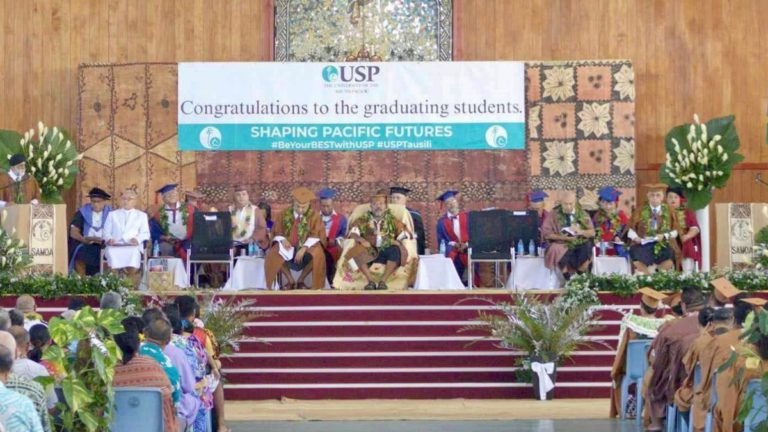



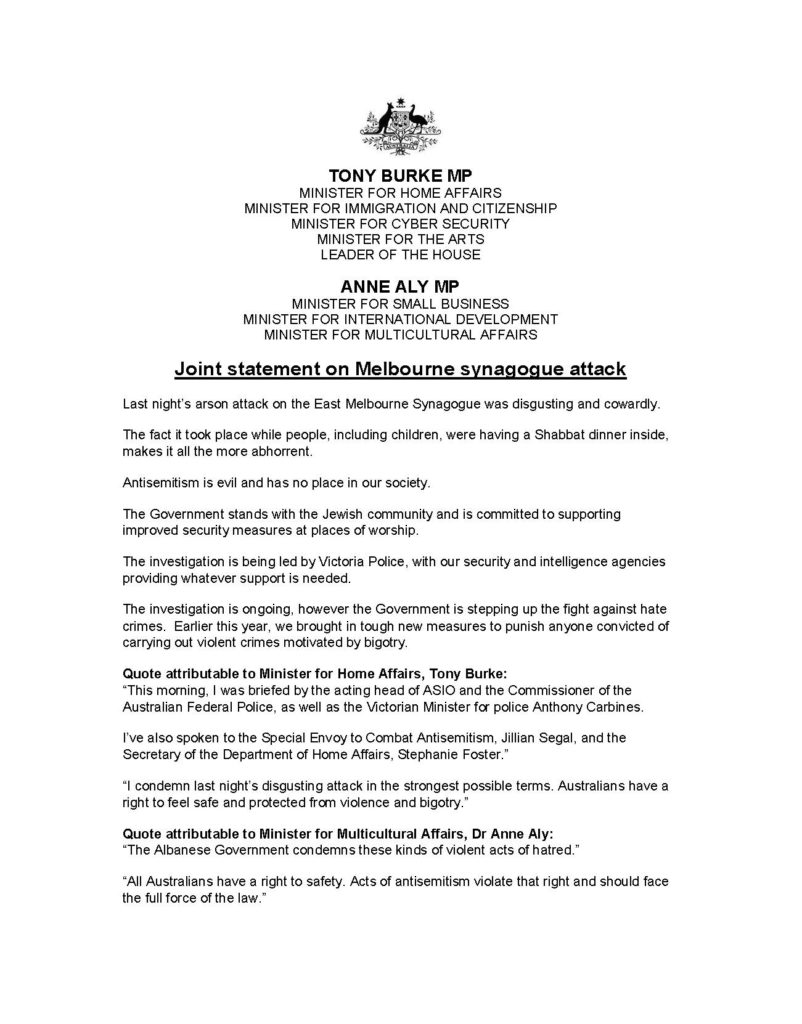





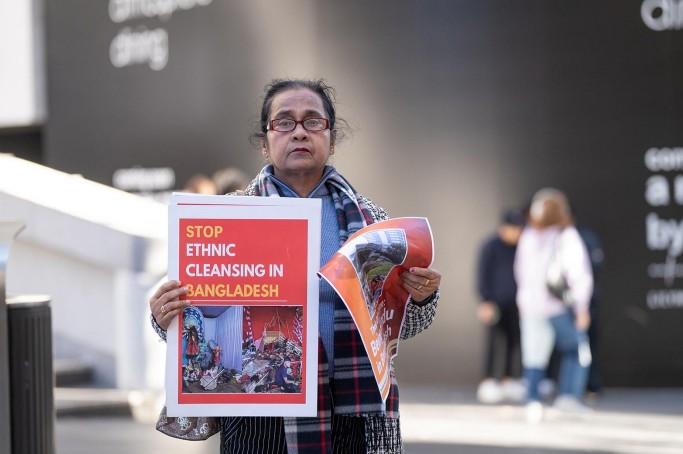
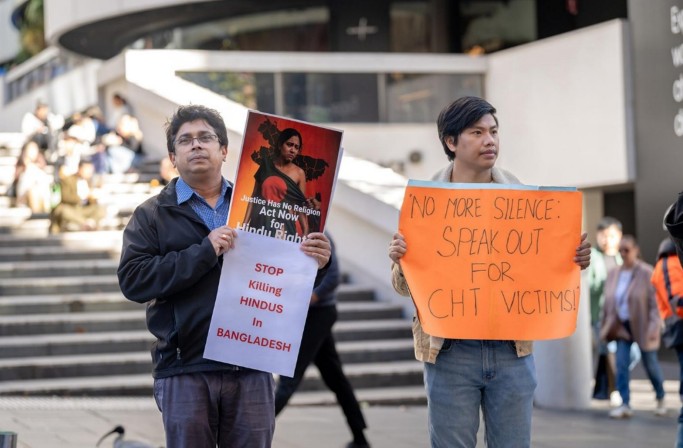
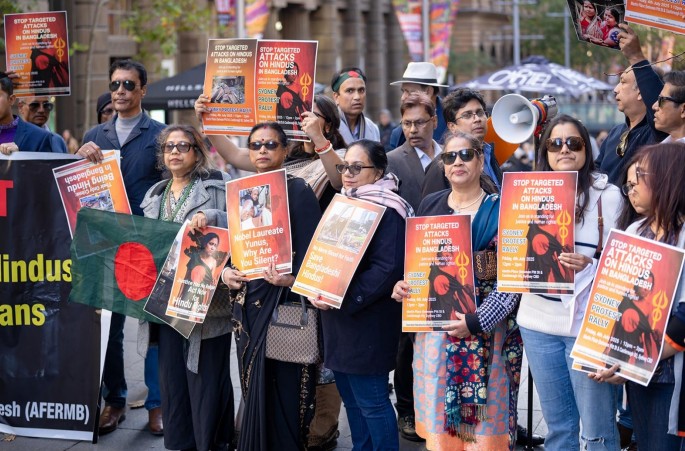
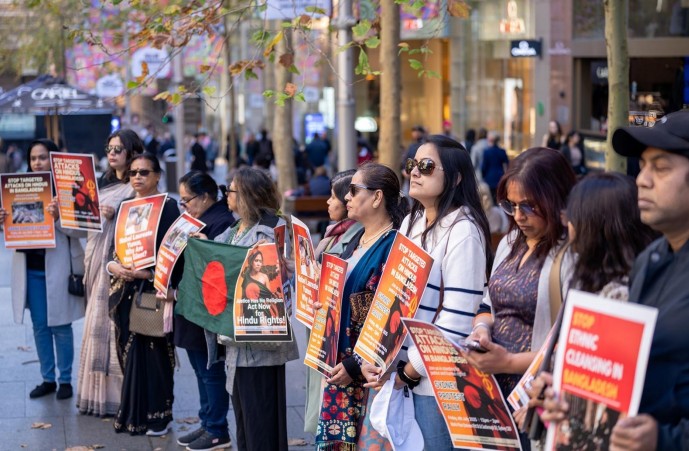
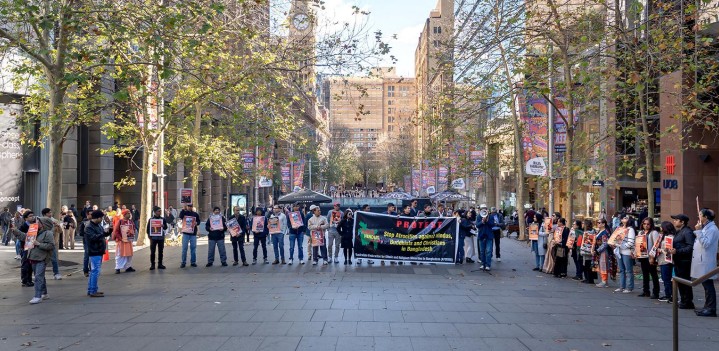


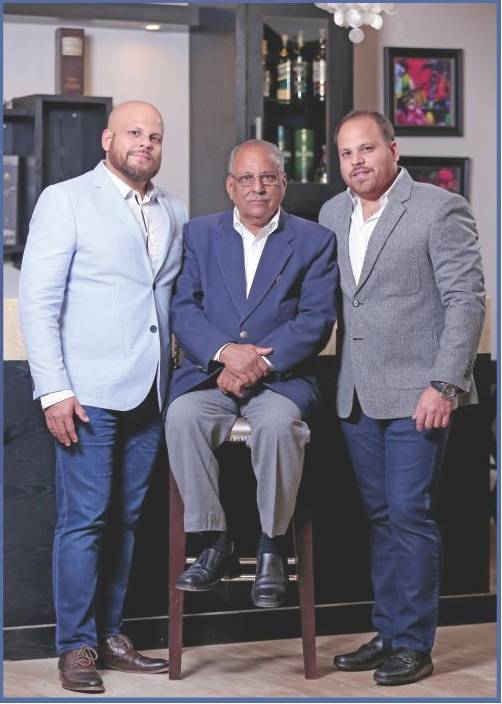


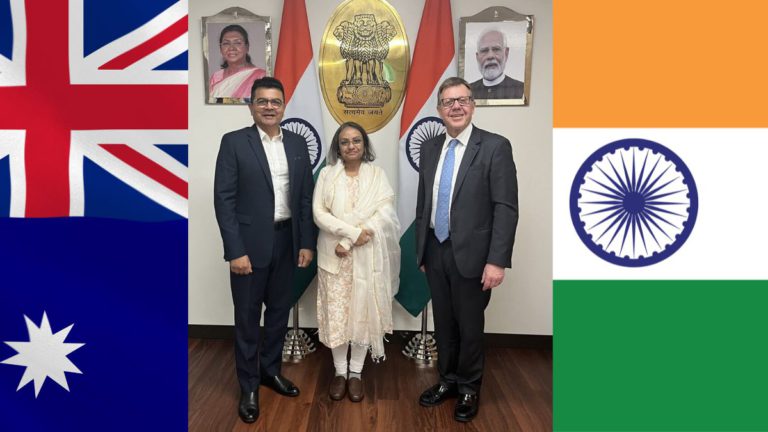

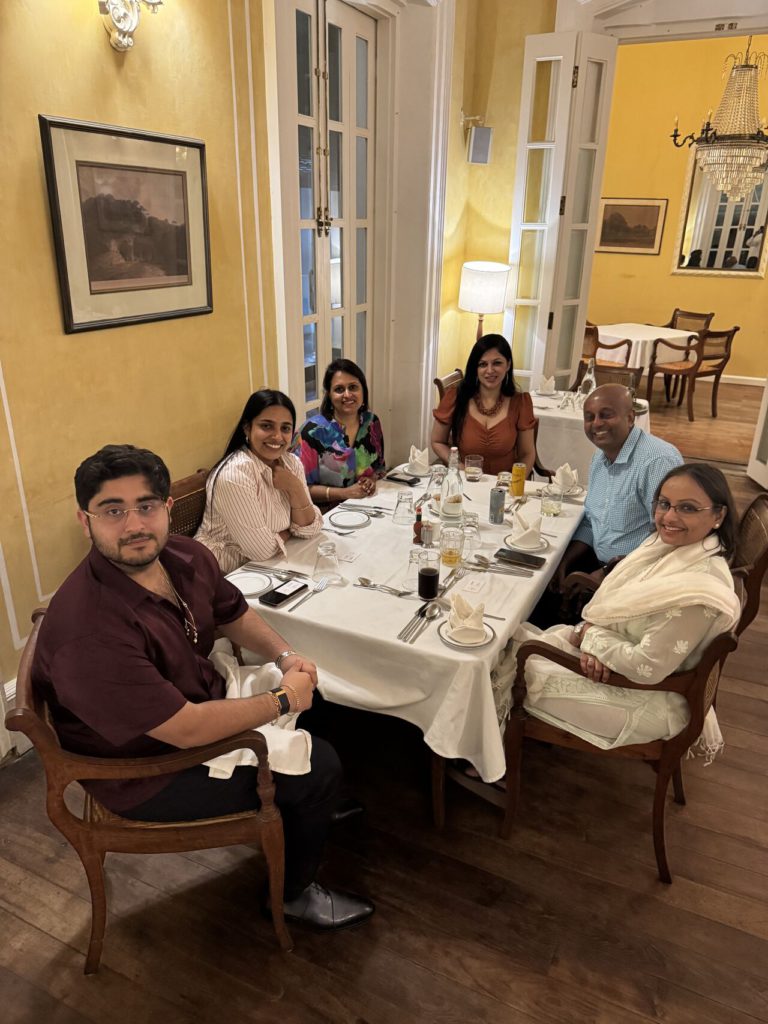
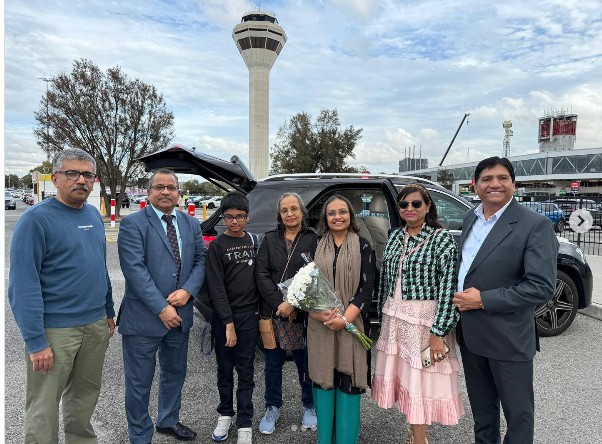
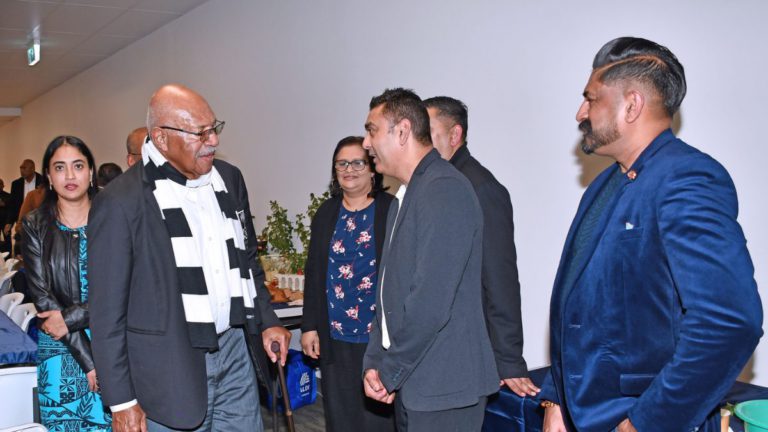
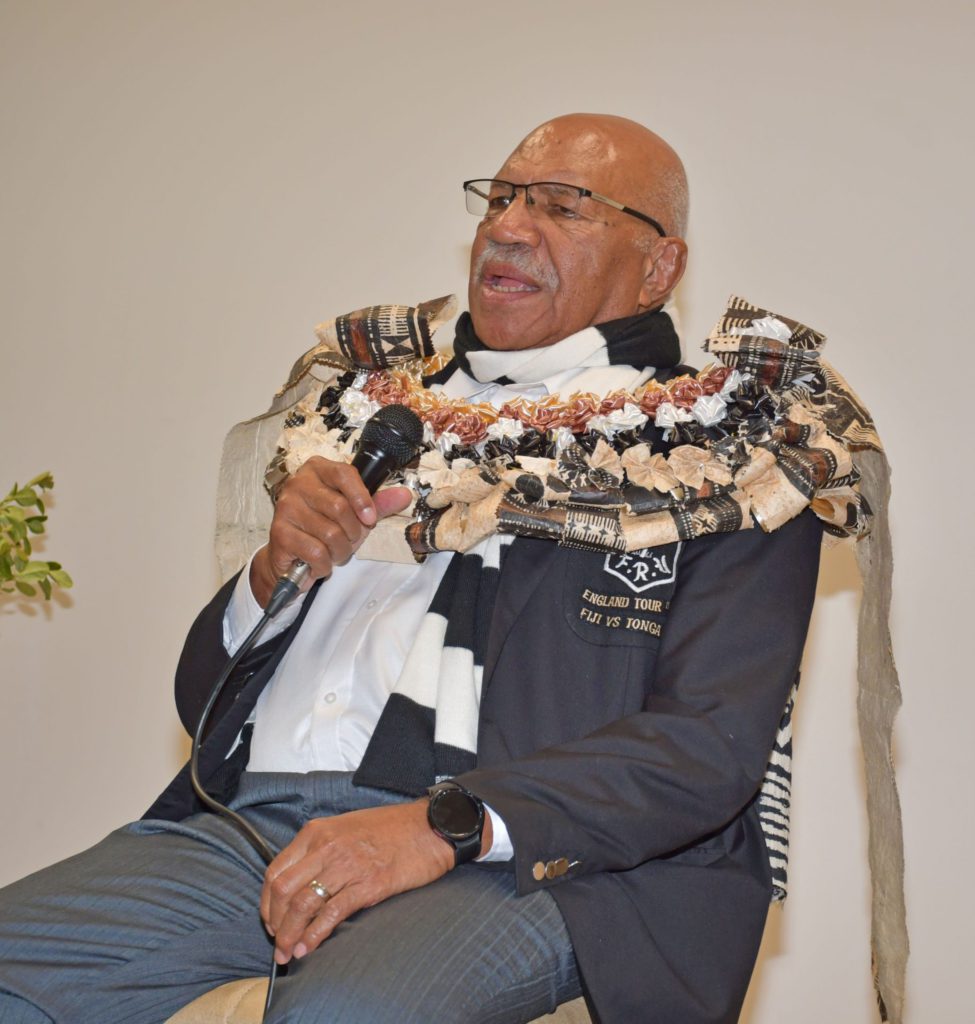
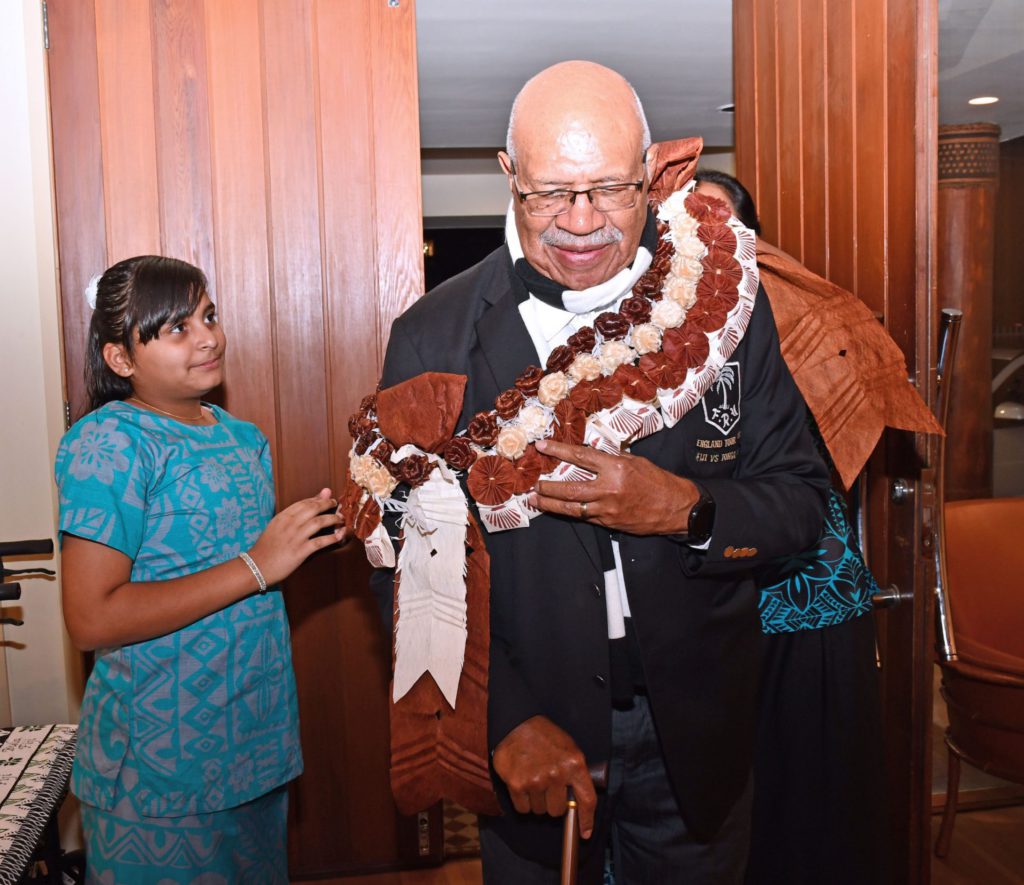
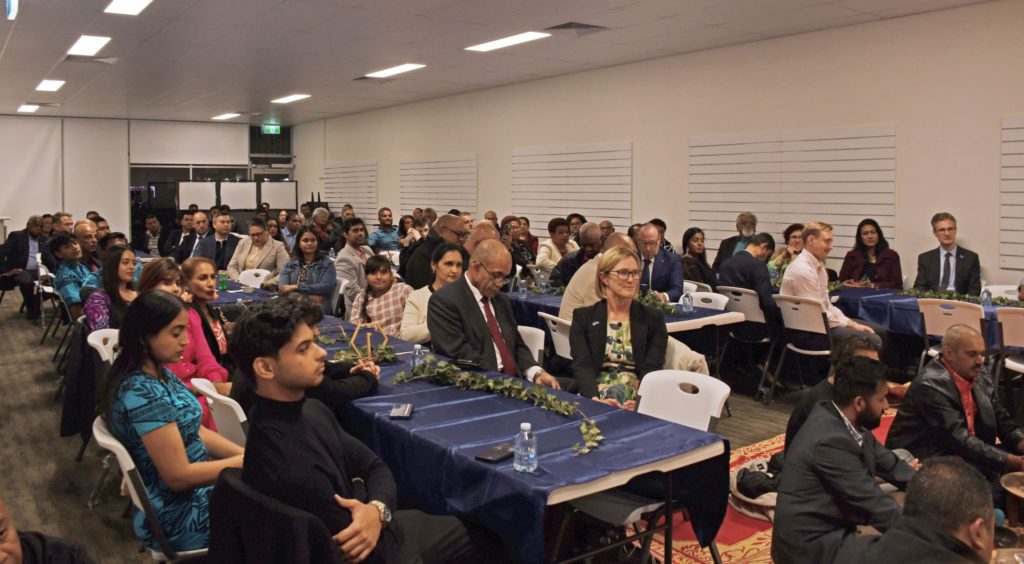
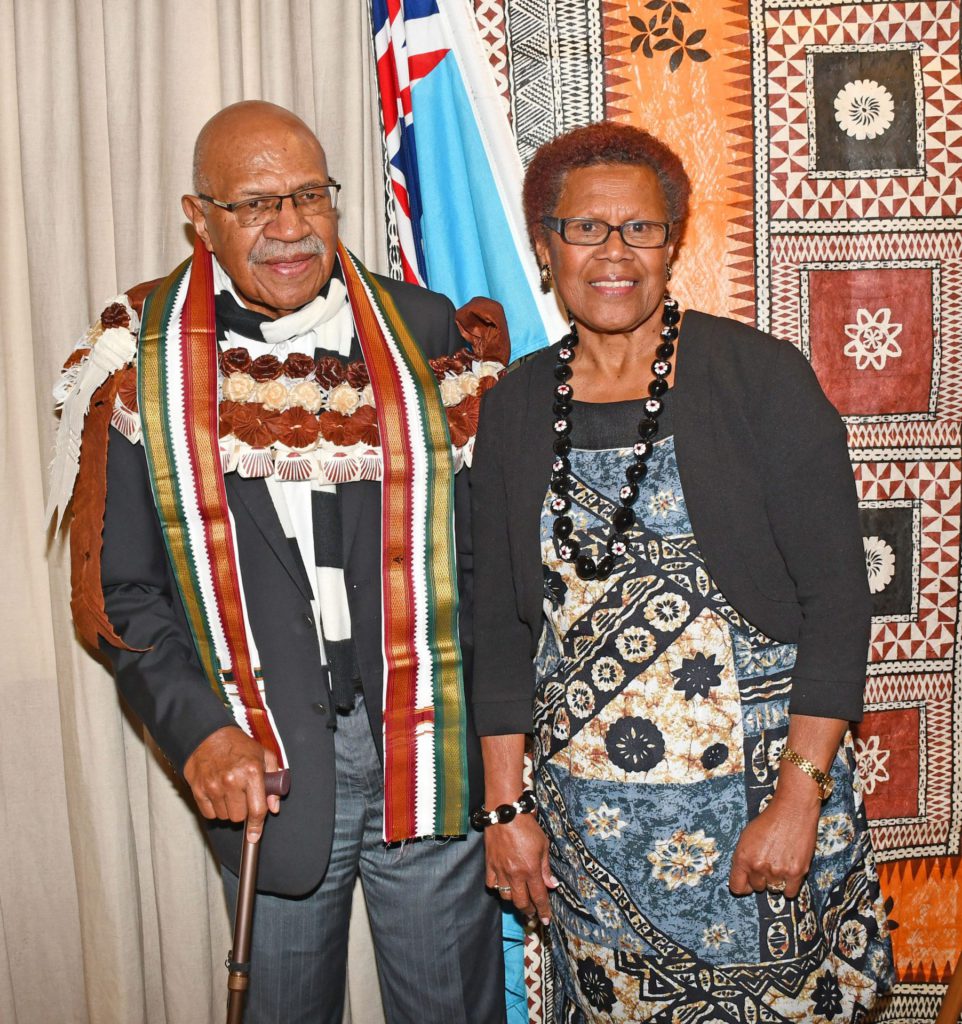
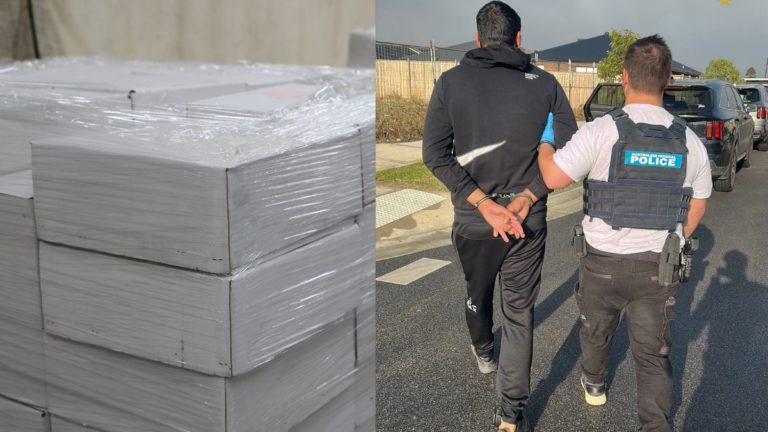
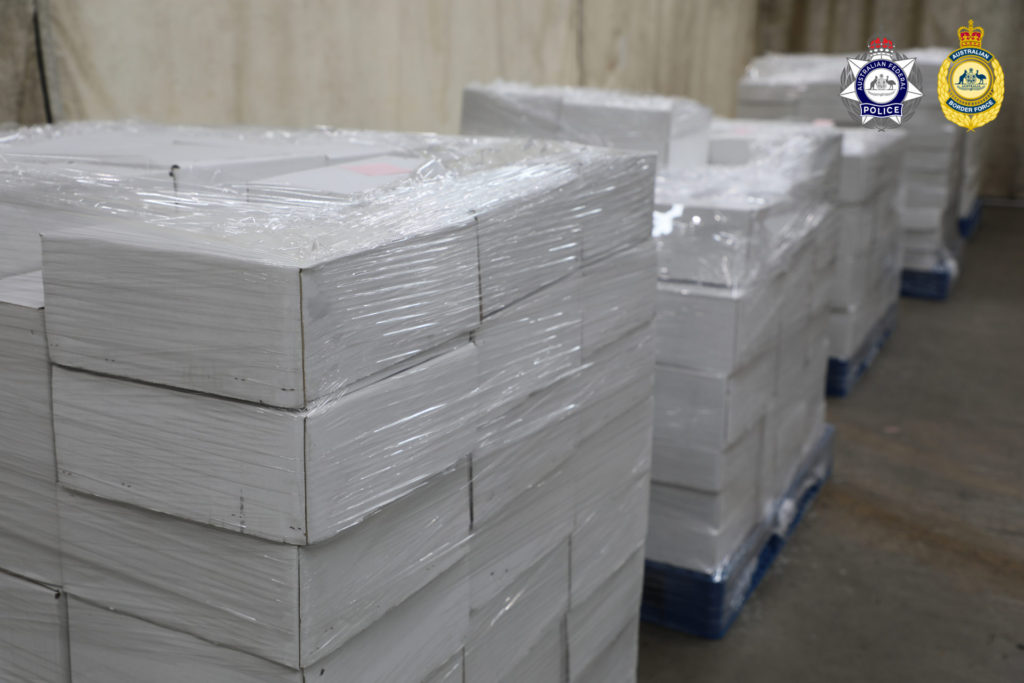
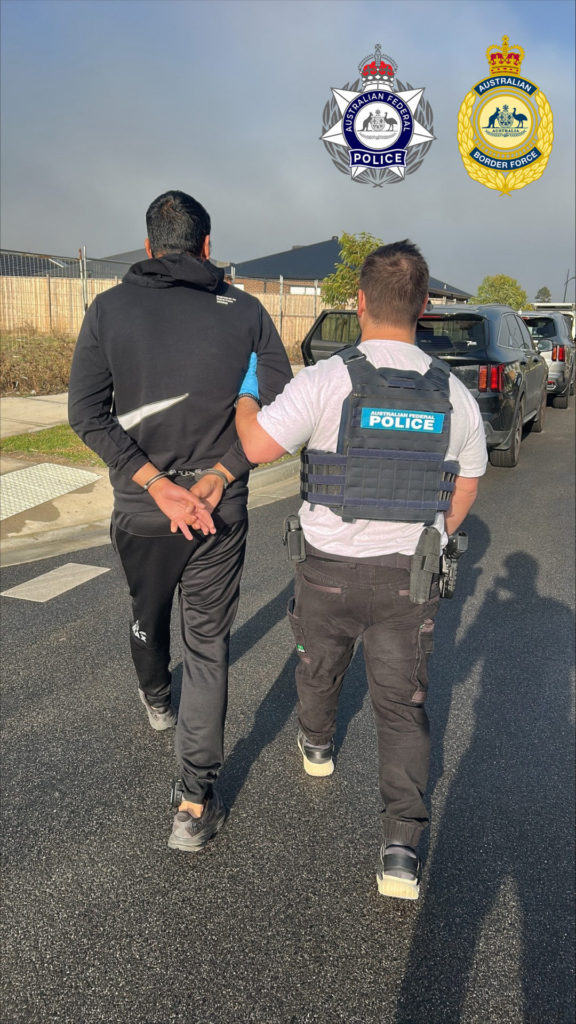


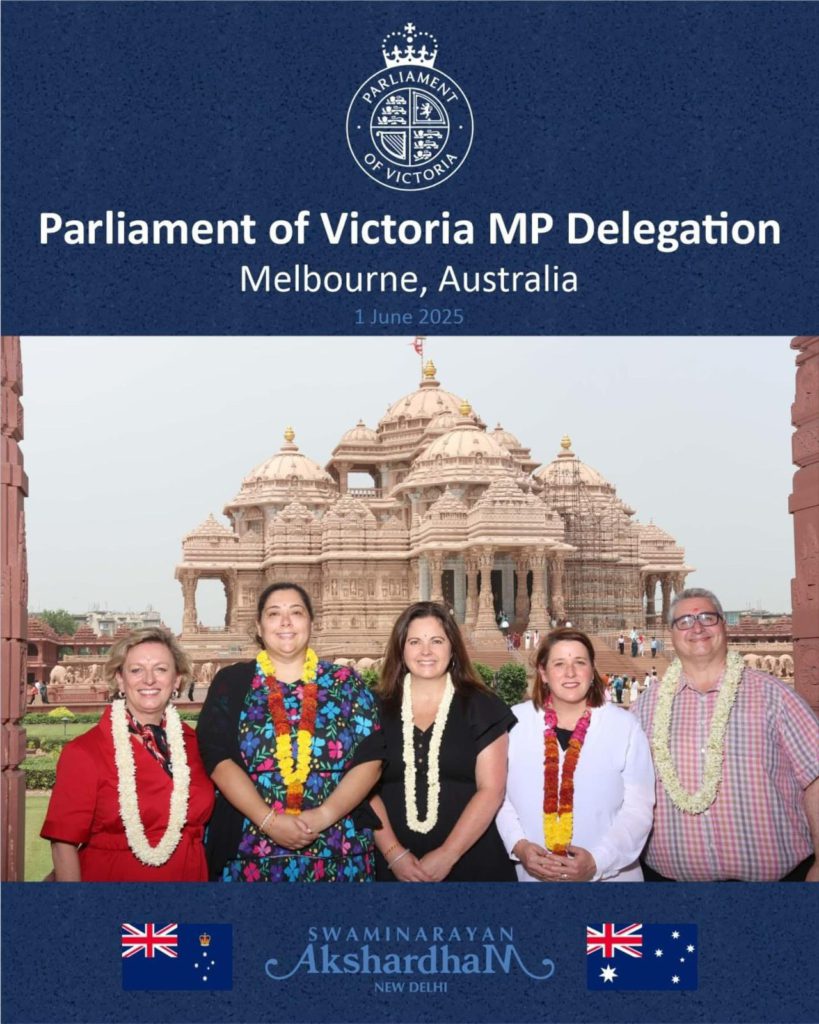


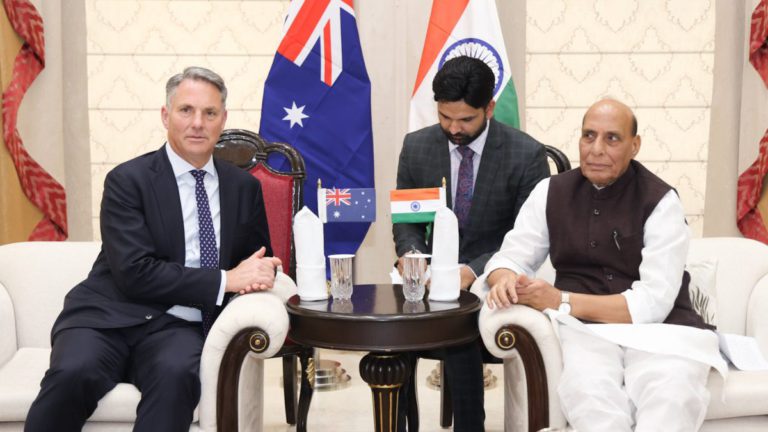
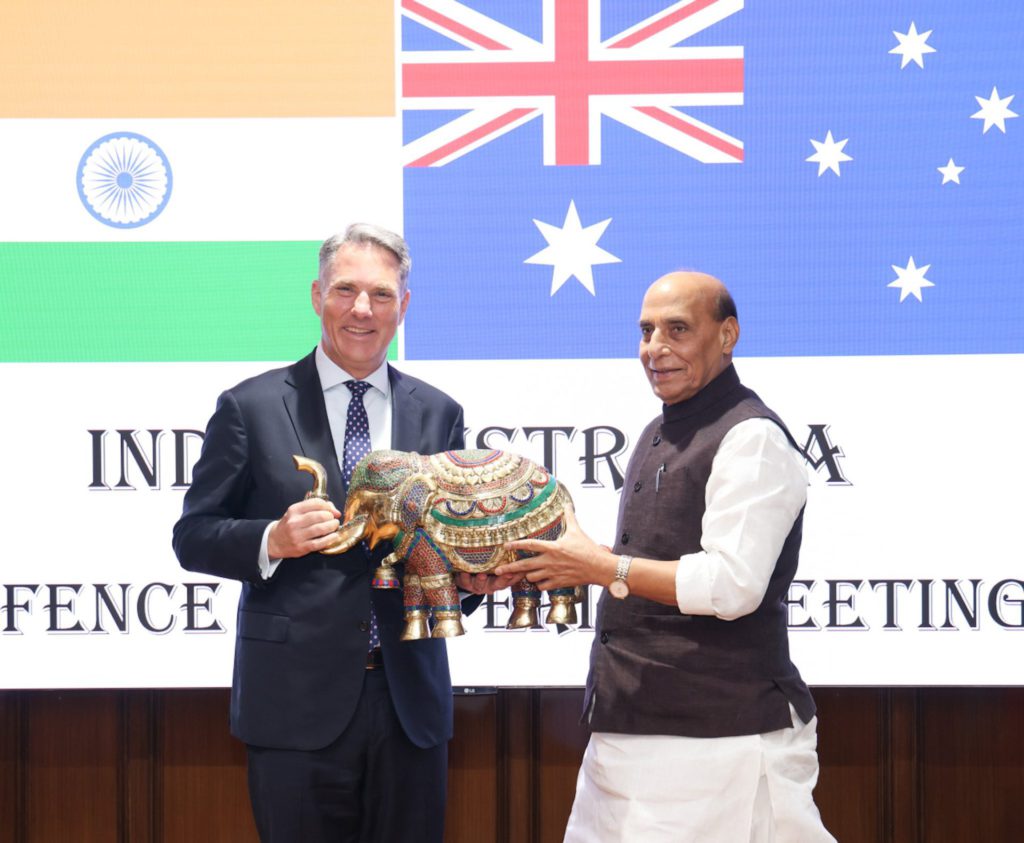
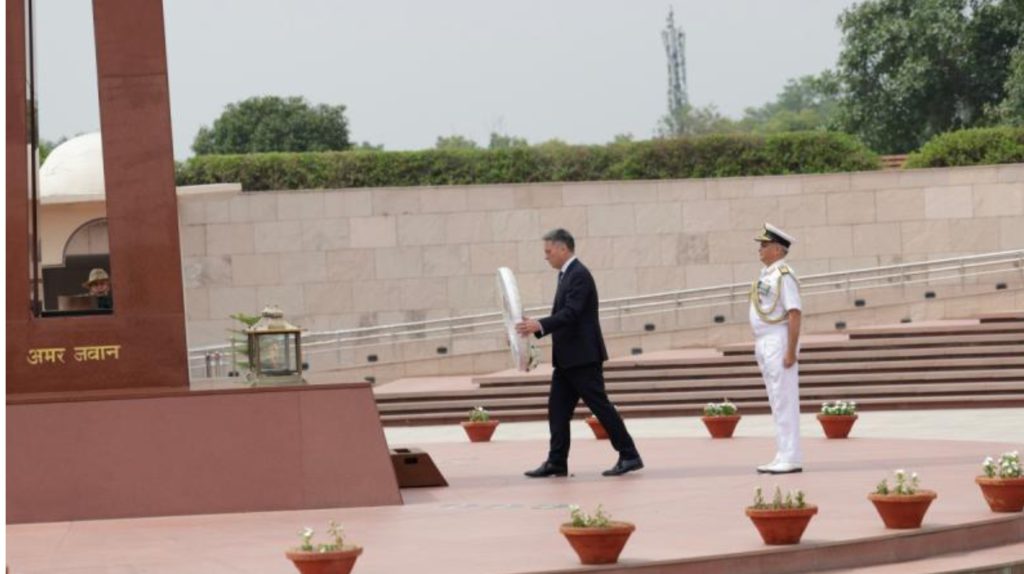
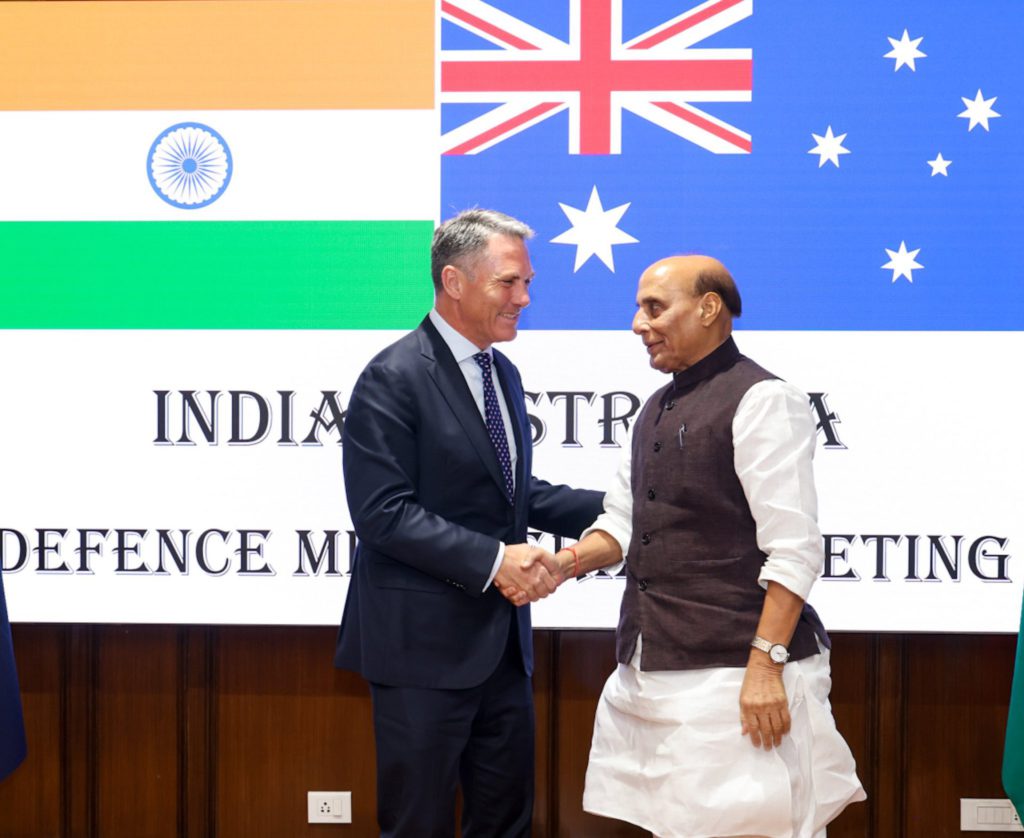
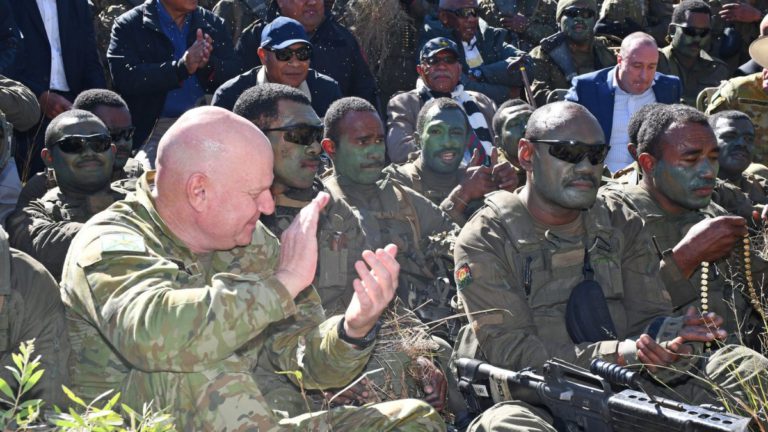
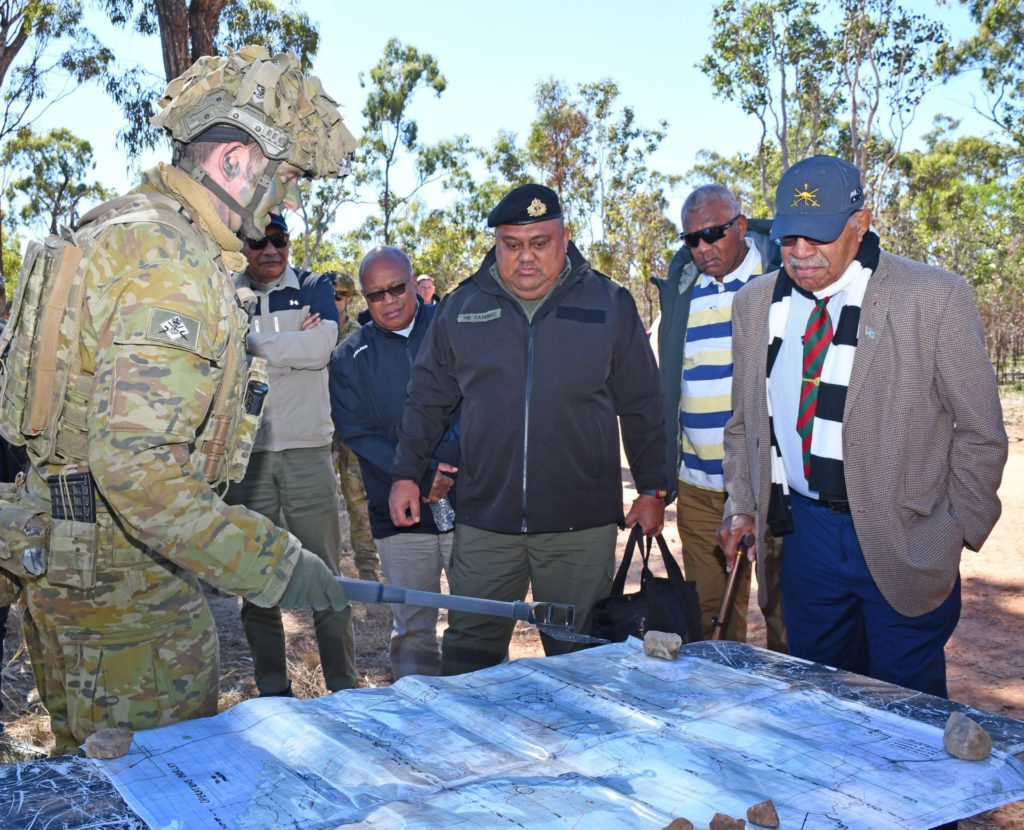
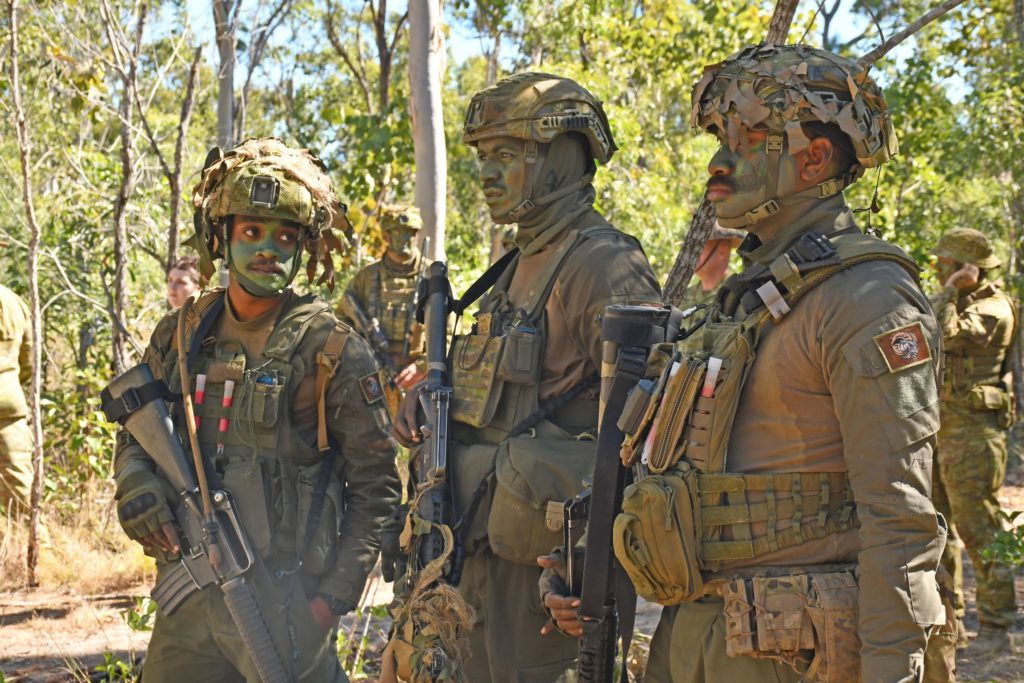
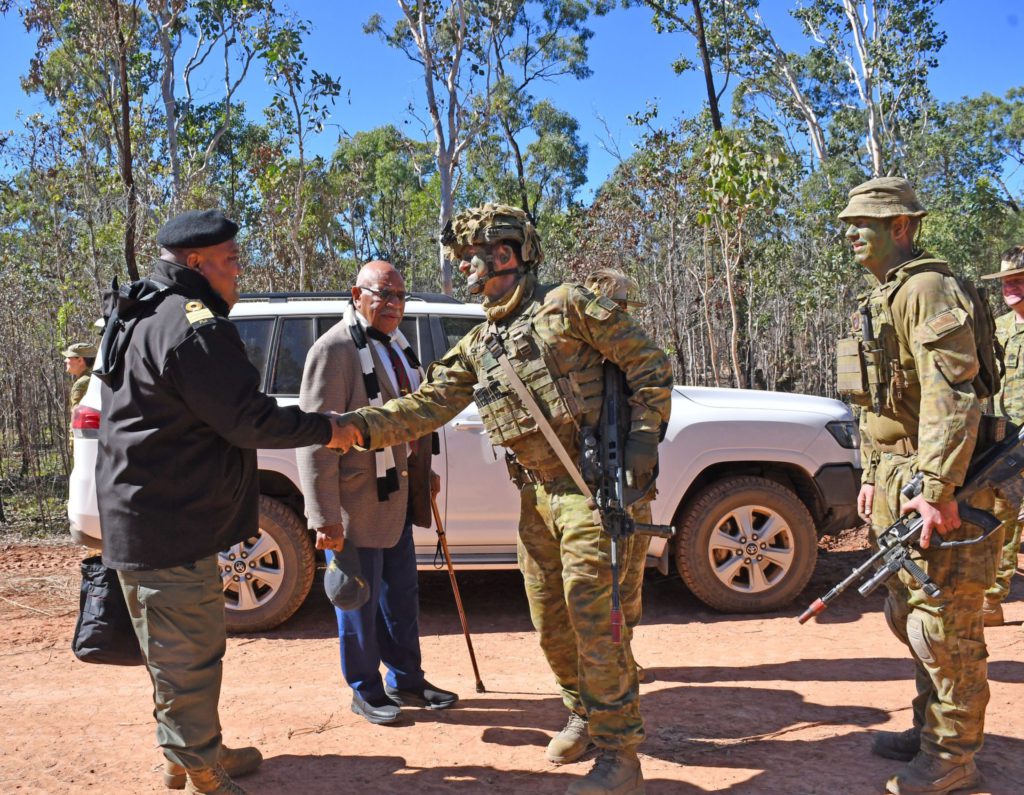
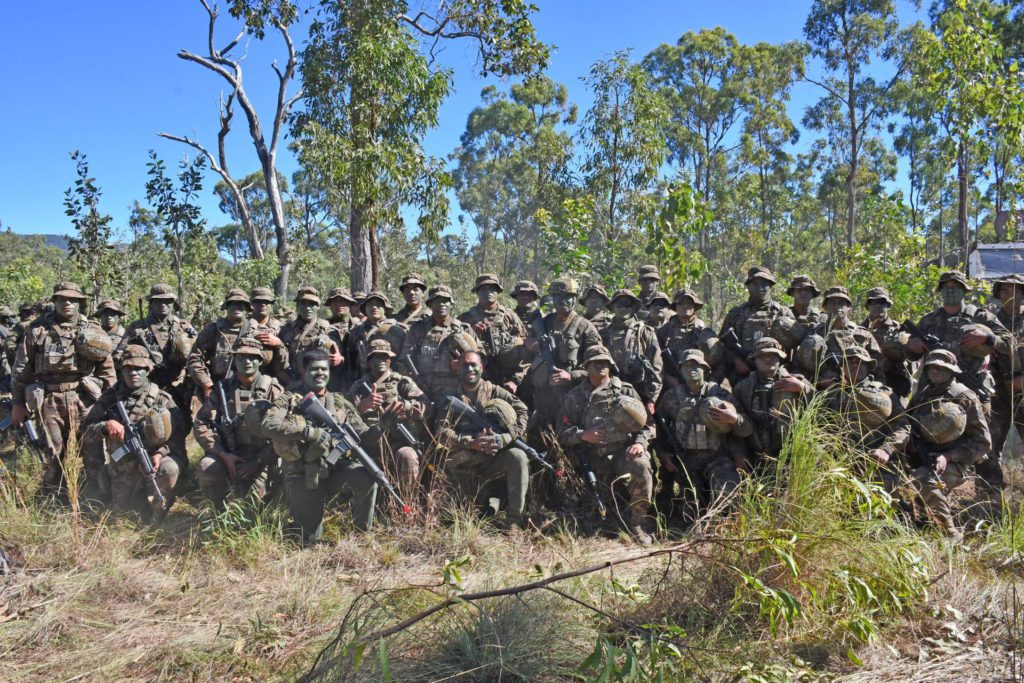
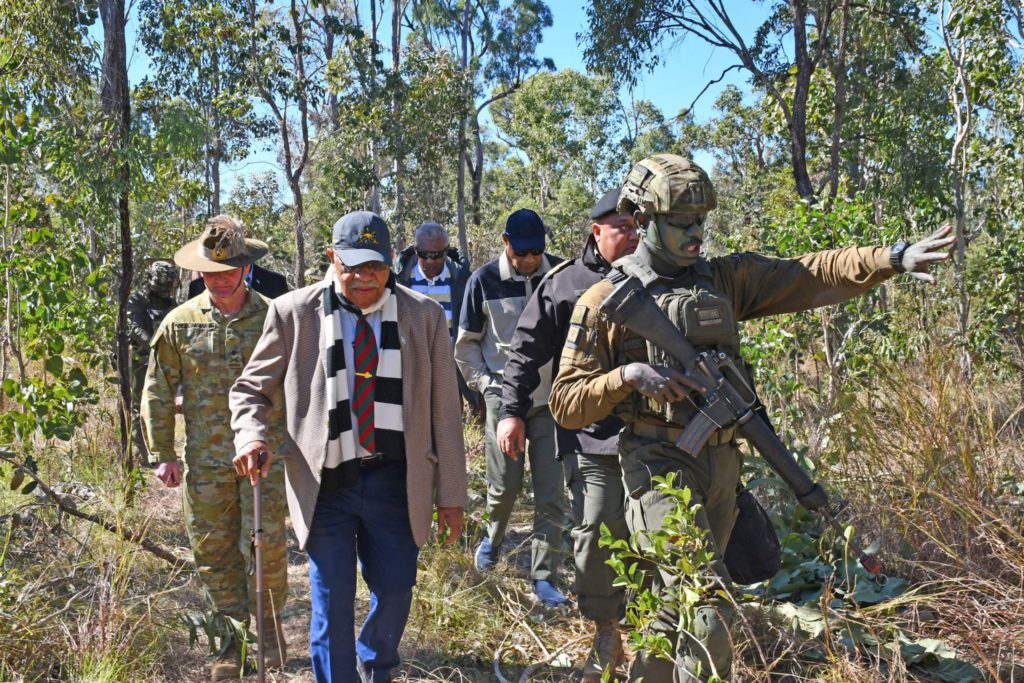


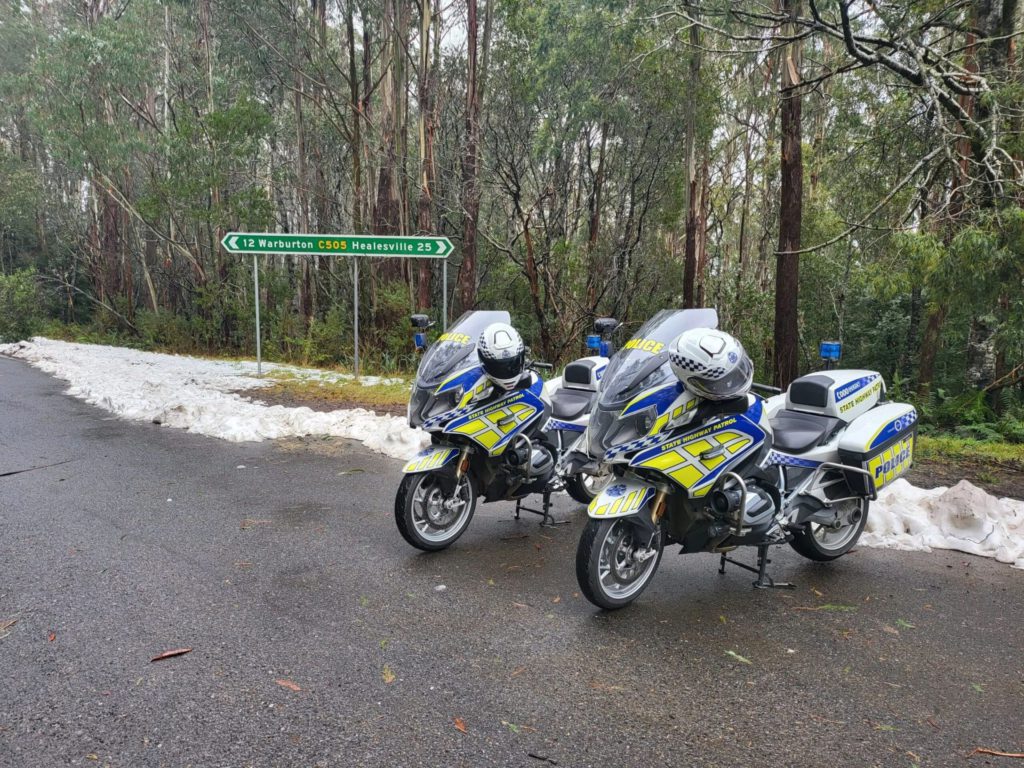


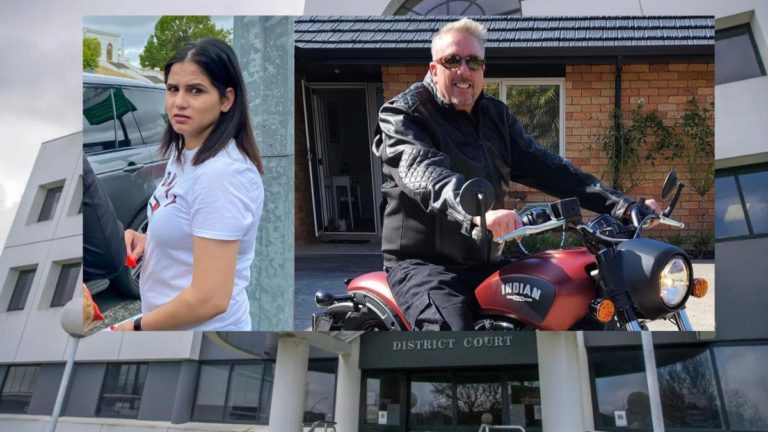


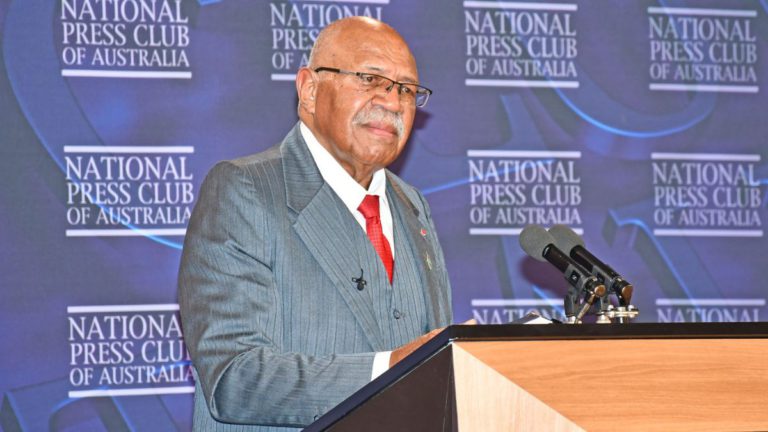



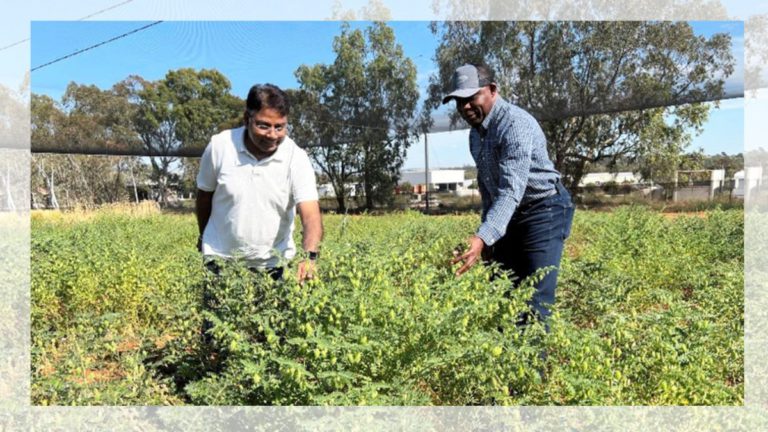
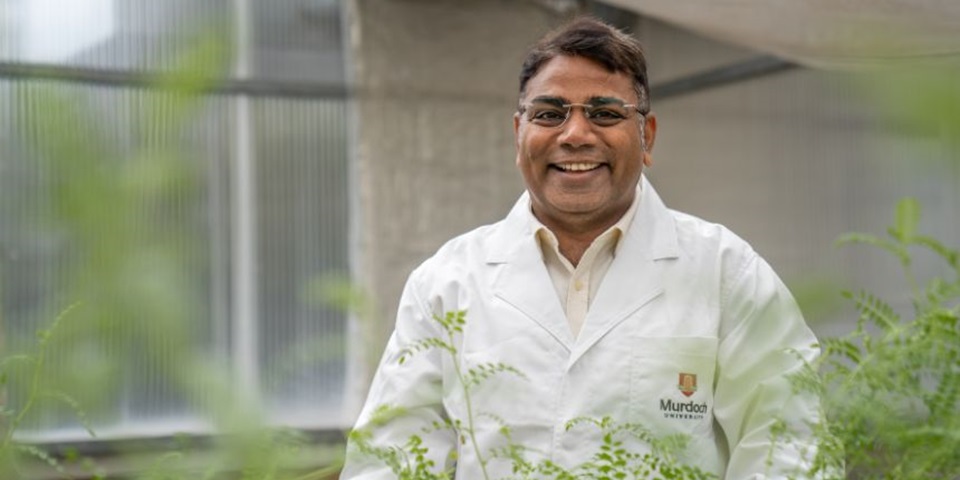
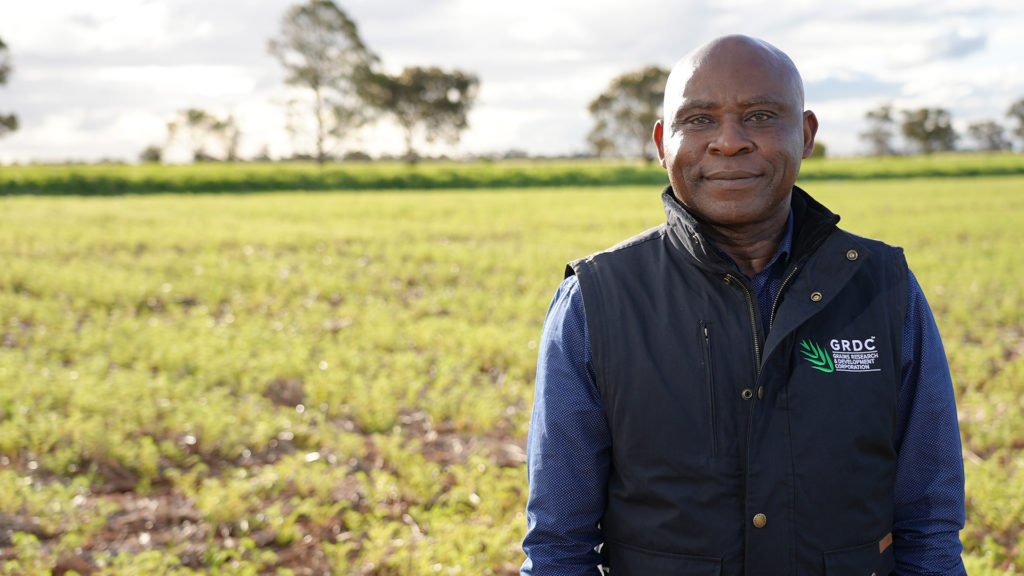
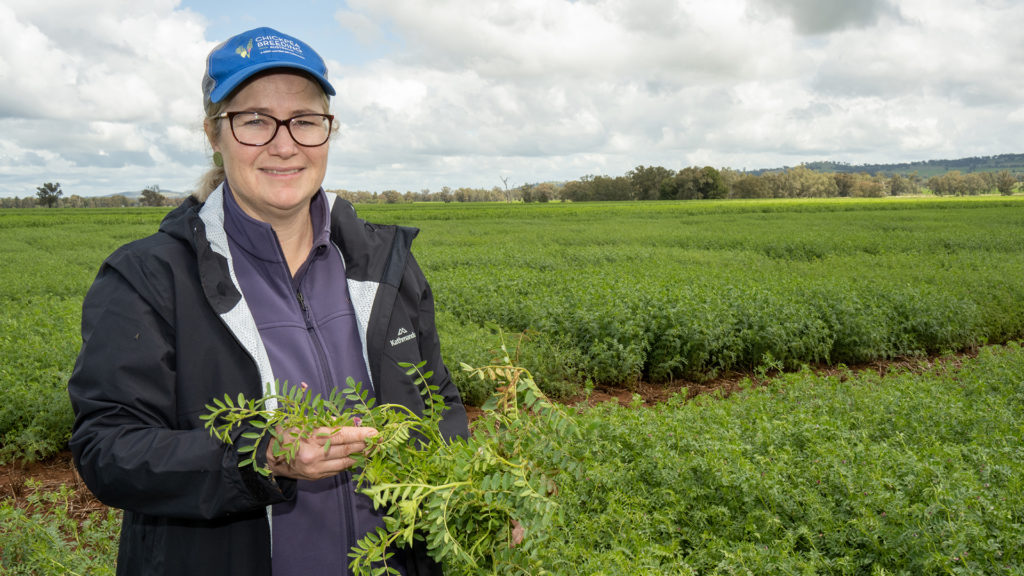
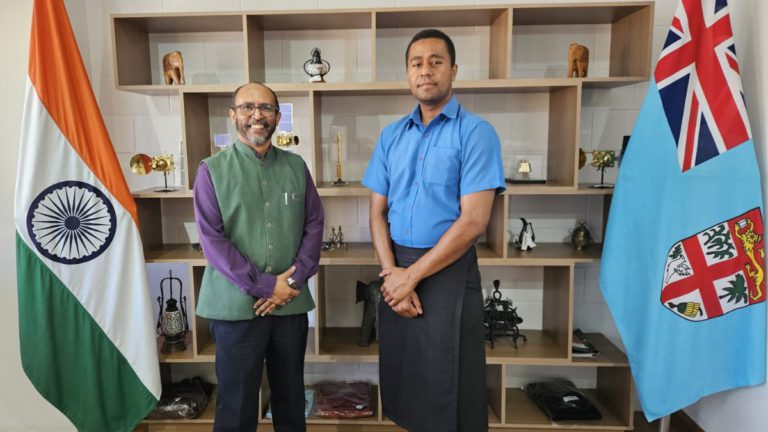

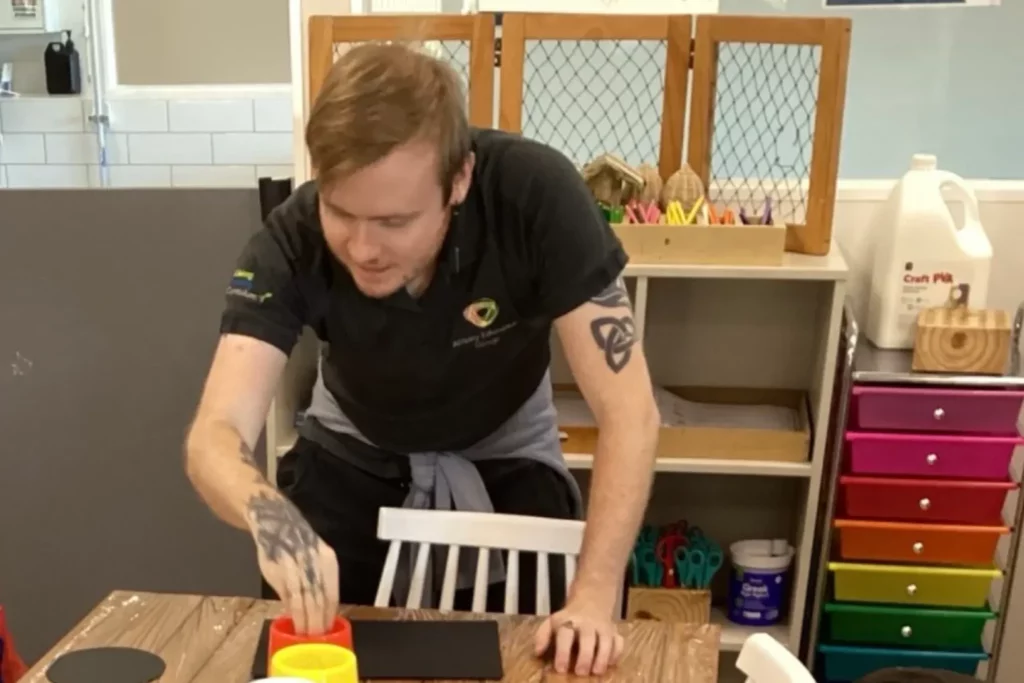

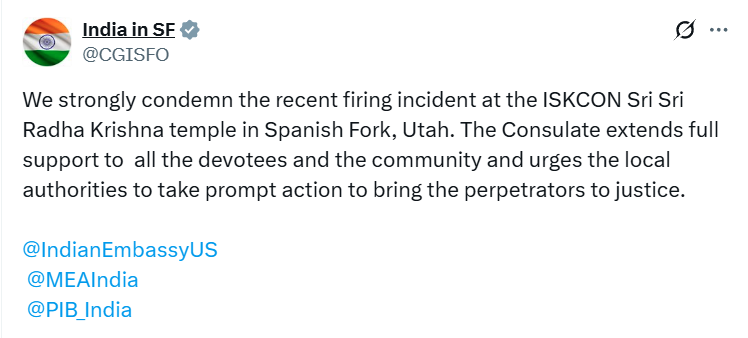





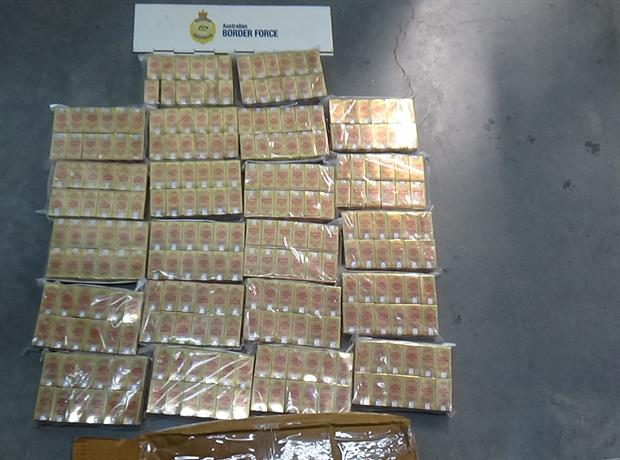

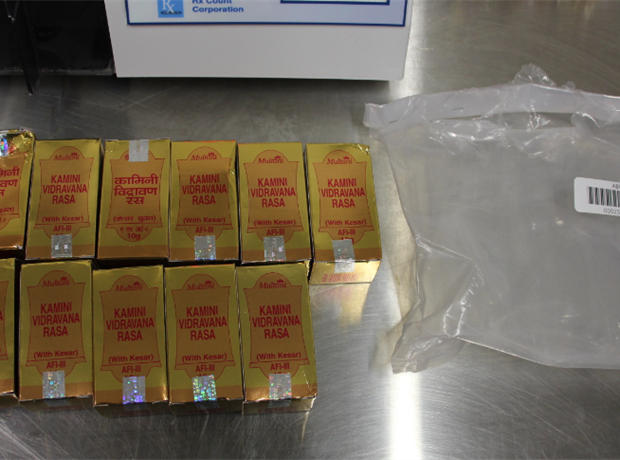
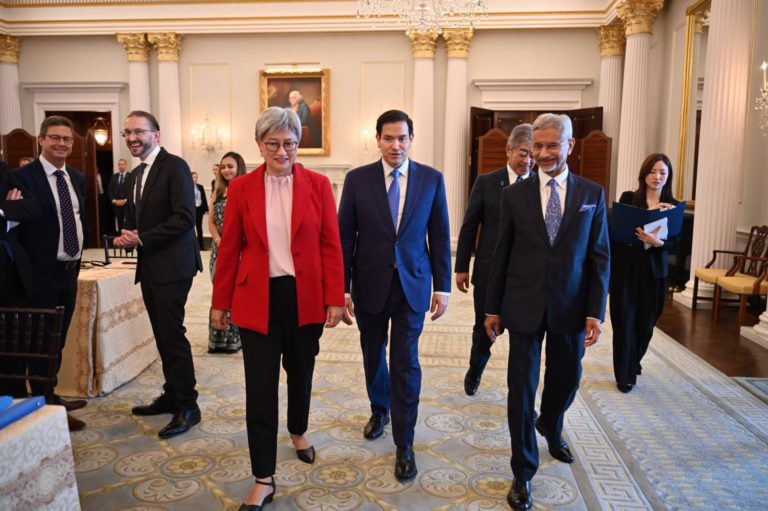
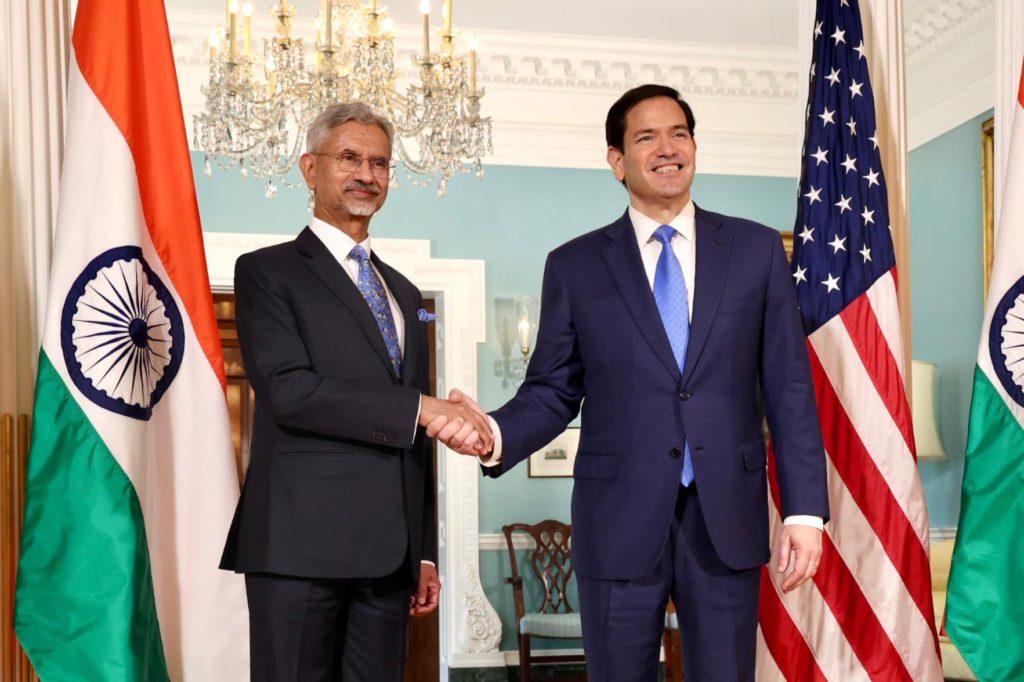
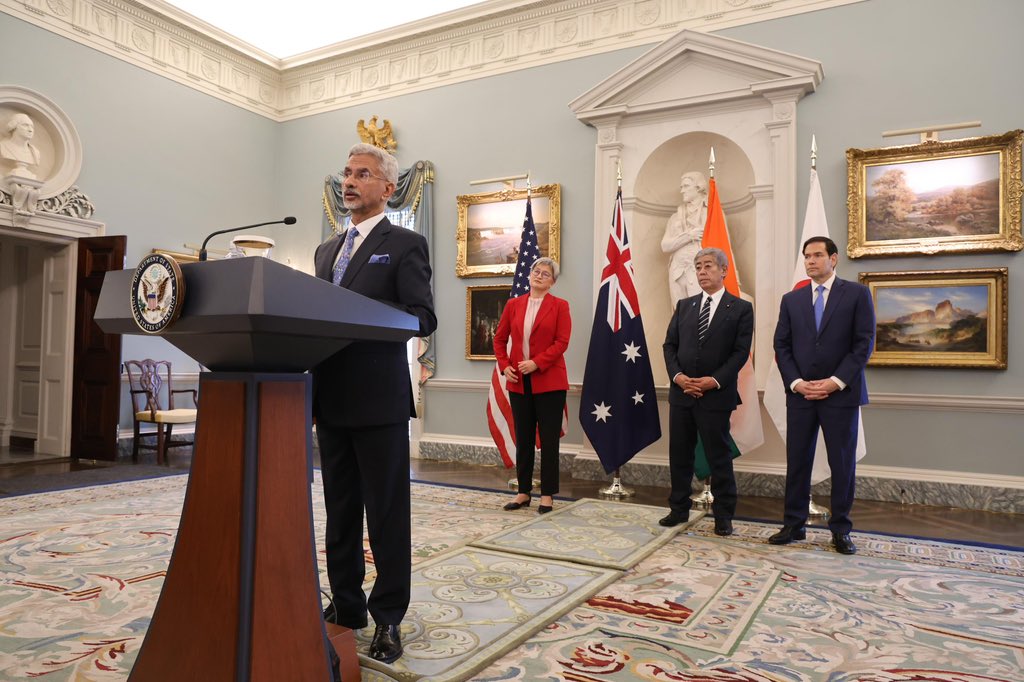
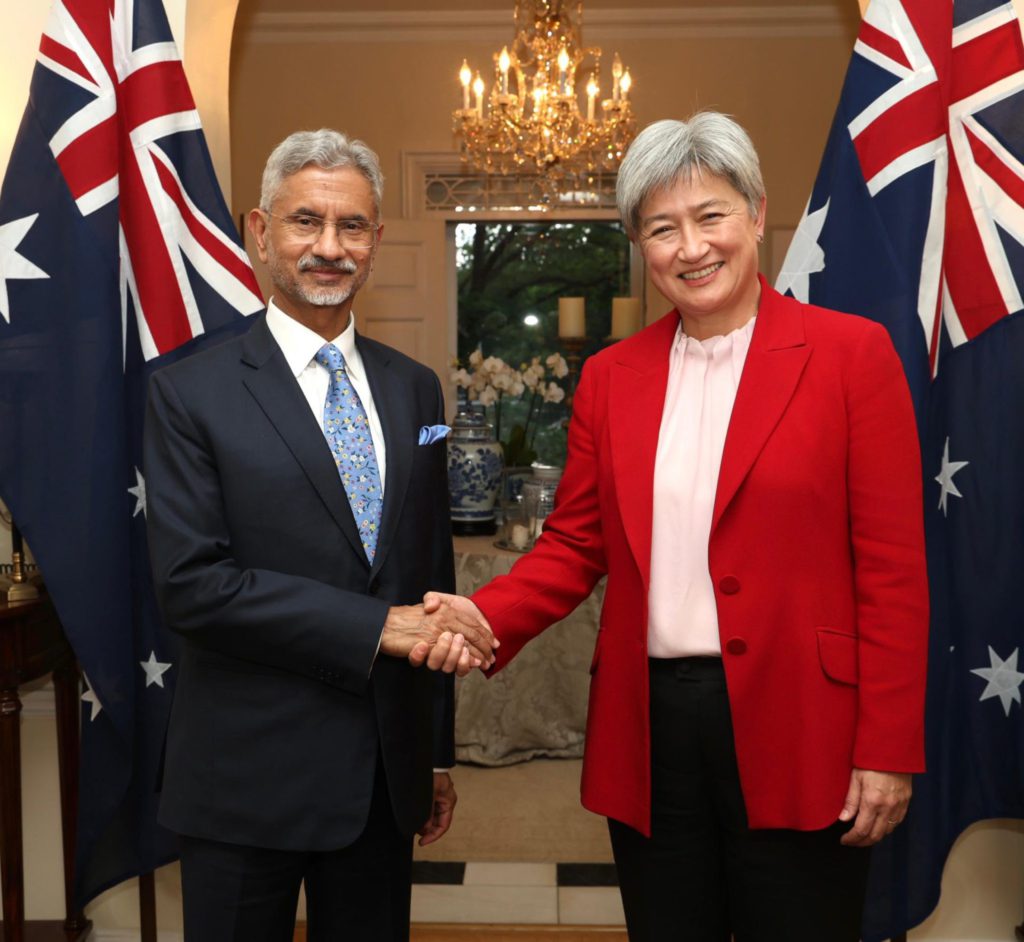
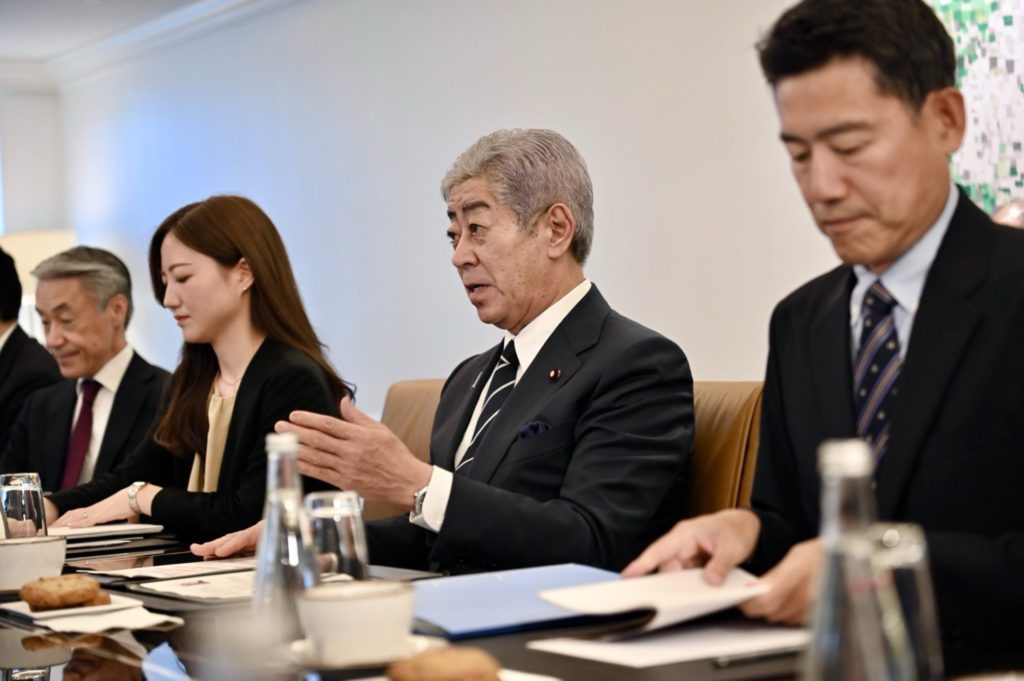

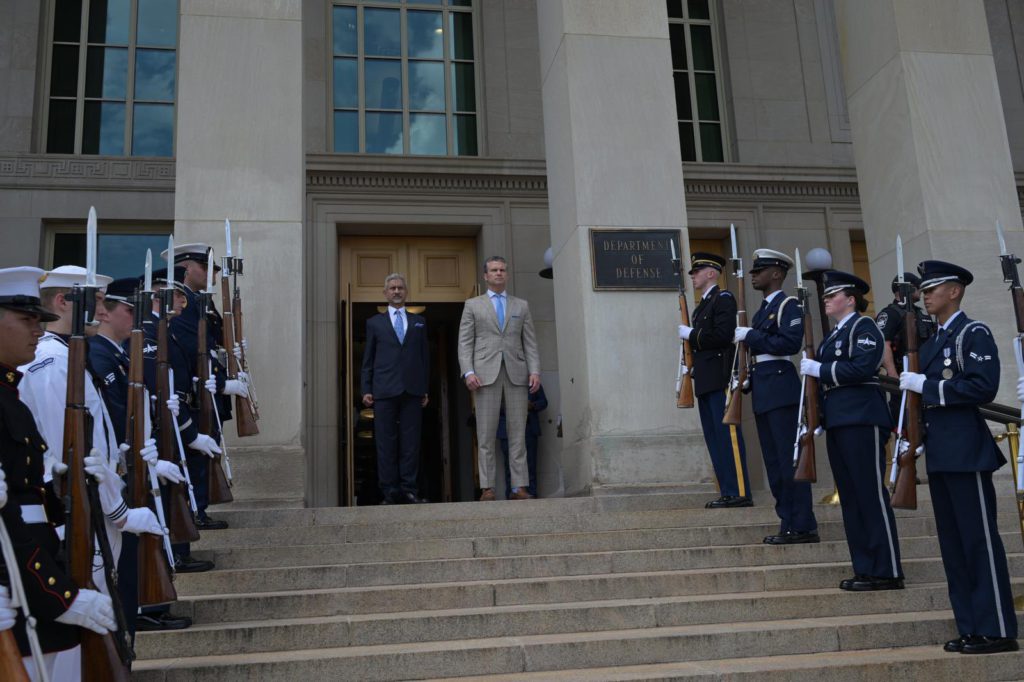
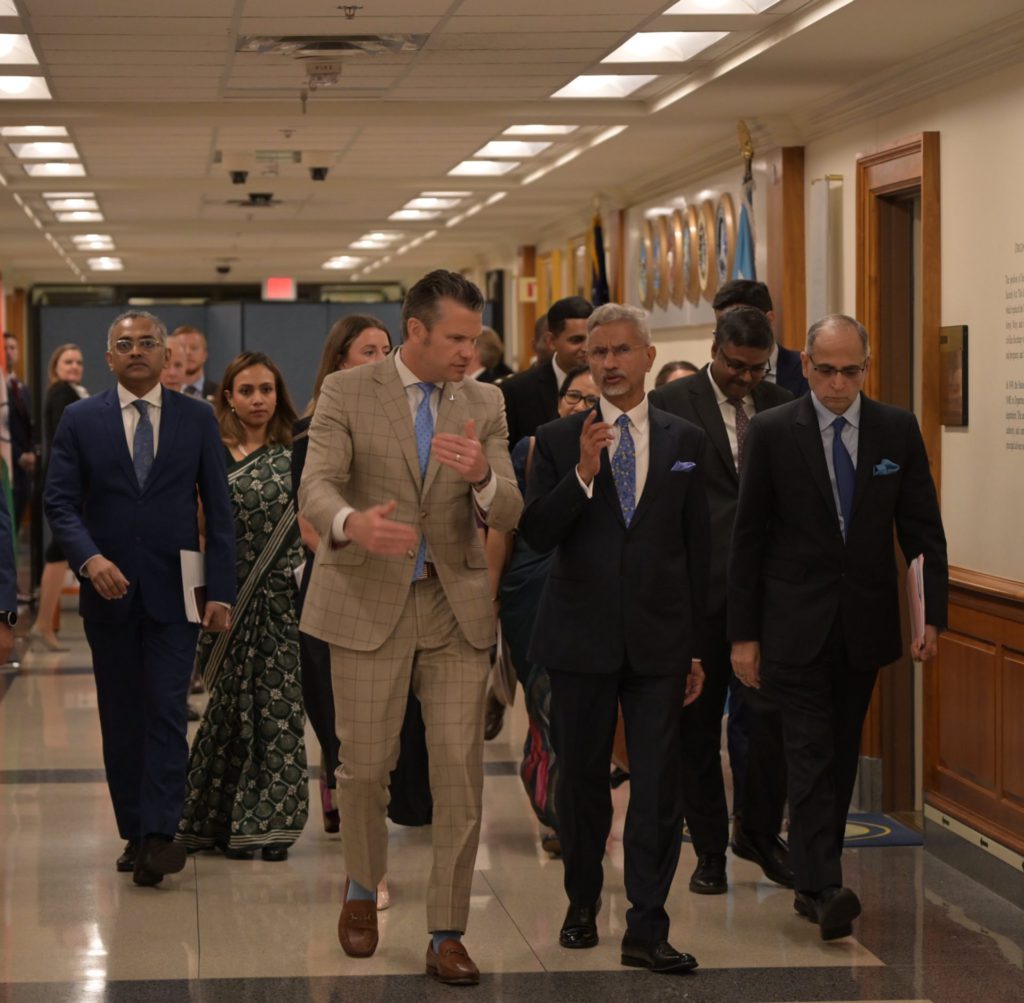

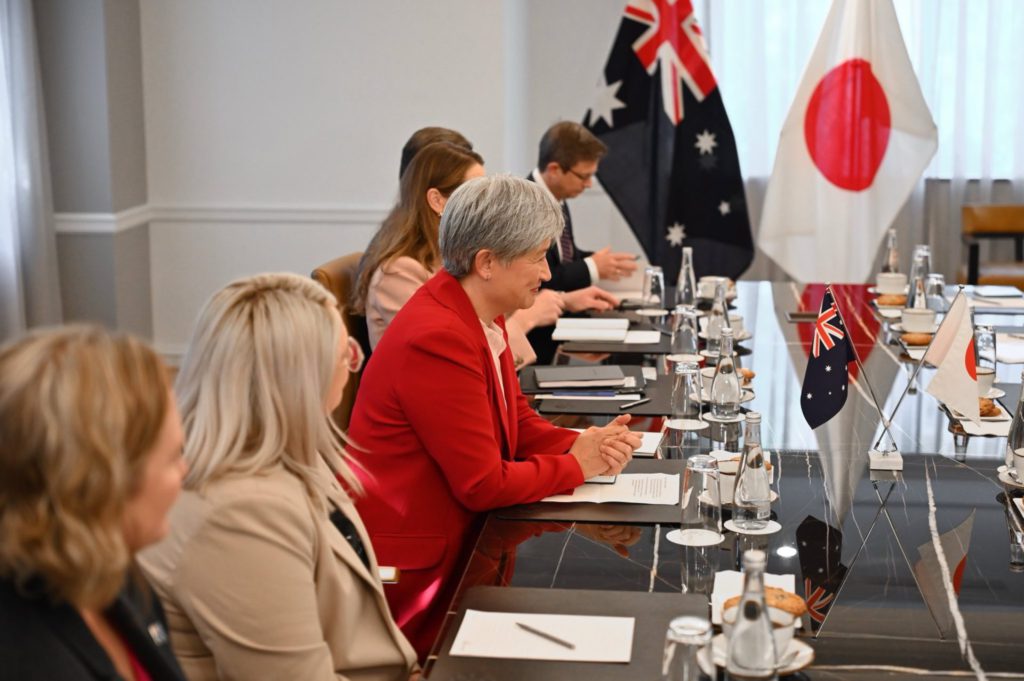
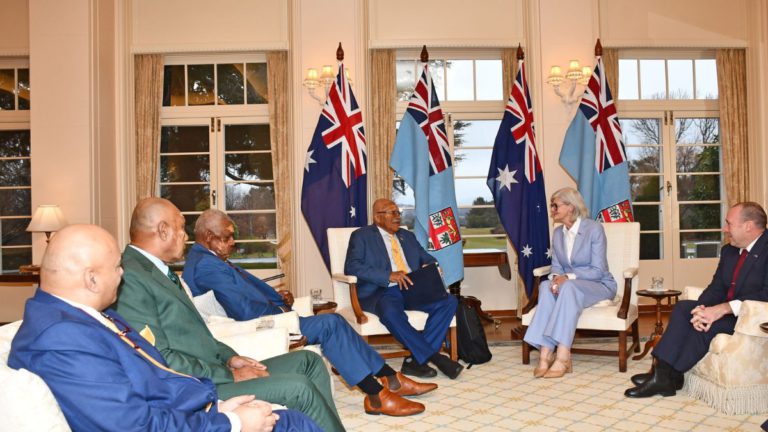
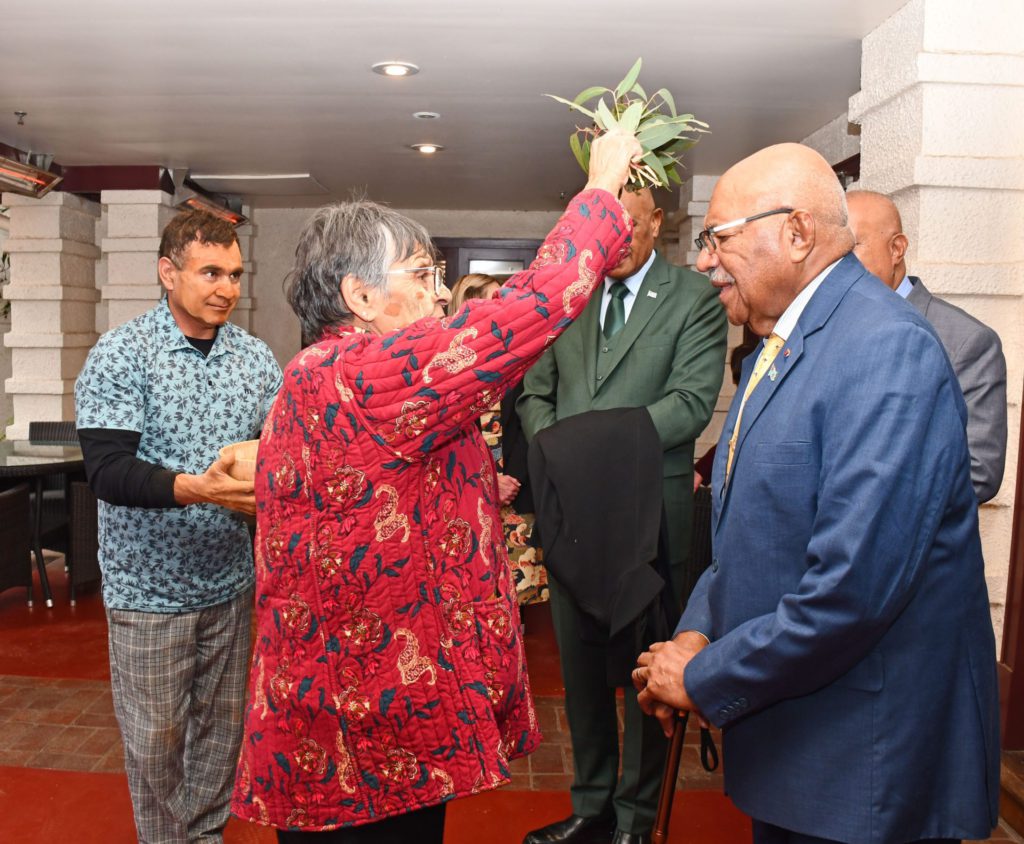
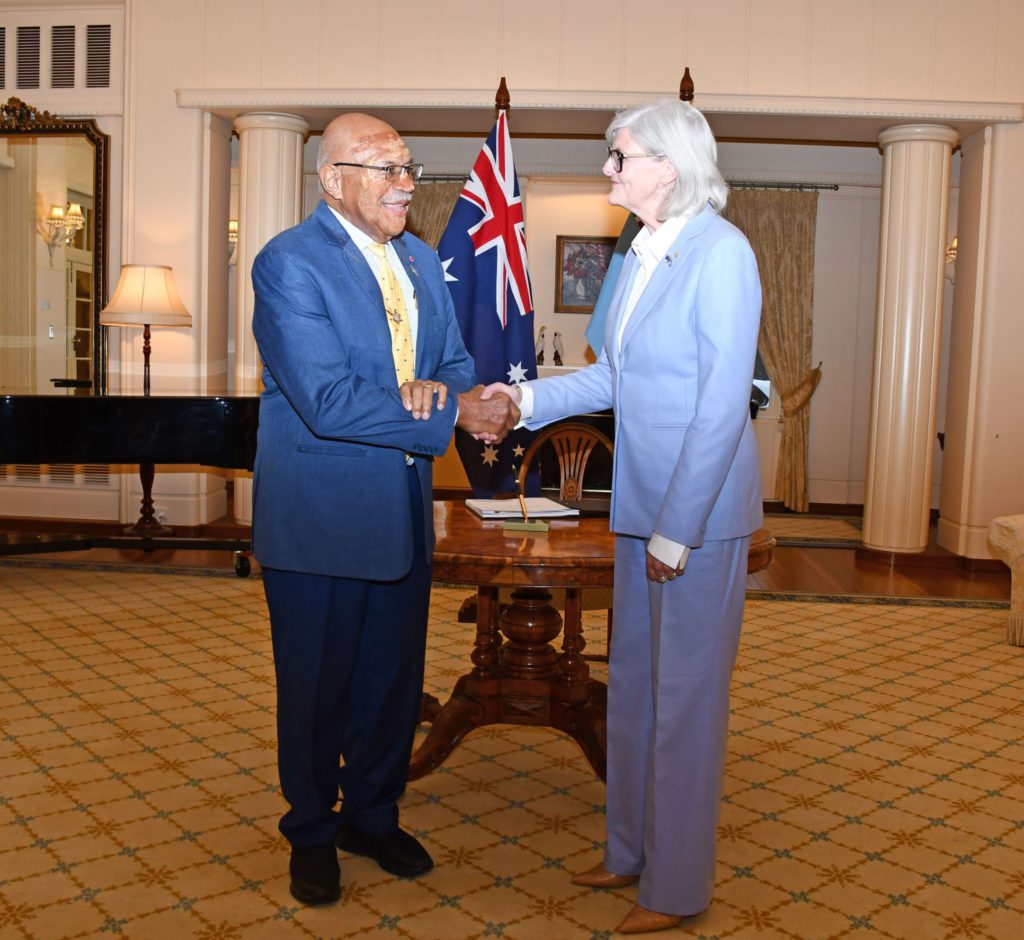
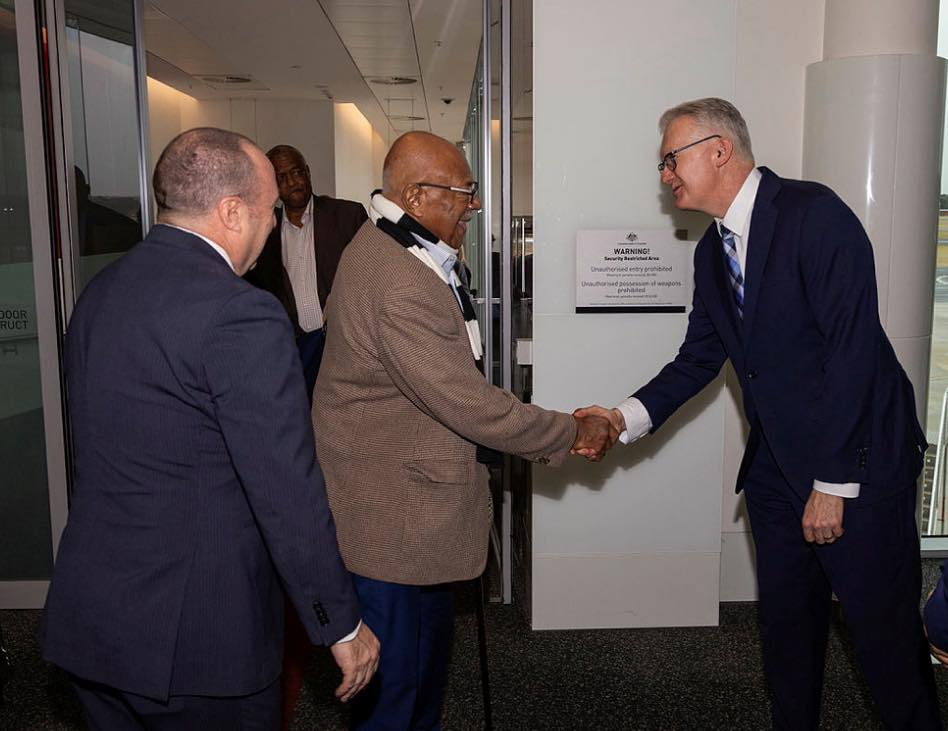
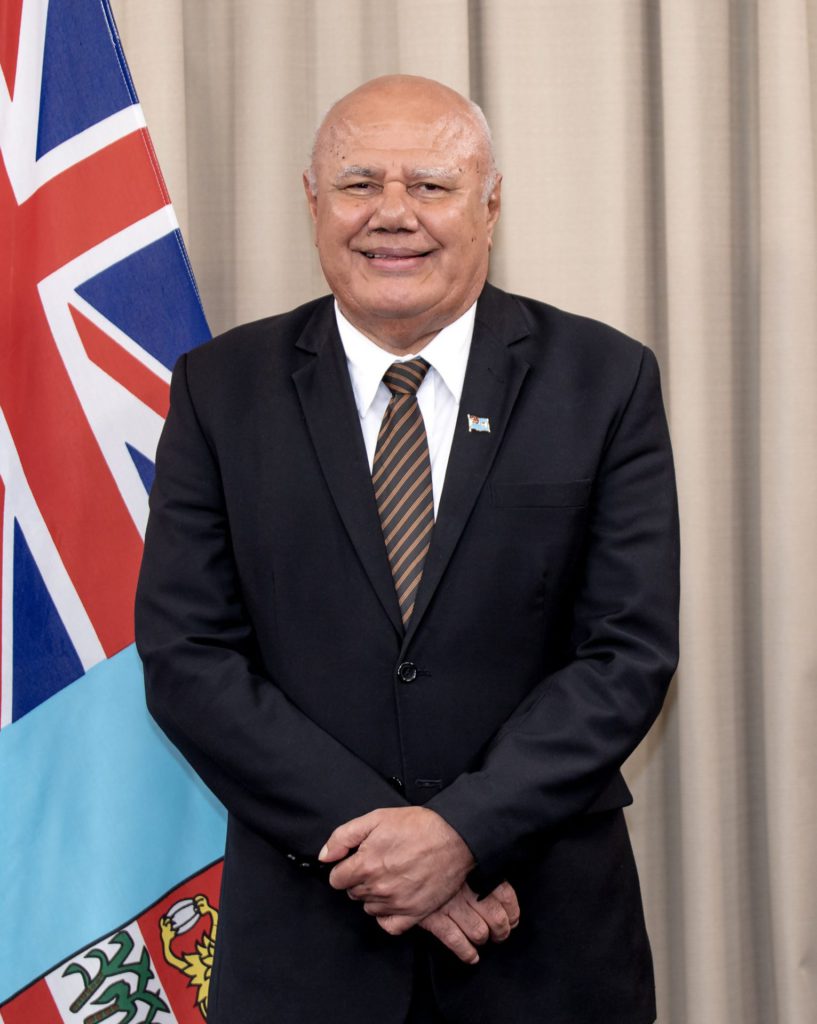





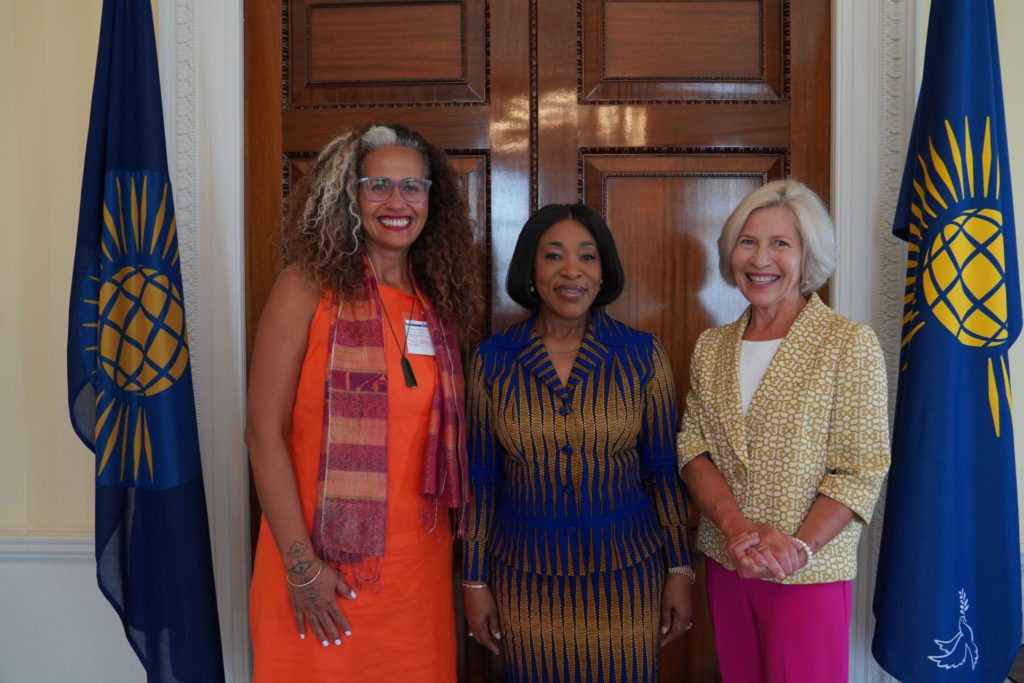


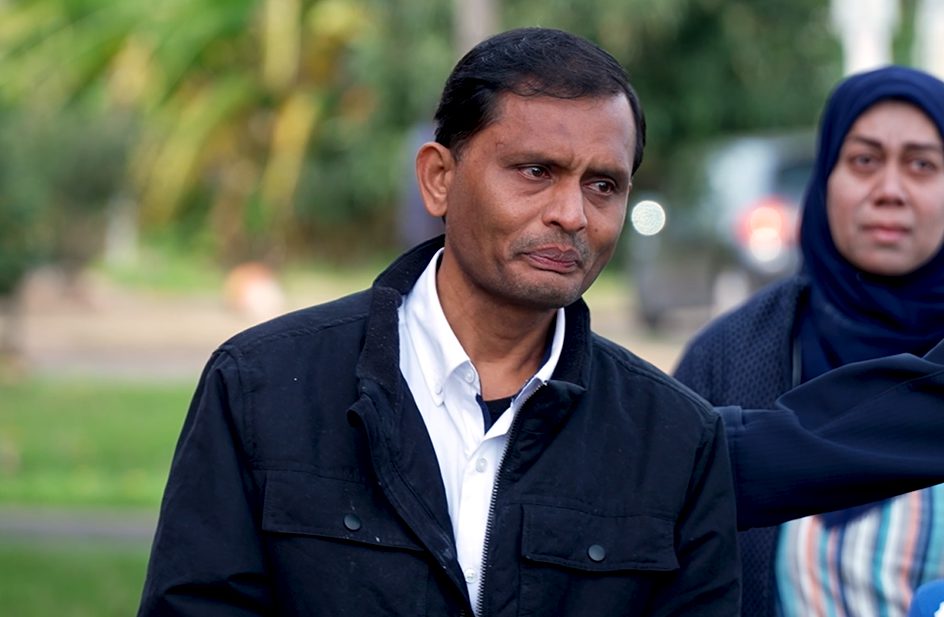









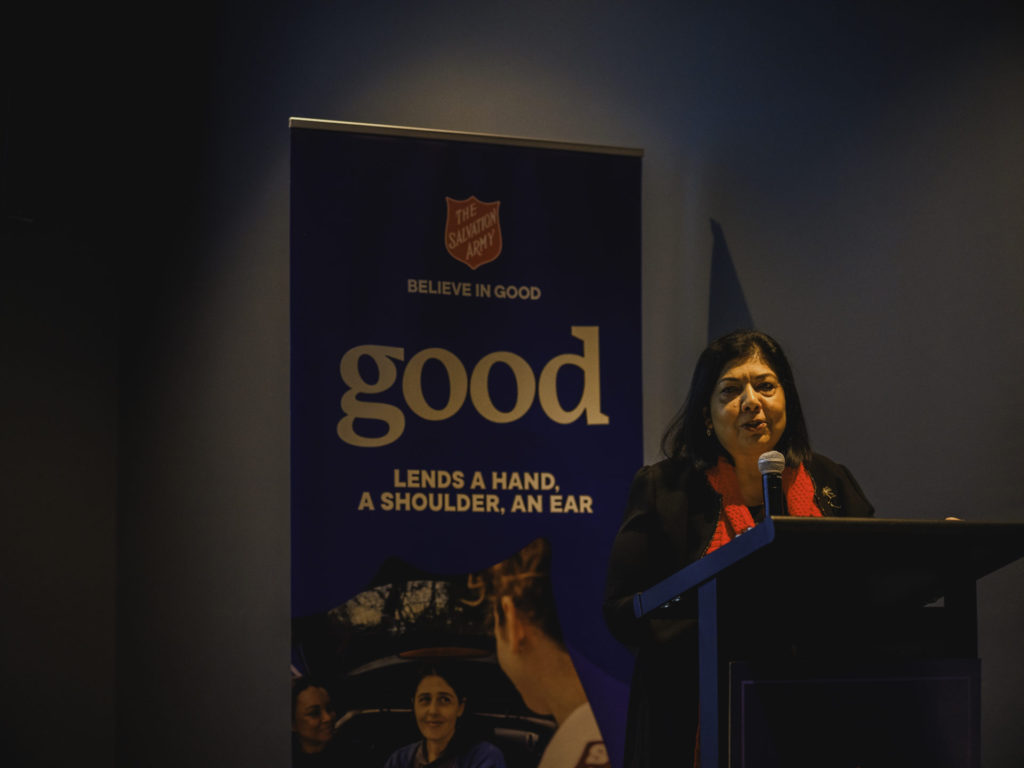





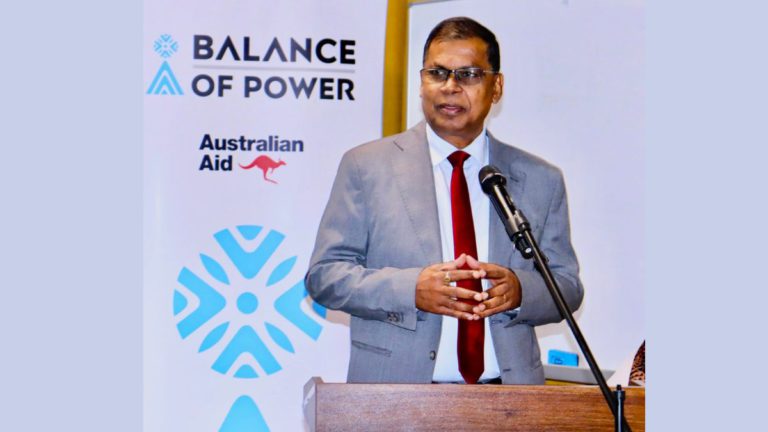

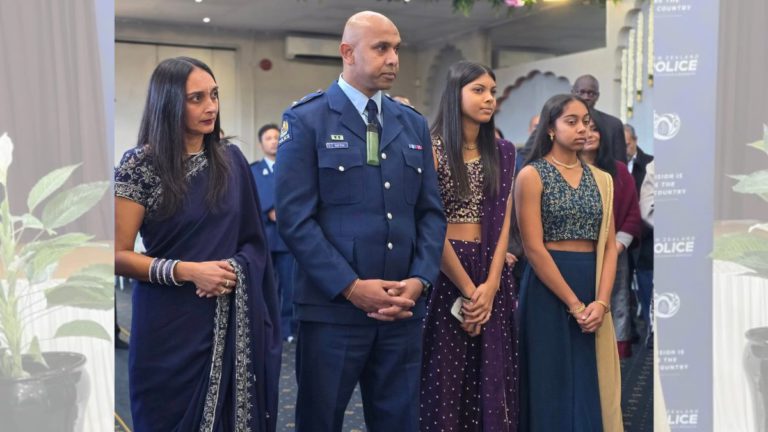
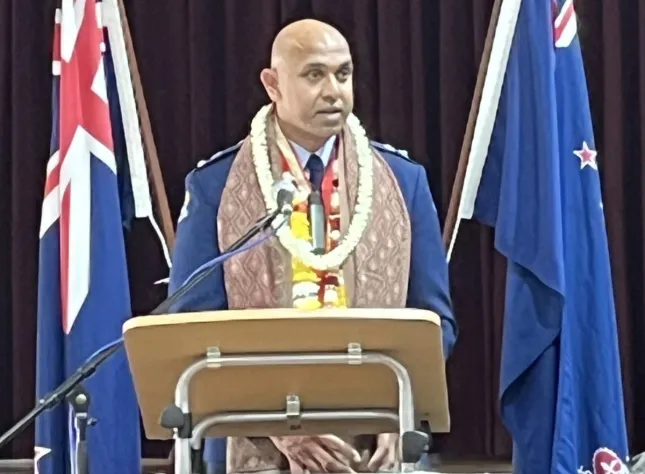

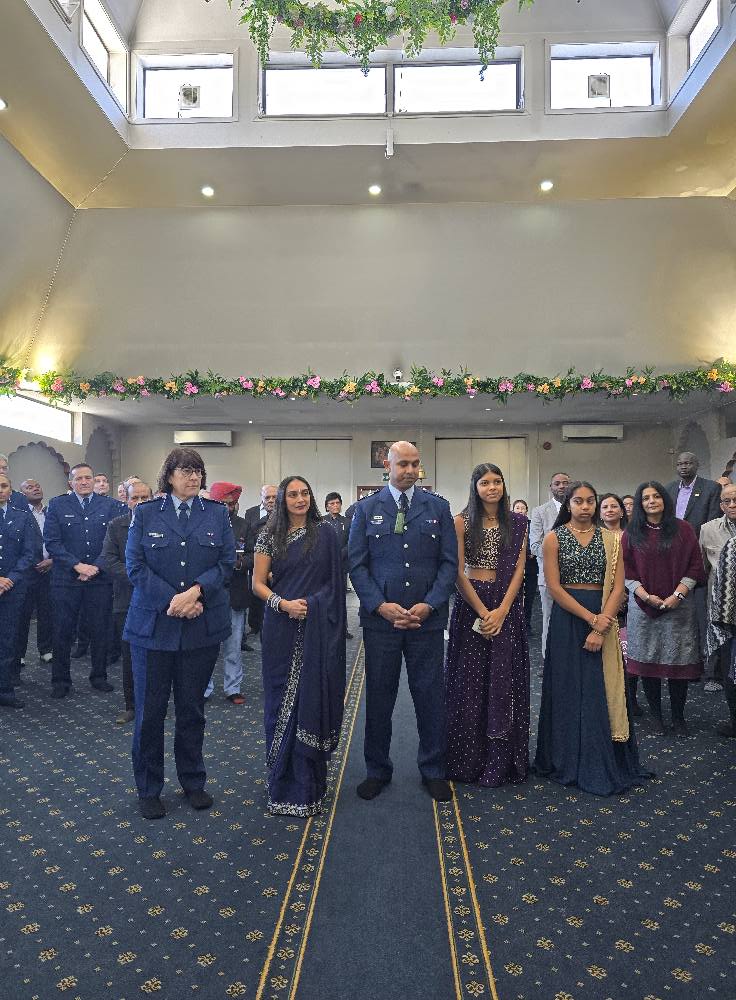
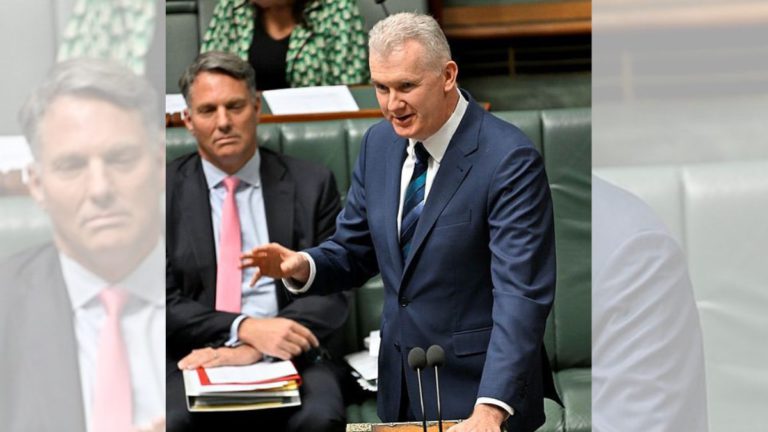
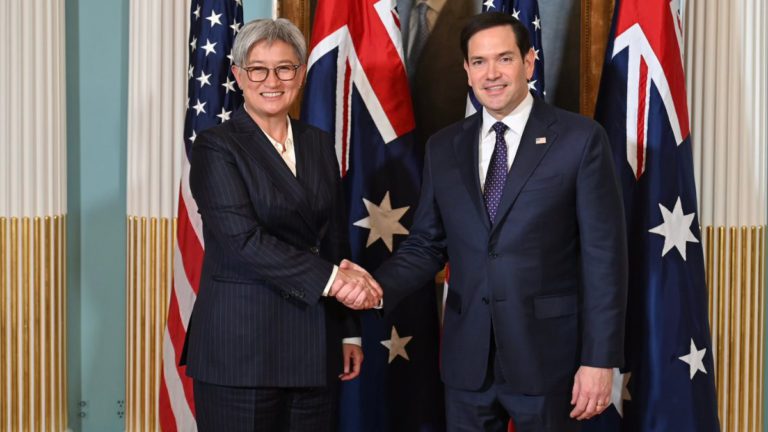
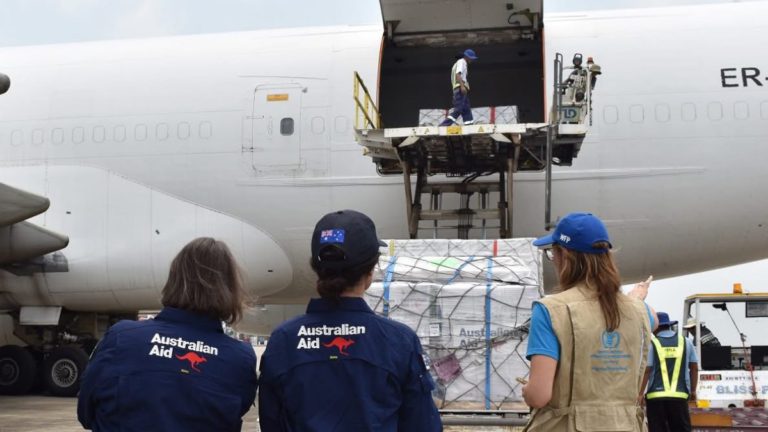


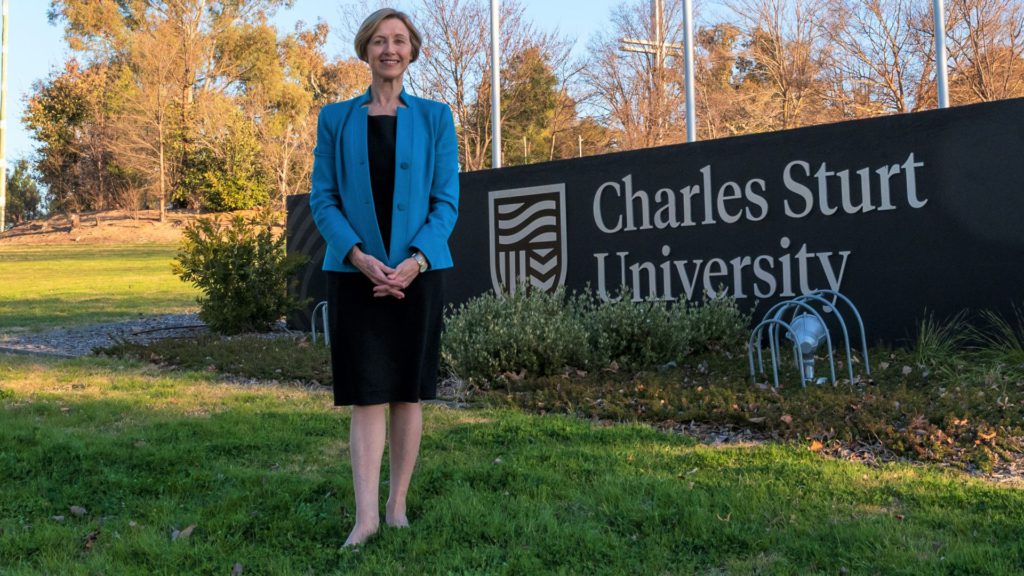
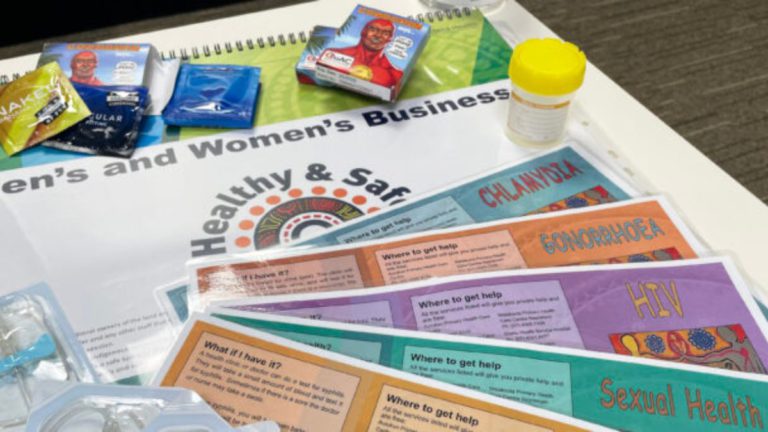

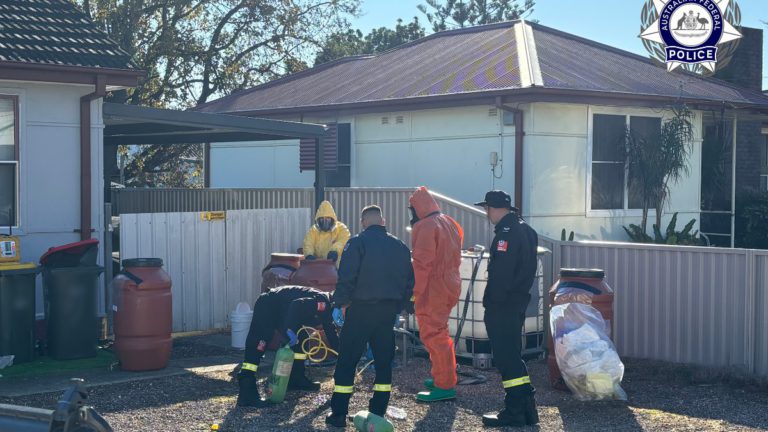
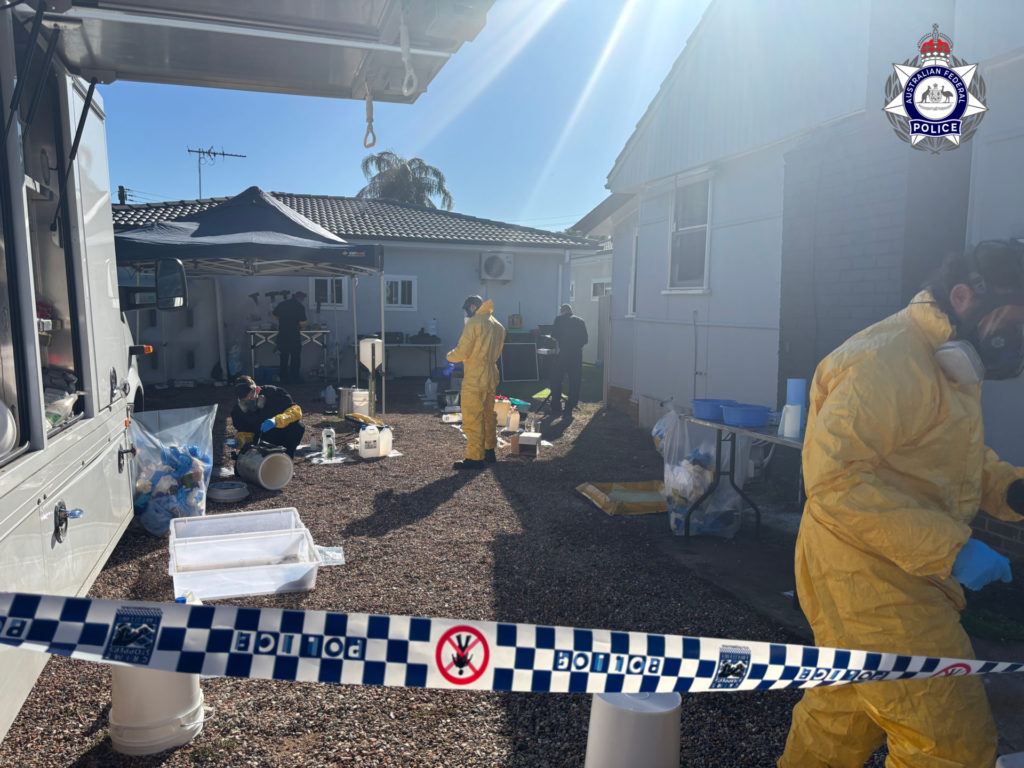
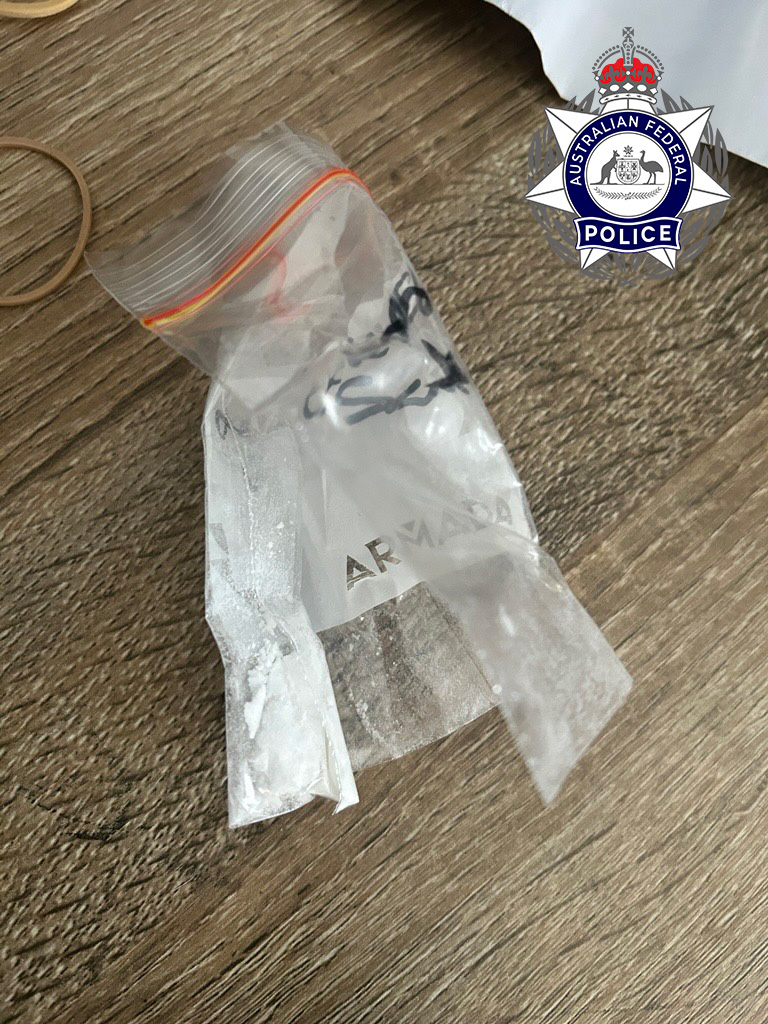
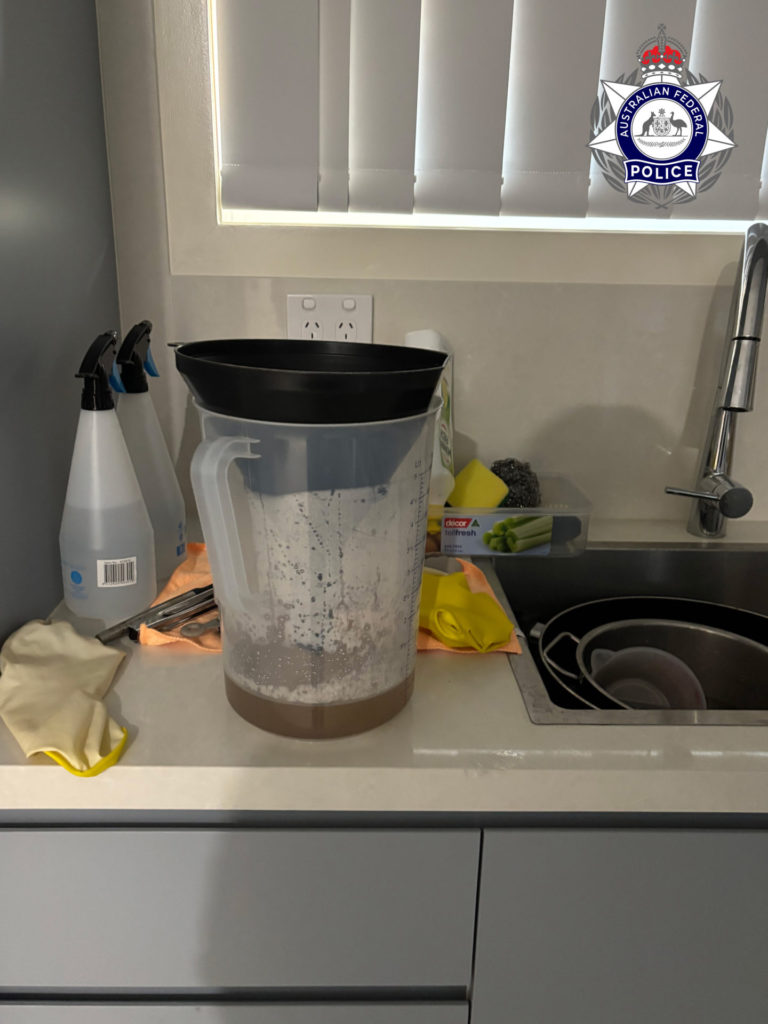

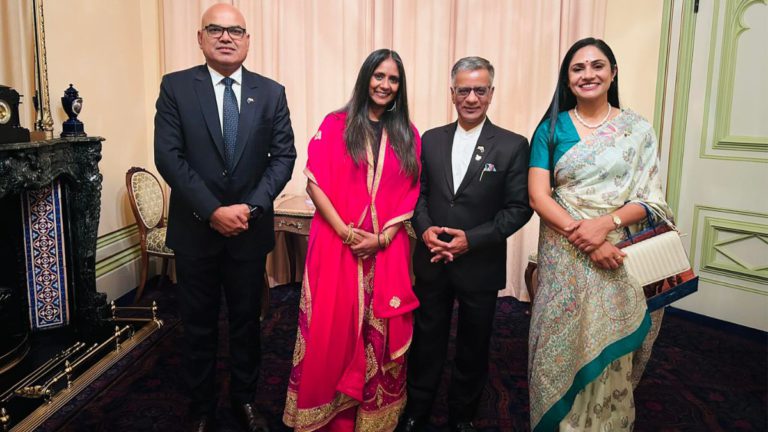

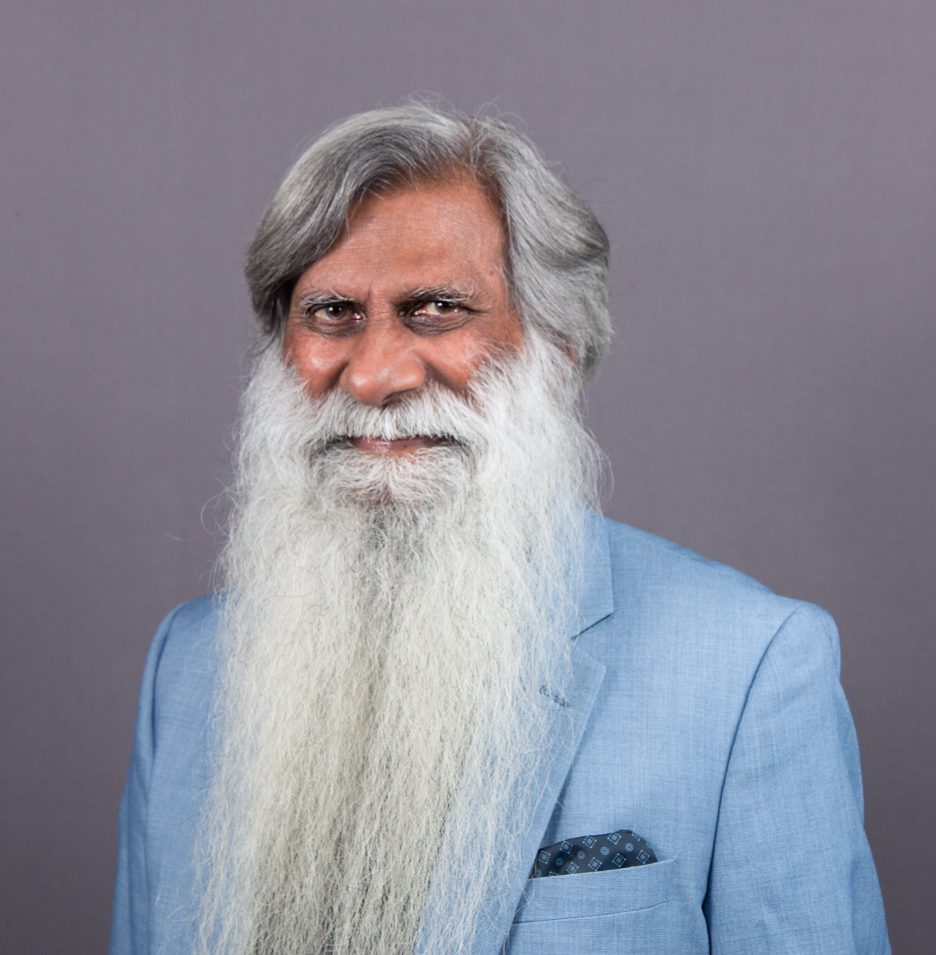

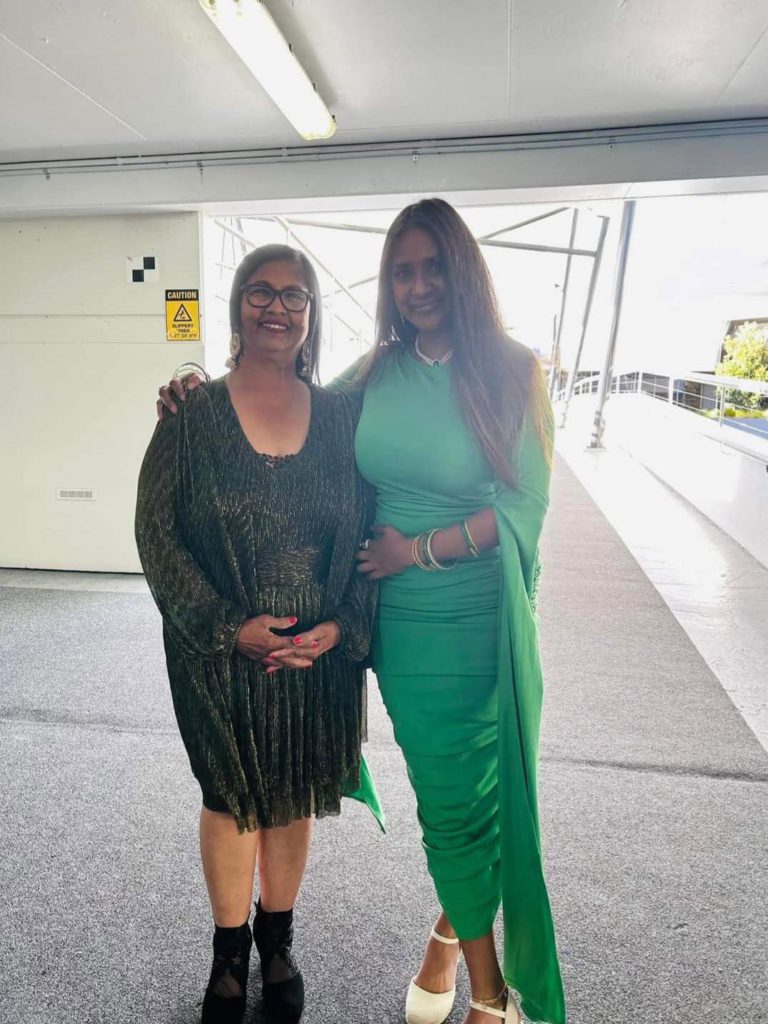
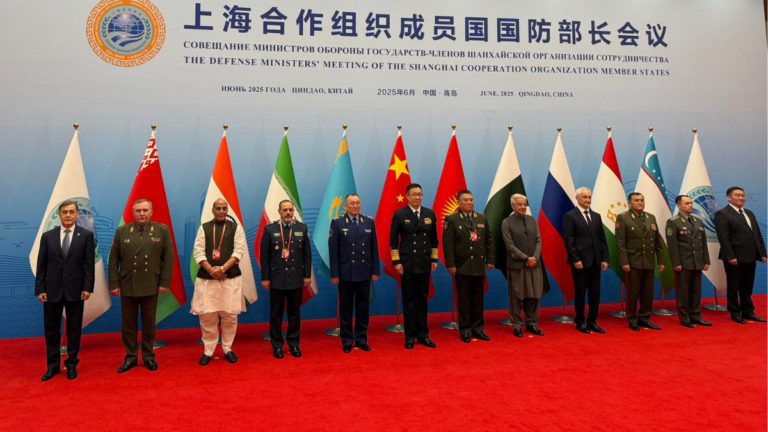


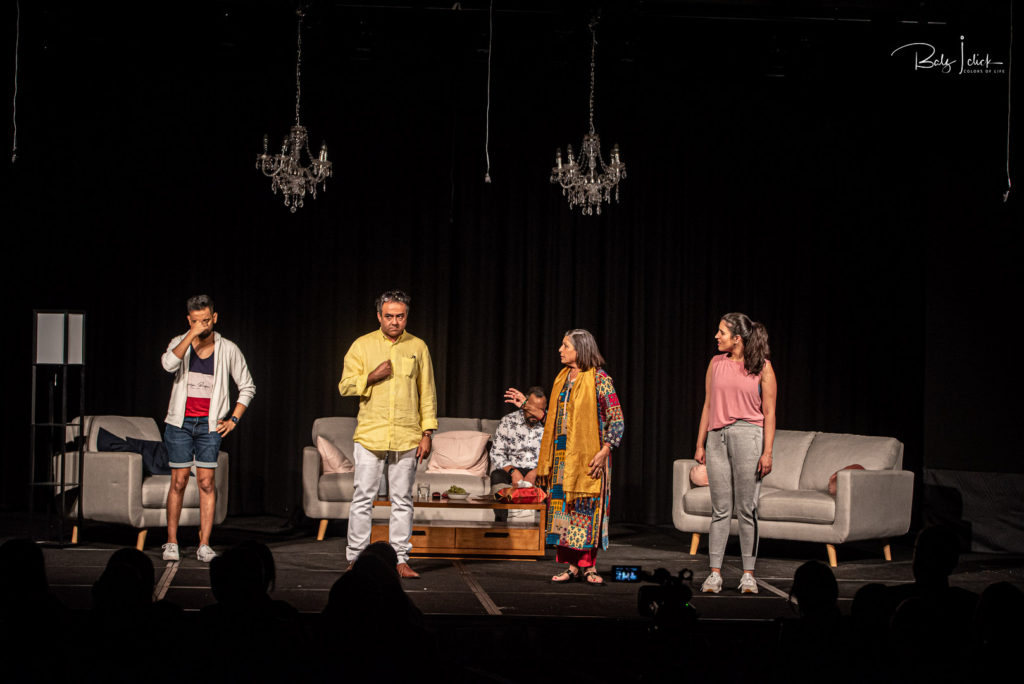





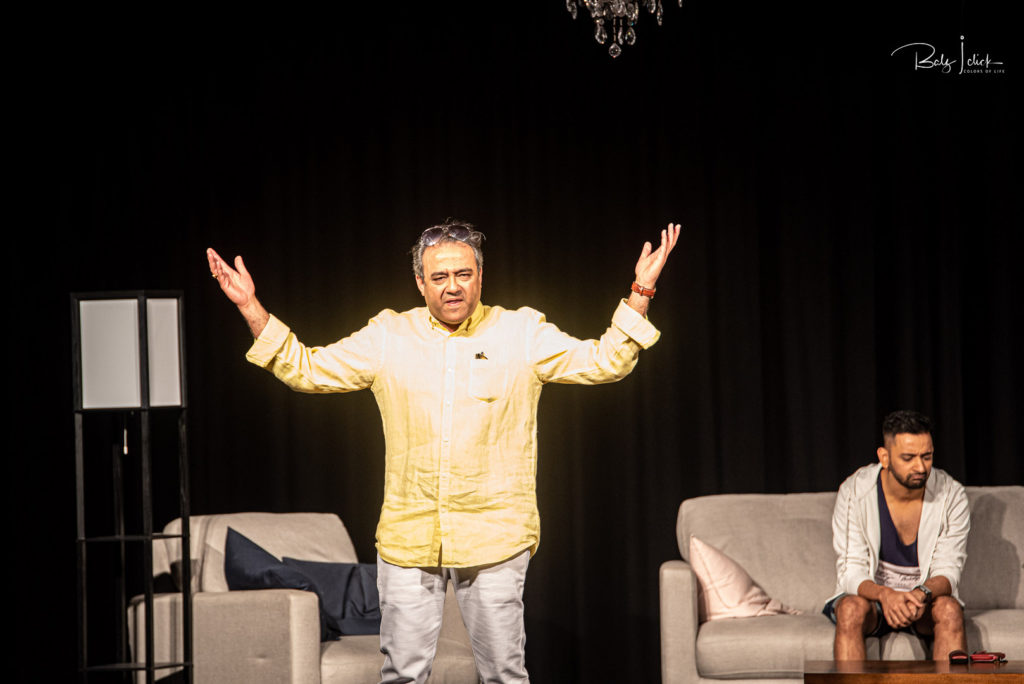





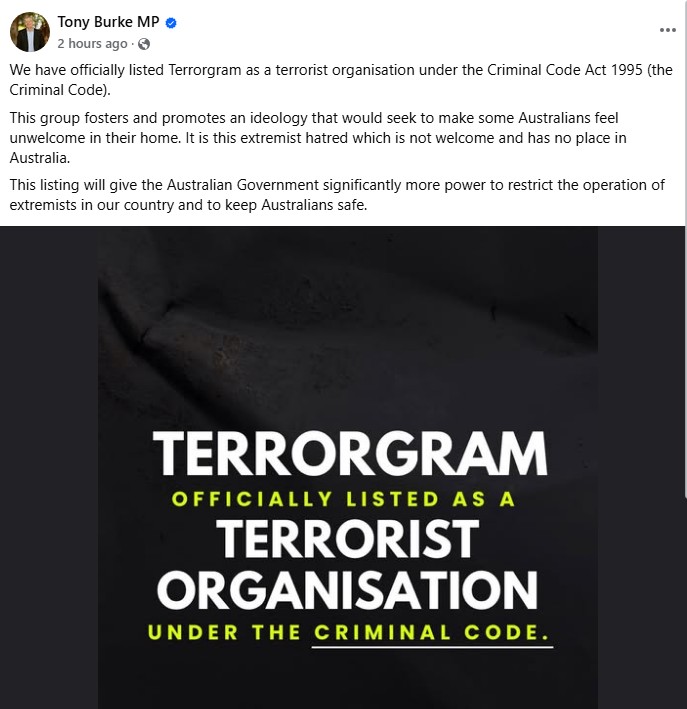
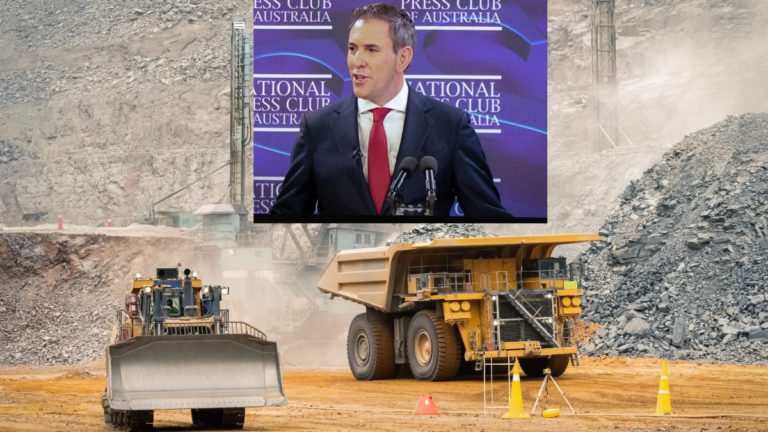
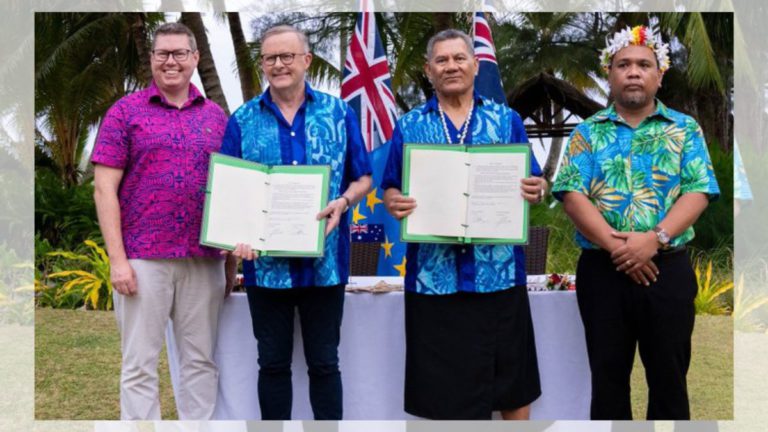
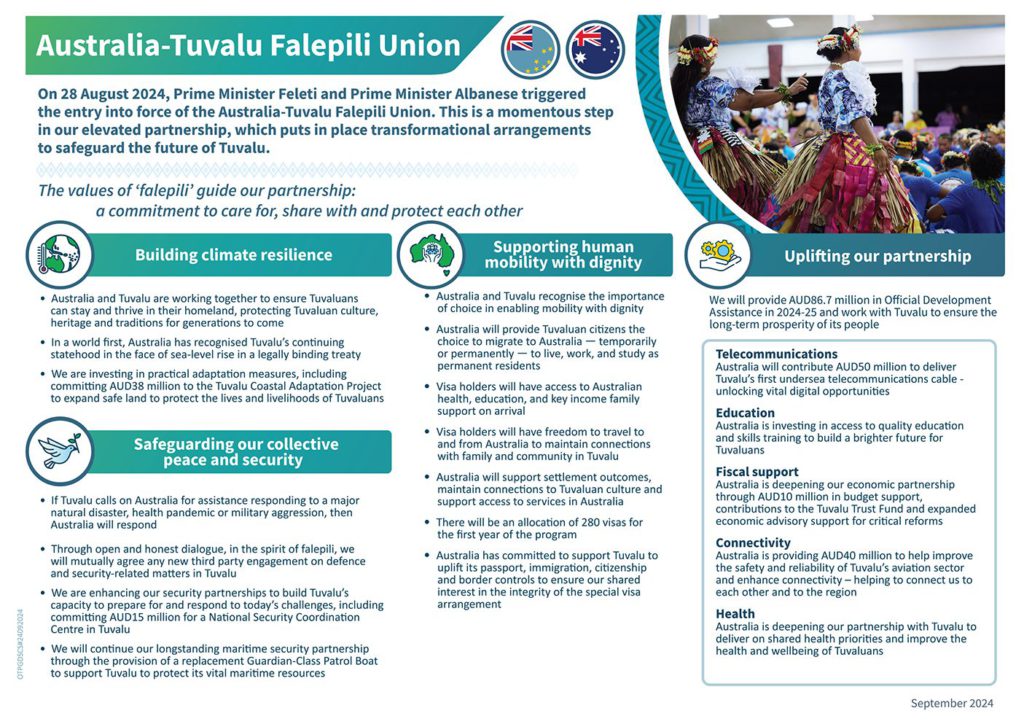
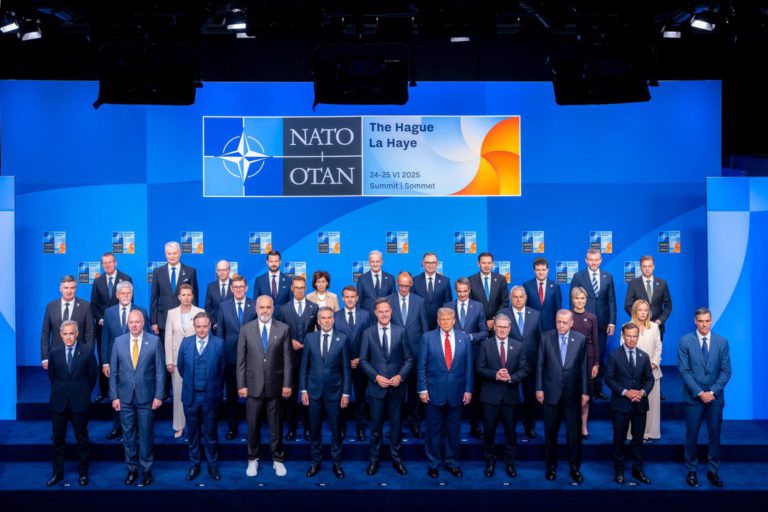
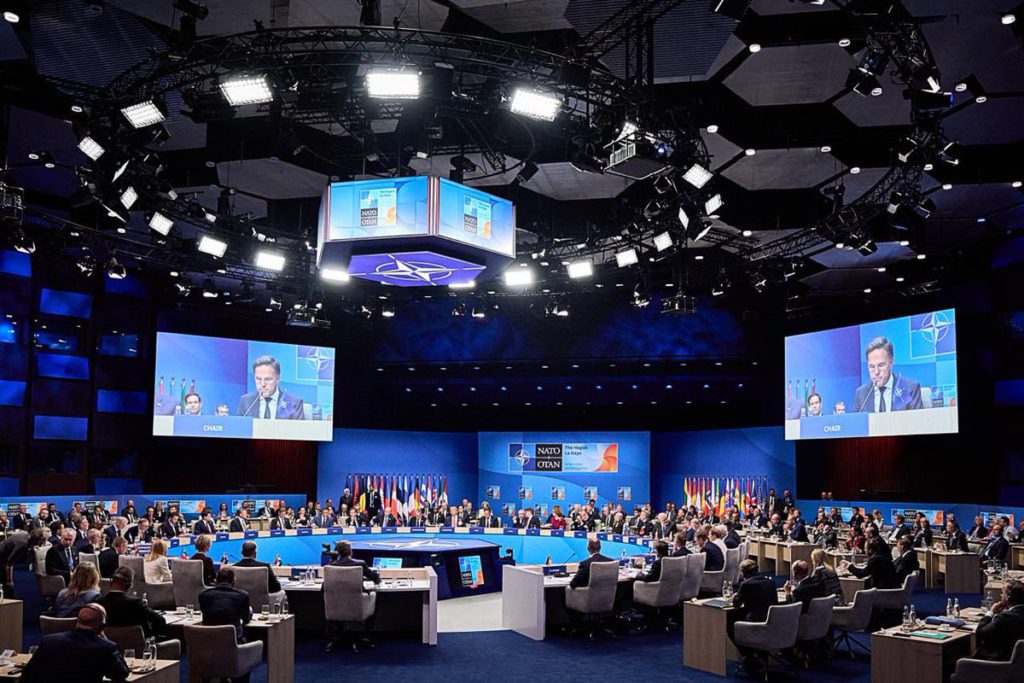

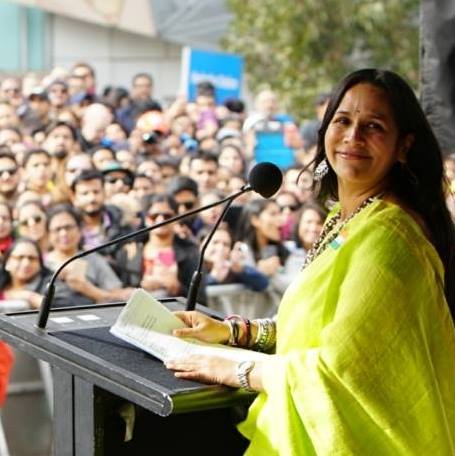
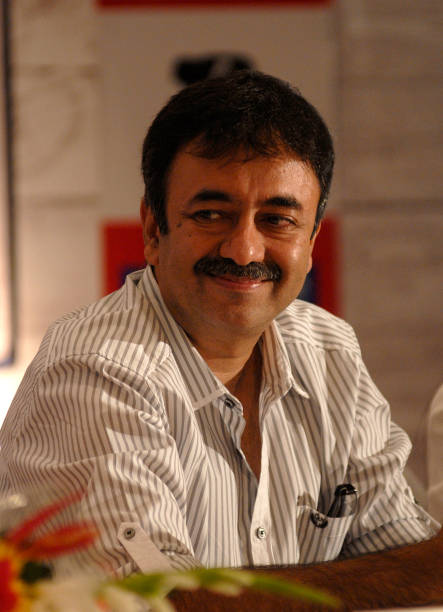












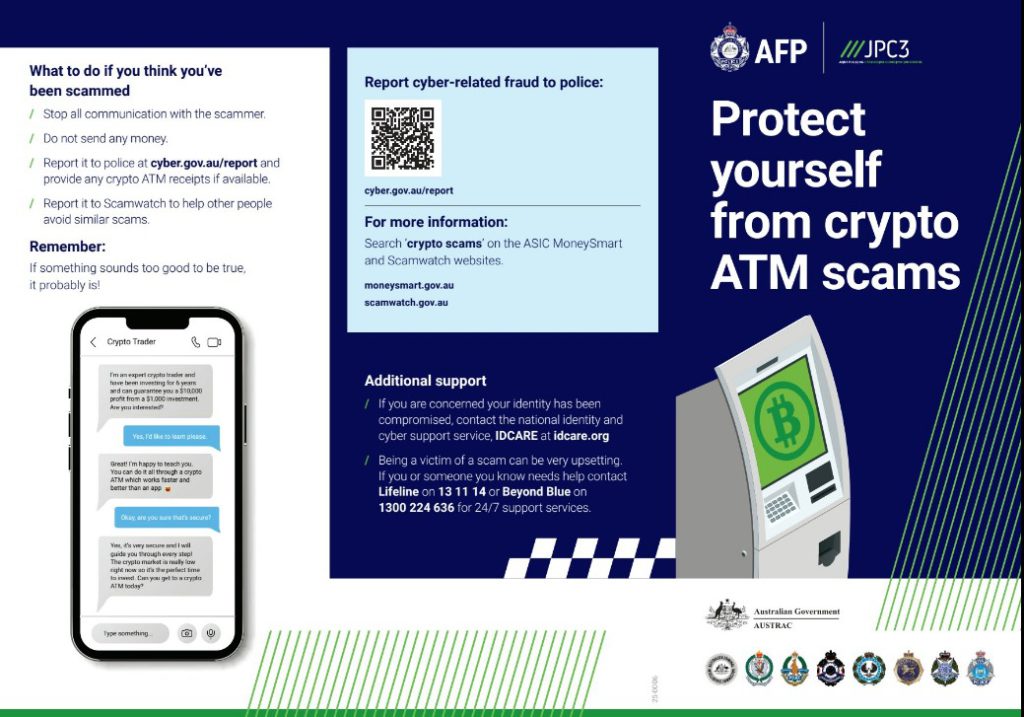

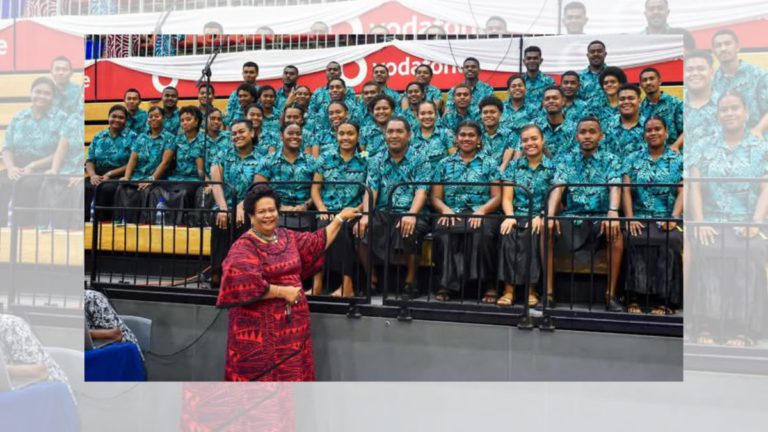
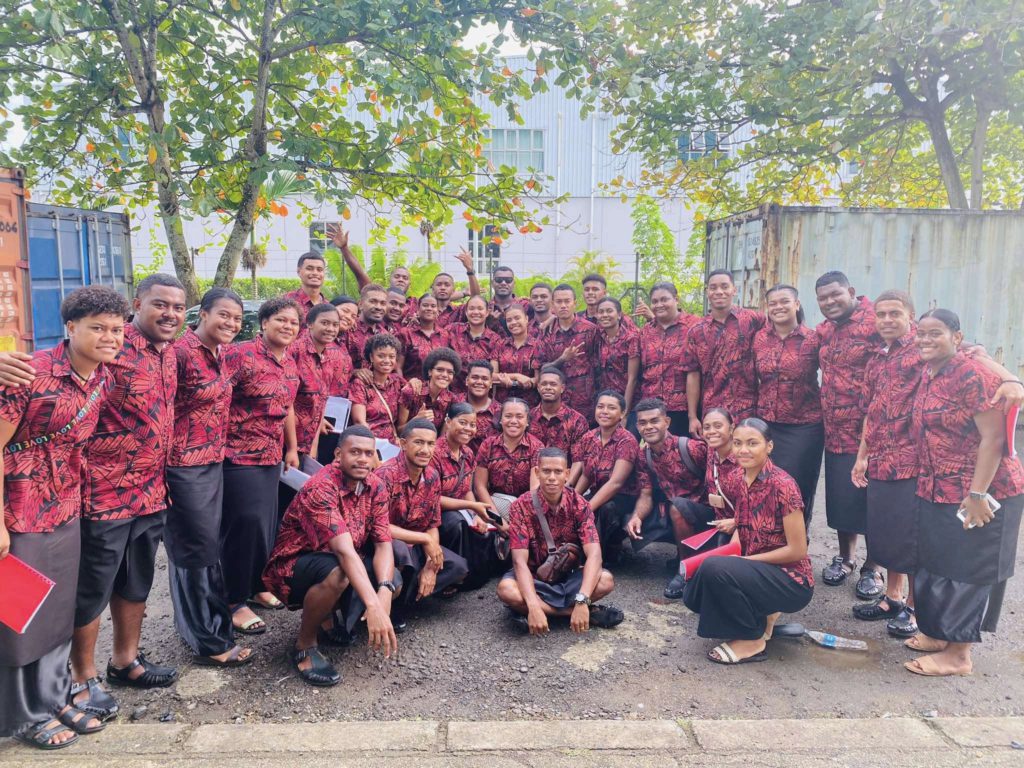

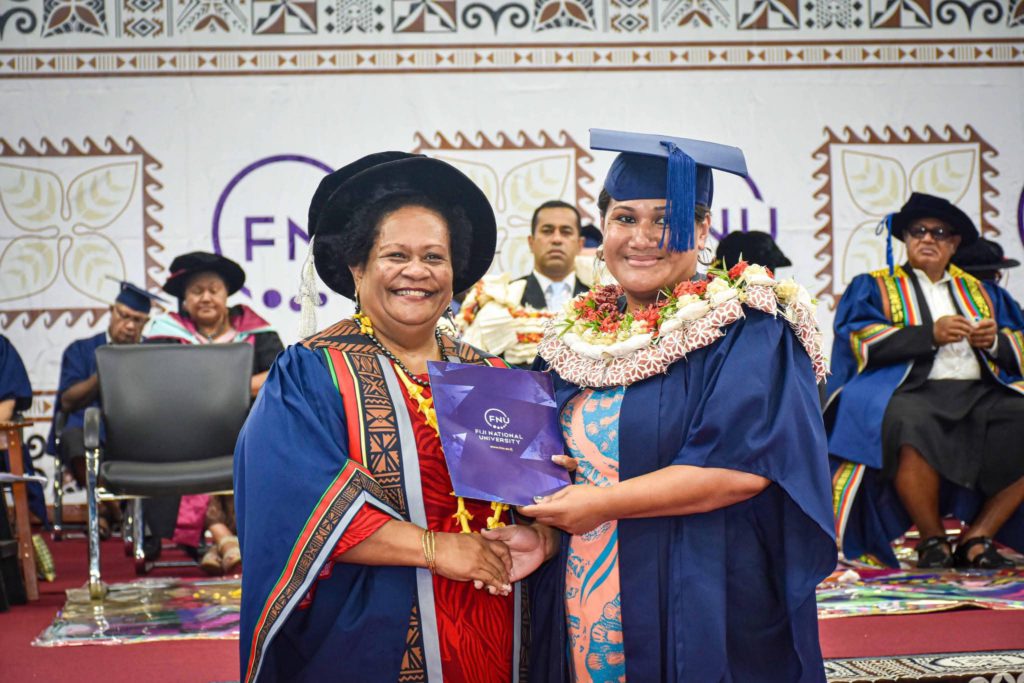




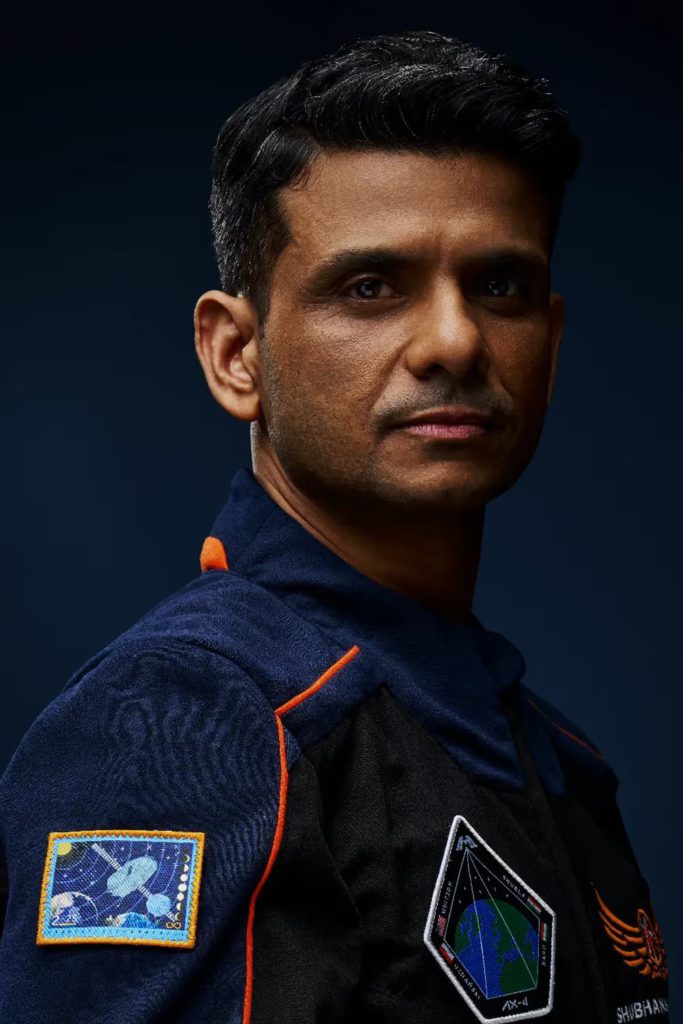

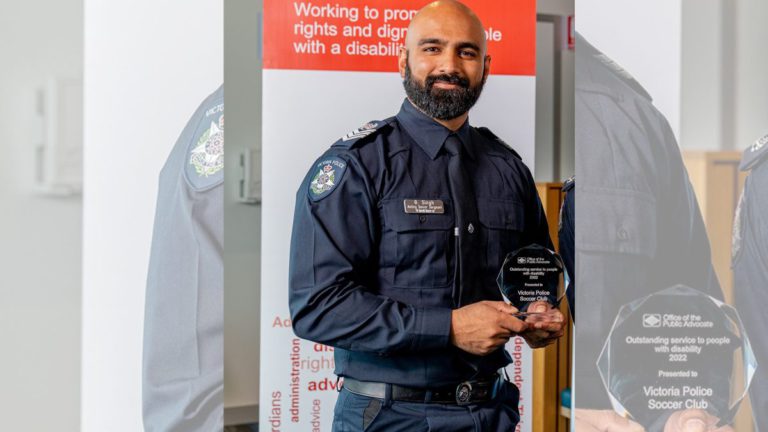




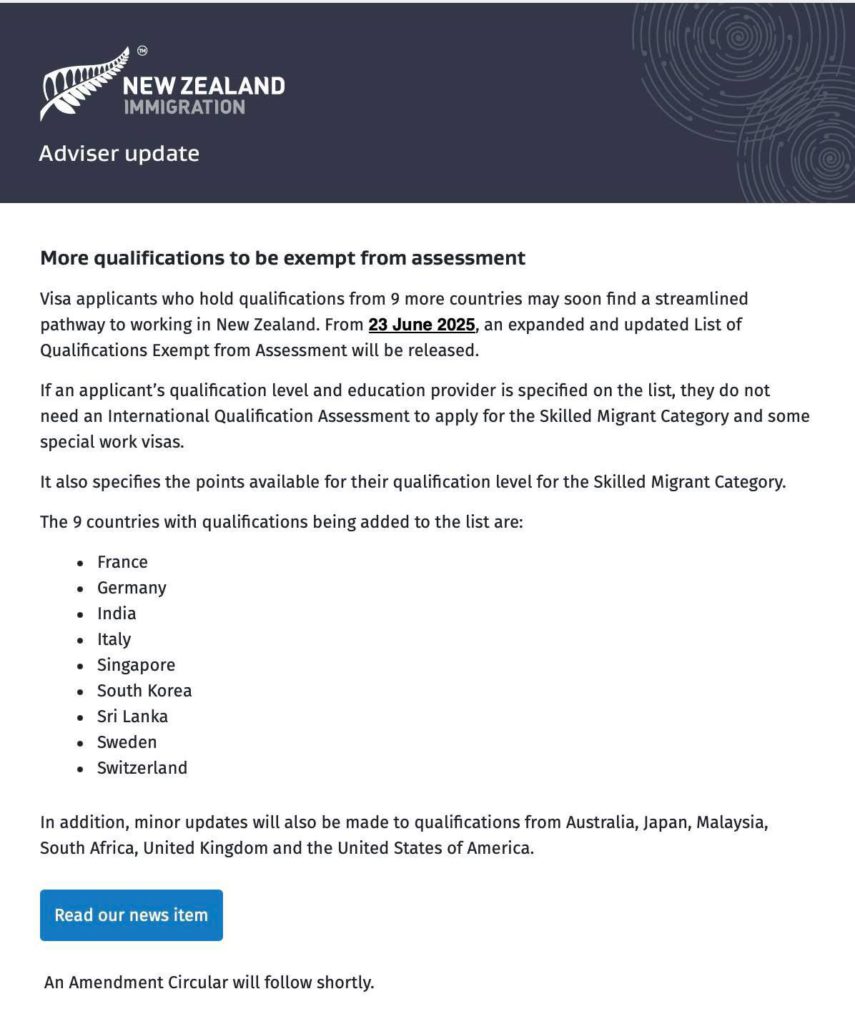






![eeds [England], Jun 23 (ANI): India's KL Rahul during the 4th day of the 1st test match against England, at Headingley Cricket Ground in Leeds on Monday. (BCCI X/ANI Photo)](https://www.theaustraliatoday.com.au/wp-content/uploads/2025/06/20250623224L_NvW3lhA-1024x672.jpg)