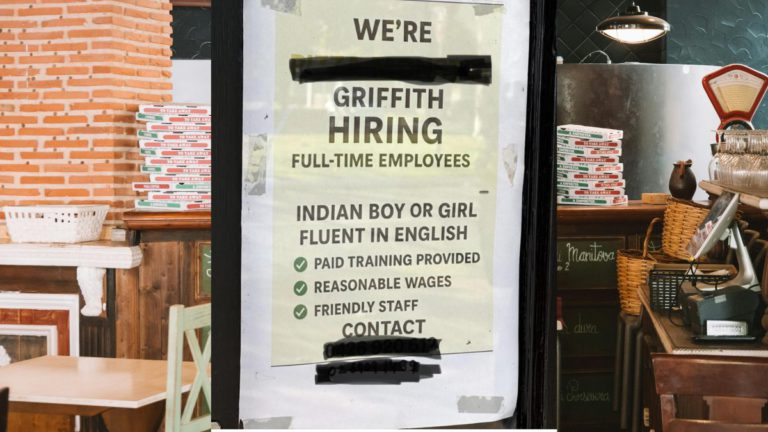
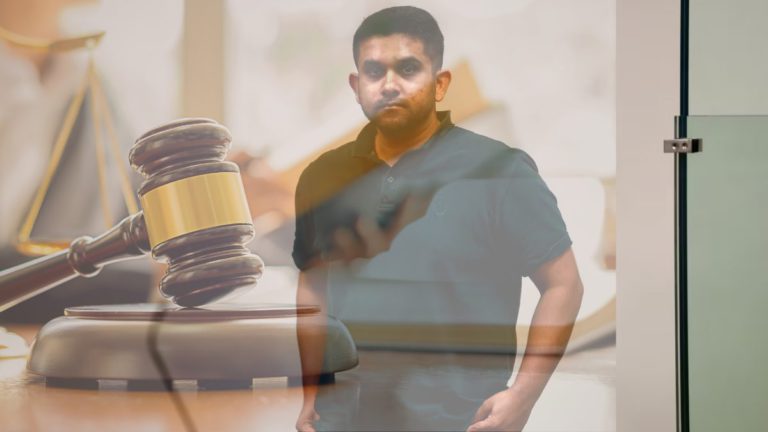
The Commonwealth Bank of Australia (CBA) is facing backlash after being accused of outsourcing more than 100 jobs to India, just weeks after retrenching over 300 Australian staff, with the Finance Sector Union (FSU) calling the move “shameful” and a breach of the bank’s enterprise agreement.
“By hiring for the same job, at their own Indian subsidiary, they’re showing themselves to have breached the Enterprise Agreement and essentially lied to their workers. This is the very definition of bad faith.”
It is reported that the FSU alleges that roles being advertised at CBA’s Bangalore-based subsidiary — including senior software engineers, staff data engineers, engineering managers, and software engineers — are identical to those declared redundant in Australia.
“These jobs are not required to be done in India; they’re just moving the work there to take advantage of cheaper labour and further line their own pockets,” Angrisano said, noting that CBA India’s workforce had doubled from 2,854 in June 2022 to 5,630 by June 2024.
The union says it has now taken action in the Fair Work Commission, arguing that the redundancies were not genuine and violated Clause 36 of the CBA Enterprise Agreement, which defines the conditions under which a role can be declared redundant.
“This is a shameful act from Australia’s richest company,” Angrisano said.
“All Australians are paying for the sham redundancy actions of the CBA. Not only are Australian workers being unfairly and unreasonably sacked but this is being subsidised by all taxpayers.”
It is reported that CBA, Australia’s largest home lender, posted a six per cent rise in cash profits to $2.6 billion in the March quarter and a half-year cash profit of $5.13 billion. CEO Matt Comyn received $8.98 million in total remuneration last financial year.
Despite its soaring profits, CBA has made a series of job cuts this year, including 164 roles from its technology division in March, followed by additional redundancies in customer service in May. Bankwest, a CBA subsidiary, is also transitioning to a digital-only model, resulting in further job losses.
A CBA spokesperson rejected the FSU’s accusations, saying the bank “refuted their claims” and had “met with the union this week to respond in detail and assure them that there is no basis to their allegation.”
“We have been transparent in communicating workforce shifts with our technology team over the last three years. This includes being explicit about roles which are declining and offering reskilling and upskilling opportunities to people in those roles.”
The bank told Daily Mail Australia that CBA India was insourcing roles previously managed by third-party vendors, not simply recreating sacked roles offshore.
The controversy comes as Treasurer Jim Chalmers prepares to host an Economic Reform Roundtable in August, with CBA boss Matt Comyn set to participate, raising further questions about the bank’s commitment to Australian workers.
Support our Journalism
No-nonsense journalism. No paywalls. Whether you’re in Australia, the UK, Canada, the USA, or India, you can support The Australia Today by taking a paid subscription via Patreon or donating via PayPal — and help keep honest, fearless journalism alive.
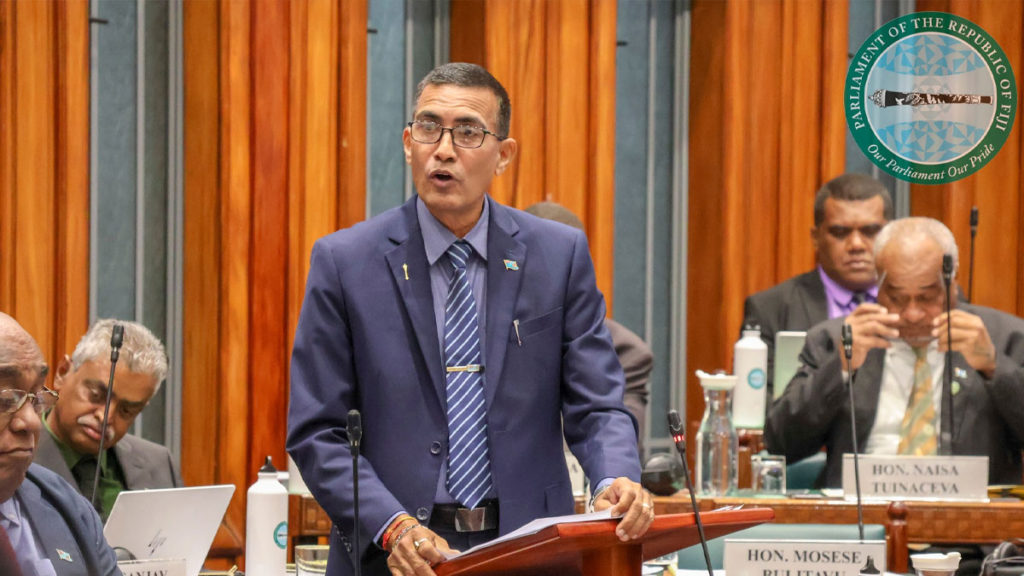
We make no apologies for putting people first. This budget supports families, lifts wages, grows jobs & protects the vulnerable. It’s not about politics — it’s about doing what’s right for Fiji.#PeoplesBudget 🇫🇯 @FijiGovernment
— Professor Biman Prasad DPM, Fiji (@bimanprasad) July 16, 2025
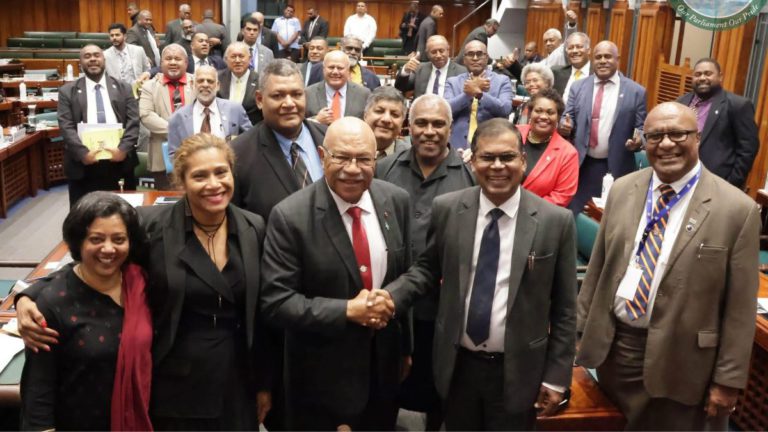
Speaker of Parliament Filimone Jitoko congratulated Prof. Prasad and the House, stating, “I previously highlighted this week, long deliberation stands as a cornerstone of our constitutional duty, ensuring transparency, accountability and sound national planning…”
“I extend my sincere appreciation to all the honourable members for your thoughtful engagement… Let me also offer my warm congratulations to… honourable Professor Biman Prasad for the successful adoption of the budget.”
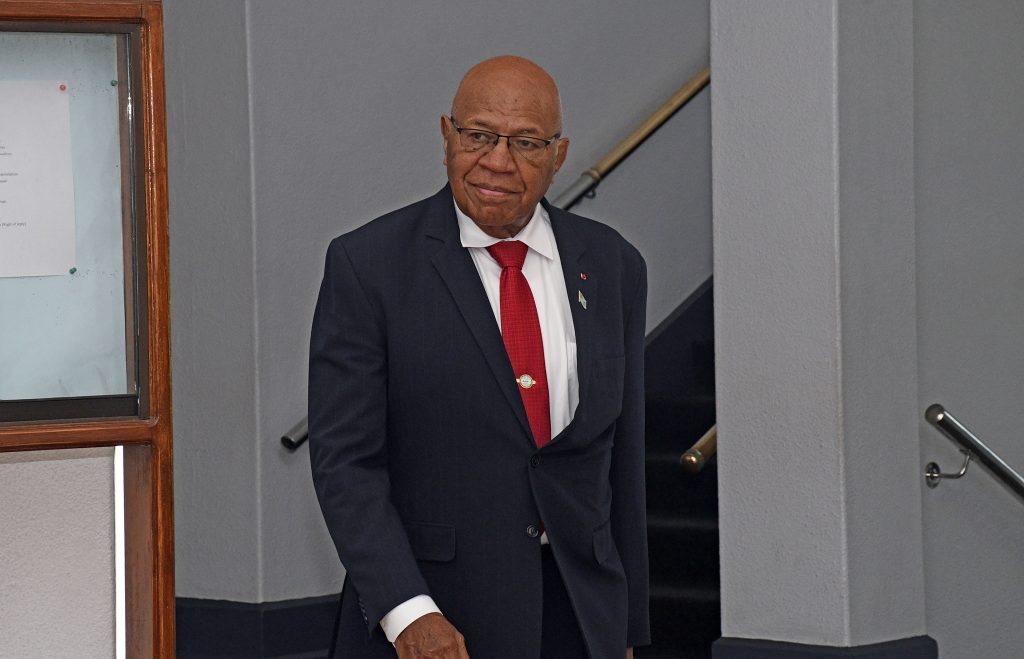
Image: Fiji’s Prime Minister Sitiveni Rabuka (Source: Facebook)
Prime Minister Sitiveni Rabuka also moved a motion to establish a Special Committee on the Sugar Industry—a key move drawn from the budget address. He said the motion was a “deliberate effort to protect the livelihoods of thousands of Fijians, restore confidence in the sector, and secure its long-term sustainability.”
Image: Deputy Prime Minister and Finance Minister Prof. Biman Prasad (Source: X)
Prof. Prasad described the FJ$4.8 billion package (approx. US$2 billion) as one that “puts people first and builds a stronger, fairer Fiji for all”: “We’ve listened, we’ve acted, and we remain committed to building a stronger, fairer Fiji for all,” he said in his Right of Reply.
“When we came into office we were in a precarious economic crossroad… our first priority was to restore macroeconomic stability, rebuild trust in policymaking institutions, and chart a path towards sustainable and inclusive growth.”
Import duty cuts on essentials (e.g., chicken, frozen fish)
10% public bus fare subsidy
3% pay rise for civil servants (starting August)
FJ$847m for education, FJ$611.6m for health, and FJ$388m for roads
Despite the glowing endorsements from government benches, opposition MPs attacked the budget for its growing deficit and perceived political motivations.
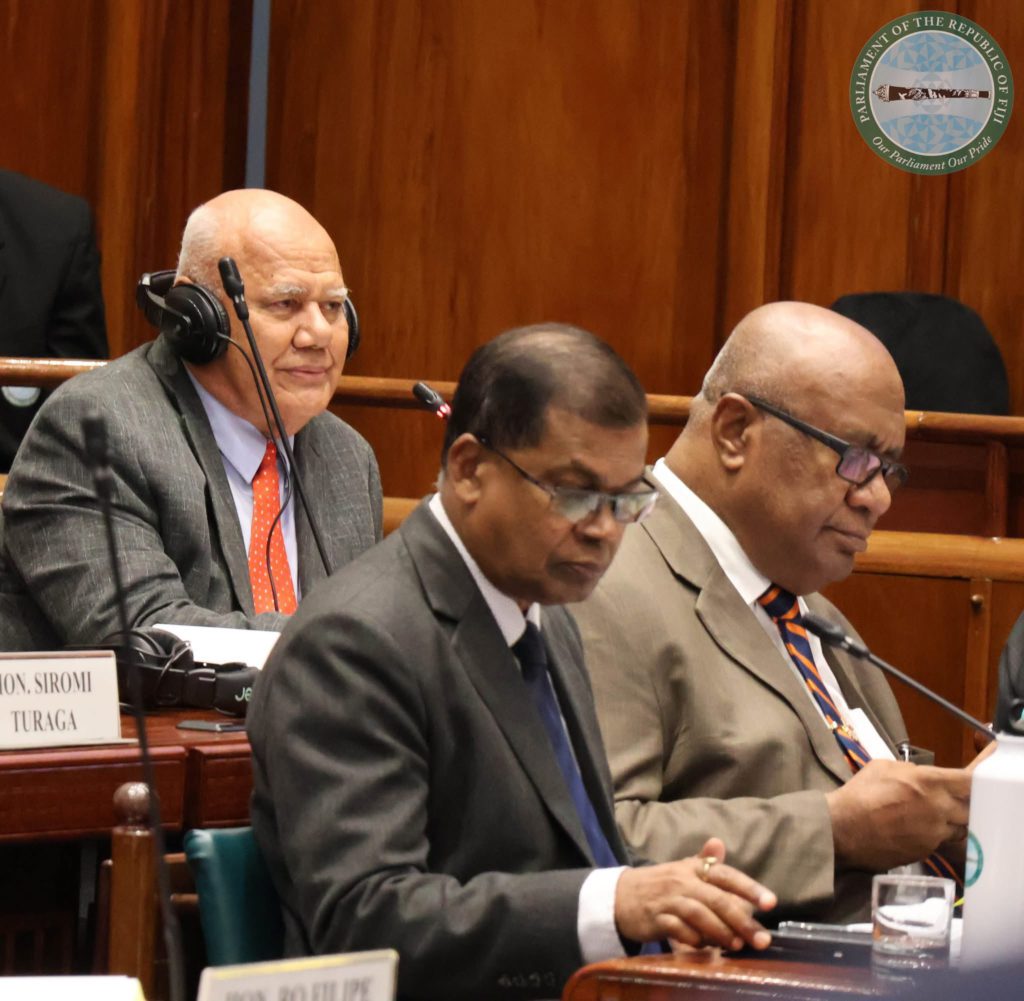
Image: Opposition Member of Parliament Hem Chand (Source: Fijivillage News)
Hem Chand said the public remains “very disappointed and worried, especially about the rising cost of food,” arguing the budget prioritises short-term political gains over real reform.
He warned national debt could balloon to FJ$12.6 billion by mid-2027 and labelled the VAT reduction “too little, too late”: “The government must stop feeding people empty slogans and start delivering genuine, long-term solutions for the people of Fiji,” said Chand, adding the budget “does nothing to stop the brain drain.”
“The meaningful changes by this budget are baby steps… out of poverty into productivity, out of welfare into well-being.”
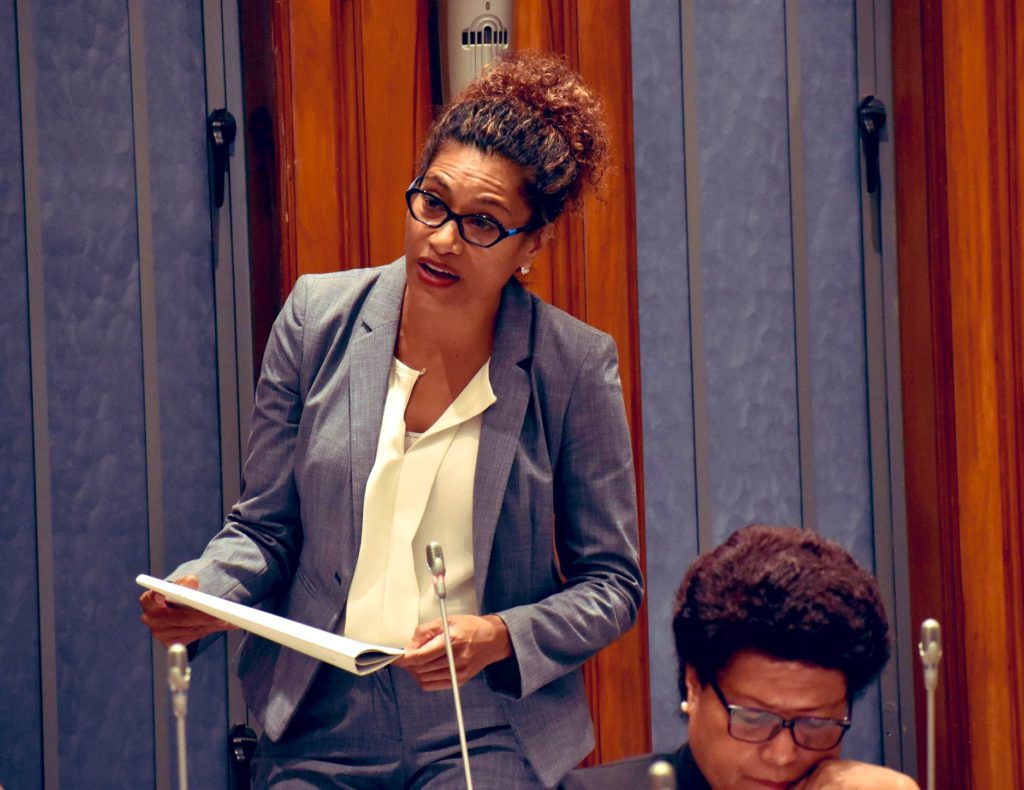
She highlighted increased welfare allowances, expanded back-to-school assistance, the $10 million HIV response, and a drug rehabilitation centre, adding:
“The people will appreciate the increase in police presence… and the continuation in allocation to the National Action Plan to Prevent Gender-Based Violence.”
Image:Minister for Lands Filimoni Vosarogo (Source: Fiji Government0
“a people-centric budget focused on security, stability, and prosperity.”
#FijiTimesNews | The 2025-2026 budget debate is coming to end with the Minister for Finance, Prof Biman Prasad giving his final rebuttal in Parliament this hour. He urged MPs to tell the truth when in public. #Fiji#FijiNews
In response to Opposition accusations that this is a “panic budget,” Prof. Prasad fired back:
“It is not a ‘panic budget’ for the people, economists, banks, investors, people in the islands… the panic is from the Opposition.”
He accused the FijiFirst remnants of “panicking and fighting amongst themselves” as the budget lays “the foundation for a free, stable, and prosperous Fiji.”
The budget’s passage marks a critical step for the Coalition Government as it heads toward the 2026 election, amid a divided political climate and an economy facing both global uncertainty and local expectations.
Support our Journalism
No-nonsense journalism. No paywalls. Whether you’re in Australia, the UK, Canada, the USA, or India, you can support The Australia Today by taking a paid subscription via Patreon or donating via PayPal — and help keep honest, fearless journalism alive.
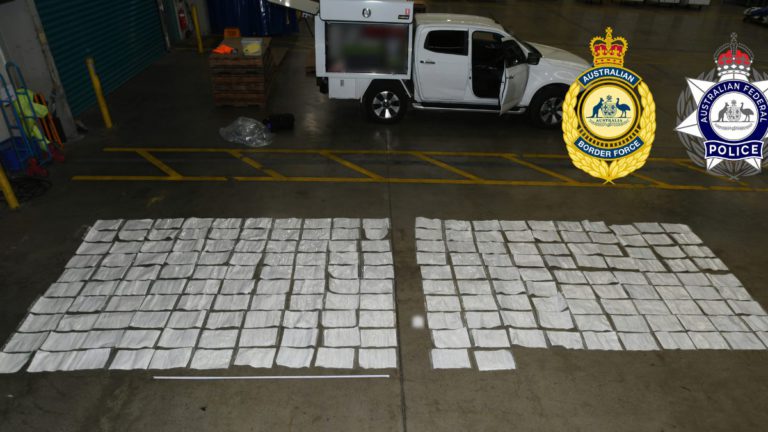
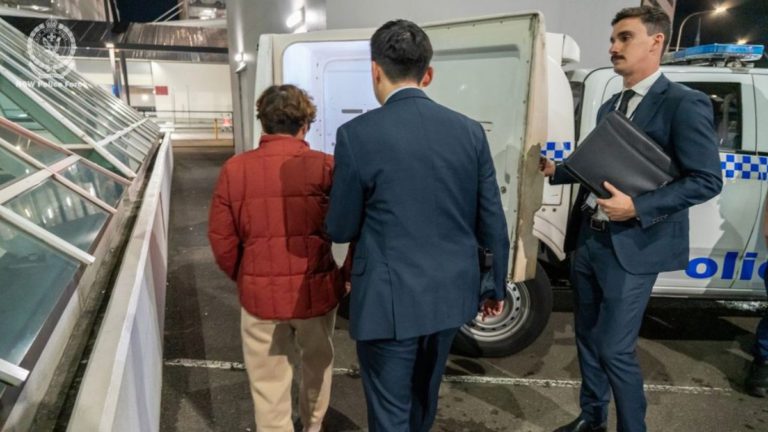
The Australian Border Force (ABF) stopped the man at Brisbane International Airport on 26 June after he arrived on a flight from the US. During an inspection, officers allegedly found documentation related to the import of firearm components, including consignment details for nine separate packages. The matter was referred to the Australian Federal Police (AFP) for further investigation.
AFP Detective Superintendent Adrian Telfer praised the swift action of both agencies in preventing a potentially dangerous influx of illegal weapons.
“The AFP and ABF work closely every day at airports around the country to detect threats such as firearms trafficking that could harm the Australian community.”
Image: Queensland man charged with attempting to import hundreds of firearm parts from the USA (Source: AFP)
Authorities allege the man had shipped individual weapon parts under false names and descriptions to multiple addresses in Queensland and Victoria. All nine packages were intercepted by the ABF before delivery and sent for forensic analysis.
Police claim the man intended to assemble and sell the firearms for $20,000 each on the black market.
The AFP has charged him with nine counts of attempting to traffic in firearm parts, under sections 11.1 and 361.2 of the Commonwealth Criminal Code. The offence carries a maximum penalty of 10 years’ imprisonment.
Image: Queensland man charged with attempting to import hundreds of firearm parts from the USA (Source: AFP)
Det Supt Telfer added, “Seizing hundreds of firearm parts before they could be sold on the black market has made all Australians safer.”
“Even when criminals use weapons bought on the black market to target other criminals in violent confrontations, innocent bystanders risk being hurt or killed.”
Image: Queensland man charged with attempting to import hundreds of firearm parts from the USA (Source: AFP)
ABF Superintendent Mel Stewart said the case demonstrated the strength of inter-agency collaboration and the vigilance of frontline officers. “The ABF worked closely with the AFP across multiple jurisdictions to ensure a coordinated and swift response,” Supt Stewart said.
“This case demonstrates the critical role the ABF plays at the border in protecting the Australian community from serious criminal threats.”
The man first appeared in court on 27 June and was granted conditional bail, with a return date scheduled for 18 July. The investigation remains ongoing.
Support our Journalism
No-nonsense journalism. No paywalls. Whether you’re in Australia, the UK, Canada, the USA, or India, you can support The Australia Today by taking a paid subscription via Patreon or donating via PayPal — and help keep honest, fearless journalism alive.
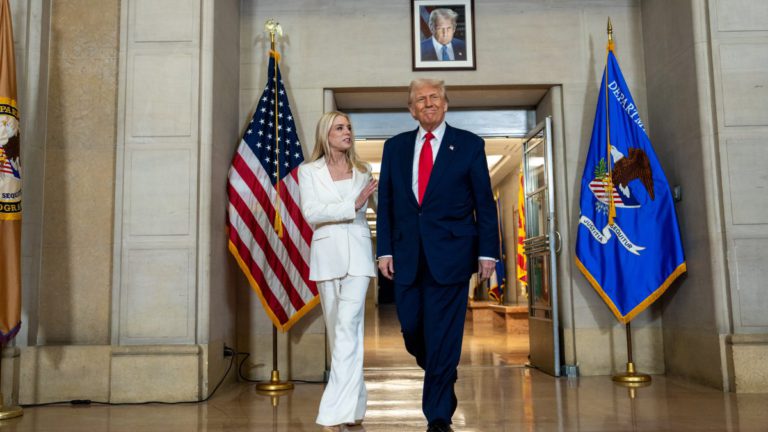
US President Donald Trump has been diagnosed with “chronic venous insufficiency” after experiencing some mild swelling in his lower legs.
According to a letter the White House published from the president’s doctor, the condition is common and not harmful, and the 79-year-old “remains in excellent health”.
But what is chronic venous insufficiency? What causes it, and can it lead to other health problems? Let’s take a look.
.@DrLaPook explains the White House's announcement that President Trump has been diagnosed with chronic venous insufficiency, a minor vein condition, and why it's a common condition for older people. pic.twitter.com/D7AuEed9rj
When someone has this condition, it becomes more difficult for the blood to flow back to the heart. In other words, blood pools in the legs, rather than travelling up easily through the legs, pelvis and abdomen to the heart.
Blood pooling in the legs creates increased pressure in the veins in the legs and feet. This can cause swelling (called oedema), skin discolouration, varicose veins, and even skin ulcers (the skin stretches because of the increased pressure and becomes weak and can tear).
What causes chronic venous insufficiency?
There are several potential causes of chronic venous insufficiency, including damaged valves inside the veins in the legs.
When we’re standing, blood has to flow back to the heart from the legs against gravity. Veins have valves inside them which ensure this one-way flow and stop blood from running back the wrong way.
When valves in the veins – either the deeper veins or those closer to the skin’s surface – are damaged, this allows blood to flow backwards and pool in the legs.
Damage to the inside lining of the vein wall can also cause chronic venous insufficiency. When the lining is damaged, it becomes less smooth and blood cells can stick to the wall and build up. This can block the inside of the vein and impede the return of blood to the heart. Smoking is a major cause of this, though it also happens naturally with age.
Physical compression of a vein in the pelvis from the outside can also be a factor. Pregnancy, obesity or a tumour can push on a pelvic vein from the outside. This makes it harder for blood to flow through that vein, which causes back up of blood in the veins of the leg.
Deep vein thrombosis (DVT) also increases the risk of chronic venous insufficiency. This is where blood clots form in the deep veins, most commonly in the legs. It can block blood flow or damage the vein wall, and increase blood pooling further down the leg.
In a study I did with colleagues looking at people with chronic venous insufficiency, about 10% had a previous deep vein thrombosis. However, Trump’s doctor said there was no evidence of deep vein thrombosis in his case.
Who gets it?
The data on how many people get chronic venous insufficiency vary, but it is relatively common. In the United States, an estimated 10% to 35% of adults have the condition.
A number of factors increase a person’s likelihood of developing chronic venous insufficiency. Smoking and having previously had a deep vein thrombosis are strongly linked to this condition. Other risk factors include older age, pregnancy, obesity, and prolonged periods of standing still.
Is it dangerous?
On its own, chronic venous insufficiency is not life-threatening, but it is a progressive condition. It increases the risk of other conditions which can be more serious.
Interestingly, while deep vein thrombosis increases the risk of chronic venous insufficiency, people with chronic venous insufficiency also have a higher risk of deep vein thrombosis. This is because pooled blood doesn’t move as much, so it can start to form a clot.
Deep vein thrombosis then increases the risk of pulmonary embolism, blood clots in the lungs, which are life threatening.
In the legs, the most serious consequence of chronic venous insufficiency is developing a venous ulcer. Venous ulcers can be painful, are prone to infection (such as cellulitis), and have a high rate of recurring.
Research has shown 4% of adults aged 65 and older in the US develop venous ulcers as a result of chronic venous insufficiency.
Can it be treated?
Whether and how chronic venous insufficiency can be treated depends somewhat on the cause.
Initial conservative treatment usually involves elevating the legs and wearing compression stockings. Elevating the legs higher than the body means gravity will help blood flow back to the heart. Compression stockings help to push blood from the leg veins towards the heart.
Exercise such as walking also helps because when the muscles in the legs contract, this moves more blood from the legs back to the heart. Exercise and diet changes may also be recommended to address any weight-related issues.
Overall, Trump has been diagnosed with a common condition for someone of his age, and his doctors have ruled out severe underlying disease. But this is a reminder of the importance of healthy veins and of the risk factors for venous disease.
No-nonsense journalism. No paywalls. Whether you’re in Australia, the UK, Canada, the USA, or India, you can support The Australia Today by taking a paid subscription via Patreon or donating via PayPal — and help keep honest, fearless journalism alive.
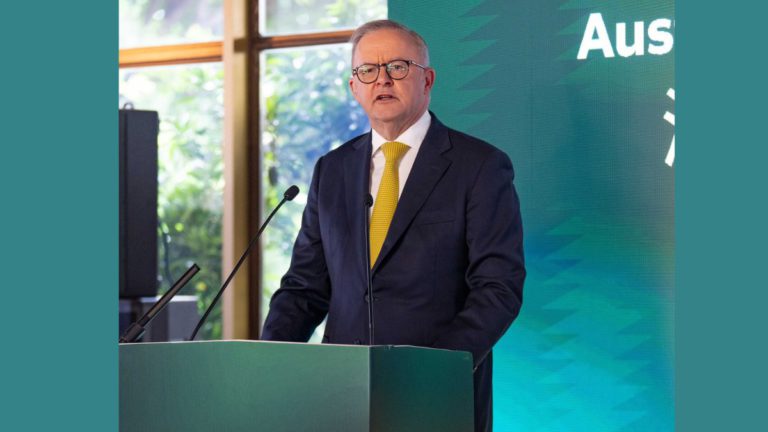
Albanese praised Nobel Laureate Prof. Barry Marshall, who was present at the event, calling him “one of our best-ever researchers” and a symbol of what is possible when two nations collaborate in the spirit of shared discovery. “Anyone who can just bring out casually a Nobel prize… that’s never happened to me before,” Albanese joked, before adding it was a privilege to be standing beside him.
Australia is a world leader in medical research.
And Australian and Chinese scientists are working together towards new breakthroughs.
Today in Chengdu, we brought together leaders in the medical technology industry from Australia and China.
The Prime Minister used the occasion to reinforce Australia’s position as a global leader in medical research and its growing influence in medical technology and manufacturing. He emphasised that medtech not only transforms lives but also strengthens commercial ties.
“Breakthroughs made in Australia bring new hope and better health to people all over the world,” Albanese said.
“From vaccines to bionic ears, millions are benefiting from the remarkable progress made through Australian and Chinese collaboration.”
Albanese’s visit to Western China — his first, and only the second by an Australian Prime Minister since Bob Hawke in 1986 — underscores Canberra’s effort to broaden its diplomatic footprint beyond the traditional power centres of Beijing and Shanghai. Albanese noted Hawke’s historic visit to a printed circuit board factory, drawing parallels to today’s tech and research partnerships.
“Chengdu remains central to our two nations’ evolving economic relationship,” he said, referencing successful joint ventures in science, education and health.
This was incredibly special.
Suhang’s cochlear implant was activated, and his parents invited us to witness it.
Cochlear is a proud Australian invention, and by sharing our skills and technology we can change lives across the world for the better.
Following the luncheon, Albanese visited Cochlear’s operations in Chengdu — a celebrated example of Australian medtech success — where he was scheduled to witness the life-changing moment of a cochlear implant activation for a young recipient.
“That’s why our Government invests in science and research – and we invest in the next steps as well,” he said addressing media. Albanese also touched on his broader China visit, which included meetings with President Xi Jinping, Premier Li Qiang, and National People’s Congress Chairman Zhao Leji. The bilateral talks, including a two-and-a-half-hour lunch with Xi, focused on trade, security, people-to-people links, and regional stability.
While sidestepping direct commentary on past diplomatic tensions, Albanese noted:
“We, of course, as I’ve said repeatedly, we cooperate where we can, we disagree where we must, but we don’t want those disagreements to define our relationship either, so what we do is talk about how we can cooperate further in the future”
Dialogue with China matters. For jobs, our economy and the security of our region. pic.twitter.com/FY893iMVXH
Albanese rebuffed opposition criticism branding the trip “indulgent,” asserting that respectful engagement, such as visiting Chengdu and symbolically revisiting Whitlam and Hawke’s footsteps at the Great Wall and panda sanctuary, fosters deeper ties.
“Sitting back, never having anything positive to contribute, always being critical, seeking to look for distinction, when what they should be doing is just supporting Australia’s national interest. That’s what I’ll continue to do.”
Looking ahead, Albanese said he would welcome Premier Li to Australia later this year and host Chairman Zhao, marking a new chapter in bilateral ties. He called for increased investment flows, noting the decline in Australian foreign direct investment in China since 2019, and urged a return to stronger economic links.
Concluding his remarks, Albanese emphasised the shared responsibility both nations bear in promoting free trade, scientific exchange, and peace.
“Let us continue to build a healthier and more prosperous future, for the people of Australia and the people of the People’s Republic of China.”
Support our Journalism
No-nonsense journalism. No paywalls. Whether you’re in Australia, the UK, Canada, the USA, or India, you can support The Australia Today by taking a paid subscription via Patreon or donating via PayPal — and help keep honest, fearless journalism alive.
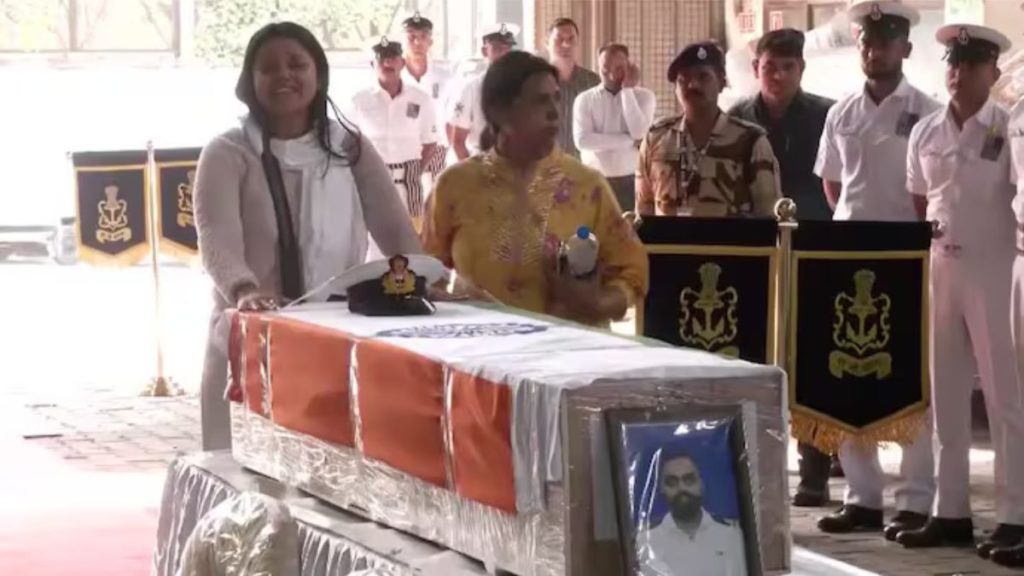
This follows TRF’s involvement in the April 22, 2025, Islamist terror attack in Pahalgam, Jammu and Kashmir, which killed 26 Hindu civilians—marking the deadliest assault on Indian civilians since the 2008 Mumbai attacks.
Image: Pakistan’s senior military and civil officials, along with residents, attend a funeral of in Muridke with suspected terrorist on May 7, 2025 (Source: X)
TRF is widely known as a proxy of Lashkar-e-Taiba (LeT), a Pakistan-based terrorist group allegedly long backed by the country’s Inter-Services Intelligence (ISI) agency.
Image: The Pahalgam massacre, April 22, 2025 9Source: India Today)
The Pahalgam massacre, which targeted a group of unarmed Hindu tourists and local workers, drew international condemnation and renewed calls to crack down on cross-border terror networks operating with impunity from Pakistani soil.
Image: Wife of Indian Navy officer killed in Pahalgam terrorist attack (Source: India Today screenshot)
TRF has also claimed responsibility for multiple ambushes and attacks against Indian security forces, including several incidents in 2024. U.S. officials said the designation reflects Washington’s commitment to “protecting national security interests, countering terrorism, and enforcing President Trump’s call for justice for the Pahalgam victims.”
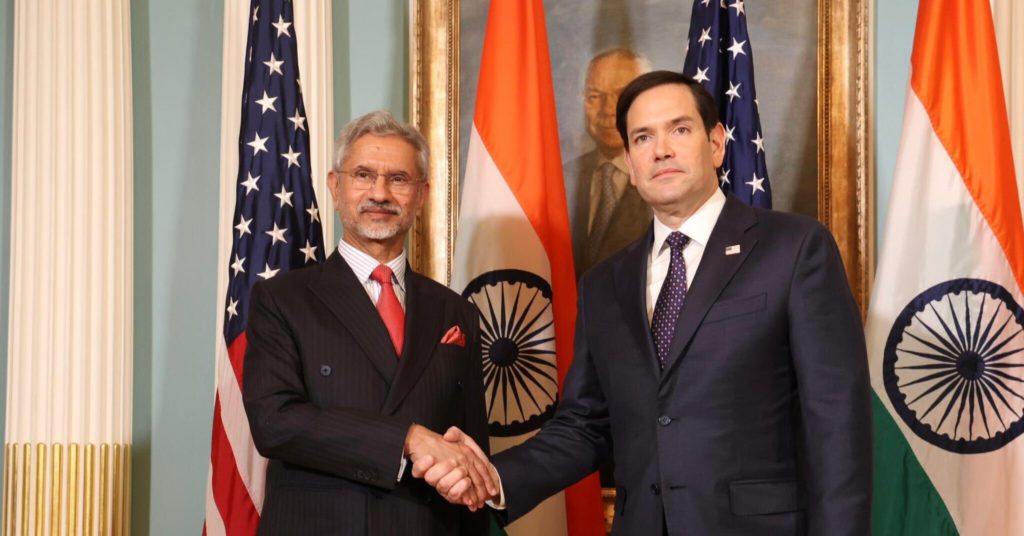
Image: U.S. Secretary of State Marco Rubio’s Meeting with India’s External Affairs Minister S. Jaishankar (Source: U.S. Embassy & Consulates in India)
The designation, under Section 219 of the U.S. Immigration and Nationality Act and Executive Order 13224, will freeze all TRF assets under U.S. jurisdiction and criminalise any material support to the group.
I strongly condemn the terror attack in Pahalgam, Jammu and Kashmir. Condolences to those who have lost their loved ones. I pray that the injured recover at the earliest. All possible assistance is being provided to those affected.
Image: Colonel Sufiya Qureshi and Wing Commander Vyomika Singh
In his first address on 12 May 2025 following Operation Sindoor, Indian Prime Minister Narendra Modi hailed the successful airstrikes that destroyed terror camps and military bases inside Pakistan. He praised the bravery of India’s armed forces, intelligence agencies, and scientists, dedicating their courage to the women of the nation. Modi warned that terrorists now know the price of attempting to erase the sindoor—a symbol of dignity—from the foreheads of India’s sisters and daughters.
Had a conversation with US @SecRubio this morning.
India’s approach has always been measured and responsible and remains so.
The U.S. has also reaffirmed the FTO designation of LeT and extended it to include TRF and its aliases. The amendments take effect immediately upon publication in the Federal Register.
Support our Journalism
No-nonsense journalism. No paywalls. Whether you’re in Australia, the UK, Canada, the USA, or India, you can support The Australia Today by taking a paid subscription via Patreon or donating via PayPal — and help keep honest, fearless journalism alive.
In a dramatic takedown that spans continents, U.S. authorities have arrested Indo-Canadian gangster Opinder Singh Sian, alias Thanos, for allegedly orchestrating a massive international drug trafficking network involving precursor chemicals from China, meth shipments to Australia, and ties to global crime syndicates including the Kinahan cartel and Mexico’s Sinaloa cartel.
Image: Opinder Singh Sian, alias Thanos
Sian, allegedly a known figure in Vancouver’s underworld with deep ties to the Brothers Keepers gang, was taken into custody in Arizona in late June, according to newly unsealed U.S. District Court documents. A Nevada judge has since ordered him held pending extradition to California, where the case has been filed.
The 37-year-old is accused of working with international criminal organisations across Canada, Turkey, Ireland, China, and Mexico. The U.S. Drug Enforcement Administration (DEA) claims Sian operated a transnational supply chain, sourcing fentanyl precursor chemicals from China, routing them via Vancouver to Los Angeles, and trafficking hundreds of pounds of methamphetamine to Australia through the Port of Long Beach.
The DEA’s High Intensity Drug Trafficking Area (HIDTA 48) unit began tracking Sian in 2022 following a tip-off from its Ankara, Turkey office. A confidential informant, posing as an international logistics coordinator, was inserted into the network and gained Sian’s trust. According to the 29-page affidavit, the informant received four major drug drop-offs in Southern California throughout mid-2023:
30 lbs of meth on June 22
200 lbs on July 6
100 lbs on August 21
200 lbs on August 28
These shipments were intercepted and replaced with fake drugs embedded with trackers, which were then followed to stash houses in Australia, leading to the arrest of local couriers.
Image: Australian Gurvindar Singh, along with Canadians Aman Kang and Mani Dhaliwal arrested in allegedly biggest drug-smuggling bust (Source: AFP)
Using trusted insiders at port facilities and legitimate freight companies, the network imported contraband from Canada, the UAE, and Panama. The investigation began with a breakthrough in August 2024, when authorities intercepted a meth shipment from Vancouver.
Coordinated raids in southwestern Sydney resulted in Singh’s arrest along with six associates—two of whom are Canadian nationals, 24-year-old Aman Kang and 31-year-old Mani Singh Dhaliwal.
Now, Singh faces a total of five counts of importing a commercial quantity of border-controlled drugs and illegal tobacco, two counts of dealing with proceeds of crime, and two counts relating to leading a criminal group. If convicted, he could face life imprisonment.
Singh’s next court appearance is scheduled for July 31 at the Downing Centre Local Court, where he will be formally arraigned on all charges.
Image: Australian Gurvindar Singh, along with Canadians Aman Kang and Mani Dhaliwal arrested in allegedly biggest drug-smuggling bust (Source: AFP)
It is reported that Sian allegedly described his connections to Irish organised crime—particularly the Kinahan cartel, Italian mafia, and Mexican cartels. He also allegedly said he obtained precursor chemicals through a Chinese national, who ran a trucking company capable of discreet cross-border transport.
While Sian faces serious federal charges in the U.S., no other suspects named in the documents have been formally charged yet. Canadian authorities are reportedly coordinating with their American counterparts as the case unfolds.
The DEA believes the syndicate Sian helped run is part of a larger threat, as Canada becomes a critical node in the global fentanyl and meth supply chains—raising renewed concerns about transnational drug flows and links between criminal groups and geopolitical entities.
Support our Journalism
No-nonsense journalism. No paywalls. Whether you’re in Australia, the UK, Canada, the USA, or India, you can support The Australia Today by taking a paid subscription via Patreon or donating via PayPal — and help keep honest, fearless journalism alive.
A groundbreaking Earth-observing satellite mission, jointly developed by NASA and the Indian Space Research Organisation (ISRO), is set to launch no earlier than late July from ISRO’s Satish Dhawan Space Centre in Sriharikota, India.
Named NISAR (NASA-ISRO Synthetic Aperture Radar), the mission marks the first-ever collaboration of its kind between the two space agencies and promises to deliver a dynamic, three-dimensional view of the planet with unparalleled precision.
Equipped with dual radar systems — an S-band provided by ISRO and an L-band developed by NASA — NISAR will use synthetic aperture radar (SAR) technology to scan almost all of Earth’s land and ice surfaces every 12 days.
The mission can detect ground movement down to the centimetre, offering vital insights into natural hazards such as earthquakes, volcanic eruptions, landslides, and land subsidence.
The satellite’s radar can even penetrate cloud cover, making it a critical tool for emergency responses during hurricanes, storm surges, and floods. In addition to monitoring sudden disasters, the data will help scientists track slow changes such as glacial retreat, deforestation, and shifting river courses.
Managed by NASA’s Jet Propulsion Laboratory (JPL), which provided several key instruments including the L-band radar, reflector antenna, and data systems, NISAR brings together the expertise of multiple ISRO centres. These include the Space Applications Centre, which developed the S-band radar, and the U R Rao Satellite Centre, which built the spacecraft bus. Launch services are being handled by the Vikram Sarabhai Space Centre and Satish Dhawan Space Centre, while mission operations and data management are spread across ISRO’s national infrastructure.
Support our Journalism
No-nonsense journalism. No paywalls. Whether you’re in Australia, the UK, Canada, the USA, or India, you can support The Australia Today by taking a paid subscription via Patreon or donating via PayPal — and help keep honest, fearless journalism alive.
Do you have this feeling of exhaustion throughout your day? Then guess what you are not alone. Burnout, a feeling of exhaustion, fatigue and tiredness flows through our veins throughout the day. This cynicism for optimal performance and achievement has even made the burnout more problematic. The problem is twofold-the idea and practice of optimization, a task best fitted to machines, not humans. We are human because of our ability to contemplate, love, argue and for our feelings for others, which inevitably requires engagement, time and space. In the name of saving more time via technology, both time and space have been stolen away from us, a heist that has been orchestrated in our quotidian lives. Due to smart tech, digital footprints, mass monitoring and watchful algorithms we have started seeing time as a commodity, it’s no longer lived, it’s monitored, quantified, and commodified.
With technological advancements, the evolutionizing of humans as machines has its obvious perils, humans are being less empathetic and more robotic, carrying machine like behavior in their contemplative space, full clicks, and tangled networks. With the digitization of space, where every single click is monitored, our privacy, both personal and professional, is in danger. One such example of humans turning into machines is, say for instance, computer, which was invented so that it could speed up our task and as a result we would utilize that time by spending quality times and nurturing personal connections with family and friends, getting more time to engage in our hobbies, but what has it made of us? In a world of commodity culture, being free is overrated, even considered a crime. The call is very clear – we need to be productive and accelerate.
To exacerbate this quotidian reality, the establishment and normalization of “The watched society” has led us to a point of surveillance, being gazed and observed all the time. The digital determinism made us enter the panopticon 2.0 where we are under constant watch. Our journey from achievement society to algorithmic society came with a cost which demands our peace, health, time and privacy. The concept of personal time and space has almost vanished as we are available just a click away and there is no off-switch in our pre-occupied mind. The mass-monitoring culture is re-writing our perspective of freedom and personal space. We, as individuals, have become scattered individuals who are no longer unified and have different fragments for different platforms, as per requirements. This fragmentation isn’t just limited to our online presence—it reflects deeply in our personal lives as well.
Technology has become a double-edged sword- it connects us globally, but disconnects us even from closer one, including our surroundings, which we resolutely fail to witness. Let’s take another example. Consider how parenting has evolved in this technological era. The most common and observed example of this in domestic settings is we are all aware how parents introduce kids to technology. Smart phones and giant screens are their new best friends. They wake up from Alexa and fall asleep to Siri- The universal best friends. What an irony indeed!
The technological convenience comes at a price, remember the time when bedtime stories were a daily ritual, comparatively, this has been replaced by YouTube videos with air pods in ears. In a recent conversation, a friend of mine was telling me how his child is having delays in speech and has slow cognitive development. Children suffer from problems like ADHD, reduced attention span etc. The reason for this was quite obvious- we replaced our role with technology by handing them them smart phones and I-pads and the excessive use of which hindered the brain development. As per the report of National Institute of Health, calling kids as “digital natives “it was found that screen induced disease are rapidly increasing among young children. Based on the research linking to depleting brain development among kids’ country like Sweden is banning the use of screen among toddlers.
I find it so ironic that technology was invented to make us fast and connected, but it eventually made us busier, injecting in us, a sporadic supply of abstract violence. The fact is simple, speed and contemplation are diametrically opposed to each other, much in the way as computers and humans are. We do not have time for the people who really matter to us. The perpetual connectivity due to digitalization of space and time has become a myth as we are mediated through connections. Do we need to reconsider it as a sign of pause and stillness? Yes or No! The choice is yours.
Contributing Author: Sanjana Singh is a freelancer. She can be contacted at sanjana22work@gmail.com
Support our Journalism
No-nonsense journalism. No paywalls. Whether you’re in Australia, the UK, Canada, the USA, or India, you can support The Australia Today by taking a paid subscription via Patreon or donating via PayPal — and help keep honest, fearless journalism alive.
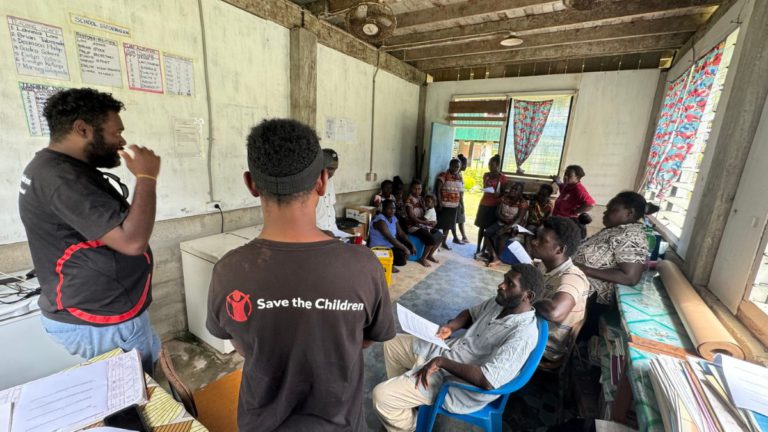
Children across the Pacific are facing escalating risks to their safety and wellbeing. Research from Save the Children reveals that violence against children is on the rise across five Pacific Island countries — Fiji, Vanuatu, Papua New Guinea, Solomon Islands and Tonga. Almost 200 children and adolescents as well as 300 caregivers and 110 child protection staff across the five countries participated in the research in 2023, which consisted of group discussions, surveys and child-led research, alongside a comprehensive literature review. The resulting picture is both sobering and instructive. The report confirms that violence against children in the Pacific is widespread and worsening. Children continue to face emotional, physical and sexual abuse in their homes, schools and communities.
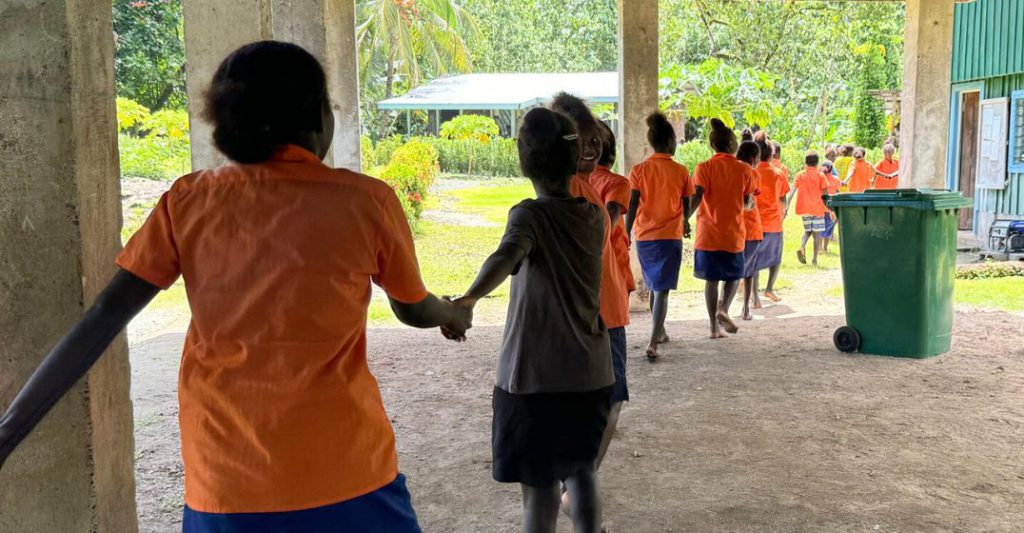
Image: School children prepare for future tsunamis by rehearsing Disaster Action Plans (Source: Facebook – Save the Children Solomon Islands)
Climate change, pandemic shocks, labour mobility and the rapid growth of digital connectivity are placing pressure on already fragile protection systems across the Pacific. Environmental shocks, including cyclones, drought and sea-level rise, are forcing families to relocate — sometimes temporarily, sometimes permanently. The breakdown of community ties and traditional safety nets that often accompanies relocation can weaken protective environments for children. The risks associated with climate mobility and its impacts on children will further exacerbate existing challenges. National and global responses to climate mobility should be proactive in addressing the specific needs and entitlements of particular groups, including women and girls and youths and children in general.
Across all five Pacific countries, the rapid expansion of digital connectivity has exposed children to new forms of harm. While access to mobile phones and the internet can offer educational and social benefits, it has also brought increased risk of online abuse and exploitation. Stakeholders reported concerns about cyberbullying, grooming and exposure to harmful content. Yet many children, families and schools lack the digital literacy or infrastructure to address these dangers. This is a rapidly growing protection gap that has yet to be fully recognised in national policy frameworks.
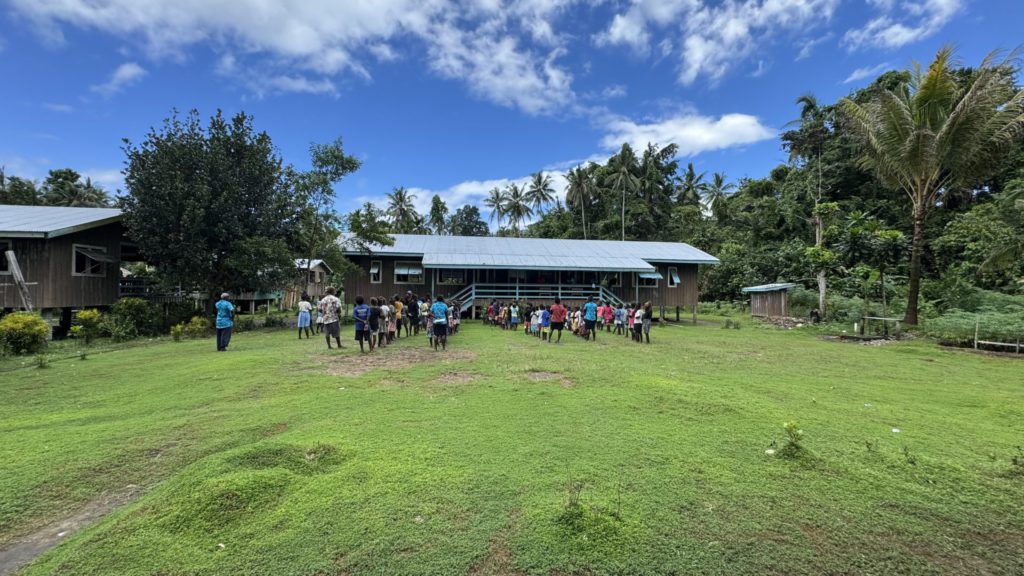
Image: School children prepare for future tsunamis by rehearsing Disaster Action Plans (Source: Facebook – Save the Children Solomon Islands)
Children in the Pacific reported frequently experiencing emotional violence, including rejection, humiliation and neglect. This abuse, despite its lasting psychological impacts, rarely receives adequate attention in regional policy or practice. Compounding the situation, not only are rates of violence rising, but existing legal, institutional and community-based child protection systems are struggling to cope.
Many Pacific children endure corporal punishment and bullying, while child sexual exploitation and gender-based violence are on the rise. For girls in particular, early marriage and teenage pregnancy remain persistent threats to safety and development. Harmful gender norms continue to shape children’s experiences of violence. Girls are particularly vulnerable to sexual abuse and early marriage: one in five girls in the Pacific is married before age 18, with countries like Solomon Islands and Tonga allowing exceptions down to age 15 with parental consent. Boys often experience physical discipline and pressure to conform to rigid ideas of masculinity. Children with disabilities, gender non-binary youth and those from marginalised communities face additional risks and barriers to protection. Transforming these norms will require long-term, community-based work and engagement with traditional leadership and faith-based groups.
Despite significant challenges, the study revealed promising strengths within Pacific child protection systems. Cultural assets like kinship care, extended family support and the authority of community elders can be powerful protective forces when aligned with child rights principles. In some areas, traditional leaders actively resolve disputes and reinforce social norms discouraging violence. However, these strengths are inconsistently applied, and formal systems often lack the capacity to support them. Government child protection services across the region remain underfunded, understaffed and concentrated in urban centres. Consequently, NGOs and faith-based organisations often serve as primary protection service providers in many rural and outer island communities, despite facing their own funding and coordination challenges.
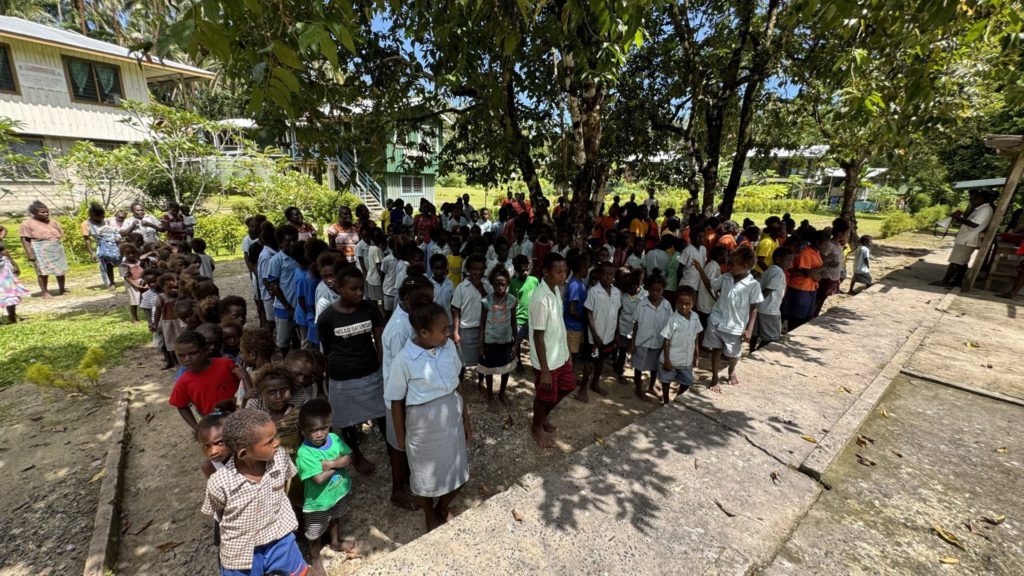
Image: School children prepare for future tsunamis by rehearsing Disaster Action Plans (Source: Facebook – Save the Children Solomon Islands)
The challenges children encounter in the Pacific are grave. However, we see a clear roadmap for action. Based on our research, we have five key recommendations for a stronger child protection system.
First, strengthen community-led child protection. This entails investing in community initiatives where traditional systems interact with formal child protection mechanisms. Capacity building is required for village leaders, religious institutions and caregivers so they can effectively act against and prevent violence against children and women.
Second, restore and expand social services. Social services fulfil an indispensable support and safety net function for vulnerable children and families that need to be made more widely available.
Third, ensure digital safety. With emerging threats in the digital space, online safety of children is essential. Measures need to be taken to provide safe online spaces and protect children from cyber threats.
Fourth, plan for climate-related risks. Climate mobility is an increasing risk across the Pacific. Both state- and non-state-led adaptation initiatives need to integrate child protection into disaster preparedness, relocation planning and climate adaptation programs. This includes safeguarding children’s rights in temporary shelters and host communities, and during disaster recovery efforts.
Finally, elevate the voices of children and youth. Meaningful opportunities need to be created for children and youth to participate in the design and evaluation of child protection programs. This could involve school-based advisory groups, youth councils or participatory research, ensuring their perspectives shape the solutions.
Children continue to face emotional, physical and sexual abuse in their homes, schools and communities.
The situation for children in the Pacific is serious, but it is not without hope. What is needed now is a sustained commitment: long-term investment in inclusive and culturally informed protection responses that truly reflect the realities of children’s lives. Above all, it requires listening to what children themselves say they need. As the Blue Pacific region navigates compounding challenges — from the impacts of climate change to emerging digital risks — a critical opportunity exists to build child protection systems that are resilient, inclusive and future-ready.
Disclosure: The data analysed and presented in this blog is from the Pacific Regional Child Protection Situational Analysis which was commissioned by Save the Children New Zealand and conducted in partnership with the Nossal Institute for Global Health and Macquarie University. The views are those of the author only.
Contributing Author: Dr Betty Barkha is a gender and climate adaptation specialist, currently working as GEDSI Technical Advisor for the Pacific at Save the Children.
Support our Journalism
No-nonsense journalism. No paywalls. Whether you’re in Australia, the UK, Canada, the USA, or India, you can support The Australia Today by taking a paid subscription via Patreon or donating via PayPal — and help keep honest, fearless journalism alive.
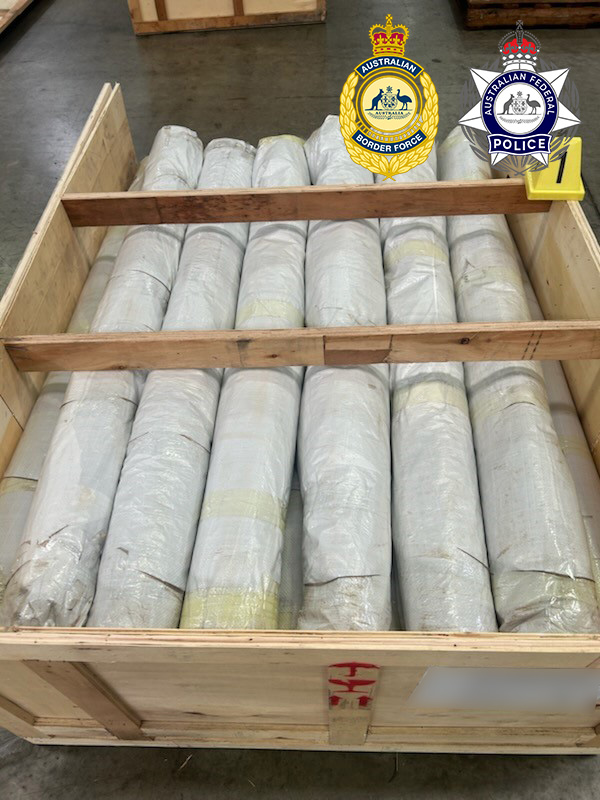
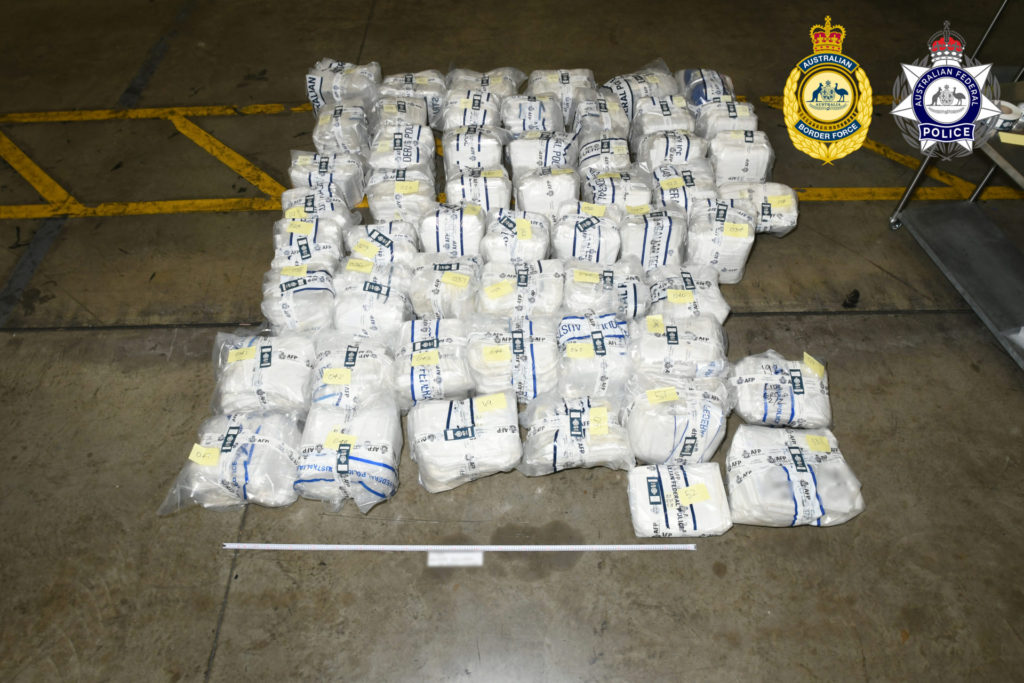
Three New South Wales men have been charged over their alleged involvement in a $555 million methamphetamine importation, with nearly 600 kilograms of the drug hidden inside fabric rolls intercepted at the Port of Brisbane.
The trio, aged 22, 24, and 28, were arrested on Monday, 14 July 2025, and are set to face the Brisbane Magistrates Court today (16 July). They each face one count of attempting to possess a commercial quantity of an unlawfully imported border-controlled drug — an offence carrying a maximum penalty of life imprisonment.
AFP Detective Superintendent Adrian Telfer said the bust highlights the agency’s relentless fight against transnational organised crime. “The people behind importations like this have no regard for the harm and damage that illicit drugs wreak on the Australian community,” he said.
“Criminals will stop at nothing to import harmful drugs into Australia to fill their pockets.”
Image: Trio arrested over alleged plot to import 600kg of meth concealed in rolls of fabric (Source: AFP)
Australian Border Force (ABF) officers in Queensland flagged and intercepted a suspicious sea cargo consignment from Thailand on 4 July, declared as ‘UV protective fabrics’. Forensic testing later revealed 597 kilograms of methamphetamine tightly concealed within 200 rolls of fabric, packed in eight wooden crates.
Following the handover to the Australian Federal Police (AFP), authorities removed the drugs and allowed the consignment to be delivered to a warehouse in Bowen Hills, in Brisbane’s inner north. It’s alleged the three men were observed at the site — two were reportedly unravelling the fabric rolls, while the third visited a nearby business to buy an electronic scale, presumably to weigh the illicit substance.
The men were arrested by the Queensland Joint Organised Crime Task Force (QJOCTF) and taken to the Brisbane City Watchhouse. Subsequent searches of the warehouse and two vehicles uncovered four mobile phones, approximately $7,000 in cash, and tools believed to be used to access the concealed drugs.
Authorities estimate the seized meth could have resulted in six million individual street deals.
Image: Trio arrested over alleged plot to import 600kg of meth concealed in rolls of fabric (Source: AFP)
ABF Acting Assistant Commissioner James Copeman praised the officers who detected the concealment, describing it as a “sophisticated operation” that was foiled thanks to world-class targeting and a deep understanding of import patterns.
“The skill and vigilance of ABF teams ensured this dangerous cargo was stopped before it could reach Australian streets.”
Queensland Police Detective Inspector Stephen Tiernan said the successful sting was the result of strong collaboration across agencies.
“The QJOCTF will continue to target and dismantle these criminal networks to prevent illicit drugs impacting the Queensland community.”
Investigations into the wider criminal syndicate remain ongoing.
Support our Journalism
No-nonsense journalism. No paywalls. Whether you’re in Australia, the UK, Canada, the USA, or India, you can support The Australia Today by taking a paid subscription via Patreon or donating via PayPal — and help keep honest, fearless journalism alive.
New figures show Australia’s seasonally adjusted unemployment rate unexpectedly rose to 4.3% – its highest level since late 2021 – in June this year, up from 4.1% in May.
While this is bad news, it’s not as bad as it might seem. Higher unemployment came from more people looking for work. In the long run, that’s good for the economy.
And these figures also make it more likely we’ll see an interest rate cut next month – which is now looking overdue.
What’s the bad news?
This is the second month in a row we’ve seen no growth in total employment, while total hours worked (the number of hours worked by employed individuals, regardless of whether they are full-time, part-time or overtime) in the past month has gone backwards.
All this adds to the picture of a slowing labour market since the start of the year, after surprisingly strong growth in the second half of 2024.
The latest Australian Bureau of Statistics release also includes data on where extra hours worked during 2025 have come from.
Employment growth has come entirely from the “non-market sector” – which is healthcare and social assistance, education and training, and public administration and safety. And the big driver of those extra jobs has been in social assistance and health care, which is largely government-funded.
That means employment has gone backwards in the rest of the economy, adding to a picture of a jobs market being propped up by government investment in the caring economy.
Why it’s not as bad as you might think
The reason unemployment rose is that more people were looking for work – so it’s not because employment fell.
Of course, we’d prefer those people to have found jobs. But it does mean people weren’t losing jobs for the unemployment rate to rise.
The growth in labour force participation in June continues the trend of strong growth since late 2021. In the long run, that’s a good thing – it means the country can produce more output, and more people gain an income from work.
An interest rate cut now looks more certain
Last week, the Reserve Bank surprised most people by keeping the cash rate on hold at 3.85%.
Today’s unemployment data is extra evidence that the labour market isn’t contributing to inflation pressure – in fact, it’s the opposite.
It shows an interest rate cut is now overdue. The Reserve Bank board meets again in mid-August, with a decision on rates announced on August 12.
When will we know if this is a blip or a trend?
One possibility is that some of the extra people who became unemployed in June have a job to go to in the next month. Ups and downs in that group have at times been influential in driving unemployment numbers in recent times. In that case, this month’s figures may partly turn out to be a blip. We’ll be able to tell that when we see next month’s figures.
But the blip is unlikely to explain all of the rise in June. This is also about a labour market that is slowing.
International students in New Zealand will soon be able to work more hours during the academic term as the government rolls out a sweeping plan to revitalise the country’s international education sector.
Under Immigration New Zealand’s (INZ) new policy, all student visas granted from 3 November 2025 will allow eligible tertiary and secondary students to work up to 25 hours a week, up from the current 20-hour limit. The increase is part of the government’s ambitious “International Education Going for Growth Plan,” unveiled on 14 July.
Students already holding a visa with a 20-hour work cap will need to apply for a variation of conditions or a new visa — and pay the relevant immigration fees — if they wish to access the extended work rights.
For secondary students in Years 12 and 13, parental and school approval will remain a requirement for in-study employment, even with the increase to 25 hours.
The policy shift comes as New Zealand aims to boost international student numbers from 83,700 in 2024 to 119,000 by 2034, raising the sector’s annual economic contribution from NZ$4 billion to NZ$7.2 billion.
“International student enrolments have been steadily increasing since 2023 and we want to supercharge that growth track,” said Education Minister Erica Stanford, who confirmed that promotional efforts would focus on high-growth markets.
In addition to the work-hour increase, in-study work rights are being extended to all tertiary students on approved exchange or Study Abroad programmes, including one-semester courses. Students who change providers or downgrade their course level must apply for a new visa, not just a variation.
The government is also considering a short-term work visa of up to six months to give international graduates time to find employment under the Accredited Employer Work Visa (AEWV) scheme.
The changes come amid rising costs for international students. Since October, the study visa fee doubled from NZ$375 to NZ$750, while the post-study work visa fee surged to NZ$1,670 — more than double the previous NZ$700.
According to Ministry of Education data, New Zealand hosted 74,990 international students in 2024, down from a peak of 125,410 in 2016. However, university enrolments are projected to rise to 45,590 in 2025, signalling a potential rebound.
There are currently 40,987 student visa holders with in-study work rights, with nearly 30,000 of those visas set to expire before March 2026. Not all are expected to apply for the 5-hour increase, particularly those nearing the end of their studies or planning to apply under new visa conditions later.
The new plan aims to support sustainable growth, maintain education quality, and manage immigration risks, while enhancing New Zealand’s global reputation as a study destination.
Support our Journalism
No-nonsense journalism. No paywalls. Whether you’re in Australia, the UK, Canada, the USA, or India, you can support The Australia Today by taking a paid subscription via Patreon or donating via PayPal — and help keep honest, fearless journalism alive.
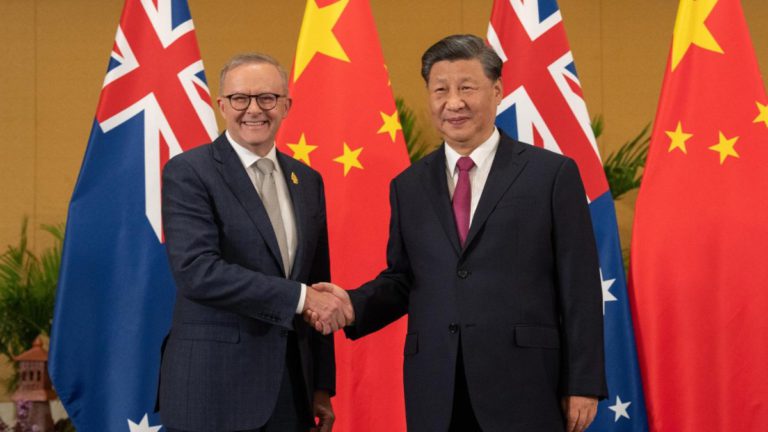
On his China tour, Prime Minister Anthony Albanese was warmly welcomed by the Secretary of the Communist Party of China Sichuan Provincial Committee, Wang Xiahou, and Governor Shi Xiaolin. Marking the first visit by an Australian Prime Minister to Chengdu since Bob Hawke in 1986, Albanese’s trip aimed to deepen economic, cultural and people-to-people ties with the province of Sichuan.
Thank you for the warm welcome to Chengdu, Secretary Wang Xiaohui.
Australia’s connection with Sichuan, China includes trade, education, tourism, medical technology, sport and culture.
During his opening meeting, Wang hailed Chengdu as a vibrant, culturally rich metropolis and a culinary capital, warmly inviting Albanese to experience its “laid-back charm.”
Prime Minister Albanese reciprocated with gratitude, noting the $5 billion two-way trade between Sichuan and Australia, highlighting shared interests in education, medical technology and tourism.
“I hope that my visit encourages more Australian visitors to Chengdu and Western China.”
Albanese also reflected on the province’s sister-state relationship with Victoria and celebrated the arrival of two new giant pandas in Adelaide, calling them “ambassadors of goodwill.”
It was an honour visit the Great Wall of China today.
It is in Australia’s interest to have a stable relationship with China.
Being here to advocate for our national interests directly is critical for maintaining and developing those ties. pic.twitter.com/M4OuhqHCGk
Standing atop the historic Great Wall of China, Albanese echoed the legacy of former Prime Minister Gough Whitlam, who established diplomatic relations with China in 1971. “Leaders must deal with the world as it is, not as they wish it to be,” Albanese said, stressing the importance of stable, respectful engagement. He reaffirmed Australia’s support for the One China policy and its stance against unilateral actions over Taiwan.
Addressing media questions on trade, defence and foreign policy, Albanese maintained Australia’s case-by-case approach to foreign investment, noting that his government’s stance is always guided by the national interest. On security matters, including the Port of Darwin and Taiwan, Albanese stood firm, asserting Australia’s sovereignty and long-held bipartisan foreign policy positions.
The Australian Open is a big deal in China.
Millions of viewers tune-in from here, and it brings tourists to Australia to see the event in person.
Next year, Chengdu will once again be a pathway for players to compete down under.
In a move of sporting diplomacy, the Prime Minister also took part in announcing the return of the Australian Open Asia-Pacific Wildcard Playoffs to Chengdu this November. At the Sichuan International Tennis Centre, Albanese joined Australian tennis legend John Fitzgerald, local officials and rising Chinese stars to reaffirm Australia’s commitment to sports and cultural exchange.
“This sporting event is more than a game – it’s a bridge between our two nations,” Albanese said. He noted the historical connection dating back to Hawke’s 1986 tennis diplomacy and praised the ongoing youth tennis collaborations involving the Kooyong International Tennis Academy and Tennis Australia.
The visit comes amid renewed momentum in Australia-China relations, following a series of high-level meetings in Beijing and a CEO roundtable focused on steel decarbonisation and expanding cooperation in education and technology.
“We’ll cooperate where we can, disagree where we must, but always engage in the national interest,” Albanese said, encapsulating his government’s pragmatic diplomatic posture.
Support our Journalism
No-nonsense journalism. No paywalls. Whether you’re in Australia, the UK, Canada, the USA, or India, you can support The Australia Today by taking a paid subscription via Patreon or donating via PayPal — and help keep honest, fearless journalism alive.
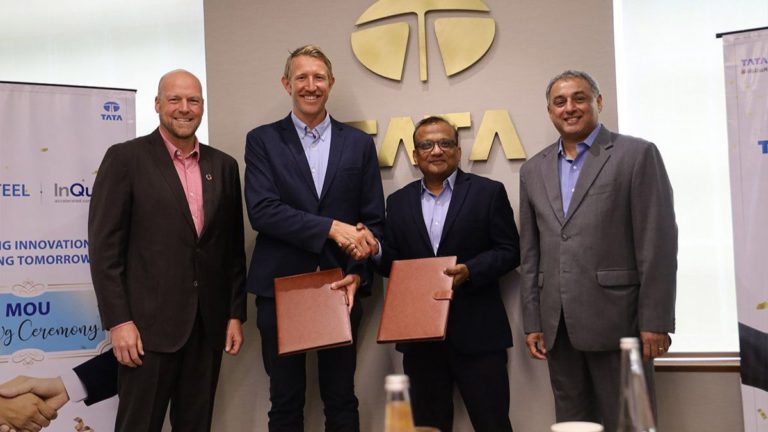
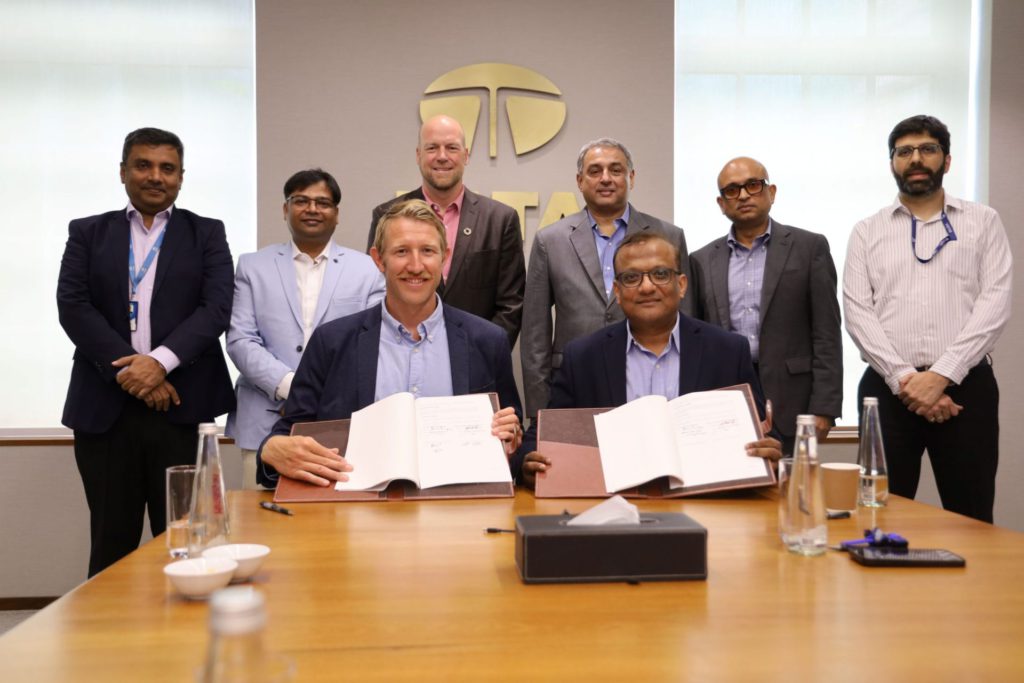
Tata Steel signed a landmark Memorandum of Understanding (MoU) with Australia’s InQuik Group to introduce award-winning modular bridge construction technology to India.
The collaboration pairs InQuik’s patented prefabricated steel formwork system with Tata Steel’s manufacturing prowess, promising faster, more cost-effective and climate‑resilient bridge construction across the country.
Under the agreement, Tata Steel will integrate InQuik’s modular solution into its downstream product portfolio, marking a strategic move beyond raw steel production into high‑value infrastructure offerings.
InQuik’s pre‑engineered steel formwork is shipped to the site, rapidly erected and then filled with concrete, delivering reinforced bridges with minimal on-site labour and equipment.
“Tata Steel focuses on delivering smart and sustainable construction solutions to fulfil the growing infrastructural needs of a modern India,” said T V Narendran, CEO & Managing Director of Tata Steel.
Tata Steel and InQuik Forge Partnership; Image Source- Supplied
“This collaboration with InQuik reflects our technology‑driven approach to reimagine construction practices in the country.”
For InQuik, the partnership opens access to India’s booming infrastructure market, building on last year’s U.S. alliance with CMC. The move aligns with InQuik’s broader international expansion, leveraging Tata Steel’s extensive distribution network and domestic expertise.
Tata Steel and InQuik Forge Partnership; Image Source- Supplied
“We are excited to partner with Tata Steel, a global leader in steel manufacturing, to expand the reach of our bridge systems into the Indian market,” said Logan Mullaney, CEO of InQuik Group.
“Together, we can deliver rapid, cost‑effective, and resilient infrastructure to support India’s growing connectivity needs.”
Key Benefits and Impact
Speed & Efficiency: Modular formwork slashes construction times compared with traditional cast‑in‑place methods.
Cost‑Effectiveness: Reduced on-site labour and equipment expenses lower overall project costs.
Sustainability & Resilience: Prefabrication minimises waste, while robust steel formwork enhances durability and climate resistance.
Rural & Remote Access: Scalable solutions can bridge isolated communities, improving access to essential services.
India’s Ministry of Road Transport and Highways has set an ambitious target to construct thousands of new bridges over the next decade. By enabling rapid deployment of safe, standardised bridge elements, the Tata Steel–InQuik alliance is poised to accelerate network expansion on both national highways and regional arterial roads.
Tata Steel and InQuik Forge Partnership; Image Source- Supplied
About the Partners
Tata Steel is one of the world’s top steel producers, with 35 million tonnes per annum capacity and a global footprint across five continents. The company reported a consolidated turnover of US$26 billion in FY 2024‑25 and is committed to net‑zero carbon emissions by 2045.
InQuik Group is an Australian‑founded innovator in modular construction, best known for its InQuik® system—patented steel formwork technology used in bridge construction, maritime infrastructure, and future defence applications.
Over the coming months, Tata Steel and InQuik will launch pilot projects in select Indian states, validate design and logistics workflows, and engage with government and private stakeholders to scale up deployment. If successful, the modular bridge systems could become a new standard in India’s infrastructure toolkit.
Support our Journalism
No-nonsense journalism. No paywalls. Whether you’re in Australia, the UK, Canada, the USA, or India, you can support The Australia Today by taking a paid subscription via Patreon or donating via PayPal — and help keep honest, fearless journalism alive.
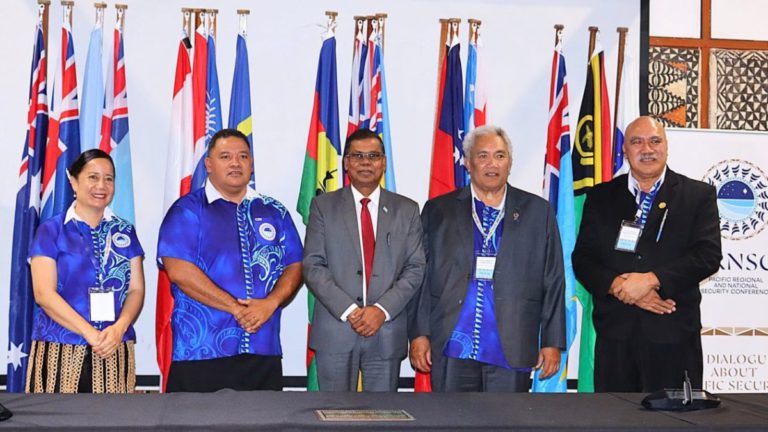
Fiji’s Deputy Prime Minister and Minister for Finance Prof. Biman Prasad has sounded a stark warning that climate change is the “cruellest and harshest” threat facing the Pacific, already fuelling instability, internal displacement, and regional insecurity.
Image: Fiji’s Deputy Prime Minister and Minister for Finance Prof. Biman Prasad (Source: Facebook)
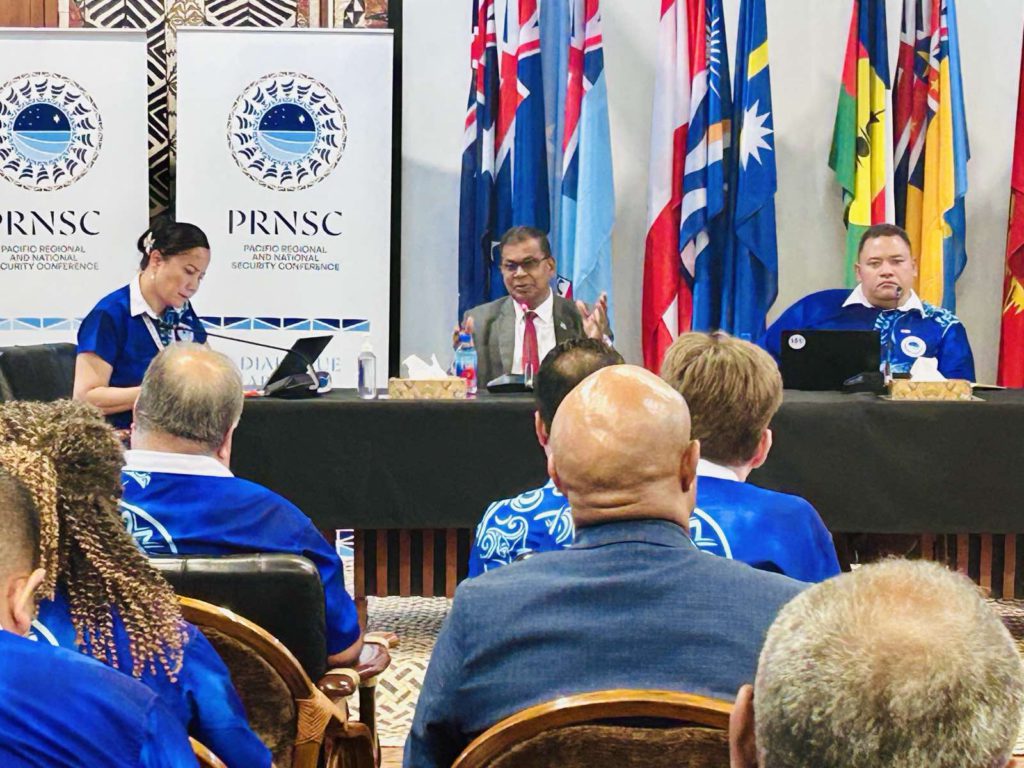
Speaking during the Political Leaders on Climate Security panel at the Pacific Regional and National Security Conference in Suva, Prof. Prasad said the region is preparing for climate impacts “on a war footing,” with little time left for meaningful global intervention.
“Climate change is the single greatest threat to our people, our peace, and our Pacific way of life. It is the most direct, the cruellest, and the harshest outcome that we are preparing for,” he said.
Prof. Prasad issued an urgent call for scaled-up climate finance, noting that while COP29 delivered a new global climate finance target, delivery has been “painfully slow.”
“We can adapt now—over the next decade—but that window is closing fast. For some communities, it’s already too late. Loss and Damage finance is not a luxury; it is a necessity,” he said.
He emphasised the need for sustained and predictable funding to support Pacific efforts in adaptation, resilience, and relocation, warning that the region is already being forced to divert limited resources to rebuild after every climate disaster. “The fiscal burden from rebuilding roads, ports, water systems, and housing after each climate event is immense. This cannot be our new normal,” Prasad said, accusing the international community of contributing “less than 10 percent of its share—if even that.”
🚨 Climate change is the cruellest and harshest threat facing the Pacific — driving instability, urban drift, food insecurity and conflict. At Pacific Regional & National Security Conference: We’re preparing on a war footing. The world must act now. 🌊🌍#PIFS#ClimateActionNowpic.twitter.com/gYovwkNRtm
— Professor Biman Prasad DPM, Fiji (@bimanprasad) July 14, 2025
To address the financing gap, Prof. Prasad called for the establishment of a regional development bank and reaffirmed Fiji’s support for the Pacific Resilience Facility—a regional mechanism designed to boost investment in disaster preparedness and climate adaptation.
Prof. Prasad also endorsed Australia’s bid to co-host COP31 in partnership with the Pacific, arguing it would force world leaders to confront the human cost of climate change. He asked:
“To those fighting to keep COP31 away from the Pacific – what are you afraid of? Are you so afraid to look at the Pacific’s displaced people in the eye and say you are sorry?”
Reinforcing the importance of regional cooperation, Prof. Prasad advocated for a visa-free Blue Pacific, coordinated relocation policies, marine protection strategies, and climate-resilient development. “There can be no peace in the Pacific without climate risk being mainstreamed across everything we do – on land and across our seas,” he said, pledging support for the Ocean of Peace initiative.
The Pacific Regional and National Security Conference brings together political leaders, regional experts, and security specialists to tackle the rising threat climate change poses to the region’s stability.
Support our Journalism
No-nonsense journalism. No paywalls. Whether you’re in Australia, the UK, Canada, the USA, or India, you can support The Australia Today by taking a paid subscription via Patreon or donating via PayPal — and help keep honest, fearless journalism alive.
Migrants in the United States could now be deported to third countries with as little as six hours’ notice, under a newly disclosed internal memo from U.S. Immigration and Customs Enforcement (ICE)—marking a dramatic escalation in the Trump administration’s immigration enforcement approach.
The memo, dated 9 July and signed by ICE Acting Director Todd Lyons, was obtained by Reuters and first reported by The Washington Post. It outlines a shift in deportation protocol that allows expedited removals to so-called “safe third countries” under “exigent circumstances,” reducing the standard 24-hour notice period to just six hours. This is contingent on the migrant being given a chance to consult with a lawyer.
— U.S. Immigration and Customs Enforcement (@ICEgov) July 16, 2025
The policy allows migrants to be deported to nations that have pledged not to persecute or torture them, “without the need for further procedures.” It signals a hardening of the administration’s stance ahead of the upcoming U.S. presidential election, with deportations potentially increasing at scale and speed.
It is reported that the memo comes just weeks after the U.S. Supreme Court lifted a lower court ruling that had restricted such removals. That decision enabled the Trump administration to immediately begin deporting individuals without extended legal screenings for fear of persecution in destination countries.
Check out this photo of ICE Chicago’s Indianapolis officers and our federal partners about to arrest a Mexican illegal alien we’ve already removed FOUR TIMES!
— U.S. Immigration and Customs Enforcement (@ICEgov) July 7, 2025
Following the ruling, eight migrants from Cuba, Laos, Mexico, Myanmar, Sudan, and Vietnam were deported to South Sudan, according to the memo. U.S. officials have also reportedly pressed five African nations—Liberia, Senegal, Guinea-Bissau, Mauritania and Gabon—to accept deportees from other countries.
The memo outlines that third-country deportations are a strategic tool to remove non-citizens who, in the government’s view, lack legal basis to remain in the U.S.—including those with criminal records or failed asylum claims.
While such deportations have occurred before—during Trump’s first term, for instance, individuals from El Salvador and Honduras were sent to Guatemala—the new ICE directive suggests broader and more frequent application.
Immigration advocates have condemned the policy as dangerous and inhumane, arguing that deporting people to unfamiliar countries, often without familial ties or knowledge of the language, exposes them to significant risk. The expedited nature of the removals further complicates legal intervention or oversight. In contrast, Trump administration officials argue the strategy is necessary to maintain border security and reduce processing backlogs.
An ongoing immigration crackdown targeting undocumented migrants in major U.S. cities has further intensified fears across the Pacific. U.S. immigration records show hundreds of Pacific Islanders—primarily from Fiji, Tonga, and the Marshall Islands—have been marked for deportation. While it remains unclear how or when these deportations will take place, concern is mounting in the region. Pacific leaders are now pushing for a formal panel discussion with U.S. officials to seek clarity and prepare for a potential influx of deportees.
In Tonga’s case, the issue has already entered the diplomatic sphere. The country was reportedly included among 36 nations warned by U.S. authorities about possible visa sanctions if they do not cooperate with deportation requests or fail to agree to “safe third country” arrangements.
It is reported in local media that Prime Minister ‘Aisake Eke has described the warning as “alarming,” though he claims Tonga has not been given a formal deadline. The matter has since been passed on to Crown Prince Tupouto’a, who also serves as Foreign Minister, raising questions over transparency and the government’s internal handling of the situation.
As of now, the U.S. State Department has not confirmed the full list of countries under review, and many governments remain tight-lipped about negotiations—raising questions about transparency and accountability in the process.
Support our Journalism
No-nonsense journalism. No paywalls. Whether you’re in Australia, the UK, Canada, the USA, or India, you can support The Australia Today by taking a paid subscription via Patreon or donating via PayPal — and help keep honest, fearless journalism alive.
With the future of a crucial water-sharing treaty between India and Pakistan up in the air, one outside party is looking on with keen interest: China.
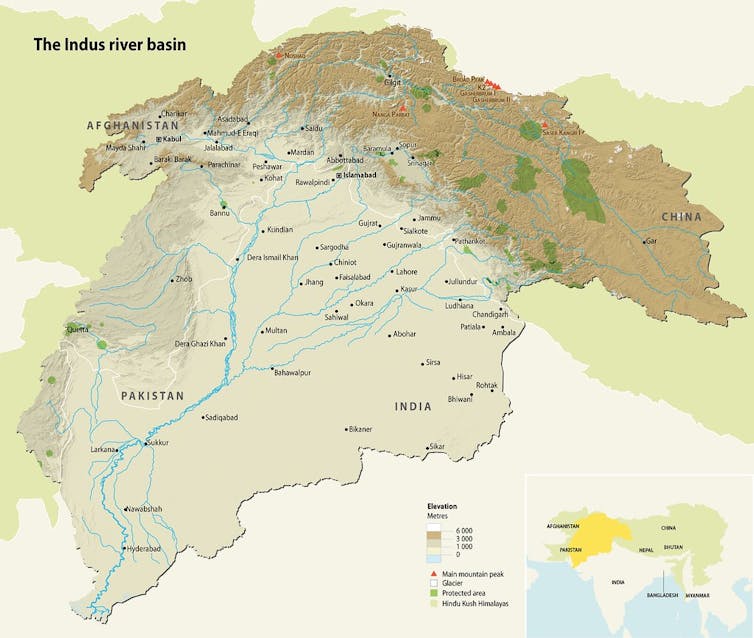
For 65 years, the Indus Waters Treaty has seen the two South Asian rivals share access and use of the Indus Basin, a vast area covered by the Indus River and its tributaries that also stretches into Afghanistan and China.
For much of that history, there has been widespread praise for the agreement as a successful demonstration of cooperation between adversarial states over a key shared resource. But experts have noted the treaty has long held the potential for conflict. Drafters failed to factor in the effects of climate change, and the Himalayan glaciers that feed the rivers are now melting at record rates, ultimately putting at risk the long-term sustainability of water supply. Meanwhile, the ongoing conflict over Kashmir, where much of the basin is situated, puts cooperation at risk.
With treaty on ice, China steps in
That latest provocation threatening the treaty was a terrorist attack in the Indian union territory of Jammu and Kashmir on April 22, 2025. In response to that attack, which India blamed on Pakistan and precipitated a four-day confrontation, New Delhi temporarily suspended the treaty.
But even before that attack, India and Pakistan had been locked in negotiation over the future of the treaty – the status of which has been in the hands of international arbitrators since 2016. In the latest development, on June 27, 2025, the Permanent Court of Arbitration issued a supplementary award in favor of Pakistan, arguing that India’s holding of the treaty in abeyance did not affect its jurisdiction over the case. Moreover, the treaty does not allow for either party to unilaterally suspend the treaty, the ruling suggested.
Amid the wrangling over the treaty’s future, Pakistan has turned to China for diplomatic and strategic support. Such support was evident during the conflict that took place following April’s terrorist attack, during which Pakistan employed Chinese-made fighter jets and other military equipment against its neighbor.
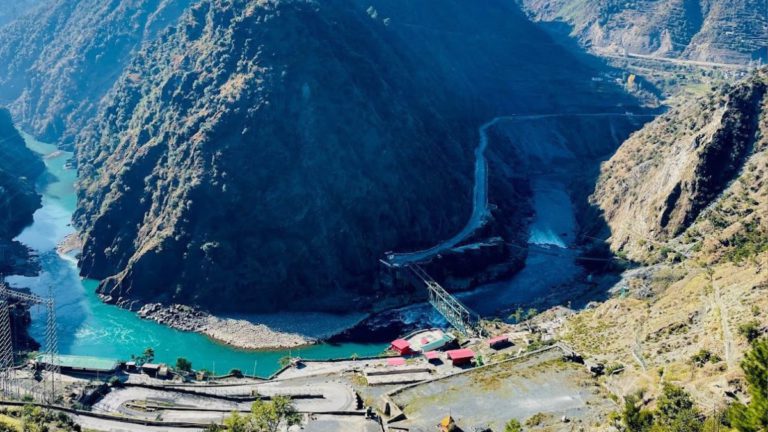
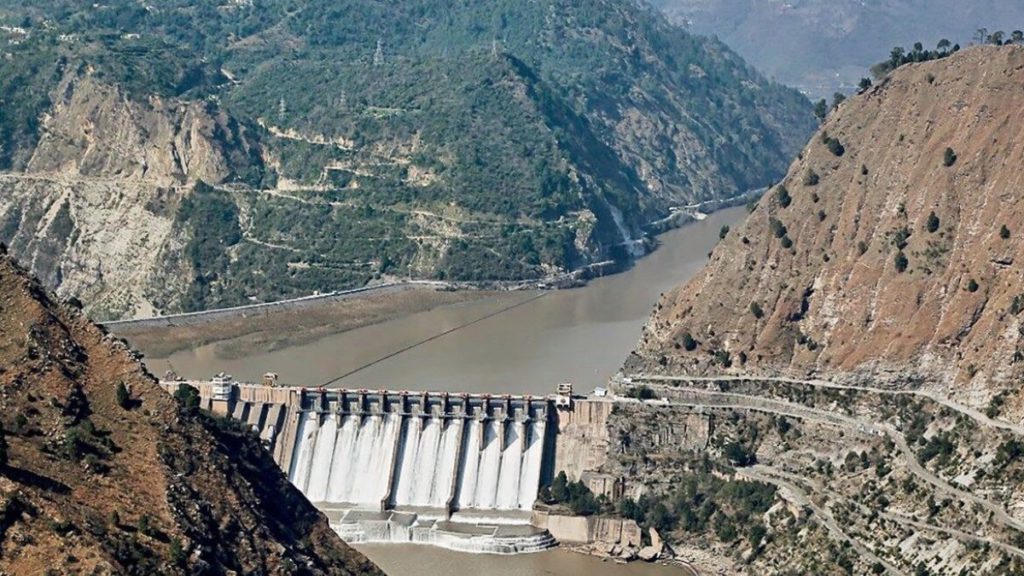
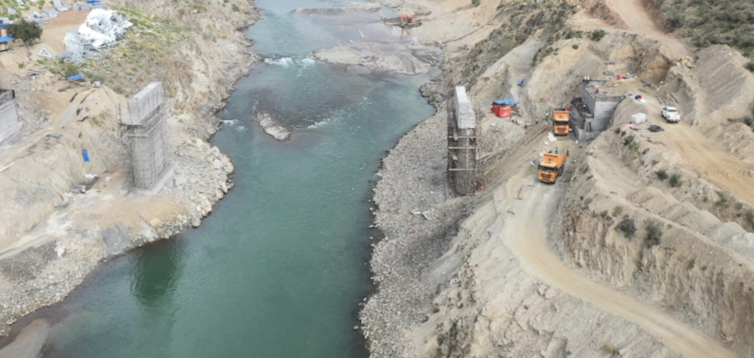
Meanwhile, in an apparent move to counter India’s suspension of the treaty, China and Pakistan have ramped up construction of a major dam project that would provide water supply and electricity to parts of Pakistan.
But as an expert in hydro politics, I believe Beijing’s involvement raises concerns: China is not a neutral observer in the dispute. Rather, Beijing has long harbored a desire to increase its influence in the region and to counter an India long seen as a rival. Given the at-times fraught relationship between China and India – the two countries went to war in 1962 and continue to engage in sporadic border skirmishes – there are concerns in New Delhi that Beijing may respond by disrupting the flow of rivers in its territory that feed into India.
In short, any intervention by Beijing over the Indus Waters Treaty risks stirring up regional tensions.
Wrangling over waters
The Indus Waters Treaty has already endured three armed conflicts between Pakistan and India, and until recently it served as an exemplar of how to forge a successful bilateral agreement between two rival neighbors.
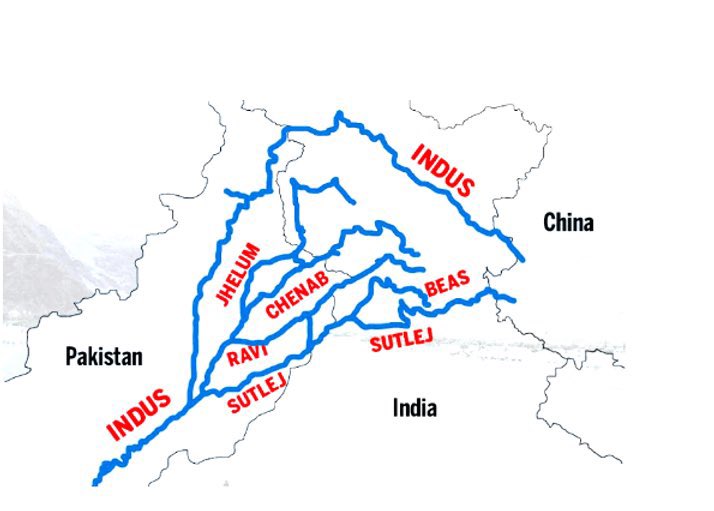
Under the initial terms of the treaty, which each country signed in 1960, India was granted control over three eastern rivers the countries share – Ravi, Beas and Satluj – with an average annual flow of 40.4 billion cubic meters. Meanwhile, Pakistan was given access to almost 167.2 billion cubic meters of water from the western rivers – Indus, Jhelum and Chenab.
In India, the relatively smaller distribution has long been the source of contention, with many believing the treaty’s terms are overly generous to Pakistan. India’s initial demand was for 25% of the Indus waters.
For Pakistan, the terms of the division of the Indus Waters Treaty are painful because they concretized unresolved land disputes tied to the partition of India in 1947. In particular, the division of the rivers is framed within the broader political context of Kashmir. The three major rivers – Indus, Jhelum and Chenab – flow through Indian-administered Jammu and Kashmir before entering the Pakistan-controlled western part of the Kashmir region.
But the instability of the Kashmir region – disputes around the Line of Control separating the Indian- and Pakistan-controlled areas are common – underscores Pakistan’s water vulnerability.
Since Pakistan’s economy relies heavily on agriculture and the water needed to maintain agricultural land, the fate of the Indus Waters Treaty is of the utmost importance to Pakistan’s leaders.
Such conditions have driven Islamabad to be a willing partner with China in a bid to shore up its water supply.
China provides technical expertise and financial support to Pakistan for numerous hydropower projects in Pakistan, including the Diamer Bhasha Dam and Kohala Hydropower Project. These projects play a significant role in addressing Pakistan’s energy requirements and have been a key aspect of the transboundary water relationship between the two nations.
Doing so fits Beijing’s greater strategic presence in South Asian politics. After the terrorist attack, China’s Foreign Minister Wang Yi reaffirmed China’s support for Pakistan, showcasing the relationship as an “all-weather strategic” partnership and referring to Pakistan as an “ironclad friend.”
And in response to India’s suspension of the treaty, China announced it was to accelerate work on the significant Mohmand hydropower project on the tributary of the Indus River in Pakistan.
Chinese investment in Pakistan’s hydropower sector presents substantial opportunities for both countries in regards to energy security and promoting economic growth.
The Indus cascade project under the China-Pakistan Economic Corridor initiative, for example, promises to provide a cumulative hydropower generation capacity of around 22,000 megawatts. Yet the fact that the project broke ground in Gilgit-Baltistan, a disputed area in Pakistan-controlled Kashmir, underscores the delicacy of the situation.
Beijing’s backing of Pakistan is largely motivated by a mix of economic and geopolitical interests, particularly in legitimising the China-Pakistan Economic Corridor. But it comes at the cost of stirring up regional tensions.
As such, the alignment of Chinese and Pakistani interests in developing hydro projects can pose a further challenge to the stability of South Asia’s water-sharing agreements, especially in the Indus Basin. Recently, the chief minister of the Indian state of Arunachal Pradesh, which borders China, warned that Beijing’s hydro projects in the Western Tibet region amount to a ticking “water bomb.”
To diffuse such tensions – and to get the Indus Waters Treaty back on track – it behooves India, China and Pakistan to engage in diplomacy and dialogue. Such engagement is, I believe, essential in addressing the ongoing water-related challenges in South Asia.
No-nonsense journalism. No paywalls. Whether you’re in Australia, the UK, Canada, the USA, or India, you can support The Australia Today by taking a paid subscription via Patreon or donating via PayPal — and help keep honest, fearless journalism alive.
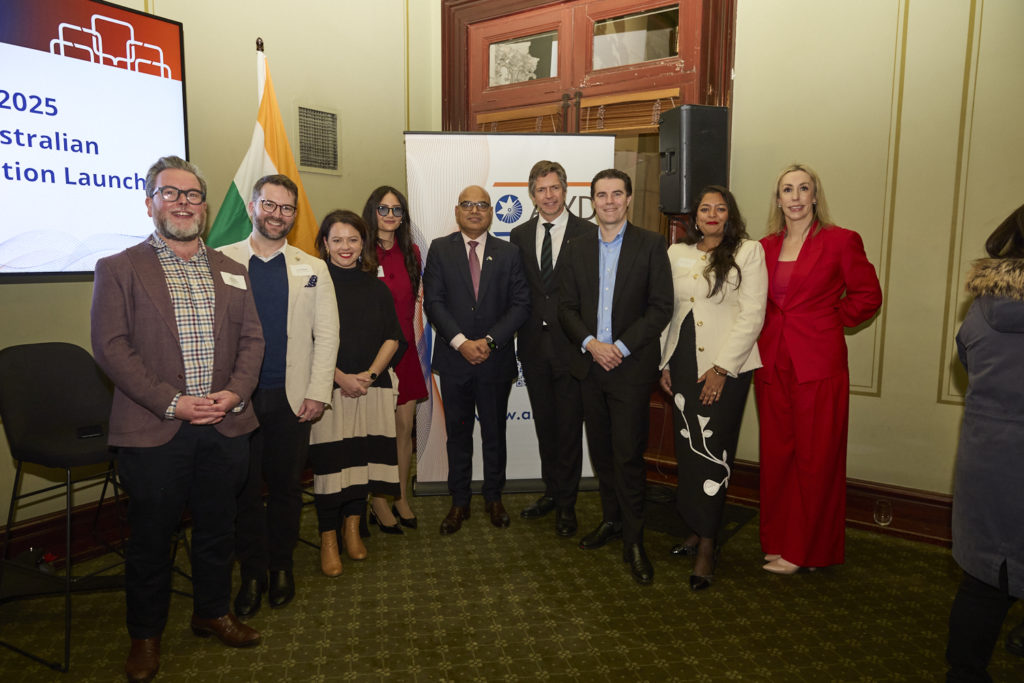
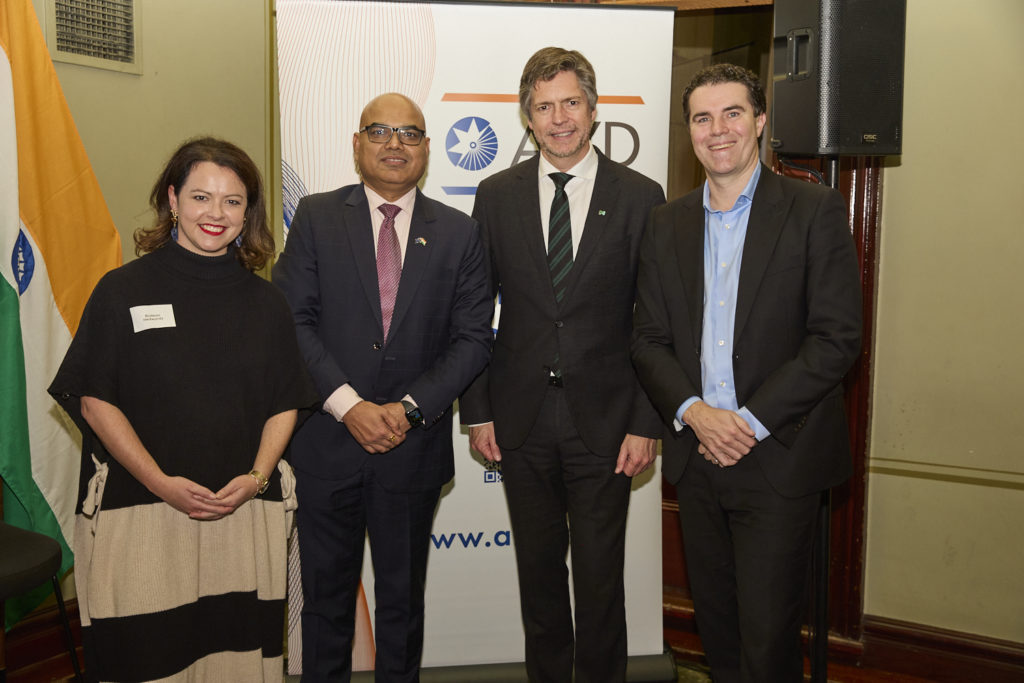
The City of Melbourne and the Australia India Youth Dialogue (AIYD) welcomed guests to the Portico Room at Melbourne Town Hall for the launch of AIYD 2025.
Framed around this year’s theme, The future of leadership, the evening brought together senior dignitaries, young change makers and alumni to set the scene for the full dialogue in Mumbai and Delhi this September.
As the guests arrived for a casual welcome reception, MC Tim Dwyer opened the formal proceedings with an acknowledgement of country, noting Wurundjeri elders past and present, before introducing Lord Mayor Nicholas Reece.
Mayor Reece spoke of Melbourne’s deep ties with India, highlighting recent trade and cultural partnerships, and underlining the council’s commitment to supporting young leaders in the Indo-Pacific region.
He promised during his election campaign last year that a visit to India would be within the first year of his term, which is happening this November, subject to Melbourne City Council’s approval. However, the news that got loud cheers was his announcement that a ‘Little India Precinct’ is a very real possibility, with some money allocated in the recent city budget for primary location hunting.
Dr Sushil Kumar, India’s Consul General in Melbourne, followed with remarks on bilateral cooperation. “AIYD gives our next generation a unique opportunity to work across sectors,” he said.
“By bringing young people together, we are building a resilient network to navigate tomorrow’s challenges.”
Michelle Jasper, AIYD co-chair, outlined the dialogue’s objectives for 2025. “Our region faces rapid change—from shifting economic centres to new media landscapes,” she told the audience.
“This year, we will examine what leadership must look like in politics, entrepreneurship, arts and sport.
We want to equip our delegates with the skills and connections to lead with confidence.”
The panel discussion was moderated by AIYD steering committee member Puja Ganguli, and titled “The future of leadership: shaping Australia India collaboration”, the conversation featured:
Tim Watts MP, Special Envoy for Indian Ocean Affairs and AIYD alum, who spoke on political leadership and policy innovation
Film-maker and festival director Mitu Bhowmick Lange AM, who shared her experience building cultural bridges through the Indian Film Festival of Melbourne
Dr Bodean Hedwards, director of international network enablement at Monash University and former AIYD co-chair, who discussed the role of higher education in fostering transnational collaboration
Each panellist was prompted by Ganguli with sector-specific questions on business and entrepreneurship, the knowledge economy, arts and media, and the growing role of sports diplomacy.
Dr Hedwards pointed to emerging start-up hubs in India and Australia, while Lange highlighted the power of storytelling to shape public opinion.
AIYD alumna Urvi Majumdar, with a capital ‘U’, took to the stage with a short stand-up comedy set that blended humour with reflections on her life experience in Australia.
Listening to her was a treat but at the same time painful being reminded that she also faced school ‘ugly bitches’ like my daughter. The good thing is that after all these years, we can laugh as Urvi’s performance drew laughter and applause, offering a light-hearted pause before the evening’s close.
Oh yes, one suggestion from Indian Australian U for ‘Uncle ji’ (me), please speak a little slowly, remember half
As the formal program wrapped, the guests moved into a networking session with light refreshments.
Two members of the 2025 cohort: Dickie Currer, Victorian Startup Ecosystem Hero of the Year 2025, and another emerging leader working on clean-tech solutions. Both delegates shared insights into their projects and their expectations for the Mumbai and Delhi meetings scheduled for 15–18 September.
Who is Dickie Currer: He embodies AIYD’s spirit of boundary-breaking leadership. As founder of Hype Man Media, the man champions Australian tech and innovation on the world stage while importing global ideas back home, using storytelling, events and advisory work to educate a growing community.
Through Future Connected—his global startup advisory—he forges cross-border partnerships among governments, investors and entrepreneurs in India, China and Southeast Asia. A recognised ecosystem builder, Dickie serves as Mentor in Residence for ACS Labs, Co-National Lead of Tech Australia Advocates, Entrepreneur in Residence at the Wade Institute, International Growth Advisor at Young Change Agents and ambassador for several related initiatives.
Named the 2025 Victorian Startup Ecosystem Hero of the Year, he is on a personal mission to inspire one million entrepreneurs worldwide to think and act globally for greater impact, deeper collaboration and a more equitable future—drawing on insights from visits to 69 countries and counting.
AIYD 2025 will convene 30 delegates—15 from each country—in Mumbai from 15–17 September, before moving to Delhi on 18 September for a final day of workshops and policy roundtables. Over four days, participants will draft joint position papers on leadership models suited to the Indo-Pacific, meet with senior policymakers and explore mentorship opportunities with alumni networks.
Since its founding in 2012, AIYD has built a strong alumni community of more than 250 young professionals across politics, business, academia and the arts. Past delegates include federal and state MPs, start-up founders and cultural ambassadors. AIYD co-chairs Michelle Jasper and Damian Thompson said they look forward to seeing this year’s group carry forward new ideas into their fields and Australia-India relations more broadly.
The Melbourne launch set a clear agenda: to understand how leadership must adapt in an era of rapid change, and to strengthen the people-to-people ties that underpin the Australia-India partnership. With the groundwork now laid, attention turns to the delegates themselves—and the next chapter of dialogue in Mumbai and Delhi.
Support our Journalism
No-nonsense journalism. No paywalls. Whether you’re in Australia, the UK, Canada, the USA, or India, you can support The Australia Today by taking a paid subscription via Patreon or donating via PayPal — and help keep honest, fearless journalism alive.
It is reported that this payout — the fifth-largest settlement in Australian legal history — comes after the appeal period expired last week, marking a significant legal victory for the 8,700 drivers and operators who joined the class action led by Maurice Blackburn Lawyers.
Former taxi driver and ex-Victorian MP Rod Barton, who played a key role in launching the case, told news.com.au that this win is long-overdue justice for those impacted by Uber’s disruptive entry into the Australian market.
Although the compensation won’t restore the full financial damage — such as plummeting licence values and loss of income — Barton said it offers important vindication.
Lawyer Kim Adey, the manager of Maurice Blackburn’s settlement claims assessment team, who is overseeing the settlement distribution, said assessments are now underway to determine individual payouts.
Last year Uber said it complies with rideshare laws in every state and territory and since 2018, Uber has also contributed to various state-level compensation schemes for the taxi industry.
Support our Journalism
No-nonsense journalism. No paywalls. Whether you’re in Australia, the UK, Canada, the USA, or India, you can support The Australia Today by taking a paid subscription via Patreon or donating via PayPal — and help keep honest, fearless journalism alive.
In a significant development in the hit‑and‑run case that claimed the life of 114‑year‑old marathon legend Fauja Singh, Indian state Punjab Police late Tuesday arrested 32‑year‑old Non‑Resident Indian, Amritpal Singh Dhillo, from his hometown of Kartarpur.
Dhillon, who had recently returned from Canada, was identified as the driver of the Toyota Fortuner that struck Singh on the Jalandhar‑Pathankot highway on Monday afternoon. Singh, known as the world’s oldest marathoner, was walking near his native village—just 400 metres from his home—when he was thrown five to seven feet in the air by the impact. He succumbed to his injuries later that evening.
According to Senior Superintendent of Police Harvinder Singh, investigators matched fragments of a left‑side headlight recovered at the crash site with the suspected vehicle. “From CCTV footage, we saw a Punjab‑registered Toyota Fortuner driving at high speed. A fragment of its headlight was left at the scene,” SSP Harvinder Singh told PTI.
“The registration number was legible, and our teams traced the vehicle through its change of ownerships.”
Amritpal Singh Dhillon purchased the Fortuner two years ago from Ravindra Singh of Rurhampur, police have confirmed. During custodial interrogation, Dhillon admitted that he had been returning home after selling his phone in Bhogpur when the collision occurred.
“I was driving too fast and panicked after I realised I had hit Mr. Singh,” Dhillon told officers, according to sources at CNN-News18.
“I fled because I was scared.”
Dhillon faces charges under Sections 281 (rash driving) and 304 (culpable homicide not amounting to murder) of the Indian Penal Code. He is currently being held at the Jalandhar Rural Police station pending further questioning, and authorities expect to recover the Fortuner in the coming hours.
The arrest brings relief to a community that has mourned the sudden death of a national icon. Singh’s last rites are expected to be conducted later this week, family members have said. Police continue to appeal for any additional witnesses or dash‑cam footage to assist the ongoing investigation.
Support our Journalism
No-nonsense journalism. No paywalls. Whether you’re in Australia, the UK, Canada, the USA, or India, you can support The Australia Today by taking a paid subscription via Patreon or donating via PayPal — and help keep honest, fearless journalism alive.
New figures released by ASQA reveal that over 25,000 dodgy qualifications—ranging from child care and community services to engineering and IT—have been invalidated after being allegedly fraudulently issued without proper training or assessment.
The federal government has blamed years of underregulation under the previous Coalition government for allowing “shonky” colleges to flourish.
The latest action targets Melbourne-based Arizona College, which had its registration cancelled on 14 June 2025. ASQA found the provider had allegedly issued certificates without ensuring students completed adequate assessments, posing serious safety risks to vulnerable Australians in sectors like aged care, mental health, youth work and disability services.
ASQA said, “Urgent action is required… due to the significant issues identified during the compliance investigation and the potential safety risks to impacted individuals, others in the workplace, and some of the most vulnerable members of the community.”
Three other providers—Sydney-based SPES Education, Learning Options, and Melbourne’s Nextgen Tech Institute—also had their registrations revoked in May 2025. Investigations revealed they, too, allegedly issued diplomas, allegedly with no verifiable training or assessment.
SPES Education allegedly issued fraudulent qualifications in early childhood education, disability support, IT and community services. Nextgen Tech Institute allegedly issued unverified certifications in mechanical trade, commercial vehicle repair, and first aid.
These closures follow ASQA’s cancellation of four critically non-compliant colleges in late 2024: Luvium, IIET, Gills College, and DSA Ventures. Combined, they had allegedly issued certifications to more than 18,750 students, many of whom had used these qualifications to enter regulated industries.
ASQA said only 20% of affected students responded to notices offering them a chance to prove their training was legitimate, and not a single one provided adequate evidence. As a result, more than 21,000 qualifications were cancelled in November and December 2024.
In response to the growing threat of “non-genuine providers and bad-faith operators,” the federal government allocated $37.8 million to improve vocational education integrity, with $33.3 million directed to ASQA to boost compliance enforcement and create an Integrity Unit and tip-off line. Since its October 2024 launch, over 3,200 reports have been lodged, half of which resulted in actionable investigations.
ASQA is continuing to investigate additional training providers and has made clear that it will pursue regulatory action wherever fraudulent or unsafe practices are found. Former students who received fake diplomas have been urged to respond to official notices or risk permanent cancellation of their credentials.
Support our Journalism
No-nonsense journalism. No paywalls. Whether you’re in Australia, the UK, Canada, the USA, or India, you can support The Australia Today by taking a paid subscription via Patreon or donating via PayPal — and help keep honest, fearless journalism alive.
Australia’s most lucrative portraiture prize, The Lester Prize, has revealed the 40 finalists selected for its 2025 Main Awards — marking a record-breaking year with more than 1,000 submissions, the highest since its inception in 2007.
Held in Western Australia, the home-grown award continues to honour its ethos of making art accessible to all, with this year’s list featuring a blend of emerging and established Australian talent. Seventeen returning artists made the cut, including Tom Price-based Jenna Pickering, whose miniature painting Together as one won two prizes in 2024, and Perth-based Indian-origin artist Sid Pattni, who is also a 2025 Archibald Prize finalist.
Sid Pattni’s work explores the intricacies of identity, culture, and belonging within a post-colonial framework. His art contributes to the ongoing discourse around diasporic identity and the role of visual storytelling in communicating lived experience.
Pattni has participated in numerous group exhibitions, including the India Art Fair (2025), Emerging Exploration (2024), Nadiya (2023), and All The Rage (2023), in addition to holding several solo exhibitions. He was awarded the Kennedy Prize in 2023, the Flinders Lane Gallery Exploration Award in 2024, and completed the Khōj Cross-Hatchings Residency in New Delhi in 2024. He also received the Minderoo Artist Fund Grant in 2022. His work is held in private collections across Australia.
Among this year’s standout works is Cost of Living, a self-portrait delicately drawn on an eggshell by Fremantle artist Ross Potter, using watercolour and oil pencil. “In the current cost of living crisis, a once humble staple has become an extravagant canvas,” said Potter. “I even had to consider if I could afford to use this egg.”
South Australian finalist Amy Hamilton used knitting, collage and oil paint for her eight-part piece Open Door, depicting a group of researchers working to support veterans and first responders. “I’m part of this group because my husband is a veteran,” said Hamilton. “I chose knitting because it’s a traditional act of care for soldiers — it ties together history and healing.”
Image: Executive Director Shannon Yujnovich (Source: LinkedIn)
The 2025 finalists include 13 artists from Victoria and 12 from Western Australia. Executive Director Shannon Yujnovich said they are expecting even more visitors this year after more than 26,000 attended the 2024 exhibition at WA Museum Boola Bardip.
“The Lester Prize is proud to showcase its artists and community rather than just those who are painted,” she said.
“We’re thrilled to see entries from all corners of Australia – from new voices to past participants.”
Thanks to recent additions to the prize pool, The Lester Prize now offers over $130,000 across seven awards, including the prestigious Richard Lester Prize for Portraiture, Tony Fini Foundation Artist Prize, Minderoo Foundation Spirit Prize, and Ashurst Emerging Artist Prize.
Director Russell Lester said the team remains focused on celebrating and championing Australian creativity. “The breadth and depth of talent we’ve seen this year is incredible. We’re committed to supporting artists and making their work visible and accessible to all Australians,” he said.
The 2025 Lester Prize Main Awards exhibition will run from 19 September to 16 November at the WA Museum Boola Bardip in Perth. The competition is open to all artists aged 18 and over who are Australian residents.
Support our Journalism
No-nonsense journalism. No paywalls. Whether you’re in Australia, the UK, Canada, the USA, or India, you can support The Australia Today by taking a paid subscription via Patreon or donating via PayPal — and help keep honest, fearless journalism alive.
An 83-year-old man was allegedly tricked into handing over his bank card to a scammer posing as a bank employee, who then went on a spending spree across three Australian states.
Queensland Police said that detectives from the Financial and Cyber Crime Group are seeking public assistance to identify a man they wish to speak to in relation to the alleged fraud.
According to police, after the elderly victim was coerced into giving up his card, it was used at various retail stores in Brisbane, southeast Queensland, Bundoora in Victoria, and Tamworth in New South Wales during June 2024.
Investigators have released CCTV footage, including images taken inside a JB Hi-Fi store, of a man of who appears to be Indian subcontinental appearance who may be able to assist with the investigation.
In the images, the man is seen wearing black and white sneakers, black pants, a grey shirt with sunglasses hanging from the collar, and alternating between a red and grey cap.
Police urge anyone who recognises the man or has information to contact Crime Stoppers or their local police station.
Support our Journalism
No-nonsense journalism. No paywalls. Whether you’re in Australia, the UK, Canada, the USA, or India, you can support The Australia Today by taking a paid subscription via Patreon or donating via PayPal — and help keep honest, fearless journalism alive.
Centuries ago, movement across Oceania was limited only by the vastness of the ocean, not by borders or bureaucracies. Our ancestors needed nothing more than courage, traditional knowledge and a canoe to travel, trade and reconnect with kin across thousands of miles.
Today, the barriers are less natural and more political. They are often quite formidable, despite much talk about the free movement of people.
For many Pacific Islanders, visa applications are not just complicated — they are costly and can be emotionally draining. Applicants must pay high fees up front, often amounting to hundreds of dollars, with no guarantee of success.
These fees are almost always non-refundable, even when visas are rejected without transparent reasons. The process can feel arbitrary and alienating, with decisions made by distant officials who often lack cultural understanding or regional context. Families invest time, resources and hope — only to be met with silence, denial or demands for more paperwork.
With all the recent high-level discussions about the virtues of Pacific integration and solidarity, it’s time to ask: what if there were a single document — a Pacific Citizen Passport (PCP) — that opened doors across the region for all eligible Pacific citizens?
We already enjoy relatively free movement across Pacific island independent and self-governing countries. But it’s when we try to move outside — to Australia, New Zealand, the US or Europe — that the Pacific identity often hits a wall. For many Fijians, especially, visa processes remain complex, uncertain and, at times, even humiliating. Too often, genuine cases are denied by the power of a heavy-handed visa official.
This disconnect is felt sharply in the diaspora. Our people identify proudly as Pacific Islanders, whether they are from Fiji, Tonga, Samoa, Vanuatu, Kiribati or elsewhere in the region. But in immigration policies, not everyone is seen that way. Indo-Fijians in New Zealand and Australia often find themselves excluded from “Pacific” pathways, despite generations of regional history.
At the same time, Pacific labour continues to be welcomed — often under stringent conditions. New Zealand’s Recognised Seasonal Employer (RSE) scheme and Australia’s Pacific Australia Labour Mobility program provide temporary work but little long-term certainty. Our contribution is valued, but our mobility is still limited — lest we overstay our welcome.
The frustration is evident in the recent decision by the Prime Minister of Vanuatu, Jotham Napat, not to sign a landmark strategic pact with Australia unless Canberra relaxes immigration restrictions for his citizens.
However, some recent developments are encouraging.
New Zealand’s Deputy Prime Minister Winston Peters, during a visit to Tonga in May 2025, reaffirmed his government’s commitment to expanding migration opportunities and reforming visa systems for Pacific citizens. While not yet as ambitious as a “visa-free Pacific”, it’s a move in the right direction.
Fiji’s Deputy Prime Minister, Professor Biman Prasad, has gone further, advocating for visa-free travel between Australia, New Zealand and Pacific Island countries. He describes this as a “near-term ambition” critical for a more connected Blue Pacific. As Prasad said, “our people should be able to move back and forth between all our countries. I have said before, and I repeat — Australia and New Zealand must be part of the Pacific story. There is no salami slice part of the Pacific family. A unified Pacific-wide single market must include Australia and New Zealand. A starting point for that must be visa-free travel between Australia and New Zealand and the Pacific Island states. The time for that has now arrived.”
In Prasad’s view, visa-free travel to Australia and New Zealand is a starting point for a better economic future and for stronger regional unity, especially in the current geopolitical climate.
For Australia, such a move would align with the spirit of its Vuvale Partnership with Fiji. Vuvale in the Fijian language means “family”, conveying the idea that “my home is your home”. As articulated on the website of the Australian Department of Foreign Affairs and Trade, the Vuvale pact “recognises the respect and reciprocity of our partnership”. The Vuvale vision was reaffirmed by Fijian Prime Minister Sitiveni Rabuka on his July visit to Australia, where he proposed filling 5,000 vacancies in the Australian Defence Force with Fijian recruits.
Visa-free travel could be the precursor to a Pacific Citizen Passport — a bold step toward enhancing regional mobility, economic integration and cultural exchange. A travel document that affirms our collective identity and opens real doors to education, employment and family connections.
The European Union offers the best-known example of regional integration, with passports issued under the authority of each member country that enable visa-free travel and employment rights across member states. Similarly, the Caribbean Community (CARICOM) has adopted a regional passport — again, issued under the authority of each of (so far 12 of 15) member countries, but standardised — to facilitate both intra-regional and international mobility among its member states. The CARICOM passport is a strong symbol of unity, regional cooperation and a shared Caribbean identity. While the Pacific context is different, the CARICOM approach offers helpful lessons.
To be clear, a Pacific Citizen Passport would not be separate from national passports; it would be issued by national authorities but in a common, agreed format, and would remove travel hindrances in the region and facilitate deeper collaboration.
A Pacific Citizen Passport, with the standardisation process potentially managed through the Pacific Islands Forum Secretariat, and progressively including the 18 Forum member countries and territories (including Australia and New Zealand), could be a significant step toward building regional connection and identity.
We already see Pacific unity in sport. In Super Rugby, Pacific teams like the Fijian Drua and Moana Pasifika represent not just countries, but a region. When Trump raised tariffs recently, there was a call for a Pacific-wide response.
This same spirit should guide our policy decisions, not just at the top level but also at the grassroots, giving real meaning to the rhetoric about a people-centered approach. Why shouldn’t a student, a family, or a skilled worker have ease of movement? Why should this remain the privilege of only sporting, business and political elites?
Perhaps it’s time for Pacific leaders — and our partners in Wellington, Canberra and beyond — to think outside the proverbial box. To think big, be expansive in their vision and build something that truly reflects our shared values of kinship and mobility. To match the ambition of our ancestors who sailed the ocean with nothing but the stars to guide them. To honour the late Professor ‘Epeli Hau’ofa’s vision of “one ocean, one people”.
It’s time to imagine — and implement — what comes next.
Contributing Author:Seone Soakimi Lolesio is Assistant Lecturer at the University of the South Pacific, where he teaches official statistics, microeconomics and macroeconomics, as well as resource and environmental economics. He was born and raised on the island of Niua Toputapu, in the Kingdom of Tonga. Shailendra B. Singh is Associate Professor of Pacific Journalism at The University of the South Pacific, based in Suva, Fiji, and a member of the advisory board of the Pacific Journalism Review.
Support our Journalism
No-nonsense journalism. No paywalls. Whether you’re in Australia, the UK, Canada, the USA, or India, you can support The Australia Today by taking a paid subscription via Patreon or donating via PayPal — and help keep honest, fearless journalism alive.
Elders Uncle Pabai Pabai and Uncle Paul Kabai took the Australian government to court on behalf of their community, arguing the government has a duty of care to protect them from climate change. They also asked the court to legally recognise the cultural loss and harm they are experiencing from sea-level rise and climate-induced flooding.
But the court declined to recognise either duty or to legally recognise cultural harm.
Many climate justice advocates hoped today’s decision would be the climate equivalent of the famous Mabo decision, which recognised native title. There are many parallels. At stake was the legal recognition of the harms and loss of connection to Country that Australia’s First Peoples are experiencing through government inaction on climate change.
Torres Strait Islanders are well placed to bring this kind of legal claim.
To sue a government for climate inaction, plaintiffs often have to show they are particularly impacted by climate harms over and above the rest of the population.
Importantly, small differences in future emissions scenarios will significantly impact their habitability. Every fraction of a degree of warming will matter.
This will force Torres Strait Islanders to leave, severing them from thousands of years of tradition, fulfilment of their traditional practices (called Ailan Kastom), and connection to country and identity.
The legal claim against the Commonwealth
Uncle Pabai and Uncle Paul argued the Commonwealth government has a duty to protect Torres Strait Islanders from climate change when setting national emissions-reduction targets. They argued the government breached that duty by not setting targets in line with the best available science. This would involve calculating reduction targets by reference to Australia’s share to keep global warming to as close to 1.5 degrees above pre-industrial levels as possible.
Second, they argued the government has a duty to protect property, the fulfilment of their traditional customs, and the health and life of Torres Strait Islanders from climate impacts. They argued the government breached that duty by failing to properly fund the construction of sea walls.
Justice Wigney’s judgement emphasised the existential threat of climate change. It noted Torres Strait Islanders are particularly vulnerable to climate impacts and face a “bleak future” unless urgent action is taken.
But it accepted the government’s argument that setting emissions reductions targets, and allocating funding for protective infrastructure, involves “policy” considerations a court can’t review.
When do governments owe a duty of care to climate vulnerable groups?
Plaintiffs elsewhere in the world have successfully argued that their government owed them a duty of care to protect them from climate harms by lowering emissions. But the argument has had mixed success in Australia.
To establish a legal duty of care, plaintiffs need to show they have some kind of special relationship with the defendant. This relationship arises through factors such as the plaintiff’s vulnerability to a certain harm, and the defendant’s knowledge of, and control over, that harm.
As First Peoples, Uncle Pabai and Uncle Paul argued they have this kind of relationship with the government. They pointed to a range of factors such as the particular vulnerability of the Torres Strait Islanders, and the government’s control over climate harms to them.
Novel duties of care can be imposed on government and public authorities. But Australian courts have sometimes declined to do this where they would have to judge how governments have weighed different policy considerations.
This is partly because it would be too difficult for the court to decide whether the government had met the legal standard of behaviour.
Courts are more willing to find a government owes a duty of care where the government is merely applying a policy, or where it can measure the government’s behaviour against clear standards. But courts have also acknowledged that the distinction between making policy and applying policy is blurry.
The Australian government argued its decisions about climate policy involve complex political priorities that a court shouldn’t review. It argued it shouldn’t be bound by the best available science as a legal standard.
The role of courts in protecting people from climate harm
Today’s decision is a setback for both the climate and Indigenous justice movements. But the situation isn’t as bleak as it may seem.
Across the world, plaintiffs in courts are gaining legal ground on climate accountability. It’s becoming easier to attribute harms to emitters, and to develop standards against which governments can be measured. And courts frequently reject government arguments that their contribution to climate change is minimal. They emphasise that each country must do its share for global collective action to work.
It is a question of when, rather than if, law will adapt to deal with climate impacts. Much like a rising tide breaking against a seawall, the future impact of climate change on things that law already protects is too extreme for the law to resist.
No-nonsense journalism. No paywalls. Whether you’re in Australia, the UK, Canada, the USA, or India, you can support The Australia Today by taking a paid subscription via Patreon or donating via PayPal — and help keep honest, fearless journalism alive.
Prime Minister Anthony Albanese has described his latest meeting with Chinese President Xi Jinping as “constructive,” underscoring the importance of the Australia–China relationship for both nations’ economies, security, and regional stability.
A constructive meeting today with President Xi.
Australia’s relationship with China is important – for our economy, our security, and the stability of our region. pic.twitter.com/ln5Mp13328
During a bilateral meeting in Beijing, President Xi welcomed the Australian Prime Minister with a message of continuity and optimism. “Prime Minister Albanese, welcome to China again and congratulations again on your re-election,” President Xi said in his opening remarks.
“Over the past three years, you and I have met three times… With joint efforts from both sides, the China–Australia relationship has risen from the setback and turned around, bringing tangible benefits to the Chinese and Australian peoples.”
Highlighting the decade-long comprehensive strategic partnership between the two nations, Xi added:
“No matter how the international landscape may evolve, we should uphold this overall direction unswervingly.”
In response, Albanese expressed appreciation for the Chinese leader’s hospitality and reflected on his own longstanding engagement with China: “This is my eighth visit to China, but my second as Prime Minister, and I appreciate very much your hospitality,” he said.
“I’m happy to be able to reciprocate Premier Li’s visit by visiting three cities here in China this week – Shanghai, Beijing, and Chengdu.”
The Prime Minister emphasised practical areas for future collaboration, including clean energy and healthcare innovation.
“In Shanghai, I was very pleased to meet with leading businesses from Australia and China, including important discussions on how we can tackle steel decarbonisation together. In Chengdu tomorrow I will look at where Australia has growing ties, particularly on medical technology and sports.”
In a nod to the shared diplomatic history, Albanese also announced plans to visit the Great Wall, echoing the landmark 1971 trip by Gough Whitlam, who initiated Australia’s formal recognition of the People’s Republic of China.
“Tomorrow I’ll also visit the Great Wall, where Australia’s Prime Minister, Gough Whitlam, who of course, initiated the recognition of the People’s Republic of China when he came as Labor Party Leader in 1971.”
Reaffirming Australia’s commitment to open trade and direct diplomacy, Albanese said: “The Australian Government welcomes progress on cooperation under the China–Australia Free Trade Agreement… Australia will remain a strong supporter of free and fair trade.”
“Australia values our relationship with China and will continue to approach it in a calm and consistent manner, guided by our national interest… Dialogue needs to be at the centre of our relationship.”
Free and open trade is good for both the Australian and Chinese economies, businesses and people.
Today’s CEO Roundtable in Beijing was about developing those relationships, finding new opportunities for growth.
Later, Albanese posted on social media following his meeting with Chinese Premier Li Qiang and the Australia–China CEO Roundtable:
“Free and open trade is good for both the Australian and Chinese economies, businesses and people. Today’s CEO Roundtable in Beijing was about developing those relationships, finding new opportunities for growth. Thank you, Premier Li, for hosting us this year.”
As part of the visit, Albanese and his fiancée, Jodie Haydon, were also invited to a formal lunch hosted by President Xi — a gesture seen as both diplomatic and symbolic of improving ties. “I thank you as well for the honour that you have given myself and Ms Haydon, in the lunch that we will share afterwards as well,” Albanese told President Xi. “Xiè xie.”
Support our Journalism
No-nonsense journalism. No paywalls. Whether you’re in Australia, the UK, Canada, the USA, or India, you can support The Australia Today by taking a paid subscription via Patreon or donating via PayPal — and help keep honest, fearless journalism alive.
Baba Fauja Singh, the legendary long-distance runner affectionately known as the “Turbaned Tornado”, has died at the age of 114 after being struck by a car while out for a walk in his native village in Punjab.
The accident occurred on Monday afternoon along the Jalandhar-Pathankot highway near Bias village, where Singh was born on April 1, 1911.
According to local police, an unidentified vehicle hit the centenarian, inflicting severe head injuries. He was rushed to a private hospital but succumbed to his injuries at 7:30 PM IST.
A police case for rash and negligent driving has been registered, though the driver fled the scene and remains unidentified.
Rest in peace, Sardar Fauja Singh ji. You shattered every age barrier and lit a path of NEVER GIVE IN. Your unstoppable spirit will continue to inspire generations. 🏃♂️🙏 pic.twitter.com/cGrz3Gicfu
— Taranjit Singh Sandhu (@SandhuTaranjitS) July 15, 2025
Singh, who also visited Australia in 2013, rose to global fame for his remarkable endurance and inspirational life, taking up marathon running at the age of 89. He went on to complete nine full marathons in cities including London, Toronto, and New York, with a personal best of 5 hours, 40 minutes, and 4 seconds recorded in Toronto.
He became the first centenarian to complete a marathon and carried the Olympic torch in both the 2004 Athens and 2012 London Games. He also featured in global sports campaigns alongside icons like David Beckham and Muhammad Ali.
Punjab Governor Gulab Chand Kataria paid tribute to Singh, writing: “Even at the age of 114, he continued to inspire generations with his strength and commitment. His legacy will forever live on in the hearts of those fighting for a healthier and drug-free Punjab.”
Capt. Amarinder Singh, former Punjab Chief Minister, added: “His extraordinary life and unwavering spirit will continue to inspire generations.”
Deeply saddened to hear about the passing of Fauja Singh Ji, the legendary marathon runner, at the age of 114 in a tragic road accident.
His extraordinary life and unwavering spirit will continue to inspire generations.
— Capt.Amarinder Singh (@capt_amarinder) July 14, 2025
Biographer Khushwant Singh had penned “The Turbaned Tornado,” shared the news on X: “My Turbaned Tornado is no more. It is with great sadness that I share the passing of my most revered S. Fauja Singh. He was struck by an unidentified vehicle around 3:30 PM today in his village, Bias, while crossing the road. Rest in peace, my dear Fauja.” He has shared Fauja Singh’s humble beginnings in the book. Born into a farming family, Singh took up running in his late 80s following personal tragedy, using sport as a way to cope with the loss of his wife and son.
My Turbaned Tornado is no more. It is with great sadness that I share the passing of my most revered S. Fauja Singh. He was struck by an unidentified vehicle around 3:30 PM today in his village, Bias, while crossing the road. Rest in peace, my dear Fauja . pic.twitter.com/LMFh7TNE8B
Despite his global fame, Singh always remained deeply connected to his Sikh roots and rural upbringing. In public appearances, he spoke of how his turban and beard symbolised both faith and identity. “My beard and my turban have enhanced my respect in the world,” he once said.
Though Guinness World Records never formally recognised him as the world’s oldest marathoner due to lack of birth documentation from colonial India, his achievements have never been in doubt.
Singh’s body has been placed in a local mortuary until the arrival of his children from overseas. His final rites will be conducted thereafter.
Support our Journalism
No-nonsense journalism. No paywalls. Whether you’re in Australia, the UK, Canada, the USA, or India, you can support The Australia Today by taking a paid subscription via Patreon or donating via PayPal — and help keep honest, fearless journalism alive.
A rain-affected fifth day at Lord’s, England held their nerve to beat India by just 22 runs in the third Test, moving 2–1 ahead in the five-match series. Despite a gritty 61 from all-rounder Ravindra Jadeja and dogged contributions from the tail, India fell agonisingly short, finishing on 170 in pursuit of a 193-run target.
Jadeja’s defiance falls just short Resuming the day at 163/9, India needed 30 more runs with Jadeja and Mohammed Siraj at the crease. The veteran left-hander, on his fourth consecutive Test fifty, and the fast bowler batted out 84 balls together, chipping away at England’s lead. But in the 34th over of the chase, Shoaib Bashir’s off-spinner turned sharply to uproot Siraj’s middle stump. A few balls later, Jadeja was bowled by Ben Stokes (3/48), sparking jubilant scenes in the home dressing room.
England’s bowlers star early India’s chase unravelled in the second session as England’s pace battery struck. Jofra Archer (3/55) removed Rishabh Pant (9) and Washington Sundar (0) inside seven overs, while Stokes accounted for KL Rahul (39) with a perfectly judged leg-stump nip-backer. By tea India were in peril at 82/7, still needing 111 runs.
Jadeja and Reddy revive hope A brief 30-run partnership between Jadeja and Nitish Kumar Reddy (13) took India past 100, but Chris Woakes trapped Reddy lbw for the third time in the match. The hosts then wrapped up the tail cheaply, leaving Jadeja stranded on 61—the highest score of the innings—and India all out for 170.
India fights back earlier, but can’t capitalise England’s second innings had posted a modest 192, thanks to lower-order resistance: Joe Root (40) and Ben Stokes (33) added 67 for the fifth wicket after India had reduced England to 87/4. Washington Sundar’s four-wicket burst (4/22) and Jasprit Bumrah’s searing spell (2/38) had England reeling, but Brydon Carse (2/30) and Bashir ensured India never got too far ahead.
In their first dig, England had racked up 387, led by Joe Root’s second-innings counter-attack (40) and support from Jamie Smith (51) and Brydon Carse (56). Bumrah’s five-wicket haul (5/74) kept India competitive, matching England’s 387 in reply.
Series now in England’s favour After three matches, England lead 2–1 heading to Manchester for the fourth Test beginning July 24. India’s resilience—and Jadeja’s heroics—will hearten the visitors, but England’s all-round bowling depth and crucial breakthroughs under pressure proved decisive at Lord’s.
Key figures
England first innings: 387 (Joe Root 40; Jasprit Bumrah 5/74)
India first innings: 387 (KL Rahul 100; Root 3/84)
England second innings: 192 (Carse 56; Sundar 4/22)
India second innings: 170 (Ravindra Jadeja 61; Ben Stokes 3/48)
England’s narrow victory underscores the fine margins at Test level—and sets up a tantalising title race deep into the summer.
Support our Journalism
No-nonsense journalism. No paywalls. Whether you’re in Australia, the UK, Canada, the USA, or India, you can support The Australia Today by taking a paid subscription via Patreon or donating via PayPal — and help keep honest, fearless journalism alive.
The Indian Film Festival of Melbourne (IFFM) has announced its nominees for the 16th edition of its annual awards, shining a spotlight on the rich tapestry of Indian cinema and streaming content released between June 15, 2024 and June 14, 2025.
Supported by the Victorian Government, the festival takes place from August 14–24, with the prestigious NAB IFFM Awards Night on August 15 recognising excellence across feature films, independent productions, and OTT series available to Australian audiences.
A Record Slate of Film Contenders
In the Best Film category, seven titles contend for the top honour:
Homebound
Kalki 2898AD
L2: Empuraan
Maharaj
Meiyazhagan
Stree 2
Superboys of Malegaon
The Best Indie Film nominees showcase emerging voices and regional storytelling:
Angammal
Baksho bondi (Shadowbox)
Boong
Feminichi Fathima (Feminist Fathima)
Humans in the loop
Village Rockstars 2
We are Faheem and Karun
Veteran and rising actors battle for Best Actor (Male), including Ishaan Khatter (Homebound), Abhishek Bachchan (I Want to Talk), and Mohanlal (L2: Empuraan).
The Best Actor (Female) roster stars Kareena Kapoor Khan (The Buckingham Murders), Sharmila Tagore (Puratawn), and Shraddha Kapoor (Stree 2), among others.
Directorial honours in the Best Director category highlight Neeraj Ghaywan (Homebound) competing against Rima Das (Village Rockstars 2), Reema Kagti (Superboys of Malegaon), and newcomers such as Aranya Sahay (Humans in the loop) and Lakshmipriya Devi (Boong).
OTT Series Dominates Streaming Awards
On the streaming front, Best Web Series nominations reflect the current golden age of Indian digital storytelling:
Black Warrant
Gyaarah Gyaarah
Khauf
Kota Factory Season 3
Manorathangal
Paatal Lok Season 2
Thallivattam Palayam
Tribhuvan Mishra CA Topper
In the Best Actor (Female) – Web Series category, Parvathy Thiruvothu (Manorathangal) and Shabana Azmi (Dabba Cartel) lead a field that also includes Ananya Pandey (Call Me Bae) and Tillotama Shome (Tribhuvan Mishra CA Topper).
On the male side, heavyweights Jaideep Ahlawat (Paatal Lok Season 2), Jitendra Kumar (Kota Factory Season 3), and Mammootty (Manorathangal) vie for the title alongside Zahaan Kapoor (Black Warrant).
Esteemed Jury and Celebration of Diversity
An illustrious jury will determine the winners, including Academy Award–nominated director Garth Davis (Lion), theatre director and producer Nadia Tass, and other luminaries from Australia’s film and cultural sectors. Their deliberations will reflect IFFM’s commitment to celebrating Indian filmmaking in all its regional, linguistic, and stylistic diversity.
“IFFM is proud to showcase everything from mainstream blockbusters and star-studded epics to intimate indie dramas and cutting-edge web series,” said IFFM Festival Director Mitu Bhowmick Lange.
“These nominations underscore the creativity and innovation driving Indian content today—and we can’t wait to bring this incredible work to Australian screens.”
With six weeks of public programming, tickets for events are available via iffm.com.au. The NAB IFFM Awards ceremony on August 15 promises a glamorous night of red‑carpet premieres and announcements. Winners in each category will take home the coveted Golden Gateway award and further solidify their standing on the global stage.
Key Dates
Festival: August 14–24, 2025
Awards Night: August 15, 2025
For a full list of nominees and to purchase tickets, visit iffm.com.au.
Support our Journalism
No-nonsense journalism. No paywalls. Whether you’re in Australia, the UK, Canada, the USA, or India, you can support The Australia Today by taking a paid subscription via Patreon or donating via PayPal — and help keep honest, fearless journalism alive.
The Reserve Bank of Australia released a landmark proposal to remove consumer surcharges on EFTPOS, Mastercard and Visa transactions and to impose tighter caps on interchange fees paid by merchants. According to the RBA’s analysis, these measures would save both businesses and consumers a combined $1.2 billion every year.
In its Payments System Board discussion paper, the RBA noted that Australia’s surcharging rules—designed in the 1990s to encourage use of low‑cost payment methods—have become “outdated” as cash transactions decline.
Under the current regime, merchants may impose surcharges up to a network-set cap; the RBA’s proposal would instead allow card schemes to expressly ban surcharges, eliminating the per-transaction fees that can range from 10 cents for EFTPOS to over 1 per cent for credit cards.
“Our goal is a more competitive, efficient and safe payments system for everyone,” said RBA governor Michelle Bullock.
“Removing card surcharges will deliver direct cost relief to millions of Australians while simplifying payment choices at the checkout.”
Michele Bullock appointment as new Governor of RBA; Image Source: www.rba.gov.au
Crucially, the RBA intends to implement these changes under its existing regulatory powers—meaning no new legislation will be required—although the central bank observed that the federal government could still intervene to prohibit surcharges outright if necessary
Merchant groups have long warned that a surcharge ban, if unaccompanied by lower interchange fees, could force small businesses to absorb higher costs or raise prices. To address these concerns, the RBA has simultaneously proposed reducing the maximum interchange fees that payment service providers (including major banks, Square, Tyro and others) may charge merchants.
Domestic interchange caps: Cuts to existing caps would save Australian merchants $1.2 billion per year. Small businesses—who typically pay interchange fees closer to the current caps—stand to benefit the most.
Foreign card caps: A new cap on interchange fees for international cards will reduce costs for businesses that accept overseas visitors’ payments.
“The proposed reductions to interchange caps would benefit small businesses the most, as they tend to pay fees closer to the existing caps,” the RBA said. Larger merchants already negotiate fees well below the caps.
In addition to price controls, the RBA wants to shine a light on wholesale payment fees. Card networks and payment providers would be required to publish their fee schedules, enabling merchants to compare providers and drive competition.
Industry submissions to the review highlighted the “increasing complexity” of payment fees, prompting the RBA to call for providers to simplify their pricing structures in consultation with merchants.
The RBA’s proposals will now undergo a six‑week public consultation period. After considering feedback, the board plans to release a final report by the end of 2025, with reforms scheduled to take effect in July 2026.
Late last year, the federal government floated banning surcharges on debit cards from January 2026, contingent on the RBA review. The central bank’s view—backed by industry respondents—is that removing surcharges across all payment cards (including the 8 million combination debit/credit cards in circulation) is simpler and avoids consumer confusion.
What won’t change, at least for now American Express, which operates under a different regulatory framework, falls outside the RBA’s remit and would not be covered by these reforms. However, the RBA noted it could still encourage or require surcharge bans on that network should surcharges persist.
Bottom line: If adopted, the RBA’s dual approach—eliminating point-of-sale card surcharges while capping the fees merchants pay behind the scenes—promises to reduce costs, streamline fees, and boost competition in Australia’s payments landscape. After more than a year of rising living expenses, the timing could not be more critical for both consumers and small businesses.
Support our Journalism
No-nonsense journalism. No paywalls. Whether you’re in Australia, the UK, Canada, the USA, or India, you can support The Australia Today by taking a paid subscription via Patreon or donating via PayPal — and help keep honest, fearless journalism alive.
Over the weekend, the Indian Aircraft Accident Investigation Bureau released a preliminary report on last month’s crash of Air India flight 171, which killed 260 people, 19 of them on the ground.
The aim of a preliminary report is to present factual information gathered so far and to inform further lines of inquiry. However, the 15-page document has also led to unfounded speculation and theories that are currently not supported by the evidence.
Here’s what the report actually says, why we don’t yet know what caused the crash, and why it’s important not to speculate.
What the preliminary report does say
What we know for certain is that the aircraft lost power in both engines just after takeoff.
According to the report, this is supported by video footage showing the deployment of the ram air turbine (RAT), and the examination of the air inlet door of the auxiliary power unit (APU).
The RAT is deployed when both engines fail, all hydraulic systems are lost, or there is a total electrical power loss. The APU air inlet door opens when the system attempts to start automatically due to dual engine failure.
The preliminary investigation suggests both engines shut down because the fuel flow stopped. Attention has now shifted to the fuel control switches, located on the throttle lever panel between the pilots.
Data from the enhanced airborne flight recorder suggests these switches may have been moved from “run” to “cutoff” three seconds after liftoff. Ten seconds later, the switches were moved back to “run”.
The report also suggests the pilots were aware the engines had shut down and attempted to restart them. Despite their effort, the engines couldn’t restart in time.
We don’t know what the pilots did
Flight data recorders don’t capture pilot actions. They record system responses and sensor data, which can sometimes lead to the belief they’re an accurate representation of the pilot’s actions in the cockpit.
While this is true most of the time, this is not always the case.
In my own work investigating safety incidents, I’ve seen cases in which automated systems misinterpreted inputs. In one case, a system recorded a pilot pressing the same button six times in two seconds, something humanly impossible. On further investigation, it turned out to be a faulty system, not a real action.
We cannot yet rule out the possibility that system damage or sensor error led to false data being recorded. We also don’t know whether the pilots unintentionally flicked the switches to “cutoff”. And we may never know.
As we also don’t have a camera in the cockpit, any interpretation of pilots’ actions will be made indirectly, usually through the data sensed by the aircraft and the conversation, sound and noise captured by the environmental microphone available in the cockpit.
We don’t have the full conversation between the pilots
Perhaps the most confusing clue in the report was an excerpt of a conversation between the pilots. It says:
In the cockpit voice recording, one of the pilots is heard asking the other why did he cutoff. The other pilot responded that he did not do so.
This short exchange is entirely without context. First, we don’t know who says what. Second, we don’t know when the question was asked – after takeoff, or after the engine started to lose power? Third, we don’t know the exact words used, because the excerpt in the report is paraphrased.
Finally, we don’t know whether the exchange referred to the engine status or the switch position. Again, we may never know.
What’s crucial here is that the current available evidence doesn’t support any theory about intentional fuel cutoff by either of the pilots. To say otherwise is unfounded speculation.
We don’t know if there was a mechanical failure
The preliminary report indicates that, for now, there are no actions required by Boeing, General Electric or any company that operates the Boeing 787-8 and/or GEnx-1B engine.
This has led some to speculate that a mechanical failure has been ruled out. Again, it is far too early to conclude that.
What the preliminary report shows is that the investigation team has not found any evidence to suggest the aircraft suffered a catastrophic failure that requires immediate attention or suspension of operations around the world.
This could be because there was no catastrophic failure. It could also be because the physical evidence has been so badly damaged that investigators will need more time and other sources of evidence to learn what happened.
Why we must resist premature conclusions
In the aftermath of an accident, there is much at stake for many people: the manufacturer of the aircraft, the airline, the airport, civil aviation authority and others. The families of the victims understandably demand answers.
It’s also tempting to latch onto a convenient explanation. But the preliminary report is not the full story. It’s based on very limited data, analysed under immense pressure, and without access to every subsystem or mechanical trace.
The final report is still to come. Until then, the responsible position for regulators, experts, and the public is to withhold judgment.
This tragedy reminds us that aviation safety depends on patient and thorough investigation, not media soundbites or unqualified expert commentary. We owe it to the victims and their families to get the facts right, not just fast.
No-nonsense journalism. No paywalls. Whether you’re in Australia, the UK, Canada, the USA, or India, you can support The Australia Today by taking a paid subscription via Patreon or donating via PayPal — and help keep honest, fearless journalism alive.
After almost two weeks lost in the vast and freezing terrain of Western Australia’s Wheatbelt, 26-year-old German backpacker Carolina Wilga was been found alive in what authorities are calling a “miraculous” survival story.
Wilga, who was last seen on June 29 at a general store in Beacon, more than 300 kilometres northeast of Perth, was discovered “safe and well” by local pastoralist Tania Henley on Friday afternoon. She had endured 11 nights alone in the wild, facing near-zero temperatures, relentless mosquito bites, and complete isolation.
Image: 26-year-old German backpacker Carolina Wilga (Source: WA Police – Facebook)
Speaking from her hospital bed in Perth, Wilga shared a heartfelt message:
“Thank you from the bottom of my heart – a thank you that truly comes from the depth of my soul! Western Australia has shown me the true meaning of community, humanity, and compassion.”
Image: Police has released CCTV of the last sightings of Carolina Wilga (Source: WA Police)
Wilga revealed she had suffered a head injury after her 1995 Mitsubishi Delica rolled down a slope in Karroun Hill Nature Reserve. Disoriented and injured, she wandered away from the bogged vehicle, triggering an intense search operation involving police, air surveillance, and trackers.
“I am certain I survived only thanks to the incredible outpouring of support,” she said. “The thought of all the people who believed in me, searched for me, and kept hoping for me gave me the strength to carry on during my darkest moments.”
Image: WA Police Inspector Martin Glynn 9Source: Nine News Screenshot)
WA Police Inspector Martin Glynn confirmed she was found walking a bush track and praised the “fantastic” public response.
“She’s obviously been through an amazing journey of trauma,” Glynn said. “She does have some injuries, but she’s alive – and that’s remarkable.”
Wilga’s family in Germany, who first raised the alarm, have expressed their deep relief.
“We can all breathe a little easier knowing Carolina is safe and well. Her survival is a testament to human resilience and the power of community,” he said.
To our emergency services and everyone who searched, shared information, and supported the family through this ordeal — thank you.
We’re yet to have the full picture of what happened, but tonight, we can all breathe a little easier knowing Carolina is safe and well.
Authorities reminded travellers of the dangers of WA’s remote regions.
“Carolina had taken some precautions, but conditions out here are unforgiving,” said Cook, urging solo adventurers to carry EPIRBs and satellite phones.
Wilga, who had been working across regional mine sites and backpacking around Australia for two years, concluded her emotional statement with a message of gratitude:
“Thank you, Australia – you are amazing.”
Support our Journalism
No-nonsense journalism. No paywalls. Whether you’re in Australia, the UK, Canada, the USA, or India, you can support The Australia Today by taking a paid subscription via Patreon or donating via PayPal — and help keep honest, fearless journalism alive.
In a celebration of interfaith unity and spiritual heritage, Sri Durga Temple today unveiled two of Hinduism’s most sacred symbols—the Om and the Swastika—at The Great Stupa of Universal Compassion in Bendigo.
The ceremony drew hundreds of devotees, civic leaders, and dignitaries, marking the culmination of nearly two years of collaborative planning between the Hindu community and the Stupa’s governing body.
A Gathering of Leaders and Devotees The unveiling on Sunday, 13 July, was presided over by Ian Green OAM, Chairman of The Great Stupa; Kulwant Joshi, President of Sri Durga Temple; and Dr Sushil Kumar, Consul General of India in Melbourne.
They were joined by Cr Andrea Metcalf, Mayor of the City of Greater Bendigo; Deputy Mayor Cr Abhishek Awasthi; Cr Thomas Prince; Cr Shivali Chatley; and Ms Judy Causen, Chair of the Bendigo Interfaith Council and Rishi Prabhakar, Secretary of Sri Durga Temple, served as Master of Ceremonies.
“This collaboration stands as a shining example of interfaith harmony in action,” said Mr Green.
“By gifting these sacred symbols to the Stupa, Sri Durga Temple invites tens of thousands of annual visitors to reflect on their deeper meaning—auspiciousness, balance, and eternal truth.”
Dr Sushil Kumar, Consul General of India in Melbourne, reflected on the timeless significance of the installation: “The sacred symbols of Om and Swastika will stand here for generations,” he said.
“May they inspire all who see them to walk a path of harmony, respect, and spiritual growth.”
From Vision to Reality The concept for the installation originated from a visit to the Sri Durga Temple in Bendigo two years ago. Temple leaders and Stupa officials recognised a shared mission to foster universal compassion and spiritual understanding. From initial sketches to final fabrication, volunteers and artisans worked alongside Stupa staff to design and position the sculptures with sensitivity on the Stupa’s western precinct, ensuring they complemented the site’s Buddhist iconography.
President Joshi reflected on the journey:
“Bringing Om and Swastika to this sacred site has been a labor of love. It symbolises our belief that all paths to the divine converge in compassion and respect.”
A Day of Celebration and Connection To ensure broad participation, Sri Durga Temple organised coach services from its premises, transporting over 100 volunteers and devotees. Additional attendees arrived by bus and private vehicle from Melbourne, Geelong, Ballarat, and beyond. As the drapes fell away to reveal the bronze-etched symbols, the crowd responded with chants of “Om” and applause, enveloping the site in an atmosphere of reverence and joy.
Mayor Metcalf praised the event as a “powerful testament to Bendigo’s thriving multicultural fabric,” while Deputy Mayor Awasthi underscored its significance for the local South Asian community.
“Today, we witnessed how shared spirituality can bridge cultures and strengthen social cohesion,”
Awasthi said.
Looking Ahead With the Om and Swastika now permanent fixtures at The Great Stupa, visitors of all faiths are invited to pause in contemplation and gain insight into Hindu traditions alongside Buddhist teachings. Sri Durga Temple and Stupa officials plan to develop joint educational tours and interfaith dialogue sessions, further deepening this unprecedented partnership.
Support our Journalism
No-nonsense journalism. No paywalls. Whether you’re in Australia, the UK, Canada, the USA, or India, you can support The Australia Today by taking a paid subscription via Patreon or donating via PayPal — and help keep honest, fearless journalism alive.
Fiji’s Prime Minister, Sitiveni Rabuka, has condemned the recent attack and desecration of the historic Samabula Shiv Mandir, calling it an act unworthy of a responsible citizen.
Speaking to Fijivillage News, Rabuka extended an apology to the Hindu community, saying the act was deeply disappointing and should never be accepted in a society built on respect and multicultural harmony.
The attack took place around 2 PM on Friday, 11 July 2025, when a 28-year-old man allegedly entered the temple through a side entrance and used an iron rod to smash century-old idols of Lord Shiva and other deities.
The suspect was arrested on-site and has since been charged with one count of sacrilege and one count of throwing an object. He has also been referred to Saint Giles Hospital for psychiatric evaluation.
Image: Desecration of the historic Samabula Shiv Mandir (Source: Facebook)
The crime has drawn widespread condemnation across Fiji’s political, religious, and civil society sectors.
Minister for Education Aseri Radrodro expressed sorrow over what he described as “uncalled for acts” by a youth. In a heartfelt Facebook post, he said,
“As a Christian, I am deeply concerned and saddened that someone decided to carry out such an act that negatively impacts race relations immediately.”
He called on all parents, guardians, and educators to promote tolerance and peaceful coexistence.
Image: Desecration of the historic Samabula Shiv Mandir (Source: Facebook)
Deputy Prime Minister and National Federation Party (NFP) leader Professor Biman Prasad labelled the attack “absolutely disgusting” and “shameful.” He stressed,
“This is not just an attack on the Hindu community. It is an attack on all of us as Fijians who value harmony and respect between all faiths and cultures.”
Minister for Multi-Ethnic Affairs, Charan Jeath Singh, also condemned the act as a criminal assault on Fiji’s multicultural identity.
“We will not tolerate any form of religious intolerance or hatred. Our places of worship—of all faiths—must be protected and honoured.”
Opposition MP Alvick Maharaj described the destruction as “a dark and painful moment” for Fiji’s Hindu community.
“They weren’t just breaking idols; they were breaking something that means so much to us.”
Maharaj praised the police for their swift action and called for the full force of the law to be applied.
Image: Desecration of the historic Samabula Shiv Mandir (Source: Facebook)
India’s High Commissioner to Fiji issued a statement of solidarity, saying,
“We condemn such despicable act. We urge the law enforcement authorities to take stringent action against those responsible and also ensure adequate security to places of worship.”
The Vishva Hindu Parishad Fiji also denounced the “heinous desecration” and urged the government to strengthen legal protections against sacrilege. National President Jay Dayaal said the act was not only a hate crime, but a direct affront to humanity, religious harmony, and national unity.
Image: Desecration of the historic Samabula Shiv Mandir (Source: Facebook)
Prominent voices from civil society have echoed these concerns. Academic Sadhana Sen warned that repeated attacks on Hindu temples are fuelling fear and insecurity among Indo-Fijians, particularly in the lead-up to elections. Rajen Prasad called the act “a direct hit in the heart of Hindus of Fiji,” describing the damage to near-century-old idols as “beyond repair… a national shame.” Dialogue Fiji’s Nilesh Lal highlighted the danger of exclusive religious doctrines in a pluralistic society. “Religious scriptures that preach superiority, that label other forms of worship as false or evil, are dangerous in diverse societies. Believe what you want, but don’t weaponise it,” he said.
Image: Desecration of the historic Samabula Shiv Mandir (Source: Facebook)
This is not the first such incident in Fiji. In April 2025, torn pages from the holy Ramayan were found scattered in the Vunicuicui Shiv Mandir in Labasa. Earlier desecrations occurred in 2018, 2006, 2004, and as far back as 1991, prompting ongoing calls for better protection of religious sites and tougher penalties.
While the police investigation into the Samabula attack continues, calls for peace, justice, and unity grow louder.
Support our Journalism
No-nonsense journalism. No paywalls. Whether you’re in Australia, the UK, Canada, the USA, or India, you can support The Australia Today by taking a paid subscription via Patreon or donating via PayPal — and help keep honest, fearless journalism alive.
Prime Minister Anthony Albanese has kicked off his second official visit to China with a pitch to deepen economic, tourism, and sporting ties, while also urging collaboration on decarbonising the steel industry.
Touching down in Shanghai on Saturday, Albanese said he was “excited” to be back in China and thanked Shanghai Communist Party Secretary Chen Jining for the warm welcome. “It’s a great honour to represent Australia… and the fact that I’m leading a large business delegation speaks to the importance of the economic relationship between Australia and China,” he said.
On Sunday, Albanese presided over a new agreement between Tourism Australia and Trip.com — the world’s largest online travel agency — to relaunch the next phase of the Come and Say G’day campaign. It stars animated mascot Ruby the Roo and Chinese actor-singer Yu Shi, and will air across China and Asia.
In the 12 months to March 2025, more than 860,000 Chinese tourists visited Australia, spending over $9.2 billion — making them Australia’s most valuable short-term visitor market. While numbers are growing — up 26% from last year — they remain about two-thirds of pre-pandemic levels.
The Prime Minister said growing tourism links would support Australian jobs and small businesses. “Expanding our tourism relationship with China will mean more jobs for Australians and a boost to Australian businesses.”
The Trip.com deal signals another thaw in the bilateral relationship after years of trade and diplomatic tensions. China only reinstated Australia on its approved list for group tours in September 2023, following Beijing’s rollback of $20 billion in trade sanctions.
Albanese’s visit also spotlights people-to-people ties through sport. He met with representatives from Shanghai Port Football Club, currently managed by former Socceroo Kevin Muscat. The club recently clinched the Chinese Super League title and boasts several Australians on its coaching staff.
On Monday, attention will turn to climate and business, as Albanese joins top Australian mining CEOs — including BHP’s Geraldine Slattery, Rio Tinto’s Kellie Parker and Fortescue’s Andrew Forrest — for a roundtable with Chinese steel giants on the future of “green steel”.
Thank you for the warm welcome to Shanghai, Secretary Chen Jining. ⁰⁰Australia and China’s relationship is important for our economy and security.
I look forward to engaging with many of the Australian and Chinese businesses who call Shanghai home. 🇦🇺🇨🇳 pic.twitter.com/UaQ5lt1XkH
Acknowledging steelmaking’s role in global emissions, the Prime Minister is expected to say that both countries should pursue “a sustainable and market-driven global steel sector”. He will also highlight Australian efforts to invest in new technologies to reduce emissions and support decarbonisation.
While Albanese’s visit aims to strengthen economic cooperation, it comes amid political scrutiny. The federal Opposition has criticised his soft stance on China’s recent live-fire naval drills in the Tasman Sea, accusing him of being too eager to placate Beijing.
Albanese will travel to Beijing on Tuesday to meet with President Xi Jinping and Premier Li Qiang, seeking to continue stabilising the Australia–China relationship and reinforce economic, environmental and diplomatic cooperation.
Support our Journalism
No-nonsense journalism. No paywalls. Whether you’re in Australia, the UK, Canada, the USA, or India, you can support The Australia Today by taking a paid subscription via Patreon or donating via PayPal — and help keep honest, fearless journalism alive.
Foreign Minister Senator Penny Wong today announced the recipients of the 2024–25 Maitri Fellowships and Scholarships, supporting Australia-India collaboration across technology, business, education, and culture.
The latest round includes 13 Maitri Scholarships and three Fellowships, with a strong focus on innovation in clean energy, digital governance, quantum computing, and sustainable development.
Image: Foreign Minister Senator Penny Wong with India’s Minister for External Affairs Dr S. Jaishankar (Source: X)
“Australia and India’s relationship is closer and more important than ever,” Senator Wong said in a statement.
“We are deepening cooperation across priority sectors that are vital to both nations’ futures, including in defence, trade, education, and technology.”
Image: Foreign Minister Senator Penny Wong today announced the recipients of the 2024–25 Maitri Scholarships (Source: Maitri Grants website)
Mahi Singh (University of Newcastle), whose project develops solar-powered desalination systems and renewable-powered water infrastructure for underserved coastal communities.
Abhishek Sawaika (University of Melbourne), advancing distributed quantum computing and machine learning software systems.
Bilal Alam (Murdoch University), designing an innovative EV battery charging system that enables real-time consumption of renewable energy.
Keshav Raghav Hegde (Curtin University), developing a waste-free dry fractionation process to convert lupins into high-value food ingredients, reducing environmental impact.
Lakshmi Raja (Australian National University), using solid-state nanopore sensors and machine learning to develop a diagnostic tool for early detection of Alzheimer’s Disease.
Krishna Kanta Pandey (University of Newcastle), creating sustainable biofertiliser by combining nano-biochar and beneficial bacteria to improve soil health and reduce chemical use.
Bhawana Gehlot (Victoria University), producing hydrogen from wastewater through photo-electrochemical water splitting while enhancing efficiency and treating waste.
Mohammed Ansari (University of Melbourne), building machine learning models to create digital twins of buildings for large-scale energy efficiency improvements.
Himani Meshram (University of Melbourne), developing a technoeconomic framework to help transition heavy industries in Australia and India towards net-zero emissions.
Hetansha Boricha (University of Sydney), exploring metal-organic frameworks for direct air capture technologies to enhance CO₂ removal efficiency under various environmental conditions.
Bharadwaj Pula (Australian National University), designing stable and efficient photoelectrodes for solar-powered hydrogen production using seawater.
Tony Patwa (Federation University), creating sustainable cementitious materials using additive manufacturing and carbon waste, aiming to reduce emissions in construction.
From biofertilisers and digital twins of buildings to nanopore sensors for Alzheimer’s diagnosis, the selected scholars reflect the Maitri program’s ambition to foster real-world solutions with cross-border impact.
Image: Foreign Minister Senator Penny Wong today announced the recipients of the 2024–25 Maitri Fellowships (Source: Maitri Grants website)
Three new Maitri Fellows will explore Australia-India partnerships in critical areas:
Rushali Saha (United States Studies Centre), investigating maritime cooperation in the Western Indian Ocean to tackle emerging security threats.
Preeti Mudliar (Australia India Institute), analysing digital identity policies in India and Australia, including implications of Aadhaar and automated governance.
Shruti Jargad (Australian Strategic Policy Institute), mapping China’s digital influence in South Asia and identifying avenues for India-Australia collaboration in regional infrastructure.
Administered by the Centre for Australia-India Relations, the Maitri (Sanskrit for “friendship”) program supports collaborative initiatives that strengthen bilateral connections and showcase the richness of both nations. The Maitri initiative is part of Australia’s broader commitment to fostering ties with India in sectors critical to both countries’ futures—including defence, trade, education, and technology.
Support our Journalism
No-nonsense journalism. No paywalls. Whether you’re in Australia, the UK, Canada, the USA, or India, you can support The Australia Today by taking a paid subscription via Patreon or donating via PayPal — and help keep honest, fearless journalism alive.
A 20-year-old aspiring DJ from Perth was caught in an elaborate Facebook Marketplace scam that sent him on a 200km round trip — only to discover the advertised item never existed and the address used was part of a fraud ploy.
Image: Tejas Manoj was the victim of a bizzare Facebook Marketplace scam (Source: Supplied to 7News)
Tejas Manoj, a retail worker, was browsing the online marketplace when he found a DJ deck listed for just $1100 — a steep discount on equipment that usually retails for $2500 to $3000.
Despite sensing it was “too good to be true”, Manoj contacted the seller, who claimed the pickup location was in the Perth CBD. However, he was later instructed to collect the item from a property in Kellerberrin, a remote Wheatbelt town over two hours from the city.
“They told me to come the next day in the morning… they were in Kellerberrin, which was a two and a half hour drive away from me,” he told 7News.
The seller added that if he wished to pay via bank transfer, the payment had to be made before pickup — a request Manoj thankfully declined.
After setting off at 5:30am, Manoj arrived at the property around 8am but received no response from the seller. Approaching the door, he found a note taped to it:
“There’s no marketplace item here, our address has been used as part of a scam.”
Image: Sign at the front door letting the prospective buyer know they had been duped (Source: Supplied to 7News)
The letter revealed the household was regularly targeted in similar scams, with residents having no connection to the online listings.
“I had a very depressing two and a half hour drive back home,” Manoj said. “But at least I still had my $1100.”
He acknowledged the situation could have been worse. “My friend thought I was going to get jumped by a bunch of guys outside the address and they’re just going to take my money.”
Image: The scam listings remain on Facebook Marketplace (Credit: Facebook – 7news)
The dodgy ad for the DJ deck remains online, with the image also found on another site — a common tactic used in online scams.
Authorities are urging Marketplace users to be cautious, especially with high-value items like electronics. Potential buyers are advised never to transfer money before seeing an item, meet sellers in person, and avoid paying deposits for unverified listings.
Support our Journalism
No-nonsense journalism. No paywalls. Whether you’re in Australia, the UK, Canada, the USA, or India, you can support The Australia Today by taking a paid subscription via Patreon or donating via PayPal — and help keep honest, fearless journalism alive.
Image: Syed Prottoy was in the back passenger seat and his two friends were in the front when their Mazda swerved off a road near Yankalilla on South Australia’s Fleurieu Peninsula (Source: 9News)
Syed Prottoy, a 20-year-old international student from Bangladesh, was seated in the back, died at the scene. He had moved to Adelaide to pursue his dreams of a better future.
Community leader Mahbub Siraz Tuhin told 9News Prottoy was “very talented, very generous, very nice and kind-hearted. Everyone loved this boy.” He described the tragedy as “a dream ended before it even began”.
Two other international students — the 21-year-old driver and a 21-year-old front-seat passenger from Torrensville — were taken to hospital with non-life-threatening injuries and are said to be traumatised.
Crash investigators spent much of the day examining the scene, with Parawa Road closed in both directions between Range Road and Torrens Vale Road. It is understood that crash detection technology on a smartphone alerted emergency services to the accident.
The Royal Automobile Association has since reminded motorists not to swerve for wildlife, with senior road safety manager Charles Mountain urging drivers to “brake as firmly as possible” instead.
Prottoy’s death marks the 42nd life lost on South Australian roads in 2025. The Bangladeshi community in Adelaide is rallying to support his grieving family, who are waiting to farewell their son for the final time.
Support our Journalism
No-nonsense journalism. No paywalls. Whether you’re in Australia, the UK, Canada, the USA, or India, you can support The Australia Today by taking a paid subscription via Patreon or donating via PayPal — and help keep honest, fearless journalism alive.
Australia’s biggest and most advanced bilateral military drill, Exercise Talisman Sabre 2025, has officially commenced with a ceremonial launch aboard HMAS Adelaide at Garden Island, Sydney.
Image: Australian Army soldiers from the 20th Regiment, Royal Australian Artillery prepare a RQ-21 Integrator Tactical Uncrewed Aerial System (TUAS) for flight at Shoalwater Bay Training Area in preparations for Exercise Talisman Sabre 2025 (Photographer: LSIS Susan Mossop / Source: ADF)
The opening was led by Chief of Joint Operations, Vice Admiral Justin Jones, alongside Lieutenant General Joel B. Vowell, Commanding General of the U.S. Army Pacific.
Image: Australian Defence Force Chief of Joint Operations, Vice Admiral Justin Jones, AO, CSC, RAN addresses media at the opening ceremony for Exercise Talisman Sabre 25 onboard HMAS Adelaide in Sydney, New South Wales (Photographer: LSIS Danyellah Hill / Source: ADF)
Vice Admiral Jones highlighted the exercise’s strategic value:
“Exercise Talisman Sabre 2025 unites more than 35,000 military personnel from 19 nations and provides an unrivalled opportunity to train together across multiple domains. It demonstrates Australia’s enduring commitment to strengthening ties with trusted allies in support of a peaceful and stable Indo-Pacific.”
He also acknowledged the role of local communities:
“Throughout the planning and execution, we’ve engaged with state authorities, traditional owners and stakeholders to ensure the exercise is safe, respectful, and productive for all involved.”
Now in its 11th iteration, Talisman Sabre 2025 brings together more than 35,000 military personnel from 19 partner nations, making it the largest and most sophisticated warfighting exercise Australia has ever hosted.
Image: United States Marines with 31st Marine Expeditionary Unit ask an Australian Army Loadmaster from the 5th Aviation Regiment about the CH-47F Chinook helicopter at Shoalwater Bay Training Area in preparation for Exercise Talisman Sabre 2025 (Photographer: LSIS Susan Mossop / Source: ADF)
Over the next three weeks, exercises will span across Queensland, the Northern Territory, Western Australia, New South Wales, and Christmas Island — with activities also extending beyond Australian shores for the first time, into Papua New Guinea.
Image: Military working dogs and their handlers from the New Zealand Defence Force and Royal Australian Air Force pause for a photo outside of the air movements terminal at RAAF Base Townsville in Queensland 9Photographer: CAPT Chloe Ellwood / Source: ADF)
Participating nations include the United States, Canada, Fiji, France, Germany, India, Indonesia, Japan, the Netherlands, New Zealand, Norway, Papua New Guinea, the Philippines, the Republic of Korea, Singapore, Thailand, Tonga, and the United Kingdom. Malaysia and Vietnam are attending as observers.
Image: An Australian Army officer discusses range safety at Shoalwater Bay Training Area with international partners in preparation for Exercise Talisman Sabre 2025 (Photographer: LSIS Susan Mossop / Source: ADF)
The exercise will include live-fire drills, amphibious landings, air combat simulations, maritime operations, and coordinated movements across land, sea, air, space, and cyber domains. It also showcases new Australian Defence Force capabilities, such as UH-60M Black Hawks and the long-range Precision Strike Missile.
Image: Lieutenant General Joel Vowell, Deputy Commanding General for U.S. Army Pacific (USARPAC) and Australian Defence Force Chief of Joint Operations, Vice Admiral Justin Jones, AO, CSC, RAN address the media at the opening ceremony for Exercise Talisman Sabre 25 onboard HMAS Adelaide in Sydney, New South Wales (Photographer: LSIS Danyellah Hill / Source: ADF)
Lieutenant General Vowell echoed the importance of unity and deterrence:
“This is a powerful demonstration of our combined strength, trust, and readiness. Talisman Sabre enables us to practice warfighting skills, integrate multinational capabilities, and reaffirm our shared goal: no war — through strength and preparation.”
Talisman Sabre 2025 continues through late July, reaffirming Australia’s growing role in regional defence cooperation and strategic deterrence.
Support our Journalism
No-nonsense journalism. No paywalls. Whether you’re in Australia, the UK, Canada, the USA, or India, you can support The Australia Today by taking a paid subscription via Patreon or donating via PayPal — and help keep honest, fearless journalism alive.
In October 2023, the Australian Department of Education took an important step forward by releasing the Australian Framework for Generative Artificial Intelligence in Schools. At the time, the framework was a timely move, positioning Australia ahead of many other nations in acknowledging the profound impact generative AI (GenAI) will have on education, society and the future workforce.
The framework was designed to give schools, colleges, and other educational bodies the flexibility to develop their own approaches for integrating GenAI into classrooms. This adaptability was meant to help educators adjust to the fast-evolving technological landscape while maintaining a clear set of national principles to ensure safe and effective use.
Almost two years later, however, it is time to reflect honestly on how well this head start has been leveraged — and whether the pace of implementation is keeping up with the rapid advancements in AI.
As a professional working in the AI and GenAI field, I am constantly amazed by the breakthroughs in model quality, accuracy, and the increasingly sophisticated ways businesses and industries are putting GenAI to work. Yet, as a parent, my excitement is tempered by a deep concern about whether Australia is doing enough to prepare the next generation for a dramatically different world of work — a world that is changing so quickly that even seasoned professionals struggle to keep up.
Image: Senator Tim Ayers, Australia’s Minister for Industry and Innovation and Minister for Science (Source: Facebook)
“Australia has to lean in, to secure a stake in global digital and AI development — to shape the digital future rather than have a future shaped for us at the end of global digital supply chains, with technology, norms, and infrastructure owned by increasingly narrow parts of the global economy.”
He went on to underscore that AI adoption is not a distant goal but an immediate task, fundamental to lifting productivity, boosting living standards, and safeguarding national security.
Yet, while this sense of urgency is echoed in policy discussions and business boardrooms, the situation on the ground — especially in our primary schools — suggests we are still moving too slowly where it matters most.
Across the globe, other countries are acting decisively. China, for example, has moved to embed AI literacy at an early age. From September this year, primary and secondary schools in Beijing will provide students with at least eight hours of AI education annually. Children as young as six will begin learning how to use chatbots responsibly and will be introduced to discussions about the ethics of AI — knowledge that will help them navigate a future where GenAI is part of daily life.
Closer to home, Singapore has also made bold strides. In 2023, its Ministry of Education launched the Transforming Education through Technology Masterplan 2030. Within a year, it produced a detailed AI education framework, finalised by mid-2024. From October 2024, Singaporean schools began rolling out “AI for Fun” elective modules in coding for primary and secondary students, which will be formally included in the 2025 curriculum.
India on the ither hand has huge diversity in play in form of languages and no national or link language available, has introduced a program called AI for ALL that has support in 11 Indian languages including English and facilitates education startups and State Govts to build apps with diverse lingual localisation.
We are working to ensure ‘AI for All’ with a focus on responsible and ethical usage of AI. pic.twitter.com/s8nR3MLpHe
In contrast, Australia’s progress looks uneven. Over the past three months, I visited a range of schools — both primary and secondary — to observe firsthand how they are navigating GenAI’s arrival. Many schools have embraced aspects of AI, but the depth and consistency of adoption vary widely.
Secondary schools, armed with the national framework, generally have a clearer mandate to experiment and adapt. However, when it comes to primary schools — the very start of a child’s learning journey — there remains a lack of clear guidance and a lingering hesitancy about how far to go. Some primary schools, driven by proactive teachers or forward-thinking principals, have taken small steps to introduce GenAI concepts, but these efforts remain patchy and largely ad hoc.
At the same time, schools are grappling with valid concerns about misuse. Many teachers and principals I spoke with worry about students using GenAI tools like ChatGPT, Gemini, or Perplexity to cut corners on assignments. Rephrasing or paraphrasing existing content without proper understanding of originality or critical thinking remains a challenge. Schools are also contending with the broader question of how to manage children’s device dependence and balance meaningful GenAI exposure with healthy screen habits.
Despite these challenges, the message is clear: slowing down is not an option. If Australia wants to remain competitive and ensure its children are not left behind in a future shaped by AI, then the conversation must move beyond frameworks and policy speeches to concrete action — especially in our primary schools.
The next generation must not just be users of GenAI tools; they must become AI-literate citizens capable of understanding, questioning, and shaping the technologies they will inherit. This calls for structured national guidance on how primary educators can introduce GenAI concepts safely, creatively, and age-appropriately.
It also requires investment in teacher training, curriculum development, and resources that help educators navigate this new frontier with confidence. Australia’s early lead in publishing an AI framework was commendable — but maintaining that lead will demand far more than good intentions.
As a nation, we cannot afford to let our youngest learners fall behind while other countries set the pace. GenAI is not just the future of technology — it is the future of work, education, and social progress. Equipping every Australian child to thrive in that future must be a national priority.
Contributing Author: Shailendra Malik is a technology professional with over 20 years of global experience across Singapore, Saudi Arabia, India, and Australia. He has spent the past eight years specialising in AI, with a focus on generative AI in the banking and financial services sector since 2023. He contributes regularly to publications on AI and advocates for its ethical adoption.
Support our Journalism
No-nonsense journalism. No paywalls. Whether you’re in Australia, the UK, Canada, the USA, or India, you can support The Australia Today by taking a paid subscription via Patreon or donating via PayPal — and help keep honest, fearless journalism alive.
The winter school holidays can be a tricky time for families. Parents are often juggling work and chilly conditions make it easy for kids to end up on the couch with multiple devices.
What other activities can you try? And how can you encourage the kids to move without it seeming like a massive chore or a punishment for everyone?
Here are some ideas for younger and older primary school children.
Meanwhile, we know excessive screen use is one of the top health concerns Australian parents have about their children.
What can you do for 5 to 8-year-olds?
In his 1560 painting Children’s Games, Pieter Bruegel depicts more than 80 of childhood games and play outside. This includes playing with balls, swinging, climbing a tree and imaginary games.
Many of these ideas still work today. So just like the children in Bruegel’s picture, embrace the outdoors. Remember it’s OK to get a bit wet or a bit muddy (even though, yes, this does mean more washing).
Think about going on an adventure to the city, cafe, library, or museum or simply finding local puddles to splash in. A change of scenery can do wonders for cabin fever.
Trips to the park or other nearby nature spots are also important. Research shows playing in green spaces improves children’s mental and emotional wellbeing.
Need more toys?
If you feel your toy cupboard is looking overly familiar, try a local Toy Library to borrow puzzles, board games and activities. Alternatively, arrange a toy swap with a trusted neighbour or friend.
Don’t underestimate the joy and novelty in doing the basic or everyday tasks but with more time, over the holidays. Cooking, baking, sending cards, writing letters and reading a book together are all excellent ways to connect and build memories.
You could also ask the kids to go and make an art exhibition or practise for a home dance or music concert while you make a cup of tea.
What about older primary kids?
Older children love to create, work together and connect with their peers.
So you could encourage your child or children to channel popular YouTubers and gamers by creating physical challenges at home, for example: a home holiday Olympics, safe Ninja-style circuit or obstacle course.
Or you could turn everyday chores into “missions” that earn rewards like having their favourite meal or a shopping trip.
Keep moving
You could break up sitting time by making TikTok style dances or doing physically challenges (how many star jumps can you do in a minute?) as often as possible.
If you have wearable tech, such as smart watches, you can track time spent being active. Set up a friendly competition for steps while playing with pets, cleaning up or dancing around the house.
A 2022 Australian study suggests the “break up your sitting” approach may result in children being more active than a simple “move more” message.
Also think about screen time that gets kids moving – such as sports-based games. Research shows the energy expended during active gaming is equivalent to a brisk walk. Not all screen time has to be sedentary.
Try a whole day ‘unplugged’
You could try a whole day without devices – this shows children it is possible!
Consider giving the kids more decision-making powers on these days: they could pick (and hopefully) make their meals, have a friend over, decide what games to play or what art and craft to make.
The winter holidays are a good time to set new active habits that won’t only help now, but will set the tone for the spring and longer summer breaks ahead.
No-nonsense journalism. No paywalls. Whether you’re in Australia, the UK, Canada, the USA, or India, you can support The Australia Today by taking a paid subscription via Patreon or donating via PayPal — and help keep honest, fearless journalism alive.
Foreign Minister Senator Penny Wong has announced the 34 recipients of this year’s Maitri Grants, Fellowships and Scholarships, with over $6 million committed to boost Australia-India ties across technology, education, business, and culture.
“Australia and India’s relationship is closer and more important than ever. We are deepening cooperation across priority sectors that are vital to both nations’ futures, including in defence, trade, education, and technology.”
The Lowy Institute’s inaugural India Chair to elevate research and policy dialogue on India’s strategic role in the Indo-Pacific, backed by an $850,000 grant.
A landmark exhibition of rare artworks by Indian master painter Raja Ravi Varma at the Queensland Art Gallery | Gallery of Modern Art.
New cleantech and agtech industry playbooks developed by Asialink Business to drive innovation partnerships.
Cross-border creative labs and storytelling incubators by Bodhini Labs and Bodhi Studios, amplifying South Asian diaspora voices on global screens.
A Gardening Australia India Special by ABC, exploring India’s biodiversity and cultural heritage.
A full list of recipients includes major institutions such as Deakin University, Western Sydney University, the University of Adelaide, Fremantle Biennale, Royal Life Saving Society, and the Australia India Youth Dialogue.
In addition, thirteen Maitri Scholarships will support pioneering research in fields such as quantum computing and clean energy, while three Maitri Fellowships will advance cooperation in biomanufacturing, maritime strategy, and digital governance.
Notable recipients span the country, with grants supporting everything from immersive art installations and AI-powered water management strategies, to youth dialogues and drowning prevention programs. Projects will be delivered in collaboration with partners across India and Australia.
Administered by the Centre for Australia-India Relations, the Maitri (Sanskrit for “friendship”) program supports collaborative initiatives that strengthen bilateral connections and showcase the richness of both nations. The Maitri initiative is part of Australia’s broader commitment to fostering ties with India in sectors critical to both countries’ futures—including defence, trade, education, and technology.
Support our Journalism
No-nonsense journalism. No paywalls. Whether you’re in Australia, the UK, Canada, the USA, or India, you can support The Australia Today by taking a paid subscription via Patreon or donating via PayPal — and help keep honest, fearless journalism alive.
The shocking desecration of the century-old Sanatan Shiv Mandir in Samabula on July 11, 2025, continues to send ripples through Fiji’s diverse communities, prompting urgent calls for unity, justice and a recommitment to peace.
At around 2 PM on Friday, a man allegedly entered the sacred temple via a side entrance and smashed revered idols of Lord Shiva and other deities using an iron rod. The suspect was arrested on-site and has since been referred for psychiatric evaluation. The crime, targeting a central pillar of Fiji’s Hindu community, has drawn widespread condemnation from government leaders, faith-based organisations, and civil society figures across the political and cultural spectrum.
Image: Shocking desecration of the century-old Sanatan Shiv Mandir in Samabula on July 11, 2025 9Source: Facebook)
Minister for Education and SODELPA Party Leader Aseri Radrodro added his voice in a heartfelt Facebook post, expressing sadness over what he described as “uncalled for acts” by the youth involved. “As a Christian, I am deeply concerned and saddened that someone decided to carry out such an act that negatively impacts race relations immediately,” he wrote.
“Christ teaches us to love and be tolerant. Similarly, all other faiths speak of love as a universal language that encourages unity, respect and peaceful coexistence.”
Radrodro urged parents, teachers and faith-based communities to actively guide Fiji’s youth toward tolerance and mutual respect.
Deputy Prime Minister and National Federation Party leader Professor Biman Prasad called the vandalism “absolutely disgusting” and “shameful.” While, Minister for Multi-Ethnic Affairs Charan Jeath Singh denounced the act as a direct assault on Fiji’s multicultural identity.
Opposition MP Alvick Maharaj described the destruction as a “dark and painful moment” for Hindus in Fiji. “They weren’t just breaking idols; they were breaking something that means so much to us,” he said. Maharaj thanked the police for acting swiftly and urged the courts to impose the full weight of the law on the perpetrator.
Image: Shocking desecration of the century-old Sanatan Shiv Mandir in Samabula on July 11, 2025 9Source: Facebook)
India’s High Commissioner to Fiji also expressed deep concern. “We condemn such despicable act,” he said.
“We urge the law enforcement authorities to take stringent action against those responsible and also ensure adequate security to places of worship.”
Image: Shocking desecration of the century-old Sanatan Shiv Mandir in Samabula on July 11, 2025 9Source: Facebook)
National President Jay Dayaal called the attack “not merely an act of vandalism but a direct affront to humanity, religious harmony, and national unity.” He stressed that such hate crimes are rooted in prejudice and must be met with decisive legal action and public rejection.
Civil society leaders have expressed deep concern over the Samabula Shiv Mandir attack. Academic Sadhana Sen warned it could reignite fear and insecurity among Indo-Fijians ahead of elections, calling it a possible resurgence of hate crimes. Rajen Prasad called the desecration a “direct hit” on Fiji’s Hindus, noting the loss of century-old idols as irreparable. Dialogue Fiji’s Nilesh Lal criticised religious doctrines promoting superiority, warning they fuel division and violence in multicultural societies.
Image: Shocking desecration of the century-old Sanatan Shiv Mandir in Samabula on July 11, 2025 9Source: Facebook)
The Samabula incident follows similar desecrations over the years, including a case in April this year at the Vunicuicui Shiv Mandir in Labasa, where pages of the holy Ramayan were torn and scattered. Past cases in 2018, 2006, 2004, and as far back as 1991 also show a troubling pattern of attacks on Hindu places of worship. In several cases, authorities admitted that around-the-clock security could not be provided, leaving community members to fund private guards and security systems.
As the investigation continues, community leaders across Fiji are appealing for peace, stronger protection of religious sites, and renewed public commitment to multicultural harmony. Despite the grief and outrage, messages from across Fiji stress the need to rise above hate and reaffirm shared values.
Support our Journalism
No-nonsense journalism. No paywalls. Whether you’re in Australia, the UK, Canada, the USA, or India, you can support The Australia Today by taking a paid subscription via Patreon or donating via PayPal — and help keep honest, fearless journalism alive.
A Sydney butcher offering a $130,000 job says he’s been flooded with more than 140 applications — none of them from Australia, and not one with the right qualifications — sounding the alarm on the country’s deepening skilled trades shortage.
Image: Clayton Wright says it’s nearly impossible to find a qualified butcher (Source: Picture Supplied to news.com.au)
Clayton Wright, 66, a fourth-generation butcher and owner of Alexandria’s Clover Valley Meat Company, told news.com.au he’s now facing a “perfect storm” — rising wage and superannuation costs, cost-of-living pressures, and a dire lack of qualified local tradespeople. “It’s not about the money,” Wright said.
“We’ve had a decades-long drain on people not picking up the trade, and now we’re suffering the consequences.”
Despite spending $1,100 a month advertising the position, Wright has received only overseas applications — mostly from countries like Bangladesh, India, Pakistan, Nigeria, and South America — many with limited English and few relevant skills.
“They all want sponsorship. But how can I train someone who’s never held a knife?”
Image: Business NSW CEO Daniel Hunter (Source: ABC News screenshot)
Business NSW told news.com.au that Wright’s experience is “not an isolated case” and warns the skills crisis has moved beyond a hiring problem to become an “economic threat”.
“There’s no silver bullet,” said Business NSW CEO Daniel Hunter.
“We need a three-pronged approach — invest in training, bring older Australians back into the workforce, and align migration settings with industry needs.”
Business NSW is calling on the federal government to double the Work Bonus for pensioners, improve vocational pathways, and reconsider caps on international students.
The group’s 2024 State of Skills report paints a grim picture:
77% of employers report difficulty finding suitable staff
80% have increased wages or conditions to attract workers
36% have postponed growth plans due to hiring roadblocks
27% have lost business to competitors
Regional employers are even worse off, with 80% struggling to hire and many resorting to contractors or putting in extra hours themselves.
Wright says the root of the crisis lies in decades of pushing school leavers into university instead of trades. “Back in the day, fourth-form leavers became plumbers and electricians,” he said.
“Now they’re stuck in degrees not worth the paper they’re written on.”
It is reported that with apprentice numbers falling — an 8.3% national decline last year — the pool of home-grown trades talent is shrinking fast.
Wright says despite trade award wages starting around $55,000, many butchers earn two to three times that. “A butcher working 55–60 hours a week can take home $2,000.” He believes long-term change must begin in schools.
“We need to rebrand trades. There’s money, stability, and pride in the work. We’re not just cutting meat — we’re feeding Australia.”
Support our Journalism
No-nonsense journalism. No paywalls. Whether you’re in Australia, the UK, Canada, the USA, or India, you can support The Australia Today by taking a paid subscription via Patreon or donating via PayPal — and help keep honest, fearless journalism alive.
Eight men have been arrested following a sweeping law enforcement operation targeting a brutal gang-related kidnapping and torture case in San Joaquin County, California.
On 11 July 2025, the San Joaquin County Sheriff’s Office AGNET Unit, in coordination with SWAT teams from the Stockton Police Department, Manteca Police Department, Stanislaus County Sheriff’s Office, and the FBI, executed five simultaneous search warrants across the county as part of an ongoing investigation into violent gang activity.
Image: Eight Arrested in Gang-Related Kidnapping Case (Source: X – San Joaquin County Sheriff’s Office)
The suspects taken into custody have been identified as Dilpreet Singh, Arshpreet Singh, Amritpal Singh, Vishal (surname not released), Pavittar Singh, Gurtaj Singh, Manpreet Randhawa, and Sarabjit Singh.
Each has been booked into the San Joaquin County Jail on a range of serious felony charges including kidnapping, torture, false imprisonment, conspiracy to commit a crime, dissuading a witness, assault with a semiautomatic firearm, making threats to terrorize, and felony gang enhancement.
🚨Eight Arrested in Gang-Related Kidnapping Case🚨
On July 11, 2025, the San Joaquin County Sheriff's Office AGNET Unit—alongside the Stockton Police Department SWAT Team, Manteca Police Department SWAT Team, Stanislaus County Sheriff's Office SWAT Team, and the FBI SWAT… pic.twitter.com/apSFibsioX
— San Joaquin County Sheriff’s Office (@SJSheriff) July 12, 2025
Investigators have also laid a series of weapons-related charges, including possession of a machine gun, illegal possession of an assault weapon, manufacturing and selling high-capacity magazines, manufacturing a short-barrelled rifle, and carrying a loaded, unregistered handgun.
Image: Eight Arrested in Gang-Related Kidnapping Case (Source: X – San Joaquin County Sheriff’s Office)
During the coordinated searches, law enforcement officers recovered five handguns, including a fully-automatic Glock, one assault rifle, hundreds of rounds of ammunition, several high-capacity magazines, and more than $15,000 in cash.
The arrests are part of the FBI’s national Summer Heat initiative, a concentrated effort to disrupt and dismantle violent criminal networks operating in American communities. According to the FBI, the operation reflects Director Patel’s commitment to “crushing crime and restoring safety in neighbourhoods across the country.”
Authorities have thanked all partner agencies involved for their professionalism and coordinated action in making San Joaquin County safer.
Support our Journalism
No-nonsense journalism. No paywalls. Whether you’re in Australia, the UK, Canada, the USA, or India, you can support The Australia Today by taking a paid subscription via Patreon or donating via PayPal — and help keep honest, fearless journalism alive.
Victoria’s top-performing students from the 2024 VCE cohort were honoured at the annual Premier’s VCE Awards ceremony held on 2 July 2025, with 315 high achievers receiving 339 prestigious awards in recognition of their outstanding academic performance.
Premier Jacinta Allan and Deputy Premier and Minister for Education Ben Carroll presented the awards at a special ceremony at the Melbourne Convention and Exhibition Centre, celebrating students from both the VCE and the new VCE Vocational Major (VM).
The Governor of Victoria Hon. Prof. Margaret Gardner AC said, “To be here in this room today as a recipient, you must have demonstrated excellence, perseverance, and, importantly, a commitment to giving your very best. These awards are a fitting acknowledgement of those efforts.”
“I would like to congratulate all recipients here today, and I wish you all the best for your future studies – wherever they may take you.”
Among the accolades, 23 students were presented with the coveted Top All-Round VCE High Achiever Award, which is awarded to those who score 46 or above in at least five VCE studies, including scored VET subjects. Notable recipients included Akshaya Karthikeyan from The Mac.Robertson Girls’ High School.
In total, 306 Study Awards were presented across a wide range of disciplines, from English and Biology to Dance and Tamil. Students recognised for their top scores included:
Ashu Vedula, Camberwell High School – Accounting
Vidyut Kruttiventi, Huntingtower School – Applied Computing: Data Analytics
Advika Anoop, Westbourne Grammar School – Biology
Rohini Arun Kumar, Lavalla Catholic College – Biology
Dishika Ghosh, The Mac.Robertson Girls’ High School – Biology
Sashenka Fernando, Tintern Grammar – Creative and Digital Media (VCE VET)
Sarita Muller, Kardinia International College – Dance
Srikriti Sheri, The Mac.Robertson Girls’ High School – Economics
Diya Anoop, Sacré Coeur – English
Saria Ratnam, Fintona Girls’ School – English
Tashiya Seneviratne, Nossal High School – English Language
Anushka Desai, Good News Lutheran College – General Mathematics
Asmi Pathania, St Paul’s Anglican Grammar School – General Mathematics
Rithika Ramesh, The Mac.Robertson Girls’ High School – General Mathematics
Neyssa Sharma, Mount Waverley Secondary College – Health and Human Development
Harshitha Meenakshisundaram, The Mac.Robertson Girls’ High School – History: Revolutions & Legal Studies
Ishika Saxena, Huntingtower School – Information and Communications Technology (VCE VET)
Shika Bhadauria, Haileybury Girls College – Legal Studies
Ananya Pradhan, The Mac.Robertson Girls’ High School – Media
Arjun Girotra, Nossal High School – Physical Education
Advika Bhatnagar, The Mac.Robertson Girls’ High School – Psychology
Rythma Ginnige, Sacré Coeur – Psychology
Darshanna Umakhanthan, Haileybury Girls College – Sociology
Neha Basu, Victorian Tamil Association – Tamil
Kanika Puvaneswaran, Bharathi Academy – Tamil
Premier Jacinta Allan said, “You’ve each taken different paths to get to this moment, but all of you should be enormously proud of what you’ve achieved. These awards recognise students’ outstanding academic achievements – but also the community of teachers, parents, families and friends that support their success.”
“These outstanding results show that when we invest in every kind of learner – whether their passion is in the classroom, the workshop or the workplace – our whole state benefits.”
More than 1,000 guests attended the ceremony, which celebrates the academic excellence, determination, and resilience of students who completed the Victorian Certificate of Education in 2024. The number of awards in each study area is based on student enrolment numbers, and only those with study scores of 46 or above were eligible.
Deputy Premier and Minister for Education Ben Carroll added, “The results speak for themselves. There is so much talent in the education state, and I congratulate these hardworking students on their achievements.”
“The introduction of the VCE Vocational Major is already changing lives, and we’re proud to back every student to succeed.”
The 23 Top All-Round VCE High Achievers are students who achieved study scores of 46 or higher out of 50 in at least five VCE subjects, while Study Awards recognise the best performers in individual VCE subjects.
The awards showcase the diversity of talent across Victoria’s secondary schools and reaffirm the state’s commitment to fostering academic achievement and excellence in education.
Support our Journalism
No-nonsense journalism. No paywalls. Whether you’re in Australia, the UK, Canada, the USA, or India, you can support The Australia Today by taking a paid subscription via Patreon or donating via PayPal — and help keep honest, fearless journalism alive.
The Albanese Labor Government has taken a significant step to strengthen Australia’s literary landscape with the launch of Writing Australia, effective from 1 July 2025. This new national hub aims to support writers, publishers and industry professionals, while also appointing a National Poet Laureate to champion Australian literature both at home and abroad.
Writing Australia forms a key part of the government’s National Cultural Policy, Revive, and operates under the expanded umbrella of Creative Australia alongside First Nations Arts, Music Australia and Creative Workplaces. The government has also consolidated Creative Partnerships into Creative Australia, creating one unified body to support government-funded, philanthropic and commercial sectors.
Award-winning author Prof. Larissa Behrendt chairs Writing Australia and its Council, which includes eight new members representing diverse voices from authors and playwrights to publishers and poets. The council’s role is to highlight and boost Australian literature for local and international audiences.
With over $26 million committed over three years and ongoing funding of around $8.6 million annually, Writing Australia aims to address long-standing gaps in support for writers, illustrators and publishers.
The Writing Australia Council members are Rachel Bin Salleh OAM, Professor Sarah Holland-Batt, Sally Rippin, Dr Tim Jarvis, Tommy Murphy, Julie Pinkham, Claire Pullen, and Christos Tsiolkas.
Alongside Writing Australia, the government has also launched the Creative Futures Fund, investing $7.8 million this year to support 20 ambitious large-scale creative projects across every state and territory. These projects connect literature with sectors including education, sport, science, agriculture, tourism and fashion through innovative partnerships.
Executive Director of Arts Investment Alice Nash described the fund as “an investment in imagination” that will bring unique Australian stories to diverse audiences. Wendy Martin, Director of the Creative Futures Fund, said the projects will take audiences on journeys ranging from under the sea with sharks, onto football fields, to explorations of Antarctica and the Murray Darling River system.
Support our Journalism
No-nonsense journalism. No paywalls. Whether you’re in Australia, the UK, Canada, the USA, or India, you can support The Australia Today by taking a paid subscription via Patreon or donating via PayPal — and help keep honest, fearless journalism alive.
Police allege the man was operating a drug delivery service targeting revellers at nightclubs and bars along the popular entertainment strip. Clients reportedly received a “drug menu” via encrypted messaging, detailing available substances, quantities, and prices before placing orders.
Image: Man charged with trafficking drugs on Chapel Street via rideshare drivers (Source: Victoria Police – X)
Deliveries were allegedly made to licensed venues, picked up from the man’s Prahran home, or transported via rideshare drivers — although authorities have confirmed there is no suggestion the drivers were aware of what they were carrying.
Following investigations, detectives from the Prahran Divisional Response Unit, assisted by the Critical Incident Response Team and Dog Squad, executed a search warrant at a home on Arkle Street just after 5am on Friday 4 July.
A 43-year-old man has been charged allegedly trafficking a plethora of drugs on Chapel Street via rideshare drivers, after police uncovered a hidden cache of drugs and weapons behind a false bookshelf.
Inside, they discovered a remote-controlled bookshelf concealing a haul of illicit substances and weapons. The items seized included: • Methamphetamine with an estimated street value of $16,000 • Cocaine worth nearly $11,000 • 1,4-Butanediol worth $10,000 • MDMA worth $6,000
Additional items included other drugs of dependence, steroids, and prescription medications. Investigators also seized a cache of weapons, including an imitation Glock handgun, knuckle dusters with a spring-loaded knife, two daggers, a slingshot, axe, extendable baton, fireworks, and electronic devices.
The man was arrested at the scene and charged with 30 offences, including trafficking and possessing multiple drugs, possessing prohibited weapons, dealing with the proceeds of crime, and breaching bail. He was remanded in custody after appearing at Melbourne Magistrates’ Court on Saturday 5 July and is scheduled to reappear on 15 July.
A 33-year-old South Melbourne woman was also arrested at the property and issued a caution for possessing cocaine.
Acting Detective Sergeant Scott Ishac from the Prahran Divisional Response Unit said:
“Our investigators are highly skilled at finding inconsistencies in properties where drugs or weapons could be hidden. So, if you think you can outsmart us, you’re wrong.
Trafficking drugs carries a maximum penalty of 25 years behind bars. The glitz and glam of a lifestyle funded by drugs will never last long, and offenders will always end up far worse off than before.”
Anyone with information about drug trafficking is urged to contact Crime Stoppers on 1800 333 000 or at www.crimestoppersvic.com.au.
Support our Journalism
No-nonsense journalism. No paywalls. Whether you’re in Australia, the UK, Canada, the USA, or India, you can support The Australia Today by taking a paid subscription via Patreon or donating via PayPal — and help keep honest, fearless journalism alive.
Prime Minister Anthony Albanese left for China on Saturday, confident most Australians back the government’s handling of relations with our most important economic partner and the leading strategic power in Asia.
Albanese’s domestic critics have lambasted him for meeting Chinese leader Xi Jinping before United States President Donald Trump. They are also aggrieved at his refusal to label China a security threat.
But neither criticism really stacks up.
An Albanese-Trump meeting would have happened last month on the sidelines of a G7 gathering in Canada. It was Trump who left early, standing up more leaders than just Albanese.
Nor is Albanese the first Australian prime minister to meet a Chinese president before an American one. His predecessor Tony Abbott caught up with Xi a few weeks after coming to office in 2013, before he had a chance to meet President Barack Obama.
‘Friends, not foes’
Meanwhile, polling indicates just one in five Australians see the relationship with China first and foremost as “a threat to be confronted”. Rather, a clear two-thirds majority see it as “a complex relationship to be managed”.
Albanese is also regarded as more competent than his opposition counterpart in handling Australia’s foreign policy generally – and better at managing the China relationship specifically.
The prime minister’s Chinese hosts also have an incentive to ensure his visit is a successful one.
In the past fortnight, China’s ambassador in Canberra, Xiao Qian, has penned opinion pieces in two of Australia’s biggest media outlets, insisting Australia and China are “friends, not foes” and touting the “comprehensive turnaround” in bilateral ties since Labor won government in May 2022.
Beijing and Washington view each other as their geopolitical priority. Beijing can make it harder for Washington to enlist security allies such as Canberra in this rivalry by maintaining its own strong and constructive bilateral ties with Australia.
And quite apart from the competition with the US, China relied on Australia last year as its fifth largest import source.
It was good to discuss our relationship with China’s President Xi Jinping today. It was a positive and constructive discussion. We will cooperate where we can, disagree where we must, and engage in our national interest. pic.twitter.com/WBVAzW7KLR
None of this is to say Albanese’s visit will be easy, because Australia-China relations are rarely smooth.
Canberra continues to have many complaints about China’s international behaviour.
For example, Foreign Minister Penny Wong recently signed a joint statement with her counterparts in Washington, Tokyo and New Delhi expressing “serious concerns regarding dangerous and provocative actions” by China in the East and South China Seas, and the “abrupt constriction […] of key supply chains”.
Wong has also said the government remains “appalled” by the treatment of Australians imprisoned in China, including Dr Yang Jun, who is facing espionage charges he strongly denies.
Defence Minister Richard Marles has voiced Canberra’s alarm at Beijing’s “no limits agreement” with Moscow, and claimed China has
engaged in the biggest conventional military build-up since the end of the second world war.
However, this assessment is contested by independent Australian analysts.
Beijing also has plenty of complaints. They include Canberra’s ongoing pursuit of closer military cooperation with the US and UK through the AUKUS pact.
There is also the commitment to forcing the sale of the lease to operate the Port of Darwin that is currently held by a Chinese company.
Reliable trading partner
Albanese has already made clear his visit to China will have a strong economic focus.
While grappling with security challenges, any Australian government, Labor or Coalition, must face the reality that last year, local companies sold more to China – worth A$196 billion – than our next four largest markets combined.
China is also, by far, Australia’s biggest supplier, putting downward pressure on the cost of living.
We’ve worked hard to bring back trade with China – and that means jobs for Australians.
Barley, beef and live rock lobster trade is booming, and wine is flowing again.
For producers like Château Tanunda, that means bottles on shelves, jobs in the regions, and confidence for the… pic.twitter.com/kPFrnLQsZv
Research produced by Curtin University, commissioned by the Australia-China Business Council, finds trade with China increases disposable income of the average Australian household by $2,600, or 4.6% per person.
In an ideal world, Australia would have a more diversified trading mix.
But again, any Australian government or business must grapple with the reality that obvious major alternative markets, like the US, are not only less interested in local goods and services, but are walking away from their past trade commitments.
This also explains Alabese’s response when he was asked in April if he would support Trump’s trade war against China:
It would be extraordinary if the Australian response was “thank you” and we will help to further hurt our economy
Likewise, Trade Minister Don Farrell is adamant Australia’s interests will determine the Albanese government’s choices, not “what the Americans may or may not want”.
We don’t want to do less business with China, we want to do more business with China.
Deeper trade ties with Asia, including China, are not just about making a buck. Wong has stressed the national security implications of a strong economic relationship:
[It is] an investment in our security. Stability and prosperity are mutually reinforcing.
All of this means Albanese’s six-day visit to China is shaping up to be time well spent.
No-nonsense journalism. No paywalls. Whether you’re in Australia, the UK, Canada, the USA, or India, you can support The Australia Today by taking a paid subscription via Patreon or donating via PayPal — and help keep honest, fearless journalism alive.
The sacred Shiv Mandir in Samabula, Suva, was the site of a shocking act of sacrilege on July 11, 2025, when a man allegedly entered the temple through a side entrance and vandalised century-old idols of Lord Shiva and other deities using an iron rod. The incident has sent shockwaves through Fiji’s Hindu community, prompting widespread condemnation from political and community leaders, both locally and abroad.
Image: The sacred Shiv Mandir in Samabula, Suva, was the site of a shocking act of sacrilege on July 11, 2025, (Source: Facebook)
Sydney-based academic Dr Sanjay Ramesh described the desecration as a deeply distressing event that drew condemnation from across the political spectrum. The man accused of the attack was arrested at the scene and remains in police custody as investigations continue.
Image: The sacred Shiv Mandir in Samabula, Suva, was the site of a shocking act of sacrilege on July 11, 2025, (Source: Facebook)
Deputy Prime Minister and National Federation Party (NFP) leader Professor Biman Prasad strongly condemned the attack, describing it as “absolutely disgusting” and a “shameful and sacrilegious act” that strikes at the heart of Fiji’s values of peace, respect, and multicultural harmony. “This is not just an attack on the Hindu community. It is an attack on all of us as Fijians who value harmony and respect between all faiths and cultures,” he said, calling for swift justice and national unity.
Image: The sacred Shiv Mandir in Samabula, Suva, was the site of a shocking act of sacrilege on July 11, 2025, (Source: Facebook)
Minister for Multi-Ethnic Affairs Charan Jeath Singh described the act as a criminal attack on Fiji’s identity and reaffirmed the government’s commitment to safeguarding religious and cultural rights. “We will not tolerate any form of religious intolerance or hatred. Our places of worship—of all faiths—must be protected and honoured,” Singh said.
Image: The sacred Shiv Mandir in Samabula, Suva, was the site of a shocking act of sacrilege on July 11, 2025, (Source: Facebook)
Opposition Member of Parliament Alvick Maharaj also issued a heartfelt statement, calling the attack a dark and painful moment for Fiji’s Hindu community. “This wasn’t just someone trying to take things. This was a direct and hurtful attack on our Sanatan Dharma, which is our Hindu faith,” Maharaj said.
“They weren’t just breaking idols; they were breaking something that means so much to us.”
Maharaj thanked police for their prompt response and urged that the suspect be brought to justice, so the community can feel safe in its places of worship.
Image: The sacred Shiv Mandir in Samabula, Suva, was the site of a shocking act of sacrilege on July 11, 2025, (Source: Facebook)
It is reported that Assistant Minister at the Office of the Prime Minister, Sakiusa Tubuna, who visited the Samabula Shiv Mandir at the invitation of the committee members, stated that drugs are driving people to extreme actions.
Tubuna expressed shock that the suspect managed to gain entry despite existing security measures.
“This place is very highly secured as you can see from the road, but how a person when into the temple, I can’t really understand. But I understand this guy is drug addict and he went inside with some sort of weapon and started to damage this place or worship.”
He affirmed that the coalition government strongly condemns such acts.
Image: The sacred Shiv Mandir in Samabula, Suva, was the site of a shocking act of sacrilege on July 11, 2025, (Source: Facebook)
India’s High Commissioner to Fiji also weighed in on the incident, expressing grief and solidarity with Fiji’s Hindu community.
“Deeply saddened by the vandalism of Shiva Temple, Samabula. We condemn such despicable act. We urge the law enforcement authorities to take stringent action against those responsible and also ensure adequate security to places of worship.” t
Prominent Indo-Fijian academic Sadhana Sen expressed her outrage in a public Facebook post, describing the repeated attacks on Hindu temples as emotionally devastating. “The scenes are most hurtful and insulting to those of the Hindu faith,” she wrote. “The hate crimes against Indo-Fijians seem to be starting again.” She warned that such acts are often precursors to broader attempts at marginalisation and scapegoating of the Indo-Fijian community, particularly around election time.
Rajen Prasad, another respected community voice, described the incident as the worst attack in recent memory. “This attack is a direct hit in the heart of Hindus of Fiji. It’s damage beyond repair… A national shame,” he said, noting that some of the idols destroyed were almost a hundred years old.
Dialogue Fiji head Nilesh Lal offered a more secular critique, warning of the dangers posed by religious doctrines that promote exclusivity or superiority. “Religious scriptures that preach superiority, that label other forms of worship as false or evil, are dangerous in diverse societies. These doctrines breed arrogance, division, and violence,” he said.
“Believe what you want, but don’t weaponise your belief or impose it on others. The moment your faith harms fellow human beings, it stops being sacred.”
The Samabula incident is not isolated. In April 2025, torn pages from the sacred Ramayan were found scattered inside the Vunicuicui Shiv Mandir in Labasa. The temple community condemned the act and called for peace, urging Fijians of all faiths to respect the sacred symbols of others. In 2018, several temples in and around Suva and Nadi were vandalised, with idols defaced and racist graffiti scrawled across walls. Similar incidents have been recorded over the past three decades, with repeated calls from the Hindu community for stronger security and legal action.
Image: The sacred Shiv Mandir in Samabula, Suva, was the site of a shocking act of sacrilege on July 11, 2025, (Source: Facebook)
In 2006, repeated break-ins led temple committees to hire private security, after police acknowledged they could not guard all sites 24/7. In 2004, the Shiu Narayan temple in Suva was targeted for the fifth time. And in 1991, multiple temples were firebombed in Suva, including the burning of religious texts like the Ramayan. At the time, Hindu youth groups and civil society organisations accused authorities of negligence and downplaying the severity of these crimes.
Image: The sacred Shiv Mandir in Samabula, Suva, was the site of a shocking act of sacrilege on July 11, 2025, (Source: Facebook)
As police continue their investigation into the Samabula vandalism, Fiji’s Hindu community is rallying in sorrow and solidarity. Many are urging fellow Fijians of all backgrounds to reject extremism and uphold the nation’s founding promise of unity in diversity. “Let’s turn our sadness into stronger faith, our sorrow into stronger unity, and our anger into a firm promise to live by the values of Sanatan Dharma—peace, kindness, and truth,” said MP Maharaj.
Support our Journalism
No-nonsense journalism. No paywalls. Whether you’re in Australia, the UK, Canada, the USA, or India, you can support The Australia Today by taking a paid subscription via Patreon or donating via PayPal — and help keep honest, fearless journalism alive.
A former Citi senior vice president is suing the banking giant after being fired over an alleged racist comment during an internal job interview, claiming she was the one who faced discrimination due to her menopausal symptoms and long COVID.
As per New York Post, Ann Watson, who worked in Citi’s Finance Solutions Group, filed a lawsuit in London alleging unfair dismissal and discrimination based on sex, age, and disability. She is seeking compensation.
The controversy stems from a virtual interview in 2023, during which Watson allegedly told a panel member of Indian heritage:
“The project failed because I was working with a team of Indians. No offense to you, Kapil, but you know what Indians are like to work with. It’s a nightmare.”
According to New York Post, Citi claims Watson was immediately placed in an online waiting room. When the interview resumed, she allegedly added:
“Now it’s your chance, Kapil, to get me back.”
Nearly a month later, Watson was informed she was under investigation. It is reported that Watson said she was apologetic but claimed she could not recall making the comment due to ongoing symptoms of long COVID and menopause.
She argued her dismissal was excessive, especially after 12 years at the company, and suggested it was motivated by her medical condition at age 55.
It is reported that Citi, however, stood by its decision, stating to the tribunal that its internal investigation was “fair and impartial.” Its lawyers argued that Watson’s symptoms could not have “made or contributed to the claimant making racist comments.”
The case continues.
Support our Journalism
No-nonsense journalism. No paywalls. Whether you’re in Australia, the UK, Canada, the USA, or India, you can support The Australia Today by taking a paid subscription via Patreon or donating via PayPal — and help keep honest, fearless journalism alive.
Prime Minister Anthony Albanese will travel to China from 12 July to Friday 18 July 2025 for the Annual Australia–China Leaders’ Meeting, following an invitation from Premier Li Qiang. The visit marks his second as Prime Minister, after his trip in November 2023.
During the visit, Albanese will hold the Australia–China Annual Leaders’ Meeting with Premier Li in Beijing, and also meet President Xi Jinping and Chairman Zhao Leji of the National People’s Congress. Leaders will exchange views on global and regional issues and strengthen bilateral cooperation in trade, tourism, and other sectors.
Albanese will also attend the Australia–China CEO Roundtable, a platform for Australian and Chinese business leaders to enhance trade and investment. His itinerary includes visits to Shanghai and Chengdu, where he will engage with business, tourism, and sports representatives, reinforcing Australia’s strong economic ties with China.
We’ve worked hard to bring back trade with China – and that means jobs for Australians.
Barley, beef and live rock lobster trade is booming, and wine is flowing again.
For producers like Château Tanunda, that means bottles on shelves, jobs in the regions, and confidence for the… pic.twitter.com/kPFrnLQsZv
At a recent event at Château Tanunda’s Sydney Cellar Door, Albanese highlighted the revival of trade with China as a driver of jobs and growth, praising the winery’s 1,000 per cent sales increase to China since trade resumed. Michelle Geber, CEO of Château Tanunda, welcomed the Prime Minister and expressed gratitude for government support.
“China remains Australia’s largest trading partner, accounting for almost one third of our total trade, and will remain so for the foreseeable future,” Albanese said.
“Trade is now flowing freely, to the benefit of both countries and to people and businesses on both sides. We will continue to patiently and deliberately work towards a stable relationship with China, with dialogue at its core.”
“I will raise issues that are important to Australians and the region including my Government’s enduring commitment to pursuing Australia’s national interest. My Government will continue to cooperate with China where we can, disagree where we must, and engage in our national interest.”
Albanese stressed the critical role trade plays in supporting Australian jobs, noting that one in four jobs depends on trade, with around 25 per cent of exports going to China—more than the combined total of Japan, South Korea, the United States, and India.
He also spoke about expanding trade in new industries such as green energy, artificial intelligence, and healthcare, and highlighted ongoing efforts to diversify Australia’s trade relationships across the Indo-Pacific region.
The Prime Minister’s visit aims to strengthen direct engagement between Australia and China at the highest levels—a key factor in addressing differences and maintaining a constructive bilateral relationship.
Concluding on a lighter note, Albanese acknowledged the cultural ties between the two nations, referencing the pandas at the Adelaide Zoo as a symbol of friendship.
This visit underscores the government’s commitment to building economic growth and jobs at home through a balanced and pragmatic approach to Australia’s relationship with China.
Support our Journalism
No-nonsense journalism. No paywalls. Whether you’re in Australia, the UK, Canada, the USA, or India, you can support The Australia Today by taking a paid subscription via Patreon or donating via PayPal — and help keep honest, fearless journalism alive.
(Image: Source: Aircraft Accident Investigation Bureau (AAIB) of India)
The Aircraft Accident Investigation Bureau (AAIB) of India, which is leading the probe into the world’s deadliest aviation disaster in over a decade, released a report suggesting that the plane’s engine fuel control switches were manually moved from ‘RUN’ to ‘CUTOFF’ within one second of each other, causing a sudden loss of thrust just three seconds into flight.
AIR INDIA CRASH PRELIMINARY REPORT
The preliminary AAIB report on the Air India Flight AI‑171 crash (Ahmedabad to London, on 12th June 12 2025):
What are the Key Findings?
1. Fuel control switch movement suspected: Early black‑box analysis suggests that one or both engine… pic.twitter.com/nDEB6Huozd
Flight AI171, bound for London from Ahmedabad, had only reached an altitude of 650 feet when it began to lose power. Just 32 seconds after take-off, the plane crashed into the BJ Medical College hostel, killing 241 of the 242 people on board and at least 19 on the ground.
Startling cockpit voice recordings captured one pilot asking the other: “Why did you cut off?” to which the second replied: “I didn’t.”
The report does not identify which of the experienced pilots—one with over 15,000 hours of flying and the other with 3,400 hours—made the statements or issued the panicked “Mayday” call moments before impact.
(Image: Source: Aircraft Accident Investigation Bureau (AAIB) of India)
The aircraft’s black boxes provided investigators with critical data, including 49 hours of flight metrics and two hours of cockpit audio. It showed that while both engines began relighting after the switches were flipped back to ‘RUN’, there was not enough time to recover altitude.
(Image: Source: Aircraft Accident Investigation Bureau (AAIB) of India)
No mechanical failure or bird strike was identified. The plane’s fuel quality was verified, flap and gear positions were set correctly for take-off, and weather conditions were favourable. Investigators also found no immediate evidence of sabotage.
(Image: Source: Aircraft Accident Investigation Bureau (AAIB) of India)
Footage from the airport confirmed the deployment of the Ram Air Turbine (RAT), an emergency power source, indicating complete engine failure. The AAIB also noted that while a US advisory in 2018 warned of issues with the locking feature on fuel switches in other Boeing models, Air India had not conducted the suggested inspections. However, these were not mandatory.
Image: India’s Home Minister AMit Shah meeting with Vishwash Kumar Ramesh, the lone survivor of Air India crash (Source: X)
Only one person—a British citizen—survived the crash. Indian Prime Minister Narendra Modi later met with the survivor, Vishwash Kumar Ramesh, after his discharge from hospital.
Image: Air India crash (Source: X)
The report does not conclude whether the fuel shut-off was accidental, intentional, or part of a failed attempt to restart the engines. Investigators are now focusing on cockpit actions during the critical seconds after take-off.
Further analysis is expected in the coming months, with Indian, US, and British officials jointly continuing the investigation.
Support our Journalism
No-nonsense journalism. No paywalls. Whether you’re in Australia, the UK, Canada, the USA, or India, you can support The Australia Today by taking a paid subscription via Patreon or donating via PayPal — and help keep honest, fearless journalism alive.
The man is accused of posting threats on social media between 20 February and 3 March, prompting an investigation by the Australian Federal Police (AFP) earlier this year.
The threats were allegedly made against a sitting Member of Parliament — later confirmed by Mr Albanese himself as the target, although he declined to discuss specific details, citing national security protocols.
“I don’t comment on national security issues and on those issues, whether it involves someone else or whether it involves me directly,” the Prime Minister said.
“What I do is have confidence in our national security agencies to do their job, and they do it very well.”
The AFP launched a formal investigation in March and traced the threatening posts to a social media account allegedly linked to Keating. Officers executed a search warrant at his home on 7 May, seizing electronic devices for forensic examination.
AFP Acting Commander Mark Baron said the agency takes all threats against elected officials seriously.
“The AFP supports freedom of speech and political expression, but I want to make it clear we will never tolerate criminal behaviour, including threats and harassment.”
The man has been charged with one count of threatening to cause harm to a Commonwealth public official, under section 147.2(1) of the Criminal Code 1995 (Cth) — a serious offence carrying a maximum penalty of nine years’ imprisonment.
His case was briefly mentioned at Downing Centre Local Court yesterday morning and will return to court on 29 August.
Support our Journalism
No-nonsense journalism. No paywalls. Whether you’re in Australia, the UK, Canada, the USA, or India, you can support The Australia Today by taking a paid subscription via Patreon or donating via PayPal — and help keep honest, fearless journalism alive.
Street posters promoting the exhibition feature an image of a magpie. Advertising always distorts. Pardu (Tirritpa) by James Tylor, who has Kaurna and Mãori heritage, is a series of groupings of exquisite small bird daguerreotypes. Their shadowed silver surface gives the impression of antiquity, which is Tylor’s intention.
In Kaurna, the names of birds come from the songs they sing. This is also how birds are named in many Asian languages. Onomatopoeia makes a bridge between cultures. A QR code on the wall next to each grouped images of birds allows the viewer to hear blends of birdsong with human music.
The visitor enters the exhibition through Imaginary Homelands, Jacky Cheng’s installation in the shape of a traditional Chinese paifang (牌坊).
The 1,110 strips of paper, with fragments of Chinese characters, represent a poem she learnt as child in Kuala Lumpur. But some of the language has been lost by the distortions of time. She now lives on Yawuru country (Broome), an Australian town with close links to many South East Asian cultures.
In remembering her past, she grasps elements of her Malay Chinese heritage.
Dennis Golding’s Bingo is possibly as fragmented a memory as Cheng’s. Golding, a Kamilaroi/Gamilaraay man, has made a tribute to the community space his Nan and Aunty created in an abandoned terrace house in the Block at Redfern, where at night they would play bingo.
Each of the etchings scattered across the wall is the size of brick; each quotes small details of community life in Redfern before it was “discovered” by the gentrifiers. The exquisite etchings appear to be scattered at random, but a careful look will show the word “Bingo” in white in the spaces on the wall.
Elham Eshraghian-Haakansson’s God of War is a beautiful and sensual video on love, rage, reconciliation and the emotional journey of being a refugee.
Eshraghian-Haakansson is a second generation Iranian-Australian whose work is shaped in part by the experience of her mother and grandmother, whose Baha’i faith placed them in peril in 1979 after the Ayatollahs seized power. The different segments of this elegant video are deliberately broken by rough insertions, giving it a sense of a work reclaimed from history.
Along the water
Jenna Mayilema Lee’s complex installation in three parts is both a universal statement on the integration that is the long-term consequence of the meeting of cultures, and a personal statement on her own circumstances.
Each component – the photographic mural, the video and the billabong sculpture – can be seen as an independent work, but when combined they form magic.
Lee is truly a modern Australian, descended from Gulumerridjin (Larrakia), Wardaman, KarraJarri people as well as having Japanese, Filipino, Chinese and Anglo ancestors.
The lotus sculptures in the billabong are constructed from copies of immigration documentation. Her Chinese ancestors were living in Australia well before the White Australia policy of 1901. When they needed to travel, bureaucracy demanded multiple forms.
She has layered the forms with a hand print from one of her Japanese ancestors which, much to her pleasure, she discovered is the same size as her own hand.
The billabongs of northern Australia, especially in Larrakia country, are filled with lotus plants. The ancestors of the lotus plants of northern Australia floated across the narrow seas from Asia many years ago, in much the same way as people.
Water does not always bring life. James Nguyen’s Homeopathies_where new trees grow, is a reminder of another consequence of colonisation.
As with many other Vietnamese Australians, his family lives near the Parramatta and Duck rivers, west of central Sydney. One of the horrors of the Vietnam war was the way Agent Orange, destroyed both the jungle and the lives of people who came into contact with it.
Agent Orange was made by Union Carbide, near the Parramatta River. When the factory closed the contaminated site was not properly sealed and the poison seeped into the river.
Nguyen’s giant floating textile is of made of raw cotton and silk strips, dyed with mud and weeds contaminated by dioxin and Agent Orange. The evil of contamination is countered by clay pinchpot incense holders which line the stairs and entrances to the exhibition.
The cleansing smoke of incense is another link between the cultures of Asia and those of Australia’s First Nations people.
The Neighbour at the Gate is a generous and inclusive exhibition, a reminder of a common humanity. Clothilde Bullen, who heads the curatorium with Micheal Do and Zali Morgan, sees art as a way of countering divisions in society.
She told me:
If we are to work as a society and if we are to work as a community then we have to call people in, and we have to be prepared to embrace that difference. And so that is really what this show is all about.
The Neighbour at the Gate is at the National Art School Galleries, Sydney, until October 18.
No-nonsense journalism. No paywalls. Whether you’re in Australia, the UK, Canada, the USA, or India, you can support The Australia Today by taking a paid subscription via Patreon or donating via PayPal — and help keep honest, fearless journalism alive.
A fresh wave of outrage has swept across Fiji following the vandalism of the historic Shiv Mandir in Samabula, with senior government leaders and community voices calling for unity, swift justice, and greater protection of religious sites.
Image: Shiv Mandir in Samabula (Source: FBC News)
Deputy Prime Minister and National Federation Party (NFP) leader Prof. Biman Prasad called the act “absolutely disgusting,” labelling it in his Facebook post a “sacrilegious” and “shameful” attack on the values of respect and harmony in Fiji.
File Image: Deputy Prime Minister of Fiji Prof. Biman Prasad (Source: Facebook)
“Absolutely disgusted by the sacrilegious act at the Shiv Temple in Samabula. Such disrespect has no place in our society. I strongly condemn this shameful act and call for unity, respect, and swift justice. Let us all stand together to protect the sanctity of our places of worship.”
Image: Minister for Multi-Ethnic Affairs Charan Jeath Singh (Source: Facebook)
Echoing the sentiment, Minister for Multi-Ethnic Affairs Charan Jeath Singh described the vandalism as both “criminal” and a “direct attack” on Fiji’s long-held principles of peace and religious tolerance.
“Our places of worship—of all faiths—must be protected and honoured. We will not tolerate any form of religious intolerance or hatred,” Singh said, affirming the Coalition Government’s commitment to defending the religious and cultural rights of all Fijians.
Image: Shiv Mandir in Samabula (Source: The Fiji Times)
Prominent Indo-Fijian academic and civil society voice, Dr Sadhana Sen, expressed her anguish in a Facebook post, revealing the emotional toll of repeated attacks on Hindu temples. She noted the silence of some political leaders and warned that such incidents could be part of a larger pattern of intimidation and scapegoating of Indo-Fijians ahead of elections.
“The scenes are most hurtful and insulting to those of the Hindu faith…The hate crimes against Indo-Fijians seem to be starting again,” she wrote, urging vigilance and community solidarity.
“Don’t let these hate crimes get the better of you. Rise above it. Put your faith in real peace and shared love to shed ignorance from the dark that prevails some days.”
Rajen Prasad, another respected academic based in Suva, described the incident as “the worst one” to date, noting that the idols damaged in the Samabula temple were nearly a century old, “This is beyond words. The Shiv Mandir is one of the oldest Mandirs in Fiji and the idols were almost 100 years old.”
“This attack is the worst one. A direct hit in the heart of Hindus of Fiji. The trauma of this attack is far more than material as some may think. No amount of legal action against the individual will heal the hearts of the Hindus of Fiji. It’s damage beyond repair. Worse than 1987 and 2000. Where do these people get so much hatred. Disgusting. No words will heal this. It’s a national shame.”
Image: Pages torn off from holy Ramayan in an alleged case of sacrilege in Labasa (Source: Vunicuicui Shiv Mandir – Facebook)
The vandalism at Samabula follows earlier acts of sacrilege this year. In April 2025, pages of the sacred Ramayan were torn at the Vunicuicui Shiv Mandir in Labasa. The temple community condemned the act and urged interfaith respect, highlighting how religious texts such as the Ramayan, Bible, Quran, and Gita offer solace and guidance to millions.
The disturbing trend of attacks on Hindu temples in Fiji stretches back decades. In 2018, several temples near Suva and in Nadi were defaced with hate graffiti, paint thrown on idols, and donation boxes stolen. The Tirath Dham temple, vandalised before Christmas, prompted demands for transparency from police on the status of investigations.
Police investigations into the latest Samabula incident are ongoing. Community leaders are calling for action—not only to arrest those responsible but also to reinforce social cohesion and uphold Fiji’s multicultural identity.
Support our Journalism
No-nonsense journalism. No paywalls. Whether you’re in Australia, the UK, Canada, the USA, or India, you can support The Australia Today by taking a paid subscription via Patreon or donating via PayPal — and help keep honest, fearless journalism alive.
Bhupinder Singh has been sentenced to more than five years in jail for causing the death of 40-year-old Christine Sandford in a high-speed crash at Windsor Gardens in Adelaide’s north-east.
It was reported that the 24-year-old international student was behind the wheel of a friend’s high-powered Ford Mustang, travelling at nearly 100 kilometres per hour over the speed limit, when he slammed into Sandford’s car on North East Road on the night of 18 March 2023.
Sandford, a mother-of-two, had left her home just 500 metres away to buy cooking oil. She was turning into a nearby petrol station when Singh’s car struck hers with such force that it pushed her vehicle 30 metres down the road. She died at the scene.
ABC reports that the District Court Judge Paul Muscat said the fatal collision was “totally avoidable” and described Singh’s driving as “astonishingly dangerous.”
“You were tailgating and flashing your high beams … you were swerving around other cars at high-speed. The risk that you posed to other persons driving at the speed at which you did must have been obvious to you.”
The court heard Singh was driving at 160kph just 2.5 seconds before impact. Data from the vehicle confirmed he had been weaving through traffic in a reckless attempt to reach the Adelaide Fringe festival.
It is reported that Judge Muscat also rejected a bid for Singh to serve his sentence on home detention, despite submissions that the practising Sikh had faced religious hardship in custody, including ridicule, dietary challenges, and an inability to maintain his long hair due to prison conditions.
Singh, who pleaded guilty to causing death by dangerous driving, was sentenced to five years, two months and 21 days in prison, with a non-parole period of four years and two months.
Support our Journalism
No-nonsense journalism. No paywalls. Whether you’re in Australia, the UK, Canada, the USA, or India, you can support The Australia Today by taking a paid subscription via Patreon or donating via PayPal — and help keep honest, fearless journalism alive.
Indian-Australian community leader Ruchi Sharma has been awarded the Outstanding Volunteer Service accolade at the 2025 Knox Community Awards, recognising her extraordinary contributions to multicultural inclusion and local welfare initiatives.
The Knox Community Awards celebrate individuals and organisations whose selfless efforts strengthen social cohesion across the City of Knox. The awards span several categories, including Volunteer of the Year and Community Organisation of the Year, with Ruchi Sharma’s citation highlighting more than five years of impactful service.
From Pandemic Tutoring to Food Relief Since joining Volunteer for Knox in 2019, Ms Sharma has mobilised her skills across a spectrum of support programs:
Art classes at the Mountain District Learning Centre inspire creativity among children from diverse backgrounds.
Meal preparation and distribution at Glen Park Community Centre’s food relief program, ensuring vulnerable families had access to nutritious meals.
Online tutoring through the Community Houses Association of the Outer-eastern Suburbs (CHAOS) during COVID lockdowns, helping students keep pace with remote learning.
Traditional Indian meals cooked and delivered via The Basin Neighbourhood House to migrant families facing financial hardship.
Championing Multicultural Engagement Beyond direct service delivery, Ms Sharma has shaped the Council’s multicultural strategy as a member of the Knox Multicultural Advisory Committee.
She has:
Advised on initiatives to improve language and support services for newly arrived families.
Participated in the Knox Mental Health Summit to promote culturally sensitive wellbeing programs.
Co-founded Hello Zindagi, a fortnightly multicultural radio show on Eastern FM, broadcasting in Hindi and English to an audience of over 5,000 listeners.
Her leadership roles extend to serving as Secretary of the Australia India Society of Victoria, life membership of Hindi Niketan and Uttar Pradesh Association of Australia, and active membership in Perwira Indonesian Society, the Australian Multicultural Organisations Network, and Monash Lions Club.
A Humble Acceptance Upon receiving her award, Ms Sharma told the assembled guests:
“Volunteering has connected me with unsung heroes whose compassion inspires me daily.
I’m driven by an inner calling to serve—there is no greater joy than seeing lives transformed.
This recognition fuels my commitment to ‘Connecting Cultures’ and building a happier, healthier Knox.”
Mayor Champions Volunteerism Councillor Lisa Cooper, Mayor of Knox, praised Ms Sharma’s dedication:
“Ruchi embodies the spirit of volunteerism—relentless, caring, and inclusive. Her work has touched thousands of lives, demonstrating that our diverse community is our greatest strength.”
With over 24,000 registered volunteers in Knox (15.7% of the population), the Council emphasises that community service is a collective endeavour. Ms Sharma’s achievement not only spotlights the vital role of Indian-Australian volunteers but also encourages residents of all backgrounds to offer their time and talents.
For further information on volunteering opportunities in Knox, visit the City of Knox website or contact Volunteer for Knox at volunteerforknox@knox.vic.gov.au.
Support our Journalism
No-nonsense journalism. No paywalls. Whether you’re in Australia, the UK, Canada, the USA, or India, you can support The Australia Today by taking a paid subscription via Patreon or donating via PayPal — and help keep honest, fearless journalism alive.
Bhaktipath Australia is set to host Hari Charcha, a three-day spiritual discourse series led by Indresh Upadhyay, founder of BhaktiPath and one of today’s most respected preachers of Sanatan Dharma.
Running from 12 to 22 July 2025 across six major Australian cities—and livestreamed globally—the event is expected to draw over 10,000 devotees and spiritual seekers.
A Journey Through the Shrimad Bhagwat Katha
At the heart of Hari Charcha is the Shrimad Bhagwat Katha, widely regarded as among Hinduism’s most sacred texts. Over the course of each three-day program, Guru Indresh will weave engaging storytelling, divine music, and practical teachings to illuminate the Katha’s timeless lessons.
Attendees can look forward to:
Reflective discourses unpacking the Bhagwat’s philosophy
Uplifting bhajans—heartfelt devotional songs led by accomplished musicians
A nurturing satsang environment fostering community and shared inquiry
Each session will also be streamed live on YouTube, enabling participation from home or abroad.
Hari Charcha welcomes people from all walks of life—from lifelong practitioners of Bhakti Yoga to those simply curious about Indian spiritual traditions. Whether you seek deeper inner peace, devotional inspiration, or philosophical insight, Guru Indresh’s teachings will provide practical tools for integrating ancient wisdom into everyday life.
Bhaktipath Australia has rapidly grown into a leading spiritual organisation, offering regular workshops, retreats, and online resources. Hari Charcha marks its most ambitious project to date, underscoring its commitment to preserving and sharing Sanatan Dharma.
Visit Bhaktipath Australia’s website for detailed event schedules and YouTube streaming links.
Support our Journalism
No-nonsense journalism. No paywalls. Whether you’re in Australia, the UK, Canada, the USA, or India, you can support The Australia Today by taking a paid subscription via Patreon or donating via PayPal — and help keep honest, fearless journalism alive.
A newly opened café in Surrey, British Columbia, owned by popular Indian comedian Kapil Sharma, came under gunfire on Wednesday night, triggering concern among local residents and the Indian diaspora.
Multiple bullets were fired at Kap’s Café—which had only opened last week—shattering windows and leaving visible bullet holes on the façade. Nearby residential buildings were also hit, though no injuries were reported.
#Breaking Update : #KapilSharma Kap's cafe: Staff members were present. Surrey Police Service (SPS) has confirmed shots were fired towards the business, damaging the property, while staff members were still present inside. There were no injuries to anyone at the business. #Surreypic.twitter.com/UuJcof4lFx
— Sameer Kaushal 🇨🇦❤🇮🇳 (@itssamonline) July 10, 2025
According to reports, the shooting occurred while staff were inside the café located on 120th Street in the Newton neighbourhood. A forensic investigation is underway, with CCTV footage being reviewed and spent bullet casings recovered. The area was cordoned off, but no arrests have been made so far.
The shooting has been claimed by Harjit Singh Laddi, an alleged terrorist affiliated with the banned Khalistani group Babbar Khalsa International (BKI), and one of India’s most wanted individuals, according to the National Investigation Agency (NIA). Laddi reportedly said the attack was in retaliation for remarks allegedly made by Sharma, though the comedian has not yet released a public statement.
Authorities are probing whether the shooting was a personal threat against Sharma or part of a broader trend of intimidation and extortion linked to pro-Khalistan operatives in Canada.
The incident follows a wave of violence and extortion attempts targeting South Asian business owners in Surrey.
Earlier this month, the RCMP charged two individuals with gun and arson offences after a joint investigation into extortion cases dating back to 2023. Victims reported receiving demands for large sums of money and facing violence when they refused.
SPS officers are investigating shots fired incident at a Newton neighbourhood business that occurred on July 10 at 1:50 am. Damage to property, no injuries to anyone at the business. Anyone with info is asked to call 604-599-0502. Details https://t.co/ruPoCRj1wr#SurreyBCpic.twitter.com/c0sr2tzSWS
Surrey Police are urging anyone with information about the Kap’s Café shooting to contact their non-emergency line and reference file number 25-57153 (SP).
Support our Journalism
No-nonsense journalism. No paywalls. Whether you’re in Australia, the UK, Canada, the USA, or India, you can support The Australia Today by taking a paid subscription via Patreon or donating via PayPal — and help keep honest, fearless journalism alive.
A groundbreaking new book by Indo-Fijian-Australian researcher and sports sociologist Dr Rohini Balram is shedding light on how young migrant women in Fiji are challenging gender and racial inequalities in sport through creativity and courage.
Image: Indo-Fijian-Australian researcher and sports sociologist Dr Rohini Balram (Source: Supplied)
Titled Young Indo-Fijian Women Breaking Barriers in Fijian Sporting Spaces: An Arts-Based Approach, the book presents the lived sporting experiences of Brown migrant girls and women in Fiji. Drawing on innovative visual and arts-based research methods, Balram offers a fresh intersectional analysis of how Indo-Fijian women navigate—and resist—the overlapping forces of racism, sexism, and colonial legacy in Fijian sports culture.
Through carefully woven non-fiction creative pieces sourced from semi-structured interviews and reflexive ethnographic observations, the book centres the voices of these underrepresented athletes, demonstrating how they collectively challenge dominant masculine norms and demand space in traditionally male-dominated sports arenas. By engaging with critical theorists such as Gayatri Spivak, Nirmal Puwar, Raewyn Connell, and Judith Butler, Balram builds a layered understanding of marginality in postcolonial sporting spaces.
Image: Young Indo-Fijian Women Breaking Barriers in Fijian Sporting Spaces: An Arts-Based Approach (Souurce: Supplied)
Dr Balram observes that at its core, however, is the assertion of agency—how young Indo-Fijian women are rewriting the rules of participation through athleticism, community, and art, “This book stems from my doctoral research (2023), inspired by a lifelong curiosity: Why are Indo-Fijian women nearly invisible in Fijian sports?”
“I was born in Suva, Fiji, in a Hindu family navigating poverty, tradition, and gendered restrictions. I’m a fourth-generation descendant of Indian indentured labourers brought to Fiji under colonial rule to work on sugarcane plantations. My early life was shaped by historical marginalisation, intergenerational trauma, and the legacy of colonial violence.”
Dr Balram reflects on her childhood love for sport and the obstacles she faced in participating: “Growing up, I loved sport. My childhood was filled with barefoot soccer games with my male cousins, where I moved from goalie to field player because of my speed. Yet, this joy didn’t translate into school sports. I was often placed on the reserve bench and excluded from team sports—dominated by iTaukei (Indigenous Fijian) girls. When I did try to join, I was looked down upon by both iTaukei peers and judged by Indo-Fijian girls for stepping outside cultural expectations.”
“It felt like I didn’t fully belong to either group, and being shy and reserved only made it harder. Fear of judgment—based on my race, gender, and body size—kept me from participating openly in school sports. Instead, I ran alone and secretly trained in martial arts after school.”
Dr Balram notes that even as a teacher, she observed similar patterns of exclusion.
“Later, as a teacher, I saw the same pattern—very few Indo-Fijian girls or women participating in sport—which echoed my own experiences of exclusion and invisibility.”
Moving to Australia allowed her to embrace physical culture more freely. “Long-distance running came naturally to me, built on years of solo road running back in Fiji. I also took up more serious weightlifting and became a certified gym instructor. Voluntarily, I began working at the community level to support older, racially marginalised women in achieving their health and fitness goals.”
Image: Indo-Fijian-Australian researcher and sports sociologist Dr Rohini Balram (Source: Supplied)
A pivotal moment came during a gym visit to Fiji in 2016: “While I was running on the treadmill at a gym, a male iTaukei (Indigenous Fijian) trainer, who had been observing me for a while, asked if I could do a chin-up. When I said I couldn’t, he bluntly told me my fitness level was ‘zero’.”
“His judgment overlooked the broader picture of fitness and revealed deeper stereotypes about gender, race, and what a ‘fit, athletic body’ should look or perform like. His comment reminded me, yet again, of the ongoing invisibility of Indo-Fijian girls and women in Fiji’s sporting landscape.”
This moment ultimately sparked her doctoral research and the book. “This autoethnography is not just a personal story—it’s a call to recognise the complex, intersectional realities that shape Indo-Fijian women’s relationships with sport. Our invisibility is not accidental but produced through layers of colonial history, gender expectations, displacement, and socio-economic constraints. This book aims to make those layers visible.”
Dr Balram’s decision to use arts-based and visual methods was both strategic and deeply personal. “My decision to use an arts-based and visual methodology was inspired by both personal and academic motivations,” she explains.
“Growing up in Fiji, I had an active and athletic childhood, yet I rarely found other Indo-Fijian girls—including my own sisters and cousins—with whom I could play sports or share a sporting life.”
“To answer these questions, I knew I needed more than traditional interviews—I needed approaches that would resonate with participants’ cultural practices, age, interests and communication styles. Having taught English for 7 years in Fijian high schools, I understood the young Indo-Fijian women’s strong connection to literature, visual culture, Bollywood cinema, and creative expression,” she adds.
“This led me to integrate photo elicitation, participant-written poetry/free verse, and reflexive field observations—methods that aligned with their interests and created space for emotional and cultural expression and individuality—Indo-Fijians—like any ethnic group—are not a homogenous community and teasing out the nuances was necessary.”
Dr Balram says the methods enabled participants to share “personal, nuanced and often sensitive experiences—about gender, race, menstruation, dating, poverty, and displacement—that may not have emerged through standard interviews alone.”
“Moreover, this methodology fostered a collaborative, respectful, and empowering research environment. Participants were not merely answering questions—they were actively producing the data.”
In analysing and presenting the data, Balram crafted nonfiction creative stories “based on participants’ words, poems, interview excerpts and field observations whilst they played a sport.” These narratives aim to make the research accessible to a wider audience—including policymakers, educators, and community leaders.
“I was inspired to use this innovative methodological combination because it gave voice to marginalised participants in ways that conventional research often cannot. It captured not just what was said, but how it was felt—and created space for Indo-Fijian women and girls to see themselves as active agents in Fiji’s physical culture.”
Balram also hopes the book will serve as a resource for policymakers and sporting institutions across the Global South and diaspora communities in the Global North. “I hope this book encourages policymakers and sporting institutions… to rethink and reimagine how sport is taught, structured, and promoted for marginalised girls and women, especially those from ethno-cultural minority backgrounds.”
Image: Indo-Fijian-Australian researcher and sports sociologist Dr Rohini Balram (Source: Supplied)
By centring Indo-Fijian women’s lived experiences, she calls for equity-driven, culturally responsive policies to dismantle barriers and expand access to physical activity in diverse forms—from minor sports like badminton to Bollywood dance and racquet sports.
Among her policy recommendations are: designing culturally responsive PE programs; equitable access to all sports including rugby; increasing media visibility and digital storytelling support for underrepresented athletes; creating inclusive sport career pathways; and transforming competitive-focused models to promote broader participation.
“These recommendations aim to foster a more inclusive, equitable, and culturally responsive sporting landscape in Fiji and across Asian diaspora communities in both the Global South and Global North—one that empowers all students, especially marginalised girls and women, to fully participate and thrive in physical culture,”
Dr Balram says, “Ultimately, this book seeks to decolonise sport and physical education by reimagining physical culture as inclusive, empowering, and reflective of the diverse lived realities of women from the Global South.”
“It calls on educators, coaches, policymakers, and researchers to move beyond token gestures and work toward meaningful structural change that allows ALL women and girls to flourish in sport.”
Support our Journalism
No-nonsense journalism. No paywalls. Whether you’re in Australia, the UK, Canada, the USA, or India, you can support The Australia Today by taking a paid subscription via Patreon or donating via PayPal — and help keep honest, fearless journalism alive.
A job advertisement seeking an “Indian boy or girl” has stirred backlash in the New South Wales regional town of Griffith, prompting accusations of racism and sparking fierce debate online.
The job advt, allegedly taped to the window of popular fast food shop on Griffith’s main street, read:
“Hiring full-time employees, Indian boy or girl, fluent in English, paid training provided, reasonable wages, friendly staff.”
Locals were quick to condemn the language, with one social media user commenting: “But if we wrote an ad that said ‘Aussie boy or girl’ we’d be crucified.” Another demanded transparency: “Name the business! Never seen or heard of this happening back in the day when it was Europeans settling here — we all mixed in together fine.”
Others questioned whether the ad reflected a misunderstanding of language requirements. “Is it an Indian restaurant? My pet loath is to be served by a non-Indian when I’m wanting an authentic Indian food experience,” one person posted. Another took a lighter tone: “Lol, if this is all you need to worry about in Griffith, you’re doing well!”
Some asked the Griffith Free Local News to add more context to their post: “What shop is this? Is it someone with poor English who meant bilingual?” While another critic remarked, “Look how easily you lot got excited.”
Following the uproar, the owners of Pizza Monster swiftly took down the ad and apologised. A staff member told Noticer News the language used in the poster was the result of a “language barrier” and clarified that the intention was to hire someone who could speak both English and Punjabi.
“Most of our customers speak Punjabi. We didn’t mean to offend anyone,” the worker said.
“We’re very sorry.”
Some defended the business, suggesting the situation was a cultural or translation misunderstanding. “Simple explanation — where are you going to find an English boy or girl in Griffith that speaks Indian? Some jobs are specialised,” one user wrote.
Another reflected:
“It’s obviously a misunderstanding of our employment or discrimination regulations.
Instead of everyone complaining, it would be helpful if the business were made aware of the problem.”
An Indian customer agreed the ad was inappropriate, but added: “Mistakes happen. If it’s an Indian grocery store, he should write that ‘a multilingual person is needed who is fluent in English and Hindi.’”
The controversy comes shortly after a roundabout in Griffith was renamed in Punjabi following lobbying from the town’s growing Sikh community, highlighting ongoing conversations about multiculturalism and integration in regional Australia.
Support our Journalism
No-nonsense journalism. No paywalls. Whether you’re in Australia, the UK, Canada, the USA, or India, you can support The Australia Today by taking a paid subscription via Patreon or donating via PayPal — and help keep honest, fearless journalism alive.
India has emerged as the leading country of origin for billionaire immigrants in the United States, according to Forbes‘ America’s Richest Immigrants 2025 list, published on Wednesday. The list reveals that 12 of the 125 foreign-born billionaires currently residing in the US hail from India — a sharp rise from just seven in 2022.
Cybersecurity magnate and Zscaler CEO Jay Chaudhry is the richest Indian-American on the list, with a net worth of over $17.9 billion. Other high-profile Indian-origin billionaires include Alphabet CEO Sundar Pichai, Microsoft’s Satya Nadella, and Vinod Khosla of Khosla Ventures.
Rank
Name
Net Worth
Change
Industry / Company
Country of Origin
8
Jay Chaudhry
$17.9B
UP
Security software (Zscaler)
🇮🇳 India
17
Vinod Khosla
$9.2B
UP
Sun Microsystems, Venture Capital
🇮🇳 India
29
Rakesh Gangwal
$6.6B
UP
Airline (IndiGo)
🇮🇳 India
38
Romesh T. Wadhwani
$5.0B
UP
Software
🇮🇳 India
40
Rajiv Jain
$4.8B
NEW
Finance
🇮🇳 India
64
Kavitark Ram Shriram
$3.0B
UP
Google, Venture Capital
🇮🇳 India
86
Raj Sardana
$2.0B
NEW
Technology Services
🇮🇳 India
101
David Paul
$1.5B
DOWN
Medical Devices
🇮🇳 India
103
Nikesh Arora
$1.4B
NEW
Cybersecurity, SoftBank, Google
🇮🇳 India
119
Sundar Pichai
$1.1B
NEW
Alphabet
🇮🇳 India
120
Satya Nadella
$1.1B
NEW
Microsoft
🇮🇳 India
123
Neerja Sethi
$1.0B
EVEN
IT Consulting
🇮🇳 India
Table: Indian-origin billionaire immigrants in the US (Source: Forbes reporting)
India now surpasses Israel and China, each of which had previously outpaced New Delhi in 2022. Israel and Taiwan follow closely behind India with 11 billionaire immigrants each, while China has eight.
The report highlights that the 125 billionaire immigrants — all foreign-born US citizens — collectively hold $1.3 trillion in wealth, accounting for 18% of America’s total billionaire wealth, which stands at $7.2 trillion. They represent 14% of the nearly 900 billionaires in the US and come from 43 different countries.
Two Australian-origin billionaires have made it to Forbes’ America’s Richest Immigrants 2025 list. Media mogul Rupert Murdoch and family, with a fortune of $24 billion, ranks sixth overall. His global media empire spans newspapers and television networks, including Fox News. Joining him on the list is Michael Dorrell, co-founder of investment firm Stonepeak, with an estimated net worth of $8.5 billion. Both exemplify the global impact of Australian entrepreneurs in the United States.
Rank
Name
Net Worth
Change
Industry / Company
Country of Origin
6
Rupert Murdoch & family
$24.0B
UP
Newspapers, TV network
🇦🇺 Australia
21
Michael Dorrell
$8.5B
NEW
Investing
🇦🇺 Australia
Table: Australian-origin billionaire immigrants in the US (Source: Forbes reporting)
Tesla and SpaceX CEO Elon Musk, born in South Africa and now a naturalised US citizen, tops the overall list with a staggering fortune estimated at nearly $393.1 billion. He is followed by Google co-founder Sergey Brin, a Russian-born tech entrepreneur with a net worth of $139.7 billion, and Nvidia’s Taiwanese-born CEO Jensen Huang, whose fortune is estimated at $137.9 billion.
Jensen Huang’s story is especially noteworthy, as he is one of 11 billionaire immigrants from Taiwan — up from just four in 2022 — reflecting the fastest rise among any country in this year’s rankings. His cousin, AMD CEO Lisa Su, also joins the list as one of only 17 female billionaire immigrants, up from 10 two years ago.
The Forbes list also underscores that 93% of these immigrant billionaires are self-made, with nearly two-thirds making their fortunes in either tech (53 individuals) or finance (28).
Forbes defined billionaire immigrants as foreign-born American citizens currently living in the United States with an estimated net worth of at least $1 billion.
Support our Journalism
No-nonsense journalism. No paywalls. Whether you’re in Australia, the UK, Canada, the USA, or India, you can support The Australia Today by taking a paid subscription via Patreon or donating via PayPal — and help keep honest, fearless journalism alive.
Western Australia Police have escalated their search for 26-year-old German backpacker Carolina Wilga, who has not been seen or heard from since Sunday, 29 June 2025. Authorities and her family are growing increasingly concerned for her welfare.
Image: Wilga, 26, has not been seen or heard from since June 29 (Source: Carolina Wilga./Facebook)
Carolina was last believed to be in the Wialki area near Beacon in Western Australia’s remote Wheatbelt region. The day before, on Saturday 28 June, she was reportedly seen at a convenience store on Stirling Terrace in Toodyay, around 300km northeast of Perth. CCTV footage shows her smiling as she paid with her phone at a service station, and visiting a general store in Beacon, which was shut when she arrived.
Image: Carolina Wilga’s van was found on Thursday afternoon (Source: WA Police)
Her distinctive black and silver 1995 Mitsubishi Delica van, registered in WA as 1HDS 330, was found abandoned on Thursday afternoon in Karroun Hill, a vast 300,000-hectare nature reserve around 50km from Beacon. Police believe the van suffered mechanical issues before Carolina left the scene. She was not found with the vehicle.
WA Police said additional resources have been deployed to the area. Aerial searches using helicopters and planes have been conducted, and the search continues across towns including Albany, Esperance, and Margaret River.
Image: Police said Wilga’s car allowed her to go off grid, but her disappearance is ‘unexplained’ (Source: WA Police)
Carolina has been backpacking through Australia for the past two years, often staying in hostels and funding her travel by working at regional mine sites. Her last contact with family was on 18 June, which they say is out of character, prompting growing alarm.
She is described as having a slim build, frizzy or curly long dark blonde hair, brown eyes, and several tattoos, including one featuring symbols on her left arm. Police have confirmed her mobile phone is no longer switched on and her disappearance remains unexplained.
Detective Senior Sergeant Katharine Venn told media that although there is no evidence of foul play, all possibilities are being investigated.
“This is unexplained behaviour, and we are taking it very seriously.”
Venn added that Carolina had the capacity to be self-sufficient and live off-grid for extended periods, and may have travelled further since her last known location.
“Our search area is vast, and all jurisdictions are aware of her disappearance.”
Image: Police have released CCTV of the last sightings of Wilga before her disappearance (Source: WA Police)
Carolina’s mother has issued a heartfelt plea on social media from Germany:
“I’m her mother and need help, as I can’t do much from Germany… Carolina is still sorely missed. Please keep your eyes open.”
Anyone with information about Carolina Wilga’s whereabouts is urged to contact WA Police on 131 444 or Crime Stoppers, quoting CAD reference 512748.
Support our Journalism
No-nonsense journalism. No paywalls. Whether you’re in Australia, the UK, Canada, the USA, or India, you can support The Australia Today by taking a paid subscription via Patreon or donating via PayPal — and help keep honest, fearless journalism alive.
The offer pops up in your social media feed. The website is professional and the imagery illustrates an Australian coastal region, or chic inner-CBD scene.
The brand name indicates this exclusive fashion retailer is based in Melbourne, Sydney, Adelaide, or an exclusive enclave such as Double Bay or Byron Bay.
The businesses have history, having apparently been “established” 30–40 years ago, and a story. The owners have reluctantly decided to close or relocate, resulting in significant discounts.
However, behind the illusion of prestige and luxury, is cheap, poorly manufactured clothing from Chinese factories.
The ACCC’s Targeting Scams report estimated Australians lost A$2.74 billion in 2023. Most losses were from investment scams ($1.3 billion), remote access scams ($256 million), and romance scams ($201.1 million).
However, online ghost store scams are so new, researchers and government agencies have not yet had time to measure the financial impact these businesses are having on consumers or legitimate fashion businesses.
It is possible a consumer, once stung by a ghost store scam, will be less likely to shop with a legitimate online fashion retailer.
This type of emerging scam was touched on in a 2015 report called Framework for a Taxonomy of Fraud. The report noted there were businesses selling “worthless or non-existent products”. Their sites made:
misleading claims about products that are exaggerated, undervalued, or non-existent.
Since the beginning of 2025, the ACCC reports it has received at least 360 complaints about 60 online ghost retailers. It says many more may be operating across several social media sites.
Tricky tactics
Ghost stores use a variety of tactics to attract unsuspecting customers.
Price: Customers regularly assume higher prices mean higher quality. Most customers seeing a “leather” jacket for $19.74 on Temu would expect low quality. However, a silk maxi-dress from Everly Melbourne reduced from $209.95 to $82.95 – a 60% saving – seems reasonable and reflective of normal mid-season clearance pricing. That fact it’s still priced at more than $80 also implies good quality.
Cosmopolitan localism: Researchers have reported that so-called cosmopolitan localism fosters meaningful consumer relationships with brands. Consumers are more likely to trust a business based in Melbourne or Byron Bay over one based internationally.
Adding images of a physical store front creates credibility and “realness”. Customers feel confident to buy from a little business based in Melbourne, Sydney or somewhere well known to them.
Storytelling: Storytelling can influence shoppers’ emotions and affect purchasing. It helps stimulate deeper emotional connections to a brand. Ghost stores will regularly create a narrative around “going out of business” to justify price discounts and pull on heart-strings.
Layout: A professionally developed website, with high-quality images, detailed product information, online payment methods and order tracking, creates the illusion of authenticity. Researchers have found luxury brand website designs can create a strong sense of luxury. This increases a willingness to buy.
How to spot a “ghost”
When the post indicates “closing today” or “closing down sale ends tonight”, it is very easy to impulsively jump in to take advantage of the savings. However, before you click, check for these red flags:
The website does not provide a contact phone number or physical address for the store. There might just be an email address or web form. Simply entering the suspected store into google maps will indicate no physical location.
The website domain is “.com” rather than “.com.au”. This indicates the store is not an Australian-based business.
Is the business registered? ABN Lookup is the free public view of the Australian Business Register – a quick search will identify that the Double Bay designer isn’t registered locally.
Review platforms, including Trustpilot, often have negative reviews for the business, whereas the business’ website only features very positive reviews.
The images of products or even the owner may be AI generated. For example, Harry – Melbourne, is apparently an artisan watchmaker. However, simply right-clicking on the image reveals Harry is an AI-generated image.
A cautionary note
Online shopping is risky. You can’t physically touch or interact with the product to determine its quality. Three types of risks are common when shopping online. These are performance risk (it doesn’t work, doesn’t fit well, or the quality is poor), financial risk (losing your money on a poor-quality product), and time-loss risk (refund processing takes weeks).
As such, customers must trust the online retailer to act honestly and describe products accurately. When trust is breached, consumers will naturally become cautious even about legitimate online retailers.
As ghost stores scams increasingly populate social media feeds, unsuspecting consumers will continue to get caught out. This will leave legitimate retailers exposed to scepticism and mistrust.
No-nonsense journalism. No paywalls. Whether you’re in Australia, the UK, Canada, the USA, or India, you can support The Australia Today by taking a paid subscription via Patreon or donating via PayPal — and help keep honest, fearless journalism alive.
Under a bold initiative unveiled by the prime minister on Thursday morning, the government’s special envoy for combating antisemitism will collaborate with federal agencies to deny funding to universities that do not effectively counteract hostility toward Jewish students.
The envoy will also oversee media outlets to promote fair and accurate reporting on antisemitism and implement visa-screening measures to identify applicants harbouring antisemitic beliefs.
Jillian Segal, who has served as the special envoy since her appointment a year ago, added that she will advise on updating Australia’s hate-speech legislation, including laws against vilification and the encouragement of hatred. Describing the scheme as a “comprehensive, long-term” effort—modelled on frameworks used in other countries—Ms Segal maintained that while outright elimination of antisemitism may be unattainable, it can be driven to the fringes of society.
“In the space of just one year, reported incidents increased over 300 per cent.
These are not isolated events and they form part of a pattern of broader intimidation and violence that is making ordinary Jewish Australians feel very unsafe,”
she said.
Universities Australia (UA), has signalled its full support for the plan and outlined steps to implement its recommendations across the higher education sector.
Image Source: The Australia Today
UA Welcomes Special Envoy’s Roadmap
Chief Executive Luke Sheehy described the envoy’s report, authored by former Senator Jillian Segal, as a “significant body of work” that aligns with the sector’s longstanding commitment to fostering “respectful, inclusive and safe environments for all students and staff.” UA has been engaged in a months-long dialogue with Segal’s office, he confirmed.
“We’ll work closely with our members as we consider the recommendations,” Sheehy said in an official UA statement.
“Racism has absolutely no place in Australia’s universities, and our sector condemns it in all forms.”
Sheehy underscored the union issues at stake: academic freedom and freedom of expression remain central to university missions, but he warned these rights “must be exercised with responsibility and never as a cover for hate or harassment.” UA will continue to liaise with the government, community stakeholders and the envoy’s office to flesh out practical measures.
Key Recommendations: Target Campus Culture, Funding and Legal Frameworks
Segal’s report proposes a seven-point plan to tackle antisemitism, among them:
Education and Training: Deploying resources to build understanding of antisemitism across curricula, staff induction programs and student orientation.
University Accountability: Empowering universities to withhold public funding from any institution that “facilitates, enables or fails to act” on antisemitism in its community.
Legislative Review: Commissioning a review of federal and state hate-speech and vilification laws to close gaps in criminalising the promotion of hatred.
Media and Arts Protocols: Introducing guidelines for accurate representation of Jewish history and culture in public broadcasting and state-funded arts.
Stronger Policing Partnerships: Establishing a permanent, standing taskforce for law enforcement cooperation on antisemitic incidents, modelled after the Avalite taskforce created after the 2023 synagogue firebombing.
Online Hate Mitigation: Regulating social-media algorithms, fostering “trusted voices” to counter extremist content, and expanding takedown powers.
Visa Screening: Tightening the Migration Act to screen applicants for antisemitic views and more readily cancel visas of visa-holders who engage in hateful conduct.
Opposition Demands Clarity on Government Endorsement
While Universities Australia awaits the government’s formal response, the federal Opposition has pressed for clarity on which recommendations will be adopted. Shadow Home Affairs Minister James Paterson highlighted that Prime Minister Anthony Albanese recently declined to guarantee full implementation of the plan.
“Australians deserve to know which measures the government will back,” Paterson said.
“Addressing antisemitism is not just a matter of law enforcement; it requires cultural change in our schools, universities, media and arts.”
Labor’s Arts Minister Tony Burke, however, emphasised that Creative Australia already factors anti-hate criteria into its grant processes, and noted the flexibility exists now to withhold funding from entities that fail to meet community standards.
Jewish Community Leaders Back the Plan
The Executive Council of Australian Jewry (ECAJ) hailed the envoy’s recommendations as “urgently needed,” particularly in light of recent antisemitic incidents in Melbourne and Sydney.
“This is a well-considered plan aligned completely with the Jewish community’s expectations,” ECAJ President Daniel Aghion stated.
“We call on all sectors—government, law enforcement, universities, media and education authorities—to cooperate with the special envoy to make antisemitism a thing of the past.”
Universities Gear Up for Funding and Policy Shifts
The prospect of funding cuts for non-compliant universities has set off intensive consultation within UA’s membership. Senior administrators from the Group of Eight and regional universities alike are reviewing their campus policies, counselling services and grievance processes to ensure alignment with the envoy’s standards.
At Monash University, Vice-Chancellor Professor Margaret Gardner confirmed Monash will “thoroughly audit” existing protocols on hate speech, enhance staff training and expand student-led peer support networks.
“We welcome the report’s emphasis on embedding an understanding of antisemitism into curriculum and co-curriculum,”
Gardner said.
Similarly, the University of Sydney has announced plans to establish a dedicated office for responding to racial and religious vilification, bolstering helplines, and improving data collection on hate incidents. A senior Senate member remarked, “We view the envoy’s report as a timely call to action—and an opportunity to demonstrate leadership in Australian higher education.”
Next Steps: Government Response and Implementation Timeline
The Albanese government has pledged to “carefully consider” all recommendations. Home Affairs Minister Clare O’Neil has convened inter-departmental working groups to draft policy responses, while Education Minister Jason Clare has signalled forthcoming guidelines on university funding conditions.
Prime Minister Albanese reiterated that implementation will be “an ongoing process” requiring cooperation from state governments, universities, civil society and online platforms.
He stressed the plan’s goal:
“To build the inclusive Australia that most Australians want to see, regardless of faith.”
Segal, appointed as the nation’s first Special Envoy on Antisemitism in February, has scheduled follow-up meetings with UA, ECAJ, student bodies, and state education authorities over the next two months.
An annual progress report will chart achievements against key performance indicators, such as reductions in campus hate crimes and improvements in community sentiment metrics.
A Turning Point for Campus Culture
As Universities Australia mobilises its 43 member institutions, the higher education sector stands at a pivotal juncture. The envoy’s report not only underscores the imperative of stamping out antisemitism but also reframes the challenge as part of a broader mandate to uphold academic freedom responsibly.
With equipping universities to balance free expression and safeguarding vulnerable communities, the sector’s response in the coming months will test both policy resolve and institutional will, setting a precedent for tackling all forms of hate across Australia’s public sphere.
Support our Journalism
No-nonsense journalism. No paywalls. Whether you’re in Australia, the UK, Canada, the USA, or India, you can support The Australia Today by taking a paid subscription via Patreon or donating via PayPal — and help keep honest, fearless journalism alive.
A former Auckland Council employee has been sentenced to two years and two months in prison for defrauding more than $1 million from the public sector, in what is believed to be one of the largest public sector thefts on record, the New Zealand Herald reports.
Shyamal Sushil Shah, 27, pleaded guilty at the Auckland District Court to one representative charge of obtaining by deception. It is reported that the Judge Kate Davenport denied his requests for home detention and bail pending appeal, calling it a “significant breach of trust”.
NZ Herald reports that the fraud, carried out over a 17-month period while Shah worked as a water network engineer at Watercare, involved 40 fake invoices under bogus entities such as “Gardener Construction” and “Ben Gardener”, with payments totalling $1,039,146 deposited into Shah’s personal account.
“The contractors paid these invoices believing them to be for genuine work conducted by sub-contractors,” the court summary stated as per NZ Herald report. “The fraudulent costs were subsequently included in the contractor’s total project cost. Consequently, the defendant’s fraud increased total project costs, which the victim [Auckland Council] ultimately paid.”
Shah was arrested in November 2023 during what was to be his final week at Watercare before relocating to Australia. No funds had been repaid at the time of sentencing, but he proposed to return roughly half using his KiwiSaver, a loan from his new employer, and financial help from his parents.
Judge Davenport described the parents’ efforts as “an amazing gesture”, adding, “I imagine, as any parent would be, they’re horrified and distressed.”
She noted the profound impact on Shah’s colleagues, stating, “It isn’t too much to say the betrayal by you has left a lasting scar.”
NZ Herald reports Shah’s gambling addiction began at SkyCity Casino and escalated after he became entangled with an underground poker ring. Defence lawyer David Jones KC said Shah was coerced into debt repayment under threat and turned to fraud out of desperation. “Once you’re in, it’s a very difficult place to get out of,” Jones said.
Despite the conviction, Jones noted that Shah has completed 267 hours of charity work, held three new jobs, and remains “very much sought after” in his field.
Judge Davenport granted a 55% sentencing discount for Shah’s guilty plea, prior good character, remorse, rehabilitation efforts, and repayment offer, but emphasised the need for deterrence and denunciation.
Support our Journalism
No-nonsense journalism. No paywalls. Whether you’re in Australia, the UK, Canada, the USA, or India, you can support The Australia Today by taking a paid subscription via Patreon or donating via PayPal — and help keep honest, fearless journalism alive.
Sikyong (President) Penpa Tsering, the democratically elected political leader of the Tibetan Government-in-Exile, formally known as the Central Tibetan Administration, will be visiting Australia from 11-17 July 2025.
His visit comes in the wake of a historic global celebration marking the 90th birthday of His Holiness the 14th Dalai Lama, culminating in the launch of the “Year of Compassion” at the Tsuglagkhang Temple in Dharamsala, India.
(Images: X)
More than 8,000 people, including interfaith leaders and dignitaries, gathered to honour the spiritual leader’s enduring message of peace, non-violence, and compassion. Among those in attendance were Indian Union Ministers Kiren Rijiju and Rajiv Ranjan Singh, Chief Minister of the Indian state of Arunachal Pradesh Pema Khandu and Hollywood actor Richard Gere.
(Images: X )
As chief guest, Sikyong Tsering will address a special celebratory event on Friday, 11 July, at the Parliament of New South Wales in Sydney. The gathering will honour the Dalai Lama’s legacy and lasting impact on the Tibetan cause. Introductory remarks will be delivered by Representative Karma Singey of the Office of Tibet (Canberra), along with other distinguished guests.
During his week-long visit, Sikyong Tsering will also meet with Tibetan communities in Sydney, Brisbane, Canberra, and Melbourne, engaging with grassroots members and reinforcing solidarity with the diaspora in Australia.
(Penpa Tsering – X)
A prominent figure in Tibetan politics, Penpa Tsering has served in the Tibetan Parliament-in-Exile for two decades, including two terms as Speaker. He also represented the Dalai Lama and the CTA in North America before assuming office as Sikyong.
In a major announcement on 30 June from his seat in-Exile, the Dalai Lama reaffirmed his dedication to peace, compassion, and service to the Tibetan people and the broader global community, reiterating that the centuries-old institution of his spiritual leadership will continue beyond his lifetime—affirming the aspirations of the Tibetan people inside Tibet and in Exile.
President of the Tibetan Community of NSW, Chozin, reflected on the significance of the moment:
“His Holiness the Dalai Lama’s 90th birthday is a profound milestone not just for Tibetans, but for all people who cherish peace, compassion and justice. For our community in Australia and across the world including in Tibet, his life is a beacon of hope and resilience in the face of oppression. As Tibetans continue our struggle for freedom, we draw strength from his unwavering leadership and the deep love he holds for our people.”
Support our Journalism
No-nonsense journalism. No paywalls. Whether you’re in Australia, the UK, Canada, the USA, or India, you can support The Australia Today by taking a paid subscription via Patreon or donating via PayPal — and help keep honest, fearless journalism alive.
In a major boost for media diversity, the NSW Government has announced $100,000 in funding to support the growth and sustainability of multicultural media outlets across the state.
The grant, awarded to the Independent Multicultural Media Association (IMMA), will support a range of initiatives including industry workshops, mentorship programs, peer learning groups, and research to map out future challenges and growth opportunities.
IMMA represents more than 45 multicultural media outlets, with a collective monthly reach of up to five million people.
The funding is co-sponsored by Multicultural NSW and the NSW Department of Customer Service, and is aimed at strengthening both the digital capabilities and organisational frameworks of these outlets, many of which are grappling with the same structural and financial pressures facing the broader media sector.
Image: Joseph La Posta, CEO of Multicultural NSW (Source: Fcaebook)
Joseph La Posta, CEO of Multicultural NSW, said the government recognises the vital role multicultural media plays in creating a more inclusive society.
“The NSW Government is extremely grateful for the contribution multicultural media outlets have made to harmony and inclusion in this state.”
He added that these publications do far more than deliver the news—they act as crucial community touchpoints and platforms for culturally diverse voices.
“This funding will help IMMA safeguard the industry for years to come, strengthening resilience in a rapidly changing media landscape.”
Image: Dr Fotis Kapetopoulos, Secretary of IMMA, (Source: Neos Kosmos)
Dr Fotis Kapetopoulos, Secretary of IMMA, welcomed the grant as a strong endorsement of multicultural media’s importance and future.
“This support from the NSW Government is not just a grant – it’s a powerful signal to multicultural communities that their stories matter, and their voices deserve to be heard.”
He emphasised the broader message this funding sends to commercial and government sectors alike, “It also sends a clear message to commercial NSW: invest in multicultural media, invest in our communities.”
“IMMA is proud to lead the digital and structural transformation of this vital sector, ensuring multicultural media remains strong, independent, and equipped to serve our diverse state.”
The funding arrives at a critical time, as multicultural publishers—like their mainstream counterparts—confront challenges in audience engagement, digital transition, and long-term financial sustainability. The NSW Government hopes this targeted support will not only bolster the sector’s resilience but also reaffirm the role of multicultural media in building a more informed and connected state.
Support our Journalism
No-nonsense journalism. No paywalls. Whether you’re in Australia, the UK, Canada, the USA, or India, you can support The Australia Today by taking a paid subscription via Patreon or donating via PayPal — and help keep honest, fearless journalism alive.
Sydney’s James Webb has wolfed down 45.5 hot dogs in just 10 minutes to claim third place at the iconic Nathan’s Famous Hot Dog Eating Contest held in Coney Island, New York, on July 4.
The 36-year-old credited his success to “cranberry juice and minimal chewing”, telling ABC News Breakfast he was “a little bit tired and hot dogged out” after the feat.
Webb finished behind Patrick Bertoletti (46.5) and 17-time champion Joey “Jaws” Chestnut, who reclaimed the title with a staggering 70.5 hot dogs. Speaking to the crowd, Chestnut said:
“I wish I ate a couple more. Sorry guys. I’ll be back next year.”
Webb’s rise to fame began in 2021 after completing a 5kg burger challenge at the Khartoum Hotel in Cessnock in just under 28 minutes. Since then, he has become Australia’s #1 competitive eater and world #4 in Major League Eating, holding multiple records including 70 glazed donuts in eight minutes and 224 chicken wings in 10 minutes.
“It’s been a crazy month of every second day eating hot dogs,” Webb said.
“To be honest, I’m kind of glad it’s over for another year.”
Balancing his love for weightlifting with eating, Webb calls competitive eating “a fun challenge” that has changed his life. “Eating is my life now… [I’m] super grateful,” he said.
The annual hot dog eating contest—broadcast live by ESPN—has been a Fourth of July tradition since 1972. The event sees elite eaters from around the world battle it out for a slice of the $40,000 prize pool, which gets split between the male and female divisions. Men’s and women’s first place champions get $10,000 apiece, second place finishers get $5,000 apiece, and third place finishers get $2,500 apiece.
Support our Journalism
No-nonsense journalism. No paywalls. Whether you’re in Australia, the UK, Canada, the USA, or India, you can support The Australia Today by taking a paid subscription via Patreon or donating via PayPal — and help keep honest, fearless journalism alive.
The event will take place at Sir Hubert Murray Stadium in Port Moresby, immediately following the Pacific Policing Forum, where senior officers will address critical law-and-order issues confronting the region. The Tattoo aims to celebrate police discipline, tradition and regional unity through music.
Law enforcement bands from eight Pacific nations, including New Zealand, Fiji, Tonga, Samoa, Solomon Islands, Nauru and Australia, will perform alongside local groups in a ceremonial display of pride and partnership.
AFP Commissioner Reece Kershaw said the Tattoo and the Pacific Policing Forum reinforce the goals of the Pacific Policing Initiative (PPI), aimed at strengthening cross-border law enforcement.
“The Pacific has unique policing priorities, and we are stronger when we work together to ensure the safety and security of everyone in our communities,” Kershaw said.
“The Pacific Police Band Tattoo provides an opportunity to take a moment to celebrate tradition and music with the public and acknowledge the growing strength of our cooperation. I
n less than a year, the region’s police agencies have worked together to take the PPI from a concept to reality.”
Image: RPNGC Band (Source: AFP)
Papua New Guinea’s Commissioner of Police, David Manning, said the event is a fitting tribute as the country marks its 50th year of independence.
“This is a significant year for Papua New Guinea as we celebrate our 50th year of independence,” Manning said. “Strong police action is important for the lives of everyone in our communities as we work to get criminals off the street, while the Police Band Tattoo provides an opportunity to take a moment to celebrate tradition and music with the public.
“I thank the Australian Federal Police for all they are doing to bring police bands together from around the Pacific to PNG so that this event can take place.”
Commissioner Manning said regional integration of police operations is becoming increasingly important in tackling transnational crime.
“Engagement and the integration of police operations at a regional level is increasingly important in the fight against international criminal networks that operate across borders. The Pacific Policing Forum in July provides an opportunity to strengthen this law enforcement coordination that is promoted through the Pacific Policing Initiative.”
He said Papua New Guinea is now leading regional training through the Police Regional Centre of Excellence, with strong support from partners including the AFP. “In the Pacific, no matter what job or position a person holds, culture and togetherness are important, so the Tattoo is a fitting conclusion to our forum in July.”
“This Tattoo is a proud first for the Pacific and one that will showcase not only our regional identity and talent, but also the strength of our policing relationships at a time when they have never been more important.”
Before arriving in Port Moresby, the police bands will gather in Brisbane, where the AFP will host them at its PPI Development and Coordination Hub. Commissioner Kershaw said this pre-gathering will offer further opportunities for cultural exchange.
“Police bands have a historic and vibrant tradition across the world, and we’re proud to support the Royal Papua New Guinea Constabulary in creating this joyful initiative,” he said. “But, beyond the music and the marching, this kind of cultural event also plays a key role in strengthening our partnerships across the Pacific in ways that go beyond simply policing.”
“It’s the bringing together of Pacific music and culture with police tradition, and we’re delighted to support an event that is by the Pacific, for the Pacific.”
The Pacific Police Band Tattoo will be broadcast and streamed across the region. The performance line-up includes bands from the RPNGC, PNG Corrective Services, Fiji, Solomon Islands, Nauru, Tonga, New Zealand, Samoa, and the AFP.
Support our Journalism
No-nonsense journalism. No paywalls. Whether you’re in Australia, the UK, Canada, the USA, or India, you can support The Australia Today by taking a paid subscription via Patreon or donating via PayPal — and help keep honest, fearless journalism alive.
For a long time, universities worked off a simple idea: knowledge was scarce. You paid for tuition, showed up to lectures, completed assignments and eventually earned a credential.
That process did two things: it gave you access to knowledge that was hard to find elsewhere, and it signalled to employers you had invested time and effort to master that knowledge.
The model worked because the supply curve for high-quality information sat far to the left, meaning knowledge was scarce and the price – tuition and wage premiums – stayed high.
Now the curve has shifted right, as the graph below illustrates. When supply moves right – that is, something becomes more accessible – the new intersection with demand sits lower on the price axis. This is why tuition premiums and graduate wage advantages are now under pressure.
According to global consultancy McKinsey, generative AI could add between US$2.6 trillion and $4.4 trillion in annual global productivity. Why? Because AI drives the marginal cost of producing and organising information toward zero.
Large language models no longer just retrieve facts; they explain, translate, summarise and draft almost instantly. When supply explodes like that, basic economics says price falls. The “knowledge premium” universities have long sold is deflating as a result.
Employers have already made their move
Markets react faster than curriculums. Since ChatGPT launched, entry-level job listings in the United Kingdom have fallen by about a third. In the United States, several states are removing degree requirements from public-sector roles.
In Maryland, for instance, the share of state-government job ads requiring a degree slid from roughly 68% to 53% between 2022 and 2024.
In economic terms, employers are repricing labour because AI is now a substitute for many routine, codifiable tasks that graduates once performed. If a chatbot can complete the work at near-zero marginal cost, the wage premium paid to a junior analyst shrinks.
But the value of knowledge is not falling at the same speed everywhere. Economists such as David Autor and Daron Acemoglu point out that technology substitutes for some tasks while complementing others:
codifiable knowledge – structured, rule-based material such as tax codes or contract templates – faces rapid substitution by AI
tacit knowledge – contextual skills such as leading a team through conflict – acts as a complement, so its value can even rise.
Data backs this up. Labour market analytics company Lightcast notes that one-third of the skills employers want have changed between 2021 and 2024. The American Enterprise Institute warns that mid-level knowledge workers, whose jobs depend on repeatable expertise, are most at risk of wage pressure.
So yes, baseline knowledge still matters. You need it to prompt AI, judge its output and make good decisions. But the equilibrium wage premium – meaning the extra pay employers offer once supply and demand for that knowledge settle – is sliding down the demand curve fast.
AI learning- Image Source- CANVA
What’s scarce now?
Herbert Simon, the Nobel Prize–winning economist and cognitive scientist, put it neatly decades ago: “A wealth of information creates a poverty of attention.” When facts become cheap and plentiful, our limited capacity to filter, judge and apply them turns into the real bottleneck.
That is why scarce resources shift from information itself to what machines still struggle to copy: focused attention, sound judgement, strong ethics, creativity and collaboration.
I group these human complements under what I call the C.R.E.A.T.E.R. framework:
critical thinking – asking smart questions and spotting weak arguments
resilience and adaptability – staying steady when everything changes
emotional intelligence – understanding people and leading with empathy
accountability and ethics – taking responsibility for difficult calls
teamwork and collaboration – working well with people who think differently
entrepreneurial creativity – seeing gaps and building new solutions
reflection and lifelong learning – staying curious and ready to grow.
These capabilities are the genuine scarcity in today’s market. They are complements to AI, not substitutes, which is why their wage returns hold or climb.
What universities can do right now
1. Audit courses: if ChatGPT can already score highly on an exam, the marginal value of teaching that content is near zero. Pivot the assessment toward judgement and synthesis.
2. Reinvest in the learning experience: push resources into coached projects, messy real-world simulations, and ethical decision labs where AI is a tool, not the performer.
3. Credential what matters: create micro-credentials for skills such as collaboration, initiative and ethical reasoning. These signal AI complements, not substitutes, and employers notice.
4. Work with industry but keep it collaborative: invite employers to co-design assessments, not dictate them. A good partnership works like a design studio rather than a boardroom order sheet. Academics bring teaching expertise and rigour, employers supply real-world use cases, and students help test and refine the ideas.
Universities can no longer rely on scarcity setting the price for the curated and credentialed form of information that used to be hard to obtain.
The comparative advantage now lies in cultivating human skills that act as complements to AI. If universities do not adapt, the market – students and employers alike – will move on without them.
The opportunity is clear. Shift the product from content delivery to judgement formation. Teach students how to think with, not against, intelligent machines. Because the old model, the one that priced knowledge as a scarce good, is already slipping below its economic break-even point.
No-nonsense journalism. No paywalls. Whether you’re in Australia, the UK, Canada, the USA, or India, you can support The Australia Today by taking a paid subscription via Patreon or donating via PayPal — and help keep honest, fearless journalism alive.
Speaking to media ahead of a cabinet meeting, Trump warned that the “very, very high” tariffs wouldn’t be implemented immediately but signalled drug manufacturers would be given “about a year, year and a half” to shift operations to the US.
“They’re going to be tariffed at a very, very high rate, like 200 per cent,” Trump said.
“We’ll give them a certain period of time to get their act together.”
The threat has raised concerns in Australia, where pharmaceutical exports to the US were worth $2.2 billion (US$1.4 billion) last year, according to the UN Comtrade database — making up more than 40 per cent of Australia’s total pharmaceutical export value. The bulk of this—over 85 per cent—was comprised of antisera and other blood-related products.
Commerce Secretary Howard Lutnick later clarified that no final decision had been made and that the Department of Commerce’s investigation into pharmaceutical imports would conclude at the end of the month.
“And so the president will then set his policies,” Lutnick told CNBC.
“He said, if you don’t build in America, they’re going to be a high rate. But he may consider that if you’re building in America… the tariff will be much higher.”
“Today we’re doing copper,” Trump said. “I believe the tariff on copper, we’re going to make it 50 per cent.”
Pharmaceuticals and copper had previously been exempt from the US’s expanding tariff regime. But Mr Trump has repeatedly expressed frustration at the US’s reliance on foreign-made medicines and components deemed vital to healthcare, manufacturing and innovation.
The move also follows lobbying from US pharmaceutical industry leaders, who have long criticised Australia’s Pharmaceutical Benefits Scheme (PBS) — which allows the government to negotiate lower drug prices — arguing it puts American manufacturers at a disadvantage.
If implemented, the proposed tariffs could significantly impact Australia–US trade relations, particularly in the medical exports sector, and further strain global supply chains in a volatile post-pandemic economy.
Support our Journalism
No-nonsense journalism. No paywalls. Whether you’re in Australia, the UK, Canada, the USA, or India, you can support The Australia Today by taking a paid subscription via Patreon or donating via PayPal — and help keep honest, fearless journalism alive.
Hundreds of regional supermarket workers in South Australia will share in a $5.5 million backpay windfall following a major settlement between Eudunda Farmers Limited (EFL) and the retail union over widespread underpayments.
As per 7News, the case, one of the state’s largest retail wage disputes, began in 2021 when employees at EFL-owned Foodland supermarkets raised concerns with the Shop, Distributive and Allied Employees’ Association (SDA). It started with 64 staff claiming underpayment or misclassification and grew to include more than 500 current and former workers across 23 regional stores.
The average payout is expected to be around $11,000 per worker, although one employee is set to receive more than $145,000, according to the ABC.
Tahlia Troeth, who worked at the Kingston SE Foodland store for five years until 2022, welcomed the outcome. “This will make a real difference for me and will help me pay off the remainder of my HECS debt,” she said. “I had no idea the underpayments were this large. I thought it was just a few missed allowances here and there. I’m glad that I, and many other workers, are finally getting the money that we deserved in the first place.”
The SDA claimed EFL misclassified employees, incorrectly calculated overtime and allowances, and breached minimum shift entitlements over a six-year period.
SDA Secretary Josh Peak said the union was proud to deliver long-overdue justice. “The SDA is proud to have secured $5.5 million in backpay and deliver wage justice for workers at Eudunda Farmers supermarkets,” he said. “This is one of the largest retail underpayment cases in South Australian history. This is a massive outcome for these workers and will be life-changing for many of them.”
EFL operates 23 supermarkets and retail stores in country South Australia and employs more than 700 staff, mostly based in regional areas. The case applies only to EFL-owned Foodland stores. Other independently operated Foodland-branded supermarkets were not involved.
Support our Journalism
No-nonsense journalism. No paywalls. Whether you’re in Australia, the UK, Canada, the USA, or India, you can support The Australia Today by taking a paid subscription via Patreon or donating via PayPal — and help keep honest, fearless journalism alive.
“No one on an aircraft should feel unsafe because of the behaviour of other travellers, and if someone has committed an offence, the AFP will take action,” said AFP Detective Inspector Dom Stephenson.
The 36-year-old is accused of indecently assaulting a woman by touching her thigh and buttock while she attempted to sleep during a flight on 29 May 2025.
According to the Australian Federal Police (AFP), the man allegedly moved seats to sit in the same row as the woman, despite not knowing her.
Cabin crew became aware of the alleged incident and immediately moved the woman to a different section of the plane for her safety.
The AFP met the aircraft on arrival, interviewed the accused and several alleged witnesses, and later issued the man with a court attendance notice for one count of act of indecency without consent under section 60 of the Crimes Act 1900 (ACT).
The offence carries a maximum penalty of seven years’ imprisonment.
Support our Journalism
No-nonsense journalism. No paywalls. Whether you’re in Australia, the UK, Canada, the USA, or India, you can support The Australia Today by taking a paid subscription via Patreon or donating via PayPal — and help keep honest, fearless journalism alive.
The Australia India Economic Cooperation and Trade Agreement (ECTA), signed on April 2, 2022, and implemented from December 29, 2022, was India’s first trade agreement with a developed country in over a decade. This agreement has not only reduced tariffs on a wide range of goods but also laid the foundation for broader cooperation in services, investments, and supply chains.
The bilateral trade has been above USD 24 billion since 2021-22 and doubled during the last five years from USD 12.2 billion in 2020-21 to USD 24.2 billion in 2024-25.
As the agreement marks its third year, it is evident that the India-Australia economic corridor has entered a dynamic phase, backed by strong policy initiatives, institutional frameworks, and shared strategic interests.
Over the past five years, both countries have catalysed robust trade growth. Bilateral trade surged to USD 24.2 billion in FY 2024-24, reflecting the effectiveness in facilitating greater market access and reducing trade barriers.
Indian industries have notably expanded their footprint in Australia in sectors such as textiles, pharmaceuticals, electrical machinery, and agriculture. At the same time, Australian exports to India, led by coal, gold, alumina, and LNG, have played a crucial role in powering India’s industrial base. The agreement also introduced new product lines in trade, such as calcined petroleum coke and high-capacity diesel generators, which have helped diversify bilateral relations.
The trajectory of India-Australia trade over the last decade underscores a maturing economic relationship. From a modest base of approximately USD 15 billion in 2016, trade volumes have risen significantly, particularly following the implementation of the ECTA.
Despite a brief contraction in FY 2020-21 due to the pandemic, trade rebounded sharply in FY 2021-22, reaching a total of USD 25 billion. FY 2022-23 witnessed the highest trade volume at USD 25.9 billion, before stabilising at USD 24.0 billion in FY 2023-24 and 24.2 billion in 2024-25.
India-Australia expanding trade trajectory
Financial Year
Exports to Australia (USD billion)
Imports from Australia (USD billion)
Total Trade (USD billion)
2018-19
3.5
13.1
16.6
2019–20
2.8
9.8
12.6
2020–21
4.0
8.2
12.2
2021–22
8.2
16.7
24.9
2022–23
6.9
19.0
25.9
2023–24
7.9
16.1
24.0
2024-25
8.7
15.5
24.2
Source: Ministry of Commerce, Government of India
A closer look at the commodity structure of bilateral trade reveals the complementary nature of India-Australia economic exchanges. India exports refined petroleum products, pharmaceuticals, textiles, engineering goods, and agricultural commodities to Australia. In recent years, high-growth items have included railway passenger cars, packaged medications, and synthetic textiles.
The ECTA has also facilitated new export lines such as calcined petroleum coke and liquefaction-based industrial machinery. These goods have found a receptive market in Australia, reflecting India’s increasing capability in value-added manufacturing.
Conversely, India’s imports from Australia are dominated by raw materials and energy resources. Coal briquettes have consistently topped the list, with imports exceeding USD 12 billion in pre-COVID years. Other key imports from Australia include gold, liquefied natural gas, alumina, lentils, and wool. Australia’s agribusiness sector has also benefited from tariff reductions under ECTA, allowing greater access for sheep meat, lobster, and cotton in the Indian market. This trade composition demonstrates a strategic fit, with India leveraging Australia’s resource base to fuel its industrialisation while exporting finished goods and pharmaceuticals.
Beyond trade in goods, India and Australia are strengthening investment ties. As of December 2024, Australia’s cumulative Foreign Direct Investment (FDI) into India was around USD 1.52 billion. These investments are growing in key sectors such as mining, renewable energy, education, and agribusiness. Australian firms are exploring opportunities in India’s energy transition journey, particularly in the solar and green hydrogen sectors.
India, in turn, has steadily increased its investment presence in Australia. Indian firms in IT, pharmaceuticals, and manufacturing have established operations, benefiting from Australia’s skilled workforce and strategic location in the Indo-Pacific region.
Institutional mechanisms like the Joint Ministerial Commission and the Australia-India Business Exchange have facilitated regular dialogue and eased regulatory bottlenecks. Australia’s MATES (Mobility Arrangement for Talented Early-professionals Scheme) and India’s Gati Shakti and Production-Linked Incentive (PLI) schemes have further opened avenues for bilateral investments. The broader objective is to foster two-way capital flows and joint ventures, especially in clean energy technologies, advanced manufacturing, and vocational education.
India and Australia hold the potential to double trade every five years.
Looking ahead, the future of India-Australia trade appears promising, anchored in shared economic goals and strategic alignment. Negotiations toward a Comprehensive Economic Cooperation Agreement (CECA) are underway, aiming to expand the ECTA’s scope to include deeper commitments in services, investment protections, and dispute resolution. The envisioned CECA could potentially double bilateral trade to USD 50 billion in the coming years (2029-30) and eventually reach USD 100 billion. Key focus areas include green hydrogen, critical minerals, defined manufacturing, agribusiness, and digital trade.
India’s rise as a global manufacturing hub under the Make in India initiative aligns with Australia’s interest in diversifying its trade partnerships. Australia’s expertise in mining and education complements India’s resource needs and demographic dividend. The two nations are also collaborating under the Supply Chain Resilience Initiative (SCRI), promoting secure and diversified supply chains in the Indo-Pacific region. Mobility partnerships for students and professionals, as well as digital cooperation, are expected to play a growing role in cementing economic ties.
In conclusion, the India-Australia economic partnership has moved beyond transactional trade to a broader strategic engagement. The ECTA has acted as a catalyst in accelerating trade, opening new sectors, and enhancing mutual market access. The road ahead will depend on the timely conclusion of the CECA, scaling up cooperation in future-oriented sectors, and strengthening institutional and people-to-people linkages. With political will, policy support, and private sector enthusiasm, India and Australia are well on their way to becoming comprehensive economic partners in the coming times.
Author: Dr. S.P. Sharma is a distinguished economist and former Deputy Secretary General of PHDCCI. He now serves as Managing Director at NeoEconomist. He can be reached at satyaresearch@gmail.com
Disclaimer: The opinions expressed within this article are the author’s personal opinions. The Australia Today is not responsible for the accuracy, completeness, suitability, or validity of any information in this article. The information, facts, or opinions appearing in the article do not reflect the views of The Australia Today, and The Australia Today News does not assume any responsibility or liability for the same.
Support our Journalism
No-nonsense journalism. No paywalls. Whether you’re in Australia, the UK, Canada, the USA, or India, you can support The Australia Today by taking a paid subscription via Patreon or donating via PayPal — and help keep honest, fearless journalism alive.
In a remarkable show of passion for cricket, Amit Goyal from the Brisbane-based Aggarwal community group ‘Brissy Baniyas’ has become the highest individual buyer for a single match in Cricket Australia’s history—snapping up an astonishing 880 tickets for the upcoming India vs Australia T20 International at the Gabba on 8 November.
Cricket Australia (CA) confirmed Goyal’s purchase as part of a broader ticketing frenzy, with over 90,000 tickets already sold for the eight-match white-ball series between the two powerhouse cricketing nations, still four months out from the first ball.
“The Australia vs India white-ball series in October and November has generated immense excitement among cricket fans, particularly from the Indian diaspora,” CA said in a statement, highlighting the unprecedented demand.
Tickets to the third ODI in Sydney and the first T20I in Canberra have already sold out, four months ahead of schedule, while other venues like the MCG and Gabba are selling fast. According to CA, Indian fan clubs have snapped up over 16% of all tickets sold. The Bharat Army has bought more than 2,400 tickets, while Fans India has secured over 1,400.
Community groups like the Indian Community of Gold Coast and Pakka Local have also booked over 500 tickets each for matches in the Gold Coast and Melbourne.
CA Executive General Manager of Events & Operations, Joel Morrison, said fan interest has been “extreme” and predicted electric atmospheres at all venues.
“We are thrilled to see continued strong engagement from the Indian diaspora, especially after the record-breaking Border-Gavaskar series last summer,”
he added.
The tour will see India play three ODIs, beginning 19 October in Perth, followed by five T20Is, concluding with the Brisbane clash on 8 November.
The ticket sales boom is a welcome development for Cricket Australia, which faced financial strain during the COVID-19 pandemic and continues to emphasise the importance of India as a commercial and cricketing partner. CA CEO Todd Greenberg recently said, “India are a very important partner… those efforts through COVID have created strong relationships between our two countries.”
However, Greenberg also acknowledged the need to broaden domestic participation: “We need to do things differently to attract more young players from Asian communities. That starts with creating inclusive, welcoming environments.”
As excitement builds, Amit Goyal’s staggering ticket purchase is a testament to the growing influence and enthusiasm of the Indian-Australian community in shaping Australia’s summer of cricket.
Support our Journalism
No-nonsense journalism. No paywalls. Whether you’re in Australia, the UK, Canada, the USA, or India, you can support The Australia Today by taking a paid subscription via Patreon or donating via PayPal — and help keep honest, fearless journalism alive.
The Reserve Bank of Australia has kept the cash rate at 3.85%, after cutting it in February and May.
Those earlier moves were aimed at supporting the economy as growth slowed and inflation eased. This time, however, the bank chose to pause, signalling a more cautious stance.
The decision will be hard for the millions of mortgage holders and aspiring home owners who were hoping for a cut.
But as the bank’s monetary policy board explained:
the board judged that it could wait for a little more information to confirm that inflation remains on track to reach 2.5% on a sustainable basis.
The decision surprised many. Financial markets had priced in a 90% chance of a rate cut and the big four banks – ANZ, Westpac, Commonwealth and NAB – had forecast an easing in July.
On Tuesday afternoon, Treasurer Jim Chalmers, would not be drawn on whether the bank had made the right decision but did say:
it was not the result millions of Australians were hoping for or what the market was expecting.
By holding steady, the bank is signalling it is not yet fully convinced inflation is returning to target and is prepared to wait for further evidence before cutting again.
The bank also cautioned that uncertainty in the world economy remains elevated, with the final scope of trade tariffs yet to play out.
What’s behind this surprise decision?
The economy grew just 0.2% in the March quarter, with annual growth slowing to 1.3%. This was well below trend and even weaker than the 0.6% pace recorded in the December quarter. The data points to a clear loss of momentum.
Consumer spending has also remained soft. Retail sales rose only 0.2% in May, following flat or falling results in the two previous months.
Food spending declined, and sales of household goods were unchanged. Many households are still feeling the squeeze from high interest rates, rising living costs, and low confidence in the economy.
Inflation has continued to ease. May’s inflation figures showed headline inflation falling to 2.1%, while the Reserve Bank’s preferred trimmed mean – dropped to 2.4% – the lowest since late 2021.
The trimmed mean is a measure of underlying inflation that excludes the most extreme price changes (both increases and decreases) in the consumer price index basket to give a clearer picture of inflation trends.
Price pressures have eased across both goods and services, with no signs of wage-driven or second-round inflation taking hold.
Despite this, the bank decided to pause. While inflation is generally in line with its forecasts, the bank noted:
the June quarter CPI [consumer price index] figures were slightly stronger than expected at the margin.
With rates already cut twice this year and broader economic conditions evolving as expected, the Reserve Bank judged it could wait for more data before making its next move.
What happens next?
Markets still expect two more cuts this year – in August and November – which would bring the cash rate down to 3.35% by the end of 2025. But this depends on how inflation, wages and the job market evolve.
Wage growth is slowing. Private sector wages rose 3.3% over the year to March, the slowest pace since mid-2022.
The unemployment rate stayed at 4.1% in May, with little change in how many people are working or looking for jobs. The job market is still solid, but signs of slowing are emerging.
The Reserve Bank is likely to move carefully. While inflation pressures have eased, the board wants to be sure prices stay within its 2 to 3% target band. It’s also keeping an eye on the housing market. Home prices rose 0.4% in June and are now up 4.6% over the year.
That renewed strength, helped by earlier rate cuts and limited supply, could make future decisions more complicated.
Global conditions still matter
As the monetary policy board noted, “uncertainty in the world economy remains elevated”. Slowing global growth and fragile trade conditions are adding to the complexity of the bank’s task.
In Europe, economic growth is expected to reach just 0.9% this year, well below historical norms.
China’s recovery also remains uneven, despite authorities targeting 5% growth. Weak private investment and ongoing challenges in the property sector continue to weigh on momentum.
Meanwhile, global trade has stalled. The World Trade Organization expects trade volumes to fall 0.2% this year as tensions and tariffs continue to disrupt supply chains. Ongoing trade threats between the United States and China are also hurting investment and weighing on key Australian exports like resources and education.
Tuesday’s decision to hold the cash rate steady highlights the Reserve Bank’s cautious approach in a shifting economic environment.
Growth is soft, inflation has eased back within the target band, and household spending remains under pressure. But with inflation data slightly stronger than expected, the bank is choosing to wait for more confirmation before cutting again.
This isn’t a change in direction – it’s a pause for more information. The message remains clear: the Reserve Bank is prepared to act, but only when the data warrant it.
No-nonsense journalism. No paywalls. Whether you’re in Australia, the UK, Canada, the USA, or India, you can support The Australia Today by taking a paid subscription via Patreon or donating via PayPal — and help keep honest, fearless journalism alive.
In a vibrant display of youth engagement and cultural pride, young leaders in Melbourne successfully completed Lakshya: Manava Seva Madhava Seva—a two-day immersive workshop dedicated to selfless service and community leadership.
Image: “Sewa hi Paramo Dharma” (Service is the highest duty) workshop (Source: Kerala Hindu Society Melbourne – Facebook)
The workshop, inspired by the principle “Sewa hi Paramo Dharma” (Service is the highest duty), focused on shaping the next generation through value-based leadership and community service.
Image: “Sewa hi Paramo Dharma” (Service is the highest duty) workshop (Source: Kerala Hindu Society Melbourne – Facebook)
The initiative aimed to nurture a Sewa Manobhav—a spirit of selfless service—among young participants, encouraging them to contribute meaningfully to their families, communities, and Dharma.
Image: “Sewa hi Paramo Dharma” (Service is the highest duty) workshop (Source: Kerala Hindu Society Melbourne – Facebook)
Chief guest Saraathy Chechi, representing Sewa International Australia (VIC), spent four days with the group, guiding participants through reflective games, impactful activities, and shared personal stories.
Image: “Sewa hi Paramo Dharma” (Service is the highest duty) workshop (Source: Kerala Hindu Society Melbourne – Facebook)
Saraathy Chechi’s sessions blended psycho-neuro-scientific insights with real-life experiences to make complex ideas simple and relatable. Her presence deeply inspired the youth and left a lasting impression.
Image: “Sewa hi Paramo Dharma” (Service is the highest duty) workshop (Source: Kerala Hindu Society Melbourne – Facebook)
Yash Sharma, Victoria Vibhag Karyavah of Hindu Swayamsevak Sangh, delivered an energising address, instilling in the youth the power of sincere and passionate service. His words added renewed motivation to the young hearts.
Image: “Sewa hi Paramo Dharma” (Service is the highest duty) workshop (Source: Kerala Hindu Society Melbourne – Facebook)
Renowned for his role in the Indian rescue mission at the Silkyara tunnel, Prof. Arnold Dix also made a surprise appearance.
Image: “Sewa hi Paramo Dharma” (Service is the highest duty) workshop (Source: Kerala Hindu Society Melbourne – Facebook)
In his motivational talk, he highlighted the power of cultural pride, inner strength, and belief, reminding attendees that even the impossible can be achieved through confidence and willpower.
Image: “Sewa hi Paramo Dharma” (Service is the highest duty) workshop (Source: Kerala Hindu Society Melbourne – Facebook)
Organisers expressed heartfelt gratitude to all who participated and supported the event—mentally, physically, and spiritually. They also announced plans to host more family-focused and youth-centric events, recognising teenagers as the future energy of society.
Image: “Sewa hi Paramo Dharma” (Service is the highest duty) workshop (Source: Kerala Hindu Society Melbourne – Facebook)
The Lakshya workshop—organised by the Kerala Hindu Society Melbourne (KHSM) in association with Sewa International Australia—was more than just a learning experience; it was a powerful call to action, inspiring a compassionate, conscious, and service-oriented new generation.
Support our Journalism
No-nonsense journalism. No paywalls. Whether you’re in Australia, the UK, Canada, the USA, or India, you can support The Australia Today by taking a paid subscription via Patreon or donating via PayPal — and help keep honest, fearless journalism alive.
Thirteen Fijian students have safely returned home from Israel following a successful repatriation mission led by the Fiji Ministry of Foreign Affairs (MFA), in close coordination with the Government of the State of Israel, amid escalating tensions in the Middle East.
The students, from the Navuso Agriculture Technical Institute, had been in Israel since late last year for a 10-month practical attachment at the Arava International Center for Agricultural Training (AICAT).
The capacity-building initiative was established under a Memorandum of Understanding between the Fiji Ministry of Agriculture and the Israeli Government to support the advancement of Fiji’s agricultural sector.
Just as the students were preparing to return home after completing their programme, conflict broke out between Israel and Iran. In response, the Fijian Government swiftly activated a repatriation plan to prioritise the students’ safety and ensure their timely return.
The students were warmly welcomed at Nadi International Airport by relieved family members, friends, and officials from the Ministry of Foreign Affairs and the Navuso Agriculture Technical Institute.
Grateful for their safe return, the students and their families expressed heartfelt thanks to the Fijian Government and the MFA for their dedicated efforts and continued support during the students’ time in Israel. They also acknowledged the Government’s commitment to protecting the welfare of Fijian nationals abroad.
The Ministry extended its appreciation to the Israeli Government for its cooperation and support in facilitating the evacuation, and thanked all stakeholders involved — including the students and their families — for their patience and contribution to the success of the repatriation.
Support our Journalism
No-nonsense journalism. No paywalls. Whether you’re in Australia, the UK, Canada, the USA, or India, you can support The Australia Today by taking a paid subscription via Patreon or donating via PayPal — and help keep honest, fearless journalism alive.
US President Donald Trump has issued a stark warning to countries aligning with the BRICS alliance, announcing an additional 10% tariff on those pursuing what he calls “anti-American policies.”
The move comes as leaders from the now 11-member BRICS bloc—spanning China, Russia, India, Brazil, and new entrants such as Saudi Arabia, Iran, and the UAE—wrapped up a tense summit in Rio de Janeiro, which included scathing criticism of Trump’s expanding trade war.
Addressed the session on ‘Environment, COP30, and Global Health’ at the BRICS Summit in Rio de Janeiro. I’m grateful to Brazil for initiating a discussion on these topics at the BRICS Summit because these are important subjects for the future of humankind. pic.twitter.com/YmzecrnW5U
“He’s closely monitoring it,” said White House Press Secretary Karoline Leavitt, confirming Trump’s direct involvement. “He does not perceive these countries as growing stronger. He perceives them as trying to undermine US interests. And that’s not okay with him.”
#WATCH | When asked how closely US President Trump is monitoring the BRICS summit, White House Press Secretary Karoline Leavitt says, "He's closely monitoring it, which is why he put out a statement himself. He does not perceive these countries as growing stronger. He just… pic.twitter.com/wcKQzbGrxQ
“Any country aligning themselves with the Anti-American policies of BRICS will be charged an ADDITIONAL 10% tariff. There will be no exceptions to this policy.”
This latest round of tariffs adds to the US president’s aggressive trade campaign, which already includes steep levies of up to 50% on dozens of countries. The White House has set a 1 August deadline for nations to strike bilateral deals or face new rates, replacing the original 9 July cutoff.
Damos início ao segundo dia de trabalho da Cúpula dos BRICS. Países membros, convidados e organizações se reúnem para discutir temas centrais para a agenda internacional. No centro do debate de hoje, Meio Ambiente, COP30 e Saúde Global.
The final day of the BRICS summit was marked by political fireworks as Trump’s statement overshadowed the bloc’s attempts to project unity and cooperation. While China, Russia and South Africa offered restrained responses, Brazil’s President Luiz Inacio Lula da Silva lashed out.
“We are sovereign nations,” Lula said. “We don’t want an emperor.”
Trump’s renewed threats followed a BRICS finance ministers’ statement that condemned US tariffs for creating “uncertainty in global trade” and undermining the world economy.
Some members of BRICS, including Saudi Arabia and India, have attempted to walk a diplomatic tightrope. Saudi Arabia avoided directly criticising the US and even kept its foreign minister from Sunday’s talks and the BRICS group photo. Despite this, Trump remained unmoved.
“There will be no exceptions,” Trump reiterated over the weekend, adding that letters will be sent to at least 15 countries detailing new tariff rates unless agreements are reached.
President Trump has been focused on the quality of trade deals more than the quantity.
With that being said, we are expecting more countries to come to the table this week and finalize their respective deals in good faith. pic.twitter.com/RVemOltEeo
— Treasury Secretary Scott Bessent (@SecScottBessent) July 7, 2025
US Treasury Secretary Scott Bessent confirmed that “a lot of new offers” had landed in his inbox in recent days, indicating a scramble among nations to renegotiate terms.
So far, only a handful of countries have finalised trade deals with Washington. These include:
UK: A deal to slash tariffs on UK cars and aerospace goods.
Vietnam: A 20% tariff on Vietnamese goods entering the US, but zero tariffs on American exports.
China: A partial agreement reducing tariffs on both sides and halting mineral export restrictions.
However, tensions remain high. Talks with Japan and the EU have stalled, with Trump warning Tokyo could face tariffs of up to 35%. The European Union is seeking to maintain a 10% tax on goods and lower its 25–50% duties on steel, cars, and parts.
This year’s BRICS gathering was notably weakened by the absence of two key leaders: China’s Xi Jinping and Russia’s Vladimir Putin. Xi skipped the summit for the first time in over a decade, while Putin—wanted by the International Criminal Court—joined only via video.
Still, Putin declared BRICS a major player in global governance and urged members to stay united.
China’s foreign ministry responded to Trump’s tariff threats with calm rhetoric. “Trade and tariff wars have no winners,” said spokeswoman Mao Ning. “BRICS is not targeted at any country.”
The Kremlin echoed those sentiments, insisting that BRICS cooperation is never directed “against third countries.”
Support our Journalism
No-nonsense journalism. No paywalls. Whether you’re in Australia, the UK, Canada, the USA, or India, you can support The Australia Today by taking a paid subscription via Patreon or donating via PayPal — and help keep honest, fearless journalism alive.
The OECD defines sustainability as the extent to which the net benefits of a development intervention continue or are likely to continue. Effective development projects require a shared understanding among partners of the definition of sustainability in goal setting and in the design and implementation of interventions.
However, in donors’ documentation it is rare to find clarity about definitions and a clear commitment to the idea that development interventions should lead to sustainable benefits. Instead, we usually find definitional weaknesses of the kind illustrated in paragraph 3 of the technical report for the UN’s Sustainable Development Goals where sustainability is circularly defined in terms of itself. Elsewhere, vague and virtuous uses of “sustainability”, for example in connection with sustainable growth, waste, innovation and blue economies, clutter research and development documents. As Heather Farley and Zachary Smith asked in the title of their aptly titled book, Sustainability: If It’s Everything, Is It Nothing?
The idea of the continuity of benefits after project completion reflects the meaning of sustainability as discussed here. But were donors serious about the sustainability of benefits from their development projects? That question emerged during research for my recent open access book, The Sustainability of Benefits from Educational Development Projects in Indonesia. The evidence available from donors’ reports on their education projects since 1971 indicates that the answer to the question is “no”.
The donors with five or more education projects in Indonesia were the World Bank (44 projects), the Asian Development Bank (27), Australia (25) and Japan (7). Although lacking independence and potentially biased, donors’ project reports were the only accessible and comprehensive sources of evidence available for the study of these projects and the sustainability of benefits from them.
Overall, donors’ reports showed that 82% of their projects were successful. Sustainability results, though, were far less positive. Donors approached evaluation in two ways. First, before project completion, they evaluated the likely sustainability of benefits. Only 59% of projects were judged likely to provide sustainable benefits. However, actual post-project sustainability was evaluated for only 23, or 20%, of the 114 projects. Of those 23, 52% demonstrated actual sustained benefits beyond project completion. Further analysis by education sub-sectors, and by comparing the data split into two time periods, 1971-1997 and 1998-2021, showed a pattern in which sustainability was achieved in only about half of the projects in each category.
From my research, puzzles about two questions emerged: “should donor-supported development projects lead to sustained benefits beyond the end of the project?” and “should donors know whether or not their projects have produced sustained benefits?”
Common sense suggests the answers should be “yes”. Yet donors’ own evidence showed that only about half of their projects had likely or actually sustained benefits. The evidence also revealed donors’ limited interest in sustainability. Collectively, donors investigated the actual, post-project sustainability of benefits from only 20% of their projects and ignored the remaining 80%. The ADB showed most interest, evaluating 41% of its projects for actual sustainability. Japan evaluated 29%, the World Bank 9% and Australia just 4% of its projects on this measure.
However, one positive outcome, discussed in my book, was that donors’ reports and the development literature did identify lessons for achieving sustainability. These lessons have been condensed in the book into practical guidelines for development professionals. Sustainability lessons from other development sectors and in developed countries have been similar, but these lessons have been routinely neglected in project designs, implementation strategies and monitoring and evaluation. An example of early work on lessons learned is AusAID’s excellent Promoting Practical Sustainability, but this valuable guide has not been updated since its publication in 2000. Little progress has been made since then, and approaches to sustainability remain weak and incoherent.
Since 1971, donors have contributed about A$9 billion to at least 114 educational development projects in Indonesia.
Some of that development assistance has been informed by a donor’s commitment to sustainability principles. Australian assistance is, or at least around 2014 was, meant to be guided by DFAT’s “Aid statement of principles” which accords priority to sustainability: “Deliver lasting results and impact: we will deliver sustainable impacts and verifiable results … ” Similarly, from (the former) USAID: “The core of the sustainability principle is that development agencies should design programs so that their impact endures beyond the end of the project.”
Analysis of project reports revealed two fundamental areas of concern that help us to understand the neglect of sustainability: defining sustainability, and coherence in donor development policies and practices.
In Australia’s case, definition is problematic. DFAT’s International Development Programming Guide contains no definition of sustainability. Australia’s International Development Policy neglects the sustainability of benefits and gives priority to Australia’s interests above those of intended beneficiaries.
Policy coherence, the alignment of sustainability policies with principles and other relevant policies, is poor. DFAT’s guide doesn’t discuss sustainability as a key program element. That could be why, for example, the “Indonesia development program progress report” hasn’t evaluated sustainability since 2018-19. Evaluations now focus only on effectiveness, efficiency and gender equality. Nevertheless, other DFAT policy documents do require the evaluation of sustainability. Such incoherence creates confusion, leaving project implementers with ambiguous guidance and no incentive to focus on sustainability. Documentation from the other donors reveals similar issues of definition and coherence.
Prospects for improving the sustainability of benefits are bleak. The need for donors to address this challenge is emphasised in my book and also in Prema Clarke’s 2022 bookEducation Reform and the Learning Crisis. In a recent Devpolicy Blog, Cameron Hill asserted that donors should focus on “… reforming their own practices to get the most out of what is likely to be a much smaller, but still significant global aid pie”.
Neglecting to seek a deep understanding of the complexities of educational development and sustainability reflects a lack of professional seriousness. Donors had opportunities to achieve far better project outcomes and reduce the risks of failure by pursuing clearly defined, evidence-based and coherent policy approaches to sustainability and by addressing the risks of unsustainability so evident in their development policies and practices.
Contributing Author:Robert Cannon is a research associate with the Development Policy Centre. He has worked in educational development in university, technical and school education, most recently in Indonesia and Palestine.
Support our Journalism
No-nonsense journalism. No paywalls. Whether you’re in Australia, the UK, Canada, the USA, or India, you can support The Australia Today by taking a paid subscription via Patreon or donating via PayPal — and help keep honest, fearless journalism alive.
Following an increase in incidents during 2025, the AFP is working to disrupt this crime and has reminded travellers it is a criminal offence to board an aircraft using false details.
This includes passengers who use another person’s boarding pass, who buy a ticket under their own name for another person, or who pay for a flight using a stolen credit card.
A person found to be travelling or attempting to travel under false details can be charged with travelling using false identification information, contrary to section 376.4(2) of the Criminal Code (Cth). The maximum penalty for this offence and related offences is 12 months’ imprisonment.
AFP Commander Aviation Craig Bellis said passengers used false identities to travel interstate for myriad reasons, the majority far from innocent.
“One factor the AFP sees during investigations of this nature is the fraudulent use of identity documents to facilitate criminal activity in other Australian states or territories.”
Commander Bellis further observed, “There are members of the community who are not permitted to leave their respective states, for various reasons, and if these people are attempting to do so, they are breaking the law.”
“This can be a deliberate attempt to conceal their identities to make it harder for authorities to identify those persons of interest in ongoing criminal investigations. That’s why it’s essential to know who is travelling on our domestic flights and where they are heading. The AFP is working to identify and disrupt potential threats.”
The AFP has a presence at nine airports around the country, being Adelaide, Brisbane, Cairns, Canberra, Darwin, Gold Coast, Melbourne, Perth and Sydney.
This includes active patrols by AFP officers, who work closely with airport security teams to identify people suspected of travelling under false identities.
In January this year, a Brisbane man was charged after he allegedly made a threatening statement while onboard an aircraft at Sydney Airport. When AFP officers attended, they allegedly found the man was travelling under a false name.
In February, a New South Wales man was charged during a money laundering investigation after the AFP seized about $1.1 million from a suitcase at Perth Airport. The investigation began when the man allegedly tried to use a credit card – differing in detail to his boarding pass – to pay an excess baggage fee for the suitcase.
Commander Bellis said the AFP would continue to work closely with partners inside the airport precinct to ensure travellers abided by Australian laws. He also encouraged airport staff and members of the public to report any suspicious activity when travelling.
“Passengers can find AFP officers on site at all designated Australian airports, working closely with airport security teams.”
Commander Bellis added:
“Those officers are there to ensure the safety of all visitors to the airport precinct.”
If you wish to report an incident at one of the nine designated airports, or provide information, call the AFP’s Airport Watch on 131 AFP (131 237).
Support our Journalism
No-nonsense journalism. No paywalls. Whether you’re in Australia, the UK, Canada, the USA, or India, you can support The Australia Today by taking a paid subscription via Patreon or donating via PayPal — and help keep honest, fearless journalism alive.
By Ciprian N. Radavoi, Carol Quadrelli, and Pauline Collins
Grade inflation happens when teachers knowingly give a student a mark higher than deserved. It can also happen indirectly, when the level of difficulty of a course is deliberately lowered so students achieve higher grades.
To better understand grade inflation, we sought the opinions of those closest to the phenomenon: university teachers. The findings of our survey were recently published in the Journal of Academic Ethics.
Increases in grades
Over the past 50 years, many countries have reported an increase in higher university grades. This includes the United States, United Kingdom, Germany and Australia.
For example, a 2024 Australian report found a 234% increase in the number of distinction grades awarded to students at the University of Sydney between 2011 and 2021.
But are grades improving due to changes in teaching and student performance, or rather is marking generally more lenient to keep students happy?
Our study
To investigate the causes of grade inflation in Australian universities, we surveyed lecturers and tutors who have direct contact with students, teaching them and marking their work.
Our main question was:
[What is] your opinion regarding grade inflation? Does it occur, and if yes, why, and how does it impact the student, profession, institutional reputation, society, and yourself?
In July 2024, we sent the survey to the deans (heads) of research at all Australian universities, asking them to distribute it to their academics. Academics then had two months to answer the questions.
In total, we had 110 respondents, of which 88 answered all the questions of the survey. The majority were aged 31-55 (55%), women (56%), born in Australia (about 70%), with more than five years in academia (more than 80%). There were more respondents from regional Australia (44%) than from urban locations (24.5%). About 30% had experience in both types of locations.
The disciplines most represented were legal studies (37%), education (21%), science, nursing and psychology (each around 7%).
Overall opinions
The majority (73%) said they had seen grade inflation in their universities.
Academics’ dominant feelings about grade inflation were frustration (50% of respondents), powerlessness (44%) and dissatisfaction (31%).
Of those surveyed, about 11% were indifferent and 7% were satisfied with the situation they experienced around grade inflation.
The fact that many academics surveyed felt frustrated and powerlessness indicates they do not inflate grades willingly. Previous studies have suggested university management encourages grade inflation as students are seen as clients and they want to keep the client happy.
Pressure from university administration
Our respondents supported this idea. Most said grade inflation was due to student evaluations – and the role they play in management decisions about staff.
Student evaluations are anonymous questionnaires completed by students after the course about their teachers’ performance. Studies, including those in Australia, have shown the results can be insulting and even abusive, often a “punishment” of unpopular teachers. These studies also question students’ capacity to objectively assess the quality of their educators.
Because students evaluations are commonly used in promotion and retention decisions, this means teachers may inflate grades to get positive evaluations. One respondent to our survey explained the link between these evaluations and grade inflation:
there is a lot of pressure […] as students will often provide strong negative feedback in [student evaluations].
Other academics similarly lamented how the quality of their teaching was assessed “based on student surveys”. Or as another academic told us:
Everyone I know who admits to grade inflation cites student evaluations, promotion, and workload as drivers.
Complaints generate more work
On top of this, if a student complains about their grade, there is automatically more work for an academic who needs to review it and potentially respond to seniors or others in university management. As one academic admitted:
I have inflated grades slightly for students who have failed the course by less than two marks. This saves hundreds of hours of work time.
In this climate, university teachers told us they do not feel supported if a student challenges their grades. They reported it was “very hard” to fail a student and described a “fear” of students’ reactions.
The customer is always right and if they are not happy, you are asked to grade again.
Is it always a problem?
Some respondents justified grade inflation as an acceptable trade-off when done to a limited extent, or as something morally neutral. As one noted, higher grades are the result of more people studying at university:
It is simply a corollary of shifting from tertiary education for the elites to tertiary education for the masses. It is no big deal.
Another said if the increase was small – depending on the context – it would not make a big difference.
1–5 marks do not make a significant difference on professional competence for some course content.
Only three respondents presented grade inflation in a positive light, as an act of social justice or compassion. As one noted:
Students experience many competing demands and many experience mental health issues. Teachers need to be compassionate to students’ situation.
An honest discussion is needed
While countless studies debate grade inflation, ours was the first to invite academics to express their feelings. Despite the relatively small sample, the survey suggests a worrying picture of a frustrated and at times, fearful academic workforce.
Meanwhile, the extent of grade inflation reported raises questions about the quality of some degrees, and more generally about the culture of learning in Australian universities.
To maintain the quality and reputation of higher education in Australia, we need to have an open and honest discussion about grade inflation in our universities.
No-nonsense journalism. No paywalls. Whether you’re in Australia, the UK, Canada, the USA, or India, you can support The Australia Today by taking a paid subscription via Patreon or donating via PayPal — and help keep honest, fearless journalism alive.
A jury in the Supreme Court of Victoria has convicted 50-year-old Leongatha cook Erin Patterson of three counts of murder and one count of attempted murder after she deliberately laced beef Wellington parcels with lethal death cap mushrooms, prosecutors said.
Background and charges On 29 July 2023, Patterson hosted a lunch at her home for her estranged husband’s family, serving individually wrapped beef Wellington parcels. Her parents-in-law, Don and Gail Patterson (both 70), and Gail’s sister Heather Wilkinson (66) died of multiple organ failure after consuming the meal; Heather’s husband Ian Wilkinson (67) survived despite eating the same dish.
Image Source- Victorian Supreem Court
At trial, Patterson faced three murder charges and one count of attempted murder. Earlier in the proceedings, prosecutors dropped some unrelated attempted-murder allegations, focusing on the deaths of her in-laws and Heather Wilkinson.
Key evidence and trial highlights Over a nine-week trial before Justice Peter Kidd, more than 50 witnesses—including the sole survivor Ian Wilkinson—gave evidence. Investigators uncovered Patterson’s online searches for “death cap mushrooms” and found a dehydrator in her home contaminated with mushroom remnants. Fungi experts explained the mushrooms’ high toxicity and the exact lethal dose required to kill.
Prosecutors also pointed to Patterson’s strained family relationships and hidden resentment as motives. They highlighted her inconsistent statements—initially claiming she had foraged mushrooms by accident and later admitting she had lied about having cancer to explain her injuries.
In her defence, Patterson testified over eight days, maintaining the poisonings were unintentional. She told jurors she panicked when she realised her guests were ill and had no plan to harm them. However, the jury found these explanations implausible.
Verdict and sentencing After six days of deliberation, the jury returned unanimous guilty verdicts on Monday afternoon. Patterson appeared emotionless as the foreperson read out the verdicts. She now faces a maximum penalty of life imprisonment; a sentencing date has not yet been scheduled.
Community reaction and next steps The case—dubbed Australia’s “mushroom murder” trial—drew intense national and international attention for its unusual nature and detailed court revelations. Local residents in Leongatha expressed shock at the betrayal behind the fatal lunch.
Prosecutors from the Commonwealth Director of Public Prosecutions praised Victoria Police’s meticulous investigation, while defence lawyers signalled an appeal is under consideration.
With the verdict delivered, all eyes now turn to Patterson’s upcoming sentencing hearing, where the court will weigh the severity of her deliberate breach of trust and calculated use of one of nature’s deadliest toxins.
Support our Journalism
No-nonsense journalism. No paywalls. Whether you’re in Australia, the UK, Canada, the USA, or India, you can support The Australia Today by taking a paid subscription via Patreon or donating via PayPal — and help keep honest, fearless journalism alive.
The Congress party on Sunday slammed the circulation of a “fake” viral video that allegedly misuses a photograph of Leader of the Opposition Rahul Gandhi in a misleading and disrespectful context.
The video, widely shared on social media, shows Gandhi’s image supposedly printed inside a sanitary pad, part of the party’s Priyadarshini Udaan Yojana in Bihar.
The initiative, launched by the Mahila Congress, is aimed at improving menstrual hygiene and breaking social taboos around menstruation. The campaign features the distribution of over five lakh sanitary pad packets to women across the state, with photos of Rahul Gandhi and Priyanka Gandhi Vadra on the outer packaging.
Congress leader Supriya Shrinate confirmed that an FIR has been lodged. “An FIR has been lodged against the misuse of Rahul Gandhi’s image to create a fake video. Action is also being taken against others involved,” she said.
राहुल गांधी जी की तस्वीर का गलत इस्तेमाल करके Fake वीडियो बनाने के खिलाफ FIR दर्ज करा दी गई है
— Supriya Shrinate (@SupriyaShrinate) July 6, 2025
Youth Congress national president Srinivas BV responded to the viral clip by posting a fact-check video featuring All India Mahila Congress president Alka Lamba, debunking the claim that Gandhi’s image appeared on the inner side of the pad. “This is a deliberate and shameful attempt to malign a public health campaign,” he said.
However, the controversy escalated when former Congress leader Sanjay Nirupam also shared the viral video and criticised the party. “The Congress folks have gone crazy. In the Bihar election, they distributed free sanitary napkins for PR, fine, but along with printing Rahul Gandhi’s photo on the packet, they even put Netaji’s photo inside the pad. This is an utterly cheap stunt!” Nirupam wrote on social media.
कांग्रेस वाले पगला गए हैं। बिहार चुनाव में पीआर के लिए मुफ्त सैनिटरी नैपकिन बांटा तो बांटा पर पैकेट पर राहुल गांधी का फ़ोटो छापने के साथ-साथ पैड के अंदर भी नेताजी का फ़ोटो लगा दिया। भयंकर छिछोरी हरकत है ये !#BiharElectionshttps://t.co/3yuSK7fIND
The BJP and JD(U) were quick to condemn the campaign. JD(U) spokesperson Neeraj Kumar called the Congress strategy “a shallow electoral gimmick,” accusing it of disrespecting women. BJP leaders echoed similar sentiments. “Whatever needs to be done for women in Bihar is being done by the government,” said BJP’s Kuntal Krishna. “But Congress, worried about its prospects in the upcoming polls, has shown its ideological bankruptcy. Rahul Gandhi has long lacked propriety, and now the entire party is afflicted.”
Congress leaders, however, insisted the outrage is misplaced. “The question is not why Rahul Gandhi’s photos are there on the packets,” said Alka Lamba. “The real question is why our daughters in Bihar are still forced to use pieces of cloth during menstruation, leading to illness. The BJP has always had an anti-women mindset.”
संघियों को असली दिक्कत तस्वीर से नहीं, बिहार में बेटियों को बाँटे जा रहे सैनिटरी पैड से है।
भाजपा IT सेल ने शर्म की सारी हदें पार कर दी हैं… अब जवाब कानून देगा!
She explained that the Mahila Congress initiative was driven by alarming survey data. “We found that many women in Bihar still rely on cloth due to unemployment, inflation, and poverty. So we provided free vending machines, raw material, and training — and now women are not only using these pads but also earning a livelihood by making them.”
The Priyadarshini Udaan Yojana is part of a broader campaign by the INDIA bloc, which includes a promise of a monthly stipend and free sanitary pads under the proposed Mai Bahin Samman Yojana.
As the state prepares for Assembly elections later this year, the initiative has become a political flashpoint. Congress and the Rashtriya Janata Dal (RJD), partners in the Mahagathbandhan alliance, are hoping to regain power from the BJP-led National Democratic Alliance (NDA) government currently led by Nitish Kumar.
In May, Rahul Gandhi toured several districts in Bihar, criticising Prime Minister Narendra Modi and vowing stronger welfare policies for marginalised communities.
While the Congress insists its campaign is about health, dignity and empowerment, rivals are painting it as a desperate publicity stunt. With the elections looming, the battle for Bihar’s women voters is already heating up.
Support our Journalism
No-nonsense journalism. No paywalls. Whether you’re in Australia, the UK, Canada, the USA, or India, you can support The Australia Today by taking a paid subscription via Patreon or donating via PayPal — and help keep honest, fearless journalism alive.
In a powerful show of Pacific solidarity, Australia and Fiji have signalled a bold new phase in their Vuvale Partnership, a family-first vision of regional cooperation aimed at securing lasting peace, stability and prosperity across the Blue Pacific.
Fiji’s Prime Minister Sitiveni Rabuka’s recent visit to Australia wasn’t just another diplomatic exchange — it marked a deepening of ties between two nations who, as Rabuka put it, “share an ocean and share a future.”
Central to the visit was reaffirming support for Rabuka’s ambition to foster an “Ocean of Peace”, built on Pacific-led solutions to regional challenges.
Image: Prime Minister Anthony Albanese with Fiji’s Prime Minister Sitveni Rabuka (Source: Fiji Government – Facebook)
That vision is now being backed with action. The Albanese government announced new commitments that will see Australia fund technical advisers to implement Fiji’s recently launched National Security Strategy, embed Australian Federal Police officers within the Fiji Police Force, and provide $12 million (FJD 17.6 million) to upgrade container screening systems at Lautoka and Suva ports — a critical step in strengthening border security.
Australia is also boosting its bilateral development assistance to Fiji by $40 million (FJD 56 million) over the next four years. This brings the total commitment to just under $500 million (FJD 734 million) between 2025 and 2029 — a significant increase that reflects Canberra’s trust in Fiji’s leadership within the region.
Image: Fiji’s Prime Minister Sitveni Rabuka visited the military exercise (Source: Fiji Government – Facebook)
The expanded Vuvale Partnership is not just about money or policing. It’s a comprehensive pact grounded in shared values and common concerns. Australia and Fiji are exploring closer cooperation on a modern, cyber-secure border management system to better serve both Fijians and visitors. They’re also tackling transnational crime, particularly the rising threat of illicit drugs, with renewed efforts in information-sharing, surveillance and training.
The health of Pacific communities is also a priority. With Australia’s existing $7.1 million (FJD 10.4 million) investment in Fiji’s health system, the two countries aim to strengthen responses to public health challenges like HIV/AIDS. Maritime security, shipbuilding partnerships, and expanded employment pathways for Fijians are all on the table as part of this growing collaboration.
Image: Home Affairs Minister Tony Burke with Fiji’s Prime Minister Sitveni Rabuka (Source: Fiji Government – Facebook)
Prime Minister Rabuka and his delegation met with key Australian leaders including Prime Minister Anthony Albanese, Governor-General David Hurley, Minister for Pacific Affairs Pat Conroy, Home Affairs Minister Tony Burke, and Attorney-General Michelle Rowland. These meetings, held in both formal and informal settings, helped cement what both sides see as a genuine friendship rather than just a diplomatic necessity.
Image: Fiji’s Prime Minister Sitveni Rabuka visited the Pacific Policing Initiative hub in Brisbane’s Pinkenba district (Source: Fiji Government – Facebook)
The delegation’s itinerary also showcased the practical outcomes of the partnership already in motion. They visited the Pacific Policing Initiative hub in Brisbane’s Pinkenba district — a regional training centre where Fijian officers are part of a broader Pacific network.
At the Australian Border Force’s Maritime Border Command, Fiji’s role in protecting Pacific waters from illegal activities was in focus. Rabuka also spent time with the Royal Fiji Military Forces’ rotational unit, currently embedded with the Australian Defence Force’s 7th Brigade for Exercise South Queensland Warfighter.
The symbolism of the visit was clear: this is not a transactional relationship, but a shared journey. As the Pacific faces climate, economic and security pressures, Australia and Fiji are drawing closer — not just as neighbours, but as kin.
Support our Journalism
No-nonsense journalism. No paywalls. Whether you’re in Australia, the UK, Canada, the USA, or India, you can support The Australia Today by taking a paid subscription via Patreon or donating via PayPal — and help keep honest, fearless journalism alive.
Indian-origin Kamalpreet Singh, originally from Kapurthala in Punjab,, has been proudly commissioned as a Flying Officer (Aeronautical Engineer) in the Royal Australian Air Force (RAAF).
Image: Kamalpreet Singh
A former student of Kendriya Vidyalaya and Army Public Schools in Kapurthala, Kamalpreet earned his engineering degree from DAV Institute of Engineering and Technology (DAVIET) in Jalandhar. Before migrating to Australia in 2017 on a work permit, he worked at the Goindwal Power Plant in Punjab.
After over seven years working as an engineer in Australia, Kamalpreet attained permanent residency and Australian citizenship about two years ago. Recently, he successfully completed the challenging Initial Officer Course at the Officer Training School in Sale, Victoria, securing his commission as an officer in the Australian Air Force.
Image: Kamalpreet Singh with his parents Sewa Singh and Amarjeet Kaur
Kamalpreet’s father, Sewa Singh, an ex-serviceman and resident of Shaheed Baba Deep Singh Nagar in Kapurthala, said his son had aspired to join the military from childhood.
The military legacy runs deep in Kamalpreet’s family, with both his father and great-grandfather having served in the Indian Army. His elder brother, Sarabjit Singh, has been serving in the New South Wales Police Force for the past decade.
Image: Kamalpreet Singh
Kamalpreet’s commissioning has been widely celebrated in Kapurthala, with residents expressing pride in his achievement. His journey also highlights the growing recognition of Indian-origin professionals in global defence services, especially in roles demanding high technical skill and leadership.
As Kamalpreet begins his career with the RAAF, he represents not only his family and city but also the broader Indian community in Australia, continuing a legacy of service across generations.
Support our Journalism
No-nonsense journalism. No paywalls. Whether you’re in Australia, the UK, Canada, the USA, or India, you can support The Australia Today by taking a paid subscription via Patreon or donating via PayPal — and help keep honest, fearless journalism alive.
In a nail-biting finish before a record crowd of 28,132 at Newcastle’s McDonald Jones Stadium, the Wallabies snatched a 21–18 victory over the Fiji Water Flying Fijians — but the result was just one part of the story.
The fiercely contested Vuvale Bowl match became a showcase of Pacific pride, sportsmanship, and enduring friendship between Fiji and Australia.
Image: Wallabies edge out Fiji in Vuvale Bowl thriller (Source: Fiji Government – Facebook)
With Fiji leading 18–14 and just minutes on the clock, Wallabies captain Harry Wilson spun through defenders to score the match-winning try, breaking Fijian hearts and igniting Australian hopes ahead of their much-anticipated Test series against the British & Irish Lions.
Image: Wallabies edge out Fiji in Vuvale Bowl thriller (Source: Rugby.com.au – Facebook)
Australia had raced to an early 14–0 lead, but the Flying Fijians mounted a sensational comeback, scoring 18 unanswered points to put themselves within reach of a historic back-to-back win over the Wallabies. Winger Jiuta Wainiqolo’s dazzling run and offload to Lekima Tagitagivalu was one of several thrilling moments that put Fiji ahead.
Image: Wallabies edge out Fiji in Vuvale Bowl thriller (Source: Fiji Government – Facebook)
Despite the loss, the Fijians won over the crowd with their flair, physicality, and unrelenting spirit, bringing echoes of their unforgettable 2023 World Cup performance. Fiji’s coach, Mick Byrne, said,
“I feel for the players… it is a gut punch.”
Prime Ministers Sitiveni Rabuka and Anthony Albanese watched the match together and jointly presented the newly named Vuvale Bowl to the victorious Wallabies. The moment was more than ceremonial — it was a powerful reaffirmation of the deepening “Vuvale” (family) partnership between the two nations.
Image: Wallabies edge out Fiji in Vuvale Bowl thriller (Source: Fiji Government – Facebook)
“This match was a powerful reflection of that spirit, both on and off the field,” said Prime Minister Rabuka. PM Albanese added,
“The Vuvale Bowl match between the Wallabies and the Flying Fijians shows the scope and depth of the friendship between Fiji and Australia.”
The match also reignited calls for a Test to be played in Suva, with Byrne publicly backing a home-and-away series in future years.
Image: Wallabies edge out Fiji in Vuvale Bowl thriller (Source: Fiji Government – Facebook)
Australia’s try-scorers were Dave Porecki, Fraser McReight, and Harry Wilson, with Noah Lolesio and Ben Donaldson adding conversions. Fiji responded through tries from Salesi Rayasi and Tagitagivalu, with Caleb Muntz adding two penalties and a conversion.
Support our Journalism
No-nonsense journalism. No paywalls. Whether you’re in Australia, the UK, Canada, the USA, or India, you can support The Australia Today by taking a paid subscription via Patreon or donating via PayPal — and help keep honest, fearless journalism alive.
Victoria’s government has moved swiftly in the wake of last week’s fire at the historic East Melbourne Hebrew Congregation, announcing a new Anti-Hate Taskforce to sit alongside existing local support measures and tougher legislation aimed at stamping out vilification and violent protest.
The announcement follows the arrest and charging of an alleged perpetrator for lighting a small fire inside the synagogue during a service. No serious injuries were reported, but the incident has left congregants shaken and prompted a show of support from Premier Jacinta Allan.
Image Source: 9 News
Government pledges mental-health funds On Monday, Premier Allan visited the synagogue to meet Rabbi Gutnick and the Shule President. “Places of worship like this synagogue are a part of our fabric as a society,” Allan said.
“We will protect them with everything we’ve got.”
She pledged additional state funding for mental health support, particularly for the children who were inside when the fire was lit.
Image Source: 9 News
In December, the government provided the East Melbourne Hebrew Congregation with $80,000 for the upgrade of its security infrastructure. Allan reiterated that funding commitment and announced a fresh mental-health package to help congregants process the trauma of the attack.
Building on stronger anti-vilification laws The Anti-Hate Taskforce will complement measures already in place following the passage of the landmark Anti-Vilification and Social Cohesion Act earlier this year. That legislation strengthened penalties for hateful conduct against protected groups and closed several loopholes in Victoria’s vilification laws.
Image Source: 9 News
Meanwhile, the Local Escalation and Help (LEAH) group, set up last year to provide on-the-ground support to the Jewish community, has been active in organising outreach and rapid response.
Premier Allan said the Taskforce—a joint initiative of the state government, Victoria Police, and the City of Melbourne—will take a broader view, coordinating intelligence, prosecutions, and community liaison at a metropolitan level.
Taskforce to meet this week The Taskforce will hold its inaugural meeting this week. Premier Allan and Police Minister Anthony Carbines will be joined by Victoria Police chief Kevin Bourke, Melbourne Lord Mayor Nicholas Reece, and local Jewish community representatives.
Among the agenda items are:
The operational rollout of the Anti-Vilification Act’s criminal provisions
Updates from LEAH’s ongoing community consultations
Progress on drafting new laws to ban extremist symbols, face coverings and attachment devices at public demonstrations
Image Source: 9 News
“We want to ensure that every Victorian feels safe to be who they are—in synagogues, at restaurants, or on the street,” Allan said.
“Hate doesn’t belong in Victoria.”
Multicultural sector review underway In parallel, the government has commissioned the Lekakis Review into Victoria’s multicultural sector, led by former public-service commissioner Bill Lekakis. The review—due to report later this year—will assess whether existing policies, institutions and staff are equipped to counter divisive rhetoric and hate. Draft recommendations reportedly include a “social-cohesion pledge” that organisations must sign before receiving state funding.
A stepping up of protest laws Allan also previewed a raft of tougher laws against extreme or violent public demonstrations.
Proposed measures under community consultation include: bans on face coverings at protests, restrictions on “attachment devices” used to chain oneself to structures, and prohibitions on the display of recognised terrorist symbols. Draft legislation is expected to be introduced to Parliament in the coming months.
A comprehensive action plan Taken together, the new Anti-Hate Taskforce, the Anti-Vilification Act, LEAH, the Lekakis Review and forthcoming protest-control laws form what Allan describes as “a strong action plan” against hatred in all its forms.
“We back our police, we’re giving them more powers—and we won’t rest until every Victorian feels safe,”
she said.
For Rabbi Gutnick, the Premier’s visit and the government’s swift response have provided a measure of comfort to a community still reeling from an attack on one of Melbourne’s oldest synagogues. “Our community appreciates the support from the highest levels of government,” he told reporters after the meeting.
“These steps give us confidence that acts of hate will be met with the full force of the law.”
As Victoria prepares for upcoming community festivals and events, officials hope the new Taskforce will deter future incidents—and reassure all Victorians that their right to worship, live and protest in peace will be fiercely protected.
Support our Journalism
No-nonsense journalism. No paywalls. Whether you’re in Australia, the UK, Canada, the USA, or India, you can support The Australia Today by taking a paid subscription via Patreon or donating via PayPal — and help keep honest, fearless journalism alive.
India produced a scintillating all-round display to secure their first-ever Test victory at Edgbaston, thrashing England by 336 runs on the final day of the second match to level the five-Test series at 1–1.
Gill’s Bat, Deep’s Ball: The Twin Pillars Led by captain Shubman Gill’s masterful 161 in 162 deliveries, India first piled up 587 in response to England’s 407. Gill, just 25 years and 301 days old, became the youngest Indian skipper to win a Test overseas—surpassing Sunil Gavaskar’s 1976 Auckland record—while breaking a host of batting milestones along the way.
Test victory at Edgbaston: Image Source- BCCITest victory at Edgbaston: Image Source- BCCITest victory at Edgbaston: Image Source- BCCI
Fast bowler Akash Deep then seized the headlines with a career-best 6 for 99 in England’s second innings, following his first-innings haul of 4 for 88. Deep’s ten-wicket match haul was the decisive blow, skittling the hosts for 271 as India defended a monumental target of 608.
Resuming at 72/3, England needed 536 more runs but found themselves reeling within the first session. Akash Deep struck early, dismissing overnight batters Ollie Pope (24) and Harry Brook (23) in quick succession to reduce the home side to 83/5. A brief recovery by Jamie Smith (88) and Chris Woakes (7) faltered under relentless Indian pressure, as wickets tumbled to Deep, Mohammed Siraj, Prasidh Krishna, Ravindra Jadeja and Washington Sundar.
Test victory at Edgbaston: Image Source- BCCI
Smith’s heroic counter-attack—featuring nine fours and four sixes—was the only significant stand, yet even his defiance could not prevent England’s collapse. Jadeja claimed a key scalp when he removed Josh Tongue, and Deep wrapped up the innings by having Brydon Carse caught by Gill.
Test victory at Edgbaston: Image Source- BCCI
England’s first innings had offered hope after a terrifying spell from Siraj and Deep reduced them to 84/5. However, two devastating spells—Siraj’s 6/70 and Deep’s 4/88—rattled the tail, running through the last five wickets for just 20 runs.
Test victory at Edgbaston: Image Source- BCCI
India’s response was built on 80-run and 110-run partnerships between Yashasvi Jaiswal (87) & Karun Nair (31) and Gill & Rishabh Pant (65), respectively, before Gill’s two mammoth stands—203 with Ravindra Jadeja (89) and a further 175 with Jadeja again—propelled India to a 180-run lead.
Test victory at Edgbaston: Image Source- BCCI
Historic Win Seals Series Levelling By winning by 336 runs, India not only ended a seven-match winless run at Edgbaston (seven losses and a draw) but also secured their largest away Test victory by runs—surpassing the 318-run win over the West Indies in 2016. Jasprit Bumrah’s five-wicket haul in that match and Ajinkya Rahane’s Player-of-the-Match twin centuries then pale only in historical comparison to the heroics of Gill and Deep here.
Test victory at Edgbaston: Image Source- BCCI
As the series moves to Lord’s for the third Test starting July 17, India will be buoyed by the confidence that comes from rewriting Edgbaston history. England, meanwhile, must regroup and repair a bowling unit that struggled to contain India’s relentless assault across five days.
Test victory at Edgbaston: Image Source- BCCI
Key Figures
India 1st innings: 587 (Gill 269, Jadeja 89; Bashir 3/167)
England 1st innings: 407 (Brook 158, Smith 184*; Siraj 6/70, Deep 4/88)
England 2nd innings: 271 (Smith 88, Carse 38; Deep 6/99, Siraj 1/?)
Player of the Match: Shubman Gill (269, 161 & captaincy)
With the series finely poised, cricket fans can hardly wait for the next chapter in this gripping India–England battle.
Support our Journalism
No-nonsense journalism. No paywalls. Whether you’re in Australia, the UK, Canada, the USA, or India, you can support The Australia Today by taking a paid subscription via Patreon or donating via PayPal — and help keep honest, fearless journalism alive.
The demise of one of Hong Kong’s last major pro-democracy parties, the League of Social Democrats, is the latest blow to the city’s crumbling democratic credentials.
The league is the third major opposition party to disband this year. The announcement coincides with the fifth anniversary this week of the national security law, which was imposed by Beijing to suppress pro-democracy activity.
The loss of this grassroots party, historically populated by bold and colourful characters, vividly illustrates the dying of the light in once-sparkling Hong Kong.
The city is now greyed and labouring under a repressive internal security regime that has crushed civil society’s freedoms and democratic ambitions.
Authoritarian crackdown
The world witnessed Hong Kong at its brightest during the 2014 Umbrella Movement, when hundreds of thousands of pro-democracy protesters camped out on city streets for several months.
We also saw the brutal sequel in 2019, when paramilitarised police sought to put down further civil unrest and protesters fought back.
Since then, “lawfare” has been the preferred strategy of China’s national government and its Hong Kong satellite. The new approach has included a vast security apparatus and aggressive prosecutions.
When Beijing intervened in July 2020, it was nominally about national security. In reality, the new law was designed and used to bring Hongkongers to heel.
Civil freedoms were further curtailed by a home-grown security law, introduced last year to fill the gaps.
International standards such as the Johannesburg Principles, endorsed by the United Nations, require national security laws to be compatible with democratic principles, not to be used to eliminate democratic activity.
Prison or exile
The League of Social Democrats occupied the populist left of the pro-democracy spectrum. It stood apart from contemporaries such as the Democratic Party and the Civic Party, which were dominated by professionals and elites, and have since been disbanded.
The League was most notably represented by the likes of “Long Hair” Leung Kwok-hung– known for his Che Guevara t-shirts and banana-throwing – and broadcaster and journalism academic Raymond Wong Yuk-man, also known as “Mad Dog”.
Despite their rambunctious styles, these men had real political credentials and were repeatedly elected to legislative office. But Leung is now imprisoned for subversion, while Wong has left for Taiwan.
Party leaders such as Jimmy Sham Tsz-kit and Figo Chan Ho-wun were also prominent within the Civil Human Rights Front. It was responsible for the annual July 1 protest march that attracted hundreds of thousands of people every year. The front is yet another pro-democracy organisation that has dissolved.
Sham and Chan have been jailed for subversion and unlawful assembly under the colonial-era Public Order Ordinance, which has been used to prosecute hundreds of activists.
More photos from today's press con announcing League of Social Democrats' disbandment. Chair Chan Po-ying read LSD's Rather Be Ashes Than Dust statement. She declined to answer reporters' questions about how LSD had been pressured to close. pic.twitter.com/ljmwkMx9kv
— Hong Kong Democracy Council (@hkdc_us) June 29, 2025
Zero tolerance
The demise of these diverse organisations are not natural occurrences, but the result of a deliberate authoritarian programme.
Under China, Hong Kong’s political system has been half democratic at best. But it now resembles something from the darkest days of colonialism, with pre-approved candidates, appointed legislators and zero tolerance for critical voices.
Activists and watchdogs are stymied by the national security law. It criminalises – among other things – engagement and lobbying with international organisations and foreign governments.
Then there are the millions of ordinary Hongkongers whose dreams of a liberal and self-governing region under mainland China’s umbrella – as promised in the lead up to the 1997 handover – have been shattered.
But countless ex-protesters remain in the city, where it is impermissible to speak critically of power, and where mandatory patriotic education may ensure new generations will never even think to speak up.
Much blame lies with the British, who failed to institute democratic elections until the last gasp of their rule in Hong Kong. This was despite the colony tolerating liberalism and habit-forming democratic activity over a longer period.
Now China, after almost three decades in charge, has responded to democratic challenges by defaulting to authoritarian control. Hong Kong can only be grateful it has been spared a Tiananmen-style incident. Nor has it experienced the full genocidal extent of the so-called “peripheries playbook” Beijing has used in Tibet and Xinjiang.
Turmoil and authoritarian swings in the United States and elsewhere give China an opportunity to present as a voice of reason on the international stage.
But we should not forget its commitment to repressive politics at home, nor what its support of belligerent regimes such as Putin’s Russia might mean for Taiwan, the region and the world.
Above all, we should not forget the people, in Hong Kong and elsewhere, who made it their life’s work to achieve democracy only to be rewarded with prison or exile.
No-nonsense journalism. No paywalls. Whether you’re in Australia, the UK, Canada, the USA, or India, you can support The Australia Today by taking a paid subscription via Patreon or donating via PayPal — and help keep honest, fearless journalism alive.
In a show of deepening regional security cooperation, Fiji’s Prime Minister Sitiveni Rabuka and his delegation visited the Australian Federal Police-supported Pinkenba Hub in Brisbane on Saturday — a state-of-the-art facility driving the future of Pacific policing.
The visit forms part of an ongoing effort to strengthen Fiji’s policing capabilities through enhanced collaboration with Australia under the Solesolevaki Partnership and Police Cooperation Memorandum of Understanding (MoU), signed in March this year between the Fiji Police Force (FPF) and the Australian Federal Police (AFP).
Image: Fiji’s Prime Minister Sitiveni Rabuka and his delegation visited the Australian Federal Police-supported Pinkenba Hub in Brisbane (Source: Fiji Government – Facebook)
The Pinkenba Hub provides cutting-edge training, leadership development, and operational readiness support to officers from across the Pacific through initiatives like secondments, scenario-based simulations, and virtual training. The centre plays a pivotal role in the Pacific Policing Initiatives (PPI) and the Pacific Police Support Group.
Fiji’s Minister for Policing, Hon. Ioane Naivalurua, speaking on behalf of Prime Minister Rabuka, thanked the AFP for hosting the delegation and reaffirmed the value of the countries’ shared commitment to regional peace and security.
Image: Fiji’s Prime Minister Sitiveni Rabuka and his delegation visited the Australian Federal Police-supported Pinkenba Hub in Brisbane (Source: Fiji Government – Facebook)
“Our cooperation speaks of our vuvale — our family. It means coming together as one,” Naivalurua said. “In simple terms, your home is our home, and our home is yours. You are welcome anytime, just as we are welcome into yours.”
He emphasised that the growing partnership reflects mutual trust, respect, and a united resolve to confront transnational crime, strengthen policing professionalism, and ensure law enforcement is equipped to meet contemporary challenges.
Image: Fiji’s Prime Minister Sitiveni Rabuka and his delegation visited the Australian Federal Police-supported Pinkenba Hub in Brisbane (Source: Fiji Government – Facebook)
The tour offered delegates an inside look at the Hub’s high-tech infrastructure — from a simulated home environment to dark scenario rooms and adaptable training areas designed to replicate complex real-world emergencies.
The MoU has already laid the groundwork for greater information sharing, joint operational coordination, and the application of international legal standards, while enhancing leadership and corporate development within the Fiji Police Force.
Image: Fiji’s Prime Minister Sitiveni Rabuka and his delegation visited the Australian Federal Police-supported Pinkenba Hub in Brisbane (Source: Fiji Government – Facebook)
The visit also extended to the Austal shipbuilding and ship maintenance port in Brisbane, reinforcing Fiji’s strategic focus on revitalising its maritime infrastructure. Rabuka’s government is actively pursuing feasibility studies for the development of the ports in Suva and Lautoka.
“As a maritime nation, shipping is vital — not just for connectivity, but for emergency response and humanitarian relief,” a government spokesperson said.
Image: Fiji’s Prime Minister Sitiveni Rabuka and his delegation visited the Australian Federal Police-supported Pinkenba Hub in Brisbane (Source: Fiji Government – Facebook)
With Fiji’s growing role in regional stability and disaster resilience, both the Pinkenba Hub and Austal visit underscore the Government’s holistic approach to building robust security and transport frameworks fit for the future.
This bilateral partnership continues to be a cornerstone of the Ocean of Peace initiative — a vision of a safer, more secure, and united Pacific.
Support our Journalism
No-nonsense journalism. No paywalls. Whether you’re in Australia, the UK, Canada, the USA, or India, you can support The Australia Today by taking a paid subscription via Patreon or donating via PayPal — and help keep honest, fearless journalism alive.
Prime Minister Anthony Albanese has declared Australia is entering a “time of profound opportunity”, laying out an ambitious agenda for national productivity, economic reform and global engagement at a business forum in Sydney.
Speaking at Crown Hotel, the Prime Minister urged Australians to “back ourselves” and “work together to seize this moment of opportunity” amid significant global uncertainty.
Albanese’s address, which served as a major economic outlook statement, was accompanied by a wide-ranging interview with Sky News political editor Andrew Clennell, where he touched on tariffs, AUKUS, tax reform, Kevin Rudd’s role in Washington, and the upcoming Productivity Roundtable in Canberra.
“We begin this decade not with a test of whether we can manage uncertainty,” the Prime Minister said, “but whether we can work together to seize this moment of opportunity… to build a more secure and prosperous future, the Australian way – with no one held back and no one left behind.”
Outlining Australia’s unique advantages – from critical minerals and renewable energy potential to a strong education sector and multicultural society – Albanese asserted:
“We want to make more things here, in a more competitive and diversified economy… boosting our resilience and our self-reliance, so we are not always the last link in the global supply chain.”
When pressed about Australia’s trade relationship with the US in light of Donald Trump’s possible return to the White House, the Prime Minister struck a diplomatic tone, saying,
“We continue to be engaged with our American friends… but they have a different position on tariffs. I have said that’s an act of economic self-harm. I stick to that.”
Asked whether Australia expects any determination on steel tariffs from the US on 9 July, Albanese said: “We’re on 10 per cent. I assume that will be the case.” He acknowledged that previous negotiations with Trump had been constructive, but:
“President Trump made a decision that’s consistent with his public comments. He has also said that there’s no more beautiful word in the English language than ‘tariff’. That wouldn’t be in my top million of words.”
On AUKUS, the Prime Minister was adamant that the trilateral pact is beneficial to both nations. “AUKUS is a good deal for Australia and it’s a good deal for the United States… When it comes to defence and national security, we’re not people who don’t pay our way,” he said.
Albanese dismissed suggestions that former prime minister and current Ambassador to the US Kevin Rudd was a liability in Canberra’s relationship with the Trump camp. “The discussions I’ve had have been very positive. No one could doubt his hard work or his ability to work strongly,” he said.
Turning to domestic policy, the Prime Minister defended the government’s proposed Productivity Roundtable, describing it as an opportunity “early in the term to bring people together from business, civil society… to have a discussion about things that aren’t about the 24-hour media cycle… It’s how Australia positions itself for future growth.”
On the question of tax reform, Albanese held firm. “We’re trying to avoid just that question,” he told Clennell. “Is [raising the GST and lowering income tax] on my agenda? No, it’s not.” He emphasised support for progressive taxation:
“Consumption taxes by definition are regressive. That’s something that doesn’t fit with our agenda.”
Still, he welcomed contributions to the upcoming roundtable, stating:
“People are entitled to put things up and this will not succeed if we have the next month being asked day after day… ‘Labor open to considering XXX.’”
Asked whether he’d support lower income tax overall, Albanese replied, “I always want to see income taxes as low as possible and wages as high as possible, consistent with… economic stability.” He also pointed out that the Labor Government was the first in years to lift the top marginal rate threshold, a move he said reflected changed circumstances due to inflation and cost-of-living pressures.
The Prime Minister also reaffirmed his support for superannuation tax changes targeting high-balance accounts:
“We put [the proposal] forward in the last term. It would affect just a very small number – half a percent.”
On NDIS spending, Albanese acknowledged growing concerns. “No, I’m not [happy with it],” he said in response to figures showing a large portion of young children now on the scheme.
“We need to make sure that it is made more sustainable. But people who need the NDIS need to keep it.”
In defending the government’s broader role in the economy, Albanese challenged criticisms of his industrial relations reforms and green energy targets, saying,
“Paying people fairly actually assists business… A Labor Government will always support jobs and we will support people having a stake in society.”
Wrapping up, the Prime Minister described his governing philosophy as deeply collaborative, in the tradition of Hawke and Keating:
“Australia works better when we engage people across business, unions, and civil society. That’s how you get change.”
As he concluded, he echoed a guiding Confucius principle: “If you think you’re the smartest one in the room, you’re in the wrong room.”
Support our Journalism
No-nonsense journalism. No paywalls. Whether you’re in Australia, the UK, Canada, the USA, or India, you can support The Australia Today by taking a paid subscription via Patreon or donating via PayPal — and help keep honest, fearless journalism alive.
A female zookeeper in her 50s has suffered severe arm injuries after being attacked by a lion at a Queensland zoo on Sunday morning.
The incident occurred around 8:30am while the woman was reportedly cleaning the lion enclosure at Darling Downs Zoo, located near Toowoomba. According to early reports, she had reached into the enclosure when the big cat mauled her.
Paramedics said the woman sustained “significant arm injuries” and was airlifted in a serious condition to Princess Alexandra Hospital in Brisbane.
7News reports that unconfirmed reports suggest her arm may have been completely severed in the attack.
In a statement posted on social media, the zoo confirmed to 7News it would remain shut for the day, citing: “Due to unforeseen circumstances, the zoo will be closed all day today.”
Workplace Health and Safety Queensland told 7News it was investigating the incident.
“WHSQ inspectors are onsite and making inquiries,” a spokesperson said. “No further comment can be made at this time.”
The zoo, a popular family attraction, remains closed as authorities conduct their investigation.
Support our Journalism
No-nonsense journalism. No paywalls. Whether you’re in Australia, the UK, Canada, the USA, or India, you can support The Australia Today by taking a paid subscription via Patreon or donating via PayPal — and help keep honest, fearless journalism alive.
The 14th Dalai Lama has turned 90 and marked the occasion with a powerful message that brought comfort to followers and delivered a clear signal to Beijing.
In a long-awaited announcement made via video, His Holiness confirmed that the centuries-old institution of the Dalai Lama will continue after his death through the process of reincarnation — a declaration that puts to rest years of speculation.
Statement Affirming the Continuation of the Institution of Dalai Lama
(Translated from the original Tibetan)
On 24 September 2011, at a meeting of the heads of Tibetan spiritual traditions, I made a statement to fellow Tibetans in and outside Tibet, followers of Tibetan… pic.twitter.com/VqtBUH9yDm
“No one else has any such authority to interfere in this matter,” he said, making it clear that only his charitable trust, the Gaden Phodrang, will have the right to recognise his successor.
The Dalai Lama’s statement came during the 15th Tibetan Religious Conference and was widely interpreted as a direct rejection of China’s long-standing claim that it will oversee the next reincarnation.
Washington Post Op-Ed by His Holiness the Dalai Lama – article can be viewed at https://t.co/rpEXqtFlTO
"On March 10, Tibetans everywhere in the free world will be commemorating the 66th anniversary of the Tibetan people’s uprising in Lhasa," The Dalai Lama writes.
The Tibetan spiritual leader used his birthday message to thank well-wishers from around the world, including Tibetan communities, for their support and compassion. “On the occasion of my 90th birthday, I understand that well-wishers and friends in many places, including Tibetan communities, are gathering for celebrations.”
“I particularly appreciate the fact that many of you are using the occasion to engage in initiatives that highlight the importance of compassion, warm-heartedness, and altruism.”
90th Birthday Message
On the occasion of my 90th birthday, I understand that well-wishers and friends in many places, including Tibetan communities, are gathering for celebrations. I particularly appreciate the fact that many of you are using the occasion to engage in… pic.twitter.com/bfWjAZ18BO
Born in a small village called Taktser in north-eastern Tibet, the Dalai Lama was recognised as the reincarnation of his predecessor at the age of two.
After undergoing traditional tests, the boy, born Lhamo Dhondup, was confirmed as a “tulku” and formally recognised in 1939 as the 14th Dalai Lama, Tenzin Gyatso. He began his spiritual training at the age of five, studying Buddhist philosophy, poetry, logic, medicine and the arts.
Image: The 14th Dalai Lama grew up in a large farming family in a remote village (Source: Wikimedia Commons: Public domain)
At just 15, he became Tibet’s head of state following the Chinese invasion of 1950. As tensions with the newly formed People’s Republic of China escalated, Tibet was annexed in 1951. Fearing for his life during the 1959 uprising in Lhasa, His Holiness disguised himself and fled across the Himalayas with supporters, reaching India on 31 March.
Image: The Dalai Lama and his followers made the challenging journey into India in March, 1959. (Source: Office of His Holiness the Dalai Lama)
The Dalai Lama later recalled in his autobiography:
“Everything was uncertain, except the compelling anxiety of all my people to get me away before the orgy of Chinese destruction and massacre began.”
He eventually settled in Dharamshala in northern India, where he established the Tibetan government-in-exile.
Image: The Dalai Lama (Source: Wikimedia Commons: Kinsey Bros via public domain)
Over the decades, he became a global spiritual icon, meeting world leaders and religious figures, including the Pope and the Archbishop of Canterbury, and addressing parliaments and universities. His efforts to promote peace and human values earned him the Nobel Peace Prize in 1989.
Image: The Dalai Lama with Indian Prime Minister Narendra Modi (Source: Office of His Holiness the Dalai Lama)
While Beijing labels him a separatist and insists that the next Dalai Lama must be approved by the central government, the Dalai Lama’s message is unwavering.
In 1995, he recognised a six-year-old boy, Gedhun Choekyi Nyima, as the 11th Panchen Lama, a key figure in selecting future Dalai Lamas. The boy was detained by Chinese authorities days later and has never been seen again. China installed its own Panchen Lama, widely rejected by the Tibetan community as a political puppet.
Lobsang Sangay, former head of the Tibetan government-in-exile, warned,
“For Tibetans inside and outside Tibet, the one selected as per the instruction of the Dalai Lama will be the real one and the one selected by the Chinese government will be a fake one.”
The Dalai Lama’s teachings — rooted in compassion, peace of mind and ancient Indian wisdom — have helped bring Tibetan Buddhism to a global audience.
Sangay highlighted the release of a new book by His Holiness the 14th Dalai Lama, titled Voice for the Voiceless, which documents “over seven decades of struggle with China for my land and my people.”
A book by HH the great 14th Dalai Lama of Tibet : VOICE FOR THE VOICELESS, over seven decades of struggle with China for my land and my people. The book is available on Amazon and other online stores around the world. pic.twitter.com/yzoj57ahTf
He has authored over 100 books, collaborated with scientists and philosophers, and attracted massive global audiences. American academic Robert Thurman once said, “The Dalai Lama always has an amazing effect on his audience; whether it’s one person or 30,000 people. People just blossom in his presence.”
Announcing the release of the new book Voice for the Voiceless: Decades of Struggle with China for My Land and My People will be available on March 11. “In my role as the Dalai Lama, there is no issue more important than what I describe in these pages. My hope is that the book… pic.twitter.com/XMPhYqGI0a
In his birthday message, the Dalai Lama reaffirmed his core spiritual commitments.
“As for myself, I will continue to focus on my commitments of promoting human values, religious harmony, drawing attention to the ancient Indian wisdom which explains the workings of mind and emotions, and Tibetan culture and heritage, which has so much potential to contribute to the world through its emphasis on peace of mind and compassion.”
Image: The 14th Dalai Lama has turned 90 (Source: X)
Quoting the 8th-century Indian Buddhist master Shantideva, he concluded:
“As long as space endures, As long as sentient beings remain, Until then, may I too remain To dispel the miseries of the world.”
With that, the 14th Dalai Lama reminded the world that while his body may age, the spirit of Tibetan Buddhism — and its unwavering pursuit of compassion — endures.
Support our Journalism
No-nonsense journalism. No paywalls. Whether you’re in Australia, the UK, Canada, the USA, or India, you can support The Australia Today by taking a paid subscription via Patreon or donating via PayPal — and help keep honest, fearless journalism alive.
Australians and Indians remain relatively satisfied with the way their democracies are functioning, even as discontent continues to grow across many of the world’s advanced economies, according to a new Pew Research Center global survey.
The 2025 survey – which polled adults in 23 countries – reveals that Australia and India are among a handful of nations where public confidence in democracy remains robust, despite a global median of 58% expressing dissatisfaction with how democracy works in their country.
In Australia, where the Labor government was recently re-elected, around six-in-ten adults say they are satisfied with democracy, reflecting continued trust in the electoral system and political stability. Similarly, in India – the world’s largest democracy – satisfaction levels remain high, bolstered by a strong economy and widespread support for representative governance.
The findings contrast sharply with sentiments in many Western democracies. In 12 high-income countries consistently surveyed by Pew since 2017 – including the United States, United Kingdom, France, Germany and Japan – a median of 64% of respondents now say they are dissatisfied with how democracy is functioning, up from 49% in 2017.
While dissatisfaction is rising globally, the survey suggests that public perceptions are closely tied to economic outlooks and political developments, with recent elections playing a key role in shaping democratic satisfaction in several countries.
“People in countries like India, Indonesia, Mexico, the Netherlands and Sweden are generally more content with both their economy and their democracy,” the Pew report states. “In contrast, adults in France, Greece, Italy, Japan and South Korea are pessimistic about both.”
In Australia’s case, public confidence appears to reflect economic resilience, institutional trust, and effective governance during recent crises. Similarly, in India, the perception of national progress and global standing has helped sustain democratic approval.
As nations grapple with political polarisation and economic pressures, the Pew report highlights growing concerns about how well democratic systems are representing citizens – even as broad support for democracy as an ideal remains intact.
Support our Journalism
No-nonsense journalism. No paywalls. Whether you’re in Australia, the UK, Canada, the USA, or India, you can support The Australia Today by taking a paid subscription via Patreon or donating via PayPal — and help keep honest, fearless journalism alive.
The woman was arrested at Sydney International Airport around 7.15pm on Thursday, 3 July 2025, with the assistance of the Australian Federal Police. She was taken to Mascot Police Station and charged with dishonestly obtaining financial advantage by deception, participating in a criminal group, and demanding property with menaces.
Police allege the woman defrauded a 77-year-old victim out of a large sum of money and jewellery last month in Parramatta by exploiting cultural fears and deceiving the victim into believing that her family was at risk from evil spirits.
The arrest follows an ongoing investigation under Strike Force Sentinel, launched in April 2025 by the North West Metropolitan Region to crack down on so-called “Chinese blessing scams” that have been reported across Sydney since July 2023.
According to police, these scams typically target elderly Chinese women, preying on traditional beliefs and fears to manipulate them into handing over their life savings and valuables. Victims are approached by individuals who pose as spiritual healers or their associates, claiming that a family curse or spiritual danger requires their wealth to be blessed.
Once the valuables — often including jewellery and large amounts of cash — are collected under the guise of a ritual, they are secretly replaced with worthless items. Victims are then told not to open the bags for an extended period, further delaying the discovery of the scam.
To date, police have received over 80 reports of such incidents across suburbs including Ryde, Burwood, Parramatta and Hornsby. The total value of stolen items is estimated to exceed $3 million.
The woman arrested on Thursday was refused police bail and appeared in Parramatta Local Court on Friday, 4 July 2025.
As investigations continue, police have issued a fresh warning to the public—particularly members of the Asian community—to remain alert and avoid engaging with strangers who may be seeking access to valuables or claiming to be linked to spiritual or herbal doctors.
Authorities advise:
Do not speak with or follow strangers claiming to offer blessings or spiritual help
Avoid bringing unknown people to your home
Never hand over money or jewellery to someone you’ve just met
Do not place valuables in a bag for any kind of “blessing ritual”
Police are encouraging anyone who believes they may have been a victim of a blessing scam to report the incident. All reports will be handled confidentially, and tools such as the Language + app are available to support communication with non-English speaking individuals.
Strike Force Sentinel continues its investigations into the scam syndicate, aiming to bring further perpetrators to justice.
Support our Journalism
No-nonsense journalism. No paywalls. Whether you’re in Australia, the UK, Canada, the USA, or India, you can support The Australia Today by taking a paid subscription via Patreon or donating via PayPal — and help keep honest, fearless journalism alive.
A 34-year-old man has been arrested and charged following a deliberately lit fire at a synagogue in East Melbourne during Shabbat, in what police are investigating as part of a series of alleged antisemitic attacks across the city.
The Toongabbie, New South Wales man was taken into custody by Victoria Police in Melbourne’s CBD around 8.15pm on Saturday, a day after the incident. He was interviewed by detectives from the Counter Terrorism Security Investigation Unit and charged with reckless conduct endangering life, reckless conduct endangering serious injury, criminal damage by fire, and possessing a controlled weapon.
The man is expected to appear before the Bail and Remand Court today.
Police allege the man entered the grounds of a synagogue on Albert Street in East Melbourne around 8pm on Friday, poured a flammable liquid on the front door, and set it alight before fleeing on foot. Approximately 20 people were inside the synagogue observing Shabbat at the time. They self-evacuated through a rear exit, and no injuries were reported.
Firefighters contained and extinguished the blaze, which caused damage to the entrance of the building.
Victoria Police say detectives are continuing to assess the suspect’s “intent and ideology” to determine whether the arson attack meets the threshold for terrorism.
The arrest comes amid growing concern over a spate of antisemitic incidents across Melbourne on the same night.
Two major antisemitic attacks in Melbourne, Australia:
A synagogue was set on fire with 20 people inside the synagogue at the time, however, everyone was able to evacuate from the back.
In a separate incident, a group of 20 Palestinian protestors stormed and trashed an Israeli… pic.twitter.com/dDJALZ9LID
Police are investigating possible links to two other events: a group of around 20 people storming Israeli restaurant Miznon on Hardware Lane while chanting “Death to the IDF,” and an arson attack in Greensborough, where three cars were set alight and vandalised near a business previously targeted by pro-Palestinian protesters.
Speaking on Saturday, Acting Commander Zorka Dunstan said, “We understand the concern and the fear these incidents create in our communities. These are very serious matters, and we are treating them as such.”
The incidents have prompted swift condemnation from national and state leaders.
Prime Minister Anthony Albanese described the synagogue attack as “appalling” and said, “Antisemitism has no place in Australian society.”
Antisemitism has no place in Australia. Those responsible for the shocking acts in Melbourne last night must face the full force of the law and my Government will provide all necessary support toward this effort. pic.twitter.com/jyFO2odHgK
Victoria Premier Jacinta Allan called the firebombing “abhorrent,” stating: “Any attack on a place of worship is an act of hate. Any attack on a Jewish place of worship is an act of antisemitism.”
Every Victorian deserves to live in peace and dignity, but the acts we saw last night at the East Melbourne Synagogue – and elsewhere in the city – are designed to shatter that peace and traumatise Jewish families.
Any attack on a place of worship is an act of hate, and any…
Alex Ryvchin, co-CEO of the Executive Council of Australian Jewry, said: “Those responsible cannot be reasoned with or appeased. They must be confronted with the full force of the law.”
Last night we saw a return to the antisemitic terror of the summer months. At 8pm, a man entered the grounds of the East Melbourne Synagogue, poured a flammable liquid on the front door and attempted to burn the place of worship as 20 Jewish Australians sat down to Shabbat dinner…
Federal Minister for Home Affairs Tony Burke and Minister for Multicultural Affairs Anne Aly issued a joint statement condemning the violence, saying Australia “must remain a country where people of all faiths can feel safe.”
The attacks come amid a sharp increase in antisemitic incidents in Australia, particularly in Sydney and Melbourne, where Jewish institutions and individuals have been targeted in recent months by arson, vandalism, and threats.
Support our Journalism
No-nonsense journalism. No paywalls. Whether you’re in Australia, the UK, Canada, the USA, or India, you can support The Australia Today by taking a paid subscription via Patreon or donating via PayPal — and help keep honest, fearless journalism alive.