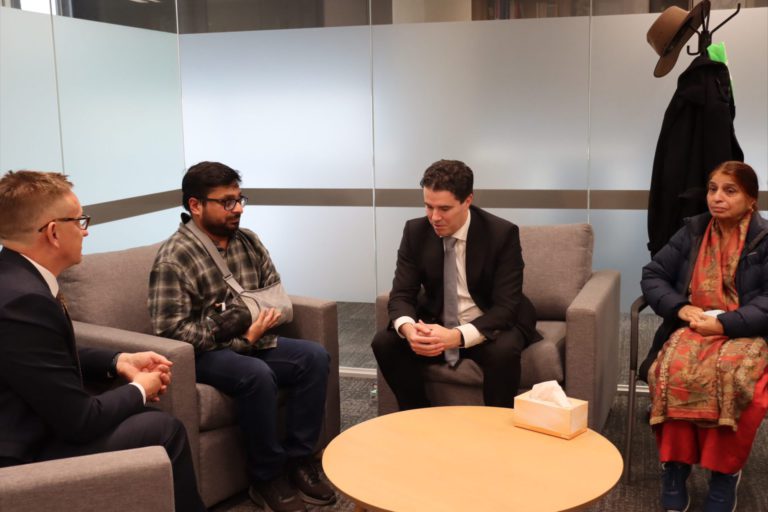
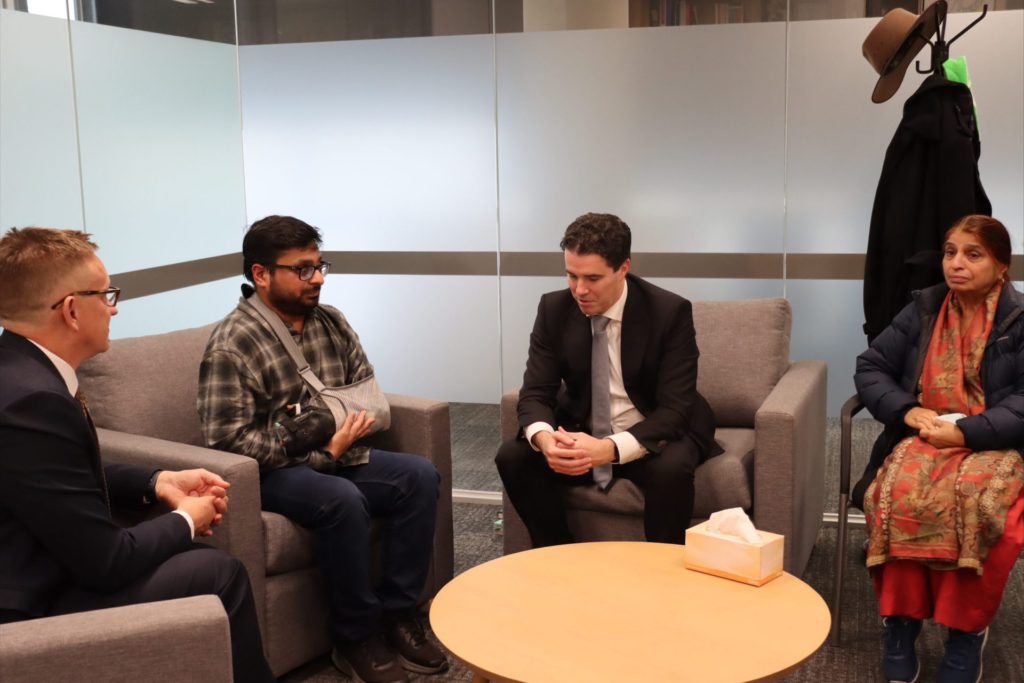
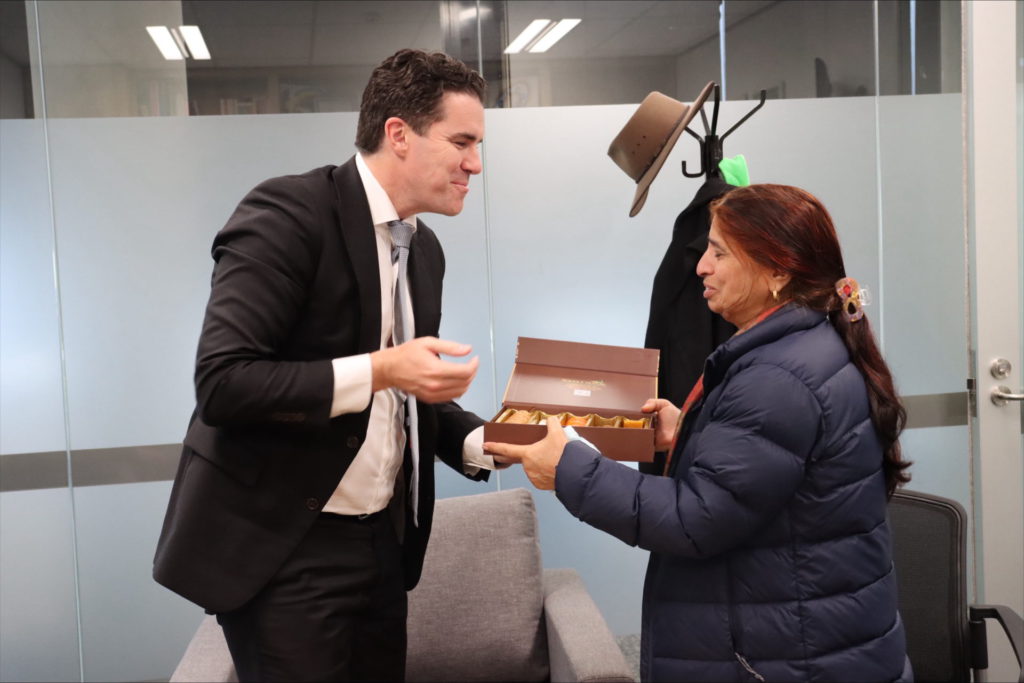
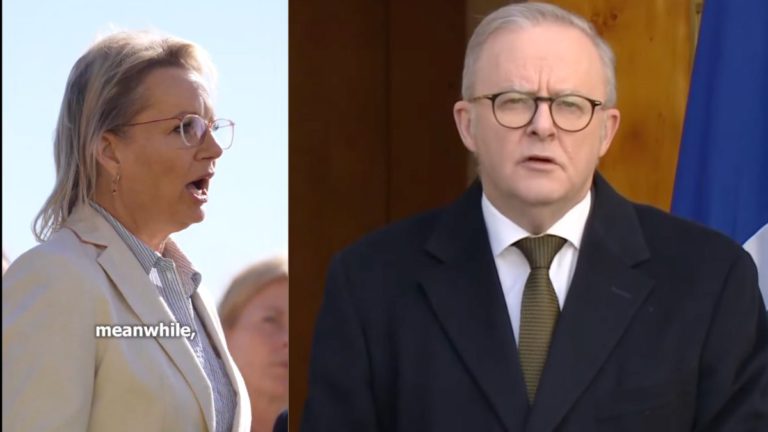
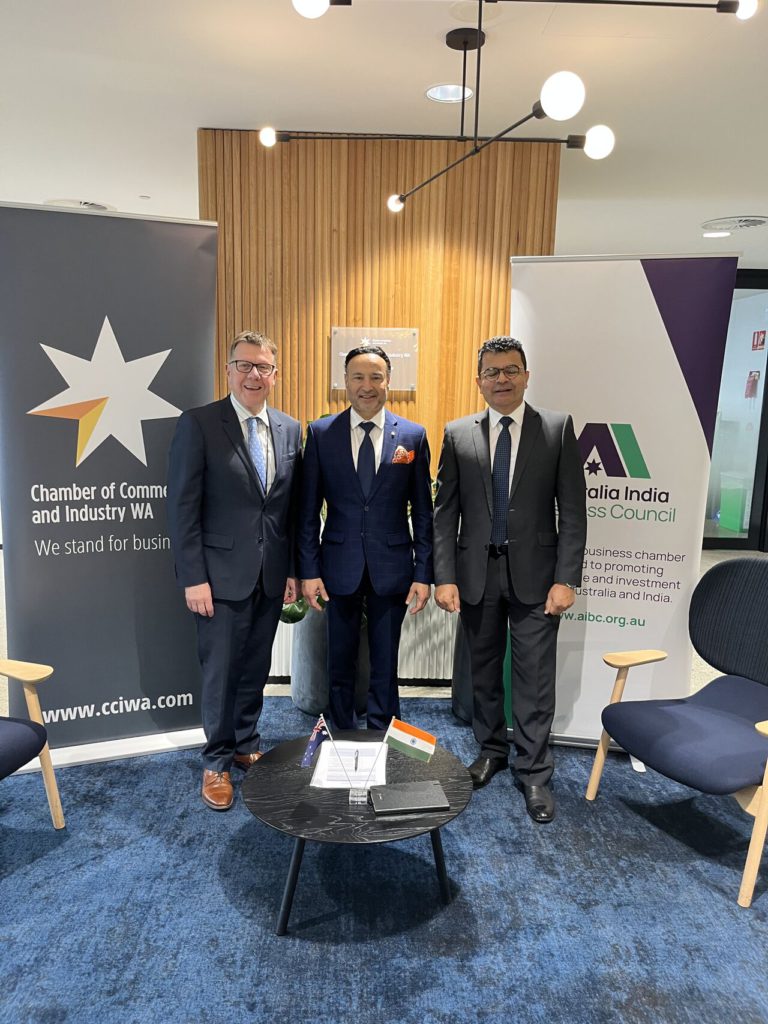
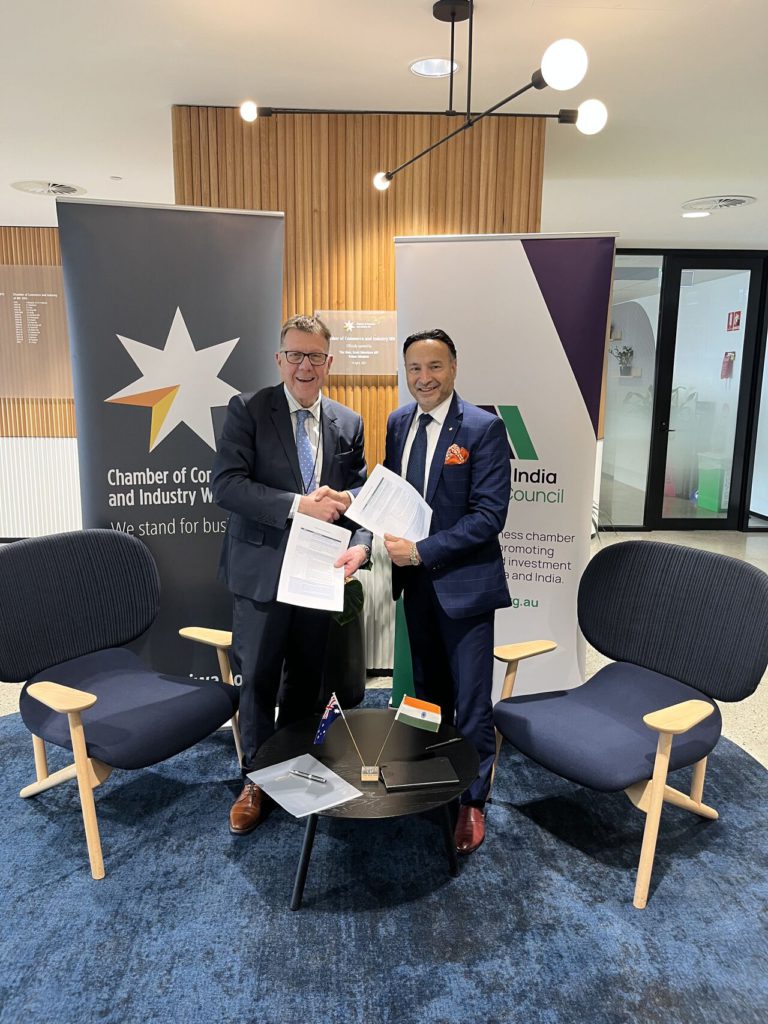
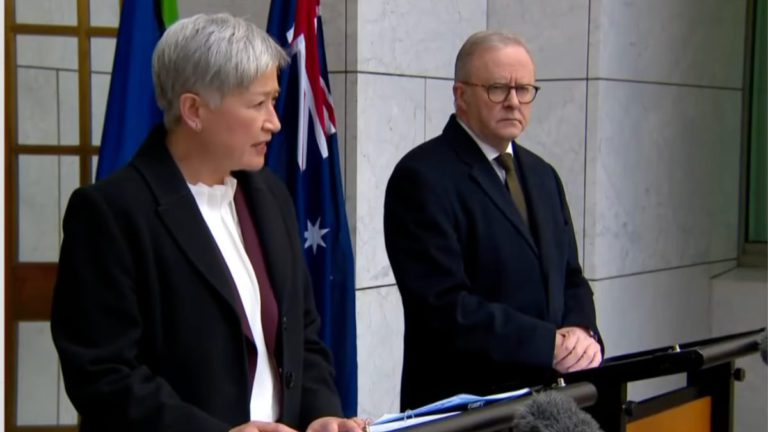
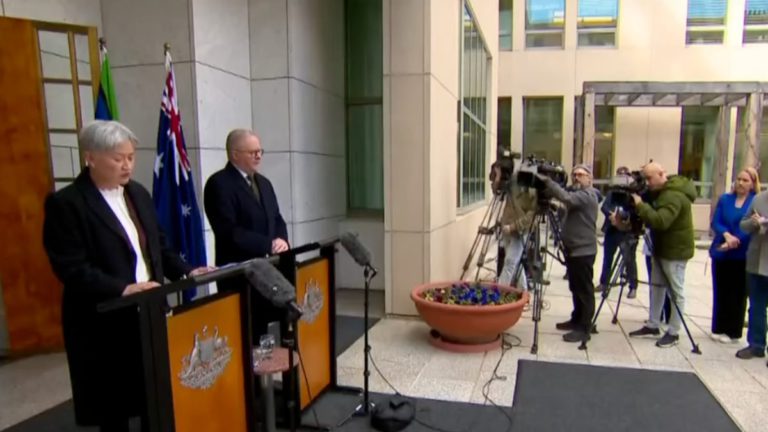
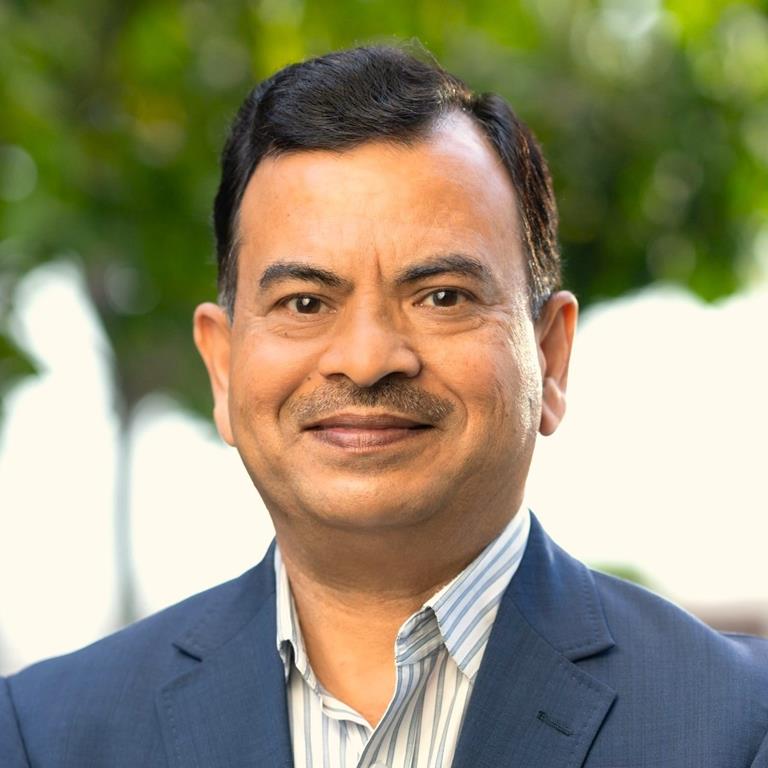
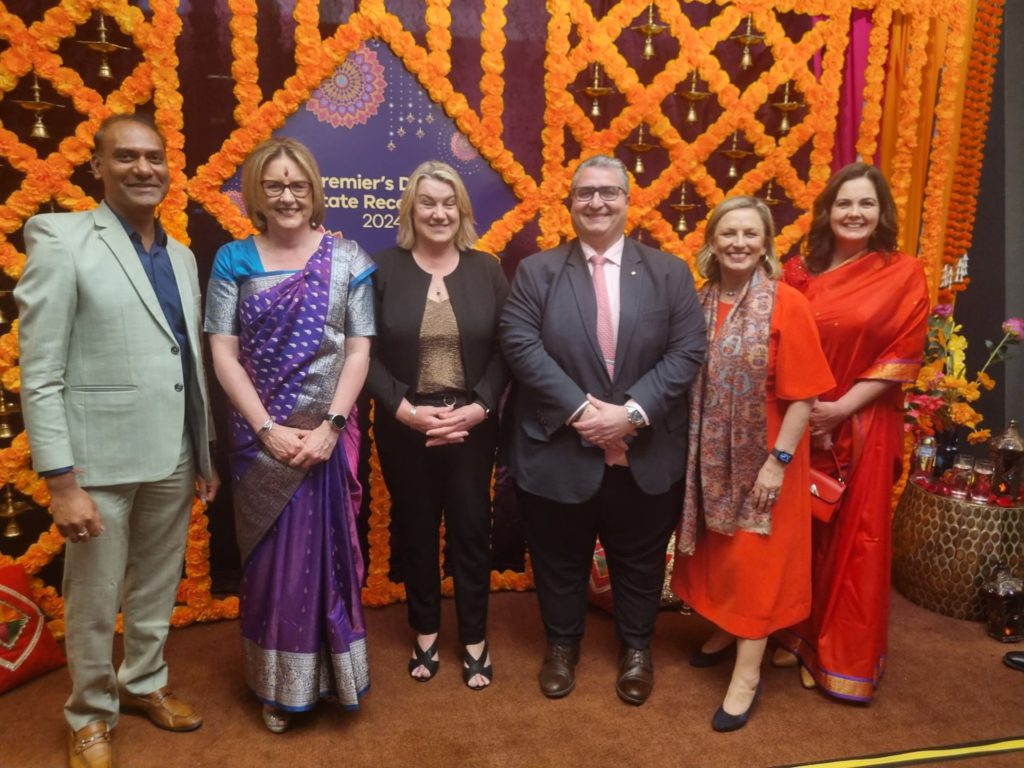
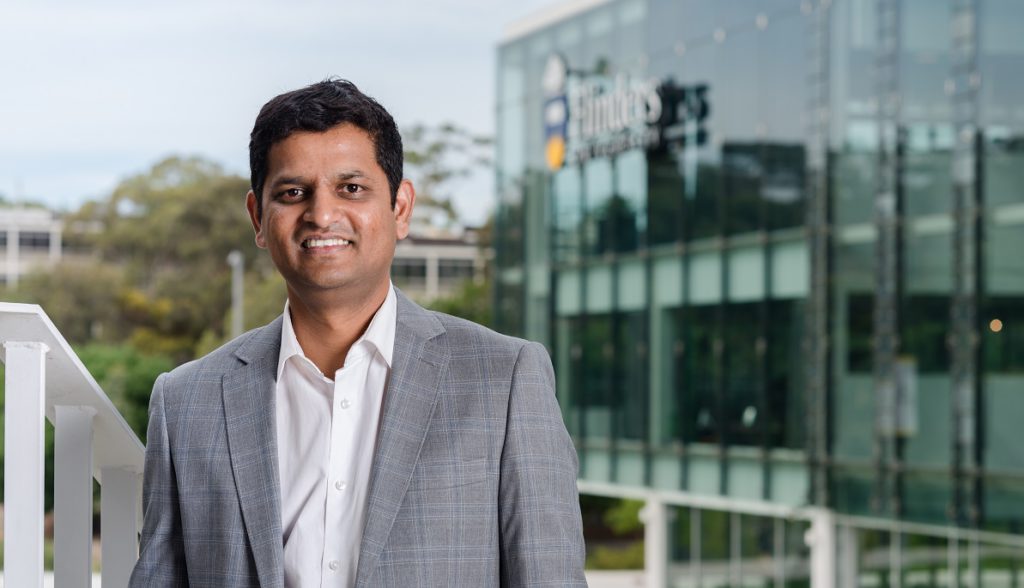
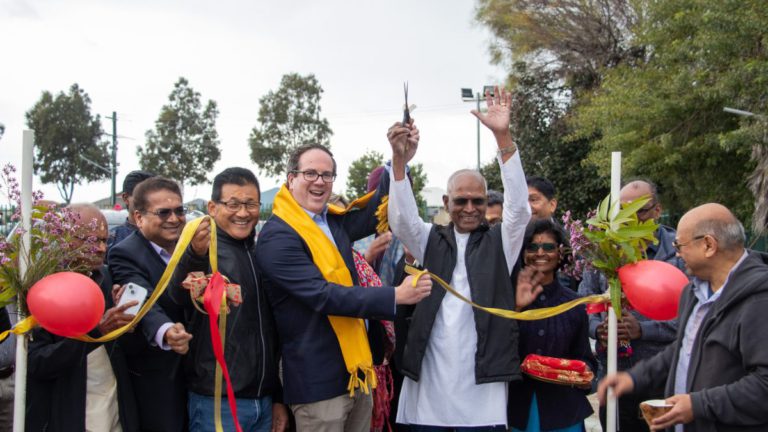
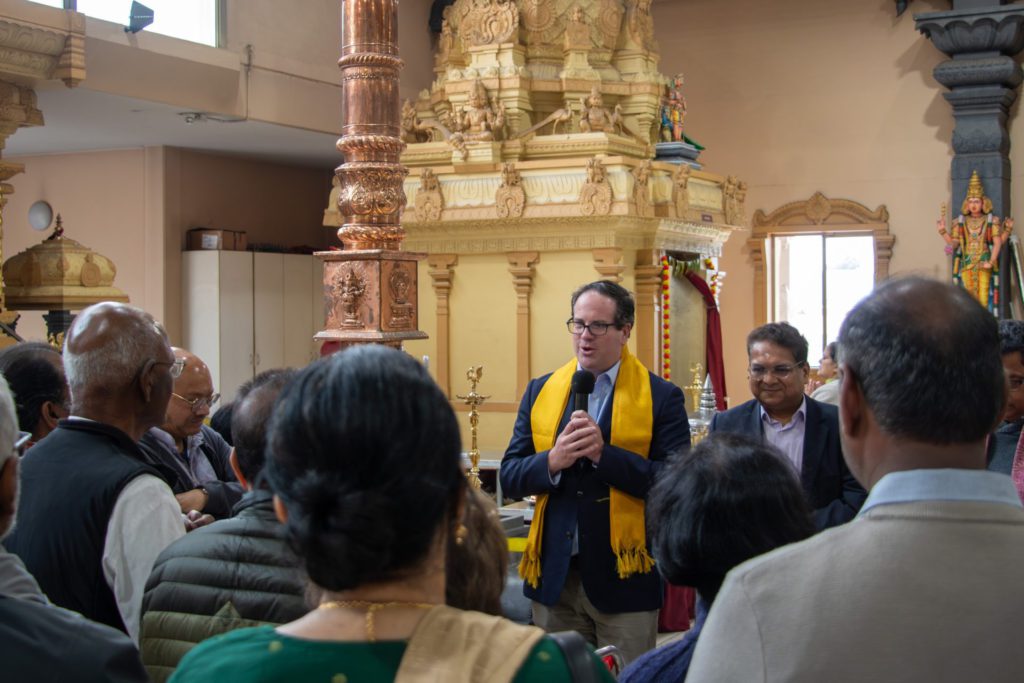
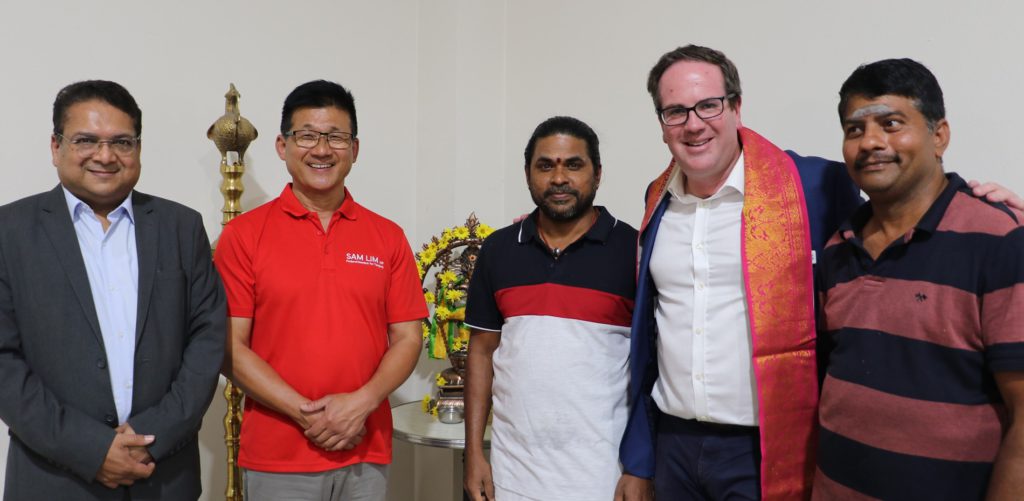
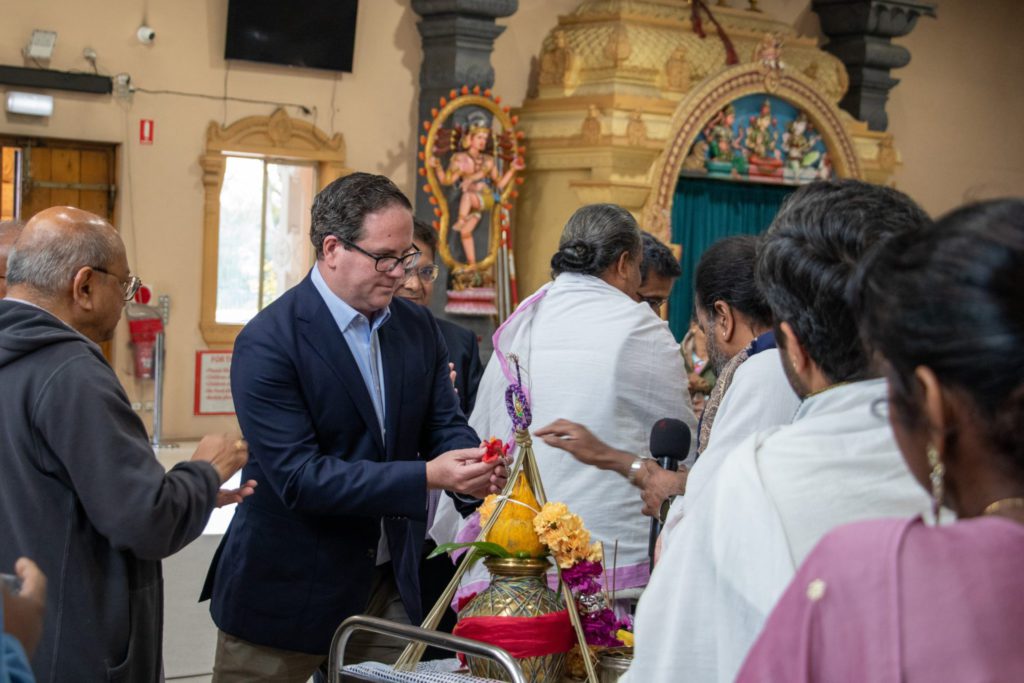
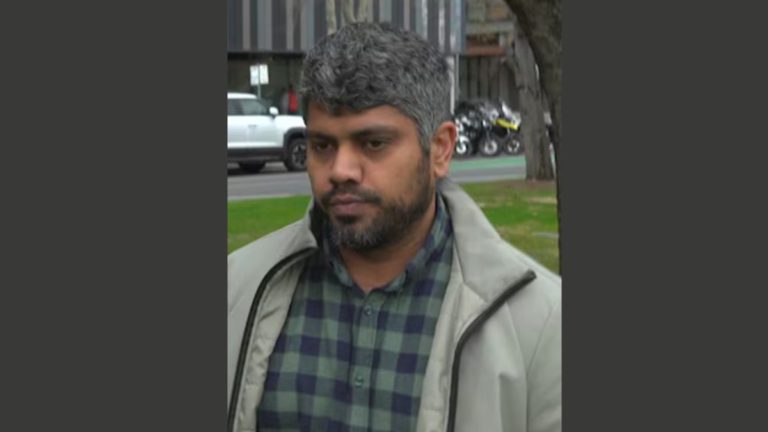
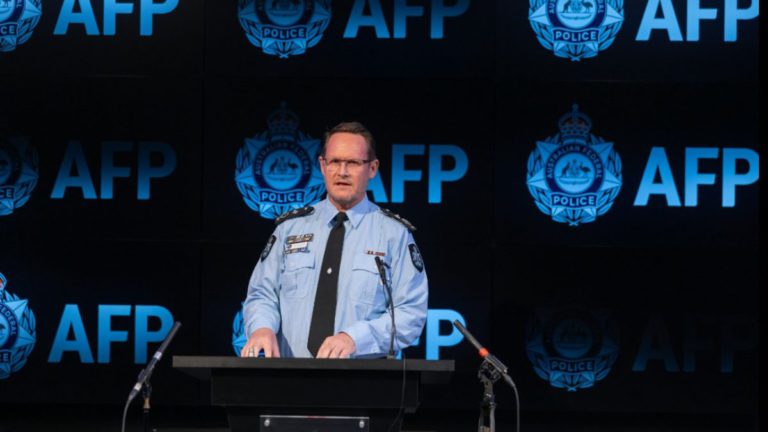
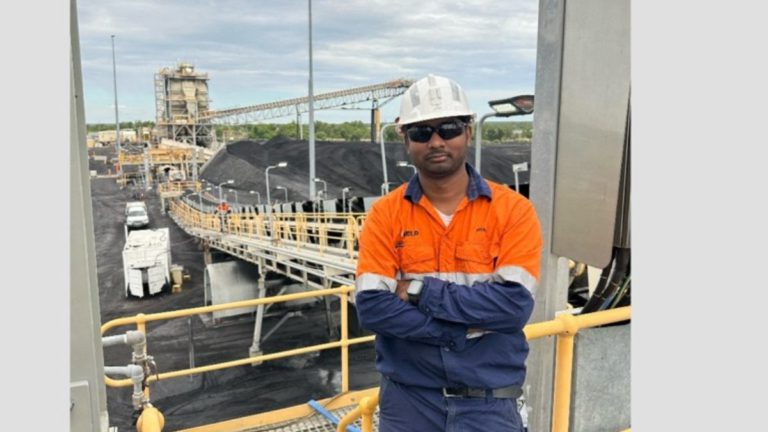
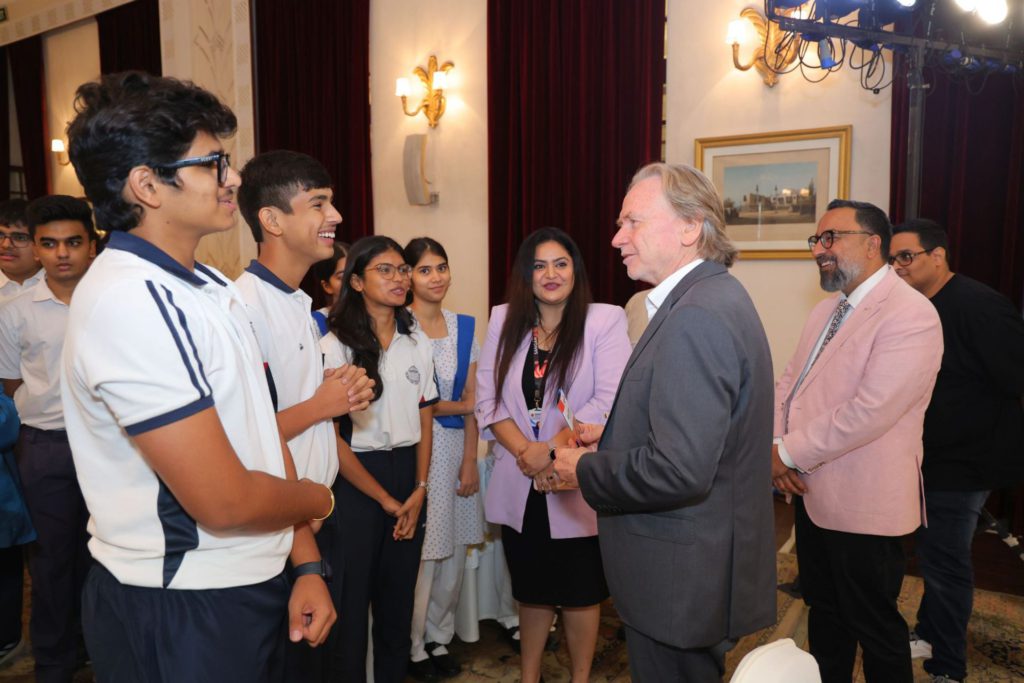
Saurabh Anand, who survived a brutal machete attack at Central Square Shopping Centre in Melbourne’s west on 2 August, has been granted a new visa by the Australian Government.
Four teenagers, aged between 14 and 15, have been charged over the incident with offences ranging from assault to robbery.
Mr Anand, who has lived, studied, and worked in Australia for the past seven years, was facing uncertainty as his temporary visa was set to expire this month.
With support from Federal MP Tim Watts office who is also his local MP, the Australian Government ordered a ministerial intervention to provide him with a new temporary visa on Friday.
The visa will ensure continuity of his medical care as he recovers from the attack and also gives him the opportunity to keep pursuing his permanent residency.
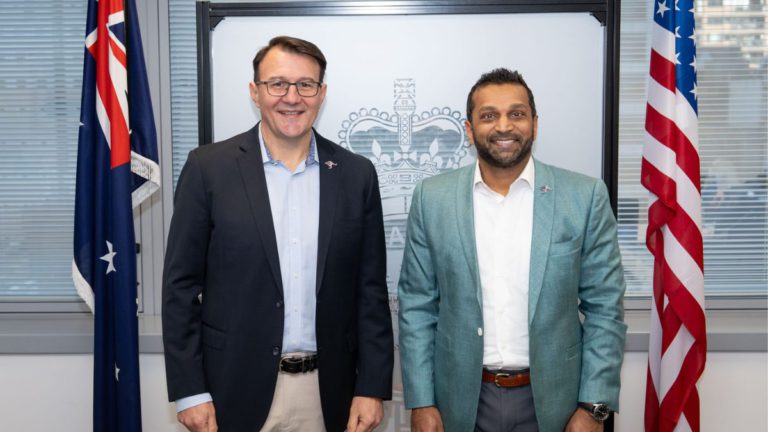
Mr Watts who is also the Special Envoy for Indian Ocean Affairs said that his community was horrified by what happened to Saurabh.
“His visa status was the last thing he should have to worry about after such a terrible incident and I’m relieved he now has the certainty to recover and thrive in Australia in the way our whole community wants him to.”
Assistant Minister for Citizenship Julian Hill said that nothing can undo the horrific injuries Mr Anand experienced at the hands of violent criminals and he wished him and his family well during this time of recovery.
“It’s only fair to ensure Mr Anand can receive the care he needs here in Australia without having to worry about his visa status. He has lived, worked and studied in Australia for seven years and has skills that Australia needs. The advocacy of Tim Watts and others in the community has been a great support to Mr Anand and his family in this difficult time.”
In an exclusive interview with The Australia Today, Mr Anand had shared his ordeal and the challenges that he was facing after the brutal attack.
Support our Journalism
No-nonsense journalism. No paywalls. Whether you’re in Australia, the UK, Canada, the USA, or India, you can support The Australia Today by taking a paid subscription via Patreon or donating via PayPal — and help keep honest, fearless journalism alive.
Image: Illegal U-turn by semi-truck kills three on Florida Turnpike in Fort Pierce, USA (Source: TikTok screenshot of drivers)
According to the Florida Highway Patrol (FHP), the semi-truck was travelling north in the right lane near mile marker 171 when it attempted a U-turn in an “official use only” turn-around area, crossing into the path of a Chrysler Town & Country minivan in the left lane.
‘On Tuesday, August 14, 2025, a tragic crash unfolded on the Florida Turnpike in Fort Pierce, FL, when a semi-truck attempted an illegal U-turn at an "Official Use Only" turnout, crossing unexpectedly into the left travel lane.’ pic.twitter.com/n9FHqBC0WN
The minivan became wedged underneath the truck, and the driver could not avoid the collision. Tire marks at the scene indicate the semi’s manoeuvre occurred in the middle of the afternoon, witnesses and troopers said.
Two passengers in the minivan – a 37-year-old woman from Pompano Beach and a 54-year-old man from Miami – died at the scene.
The 30-year-old driver of the Chrysler from Florida City was airlifted to HCA Florida Lawnwood Hospital, where he later died from his injuries. The semi-truck driver and his passenger, both men in their 20s from California, were unharmed.
Image: Illegal U-turn by semi-truck kills three on Florida Turnpike in Fort Pierce, USA (Source: St. Lucie County Sheriff’s Office)
Carlos Portela, a licensed truck driver with 25 years of experience, told WPTV the semi driver was clearly at fault. He added that the U-turn is illegal for anyone except emergency vehicles and emphasised the seriousness of the crash.
According to the FHP report, the driver and passenger in the semi-truck did not sustain injuries.
Troopers continue to investigate the circumstances surrounding the wreck. No charges have been filed, and authorities have not yet released the identities of the men in the semi-truck.
Support our Journalism
No-nonsense journalism. No paywalls. Whether you’re in Australia, the UK, Canada, the USA, or India, you can support The Australia Today by taking a paid subscription via Patreon or donating via PayPal — and help keep honest, fearless journalism alive.
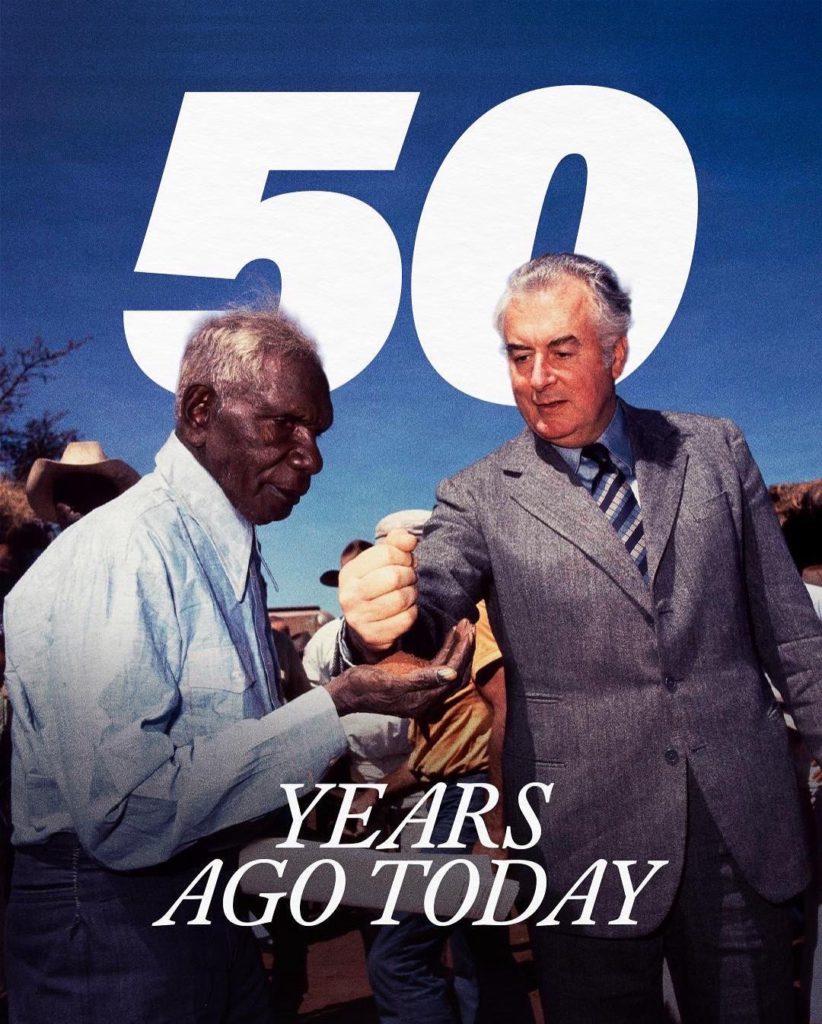
On 16 August 1975, Prime Minister Gough Whitlam poured soil into the hands of Gurindji leader Vincent Lingiari, symbolising the return of land at Wave Hill cattle station after years of protest. The image would go on to become an enduring symbol of the land rights movement.
Image: Gough Whitlam pouring red soil into Vincent Lingiari’s hands (Source: X)
The ceremony followed nearly a decade of struggle after 200 Gurindji, Mudburra and Warlpiri stockmen, domestic workers and their families led the Wave Hill Walk-Off on 23 August 1966. The strike, driven by both poor working conditions and dispossession, lasted nine years before the Gurindji people returned to their traditional Country at Daguragu.
Their courage paved the way for the Aboriginal Land Rights (Northern Territory) Act 1976, the first law in Australia enabling First Nations people to claim land rights where traditional ownership could be proven.
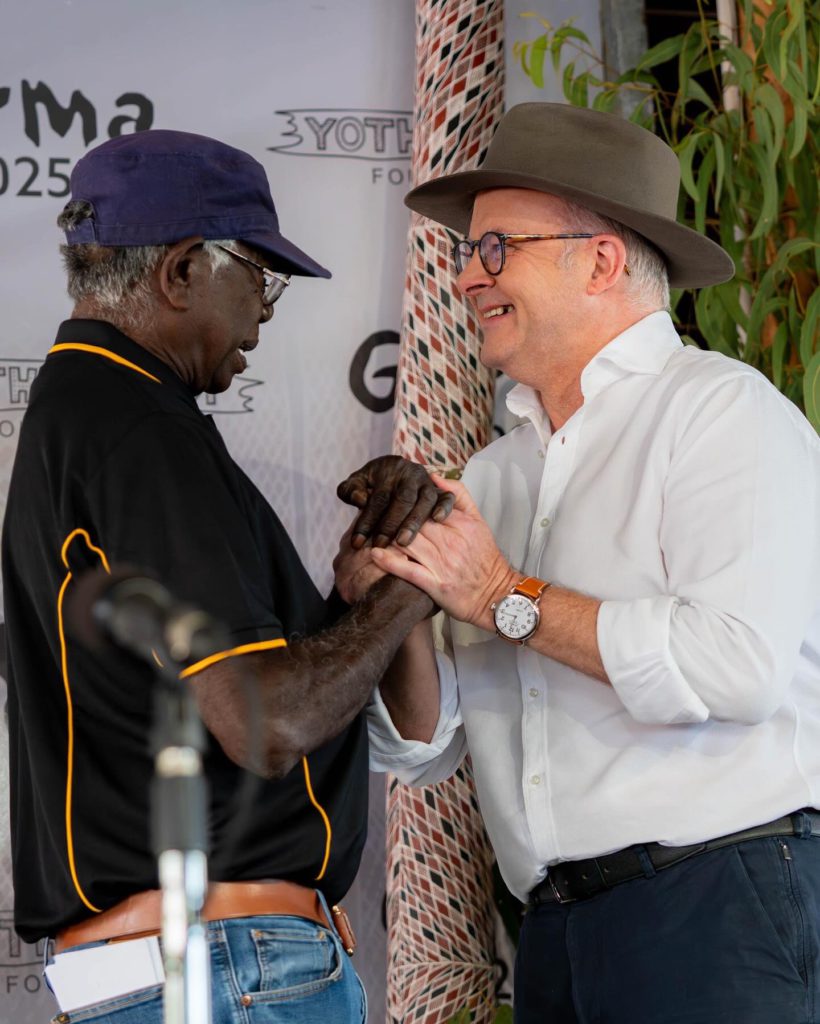
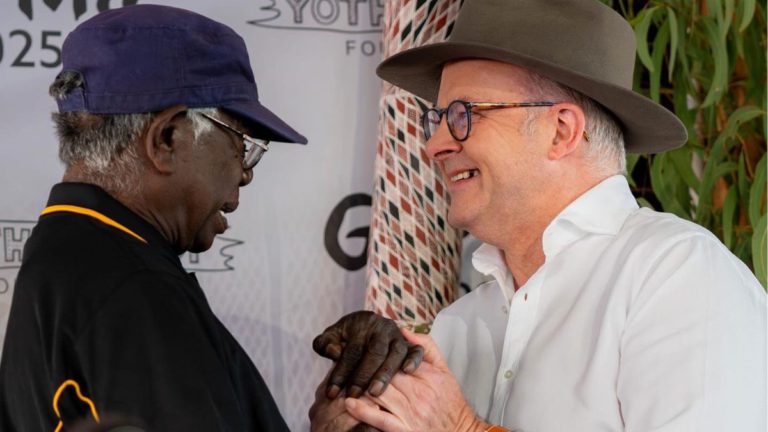
Image: Prime Minister Anthony Albnaese at Garma Festival 2025 (Source: X)
Prime Minister Anthony Albanese said the milestone was both a moment to honour past courage and a reminder of unfinished work.
“Today we remember a mighty victory and we honour those who fought and won their long battle for justice,” Mr Albanese said.
“Yet as Gough said to Vincent on this historic day: ‘Your fight was not for yourselves alone’. There is more to do to ensure traditional owners can unlock the economic potential of their land and build long-term prosperity.”
Minister for Indigenous Australians, Malarndirri McCarthy, said the walk-off and handback remain foundational moments in the land rights movement. “The soil passing from one hand to another is a defining moment in Aboriginal land rights and Australian history,” she said.
The 50th anniversary will be commemorated at the Freedom Day Festival, to be held from 22–24 August in Kalkarindji, where the Gurindji people and communities across Australia will gather to celebrate land rights, self-determination and solidarity.
Support our Journalism
No-nonsense journalism. No paywalls. Whether you’re in Australia, the UK, Canada, the USA, or India, you can support The Australia Today by taking a paid subscription via Patreon or donating via PayPal — and help keep honest, fearless journalism alive.
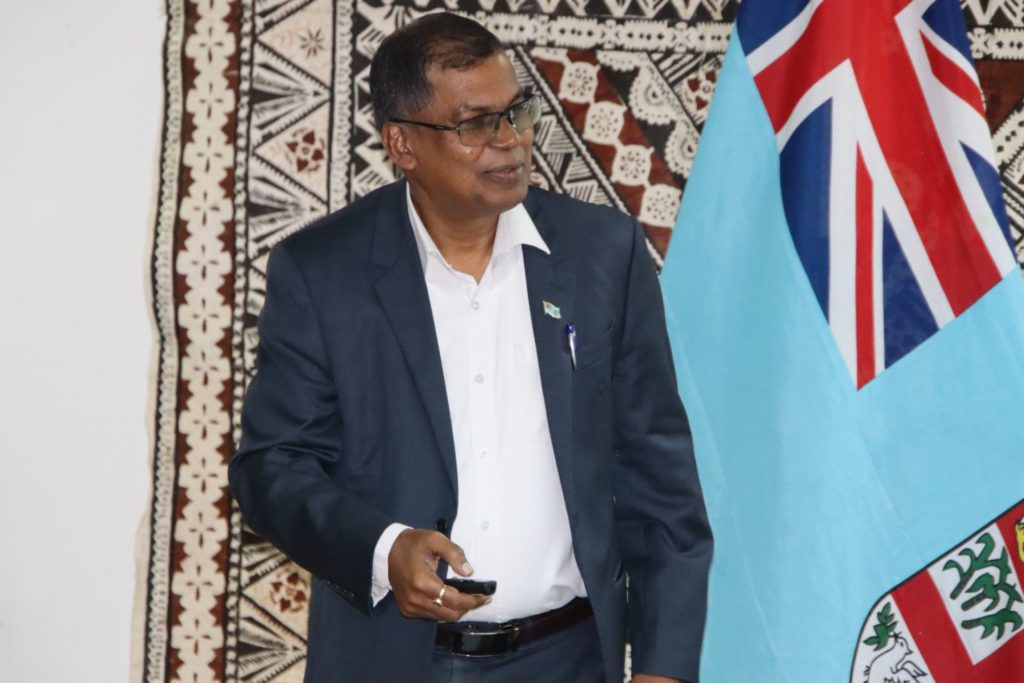
File image: Fiji’s Deputy Prime Minister and Minister for Finance, Prof. Biman Prasad (Source: Facebook)
In a detailed statement, Prof. Prasad said Chaudhry’s claims about Aspen Medical, the hospital budget, and medicine supplies were “factually incorrect.” He clarified that Aspen Medical Fiji, formally Health Care (Fiji) Pte Limited (HCF), is 80 per cent owned by the Fiji National Provident Fund and 20 per cent by Aspen Medical of Australia. HCF operates Ba and Lautoka Hospitals, providing free services to patients, with the government paying per patient treated.
“The increase in Budget funding is not a fixed contract payment,” Prasad explained.
“It reflects estimates for patient treatments in the coming fiscal year. If there are more patients, government pays more; fewer patients, it pays less.”
He noted that Ba and Lautoka Hospitals treated approximately 930,000 patients in 2023 and 950,000 in 2025. The complexity of cases, such as cardiac services, has increased, driving higher treatment costs.
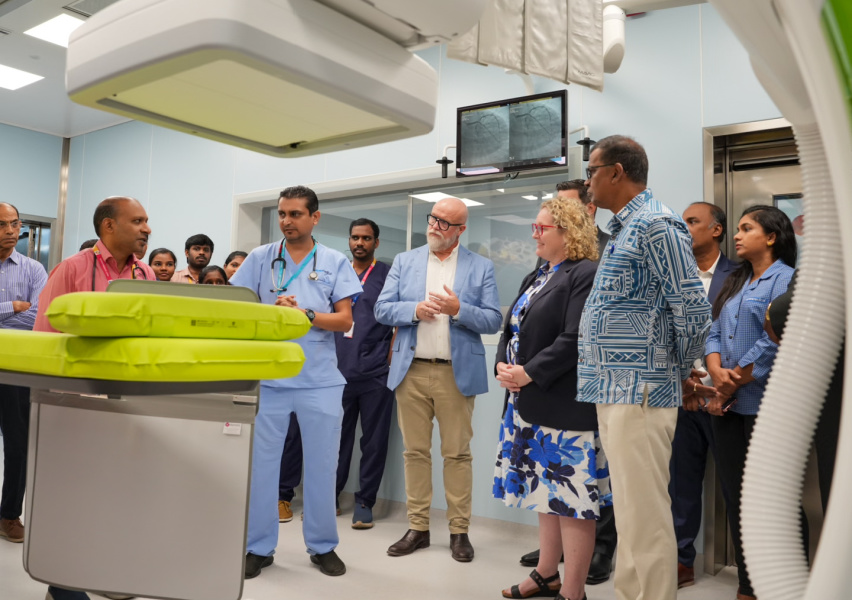
File Image: Invited guests hear firsthand about the new advanced equipment and capabilities during a tour of the $11 million (FJD) upgrade at Lautoka Hospital (Source: ASPEN Medical)
Prof. Prasad also outlined the contract history, stating the previous government’s 2019 agreement with HCF was altered in 2022 to begin operations immediately in the existing Lautoka Hospital, creating uncertainty over costs. “The 2019 deal was poorly planned,” he admitted, “but we are legally bound and are negotiating to improve efficiency and cost management.”
Regarding medicine supply changes at the hospitals, Prof. Prasad said these were a government initiative to manage costs and that steps are being taken to establish government-run dispensaries at both hospitals in the coming months.
Aspen Medical also refuted claims made by Chaudhry that only one doctor was attending patients at Lautoka Hospital. A spokesperson confirmed the emergency department had seven clinicians, including three doctors, four interns, and a dedicated fast-track team for critical patients. Between 7am and 6.15pm last Thursday, 123 patients were triaged and treated following the South African Triage scale.
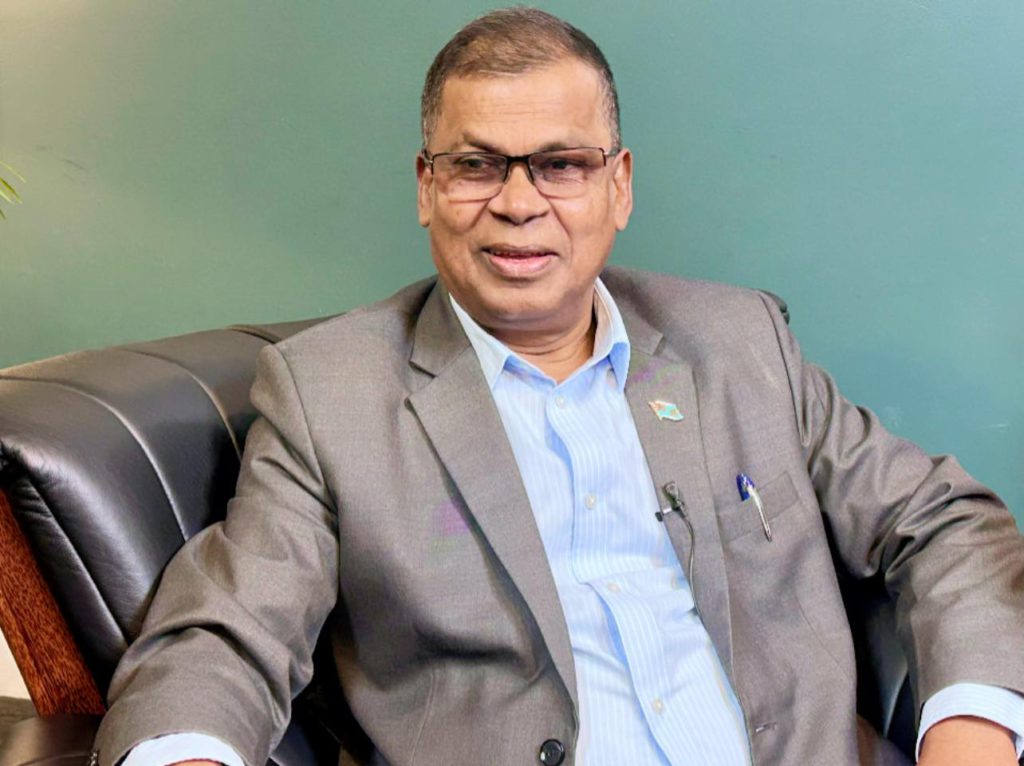
File image: Fiji Labour Party leader and former Prime Minister Mahendra Chaudhry (Source: Facebook)
Chaudhry had allegedly accused the government of giving an additional $27 million to Aspen while ending free medicine supplies, describing the situation as “sheer nonsense.” Prasad countered that payments to HCF are based on patient numbers and complexity, and the hospital continues to provide essential services.
Support our Journalism
No-nonsense journalism. No paywalls. Whether you’re in Australia, the UK, Canada, the USA, or India, you can support The Australia Today by taking a paid subscription via Patreon or donating via PayPal — and help keep honest, fearless journalism alive.
A 21-year-old West Australian man appeared in Perth Magistrates Court on 15 August after allegedly breaching a security-restricted area at Perth Airport.
The Australian Federal Police charged the man on 2 August after he reportedly activated a ‘break glass’ alarm to access a door inside a domestic terminal, entering the airside area without authorisation. He allegedly spent only a short time in the secure zone before returning to the baggage claim hall.
Perth Airport security alerted the AFP, who quickly located the man at a screening checkpoint. He faces one charge of entering an airside area of a security-controlled airport without permission, an offence that carries a maximum penalty of $15,650 under the Aviation Transport Security Regulations 2005 (Cth).
AFP Detective Acting Superintendent Aviation John Whitehead stressed the importance of airside restrictions, saying they exist to protect both the travelling public and airport workers.
“Airside restrictions are clearly marked and closely monitored. Ignoring them could lead to prosecution,” Det a/Supt Whitehead said.
The man first appeared in court on 2 August.
Support our Journalism
No-nonsense journalism. No paywalls. Whether you’re in Australia, the UK, Canada, the USA, or India, you can support The Australia Today by taking a paid subscription via Patreon or donating via PayPal — and help keep honest, fearless journalism alive.
In the 1850s, when Melbourne stonemasons won the eight-hour day, employers of the day prophesied economic ruin. These standardised hours then flowed into other industries.
Far from ruin, Australians went on to enjoy one of the highest living standards on the globe by the later 19th century, even after the deep depression of the 1890s.
Again, in the late 1940s and early 1950s, with the achievement of the 40-hour week employers predicted economic decline. Instead, in the 1950s and 1960s Australia enjoyed a rate of economic and productivity growth that is yet to be matched.
Fast forward to this week, and the Australian Council of Trade Unions (ACTU) has reignited this age-old debate. It has proposed that shorter working hours – such as a four-day week – must be central to next week’s productivity roundtable in Canberra.
But at the core of this proposal for shorter hours is a simple truth: improved productivity performance cannot be separated from how increased prosperity is shared.
Second, productivity gains, arising from both technological advancement and better ways of deploying and combining labour and capital, should be shared in the form of shorter hours, not just higher profits or pay.
And third, the way these hours are shortened should be sector-specific. In some industries, the four-day work week may be appropriate. In others, different models could include offering employees more rostered days off or additional annual leave.
Much media commentary has focused on the proposal for a four-day work week. This approach to working time reform is relatively new. Concern with the relationship between working hours and productivity, however, has deep roots in the history of capitalist societies in general and unions in particular.
Where have these proposals come from?
When people think of productivity, they commonly assume technological advances are crucial. For example, as water wheels and fossil fuels replaced human energy, more textiles and clothing could be produced with less human effort in the late 18th and early 19th century.
Over the past two centuries, it is important to recognise that around the world, productivity advances – and especially the fairer distribution of the gains made – have not just been an artefact of technological advancement. Social factors, especially union campaigns and government taxes and regulations, have also played a crucial role.
Professor Robert J. Gordon produced one of the most definitive studies of these dynamics. His seminal work, The Rise and Fall of American Growth, examined how living standards in the United States changed since the Civil War in the 1860s.
One of his key findings was union and government initiatives were critical to the golden era of productivity growth in the 20th century.
Some of the most significant initiatives emerged as part of US President Franklin D. Roosevelt’s “New Deal” economic program of the 1930s. This helped recovery from the depression by expanding extensive public works to create jobs and upgraded income support for vulnerable citizens, especially the unemployed.
Key New Deal laws also promoted unionisation, which Gordon argues:
directly and indirectly contributed to a sharp rise in real wages and a shrinkage in average weekly hours. In turn both higher real wages and shorter hours helped boost productivity growth […]
It has long been recognised that well-designed union and government policies provide what is referred to as a “productivity whip”. That’s because they cut off the simple route to boosting profits based on cutting wages and working conditions.
It is no coincidence that those countries with strong unions or social democratic governments – such as Germany, the Nordic countries and France – enjoy the shortest paid working hours in the world, while maintaining healthy economies with high material living standards.
Could the ACTU’s proposal work?
The ACTU cites two recentstudies of the impact of the four-day work week experiments in a limited number of organisations. The results of these studies are positive for reported productivity and work-life balance – but they are openly recognised as small scale.
What is more important is the long history noted above and the most considered analyses of the challenges facing us today.
He argues the stagnation of US productivity growth of recent times is most likely not an aberration. As he notes, the impact of things – such as improving public health by removing horse manure from streets and introducing mass clean water and sewerage systems – have profound impacts that cannot be easily replicated for impact in future generations.
He also notes there are a number of major “headwinds” that make further productivity advances in countries such as the US and Australia on the scale of recent modern history difficult. Prime among these is deepening inequality. This is a problem in Australia as well as the US.
Clearly, issues of distribution of productivity gains must be central to any future policy mix directed at improving productivity. Shorter working hours can play an important role in that mix. For one, sharing productivity gains as shorter hours protects them from being eroded by inflation.
For Australia, it’s important to remember the challenge isn’t just to “boost productivity”. We also have to think about how we do so in ways that ensure we live lives involving more than just work and consumption.
John Buchanan, Professor in Working Life, Discipline of Business Information Systems, University of Sydney Business School, University of Sydney
No-nonsense journalism. No paywalls. Whether you’re in Australia, the UK, Canada, the USA, or India, you can support The Australia Today by taking a paid subscription via Patreon or donating via PayPal — and help keep honest, fearless journalism alive.
Fiji Police are investigating the theft of a 70-year-old Lord Hanuman statue from Wailailai Kuti in Ba, in an incident that has deeply distressed the Hindu community.
Police say the temple’s 68-year-old Assistant Treasurer discovered the statue missing on Wednesday morning and lodged a report. The 35cm-high idol, which was cemented to the floor, was removed overnight.
Shree Sanatan Dharm Pratinidhi Sabha President, Dhirendra Nand, described the theft as “deeply hurtful” and confirmed the organisation will conduct its own internal investigation alongside police inquiries. He told fijivillage that CCTV cameras are installed in the temple and urged authorities to examine the footage.
“We have confidence in the law and order of this country and in the Police Force. We hope the truth will come before the public very soon,” Nand said.
Nand also urged devotees not to be disheartened, as the incident coincided with the conclusion of Shree Krishn Janmashtami celebrations.
The theft follows a string of sacrilegious attacks on Hindu temples in Fiji. Last month, the Shiv Mandir in Samabula, Suva, was vandalised, with century-old idols damaged in a shocking act that drew condemnation from political and community leaders. Earlier in April, torn pages from the Ramayan were found scattered inside the Vunicuicui Shiv Mandir in Labasa.
Such incidents have recurred for decades, with Hindu leaders repeatedly calling for stronger security and decisive legal action to protect sacred spaces and symbols.
Support our Journalism
No-nonsense journalism. No paywalls. Whether you’re in Australia, the UK, Canada, the USA, or India, you can support The Australia Today by taking a paid subscription via Patreon or donating via PayPal — and help keep honest, fearless journalism alive.
Victoria Police have dismantled one of Melbourne’s largest alleged organised retail theft rings, arresting 19 people accused of stealing more than $10 million worth of high-demand products over five months.
The syndicate was involved in stealing items including baby formula, medicines, vitamins, skincare products, electric toothbrushes and toiletries. Investigators say the group worked in a coordinated network, funneling stolen goods to illegal sellers for profit.
Detective Acting Inspector Rachele Ciavarella, Eastern Region Division 1 Investigation and Response Manager, called the operation a major success. “This has been one of the most significant operations we’ve undertaken in recent times to target organised retail theft,” she said.
“We will allege this syndicate are not only stealing for themselves, but they are part of a coordinated criminal enterprise profiting from stolen goods. Our message is simple: if you target our retail sector, we will target you.”
Image: Police have arrested 19 people in Melbourne accused of being part of a shoplifting network (Picture: Victoria Police)
Among those arrested are six men and one woman aged between 21 and 54, facing theft charges with individual incidents valued between $25,000 and $136,000. Police have worked closely with retailers and the Australian Border Force to identify alleged offenders quickly and build intelligence to strike at the right time.
Investigations remain ongoing, with further arrests expected. Police urge anyone with information about organised retail theft or the on-selling of stolen goods to contact Crime Stoppers on 1800 333 000 or submit a confidential report online.
Retail theft is one of Victoria’s fastest-growing crimes, with 41,270 offences recorded in the past year – a 38% increase state-wide. Operation ‘Supanova’, led by the Box Hill Divisional Response Unit, is part of a wider crackdown on coordinated shoplifting rings.
Support our Journalism
No-nonsense journalism. No paywalls. Whether you’re in Australia, the UK, Canada, the USA, or India, you can support The Australia Today by taking a paid subscription via Patreon or donating via PayPal — and help keep honest, fearless journalism alive.
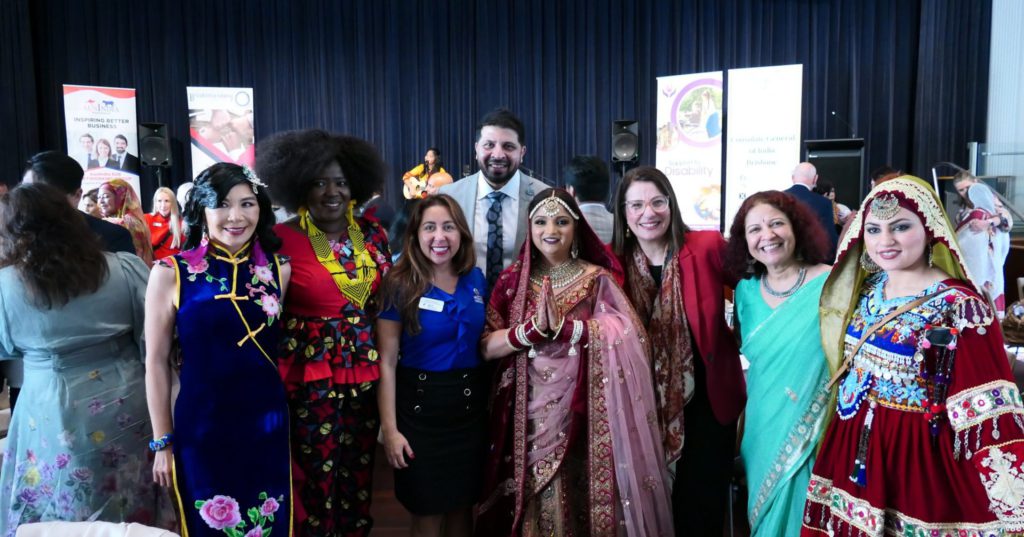
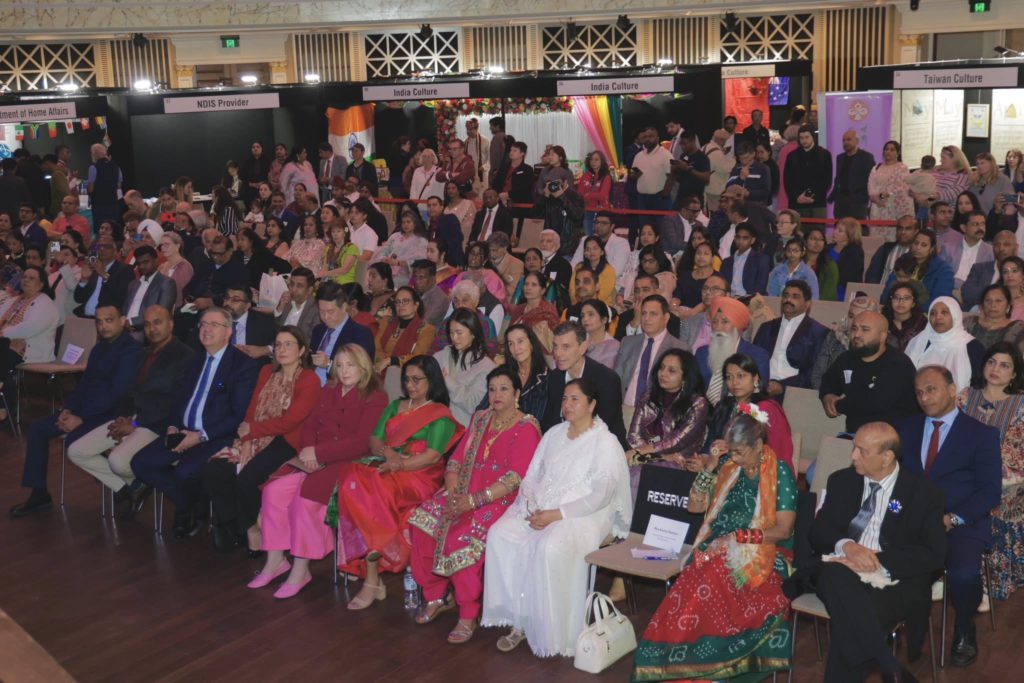
Indians across Australia marked the 79th Independence Day of India with pride, unity, and vibrant cultural celebrations.
On the occasion of India’s 79th Independence Day, the High Commissioner hoisted the National Flag and read the Hon’ble President @rashtrapatibhvn’s address to the nation.
The celebrations also featured cultural performances of patriotic songs, showcasing India’s rich cultural… pic.twitter.com/0v8xIi9Llf
In Canberra, the High Commissioner hoisted the national flag and read the President of India’s address to the nation.
The event featured patriotic songs celebrating India’s rich cultural heritage, with mission officials and members of the Indian diaspora joining in reverence.
79th Independence Day Celebration at the Consulate General of India, Melbourne!
Consul General Dr. Sushil Kumar hoisted the 🇮🇳 flag and celebration was joined by Hon. Brad Batin, MP, Cr Pradeep Tiwari, Mayor of Marybyrong, and members of vibrant Indian diaspora. The morning was… pic.twitter.com/mYGQqOdQTJ
Melbourne saw Consul General Dr Sushil Kumar hoist the flag alongside local dignitaries, including opposition leader Brad Battin MP and Cr Pradeep Tiwari, Mayor of Maribyrnong.
The morning was marked by patriotic songs and a shared commitment to strengthening the India–Australia bond.
79th Independence Day Celebrations
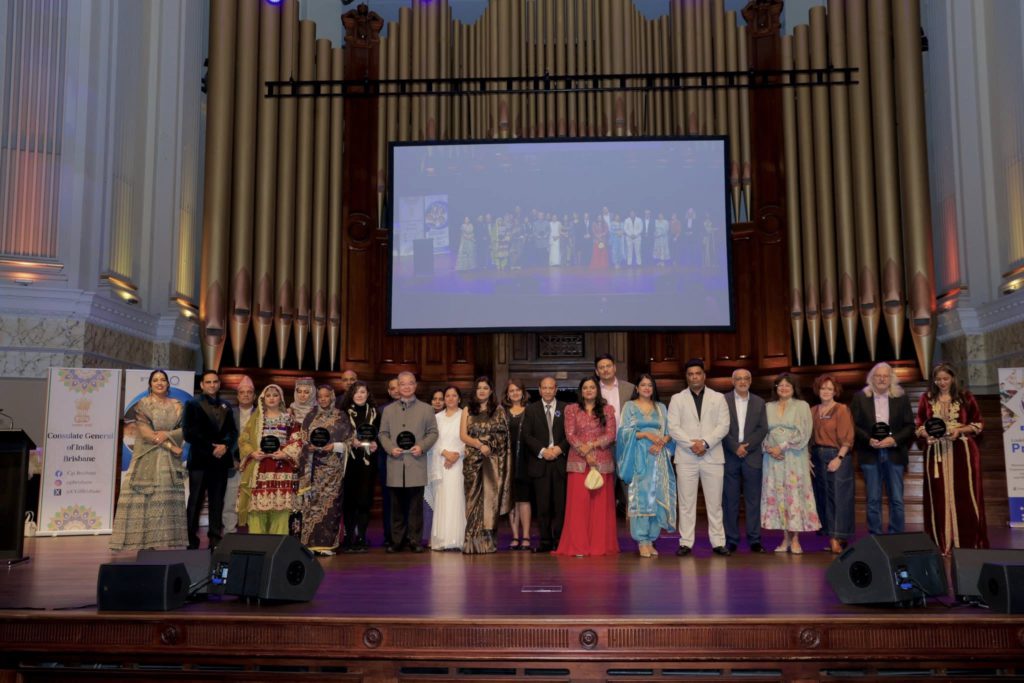
The Consulate General of India in Brisbane celebrated the 79th Independence Day of India with great enthusiasm. Consul General Mrs Neetu Bhagotia hoisted the Indian Flag and read out the Hon’ble President’s Address to the Nation.
In Brisbane, Consul General Neetu Bhagotia led the flag hoisting and read the President’s address.
The celebrations included patriotic songs and poetry by Sargam Music School and other community members, along with a painting competition on the theme “Incredible India,” with winners receiving certificates.
Flag Hoisting Ceremony on 15 August 2025
The Consulate General of India in Sydney celebrated the 79th Independence Day of India with great enthusiasm on 15 August 2025. The celebrations were held at the Consulate premises, where Consul General Dr. S. Janakiraman unfurled the… pic.twitter.com/tsBdEp5cY9
Sydney’s celebrations, hosted by Consul General Dr S. Janakiraman, featured a ceremonial flag hoisting and national anthem, followed by a range of cultural performances.
Highlights included a patriotic song by Dr Usha Sridhar and young vocalists, traditional folk dances by SS Studio, and a Rajasthani folk performance by the Harish–Ishu Sapera Group, showcasing India’s artistic diversity.
The Consulate General of India in Perth celebrated the 79th Independence Day of India with enthusiastic participation from the Indian community an friends of India. The event began with the ceremonial flag hoisting by… pic.twitter.com/8Rjotx1xcF
In Perth, the Consulate General hosted flag hoisting and read the President’s address, followed by music and dance performances celebrating Indian traditions.
Indian-origin parliamentarians Dr Jags MLA, Yaz Mubarakai MLA, and Kevin Michel MLA also joined the event, reflecting the community’s vibrant engagement.
Across the country, the celebrations united the Indian diaspora and friends of India in a heartfelt tribute to the nation’s spirit of freedom, culture, and unity.
Support our Journalism
No-nonsense journalism. No paywalls. Whether you’re in Australia, the UK, Canada, the USA, or India, you can support The Australia Today by taking a paid subscription via Patreon or donating via PayPal — and help keep honest, fearless journalism alive.
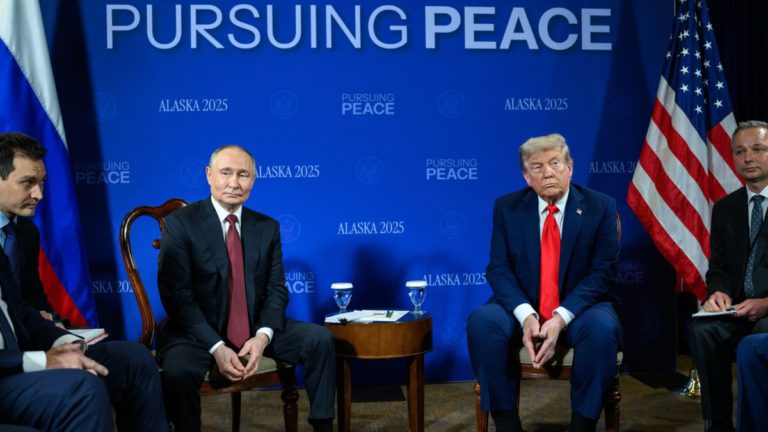
US President Donald Trump and Russian President Vladimir Putin have concluded their much-anticipated summit in Alaska without securing a ceasefire in Ukraine, leaving both supporters and critics uncertain about the tangible outcomes of the meeting.
“We made some great progress today… We had an extremely productive meeting and many points were agreed to.” – President Donald J. Trump pic.twitter.com/WBTMLcI0Cv
The leaders met for over two hours at Joint Base Elmendorf-Richardson in Anchorage in what Trump called “an extremely productive” exchange, claiming “many points” had been agreed. However, he conceded that a handful of significant issues remained unresolved.
“There’s no deal until there’s a deal,” Trump said, adding that he would brief NATO leaders and Ukrainian President Volodymyr Zelenskyy about the talks.
“We’ve made some headway, but we haven’t quite got there.”
Putin, in contrast, spoke of an “agreement” that he argued could pave the way towards resolving the Ukraine conflict and re-establishing “businesslike and pragmatic” relations between Washington and Moscow. Without detailing the specifics, he said the talks were held in a “constructive” atmosphere of mutual respect and thanked Trump for his “trustworthy” tone.
In a closing exchange that drew instant media attention, Putin suggested their next meeting be held in Moscow. Trump quipped that he “could see it possibly happening” despite the political backlash such a trip would inevitably generate.
President Trump Participates in a Press Conference with the President of the Russian Federation https://t.co/D07iIhS8lh
The day began with a striking show of camaraderie. But the warm optics were not matched by a concrete announcement. The post-summit press conference lasted barely 10 minutes and ended abruptly without questions, fuelling speculation that the meeting had fallen short of its goals.
Observers had expected at least a temporary ceasefire or a commitment to a follow-up meeting involving Ukraine, but none materialised. Trump said he hoped to “set the table” for a broader agreement, potentially including President Volodymyr Zelenskyy at a future gathering.
Zelenskyy himself, excluded from the summit, released a video address urging the US to maintain a strong stance and reiterating Ukraine’s willingness to work towards ending the war.
“The war continues precisely because there is no signal from Moscow that it is ready to end it.”
Russia must end the war that it itself started and has been dragging out for years. The killings must stop. A meeting of leaders is needed – at the very least, Ukraine, America, and the Russian side – and it is precisely in such a format that effective decisions are possible.…
— Volodymyr Zelenskyy / Володимир Зеленський (@ZelenskyyUa) August 15, 2025
During his remarks, Trump revisited the “Russia, Russia, Russia hoax” — his term for investigations into alleged ties between his 2016 campaign and Moscow. He claimed the probe had made it “tougher” to engage with Putin during his first term but insisted the two leaders had maintained a “fantastic relationship.”
The Alaska summit was the first Russia–US leaders’ meeting in four years, after relations plunged to their lowest point since the Cold War.
Putin again linked any peace deal to resolving what he called the “primary causes” of the war, including halting Ukraine’s NATO ambitions — a demand Kyiv and its Western allies firmly reject. He offered no public concession on occupied Ukrainian territories.
Trump acknowledged earlier in the week that there was “a 25 per cent chance” the summit could fail but suggested a successful outcome might lead to a three-way meeting with Zelenskyy. He hinted that the US could offer Ukraine security guarantees “alongside European powers, but not in the form of NATO.
The lack of a ceasefire announcement and the vagueness surrounding any “agreement” leave the future of peace talks uncertain.
Support our Journalism
No-nonsense journalism. No paywalls. Whether you’re in Australia, the UK, Canada, the USA, or India, you can support The Australia Today by taking a paid subscription via Patreon or donating via PayPal — and help keep honest, fearless journalism alive.
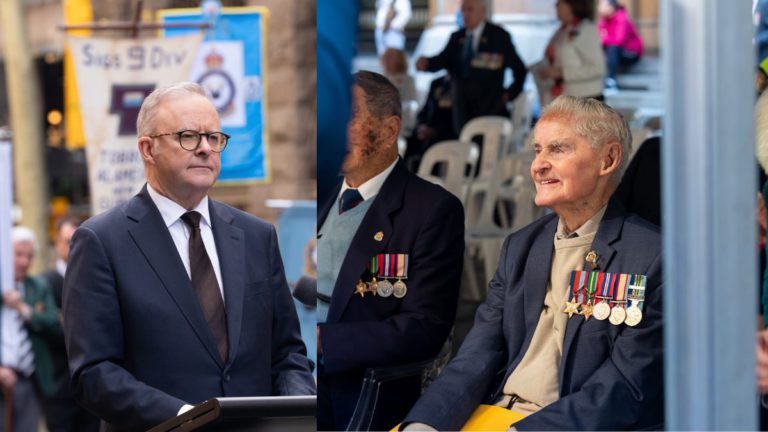
Recalling Prime Minister Ben Chifley’s iconic words, “Fellow citizens, the war is over,” Albanese honoured the courage, sacrifice, and resilience of all Australians who fought and those who never returned.
Eighty years ago, Australians gathered here to celebrate the war in the Pacific coming to an end.
Today, we reflect on what victory meant – and what it cost.
We remember the courage of ordinary people facing the extraordinary. Their resilience, mateship and strength of… pic.twitter.com/XJATAg42EE
Albanese reflected on the “ordinary people facing the extraordinary” – from the battlefields of Europe, Asia, and the Pacific to the home front, where men and women “performed miracles of production” to sustain the war effort.
Acknowledging the horrors of the conflict, including the prisoner-of-war and concentration camps, Albanese said the courage and unity of Australians alongside their allies “turned the tide” of history.
“As we stand here today, think of everyone who gathered 80 years ago… and the silence of those who never came home,” he said, closing with the timeless tribute: “Lest we forget.”
Support our Journalism
No-nonsense journalism. No paywalls. Whether you’re in Australia, the UK, Canada, the USA, or India, you can support The Australia Today by taking a paid subscription via Patreon or donating via PayPal — and help keep honest, fearless journalism alive.
What is Azadi – freedom? This is a question that looms large in an age marked by two profound and troubling issues that may annihilate the entire humanity – ongoing climate catastrophe and the unchecked villainy of artificial intelligence in our quotidian lives. Never in the history of human civilisation has one encountered this precarious condition where humanity and the planetary are in a constant battle against a handful of demagogues and oligarchs.
Let me state that Azadi may mean different things to different people, and I have absolutely no qualms about it, as long as such ideas do not quash others’ democratic spaces as found in the tukde tukde performatives.
But first things first. Azadi is not a fictional narrative, as it has now become commonplace. In fact, to equate freedom with fiction would account for a dangerous liaison. One only needs to read George Orwell’s Animal Farm, or for that matter, even a cursory glance around us will give us enough substance to see through the lurking threat of Azadi that is mostly served to us through the language of fictional narrative offered by the state-corporate duo. Azadi, after all, is not sloganeering.
Keeping this rhetoric aside, the point I am trying to make is that Azadi is something that only exists in practice. Of course, imagination remains central to its formulation. It is on the boiling pot of the imagination that we can also imagine our freedom and the freedom of others. It needs to be said with conviction that what cannot be imagined can never be created. No wonder, human history is replete with instances where imaginative people and spaces are always seen as sacrilegious bedfellows.
The cherry-picked fairy tales of development and globalisation offered under the guise of Azadi have a brutal face, which gets airbrushed as essential crusades for the sake of humanity. As the American Bar Association exposes this unchecked villainy of the US government, “The government separated more than 2000 children from their parents at the border during the period of mid-April to June” in 2018.
ICE #immigration enforcement focuses limited assets on targeting unlawfully present #criminals and those who pose a threat to national security, public #safety and #border security.
— U.S. Immigration and Customs Enforcement (@ICEgov) February 25, 2024
With another 11 million people set to be deported by the US to their places of origin, one could witness a virulent brand of xenophobia. The demonstration of such unabashed fascistic proclivities subtends the tyranny of the Azadi that is served to us. Hegel knew it better. He remarked,
“somewhere that all great world-historic facts and personages appear, so to speak, twice. He forgot to add: the first time as tragedy, the second time as farce.”
The thing about such farces is they have no national colour. They are globally available in different forms and manifestations. For example, there is a disproportionate sway over what we really mean when we dream of becoming a vishwaguru. For example, a report suggests that:
“As of 2025, Instagram Reels have become a central feature of the platform, engaging over 2 billion users monthly. India has become the largest market for Instagram Reels, with 385.35 million users, far outpacing the United States (166.15 million) and Brazil (135.05 million).”
With such a huge spike in the number of youths turning to gadgets and other digital tools in our educational institutions, the touch and smell of books, including the reading habits of many, are diminishing.
Apparently, reading is becoming a hackneyed idea. It needs to be reminded that when reading is lost, thinking spaces are also lost, and so do we lose our future. That one can think differently from the masses, and still come up with a better alternative to resolve the world’s problems, is a power rendered by the dialogical process of reading.
Reading also implies seeing and thinking between what is visible and invisible, to listen to those unheard or unsaid words that the virtual world controls and hides. How can we start that journey of vishwaguru in the wake of the eulogisation of such momentary pleasure that we get from wasting our time watching the reels?
Recently, I raised this issue with a shy, young intellectual – at least, that is how I imagine that nervous person, who otherwise has a knack for showing much promise, but still has to come to terms with how to tread the path of excellence – pointing out that Azadi and life are wedded.
My argument was this: that as humans, we have very limited time on our hands, and therefore, what makes it important is how we make use of whatever time we have been given in this life – a point that the addressee is still trying to grapple with. The infantile fantasy that one can get Azadi without engaging with the world and its absurdities has become a disturbing regularity of our screen-addicted youths, much in the way that the possibility of life on an alternative planet can save us all. Another farce indeed!
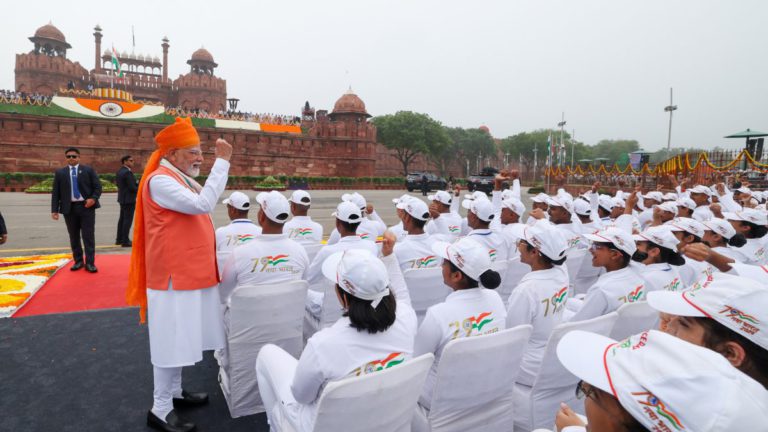
Sharing glimpses from the Independence Day celebrations at the Red Fort.
This is a great occasion to remember our freedom fighters and reaffirm our commitment to building a stronger, self-reliant India. pic.twitter.com/hdieMsJS9I
As we enter the 79th Independence Day, we must promote cultures of reading and more awareness about sustainable development. The idea of Azadi is very central to both. Azadi is not just to be reduced to national freedom or the freedom to butcher this planet while searching for life on another one. It is also the individual freedom that matters – that freedom which prioritises and protects the freedom of the other. Life is all about choices. The desire must match our actions. As Troilus pointed out to Cressida in Shakespeare’s Troilus and Cressida, arguing that desire may be limitless, but achievement is not:
“This is the monstrosity in love, lady, that the will is infinite, and the execution confin’d; that the desire is boundless, and the act a slave to limit.”
Support our Journalism
No-nonsense journalism. No paywalls. Whether you’re in Australia, the UK, Canada, the USA, or India, you can support The Australia Today by taking a paid subscription via Patreon or donating via PayPal — and help keep honest, fearless journalism alive.
More than half of Australia’s full-time employees now spend at least part of their working week at home, with the trend most pronounced in the nation’s largest metropolitan areas, according to new Roy Morgan research.
The survey shows that 6.7 million Australians — or 46% of the total employed population — work from home at least some of the time. That proportion climbs to 51% among full-time employees, while just over a third (36%) of part-time workers enjoy similar arrangements.
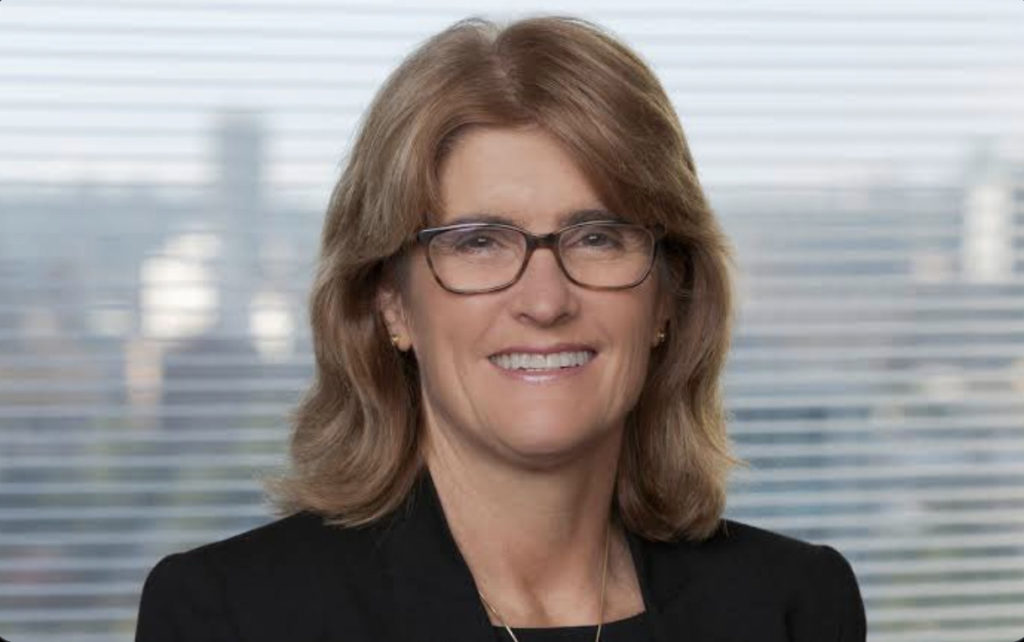
Roy Morgan chief executive Michele Levine said the latest findings confirmed remote work had become “a permanent and distinct feature of Australia’s employment sector”, reshaping how and where Australians do their jobs.
The capital cities dominate the work-from-home map, led by Sydney where 55% of workers now spend part of their week away from the office. Melbourne (52%) and Canberra (51%) are close behind. In smaller capitals, the rates are lower — Hobart (45%), Adelaide (44%), Brisbane (43%) and Perth (40%).
In regional Australia, work-from-home rates are significantly lower, with Queensland topping the list at 40% and Western Australia trailing at just 31%. NSW (39%), Victoria (36%), the Northern Territory (34%) and South Australia (33%) also fall below the national average.
The likelihood of working from home varies sharply across sectors. The finance and insurance industry leads with 66% of workers operating remotely, followed by communications (61%), property and business services (57%), and public administration and defence (56%). By contrast, retail has the lowest rate at 31%, alongside recreation and personal services (37%) and transport and storage (38%).
Income levels also influence remote work access. Two-thirds (64%) of those earning $300,000 or more work from home, compared with much lower rates for those on modest incomes.
Workplace size is another factor. Sole traders and the self-employed have the highest proportion of remote work at 55%. Small businesses with 5–24 employees are least likely to offer the arrangement, with just 38% working from home.
The Victorian Government has pledged to legislate the right for eligible workers to work from home at least two days a week, a move expected to reignite national debate over the benefits and drawbacks of remote work. Supporters point to increased flexibility, reduced commuting, and improved work-life balance, while critics raise concerns over collaboration, workplace culture, and long-term productivity.
The findings come ahead of next week’s federal Economic Reform Roundtable, which will bring together leaders from business, unions, civil society, and government. Among the key issues on the agenda will be ways to lift productivity and address Australia’s persistently high labour under-utilisation, which currently affects more than 3.3 million people. The role of remote work in meeting these challenges is likely to be a central talking point.
Support our Journalism
No-nonsense journalism. No paywalls. Whether you’re in Australia, the UK, Canada, the USA, or India, you can support The Australia Today by taking a paid subscription via Patreon or donating via PayPal — and help keep honest, fearless journalism alive.
However, a common obstacle to addressing bullying is that parents and schools often disagree about whether a particular situation constitutes bullying.
A study in Norwegian schools found that when parents think their child is being bullied, around two-thirds of the time, the school does not agree. There are also cases in which the school says a child is bullying others, but the child’s parents don’t agree.
Why is it so complicated? How can parents approach this situation?
What does ‘bullying’ mean?
When we look at the definition of bullying, it is not surprising disagreements occur. Identifying bullying is not clear-cut.
involves a power imbalance, with victims feeling unable to stop the problem.
After a report of bullying, what does the school do?
When a student or parent reports bullying, usually the first thing a school does is talk with students, teachers and parents, and observe interactions between students.
However, there are many challenges in working out whether behaviour is bullying.
First, bullying often occurs when adults are not around and students often don’t tell teachers, so direct observation is not always possible.
Second, even if a teacher is present, social forms of bullying can be very subtle, such as turning away to exclude someone, or using a mocking facial expression, so it can be easily overlooked.
Third, determining whether there is “intent to harm” can be difficult as students accused of bullying may claim (rightly or wrongly) they were “only joking” or not intending to hurt or upset.
Fourth, the issue of power is not easy to determine. If the student is older or physically bigger, or if multiple students are involved in bullying, a power difference may seem apparent. But when power is based on popularity, a power difference may not be clear. There are also cases in which students may deliberately accuse others of bullying to get them into trouble (which may in itself constitute bullying).
Finally, not all aggressive behaviour is bullying. For example, conflict that involves arguments or fights between equals is not bullying, as there is no power imbalance. However, this situation can still be upsetting.
A more difficult situation occurs when the victim of bullying reacts aggressively – such as when they lash out angrily to taunts. The aggressive response of the victim may be more visible to teachers than the bullying that provoked the outburst, and this can make the direction of bullying difficult for schools to ascertain.
What if the school and parents disagree?
A school may not prioritise limited resources to resolve cases they do not see as bullying. This can leave the student languishing and can be very distressing for families.
However, research shows parents’ reports that their child has been bullied predict an increased risk of later child anxiety and depression, regardless of whether school staff concur or were even asked if the child was bullied.
So whether or not the school initially agrees a child is being bullied, it is important to improve the situation.
What can be done?
Sometimes, by taking steps to address the situation, the school can find out if bullying is occurring.
For example, sometimes children are upset by behaviours that may seem innocuous – such as humming, tapping or standing close. If this behaviour is not intended to hurt, we would expect children to reduce this when made aware it is upsetting. However, if the behaviour increases or continues, even with reminders, there would be more reason to believe it is deliberately intended to provoke (and is bullying).
One helpful strategy for parents is to keep a careful record of the child’s experiences – exactly what the child experiences and how it impacts them. This can help establish a pattern of hurtful behaviours over time.
It’s important for parents to maintain a good relationship and ongoing communication with the school (however difficult). As bullying can be a complex and evolving issue, good communication can help ensure issues are promptly managed.
The parent can coach the child to manage the situation – for example, to ask in a friendly and confident way for other students to stop when they are doing things they don’t like. The parent can also help the child plan when they would ask a teacher for help.
By working together, and understanding the problem better over time, schools and families can address behaviour that is hurtful – whether or not there is initial agreement it is “bullying”.
If this article has raised issues for you, or if you’re concerned about someone you know, call Lifeline on 13 11 14 or Kids Helpline on 1800 55 1800.
No-nonsense journalism. No paywalls. Whether you’re in Australia, the UK, Canada, the USA, or India, you can support The Australia Today by taking a paid subscription via Patreon or donating via PayPal — and help keep honest, fearless journalism alive.
Indian origin Bodhana Sivanandan from the UK has made chess history by becoming the youngest female ever to defeat a grandmaster.
10-year-old Bodhana Sivanandan, who lives in northwest London, achieved the feat in Liverpool, where she overcame 60-year-old grandmaster Pete Wells in the final round of the 2025 British Chess Championships on 10 August 2025.
At just 10 years, five months, and three days old, Sivanandan surpassed the previous record held by American player Carissa Yip, who was 10 years, 11 months, and 20 days old when she beat a grandmaster in 2019, according to the International Chess Federation (FIDE).
(Image: X – @ecfchess)
The victory secured her the title of Woman International Master — one step below the Woman Grandmaster designation. The Grandmaster title itself remains the highest honour in chess, held by players such as reigning world champion Gukesh Dommaraju and world No. 1 Magnus Carlsen. Her father told the BBC in 2024 that no one in their family had previously excelled at the game.
(X – @SusanPolgar)
The title of the youngest male to defeat a grandmaster also belongs to an Indian-origin chess prodigy. On February 18, 2024, Ashwath Kaushik from Singapore set a new milestone by becoming the youngest player in history to beat a grandmaster in a classical chess match. India-born Ashwath won against GM Jacek Stopa at the age of eight years, six months, and 11 days at the 22nd Burgdorfer Stadthaus Open in Switzerland.
Ashwath Kaushik is the YOUNGEST-EVER player to beat a GM in classical chess 👏🤯 pic.twitter.com/2ejHYX2a5K
No-nonsense journalism. No paywalls. Whether you’re in Australia, the UK, Canada, the USA, or India, you can support The Australia Today by taking a paid subscription via Patreon or donating via PayPal — and help keep honest, fearless journalism alive.
India’s relationship with the Global South has deep roots in shared histories, common struggles, and mutual aspirations for development and self-reliance. As one of the largest and most influential countries in the Global South, India’s role has evolved from being a leader in the Non-Aligned Movement (NAM) to becoming a pivotal player in contemporary South-South cooperation.
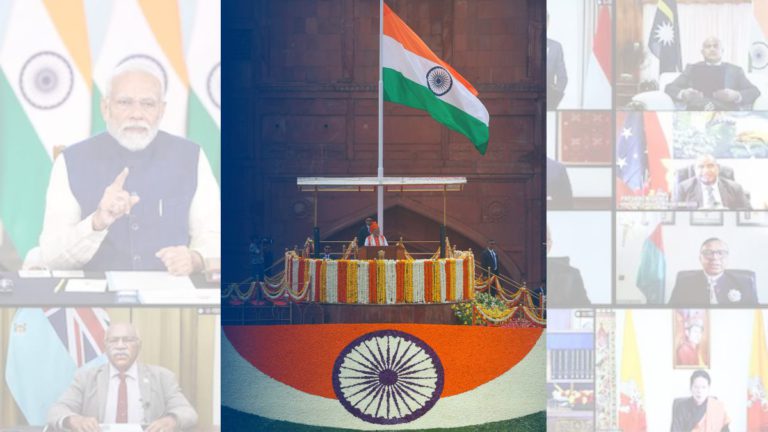
India’s partnership with the Global South was propelled to a whole new level by Prime Minister Narendra Modi when he organised the first Voice of the Global South Summit (VOGSS) on 12–13 January 2023, within a fortnight of India taking over the Presidency of the G20. This Summit was followed by another later in the year and the third one in 2024.
VOGSS is India’s endeavour to provide a common platform to deliberate on the concerns, interests, and priorities of developing countries, exchange ideas and solutions, and unite in voice and purpose to forge development solutions.
The concept of the Global South encompasses regions in Latin America, Africa, Asia, and Oceania, representing developing nations with shared historical contexts of colonisation and economic marginalisation. India’s role within the Global South is pivotal, leveraging its growing economic power, democratic framework, and strategic geopolitical positioning to advocate for equitable global governance.
India’s economic cooperation with the Global South is characterised by trade, investment, and development assistance. Trade relations have seen substantial growth, particularly with African and Latin American countries. For instance, India’s trade with Africa surged from $5 billion in 2001 to $90 billion in 2020, making India Africa’s third-largest trading partner. Similarly, India’s trade with Latin America reached $50 billion in 2020, driven by oil imports and exports of pharmaceuticals, automobiles, and engineering goods.
Investment is another critical aspect of India’s economic engagement. Indian companies have made significant investments in sectors such as telecommunications, pharmaceuticals, agriculture, and mining across the Global South. In Africa, Indian enterprises have invested over $50 billion, creating jobs and contributing to infrastructure development. In Latin America, Indian investments in sectors like IT and renewable energy are on the rise, promoting sustainable development.
Moreover, India’s development assistance programmes underscore its role as a partner in progress. Through the Indian Technical and Economic Cooperation (ITEC) programme, India has provided training, capacity building, and technical assistance to over 160 countries. This programme covers a wide range of areas, including healthcare, education, agriculture, and information technology, thereby contributing to human resource development in the Global South.
In recent years, India’s foreign policy has increasingly prioritised the Global South. The “India–Africa Forum Summit,” the “Forum for India–Pacific Islands Cooperation” (FIPIC), and the India–CARICOM Summits are notable examples of India’s structured engagements aimed at deepening ties with Africa, the Pacific Island nations, and South America respectively. These platforms facilitate dialogue, development cooperation, and investment partnerships.
Furthermore, India’s leadership in the International Solar Alliance (ISA) exemplifies its role in promoting sustainable development through South-South cooperation. The ISA, an initiative launched by India and France in 2015, aims to mobilise resources and promote solar energy adoption in tropical countries. With 121 member countries, many of which are from the Global South, the ISA underscores India’s commitment to addressing climate change and promoting renewable energy.
VOGSS provides a platform for emerging economies and nations from the Global South to express their unique perspectives, challenges, and innovative solutions on the global stage. Initiated with the goal of amplifying the voices of low and middle-income countries, the Summit leverages its influence to call upon developed economies to reorient their approach towards the underdeveloped world.
India convened the first VOGSS, a one-of-a-kind event, in the early weeks of India’s G20 Presidency in January 2023 in virtual format, spread across 10 sessions, to focus international attention on the priorities, perspectives, and concerns of the developing world. PM Modi presided over the inaugural and concluding leaders’ sessions. India was able to channel the inputs received in these sessions into the deliberations and discourse of the G20.
Following the success of the first VOGSS, India hosted the second on 17 November 2023, under the theme “Together, for Everyone’s Growth, With Everyone’s Trust.” The theme extended India’s philosophy of Vasudhaiva Kutumbakam and PM Modi’s governance ideology of Sabka Saath, Sabka Vikas, Sabka Vishwas. The key focus of the Summit was threefold:
To share the outcomes and progress achieved in the priorities of the Global South during India’s G20 Presidency.
To amplify the voice of the Global South and deliberate on the way forward to achieve their common objectives.
To sustain the momentum of exchange and sharing of ideas and best practices among countries, generated towards the common aspiration of a more inclusive, representative, and progressive world order.
Both editions of the Summit saw participation from over 100 countries in the Global South.
The third VOGSS, with the overarching theme “An Empowered Global South for a Sustainable Future,” served as a platform to expand discussions from the previous Summits on a range of complex challenges that continue to affect the world—such as conflicts, food and energy security crises, climate change, and debt burdens—all of which disproportionately affect developing countries.
At the Summit, the countries of the Global South deliberated on challenges, priorities, and solutions for the Global South, particularly in the developmental domain. The Summit witnessed the participation of 173 dignitaries from 123 countries, including 21 Heads of State/Government, 34 Foreign Ministers, and 118 Ministers and Vice Ministers. This was a testimony to India’s sincerity and commitment in advancing the collective developmental journey of the Global South, and to the priority accorded by PM Modi to engaging with the Global South.
PM Modi put forward a proposal for a comprehensive Global Development Compact comprising four elements:
Trade for development
Capacity building for sustainable growth
Technology sharing
Project-specific concessional finance and grants
With participation from countries representing over 60% of the world’s population, the Summit reinforced the centrality of the Global South in the collective pursuit of a future that is inclusive for all.
A significant achievement of India’s support and promotion of the interests of the Global South was the admission of the African Union as a full member of the G20 on the first day of India’s Presidency of the G20 on 9 September 2023.
India’s geopolitical dynamics with the Global South have evolved significantly over the years, reflecting its growing economic power, strategic interests, and aspirations to be a major player on the global stage. India’s proactive engagement with the Global South underscores its commitment to a multipolar world where developing nations have a significant voice in global affairs.
Through sustained efforts in diplomacy, economic cooperation, and strategic partnerships, India is poised to play a pivotal role in the evolving dynamics of the Global South. As the world navigates complex challenges such as climate change, economic inequality, and geopolitical shifts, India’s role as a partner to the Global South is poised to become increasingly significant.
As both a leader and a partner, India continues to play a crucial role in shaping the future of the Global South. Through sustained cooperation, mutual respect, and shared aspirations, India and the Global South can collectively navigate the challenges and opportunities of the 21st century.
Contributing Author: Ambassador Ashok Sajjanhar served in the Indian Foreign Service for 34 years, including as India’s Ambassador to Kazakhstan, Sweden, and Latvia. Decorated by Kazakhstan, Latvia, and the Universal Peace Federation, he is a noted commentator on international relations, foreign policy, and global affairs.
Support our Journalism
No-nonsense journalism. No paywalls. Whether you’re in Australia, the UK, Canada, the USA, or India, you can support The Australia Today by taking a paid subscription via Patreon or donating via PayPal — and help keep honest, fearless journalism alive.
Prime Minister Anthony Albanese has extended his congratulations to everyone in Australia and around the world celebrating India’s 79th Independence Day.
“As the Tiraṅgā flies proudly around the world, Indians can reflect with joy on all their nation has achieved in the 78 years…”
In his message, Albanese reflected on India’s achievements since that “extraordinary midnight” when the nation gained freedom, a moment described by then-Prime Minister Jawaharlal Nehru as “the day appointed by destiny.”
“As a long-standing and consistent friend, Australia celebrates India’s success,” Albanese said, highlighting the strong economic, strategic, and community ties shared between the two nations, built on respect, friendship, and cooperation.
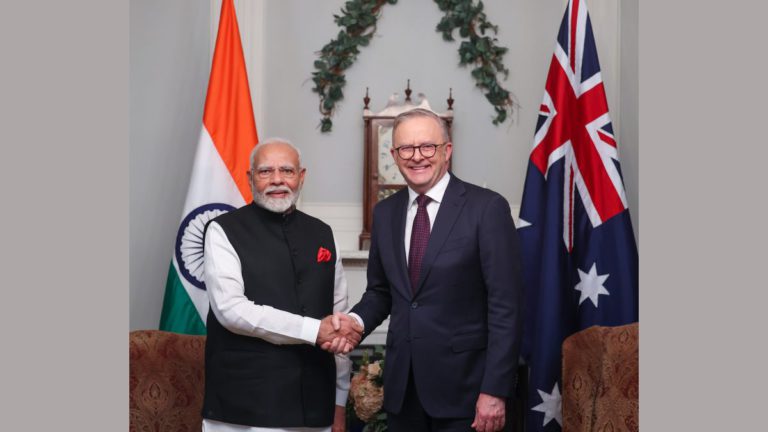
This year also marks the fifth anniversary of the Australia-India Comprehensive Strategic Partnership. Albanese expressed pride in the progress achieved and optimism for the future.
“At the heart of our partnership is the million-strong Indian-Australian community,” he said, praising their contributions as students, professionals, and community leaders who enrich Australia while strengthening links with their heritage.
“Wherever you are, and however you celebrate, may your gatherings be filled with joy,” the Prime Minister concluded.
Support our Journalism
No-nonsense journalism. No paywalls. Whether you’re in Australia, the UK, Canada, the USA, or India, you can support The Australia Today by taking a paid subscription via Patreon or donating via PayPal — and help keep honest, fearless journalism alive.
Foreign Minister Penny Wong says Australia is working with its Pacific neighbours to “advance our shared priorities and shape a peaceful, stable and prosperous Blue Pacific.”
Speaking from Suva during the Pacific Island Forum Foreign Ministers’ Meeting, Wong described the Pacific as standing “at a pivotal juncture” and said,
“In a time of global uncertainty, regionalism matters more than ever.”
Australia is working with the Pacific family to advance our shared priorities and shape a peaceful, stable and prosperous Blue Pacific.
It is a privilege to be back in Suva for the Pacific Island Forum Foreign Ministers’ Meeting. pic.twitter.com/Fj0WbpIXSS
Earlier, in a dramatic ceremony, senior ministers from Australia and Vanuatu climbed to the summit of Mount Yasur on the island of Tanna to initial the landmark Nakamal Agreement, ahead of its formal signing by the two countries’ prime ministers next month.
Vanuatu and Australia are deepening our partnership with a focus on respect, shared values and cultural and spiritual connections.
Here on Prime Minister Napat's home island of Tanna – we are working together to transform our relationship. pic.twitter.com/0ItTybqpm8
Australia is set to invest around $500 million into Vanuatu over the next decade under the pact, replacing a 2022 bilateral security agreement that Vanuatu later abandoned. While many details remain confidential, officials have described the deal as “transformational.”
Deputy Prime Minister Richard Marles said it reflects a “shared destiny,” adding,
“What this agreement really does is, for the first time, acknowledge what has always been the truth… our future is very much bound together.”
Vanuatu Prime Minister Jotham Napat called the deal a “win-win,” highlighting benefits ranging from security cooperation and economic transformation to labour mobility and financial support.
Today, Australia and Vanuatu reached a milestone that will transform the relationship between our two countries, with the finalisation of negotiations on the Nakamal Agreement.
This agreement represents an ambitious step in the partnership between our two countries — one that… pic.twitter.com/MDHqlbRBSs
The Nakamal Agreement is expected to cover infrastructure, climate resilience, economic development, and security support, although visa arrangements for Ni-Vanuatu citizens remain unresolved. While Australia has not committed to visa-free travel, officials are open to discussing broader travel liberalisation.
The agreement also comes amid efforts to counter China’s growing influence in Vanuatu, where Beijing has funded major infrastructure projects and gifted a $31 million presidential palace. While the pact does not grant Australia veto power over Vanuatu’s external security partnerships, officials hope it strengthens Canberra’s position as Vanuatu’s principal security partner.
Support our Journalism
No-nonsense journalism. No paywalls. Whether you’re in Australia, the UK, Canada, the USA, or India, you can support The Australia Today by taking a paid subscription via Patreon or donating via PayPal — and help keep honest, fearless journalism alive.
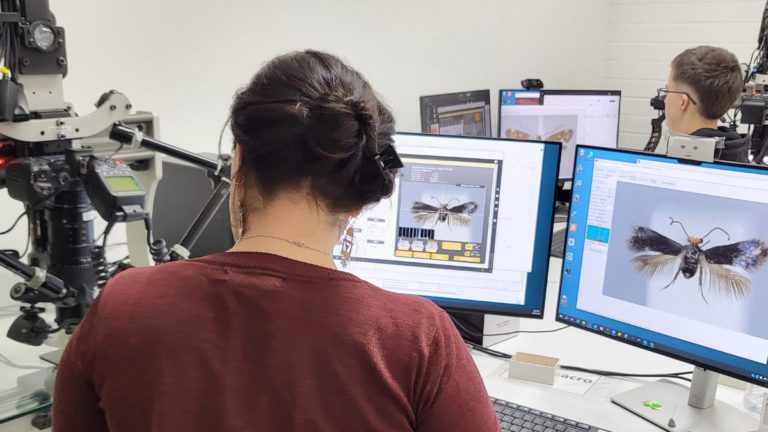
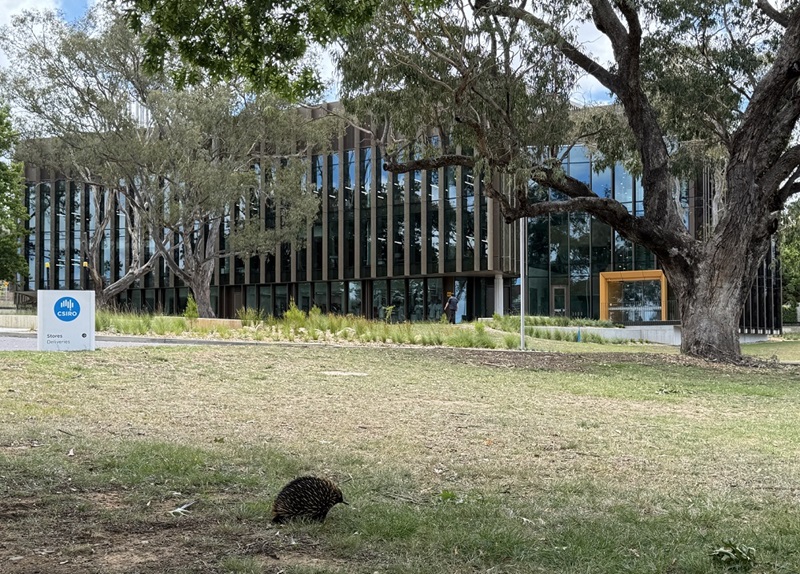
The new National Research Collections Australia building, aptly named Diversity, brings together the Australian National Wildlife Collection and the Australian National Insect Collection, whose specimens have been gathered over 150 years.
Robust, temperature-controlled vaults, resistant to bushfire and pests, protect everything from insects to wildlife, while cutting-edge laboratories open fresh possibilities for research and collaboration.
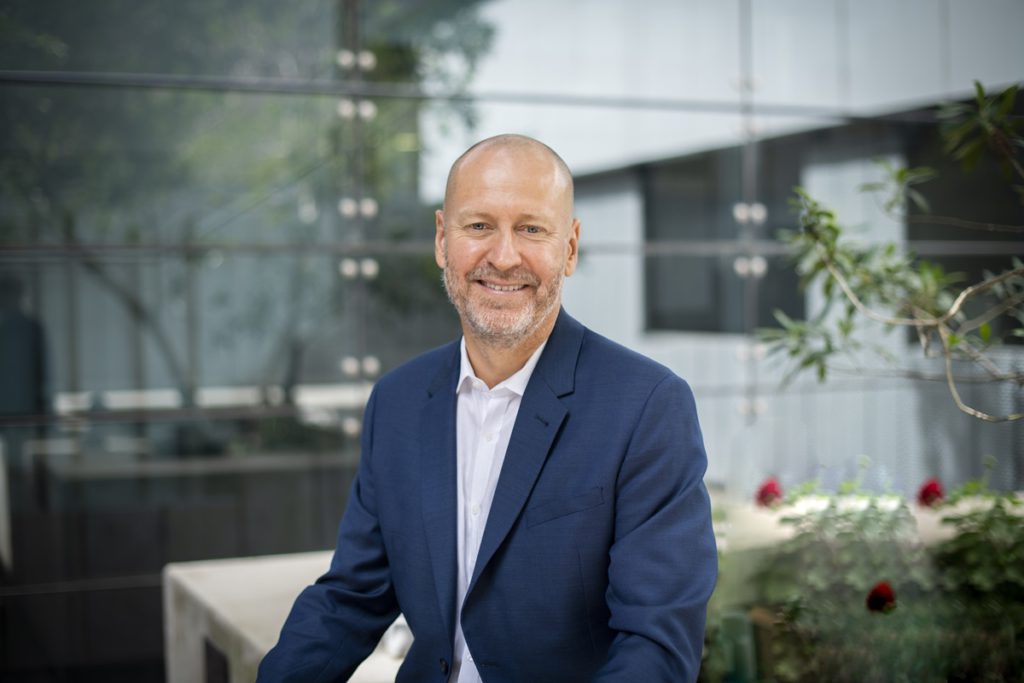
Image: CSIRO Chief Executive Dr Doug Hilton (Source: CSIRO)
CSIRO Chief Executive Dr Doug Hilton said the collections have “quietly underpinned Australian science, policy, agriculture, biosecurity, and biodiversity conservation” for over a century. He described them as:
“a hidden powerhouse, supporting everything from tracking pest incursions to discovering new species and understanding the genetic diversity of Australia’s native ecosystems.”
This work, he noted, “contributes directly to the national interest,” informing biosecurity, climate resilience, and land management strategies while addressing “one of the most pressing questions of our time: How do we protect biodiversity in a changing world?”
With new genomics laboratories and digitisation facilities, Diversity will allow scientists to extract and share more information than ever before, linking physical collections to digital platforms that range from DNA sequences to high-resolution imagery.
Image: CSIRO Director for National Collections and Marine Infrastructure Toni Moate (Source: CSIRO)
For CSIRO Director for National Collections and Marine Infrastructure Toni Moate, the building represents a leap forward. “Our research teams here keep finding new ways to use our biological collections to create a better future for Australians – from using spider wasp venoms to source new pharmaceuticals, all the way through to using historic reptile collections to track how animals respond to climate change,” she said.
“This new facility will only accelerate this incredible work and enable us to move into new areas of research.”
Image: Dr Clare Holleley is an evolutionary biologist who specialises in historical epigenomics and the epigenetics of environmentally controlled reptile sex determination. She leads the Temporal Epigenomics team at the Australian National Wildlife Collection within CSIRO (Source: CSIRO)
Dr Clare Holleley, Director of the Australian National Wildlife Collection, emphasised the urgency of the mission. “Nature is declining globally at a rate unprecedented in human history and these biodiversity collections serve as a library of life on Earth and a resource for caring for the environment,” she said.
The potential of these collections, she explained, lies in their ability to reveal long-term environmental trends and prepare species for future challenges. “In this new building, we’re solving the problems that nature presents to us in real time,” she said.
“Our researchers are often the very first people in the world to see a particular specimen, sequence a gene or put together pieces of the puzzle in a way never been done before – it’s incredibly rewarding.”
Designed by architecture firm Hassell in close consultation with researchers and engineers, the facility was built over just two years, with the relocation of the specimens taking another year.
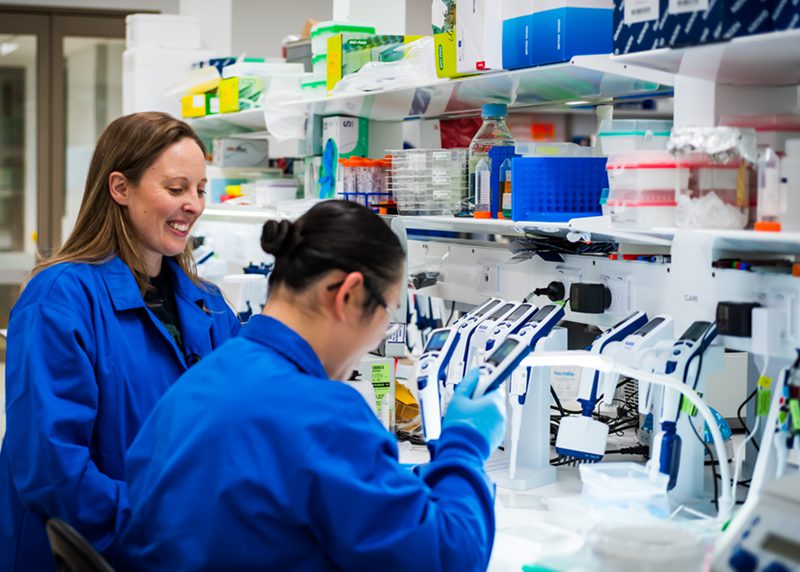
Image: The molecular lab in our new collections building brings our specimens together with cutting-edge museomics.(Source: CSIRO)
The building is not open to the public, but its vaults house treasures such as 55,000 birds representing 99 per cent of Australian species, 17,000 orchids preserved in ethanol, and the world’s largest collection of Australian insects – more than 12 million in total.
Scientists and collaborators from around the globe will now have access to these specimens, making Diversity not just a guardian of the past, but a catalyst for future breakthroughs.
Support our Journalism
No-nonsense journalism. No paywalls. Whether you’re in Australia, the UK, Canada, the USA, or India, you can support The Australia Today by taking a paid subscription via Patreon or donating via PayPal — and help keep honest, fearless journalism alive.
India will celebrate its 79th Independence Day on 15 August 2025 under the theme “Naya Bharat”, envisioning a prosperous and self-reliant nation by 2047.
While 78 full years have passed since independence in 1947, the event is counted inclusively — making this the 79th celebration.
On the eve of our Independence Day, Rashtrapati Ji has given a thoughtful address in which she has highlighted the collective progress of our nation and the opportunities ahead. She reminded us of the sacrifices that paved the way for India's freedom and called upon every citizen…
India’s Prime Minister Narendra Modi will hoist the tricolour at the Red Fort, assisted by Flying Officer Rashika Sharma, followed by a 21-gun salute and the national anthem played by an Indian Air Force band featuring Agniveer Vayu musicians. Two Mi-17 helicopters will shower flower petals over the crowd.
The event will host around 5,000 guests, including sanitation workers and community champions, and will feature parades, cultural performances, and the Har Ghar Tiranga campaign. Public arrangements include early metro services, cloakrooms, and wheelchair assistance.
Global goodwill poured in ahead of the celebrations. The Royal Embassy of Saudi Arabia, the embassies of Iran and Bahrain, and former Israeli ambassador Naor Gilon extended warm wishes to India.
The Royal Embassy of Saudi Arabia extends warm congratulations to the Republic of India and its friendly people on the occasion of its 79th Independence Day, wishing continued progress and prosperity. pic.twitter.com/rnD4gB0SXS
— Saudi Embassy in New Delhi (@KSAembassyIND) August 14, 2025
The Embassy of the Islamic Republic of #Iran in New Delhi congratulates the Government and people of #India on the 79th Independence Day, wishing them health, progress, and continued friendship and cooperation between our two nations. 🇮🇷🤝🇮🇳#IndependenceDay2025… pic.twitter.com/KX8G0hU5L9
Mir Yar Baloch, a leader advocating Balochistan’s independence, sent a heartfelt message honouring India’s freedom fighters and likening India’s anti-colonial struggle to Balochistan’s fight for sovereignty. He called for stronger India–Balochistan ties to counter “Pakistan’s vile terrorism” and hailed the “eternal friendship” between the two peoples.
Republic of Balochistan Wishes India a Happy 79th Independence Day Mir Yar Baloch,
The Republic of Balochistan, home to sixty million patriotic Baloch, extends its warmest, most heartfelt congratulations to the 1.4 billion proud people of India on this glorious occasion of your… pic.twitter.com/f92q4EOTC4
India’s Independence Day festivities will once again blend traditional ceremonial grandeur with a message of resilience, unity, and future aspirations, reminding the nation of the sacrifices that paved the way for freedom.
Support our Journalism
No-nonsense journalism. No paywalls. Whether you’re in Australia, the UK, Canada, the USA, or India, you can support The Australia Today by taking a paid subscription via Patreon or donating via PayPal — and help keep honest, fearless journalism alive.
Over the next two decades, the average Australian worker is likely to change occupations at least twice.
Rapid technological change and longer working lives mean the days of having “one job for life” are long gone. New occupations will also appear and some older ones will shrink or vanish. And our preferences change.
So Australians’ ability to adapt to new occupations will be crucial for their wellbeing at work and for national productivity.
In a new Productivity Commission interim report, released today, we examine how Australia can build a skilled and adaptable workforce.
Here’s what we recommend for schools, mid-career learning and entering new occupations.
Can we help schools teach basic skills?
Being able to adapt in the workforce starts with having basic skills that can be transferred across different occupations. These are taught at school and include reading, maths and basic digital literacy.
But many Australian students lack these skills. For example, the most recent NAPLAN results show about 10% of students need additional support and about 20% are “developing” towards expectations.
Gaps in outcomes for students from disadvantaged groups emerge early and worsen over time. For example in Year 3, on average, students with parents who did not finish high school are two years behind in reading compared to students with parents with a bachelor’s degree. By Year 9, they are five years behind.
Students who fall behind also pose a huge challenge for teachers, who may need to teach a broad range of levels within one class. Our report found 53% of schools had the highest possible range of achievement levels when it came to NAPLAN scores.
To build these students’ skills, the Productivity Commission proposes investment in a comprehensive online bank of high-quality lesson planning materials. Some states and school systems already have, or are developing, banks of lesson plans. There is an existing central resource, but it requires updating and expanding.
A central bank could help teachers support students of all abilities in their classes. These would be available to all teachers, no matter what type of school they teach at. They would cover all aspects of the Australian Curriculum from the first year of school to Year 10.
Our report also found generative artificial intelligence (AI), if implemented well, has tremendous potential to support students who are falling behind (and to challenge those who are ahead).
We propose a national approach to “edtech” – including a stocktake of what’s currently used. This approach could also draw on the combined purchasing power of states to provide approved AI tools at a cheaper price than what schools could procure alone.
Can we make it easier to train and study mid-career?
Lifelong learning is also vital for adaptability. Workers who improve their skills or gain new ones over their working lives are more likely to adjust successfully to new technology and developments in their occupation.
We found sole traders and small and medium enterprises provided 65.9% of Australian jobs, yet their workers tend to receive less training than those in larger firms. So the Productivity Commission recommends trialling financial incentives (such as a tax credit) to encourage training for staff working in these organisations.
Some workers also need new qualifications to change occupations. They may look to get credit from their new institution for some of their prior experience to speed up their study.
But this system can be complicated. Providers get less revenue if students finish their courses more quickly and may be hesitant to give credit for prior learning. It can be also hard to determine what experiences, including overseas qualifications, should get what specific credits.
So we propose an independent process to assess “recognition of prior learning” and a public register of credit transfer decisions to show students what education pathways they might pursue.
Can we make it simpler to enter a new field?
Occupational entry regulations – or rules that require workers to meet minimum conditions – may also be hampering workers’ adaptability.
Our inquiry found between 15% and 31% of Australian workers are subject to registration or licensing – a higher proportion than as many as 23 European Union countries.
Across different Australian states, the rules for licensing workers vary widely, yet the Productivity Commission found no evidence those states with tighter licensing experience better consumer or worker safety outcomes.
Some of the industries we found has too many regulations included hairdressers, motor vehicle repairers, painters and decorators and air conditioning mechanics.
Many Australian occupations require lengthy qualifications, and in some non-trade occupations the educational requirements have ratcheted up over time.
In trades, trade apprentice numbers have stagnated. And only 54% of trade apprentices have finished within four years of starting their training. So we recommend alternative models are considered. These include a shorter apprenticeship for mature students, more narrowly focused qualifications, and completing coursework prior to a shorter apprenticeship.
Adapting to new job markets is always challenging. But workers who are changing occupations multiple times need to be supported to manage this volatility. Helping Australians to survive and thrive through change is the key to an adaptable workforce.
No-nonsense journalism. No paywalls. Whether you’re in Australia, the UK, Canada, the USA, or India, you can support The Australia Today by taking a paid subscription via Patreon or donating via PayPal — and help keep honest, fearless journalism alive.
The Baloch, Pashtun and Sindhi nations across the world marked 14 August 2025 as ‘Black Day’, and rejecting what they call the artificial celebrations of Pakistan’s independence.
Baloch and Pashtun leaders have condemned Pakistan as a “terrorist state” and marked its independence day on 14 August as a “black day,” accusing Islamabad of decades of occupation, resource plunder, and human rights abuses.
In a statement, prominent Baloch activist Mir Yar Baloch described Pakistan as “a geopolitical liability and a hub of global terrorism, fake jihad and instability,” calling for the international community to seize its nuclear weapons and impose sweeping sanctions.
He accused Pakistan’s military of operating “as a mafia,” orchestrating and exporting terrorism across borders while illegally exploiting Balochistan’s natural wealth.
Artificial state of Pakistan is not just a state sponsor of terrorism, it is itself a terrorist state. Its very creation has brought nothing but bloodshed, instability, and destruction to the region. This artificial entity has no moral or legal legitimacy to… pic.twitter.com/BXz4LYR0ge
Dr Tara Chand, president of the Balochistan Congress and former Balochistan cabinet minister, said the day was “one of mourning” for the Baloch people, marking “the birth of a state founded on hatred, religious fanaticism and intolerance.” He alleged that Pakistan had forcibly annexed Balochistan, unleashed genocide against its people, and destroyed its social fabric.
August 14 is not a day of celebration for the Baloch. it is a day of mourning. It marks the birth of Pakistan, a state founded on hatred, religious fanaticism, and intolerance, whose existence has fueled waves of terrorism across the world.
On the same day, Pashtun residents in Pakistan-occupied Pashtunistan staged protests in Bajaur’s Mamund and Umaray Chowk, waving black flags against what they called oppressive military operations.
Video from PoP, Pakistan Occupied Pashtunistan: 14 August, 2025 Mamund, Umaray Chowk: During a protest against the oppressive operation by the Pakistani army, people expressed their grief and anger by waving black flags.
Mir Yar Baloch also extended solidarity to India on its 79th Independence Day, likening Balochistan’s struggle for freedom to India’s fight against British colonialism, and called for deeper India-Balochistan cooperation to counter “Pakistan’s vile terrorism.”
Republic of Balochistan Wishes India a Happy 79th Independence Day Mir Yar Baloch,
The Republic of Balochistan, home to sixty million patriotic Baloch, extends its warmest, most heartfelt congratulations to the 1.4 billion proud people of India on this glorious occasion of your… pic.twitter.com/f92q4EOTC4
The leaders criticised the United States for targeting the Baloch Liberation Army instead of sanctioning the Pakistani military, which they accused of sheltering Osama bin Laden and supporting extremist groups.
Instead of targeting and banning the Baloch Liberation Army (BLA), the Trump administration should have imposed tough sanctions on the Pakistani army, the world’s number one terrorist army. This is the same army that sheltered Osama bin Laden for a decade and has long been the… pic.twitter.com/zVrJaOC50Q
Earlier this year, United Nations human rights experts expressed alarm at the “unrelenting” use of enforced disappearances in Balochistan, urging Pakistan to criminalise the practice, ratify the International Convention on Enforced Disappearances, and hold perpetrators accountable. They also criticised repeated internet blackouts, arbitrary detentions, and violence against peaceful protesters and human rights defenders in the province.
Support our Journalism
No-nonsense journalism. No paywalls. Whether you’re in Australia, the UK, Canada, the USA, or India, you can support The Australia Today by taking a paid subscription via Patreon or donating via PayPal — and help keep honest, fearless journalism alive.
A Labour peer of Indian heritage has called for the removal of the statue of Robert Clive outside the Foreign Office in London, criticising its portrayal of the East India Company official as a victorious figure.
Baroness Thangam Debbonaire, speaking at the Edinburgh International Book Festival, argued that the statue presents a misleading view of Clive’s role in India and casts Britain in a poor light for visitors, particularly those of Indian origin. “That statue continues to promote him in a victorious mode and as a symbol of something that had universal good,” she said.
“I don’t think it’s helpful for any visitor to the Foreign Office, particularly those from Indian origins in the diaspora, but also visiting Indian dignitaries, ambassadors, trade ministers, to walk past that statue. It does not present Britain well in the 21st century.”
Designed by Scottish sculptor John Tweed and completed in 1912, the bronze statue shows Clive in formal dress, one hand on a sword and the other holding papers, with friezes depicting seemingly contented subjects.
Debbonaire described this imagery as “not historically accurate and not helpful for our current relationship with India.”
Clive, a controversial figure in British colonial history, is known for his military campaigns in India and his role in expanding the East India Company’s power. Historian William Dalrymple has called him an “unstable sociopath” and a violent corporate predator who plundered India and amassed personal wealth.
Debbonaire said the statue fails to contextualise the violent and exploitative nature of colonial rule and perpetuates a romanticised view of the British Empire.
She pointed to Britain’s handling of the Edward Colston statue in Bristol as an example of providing historical context while acknowledging past harms. “The current presentation of Clive in its place does not achieve that,” she said.
“One of the things that really matters in freedom of expression is an understanding of power and whose stories get told and whose do not.”
Clive was the first British administrator of Bengal, victorious at the Battle of Plassey, and instrumental in establishing British rule in India. Despite his military and administrative achievements, his legacy remains controversial due to corruption, duplicity, and the exploitation of India under his governance.
Downing Street has rejected calls to remove the statue, maintaining its place outside the Foreign Office, even as the debate over Britain’s colonial memorials continues to spark public discussion.
Support our Journalism
No-nonsense journalism. No paywalls. Whether you’re in Australia, the UK, Canada, the USA, or India, you can support The Australia Today by taking a paid subscription via Patreon or donating via PayPal — and help keep honest, fearless journalism alive.
Former Prime Minister of New Zealand Jacinda Ardern and other ex-Labour ministers have declined a request to appear publicly at the Royal Commission of Inquiry into Covid-19, sparking criticism from political opponents who say Kiwis deserve accountability.
Winston Peters, leader of New Zealand First, condemned the decision, saying, “Jacinda Ardern, Chris Hipkins, Grant Robertson, and Ayesha Verrall have all colluded and decided to decline to give evidence at the Covid-19 Royal Commission public hearings. The ‘Podium of Truth’ has become the ‘Podium of Evasion”
“These former ministers do not want to sit in a public hearing and answer the hard questions that every New Zealander deserves to know.”
Peters called for a second inquiry to ensure public accountability.
Jacinda Ardern, Chris Hipkins, Grant Roberston, and Ayesha Verrall have all colluded and decided to decline to give evidence at the COVID-19 Royal Commission public hearings.
The ‘Podium of Truth’ has become the ‘Podium of Evasion’.
Royal Commission chair Grant Illingworth KC emphasised the importance of transparency, stating that public hearings “would significantly enhance public confidence in our process,” as decisions made during the pandemic affected every New Zealander, from livelihoods and businesses to family connections and the economy.
They noted it is convention for interviews with current or former ministers to be private and expressed concern that public broadcasting of their testimony could be misused or tampered with.
Hipkins said he had already been interviewed twice for two hours and provided written evidence. “I didn’t see any value in attending an interview to repeat the same questions that I’d already answered,” he said, adding that suggestions of collusion were false.
Ardern’s spokesperson confirmed to Stuff she had cooperated fully with the commission and remains available for further questions.
ACT leader David Seymour criticised the ministers for avoiding the public hearings, saying the country deserved answers about the consequences of lockdowns and Covid-19 policies.
“I don’t think it’s unreasonable to show up for an hour or two and actually give your side of the story for the posterity of the nation.”
Hearings planned for this week and next have been cancelled due to the ministers’ decision. Illingworth said the commission remains confident it can gather the necessary information without public hearings. Summons powers exist but will not be used, as doing so could create an adversarial dynamic, which is restricted under the commission’s terms of reference.
Support our Journalism
No-nonsense journalism. No paywalls. Whether you’re in Australia, the UK, Canada, the USA, or India, you can support The Australia Today by taking a paid subscription via Patreon or donating via PayPal — and help keep honest, fearless journalism alive.
Three young cricketers of Indian heritage, Aryan Sharma from Victoria and Yash Deshmukh and John James from New South Wales, have been named in Australia’s Under-19 squad for a highly anticipated home series against India.
Cricket Australia announced the 15-player line-up for the five-match tour, which will run from 21 September to 10 October 2025, featuring three day-night 50-over matches and two four-day fixtures in Brisbane and Mackay.
The multi-format series is a cornerstone of Cricket Australia’s long-term player development pathway, designed to provide emerging talent with high-intensity international exposure in both white-ball and red-ball formats. It also serves as a key step in preparations for the ICC U19 Men’s World Cup, to be hosted in Zimbabwe and Namibia in January 2026.
Aryan Sharma, a top-order batsman from Carlton Cricket Club, John James of Northern Districts Cricket Club in New South Wales, and Yash Deshmukh, a promising pace bowler from Fairfield Liverpool Cricket Club, have all been standout performers in their respective state programs.
This series will mark the first assignment for new head coach Tim Nielsen, who previously led the Australian senior men’s team from 2007 to 2011. Nielsen’s wealth of international coaching experience is expected to be a significant asset in preparing the squad to compete against India’s traditionally strong U19 line-up.
Cricket Australia’s Head of National Development, Sonya Thompson, emphasised the importance of the series in shaping the future of Australian cricket. “This series against India provides a valuable opportunity for our young players to experience international cricket in white-ball and red-ball formats, and to test themselves against a high-quality opponent,” she said.
“The multi-format tour is designed to challenge players to adapt and grow, while also giving selectors and coaches meaningful insights ahead of the National U19 Championships in December.”
Cricket Australia says new U19 head coach Tim Nielsen will play a key role in guiding and inspiring the next generation of Australian cricketers.
The tour will be the latest step in a two-year preparation cycle for the World Cup, which has so far included a camp at the National Cricket Centre in Brisbane, an overseas tour to India, and a specialised spin and batting training program on the subcontinent.
Following the India series, players will return to their home states and territories for the National Under-19 Championships in December. Performances there will play a decisive role in determining the final squad for the World Cup.
Full Australia U19 squad: Simon Budge (WA), Alex Turner (VIC), Steve Hogan (QLD), Will Malajczuk (WA), Yash Deshmukh (NSW), Tom Hogan (ACT), Aryan Sharma (VIC), John James (NSW), Hayden Schiller (SA), Charles Lachmund (QLD), Ben Gordon (QLD), Will Byrom (NSW), Kasey Barton (NSW), Alex Lee Young (NSW), Jayden Draper (NSW).
Reserves: Zed Hollick (WA), Tom Paddington (VIC), Julian Osborne (NSW).
Series schedule:
21 Sept – 1st 50-over match (D/N), Ian Healy Oval, Brisbane
24 Sept – 2nd 50-over match (D/N), Ian Healy Oval, Brisbane
26 Sept – 3rd 50-over match (D/N), Ian Healy Oval, Brisbane
30 Sept – 3 Oct – 1st four-day match, Ian Healy Oval, Brisbane
7–10 Oct – 2nd four-day match, Great Barrier Reef Arena, Mackay
With the series offering a rare opportunity for Australia’s U19 cricketers to face one of the strongest youth teams in the world, all eyes will be on Sharma, Deshmukh, and their teammates as they aim to make a statement ahead of next year’s World Cup.
Support our Journalism
No-nonsense journalism. No paywalls. Whether you’re in Australia, the UK, Canada, the USA, or India, you can support The Australia Today by taking a paid subscription via Patreon or donating via PayPal — and help keep honest, fearless journalism alive.
Members of the Indian community in Australia, which numbers almost a million, are being warned about a surge of scam phone calls targeting them with false legal threats.
Fraudsters pretending to represent Indian law enforcement agencies, courts, or other official authorities falsely accuse recipients of involvement in legal or criminal matters in India. These callers often instruct victims to contact or visit the High Commission of India in Canberra to add credibility to their claims.
The High Commission of India has issued a clear advisory emphasising that Indian authorities never ask for personal information over the phone, nor do they demand money transfers or issue threats. Recipients are urged not to engage with these callers, avoid sharing any personal or financial details, and hang up immediately.
The Indian diaspora in Australia is one of the largest and fastest-growing communities, making it a significant target for such scams. The High Commission encourages anyone receiving suspicious calls to report them promptly to the High Commission, the relevant Consulates General of India, or local Australian police.
The High Commission is actively working alongside authorities in both India and Australia to combat these fraudulent activities and protect the Indian community living abroad.
Support our Journalism
No-nonsense journalism. No paywalls. Whether you’re in Australia, the UK, Canada, the USA, or India, you can support The Australia Today by taking a paid subscription via Patreon or donating via PayPal — and help keep honest, fearless journalism alive.
The Albanese government is facing a wave of condemnation from Israel and the federal opposition after Hamas praised Australia’s decision to recognise a Palestinian state, claiming it vindicates the group’s deadly 7 October attacks on Israel.
Prime Minister Anthony Albanese announced on Monday that Australia will formally recognise Palestine at next month’s United Nations General Assembly in New York, subject to conditions including demilitarisation, free and fair elections, and ensuring Hamas plays no role in governance.
Despite those caveats, Hamas co-founder Sheikh Hassan Yousef told The Sydney Morning Herald and The Age that the decision was “an important step towards achieving justice” and reflected “political courage.” He also claimed the move validated Hamas’ attacks, which killed more than 1,200 Israelis and were the deadliest single day for Jewish people since the Holocaust.
The Government should follow the Coalition’s advice and reverse its reckless decision. Then it should quickly move its focus to core issues here at home like the cost of living crisis.
The remarks prompted scathing criticism from Coalition figures. Opposition Leader Sussan Ley said, “When terrorists are cheering your foreign policy, you have got it wrong,” accusing Albanese of ignoring warnings that Hamas would welcome the move. She urged the government to reverse its “reckless decision” and refocus on domestic priorities such as the cost-of-living crisis.
Liberal Senator Michaelia Cash accused the Prime Minister of “emboldening a terror group who murder civilians in cold blood.”
It is sickening, but totally foreseeable, that Hamas – a proscribed terrorist group – has celebrated the Albanese government’s recognition of Palestinian statehood.
Israel’s Deputy Foreign Minister Sharren Haskel also condemned the recognition, saying,
“It’s a pretty disgraceful day when the Australian government is being praised by terrorists… Recognising a Palestinian state rewards the October 7 massacre.”
Albanese rejected claims the decision rewards Hamas, insisting the group “is opposed to two states” and that recognition is “the only way to bring about peace” between Israelis and Palestinians. He also accused hardliners on both sides of opposing a political solution in favour of ongoing violence.
Support our Journalism
No-nonsense journalism. No paywalls. Whether you’re in Australia, the UK, Canada, the USA, or India, you can support The Australia Today by taking a paid subscription via Patreon or donating via PayPal — and help keep honest, fearless journalism alive.
In a historic step towards transparency, accessibility, and inclusion, Fiji’s Ministry of Finance has, for the first time, published the Citizens’ Guide to the 2025/2026 National Budget in English, iTaukei, and Hindi. The landmark initiative aims to ensure that every citizen – regardless of language or location – can understand how government spending decisions affect their daily lives.
Launching the guide today, Deputy Prime Minister and Minister for Finance, Hon. Professor Biman Prasad, said the move marks “yet another significant milestone” in efforts to make the National Budget more accessible and transparent for all Fijians.
The 20-page guide presents the government’s revenue, expenditure, and policy priorities in clear, straightforward language. It breaks down complex economic data and fiscal strategies into easy-to-read sections covering health, education, infrastructure, and other key sectors, alongside economic forecasts and the medium-term fiscal outlook.
“This initiative reflects our deep commitment to inclusivity and accessibility, ensuring that our elders, students, rural communities and citizens can understand the National Budget – what it is, why it matters and how it impacts their daily lives,”
Professor Prasad said.
He stressed that the trilingual release is not just a translation project but a symbolic act of respect for Fiji’s cultural diversity.
“It is a statement of respect for our cultural diversity and a reaffirmation that government information belongs to every citizen. By publishing the Citizens’ Budget in our three major languages, we are bridging communication gaps and empowering our people with the knowledge they deserve,”
he added.
The Ministry hopes the guide will encourage more public engagement with national economic planning, empowering communities to hold decision-makers accountable and to better understand how budgetary policies shape the nation’s future.
All three versions of the Citizens’ Guide to the 2025/2026 National Budget are available for free download from the Ministry of Finance website, ensuring that access to this information is as broad and inclusive as possible.
Support our Journalism
No-nonsense journalism. No paywalls. Whether you’re in Australia, the UK, Canada, the USA, or India, you can support The Australia Today by taking a paid subscription via Patreon or donating via PayPal — and help keep honest, fearless journalism alive.
The United States’ decision to designate the Balochistan Liberation Army (BLA) as a foreign terrorist organisation has sparked outrage among Baloch activists, who call it a politically timed “gift” to Pakistan’s powerful army chief, Field Marshal Asim Munir.
In a statement, Mir Yar Baloch said the Baloch people “are not terrorists” but a nation that has endured:
“78 years of state terrorism, economic plunder, radioactive poisoning from Pakistan’s nuclear tests, foreign invasion, and brutal occupation by the extremist and artificial state of Pakistan.”
He accused Pakistan’s military intelligence agency, the Inter-Services Intelligence (ISI), of nurturing the Islamic State-Khurasan (IS-K), which has recently issued a fatwa calling for violence against peaceful Baloch political parties.
“This is yet another stark example of how Pakistan weaponises radical groups to crush legitimate political voices, suppress democratic aspirations, and destabilise the region,”
he said.
To, The Honorable Donald J. Trump, President, The United States Of America, The White House, 1600 Pennsylvania Avenue NW, Washington, D.C., 20500,
Date: 7 August, 2025 Subject: Appeal for Recognition and Support for Republic of Balochistan
Mir Yar Baloch contrasted the Baloch people’s historic goodwill towards the United States with Islamabad’s duplicity. He noted that during the Soviet invasion of Afghanistan, Baloch never took up arms against either the US or the Soviets, and after 9/11, NATO supply lines passed through Balochistan without a single attack on American convoys. In contrast, he said, “the Pakistani military and the ISI orchestrated anti-American rallies chanting ‘Death to America’ while sheltering terrorists like Osama bin Laden.”
The timing of the US announcement is seen by activists as significant. The designation came during Munir’s second visit to Washington in less than two months — a trip they say delivered him a diplomatic win. It follows the US decision to label The Resistance Front (TRF), which claimed responsibility for the Pahalgam terror attack in Indian-administered Kashmir, as a terrorist organisation.
12 August, 2025 #RepublicOfBalochistan : The Baloch are not terrorists. They are a nation that has endured 78 long years of state terrorism, economic plunder, radioactive poisoning from Pakistan’s nuclear tests, foreign invasion, and brutal occupation by the extremist and… pic.twitter.com/yLrvCdiIuH
That move embarrassed Islamabad, as it had claimed the TRF was a local group and had lobbied the UN Security Council to omit references to it. The US further undercut Pakistan by calling TRF a “front and proxy” for Lashkar-e-Taiba, which Islamabad claims is now defunct.
Artificial state of Pakistan is not just a state sponsor of terrorism, it is itself a terrorist state. Its very creation has brought nothing but bloodshed, instability, and destruction to the region. This artificial entity has no moral or legal legitimacy to… pic.twitter.com/BXz4LYR0ge
Analysts say the latest designation helps Pakistan project itself as a victim of terrorism, even as it faces accusations of sponsoring militant networks across the region. The BLA, which has claimed multiple attacks, including suicide bombings by its Majeed Brigade wing and the March hijacking of the Jaffar Express from Quetta to Peshawar, is fighting for an independent Balochistan. Pakistan has long accused India of backing the group but has provided no concrete evidence.
Pakistan presiding over the UN security council for the month of July is a profound affront to global human rights. A state that's involved in war crimes and grave abuses in occupied Balochistan, is the one that has openly threatened the world by exporting terrorism and jihad, is…
Baloch leaders argue that the US move will criminalise support for their cause while legitimising Pakistan’s human rights abuses. In July, another Baloch leader, Marri, condemned Pakistan’s presidency of the UN Security Council as “a profound affront to global human rights,” accusing Islamabad of war crimes in Balochistan, mass killings in Bangladesh in the 1970s, and violent repression in Kashmir and against minorities at home.
“Recognising Balochistan’s independence would give the United States a genuine ally — moderate, stable, and aligned with democratic values, far preferable to a corrupt military elite rejected even by its own people,” Mir Yaar Baloch said.
“It is time to stand with truth, justice, and the people of Balochistan.”
Support our Journalism
No-nonsense journalism. No paywalls. Whether you’re in Australia, the UK, Canada, the USA, or India, you can support The Australia Today by taking a paid subscription via Patreon or donating via PayPal — and help keep honest, fearless journalism alive.
Canada’s federal Conservative Party is urging the Mark Carney government to designate the India-based Lawrence Bishnoi gang as a terrorist organisation, warning it is behind a surge of extortion threats and violent attacks targeting the Indian community in Canada.
Conservative Shadow Minister for Public Safety Frank Caputo, a former Crown prosecutor, wrote to Public Safety Minister Gary Anandasangaree, arguing the Bishnoi gang’s activities meet the legal threshold for a terrorist listing under the Criminal Code.
BREAKING
Conservatives call on the Liberals to designate the Lawrence Bishnoi Gang as a terrorist organization.
Communities are being terrorized. It’s time for the Liberals to act.
“They have taken credit for vast violence in Canada and abroad,” Caputo wrote, citing political shootings, extortion of Indian-Canadians and “extreme violence” carried out for political, religious and ideological reasons.
Caputo said such a designation would allow authorities to use financial, criminal and property sanctions to,
“push back against the gang’s reign of terror.”
The call has drawn support from B.C. Premier David Eby, Alberta Premier Danielle Smith, Brampton Mayor Patrick Brown and Surrey Mayor Brenda Locke.
Mayor Brown welcomed the Conservative intervention, saying
the Bishnoi gang “can’t be permitted to continue to engage in criminal extortions and executions on Canadian soil with impunity.”
Police in B.C., Alberta and Ontario have linked the Bishnoi gang to threats, shootings and high-profile incidents — including the recent attack on comedian and actor Kapil Sharma’s Surrey café, which the gang claimed responsibility for on social media.
Liberal open borders immigration allowed Bishnoi terrorists and gangsters to come to Canada and terrorize our communities.
Conservatives call: Ban the Bishnoi terrorists; arrest and deport all its members now.
Caputo said the move is essential to protect communities:
“We’re looking at three or four different implications here. One is with respect to property — you can seize the property of a terrorist organisation and its associates.”
Support our Journalism
No-nonsense journalism. No paywalls. Whether you’re in Australia, the UK, Canada, the USA, or India, you can support The Australia Today by taking a paid subscription via Patreon or donating via PayPal — and help keep honest, fearless journalism alive.
The Indian government has introduced stringent new rules under which Overseas Citizens of India (OCI) may have their registration cancelled for serious criminal convictions or charges.
This was announced via a gazette notification from the Indian Ministry of Home Affairs (MHA).
Under the updated clause (da) of Section 7D of the Citizenship Act, 1955, an OCI cardholder can now lose their status if they are:
Sentenced to imprisonment for two years or more, or
Named in a charge sheet for a crime carrying a sentence of seven years or more
The OCI scheme—established in 2005—grants holders visa-free, lifelong access to India and several residency privileges. It applies to foreign nationals of Indian origin or their spouses who meet specific eligibility criteria, excluding those with past Pakistani or Bangladeshi citizenship.
While the new rules strengthen accountability, the Delhi High Court has stressed that OCI card cancellations must follow fair legal procedures. Under Section 7D, the government must offer a “reasonable opportunity of being heard,” ensuring transparency and adherence to natural justice principles.
In a notable 2023 case, the High Court overturned the cancellation of academic Ashok Swain’s OCI card—citing failures in reason and procedural fairness—and directed the government to issue a clear, detailed reconsideration.
From 2014 to May 2023, at least 102 OCI cards were revoked by the Indian government for reasons ranging from fraud to threats to national sovereignty.
In 2024 alone, the government cancelled 57 OCI registrations, and by mid-2025, another 15 had been revoked.
The government’s updated OCI cancellation parameters underline a zero-tolerance stance toward criminal activity among cardholders. Yet legal experts and judicial rulings emphasise that such actions must be grounded in fairness and transparency.
As OCI holders navigate these changes, the balance between national security and personal rights remains under close scrutiny.
Support our Journalism
No-nonsense journalism. No paywalls. Whether you’re in Australia, the UK, Canada, the USA, or India, you can support The Australia Today by taking a paid subscription via Patreon or donating via PayPal — and help keep honest, fearless journalism alive.
A midnight shooting on 04/05 August 2025 in India’s Punjab state’s Hasanpur village (Sangrur District) has been traced back to a revenge plot allegedly hatched in Melbourne, Australia, highlighting growing concerns about overseas disputes spilling over into violent acts in India.
Punjab Police arrested seven men within 24 hours of the attack, which took place between 1:30 am and 2:00 am on August 4–5 outside complainant Kulwinder Singh’s home. Police recovered three country-made pistols, several magazines, a Bolero vehicle and a motorcycle used in the incident.
Investigations revealed that the suspected mastermind, identified as Melbourne resident A*****t Singh (name can not be revealed for legal reasons), allegedly ordered the shooting after a personal dispute in Australia.
Police say Mr A*****t had a fight in Melbourne with the victim’s son, Arshdeep Singh Sidhu, and later offered a “huge amount of money” to Harmanpreet Singh in India to carry out the attack.
A rapid technical probe, led by Captain Davinder Attri (Investigation) and DSP Damanvir Singh (Dhuri), first netted Harmanpreet Singh, Taranvir Singh, Natish Bhatti and Gurnoor Singh, along with two pistols and a Splendour motorcycle. Follow-up raids led to the arrests of Navjot Singh, Harman Singh, and Amarinder Singh, with another pistol seized from Navjot and the Bolero from Amarinder.
Police sources confirmed that while all on-ground suspects are in custody in India, the alleged Melbourne-based mastermind remains overseas. Authorities are now assessing whether to seek assistance from Australian law enforcement or pursue an Interpol notice.
The case underscores the growing law-and-order challenge posed by transnational vendettas, with Indian law enforcement warning that disputes originating in Australia’s Punjabi community are increasingly influencing incidents back home.
Support our Journalism
No-nonsense journalism. No paywalls. Whether you’re in Australia, the UK, Canada, the USA, or India, you can support The Australia Today by taking a paid subscription via Patreon or donating via PayPal — and help keep honest, fearless journalism alive.
In a display of power-hitting, South Africa’s 22-year-old prodigy Dewald Brevis turned heads and tables alike in the second T20I against Australia in Darwin, steering his team to a dominant 53-run victory and levelling the three-match series 1‑1.
Brevis delivered a landmark performance, smashing an unbeaten 125 off just 56 balls, striking 12 fours and eight sixes. His innings stands as the highest individual T20I score by a South African and the second-fastest century in the format for the nation — achieved in just 41 deliveries. The only faster T20I ton for South Africa belongs to David Miller, who reached triple figures in 35 balls.
This explosive knock also marked the highest T20I score ever recorded on Australian soil by any batter.
Australia began well, dismissing batting threats and reducing South Africa to 57‑3 inside seven overs thanks to early breakthroughs from Ben Dwarshuis and Glenn Maxwell. But Brevis altered the course of the game with an electrifying counterattack, supported by a 126‑run partnership with Tristan Stubbs. The Proteas posted a formidable 7/218, their highest T20I total against Australia on record.
Chasing what seemed like an insurmountable total, Australia faltered. Top-order dismissals of key players Travis Head and Cameron Green put them immediately on the back foot. Tim David’s scintillating 50 off 23 balls provided some hope, but Kagiso Rabada’s vital breakthrough ended that fleeting resurgence.
Despite Alex Carey’s brief resistance with 26 off 18, the Aussies were bundled out for 165 in 17.4 overs. South Africa’s well-oiled attack led by Corbin Bosch (3/20), Lungi Ngidi (1/19), and Rabada (1/21) sealed the emphatic win, ending Australia’s nine-match winning streak in the format.
Series Now Tied, Final Game Awaits With both teams locked at 1‑1, the series heads to Cairns for a thrilling decider on 16 August.
Brevis’s scintillating knock not only marked his arrival on the big stage but also indicated a changing of the guard. As “Baby AB” scales new heights, cricket enthusiasts wait with bated breath for how this promising talent will continue to transform the game.
Support our Journalism
No-nonsense journalism. No paywalls. Whether you’re in Australia, the UK, Canada, the USA, or India, you can support The Australia Today by taking a paid subscription via Patreon or donating via PayPal — and help keep honest, fearless journalism alive.
Prime Minister Anthony Albanese announced on Monday that Australia would formally recognise Palestine, joining other Western leaders such as UK Prime Minister Keir Starmer and French President Emmanuel Macron in signalling similar intentions.
Albanese described the step as a way to break the cycle of violence in the Middle East and to push for an end to conflict and suffering in Gaza.
However, Mr Rubio dismissed these claims in a recent interview, saying the future of the region “is not going to be decided by some UN resolution or some press release by a prime minister or a president from some country.” He accused leaders including Mr Albanese of succumbing to “internal politics” and domestic pressure rather than focusing on meaningful outcomes.
“It’s symbolic, and they’re doing it primarily for one reason, and that is their internal politics,” Mr Rubio said. He added that real change would come only when Palestinian areas are not governed by terrorist groups, referring to Hamas, which controls Gaza and carried out the deadly October 7, 2023 attacks on Israel.
Opposition Leader Sussan Ley joined the criticism, urging the Albanese government to prioritise Australians’ immediate concerns amid the cost-of-living crisis rather than focus on foreign policy initiatives. Ley described recognising Palestine before the release of hostages and the defeat of Hamas as “rewarding terrorism, not peace.”
Under Labor we have seen the largest decline in living standards in the developed world and the outlook isn't getting any better.
It’s time to get back to the struggles and aspirations of Australians.
Despite the criticisms, Australia’s recognition aligns with a growing number of Western democracies signalling support for Palestinian statehood, putting them at odds with the US, Israel’s key ally.
A White House official reiterated that while President Donald Trump would not recognise Palestine due to concerns about rewarding Hamas, the administration remained open to other solutions for peace in the region.
As the UN General Assembly approaches, Australia’s controversial move has intensified debate over how best to address the longstanding Israeli-Palestinian conflict, with critics warning symbolism alone will do little to resolve the deep-rooted issues on the ground.
Support our Journalism
No-nonsense journalism. No paywalls. Whether you’re in Australia, the UK, Canada, the USA, or India, you can support The Australia Today by taking a paid subscription via Patreon or donating via PayPal — and help keep honest, fearless journalism alive.
Twenty-year-old university student Anush Maharaj has made history by becoming the first Fijian to set a Guinness World Record in logo recognition. Known by his nickname “The Mystic,” Maharaj successfully identified 60 company logos in just 30 seconds during an official attempt on 29 May 2025 at Ratu Sukuna Park.
I MADE HISTORY ! Finally broke the Guinness World Record. This record was held by India for 3 years. Well guys, this is it…THIS IS MY LEGACY !!! @MIRCHI FM @Fiji One @fijivillage @ㅤ$𝔦𝔪𝔟𝔞 𝐴𝔩𝔦 ♱🩸 #fiji#fyp#fypシ゚#trending#pacificislandtiktok#tiktokfiji🇫🇯#679🇫🇯
The feat broke the previous record held by India for the past three years, and Maharaj says his motivation was to represent Fiji on the global stage. “I attempted this record to represent my country,” he told FBC News.
“So far, no one in Fiji has ever done this before. I guess I am the first person in history to achieve this by breaking the world record.”
The challenge itself was no easy task. Maharaj had to correctly recognise and name logos from a broad spectrum of global companies, all within a strict 30-second time limit. The attempt followed strict Guinness World Records guidelines, requiring at least two witnesses and two timekeepers to monitor the attempt and ensure accuracy.
“My attempt was closely observed and timed by witnesses and officials,” Maharaj explained.
“After submitting all the evidence, the Guinness World Records reviewed it carefully and officially announced me as the current record holder.”
For Maharaj, this achievement is both a personal milestone and a moment of pride for Fiji. “It’s not just about the record,” he said.
“It’s about showing that Fijians can compete and succeed on the world stage.”
This accomplishment adds to Fiji’s growing list of unique Guinness World Records.
Fiji Airways, the national airline, set a remarkable record in August 2013 for the world’s highest altitude wedding, when five couples exchanged vows aboard a flight cruising at 41,000 feet. The event was part of a creative campaign to celebrate the airline’s rebranding and promote Fiji as a premier wedding and honeymoon destination.
On a more natural history note, Fiji is also home to unique iguana species, with the discovery in 2008 of a previously unknown third species, Brachylophus bulabula, highlighting the islands’ ecological uniqueness and biodiversity.
With Anush Maharaj’s latest Guinness World Record, Fiji continues to carve out its own distinctive place in global records, showcasing the diverse talents and remarkable stories that come from this island nation.
Support our Journalism
No-nonsense journalism. No paywalls. Whether you’re in Australia, the UK, Canada, the USA, or India, you can support The Australia Today by taking a paid subscription via Patreon or donating via PayPal — and help keep honest, fearless journalism alive.
Run by CSIRO, Australia’s national science agency, the RISE Accelerator supports startups and SMEs with scalable climate and environmental technologies by helping them test, validate, and commercialise their solutions in international markets, with a strong focus on India.
This latest round targets renewable energy breakthroughs in three key areas: critical mineral and materials processing, improving design and manufacturing for greater durability and performance, and using software and digital systems to optimise renewable energy deployment.
Participants will benefit from a tailored blend of online learning, in-person workshops, one-on-one mentoring, and market immersion visits designed to boost their readiness for global markets and build strategic local partnerships.
James Robinson, CSIRO’s RISE Accelerator Program Director, said many startups have transformative ideas but lack the networks to expand internationally.
“RISE empowers these companies to gain valuable local insights and form partnerships they might not otherwise access,” he said.
“This significantly increases their potential for success and impact at home and abroad.”
Among the selected companies is Rux Energy, which is developing high-efficiency hydrogen storage using patented nanoporous materials. Tom Webb, Rux Energy’s Chief of Staff, highlighted India as a key market and manufacturing partner.
“We see India as vital for delivering affordable, clean hydrogen storage solutions that can uplift communities and drive economic growth,” he said.
“RISE offers the perfect platform to build trusted, lasting partnerships.”
Another participant, Syncrowin, offers an AI-powered industrial autopilot platform for optimising operations in heavy industries. Co-founder and CEO Aishwarya Kansakar said the accelerator will help the company scale its platform across India and Australia’s renewable sectors.
“Our goal is to build scalable AI that integrates with existing infrastructure to support decarbonisation and digital transformation.”
Over the next four months, companies will engage in cross-border activities, including visits to India, and each will receive a $35,000 grant. Those ready to pilot projects can access an additional $100,000 in funding.
The 20 selected startups are Allegro Energy, Bridge Select, Corellian, Electric Power Conversions Australia, EnergyOS, Goldray Electric, Green Gravity, H2i Group Limited, Kardinia Energy, Neara, Metro Power Company, MLB Industrial, Oxleigh Recycling Technologies, Rux Energy, Sicona Battery Technologies, Steber International, Syncrowin, Voltavate, Zekitek, and ZenQuo.
Support our Journalism
No-nonsense journalism. No paywalls. Whether you’re in Australia, the UK, Canada, the USA, or India, you can support The Australia Today by taking a paid subscription via Patreon or donating via PayPal — and help keep honest, fearless journalism alive.
Chief of the Australian Army Lieutenant General Simon Stuart is on a four-day official visit to India with a series of high-level meetings aimed at deepening defence cooperation and reinforcing military-to-military engagement between the two nations.
General Stuart met with India’s Chief of Army Staff, General Upendra Dwivedi, on Monday, where discussions centred on enhancing bilateral defence ties, regional stability, and global peace. The two leaders share a professional history, having trained together at the United States Army War College in 2015.
The Australian Army Chief was briefed on India’s security perspective and Operation Sindoor — a decisive military response to the April 22 Pahalgam terror attack — as well as recent advancements in technology integration within the Indian Army.
During the visit, General Stuart also met with senior Indian defence leaders, including Chief of Defence Staff General Anil Chauhan, Chief of Naval Staff Admiral Dinesh Kumar Tripathi, Chief of Air Staff Air Chief Marshal A. P. Singh, and Defence Secretary Rajesh Kumar Singh.
On the side lines of the call on of Lieutenant General Simon Stuart, Chief of Army, Australian Army with #GeneralUpendraDwivedi, #COAS, Warrant Officer Kim Felmingham, Regimental Sergeant Major – Australian Army interacted with Subedar Major Gopa Kumar S, Army Subedar Major –… pic.twitter.com/3XUVfiiYPG
The programme began with a wreath-laying ceremony at the National War Memorial, followed by a ceremonial Guard of Honour at South Block. On the sidelines, the Regimental Sergeant Major of the Australian Army held discussions with the Indian Army’s Subedar Major on the role of junior leaders, troop challenges, and mitigation strategies.
General Stuart’s itinerary includes visits to the 50 (Independent) Parachute Brigade in Agra, the Taj Mahal, and the National Defence College in New Delhi, where he will deliver a keynote address. He will also travel to Pune to interact with the Southern Command and address cadets at the National Defence Academy, Khadakwasla, on leadership, joint training, and cooperation.
The Indian Ministry of Defence said the visit “reaffirms the strong and growing India–Australia defence partnership” and reflects both nations’ shared commitment to a stable, secure, and rules-based Indo-Pacific region.
Support our Journalism
No-nonsense journalism. No paywalls. Whether you’re in Australia, the UK, Canada, the USA, or India, you can support The Australia Today by taking a paid subscription via Patreon or donating via PayPal — and help keep honest, fearless journalism alive.
A Hindu temple in Greenwood, Indiana (USA), has been allegedly vandalised with anti-India graffiti by Khalistanis, marking the fourth such desecration of the site in less than a year.
The BAPS Shri Swaminarayan Mandir confirmed the incident occurred overnight on 10 August, with volunteers describing it as an act of “hate and intolerance against Hindus.”
For the 4th time in less than a year, one of our Mandirs has been desecrated by a hateful act. The anti-Hindu hate crime against the @BAPS Mandir in Greenwood, IN has only strengthened our community’s resolve, and we remain united in our stand against anti-religious behavior.
Marmik Brahmbhatt, a temple volunteer, said the graffiti was reported to the Greenwood Police Department and quickly removed. “This is a hate crime,” Brahmbhatt told IndyStar noting that the mandir is one of only a handful of Hindu places of worship in Indiana, serving 200–250 devotees each Sunday.
The Hindu American Foundation condemned the attack, linking it to pro-Khalistan extremists who have used such tactics in the past. The organisation warned that vilifying American Hindus as “Hindutva” contributes to an atmosphere that fuels hate crimes.
BREAKING| For the 4th time in less than a year, a Hindu Mandir (temple) has been desecrated—this time the @BAPS Mandir in Greenwood, IN. Vandalizing temples with anti-India graffiti is a tactic often used by pro-Khalistan separatist activists—and a stark reminder of how slurring… pic.twitter.com/bqH6y1kq9c
— Hindu American Foundation (@HinduAmerican) August 12, 2025
The Coalition of Hindus of North America (CoHNA) also condemned the incident, describing it as part of a disturbing national trend. “Another day – another American Hindu temple attacked, this time in Greenwood, Indiana,” CoHNA said.
COHNA added: “This marks the seventh physical attack on American Hindu temples since December 2023. For the minority Hindu community in the US, freedom of religion feels like an increasingly hollow promise.”
“When our places of worship are attacked with impunity, where does a Hindu go for spiritual solace and community? It is time for lawmakers and law enforcement leaders across the country to urgently study and address this issue.”
Another day-another American Hindu temple attacked – this time in Greenwood Indiana. The sign of the BAPs temple was found vandalized with a 'message of hate'.
We understand local police are investigating and we urge them to treat this as a hate crime and to study this crime… pic.twitter.com/rDdPemyMNo
— CoHNA (Coalition of Hindus of North America) (@CoHNAOfficial) August 12, 2025
Temple leaders will hold a peace prayer service on 12 August, with Greenwood mayor Mark Myers and other public officials expected to attend. The mandir said in a statement:
“We will continue to pray for peace and harmony amongst people of all backgrounds and beliefs.”
The Center for Interfaith Cooperation in Indianapolis also condemned the vandalism, urging communities to respond to rising intolerance with “curiosity, respect, empathy and compassion.”
The incident is the third attack on a Hindu place of worship in the United States this year, according to the Coalition of Hindus of North America, and comes just days before Krishna Janmashtami celebrations begin on 16 August.
Support our Journalism
No-nonsense journalism. No paywalls. Whether you’re in Australia, the UK, Canada, the USA, or India, you can support The Australia Today by taking a paid subscription via Patreon or donating via PayPal — and help keep honest, fearless journalism alive.
The United States’ decision to designate the Balochistan Liberation Army (BLA) as a foreign terrorist organisation has sparked outrage among Baloch activists, who call it a politically timed “gift” to Pakistan’s army chief General Asim Munir.
In a statement, Mir Yaar Baloch said the Baloch people “are not terrorists” but a nation that has endured “78 years of state terrorism, economic plunder, radioactive poisoning from Pakistan’s nuclear tests, foreign invasion, and brutal occupation by the extremist and artificial state of Pakistan.”
12 August, 2025 #RepublicOfBalochistan : The Baloch are not terrorists. They are a nation that has endured 78 long years of state terrorism, economic plunder, radioactive poisoning from Pakistan’s nuclear tests, foreign invasion, and brutal occupation by the extremist and… pic.twitter.com/yLrvCdiIuH
He accused Pakistan’s military intelligence agency, the Inter-Services Intelligence (ISI), of nurturing the Islamic State-Khurasan (IS-K), which has recently issued a fatwa calling for violence against peaceful Baloch political parties. “This is yet another stark example of how Pakistan weaponises radical groups to crush legitimate political voices, suppress democratic aspirations, and destabilise the region,” he said.
Mir Yaar Baloch contrasted the Baloch people’s historic goodwill towards the United States with Islamabad’s duplicity. He noted that during the Soviet invasion of Afghanistan, Baloch never took up arms against either the US or the Soviets, and after 9/11, NATO supply lines passed through Balochistan without a single attack on American convoys. In contrast, he said, “the Pakistani military and the ISI orchestrated anti-American rallies chanting ‘Death to America’ while sheltering terrorists like Osama bin Laden.”
The timing of the US announcement is seen by activists as significant. The designation came during Munir’s second visit to Washington in less than two months — a trip they say delivered him a diplomatic win.
It follows the US decision to label The Resistance Front (TRF), which claimed responsibility for the Pahalgam terror attack in India, as a terrorist organisation. That move embarrassed Islamabad, as it had claimed the TRF was a local group and had lobbied the UN Security Council to omit references to it. The US further undercut Pakistan by calling TRF a “front and proxy” for Lashkar-e-Taiba, a terrorist group based in Pakistan but which Islamabad claims is now defunct.
Analysts say the latest designation helps Pakistan project itself as a victim of terrorism, even as it faces accusations of sponsoring terrorist networks across the region. The BLA, which has claimed multiple attacks including the March hijacking of the Jaffar Express from Quetta to Peshawar, is fighting for an independent Balochistan. Pakistan which is an artificial Islamic state carved out of India, based on a bigoted idea that Muslims can’t live with Hindus, has been occupying Balochistan since 1948. The Balochis have been fighting for their Independence since then.
Baloch leaders argue that the US move will criminalise support for their cause while legitimising Pakistan’s human rights abuses. In July, another Baloch leader, Marri, condemned Pakistan’s presidency of the UN Security Council as “a profound affront to global human rights,” accusing Islamabad of war crimes in Balochistan, mass killings in Bangladesh in the 1970s, and violent repression in Kashmir and against minorities at home.
Pakistan presiding over the UN security council for the month of July is a profound affront to global human rights. A state that's involved in war crimes and grave abuses in occupied Balochistan, is the one that has openly threatened the world by exporting terrorism and jihad, is…
“Recognising Balochistan’s independence would give the United States a genuine ally — moderate, stable, and aligned with democratic values, far preferable to a corrupt military elite rejected even by its own people,” Mir Yaar Baloch said. “It is time to stand with truth, justice, and the people of Balochistan.”
Support our Journalism
No-nonsense journalism. No paywalls. Whether you’re in Australia, the UK, Canada, the USA, or India, you can support The Australia Today by taking a paid subscription via Patreon or donating via PayPal — and help keep honest, fearless journalism alive.
Officers were called to a property on Adrienne Crescent just before 10pm following reports of loud yelling and concerns for the occupants’ welfare. Upon arrival, they found the 39-year-old woman, who was five months pregnant, and a 50-year-old man, both deceased.
The male victim was known to the woman and was living at the address where the bodies were found. Police confirmed the man had been decapitated, with his head reportedly placed on a spike at the scene.
A 34-year-old man, who was arrested shortly after at Westall train station in Clayton South, was found with blood on his shirt and no shoes. He was accompanied by two large dogs at the time. Authorities say the suspect is known to the victims but is currently of no fixed address.
Graffiti with cryptic messages such as “Karma is not a menu” and “meat is murder” was visible on the home’s exterior. Police are investigating whether these writings are linked to the murders.
Homicide Squad Detective Inspector Dean Thomas described the attack as targeted and urged anyone with information or footage from the area around Adrienne Crescent, Ferntree Gully Road, or Westall station to come forward.
Next of kin for both victims have been notified. Autopsies are scheduled to take place on Wednesday as the investigation continues.
No charges have yet been laid against the suspect, who remains in custody.
Support our Journalism
No-nonsense journalism. No paywalls. Whether you’re in Australia, the UK, Canada, the USA, or India, you can support The Australia Today by taking a paid subscription via Patreon or donating via PayPal — and help keep honest, fearless journalism alive.
The Reserve Bank of Australia has lowered the cash rate by 25 basis points to 3.60 per cent, its third cut this year, citing further progress on inflation and signs of easing in the labour market.
The decision came after the June-quarter CPI showed underlying inflation at 2.7 per cent and headline inflation at 2.1 per cent, both inside the Bank’s 2–3 per cent target band.
Tuesday’s move follows earlier reductions in February and May that brought the rate to 3.85 per cent, and adds to a gradual easing path the Bank says is consistent with returning inflation to the midpoint of the target while supporting employment.
Governor Michele Bullock previously noted that disinflation had broadened and that the transmission of earlier cuts was still working through the economy.
Michele Bullock appointment as new Governor of RBA; Image Source: www.rba.gov.au
The Bank’s statement pointed to a mixed outlook: global uncertainty remains elevated amid trade policy shifts, while at home, there are signs private demand is stabilising as real household incomes edge higher. It also flagged that wage growth has eased from its peak, productivity remains weak, and the timing and size of policy lags are hard to pin down—reasons for the Board to proceed cautiously even as underlying inflation drifts toward the midpoint of the band.
Labour market conditions have loosened a touch. Unemployment rose to 4.3 per cent in June, in line with a gradual cooling flagged by business surveys and consistent with the RBA’s softer growth outlook released alongside today’s decision.
For borrowers, major lenders are expected to pass through today’s cut in coming weeks, trimming mortgage repayments further; for savers, returns on deposits are likely to ease. Markets are pricing some additional easing into 2026, but the RBA says it will remain data-dependent and stands ready to adjust if global developments materially change the outlook.
No-nonsense journalism. No paywalls. Whether you’re in Australia, the UK, Canada, the USA, or India, you can support The Australia Today by taking a paid subscription via Patreon or donating via PayPal — and help keep honest, fearless journalism alive.
The NSW Food Authority has issued a recall notice of Deep-brand SPROUTED MOONG 454g and SPROUTED MAT 454g sold in Indian grocery stores across New South Wales, due to potential Salmonella contamination.
The NSW action follows a separate U.S. investigation into Salmonella infections linked to Deep-brand frozen sprouted beans; authorities there have warned consumers not to eat the recalled items. There is no suggestion the Australian recall is connected to any illnesses in NSW at this time.
More recall details are available from the NSW Food Authority and FSANZ.
Support our Journalism
No-nonsense journalism. No paywalls. Whether you’re in Australia, the UK, Canada, the USA, or India, you can support The Australia Today by taking a paid subscription via Patreon or donating via PayPal — and help keep honest, fearless journalism alive.
The Australia India Business Council (AIBC) National Chair, Deepak-Raj Gupta OAM and Western Australia President Paritosh (Pari) Misra, were warmly welcomed at the Chamber of Commerce and Industry WA (CCIWA) for the signing of a significant Memorandum of Understanding (MoU).
This agreement signals a strong commitment to jointly promote initiatives that strengthen trade and investment links between India and Australia, with a special focus on Western Australia — a vital gateway for bilateral engagement.
AIBC National Chair Deepak-Raj Gupta OAM said, “MoU with CCIWA is a clear signal that Western Australia is Australia’s front door to India. Trade has almost quadrupled to $9.1 billion over the past decade; now we want to turn that momentum into jobs and joint ventures across critical minerals, energy, education, innovation and tourism.”
This partnership is about opening doors for WA and Indian businesses—especially SMEs—removing friction and converting goodwill into deals.
“With the WA Government’s support, CCIWA’s leadership and the Consulate-General’s enthusiasm, AIBC will back this with a practical program of roundtables, sector missions and connections that help companies meet, partner and deliver.”
Trade between WA and India has soared nearly fourfold over the past decade, reaching $9.1 billion, with promising opportunities across critical minerals, energy, education, innovation, and tourism sectors.
The partnership aims to build bridges that unlock new opportunities and deepen business connections across the Indian Ocean region. The AIBC delegation’s visit to WA, including dynamic discussions on alliances and collaboration, highlighted the potential for leveraging shared resources to achieve greater impact.
Image Source: AIBC
Keynote speaker Stephen Dawson emphasised the WA Government’s priority to strengthen ties with India. Productive meetings also took place with David Scaife MLA, Parliamentary Secretary for WA, outlining the state’s vision for enhanced India engagement.
The visit welcomed new Consul-General Kajari Biswas, who expressed strong enthusiasm for expanding Australia–India relations in WA. The MoU signing led by CCIWA CEO Michael Carter, a passionate advocate for the bilateral relationship, was a highlight of the trip.
Additional meetings included Ms Nashid Chowdhury from The University of Western Australia, whose expertise will support future collaboration, and Gary McGrath, GM of major sponsor CBA, further cementing the partnership’s foundations.
Support our Journalism
No-nonsense journalism. No paywalls. Whether you’re in Australia, the UK, Canada, the USA, or India, you can support The Australia Today by taking a paid subscription via Patreon or donating via PayPal — and help keep honest, fearless journalism alive.
Shadow Home Affairs Minister Andrew Hastie has pledged to restore respect and pride in the Australian flag following widespread disappointment over its treatment at recent protests.
Mr Hastie criticised the display of non-Australian flags on the Sydney Harbour Bridge last weekend and the burning of the national flag during a pro-Palestine rally in Melbourne. The demonstrations saw signs and flags opposing Israel, including some allegedly supporting Hamas, and sparked police investigations into alleged death chants, terrorist flags, and Nazi symbols.
Speaking on Sky News Australia, Mr Hastie said many Australians were “disappointed” to see the national symbol demeaned. He launched a campaign called Together Under One Flag to encourage Australians to publicly show gratitude for what the flag represents. Free bumper stickers are available for those who wish to join the movement and display their pride.
“More than 100,000 Australians in the last 100-plus years have died under this flag. It’s very, very important,” said Mr Hastie, a former Special Air Service Regiment Troop Commander. He emphasised the flag’s significance, flying alone above the Commonwealth Parliament and draping the coffins of fallen soldiers.
“I’m not a fan of ISIS flags, of course, or any of those other flags that we’ve seen flown on our streets over the last few years, but the Australian national flag is the only flag that speaks to all the aspirations of all Australians,”
he added.
Victorian Premier Jacinta Allan condemned the “deplorable” actions of protesters who burned the flag and spray-painted “Abolish Australia” during Melbourne’s CBD rally. Despite public outrage, Australia currently has no law criminalising flag burning, prompting calls from Victoria’s Opposition to introduce protest permit systems.
Federal MP Phillip Thompson, himself a veteran, described the burning of Australian flags as “disgusting” and launched an urgent bid to outlaw the practice.
The recent protests and flag controversies have reignited debate over national identity, respect for symbols, and how Australia should respond to public demonstrations involving the flag. However, there is currently no law in Australia that specifically prohibits the burning of the national flag.
Support our Journalism
No-nonsense journalism. No paywalls. Whether you’re in Australia, the UK, Canada, the USA, or India, you can support The Australia Today by taking a paid subscription via Patreon or donating via PayPal — and help keep honest, fearless journalism alive.
The Reserve Bank of Australia is widely expected to slash the official cash rate by 0.25 percentage points to 3.6% on Tuesday afternoon, delivering long-awaited relief to mortgage holders after last month’s surprise “on hold” decision.
Financial markets are pricing in a 99% chance of a cut, with homeowners on a $600,000 loan likely to save about $100 a month if lenders pass on the reduction in full. The move would mark the third rate cut this year, coming amid clear signs inflation is cooling faster than expected.
Benign quarterly inflation figures from the Australian Bureau of Statistics – showing headline inflation at 2.1% and underlying inflation at 2.7% – have bolstered expectations of a unanimous RBA board decision, according to Deutsche Bank chief economist Phil O’Donaghoe.
AMP deputy chief economist Diana Mousina said the cut “should have happened already”, noting that
“while the RBA will still sound cautious, there is no need for aggressive cuts yet, given the risk of inflation flaring again”.
RBA governor Michele Bullock is expected to temper market speculation of further rapid cuts, with traders currently betting on at least two more reductions after today. Canstar’s data insights director, Sally Tindall, said a full pass-through by banks would see more than 30 lenders offering variable rates under 5.25%.
The global interest rate landscape could also sway the RBA’s tone. Analysts warn of the “Trumpification” of the US Federal Reserve after the appointment of Trump ally Stephen Miran to the board – a shift JP Morgan’s Bruce Kasman says could increase pressure for deeper US rate cuts and raise concerns about Fed independence.
While household spending is 22% higher than three years ago, Australians are buying 5% less in real, per capita terms, underscoring persistent cost-of-living pressures. Challenger chief economist Jonathan Kearns said, “No wonder the government is thinking about how to boost economic growth with its productivity summit in a couple of weeks.”
The RBA board will announce its decision at 2:30 pm AEST.
Support our Journalism
No-nonsense journalism. No paywalls. Whether you’re in Australia, the UK, Canada, the USA, or India, you can support The Australia Today by taking a paid subscription via Patreon or donating via PayPal — and help keep honest, fearless journalism alive.
Prime Minister Anthony Albanese says Australia’s decision to recognise the State of Palestine at next month’s United Nations General Assembly is driven by a rare moment of international alignment and the best chance in decades to break the Middle East’s cycle of violence.
“Today, I can confirm that… Australia will recognise the State of Palestine,” PM Albanese said at Parliament House, moments after a Cabinet meeting that sealed the decision.
“Australia will recognise the right of the Palestinian people to a state of their own, predicated on the commitments Australia has received from the Palestinian Authority.”
For the Prime Minister, the move is not a sudden pivot but a continuation of Australia’s historic role in the two-state vision. He reminded Australians that in 1947, Foreign Minister H.V. Evatt chaired the UN committee that recommended the creation of both Israel and a Palestinian state — and that Australia was “the first country to raise its hand” for Resolution 181. “More than 77 years later, the world can no longer wait for the implementation of that Resolution to be negotiated between the parties,” he said.
“This is humanity’s best hope to break the cycle of violence in the Middle East.”
Albanese argues the timing is not only symbolic but strategic. The Palestinian Authority has in recent months made what he called “detailed and significant” commitments: to recognise Israel’s right to exist, demilitarise a future Palestinian state, reform governance and education, end prisoner payments, and hold general elections. “These commitments have been given even greater weight by the Arab League’s unprecedented demand for Hamas to end its rule in Gaza and surrender its weapons,” he said.
“This is an opportunity to isolate Hamas… and drive it out of the region once and for all.”
Foreign Minister Penny Wong, who has been leading much of the behind-the-scenes diplomacy, said the decision followed nearly two years of conversations with international partners. “We would recognise Palestine when it would best contribute momentum to peace. September is that time,” she said.
“The heartbreak, death and destruction must end.”
The Prime Minister’s announcement also carried a pointed rebuke to the Netanyahu Government, which he accused of “extinguishing the prospect of a two-state solution” through rapid settlement expansion, threats of annexation, and defiance of international calls for restraint in Gaza. “The situation… has gone beyond the world’s worst fears,” Albanese said.
“Far too many innocent lives have been lost. The Israeli Government continues to defy international law and deny sufficient aid, food and water to desperate people, including children. Palestinian children deserve a future that looks nothing like their reality today.”
Anticipating criticism that the move is symbolic, Albanese said, “This is a practical contribution towards building momentum… so both Israelis and Palestinians can live in peace and security. This is not Australia acting alone.”
Over the past fortnight, he has discussed the recognition plan with leaders, including UK Prime Minister Keir Starmer, French President Emmanuel Macron, New Zealand Prime Minister Christopher Luxon, and Japanese Prime Minister Shigeru Ishiba, as well as directly with Israeli Prime Minister Benjamin Netanyahu and Palestinian President Mahmoud Abbas. Albanese said he told Netanyahu the arguments against recognition were “very similar to the arguments that he put more than a year ago,” and that “we need a political solution, not a military one, because a military response alone has seen the devastation in Gaza.”
The Prime Minister reaffirmed Australia’s solidarity with Israel following the 7 October 2023 Hamas attacks, calling them “the worst loss of Jewish lives on a single day since the Holocaust.”
He again demanded Hamas release all hostages “immediately, unconditionally and with dignity,” adding:
“There can be no role for Hamas in any future Palestinian state.”
At the same time, he stressed that “Palestinian civilians cannot be made to pay the price of defeating Hamas,” and that both Israelis and Palestinians must have “a secure and prosperous future that respects the aspirations of both peoples.”
Wong said the recognition is “just the beginning” and that practical steps — such as upgrading Australia’s diplomatic presence in Palestine — will be tied to measurable progress on the Palestinian Authority’s commitments. “There is no sustained peace unless we see a two-state solution,” she said.
“Israel and Palestine. Recognition of each other’s right to exist.”
For Albanese, the choice is clear:
“The world cannot wait for success to be guaranteed — that only means waiting for a day that will never come. There is a moment of opportunity here, and Australia will work with the international community to seize it.”
Support our Journalism
No-nonsense journalism. No paywalls. Whether you’re in Australia, the UK, Canada, the USA, or India, you can support The Australia Today by taking a paid subscription via Patreon or donating via PayPal — and help keep honest, fearless journalism alive.
A young former Mad Mex employee has been awarded a record $305,000 in damages after the Federal Court found she was sexually harassed, victimised and subjected to aggravated harm by her former manager.
Biplavi Magar, who moved to Australia from Nepal at 18, told the ABC she could not bring herself to get off the bus for a shift in Sydney’s Hills District after months of alleged harassment at the Norwest franchise.
“I couldn’t get myself off the bus. I just saw the station go right past by me,” she said. “I was remembering rent, uni, just to survive the life over here, and … I couldn’t.”
Ms Magar began working at Mad Mex in 2021, shortly before turning 21. She alleged the harassment by franchise owner Sher “Sonny” Khan began almost two years later and included repeated sexualised comments, intrusive questions, and incidents where he showed her pornography and touched her thigh with sex toys.
“It kind of felt like I was inside a glass box and everybody was dehumanising me and humiliating me for my personal choices,”
Earlier this month, Justice Robert Bromwich awarded Ms Magar $175,000 in general damages, $10,000 for victimisation after Khan threatened defamation proceedings, $5,000 aggravated damages, and $115,000 for lost earnings.
According to reports, the judge described aspects of Khan’s legal arguments as “scandalous” and “offensive”, including claims that her mental health caused false perceptions and that past exposure to pornography meant she would not be offended.
“This case sends a very important warning to employers that sexual harassment is not only unlawful but will be taken seriously and will result in serious consequences if claims are brought in court,”
It is further reported that Khan, who denied all wrongdoing, argued his impotence made the allegations improbable, but the court found this did not rule out sexualised comments or harassment.
“Boasting or bravado about fictional sexual exploits is notoriously an aspect of sexual harassment,” Justice Bromwich said, as per AFR.
Ms Magar said her decision to speak out was not just about compensation.
“It wasn’t just to get the justice or that kind of fairytale, it was more about making that person accountable,” she told ABC.
“I wanted to tell my story from my side … instead of someone else telling what I might have thought, or what I might have done.”
In a statement, Mad Mex said it “condemns harassment” and that Khan was “no longer a Mad Mex franchisee” after an external law firm investigated the matter. Khan’s lawyer told the ABC he maintains the judgment is incorrect and is considering an appeal.
Support our Journalism
No-nonsense journalism. No paywalls. Whether you’re in Australia, the UK, Canada, the USA, or India, you can support The Australia Today by taking a paid subscription via Patreon or donating via PayPal — and help keep honest, fearless journalism alive.
3VIMA Pty Ltd, an Australian deep-tech company is pioneering the use of AI and robotics in the construction industry through advanced 3D concrete printing technology. Officially recognised as a Modern Methods of Construction (MMC) company in Australia, 3VIMA is behind what is reportedly the first commercial building of its kind in the Southern Hemisphere. By combining speed, cost-efficiency, and sustainability, 3VIMA is aiming to spearhead a new era in commercial construction across the country.
The construction of this commercial building in Northwest Sydney positions 3VIMA at the forefront of the emerging 3D printing construction sector, heralding a shift towards smarter, faster, and more sustainable building techniques. What distinguishes 3VIMA’s approach is their use of the largest locally-built 3D printer showcasing capabilities to build commercial structures as well, setting a new standard in the region.
3VIMA’s revolutionary approach to construction is powered by the Platypus X4 Special Edition printer, which enables the printing of entire structures up to eight metres wide and four metres high in a single setup. The printer can be assembled on-site in under two hours, significantly reducing both construction time and labour costs.
Central to this process is the use of LUTYEN’s proprietary “Ultimatecrete Strength” concrete mix, engineered for robust performance and rapid curing—key to ensuring both the speed and durability of construction.
CEO and founder of 3VIMA, Dr. Jai Ranganathan, chose LUTYEN after extensive research, opting for locally developed Australian technology to ensure consistent support and proven reliability.
Jai told The Australia today that these strategic decisions position 3VIMA as a trailblazer in hybrid construction practices.
“The adoption of 3D concrete printing marks a transformative shift in the industry, enabling faster, more efficient building while reducing waste and expanding design possibilities beyond the limitations of traditional methods. For the residential market, 3VIMA’s technology can address Australia’s housing crisis by enabling the rapid, precise, and sustainable construction of homes.”
“The low-noise operation of our equipment allows for around-the-clock printing even in sensitive residential areas, which helps meet urgent housing demands efficiently. These capabilities run parallel to their work in commercial construction, making 3VIMA a leader in both sectors and helping pave the way for scalable, greener, and more cost-effective building solutions,” said Jai.
CEO & Global President at Luyten, Ahmed Mahil, added,
“Our mission at Luyten is to equip visionary developer like 3Vima with the best equipments to increase their productivity and thus they can address supply issues in the construction industry”.
As regulatory frameworks and market acceptance develop, projects like 3VIMA’s could become the blueprint for the next generation of commercial building in Australia and beyond.
Support our Journalism
No-nonsense journalism. No paywalls. Whether you’re in Australia, the UK, Canada, the USA, or India, you can support The Australia Today by taking a paid subscription via Patreon or donating via PayPal — and help keep honest, fearless journalism alive.
Australia will formally recognise the State of Palestine at next month’s United Nations General Assembly, Prime Minister Anthony Albanese has announced — describing the move as a historic push to “break the cycle of violence” and insisting Hamas can have no role in future governance.
“Today I can confirm that at the 80th session of the United Nations General Assembly in September, Australia will recognise the state of Palestine,” PM Albanese said.
Image Source: The Australia Today
“A two-state solution is humanity’s best hope to bring an end to the conflict, suffering and starvation in Gaza.”
Foreign Minister Penny Wong framed the timing as an effort to add momentum towards two states, saying September is “the time” to act.
Australia will recognise the State of Palestine at the 80th Session of the United Nations General Assembly in September, to contribute to international momentum towards a two-state solution, a ceasefire in Gaza and release of the hostages.https://t.co/HPFg5IjiXi
The government’s position is grounded in commitments it says it has received from the Palestinian Authority and broader regional diplomacy aimed at isolating Hamas.
Image Source: The Australia Today
Those commitments — welcomed in a recent cross-country statement — include disarming Hamas, ending prisoner payments, reforming education/governance and holding elections within a year. Mr Albanese has also spoken recently with Palestinian Authority President Mahmoud Abbas.
Regional partners have amplified that pressure. In an unprecedented move, Arab states including Qatar, Saudi Arabia and Egypt urged Hamas to relinquish control of Gaza and disarm — a step Australia says strengthens the case for recognition that elevates moderates and further isolates extremists.
Image Source: The Australia Today
The Coalition has criticised the government’s move to recognise a Palestinian state, warning it breaks with bipartisan policy and risks undermining peace efforts.
In a joint statement, opposition leaders said the decision “puts Australia at odds with the United States … the most consequential player in the conflict in Gaza” and ignores US advice that premature recognition has disrupted ceasefire talks.
“Until today, it was a bipartisan position that there should be no recognition of a Palestinian state with Hamas still in control of Gaza,”
the statement said.
“Recognising a Palestinian state prior to a return of the hostages and defeat of Hamas … risks delivering Hamas one of its strategic objectives of the horrific terrorism of October 7.”
The decision by the Albanese Government to recognise a Palestinian State does not make the world a safer place, expedite the end of the conflict, deliver a two state solution, see the free flow of aid, support the release of hostages or put an end to the terrorist group Hamas.…
— Senator the Hon. Michaelia Cash (@SenatorCash) August 11, 2025
The Coalition argued the move “does not appear to make the world a safer place, expedite the end of the conflict, deliver a two-state solution, see the free flow of aid, support the release of hostages or put an end to the terrorist group Hamas.”
Australia’s shift follows similar signals from key allies: the United Kingdom says it will recognise Palestine at the UN in September unless Israel takes meaningful steps toward a two-state process; France has said it will move in September; and Canada has announced its intent to do likewise, conditional on Palestinian reforms.
JOINT MEDIA STATEMENT ON THE QUESTION OF A PALESTINIAN STATE
The Coalition has serious concerns about the Albanese Government’s decision to unilaterally recognise a Palestinian state outside of a proper peace and two-state process.
Israel condemned the Australian decision. In a statement, Israel’s ambassador in Canberra said recognition “undermines Israel’s security,” while Prime Minister Benjamin Netanyahu has castigated such moves by Western governments. Mr Albanese, who confirmed he spoke with Mr Netanyahu last week, maintains recognition can be done in a way that isolates and disarms Hamas.
Image Source: The Australia Today
The United States remains opposed. President Donald Trump and senior officials have argued that recognising Palestinian statehood would “reward Hamas.” The Albanese government says it briefed Washington but will act in Australia’s sovereign interest.
Domestically, the announcement has drawn strong criticism from peak Jewish organisations.
The Executive Council of Australian Jewry (ECAJ) said in a statement that the Albanese government had broken decades of bipartisan policy that tied recognition to a comprehensive peace agreement involving Israel, the Palestinians and Arab states.
ECAJ acknowledged the government’s condition that hostages be released and Hamas be removed from power, but argued these had been relegated to “mere promises” with no enforcement. The group warned that recognising Palestine under current conditions would leave Hamas armed, enable it to regroup, and “create the conditions for the next war rather than a comprehensive peace.”
It further claimed the move “removes any incentive or diplomatic pressure for the Palestinians” to recognise Israel as a Jewish state or negotiate final status issues, leaving Israel “wronged and abandoned by a longstanding ally.”
The Australian Jewish Association (AJA) in a statement on X accused Labor government of “rewarding the Hamas atrocities of October 7” and calling the move “a reckless attack on the Jewish people in Australia and abroad.”
“This is more than a betrayal of a friend,”
AJA CEO Robert Gregory said.
“The decision will do nothing to advance peace in the Middle East since the Albanese Government has no influence there. It is Australian Jews who bear the brunt of Labor’s actions, which have contributed to the firebombing of synagogues and attacks on Jews. Increasing numbers are discussing plans to leave.”
Gregory warned that recognising an entity linked to a proscribed terrorist group undermined national security and risked Australian lives, claiming it,
“signals weakness to those who seek our harm” and “puts Australia at odds with our closest ally, the United States.”
“There has never been a State of Palestine, and there never will be. If Anthony Albanese wants to create a ‘Palestine,’ he can do it in his own backyard, not on Israel’s land,” he said, urging Israel to respond by asserting sovereignty over Judea and Samaria.
The Zionist Federation of Australia has condemned the government’s plan to recognise a Palestinian state at the UN next month, warning it would “undermine peace efforts and reward terrorism” while Hamas remains in power and the Palestinian Authority has yet to deliver verified reforms.
ZFA President Jeremy Leibler said the government was relying on “non-binding commitments from the Palestinian Authority, which lacks the capacity to implement them,” and argued that,
The Zionist Federation of Australia strongly opposes the Government’s intention to unilaterally recognise a Palestinian state at the UN next month. While we support a negotiated two-state outcome, moving forward while Hamas remains in power and the Palestinian Authority has not…
— Zionist Federation of Australia (@ZionistFedAus) August 11, 2025
“advancing recognition without demonstrable change will embolden Hamas and weaken efforts to build accountable institutions.”
He said recognition should be tied to “clear, independently verified benchmarks,” including Hamas’s removal and disarmament, the release of hostages, sustained humanitarian access, deep reforms to the Palestinian Authority, and recognition of Israel as a Jewish and democratic state.
The Coalition also voiced “serious concerns,” arguing the decision risks putting Australia at odds with the U.S.
Former Prime Minister Tony Abbott condemned the government’s decision, saying recognition should only follow positive actions from the Palestinians.
Recognition of Palestine should be a reward for good behaviour not bad. Recognising Palestine with Hamas still armed, still holding hostages, still largely running Gaza and withholding aid, and still pledged to the destruction of Israel is unconscionable. By all means suggest…
“Recognition of Palestine should be a reward for good behaviour, not bad,” he said.
“Recognising Palestine with Hamas still armed, still holding hostages, still largely running Gaza and withholding aid, and still pledged to the destruction of Israel is unconscionable … handing a propaganda victory to terrorism is just wrong.”
Despite the backlash, Albanese insists the recognition is a “practical contribution towards building momentum” for peace, promising Australia will work with partners on a credible plan for Palestinian governance and Israel’s security.
Meanwhile, in response to Australia’s announcement, New Zealand is weighing recognition of a Palestinian state, with a formal decision due in September, Foreign Minister Winston Peters says.
“New Zealand has been clear for some time that our recognition of a Palestinian state is a matter of when, not if,” he said, adding the Government would “weigh up whether sufficient progress is being made … to warrant New Zealand recognising a Palestinian state at this juncture.”
The Government will carefully weigh up its position over the next month on recognition of a state of Palestine.
Peters said the issue would be approached “calmly, cautiously and judiciously,” noting Arab states have insisted Hamas must disarm and have no role in Palestinian governance. He will take the Government’s position to the UN Leaders’ Week in late September.
Almost 150 UN member states already recognise Palestine; Australia will join a widening group of Western nations planning to do so in September.
With recognition slated at the UN next month, the government says attention will turn to a credible plan for Palestinian governance and Israel’s security — including enforcing PA commitments, advancing humanitarian relief and backing efforts that keep Hamas out of Gaza’s future.
Support our Journalism
No-nonsense journalism. No paywalls. Whether you’re in Australia, the UK, Canada, the USA, or India, you can support The Australia Today by taking a paid subscription via Patreon or donating via PayPal — and help keep honest, fearless journalism alive.
Fiji’s Deputy Prime Minister and Minister for Finance, Strategic Planning, National Development and Statistics, Prof. Biman Prasad, has highlighted the critical need to strengthen the country’s fiscal and infrastructure resilience amid increasing climate-related disasters.
Speaking at the “Toward Resilient Public Finance” workshop held at the Grand Pacific Hotel in Suva, Prof. Prasad warned that the growing frequency and severity of such disasters threaten Fiji’s people, economy, and development progress.
“In the past seven years alone, we have spent over $600 million on recovery and rehabilitation efforts. This is not just a number in our national accounts — it represents disrupted communities, lost productivity, and diverted resources from health, education, and public investment,”
he said.
He explained that for Small Island Developing States like Fiji, the impacts of climate change are not only physical and emotional but also deeply fiscal, placing heavy strain on national budgets and forcing governments to take on debt for recovery and rebuilding.
Image Source: Fiji Government
Prof. Prasad reiterated Fiji’s call for climate finance that is accessible, predictable, and scaled to urgent needs. He emphasised the vital role of grants, highly concessional loans, and innovative financing solutions to fund resilient, low-carbon infrastructure ahead of disasters.
“Every dollar invested in resilient infrastructure is a dollar saved in disaster recovery — and it is the smartest, most cost-effective investment we can make,”
he said.
Image Source: Fiji Government
Among current government measures, he cited expanding contingent financing arrangements, maintaining a $72 million standby concessional loan facility with Japan, and increasing the use of parametric insurance products to ensure rapid, predictable payouts after disasters.
Prof. Prasad also stressed the importance of timely and accurate post-disaster assessments, sector-specific disbursement plans, and improved coordination across government ministries to accelerate recovery and protect essential services.
Image Source: Fiji Government
He urged full engagement from ministries, development partners, and stakeholders in implementing solutions that strengthen Fiji’s fiscal frameworks, safeguard critical infrastructure, and boost climate resilience.
“This workshop marks the commitment of shared responsibility and a shared future. Let us use these two days not just to discuss, but to design solutions that will help our nation thrive in the face of climate challenges,”
Image Source: Fiji Government
Prof. Prasad.
Support our Journalism
No-nonsense journalism. No paywalls. Whether you’re in Australia, the UK, Canada, the USA, or India, you can support The Australia Today by taking a paid subscription via Patreon or donating via PayPal — and help keep honest, fearless journalism alive.
This week, Deputy Prime Minister and Defence Minister Richard Marles, Foreign Affairs Minister Penny Wong, and Minister for Pacific Island Affairs Pat Conroy are on a mission to deepen relationships with key Pacific neighbours, reflecting Australia’s ongoing commitment to regional partnership and security.
Deputy Prime Minister Marles will begin his trip in Papua New Guinea, where he plans to discuss the growing defence ties between the two nations and Australia’s support for PNG’s security priorities.
During his visit, Marles is scheduled to meet with Prime Minister James Marape, Deputy Prime Minister John Rosso, and Defence Minister Dr Billy Joseph. “Australia deeply values our relationships with our Pacific family as we work together to strengthen ties and deepen security partnerships,” Marles said.
He also highlighted the importance of defence cooperation, noting,
“In Papua New Guinea, I look forward to meeting my counterparts to discuss the growing integration and cooperation between our defence forces, including through negotiations for a bilateral defence treaty, as announced in February this year.”
Following PNG, the ministers will travel to the Republic of Vanuatu to build on an enduring partnership. There, they will meet Prime Minister Jotham Napat, Deputy Prime Minister and Minister of Finance Johnny Koanapo, and other senior ministers.
The visit includes a trip to Tanna, the home island of Prime Minister Napat, to advance discussions on the Nakamal Agreement — a bilateral initiative aimed at elevating the Australia-Vanuatu partnership.
Marles remarked,
“In Vanuatu, custom, culture and tradition will provide a vibrant backdrop to our discussions around the Nakamal agreement and Australia looks forward to using this concept to strengthen our ties.”
Senator Wong echoed the sentiment, emphasising the shared values that underpin the relationship:
“Our visit to Vanuatu highlights the respect, shared values and cultural and spiritual connections that are the platform for deepening the partnership between our countries.”
Minister Conroy added, “I look forward to working with the Vanuatu Government to strengthen our close economic, development and security partnership.”
“As partners, we overcome challenges together – Australia is a partner Vanuatu can count on.”
The visit to Vanuatu follows a surge in ministerial exchanges and mutual visits over the past six months, demonstrating the growing tempo of cooperation.
Finally, Senator Wong will travel to Fiji to attend the Pacific Islands Forum (PIF) Foreign Ministers Meeting in Suva.
As a founding member of the Forum, Australia strongly supports its role in fostering regional unity and pursuing a shared vision for a peaceful, stable, prosperous, and unified Pacific region. “It is a privilege to be joining Pacific Islands Forum foreign ministers in Suva, to come together to make decisions for our region,” Senator Wong said.
“Australia is working with the Pacific family to advance our shared priorities and shape a peaceful, stable and prosperous Blue Pacific.”
Reflecting on Australia’s commitment as a Pacific nation, the Albanese government reiterated that it remains a reliable partner dedicated to fostering a resilient region that enables collective economic growth and prosperity.
Support our Journalism
No-nonsense journalism. No paywalls. Whether you’re in Australia, the UK, Canada, the USA, or India, you can support The Australia Today by taking a paid subscription via Patreon or donating via PayPal — and help keep honest, fearless journalism alive.
From 7 August 2025, anyone using the Pearson Test of English (PTE) Academic to meet English language requirements for an Australian visa will need to hit slightly higher scores, following changes by the Department of Home Affairs (DHA).
The updated benchmarks affect several visa types, with score increases ranging from one to five points for certain English proficiency levels.
Functional English now requires a PTE score of 32 (up from 30), Competent English rises to 51 (previously 50), Proficient English moves to 66 (up from 65) and Superior English jumps to 84 (up from 79). Vocational English remains unchanged at 36.
The move follows Pearson’s latest concordance study, which recalibrated PTE scores against other major English exams such as IELTS and TOEFL.
DHA said the update ensures fair and consistent assessment across all approved tests.
Visas impacted include the Student Visa (subclass 500), Temporary Graduate Visa (subclass 485), skilled migration visas (subclasses 189, 190, 491) and Partner Visas, among others. For some applicants, even a single point increase could determine whether they meet the eligibility threshold.
Those who sat their PTE before 7 August 2025 are unaffected, with results still valid for two years under the old requirements. However, new test takers will need to meet the higher benchmarks.
The PTE Academic itself has undergone minor updates, including two new speaking question types and scoring enhancements, though Pearson says the changes are designed to help candidates better showcase their skills without making the test harder.
Authorities recommend prospective applicants check their visa’s English requirement, allow time for preparation, and stay updated as immigration policies continue to evolve.
Support our Journalism
No-nonsense journalism. No paywalls. Whether you’re in Australia, the UK, Canada, the USA, or India, you can support The Australia Today by taking a paid subscription via Patreon or donating via PayPal — and help keep honest, fearless journalism alive.
The Victorian Government has unveiled the Victorian Freight Plan 2025–30: Victoria Delivers, a transformative roadmap to decarbonise and accelerate growth in the state’s $36 billion freight sector.
Designed to manage rising freight volumes driven by population growth, the plan aims to protect Victoria’s competitive advantage, attract investment in freight infrastructure and logistics services, and support the state’s liveability and long-term economic prosperity.
Central to the plan is an $8 million Freight Sector Innovation Fund that will help small and medium heavy vehicle operators trial and transition to low-emission equipment.
The fund will also expand electric-charging infrastructure, improve access to low-emissions fuels, and develop new tools for industry to track and reduce carbon emissions, bolstering wider efforts to decarbonise the sector.
Victoria’s sea freight industry will benefit from Ports Victoria’s role in the Green and Digital Shipping Corridor agreement, signed in 2024 by the Australian and Singapore Governments to cut emissions.
The Port of Melbourne is progressing projects under the agreement, including a feasibility study on green methanol bunkering and the establishment of Green Shipping Corridors with key trade partners, paving the way for regional decarbonisation.
The state is also working to become the first in Australia to be a sub-national endorser of the global Memorandum of Understanding for decarbonising freight transport, gaining access to a worldwide network of expertise and data to help reduce emissions from heavy freight.
The plan further supports targeted investment in new road, rail and port infrastructure to enable freight combinations that can move more cargo with fewer emissions, improving supply chain efficiency and capacity while providing investors with a stable, growth-oriented environment.
Minister for Ports and Freight Melissa Horne said, “The Plan includes shared government and industry goals to grow a freight system that protects and strengthens our competitive advantage and enhances Victoria’s liveability and economic prosperity – with consultation shaping potential actions to the plan.”
“This will protect and strengthen Victoria’s competitive advantage, maintain our status as Australia’s freight and logistics capital and support our workforce of 260,000 who keep our supply chains moving every day.”
She added.
With the Port of Melbourne handling more than a third of Australia’s container trade, the freight and logistics sector is a cornerstone of the state’s economy, contributing $36 billion annually and supporting 260,000 workers. It is also a vital enabler of Victoria’s agricultural exports and advanced manufacturing industries, ensuring the state retains its position as Australia’s freight and logistics capital.
Support our Journalism
No-nonsense journalism. No paywalls. Whether you’re in Australia, the UK, Canada, the USA, or India, you can support The Australia Today by taking a paid subscription via Patreon or donating via PayPal — and help keep honest, fearless journalism alive.
A weekly injectable drug developed by University of South Australia (UniSA) scientists could soon transform the way Parkinson’s disease is treated, potentially replacing the need for multiple daily tablets and improving the lives of more than eight million people worldwide.
The innovation developed by a team that includes two Indian-origin scientists delivers a steady dose of levodopa and carbidopa — the two most widely prescribed medications for Parkinson’s — over an entire week, a dramatic improvement over the current standard of care that requires patients to take pills several times a day.
The biodegradable gel is injected under the skin or into muscle tissue, where it gradually releases the medication for seven days. In laboratory tests, the system released more than 90% of the levodopa dose and 81% of the carbidopa dose over the week, degraded by more than 80% in that time, and showed no significant toxicity in cell viability tests.
The formulation, which can be administered with a fine 22-gauge needle, minimises discomfort and removes the need for surgical implantation.
Prof. Sanjay Garg, Co-Director of UniSA’s Centre for Pharmaceutical Innovation and Director of the Pharmaceutical Innovation and Development Group, says the weekly injectable could be a “game-changer” for Parkinson’s care.
“Our goal was to create a formulation that simplifies treatment, improves patient compliance, and maintains consistent therapeutic levels of medication,” he explains.
“By reducing the frequency of dosing from multiple times a day to once a week, we can significantly improve patients’ quality of life.”
Prof. Garg is a highly cited pharmaceutical scientist with an h-index of 70 (Google Scholar) whose research has led to patented formulations and real-world impact. His innovations include Acidform, patented in the USA, and the FDA-approved non-hormonal contraceptive Phexxi, now marketed in the United States.
He has also driven clinical-stage products in India, New Zealand, the UK, and Australia. With a PhD in Pharmaceutical Sciences and a Master’s in Management, he has mentored more than 240 research scholars and received awards including the Australasian Pharmaceutical Science Association Medal and the Research and Enterprise Excellence Supervisor of the Year. His work bridges cutting-edge science and practical healthcare solutions, with a strong focus on interdisciplinary collaboration.
For PhD student Deepa Nakmode, the innovation is the culmination of years of dedicated research.
“After years of focused work, it’s incredibly rewarding to see our innovation in long-acting injectables for Parkinson’s disease reach this stage,”
she says.
“We have now filed for an Australian patent, and I’m hopeful this will soon move towards clinical translation.” Deepa Nakmode, who previously earned a Master of Science in Pharmaceutics and a Bachelor of Pharmacy, is part of the Pharmaceutical Innovation and Development Group at UniSA. Her doctoral research focuses on developing long-acting injectables using different technologies for Parkinson’s disease treatment.
Parkinson’s disease is the second most common neurological disorder in the world, affecting more than 8.5 million people. Its symptoms — tremors, rigidity and slow movement — are caused by the brain’s progressive loss of dopamine-producing cells. While there is no cure, the mainstay treatment is levodopa, combined with carbidopa to improve its effectiveness. These drugs have a short half-life, meaning they must be taken multiple times daily, which is burdensome for patients and can lead to fluctuating drug levels and inconsistent symptom control.
The UniSA team’s innovation could help overcome these limitations, and its potential extends beyond Parkinson’s. Prof. Garg says the platform can be tuned to release drugs over a few days to several weeks and could be adapted for other chronic conditions such as cancer, diabetes, neurodegenerative disorders, chronic pain and long-term infections.
“We’re not just improving how the drug is delivered; we’re improving patients’ lives,”
he says.
With clinical trials planned and commercialisation opportunities under discussion, both Prof. Garg and Deepa Nakmode are optimistic their invention will make the leap from the laboratory to the clinic. If successful, it could mark a major turning point in how Parkinson’s and other chronic diseases are managed worldwide.
Support our Journalism
No-nonsense journalism. No paywalls. Whether you’re in Australia, the UK, Canada, the USA, or India, you can support The Australia Today by taking a paid subscription via Patreon or donating via PayPal — and help keep honest, fearless journalism alive.
Announced by Immigration Minister Erica Stanford on the Q+A programme, the Global Workforce Seasonal Visa will be a three-year visa targeting specialised and highly skilled seasonal roles such as rural contractors, winemakers and chairlift operators.
“This visa is a short-term lever to help improve the economy,” Stanford said, explaining the visa will allow holders to enter and leave New Zealand multiple times within the three-year period, provided they spend at least three months overseas every year.
Alongside this, the Peak Seasonal Visa will offer up to seven months’ stay for lower-skilled workers in roles like meat and seafood processing, calf-rearing and wool handling. Applicants must have at least one season of relevant experience and are required to leave New Zealand for four months before renewing the visa.
“Businesses have been asking for easier ways to surge capacity during busy times,” Stanford said, noting this visa will help fill labour gaps when unemployment is low or locals are unavailable.
Employers must first advertise roles locally before recruiting overseas under the Peak Seasonal Visa, but this requirement does not apply to the Global Workforce Seasonal Visa. Holders of the latter will also qualify for publicly funded healthcare, while Peak Seasonal Visa holders must have comprehensive health insurance.
Both visas will replace the interim Specific Purpose Work Visa introduced last year, which allowed workers to stay for up to nine months.
Applications open on 8 December 2025, under the Accredited Employer Work Visa (AEWV) framework, ensuring fair and consistent immigration settings while addressing seasonal labour demands.
How the visas work:
Global Workforce Seasonal Visa (GWSV): Valid for three years for skilled seasonal roles. Applicants must have worked at least three seasons in relevant roles over the past six years. No Labour Market Test or English language requirement. Visa holders must spend three months abroad annually.
Peak Seasonal Visa (PSV): Valid for up to seven months for lower-skilled roles, requiring one season of relevant experience in the past three years. Health insurance is mandatory, and visa holders must take a four-month break before reapplying.
Both visas are strictly for genuine seasonal jobs linked to industry peak periods, preventing their use for permanent positions. Visa holders cannot support partner or dependent visas and can only change jobs within the same visa category.
These changes aim to provide New Zealand businesses with reliable access to temporary overseas workers while maintaining balanced immigration policies.
Support our Journalism
No-nonsense journalism. No paywalls. Whether you’re in Australia, the UK, Canada, the USA, or India, you can support The Australia Today by taking a paid subscription via Patreon or donating via PayPal — and help keep honest, fearless journalism alive.
Image: Melbourne Ayyappa Seva Sangam (Source: Facebook)
The Victorian Civil and Administrative Tribunal (VCAT) delivered its 50-page ruling on Thursday 7 August 2025, affirming Mornington Peninsula Shire’s opposition and refusing a permit for the Melbourne Ayyappa Seva Sangam (MASS) project.
Image: Melbourne Ayyappa Seva Sangam (Source: Facebook)
It is reported that at the heart of the tribunal’s decision was a finding that the development failed to meet the stated purpose of the Green Wedge Zone 2 (GWZ2), which includes supporting agriculture, encouraging sustainable land management, conserving environmental and landscape values, and protecting biodiversity.
The temple proposal — slated for the corner of Dandenong-Hastings Road and South Boundary Road West — involved the removal of 0.746 hectares of native vegetation, including endangered Swamp Scrub, Swampy Woodland, Grassy Woodland and Healthy Woodland, as well as two large trees.
It is reported that despite proposed biodiversity offsets, the tribunal concluded there was too much uncertainty to allow the damage to be managed through permit conditions.
The MASS design featured a main temple complex, eating hall, toilet block, storage shed and a lake, with opening hours from 7am to 2pm and 5pm to 8pm daily, and two 24-hour annual events. The plan allowed for 150 patrons a day.
The tribunal found that while the cultural and religious architectural elements were important to the applicants, they would “starkly set it apart” from surrounding rural development.
Image: Hindu temple design
The application was first lodged in December 2021. When Mornington Peninsula Shire failed to decide within 60 days, the case went to VCAT.
The long-awaited VCAT hearing began in September 2024, stretching into 2025 due to the case’s complexity. Over 14 sitting days, the tribunal examined five key issues: biodiversity and vegetation impacts, built form acceptability, amenity concerns, wastewater management, and traffic.
While dust, noise, and light spill were raised by objectors, VCAT accepted the applicant’s mitigation plans, noting sealed access roads and parking would address dust, while light and noise impacts were not considered unacceptable. Wastewater management, traffic, and parking also passed scrutiny. But on biodiversity, vegetation loss, and rural character, the tribunal’s ruling was decisive — the permit was refused, and the temple project as proposed cannot proceed.
Support our Journalism
No-nonsense journalism. No paywalls. Whether you’re in Australia, the UK, Canada, the USA, or India, you can support The Australia Today by taking a paid subscription via Patreon or donating via PayPal — and help keep honest, fearless journalism alive.
Prime Minister Anthony Albanese met with his Kiwi counterpart Christopher Luxon in Queenstown to reaffirm the enduring partnership between their nations, highlighting the deep cultural ties, economic integration, and shared security interests that define the Trans-Tasman relationship.
“For generations, Australia and New Zealand have stood side by side in the cause of peace,” Albanese reflected, paying tribute to the ANZAC legacy that honours New Zealanders who have served alongside Australian forces. “Today, Prime Minister Luxon and I laid a wreath in their memory. Lest we forget.”
For generations, Australia and New Zealand have stood side by side in the cause of peace.
The ANZAC legend reminds us of the New Zealanders who have served alongside our own brave men and women.
Today, Prime Minister Luxon and I laid a wreath in their memory.
Earlier, The two leaders emphasised the importance of removing barriers for people and business alike, with Albanese declaring,
“You should be able to work and do business across Australia and New Zealand without any barriers. That’s how we can create more jobs and opportunities for Aussies and Kiwis alike.”
You should be able to work and do business across Australia and New Zealand without any barriers.
That’s how we can create more jobs and opportunities for Aussies and Kiwis alike.
We’ll keep making progress. And that’s why today we brought together business representatives from… pic.twitter.com/LQNCjr2oBo
The Prime Minister described their nations as family, particularly vital in an increasingly uncertain global landscape. “By working together, we can create jobs and grow both our economies. We’re making it easier for businesses to invest and operate on both sides of the Tasman. And we’ll continue working closely on security and defence. When one of our countries does well, we both do. And together, we’re building on that success.”
“Queenstown is a place where many Australians come to experience a true winter, while many New Zealanders head to Australia’s beaches to escape the cold. It’s wonderful to have you here.”
Luxon acknowledged the strength of the Trans-Tasman bond in a world that is “increasingly fractious and uncertain.” He highlighted robust trade links, defence cooperation, and, most importantly, the close people-to-people connections that make the relationship unique. “It’s been built up over a long period of time,” he said, “and we’re looking forward to our conversations today.”
Australia and New Zealand are family. In a more uncertain world, our bond matters more than ever.
By working together, we can create jobs and grow both our economies.
We’re making it easier for businesses to invest and operate on both sides of the Tasman.
Albanese echoed this sentiment, praising the seamless travel and economic integration already in place. “Our single economic market really is an example for the world in how free and fair trade benefits everyone involved,” he said.
“We face challenges, but our proximity to the fastest-growing region in the world presents huge opportunities for both countries.”
Both Prime Ministers committed to advancing the Trans-Tasman Roadmap to 2035, a blueprint designed to deepen economic ties, align regulatory systems, and foster innovation. This includes mutual recognition of digital identity services and enhanced cooperation on artificial intelligence adoption to boost productivity.
Prime Minister Albanese and I met today to discuss the shared challenges facing New Zealand and Australia, with a focus on opportunities to succeed together.
New Zealand has no greater friend than Australia and we’re working together to strengthen our alliance, deepen our… pic.twitter.com/DtQBPTMk6J
On security, the leaders recognised the increasingly complex strategic environment. They endorsed the Joint Statement on Closer Defence Relations and reaffirmed their commitment to strengthening their alliance under the ANZUS Treaty. Albanese noted progress towards an integrated Anzac force, including joint exercises and coordinated defence procurement.
They also reiterated their dedication to supporting Pacific nations, acknowledging shared responsibilities in promoting peace, stability, and climate resilience in the region. “Our future peace and prosperity are deeply intertwined,” Albanese said, underscoring cooperation through forums like the Pacific Islands Forum and regional security initiatives.
The meeting also addressed global challenges, from the humanitarian crises in Gaza and Ukraine to geopolitical tensions in the Indo-Pacific. Both leaders reaffirmed their commitment to multilateralism, international law, and the pursuit of peace and stability.
Support our Journalism
No-nonsense journalism. No paywalls. Whether you’re in Australia, the UK, Canada, the USA, or India, you can support The Australia Today by taking a paid subscription via Patreon or donating via PayPal — and help keep honest, fearless journalism alive.
FIJI has always been a force to be reckoned with in world rugby – a small nation that often outshines the giants. In recent years, the Flying Fijians have taken the scalps of the Wallabies (Australia), England and Wales. Our men’s 7s team took gold at the Rio and Tokyo Olympics and silver in Paris. Our women’s 7s won bronze in Tokyo.
In Super Rugby, the Fijian Drua have mesmerised the crowd with their dazzling skill. But for all the glory on the field, the time has come to ask: can Fiji’s rugby success be turned into real opportunity for our youth, our economy, and our people abroad? A bold new national initiative is now needed to do just that.
Fiji Rugby Union to lead a bold new path
At the heart of this vision is the Fiji Rugby Union (FRU). With the backing of government and support from local fans and our diaspora (Fijians living overseas), the FRU is best positioned to lead a programme that will monetise Fiji’s rugby brand and invest in the next generation of Fijian rugby players.
The plan is simple but ambitious: establish a world-class Centre of Excellence in Rugby – a national academy that identifies and nurtures talent from across Fiji, from villages, towns, and maritime islands, and connects them to professional pathways both at home and abroad.
With over 17,000 students leaving school each year – and fewer than half finding formal work – such a Centre would give many young people a real chance at a sustainable career in sport. A sports academy goes beyond rugby, however; the proposed academy is about building life skills, instilling discipline, fostering leadership, and promoting national pride.
Backing from the National Security Review
This vision is directly aligned with the recommendations of the National Security and Defence Review (NSDR). That report highlighted youth unemployment, crime, and social fissures as critical national security threats – and called for innovative, community-based solutions.
Rugby – already a unifying force in Fiji – can be part of the answer. Whether cheering for the Drua in Suva or waving flags in Sydney, rugby binds Fijians together like nothing else. A Centre of Excellence would not just be a training ground for elite athletes; it would be a hub of national cohesion, youth development, and economic resilience.
As noted by the NSDR, national unity and public trust cannot be legislated. They must be built from the ground up. Sport, especially rugby, offers a uniquely powerful way to do just that.
The role of the diaspora: A sleeping giant awakened
Our diaspora – particularly in Australia, New Zealand, the UK and the U.S. – sends home over $1 billion in remittances every year, nearly 10 per cent of Fiji’s GDP. Many overseas Fijians are former players, coaches, or fans who want to contribute.
Now, under a formal Diaspora Policy that the NSDR has proposed to government, rugby could serve as a key bridge. The proposed Centre of Excellence would provide a structured mechanism for diaspora investment – through scholarships, infrastructure support, mentorship programmes, or professional placements abroad.
A Return of Talent Programme, embedded in the recommended Diaspora Policy, could ease the path for overseas Fijians to return – whether temporarily or permanently – to contribute to building a stronger rugby system at home.
Special Forces mindset: A competitive edge for Fiji Rugby
One untapped area of expertise lies in the experience of Fijians serving in elite military units, such as the British Army’s Special Forces. These individuals operate in high-performance environments that demand mental resilience, discipline, and exceptional focus – qualities equally vital on the rugby field.
By incorporating elements of Special Forces psychology and high-performance training into our national rugby programme, we can equip players not only with physical ability but with the mental discipline and focus needed to compete at the highest level.
Collaborating with Fijians in these elite units would add a unique dimension to player development, transforming our rugby athletes into mentally resilient leaders both on and off the field.
More than a sports academy – A national investment
The proposed Centre of Excellence would be far more than a sports facility. It would be a national institution for transformation.
It could offer:
Centralised training facilities for men’s and women’s rugby
A dedicated coaching and referee academy
Integration of sports medicine, physiotherapy, and Pacific-focused sports science
Dual-career education pathways in sport management, health, or trades
Strong links with clubs and talent scouts internationally
A Pacific rugby hub to train players from across the region – reinforcing Fiji’s role as a regional leader
A rugby museum and Hall of Fame to preserve our sporting heritage
And, crucially, it would champion gender inclusion, mental well-being, and social responsibility.
By keeping youth engaged, fostering community pride, and offering an alternative to crime or social dislocation, the Centre would become a pillar of national security and a generator of economic prosperity.
Fiji’s global brand and soft power
Rugby is one of Fiji’s most recognisable global exports – and one of our most successful. A Centre of Excellence, backed by government and led by the FRU, would enhance Fiji’s soft power diplomacy, showcase our regional leadership, and align with international standards set by World Rugby.
It would also anchor broader economic opportunities in merchandise, training tourism, diaspora engagement, and public–private partnerships for investment in the required support infrastructure.
Expanding Fiji’s sporting diplomacy: New frontiers with China
As Fiji strengthens its global sporting reputation, a new frontier is emerging in the form of sports diplomacy with China. The recent signing of a Memorandum of Understanding (MOU) between the FRU and the China Rugby Football Association (CRFA) provides the framework for Fiji and China to explore avenues for deeper cooperation in areas such as training exchanges, facility development, and athlete scholarships.
These engagements – still in their early stages – present an opportunity to widen Fiji’s sporting influence while leveraging technical and financial partnerships. Sport has always been a potent tool of diplomacy, and rugby can serve as a bridge between cultures.
By strategically engaging with China and other global partners through sport, Fiji not only enhances its international standing but opens new doors for investment, education, and people-to-people links that benefit youth development at home.
Time to act
Fiji already has what many countries can only dream of: a proud rugby heritage, an abundance of talent, and a loyal global diaspora. What we now need is structure, strategic investment, and a national vision. By empowering the FRU to establish a Centre of Excellence, we invest not only in rugby – but in our youth, our communities, and our future as a nation.
This article was first published on Wansolwara News and has been republished with permission.
Contributing Author: Fiji-born and raised Satish Chand who is a Professor of Finance at the School of Business of the University of New South Wales, based at the Australian Defence Force Academy (ADFA) in Canberra. Jim Sanday, a retired Australian public servant and former Lieutenant-Colonel in the pre-coup Royal Fiji Military Forces.
Support our Journalism
No-nonsense journalism. No paywalls. Whether you’re in Australia, the UK, Canada, the USA, or India, you can support The Australia Today by taking a paid subscription via Patreon or donating via PayPal — and help keep honest, fearless journalism alive.
At the 2nd Voice of the Global South Summit hosted virtually by Prime Minister Shri Narendra Modi on 17 November 2023, one key focus area was to “sustain the momentum of exchange and sharing of ideas and best practices between member countries…”.
At the 3rd Summit, also hosted by the Indian PM on 17 August 2024, the focus was on “…challenges of new technologies and the need for South–South co-operation for technology transfers…”.
Of the four-fold Global Compact put forward by PM Modi, one is on technology sharing. Thus, it is clear that, as a responsible voice of the Global South, India is willing to share its knowledge and expertise acquired in governance and other fields, which accelerate development, and is also keen to learn from other nations.
India’s journey in leapfrogging development through tech-enabled citizen-centric governance has been nothing short of transformative. Key milestones in India’s digital governance experience have been:
Digital India Initiative – the flagship programme of the Government of India, launched in 2015, with a vision to transform India into a digitally empowered society and knowledge economy;
Digital Public Infrastructure (DPI) – platforms like Aadhaar (over one billion citizens with a unique digital identity), UPI (with over 18 billion transactions in June 2025), DigiLocker (eliminating the need for physical documents) and e-Sign have revolutionised service delivery;
Direct Benefit Transfer (DBT) – India became the first country to use DBT at scale, reducing corruption and ensuring timely delivery of welfare benefits; and
AI Integration in Governance – from grievance redressal systems to predictive analytics in healthcare and agriculture, AI is helping tailor services to citizen needs.
Institutional support and strategic vision for India’s digital governance are provided by the Digital India Corporation (DIC), under the Ministry of Electronics and Information Technology (MeitY), the National Informatics Centre (NIC), the National Institute of Smart Governance (NISG) and a Digital Brand Identity Manual (DBIM).
The DIC is responsible for establishing the National e-Governance in accountability, efficiency, efficacy and transparency, to promote digital literacy, accessibility and inclusion, to develop and empower skilled manpower, to guide ministries/departments in enhancing accessibility and efficiency in public service delivery, and to support MeitY in all its endeavours.
The NIC integrates emerging technologies like AI, blockchain and data analytics into governance frameworks.
The NISG acts as a strategic partner in implementing digital transformation across central ministries and states, including international collaboration with Global South nations.
The DBIM standardises government websites and applications for a unified citizen-friendly experience.
Impact on Governance and Society
Transparency and Accountability – e-governance platforms have reduced bureaucratic opacity and increased public trust.
Efficiency and Accessibility – public services are now available 24/7, with reduced paperwork and faster processing times.
Environmental Benefits – digital processes have led to paperless offices and reduced carbon footprints.
Some noteworthy programmes and applications that have received industry-based awards include:
MyGov.in – a platform to share inputs and ideas on matters of policy and governance, engaging citizens through a “Discuss”, “Do” and “Disseminate” approach.
POSHAN Tracker – a mobile-based application used by Anganwadi workers to provide real-time data on the delivery of nutrition and childcare services.
DIKSHA (Digital Infrastructure for Knowledge Sharing) – a national platform for school education.
AYUSH Information Hub (AIH) – set up to disseminate authentic and verified information related to Ayurveda, Yoga, Naturopathy, Unani, Siddha, Sowa-Rigpa and Homoeopathy.
UMANG (Unified Mobile Application for New-age Governance) – for accessing over 1,200 central and state government services in multiple languages, including Aadhaar, DigiLocker, Bharat Bill Payment System, PAN, EPFO, PMKVY, AICTE, CBSE, etc.
National AI Portal [INDIAai] (https://indiaai.gov.in) – a constant and dynamic source of knowledge on AI-related topics.
Chic-CAD Plus – an open-source software used by artisans for creating 2D designs such as embroidery, chikankari and painting work.
The Digital India Campaign also supports other Government of India schemes such as:
BharatNet – provides broadband connectivity to unserved regions.
Make in India – to produce in India for the country and the world.
Startup India – aimed at fostering innovation, supporting entrepreneurs and building a robust ecosystem.
Industrial Corridors – being developed along new railway and road alignments.
Bharatmala – to enhance road connectivity and improve freight and passenger movement through development of highways and economic corridors.
Sagarmala – port-led development modernising ports, promoting coastal shipping and boosting maritime activities.
Atmanirbhar Bharat – aimed at making the country and its citizens independent and self-reliant in all senses. Its five pillars are Economy, Infrastructure, System, Vibrant Demography and Demand.
Developed in India – Shared with the World
India ranks high in digital competitiveness among G20 nations, though challenges remain in data security, cybersecurity and digital literacy. India’s model is now being replicated globally, with the India Stack serving as a blueprint for digital governance in other developing countries.
The UPI system is operational in Bhutan, Nepal, Sri Lanka, Mauritius, Singapore and France. It is at various stages of integration in Qatar, Cyprus, Malaysia, Thailand, the UK, Oman and the Maldives. On 9 July 2025, during the PM’s visit, Namibia became the first country globally to sign a licensing agreement to adopt UPI technology. On 4 July 2025, during his meeting with his counterpart, PM Modi congratulated Trinidad & Tobago on becoming the first Caribbean country to adopt UPI.
Several African nations, Cambodia and the Philippines are keen on replicating India’s DPI deployment and India Stack, and are availing themselves of capacity-building programmes offered by the Government of India.
DPI, UPI, AI, Aadhaar, DigiLocker, e-Sign and other digital governance tools have been the subject of discussion and dialogue at the highest levels with countries across Asia, Africa and Latin America, including Singapore, France, Cyprus, Ghana, Brazil, Bolivia, Paraguay, Uruguay, Cuba, Argentina, Namibia, BIMSTEC partners and Central Asian countries.
India is committed to sharing its experience and expertise with its global partners in using technology for governance and growth. India is also keen to learn and assimilate the positive experiences of friendly nations in the development of technology, for the welfare and prosperity of its people.
Support our Journalism
No-nonsense journalism. No paywalls. Whether you’re in Australia, the UK, Canada, the USA, or India, you can support The Australia Today by taking a paid subscription via Patreon or donating via PayPal — and help keep honest, fearless journalism alive.
Have you ever sat in a meeting where someone half your age casually mentions “prompting ChatGPT” or “running this through AI”, and felt a familiar knot in your stomach? You’re not alone.
There’s a growing narrative that artificial intelligence (AI) is inherently ageist, that older workers will be disproportionately hit by job displacement and are more reluctant to adopt AI tools.
But such assumptions – especially that youth is a built-in advantage when it comes to AI – might not actually hold.
While ageism in hiring is a real concern, if you have decades of work experience, your skills, knowledge and judgement could be exactly what’s needed to harness AI’s power – without falling into its traps.
What does the research say?
The research on who benefits most from AI at work is surprisingly murky, partly because it’s still early days for systematic studies on AI and work.
Some research suggests lower-skilled workers might have more to gain than high-skilled workers on certain straightforward tasks. The picture becomes much less clear under real-world conditions, especially for complex work that relies heavily on judgement and experience.
Through our Skills Horizon research project, where we’ve been talking to Australian and global senior leaders across different industries, we’re hearing a more nuanced story.
Many older workers do experience AI as deeply unsettling. As one US-based CEO of a large multinational corporation told us:
AI can be a form of existential challenge, not only to what you’re doing, but how you view yourself.
But leaders are also observing an important and unexpected distinction: experienced workers are often much better at judging the quality of AI outputs. This might become one of the most important skills, given that AI occasionally hallucinates or gets things wrong.
The CEO of a South American creative agency put it bluntly:
Senior colleagues are using multiple AIs. If they don’t have the right solution, they re-prompt, iterate, but the juniors are satisfied with the first answer, they copy, paste and think they’re finished. They don’t yet know what they are looking for, and the danger is that they will not learn what to look for if they keep working that way.
Experience as an AI advantage
Experienced workers have a crucial advantage when it comes to prompting AI: they understand context and usually know how to express it clearly.
While a junior advertising creative might ask an AI to “Write copy for a sustainability campaign”, a seasoned account director knows to specify “Write conversational social media copy for a sustainable fashion brand targeting eco-conscious millennials, emphasising our client’s zero-waste manufacturing process and keeping the tone authentic but not preachy”.
This skill mirrors what experienced professionals do when briefing junior colleagues or freelancers: providing detailed instructions, accounting for audience, objectives, and constraints. It’s a competency developed through years of managing teams and projects.
Younger workers, despite their comfort with technology, may actually be at a disadvantage here. There’s a crucial difference between using technology frequently and using it well.
Many young people may become too accustomed to AI assistance. A survey of US teens this year found 72% had used an AI companion app. Some children and teens are turning to chatbots for everyday decisions.
Without the professional experience to recognise when something doesn’t quite fit, younger workers risk accepting AI responses that feel right – effectively “vibing” their work – rather than developing the analytical skills to evaluate AI usefulness.
So what can you do?
First, everyone benefits from learning more about AI. In our time educating everyone from students to senior leaders and CEOs, we find that misunderstandings about how AI works have little to do with age.
A good place to start is reading up on what AI is and what it can do for you:
If you’re not even sure which AI platform to try, we would recommend testing the most prominent ones, OpenAI’s ChatGPT, Anthropic’s Claude, and Google’s Gemini.
If you’re an experienced worker feeling threatened by AI, lean into your strengths. Your decades of experience with delegation, context-setting, and critical evaluation are exactly what AI tools need.
Start small. Pick one regular work task and experiment with AI assistance, using your judgement to evaluate and refine outputs. Practice prompting like you’re briefing a junior colleague: be specific about context, constraints, and desired outcomes, and repeat the process as needed.
Most importantly, don’t feel threatened. In a workplace increasingly filled with AI-generated content, your ability to spot what doesn’t quite fit, and to know what questions to ask, has never been more valuable.
No-nonsense journalism. No paywalls. Whether you’re in Australia, the UK, Canada, the USA, or India, you can support The Australia Today by taking a paid subscription via Patreon or donating via PayPal — and help keep honest, fearless journalism alive.
Prime Minister Anthony Albanese will travel to New Zealand from 9 to 10 August to join his counterpart, Prime Minister Christopher Luxon, for the annual Australia–New Zealand Leaders’ Meeting.
Calling the two nations “neighbours, friends and family”, Albanese said the bonds between Australia and New Zealand’s “countries, economies, and communities are unmatched.”
Australia and New Zealand share a deep and enduring partnership as friends, neighbours and allies, with both nations committed to strongly backing Pacific-led solutions to the region’s challenges.
“I am delighted to visit New Zealand to meet with Prime Minister Luxon for our Annual Leaders’ Meeting,” Albanese said.
“I look forward to discussing how we can work together to build on our Single Economic Market, modernise the rules-based trading system, deepen our alliance, and back our Pacific partners.”
Leaders are expected to explore opportunities to further develop the Single Economic Market, strengthen defence and security cooperation, shape the international environment and enhance their partnership in the Pacific.
New Zealand and Australia are more than just friends, we're family.
It was a pleasure to meet with my closest counterpart, Prime Minister @AlboMP in Sydney.
We look forward to energetic and ambitious engagement between our Governments, and a healthy dose of competition too. pic.twitter.com/xFlRaW9JjQ
This visit follows the 2024 Australia–New Zealand Leaders’ Meeting, which Albanese hosted in Canberra last August.
Support our Journalism
No-nonsense journalism. No paywalls. Whether you’re in Australia, the UK, Canada, the USA, or India, you can support The Australia Today by taking a paid subscription via Patreon or donating via PayPal — and help keep honest, fearless journalism alive.
Reaching for the stars is becoming an everyday affair at India’s space agency, having visited the Moon and Mars with orbital missions, now eyes are set on a mission to Venus and a sample return from the Moon. Human space flight to fly an Indian citizen on an Indian rocket from Indian soil where the countdown will also be by India, is also taking shape fast.
India’s space journey reached new heights with the successful landing of Chandrayaan-3 nearer the Moon’s South Pole on August 23, 2023, making India the first country to achieve this feat. This mission demonstrated ISRO’s capability in precision lunar landing and roving. The Vikram lander even performed a hop experiment, and the propulsion module was later maneuvered into Earth orbit for extended operations 2.
Building on this momentum, ISRO achieved its 100th rocket launch in January 2025, launching a navigation satellite, showcasing India’s indigenous cryogenic engine technology.
The pinnacle came with the July 30, 2025 launch of the nearly $1.3 billion NASA ISRO Synthetic Aperture Radar or NISAR satellite, a joint Indo-US Earth observation mission. Launched aboard India’s GSLV F-16, NISAR features dual-frequency SAR payloads from NASA and ISRO, and will monitor climate change, disasters, and agriculture 5. ISRO Chairman Dr. V. Narayanan hailed it as a symbol of India’s technological leadership and global collaboration, emphasizing the precision and reliability of India’s cryogenic launch systems.
In a landmark achievement for India’s space program, Group Captain Shubhanshu Shukla completed a 20-day mission, including 18 days aboard the International Space Station (ISS), as part of the multinational Axiom-4 mission—dubbed Mission Akash Ganga. This marks India’s first human spaceflight since Wing Commander Rakesh Sharma in 1984. Prime Minister Modi hailed Shukla’s courage and dedication as inspiring a billion dreams.
Launched aboard SpaceX’s Falcon 9, Shukla served as mission pilot and conducted seven India-specific experiments. Despite delays, the mission concluded successfully with a splashdown near San Diego. It lays the foundation for India’s Gaganyaan mission, targeting a 2027 launch from Indian soil.
India’s roadmap doesn’t stop at Gaganyaan, Prime Minister Modi has outlined a bold vision: establish an Indian space station by 2035 and land an Indian on the moon by 2040. If successful, India will join the elite club of nations—Russia, the United States, and China—with independent indigenous human spaceflight capabilities.
India’s lunar legacy is already formidable. India’s first foray to the moon with the Chandrayaan-1 mission in 2008 discovered presence of water molecules on the moon, fundamentally altering lunar geological history forever. Chandrayaan-2 provided the first independent images of Apollo mission artefacts left on the lunar surface, and Chandrayaan-3 made global headlines by landing nearer the moon’s South Pole—now considered the gold rush zone for lunar exploration.
With cost-effective yet reliable space missions, India is poised to become a major player in the global space race. The government has already allocated billions of dollars for the human spaceflight program, underscoring its commitment to cosmic exploration.
India’s science minister Dr Jitendra Singh who also looks after the affairs of the Department of Space says `India’s quantum leap in space research with India’s space economy standing at $8 billion has been only possible due to the courageous decision to open up or unlock the space sector from the shackles of the past.’ Further highlighting that `India’s space economy is projected to grow beyond $40 billion by 2040 which is going to be a gigantic jump’.
The future space missions include lunar sample return mission named Chandrayaan-4; a mission to Venus; the development of the new mighty rocket, as part of this ambitious roadmap, India plans to establish its own space station, the Bhartiya Antariksha Station, by 2035. A precursor to this will be the launch of a space module in 2028. The culmination of this vision is the planned landing of an Indian astronaut on the moon by 2040.
“When we celebrate the 100th year of India’s independence, in 2047, an Indian flag will already be flying on the moon” asserts Dr Singh.
In a historic collaboration between the United States and India, the NASA-ISRO Synthetic Aperture Radar satellite, also known as NISAR, is poised to revolutionise how we observe and understand our planet, it launched successfully on July 30, 2025 from the Satish Dhawan space Center at Sriharikota in southern India. At its core, NISAR is designed to monitor changes in Earth’s surface with unprecedented precision, capturing movements as small as a centimetre. This capability is vital for tracking natural hazards such as earthquakes, landslides, volcanic activity, and glacial shifts, as well as human-induced changes like urban expansion, agricultural development, and infrastructure stress.
ISRO says the NISAR satellite weighs 2,392 kg, and it will scan the entire globe and provide all-weather, day-and-night data at a 12-day interval and enable a wide range of applications. NISAR satellite that has cost upwards of $ 1.3 billion to make can detect changes in the Earth’s surface, such as ground deformation, ice sheet movement and vegetation dynamics. Further applications include sea and ice classification, ship detection, shoreline monitoring, storm characterisation, changes in soil moisture, mapping and monitoring of surface water resources and disaster response. It has been dubbed a lifesaving satellite.
Today over 250 space start-ups are driving innovation and fuelling India’s space sector. Among these, Agnikul Cosmos and Skyroot Aerospace made headlines by launching sub-orbital rockets and Pixxel Aerospace makes unique high resolution satellites.
A recent study estimates that for every dollar spent on space, India has reportedly received a return of $ 2.52. India has end to end capabilities in space, as the country makes its own rockets, satellites and has an enviable space technology applications portfolio. Today India has over fifty operational satellites in space which help power India’s burgeoning economy. India’s vast space ecosystem touches the lives of every Indian.
Contributing Author: Pallava Bagla is an award winning science journalist currently he is Science Editor for New Delhi Television (NDTV) and Co-author of book `Reaching for the Stars’.
Support our Journalism
No-nonsense journalism. No paywalls. Whether you’re in Australia, the UK, Canada, the USA, or India, you can support The Australia Today by taking a paid subscription via Patreon or donating via PayPal — and help keep honest, fearless journalism alive.
File image: Premier Jacinta Allan and Minister for Multicultural Affairs Ingrid Stitt MP celebrating Diwali in Melbourne (Source: LinkedIn)
Minister for Multicultural Affairs Ingrid Stitt said expressions of interest are now open for Indian community organisations in Melbourne’s west and south-east to establish purpose-built centres in their regions.
“Victoria is proudly home to the largest Indian-born community in Australia – and we’re making sure Indian Victorians have the spaces they need to connect, celebrate and thrive.”
Grants of up to $2.4 million will be available for each centre, enabling local organisations to create culturally appropriate spaces where communities can gather, connect and celebrate their heritage.
Victoria’s Indian community, numbering more than 370,000 people, is the largest in Australia and spans a rich mix of cultural, linguistic and faith backgrounds.
File image: Victorian Premier Jacinta Allan hosted a grand state reception to celebrate Diwali (Source: The Australia Today)
From students and small business owners to healthcare workers and engineers, Indian Victorians contribute across every part of the state’s economic, cultural and social life.
Applicants are encouraged to reflect this diversity in their proposals, ensuring the centres are inclusive, welcoming and accessible to all.
The announcement builds on the Government’s broader support for Victoria’s Indian community, including the Revitalising Central Dandenong Project, which will deliver a new Little India Precinct with up to 470 new homes, 2,500 square metres of community space, a supermarket and a food market hall.
File image: Minister for Development Victoria and Precincts Harriet Shing (Source: Instagram)
Minister for Development Victoria and Precincts Harriet Shing said the Government was committed to building spaces that embody Victoria’s diversity.
“We’re building vibrant, inclusive precincts like Little India in Dandenong, and helping Victoria to grow well by creating homes, jobs and community spaces that reflect and support our rich diversity.”
Premier Jacinta Allan’s first overseas trip in September 2024 was to India, underscoring Victoria’s strong ties with one of its most important community and trade partners.
No-nonsense journalism. No paywalls. Whether you’re in Australia, the UK, Canada, the USA, or India, you can support The Australia Today by taking a paid subscription via Patreon or donating via PayPal — and help keep honest, fearless journalism alive.
A towering 51-foot statue of Lord Ram — said to be the tallest in North America — has been unveiled at the Hindu Heritage Centre in Mississauga, Ontario, drawing thousands of devotees and dignitaries to a landmark celebration of faith, community, and culture.
The awe-inspiring statue, inspired by the Ram Janmabhoomi Temple in Ayodhya, was inaugurated in the presence of Acting Consul General of India, Kapidhwaja Pratap Singh.
A 51-foot statue of Lord Ram was unveiled at the Hindu Heritage Centre in Mississauga, Ontario. The event was attended by thousands of devotees from the community. Acting Consul General @Kapidhwaja joined the auspicious celebration.@HCI_Ottawa@MEAIndia@diaspora_indiapic.twitter.com/0MKD6eITsY
Several prominent Canadian political leaders, including Mississauga Mayor Carolyn Parrish, Minister of Women and Gender Equality Rechie Valdez, President of the Treasury Board Shafqat Ali, Minister of International Trade Maninder Sidhu, and the Leader of the Opposition in the House of Commons, took part in the event.
“This is a spiritual gift to the community,” said Acharya Surinder Sharma Shastri, founder of the Hindu Heritage Centre.
“The installation of this murti is not just a moment of pride, but also a reminder that righteousness must always be the guiding factor in our lives.”
Mississauga Mayor Carolyn Parrish called the unveiling “a landmark for Mississauga’s Hindu community,” acknowledging the cultural and spiritual significance of the installation.
Inauguration of incredible 51ft Ram ji moortie at the Hindu Heritage Centre in Streetsville on Sunday August 3/25. Massive crowd witnessed the ceremony. A truly spectacular landmark for Mississauga’s Hindu community. All visitors to the site always receive a warm welcome. pic.twitter.com/JB4BzSIXFW
— Mayor Carolyn Parrish (@carolynhparrish) August 4, 2025
The project was made possible through a generous donation by Indo-Canadian business leader Laj Prasher. Principal organiser Kushagr Sharma described the emotional magnitude of the event:
“To witness over 10,000 people come together in devotion and unity for the unveiling of Shri Ram’s 51-foot-tall murti was truly remarkable. This event was not just a celebration of our faith, but a proud moment for all Canadians who value cultural harmony and spiritual heritage.”
Crafted in Delhi and assembled in Canada over the past four years, the statue features a steel superstructure engineered to withstand wind speeds of up to 200 km/h and endure for at least a century. Thanks to its scale and strategic location, the statue is visible to passengers flying into Toronto Pearson International Airport — making it one of the first glimpses of Canada for international visitors.
Support our Journalism
No-nonsense journalism. No paywalls. Whether you’re in Australia, the UK, Canada, the USA, or India, you can support The Australia Today by taking a paid subscription via Patreon or donating via PayPal — and help keep honest, fearless journalism alive.
By Lauren Ball, Emily Burch, and Pui Ting Wong (Pearl)
Instant noodles are cheap, quick and comforting – often a go-to snack or meal for students, busy workers, families and anyone trying to stretch their grocery budget.
But what happens if they become an everyday meal? Can you survive, and thrive, on a daily diet of instant noodles?
Let’s explore what’s in an average pack, what that means for our health, and how to make noodles part of a more balanced meal.
Affordable, versatile, and culturally important
Instant noodles are incredibly accessible. A single serving is very cheap, can take just a few minutes to prepare and fill you up. They’re easy to store, have a long shelf life, and are available in almost every supermarket or corner shop.
For many international students and migrants, they’re a familiar taste in an unfamiliar place. A packet of Maggi mi goreng, a bowl of Shin Ramyun, or a serving of Indomie can instantly transport someone back to a childhood kitchen, a bustling night market, or a late-night supper with friends.
These dishes aren’t just quick meals – they hold memory, identity, and belonging. In a new environment, they offer both a full belly and a sense of home.
But what’s actually in a typical pack?
While instant noodles offer comfort and familiarity, their nutritional profile has room for improvement.
A standard packet of instant noodles is made from wheat flour noodles and a packet of flavour enhancers. Some fancier versions also include dried vegetables or crispy fried garlic.
On average, though, most packets are very high in salt: a typical serving can contain 600–1,500mg of sodium, which is close to or even above your recommended daily intake (the World Health Organization recommends less than 2,000mg sodium/day).
Over time, high sodium intake can strain the heart and kidneys.
Because they’re usually made from refined wheat (not wholegrains), instant noodles typically do not contain much fibre. Dietary fibre is important to help keep your digestion regular and support a healthy gut.
Instant noodles are also low in protein. You will feel full right after eating instant noodles because of the refined carbohydrates, but without added eggs, tofu or meat as a source of protein, that fullness will be short-lived. You will be hungry again soon after.
They are also low in nutrients such as vitamins and minerals. These matter because they help your body function properly and stay healthy.
What are the health risks of daily instant noodles?
Occasional instant noodles won’t harm you. But if they become your main source of nutrition, research suggests some potential longer-term concerns.
A study of South Korean adults found that frequent instant noodle consumption (more than twice a week) was associated with a higher risk of metabolic syndrome, especially among women. Metabolic syndrome is a group of conditions that together raise your risk of heart disease, diabetes and other health issues.
While this study doesn’t prove that instant noodles directly cause health concerns, it suggests that what we eat regularly can affect our health over time.
High sodium intake is linked to increased risk of high blood pressure, heart disease and stroke. Noodles have been linked to higher rates of metabolic syndrome, likely because of the sodium content. Most Australians already exceed recommended sodium limits, with processed foods as the main contributor.
Low fibre diets are also associated with poor gut health, constipation, and higher risk of type 2 diabetes and bowel cancer.
A lack of variety in meals can mean missing out on important nutrients found in vegetables, legumes, fruits and wholegrains.
These nutrients help protect your health in the long term.
How to make instant noodles healthier (and still tasty)
If noodles are on high rotation in your kitchen, there’s no need to toss them out completely.
Instead, you can upgrade your bowl with a few easy additions, by:
adding vegetables (toss in a handful of frozen peas, spinach, broccoli, carrots or whatever’s on hand to bump up your fibre, vitamins and texture)
including protein (add a boiled or fried egg, tofu cubes, edamame beans, shredded chicken or tinned beans to help you stay full longer and support muscle and immune health)
cutting back on the flavour sachet (these are often the main source of salt, so try using half or less of the sachet or mixing in low-sodium stock, garlic, ginger, herbs or chilli instead)
trying wholegrain or air-dried noodles (some brands now offer higher-fibre options made with buckwheat, brown rice or millet, so check the ingredients on the back of the packet to see the main source of grain).
So, should we ditch the noodles?
Not at all.
Like most foods, instant noodles can fit into a healthy diet, just not as the main event every day.
Think of your body like a car. Instant noodles are like fuel which can give you enough to get you moving, but not enough to keep the engine running smoothly over time.
Noodles definitely have a place in busy lives and diverse kitchens.
With a few pantry staples and simple tweaks, you can keep the comfort and convenience, while also adding a whole lot more nourishment.
No-nonsense journalism. No paywalls. Whether you’re in Australia, the UK, Canada, the USA, or India, you can support The Australia Today by taking a paid subscription via Patreon or donating via PayPal — and help keep honest, fearless journalism alive.
Two Indian-origin South Australian scientists have been honoured with 2025 Young Tall Poppy Science Awards for their research aimed at improving lives — from breaking down barriers for migrant and disabled workers to boosting global health through physical activity.
Our 2024 YTP campaign received an enormous 328 nominations, & 73 Young Tall Poppies were awarded. With disciplines from medical research & environmental science to engineering & technology. What a year!👏 Thank you to our sponsors, w/out them, we could not celebrate AU science pic.twitter.com/BJ4Q7f8pJD
— Australian Institute of Policy & Science (@AIPS_science) November 1, 2024
Flinders University’s Dr Ashokkumar Manoharan, Senior Lecturer in Strategic Management and researcher at the Centre for Social Impact, was recognised for his work on workforce diversity, equity, and inclusion (DEI). Collaborating with international partners, Dr Manoharan’s research focuses on migrant workers and people with intellectual disabilities, particularly in the hospitality industry.
Image: Dr Ashokkumar Manoharan (Source: Flinders University – X)
Dr Manoharan was born and raised in Madurai, India. After completing his bachelor’s degree, he was trained to be a chef; however, he completed his MBA and then M.Sc. in Psychology. He earned his doctorate in Management (University of South Australia).
“My work focuses on addressing systemic barriers faced by people with cognitive disabilities and migrant workers, both in Australia and globally, developing strategies to equip employers with practical toolkits to create accessible and equitable workplaces,” Dr Manoharan said.
“I continue to strive to create workplaces where every individual is not only valued and included but truly belongs.”
Also recognised was Dr Ben Singh from the University of South Australia, a postdoctoral researcher in Population and Digital Health at the ARENA research centre. With a background in exercise physiology, Dr Singh’s work focuses on the role of physical activity in cancer care and digital health.
Dr Singh’s research has been published in leading journals, presented at conferences worldwide, and shared through mainstream media. He collaborates with healthcare organisations and NGOs to improve understanding and practices in exercise oncology, aiming to help people live healthier, more active lives.
The awards will be presented at a special ceremony at the SA Museum on Friday, 8 August. The AIPS promotes science excellence, recognises public engagement of science, enables discussion on how science should impact policy, and drives the critical debates facing Australia and the world.
Support our Journalism
No-nonsense journalism. No paywalls. Whether you’re in Australia, the UK, Canada, the USA, or India, you can support The Australia Today by taking a paid subscription via Patreon or donating via PayPal — and help keep honest, fearless journalism alive.
Bangladesh, once considered a poster child for development success among emerging economies, now finds itself at a critical crossroads. For years, the country defied odds, posting consistent GDP growth, expanding its garment exports, improving key human development indicators, and reducing poverty at a commendable rate. International observers from the World Bank to regional think tanks celebrated what many dubbed the “Bangladesh miracle.” However, by mid-2025, this narrative has shifted dramatically. A confluence of structural inefficiencies, political instability, and adverse global trends has plunged the country into its most severe economic crisis in decades.
Dr. Reza Kibria, a former economist at the IMF, discussed his views during an appearance on the Manchitro Talk Show on YouTube. While he maintained a critical stance toward Sheikh Hasina’s administration, he nonetheless believed that Bangladesh had the economic potential to catch up with countries such as Malaysia or Thailand. That said, following the so-called “Yunus takeover” and the subsequent implementation of Yunus’s policies, Dr. Kibria noted a marked decline in his optimism. He no longer anticipates that Bangladesh will achieve the same level of economic progress and blamed Yunus for the destruction of Bangladesh.
This downturn is neither sudden nor rooted in a single factor. Instead, it reflects years of deferred reforms, over-reliance on a few economic drivers, and inadequate responses to shifting global dynamics. The symptoms are now stark: GDP growth is forecasted to fall to a 36-year low, private investment has plummeted, inflation remains stubbornly high, and the national debt is mounting at an unsustainable rate. Meanwhile, declining foreign reserves, weakening currency, and strained regional relations further compound the crisis.
Adding to these economic concerns is the growing sense of political uncertainty following the controversial political changeover in August 2024. The erosion of institutional credibility, disruptions in regional diplomacy particularly with India and a visibly cautious private sector reflect a wider crisis of confidence. While temporary reliefs—such as the US tariff reduction on garments offer some breathing space, they are insufficient to offset the deeper structural challenges facing the country.
The dimensions of Bangladesh’s ongoing economic crisis, viewed through the lenses of macroeconomic data, fiscal indicators, and policy analysis, are crucial. Internal vulnerabilities have been magnified by global headwinds, and without swift, coordinated, and reform-driven actions, Bangladesh risks undoing decades of hard-earned development progress.
GDP Growth Hits a 36-Year Low
The World Bank’s latest economic outlook offers a grim forecast: Bangladesh’s GDP growth is expected to fall to 3.3% in the 2024–25 financial year, down from the earlier projection of 4.1% (World Bank, 2024). This would mark the country’s lowest growth rate in 36 years. For a nation that enjoyed 6–7% annual growth rates over the past two decades, this drop is alarming.
A shrinking GDP directly affects employment. Economists warn that each percentage point drop in GDP results in the loss of approximately one million jobs. With over 60% of the population under 35, such job losses could fuel a demographic crisis.
Moreover, this economic slowdown could push 3 million more people into extreme poverty, defined by the World Bank as living on less than $2.15 per day. The percentage of the population in extreme poverty is estimated to rise to 9.3%, up from 7.7% the previous year (World Bank, 2024).
A key indicator of Bangladesh’s deepening economic crisis is the alarming stagnation in private sector investment. As of January 2025, private sector credit growth dropped to just 7.15%—the lowest in a decade and well below the Bangladesh Bank’s target of 9.80% (The Daily Star, 2025a). This dramatic slowdown is a clear reflection of waning business confidence and deteriorating economic fundamentals under the Yunus-led interim government.
The central bank’s tight monetary policy meant to curb inflation has instead choked the flow of capital. With the policy interest rate stuck at 10%, borrowing costs have surged, making it increasingly difficult for businesses to secure affordable financing. This is exacerbated by political instability and policy uncertainty in the wake of the August 2024 power shift. Entrepreneurs are unwilling to invest in an economy that offers no guarantees, no transparency, and no consistent direction (The Daily Star, 2025b).
The consequences are far-reaching. Stagnant private credit is translating into reduced industrial output, fewer job opportunities, and shrinking tax revenues—pushing the country into a self-reinforcing economic decline. Rather than creating a stable investment climate, the Yunus government has paralyzed the private sector through economic mismanagement and a lack of coherent reform.
This downturn is not merely cyclical, it is structural, and deeply political. Without restoring investor confidence, reforming monetary policy, and ensuring political stability, Bangladesh risks falling into a prolonged recession. The current leadership’s failure to inspire economic resilience is not just disappointing, it is dangerous.
The temporary reduction of US tariffs on Bangladeshi garments from 35% to 20% was touted by the Yunus-led interim government as a major diplomatic and economic win. But this surface-level success masks the deep-rooted economic mismanagement and deceptive economic narrative promoted by Dr. Muhammad Yunus and his cronies. While big exporters like Snowtex and DBL Group reported the resumption of halted orders, the reality is far less rosy.
The Yunus administration has failed to address Bangladesh’s systemic trade inefficiencies: chaotic port operations, persistent power outages, and customs bottlenecks continue to eat away at exporters’ competitiveness. The government’s economic policy seems more like window dressing than reform attempting to whitewash failure with short-term headlines.
Moreover, the 40% value addition clause attached to the tariff cut puts many exporters in jeopardy. The government has shown no foresight in negotiating sustainable terms or supporting the industry in meeting such requirements. Worse, the burden of new tariffs, though officially on importers, is already being unfairly passed onto exporters. Many buyers are pressuring Bangladeshi suppliers to absorb the cost, pushing factories especially smaller ones at risk of bankruptcy.
As exposed in the University of Delaware’s 2025 Fashion Industry Benchmarking Study, 70% of major US brands report rising costs, shrinking profits, and canceled orders due to these new policies. Yet the Yunus government continues to celebrate its minor “victory.”
Dr. Yunus’s neoliberal legacy, rooted in microcredit mythology and donor-friendly optics, has failed the real economy. His team’s reliance on fragile trade deals, without addressing structural weaknesses, amounts to economic cheating. This is not development; it’s deception. Unless exporters collectively resist unethical buyer pressures and the government enforces a fairer trade environment, the apparel sector and with it, millions of jobs risk remain on the edge of collapse.
Public Debt Spiral: A Looming Fiscal Time Bomb
The public debt situation is another alarming aspect of Bangladesh’s economic crisis. As of FY 2023–24, the debt-to-GDP ratio has surged to 37.62%, up from 27% in 2014–15 (The Financial Express, 2025). The IMF forecasts this will rise to 40.3% by 2025, inching closer to the danger zone for developing economies.
Although this figure remains below the IMF’s 55% threshold, the pace of increase and the composition of the debt are concerning. A growing share of the borrowing is non-concessional, which carries higher interest rates and shorter maturities. Much of the debt has been used to finance infrastructure megaprojects, many of which are yet to yield tangible returns.
The tax-to-GDP ratio is just 7.4%, one of the lowest globally, highlighting the government’s reliance on debt rather than domestic revenue generation. Without boosting tax collection or export diversification, Bangladesh’s ability to service its growing debt burden is becoming increasingly fragile.
Bangladesh could face a full-blown debt crisis within five years if current trends continue. He cites stagnant forex reserves, low tax revenues, and poor governance as key risk factors (The Financial Express, 2025).
Inflation, Currency Instability, and Cost-of-Living Crisis
While South Asian neighbors have made strides in curbing food inflation, Bangladesh remains trapped in a cost-of-living crisis marked by poor governance and policy failures. According to the World Bank, Bangladesh has been in the ‘red’ category for food inflation for two consecutive years indicating persistently high prices that disproportionately affect the poor and middle class.
As of March 2025, food inflation stands at nearly 9%, while overall inflation is at 9.35% (Bangladesh Bureau of Statistics). By contrast, India’s food inflation has fallen below 6%, and Pakistan and Afghanistan have entered deflationary territory. Sri Lanka, Nepal, and the Maldives have maintained food inflation below 8%.
Real-life price pressures remain severe. The prices of essentials like rice, lentils, cooking oil continue to climb, squeezing household budgets. At the same time, the Bangladeshi Taka has significantly depreciated against the US dollar, driving up the cost of imported goods and worsening consumer distress.
The central bank’s response to tight monetary policy and high interest rates has failed to contain inflation but has effectively strangled credit growth and private investment, leading to an economically counterproductive environment.
The World Bank’s food inflation index categorizes Bangladesh with struggling economies like Congo, Angola, and Ethiopia, the delayed policy action and exchange rate indecision under the previous government. The interim Yunus-led administration has acknowledged the issue, but it’s too little, too late.
Corruption, lack of market oversight, and ineffective law enforcement persist. As millions struggle to afford basic needs, the deepening crisis exposes a glaring failure of leadership and economic mismanagement, demanding urgent, structural reforms. The economic crisis is further worsened by political instability and growing isolation from regional powers. Since the political changeover in August 2024, relations with India have deteriorated, leading to a loss of trade advantages and regional strategic backing.
Meanwhile, China’s strategic attention has shifted towards India, especially in the wake of the US-China trade war. This has left Bangladesh isolated in regional diplomacy, reducing its leverage for favorable trade or investment deals.
The Need for inclusive Politics and Stability
Dr. Brahma Chellaney, writing a column for The Hill, described the July Uprising surrounding Yunus in Bangladesh as a “quiet military coup.” His analysis revealed the events of July, marked by significant unrest, were reportedly instigated by students and supported by Islamist factions. In response, the interim government implemented a ban on Awami League activities, bypassing a public referendum and disregarding the official recommendation of the United Nations. This move effectively excluded the Awami League from participating in any reforms or future elections, resulting in a political environment lacking inclusivity. While the interim government currently benefits from increased remittances, this advantage remains precarious. Should the Awami League, now in exile, encourage expatriates to withhold remittances, the government could face substantial financial challenges. Additionally, Australia’s commitment of AUD2 million to support the Interim Government’s Ballot project for inclusive elections in Bangladesh has sparked controversy, particularly as a Voice of America survey revealed that 57% of Bangladeshis oppose the banning of the Awami League. Ultimately, the practice of non-inclusive governance in Bangladesh risks exacerbating crime and corruption hindering economic growth and deterring foreign direct investment. The Interim Government and International organizations must work to implement inclusive policies and create a social contract among political parties, to foster future stability.
Contributing Author: S M Faiyaz Hossain is a Bengali columnist and political commentator. His academic research focuses on business and supply chain management, and he is currently pursuing his second master’s degree in Australia. He has authored and co-authored research journals and conference proceedings. Additionally, he has written several columns and opinion editorials for various news outlets, focusing on business, geopolitics, and counter-extremism. He tweets at @FaiyazBengali.
Support our Journalism
No-nonsense journalism. No paywalls. Whether you’re in Australia, the UK, Canada, the USA, or India, you can support The Australia Today by taking a paid subscription via Patreon or donating via PayPal — and help keep honest, fearless journalism alive.
Joined by Assistant Treasurer Daniel Mulino, Health Minister Mark Butler and local MP Alice Jordan-Baird, the Prime Minister said the new clinic marked a major milestone in the Government’s “strengthening Medicare” agenda.
“During the election campaign I visited Fraser, and I visited Gorton. And I promised to deliver on the commitments that we were going forward with. And one of those commitments, front and centre, was strengthening Medicare,” Albanese said.
Free healthcare, closer to home. That’s what we’re delivering.
We've now opened 90 free Medicare Urgent Care Clinics across the country.
It means you can get the care you need, when you need it, and all you need is your Medicare Card.
The Sunshine clinic is one of three new facilities launched across Victoria this week, with others in Warrnambool and Warragul. The Prime Minister highlighted that his government exceeded its original target of 50 clinics, delivering 87 in the first term and now beginning the rollout of 50 more.
“Today, we open the 90th Urgent Care Clinic… making sure that with the additional 50 Urgent Care Clinics, we want most Australians to be within driving distance of a Medicare Urgent Care Clinic.”
Holding up his Medicare card, Albanese reinforced its symbolism:
“Each and every day that I’m the Prime Minister, I see this as representing Australian values… when you need health care, you can get it, and you can get it for free.”
Daniel Mulino, the local MP for Fraser, said affordable healthcare was the number one issue raised by constituents during the election.
“What we see with Urgent Care Clinics, is providing people with fully bulk billed services, seven days a week, over extended hours. And we’ve seen so many people in this area and right around the country who have already accessed health care through these centres.”
Health Minister Mark Butler noted that nearly 1.8 million patients had already accessed care at Urgent Care Clinics since 2023, with around a third of them being children.
“Kids who have fallen off their skateboard, or been injured playing Saturday afternoon sport… if this clinic, and all the other ones like it, were not available, would end up in a hospital emergency department waiting for hours and hours and hours.”
“It’s good, affordable care – it’s much more convenient and it’s taking pressure off hospitals like the Sunshine Hospital here in Melbourne.”
Butler said once all 137 clinics are operational, four in five Australians will be within a 20-minute drive of one.
“The network will see two million patients or thereabouts every single year, taking huge pressure off the hospital system… It’s a central part of our Strengthening Medicare agenda – to deliver more bulk billing, more doctors, even more cheaper medicines.”
He also reaffirmed the Government’s commitment to resisting any pushback from global pharmaceutical giants in the face of potential US tariff hikes.
“To the extent that this is motivated by big pharma companies seeking to lobby the US administration to water-down the protections of our PBS, it’s simply not up for negotiation under our Government.”
In response to Victorian Premier Jacinta Allan’s announcement about legislating two-day work-from-home rights, the Prime Minister pointed to his Government’s own legislation:
“We have already legislated to protect working from home in our first term through our Secure Jobs, Better Pay legislation. We think that working from home, flexible working arrangements, can benefit both workers and employers.”
On AI and copyright protection, Albanese said:
“My Government’s a government that supports the arts… copyright and intellectual property is important.”
He declined to speculate further, deferring to Treasurer Jim Chalmers:
“Jim Chalmers answered the question.”
Responding to potential US plans to impose tariffs of up to 250% on pharmaceuticals, Albanese stressed the importance of Australia’s Pharmaceutical Benefits Scheme (PBS):
“We support the PBS. It is part of who we are as Australia. We’re a sovereign nation… That’s why we introduced legislation last week to reduce the cost of medicines to $25 that are listed on the PBS.”
Butler added:
“We want even cheaper medicines than we were able to deliver last term… the price, if that law passes the Parliament, will drop next year to the same price it was in 2004.”
The Prime Minister also confirmed he had recently spoken with President Mahmoud Abbas of the Palestinian Authority.
“We talked about a two-state solution… I have long said that I want to see Israelis and Palestinians live side-by-side in peace and security.”
Asked whether he would support a GST increase or changes to negative gearing, Albanese said:
“There’ll be a range of ideas floated… Our tax policy, the only tax policy that we’re implementing, is the one that we took to the election.”
Ahead of his trip to New Zealand for the Annual Leaders’ Talks with Prime Minister Christopher Luxon, Albanese said:
“Australia and New Zealand are great friends… We’ll discuss a range of issues of concern… and pay respect to our Anzacs at a memorial.”
The visit to Sunshine and the opening of the Urgent Care Clinic signalled what Albanese called a “year of delivery”.
“My Government is determined that this will be a year of delivery – delivery on the commitments which Australians voted for on the 3rd of May.”
Support our Journalism
No-nonsense journalism. No paywalls. Whether you’re in Australia, the UK, Canada, the USA, or India, you can support The Australia Today by taking a paid subscription via Patreon or donating via PayPal — and help keep honest, fearless journalism alive.
The Deputy Prime Minister and Minister for Finance, Prof. Biman Prasad, joined hundreds of devotees at Nausori’s Hexagon Plaza last night to mark the final day of the Ram Katha, a spiritual event led by renowned Indian spiritual leader, Pujya Rajan Ji Maharaj.
Image: Pujya Rajan Ji Maharaj at the Ram Katha in Fiji (Source: Facebook – Ministry of Finance, Fiji)
The concluding ceremony of the week‑long Ram Katha drew members of the Hindu community from across Fiji, offering a powerful celebration of devotion, tradition, and cultural heritage.
Image: The Deputy Prime Minister and Minister for Finance, Prof. Biman Prasad, joined hundreds of devotees at Nausori’s Hexagon Plaza last night to mark the final day of the Ram Katha, (Source: Facebook – Ministry of Finance, Fiji)
In his address, Prof. Prasad underscored the importance of preserving Indian culture and traditions, particularly among the youth. He highlighted the enduring ties between Fiji and India, noting that these connections continue to nurture cultural and spiritual exchanges that enrich Fiji’s diverse society.
“The strong relationship between India and Fiji has not only strengthened our diplomatic and development cooperation, but also allowed us to maintain the spiritual and cultural practices that are central to our identity as Indo-Fijians.”
Prof. Prasad expressed his gratitude to Pujya Rajan Ji Maharaj for bringing his teachings to Fiji and thanked the organisers and volunteers for their dedication in making the event a success.
Image: The Deputy Prime Minister and Minister for Finance, Prof. Biman Prasad, joined hundreds of devotees at Nausori’s Hexagon Plaza last night to mark the final day of the Ram Katha, (Source: Facebook – Ministry of Finance, Fiji)
Hindus form the second‑largest religious group in Fiji, comprising approximately 27.9 % of the population, according to the latest available statistics. Most Hindus in Fiji are of Indo‑Fijian descent, with around 76 % of the Indo‑Fijian community identifying as Hindu. While the Hindu share of the population has declined from about 45 % in 1976 to under 28 % by 2007, the community continues to play a vibrant role in Fiji’s cultural and spiritual life.
Support our Journalism
No-nonsense journalism. No paywalls. Whether you’re in Australia, the UK, Canada, the USA, or India, you can support The Australia Today by taking a paid subscription via Patreon or donating via PayPal — and help keep honest, fearless journalism alive.
The Hindu Council of Australia has issued a strong statement condemning what it describes as “hateful and extremist displays” during the recent March for Humanity rallies held in Sydney and Melbourne.
The statement, posted on Facebook, expressed deep concern over incidents such as the burning of the Australian flag, chants allegedly glorifying violence and extremism, and the display of extremist symbols during the protests.
Image: Burning of the Australian flag at Sydney rally by “Abolish Australia”.(Source: Facebook – Hindu Council of Australia)
“These acts are a direct insult to the values that unite us,” the council said.
“Australia is an inclusive, democratic nation. While we respect the right to peaceful protest, we reject violence, hate speech, and radical ideologies in any form.”
In Sydney, an estimated 90,000 people marched across the Harbour Bridge waving Palestinian flags, with similar rallies held in Melbourne and Adelaide.
Melbourne-based academic Dr Kylie Moore-Gilbert, while supporting the right to protest and calls for an end to the war in Gaza, also raised alarm at the same image. She said it appeared to be deliberately placed for maximum media exposure and propaganda value for the Iranian regime.
I support the right to protest in Australia, including calling for an end to the war in Gaza. However, it was profoundly disturbing to see an enormous portrait of mass-murdering Iranian dictator Ayatollah Khamenei, holding a rifle no less, positioned directly behind the group of… pic.twitter.com/1qaKnGsAWi
— Dr Kylie Moore-Gilbert (@KMooreGilbert) August 4, 2025
The Australian Jewish Association (AJA) condemned both the protests and the federal government’s Gaza aid package, highlighting not just the burning of Australian flag but also slogans such as “Abolish Australia” and “Kill the IDF” seen during the march.
BURNING THE AUSTRALIAN FLAG
This pic is from the march of hate yesterday. Islamic terror flags flew high as Aust flag burned.
— Australian Jewish Association (@AustralianJA) August 4, 2025
The Hindu Council of Australia has called on state and federal authorities to uphold anti-terror and hate speech laws, monitor extremist groups, and promote peaceful civic dialogue. “Let’s stand together for a united, peaceful, and safe Australia,” the statement concluded.
Support our Journalism
No-nonsense journalism. No paywalls. Whether you’re in Australia, the UK, Canada, the USA, or India, you can support The Australia Today by taking a paid subscription via Patreon or donating via PayPal — and help keep honest, fearless journalism alive.
The man, who was awaiting deportation for visa breaches, is accused of using an improvised weapon to wound the officer during an incident at the facility on 6 August 2025.
NSW Police arrested the man and took him to Bankstown Police Station, where the matter was referred to the Australian Federal Police.
AFP investigators have charged him with reckless wounding under section 35(4) of the Crimes Act 1900 (NSW), an offence carrying a maximum penalty of seven years’ imprisonment.
Police bail was refused, and he is scheduled to reappear at Bankstown Local Court today (8 August).
The injured security officer was treated on-site before being taken to Auburn Hospital. He was later discharged after receiving treatment for minor injuries.
Support our Journalism
No-nonsense journalism. No paywalls. Whether you’re in Australia, the UK, Canada, the USA, or India, you can support The Australia Today by taking a paid subscription via Patreon or donating via PayPal — and help keep honest, fearless journalism alive.
But is violent crime getting worse? And do our perceptions match the reality of violent crime and the use of weapons on our streets?
Weapons and violence are rarely out of the media cycle in Australia, leading many to fear this country is becoming less safe for everyday people. Is that really the case, though? This is the final story in a four-part series.
Is violence getting worse in Australia?
We can use data from both victims and reported crime to obtain a national picture of violent offences in Australia.
In Australia, the homicide rate increased from 0.87 per 100,000 people in 2022–23 to 0.98 per 100,000 in 2023-24
Although the homicide rate has been trending up since 2022-23, the rate in Australia remains at historic lows compared to a peak of 1.88 per 100,000 in 1992-93.
You are most likely to be killed by someone who knows you, with data from 2023-24 showing domestic (34%) and acquaintance (26%) homicides made up the majority in Australia.
Stranger homicide – when a victim had no relationship with the offender – accounted for only 15% in the same period.
Only 20% of homicide incidents occurred in a public area such as a street, footpath or similar in 2023-24.
Physical assault had decreased from 2,137 victims per 100,000 to 1,677 during the same period.
Data from the Australian Bureau of Statistics’ (ABS) crime victimisation survey is useful as it may capture offences not reported to the police.
For people aged 15 years and over, it showed the rate of physical assault declined from 2.3% to 1.7% between 2013-14 and 2023-24, and robbery from 0.4% to 0.2%.
So the trends suggest violence is becoming less common in Australia. But what’s the story with weapons?
Are we seeing more weapons being used?
It is difficult to get an overall picture of weapon use in Australia, but there are some sources we can use.
In terms of homicides, the number of incidents involving knives and firearms decreased from 1989-90 to 2023-24. While the decline in use of both has been gradual during this period, use of firearms has declined at a faster rate than knife use.
In that period, knives were the most common weapon used.
And in 2023-24, weapons were used in 82% of homicide incidents.
Of these, a knife or other sharp implement was used in 34% of incidents. Firearms were used in 12% of incidents for the same period.
ABS data for recorded crime victims as reported to police show the number of robberies in which firearms and knives were used has declined between 2010-2022.
In 2022, weapons were used in 49% of robberies; firearms were used in 5% of robberies, while knives were used in 23%.
More specific data from New South Wales shows the rate of a knife being used in assault and robbery incidents declined steadily from 2005-2025. In 2023, the NSW government increased fines for people with possession of knives in public.
Examination of NSW court data for possession or use of prohibited weapons or explosives charges showed a yearly decrease of 4.5% between 2020-2024.
Charges in relation to unlawfully obtaining or possessing regulated weapons or explosives decreased 0.7% per year during the same period.
In Queensland, crime report data show the rate of other weapon possession offences between 2020-2025 has risen 7.5% per year.
The rate of specific firearm offences, such as possession of concealable firearm, decreased by 12.7%, and the rate of possession-of-a-firearm offences declined by 0.6% per year during the same period.
Policy responses
In response to offences of violence involving weapons, a number of policy responses have been rolled out by various governments to try and address the issues of weapons in our community.
In 2022, two police and a civilian were killed when they were ambushed by offenders at a remote property in Wieambilla, in Queensland’s Western Downs.
As a result, the National Cabinet agreed to the rollout of a national firearms register. It is anticipated that the register will provide a:
life cycle view of registered firearms in Australia, delivering timely and accurate information on firearms, firearm owners and licences across all jurisdictions. The (national firearms register) will enhance police and community safety and improve law enforcement capability.
In response to the 2019 stabbing murder of 17-year-old Jack Beasly in Surfers Paradise, the Queensland government introduced a trial of wanding (using a metal detector) to detect knives and other weapons in nightclub precincts to reduce knife crime.
The laws, known as Jack’s Law, were made permanent in 2025, with the Queensland government claiming that between April 2023 and June 2025, police conducted 116,287 scans, arrested 3,080 people on 5,597 charges and removed 1,126 weapons from the streets.
Queensland and Victoria have also restricted the possession and sale of weapons such as knives and machetes.
Do we feel safe in public?
While violent crime may not be increasing, our concerns around it often are.
The federal Report of Government Services shows most of us feel safe in our houses at night and in our neighbourhood during the day but it is a different story at night.
The data indicate that in every state, fewer than 40% of people felt safe on public transport at night in 2023-24. Over the same period across every state, less than 60% of people felt safe walking around their neighbourhood at night.
So while the data tell us violent crime is not on the increase in Australia, many of us still fear our streets are getting less safe.
But we can be reassured that governments are reacting to and addressing perceived public concerns around the weapons in public and their use in violence offences in Australia.
No-nonsense journalism. No paywalls. Whether you’re in Australia, the UK, Canada, the USA, or India, you can support The Australia Today by taking a paid subscription via Patreon or donating via PayPal — and help keep honest, fearless journalism alive.
The visit was part of a broader effort to reinforce international partnerships within the Five Eyes alliance, amid rising global security challenges.
We’re expanding global operations to confront some of the most serious threats to the American homeland: foreign influence, cyber attacks, CCP espionage, and counter narcotics.
Australia is a critical ally in that fight. Our team just returned from high-level meetings with our… pic.twitter.com/8nSZLAk5JT
— FBI Director Kash Patel (@FBIDirectorKash) August 3, 2025
During his meetings with senior Australian officials, Patel discussed key shared concerns including transnational organised crime, national security, and the growing influence of the People’s Republic of China (PRC). He highlighted the FBI’s commitment to countering threats through its long-standing partnerships in the region.
“For decades, the FBI has had personnel in Australia, and we’ve benefited from strong cooperation with our counterparts here,” said Director Patel.
“The PRC threat—not just to this region, but worldwide—was a key conversation during this visit. We are dedicated to tackling this growing challenge together.”
Patel’s quiet arrival in Sydney included a private dinner with Home Affairs Minister Tony Burke. He later travelled to New Zealand, where he officially opened a permanent FBI office in Wellington—the first in the country. The move signals a broader US intelligence and law enforcement push in the Indo-Pacific.
The FBI took a historic step this week by opening a new Law Enforcement Attaché office in Wellington, New Zealand.
The FBI has over 60 such offices around the world to work with partners, building intelligence networks, and confronting growing threats — but this is the first new… pic.twitter.com/RX9ggx4erg
— FBI Director Kash Patel (@FBIDirectorKash) August 4, 2025
“The FBI cannot do it alone,” Patel said while inaugurating the new office.
“Our partners in the Five Eyes are our greatest allies, and we need all of them to focus on the mission.”
The Five Eyes alliance—comprising the United States, the United Kingdom, Canada, Australia and New Zealand—was established after World War II to enable intelligence sharing and joint responses to global security issues. FBI operations in the region are supported through Legal Attaché offices (Legats), facilitating joint investigations, intelligence exchange, and capacity-building initiatives.
The FBI said it remains committed to disrupting a range of threats including cybercrime, terrorism, money laundering, and foreign intelligence activity, with the support of trusted allies across the Five Eyes network.
Support our Journalism
No-nonsense journalism. No paywalls. Whether you’re in Australia, the UK, Canada, the USA, or India, you can support The Australia Today by taking a paid subscription via Patreon or donating via PayPal — and help keep honest, fearless journalism alive.
French President Emmanuel Macron has reaffirmed France’s support for Australia’s bid to host the 2026 UN Climate Change Conference (COP) and praised the united front shown by Australia and New Zealand on the humanitarian crisis in Gaza.
Posting on X, President Macron said he had spoken with Australian Prime Minister Anthony Albanese and New Zealand Prime Minister Christopher Luxon to discuss their shared commitment to peace in the Middle East.
“I welcomed their participation in the New York Call on July 29,” Macron wrote. “Australia, New Zealand, and France share the same commitment to the immediate release of all hostages held by Hamas, the large-scale and unhindered delivery of humanitarian aid to the Gaza Strip, and the implementation of a political solution based on two states, living side by side in peace and security.”
I just spoke successively with the Prime Minister of Australia, @AlboMP, and the Prime Minister of New Zealand, @chrisluxonmp.
I welcomed their participation in the New York Call on July 29.
The discussions come ahead of the upcoming Conference on the Two-State Solution, to be held during the UN General Assembly in New York next month.
Macron also announced France’s full support for Australia’s bid to host the 2026 Climate COP, saying the two nations are “key partners in the Indo-Pacific region” and share “the same ambition to protect the environment and fight climate change.”
The diplomatic show of unity comes amid growing global outrage over the deteriorating conditions of hostages in Gaza. Hamas has signalled a conditional willingness to allow Red Cross access, but only if Israel halts air strikes and opens humanitarian corridors. The statement followed the release of a distressing video showing Israeli hostage Evyatar David in an emaciated state, prompting widespread condemnation and renewed scrutiny from the UN Security Council.
Only 20 of the 50 remaining hostages are believed to be alive. The Hostages Families Forum has condemned Hamas’ treatment of captives, demanding their immediate release and holding the group fully responsible for their wellbeing.
In response to the worsening humanitarian crisis, the Albanese government has announced an additional $20 million in aid for women and children in Gaza. The new funding, revealed on Sunday, will be delivered through trusted international partners and includes: • $6 million for the UN World Food Programme, • $5 million for UNICEF, • $5 million to the International Committee of the Red Cross, • $2 million in a joint relief initiative with the UK, and • $2 million for the Jordan Hashemite Charity Organisation.
This brings Australia’s total humanitarian support for Gaza and Lebanon to $130 million since the Hamas-led attacks on Israel on 7 October 2023.
Foreign Minister Penny Wong reiterated Australia’s call for an immediate ceasefire and unrestricted aid access. “The suffering and starvation of civilians in Gaza must end,” she said. “Australia will continue to work with the international community to call for an immediate and permanent ceasefire, the release of hostages and a two-state solution—the only path to enduring peace and security.”
Prime Minister Albanese also indicated that Australia may soon join other nations in recognising a Palestinian state. “It’s a matter of when, not if,” he said, stressing that such recognition would depend on Hamas stepping away from governance, given its designation as a terrorist organisation by Australia.
The move would follow similar steps by France and Canada and remarks by new British Prime Minister Keir Starmer, who warned the UK would recognise Palestine unless Israel agreed to a ceasefire and greater humanitarian access.
Support our Journalism
No-nonsense journalism. No paywalls. Whether you’re in Australia, the UK, Canada, the USA, or India, you can support The Australia Today by taking a paid subscription via Patreon or donating via PayPal — and help keep honest, fearless journalism alive.
The 82nd edition of the Government of India’s flagship Know India Programme (KIP) is currently underway, offering young members of the Indian diaspora — including seven vibrant participants from Fiji — a unique opportunity to engage with their ancestral homeland.
Organised by the Ministry of External Affairs, the three-week orientation and engagement programme is fully funded by the Indian government. It is open to Persons of Indian Origin (PIOs) aged between 21 and 35 years, holding foreign passports, including from countries such as Fiji.
🇮🇳 The #82nd KIP is in full swing! Young diaspora delegates are visiting key institutions shaping India’s future 🇮🇳: 🏦 RBI 🧘♂️ National Institute of Yoga 📊 NITI Aayog 💎 Surat Diamond Bourse 🛡️ Manohar Parrikar Institute for Defence Studies 🤝 ARSP#IndiaConnect#KIPpic.twitter.com/4pVj7HyBcV
— Diaspora India Connect (@diaspora_india) August 6, 2025
Since its inception in 2003–04, the KIP has seen the successful participation of 2,922 diaspora youth across 81 editions. This year’s 82nd edition continues the tradition of deep cultural and intellectual engagement.
Participants are visiting some of India’s leading institutions and sites of national importance, including the Reserve Bank of India, NITI Aayog, the National Institute of Yoga, the Surat Diamond Bourse, the Manohar Parrikar Institute for Defence Studies, and the Antar-Rashtriya Sahayog Parishad.
The seven Fijian participants are also exploring historical landmarks and experiencing India’s cultural diversity firsthand through organised state visits and cultural tours.
🇮🇳 #KnowIndiaProgramme | Seven vibrant diaspora youths from Fiji are proudly participating in the 82nd edition of the Know India Programme (KIP) in India!
The programme offers young overseas Indians a unique opportunity to reconnect with their roots, explore India’s rich… pic.twitter.com/NvS8RjkzQu
The programme covers accommodation, local transport, visa costs, and 90 per cent of international airfare, removing financial barriers for participation.
As part of the Government’s broader vision of Viksit Bharat (Developed India), the Know India Programme encourages young overseas Indians to contribute to India’s growth story by building enduring connections with its people, institutions, and values.
Support our Journalism
No-nonsense journalism. No paywalls. Whether you’re in Australia, the UK, Canada, the USA, or India, you can support The Australia Today by taking a paid subscription via Patreon or donating via PayPal — and help keep honest, fearless journalism alive.
The Perth Hindu Temple is set to become a thriving cultural and educational hub, with a major milestone reached and more support on the way from the Albanese Labor Government.
Image: Federal Minister for Veterans’ Affairs and Defence Personnel Matt Keogh MP at Perth Hindu Temple (Source: Facebook – Matt Keogh)
Federal Minister for Veterans’ Affairs and Defence Personnel Matt Keogh MP confirmed the completion of a new carpark at the temple, funded as part of a $1 million grant committed by the Government. Minister Keogh said in a Facebook post.
“The new carpark is now complete, improving access for visitors and reducing the pressure on local roads.”
Tangney MP Sam Lim, who made the announcement alongside Keogh, echoed the importance of the project.
“I’m proud that Labor is backing Perth’s growing Hindu community by providing a space where they can celebrate and pass on their rich culture and traditions.”
The funding, delivered to the Hindu Association of Western Australia, is part of a broader plan to support the temple’s development of an Education & Culture building. A re-elected Labor Government has pledged to use the $1 million to construct up to eight new classrooms and a multipurpose hall.
Image: Federal Minister for Veterans’ Affairs and Defence Personnel Matt Keogh MP and Tangney MP Sam Lim at Perth Hindu Temple (Source: Sam Lim MP – website)
In a statement earlier, Minister Keogh said, “Labor has been a big supporter of this project. The temple is more than a place of worship – it’s a vital educational and cultural space for Perth’s south-eastern suburbs.”
“This new centre will help our Hindu community stay connected to their culture and support new residents looking to make our community their home.”
He added that the new hall would foster stronger community ties and provide a vibrant space for festivals and multicultural engagement.
Image: Federal Minister for Veterans’ Affairs and Defence Personnel Matt Keogh MP at Perth Hindu Temple (Source: Facebook – Matt Keogh)
This commitment is consistent with the Albanese Government’s pledge to support multicultural communities across Western Australia, ensuring they have the infrastructure needed for their growing populations.
Support our Journalism
No-nonsense journalism. No paywalls. Whether you’re in Australia, the UK, Canada, the USA, or India, you can support The Australia Today by taking a paid subscription via Patreon or donating via PayPal — and help keep honest, fearless journalism alive.
Over 8,000 people attended the ‘Empowering Migrants Expo 2025’ at Brisbane’s King George Square — a major multicultural event organised by Bhartiya Samaj and attended by leaders from across the political spectrum.
The Expo featured multicultural showcases, migrant achievement awards, educational booths, vibrant performances, kids’ activities, and mouth-watering food stalls — creating a day filled with energy, pride, and celebration.
Image: Indian classical dance at Empowering Migrants Expo 2025 (Source: CGI Brisbnae – Facebook)Image: Punjabi Dance at Empowering Migrants Expo 2025 (Source: Instagram – Brisbane City Hall)
The second edition of the expo featured delegates from more than 25 nations, various state departments, and community organisations, making it one of the largest migrant empowerment events in Queensland.
Image: India’s Consul General in Brisbnae Neetu Mehrada Bhagotia (Source: CGI Brisbnae – Facebook)
The event was addressed by India’s Consul General in Brisbnae Neetu Mehrada Bhagotia alongside Madonna Jarrett MP (representing Prime Minister Anthony Albanese), Senator Paul Scarr, Fiona Simpson MP, Shayne Neumann MP, Charis Mullen MP, and Brisbane Lord Mayor Adrian Schrinner.
Image: Madonna Jarrett MP (Source: CGI Brisbnae – Facebook)
In her remarks, Madonna Jarrett MP said, “Migrants have been instrumental to Brisbane’s growth — enriching our culture, strengthening our economy, and shaping the city we are so proud of today.2
“Australia is one of the world’s most successful multicultural nations, and migration has been central to our story of nation-building. It was an honour to represent the PM at Brisbane’s Multicultural Leaders networking lunch.”
Image: Senator Paul Scarr (Source: CGI Brisbnae – Facebook)
Senator Paul Scarr echoed the sentiment, stating:
“One of the key components of multiculturalism is ensuring that our new Australians are provided with the opportunity to fulfil all of their potential and contribute to our beautiful country.”
Returning after last year’s inaugural event, Shayne Neumann MP said, “Australia is one of the most successful multicultural societies in the world, and migration has been one of our greatest nation-building tools.”
“Queensland continues to become more cosmopolitan, with migrants playing a bigger role in our vibrant state’s future.”
Image: Charis Mullen MP with participants at the Empowering Migrants Expo 2025 (Source: Fcaebook)
Shadow Multicultural Affairs Minister Charis Mullen MP praised the event as “a terrific celebration of diversity, talent, and community spirit,” acknowledging the vibrant contributions of Queensland’s multicultural communities.
The 2025 edition also featured the Migrant Awards Ceremony, recognising outstanding contributions and achievements across culturally diverse communities.
Bhartiya Samaj, a non-profit charity established in Queensland in 2022, organised the expo. The group aims to promote unity in diversity and support migrant communities through empowerment, identity building, and fostering strong community ties. Their legacy of service began in New Zealand in 1995 and continues in Brisbane with a focus on collaboration and inclusion.
Support our Journalism
No-nonsense journalism. No paywalls. Whether you’re in Australia, the UK, Canada, the USA, or India, you can support The Australia Today by taking a paid subscription via Patreon or donating via PayPal — and help keep honest, fearless journalism alive.
A record 16 percent of last year’s school-leavers in New Zealand left without any qualifications — the highest figure in a decade — sparking fresh concerns about the state of the education system and prompting a major government overhaul of NCEA.
According to RNZ, the figure equates to approximately 10,600 teenagers, and represents a 0.4 percentage point increase on the previous year. It is also six percentage points higher than the pre-pandemic norm of 10–11 percent.
According to the Ministry of Education, the proportion of school leavers without an NCEA certificate has been steadily rising since 2020, a trend attributed to lingering effects of the Covid-19 lockdowns and a strong job market luring students away from the classroom.
Educators have also expressed concern that new, tougher literacy and numeracy requirements introduced last year for NCEA Level 1 may further compound the issue. The ministry’s data shows 13 percent of last year’s leavers failed to meet the new literacy and numeracy benchmark, compared to 10 percent under previous standards.
Despite the concerning qualification rates, school retention slightly improved, with 81 percent of school leavers remaining in school until at least age 17 — up from 79 percent the year before. The biggest gains in retention were seen in lower socioeconomic areas.
However, stark disparities remain. Māori students were the most affected, with 28 percent leaving school without any qualifications, followed by 19 percent of Pacific students and 14 percent of European/Pākehā students. In Tai Tokerau, nearly one in five school leavers had no NCEA certificate.
Socioeconomic barriers were also significant: 28 percent of leavers from schools with the highest levels of disadvantage had no qualifications, compared to just 4 percent from the most advantaged schools.
On a more positive note, the percentage of students leaving with NCEA Level 2 or higher rose slightly to 76 percent, and 56 percent attained at least NCEA Level 3 — a 2.7 percentage point increase from 2023.
In response to the growing concern, Prime Minister Christopher Luxon and Education Minister Erica Stanford on Monday announced sweeping reforms to the NCEA system. Under the proposal, NCEA Level 1 will be replaced with foundation-level literacy and numeracy tests. Levels 2 and 3 will be phased out in favour of a New Zealand Certificate of Education and an Advanced Certificate.
Students would be required to take five subjects and pass at least four to gain each qualification. A new grading system — ranging from A to E — will score students out of 100.
Stanford said the current NCEA model is being “gamed”, with students earning credits for activities such as group participation or filling out forms.
“The previous Labour government tinkered with Level 1, but nothing has changed — students are still cobbling together an ad-hoc collection of credits.”
The proposed changes mark one of the most significant education reforms in years, aiming to address both falling qualification rates and concerns over the credibility of the NCEA framework.
Support our Journalism
No-nonsense journalism. No paywalls. Whether you’re in Australia, the UK, Canada, the USA, or India, you can support The Australia Today by taking a paid subscription via Patreon or donating via PayPal — and help keep honest, fearless journalism alive.
The Australian Council of Trade Unions is pushing to limit negative gearing and capital gains tax discounts to just one investment property.
So who stands to win or lose the most if it happens? And is the Albanese government likely to act on the proposal, given Labor has been burnt on the issue before?
My research on Australian housing finance shows negative gearing and capital gains tax discounts were not designed with rental housing in mind – yet this is where they’ve had their greatest impact. https://www.youtube.com/embed/J8d3Jwzcb2E?wmode=transparent&start=0
How do the tax breaks work now – and what might change?
Under current negative gearing rules, investors are able to deduct losses incurred from an investment property (such as interest payments and other expenses) against their own taxable income. These can be claimed on an unlimited number of investment properties.
High-income earners tend to have greater incomes to buy properties, and larger tax bills to make deductions against.
With the 50% capital gains tax discount, only half the increase in price of an asset is taxed when it is sold. High-income earners also tend to benefit more from this than low-income earners.
Under the ACTU’s proposal, the current negative gearing and capital gains tax discount arrangements would stay the same for the next five years.
That would give investors time to adjust their property portfolios before a change to only getting tax breaks on a single investment property.
ACTU Secretary Sally McManus is putting forward the idea at this month’s national economic reform roundtable. She warns that continuing to give investors tax discounts to own multiple properties is making home ownership “nearly unimaginable for young people”.
Who would win and lose under the proposal?
According to analysis of the most recent Australian Tax Office statistics from 2022-23 by RMIT researcher Liam Davies, there were 2,261,080 individuals with an “interest in property” – meaning they have an investment in at least one rental property.
Of those investors, 1,117,175 (49.4%) were negatively geared. And of those who were negatively geared, 810,875 have an interest in one property, and 306,300 have an interest in two or more properties.
So yes, there would be some losers under the ACTU proposal. About 306,300 out of 2,261,080 investors – 13.5%, or roughly one in seven property investors – would be affected by the new proposed limits. That’s just over 1% of all Australians.
But for the majority of other investors who negatively gear now – 810,875 people at last count – they would continue on with the same tax breaks as before.
What tax breaks cost now – and what they could fund
It’s also worth noting that negatively geared investors “lost” (or claimed deductions for) a total of A$10.4 billion in 2022-23, with $4.8 billion being “lost” by investors with an interest in two or more properties.
The ACTU estimates its change would raise about $1.5 billion in tax revenue each year.
That money could go towards housing in other areas – such as the government’s Housing Accord target of helping finance 40,000 social and affordable homes over the next five years.
The Parliamentary Budget Office has reported around 80% of the benefits of the capital gains tax discount go to the top 10% of Australian income earners, while 60% of the benefits of negative gearing go to the top 20% of income earners.
Over the past decade, foregone revenue from negative gearing and capital gains taxation has totalled more than A$80 billion.
Tax breaks that were never meant to work this way
Neither negative gearing nor the capital gains tax discount were initially targeted at rental housing.
Negative gearing provisions actually date back to an unclear loophole in the 1936 Income Tax Assessment Act.
And until as recently the mid-1980s – just two generations ago – there was no capital gains taxation in Australia. Back then, it was much harder for investors to get finance to buy rental properties.
The big change came in 1999, when then-prime minister John Howard acted on a Treasury recommendation and applied a blanket 50% discount to all assets held for a year or more.
Within the past year, Labor has repeatedly ruled out changing negative gearing or the capital gains tax discount.
Labor has been cautious about it ever since Bill Shorten’s failed 2019 election campaign, which proposed limiting negative gearing to newly-built dwellings and reducing the capital gains tax discount from 50% to 25%.
But the simplicity of the ACTU’s proposal – and the fact that it would leave the majority of property investors untouched – may make it simpler to implement and also easier to win over voters.
The Greens have already said they back the ACTU’s proposal. So if the Albanese government chose to act, it would have enough support in parliament to pass it.
Public support for limits on how many properties investors can own has also grown in recent years. Gen Z and Millennial voters now comprise almost half the electorate – and their most pressing concern is housing (un)affordability.
The ACTU’s proposal is a modest one. In the eyes of some, it won’t go far enough.
If the Albanese government finds the will to take on the proposal, it would have more winners than losers – and would make the housing system slightly fairer than it is now.
No-nonsense journalism. No paywalls. Whether you’re in Australia, the UK, Canada, the USA, or India, you can support The Australia Today by taking a paid subscription via Patreon or donating via PayPal — and help keep honest, fearless journalism alive.
Prime Minister Anthony Albanese returned to Arnhem Land this weekend, using the Garma Festival as a powerful platform to recommit to First Nations justice, economic opportunity, and truth-telling—two years after the national rejection of the Voice referendum.
Addressing hundreds of influential Aboriginal leaders at Gulkula in north-east Arnhem Land, the Prime Minister said, “Garma Festival is an opportunity to share in the oldest continuous culture on Earth. To learn from over 60,000 years of Aboriginal and Torres Strait Islander knowledge and tradition.”
“This year, Garma is dedicated to ‘standing firm’—and the Government I lead is proud to stand with you, and walk with you, side by side, toward a better future.”
Garma Festival is an opportunity to share in the oldest continuous culture on Earth.
To learn from over 60,000 years of Aboriginal and Torres Strait Islander knowledge and tradition.
It’s a chance to meet with community leaders, to listen, and build on our commitment to closing… pic.twitter.com/oHn5exHpxW
Three years after first making a “solemn promise” at Garma to implement the Uluru Statement from the Heart—Voice, Treaty, Truth—Albanese praised Victoria’s Yoorrook Justice Commission for confronting the deliberate exclusion of Indigenous Australians from their land and resources.
“As a nation, we are still coming to terms with the full truth and toll of this exclusion.”
The Albanese Government also used Garma to announce a new multi-million-dollar economic development plan for Indigenous communities. However, the Coalition has demanded more detail, with Shadow Attorney-General Julian Leeser the only federal Opposition figure attending Garma.
Founded in 1999 by the Yothu Yindi Foundation, the Garma Festival has grown into the nation’s premier Indigenous cultural and policy gathering. Alongside political discussion, the four-day event showcases Yolngu music, dance, art and ceremony—drawing participants from the five regional clan groups: Gumatj, Rirratjingu, Djapu, Galpu, and Wangurri.
Support our Journalism
No-nonsense journalism. No paywalls. Whether you’re in Australia, the UK, Canada, the USA, or India, you can support The Australia Today by taking a paid subscription via Patreon or donating via PayPal — and help keep honest, fearless journalism alive.
In a provocative move likely to derail improving ties between India and Canada, a so-called “Embassy of the Republic of Khalistan” has been established on the premises of the Guru Nanak Sikh Gurdwara in Surrey, British Columbia—once headed by slain Khalistani separatist Hardeep Singh Nijjar.
The symbolic “embassy,” with banners and signs promoting the Khalistan cause, openly supports Nijjar and coincides with renewed efforts by banned extremist group Sikhs for Justice (SFJ) to conduct another “referendum.”
Photos of the new Khalistan outpost on social media show signage proclaiming it an official embassy of the fictitious state.
#WATCH | On reports of 'Embassy of Khalistan' board seen on a gurudwara premises in Surrey, Canada, Congress MP Gurjeet Singh Aujla says, "There is a lot of freedom of speech there. Our government should raise this issue with the Canadian government." pic.twitter.com/HGp6PpkzUS
Indian National Congress MP Gurjeet Singh Aujla has urged the Indian government to raise the issue with Canadian authorities.
“There is a lot of freedom of speech there. Our government should raise this issue with the Canadian government.”
It is reported that the Indian authorities are closely monitoring the development, viewing it as a fresh provocation and yet another example of Ottawa’s failure to crack down on pro-Khalistan extremism operating with impunity in Canada.
How is the declaration of a ‘Republic of Khalistan’ (at Guru Nanak Sikh Gurudwara, Surrey, BC) within 🇨🇦 is being allowed to stand?
Is this not a direct challenge to our national sovereignty & unity?
Ruchi Wali, a prominent Indian-origin community leader, questioned the legality of the “Republic of Khalistan” declaration under Canadian law, calling it “a direct challenge to national sovereignty and unity.”
Radio India Ltd. owner Maninder Gill has written to Premier David Eby and Prime Minister Mark Carney, urging action against the use of a government-funded charity building to promote a separatist agenda.
Speaking to CNN-News18 on the letter, Gill emphasised that the building was a government funded charity building, meant not just for Sikhs, but for people from around the world. He questioned why a building that is run on government’s charity was being used for terrorism. He also added that he was hopeful of getting a response from the Carney administration even though he had written several letters to previous governments flagging extremist activities in the building.
The outrage isn’t limited to the Indian diaspora. Canadian journalist Daniel Bordman sarcastically remarked,
“It’s perfect that the ‘Republic of Khalistan’s’ mascot is a supporter of suicide bombings and blowing airplanes out of the sky.”
IMO it’s perfect that the “Republic of Khalistan’s” mascot is a proud supporter of suicide bombings and blowing airplanes out of the sky. Proud Canadian heritage moment… pic.twitter.com/IZH5uVysta
Dallas Brodie, interim leader of the OneBC party, has condemned the display of the so-called “Khalistan embassy” sign at a taxpayer-funded gurdwara in Surrey, calling it a threat to British Columbia’s unity.
“This “Khalistan Republic” nonsense and groups promoting Hamas terrorism is a deliberate attempt to divide people in British Columbia and prevent us from unifying on real values.”
We need to deal with the balkanization of British Columbian society that threatens to ruin our social cohesion and geographical integrity.
This "Khalistan Republic" nonsense and groups promoting Hamas terrorism is a deliberate attempt to divide people in British Columbia and… https://t.co/pJ0LSyJZmd
No-nonsense journalism. No paywalls. Whether you’re in Australia, the UK, Canada, the USA, or India, you can support The Australia Today by taking a paid subscription via Patreon or donating via PayPal — and help keep honest, fearless journalism alive.
Victoria’s multicultural small and medium enterprises (SMEs) took centre stage at the Victorian Multicultural Commission’s (VMC) Multicultural Business Forum, where leaders from government, industry and community honoured the vital role these enterprises play in driving economic success and social harmony.
Image Source: VMC
Hosted in partnership with the City of Melbourne and sponsored by the Bank of Sydney, the event—chaired by VMC Commissioner Bill Papastergiadis OAM—brought together more than 200 entrepreneurs, policymakers and business advocates to discuss opportunities, challenges and innovative practices across Victoria’s richly diverse business landscape.
Keynote Addresses and Insightful Panels Minister for Small Business and Employment Natalie Suleyman opened the forum, underscoring the government’s commitment to supporting multicultural business owners with tailored programs and streamlined regulatory processes.
Image Source: VMC
VMC Chairperson Vivienne Nguyen AM echoed this sentiment, highlighting the Commission’s role in fostering “critical and vibrant connections” that underpin community cohesion.
Lord Mayor of Melbourne Nicholas Reece spoke on the City’s efforts to forge economic and cultural bonds through collaborative initiatives such as multicultural precincts and export support services.
Image Source: VMC
In his remarks, he said,
“The City of Melbourne is pleased to support the Multicultural Business Forum and the role it plays in strengthening economic and cultural bonds.”
Nick Richardson, CEO of the Melbourne Press Club, moderated a flagship panel featuring:
Image Source: VMC
Melos Sulicich, CEO of Bank of Sydney
Bihong Wang, Chair of the Multicultural Ministerial Business Council of Victoria
Nithya Gopu Solomon, Executive Leader in Multicultural Engagement
The discussion examined how multicultural SMEs spur local growth by introducing new market opportunities, applying international best practices, and leveraging community networks.
“As employment plays a significant role in developing a sense of belonging, purpose and identity for migrants and refugees, multicultural businesses safeguard community harmony and social cohesion in Victoria,”
noted Melos Sulicich.
Image Source: VMC
Building Bridges Between Communities Commissioner Bill Papastergiadis emphasised the forum’s twin goals of economic innovation and social connection.
“Victoria’s diverse multicultural businesses not only contribute to our economic prosperity; they are also bridges between communities, fostering understanding, respect and harmony,”
he said.
Image Source: VMC
Attendees benefited from targeted breakout sessions on digital transformation, export readiness, and accessing government grants. One session, led by industry experts from the Ministerial Business Council, explored strategies for scaling exports to Asia–Pacific markets. Another workshop, facilitated by the Bank of Sydney, covered financial planning and loan options specifically designed for culturally diverse entrepreneurs.
In closing remarks, Vivienne Nguyen reaffirmed the VMC’s pledge to continue supporting multicultural entrepreneurs through future training programs, networking events and policy advocacy.
Image Source: VMC
“The Victorian Multicultural Commission is proud to support events like the Multicultural Business Forum, which foster critical and vibrant connections and community harmony,”
she concluded.
Image Source: VMCImage Source: VMC
The 2025 Multicultural Business Forum highlights Victoria’s commitment to leveraging the creativity and resilience of its migrant and refugee business owners, recognising that their success is integral to the state’s economic future and the social fabric of its communities.
Support our Journalism
No-nonsense journalism. No paywalls. Whether you’re in Australia, the UK, Canada, the USA, or India, you can support The Australia Today by taking a paid subscription via Patreon or donating via PayPal — and help keep honest, fearless journalism alive.
The Victorian Government has unveiled plans for a major new community development in Melbourne’s outer northern growth corridor, following approval of the Beveridge North West Precinct Structure Plan by Minister for Planning Sonya Kilkenny.
The blueprint will deliver 15,000 homes, four town centres, eight schools and expansive public open space, ultimately accommodating more than 47,000 residents.
“This new suburb will be home to around 47,000 Victorians – because we’ve unlocked the land for thousands of new homes as well as schools, parks and community hubs,”
said Ms Kilkenny.
Key Features of the Beveridge North West Precinct
Housing: 15,000 new dwellings will be built in stages, including an initial 2,400 homes across 140 hectares, commencing immediately upon gazettal.
Education: Eight new schools to serve local families.
Employment: Nearly 3,000 local jobs are supported by four town centres and five community hubs.
Open Space: Over 320 hectares of waterways, landscaping and drainage reserves, with 79 hectares dedicated to parks and sports fields—equivalent to 13 MCGs—providing facilities for sport and recreation.
Connectivity: New cycling and pedestrian paths, and integration with surrounding areas via the fully funded Camerons Lane interchange, scheduled for completion prior to later stages.
The precinct will also host a new quarry, subject to stringent planning controls—including a buffer zone from residences and a mandatory closure and rehabilitation deadline of 2052—to secure a local supply of construction materials for homes and infrastructure across Victoria.
Part of a Decade-Long Greenfields Strategy The Beveridge North West plan forms a cornerstone of the Government’s 10-year greenfields pipeline, which aims to deliver 180,000 new homes across Melbourne’s growth corridors by 2035—the largest and most enduring land release program in the state’s history.
“This is part of our long-term Greenfields plan—unlocking land right across the state to deliver more than 180,000 new homes over the next decade,”
Minister Kilkenny added.
Stage One works will commence following the gazette of the structure plan on Tuesday, 5 August. Detailed information, including staging and infrastructure delivery timetables, is available at the Victorian Planning Authority’s website: vpa.vic.gov.au/project/beveridge-north-west.
Support our Journalism
No-nonsense journalism. No paywalls. Whether you’re in Australia, the UK, Canada, the USA, or India, you can support The Australia Today by taking a paid subscription via Patreon or donating via PayPal — and help keep honest, fearless journalism alive.
Dr Krishnan, who leads a multidisciplinary team at Pramana Medical Centre in Gosnells, was recognised at the federal AMA’s annual gala dinner for her pioneering approach to team-based care and her commitment to marginalised communities. The clinic serves more than 6,500 patients, 65 per cent of whom identify as First Nations.
AMA President Prof. Steve Robson said Dr Krishnan’s work epitomised the values of compassion, collaboration, and community. AMA Vice President Dr Danielle McMullen, who visited the clinic, described it as “a beacon of hope” for general practice across the country.
“By the time we walked out of that clinic, we were so enlivened by the hope it brings and the passion they have for their community,” Dr McMullen said.
Speaking at the awards night, Dr Krishnan said she felt “extremely privileged” to work in mainstream general practice with a strong focus on First Nations health.
“As a family physician, I believe my role is to understand a person’s story—where they came from, where they are today, and where they are going,” she said.
“The art of passing on knowledge was originally created by First Nations people, and I feel grateful to have been guided by them.”
Dr Krishnan drew parallels between the disadvantage experienced by Indigenous Australians and what she encountered earlier in her career while working in impoverished regions of India.
“Issues such as limited access to healthcare, ineffective policy implementation, and lack of basic housing resonated deeply with me,” she said.
“It gave me the drive to help address the challenges faced by this vulnerable population, who have so generously shared their land and welcomed me with open arms.”
Dr Krishnan credited her clinic’s success to a shared vision of holistic, patient-centred care delivered under one roof. She also acknowledged the crucial support of her team — including her daughter, who works alongside her at the practice.
The AMA’s President’s Award recognises individuals who make an extraordinary contribution to health and wellbeing in Australia.
Support our Journalism
No-nonsense journalism. No paywalls. Whether you’re in Australia, the UK, Canada, the USA, or India, you can support The Australia Today by taking a paid subscription via Patreon or donating via PayPal — and help keep honest, fearless journalism alive.
Passengers at Hartsfield-Jackson Atlanta International Airport were left reeling after foul-smelling brown water burst through a ceiling panel, flooding the terminal and triggering a wave of panic and disgust.
The unexpected leak occurred on Monday afternoon, shocking travellers waiting to board flights. Disturbing footage taken by passenger Jamaal Carlos Jr. shows murky water gushing from the ceiling near Gate T11, sending people scrambling to avoid the spray while some pinched their noses to escape the stench.
“As we’re waiting, we see water just pouring from the ceiling,” Carlos said.
“It had been pouring consistently for maybe 10 to 15 seconds… and it just progressively got worse. The ceiling fell through and it stinks so bad.”
Carlos, who was en route to Dallas on a delayed flight, described the smell as “overwhelming” and said it took five to ten minutes for airport staff to respond and cordon off the affected area. “Even after it poured… I thought they would get buckets or do something, but people were walking through it,” he told 11 Alive.
The incident forced airport authorities to shut down the Lower North Checkpoint and reroute passengers. Despite the chaos and speculation that the brown liquid was sewage, officials have not confirmed its exact nature but stated an investigation is underway.
“The affected area has been contained and remediation crews are actively working to clean and sanitise the space. Customer service representatives are on-site to assist and reroute passengers around the impacted area to ensure minimal disruption. Emergency Medical Services have been deployed as a precaution.”
Officials confirmed to the local media that the leak has not disrupted overall airport operations, but for those nearby, the foul smell lingered.
Support our Journalism
No-nonsense journalism. No paywalls. Whether you’re in Australia, the UK, Canada, the USA, or India, you can support The Australia Today by taking a paid subscription via Patreon or donating via PayPal — and help keep honest, fearless journalism alive.
A total of 129 personnel from the Republic of Fiji Military Forces (RFMF) have successfully concluded their participation in Exercise Talisman Sabre 2025—Australia’s largest multinational military drill—held at the Shoalwater Bay Training Area in Central Queensland.
Image: RFMF and ADF committed to strengthening regional bonds through training and true mateship (Source: Fiji Government – Facebook)
The exercise, which brought together over 30,000 personnel from 19 nations, marked a historic first for a Pacific Island nation, with Fiji taking part under a rotational company pilot program—an initiative designed to integrate and train regional forces alongside the Australian Defence Force (ADF).
Image: Fijian Prime Minister Sitiveni Rabuka 9Source: Facebook – Fiji Government)
Fijian Prime Minister Sitiveni Rabuka, who visited the training site during his high-level tour to Australia in July, praised the troops’ performance and the deepening defence ties between Fiji and Australia.
“This groundbreaking arrangement has enabled our forces to train shoulder to shoulder with the ADF, building mutual trust, sharing tactical expertise, and strengthening our collective capability.”
The Prime Minister was joined in Australia by a senior delegation, including the Minister for Defence and Veteran Affairs, and the Deputy Commander of the RFMF. The delegation witnessed live fire demonstrations and met with deployed personnel, with Rabuka describing the experience as a proud moment of national solidarity and professional excellence.
Image: RFMF and ADF committed to strengthening regional bonds through training and true mateship (Source: Fiji Government – Facebook)
“The exercise showcased true comradeship and reaffirmed our shared commitment to regional peace and security,” he said.
“It also uplifted the morale of our troops and demonstrated Fiji’s growing contribution to Pacific defence cooperation.”
Image: RFMF and ADF committed to strengthening regional bonds through training and true mateship (Source: Fiji Government – Facebook)
The Australian Government covered logistics, transport, and accommodation for the Fijian delegation, underscoring its commitment to enhancing regional military partnerships.
Admiral David Johnston AC RAN, Chief of the Defence Force earlier said in a statement:
“Exercise Talisman Sabre reflects a shared commitment to enduring relationships between trusted allies and partners, and a peaceful, stable and sovereign Indo-Pacific.”
The rotational pilot program is now being considered as a model for future engagements between Pacific forces and the ADF, paving the way for deeper, long-term collaboration across the region.
Support our Journalism
No-nonsense journalism. No paywalls. Whether you’re in Australia, the UK, Canada, the USA, or India, you can support The Australia Today by taking a paid subscription via Patreon or donating via PayPal — and help keep honest, fearless journalism alive.
India’s digital payment revolution reached a new peak on August 2, 2025, as the Unified Payments Interface (UPI) clocked over 707 million transactions in a single day — its highest ever. The milestone was confirmed by the National Payments Corporation of India (NPCI), signalling the platform’s explosive growth and central role in the country’s financial ecosystem.
UPI, which had been averaging around 650 million daily transactions through July, saw a surge at the beginning of August. Experts believe the spike was driven by routine rent transfers, salary payments, and utility bill settlements that typically occur at the start of each month.
The new record marks a dramatic rise in UPI’s adoption. In 2023, the platform was averaging 350 million transactions a day. That figure rose to 500 million by August 2024 and has now comfortably crossed the 700 million mark. The Government of India has set an ambitious target of hitting 1 billion daily transactions by 2026.
The real-time payment system, which allows seamless peer-to-peer and merchant transactions via mobile apps, has become the default choice for digital payments in India. Over 85 per cent of all digital transactions in the country now happen through UPI, with merchant payments accounting for nearly 62 per cent of the total volume — indicating strong uptake by businesses both large and small.
Powered by apps like PhonePe, Google Pay, Paytm, BHIM, and banking applications including SBI Yono, ICICI iMobile, and HDFC PayZapp, UPI links multiple bank accounts to a single mobile interface. Users can transfer funds using just a mobile number or UPI ID, eliminating the need to input card details or bank information.
The platform is not just reshaping India’s financial landscape but is also challenging global payment giants such as Visa and Mastercard in terms of daily volume. Unlike traditional card networks that use delayed settlement models, UPI processes payments in real time — offering a faster, more efficient alternative.
The Reserve Bank of India (RBI) has also voiced support for reintroducing Merchant Discount Rate (MDR) on UPI transactions — at least for high-value merchant payments — to ensure the long-term viability of the platform.
Great to see this- it marks a significant step towards taking UPI global. This is a wonderful example of encouraging digital payments and fostering stronger ties. https://t.co/jf1sTf41c5
Internationally, India is looking to replicate UPI’s success. At the BIMSTEC Summit in Bangkok earlier this year, Prime Minister Narendra Modi proposed linking UPI with payment systems in other member nations to promote cross-border trade, business, and tourism. He also offered to share India’s experience in building Digital Public Infrastructure (DPI), suggesting a pilot study to tailor solutions to regional needs.
UPI’s global ambitions were further cemented last year when it was formally launched at the Eiffel Tower during the Republic Day reception in Paris — a symbolic step in India’s effort to make UPI a global standard for digital transactions.
Support our Journalism
No-nonsense journalism. No paywalls. Whether you’re in Australia, the UK, Canada, the USA, or India, you can support The Australia Today by taking a paid subscription via Patreon or donating via PayPal — and help keep honest, fearless journalism alive.
This strike is unusual. Queensland teachers haven’t staged a full-day, statewide walkout since 2009.
Across Australia, such large-scale action is also rare but not unprecedented. New South Wales teachers took part in a strike in 2021 over similar issues: staff shortages, heavy workloads and stagnating pay.
Victorian teachers are also reported to be considering a strike over their latest pay deal.
What’s on the table?
In negotiations this year, the Queensland government has offered teachers an 8% pay rise over three years, with some allowances like A$100 for overnight camps.
By comparison, Queensland’s teachers start at $84,078. A “senior” teacher earns $116,729.
Still, this isn’t just about salaries. As Queensland Teachers’ Union president, Cresta Richardson says, “pay is important – but it’s not the only issue.”
Teachers want class sizes capped at sustainable levels – they are currently capped at 25 students per class until Year 3 and 28 students per class for years 4 to 10. The OECD average is 21 for primary students.
Teachers also want more time for planning and more support staff – teacher aides and counsellors – to help meet student needs.
These are the conditions that will let them do their jobs. This has been echoed by research in the United Kingdom and Australia, which found that increasing workloads are a leading reason teachers give when they leave the profession.
Media coverage has missed the point
Some recent media coverage has portrayed teachers as greedy or out of touch. Lines like teachers’ “strike over pay […] how do they compare to nurses, police and retail workers?” create a misleading comparison that ignores the growing complexity of teachers’ roles.
My own research, drawn from a national study of nearly 2,000 teachers, found alarmingly high levels of compassion fatigue, secondary traumatic stress and burnout.
Compassion fatigue occurs when ongoing exposure to students’ trauma and distress erodes teachers’ emotional resilience. Over time, it leads to exhaustion, disengagement and leaving the profession.
Secondary traumatic stress is the emotional distress that results from indirect exposure to trauma, when teachers repeatedly support students dealing with abuse, neglect, or hardship. It mirrors post-traumatic stress symptoms, including intrusive thoughts, emotional numbing and hypervigilance.
In my study, more than 72% of teachers scored in the moderate-to-high range for secondary traumatic stress, and more than 75% were at moderate or high risk for burnout. Teachers described feeling emotionally drained, detached from their work, and on the verge of leaving the profession due to cumulative emotional demands.
A national issue
This is not just a Queensland problem. Across the country, teachers face rising expectations without the time, training or systemic support to meet them. When asked what would help, teachers say they want better staffing, stronger leadership, professional autonomy and policy reform.
These reforms include a reduction in administrative burdens, which would allow more time for lesson planning and direct support of students. They want adequate school-based mental health services, so emotional care of students does not fall solely on teachers acting as de facto counsellors.
Teachers also seek fair and consistent support for students with extra needs, including access to specialist staff. In addition, they want protection from violence, including legal reforms that acknowledge the risks they face in their workplaces.
Finally, teachers want dedicated time for professional learning – that does not get overtaken by bureaucratic reporting tasks.
Ultimately, they are asking for a profession worth staying in. One where they’re not afraid at work. One where they have time to teach and where doing your job doesn’t mean burning out.
No-nonsense journalism. No paywalls. Whether you’re in Australia, the UK, Canada, the USA, or India, you can support The Australia Today by taking a paid subscription via Patreon or donating via PayPal — and help keep honest, fearless journalism alive.
A new elite Indian matchmaking app, Knot.dating, is stirring debate and disrupting the online matrimony space by flipping traditional gender dynamics — and introducing a bold income filter for men.
Tired of dating? Now tie the Knot.
We are https://t.co/40yFPCJmmN — we’re building the India’s first AI-powered conversational matchmaking experience. While traditional matrimony platforms rely on filters and preferences, we’re going deeper — using conversational AI that talks…
The invite-only platform, co-founded by Jasveer Singh and Abhishek Asthana, only allows men earning ₹50 lakh (around AUD 90,000) or more annually to sign up. There is no salary threshold for women, and every user undergoes 100% background verification. Each member is also assigned a personal relationship manager, reflecting the app’s premium, concierge-style approach.
There’s a lot of chatter about Knot.dating- gold diggers, elitism, classism, etc.
Women are gold diggers on Knot dating? Let me share some stats- more than 50% of women here earn over 30L+ they’re from top-tier colleges Ivy league, IITs and IIMs- working at top startups and… pic.twitter.com/k2KipJZsFw
Touted as India’s first AI-powered conversational matchmaking service, Knot.dating uses advanced algorithms and human-assisted matchmaking to offer emotionally compatible matches. “Knot.dating isn’t for casual use — it’s for those who are ready for commitment,” said CEO Jasveer Singh.
Launched as a pivot from the pseudonymous social platform Hood, which previously raised USD 3.2 million and appeared on Shark Tank India, Knot.dating now targets India’s top 1% singles, particularly those from IITs, IIMs, BITS Pilani, and other elite institutions.
Representative image: Hindu marriage (Source: CANVA)
Despite the platform’s intent to empower women with greater agency, some netizens have criticised the model.
Surprisingly, early usage data defies typical trends. Singh revealed on X that 68% of Knot.dating’s users are women, reversing the usual 70:30 male-to-female ratio seen on most matrimonial platforms. Even more unexpected, women are sending more requests — and also getting rejected more often.
Let me share some interesting data about Knot dating- this surprised even us because it breaks the internet logic👇
Most dating apps and matrimony platforms have a 70:30 ratio- 70% men, 30% women and that’s been the norm for years. Guess what, on Knot dating it’s almost… pic.twitter.com/8m2tCe1lTs
Knot.dating is backed by high-profile investors including 3one4 Capital, Vijay Shekhar Sharma (Paytm), Ritesh Agarwal (OYO), Ashish Hemrajani (BookMyShow), Kunal Shah (CRED), and Ashneer Grover (ex-BharatPe).
While its previous avatar Hood is still active, the startup’s new chapter focuses on leveraging AI and human intuition to facilitate real, private, verified matches. With competitors like Tinder, Bumble, Jeevansathi, and Bharat Matrimony in its sights, Knot.dating is banking on exclusivity and a new-age approach to redefine Indian matchmaking.
Support our Journalism
No-nonsense journalism. No paywalls. Whether you’re in Australia, the UK, Canada, the USA, or India, you can support The Australia Today by taking a paid subscription via Patreon or donating via PayPal — and help keep honest, fearless journalism alive.
“Congratulations to Krissy Barrett who has been appointed as the next Australian Federal Police Commissioner,” Albanese said during a press conference in Canberra.
“Krissy has more than 20 years’ experience in policing, from counter-terrorism to organised crime. She’s the obvious choice for the role.”
Congratulations to Krissy Barrett who has been appointed as the next Australian Federal Police Commissioner.
Krissy has more than 20 years experience in policing, from counter terrorism to organised crime.
And she’ll be the first woman to be AFP Commissioner.
Barrett will officially begin her five-year term on 4 October 2025, following the retirement of Kershaw, who has served as Commissioner since 2019.
Barrett currently oversees the AFP’s national security portfolio as Deputy Commissioner. Throughout her 25-year career, she has built a reputation for strong leadership and operational expertise in areas ranging from community policing to serious financial and transnational crime.
She also gained national attention for publicly revealing that the infamous Dural caravan incident was a “criminal con job.”
For her contributions to international investigations, including in the Solomon Islands and the Bali bombings, Barrett was awarded the Police Overseas Service Medal in 2004 and the Operations Medal in 2005.
According to news.com.au, Home Affairs Minister Tony Burke confirmed that Commissioner Kershaw had informed him of his retirement plans last month in a private meeting.
While Prime Minister Albanese publicly acknowledged Kershaw’s “extraordinary contribution to public life,” the AFP issued a cautious statement, saying:
“Commissioner Kershaw has not submitted his resignation and the AFP has no further comment at this stage.”
Kershaw’s formal resignation is expected to be submitted in the coming weeks.
Support our Journalism
No-nonsense journalism. No paywalls. Whether you’re in Australia, the UK, Canada, the USA, or India, you can support The Australia Today by taking a paid subscription via Patreon or donating via PayPal — and help keep honest, fearless journalism alive.
According to the ABC, Magistrate Roderick Jensen, delivering his judgment following a two-day trial earlier this year, said Ehsan took advantage of the woman’s “intoxicated and vulnerable state”.
“While [she] was walking down the driveway toward her porch, she noticed Mr Ehsan walking closely behind her, by her right shoulder, around 60cm away,” Magistrate Jensen wrote.
He concluded that the assaults occurred at the doorstep of the woman’s unit and found her testimony credible despite her intoxicated state.
The victim, speaking after the verdict, said she was “happy with the outcome and relieved to see justice served.”
“Speaking up wasn’t easy — but I did it because I didn’t want anyone else to go through what I went through,” she said.
“I hope this sends a message to every survivor that they are not alone, and that their voice matters.”
Ehsan did not respond to questions outside court. Uber confirmed Ehsan no longer had access to its platform.
“Any form of assault has no place on the Uber platform,” a company spokesperson told the ABC.
“Following the report of this incident, we have removed the driver’s access.”
The company said it has “a dedicated team of former law enforcement professionals” to support police investigations and respond to urgent safety concerns.
Support our Journalism
No-nonsense journalism. No paywalls. Whether you’re in Australia, the UK, Canada, the USA, or India, you can support The Australia Today by taking a paid subscription via Patreon or donating via PayPal — and help keep honest, fearless journalism alive.
A family of Indian-origin grandparents from upstate New York who went missing during a religious road trip have been found dead next to their car in West Virginia, authorities confirmed on Saturday.
The victims — Dr. Kishore Divan (89), Asha Divan (85), Shailesh Divan (86), and Gita Divan (84) — were on a pilgrimage from Buffalo, New York, to Prabhupada’s Palace of Gold, a historic Hindu site in Moundsville, West Virginia, when they vanished on Tuesday.
Their bodies were discovered beside their wrecked light green Toyota Camry, bearing New York licence plates (EKW2611), along Big Wheeling Creek Road, close to their destination. The Marshall County Sheriff’s Office said the group was found around 9:30 p.m. Saturday, down a steep embankment near the accident site.
“First responders were on the scene for more than five hours,” said Sheriff Mike Dougherty.
The family had last been seen at a Burger King outlet on Peach Street in Erie, Pennsylvania, and had stopped at a temple in Pittsburgh earlier in their trip. Their vehicle was last detected by a Pennsylvania State Trooper’s Licence Plate Reader while travelling south on Interstate 79 at approximately 2:45 p.m. on Tuesday, about 60 kilometres from their intended destination.
According to US authorities, the group had booked accommodation at the Palace Lodge Hotel in Moundsville for Tuesday night but never checked in. Credit card records confirmed their last known transaction, and concerns grew when there was no further contact. Their disappearance prompted a multi-state search, with authorities issuing a public appeal:
“The Divans have not been seen since Tuesday, July 29th… They were en route from Buffalo, NY, to the Palace of Gold on McCreary’s Ridge Road in Marshall County.”
Prabhupada’s Palace of Gold, their intended destination, is a revered spiritual retreat constructed in the 1970s by followers of Srila Prabhupada, the Indian spiritual leader who introduced the Hare Krishna movement to the West before his death in 1977. Today, the site remains one of the most prominent Hindu landmarks in the United States.
Support our Journalism
No-nonsense journalism. No paywalls. Whether you’re in Australia, the UK, Canada, the USA, or India, you can support The Australia Today by taking a paid subscription via Patreon or donating via PayPal — and help keep honest, fearless journalism alive.
Western Sydney University (WSU) has received formal approval from India’s University Grants Commission (UGC) to establish a full-fledged foreign branch campus in Greater Noida, Uttar Pradesh. The milestone was announced at the Akhil Bharatiya Shiksha Samagam 2025 in New Delhi in the presence of India’s Education Minister, Dharmendra Pradhan, along with senior state and central government officials.
Under the Indian Ministry of Education’s regulations, WSU’s new campus—slated to open in August 2026—will initially offer undergraduate and postgraduate programs in Business, Innovation and Entrepreneurship with a strong Ag-Tech orientation.
By 2027, the curriculum will expand to include Data Science and Science streams, featuring specialisations in Sustainable Water Futures.
Vice-Chancellor Distinguished Professor George Williams AO highlighted the campus’s role in fostering bidirectional exchange:
“By taking Western Sydney to India, we unlock life-changing opportunities for Indian students and create new pathways for Australian students and businesses to collaborate in one of the world’s fastest-growing economies.”
A “One University” Model The Greater Noida campus will operate as part of WSU’s global ‘One University’ network, enabling student mobility across Australia, Vietnam and Indonesia, where WSU already maintains international programs and a recently opened campus in Surabaya. Students at the India campus will benefit from:
Seamless credit transfer and joint research projects with Australian campuses
Industry internships and placements with local and multinational partners
Access to the university’s Launch Pad incubator for start-up support and entrepreneurship training
Driving Socio-Economic and Environmental Impact Chancellor Professor Jennifer Westacott AC said the campus is a keystone of WSU’s strategy to deepen its international footprint and accelerate research-driven solutions in food and water security, climate resilience, and sustainable development.
“We are committed to delivering world-class education tailored to India’s rapidly evolving skill needs,”
she stated.
Strategic Partnerships and Local Engagement WSU will partner closely with the Government of Uttar Pradesh, the Indian Council of Agricultural Research (ICAR), the Indian Institutes of Technology (IITs), and leading Ag-Tech firms to co-design research and teaching programs. Local tie-ups will also ensure that the campus integrates with Greater Noida’s emerging innovation ecosystem, anchored by the forthcoming Noida International Airport and robust transport infrastructure.
The announcement follows WSU’s unprecedented fourth consecutive year at No. 1 in the Times Higher Education University Impact Rankings for contributions to the United Nations Sustainable Development Goals. The Greater Noida campus will further reinforce WSU’s reputation for social, ecological and economic impact on the global stage.
Applications for the inaugural 2026 cohort will open in early 2026. WSU will host virtual information sessions and partner with local education agents across India to guide prospective students through admissions, scholarship opportunities and career pathways.
By embedding Australian-standard degrees and research strengths directly in India, Western Sydney University aims to cultivate a new generation of innovators, entrepreneurs and sustainability leaders equipped to tackle regional and global challenges.
Support our Journalism
No-nonsense journalism. No paywalls. Whether you’re in Australia, the UK, Canada, the USA, or India, you can support The Australia Today by taking a paid subscription via Patreon or donating via PayPal — and help keep honest, fearless journalism alive.
Assistant Commissioner Stephen Nutt of the AFP’s Counter Terrorism and Special Investigations Command said investigations were ongoing, and more charges had not been ruled out. “Foreign interference is a serious crime that undermines democracy and social cohesion,” he said.
“At a time of permanent regional contest, offenders will attempt to spy on individuals, groups and institutions in Australia.”
He added that one of the strongest defences against foreign interference is community awareness and reporting, and encouraged anyone feeling targeted to contact authorities.
The woman, who is also an Australian permanent resident, was arrested by the Australian Federal Police (AFP) on Saturday, 2 August 2025, as part of Operation Autumn-Shield, following intelligence provided by ASIO. She appeared in the ACT Magistrates Court today (4 August) charged with one count of reckless foreign interference under section 92.3 of the Criminal Code Act 1995 (Cth) — an offence that carries a maximum penalty of 15 years’ imprisonment.
It is only the third time such a charge has been laid in Australia since the introduction of foreign interference laws in 2018, and the first case involving alleged interference in a community group.
The AFP alleges the woman was tasked by China’s Public Security Bureau to covertly collect information about the Canberra branch of Guan Yin Citta, a Buddhist association known for its spiritual teachings and migrant community involvement.
Search warrants were executed at homes in Canberra, with electronic devices and other items seized for forensic analysis.
ASIO Director-General Mike Burgess praised the joint operation and warned that foreign actors seeking to intimidate diaspora communities would be met with resistance. “Foreign interference of the kind alleged is an appalling assault on Australian values, freedoms and sovereignty,” Burgess said.
“Anyone who thinks it is acceptable to monitor, intimidate and potentially repatriate members of our diaspora communities should never underestimate our capabilities and resolve.”
The AFP has published a multilingual factsheet explaining how foreign interference manifests and what affected individuals can do. It is available in more than 40 languages on the AFP website.
Support our Journalism
No-nonsense journalism. No paywalls. Whether you’re in Australia, the UK, Canada, the USA, or India, you can support The Australia Today by taking a paid subscription via Patreon or donating via PayPal — and help keep honest, fearless journalism alive.
Team India pulled off a sensational six-run victory over England in a nail-biting finish at The Oval, ensuring a 2-2 draw in the five-match Test series. Inspirational bowling spells from Mohammed Siraj and Prasidh Krishna scripted one of India’s finest overseas Test wins, denying England a series triumph in what turned out to be a heart-stopping contest on Monday.
Defending a daunting 374-run target, India’s bowlers showcased grit and relentless determination to dismiss England for 367, with Siraj claiming a memorable five-wicket haul (5/104) and Prasidh Krishna bagging four (4/126). The win also marked a promising start for the Shubman Gill-led side, who battled through challenging phases across five days to draw the series.
Image Source: BCCIImage Source: BCCI
After opting to bowl first, England bundled India out for 224 in the first innings, with Karun Nair’s half-century (52) being the standout performance. England gained a slender 23-run lead, thanks to fifties from Zak Crawley and Harry Brook, before India bounced back through four-wicket hauls from Siraj and Krishna.
Image Source: BCCIImage Source: BCCI
India’s second innings saw a much-improved batting display, led by Yashasvi Jaiswal’s masterful 118. The visitors posted 396, setting England a mammoth target of 374 runs. Contributions from nightwatchman Akash Deep (66) and Washington Sundar (53) were pivotal in stretching the lead, while Josh Tongue starred for England with a five-wicket haul (5/125).
England’s chase was nothing short of dramatic. At 317/4, with Joe Root and Harry Brook scoring centuries, the hosts appeared on course for a memorable win. However, India’s pace battery had other plans. Akash Deep’s crucial dismissal of Brook for 111 shifted momentum, before Siraj and Krishna triggered a collapse.
Day five began with England needing just 35 runs with four wickets in hand. Siraj struck early, dismissing Jamie Smith and Jamie Overton in quick succession, while Krishna cleaned up Josh Tongue with a lethal yorker. England’s last pair, Gus Atkinson and a hobbling Chris Woakes, chipped away at the target, bringing the equation down to seven runs. But Siraj had the final say, removing Atkinson to seal a famous Indian victory.
“This was a win of pure character. We kept believing even when England had the upper hand,” said Siraj after being named Player of the Match.
Chief Coach Rahul Dravid praised the team’s resilience, especially under pressure. “The way Siraj and Krishna bowled in those final overs showed tremendous heart. This series has been a great learning curve for our young side.”
Image Source: BCCI
The match had its share of twists throughout. India’s lower-order contributions proved vital in both innings, while England’s aggressive approach—especially from Brook and Root—kept the contest alive till the very end. However, the Indian bowlers’ persistence ensured they had the last laugh.
The series draw marks a significant achievement for the new leadership group, with captain Shubman Gill lauding the team’s fighting spirit. “We’ve shown that this team never gives up. Drawing this series in England is a huge positive as we build towards future challenges,” Gill said.
Image Source: BCCI
Brief Scores:
India: 224 & 396 (Yashasvi Jaiswal 118, Akash Deep 66, Josh Tongue 5/125) England: 247 & 367 (Harry Brook 111, Joe Root 105, Mohammed Siraj 5/104, Prasidh Krishna 4/126)
With the series now levelled at 2-2, India will head back home with renewed confidence, having proven their mettle in one of the most thrilling Test encounters in recent memory.
Suppport our Journalism
No-nonsense journalism. No paywalls. Whether you’re in Australia, the UK, Canada, the USA, or India, you can support The Australia Today by taking a paid subscription via Patreon or donating via PayPal — and help keep honest, fearless journalism alive.
Sara Tendulkar, daughter of cricket legend Sachin Tendulkar, has been named a brand ambassador for the Australian government’s revamped global tourism campaign, Come and Say G’day.
Image: Sara Tendulkar (Source: Instagram)
The $130 million campaign aims to reignite international travel to Australia, with a series of tailored ads rolling out across key markets throughout the year.
The campaign will launch first in China on 7 August, before being introduced in India, the United States, the United Kingdom, and Japan. The campaign’s signature mascot, ‘Ruby the Roo’, will be joined by high-profile international figures to appeal to regional audiences.
For the Indian market, Australian Tourism Managing Director Phillipa Harrison confirmed that Sara Tendulkar—described as an “entrepreneur and philanthropist”—will front the campaign. “These international stars will combine with local talent to create bespoke invitations for each market, showcasing the unique experiences Australia offers,” said Harrison.
Joining Tendulkar on the global line-up are Robert Irwin, son of wildlife icon Steve Irwin, representing the US market; celebrity chef Nigella Lawson in the UK; actor Yosh Yu in China; and Japanese comedian Abareru-kun. Australian actor Thomas Weatherall also features across the campaign.
This marks the second chapter of Come and Say G’day, first launched in October 2022. The new phase will run for the next two years, bringing the Australian federal government’s total investment in the initiative to $255 million.
Support our Journalism
No-nonsense journalism. No paywalls. Whether you’re in Australia, the UK, Canada, the USA, or India, you can support The Australia Today by taking a paid subscription via Patreon or donating via PayPal — and help keep honest, fearless journalism alive.
The Albanese Government today set Australia’s 2026 National Planning Level (NPL) for international students at 295,000 places, an increase of 25,000 over the 2025 cap.
The announcement—welcomed by universities, vocational providers, and education sector stakeholders—aims to balance sector recovery from COVID-19 disruptions with long-term sustainability and quality.
Minister for Education Jason Clare said, “International education is an incredibly important export industry for Australia but we need to manage its growth so it’s sustainable.”
“International education doesn’t just make us money, it makes us friends. This is about making sure international education grows in a way that supports students, universities and the national interest.”
Clare stressed that all active international education providers will retain at least their current allocations in 2026.
Public universities may apply for additional higher-education places by demonstrating two key government priorities: deeper engagement with Southeast Asia in line with the Invested: Australia’s Southeast Asia Economic Strategy to 2040, and expanded student accommodation to guarantee safe, secure housing for both domestic and international learners.
The 295,000-place cap remains 8 per cent below the sector’s immediate post-pandemic peak, reflecting a cautious approach as the industry rebuilds. Last year’s reforms—centred on visa integrity and student welfare—have helped set enrolments on a more measured trajectory, Clare noted, providing certainty for planning and investment.
“The new planning level gives the sector certainty to continue delivering a high-quality educational experience to international students, while addressing national priorities,”
Clare added.
Visa Processing and Integrity Home Affairs Minister Tony Burke affirmed that visa reforms will continue underpinning sustainable growth.
He said, “The Albanese Government is supporting a strong international education sector, while maintaining the integrity of the migration system.”
“We are making sure student visa processing supports genuine education outcomes and our strategic priorities – including increasing provision of student accommodation.”
Ministerial Direction 111, which has streamlined student visa processing, will be updated to reflect the 2026 arrangements. Critically, strategically important cohorts—Pacific and Timor-Leste students, along with Australian government scholarship holders—will receive priority processing throughout 2026.
VET Sector Confidence For the vocational education and training (VET) sector, Minister for Skills and Training Andrew Giles pledged that the new settings will bolster sustainable expansion:
Minister Giles said, “The diverse nationalities of international VET students present an opportunity to strengthen our international partnerships.”
“The settings that the Government has put in place for 2026 will ensure that the international VET sector can grow sustainably to better meet skills needs, in Australia and the region.”
From 2026, students transitioning from onshore secondary-school programs, affiliated pathway providers, or TAFE institutes into publicly funded universities will be exempt from the NPL—further smoothing progression routes and supporting domestic pathways.
Planning for the Future Assistant Minister for International Education Julian Hill highlighted the economic importance of the decision:
“International education is a great Australian success story,” said Minister Hill.
“Australians can rightly be proud of this now over $50 billion export sector, which supports over 250,000 Australian jobs. It’s the biggest export we don’t dig or drill out of the ground.”
Hill noted that from 2027, subject to legislation, the Australian Tertiary Education Commission will oversee managed growth for higher education, while the VET sector will rely on visa processing and integrity reforms to shape its future size and composition.
“This Government remains committed to sensibly managing the size and shape of the on-shore student market and supporting sustainable growth, especially to welcome more students from Southeast Asia and where accompanied by new housing,” Hill said.
“We want students to see Australia as a premium destination where they can access high-quality education and a great student experience.”
Together, these measures aim to ensure Australia’s international education sector remains resilient, globally competitive, and aligned with national strategic priorities—strengthening both Australia’s economy and its diplomatic ties across the Indo-Pacific.
Support our Journalism
No-nonsense journalism. No paywalls. Whether you’re in Australia, the UK, Canada, the USA, or India, you can support The Australia Today by taking a paid subscription via Patreon or donating via PayPal — and help keep honest, fearless journalism alive.
Australia has announced an additional $20 million in humanitarian aid for women and children in war-ravaged Gaza, following nationwide protests that drew more than 100,000 people demanding urgent action.
The new funding, revealed by the federal government on Sunday, will be directed to organisations capable of delivering lifesaving food, medical supplies and other essential support. The pledge follows dramatic scenes in Sydney, where an estimated 90,000 people turned the Harbour Bridge into a sea of Palestinian flags, with major solidarity rallies also held in Melbourne and Adelaide.
Image Source: AJA
The package includes: • $6 million for the UN World Food Programme to provide and distribute food, • $5 million for UNICEF to support nutrition for children facing starvation, • $5 million to the International Committee of the Red Cross for health and humanitarian needs, • $2 million for a joint relief initiative with the UK, and • $2 million to the Jordan Hashemite Charity Organisation for medical supplies and field hospitals.
Image Source: AJA
This latest commitment brings Australia’s total humanitarian aid for Gaza and Lebanon since the terrorist attacks by Hamas on Israel, on 7 October 2023, to $130 million.
Foreign Minister Penny Wong said Australia has “consistently been part of the international call on Israel to allow a full and immediate resumption of aid to Gaza.”
“The suffering and starvation of civilians in Gaza must end,” she said.
Australia is today making a further humanitarian contribution in response to the catastrophe in Gaza. pic.twitter.com/r75efGtuvA
“Australia will continue to work with the international community to call for an immediate and permanent ceasefire, the release of hostages and a two-state solution—the only path to enduring peace and security for the Israeli and Palestinian peoples.”
Meanwhile, Prime Minister Anthony Albanese has signalled that Australia may follow other global powers in recognising a Palestinian state. British Prime Minister Keir Starmer recently said the UK would do so unless Israel agreed to a ceasefire and allowed more humanitarian aid into Gaza. France and Canada have already moved in that direction ahead of the September UN General Assembly.
Albanese said it was a matter of “when, not if” Australia recognises Palestine, reiterating Labor’s long-standing support for a two-state solution. However, any such move would be conditional on Hamas stepping away from governance, given it is listed as a terrorist organisation by Australia.
Israel’s Ambassador to Australia, Amir Maimon, did not directly comment on Sunday’s rallies, but posted on LinkedIn an image from the Sydney march prominently showing a placard of Iran’s Supreme Leader Ali Khamenei, hinting at alleged Islamist sympathies.
Melbourne-based academic Dr Kylie Moore-Gilbert expressed strong concern over the presence of a large portrait of Iran’s Supreme Leader Ayatollah Khamenei at the Sydney Gaza rally. While affirming her support for the right to protest and to call for an end to the war in Gaza.
Image Source: AJA
She wrote, “It was profoundly disturbing to see an enormous portrait of mass-murdering Iranian dictator Ayatollah Khamenei, holding a rifle no less, positioned directly behind the group of prominent Australians leading the march.”
She questioned whether the front-line protesters or their advisers were aware of the image’s placement, describing it as “positioned as it was to ensure maximum media coverage and, for Khamenei and the Iranian regime, maximum propaganda value.”
Recalling her time in solitary confinement in Iran, Moore-Gilbert noted,
“This same image of Khamenei + rifle became one of the core propaganda motifs splashed across IRIB state media… For me, it was triggering (pun intended) and I can’t imagine how upsetting it must have been for the many thousands of Iranian refugees and other victims of the regime’s brutal violence who now call Australia home.”
I support the right to protest in Australia, including calling for an end to the war in Gaza. However, it was profoundly disturbing to see an enormous portrait of mass-murdering Iranian dictator Ayatollah Khamenei, holding a rifle no less, positioned directly behind the group of… pic.twitter.com/1qaKnGsAWi
— Dr Kylie Moore-Gilbert (@KMooreGilbert) August 4, 2025
She added, “Australians can oppose the starvation and bloodshed in Gaza… without having to make common cause with one of the Middle East’s worst human rights abusers and perpetrators of mass atrocities.” Calling on those pictured near the portrait to denounce its presence, she concluded, “You can be an enemy of Israel without having to make the Iranian regime your friend.”
The Australian Jewish Association (AJA) also condemned the aid package and the protests, writing on X:
“FM PENNY WONG JUST ANNOUNCED MORE AID TO GAZA… Hamas will likely send thanks soon.”
BURNING THE AUSTRALIAN FLAG
This pic is from the march of hate yesterday. Islamic terror flags flew high as Aust flag burned.
— Australian Jewish Association (@AustralianJA) August 4, 2025
“Hamas, which makes a substantial income from taking free aid and selling it, will likely send thanks soon. This brings the financial contribution to over $130M, which helps relieve the pressure on Hamas.”
They questioned the accountability of aid distribution and shared images from the rally with signs reading “Abolish Australia” and “Kill the IDF”, accusing police of ignoring calls to violence.
The Zionist Federation of Australia (ZFA) echoed concerns, warning against recognising Palestinian statehood prematurely. ZFA president Jeremy Leibler said doing so would “reward Hamas” after its 7 October attack on Israel and argued that statehood “must never be used as a political punishment.”
“Recognition now would also set up any future Palestinian state for failure when the necessary foundations for statehood do not currently exist,”
ZFA said.
We welcome the Prime Minister’s comments that Australia will not follow other nations in prematurely recognising a Palestinian state. The Government has consistently stated that recognition cannot occur until Hamas is removed from power, all hostages are returned, and the…
— Zionist Federation of Australia (@ZionistFedAus) July 31, 2025
“We welcome the Prime Minister’s comments that Australia will not follow other nations in prematurely recognising a Palestinian state. The Government has consistently stated that recognition cannot occur until Hamas is removed from power, all hostages are returned, and the Palestinian Authority is reformed.”
ZFA added: “It’s deeply counterproductive for countries such as Canada, the UK and France to frame recognition of a Palestinian state as a diplomatic reprimand of Israel; state recognition must never be used as a political punishment.”
Prominent academic and film-maker Danny Ben-Moshe also weighed in, condemning the rallies as being more about “hate than human rights.”
Image Source: AJA
“Thousands marched for what was purported to be a protest against hunger in Gaza,” he wrote. “Do not delude yourself for one moment that these were marches for peace, not when participants chanted “From the river to the sea” calling for the erasure of a UN sovereign state and the genocide of its Jewish population.”
— Australian Jewish Association (@AustralianJA) August 3, 2025
“This is not a matter of interpretation. With placards “Kill the IDF” – it seems people can now call for murder with impunity on the streets of Australia – and pictures held aloft of the Iranian leader who openly advocates genocidal antisemitism not to mention his suppression of women and literal killing of gay people, this was a clear as the sunshine on this sunny Sunday afternoon in Melbourne,” added Ben-Moshe.
The faces of hostages, Evyatar David and Rom Braslavski, say it all.
Forced to dig their own graves. Tormented with execution. Starved, tortured, wasting away in Hamas’ terror tunnels.
But Hamas doesn’t just starve the hostages. It starves the people of Gaza, by looting aid and… pic.twitter.com/IObOhnXVf5
— יצחק הרצוג Isaac Herzog (@Isaac_Herzog) August 2, 2025
While Israel maintains there is no famine in Gaza, international watchdogs and humanitarian agencies accuse Israel of deliberately blocking aid, with some labelling its campaign a genocide.
While the Sunday protests may have influenced Canberra’s latest aid announcement, the debate over how Australia engages with this conflict—and whether it should recognise Palestinian statehood—remains fiercely polarised.
Support our Journalism
No-nonsense journalism. No paywalls. Whether you’re in Australia, the UK, Canada, the USA, or India, you can support The Australia Today by taking a paid subscription via Patreon or donating via PayPal — and help keep honest, fearless journalism alive.
An IT contractor has been awarded more than $22,000 after being sacked on Christmas Eve over unproven allegations of speeding in a company vehicle.
Irfan Shaik, who earned $146,000 annually while working for Field Solutions Group (FSG) at the North and South Kestrel Mines near Emerald in central Queensland, was dismissed in December 2024 after co-workers accused him of misusing a company car.
The Courier Mail reported that despite the allegations of ‘serious misconduct’, the Fair Work Commission ruled there was no credible evidence that Mr Shaik had ever unlawfully used the vehicle. FSG claimed Mr Shaik admitted to speeding during a recorded interview — but failed to provide the recording during the tribunal hearing. Mr Shaik strongly denied the accusation.
According to The Daily Mail, the Commission’s deputy president, Nicholas Lake, ordered FSG to pay Mr Shaik $22,461, equivalent to two months’ salary, plus superannuation, within 21 days of the ruling. The amount was based on Mr Shaik’s monthly pay of $12,135 for 164 hours of work.
Mr Shaik, who represented himself during the proceedings, was also given the option of reinstatement, which he declined. He described the company’s accusations as “completely unfounded,” asserting that he was merely advised to reduce speed on highways once in August 2023.
It is further reported, FSG had placed him on ‘gardening leave’ following a complaint in October, before officially terminating him in late December. A timeline of alleged warnings accompanied his dismissal letter, but the tribunal found no substantial justification for the firing.
Support our Journalism
No-nonsense journalism. No paywalls. Whether you’re in Australia, the UK, Canada, the USA, or India, you can support The Australia Today by taking a paid subscription via Patreon or donating via PayPal — and help keep honest, fearless journalism alive.
Sixty student teams from top Indian high schools showcased their innovation and purpose-driven thinking in the final round of the Study Australia Entrepreneurship Challenge (SAEC) 2025, held last week in Delhi.
Run by Austrade South Asia, the initiative drew praise for moving beyond mere pitching to real-world problem solving. Austrade celebrated the challenge’s success, writing, “Real-world problems. Ideas that go beyond the classroom … students didn’t just pitch — they solved.”
Over three weeks, Year 11 students engaged in a hybrid TEDx-meets-Hackathon experience supported by Australian academic and industry mentors. Their multidisciplinary teamwork tackled real issues with originality, clarity, and impact.
Image Source: Austrade/The Australia Today
The standout team, Sangam School of Excellence – A World School, Rajasthan, took home the top prize for a pitch recognised for its clarity and social impact. The Shri Ram Academy and Welham Girls’ School were awarded First and Second Runners Up, respectively, for their future-facing, creative solutions.
Austrade extended gratitude to judges Monica Kennedy, Upasana Sharma, and Kushal Dev Kashyap for their guidance, and acknowledged delivery partner HEX, outreach partner IDP Education Ltd, and sponsors Maxme, UNSW, iCodeNext, and Western Sydney University for supporting the next generation of innovators.
Image Source: Austrade/The Australia Today
Participants also stand a chance to win an all-expenses-paid educational tour of Australia, cash prizes, and scholarships to leading Australian universities, with the program doubling as a showcase for Australia’s education and start-up ecosystems.
Support our Journalism
No-nonsense journalism. No paywalls. Whether you’re in Australia, the UK, Canada, the USA, or India, you can support The Australia Today by taking a paid subscription via Patreon or donating via PayPal — and help keep honest, fearless journalism alive.